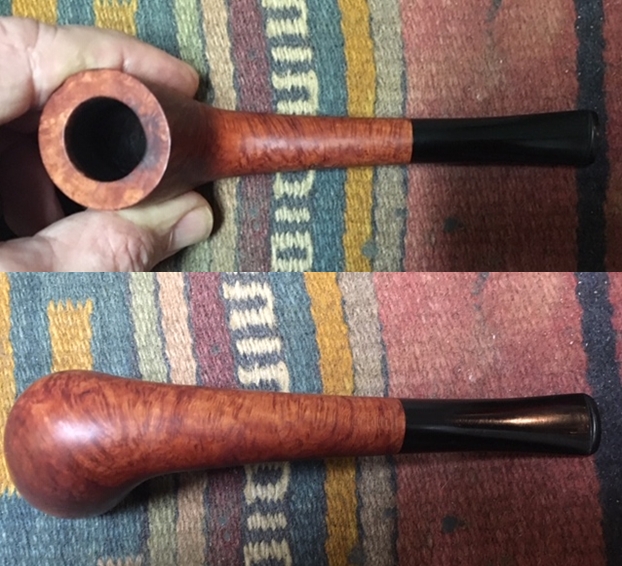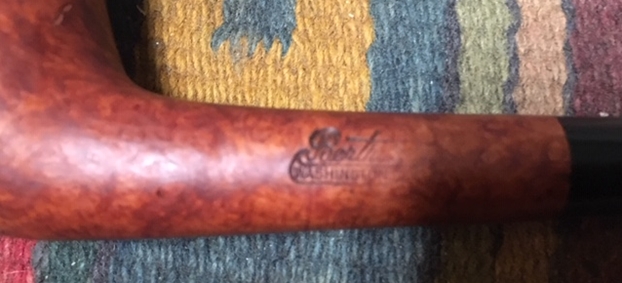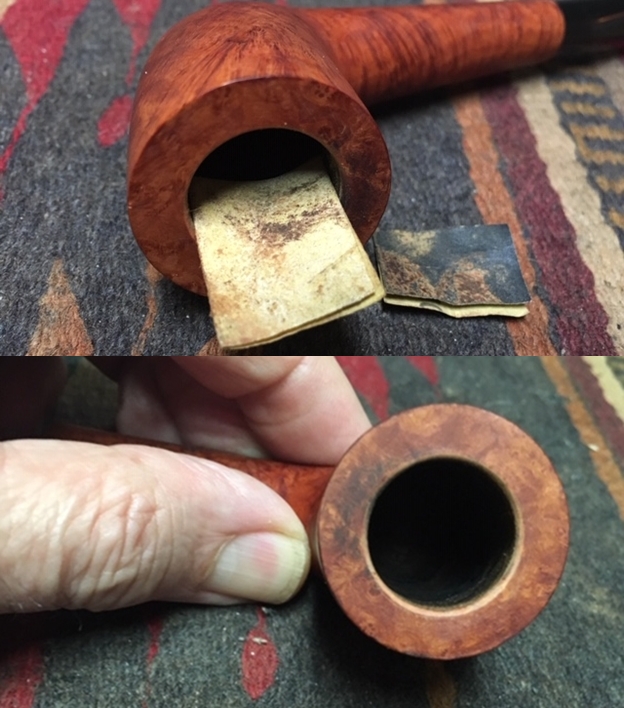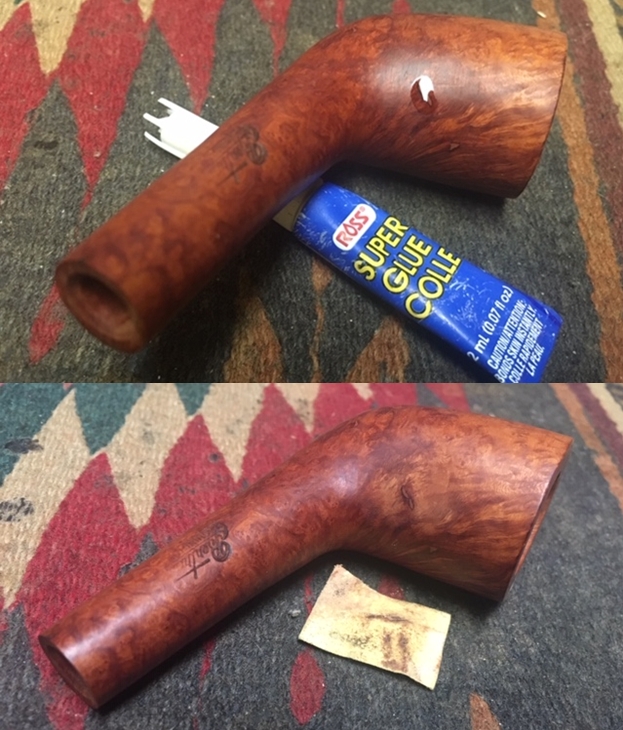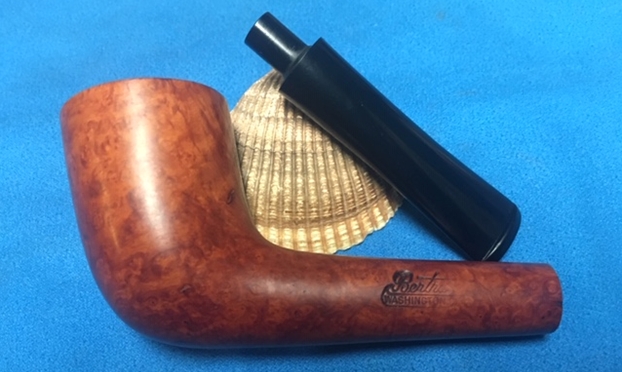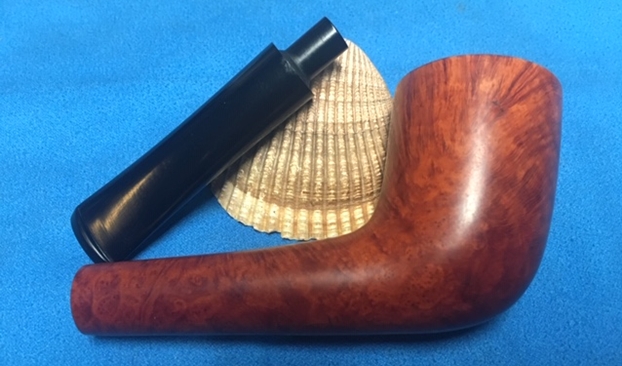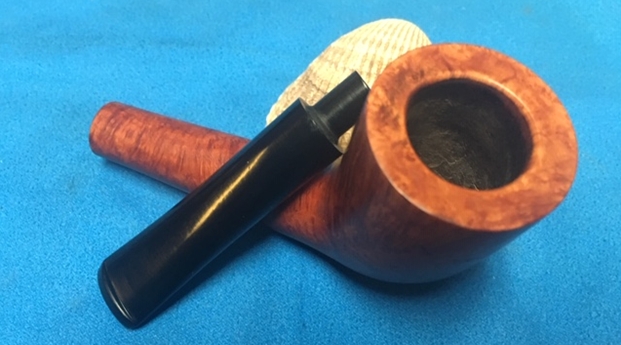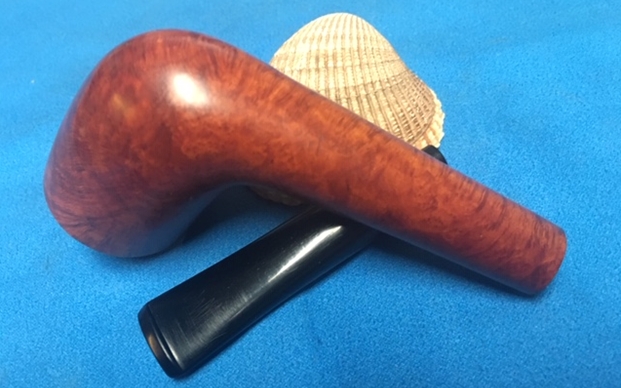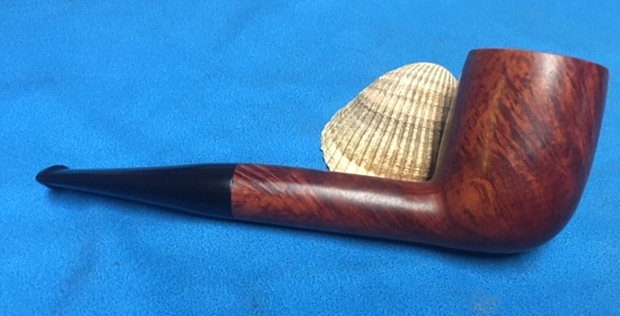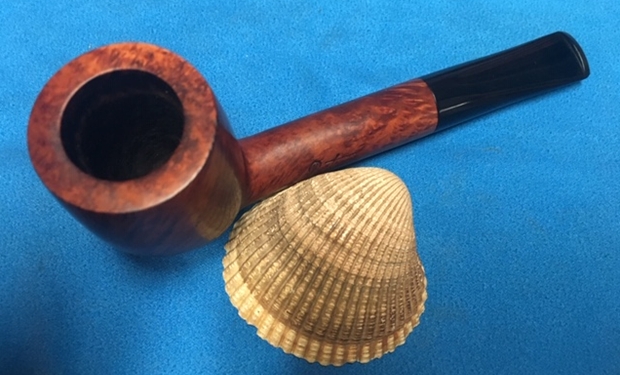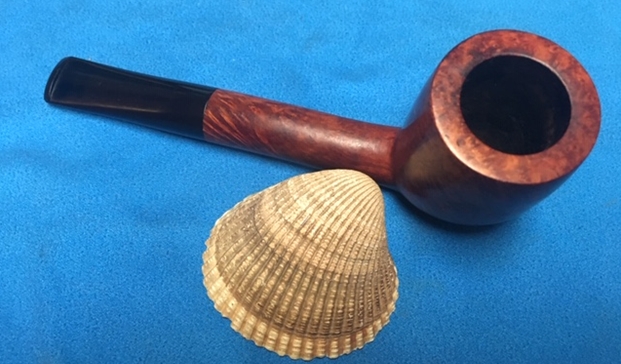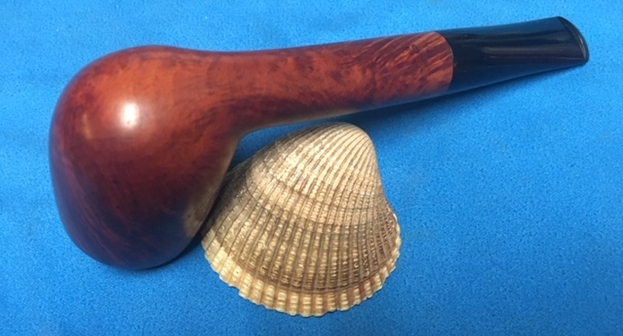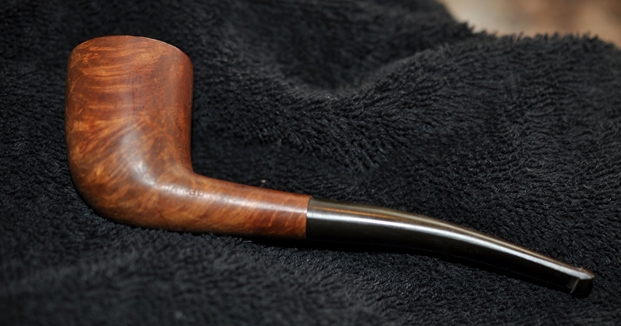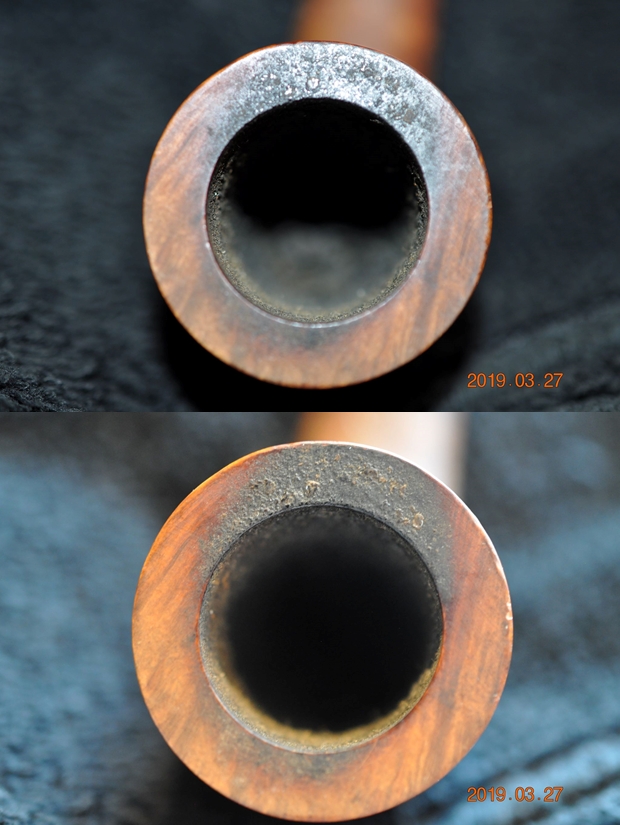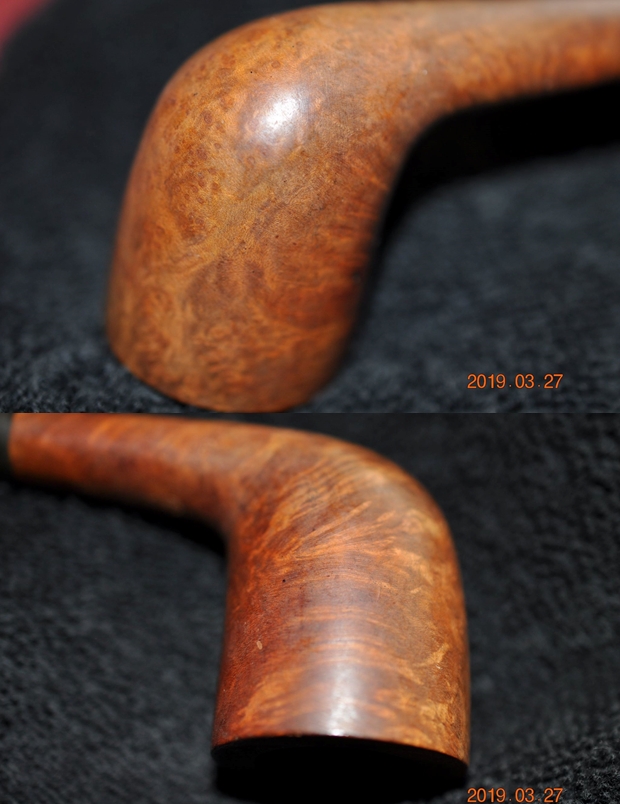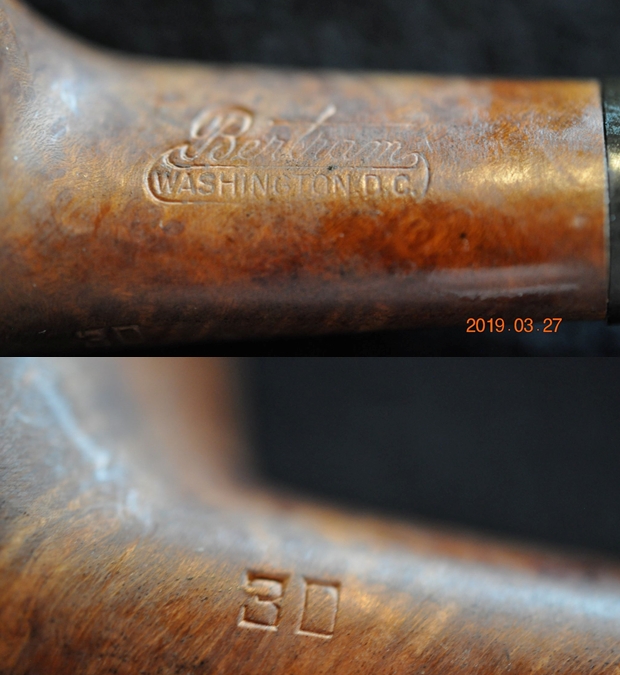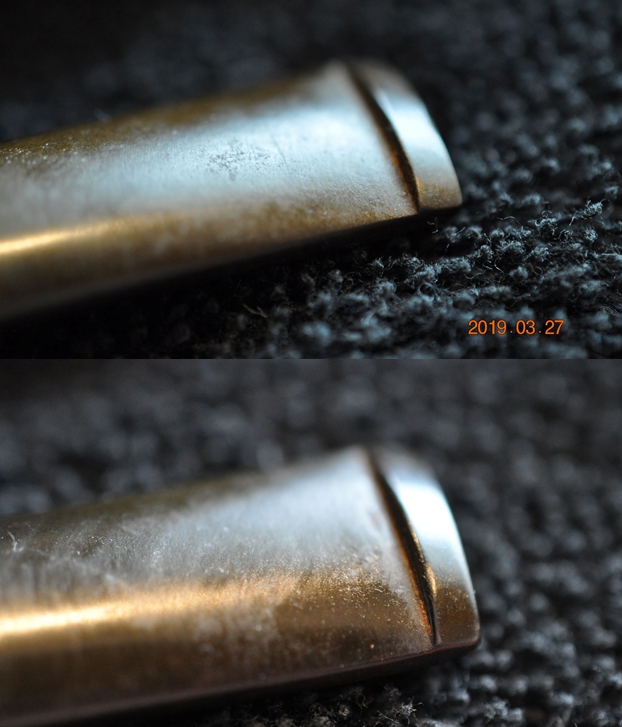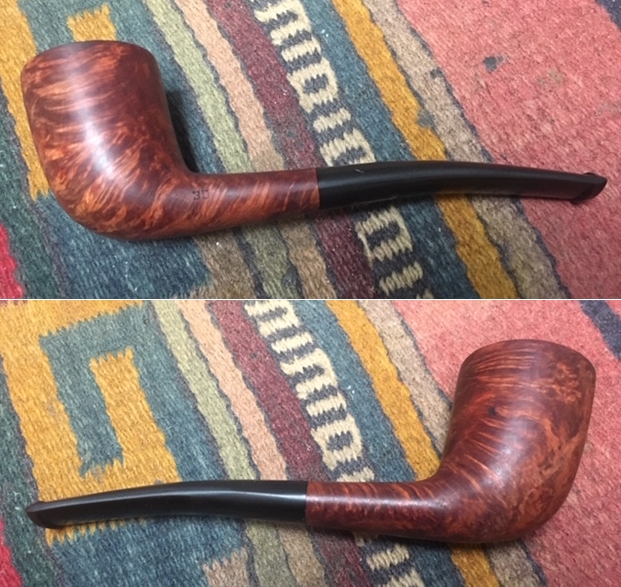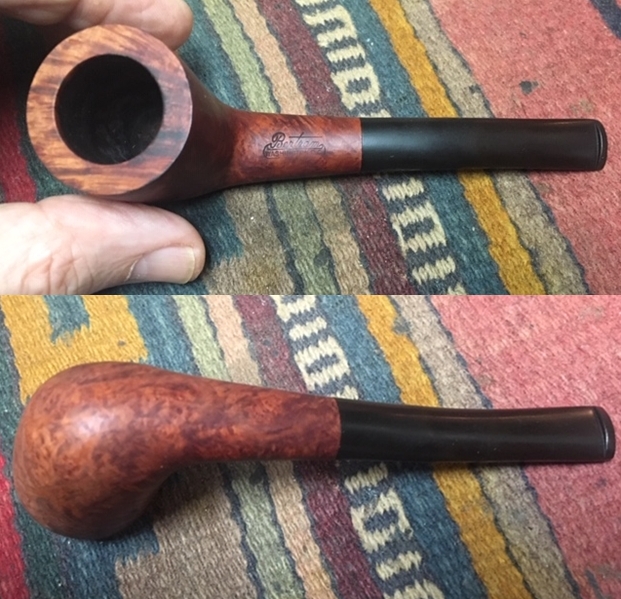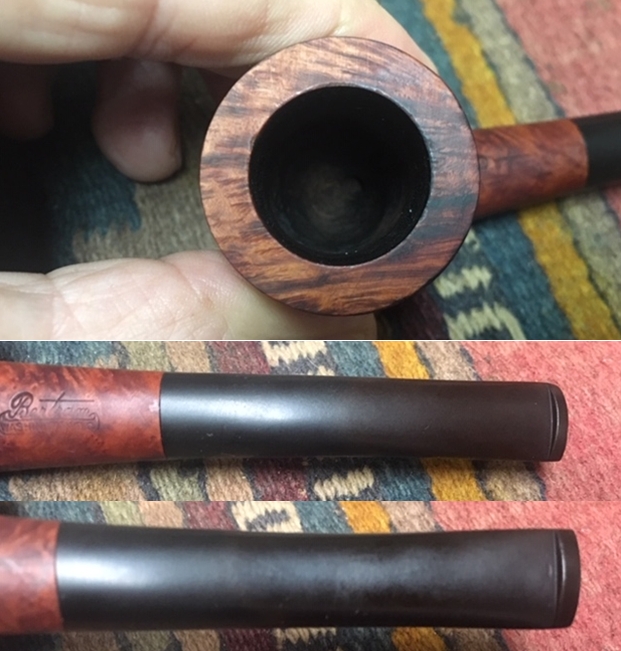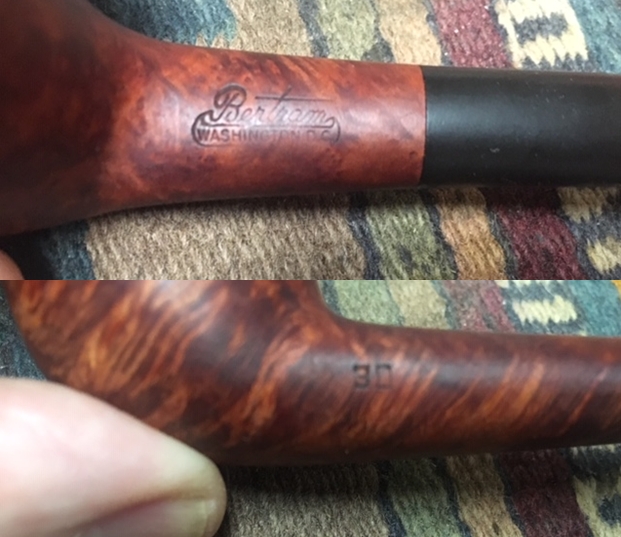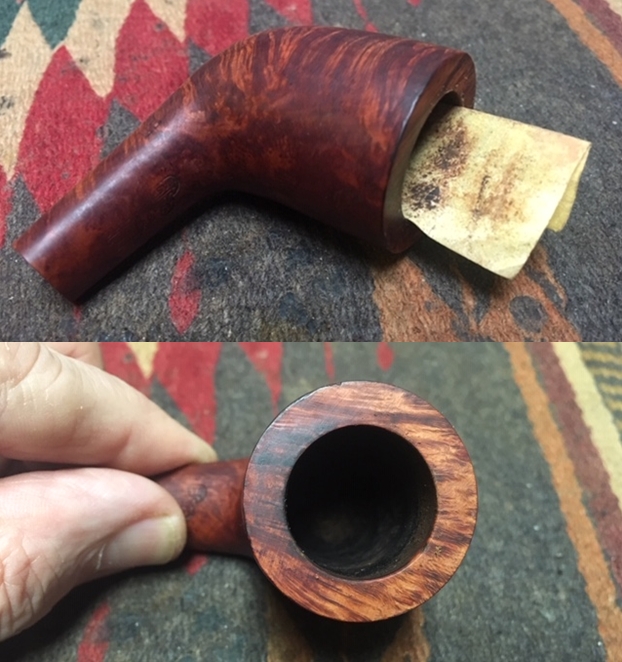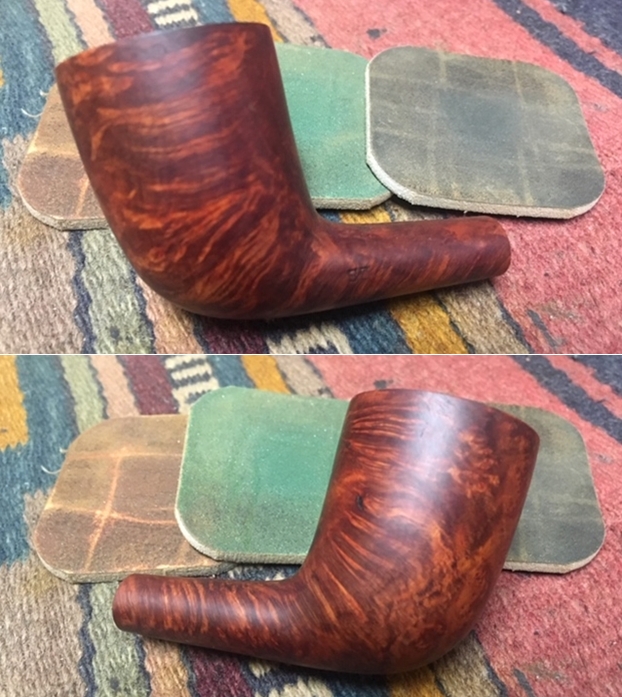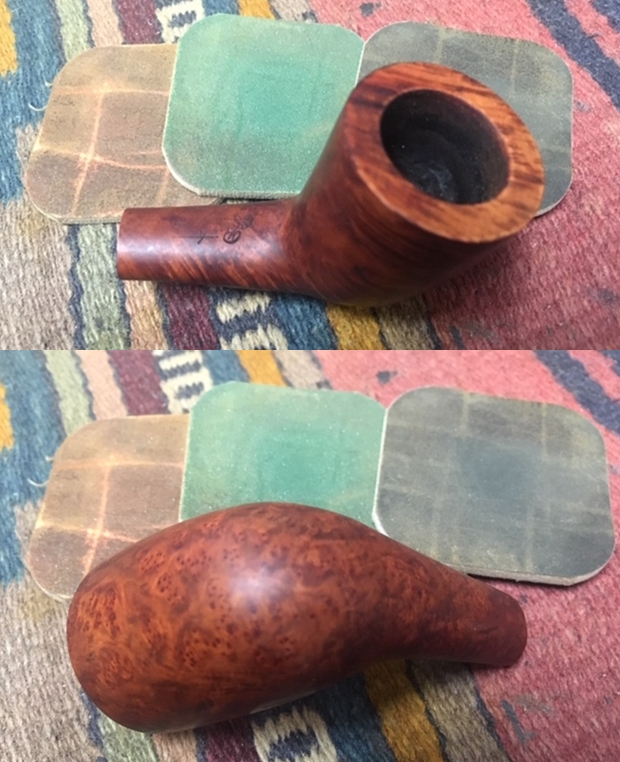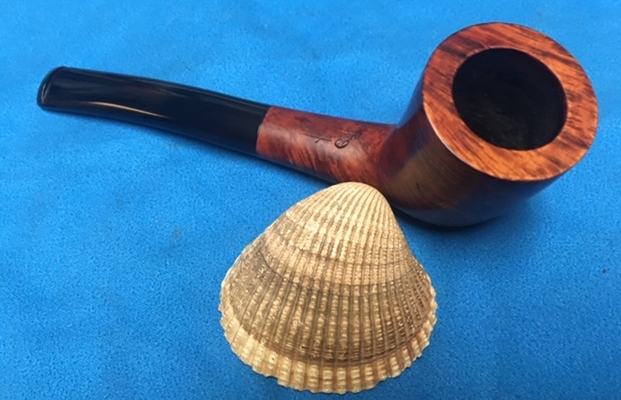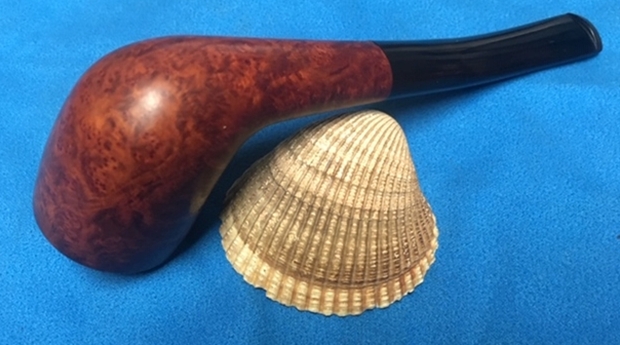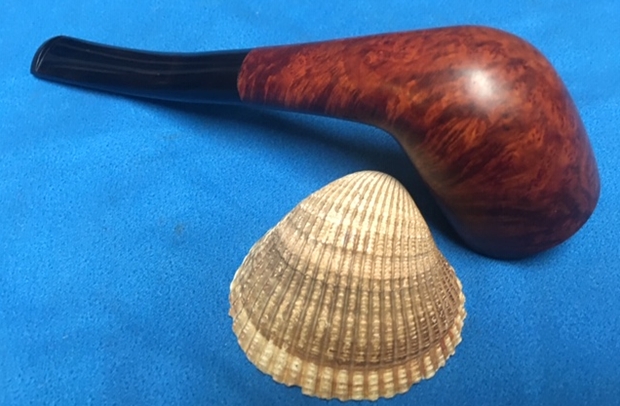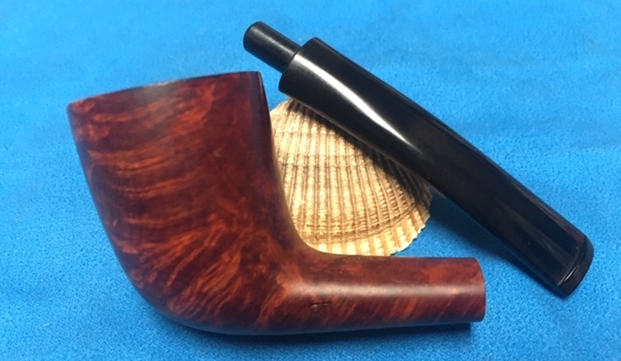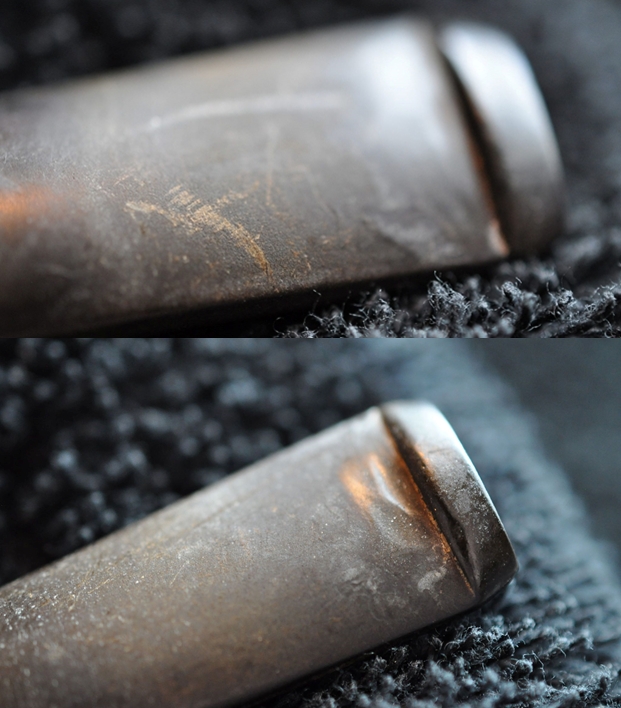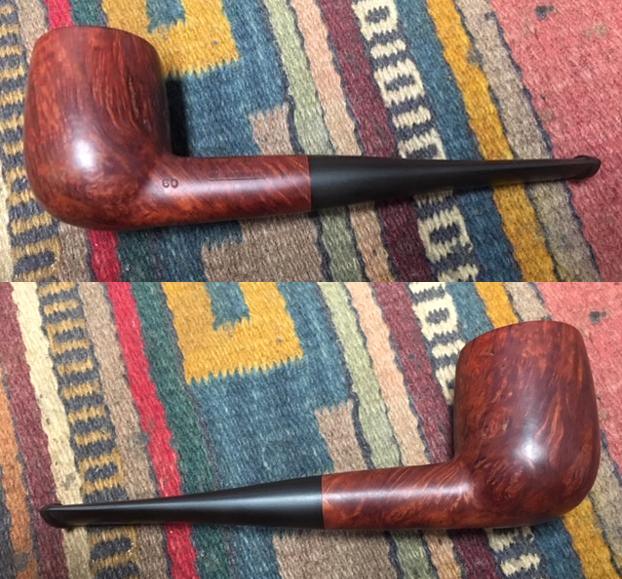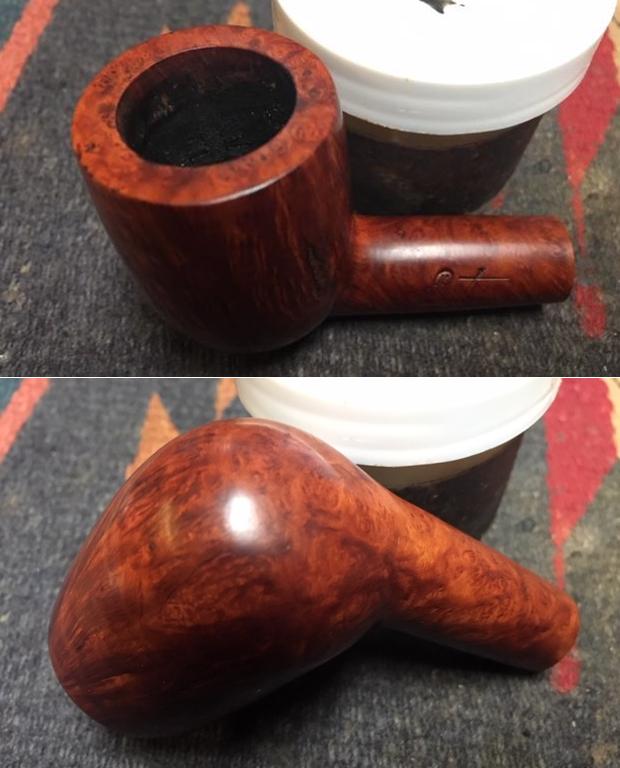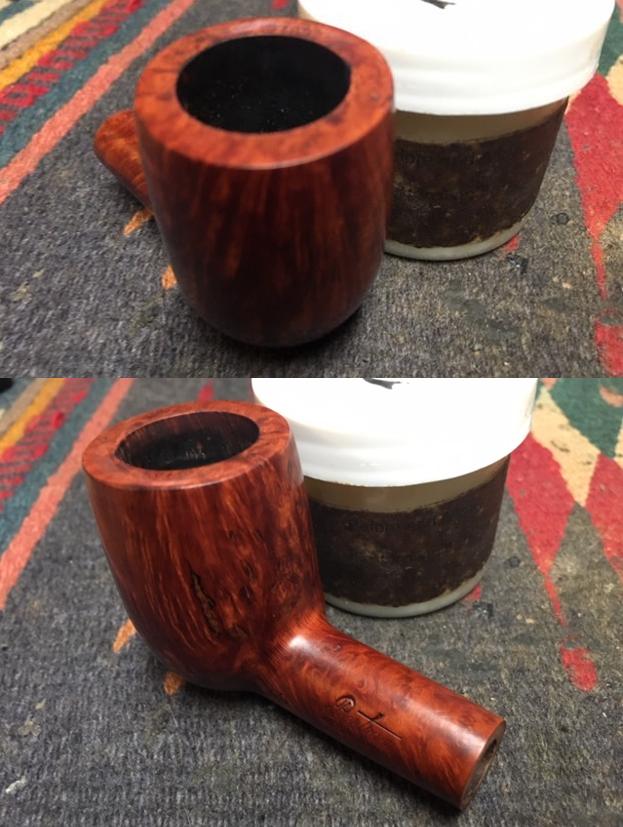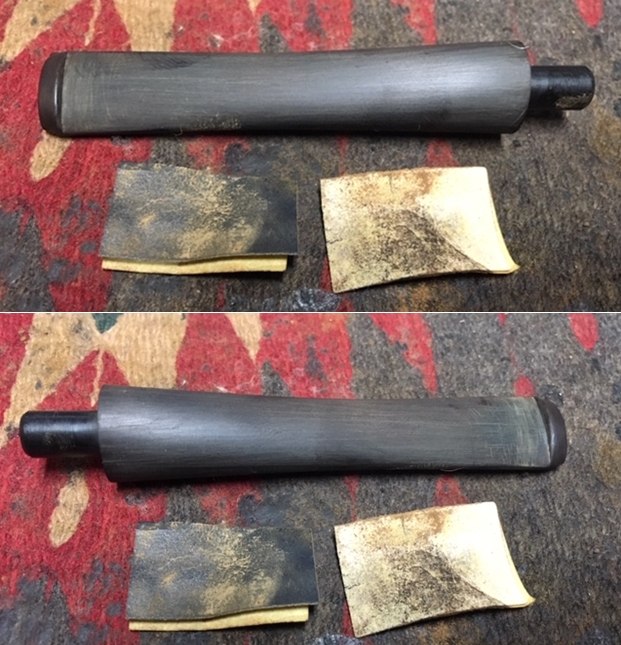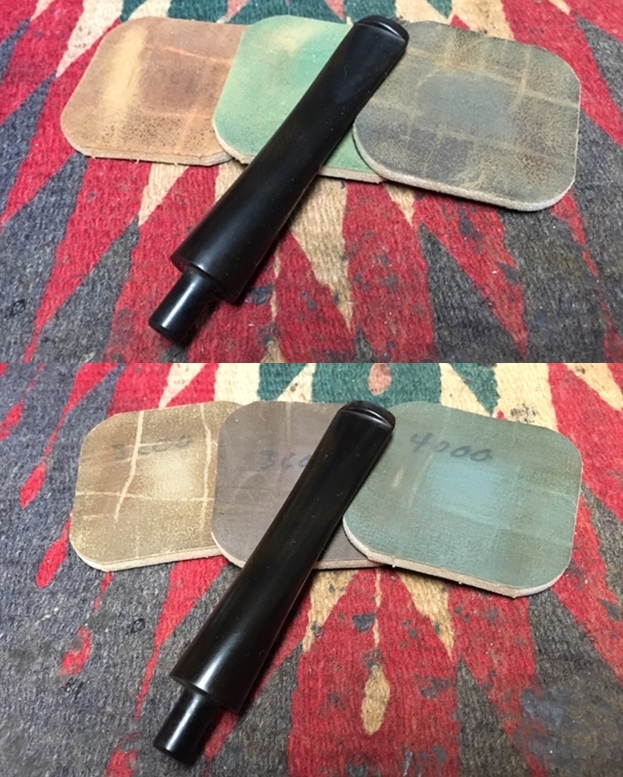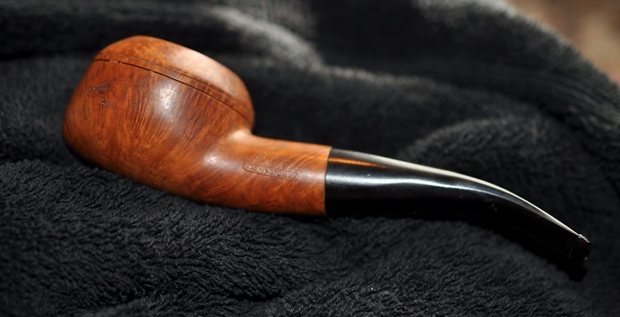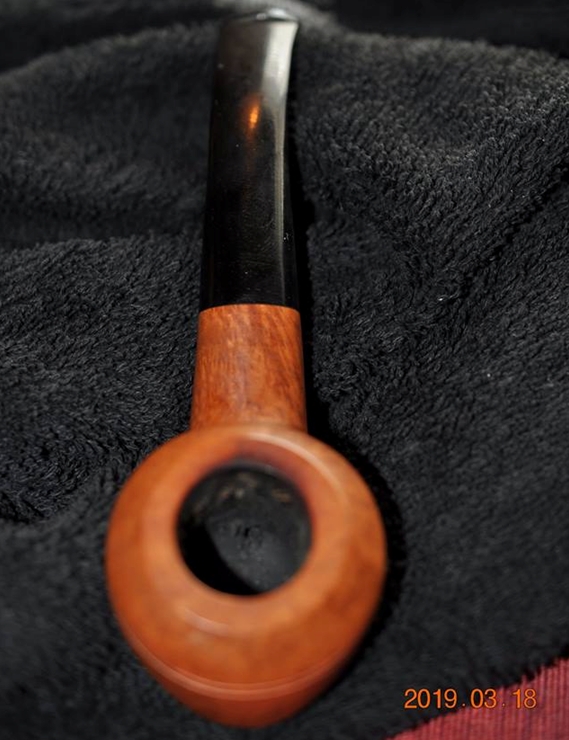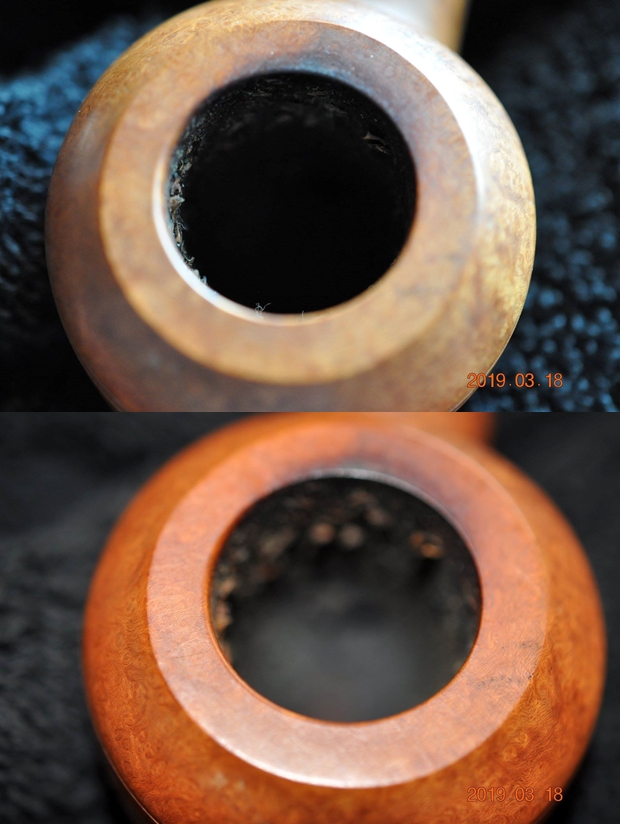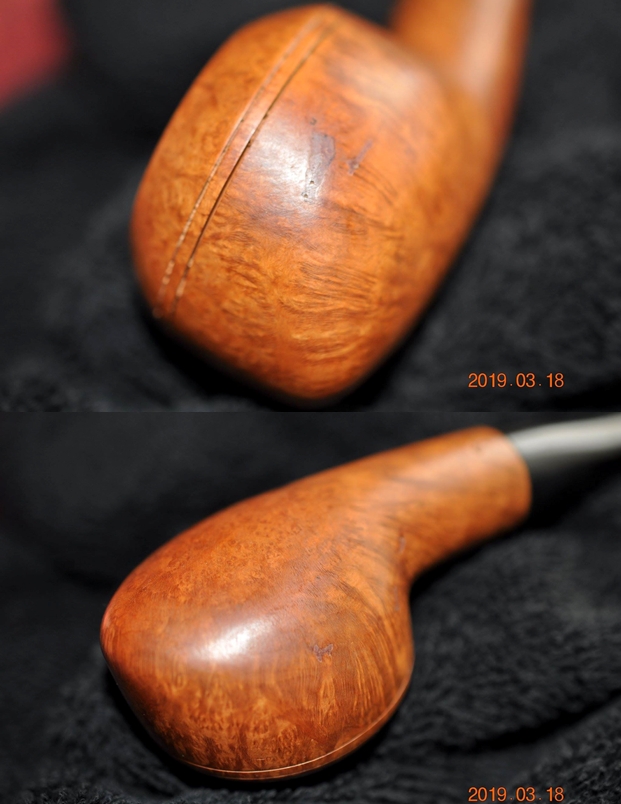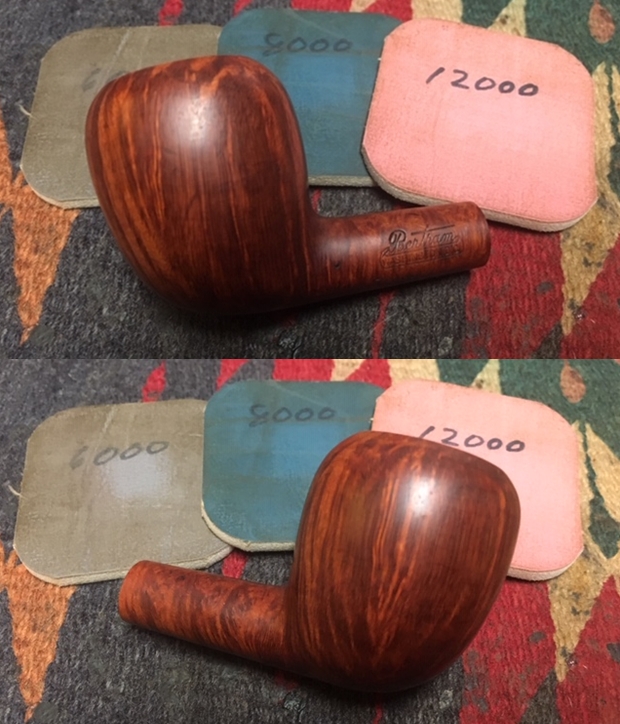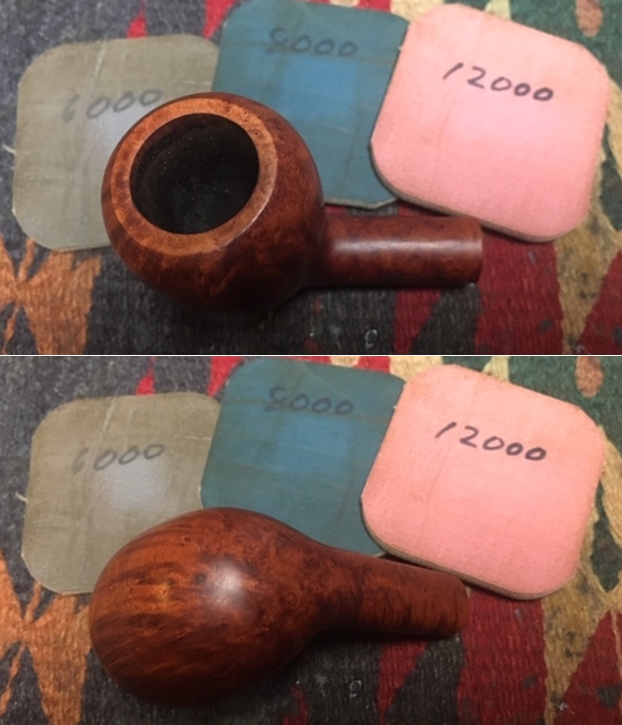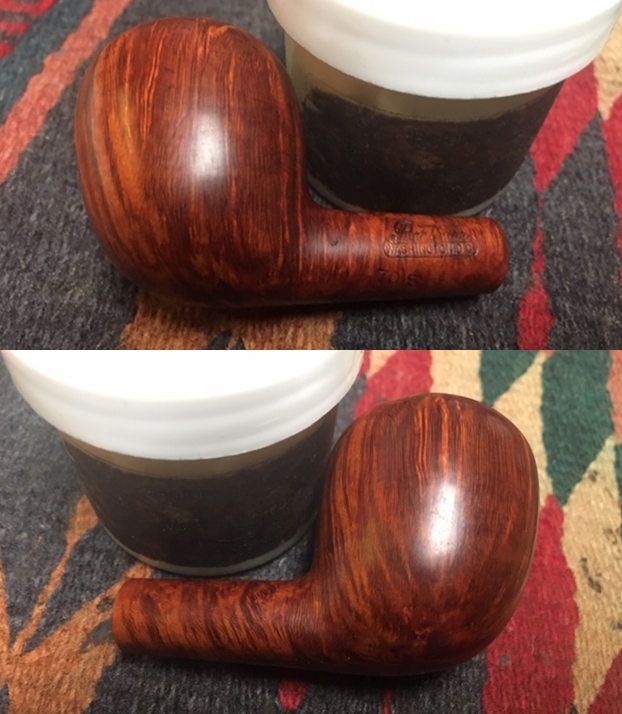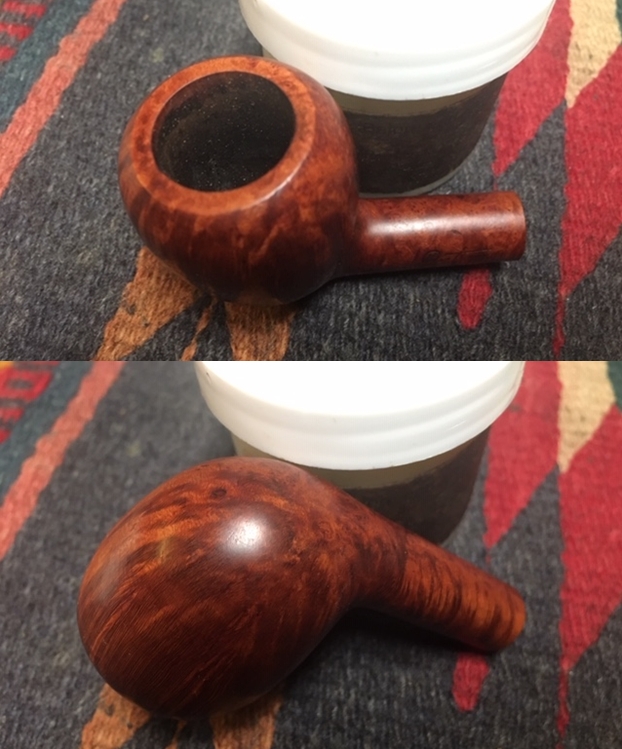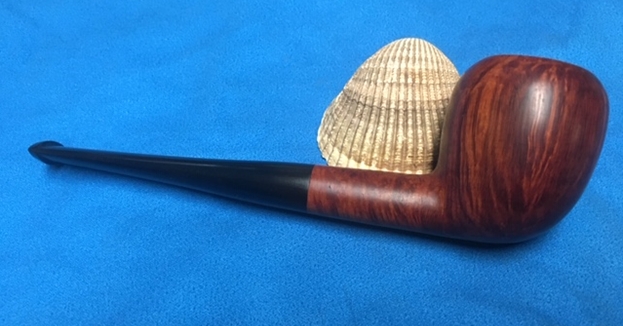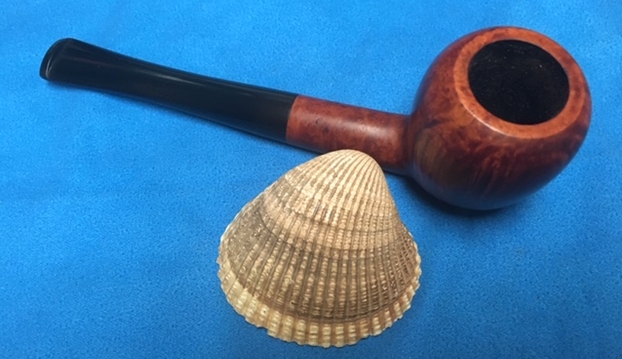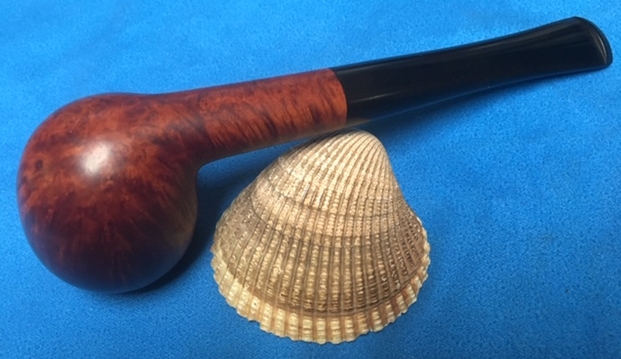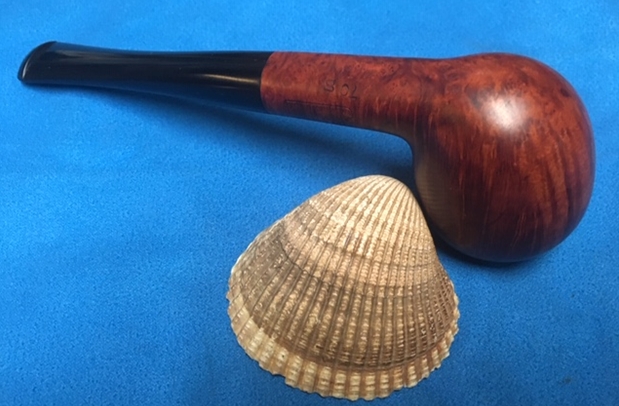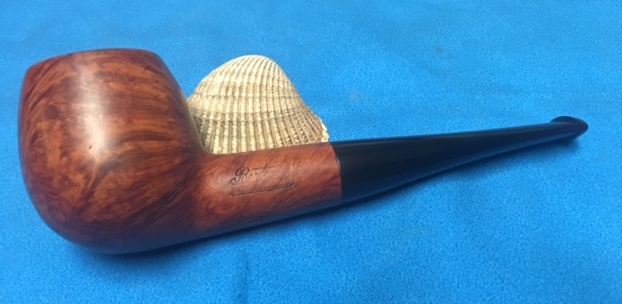
Tag Archives: Bertram Washington DC pipes

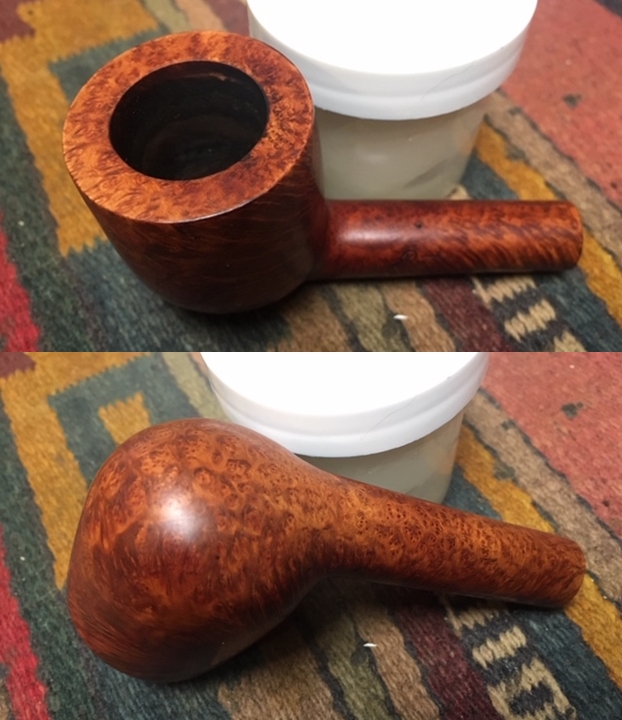
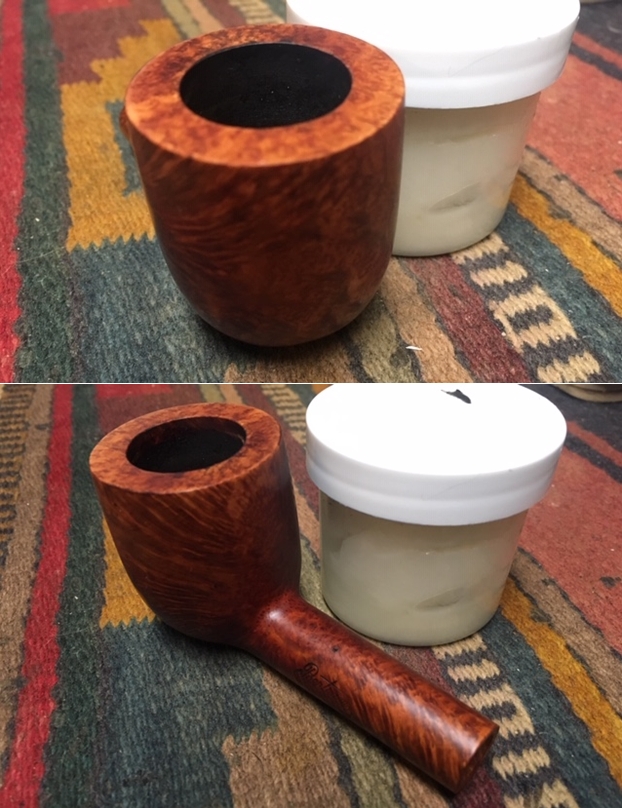
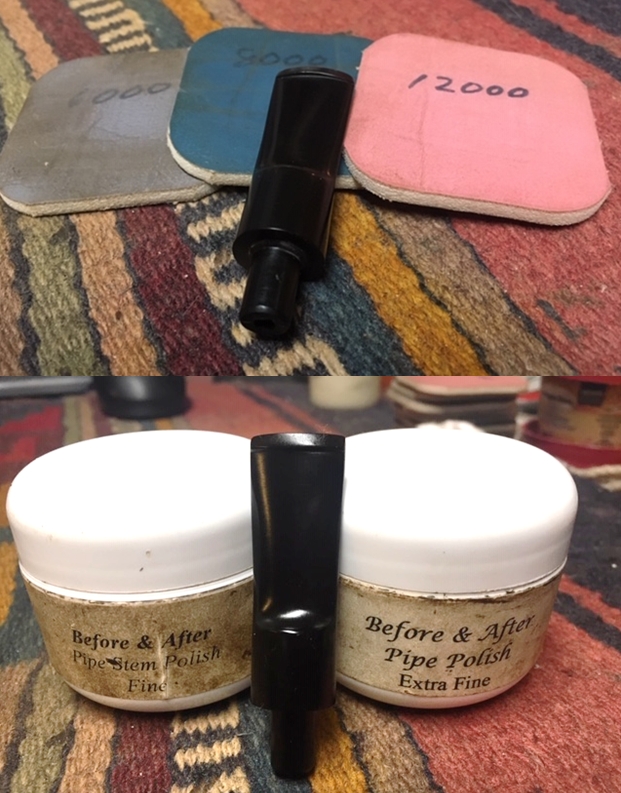
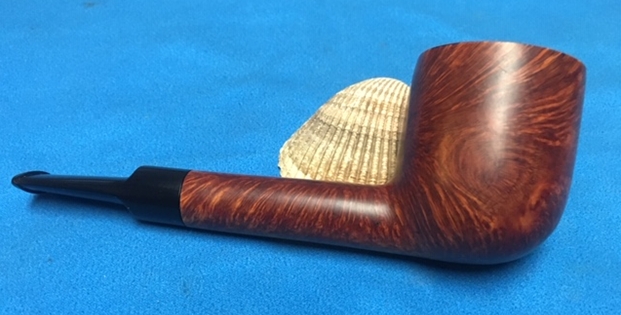
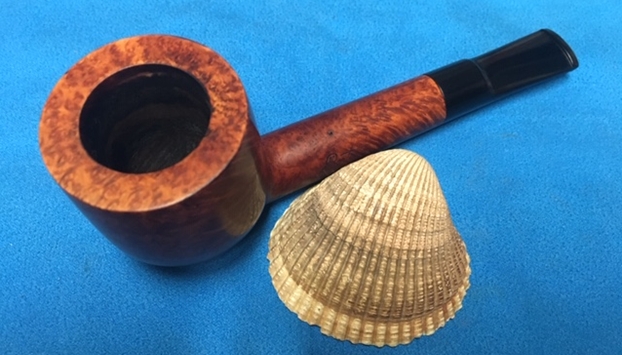
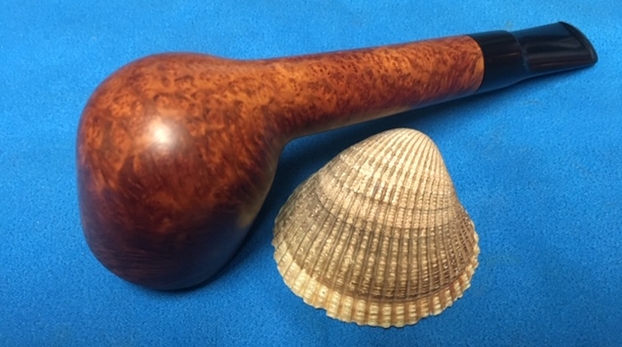
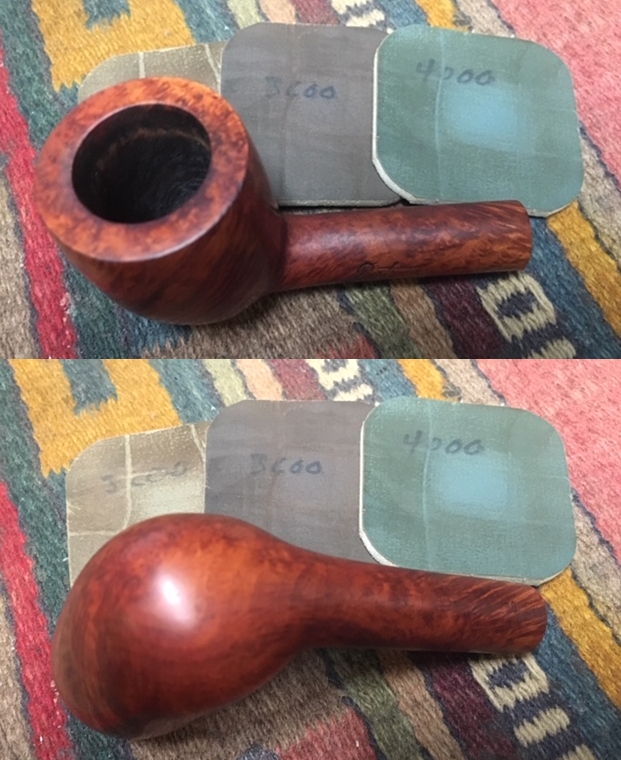
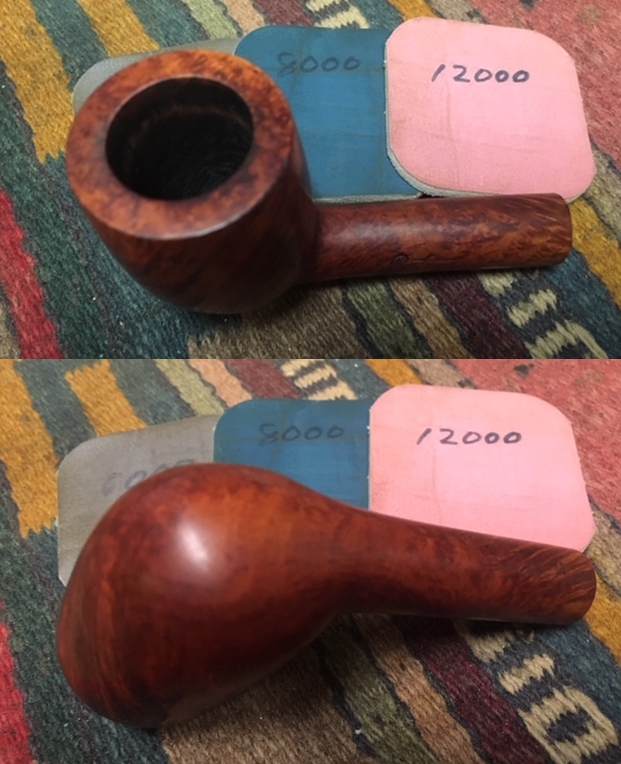
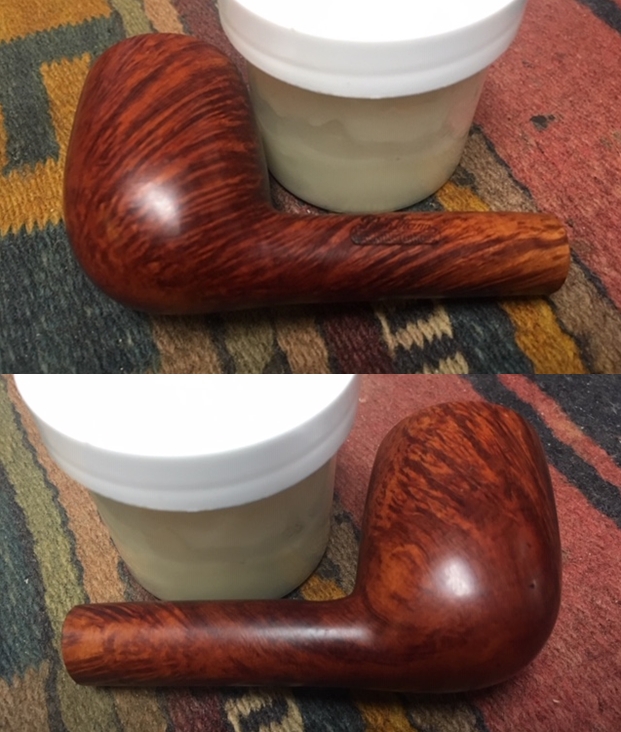
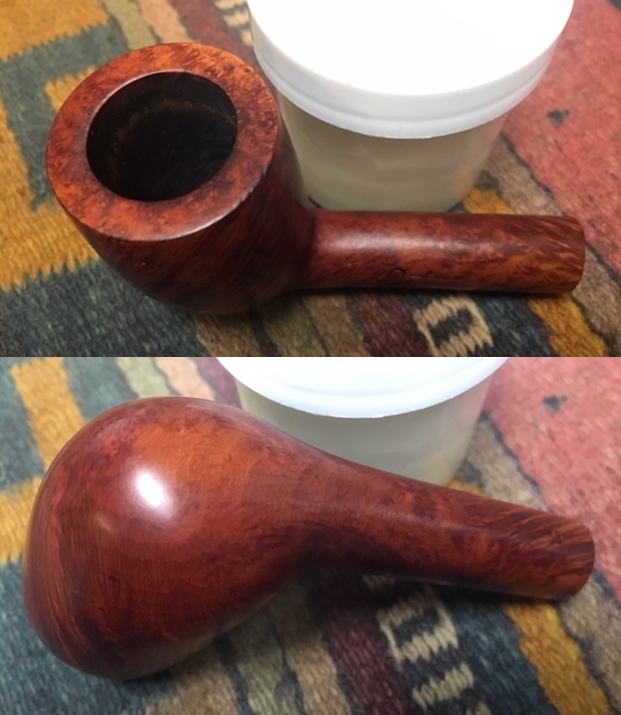
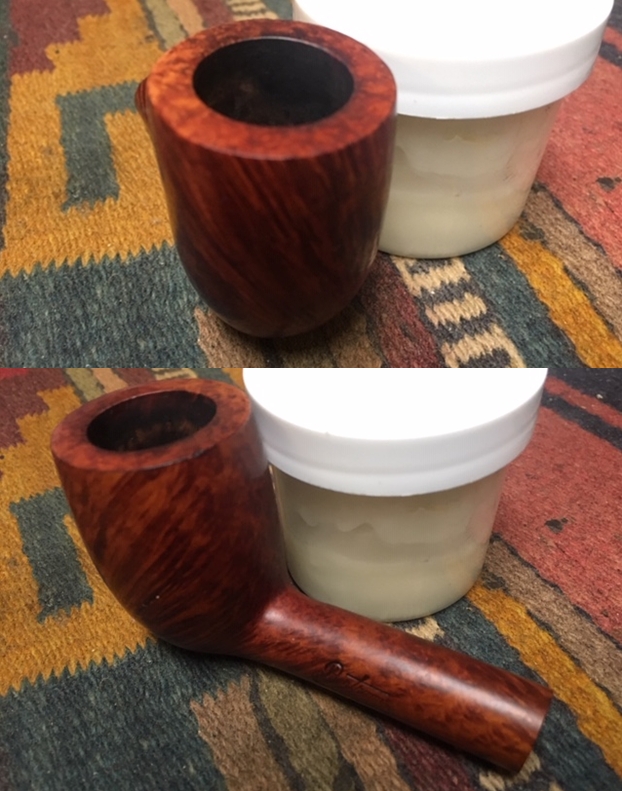
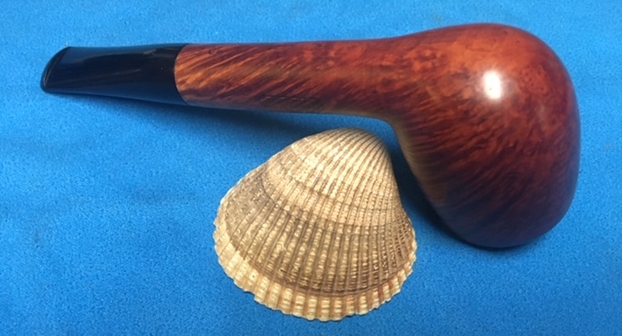
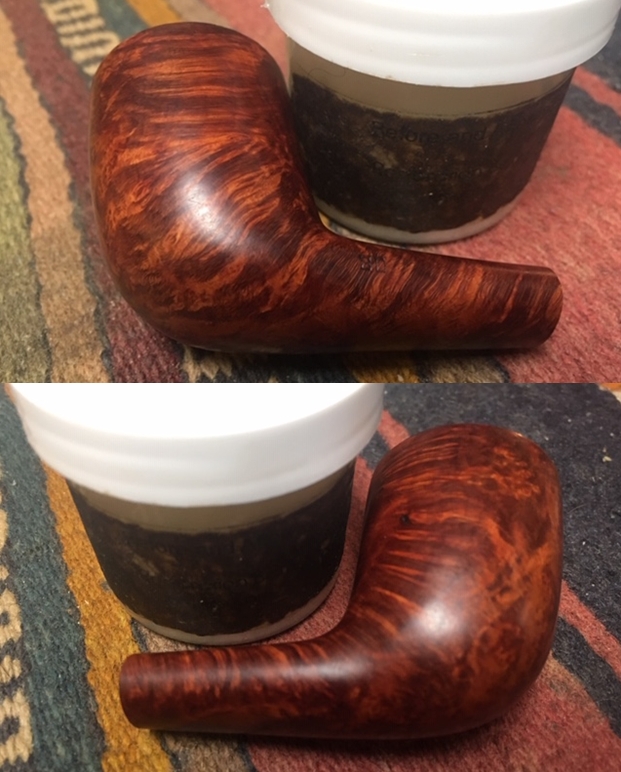
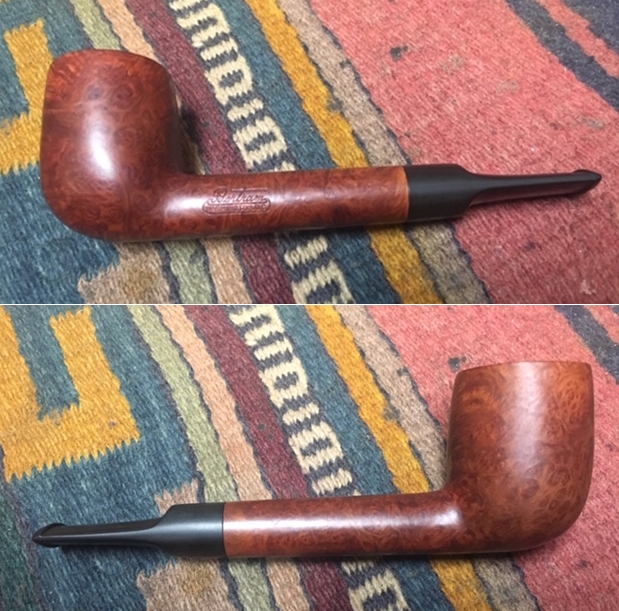
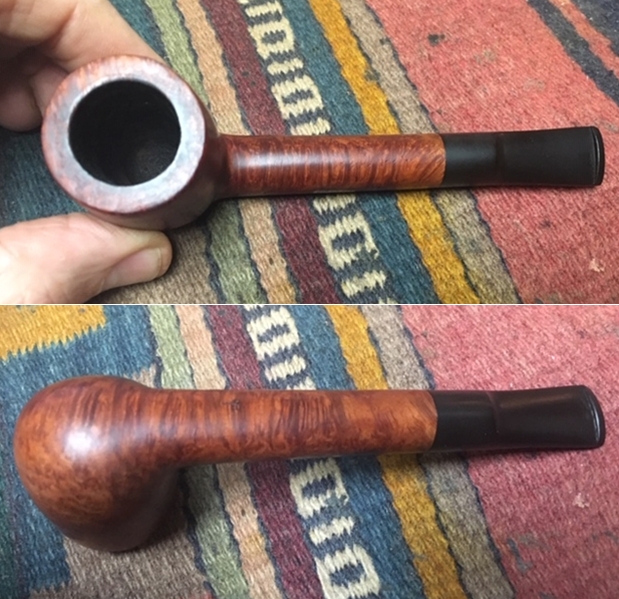
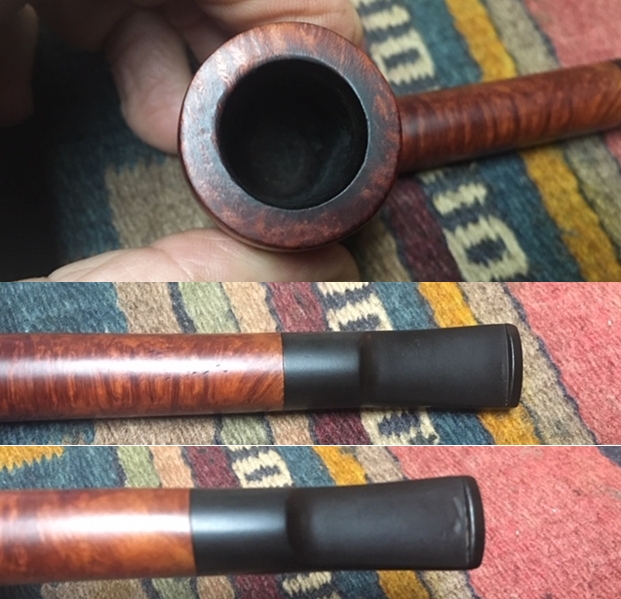
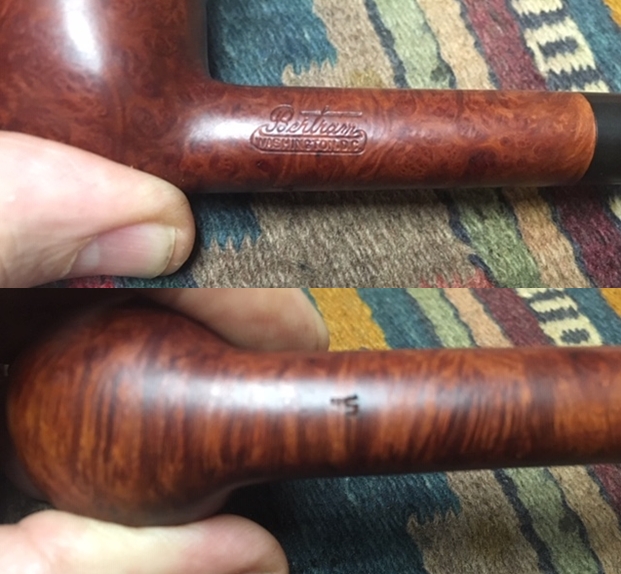
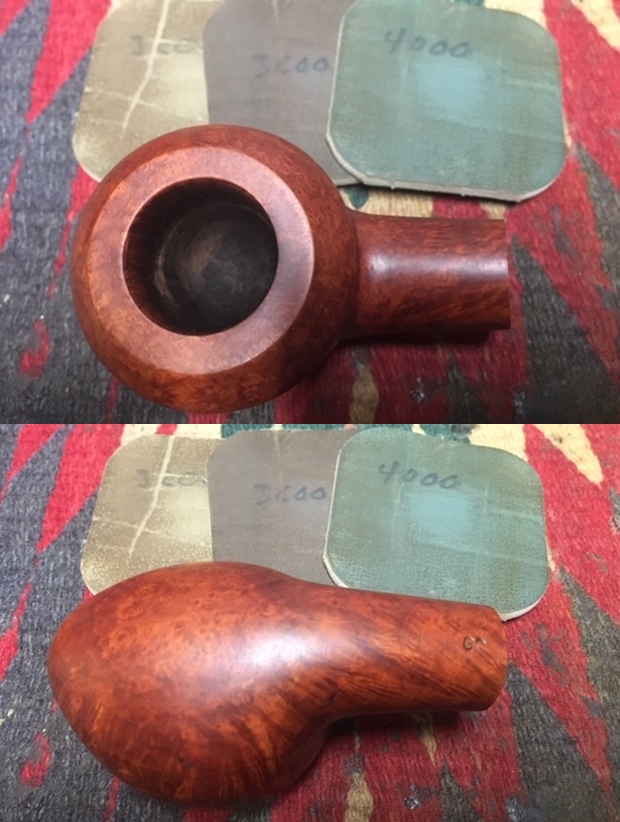
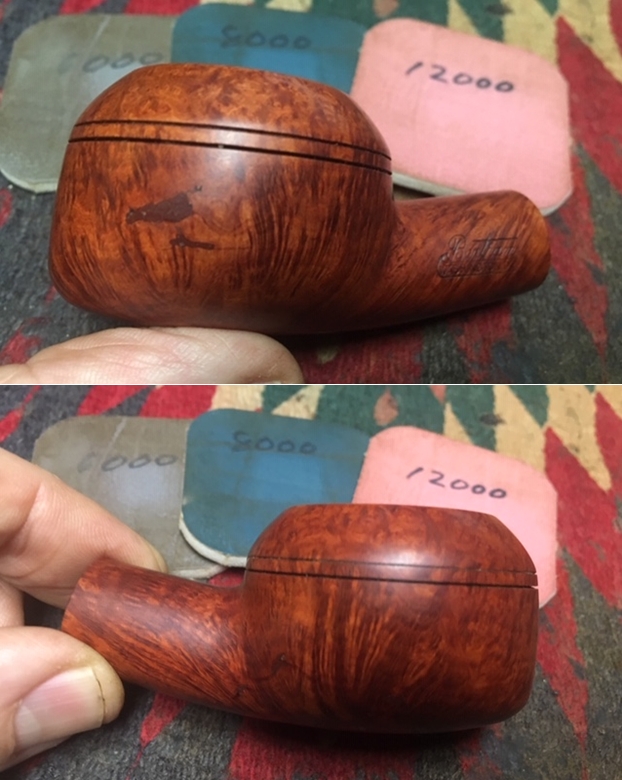
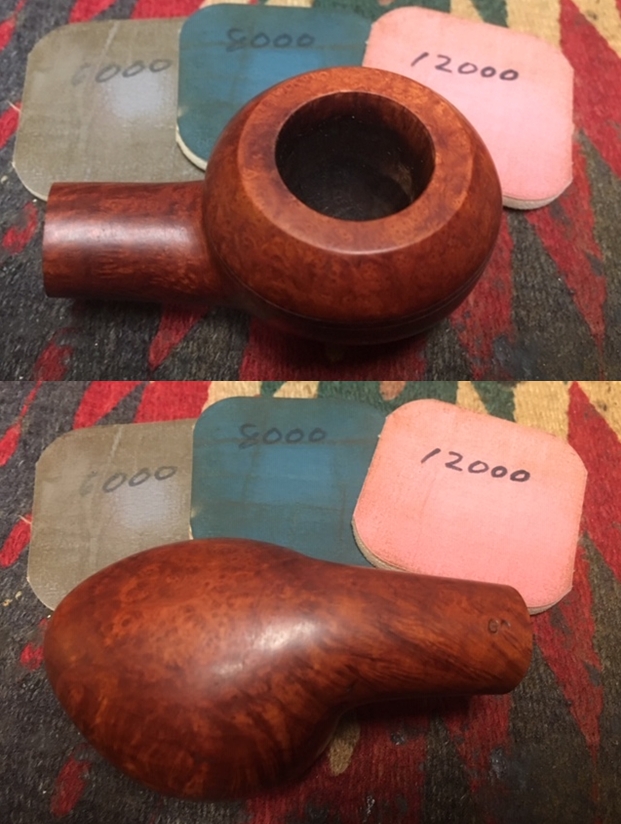
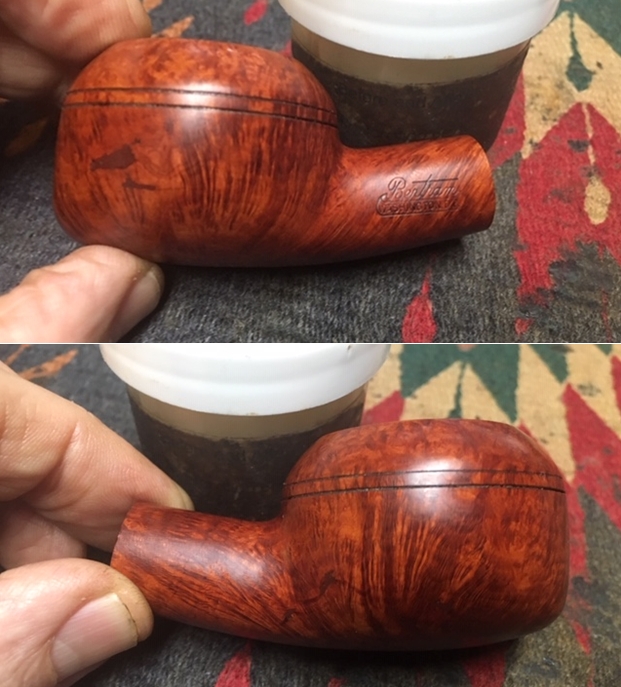
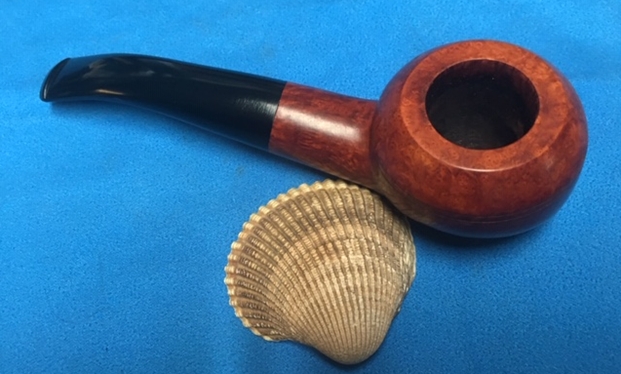
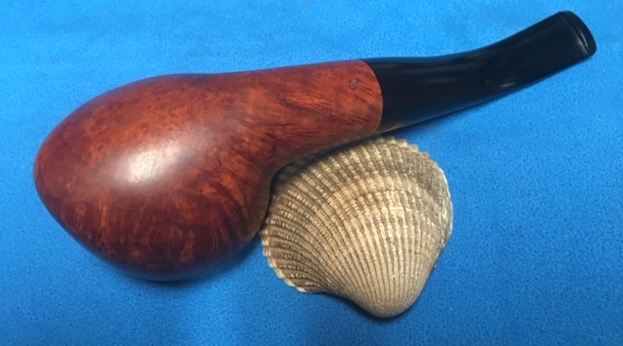
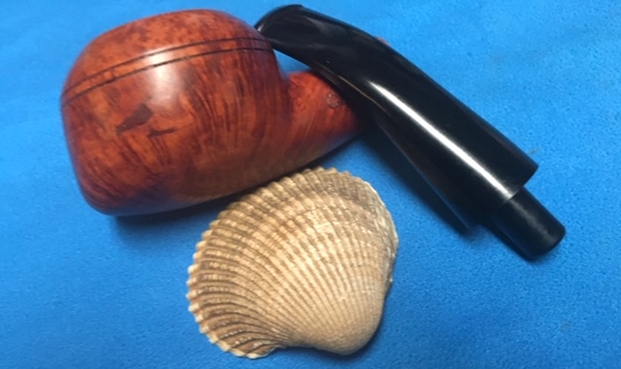
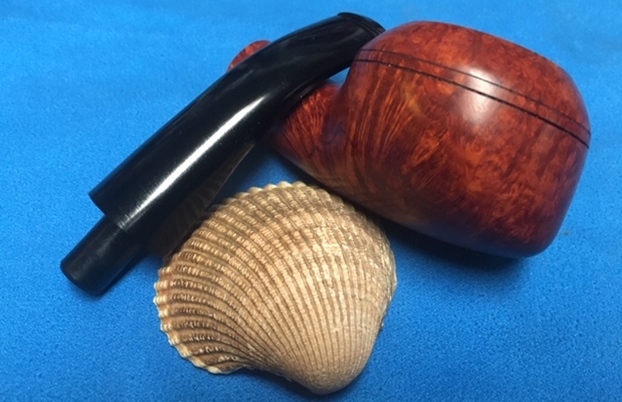
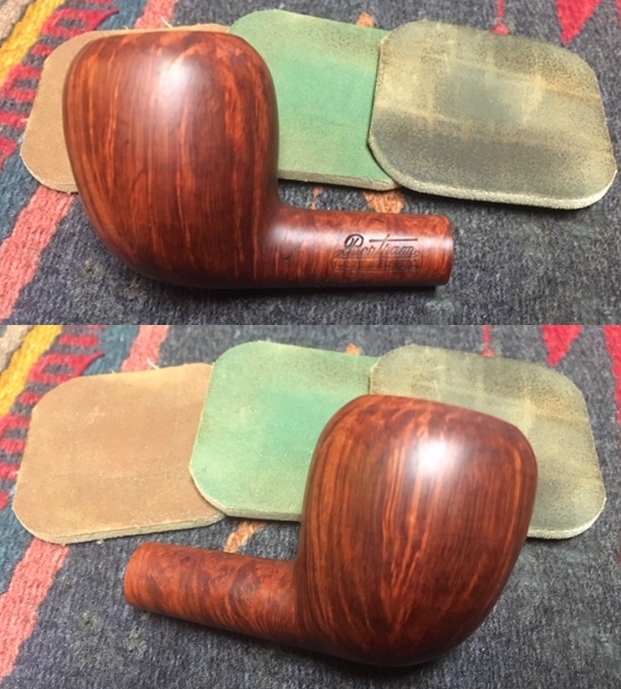
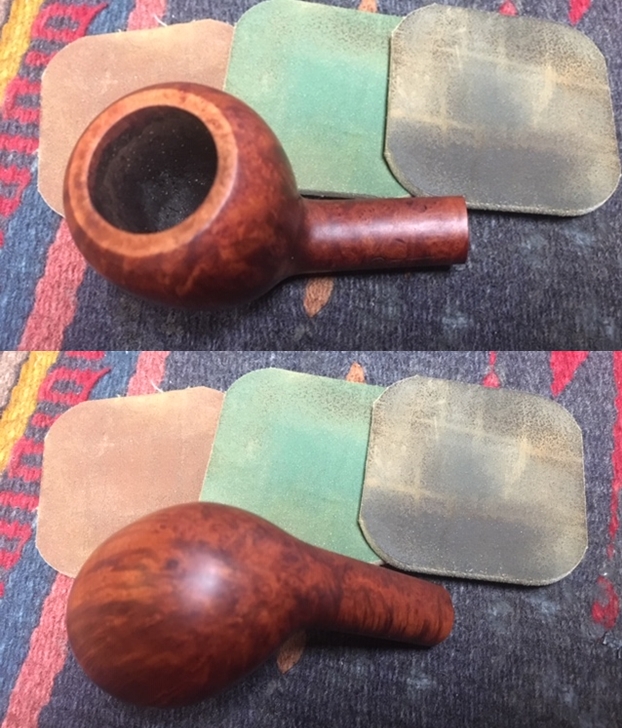
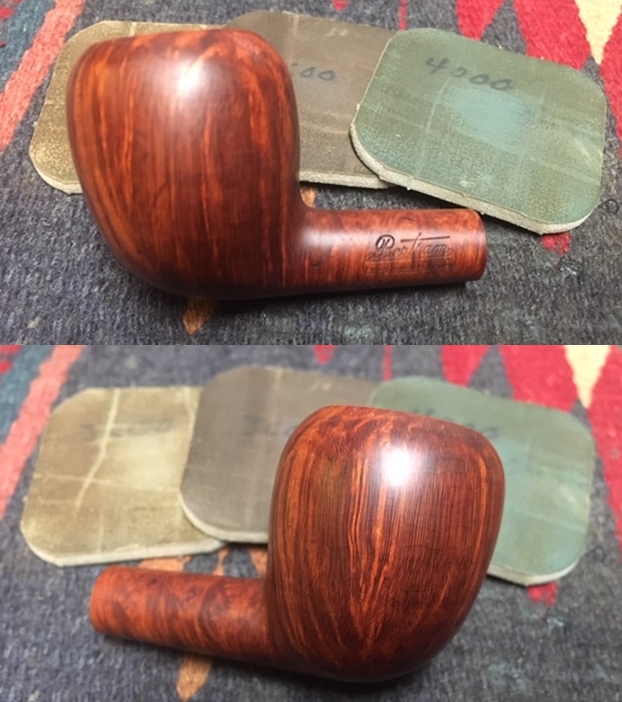
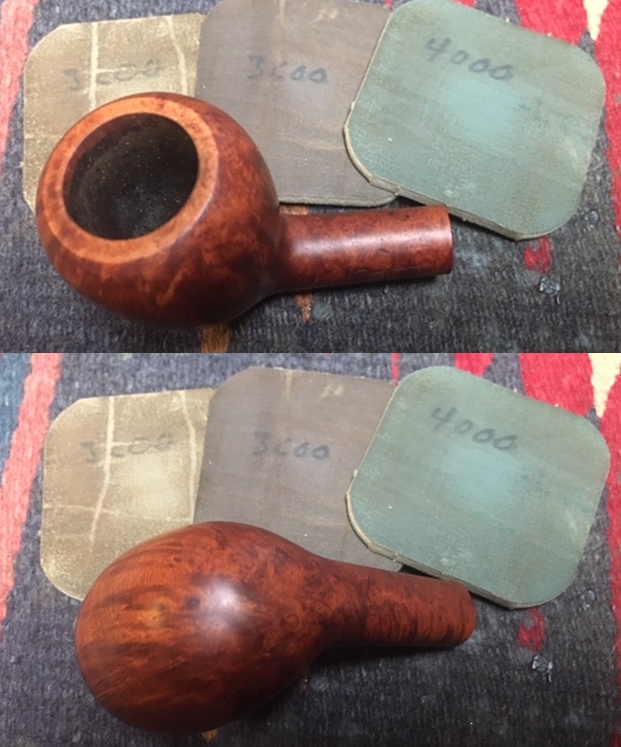
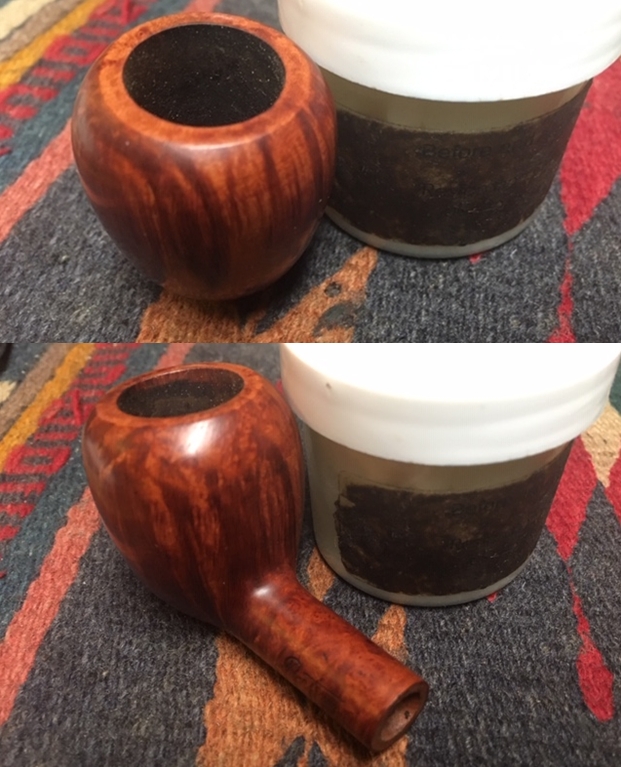
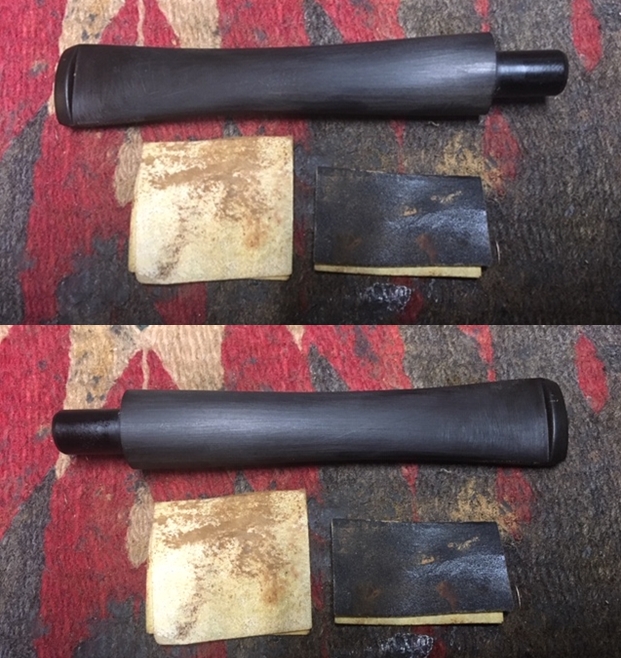
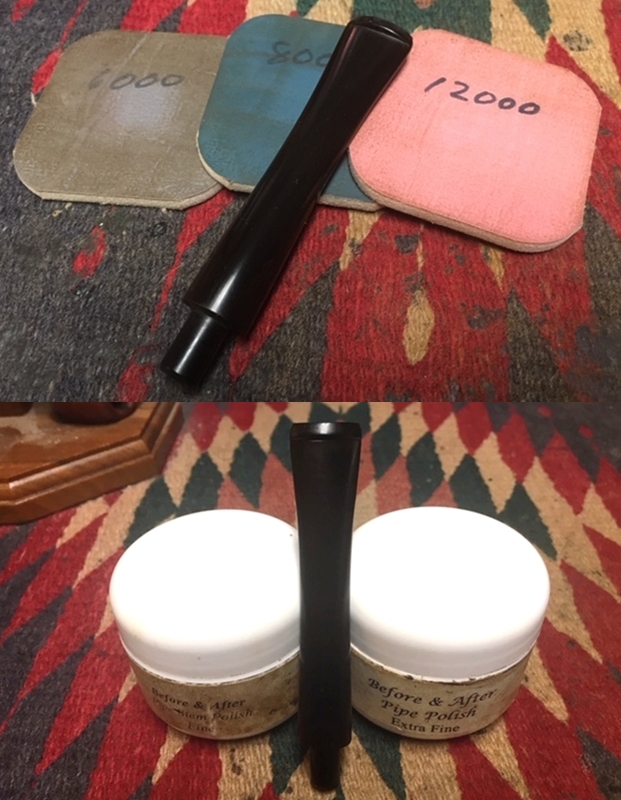
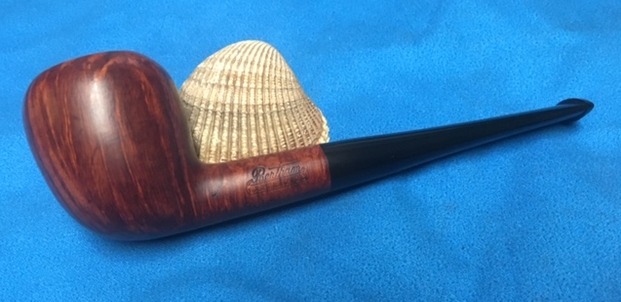
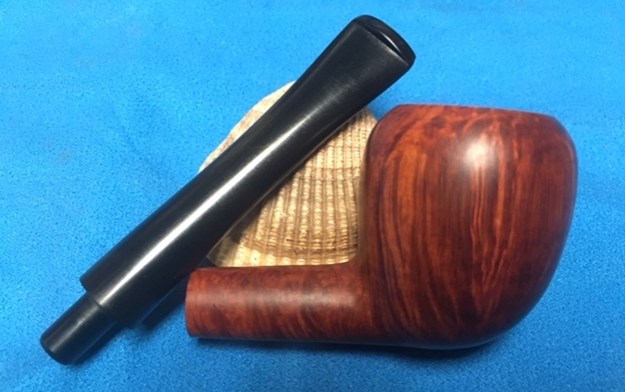
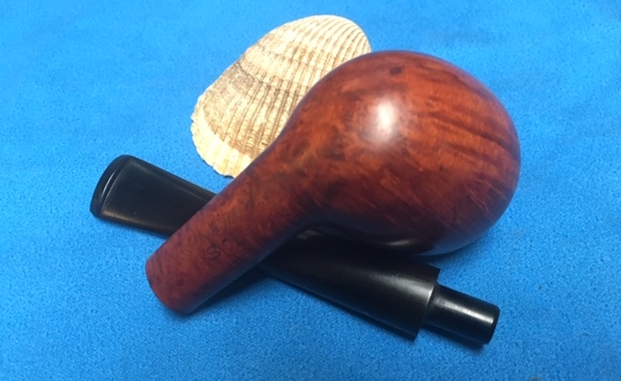
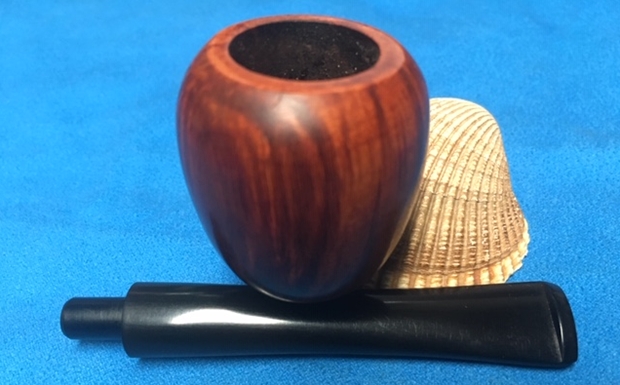
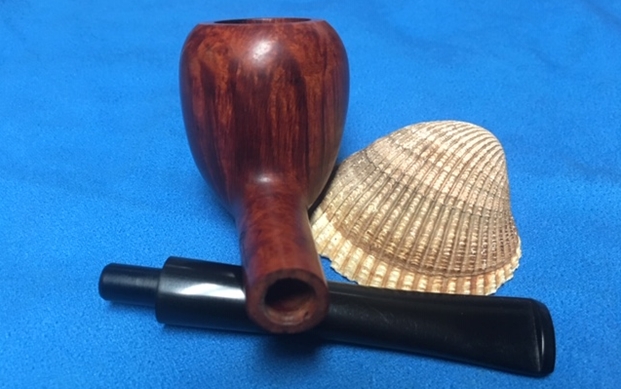
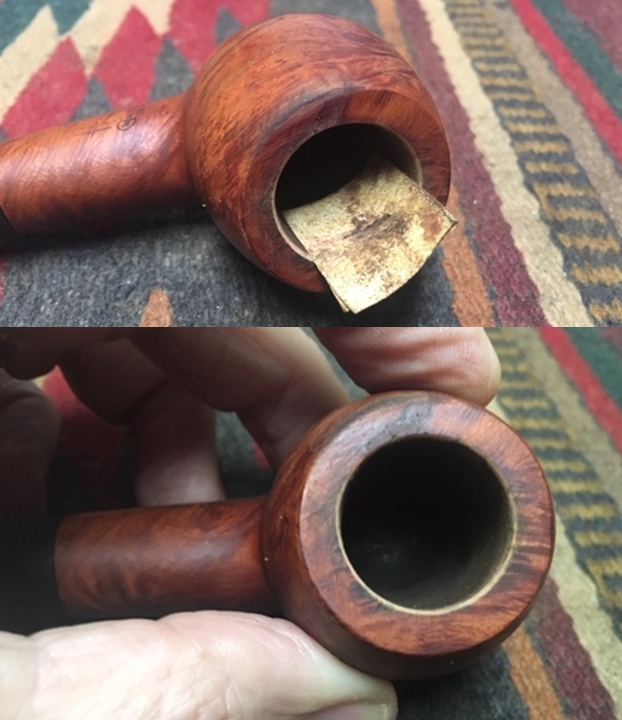
Restoring a Bertram Thick Shank Apple 20 from the Bertram Lot


Blog by Steve Laug

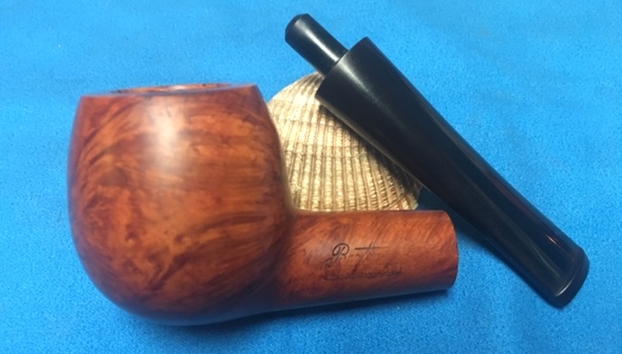
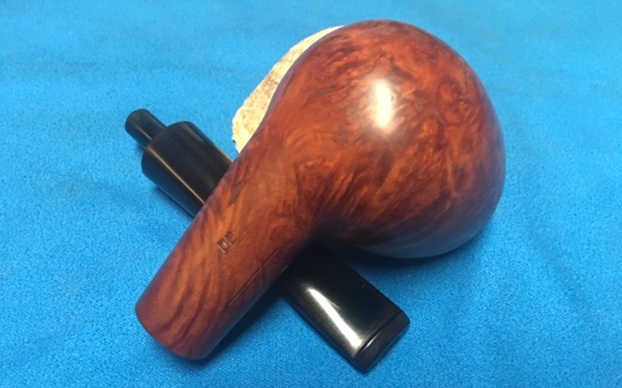
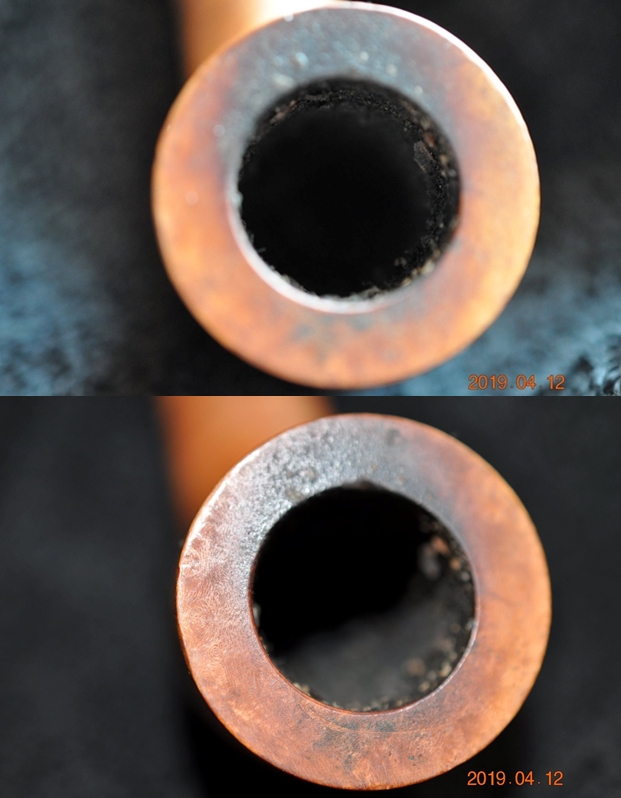
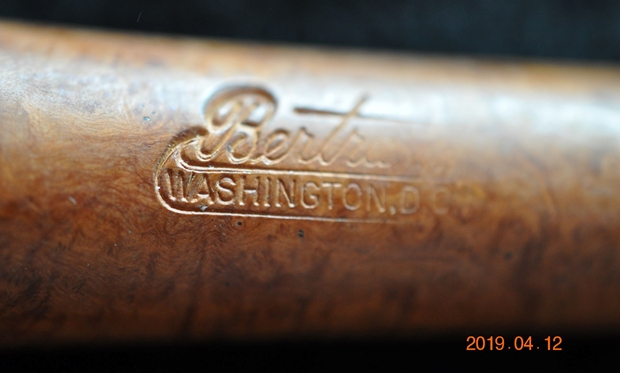
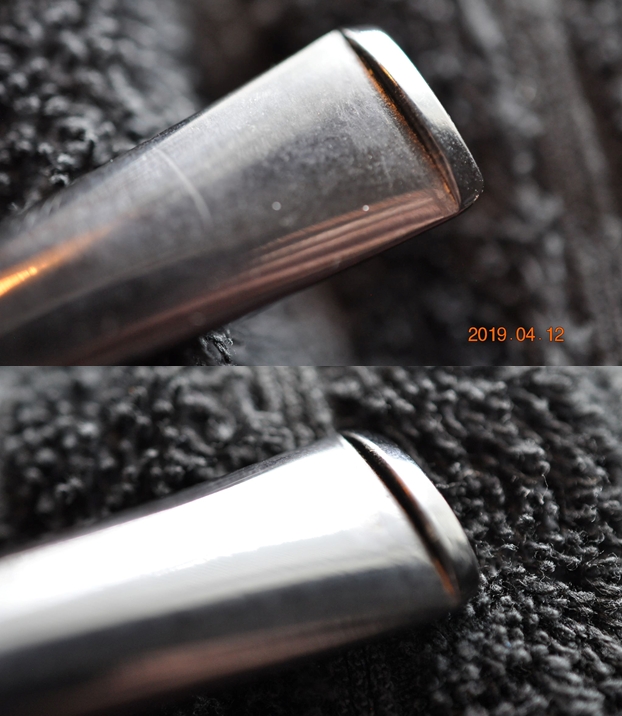
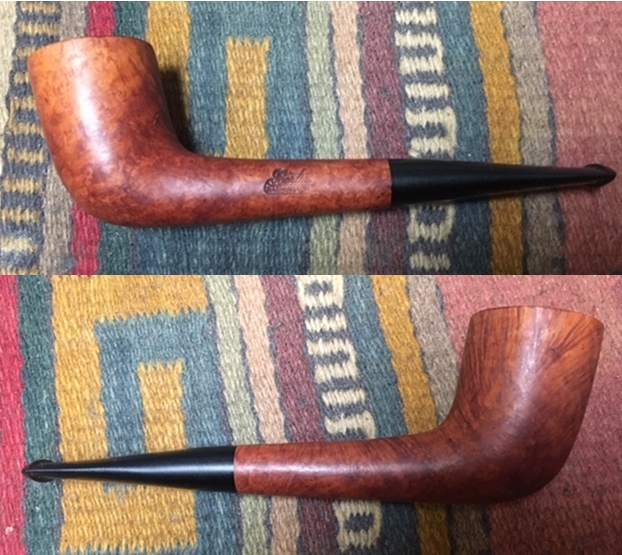
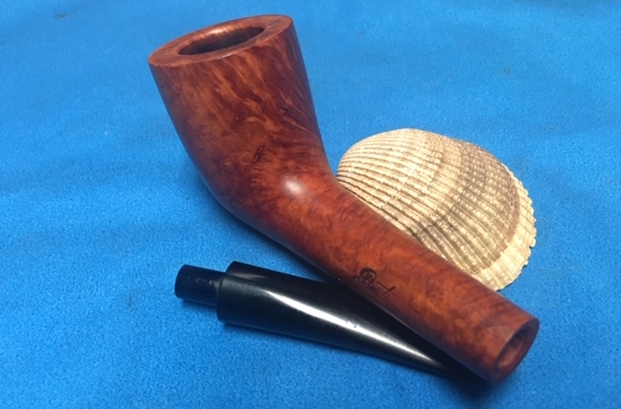
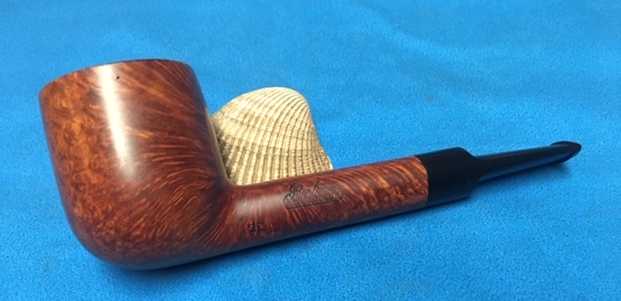
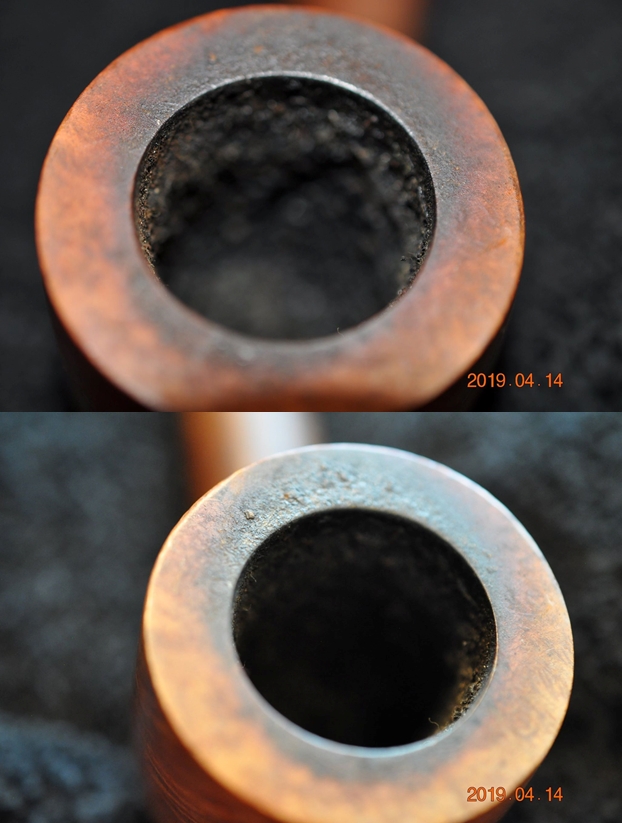
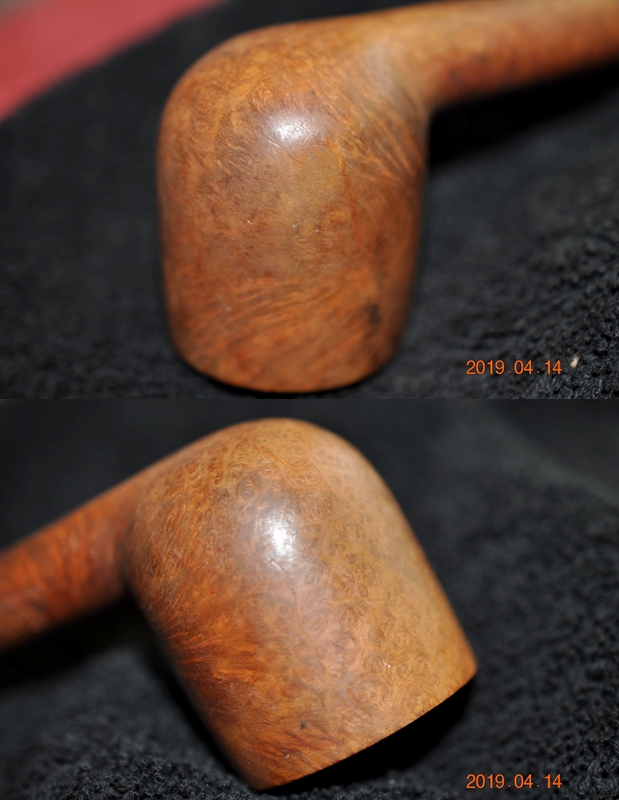
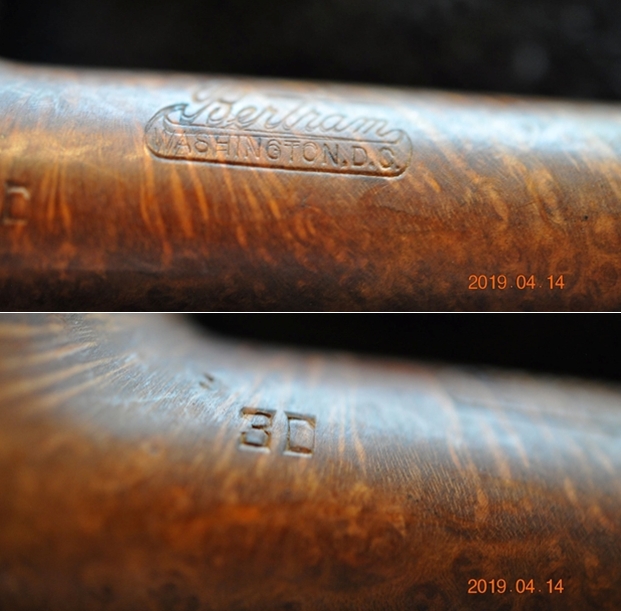
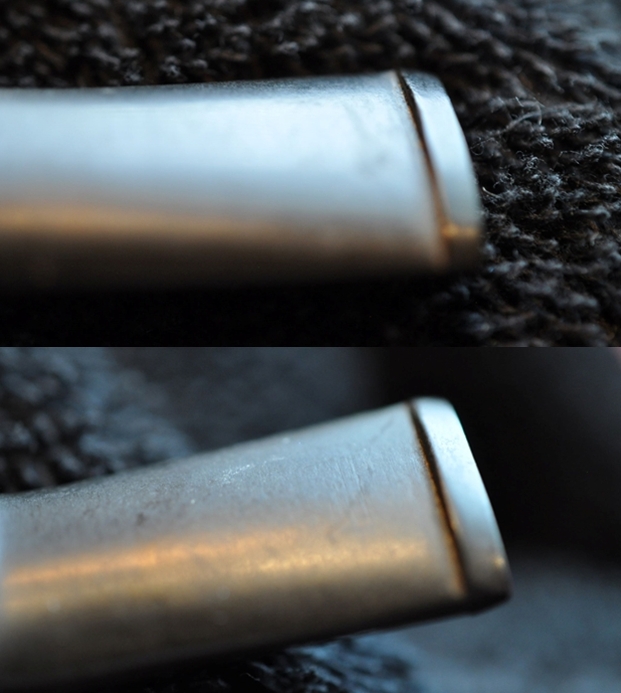
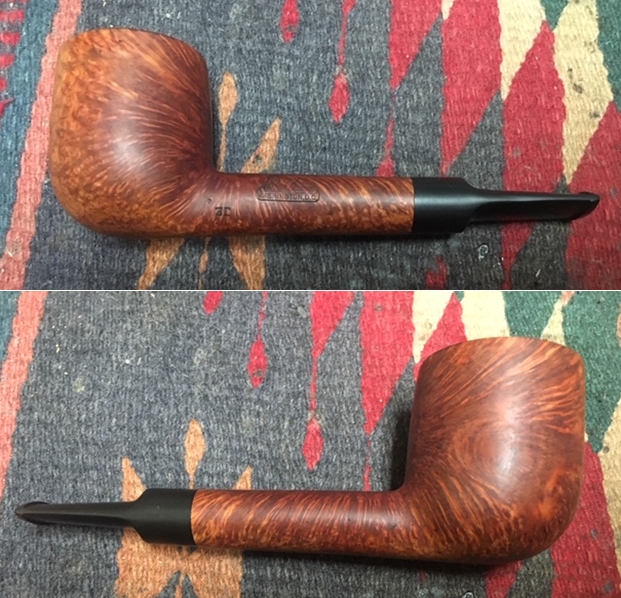
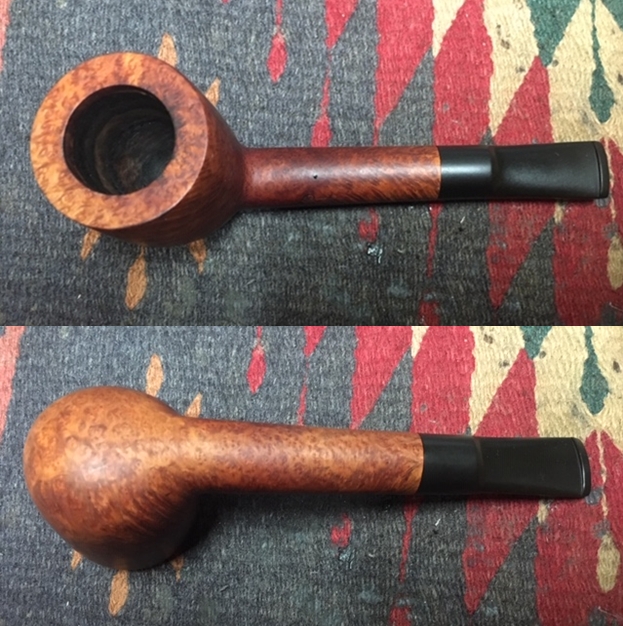
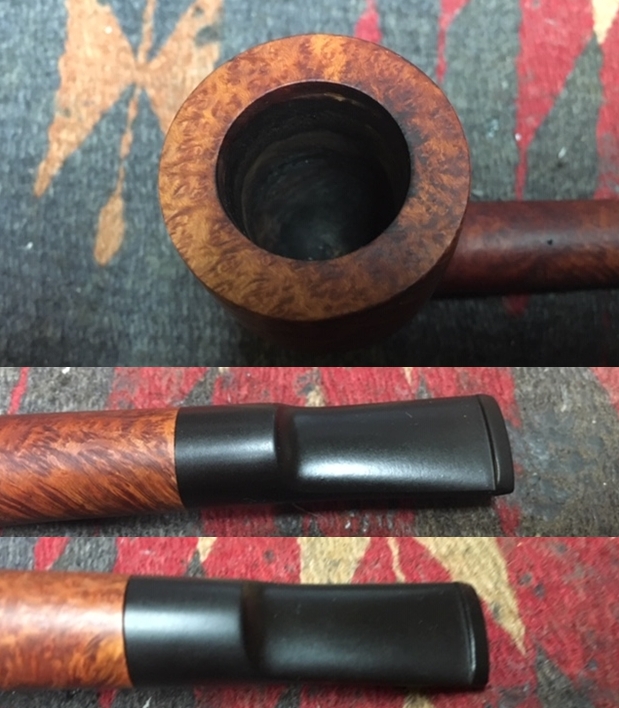
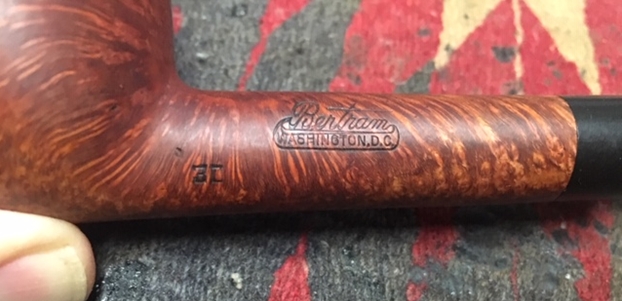
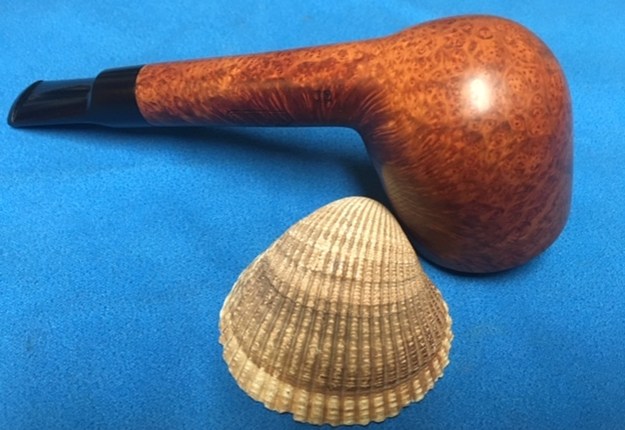
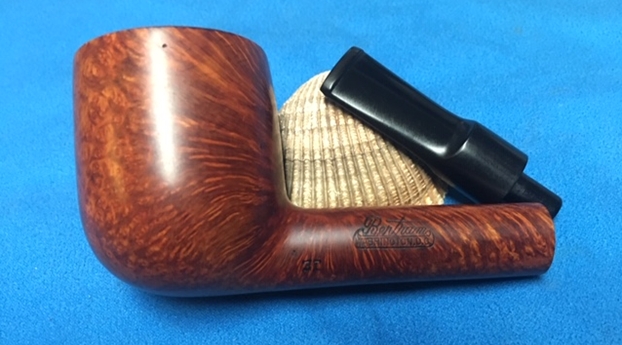
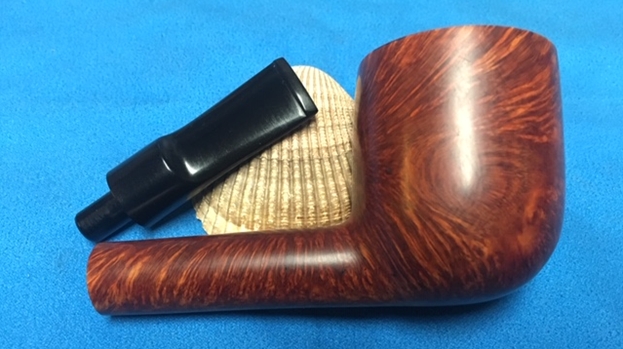
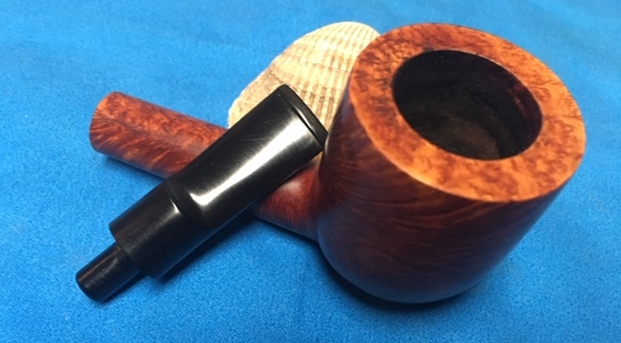
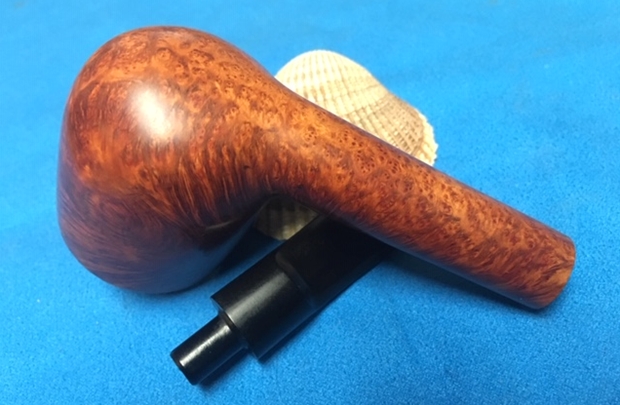
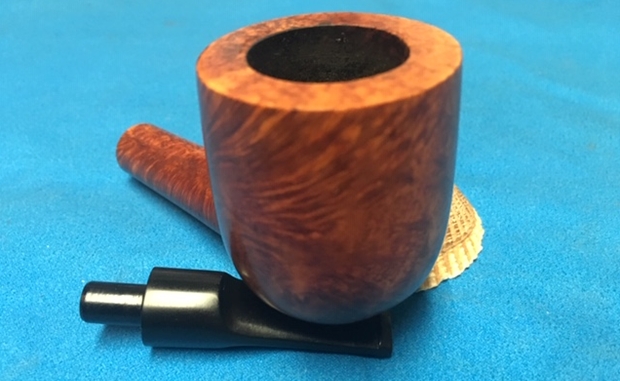
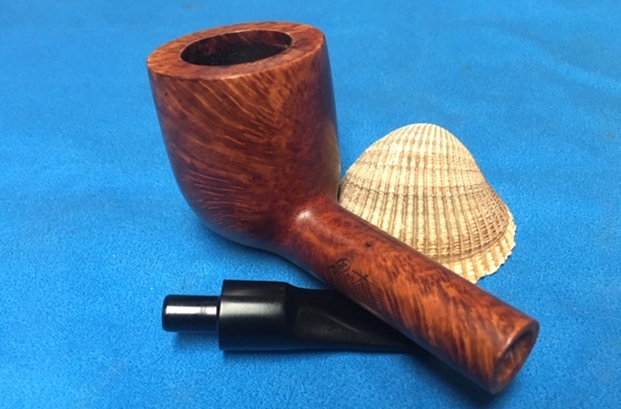
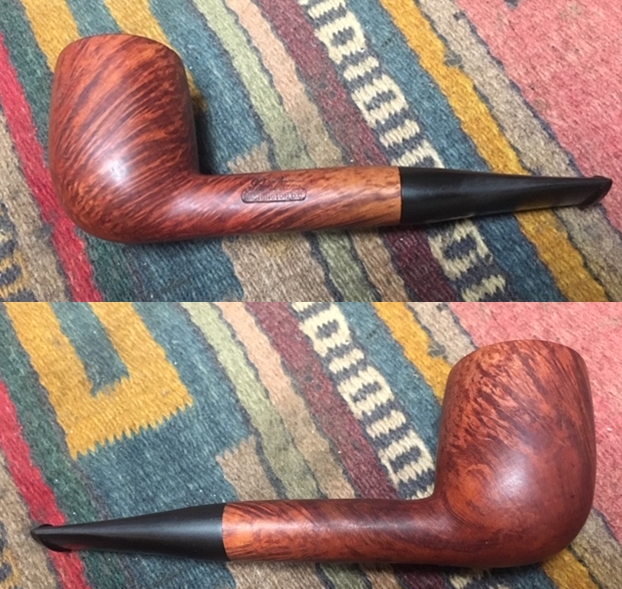
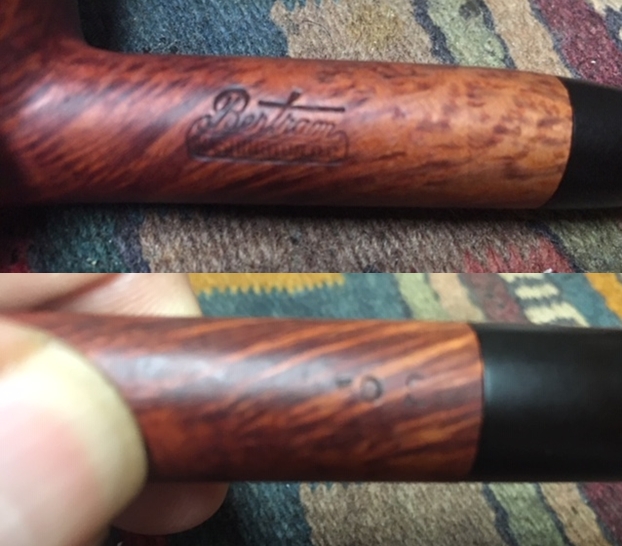
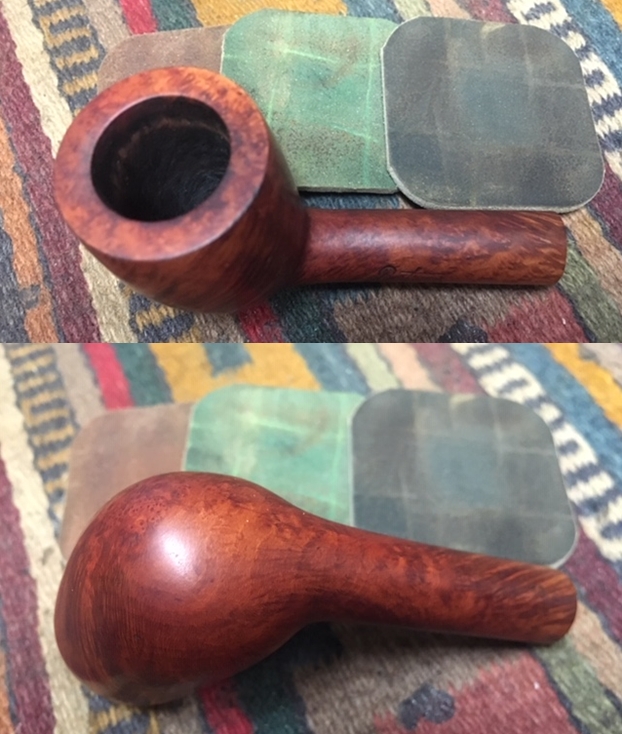
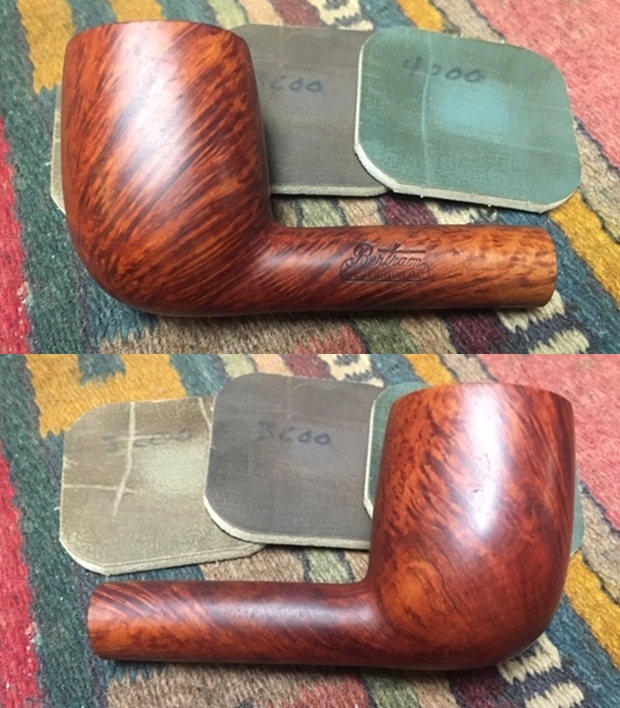
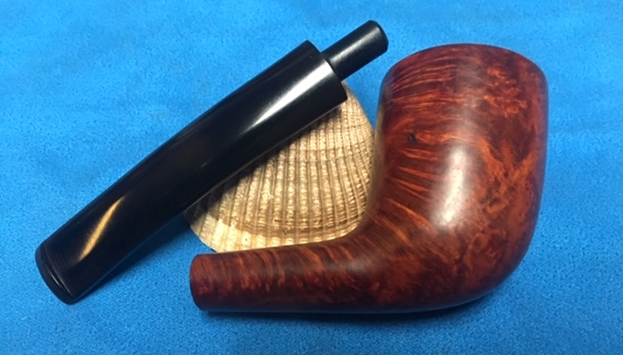
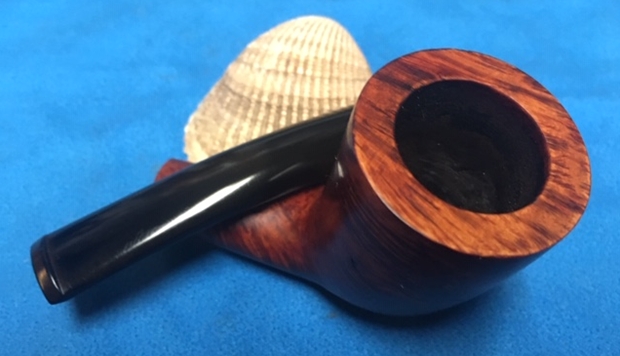
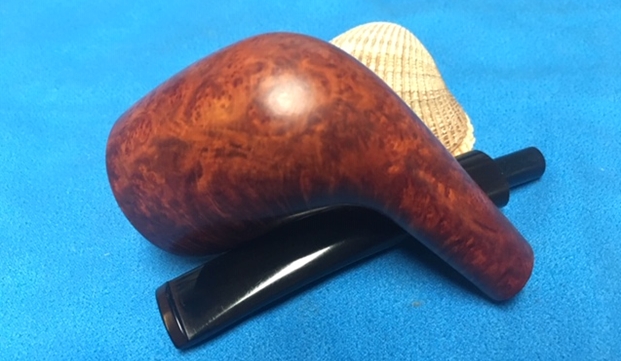
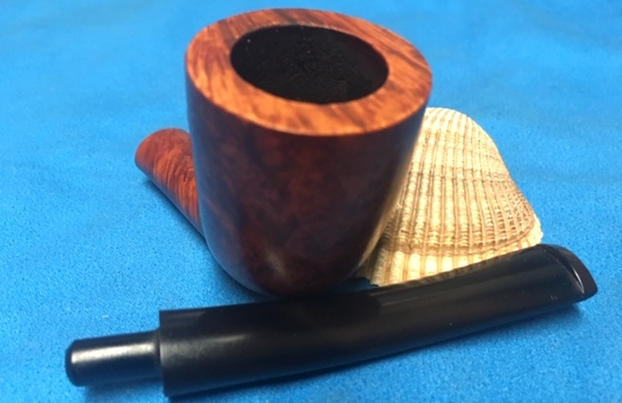
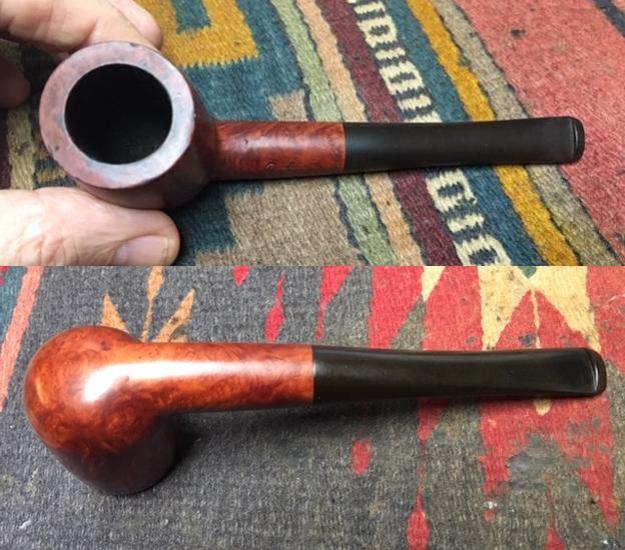
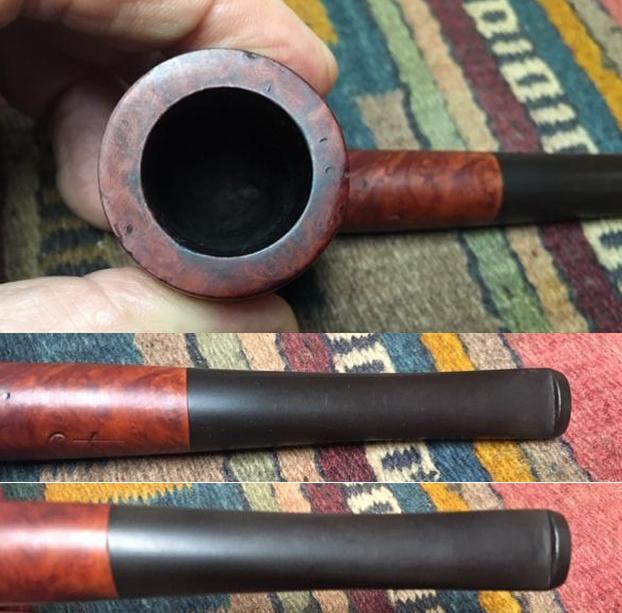
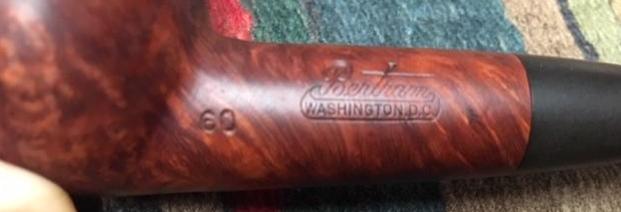
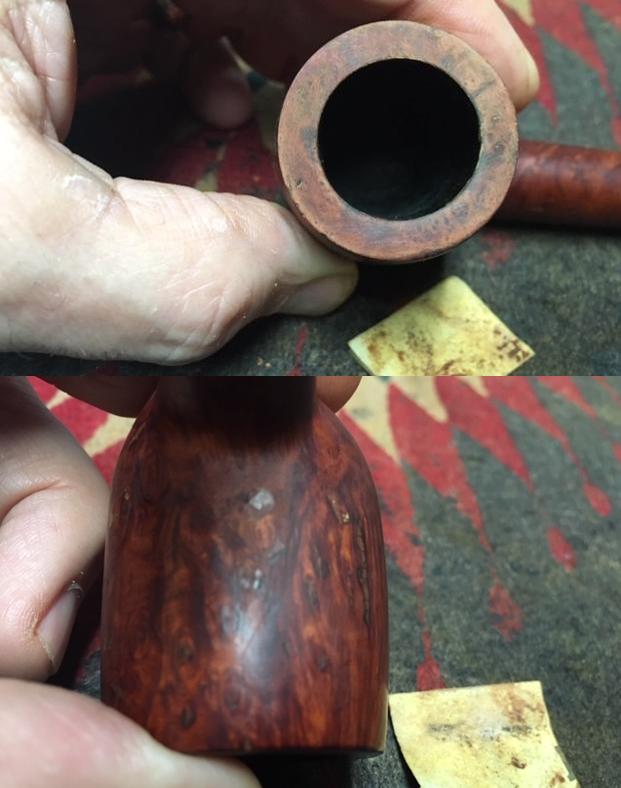
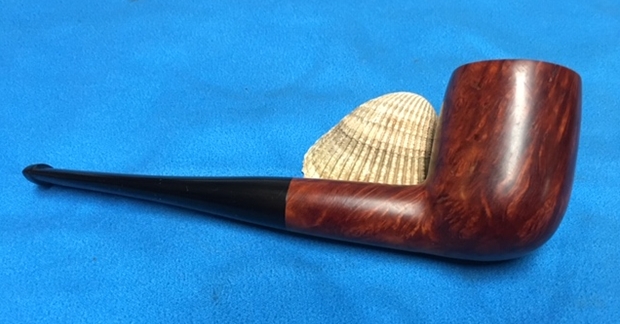
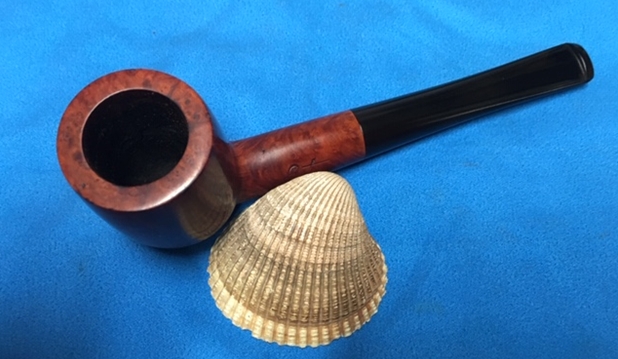
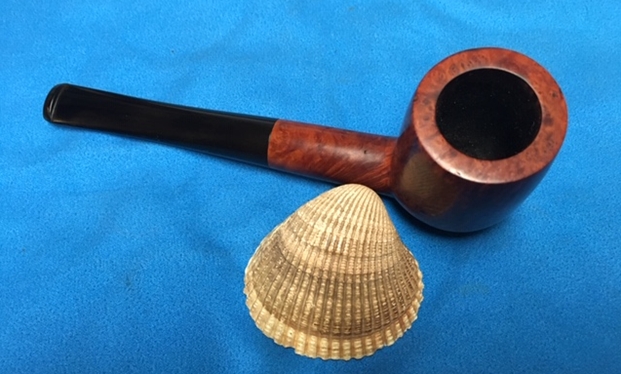
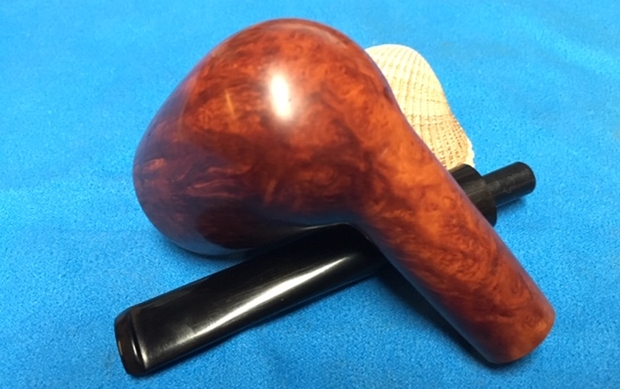
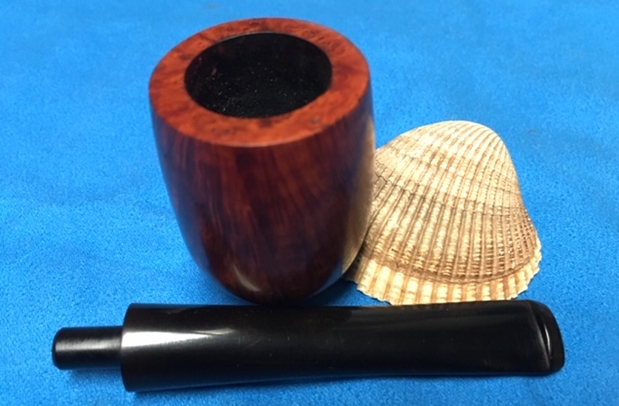
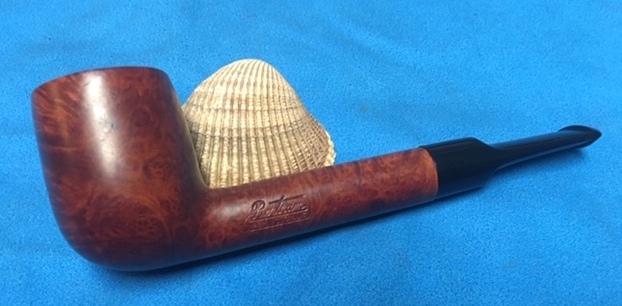
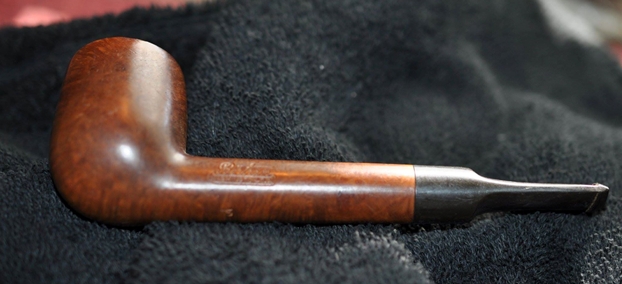
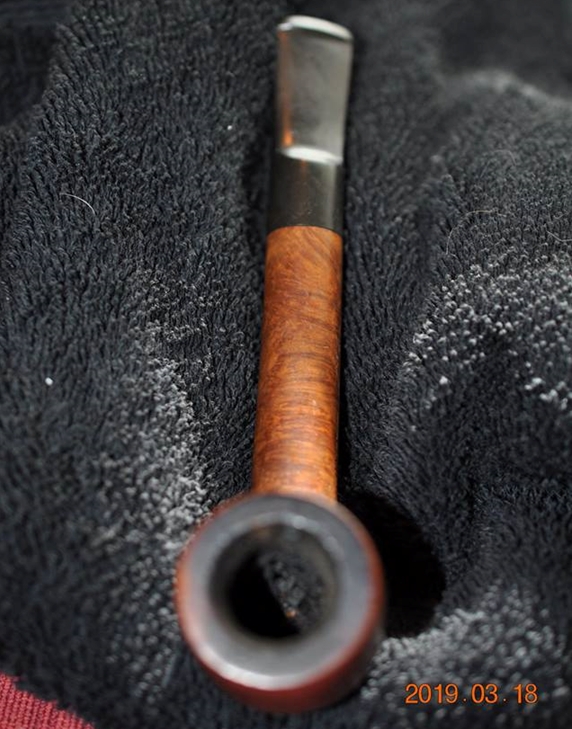
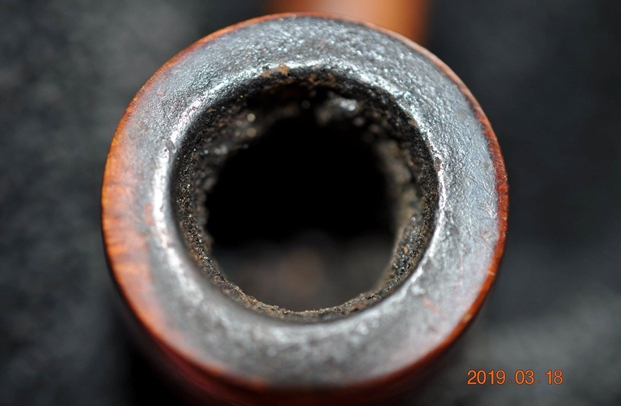
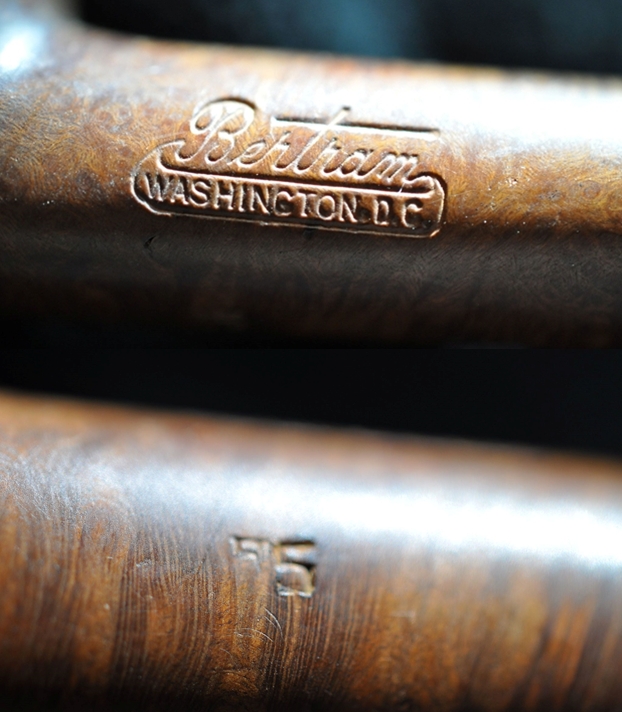
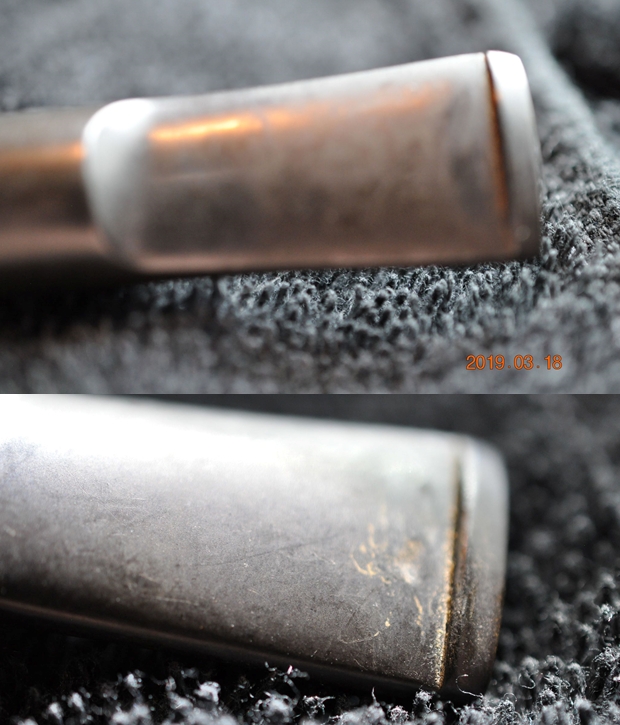
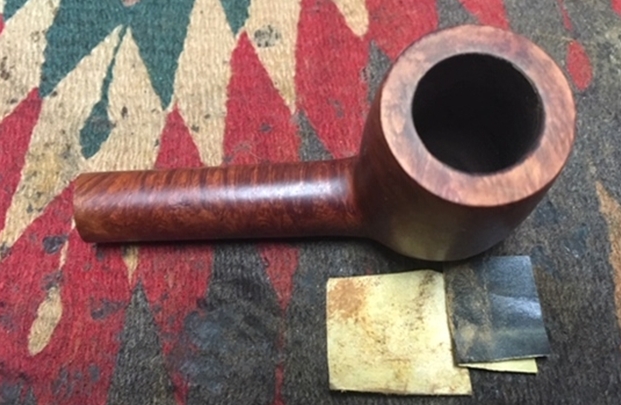
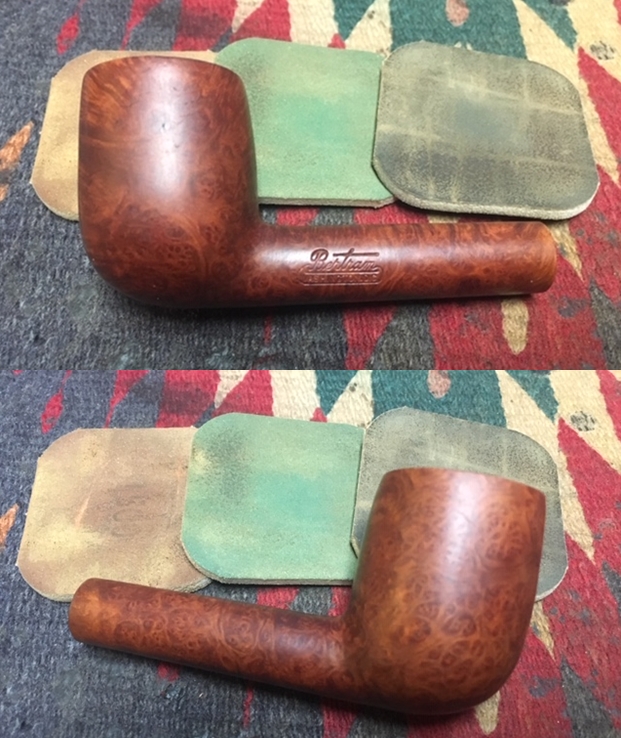
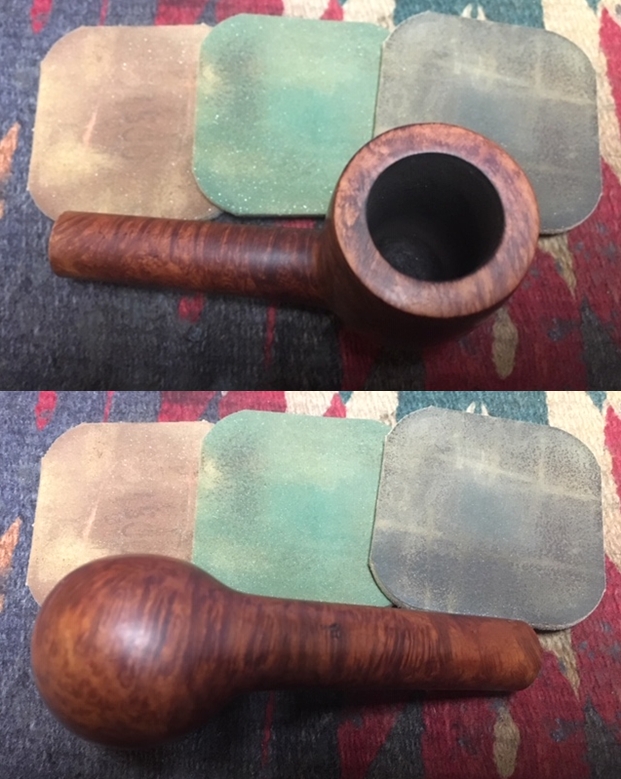
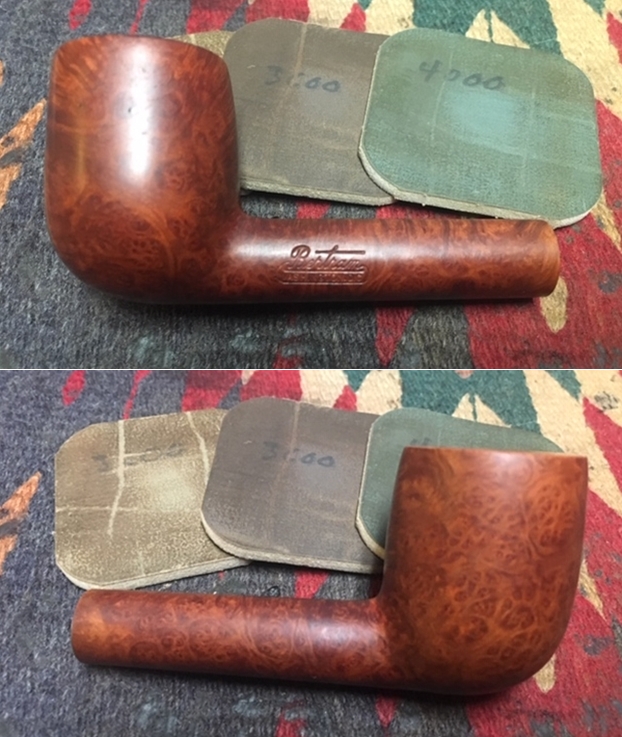
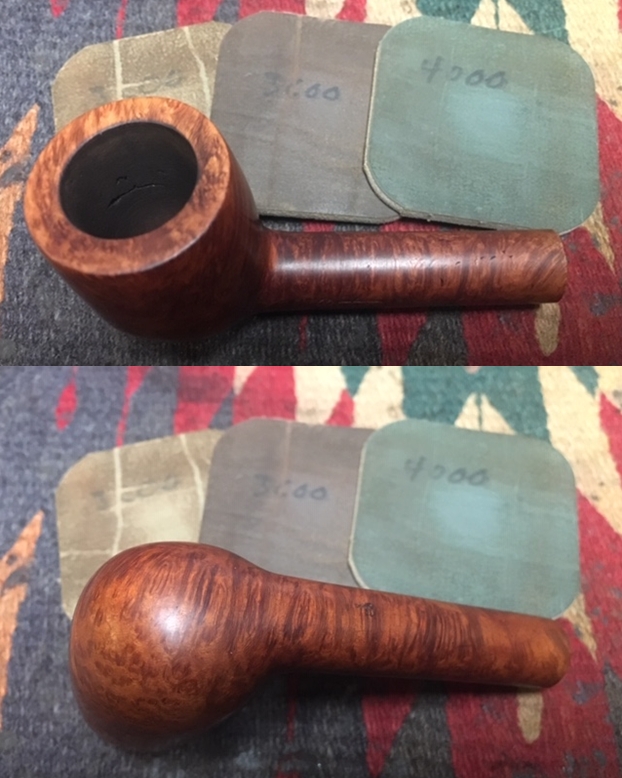
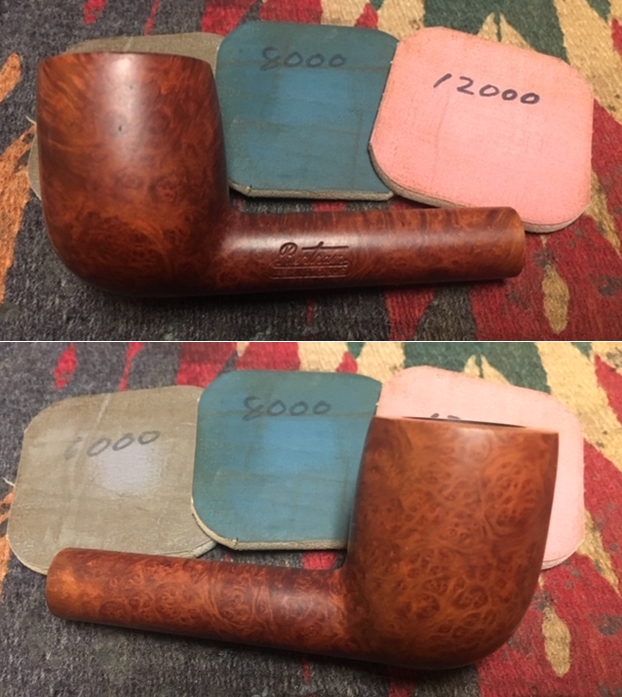
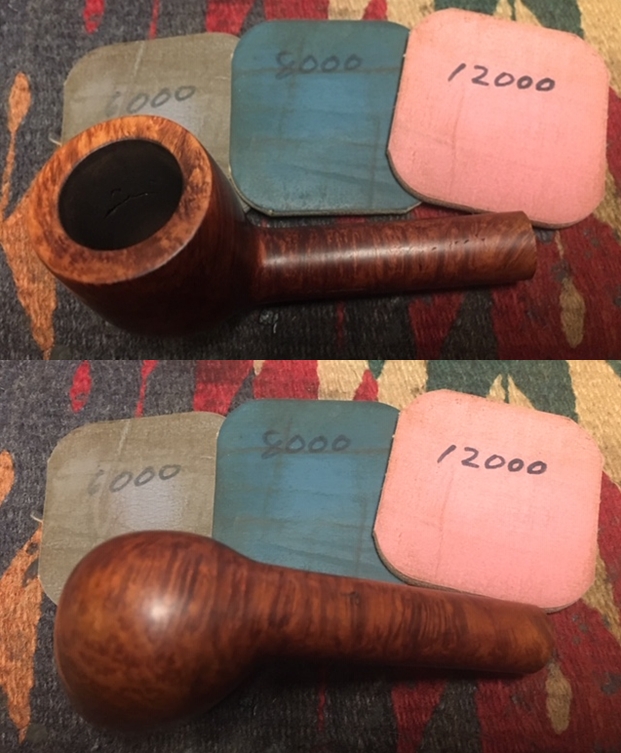
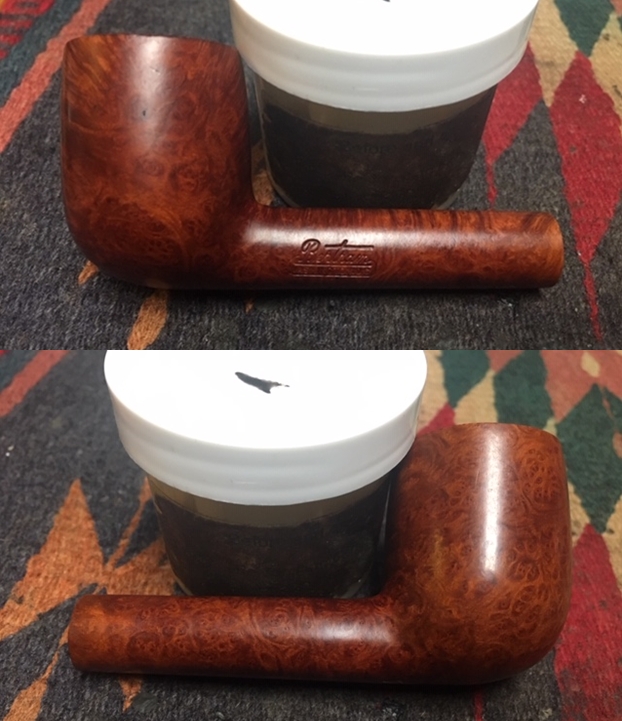
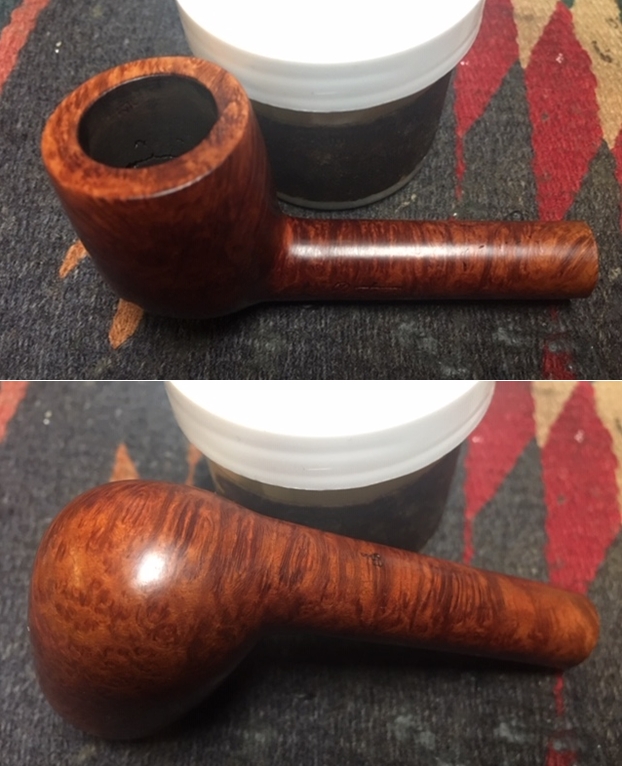
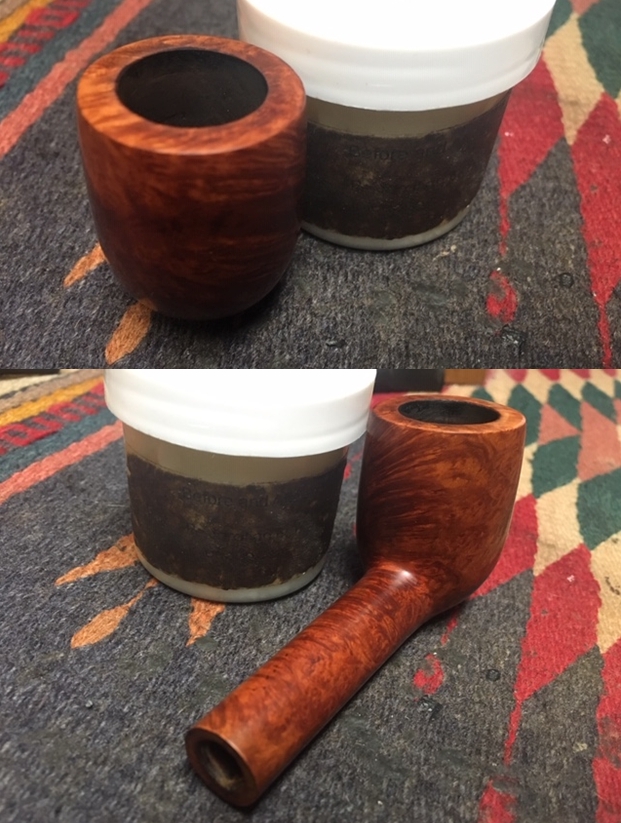
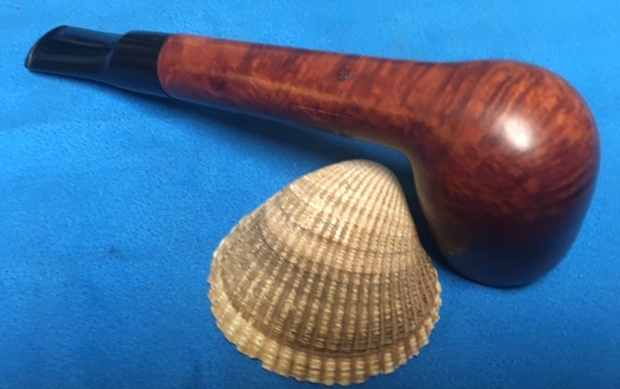
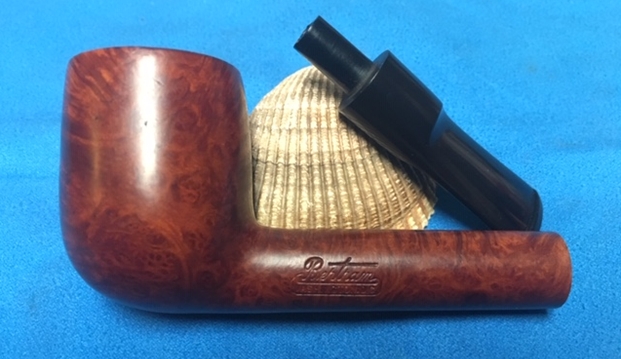
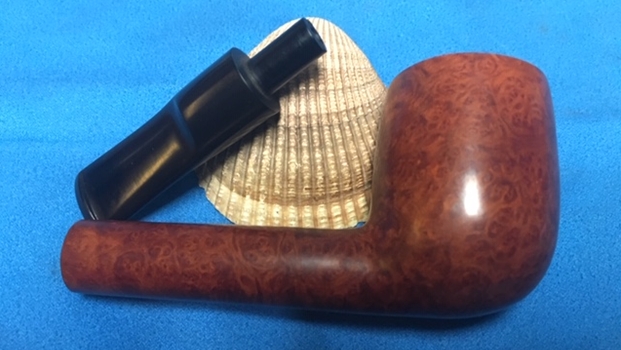
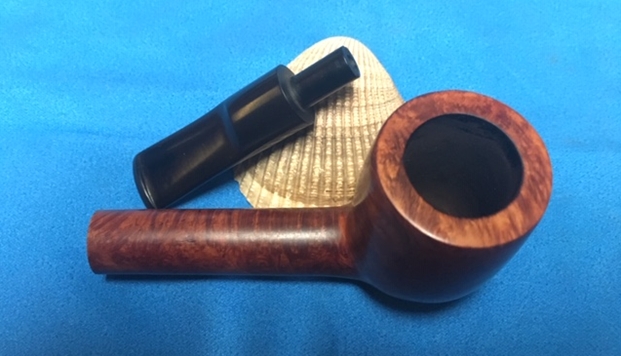
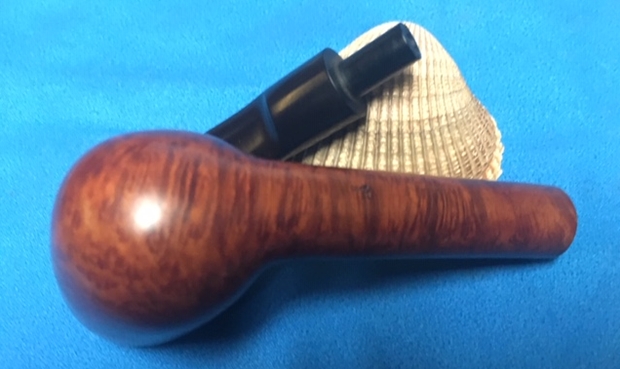
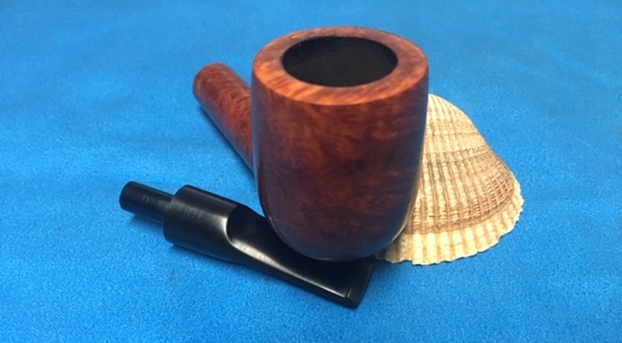
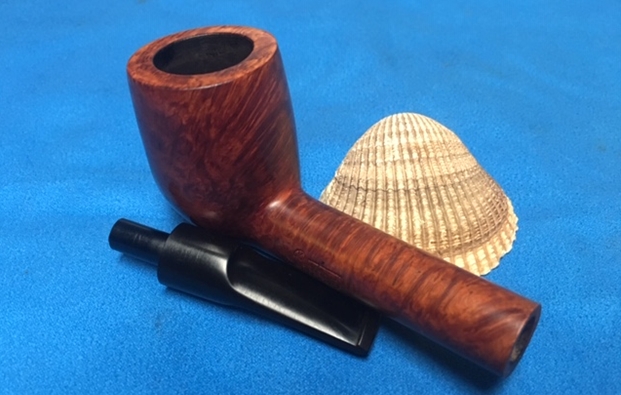
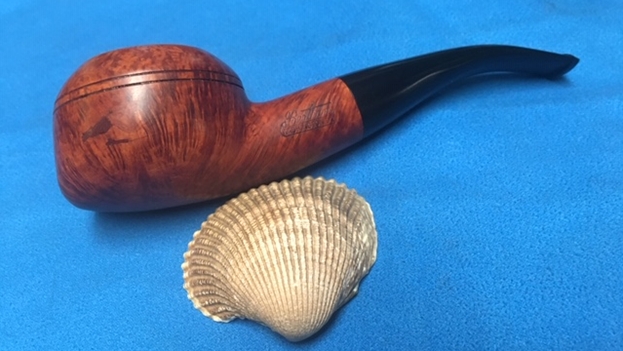
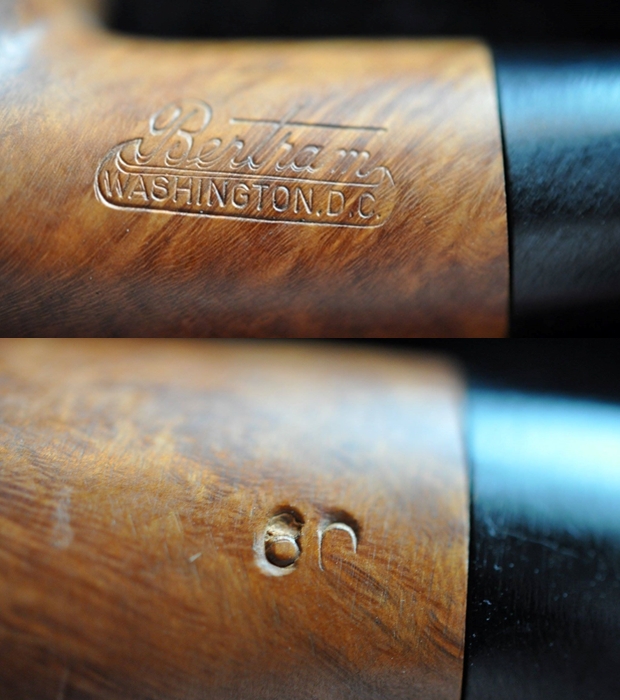
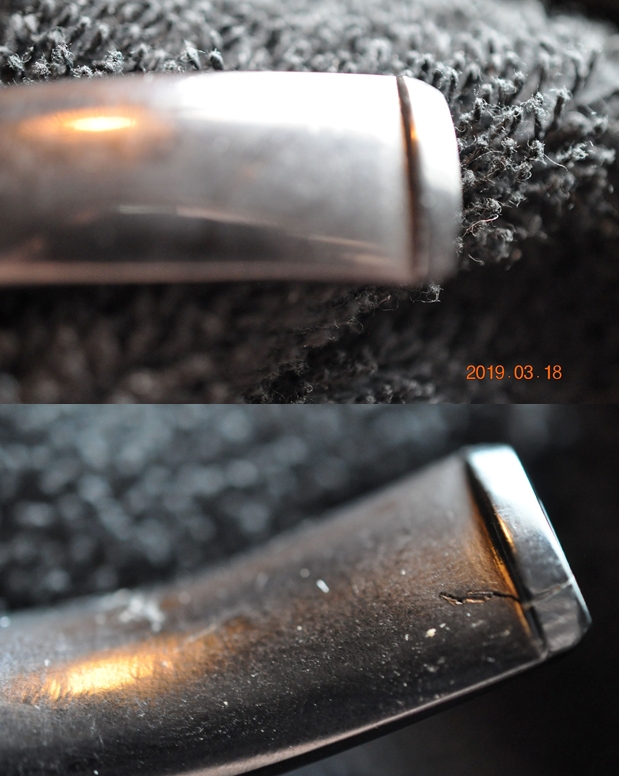
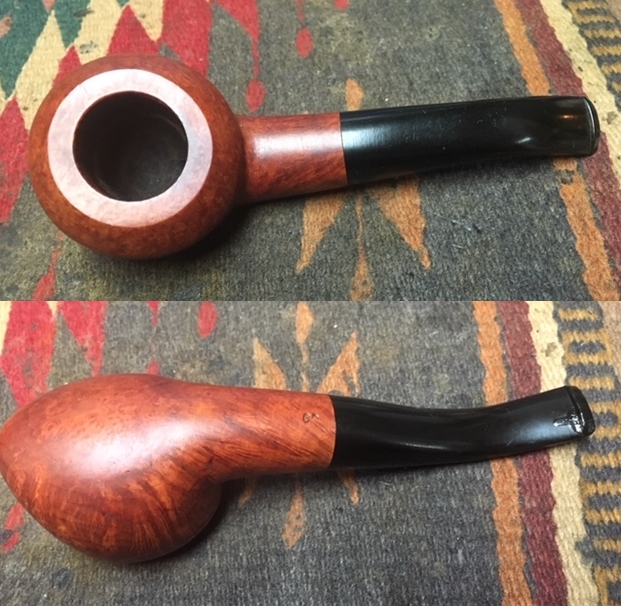
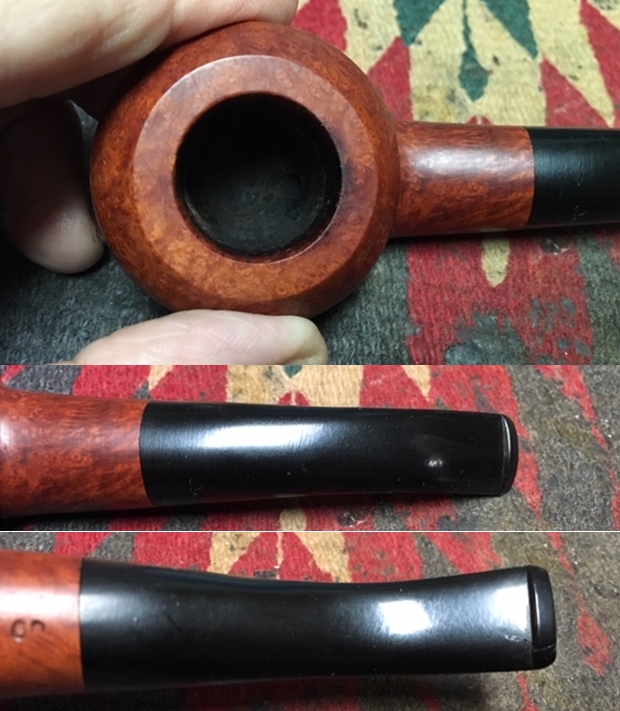
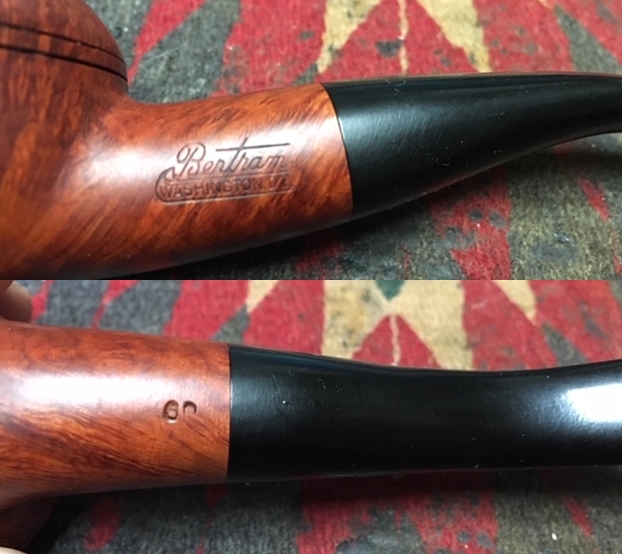
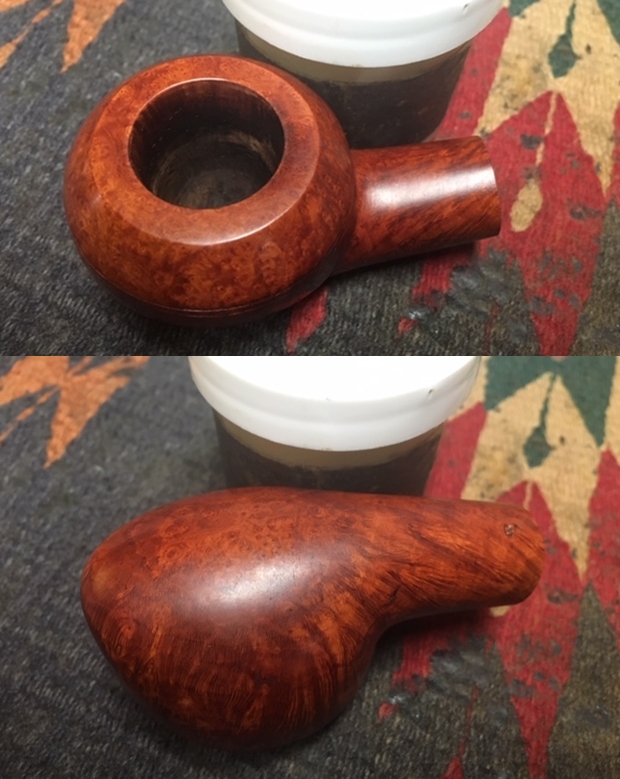
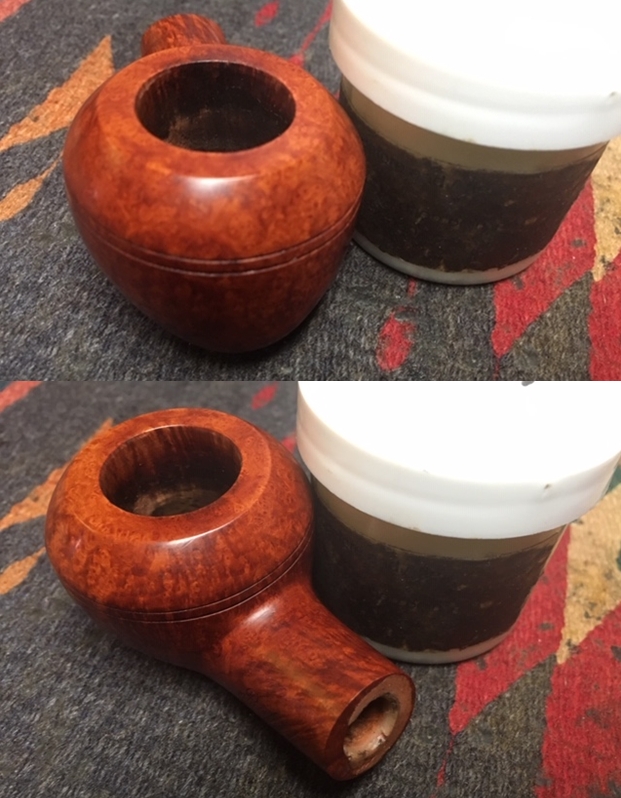
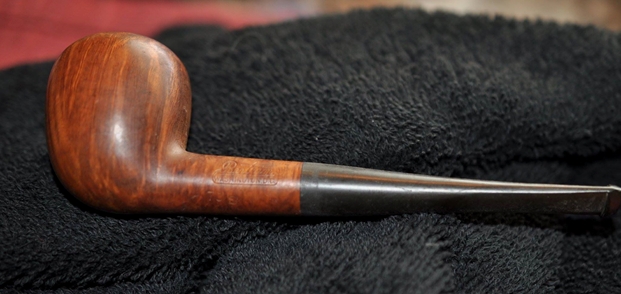
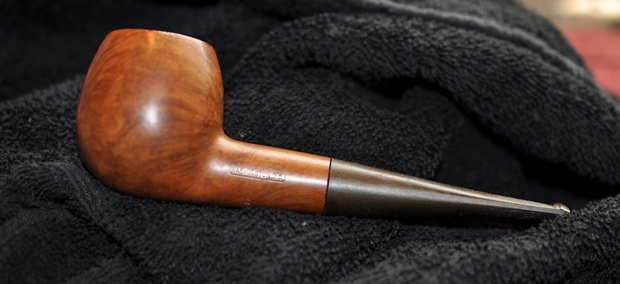
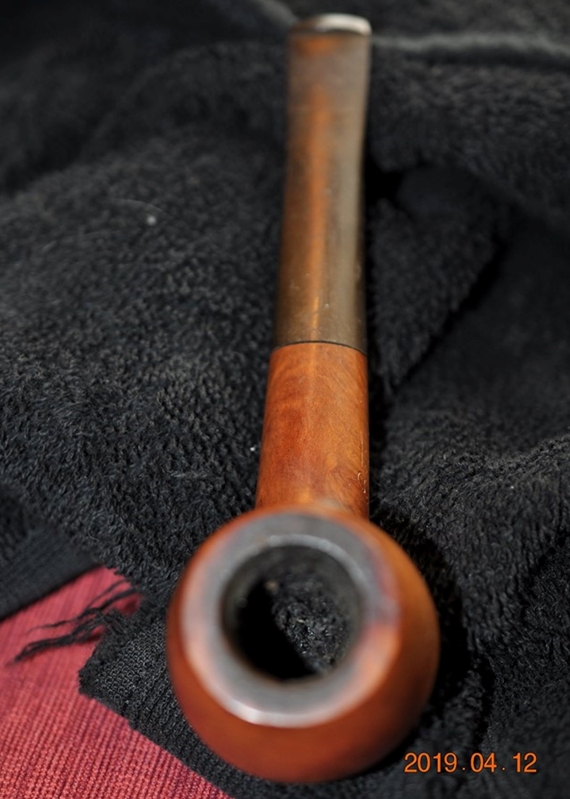
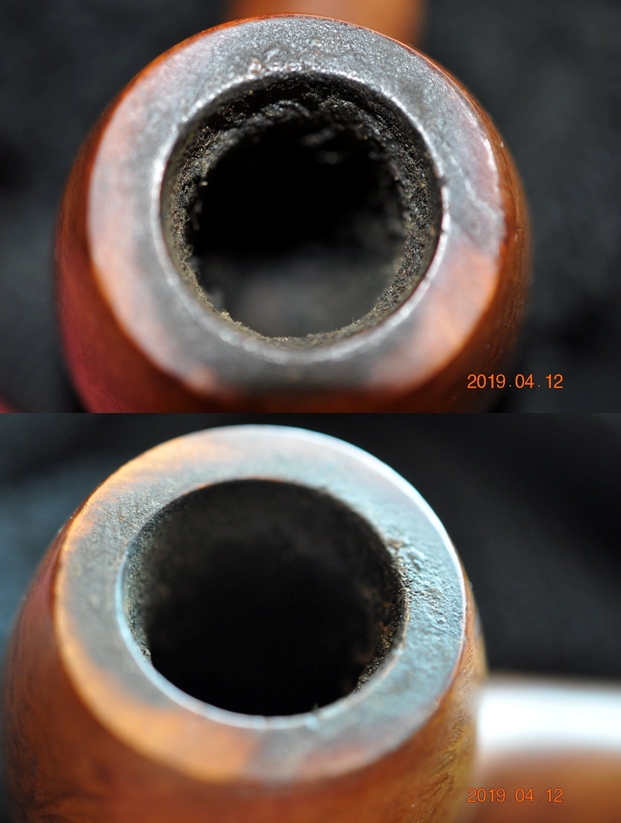
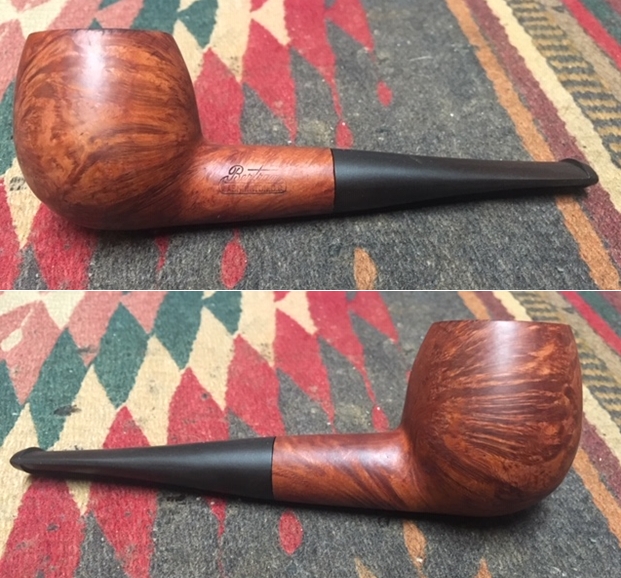
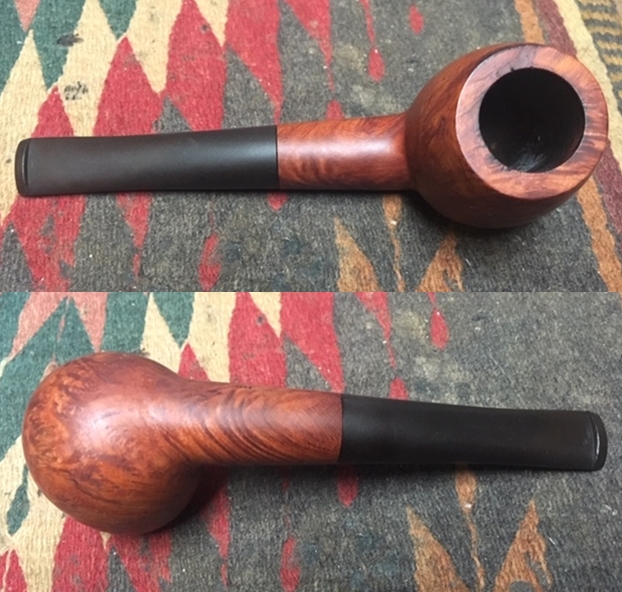
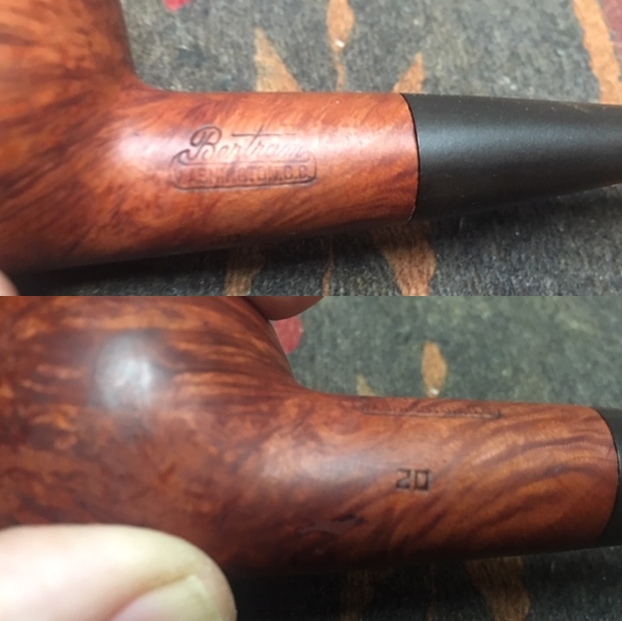
Feel free to refer to the previous blog posts on the brand if you want some background on the pipes in this lot. I have a hard time expressing how overwhelming it is to look at the 200+ pipes that need to be restored. It is mind boggling but there is only one way to move ahead – 1 pipe at a time. I could not do it without Jeff’s help. He is doing the clean up on the lot as that would be more than I could handle by myself in moving through this many pipes. From his cleaned pipes I get to choose what I want to work on. This time I chose an interesting thick shank Bertram Apple. It has grade 20 number on the underside of the shank. The grain was a mix of grains – swirls, flame, cross and birdseye. It is another round bottom pipe with a taper stem. The exterior of the bowl looked really good. The bowl had cake in the chamber that was no problem. The rim top had some darkening and lava overflow on the back side. There appeared to be a bit of damage to the back side of the inner edge of the bowl and a little darkening on the outer edge on the left side. The stem had some oxidation and tooth chatter near the button on both sides. There were two deeper tooth marks on the underside near the button. Jeff took some photos of the pipe before he began his cleanup work on it. Jeff took close-up photos of the bowl and rim to capture the condition of the pipe when it arrived. The rim top had a coat of lava and the bowl had a thick cake. There were a few nicks in the back side of the inner edge of the rim.Jeff took pictures of the bowl sides and the heel to show the great looking grain around the sides of the bowl. There appear to be some fills on the underside of the bowl amidst the grime and dirt.Jeff took a photo to capture the stamping on the left side of the shank. It shows the stamping which read Bertram over Washington, D.C. There is a number 20 stamped on the underside of the shank. That is the quality number designation on this pipe. The next two photos show the stem surface. They show the calcification, oxidation and the chatter on both sides near the button. There are several deeper tooth marks on the underside of the stem near the button. There is some wear on the button edge.I have included this information with each of the Bertram blogs I have posted. You can skip the next bit. But if you have not, then I include the link to Bertram history and information. I would recommend that if you don’t know much about them do some research on them. I include a link to the write up on Pipedia (http://pipedia.org/wiki/Bertram). Bertram pipes were based out of Washington DC. They were popular among famous politicians and celebrities of the time. They made many products for them from FDR’s cigarette holders to Joseph Stalin’s favorite pipe. They were considered some of the best America had to offer till they finally closed their doors in the 70s. They graded their pipes by 10s, the higher the grade the better. Above 60s are uncommon and 80-90s are quite rare. I’ve never heard of or seen a 100 grade. I have several blogs that I have written on rebornpipes that give some history and background to Bertram pipes. (https://rebornpipes.com/2015/06/16/an-easy-restoration-of-a-bertram-grade-60-217-poker/).
I have included the following link to give a bit of historical information on the pipe company. It is a well written article that gives a glimpse of the heart of the company. http://www.streetsofwashington.com/2012/01/bertrams-pipe-shop-on-14th-street.html#

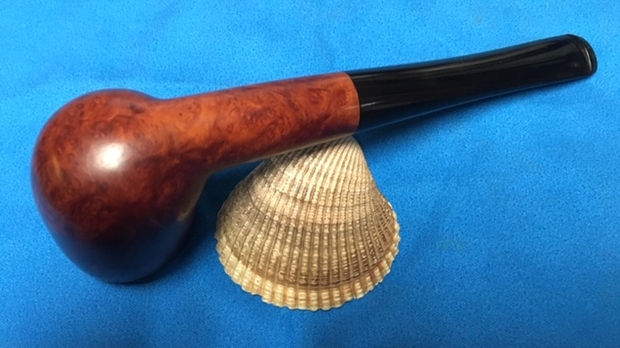
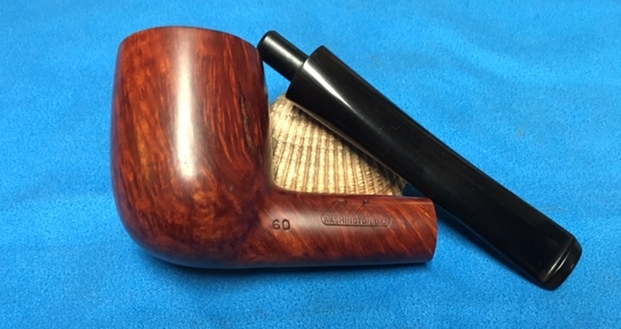
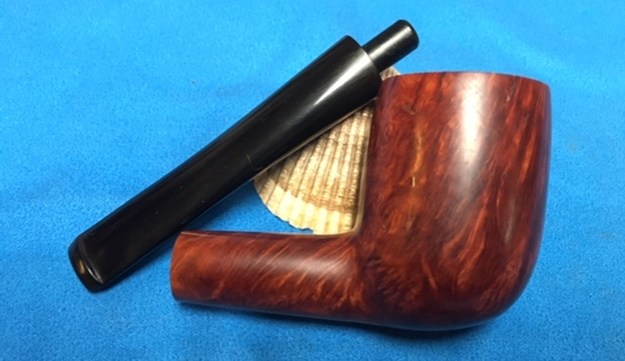
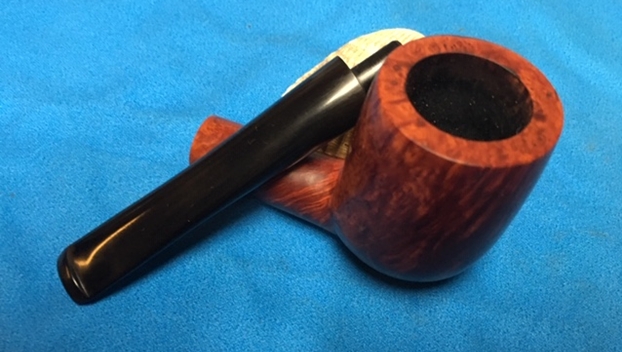
From this information I have learned that the shape and grade Bertram I have in front of me now was made before the closure of the shop in the 1970s. This Bertram Apple is yet another different shape from the other Bertram shapes I have worked. The 20 grade stamp gives some idea of how Bertram identified the quality of this pipe.

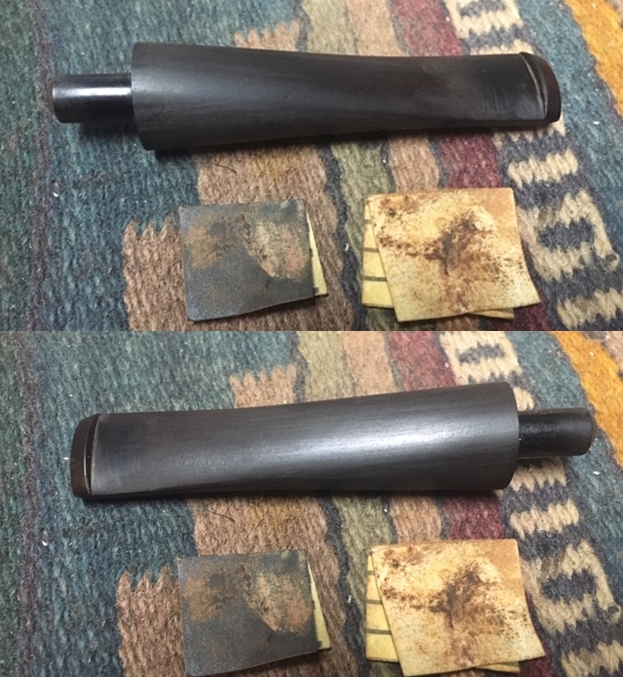
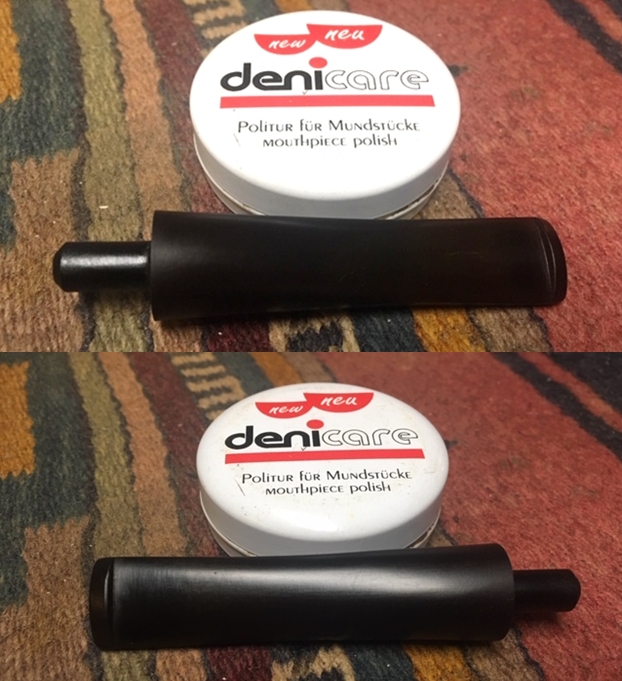
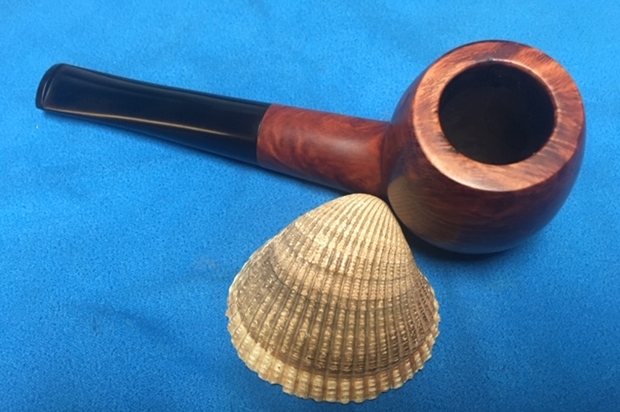
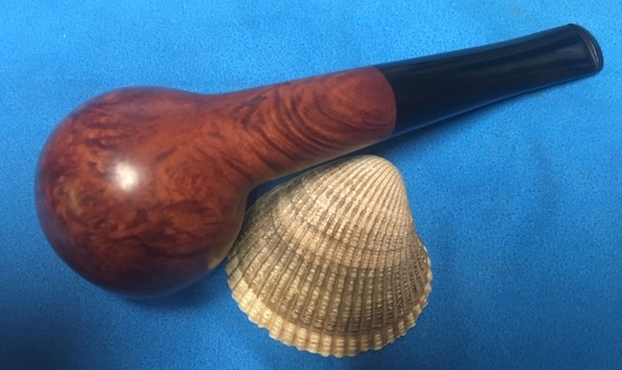
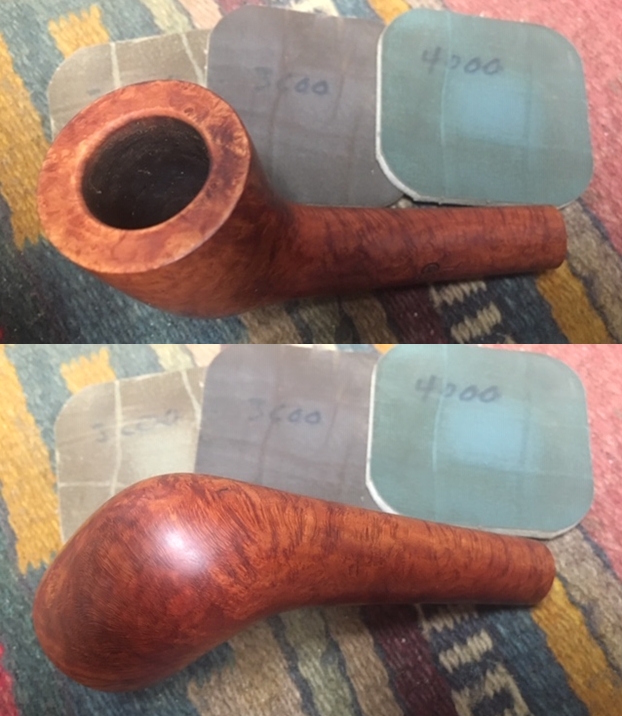
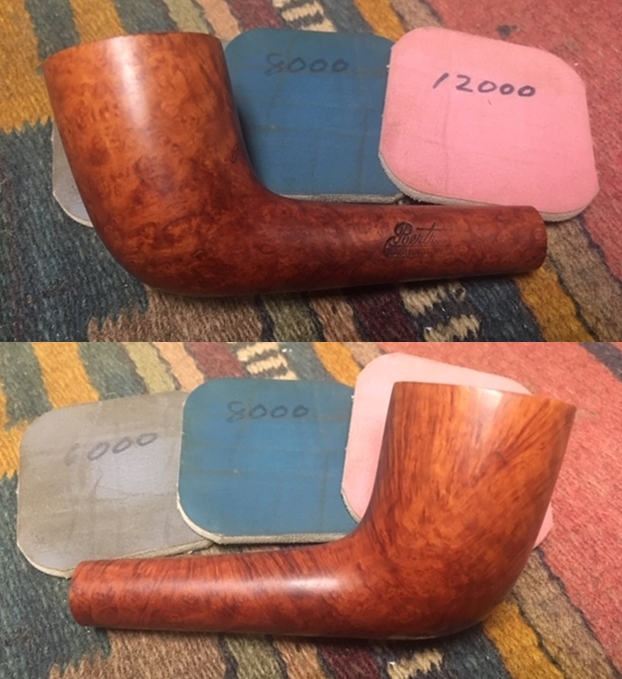
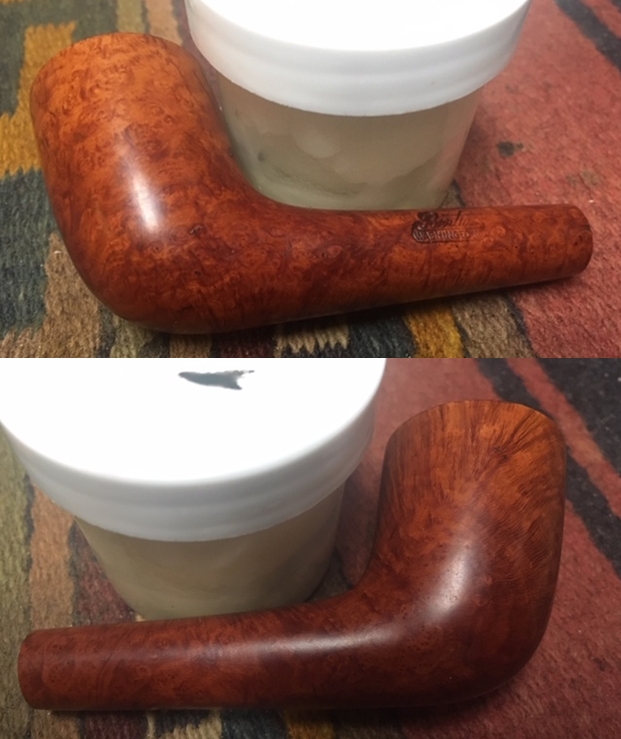
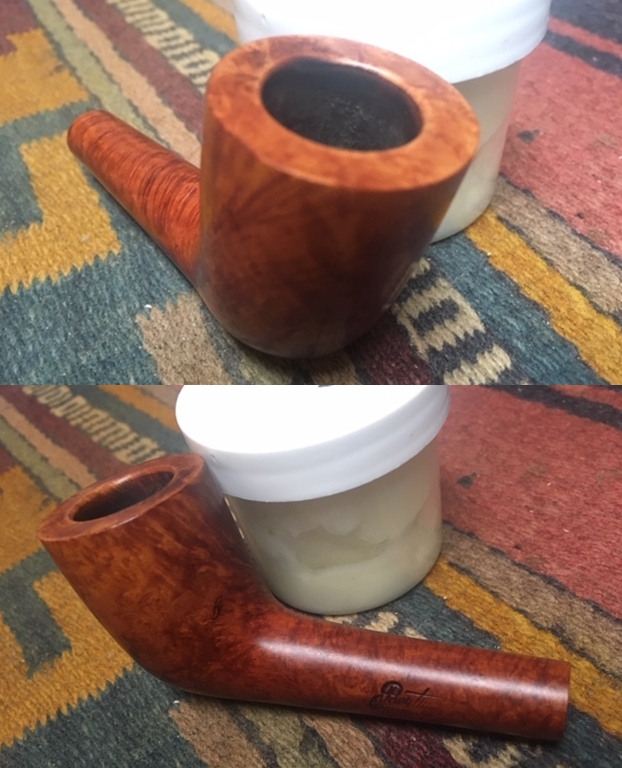
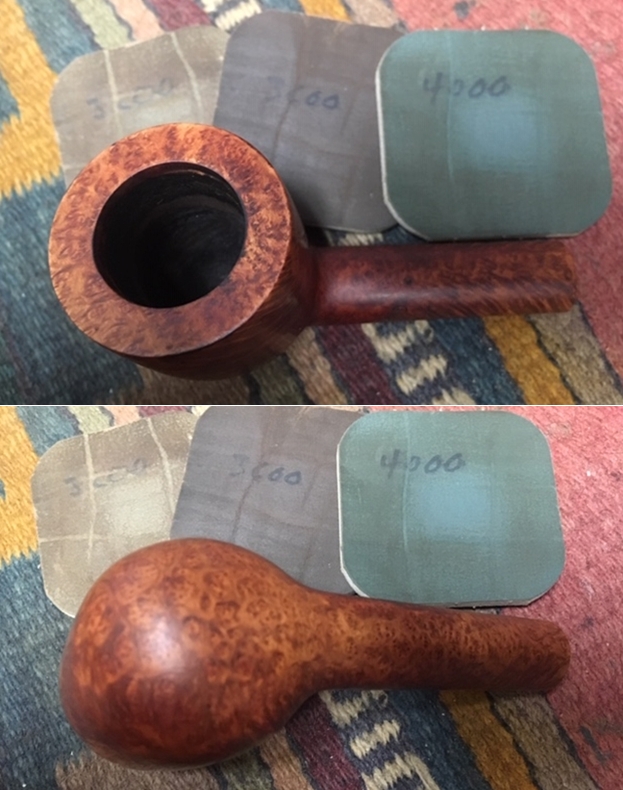
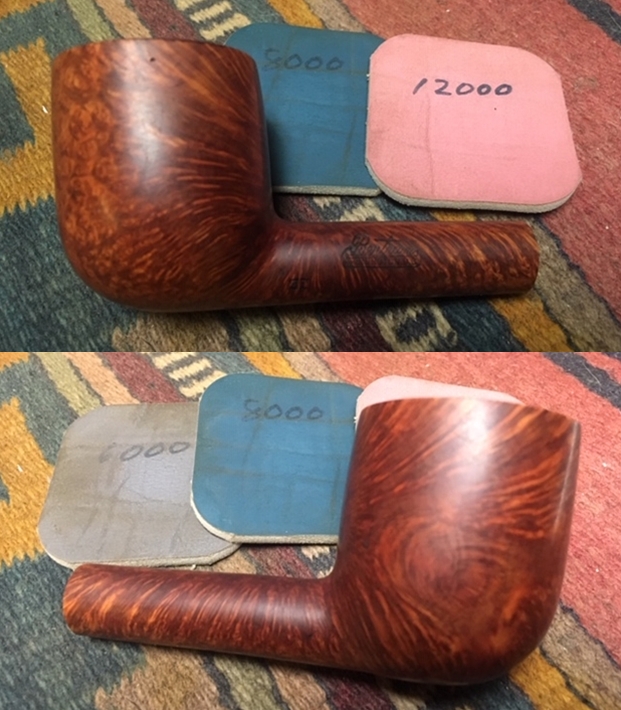
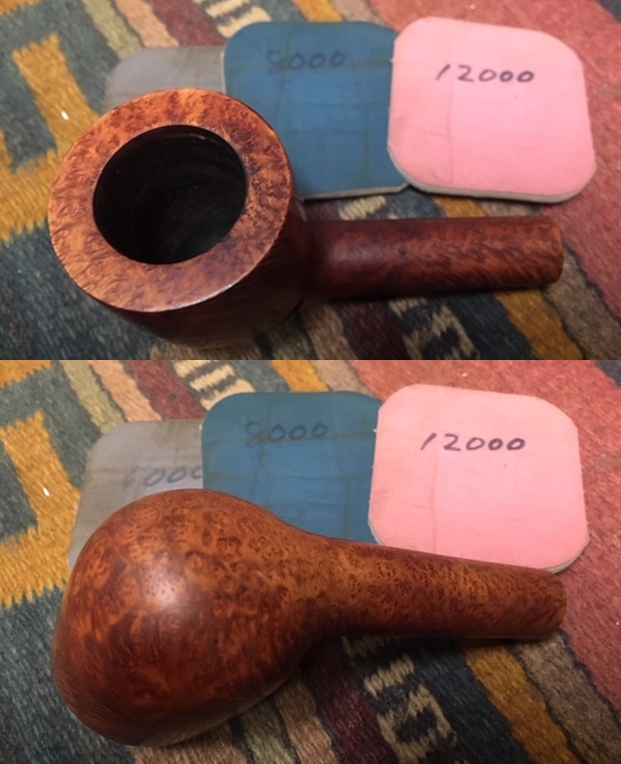
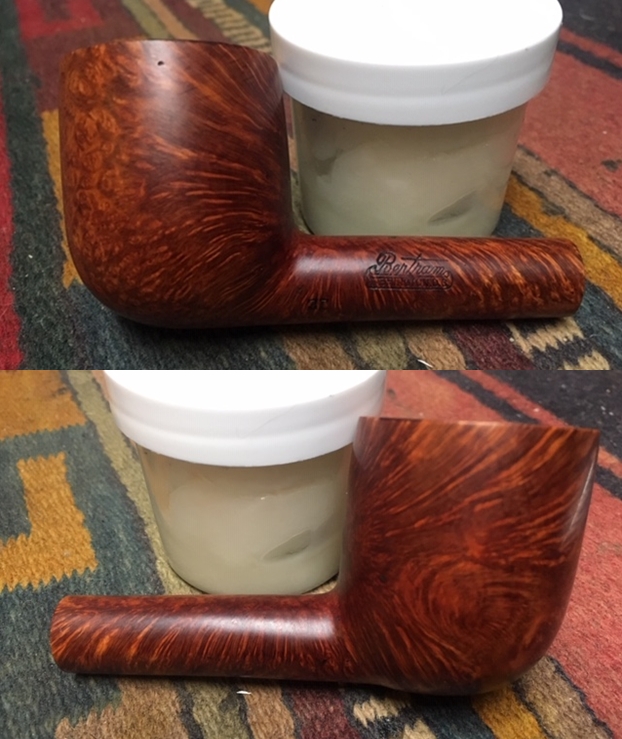
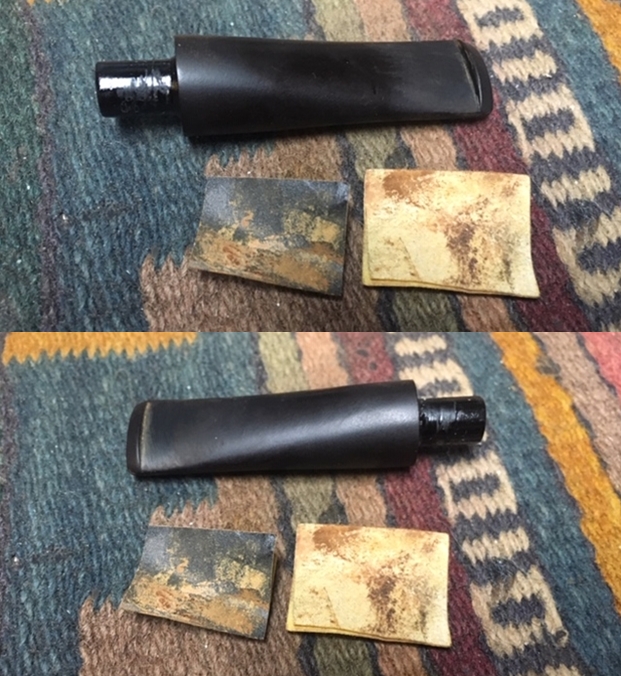
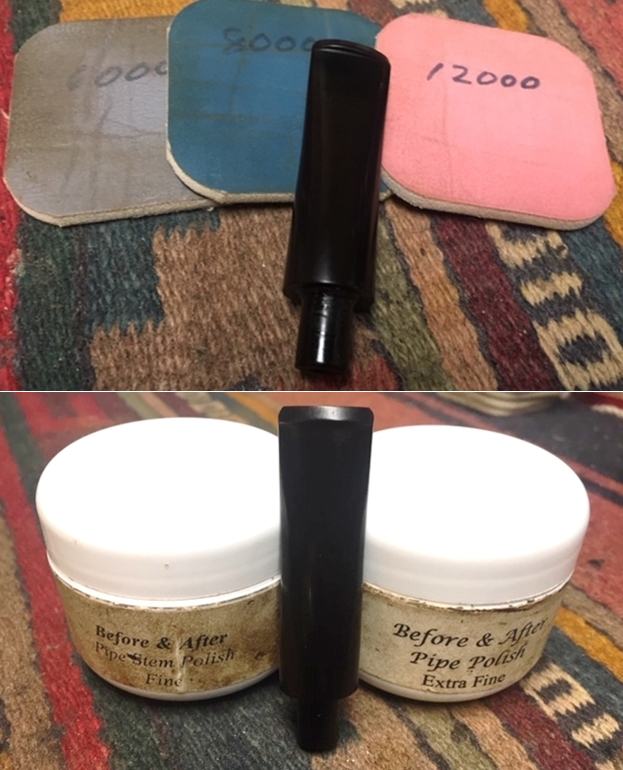
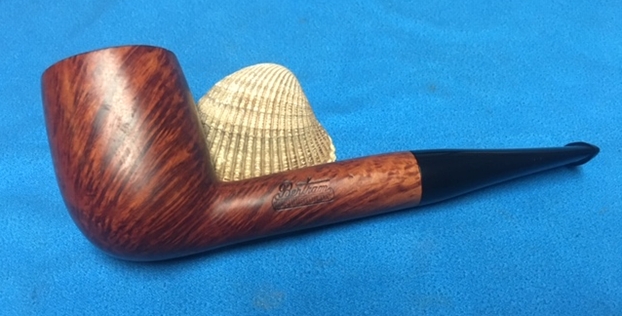
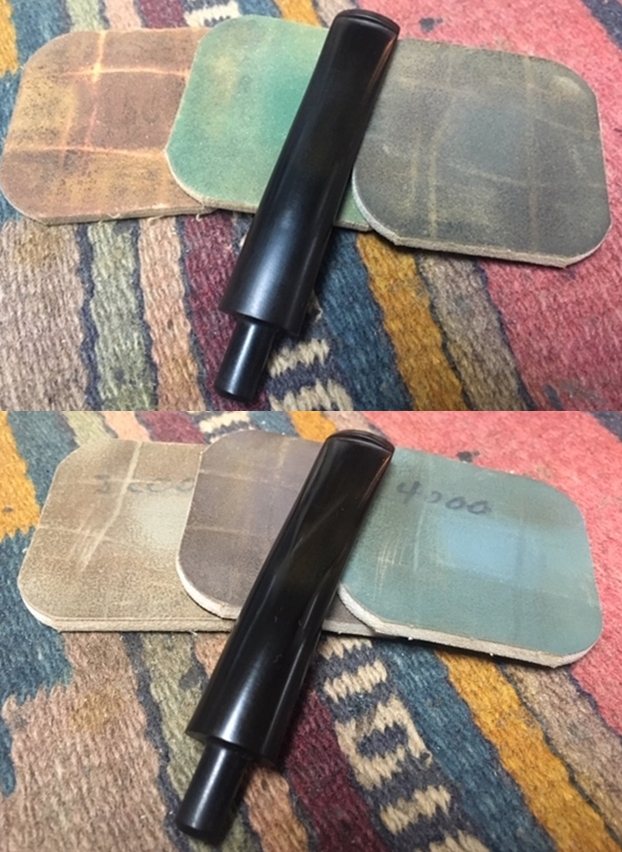
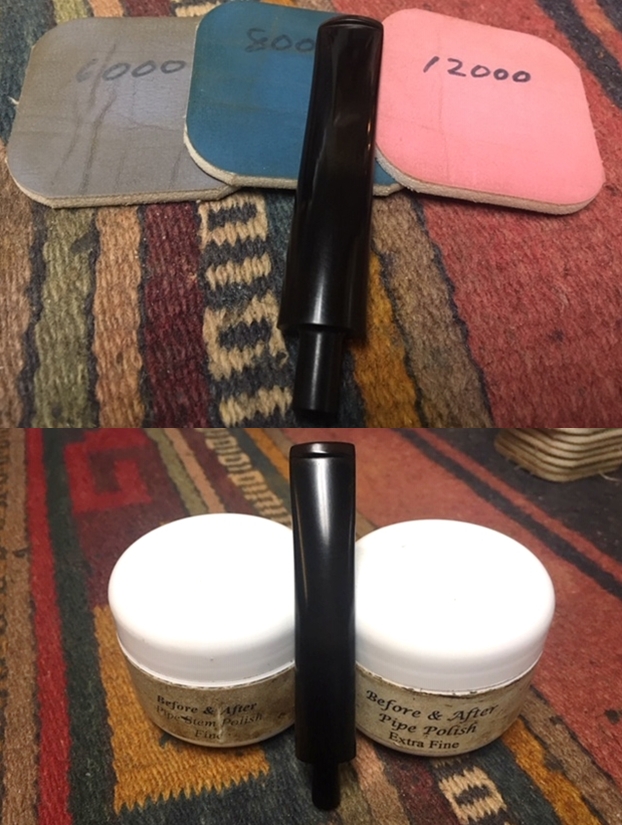
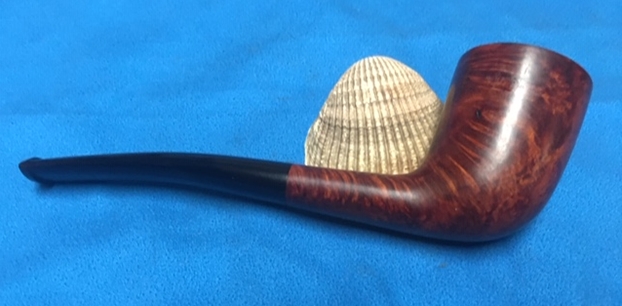
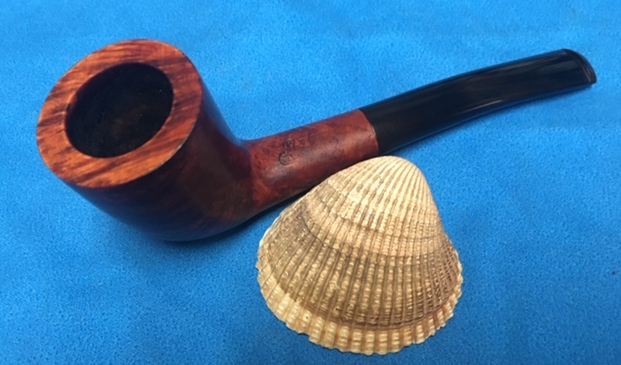
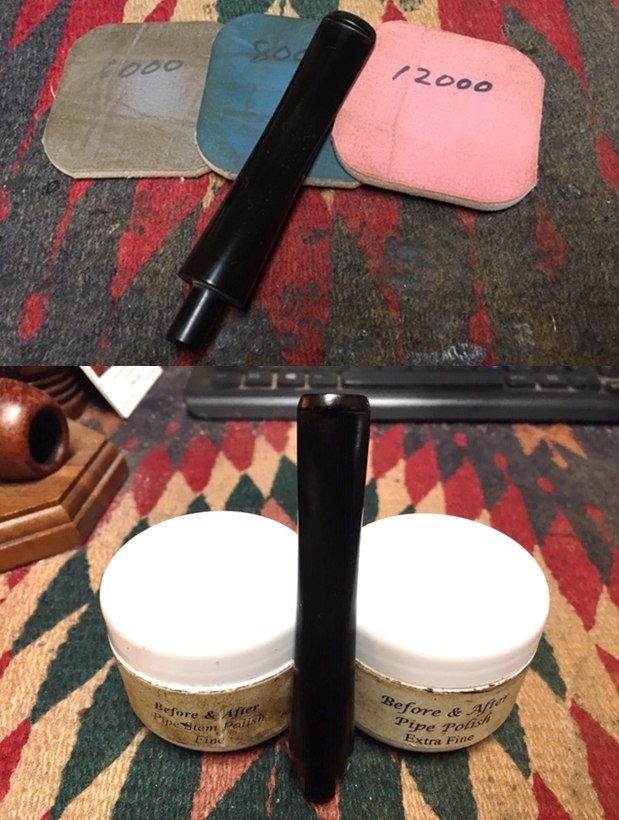
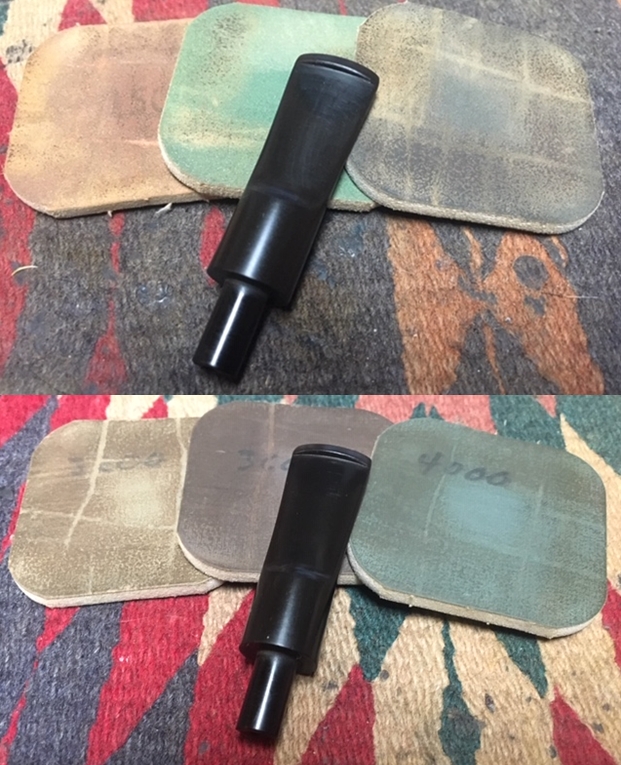
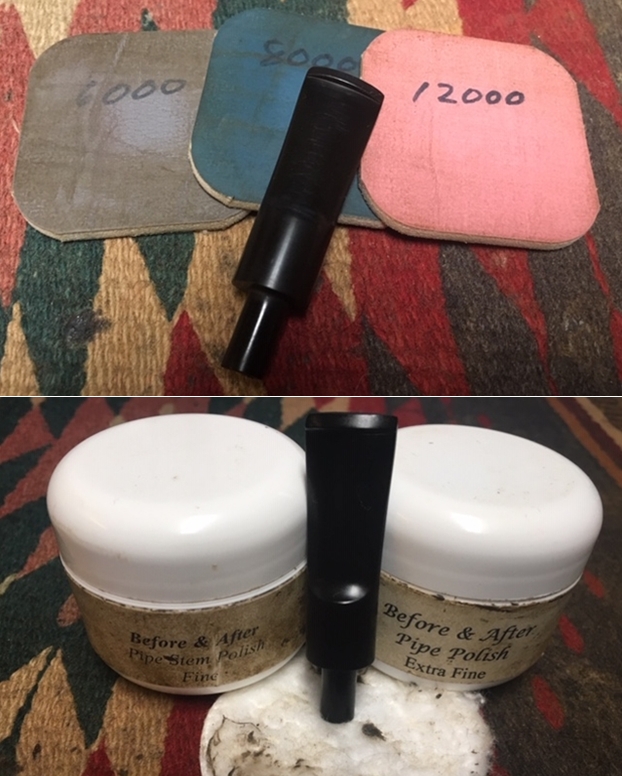
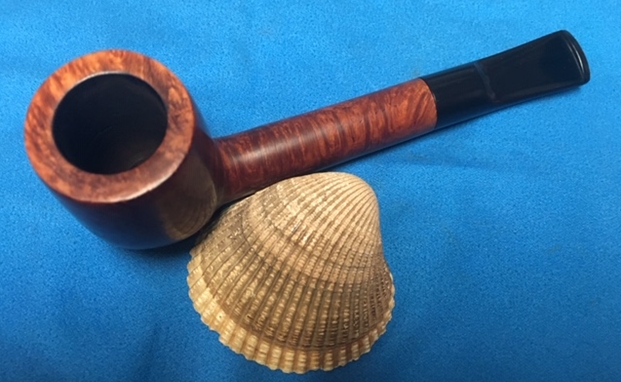
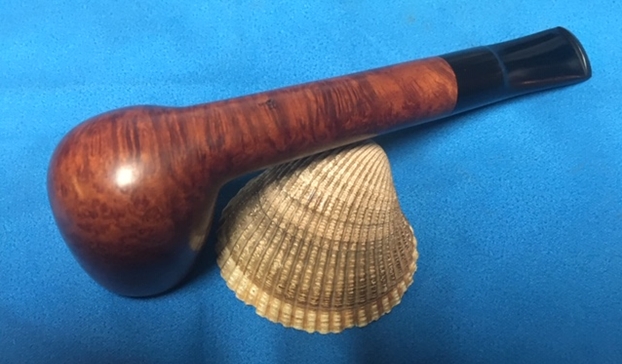
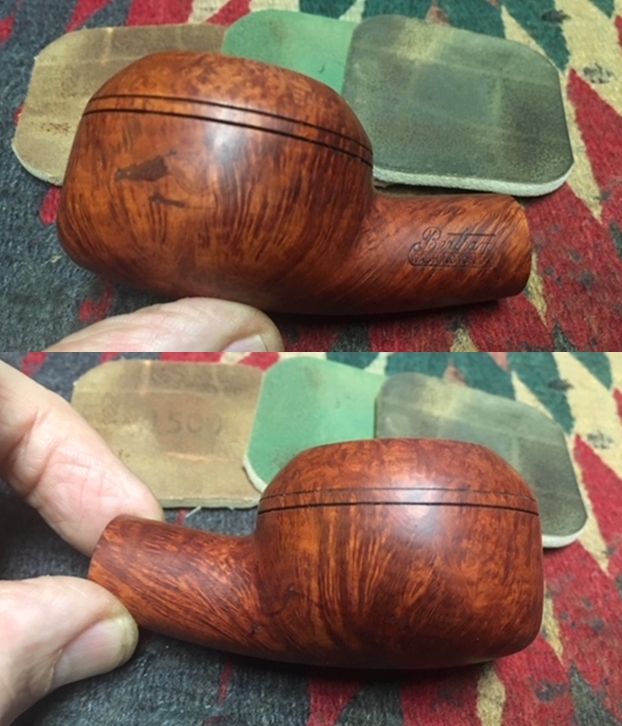
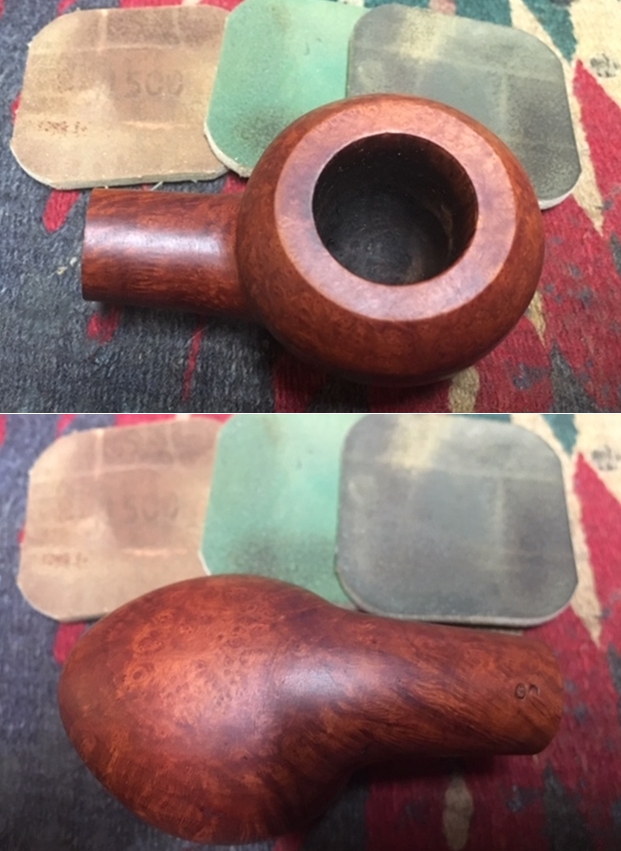
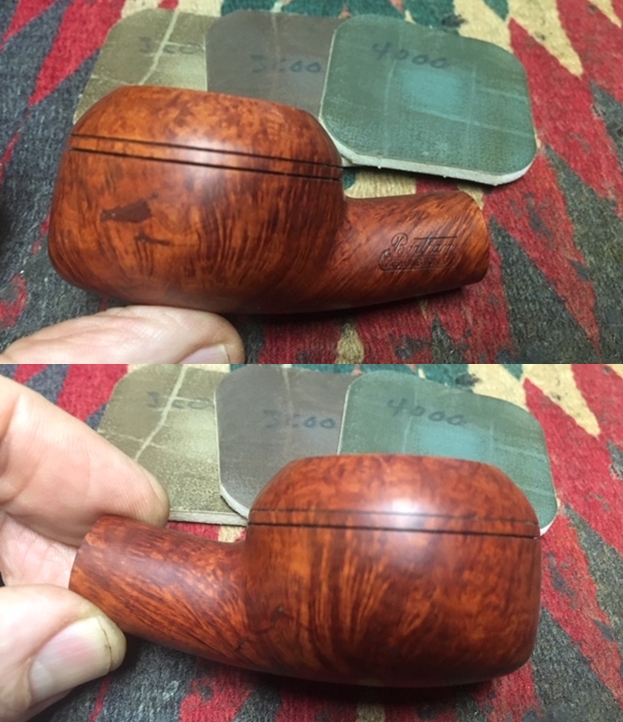
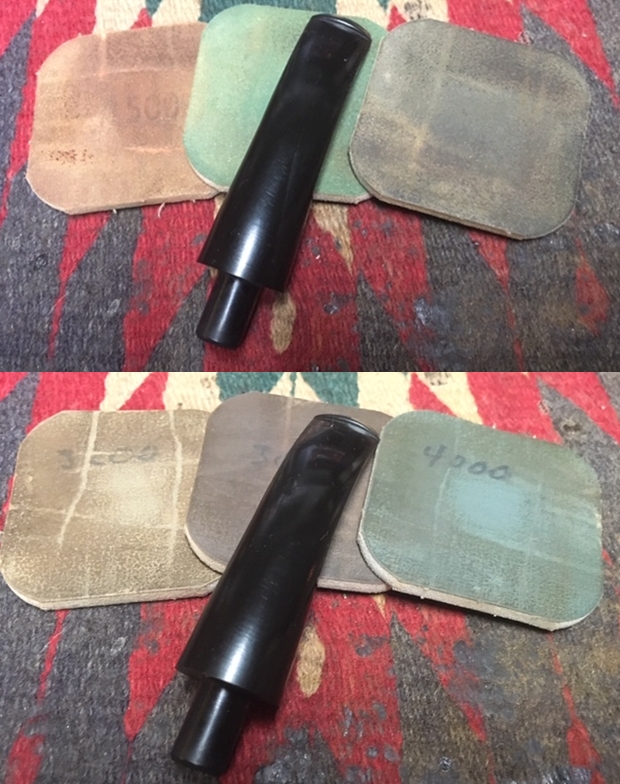
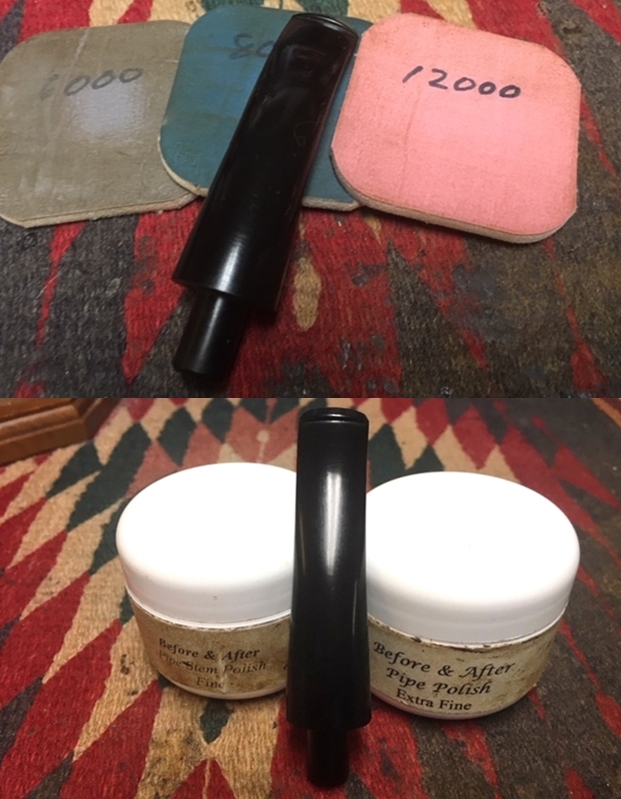
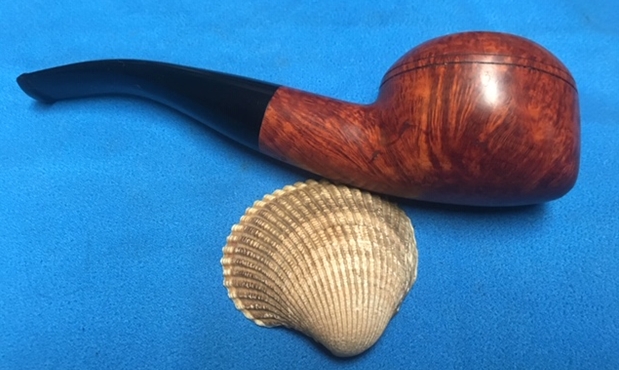
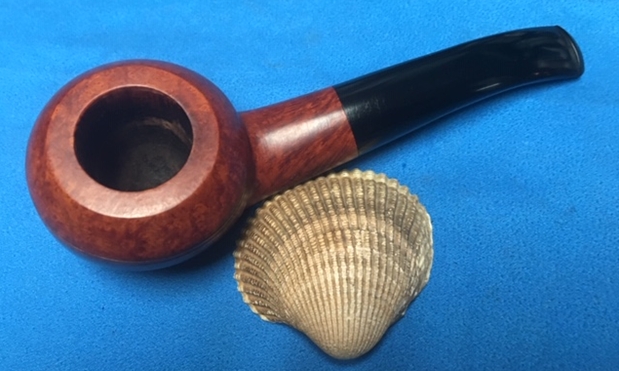
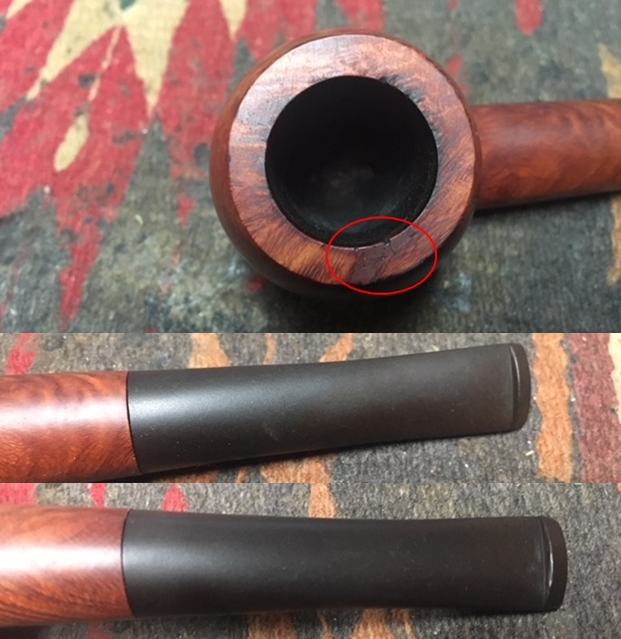
By now if you have been a reader for long you have Jeff’s cleaning regimen pretty well memorised. If you know it you can skip right to the pictures. If not I will include them once more. Jeff reamed the bowl with a PipNet pipe reamer and followed up with a Savinelli Fitsall pipe knife to remove the cake. He scrubbed out the mortise and the airway in the shank and the stem with alcohol, cotton swabs and pipe cleaners. He scrubbed the exterior of the bowl, rim, shank and stem with a tooth brush and Murphy’s Oil Soap to remove the oils and tars on the rim and the grime on the finish of the bowl. He rinsed it under running water. He dried it off with a soft cloth. He was able to remove lava build up on the rim top and you could see the great condition of the bowl top and edges of the rim. The rim and edges were in amazing condition. He soaked the stem in Before & After Deoxidizer to remove the oxidation. I took photos of the pipe before I started my work on it. I took a close up photo of the rim top to show the condition of the bowl and rim after Jeff had cleaned up the grime and lava. Without the lava there was a clear fill on the left topside of the rim. I have circled it in red in the photo below. There was some nicking along the inner edge that would need to be dealt with as well. The stem photos show that the light oxidation is gone. The stem is in excellent condition with only light tooth chatter on both sides near the button.I took photos of the stamping to show how it looked after the cleanup. The Bertram Washington DC is clear and readable. The second photo shows the grade 20 stamp on the underside of the shank.I cleaned up the damaged inner edge and outer edge of the rim with a folded piece of 220 grit sandpaper. I cleaned up the sanding marks with 400 grit wet dry sandpaper. I sanded the area with the fill to smooth it out and blend it in better.I polished the bowl and rim top with micromesh sanding pads – wetsanding it with 1500-12000 grit pads. I wiped the bowl down with a damp cloth after each pad to remove the sanding debris. The grain began to stand out. After the final sanding pad I hand buffed it with a cotton cloth to raise a shine. I worked some Before & After Restoration Balm into finish of the briar with my fingertips to clean, enliven and protect it. I let the balm sit for a little while and then buffed with a cotton cloth to raise the shine. The Restoration Balm really makes the grain stands out beautifully. If you have not tried some why not give it a try. I sanded out the small tooth marks and chatter next to the button on both sides of the stem with a folded piece of 220 grit sandpaper. I sanded the stem with 400 grit wet dry sandpaper to remove the scratches. I followed by polishing the stem with Denicare Mouthpiece Polish with a cotton pad. I wiped it down with some Obsidian Oil and set it aside to dry. I polished out the sanding scratches with micromesh sanding pads – wetsanding it with 1500-12000 grit pads. I wiped the stem down with Obsidian Oil after each pad. I polished it with Before & After Pipe Polish – both Fine and Extra Fine and gave it a final coat and set it aside to dry. Jeff and I are gradually working through this 200+ lot dealing with each of the different challenges they present. This one is Bertram’s take on a classic Apple shape. I put the stem and bowl back together and buffed the pipe with Blue Diamond on the buffing wheel. I polished the briar and the minute scratches still in the vulcanite of the stem until there was a rich shine. This is a Grade 20 pipe with some small fills around the shank and rim top. It has a tapered stem on a thick shank. The finish really has some interesting grain on a proportionally well carved pipe. Once I buffed the pipe the briar came alive and the mixture of grain popped with polishing. The black vulcanite stem had a rich glow. The finished pipe is well shaped thick shank Apple. This Bertram is a handful and sits right in the mouth. Have a look at it with the photos below. The dimensions are Length: 5 1/2 inches, Height: 2 inches, Outside diameter of the bowl: 1 1/2 inches, Chamber diameter: 3/4 of an inch. Maybe this shape speaks to you and you want to add it to your collection. Rest easy, this one will soon be on the rebornpipes store. If you are interested let me know. Thanks for walking through the restoration with me as it was a pleasure to work on.
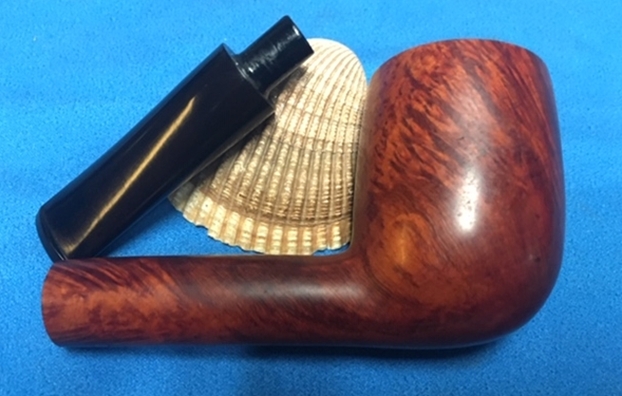
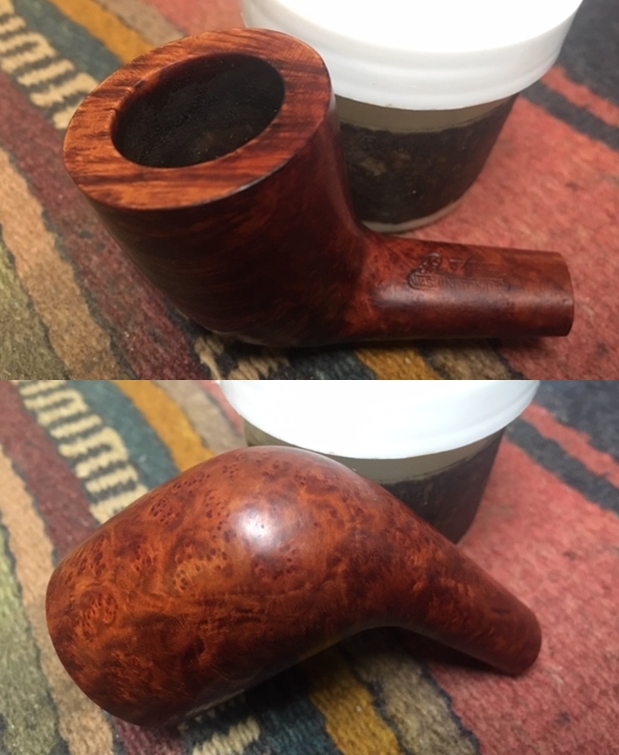
Restoring a Bertram Long Shank Cutty from the Bertram Lot


Blog by Steve Laug

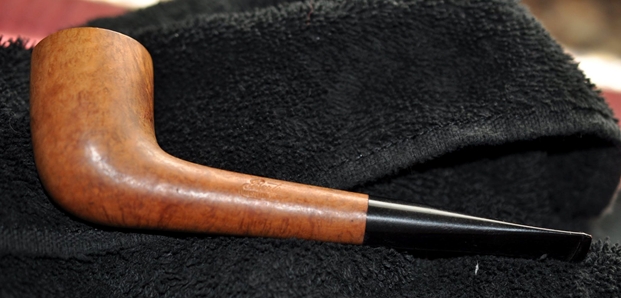
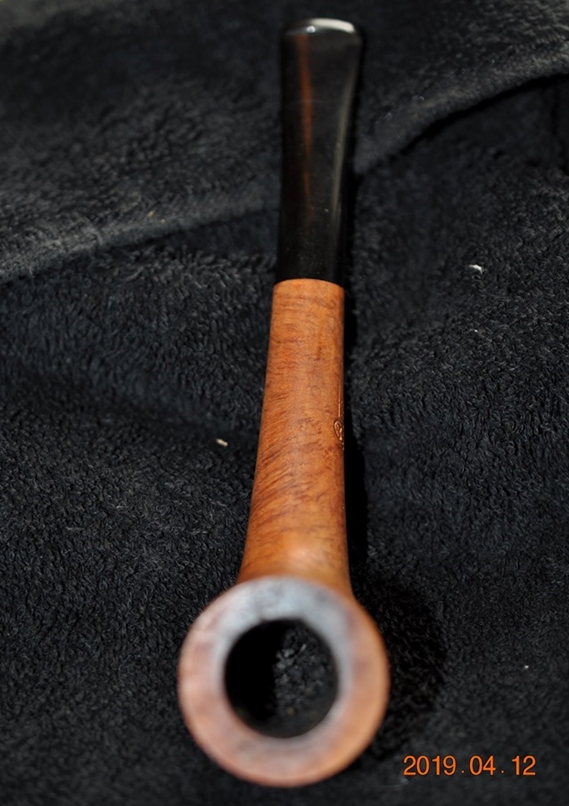
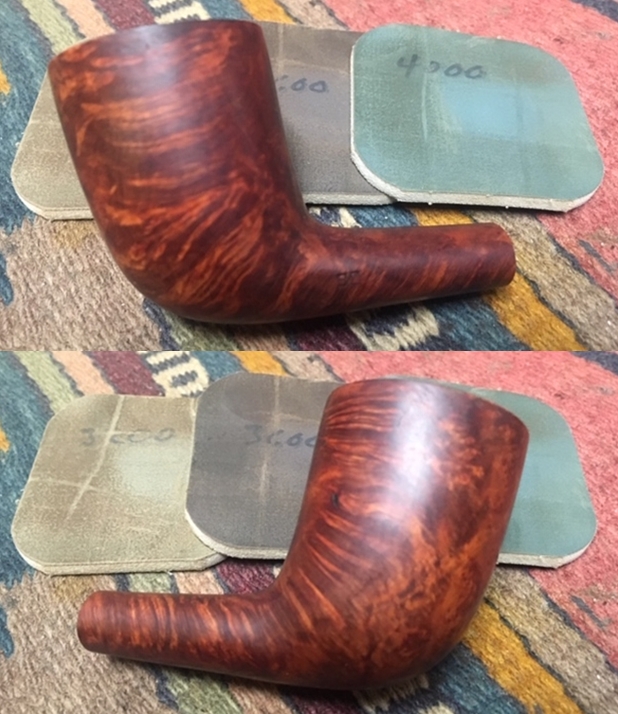
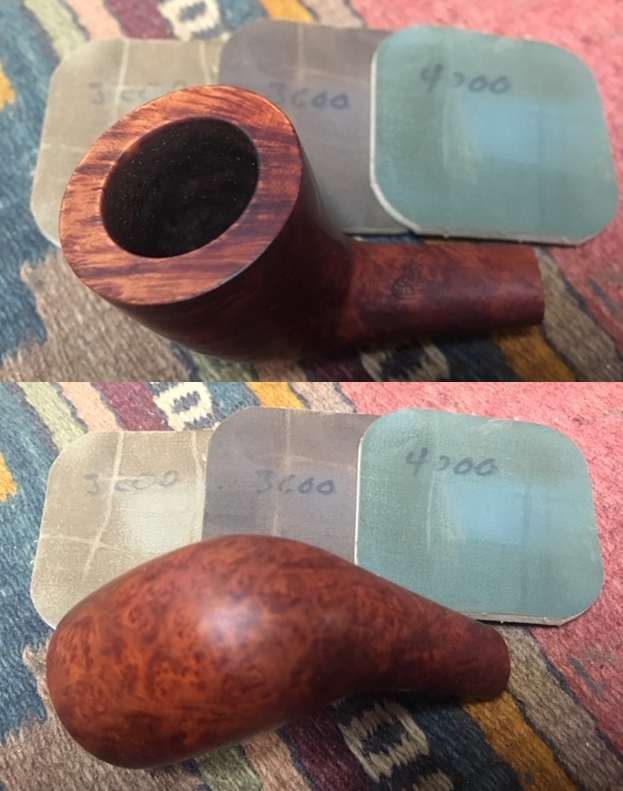
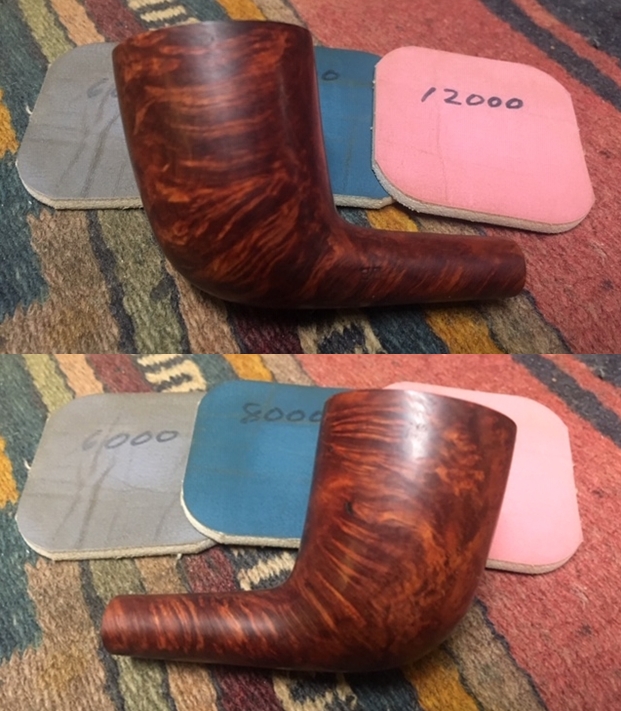
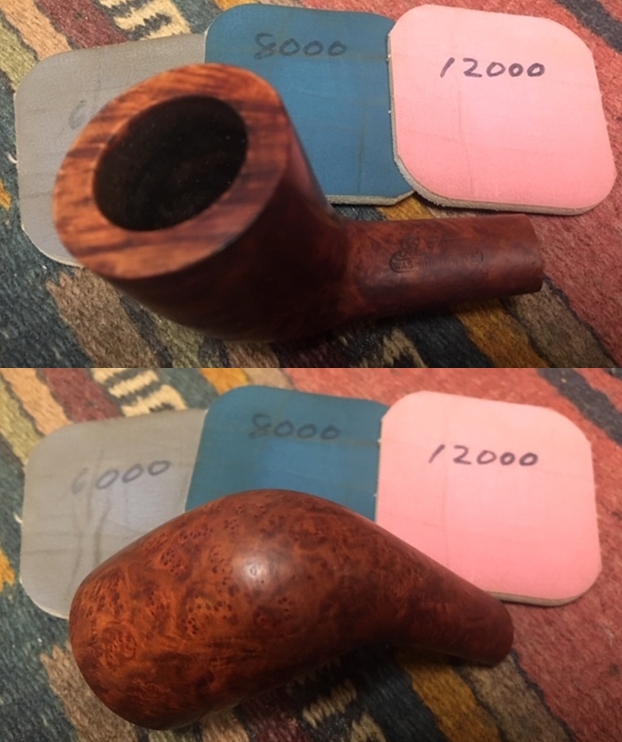
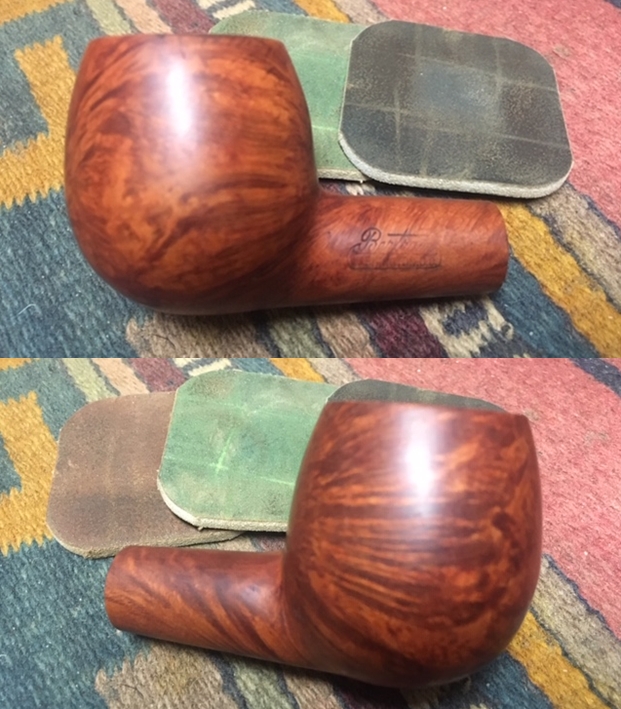
Once again if you want the background on the lot of Bertram pipes that Jeff and I purchased please refer to the previous blog posts on the brand. Like I have said, words escape me in trying to adequately describe how overwhelmed I am when I look at the 200+ pipes that need to be restored. It is mind boggling but there is only one way to move ahead – 1 pipe at a time. I am glad Jeff is helping with the clean up on the lot as that would be more than I could handle by myself in moving through this many pipes. From his cleaned pipes I chose a beautifully grained Bertram Cutty with a long shank. It has no grade number on the shank sides or bottom. It is very different from the other pipes in the lot that I have worked on so far. The grain was a mix of grains – swirls, flame, cross and birdseye. It was a round bottom pipe with a taper stem. The exterior of the bowl looked really good and there were a few small fills on this beauty. The bowl had cake in the chamber that was no problem. The rim top had some darkening and lava overflow on the back side. There appeared to be a bit of damage to the back side of the inner edge of the bowl look very good. The stem had some oxidation and tooth chatter near the button on both sides. Jeff took some photos of the pipe before he began his cleanup work on it. Jeff took close-up photos of the bowl and rim to capture the condition of the pipe when it arrived. The rim top had a coat of lava and the bowl had a thick cake. There was a nick in the back side of the inner edge of the rim.Jeff took pictures of the bowl sides and the heel to show the great looking grain around the sides of the bowl.It really is quite stunning and very dirty!Jeff took a photo to capture the stamping on the left side of the shank. It shows the stamping which read Bertram over Washington, D.C. The stamping is fainter on the right side of the impression. There is no quality number designation on this pipe. The next two photos show the stem surface. They show the calcification, oxidation and the chatter on both sides near the button. There is also some wear on the button edge. Once again, if you have read the previous Bertram blogs I have posted about the pipes that I have cleaned up so far you can skip the next bit. But if you have not, then I include the link to Bertram history and information. I would recommend that if you don’t know much about them do some research on them. I include a link to the write up on Pipedia (http://pipedia.org/wiki/Bertram). Bertram pipes were based out of Washington DC. They were popular among famous politicians and celebrities of the time. They made many products for them from FDR’s cigarette holders to Joseph Stalin’s favorite pipe. They were considered some of the best America had to offer till they finally closed their doors in the 70s. They graded their pipes by 10s, the higher the grade the better. Above 60s are uncommon and 80-90s are quite rare. I’ve never heard of or seen a 100 grade. I have several blogs that I have written on rebornpipes that give some history and background to Bertram pipes. (https://rebornpipes.com/2015/06/16/an-easy-restoration-of-a-bertram-grade-60-217-poker/).

I have included the following link to give a bit of historical information on the pipe company. It is a well written article that gives a glimpse of the heart of the company. http://www.streetsofwashington.com/2012/01/bertrams-pipe-shop-on-14th-street.html#

From this information I have learned that the shape and grade Bertram I have in front of me now was made before the closure of the shop in the 1970s. This Bertram Cutty is slightly different from the other Bertram shapes I have worked. Without a grade stamp it is impossible to know the quality of this pipe.

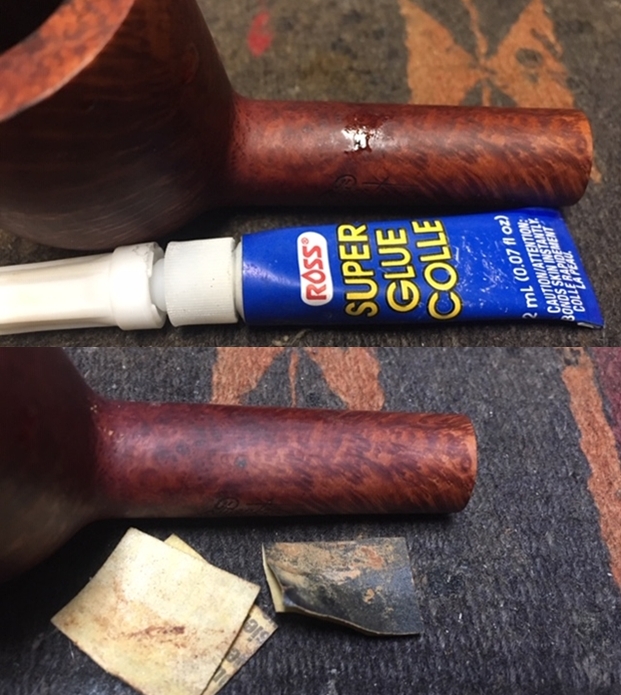
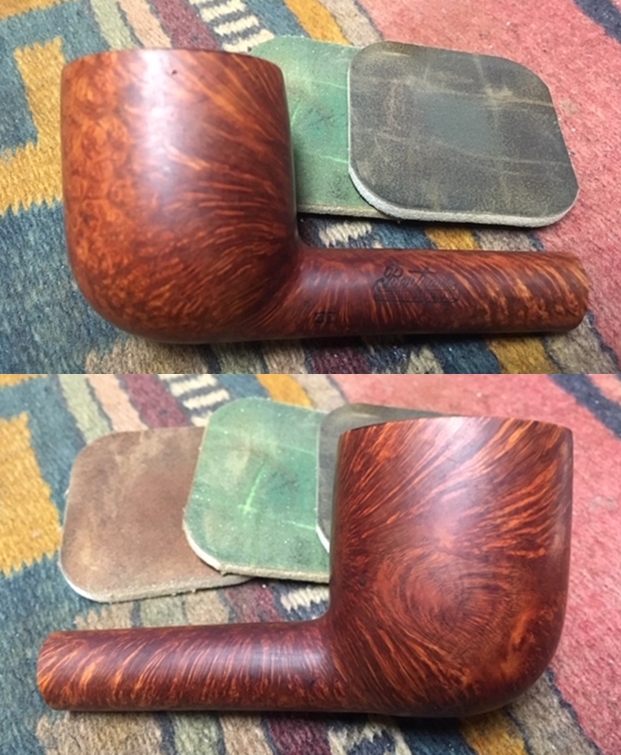
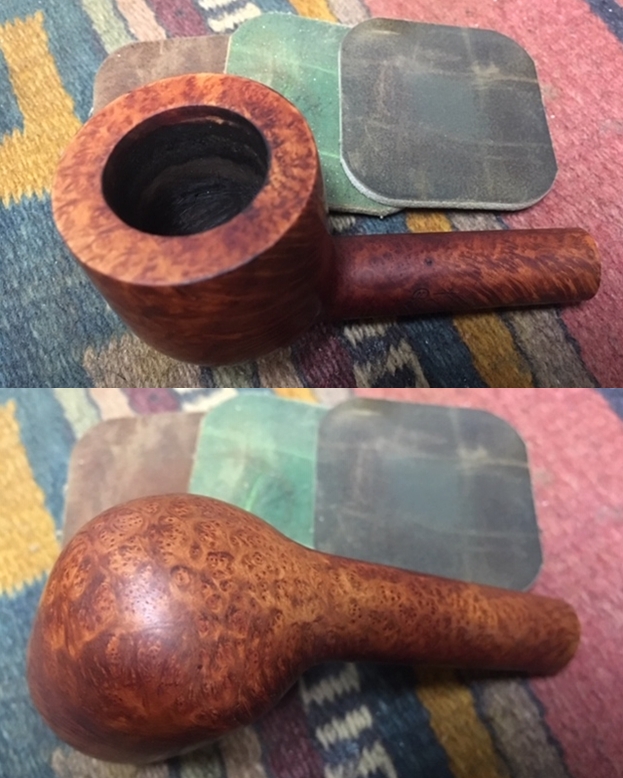
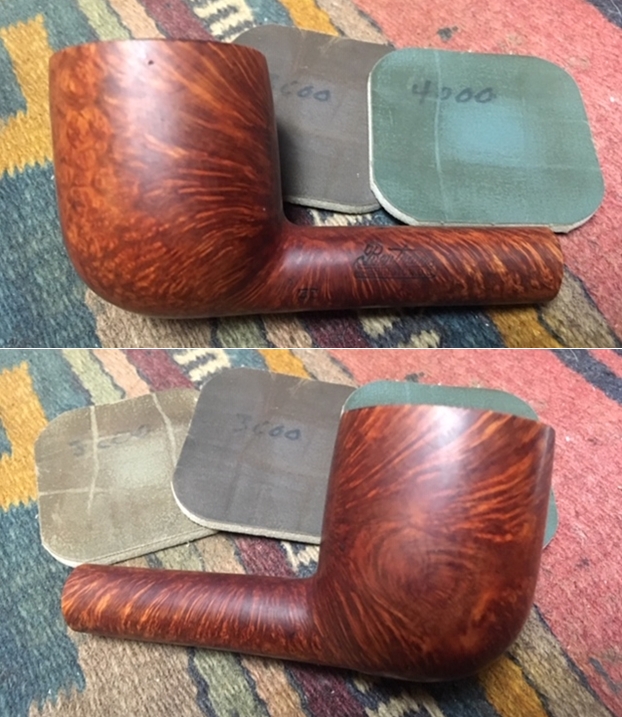
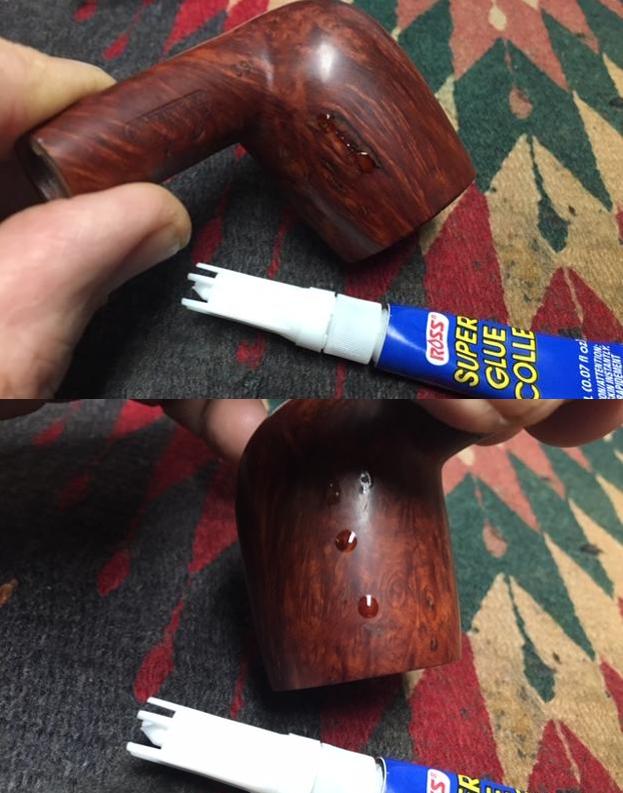
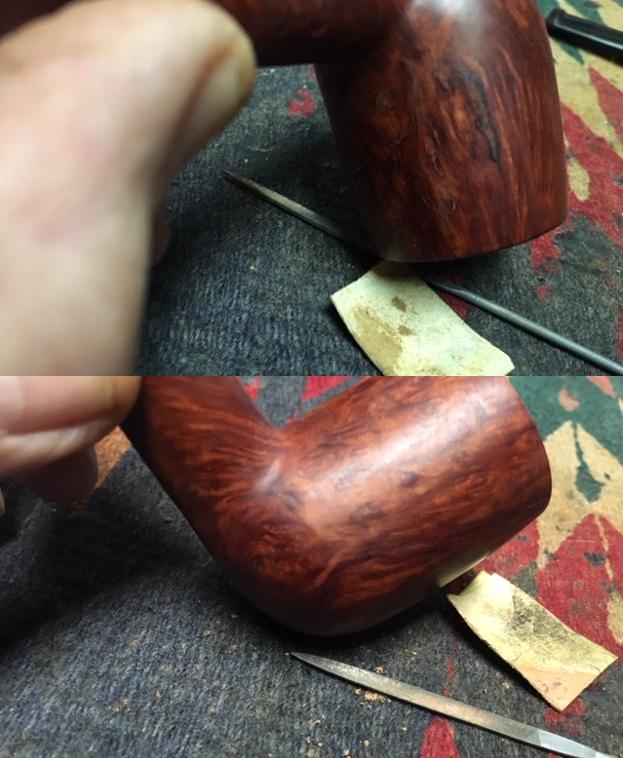
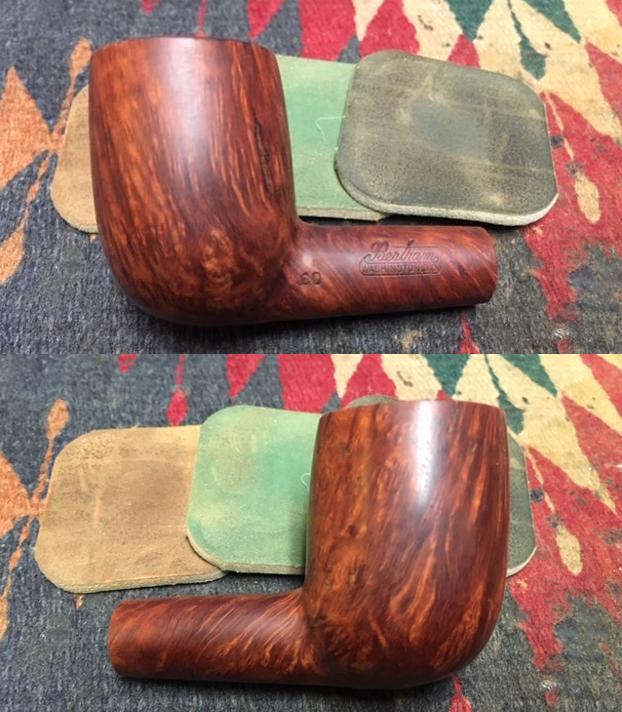
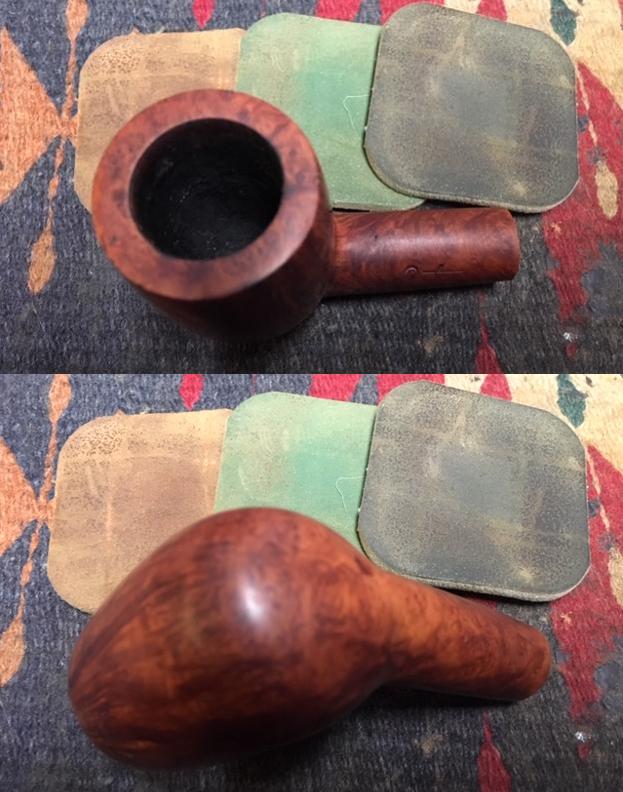
By now if you have been a reader for long you have Jeff’s cleaning regimen pretty well memorized. If you know it you can skip right to the pictures. If not I will include them once more. Jeff reamed the bowl with a PipNet pipe reamer and followed up with a Savinelli Fitsall pipe knife to remove the cake. He scrubbed out the mortise and the airway in the shank and the stem with alcohol, cotton swabs and pipe cleaners. He scrubbed the exterior of the bowl, rim, shank and stem with a tooth brush and Murphy’s Oil Soap to remove the oils and tars on the rim and the grime on the finish of the bowl. He rinsed it under running water. He dried it off with a soft cloth. He was able to remove lava build up on the rim top and you could see the great condition of the bowl top and edges of the rim. The rim and edges were in amazing condition. He soaked the stem in Before & After Deoxidizer to remove the oxidation. I took photos of the pipe before I started my work on it. I took a close up photo of the rim top to show the condition of the bowl and rim after Jeff had cleaned up the grime and lava. The lava left a little darkening on the rear rim top but otherwise the bowl looked very good. The stem photos show that the light oxidation is gone. The stem is in excellent condition with only light tooth chatter on both sides near the button.I took photos of the stamping to show how it looked after the cleanup. The Bertram Washington DC is faint on the right side of the stamp but it is still readable. I could not find any quality number on the sides of the shank.I cleaned up the damaged inner edge of the rim with a folded piece of 220 grit sandpaper. I cleaned up the sanding marks with 400 grit wet dry sandpaper.There was a large sandpit that had a loose fill on the back left side of the bowl. I picked out the dust, wiped it down with alcohol on a cotton pad. I dried it off and then filled it in with clear super glue. When the glue repair dried I sanded it with a folded piece of 220 grit sandpaper.I polished the bowl and rim top with micromesh sanding pads – wetsanding it with 1500-12000 grit pads. I wiped the bowl down with a damp cloth after each pad to remove the sanding debris. The grain began to stand out. After the final sanding pad I hand buffed it with a cotton cloth to raise a shine. I worked some Before & After Restoration Balm into finish of the briar with my fingertips to clean, enliven and protect it. I let the balm sit for a little while and then buffed with a cotton cloth to raise the shine. The Restoration Balm really makes the grain stands out beautifully. If you have not tried some why not give it a try. I sanded out the small tooth marks and chatter next to the button on both sides of the stem with a folded piece of 220 grit sandpaper. I followed that by sanding the stem with 400 grit wet dry sandpaper to remove the scratches. I polished out the sanding scratches with micromesh sanding pads – wetsanding it with 1500-12000 grit pads. I wiped the stem down with Obsidian Oil after each pad. I polished it with Before & After Pipe Polish – both Fine and Extra Fine and gave it a final coat and set it aside to dry. Jeff and I are gradually working through this 200+ lot dealing with each of the different challenges they present. This one is Bertram’s take on a classic Cutty shape. I put the stem and bowl back together and buffed the pipe with Blue Diamond on the buffing wheel. I polished the briar and the minute scratches still in the vulcanite of the stem until there was a rich shine. This one does not have a grade number but it is likely a 30-50 grade pipe judging from the grain and the small flaws and fills. It has a tapered stem at the end of a long shank. The finish really has some interesting grain on a proportionally well carved pipe. Once I buffed the pipe the briar came alive and the mixture of grain popped with polishing. The black vulcanite stem had a rich glow. The finished pipe is an interestingly grained Cutty. Like the other Bertrams I have worked on this one fits well in the hand and sits right in the mouth. Have a look at it with the photos below. The dimensions are Length: 6 inches, Height: 2 inches, Outside diameter of the bowl: 1 1/4 inches, Chamber diameter: 3/4 of an inch. Maybe this shape speaks to you and you want to add it to your collection. Rest easy, this one will soon be on the rebornpipes store. If you are interested let me know. Thanks for walking through the restoration with me as it was a pleasure to work on.
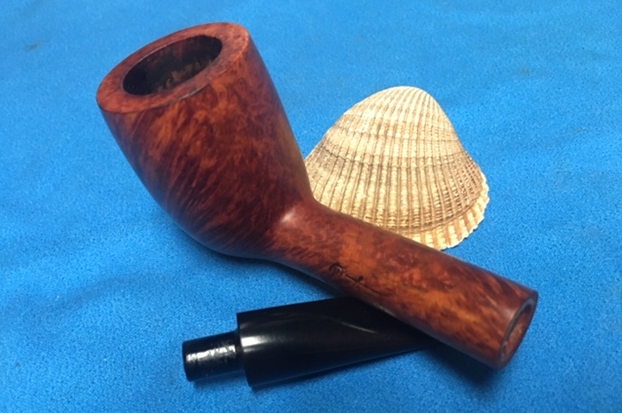
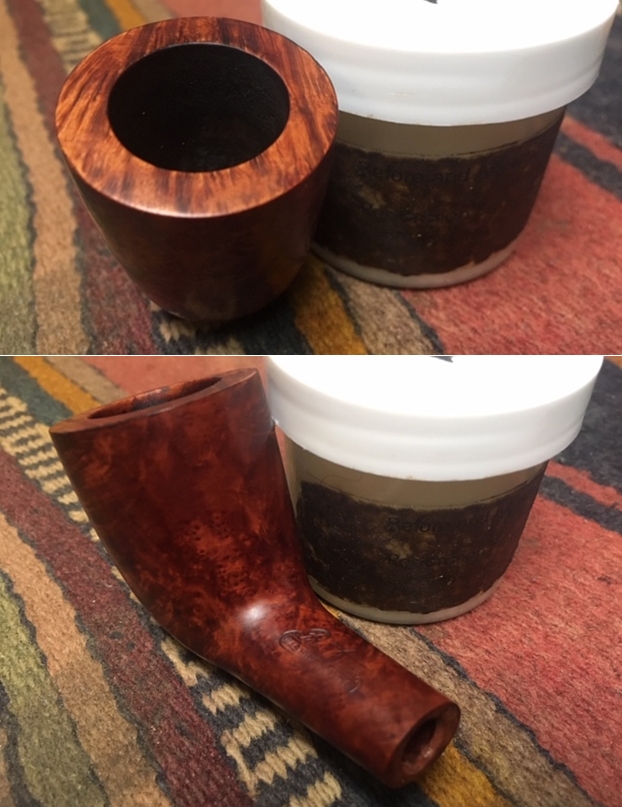
A Bertram 30 Pot/Lovat Pipe from the Bertram Lot


Blog by Steve Laug

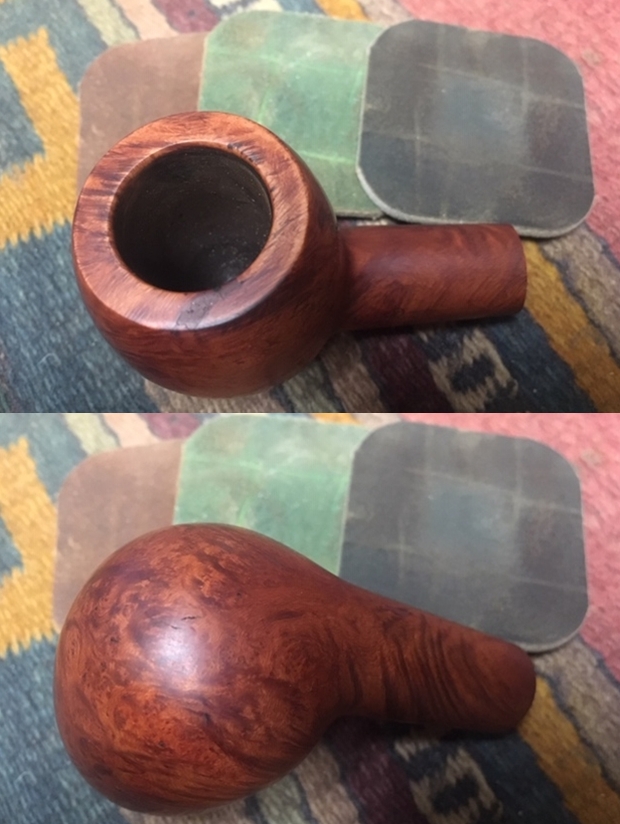
Once again if you want the background on the lot of Bertram pipes that Jeff and I purchased please refer to the previous blog posts on the brand. Like I have said, words escape me in trying to adequately describe how overwhelmed I am when I look at the 200+ pipes that need to be restored. It is mind boggling but there is only one way to move ahead – 1 pipe at a time. I am glad Jeff is helping with the clean up on the lot as that would be more than I could handle by myself in moving through this many pipes. From his cleaned pipes I chose a beautifully grained Bertram 30 that was a either a long shank pot or a Lovat shape with a great look and line. The grain was a mix of grains – swirls, flame, cross and birdseye. It was a round bottom pipe with a saddle stem. The exterior of the bowl looked really good and there were no fills on this beauty. The bowl had cake in the chamber that was no problem. The rim top had some darkening and lava overflow on the back side. The inner and outer edges of the bowl look very good. The exterior of the briar looked lifeless and was dusty with the grime of years of storage. The stem had some oxidation and tooth chatter near the button on both sides. Jeff took some photos of the pipe before he began his cleanup work on it. Jeff took close-up photos of the bowl and rim to capture the condition of the pipe when it arrived. The rim top had a coat of lava and the bowl had a thick cake.Jeff took pictures of the bowl sides and the heel to show the great looking grain around the sides of the bowl. It really is quite stunning and very dirty! Jeff took a photo to capture the stamping on the left side of the shank. It shows the stamping which read Bertram over Washington, D.C. The stamping has been overstamped on the left of the impression. The second photo shows the number stamp at the bowl/shank junction on the left side of the shank. The number designates the quality of the pipe. The next two photos show the stem surface. They show the calcification, oxidation and the chatter on both sides near the button. There is also some wear on the button edge.Once again, if you have read the previous Bertram blogs I have posted about the pipes that I have cleaned up so far you can skip the next bit. But if you have not, then I include the link to Bertram history and information. I would recommend that if you don’t know much about them do some research on them. I include a link to the write up on Pipedia (http://pipedia.org/wiki/Bertram). Bertram pipes were based out of Washington DC. They were popular among famous politicians and celebrities of the time. They made many products for them from FDR’s cigarette holders to Joseph Stalin’s favorite pipe. They were considered some of the best America had to offer till they finally closed their doors in the 70s. They graded their pipes by 10s, the higher the grade the better. Above 60s are uncommon and 80-90s are quite rare. I’ve never heard of or seen a 100 grade. I have several blogs that I have written on rebornpipes that give some history and background to Bertram pipes. (https://rebornpipes.com/2015/06/16/an-easy-restoration-of-a-bertram-grade-60-217-poker/).

I have included the following link to give a bit of historical information on the pipe company. It is a well written article that gives a glimpse of the heart of the company. http://www.streetsofwashington.com/2012/01/bertrams-pipe-shop-on-14th-street.html#

From this information I have learned that the shape and grade Bertram I have in front of me now was made before the closure of the shop in the 1970s. This Bertram Pot/Lovat is slightly different from the other Bertram shapes I have worked. With a grade 30 stamp it is a lower mid-range pipe.

By now if you have been a reader for long you have Jeff’s cleaning regimen pretty well memorized. If you know it you can skip right to the pictures. If not I will include them once more. Jeff reamed the bowl with a PipNet pipe reamer and followed up with a Savinelli Fitsall pipe knife to remove the cake. He scrubbed out the mortise and the airway in the shank and the stem with alcohol, cotton swabs and pipe cleaners. He scrubbed the exterior of the bowl, rim, shank and stem with a tooth brush and Murphy’s Oil Soap to remove the oils and tars on the rim and the grime on the finish of the bowl. He rinsed it under running water. He dried it off with a soft cloth. He was able to remove lava build up on the rim top and you could see the great condition of the bowl top and edges of the rim. The rim and edges were in amazing condition. He soaked the stem in Before & After Deoxidizer to remove the oxidation. I took photos of the pipe before I started my work on it. I took a close up photo of the rim top to show the condition of the bowl and rim after Jeff had cleaned up the grime and lava. The lava left a little darkening on the rear rim top but otherwise the bowl looked very good. There is a small pinhole flaw on the top of the shank that I will need to take care of in the restoration. The stem photos show that the light oxidation is gone. The stem is in excellent condition with only light tooth chatter on both sides near the button.I took photos of the stamping to show how it looked after the cleanup. The Bertram Washington DC is still readable and clear. The quality number stamp was on the underside of the shank and read 30.I decided to fill in the pinhole flaw with clear super glue. I put a drop of glue in the hole and overfilled it to take shrinkage into account. Once the fill cured I sanded it smooth with 220 grit sand paper and 400 grit wet dry sandpaper.I polished the bowl and rim top with micromesh sanding pads – wetsanding it with 1500-12000 grit pads. I wiped the bowl down with a damp cloth after each pad to remove the sanding debris. The grain began to stand out. After the final sanding pad I hand buffed it with a cotton cloth to raise a shine. I worked some Before & After Restoration Balm into finish of the briar with my fingertips to clean, enliven and protect it. I let the balm sit for a little while and then buffed with a cotton cloth to raise the shine. The Restoration Balm really makes the grain stands out beautifully. If you have not tried some why not give it a try. I sanded out the small tooth marks and chatter next to the button on both sides of the stem with a folded piece of 220 grit sandpaper. I followed that by sanding the stem with 400 grit wet dry sandpaper to remove the scratches. I polished out the sanding scratches with micromesh sanding pads – wetsanding it with 1500-12000 grit pads. I wiped the stem down with Obsidian Oil after each pad. I polished it with Before & After Pipe Polish – both Fine and Extra Fine and gave it a final coat and set it aside to dry. I am continuing to enjoy restoring these pipes from the Bertram Collection and with Jeff’s cleanup work we are making progress through them. Each one presents different challenges but all are well laid out classic shapes. This is no exception. I put the stem and bowl back together and buffed the pipe with Blue Diamond on the buffing wheel. I polished the briar and the minute scratches still in the vulcanite of the stem until there was a rich shine. This Bertram is in interesting combination of a long shank Pot or a Lovat with a large bowl. It has a saddle stem. The finish really has some interesting grain on a proportionally well carved pipe. Once I buffed the pipe the briar came alive and the mixture of grain popped with polishing. The black vulcanite stem had a rich glow. The finished pipe is a beautiful grained Lovat/Pot. Like the other Bertrams I have worked on this one fits well in the hand and sits right in the mouth. Have a look at it with the photos below. The dimensions are Length: 5 1/2 inches, Height: 2 inches, Outside diameter of the bowl: 1 5/8 inches, Chamber diameter: 7/8 of an inch. Maybe this shape speaks to you and you want to add it to your collection. Rest easy, this one will soon be on the rebornpipes store. If you are interested let me know. Thanks for walking through the restoration with me as it was a pleasure to work on.
 

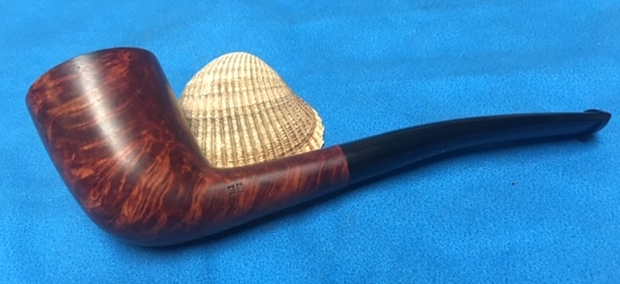
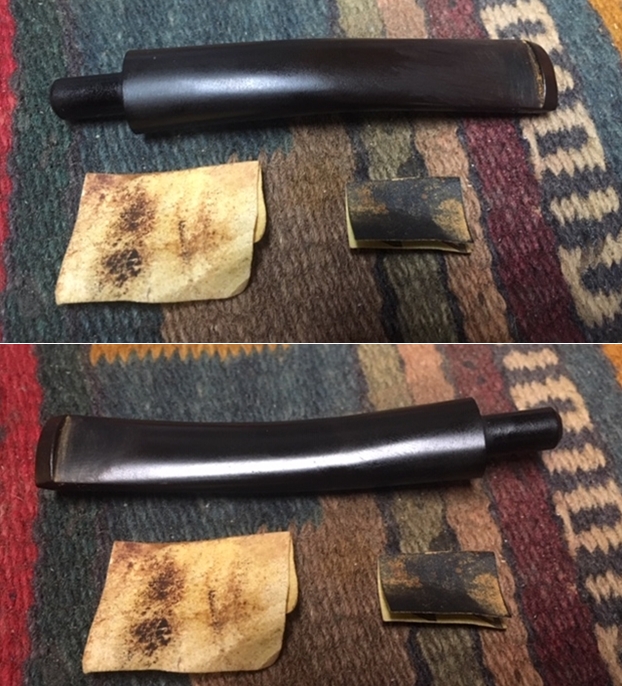
A Bertram 50S Lumberman Pipe from the Bertram Lot


Blog by Steve Laug

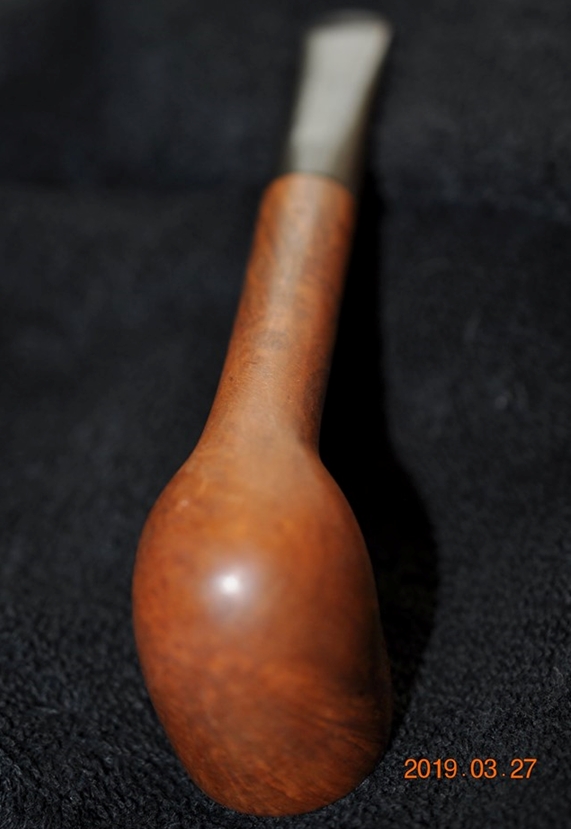
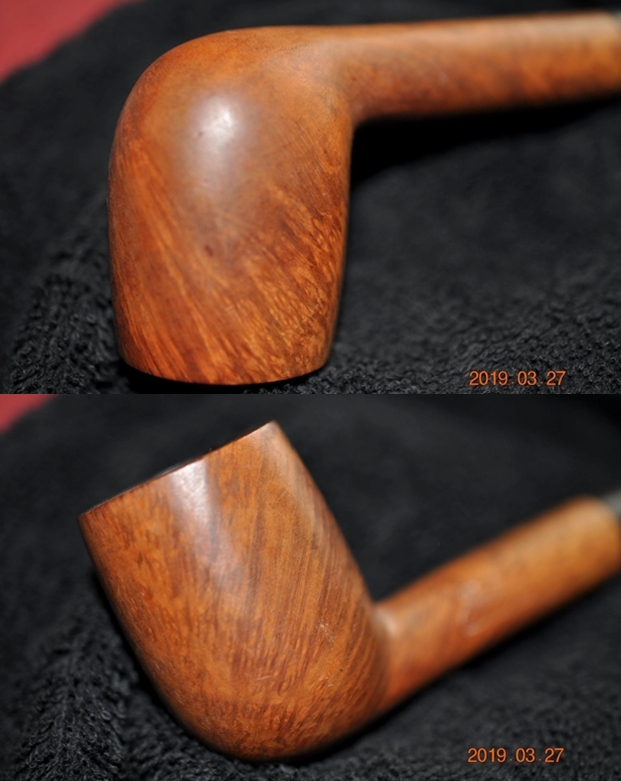
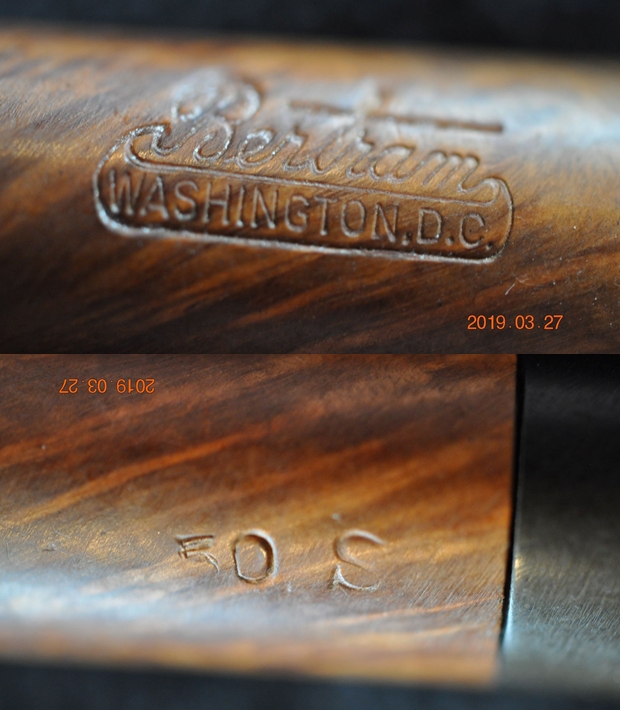
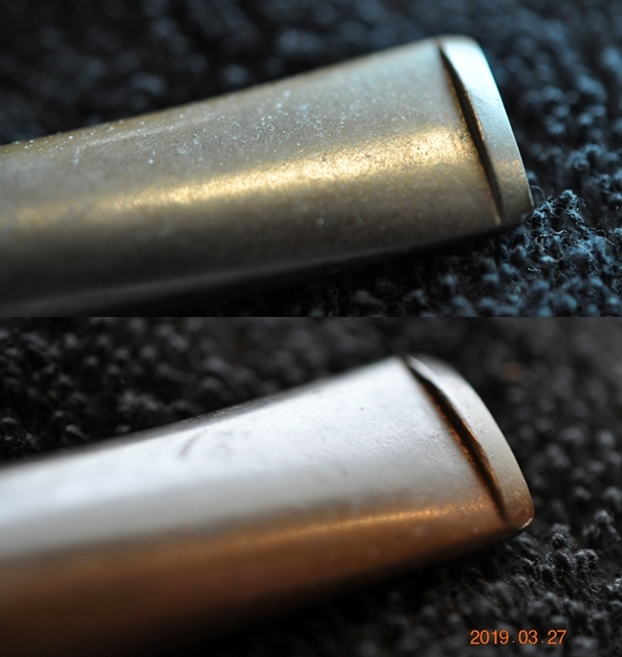
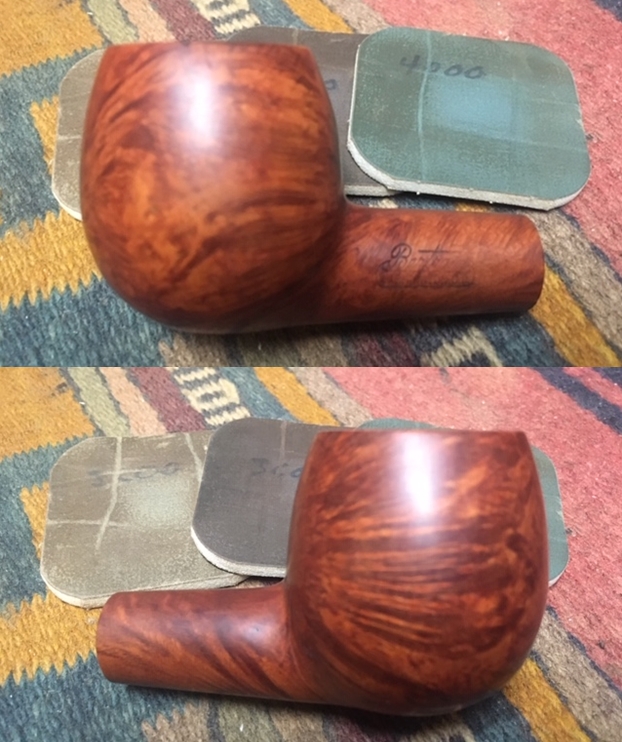
If you want the background on the lot of Bertram pipes that Jeff and I purchased please refer to the previous blog posts. I can’t adequately describe how overwhelmed I am when I look at the 200+ pipes that need to be restored. It is mind boggling but there is only one way to move ahead – 1 pipe at a time. I am glad Jeff is helping with the clean up on the lot as that would be more than I could handle by myself in moving through this many pipes. From his cleaned pipes I chose a beautifully grained Bertram 50S that was a Lumberman shape with a great look and line. The grain was a mix of grains – swirls, flame, cross and birdseye. It was a round bottom Lumberman pipe with a tapered stem. The exterior of the bowl looked really good and there were no fills on this beauty. The bowl had cake in the chamber that was no problem. The rim top had some darkening and lava overflow on the back side. The inner and outer edges of the bowl look very good. The exterior of the briar looked lifeless and was dusty with the grime of years of storage. The stem had some oxidation and tooth chatter near the button on both sides. Jeff took some photos of the pipe before he began his cleanup work on it. Jeff took close-up photos of the bowl and rim to capture the condition of the pipe when it arrived. The rim top had a coat of lava and the bowl had a thick cake. Jeff took pictures of the bowl sides and the heel to show the great looking grain around the sides of the bowl. You can see the fills on the front right side of the bowl. It really is quite stunning and very dirty! Jeff took a photo to capture the stamping on the left side of the shank. It shows the stamping which read Bertram over Washington, D.C. The second photo shows the number stamp on the underside of the shank at the shank/stem junction. The number designates the quality of the pipe. The next two photos show the stem surface. They show the calcification, oxidation and the chatter on both sides near the button. There is also some wear on the button edge.Once again, if you have read the previous Bertram blogs I have posted about the pipes that I have cleaned up so far you can skip the next bit. But if you have not, then I include the link to Bertram history and information. I would recommend that if you don’t know much about them do some research on them. I include a link to the write up on Pipedia (http://pipedia.org/wiki/Bertram). Bertram pipes were based out of Washington DC. They were popular among famous politicians and celebrities of the time. They made many products for them from FDR’s cigarette holders to Joseph Stalin’s favorite pipe. They were considered some of the best America had to offer till they finally closed their doors in the 70s. They graded their pipes by 10s, the higher the grade the better. Above 60s are uncommon and 80-90s are quite rare. I’ve never heard of or seen a 100 grade. I have several blogs that I have written on rebornpipes that give some history and background to Bertram pipes. (https://rebornpipes.com/2015/06/16/an-easy-restoration-of-a-bertram-grade-60-217-poker/).

I have included the following link to give a bit of historical information on the pipe company. It is a well written article that gives a glimpse of the heart of the company. http://www.streetsofwashington.com/2012/01/bertrams-pipe-shop-on-14th-street.html#

From this information I have learned that the shape and grade Bertram I have in front of me now was made before the closure of the shop in the 1970s. This Bertram Lumberman is slightly different from the other Bertram shapes I have worked. With a grade 50S stamp it is a mid-range        pipe. I have yet to figure out the “S” stamp on some of the higher grade pipes. Can anyone shed some light on this.

By now if you have been a reader for long you have Jeff’s cleaning regimen pretty well memorized. If you know it you can skip right to the pictures. If not I will include them once more. Jeff reamed the bowl with a PipNet pipe reamer and followed up with a Savinelli Fitsall pipe knife to remove the cake. He scrubbed out the mortise and the airway in the shank and the stem with alcohol, cotton swabs and pipe cleaners. He scrubbed the exterior of the bowl, rim, shank and stem with a tooth brush and Murphy’s Oil Soap to remove the oils and tars on the rim and the grime on the finish of the bowl. He rinsed it under running water. He dried it off with a soft cloth. He was able to remove lava build up on the rim top and you could see the great condition of the bowl top and edges of the rim. The rim and edges were in amazing condition. He soaked the stem in Before & After Deoxidizer to remove the oxidation. I took photos of the pipe before I started my work on it. I took a close up photo of the rim top to show the condition of the bowl and rim after Jeff had cleaned up the grime and lava. The lava left a little darkening on the rear rim top but otherwise the bowl looked very good. The inner edge has some small nicks at the back of the bowl. The stem photos show that the light oxidation is gone. The stem is in excellent condition with only light tooth chatter on both sides near the button.I took photos of the stamping to show how it looked after the cleanup. The Bertram Washington DC is still readable and clear. The quality number stamp was on the underside of the shank and read 50S.I polished the bowl and rim top with micromesh sanding pads – wetsanding it with 1500-12000 grit pads. I wiped the bowl down with a damp cloth after each pad to remove the sanding debris. The grain began to stand out. After the final sanding pad I hand buffed it with a cotton cloth to raise a shine. I know I have mentioned it before but I really like the balm that Mark Hoover created. It really does wonders on a dry piece of briar. I worked some Before & After Restoration Balm into finish of the briar with my fingertips to clean, enliven and protect it. I let the balm sit for a little while and then buffed with a cotton cloth to raise the shine. The Restoration Balm really makes the grain stands out beautifully. If you have not tried some why not give it a try. I sanded out the small tooth marks and chatter next to the button on both sides of the stem with a folded piece of 220 grit sandpaper. I followed that up with 400 grit wet dry sandpaper.I polished out the sanding scratches with micromesh sanding pads – wetsanding it with 1500-12000 grit pads. I wiped the stem down with Obsidian Oil after each pad. I polished it with Before & After Pipe Polish – both Fine and Extra Fine and gave it a final coat and set it aside to dry. I am having fun doing these pipes from the Bertram Collection. Each one presents different challenges but all are well laid out classic shapes. This is no exception. I put the stem and bowl back together and buffed the pipe with Blue Diamond on the buffing wheel. I polished the briar and the minute scratches still in the vulcanite of the stem until there was a rich shine. This Bertram is in interesting take on a Lumberman shape with tapered stem. The finish really highlights some interesting grain on a proportionally well carved pipe. Once I buffed the pipe the briar came alive and the mixture of grain popped with polishing. The black vulcanite stem had a rich glow. The finished pipe is a beautiful grained Lumberman. Like the other Bertrams I have worked on this one fits well in the hand and sits right in the mouth. Have a look at it with the photos below. The dimensions are Length: 6 inches, Height: 2 inches, Outside diameter of the bowl: 1 1/2 inches, Chamber diameter: ¾ of an inch. Maybe this shape speaks to you and you want to add it to your collection. Rest easy, this one will soon be on the rebornpipes store. If you are interested let me know. Thanks for walking through the restoration with me as it was a pleasure to work on.
A Zulu Shaped Bertram 30 from the Bertram Collection


Blog by Steve Laug

Once again rather than repeat myself and give readers grief with the repetition please refer to the previous blog posts on the collection of Bertrams and a smattering of other brands that Jeff and I purchased. I can’t adequately describe the sense of being overwhelmed that I have when I look at the 200+ pipes that need to be restored but there is only one way to move ahead – 1 pipe at a time. I am glad Jeff is helping with the clean up on the lot as that would be more than I could handle by myself in moving through this many pipes. From his cleaned pipes I chose an interesting Zulu with cross grain on the sides of the bowl and some birdseye around the front and back to be the next pipe that I would work on. It was a1/8 bent Zulu with a tapered stem. The bowl had cake in the chamber that was no problem. The rim top had some darkening and lava overflow on the back side. The inner and outer edge of the bowl appeared to be in good condition but we would know more once the bowl had been reamed and cleaned. The exterior of the briar looked lifeless and was dusty with the grime of years of storage. I am still trying to figure out Bertrams numbering system as some of the higher number pipes seems to have more fills than the 30s. This is one of those pipes that look really good. The stem had some oxidation and tooth marks near the button on both sides. Jeff took some photos of the pipe before he began his cleanup work on it. I have included them below and they tell the story and give a glimpse of the pipe before clean up. Jeff took close-up photos of the bowl and rim to capture the condition of the pipe when it arrived. The rim top had a thick coat of lava and the bowl had a thick cake.Jeff took pictures of he bowl sides and the heel to show the great looking grain around the sides of the bowl. It really is quite stunning and very dirty!Jeff took 2 photos to capture the stamping on the top and left side of the shank. The first photo shows stamping on the topside which read Bertram over Washington, D.C. The stamping on this pipe is clear and readable. The second photo shows the grade number stamping on the left side toward the shank/bowl junction. It read number 30 which shows the quality of the pipe. The next two photos show the stem surface. They show the oxidation and the chatter on both sides near the button. The tooth marks are visible on the underside next to the button. There is also some wear on the underside button edge. If you have read the previous Bertram blogs I have posted about the pipes that I have cleaned up so far you can skip the next bit. But if you have not, then I include the link to Bertram history and information. I would recommend that if you don’t know much about them do some research on them. I include a link to the write up on Pipedia (http://pipedia.org/wiki/Bertram). Bertram pipes were based out of Washington DC. They were popular among famous politicians and celebrities of the time. They made many products for them from FDR’s cigarette holders to Joseph Stalin’s favorite pipe. They were considered some of the best America had to offer till they finally closed their doors in the 70s. They graded their pipes by 10s, the higher the grade the better. Above 60s are uncommon and 80-90s are quite rare. I’ve never heard of or seen a 100 grade. I have several blogs that I have written on rebornpipes that give some history and background to Bertram pipes. (https://rebornpipes.com/2015/06/16/an-easy-restoration-of-a-bertram-grade-60-217-poker/).

I have included the following link to give a bit of historical information on the pipe company. It is a well written article that gives a glimpse of the heart of the company. http://www.streetsofwashington.com/2012/01/bertrams-pipe-shop-on-14th-street.html#

From this information I have learned that the shape and grade Bertram I have in front of me now was made before the closure of the shop in the 1970s. This Bertram Zulu with a darker finish is one of the more usual shapes in terms of the Bertram pipes I have worked on. With a grade 30 stamp it is a lower mid-range pipe.

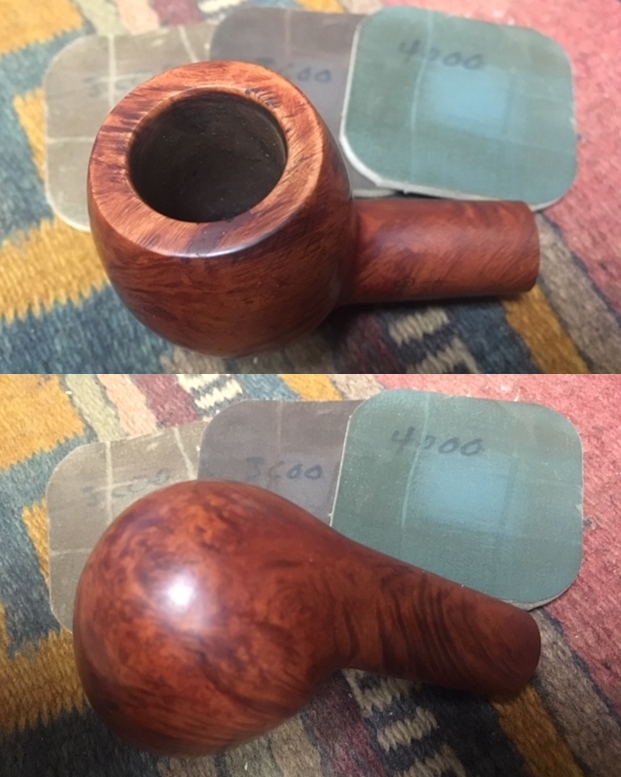
By now if you have been a reader for long you have Jeff’s cleaning regimen pretty well memorized. If you know it you can skip right to the pictures. If not I will include them once more. Jeff reamed the bowl with a PipNet pipe reamer and followed up with a Savinelli Fitsall pipe knife to remove the cake. He scrubbed out the mortise and the airway in the shank and the stem with alcohol, cotton swabs and pipe cleaners. He scrubbed the exterior of the bowl, rim, shank and stem with a tooth brush and Murphy’s Oil Soap to remove the oils and tars on the rim and the grime on the finish of the bowl. He rinsed it under running water. He dried it off with a soft cloth. He was able to remove lava build up on the rim top and you could see the great condition of the bowl top and edges of the rim. There was still some darkening to the rim top toward the back of the bowl. He soaked the stem in Before & After Deoxidizer to remove the oxidation. I took photos of the pipe before I started my work on it. I took a close up photo of the rim top to show the condition of the bowl and rim after Jeff had cleaned up the grime and lava but the rim top had some light damage, some pits and darkening on the backside of the inner edge of the rim. The stem photos show that the oxidation is gone. The light tooth chatter is hard to see but I should be able to sand it out quite easily. Every one of the pipes that I have worked on from this Bertram Collection has had tooth marks on the underside of the stem and some on the topside as well. The tooth marks on the underside will take a little more work to remove.I also took a photo of the stamping on the left side of the shank showing how the stamping was laid out. I used a folded piece of 220 grit sandpaper to cleanup the light damage to the inner edge of the rim. I would address the darkening when I polished it with micromesh sanding pads.I polished the bowl and rim top with micromesh sanding pads – dry sanding it with 1500-12000 grit pads. I wiped the bowl down with a damp cloth after each pad to remove the sanding debris. After the final sanding pad I hand buffed it with a cotton cloth to raise a shine. I know I have mentioned it before but I really like the balm that Mark Hoover created. It really does wonders on a dry piece of briar. I worked some Before & After Restoration Balm into finish of the briar with my fingertips to clean, enliven and protect it. I let the balm sit for a little while and then buffed with a cotton cloth to raise the shine. The Restoration Balm really makes the grain stands out beautifully. I set the bowl aside to work on the stem. I used a folded piece of 240 grit sandpaper to blend the tooth marks and chatter into the surface of the stem. Once the surface was smooth I sanded out the scratch marks and started the polishing of the stem with a folded piece of 400 grit sandpaper. I wiped the stem down with Obsidian Oil. I polished the stem with micromesh sanding pads – wetsanding it with 1500-12000 grit pads. I wiped the stem down with Obsidian Oil after each pad. I polished it with Before & After Pipe Polish – both Fine and Extra Fine and gave it a final coat and set it aside to dry. I am having fun doing these pipes from the Bertram Collection. Each one presents different challenges but all are well laid out classic shapes. This is no exception. I put the stem and bowl back together and buffed the pipe with Blue Diamond on the buffing wheel. I polished the briar and the minute scratches still in the vulcanite of the stem until there was a rich shine. This Bertram is a classic Zulu or Yachtsman shape with a darker finish that really highlights some amazing grain on a proportionally well carved pipe. Once I buffed the pipe the briar came alive and the mixture of grain – cross grain and birdseye – popped with polishing. The black vulcanite stem had a rich glow. The finished pipe is a beautiful grained Zulu. Like the other Bertrams I have worked on this one fits well in the hand and sits right in the mouth. Have a look at it with the photos below. The dimensions are Length: 5 1/2 inches, Height: 1 7/8 inches, Outside diameter of the bowl: 1 3/8 inches, Chamber diameter: ¾ of an inch. This one will soon be on the rebornpipes store. If you are interested let me know. Thanks for walking through the restoration with me as it was a pleasure to work on.
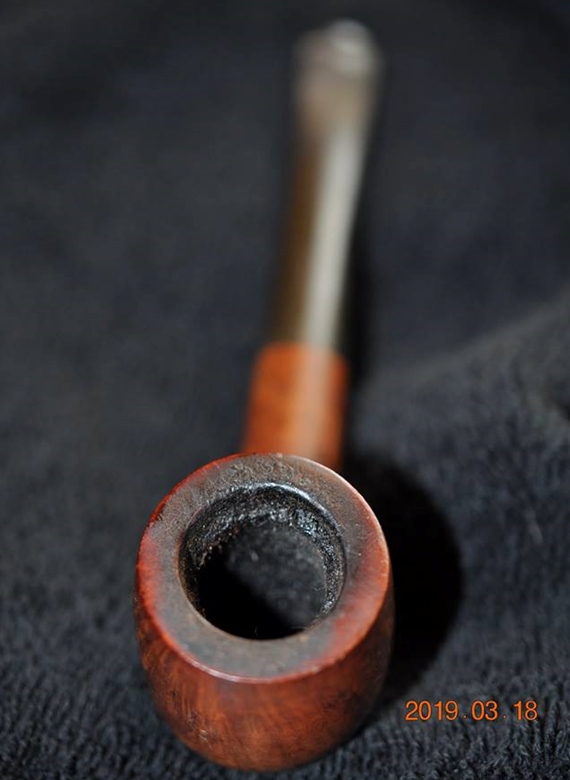
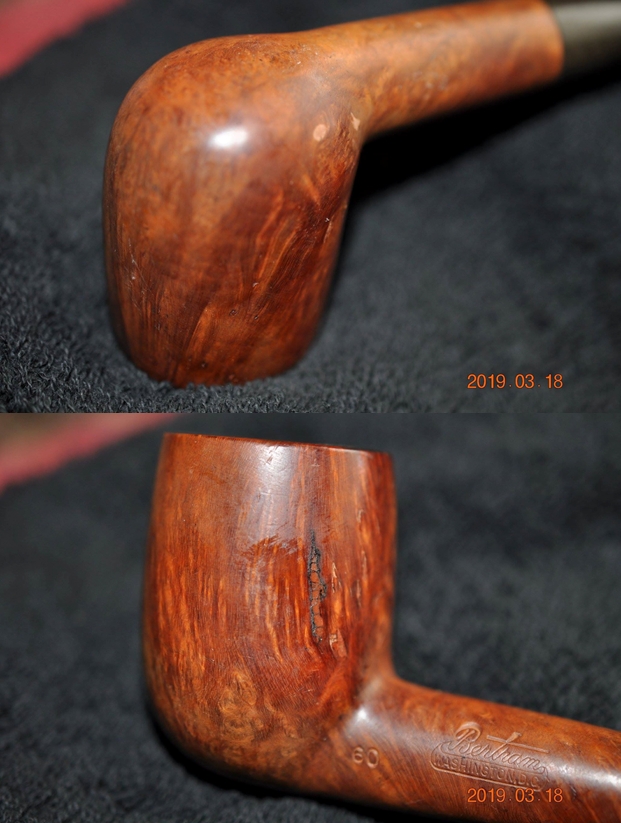
Yet another from the Bertrams collection – a Dark Coloured Bertram 60 Billiard


Blog by Steve Laug

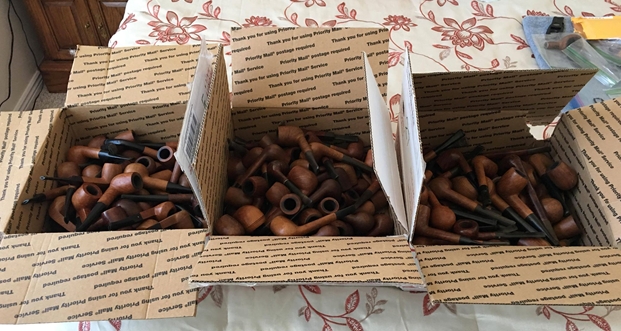
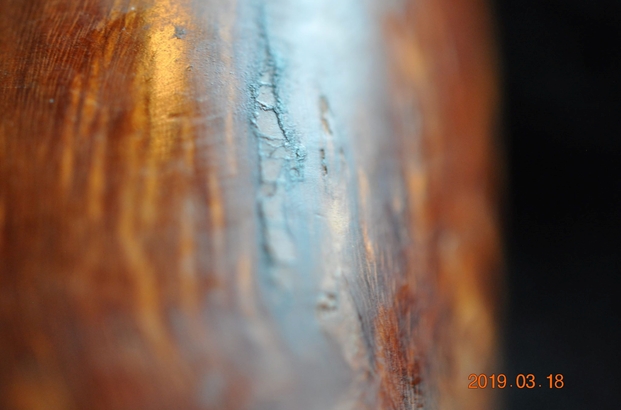
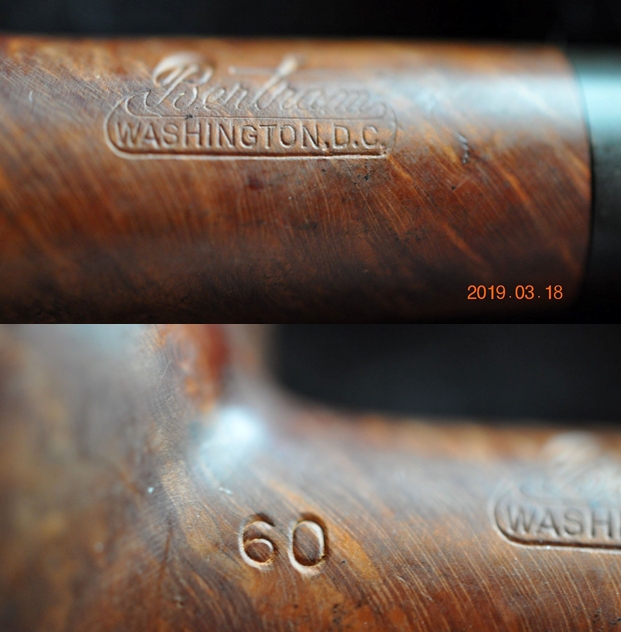
Rather than repeat myself and give the blog readers grief with the repetition please refer to the previous blog posts on the Bertrams to learn about how we got this collection. Just know that we have a collection of Bertrams and a smattering of other brands that when they were unwrapped filled three boxes. The photo below is included to show the size of the collection we had purchased. To be honest it was a bit overwhelming to see all of the collection in boxes. We were looking at a lot of work to bring these back to life.I cannot tell you how glad I am that Jeff is working through the clean up on this lot as they are really quite dirty and there are so many! It would be a more daunting task than it already is if I had to clean and restore all of them. I am leaving it to him to choose which pipes to work on. He has chosen some interesting shaped ones to restore. Here is how we are working out the transfer from him to me. As he finishes a batch of them he boxes them up and sends them to me. I have received two boxes so far. From the first box he sent, I chose another one of the Bertrams to be the next pipe that I would work on. This pipe was another very dirty one! The smooth finish was grimy and dusty but some interesting grain shone through showing me that this was a beautiful pipe. There were a few rough fills on the right and left backside of the bowl. It was a large thick shank Billiard shaped pipe with a tapered stem. There was a thick cake in the bowl and heavy lava overflowing on to the rim top. It was hard to know the condition of the edges due to the cake and lava. The stem showed some light oxidation and some chatter on the top and some tooth marks on the underside. The photos below tell the story and give a glimpse of the pipe. Jeff took close-up photos of the bowl and rim to capture the condition of the pipe when it arrived. The rim top had a thick coat of lava and the bowl had a thick cake.Jeff took pictures of he bowl sides and the heel to show the marvelous grain on the bowl. It really is quite stunning and very dirty!Jeff took a closeup photo of the spot shown in the photo above. The putty was chipped and grime had filled into the cracks.Jeff took 2 photos to capture the stamping on the left and underside of the shank. The first photo shows stamping on the left side which read Bertram over Washington, D.C. The stamping on this pipe is clear and readable. The second photo shows the grade number stamping on the underside toward the heel of the bowl. It read number 60 which shows the quality of the pipe. The next two photos show the stem surface. They show the oxidation and the chatter on both sides near the button. The tooth marks are visible on the underside next to the button. There is also some wear on the underside button edge. If you have read the previous five blogs I have posted on the Bertram pipes that I have cleaned up so far you can skip the next bit. But if you have not, then I include the link to Bertram history and information. I would recommend that if you don’t know much about them do some research on them. I include a link to the write up on Pipedia (http://pipedia.org/wiki/Bertram). Bertram pipes were based out of Washington DC. They were popular among famous politicians and celebrities of the time. They made many products for them from FDR’s cigarette holders to Joseph Stalin’s favorite pipe. They were considered some of the best America had to offer till they finally closed their doors in the 70s. They graded their pipes by 10s, the higher the grade the better. Above 60s are uncommon and 80-90s are quite rare. I’ve never heard of or seen a 100 grade. I have several blogs that I have written on rebornpipes that give some history and background to Bertram pipes. (https://rebornpipes.com/2015/06/16/an-easy-restoration-of-a-bertram-grade-60-217-poker/).

I have included the following link to give a bit of historical information on the pipe company. It is a well written article that gives a glimpse of the heart of the company. http://www.streetsofwashington.com/2012/01/bertrams-pipe-shop-on-14th-street.html#

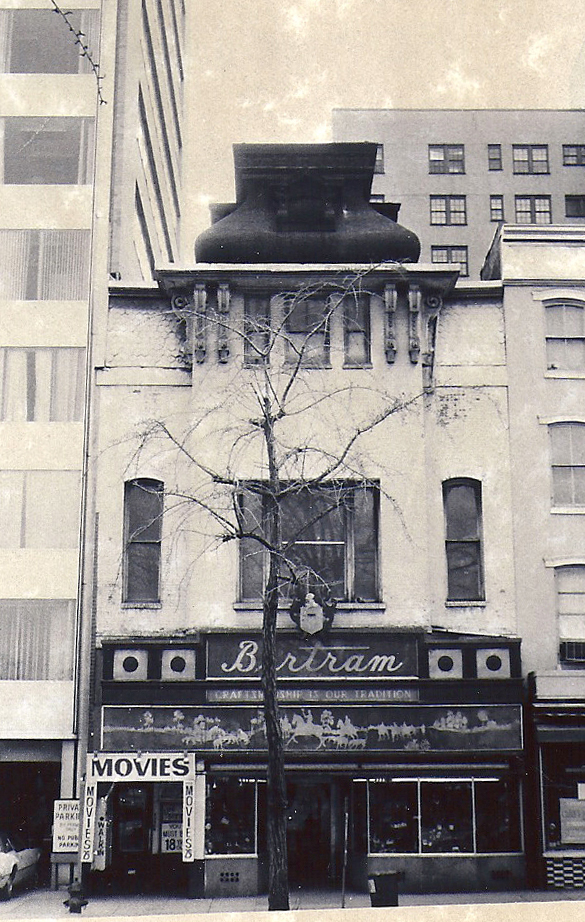
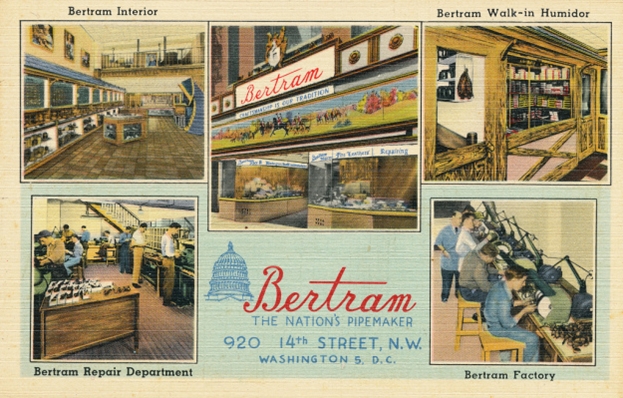
I am also including this photo of the shop in Washington D.C. and a post card of the shop. From this information I have learned that the shape and grade Bertram I have in front of me now was made before the closure of the shop in the 1970s. This Bertram Billiard with a darker finish is one of the more usual shapes in terms of the Bertram pipes I have worked on. With a grade 60 stamp it is just above the mid-range mark.

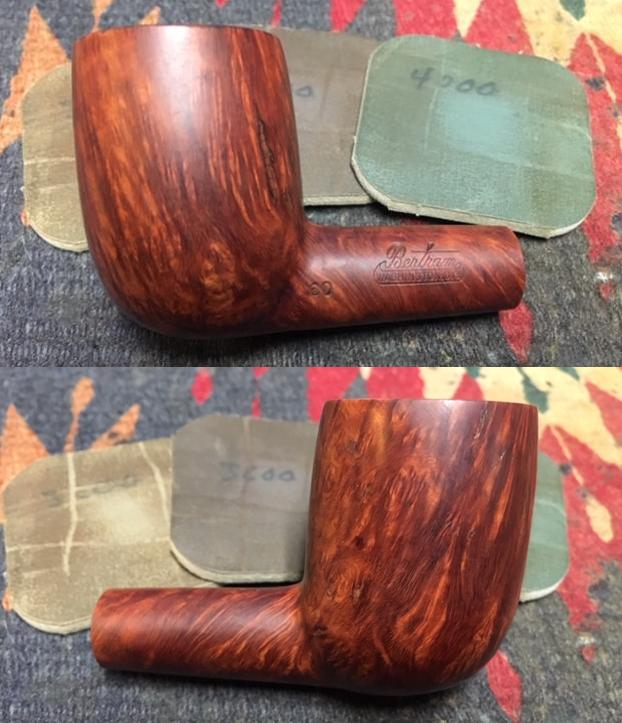
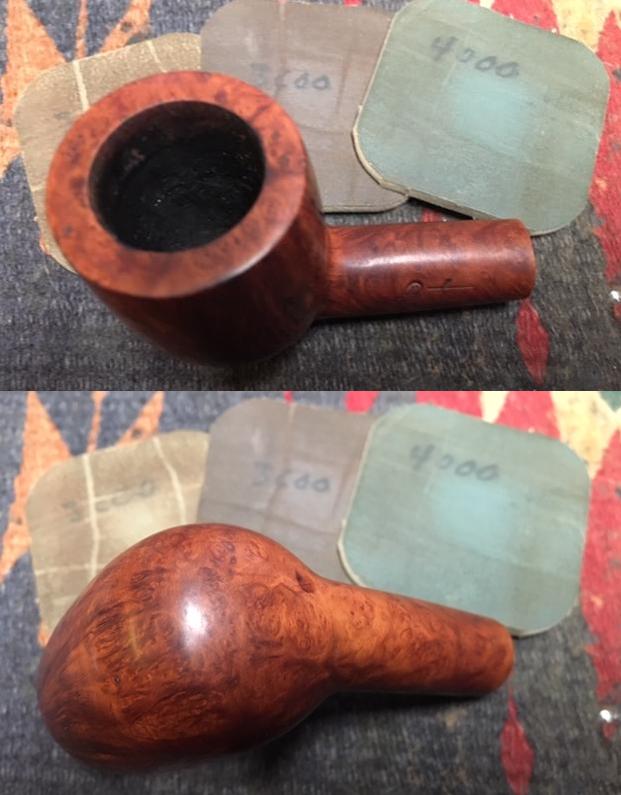
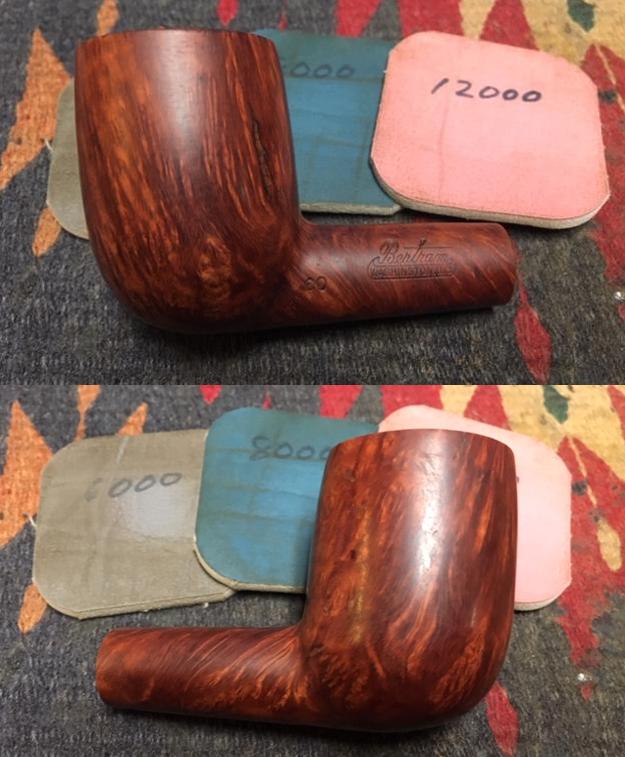
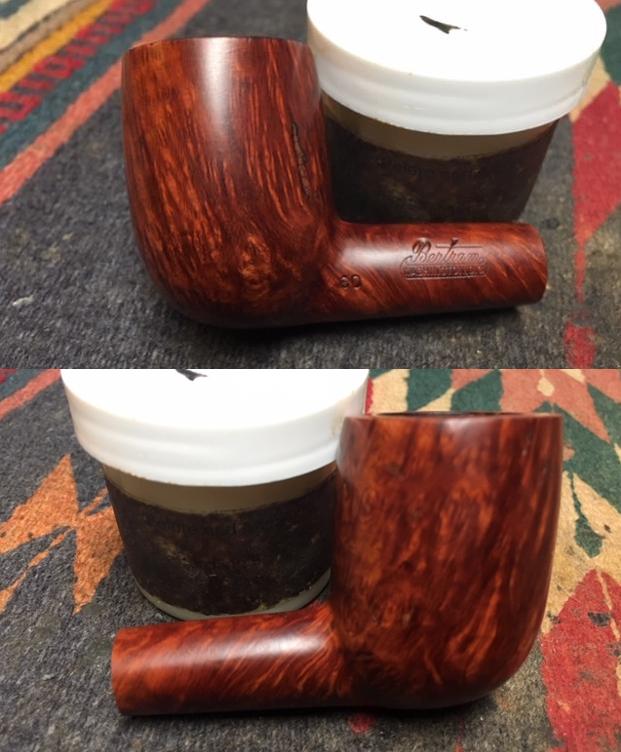
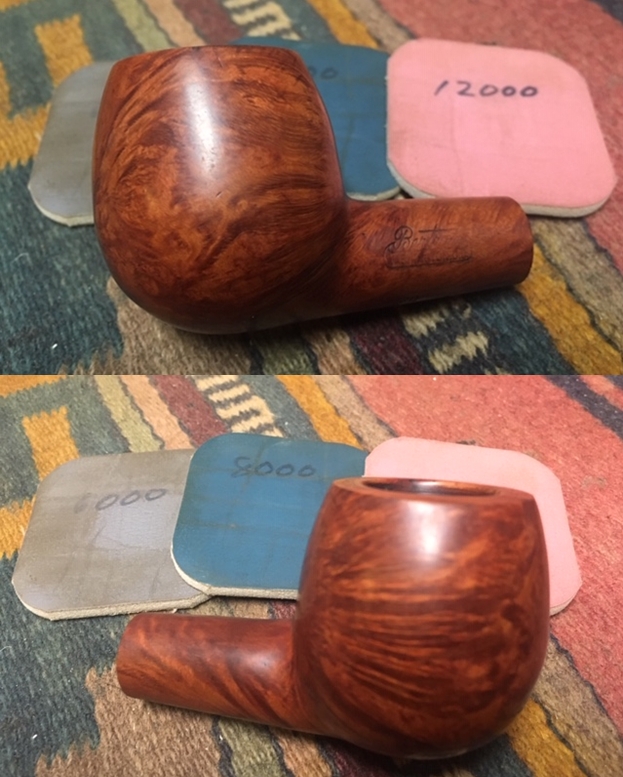
Jeff reamed the bowl with a PipNet pipe reamer and followed up with a Savinelli Fitsall pipe knife to remove the cake. He scrubbed out the mortise and the airway in the shank and the stem with alcohol, cotton swabs and pipe cleaners. He scrubbed the exterior of the bowl, rim, shank and stem with a tooth brush and Murphy’s Oil Soap to remove the oils and tars on the rim and the grime on the finish of the bowl. He rinsed it under running water. He dried it off with a soft cloth. He was able to remove lava build up on the rim top and you could see the great condition of the bowl top and edges of the rim. There was still some darkening to the rim top toward the back of the bowl. He soaked the stem in Before & After Deoxidizer to remove the oxidation. I took photos of the pipe before I started my work on it. I took a close up photo of the rim top to show the condition of the bowl and rim after Jeff had cleaned up the grime and lava but the rim top had some light damage, some pits and darkening on the backside of the rim. Both the inner edge and the outer edge of the rim look good. The stem photos show that the oxidation is gone. The light tooth chatter is hard to see but I should be able to sand it out quite easily. The tooth marks on the underside will take a little more work to remove. I also took a photo of the stamping on the left side of the shank showing how the stamping was laid out.I sanded the top of the rim and the rough areas around the fills on the back of the bowl with a folded piece of 220 grit sandpaper to remove the damage and the darkening. I polished the top with 400 grit wet dry sandpaper to remove the scratches. The photo shows how the rim looked at this point. I repaired the fills on the back of the bowl with clear super glue. Once the repairs cured I used a needle file to flatten them and then blended them into the briar surface with a folded piece of 220 grit sandpaper. I polished the bowl and rim top with micromesh sanding pads – wet sanding it with 1500-2400 grit pads and dry sanding it with 3200-12000 grit pads. I wiped the bowl down with a damp cloth after each pad to remove the sanding debris. After the final sanding pad I hand buffed it with a cotton cloth to raise a shine. I worked some Before & After Restoration Balm into finish of the briar with my fingertips to clean, enliven and protect it. I let the balm sit for a little while and then buffed with a cotton cloth to raise the shine. The Restoration Balm really makes the grain stands out beautifully. I used a folded piece of 240 grit sandpaper to blend the tooth marks and chatter into the surface of the stem. Once the surface was smooth I sanded out the scratch marks and started the polishing of the stem with a folded piece of 400 grit sandpaper. I wiped the stem down with Obsidian Oil.I polished the stem with micromesh sanding pads – wetsanding it with 1500-2400 grit pads and dry sanding it with 3200-12000 grit pads. I wiped the stem down with Obsidian Oil after each pad. I polished it with Before & After Pipe Polish – both Fine and Extra Fine and gave it a final coat and set it aside to dry. I put the stem and bowl back together and buffed the pipe with Blue Diamond on the buffing wheel. I polished the briar and the minute scratches still in the vulcanite of the stem until there was a rich shine. This Bertram is another one that has a classic Billiard shape but a bit darker finish that really highlights some amazing grain on a proportionally well carved pipe. Once I buffed the pipe the briar came alive and the mixture of grain – straight, flame and birdseye – popped with polishing. The black vulcanite stem had a rich glow. The finished pipe is a beautiful grained Billiard. Like the other Bertrams I have worked on this one fits well in the hand and sits right in the mouth. Have a look at it with the photos below. The dimensions are Length: 6 inches, Height: 2 inches, Outside diameter of the bowl: 1 3/8 inches, Chamber diameter: ¾ of an inch. Since I am traveling for a bit for the next three weeks this one will go on the store once I return. If you are interested let me know. Thanks for walking through the restoration with me as it was a pleasure to work on.
The 8th of a collection of Bertrams – a Bertram 55 Lovat


Blog by Steve Laug

If you have been reading the blogs on the restoration of the Bertram pipe lot that Jeff and I purchased you already know the story of the find. If you have not you can read more about it on the earlier blogs in this series. Just for a quick reminder I will include the photo that Jeff took the collection when it arrived in Idaho. He unwrapped each of the 200+ pipes and filled the three boxes that they were mailed in to show the size of the collection we had purchased. To be honest it was a bit overwhelming to see all of the collection in boxes. We were looking at a lot of work to bring these back to life.I am sure glad that Jeff is working through the clean up on this lot as they are really quite dirty and there are so many! I am leaving it to him to choose which pipes to work on. So far he is choosing the higher grade pipes and the more interesting shaped ones. As he finishes a batch of them he boxes them up and sends them to me. From the first box he sent, I chose another one of the Bertrams to be the eighth pipe that I would work on. As with the rest of the collection this one was dirty! The smooth finish was grimy and dusty but some interesting grain shone through showing me that this was a beautiful pipe. It was a Lovat shaped pipe with a short saddle stem. There was a thick cake in the bowl and heavy lava overflowing on to the rim top. It was hard to know the condition of the edges due to the cake and lava. The stem showed some light oxidation and some chatter on the top and some deep tooth marks on the underside. The photos below tell the story and give a glimpse of the pipe. Jeff took a close-up photo of the bowl and rim to capture the condition of the pipe when it arrived. The rim top had a thick coat of lava and the bowl had a thick cake.Jeff took 2 photos to capture the stamping on the left and underside of the shank. The first photo shows stamping on the left side which read Bertram over Washington, D.C. The stamping on this pipe is clear and readable. The second photo shows the grade number stamping on the underside at the shank stem junction. It read number 55 which shows the quality of the pipe.The next two photos show the stem surface. They show the oxidation and the chatter on both sides near the button. The deep tooth marks are visible on the underside next to the button. There is also some wear on the underside button edge.If you have read the previous five blogs I have posted on the Bertram pipes that I have cleaned up so far you can skip the next bit. But if you have not, then I include the link to Bertram history and information. I would recommend that if you don’t know much about them do some research on them. I include a link to the write up on Pipedia (http://pipedia.org/wiki/Bertram). Bertram pipes were based out of Washington DC. They were popular among famous politicians and celebrities of the time. They made many products for them from FDR’s cigarette holders to Joseph Stalin’s favorite pipe. They were considered some of the best America had to offer till they finally closed their doors in the 70s. They graded their pipes by 10s, the higher the grade the better. Above 60s are uncommon and 80-90s are quite rare. I’ve never heard of or seen a 100 grade. I have several blogs that I have written on rebornpipes that give some history and background to Bertram pipes. (https://rebornpipes.com/2015/06/16/an-easy-restoration-of-a-bertram-grade-60-217-poker/).

I have included the following link to give a bit of historical information on the pipe company. It is a well written article that gives a glimpse of the heart of the company. http://www.streetsofwashington.com/2012/01/bertrams-pipe-shop-on-14th-street.html#

I am also including this photo of the shop in Washington D.C. and a post card of the shop. From this information I have learned that the shape and grade Bertram I have in front of me now was made before the closure of the shop in the 1970s. This Bertram Lovat is one of the more usual shapes in terms of the Bertram pipes I have worked on. With a grade 55 stamp it is just above the mid-range mark.

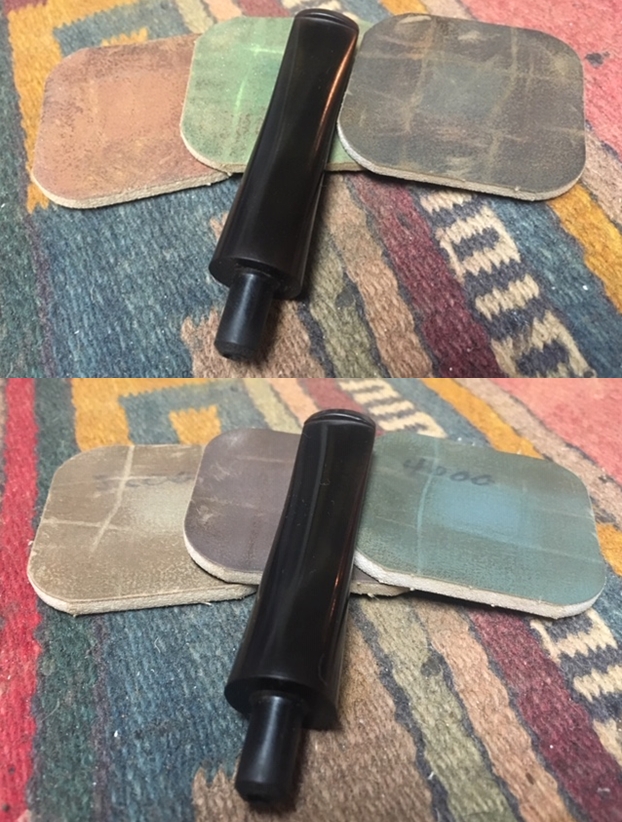
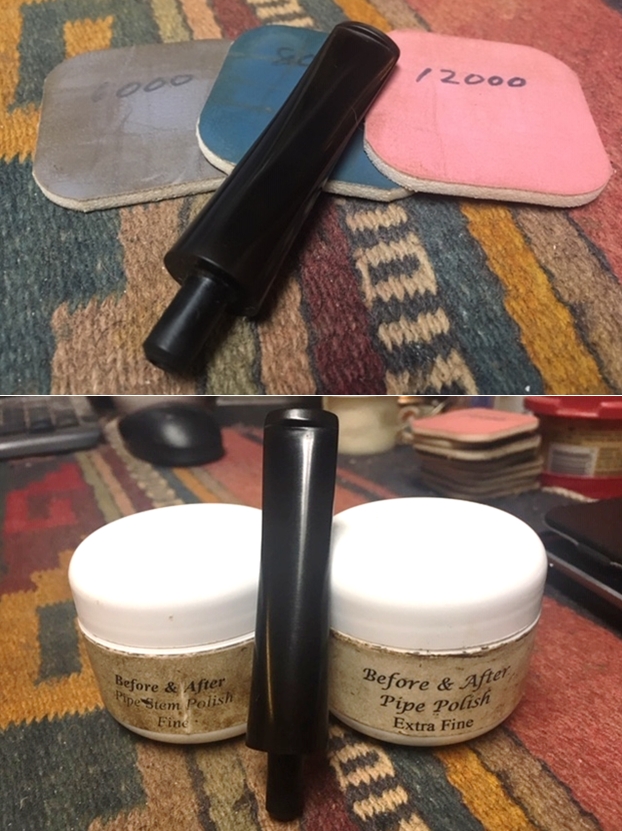
Jeff reamed the bowl with a PipNet pipe reamer and followed up with a Savinelli Fitsall pipe knife to remove the cake. He scrubbed out the mortise and the airway in the shank and the stem with alcohol, cotton swabs and pipe cleaners. He scrubbed the exterior of the bowl, rim, shank and stem with a tooth brush and Murphy’s Oil Soap to remove the oils and tars on the rim and the grime on the finish of the bowl. He rinsed it under running water. He dried it off with a soft cloth. He was able to remove lava build up on the rim top and you could see the great condition of the bowl top and edges of the rim. There was still some darkening to the rim top toward the back of the bowl. He soaked the stem in Before & After Deoxidizer to remove the oxidation. I took photos of the pipe before I started my work on it. I took a close up photo of the rim top to show the condition of the bowl and rim after Jeff had cleaned up the grime and lava but the rim top had some light damage and darkening all the way around. Both the inner edge and the outer edge of the rim look good. The stem photos show that the oxidation is gone. The light tooth chatter is hard to see but I should be able to sand it out quite easily. The tooth marks on the underside will take a little more work to remove.I also took a photo of the stamping on the left side and the underside of the shank showing how the stamping was laid out.I sanded the top of the rim with a folded piece of 220 grit sandpaper to remove the damage and the darkening. I polished the top with 400 grit wet dry sandpaper to remove the scratches. The photo shows how the rim looked at this point.I polished the bowl and rim top with micromesh sanding pads – wet sanding it with 1500-2400 grit pads and dry sanding it with 3200-12000 grit pads. I wiped the bowl down with a damp cloth after each pad to remove the sanding debris. After the final sanding pad I hand buffed it with a cotton cloth to raise a shine. I worked some Before & After Restoration Balm into finish of the briar with my fingertips to clean, enliven and protect it. I let the balm sit for a little while and then buffed with a cotton cloth to raise the shine. The Restoration Balm really makes the grain stands out beautifully. I set the bowl aside and filled in the deep tooth marks with clear super glue and set the stem aside to let the repair cure. Once it had cured I used a needle file to flatten it into the surface of the stem.I used a folded piece of 240 grit sandpaper to address the tooth chatter and blend the repair into the surface of the stem. Once the surface was smooth I sanded out the scratch marks and started the polishing of the stem with a folded piece of 400 grit sandpaper. I wiped the stem down with Obsidian Oil.I polished the stem with micromesh sanding pads – wet sanding it with 1500-2400 grit pads and dry sanding it with 3200-12000 grit pads. I wiped the stem down with Obsidian Oil after each pad. I polished it with Before & After Pipe Polish – both Fine and Extra Fine and gave it a final coat and set it aside to dry. I put the stem and bowl back together and buffed the pipe with Blue Diamond on the buffing wheel. I polished the briar and the minute scratches still in the vulcanite of the stem until there was a rich shine. This Bertram has a classic Lovat shape and some amazing grain on a proportionally well carved pipe. Once I buffed the pipe the briar came alive and the mixture of grain – cross, swirled and birdseye – popped with polishing. The black vulcanite stem had a rich glow. The finished pipe is a beautiful grained Lovat shaped pipe. Like the other Bertrams I have worked on this one fits well in the hand and sits right in the mouth. Have a look at it with the photos below. The dimensions are Length: 5 1/4 inches, Height: 1 3/4 inches, Outside diameter of the bowl: 1 1/4 inches, Chamber diameter: ¾ of an inch. Since I am traveling for a bit for the next three weeks this one will go on the store once I return. If you are interested let me know. Thanks for walking through the restoration with me as it was a pleasure to work on.
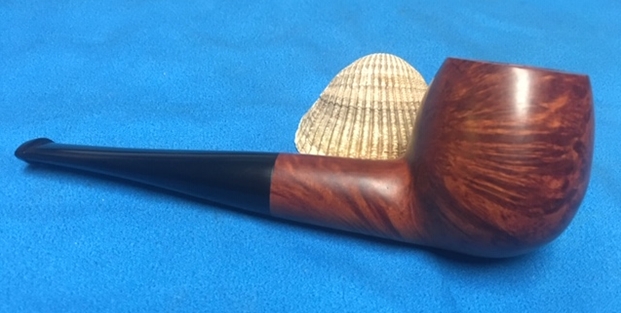
 

The 7th of a collection of Bertrams – a Bertram 60 Bullmoose


Blog by Steve Laug

You will probably get tired of this introduction if you are following the blog but I will keep it here at least for a while for those who have not read the previous blogs on the pipes in this collection… As I mentioned before, once in a while I get emails through the blog about pipes that someone wants to sell. These can be estates or they can be a collection that an older pipeman has decided to get rid of by passing it on to someone who can work on them and see that they get into the hands of another pipe smoker. In this case I received an email from a fellow who wanted to sell me a collection of Bertram pipes. We met over FaceTime and he showed the pipe collection to both Jeff and me. We discussed their condition and arrived at a price for the pipes. The majority of the pipes in the collection were Bertrams but there were also some other brands that were known to me. We struck a deal on the lot and he shipped them to Jeff. Jeff took some photos of the collection when it arrived in Idaho. He unwrapped each of the 200+ pipes and filled the three boxes that they were mailed in, and then took a photo to show the size of the collection we had purchased. To be honest it was a bit overwhelming to see all of the collection in boxes. We were looking at a lot of work to bring these back to life.I am glad that Jeff is working through the clean up on this lot as there are many! I am leaving it to choose which pipes to work on. So far he is choosing the higher grade pipes and the more interesting shaped ones. As he finishes a batch of them he boxes them up and sends them to me. From that box, I chose another one of the Bertrams from the lot to be the seventh pipe that I would work on. As with the rest of the collection this one was dirty! The smooth finish was grimy and dusty but the grain shone through showing me that this was a beautiful pipe. It was a Bullmoose shaped pipe with a straight tapered stem. There was a cake in the bowl and light lava overflowing on to the rim top. The rim had slight darkening on the rear inner edge. The stem showed some light oxidation and some chatter on the top and underside. There was a crack in the button and on the underside of the stem surface. The photos below tell the story and give a glimpse of this interesting pipe. Jeff took 2 close-up photos of the bowl and rim at different exposures to capture the condition of the pipe when it arrived. The rim top had some light lava and some darkening on the back rim top. The bowl had a cake that was quite thick but also a lot of tobacco debris stuck to the walls.He also took a photo of the left side of the bowl to show the large fill that was mid bowl. He took a photo of the underside of the shank to show the shape ant the grain on the bowl and heel. The finish is very dirty but this is another interesting pipe. Jeff took a photo to capture the stamping on the left side of the shank. The first photo shows stamping which read Bertram over Washington, D.C. The stamping on this pipe is clear and readable. The second photo shows the grade number stamping on the underside at the shank stem junction. It read number 60 which shows the quality of the pipe. The next two photos show the stem surface. They show the oxidation and the chatter on both sides near the button. There is also some wear on the button edges. The most significant issue that will need to be dealt with is the crack in the button edge and into the stem on the underside.If you have read the previous five blogs I have posted on the Bertram pipes that I have cleaned up so far you can skip the next bit. But if you have not, then I include the link to Bertram history and information. I would recommend that if you don’t know much about them do some research on them. I include a link to the write up on Pipedia (http://pipedia.org/wiki/Bertram). Bertram pipes were based out of Washington DC. They were popular among famous politicians and celebrities of the time. They made many products for them from FDR’s cigarette holders to Joseph Stalin’s favorite pipe. They were considered some of the best America had to offer till they finally closed their doors in the 70s. They graded their pipes by 10s, the higher the grade the better. Above 60s are uncommon and 80-90s are quite rare. I’ve never heard of or seen a 100 grade. I have several blogs that I have written on rebornpipes that give some history and background to Bertram pipes. (https://rebornpipes.com/2015/06/16/an-easy-restoration-of-a-bertram-grade-60-217-poker/).

I have included the following link to give a bit of historical information on the pipe company. It is a well written article that gives a glimpse of the heart of the company. http://www.streetsofwashington.com/2012/01/bertrams-pipe-shop-on-14th-street.html#

I am also including this photo of the shop in Washington D.C. and a post card of the shop. From this information I have learned that the shape and grade Bertram I have in front of me now was made before the closure of the shop in the 1970s. This Bertram Bullmoose is a rare shape in terms of the Bertram pipes I have worked on. With a grade 60 stamp it is just above the mid-range mark.

Jeff reamed the bowl with a PipNet pipe reamer and followed up with a Savinelli Fitsall pipe knife to remove the cake. He scrubbed out the mortise and the airway in the shank and the stem with alcohol, cotton swabs and pipe cleaners. He scrubbed the exterior of the bowl, rim, shank and stem with a tooth brush and Murphy’s Oil Soap to remove the oils and tars on the rim and the grime on the finish of the bowl. He rinsed it under running water. He dried it off with a soft cloth. He was able to remove light lava build up on the back of the rim top and you could see the great condition of the bowl top and edges of the rim. He soaked the stem in Before & After Deoxidizer to remove the oxidation. I took photos of the pipe before I started my work on it. (Please note that I forgot to take a photo of the underside of the stem before I started my repair work so the last photo below shows the initial repair started.) I took a close up photo of the rim top to show the condition of the bowl and rim after Jeff had cleaned up the darkening at the front and rear of the rim. It looked really and both the inner edge and the outer edge of the rim look really good. The stem photos show that the oxidation is gone. The light tooth chatter is hard to see but I should be able to sand it out quite easily. The repair on the button and the stem would actually work well as it was not as large as it appeared.I also took a photo of the stamping on the left side and the underside of the shank showing how the stamping was laid out.I polished the bowl and rim top with micromesh sanding pads – wetsanding it with 1500-2400 grit pads and dry sanding it with 3200-12000 grit pads. I wiped the bowl down with a damp cloth after each pad to remove the sanding debris. After the final sanding pad I hand buffed it with a cotton cloth to raise a shine. The large fill on the left side is rock hard so I left is as it was when I received the pipe. I worked some Before & After Restoration Balm into finish of the briar with my fingertips to clean, enliven and protect it. I let the balm sit for a little while and then buffed with a cotton cloth to raise the shine. The Restoration Balm really makes the grain stands out beautifully. I set the bowl aside and turned my attention to the stem. I cleaned off the crack in the underside of the button with alcohol and a cotton swab. I dried it off and filled in the area with clear super glue and set it aside to cure.I used a folded piece of 240 grit sandpaper to address the tooth chatter and blend the repair into the surface of the stem. Once the surface was smooth I sanded out the scratch marks and started the polishing of the stem with a folded piece of 400 grit sandpaper. I wiped the stem down with Obsidian Oil.I polished the stem with micromesh sanding pads – wetsanding it with 1500-2400 grit pads and dry sanding it with 3200-12000 grit pads. I wiped the stem down with Obsidian Oil after each pad. I polished it with Before & After Pipe Polish – both Fine and Extra Fine and gave it a final coat and set it aside to dry. I put the stem and bowl back together and buffed the pipe with Blue Diamond on the buffing wheel. I polished the briar and the minute scratches still in the vulcanite of the stem until there was a rich shine. This Bertram has a protruding chin or nose to it. It is that shape that is called a Bull Moose. Once I buffed the pipe the briar came alive and the mixture of grain – straight, flame and birdseye popped with polishing. There are some fills on the left side of the bowl but they are not glaring pink putty. The black vulcanite stem had a rich glow. The finished pipe is a beautiful grained Bull Moose shaped pipe. Like the other Bertrams I have worked on this one fits well in the hand and sits right in the mouth. Have a look at it with the photos below. The dimensions are Length: 5 3/4 inches, Height: 1 5/8 inches, Outside diameter of the bowl: 1 3/4 inches, Chamber diameter: ¾ of an inch. Since I am traveling for a bit for the next three weeks this one will go on the store once I return. If you are interested let me know. Thanks for walking through the restoration with me as it was a pleasure to work on.

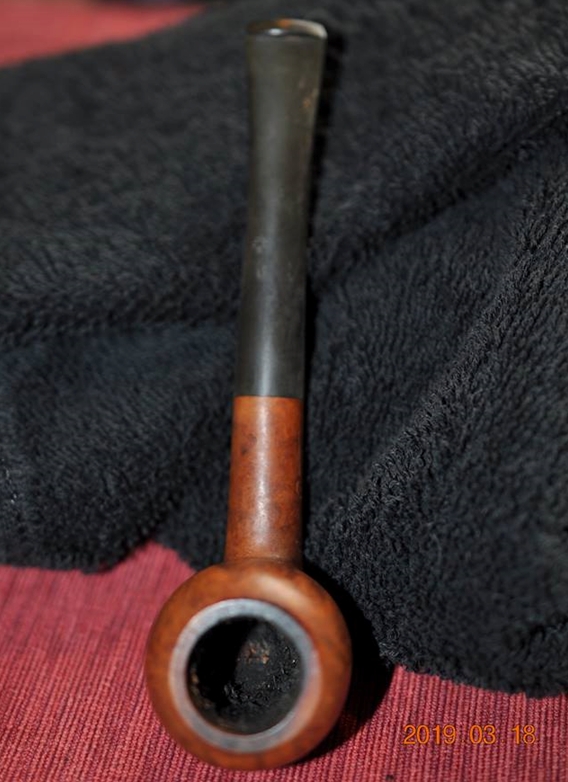
The 6th of a collection of Bertrams – a Bertram 70S Acorn


Blog by Steve Laug

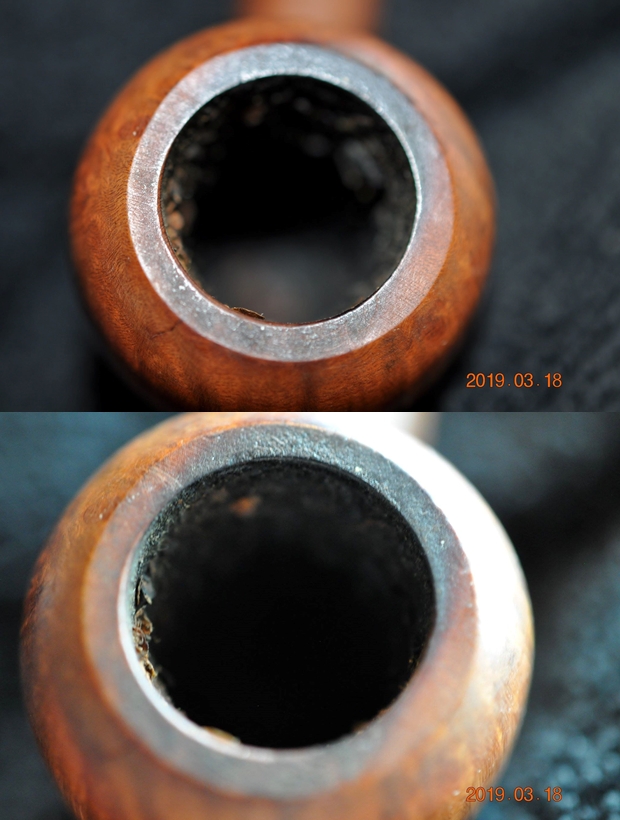
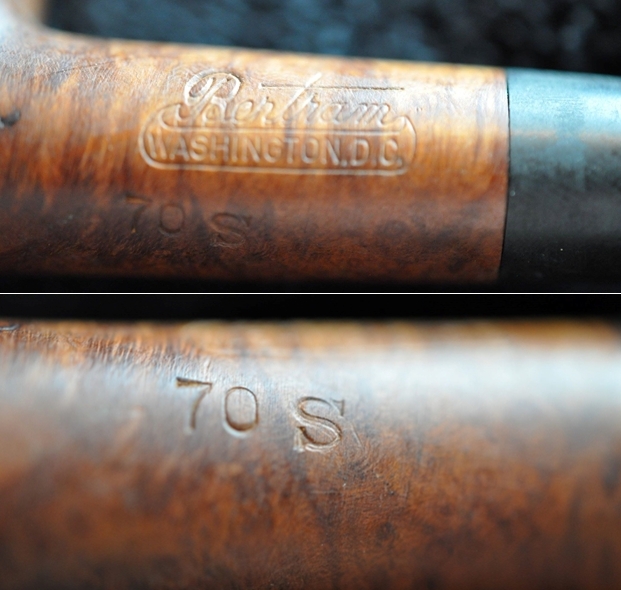
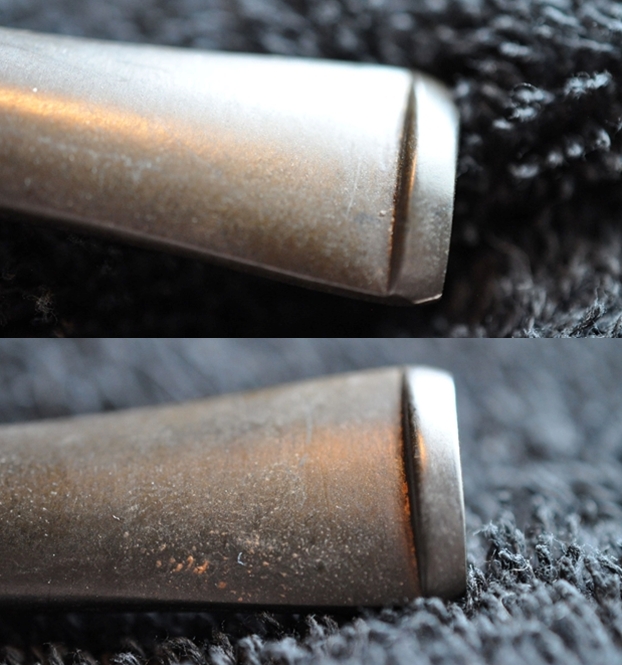
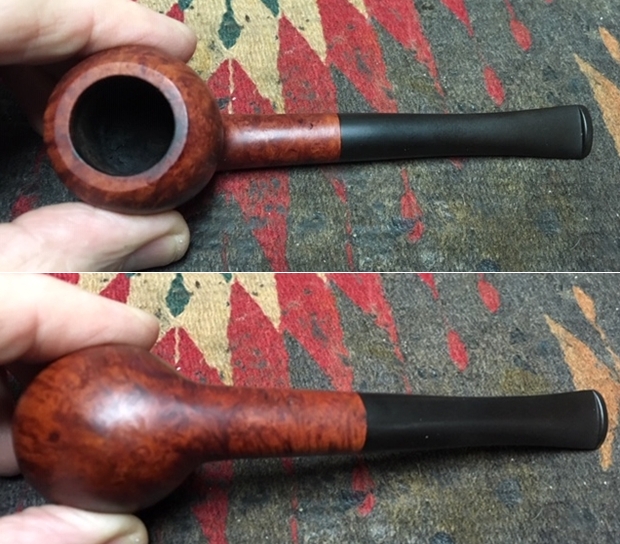
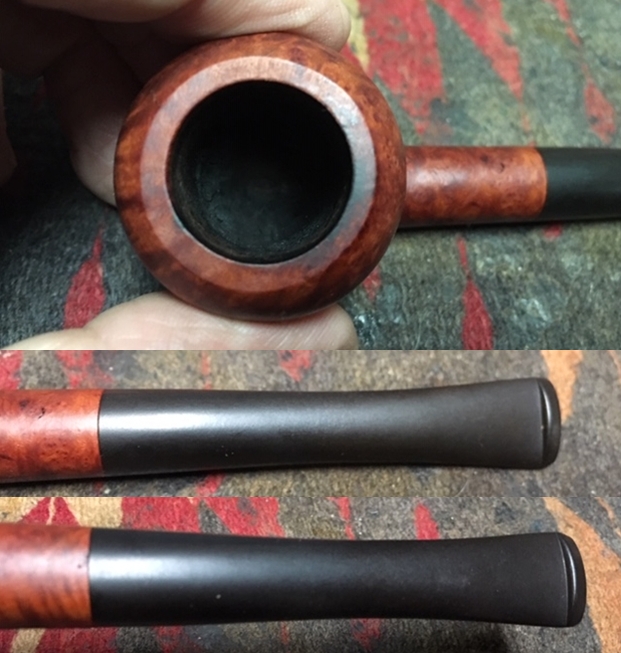
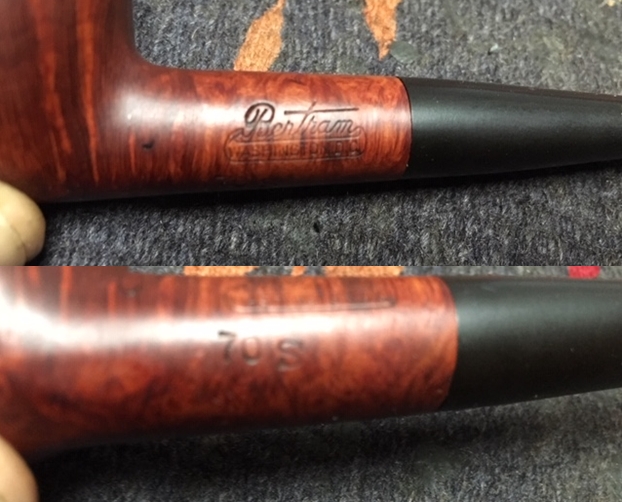
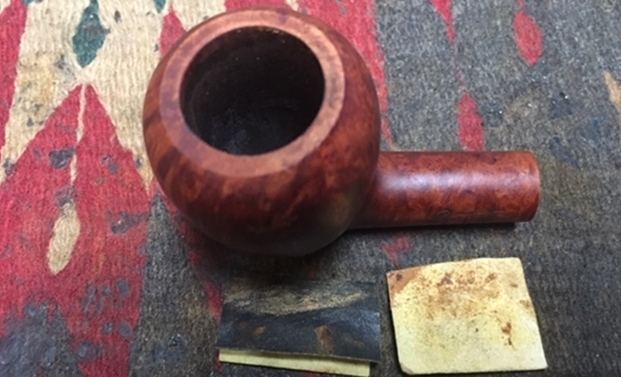
You will probably get tired of this introduction if you are following the blog but I will keep it here at least for a while for those who have not read the previous blogs on the pipes in this collection… As I mentioned before, once in a while I get emails through the blog about pipes that someone wants to sell. These can be estates or they can be a collection that an older pipeman has decided to get rid of by passing it on to someone who can work on them and see that they get into the hands of another pipe smoker. In this case I received an email from a fellow who wanted to sell me a collection of Bertram pipes. We met over FaceTime and he showed the pipe collection to both Jeff and me. We discussed their condition and arrived at a price for the pipes. The majority of the pipes in the collection were Bertrams but there were also some other brands that were known to me. We struck a deal on the lot and he shipped them to Jeff. Jeff took some photos of the collection when it arrived in Idaho. He unwrapped each of the 200+ pipes and filled the three boxes that they were mailed in, and then took a photo to show the size of the collection we had purchased. To be honest it was a bit overwhelming to see all of the collection in boxes. We were looking at a lot of work to bring these back to life.I am glad that Jeff is working through the clean up on this lot as there are many! I am leaving it to choose which pipes to work on. So far he is choosing the higher grade pipes and the more interesting shaped ones. As he finishes a batch of them he boxes them up and sends them to me. From that box, I chose another one of the Bertrams from the lot to be the sixth pipe that I would work on. As with the rest of the collection this one was dirty! The smooth finish was grimy and dusty but the grain shone through showing me that this was a beautiful pipe. It was an Acorn shaped pipe with a straight tapered stem. There was a cake in the bowl and light lava overflowing on to the rim top. The rim top also had dents and dings and a slight darkening on the rear inner edge. The stem showed some light oxidation and some chatter on the top and underside. The photos below tell the story and give a glimpse of this interesting pipe. Jeff took 2 close-up photos of the bowl and rim to capture the condition of the pipe when it arrived. The rim top had some light lava and some darkening on the front and the back rim top. The bowl had a cake that was quite thick but also a lot of tobacco debris stuck to the walls.He also took a photo of the right and left side of the bowl and shank to show the interesting straight grain on the bowl and heel. The finish is very dirty but this is another interesting pipe.Jeff took a photo to capture the stamping on the left side of the shank. The first photo shows stamping which read Bertram over Washington, D.C. The stamping on this pipe is clear and readable. The second photo shows the grade number stamping lower on the left side at the shank bowl junction. It read number 70S which shows the quality of the pipe. I believe the S is the designation for a straight grain pipe but I cannot find verification of that yet.The next two photos show the stem surface. They show the oxidation and the chatter on both sides near the button. This stem showed the least number of tooth marks on any of the Bertram lot that I have worked on so far.If you have read the previous five blogs I have posted on the Bertram pipes that I have cleaned up so far you can skip the next bit. But if you have not, then I include the link to Bertram history and information. I would recommend that if you don’t know much about them do some research on them. I include a link to the write up on Pipedia (http://pipedia.org/wiki/Bertram). Bertram pipes were based out of Washington DC. They were popular among famous politicians and celebrities of the time. They made many products for them from FDR’s cigarette holders to Joseph Stalin’s favorite pipe. They were considered some of the best America had to offer till they finally closed their doors in the 70s. They graded their pipes by 10s, the higher the grade the better. Above 60s are uncommon and 80-90s are quite rare. I’ve never heard of or seen a 100 grade. I have several blogs that I have written on rebornpipes that give some history and background to Bertram pipes. (https://rebornpipes.com/2015/06/16/an-easy-restoration-of-a-bertram-grade-60-217-poker/).
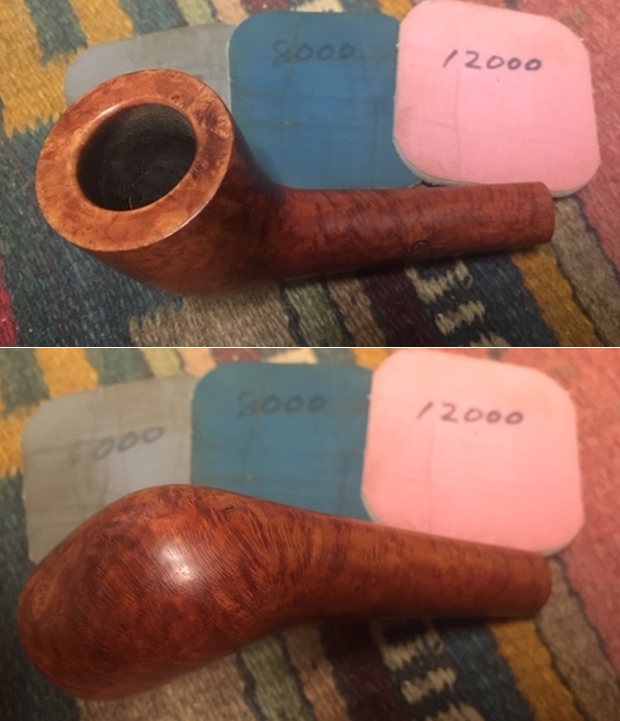
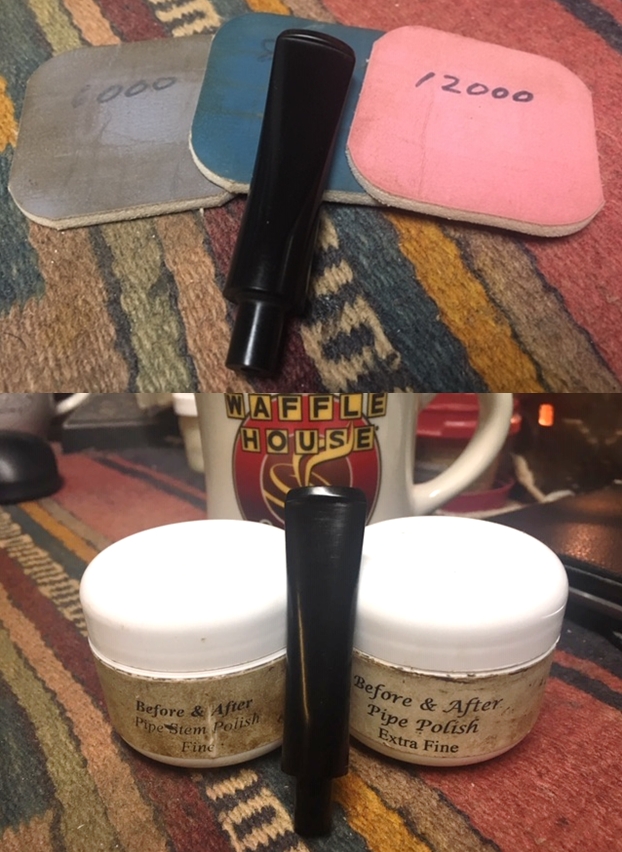
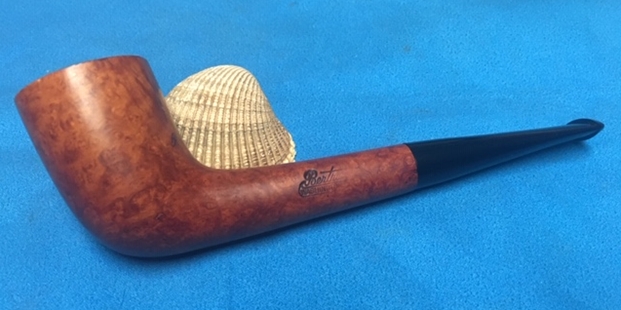
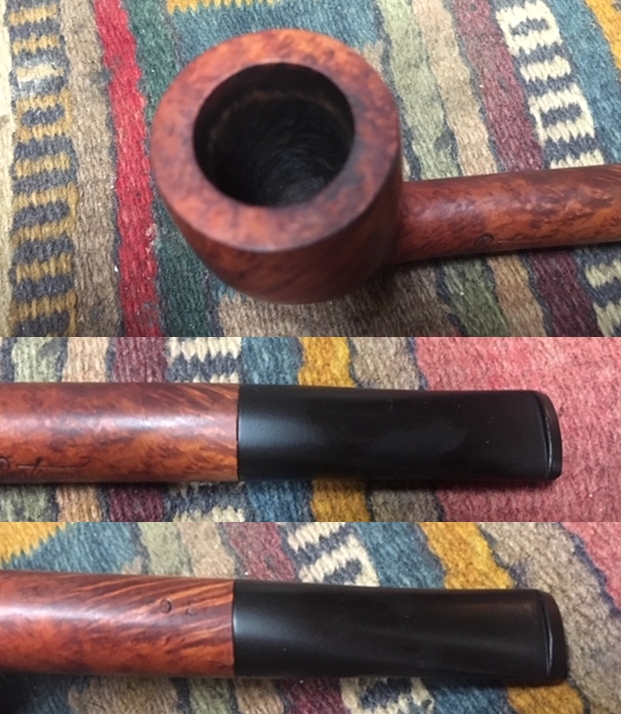
I have included the following link to give a bit of historical information on the pipe company. It is a well written article that gives a glimpse of the heart of the company. http://www.streetsofwashington.com/2012/01/bertrams-pipe-shop-on-14th-street.html#

I am also including this photo of the shop in Washington D.C. and a post card of the shop.

From this information I have learned that the shape and grade Bertram I have in front of me now was made before the closure of the shop in the 1970s. This Bertram Acorn is a grade 70S pipe so it is above the mid-range mark and one of the rarer Bertrams.

Jeff reamed the bowl with a PipNet pipe reamer and followed up with a Savinelli Fitsall pipe knife to remove the cake. He scrubbed out the mortise and the airway in the shank and the stem with alcohol, cotton swabs and pipe cleaners. He scrubbed the exterior of the bowl, rim, shank and stem with a tooth brush and Murphy’s Oil Soap to remove the oils and tars on the rim and the grime on the finish of the bowl. He rinsed it under running water. He dried it off with a soft cloth. He was able to remove the lava build up on the rim top and you could see the great condition of the bowl top and edges of the rim. He soaked the stem in Before & After Deoxidizer to remove the oxidation. I took photos of the pipe before I started my work on it. I took a close up photo of the rim top to show the condition of the bowl and rim after Jeff had cleaned up the darkening at the front and rear of the rim. It looked really good though there was still some darkening at the rear of the rim. Both the inner edge and the outer edge of the rim look really good. The stem photos show that the oxidation is gone. The light tooth chatter is hard to see but I should be able to sand it out quite easily.I also took a photo of the stamping on the top of the left side and the underside of the shank showing how the stamping was laid out.I started my part of the restoration by sanding out the dark spots on the front and back of the rim top with 220 grit sandpaper and then polishing it with 400 grit wet dry sandpaper. It did not too much work to remove the damage to the rim top.I polished the bowl and rim top with micromesh sanding pads – wetsanding it with 1500-2400 grit pads and dry sanding it with 3200-12000 grit pads. I wiped the bowl down with a damp cloth after each pad to remove the sanding debris. After the final sanding pad I hand buffed it with a cotton cloth to raise a shine. I worked some Before & After Restoration Balm into finish of the briar with my fingertips to clean, enliven and protect it. I let the balm sit for a little while and then buffed with a cotton cloth to raise the shine. The Restoration Balm really makes the grain stands out beautifully. I set the bowl aside and turned my attention to the stem. I used a folded piece of 240 grit sandpaper to address the tooth chatter and oxidation on the surface of the stem. Once the surface was smooth I sanded out the scratch marks and started the polishing of the stem with a folded piece of 400 grit sandpaper. I wiped the stem down with Obsidian Oil and took the following photos.I polished the stem with micromesh sanding pads – wetsanding it with 1500-2400 grit pads and dry sanding it with 3200-12000 grit pads. I wiped the stem down with Obsidian Oil after each pad. I polished it with Before & After Pipe Polish – both Fine and Extra Fine and gave it a final coat and set it aside to dry. I put the stem and bowl back together and buffed the pipe with Blue Diamond on the buffing wheel. I polished the briar and the minute scratches still in the vulcanite of the stem until there was a rich shine. This Bertram has a bit of a Danish flair to it. Once I buffed the pipe the briar came alive and the mixture of grain – straight, flame and birdseye popped with polishing. The black vulcanite stem had a rich glow. The finished pipe is a beautiful grained Acorn shaped pipe. Like the other Bertrams I have worked on this one fits well in the hand and sits right in the mouth. Have a look at it with the photos below. The dimensions are Length: 5 1/2 inches, Height: 1 3/4 inches, Outside diameter of the bowl: 1 3/8 inches, Chamber diameter: ¾ of an inch. Since I am traveling for a bit for the next three weeks this one will go on the store once I return. If you are interested let me know. Thanks for walking through the restoration with me as it was a pleasure to work on.