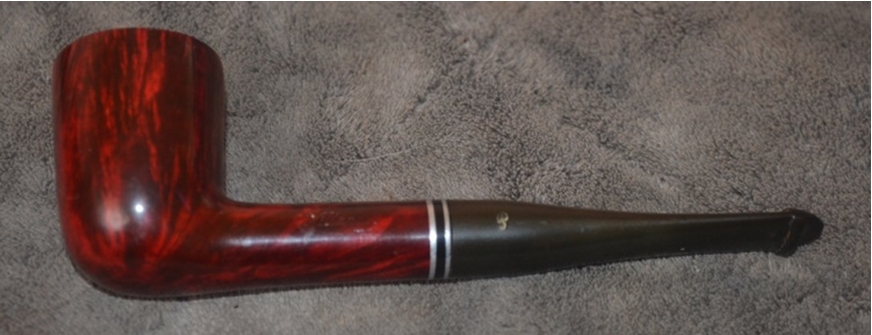
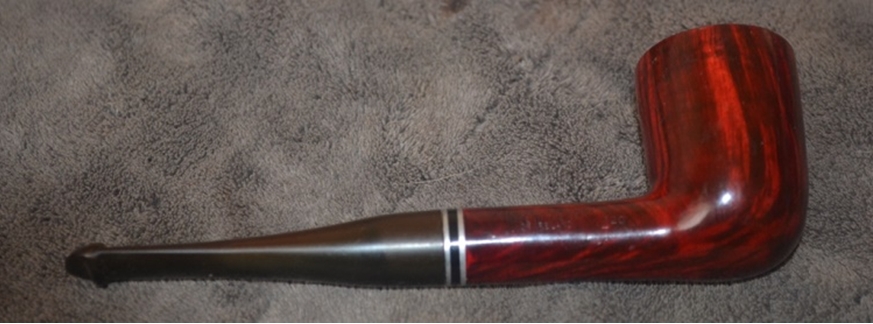
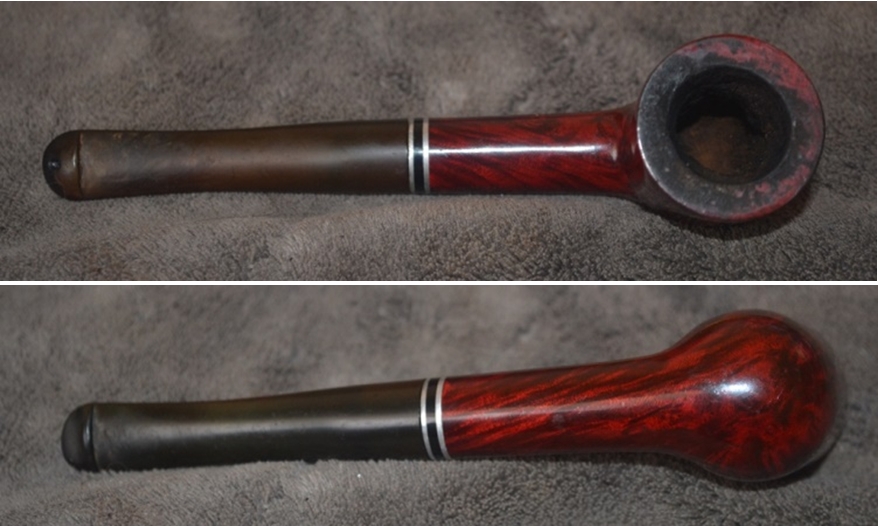
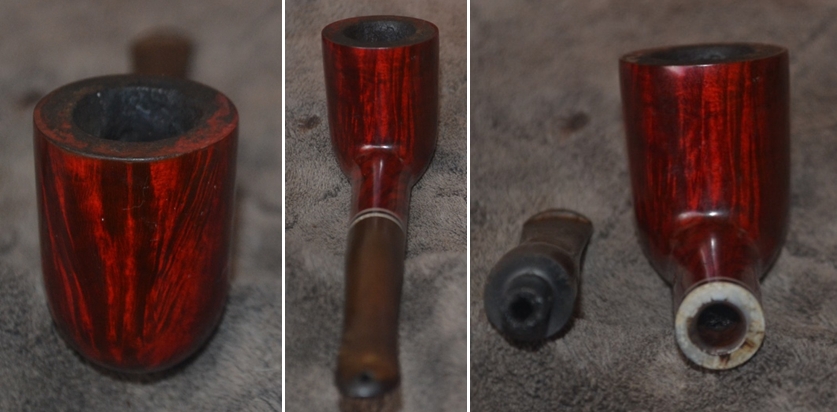
Tag Archives: articles by Robert M. Boughton

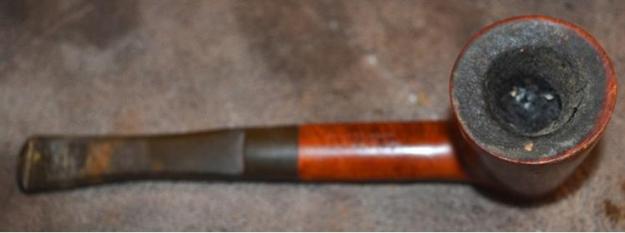
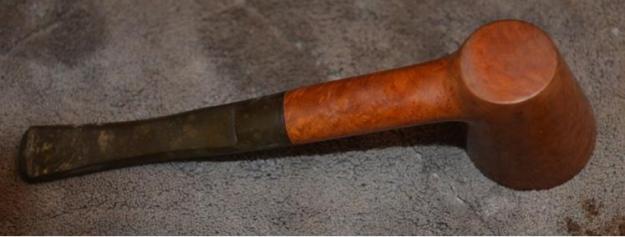
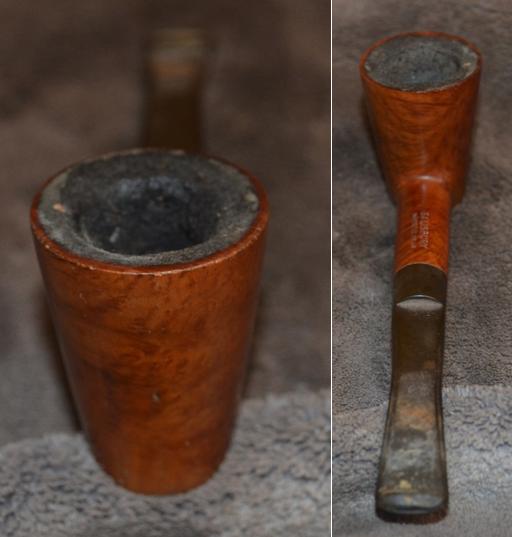
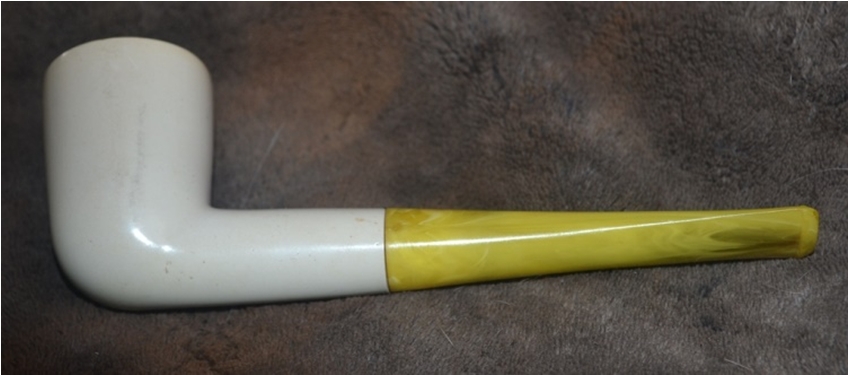
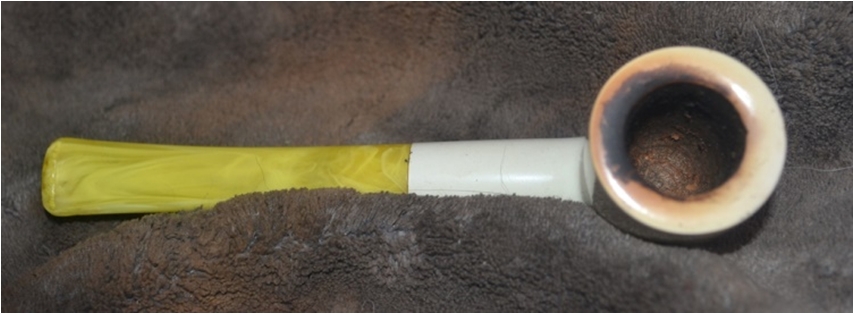
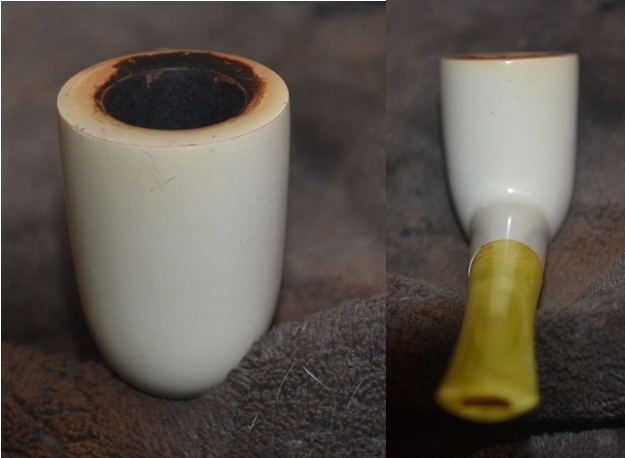
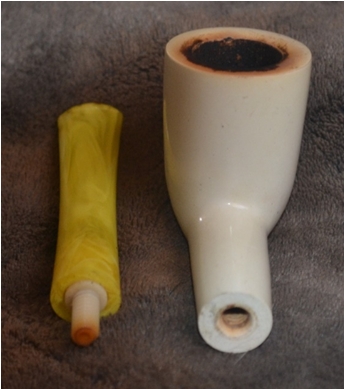
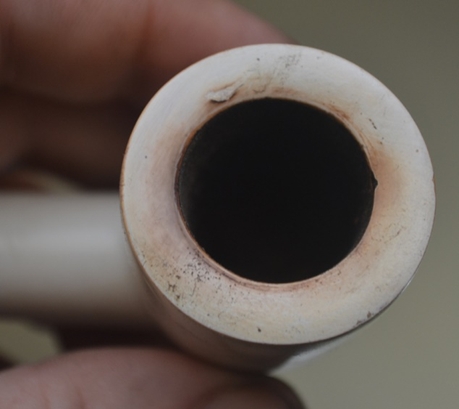
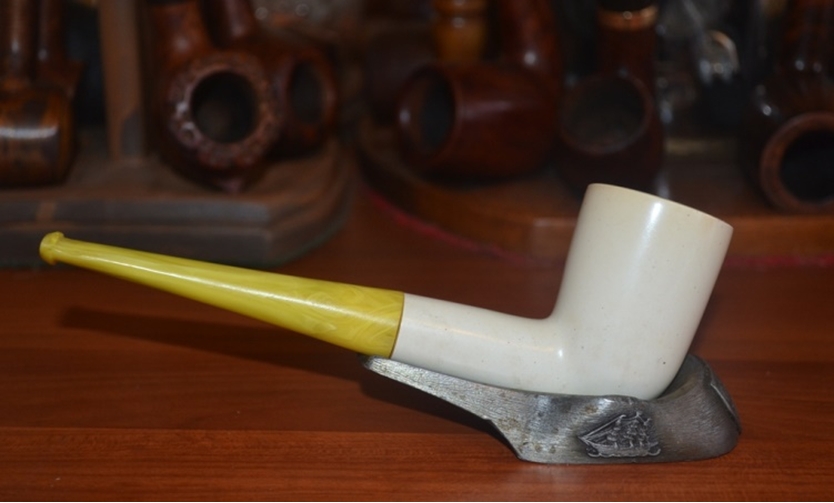
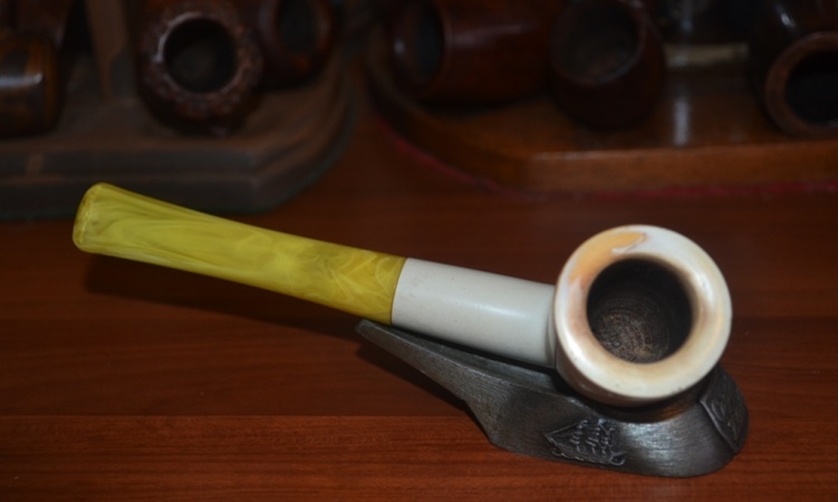
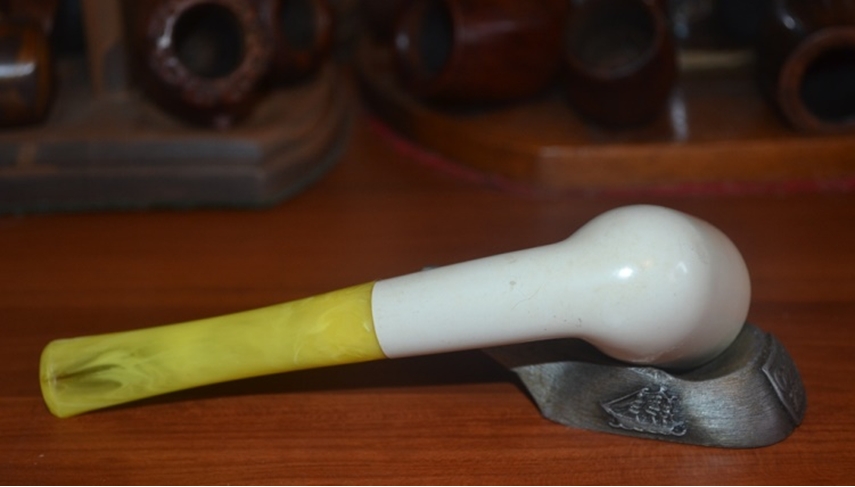
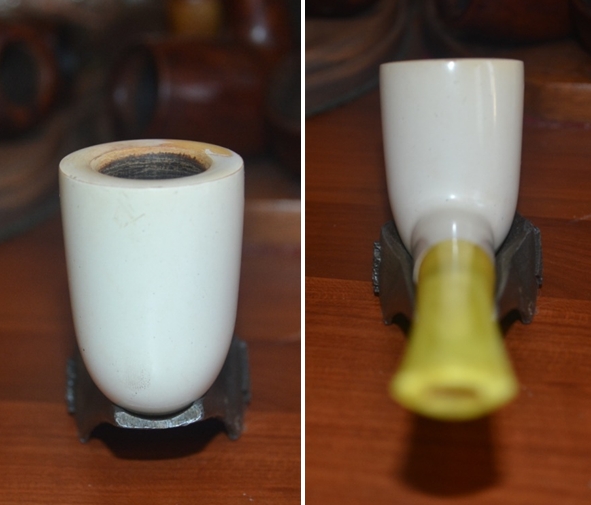
Refurbishing a Barely Smoked Smooth White Turkish Meerschaum Dublin – Robert M. Boughton


Guest Blog by Robert M. Boughton
Member, North American Society of Pipe Collectors
http://www.naspc.org
http://www.roadrunnerpipes.com
http://about.me/boughtonrobert
Photos © the Author

“If it ain’tbroke, don’t fix it.”
—Thomas Bertram Lance (1931-2013), Director of the Office of Management and Budget during the Jimmy Carter Administration

INTRODUCTION
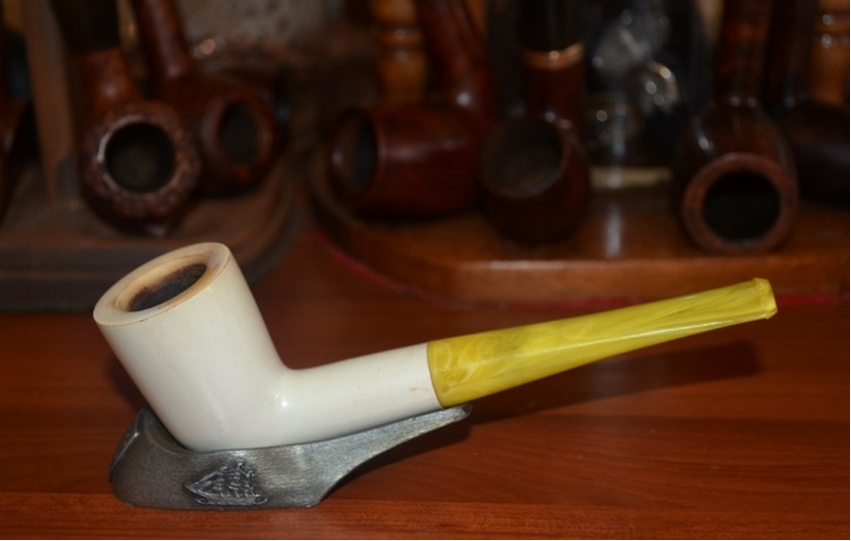
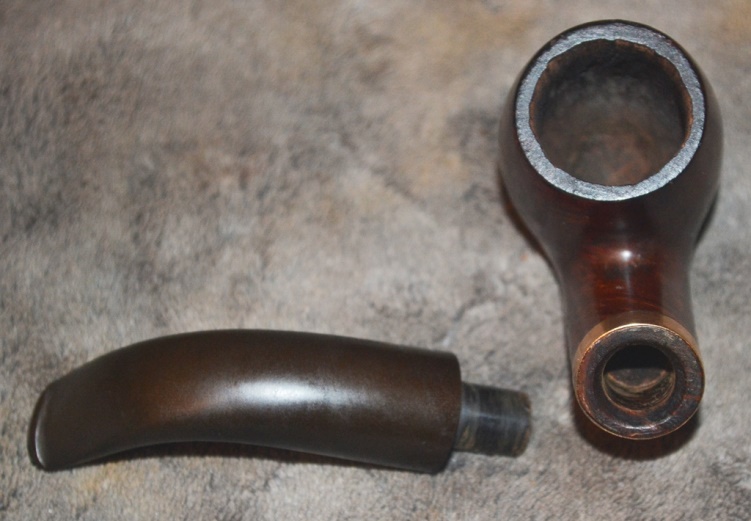
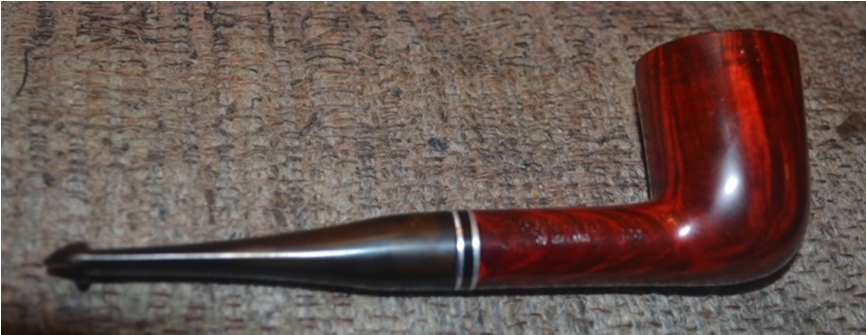
Every now and then, a pipe comes my way that is in such good condition that I can only call what I have to do to clean it up a refurbish job as opposed to a real restoration, and for the most part I do not even bother with a blog. This is one of those rare but pleasant occasions with the exception that the smooth white hand-carved Turkish meerschaum in question is so elegant I just have to share it.

REFURBISH
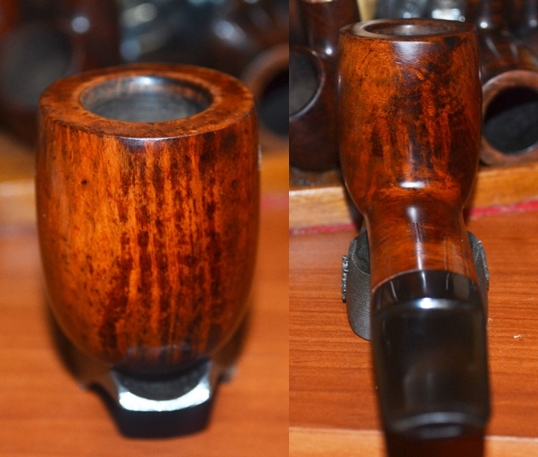
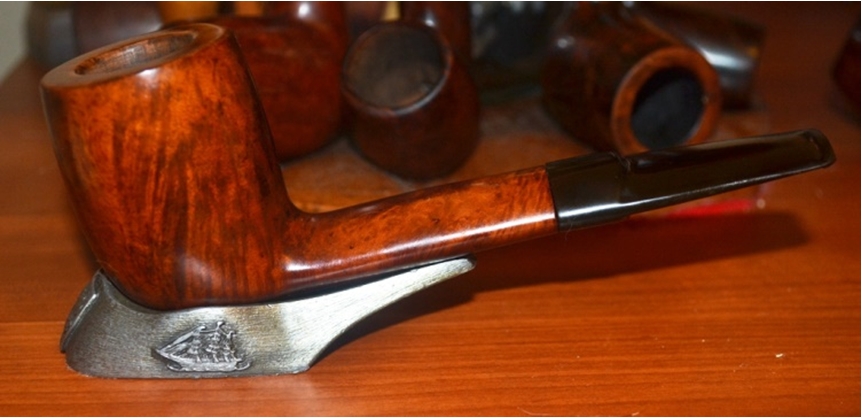
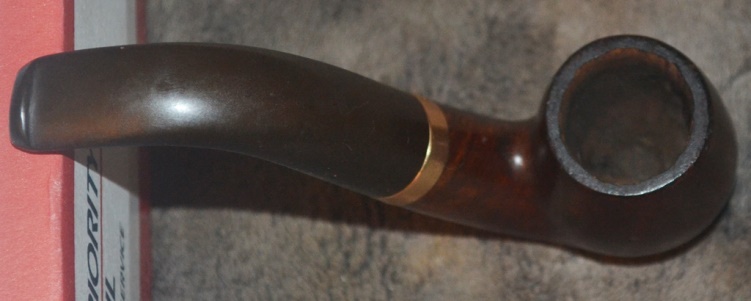
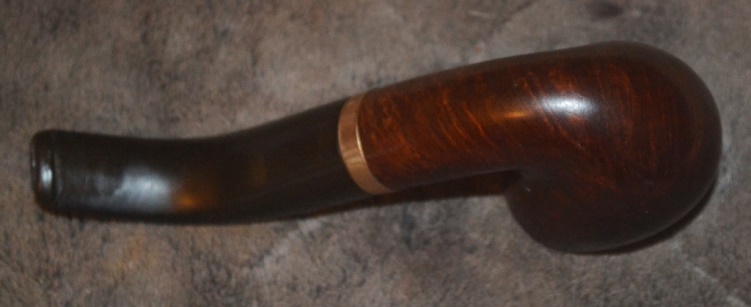
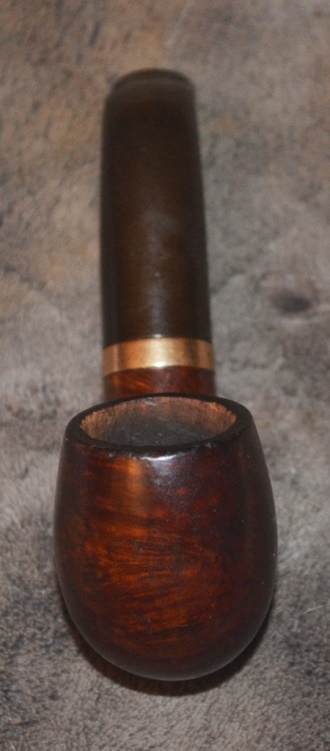
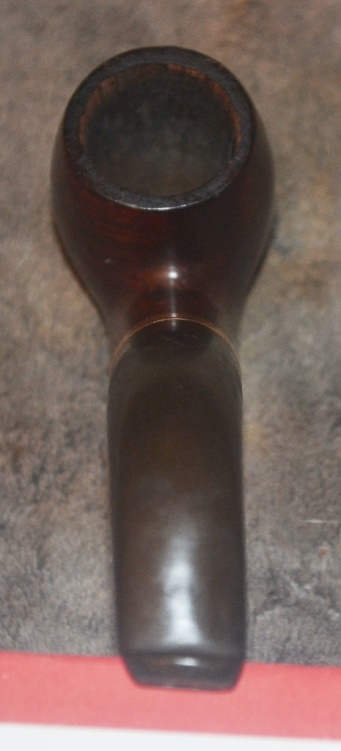
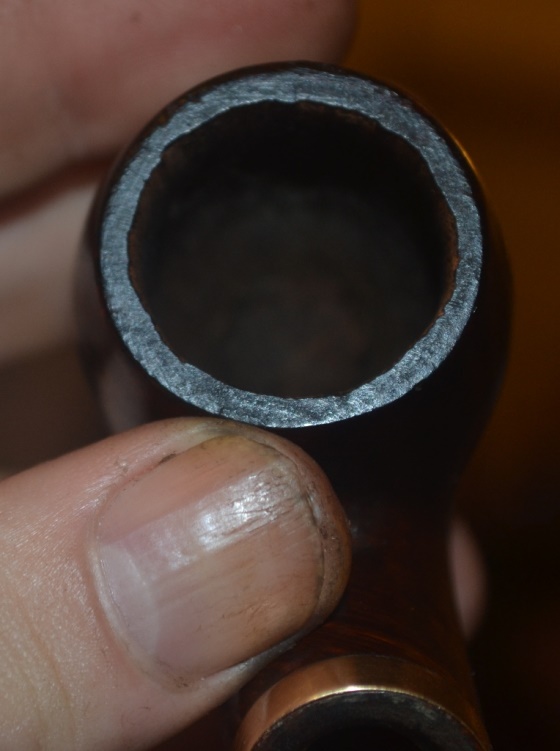
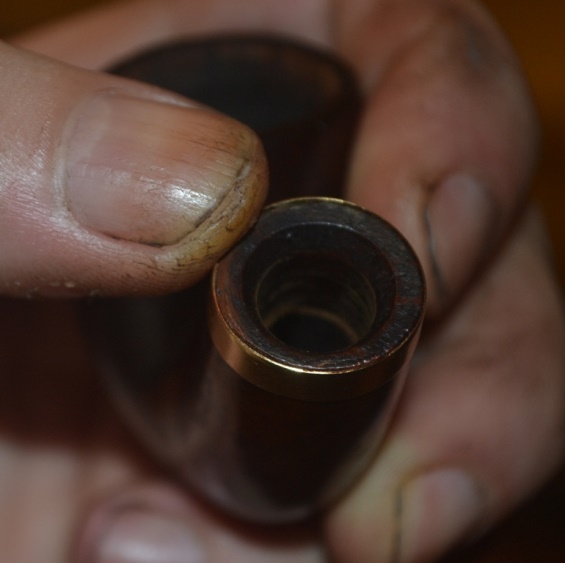
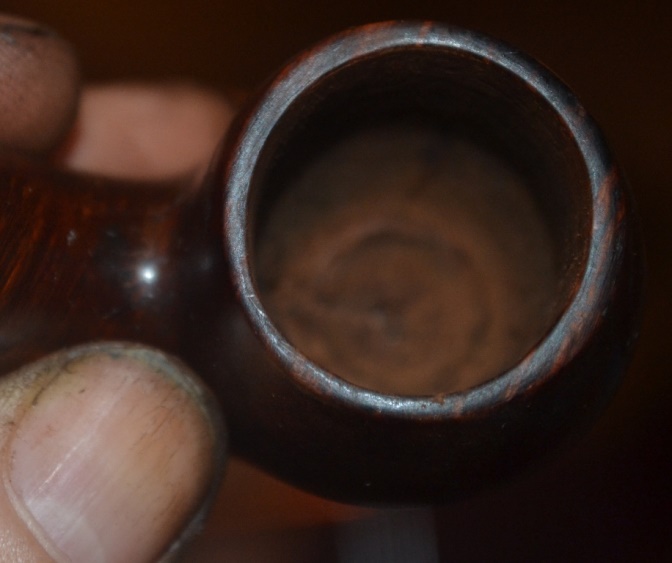
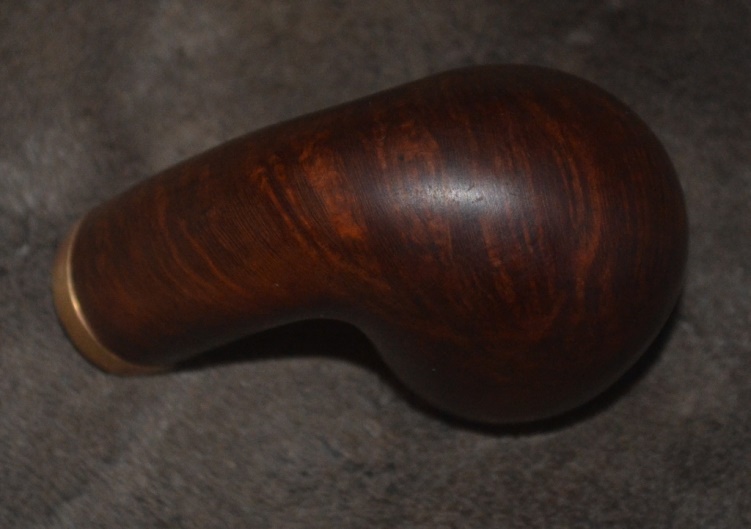
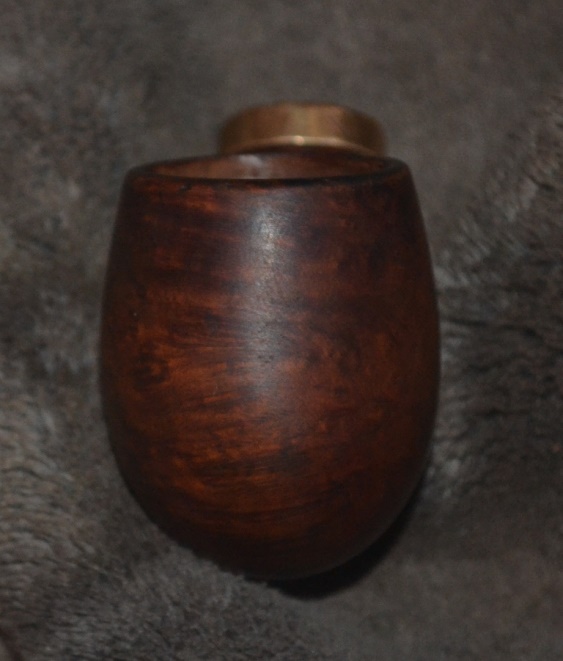
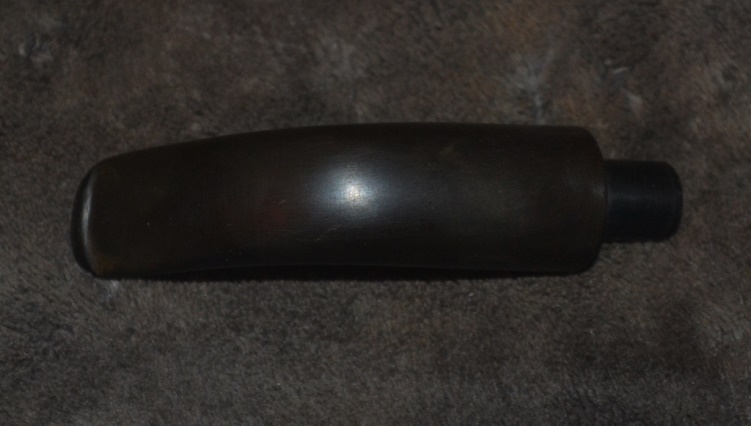
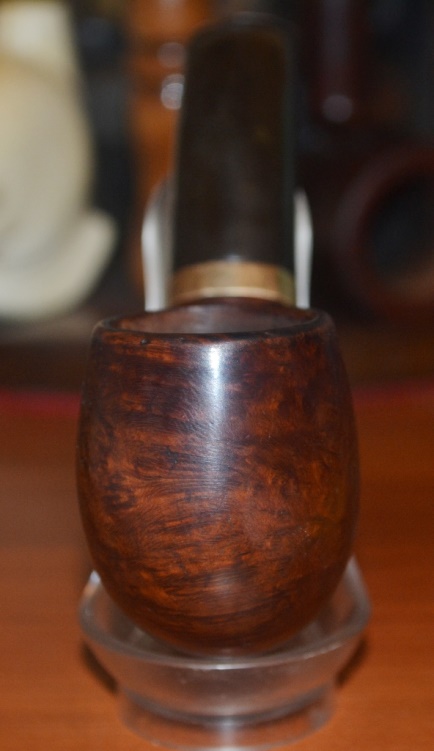
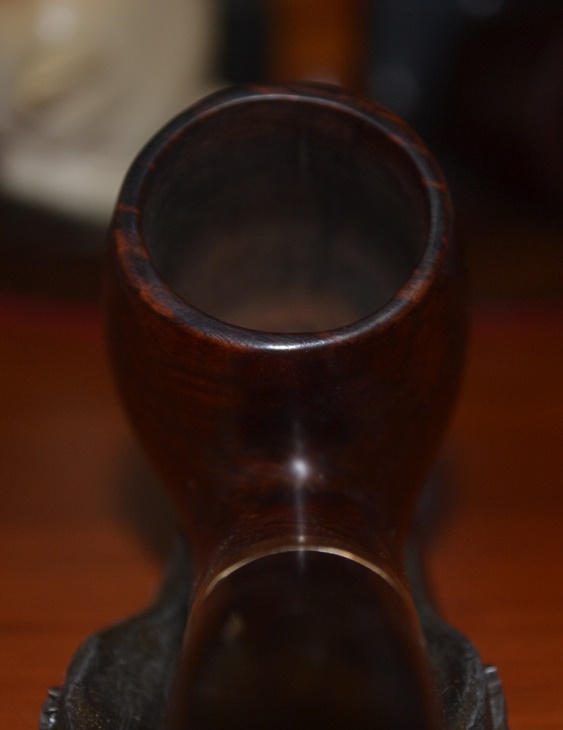
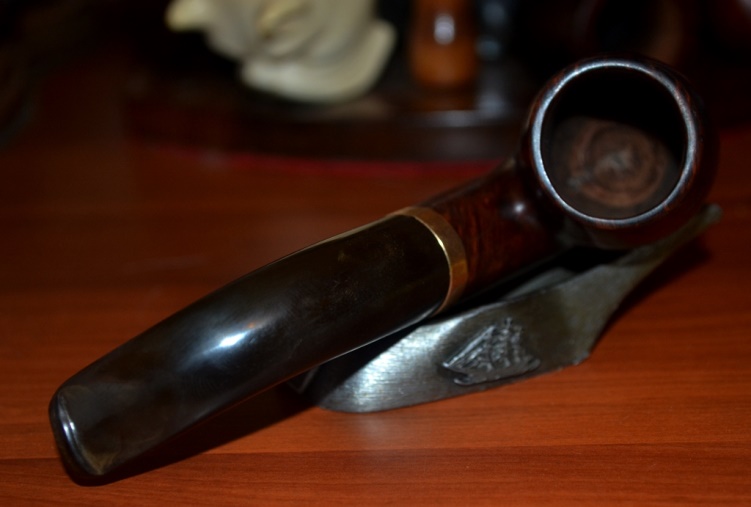
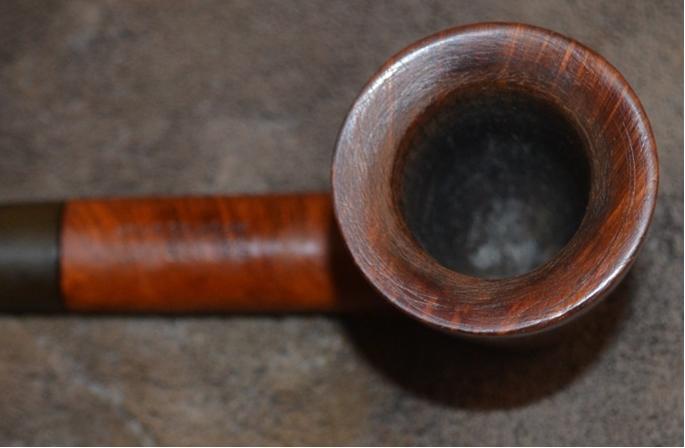
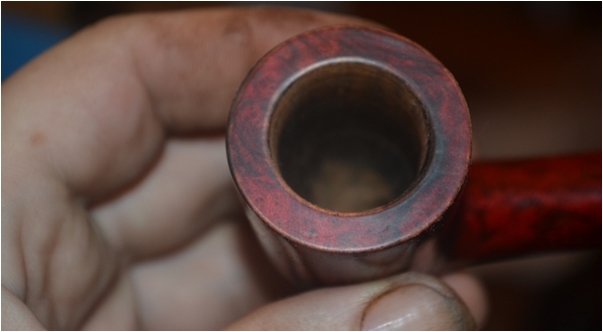
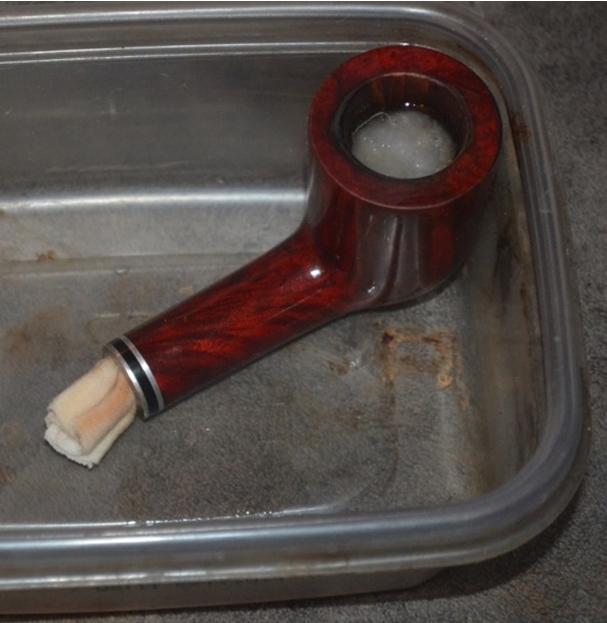
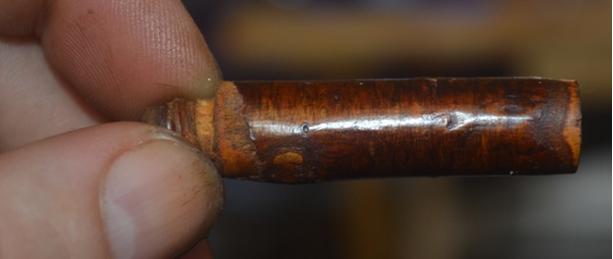
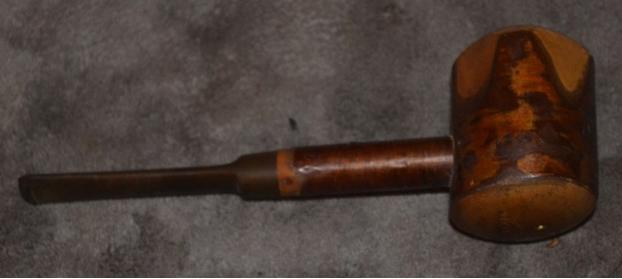
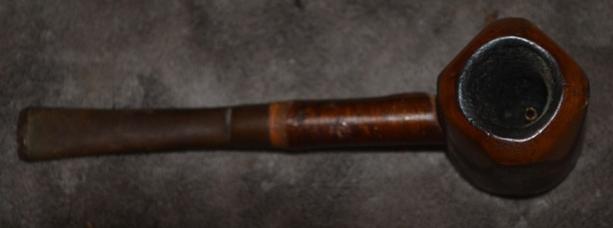
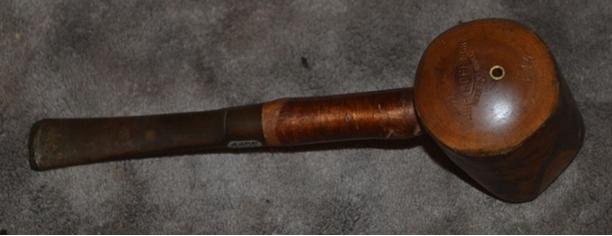
Almost all this simple looking Dublin needed was a simple bath with purified water and a little work on the rim and chamber.Rob1

Rob2

Rob3

Rob4

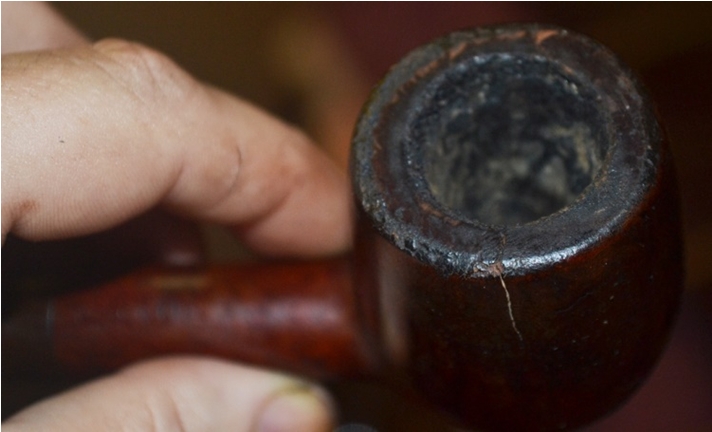
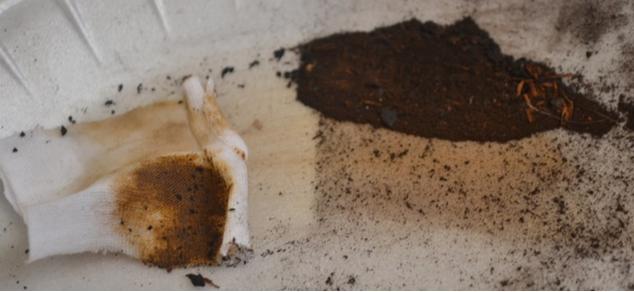
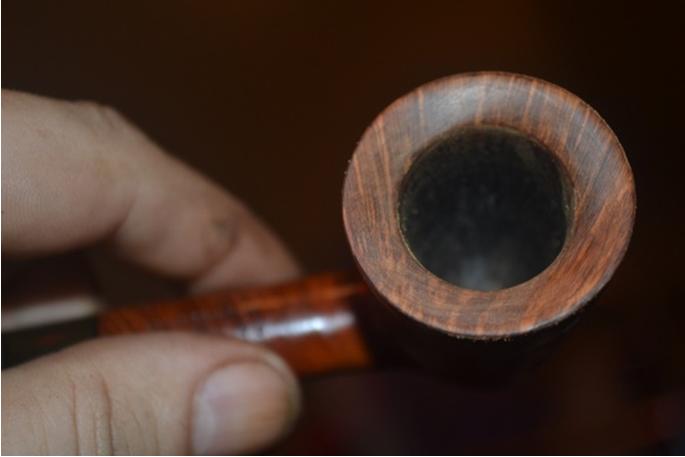
Rob5 Starting with super fine steel wool on the rim, I encountered more difficulty than usual removing the thick char that seemed to have something else mixed in with it, but nothing worth griping about. As I worked through the char-grime, I saw more coloration emerge – along with a chip.Rob6 I even considered letting it be, but thinking better, added some elbow grease and focus to the steel wool. I removed enough of the chip and crack to be satisfied.Rob7 Then I buffed the rim with 1500 micromesh followed by 3200 and moved on to the chamber. Not about to assault it with the reamer that has been necessary for every meerschaum I have fully restored, I used 150-grit paper first and then 500 to smooth it out.

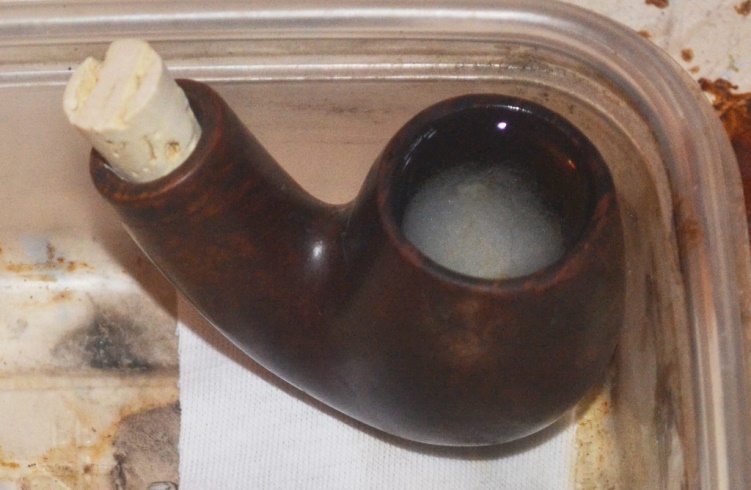
With all of the dirty work finished, I gave it the light bath it needed.Rob8

Rob9

Rob10

Rob11

Rob12 CONCLUSION
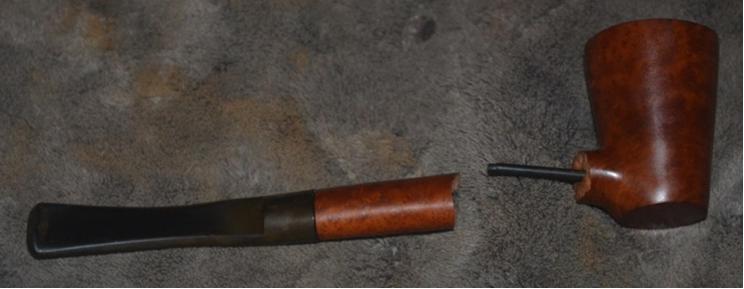
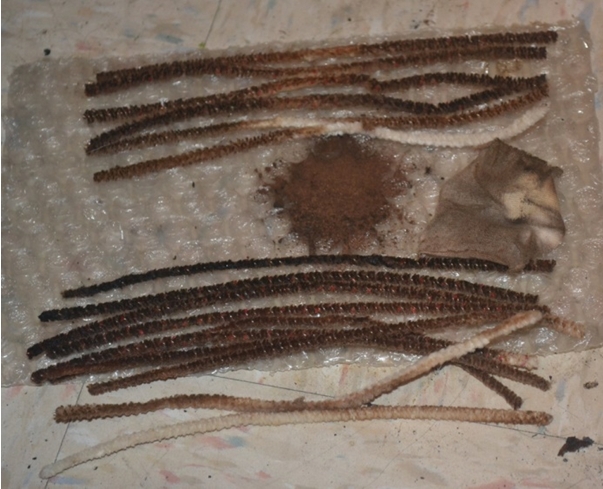
Of course, I ran a couple of bristly cleaners soaked in pipe freshener through the shank and around the chamber and one more through the stem, but that was all it took to clean this near-pristine pipe. Even the stem didn’t need any sanding or work of any kind.

And so, for once I cannot complain of a pipe abused. God bless the merry gentleman who owned and enjoyed this beauty, albeit for a short time.

A Few Words on Pipe Care, Whether for Your Eight-Dot Saseini or a No-Name – Robert M. Boughton


Guest Blog by Robert M. Boughton
Member, North American Society of Pipe Collectors
http://www.naspc.org
http://www.roadrunnerpipes.com
http://about.me/boughtonrobert
Photos © the Author

Originally blogged by Roadrunner Restored Pipes, http://www.roadrunnerpipes.com, November 2, 2014

“Unfortunately, some of our greatest tribulations are the result of our own foolishness and weakness and occur because of our own carelessness and transgression.”
—James E. Faust (1920-2007), U.S. religious leader, lawyer and politician

These are just a few ideas concerning how to care for our good friend, the tobacco pipe, which I put into a blog on my Website

The following list is aimed for the most part toward complete or relative newcomers to pipe enjoying, but even experienced readers may find it useful. Although these guidelines may seem obvious when read in cold, hard type, so to put it, I have witnessed people with years of experience committing many of the Dont’s without a thought, and by the same token first-time enjoyers who grasp all of the Do’s as if by second nature. To be fair, I have at times made some mistakes that drew cringes from some of those “perfect pipe people” out there, who really think they exist. But first for a few definitions that are necessary to continue.

• Stem:The part of the pipe, mostly made of black vulcanite or different forms of acrylic that are colored and often translucent, that goes in the mouth and through which the tobacco smoke is drawn back to the taste-bud before exhaling
• Bit:The part of the stem with top and bottom ridges used for the teeth to hold onto
• Tenon:The narrow end of the stem made of vulcanite or acrylic and/or metal that turns or screws into the shank and acts as a sort of filter
• Shank:The hollow extension from the bowl — in general round, triangular or almost flat — connecting the stem and bowl
• Bowl:The area of the wood or other material used to fashion this primary part of the pipe, the inside of which is placed the tobacco
• Chamber:The formal name for the inside of the bowl, where the tobacco is loaded
The following are the basic Do’s and Don’t’s of pipe care.

DO: Try to fill the chamber with tobacco, leaving a small area at the top empty, using this three-step method. First place enough tobacco into the bottom third of the chamber and tamp it down enough to make it firm but not tight; second, place a bit more than a third of the tobacco in the middle, using slightly less force to tamp it, and third, top off the load with loose tobacco to form a beginning with which to achieve a good initial light. This approach should result in a thorough, even burning of the tobacco throughout the smoke, although re-lighting is often necessary due to the contemplative nature of enjoying a pipe.
DON’T: Never stuff or cram all of the tobacco into the chamber. Doing so can cause the tobacco to stop burning due to lack of oxygen and if forced to light often results in a wet, acrid taste and a backwash of unpleasant spittle.

DO: Always light the tobacco with matches or a special lighter, designed for pipes, that aims the flame directly into the chamber.
DON’T: Never, ever use a cigar lighter, also known for good reason as a torch, to light pipe tobacco. The chamber will develop burnouts, or holes through the bowl, as a result of the intense heat of the cigar torch.Robert1 DO: Holding the pipe upside-down by the stem with one hand, gently tap the shank against the other hand to release the ash and unsmoked tobacco into an appropriate receptacle, such as an ashtray. A blunt pick for the purpose of loosening remaining contents of the chamber is often needed to complete the task and is inexpensive.
DON’T: Never tap the rim against a hard object. This can and often will leave chips and dings on the rim and upper bowl and also lead to cracks in the bowl and even more serious damage such as bending the tenon. Also, never empty the spent ash and tobacco into an unsafe receptacle, including trash cans and paper bags, because of the risk of resulting fire.Robert2 DO: Clean the pipe’s chamber as well as the inner shank and stem regularly with pipe cleaners. They come soft and bristled and cost about $2 for a pack of 35. I recommend the bristled cleaners, as they tend to break away more unwanted cake buildup and clear out more moisture and tobacco bits. Remove the stem from the shank before cleaning. In general, this is only necessary every two or three times the pipe is enjoyed.
DON’T: Failing to clean the pipe in this way regularly can cause the stem to become stuck to the shank not to mention an unpleasant pipe enjoyment experience and, ultimately, the need for professional cleaning.

DO: Remembering that the tobacco pipe is a fragile but durable object of beauty and utility, regardless of the price, always store and transport it with care. If it came with a cloth sleeve and/or box, keep it there and in a safe place when not in use.
DON’T: Do not store or carry without protection a pipe anywhere that can result in chafing, scratching, dirtying, overheating or unintended falling to the ground. Like DVDs, pipes are easily damaged, in particular if left near a home heating device or in a motor vehicle.Robert3 To summarize, always love and protect your pipe by taking the above simple precautions. It will serve you long and well if you do the same, and the pleasure and enjoyment you will receive are priceless.

I am in the business of selling, cleaning, refurbishing and restoring neglected pipes and see more than anyone should of the abuses that befall these wonderful works of craftsmanship. Therefore, I have nothing to gain by promoting the constant care of potential customers’ pipes…except for the satisfaction of seeing well-maintained examples.

A Spitfire by Lorenzo Mille Billiard – My First Dabble with Black Super Glue – Robert M. Boughton


Guest Blog by Robert M. Boughton
Member, North American Society of Pipe Collectors
http://www.roadrunnerpipes.com
http://about.me/boughtonrobert
Photos © the Author

“There is nothing insignificant in the world. It all depends on the point of view.”
—Johann Wolfgang von Goethe (1749-1832), German author, playwright and poet
Robert head INTRODUCTION
Perspective is the key to everything, from the incredible diversity of the daily activities to the personal, often unique worldviews of everyone on the planet. Take, by way of an extraterrestrial example, the Sombrero Galaxy shown above, an edge-on spiral 50,000 light years from one side to the other (half the size of our own) and 28 million light years from Earth. Discovered hidden within the constellation Virgo in 1781 and named by French astronomer Charles Messier because of his point of view at the time, the Sombrero seen head-on would have a much different appearance. In other words, looks can be deceiving.

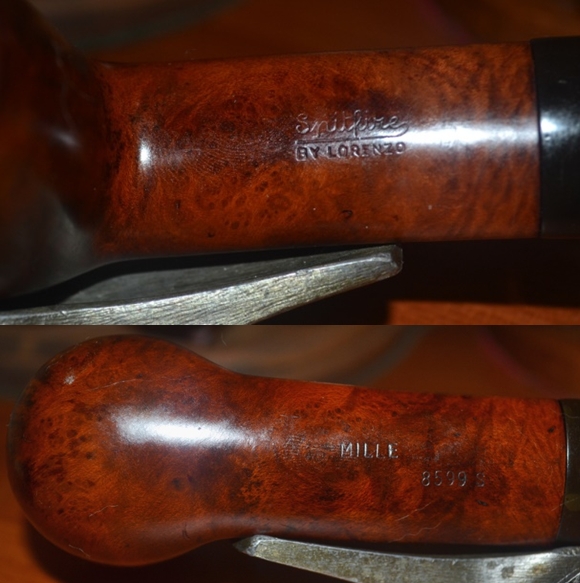
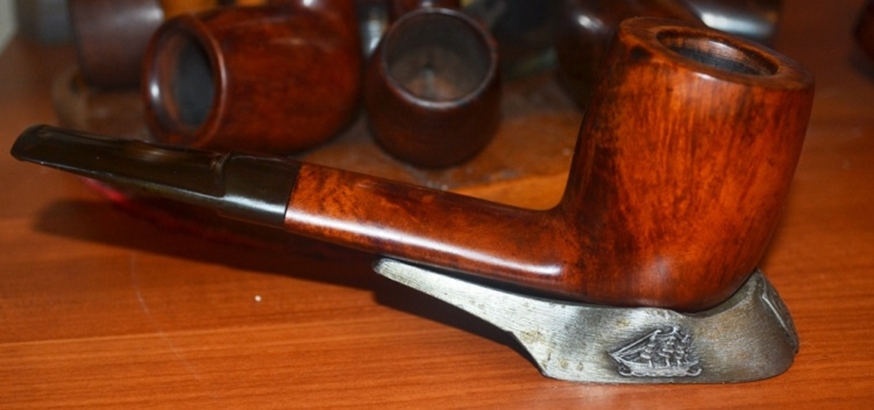
And so I present the initial side view (somehow I neglected to photograph the left side) of the Spitfire by Lorenzo Mille – which, compared to Starbuck’s Venti, meaning 20, translates in the same Italian to 1000 – that lives up to its name in terms of its huge size, and lasts far longer than any of the aforementioned coffee chain’s drinks.Robert1 The massive, gorgeous billiard (measuring 5-3/4″ x 2″ in length and height with an outer rim diameter of 1-3/8″ and chamber dimensions of 7/8″ x 1-7/8″), as seen in this photo side angle as I received it in a pipe lot I bought online, is nothing less than gigantic all around. Even the relatively flat shank leading into the stem is an inch across. But, as will be shown in the next part of this blog, from other angles the pipe, which at least on my screen is the actual size, had its share of problems.

RESTORATION
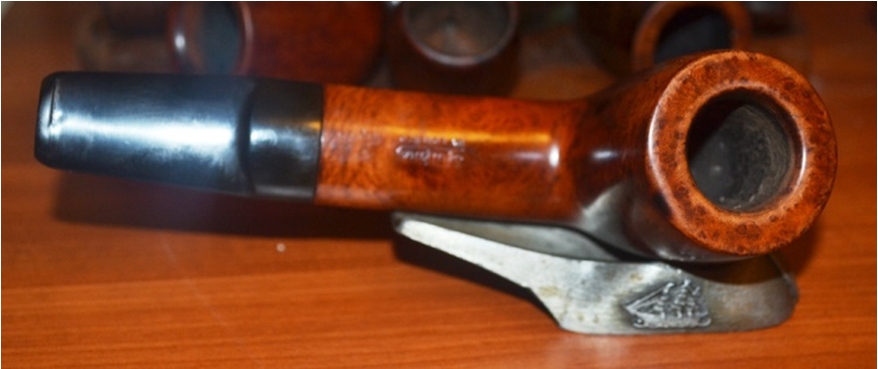
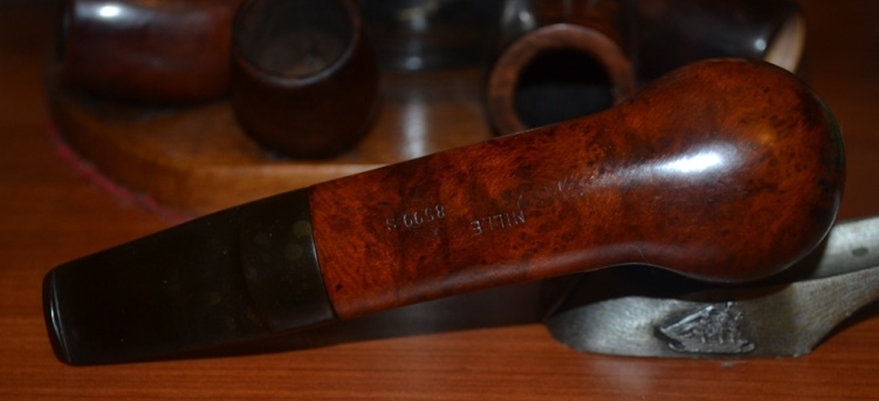
Here it was from those other views.Robert2 Robert3 Robert4 Robert5 The blackened rim and badly caked chamber were easy enough to fix. I started on the chamber with my reamer and took out the majority of the carbon buildup, then switched to 150-grit paper followed by 400 before finishing with 800. The rim came clean with super fine steel wool before 1500 micromesh, then 2400, 3600 and at last 8000. So far, that is the finest grade of micromesh I have used, and it worked well.

Most of the stem cleaned up with 1500 micromesh and some 400-grit paper on the lip followed by 1500 again, and then 2400 to smooth it out.Robert6 Still, the tooth marks remained, and since my recent order of Black Hyper Bond, a.k.a. Super Glue, had arrived, I was presented with my first opportunity to try it on a stem. The hard part proved to be not squirting out too much.Robert7 A couple of hours later, long after I had prepared the nice hunk of briar for buffing, I returned to the stem and tried 2400 micromesh to remove the dried glue bump. After that, I finished it with 3600. Robert8 As I noted, this was my first time filling in a hole, so the result is not perfect, but I think it looked much better than before.

Every inch of the wood, to my continuing amazement, was as pristine and unblemished as the first side angle shows. This is the only pipe I have ever restored that had not even a single scratch on it, except for the rim, which ended up fine as I described. This was also one of the few times (all of the others on meerschaum restorations) where I only needed to buff the rim to make it shine again with its natural color, not needing to re-stain it.

This brings me, with rather unusual speed, to the final buffing, which I accomplished using my standard methods: red and white Tripoli followed by White Diamond on the stem, and white Tripoli, White Diamond and carnauba on the fine, already lustrous wood just for the sake of it.Robert9 Robert10 Robert11 Robert12 Robert13 Robert14 CONCLUSION
I was a little giddy trying out the Black Hyper Bond to repair the bite mark in the stem, and as I wrote before, the result is not as well done as I hope to achieve in the future and returning to some of my previous restores that some of you with excellent memories may recall needed similar work. But from my perspective, it’s a good start – better than government work at least, as the saying goes.

Grazzie Mille for your time and patience!

The Screwy Nature of the Jenkins Truly Dry System Billiard – Robert M. Boughton


Guest Blog by Robert M. Boughton
Member, North American Society of Pipe Collectors
http://www.roadrunnerpipes.com
http://about.me/boughtonrobert
Photos © the Author

“Life is really simple, but we insist on making it complicated.”
— Confucius (551-479 BC), Chinese philosopher, teacher, editor and politician

INTRODUCTION
I had two main concerns when another pipe lot arrived in the mail and I turned one of the diverse examples in my hands: the head of a screw tightened flush with the draught end of the bottom of the shank, just before the chamber, and my serious doubts that whatever purpose a screw might serve could be legitimate. In other words, I was afraid to remove the thing for fear the pipe, which otherwise had potential for elegance, would fall to pieces if I did so.Rob1 Before attempting to remove the ominous screw, I tried blowing through the open end of the shank, only to become red in the face and breathless with failure. Then I turned to running an alcohol-soaked pipe cleaner through the shank and found that it, also, was blocked, although the cleaner came out with only a light rusty color, a fact I told myself was promising. For the first time in my restoration experience, I had a structural problem with which to deal. I was elated.

Now, don’t go and think I’m some sort of nut who gets his jollies working on broken things. For the most part I satisfy myself making old, abused or “well-used” pipes beautiful again. From upcoming photos, the need for this treatment on the bizarre Jenkins billiard this blog is about will be obvious. It’s just that until this pipe, the only kind of restoration I had done was of the basic variety. At last, I had an opportunity to tinker around and make adjustments to a pipe’s infrastructure, if you will. Hence, I felt the butterfly effect in my stomach.

Before touching whatever was screwed into the bottom of the pipe – I only describe the device this way now, as at the time I had no reason to suspect it might be anything but an average screw – I thought it advisable to see if I could find a Jenkins Pipe Co. or the like anywhere online. I started with pipephil.eu, my favorite first stop, but found no mention of the brand. And so I resorted to pipedia.com, which, as a user-generated source of information, can be more dubious in its reliability. Still I found no mention of the maker, despite the crisp, clear nomenclature including an elaborate brand stamp.Rob2 Having spent two days using more than every word combination in Heaven and Earth than are dreamt of in my philosophy to track down the pipe’s origin, with both Google and Yahoo search engines, and finding everything but a plausible reference to the Jenkins who made this beautiful if weird pipe, my patience, wits and research skills (short of doing something crazy like going to the library) were exhausted. I must now hope for knowledgeable feedback from readers of this blog, or maybe our host.

The closest I came was a patent issued to one Eric G. Jenkins in 1959 for a wild but unique spring contraption to be used for tamping the spent ashes of pipe tobacco from the chamber into a suitable receptacle, without risking damage to the pipe or staining of the fingers, to which I gather pipe enjoyers back in the day had no other way to avoid. [See first hyperlink at the end of the blog. Thinking about it, the idea occurs to me that this is just the sort of Jenkins who could design the device used in the Ever Dry.

Remember, this was before the now ubiquitous three-piece pocket pipe tool was patented in the early 1970s.

RESTORATION
My routine in these blogs has been to take a linear path showing, with words and photos, what it was like, what happened, and what it is like now. But this restore was far more indirect, and so to guide me in my description of it I organized my photos to prompt my memory of just what it was I did, and when, to fix this Jenkins TrulyDry system pipe. That noted I will nevertheless begin with what it was like: Rob3 Rob4 Rob5 Rob6 Rob7 Rob8 As some may have noticed in a few of the photos above, the stem and shank were uneven. In fact, I had to place the entire pipe in the refrigerator for close to an hour before I could even make the stem budge much less remove it. That feat came with more time in the cooler. The problem with the alignment, I soon learned, was remedied without trouble by cleaning off the buildup of some substance, with which I am not familiar, from the tenon.Rob9 Confident enough to continue with the removal of the screwy, old-fashioned tenon attachment-like gizmo that was over-tightened into the bottom of the shank, I did so with extreme care and slowness, listening all the while for something like a nut to come undone inside. But there was no such sound.Rob10 Right away, it was apparent that the object removed from the shank was not a regular screw employed in an ad lib repair but something designed for a purpose, however inexplicable. Able to blow through the shank, at least, I decided it was time to clean the pipe after reaming and sanding the chamber and using super fine steel wool on the rim to remove the blackness there.

Without much hope that the pipe would have any draw on it when I replaced the screw, I was, therefore, not disappointed to find I was correct. But an idea came to me, and I loosened the screw just one full turn, allowing me to blow and inhale through the intact pipe. I removed the ventilator again and set it aside for the remaining work on the wood.

I cleaned up most of the scattered scratches either with 1500 micromesh or 400-grit paper and then rubbed the entire area of wood with the 1500 followed by 3600. The result was, as one reader of another recent blog commented, baby smooth. I also only had to re-stain a few small patches of the wood, not counting the rim.Rob11The stem required heavy sanding with 400-grit paper to fix all of the scratches, teeth chatter and uneven bit, followed by 1500 and then 3600 micromesh.

When I had prepped the pieces better than I had ever done before, the buffing brought out a brilliant, dark reddish luster. Rob12 - Copy Rob13 Rob15 Rob16 Rob17 Rob18 CONCLUSION
I emailed my blog-in-progress to a retired engineer friend of mine, who looked over the text and photos and called me to arrange a meeting at McDonald’s the next morning. Armed with my laptop, an iced coffee and two printouts of the ash removal system patent that even I could see did not match the device used in the Ever Dry, I was relieved when I saw my friend walk through the door.

Confirming my conclusion concerning what the valve was not, my friend determined by the design and placement of the device that it was some sort of ventilator, however obtuse in planning and execution, that was intended to release heat and maybe even to collect moisture and small pieces of tobacco with the valve extended almost all the way. The engineer’s analysis made sense, and, happy to have an explanation of the atypical screw valve to present in this blog space, I embraced it.

At that time, I experienced another one of my moments of clarity. Seeing the intentional groove cut into the wood, I suggested that it would accommodate storage of the device with the valve retracted at times when the pipe was not being enjoyed. The engineer concurred.

Still later, while making the extensive but necessary revisions to my original version that had been debunked by the good engineer, I recalled an enlightening and lengthy online article concerning and titled “The Revolution of the System Pipe,” by Don Duco. The general knowledge and research behind the study of the evolution of system pipes around the globe is exhaustive.

I flashed on a description of the original Kirsten metal pipes with screw-on briar bowls and their inclusion of a closure system between the bowl and the shank that accomplished the same result of the screw valve on the Jenkins, and realized the design of the mechanism in the Jenkins pipe was nothing more than an adaptation of the early Kirsten, despite the newer, cruder method.

Still, whoever owned the Jenkins pipe brand must have been a frustrated engineer, if only by the aesthetic evidence, for being inspired by the notion of screwing something that, when the pipe is being enjoyed, dangles downward with an obvious and alarming attraction of attention. Besides, anyone, whether or not a connoisseur of pipes but not familiar with the Jenkins system, seeing one with the head of a screw in the bottom of it, would think it some sort of jury-rigged attempt to hold the pipe together.

As my father often pointed out, it takes all kinds.

WEBSITES TO VISIT

http://www.google.com/patents/US2886044 (Click on View as PDF for official USPTO document.)

http://www.pijpenkabinet.nl/Artikelen/Systeempijp/art-E-systeempijp.html

The Wily Nature of a WDC 14K Full Bent Billiard Restore – Robert M. Boughton


Guest Blog by Robert M. Boughton
Member, North American Society of Pipe Collectors
http://www.roadrunnerpipes.com
http://about.me/boughtonrobert
Photos © the Author

O, what a tangled web we weave,
When first we practise to deceive!

— Sir Walter Scott, Scottish historical novelist, playwright and poet, in “Marmion” (1808), Canto VI, stanza xvii.

INTRODUCTION
I mention poet last among the great Scot’s endeavors because, if any of them were much good, the poetry was most lacking. However, there are forever those two lines that people remember, even if they often misattribute it to Shakespeare, who would have made a much better and shorter sonnet of the one theme had he thought of it. Scott’s epic in length tragic poem (in more senses than intended) – with its jumbled use of rhymed couplets in iambic tetrameter, alternating rhyme in iambic pentameter and alternating or nested rhyme in hymn meter – just tends to bore. I admit that my writing skills do not include poetry, which I consider the highest form of the literary art form, but I also do not pretend to have the mind for it.

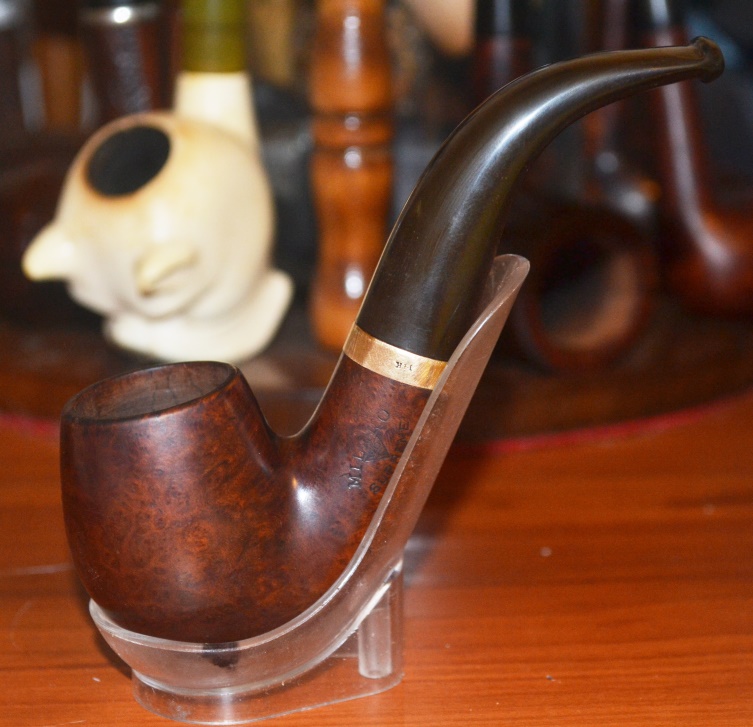
Many of the quotes I include before my blogs are no doubt somewhat enigmatic, but this one hits the mark much closer. A quick look at the WDC Full Bent Billiard with 14K gold band reveals much ado about nothing as far as the need for serious restoration is concerned.Robert1In fact, when it came in the mail with six others I bought in a pipe lot, I was happy to see they were nowhere near as thrashed as many others I received before. Most, in particular the WDC, seemed at a glance to need only a simple refurbishing. Only upon close examination did I see the problems that appeared little but might indeed create bigger problems when the actual work began. Still I chose this one both because of its seeming almost pristine condition but because I might have a buyer lined up already.

As a note, WDC is short for the William Demuth Co., a U.S. crafter of fine pipes from 1862-c. 1973, after the venture had changed hands several times and was at last liquidated. The Full Bent Billiard described in this blog appears to be quite old, perhaps dating to the 1930s or ’40s, based on a WDC Master List by Kaywoodie [http://kaywoodie.myfreeforum.org/viewtopic.php?t=191&start=0].

Photo © WDC Master List

Photo © WDC Master List

RESTORATION
The problems I encountered, despite being almost invisible in the following photos, by the hidden nature of their presence convinced me to take on this supposed easy project. As a result, I was led, step by step, into a web of blemishes, some of which were simple to fix and others proving more difficult.Robert3 Robert4 Robert5 Robert6 Robert7In general, I start with the chamber, which in my recent blogs has involved the removal of massive cake buildup. Here it is apparent that is not a problem, but that fact ends up concealing a more significant flaw, which I will get to in short order. This time, I chose to begin with the rim and shank opening Even in the photo above, the blackening, scratches and jagged inner rim show. Closer photos display the rim and shank hole better.Robert8 Robert9Steel wool was perfect for the shank opening. But 1500 and even 800 micromesh proved ineffective on the rim. I jumped to 400 micromesh, which removed the blackening. As I intended only to sand the bowl this time instead of using my reamer that has been mandatory with so many other recent restores, I switched to 150-grit paper for the chamber, starting with the rim to eliminate the craggy inside.

After continuing with multiple turns of the paper until I reached the bottom, I tapped and blew out most of the accumulated carbon dust and used a small piece of cotton cloth to wipe off enough of the residue to insert a finger and feel the sides. They were smooth, but what I found at the bottom was troubling: a big hole with another ridge of cake around it.

And so I decided to go with the reamer after all. Besides, I thought, I like to leave the chamber wall as close as possible to the wood, and the reamer would accomplish that and even out the hole in the bottom – I thought.

However, while I indeed removed more carbon from the sides and bottom, the latter proved much more stubborn. Returning to the 150-grit paper, I took the walls down to where the wood almost showed all the way. With awkward, slow turns of the paper, during which I heard an awful scraping wail rising from the base of the chamber, I succeeded in sanding the hole as far as it would go. In the end, a small hole remained. For the first time, I understood that I needed some sort of tool I do not yet possess, but the result was satisfactory.

Meanwhile, I used a record 15 bristly pipe cleaners to remove the long-accreted mess of tar and other fantastic buildup of nastiness from the shank. I concluded a serious alcohol flush was in order. I stuck a piece of cotton in the bottom and for the first time plugged the shank with some cork I had on hand.robert10About a half-hour later, seeing the cotton was dark, I removed it with a cheap tobacco pick and pulled the cork, letting the brown alcohol drain through the shank. I had given the outer wood a good bath with purified water, which removed considerable filth, but being quick to wipe up the overflow of alcohol, I used it to wipe away more tenacious hangers-on, so to speak.Robert11 robert12The next strands of the web were the many tiny scratches and pits on the bowl and shank, all of which were so small I was (I have to admit) tempted to let them slide. That being a sin of restoration I have yet to commit with malice aforethought, my senses returned. I considered how to accomplish their elimination.

The 1500 micromesh worked on a few superficial scratches. Given that I could see them myself, I used the 320 micromesh for the deeper flaws that were small but still clear to serious scrutiny. That was the magic number but left the treated areas lightened. One of my goals with this restore was to avoid re-staining anywhere, and I had succeeded so far so I was determined not to resort to the last measure at the point. I tried the 1500 again on these spots and found it shined up the wood almost as it had been.

Then I had a thought. I know, the phenomenon doesn’t occur every day, but this was like one of James Joyce’s little epiphanies. Taking a risk, I used the 1500 micromesh on the entire bowl and shank, smoothing the entire surface to a nice glow.Robert13 Robert14 Robert15 Robert16 Robert17The only part of the web before I was clear of it was the stem. Now, I have had stems discolored and bitten almost to the point of being irreparable and made them shine like new. This stem, on the other hand, which showed nothing but the slightest use by a long-time, caring pipe tobacco enjoyer, eluded several efforts to remove the minor scratches. To my surprise, the chatter came off with ease, but the scratches would disappear with micro-meshing and then new scratches and even white blotches popped up when I wiped the stem down with my cotton cloth.

Nothing was going to stop me. And so, with a barrage of micromesh grades starting with 1500 and then 800 followed by 3200 and 320 and at last 1500 again, I could find no scratches, chatter or blotches.Robert18 Robert19All that remained was the buffing. I finished the stem with red Tripoli and White Diamond. The briar I used everything at my disposal, starting with white and red Tripoli, then White Diamond and at last carnauba.Robert20 Robert21 Robert22 Robert23 robert24 robert25CONCLUSION
I had a good time restoring this excellent old pipe, despite the unexpected difficulties I seemed to encounter at every turn. In fact, I suspect the new problems added to the pleasure. I’ve always enjoyed a challenge, and while mine in this process may seem tame compared to those some of my more experienced readers have dealt with – and believe me, I’ve read enough of Steve’s and heard about plenty of my friend’s and mentor’s to know there is far worse – they nevertheless represent new obstacles I overcame. That, I understand, is what the job is all about.

I suppose I was born with the type of personality that finds it impossible to overlook even the slightest flaws I notice in any project I undertake. People – for the most part those who are satisfied with mediocre conclusions – have always called me a perfectionist, but I never use the word to describe myself because I know I am far from it. Only on rare occasions have I completed a project (whether it be a short story, screenplay, novel, blog, pipe restoration or anything else) to which I did not return later and see how I could write, edit or do it better.

By way of example, when I was writing my last blog, on The Guildhall London Pipe, I started to insert photos and noticed the stem was not up to my present snuff, so to speak. And so, although it was somewhat of a hassle to stop my blog, get the pipe, remove the stem and not just rebuff it using the White Diamond wax I recently added to my wheels but re-sand it to remove the horrible discoloration I had missed before, I could not bring myself to publish photos knowing they would show my incompetence. I think the final result was worth the extra effort.

I am beginning to realize an important part of the restoration learning process is simple rising self-expectations. By good fortune, I have several dozen estate pipes in many shapes and degrees of duress on which to practice in the near future…and I am chomping on the bit!

The Guildhall London Pipe Large Pot: An Account of Extreme Abuse – Robert M. Boughton


Guest Blog by Robert M. Boughton
Member, North American Society of Pipe Collectors
http://www.roadrunnerpipes.com
http://about.me/boughtonrobert
Photos © the Author

“Beauty is whatever gives joy.”

— Edna St. Vincent Millay (1892-1950), U.S. poet

“Beauty of whatever kind, in its most supreme development, invariably excites the sensitive soul to tears.”
— Edgar Allan Poe (1809-1849), U.S. author, poet, editor and literary critic

WARNING: Some of the images that follow are graphic and shocking and may be upsetting to pipe smokers with sensitive souls.

INTRODUCTION
This is with certainty the most abused pipe I have ever restored, although, no thanks to the original owner, the damages sustained were reversible. In the event that the smoker of this Comoy’s second ever had children, I suspect their emotional baggage is far greater, but for the sole reason of their sentience, and I pity them.

I can only add that I was fortunate enough to aid in the vintage pipe’s liberation, through an intermediary agent online, by purchasing a group with similar wounds, if not inflicted with such evil spirit.

RESTORATION
Here is the condition of the pipe, which I in fact restored some weeks ago but failed to publish the details until now, when I received it:Robert1 Robert2 Robert3 Robert4 Robert5 Robert6In my haste to restore the pipe as close to its original beauty as possible, I also did not take photos of the project’s progress, which I will of course describe in detail, as well as showing the results. Needless to say, except for a quick inspection to ensure the lack of more serious harm to the interior, I began with the chamber. I was successful in removing all of the massive and repugnant cake buildup.Robert7There must somehow, despite the overwhelming unlikelihood of the possibility, be a dozen bowls’ worth of carbon that I reamed and sanded out of the chamber before that part of the Guildhall London Pipe large pot was smooth again, and down to the briar around the top and almost as far the rest of the way. The rim also came clean with caring and determined use of 400-grit paper followed by 2400 micromesh.

The bowl, shank and stem I gave a bath with four small patches of cotton soaked in purified water. Again I wish I had a record of the grime from the dirt, sweat, body oil and other unknown unpleasantness that the wet cloth cleaned away to reveal scratches, pits and various attendant blemishes, although I think the reader of this might still not believe what he saw with his own eyes.

I used 1500 micromesh wherever possible but had to resort to 400-grit paper again in many areas. When I finished sanding, I re-stained the places on the rim, bowl and shank that needed it with a burgundy boot stain, flamed those areas and rubbed every inch of the wood with 3200 micromesh to remove the char and leave the body a nice, uniform, deep reddish color.

For the stem, I was forced to choose 220-grit paper, so horrible were the scratches, pocks and discoloration. Whoever smoked this pipe had succeeded in removing the upper ridge of the lip altogether, leaving serious teeth chatter and bite marks. Four of the bites are still present, awaiting an order of Black Super Glue to fill them.

When, an hour after all of this work described so far, I finished cleaning out the filthy stem and shank, I threw into the trash about 12 bristly cleaners, for the most part in utter black ruin and then lightening by degree to pure whiteness.

In the end, I polished the stem with red Tripoli and White Diamond waxes and the wood with the same but added white Tripoli and carnauba, to this effect:Robert8 Robert9 Robert10 Robert11 Robert12CONCLUSION
One of the recent major themes of my blogs has been abuse because I love all of the many pipes in my collection and would never, with intent, do harm to any of them.

That is the main reason I have taken up pipe restoration and am sure I will never give up that endeavor. The other is that I enjoy working with my hands on various man-made, and sometimes neglected objects of beauty.

The One That Got Away – Robert M. Boughton


Guest Blog by Robert M. Boughton
Member, North American Society of Pipe Collectors
http://www.roadrunnerpipes.com
http://about.me/boughtonrobert
Photos © the Author

“Love bravely, live bravely, be courageous, there’s really nothing to lose.”
— Jewel (Jewel Kilcher), singer-songwriter, guitarist, actress, author and poet

INTRODUCTION
Indeed, I endeavor to live life to the fullest and take calculated risks. But be advised, the good lady, Jewel, is not altogether correct. This, therefore, is a cautionary account of a wonderful Gilpin, being the product of a maker called Salisbury.

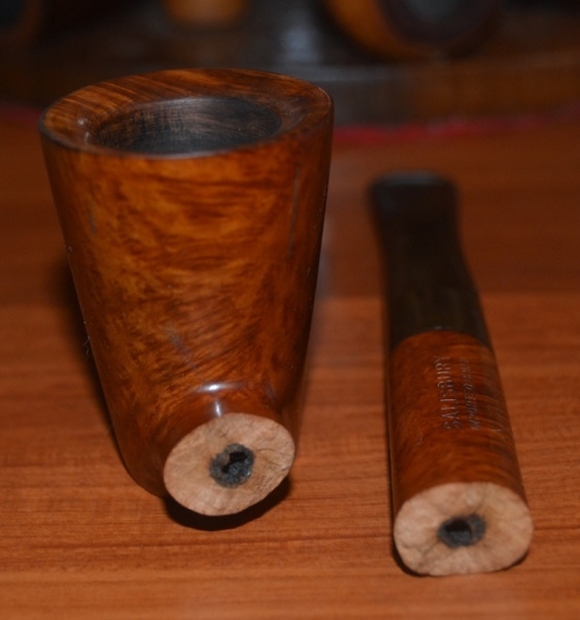
Because of its humble background that defies my concerted attempts to trace the brand even to a country of origin, the 5-1/2″ long pipe (from the front of the small, flat, rounded base to the lip of the stem) with a 1-7/8″ bowl height, though an uneven mix of birds-eye and erratic lines, is nevertheless a fine example of engineering, briar quality and the ultimate smoking pleasure that results. I believe Salisbury is or was a small, independent pipe shop, or perhaps just the name of the town where a modest craftsman who created the Gilpin lived.

RESTORATION
For anyone who has read my other recent blogs, the beginning of this part will come as a given. More for the benefit of others, I have to say this unfortunate pipe, which came as part of a lot I purchased online because I could see through the beast to the beauty inside, was not treated well by its former owner. Exercising the utmost restraint, I will forego any judgment calls as to the personality of that ignorant individual and just get to proof of where I started. The only redeeming factor is that there was nothing wrong with the interior structural character of the Gilpin.Robert1 Robert2 Robert3 Robert4Needless to say, the pipe was as thrashed as the others in its lot, to my benefit since, taken as a whole, the collection did not appear to be worth my overbid that succeeded in scaring off the other contenders, and I won for next to nothing.
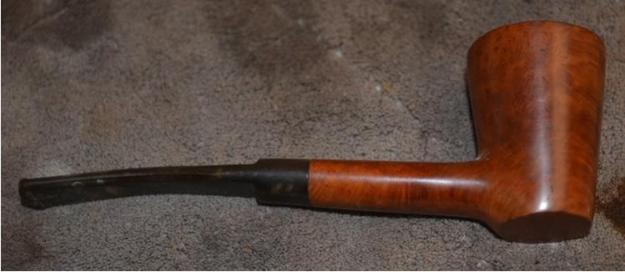
When I finished with my reamer and 150-grit paper on the chamber, I had removed enough cake both to fill three bowls and to rest my softened case against the previous individual who had possession of this pipe.
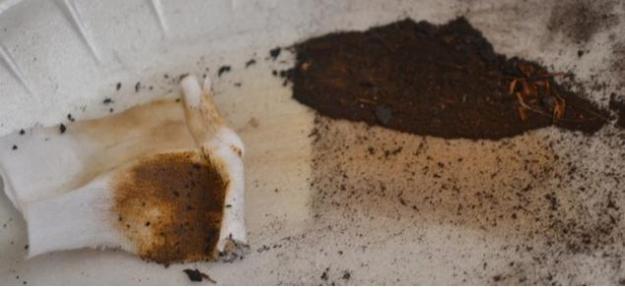
Robert5For the rim I started with 220-grit paper and then, as the wood began to peek through, finished the removal of the serious burning with 1500 micromesh.Robert6The uniform scratches all around the rim indicated a need for slow work with 400-grit paper and 2400 micromesh to achieve smoothness.Robert7I re-stained the rim a light brown and hand-buffed it with 2400 micromesh.
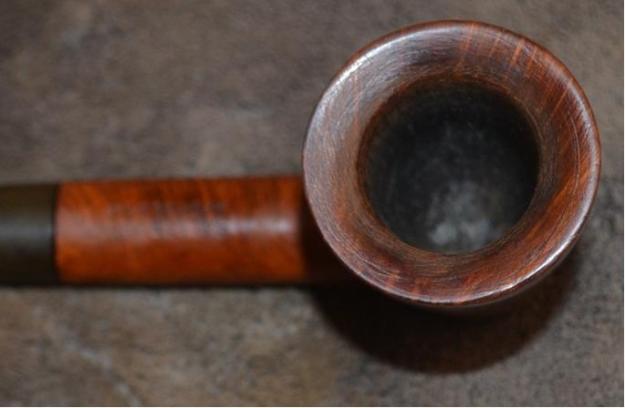
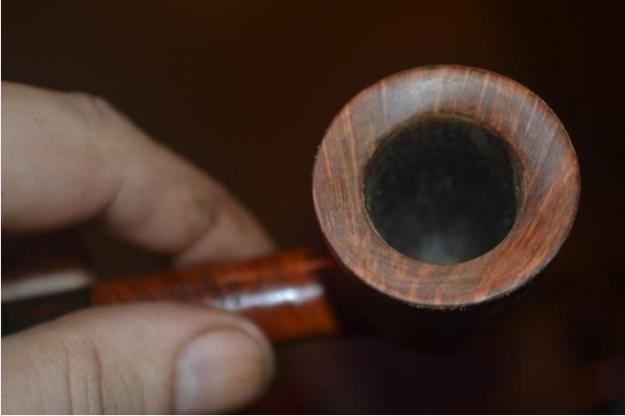
The stem on the Gilpin was so roughed-up and discolored that it proved to be the most difficult part of the restoration. Beginning with vigorous sanding using more 220-grit paper, I spent close to a half-hour removing the blemishes that must have contributed to the collectors who also bid on this lot giving up after my one max offer of $40. I paid $22.50 for the four pipes. I finished my labor on the stem with 1500 micromesh, then 3200.

THE FATAL CRISIS
After cleaning and sanitizing the near-finished Gilpin, I had only to polish the stem and wood on my twin fixed-speed buffers. I know, I know! I can’t count the times my friend and mentor, Chuck Richards, and other restorers more experienced than I have admonished me to have a firm grip on the material being buffed when using this type of inexpensive tool. And I swear to all that is holy to me that I did just that. Read on, and I shall tell you the tale.

Starting with the stem, using red Tripoli and White Diamond, the result was perfect. I moved on to the bowl and shank, buffing them to a beautiful sheen with white Tripoli, White Diamond and the last touch of carnauba. I was, in fact, in the act of removing the beautiful briar from the carnauba wheel.

And that was when…

Well, that was when the unthinkable happened. You know by now where this is going. The precious piece of wood got away from me and, thanks to my not having set up a soft net for such contingencies, flew at warp speed straight into the wall a mere few inches behind the buffer.

I actually heard the sound of the snap, although I could not see where the consequence of my mistake came to rest. As a nauseating, heartbroken sickness spread from my stomach to the rest of my body and mind in one breathless heartbeat, I switched off the second buffer and leaned over the edge of the stand and spotted the bowl on the carpet – with a jagged break in the shank near the draught hole.

Of all the accursed luck! Right before the frigging draught hole! (That, for your information, was not the adjective I in fact shouted out loud in a maelstrom of horror and self-flagellation.) Even through the mental fog that swirled inside my addled head and made my sight blur, I had a good idea of the significance of that location, more or less the hottest place on a pipe, as opposed to the stem end, where I might have had a fighting chance to Super Glue it back together and band the sorry, mortally wounded Gilpin.

But where was the other piece? I grew frantic in a way I had not experienced in years. Standing there where I had frozen, without moving my feet, I searched everywhere around the stand until at last, turning only my head, I found the missing piece of the shank. It was behind me by a box near the middle of the room.Robert8And so it came to pass, the next day at my tobacconist, that I took the all but ruined pipe, in its three clean and sparkling pieces that seemed to mock me, and at least having calmed down enough to smile for Chuck as I handed him the violated parts said:
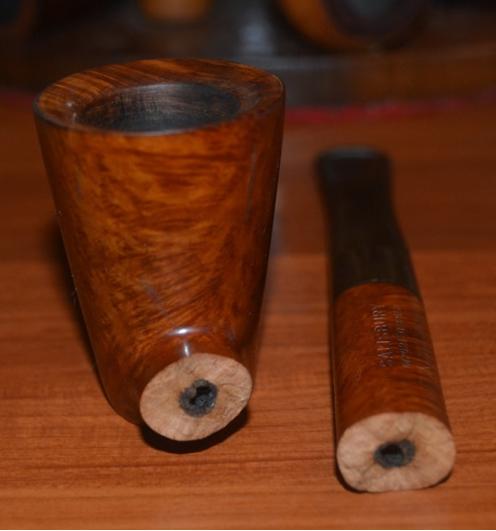
“The one that got away.”

“What’s this?” Chuck said with his grin of curious amusement.

“The one that got away,” I said again. “You know how often you’ve told me to be extra careful holding pipes on the buffers I have. Well, one finally got away.”

Recounting my story to him, I saw his big, warm smile emerge and felt so much better, even though I knew in my heart that he would confirm that the hapless Gilpin was beyond repair for purposes of selling.

Chuck and Chad

Chuck and Chad

As luck would have it, though, if such a phrase could even be conceived to apply to this calamity, the fractured pipe was not beyond repair for what Chuck called a shop pipe, or one to be enjoyed by myself while restoring others. All I needed to do was find some sort of short rod to anchor the two parts of the shank in place and Super Glue them together without letting any of the glue seep inside.

I can do that, I thought, and a local hardware store where I could find such a thing came to mind. The next day I visited the store and searched through the limited possibilities. I spotted a 315-piece box of assorted sizes of spring steel, black oxidized roll pins, and after much thought decided what the heck. One of the two smallest pins, I concluded, would fit the bill.Robert10Choosing the smallest, which was 1/16×3/16″ in size, I inserted one end of the roll pin into the bowl end of the shank, as is obvious in the photo above. With great care, I applied Super Glue around the exposed wood of the same end and fitted the other piece of the shank, without the stem, over the pin and into place, lined up in a perfect match.Robert11The next step I chose, after letting the glue set, was to use 400-grit paper to smooth the dried scab of glue as well as I could. In the process, of course, some of the finish came with it, but that was easy to fix with a small amount of brown boot stain around the lighter area.
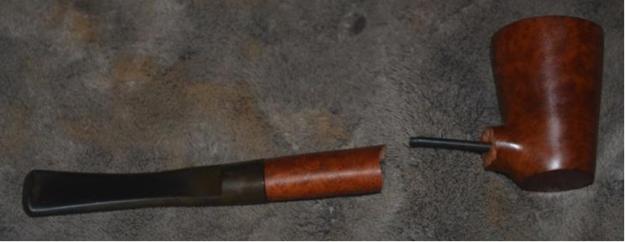
I flamed it and used 2400 micromesh to remove the char. At that point, the dreaded time to return to the buffers had arrived, and so there I went. Taking a deep breath and telling myself whatever happened was okay, I felt a calmness come over me. I turned on the two buffers and re-did the entire bowl and shank with red and white Tripoli, White Diamond and carnaubaRobert12 Robert13 Robert14Only the knowledge that I would be smoking the finished pipe alone in my little shop and thinking of this black experience every time consoled me.
CONCLUSION
I have been smoking a bowl of Cornell & Diehl Sunday Picnic in my new shop pipe as I finish up this most excellent example of how not to restore a pipe. The Gilpin is every bit as good as I expected, but of course I remain unhappy with the end. I would much rather have concluded on a happy note with the Salisbury whole and rejuvenated and ready to sell, but life sometimes takes cruel turns.

Then again, maybe the beautiful, aptly named Jewel had it right.

The Original Lonchamps Pigskin Pipe and the Restoration of One – Robert M. Boughton


Guest Blog by Robert M. Boughton
Member, North American Society of Pipe Collectors
http://www.roadrunnerpipes.com
http://about.me/boughtonrobert
Photos © the Author

“Nothing is so perfectly amusing as a total change of ideas.”
— Laurence Sterne, 18th century Irish born English novelist and humorist

INTRODUCTION
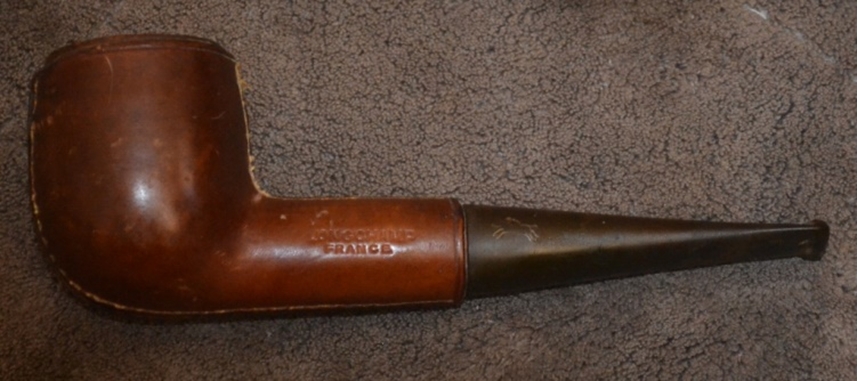
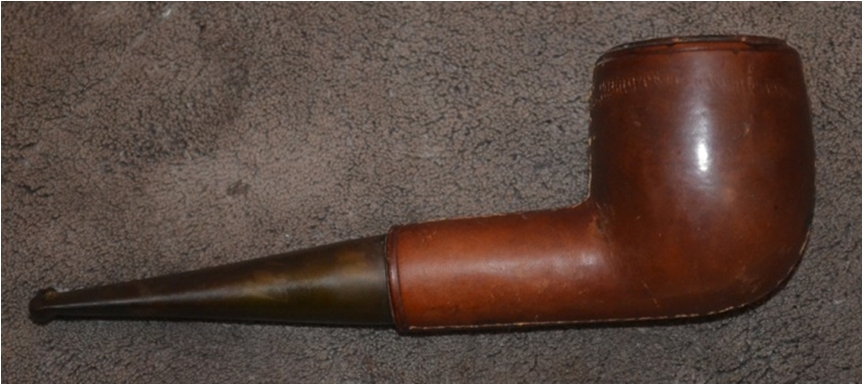
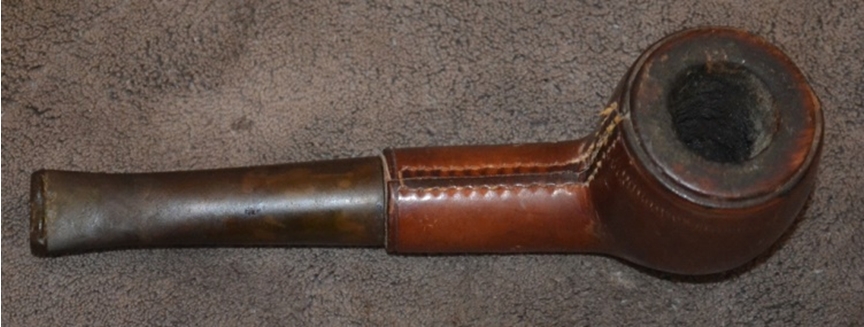
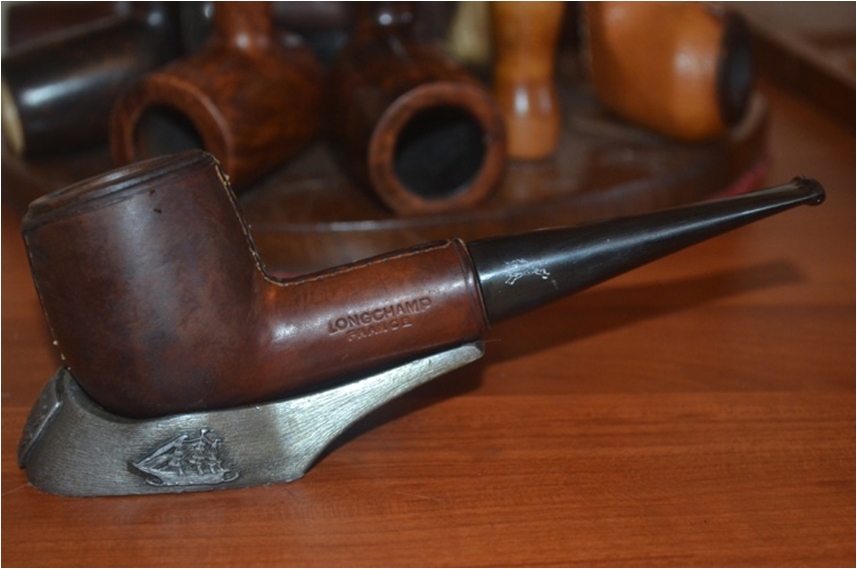
Imagine it, the idea of covering a nice, good briar pipe in pigskin, or, as is more realistic, decent briar but pocked with so many problematic blemishes that conventional pipe-making wisdom would have it rusticated or coated with high quality varnish of some color and buffed to a high sheen. Yet some clever Frenchman, tired of the norm, cogitated on the puzzling problem until, in 1945, he came up with the idea of wrapping the bowl and shank in pigskin. And thus Longchamp, a brand of Forestier & Cie, was born to be the first maker and sole distributor of the new innovation, at least until other brands got with the program.

This particular leather-clad pipe came to me from the Internet, as so many subjects of my recent and future blogs did, because I spotted it in a lot and looked up Longchamp online. That is how I learned that the French company’s shop in St. Claude, renowned for so many other fine examples of the craft, fashioned the wooden shapes and sent them off to Paris where the actual pigskin coats were made and sewn on by local artisans.

I already bought two pigskins, both bulldogs, by other makers. The green Versailles, an export brand of Ropp, sold a few weeks ago. The tan Derby, an Italian make, remains available. The dark brown Longchamp, a billiard, makes a nice alternative as a different shape and color.

RESTORATION
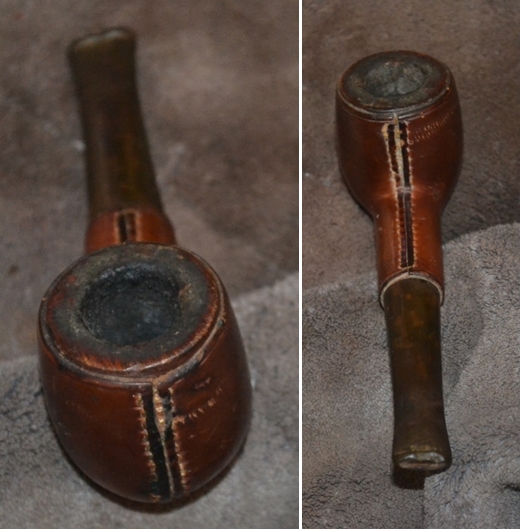
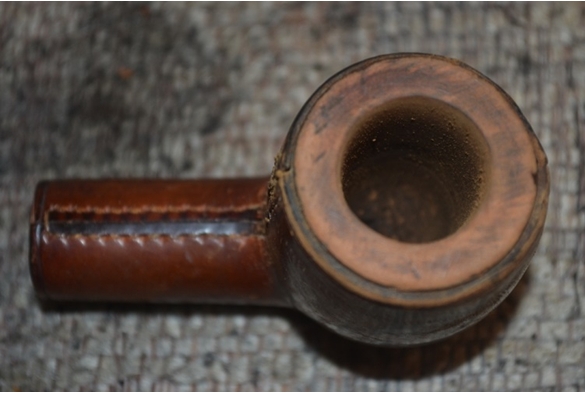
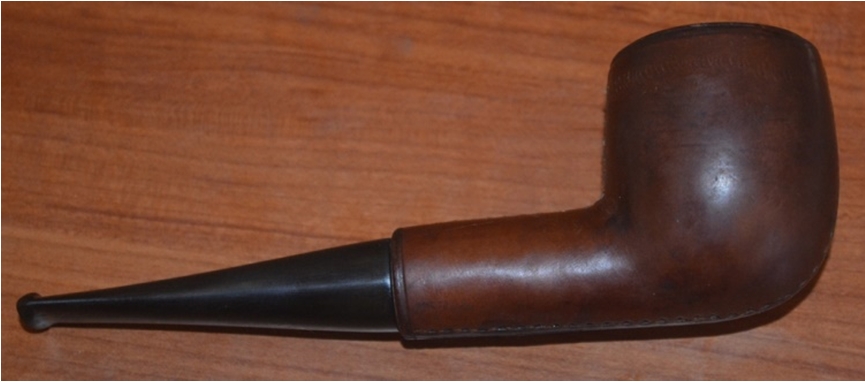
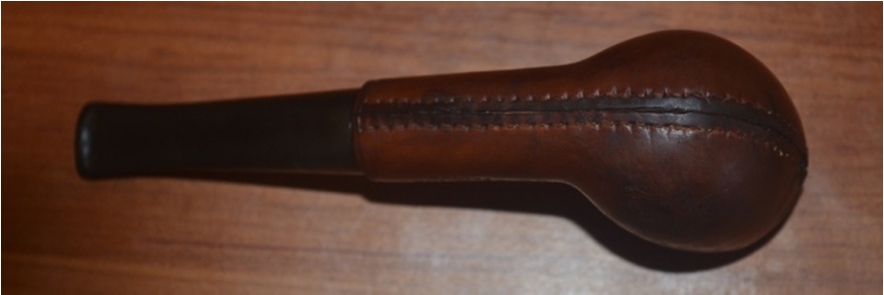
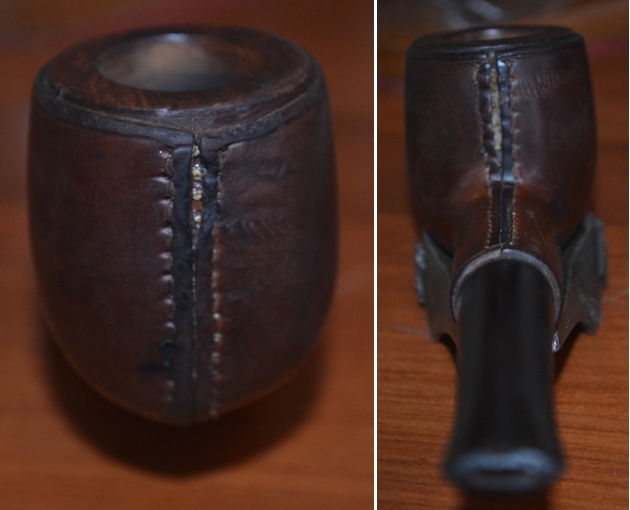
In a façade of good upkeep, the pigskin itself was impeccable, needing only polishing. The real victims of the previous owner were the rim, chamber and stem.Robert1 Robert2 Robert3 Robert4 Robert5I’m getting plenty of experience with rim and chamber restoration, and as the photos above show, this is no exception. Don’t ask me how it’s possible, but when I finished reaming this one and sanding it with 150-grit paper, there was more carbon than bowl space. If it were tobacco, there would be enough to fill at least three bowls.Robert6But the finished wood, including the rim from which I was able to remove with super fine steel wool all of the burns that appeared to be so serious I suspected someone had used a cigar torch on it, makes the labor of love worth it.Robert7Just a little patient work with 1500 micromesh brought back the nice grain and took away the small nick. I re-did the rim with brown boot stain, flamed it and removed the resulting light layer of black flakes with gentle use of 2400 micromesh, going with the grain.

Reading the instructions on the label helped me avoid following my impulse to squeeze out a huge gob of the Cadillac Boot and Shoe Care polish I bought for the purpose of restoring the shine to the pigskin. I would have smeared it all over the leather and was amazed that so little of the stuff went so far. Like Dippity-do, just a dab will do you.

Now, the scrapes and discoloring of the stem took some time to undo with 220-grit paper followed by 1500 micromesh. I polished it with the usual red Tripoli (several turns on the buffer) and White Diamond.

The one thing about this restore that seemed wrong as far as the briar was concerned was not being able to remove the pigskin to get to the wood and at least clean it up. I suppose my innate curiosity would have compelled me to take this step if I possessed the skill to sew the leather back together! But as it was, the rim being the sole part of the wood that showed, it was all I needed to buff. I gave it the works, of course, with white Tripoli, White Diamond and carnauba waxes.
The final touch was returning the Longchamp galloping horse and rider logo on the stem with a white crayon marker. And of course, somewhere in there I cleaned and sanitized the pipe.Robert8 Robert9 Robert10 Robert11 Robert12CONCLUSION
Although I am not a big football fan, I was pretty good at running with the ball whenever I got it back in the day during my childhood. Something in me hated to be taken down, and so I became quite good at twisting and squirming my way out of the grips of opposing players when they got their hands on me, or dodging them altogether.

Until my recent experiences with leather-covered pipes, that was my only run-in with pigskin.

A Glorious Republic Era Pete Killarney Flame Grain Tall Billiard – Robert M. Boughton


Guest Blog by Robert M. Boughton
Member, North American Society of Pipe Collectors
http://www.roadrunnerpipes.com
http://about.me/boughtonrobert
Photos © the Author

“What’s this world without its pleasure? What is pleasure but a pipe?”
— W.H. Logan, author, “A Pedlar’s Pack of Ballads and Songs,” 1869

INTRODUCTION
I doubt anyone could have summed up my own thoughts on the matter better or with more conciseness than the eclectic author, W.H. Logan. My pipes are my great pleasure, my main collection, my hobby, my trade. When I found this Peterson Killarney Red Flame Grain Tall Billiard available online, for a price that seemed too good to be true, I suspected some serious flaws somewhere. But a close inspection showed only a few scratches on the shiny wax and perhaps high grade varnish surface as well as the kind of rim blackening and chamber buildup that scares away so many bidders who are not prepared to deal with these little matters.

I had to have it, and so once again I over-bid to ward away the timid masses. I never had to increase that one bid and got it for an incredible $38.01, which seemed so precise I knew one of the others watching the pipe had offered a mere penny more than the previous contestant. The day it arrived at my Post Office Box, I cut through the tape and package label of the parcel on my way to the car and then sat behind the wheel to take out the contents. I admit I was relieved to inspect the new prize and find there were no hidden damages.

Giving the seller a high rating in all areas and commenting that I got it for a steal, I received a response from the gentleman that thanked me for one more perfect grade on his spotless record and went on to add, in reply to my written comment, “Yes, you did get it for a steal.” I could hear him saying it with a touch of disappointment.

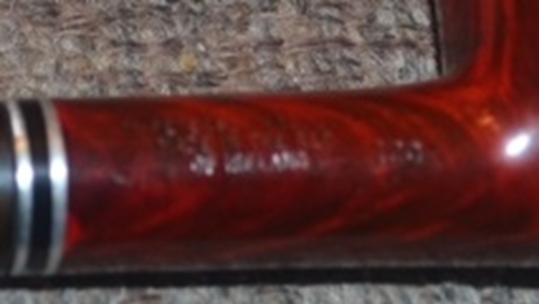
Still, I was surprised when I saw the following nomenclature on the right shank:Robert1In case the enlargement is unclear, it reads, in block letters, “A Peterson Product” (which was in fact in quotes) over “Made in the Rep.” over “of Ireland,” with the number 120 to the right of the bottom line. Looking it up on pipephil.eu, I was pleased to confirm that it was a Republic Era pipe, a fact I had not been able to determine when I bid for it, placing its date of manufacture at somewhere between 1950-1989. Given the discoloration of the stem and general appearance of long, hard use, I suspect it is from the 1970s.

Out of about 85 pipes I have in my collection, although the biggest part of that is comprised of meerschaums, a dozen are Peterson’s (and there is still another, a vintage Kildare, on the way). This old Killarney is not the best of them – being outdone by the tiny Gold Spigot natural grain, the Mark Twain Rusticated Bent Billiard system and the 150th Anniversary Special Edition natural bent billiard – but it is without doubt the most beautiful.

At one point believing I would never have the skill to restore a meerschaum, I did so with several and have a major project underway with one that is 115-120 years old. Among my other great wishes was to have the opportunity to restore a Peterson, and now it is a done deed, with even better results than I ever imagined.

Please don’t get the idea that I am bragging; far from it. I possess an acute awareness of my strengths and weaknesses (among the latter of which remains stem fitting, not to mention the mere idea of re-shaping one). Nevertheless, I have learned much during the past two years – most of it coming with ease due to my natural affinity for working with wood – but nothing more so than how much is left. In fact, I understand now, nobody knows everything about the craft/art of restoring pipes, not even my good friend and mentor or our host, both of whom are masters.

My greatest fear with the restoration of this Killarney was that after removing the burning of the rim I would be unable to return that thin, small but vital part of the pipe as a whole to its original, rich red color and shine. But almost by instinct, I worked out that problem when the time came.

THE RESTORATIONRobert2 Robert3 Robert4 Robert5First thing after my quick-clean inspection of the pipe’s interior integrity, I began my assault on the chamber with my Senior Reamer, the blades of which I retracted all the way and was still almost unable to insert it past the buildup of cake to the bottom. Turning the blades outward until they were stuck, I cranked in a slow, circular manner, pushing the top of the tool toward the rim as I listened to the carbon crumble. This step of the process took three adjustments of the blades to clear the cake.

After blowing through the shank to clear most of the leftover carbon dust, I wet a small square of cotton with alcohol and pushed it with a finger down the center of the chamber, then turned it a few times to soak up the rest. Using a 1-1/4×2” piece of 150-grit paper that, when curved to fit inside the chamber, just fit the diameter and left a little room above the rim with which to apply torque, I put a smaller finger inside the paper and began to twist it, first using the most pressure along the top of the chamber and working my way down. In this fashion I was able to clear the remaining carbon until briar showed most of the way through to the draught hole.

Having learned by the restoration of my third meerschaum that super fine steel wool is my favorite and, I think, the safest way to remove rim burning, I applied a pad of the 0000-grade to the blackness and watched as it disappeared with ease and left the rim clean and still shiny. However, there were some serious scratches covering the rim as well as a groove worn into it on the inner shank side.Robert6A little elbow grease and 1500 micromesh eliminated all of these blemishes, but at the same time dulled the finish. A piece of 2400 micromesh worked out the scratches on the bowl with minor effect on the original waxes.Robert7It was time to clean and sanitize the shank and stem. I dipped a cleaner into alcohol, and as I inserted it into the shank I felt the tar and other gunk resist. The cleaner came out pitch black. After seven identical runs, during which the grime inside at least lost its resistance, the cleaners were just as black. I decided to do a bowl and shank flush with alcohol, but first I ran about eight cleaners soaked in alcohol through the stem until it came out clean.

Top: Shank cleaners.  Middle: chamber cake and cotton cleaner.  Bottom: stem cleaners.

Top: Shank cleaners. Middle: chamber cake and cotton cleaner. Bottom: stem cleaners.

Robert9Following the alcohol flush, the shank was clean and the briar showed through from top to bottom of the chamber. That is the cleanest I have ever restored a chamber.

The stem was in good shape except for some tooth chatter in the lip. I used 400-grit paper on the chatter followed by 1500 micromesh again on the entire stem to remove minor scratches and discoloration. As usual, I buffed it with red and white Tripoli and White Diamond.

The end of my project being nigh so soon, it seemed, I looked over the bowl and shank. The next to last thing left to do was re-stain the rim using marine cordovan (burgundy) boot stain and flame it. I let it sit for a minute before turning to 2400 micromesh for a nice, slow, gentle rub to remove the black flakes left from the stain and get down just to the wood grain. Again, the color was lighter red than the rest of the bowl, which worried me, but there was no choice but to buff the whole thing.

I almost always use the same three waxes for this step: white Tripoli, White Diamond and carnauba. But this time I looked at the red Tripoli wheel and decided it could only help. Starting there and following with the rest, I was shocked to see that the finished pipe was uniform in deep red color and shine. The feeling when that kind of success occurs is indescribable.Robert10 Robert11 Robert12 Robert13 Robert14CONCLUSION
As I wrote this account, I smoked in the just restored Peterson’s Killarney a full bowl of Comoy’s Cask №. 5 Bullet Eye Select, with its tasty blend of bright orange Virginias, Burleys and Tennessee bourbon. The writing came to me with unusual ease, but still, that was one long bowl! This all just goes to point out that the beautiful, red, flame grain Killarney gives a long, excellent smoke, although the bowl does tend to get hot enough to hold the pipe as necessary by the shank.

Being a Peterson’s fan and collector, as I stated already, I’ve decided this is a keeper. There is just no way, no how, I am going to offer this pipe as the newest addition to my online store, as nice as it would be to post it for sale and take in the money.

Now the pipe is almost empty, and I am full.

Cleaning Up an Old Ropp Cherrywood That Was Once Given Love and Attention – Robert M. Boughton


Guest Blog by Robert M. Boughton
Member, North American Society of Pipe Collectors
http://www.roadrunnerpipes.com
http://about.me/boughtonrobert
Photos © the Author

“Action is character.”
— F. Scott Fitzgerald, in a note to himself on a page of “The Last Tycoon,” his final and unfinished novel (published in 1941)

INTRODUCTION
The great American novelist and short story writer quoted above, who is lesser known for his screenwriting work, and for good reason, only resorted to the genre to make ends meet while he attempted to dry out. Note I write attempted, as he died of alcoholism in 1940 at 44. Nevertheless, he knew from both experiences that memorable characters, and therefore their stories, are created far more through their actions than their words.

Fitzgerald was among the best at describing what all of his characters do in his own unique way, although that in no way detracts from the words they speak. His unvarying craft of employing the rule he penned to himself on his final and half-finished manuscript has become the basis of most good present-day screenwriters’ rule of thumb, “Character is action, not dialogue.”

And so it is with this Ropp cherrywood. Its condition tells the whole story of the man who smoked it through the inconsistent actions he took to preserve it. The wood of the bowl and shank was kept as the pipe’s probable one owner obtained it. The stem, however, was left with scratches and minor tooth marks. And while the bore, mortise and draught hole showed clear signs of being cleaned almost with fanaticism, the chamber did not fare so well. Although nowhere close to being as filled with cake as the other pipes I described in prior admitted diatribes, I still removed enough carbon to fill the chamber whence it came.
All of this suggests to me that the lovely cherrywood was adored by its previous owner, who indeed smoked it so often it may have been his only pipe. His sole lack of full attention was to the chamber.

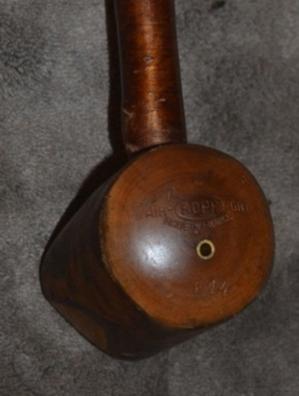
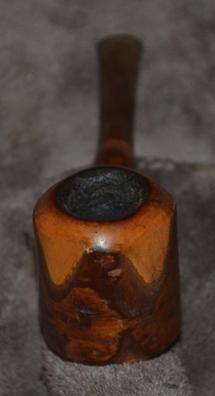
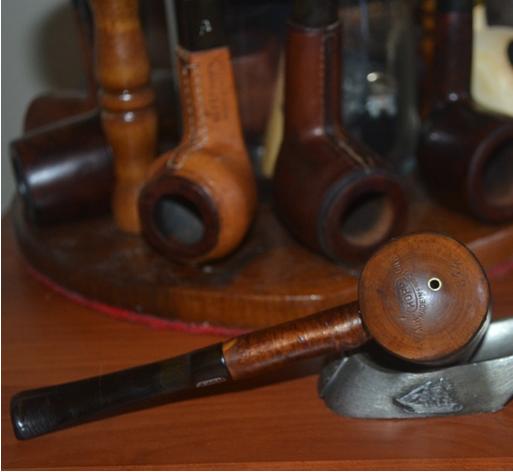
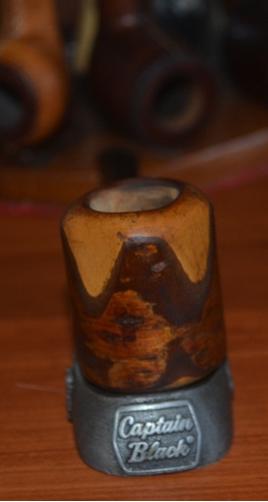
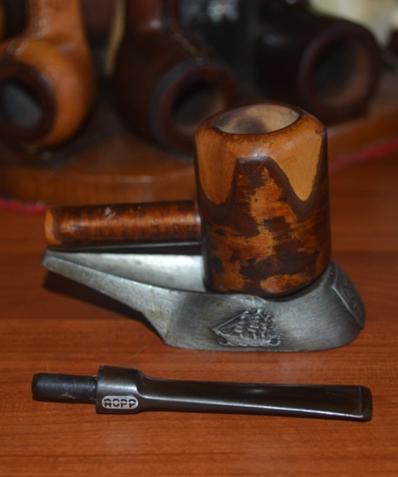
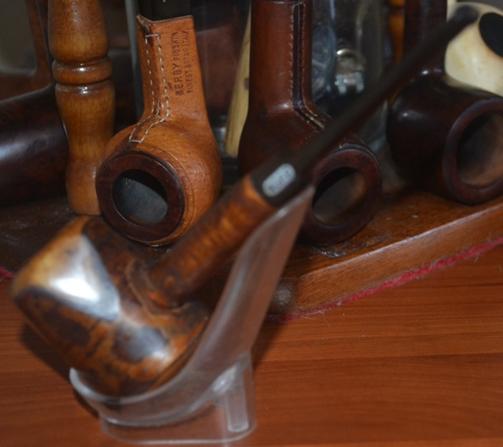
In a recent purchase of several lots of pipes on eBay, the first of which had some gems that were grotesque from abuse, I still saw that I could restore their luster. Some of my recent blogs have hinted at my ill opinion of those who treat their pipes with such disrespect. I even resorted to outright railing against these unknown enjoyers of the fair leaf. But in fact, the truth is that they know not what they do. When I received it in the mail, the condition of a Ropp natural cherrywood Air Dry system pipe [see “The Revolution of the System Pipe”], with a small brass tube inserted in the bottom of the bowl and leading to the chamber to relieve excess heat, was a little more complicated.

I own a more conventional Ropp natural cherrywood De Luxe, canted and flat on the bottom and therefore a sitter as it should be.

Picture 1

Picture 1

I considered swapping it with the more recent Air Dry, which has a rounded bottom and is already listed for sale on my online store. My only reasoning being that the Air Dry was more novel and might be older, I had a change of heart, in the literal sense. The more I thought about it, the more certain I became that the Air Dry’s long-time owner would not have traded it for anything. Who was I to give up with such nonchalance one that has served me so well? Besides, my De Luxe might just be older.

THE PIPE RESTORATION
The first thing I did was disassemble the pipe, meaning I unscrewed the stem and shank from the bowl.

Picture 2

Picture 2

Picture 3

Picture 3

Picture 4

Picture 4

There was blackening beyond the screws in the bowl’s hole [picture 3]. I saw that the threads of the shank itself were blackened [picture 2] and so I cleaned them right away with alcohol and also followed my initial quick clean routine to find if there were any obstructions in the parts. To my happy surprise, given the first impression of the chamber [picture 7], the quick clean was all that was necessary. Without doubt, these were the easiest stem and shank I have ever had to clean, leading to my surmising in the Introduction as to the complicated character of the original owner.

I also noted the small, unpolished areas of wood around the shank hole in the bowl [picture 3] and both ends of the shank [picture 4], although the stem side’s roughness does not show in the last picture. A fast buffing of the bowl’s hole and the tips of the shank (excluding the threads) with red and white Tripoli, White Diamond and carnauba made them shine like the rest of the wood. The following photos are the pipe before any work was done.

Picture 5

Picture 5

Picture 6

Picture 6

Picture 7

Picture 7

Picture 8

Picture 8

Picture 9

Picture 9

Picture 10

Picture 10

Picture 11

Picture 11

Starting the hardest part of the restore, which was pretty straightforward with nothing of special difficulty, I put my reamer to the bowl and began the process of turning it at increasing depths with great care to protect the cherry wood. Most of the top quarter-inch cleared down to the wood. The rest came in time. Altogether this stage took me about a half-hour, including the final sanding with 220-grit paper to make the chamber smooth and even all the way down.

All that was left to do was finish up the scratched stem with minor chatter and the wood. I used #1500 micromesh on most of the stem and 200-grit paper for the teeth marks, and spun it on the buffers with red Tripoli and White Diamond. The shank and bowl I could have left alone, but since it was a bit duller than it could be I applied white Tripoli, White Diamond and carnauba.

As with my De Luxe, a dab of beeswax was needed to hold the stem in place.

Picture 12

Picture 12

Picture 13

Picture 13

Picture 14

Picture 14

Picture 15

Picture 15

Picture 16

Picture 16

Picture 17

Picture 17

Picture 18

Picture 18

CONCLUSION
I figured out at last that those who enjoy pipes are complex characters, perhaps or perhaps not more so than others. As William Shakespeare, a greater writer even than Fitzgerald, had Jacques put it in “As You Like It,” Act II, sc, vii:

All the world’s a stage,
And all the men and women merely players;
They have their exits and their entrances,
And one man in his time plays many parts….

Shakespeare, who is believed to have written the play c. 1600, when he would have been about 36, knew better than anyone about the importance of action to character. He made his final exit when he was 54 – but in those days, that was common.