Blog by Dal Stanton
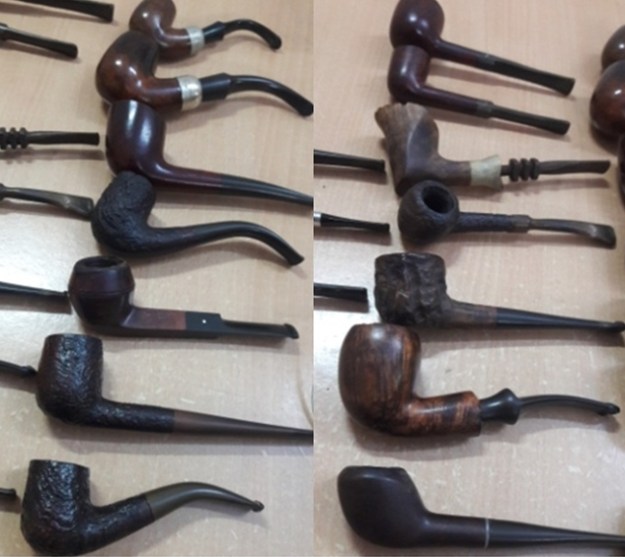
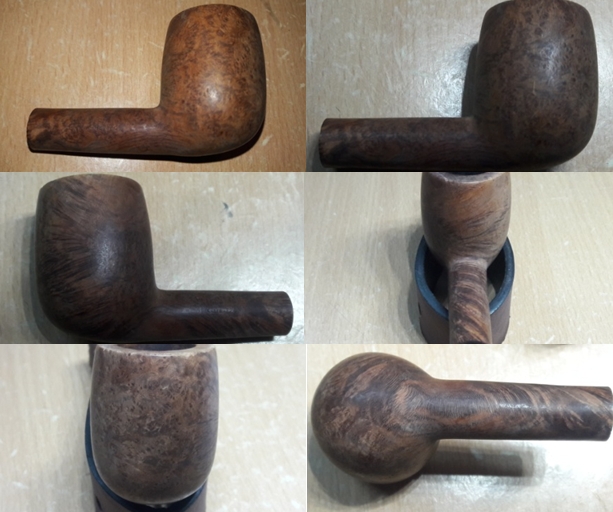
Last year, while in the US for several months, I landed the largest haul of pipes in my pipe collecting history – which isn’t that ancient! It was called the Lot of 66 by the eBay seller who represented a non-profit in Texas that sold donated items to help people in need. Just by the cursory look in the picture below I was very interested in turning these pipes around to benefit our very precious people in need, the Daughters of Bulgaria. The world is full of broken people experiencing a plethora of painful and often, dehumanizing conditions. Sometimes all of our efforts seem like a drop in the bucket, but I suppose if a lot of people added their ‘drops’ it might, and often does make a difference, one life at a time. Well, I won the Lot of 66 on the eBay auction block and thanks to a very patient wife, the Lot of 66 made it back home to Bulgaria where each pipe, one pipe at a time, makes it to my worktable and is recommissioned – hopefully, better than new! The Amphora X-tra, quarter bent Bulldog of Holland is the next pipe on my worktable.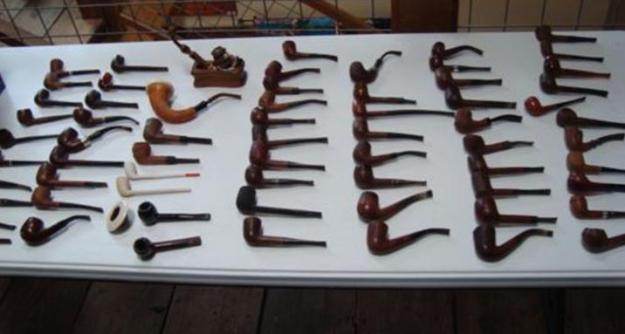 In Bulgaria, I took the Amphora Bent Bulldog out of the ‘Help Me!’ Basket when Taylor saw this pipe, along with two others that he commissioned already restored, a Savinelli Oscar and an Italian Custom Shape. I allow pipe people to commission pipes from my ‘Help Me!’ Basket which I have listed on The Pipe Steward website in the section, For ‘Pipe Dreamers’ Only! I’m amazed how many ‘Pipe Dreamers’ there are out there! This Bent Bulldog is the last of three Taylor has commissioned and is destined as a gift for a friend who is to be married! Here are the pictures.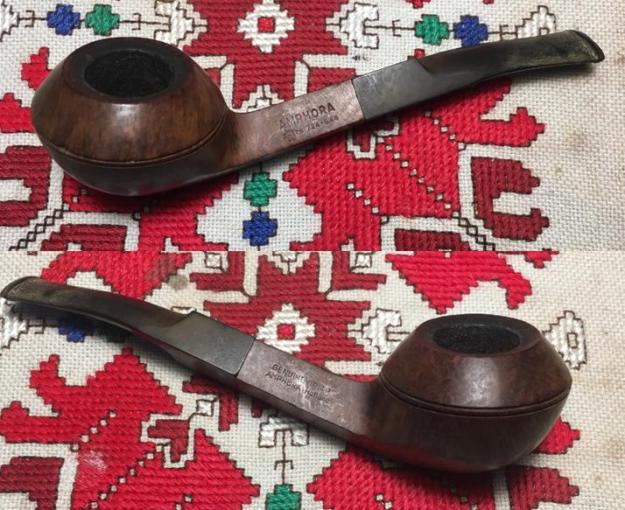

 There is precious little information in my usual go-to sites on the internet about Amphora. Pipedia’s small article said this:
Amphora pipes are made in Holland by the Jos. Gubbels organization, the same company which makes the very well known and loved Amphora Pipe Tobaccos. The pipes are produced in relatively small numbers to a high standard and not commonly found.
The Royal Dutch Pipe Factory Elbert Gubbels & Sons B.V. is the only manufacturer of briarroot tobacco pipes in the Benelux countries where pipes of high quality are made under the brands Big Ben, Hilson, Royal Dutch and Amphora. They also supply numerous smokers’ accessories of high quality.
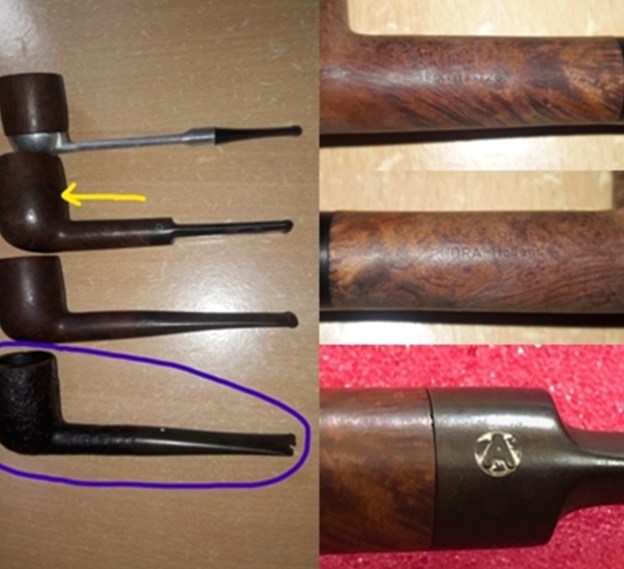
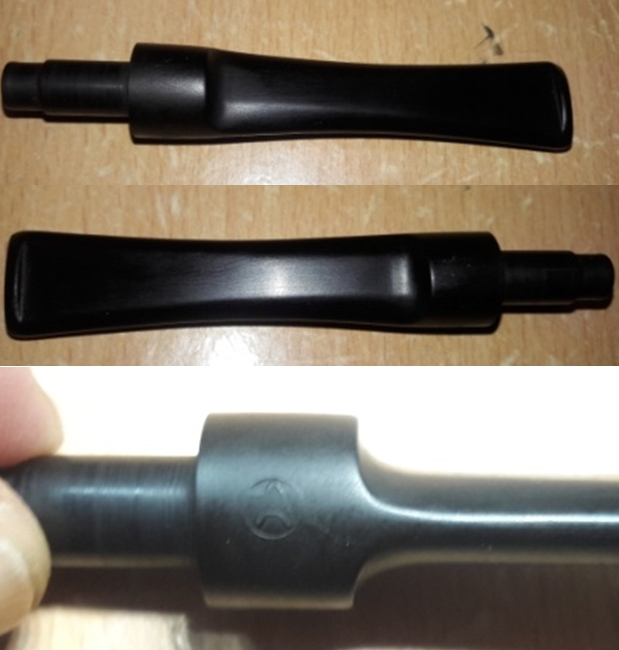
There also was pictured an Amphora Bulldog with the same nomenclature as the one on my worktable but of the blasted variety (courtesy of Doug Valitchka):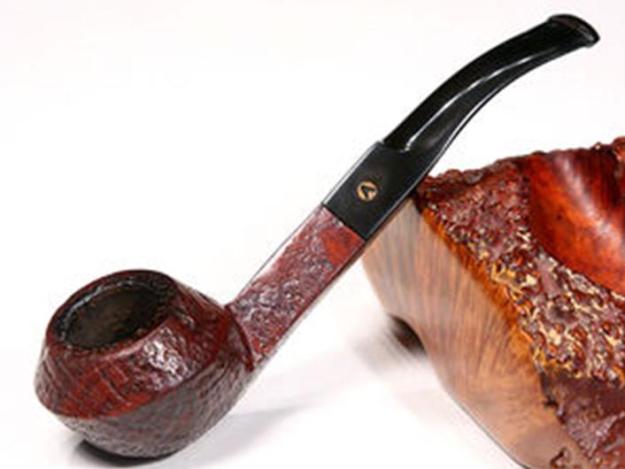 What I see in this picture above is that there is an ‘A’ stamping on the stem. The Amphora before me now has a fading whisper of an Amphora ‘A’ stamping. It is very weak and I’m doubtful if I can save it let alone improve it.
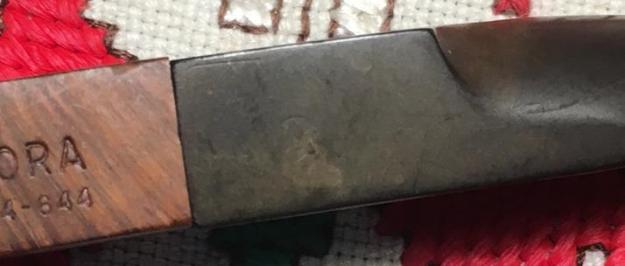 The only additional information added by PipePhil.eu about Amphora was that it’s mother company, The Royal Dutch Pipe Factory, referenced above, went bankrupt in 2012.
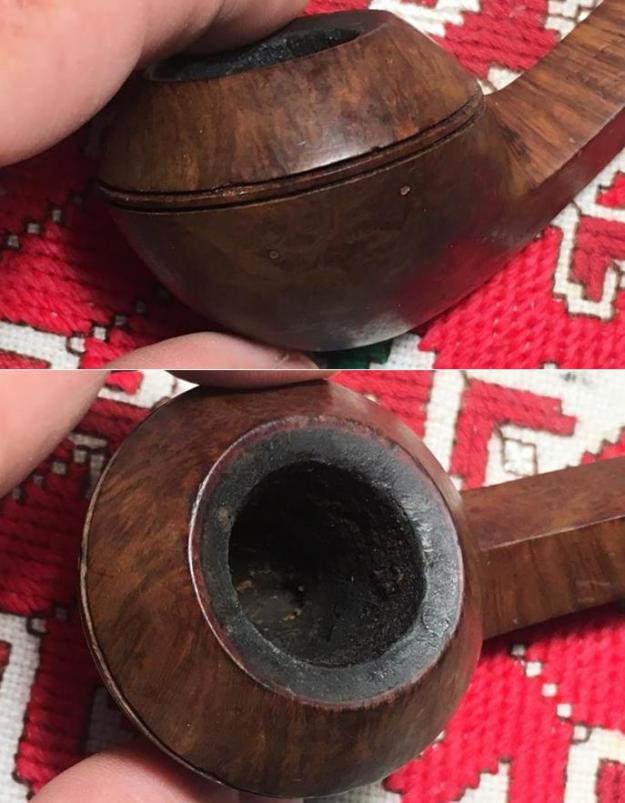
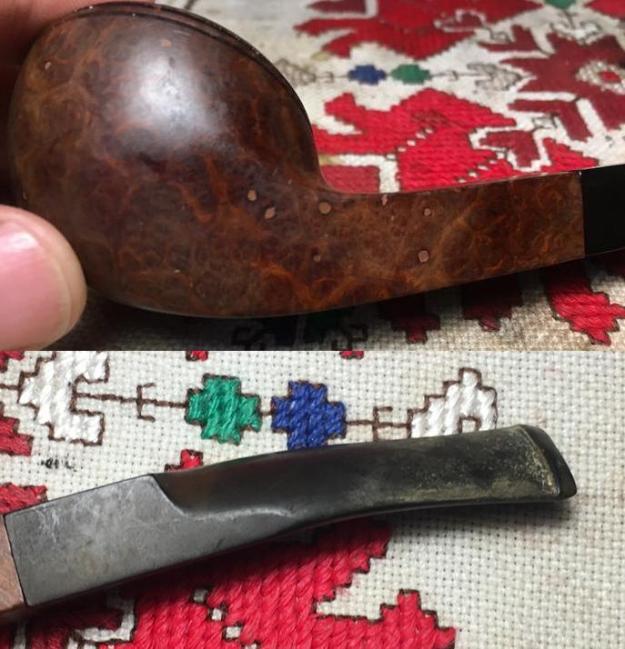
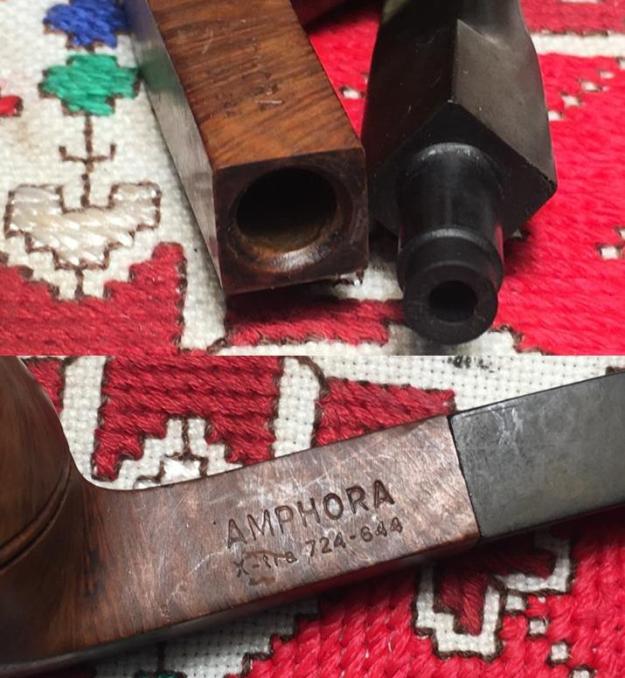
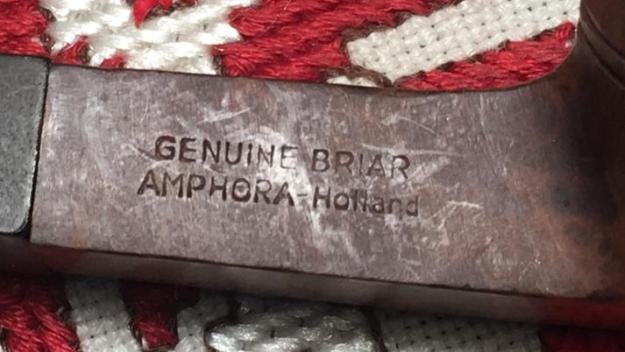
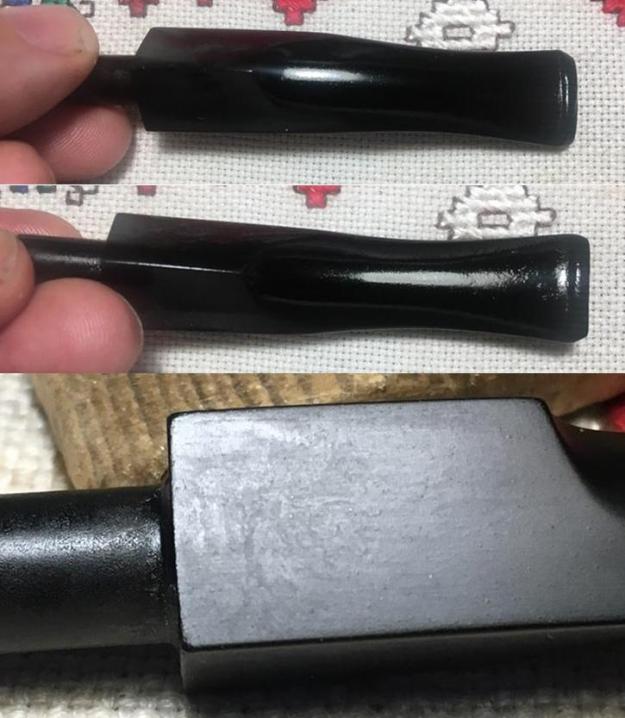
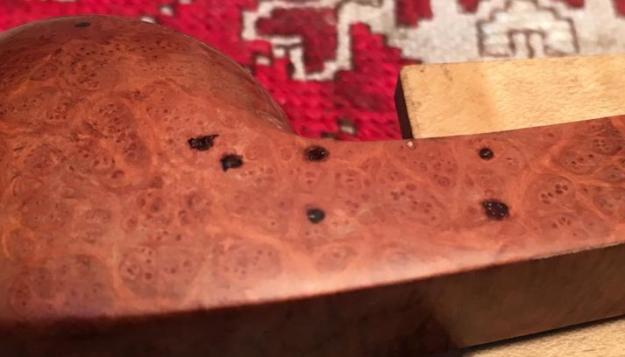
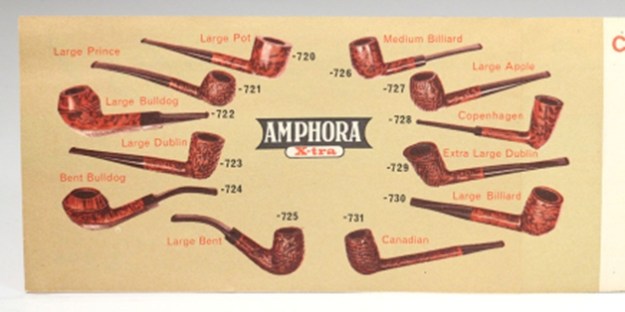
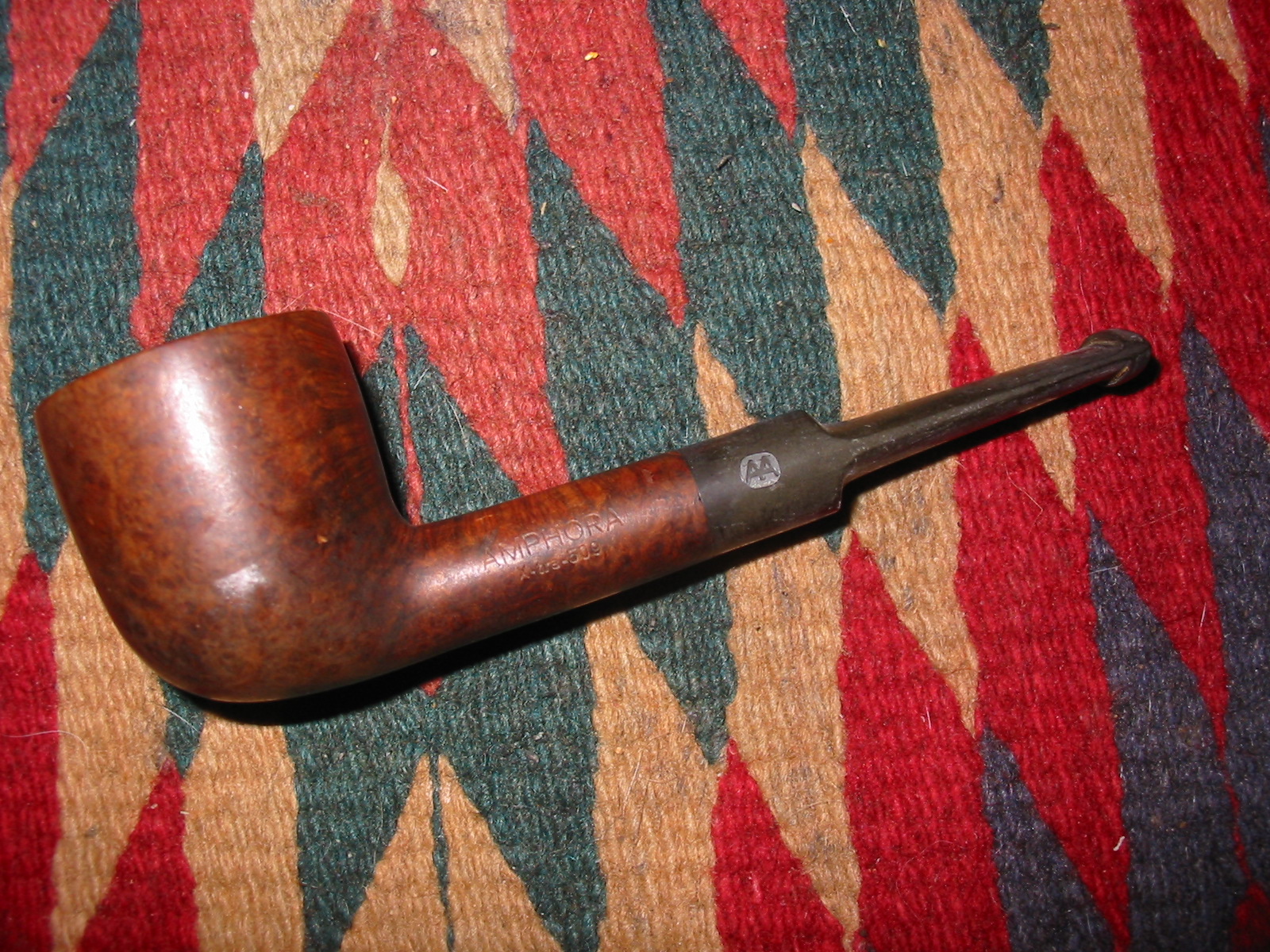
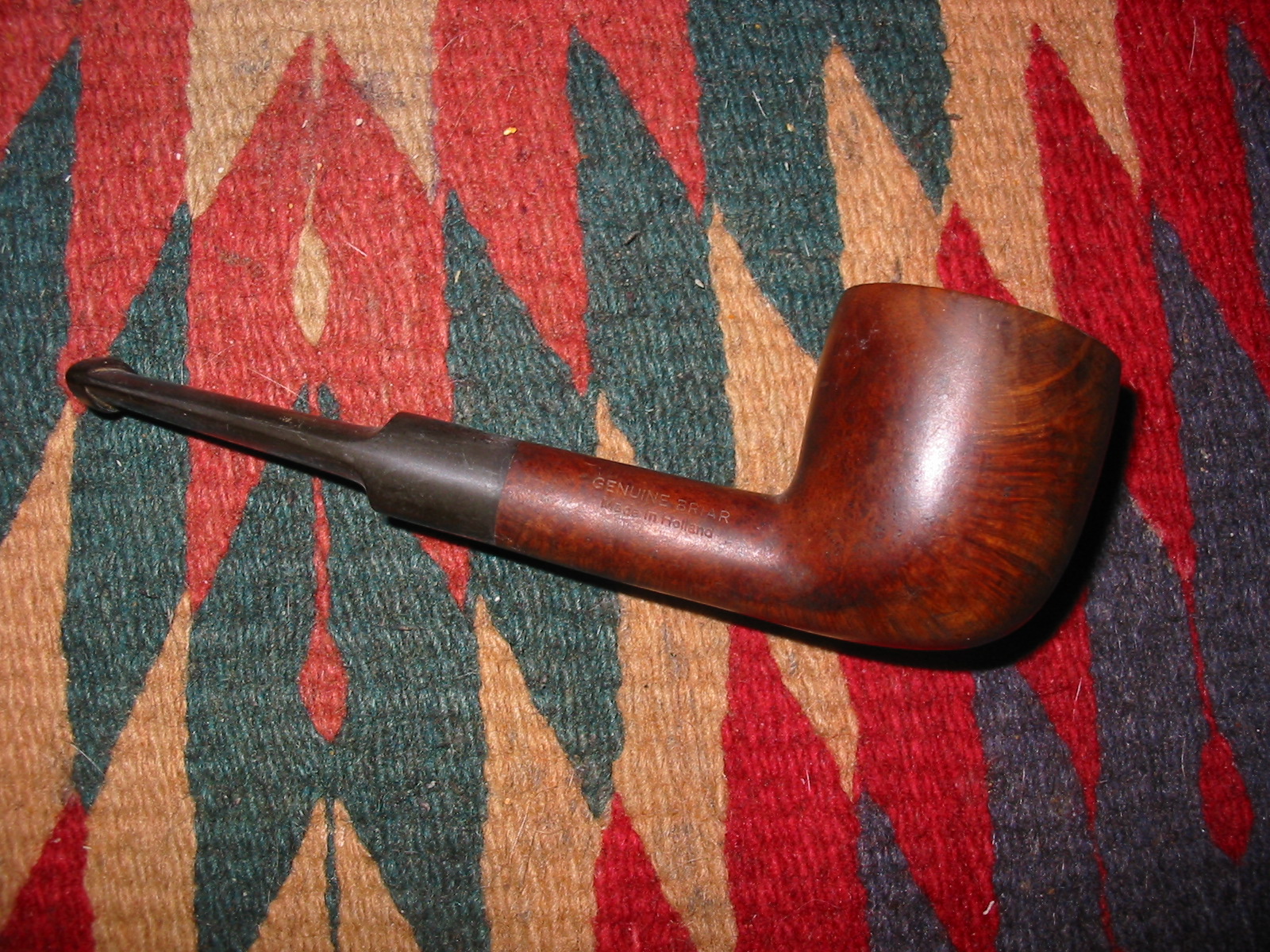
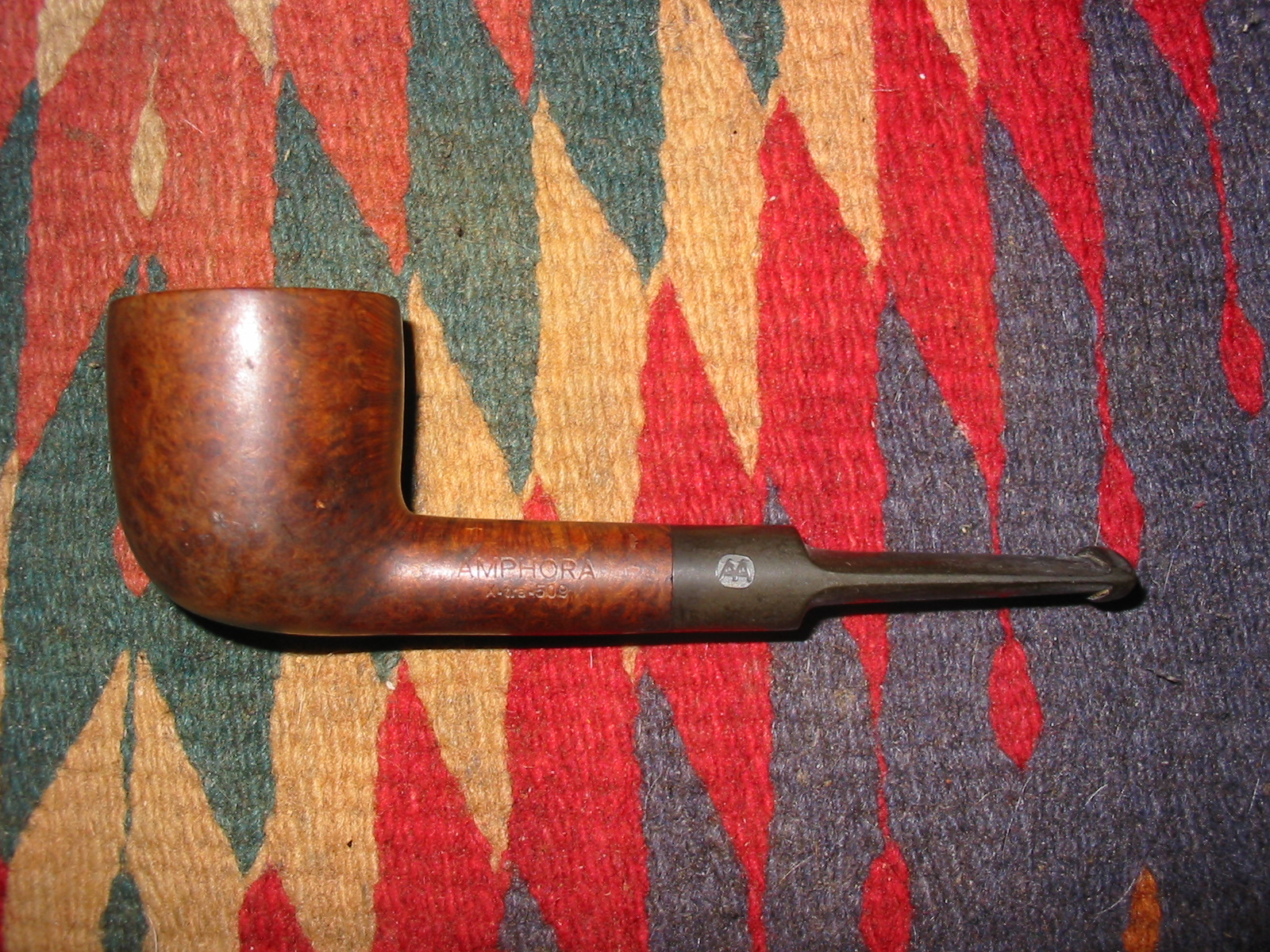
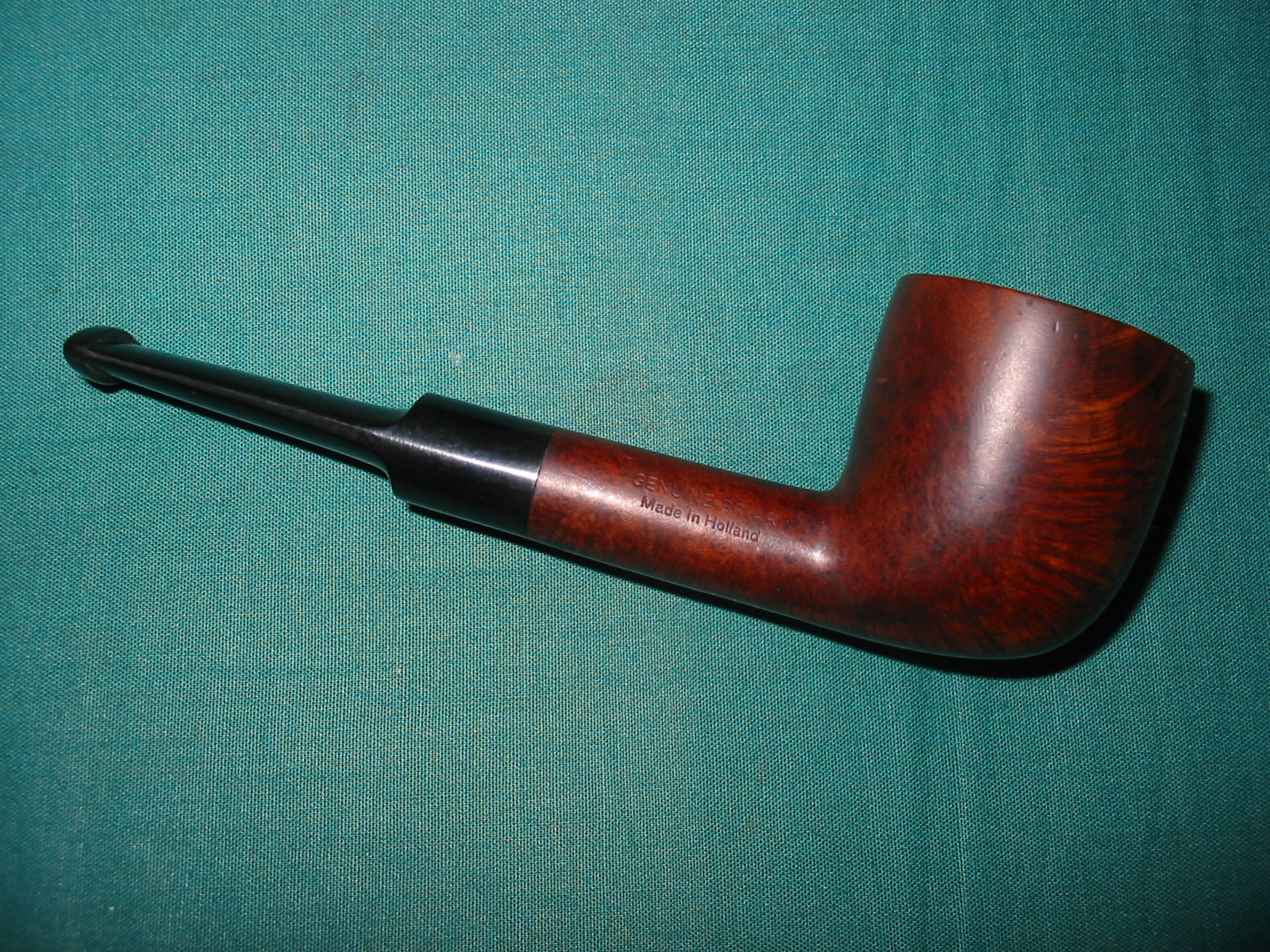
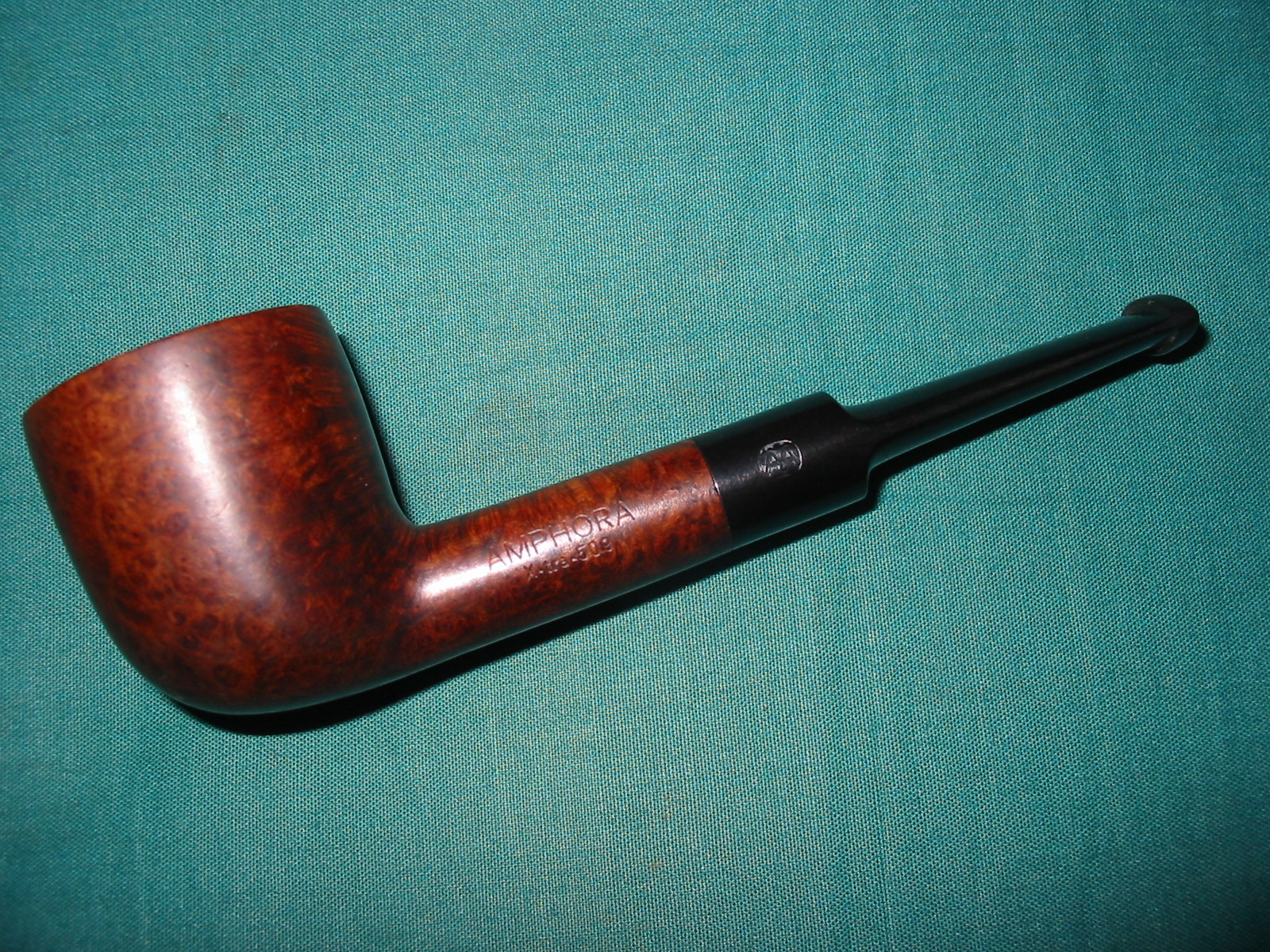
The Bulldog before me has the nomenclature on the left shank, ‘AMPHORA’ over ‘X – tra 724-644’. On the right side of the shank it reads, ‘GENUINE BRIAR’ over ‘AMPHORA HOLLAND’. The general condition of the pipe is dirty and it has a lot of nicks, bumps and dents. The cake in the chamber is moderate. The dome of the Bulldog is in good shape, but the double rings separating the dome and the lower bowl has some chips and dents. There are also several small fills isolated on the left, lower side of the bowl that need a closer look. The stem has oxidation, but the bit has little tooth chatter. I begin the restoration of this Amphora X-tra quarter bent Bulldog by adding the stem to the Before and After Deoxidizer along with other stems in queue. I leave the stems in the bath for several hours and then I fish the Bulldog’s stem out.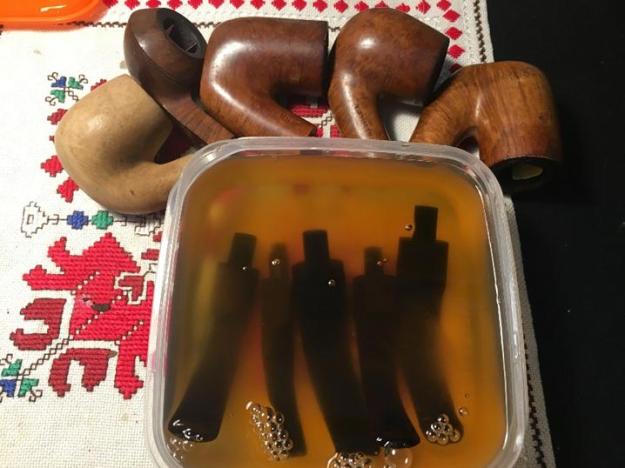 I wipe the Deoxidizer off (didn’t take pictures of this!) with a cotton pad and light paraffin oil (mineral oil in Bulgaria). The deoxidizer did a good job. After the stem dries, I look for the ‘A’ stamping on the stem. It remains only a phantom and I’m afraid it will disappear into oblivion. It is impossible to see without a strong light and glare. I’m afraid it’s a lost cause.
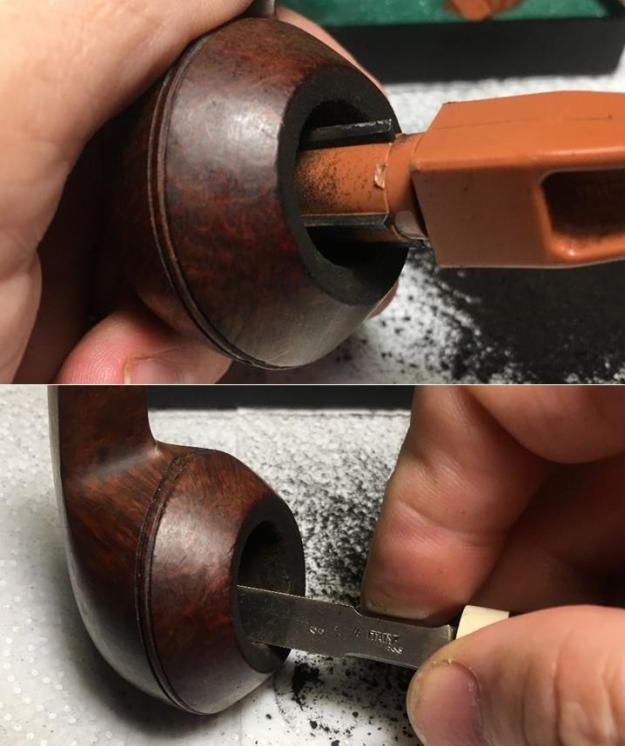
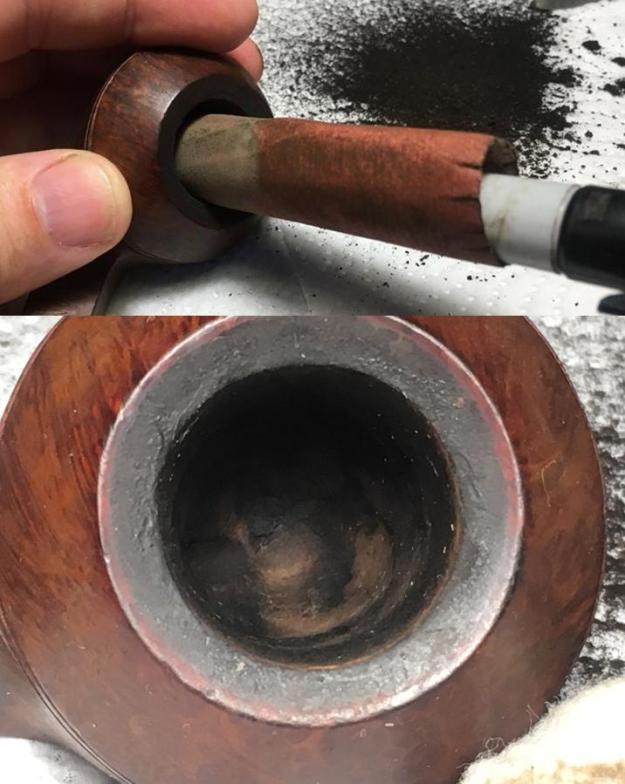
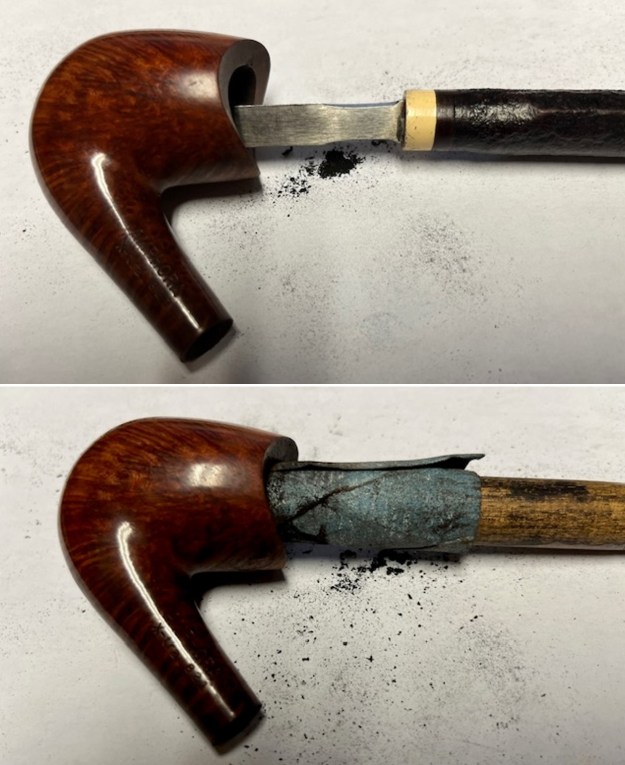
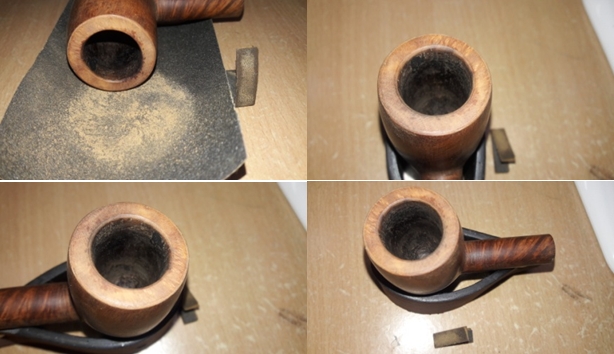
 Turning now to the stummel, I ream the chamber to remove the layer of cake to go down to fresh briar. To do this I use the Pipnet Reaming Kit. I start with the smallest blade and use only 2 blades of the 4 available to me. I then switch to the Savinelli Fitsall Tool to scrape the chamber walls to fine-tune the reaming job. Finally, I sand the chamber removing additional carbon left over and getting down to the fresh briar. To do this I wrap a piece of 240 sanding paper around a Sharpie Pen. I finish by wiping the chamber with a cotton pad wetted with isopropyl 95%. The chamber walls look good – I don’t see any cracks or heat fissures. The pictures show the progress.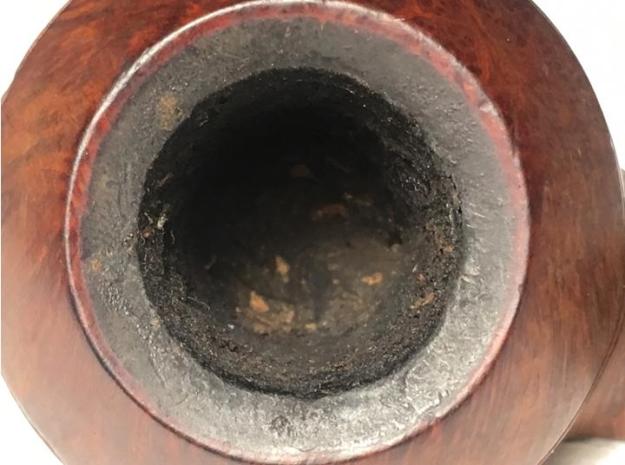
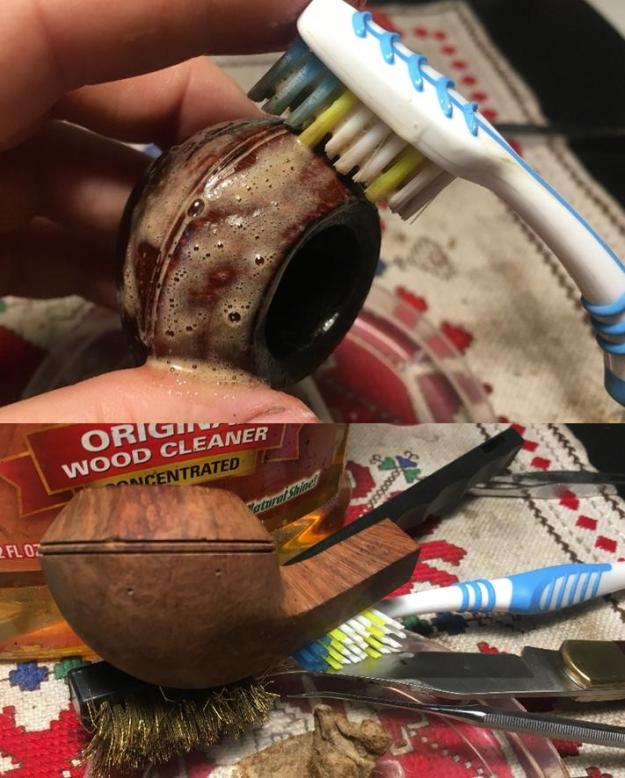
 Now, to clean the external briar surface I use undiluted Murphy’s Oil Soap and a cotton pad. I also employ a tooth brush to scrub the surface around the dome rings and I use a sharp dental probe to scrape the muck out of the twin dome rings going around the circumference. There is some light lava on the slanted rim which I scrub with a brass brush and scrape with a pin knife. It cleans up well. There remains darkened briar around the rim which I will need to sand.
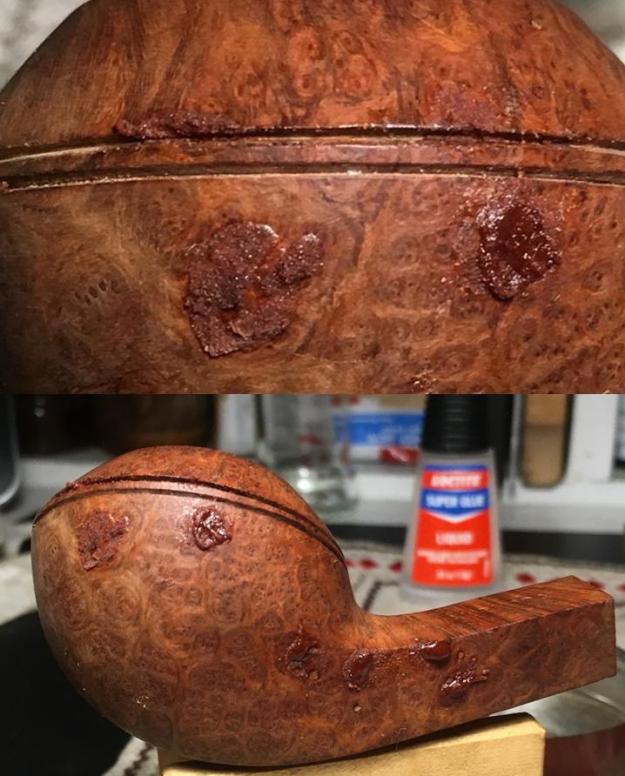
 After the cleaning the stummel, I again check the fills that riddle the left side of the stummel. I use a dental probe to test the fills. The larger ones are soft from the moisture and I dig the fills out with the probe. The smaller fills seem to be good, so I’ll leave them.
 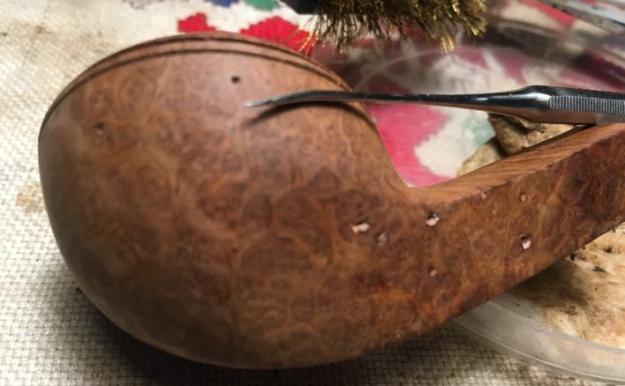 There’s a lot of patching to do. To do all the stummel patching together, I look at the damaged areas of briar that have been chipped from the dome ring ridges. I take pictures focusing on these areas to get a better look. The first picture is the front of the stummel – a large chip is taken out of half of the center ring. The next picture shows that there are two chips on the left side of the stummel. I’ll patch the dome ring chips and the fills together using a putty mixture of CA glue and briar dust.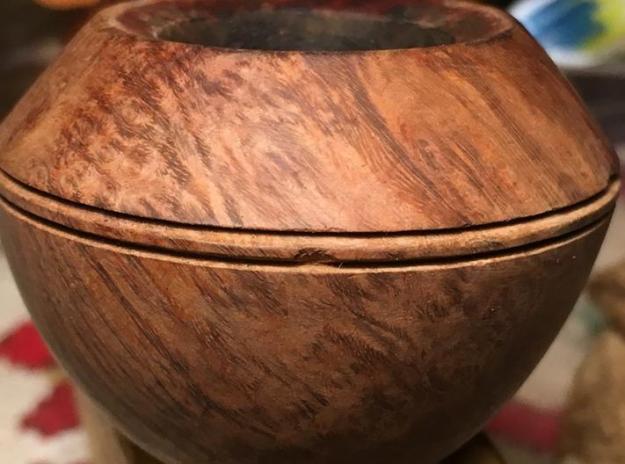
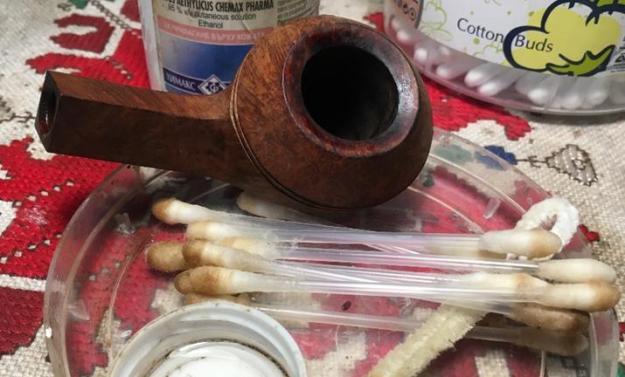
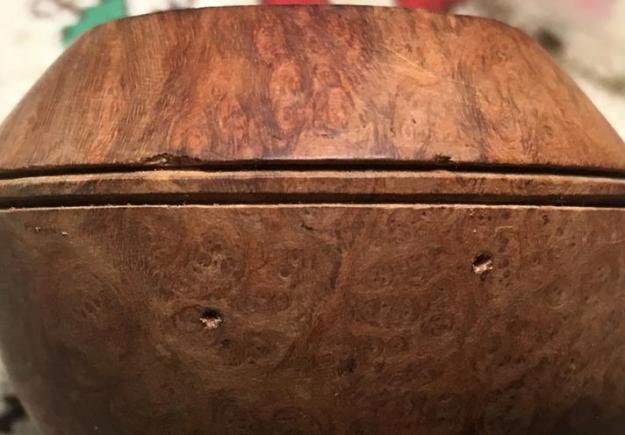 While I think about how best to approach these patches, I first clean the internals of the stummel using pipe cleaners and cotton buds dipped in isopropyl 95%. It gave some resistance, but eventually the pipe cleaners and cotton buds prevail. Later, I’ll also do a kosher salt and alcohol soak to clean more thoroughly.
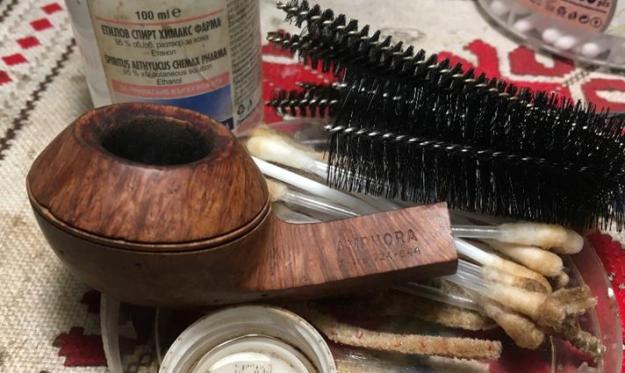 To patch the chips in the ring, after wiping the area with alcohol, I apply a thick CA glue and briar dust putty to damaged areas. I mix thick CA glue and briar dust together until the putty reaches the viscosity of molasses and then I use a toothpick and a dental spatula to apply the putty. With the help of the dental spatula I make sure the troughs of the dome rings stay clear of putty – not an easy task! With the fills, I apply putty to the holes as mounds and let the putty cure. It looks like a mess now, but I’m hoping it cleans up nicely when I sand the patches down tomorrow! I let the patches cure overnight.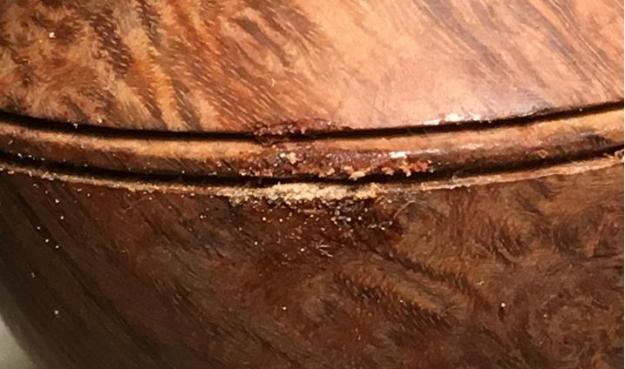
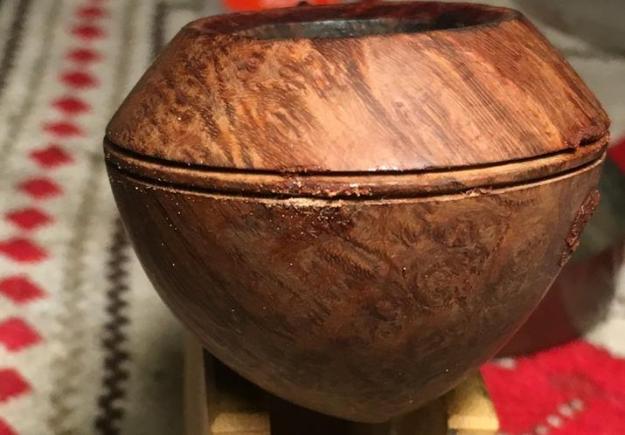
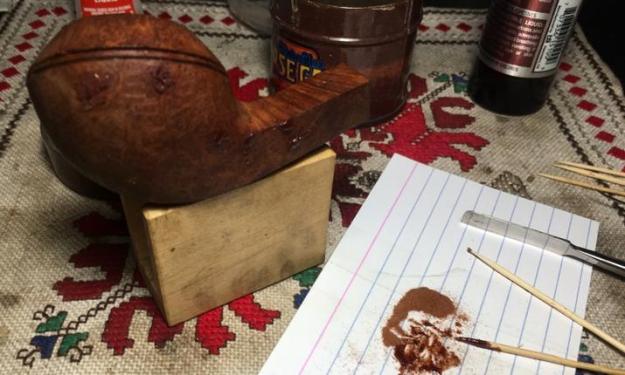 Before I turn out the lights, the patches have set enough to handle. I clean the stummel internals further with a kosher salt and alcohol soak. I form a wick by twisting and pulling a cotton ball and then pushing it down the mortise and airway using a stiff straight piece of wire. I then set the stummel in an egg crate to stabilize it and fill the bowl with kosher salt which leaves no taste. I then fill the bowl with isopropyl 95% until is surfaces over the salt. I now turn out the lights.
The next morning the soak has done the job. The salt and wick are discolored showing the further absorption of tars and oils from the internal briar. I dump the expended salt in the waste and clean the salt using paper towel. I then finish by wetting a pipe cleaner and cotton bud with alcohol and run them through one more time. Internals are clean for the next steward!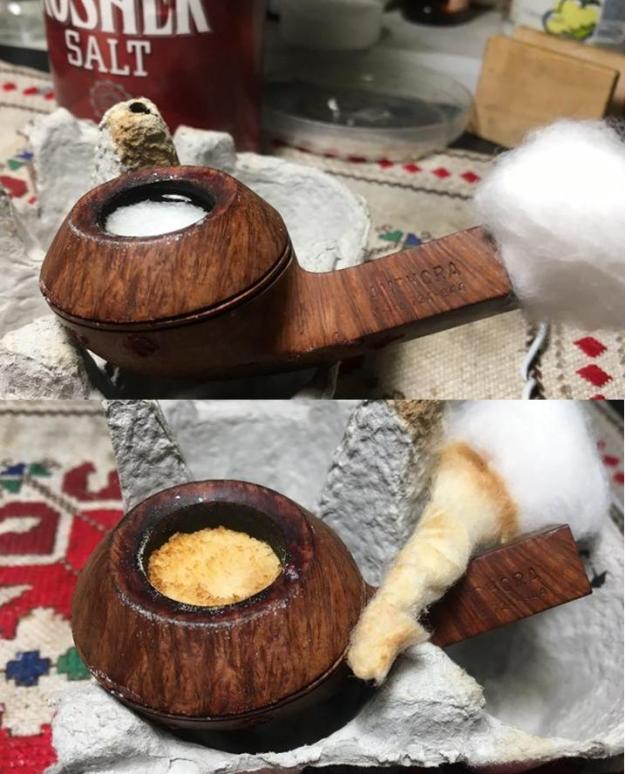
 Now working on a clean pipe, I look at the cured patches. I start with the front chip on the dome ring. Using a flat needle file, I go to work on filing down the patches to the briar surface. I’m careful to keep the file on the patch mounds and not to impact surrounding briar. Then switching to 240 grit, I lightly feather sand the area bringing the patch to the briar surface. To sharpen the trough and remove excess patch, I fold a piece of 240 paper and fit it in the groove of the trough and sand (first picture below). I then use a sharp dental probe to clean the debris out of the trough. It looks good. I then move to the left side of the dome ring and do the same with the two chip patches. I take pictures of the process.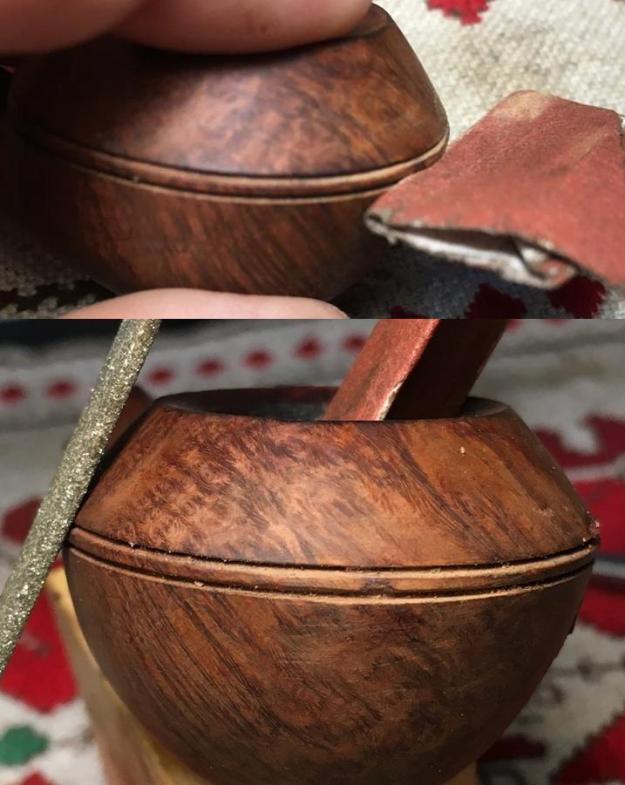
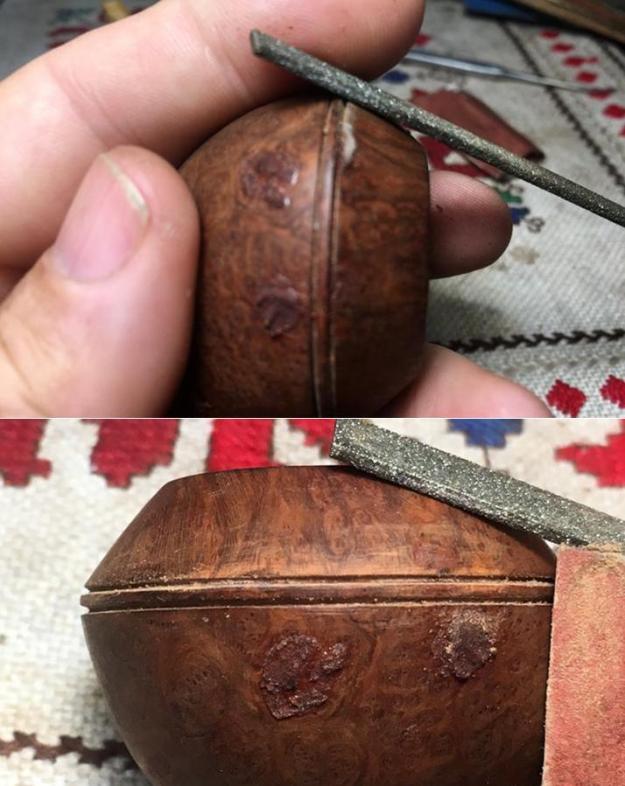 Next, I go to work on the fill patches on the side of the stummel. With these many patches, it looks like a construction zone! I use the flat needle file to bring the patches down to the briar surface. Then, using 240 grade paper, I continue to sand and blend the patches with the briar surface. I move from patch to patch until they are all down to the briar surface. Again, I chronicle the filing and the 240 grade paper patch sanding.
 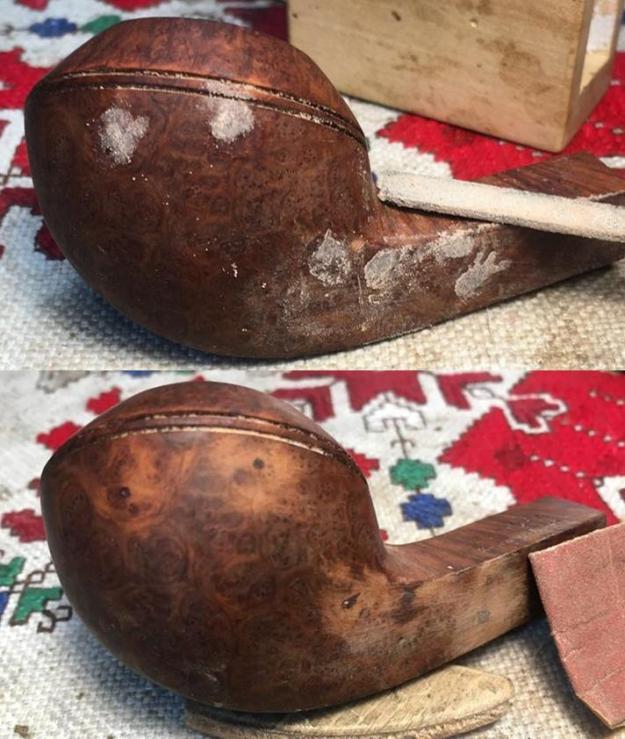 Now I switch to 600 grade paper focusing first on the dome ring chips – first in the front. I sand the area and I also, like with 240 paper, fold it in half and insert the fold into the trough of the ring and sand back and forth like a hand saw. This addresses smoothing of the sides of the troughs which form the center dome ring. Next, I move to the left side dome ring patches and do the same. Again, I use a sharp dental probe to ‘plow out’ the troughs removing the left-over debris. I travel the entire circumference of the dome ring troughs.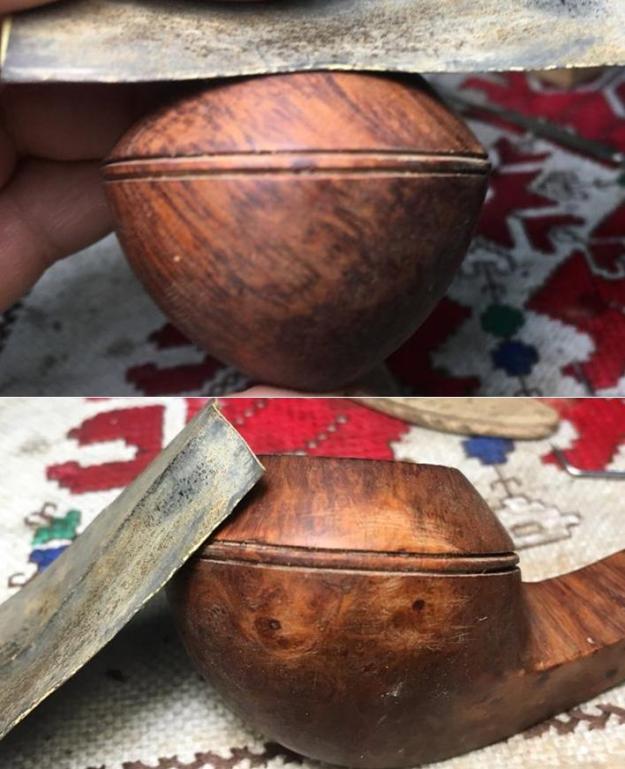
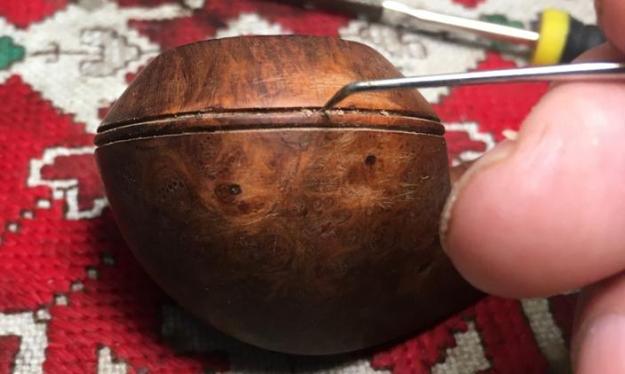 I sand the entire ‘construction zone’ of patches with 600 grade paper which erases the scratches left by the 240 grit paper and blends the patches.
 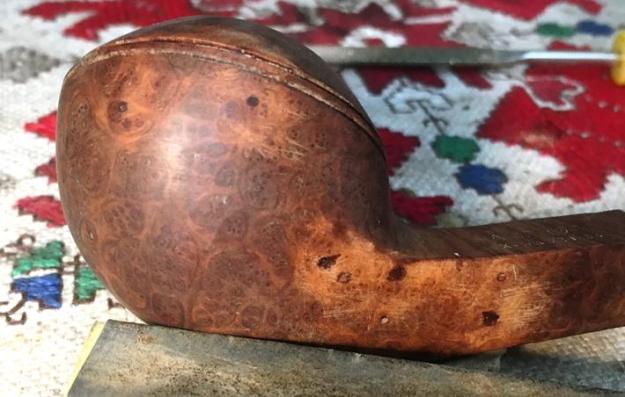 Looking again at the beveled rim which angles toward the chamber. It is darkened from minor scorching and I use a rolled piece of 240 grit paper to clean it. I follow using a rolled piece of 600 paper to smooth and erase the 240 grit scratching.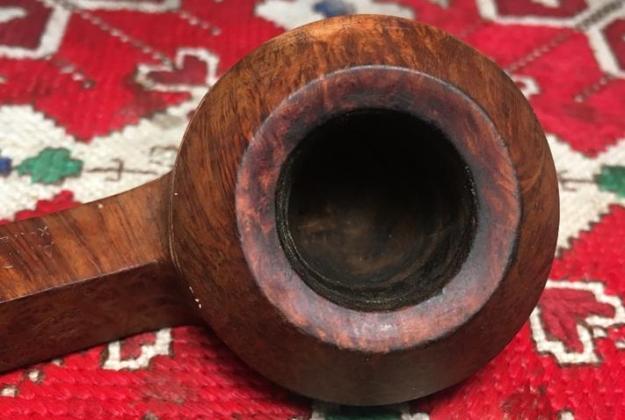
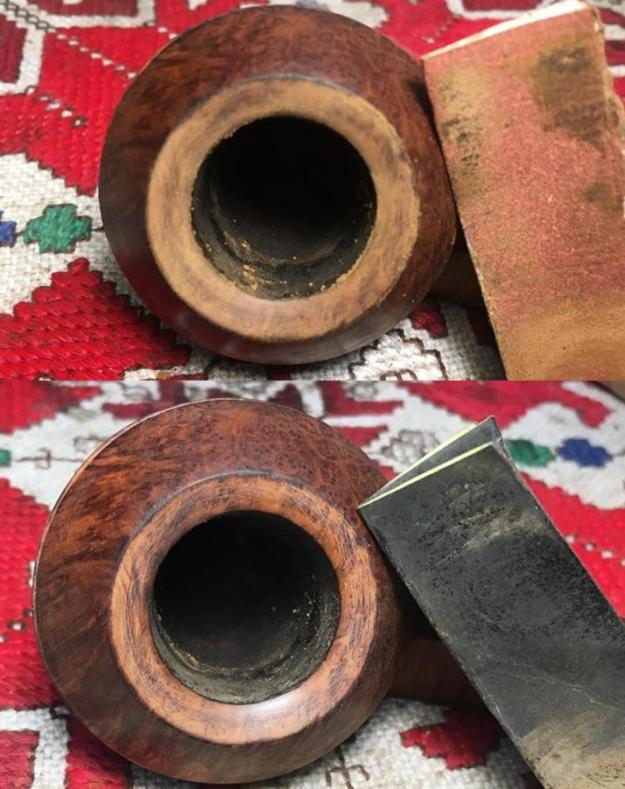 Now, looking to the stummel, it has many scratches and dents, especially on the dome – I take a few pictures to get a closer look. The question in my mind is, do I go the path of more disruption to the briar, starting with sanding sponges or do I start more conservatively using the micromesh pads? I decide conservatively – I can always strategically back track if I see too many dents and scratches being left behind. For now, I start with wet sanding using micromesh pads 1500 to 2400. I follow this by dry sanding with pads 3200 to 4000 then 6000 to 12000. Throughout, I’m careful to avoid the nomenclature on both upper, diamond shank sides.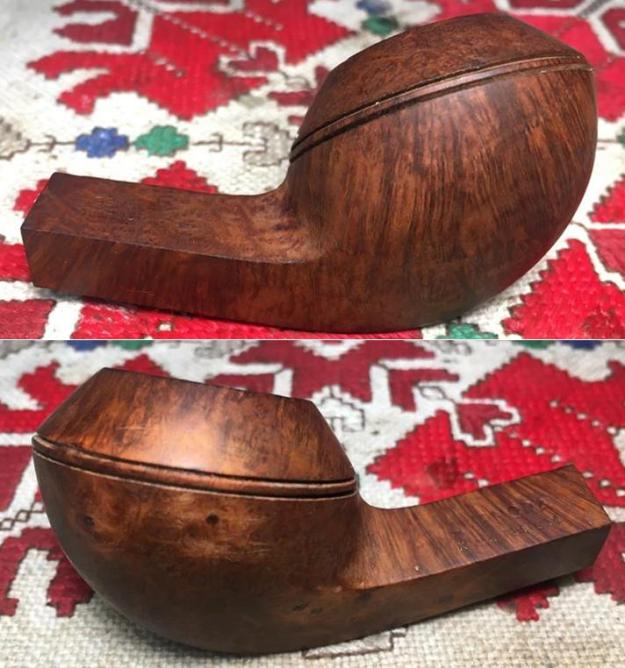
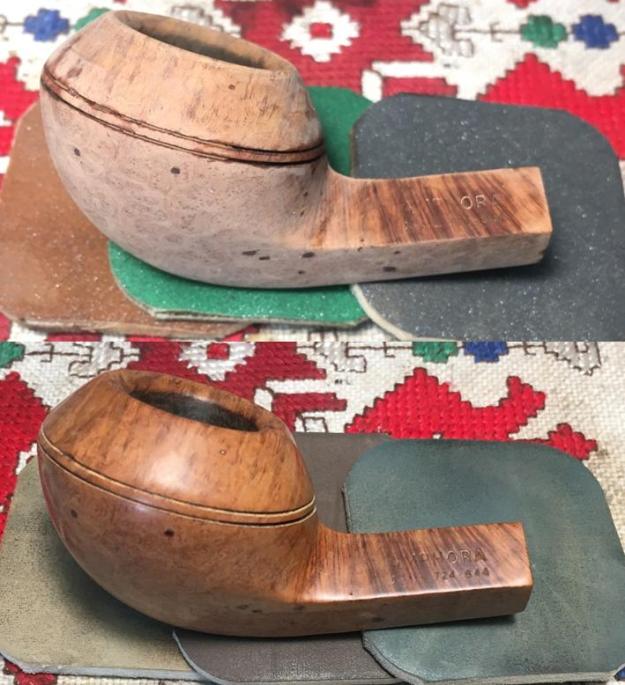
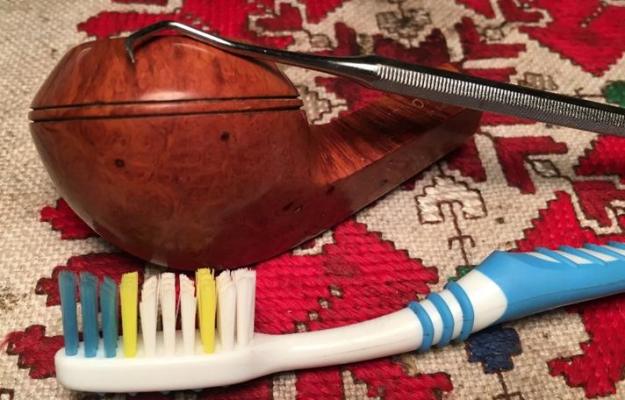
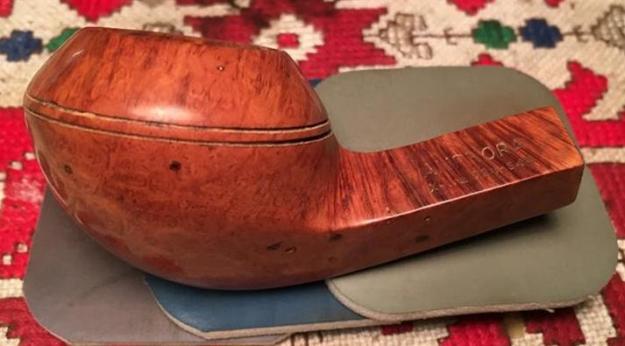 After completing the micromesh sanding, I again take the sharp dental probe and carefully scrape out the dome rings to remove any debris that has collected – and there is some! I move around the dome in both troughs and then follow by sweeping the rings out with a bristled tooth brush.
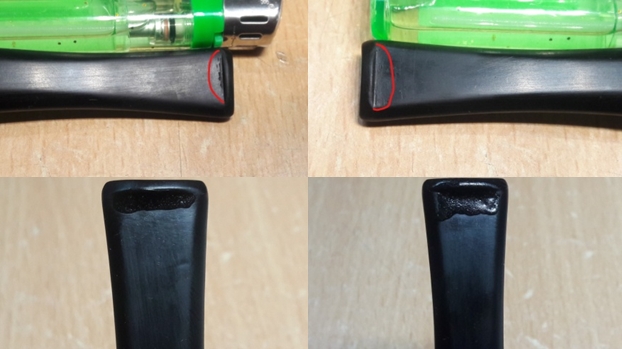
 I now need to catch the stem up with the stummel. I take a few pictures of the upper and lower bit area and there are minor dents on it and the button has some compression. I’ll heat the vulcanite to raise these dents which should result in easier sanding.
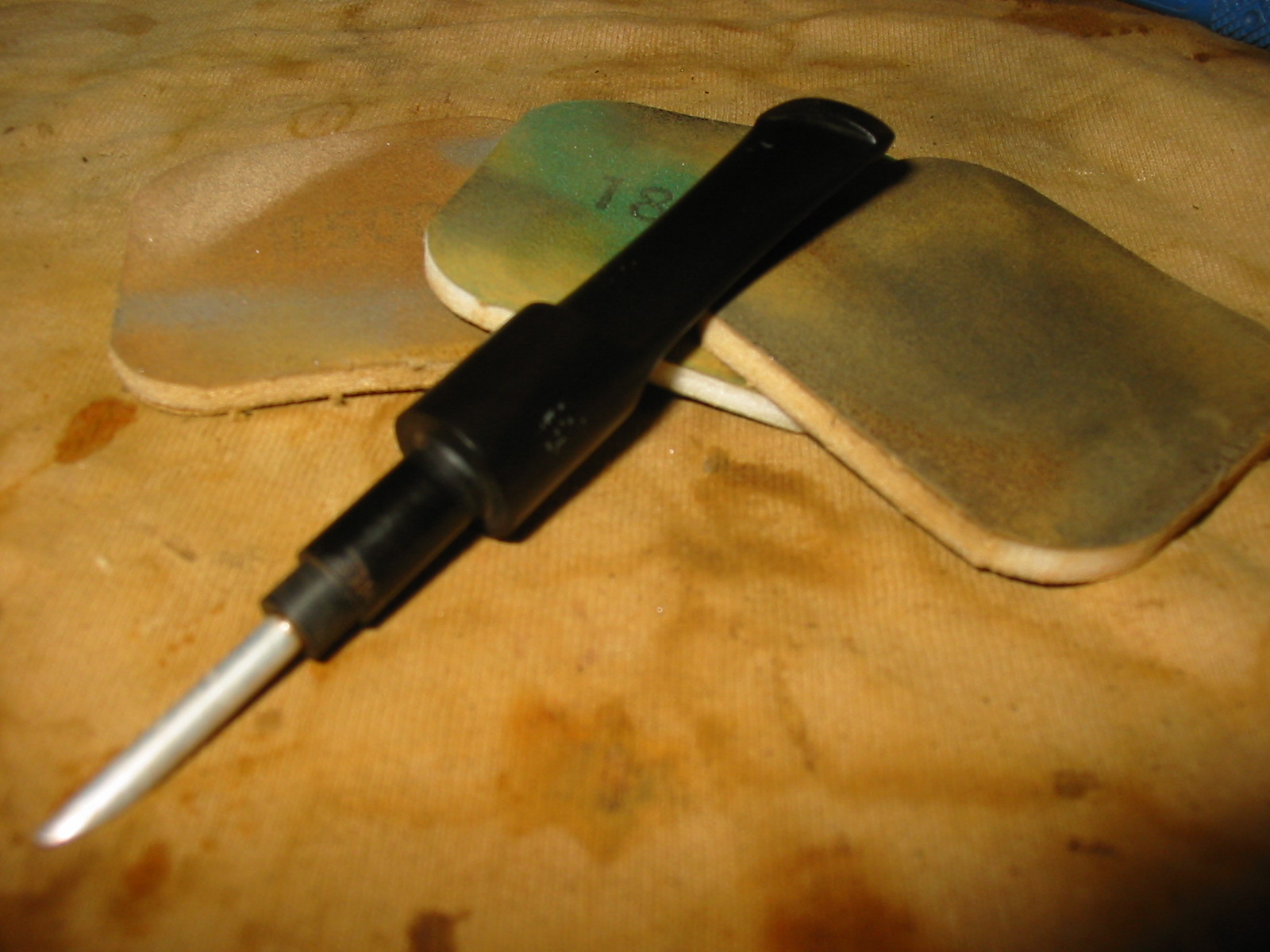
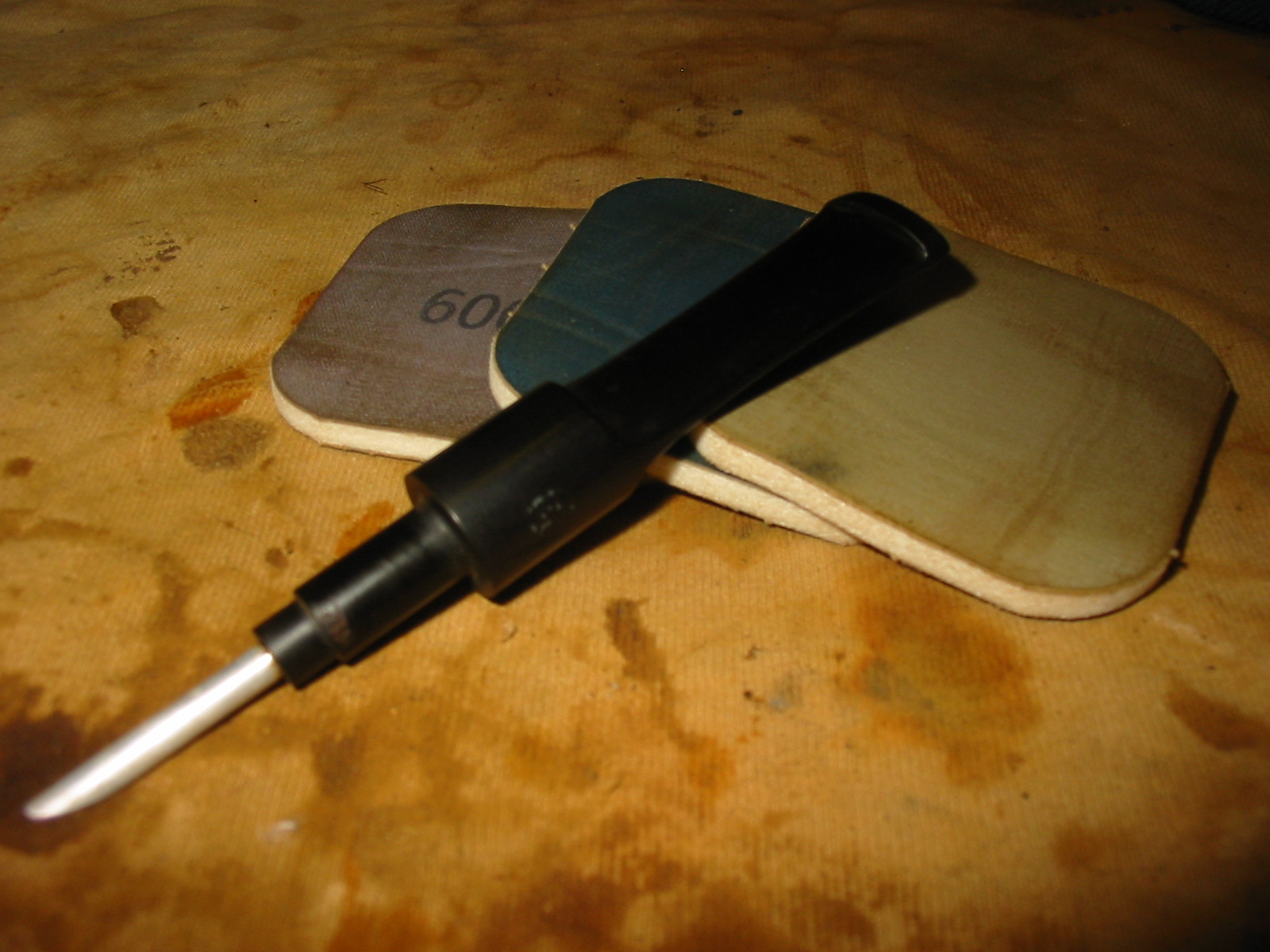
 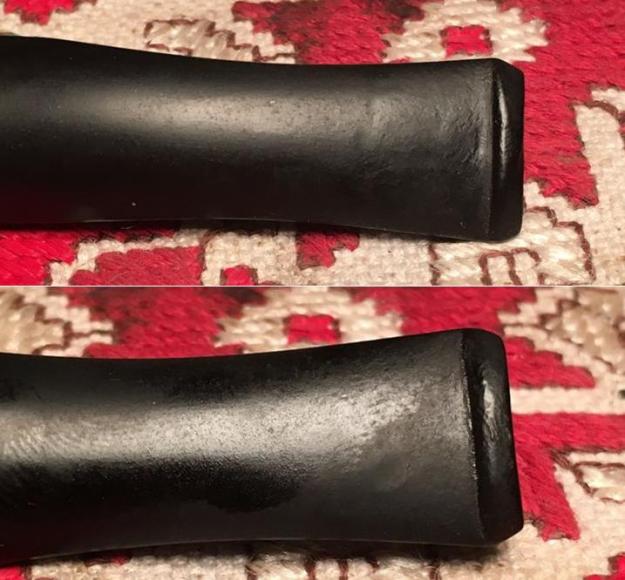 To start, I use a cheap Bic lighter and paint the bit and button with flame to heat and to expand the vulcanite. This works well. I then use 240 grit paper to sand the dents. I use the flat needle file as well to sharpen the button – to make it crisper. After using the 240 paper, I employ 600 grade paper to erase the scratches of the 240 paper. Finally, I sand/buff the entire stem with 0000 steel wool.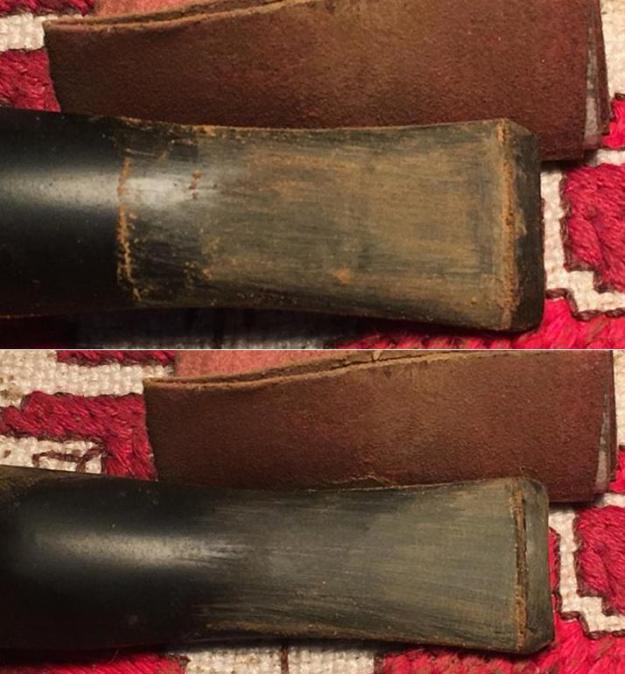
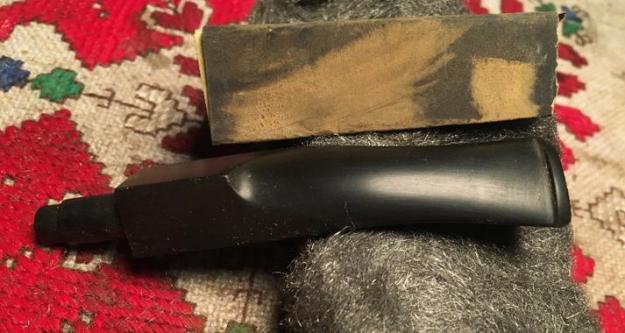 Looking back to the stummel, I have been thinking about how to proceed. From the earlier pictures, the original color motif on this Amphora X-tra Bulldog was lighter – tending toward natural briar but not quite. With the fill patches I’ve done, I want to darken the color to mask these. When I look at the patches again, I notice that the smaller fills that I did not deal with earlier – thinking that they were ok, had hollowed out. Ugh. I get the dental probe and excavate additional older fill material. I’ve had detours before, and I’ve just started another. With three additional holes to fill, the good news is that it is localized and shouldn’t take too long. After cleaning the new holes, I spot drop regular CA glue into each and utilize an accelerator to quicken the process.
 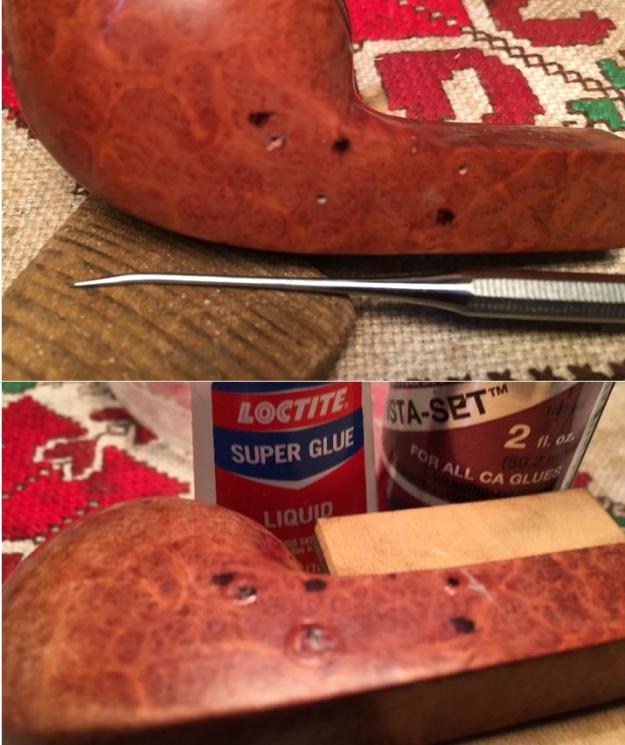 To shorten this description, suffice it to say, I filed/sanded the patches down and I repeated the full micromesh pad process of 9 pads to complete the detour pictured next!
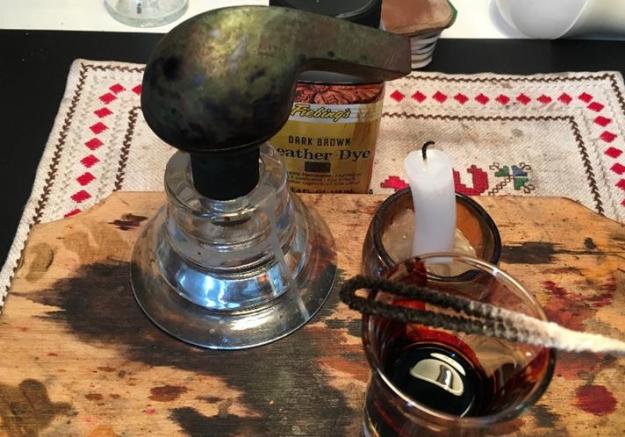
 To mask the orchard of patches on the left side of the stummel and shank, I will use Fiebing’s Dark Brown Leather Dye to darken the hue. As an aniline dye, alcohol based, I can and plan to wipe the stummel down with alcohol to lighten the dye if I choose. I will start darker and lighten if needed so that the patch of patches will be masked. Even so, I like the look of a darker Bulldog – it has more of an ‘Olde World’ feel to it. I transform my worktable to the stain table, bringing out the tools necessary. I mount the Bulldog’s stummel on a cork to act as a handle. I wipe the stummel down with alcohol to make sure it’s clean. I then heat the stummel with a hot air gun which acts to expand the grain and making the grain more receptive of the dye. After the stummel is heated well, I use a folded pipe cleaner to apply the dye to the stummel. After thoroughly covered, I light or flame the wet aniline dye and the alcohol immediately flames off setting the dye in the briar. After a few minutes, I repeat the process again by applying another coating of dye and then flaming it. I set the stummel aside to rest for several hours.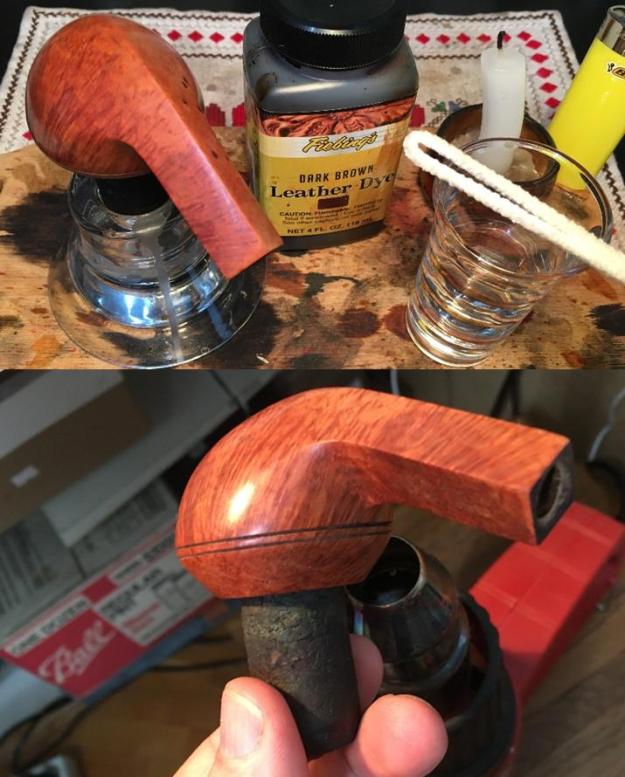
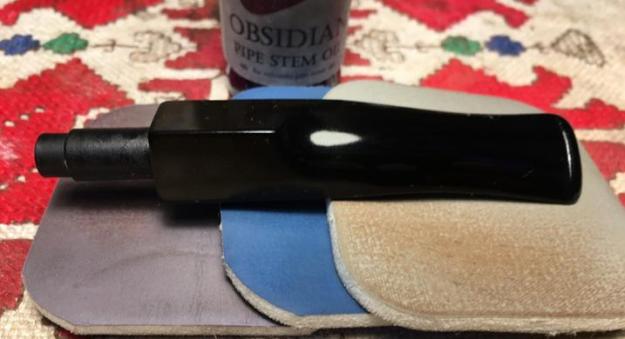
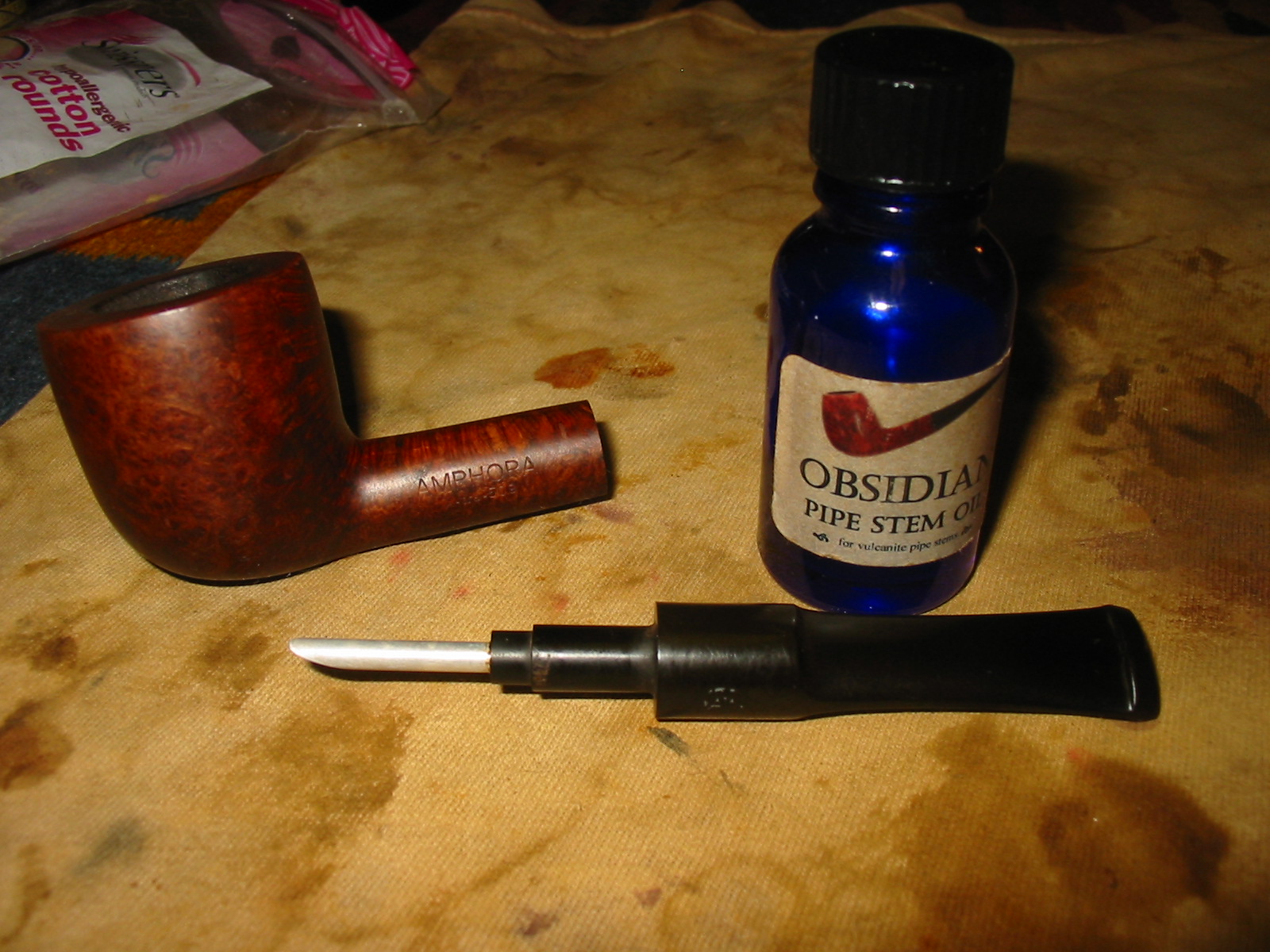
 Turning to the stem, using micromesh pads 1500 to 2400 I wet sand the stem. I follow by dry sanding with pads 3200 to 4000 and 6000 to 12000. After each set of 3 pads I apply a coat of Obsidian Oil to revitalize the vulcanite stem. The ‘A’ stem marking that was existent before is no longer. There was nothing left to salvage by the time it reached my worktable.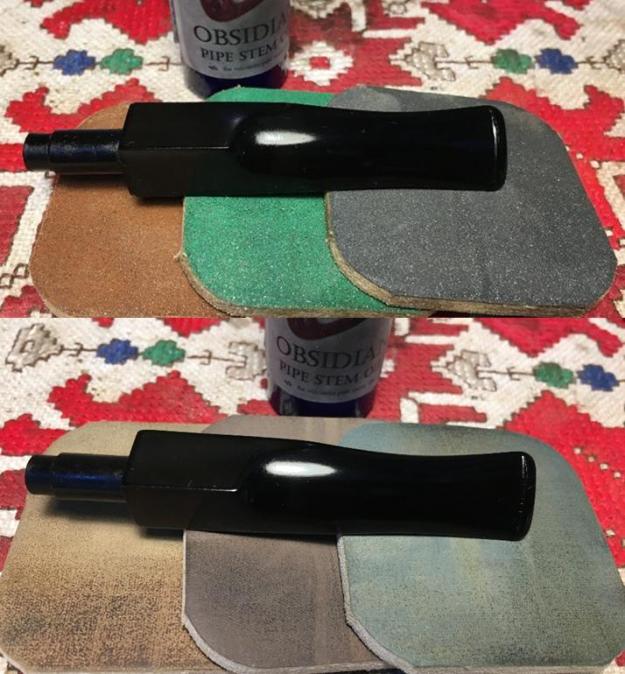
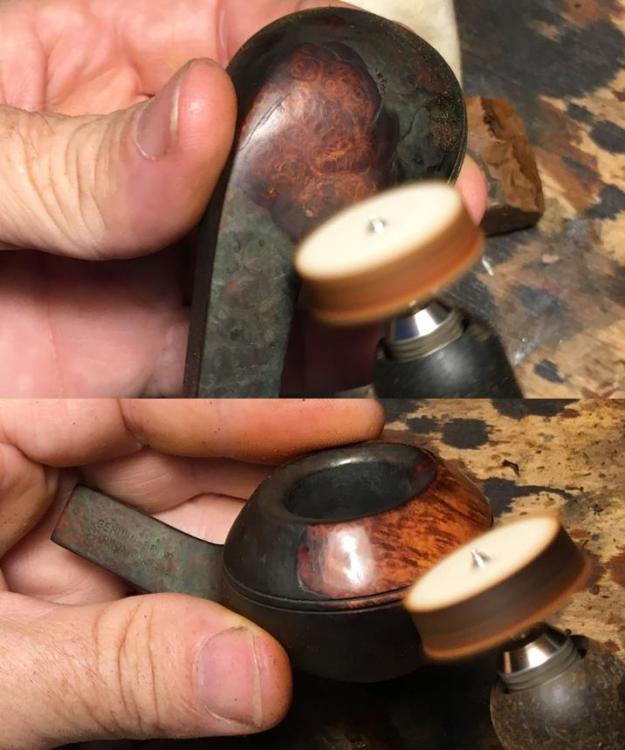
 Now, time to unwrap the dye-flamed stummel. It’s been resting for several hours after applying Fiebing’s Dark Brown Leather Dye. To unwrap the crust to reveal the grain, I mount a new felt buffing wheel on the Dremel and set it almost to the slowest speed. I apply the coarser compound, Red Tripoli to the stummel using a methodical section by section approach – not applying too much pressure on the wheel but allowing the speed, the felt wheel and the Tripoli to do the work. With my wife’s help, because I don’t have three hands, she took a few pictures to show the Tripoli at work unwrapping. To finish up the Tripoli, to get to the tight places next to the shank, I changed over to a cotton cloth buffing wheel which was able to reach into the crook. The ‘unwrapping’ is pretty amazing to see the grain emerge and to discover how the leather dye was received.
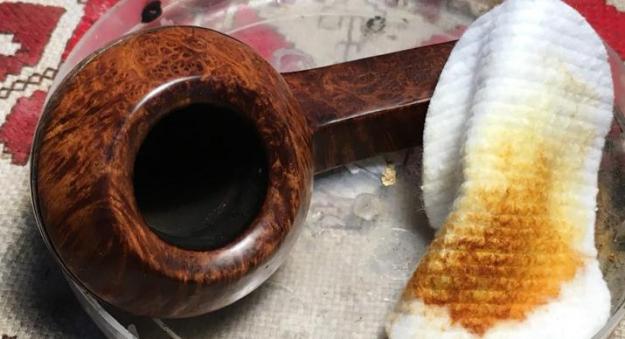
 After completing the Tripoli, I wet a cotton pad with alcohol and lightly wipe the stummel. I do this not so much to lighten the dyed finish, because I like the brown hue a lot, but to blend the fresh dye on the briar surface.
 I then mount the cotton cloth buffing wheel dedicated to Blue Diamond compound and increase the Dremel to 40% full power. I join stem and stummel and apply Blue Diamond compound to the entire pipe. When finished, I wipe the pipe with a felt cloth not so much to buff but to remove the compound dust from the surface in preparation for the carnauba wax. Changing to another cotton cloth wheel, leaving the speed the same, I apply a few coats of carnauba wax to stem and stummel. I then give the pipe a rigorous hand buffing with a microfiber cloth to raise the shine.
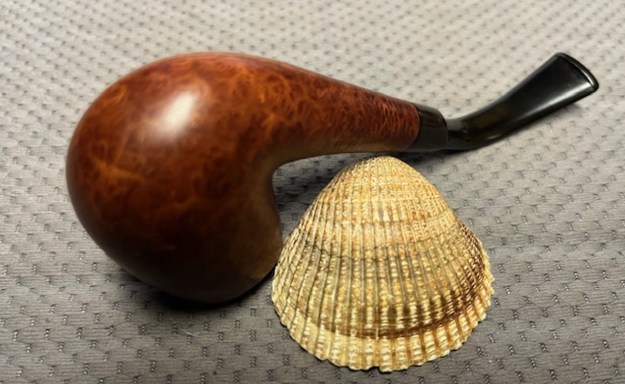
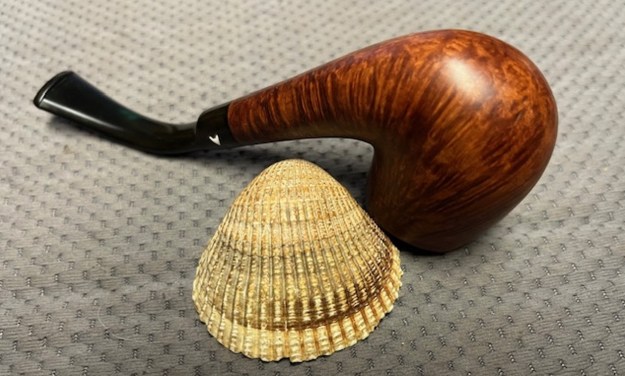
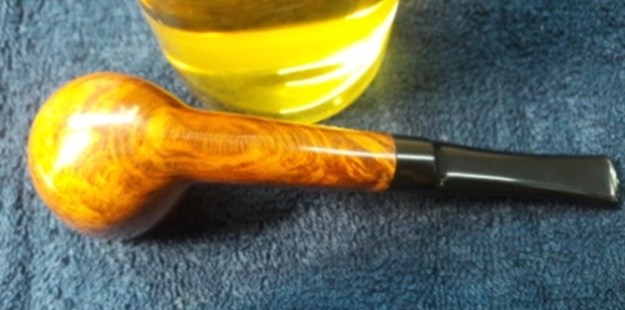
Oh my, he looks good! The iconic Bulldog shape reminds one of the small, stout four-legged friend from whence this name comes. This quarter bent Amphora X-tra 724-644 of Holland came out very well. The dome ring repairs are invisible and the patch of patches on the lower left side of the bowl has blended well with the darker leather dye. The briar grain is nice. The straight grain seems to pour out over the Bulldog’s dome and is joined by bird’s eye grain bubbling like foam on a frosted mug – the dome is eye catching and pulls one’s attention to the pipe. This Amphora X-tra is ready for a new steward! Taylor saw the potential of this Bulldog when he commissioned it for his friend’s wedding gift (see For ‘Pipe Dreamers’ Only). He will have first dibs on it when it goes into The Pipe Steward Store. This pipe along with the other 2 that Taylor commissioned and acquired benefit the Daughters of Bulgaria – women and girls who have been trafficked and sexually exploited. Thank you for joining me!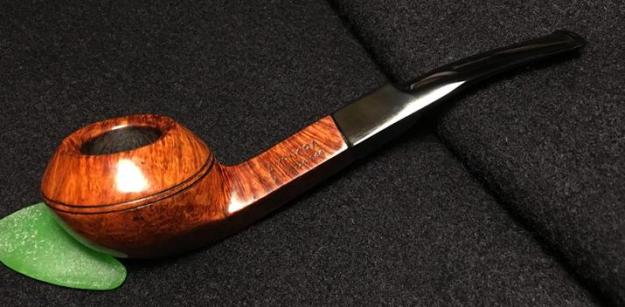
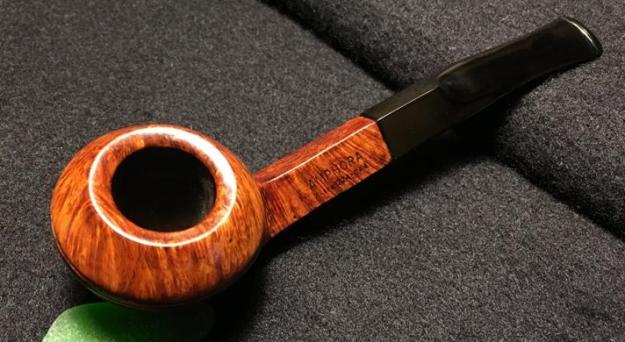
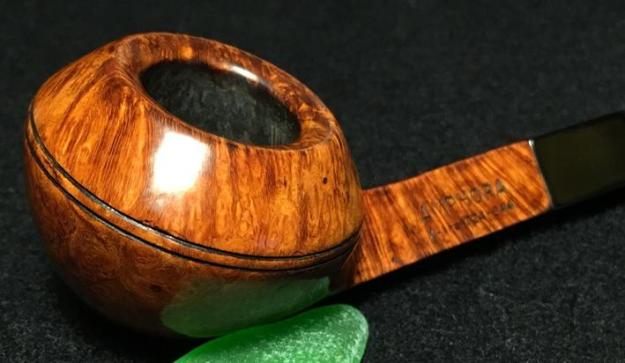
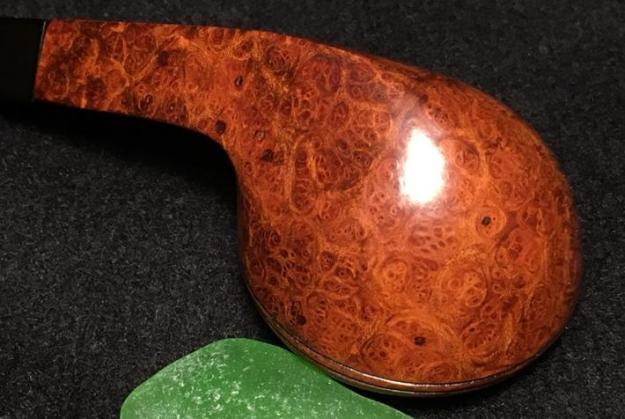
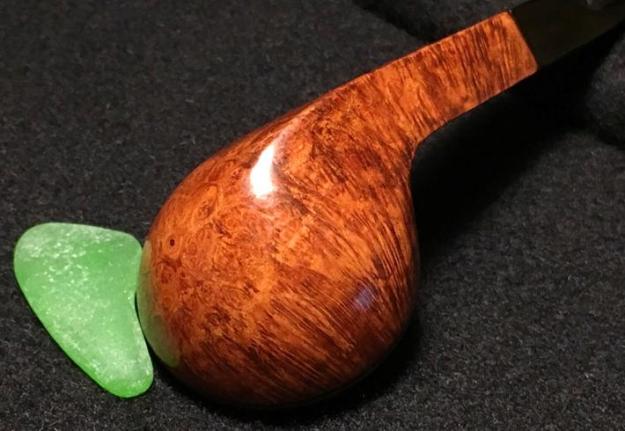
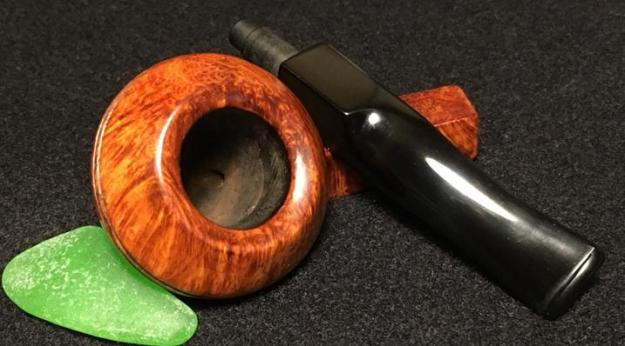
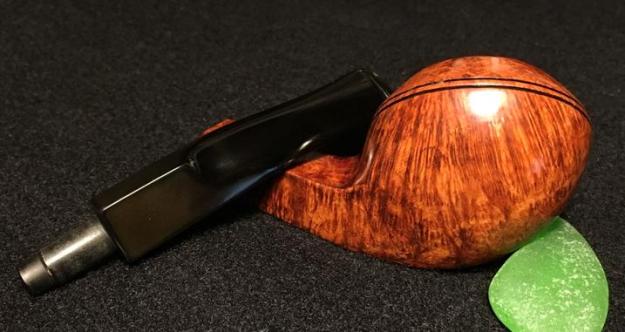

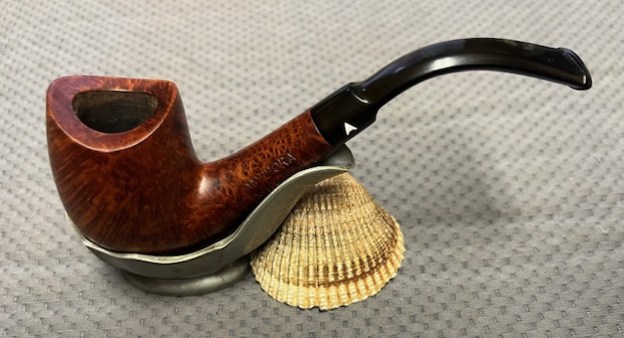
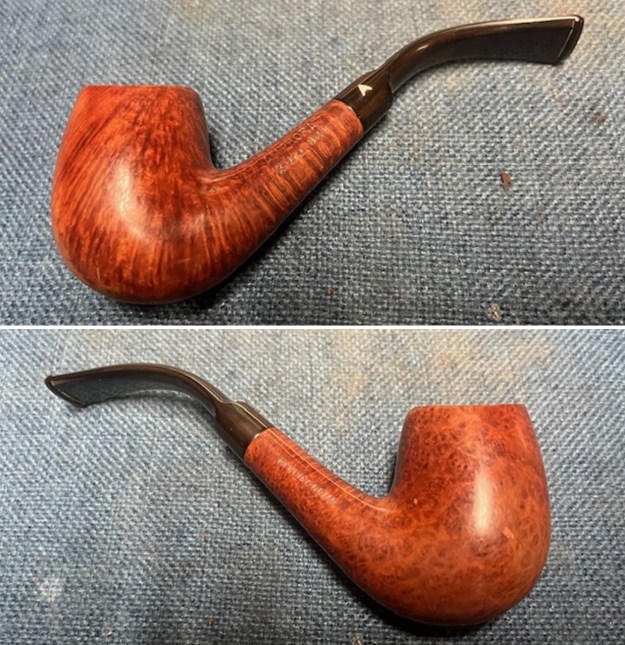
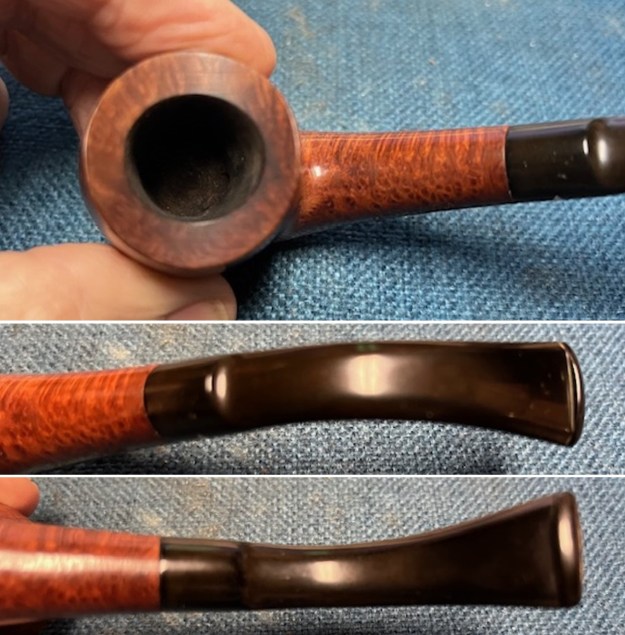
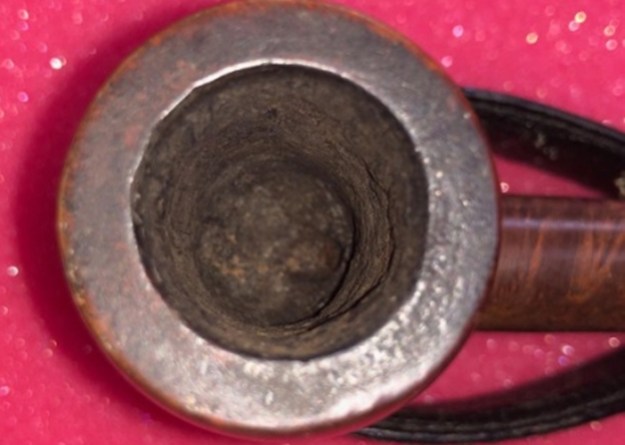
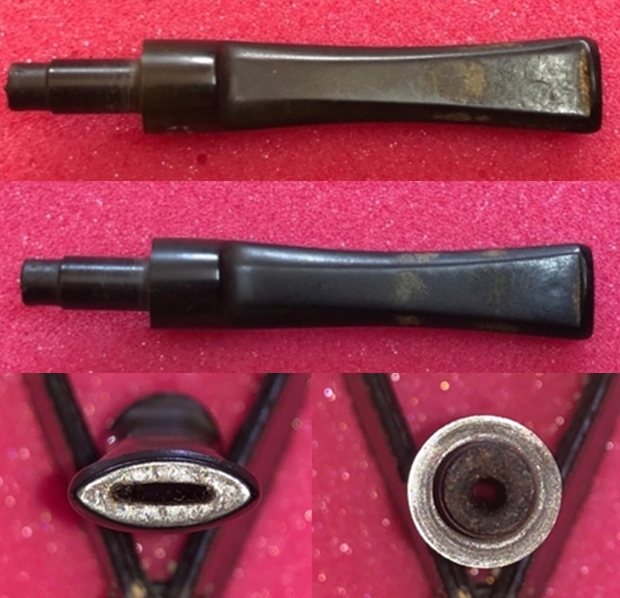
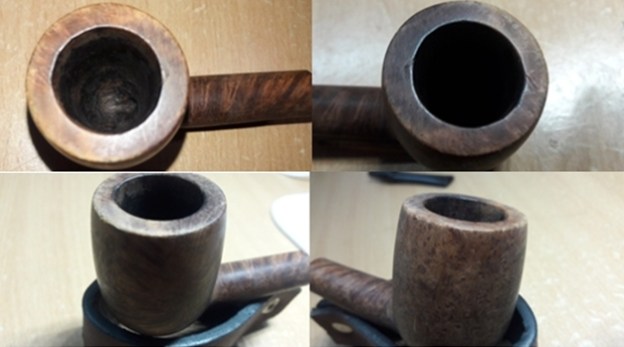
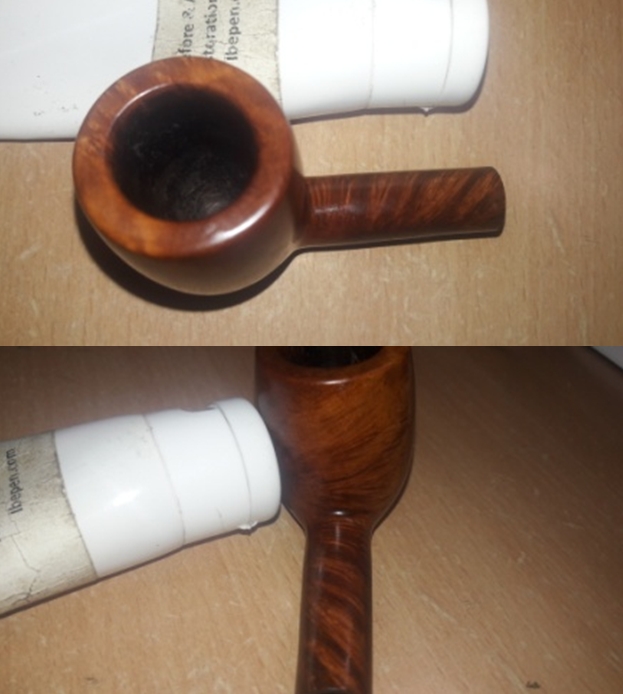
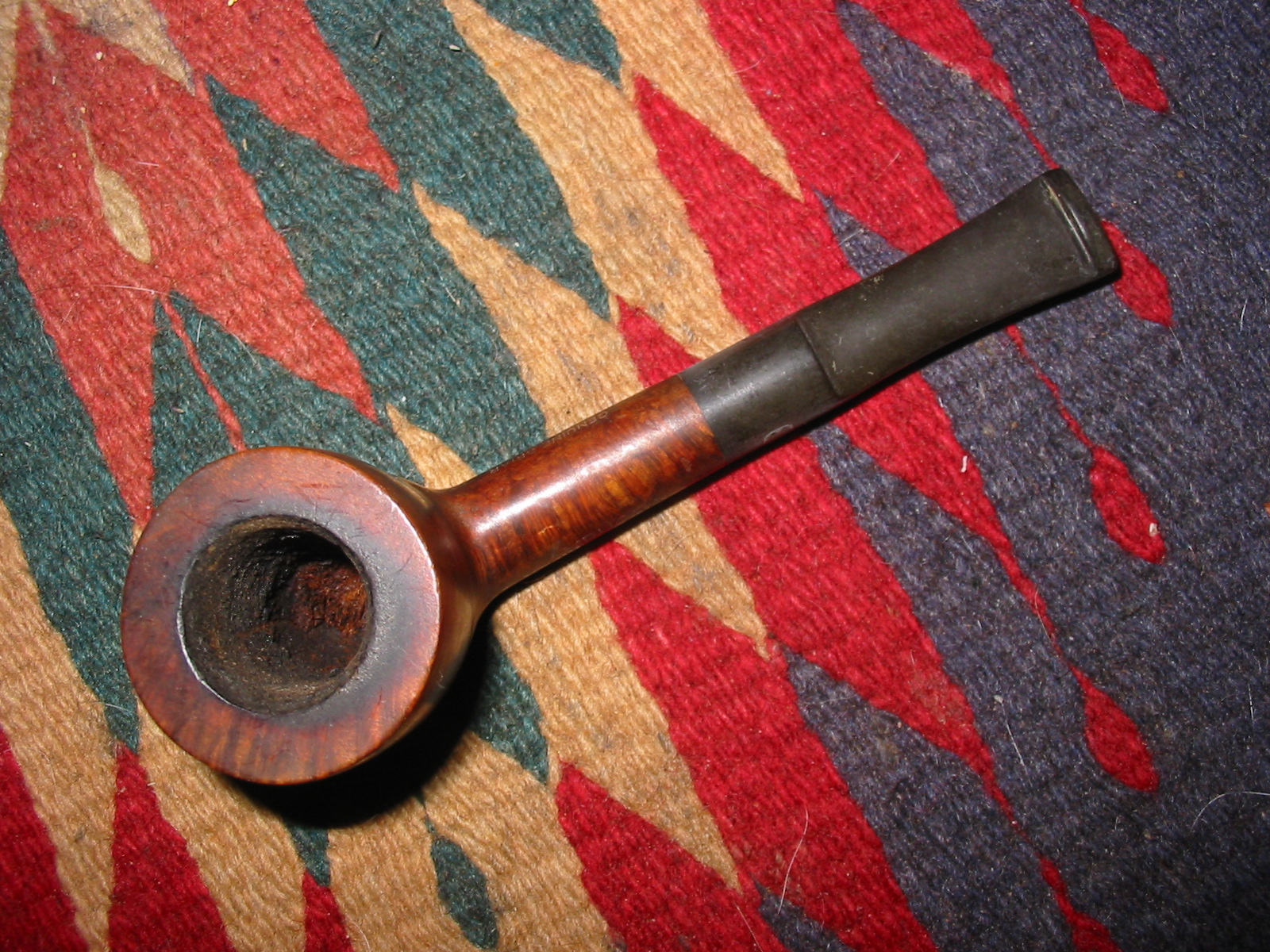
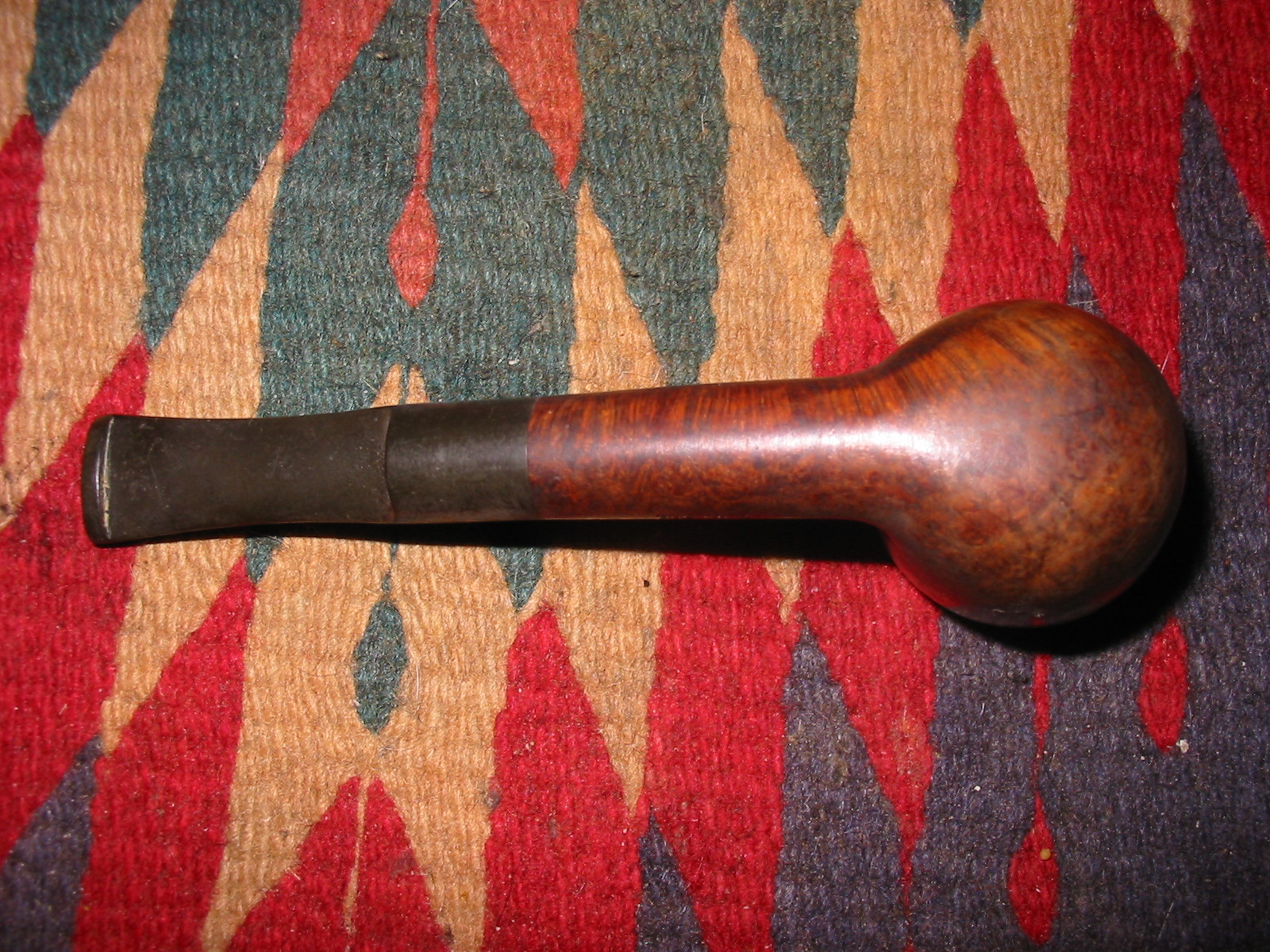
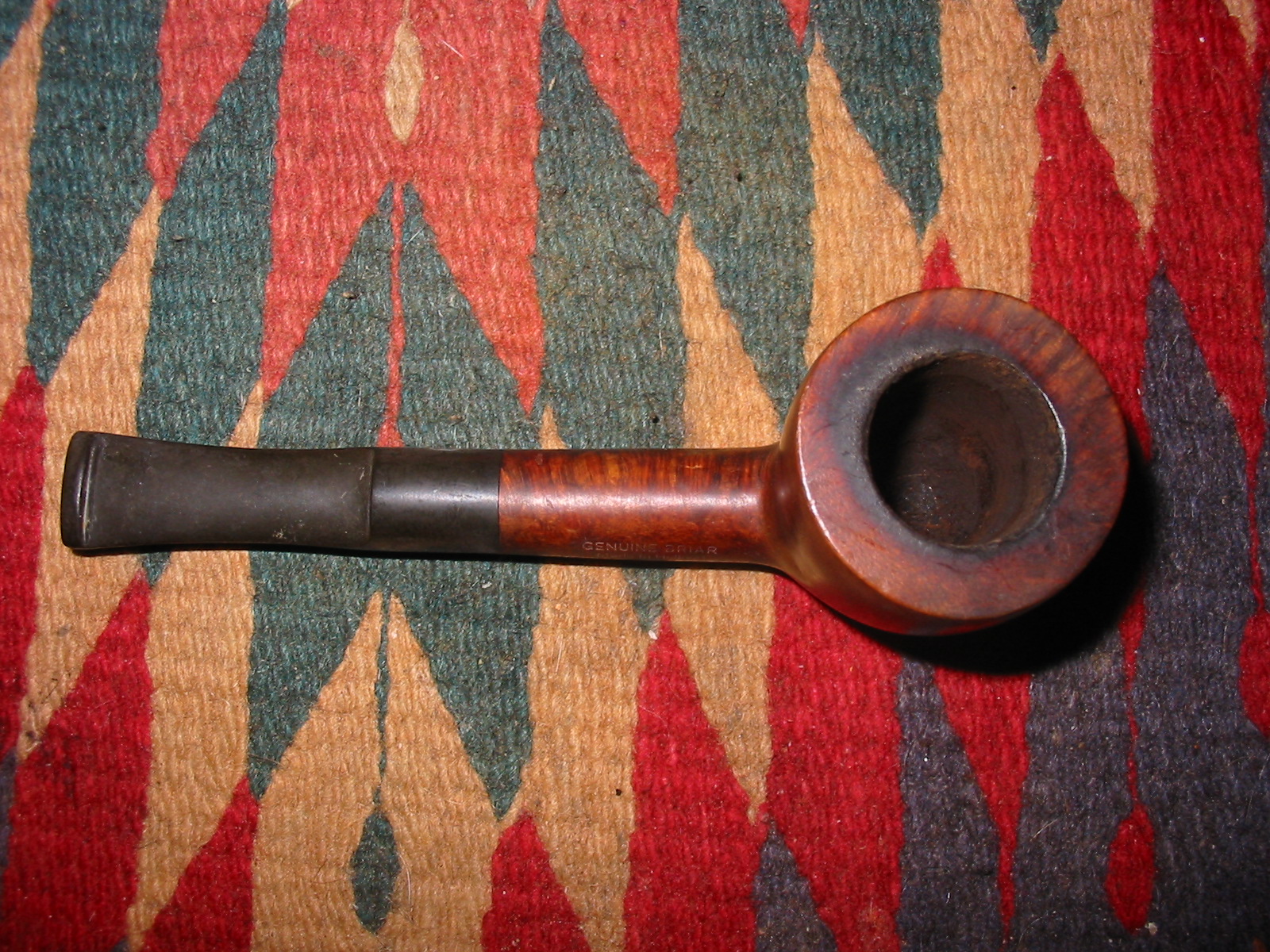
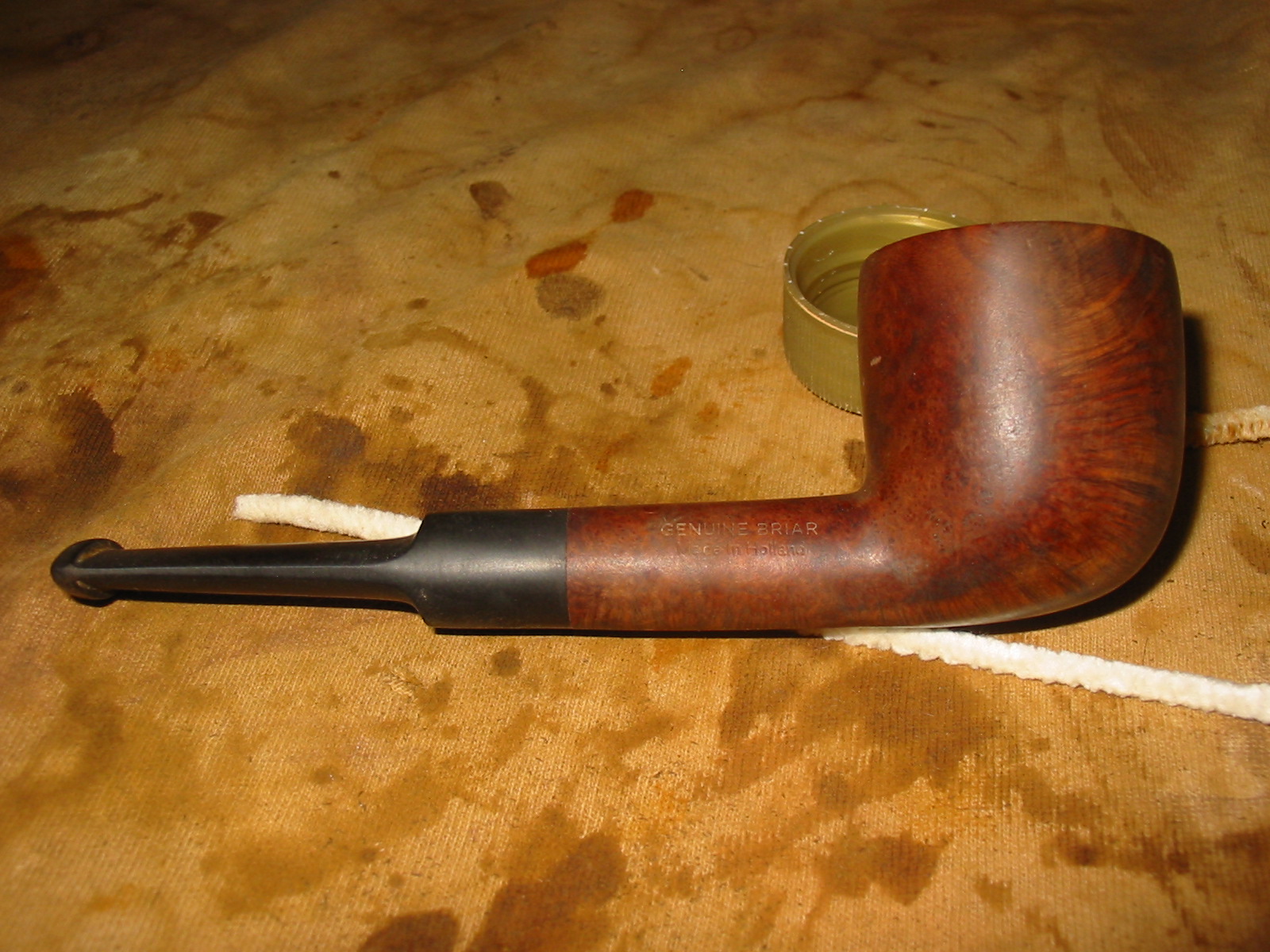
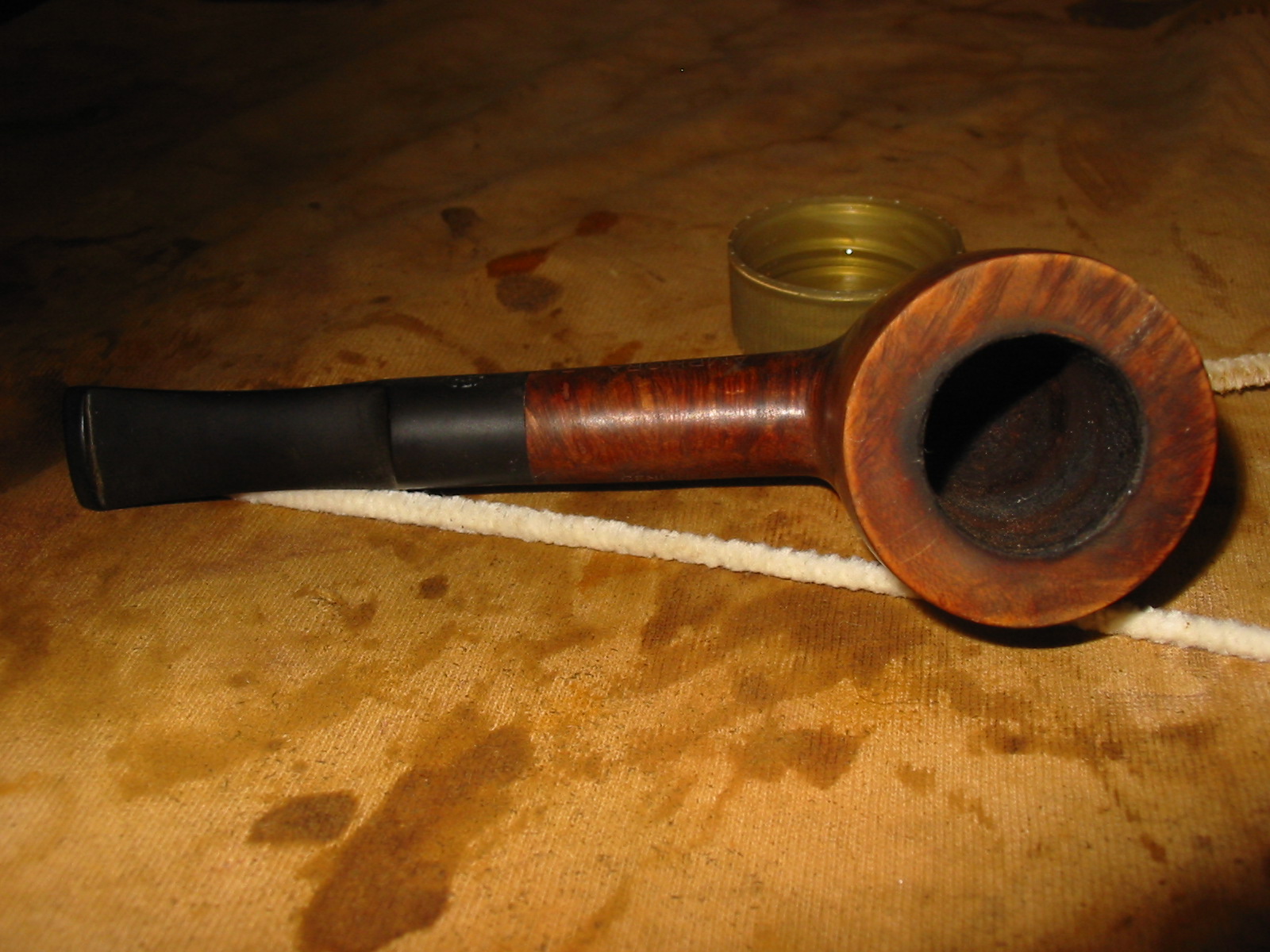
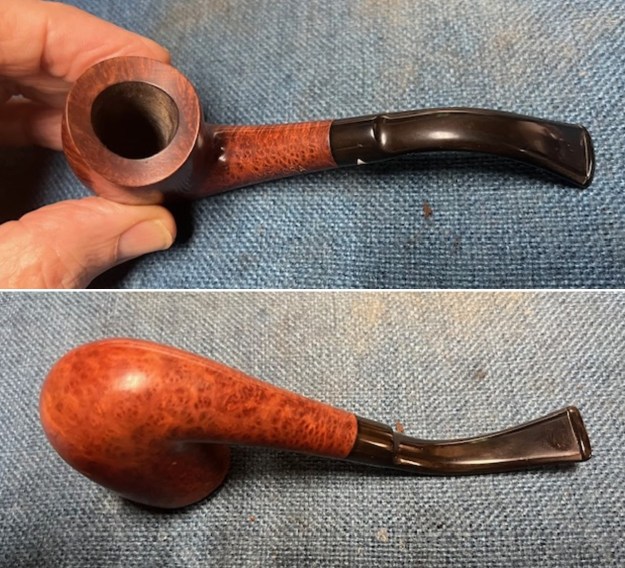 I took photos of the rim top and bowl to give a clear picture of the thickness of the cake and tobacco debris as well as the inner edge of the rim. I also took photos of the top and underside of the stem. The photos show the overall condition of the stem.
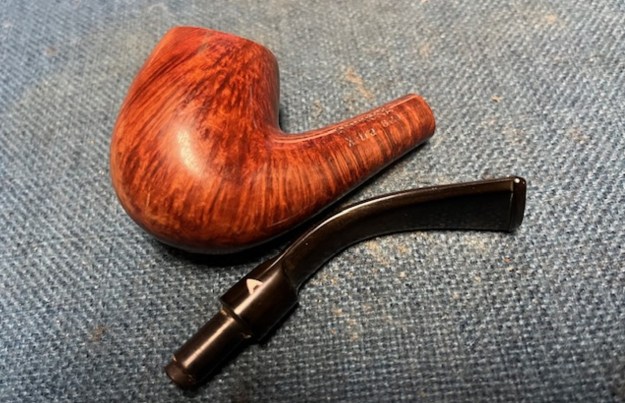
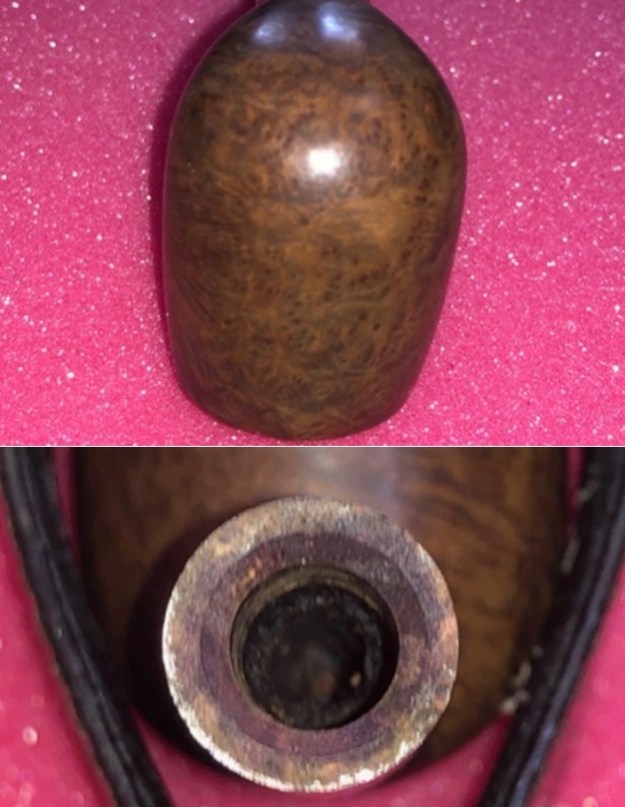
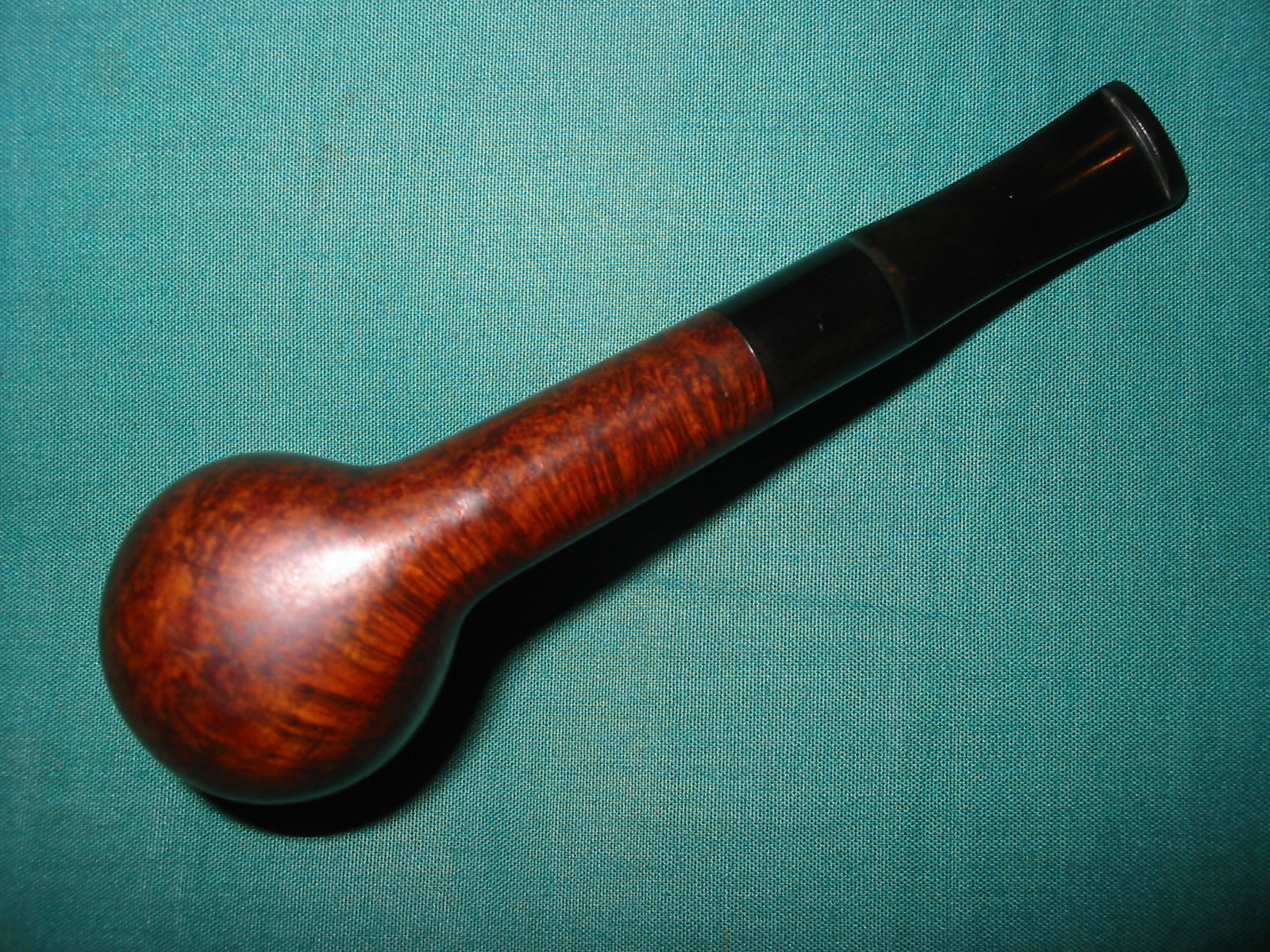
  The stamping on the sides of the shank is clear and readable and read as noted above. I took several photos to capture the stamping on the sides of the shank. I took the stem off and took a photo of the pipe to show the beauty of the piece.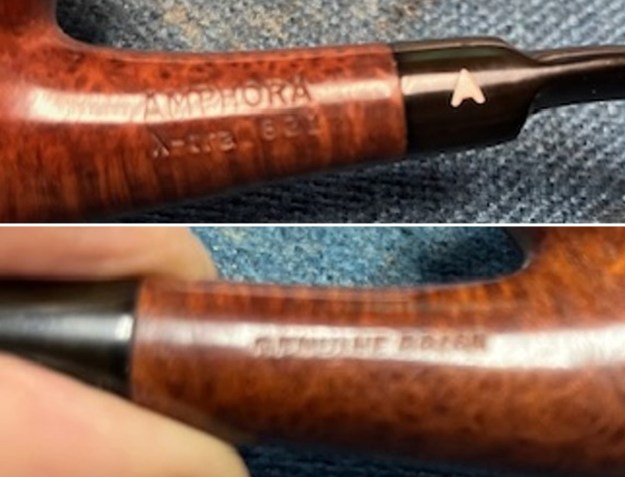
 I turned to Pipephil’s site to see what I could learn about the pipe and its maker. The photos did not show the same pipe but the information was helpful (http://www.pipephil.eu/logos/en/logo-a5.html). I did a screen capture of the section and the side bar notes are shown below the photo.
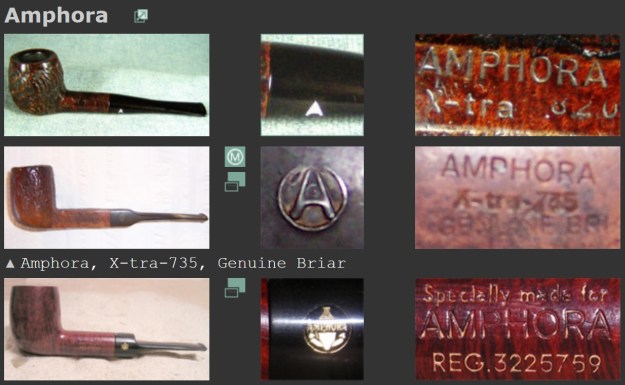 A brand of Elbert Gubbels & Sons – Royal Dutch Pipe Factory who has gone bankrupt on March 2012. See also: Big-Ben, Humbry, IRC, Roermond, Royal Dutch, Thompson and Porsche Design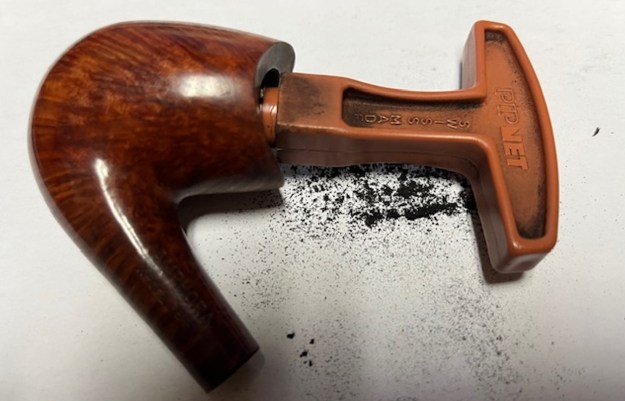
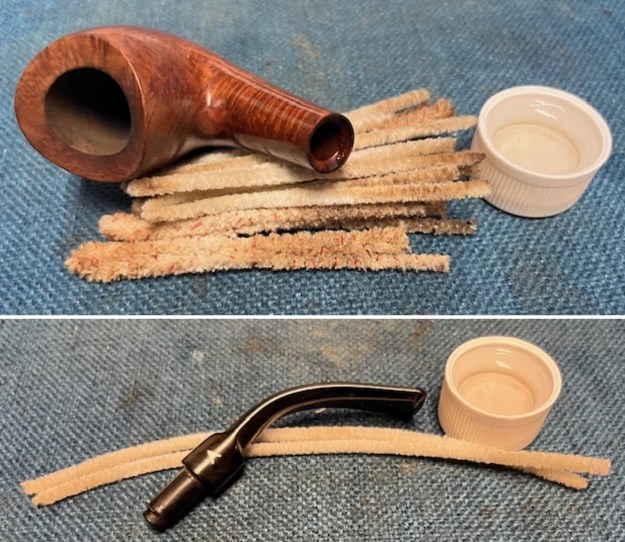
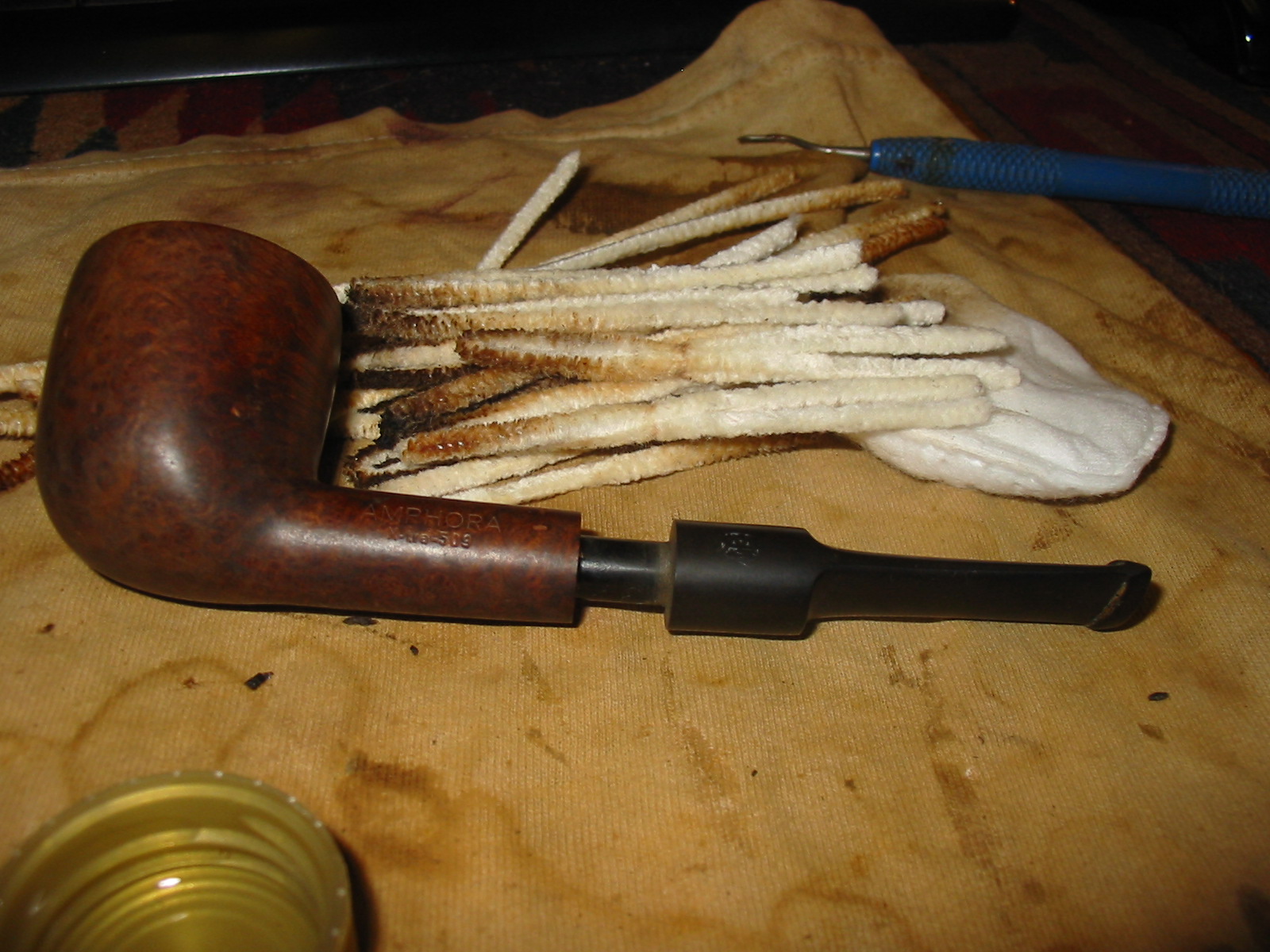
 I cleaned out the airway in the shank, the mortise and the airway in the stem with pipe cleaners, cotton swabs and alcohol. It came out smelling cleaner and the passages were clean.
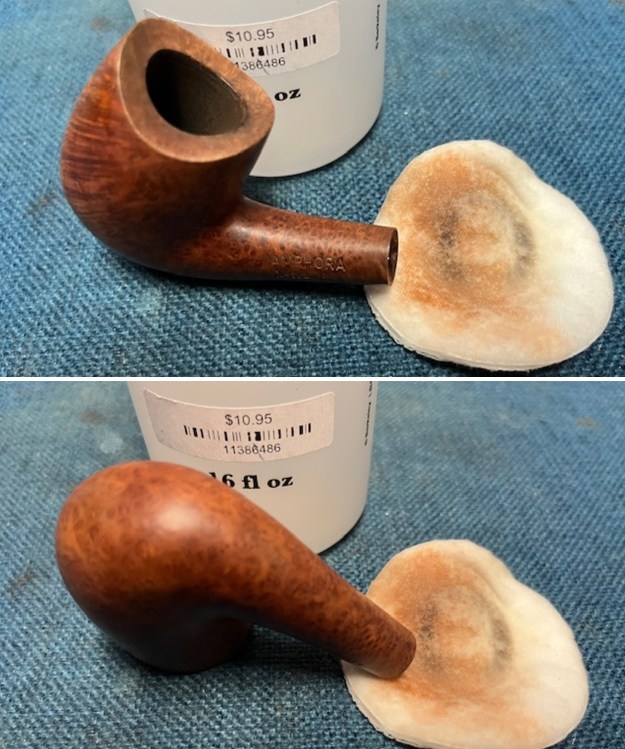
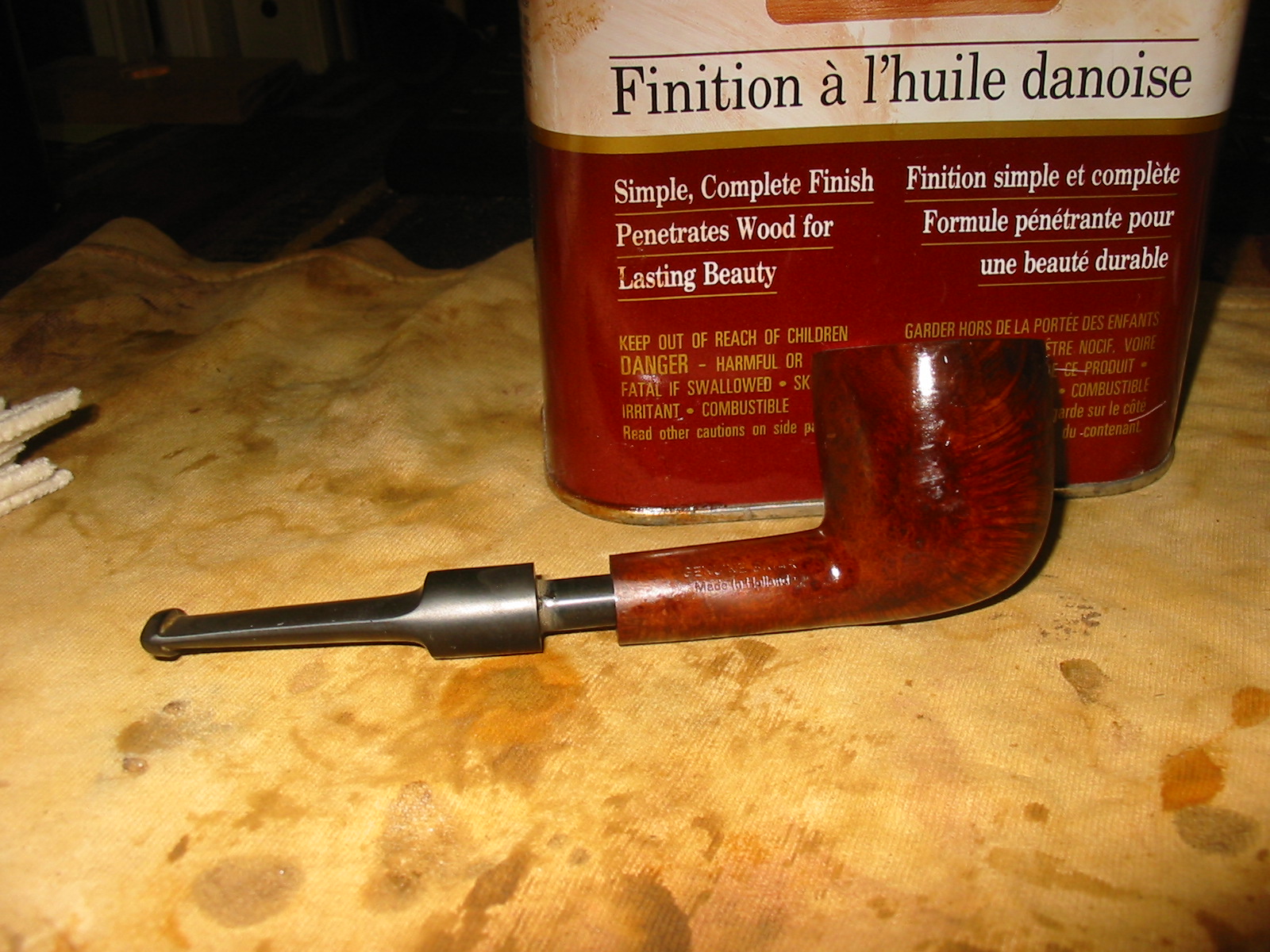
 To remove the spotty varnish coat, I wiped the bowl down with acetone on a cotton pad. I always like a pipe that has the natural shine of wax versus the shiny varnish coat. In this case the spotty, peeling varnish gave me the incentive to remove it!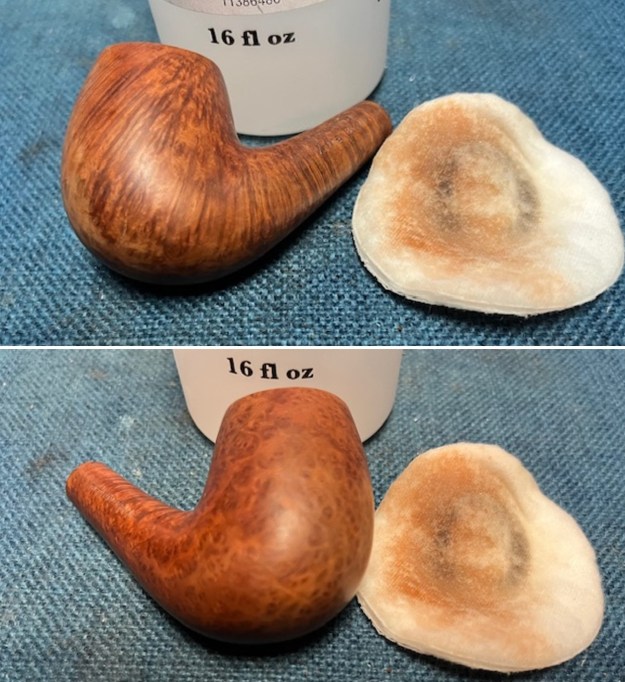
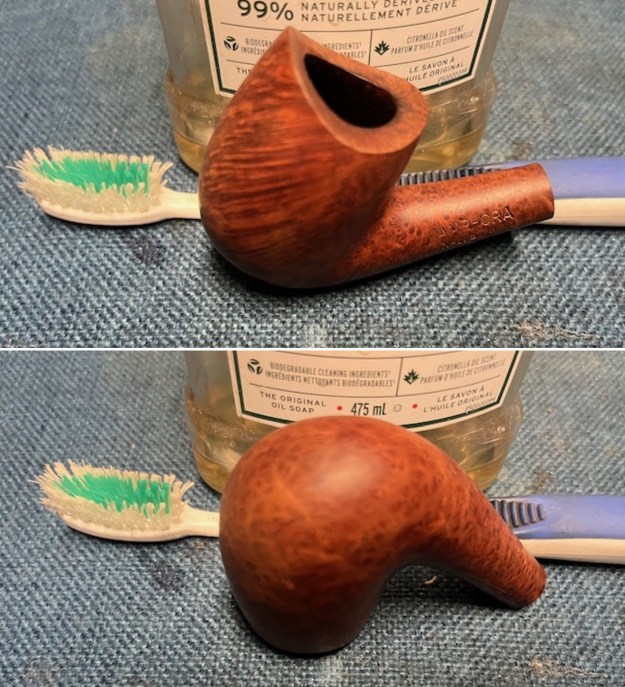
 I scrubbed the externals of the bowl and shank with undiluted Murphy’s Oil Soap and a tooth brush to remove the residual grime in the grain. I rinsed it with warm running water. The grain really stood out and the bowl was clean and smooth to touch.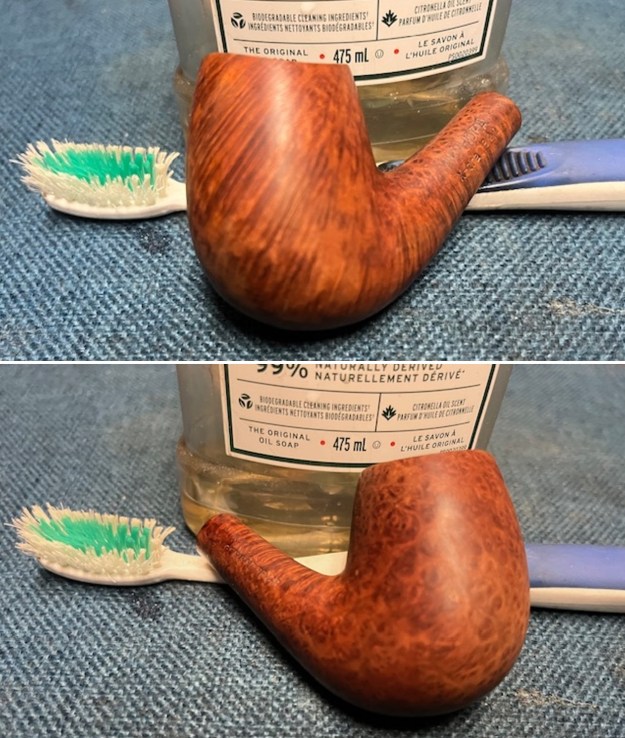
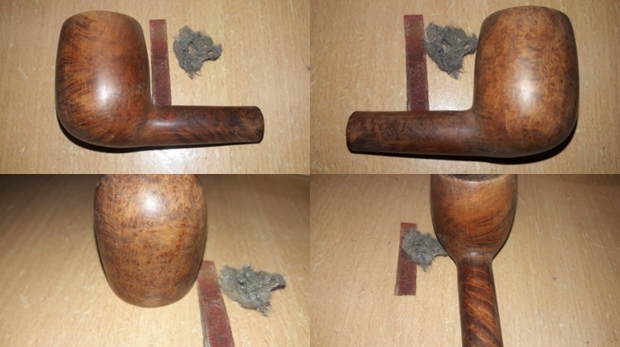
 The pipe is was in such good shape that I started my work on it by sanding the bowl with 320-3500 grit 2 x 2 inch sanding pads. I wiped the bowl down after each sanding pad with a damp cloth to remove the sanding debris. It began to take on a rich shine.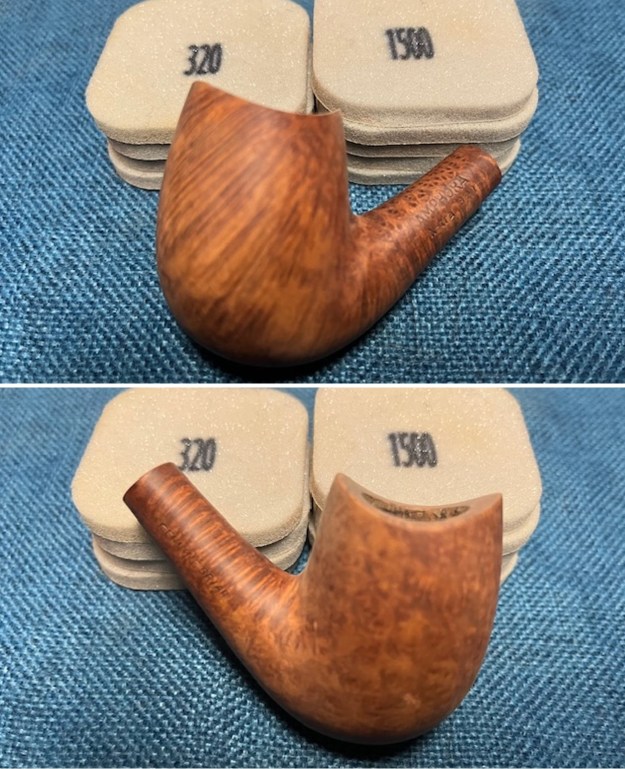
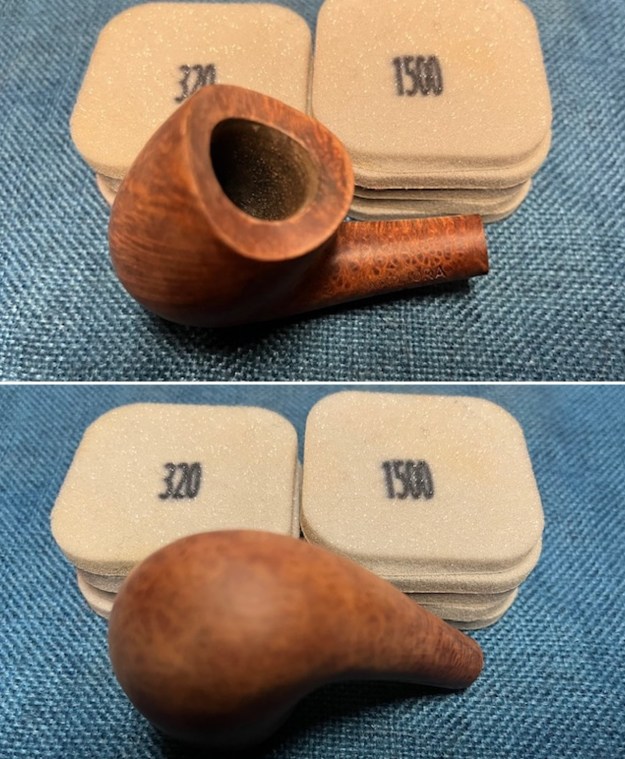 I polished the briar with micromesh sanding pads – dry sanding with 1500-12000 grit pads. I wiped the bowl down after each pad with a damp cloth to remove the sanding dust. By the end of the process the pipe bowl looked very good.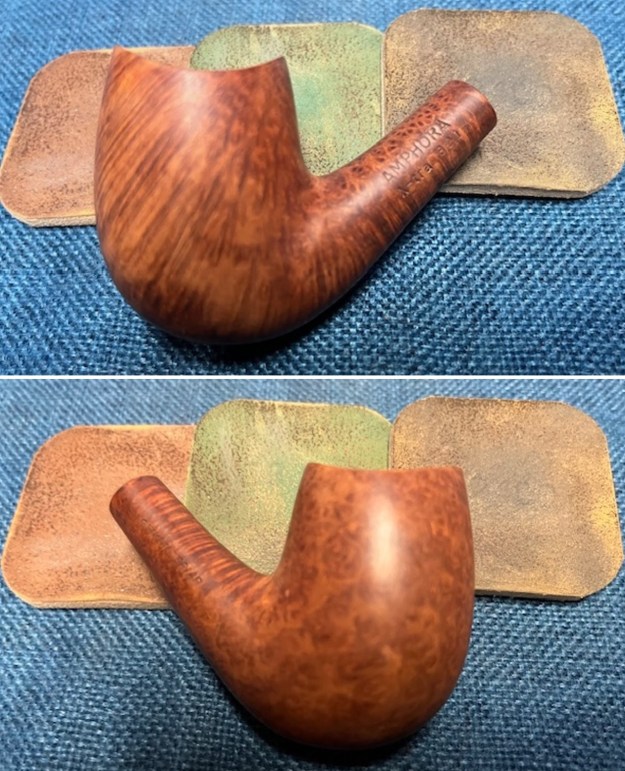
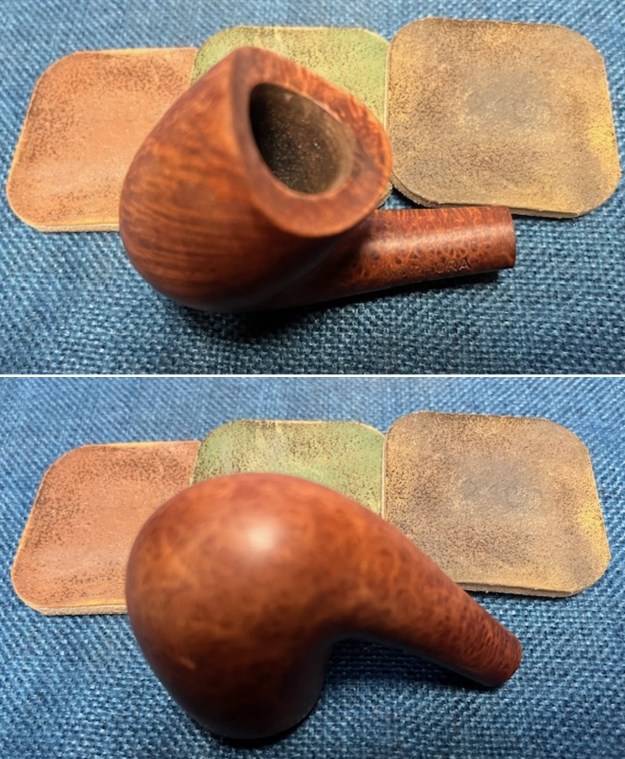
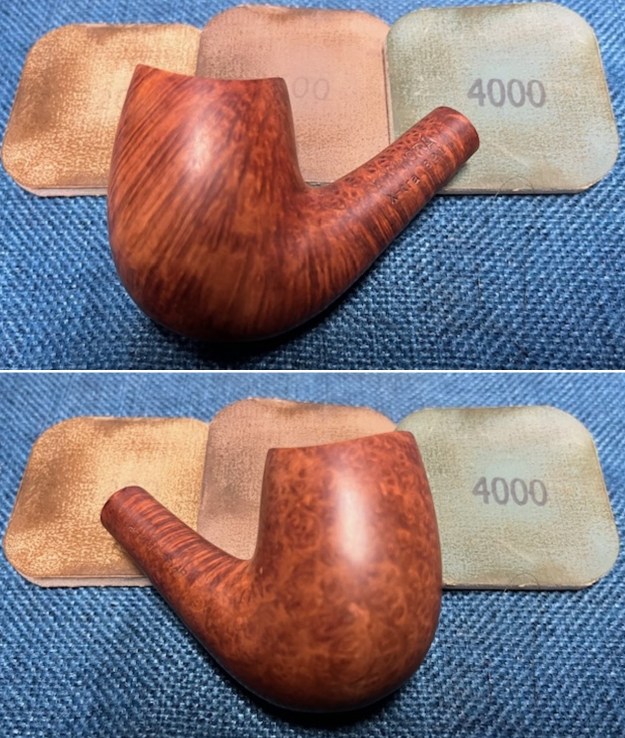
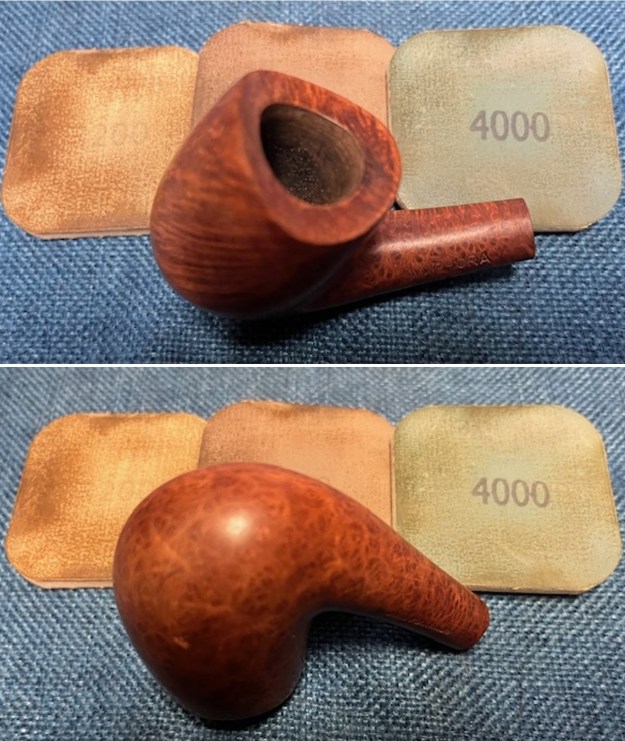

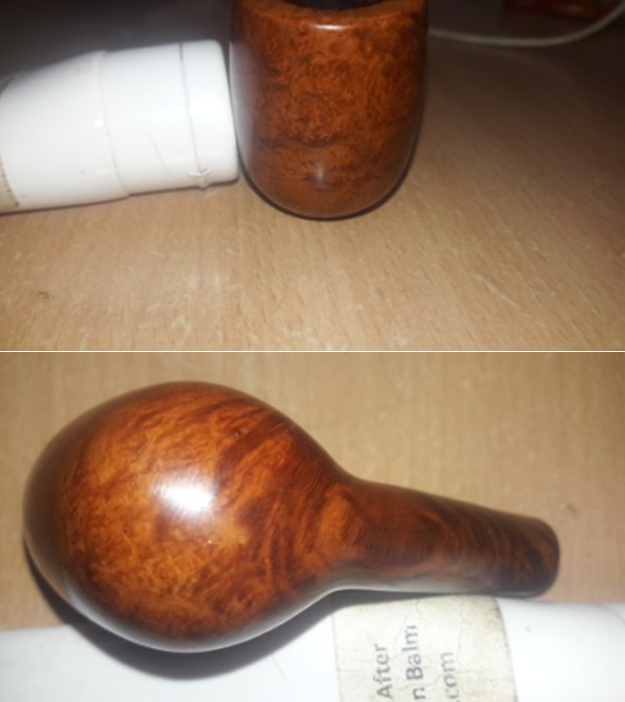
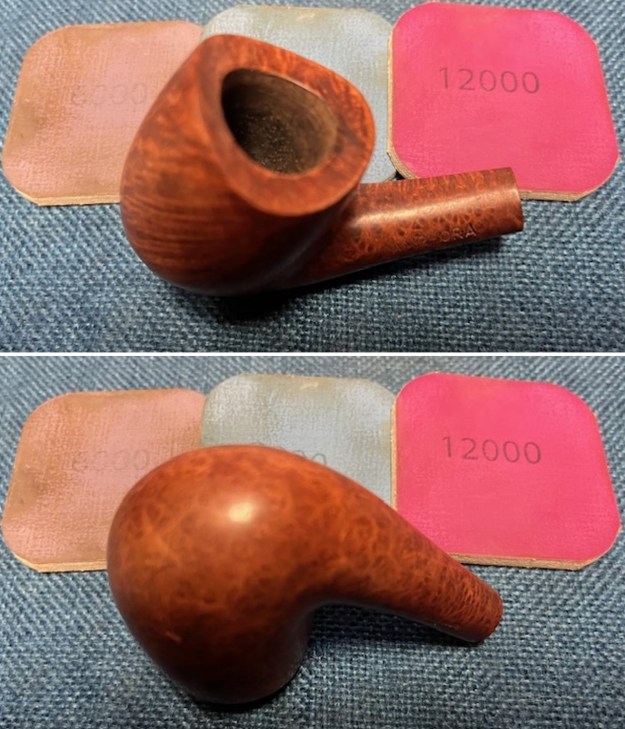 I worked some Before & After Restoration Balm into the surface of the briar with my fingertips on the smooth. The product works to clean, enliven and protect the briar. I let the balm sit for 15 minutes and then buffed with a cotton cloth to raise the shine. The photos show the bowl at this point in the restoration process.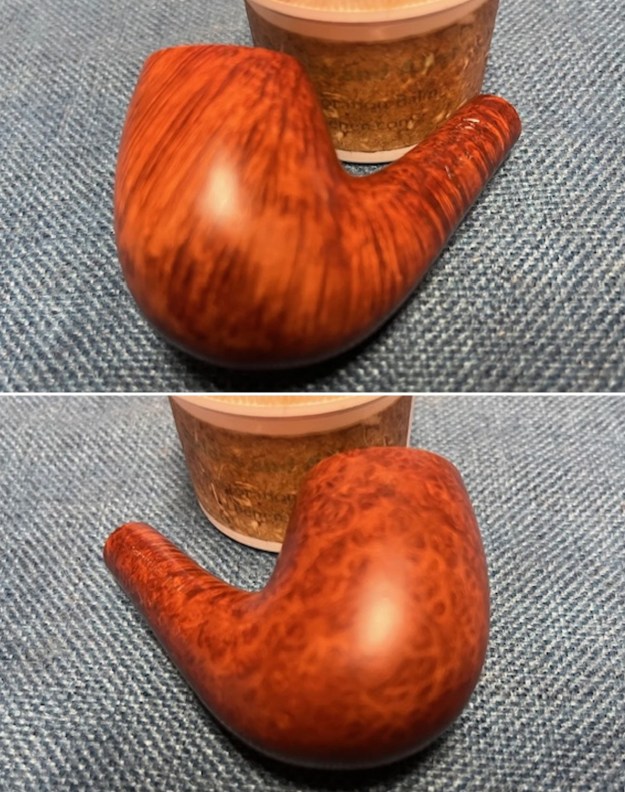
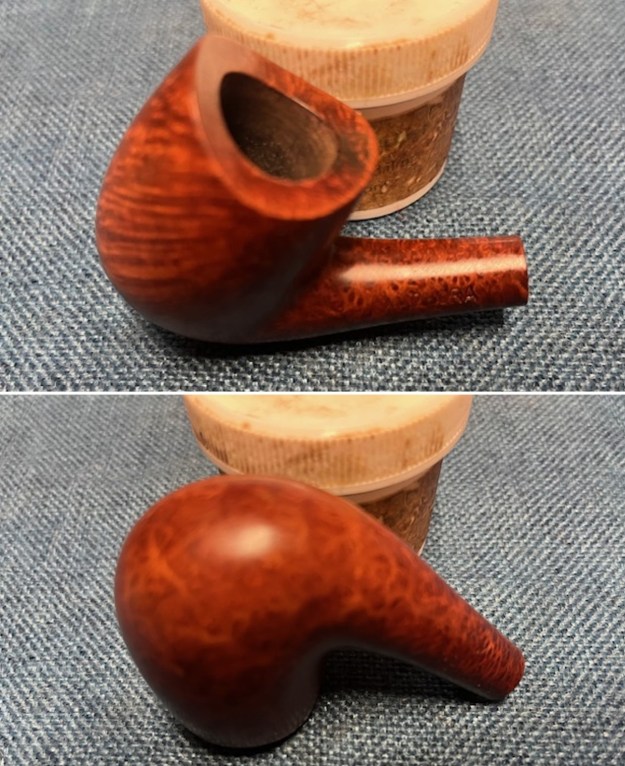
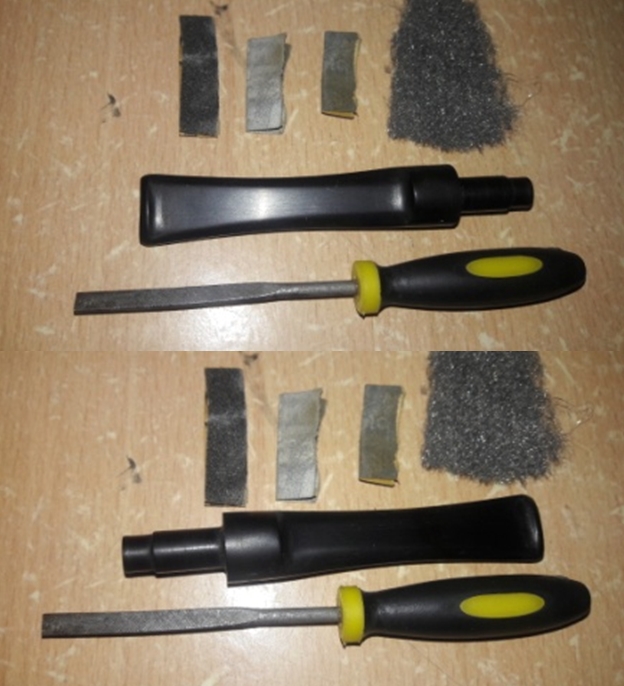
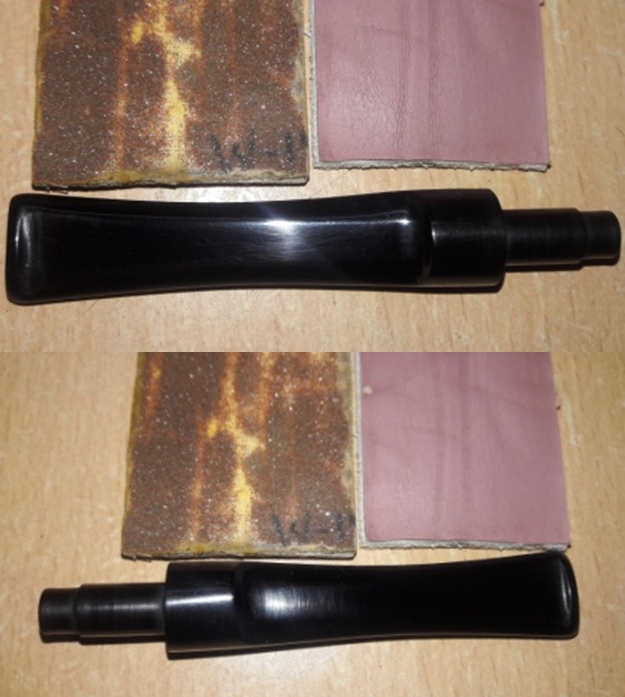
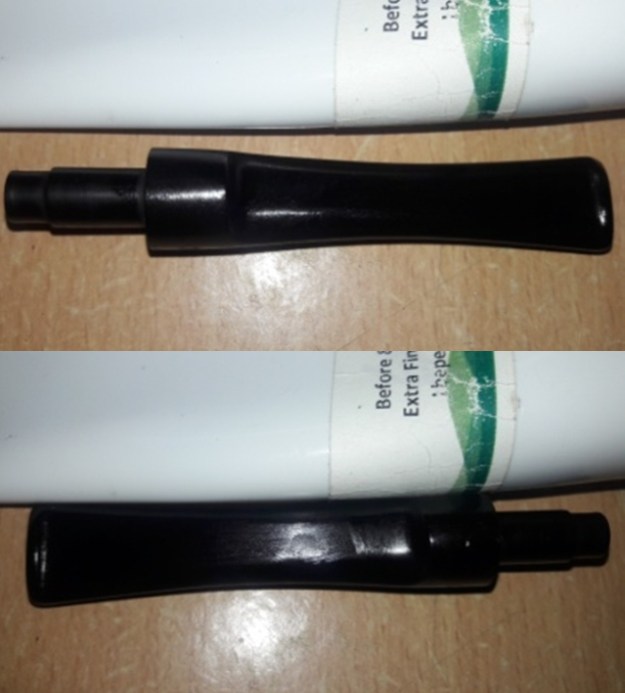
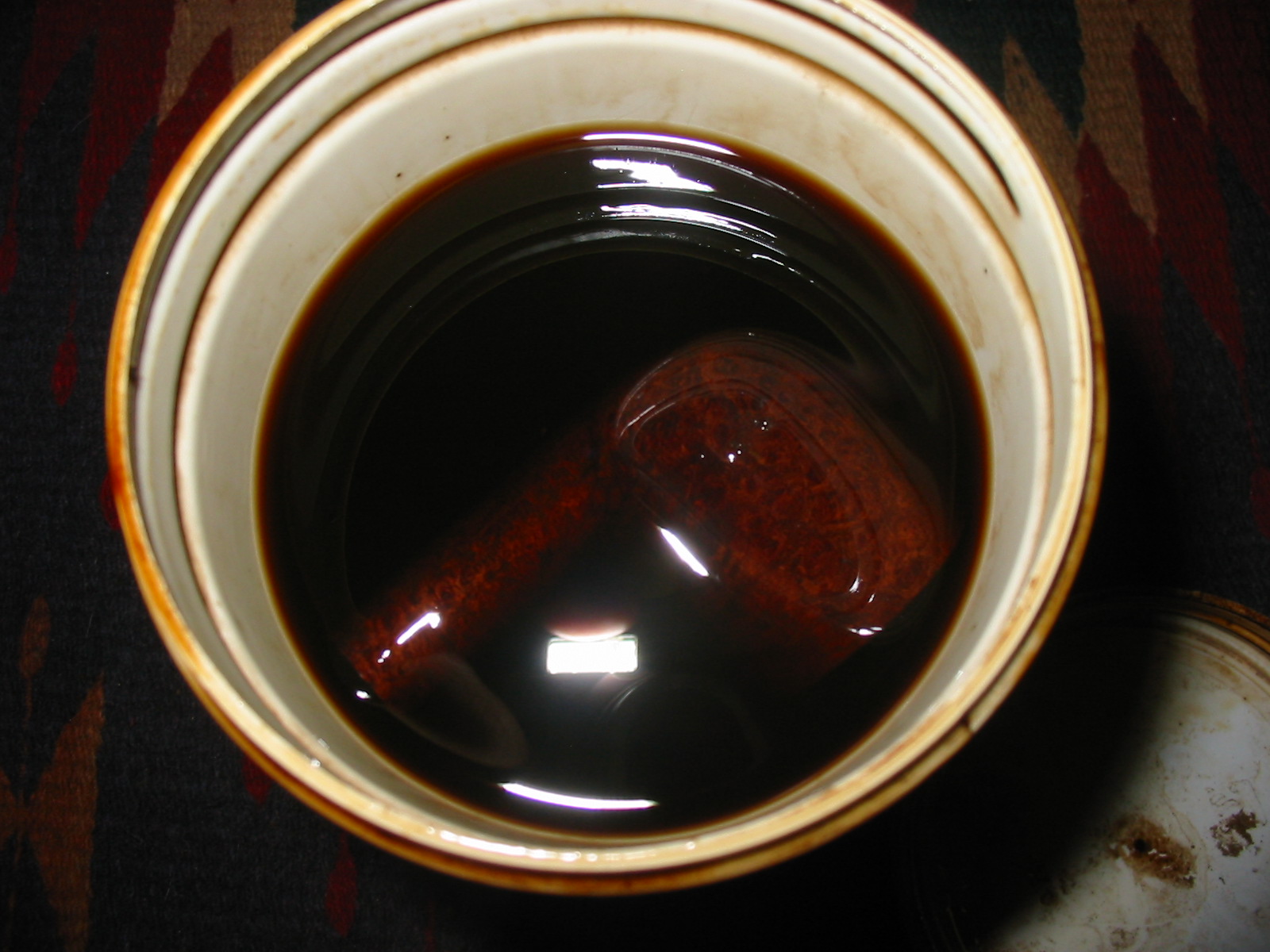
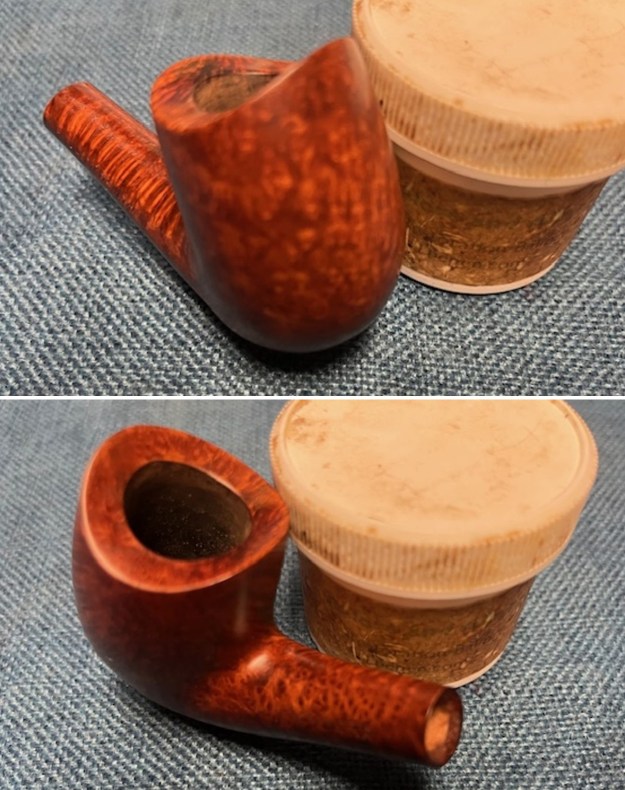 I set the bowl aside and turned my attention to the vulcanite stem. It was in great condition other than some light tooth chatter. I polished the stem with micromesh sanding pads – dry sanding with 1500-12000 grit sanding pads. I wiped it down after each sanding pad with Obsidian Oil. I polished it with Before & After Pipe Stem Polish – both Fine and Extra Fine.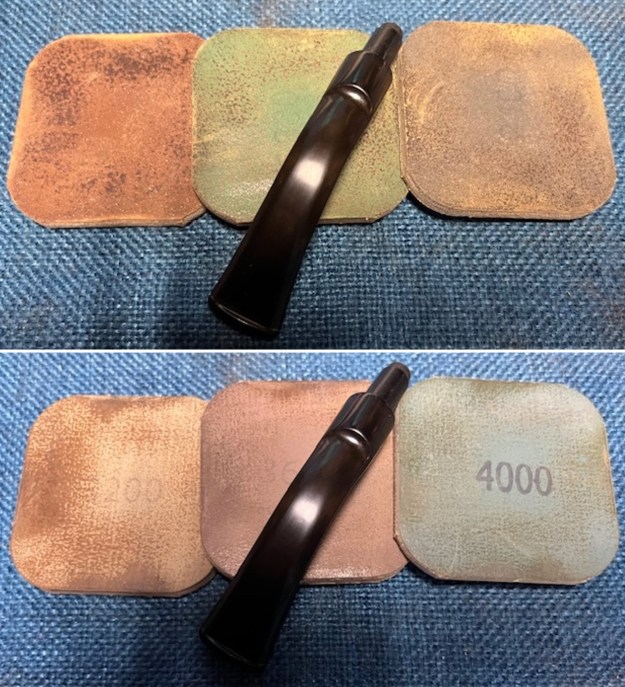
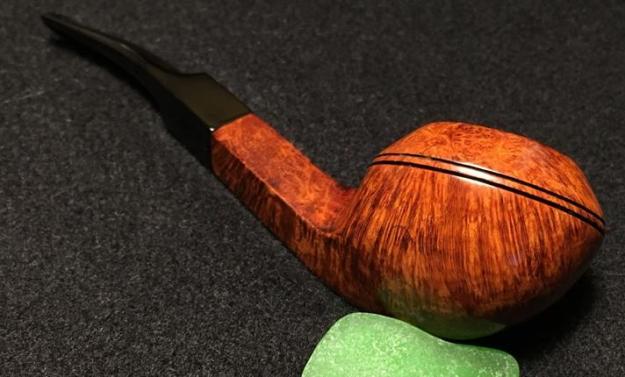
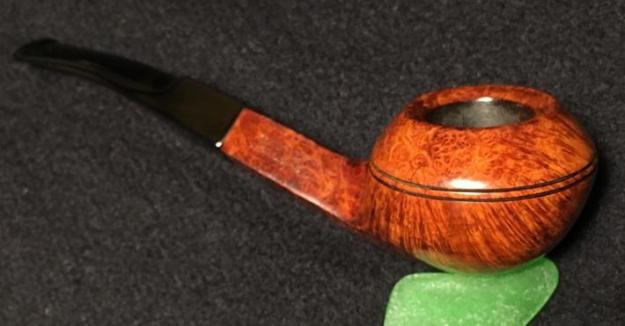
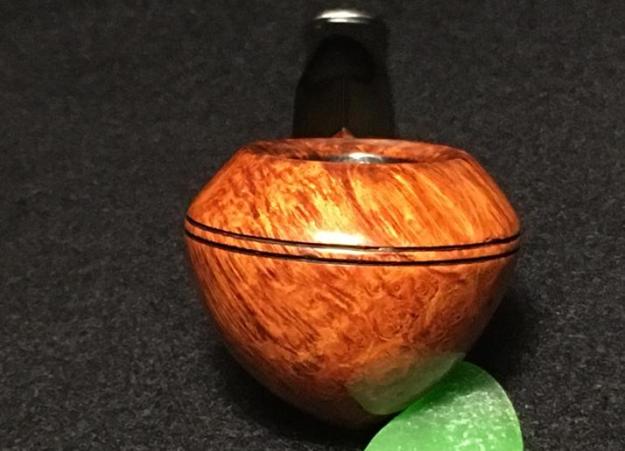
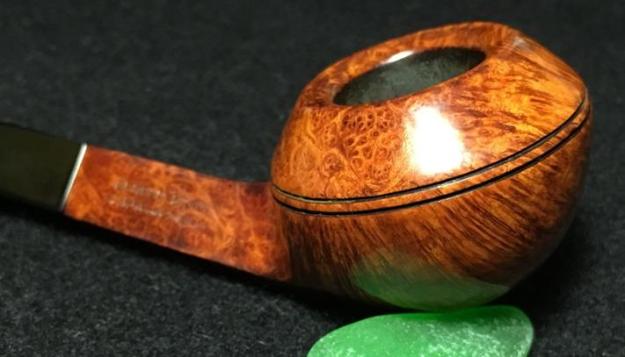
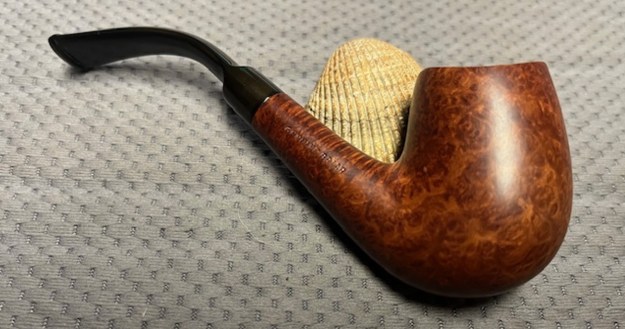
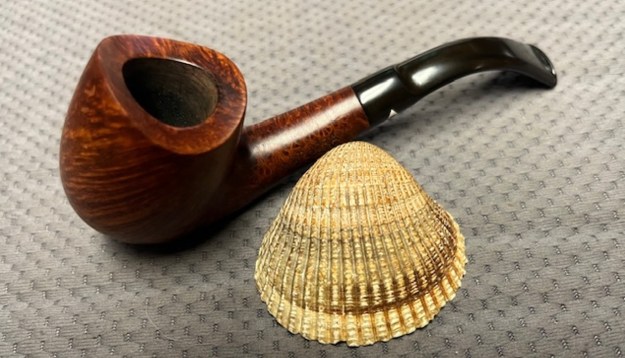
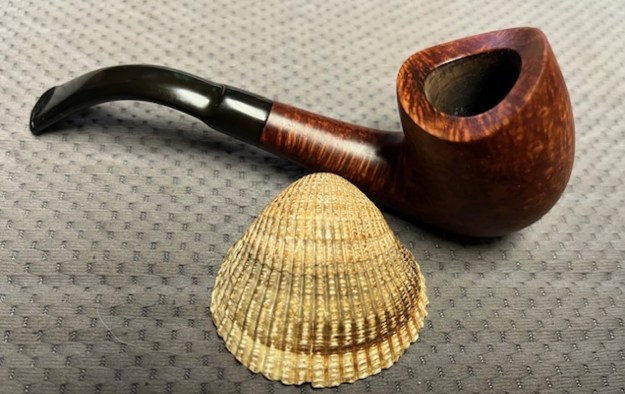
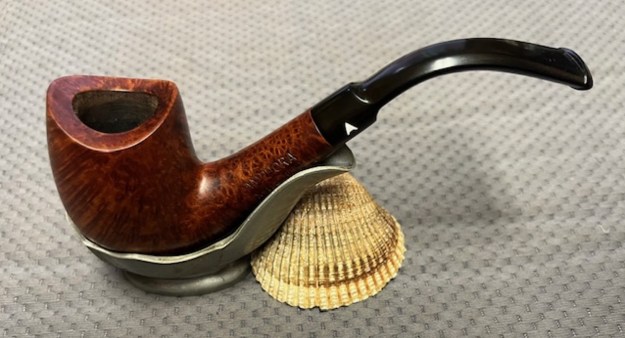
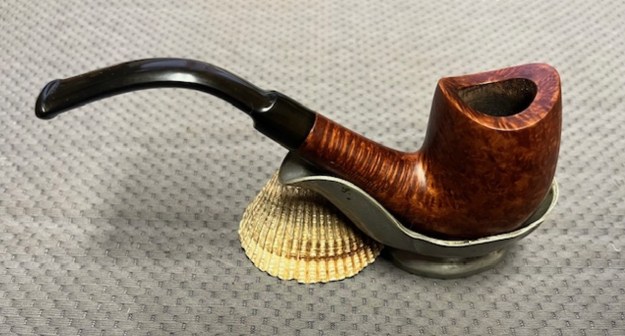
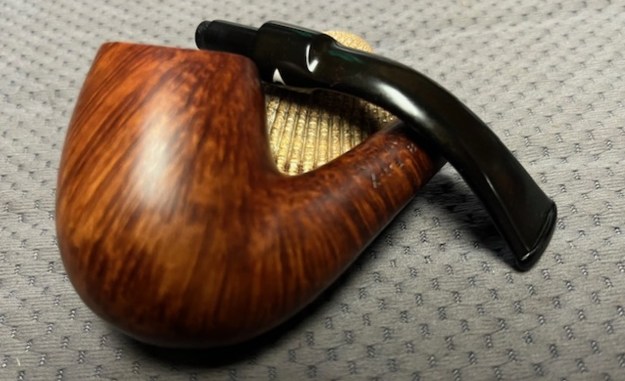
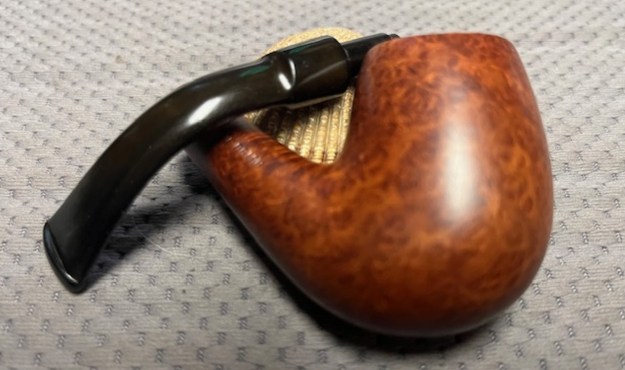
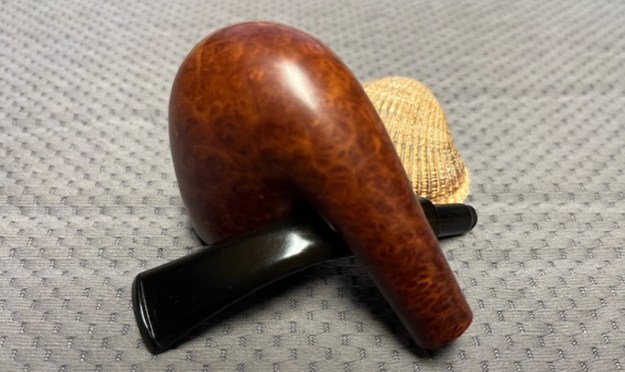
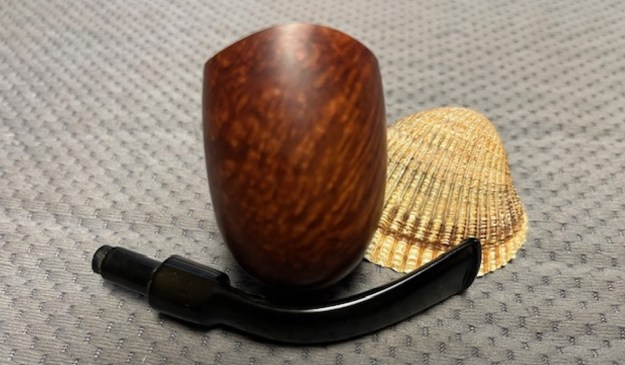
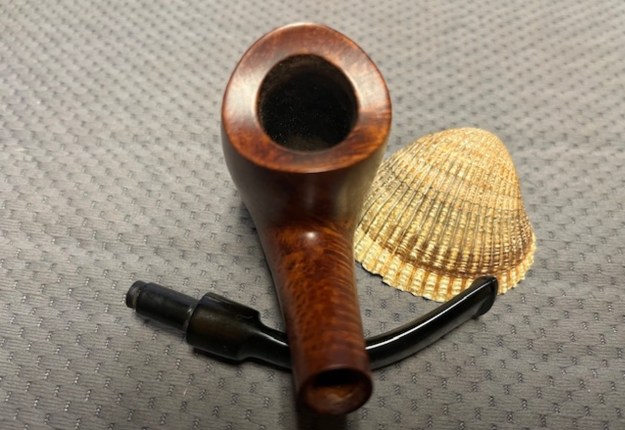
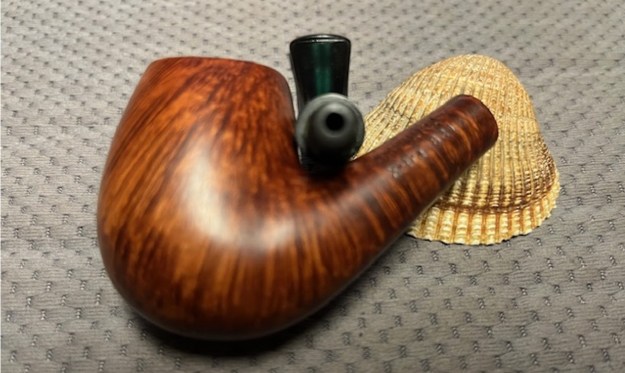
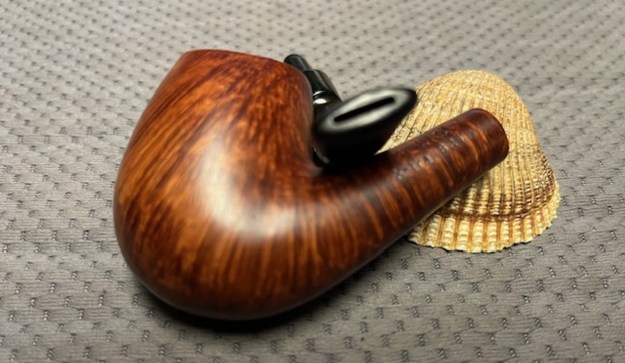
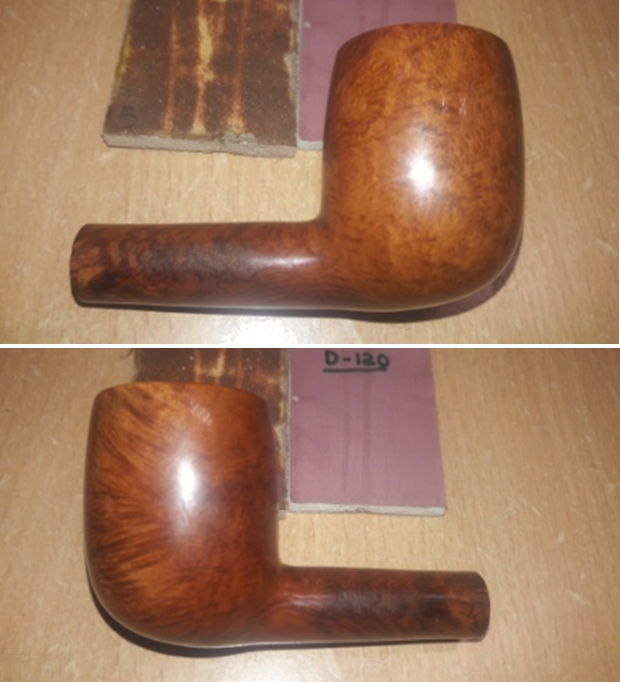
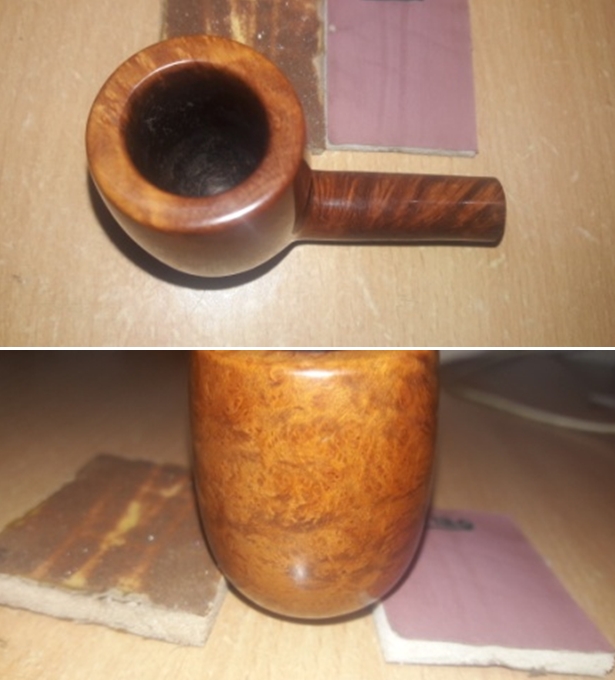
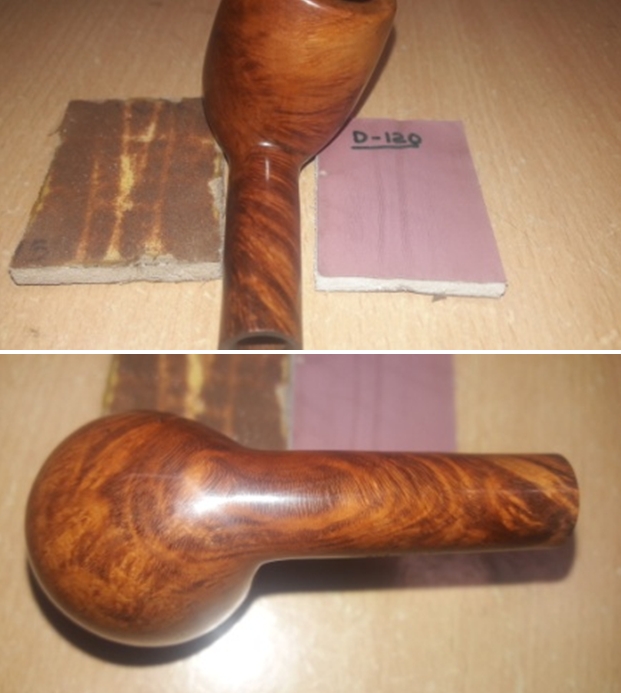
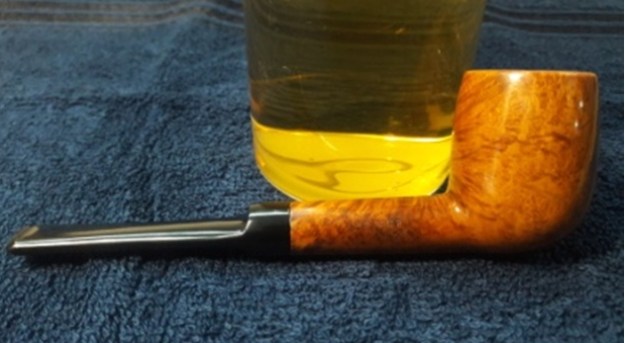
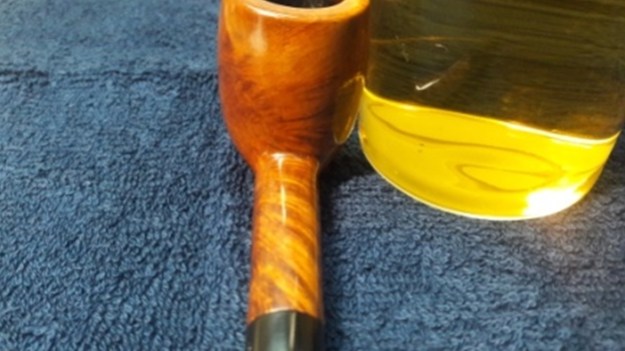
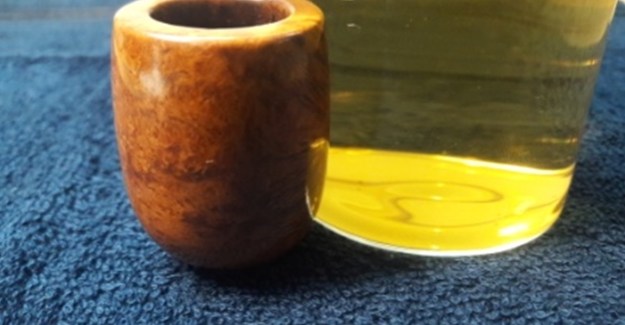
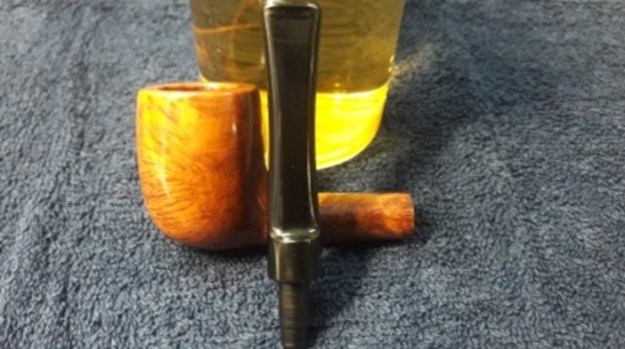
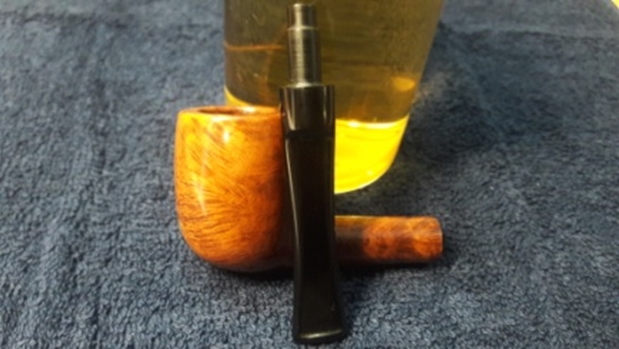
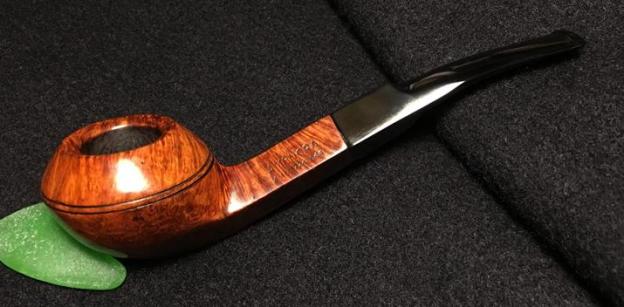
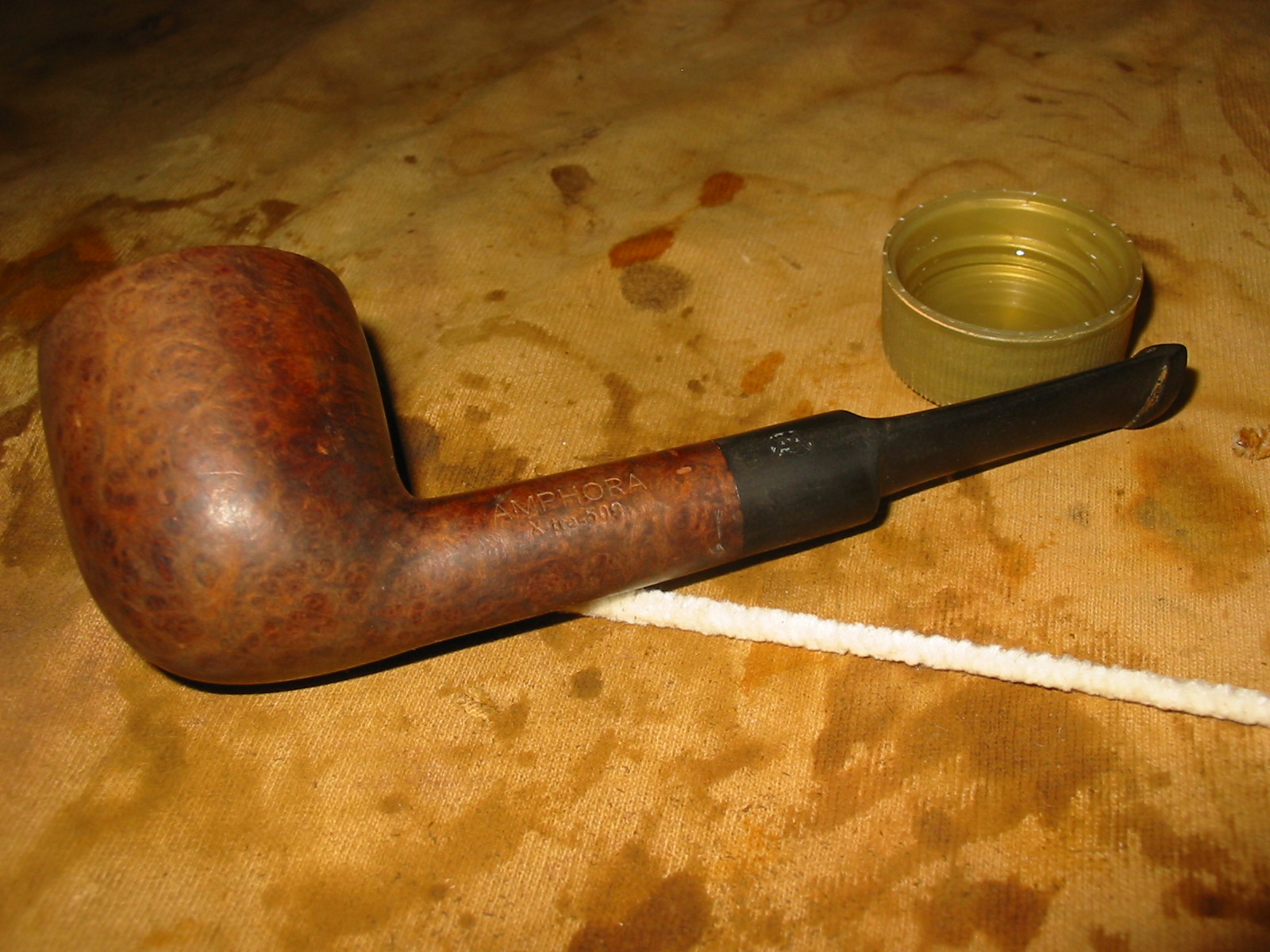
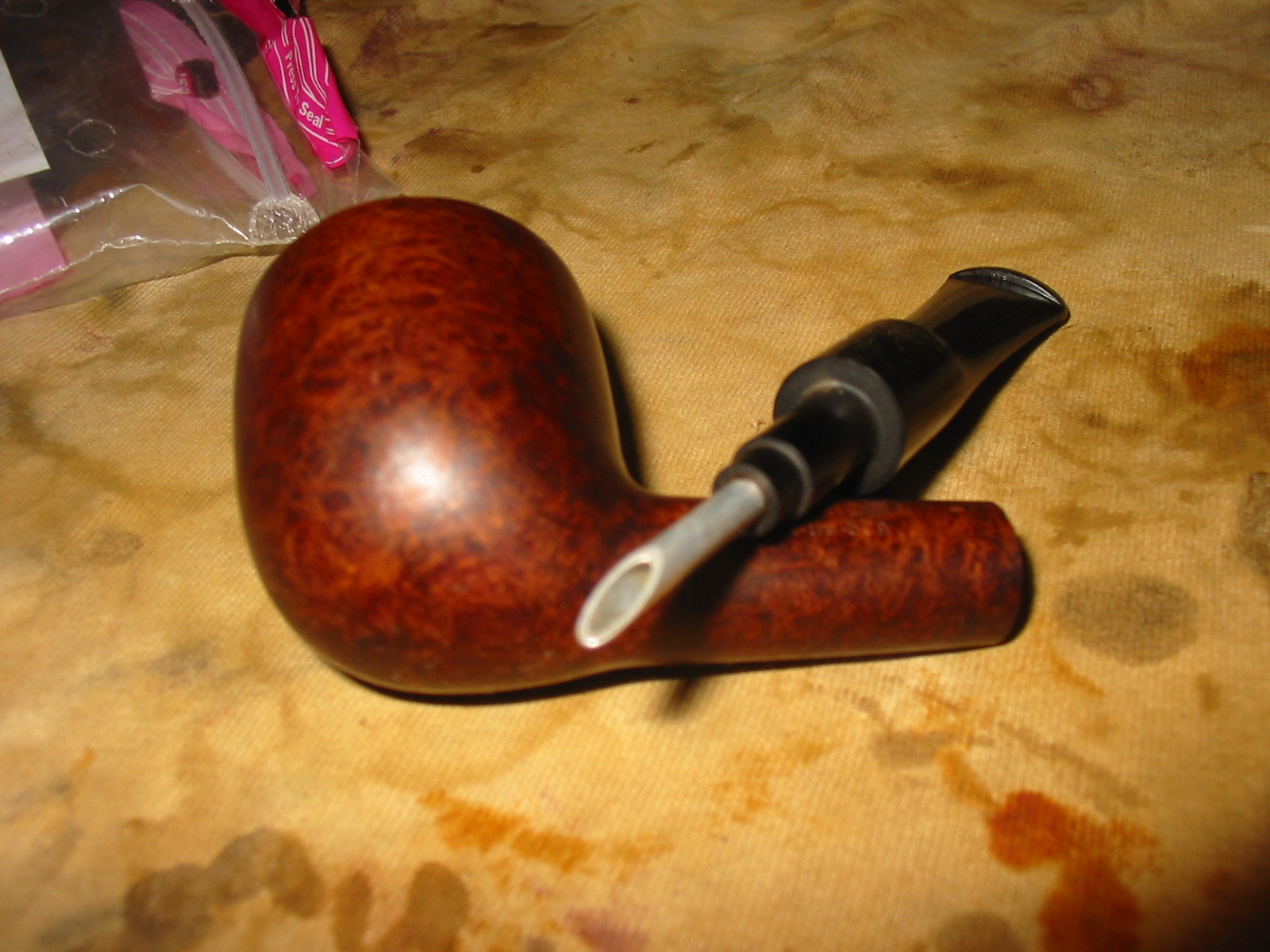
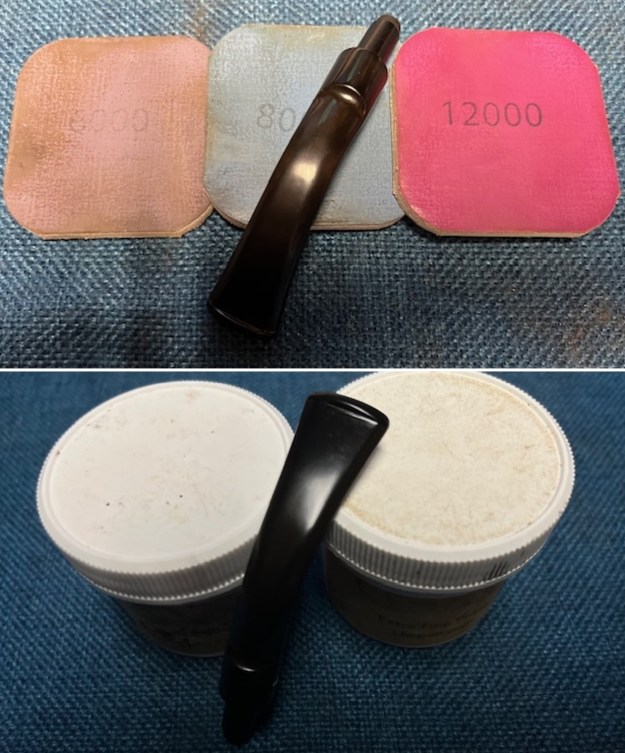 This smooth, nicely grained Amphora X-tra 821 Bent Scoop is a great looking pipe now that it has been restored. The rich finish gives the shape an elegant look. The flow of the bowl and stem are well done make for a great hand feel. I put the stem back on the bowl and carefully buffed the pipe with Blue Diamond on the buffing wheel using a light touch on the briar. I gave the bowl and the stem multiple coats of carnauba wax on the buffing wheel. I buffed the entire pipe with a clean buffing pad. I hand buffed the pipe with a microfiber cloth to deepen the shine. The finished Amphora X-tra 821 fits nicely in the hand and feels great. Give the finished pipe a look in the photos below. The dimensions of the pipe are Length: 5 ½ inches, Height: 2 inches, Outside diameter of the bowl: 1 ¼ inches, Chamber diameter: ¾ of an inch. The weight of the pipe is 38 grams/1.31 ounces. It is a great looking and light weight pipe. I will be putting it on the rebornpipes store in the Pipes from Various Makers Section shortly. If you are interested in adding this pipe to your collection send me a message or an email. Thanks for reading this blog and my reflections on the pipe while I worked on it. There are many more to come!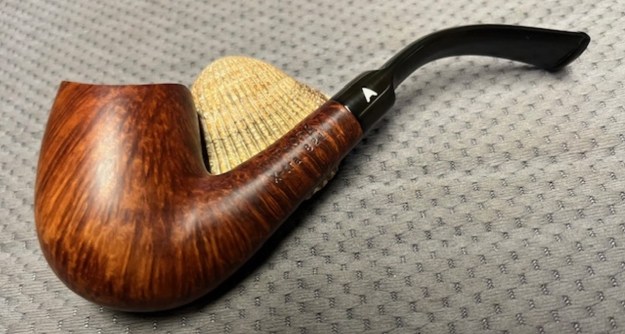








 rebornpipes