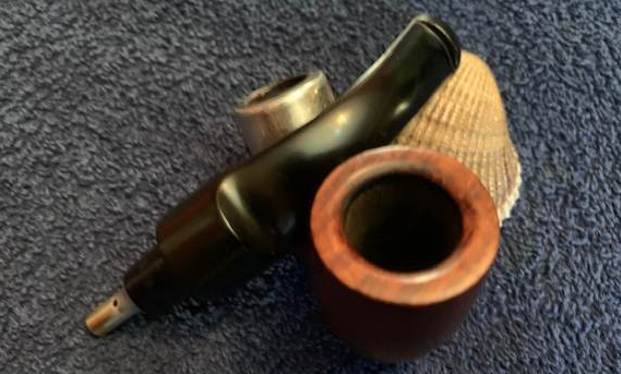
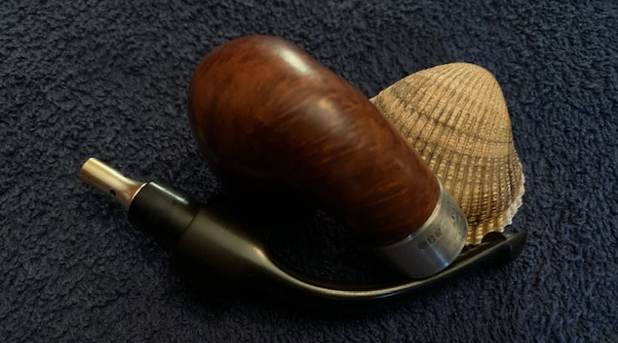
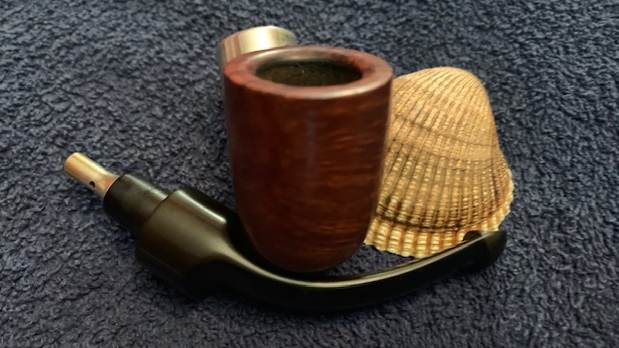
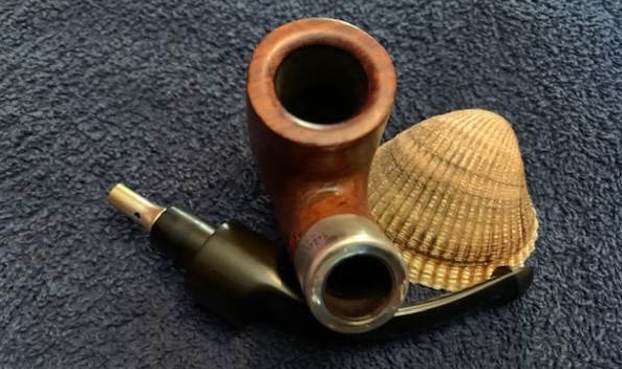
Category Archives: Pipe Refurbishing Essays

Essays and pictorial essays on the art of refurbishing

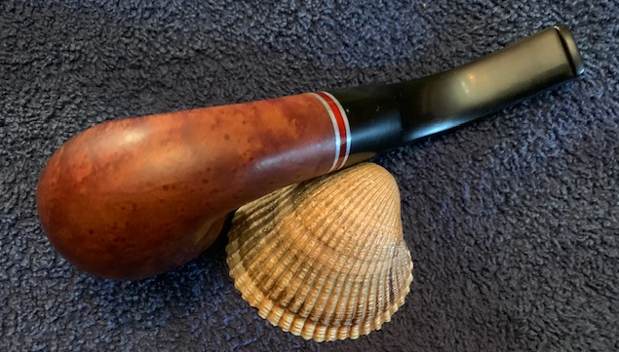
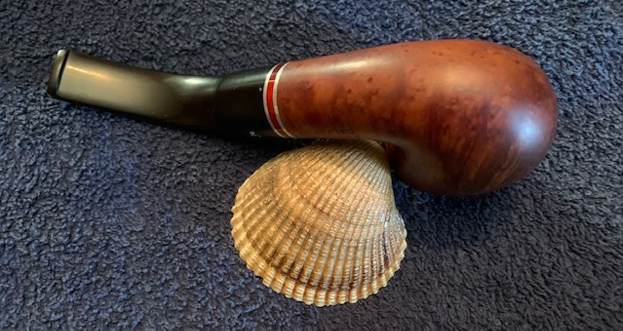
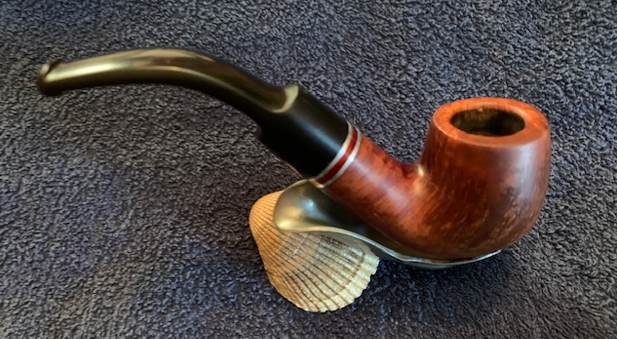
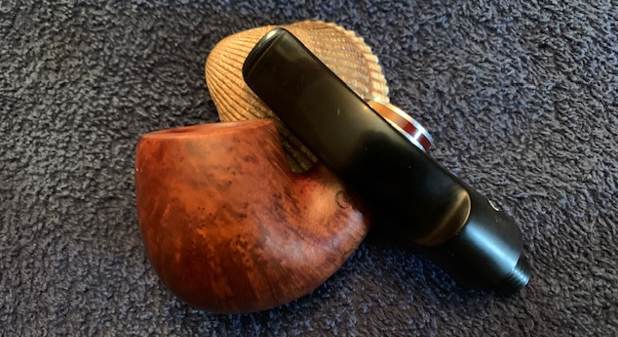
A Rebirth for a Savinelli Capri Root Briar 411 Zulu


Blog by Steve Laug

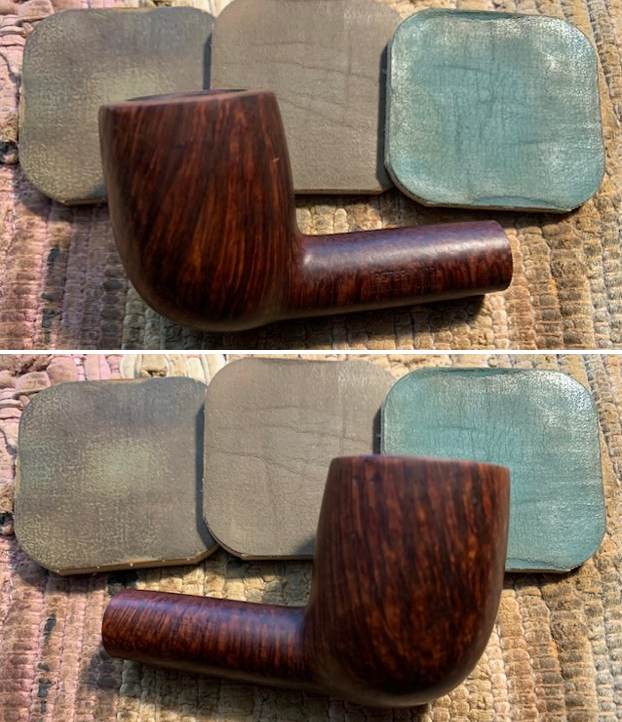
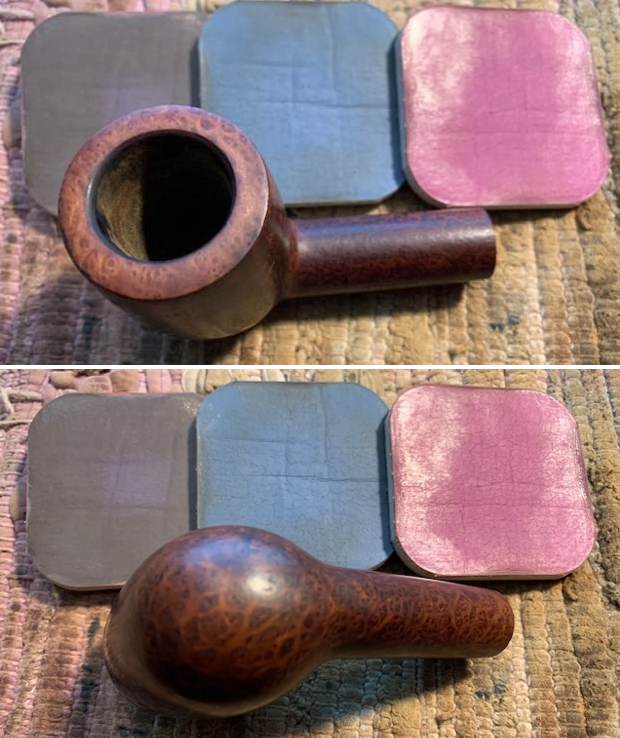
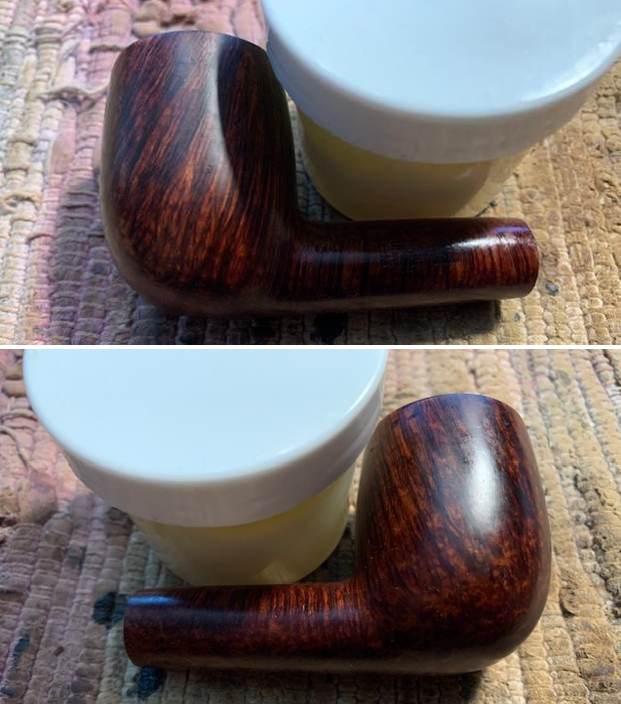
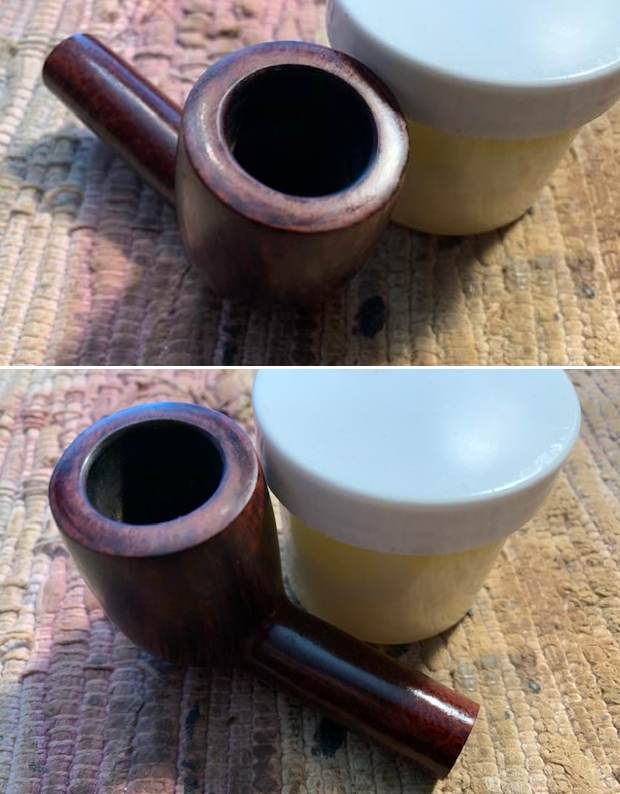
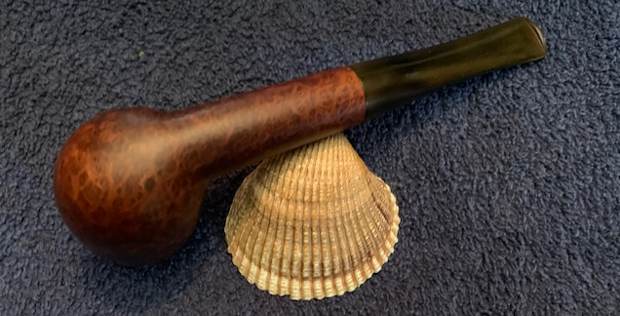
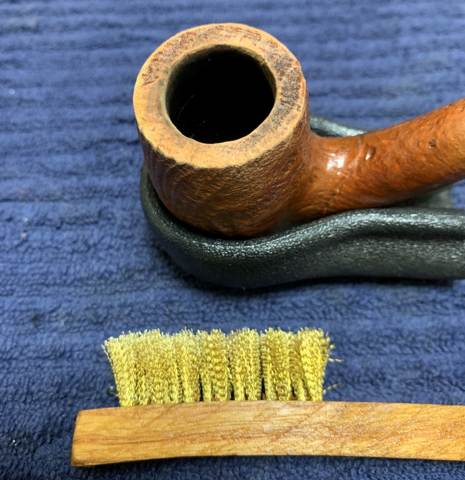
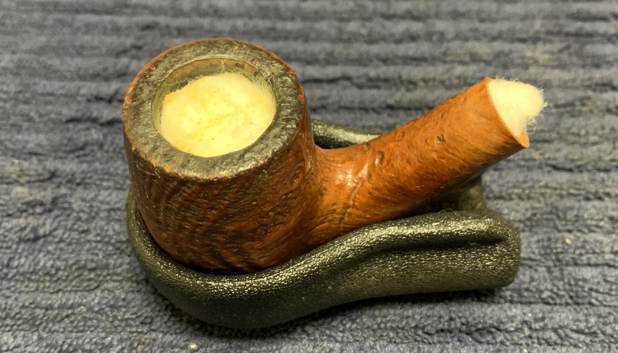
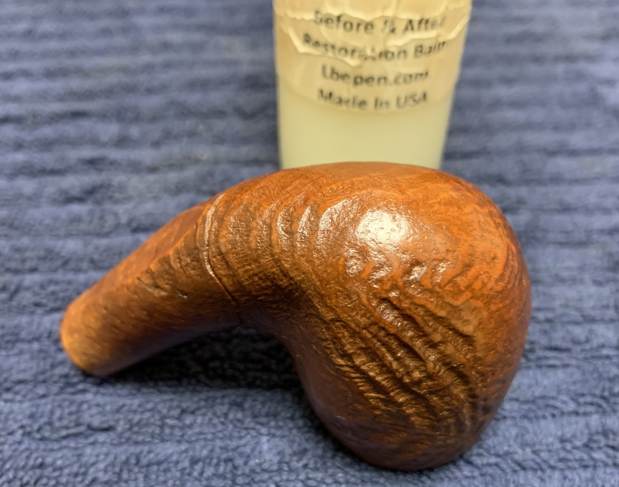
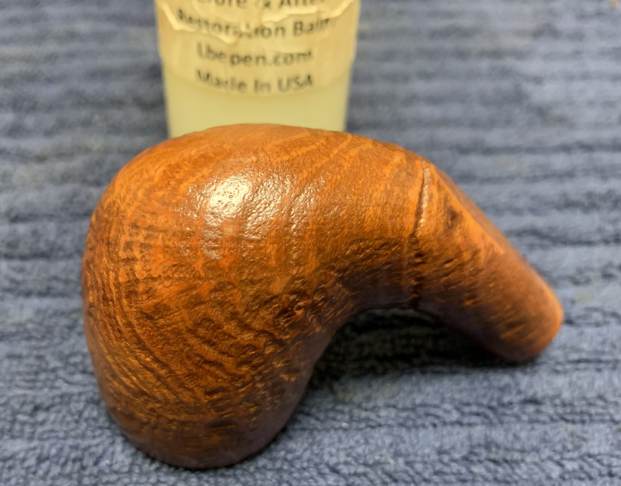
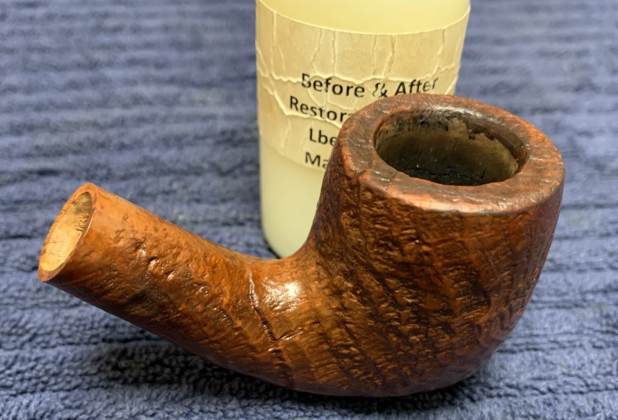
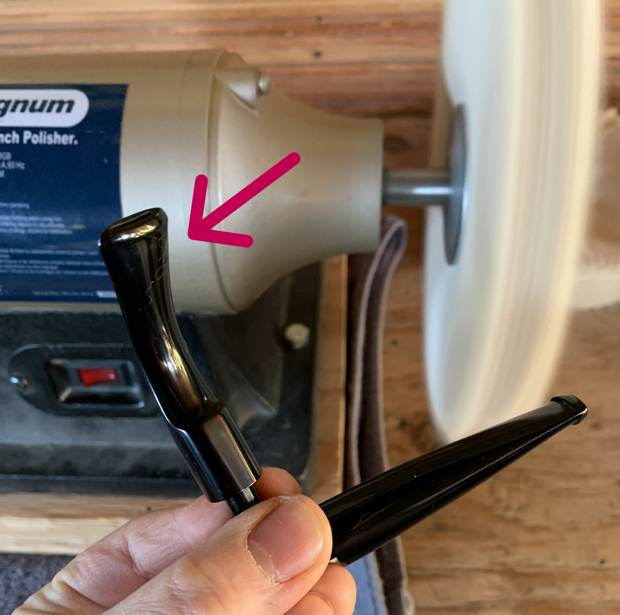
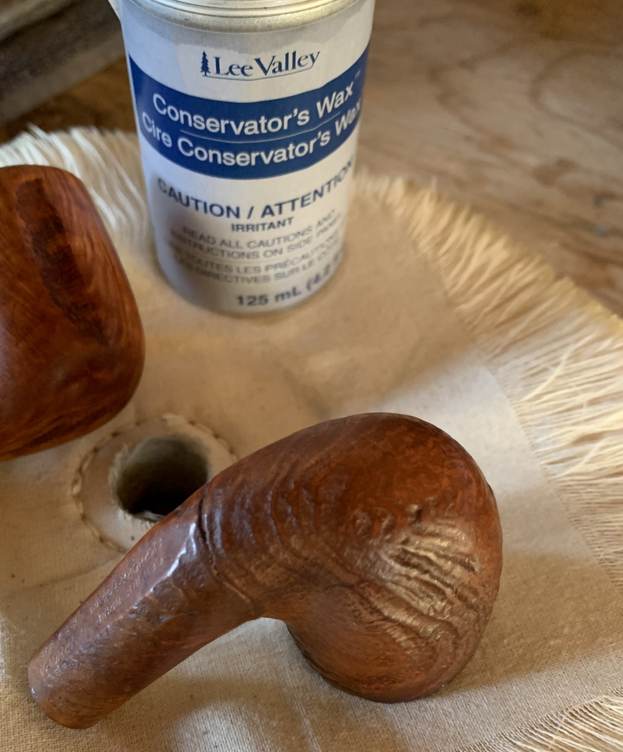
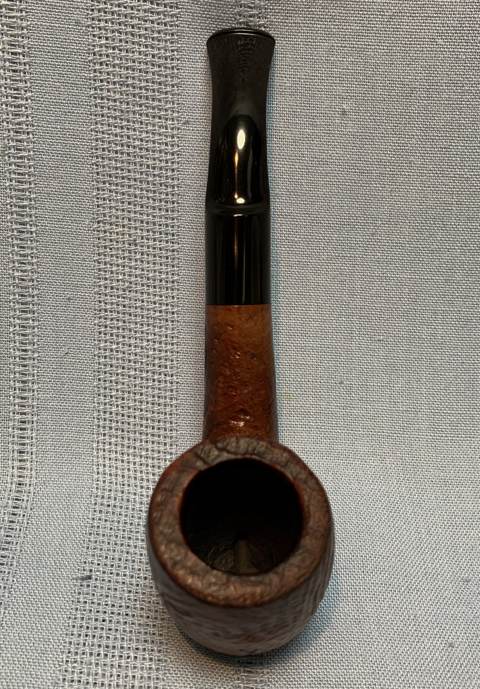
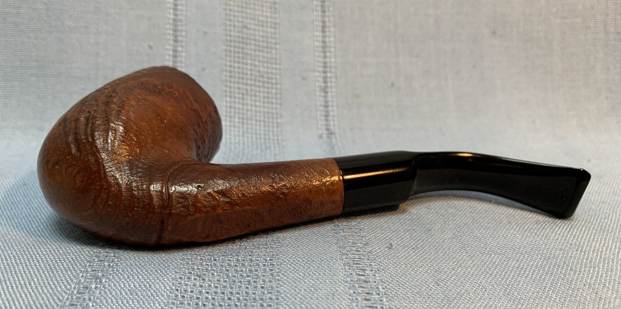
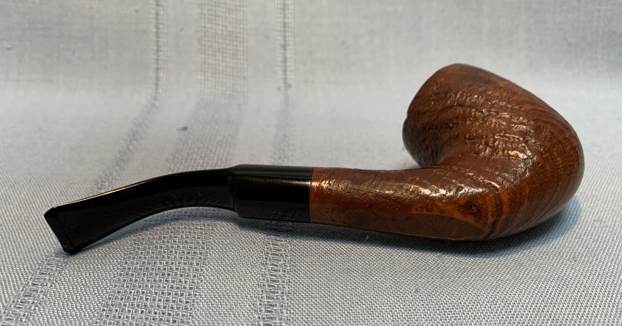
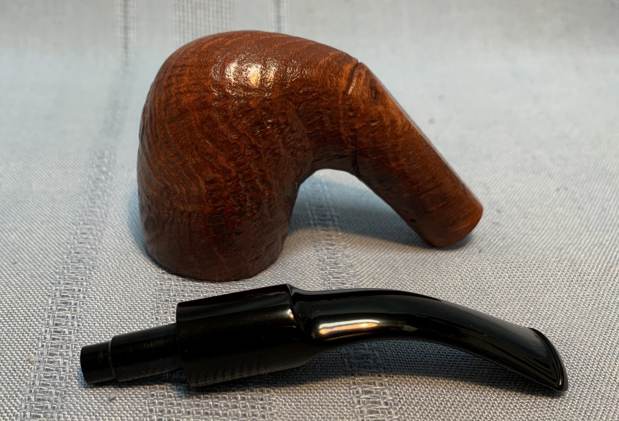
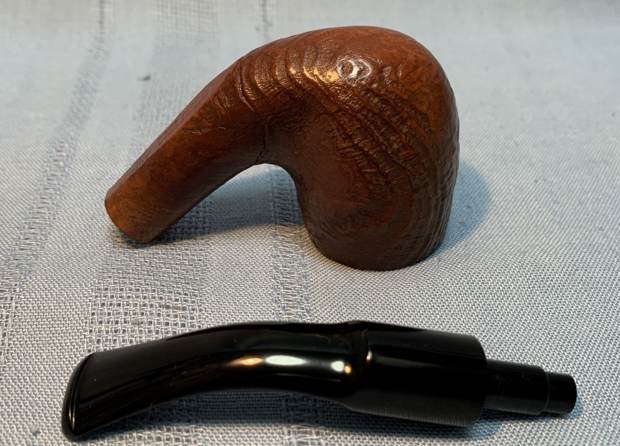
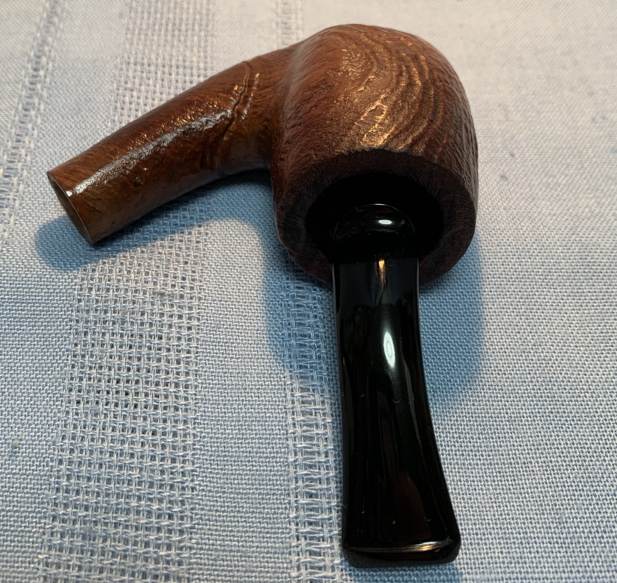
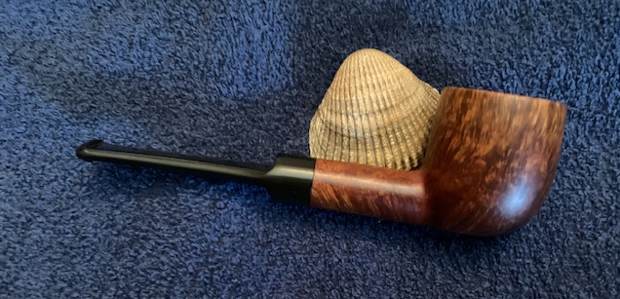
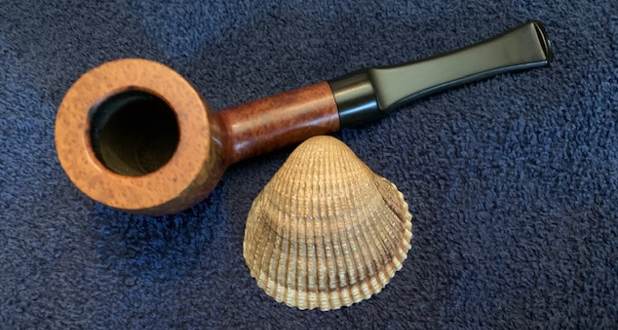
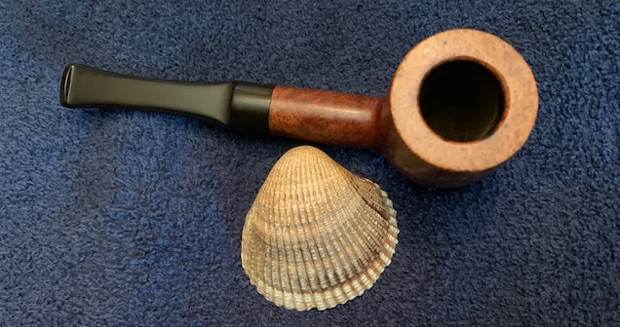
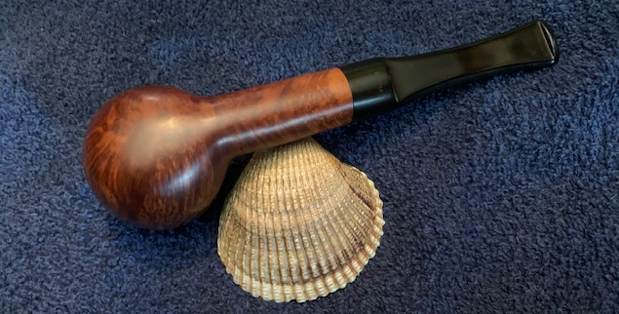
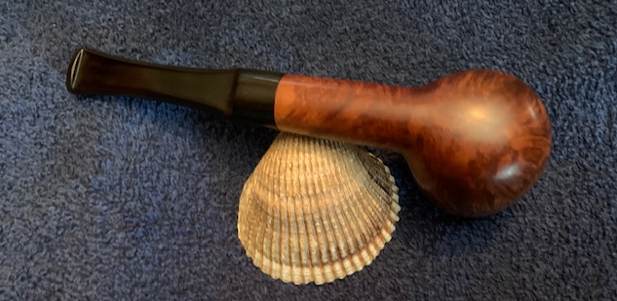
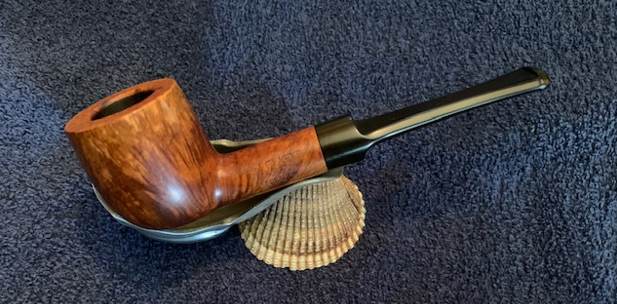
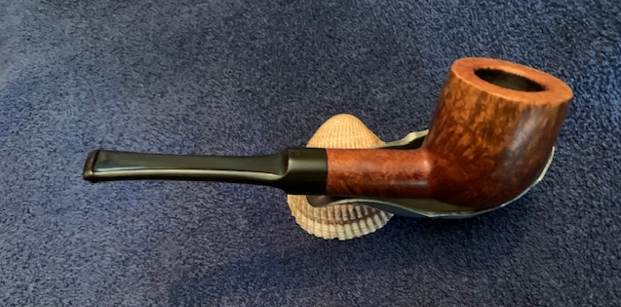
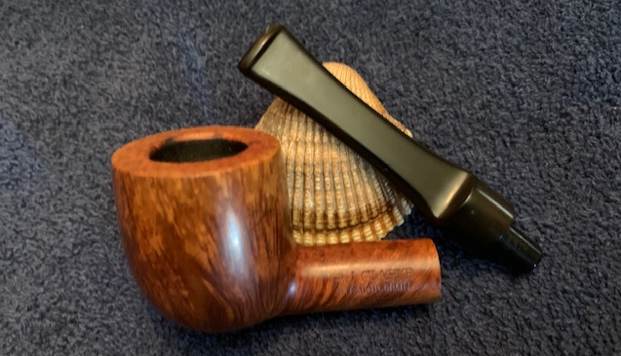
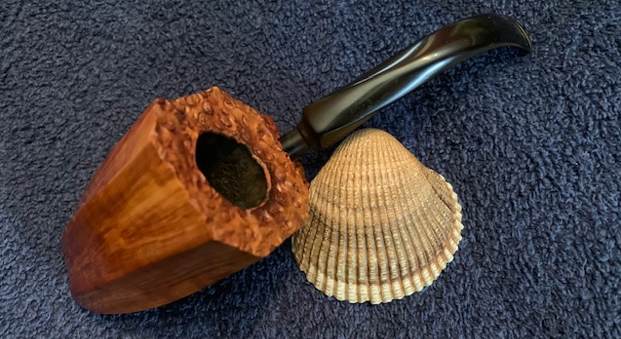
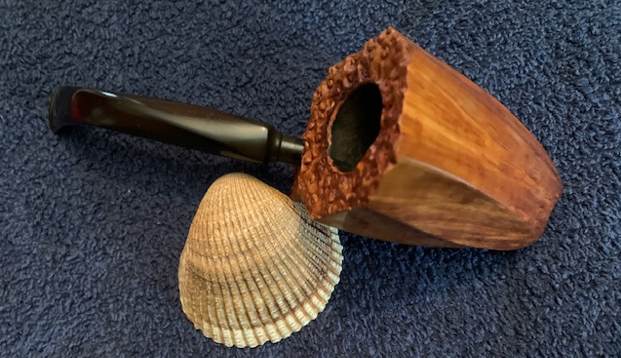
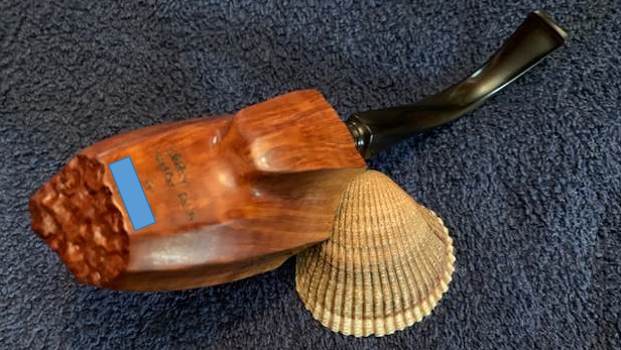
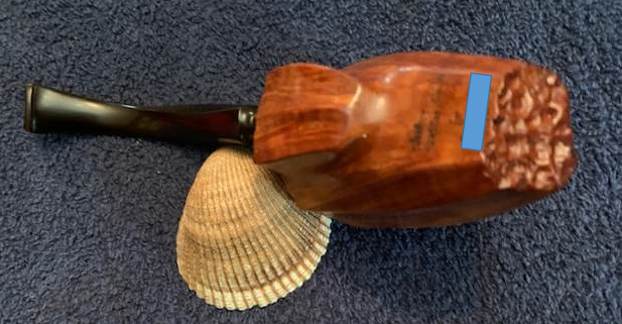
The next pipe on the table has one of my favourite finishes – a deeply rusticated one with what appears to have originally been a natural finished. We purchased this one on eBay on 10/06/16 from a fellow in Onalaska, Washington, USA. It is a Savinelli Capri Root Briar Zulu with a rusticated finish (looks a lot like the Castello Sea Rock finish). The coral like rustication around the bowl and shank was filled in with dust and debris. The natural finish was dirty and the high spots are darkened by hand oils and grime ground into briar. The pipe was stamped on underside of the shank. It is stamped Savinelli Capri [over] Root Briar followed by Savinelli “S” shield logo followed by Italy over the shape number 411. There was a thick cake in the bowl and lava overflow on the inner edges and the rim top. The vulcanite stem was oxidized and had tooth marks and chatter ahead of the button on both sides. Jeff took photos of the pipe to show its general condition before he did his cleanup.As I mentioned above the exterior of the pipe was very dirty – grime and grit ground in from years of use and sitting. The rim top was covered with a coat of thick lava that overflowed from the thick cake in the bowl. It was hard to know what the rim edges looked like because of the lava. The stem was dirty, calcified and oxidized with tooth chatter and marks on the top and underside of the stem at the button. Jeff took a photo of the right side and the heel of the bowl to give a better feel for the condition of the briar around the bowl. It is a great looking piece of briar with a deep rustication.The next photo show the stamping on the underside of the shank and it is very readable. It reads as noted above.I have always like the Savinelli Capri Root Briar finish so I was glad to be working on this one. Jeff had reamed it with a PipNet pipe reamer and cleaned up the reaming with a Savinelli Fitsall Pipe Knife. He scrubbed out the internals with alcohol, pipe cleaners and cotton swabs until the pipe was clean. He scrubbed the exterior of the bowl with Murphy’s Oil Soap and a tooth brush to remove the grime and grit on the briar and the lava on the rim top. The finish looks better but there is still darkening on the sides of the bowl and shank. There is also some darkening on the rim top as well. Jeff scrubbed the stem with Soft Scrub and soaked it in Before & After Deoxidizer to remove the oxidation on the rubber. When the pipe arrived here in Vancouver for the second stop of its restoration tour it looked a lot better. I took photos before I started my part of the work.  I took some close up photos of the rim top and the stem surface. I wanted to show what cleaned bowl and rim top looked like. The rim top and the inner and outer edges of the bowl were in excellent condition. The top of the bowl was quite dark around three sides. I also took close up photos of the stem to show the tooth marks and the remaining oxidation on the stem surface.  I took photos of the stamping on the underside of the shank and it is clear and readable. It is stamped as noted above.I removed the stem for the shank and took a photo of the bowl and stem to give a picture of what it looked like. The remaining oxidation is very visible.I started my work on the pipe by addressing the darkening of the rim top. I used a brass bristle wire brush and some common dish soap to de-grease the bowl and the rim top. I worked over the bowl and the top with the brush and was able to remove the grime and much of the darkening.  I rubbed the bowl down with Before & After Restoration Balm. I worked it into the surface of the briar with my fingertips and a horse hair shoe brush to clean, enliven and protect it. I let the balm sit for a little while and then buffed with a cotton cloth and shoe brush to raise the shine.     I set the bowl aside and turned my attention to the stem. I used a Bic lighter to “paint” the surface of the stem with the flame to lift the tooth marks on both sides of the stem. The heat lifted many of the marks. I filled in what remained with clear CA glue and set it aside to harden.   Once the repairs cured on the top and underside of the stem I filed them flat and recut the button edge with a small file. I sanded them with a folded piece of 220 sandpaper. I started polishing the stem with 400 grit wet dry sandpaper.   I polished the vulcanite with micromesh sanding pads – 1500-12000 grit pads. I wiped it down with a damp cloth after each sanding pad. I used Before & After Pipe Polish – both Fine and Extra Fine to further polish the stem.  I left a little oxidation around the stamp so as not to damage it more.  This Savinelli Capri Root Briar 411 Zulu cleaned up really well and looks very good. The Before & After Restoration Balm brought the colours and grain out in the rusticated finish on the pipe. It works well with the polished oval vulcanite taper stem. I put the stem back on the bowl and carefully buffed the pipe with Blue Diamond on the buffing wheel using a light touch on the briar. I gave the bowl multiple coats of Conservator’s Wax and the stem multiple coats of carnauba wax on the buffing wheel. I followed that by buffing the entire pipe with a clean buffing pad. I hand buffed the pipe with a microfiber cloth to deepen the shine. The finished Capri Root Briar 411 Zulu fits nicely in the hand and I think it will feel great as it heats up with a good tobacco. The tactile finish will add to the experience. Give the finished pipe a look in the photos below. The dimensions of the pipe are Length: 6 inches, Height: 1 ¾ inches, Outside diameter of the bowl: 1 ½ inches, Chamber diameter: ¾ of an inch. The weight of the pipe is 1.20 ounces/34 grams. If you are interested in carrying the previous pipeman’s legacy with this pipe send me a message or an email. I will be adding it to the rebornpipes store in the Italian Pipe Makers Section. Thanks for reading this blog and my reflections on the pipe while I worked on it.

Restoring an Unusual BBB Trafalgar 1752 Square Dublin Sitter


Blog by Steve Laug

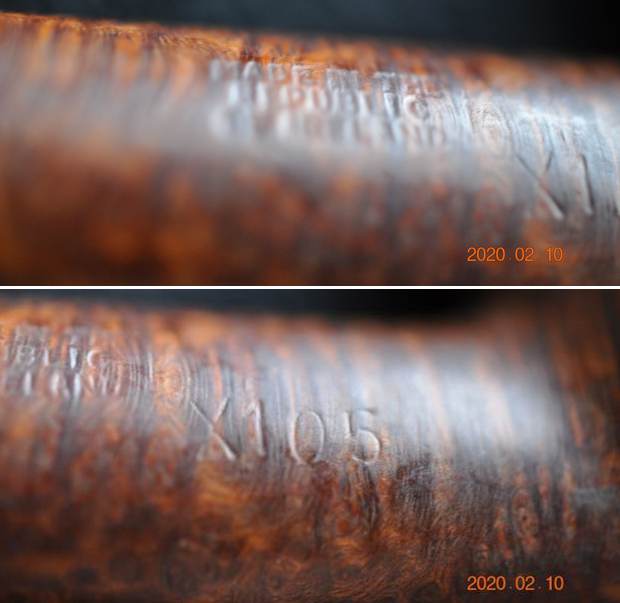
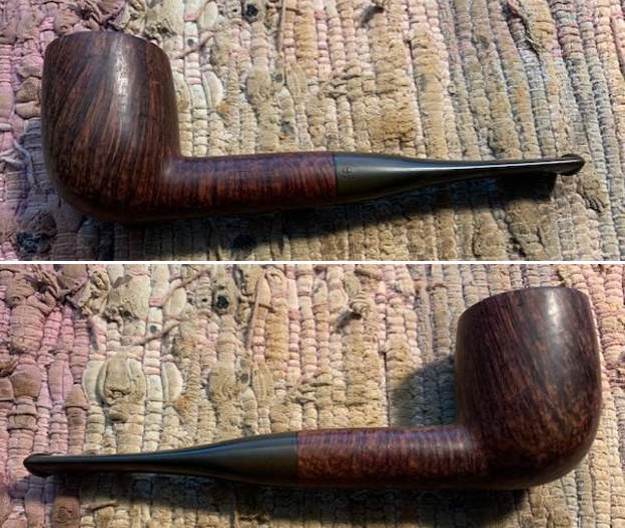
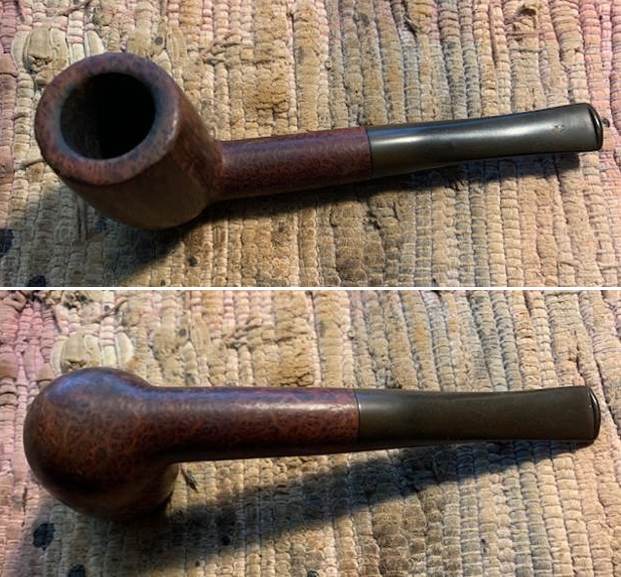
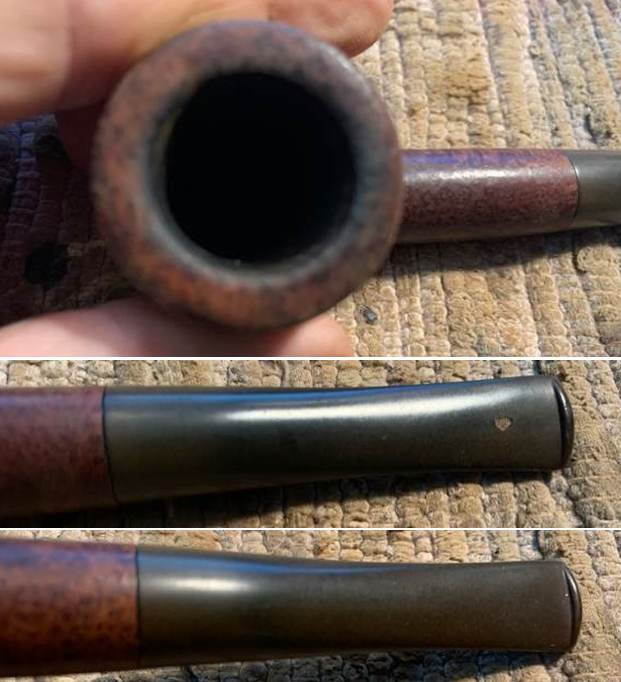
The next pipe on the worktable is a BBB in a shape I had not seen before. It is kind of a Panel Dublin Sitter with a square shank. We bought it on eBay from Frederiksberg, Denmark on 06/05/2016 so it has been sitting here for a long time. The pipe is stamped on the left side of the shank and reads BBB in a diamond (logo) followed by R. Underneath it reads Trafalgar [over] Square. On the right side of the shank it is stamped Made in England [over] 1752. On the underside of the shank it also was stamped 7R next to the shank/stem logo. On the left side of the saddle stem is a BBB diamond logo stamped in white. The bowl had a thick cake and there was a light lava overflow on the rim top and inner edge of the rim. The unique saddle stem fits the square shank perfectly and is oxidized. The tenon is drilled for a 6mm filter. There are light tooth marks and chatter on the top and underside of the stem ahead of the button. The grain around this unique pipe is quite beautiful under the grime on the finish. Jeff took photos of the pipe before he started his clean up work. He took photos of the rim top to show the condition the rim top – darkening and lava build up on the rim and edges. He also took photos of the top and underside of the stem to show its general condition. It is oxidized and shows some tooth marks on both sides near the button.He took a photo of the pipe looking down on the length of it both on the top and on the underside. It is an interesting and unique pipe. He took photos of the stamping on the left, right and underside of the shank. It is clear and readable as noted above.  While there is a lot of information on the BBB brand there is nothing on the Trafalgar Square line. It has a simple Made in England stamp and a painted stamp on the left side of the stem. I would assume that it is one that was made during the Cadogan era.

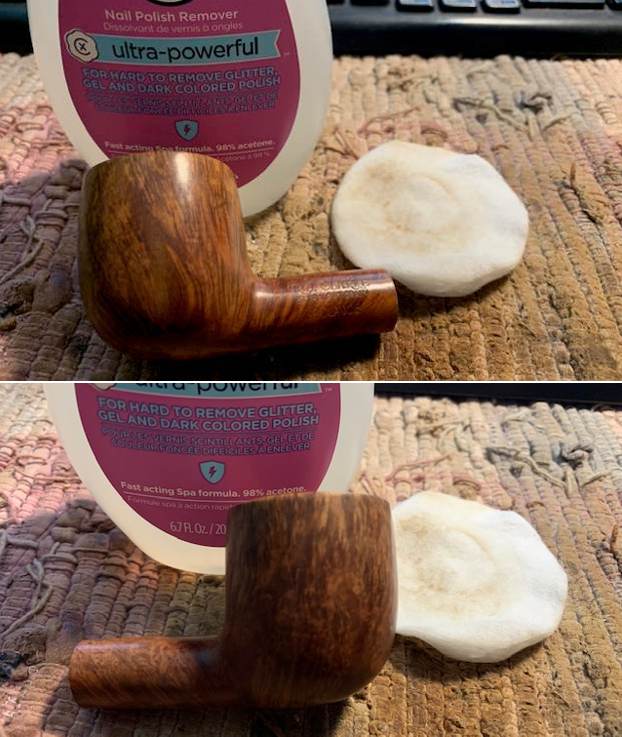
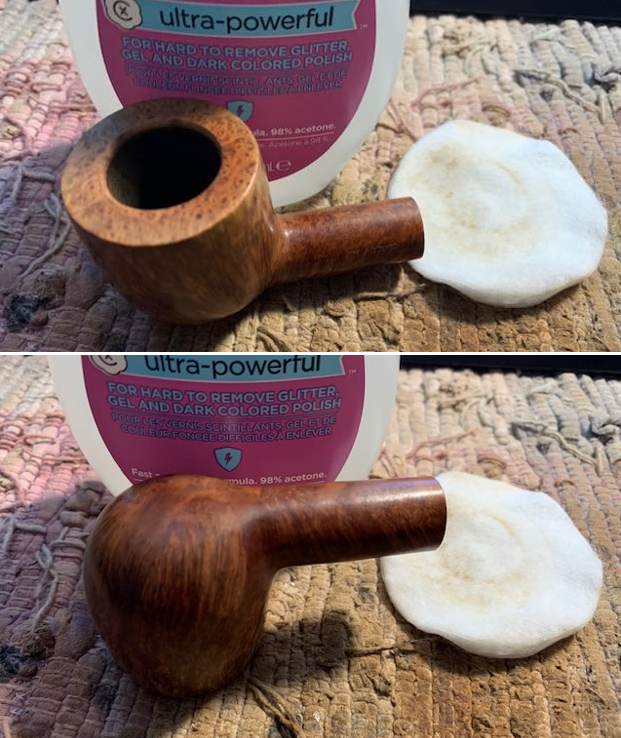
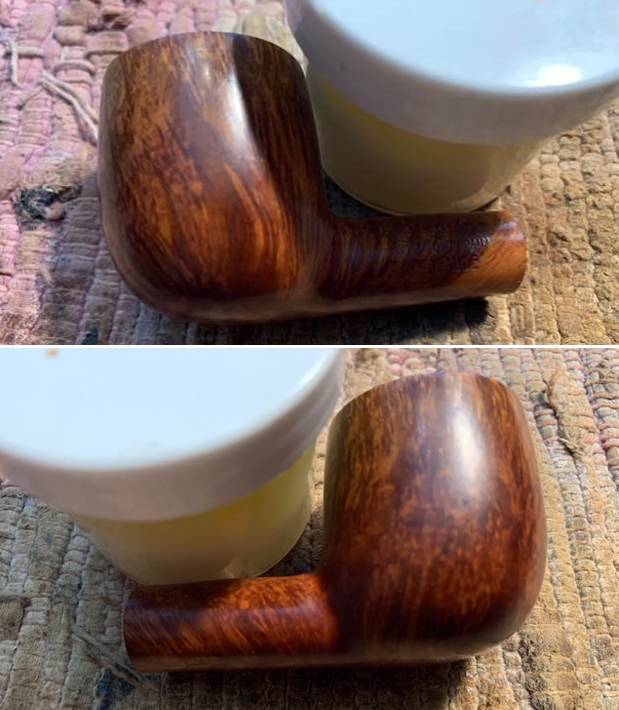
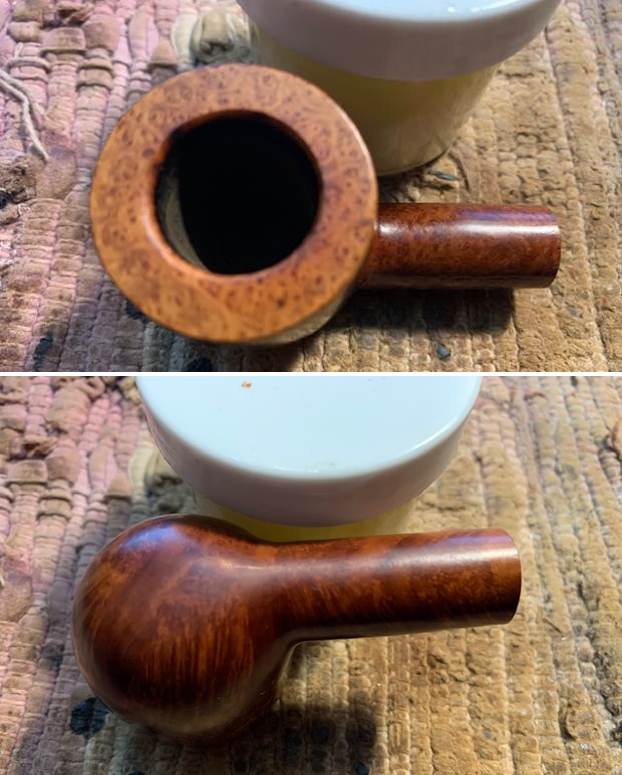
Jeff had cleaned up the pipe as usual. He reamed the pipe with a PipNet pipe reamer and removed the rest of the cake with a Savinelli Fitsall Pipe Knife. He scrubbed the bowl with undiluted Murphy’s Oil Soap with a tooth brush. He rinsed it under running warm water to remove the soap and grime. He cleaned out the inside of the shank and the airway in the stem with alcohol, cotton swabs and pipe cleaners. He scrubbed the stem with Soft Scrub and a tooth brush and rinsed it off with warm water. I took photos of the pipe before I started my part of the restoration work. There were still spots varnish on the bowl sides that would need to be removed. I took photos of the pipe before I started my work on it.     The rim top looked very good and the inner edge had some darkening and wear that would need to be addressed. The outer edge of the bowl look very good. The stem surface still showed oxidation and had a few small tooth marks and chatter on both sides near the button. The stamping on sides of the shank is clear and readable. I took photos of the stamping on the each side of the shank and it is stamped as noted above. The logo on the stem could well be a decal but I will know more once I am working on it.I removed the stem and took a photo of the pipe to give a sense of the whole. It is an unusually shaped pipe.I started my work on the pipe by wiping the bowl down with acetone to remove the remaining varnish around the bowl and shank. It lifted some of the red stain in the process. I used a folded piece of 220 grit sandpaper to clean up the damage and darkening there. I also smoothed out the damage on the rim top. It worked amazingly well and the finished edge and top looked much better.  I polished the bowl and the rim top with micromesh sanding pads – wet sanding with 1500-2400 grit pads and dry sanding with 3200-12000 grit pads. I wiped the bowl down after each pad with a damp cloth.   I rubbed some Before & After Restoration Balm into the surface of the briar to enliven, clean and preserve it. I rubbed it in with my fingertips working it into the briar. I set it aside for 15 minutes to let the balm do its work. I buffed it off with a cotton cloth and then buffed it with a microfiber cloth. The photos below show the pipe at this point in the restoration process.  I set aside the bowl and turned my attention to the stem. I scrubbed the stem with Soft Scrub on cotton pads to remove the deep oxidation that was still on the stem. It worked quite well and I was able to remove the majority of it. I then used some Meguiar’s Scratch X 2.0 Fine Polish and scratch remover and was able to remove even more of the oxidation. I polished the stem using micromesh sanding pads – wet sanding with 1500-12000 grit pads to further polish it. After each pad I wiped it down with Obsidian Oil to protect and enliven the stem. I polished it further with Before & After Pipe Polish – both Fine and Extra Fine. When I finished with the polish I gave it a final coat of Obsidian Oil and set it aside to dry. I tried to redo the BBB triangle on the stem side. It was faint and the stamping was not very deep. I used some Rub’n Buff Antique Gold but it did not work so I wiped it off and buffed it with some Obsidian Oil to clean up the stamping. This BBB Trafalgar Square 1752 Panel Dublin Sitter is an interesting and unusual piece. It has a classic English looking Billiard shape. The smooth finish around the bowl and shank has some nice straight and flame grain around the sides. The rim top and heel have some nice looking birdseye grain. The reddish brown of the bowl and the black of taper vulcanite stem contrast well together. I buffed the bowl and the stem with Blue Diamond polish to raise the shine on the briar and the vulcanite. I lightly buffed the rim top and shank end as well. I was careful to not buff the stamping and damage it. I gave the bowl and the stem multiple coats of carnauba wax. I buffed the entire pipe with a clean buffing pad to raise the shine. I hand buffed it with a microfiber cloth to deepen the shine. The finished pipe is shown in the photos below. The dimensions of the pipe are: Length: 5 ½ inches, Height: 2 inches, Outside Diameter: 1 ½ x 1 ½  inches, Diameter of the chamber: ¾ of an inch. The weight of the pipe is 1.62 ounces/46 grams. It is an interesting old pipe and should make a great collectible piece for lovers of old Americana Pipe Making Companies. I will be adding it to the American Pipemakers Section on the rebornpipes store very soon if you would like to add it to your collection. Thanks for walking through the restoration with me.

Pipe Gods Smiled And I Got Not One But Three Les Wood Pipes… Restoring a Les Wood Poker


Blog by Paresh Deshpande

Les Wood pipes are on every collector’s either wish list or in personal collection and I am no exception, though I was in the former category up until now. These pipes are as rare as hen’s teeth and very rarely make an appearance on the estate pipe market and whenever they do, the stratospheric prices made them beyond my reach. After waiting for years on end, I came across a gentleman desirous of parting with his Les Wood pipes collection. We discussed the price and I discussed with Abha, my wife, discussed some more with the gentleman, again discussed a lot more with my wife and thereafter again discussed some with the gentleman and after all these discussions, three Les Wood pipes made their way from the European Union to India.

The first of the three Les Wood pipes that I decided to work on is a rusticated large, stout classic poker with a beautiful Cumberland stem. The large rusticated chunky stummel feels great in the hand and given its size, it is definitely not a light weight. The pipe is stamped on the smooth surface of the foot of the stummel as “FERNDOWN” in a slight arc over “BARK” over “HAND MADE IN” over “ENGLAND” over “LES WOOD”. Running oblique to the FERNDOWN BARK on the left side are three stars one below the other. The Sterling silver band bears the stamp “L & JS” in a rectangular cartouche over “.925”. The Cumberland stem is stamped on the left side as “L J S”I had read about Leslie John Wood sometime back when I read an article on English pipes and pipe carvers. I remembered that he worked for Dunhill’s as a silversmith. Just to refresh my memory, I visited Reborn Pipes and sure enough, Steve had indeed worked on and researched Les Wood. It’s very comprehensive and is recommended as a read. Here is the link to the write up.

https://rebornpipes.com/2021/05/20/this-restoration-is-a-bit-of-a-resurrection-of-a-beautiful-ferndown-root-3-dublin/

From the article, I know I am working on a ‘BARK’ grade pipe (ca. 90%, rusticated, dark brown and black) in size 3 from Les Wood.

Initial Visual Inspection
The pipe is actually in quite a good condition. The chamber has a very thin layer of cake that is even all around and is rock hard. The stummel surface feels solid to the touch and thus, I don’t anticipate any serious issues with the chamber walls. The rim top surface is smooth and devoid of any cake build up or darkening over the surface. The rim edges are in pretty good condition too. The stummel finish has faded more towards the foot of the stummel and has a lot of dirt and grime ground into the rusticated finish. This makes the stummel appear dull, lifeless and lackluster. The silver band at the shank end is deeply oxidized and appears blackened. The Cumberland stem is deeply oxidized with a couple of minor tooth indentations in the bite zone. Here are a few pictures of the pipe as it sits on my worktable. It’s a nice solid pipe with a robust construction yet elegant in its huge size and shape. This one will take your breath away once it is restored, I think.

Detailed Inspection
There is a thin layer of cake in the chamber that is even all around. The cake is hard and compact and this makes me believe that it has been regularly reamed to maintain the correct cake thickness in the chamber. The condition of the chamber walls can be ascertained only once the cake has been taken down to the bare briar; however, I do not foresee any major issues with the chamber walls. The smooth rim top has no dents and dings and overflowing lava. The condition of the inner rim edge will be known once the complete cake has been removed and the surface thoroughly cleaned. The chamber does have smells of old tobaccos and would need to be addressed.The rustication on the stummel surface are very fine and shallow. It is a very uniquely rusticated stummel for sure. The stain has faded from the lower half of the bowl and lower surface of the shank. The surface looks tired and lifeless and would benefit from a nice thorough TLC routine. The shank is quite clean and has no signs of accumulated old oils and gunk. The draw is nice and smooth. The Cumberland stem is deeply oxidized with minor tooth chatter in the bite zone on either surface. The horizontal slot opening is clean and the tenon shows accumulation of old dried oils and gunk. The airflow through the stem is smooth and easy. That my detailed appreciation of the condition of this pipe was completely off the mark became amply evident as I went through the process of refurbishing this pipe.

The Process
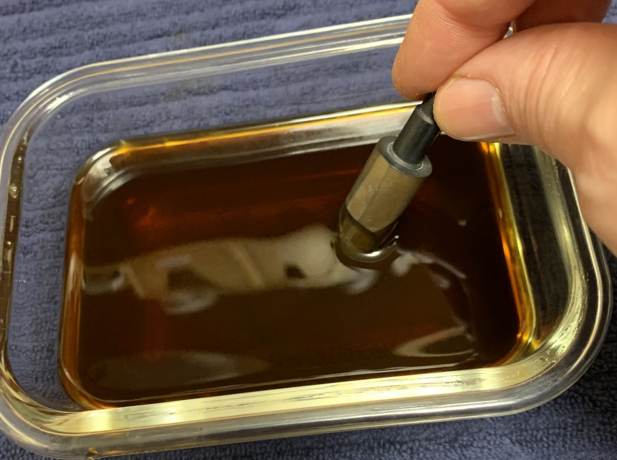
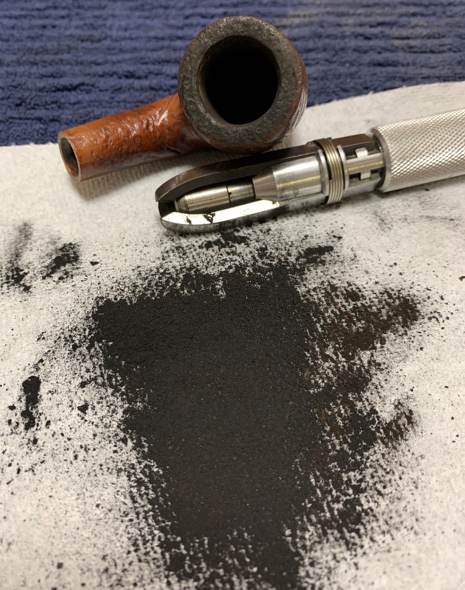
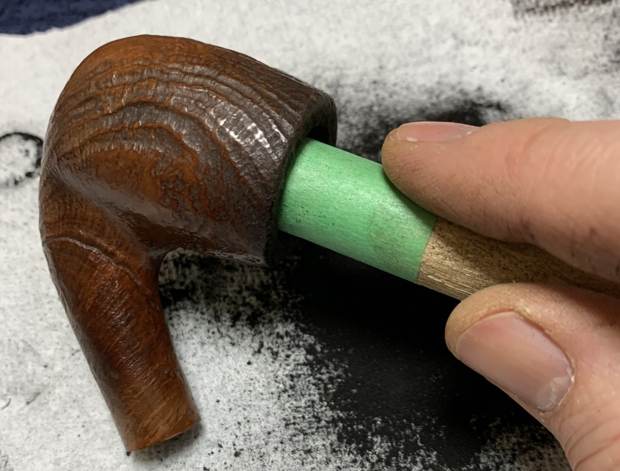
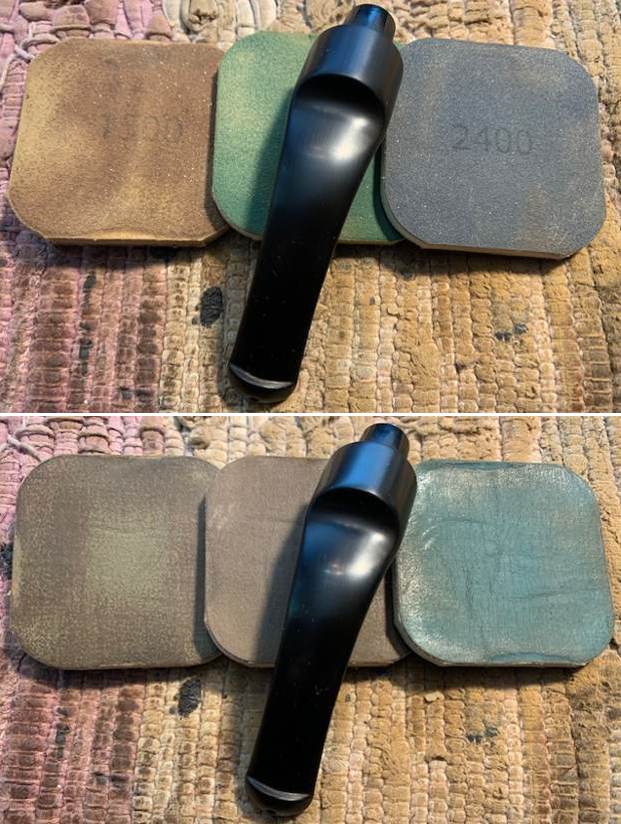
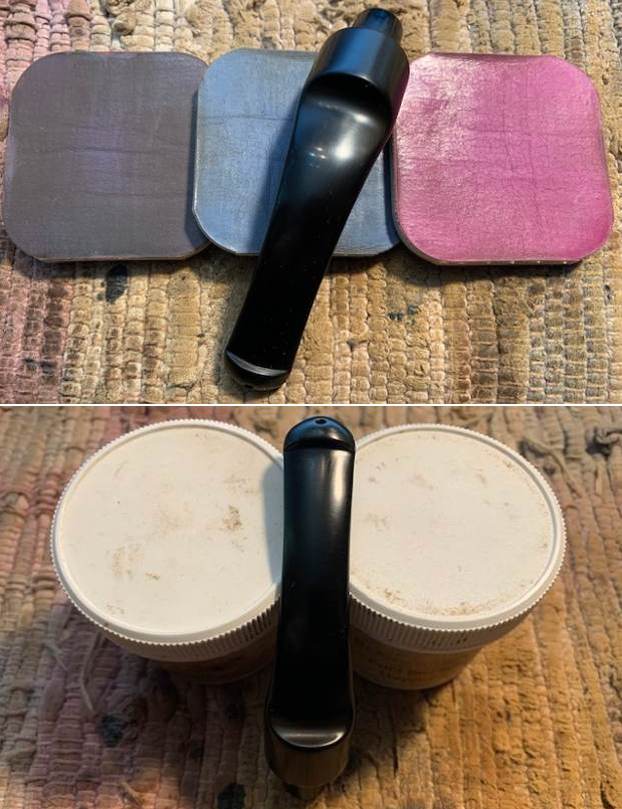
I started the process of refurbishing this pipe with internal cleaning of the stem and this is where my initial appreciation of the stem condition faulted. Using thin shank brushes and anti-oil dish washing soap, I cleaned the stem airway. I have modified this process of cleaning the stem airway by doing away with pipe cleaners and alcohol as it saves me a ton of pipe cleaners, which is a precious commodity for me here in India. To say that the airway was filthy, would be an understatement as is evidenced by the following pictures. The dark smelly and sticky goo that was being dislodged with each passing of the shank brush was never-ending. However, I persevered with my efforts till only white clean foam came out of the stem airway, indicating that the airway was nice and clean. I ran a couple of pipe cleaners dipped in alcohol through the airway to dry it out and make sure that there are no traces of soap and gunk hidden in the airway.With the stem internals now clean, I moved to external cleaning of the stem surface by dunking the stem into “Before and After Deoxidizer” solution developed by my friend Mark Hoover. The solution helps to draw out heavy oxidation to the surface making it’s further removal a breeze, while the minor oxidation is eliminated to a very great extent. I usually dunk stems of 5-7 pipes that are in-line for restoration and the FERNDOWN BARK is marked in red arrow. I generally allow the stems to soak in this solution overnight for the solution to do its work.While the stem was set aside to soak in the deoxidizer solution, I moved on to removing the thin (????) layer of cake from the chamber walls. Boy was I wrong in my assessment of thin layer and how! I started the reaming process with head size 2 of the PipNet reamer blade and progressed through head sizes 3 and 4. The blades kept cutting through the layers of cake and there seemed no end to it. Finally, I resorted to using my Kleen Reem pipe tool extended to its max width to divest the chamber walls of its entire carbon layer. The chamber is huge ! I used my fabricated knife to remove cake from areas inaccessible to the reamer blades and completed the process of removing the cake by sanding the walls smooth with a folded piece of 180 grit sandpaper. I wiped the chamber with a cotton swab wetted with alcohol to clean the residual carbon dust. The chamber walls are solid and the minor thin veins that are visible over the walls are not heat fissures but an ultra thin layer of carbon which will be addressed once the cake is loosened up after a salt and alcohol bath, or at least that is what I hope for. Next, I cleaned the mortise by scraping out all the dried oils and tars from the walls. My assessment of the mortise being clean was proved wrong by the amount of crud that was scraped out. The icing on the cake was when I tried to clean the airway with a folded pipe cleaner dipped in alcohol and it just wouldn’t pass through. I realized that the airway was clogged to some extent. Using the drill bit attachment from the Kleen Reem pipe tool, I cleaned out the accumulated oils and tars from the airway and ran a folded bristled pipe cleaner dipped in alcohol through the airway. I checked the draw and if earlier I felt the draw was smooth and open, after the cleaning, it was surreal! The draw was something I had not experienced earlier. The air literally gushed through the airway. This one is a sure fire excellent smoker.Continuing with the internal cleaning of the chamber and shank, I subjected it to a salt and alcohol bath. I used cotton balls which is an at par substitute as I have realized over the years. I drew out a wick from the cotton and along with a folded regular pipe cleaner; inserted it into the mortise and through the draught hole and further into the chamber. Thereafter, I packed the chamber with cotton balls to about quarter of an inch below the rim inner edge and soaked the cotton balls with isopropyl alcohol up to the brim. About half an hour later, the level of alcohol had gone down, having being absorbed by the cotton. I topped it up once again and set it aside overnight. By next afternoon, the cotton and alcohol had drawn out all the remaining oils/ tars from the chamber and mortise and loosened out any residual cake and tar build up, fulfilling its intended task. I removed the cotton balls and ran pipe cleaners through the mortise to clean out all the loosened tars and gunk. Using my fabricated tool, I scraped out the entire loosed gunk from the mortise and further cleaned it with alcohol and q-tips. I also scraped the moist cake from the chamber using my knife and sanding it smooth with 180 grit sandpaper. The chamber now smelled clean and fresh and the tiny veins observed in the chamber were eliminated. I set the stummel to dry out naturally. I cleaned the external surface of the stummel with undiluted Murphy’s Oil Soap and a hard bristled toothbrush. I cleaned the smooth rim top surface with the soap and Scotch Brite pad. I thoroughly cleaned the mortise with shank brush and anti-oil dish washing soap. I polished the smooth rim top surface by dry sanding with 1500 to 12000 grit micromesh pads.  Next, I rubbed a small quantity of “Before and After Restoration Balm” into the briar with my finger tips and let it rest for a few minutes. The balm almost immediately works it’s magic and the briar now had a nice vibrant appearance with the beautiful rustication patterns on full display. I have been using this balm ever since I embarked on this journey and it is this part of restoration that I always look forward to. I further buffed it with a horse hair shoe brush. This pipe really oozes of a very high quality, in fact one of the best that I have come across. Now that the stummel refurbishing was nearly done and also the stem had now been soaking for more than 24 hours, I removed the stem from the solution. I first scrubbed the stem surface with a Scotch Brite pad, always being mindful of the stem logo on the left side. I followed this scrubbing with a nice cleaning of the surface using a 0000 grade steel wool. I rinsed the stem under running water to rid the stem of the thick solution. I ran a couple of pipe cleaners to remove the deoxidizer solution from the airway. The beauty of a Cumberland stem with swirls of red and black can now be appreciated once the heavy oxidation has been eliminated.The above cleaning also gave a clearer picture of the tooth chatter on either surface in the bite zone. This tooth chatter was very minor and would be easily addressed during the sanding process using various grit sandpapers followed by micromesh pads. I dry sanded the entire stem with 320, 400, 600 and 800 grit sand papers followed by wet sanding using 1000, 1500 and 2000 grit sand papers. This progressive use of higher grit sandpapers helps to, firstly,  reduce the sanding marks left behind by the more abrasive ones, secondly, completely eliminate the oxidation and imparting a clean shine to the stem surface. Thirdly, this also helped to even out the minor tooth chatter from the bite zone. I applied a little EVO and set the stem aside for a few minutes. This stem, as the rest of the pipe, is a real beauty.I went through the 3200 to 12000 grit micromesh pads to dry sand the stem. The stem now has a nice deep shine with the swirls coming to life as they dance around the entire stem surface. I rubbed a small quantity of EVO and set the stem aside for the oil to hydrate the stem surface. This is a beautiful stem and I cannot refrain from constant admiration of it. Have a look for yourself….I painted the stem logo L J S using a Gold paint glitter pen and wiped off the excess paint. The stem logo is now nice and prominently visible. I completed this project by hand polishing the stummel with Halcyon II wax. I rubbed this polish deep into the rustication and after a couple of minutes, vigorously hand buffed the stummel with a microfiber cloth to a deep shine. I polished the stem with Blue Diamond compound and subsequently with carnauba wax using my hand held rotary tool. This is a gorgeous looking pipe and will be an integral part of my collection of contemporary Pipe Carvers. I wish to thank each one for sparing their valuable time to read through this write up and praying for the health and safety of you and your loved ones.

Reconstructing The Rim And Sprucing Up a 1961 Dunhill Bruyere Billiard


Blog by Paresh Deshpande

It’s been a long while since I have posted any write ups here and the primary reason is my laziness. I know and accept that these are very useful as references and as records of the work done till date and yet I enjoy restoring pipes more than doing the write ups.

One of my friends here is an avid collector of pipes and he expressed a desire to expand his collection restricted only to English made pipes. He wanted a Dunhill with crisp stampings (that is always a challenge!) and so began my hunt for one. I found one on eBay Germany, which had a seriously damaged rim edge but otherwise in great condition for a 61 year old pipe. I discussed this piece with my friend and soon the pipe made its way to India and is now on my work table. It’s a classic Billiard with a fishtail stem and a flat bottom that makes it a sitter. The briar is flawless and without any fills or imperfections as expected from Dunhill. The pipe is stamped on the left near the bowl and shank junction as “59” followed by “F/T” followed by “DUNHILL” over “BRUYERE”, all in capital letters, towards the shank end. The right side of the shank is stamped as “MADE IN” over “ENGLAND” with suffix 1 after letter D and followed by an encircled “4” and letter “A”. The upper surface of the stem bears the trademark White Dot of the brand.    The brand Dunhill is well researched and documented and pipedia.eu has reams of information on the same. However, of interest to me here is the dating of this pipe, which is fairly straight forward. The shape code 59 denotes Dunhill’s Billiards shape with tapered stem while F/T denotes fish tail style stem. The suffix numeral 1 after letter D denotes 1961 as the make year because firstly, the numeral is not underscored; secondly, it is the same size as the preceding letter D and finally, the letter ‘A’ denoting the finish is slightly larger than the circle enclosing the group size. The encircled letter 4 denotes the group size as 4 and the letter ‘A’ points to the Bruyere finish on this pipe.

With the dating conclusively established, I moved ahead with the initial inspection of the pipe.

Initial Visual Inspection
The first thing that one notices is the damaged rim edge, both aft and at the front. The chamber appears to have been reamed and is sans any cake. There is no lava overflow atop the rim surface. The stummel surface is dull, dirty and lackluster. Being a Bruyere finish, the stummel does not boast of excellent grains but it does prove its quality by being a flawless piece of briar without having a single fill or imperfection. There is a slight ghosting smell and would need to be addressed. The shank bottom is flattened making it a sitter. The stem is in fairly great condition with only a few bite marks over the button edges and some minor tooth chatter in the bite zone. Overall, it’s a very decent pipe and I hope to repair and restore this pipe to its former glory. Detailed Inspection
The chamber appears to have been reamed before the pipe was designated for sale by the previous owner and thus the chamber is devoid of any cake. All that remains is some dust and fine carbon particle accumulation along the walls of the chamber. The rim top is darkened but without any overflowing carbon. However, it’s all together a different ball game when it comes to the rim edges. The most significant damage is to the aft outer rim edge where a large chunk of briar has chipped away, most likely the result of a fall from some height. Similarly, the front of the rim outer edge too has a small chunk of briar missing and appears to be the result of knocking against a hard edge. Both these damages are encircled in yellow. The inner rim edge shows signs of charring in the 6 o’clock and 12 o’clock directions. These areas have been encircled in red. The chamber odor is light but present and would need to be completely eliminated. The stummel feels solid in the hand and the surface is sans any dents and dings. However, the surface is dull and dirty with the finish fading out from over the surface. A nice cleaning and polish of the stummel should make things interesting. The mortise and shank walls are clean. The tapered fishtail vulcanite stem is in good condition. There are some tooth indentations on the button edge on the upper surface with tooth chatter in the bite zone on either surface. The stem surface shows some minor oxidation that would be easily addressed. The stem airway is open but would benefit from a thorough internal cleaning.   The Process
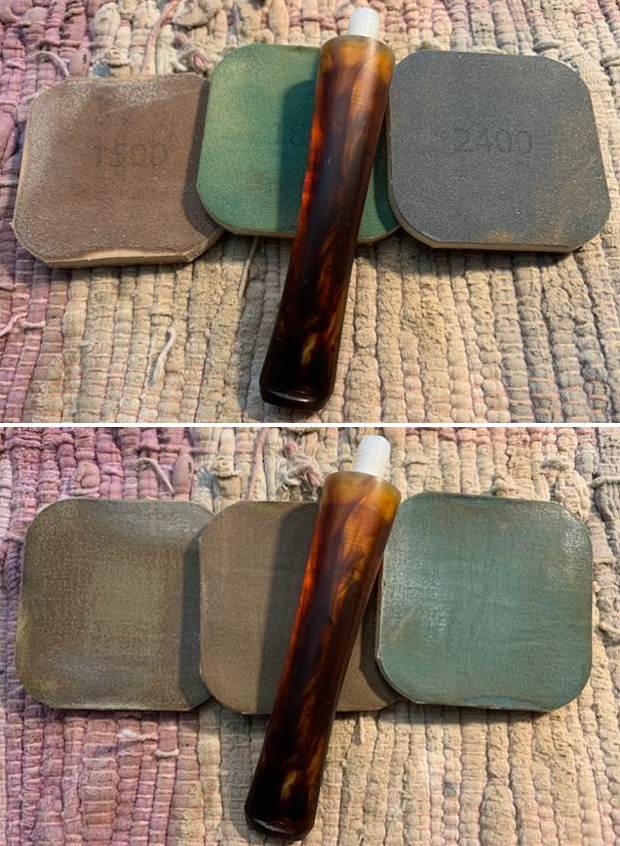
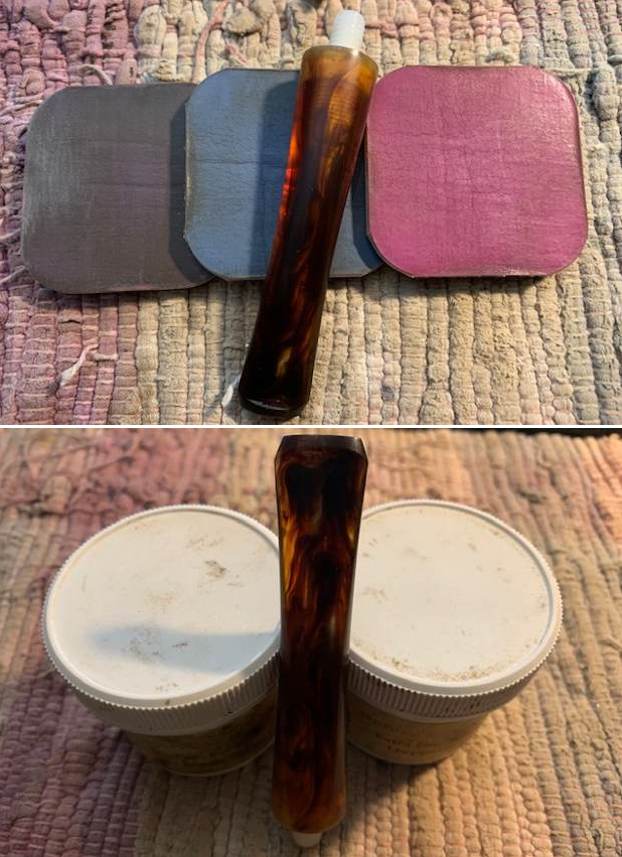
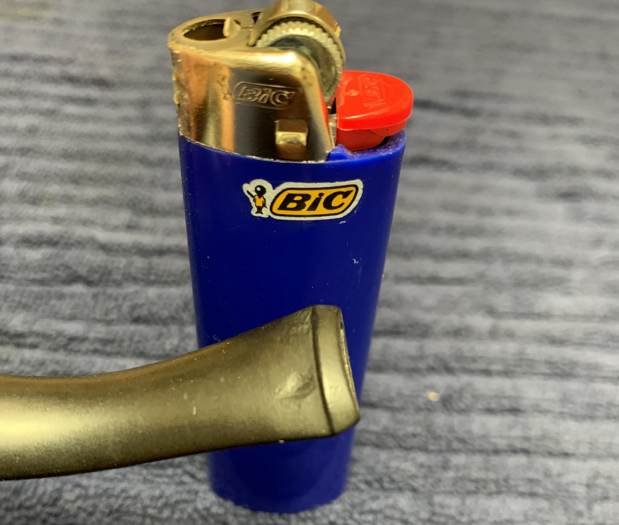
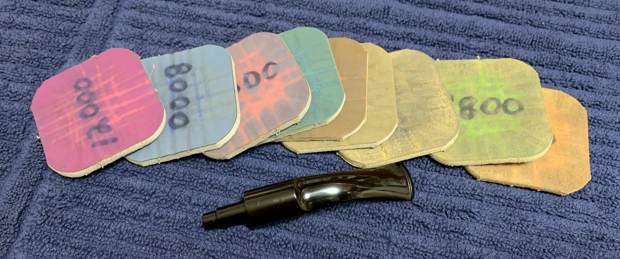
I started the process of restoration by first cleaning the stem internals with anti-oil dish cleaning soap and thin shank brushes. I scrubbed the stem surface with the soap using a ScotchBrite pad, firstly to rid the surface of old oils and gunk and secondly to remove the loose surface oxidation.I dunked the stem into the deoxidizer solution overnight for the oxidation to be pulled out to the surface. I generally allow the stem to soak in the deoxidizer solution overnight. While the stem was sat aside in the deoxidizer solution, I moved ahead to deal with the stummel repairs. I started with reaming the chamber with a size 1 head of the PipNet reamer and progressed to size 2 head. Using my fabricated knife, I gently scrapped away the cake which could not be reached by the reamer head. I further cleaned the chamber with a folded piece of 180 grits sand paper to sand out the remaining traces of cake and expose the walls of the chamber to ascertain that there were no cracks/ heat fissures. I wiped the chamber with a cotton pad dipped in isopropyl alcohol to remove the carbon dust left behind by all the reaming and sanding process. This also reduced traces of old smells from previous usage. The walls of the chamber were solid with no damage.I cleaned the shank walls and mortise with a hard bristled pipe cleaner dipped in alcohol. I used a specifically fabricated scoop to scrape out the gunk from the shank walls and face of the mortise wall. There was not much to clean though!  Prior to moving ahead with the rim repairs, I decided to address the strong ghost smells from the chamber. To eliminate the ghost smells from the pipe, I decided to treat it with salt and alcohol. I used cotton balls which is an at par substitute to Kosher salt as I have realized over the years. I drew out a wick from the cotton and along with a folded regular pipe cleaner; inserted it into the mortise and through the draught hole in the chamber. Thereafter, I packed the chamber with cotton balls to about quarter of an inch below the inner rim edge. I soaked the cotton balls with isopropyl alcohol up to the brim. About half an hour later, the level of alcohol had gone down, having being absorbed by the cotton. I topped it up once again and set it aside overnight. By next afternoon, the cotton and alcohol has drawn out all the remaining oils and tars from the chamber and mortise and the cotton and alcohol had fulfilled its intended task. I removed the cotton balls and ran pipe cleaners through the mortise to clean out all the loosened tars and gunk. The chamber now smelled clean and fresh. I set the stummel to dry out naturally. The next day, I fished out the stem and cleaned it under running warm water and scrubbed the raised oxidation from the stem surface using ScotchBrite pad. I further removed the oxidation by scrubbing the stems with 0000 grade steel wool and applied a little olive oil to rehydrate the stems and set the stem aside for the oil to be absorbed.  I heated the surface of the stem with the flame of a lighter to raise the tooth indentations to the surface and followed it up by sanding with a piece of folded 220 grit sand paper. This helps to even out the raised surface, address minor tooth chatter and also remove the deep seated oxidation. I wiped the stem with a cotton swab and alcohol to remove the raised oxidation and the resulting sanding dust. The tooth indentations over the button edge, though greatly reduced, were still prominent and would need to be addressed.    Next I filled these tooth indentations with a mix of organic charcoal and clear superglue and set the stem aside for the fills to cure.   Once the fills had cured nicely, I moved ahead and began the process of filing and shaping the button end with a flat head needle file followed by further sanding the repair with a piece of 220 grit sandpaper.  To achieve a better blending of the repaired surface with rest of the stem as well as to polish the stem, I dry sanded the entire stem with 320, 600 and 800 grit sand papers followed by wet sanding using 1000, 1500 and 2000 grit sand papers. This progressive use of higher grit sandpapers helps to reduce the sanding marks left behind by the more abrasive ones while completely eliminating the oxidation and imparting a clean shine to the stem surface.  To bring a deep shine to the vulcanite stem, I went through the dry sanding with 3200 to 12000 grit micromesh pads, and wiped the stem with Extra Virgin Olive oil to rehydrate the vulcanite. The repairs have blended in very well and the stem now looks shiny black and beautiful. The finished stem is shown below.  With the stem repairs and polishing now completed, I turned my attention to the stummel repairs and refurbishment. Using a hard bristled tooth brush dipped in undiluted Murphy’s Oil Soap; I very deliberately scrubbed the surface of the stummel and the rim top. I also cleaned the mortise and shank internals using anti-oil dish washing soap and shank brush. I rinsed the stummel under warm running water and dried it using paper napkins and soft cotton cloth. The original reddish dye was also washed away to some extent, but that was not worrisome as I would be re-staining it after repairs. Next, I filled up the large areas of missing briar from the front and back of the outer rim edges with CA superglue and briar dust using the layering method. The only disadvantage of this method is the presence of large number of air pockets which necessitates repeated refilling with glue and briar dust. Once I was satisfied with the repairs, I set the stummel aside for the mix to cure completely.  The next evening, the repairs to the edge had completely cured and I moved ahead by filing and rough shaping with a flat head needle file. I further fine tuned the blending by sanding it down with a 150 grit sand paper. Here is how the repaired area appears at this stage. I am very pleased with the way this repair has progressed.    Thereafter, I took the stummel to the topping board with the aim of making the rim top surface smooth and even as the rim top was also rebuilt along with the edge. I topped the rim surface on 220 grit sandpaper with even circular rotations and frequently checked the progress being made. This step also helped to minimize the charring to the inner rim edge. I shall further mask the damage by creating a slight bevel to the inner edge. I am very pleased with the progress being made thus far. Once the repairs to the stummel were completed, it was time to polish and stain the stummel. I dry sanded the entire stummel with 1500 to 12000 grit micromesh pads, wiping the stummel with a moist cloth after every pad. I massaged a small quantity of “Before and After Restoration Balm” into the briar with my finger tips and let it rest for a few minutes. The balm almost immediately works it’s magic and the briar now has a nice vibrant appearance. I further buffed it with a microfiber cloth. I had hoped that the balm would work it’s magic on the filled area and help in blending it a bit, but unfortunately that did not happen. Well, moving on to the staining process after this step… While refreshing my readings about Dunhill lines, I remember having read that Dunhill achieved the trademark Bruyere color by having an undercoat of dark brown stain followed by deep red color stain. And that’s exactly what I decided to follow with a slight modification. I would first stain wash the stummel with DB stain and thereafter stain it deep red.

I mixed a small quantity of Fiebing’s Dark Brown Leather Dye with isopropyl alcohol to dilute it and applied it to the stummel with a folded pipe cleaner after heating the stummel with a heat gun. I let this stain wash set for a few minutes and vigorously wiped it down with a clean cotton swab. I repeated this process a couple of times till I was satisfied with coloration of the stummel. The next afternoon, I again heated the stummel surface with a heat gun and applied Fiebing’s Oxblood stain with a folded pipe cleaner. As I painted the stummel with stain over sections at a time, I lit the dye using a lighter which burns the alcohol in the aniline dye and sets the dye pigmentation in the wood. After fully saturating the stummel and covering the whole surface, including the rim top, I set the stummel aside to rest for several hours for the stain to set. A few hours later, I wiped the stummel with a cotton pad wetted with isopropyl alcohol to remove any excess stain from the stummel surface and dry polished the stummel with 3200 to 12000 grit micromesh pads. The repairs seem to have blended in pretty well to the naked eye, but under a camera, the repairs mark their presence. Yeah, I am pretty happy with the end result. This now gets me to that part of the process where I get to savor the fruits of my labor until this point, that being the final polishing with Blue Diamond and Carnauba wax!

I began the final polishing cycle by mounting a cotton cloth buffing wheel onto my hand held rotary tool and applied a coat of Blue Diamond to the stummel and the stem to polish out the minor scratches. With a cotton buffing wheel that I use for carnauba wax, I applied a coat of carnauba wax and continued to work on it till the complete coat of wax had been polished out. I mounted a clean cotton cloth buffing wheel and gave the pipe a once over buff. I finished the restoration by giving the entire pipe a rigorous hand buff using a microfiber cloth to raise the shine further. The finished pipe is as shown below and will soon make it’s way to my friend here for many more years of happy smokes. Thank you for reaching thus far with the write up and really appreciate you being part of my journey in the world of pipe repairs.

Cleaning up a Fascinating KBB Yello-Bole Premier Billiard


Blog by Steve Laug

Jeff purchased this pipe off eBay on 05/27/2016 from a seller in Strasburg, Ohio, USA. Once again he showed that he has an eye for old and unique pipes. This one is a straight Billiard with a classic almost British look to it. The grain around the bowl and shank was quite nice and shone through the grime ground into the finish. The bowl was coated with peeling varnish or some shine coat that was worn off around parts of the bowl and shank. The rim top had a lot of dents and damage but that will become evident in the following photos. The bowl had a thick cake and a lava overflow on the inner edge of the bowl. It was stamped on the left side of the shank and has the KBB in a cloverleaf and next to that it reads Yello-Bole over Cured with Real Honey. Next to that is the symbol for a registered trademark ® (R in a circle). Underneath it reads Premier over Imported Briar. On the right side of the shank the stamping very worn but illegible. It may be a shape number but I am not sure. On the stem is the propeller inset logo that appeared on older Yello-Bole pipes. Jeff took photos of the pipe before he started his cleanup work. Jeff took some photos of the rim top and the heel of the bowl to show the condition of the bowl, rim top and finish around the bowl. The bowl interestingly, still had some of the Yello-Bole Honey Cured coating on the top edge and the bottom of the bowl. The rim had been knocked hard on surfaces to empty the bowl. There was some lava and dirt on the rim top and there was a moderate cake in the bowl. There appeared to be issues with the inner edge of the bowl but the outer edge looked to be in good condition. The stem was in decent condition. It was oxidized on both sides of the stem. There were some nicks and tooth marks on both sides near the button and on the top and underside of the button itself. I went back to a previous blog about the various Yello-Bole logos in my collection of these pipes. I reread that blog to try to narrow down a date for the pipe. Here is the link to the post and the comments on the blog: https://rebornpipes.com/2013/01/25/yello-bole-logos-from-my-collection-of-old-yello-bole-pipes/. There was a comment on that blog that came from Troy who I consider my “go to guy” for Yello-Bole information (he has written on rebornpipes and also has a blog of his own). Troy wrote as follows on dating Yello-Bole pipes by the stamping and logos.

“I have a large KBB Yello-Bole collection. They are some of my most favorite pipes and the best smokers for the money (briar wise) you can find in my opinion. I have restored and researched them quite a bit. I have several listed on my blog that I have cleaned or restored. I own about 30-40 KBB Yello-Boles now.”

“Here is a little guide to dating KBB Yello-Boles. If it has the KBB stamped in the clover leaf it was made 1955 or earlier as they stopped the stamping after being acquired by S.M. Frank. From 1933-1936 they were stamped Honey Cured Briar. Pipes stems stamped with the propeller logo they were made in the 30s or 40s no propellers were used after the 40s. Yello-Bole also used a 4 digit code stamped on the pipe in the 30s. If the pipe had the Yello-Bole circle stamped on the shank it was made in the 30s this stopped after 1939. If the pipe was stamped BRUYERE rather than briar it was made in the 30s.” (NB. The portions above in bold and underlined were highlighted as they pertain to the present pipe.)

From that information I ascertained the following. The nicely grained Premier Billiard I had was stamped with KBB in the cloverleaf on the left underside of the shank which told me that the pipe was made before 1955. It had a propeller logo on the stem which further placed it in the period of the 30s and 40s. With all of that collected I knew the pipe was made between 1930 and 1949 which means that this old Billiard has seen a lot of life. I wish it could tell its story.

Ah well… I don’t know for sure where it came from or what previous pipeman carried the trust of this pipe before it came to me. I still needed to do my part of the restoration. I turned my attention to the restoration of the Billiard.

Jeff had worked his magic in cleaning up this pipe. It is nice to work on pipes that he has cleaned up instead of cleaning them myself. He reamed it with a PipNet reamer and smoothed the walls of the bowl with a Savinelli Fitsall pipe knife. He scrubbed out the mortise and the airway in the shank and the stem with alcohol, cotton swabs and pipe cleaners. He scrubbed the exterior of the bowl, rim and shank with a tooth brush and Murphy’s Oil Soap to the oils and tars on the bowl, rim and shank. He rinsed it under running water. He dried it off with a soft cloth. He was able to remove much of the crackling varnish and the briar beneath was in good condition. The cleaning of the stem left a light oxidation in the vulcanite. The tooth marks were clean but visible. I took photos of the pipe to show its condition before I started my work on it.  I took some photos of the rim top and cap to show what it looked like after Jeff had cleaned off the grime and tars. The briar was in good condition but there were some scratches in the flat top and darkening around the inner edge. The bowl was slightly out of round. The stem showed light tooth chatter and wear but it was otherwise in good condition. There were no deep tooth marks. I took photos of the shank sides. The stamping on the left side of the shank is faint but readable. The stamping on the right side is very faint and I am not able to make it out clearly.I removed the stem from the shank and took a photo of the overall look of the pipe. You can see the shovel stinger apparatus in the tenon.I started my work on this pipe by wiping the bowl down with acetone on a paper towel to remove the varnish that remained. Once I was finished the finish was clean and the grain looked really good on the bowl and the rim top. I used a folded piece of 220 grit sandpaper to clean up the damage and darkening there. I also smoothed out the damage on the rim top. It worked amazingly well and the finished edge and top looked much better.  I polished the bowl and the rim top with micromesh sanding pads – wet sanding with 1500-2400 grit pads and dry sanding with 3200-12000 grit pads. I wiped the bowl down after each pad with a damp cloth.    I rubbed some Before & After Restoration Balm into the surface of the briar to enliven, clean and preserve it. I rubbed it in with my fingertips working it into the briar. I set it aside for 15 minutes to let the balm do its work. I buffed it off with a cotton cloth and then buffed it with a microfiber cloth. The photos below show the pipe at this point in the restoration process.  I set aside the bowl and turned my attention to the stem. I polished the aluminum shovel stinger apparatus with a 1500 grit micromesh sanding pad. It took on a rich shine.I polished the stem using micromesh sanding pads – wet sanding with 1500-12000 grit pads to further polish it. After each pad I wiped it down with Obsidian Oil to protect and enliven the stem. I polished it further with Before & After Pipe Polish – both Fine and Extra Fine. When I finished with the polish I gave it a final coat of Obsidian Oil and set it aside to dry. This older rusticated KBB Cured With Real Honey ® Yello-Bole Premier Billiard is an interesting and unusual piece. It has a classic English looking Billiard shape. The smooth finish around the bowl and shank has some nice straight and flame grain around the sides. The rim top and heel have some nice looking birdseye grain. The reddish brown of the bowl and the black of taper vulcanite stem contrast well together. I buffed the bowl and the stem with Blue Diamond polish to raise the shine on the briar and the vulcanite. I lightly buffed the rim top and shank end as well. I was careful to not buff the stamping and damage it. I gave the bowl and the stem multiple coats of carnauba wax. I buffed the entire pipe with a clean buffing pad to raise the shine. I hand buffed it with a microfiber cloth to deepen the shine. The finished pipe is shown in the photos below. The dimensions of the pipe are: Length: 6 inches, Height: 1 ¾ inches, Outside Diameter: 1 ¼ inches, Diameter of the chamber: ¾ of an inch. The weight of the pipe is 1.62 ounces/46 grams. It is an interesting old pipe and should make a great collectible piece for lovers of old Americana Pipe Making Companies. I will be adding it to the American Pipemakers Section on the rebornpipes store very soon if you would like to add it to your collection. Thanks for walking through the restoration with me.

Breathing Life into a Custom-Bilt Panel Billiard


Blog by Steve Laug

The next pipe on the work table came to us from an antique store on 08/27/20 in Murray, Utah, USA. The pipe is a classic Custom-Bilt piece – a rusticated Panel Billiard shaped pipe with some deep carving around the bowl. The pipe is stamped on the left underside of the shank and reads Custom-Bilt and on the heel of the bowl it is stamped Imported Briar. The bowl was heavily caked with an overflow of lava on the rusticated rim top toward the back and on the inner edge. The inside edges looked to be in good condition. The finish was dirty but the pipe still has a sense of charm. The stem was dirty and lightly oxidized. It had tooth chatter and marks on the top and underside ahead of the button and on the button surface itself. There were no markings or a logo on the taper stem. It had promise but it was very dirty. Jeff took some photos of the pipe before he started his cleanup work.    He took photos of the rim top and bowl to give a clear picture of the thickness of the cake and tobacco debris as well as the lava on the smooth rim top. He also took photos of the top and underside of the stem to show the oxidation and the chatter and tooth marks. Jeff took photos of the sides and the heel of the bowl to give a picture of what the briar looked like. The rustication pattern around the bowl is instantly recognizable as done by Custom-Bilt. The last photos shows a stinger in the tenon but is has disappeared since it arrived here. The stamping on the left underside of the shank and the right underside at the shank/stem joint is clear and readable and read as noted above.     I turned to Pipephil (http://www.pipephil.eu/logos/en/logo-c8.html) to get a quick view of the brand once again. I knew that I was working with one of the older pipes and probably made by Tracy Mincer himself. He stopped making the Custom-Bilt pipes in the early 1950s. The screen capture I included below shows a brief history of the brand. It also has a comment on the symbols stamped on the shank near the stem including the square that is stamped on this one. I turned to Pipedia (https://pipedia.org/wiki/File:CustomBilt_Stamp1.jpg) for a quick read. The majority of the information there included two book reviews of the “Custom-Bilt Story” by Bill Unger.

The one line I captured was the following: “Tracy Mincer started the original Custom-Bilt pipes it appears in 1934”.

I did a screen capture of the stamping that matched the stamping on the pipe that I am working on. What I learned from that is that the stamp was used by Tracy Mincer in Indianapolis in the US from 1938-1946 and possibly in Chicago before 1938 as well. So now I had a possible date for this pipe. It was an old timer and it was well worth working on.Armed with that information I turned to work on the pipe itself. Jeff had cleaned up the pipe as usual. He reamed the pipe with a PipNet pipe reamer and removed the rest of it with a Savinelli Fitsall Pipe Knife. He scrubbed the bowl with undiluted Murphy’s Oil Soap with a tooth brush. He rinsed it under running warm water to remove the soap and grime. He cleaned out the inside of the shank and the airway in the stem with alcohol, cotton swabs and pipe cleaners. He scrubbed the stem with Soft Scrub and a tooth brush and rinsed it off with warm water. I took photos of the pipe before I started my part of the restoration work. The rim top and the inner edge had some darkening and wear that would need to be addressed. The outer edge of the bowl look very good. The stem surface looked good with a few small tooth marks and chatter on both sides near the button. The stamping on left and underside of the shank are faint but readable. It is stamped as noted above. I removed the stem and took a photo of the pipe to give a sense of the whole. It is a good looking pipe.I started my work on the pipe by addressing the darkening on the rim top and cleaning up the damage to the inner edge of the rim. I used a folded piece of 220 grit sandpaper to reshape the inner edge. The finished rim top and edge looks better. I worked over the rim top with a brass bristle brush to clean up the debris and darkening in the grooves of the rim top.The bowl looked good at this point so I rubbed it down with Before & After Restoration Balm. I worked it into the surface of the bowl sides and shank with my fingertips and a horsehair shoe brush to clean, enliven and protect the briar. I let the balm sit for about 10-15 minutes and buffed with a cotton cloth to raise the shine.    I set the bowl aside and turned to work on the stem. I used clear CA glue to fill in the tooth marks on the button surface and on the surface of the stem. I flattened the repair on the topside and shaped the button edge on both sides with a small flat file. It is starting to look very good. I sanded the button edges and the repairs on the stem with 220 grit sandpaper to blend them into the surface of the vulcanite. I started polishing it with 400 grit wet dry sandpaper.  I polished the vulcanite stem with micromesh sanding pads – 1500-12000 grit pads. I wiped it down with Obsidian Oil after each sanding pad. I used Before & After Pipe Polish – both Fine and Extra Fine to further polish the stem. I gave the stem a final coat of Obsidian Oil and set it aside to dry.   This Custom-Bilt Panel Billiard is a great looking pipe now that it has been restored. The style of rustication that is used around the bowl is quite beautiful and works well with both the shape and the polished vulcanite taper stem. I put the stem back on the bowl and carefully buffed the pipe with Blue Diamond on the buffing wheel using a light touch on the briar. I gave the bowl multiple coats of Conservator’s Wax and the stem multiple coats of carnauba wax on the buffing wheel and followed that by buffing the entire pipe with a clean buffing pad. I hand buffed the pipe with a microfiber cloth to deepen the shine. The finished Custom-Bilt is another pipe that fits nicely in the hand and feels great. Give the finished pipe a look in the photos below. The dimensions of the pipe are Length: 6 inches, Height: 2 inches, Outside diameter of the bowl: 1 ¼ inches x 1 ½ inches, Chamber diameter: ¾ of an inch. The weight of the pipe is 54 grams/ 1.90 ounces. I will be putting it on the rebornpipes store shortly. If you are interested in adding this pipe to your collection send me a message or an email. Thanks for reading this blog and my reflections on the pipe while I worked on it. There are many more to come!

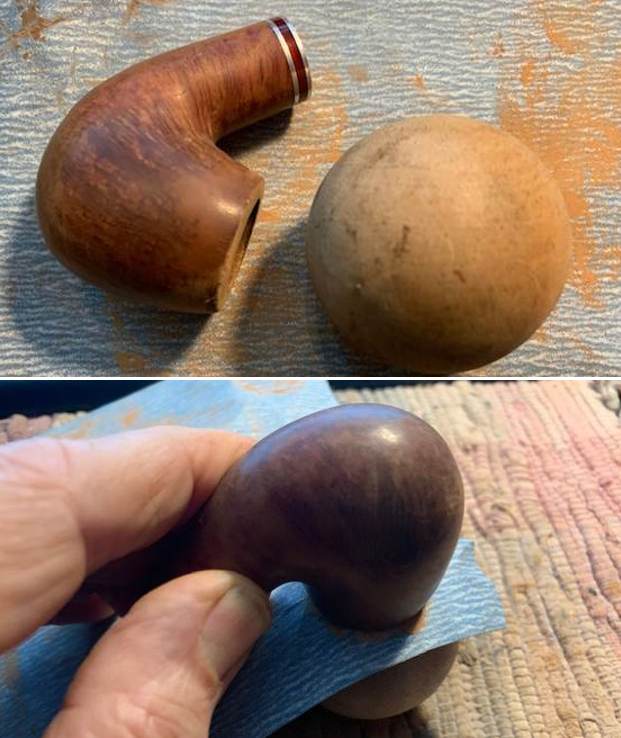
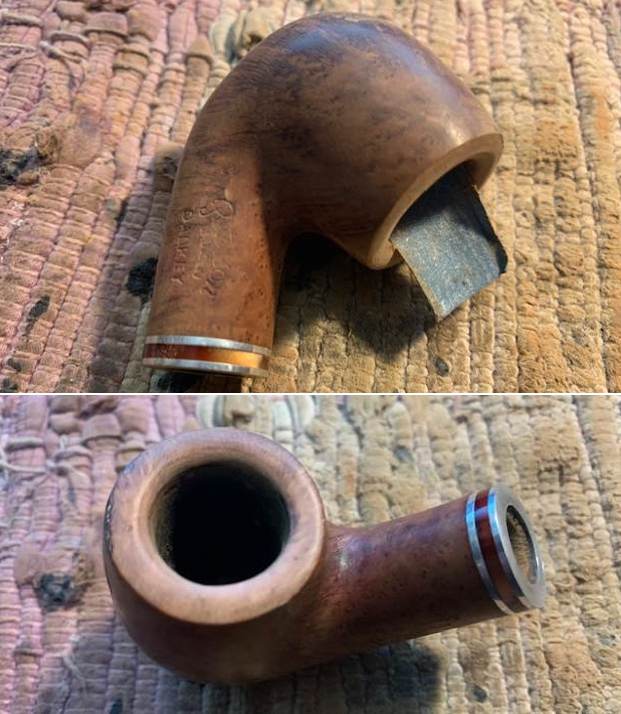
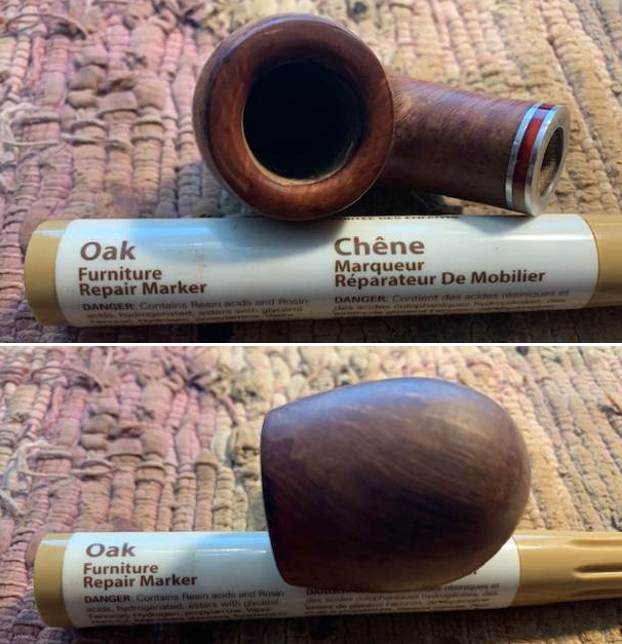
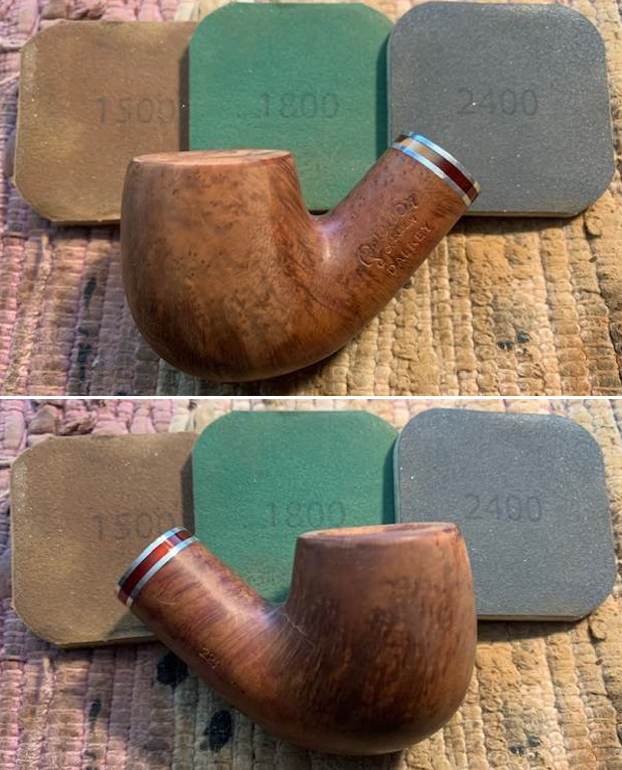
A New Stem for a Hardcastle’s Deluxe Bulldog


Thanks Charles. Great job on the old classic.

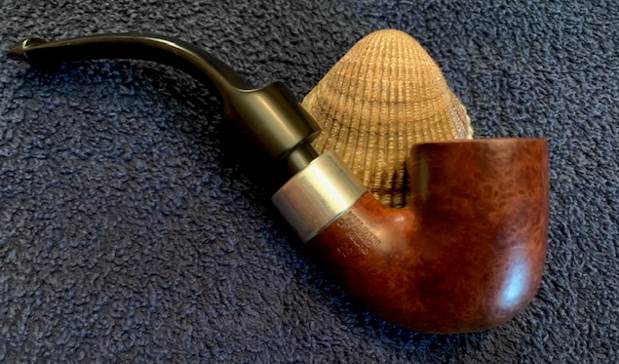
Second only to tenon replacement, fitting a new stem is probably the most common pipe repair, and for good reason. With a modicum of care, a briar …

A New Stem for a Hardcastle’s Deluxe Bulldog

Restoring a Wire Brushed Savinelli Extra 125 Pot


Blog by Steve Laug

The next pipe on my work table a wire rusticated Bent Billiard shaped pipe. It is stamped on the heel of the bowl and the underside of the shank and reads Savinelli [over] Extra followed by the Savinelli shield S then the shape number 125 [over] Italy. The straight taper vulcanite stem is has a very faint Crown stamp on the left side. The briar has a wire rusticated finish around the bowl and shank. This pipe was purchased as part of a lot from an online auction service on 06/07/17 from Lakewood, Colorado, USA. The finish was dirty dusty on the rim edges and sides of the bowl but the shape was good looking. The rim top had some lava in the rustication on the rim top but the edges looked very good. There was a moderate cake in the bowl and some tobacco debris. The shank and stem airway was very dirty. The stem was lightly oxidized, calcified and had tooth marks and chatter on both sides ahead of the button. There was a faint crown stamp on the left side of the taper stem. Jeff took photos of the pipe before he started his clean up. He took photos of the rim top and bowl to show the cake in the bowl, and the lava on the top and inner edge. The stem photos show the oxidation, calcification and tooth chatter and marks very well. Jeff took photos of the sides of the bowl to highlight the rustication around the bowl sides and heel. He captured the stamping on the heel of the bowl and the underside of the shank in the next photos. They are clean and readable as noted above. The stem also had a faint crown stamped on the left side. I turned to Pipephil (http://www.pipephil.eu/logos/en/logo-savinelli2.html) to get a quick view of the Extra Line. I did a screen capture of the site’s information and have included that below. I turned to Pipedia (https://pipedia.org/wiki/Savinelli) for a quick read. The site is worth reading the history of the Savinelli brand and its philosophy of pipemaking. There was a photo of a brochure that included the Extra (https://pipedia.org/wiki/File:Sav_Extra.jpg) that came from Doug Valitchka.Jeff cleaned up the pipes with his usual thoroughness – reaming the bowl with a PipNet pipe reamer and cleaning up the reaming with a Savinelli Fitsall Pipe Knife. He scrubbed the internals of the shank and the stem with alcohol, cotton swabs and pipe cleaners. He scrubbed the exterior with Murphy’s Oil Soap to clean off the dust and grime on the finish. When he sent it the pipe was ready to restore. I could not believe how good the rim top looked in comparison to what it was when he started. I took photos of the pipe when I unpacked it. The briar was clean and the rustication quite unique. The finish was in great condition overall and shone. I took a close up photo of the bowl and rim top after Jeff had cleaned it up. The look of the rim top and edges is very good. He had been able to remove the cake and the lava very well. The bowl was spotless. The stem is also shown and was very clean. He had scrubbed it with Soft Scrub but there was still some oxidation on both sides. There was tooth chatter and deep marks still remaining.I took a photo of the stamping on the heel and the underside of the shank. It is clear and readable as noted above.I removed the stem from the shank and took a photo of the pipe to show the look of the pipe. It is a real beauty.The bowl was very clean and the briar looked good. I decided to rub the briar down with Before & After Restoration Balm. I worked it into the briar with my fingertips and a horsehair shoe brush. The product cleans, enlivens and preserves the briar. I let it do its magic. It sat for 10 minutes and then I buffed it off with a cotton cloth. The bowl really is looking good at this point. I set the bowl aside and turned my attention to the stem. I scrubbed the stem down with Soft Scrub to remove the deep oxidation on the stem surface. I was able to remove much of what was present. Once I worked it over with micromesh it would be better.  I polished the stem with micromesh sanding pads – dry sanding with 1500-12000 grit pads. I wiped the stem down after each pad with a cloth impregnated with Obsidian Oil. I polished it with Before & After Stem Polish – both Fine and Extra Fine then gave it a final coat of Obsidian Oil and set it aside to dry.  There is something about this finish that make this a beautiful pipe. This wire rusticates Savinelli Extra 125 Pot looks great. The swirling wire etching of the rustication on the pipe is quite nice with the dark finish. I put the stem on the shank and buffed the pipe with Blue Diamond on the wheel (being careful of the stamping so as not to damage that). I gave the bowl multiple coats of Conservator’s Wax and the stem multiple coats of carnauba wax and buffed the pipe with a clean buffing pad to raise the shine. I hand buffed it with a microfiber cloth to deepen the shine. The dimensions of this pipe are – Length: 5 ½ inches, Height: 1 ¾ inches, Outside diameter of the bowl: 1 ½ inches, Chamber diameter: 7/8 of an inch. The weight of the pipe is 1.41 ounces/40 grams. It is a great looking pipe and one that will be going on the rebornpipes store in the Italian Pipe Makers Section. If you want to add it to your collection let me know via email to slaug@uniserve.com or by message. Thanks for walking through the restoration with me.

Bringing Benaderet’s Coral Billiard Back to Life


Blog by Steve Laug

The next pipe on the table is a sandblasted large Billiard. This pipe was purchased from a fellow in Scottsdale, Arizona, USA on 09/17/2018. The pipe is a real mess with dust and grime in all of the valleys of the sandblast and the rim top is covered in lava. The beveled inner edge of the rim is very dirty and darkened and there is a thick cake in the bowl. The cake was so thick in parts of the bowl that it was hard to guess the condition of the rim edge. The finish appears to be a reddish brown/cordovan with dark highlights underneath. On the underside of the shank it is stamped Benaderet’s Coral followed by London England [over] the shape number 2515. The stem was oxidized, calcified and there were tooth marks and chatter on both sides just ahead of the button. There was not any stamping on the stem so it did not have any identifying marks. Jeff took photos of the pipe before he started working on it. I include those below. Jeff took photos of the bowl and rim top to show the cake in the bowl and the lava build up on the rim top and dust and grime in the sandblast. It was thick and hard and heavier toward the front of the bowl. The lava is deep in the rustication and there is a buildup on the inner edge of the bowl. Hopefully it had protected the rim and edges from damage. The photos of the top and underside of the stem show the oxidation, calcification and deep tooth marks on both sides of the stem surface and button. Jeff took a photo of the side and heel of the bowl to show the condition of the finish – the grime and grit all over the sides and bottom of the bowl. The grooves in the sandblast are full of grime but it is interesting. This is a very tactile finish and one that I enjoy.     Jeff took two photos of the stamping on the underside of the shank to capture all of it. It is faint but readable other than the edge of the shank where the London Made and 2515 number are stamped. The second photo also shows a flaw in the briar between the N and D of England.  From the shape number on the shank I was pretty certain I was dealing with a GBD pipe. The stamping Benaderet’s Coral was a dead end but the shape number hit the mark. I turned to Pipedia’s shape number listing and found it (https://pipedia.org/wiki/GBD_Shapes/Numbers). I have included a screen capture of the listing below.Benaderet’s was a pipe shop in San Francisco that closed in the 70’s. Their house pipes were made by Comoys or Sasieni although smokingpipes had one made by GBD once. Good find.

The other link was to a blog (http://theothersideofthelizard.blogspot.com/2018/11/benaderets-pipe-shop.html). That blog gave the original address of the shop in San Francisco and the names of the owners of the shop.

Benaderet’s Cigarette, Pipe and Tobacco Shop215 Sutter Street [Formerly at 566 California Street],San Francisco.

Owners: Robert and Edith Rashaw (Robert Rashaw: born 1916. Edith Edna Rashaw: born 1916.) Store still extant in the late seventies. No longer there by the eighties. At one point, they had Egyptian cigarettes made for them. Their house pipes were usually by Comoys. There are also Benaderet’s Sasienis. More research required.

Quote: “Benaderet’s Inc., was California’s oldest pipe and tobacco store when it went out of business in 1980. Sam Benaderet was a tobacconist from New York City who came to San Francisco in 1915 to work at the Panama Pacific International Exposition. An immigrant to the United States from Turkey, Mr. Benaderet decided that he liked the West Coast’s Mediterranean like climate. After the Exposition closed, he stayed to open his own tobacco business. This new firm produced custom private-label cigarettes for men’s clubs. A lavish retail store was opened in the late 1920’s that quickly became a mecca for tobacco connoisseurs.”

So what I could find out about the pipe is that it is a pipe made by GBD (Shape number confirms this). It turns out that the pipe was a GBD pipe made for Benaderet’s Cigarette, Pipe and Tobacco Shop in San Francisco, California. Since the shop went out of business in 1980 I now knew that the pipe was made before that time. Now it was time to work on the pipe.

This pipe was a real mess like many of the pipes we work on. I was curious to see what it would look like when I unpacked it. I was surprised at how good it looked. Jeff reamed it with a PipNet pipe reamer and cleaned up the reaming with a Savinelli Fitsall Pipe Knife. He scrubbed out the internals with alcohol, pipe cleaners and cotton swabs until the pipe was clean. He scrubbed the exterior of the bowl with Murphy’s Oil Soap and a tooth brush to remove the grime and grit on the briar and the lava on the rim top. The finish on the bowl looked really good when I got it. The rim top looked much better and the inner and outer edges were looking good. He had cleaned the internals and scrubbed the exterior of the stem and soaked them in Before & After Deoxidizer bath to remove the oxidation. The stem looked very good other than the tooth marks and chatter in the surface. When the pipe arrived here in Vancouver for the second stop of its restoration tour it looked very good. I took photos of the pipe before I started my work on it. I took photos of the condition of the rim top and stem before I started working. The rim top looks very good. The crevices and valleys of the sandblast and the beveled inner edge of the rim are clean and look great. The bowl is spotless. The stem is lightly oxidized and has some tooth marks and tooth chatter. I took a photo of the stamping on the underside of the heel and the shank. It is clear and readable as noted above.I removed the stem and took a photo to give a sense of the pipe. Note the deep sandblast as it is quite a beauty.I worked on the remaining darkening on the rim top with a brass bristle wire brush. I took time to carefully clean out the dark places in the depths of the sandblast.I worked some Before & After Restoration Balm into the finish of the bowl and the rim top and shank with my fingertips and a horsehair shoe brush to clean, enliven and protect it. I find that the balm really makes the briar come alive again. The contrasts in the layers of stain and the separate finishes really made the grain stand out. I let the balm sit for a little while and then buffed with a cotton cloth to raise the shine. The bowl really looks good at this point. I set the bowl aside and turned my attention to the stem. I tried to lift the tooth marks with a flame of lighter but they did not lift. I filled in the deeper ones on each side with clear super glue. I sanded the stem to remove the oxidation that was on the surface and to smooth out the repaired areas. I used a folded piece of 220 grit sandpaper and a piece of 400 grit wet dry sandpaper. At this point the stem is looking better and the tooth marks are gone.  I polished the stem with micromesh sanding pads – wet sanding it with 1500-12000 grit pads. I polished it further with Before & After Pipe Stem Polish – both fine and extra fine.   Once again I am at the part of the restoration that I always look forward to – the moment when all the pieces are put back together. I put the Benaderet’s Coral 2515 Billiard back together and lightly buffed the bowl with Blue Diamond. I buffed the stem with a heavier touch with Blue Diamond on the buffing wheel. I gave the bowl multiple coats of Conservator’s Wax and the stem multiple coats of carnauba wax. I buffed the pipe with a clean buffing pad to raise the shine. I hand buffed it with a microfiber cloth to deepen the shine. It is fun to see what the polished bowl looks like with the combination of rustication and smooth finishes. The black vulcanite stem stands out as a shiny black contrast to the colours of the bowl. The reddish brown stain on the Benaderet’s Coral Pot looks absolutely great. It is nice to know that it has a west coast tie to the San Francisco area and a long gone pipe shop. It must have been a fine smoking pipe judging from the condition it was when we received it. Have a look at it in the photos below. The dimensions are Length: 6 inches, Height: 1 ¾ inches, Outside diameter of the bowl: 1 ½ inches, Chamber diameter: 7/8 of an inch. This is one that will go on the British Pipemakers section of the rebornpipes online store shortly. Thanks to each of you who are reading this blog. Remember we are not pipe owners; we are pipemen and women who hold our pipes in trust until they pass on into the trust of the next generation.

New Life for a Very Savinelli looking Porto Cervo 316KS


Blog by Steve Laug

This is another one of those pipes that has been here for a long time and I have no memory where it came from. I had not been cleaned so it is not one that ever went to Jeff for clean up. It was a mess. The bowl has a moderate cake (mainly in the top half of the bowl) and a heavy lava overflow on the smooth, crowned rim top. The edges look very good. The rusticated finish is rugged and deep and is nice in the hand. It is dirty with grime and grit deep in the rustication. The pipe stinks like heavily cased aromatics. The brass band is part of the stem and is dull and oxidized. The stem is oxidized, calcified and has tooth marks and chatter on both sides ahead of the button. It looks like the stem had a Softee Bit at some point as the discolouration gives that sense. The tenon is drilled for a 6mm filter or a Balsa Filter. I took some photos of the pipe before I started my work on it. I took close up photos of the bowl and the stem. You can see the thick lava build up on the rim top and down into the bowl. It is really a mess. The stem surface has the mark from a Softee Rubber Bit Guard that is clear and there is calcification and oxidation on the stem. There are also tooth marks and chatter on both sides ahead of the button.I took a photo of the stamping on the underside of the bowl and shank. It is clear and readable as noted above.I removed the stem from the shank and took a photo to give a sense of the proportions of the pipe. It is really quite nice looking.I reamed the bowl with a PipNet pipe reamer using all four cutting heads. I cleaned up the reaming with a Savinelli Fitsall Pipe Knife to remove all debris. I sanded the bowl with 220 grit sandpaper wrapped around a piece of dowel to smooth out the wall of the bowl. The bowl was in excellent condition with no fissures or checking.  I scrubbed the exterior of the bowl with a tooth brush and undiluted Murphy’s Oil Soap to remove the debris from the grooves and to soften and try to remove the lava overflow on the rim top. Once it was finished it looked much better. Polishing with micromesh would remove the rest of the debris and raise a shine. I dried it off with a towel and decided to address the remaining lava and darkening on the crowned rim top. I used a folded piece of 220 grit sandpaper to work on the top and inner edge until it was clean.   I polished the rim top and edges with micromesh sanding pads – dry sanding with 1500-12000 grit pads to raise a shine. I wiped it down with a damp cotton pad to wipe off the debris after each sanding pad.   I worked some Before & After Restoration Balm into the surface of the rusticated briar with my fingertips. I worked it over with a shoe brush to get it deep into the grooves and crannies of finish. I let it sit for 15 minutes then buffed it off with a soft cloth and raised the shine. The bowl looks great at this point.   I cleaned out the inside of the shank and the airway into the bowl and the stem. I scraped the shank out with a small pen knife to remove the thick tars. I then cleaned it with a isopropyl alcohol, cotton swabs and pipe cleaners until it was clean. To rid the bowl of the tars and oils that made the bowl still stink I stuffed it with cotton bolls and twisted a boll into a wick that I threaded into the shank. I used an ear syringe to fill the bowl with isopropyl alcohol and set it in an old ice tray over night  to let it wick out the tars and oils.This morning when I went back to the pipe to work on it I took a photo of the cotton to show how the tars and oils had wicked into the pipe. I removed it from the bowl and took photos of the cotton to show how dirty it was.  To begin the process of removing the oxidation from the stem surface I scrubbed it with Soft Scrub All Purpose cleanser. It worked quite well to remove a large part of the oxidation.I polished the stem with micromesh sanding pads – dry sanding it with 1500-12000 grit pads. I wiped the stem down with Obsidian Oil after each pad. I polished it with Before & After Pipe Polish – both Fine and Extra Fine and gave it a final coat and set it aside to dry.    I touched up the Savinelli Shield S on the stem top with Rub’n Buff Antique Gold. I worked it into the stamping with a tooth pick. I buffed it off with a cotton pad and then rubbed it down with some Obsidian Oil.I put the stem back on the Savinelli Porto Cervo 316KS Oval Shank Rusticated Dublin and buffed the pipe with Blue Diamond on the buffing wheel. I polished the briar and the vulcanite of the stem until there was a rich shine. This classic Savinelli shape and finish really highlights a proportionally well carved pipe. Once I buffed the pipe the briar came alive and the variety of colours in the nooks and crannies of the rustication popped with polishing. The black vulcanite stem with the twin brass bands had a rich glow. This Porto Cervo 316KS fits well in the hand and sits right in the mouth. Have a look at it with the photos below. The dimensions are Length: 6 inches, Height: 1 ½ inches, Outside diameter of the bowl: 1 ¾ inches, Chamber diameter: 7/8 of and inch. The weight of the pipe is 1.45 ounces/41 grams. This beauty will be going on the rebornpipes online store in the Italian Pipemakers Section. If you are interested let me know. Thanks for walking through the restoration with me as it was a pleasure to work on.