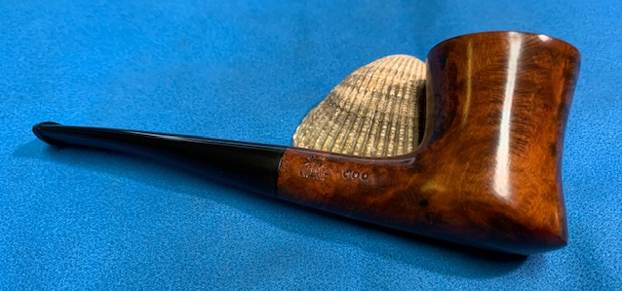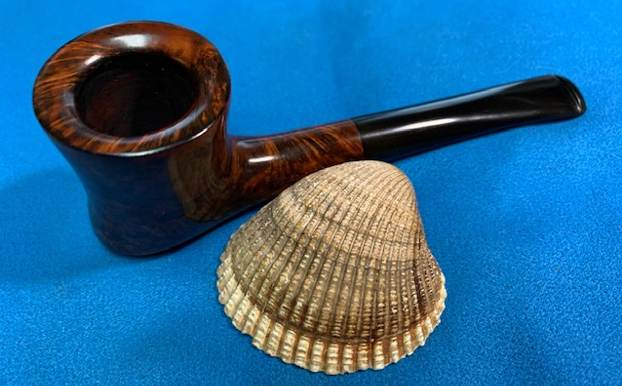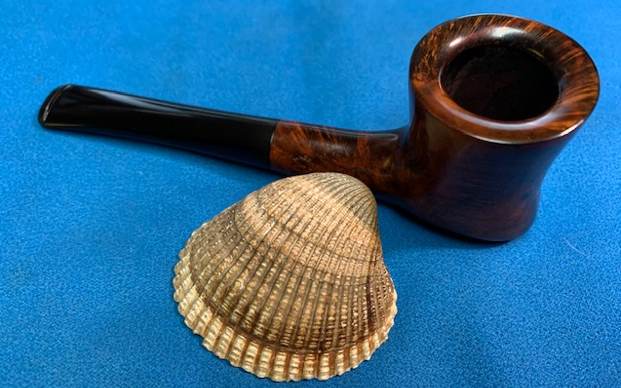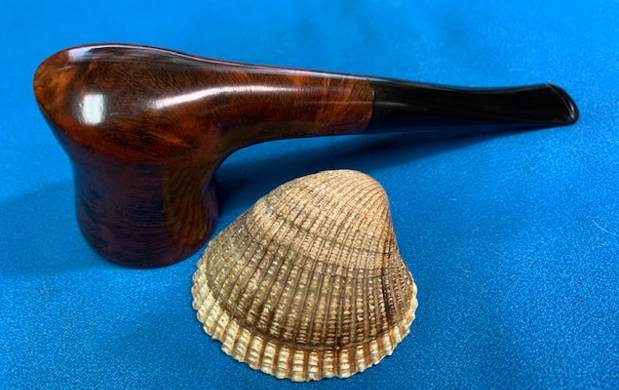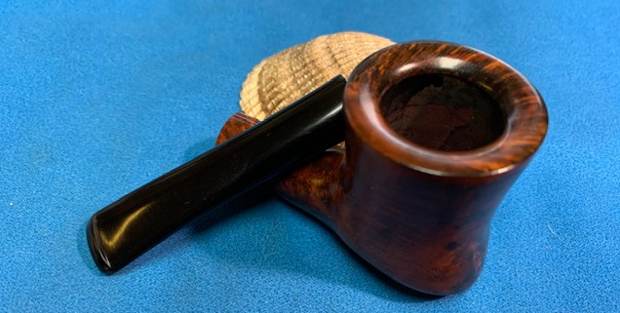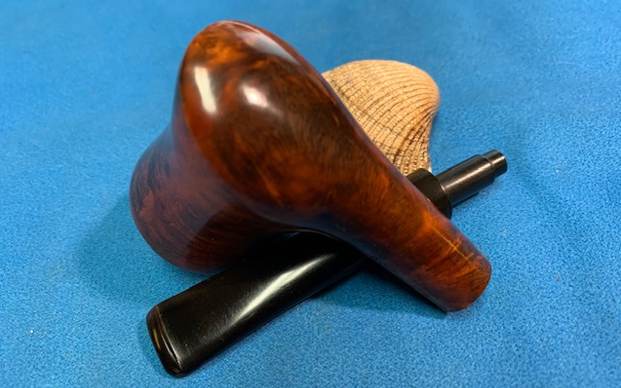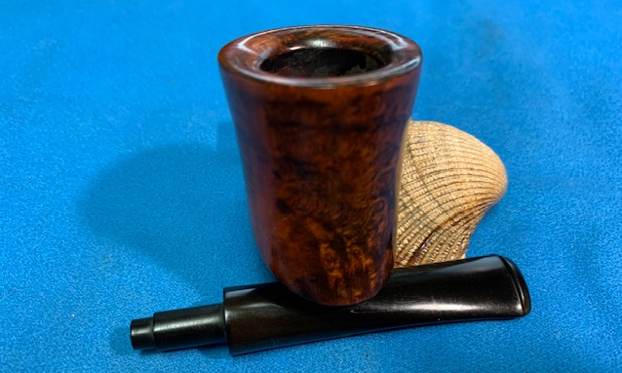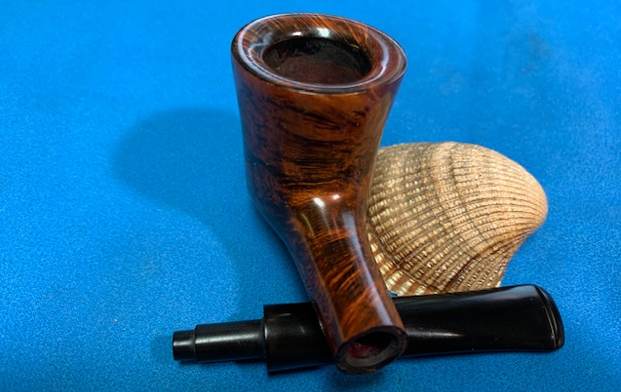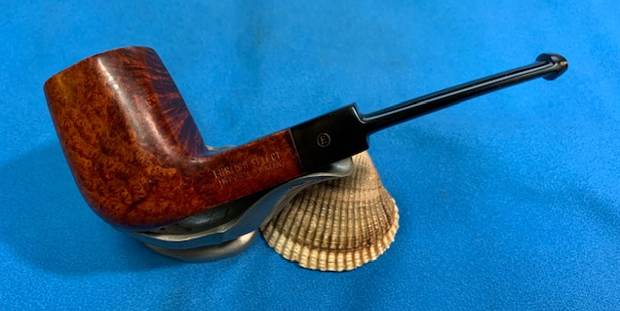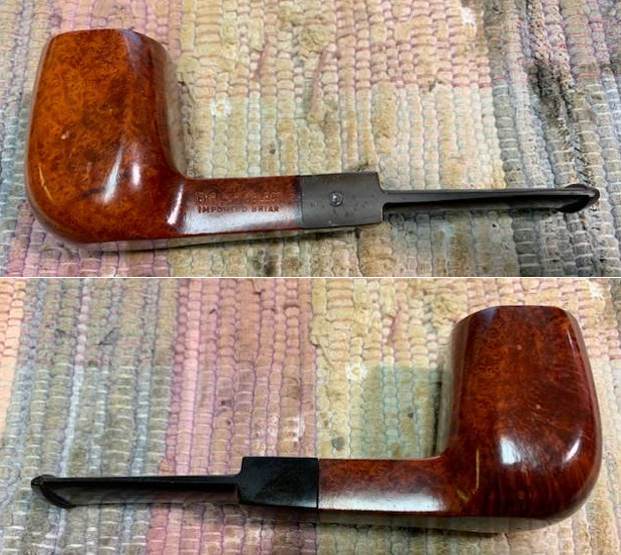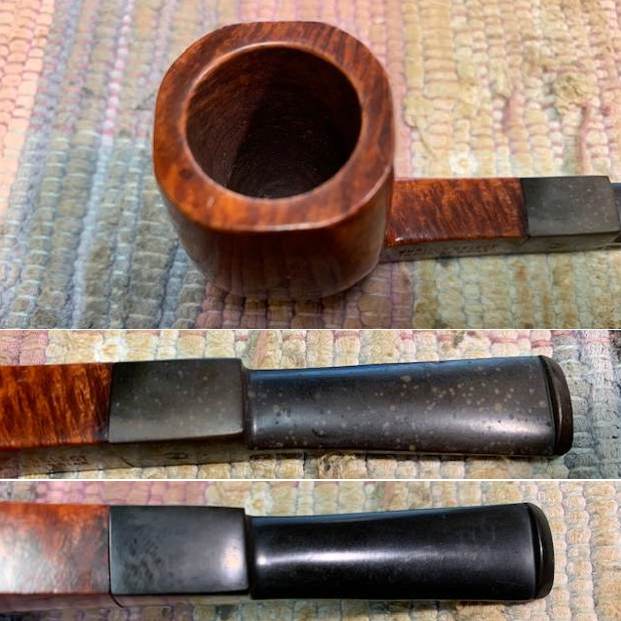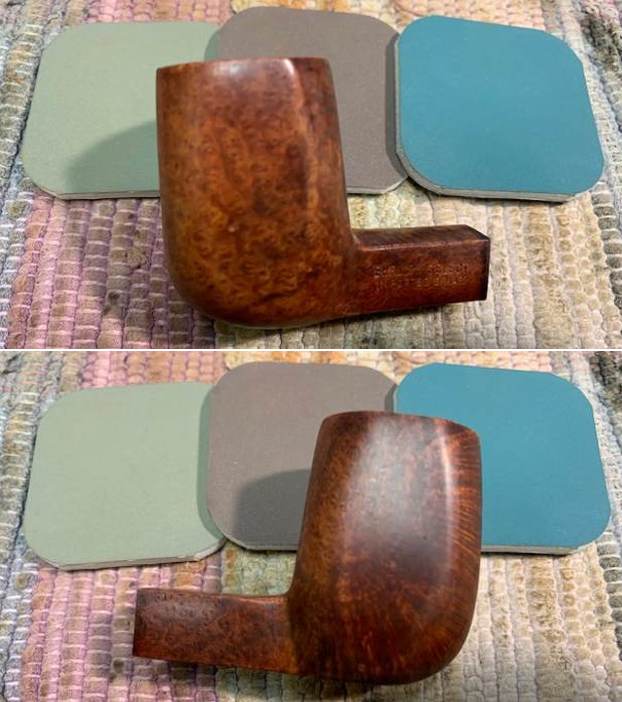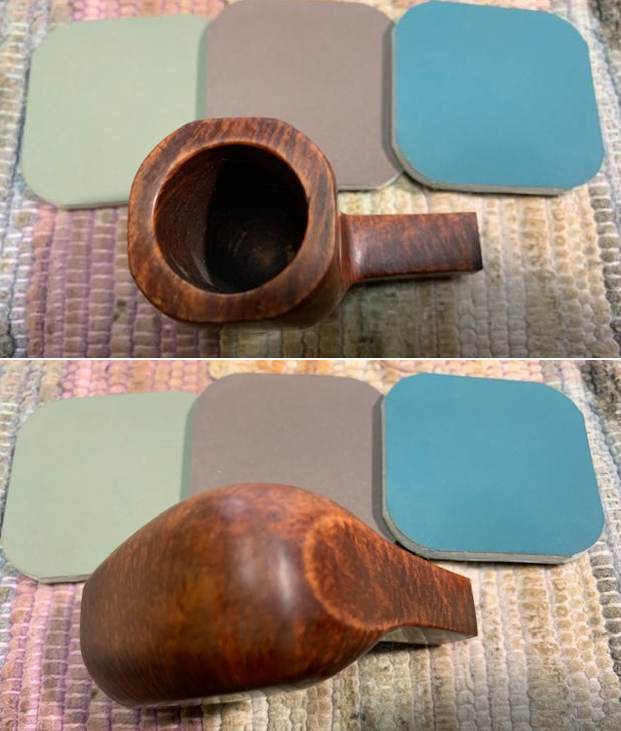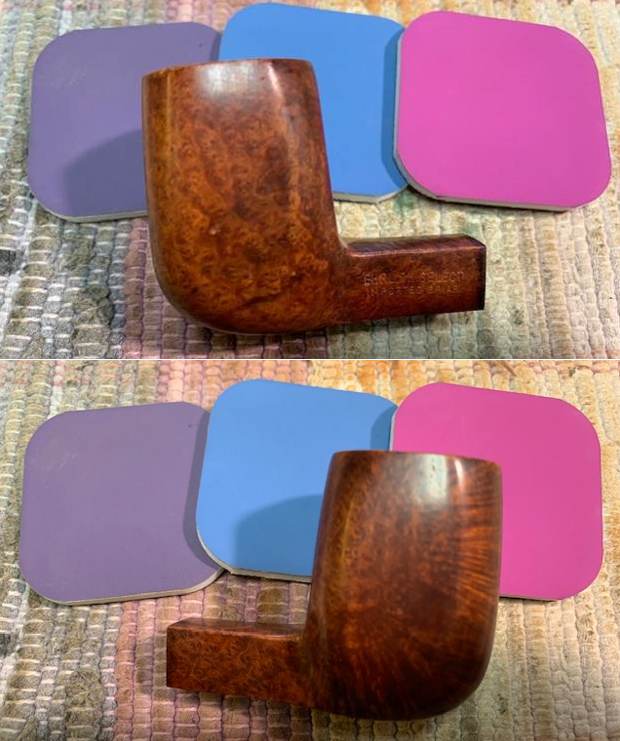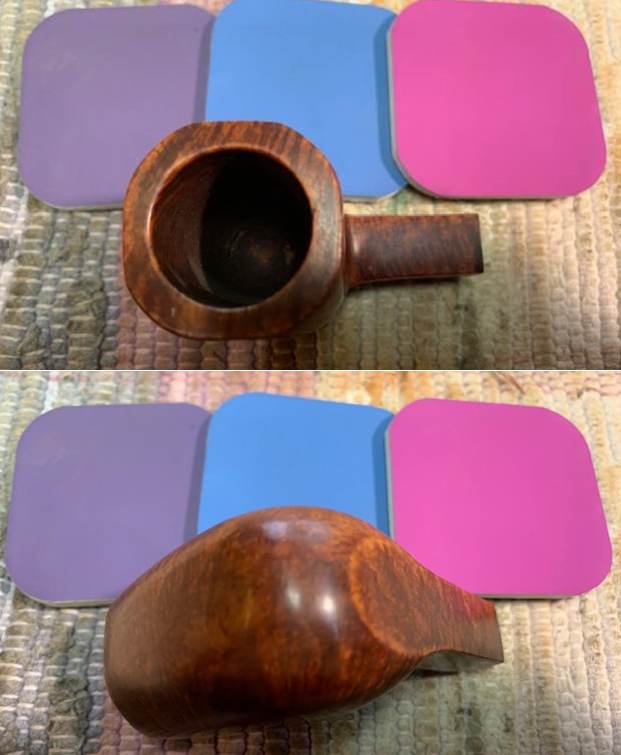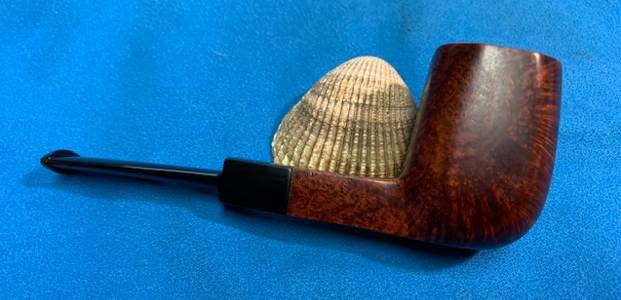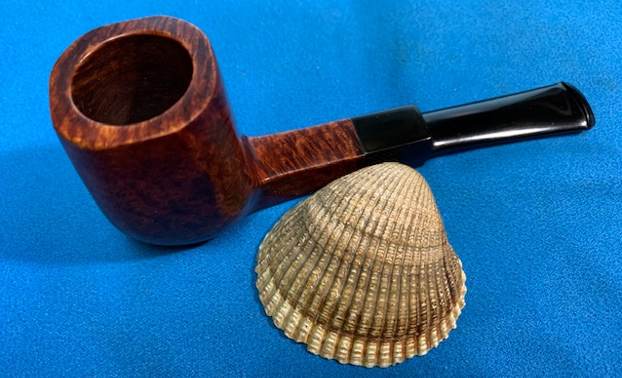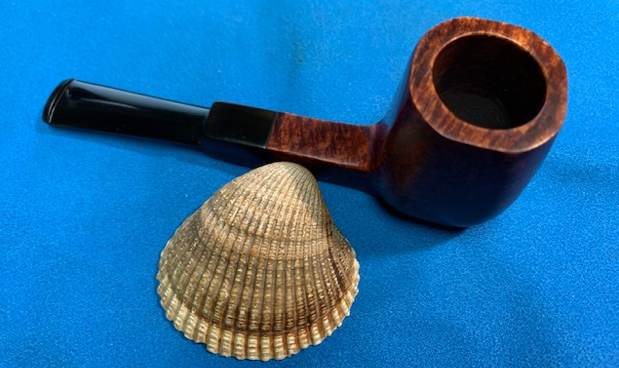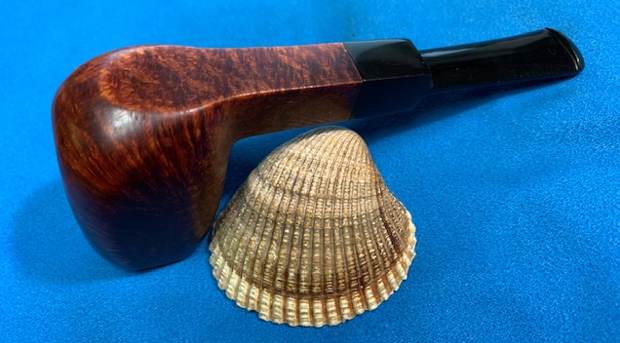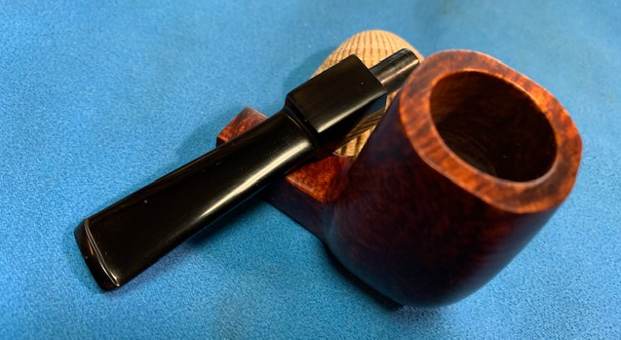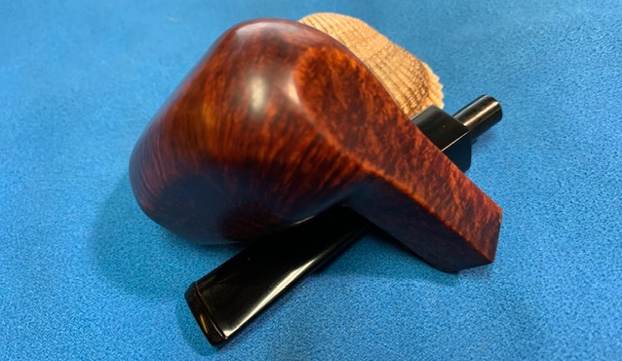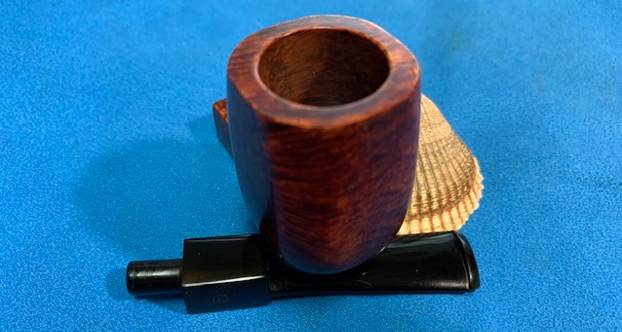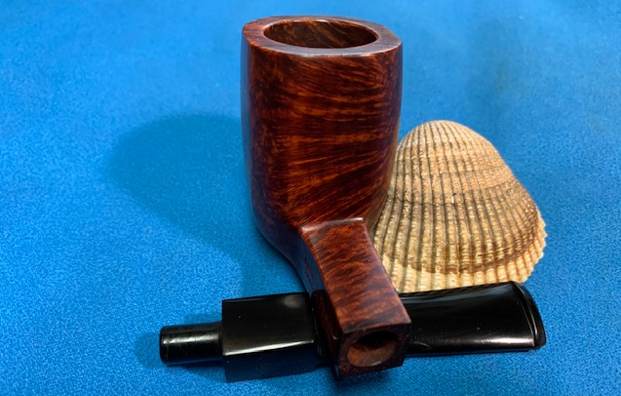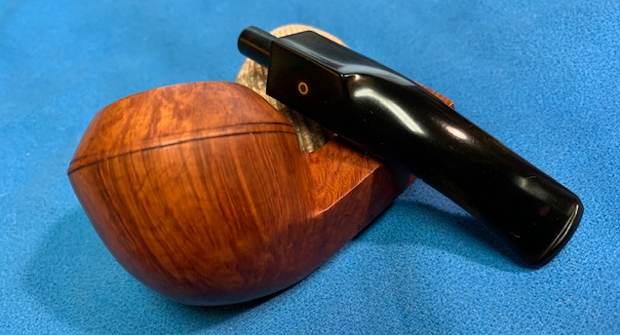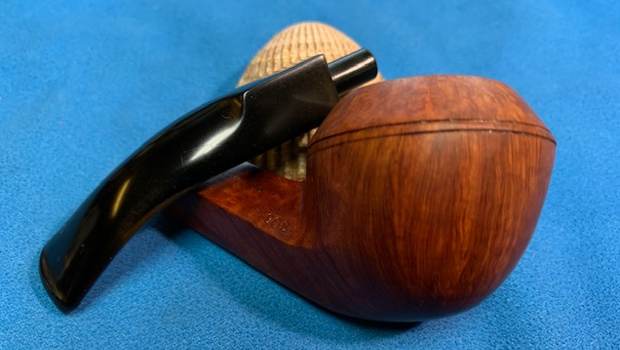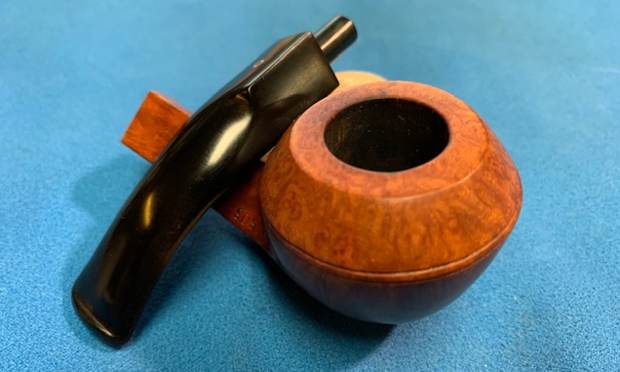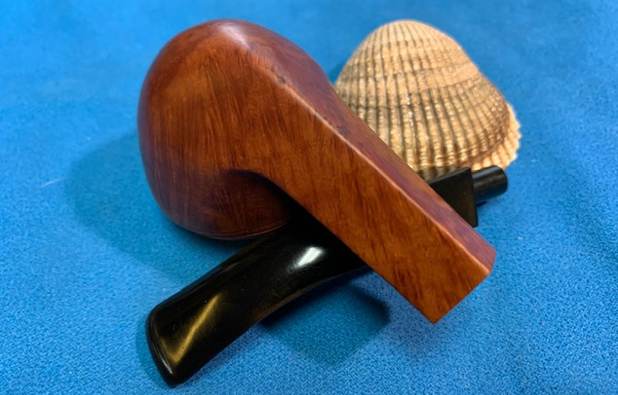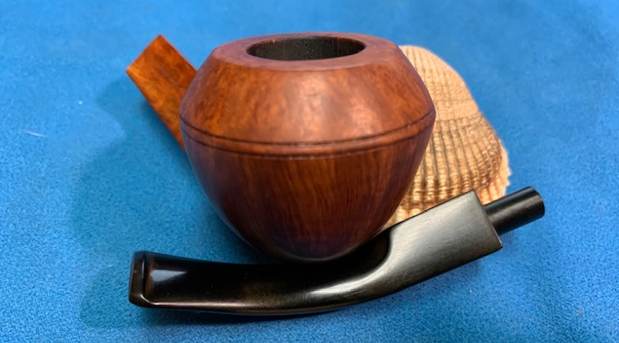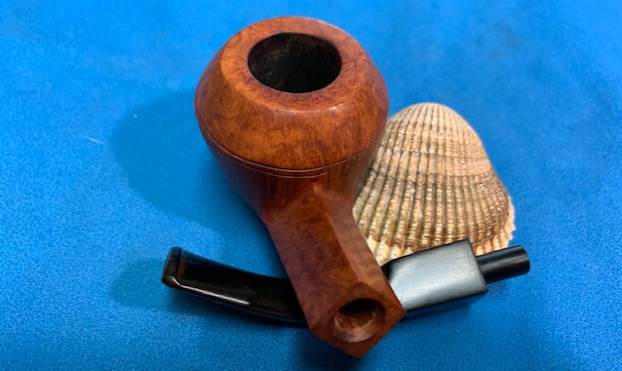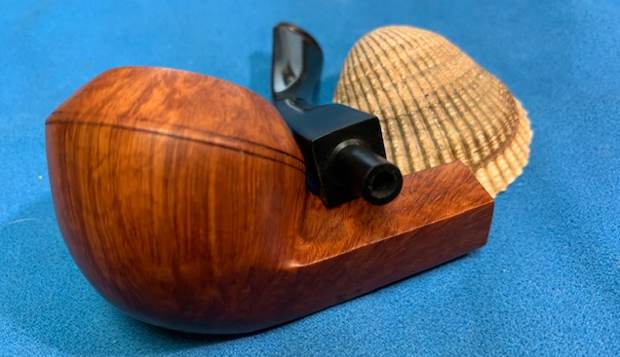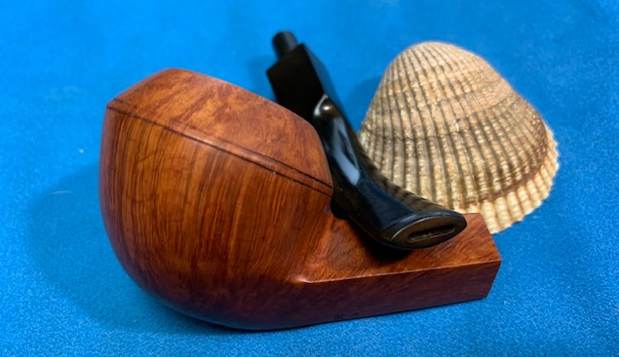
Author Archives: rebornpipes

Sometimes the “pipe gods” smile on you – Finding an UNSMOKED/NOS Kaywoodie Connoisseur All Briar 13 Dublin


Blog by Steve Laug

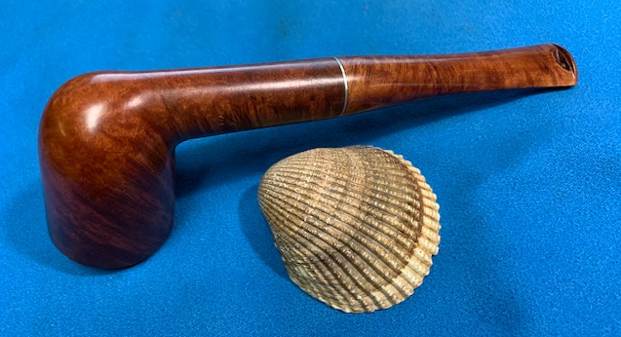
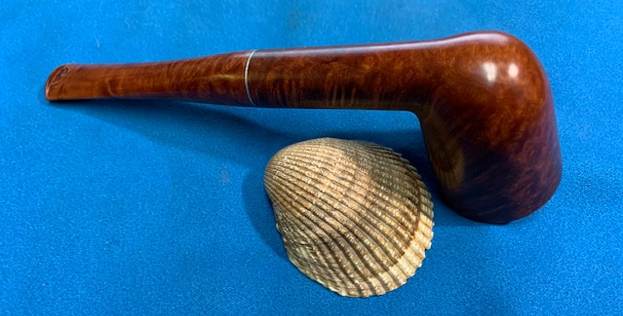
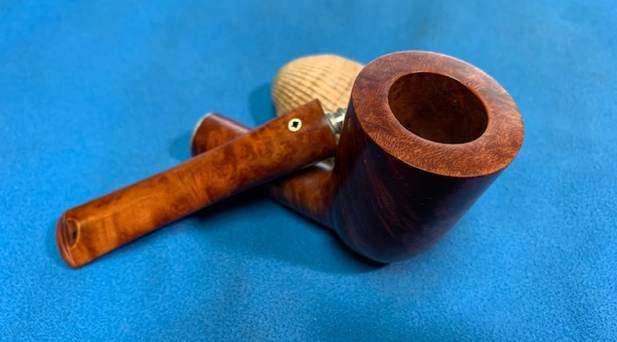
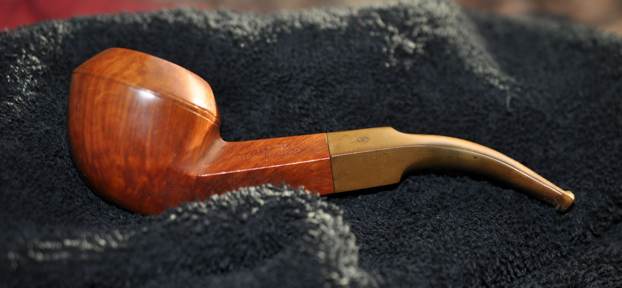
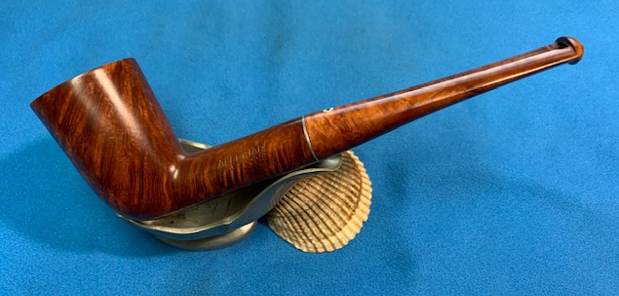
It has not happened to often to me but it has happened more than once! I am not looking for a particular pipe and low and behold in a lot of pipes Jeff and I purchase we come on one that is absolutely a pipe that is not often seen. In this case it was an All Briar Kaywoodie. I have worked on several older Kaywoodie All Briar pipes over the years and always been intrigued with them. There was just something about the idea of a briar stem and a briar bowl. I think that everyone of them has had issues with chewed off and broken off pieces of briar from the stem. They have taken a lot of work to rebuild and reshape. The briar stems just did not handle chompers and biters well so that when they arrived at my desktop the bowls were ok and the stems were all but destroyed. Then Jeff and I were given the opportunity to pick up a rare example of one of these All Briar Kaywoodies and if you can believe it – the pipe was brand new and unsmoked. We swooped for it and paid the price. I don’t even recall when it arrived. It was in a nondescript brown paper box so we looked it over and were pleased with the find. But I have to be hones and tell you that at least I promptly lost track of it in the sheer volume of pipes that I have here in need of restoration. I put it in a drawer with other unsmoked pipes that would one day get my attention and totally forgot about it.

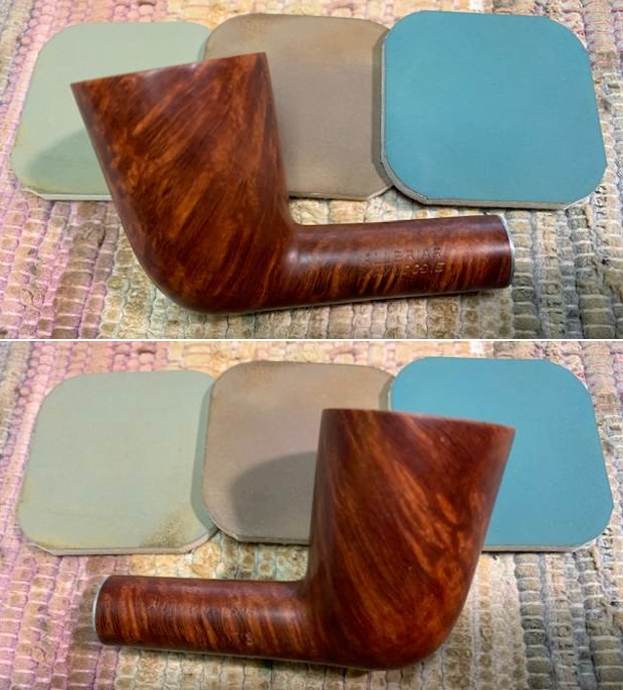
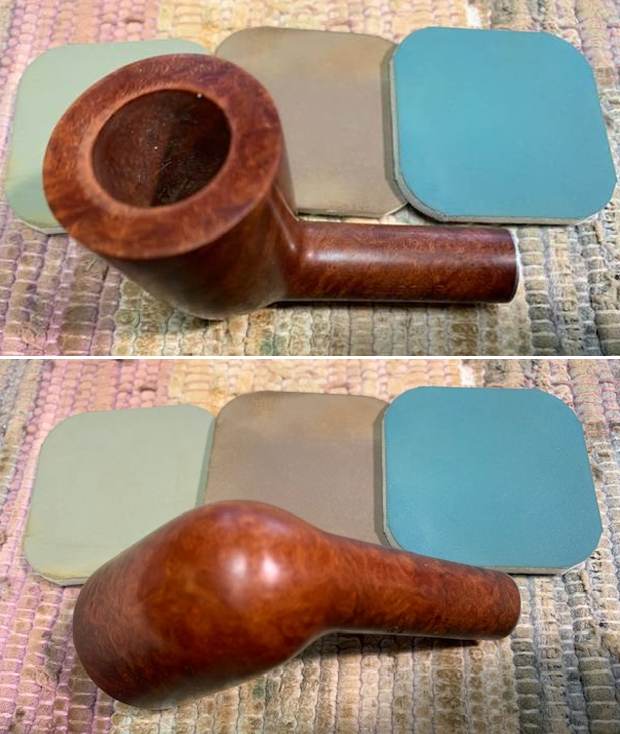
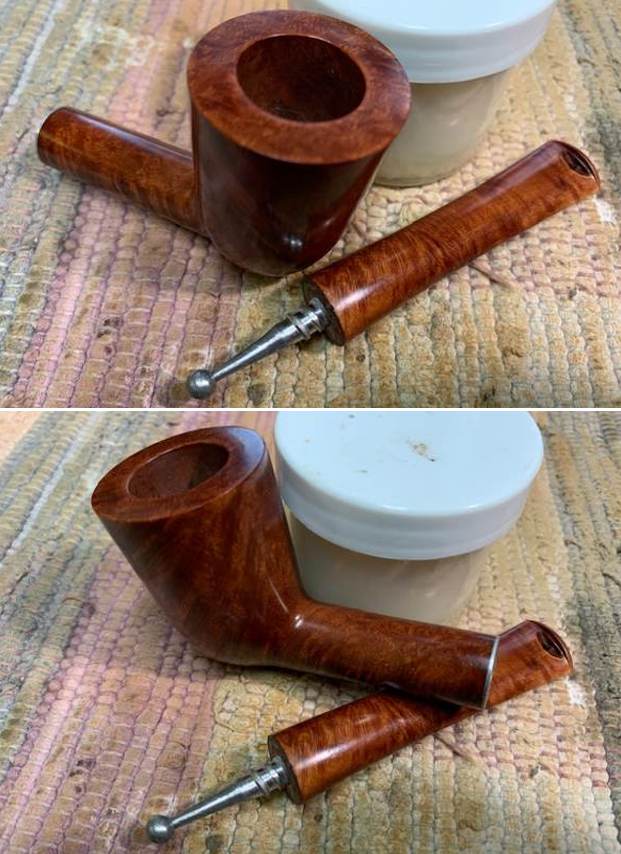
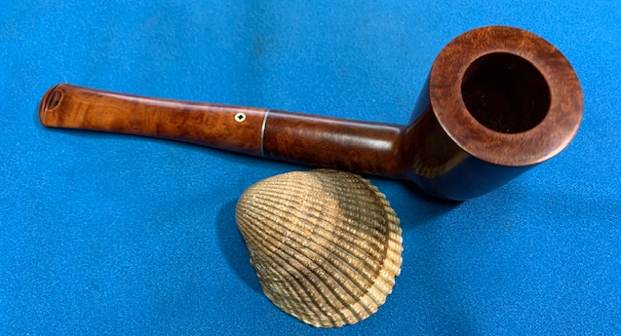
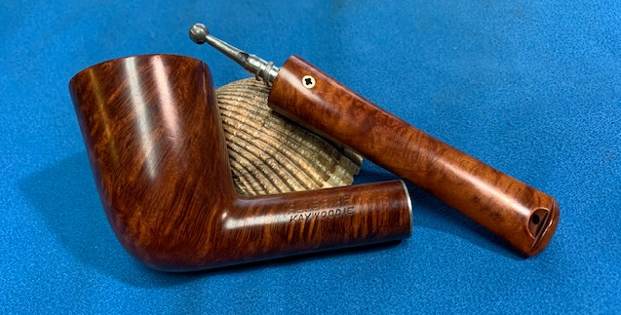
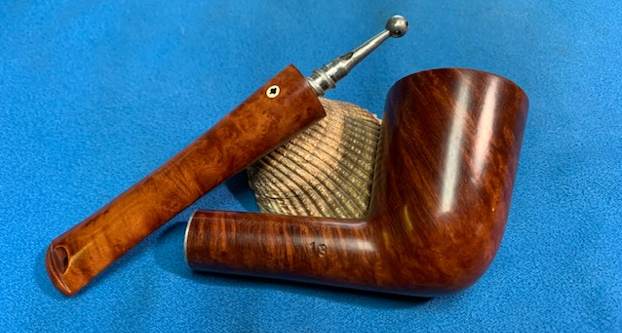
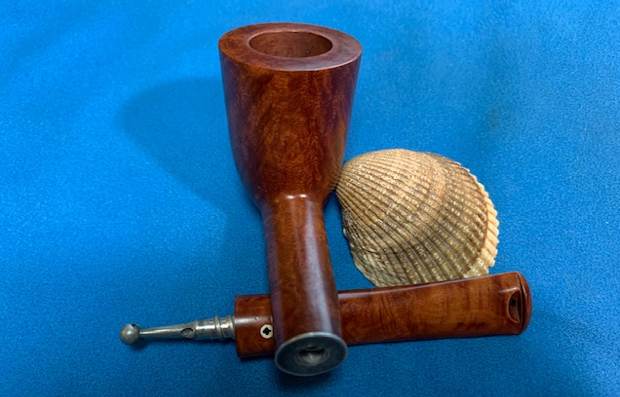
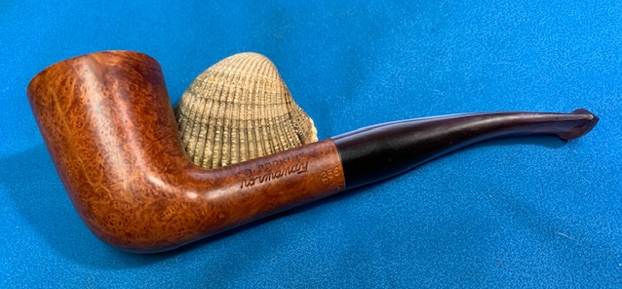
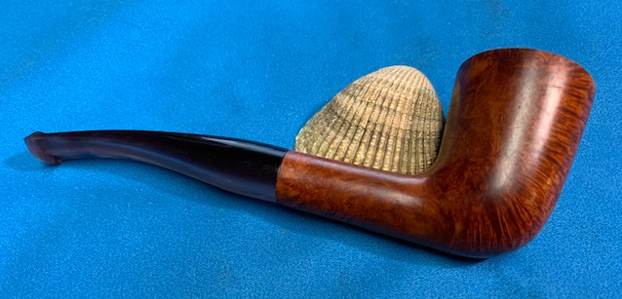
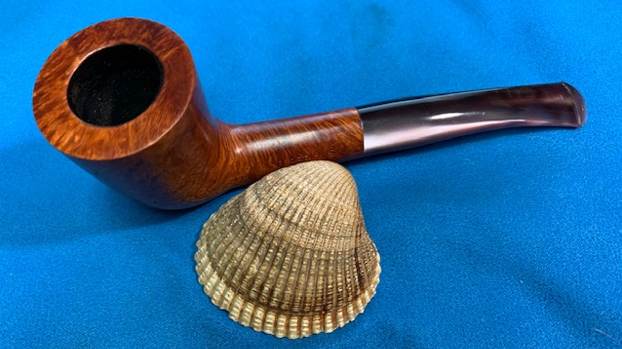
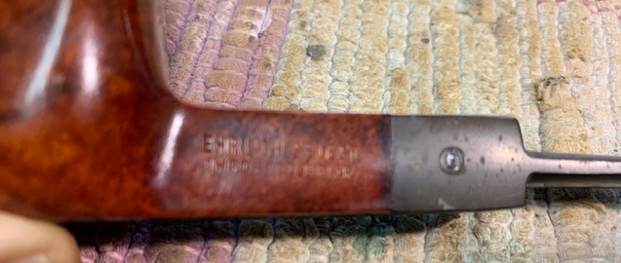
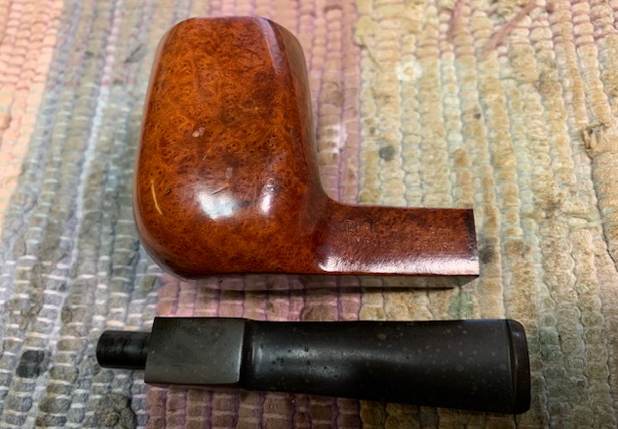
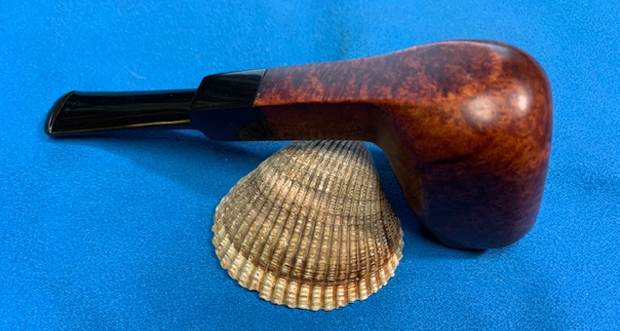
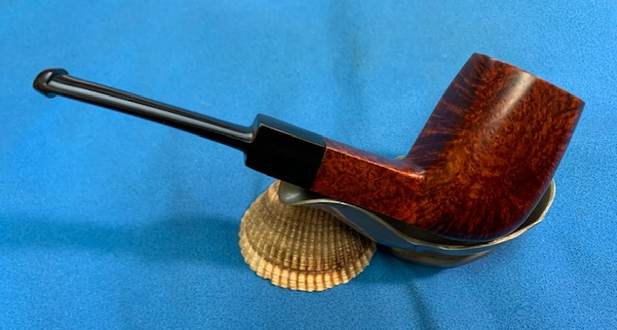
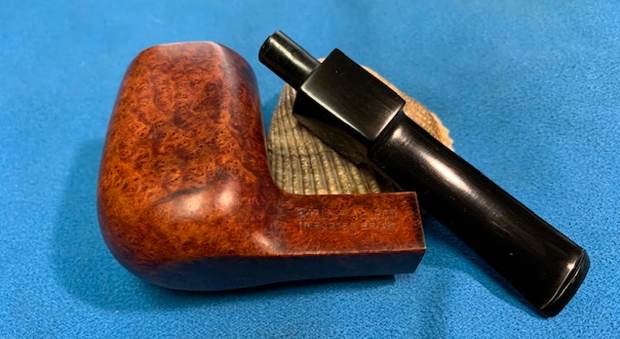
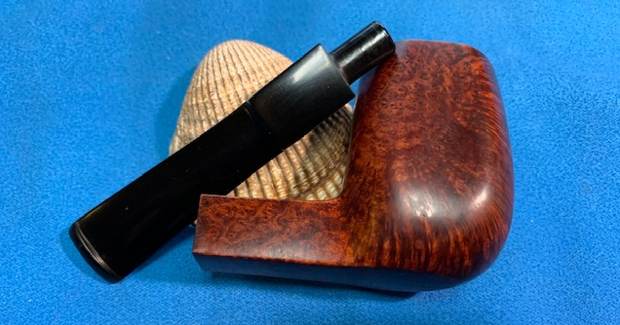
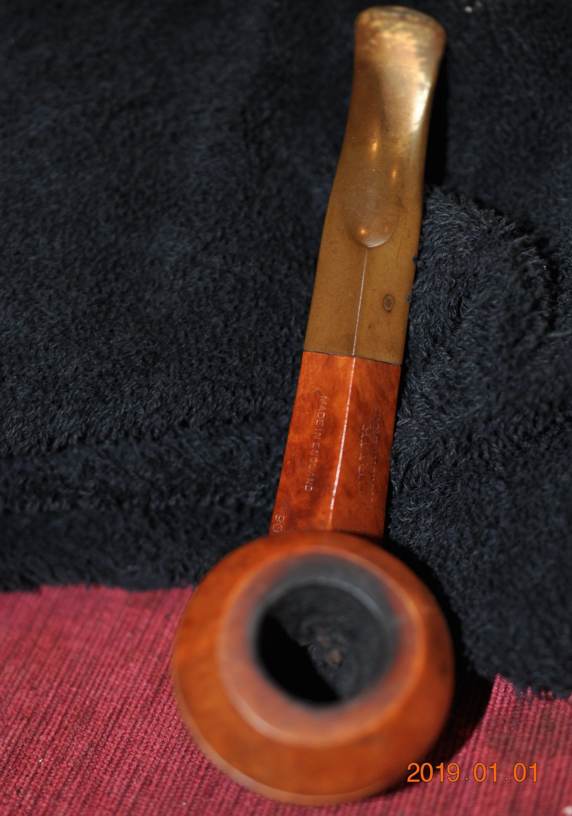
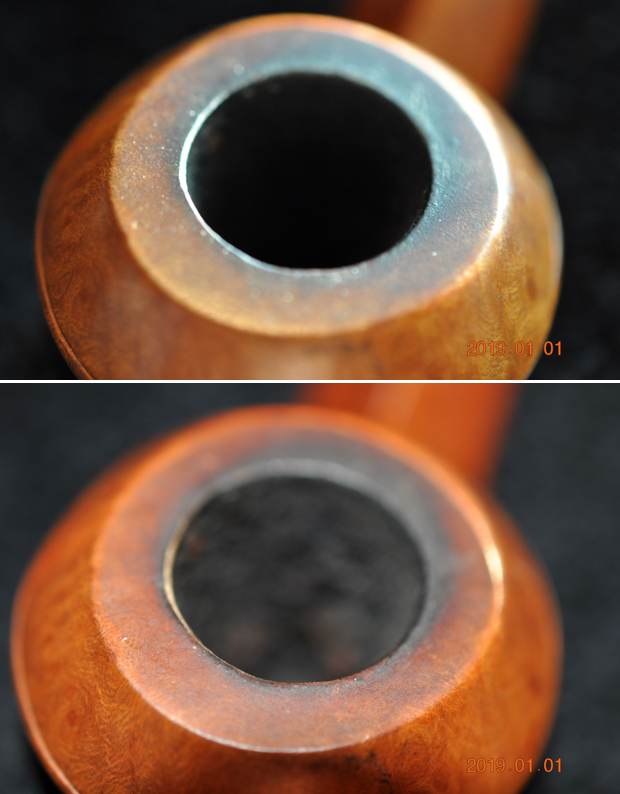
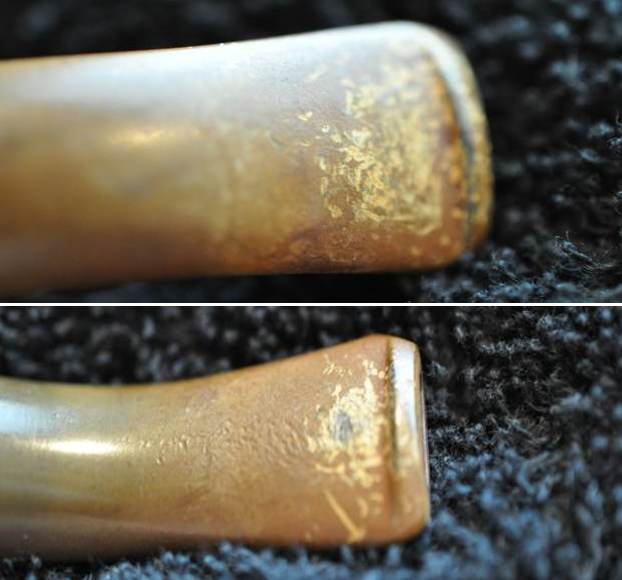
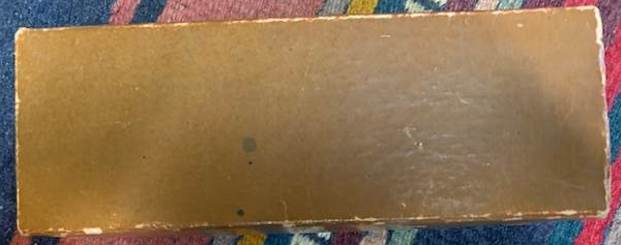
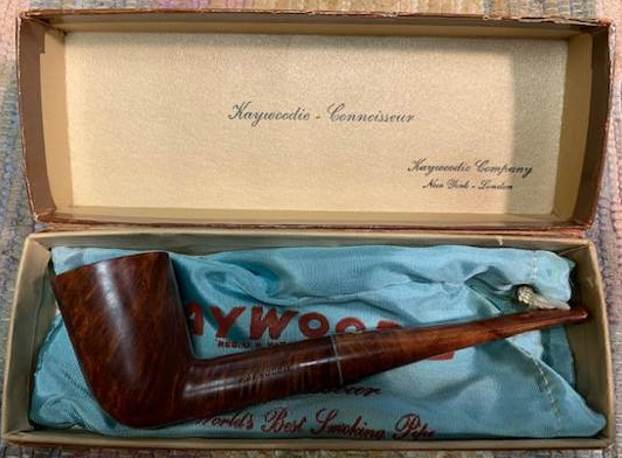
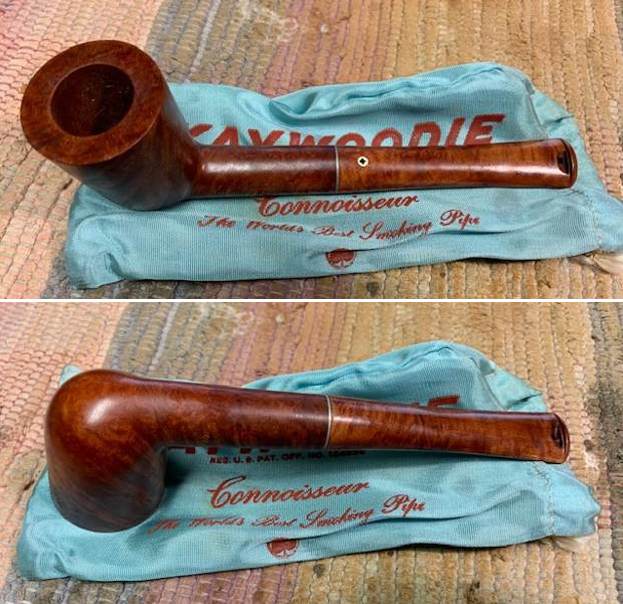
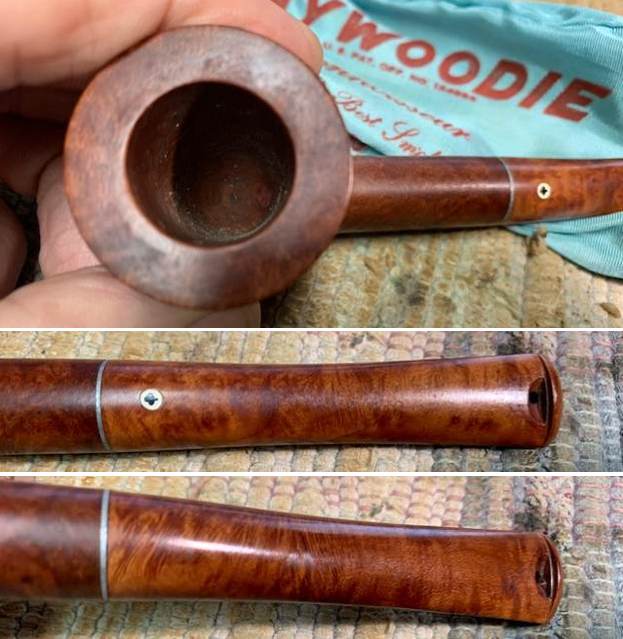
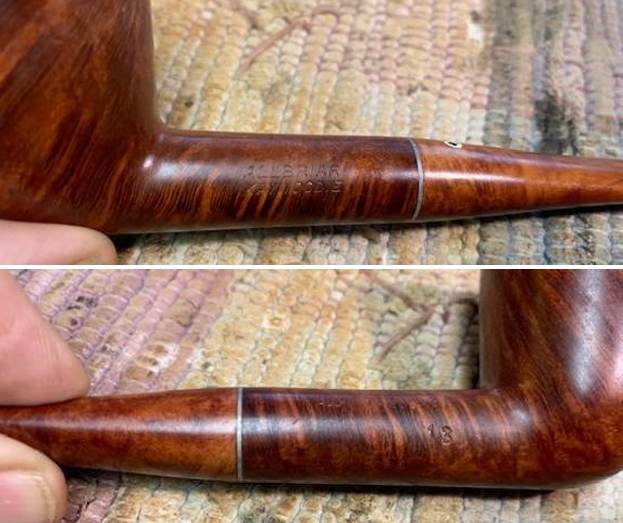
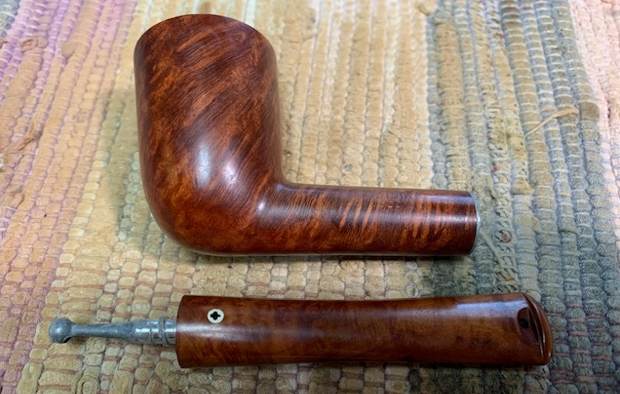
Last evening I opened the drawer where I had put it. I have worked through all of the pipes in the drawer and posted them or put them on the rebornpipes store. This was the last box in the drawer. You can see that nothing about the plain paper box announced what was inside of it. It was literally a worn paper box with no stamping or marks. I brought it to my desk and took a photo of it. I have learned that when I have something like this that I have held onto I generally have a reason for it. Here is what I saw.I carefully opened the lid of the hinged box and this is what I saw on the inside. The lid of the box is covered with a gold foil and reads in nice script – Kaywoodie – Connoisseur. Under that to the right it reads Kaywoodie Company over New York – London. The bottom of the box also had the gold foil lining. Sitting on top of that was a light blue Kaywoodie Pipe Sock that read KAYWOODIE [over] Reg. U.S. Pat. Off. No. 154986 (It is very hard to read as the ink has blurred on the fabric. I cannot find anything listed with anything near this number on the US Patent Search site). [over] Connoisseur [over] The World’s Best Smoking Pipe. Underneath is a Cloverleaf logo. Inside the pipe sock was the pipe pictured below – a beautiful All Briar Dublin.I took the pipe out of the box and took photos of it to try and capture what I saw while I looked at it. It is really a beautiful pipe. It was made between 1952-1955 which appears to the only time frame that these pipes were produced – so it is amazing that it remains unsmoked and in flawless condition some 70+/- years later (https://pipedia.org/images/3/3d/Kaywoodie_Pipe_Names.pdf). I took photos of the rim top, bowl and the stem surfaces to show the condition of this beautiful unsmoked pipe.I took photos of the clear stamping on the shank sides. On the left it read ALL BRIAR [over] Kaywoodie. On the right it read  ALL-IMPORTED BRIAR [over] the shape number 13. On the top of the briar stem is an inlaid black cloverleaf in a white circle.  I unscrewed the stem from the shank and took a photo of the pipe. The aluminum is lightly oxidized but will polish up and look great. It is a stunning looking pipe.I have read a lot of information in the past on other Kaywoodie pipes I have worked on and spent time on the Kaywoodie Collectors Forum to help educate myself on the various lines and historical periods of Kaywoodie production. On Pipedia.org there is a helpful summary of the history of the brand that has been condensed in one place. It is called the Collectors Guide to Kaywoodie Pipes (https://pipedia.org/wiki/Collector%27s_Guide_to_Kaywoodie_Pipes). I found the All Briar line of pipes included in the section of the Guide for 1955. I quote here the pertinent sections with the references to the All Briar pipe underlined and highlighted in bold.
The line-up of pipes in the 1955 catalog (Table 3 below) was more extensive than in previous years. The catalog presented an expanded line of meerschaum pipes and introduced a 4-pipe set of Matched Grain Pipes, as well as several pipes with “special features”. The number of shapes available… was not substantially different from the number offered in the 1947 catalog…

The Twin-Bowl Kaywoodies were available in an all-meerschaum model (two removable inner bowls of meerschaum) and a meerschaum and Flame Grain model (outer bowl of flame grain briar and removable inner bowl of meerschaum). Other meerschaum pipes presented in the 1955 catalog included the Gourd Calabash; the Coral (“dimpled”) Meerschaum; the All Briar (briar bit) and Flame Grain pipes with inlaid meerschaum bowls; and the “Doctor’s” pipe…

Included in the guide was a helpful list of pipe grades and prices. I have included the list below and noted the pipe I am working on by highlighting it in bold print and underlining the reference. It is in this list that I found confirmation that Kaywoodie made an All Briar with a meerschaum bowl insert and an All Briar without the meerschaum insert. The All Briar I am working on is not meerschaum lined. It is fascinating for me to see that the addition of a meerschaum bowl was only $2.50 in 1955. The pipe I have is marked as Connoisseur which I have highlighted in red below in the list and as an All Briar Stembiter (also highlighted).

Table 3. 1955 Kaywoodie Pipe Grades and Prices

    Meerschaum Character Pipes: $100.00

    Block: 15.00-50 (According to size)

    Meerschaum Twin Bowl: $35.00

    Meerschaum/Flame Grain Twin Bowl: $25.00

    Sandblasted “Doctor’s” Pipe: $25.00

    Centennial: $25.00

    Coral Meerschaum: $20.00-25 (According to size)

    Gourd Calabash: $15.00-25 (According to size)

    Ninety-Fiver: $20.00

    Oversize: $10.00-25(According to style and finish)

    Connoisseur: $15.00

All Briar w/Meerschaum Inlaid Bowl: $12.50

    Flame Grain (Meerschaum Inlaid) $12.50

    Export Pipes: $5.00-15 (According to grade)

All Briar (Briar Bit): $10.00

    Flame Grain: $10.00

    Fit Rite: $10.00

    Silhouette: $10.00

    Carburetor: $7.50

    Relief Grain: $7.50

    Chesterfield: $5.00-15 (According to grade)

    Chinrester: $5.00-10 (According to grade)

    Stembiter: $5.00-10 (According to grade)

    Streamliner: $4.00-10 (According to grade)

    Super Grain: $5.00

    Carved Super Grain: $5.00

    White Briar: $5.00

    Standard: $4.00

    Filter Plus: $4.00

    Drinkless pup: $3.50

    Drinkless Tuckaway: $3.50

    Drinkless In-Between: $3.50

    Two-Pipe Companion Setsb: $10.00-25 (According to grade)

    Matched Grain Set (4-Pipes): $50.00

    Matched Grain Set (7-Pipes): $125.00

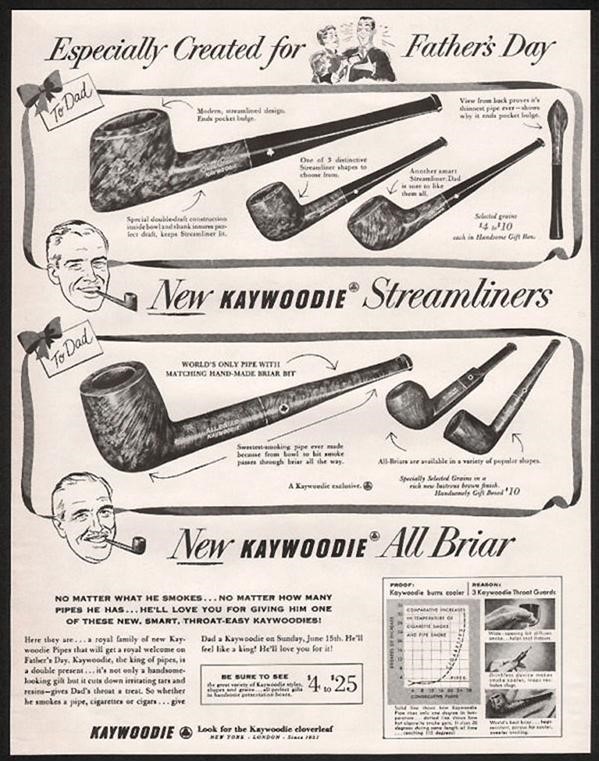
Further reading on Pipedia under the general listing for Kaywoodie Pipes provided me with a magazine advertisement that included the All Briar pipes. It is a great Father’s Day Ad and the bottom items in the ad show the All Briar line. I have included both the link and a copy of the ad for your reading pleasure (https://pipedia.org/wiki/Kaywoodie)
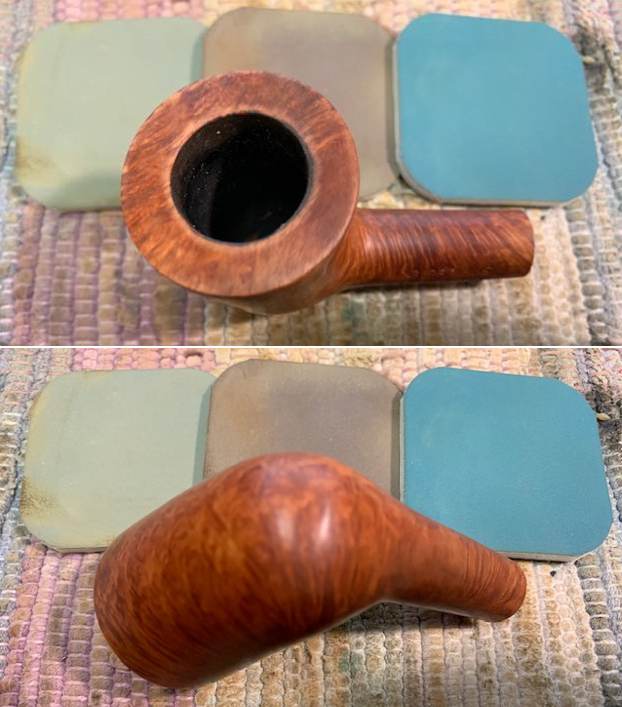
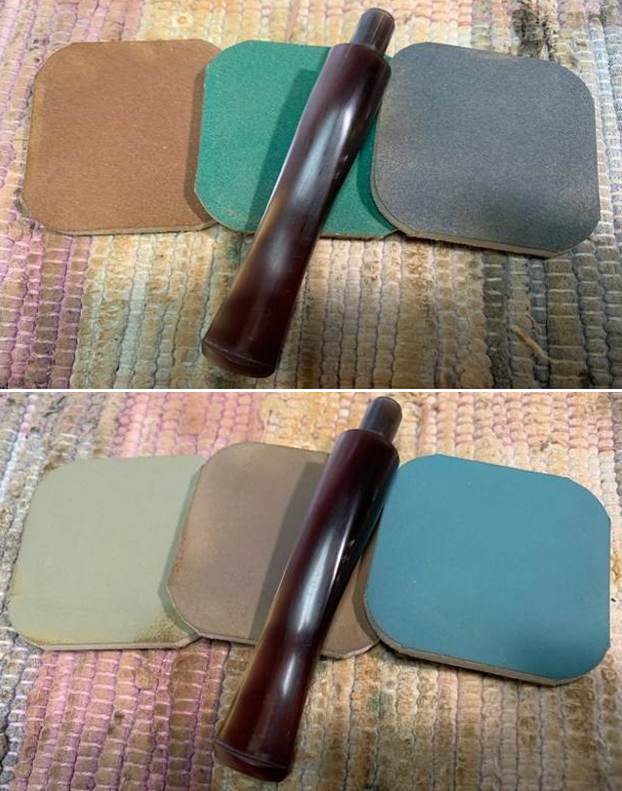
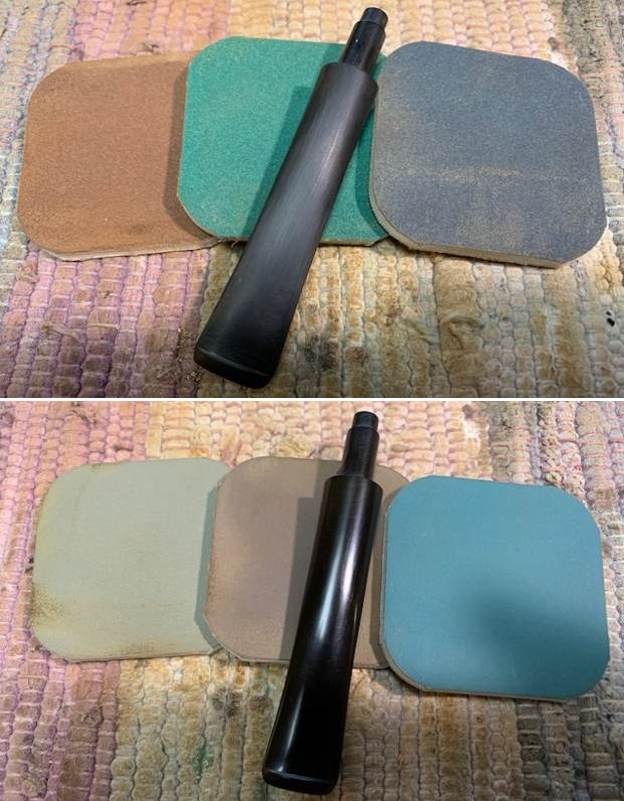
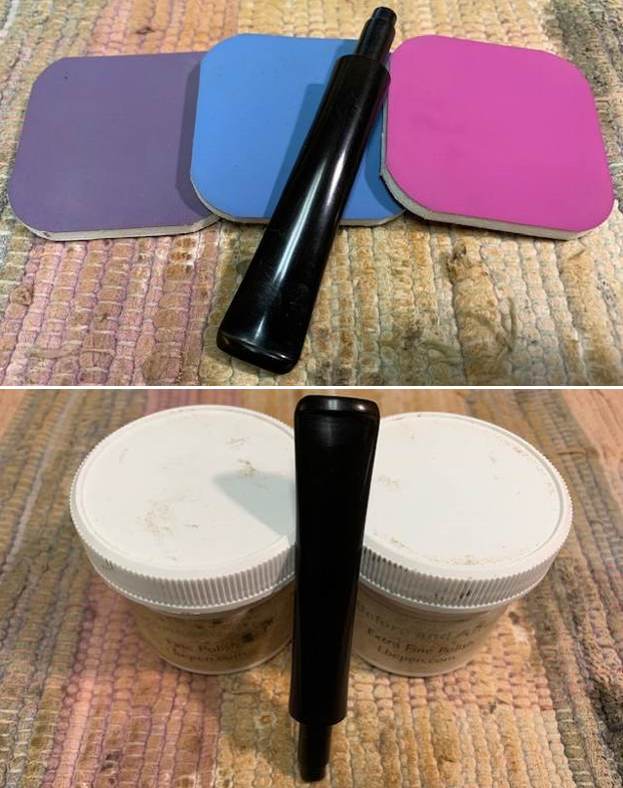
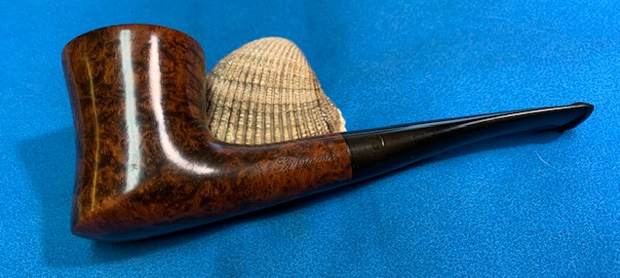
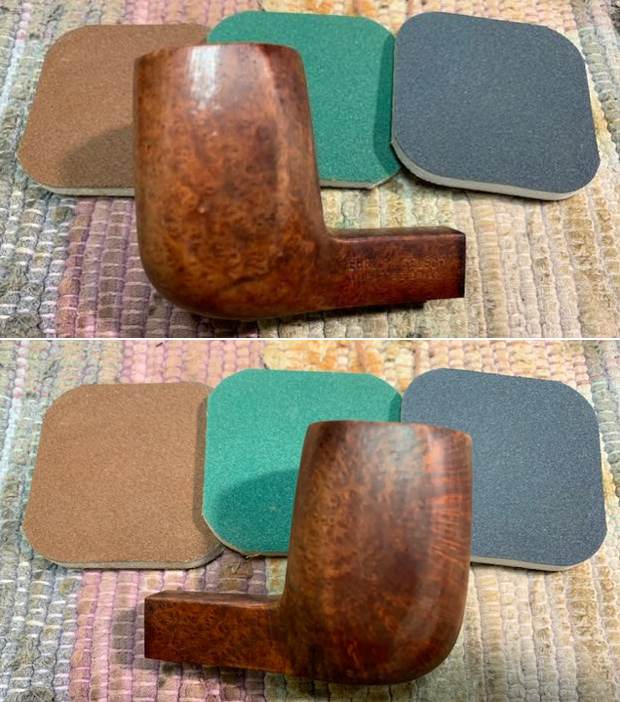
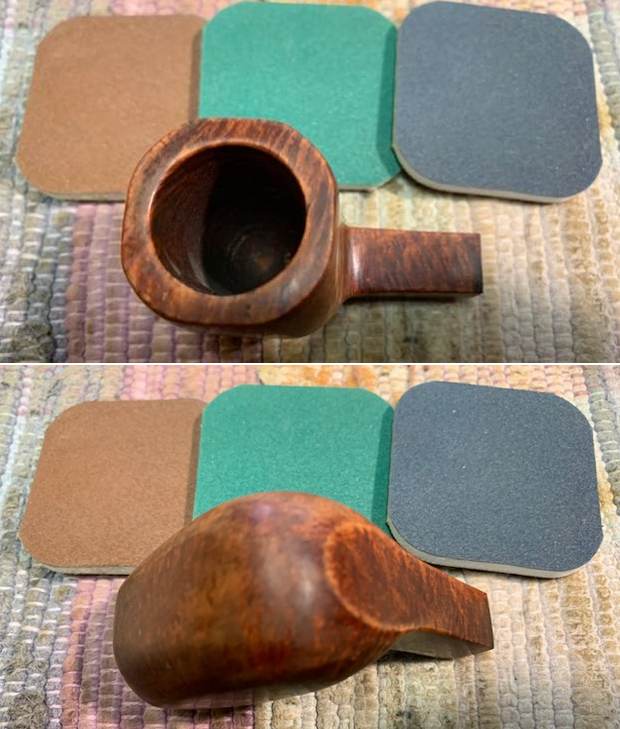
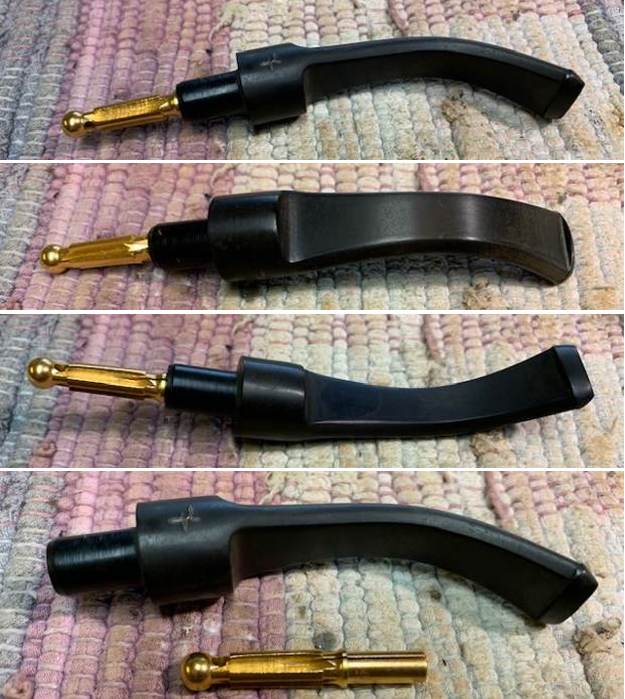
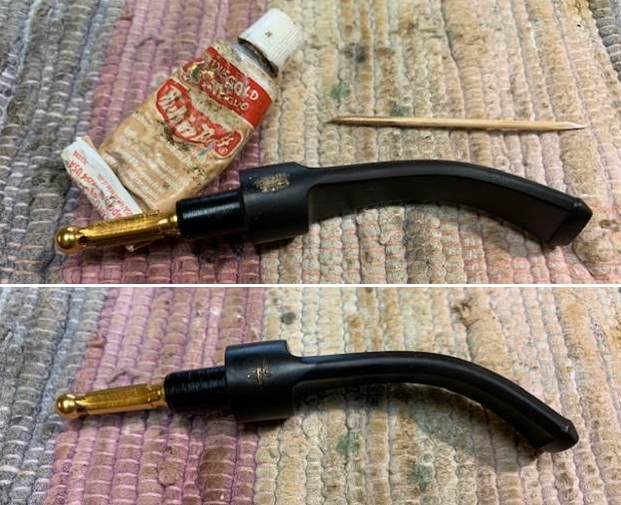
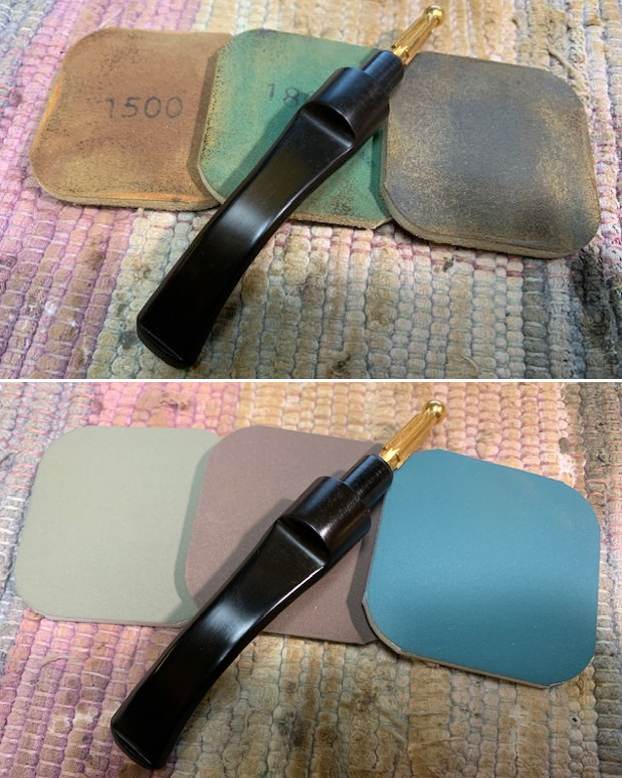
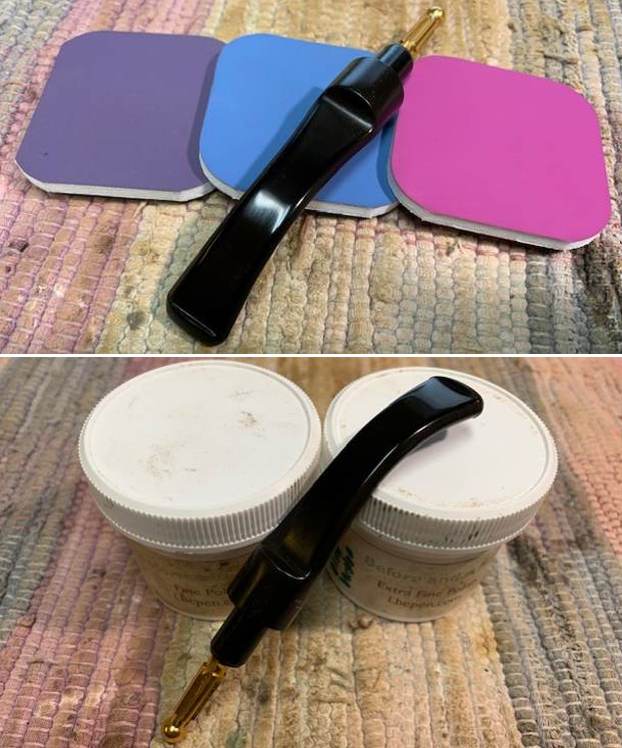
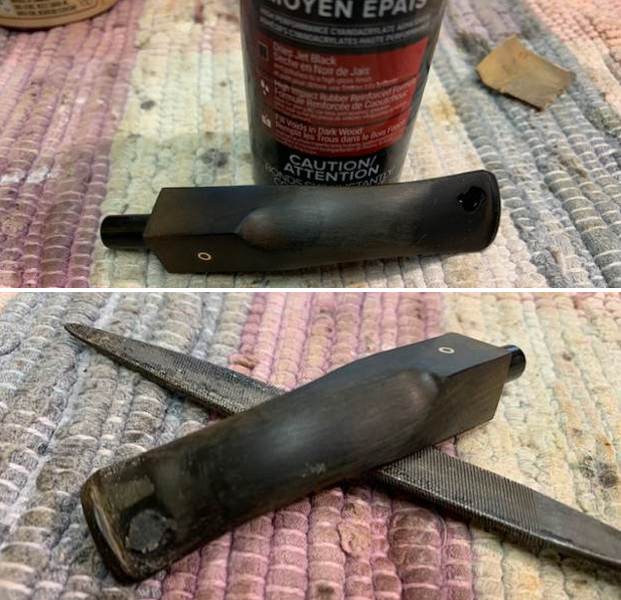
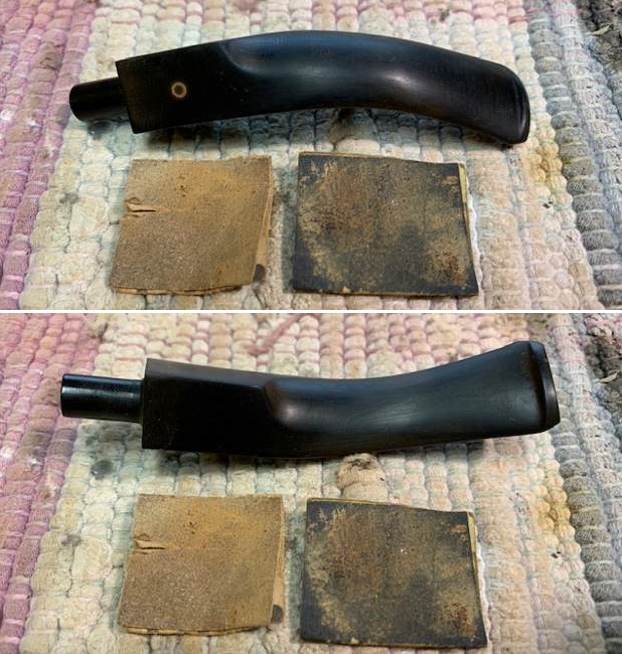
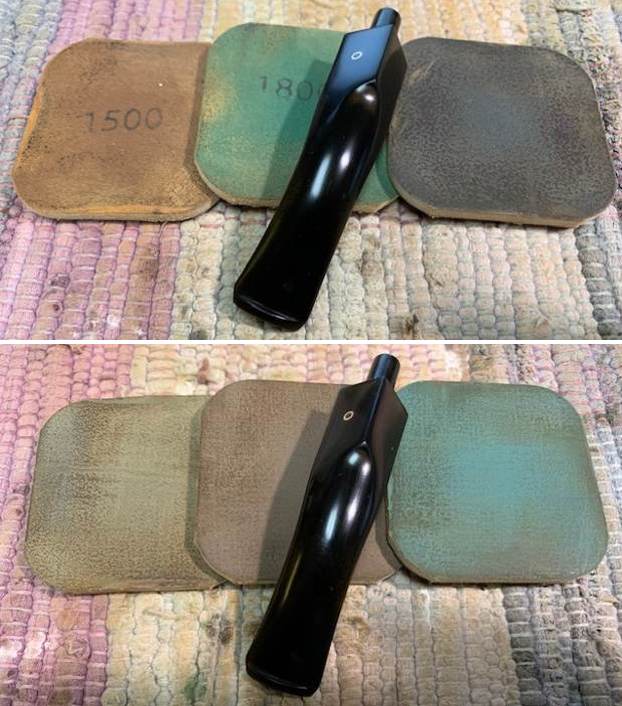
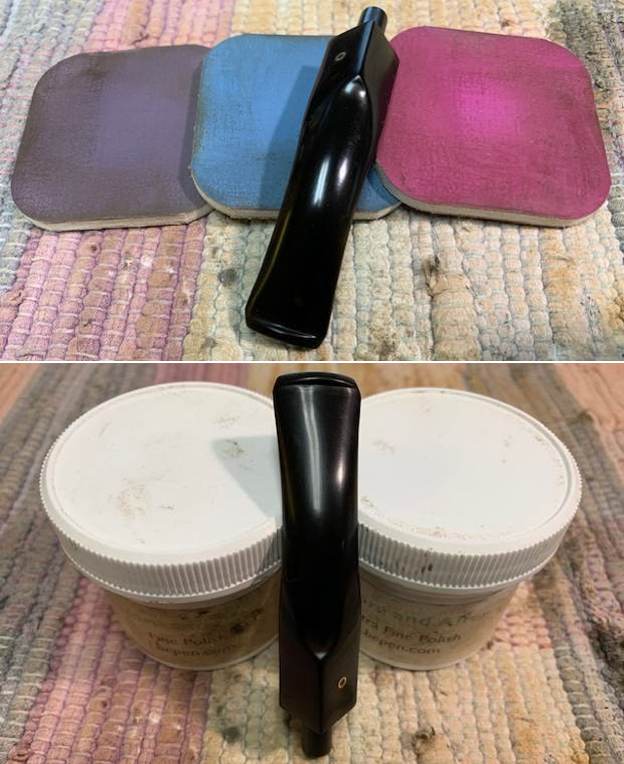
The finish on the briar was clean and good but was a bit rough to touch from the time spent in storage. I polished it with micromesh sanding pads and wiped it down with a damp cloth after each pad. It really is a nice piece of wood. I decided to look on my other go to site – PipePhil (http://www.pipephil.eu/logos/en/logo-kaywoodie-1.html) to see what added information I might garner from his site. Under the Kaywoodie All Briar listing it said that the pipe had a twin-bore stem, meaning that instead of a slot in the button there were twin holes that formed a Y with the airway in the stem itself. The pipes were made between 1952 – 1955. It included a series of pictures of a typical briar Kaywoodie stem that showed a vertical hole near the button that was an innovation that they called Stembiter to prevent a stem biter from gnawing through the stem. The Stembiter innovation came out in the early 1950s as well so now I had confirmation of the period when the pipe was made. I have included an advertisement for the Stembiter innovation following the photo below. I know that at present I will not be able to reproduce this feature on the stem when I rework it.Now that I had a clear picture of the drilling and the function of the set up of the All Briar stem I polished it with micromesh as well. I dry sanded it with 1500-12000 grit pads and wiped it down after each sanding pad with a cloth impregnated with Obsidian Oil. After each pad the pipe stem took on new shine and depth. I also polished the oxidized aluminum four hole stinger at the same time. I polished the entirety with Before & After Pipe Stem polish – Fine and Extra Fine. I gave it a final rubdown of Obsidian Oil and let it sit to dry. I rubbed some Before & After Restoration Balm into the briar of the bowl and stem. I worked it into the surface with my fingertips. It works to clean, protect and preserve the briar and I figured this was a piece worthy of doing that! I let the Balm sit for 15 minutes and then buffed it off with a soft cotton cloth. The Balm seems to work magic with dry briar.  With the polishing work done on the All Briar Kaywoodie Connoisseur Dublin, I put the pipe back together again and gave it a quick buff with Blue Diamond on the wheel and then gave the entire pipe multiple coats of Carnauba Wax. I buffed it with a clean buffing pad on the wheel and then a hand buff with a microfiber cloth to deepen the shine. It is a beautiful pipe. The grain and the lines of the pipe are eye catching. The dimensions of the pipe are Length: 6 inches, Height: 2 inches, Outer Bowl Diameter: 1 3/8 inches, Chamber Diameter: ¾ of an inch. The weight of the pipe is 34 grams/1.16 ounces. This is one that I plan on adding to my own collection as it is a great addition. I am still undecided if I will fire it up and enjoy a smoke in it. We shall see. Thanks for walking through my meanderings as I worked on this old timer. Much appreciated!
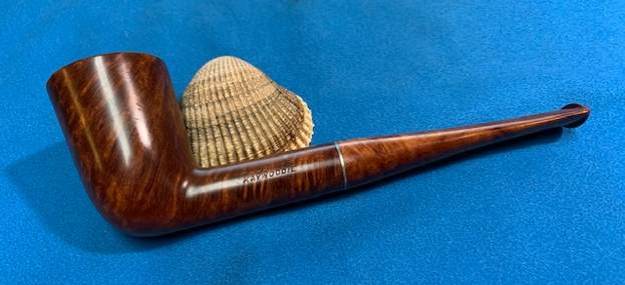
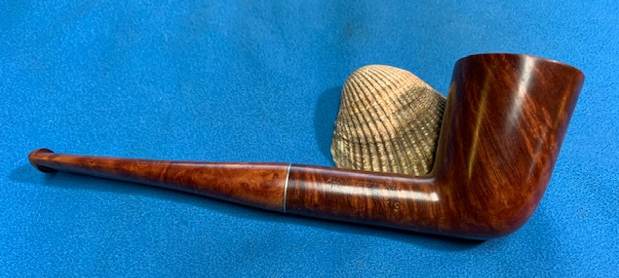
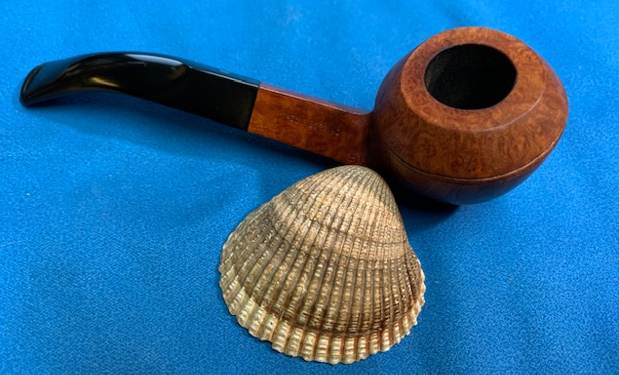
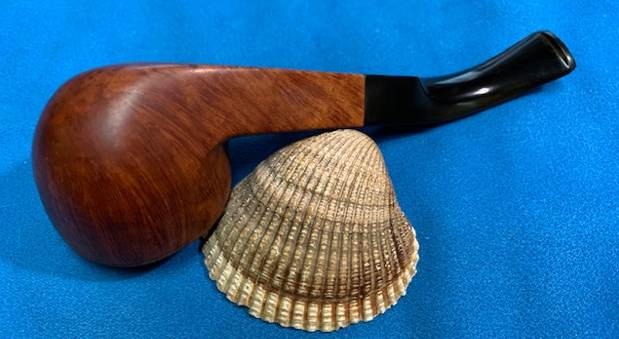
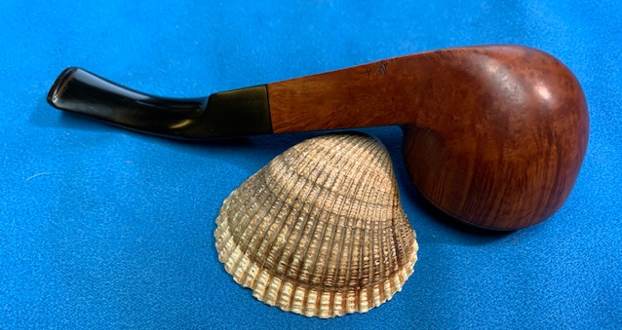
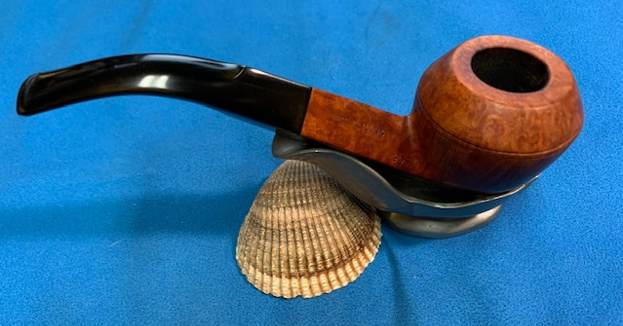
Major Restorations for an Early 20th Century HBB Gourd Calabash


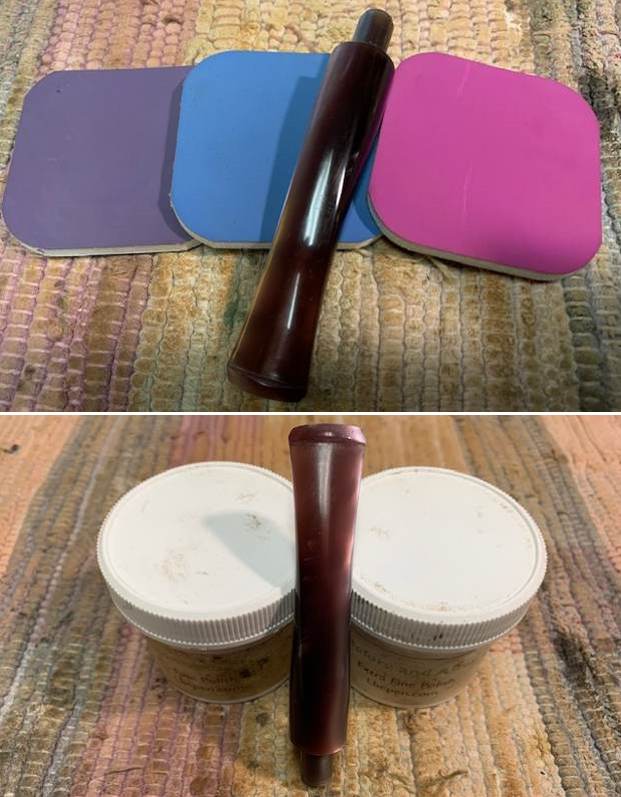
I found this restoration really interesting. Charles did a great job of fitting a new meerschaum cup, cork gasket to make fit in gourd correct and even a new amber acrylic stem! Well done my friend. That is a labour of love! Thank you.

Charles Lemon's avatar

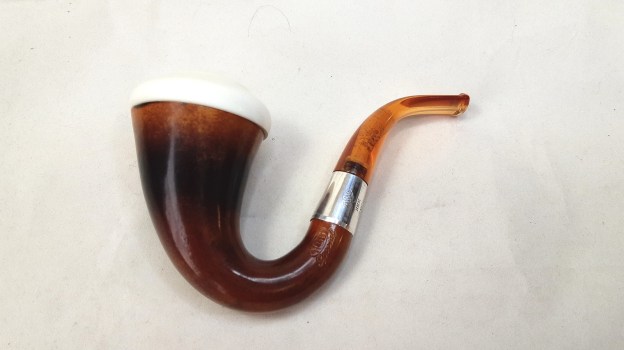
The Gourd Calabash pipe, in its current form with gourd body, rubber stem and meerschaum or clay bowl, has been around since the Second Boer War in South Africa (1899-1902). According to this article on smokingpipes.com, the war led to shortages of briar in Cape Town, pushing pipe makers to find an alternative material. Gourds had been used by the indigenous population as smoking instruments since the 1600s, so it was natural for European pipe makers to start experimenting with this local commodity.

The Gourd Calabash caught on with British soldiers, who brought them home after the war ended. Initially considered a novelty and passing fad, the Gourd Calabash became popular in the early 1900s, celebrated for both its unique look and excellent smoking qualities. Hollywood connected the Gourd Calabash pipe with Sir Arthur Conan Doyle’s famous detective, Sherlock Holmes, cementing the pipe in the public imagination despite the fact…

View original post 1,608 more words

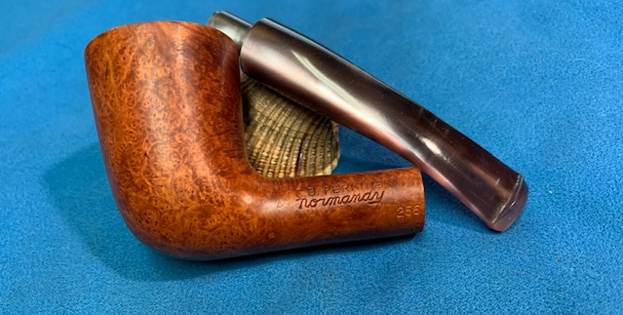
Cleaning up a Lightly Smoked Italian Made C.B. Perkins Normandy 256 Dublin


Blog by Steve Laug

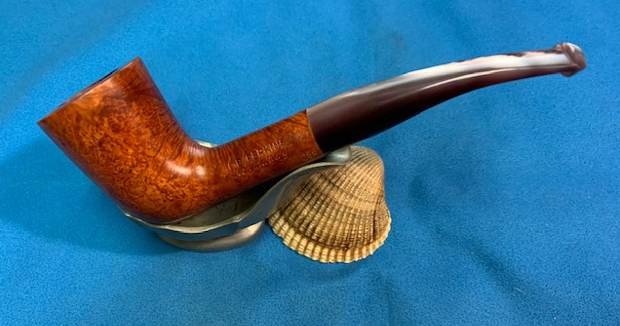
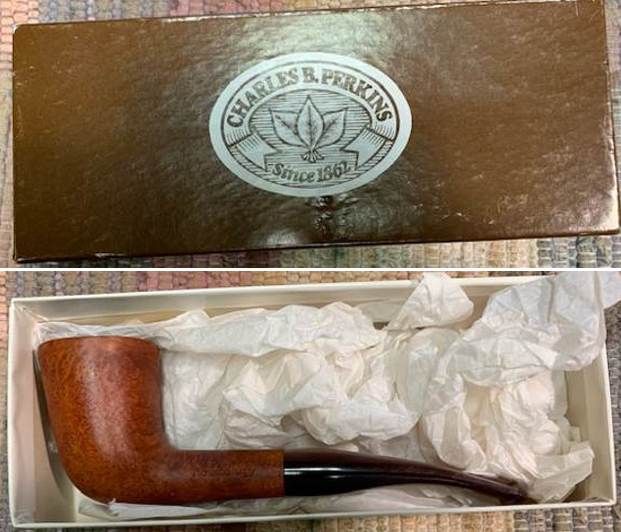
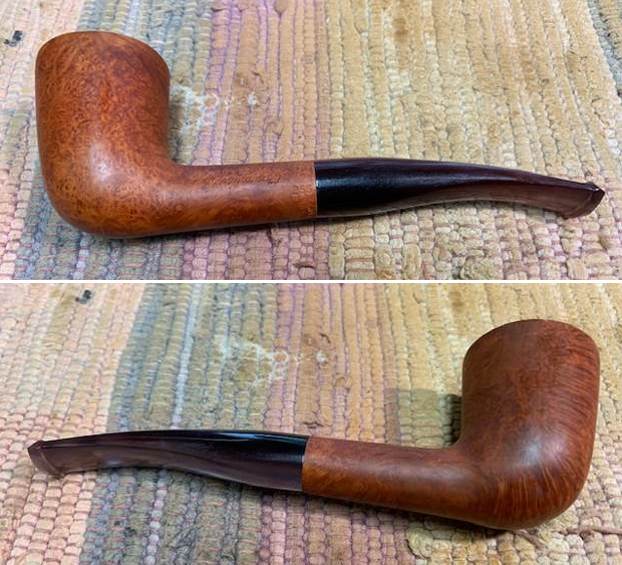
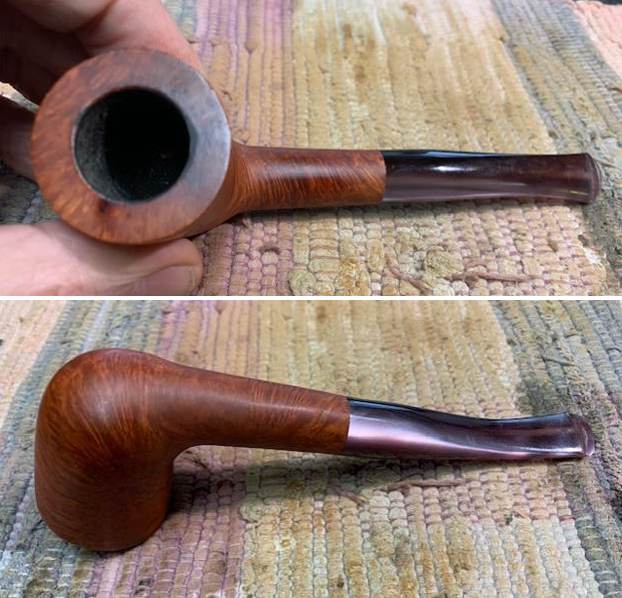
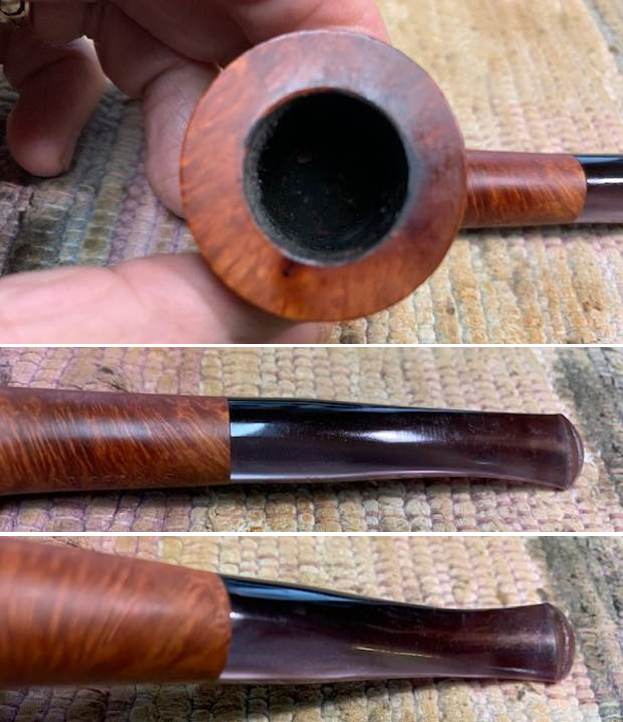
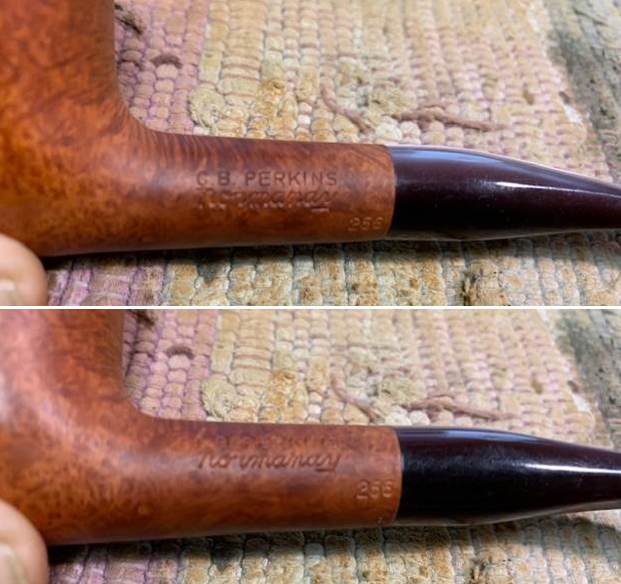
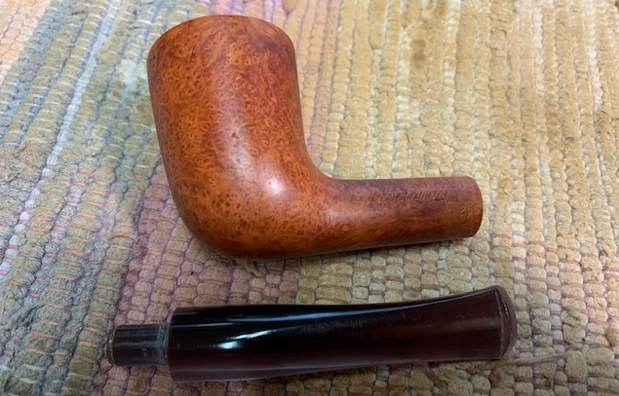
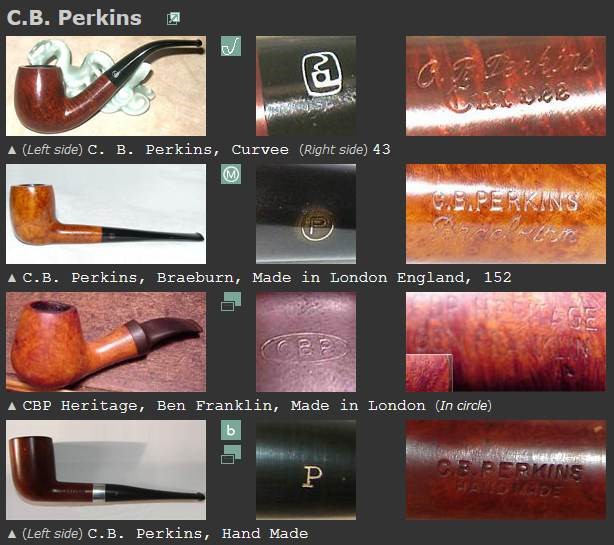
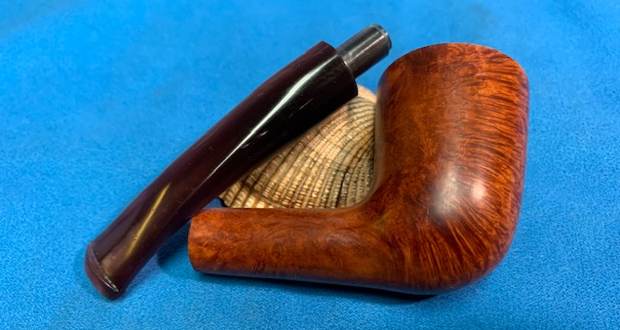
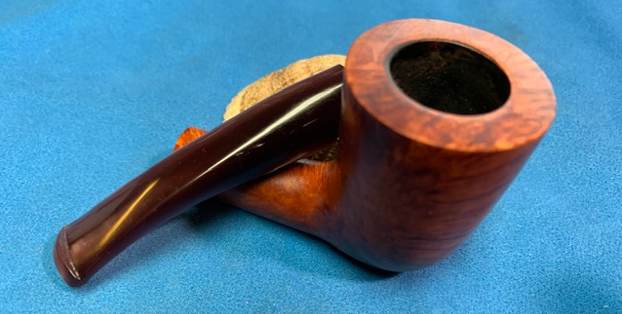
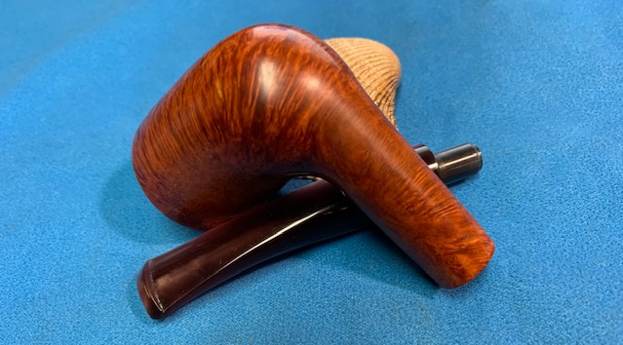
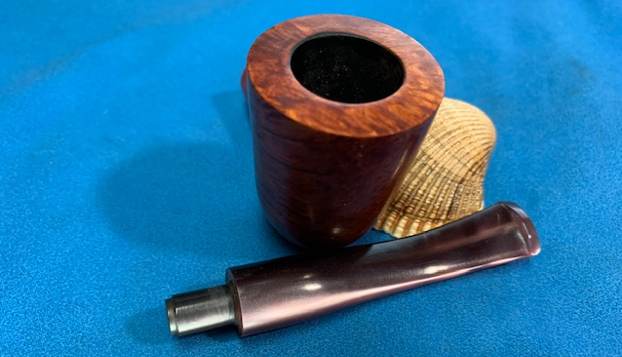
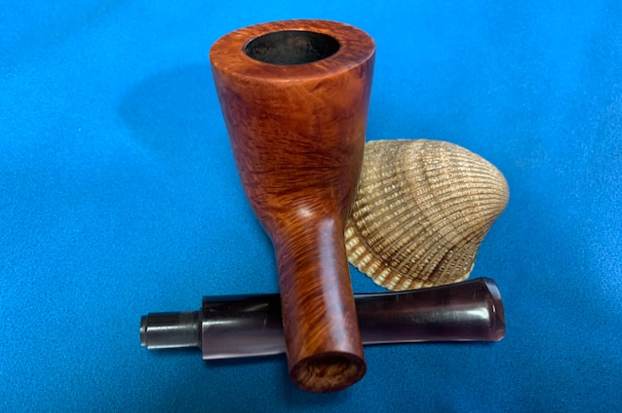
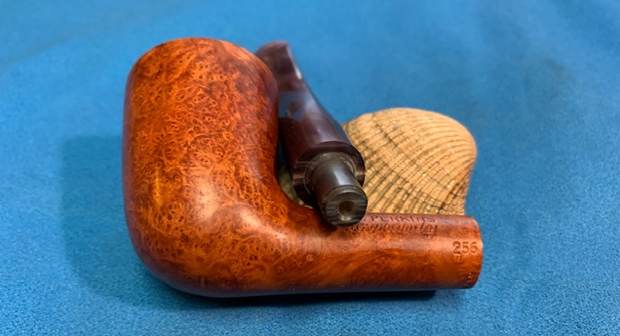
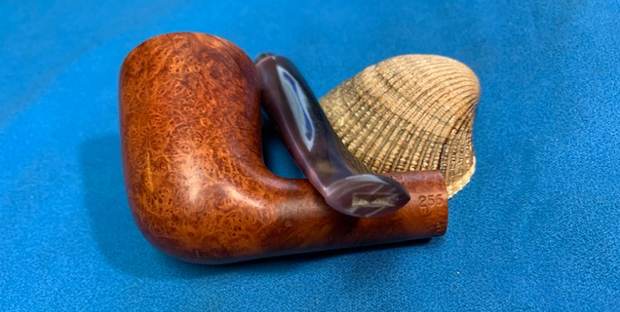
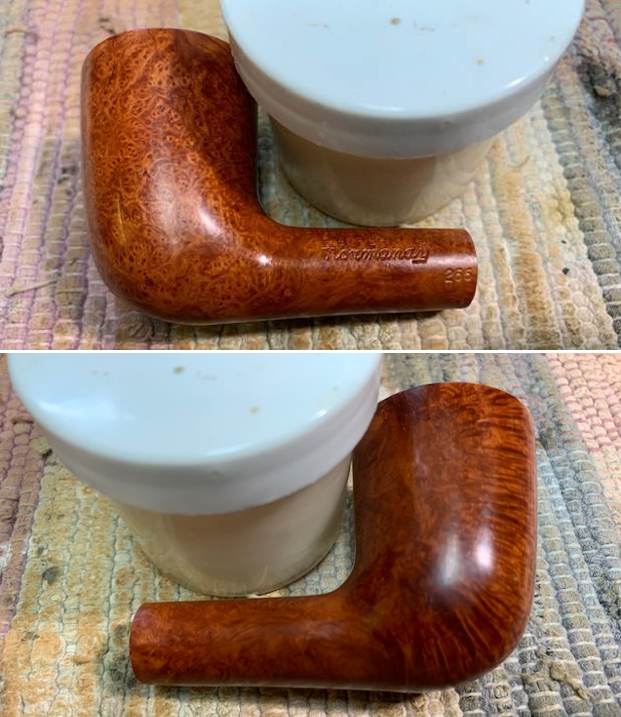
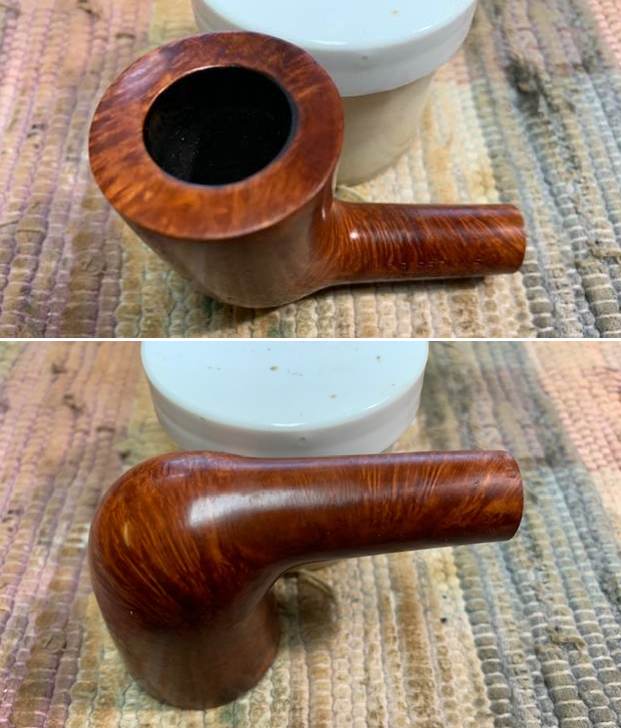
The next pipe I chose to work on is another C.B. Perkins pipe, different from the English Skater I just finished not only in the fact that it was lightly smoked and had an acrylic stem but also in that it was Italian Made. This one was an interesting shape that I call a Dublin with a taper variegated rose coloured acrylic stem. It came in the original box that is in great condition. It had a light cake and some tobacco remnants in the bowl and rim top that showed that some darkening on the inner edge. The finish very good and the pipe had some nice grain around the bowl and shank. There were no visible flaws or fills on the bowl sides or shank. It was stamped on the left side of the shank and read C.B. Perkins. [over] Normandy. Underneath that toward the stem is stamped the shape number 256. On the shank/stem union it is stamped Italy. It has an acrylic taper stem with no logo or marking. The stem has light scratching and tooth chatter on both sides. I took photos of the pipe when I brought it to the work table.  I took photos of the bowl and rim top and the stem surfaces to show the condition of both. The bowl has a thin cake and the rim top and edges have some darkening and lava. The stem is also in great condition other than light tooth chatter on the surface ahead of the button. I took photos of the stamping on the left side of the shank. It took two photos to capture the stamping. It is clear and readable as noted above. On the underside of the shank it is stamped Italy.I took the stem off the shank to show the overall look of this interesting pipe. I just finished a Perkins earlier so I have included the information on the brand that I found for that blog. I checked first on Pipephil site (http://pipephil.eu/logos/en/logo-c1.html#c_bperkins) and found photos of various pipes. None of the photos include the Normandy or the Made in Italy stamp. I am including a screen capture of the pertinent information. There was no other information in the sidebars.Then I turned to Pipedia and was more successful with background information on the company (https://pipedia.org/wiki/C.B._Perkins). I quote a portion of that article below that gives a bit of history and more importantly cleared up where the pipes came from for me.

The first C.B. Perkins store opened in Boston in the early 1900’s. Perkins quickly became the leading retail tobacconist in New England, a position it held for over 75 years. In 1986 Perkins management sold their Pennsylvania and New Jersey stores to DES Tobacco Corporation.

DES is a wholly owned subsidiary of the S. Frieder and Sons Company. S. Frieder and Sons had been a cigar manufacturer since 1920. In 1978 S. Frieder sold its manufacturing business to United States Tobacco so it could focus all its assets and energy on the retail tobacco business under the name of DES Tobacco. Thus, the merger of C.B. Perkins and DES represented four generations of tobacco experience.

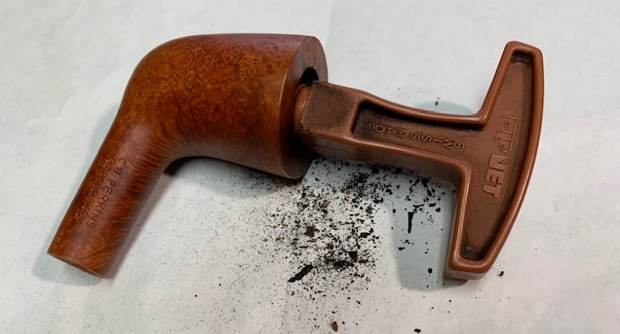
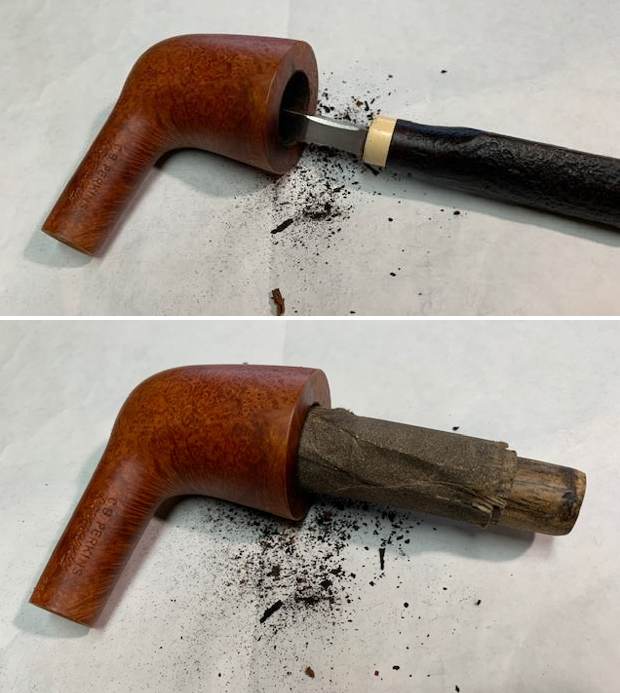
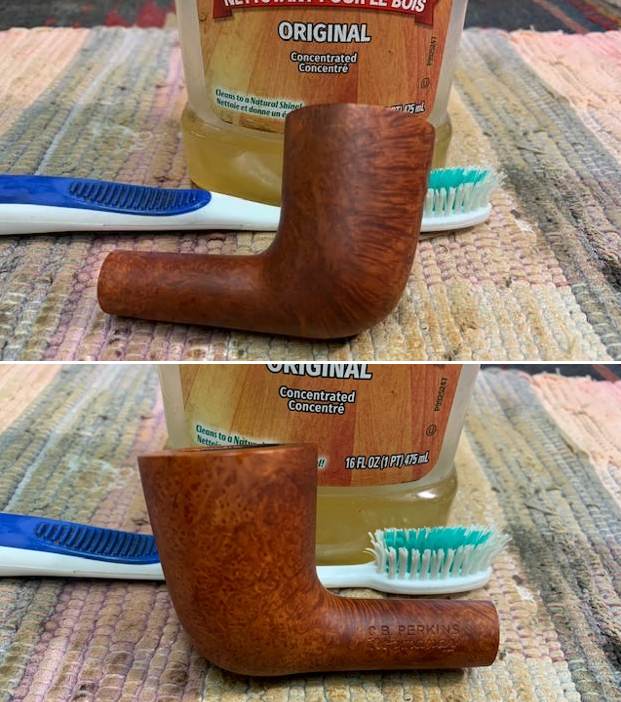
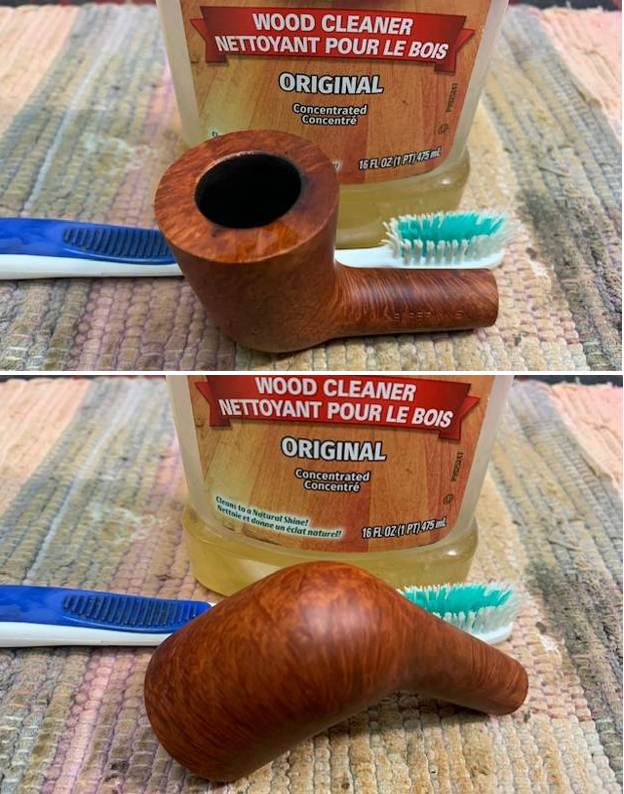
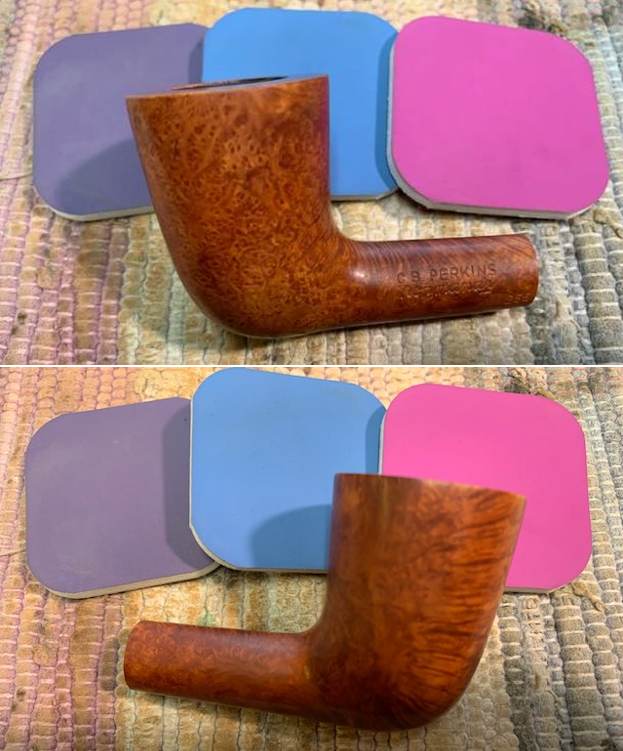
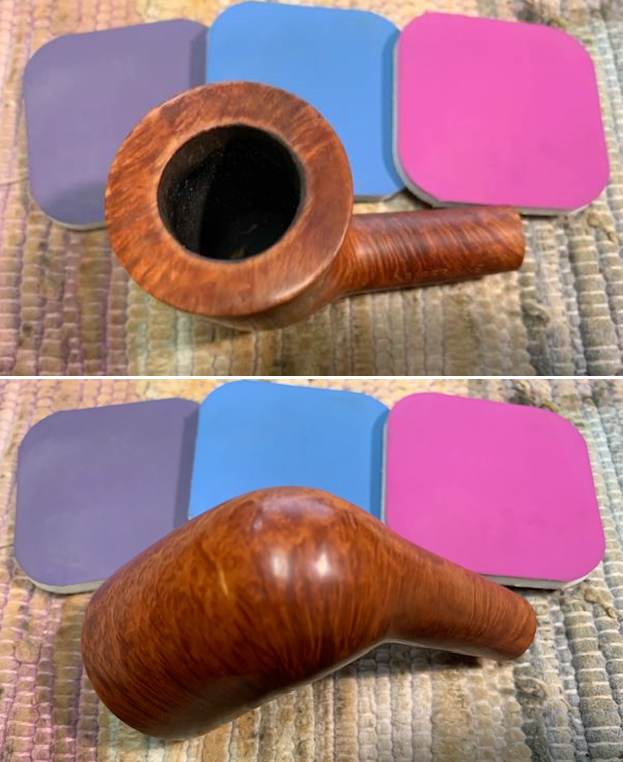
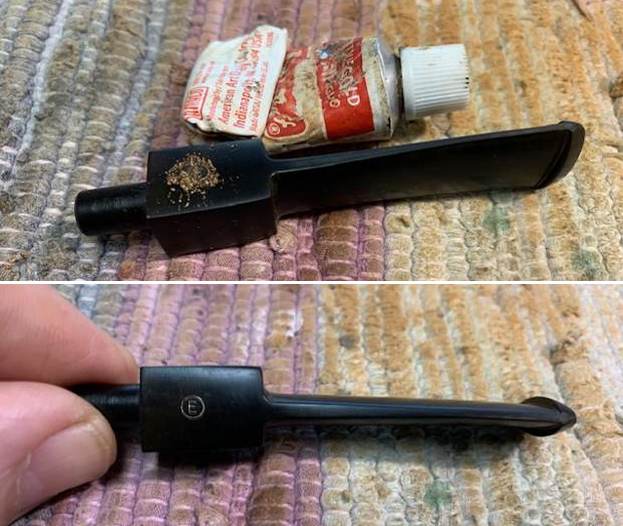
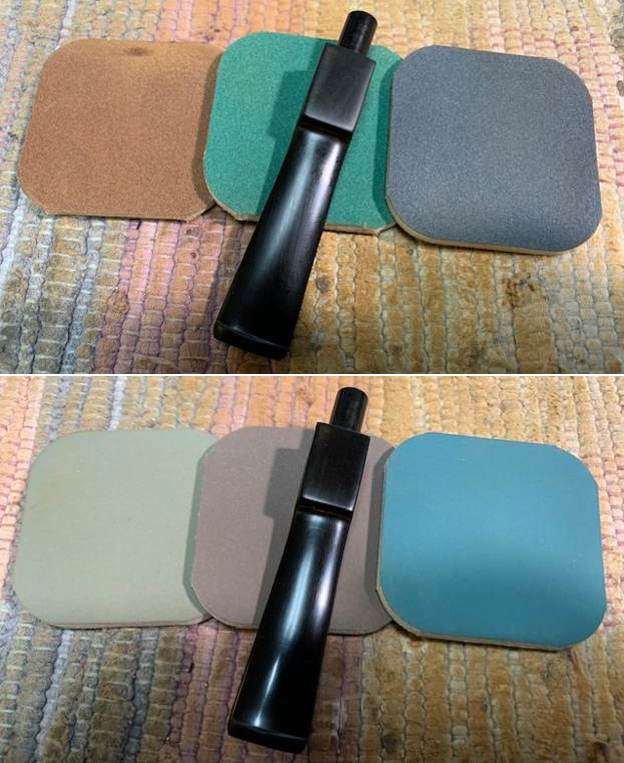
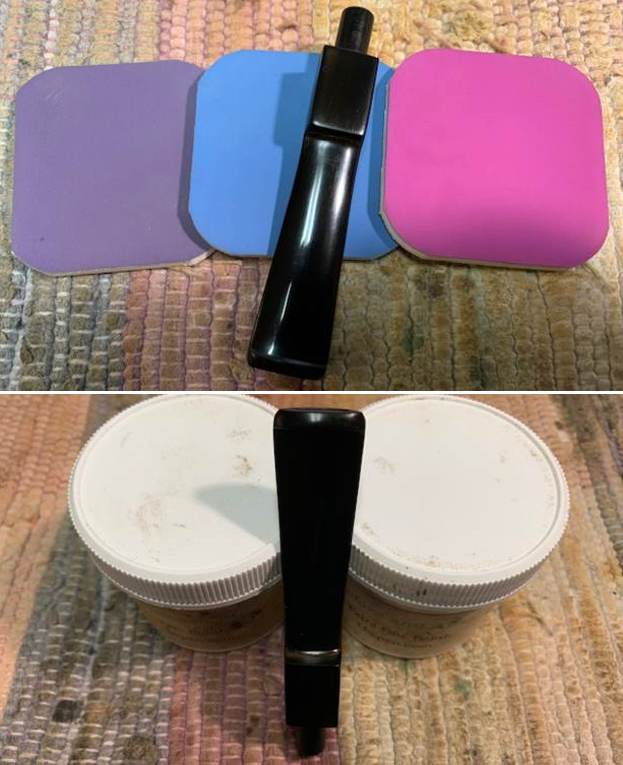
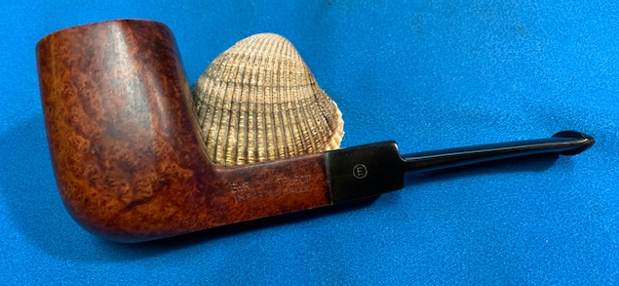
 I started my work on this pipe by reaming the bowl. I reamed it with a PipNet Pipe Reamer and took the thin cake back to bare briar. I cleaned up the reaming with a Savinelli Fitsall Pipe Knife. I sanded the walls of the bowl smooth with a piece of dowel and 220 grit sandpaper. I scrubbed the exterior of the bowl with a tooth brush and undiluted Murphy’s Oil Soap. I rinsed it under warm running water to remove the grime and the soap. It is beginning to look good! I scrubbed out the internals of the shank and the stem with pipe cleaners, cotton swabs and isopropyl alcohol. It did not take much to remove the tars and oils. I believe that there was also some stain on the inside of the shank that came out in the process. Both are clean now. I polished the briar with micromesh sanding pads – dry sanding with  1500-12000 grit pads and wiping the bowl down after each pad with a damp cloth. It really is a nice looking piece of briar. I rubbed some Before & After Restoration Balm into the finish of the pipe. I worked it into the briar because the product cleans, enlivens and protects the briar. I let the pipe sit with the Balm for 10 minutes then buffed it off with a soft towel. The Balm did its magic and the pipe looked really good. I set the bowl aside and turned my attention to the stem. I turned my attention to the stem. I polished the stem with micromesh sanding pads – dry sanding with 1500-12000 grit pads. Even though I know that Obsidian Oil is not necessary for acrylic I use it anyway as it gives some bite to the micromesh pads and also removes the dust. I wiped the stem down after each pad with a cloth impregnated with Obsidian Oil. I polished it with Before & After Stem Polish – both Fine and Extra Fine then gave it a final coat of Obsidian Oil and set it aside to dry. This lightly smoked C.B. Perkins Normandy 256 Dublin with a Rose coloured acrylic taper stem looks really good. The grain around the bowl and shank stands out with the contrasting brown stains. I put the pipe back together and buffed the pipe with Blue Diamond on the wheel (being careful of the stamping on the stem so as not to damage that). I gave the bowl and stem multiple coats of carnauba wax and buffed the pipe with a clean buffing pad to raise the shine. I hand buffed it with a microfiber cloth to deepen the shine. The dimensions of this pipe are – Length: 5 ¾ inches, Height: 2 inches, Outside diameter of the bowl: 1 ½ inches, Chamber diameter: ¾ of an inch. The weight of the pipe is 1.45 ounces/41 grams. It is a great looking pipe and one that will be going on the rebornpipes store in the American Pipe Makers section. If you want to add it to your collection let me know via email to slaug@uniserve.com or by message. Thanks for walking through the cleanup with me.
Cleaning up an UNSMOKED/NOS Comoy’s Made C.B.P. Supreme 600 Skater


Blog by Steve Laug

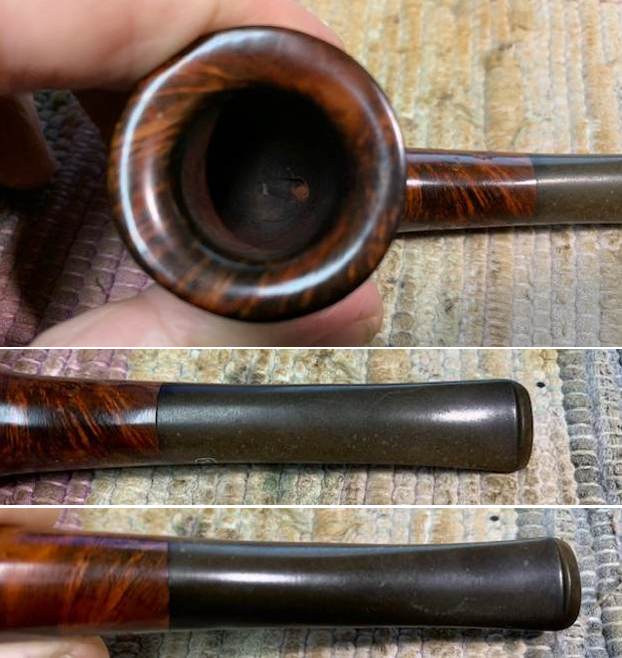
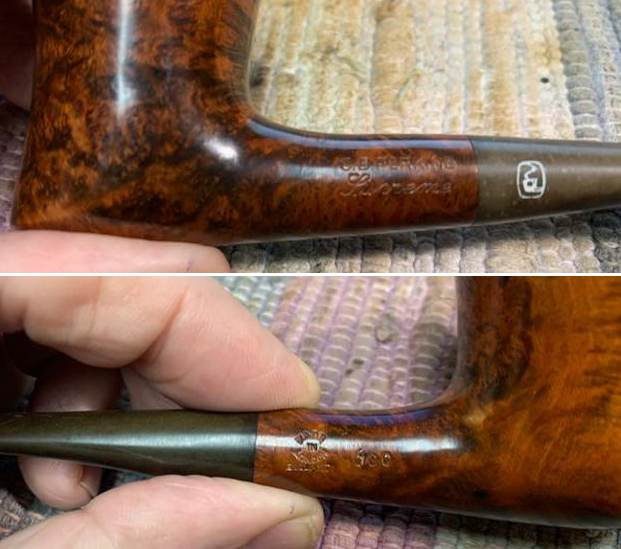
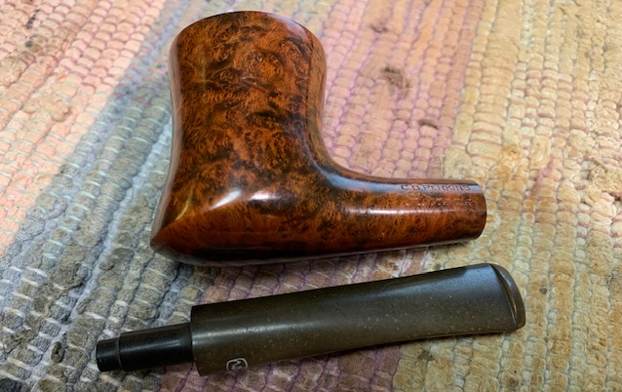
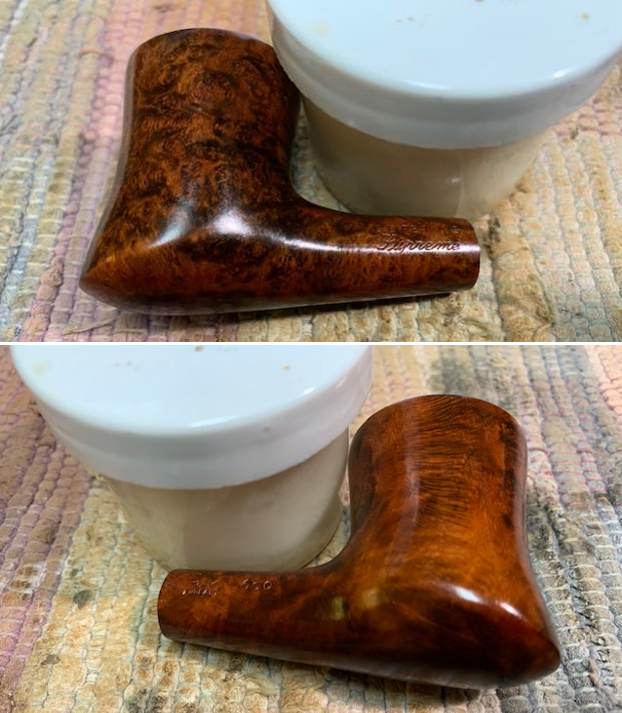
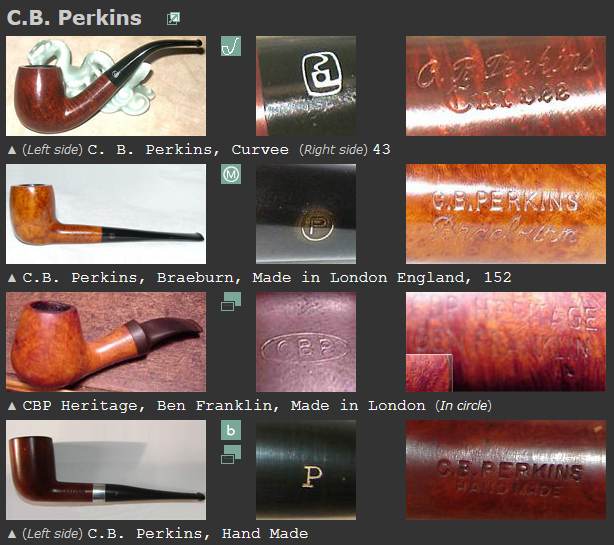
The next pipe I chose to work on is another UNSMOKED/NEW OLD STOCK pipe. This one was an interesting shape that I tend to call a skater with a taper vulcanite stem. I remembered working on a Comoy’s pipe with this shape in the past so I wondered if it was not somehow connected. It came in the original box that is in great condition. It had a perfectly clean and debris free bowl and rim top that showed that it had never been smoked. The finish very good and the pipe had some nice grain around the bowl and shank. There were no visible flaws or fills on the bowl sides or shank. It was stamped on the left side of the shank and read C.B.P. [over] Supreme. The right side is stamped a circular COM stamp MADE IN LONDON in a circle over ENGLAND followed by the shape number 600. The COM stamp is like the one on Comoy’s pipes from the 1950s onward. This is another lead that the pipe may well be made by Comoy’s but research will tell. It has a vulcanite taper stem with a Perkins logo decal on the left side. The stem is heavily oxidized on the top and right side with light oxidation on the remaining sides. I took photos of the pipe when I brought it to the work table. I took photos of the bowl and rim top and the stem surfaces to show the condition of both. The bowl, crowned rim top and edges look very good. The stem is also in great condition other than the oxidation on the surface ahead of the button. The stamp on the left side of the stem appeared to be a decal and was peeling.I took photos of the stamping on the sides of the shank. It is clear and readable as noted above. The C.B. Perkins smoking pipe decal is on the left side of the stem is slightly peeling and I am not sure it will survive the cleanup.I took the stem off the shank to show the overall look of this interesting pipe.I rubbed some Before & After Restoration Balm into the finish of the pipe. I worked it into the briar because the product cleans, enlivens and protects the briar. I let the pipe sit with the Balm for 10 minutes then buffed it off with a soft towel. The Balm did its magic and the pipe looked really good. I set the bowl aside to do a bit more work on the Comoy’s connection on this pipe. I started by reading on the history of the brand as it has been a while since I have worked on C.B. Perkins pipes. I wanted to refresh my memory of the back story of the brand. I checked first on Pipephil site (http://pipephil.eu/logos/en/logo-c1.html#c_bperkins) and found photos of various pipes. The picture of the first pipe is stamped similarly on the stem to the one I am working on but not the bowl. The third pipe has the same COM stamp as the one I am dealing with. There are no photos of the Supreme. I am including a screen capture of the pertinent information. There was no other information in the sidebars.Then I turned to Pipedia and was more successful with background information on the company (https://pipedia.org/wiki/C.B._Perkins). I quote a portion of that article below that gives a bit of history and more importantly cleared up where the pipes came from for me.

The first C.B. Perkins store opened in Boston in the early 1900’s. Perkins quickly became the leading retail tobacconist in New England, a position it held for over 75 years. In 1986 Perkins management sold their Pennsylvania and New Jersey stores to DES Tobacco Corporation.

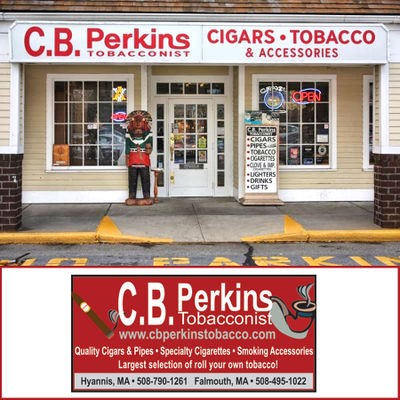
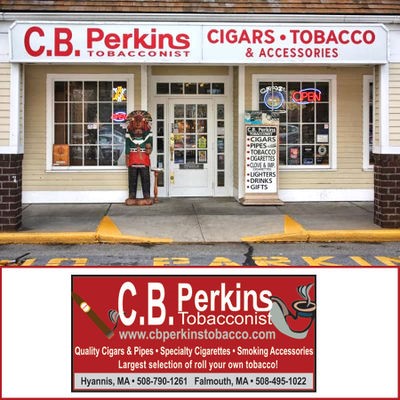
Store Front and Contact Info Courtesy of Doug Valitchka

DES is a wholly owned subsidiary of the S. Frieder and Sons Company. S. Frieder and Sons had been a cigar manufacturer since 1920. In 1978 S. Frieder sold its manufacturing business to United States Tobacco so it could focus all its assets and energy on the retail tobacco business under the name of DES Tobacco. Thus, the merger of C.B. Perkins and DES represented four generations of tobacco experience.

So far there was no connection to Comoy’s as the maker. The Made in London England circular COM stamp was the same in the Pipephil photos but there as no mention of a connection with Comoy’s so now I moved on to work another angle.

I decided to see where the combination of the shape number and COM stamp took me. Both of them made a connection for me to Comoy’s pipes. I did a quick search for a Comoy’s shape 600 (https://pipedia.org/wiki/Comoy%27s_Shape_Number_Char). I have copied the section of the chart that lists the 600 shape and calls it a SKATER – the very shape that I thought of when I saw it. It notes that it has a ¼ bent stem and is a Modern design (whatever that designation means). The COM stamp was definitely COMOY’S so now I knew. I knew that I was working on a pipe made for C.B. Perkins by Comoy’s of London. The read on the background history of C.B. Perkins was interesting.

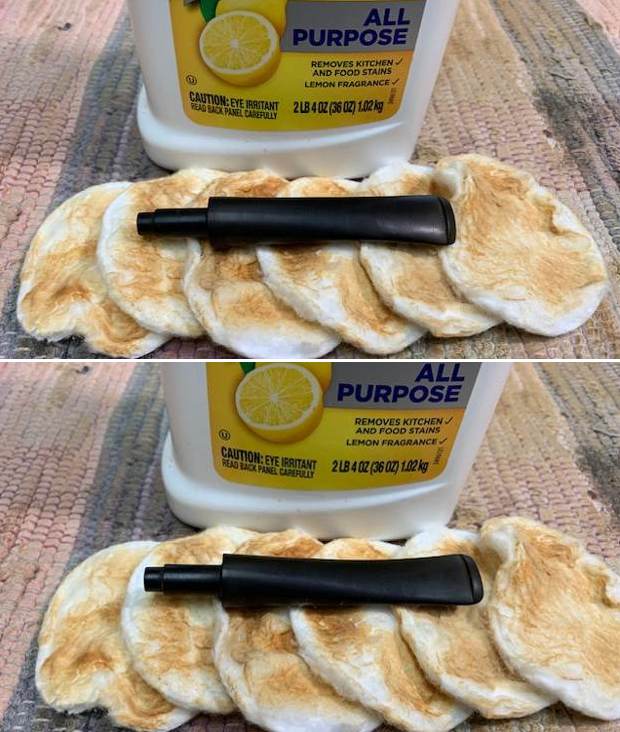
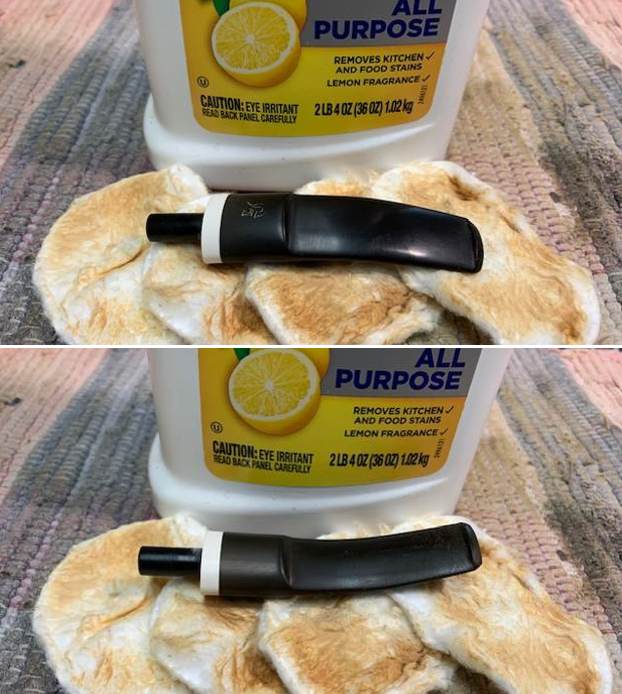
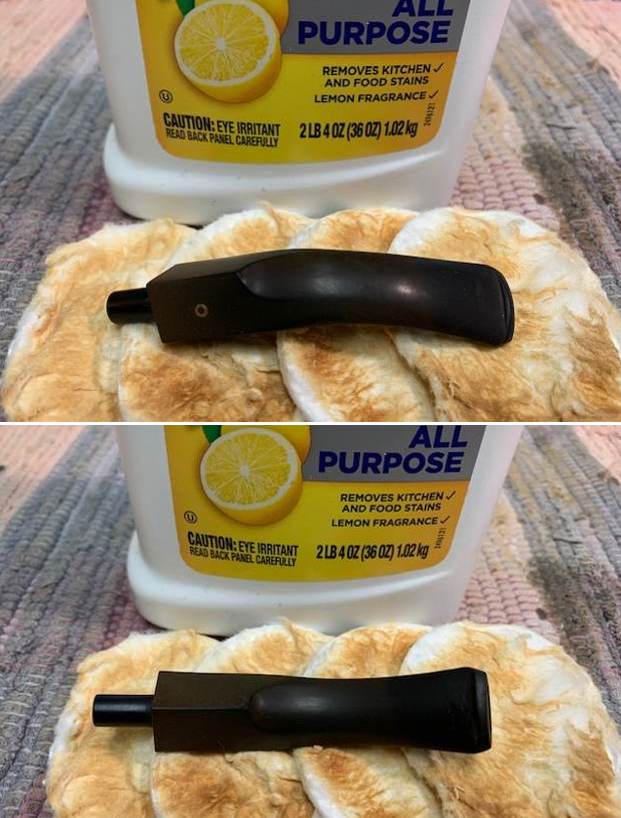
I turned my attention to the stem. It was oxidized from sitting around in the store who had stocked it. The one side more oxidized than the other pointed to a display case that exposed the top and right side to the sunlight. I scrubbed it with cotton pads and Soft Scrub all purpose cleanser. I worked on it until the stem surface was clean and ready polish. I had worried about the decal coming off in the cleaning process and it did leaving nothing behind.I polished the stem with micromesh sanding pads – dry sanding with 1500-12000 grit pads. I wiped the stem down after each pad with a cloth impregnated with Obsidian Oil. I polished it with Before & After Stem Polish – both Fine and Extra Fine then gave it a final coat of Obsidian Oil and set it aside to dry.This UNSMOKED/NEW OLD STOCK Comoy’s Made C.B. Perkins Supreme 600 Skater with a vulcanite taper stem looks really good. The grain around the bowl and shank stands out with the contrasting brown stains. I put the pipe back together and buffed the pipe with Blue Diamond on the wheel (being careful of the stamping on the stem so as not to damage that). I gave the bowl and stem multiple coats of carnauba wax and buffed the pipe with a clean buffing pad to raise the shine. I hand buffed it with a microfiber cloth to deepen the shine. The dimensions of this pipe are – Length: 5 ¼ inches, Height: 1 ¾ inches, Outside diameter of the bowl: 1 ¼ inches, Chamber diameter: ¾ of an inch. The weight of the pipe is 1.13 ounces/32 grams. It is a great looking pipe and one that will be going on the rebornpipes store in the American Pipe Makers section. If you want to add it to your collection let me know via email to slaug@uniserve.com or by message. Thanks for walking through the cleanup with me.

Restoring a Petite Ehrlich Sandblast Poker


Blog by Steve Laug

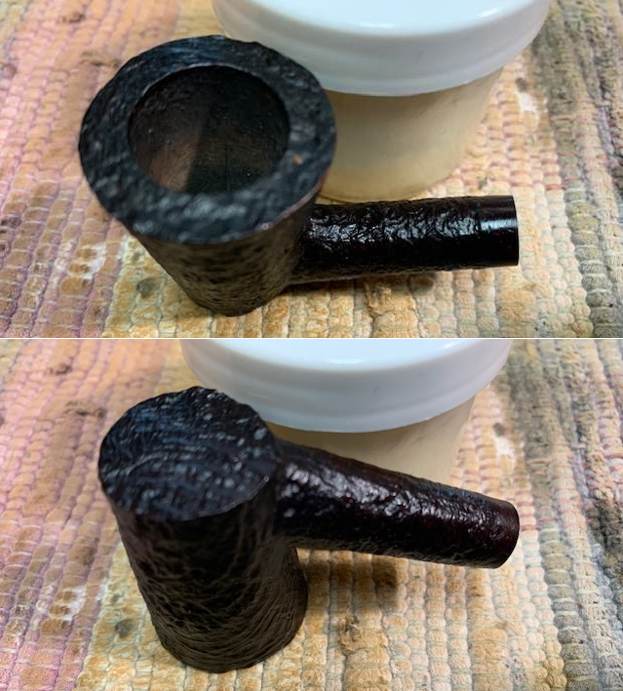
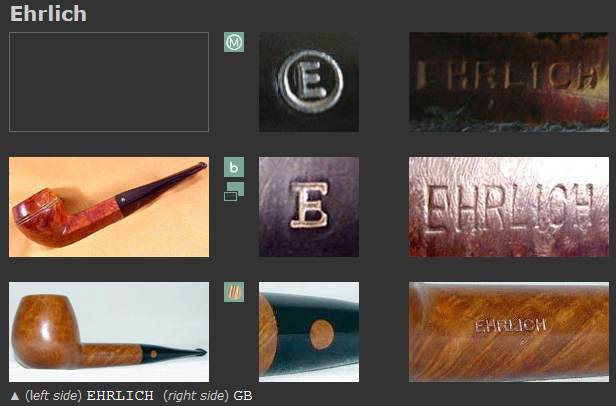
The next pipe I chose to work on is an Ehrlich pipe. This one was petite Poker/Cherrywood with a bit of a Dublin flair and saddle stem. It had a perfectly clean and debris free bowl and rim top and showed that it had been lightly smoked. The sandblast finish was quite clean and the blast revealed some nice grain around the bowl and shank. The pipe reminded me in style and size of the Savinelli Bent Bob line of pipes. It was stamped on the left side of the shank on top of the sandblast and with a lens I could read Ehrlich. The right side of the bowl is stamped in the blast as well and is hard to read but I believe it reads Imported Briar. It has a thin vulcanite saddle stem that is lightly oxidized. The stem bears Ehrlich “E” logo on the left side of the saddle. I took photos of the pipe when I brought it to the work table.  I took photos of the bowl and rim top and the stem surfaces to show the condition of both. The bowl, rim top and edges look very good. The stem is also in great condition other than the light oxidation on the surface of the stem.I took photos of the stamping on the sides of the shank. It is clear and readable with a lens and a light as noted above. The stamping is on top of the sandblast which makes it less legible.The Ehrlich logo of circle E is on the left side of the saddle portion of the stem is also in good condition. The stamping on the underside of the stem reads FRANCE.I took the stem off the shank to show the look of the overall look of this interesting petite pipe. The briar was in great condition and was quite clean so I rubbed some Before & After Restoration Balm into the finish of the pipe. I worked it into the briar with my fingertips and a horsehair shoe brush because the product cleans, enlivens and protects the briar. I let the pipe sit with the Balm for 10 minutes then buffed it off with a soft towel. The Balm did its magic and the pipe looked really good. I set the bowl aside and did a bit of reading on the history. I have worked on quite a few Ehrlich pipes in the past and wanted to refresh my memory of the back story of the brand. I checked first on Pipephil (http://pipephil.eu/logos/en/logo-e1.html) and found photos of various pipes. The picture of the first pipe is stamped similarly to the one I am working on. The EHRLICH is stamped the same way. There are no photos of the SELECT. I am including a screen capture of the pertinent information. There was no other information in the sidebars.Then I turned to Pipedia and was more successful (https://pipedia.org/wiki/Ehrlich%27s). I quote a portion of that article below that gives a bit of history and more importantly cleared up where the pipes came from for me.

The David P. Ehrlich story – Pipemakers and Tobacconists for a Hundred Years, 1868-1968.

The David P. Ehrlich Company has remained solely in the hands of one family during its century of business, yet it has had several firm names and locations. David P. Ehrlich went to work in 1881 at the age of twenty for Ferdinand Abraham, who dealt in cigars and tobacco and who had begun business in 1868 at 1188 Washington Street in the South End, but in 1880 moved to the center of the city, where the firm has been ever since. David Ehrlich married the boss’s daughter. In 1916 the name became the David P. Ehrlich Company and Mr. Ehrlich devoted the rest of his life to this business. Since David’s death in 1912 it has been owned by – his nieces and nephews including Richard A. and William Ehrlich.

Ehrlich shop has since 1880 had a predilection for historic sites. 25 Court Street was close to the spot where from 1721-1726 James Franklin had, with the assistance of his brother Benjamin, published The New-England Courant. In 1908 the firm moved a few doors up Court Street to number 37, on the opposite corner of the alley that is grandiloquently named Franklin Avenue. This new location was on the site of the one-time printing office of Edes and Gill, publishers of the Boston Gazette, in whose back room some of the “Indians” of the Boston Tea Party assumed their disguises. Soon after the end of World War II at which time the store was located at 33 Court Street a move around the corner to 207 Washington Street brought the shop diagonally across from the Old State House and onto the site occupied from 1610-1808 by the First Church of Boston. The demolition of 207 Washington Street in 1967 caused still another move to 32 Tremont Street, adjoining King’s Chapel burying Ground, which is the oldest cemetery in Boston.

The David P. Ehrlich Co. has not just occupied sites intimately associated with Boston history and institutions; it has in the past century become a Boston institution in its own right. It has specialized in fine cigars, pipes, and pipe tobacco. In addition to the retail business, the firm has long specialized in the manufacture of pipes, both from Algerian briar root…

That gave the history of the brand and was written in a way that fascinated me. I included a lot of it because of that. I knew that the pipe I was working on was stamped Imported Briar which generally points to a pipe made elsewhere for Ehrlich and brought to the US.

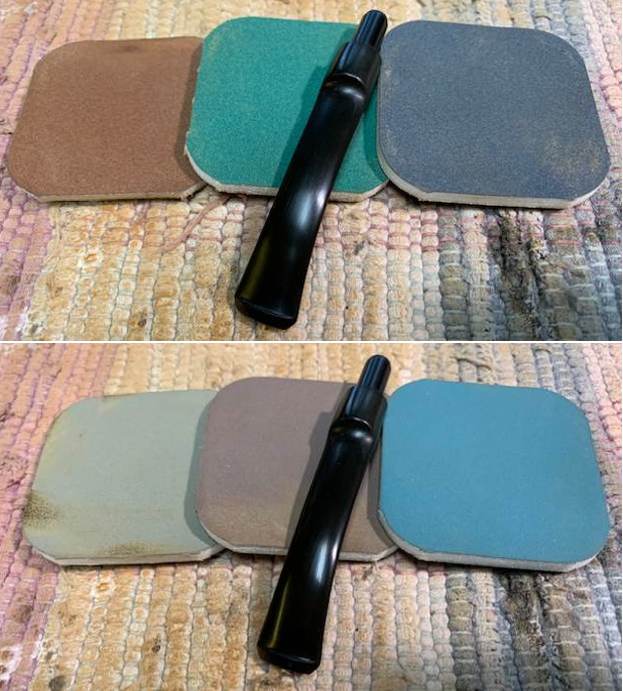
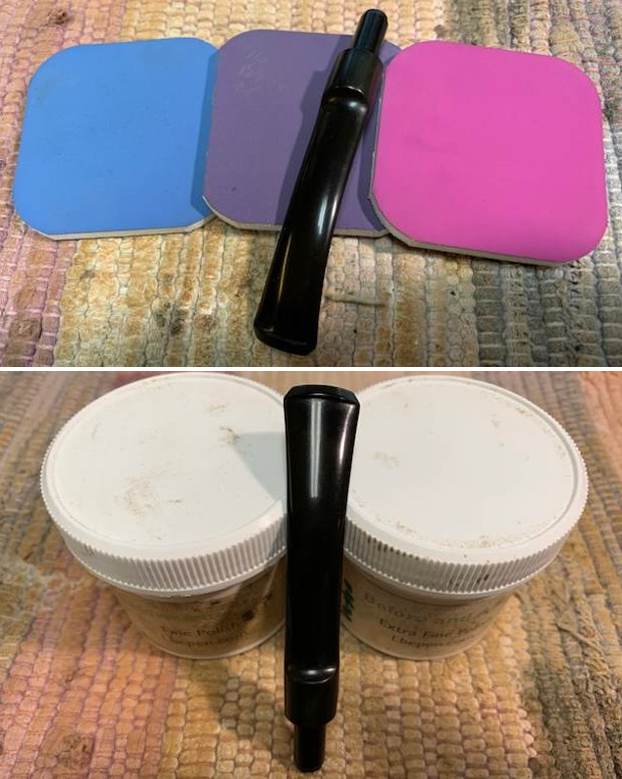
I polished the stem with micromesh sanding pads – dry sanding with 1500-12000 grit pads. I wiped the stem down after each pad with a cloth impregnated with Obsidian Oil. I polished it with Before & After Stem Polish – both Fine and Extra Fine then gave it a final coat of Obsidian Oil and set it aside to dry. This lightly smoked, petite Ehrlich Imported Briar Sandblast Poker/Cherrywood with a Saddle Vulcanite stem looks really good. The sandblasted grain around the bowl and shank stands out with the contrasting brown stains. I put the pipe back together and buffed the pipe with Blue Diamond on the wheel (being careful of the stamping on the stem so as not to damage that). I gave the bowl multiple coats of Conservator’s Wax and the stem multiple coats of carnauba wax and buffed the pipe with a clean buffing pad to raise the shine. I hand buffed it with a microfiber cloth to deepen the shine. The dimensions of this pipe are – Length: 5 inches, Height: 1 ¾ inches, Outside diameter of the bowl: 1 ¼ inches, Chamber diameter: ¾ of an inch. The weight of the pipe is .74 ounces/21 grams. It is a great looking pipe and one that will be going on the rebornpipes store in the American Pipe Makers section. If you want to add it to your collection let me know via email to slaug@uniserve.com or by message. Thanks for walking through the cleanup with me.

Researching an UNSMOKED/NOS Monarch Pat. 1989069 – 2133 Straight Apple


Blog by Steve Laug

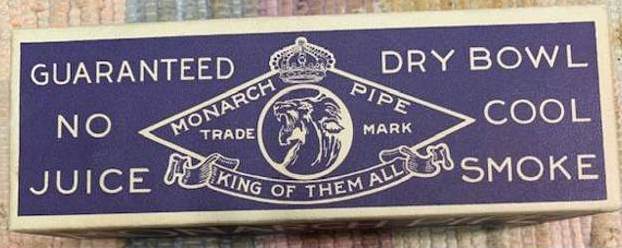
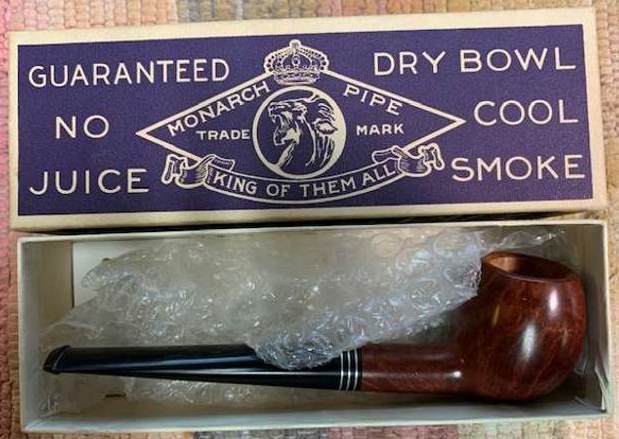
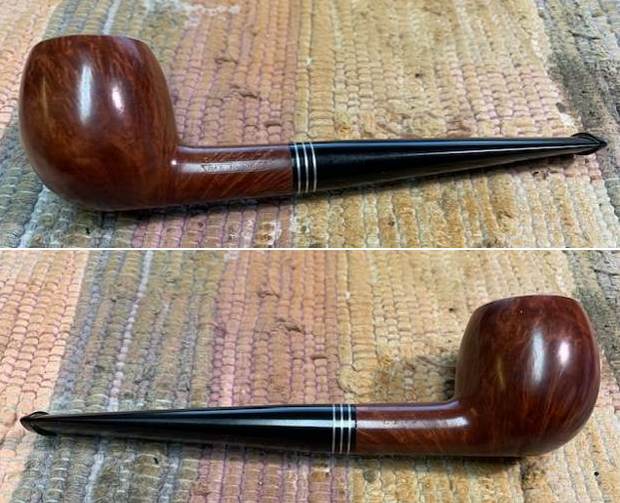
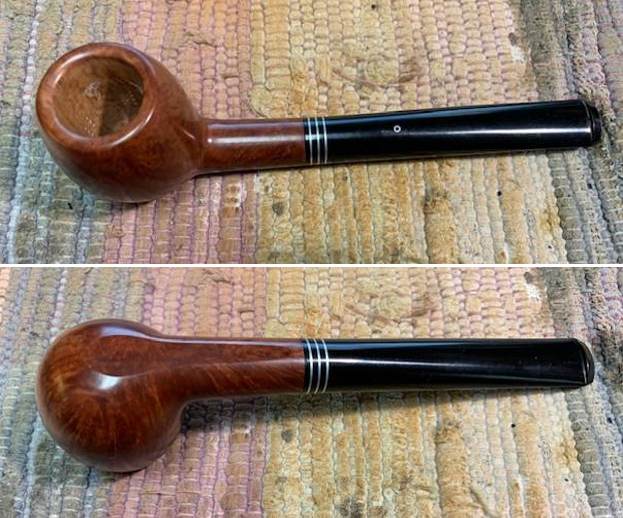
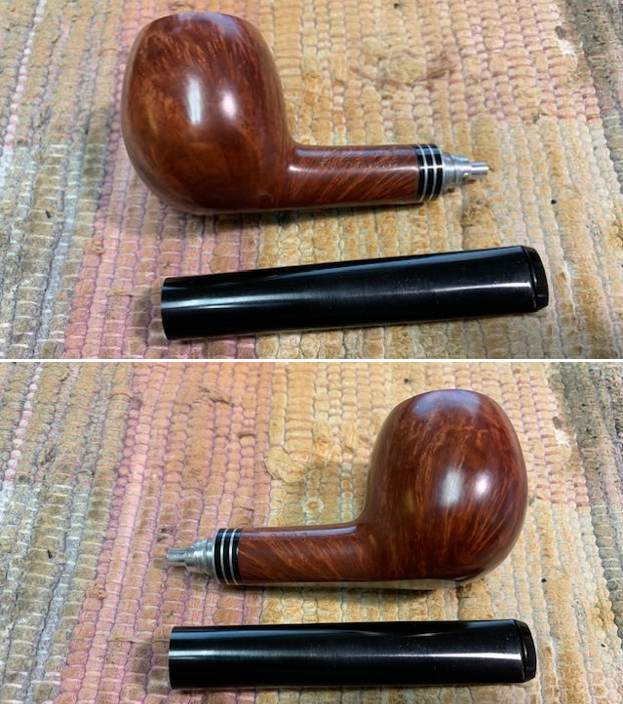
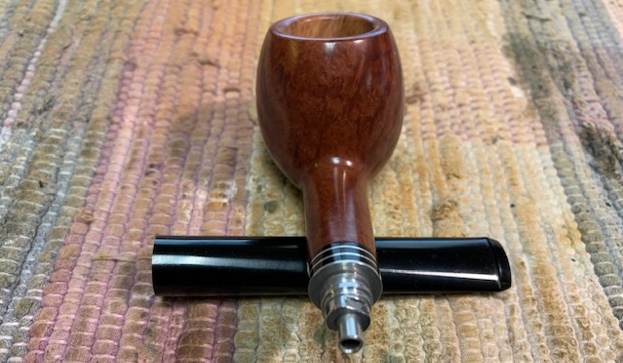
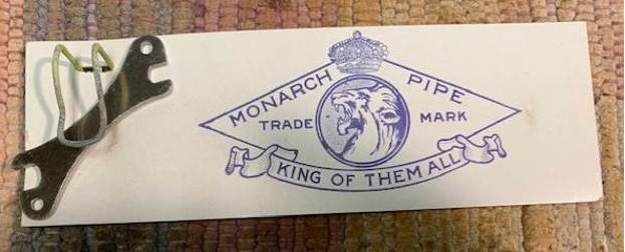
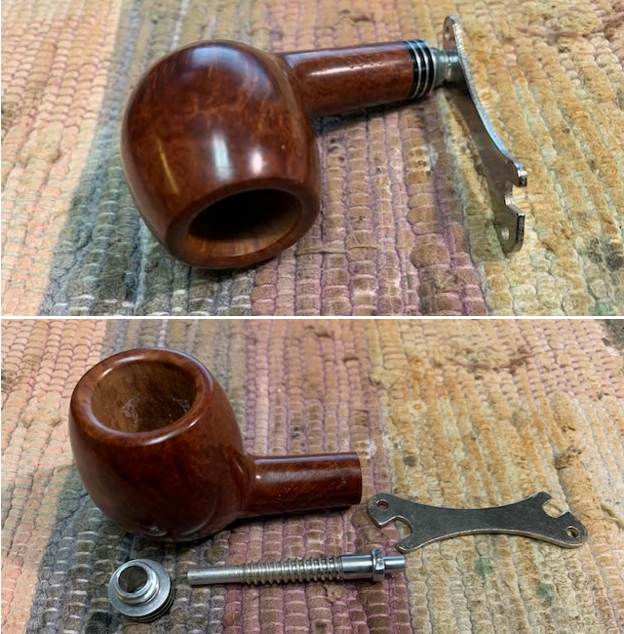
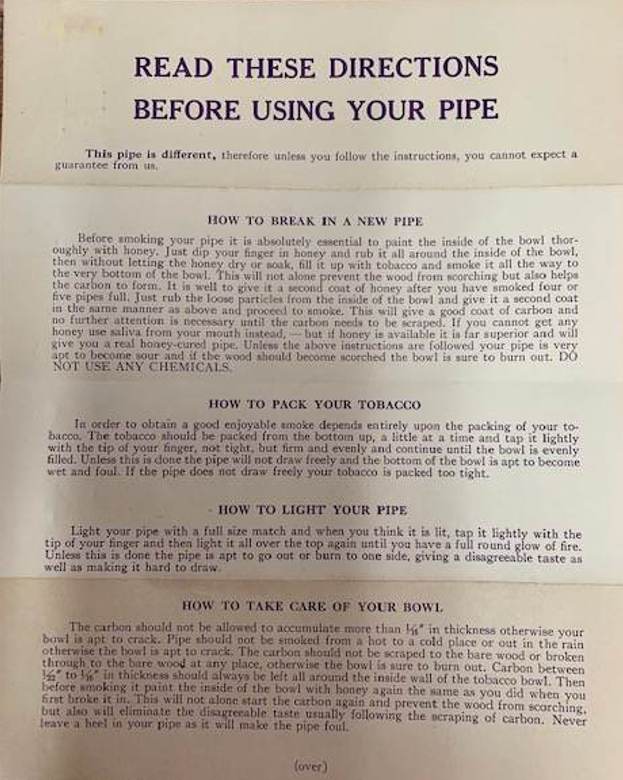
In recent purchase of pipes that Jeff and I made from a friend who picked up a bunch of pipes from a closed pipe shop were two of these Monarch Pipes. Both of them were unsmoked and new old stock. What made them interesting to me was the box advertising that was with both pipes. It read as is shown below: Guaranteed Dry Bowl – No Juice/Cool Smoke. The logo in the centre of the box read Monarch Pipe [over] Trade Mark [over] King of them All in a diamond with a banner. The side of the box read MONARCH PIPE [arched over] Pat. Pend. The end of the box read Monarch Pipe with a white box for writing a shape number or inventory number. In this case the number written was “4”. The box was in good condition with no tears or damage. It was clean and quite nice.When I opened the box I found that the pipe was wrapped in bubble wrap and sat on top of the paperwork on the pipe. It was a beautiful pipe in an apple shape. I took the pipe out of the box and took photos of it. It really is a beautiful, well made pipe that is in flawless condition. The three silver rings on vulcanite were attached to the shank as an extension which housed the hardware of the Patent pipe. The stem was vulcanite and was well made with a nice taper. There was a single small inlaid silver ring on the topside of the taper stem. The shank was stamped on the left side and read Monarch in script over Pat. 1989069 in a curled banner. On the right side of the shank it is stamped with the number 2133 which is a shape number. The bowl is well turned and conical shaped. It is smooth but still shows some tooling marks on the bowl walls mid wall half way down the bowl. The drilling was perfectly centered at the bottom of the bowl. I took some photos of the pipe before taking it apart. The stem was screwed onto the metal “plumbing” on the inside of the shank. The stem was perfectly aligned with the shank. The metal part extending from the shank is a tube that lined up with the airway in the stem. In the bottom of the box was a display card for attaching the pipe in the box and allowing it to stand on its side with the pipe held in place like a shadow box. There was also a metal tool there that was a wrench with two sized slots for removing the plumbing from the shank.I fitted the wrench to the plumbing on the shank. The fit was perfect and I was able to slide it over the end. I loosened it with the wrench and removed it from the part. I unscrewed it the rest of the way from the shank. I took the piece apart – slipped the shank extension off the plumbing and took photos. You can see the threads on the outside of the tube that fit well inside the threaded mortise in the shank. I also took a photo of the inside of the stem to show the threaded internals of the stem. It is a really interesting looking pipe and the contraption works as a condenser in the shank. I took out the folded documentation that was in the bottom of the box. It is entitled READ THESE DIRECTIONS BEFORE USING YOUR PIPE. Underneath that it reads, “This pipe is different, therefore unless you follow the instructions, you cannot expect a guarantee from us.”

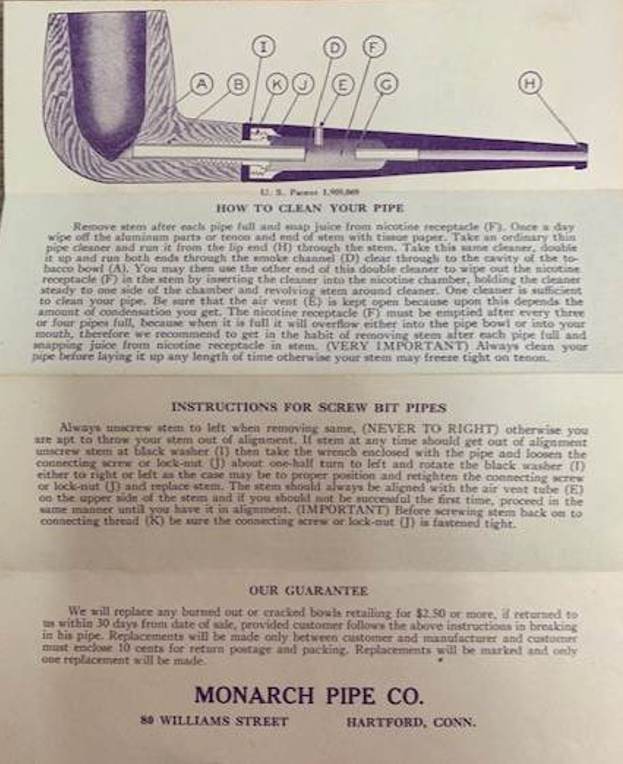
I love the straightforward disclaimer on the top of the brochure. It is quite different from any other system pipe that I have used or worked on over the years. None of those system pipes were that clear in stating – read this or we won’t honour the guarantee. Makes me like the company who made this pipe. I took photos of both sides of the brochure and included them below. Give them a read as they are quite clear. Under the section on how to clean your pipe is a great description of the apparatus in the shank. It reads as follows:

Remove stem after each pipe full and snap juice from nicotine receptacle (F). Once a day wipe off the aluminum parts or tenon and end of the stem with tissue paper. Take an ordinary thin pipe cleaner and run it from the lip end (H) through the stem. Take the same cleaner, double it up and run both ends through the smoke channel (D) clear through to the cavity of the tobacco bowl (A). You may then use the other end of this double cleaner to wipe out the nicotine receptacle (F) in the stem by inserting the cleaner into the nicotine chamber, holding the cleaner steady to one side of the chamber and revolving stem around cleaner. One cleaner is sufficient to clean your pipe. Be sure that the air vent (E) is kept open because upon this depends the amount of condensation you get. The nicotine receptacle (F) must be emptied after every three or four pipes full, because when it is full it will overflow either into the pipe bowl or into your mouth, therefore we recommend to get in the habit of removing stem after each pipe full and snapping juice from nicotine receptacle in stem. (VERY IMPORTANT). Always clean your pipe before laying it up any length of time otherwise you stem may freeze tight on the tenon.

Reading through the brochure was very helpful in identifying the parts on the pipe. The space between the end of the tube in the plumbing and the airway in the stem is a collection area for the juices. The silver inset ring on the top of the stem that I thought was a logo is actually an air vent like those on Duncan Aerosphere pipes. I find these documents fascinating to read. They gave me all the documentation for taking the plumbing apart and putting it back together again.

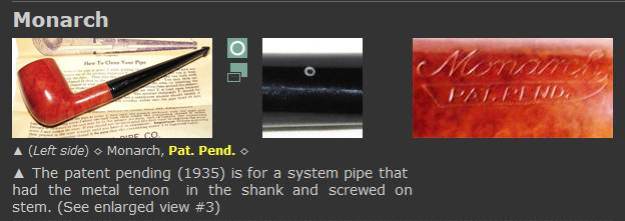
I wanted to see if I could learn anything else so I turned to Pipephil’s site to read what was there and learned some more (http://pipephil.eu/logos/en/logo-m6.html). I did a screen capture of the section on the site and have included it below. I also included the information from the side bar below the screen capture. It turns out that the company also made the Carey Magic Inch and the Duncan Aerosphere pipe both of which use similar plumbing with refinements to capture the perfect smoke.Fred Warnke established the brand in the late 1930 in Hartford (CT). The company moved in the 1950s to Tusla (OK). Other brands distributed by Monarch Pipe Co: Carey Magic Inch, Aerosphere.  The Monarch label has also been used by Imperial Tobacco Co (England), by Civic (England) and by LA BRUYERE (France). The later were distributed by WDC.

I turned to the section on Pipedia on the brand to read (https://pipedia.org/wiki/Monarch). I quote in full

Monarch Pipe Co. was established in Hartford Con, most likely in the late 1930 by Fred Warnke, who obtained a patent on the system pipe on January 22 1935. The company moved to Tulsa Oklahoma at some point in the 1950s, after which Monarch Pipe Co was moved to Bristow, Oklahoma. The Monarch Pipe Co. also makes E.A.Carey Magic Inch and Duncan Hill Aerosphere Pipes.

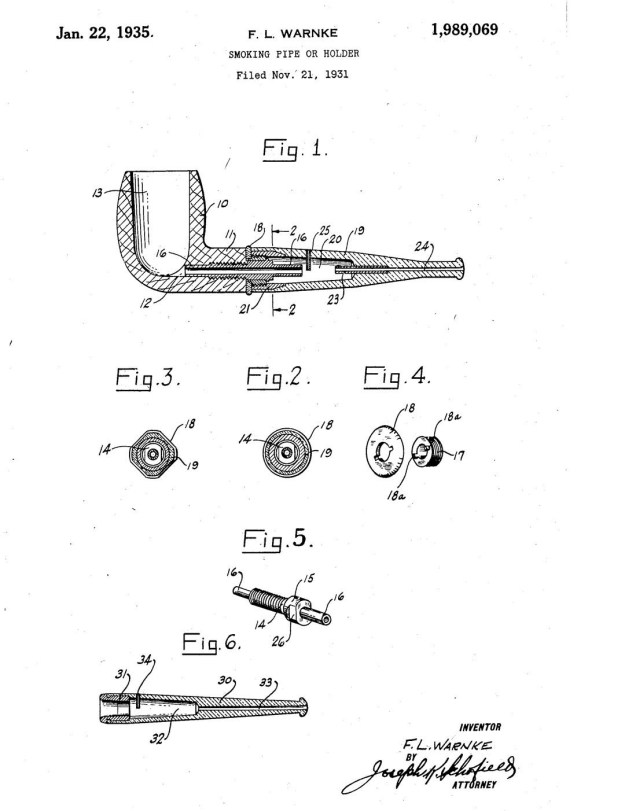
The site also included a copy of the Patent drawings that were submitted to the US Patent Office in November, 1931. I include that below.I remembered that Dal Stanton had worked on one of these pipes previously and had done more research on the brand (https://rebornpipes.com/tag/monarch-pipes/). I quote from that blog below. Thanks for the information Dal.

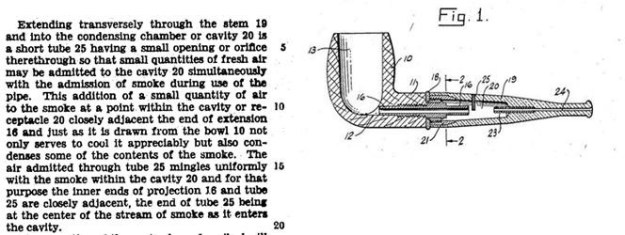
I was also intrigued by reading the full patent document submitted by Fred L. Warnke in 1931.  I clipped the header from that document and placed it below.  The first several paragraphs describes how the system would provide the holy grail of pipe technology – a cooler and dryer smoke! Dal also confirmed the information on the logo being a ventilator on the top of the stem. I quote:
One last interesting item to note which I referenced earlier.  The dot on the top of the stem is a hole or a vent air regulator which is labeled #25 in the Fig. 1 1931 patent diagram.  I found this caption that I clipped from the patent document interesting as it describes the purpose of the vent and how it contributes to a ‘dryer and cooler’ smoking experience as it regulates the introduction of fresh air to the to the smoke.  I really wish I could try out some of the pipes I restore to experience these inventions in practice!I have the opportunity to try out this old timer and see what it works like. I am looking forward to smoking it and seeing what it is like. There is also one for sale on the rebornpipes store – another unsmoked apple – it is listed under the American (US) Pipe Makers section. That way someone else can give it a smoke along with me. It should be an interesting opportunity and one that will be a new experience. Thanks for reading the blog.

Cleaning up an UNSMOKED/NOS Ehrlich Select Panel Billiard


Blog by Steve Laug

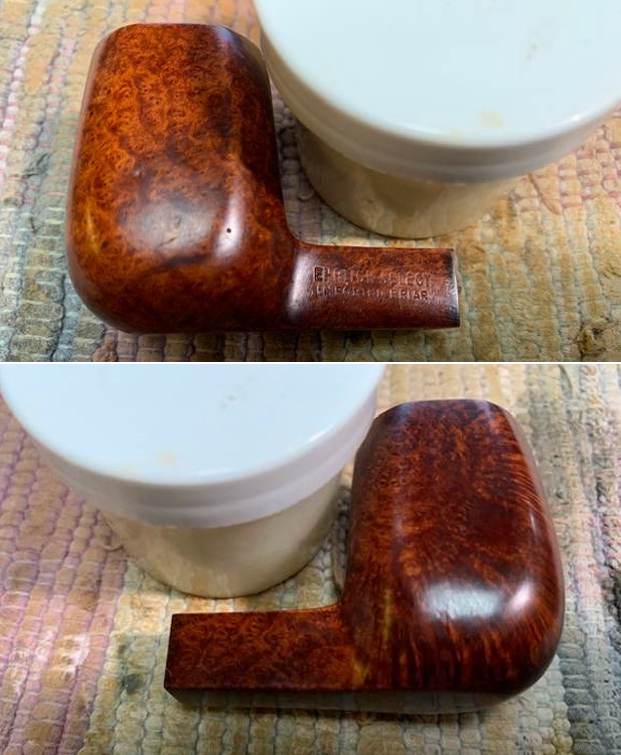
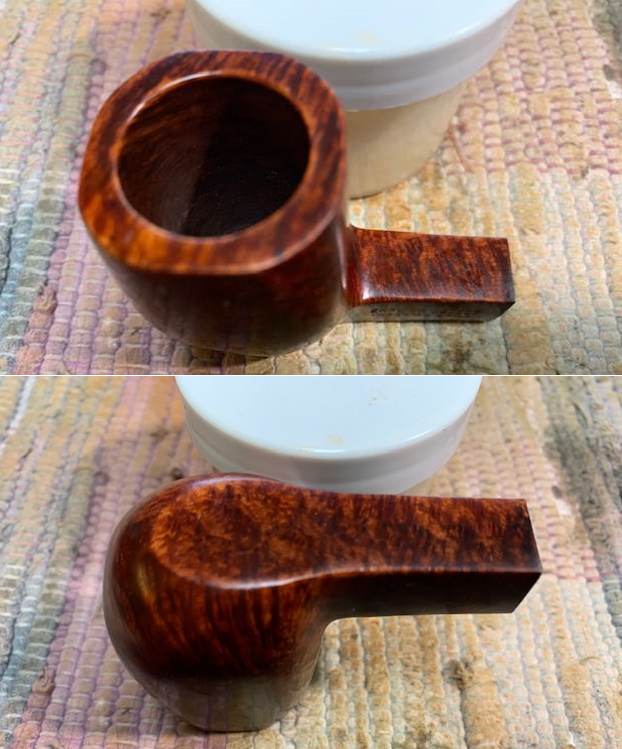
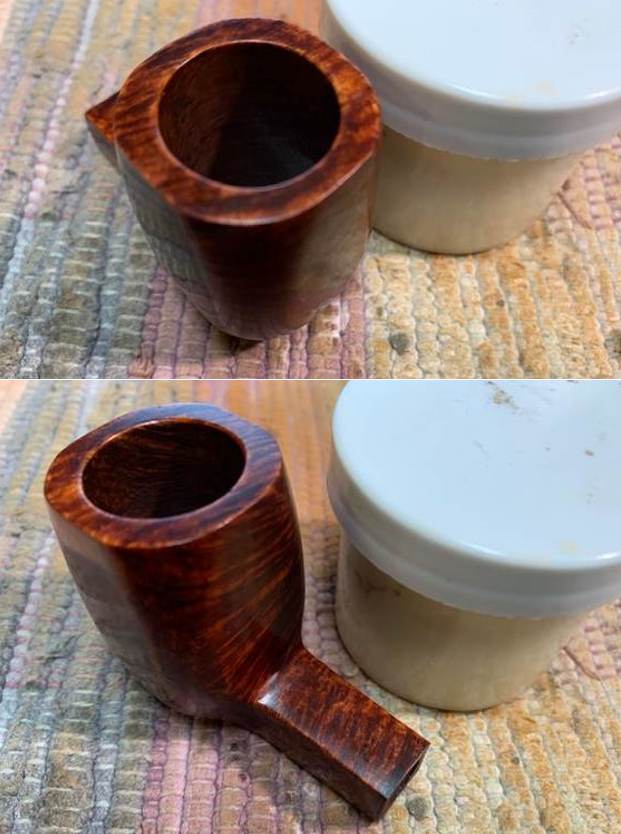
The next pipe I chose to work on is another UNSMOKED/NEW OLD STOCK pipe. This one was Panel Billiard with a square shank and saddle stem. It had a perfectly clean and debris free bowl and rim top that showed that it had never been smoked. The finish was shop worn an dirty but had some nice grain around the bowl and shank. There was a peeling varnish coat on the outside of the bowl and shank. There were some small flaws and fills around the bowl. It was stamped on the left side of the shank and read Ehrlich Select [over] Imported Briar. The inside of the bowl appears to have some stain that has permeated the briar but it is clean. It has a vulcanite square saddle stem that is lightly oxidized. The stem bears Ehrlich “E” logo on the left side of the saddle. I took photos of the pipe when I brought it to the work table. I took photos of the bowl and rim top and the stem surfaces to show the condition of both. The bowl, rim top and edges look very good. The stem is also in great condition other than the light oxidation and speckles of grime stuck to the surface of the stem – on the saddle and on the blade.I took photos of the stamping on the left side of the shank. It is clear and readable as noted above. The Ehrlich logo of circle E is on the left side of the saddle portion of the stem is also in good condition. The stamp is filled in and very dirty.I took the stem off the shank to show the look of the white spacer on the stem and overall look of this interesting panel pipe.I polished the briar with micromesh sanding pads – dry sanding with 1500-12000 grit sanding pads. I was able to remove the varnish coat on the bowl and shank with the pads. I wiped the briar down with a damp cloth between each sanding pad. The briar took on a rich shine and there was some nice grain around the bowl and shank sides. I rubbed some Before & After Restoration Balm into the finish of the pipe. I worked it into the briar because the product cleans, enlivens and protects the briar. I let the pipe sit with the Balm for 10 minutes then buffed it off with a soft towel. The Balm did its magic and the pipe looked really good. I set the bowl aside and did a bit of reading on the history. I have worked on quite a few Ehrlich pipes in the past and wanted to refresh my memory of the back story of the brand. I checked first on Pipephil (http://pipephil.eu/logos/en/logo-e1.html) and found photos of various pipes. The picture of the first pipe is stamped similarly to the one I am working on. The EHRLICH is stamped the same way. There are no photos of the SELECT. I am including a screen capture of the pertinent information. There was no other information in the sidebars.Then I turned to Pipedia and was more successful (https://pipedia.org/wiki/Ehrlich%27s). I quote a portion of that article below that gives a bit of history and more importantly cleared up where the pipes came from for me.

The David P. Ehrlich story – Pipemakers and Tobacconists for a Hundred Years, 1868-1968.

The David P. Ehrlich Company has remained solely in the hands of one family during its century of business, yet it has had several firm names and locations. David P. Ehrlich went to work in 1881 at the age of twenty for Ferdinand Abraham, who dealt in cigars and tobacco and who had begun business in 1868 at 1188 Washington Street in the South End, but in 1880 moved to the center of the city, where the firm has been ever since. David Ehrlich married the boss’s daughter. In 1916 the name became the David P. Ehrlich Company and Mr. Ehrlich devoted the rest of his life to this business. Since David’s death in 1912 it has been owned by – his nieces and nephews including Richard A. and William Ehrlich.

Ehrlich shop has since 1880 had a predilection for historic sites. 25 Court Street was close to the spot where from 1721-1726 James Franklin had, with the assistance of his brother Benjamin, published The New-England Courant. In 1908 the firm moved a few doors up Court Street to number 37, on the opposite corner of the alley that is grandiloquently named Franklin Avenue. This new location was on the site of the one-time printing office of Edes and Gill, publishers of the Boston Gazette, in whose back room some of the “Indians” of the Boston Tea Party assumed their disguises. Soon after the end of World War II at which time the store was located at 33 Court Street a move around the corner to 207 Washington Street brought the shop diagonally across from the Old State House and onto the site occupied from 1610-1808 by the First Church of Boston. The demolition of 207 Washington Street in 1967 caused still another move to 32 Tremont Street, adjoining King’s Chapel burying Ground, which is the oldest cemetery in Boston.

The David P. Ehrlich Co. has not just occupied sites intimately associated with Boston history and institutions; it has in the past century become a Boston institution in its own right. It has specialized in fine cigars, pipes, and pipe tobacco. In addition to the retail business, the firm has long specialized in the manufacture of pipes, both from Algerian briar root…

That gave the history of the brand and was written in a way that fascinated me. I included a lot of because of that. I knew that the pipe I was working on was stamped Imported Briar which generally points to a pipe made elsewhere for Ehrlich and brought to the US.

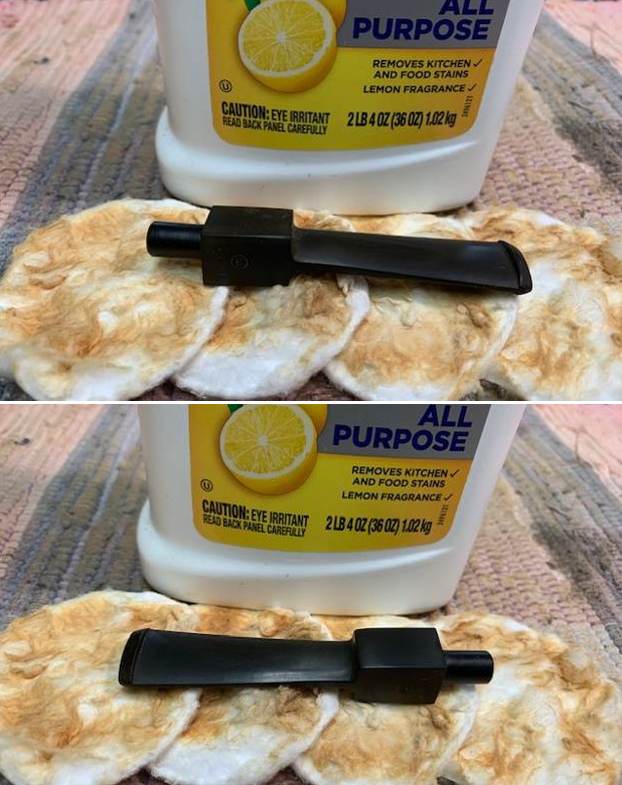
I turned my attention to the stem. It was lightly oxidized from sitting around in the store who had stocked it. I scrubbed it with cotton pads and Soft Scrub all purpose cleanser. I worked on it until the stem surface was clean and ready polish.I touched up the Circle E stamp on the side of the stem with Rub’n Buff Antique gold. The stamp was not deep so while it worked there are spots on the circle where it is light.I polished the stem with micromesh sanding pads – dry sanding with 1500-12000 grit pads. I wiped the stem down after each pad with a cloth impregnated with Obsidian Oil. I polished it with Before & After Stem Polish – both Fine and Extra Fine then gave it a final coat of Obsidian Oil and set it aside to dry. This UNSMOKED/NEW OLD STOCK Ehrlich Select Imported Briar Panel Billiard with a Saddle Vulcanite stem looks really good. The grain around the bowl and shank stands out with the contrasting brown stains. I put the pipe back together and buffed the pipe with Blue Diamond on the wheel (being careful of the stamping on the stem so as not to damage that). I gave the bowl and stem multiple coats of carnauba wax and buffed the pipe with a clean buffing pad to raise the shine. I hand buffed it with a microfiber cloth to deepen the shine. The dimensions of this pipe are – Length: 5 inches, Height: 1 ¾ inches, Outside diameter of the bowl: 1 ¼ inches, Chamber diameter: ¾ of an inch. The weight of the pipe is 1.20 ounces/34 grams. It is a great looking pipe and one that will be going on the rebornpipes store in the American Pipe Makers section. If you want to add it to your collection let me know via email to slaug@uniserve.com or by message. Thanks for walking through the cleanup with me.

Cleaning up an UNSMOKED/NOS Meerlined La Strada Maximus 139


Blog by Steve Laug

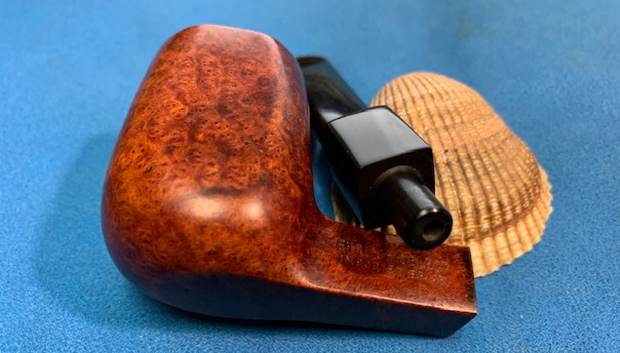
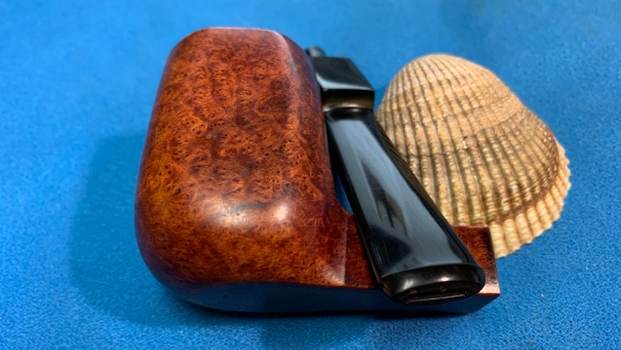
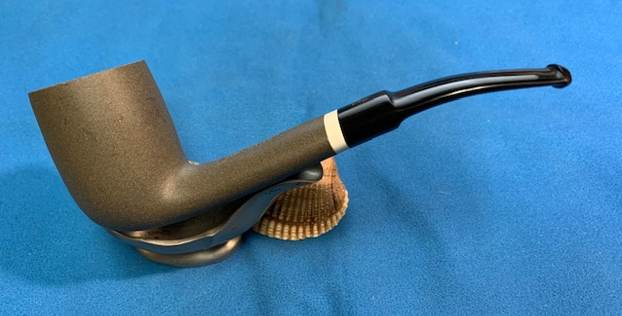
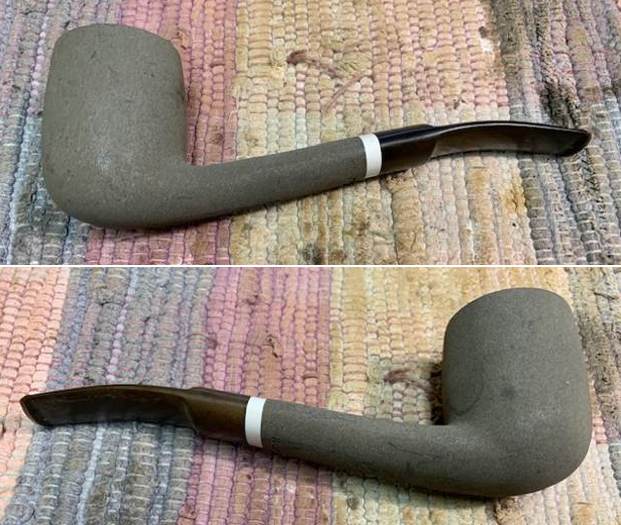
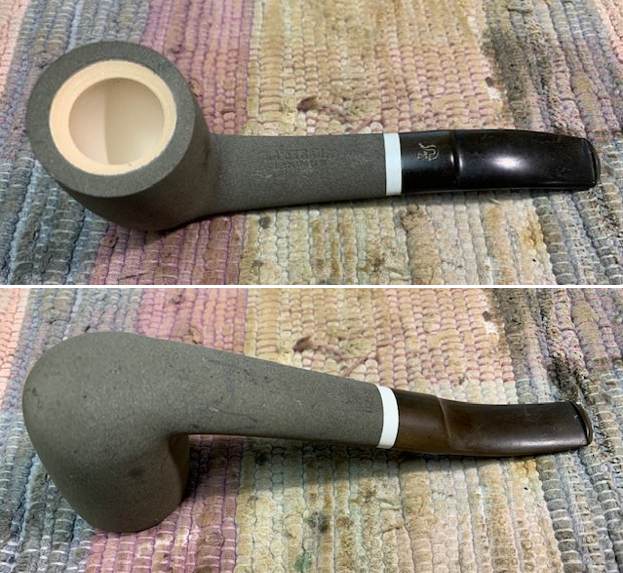
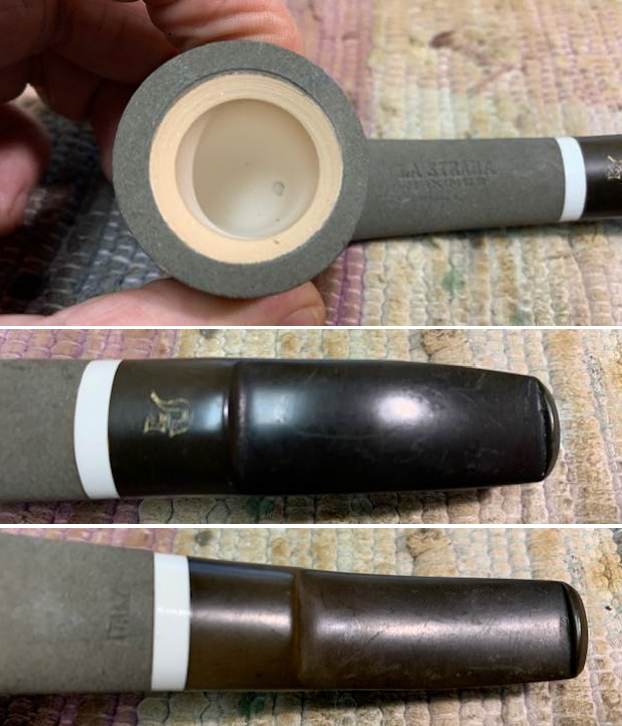
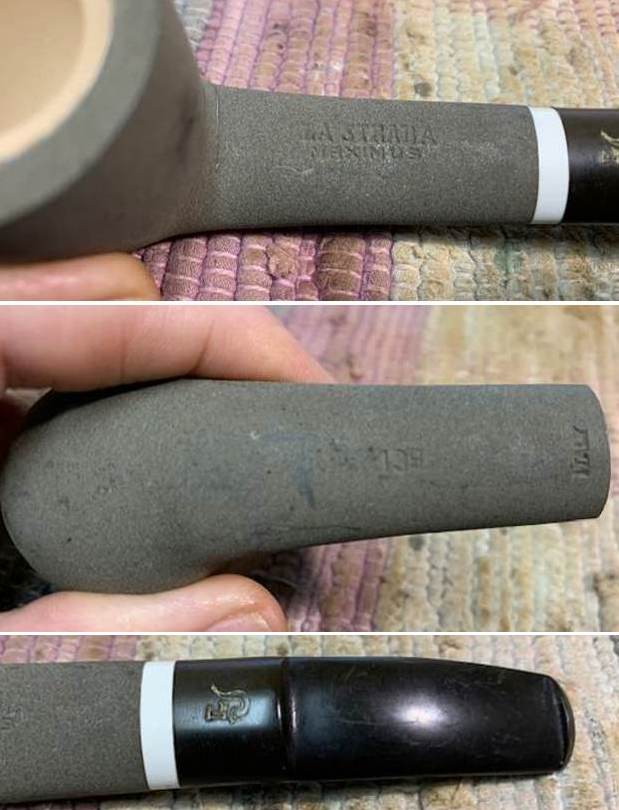
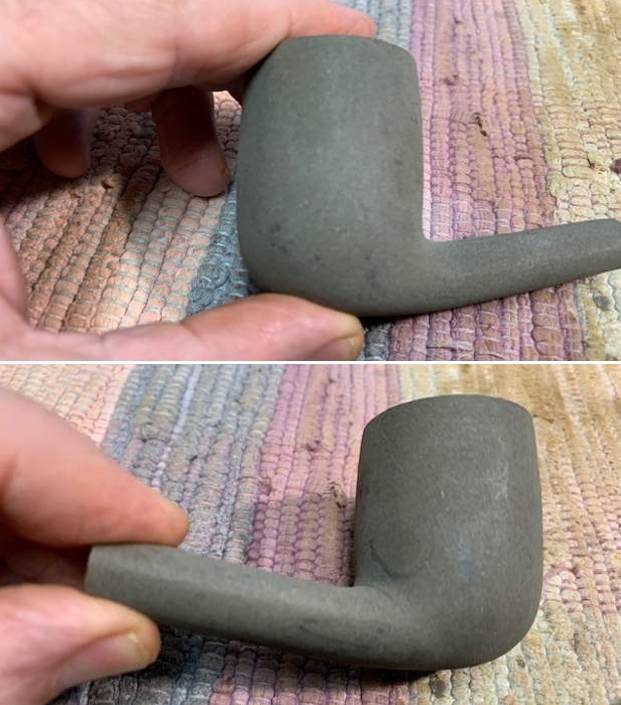
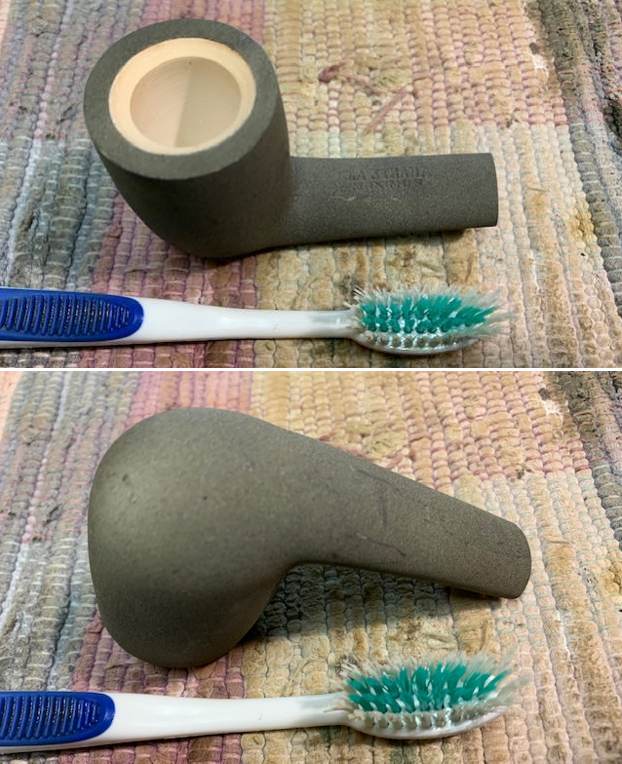
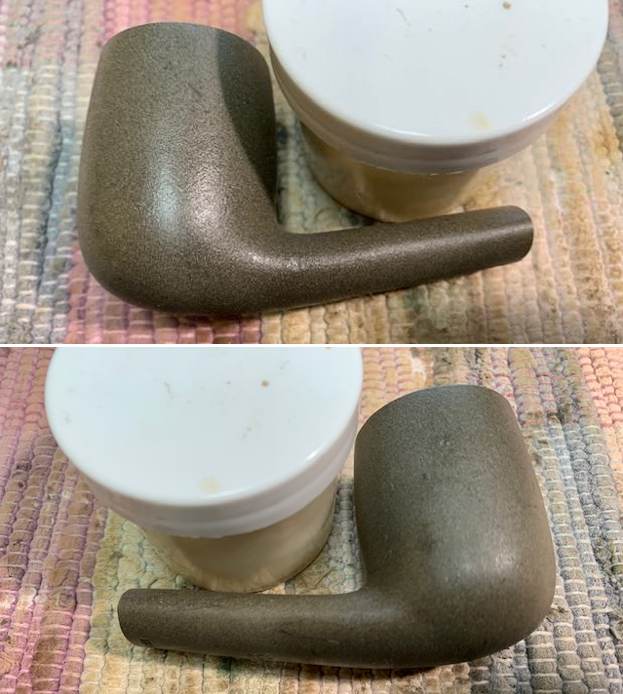
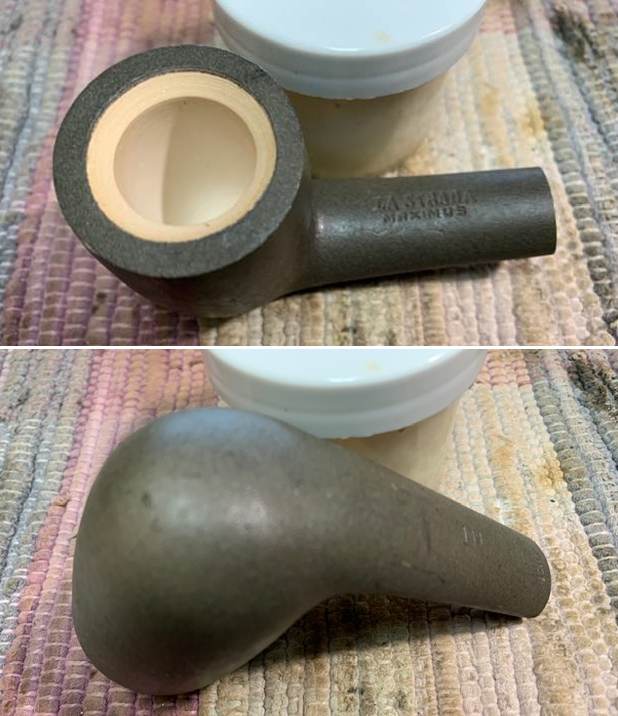
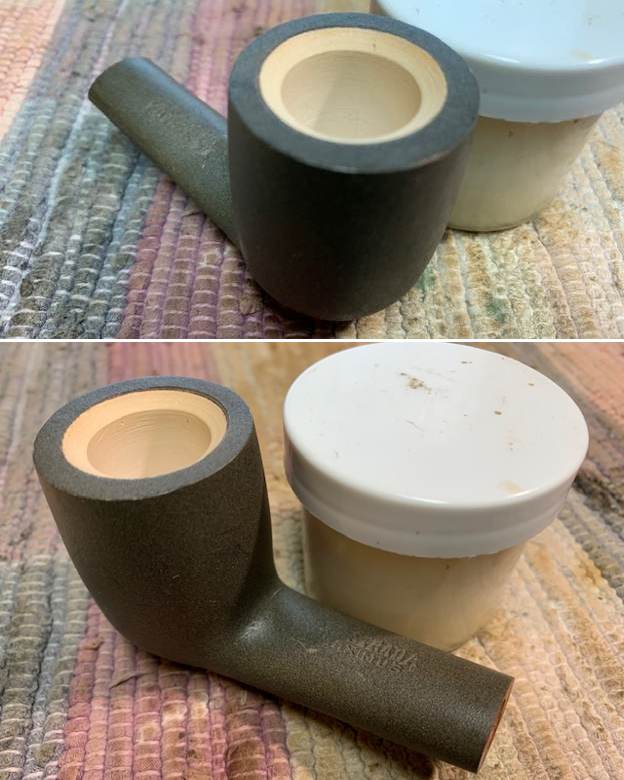
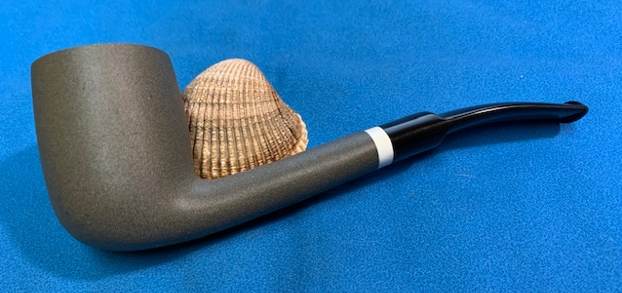
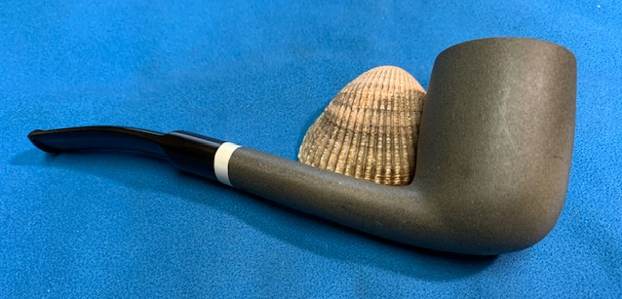
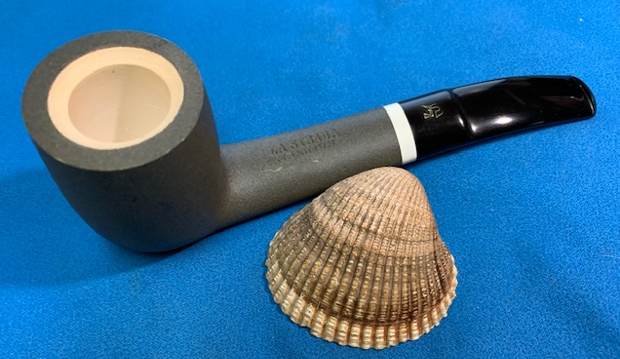
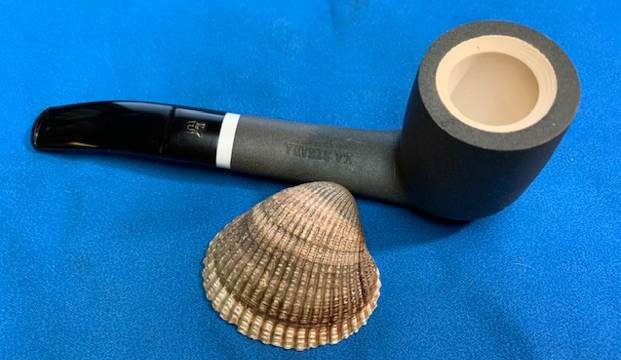
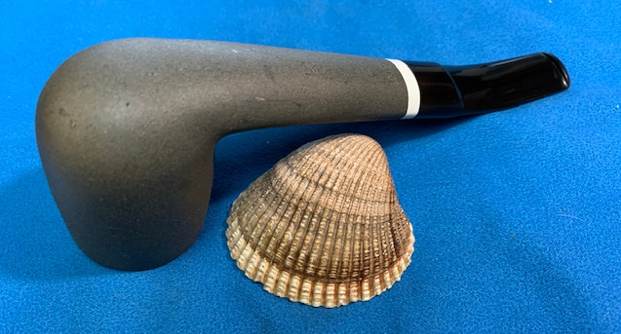
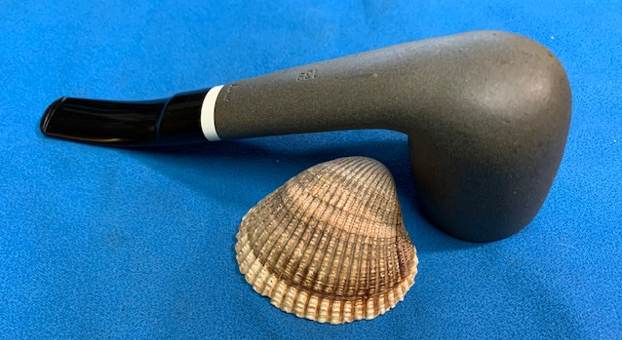
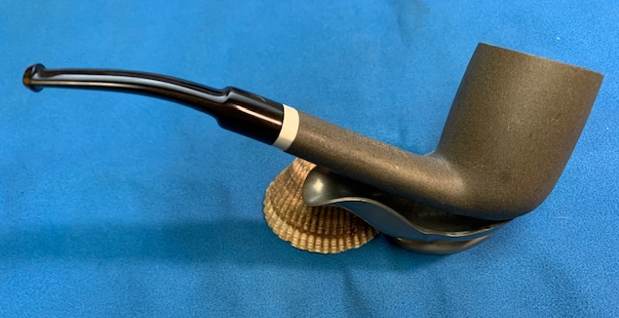
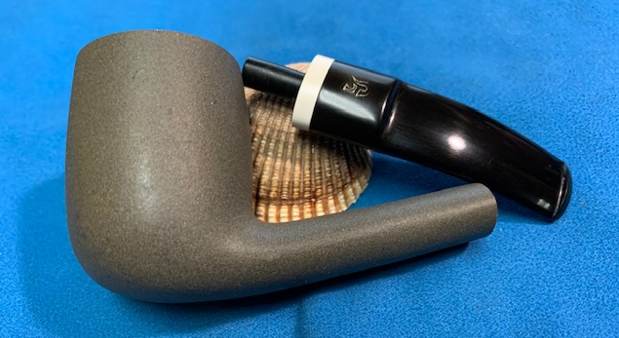
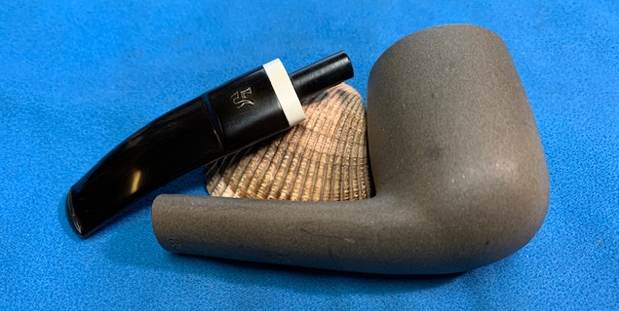
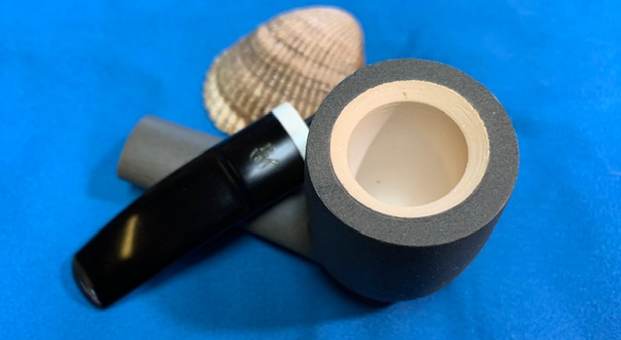
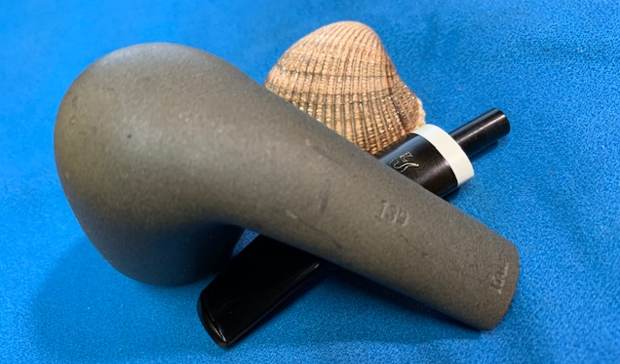
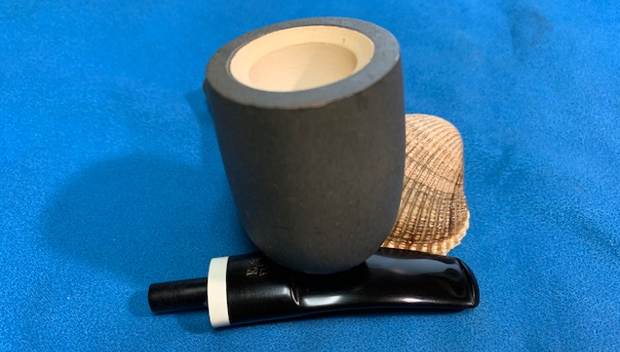
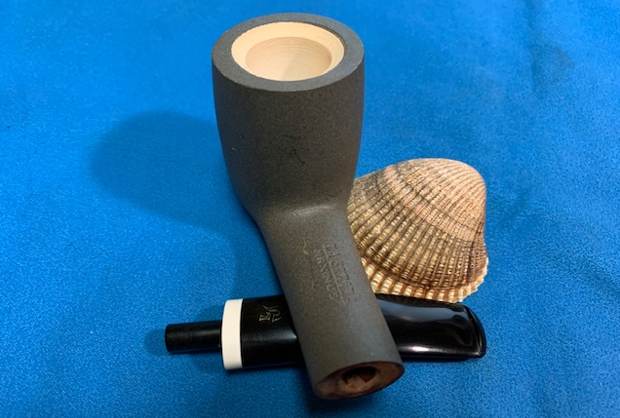
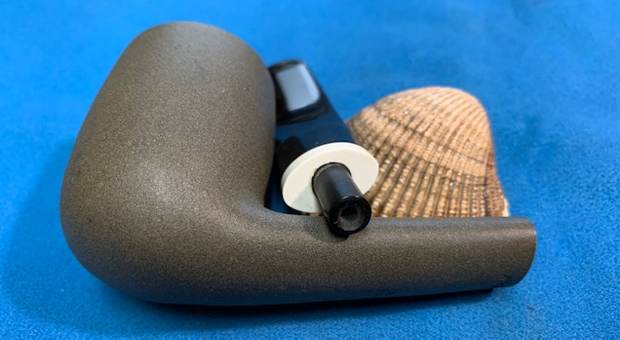
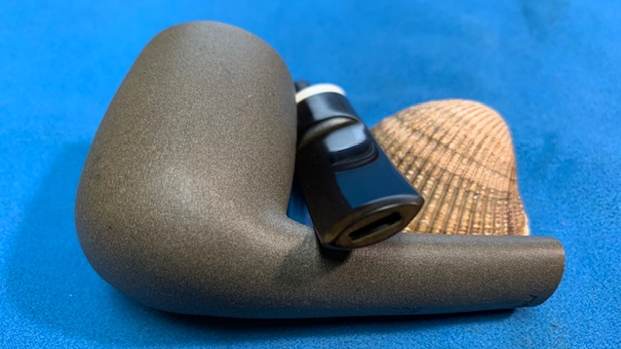
The next pipe I chose to work on is another UNSMOKED/NEW OLD STOCK pipe. This one was a Briar bowl coated with a grey finish and having a meerschaum lined bowl. It had a perfectly clean and debris free bowl and rim top that showed that it had never been smoked. The grey and was dirty from time and had some marks on the finish and a some wear on the edges from being shop worn. It was stamped on the topside of the shank and read La Strada [over] Maximus. On the underside of the shank it was stamped with the shape number 139 and Italy. If it had been smoked I would have abandoned it to the grab bags but the unsmoked and quite flawless looking Meer lining of the rim and in the bowl made me pause. If the stains were not present on the shank I would have just listed it as it is but I will need to do some work on it. It has an oval shank and saddle vulcanite stem that is lightly oxidized. The stem has a white acrylic ring between the stem and shank. It bears the La Strata smoking pipe logo on the top of the saddle. I took photos of the pipe when I brought it to the work table. I took photos of the bowl and rim top and the stem surfaces to show the condition of both. The bowl and rim look very good. The meerschaum lining has a nice beveled edge on the rim top. The stem is also in great condition other than the light oxidation.I took photos of the stamping on the top and underside of the shank. They are readable. You can also see scratches in the grey finish on the shank. They are not deep but they are present. The logo of the smoking pipe on top of the stem is also in good condition.I took some photos of the bowl sides to show the shop wear on the grey finish. I believe this finish is a paint but I am not sure. I took the stem off the shank to show the look of the white spacer on the stem and overall look of this interesting Italian pipe.I scrubbed the bowl and the shank with a soft tooth brush and gentle dish soap and was able to lighten the marks and scuffs on the pipe but they did not come all the way out. I took photos to show the bowl after the cleaning. I decided to experiment with rubbing some Before & After Restoration Balm into the finish of the pipe. I tested it on the underside and liked the results so I rubbed down the entire bowl and shank. I let the pipe sit with the Balm for 10 minutes then buffed it off with a soft towel. It actually looks a lot better. I set the bowl aside and before working on the stem I tried to look up information on the brand and line on Pipephil and Pipedia. Both had the same information so I am including the link from Pipedia (https://pipedia.org/wiki/La_Strada). I quote the brief information from there below.

La Strada was an Italian export brand. Its large formats had some success in the USA, and were included in the 1970 Tinder Box catalog.

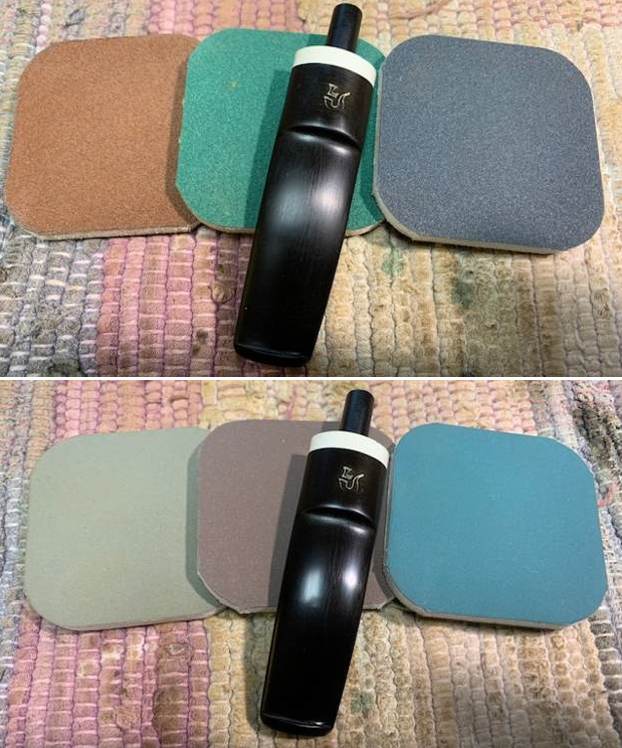
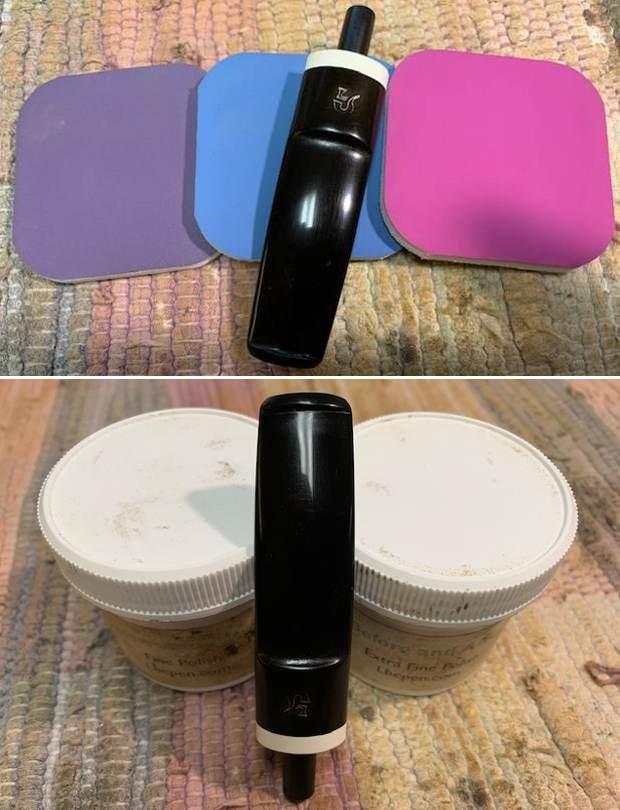
With that being all that I could learn I turned my attention to the stem. It was lightly oxidized from sitting around in the store who had stocked it. I scrubbed it with cotton pads and Soft Scrub all purpose cleanser. I worked on it until the stem surface was clean and ready polish. I polished the stem with micromesh sanding pads – dry sanding with 1500-12000 grit pads. I wiped the stem down after each pad with a cloth impregnated with Obsidian Oil. I polished it with Before & After Stem Polish – both Fine and Extra Fine then gave it a final coat of Obsidian Oil and set it aside to dry. This tactile painted grey surface on the bowl and the new meerschaum lined bowl are really quite nice. This UNSMOKED/NEW OLD STOCK La Strada Maximus 139 actually came out looking really good. The grey coat on the bowl looks good – the dark spots on the finish and some of the wear marks do not distract. I put the stem on the shank and buffed the stem with Blue Diamond on the wheel (being careful of the stamping on the stem so as not to damage that). I gave the stem multiple coats of carnauba wax and buffed the pipe with a clean buffing pad to raise the shine. I hand buffed it with a microfiber cloth to deepen the shine. The dimensions of this pipe are – Length: 6 inches, Height: 2 inches, Outside diameter of the bowl: 1 3/8 inches, Chamber diameter: ¾ of an inch. The weight of the pipe is 1.98 ounces/56 grams. It is a great looking pipe and one that will be going on the rebornpipes store in the Italian Pipe Makers section. If you want to add it to your collection let me know via email to slaug@uniserve.com or by message. Thanks for walking through the cleanup with me.

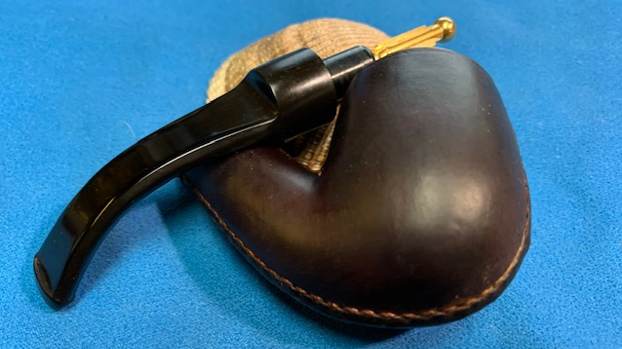
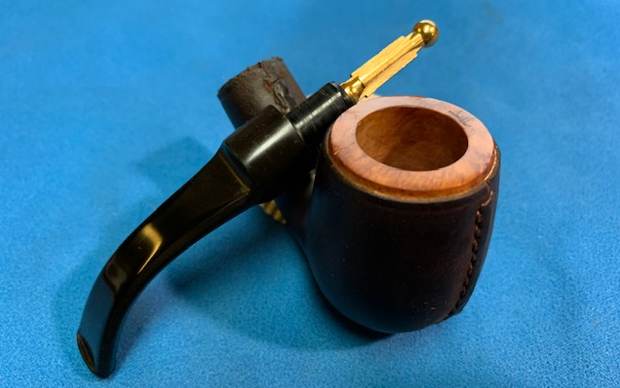
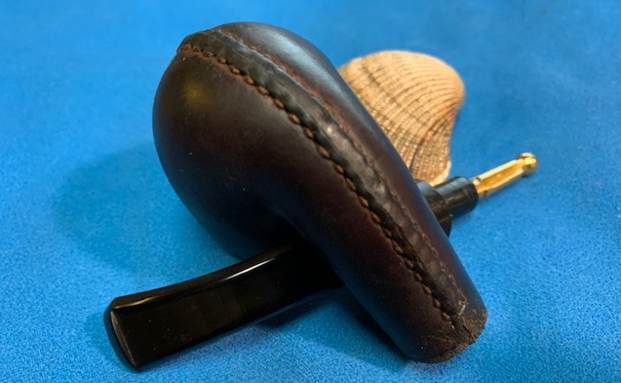
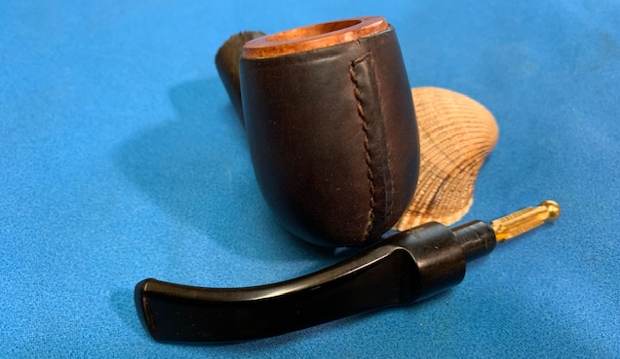
Restaining a Leather Clad Unsmoked Jean Lacroix Bent Billiard


Blog by Steve Laug

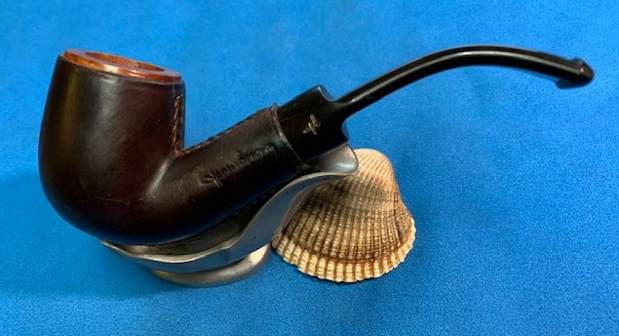
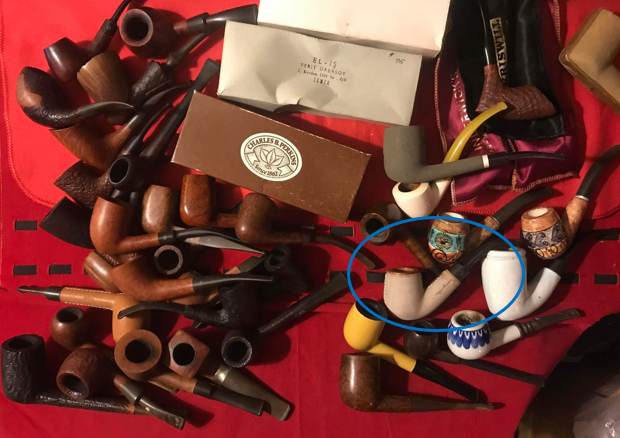
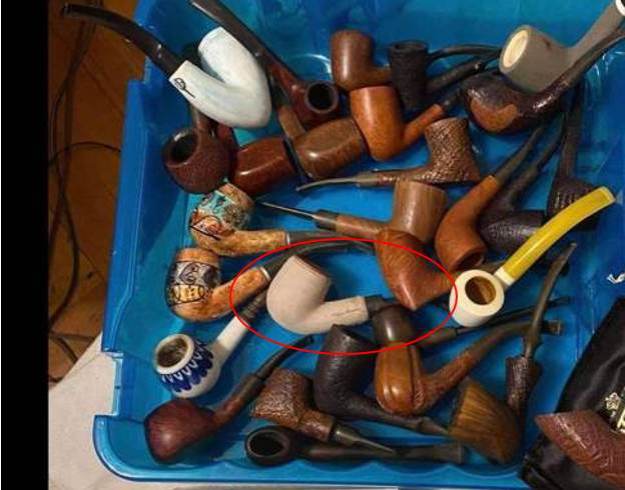
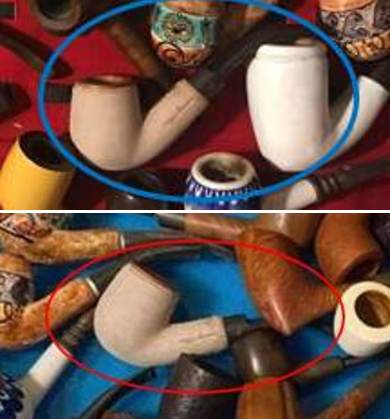
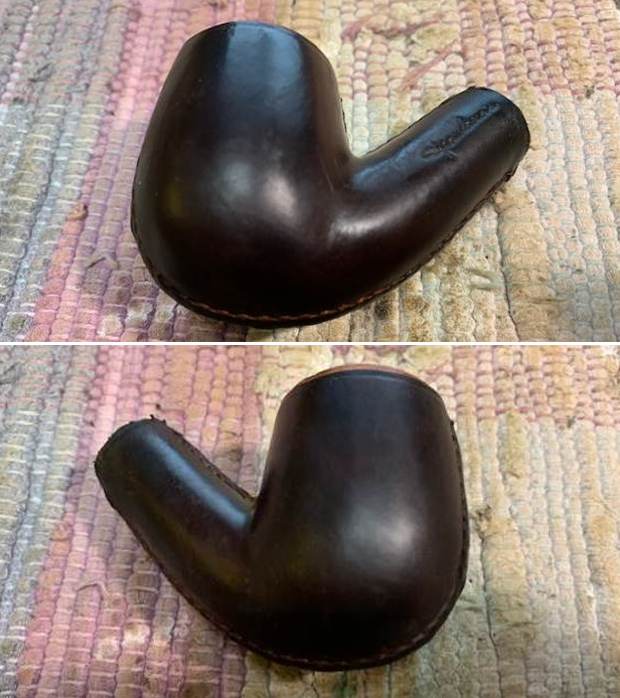
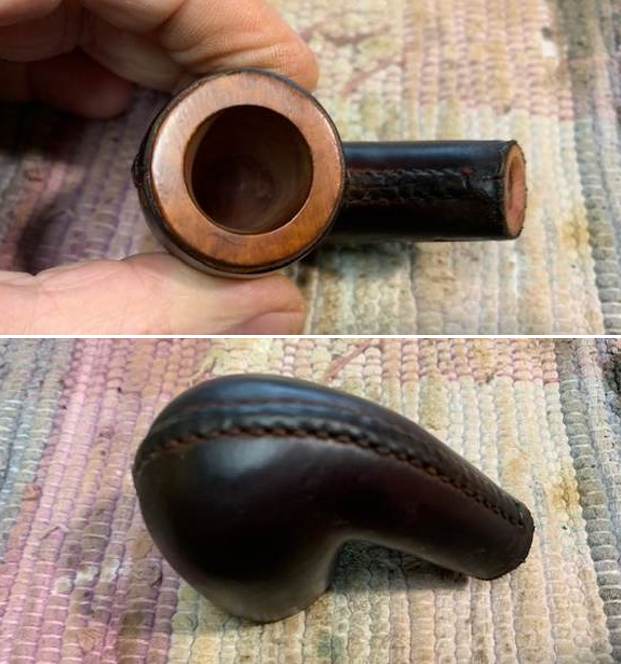
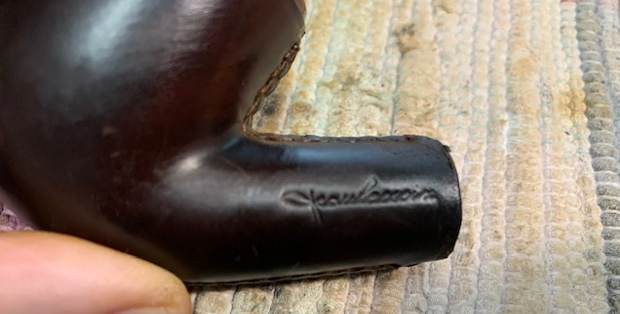
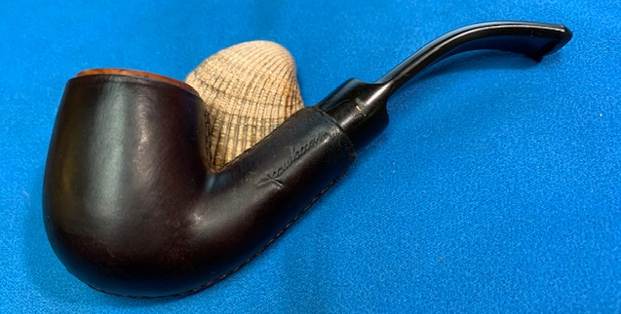
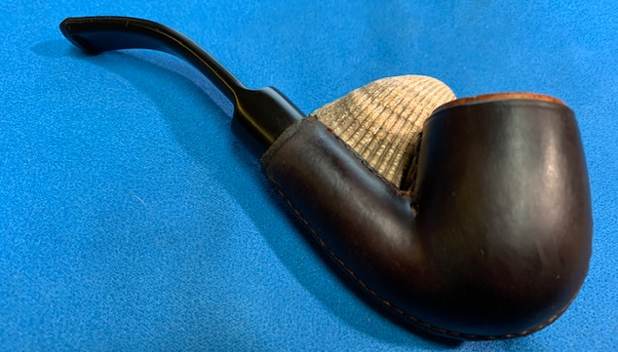
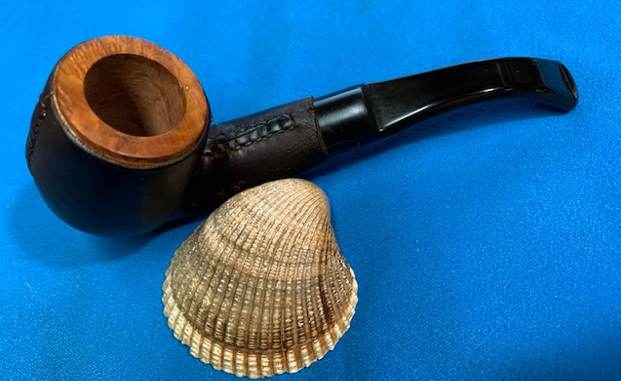
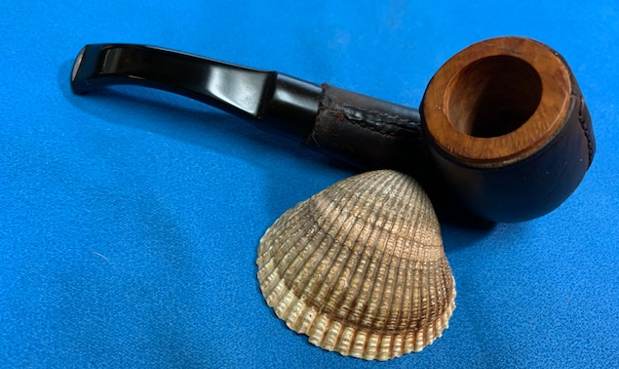
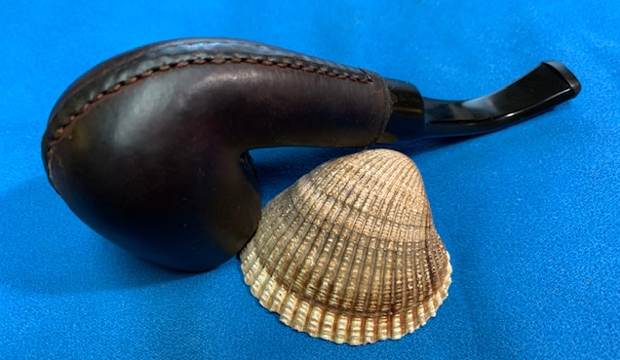
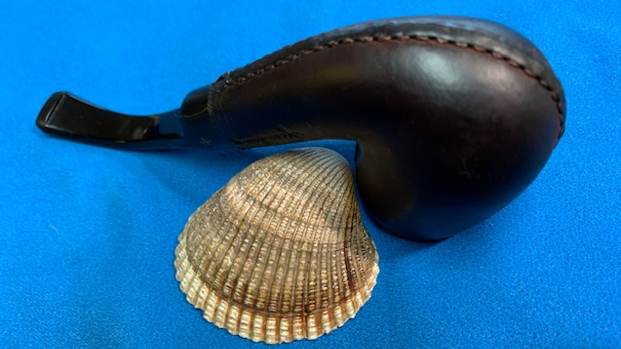
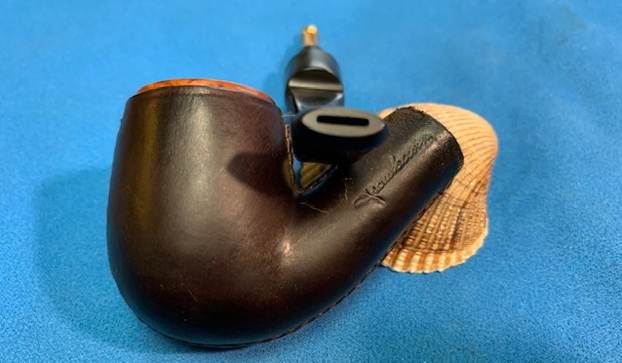
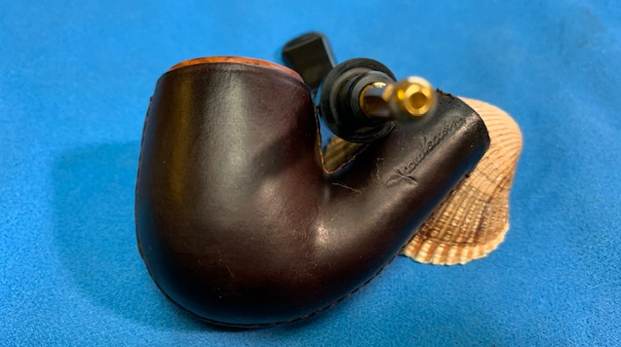
The next pipe I chose to work on is another UNSMOKED/NEW OLD STOCK pipe. This one was a leather clad Bent Billiard. It had a perfectly clean and debris free bowl and rim top that showed that it had never been smoked. The leather was light grey and was dirty from time and had water stains near the shank/stem union. It was stamped a signature Jean Lacroix stamp on the left side of the shank.  At the best of times I don’t like leather clad pipe but this was a clearly awful looking addition. If it had been smoked I would have abandoned it to the grab bags but the unsmoked and quite flawless looking Briar on the rim and in the bowl made me pause. The stitching on the leather was also clean and the edges on the bowl and the shank end were clean. If the stains were not present on the shank I would have just listed it as it is but I will need to do some work on it. I am kicking myself at this point as I forgot to take pictures of the pipe before I started my work on it. Jeff found two photos of a lot of pipes we purchased that included the Jean Lacroix pipe. I have circled it in blue in the first photo and in red in the second one. The stem has the Lacroix signature on the left side of the saddle and it is also on the left side of the shank. I blew up the photo of the pipe from the photos above to try to capture the look and staining to the leather on the shank. The photos are a little blurry but you can see the stains on the shank. The went all the way around and extended inward toward the stamping for about ½ inch.

Once again I am kicking myself as I forgot to take photos of my work to try and remove the stains. I scrubbed the shank with a gentle dish soap and was able to lighten them slightly but they did not come all the way out. I set the pipe aside overnight to think about my next steps. I went through some possible cleaning options and came to the conclusion that all would still leave behind the stain marks. That left only one option – to stain the leather a darker colour and see what that would do.

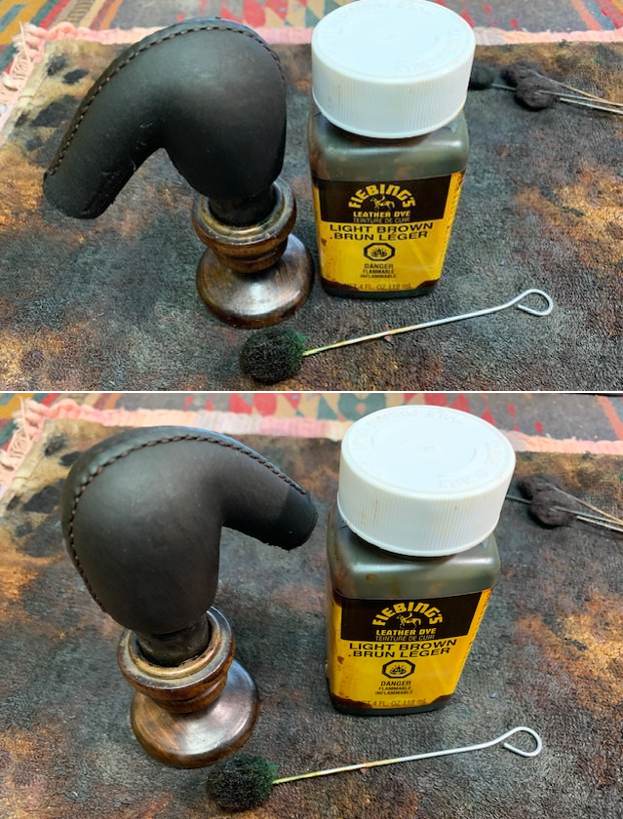
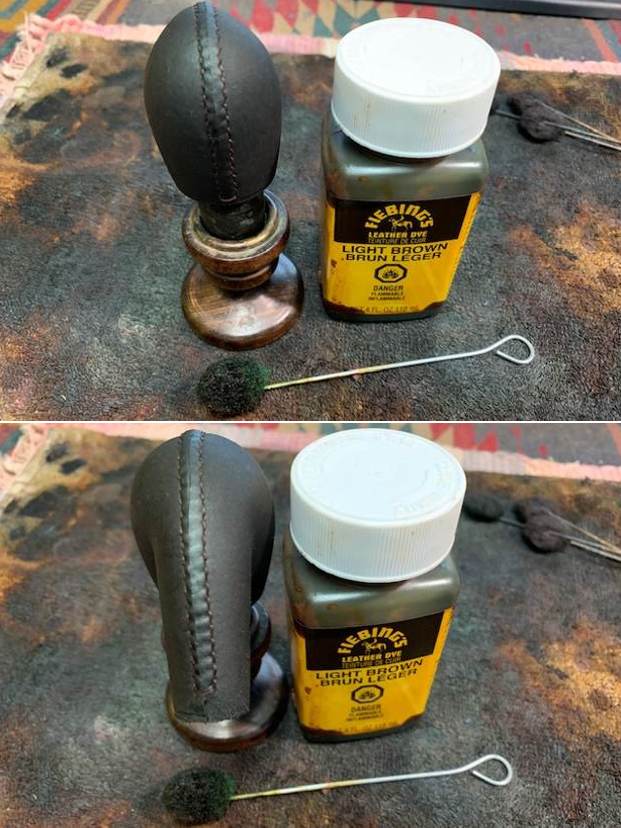
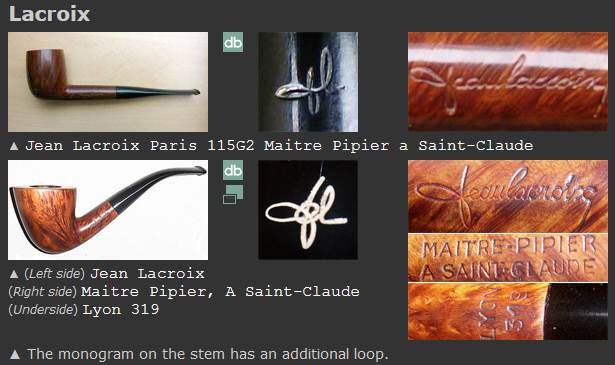
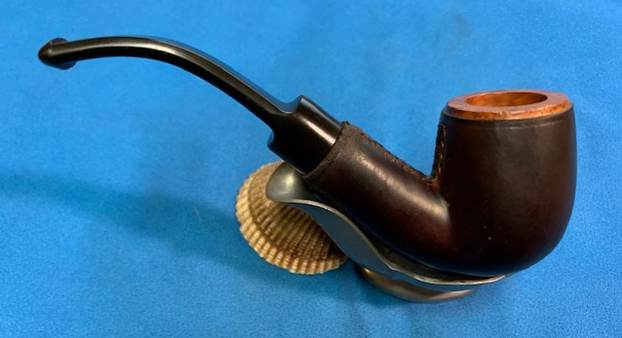
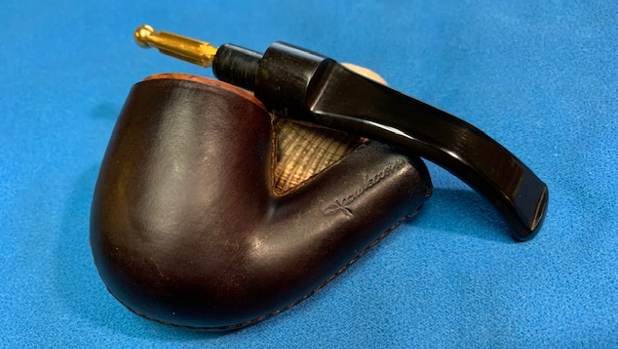
In the afternoon yesterday I made a decision to restain the leather. I figured I had nothing to lose. If it worked it would be great and I would finish restoring the pipe. If it did not work it could be scrapped for parts. I went through my stains to see what colour to use. I knew that the stains darkened considerably on leather so I chose a light brown Feibing’s stain. I applied it with the dauber all around the bowl to make sure the coverage was even. I carefully avoided staining the rim top and edges as I wanted them to remain a contrast to the leather. I set the bowl aside to let the stain cure on the leather. This morning I waxed and buffed the leather on the buffing wheel and the shine came alive. The newly stained leather came out looking quite amazing. The bowl has a rich brown finish that is warm and clean. The stain marks on the shank end have disappeared under the new colour. I think that it is a vast improvement. I took a photo of the stamping on the left side of the shank to show how the stamping had effected that part of the shank. Remember the stains on the shank end extended almost ½ inch up the shank all the way around. The stamp is clear and readable – Jean Lacroix.I turned to Pipephil (http://pipephil.eu/logos/en/logo-l2.html) to confirm the brand stamping. You can see how the stamp on the leather matches the stamp on the briar in the screen capture below.I set the bowl aside and turned my attention to the stem. It was lightly oxidized from sitting around in the store who had stocked it. The logo was faded and once I had removed it from the shank you can see the finned stinger apparatus in the tenon. It is friction fit and easily removable. I took photos of the stem before I started my work.I touched up the stamping on the stem with some Rub’n Buff Antique Gold. I worked it into the stamp with a tooth pick. I let it sit a few minutes then buffed it off with a soft cloth to remove the excess. It looks better in person than it does in the photo but you can get the idea.I polished the stem with micromesh sanding pads – dry sanding with 1500-12000 grit pads. I wiped the stem down after each pad with a cloth impregnated with Obsidian Oil. I polished it with Before & After Stem Polish – both Fine and Extra Fine then gave it a final coat of Obsidian Oil and set it aside to dry. I generally do not like leather clad pipe no matter who the maker is. I always wonder about what is under the leather. This UNSMOKED/NEW OLD STOCK Jean Lacroix Leather Clad Bent Billiard actually came out looking really good. The light brown stain on the leather brought the leather alive and the polished rim top and clean bowl look good. I put the stem on the shank and buffed the pipe with Blue Diamond on the wheel (being careful of the stamping on the stem so as not to damage that). I gave the bowl and the stem multiple coats of carnauba wax and buffed the pipe with a clean buffing pad to raise the shine. I hand buffed it with a microfiber cloth to deepen the shine. The dimensions of this pipe are – Length: 5 inches, Height: 2 inches, Outside diameter of the bowl: 1 ¼ inches, Chamber diameter: ¾ of an inch. The weight of the pipe is 1.62 ounces/46 grams. It is a great looking pipe and one that will be going on the rebornpipes store in the French Pipe Makers section. If you want to add it to your collection let me know via email to slaug@uniserve.com or by message. Thanks for walking through the cleanup with me.

Restoring a Pre-Cadogan Orlik 90S Rhodesian with a Saddle Stem


Blog by Steve Laug

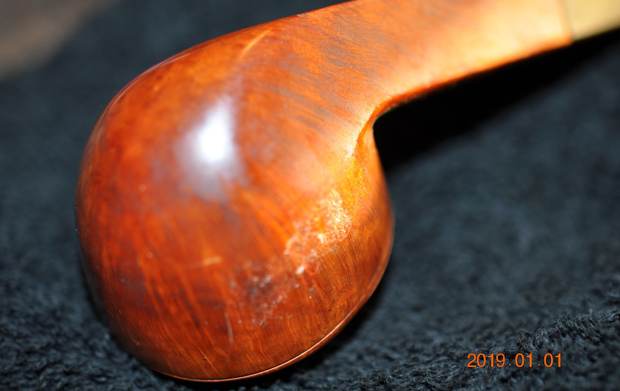
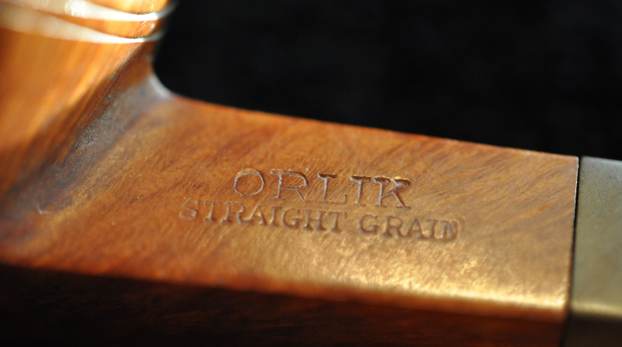
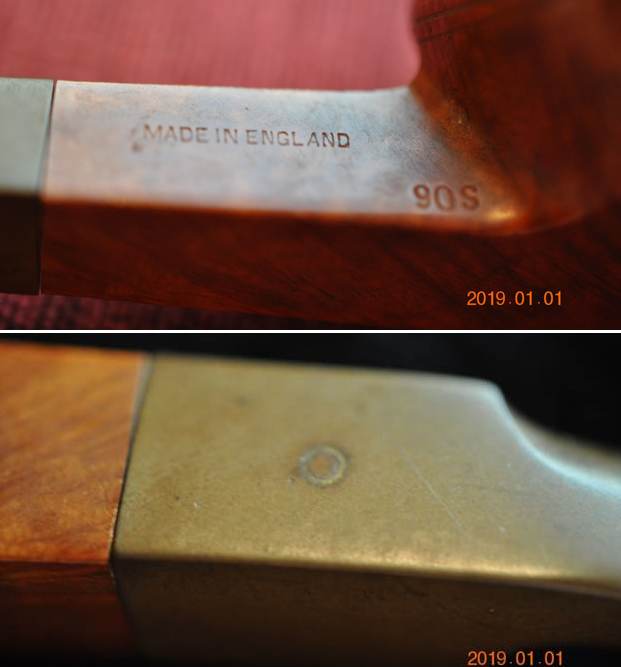
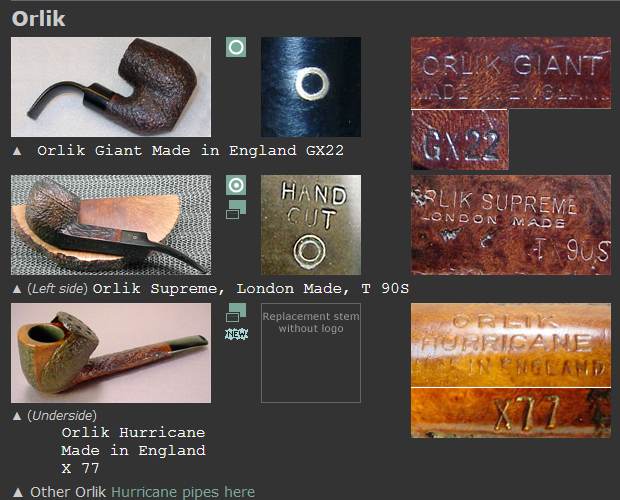
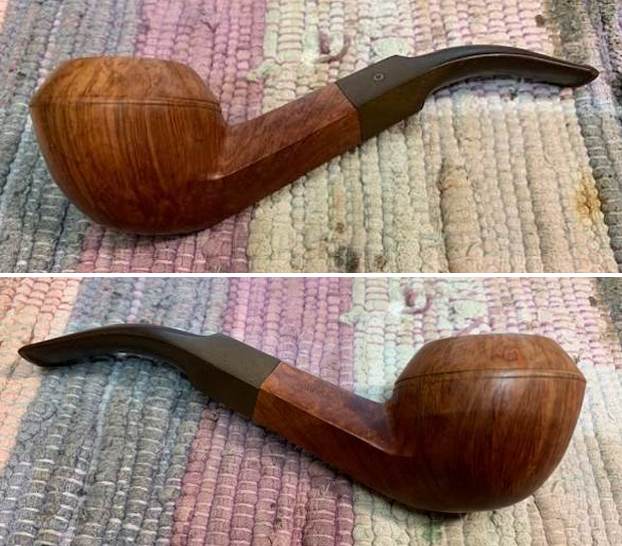
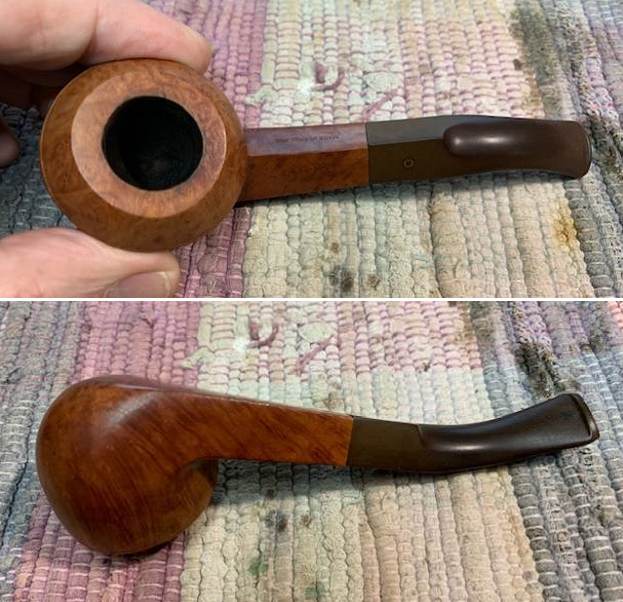
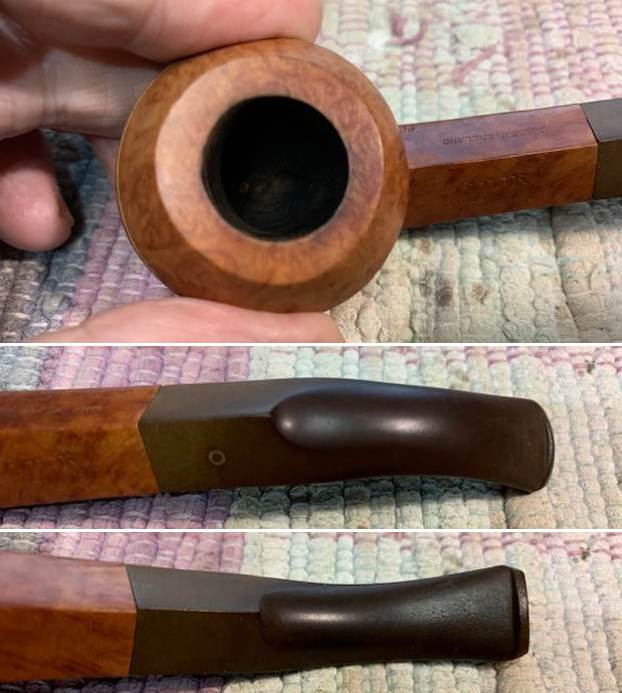
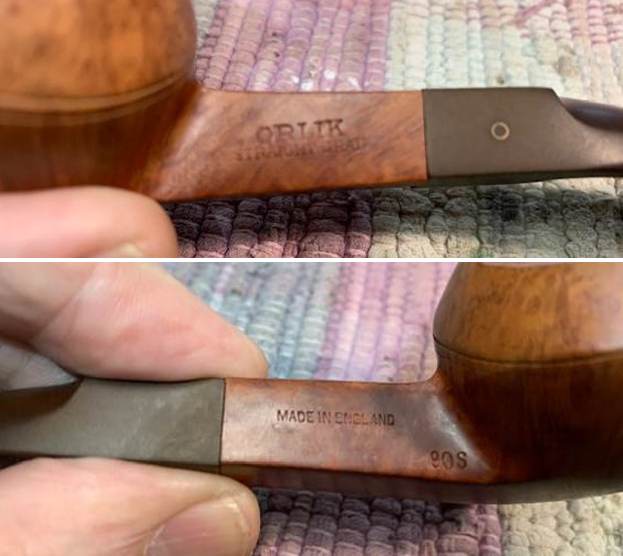
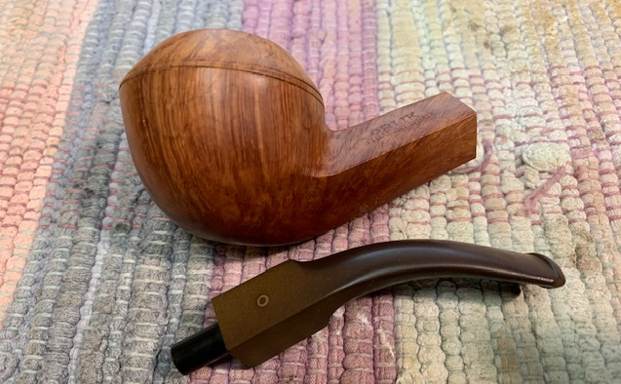
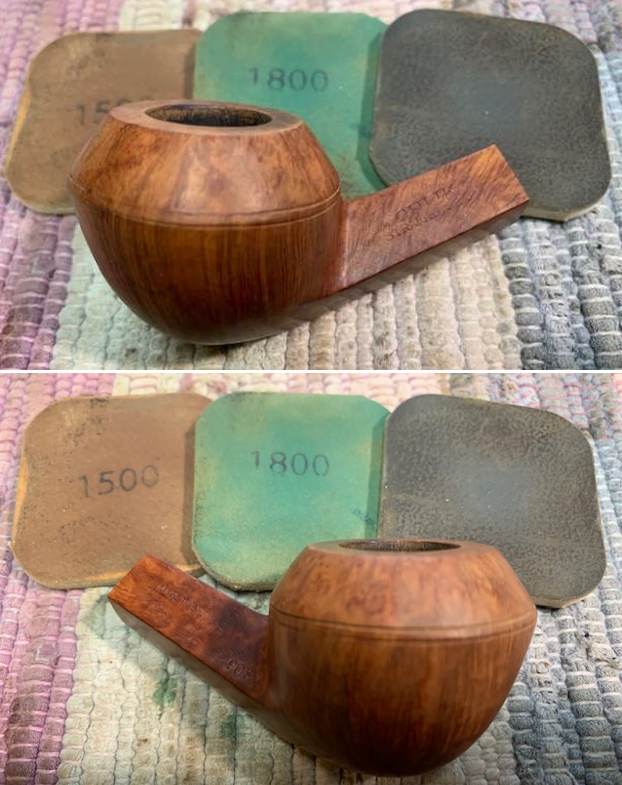
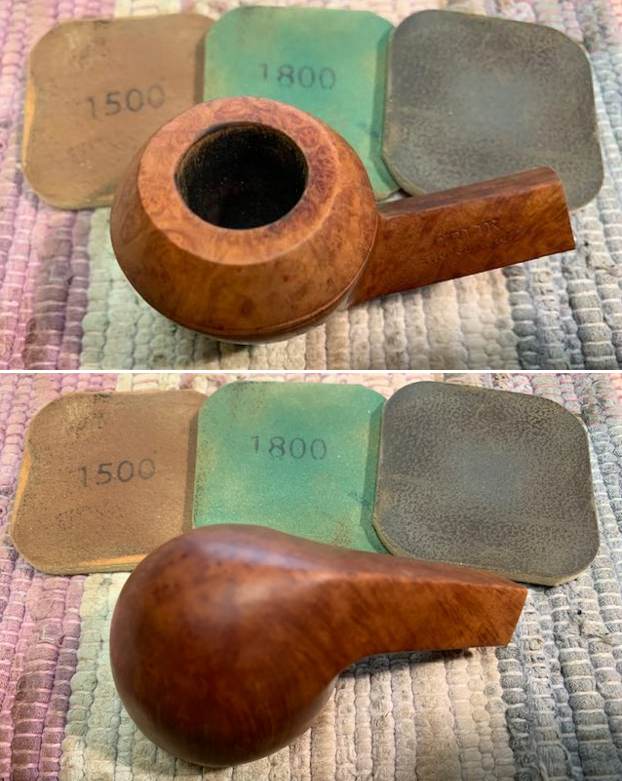
The next pipe on my work table is a shape I would call a Bulldog but Orlik called a Rhodesian. It is stamped on the left side of the shank and reads ORLIK [over] Straight Grain. On the right side it is stamped MADE IN ENGLAND [over] the shape number 90S near the shank/bowl junction. The bent saddle vulcanite stem is inlaid with a brass “O” on the top left side of the stem. The briar has great looking straight grain around the bowl and shank. This pipe was purchased in October of 2018 from an antique store in Brookings, Oregon, USA. The finish was dirty and but the briar was good looking. The rim top was caked with lava more heavily on the top back and inner edge of the bowl. There was a thick cake in the bowl and some tobacco debris. The shank and stem airway was very dirty. The stem was very oxidized, calcified and had some tooth marks and chatter on both sides ahead of the button. Jeff took photos of the pipe before he started his clean up. He took photos of the rim top and bowl to show the cake in the bowl, and the lava on the top and inner edge. The stem photos show the oxidation, calcification and tooth chatter and marks very well. Jeff took a photo of the heel and side of the bowl to highlight the condition and the grain around the bowl sides and base.He captured the stamping on the sides of the shank in the next photos. They are clean and readable as noted above. The stem also had a faint crown stamped on the left side. I turned to Pipephil (http://www.pipephil.eu/logos/en/logo-o2.html) to get a quick view of the Orlik Brand and see if there was a Straight Grain line. There was not a specific listing for the Straight Grain but I did a screen capture of the site’s information and have included that below.I turned to Pipedia (https://pipedia.org/wiki/Orlik) for a quick read. The site is worth reading the history of the Orlik brand and some information on dating the brand. I quote below.

Dating guide – In the Pre-Cadogan era of the Orlik, the name is ORLIK in a straight line, capital block letters. Also the MADE IN ENGLAND is in a straight line, capital block letters. However, there are a known model (ORLIK NATURAL T 1155) stamped with MADE IN ENGLAND in a straight line, capital serif letters. Date is unknown. The mouth piece have the Orlik logo, a circular O as a brass inlay.

After joining Cadogan the same origin stamp as other Cadogan brands like Comoy´s etc. was used, MADE IN LONDON in circular an below ENGLAND in straight.

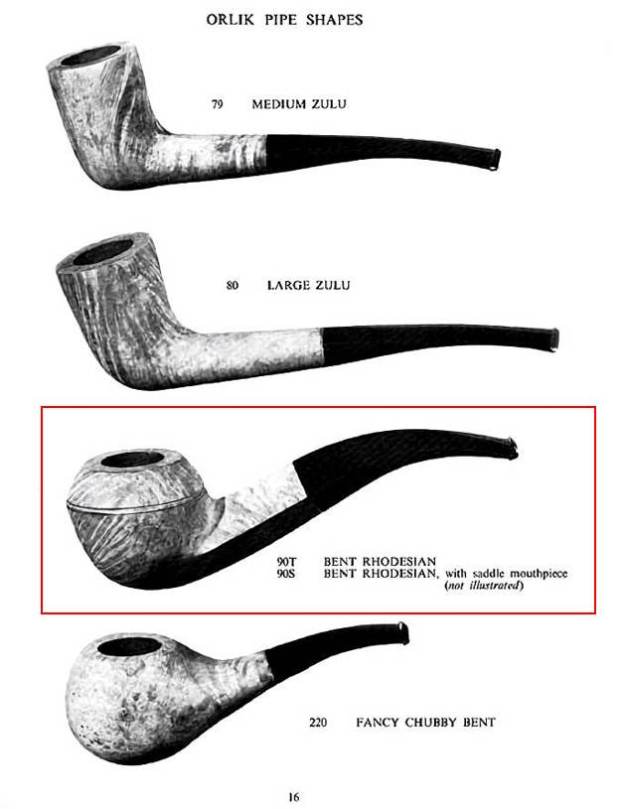
In the margins on the Pipedia site there was a link to a catalogue scanned as a PDF. I have included the link here (https://pipedia.org/images/0/00/Orlik_Pipe_Shapes.pdf). I did a screen capture of the cover of catalogue and the page that had the 90S shape number. Orlik called it a Bent Rhodesian with the S signifying a saddle stem (I have drawn a red box around the shape). Jeff cleaned up the pipes with his usual thoroughness – reaming the bowl with a PipNet pipe reamer and cleaning up the reaming with a Savinelli Fitsall Pipe Knife. He scrubbed the internals of the shank and the stem with alcohol, cotton swabs and pipe cleaners. He scrubbed the exterior with Murphy’s Oil Soap to clean off the dust and grime on the finish. When he sent it the pipe was ready to restore. I could not believe how good the rim top looked in comparison to what it was when he started. I took photos of the pipe when I unpacked it. The briar was clean and the grain quite stunning. The finish looked dull and lifeless. I took a close up photo of the bowl and rim top after Jeff had cleaned it up. The look of the rim top and edges is very good. There were some spots where the stain was worn away. He had been able to remove the cake and the lava very well. The bowl was spotless. The stem is also shown and was very clean. He had scrubbed it with Soft Scrub and then soaked it in Mark’s Before & After Deoxidizer. There was tooth chatter and deep marks still remaining.I took a photo of the stamping on the sides of the shank. It is clear and readable as noted above.I removed the stem from the shank and took a photo of the pipe to show the look of the pipe. It is a real beauty.The bowl was very clean and the briar looked good. I polished the briar with micromesh sanding pads – dry sanding with 1500-12000 grit sanding pads. I wiped it down with a damp cloth after each sanding pad. I rubbed the briar down with Before & After Restoration Balm. I worked it into the briar with my fingertips. The product cleans, enlivens and preserves the briar. I let it do its magic. It sat for 10 minutes and then I buffed it off with a cotton cloth. The bowl really is looking good at this point. I “painted” the tooth marks with the flame of a Bic Lighter. I was able to raise all of them except for one on the topside. I filled it in with a spot of black superglue. Once it cured I flattened the repairs with a small file to blend them into the surface. I sanded the stem with a folded piece of 220 grit sandpaper. I started polishing it with 400 grit wet dry sandpaper. I set the bowl aside and turned my attention to the stem. I scrubbed the stem down with Soft Scrub to remove the deep oxidation on the stem surface. I was able to remove much of what was present.I polished the stem with micromesh sanding pads – dry sanding with 1500-12000 grit pads. I wiped the stem down after each pad with a cloth impregnated with Obsidian Oil. I polished it with Before & After Stem Polish – both Fine and Extra Fine then gave it a final coat of Obsidian Oil and set it aside to dry. There is something about the amazing straight grain on this beautiful pipe. This Orlik Straight Grain 90S Bent Rhodesian looks great. The straight grain really stands out on the bent pipe. I put the stem on the shank and buffed the pipe with Blue Diamond on the wheel (being careful of the stamping so as not to damage that). I gave the bowl and the stem multiple coats of carnauba wax and buffed the pipe with a clean buffing pad to raise the shine. I hand buffed it with a microfiber cloth to deepen the shine. The dimensions of this pipe are – Length: 5 ½ inches, Height: 1 ¾ inches, Outside diameter of the bowl: 1 ¾ inches, Chamber diameter: ¾ of an inch. The weight of the pipe is 1.48 ounces/ 42 grams. It is a great looking pipe and one that will be going on the rebornpipes store in the British Pipe Makers section. If you want to add it to your collection let me know via email to slaug@uniserve.com or by message. Thanks for walking through the restoration with me.