Daily Archives: February 6, 2026

A Book Review: The Unknown Canadian Pipe Smoker


by Kenneth Lieblich

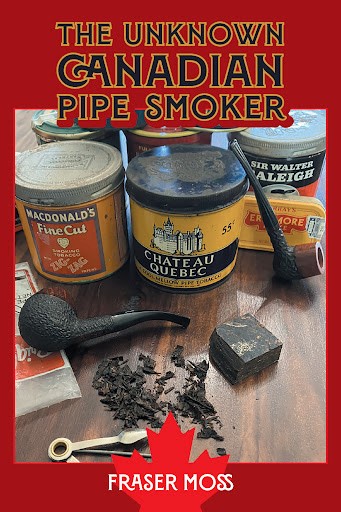
I’ve been meaning to do some book reviews for a little while now. I’ve read a few pipe-related books in the last few months – some very good, some very bad, and some in between. Today, I am offering a brief review of The Unknown Canadian Pipe Smoker by Fraser Moss. This book is one which leans more towards the good. It is a book that discusses the interesting and significant role that Canadians have played in pipe-making and the pipe-smoking lifestyle. Mr Moss has written some very useful, informative, and enjoyable words, which are somewhat subverted by design choices, spelling errors, and some omissions to the Canadian pipe-smoking world. Despite this, the book is pleasing and worthwhile – and I recommend it.

First, let’s talk about the good – and there is much to like here. In the introduction, Mr Moss begins with his own history in pipe smoking and, in chapter 1, provides an overview of pipes and pipe smoking in general. Chapter 2 focuses more particularly on briar and what goes into actually making a pipe. From that point on, the majority of the book consists of discussions about and/or with major Canadian pipe makers: Briar, Sweat, and Tears Pipes (in chapter 3), Julius Vesz Pipes (in chapter 4), Brigham Pipes (in chapter 5), Blatter & Blatter (in chapter 6), and MacQueen Pipes (in chapter 7). He writes about the history of each company, their methods of pipe making, their trials and tribulations, the quality of their work, and their prospects for the future. These chapters are a fine insight into these important pipe companies, and I commend Mr Moss for providing some fascinating details – including many pieces of information I had never read before. I particularly enjoyed the chapter on Julius Vesz. There is also an appendix which exhibits several pipe shops across Canada. This was helpful, as these shops are becoming a dying breed. The price of the book is worth it for these chapters. Mr Moss’ writing is clear, concise, and entertaining.

However, there are some significant omissions from this book. I realize that not every pipe maker in Canadian history can be included (a point that Mr Moss acknowledges in the book, saying, ‘I do not get paid to write’), but there are a few who, in my opinion, should not have been overlooked. In particular, there is no information provided on such notable names as John Calich, Leonard Payne, or the Paradis Brothers – among others. I would also include Michael Parks on this list, but at least Mr Moss briefly explained why he didn’t include him. Not including these pipe makers is problematic, in my opinion. Even a concise write-up on these men would have been a worthy contribution. In fact, one of the appendices is entitled, ‘Canadian Pipe Makers, Past and Present’ and it provides a short and simple list of such makers – and it is surprisingly incomplete.

There are some niggling details of design that detract slightly from the book, but I will skip over these, as I may be viewed as overly pedantic. However, there are some points that cannot be overlooked. Specifically, there is no table of contents, there is no index, and there are no running heads. It is very simple to add these things to books, and they greatly improve the enjoyment of reading.

There is one issue in this book which I find to be quite ridiculous: the misspelling. I realize that anyone (including myself) can make a typo, but when writing a book – for goodness’ sake – get it properly proofread! I am not even referring to simple, run-of-the-mill words – I am talking about proper names. Misspelling someone’s name, in this context, is unforgiveable. This book includes the following:

  • Jim Cook (instead of Jim Cooke)
  • Russ Oulette (instead of Russ Ouellette)
  • Stephanie Downie (instead of Stephen Downie – oh dear)
  • Marky Tinsky (instead of Mark Tinsky)
  • Rattary’s (instead of Rattray’s)
  • Bronfmen (instead of Bronfman)
  • William Shanter (instead of William Shatner)

I will not end this review on a negative, because this is a good book. It is worth reading, so go and buy it. The stories of the pipe makers are compelling and you will learn a great deal – while being entertained. I read it while smoking my pipe and it was most fitting. The book has some difficulties, but they do not overcome the fine interview material that Fraser Moss has provided. I look forward to future books from Mr Moss – or perhaps a second edition of this book.

I hope you enjoyed reading my review of The Unknown Canadian Pipe Smoker by Fraser Moss. If you are interested in more of my work, please follow me here on Steve’s website or send me an email at kenneth@knightsofthepipe.com. Thank you very much for reading and, as always, I welcome and encourage your comments.
 

Another Resurrection – a Savinelli Roma Lucite 412KS Billiard


by Steve Laug

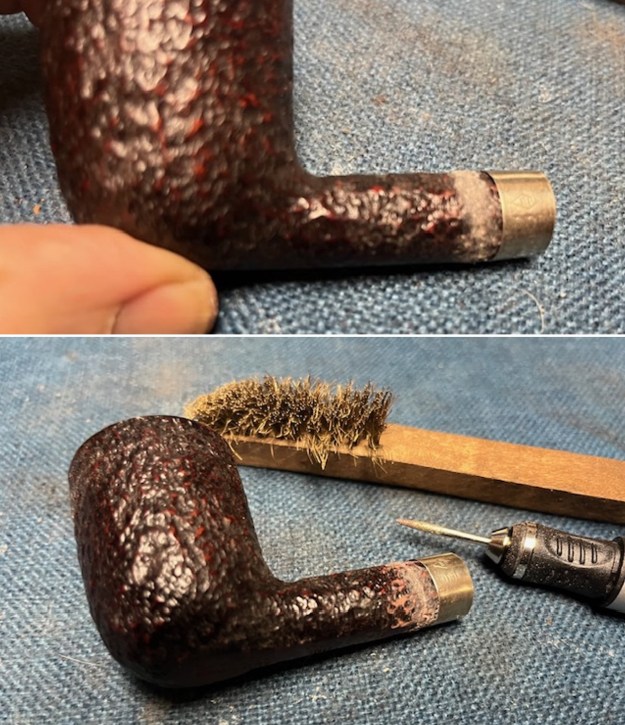
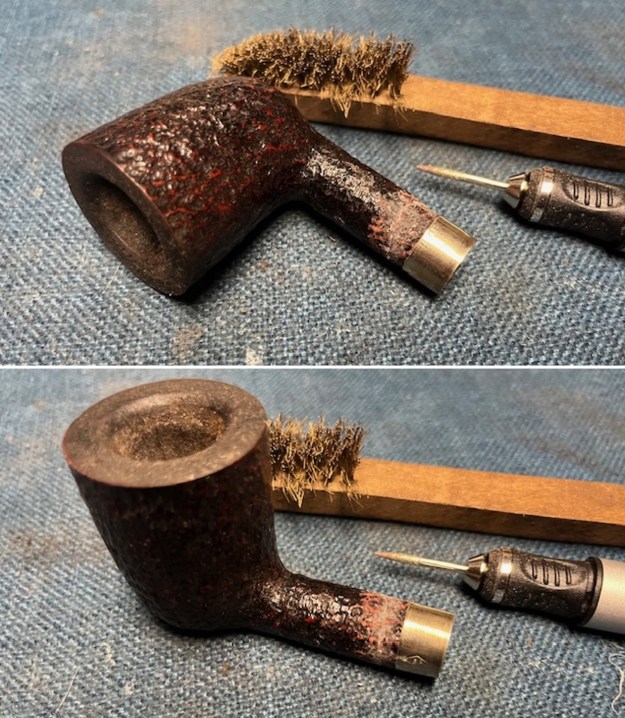
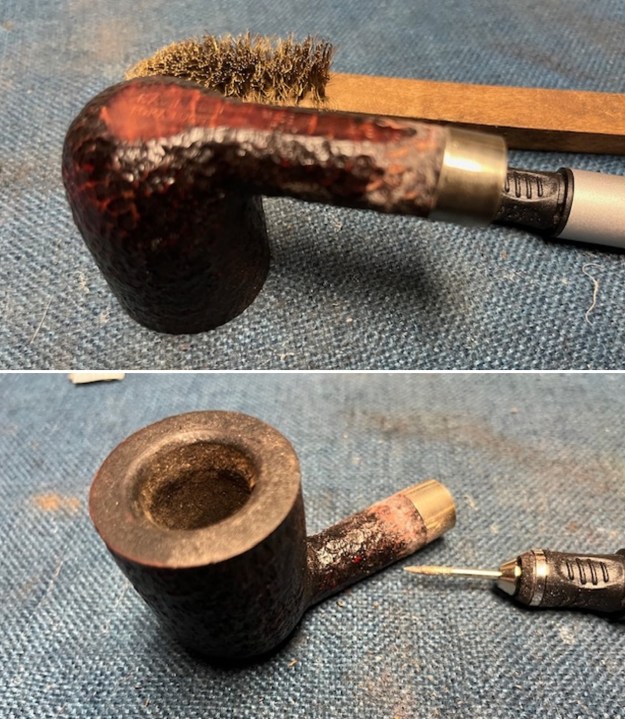
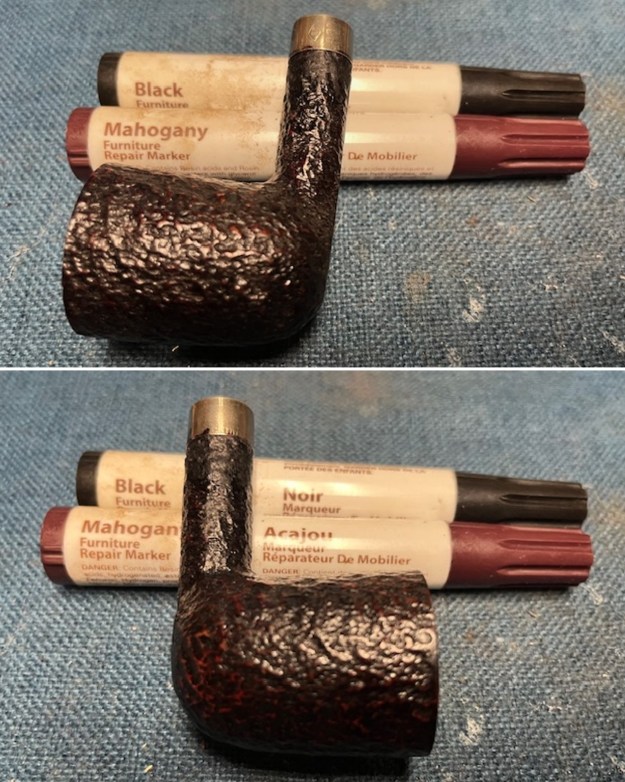
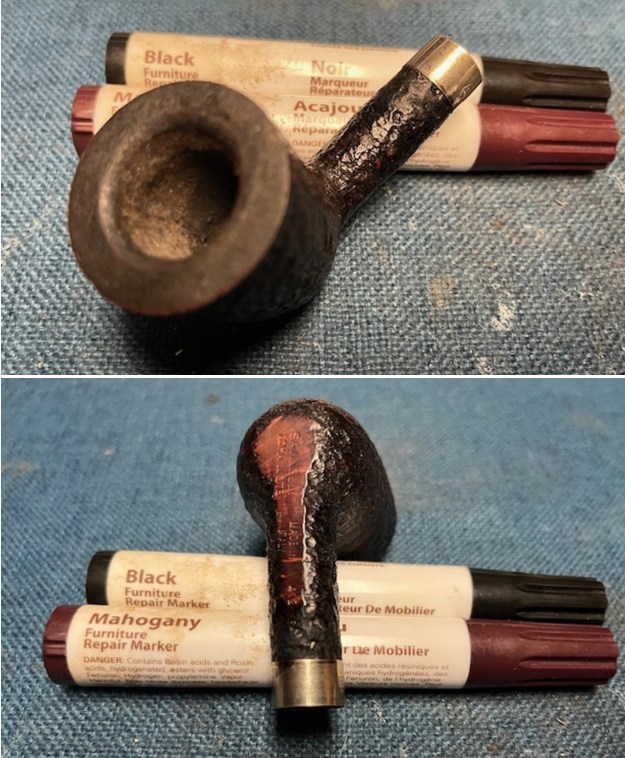
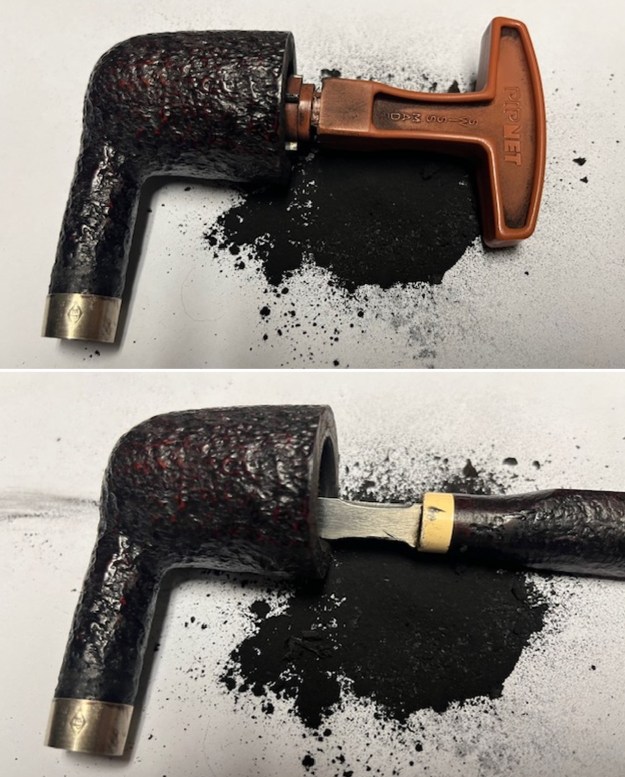
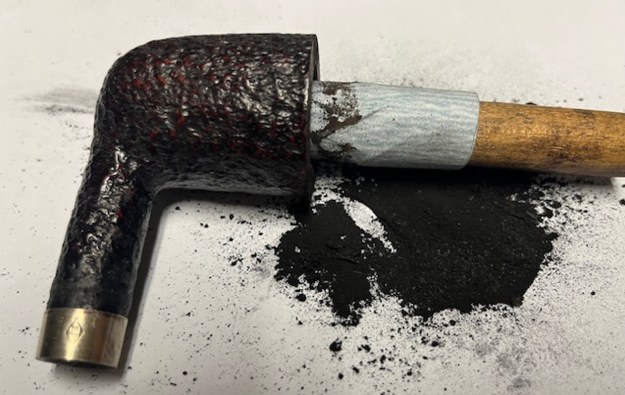
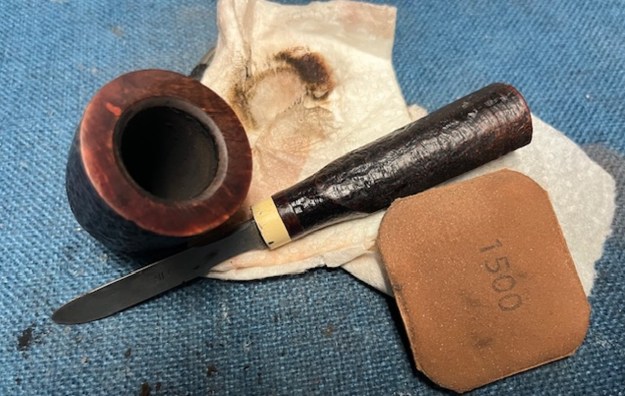
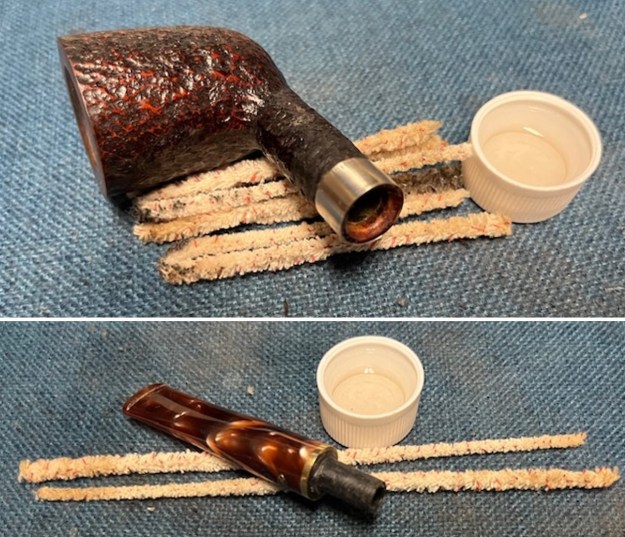
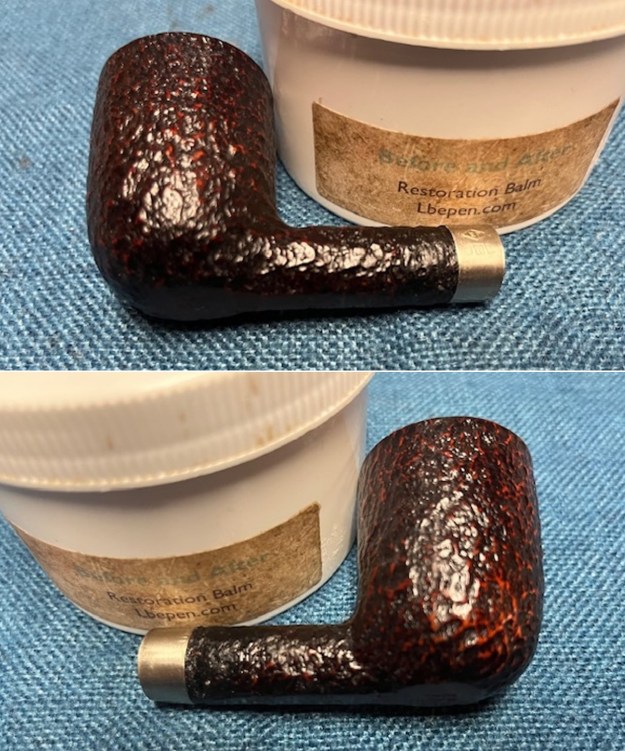
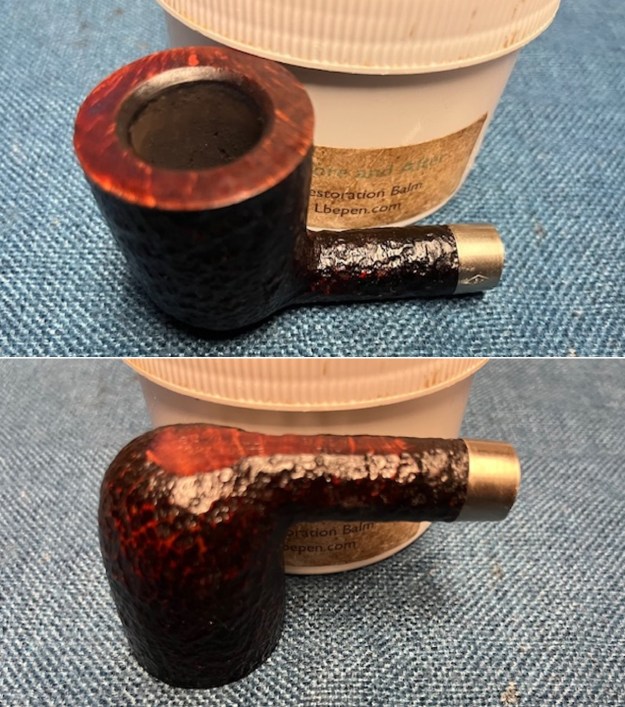
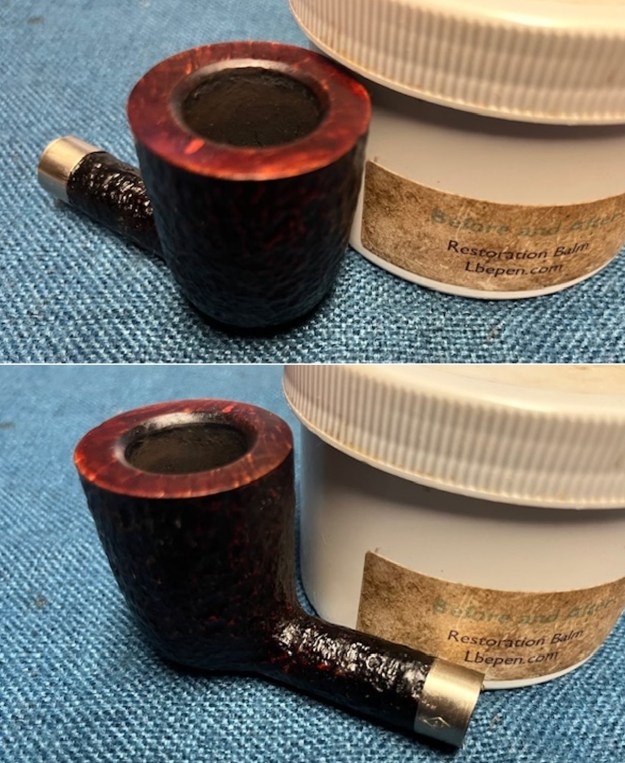
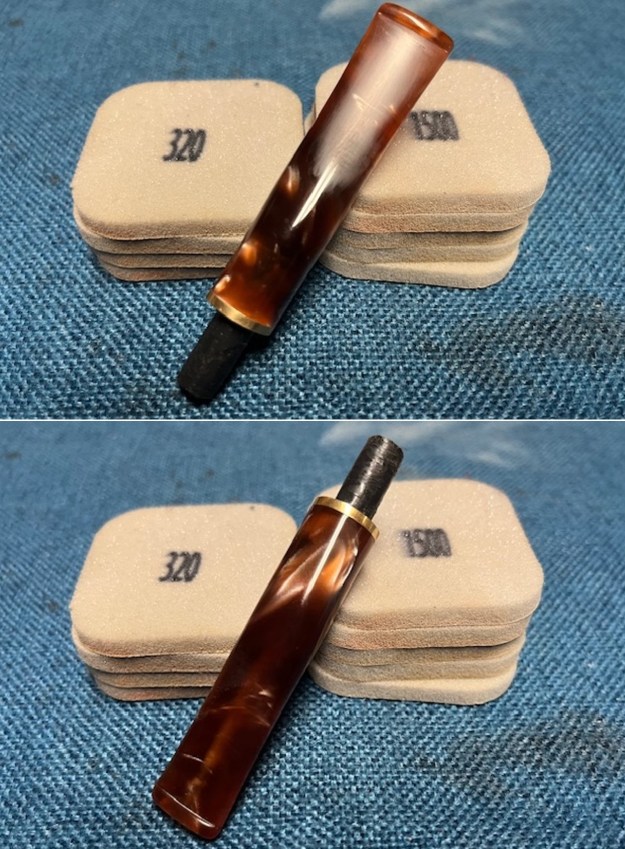
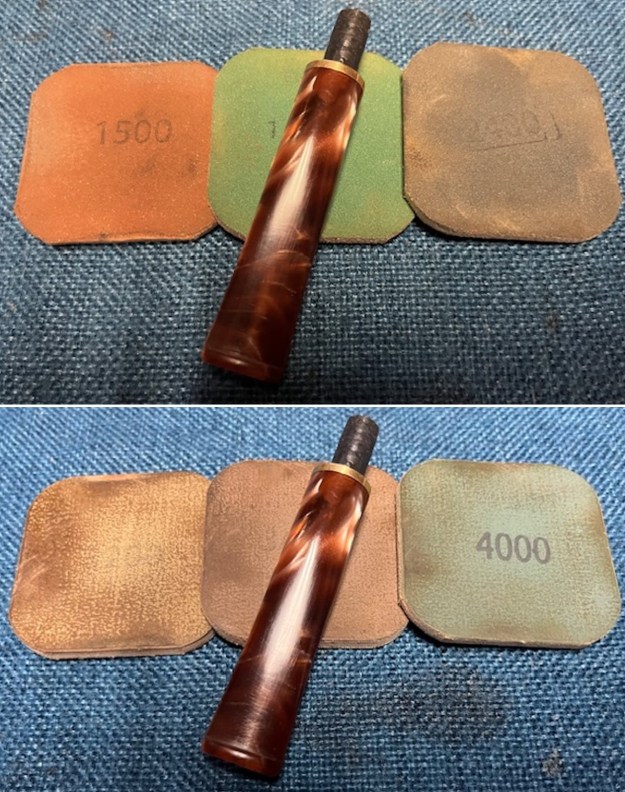
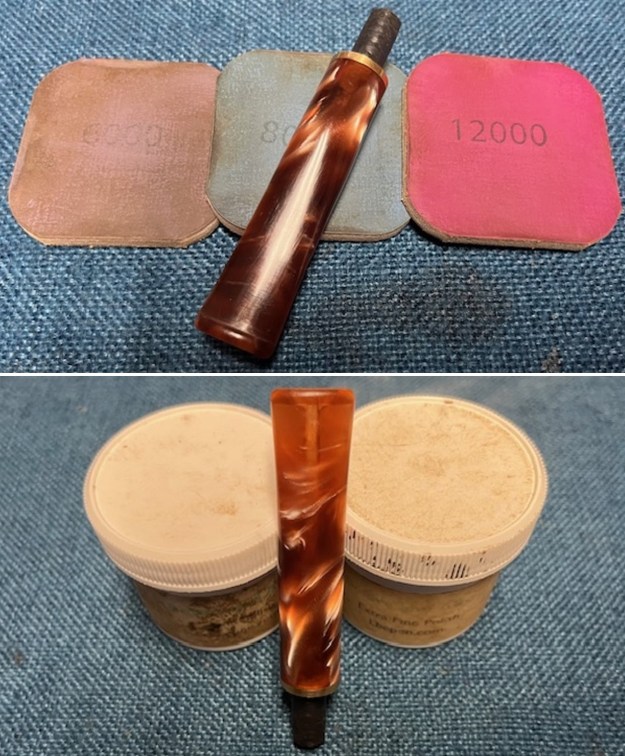
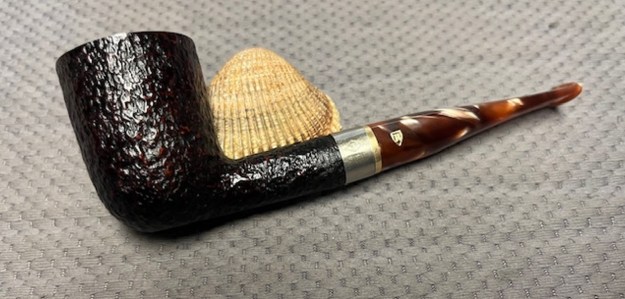
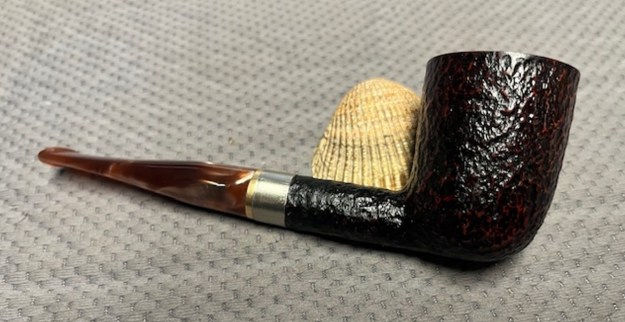
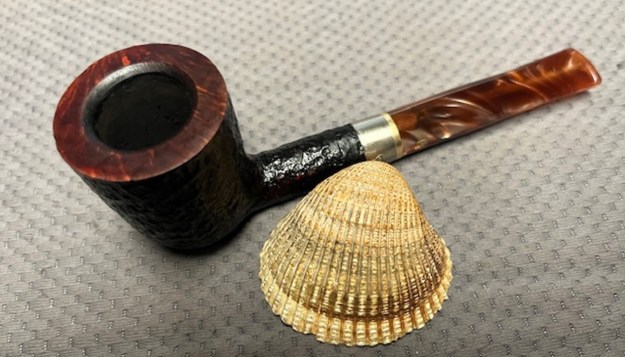
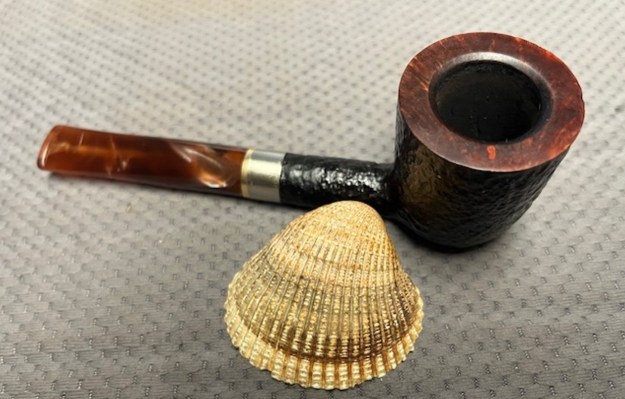
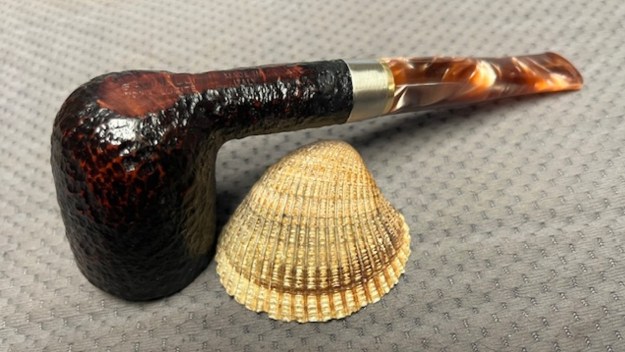
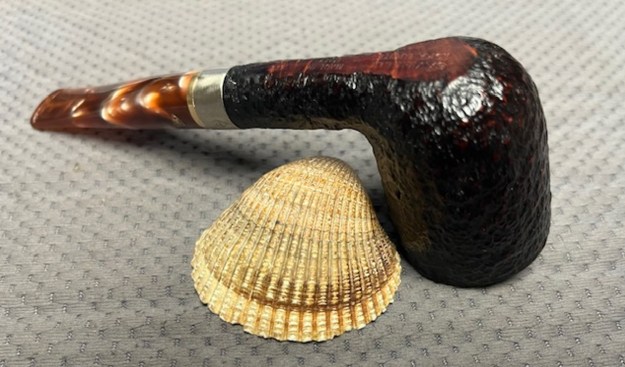
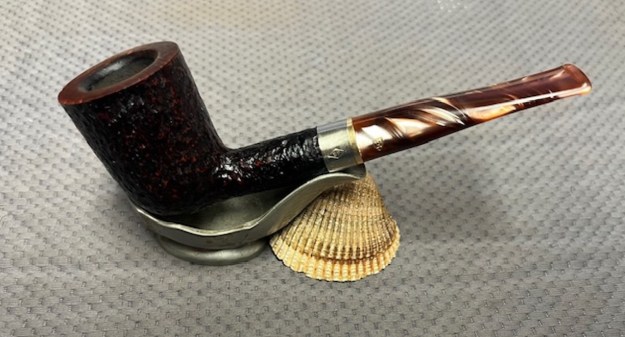
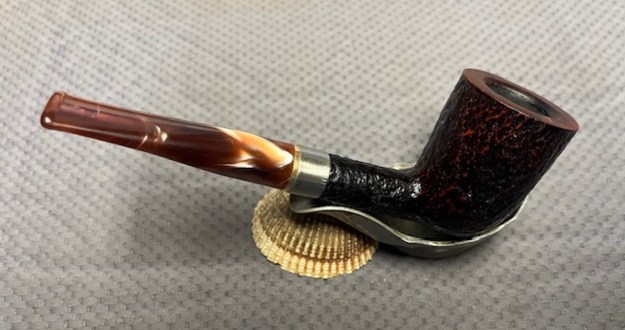
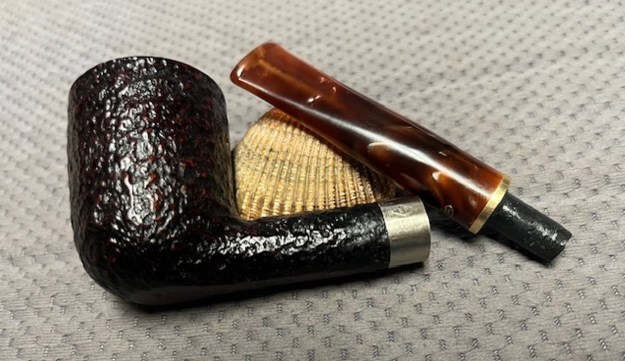
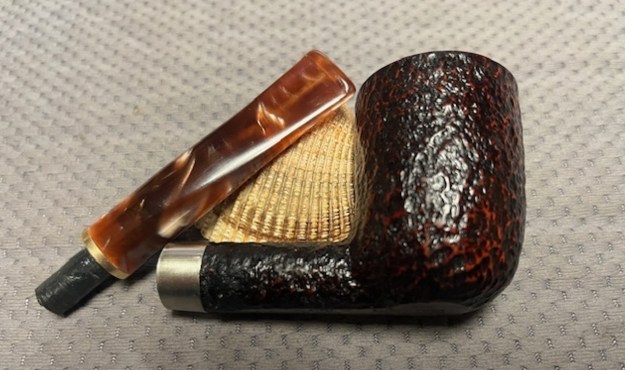
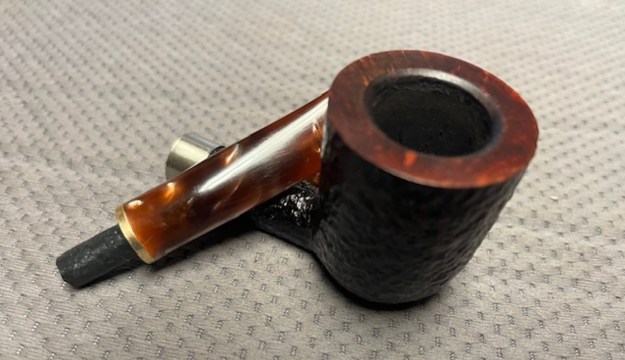
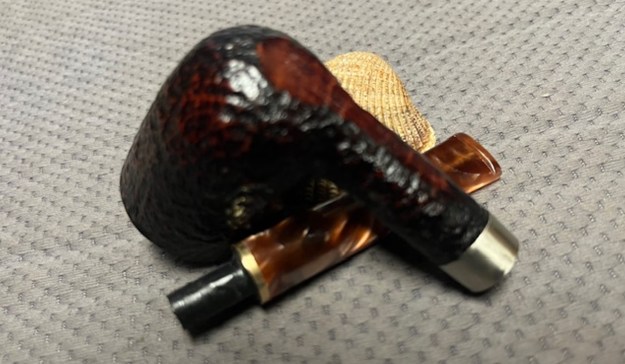
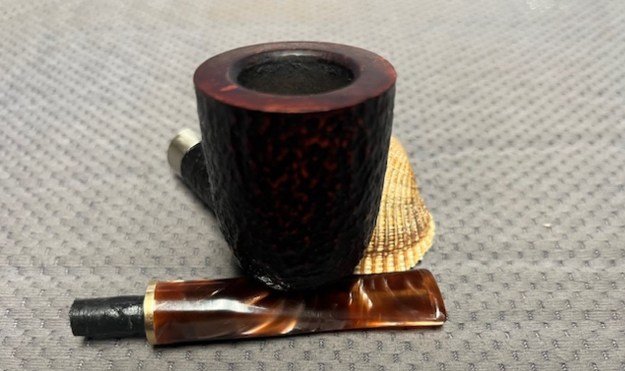
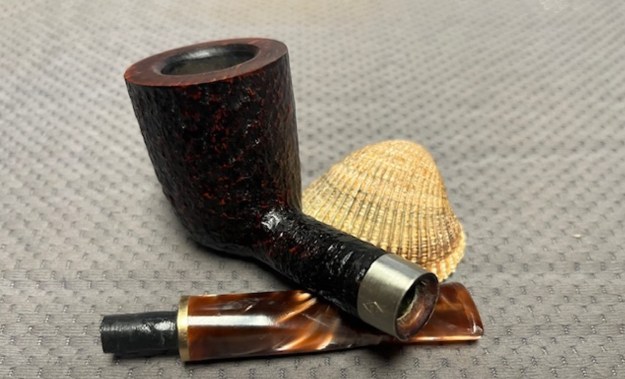
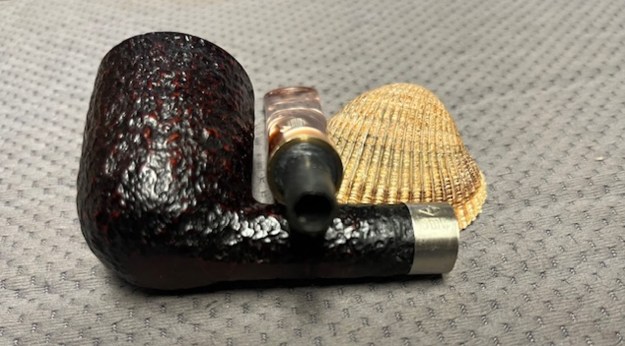
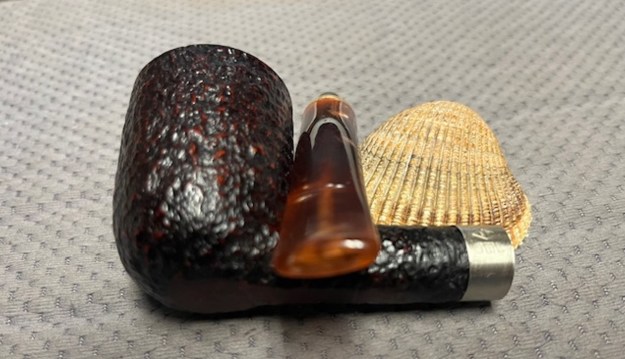
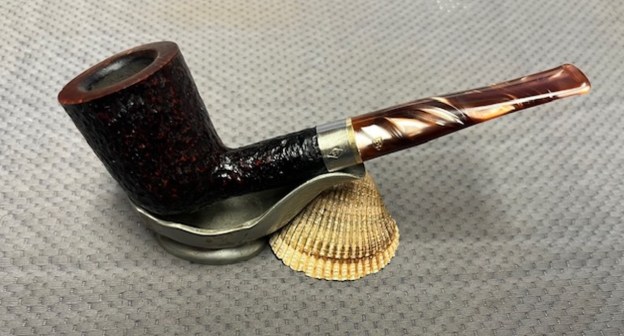
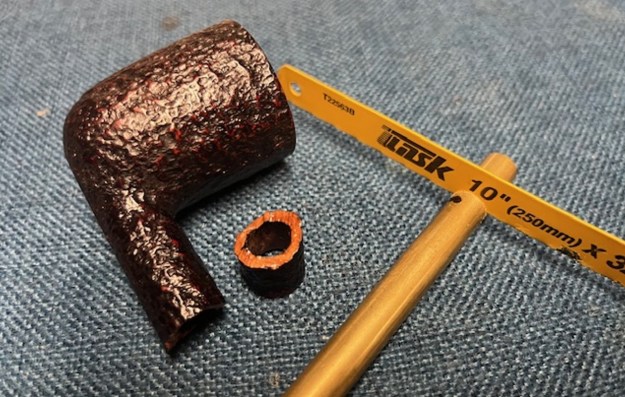
The next pipe came from Curtis, the same pipeman whose Neerup pipe I restemmed. He sent me the two pipes for work. This one is stamped on a smooth panel on the underside of the shank. It was stamped Savinelli [over] Roma Lucite [followed by] Made In [over] Italy [followed by] the shape number 412 KS. It was a sandblast pipe with an interesting blast that showed the grain around the bowl and shank. The stem was a variegated orange/brown Lucite taper with a brass spacer at the end of the stem and a gold R Shield on the left side of the shank. The stem had light tooth chatter on the top and underside ahead of the button. It had a thick cake in the bowl and an overflow of lava on the rim top. To me those are easily dealt with and really are not an issue. What was an issue was the cracked shank. It cracked ¾ of an inch up the shank with a clean break. It was too far up the shank to band it to hold the parts together. It was a mess that I would need to be creative to fix. I left it over night to see if I could sort out a repair of some sort that would put the pieces back together again. I had some brass tubing that would work well in the shank together from the inside.I cut a piece of brass tubing that fit from the entry of the airway in the shank, across the cracked shank and ending at the bevel on the shank end. My thoughts on it were that I would reduce the size of the tenon on the stem so it would slide into the shank. It was thick enough that the thinning would not make it weak. I used a brass bristle wire brush to roughen the area of the repair on the shank to match the sandblast on the finish. It was close but I would need to do more. I found a deep set band that once in place combined with the internal tube should protect the shank. I pressed it on the shank. I worked over the repair on the shank with the wire brush and an etching tool. I wanted it to match the rest of the shank and bowl finish. It will look good once the section is restain. I restained the shank end with a combination of Mahogany and Black stain pens. Once it dried I buffed it with a soft cloth and the repair looked very good. I reamed the pipe with a PipNet pipe reamer using the second and third cutting heads to remove the thick cake in the bowl. I scraped the bowl with a Savinelli Fitsall Pipe Knife to remove the remainder of the cake in the bowl. I sanded the bowl with a piece of dowel wrapped in 220 grit sandpaper. It looked good. I cleaned up the rim top. I scraped off the lava coat with the Savinelli Fitsall Pipe Knife. I scrubbed it with some warm water and a paper towel to remove the bulk of the grime. I used a 1500 grit micromesh sanding pad to polish off the remainder of the grim and the rim top look significantly better. I scrubbed the airway in the shank and the stem with pipe cleaners – both regular and bristle one and isopropyl alcohol.I rubbed the briar down with Before and After Restoration Balm. I worked it into the finish with my fingertips and let it sit for 10 minutes to let it do its magic. After that I buffed it off with a soft cltoh to polish and raise the shine on the bowl. It looks very good. I set the bowl aside and turned my attention to the stem. I polished out the tooth marks and chatter with 320-3500 grit 2×2 inch sanding pads. I wiped the stem down after each sanding pad with an obsidian Oil soaked cloth. It is looking good.I polished the stem with 1500-12000 grit micromesh sanding pads – dry sanding with each pad. I wiped it down with the Obsidian Oil after each pad. I finished polishing the stem with Before and After Pipe Stem Polish both Fine and Extra Fine polishes. I polished it with each polish and the stem began to have a rich glow. I am excited to be on the homestretch and look forward to seeing the Savinelli Roma Lucite 412KS Billiard put back together, polished and waxed. I put the bowl and stem back together and lightly polished the bowl and stem with Blue Diamond to polish them. I gave the bowl and the stem multiple coats of carnauba wax. I buffed the pipe on the wheel with a clean buffing pad to raise the shine. I hand buffed it with a microfiber cloth to deepen the shine. The depths of the grain really pop with the wax and polish. The polished variegated Brown Lucite stem is a beautiful contrast to the combination of stains on the bowl and shank. This Savinelli Roma Lucite Billiard was a lot of work to bring back to life. The pipe is light weight, comfortable in the hand and should feel great as it is warmed up when smoking. The finished pipe is shown in the photos below. The dimensions of the pipe are Length: 6 inches, Height: 1 ¾ inches, Outside diameter of the bowl: 1 ½ inches, Chamber diameter: 7/8 of an inch. The weight of the pipe is 1.45 ounces/41 grams. I will be packing this one up with restemmed Neerup and getting them in the post to Curtis. I look forward to hearing from him regarding his two pipes.

As always, I encourage your questions and comments as you read the blog. Thanks to each of you who are reading this blog. Remember we are not pipe owners; we are pipe men and women who hold our pipes in trust until they pass on into the trust of those who follow us.