
By Steve Laug
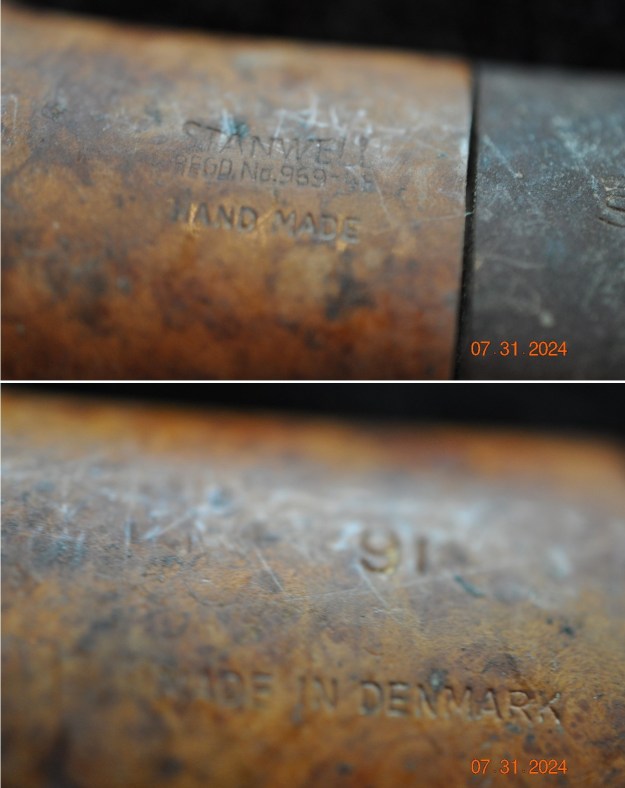
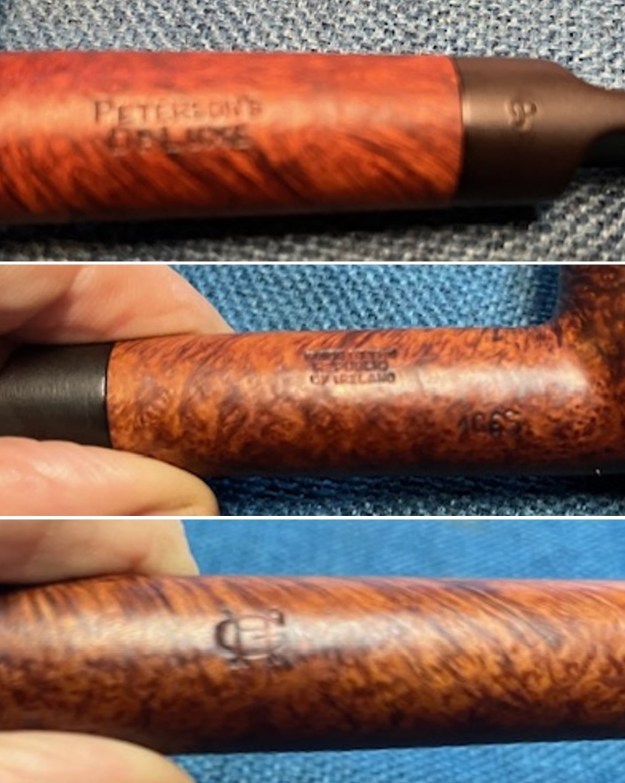
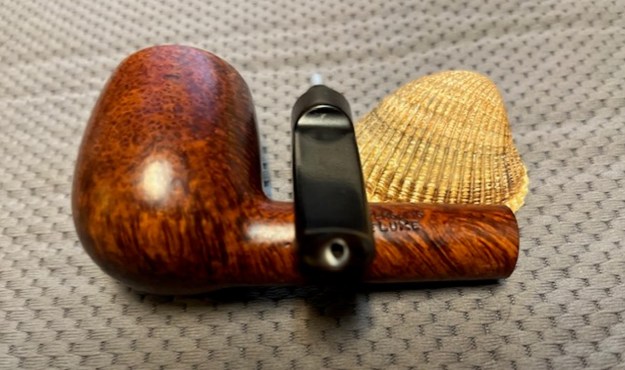
The next pipe on the table to work on is one that was purchased on 09/18/2020 from a seller in Los Angeles, California, USA. This is a oval shank ukulele with a smooth finish and an oval shank, vulcanite saddle stem. It is another Made in Denmark Stanwell. The smooth finish on this pipe, around the bowl and shank has a mix of grain highlighted by the brown stain. The pipe is stamped on the topside of the shank and reads STANWELL [over] Regd. No. 969-48 [over] Hand Made. On the underside of the shank the shape number 91 is stamped [over] Made In Denmark. The pipe was a well used pipe when Jeff received it. There was dust and grime ground into the finish on the sides of the bowl. The brown stain highlights some mixed grain under the dirt. The bowl was thickly caked and there was an overflow of lava on the smooth rim top. The condition of the inner edge was hard to know due to the lava coat but there appeared to be some nicks in the edge. The saddle stem is vulcanite and was dirty, oxidized and had light tooth marks, chatter and scratches on both sides ahead of the button and on the button itself. There is a stamped Crown S logo on the topside of the saddle stem. Jeff took photos of the pipe before he started his clean up work on it. 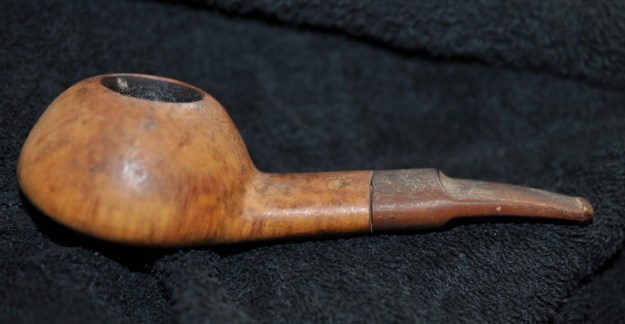
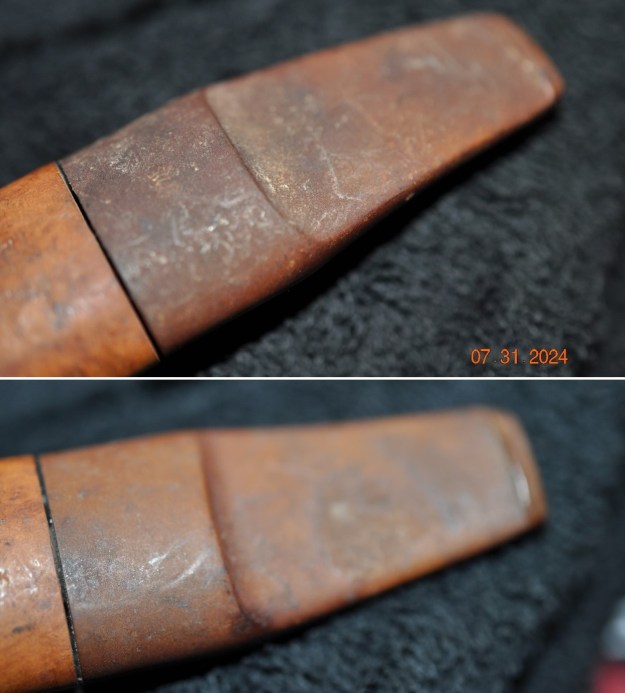
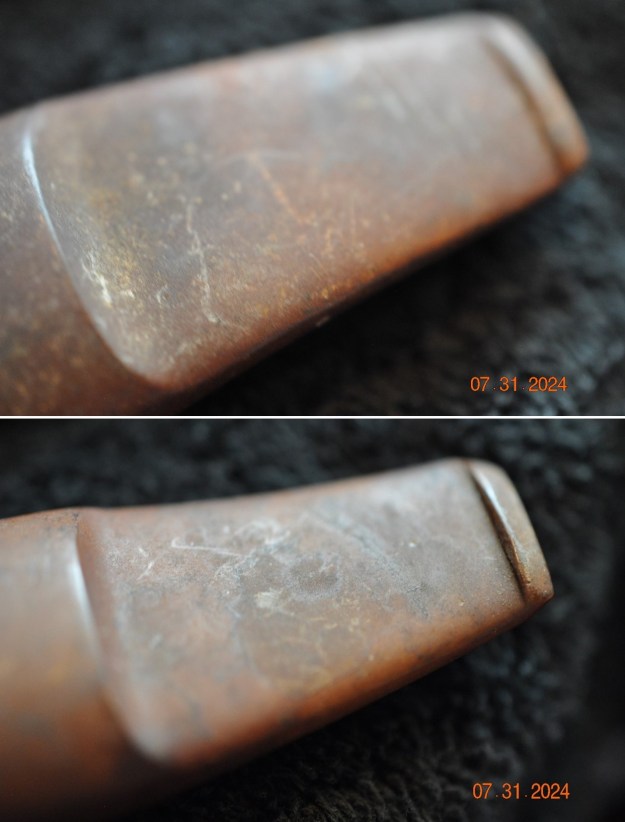
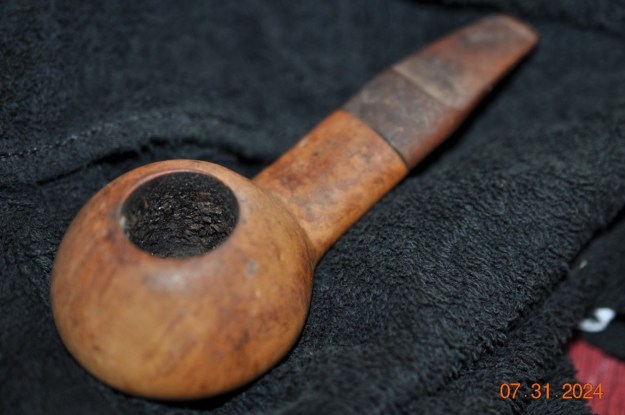 He took photos of the bowl and rim top to show what they looked like before his clean up. You can see the cake in the bowl and the spattering of lava on the rim top and inner edges. You can see the nicks in the inner edge of the rim. He also took some of the stem to show the condition of both sides. It is heavily oxidized and calcified and very dirty. There appear to be tooth marks and chatter on both sides of the stem ahead of the button and on the button surface itself.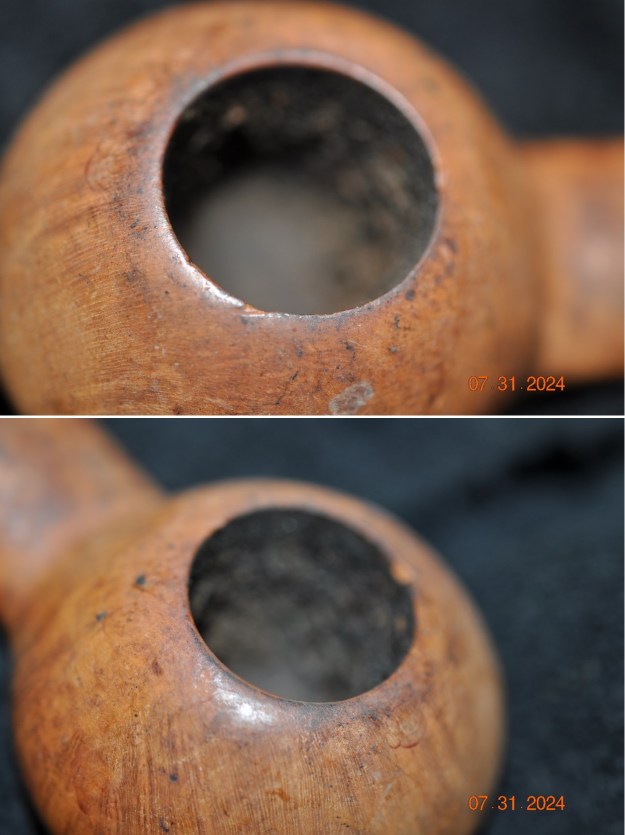
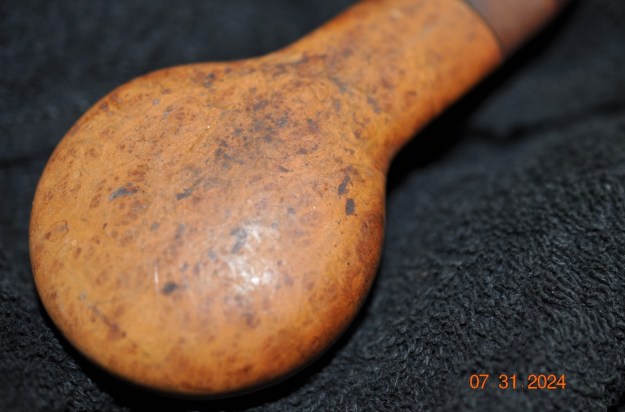
 The photos of the sides and heel of the bowl show the grain around the bowl and shank. The grime hides the grain in many ways. The finish on the pipe is worn but the grain stands out.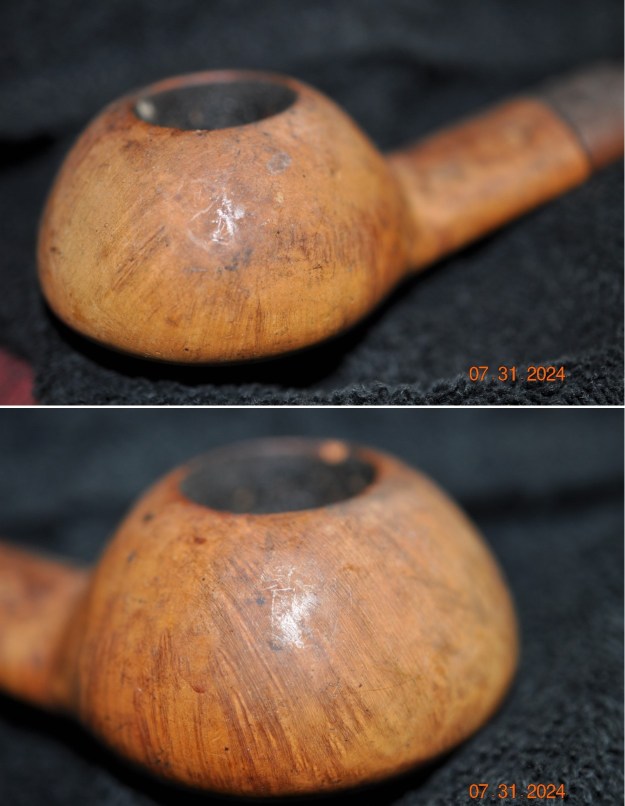
 The stamping was on the top and underside of the shank as noted above. It is clear and readable as noted above. The Crown S stamp on the top of the saddle stem can partially be seen in the first photo below.
  Before I started my work on the pipe I wanted to see if I could find any information that would help me get a sense of the background on the pipe. I turned to Pipephil to see if there was any listing on the
I then turned to Pipedia (https://pipedia.org/wiki/Stanwell) for more information. The article is great and gives a lot of history on the brand. There was a category of pipe call Pre-regd. 1945-1948 where all the photos of pipes had the same stamping as the one I am working on. That gave me a clue as to the dating on this particular pipe – it was made between 1945-1948.
There were also links to a shape article by Bas Stevens that I originally published on rebornpipes. I looked up the 91 shape number to see who had designed that shape (https://pipedia.org/wiki/Stanwell_Shape_Numbers_and_Designers). I quote the information below.
- Slightly bent wide, flattened volcano with an oval shank and a short, standard saddle, trapezoidal saddle, or tapered stem, by Sixten Ivarsson. Nicknamed the ‘Ukelele’ (pictured, right, in its reissued design).
Now it was time to work on the pipe.
Jeff had thoroughly cleaned up the pipe. He reamed the pipe with a PipNet Pipe Reamer and cleaned up the remnants with a Savinelli Fitsall Pipe Knife. He scrubbed the bowl with undiluted Murphy’s Oil Soap with a tooth brush. He rinsed it under running warm water to remove the soap and grime. He cleaned out the inside of the shank and the airway in the stem with alcohol, cotton swabs, pipe cleaners and shank brushes. He scrubbed the exterior of the stem with Soft Scrub to remove the grime and calcification. He soaked the stem in Before & After Deoxidizer and rinsed it off with warm water. The pipe looked very good when it arrived here. 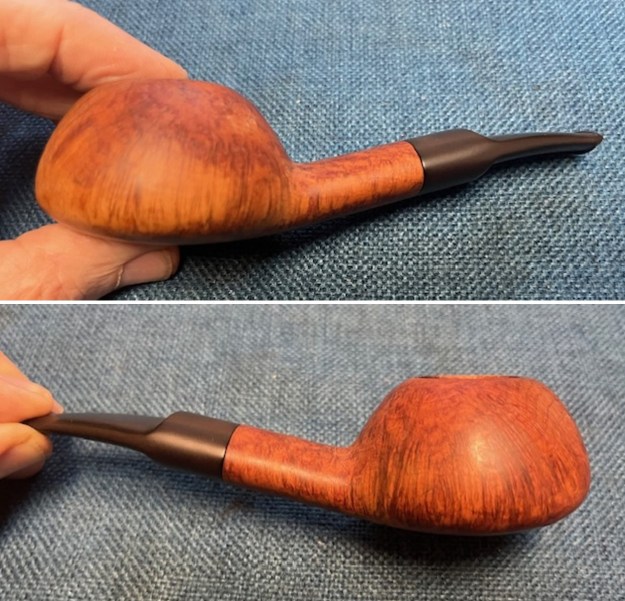
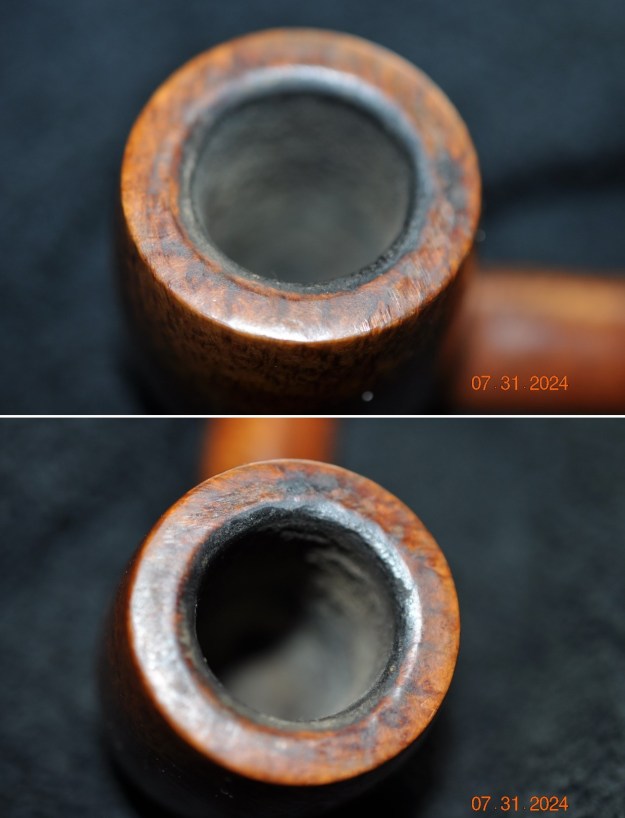
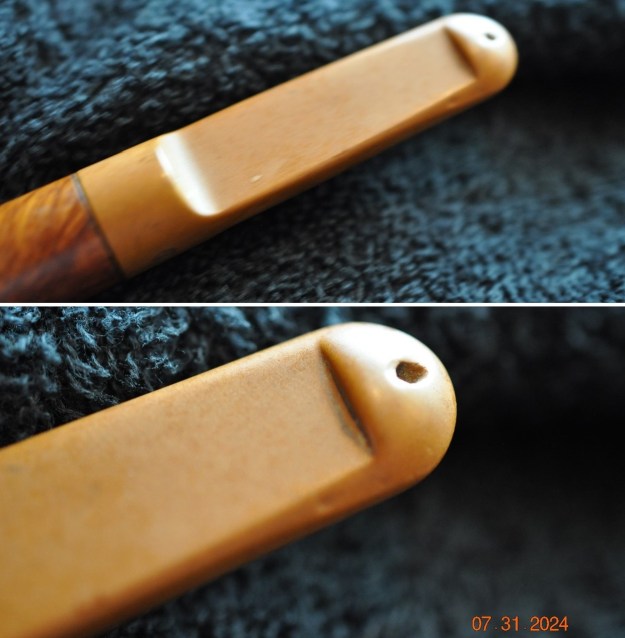
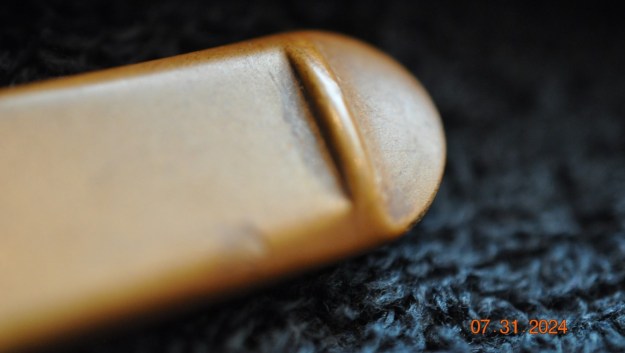
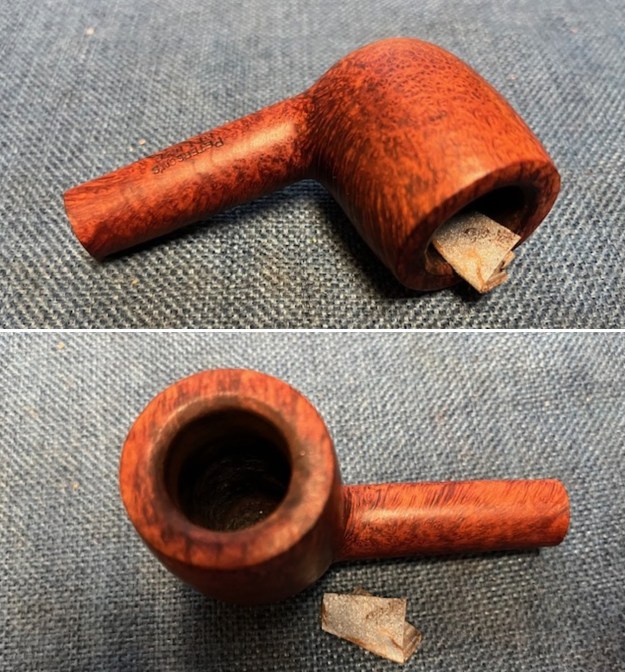
 I took close up photos of the bowl, rim and the stem. You can see the nicks on the thin inner edge of the bowl. The vulcanite saddle stem is in good condition with light tooth marks and some chatter as noted above.
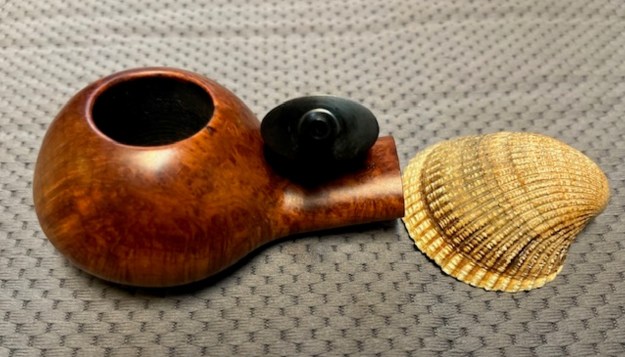
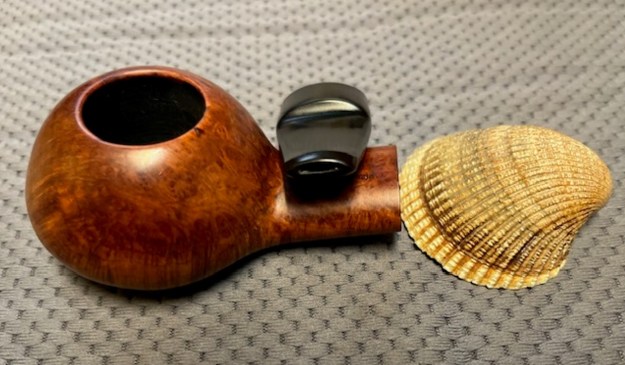
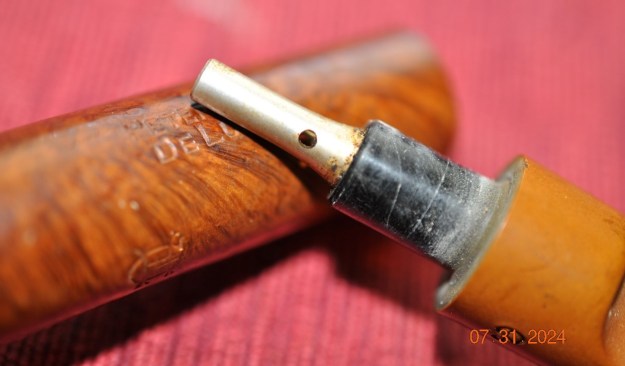
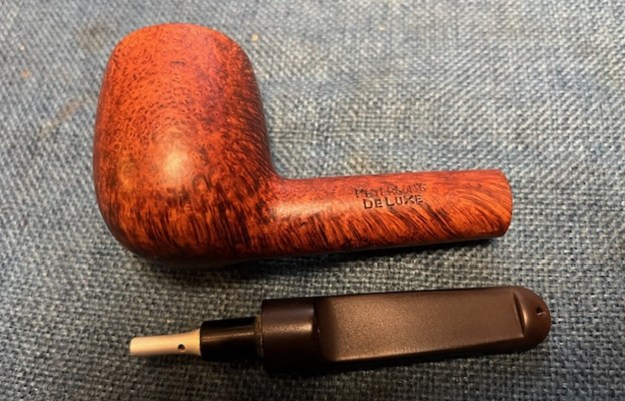
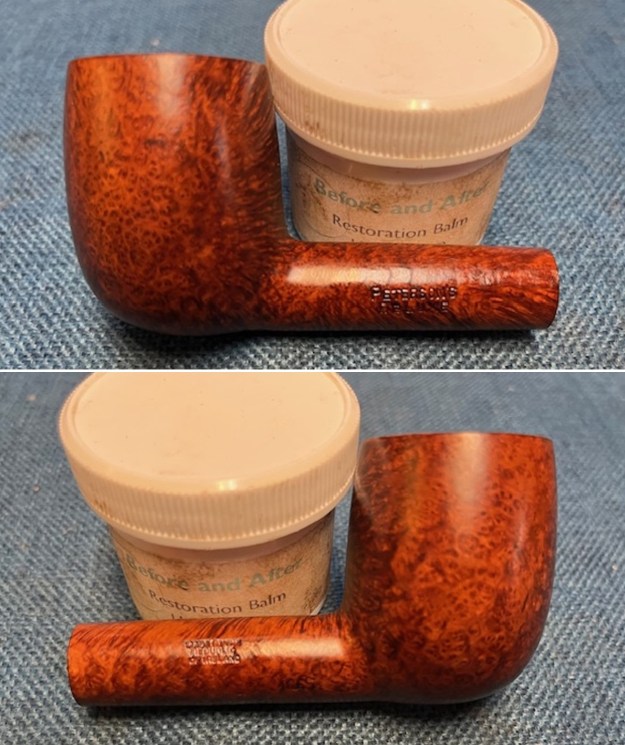
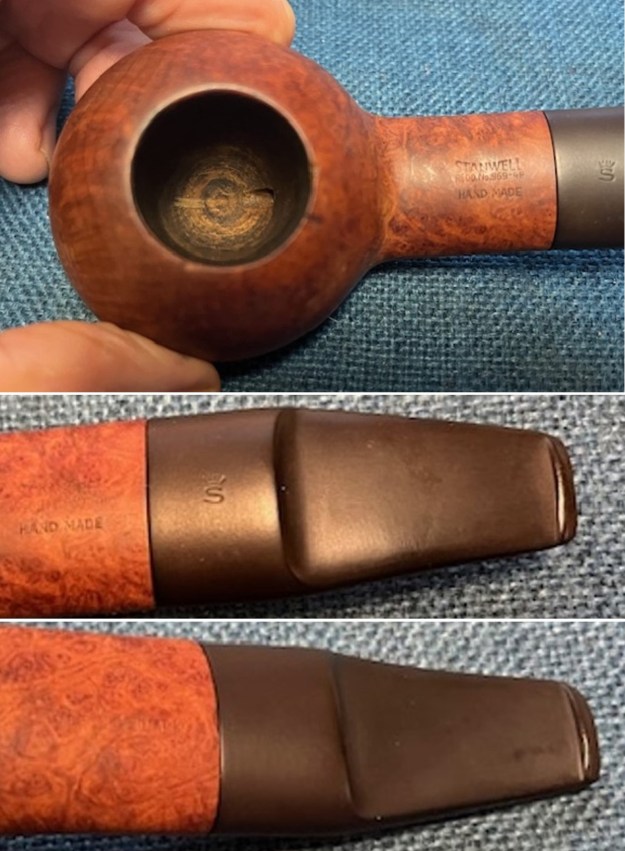 I took photos of the stamping on the top and underside of the shank. It is readable as noted above. I removed the stem from the shank and took a photo to give a sense of the proportions of the pipe. The briar is quite beautiful and I think that polishing it will make the grain stand out.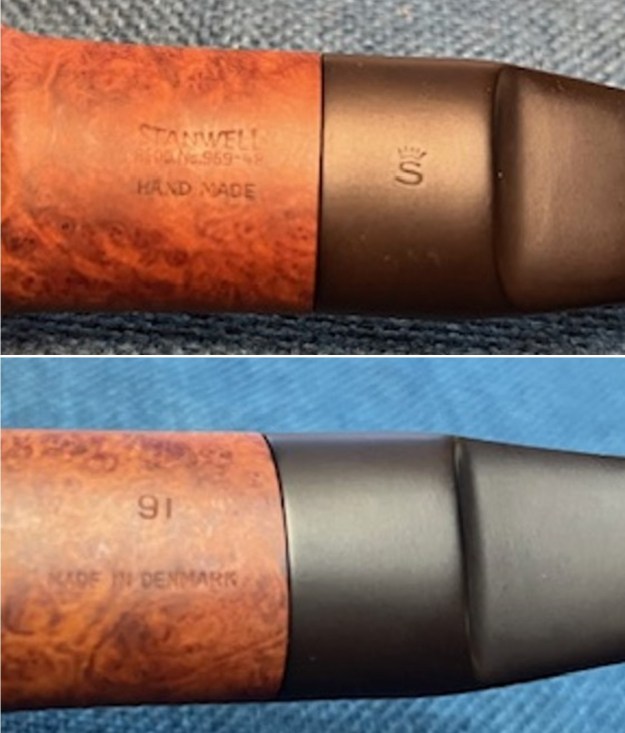
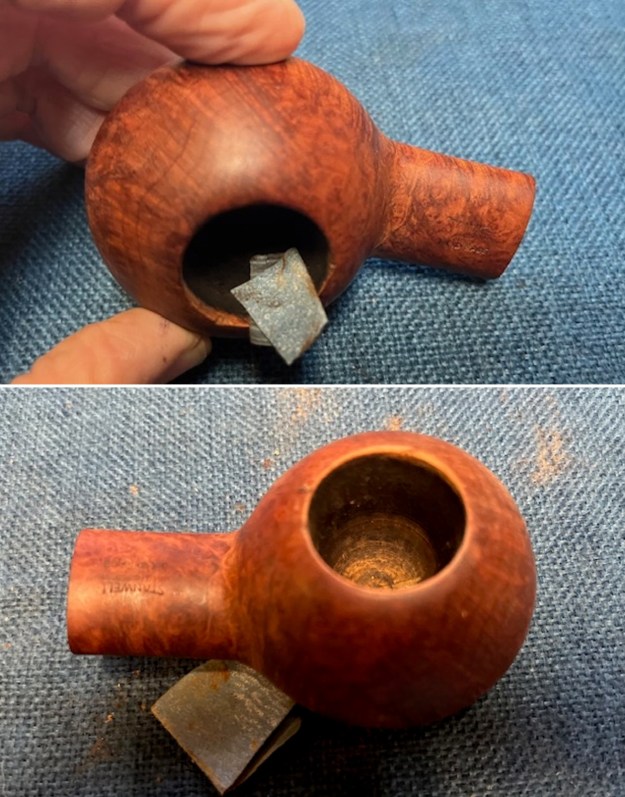
 I worked on the damage to the inner edge of the rim top with a folded piece of 220 grit sandpaper to smooth out the chips in the finish. By the end it looked much better.
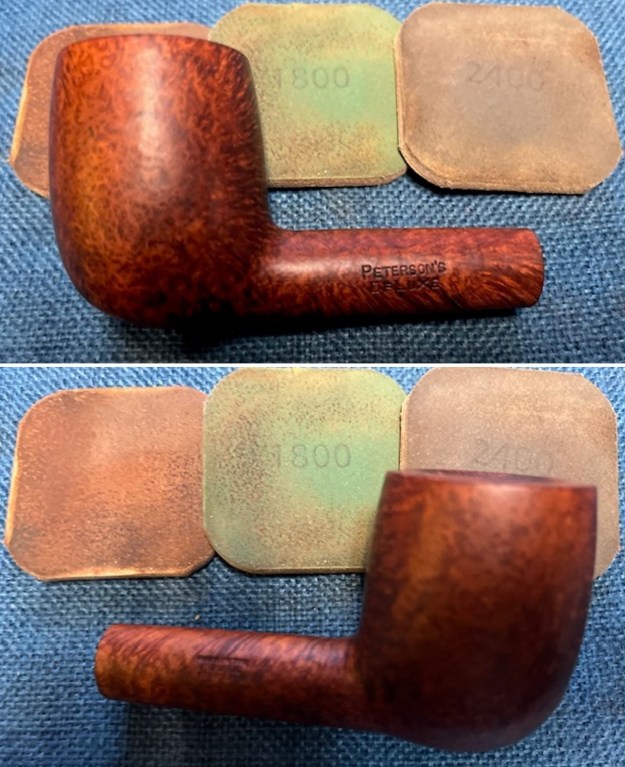
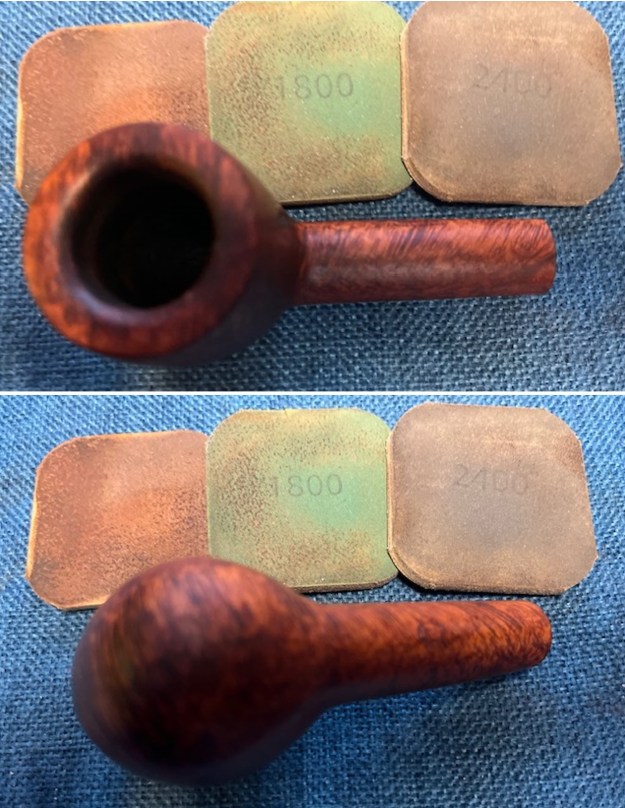
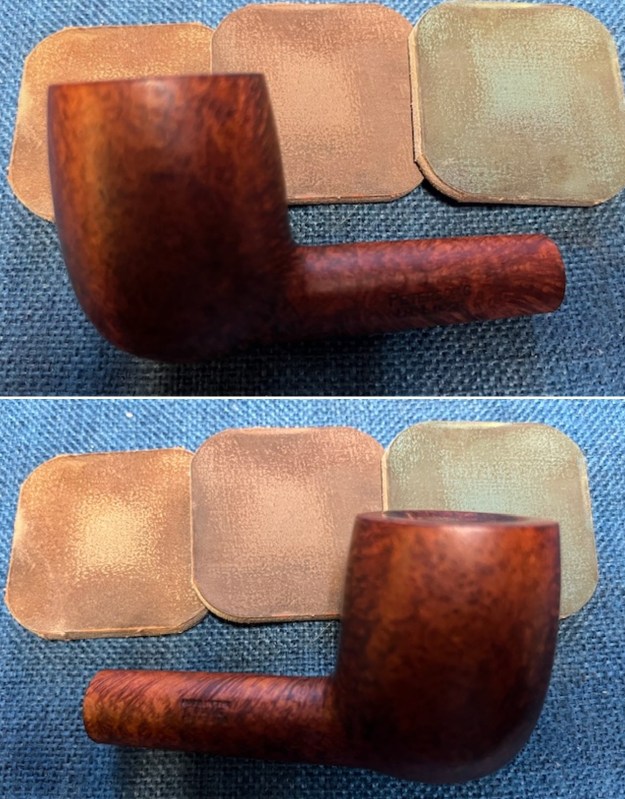
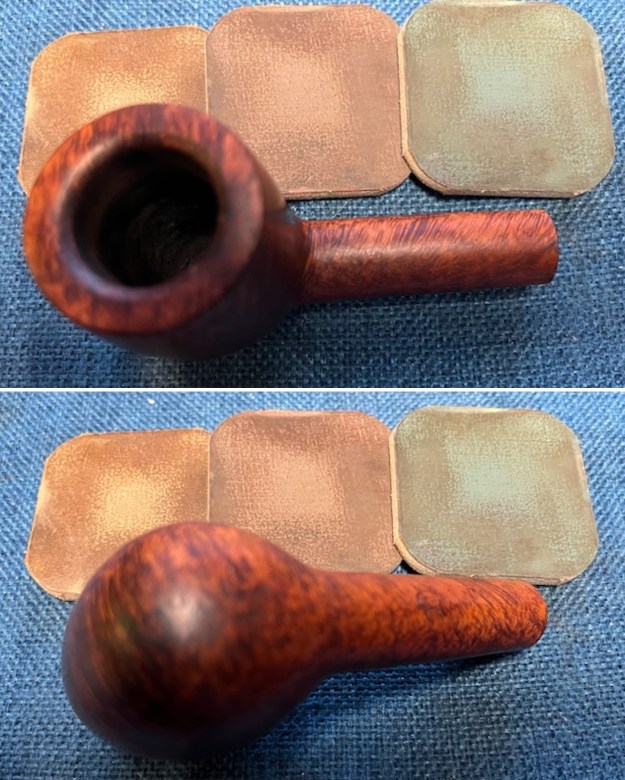
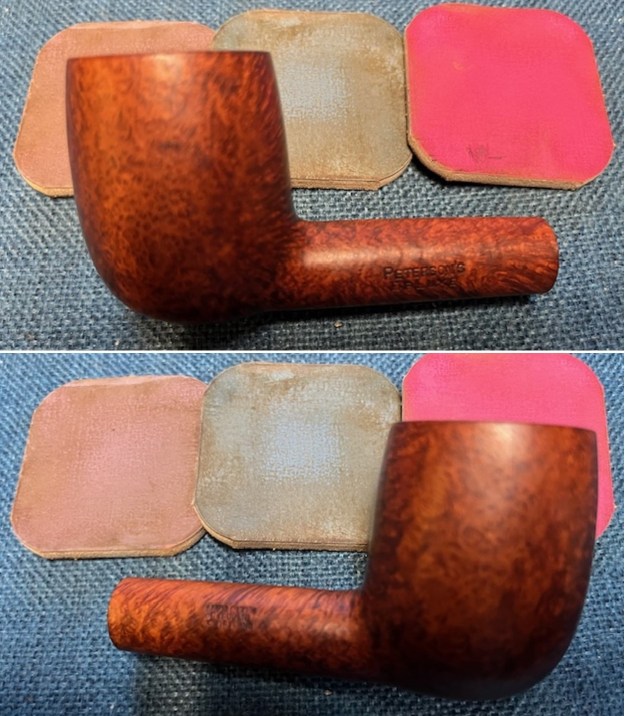
 I sanded the bowl with 320-3500 grit sanding pads to smooth out the finish and bring some life back to the briar. I wiped the briar down after each sanding pad to wipe off the debris left behind by sanding.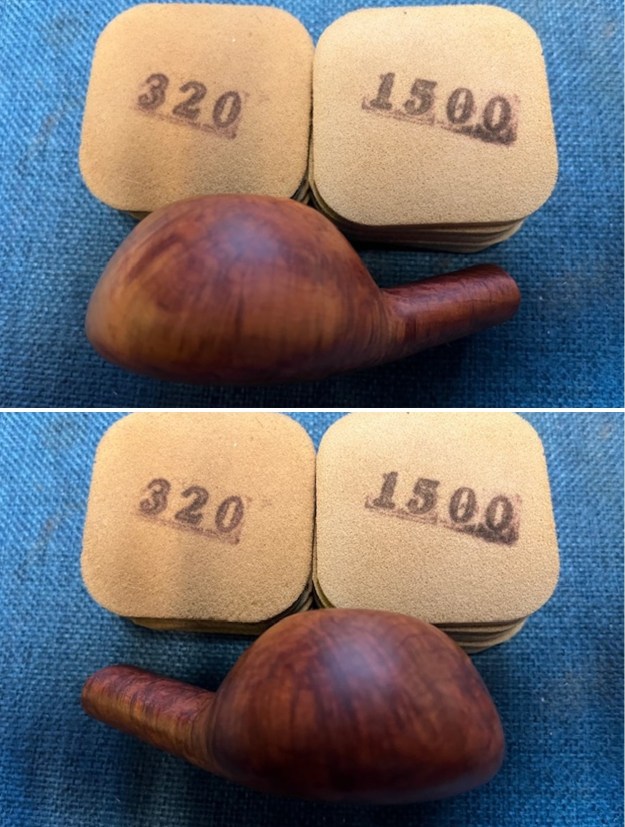
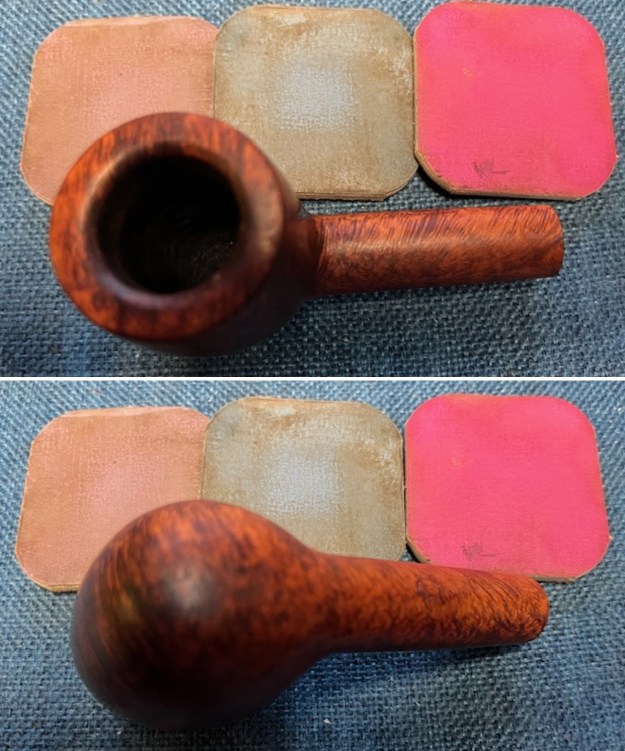
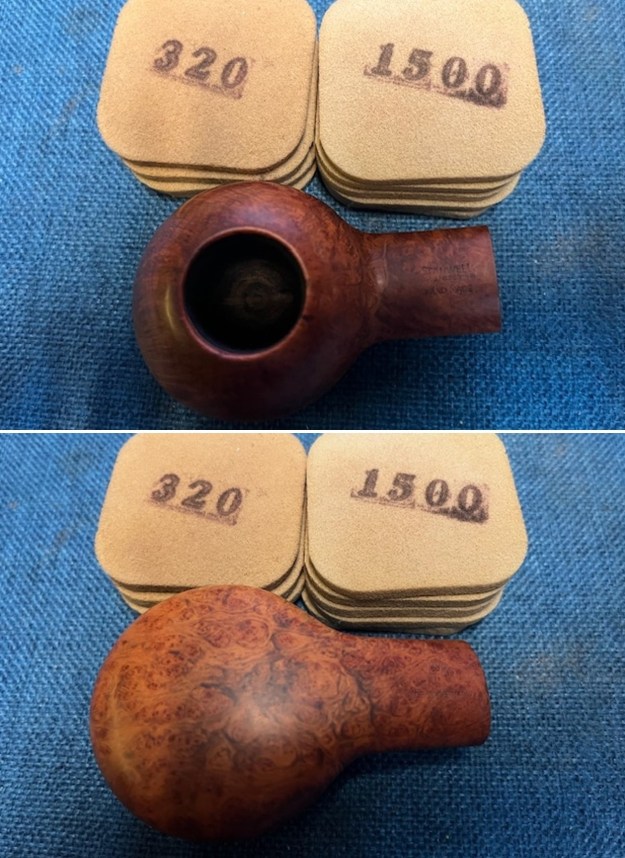 I polished the bowl and shank with micromesh sanding pads – dry sanding with 1500-12000 grit pads. I wiped the bowl down after each pad to remove the grit. The bowl began to take on a rich shine. It is a beauty.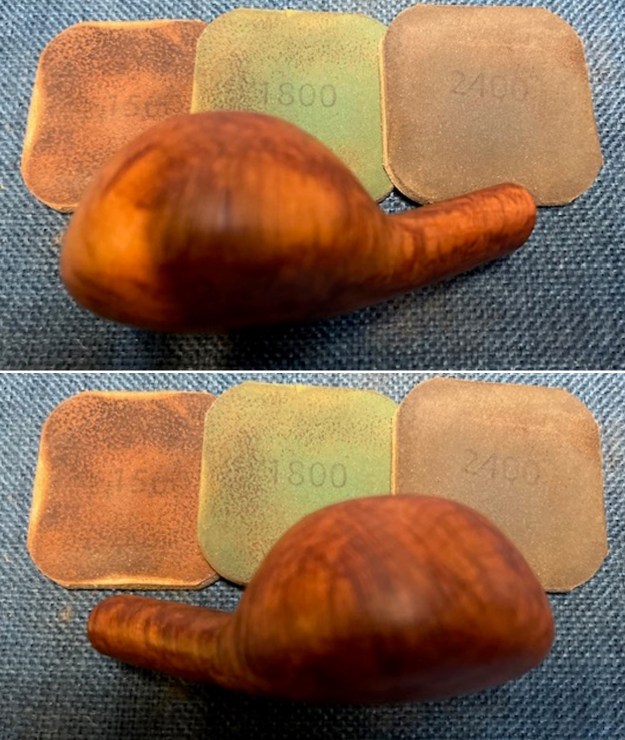
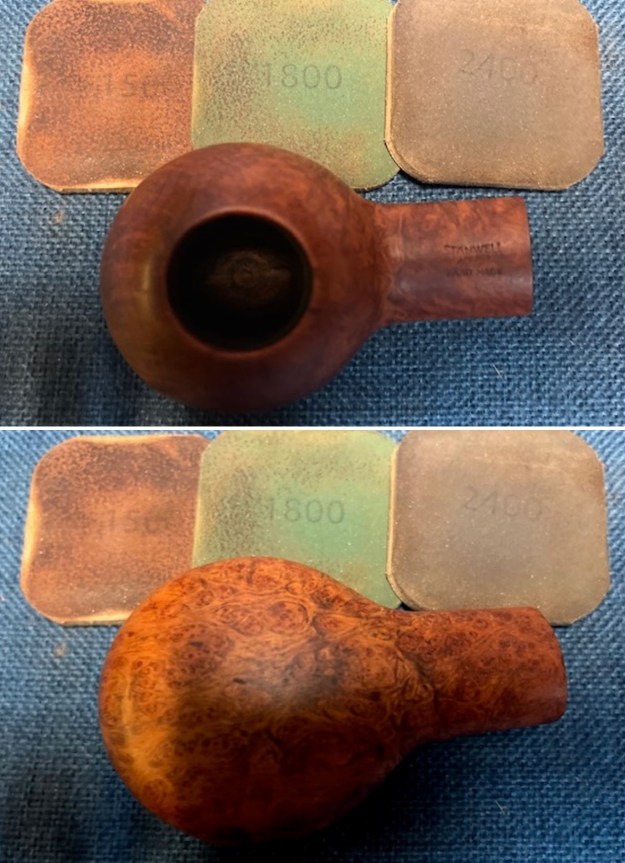

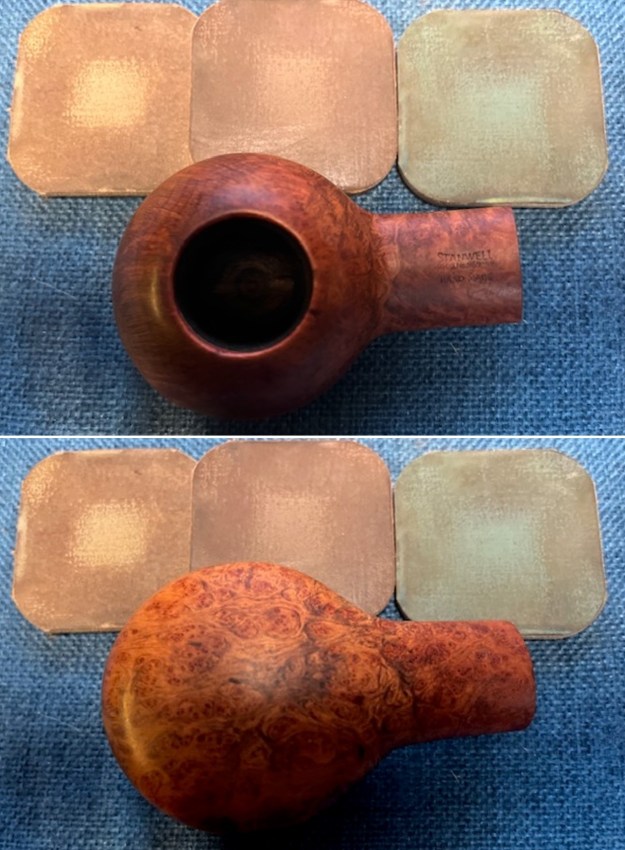

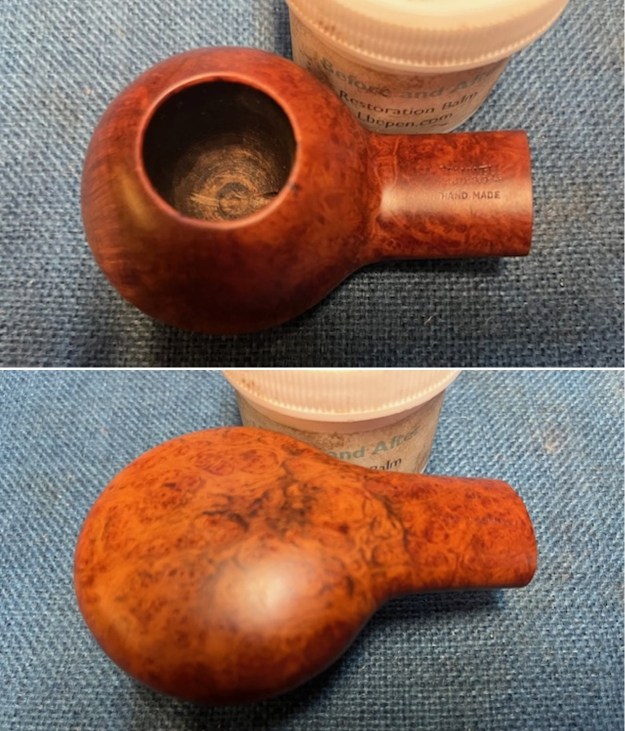
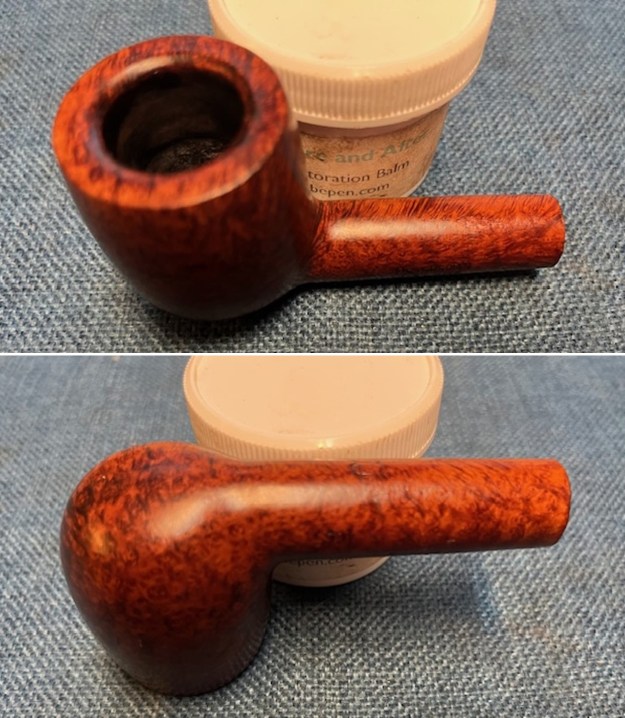
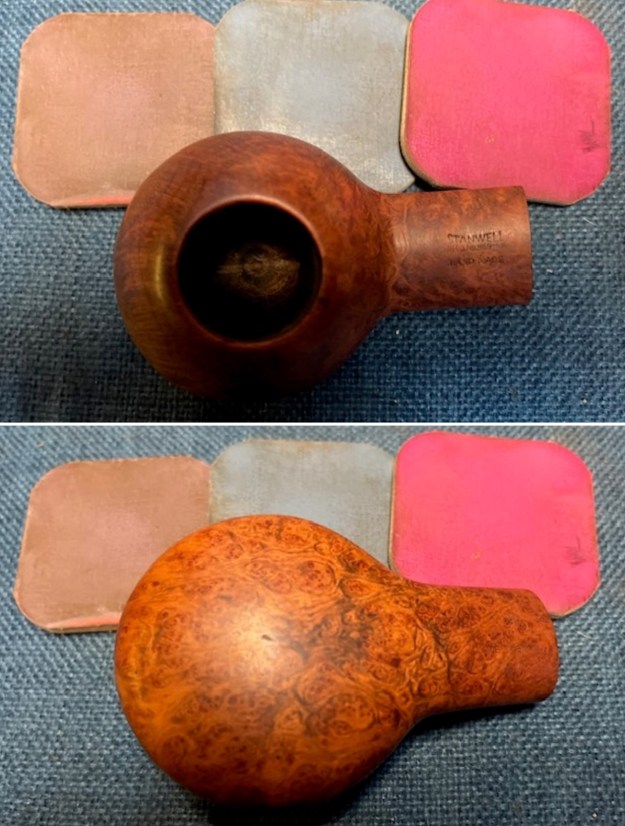 I rubbed the bowl down with Before & After Restoration Balm. I worked it into the briar with my finger tips. I let it sit for 10 minutes and the Balm did its magic. It enlivens, cleans and preserves the briar. It certainly brought this bowl back to life. I buffed it off with a clean cloth and took the following photos.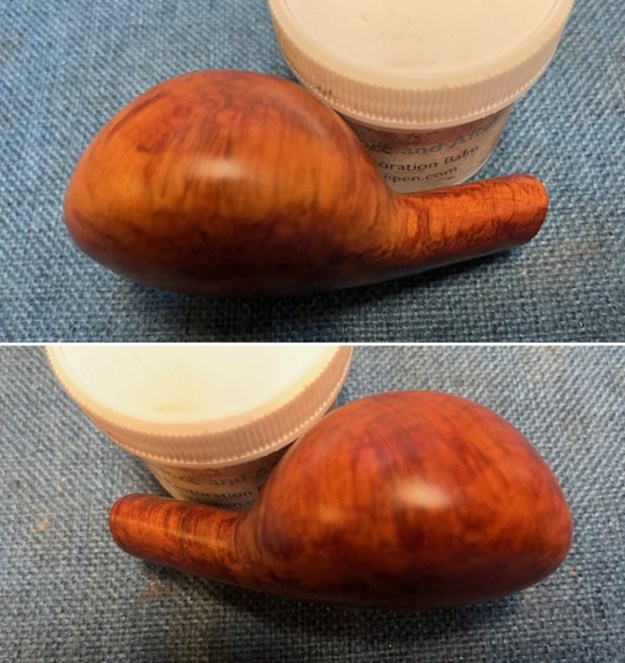
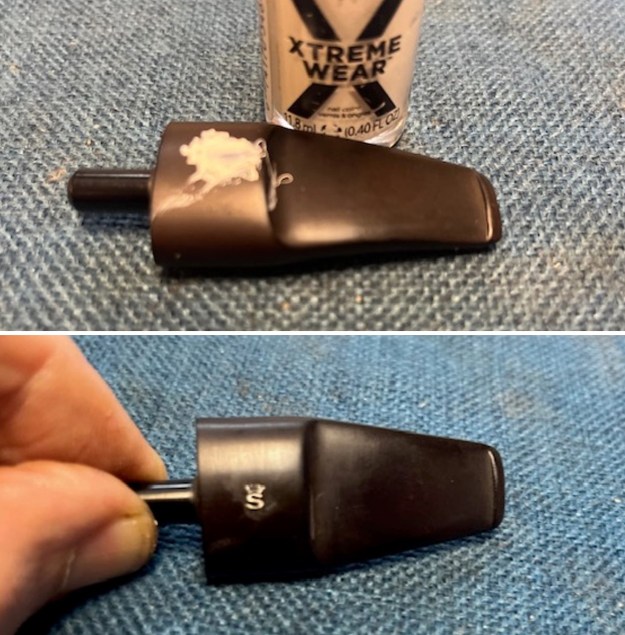
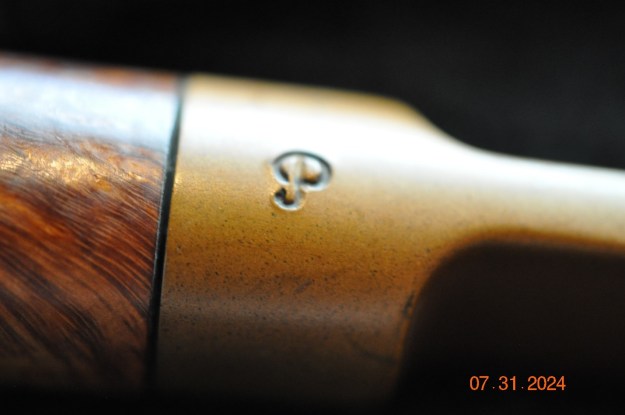
 I set the bowl aside and turned my attention to the stem. I touched up the “Crown S” stamp on the topside of the saddle stem with some white acrylic fingernail polish. I worked it into the stamp with a tooth pick. I scraped off the excess with piece of 320 grit sanding pad and buffed it off with a soft cloth and some Obsidian Oil. It looked very good.
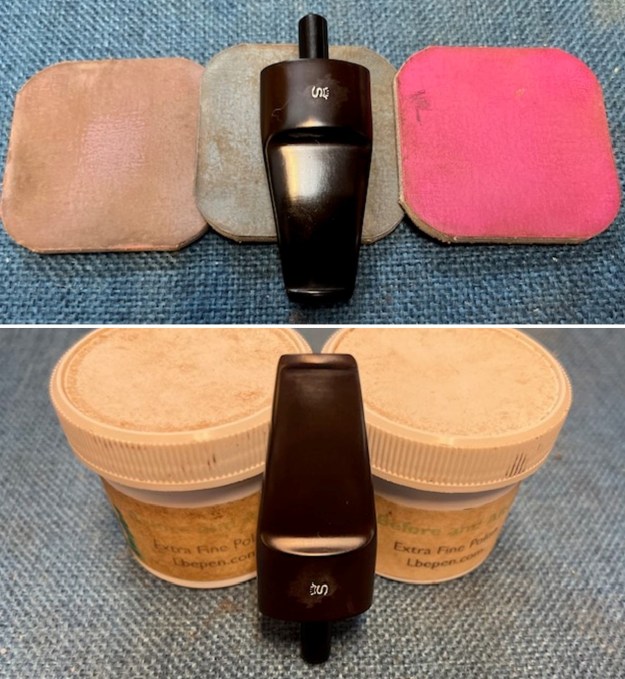
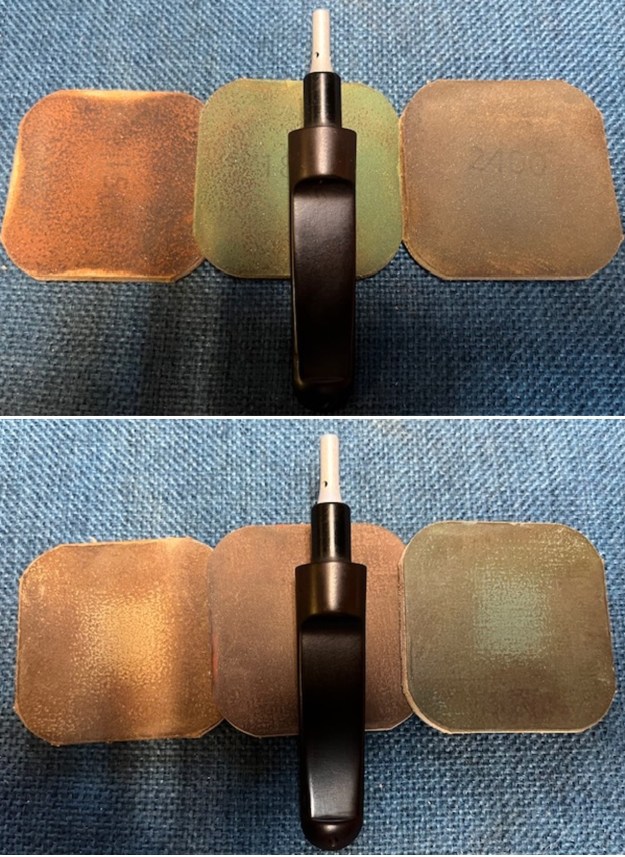
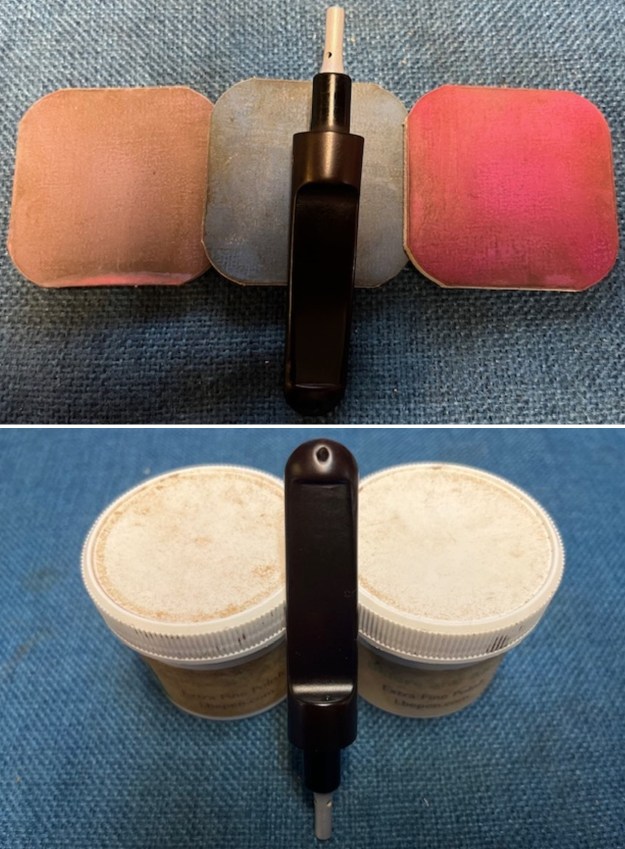
  I polished the stem with micromesh sanding pads – 1500-12000 grit pads. I wiped it down with a damp cloth after each sanding pad. I used Before & After Pipe Polish – both Fine and Extra Fine to further polish the stem.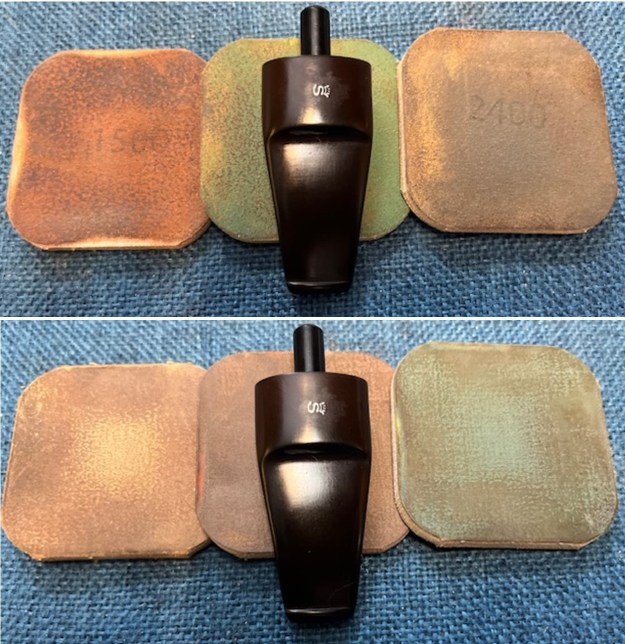
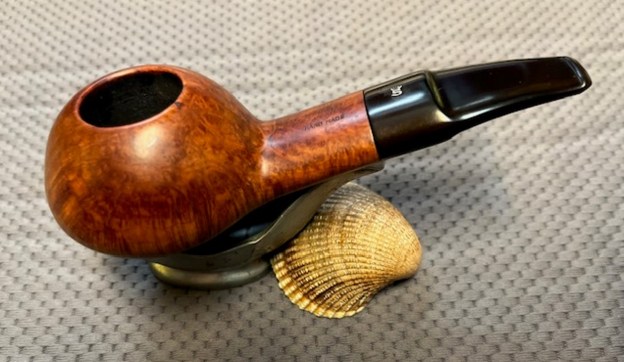
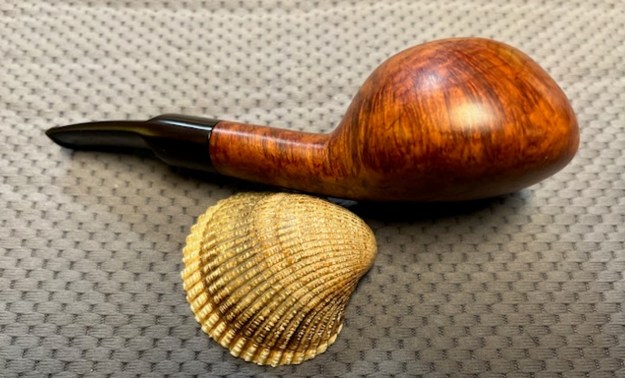
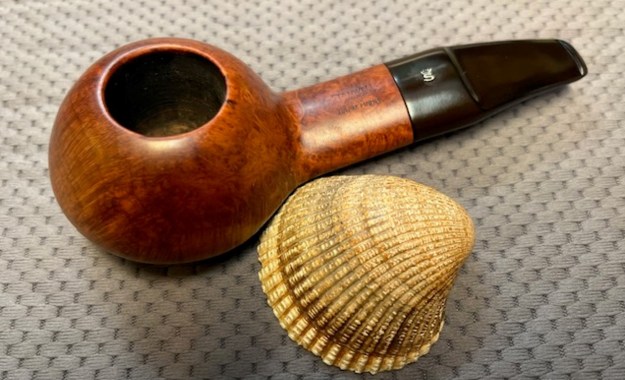
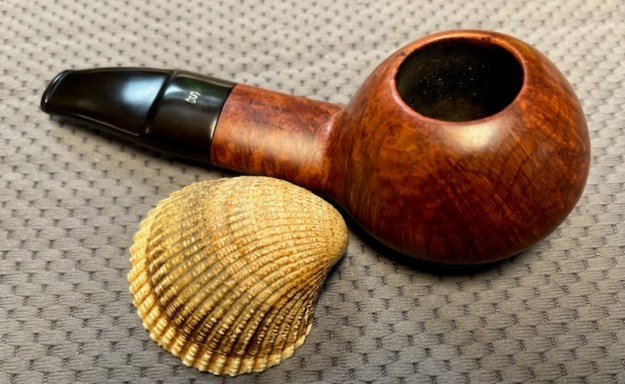
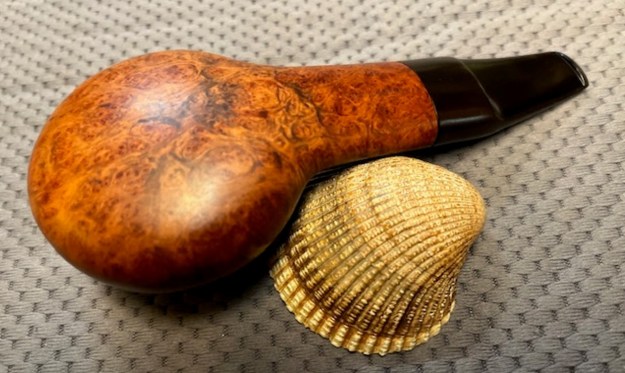
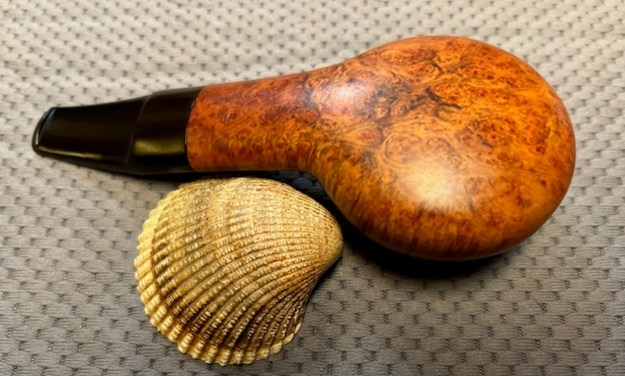
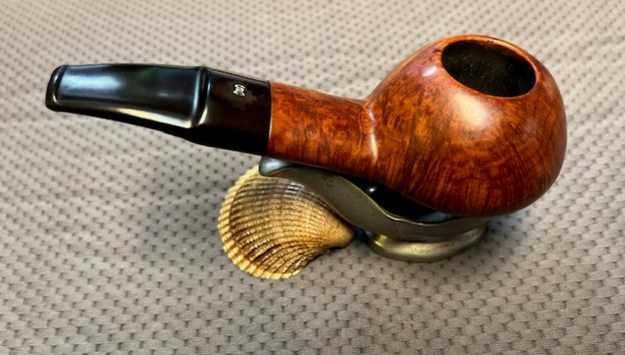
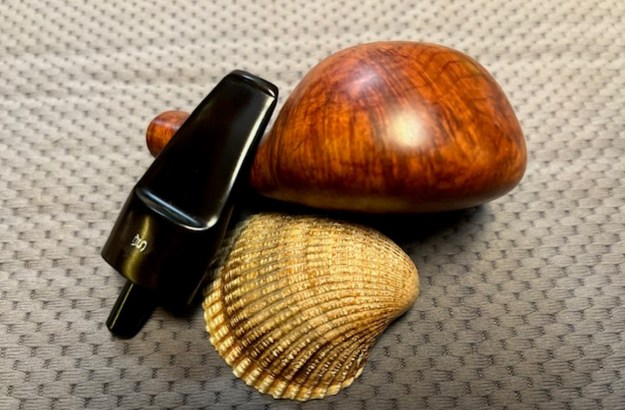
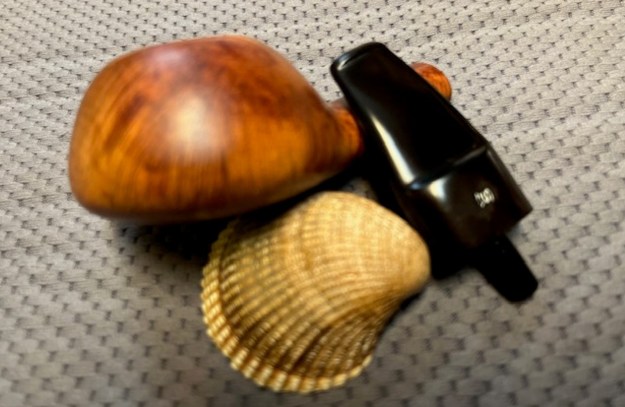
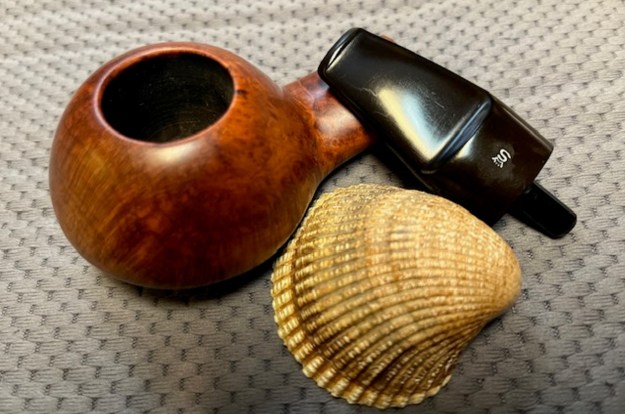
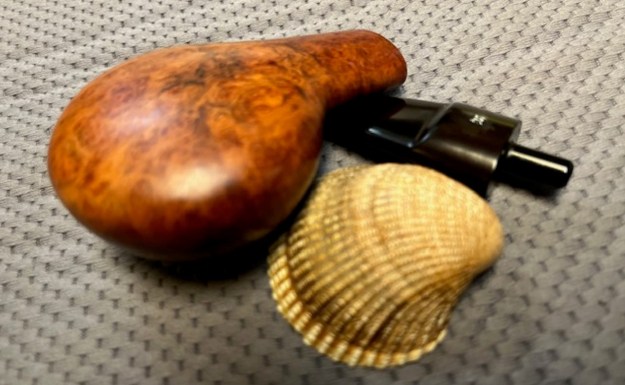
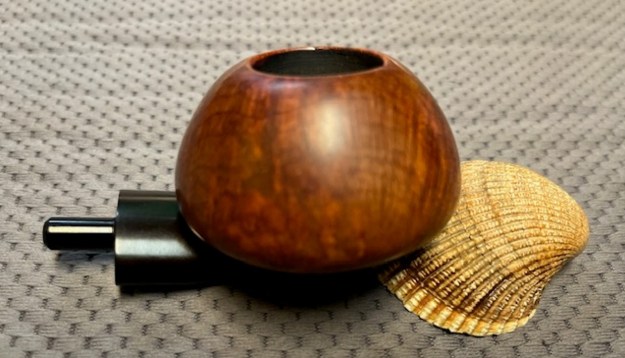
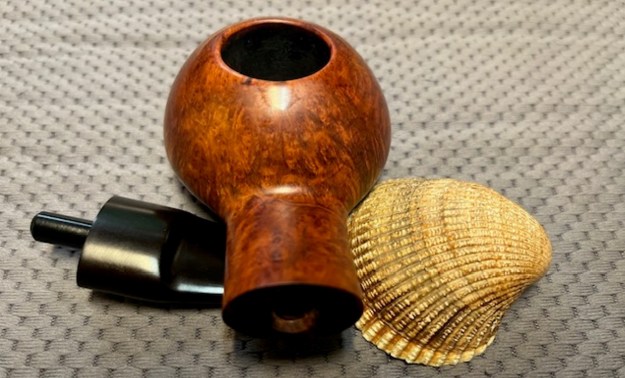
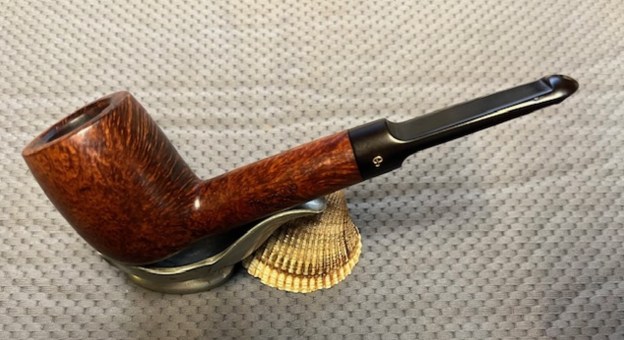
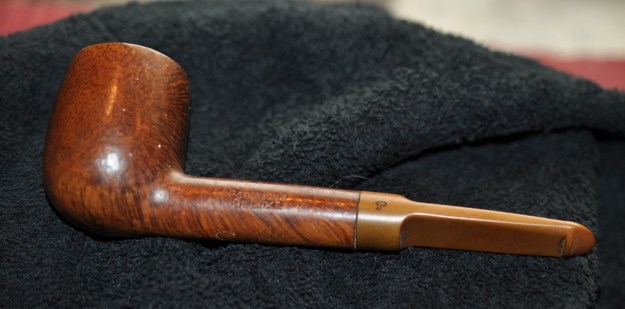
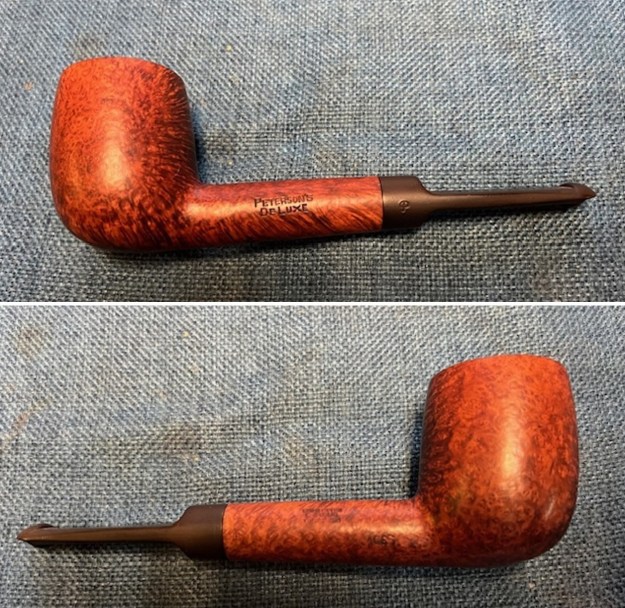
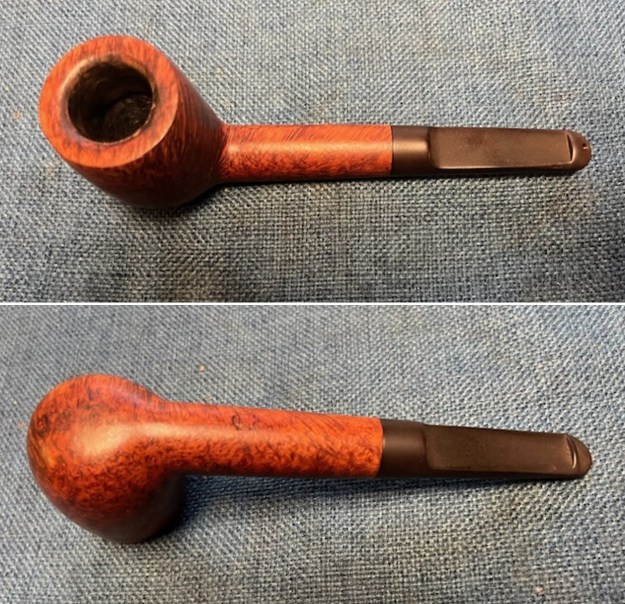
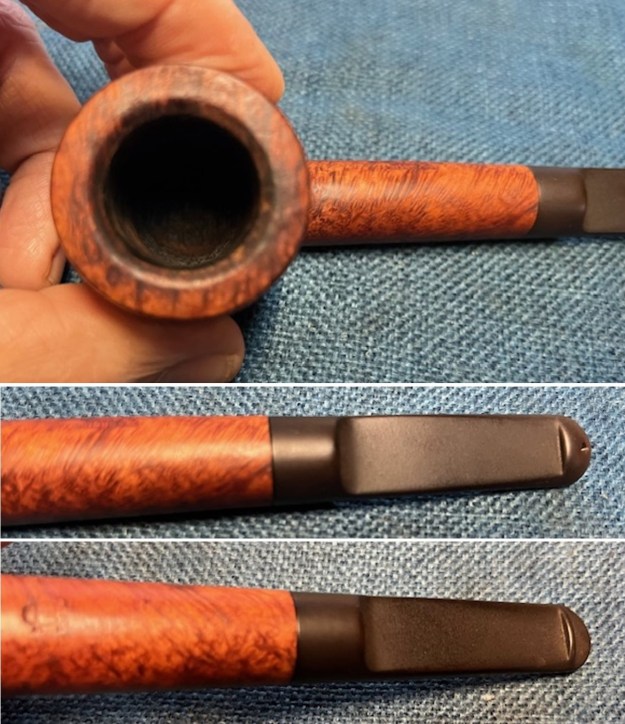
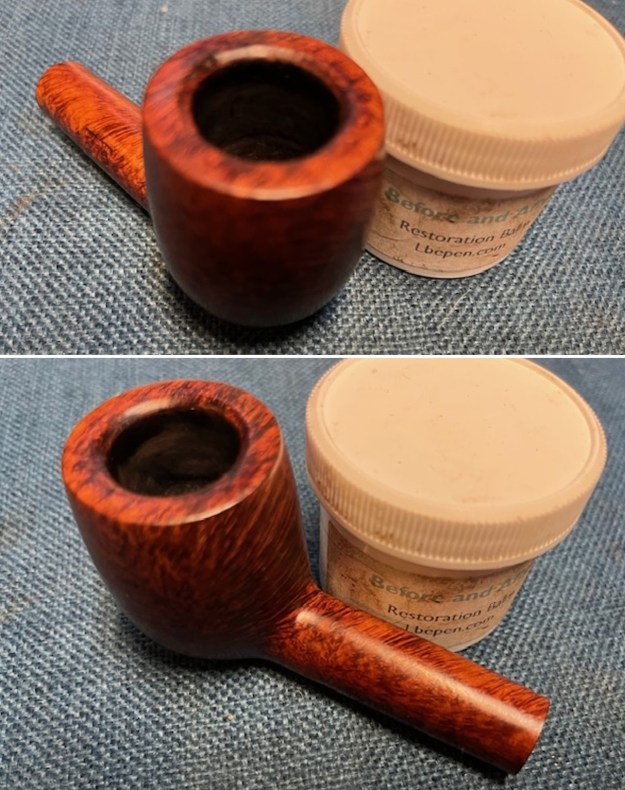
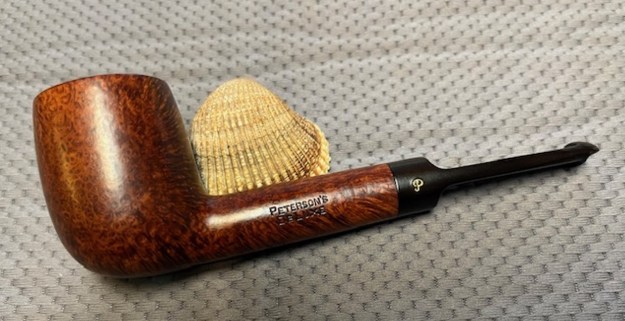
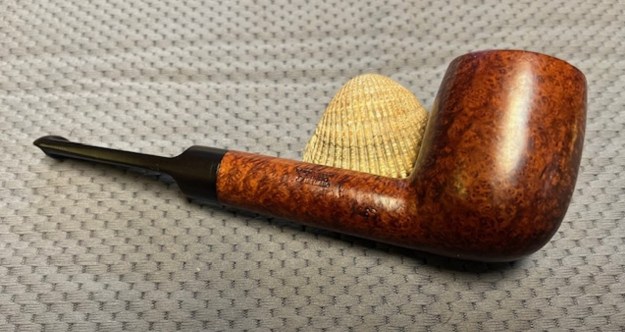
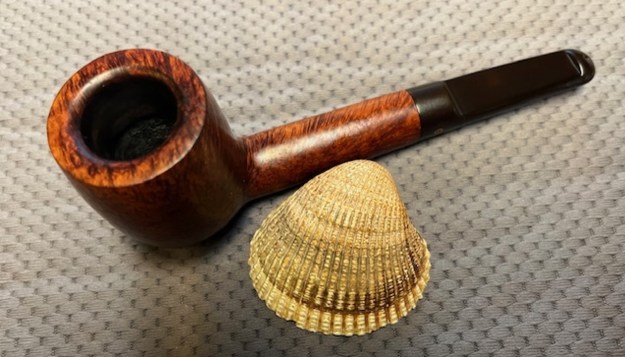
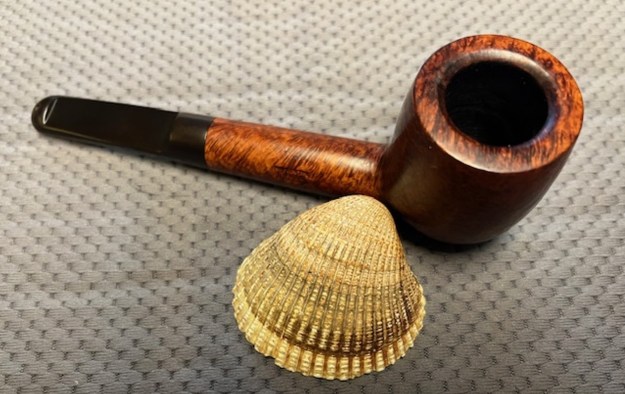
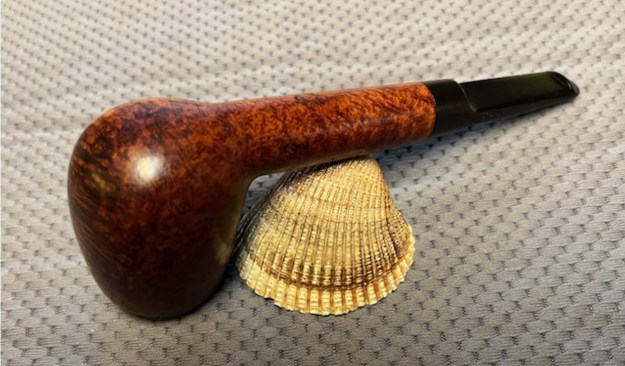
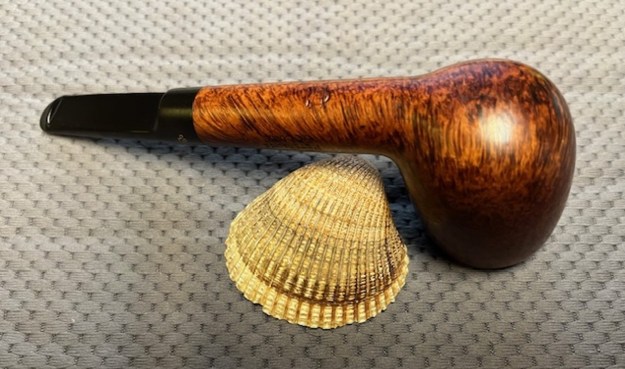
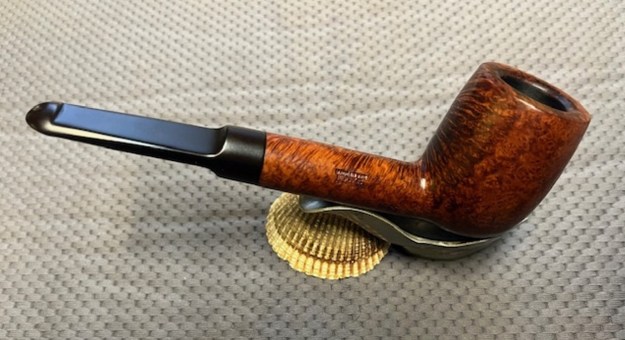
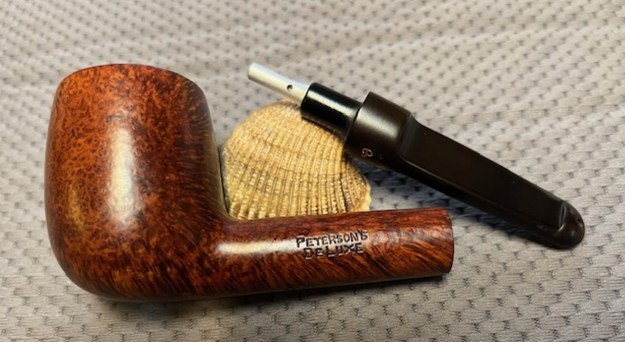
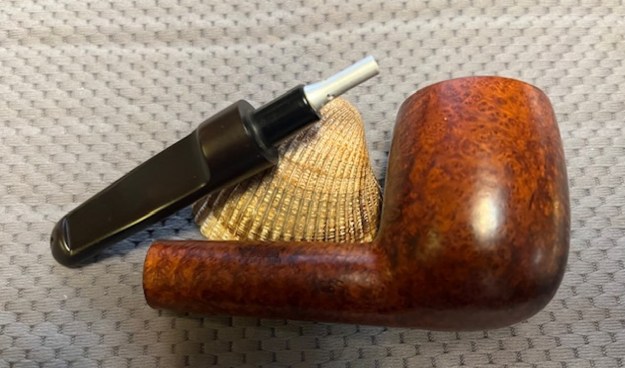
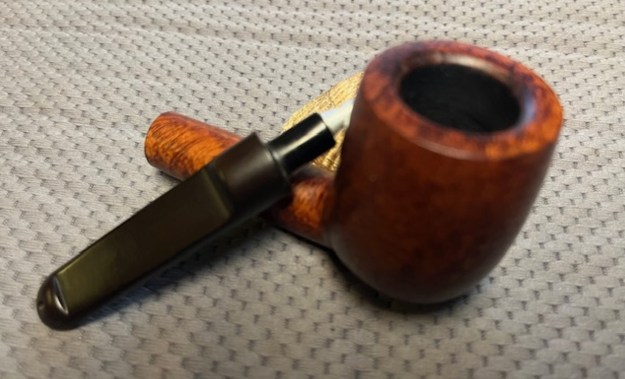
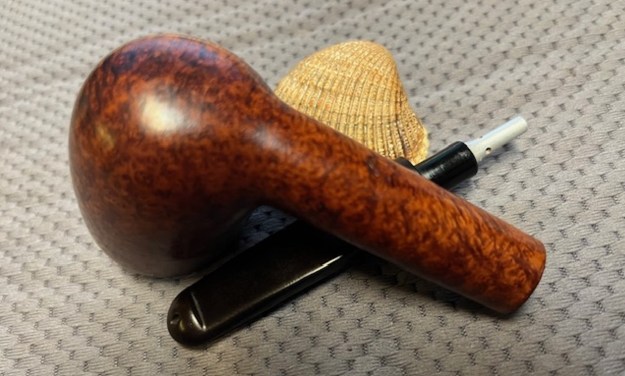
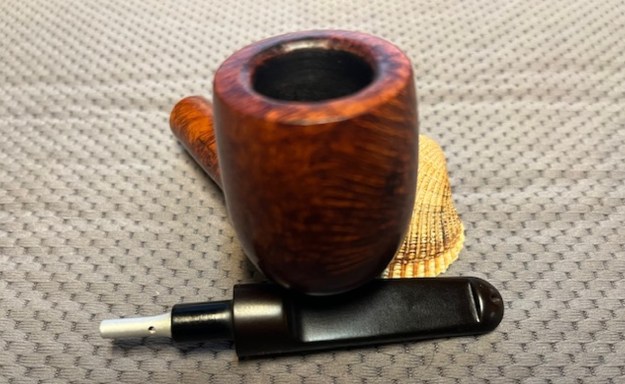
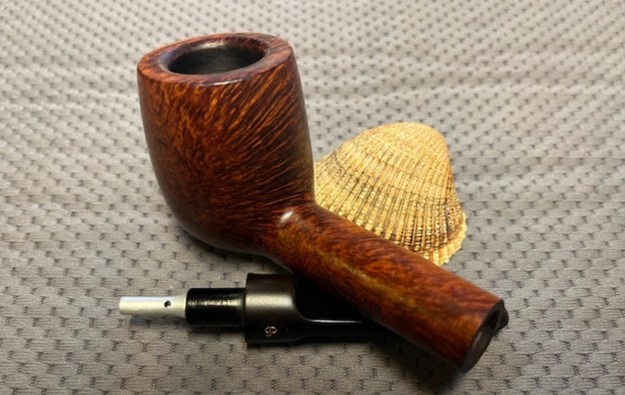
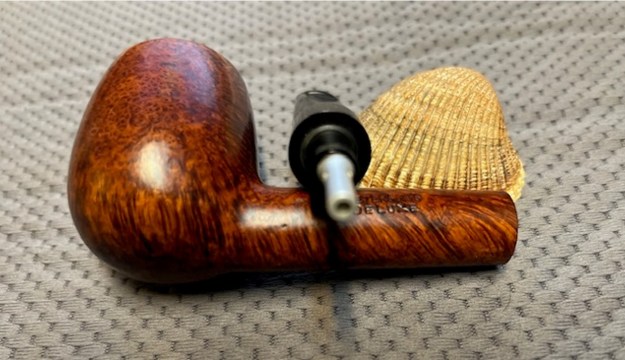
 This Sixten Ivarsson Designed Stanwell Regd. No. 969-48 Ukulele 91 with a vulcanite saddle stem is a great looking pipe now that it has been restored. The stain really highlights the grain and the polished finish is stunning. I put the stem back on the bowl and carefully buffed the pipe with Blue Diamond on the buffing wheel. I gave the bowl and the stem multiple coats of carnauba wax on the buffing wheel and followed that by buffing the entire pipe with a clean buffing pad. I hand buffed the pipe with a microfiber cloth to deepen the shine. The finished Stanwell Regd. No. 969-48 Ukulele 91 fits nicely in the hand and feels great. Give the finished pipe a look in the photos below. The dimensions of the pipe are Length: 5 ½ inches, Height: 1 ¼ inches, Outside diameter of the bowl: 1 ¼ inches, Chamber diameter: 7/8 of an inch. The weight of the pipe is 65 grams /2.33 ounces. I will be adding the pipe to the Danish Pipe Makers Section of the rebornpipes store. If you are interested in purchasing this pipe send me a message or an email.
As always, I encourage your questions and comments as you read the blog. Thanks to each of you who are reading this blog. Remember we are not pipe owners; we are pipe men and women who hold our pipes in trust until they pass on into the trust of those who follow us.




 rebornpipes