Monthly Archives: March 2022

An UNSMOKED Etched Gourd Calabash with a Porcelain Cup


Blog by Steve Laug

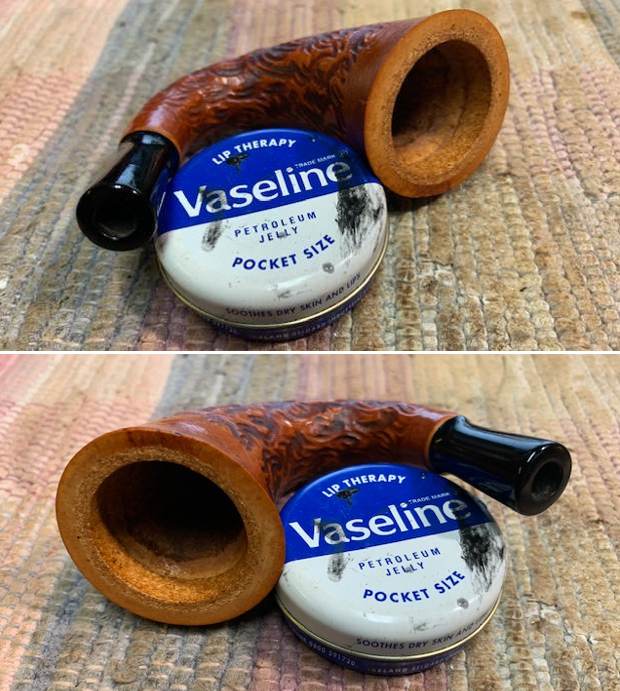
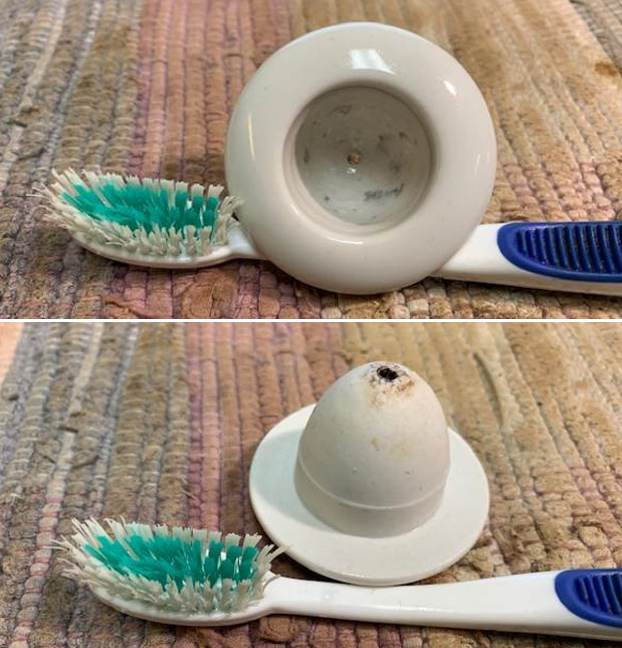
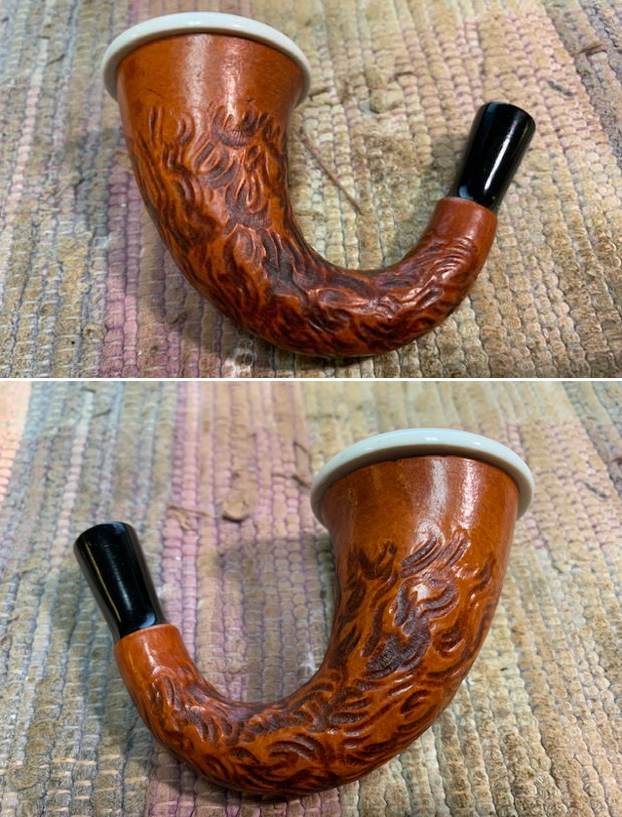
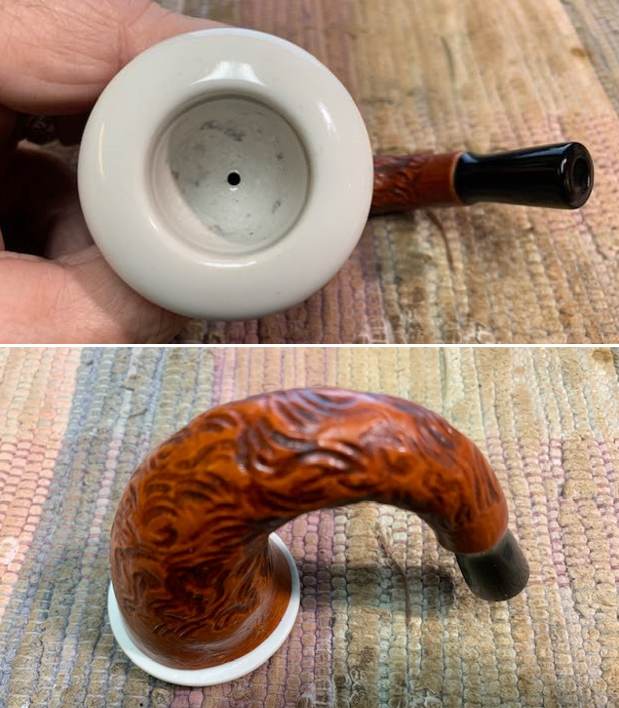
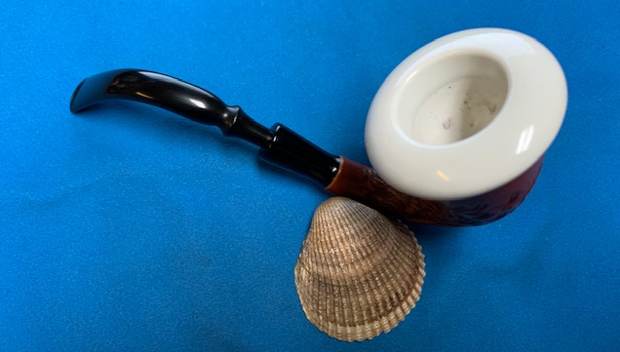
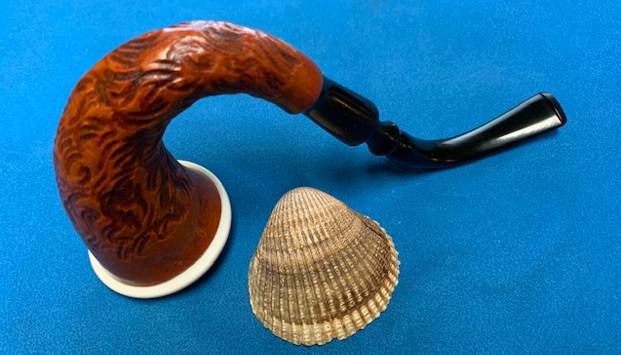
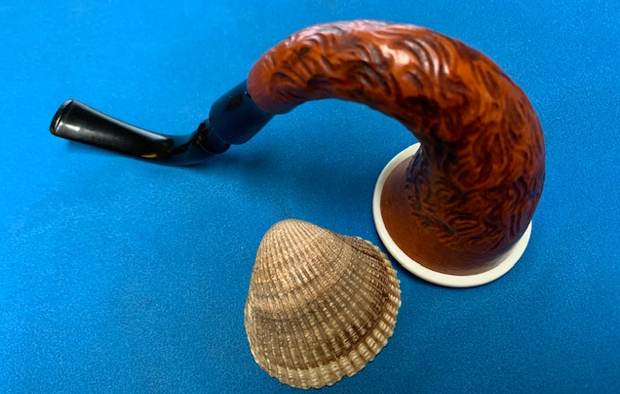
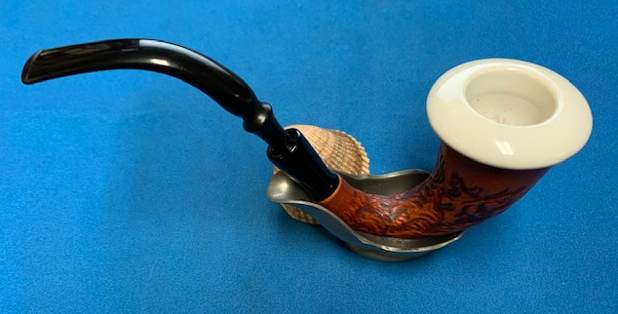
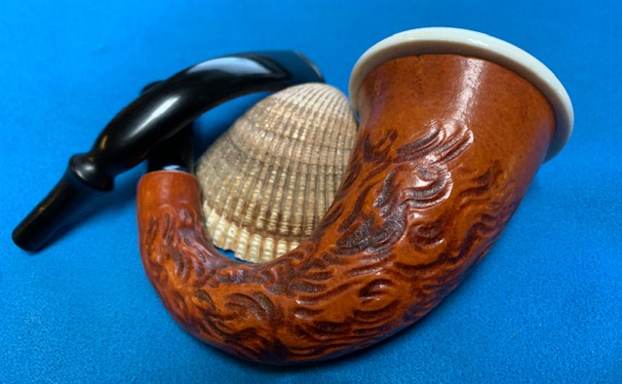
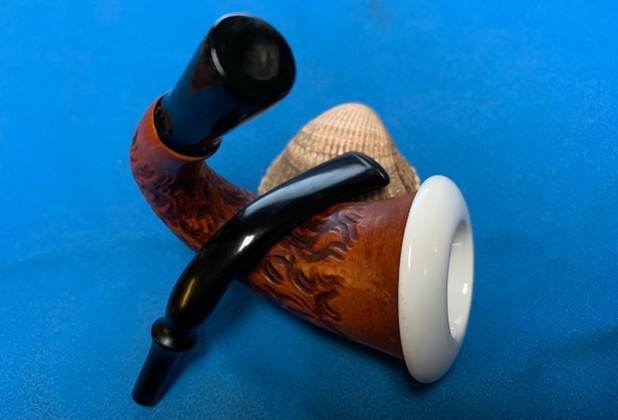
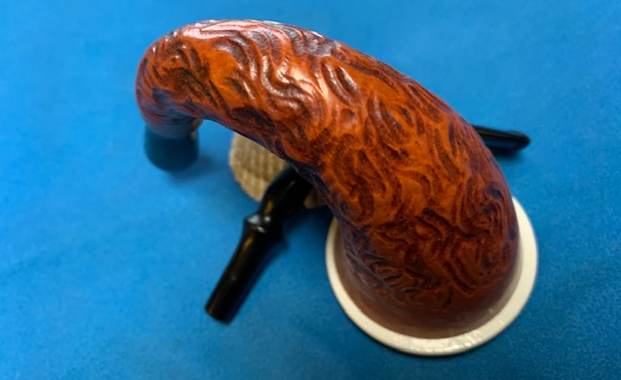
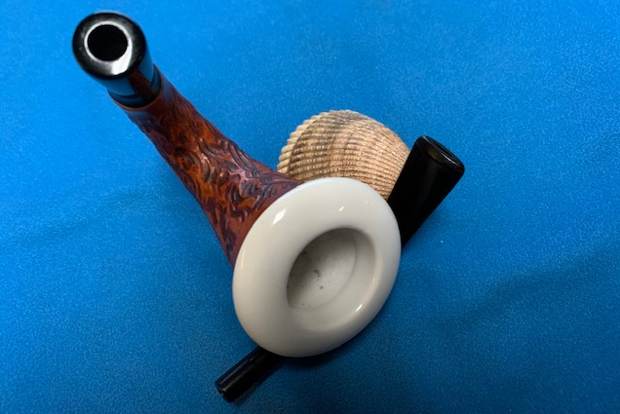
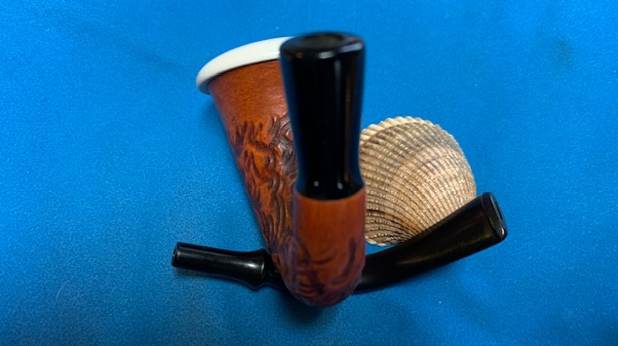
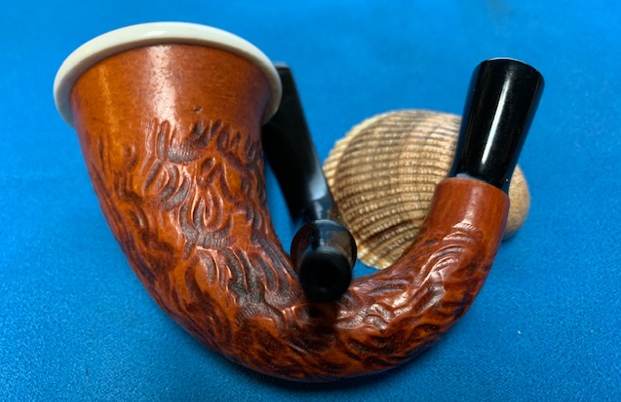
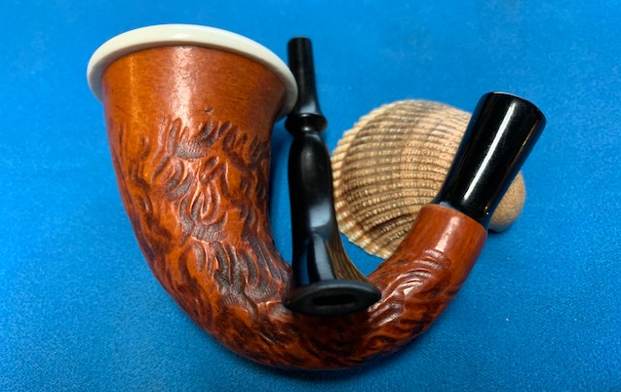
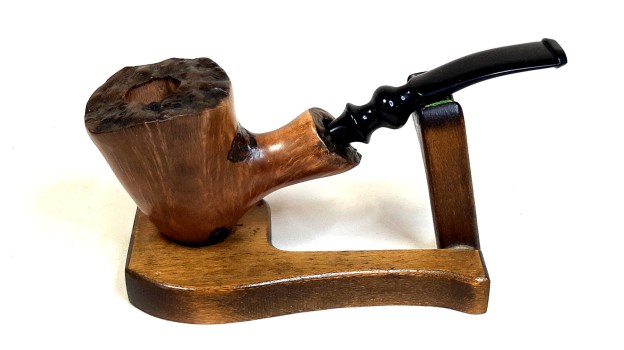
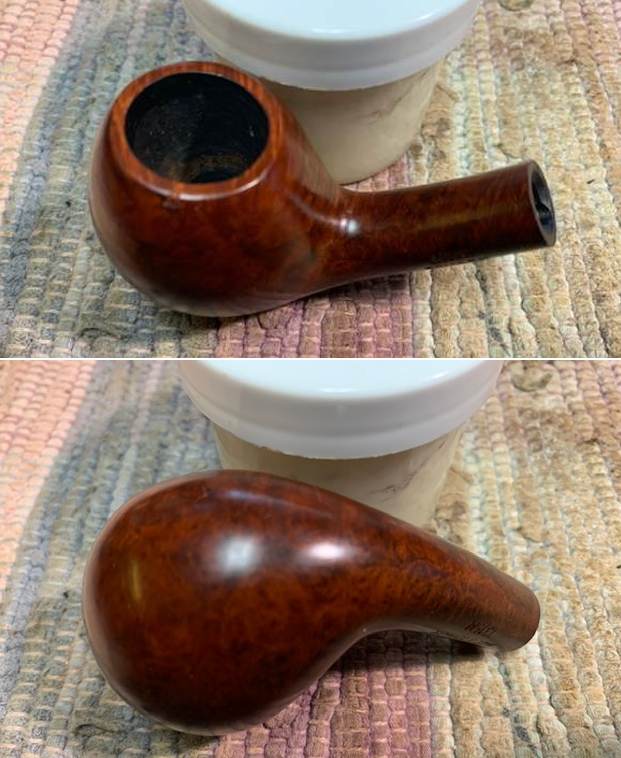
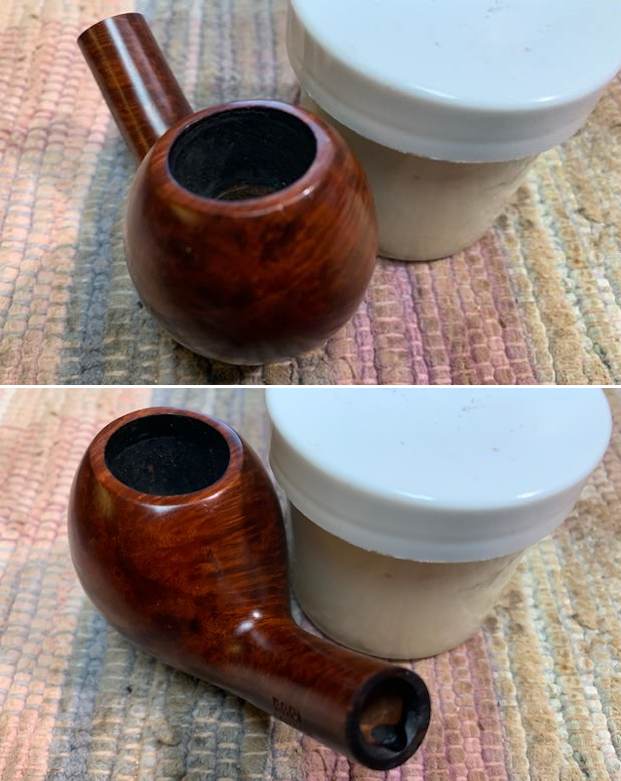
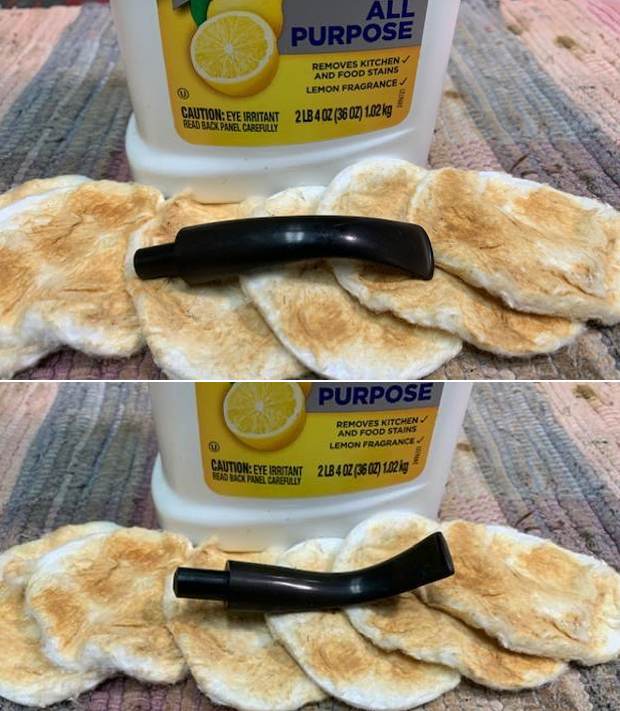
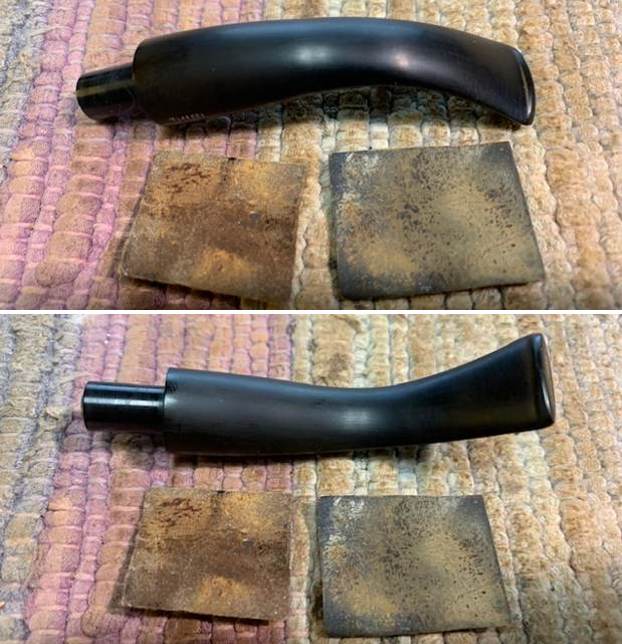
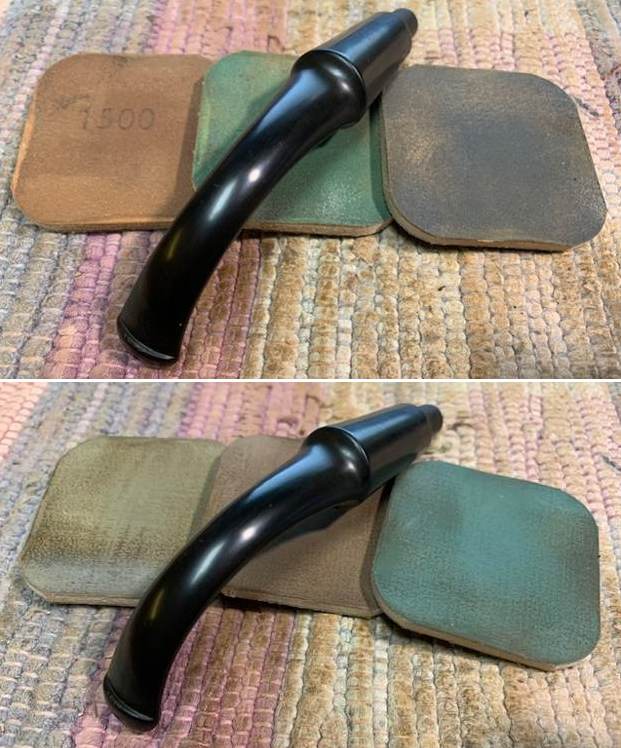
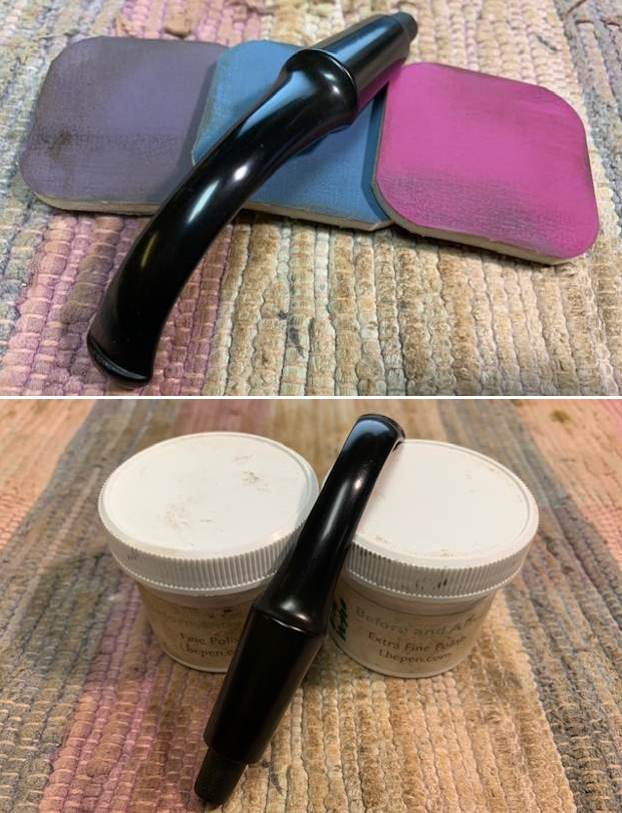
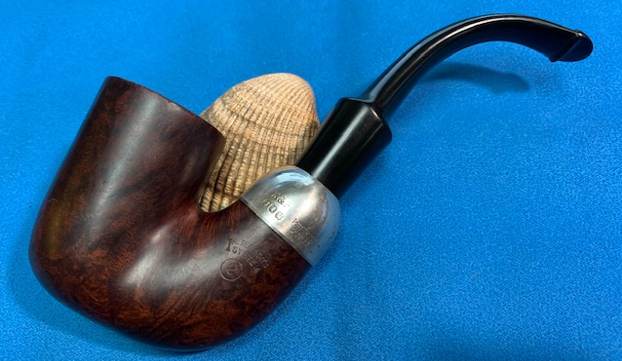
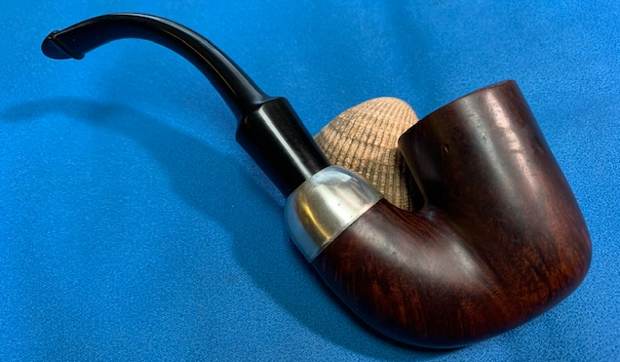
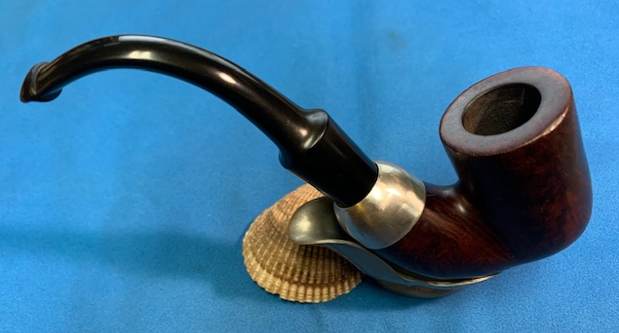
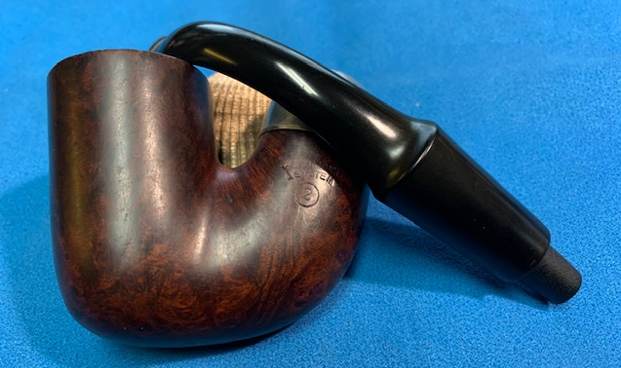
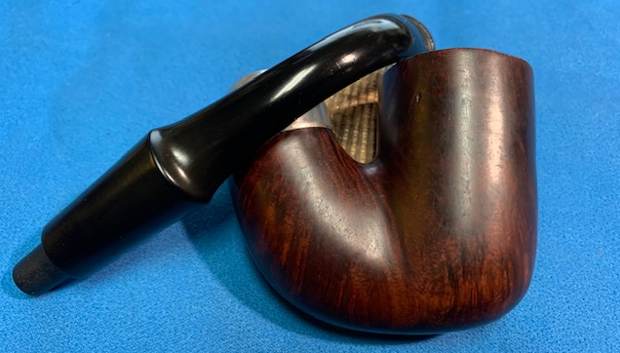
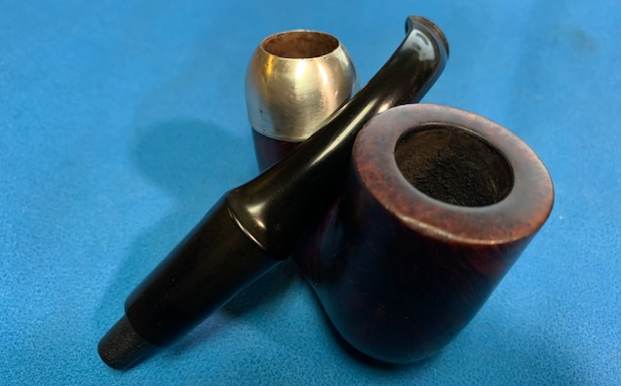
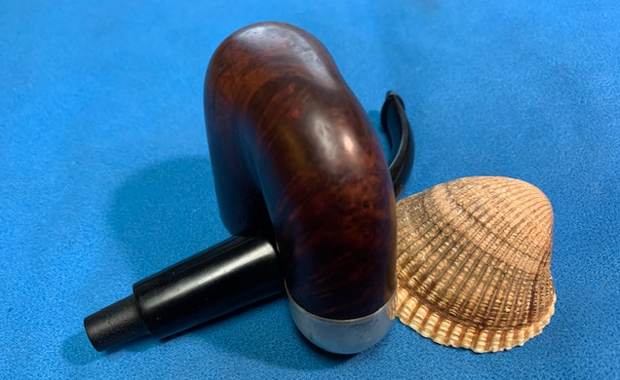
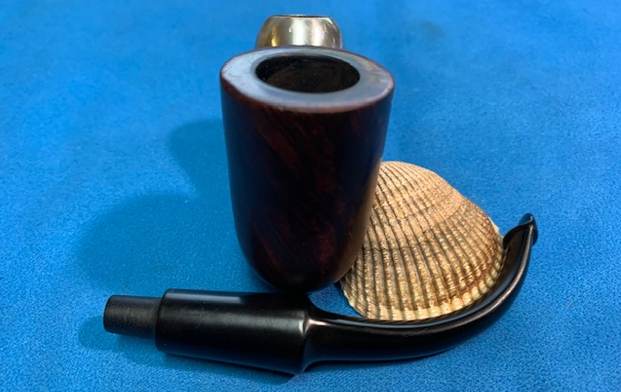
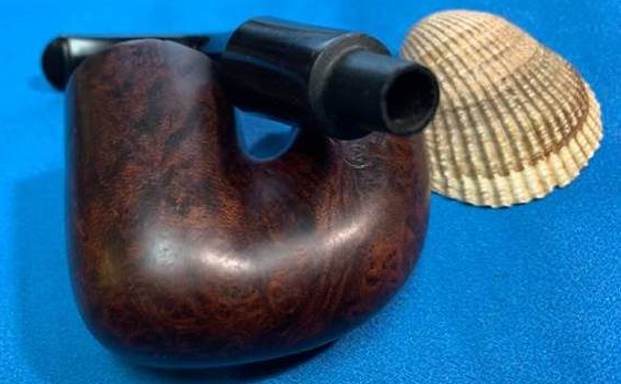
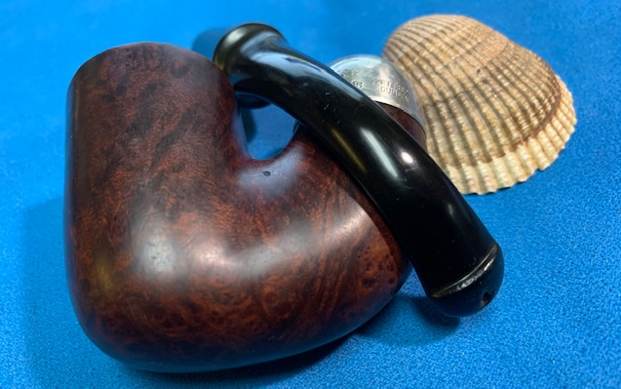
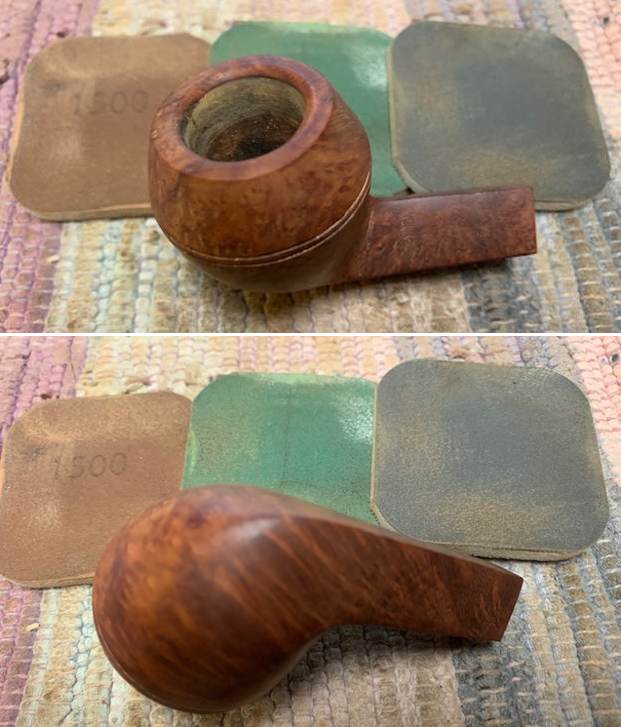
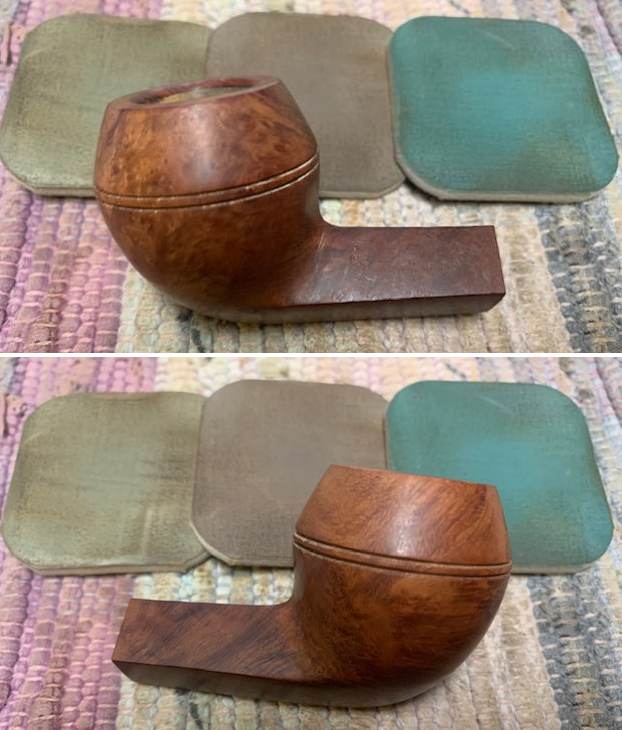
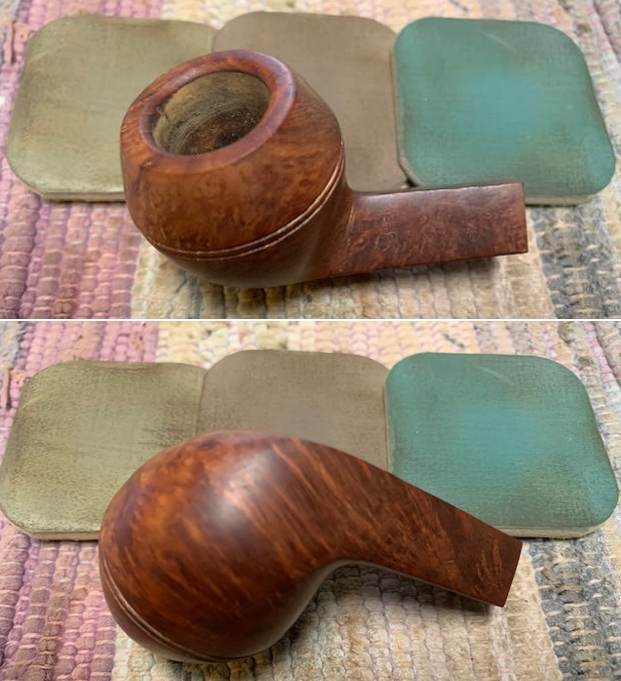
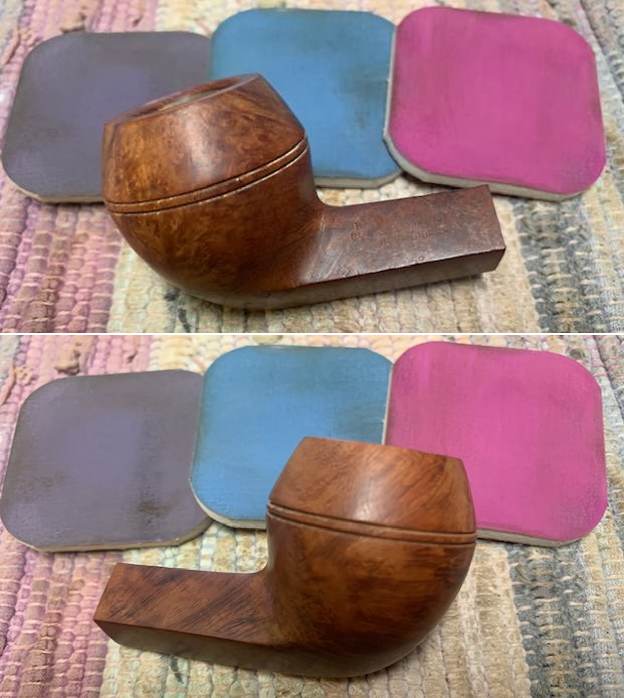
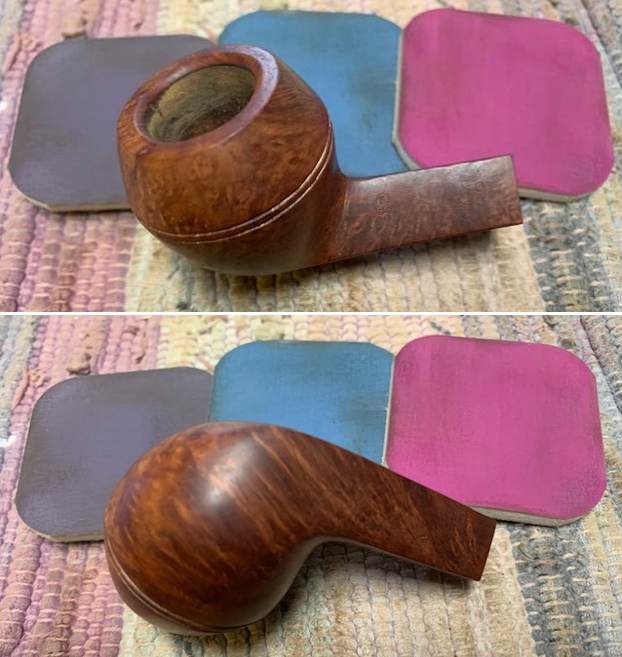
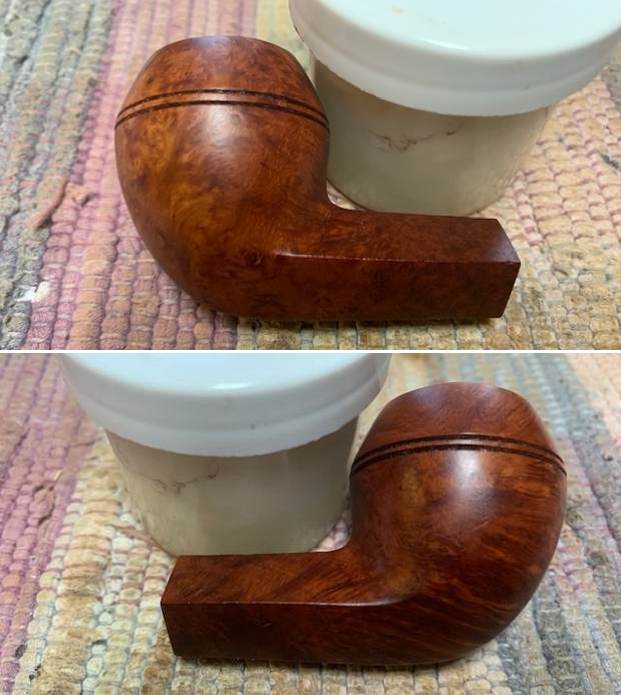
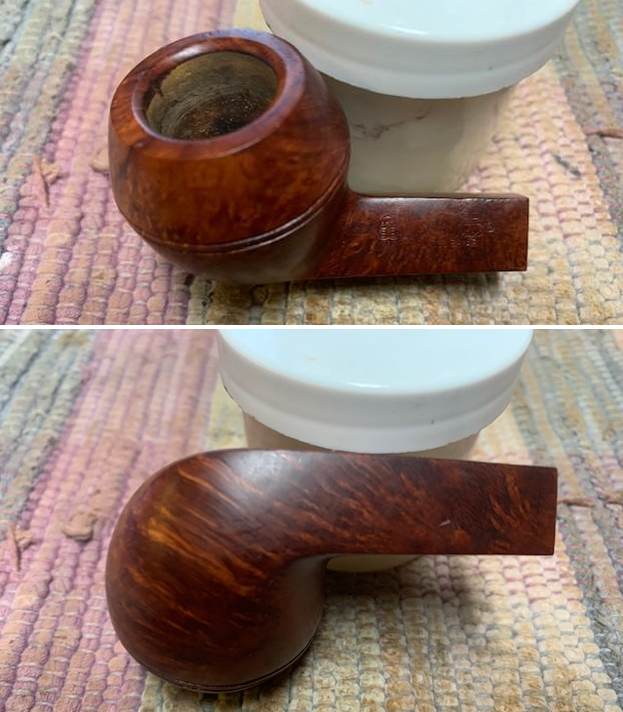
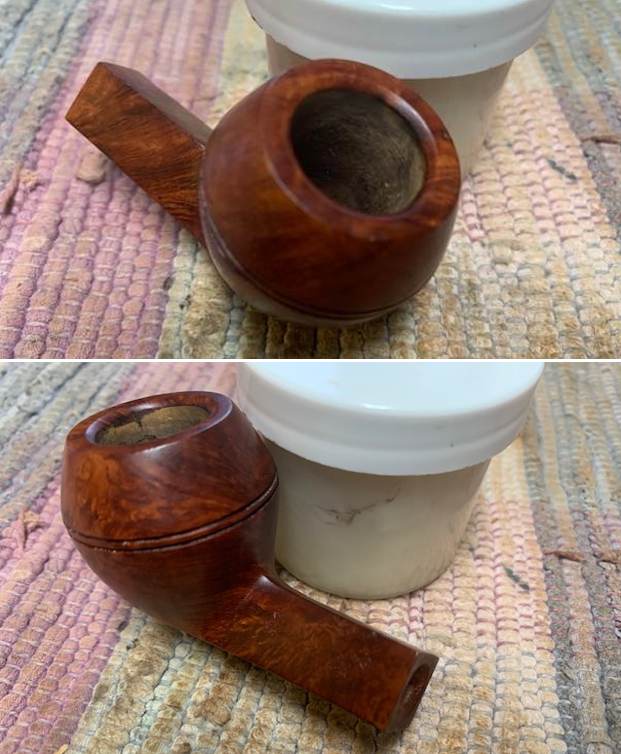
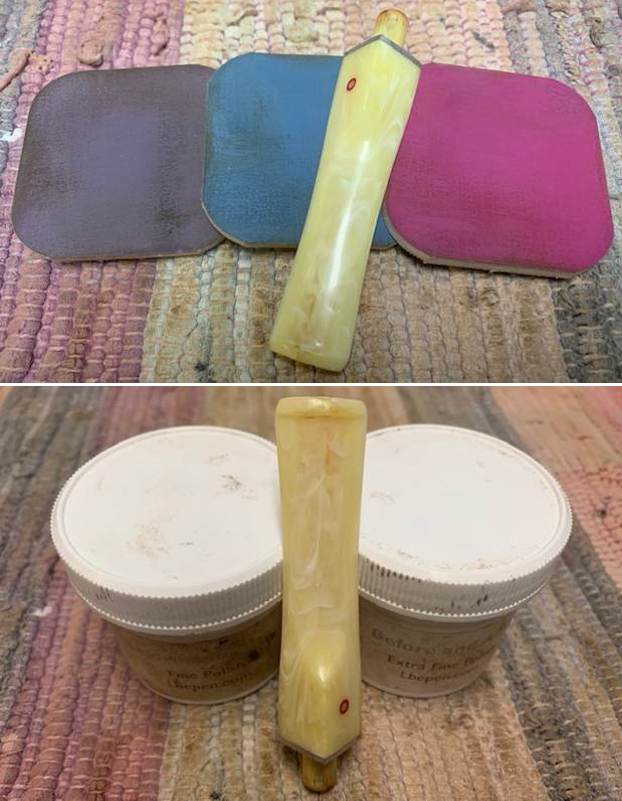
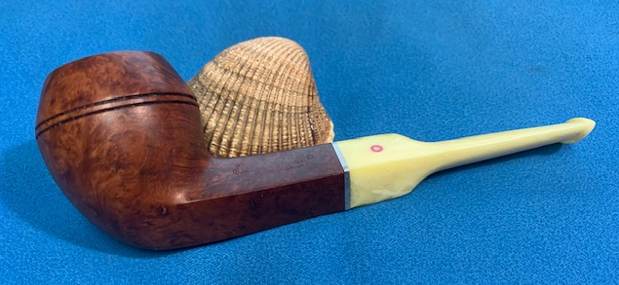
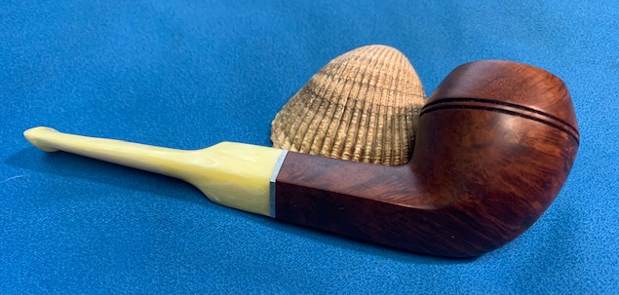
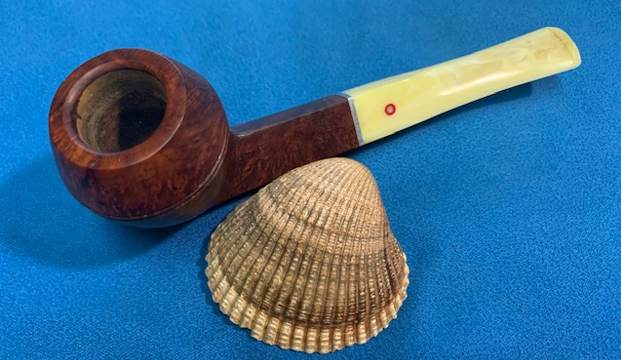
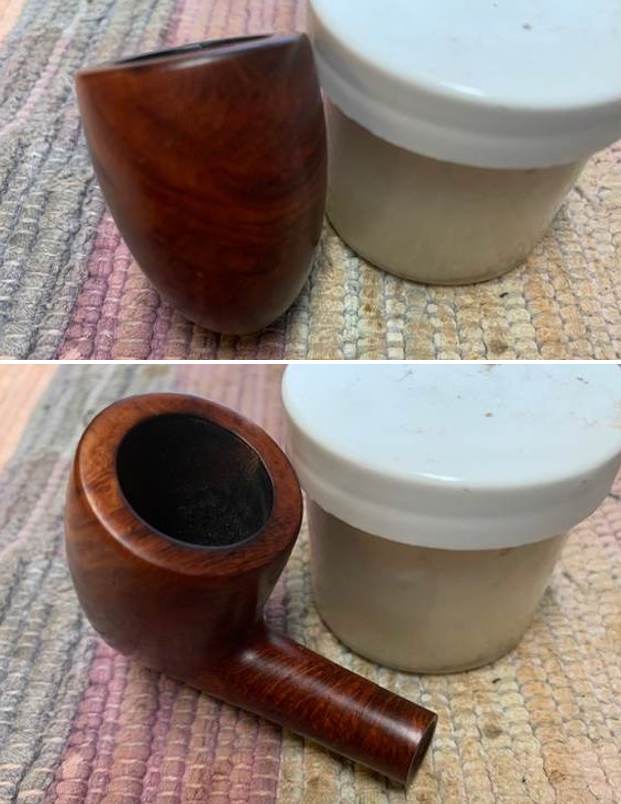
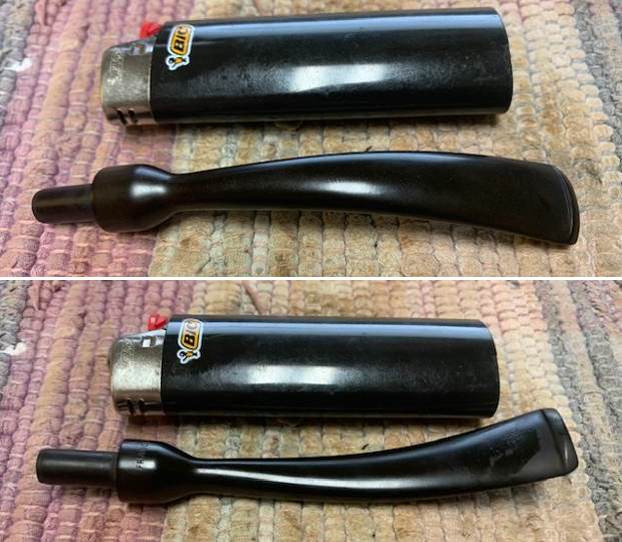
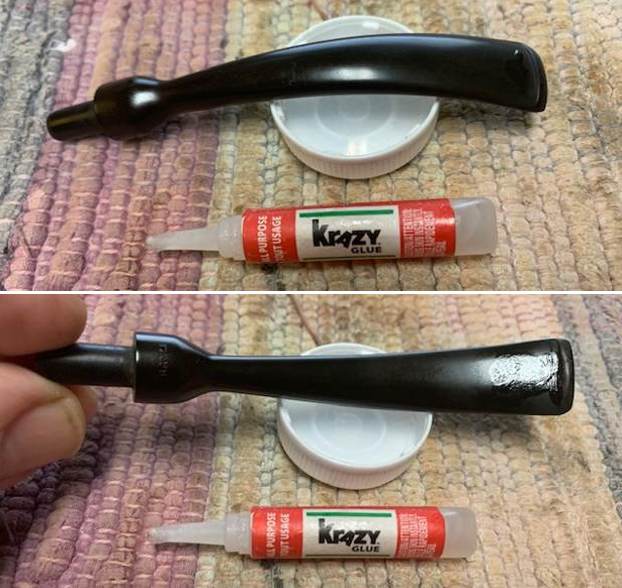
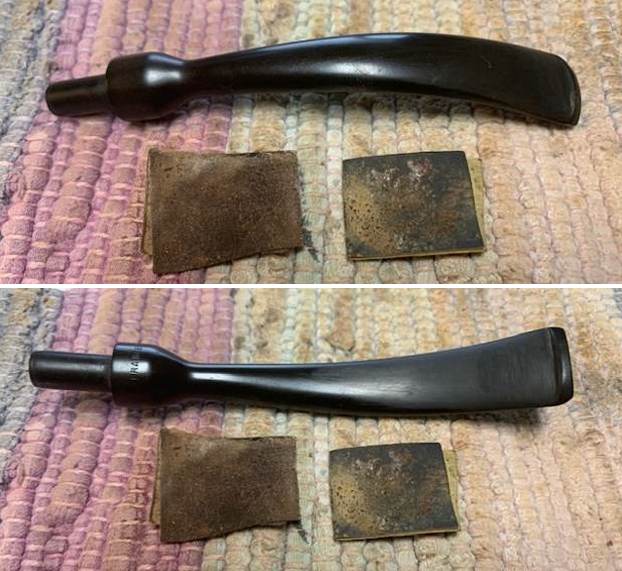
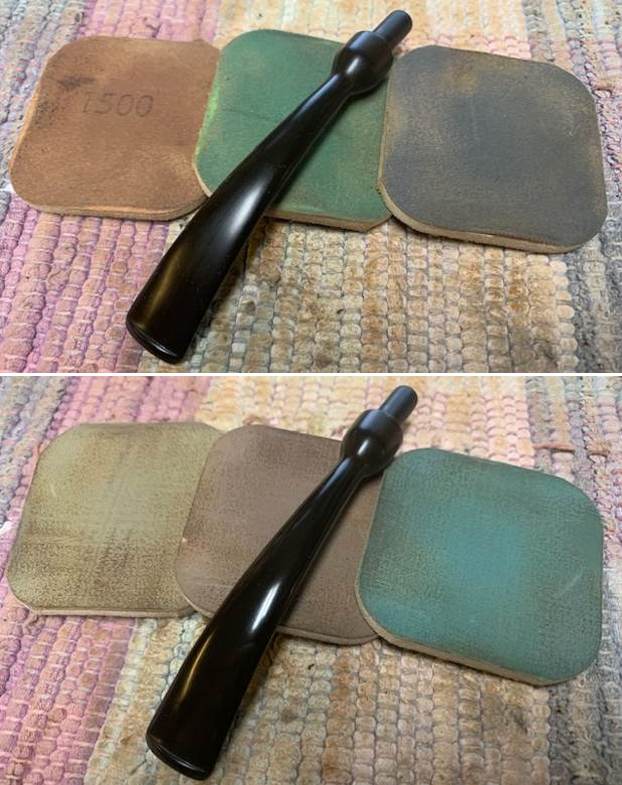
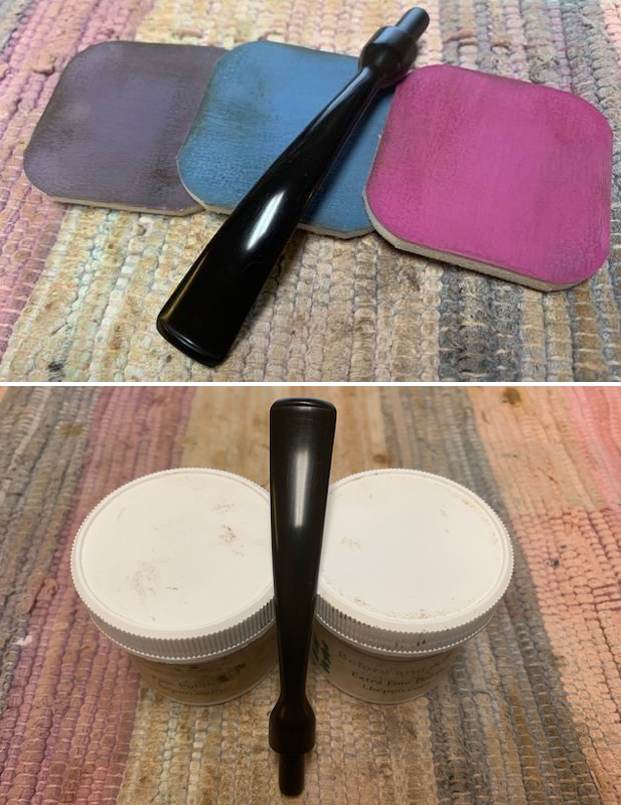
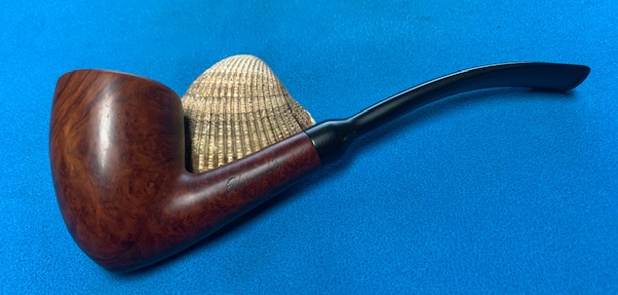
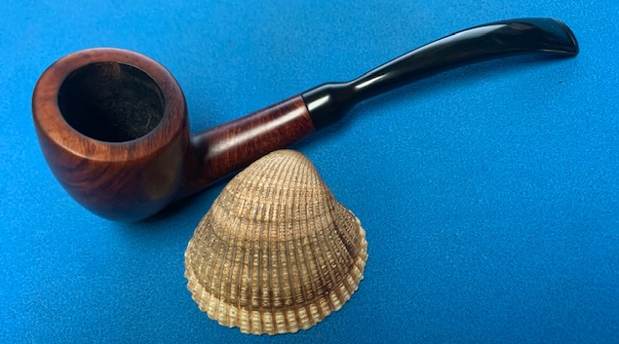
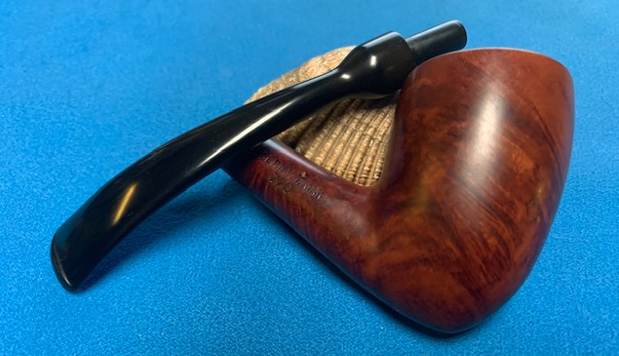
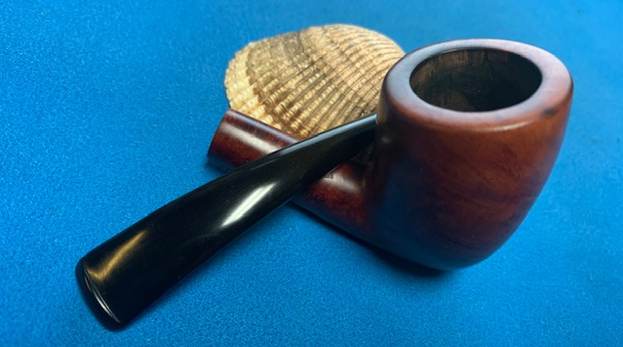
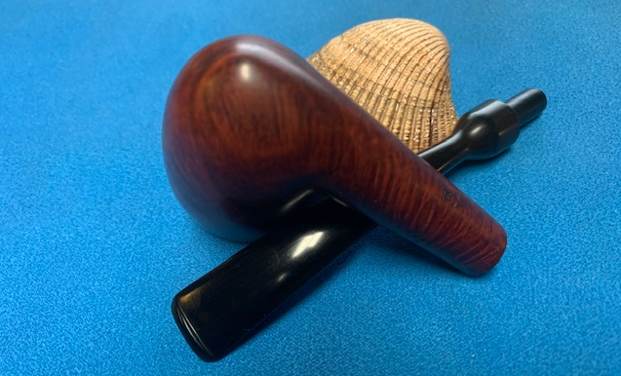
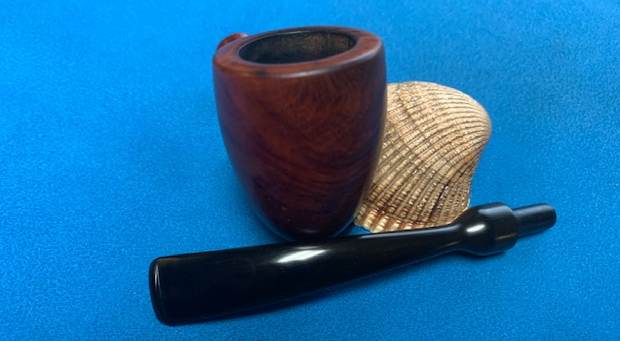
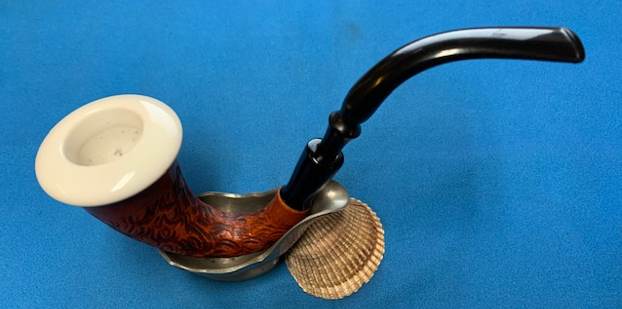
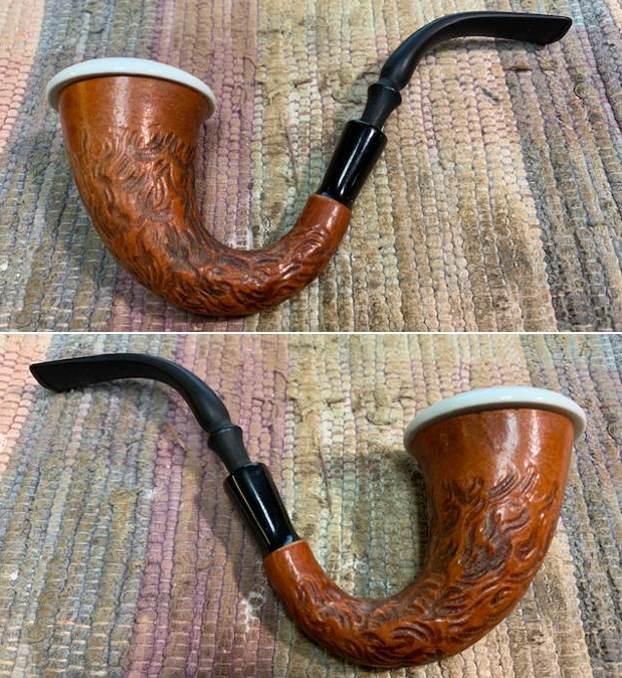
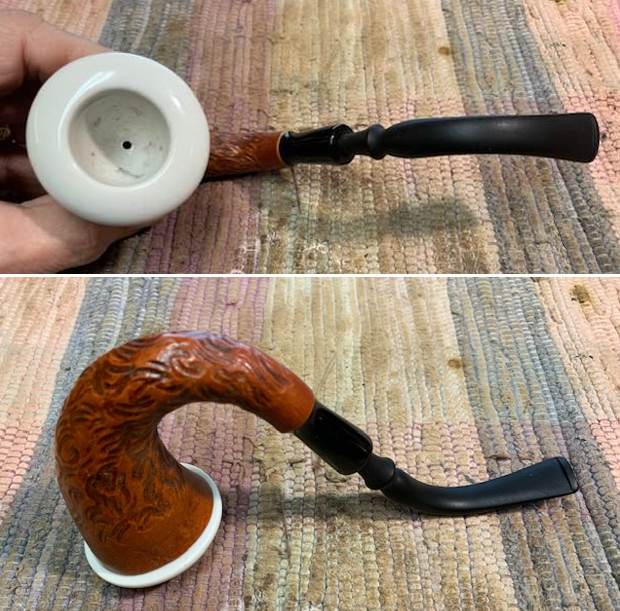
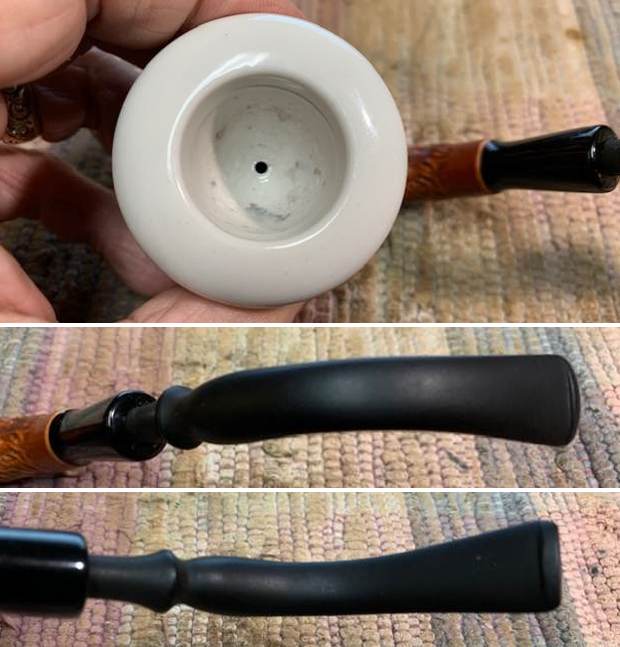
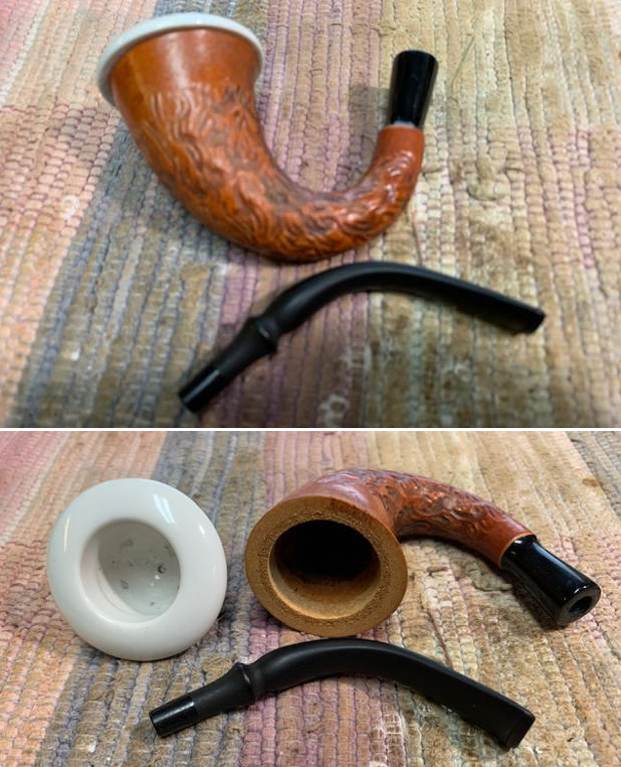
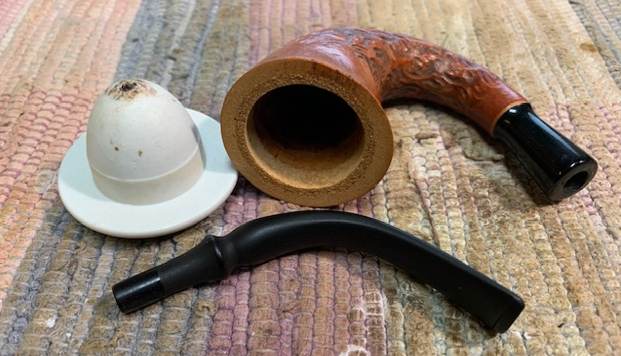
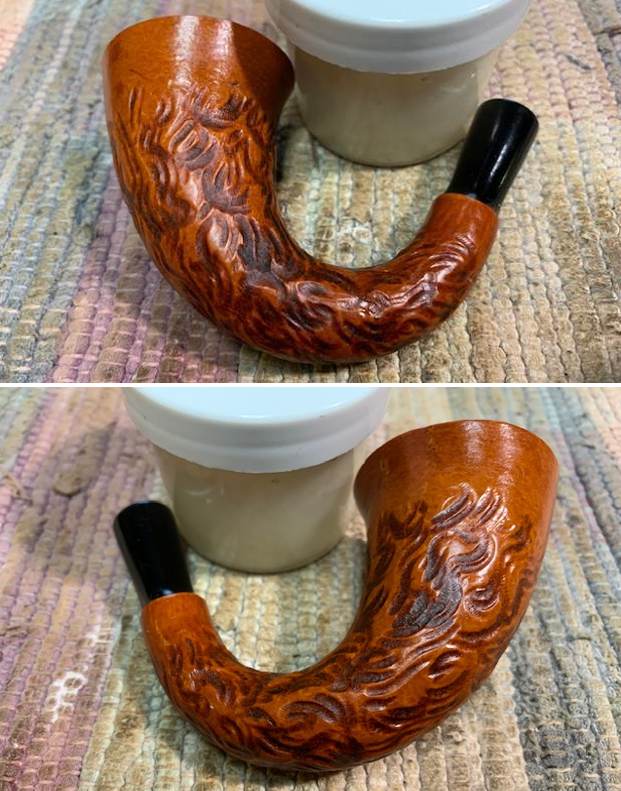
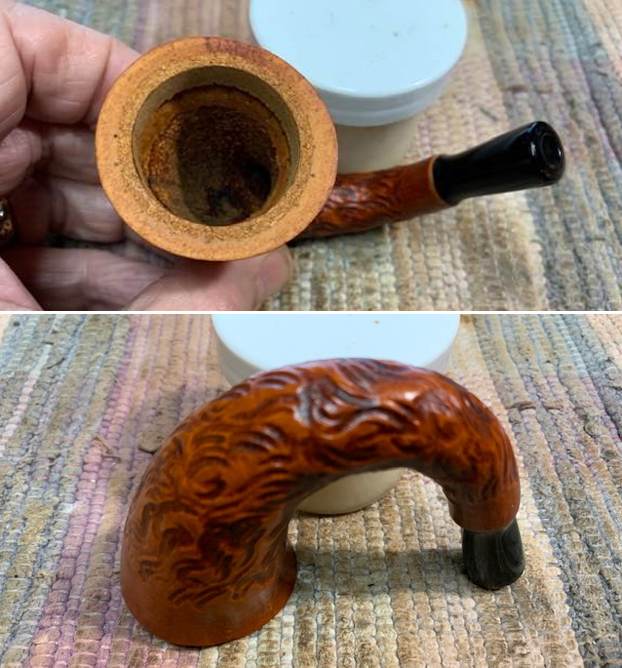
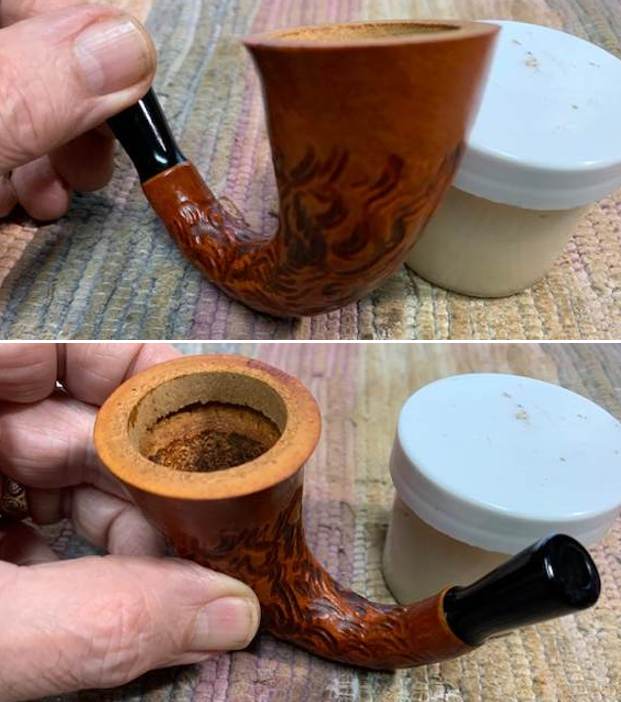
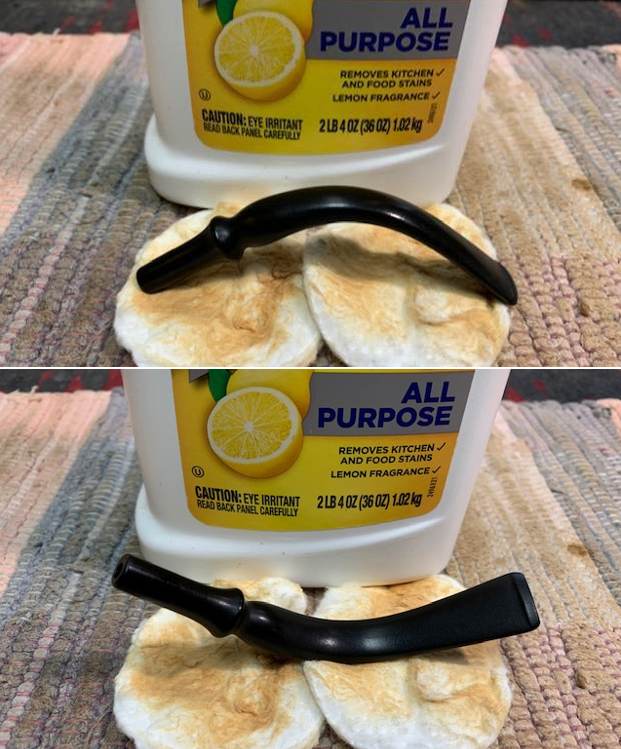
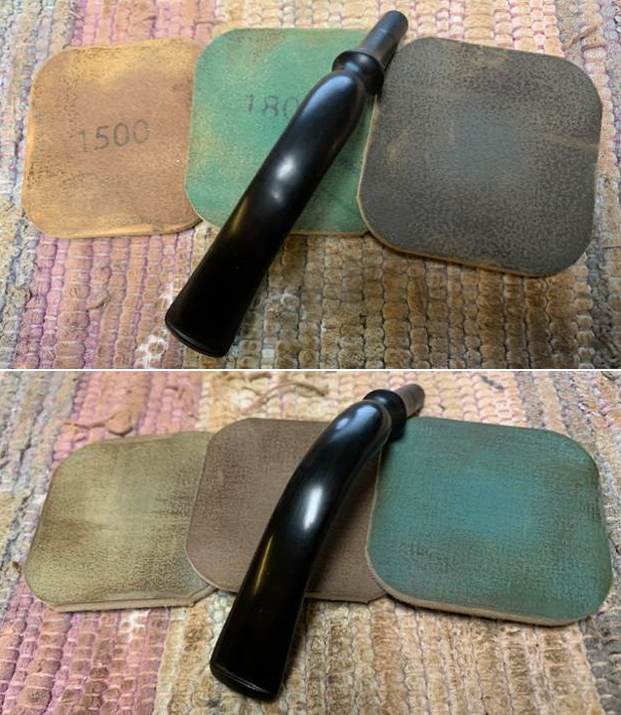
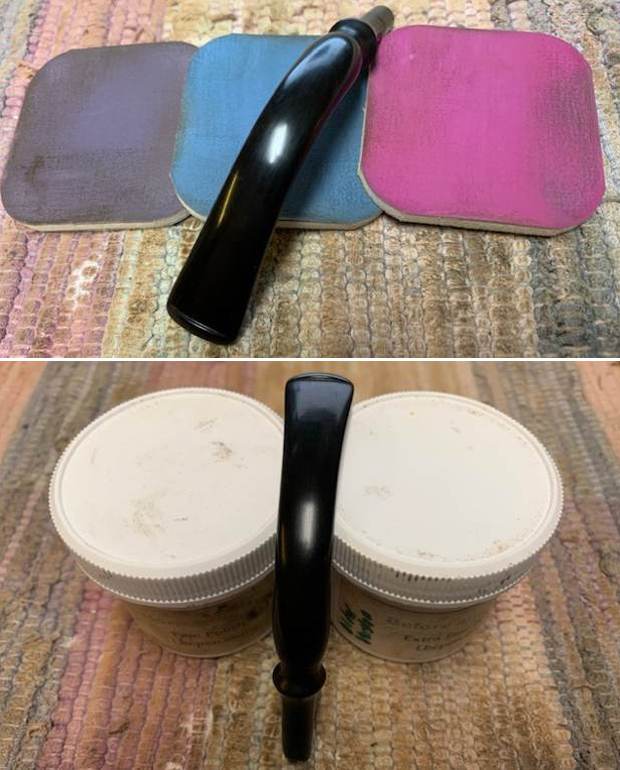
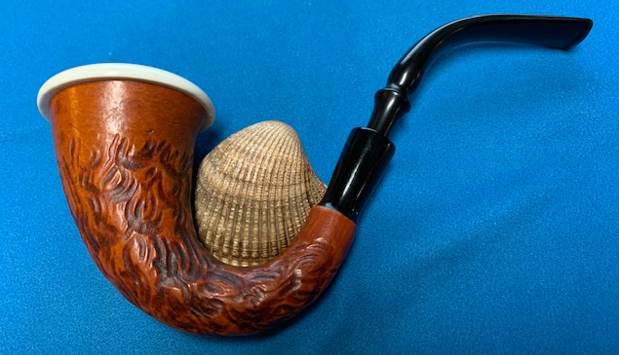
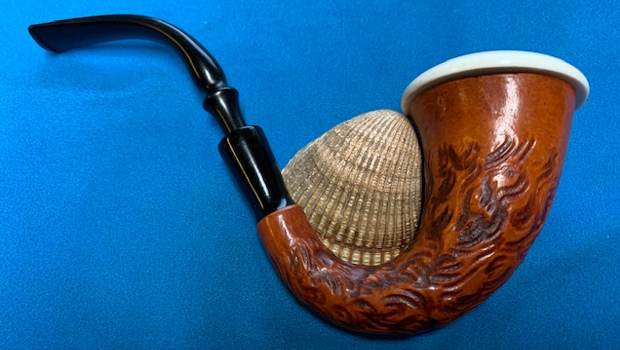
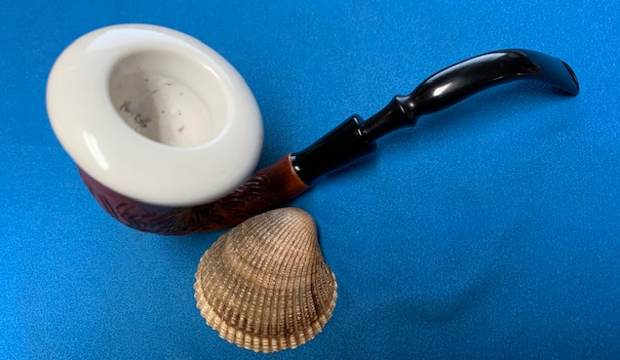
The next pipe on the table to refresh and refurbish is a smaller sized Gourd Calabash. It has the stem and shank extension that make it look like it was made by Pioneer but there is no way of knowing as it is unstamped. It is UNSMOKED/NOS but dirty and tired looking from sitting around for a long time. The gourd is etched around the sides with wavy almost hair like carving. The shank extension appears to be acrylic. The bowl is clean other than dust and some marking on the inside of the cup and on the bottom unglazed portion from storage. It is unsmoked and the inside of the Gourd is very clean. The cup in the Gourd is no meerschaum and to me looks and feels like it is porcelain. There is some thought that these bowls were composite but this one has the feel of porcelain. The fancy turned stem is oxidized and has some scratches on the surface from all the traveling it has done. I took photos of the pipe before I started my refurbishing work. I took some photos of the rim top and bowl. You can see the scuffs in the bottom portion of the bowl but it is clean just marred. The edges and cap on the bowl look very good. The glaze is intact and there is no damage. The stem photos show the oxidation in the vulcanite and is coarse to the touch. It will need to be polished and buffed. I took the stem off the shank and took a photo of the pipe. I also took the cup out of the Gourd to show the interior of the bowl and underside of the cup. It really is a nice looking pipe. I worked some Before & After Restoration Balm into the finish of the gourd with my fingertips and a horsehair shoe brush to clean, enliven and protect it. I find that the balm really makes the bowl come alive again. The contrasts in the etched surface and the smooth portion really gave the gourd a sense of depth. I let the balm sit for 10 minutes and then buffed with a cotton cloth to raise the shine. The bowl really looks good at this point. I used some Vaseline Petroleum Jelly to refresh the cork gasket around the inside of the bowl. The Vaseline enlivens the cork and gives back it flexibility. The soften cork nicely holds the cup in place snugly.I scrubbed the inside of the bowl with gentle dish soap and a tooth brush to try and remove the marks on the inside and outside of the bowl. While I could not remove all of the marks I was able to lessen them.I put the cup back in the gourd and took photos of the way that it looked after the work on the cup and the exterior of the gourd. It really is a nice looking little Gourd Calabash. To deal with the oxidation on the stem I scrubbed it down with cotton pads and Soft Scrub Cleanser and was able to remove the remaining oxidation. It looked better.I polished the stem with micromesh sanding pads – wet sanding it with 1500-12000 grit pads. I wiped the stem down after each pad with a cloth impregnated with Obsidian Oil. I polished it further with Before & After Pipe Stem Polish – both fine and extra fine. I gave it a final coat of Obsidian Oil and set it aside to dry. With refurbishing the final moment when all the pieces come back together is the tell all! I put the pipe back together and buffed the gourd and the stem with Blue Diamond. I gave the gourd and the stem multiple coats of carnauba wax. I buffed the those parts with a clean buffing pad to raise the shine. I hand buffed it with a microfiber cloth to deepen the shine. I put the cup back in the gourd and hand buffed the finished pipe. It is fun to see what the polished bowl looks like with the smooth finish and the black fancy vulcanite stem. This Small Gourd Calabash with a Porcelain Bowl is light wight and it is ready for you to load up a tobacco of preference and enjoy breaking it in for yourself. Have a look at it in the photos below. The dimensions are Length: 7 inches, Height: 2 ¾ inches, Outside diameter of the bowl (cup): 2 inches, Chamber diameter: 1 inch. The weight of the pipe is 57 grams/2.01 ounces. This is one that will go on the American Pipemakers section of the rebornpipes online store shortly. Thanks to each of you who are reading this blog. Remember we are not pipe owners; we are pipemen and women who hold our pipes in trust until they pass on into the trust of the next generation.
A New Brand for me – an Unsmoked Freehand Stamped Cassel 02


Blog by Steve Laug

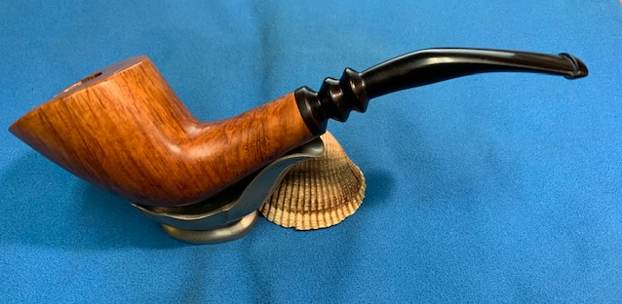
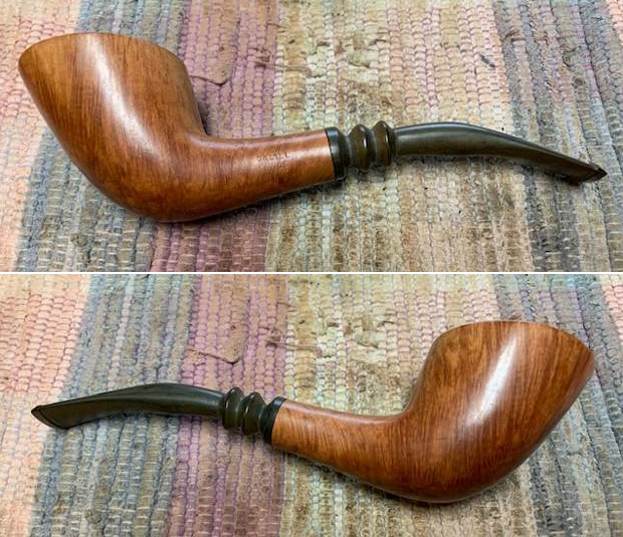
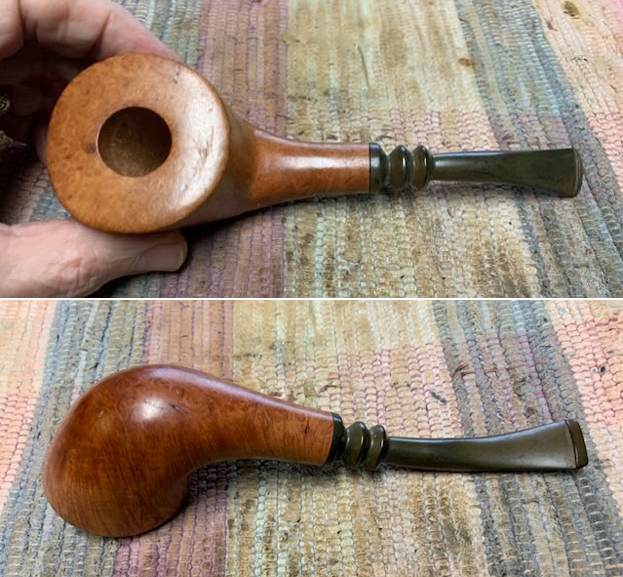
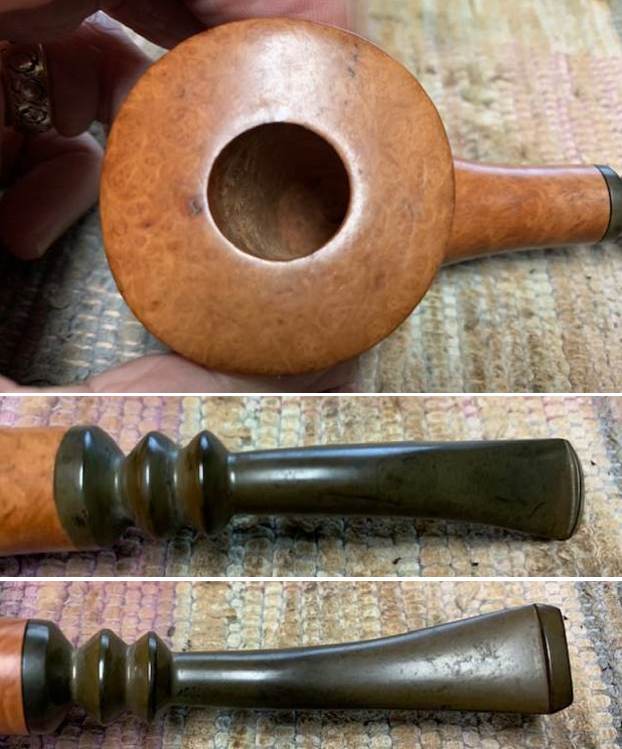
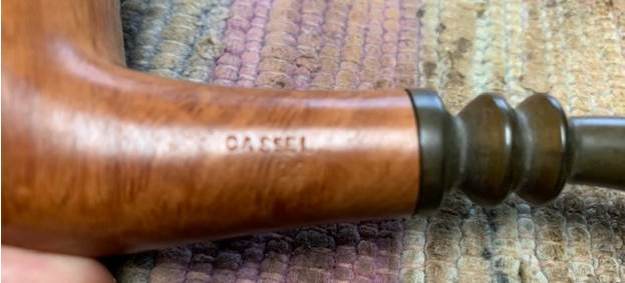
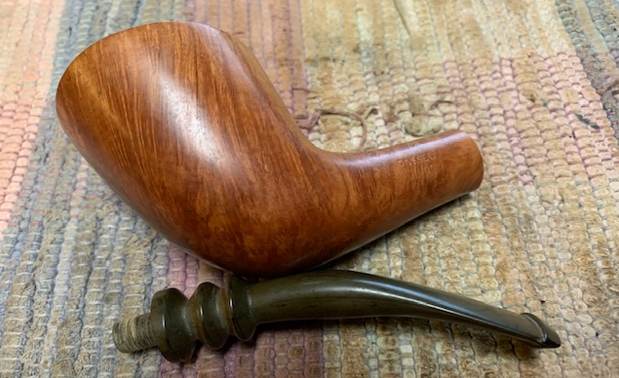
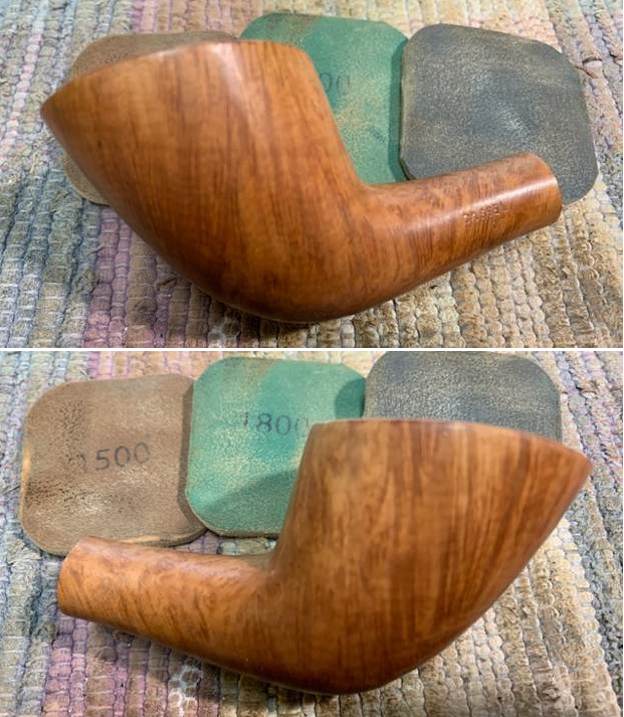
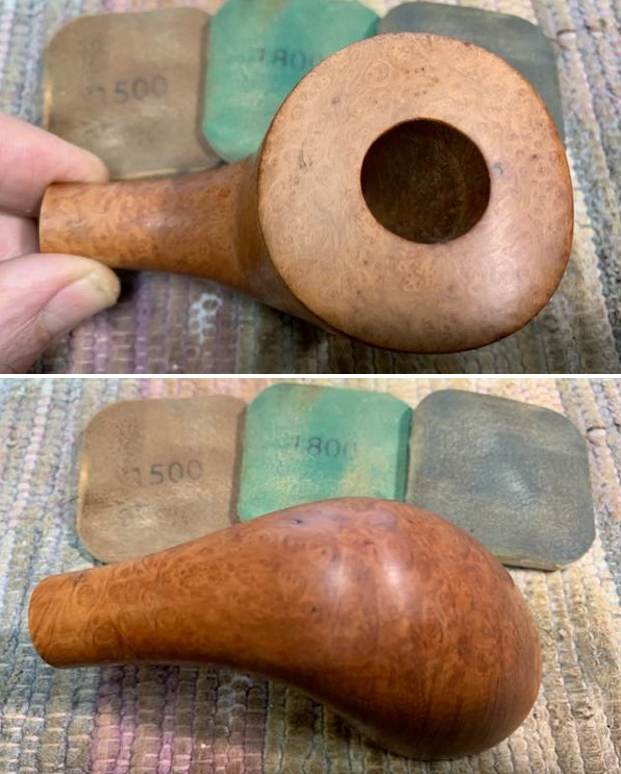
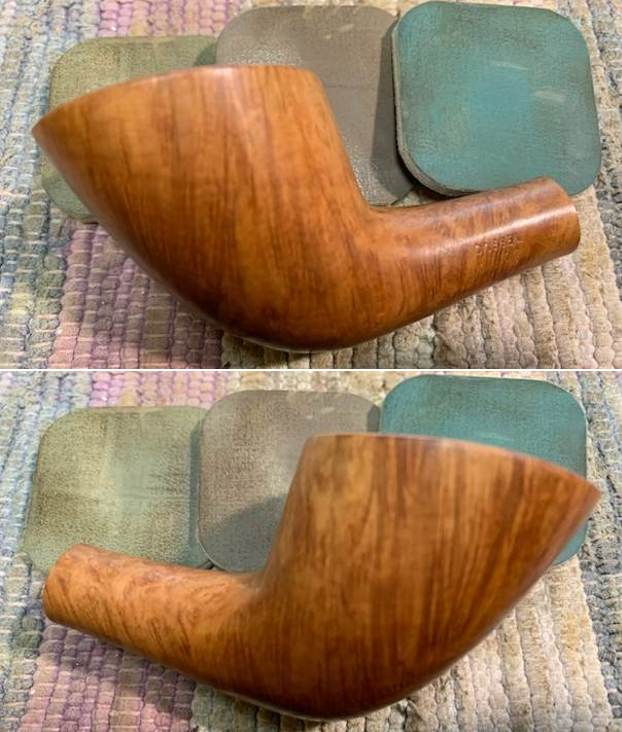
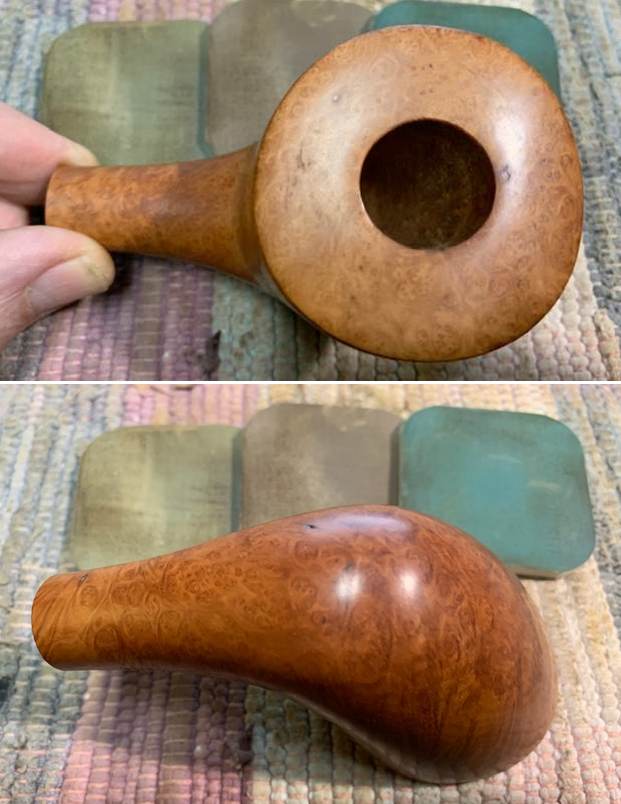
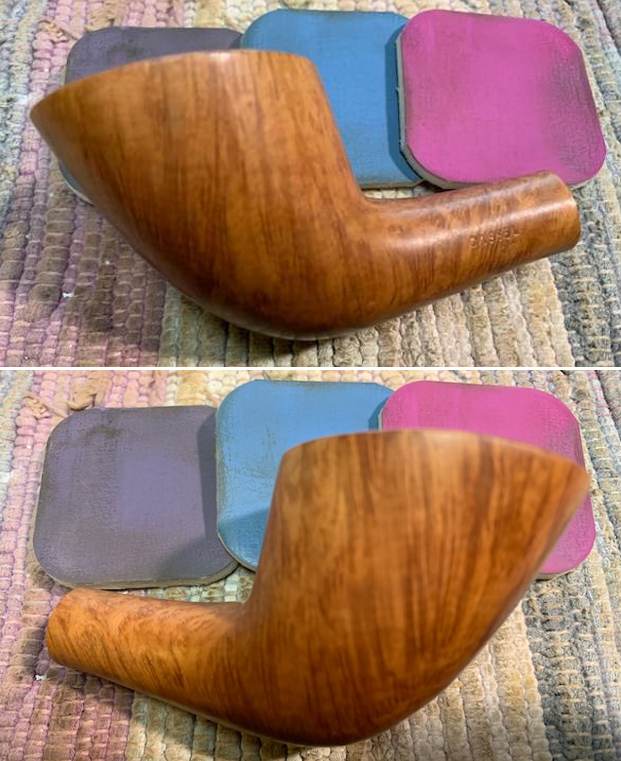
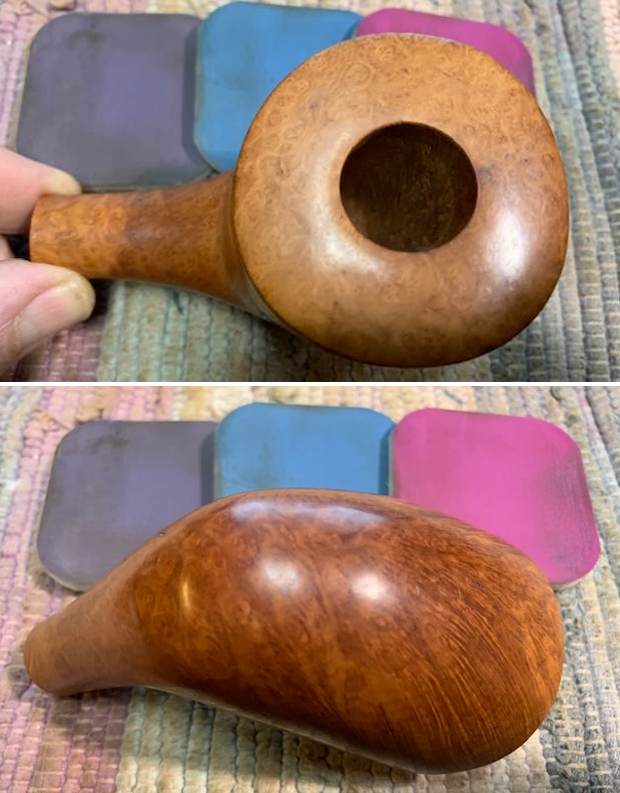
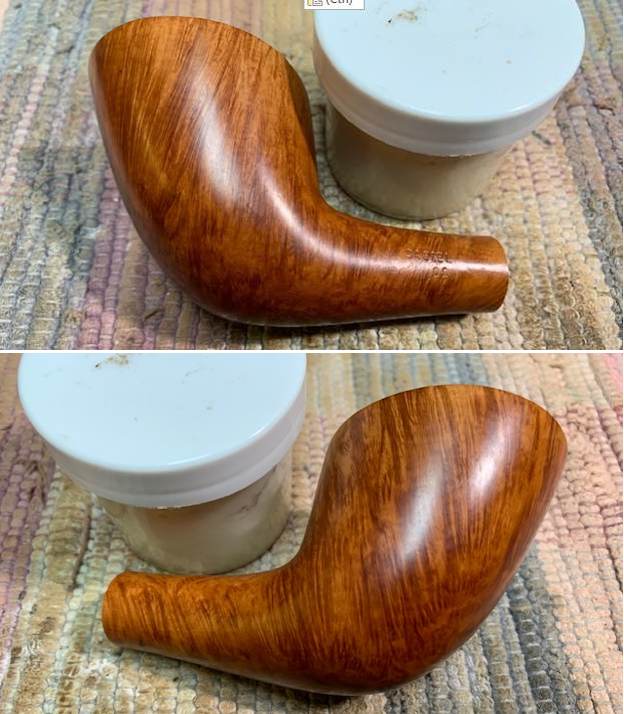
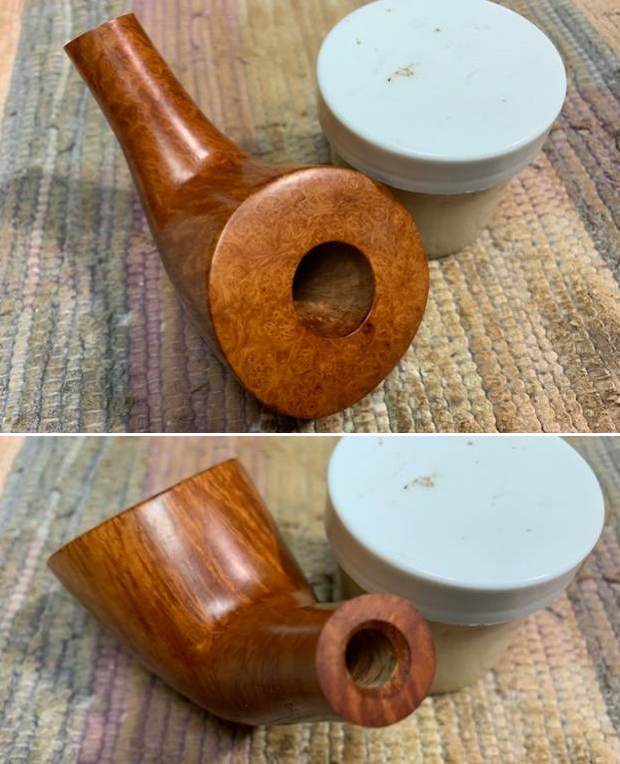
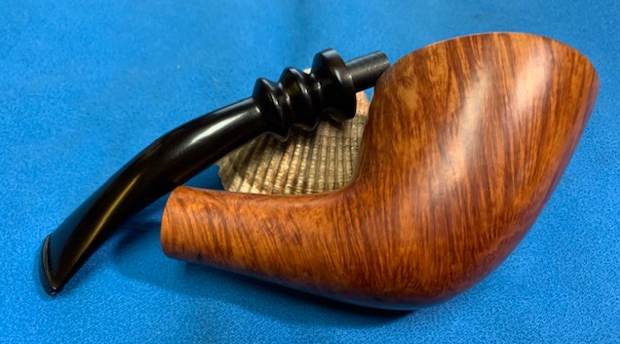
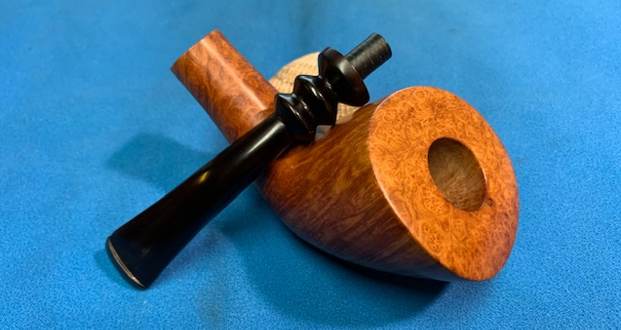
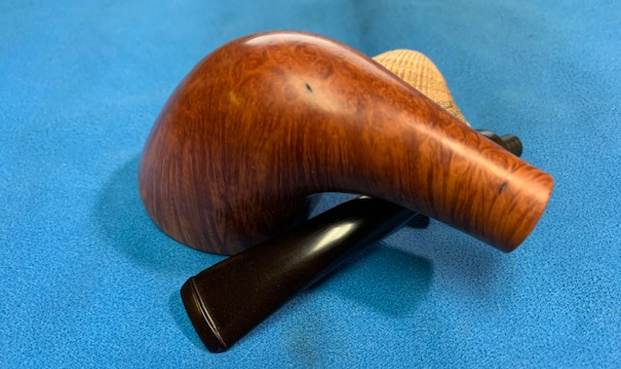
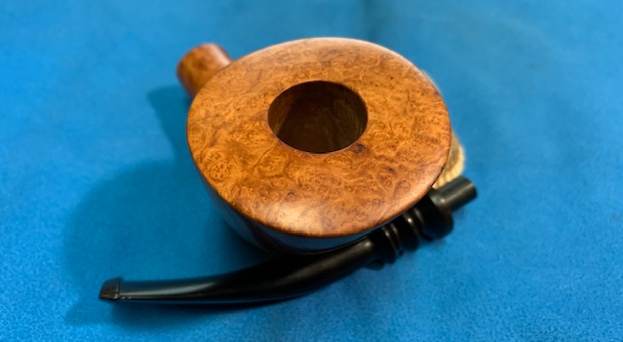
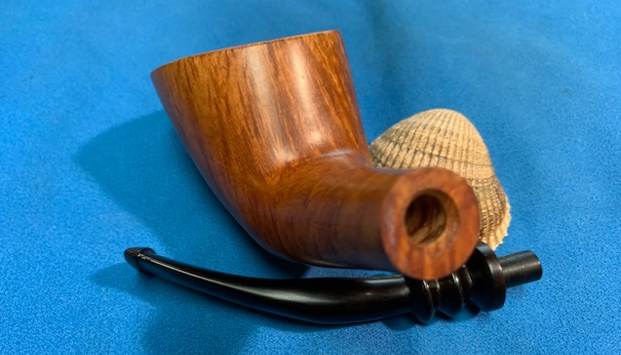
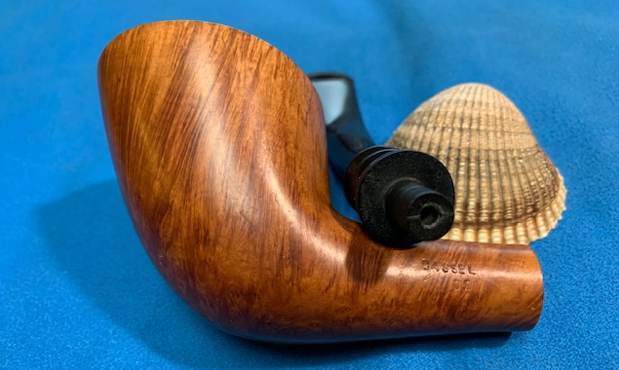
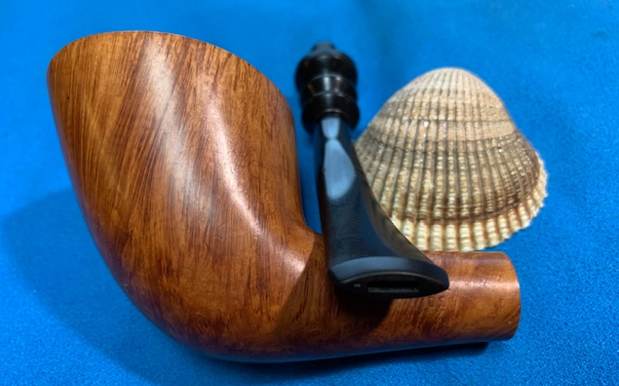
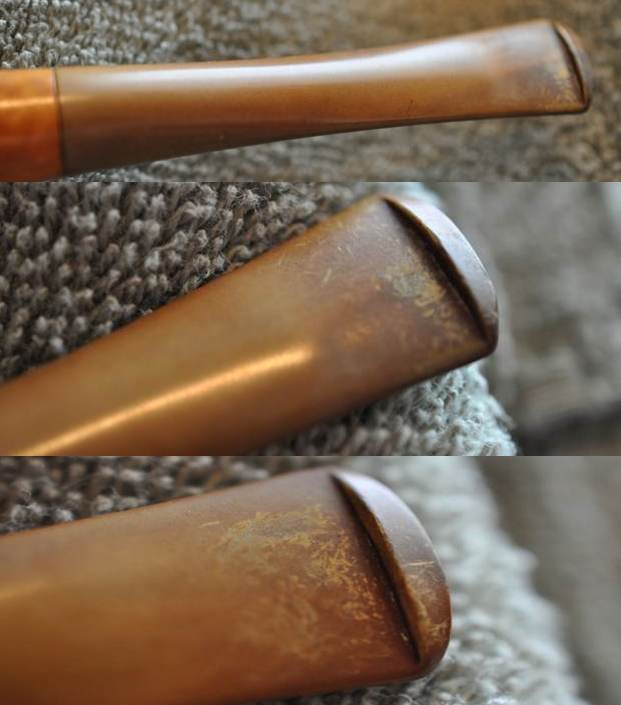
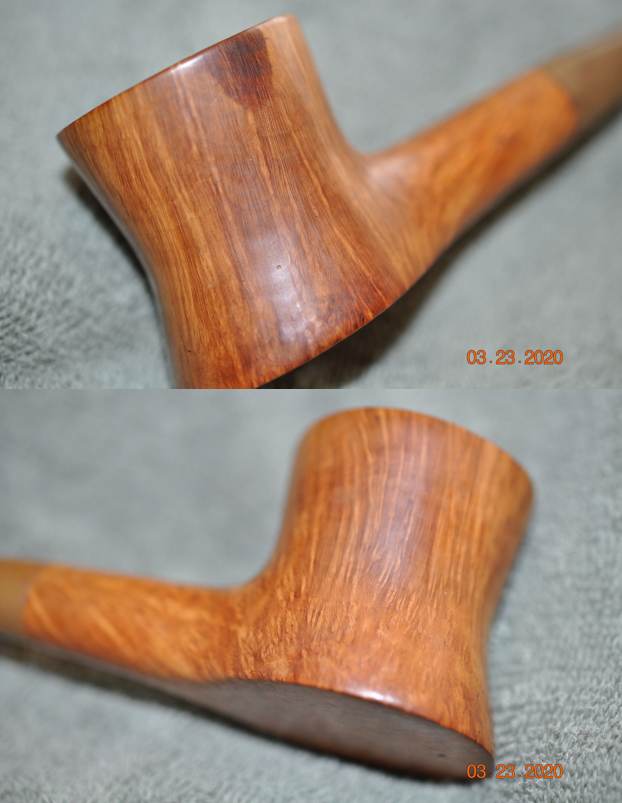
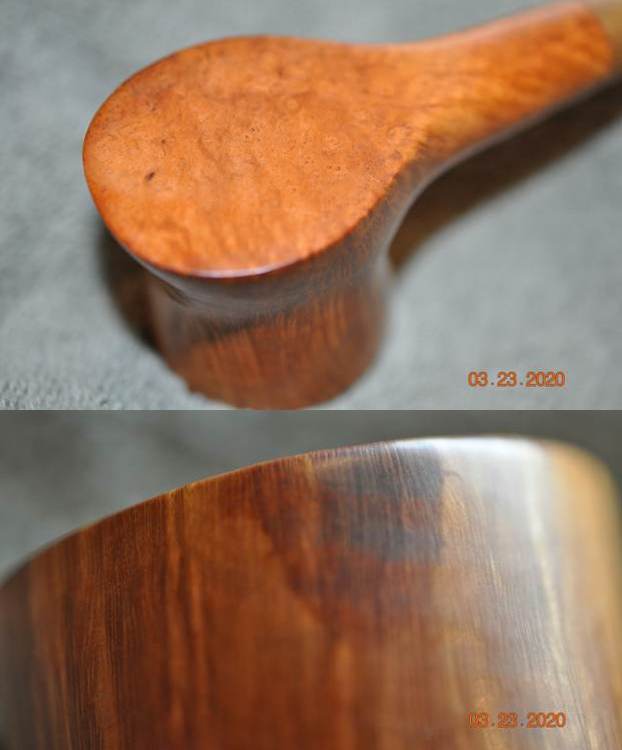
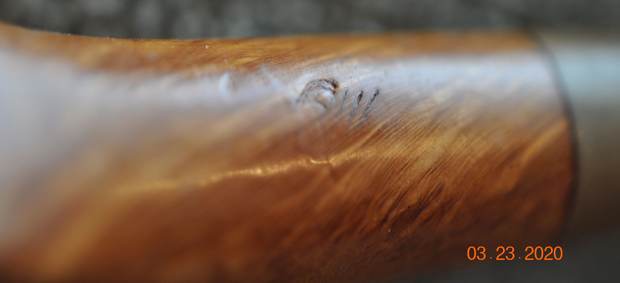
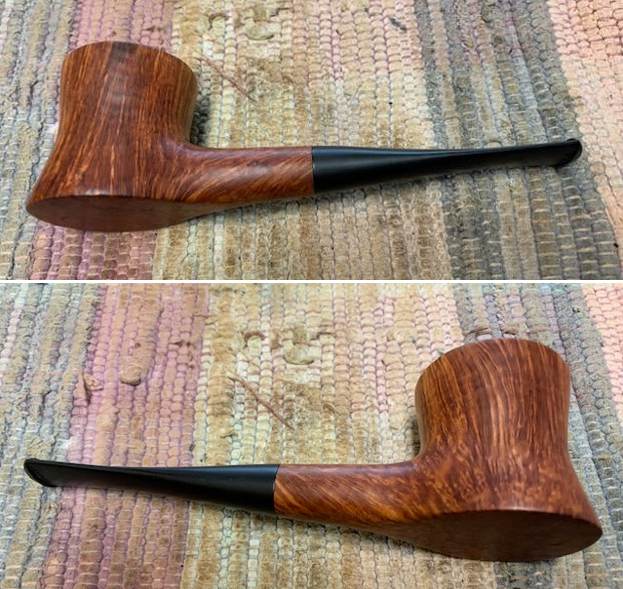
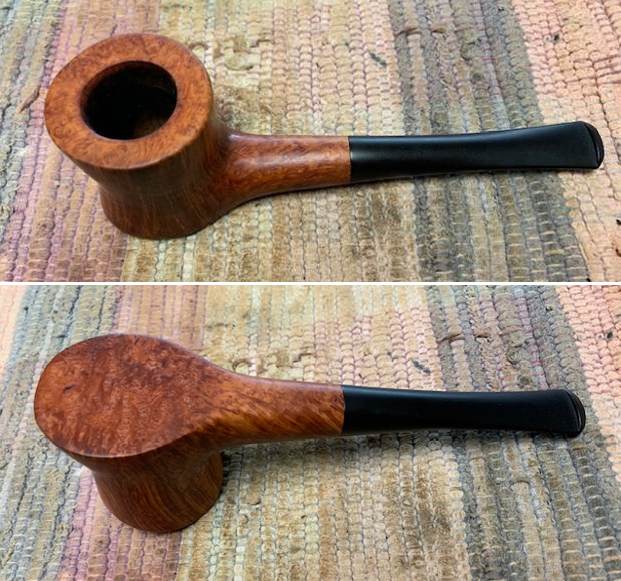
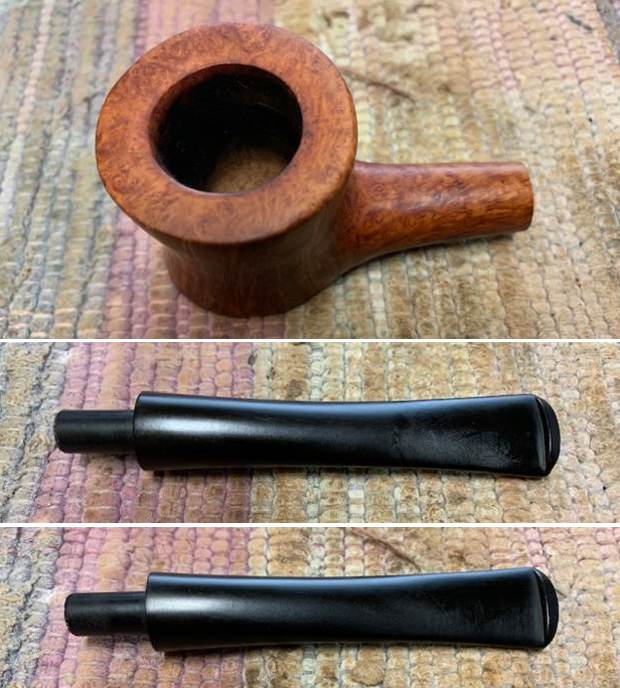
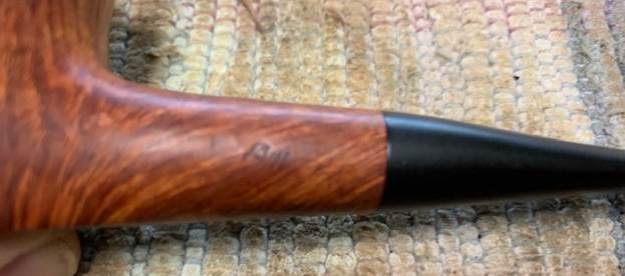
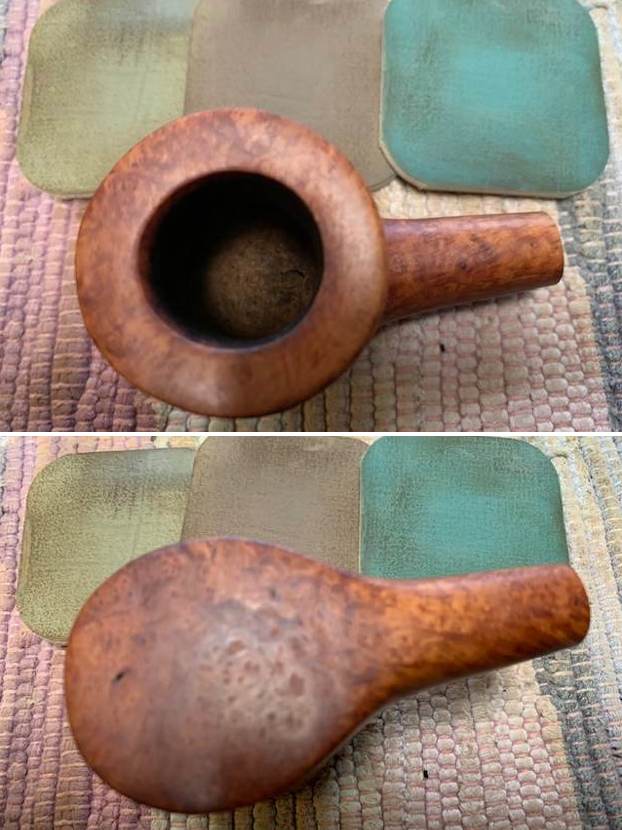
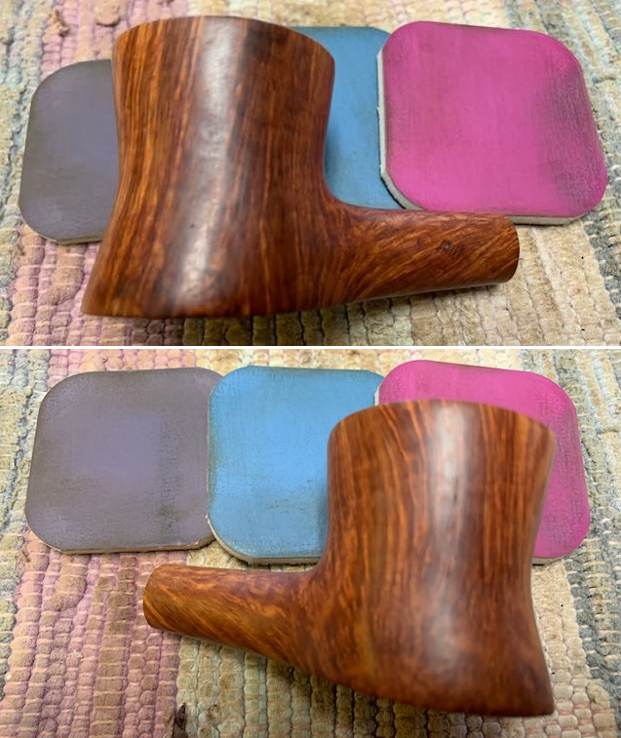
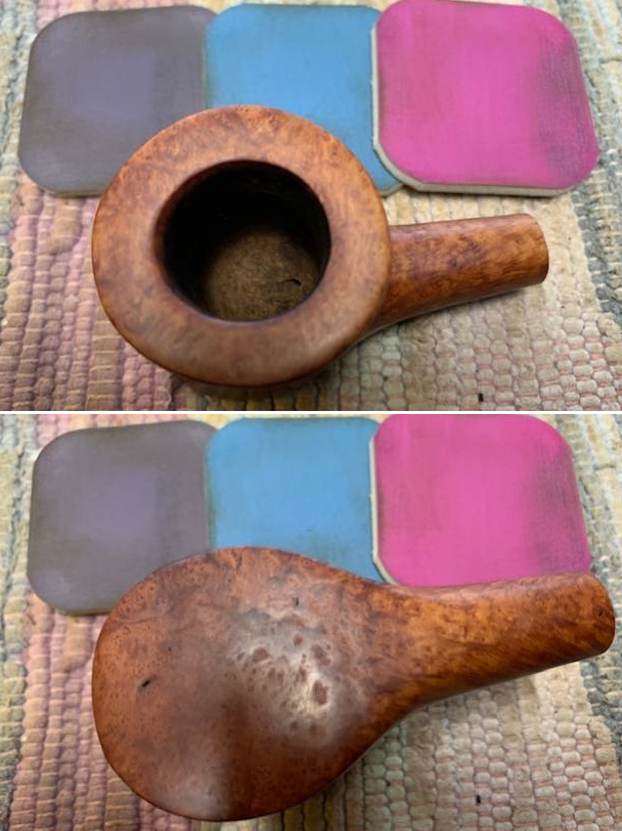
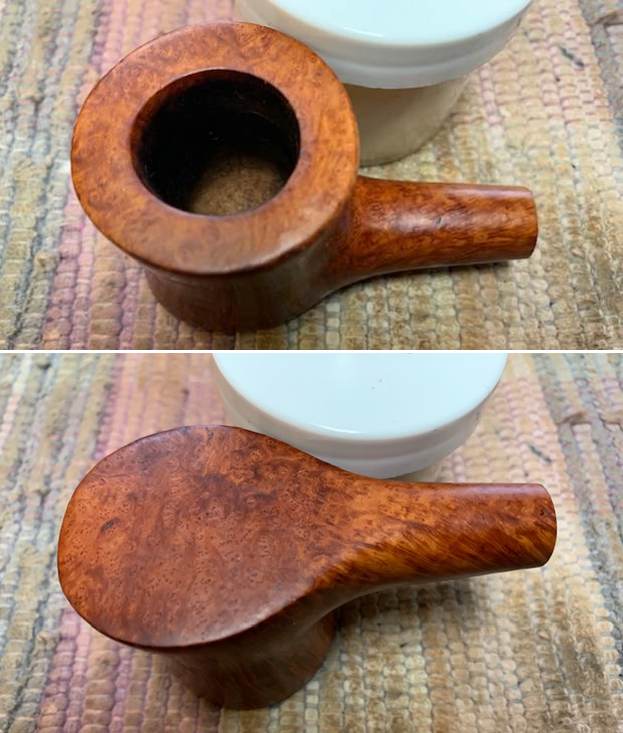
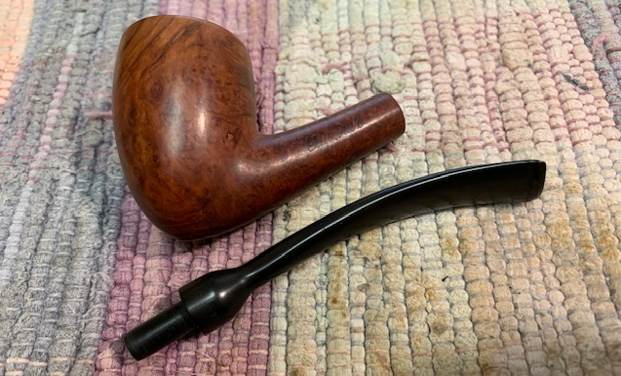
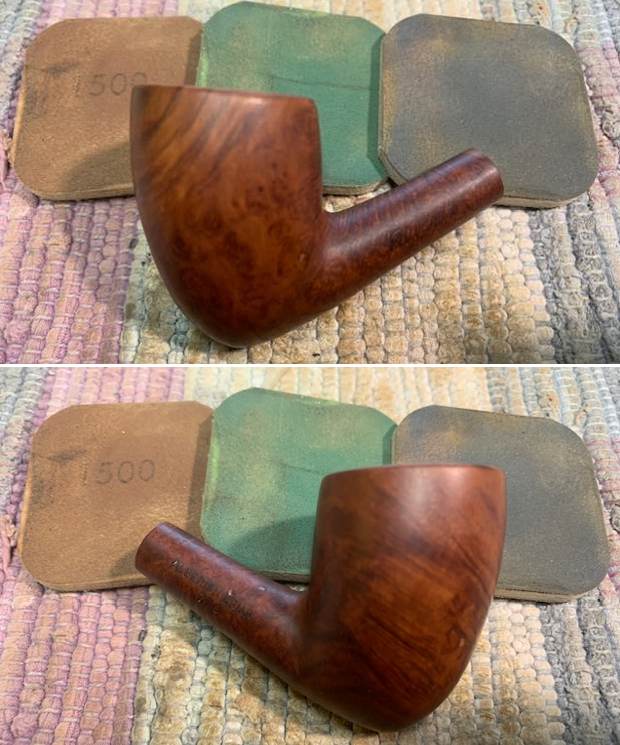
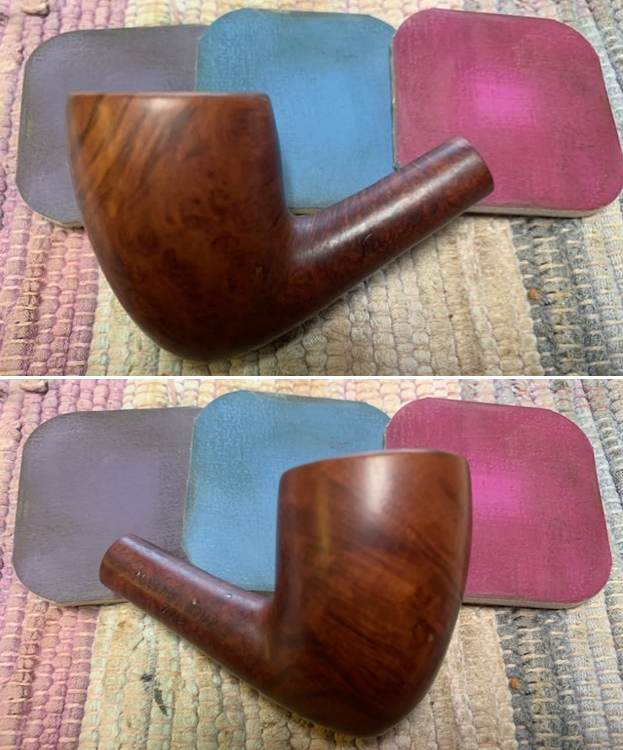
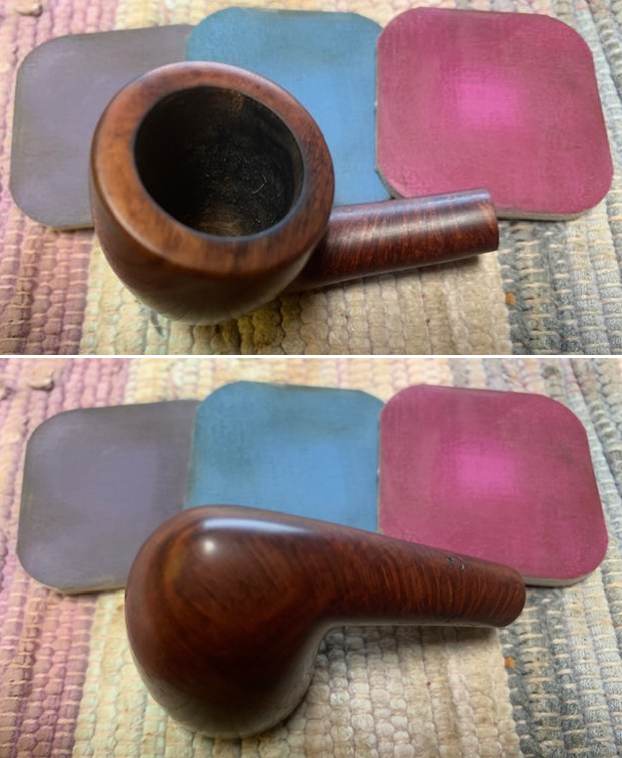
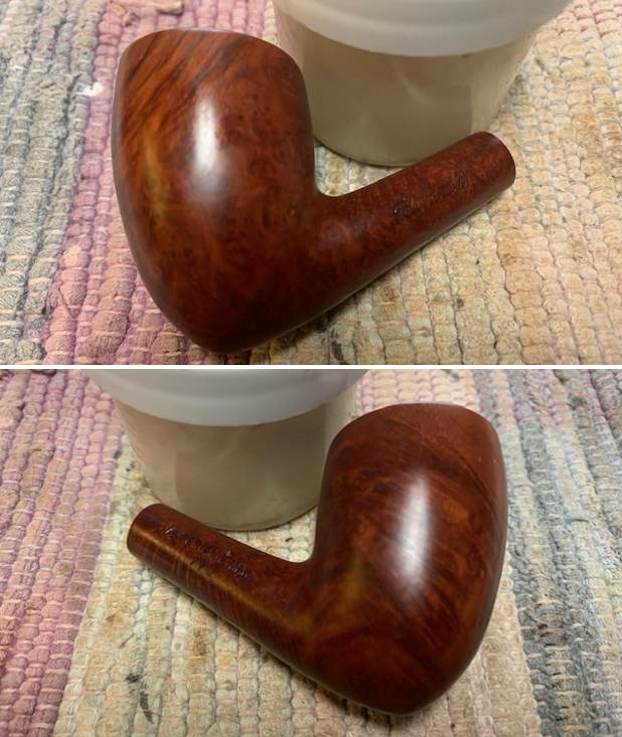
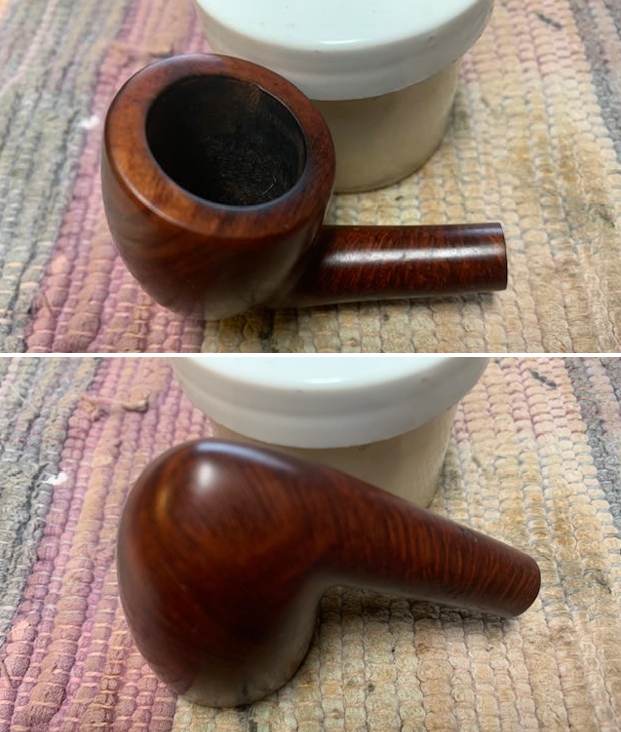
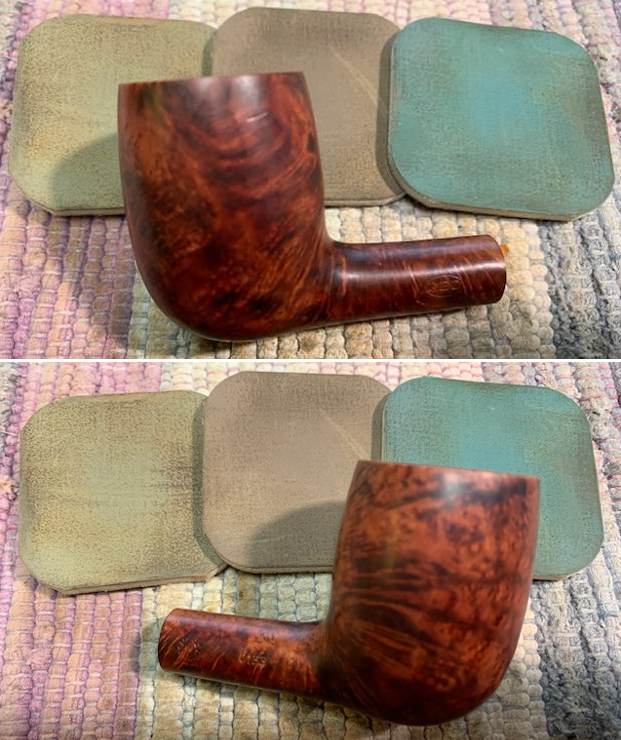
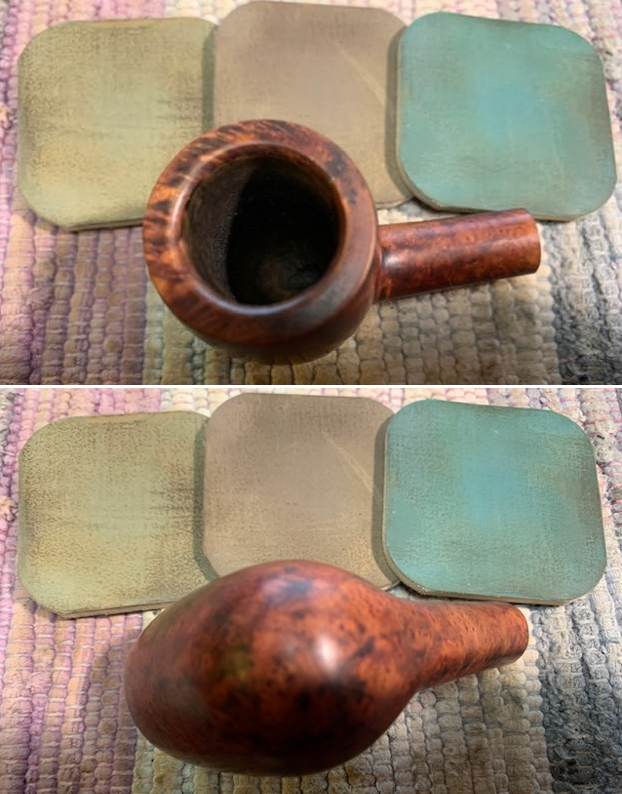
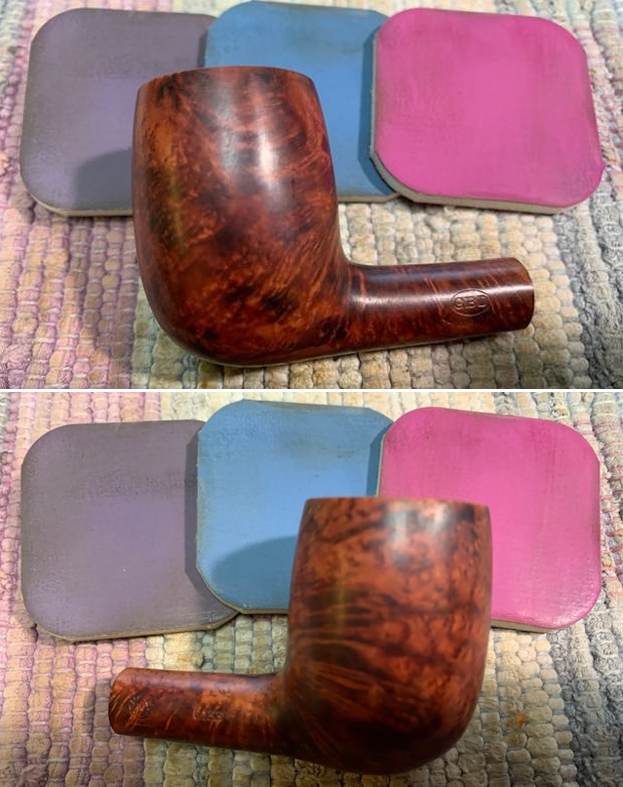
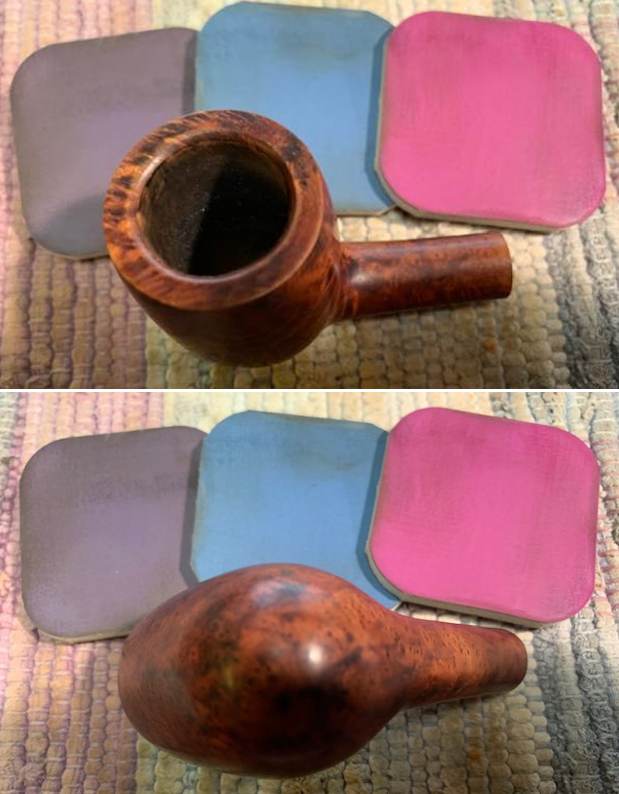
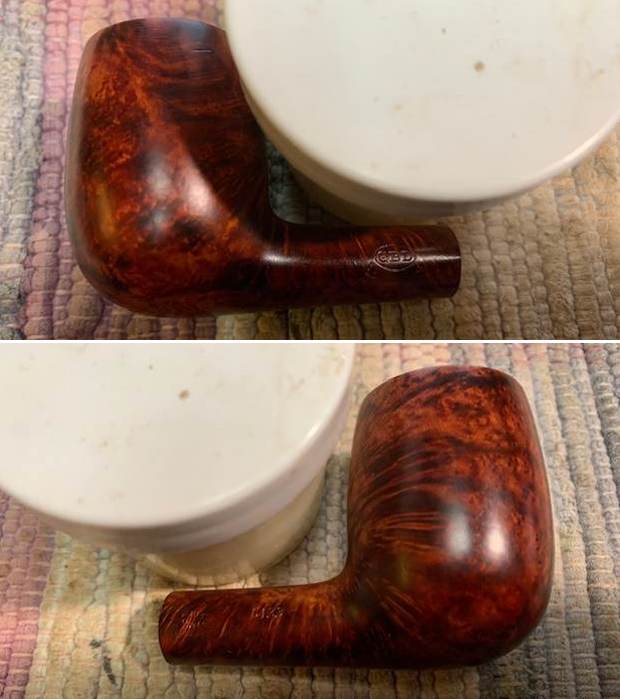
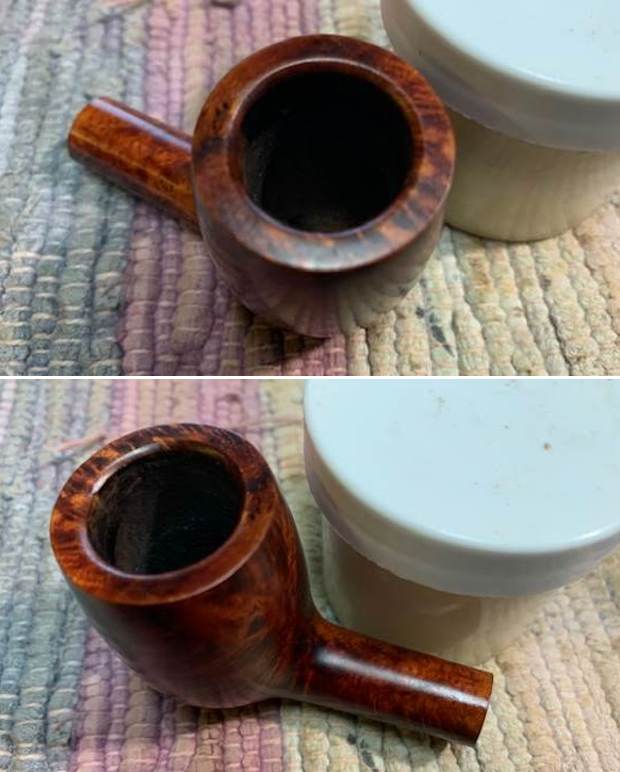
This large freehand with a fancy turned stem came to us from a friend in Chicago who keeps an eye open for pipes that might interest Jeff and me. It is stamped on the left side Cassel [over] 02. Cassel is a maker I know nothing about and the 02 must be the year the pipe was made. There is no other stamping on the shank. It is UNSMOKED/NOS but dirty and tired looking from sitting around for a long time. The bowl is clean other than dust, the rim top is quite nice, even with the small briar flaws. The grain on the rim top is birdseye and sides and shank are a nice mix of flame and straight grain. The fancy turned stem is oxidized and has some scratches on the surface from all the traveling it has done. It looks quite good with the large freehand Dublinesque looking pipe. I took photos of the pipe before I started my refurbishing work. I took some photos of the rim top and bowl. You can see the scuffs in the finish and the flaws in the briar on the bowl. The edges and bowl themselves look very good. The stem photos show the oxidation in the vulcanite and the scuffs and scratches on the flat portions of the stem. They look like tooth chatter in the photos but they are more of a scuff than chatter in person.While the next photo is a little blurry it reads Cassel [over] 02 as noted above. The stamping on the left side of the shank is clear and readable.I took the stem off the shank and took a photo of the pipe. It really is a nice looking piece of briar.Before I started my refurbishing I decided to see what I could find out about the pipe. With a name like Cassel I thought it might be German or even Italian but I could find nothing in those areas. I looked on Pipephil’s site and there was nothing listed. I finally did a general Google search of the brand and found a link to the American Pipe Brands and Makers section on Pipedia (https://pipedia.org/wiki/American_Pipe_Brands_%26_Makers_C_-_D). The list showed a pipemaker named Shannon Cassel who was in Tucson, Arizona, USA. I clicked on the link and found that there was no additional information on the carver. Do any of you know this carver? It would be great to get some more information on him and his work if it is available.

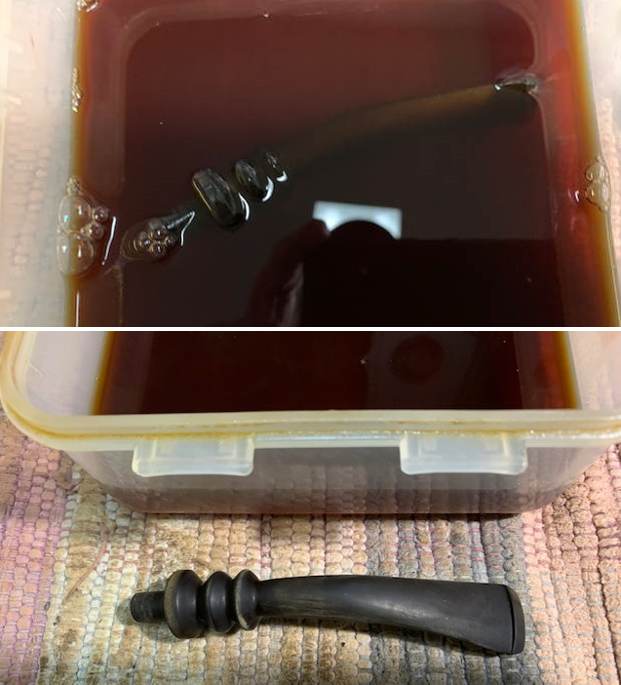
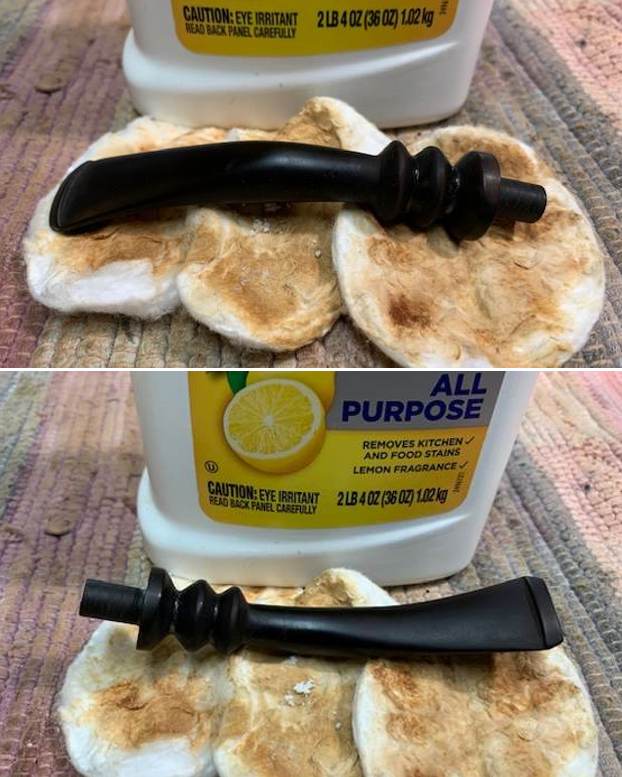
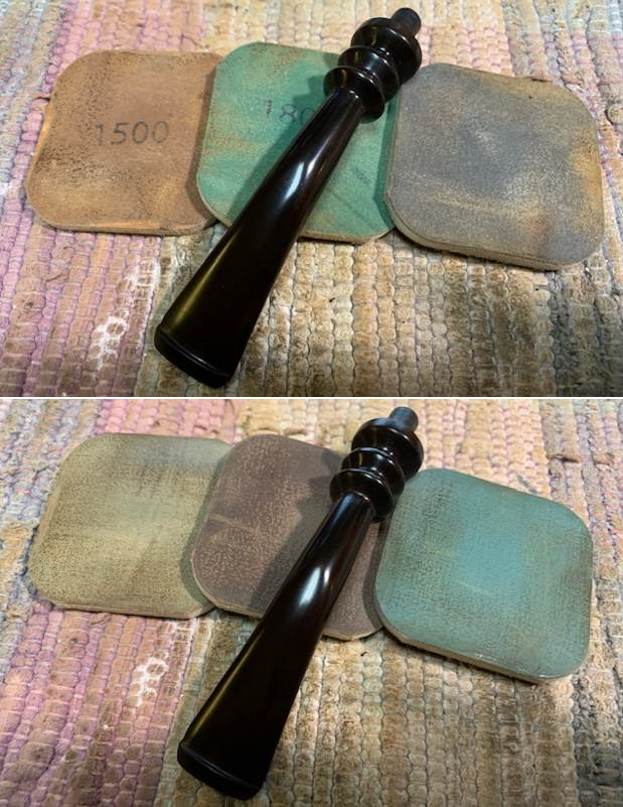
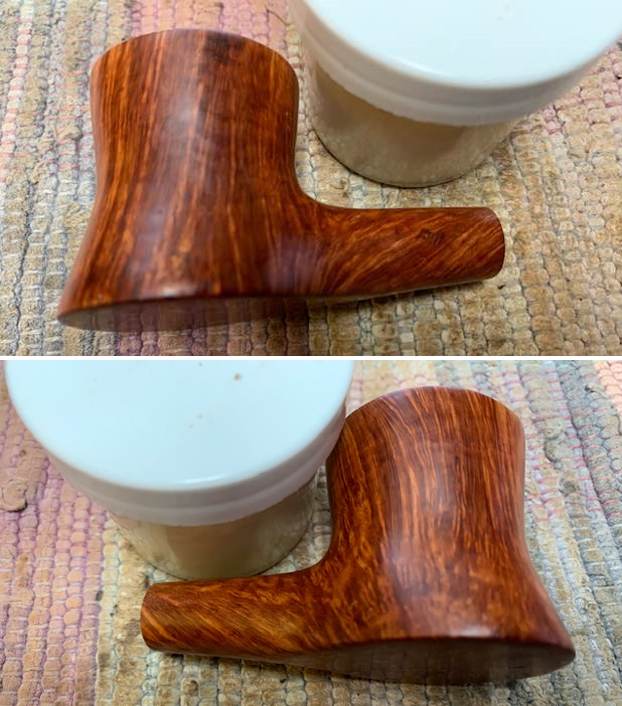
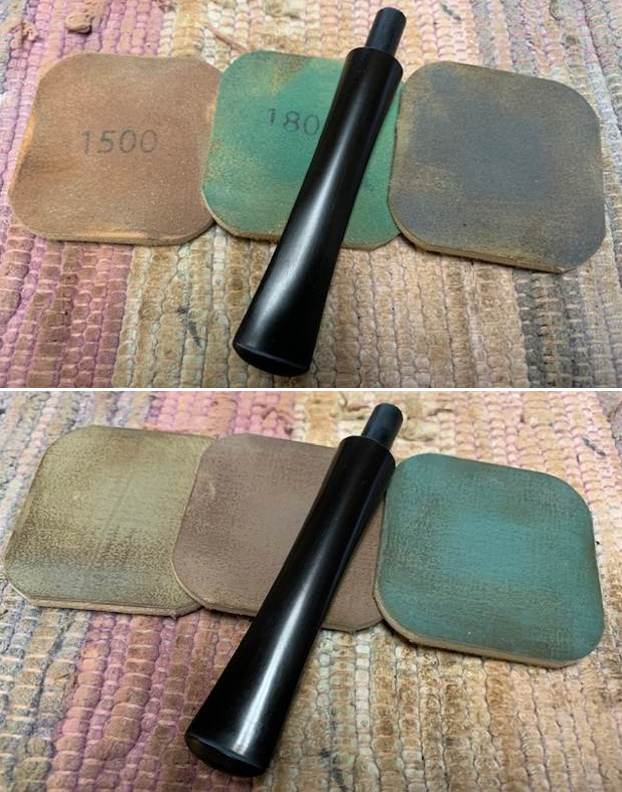
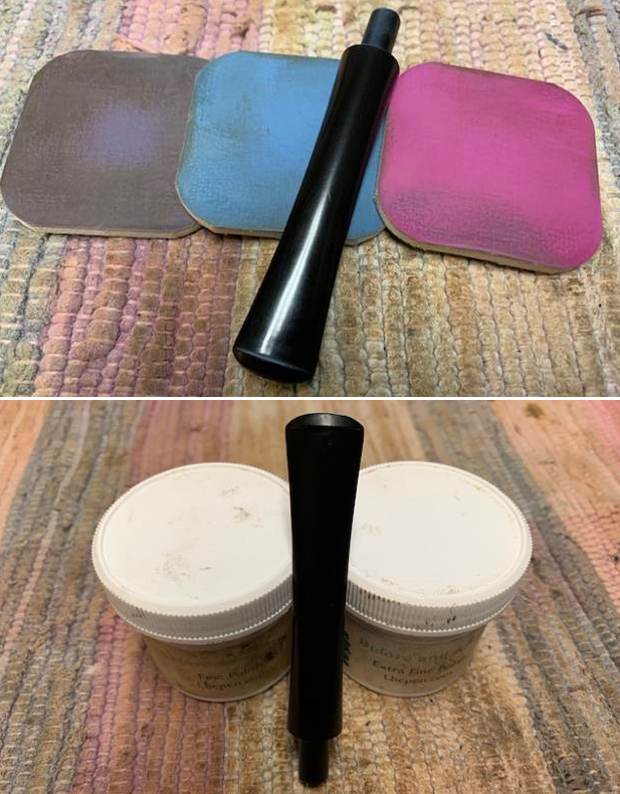
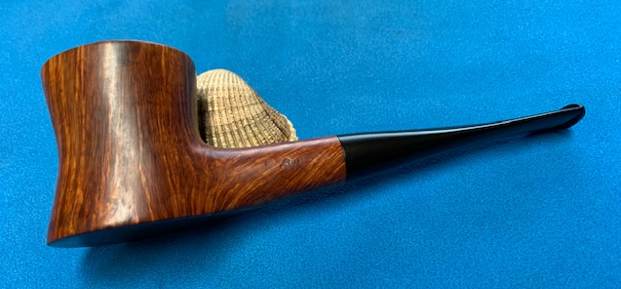
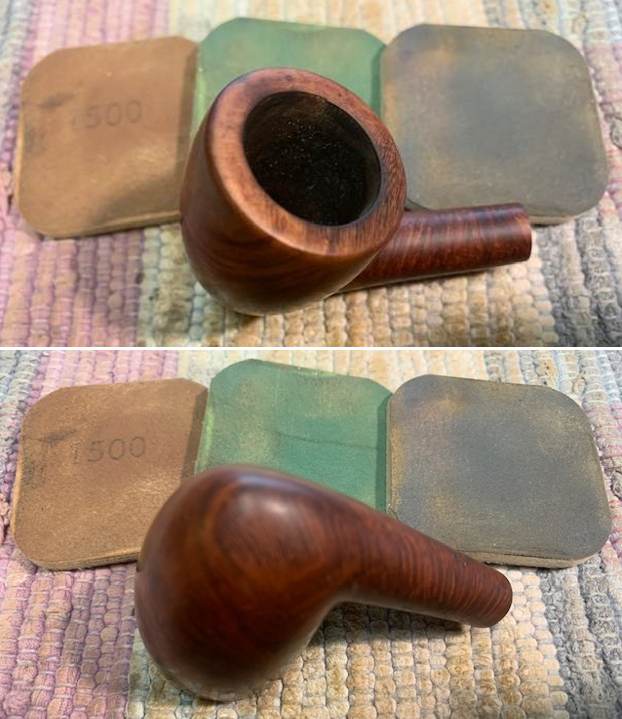
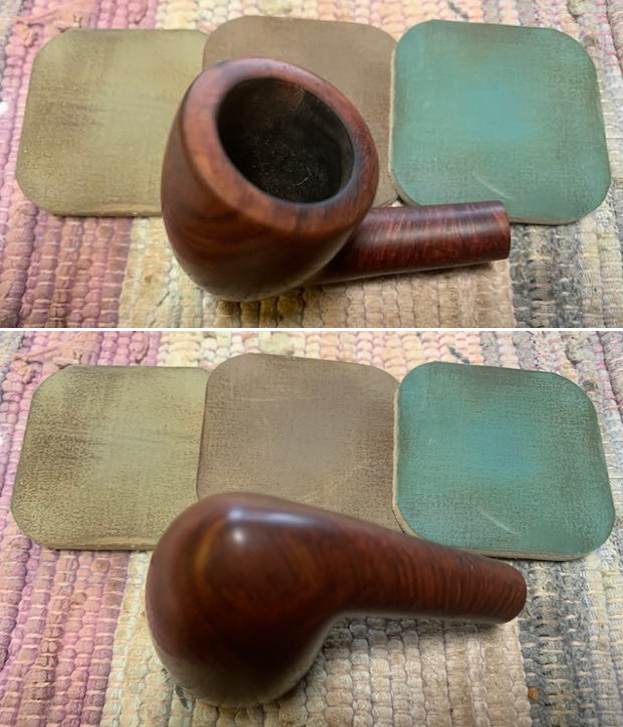
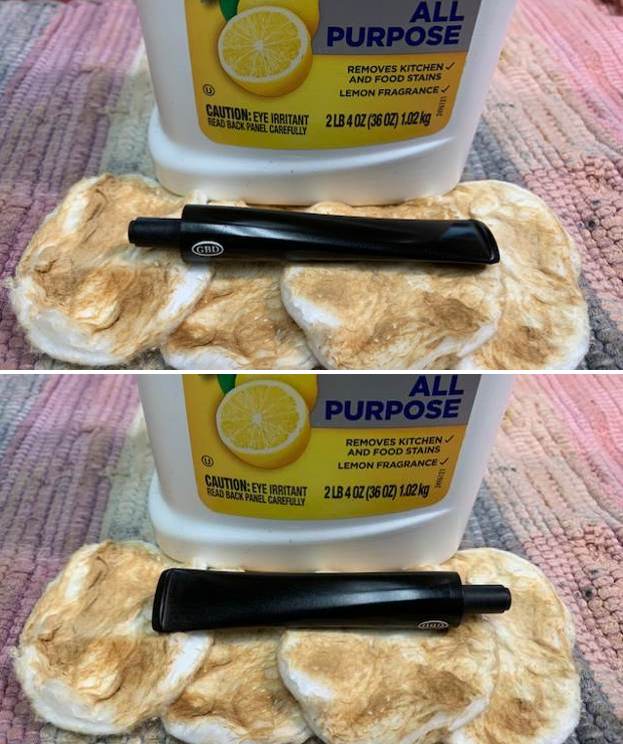
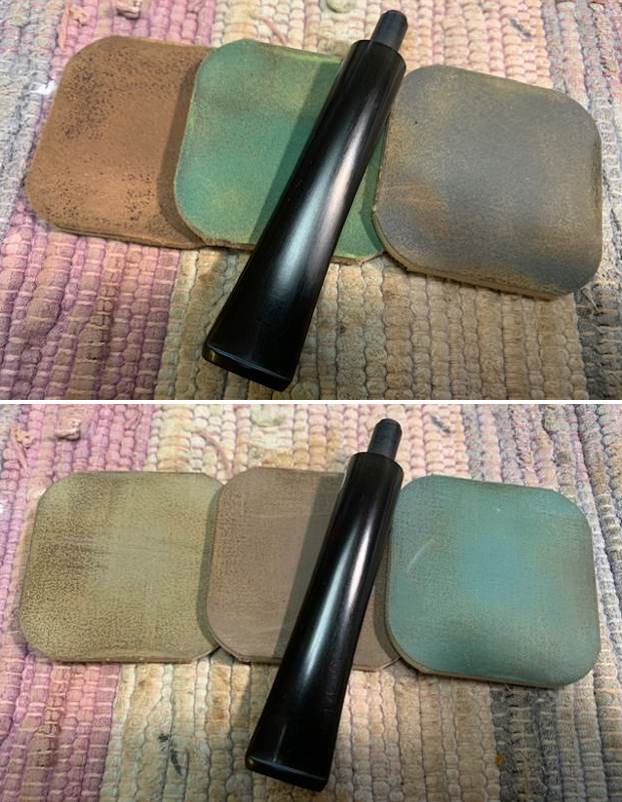
I started my work on the pipe by polishing the bowl with micromesh sanding pads – dry sanding with 1500-12000 grit sanding pads. I wiped the bowl down with a damp cloth after each sanding pad. It really began to take on a shine. I worked some Before & After Restoration Balm into the finish of the bowl, rim top and shank with my fingertips to clean, enliven and protect it. I find that the balm really makes the briar come alive again. The contrasts in the layers of stain and the separate finishes really made the grain stand out. I let the balm sit for 10 minutes and then buffed with a cotton cloth to raise the shine. The bowl really looks good at this point. To deal with the oxidation on the stem I dropped it in a bath of Briarville’s Stem Deoxidizer. The oxidation was quite deep in the vulcanite so I left it overnight – overkill I know but I figured I was done for the day and it could soak while I rested. This morning I took it out, rinsed it off and wiped it down with a paper towel. It looked much better.I scrubbed it down with cotton pads and Soft Scrub Cleanser and was able to remove the remaining oxidation. It looked better. I polished the stem with micromesh sanding pads – wet sanding it with 1500-12000 grit pads. I wiped the stem down after each pad with a cloth impregnated with Obsidian Oil. I polished it further with Before & After Pipe Stem Polish – both fine and extra fine. I gave it a final coat of Obsidian Oil and set it aside to dry.    With a refurbishing the final moment when all the pieces come back together is the tell all! I put the pipe back together and buffed the bowl and the stem with Blue Diamond. I gave the bowl and the stem multiple coats of carnauba wax. I buffed the pipe with a clean buffing pad to raise the shine. I hand buffed it with a microfiber cloth to deepen the shine. It is fun to see what the polished bowl looks like with the smooth finish and the black fancy vulcanite stem. This naturally finished Cassel 02 Freehand is light for its size and it is ready for you to load up a tobacco of preference and enjoy breaking it in for yourself. Have a look at it in the photos below. The dimensions are Length: 7 ½ inches, Height: 2 ½ inches, Outside diameter of the bowl: 2 inches, Chamber diameter: ¾ of an inch. The weight of the pipe is 79 grams/2.79 ounces. This is one that will go on the American Pipemakers section of the rebornpipes online store shortly. Thanks to each of you who are reading this blog. Remember we are not pipe owners; we are pipemen and women who hold our pipes in trust until they pass on into the trust of the next generation.
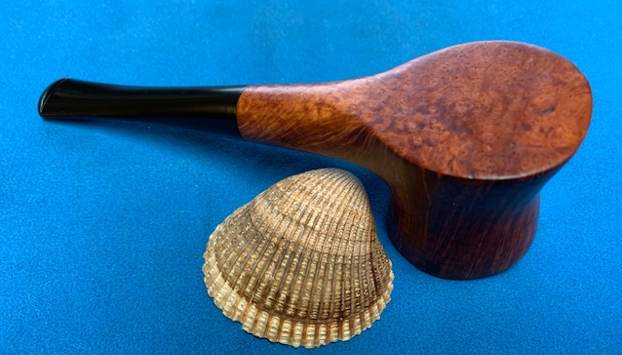
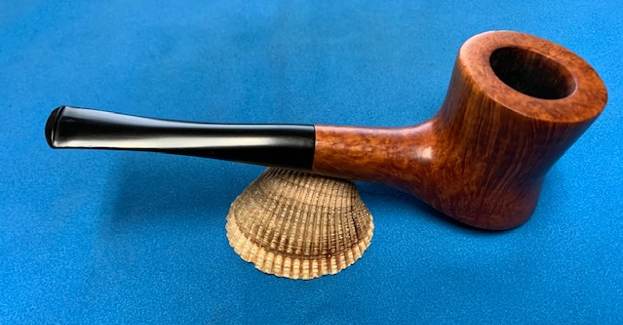
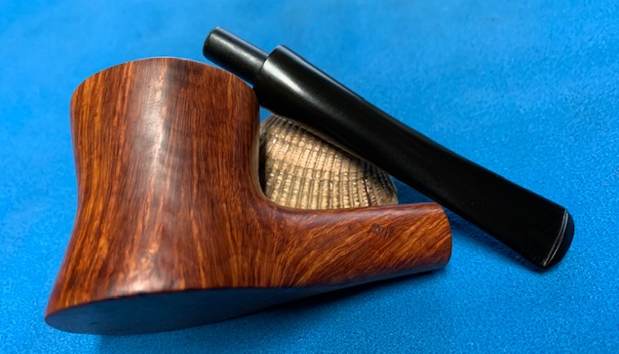
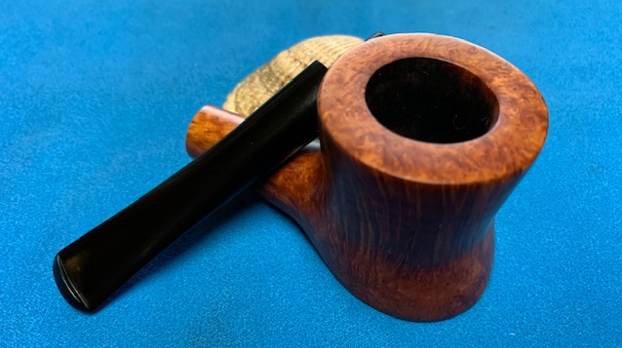
And Now For Something Completely Different – Carving my First Hobby Block


Nice job on this one Charles. Quite different carving a block than refitting and older pipe. Looks great. Did you enjoy it? I have done quite a few of them here but I love restoration over carving.

Charles Lemon's avatar

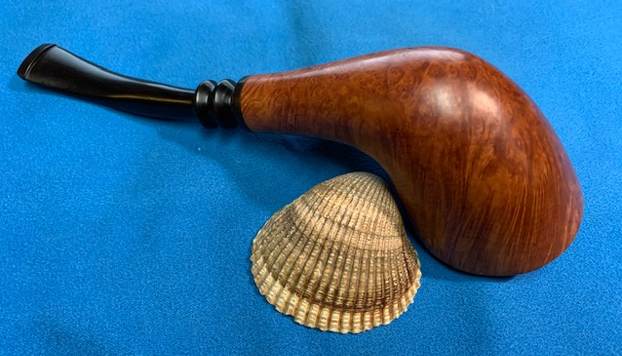
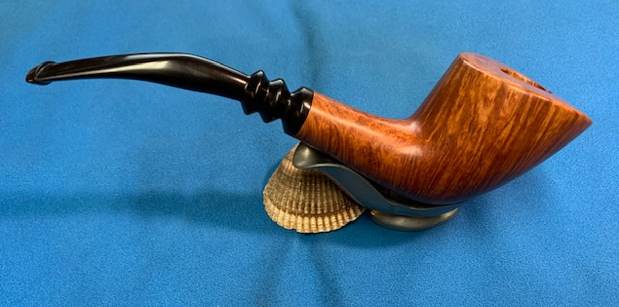
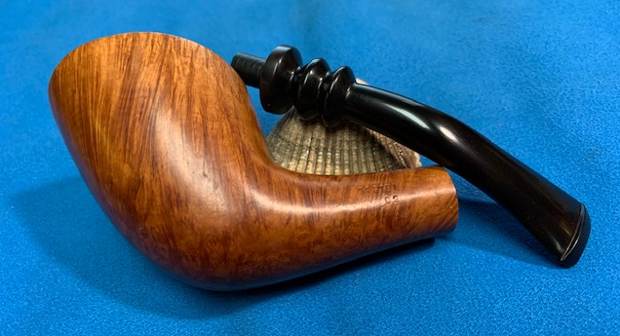
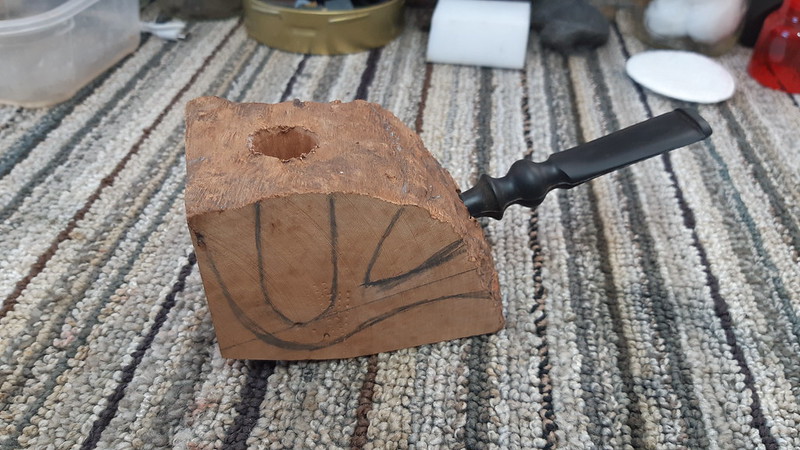
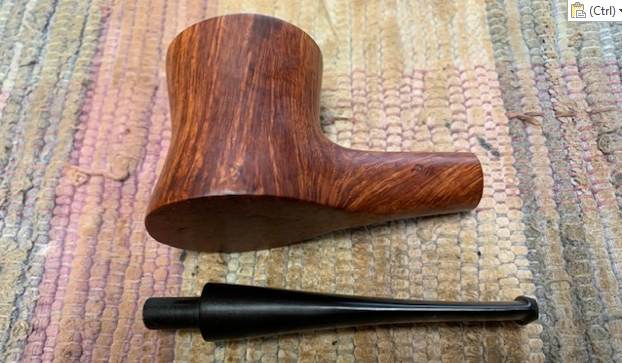
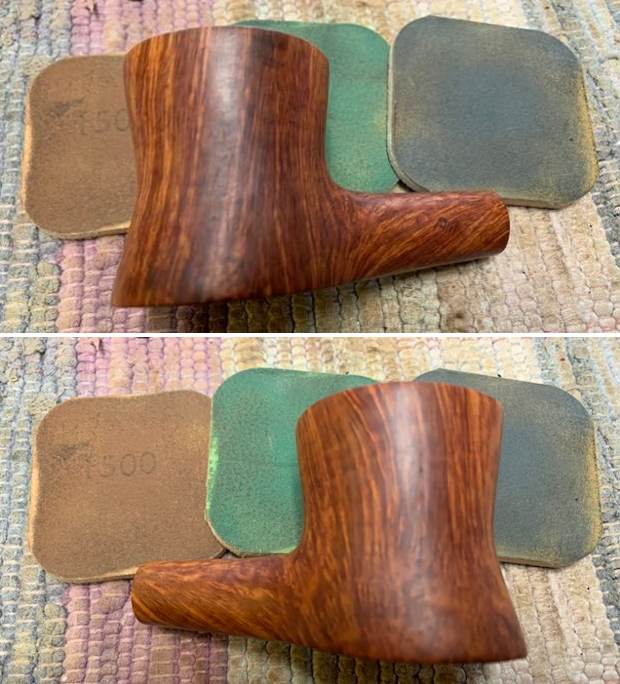
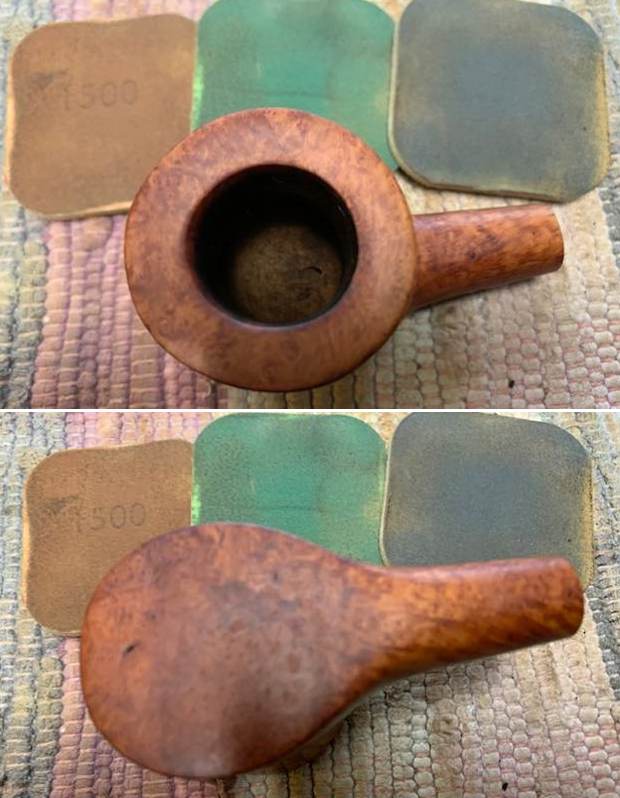
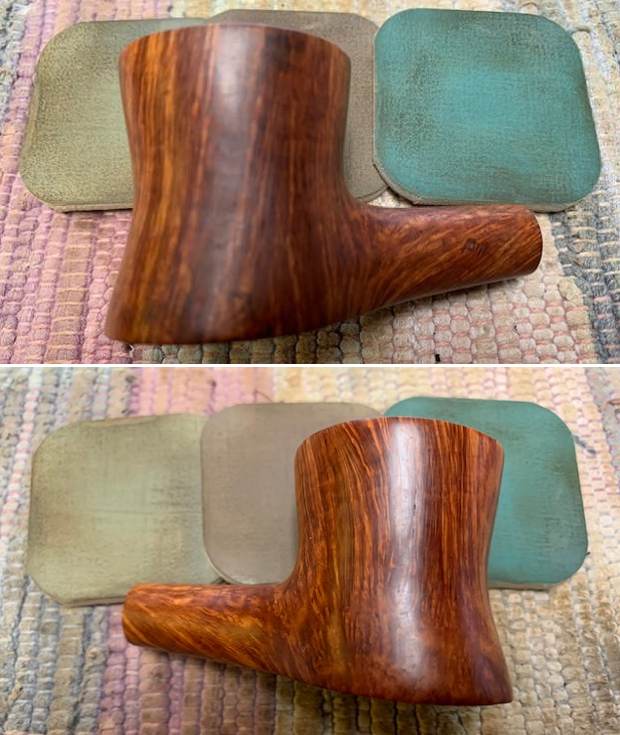
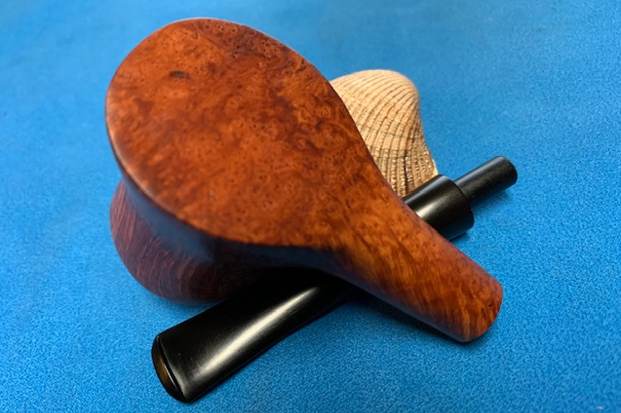
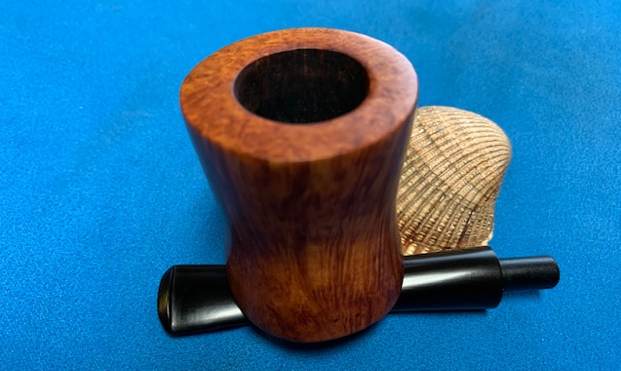
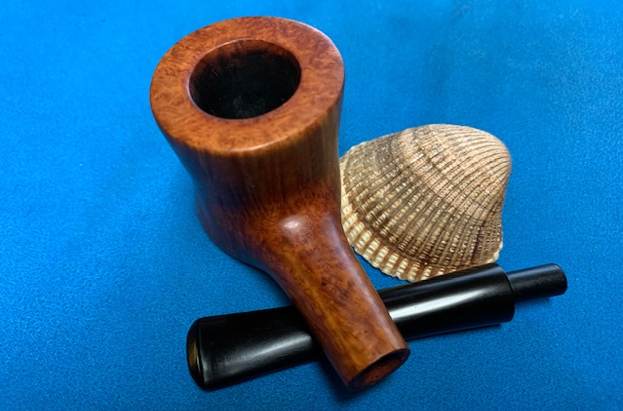
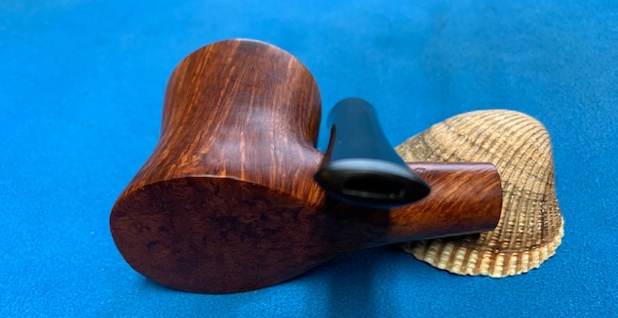
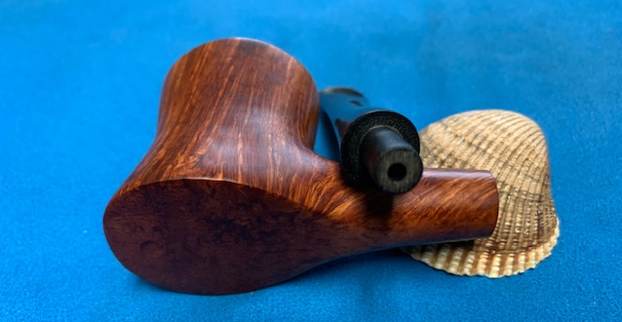
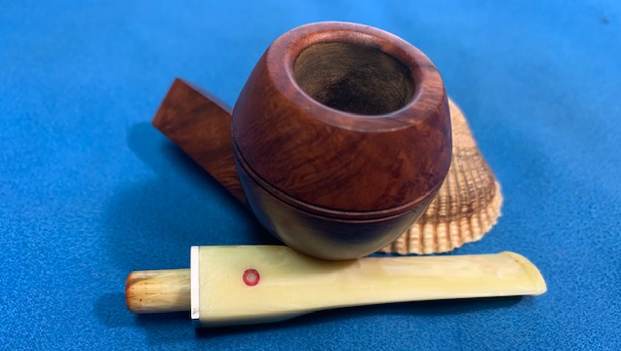
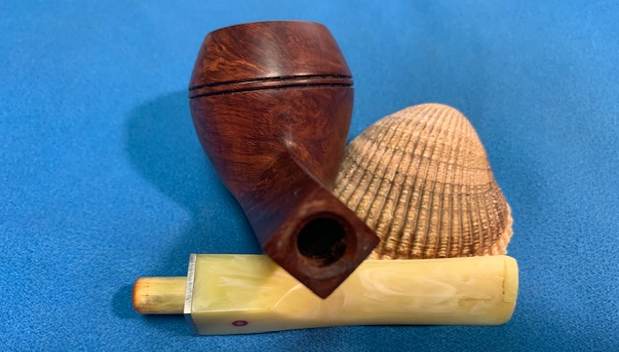
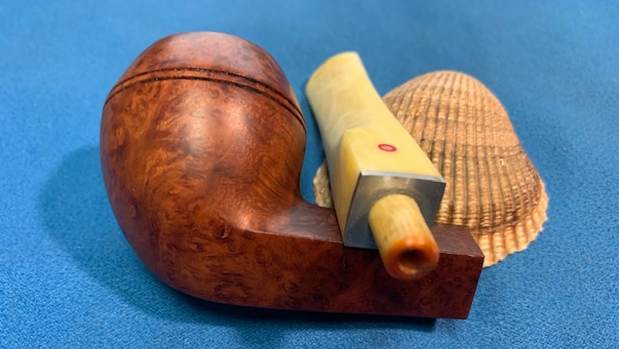
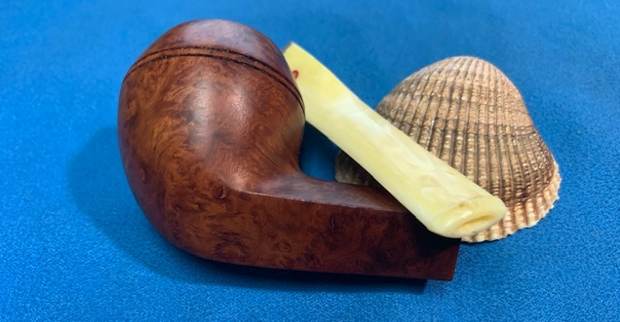
In the tobacco pipe world, pipe shops can usually be divided into two camps – those that make pipes and those that repair/restore pipes. It is somewhat counterintuitive, but these two activities are very different and require different skill sets and different equipment. I’ve been repairing and restoring smoking pipes since 2014 but have never carved a pipe from scratch, until now.

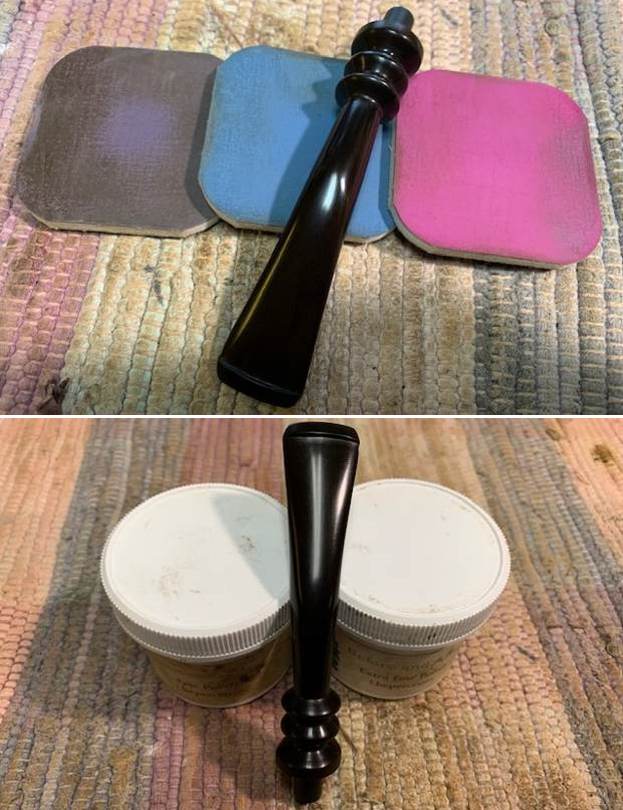
Last year I ordered myself a pre-drilled hobby block pipe kit from Vermont Freehand. When it came in, I sketched a profile I thought might work on the side of the block, then set the kit aside until I had a bit of free time to work on it. That free time finally materialized so I dusted off the block of briar and set about turning it into a pipe.

As you can see from the above closeup shot, there was quite a bit of excess briar to…

View original post 997 more words

A Mystery Poker/Cherrywood with the initials BW stamped on the left side of the shank


Blog by Steve Laug

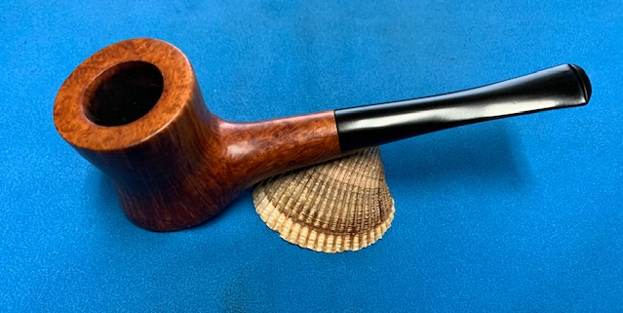
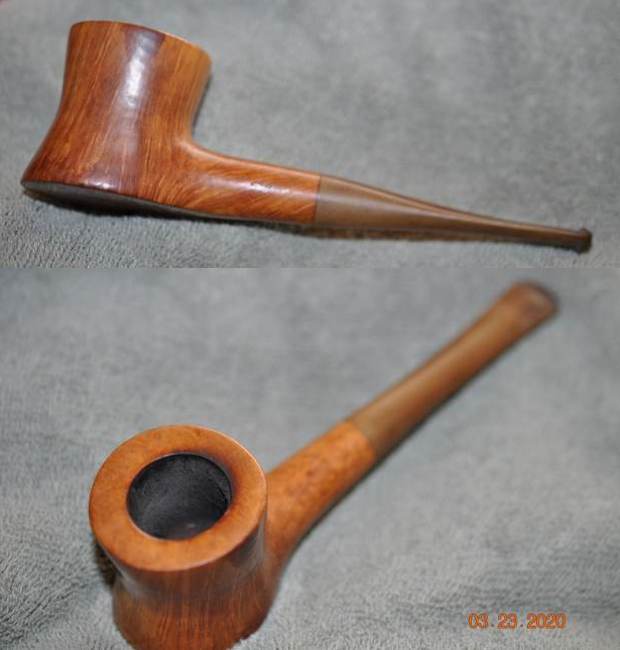
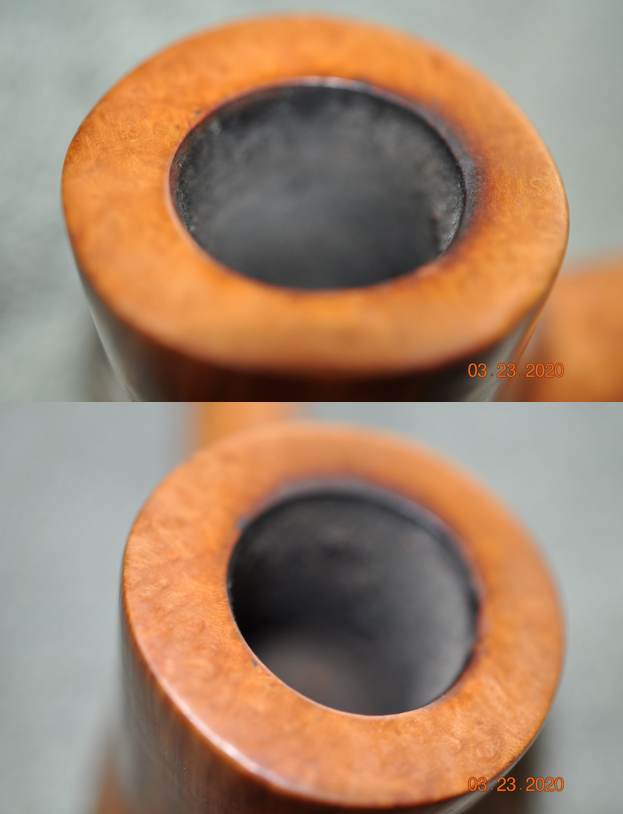
This interesting pipe with a very simple and blurry BW stamp on the left side of the shank came to us from an online auction on in February, 2021 in Upland, California, USA. It is a mystery in that there is no record of who “BW” was or where he lived and carved. The pipe has some amazing grain around the bowl and shank. There was some darkening on the inner edge of the bowl and a stain mark on the left side near the top. The bowl had a moderate cake in the bowl with a light lava overflow on the back side of the edge and rim. The stem was oxidized and had light tooth marks and chatter on both sides near the button. Jeff took photos of the pipe before he started the clean up work on it.He took photos of the rim top and bowl to show the condition of the bowl and rim. The rim top looked amazingly good under the grime with some amazing birds eye. You can also see the cake in the bowl. And the lava on back edge of the rim. He took photos of the stem surface to show the oxidation and the tooth chatter and marks on both sides ahead of the button. He took photos of the sides and heel of the bowl. The grain is really quite stunning and really stands out. Once it is cleaned up and polished it should really sing. He took a close up of the oil stain on the left side of the bowl near the rim top. Jeff was able to capture the stamping on the shank side. It appears to read BW but we cannot be certain. Perhaps someone reading this recognizes the stamp and can let us know.This pipe was better condition than many of the pipes we work on. I was curious to see what it would look like when I unpacked it. I was surprised at how good the bowl looked. Jeff reamed it with a PipNet pipe reamer and cleaned up the reaming with a Savinelli Fitsall Pipe Knife. He scrubbed out the internals of the shank and stem with alcohol, pipe cleaners and cotton swabs until the pipe was clean. He scrubbed the exterior of the bowl with Murphy’s Oil Soap and a tooth brush to remove the grime and grit on the briar and the light lava on the rim top. The staini mark on the side of the bowl looked better. The finish on the bowl looked really good when I got it. The rim top looked very good. The edges looked good as well. He scrubbed the stem with Soft Scrub and the let it soak in Before & After Pipe Stem Deoxidizer. He rinsed it off and cleaned out the internals. The surface of the stem was clean and the tooth marks were light and less visible. I took photos of the pipe before I started my work on it.  I took photos of the condition of the rim top and stem before I started working. The rim top looks very good and the bowl is spotless. The stem is clean and the light tooth chatter is very visible in the photos. I took a photo of the stamping on the left side of the shank. It looks like BW but is slightly overstamped. I took the bowl and stem apart and took a photo of the pipe to show the look of the pipe. The polished the briar with micromesh sanding pads – dry sanding with 1500-12000 grit pads. I wiped the briar down with a damp cloth after each sanding pad.I worked some Before & After Restoration Balm into the finish of the bowl, rim top and shank with my fingertips to clean, enliven and protect it. I find that the balm really makes the briar come alive again. The contrasts in the layers of stain and the separate finishes really made the grain stand out. I let the balm sit for 10 minutes and then buffed with a cotton cloth to raise the shine. The bowl really looks good at this point. I polished the stem with micromesh sanding pads – wet sanding it with 1500-12000 grit pads. I wiped the stem down after each pad with a cloth impregnated with Obsidian Oil. I polished it further with Before & After Pipe Stem Polish – both fine and extra fine. I gave it a final coat of Obsidian Oil and set it aside to dry. This well made mystery pipe that is lightly smoked. It is a Poker or Cherrywood Sitter with a slope on the front can be yours today. It is a well made pipe with a tall bowl and a great finish. The rim top is smooth and the inner edge is lightly beveled. The finish is a quite attractive around the bowl. The grain is straight around the sides of the bowl and shank and birdseye on the rim top and base. The left side of the shank is stamped BW or FW and no other stamping. The pipe looks great, feels great in the hand and should smoke very well. The contrast between the polished black vulcanite stem and the brown finished bowl works well together. This pipe is ready for you to load with a favourite tobacco and make it yours. The dimensions of the pipe are Length: 6 inches, Height: 1 3/4 inches, Outside diameter of the bowl: 1 1/2 inches, Chamber diameter: 7/8 of an inch. The weight of the pipe is 46 grams/1.62 ounces. This well made, moderately priced pipe might be one to add to your collection.
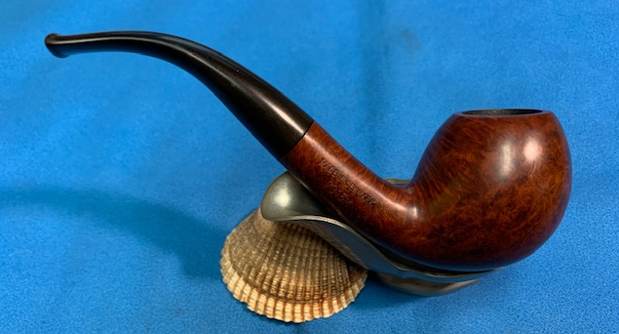
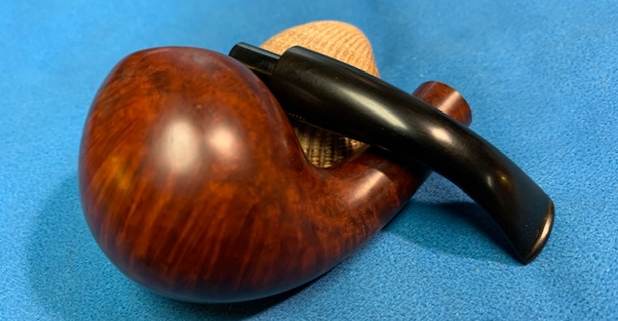
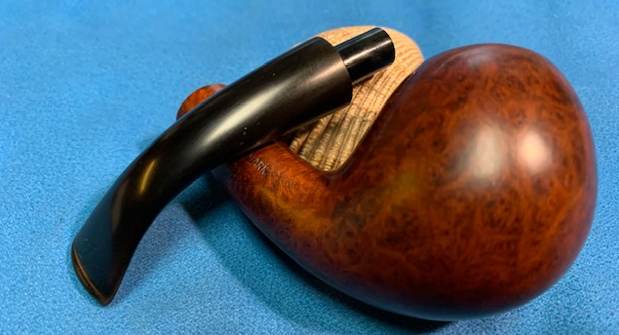
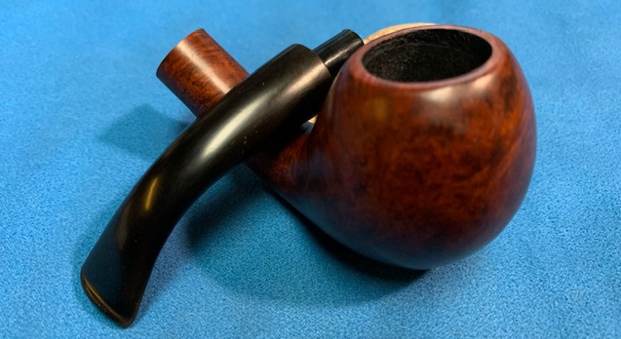
Restoring a Beautifully Grained Bari Squash 7315M Bent Apple


Blog by Steve Laug

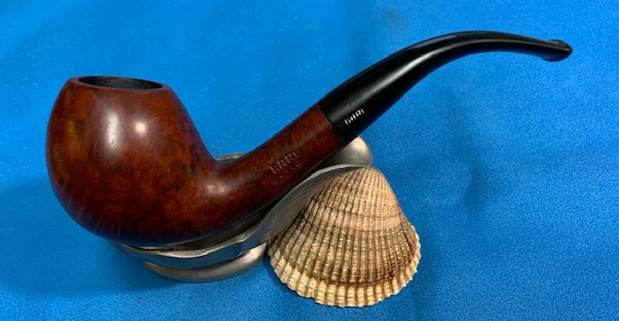
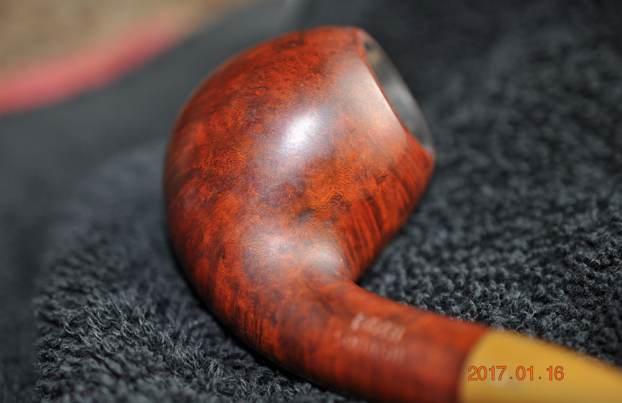
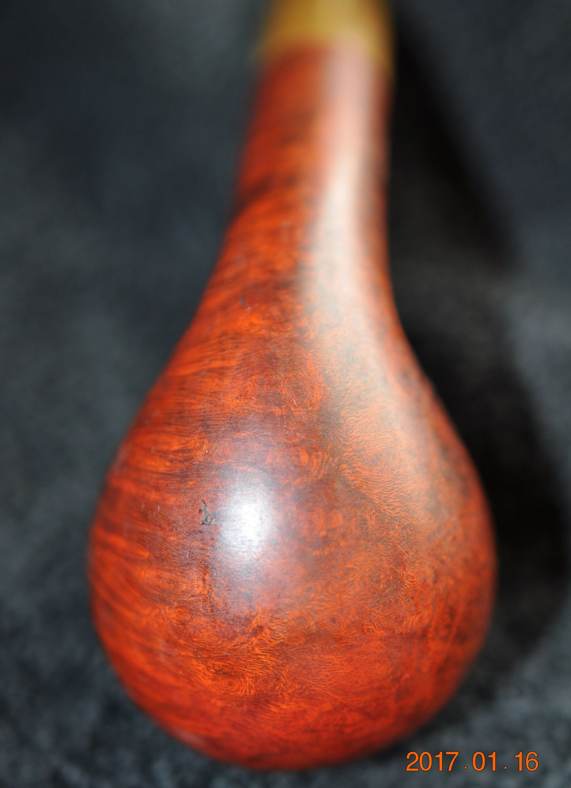
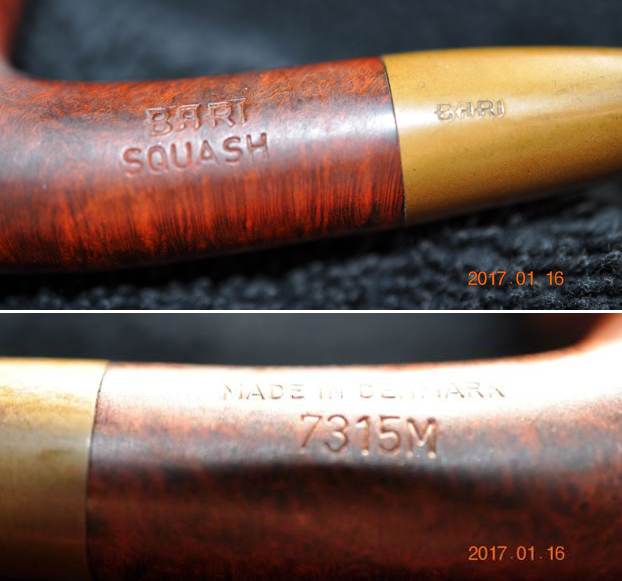
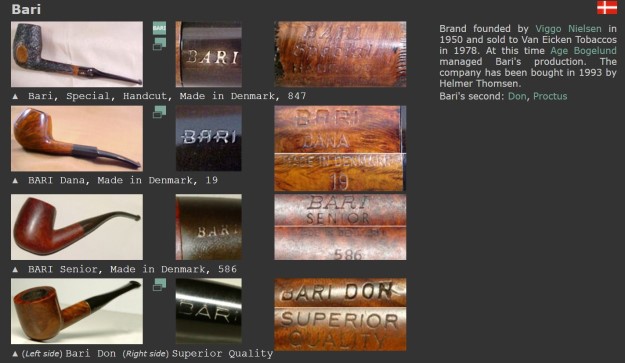
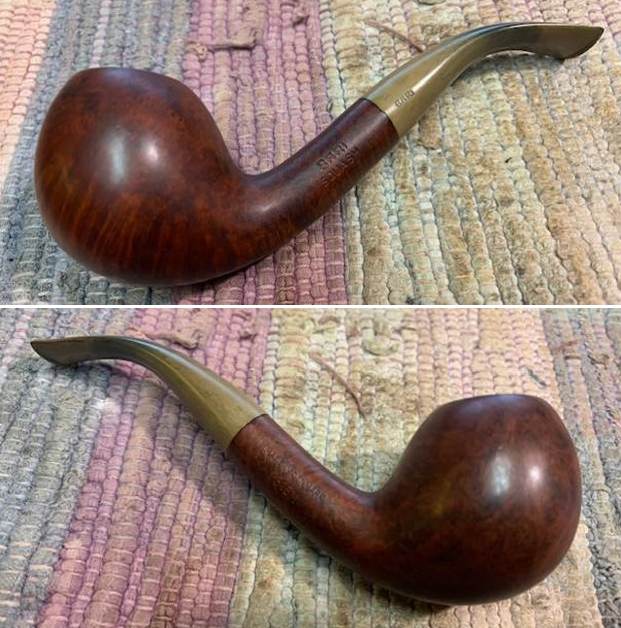
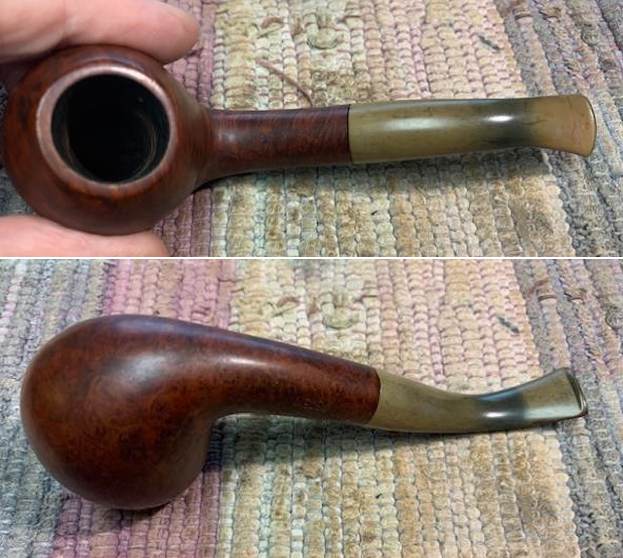
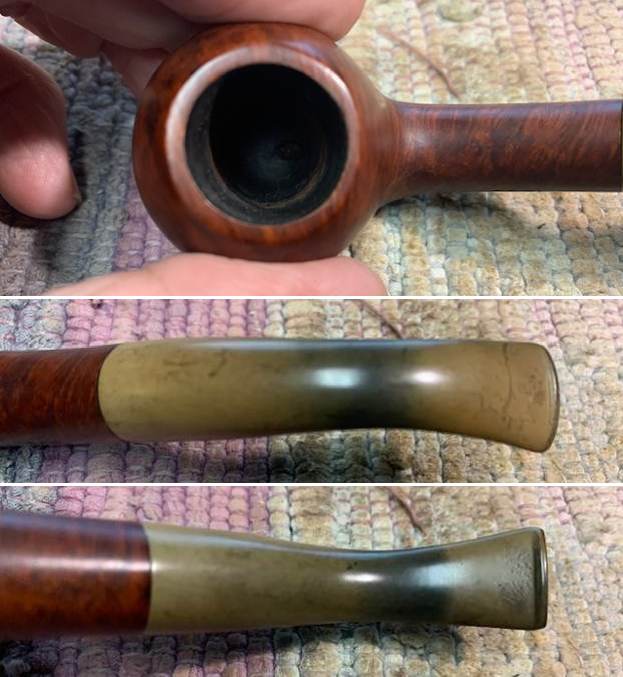
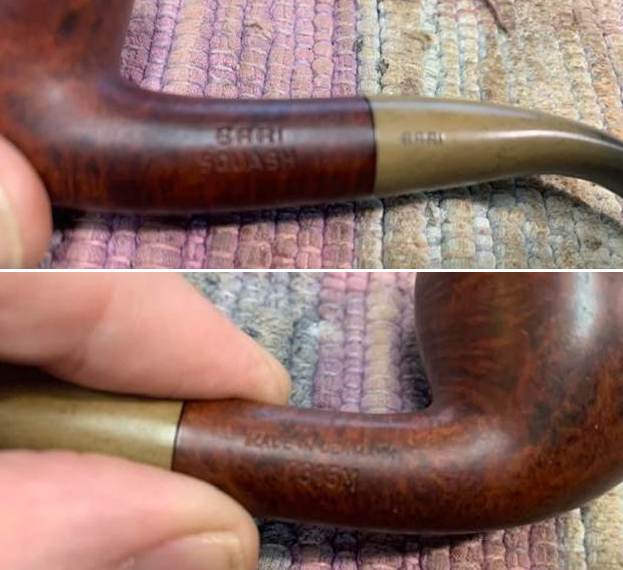
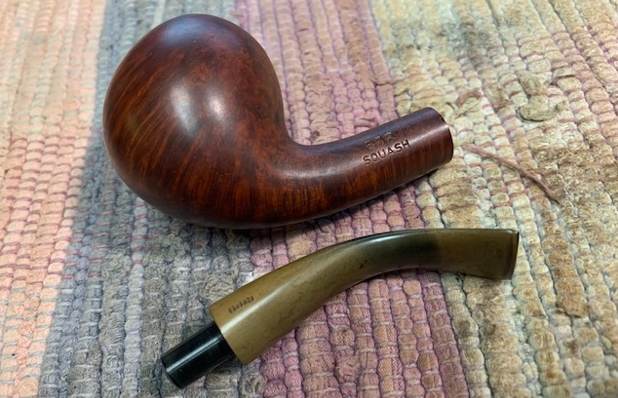
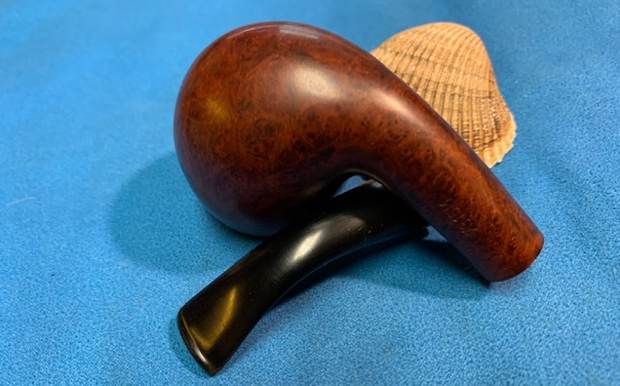
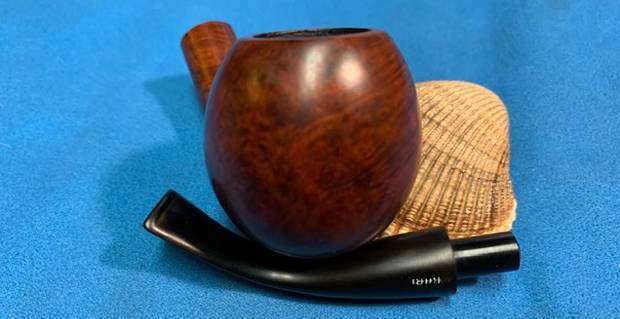
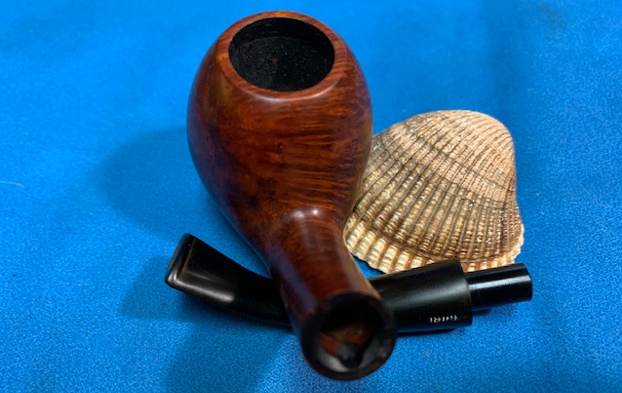
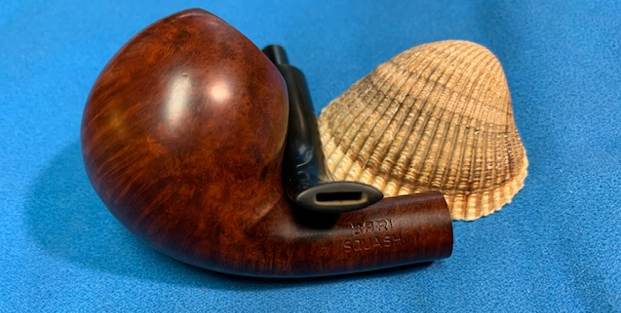
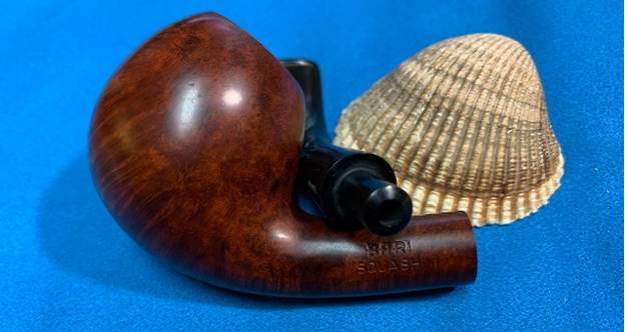
The next pipe on the work table was purchased off EBay on January 8, 2017 from Sheridan, Arkansas, USA. It has been sitting here for 5 years. Jeff took photos the week after we purchased it. Now I am finally getting a chance to work on it. The pipe is a classic Danish looking Bent Apple shape with a smooth brown finish with highlights of red. The pipe was dirty and worn looking. On the left side of the shank it is stamped with Bari [over] Squash. On the right side it was stamped Made In Denmark [over] the shape number 7315. The mix of stains makes the grain stand out even with the grime ground into the finish. There was a thick cake in the bowl and a light overflow of lava on the rim top. The edges look to be in good condition as far as we can tell until we clean up the pipe. The stem was heavily oxidized, calcified and there was light tooth chatter and marks on both sides near the button. The white Bari stamp on the left side of the stem was faded. Jeff took photos of the pipe before he started working on it. I include those below. Jeff took photos of the bowl and rim top to show the cake in the bowl and the condition of both. It was heavily caked with a light lava overflow on the rim top. The inner and outer edges look very good. He took photos of the top and underside of the stem showing the oxidation and tooth marks on the stem surface and button.  In person the tooth marks are far deeper than they look in the photos.      He took some photos of the bowl side and heel to show the grain around the bowl and shank. It is a real beauty. Jeff took two photos to capture the stamping on the sides of the shank. It is clear and readable as noted above.   I turned to Pipephil’s site (http://www.pipephil.eu/logos/en/logo-b1.html) to see if I could find a listing for the Bari Squash with this four digit number. There was nothing specifically listed for this line of Bari pipes. There was also good info on the brand as a whole and that it was founded by Viggo Nielsen in 1950 and he ran it until 1978 when Age Bogelund managed the production for them. In 1993 it was sold to Helmer Thomsen. Pipedia gives a great history of the brand (https://pipedia.org/wiki/Bari) that is well worth reading. There were also examples of the Bari pipes showing their stamping.

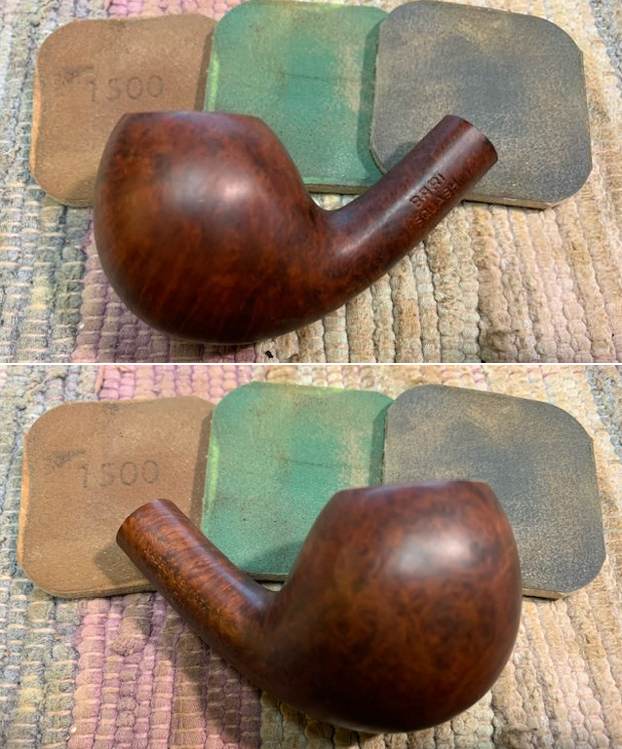
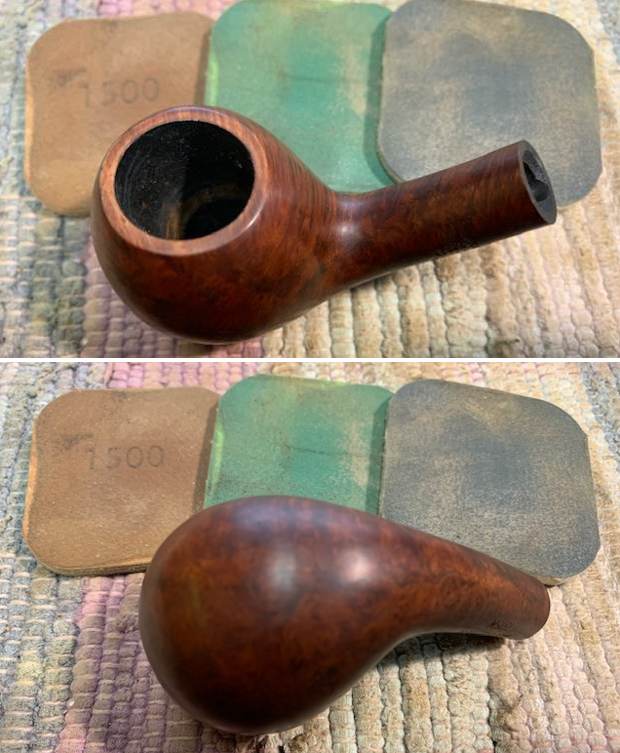
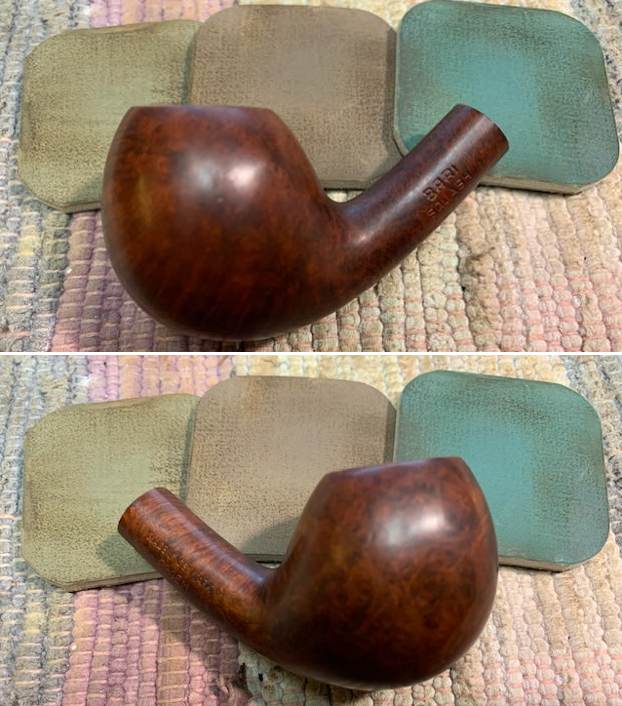
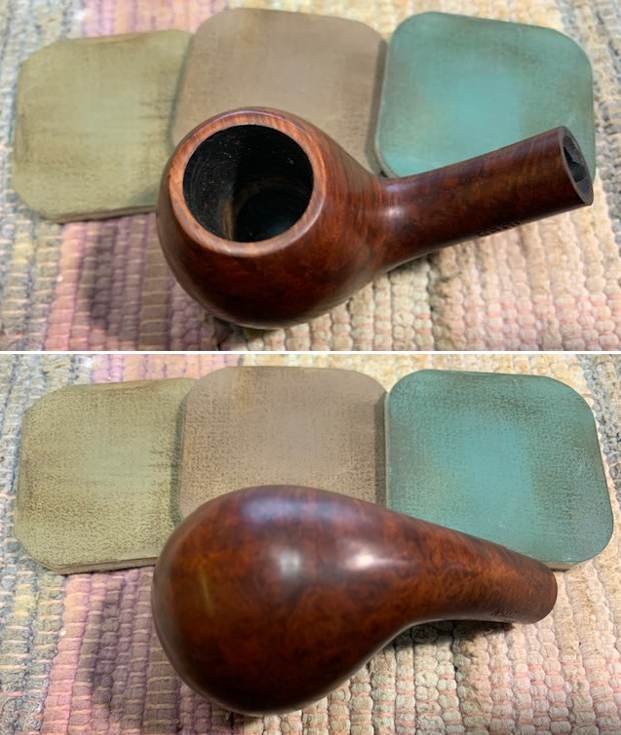
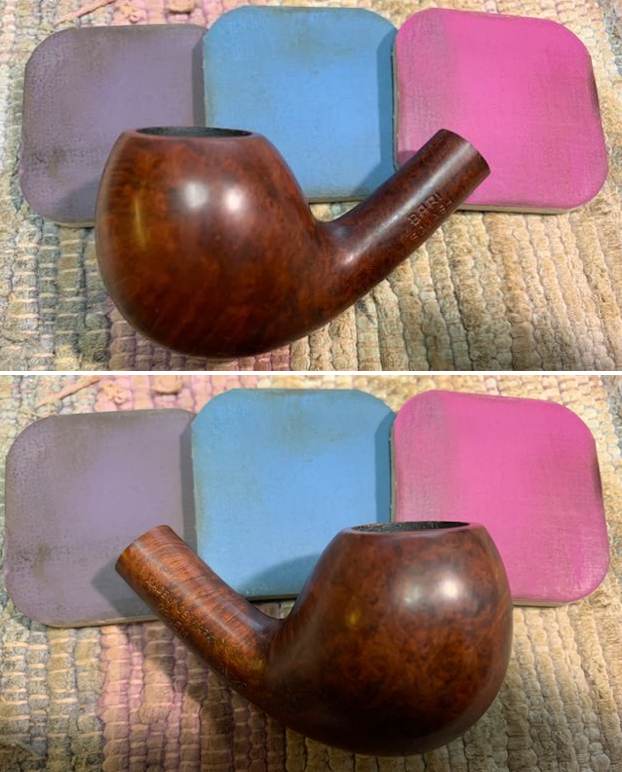
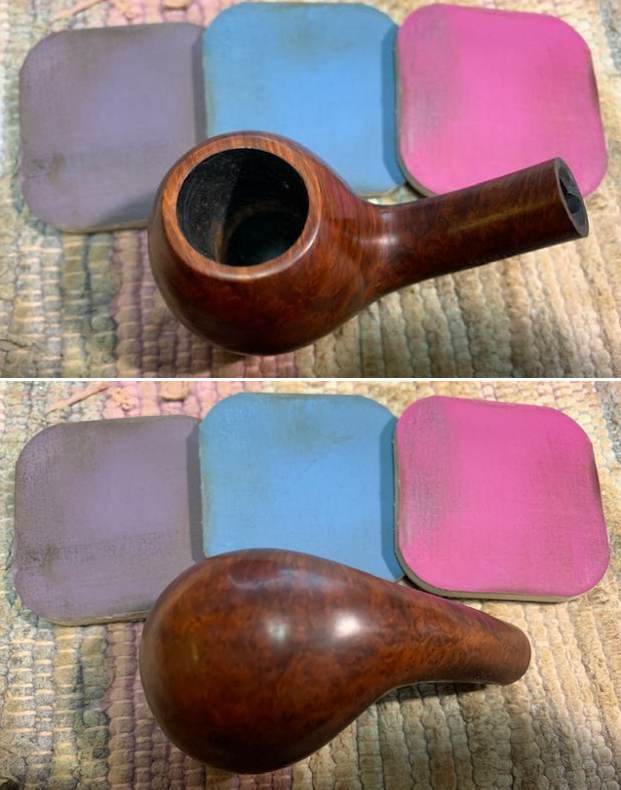
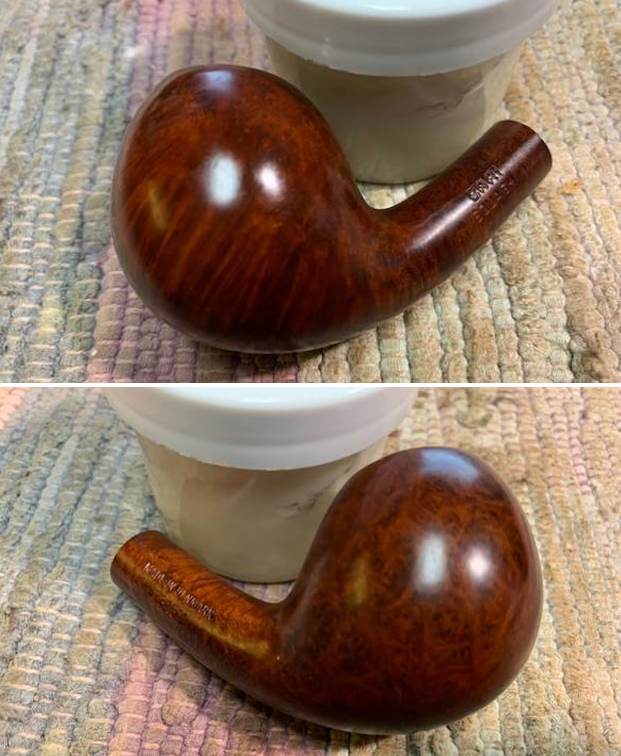
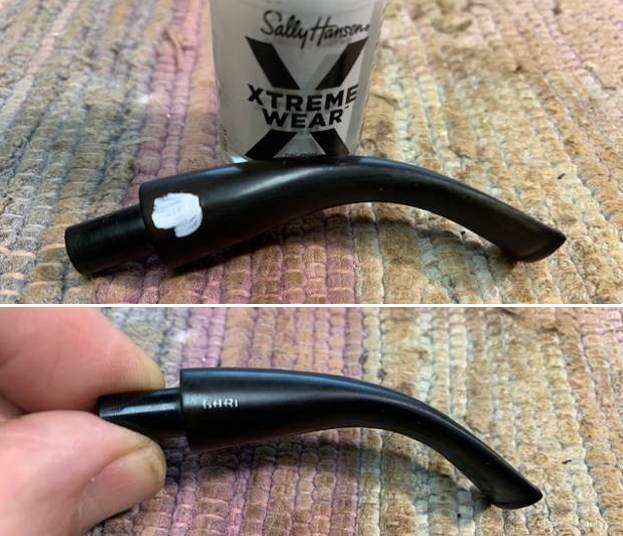
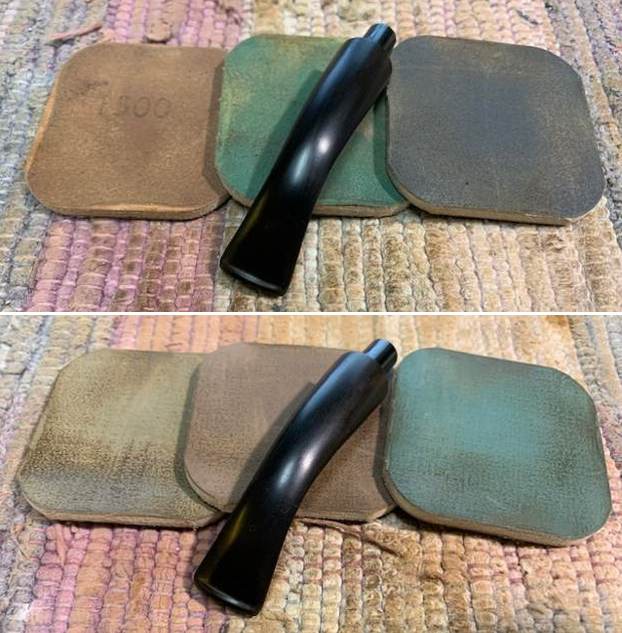
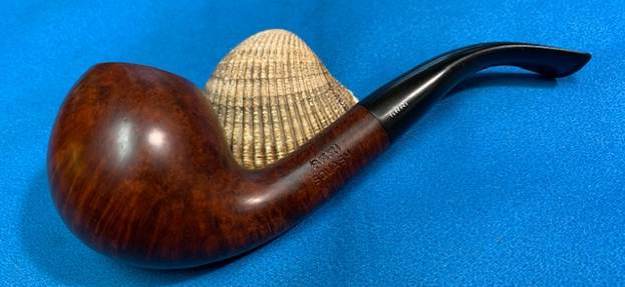
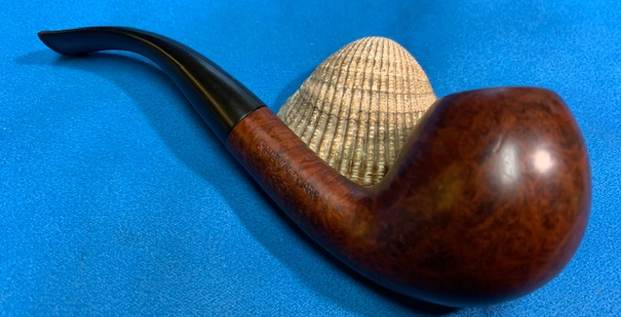
This pipe was a bit of a mess like many of the pipes we work on. I was curious to see what it would look like when I unpacked it. I was surprised at how good the bowl looked. Jeff reamed it with a PipNet pipe reamer and cleaned up the reaming with a Savinelli Fitsall Pipe Knife. He scrubbed out the internals of the shank and stem with alcohol, pipe cleaners and cotton swabs until the pipe was clean. He scrubbed the exterior of the bowl with Murphy’s Oil Soap and a tooth brush to remove the grime and grit on the briar and the lava on the rim top. The finish on the bowl looked really good when I got it. The rim top looked very good. The edges looked good as well. This pipe was purchased before we used Before & After Pipe Stem Deoxidizer so while it was clean it was also still very oxidized. The surface of the stem was clean and the tooth marks were light and less visible. When the pipe arrived here in Vancouver for the second stop of its restoration tour it looked much better than when he found it. I took photos of the pipe before I started my work on it.  I took photos of the condition of the rim top and stem before I started working. The rim top looks very good and the bowl is spotless. The stem is heavily oxidized and the light tooth chatter is very visible in the photos. I took photos of the stamping on the sides of the shank. The BARI SQUASH stamp and the Made in Denmark and shape 7315M are very clear. I took the bowl and stem apart and took a photo of the pipe to show the look of the pipe. The polished the briar with micromesh sanding pads – dry sanding with 1500-12000 grit pads. I wiped the briar down with a damp cloth after each sanding pad. I worked some Before & After Restoration Balm into the finish of the bowl, rim top and shank with my fingertips to clean, enliven and protect it. I find that the balm really makes the briar come alive again. The contrasts in the layers of stain and the separate finishes really made the grain stand out. I let the balm sit for 10 minutes and then buffed with a cotton cloth to raise the shine. The bowl really looks good at this point. I scrubbed the oxidation on the stem with Soft Scrub cleanser an was able to remove most of it.  I sanded the remaining oxidation on the stem near the button with 220 sandpaper. I started polishing with 400 grit wet dry sandpaper.   I touched up the Bari stamp on the left side of the stem with white acrylic fingernail polish. I let it dry and sanded it with 1500 micromesh sanding pads to remove the excess. It looks better though some of the stamping is faint on the edges.   I polished the stem with micromesh sanding pads – wet sanding it with 1500-12000 grit pads. I wiped the stem down after each pad with a cloth impregnated with Obsidian Oil. I polished it further with Before & After Pipe Stem Polish – both fine and extra fine. I gave it a final coat of Obsidian Oil and set it aside to dry.    Once again I am the part of the restoration that I always look forward to – the moment when all the pieces are put back together. I put the pipe back together and lightly buffed the bowl and the stem with Blue Diamond. I gave the bowl and the stem multiple coats of carnauba wax. I buffed the pipe with a clean buffing pad to raise the shine. I hand buffed it with a microfiber cloth to deepen the shine. It is fun to see what the polished bowl looks like with the smooth finish and the black vulcanite stem. This richly stained Bari Squash Sandblast 7315 Bent Apple is light weight and ready for you to load up a tobacco of preference and enjoy breaking it in for yourself. Have a look at it in the photos below. The dimensions are Length: 5 inches, Height: 1 ½ inches, Outside diameter of the bowl: 1 inch, Chamber diameter: ¾ of an inch. The weight of the pipe is 36grams/1.31oz. This is one that will go on the Danish Pipemakers section of the rebornpipes online store shortly. Thanks to each of you who are reading this blog. Remember we are not pipe owners; we are pipemen and women who hold our pipes in trust until they pass on into the trust of the next generation.
A Singularly Interesting Restoration of a Full Bent Peterson


Blog by Steve Laug

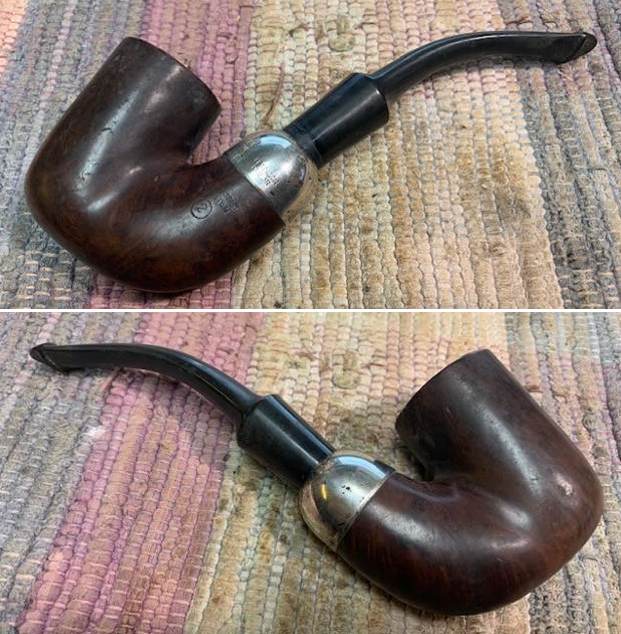
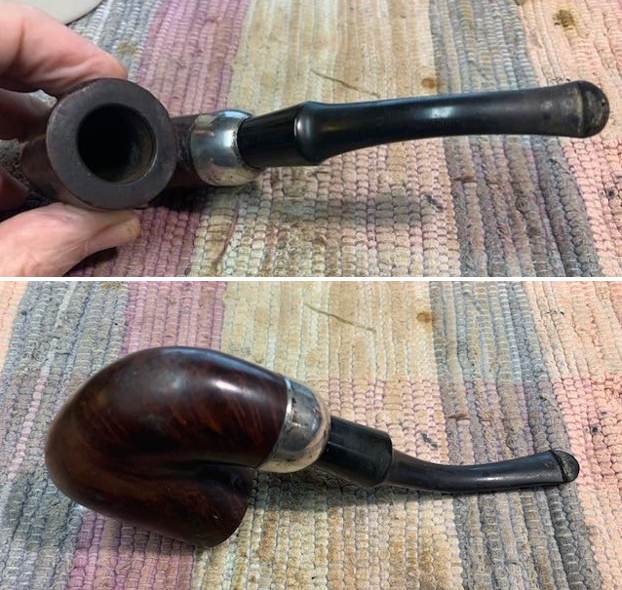
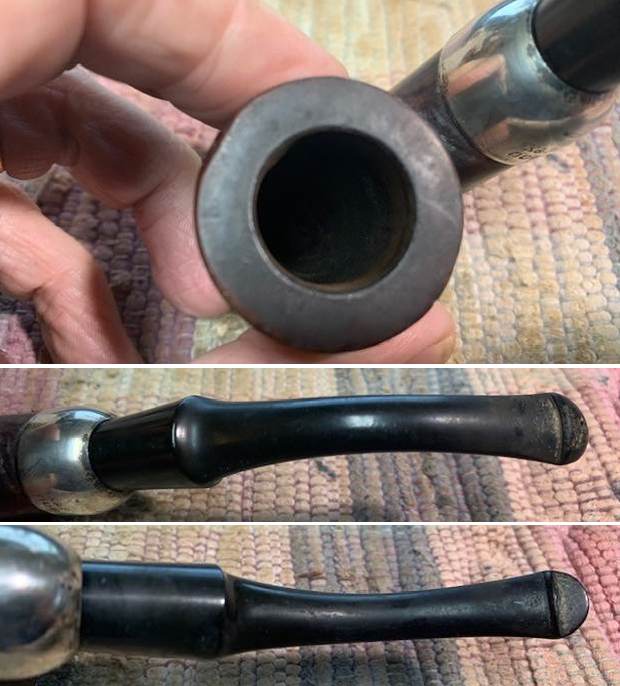
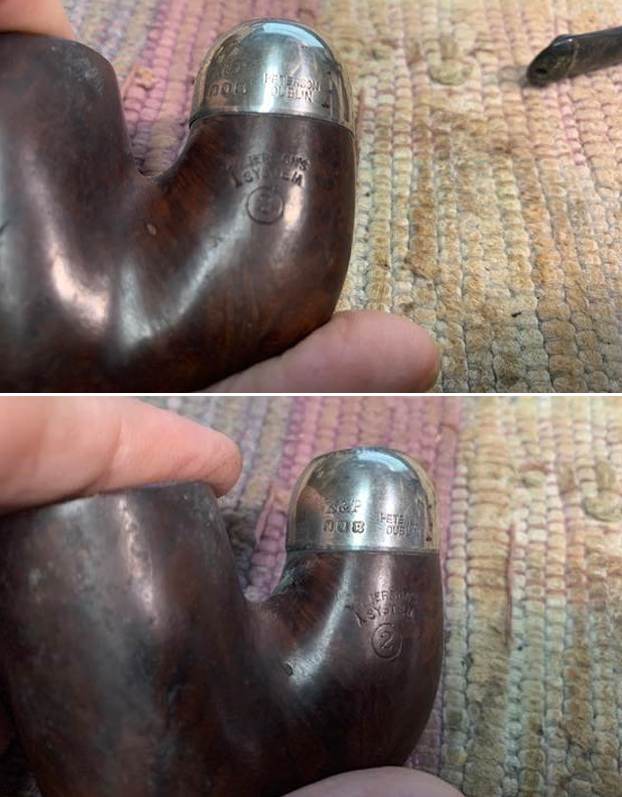
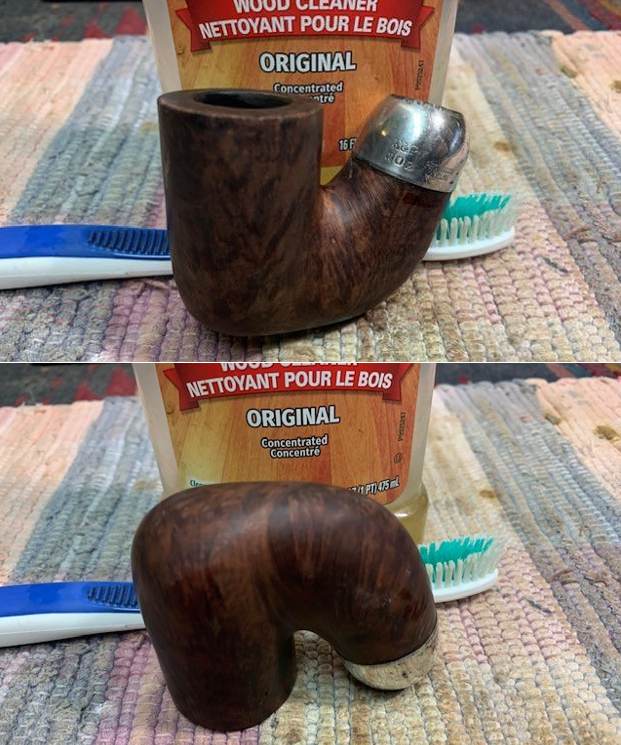
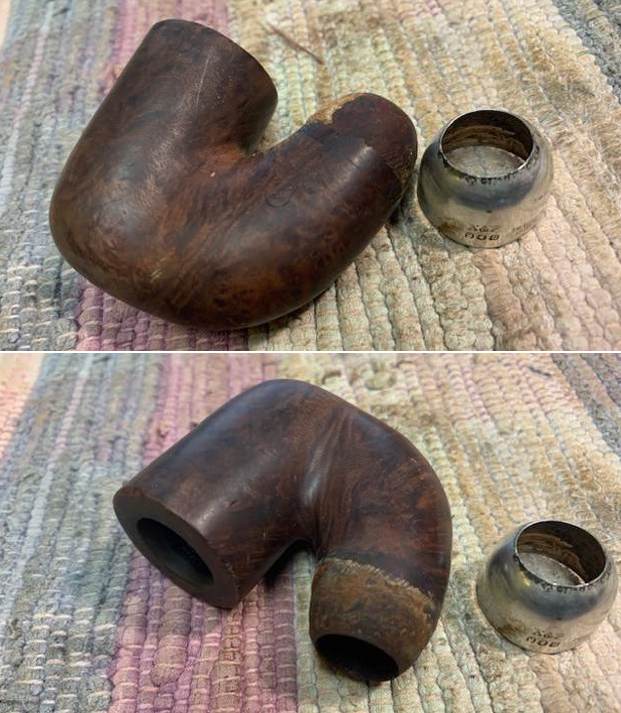
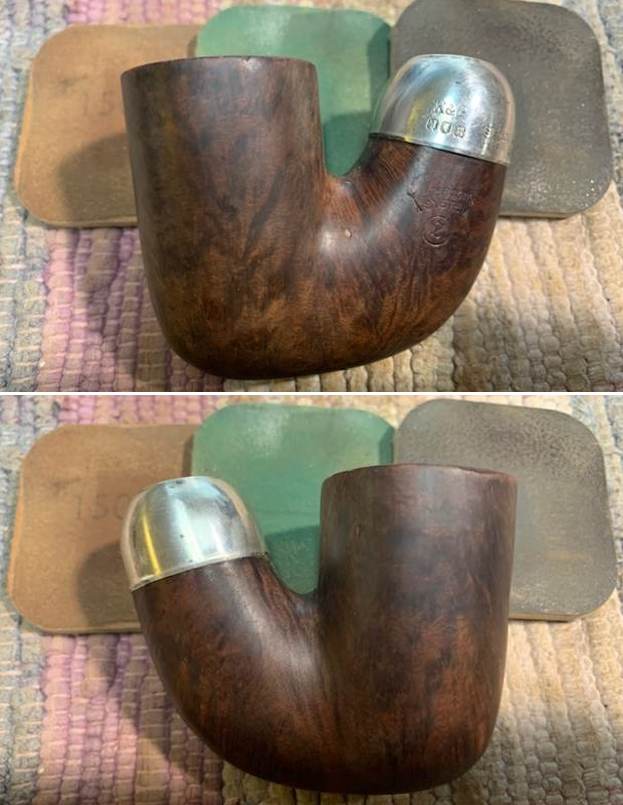
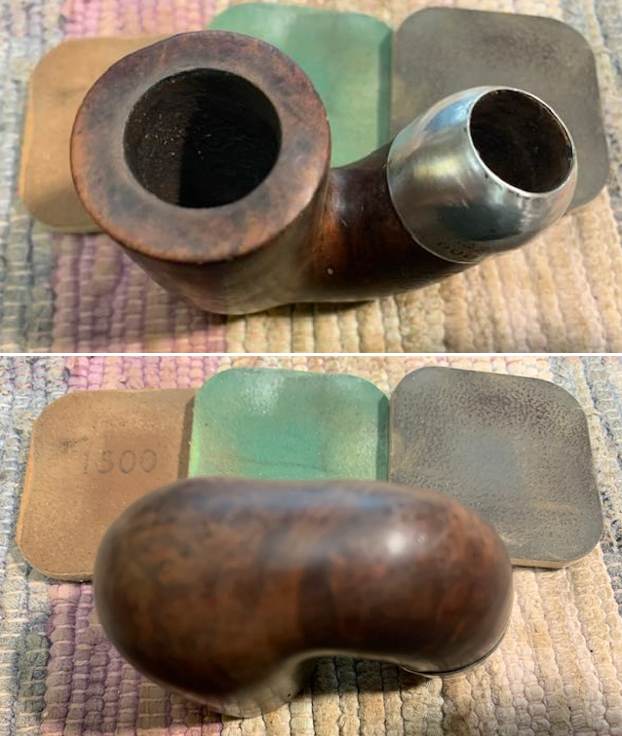
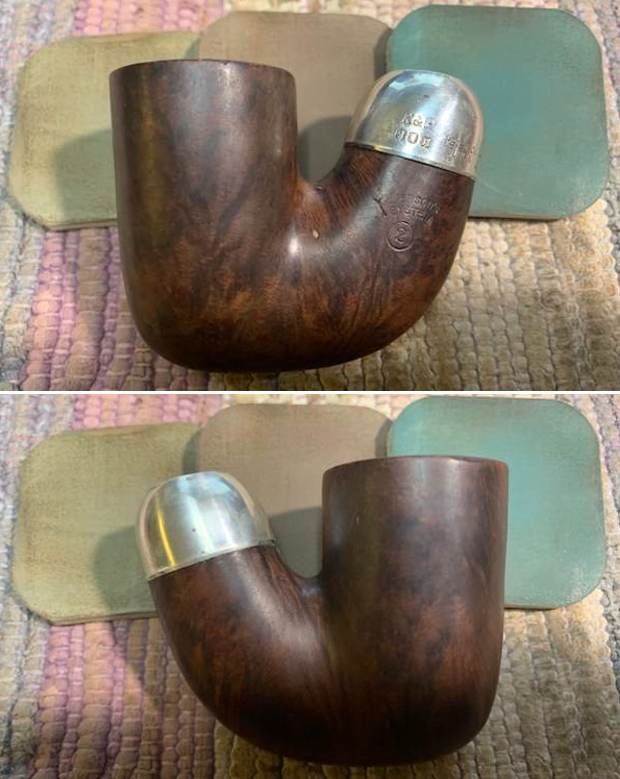
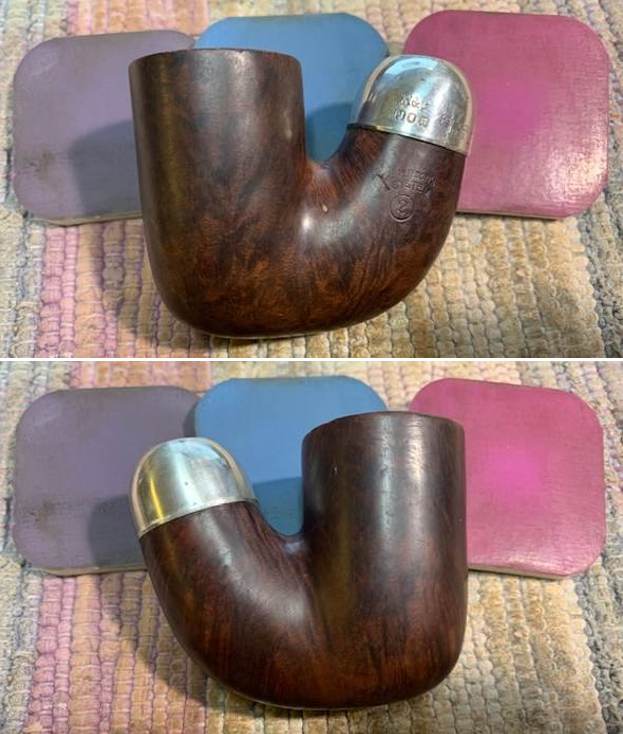
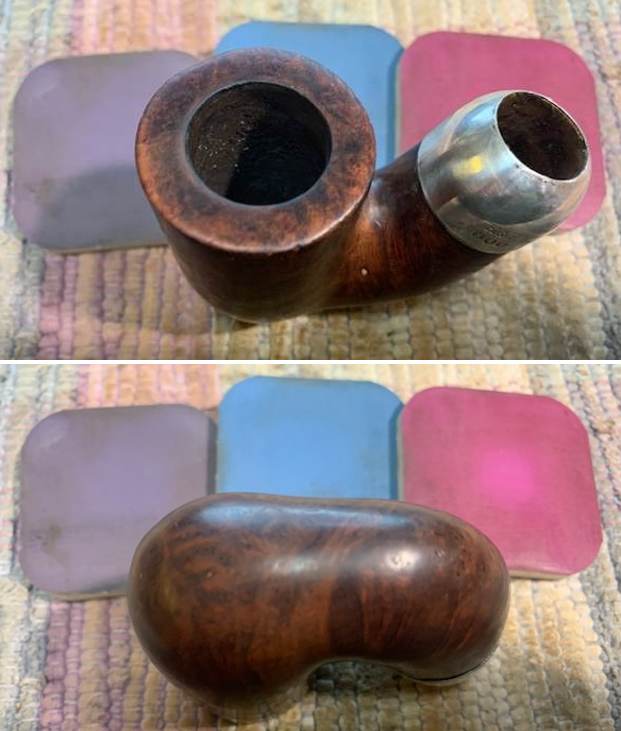
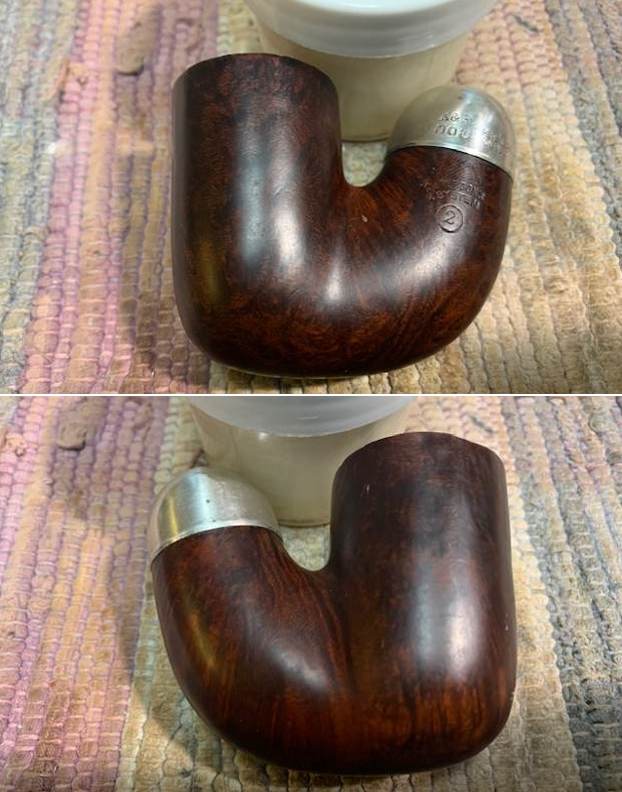
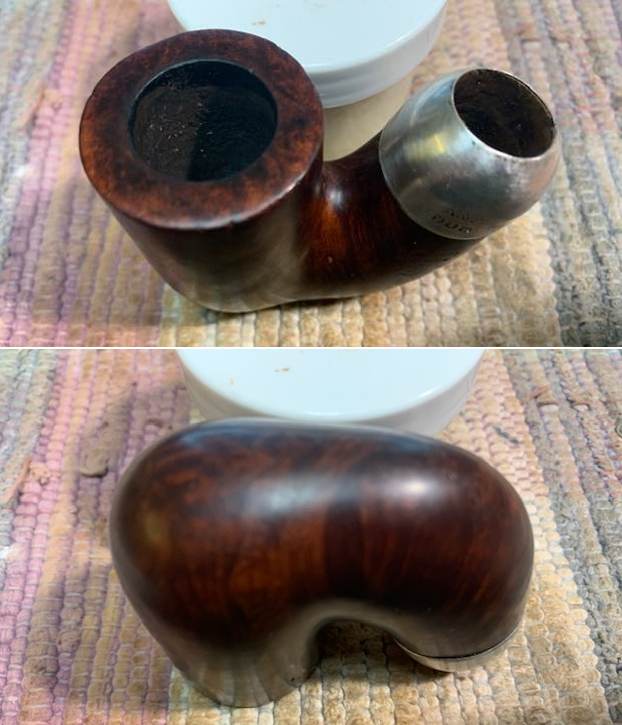
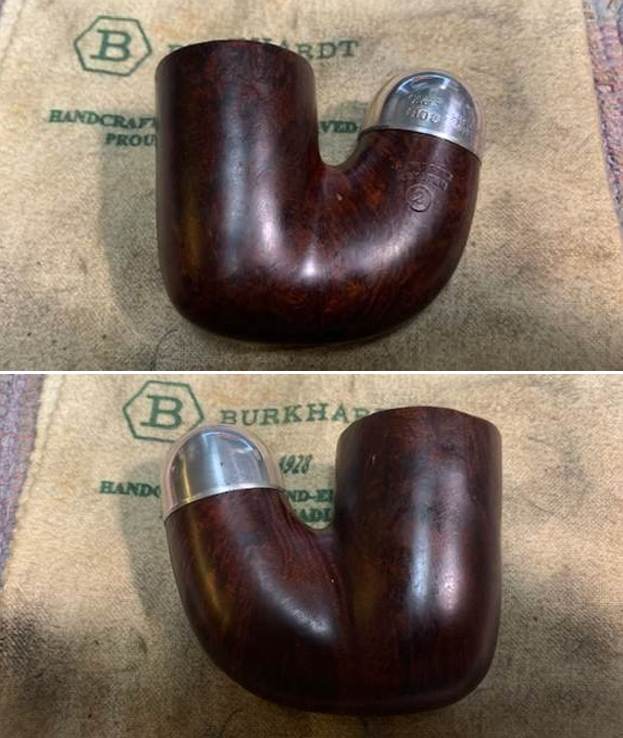
My friend Ken wrote and asked me if I take this older Peterson’s Full Bent to clean up and restore for him. Today it arrived in the mail. It is stamped on the left side of the shank and reads Peterson’s [arched over] System [over] 2 in a circle (which I believe is the grade stamp). There is no stamping on the other side of the shank or on the underside. The silver ferrule is stamped on the left side K&P [over] three hallmarks – the seated woman, the harp and a letter “P”. To the right of that it is stamped Peterson [over] Dublin. The pipe looks to be an old timer. The bowl was quite dirty with a moderate cake in the bowl, some tobacco bits and a spot of what looked like moldy tobacco stuck on the wall. The sump was filled with tars, oils and some spots of mold as well. The pipe reeked of old wet and moldy tobacco. It was a mess. The rim top had a build up of lava on the top and edges. The inner and outer edge looked good with no nicks. The finish was very worn and scratched. The silver ferrule was oxidized and dirty. The stem was oxidized, calcified and had tooth marks and chatter on both sides ahead of the button. I took photos of the pipe before I started my clean up work on it. I took a close up photo of the rim top and the bowl to give a clear idea of what I was working on. It had a light lava coat that is hard to see in the photo. The bowl had a moderate cake that is not very visible and moldy particles on the back wall and in the sump and mortise. The stem had straightened quite a bit and there was oxidation, calcification and tooth marks and chatter on both sides ahead of the button.I took photos of the stamping on the side of the shank and the silver ferrule – it reads as noted above. It is clear and undamaged. The second photo gives a clear photo of the hallmarks on the silver. They read as noted above.I am including the link to the Pipedia’s article on Peterson pipes. It is a great read in terms of the history of the brand (https://pipedia.org/wiki/Peterson).

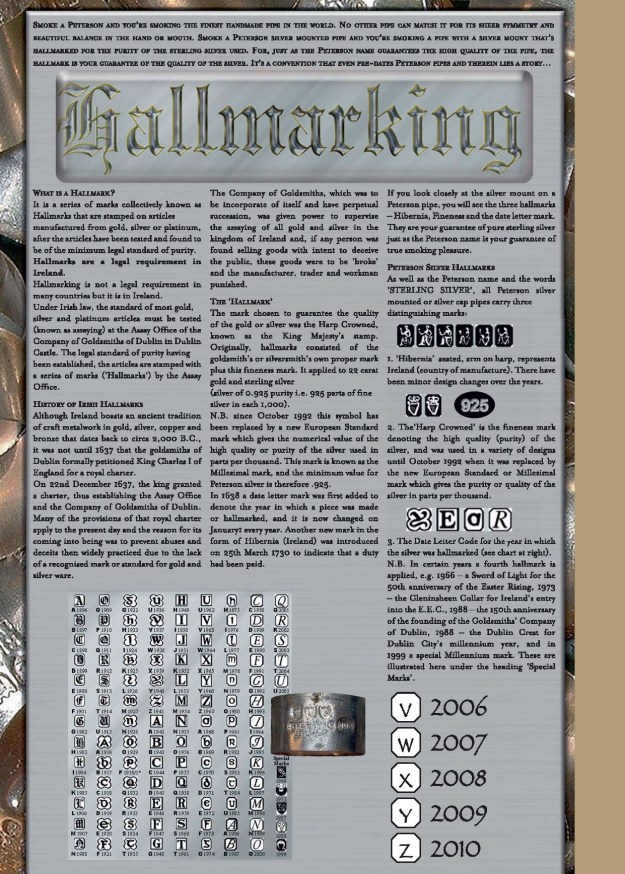
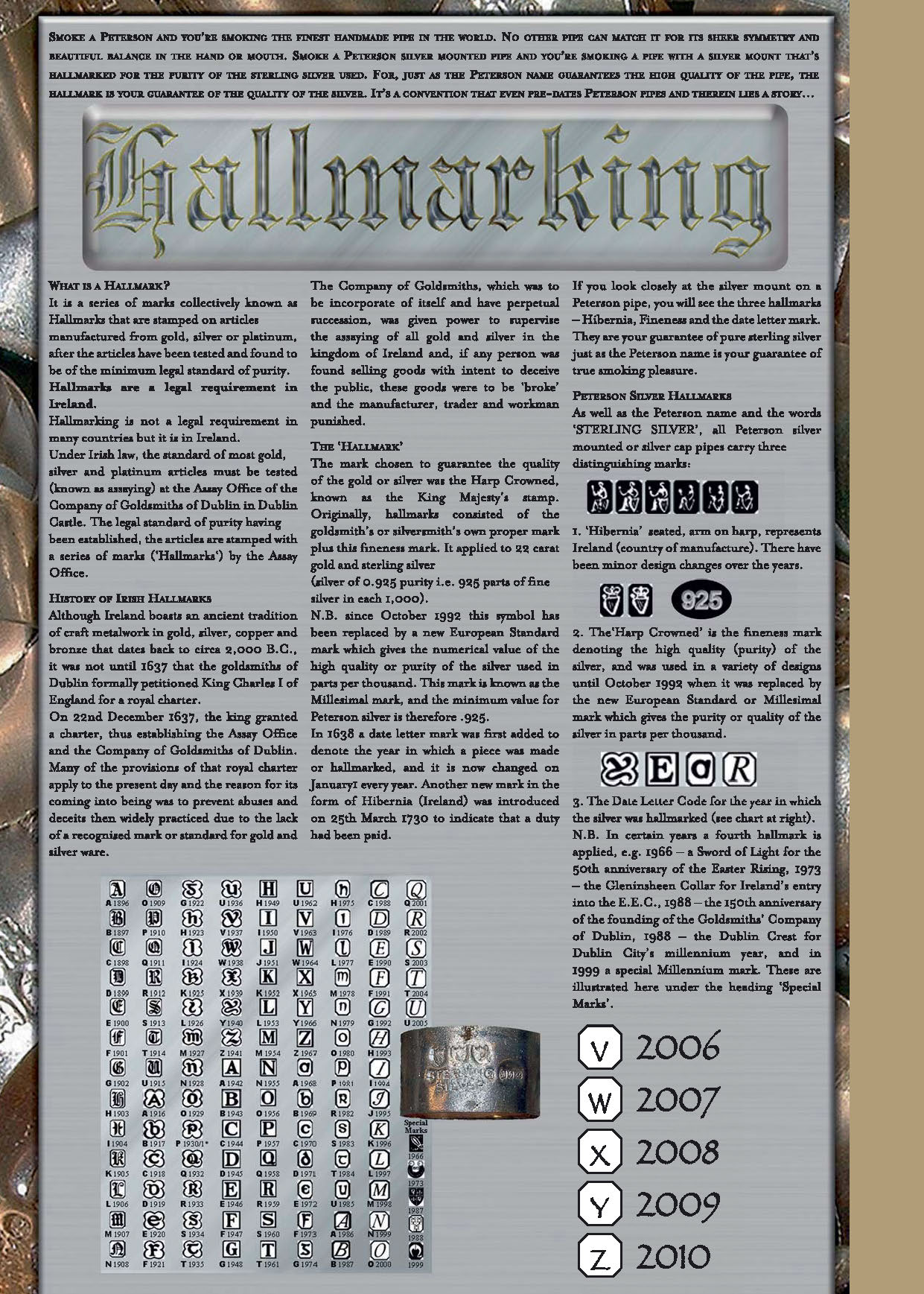
I always like to date the year a pipe was made while I am working on it. In the process of working on a pipe if I can pin down a date that it was made that it adds another dimension to the restoration process. Once I have identified the hallmarks on the pipe then I use a Hallmark chart to pin the date down. In the case of Peterson’s pipe with a silver band I use a hallmarking chart that Peterson included in their catalogs and on their website

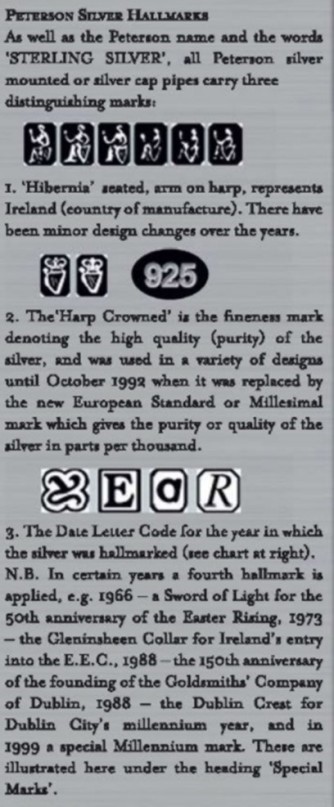
I have a copy of the hallmark charts in one of the Peterson catalogs that I have uploaded to the blog on rebornpipes. I turned to that chart to lock down the date letter for the Sterling Silver System that I am working on. Here is the link to the site (https://rebornpipes.com/wp-content/uploads/2015/05/peterson-cataloguecomp_page_27.jpg).

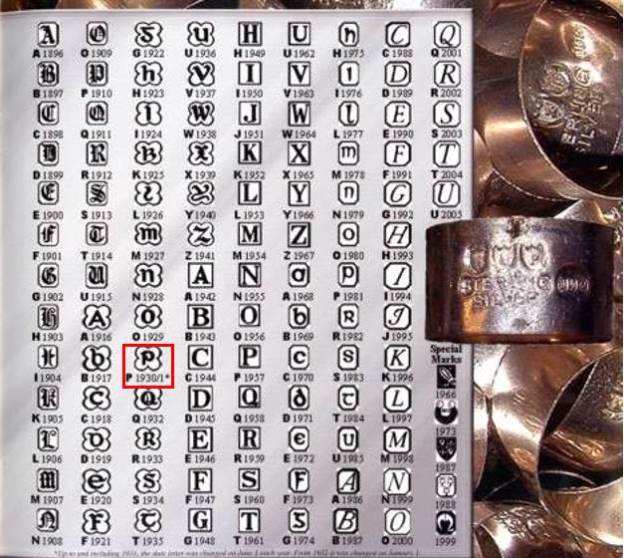
The chart defines the meaning of each hallmark on the silver band. The first one is of a seated woman with a harp is known as the Hibernia stamp and identifies the pipe as made in Ireland. The second stamp is a crowned harp which is a fineness mark denoting the high quality of silver that was used. The third stamp in this case is an uppercase “P” in a cloverleaf rectangle. I have included a larger screen capture of the chart in the photo below. Following that I have included a blown up capture of the chart with the “P” in a red box. That dates it to 1930/31. It is interesting to note that there is an asterisk after the date under the boxed “P” stamp above. The note at the bottom of the page is hard to read in the above photo. I looked it up on another chart and found out that it read as follows:

“Up to and including 1931, the date letter was changed on June 1 each year. From 1932 on it was changed on January 1.”

It is thus interesting to note that the date was a significant change in the dating methods came about the year after this pipe was made.

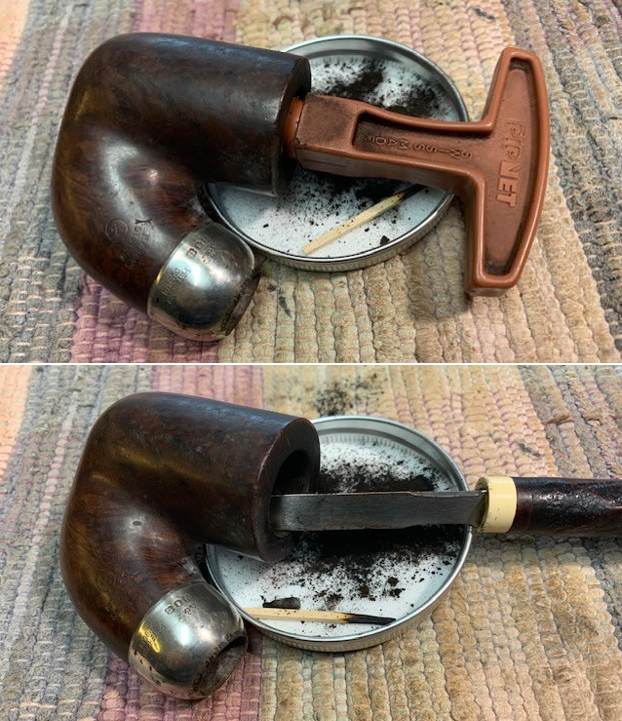
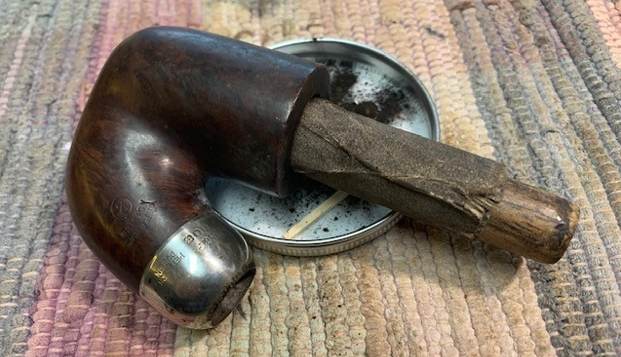
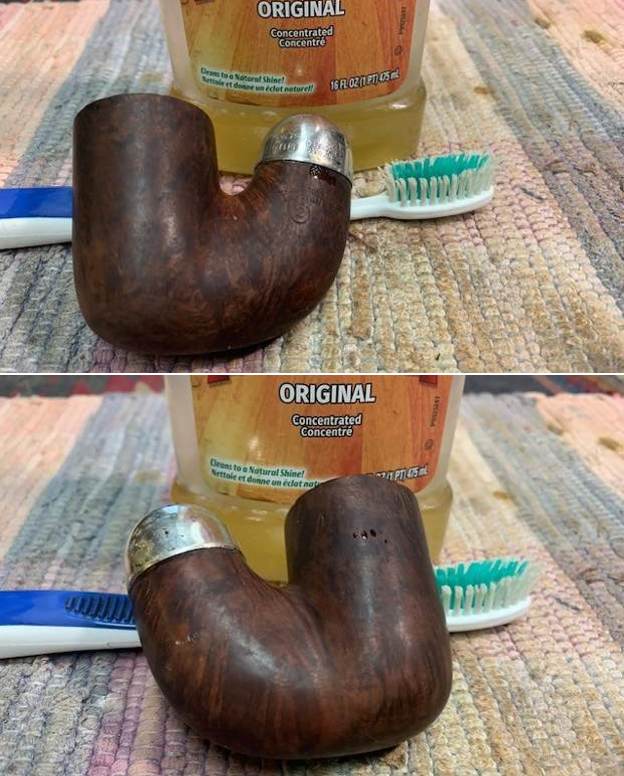
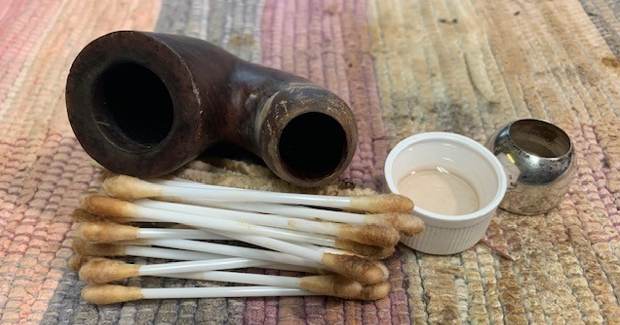
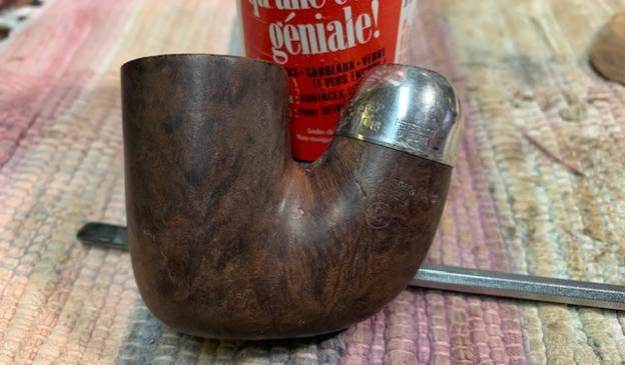
Now that I had the date pinned down to 1930/31 it was time to work on the pipe itself. I reamed the bowl with a PipNet pipe reamer and cut the cake back to bare walls. I cleaned up the reaming with a Savinelli Fitsall Pipe Knife and then sanded the bowl with 220 grit sandpaper wrapped around a piece of dowel. The bowl looked very good on the inside. With the inside cleaned out I turned my attention to the exterior of the bowl. I scrubbed it with a tooth brush and undiluted Murphy’s Oil Soap. I worked on the rim top, the bowl and shank and the inside of the bowl itself. I was able to remove the grime and tars with the soap and rinsed it off with running water to remove the tars and soap. The bowl looked very clean. While I scrubbed it the glue that held the band in place loosened and the band came off in my hands. The glue was a mess underneath, it was uneven and chipping. I would need to be replaced to hold the band firmly in place.I cleaned out the internals of the bowl, shank and sump with pipe cleaners, cotton swabs and isopropyl alcohol. It was filthy and I wanted to make sure to kill whatever was lurking in the bit of tobacco in the bowl and sump. It smells and looks much better now.I cleaned of the old glue on the shank end, sanded it to smooth out the surface and reglued the ferrule with an all purpose white glue. I adjusted the ferrule to the angle of the shank end and set it aside to dry.I polished the briar with micromesh sanding pads – dry sanding with 1500-12000 grit pads. I wiped the briar down after each sanding pad to remove the debris from the surface. The briar began to take on a shine. I worked some Before & After Restoration Balm into the surface of the briar with my finger tips. I works to clean, enliven and protect the briar. I let it sit for 10 minutes and then buffed it off with a soft cloth. With these older pipes I try to keep the old patina in tact so I was glad to see that the finish looked very good with the Balm. I polished the silver ferrule with a jewelers cloth to remove the tarnish, polish and preserve the silver. The silver looks very good and the hallmarks are clear and readable as noted above. I set the bowl aside and turned my attention to the stem. I cleaned it out with cotton swabs, pipe cleaners and 99% isopropyl alcohol. It took quite a few cleaners to get the grime and debris out of the stem, but it smells sweet now. I loaned my heat gun to my daughter so I had to resort to old methods to bend the stem to correct angles. I heated it with the flame of a Bic Lighter until the vulcanite was pliable then carefully bent it to the angle I wanted. I cooled it with water to set the bend.I sanded out the tooth marks and chatter on the top and underside of the stem near the button with 220 grit sandpaper. I started the polishing process with 400 grit wet dry sandpaper.I polished the stem with micromesh sanding pads – dry sanding with 1500-12000 grit sanding pads. I wiped it down between sanding pads with a cloth impregnated with Obsidian Oil. I polished it further with Before & After Pipe Stem Polish – both Fine and Extra Fine. I gave it a final coat of Obsidian Oil and set it aside to dry. I am excited to finish this 1930/31 Peterson’s System Circle 2 Full Bent. I put the pipe back together and buffed it lightly with Blue Diamond on the buffing wheel. I gave the bowl and the stem multiple coats of carnauba wax. I buffed the pipe with a clean buffing pad to deepen the shine. I hand buffed the pipe with a microfiber cloth to further raise the shine. It is fun to see what the polished bowl looks like with deep sandblast all around it. Added to that the polished black vulcanite stem was beautiful. This sandblast Peterson’s System Circle 2 is great looking and the pipe feels great in my hand. It is light and well balanced. Have a look at it with the photos below. The dimensions are Length: 6 inches, Height: 2 inches, Outside diameter of the bowl: 1 ¼ inches, Chamber diameter: ¾ of an inch. The weight of the pipe is 66 grams/2.33 ounces. It is a beautiful pipe and one I am working on for my friend. I will be sending it back to him soon. Thanks for walking through the restoration with me as I worked over this pipe. Thanks to each of you who are reading this blog.

Restoring an older KBB Yello-Bole Century Model Straight Bulldog


Blog by Steve Laug

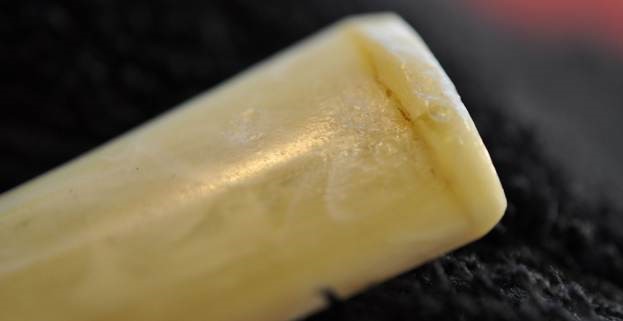
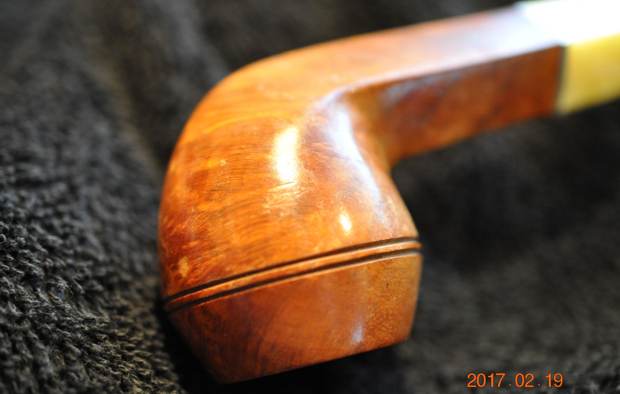
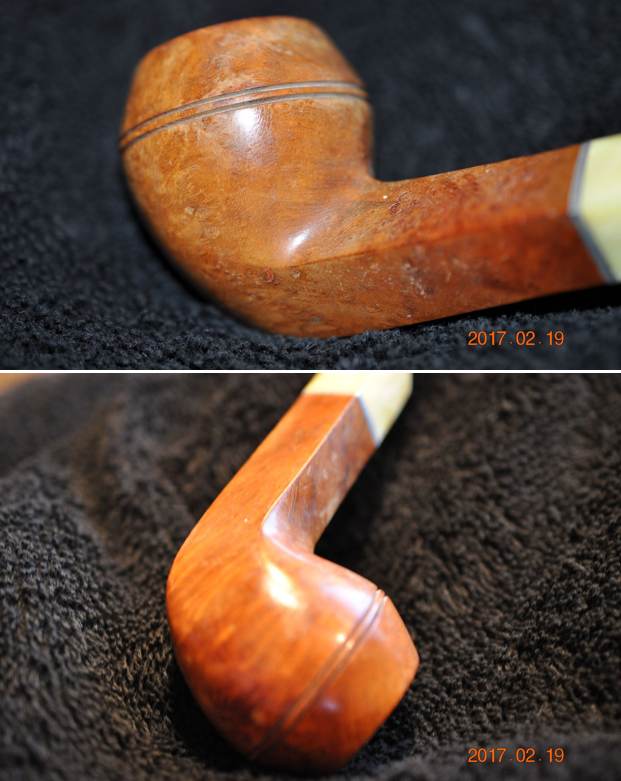
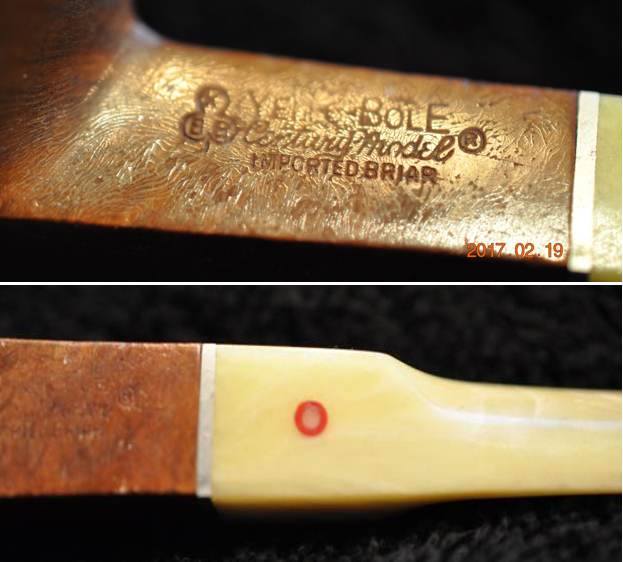
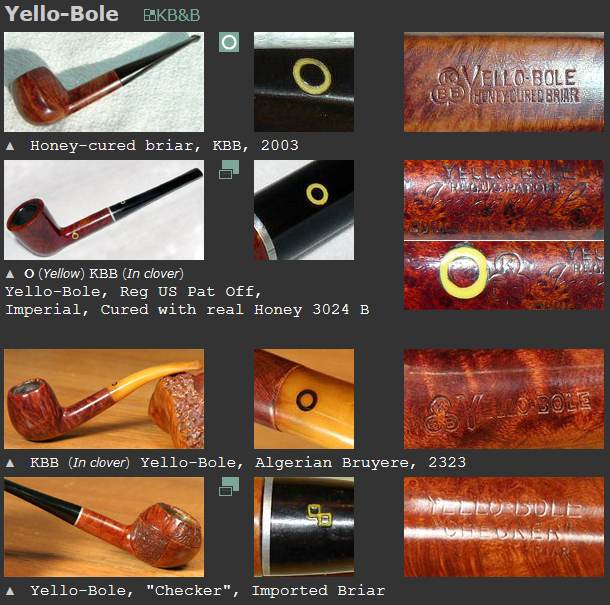
The next pipe on my work table a classic looking KBB Yello-Bole Bulldog shaped pipe. It is stamped with a KBB in a cloverleaf next to the bowl on the left side of the shank. That is followed by YELLO-BOLE [over] Century Model ® [over] Imported Briar. There is no shape number on the pipe on either side. The yellow coloured Bakelite saddle stem. The briar has a mix of birdseye and cross grain around the bowl and shank. This pipe was bought off eBay on February 3, 2017 from Grand Junction, Colorado, USA. The varnish on the finish was peeling and damaged. The briar was also dirty but the grain shone through well. The rim top had a thick coat of lava and edges are caked as well. There was a heavy cake in the bowl and some tobacco debris. The shank and stem airway was very dirty. The stem was lightly oxidized, calcified and had light tooth marks and chatter on both sides ahead of the button. Jeff took photos of the pipe before he started his clean up. He took photos of the rim top and bowl to show the cake in the bowl, the darkening on the inner edge and the light lava on the rim top. The stem photos show the oxidation, calcification and tooth chatter and marks very well. Jeff took photos of the sides of the bowl to highlight the grain around the bowl sides and base. He captured the stamping on the shank side and stem side in the next photos. The circle on the stem is red rather than black or yellow. They are clean and readable as noted above.I turned to the listing on Pipephil on the KBB Yello-Bole pipes and did not find anything like the one I am working on (http://www.pipephil.eu/logos/en/logo-y.html). The one I have is stamped with KBB in a cloverleaf Yello-Bole Century Model, circle R stamp over Imported Briar and there is nothing with that stamping on the sites. The stem logo is a red circle rather than a yellow one but the setting and placement is the same. I did a screen capture of the section and the stamping on the shank side. I have included it below.I turned next to Pipedia to gather a more detailed history of the brand and see if I could find any information on this particular pipe (https://pipedia.org/wiki/Yello-Bole). I quote a portion of that article on tips for dating Yello-Bole pipes below.

Tips for Dating Yello-Bole Pipes

  • KBB stamped in the clover leaf indicates it was made in 1955 or earlier as they stopped this stamping after being acquired by S.M. Frank.
  • Pipes from 1933-1936 they were stamped “Honey Cured Briar”
  • Post 1936 pipes were stamped “Cured with Real Honey”
  • Pipe stems stamped with the propeller logo were made in the 1930’s or 1940’s – no propellers were used after the 1940’s.
  • Yello Bole used a 4 digit code stamped on the pipe in the 1930’s.
  • Pipes with the Yello-Bole circle stamped on the shank it were made in the 1930’s, this stopped after 1939.
  • Pipes stamped BRUYERE rather than BRIAR it was made in the 1930’s.

The only portions of the Tips that helps with this pipe is the first one – KBB stamped in a clover leaf indicates it was made in 1955 or earlier as they stopped this stamping after being acquired by S.M. Frank. The rest of the Tips did not apply as they do not match the stamping on this pipe. I know that the pipe was made prior to 1955 and no more at this moment.

Jeff cleaned up the pipes with his usual thoroughness – reaming the bowl with a PipNet pipe reamer and cleaning up the reaming with a Savinelli Fitsall Pipe Knife. He scrubbed the internals of the shank and the stem with alcohol, cotton swabs and pipe cleaners. He scrubbed the exterior with Murphy’s Oil Soap to clean off the dust and grime on the finish. When he sent it the pipe was ready to restore. I could not believe how good the rim top looked in comparison to what it was when he started. I took photos of the pipe when I unpacked it. The briar was clean and the grain quite stunning. The finish looked dull and lifeless. I took a close up photo of the bowl and rim top after Jeff had cleaned it up. The look of the rim top and edges is very good. He had been able to remove the cake and the lava very well. The bowl was spotless. The inner bevel on the edge had some darkening spots in the yellow bole coating. The stem is also shown and was very clean. He had scrubbed it with Soft Scrub and then soaked it in Mark’s Before & After Deoxidizer. There was light tooth chatter and marks still remaining.I took a photo of the stamping on the shank side. The photo shows the stamping on the left side of the shank. It is clear and readable.I removed the stem from the shank and took a photo of the pipe to show the look of the pipe. It is a real beauty.I used a folded piece of 220 grit sandpaper to clean up the darkened bevel on the inner edge of the bowl. When I finished it looked much better.I polished the briar with micromesh sanding pads – dry sanding (carefully avoiding the stamping on the shank sides) with 1500-12000 grit pads. I wiped the bowl down with a damp cloth between each pad. The grain to take on a shine. I rubbed the briar down with Before & After Restoration Balm. I worked it into the briar with my fingertips and let it do its magic. The product cleans, enlivens and preserves the briar. I let it sit for 10 minutes and then buffed it off with a cotton cloth. The bowl really is looking good at this point. I set the bowl aside and turned my attention to the stem. I filled in the deeper tooth marks with clear CA glue. I set the stem aside to let the repairs cure. I flattened the repairs with a small file. I smoothed out the repairs with a folded piece of 220 grit sandpaper. I started polishing it with 400 grit wet dry sandpaper. I polished the stem with micromesh sanding pads – dry sanding with 1500-12000 grit pads. I wiped the stem down after each pad with a cloth impregnated with Obsidian Oil. I polished it with Before & After Stem Polish – both Fine and Extra Fine then gave it a final coat of Obsidian Oil and set it aside to dry. This is another beautiful pipe – this one is an older KBB Yello-Bole Century Model Straight Bulldog. This older Bulldog is a very light weight and from my experience with other Yello-Bole pipes, smokes very well. The grain on the pipe is quite nice and goes well with the yellow acrylic (Bakelite) stem. I put the stem on the shank and buffed the pipe with Blue Diamond on the wheel (being careful of the stamping so as not to damage that). I gave the bowl and stem multiple coats of carnauba wax and buffed the pipe with a clean buffing pad to raise the shine. I hand buffed it with a microfiber cloth to deepen the shine. The dimensions of this pipe are – Length: 5 ½ inches, Height: 1 ¾ inches, Outside diameter of the bowl: 1 inches, Chamber diameter: ¾ of an inch. The weight of the pipe is 1.31 ounces/37 grams. It is a great looking pipe and one that will be going on the rebornpipes store in the American Pipe Makers section. If you want to add it to your collection let me know via email to slaug@uniserve.com or by message. Thanks for walking through the restoration with me.
Restoring a Danish Looking Edwards Algerian Briar 770 Acorn


Blog by Steve Laug

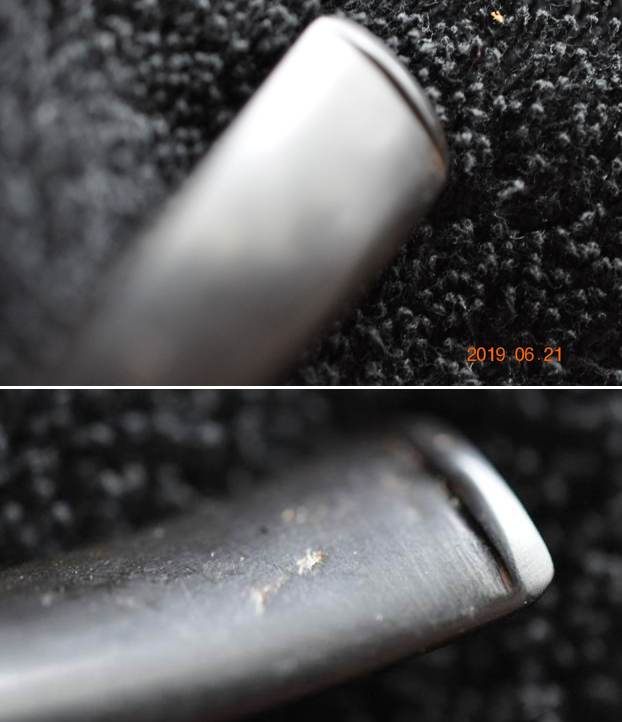
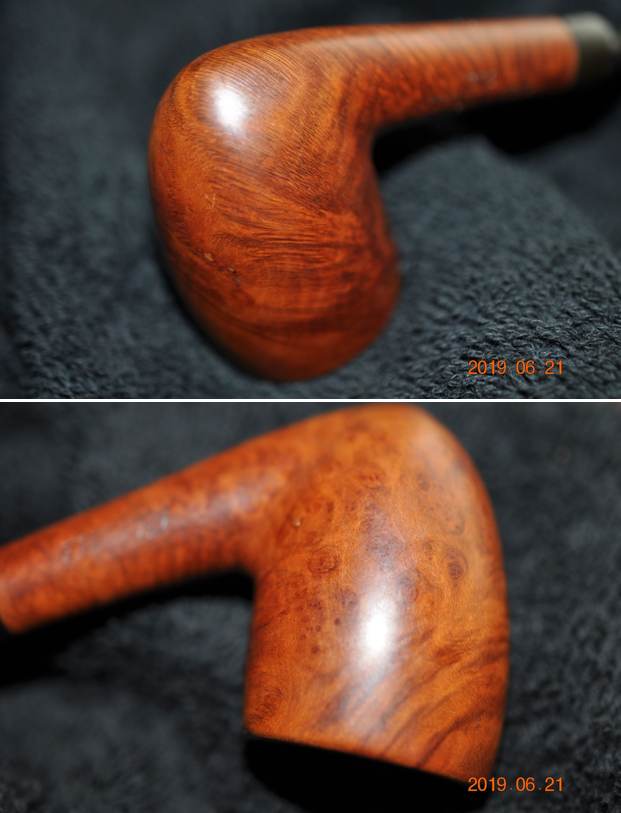
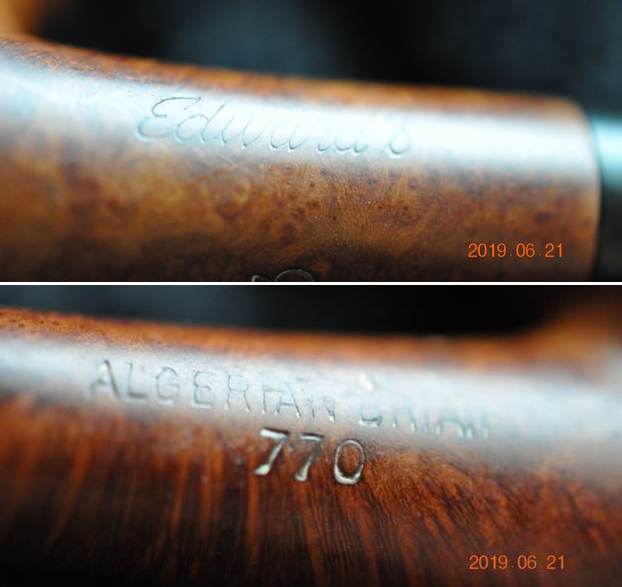
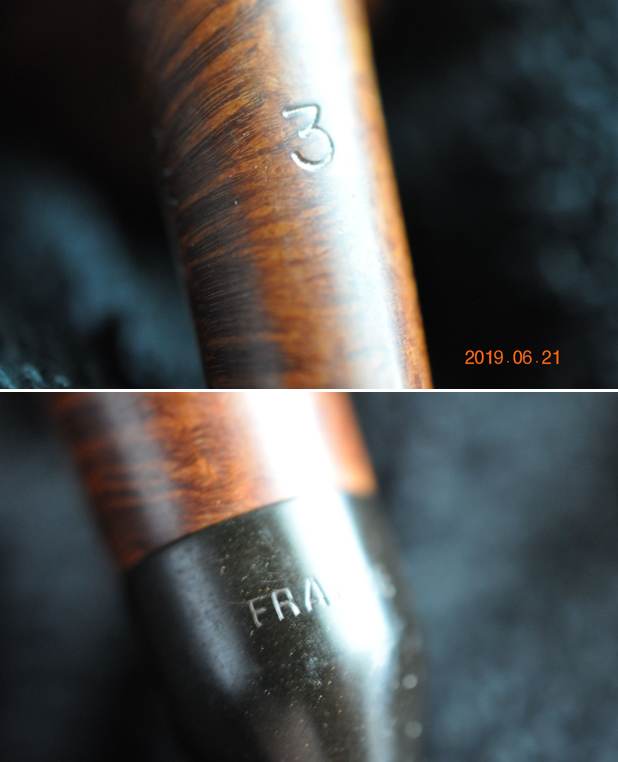
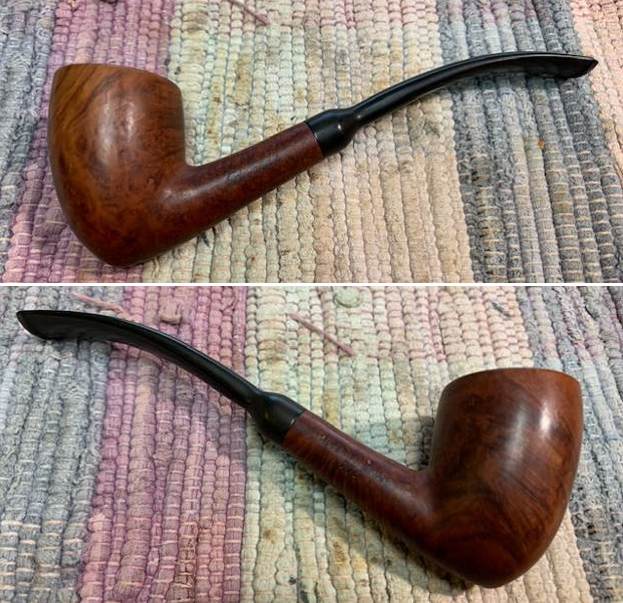
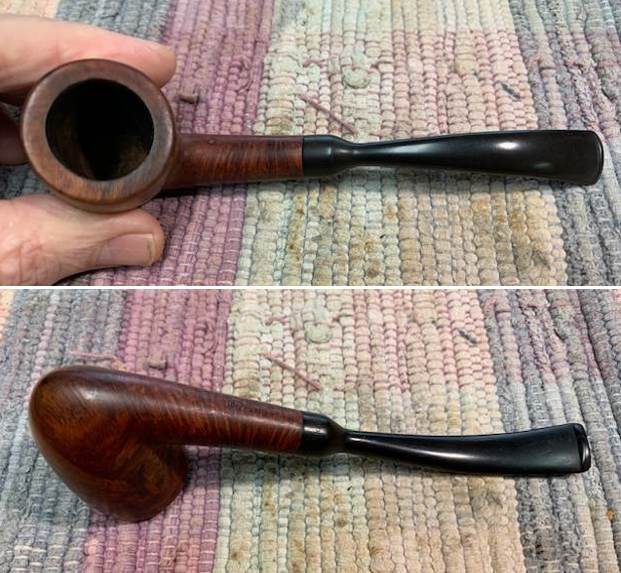
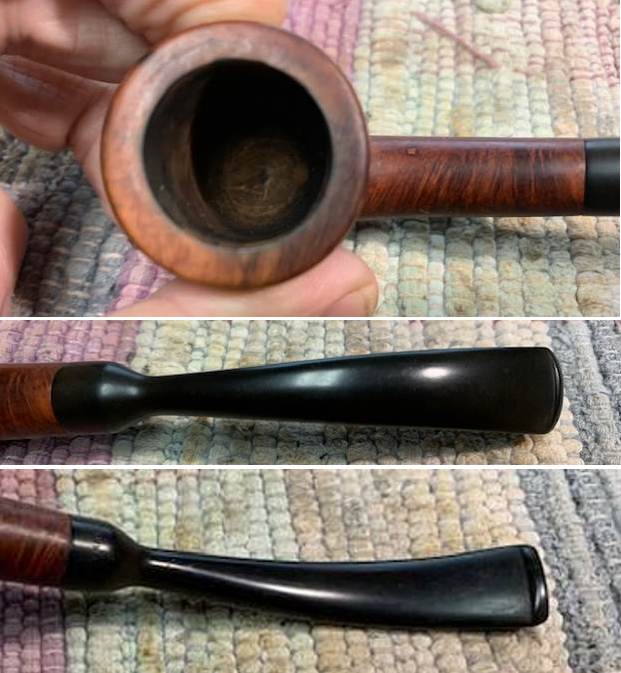
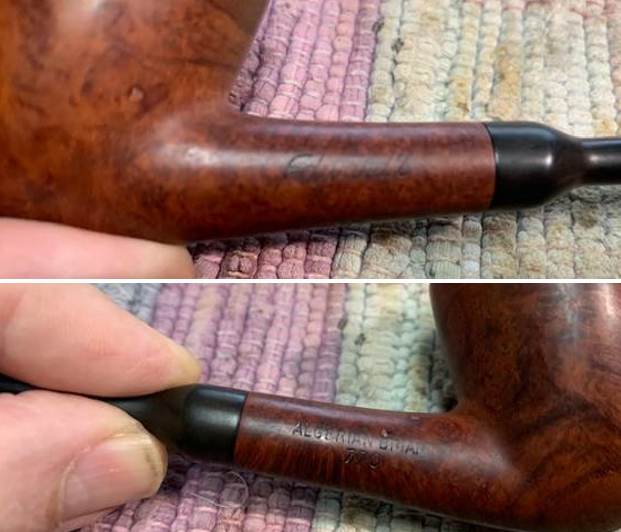
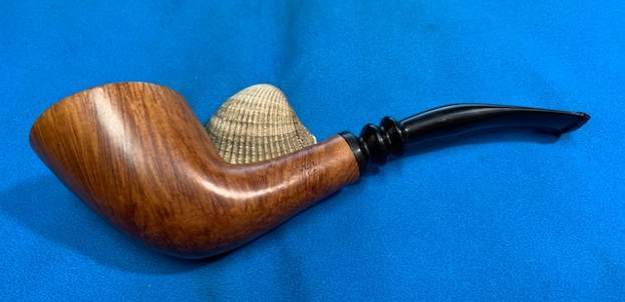
The next pipe on my work table a Danish looking Edwards Acorn shaped pipe. It is stamped Edwards in script on the left side of the shank. On the underside of the shank it is stamped with a 3. On the right side of the shank it is stamped Algerian Briar over the shape number 770 mid shank. The fancy saddle stem is stamped FRANCE on the underside of the saddle. The briar has a mix grain around the bowl and shank. There are a few small fills in the briar toward the front of the bowl on both sides. This pipe was bought from an online auction on March of 2019 in Wilkes Barre, Pennsylvania, USA. The finish was dirty but the grain shone through well. The rim top was clean but there was some darkening on the inner edge. There was a moderate cake in the bowl and some tobacco debris. The shank and stem airway was very dirty. The stem was lightly oxidized, calcified and had light tooth marks and chatter on both sides ahead of the button. Jeff took photos of the pipe before he started his clean up. He took photos of the rim top and bowl to show the cake in the bowl, the darkening on the inner edge and the light lava on the rim top. The stem photos show the oxidation, calcification and tooth chatter and marks very well. Jeff took photos of the sides of the bowl to highlight the grain around the bowl sides and base.He captured the stamping on the shank sides in the next photos. They are clean and readable as noted above. I have worked on quite a few Edwards Algerian Briar pipes in the past so I turned to a blog on one of them to read the background on the brand and remind myself how to understand the stamping on the shank. Here is the link (https://rebornpipes.com/2020/03/21/refurbishing-an-edwards-unique-i-have-no-idea-what-to-call-the-shape/). I quote from the blog below rather than redo the research.

Across the board they were all Algerian Briar and all were unstained waxed or oiled briar. I remember reading that actually oil curing was a feature of their pipes. I did a quick look on Pipedia (https://pipedia.org/wiki/Edward’s) and found that I was correct. I quote:

Edward’s pipes were originally produced in St. Claude France when France actually was a world-class pipe maker with longstanding business & political connections to Colonial Algeria that allowed them to obtain the finest briar.

During the tumultuous 1960’s, Edward’s created a business model to offer the finest briar available in both Classic and Freehand shapes – all at a fair price. They bought the company & equipment and cornered the market on the finest, choice Algerian Briar just before the supply vanished in political turmoil of Algeria’s independence. Edward’s packed up both machinery and briar-treasure to America, safely caching the essentials to create a new pipe-making dynasty. This was a coup, for the 70’s and 80’s were grim years for pipe smokers as quality briar all but disappeared.

All of Edward’s pipes are Algerian Briar – a fact very few pipe companies can claim, and all are oil-cured utilizing natural finishes – no strange concoctions are used to interfere in your tastebud’s dance with the briar. Algerian, Calabrian, Sardinian, Corsican – take your pick, but Algerian Briar is generally considered the finest smoking briar ever used. When combined with oil-curing, Algerian takes on a magical quality that even Alfred Dunhill recognized as far back as 1918 as the choice for both his Bruyere and Shell.

Jeff cleaned up the pipes with his usual thoroughness – reaming the bowl with a PipNet pipe reamer and cleaning up the reaming with a Savinelli Fitsall Pipe Knife. He scrubbed the internals of the shank and the stem with alcohol, cotton swabs and pipe cleaners. He scrubbed the exterior with Murphy’s Oil Soap to clean off the dust and grime on the finish. When he sent it the pipe was ready to restore. I could not believe how good the rim top looked in comparison to what it was when he started. I took photos of the pipe when I unpacked it. The briar was clean and the grain quite stunning. The finish looked dull and lifeless. I took a close up photo of the bowl and rim top after Jeff had cleaned it up. The look of the rim top and edges is very good. He had been able to remove the cake and the lava very well. The bowl was spotless. The stem is also shown and was very clean. He had scrubbed it with Soft Scrub and then soaked it in Mark’s Before & After Deoxidizer. There was light tooth chatter and marks still remaining.I took some photos of the stamping on the shank sides. The first photo shows the Edwards cursive script stamp on the left side shank. The second shows the Algerian Briar [over] the shape number 770 on the right side.  On the underside it is stamped with the number 3. All stamping is clear and readable.I removed the stem from the shank and took a photo of the pipe to show the look of the pipe. It is a real beauty.I polished the briar with micromesh sanding pads – dry sanding (carefully avoiding the stamping on the shank sides) with 1500-12000 grit pads. I wiped the bowl down with a damp cloth between each pad. The grain to take on a shine. I rubbed the briar down with Before & After Restoration Balm. I worked it into the briar with my fingertips and let it do its magic. The product cleans, enlivens and preserves the briar. I let it sit for 10 minutes and then buffed it off with a cotton cloth. The bowl really is looking good at this point. I set the bowl aside and turned my attention to the stem. I “painted” the tooth marks with the flame of a Bic Lighter. I was able to raise most of them. Those that remained I filled in with clear CA glue. I set the stem aside to let the repairs cure. I smoothed out the repairs with a folded piece of 220 grit sandpaper. I started polishing it with 400 grit wet dry sandpaper.I polished the stem with micromesh sanding pads – dry sanding with 1500-12000 grit pads. I wiped the stem down after each pad with a cloth impregnated with Obsidian Oil. I polished it with Before & After Stem Polish – both Fine and Extra Fine then gave it a final coat of Obsidian Oil and set it aside to dry. This is another beautiful pipe – this one is an Edwards Algerian Briar 770 Acorn 3. The oil cured Algerian Briar is very light weight and from my experience with other Edwards pipes, smokes very well. The grain on the pipe is quite nice and the few small fills are hidden in the finish. I put the stem on the shank and buffed the pipe with Blue Diamond on the wheel (being careful of the stamping so as not to damage that). I gave the bowl and stem multiple coats of carnauba wax and buffed the pipe with a clean buffing pad to raise the shine. I hand buffed it with a microfiber cloth to deepen the shine. The dimensions of this pipe are – Length: 6 inches, Height: 2 inches, Outside diameter of the bowl: 1 ¼ inches, Chamber diameter: ¾ of an inch. The weight of the pipe is 1.16 ounces/33 grams. It is a great looking pipe and one that will be going on the rebornpipes store in the American Pipe Makers section. If you want to add it to your collection let me know via email to slaug@uniserve.com or by message. Thanks for walking through the restoration with me.
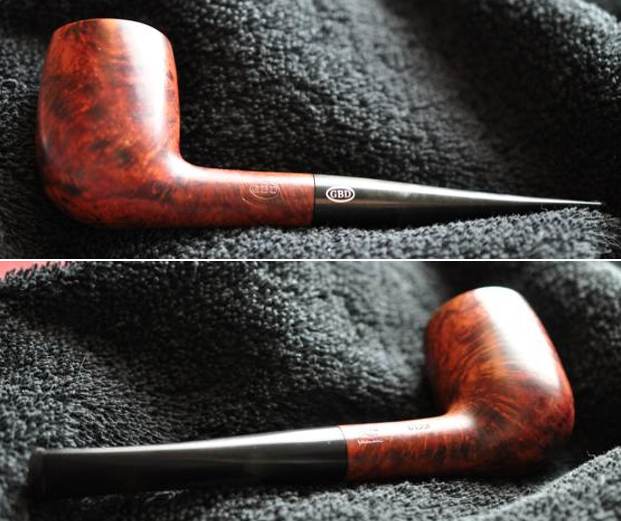
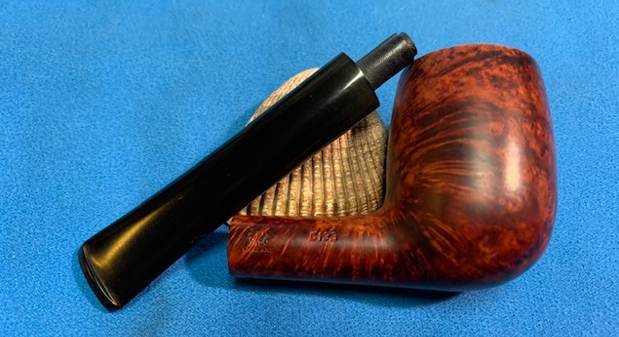
Restoring a Newer GBD London Made C133 Billiard


Blog by Steve Laug

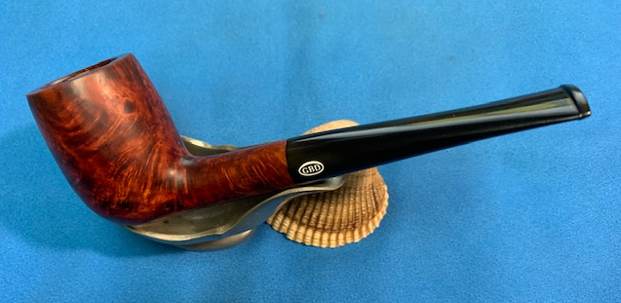
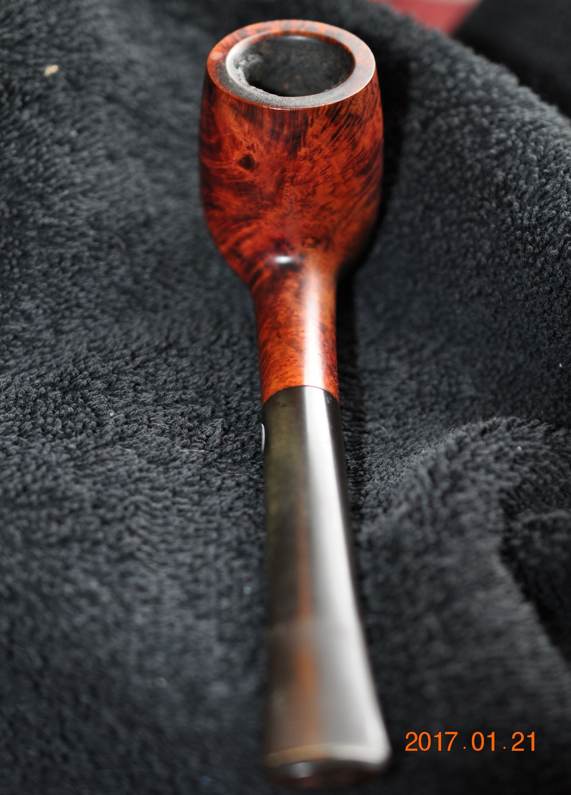
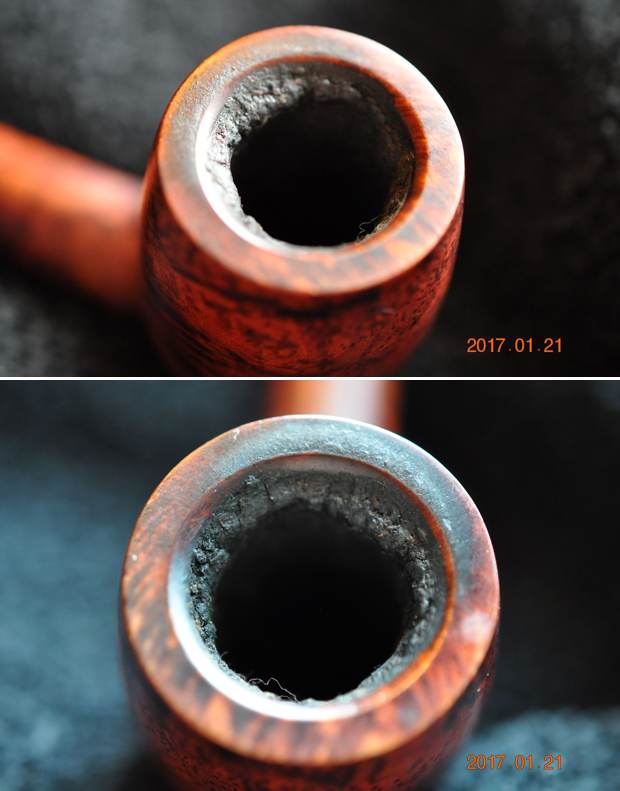
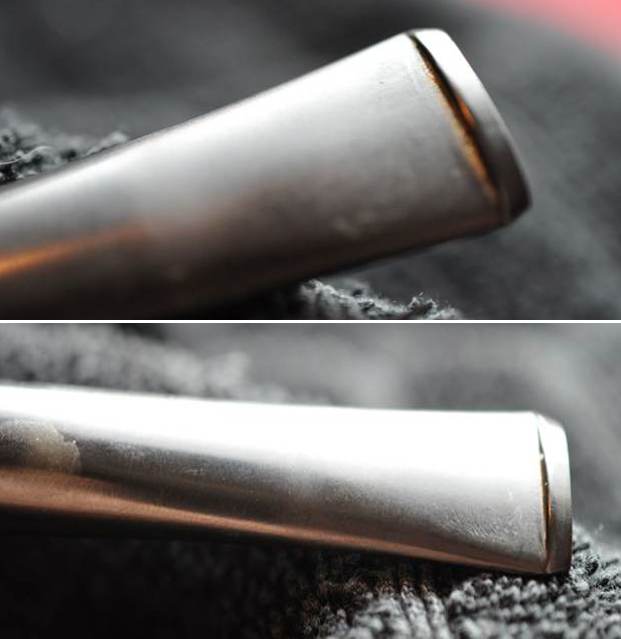
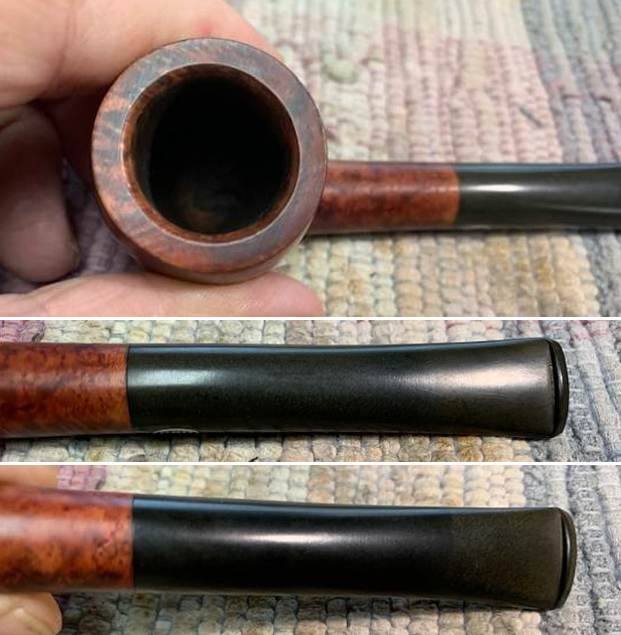
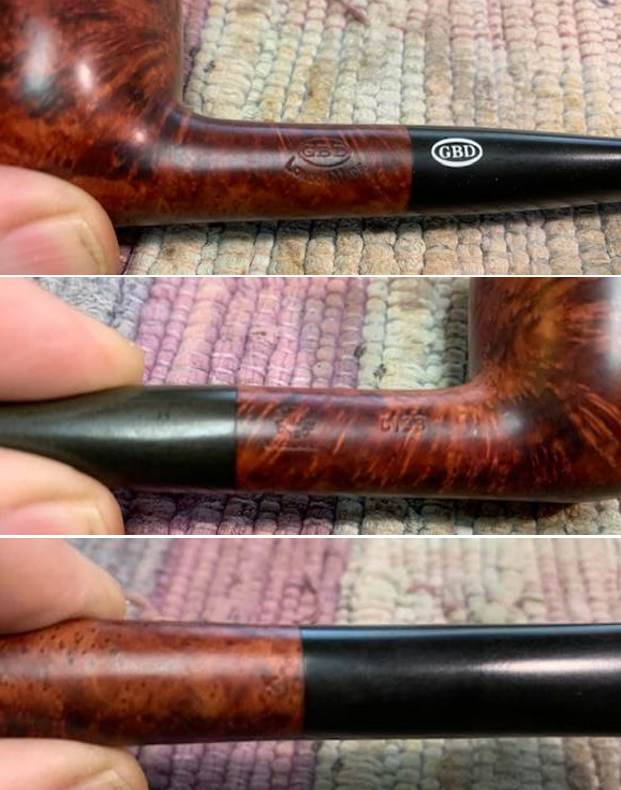
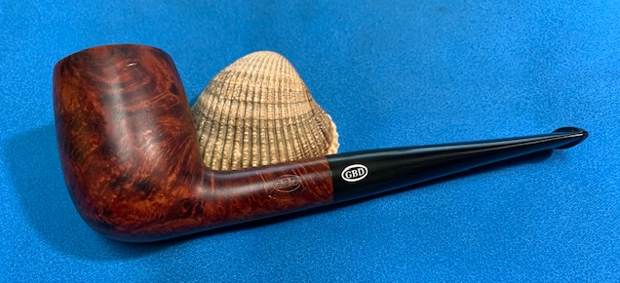
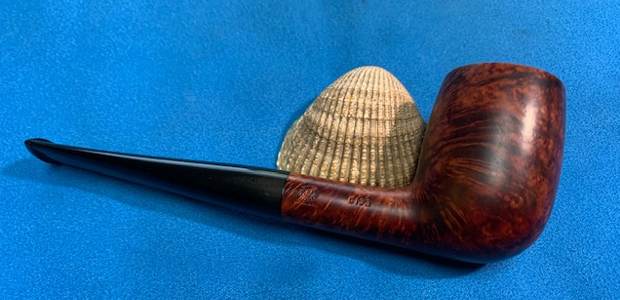
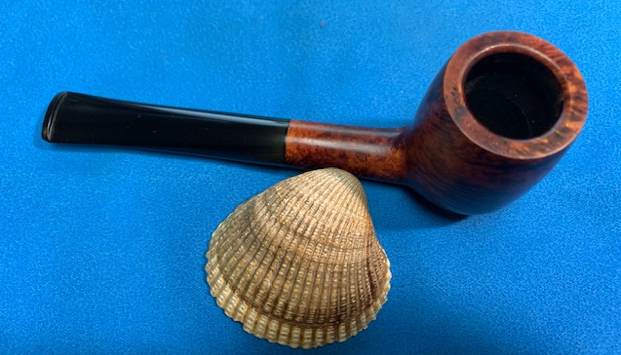
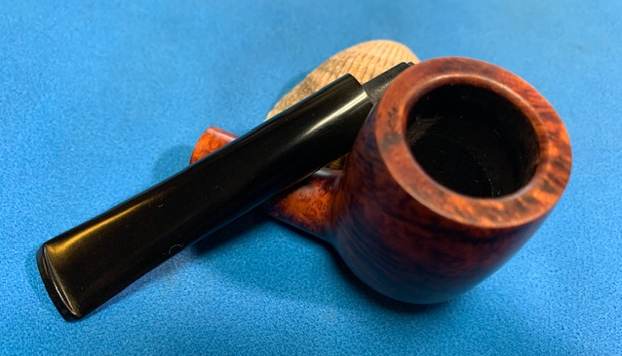
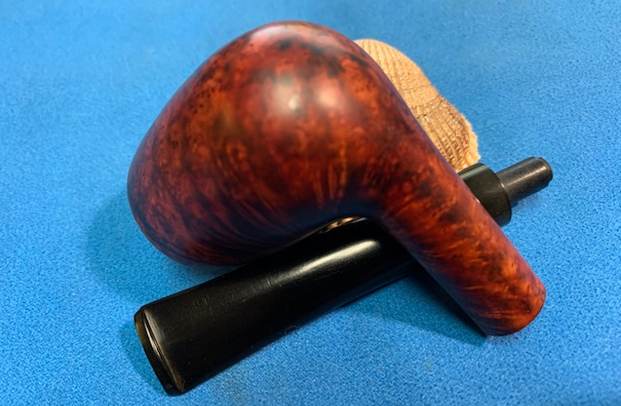
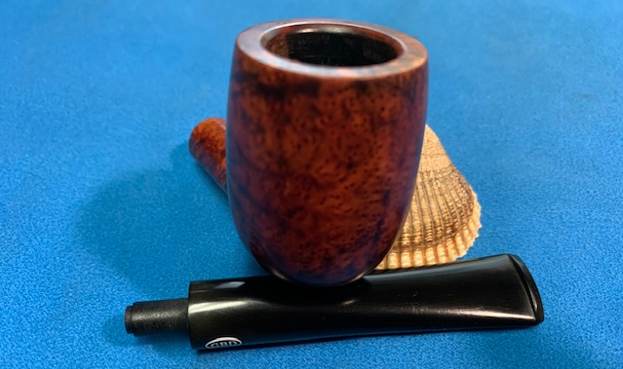
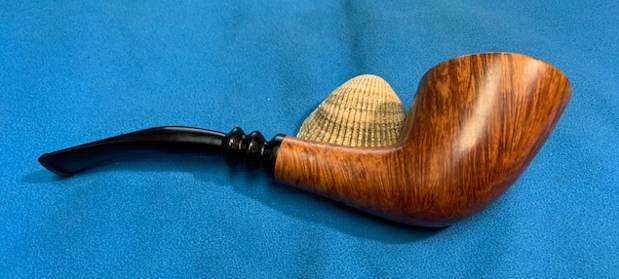
The next pipe on my work table a nice looking newer Cadogan era GBD pipe. It is stamped GBD in an oval [over] London Made on the left side of the shank. On the underside of the shank it is stamped with a K. On the right side of the shank it is stamped with the circular COM Stamp with MADE IN LONDON (“IN” is in the centre) and England stamped underneath that. The shape number C133 is stamped mid shank on the right side. The taper stem has an oval GBD logo stamped on the left side. The briar has a mix grain around the bowl and shank. This pipe was bought off eBay in January, 2017 from Greenville, New Hampshire, USA. The finish was dirty but the grain shone through well. The rim top had a thick lava coat on backside and the inner edge was also coated. There was a thick cake in the bowl and some tobacco debris. The shank and stem airway was very dirty. The stem was oxidized, calcified and had light tooth chatter on both sides ahead of the button. Jeff took photos of the pipe before he started his clean up. He took photos of the rim top and bowl to show the cake in the bowl (heavier on the back side of the bowl), the lava on the bevel and rim top. The edges look very good under the grime. The stem photos show the oxidation, calcification and tooth chatter very well. Jeff took photos of the sides of the bowl to highlight the grain around the bowl sides and base. He captured the stamping on the shank sides in the next photos. They are clean and readable as noted above.I have worked on quite a few GBD London Made pipes in the past so I turned to a blog on one of them to read the background on the brand and remind myself how to understand the stamping on the shank. Here is the link (https://rebornpipes.com/2019/08/10/cleaning-up-a-gbd-london-made-9664/). I quote from the blog below rather than redo the research.
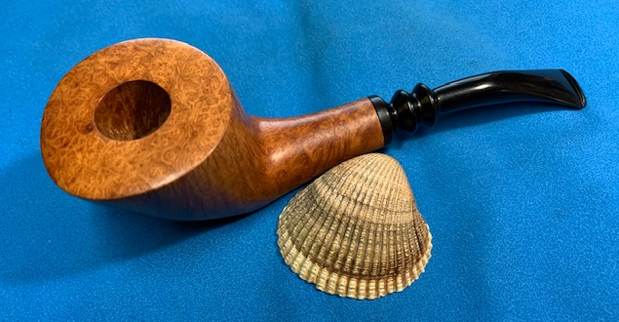
I turned to Pipedia’s article on GBD to see if I could find any information on the London Made. The article gives a lot in terms of the history of the brand and a list of various lines of GBD pipes (https://pipedia.org/wiki/GBD_Model_Information). I quote the section where I found the reference to the London Made.

London Made — Factory unknown: Some might not be marked with GBD logo and some with additional “house” stampings. Introduced in 1978(?) plain wax finished branded pipes” available in at least six stains. – catalog (1981)

With that information in hand I knew what I was dealing with in terms of the stamping and the age of this pipe. I knew from the information from the section quoted that the London Made originally came out in 1978 in a variety of colours. Now I had an idea of the age of the pipe and it was time to work on the pipe.

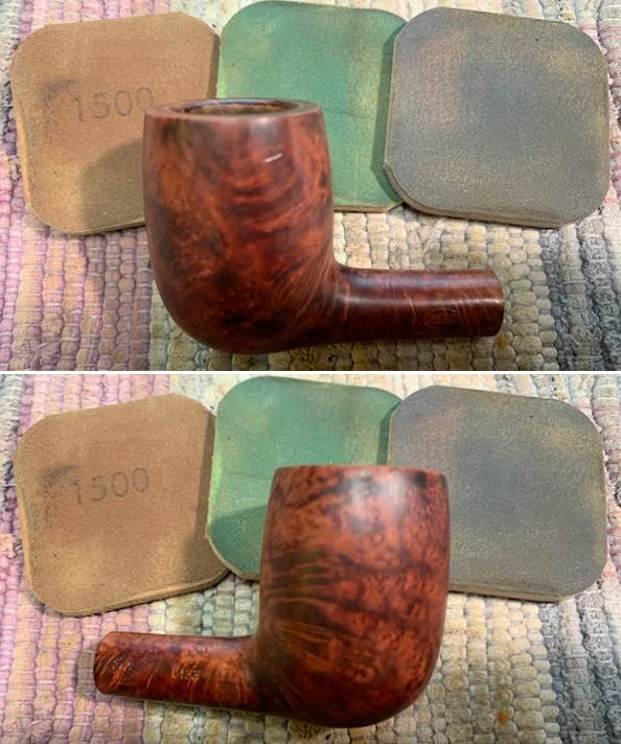
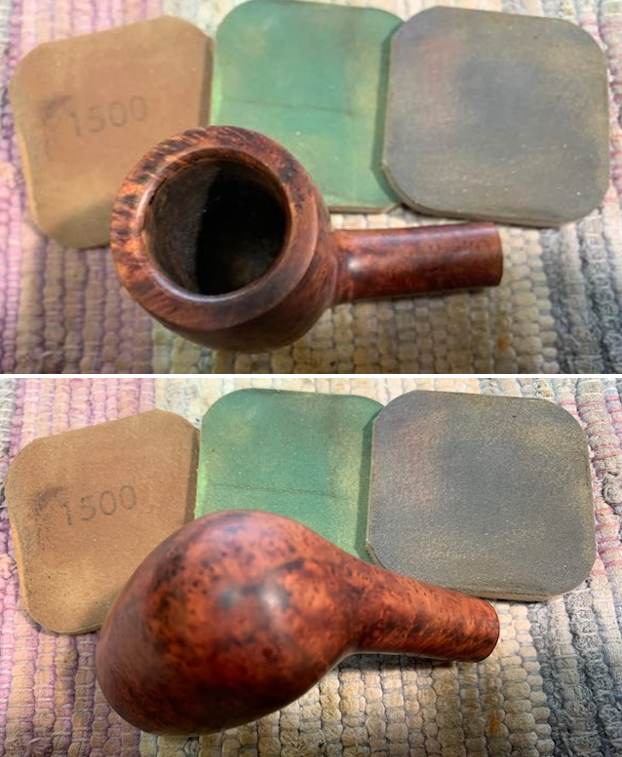
Jeff cleaned up the pipes with his usual thoroughness – reaming the bowl with a PipNet pipe reamer and cleaning up the reaming with a Savinelli Fitsall Pipe Knife. He scrubbed the internals of the shank and the stem with alcohol, cotton swabs and pipe cleaners. He scrubbed the exterior with Murphy’s Oil Soap to clean off the dust and grime on the finish. When he sent it the pipe was ready to restore. I could not believe how good the rim top looked in comparison to what it was when he started. I took photos of the pipe when I unpacked it. The briar was clean and the grain quite stunning. The finish looked dull and lifeless. I took a close up photo of the bowl and rim top after Jeff had cleaned it up. The look of the rim top and edges is very good. He had been able to remove the cake and the lava very well. The bowl was spotless. The stem is also shown and was very clean but lightly oxidized. He had scrubbed it with Soft Scrub and then soaked it in Mark’s Before & After Deoxidizer. There was light tooth chatter still remaining.I took some photos of the stamping on the shank sides. The first photo shows the GBD in an oval [over] London Made stamp on the left side as well as the stamped GBD oval logo on the left side of the stamp. The second shows the COM stamp Made in London [over] England and the shape number C133 on the right side. The third shows the letter “K” on the underside of the shank near the shank/stem joint.I polished the briar with micromesh sanding pads – dry sanding (carefully avoiding the stamping on the shank sides) with 1500-12000 grit pads. I wiped the bowl down with a damp cloth between each pad. The grain to take on a shine. I rubbed the briar down with Before & After Restoration Balm. I worked it into the briar with my fingertips and let it do its magic. The product cleans, enlivens and preserves the briar. I let it sit for 10 minutes and then buffed it off with a cotton cloth. The bowl really is looking good at this point. I set the bowl aside and turned my attention to the stem. I scrubbed it with Soft Scrub cleanser to remove the residual oxidation that remained on the surface of both sides. I find that when I let the pipe sit a long time before getting to it this light oxidation almost always happens.I polished the stem with micromesh sanding pads – dry sanding with 1500-12000 grit pads. I wiped the stem down after each pad with a cloth impregnated with Obsidian Oil. I polished it with Before & After Stem Polish – both Fine and Extra Fine then gave it a final coat of Obsidian Oil and set it aside to dry. This is another beautiful pipe – this one is a GBD London Made C133 Billiard. It is made by Cadogan as can be seen from both the stamping on the stem, the shank. It would have come out after 1978. The grain on the pipe is quite nice and the few small fills are hidden in the stain and the finish. I put the stem on the shank and buffed the pipe with Blue Diamond on the wheel (being careful of the stamping so as not to damage that). I gave the bowl and stem multiple coats of carnauba wax and buffed the pipe with a clean buffing pad to raise the shine. I hand buffed it with a microfiber cloth to deepen the shine. The dimensions of this pipe are – Length: 5 ½ inches, Height: 1 ¾ inches, Outside diameter of the bowl: 1 ¼ inches, Chamber diameter: ¾ of an inch. The weight of the pipe is 1.31 ounces/37 grams. It is a great looking pipe and one that will be going on the rebornpipes store in the British Pipe Makers section. If you want to add it to your collection let me know via email to slaug@uniserve.com or by message. Thanks for walking through the restoration with me.
Kenneth’s Pipe Incident Report #2


Blog by Kenneth Lieblich

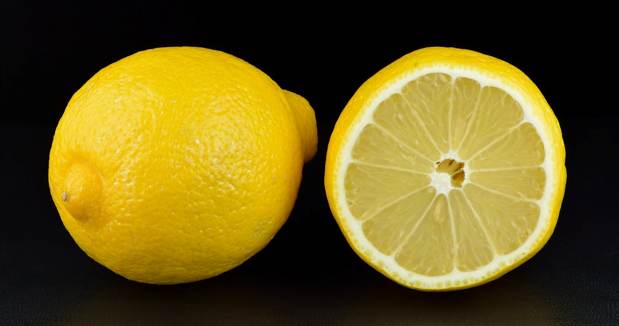
Here is another installment of my Pipe Incident Report. The idea, in general, is to provide a brief write-up – focusing on a particular pipe-related problem and/or solution, rather than an entire restoration story. Last time was all about plaster of Paris. Today’s report is about lemon-infused isopropyl alcohol. I have had questions, from time to time, asking me why I frequently use this lemon alcohol, rather than the usual, plain alcohol. In fact, I use both. If you do not know what this lemon alcohol is – no problem! That is what this report is intended to elucidate.

I learned about this lemon alcohol thanks to my wife. She stumbled upon a “mom” blog, written by Alexis Rochester, a mother who is also a professional chemist. One particular blog post extolled the virtues of lemon-infused alcohol as a household cleaner. My wife sent it to me, and I was intrigued at the possibility of this cleaner being used to attack the oils, tars, etc. on the inside of pipes. Obviously, the article was not considering the possibility of this being used on pipes, but I certainly was! If you are curious to read the original article, here is the link: https://chemistrycachet.com/lemon-infused-rubbing-alcohol/.

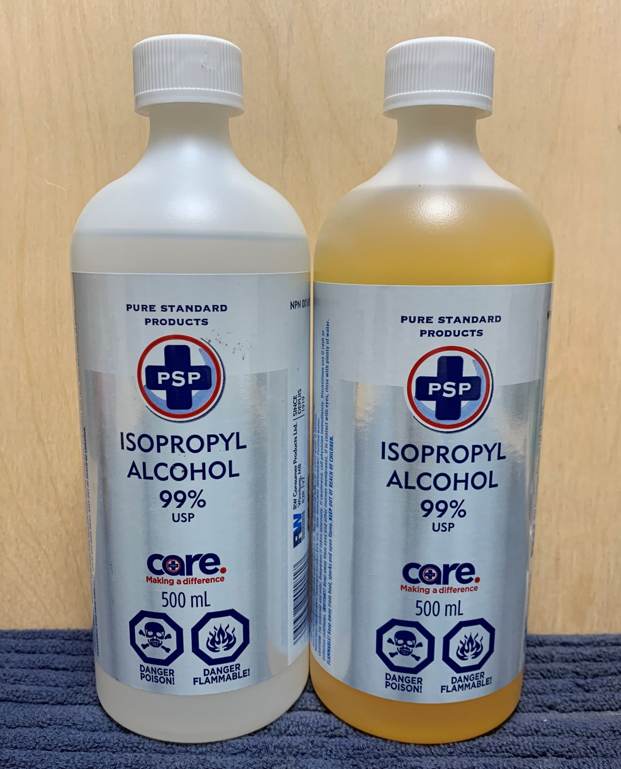
So, what is lemon-infused 99% isopropyl alcohol? In brief, it is the extracted chemicals from the zest of the lemon (Citrus limon), absorbed into 99% isopropyl alcohol. The addition of the lemon makes a more effective cleaner than alcohol alone.

I learned from the blog that isopropyl alcohol, on its own, is slightly acidic. This is important because some acidity is very effective for cleaning. Lemon zest is also slightly acidic. These low levels of acidity are NOT harmful to wood. It is also important to note that this lemon-alcohol extraction does NOT contain any lemon juice – that would be too acidic for our purposes. Essentially, we have a cleaner that is very mildly acidic and combines the best cleaning properties of isopropyl alcohol and lemon. Among other things, Alexis says the following in her post:
Rubbing alcohol is a great disinfectant on its own, but adding in lemon peels increases the disinfectant quality. Lemon peels contain ascorbic acid (vitamin C), malic acid, and citric acid all which make great cleaning options. But again, you are just getting the benefits of the peel without the acid of the lemon juice.

I went ahead and bought a bag of lemons and thought I would give it a try. Lemons are inexpensive and the method of manufacture couldn’t be easier. You simply peel a bunch of lemons, stick the zest in a container with isopropyl alcohol, seal the container, and let it sit for two or three weeks. You can read more details on how to make it from the link above.

Now that I have made this product and used it frequently, some important questions need to be answered: (1) is the lemon-infused isopropyl alcohol a better cleaner of pipes than alcohol alone;  (2) does this product leave a lemon “ghost” in the pipe; and (3) is it ultimately worthwhile making this stuff? I will address the questions in turn.
I am not a chemist and I have not personally executed the full, scientific method in answering the question of which is a better cleaner. However, anecdotally, I think that lemon-infused alcohol is a better cleaner of pipes than alcohol alone. I don’t really have the inclination to use full scientific rigour on this, but I have tried both and I think the lemon one is superior – perhaps not dramatically so, but superior nonetheless. Having said that, perhaps the most important statement in this report is this: I use both “plain” 99% isopropyl alcohol and the lemon-infused 99% isopropyl alcohol. It is not one or the other, but both.
In answer to the second question, there is no lemon ghost in the pipe after cleaning. Certainly, during the cleaning process (and for a few moments afterwards), there is a detectable scent of lemon in the pipe, but it dissipates very quickly. I have tested this several times. First, I have smoked pipes cleaned in this way and there was no hint of lemon at all. More emphatically, however, I had my son test this out – he was born blind. Naturally, he relies more heavily on his other senses in navigating the world. I told him to stick his nose inside pipes that I have cleaned with lemon alcohol and then asked him what he could discern. He was never able to smell any hint of lemon – even within a few minutes of the pipe being cleaned.

Third question: is it worthwhile for you to make this stuff? Yes it is, but I don’t think it is world-changing. As I’ve said, it is a superior cleaner (in my non-professional opinion) and I will continue to make and use it. However, it would be disingenuous for me to say that you MUST make this for yourself. For goodness’s sake, Steve and Jeff use plain alcohol and they are the gold standard of pipe cleaning and restoration!

If you do try this lemon alcohol, please let me know how it goes. I would be interested to know what your results are. I hope you enjoyed reading this installment of the Pipe Incident Report – I look forward to writing more. If you are interested in my work, please follow me here on Steve’s website or email me directly at kenneth@knightsofthepipe.com. Thank you very much for reading and, as always, I welcome and encourage your comments.