Monthly Archives: June 2019

A Bertram 30 Pot/Lovat Pipe from the Bertram Lot


Blog by Steve Laug

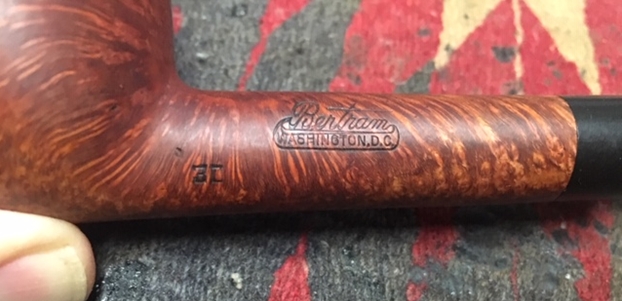
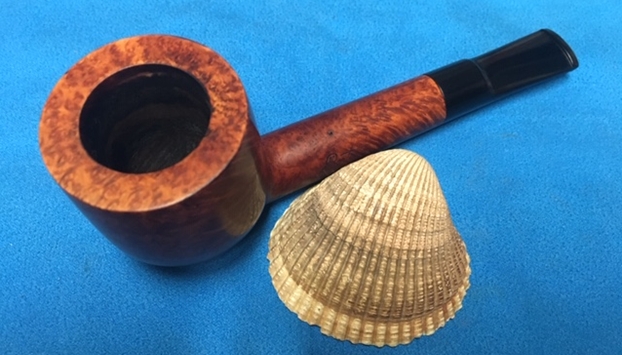
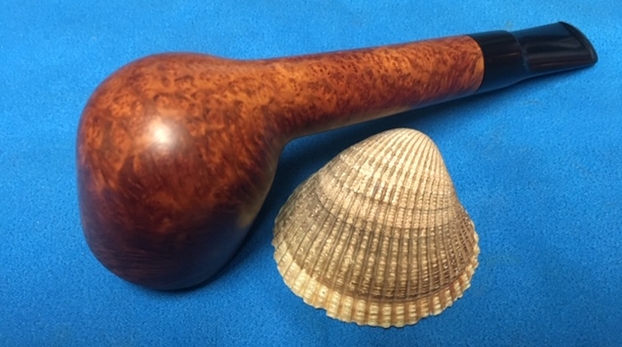
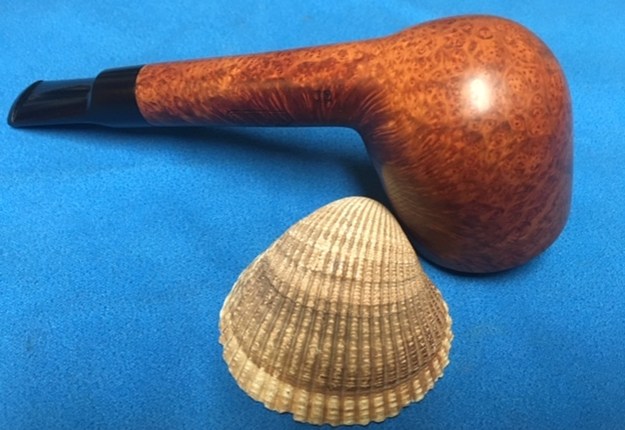
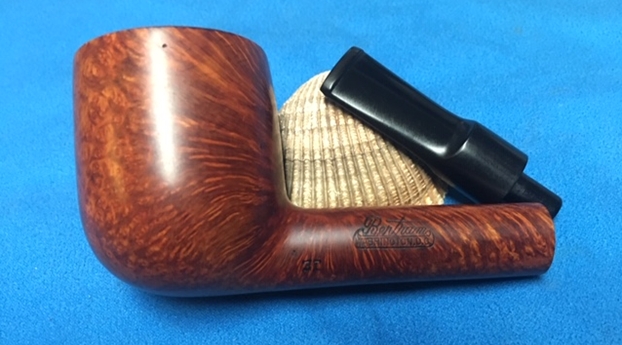
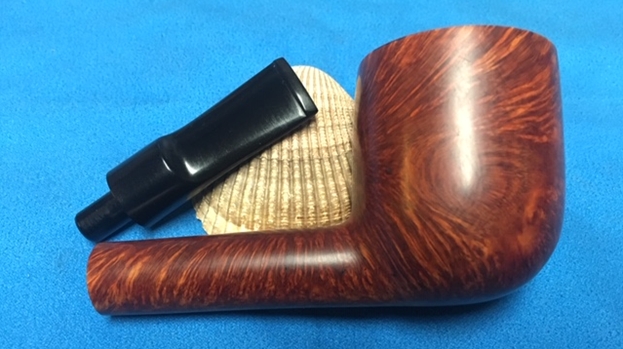
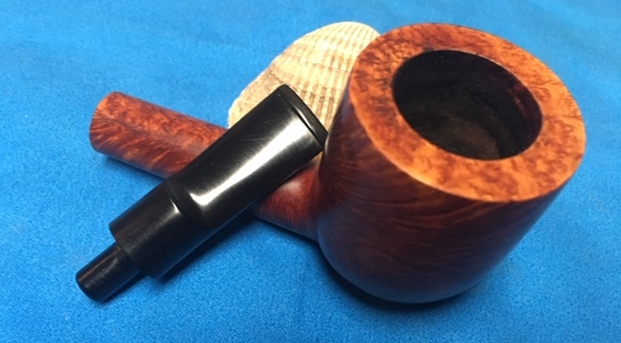
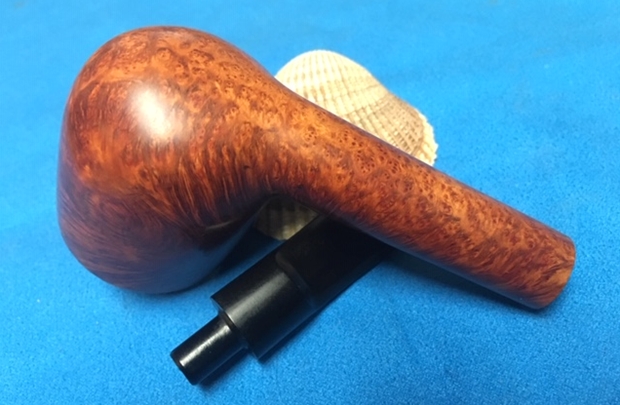
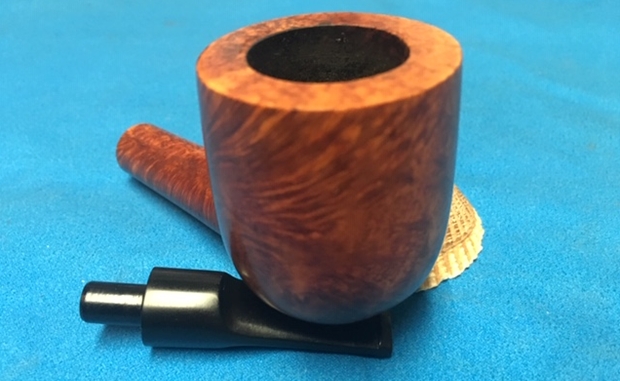
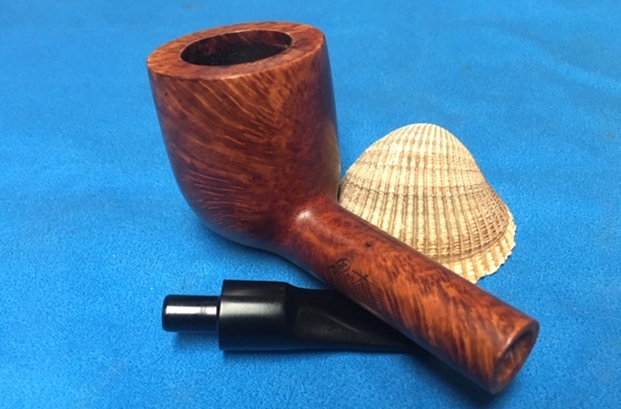
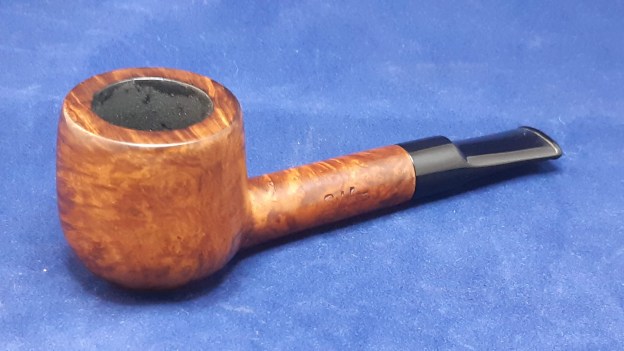
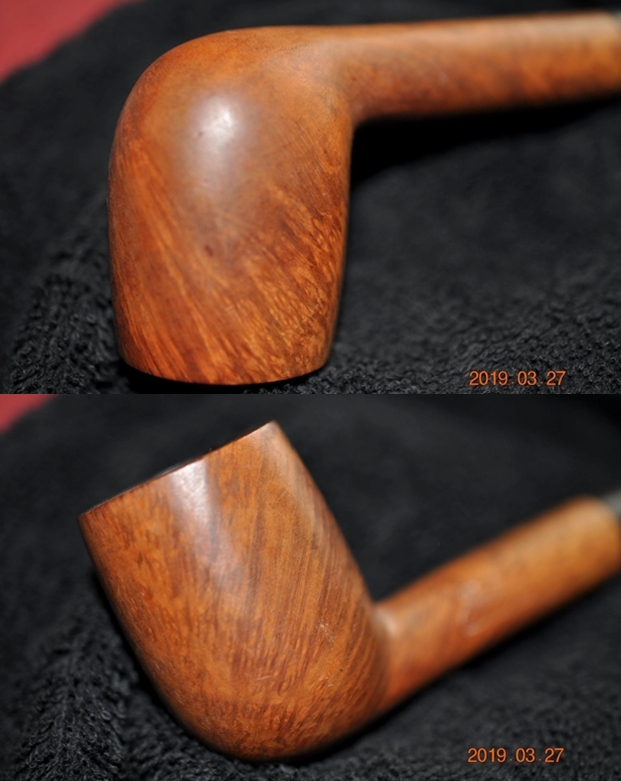
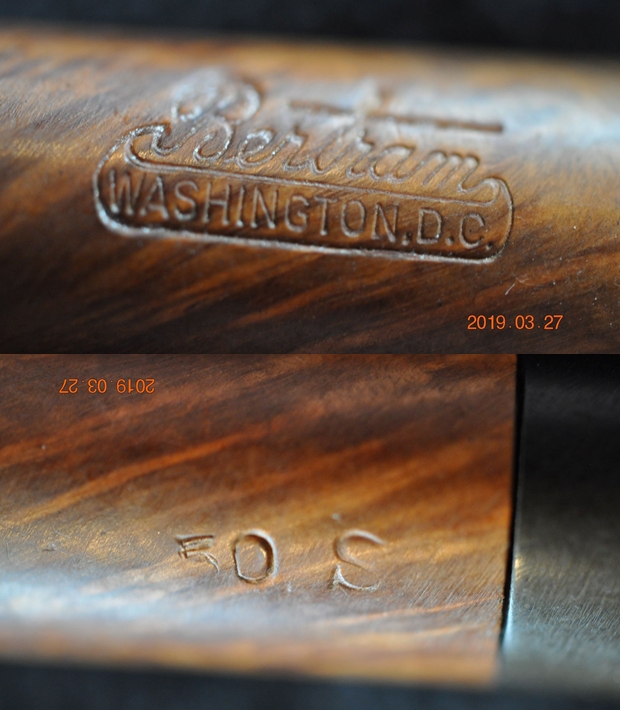
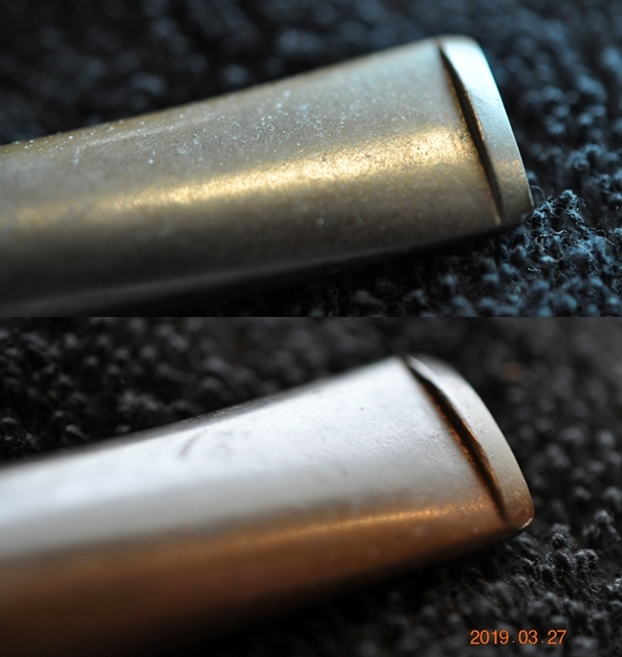
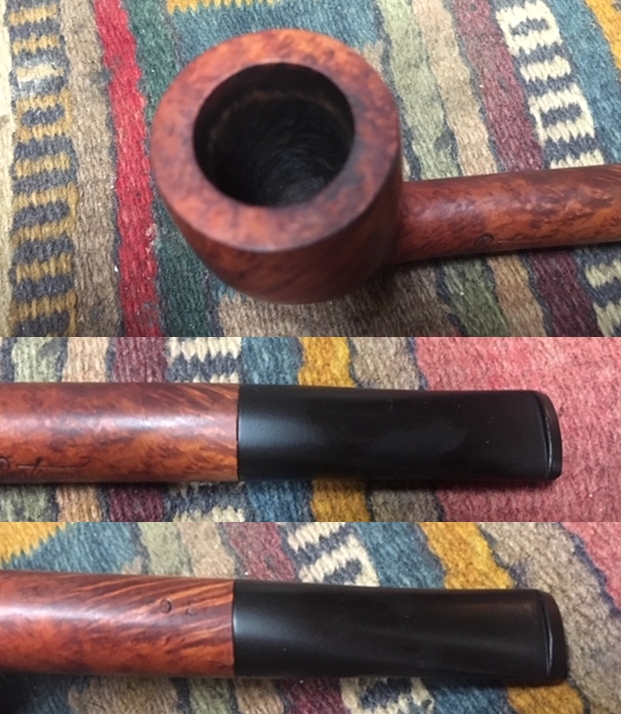
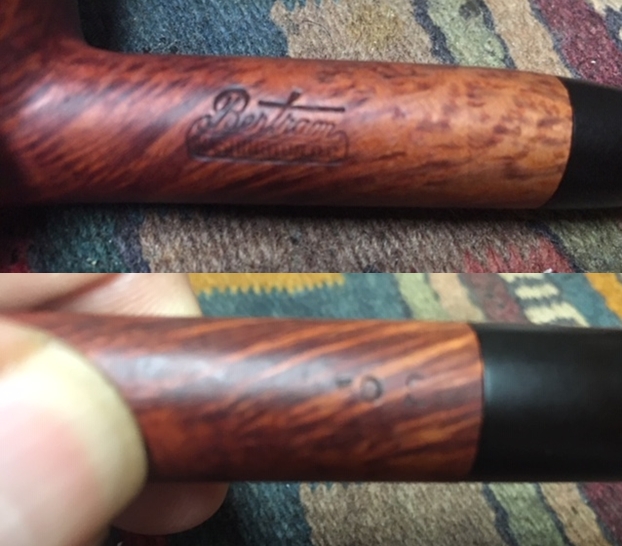
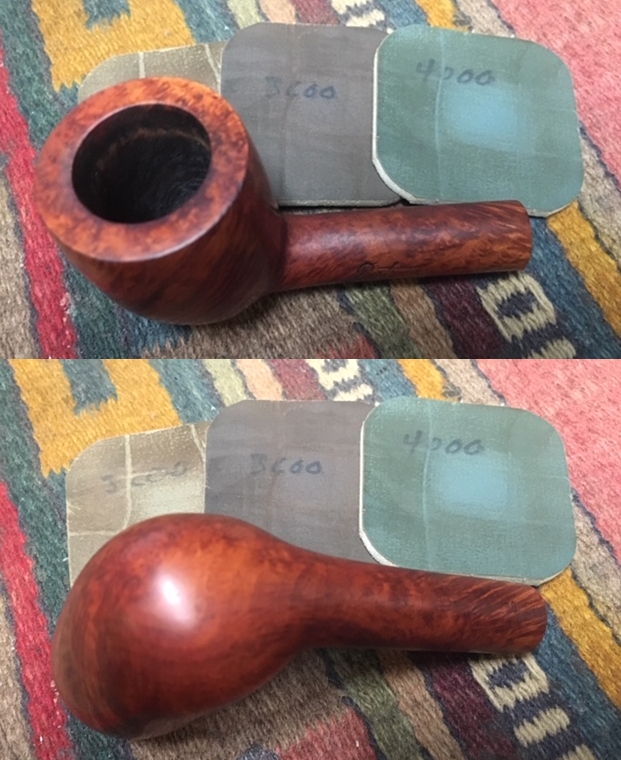
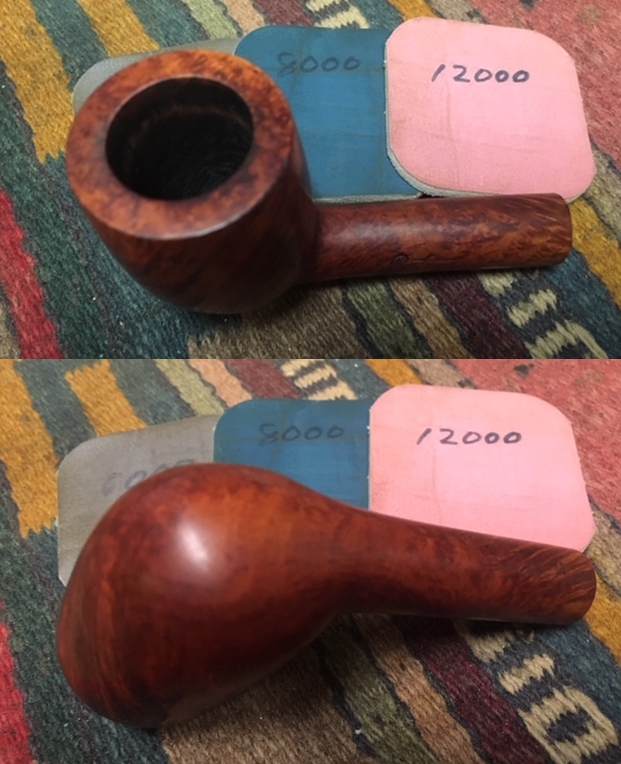
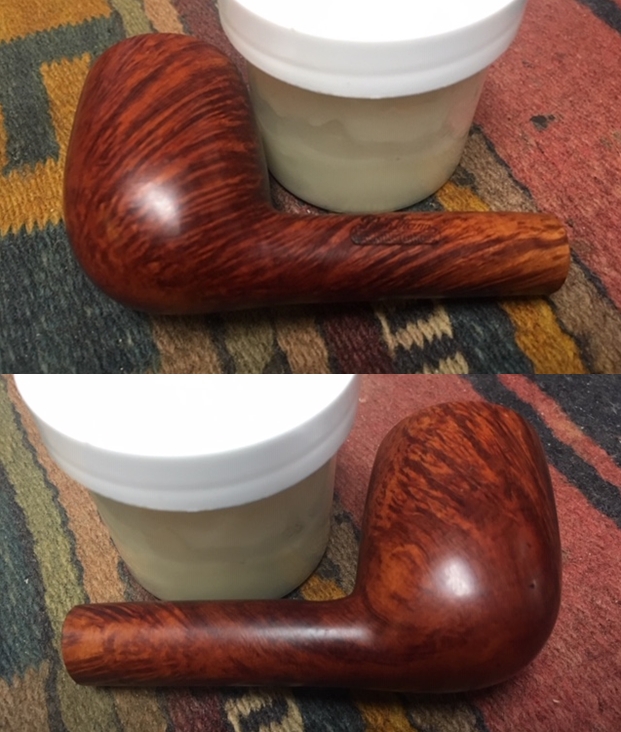
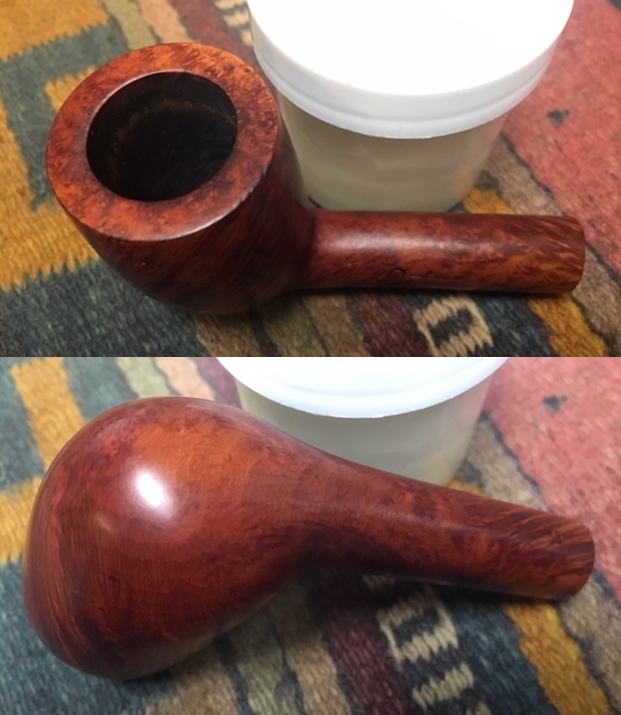
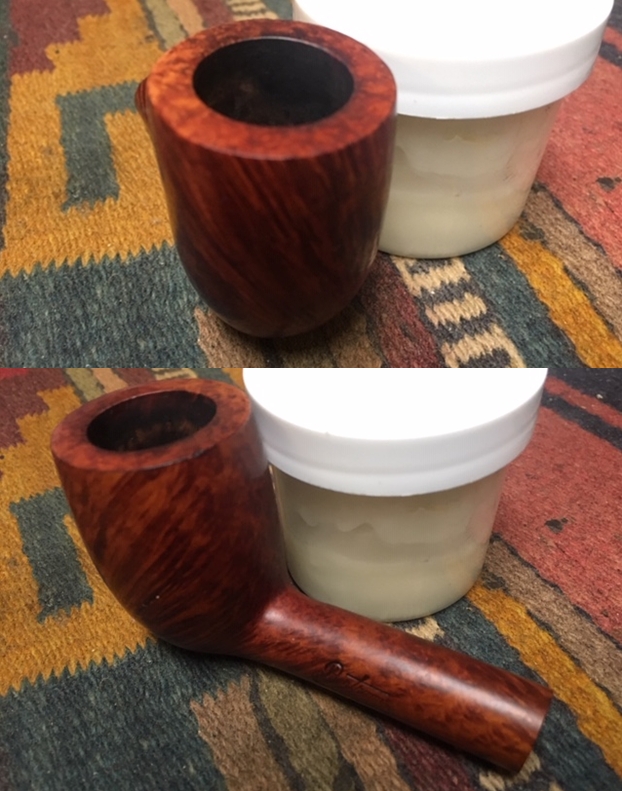
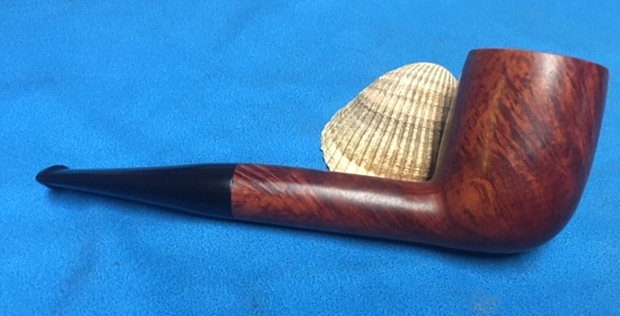
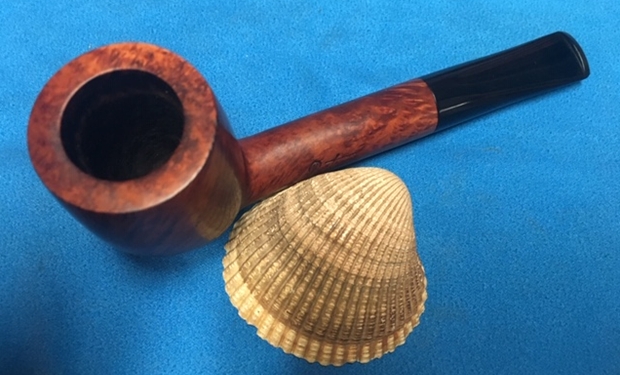
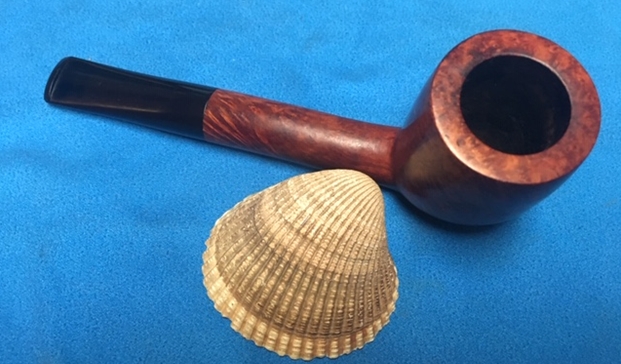
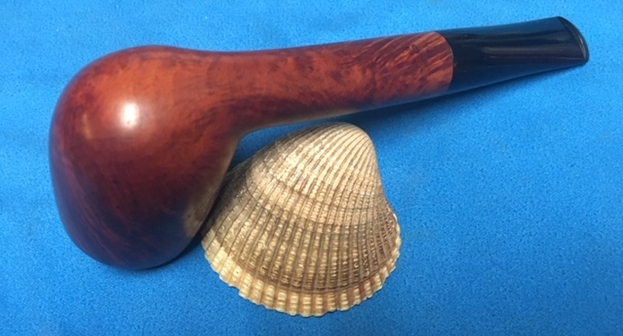
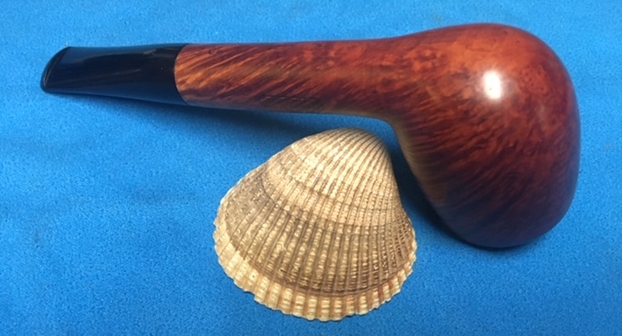
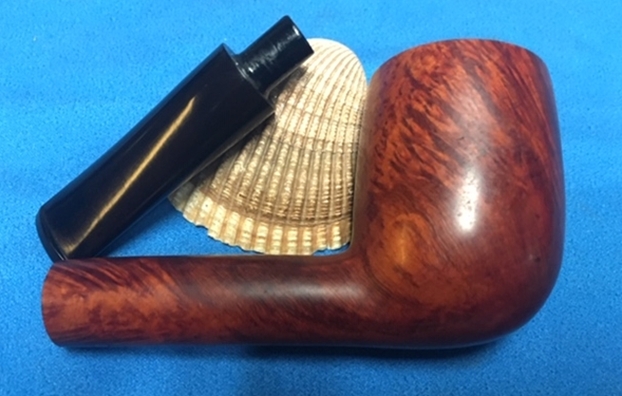
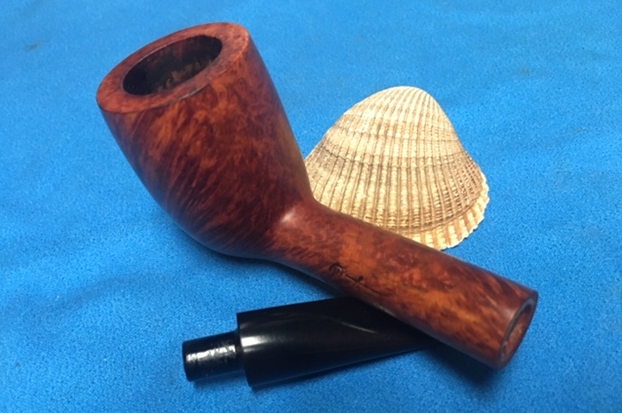
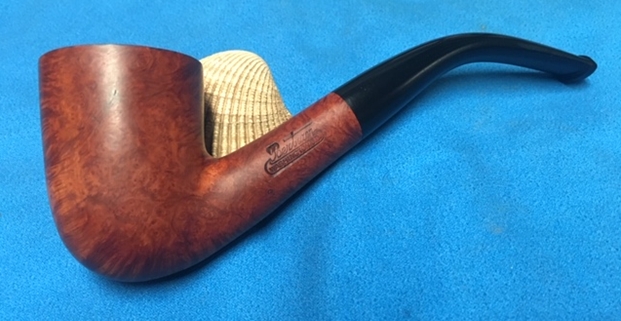
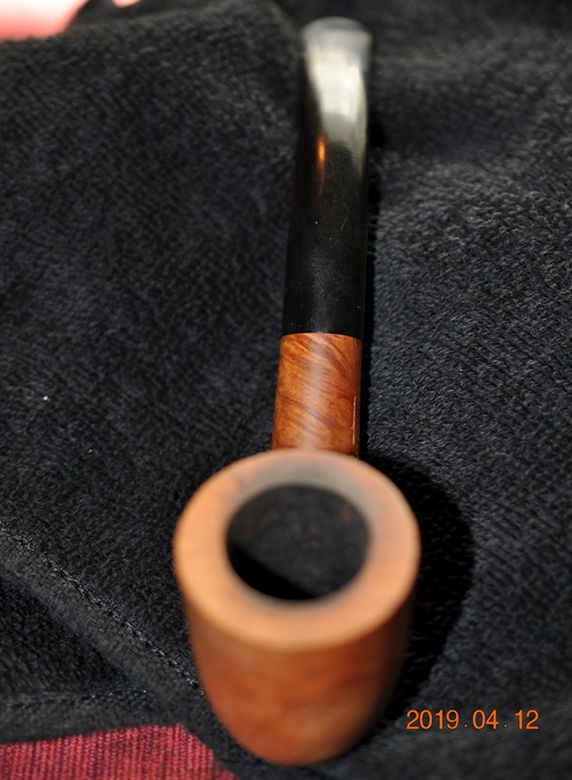
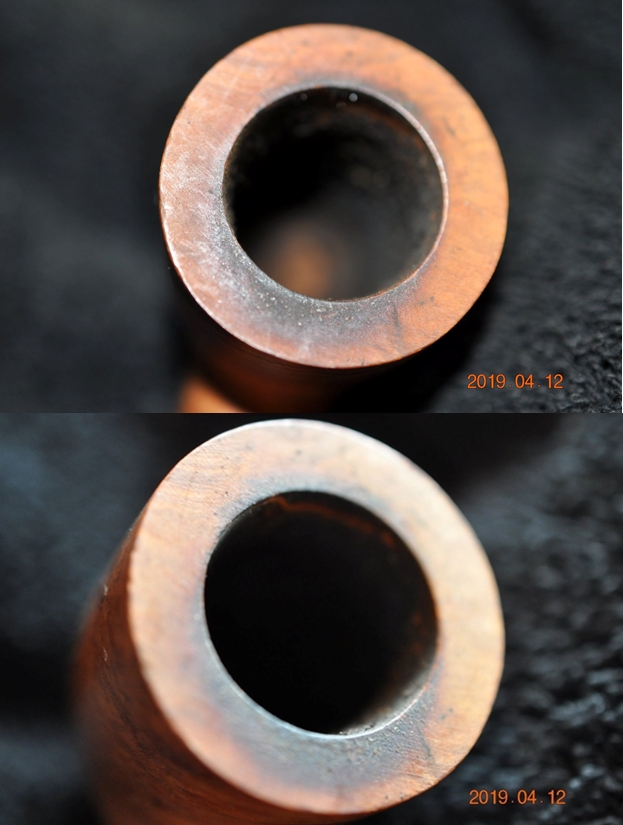
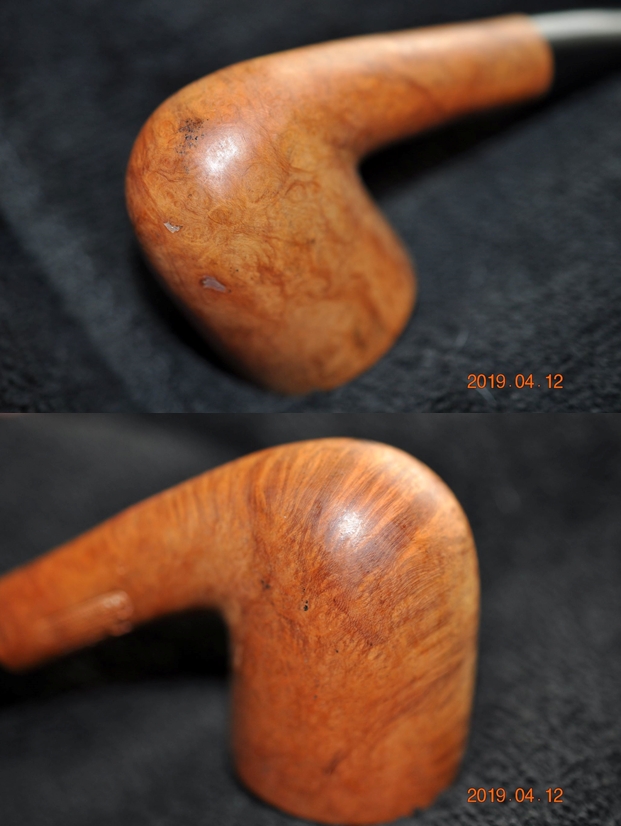
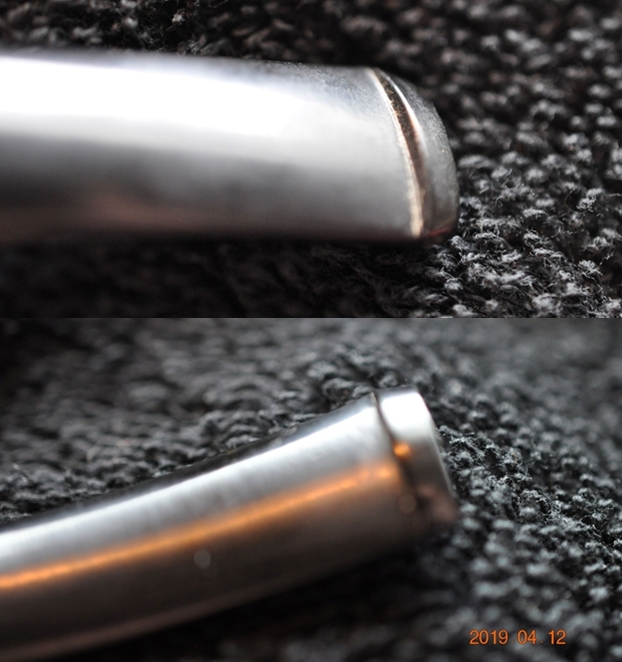
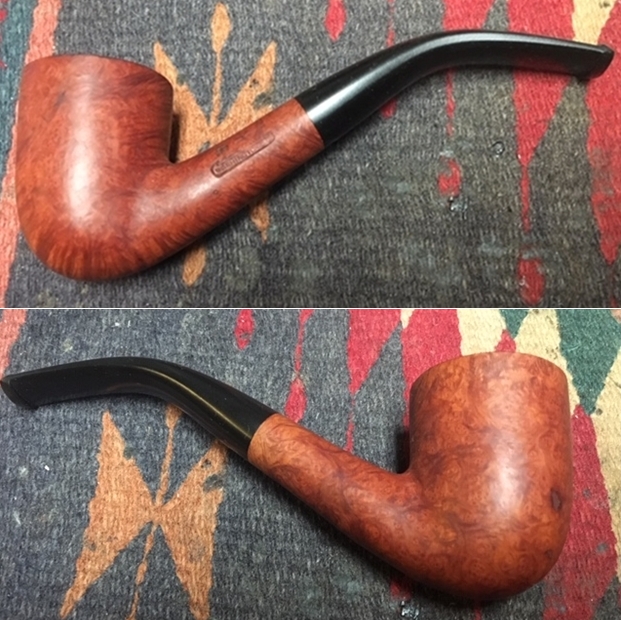
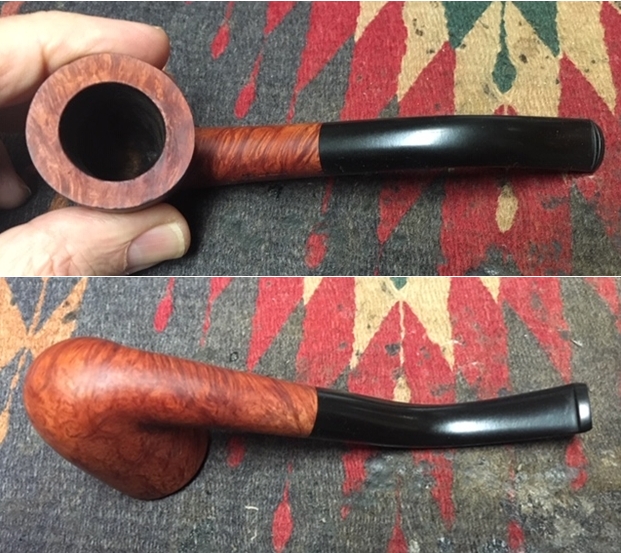
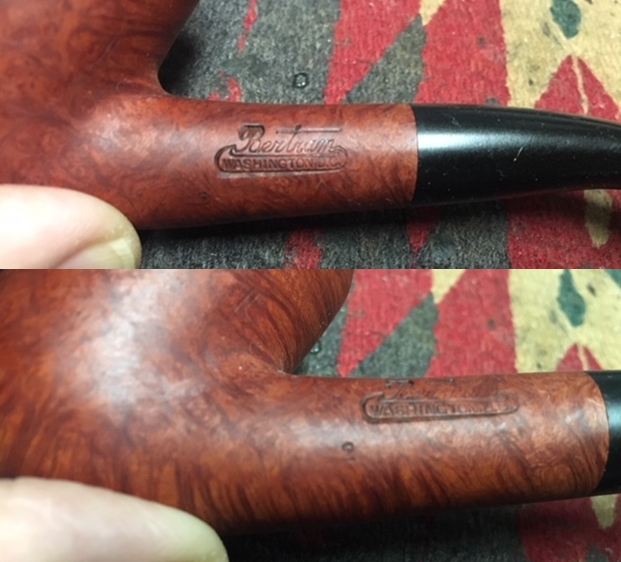
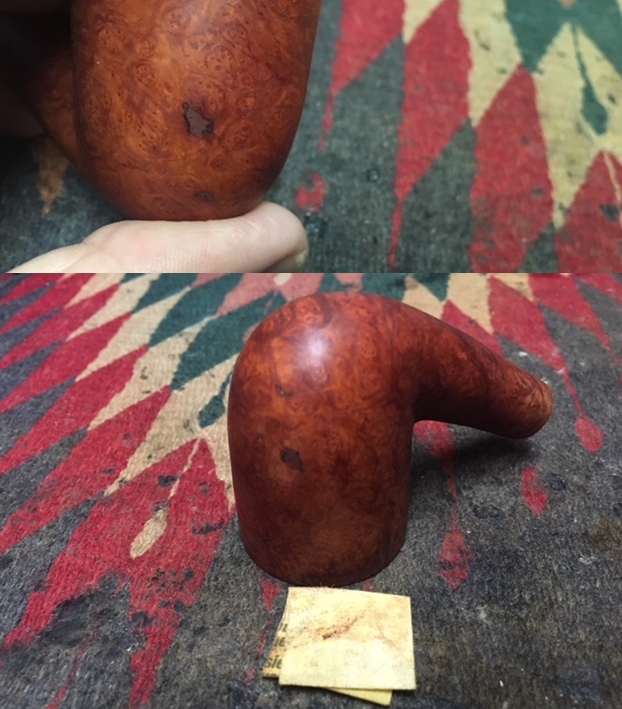
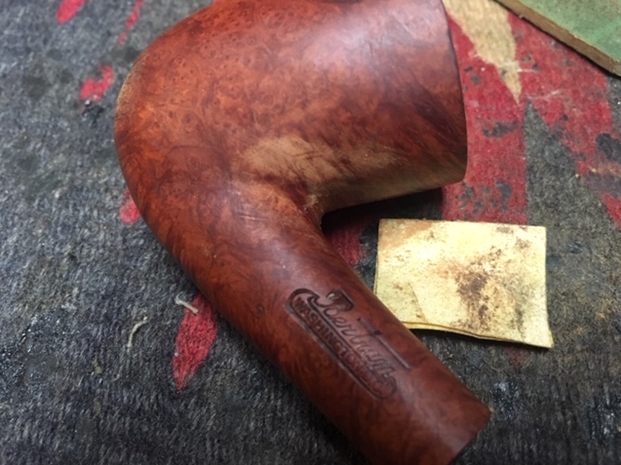
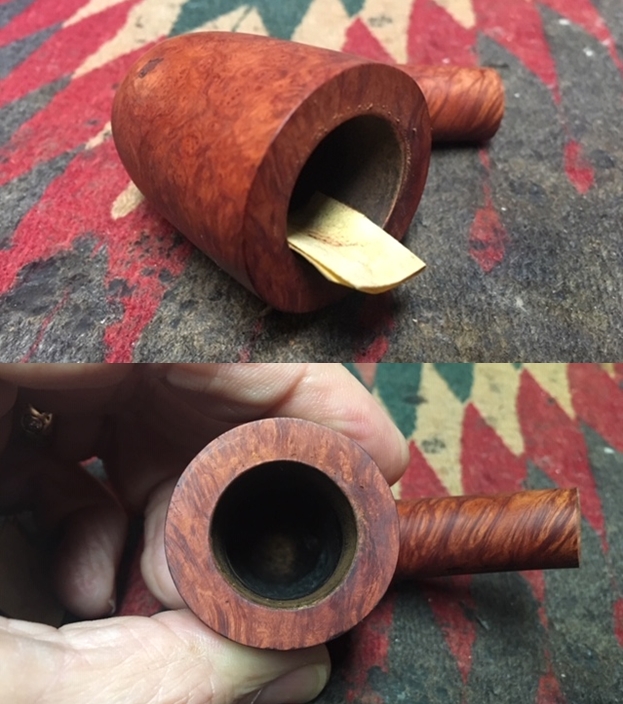
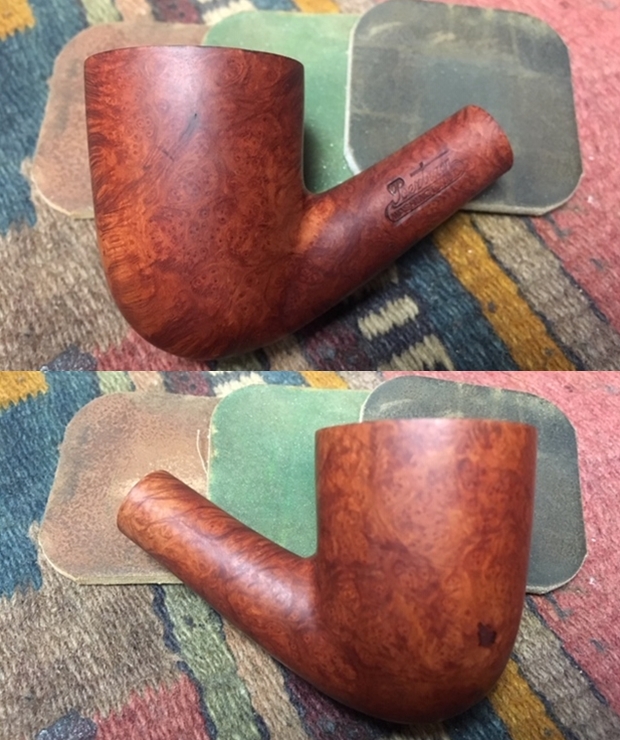
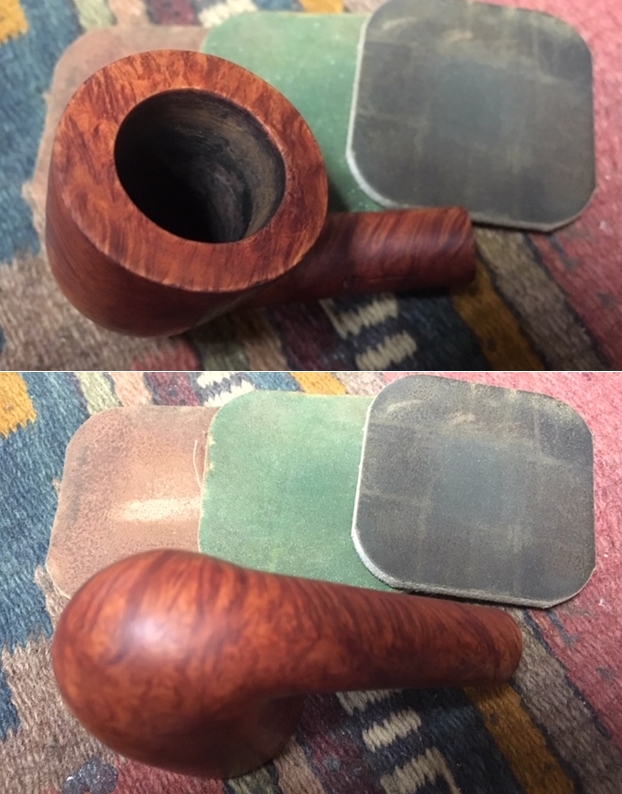
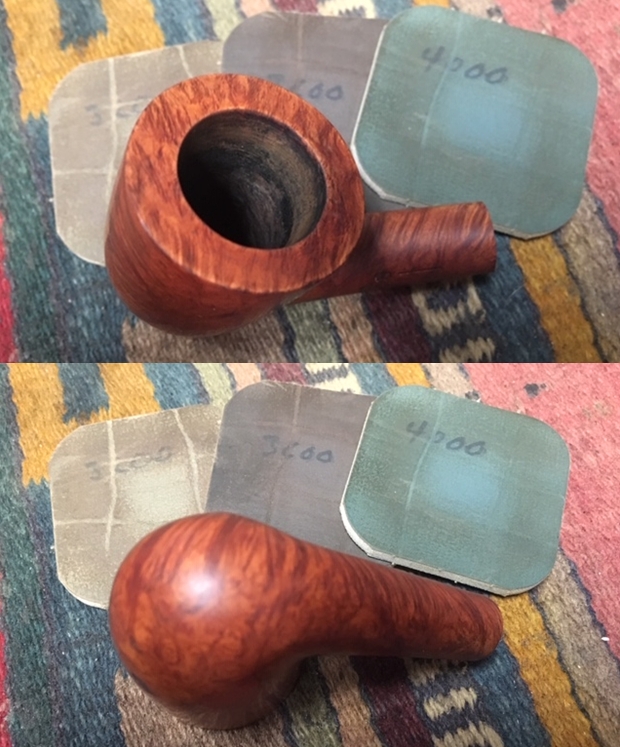
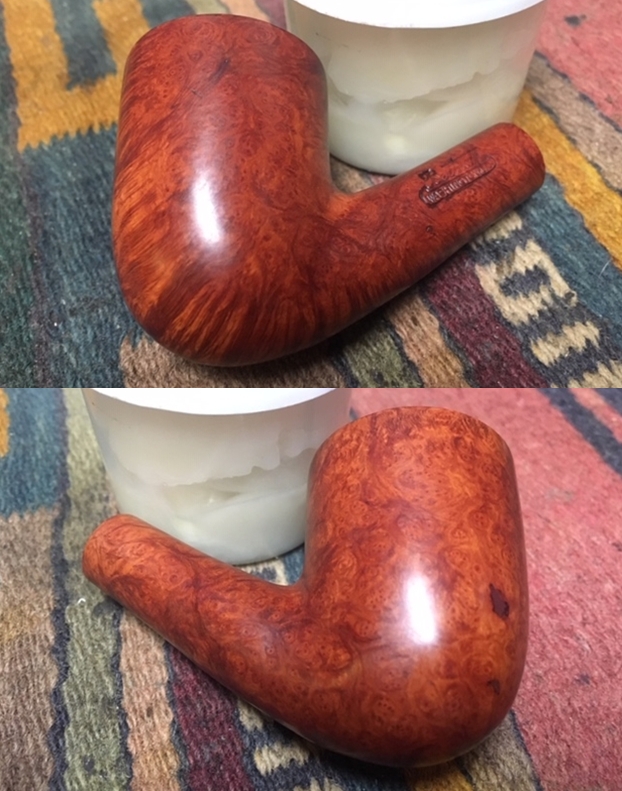
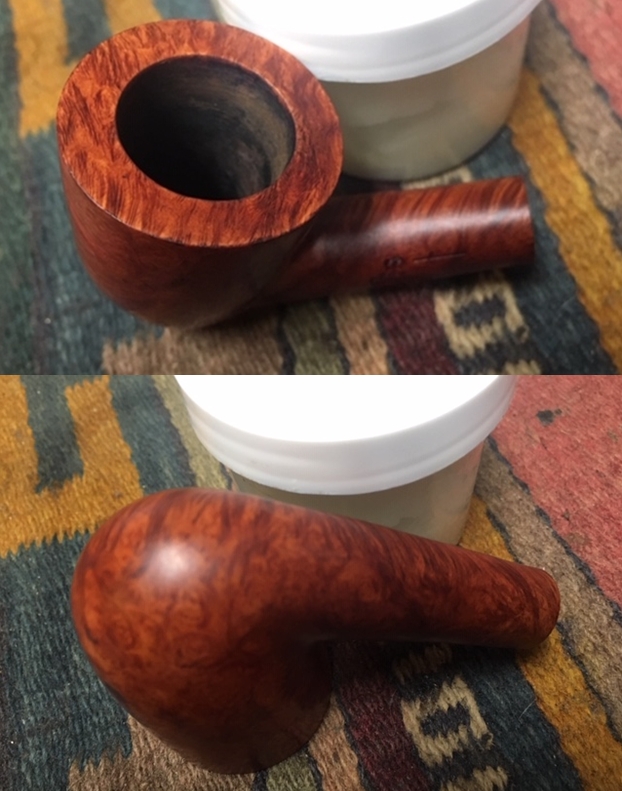
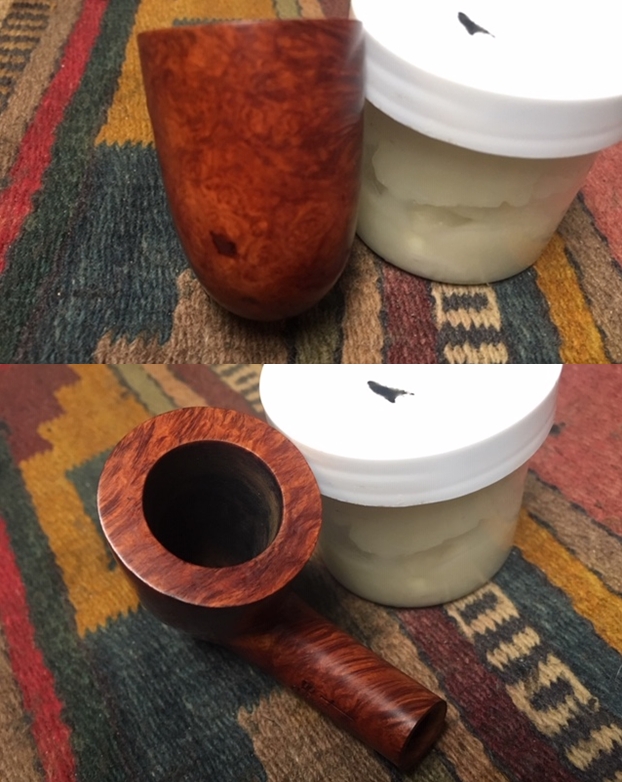
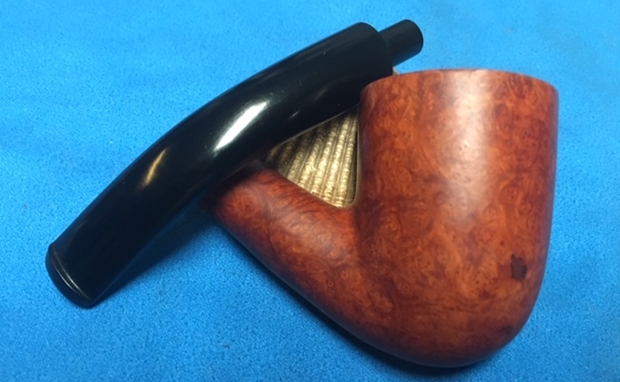
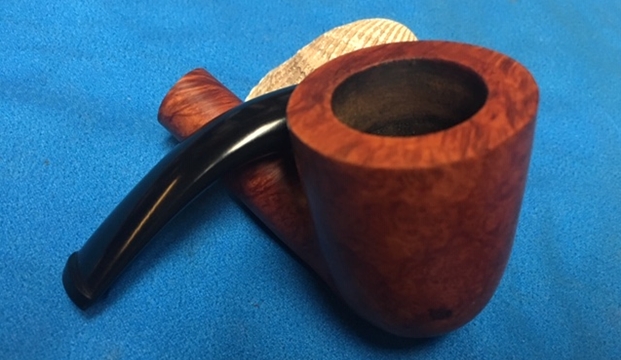
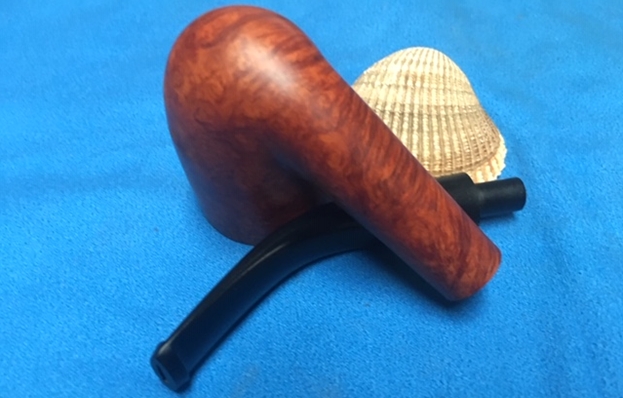
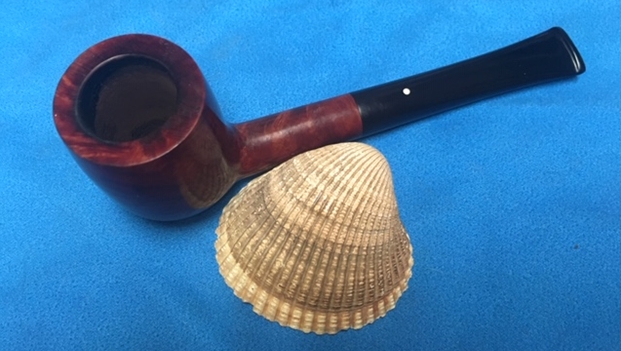
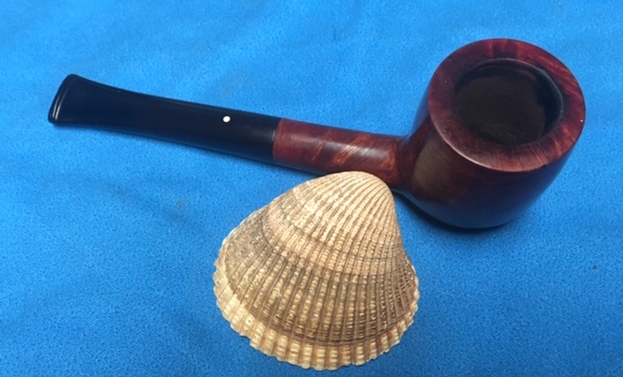
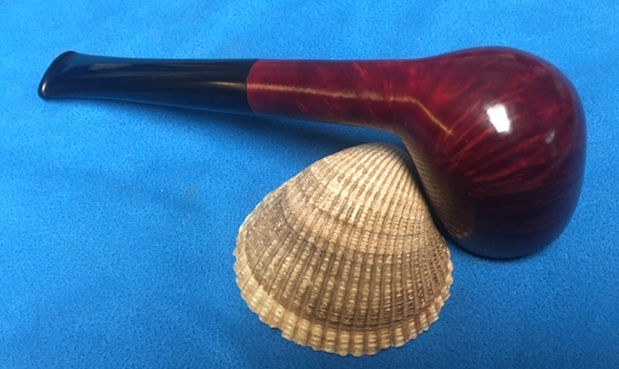
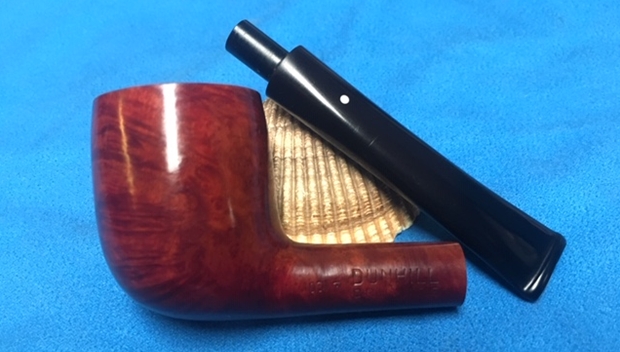
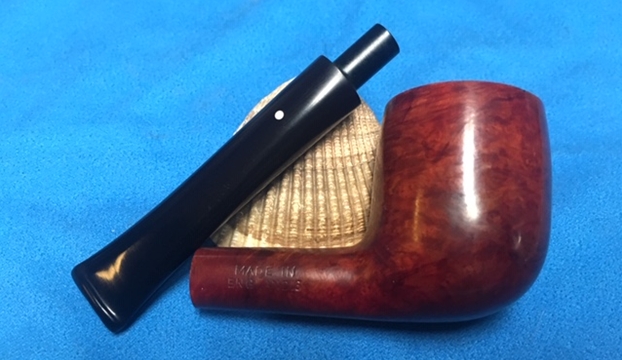
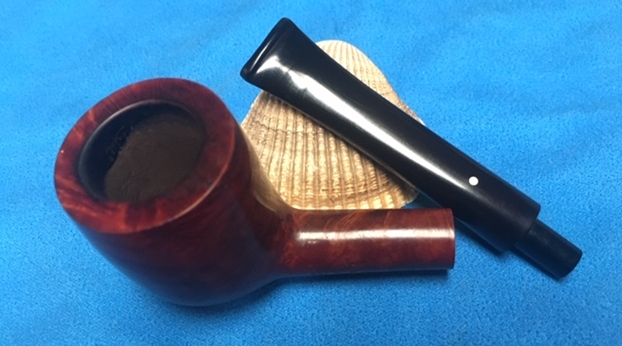
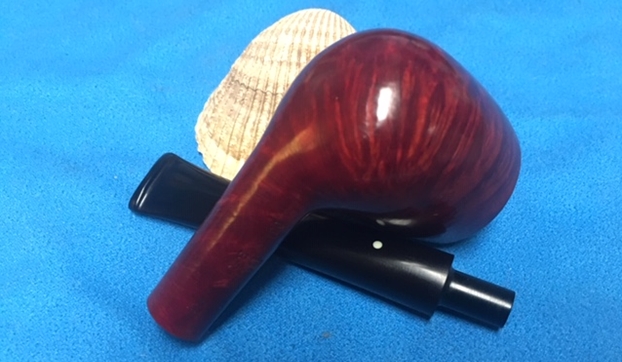
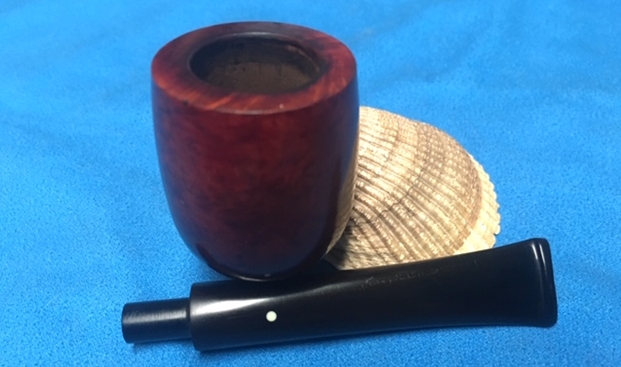
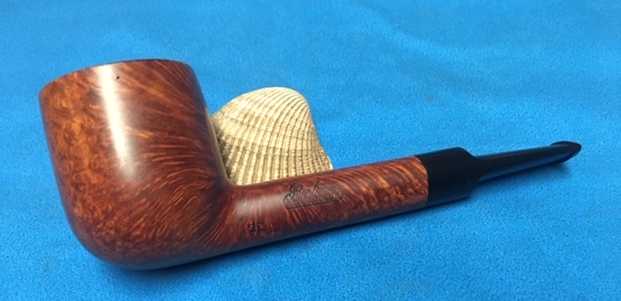
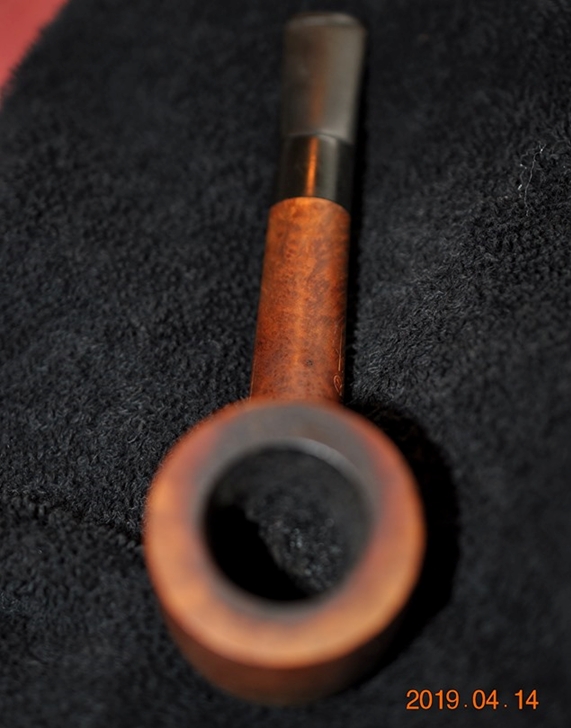
Once again if you want the background on the lot of Bertram pipes that Jeff and I purchased please refer to the previous blog posts on the brand. Like I have said, words escape me in trying to adequately describe how overwhelmed I am when I look at the 200+ pipes that need to be restored. It is mind boggling but there is only one way to move ahead – 1 pipe at a time. I am glad Jeff is helping with the clean up on the lot as that would be more than I could handle by myself in moving through this many pipes. From his cleaned pipes I chose a beautifully grained Bertram 30 that was a either a long shank pot or a Lovat shape with a great look and line. The grain was a mix of grains – swirls, flame, cross and birdseye. It was a round bottom pipe with a saddle stem. The exterior of the bowl looked really good and there were no fills on this beauty. The bowl had cake in the chamber that was no problem. The rim top had some darkening and lava overflow on the back side. The inner and outer edges of the bowl look very good. The exterior of the briar looked lifeless and was dusty with the grime of years of storage. The stem had some oxidation and tooth chatter near the button on both sides. Jeff took some photos of the pipe before he began his cleanup work on it. Jeff took close-up photos of the bowl and rim to capture the condition of the pipe when it arrived. The rim top had a coat of lava and the bowl had a thick cake.Jeff took pictures of the bowl sides and the heel to show the great looking grain around the sides of the bowl. It really is quite stunning and very dirty! Jeff took a photo to capture the stamping on the left side of the shank. It shows the stamping which read Bertram over Washington, D.C. The stamping has been overstamped on the left of the impression. The second photo shows the number stamp at the bowl/shank junction on the left side of the shank. The number designates the quality of the pipe. The next two photos show the stem surface. They show the calcification, oxidation and the chatter on both sides near the button. There is also some wear on the button edge.Once again, if you have read the previous Bertram blogs I have posted about the pipes that I have cleaned up so far you can skip the next bit. But if you have not, then I include the link to Bertram history and information. I would recommend that if you don’t know much about them do some research on them. I include a link to the write up on Pipedia (http://pipedia.org/wiki/Bertram). Bertram pipes were based out of Washington DC. They were popular among famous politicians and celebrities of the time. They made many products for them from FDR’s cigarette holders to Joseph Stalin’s favorite pipe. They were considered some of the best America had to offer till they finally closed their doors in the 70s. They graded their pipes by 10s, the higher the grade the better. Above 60s are uncommon and 80-90s are quite rare. I’ve never heard of or seen a 100 grade. I have several blogs that I have written on rebornpipes that give some history and background to Bertram pipes. (https://rebornpipes.com/2015/06/16/an-easy-restoration-of-a-bertram-grade-60-217-poker/).
I have included the following link to give a bit of historical information on the pipe company. It is a well written article that gives a glimpse of the heart of the company. http://www.streetsofwashington.com/2012/01/bertrams-pipe-shop-on-14th-street.html#

From this information I have learned that the shape and grade Bertram I have in front of me now was made before the closure of the shop in the 1970s. This Bertram Pot/Lovat is slightly different from the other Bertram shapes I have worked. With a grade 30 stamp it is a lower mid-range pipe.

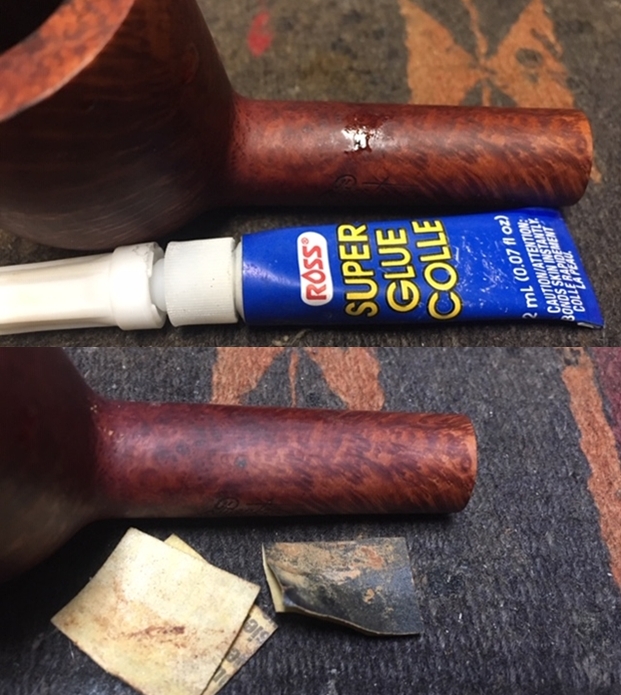
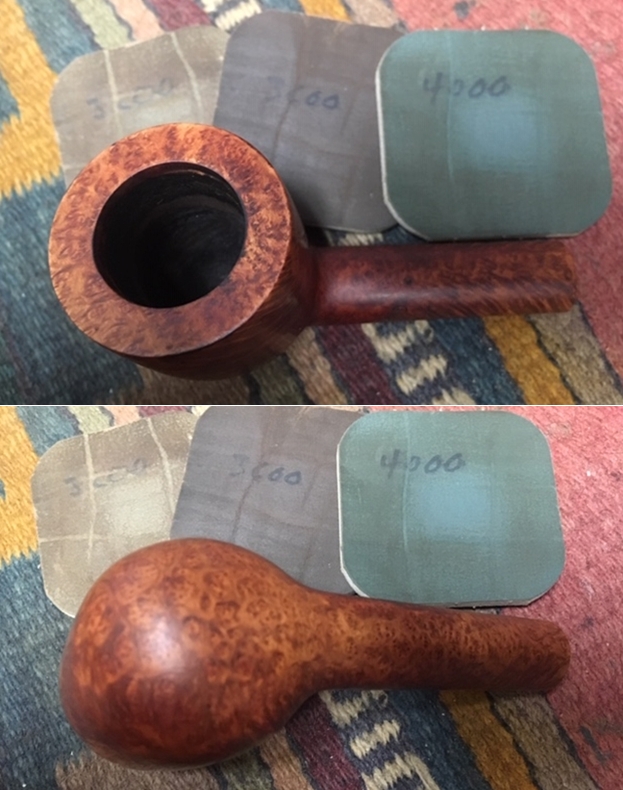
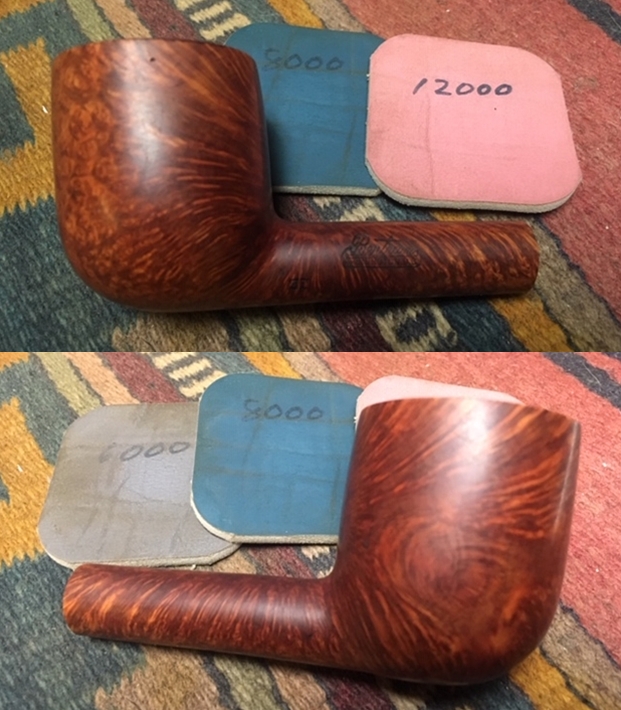
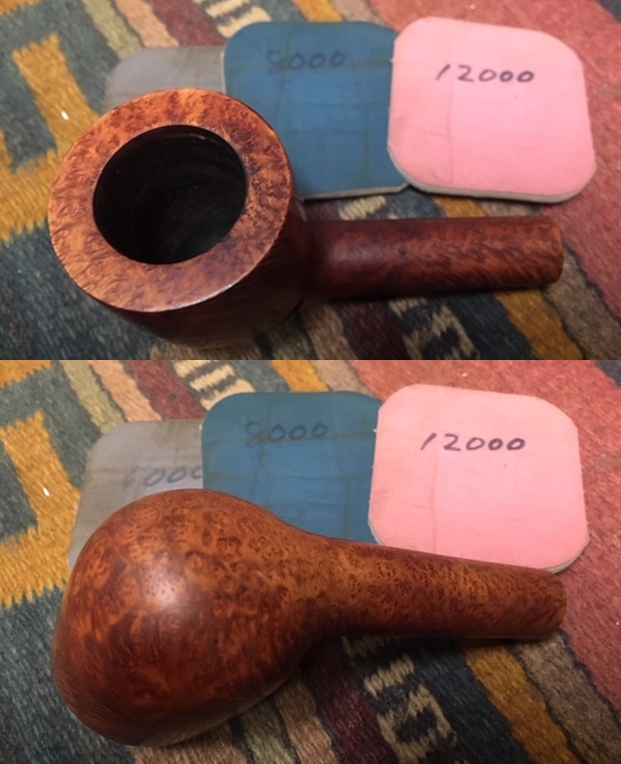
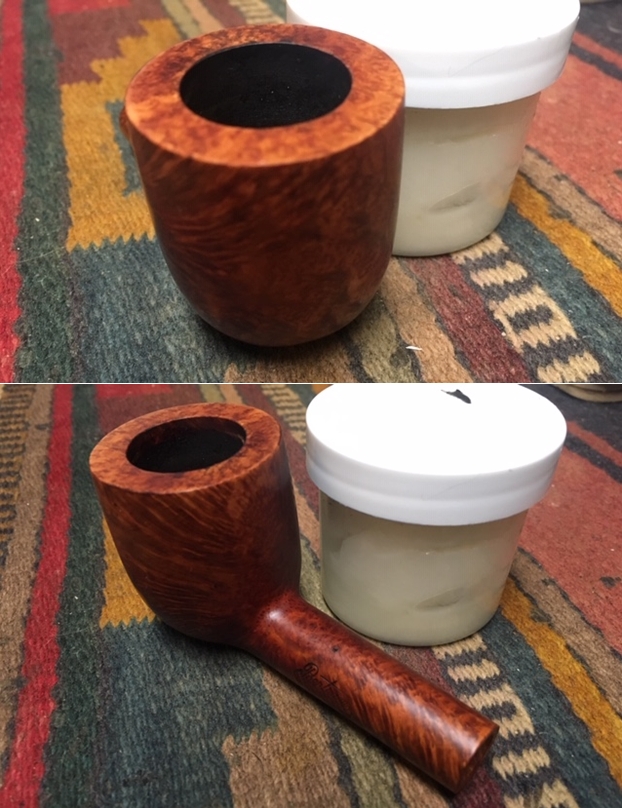
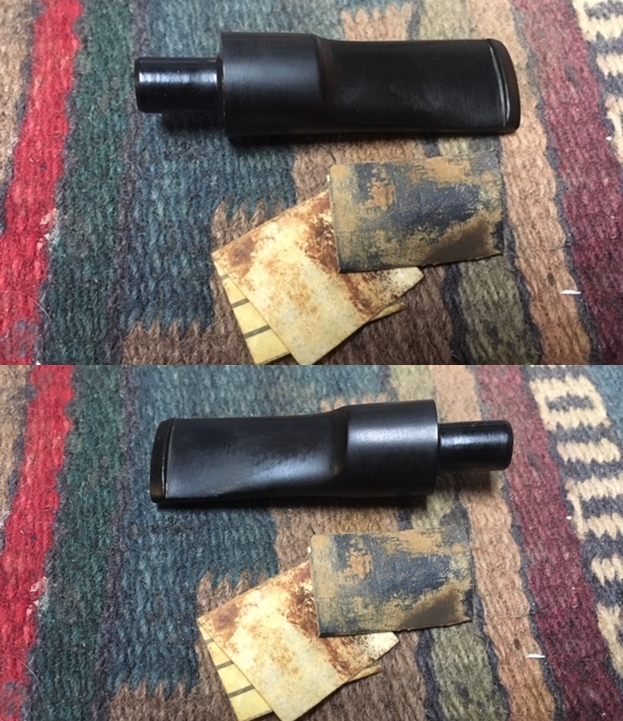
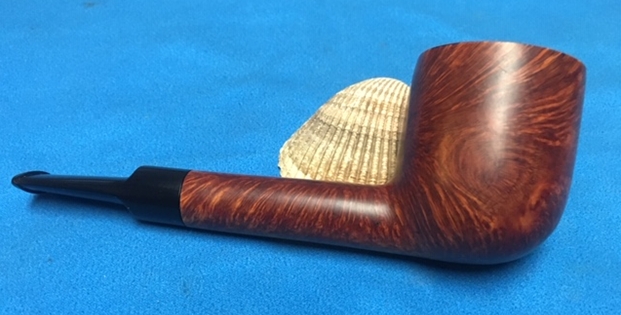
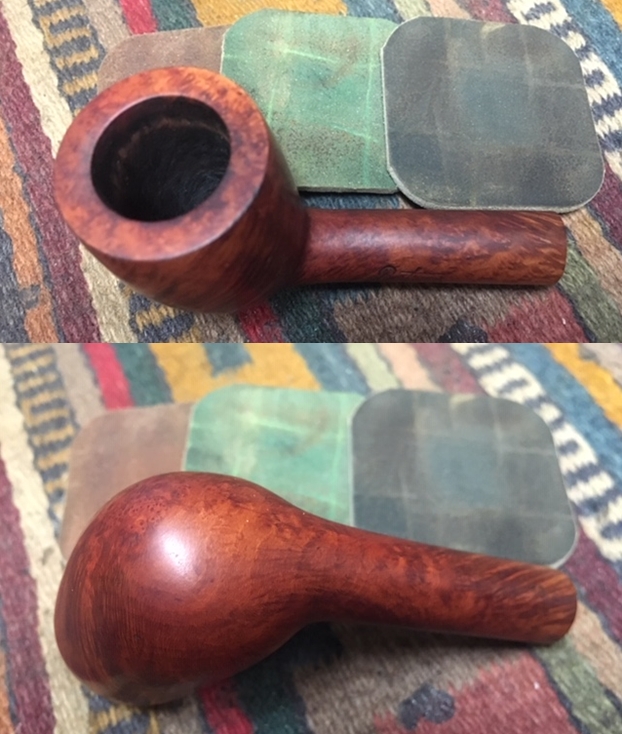
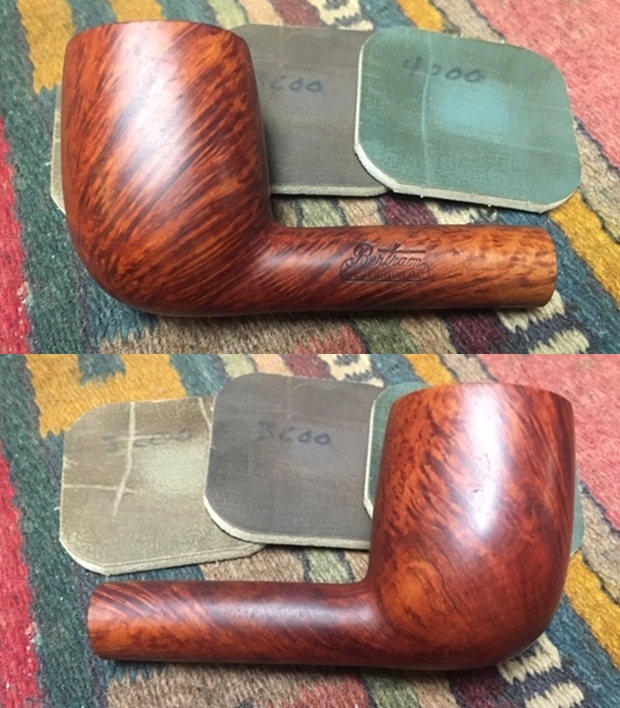
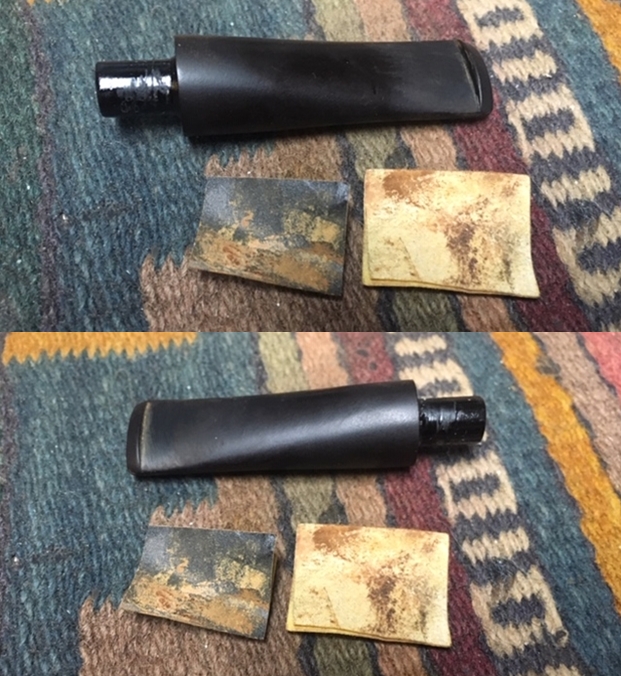
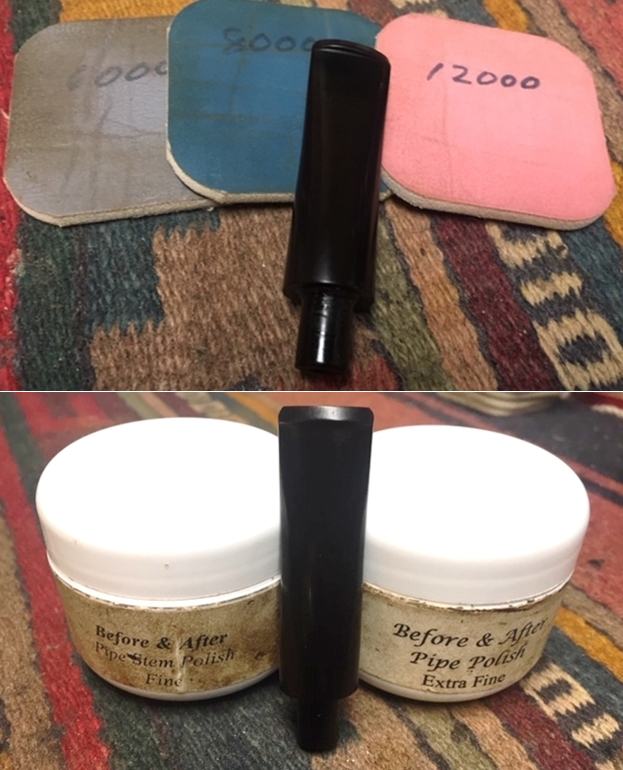
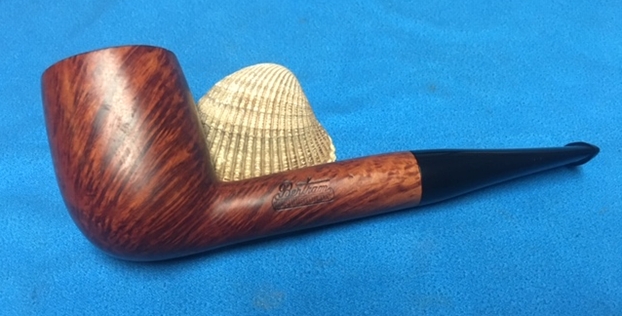
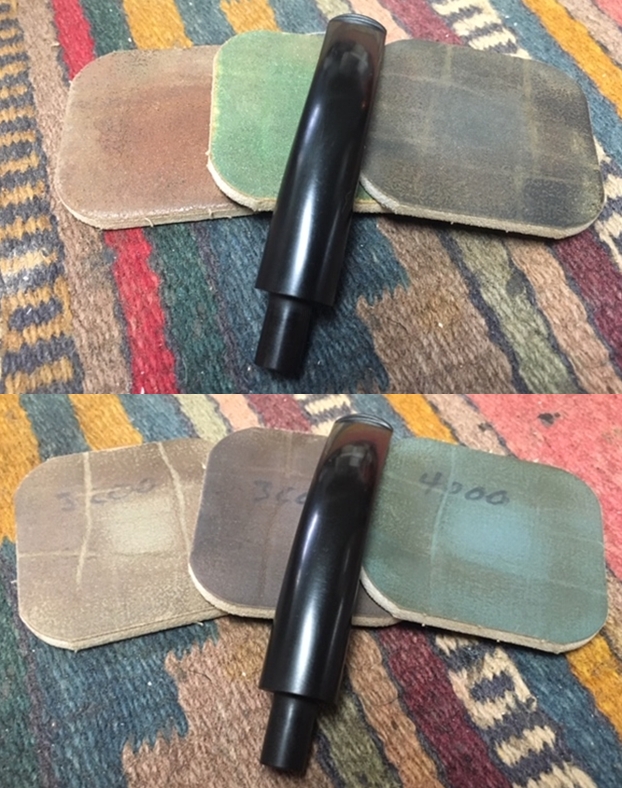
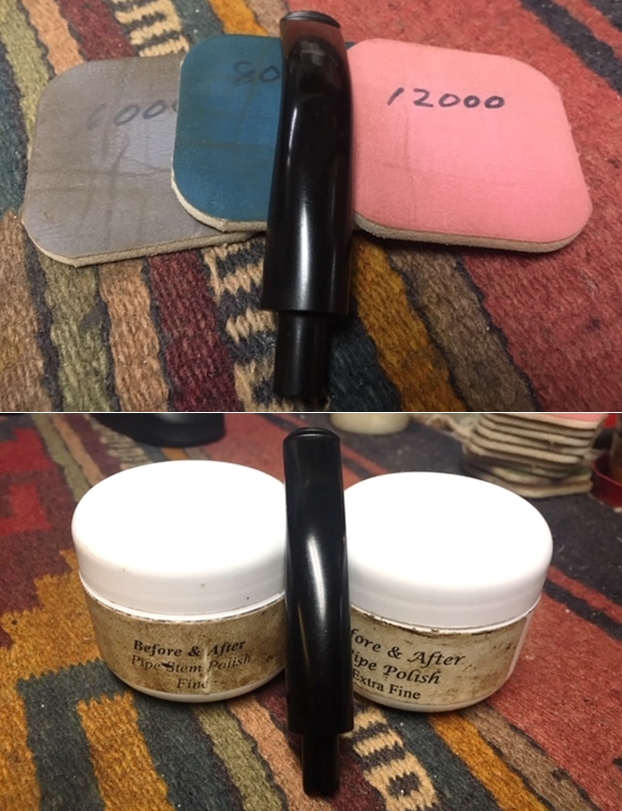
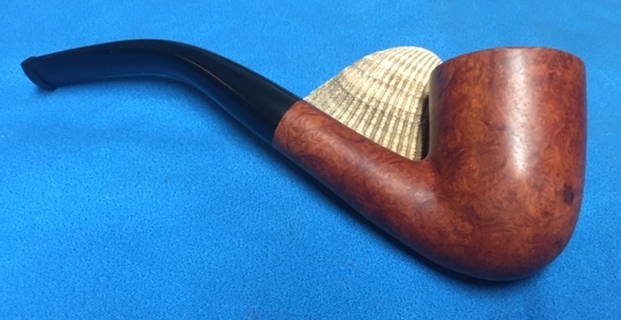
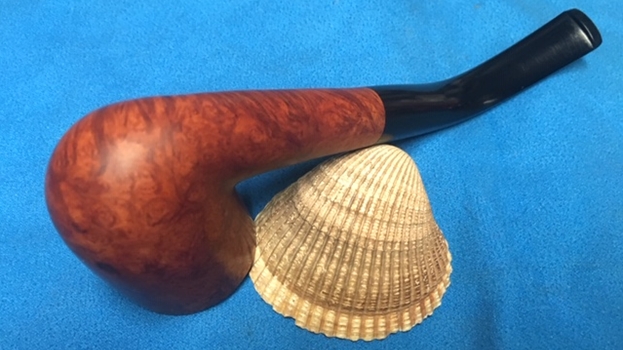
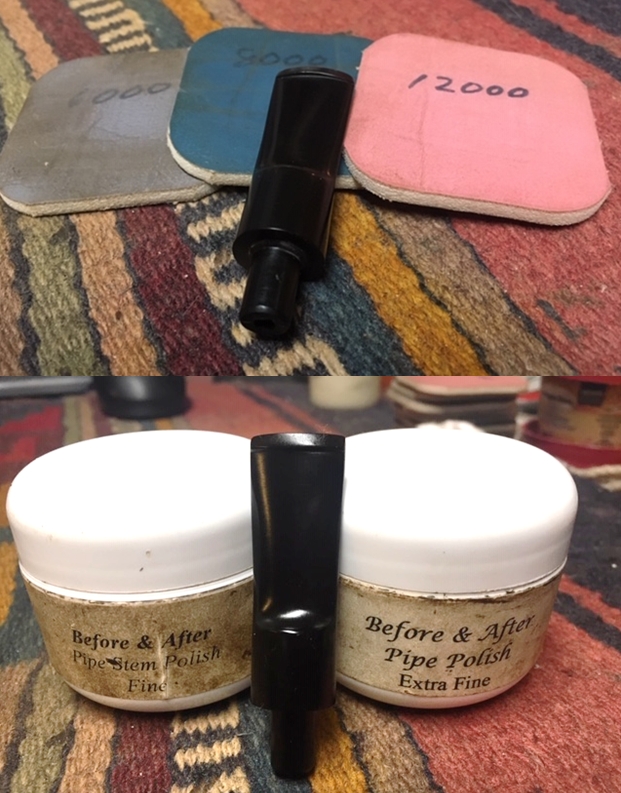
By now if you have been a reader for long you have Jeff’s cleaning regimen pretty well memorized. If you know it you can skip right to the pictures. If not I will include them once more. Jeff reamed the bowl with a PipNet pipe reamer and followed up with a Savinelli Fitsall pipe knife to remove the cake. He scrubbed out the mortise and the airway in the shank and the stem with alcohol, cotton swabs and pipe cleaners. He scrubbed the exterior of the bowl, rim, shank and stem with a tooth brush and Murphy’s Oil Soap to remove the oils and tars on the rim and the grime on the finish of the bowl. He rinsed it under running water. He dried it off with a soft cloth. He was able to remove lava build up on the rim top and you could see the great condition of the bowl top and edges of the rim. The rim and edges were in amazing condition. He soaked the stem in Before & After Deoxidizer to remove the oxidation. I took photos of the pipe before I started my work on it. I took a close up photo of the rim top to show the condition of the bowl and rim after Jeff had cleaned up the grime and lava. The lava left a little darkening on the rear rim top but otherwise the bowl looked very good. There is a small pinhole flaw on the top of the shank that I will need to take care of in the restoration. The stem photos show that the light oxidation is gone. The stem is in excellent condition with only light tooth chatter on both sides near the button.I took photos of the stamping to show how it looked after the cleanup. The Bertram Washington DC is still readable and clear. The quality number stamp was on the underside of the shank and read 30.I decided to fill in the pinhole flaw with clear super glue. I put a drop of glue in the hole and overfilled it to take shrinkage into account. Once the fill cured I sanded it smooth with 220 grit sand paper and 400 grit wet dry sandpaper.I polished the bowl and rim top with micromesh sanding pads – wetsanding it with 1500-12000 grit pads. I wiped the bowl down with a damp cloth after each pad to remove the sanding debris. The grain began to stand out. After the final sanding pad I hand buffed it with a cotton cloth to raise a shine. I worked some Before & After Restoration Balm into finish of the briar with my fingertips to clean, enliven and protect it. I let the balm sit for a little while and then buffed with a cotton cloth to raise the shine. The Restoration Balm really makes the grain stands out beautifully. If you have not tried some why not give it a try. I sanded out the small tooth marks and chatter next to the button on both sides of the stem with a folded piece of 220 grit sandpaper. I followed that by sanding the stem with 400 grit wet dry sandpaper to remove the scratches. I polished out the sanding scratches with micromesh sanding pads – wetsanding it with 1500-12000 grit pads. I wiped the stem down with Obsidian Oil after each pad. I polished it with Before & After Pipe Polish – both Fine and Extra Fine and gave it a final coat and set it aside to dry. I am continuing to enjoy restoring these pipes from the Bertram Collection and with Jeff’s cleanup work we are making progress through them. Each one presents different challenges but all are well laid out classic shapes. This is no exception. I put the stem and bowl back together and buffed the pipe with Blue Diamond on the buffing wheel. I polished the briar and the minute scratches still in the vulcanite of the stem until there was a rich shine. This Bertram is in interesting combination of a long shank Pot or a Lovat with a large bowl. It has a saddle stem. The finish really has some interesting grain on a proportionally well carved pipe. Once I buffed the pipe the briar came alive and the mixture of grain popped with polishing. The black vulcanite stem had a rich glow. The finished pipe is a beautiful grained Lovat/Pot. Like the other Bertrams I have worked on this one fits well in the hand and sits right in the mouth. Have a look at it with the photos below. The dimensions are Length: 5 1/2 inches, Height: 2 inches, Outside diameter of the bowl: 1 5/8 inches, Chamber diameter: 7/8 of an inch. Maybe this shape speaks to you and you want to add it to your collection. Rest easy, this one will soon be on the rebornpipes store. If you are interested let me know. Thanks for walking through the restoration with me as it was a pleasure to work on.


Re-Discovering Brigham’s Canuck Line of Pipes and Rehabilitating Two Prototypes – Part II


Here is the second installment of Charles restoration of these historic Brigham pipes… one more to go! Great job Charles.

Charles Lemon's avatar

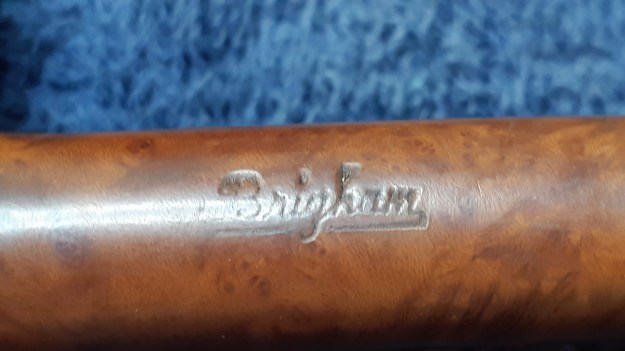
In today’s post I’ll be working on the first of two Brigham Canuck prototype pipes I wrote up last time.

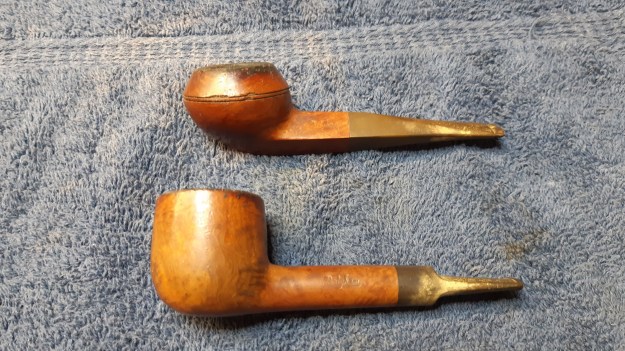
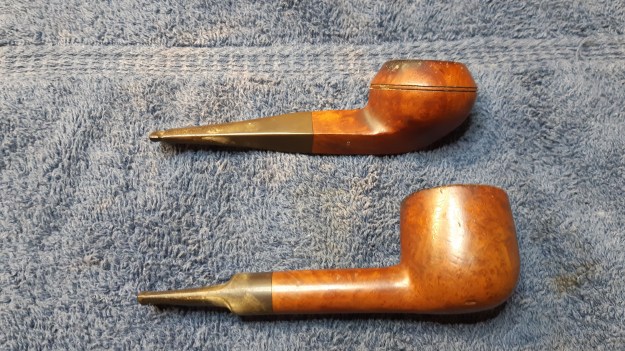
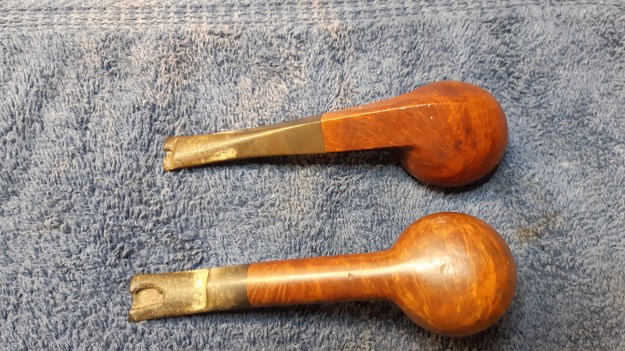
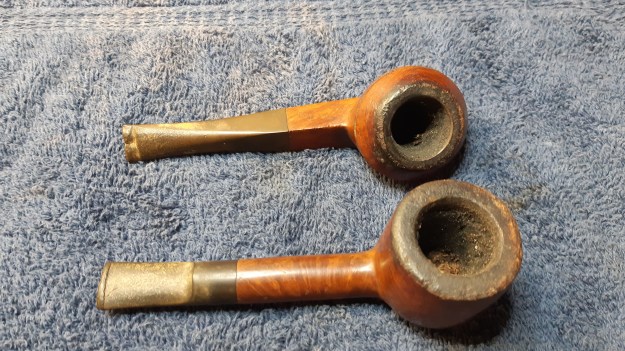
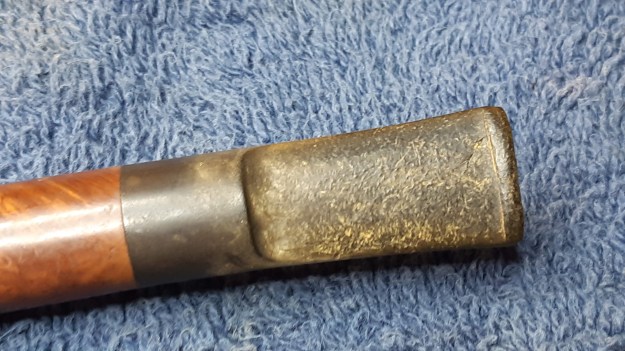
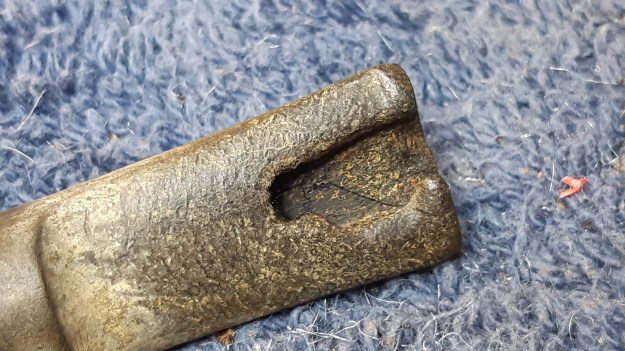
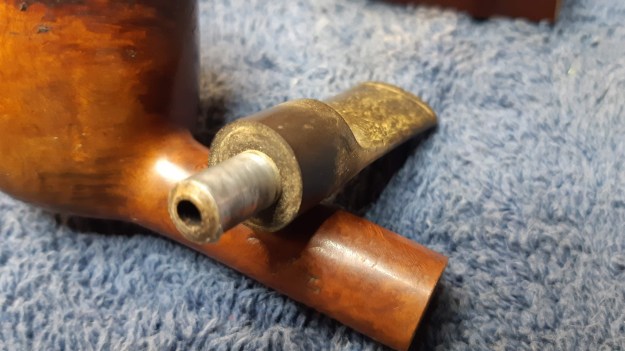
This Pot shaped pipe, probably made in the 1940’s or early 1950’s, was certainly showing its age when I brought it to the worktable to start cleaning it up. The body of the pipe wasn’t too bad, but the rim was dented nearly all the way around the outside edge and covered with a crust of lava. The stem was oxidized and had a great chunk missing from the underside, reaching from the button to a point about halfway to the shoulder of the saddle stem.

Here is the pipe as it looked before I started work, shown in several pics with the Bulldog that came with it.

20190310_10224620190310_10225520190310_10230220190310_10231720190310_10233020190310_10241920190310_11145120190310_102503

As usual, I started work by reaming the tobacco chamber to remove the old cake and get a look at the chamber…

View original post 837 more words

A Bertram 50S Lumberman Pipe from the Bertram Lot


Blog by Steve Laug

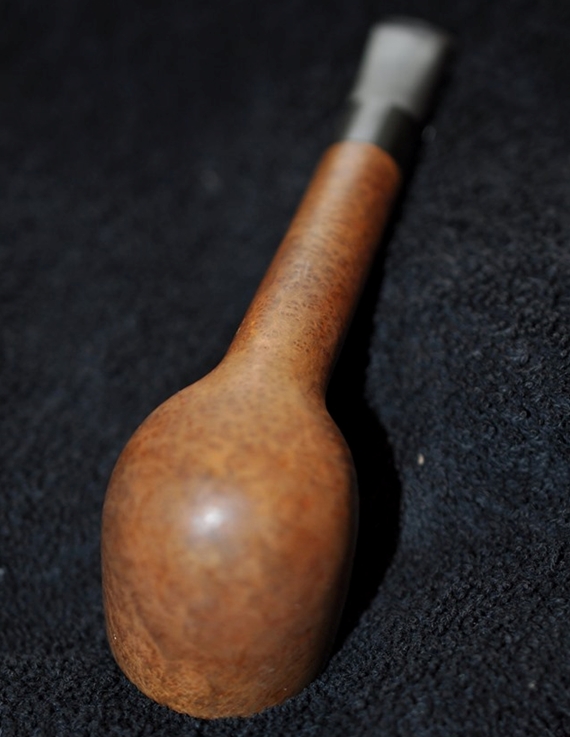
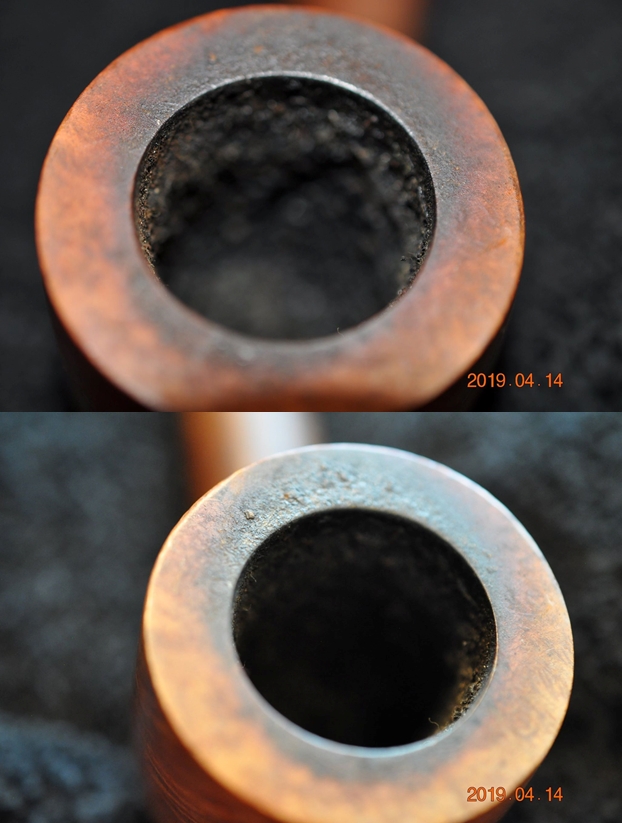
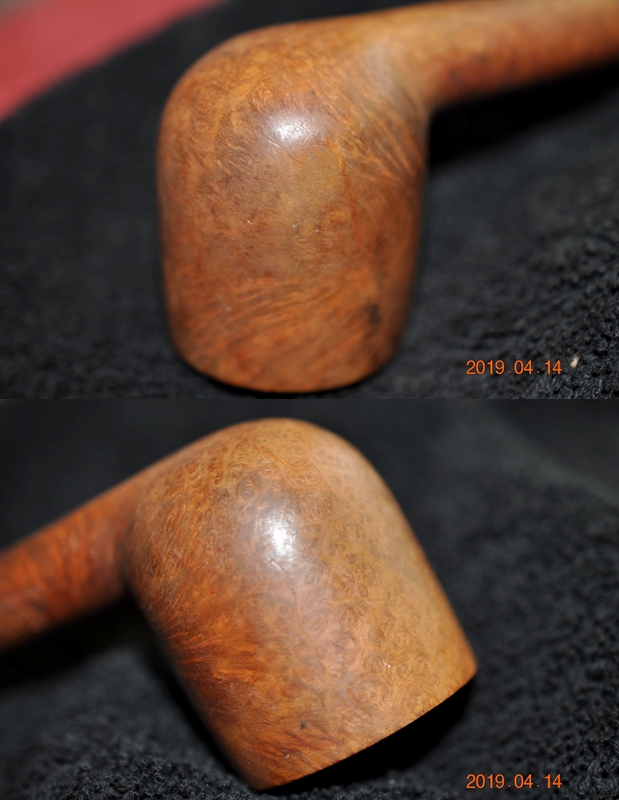
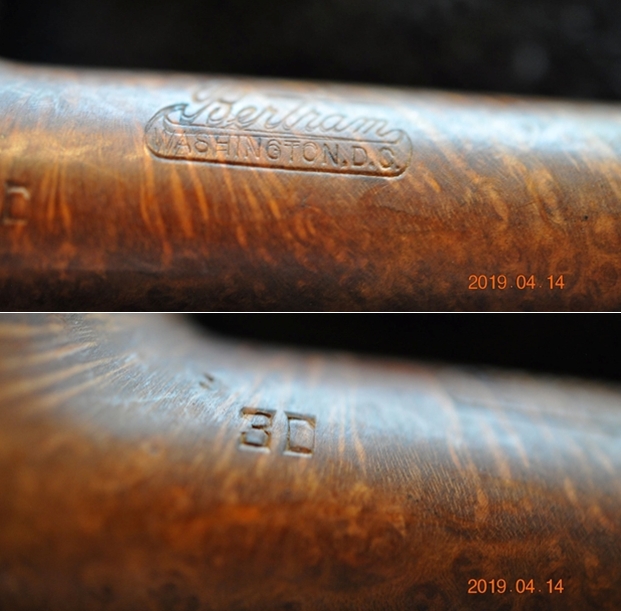
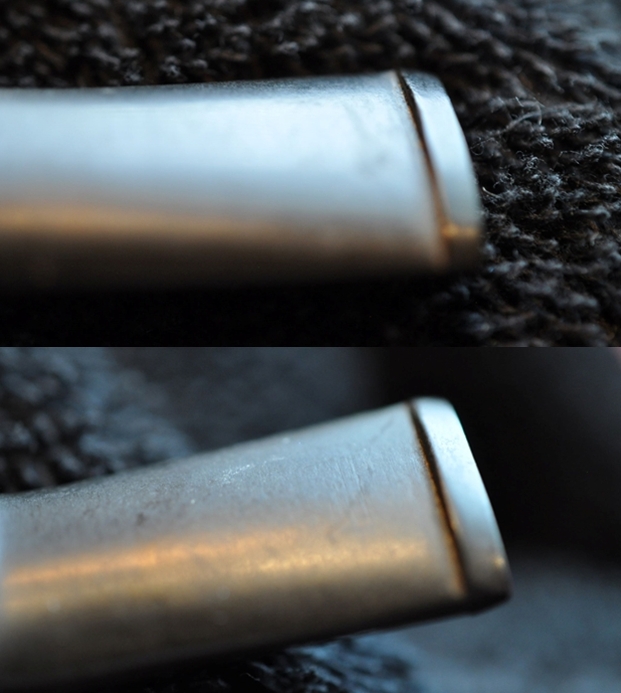
If you want the background on the lot of Bertram pipes that Jeff and I purchased please refer to the previous blog posts. I can’t adequately describe how overwhelmed I am when I look at the 200+ pipes that need to be restored. It is mind boggling but there is only one way to move ahead – 1 pipe at a time. I am glad Jeff is helping with the clean up on the lot as that would be more than I could handle by myself in moving through this many pipes. From his cleaned pipes I chose a beautifully grained Bertram 50S that was a Lumberman shape with a great look and line. The grain was a mix of grains – swirls, flame, cross and birdseye. It was a round bottom Lumberman pipe with a tapered stem. The exterior of the bowl looked really good and there were no fills on this beauty. The bowl had cake in the chamber that was no problem. The rim top had some darkening and lava overflow on the back side. The inner and outer edges of the bowl look very good. The exterior of the briar looked lifeless and was dusty with the grime of years of storage. The stem had some oxidation and tooth chatter near the button on both sides. Jeff took some photos of the pipe before he began his cleanup work on it. Jeff took close-up photos of the bowl and rim to capture the condition of the pipe when it arrived. The rim top had a coat of lava and the bowl had a thick cake. Jeff took pictures of the bowl sides and the heel to show the great looking grain around the sides of the bowl. You can see the fills on the front right side of the bowl. It really is quite stunning and very dirty! Jeff took a photo to capture the stamping on the left side of the shank. It shows the stamping which read Bertram over Washington, D.C. The second photo shows the number stamp on the underside of the shank at the shank/stem junction. The number designates the quality of the pipe. The next two photos show the stem surface. They show the calcification, oxidation and the chatter on both sides near the button. There is also some wear on the button edge.Once again, if you have read the previous Bertram blogs I have posted about the pipes that I have cleaned up so far you can skip the next bit. But if you have not, then I include the link to Bertram history and information. I would recommend that if you don’t know much about them do some research on them. I include a link to the write up on Pipedia (http://pipedia.org/wiki/Bertram). Bertram pipes were based out of Washington DC. They were popular among famous politicians and celebrities of the time. They made many products for them from FDR’s cigarette holders to Joseph Stalin’s favorite pipe. They were considered some of the best America had to offer till they finally closed their doors in the 70s. They graded their pipes by 10s, the higher the grade the better. Above 60s are uncommon and 80-90s are quite rare. I’ve never heard of or seen a 100 grade. I have several blogs that I have written on rebornpipes that give some history and background to Bertram pipes. (https://rebornpipes.com/2015/06/16/an-easy-restoration-of-a-bertram-grade-60-217-poker/).
I have included the following link to give a bit of historical information on the pipe company. It is a well written article that gives a glimpse of the heart of the company. http://www.streetsofwashington.com/2012/01/bertrams-pipe-shop-on-14th-street.html#

From this information I have learned that the shape and grade Bertram I have in front of me now was made before the closure of the shop in the 1970s. This Bertram Lumberman is slightly different from the other Bertram shapes I have worked. With a grade 50S stamp it is a mid-range        pipe. I have yet to figure out the “S” stamp on some of the higher grade pipes. Can anyone shed some light on this.

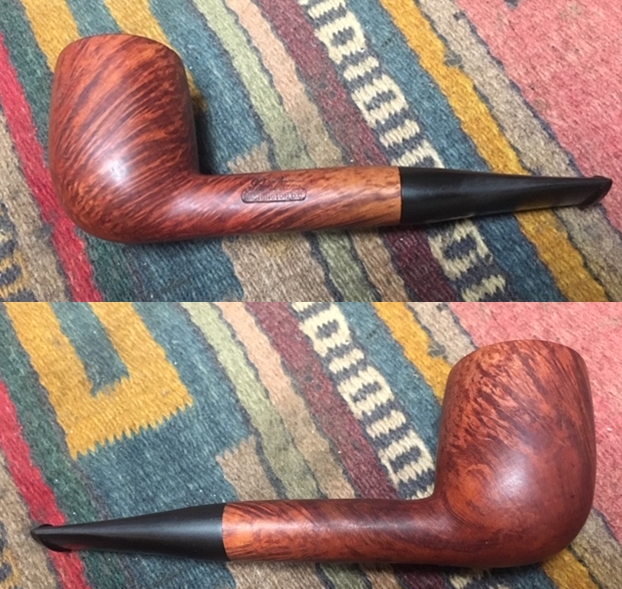
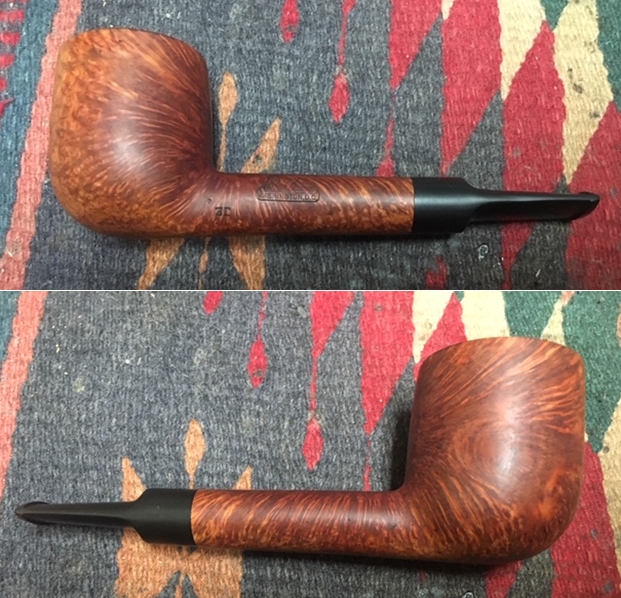
By now if you have been a reader for long you have Jeff’s cleaning regimen pretty well memorized. If you know it you can skip right to the pictures. If not I will include them once more. Jeff reamed the bowl with a PipNet pipe reamer and followed up with a Savinelli Fitsall pipe knife to remove the cake. He scrubbed out the mortise and the airway in the shank and the stem with alcohol, cotton swabs and pipe cleaners. He scrubbed the exterior of the bowl, rim, shank and stem with a tooth brush and Murphy’s Oil Soap to remove the oils and tars on the rim and the grime on the finish of the bowl. He rinsed it under running water. He dried it off with a soft cloth. He was able to remove lava build up on the rim top and you could see the great condition of the bowl top and edges of the rim. The rim and edges were in amazing condition. He soaked the stem in Before & After Deoxidizer to remove the oxidation. I took photos of the pipe before I started my work on it. I took a close up photo of the rim top to show the condition of the bowl and rim after Jeff had cleaned up the grime and lava. The lava left a little darkening on the rear rim top but otherwise the bowl looked very good. The inner edge has some small nicks at the back of the bowl. The stem photos show that the light oxidation is gone. The stem is in excellent condition with only light tooth chatter on both sides near the button.I took photos of the stamping to show how it looked after the cleanup. The Bertram Washington DC is still readable and clear. The quality number stamp was on the underside of the shank and read 50S.I polished the bowl and rim top with micromesh sanding pads – wetsanding it with 1500-12000 grit pads. I wiped the bowl down with a damp cloth after each pad to remove the sanding debris. The grain began to stand out. After the final sanding pad I hand buffed it with a cotton cloth to raise a shine. I know I have mentioned it before but I really like the balm that Mark Hoover created. It really does wonders on a dry piece of briar. I worked some Before & After Restoration Balm into finish of the briar with my fingertips to clean, enliven and protect it. I let the balm sit for a little while and then buffed with a cotton cloth to raise the shine. The Restoration Balm really makes the grain stands out beautifully. If you have not tried some why not give it a try. I sanded out the small tooth marks and chatter next to the button on both sides of the stem with a folded piece of 220 grit sandpaper. I followed that up with 400 grit wet dry sandpaper.I polished out the sanding scratches with micromesh sanding pads – wetsanding it with 1500-12000 grit pads. I wiped the stem down with Obsidian Oil after each pad. I polished it with Before & After Pipe Polish – both Fine and Extra Fine and gave it a final coat and set it aside to dry. I am having fun doing these pipes from the Bertram Collection. Each one presents different challenges but all are well laid out classic shapes. This is no exception. I put the stem and bowl back together and buffed the pipe with Blue Diamond on the buffing wheel. I polished the briar and the minute scratches still in the vulcanite of the stem until there was a rich shine. This Bertram is in interesting take on a Lumberman shape with tapered stem. The finish really highlights some interesting grain on a proportionally well carved pipe. Once I buffed the pipe the briar came alive and the mixture of grain popped with polishing. The black vulcanite stem had a rich glow. The finished pipe is a beautiful grained Lumberman. Like the other Bertrams I have worked on this one fits well in the hand and sits right in the mouth. Have a look at it with the photos below. The dimensions are Length: 6 inches, Height: 2 inches, Outside diameter of the bowl: 1 1/2 inches, Chamber diameter: ¾ of an inch. Maybe this shape speaks to you and you want to add it to your collection. Rest easy, this one will soon be on the rebornpipes store. If you are interested let me know. Thanks for walking through the restoration with me as it was a pleasure to work on.
A 1/2 Bent Bertram 20 Danish Shaped Pipe from the Bertram Lot


Blog by Steve Laug

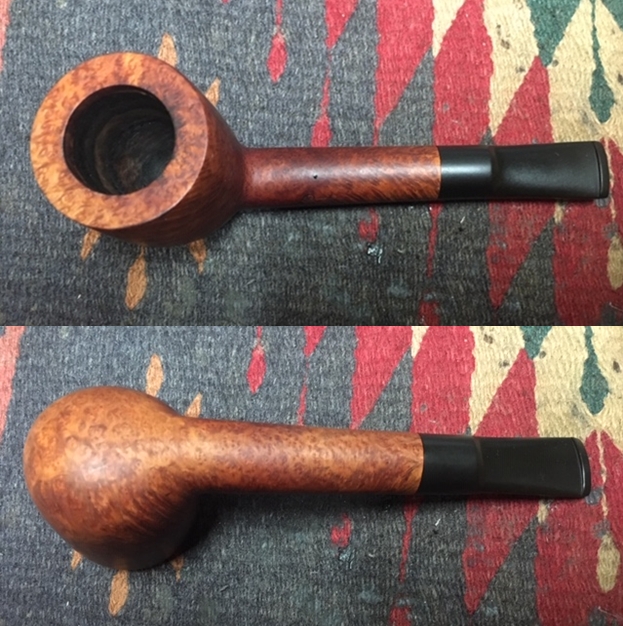
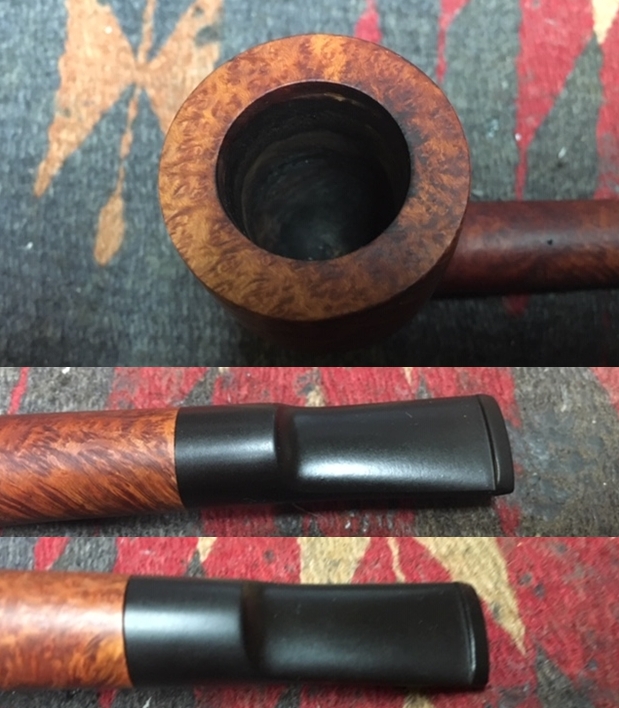
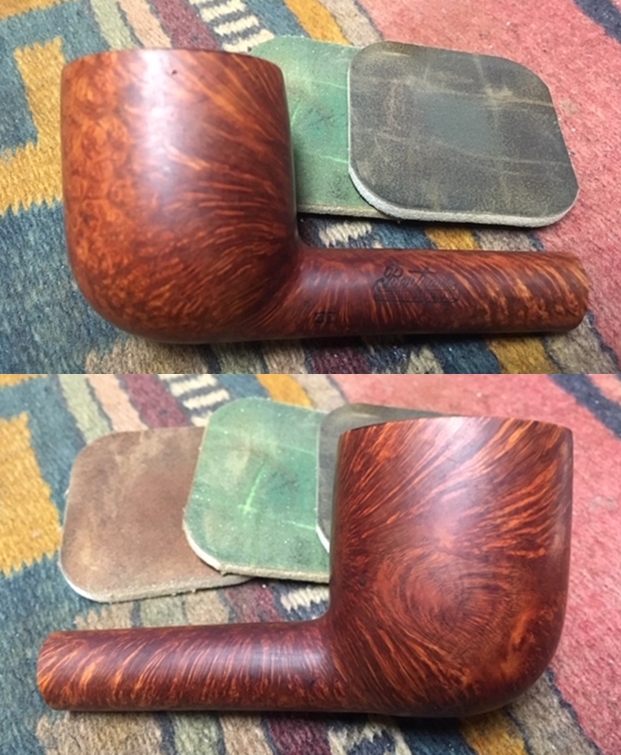
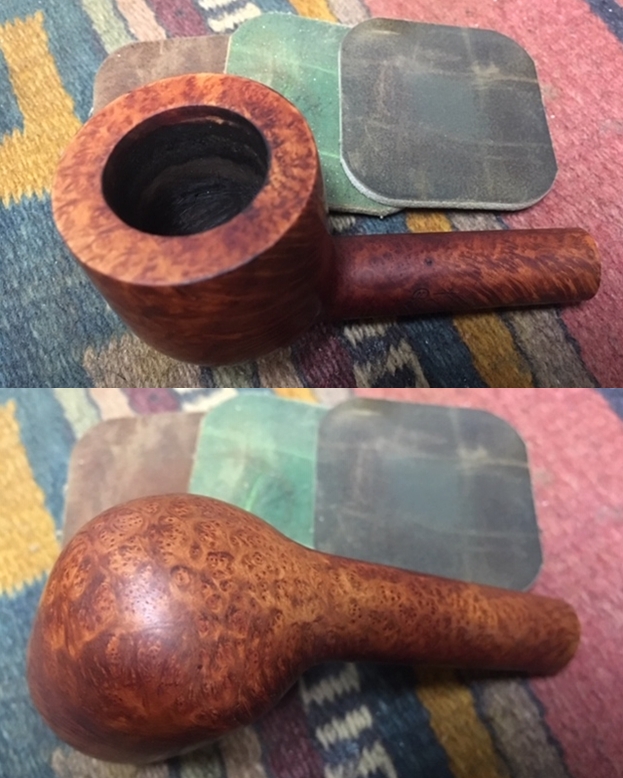
If you want the background on the lot of Bertram pipes that Jeff and I purchased please refer to the previous blog posts. I can’t adequately describe how overwhelmed I am when I look at the 200+ pipes that need to be restored. It is mind boggling but there is only one way to move ahead – 1 pipe at a time. I am glad Jeff is helping with the clean up on the lot as that would be more than I could handle by myself in moving through this many pipes. From his cleaned pipes I chose an unusual Bertram 20 that was a 1/2 bent Danish looking pipe. The grain was a mix of grains – swirls, flame, cross and birdseye. It was a round bottom billiard type pipe with a tapered stem. The exterior of the bowl looked pretty good other than a large fill on the right side toward the bottom of the bowl. The bowl had cake in the chamber that was no problem. The rim top had some darkening and lava overflow on the back side. The inner and outer edges of the bowl look very good. The exterior of the briar looked lifeless and was dusty with the grime of years of storage. The stem had some oxidation and tooth chatter near the button on both sides. Jeff took some photos of the pipe before he began his cleanup work on it. Jeff took a close-up photo of the bowl and rim to capture the condition of the pipe when it arrived. The rim top had a coat of lava and the bowl had a thick cake.Jeff took pictures of the bowl sides and the heel to show the great looking grain around the sides of the bowl. You can see the fills on the front right side of the bowl. It really is quite stunning and very dirty!Jeff took a photo to capture the stamping on the left side of the shank. It shows the stamping which read Bertram over Washington, D.C. The stamping on this pipe is a faint on the right side of the impression. The second photo shows the number stamp below the brand stamp on the shank. The number designates the quality of the pipe. The next two photos show the stem surface. They show the calcification, oxidation and the chatter on both sides near the button. There is also some wear on the button edge.Once again, if you have read the previous Bertram blogs I have posted about the pipes that I have cleaned up so far you can skip the next bit. But if you have not, then I include the link to Bertram history and information. I would recommend that if you don’t know much about them do some research on them. I include a link to the write up on Pipedia (http://pipedia.org/wiki/Bertram). Bertram pipes were based out of Washington DC. They were popular among famous politicians and celebrities of the time. They made many products for them from FDR’s cigarette holders to Joseph Stalin’s favorite pipe. They were considered some of the best America had to offer till they finally closed their doors in the 70s. They graded their pipes by 10s, the higher the grade the better. Above 60s are uncommon and 80-90s are quite rare. I’ve never heard of or seen a 100 grade. I have several blogs that I have written on rebornpipes that give some history and background to Bertram pipes. (https://rebornpipes.com/2015/06/16/an-easy-restoration-of-a-bertram-grade-60-217-poker/).

I have included the following link to give a bit of historical information on the pipe company. It is a well written article that gives a glimpse of the heart of the company. http://www.streetsofwashington.com/2012/01/bertrams-pipe-shop-on-14th-street.html#

From this information I have learned that the shape and grade Bertram I have in front of me now was made before the closure of the shop in the 1970s. This Bertram Danish Shaped with a 1/2 bent stem is different from the other Bertram shapes I have worked. With a grade 20 stamp it is a lower range pipe.

By now if you have been a reader for long you have Jeff’s cleaning regimen pretty well memorized. If you know it you can skip right to the pictures. If not I will include them once more. Jeff reamed the bowl with a PipNet pipe reamer and followed up with a Savinelli Fitsall pipe knife to remove the cake. He scrubbed out the mortise and the airway in the shank and the stem with alcohol, cotton swabs and pipe cleaners. He scrubbed the exterior of the bowl, rim, shank and stem with a tooth brush and Murphy’s Oil Soap to remove the oils and tars on the rim and the grime on the finish of the bowl. He rinsed it under running water. He dried it off with a soft cloth. He was able to remove lava build up on the rim top and you could see the great condition of the bowl top and edges of the rim. There was still some darkening to the rim top toward the back of the bowl. He soaked the stem in Before & After Deoxidizer to remove the oxidation. I took photos of the pipe before I started my work on it. I took a close up photo of the rim top to show the condition of the bowl and rim after Jeff had cleaned up the grime and lava. The lava left a little darkening on the rear rim top but otherwise the bowl looked very good. The inner edge has some small nicks at the back of the bowl. The stem photos show that the light oxidation is gone. The stem is in excellent condition.I took photos of the stamping to show how it looked after the cleanup. The Bertram Washington DC is still readable and clear. The quality number stamp was missing the second number before and it is still not visible. The first number 2 is clear. The pipe could be a 20 or a 25.The large fill on the lower front side of the bowl is very visible. It is solid so I intend to leave it alone. I sanded it with 220 grit sandpaper to ensure that it was smooth to touch. The outer edges of the fill were a little rough before so sanding took care of that issue. There were also some deep gouges on the bowl on the left side next to the shank bowl junction. I filled them in with clear super glue and sanded them with the 220 grit sandpaper. I used a folded piece of 200 grit sandpaper to smooth out the inner edge of the rim and remove the nicks and damage.I polished the bowl and rim top with micromesh sanding pads – wetsanding it with 1500-12000 grit pads. I wiped the bowl down with a damp cloth after each pad to remove the sanding debris. The grain began to stand out. After the final sanding pad I hand buffed it with a cotton cloth to raise a shine. I know I have mentioned it before but I really like the balm that Mark Hoover created. It really does wonders on a dry piece of briar. I worked some Before & After Restoration Balm into finish of the briar with my fingertips to clean, enliven and protect it. I let the balm sit for a little while and then buffed with a cotton cloth to raise the shine. The Restoration Balm really makes the grain stands out beautifully. If you have not tried some why not give it a try. The stem was in great condition when I received it. I polished out the sanding scratches with micromesh sanding pads – wetsanding it with 1500-12000 grit pads. I wiped the stem down with Obsidian Oil after each pad. I polished it with Before & After Pipe Polish – both Fine and Extra Fine and gave it a final coat and set it aside to dry. I am having fun doing these pipes from the Bertram Collection. Each one presents different challenges but all are well laid out classic shapes. This is no exception. I put the stem and bowl back together and buffed the pipe with Blue Diamond on the buffing wheel. I polished the briar and the minute scratches still in the vulcanite of the stem until there was a rich shine. This Bertram is in interesting take on a bent Danish shape with tapered stem. The finish really highlights some interesting grain on a proportionally well carved pipe. Even the fills do not distract and look all right on the polished pipe. Once I buffed the pipe the briar came alive and the mixture of grain popped with polishing. The black vulcanite stem had a rich glow. The finished pipe is a beautiful grained Bent Danish. Like the other Bertrams I have worked on this one fits well in the hand and sits right in the mouth. Have a look at it with the photos below. The dimensions are Length: 6 inches, Height: 2 inches, Outside diameter of the bowl: 1 1/2 inches, Chamber diameter: ¾ of an inch. Maybe this shape speaks to you and you want to add it to your collection. Rest easy, this one will soon be on the rebornpipes store. If you are interested let me know. Thanks for walking through the restoration with me as it was a pleasure to work on.
Waxing Meerschaums


Blog by Fred Bass

This is another short piece that Fred Bass wrote on waxing Meers. Once again this was saved on my hard drive. I am glad that Fred sent me these pieces and that I can now pass them on through rebornpipes. — Steve

I’m not sure how the wax functions to color Meerschaums, but I do know that coloring a Pipe requires wax, tobacco & heat. The Meerschaums that I’ve seen in the advanced stages of coloring get a sticky surface, especially while being smoked. It’s as if the Block is near total saturation and cannot contain the by-products of smoking as efficiently as new Block, so these resins & moisture migrate past the Pipe’s surface. I remember seeing older Pipe smokers in Pipe & Cigar shops having to smoke their Meerschaums while being held with a cloth, to catch the ooze that was fairly dripping from deep brown colored Meerschaums. That was years ago, when I was called “Kid.”

True Lattice Pipes (ones that allow light to pass thru the ‘windows’ are demonstrations of the Artisan’s high level of skill. They are functional art! I suspect that much of the same skills and technique are used in Figurals that are undercut so that light can pass thru the details of the carving. Admittedly, I’m drawn to the display of Patina these Pipes produce as they are smoked. Rewaxing presents more of a challenge, which I address by using the most refined Bee’s wax I can get (for better absorption) and only in sparing amounts. What I’ve discovered by doing this, is that it’s important to err on the side of caution… Better to use too little an amount of wax, than too much. This allows me to better gage how much wax the Pipe will absorb in a single application. I have better control of this if I paint molten wax onto the Pipe rather than immersion in a liquid wax bath. The key is not to get in a hurry.

The undercut Lattice Meerschaum is truly a reflection of the Carver’s skill and art! Most likely, the discussion of rewaxing them has been going on for as long as they have been smoked. I appreciate the knowledge and experience of Deniz on this topic. The literature does not make a distinction between Lattice and undercut Lattice (or undercut Figurals for that matter) when discussing rewaxing. In the Spring ’03 issue of P&T, Rick Newcombe’s article (How to Color Your Meerschaum Pipe: A Quicker Method Explored) rewaxing is discussed. His 3 points are: 1 – smoke the Pipe; 2- blow smoke on the Pipe and 3- melt beeswax into the Meerschaum. The method, of daubing melted wax onto the Pipe & then using a hair dryer or heat gun to melt the excess off, Rick credits to Beth Sermet of SMS Meerschaums. The Pipe shown in the pictorial displays is a Lattice, but it is not undercut. One thing that Rick does not mention, is that the bit & connector should be removed prior the application of the heat to avoid damage to them. The Pipe’s newly acquired color that results is likely to fade, but with repeated smoking, additional rewaxing and time the color will become permanent. It is possible to crack a Meerschaum with heat, if there are unseen flaws in the Block, but I’ve not experienced this or read of it from others.

Another method was employed by Sailorman Jack. He would rub highly refined beeswax on his Meerschaums while smoking them. This would melt the wax & promote absorption by using the heat of the Pipe created by smoking. I’m not aware if he made a distinction in this method when coloring true Lattice Pipes. The discussion of rewaxing will continue for as long as there are Pipesters that smoke Meerschaum Pipes. It’s an interesting topic, but should not become more important than the main event of actually smoking the Meerschaum. I enjoy looking at Meerschaum art as much as anyone, but I enjoy smoking them more.

I’ve found that quilter’s use high grade Beeswax to give their thread strength, so a fabric store is a good resource. Regarding your question: “Is it better to use 100% beeswax?,” it all depends on what you want to do. This is an area of the Meerschaum crafts that is most guarded by Carvers. Additives can be tallow, different grades of Beeswax, whale oil, lacquers, solvents and pigments. If you find out anything in this part of the arts, I suspect that I’m not alone in wanting to know more. I’ve even seen fire used, for effect. Either suspending a Meerschaum above a fire or wrapping the Pipe’s bowl in wax soaked rags & setting it on fire are done for effect.

What has worked well for me is to wax the Pipe while it’s being smoked. The wax will absorb according to the porosity of the Block and will stop when saturation has been achieved. The excess will wipe off with a clean cotton cloth and will enhance the gloss of the finish. This combination of wax, heat and the by-products of combustion that accumulate within the Block all work together over time to color the Pipe. The amount of wax absorbed by the Block is proportional to it’s porosity. Some Pipes will take a large amount of wax and others will take only a bit at a time. The length of time that the Pipe’s been smoked is also a factor. When I’ve applied wax to Pipes that have been in long service, with little attention paid to waxing, the coloring is darker with wax application & tends to persist for longer periods of time, eventually resolving into a darker color that is permanent. The quality of Block is the most important factor in this waxing for color technique, but other factors that will influence the result are also to be considered. The Pipe’s shape, size & mass present variables to coloration. I’ve read where Cavendish Tobaks will color a Meerschaum faster, due to the high content of oils. I cannot speak to this, as I prefer to smoke Tobaks that I enjoy, which do not generally include Cavendish blends. For me, the smoking experience that the Meerschaum affords is most desirable, while the coloring is secondary. Another factor will be the ambient air temperature. It seems that the Meerschaum breathes more efficiently on warmer days. On colder days, the Pipe’s surface will cool faster and this seems to slow down the absorptive qualities. Indeed, I’ve read of one Pipester’s experience of smoking his Meerschaum from start to finish in subzero temperature, which resulted in the Pipe’s color turn to a mottled grey. In general, it seems that the combination of wax, heat and the by-products of smoking the Pipe lead to coloration, over time. Maintaining a clean surface on the Pipe also seems to matter. The waxing serves to protect the Pipe’s surface, in addition to being a factor in coloration. It has been years since I’ve used the CAO Antiquing Compound, but from what I remember, it was a Beeswax. It may have had other additives or not.

The technique of hot wax application to a Pipe, followed by melting off the excess with a heat source, is one I employ less frequently. It’s just much easier & convenient for me to wax the Pipe as I smoke it. This practice of cold wax application also afford opportunity to finish it even after the Pipe has cooled following a smoke. Sometimes, the Pipe’s finish will be a bit rough, as it has absorbed all of the wax applied to it, leaving the surface unprotected & textured, like the inside of a bowl of an unsmoked Meerschaum. I’ll go ahead and apply more wax to the Pipe and then follow by buffing it with a white cotton cloth. The variations of waxing Meerschaums by the Pipe smoker are many. There are most likely as many technique styles as there are Pipesters. It is an area where individual preference and creativity combine with experience to result in habit. It has been the topic of discussion, for centuries, wherever Meerschaums are smoked. The goals of the Pipester differ from those of the Carver. While the Carver employs Beeswax for product quality, the Pipester uses it for coloration and protection of the patina. I cannot speak to the Carver goals of using signature wax finishes for effect, as I have little understanding of this part of the art. I can speak to the Pipester, from my own experiences… I say, smoke the Pipe & wax as you wish. Let the course of nature proceed over time, but enjoy the smoke while you wait.

Meerschaum Care and Cleaning


Blog by Fred Bass

This article is a combination of various posts and emails that Fred wrote on the topic. He combined them into this piece and sent it to me for safe keeping. With his death I think it is important to make this articles available to the community. — Steve

For me, I believe that Steve has hit upon the root of the issue in regards to an earthy taste. To deliver a smoke’s full potential, a clean pipe is best. Before I smoke a new Meerschaum, I clean it with Everclear, a shank brush and pipe cleaners. There will be a lot of dust in the pipe from the milling of both the block and the bit, if it is hand cut. The first few smokes will burn off the wax. Many find this brief period not to their liking. This same event occurs after a pipe has been rewaxed. I guess I’ve done it so many times that it no longer bothers me.

The next part to this issue is to follow up every smoke with the proper cleaning. By doing this, I have no need to dedicate a pipe to a blend as I experience little to no taste carry over. It is best to be diligent in preventing any cake build up. A sharp, blunt tipped knife is best used to scrape this off. This is just the opposite of Briar pipes, where cake build up is good. The problem is that Meerschaums will develop a black tar like plaque that can impart a bitter taste to the smoke. There is much difference of opinion on the points I’ve touched on. I can only speak to what works for me. My observations suggest that by keeping the Meer clean, you stand a better chance of having the by products of combustion contribute to the coloring that many Pipesters seek with their Meers. When I reclaim an estate Meer that has been abused, it takes several cleanings between smokes for the pipe to flush itself and finally deliver the best smoking experience. The pipe is a filter. Like any other filter, it can become saturated and not be able to function effectively.

Again, I do not consider myself an authority on Meerschaum pipes. I’m as much a student as the next… All I can offer are my own observations and experiences. To this end, I hope that this helps other Pipesters, so that some benefit may be gained.

Back in my undergraduate days, I saw a pipe in the window of a luggage shop that I just could not get out of my mind. It was an Andreas Bauer from Turkey, after A. Koncak acquired the trademark. It was a simple Smooth Bent Paneled Block Meerschaum that had the lines of the paneled bowl continue into the Amberite plastic bit. It was the first pipe I’d seen with the Delrin mortise-tenon push/pull joint and came in it’s own fitted leather case. Before this my only other Meer had come in a cardboard box. This was no holds barred PAD, so I saved up my $40.00 and caved in.

Things soon started to go wrong. I dropped it. This resulted in a few nicks in the block’s surface, which I thought as obvious as a train wreck, but others did not seem to notice. Not having much experience with Meerschaum, I proceeded to char the rim to where it might seem that a booster rocket had been used to light it. Down at the local pub, things got spilled on it and it seemed like every drunk that came in just had to pick it up when I had it resting in it’s case. Matters got so bad that I became ashamed of how the pipe looked, so I put it in a drawer for many years.

A couple of years ago, I decided that I would put the lessons I’d learned to good use with the resurrection of this pipe. It has been a slow process, involving much Everclear, a shank brush, more than a few pipe cleaners and the patience to repeat the process until the old ghost of blends I’d just as soon forget were exorcised. This did not help the finish nearly as much as the pipe’s smoke. Today, for the second and hopefully the last time, I took the block to task with 600 grit wet sanding in Everclear followed by a rewaxing using Halcyon II. It is starting to look passable. It will never return to it’s original state but it is no longer a pipe I keep in a drawer. With enough time and determination, even an abused pipe can regain some of it’s radiance. Just don’t beat it up too bad.

It is very interesting to read about the use of Murphys oil soap in restoration of a Meerschaum. One of the things I enjoy about pipesters is the ingenuity and diversity of problem solving methods. I guess that my approach is more of an ‘old school’ technique… I use Everclear for both routine maintenance & cleaning. In restoration, I’ve experienced positive results using it on the exterior surfaces. Where serious abuse has left a Meer with rim burn and other finish problems, Everclear used with fine grit wet/dry sandpaper will get results. Even if it looks as though Grandad used a space shuttle liftoff to light up with, with a little time it will resolve. After the cleaning, I’ll use Halcyon II. It does not have the durability of Bee’s Wax but is much easier to buff, so I will do my maintenance in a more timely way. For cake buildup, I use a sharp, blunt tipped knife and scrape it down to the stone surface. For restoration, the use of Everclear, a shank brush and lots of pipe cleaners will help flush the pipe. It may take 6 to 12 cleanings after every smoke to help the Meer unload old ghosts, but it will happen. Restoration of estate Meers is more of a labor of love than anything else. It takes time and effort. In addition to the use of paper shims to correct an overturned bit, I’ve used clear finger nail polish with good results. Some of my older Meers have a Kaywoodie type metal screw joint. A sparing application of clear nail polish, left to dry for a couple of days with the bit in the desired rotation will form a temporary bond that will last for awhile before becoming necessary to repeat. I hope these observations serve to provide good information to pipesters.

These paragraphs offer information on this topic of care and is by no means exhaustive. As we evolve, so does our knowledge & while some things we do remain the same, some things will change. There is plenty of room here for diversity, and it is welcome.


…And Steve and Jeff Laug bid adios with this restoration: a Block Meerschaum # 22!!!


Blog by Paresh Deshpande

From the heading of this post, it is but natural to infer that this would be the last pipe that Abha, Steve, Jeff and I selected to work on before we bid our farewells, but the on-ground fact is this was selected and work commenced on this pipe after we had completed the restoration of an 1846 made BBB with Amber stem from my inheritance. Here is the link to the write up which was penned by Dal Stanton –

https://rebornpipes.com/2019/05/30/west-meets-east-in-india-to-restore-a-grandsons-treasure-an-1846-bbb/

When your life partner supports you in your hobby of restoring pipes and even helps you by doing the dirty work of initial cleaning of an estate pipe, you should be thankful to her and God for the match. And if you don’t want to rock this boat, always acquiesce with their likes and suggestion…I am a wise man too!!

Well, the above musings is the rationale for our owning this pipe in the first place. Abha, my wife, saw this pipe on eBay as I was surfing and she made a passing comment of liking the shape and look of this pipe. Her passing comment was akin to a decision and lucky for me, my bid won. I paid single digit USD for the pipe and a whopping cost of shipping when the pipe reached me about 6 months ago. When Steve and Jeff reached us on a visit, along with other gifts and pipes, Jeff had brought along “Before and After Stem deoxidizer” which I had Mark Hoover ship to Jeff in Idaho, USA to save on the costs of shipping. During one of our discussions, the efficacy of this solution in removing very heavy oxidation from the stem without resorting to any further invasive procedure cropped up. It was then decided to select one of the most heavily oxidized stem from my collection and subject the deoxidizing solution to stringent test. This is, thus, how the Meer came to the fore for restoration and the fact that it was Abha’s choice of pipe, made her happy.

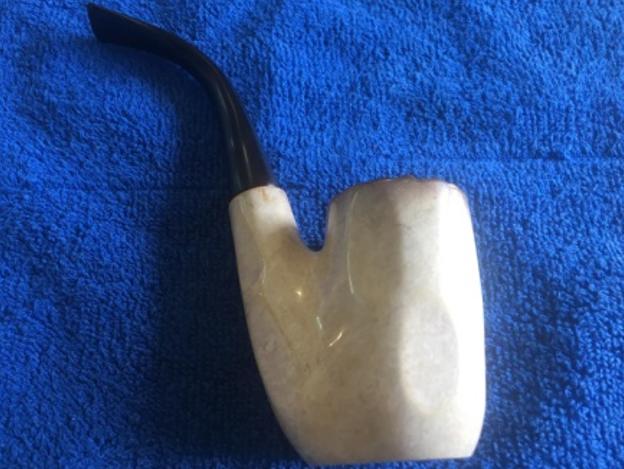
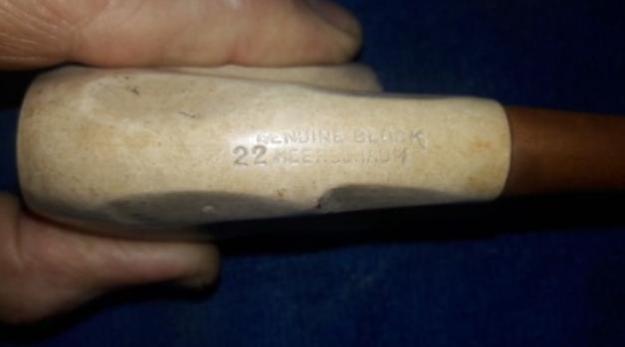
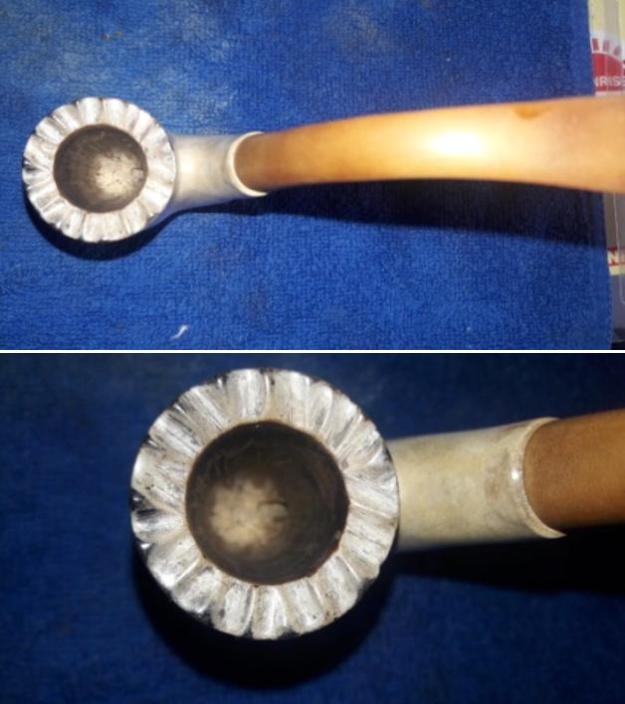
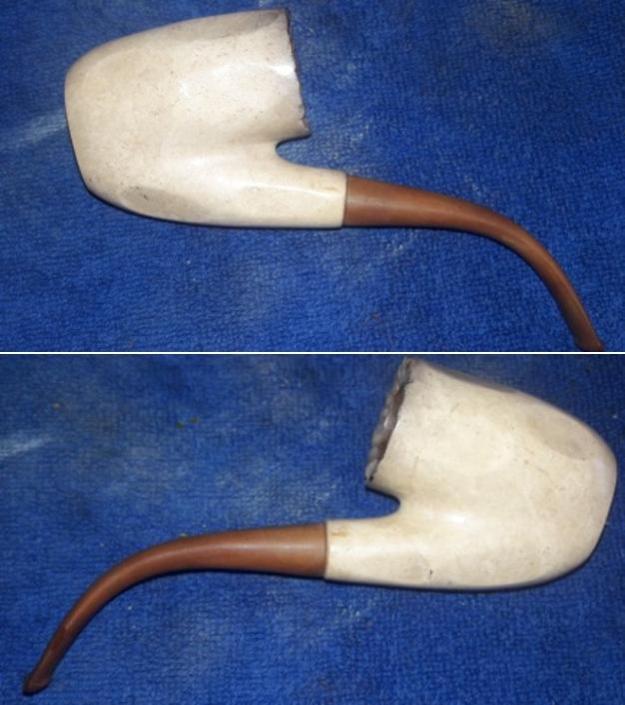
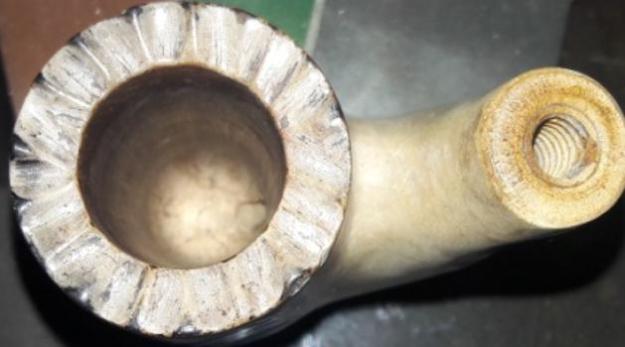
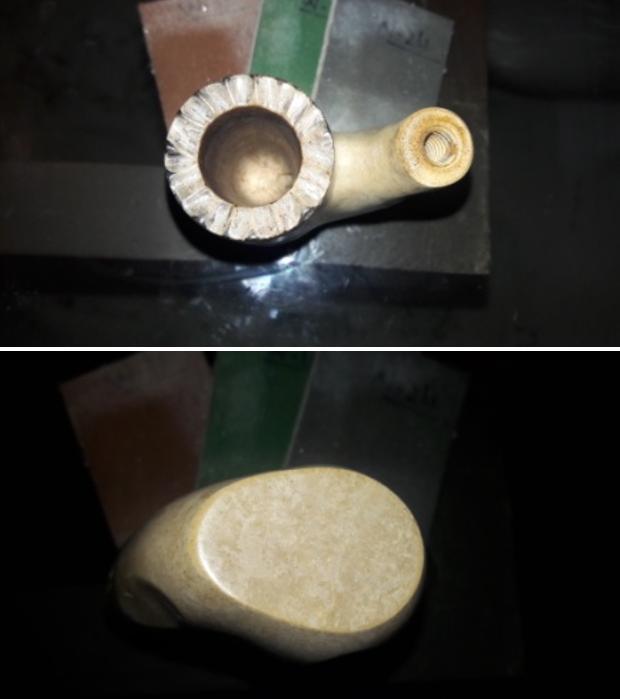
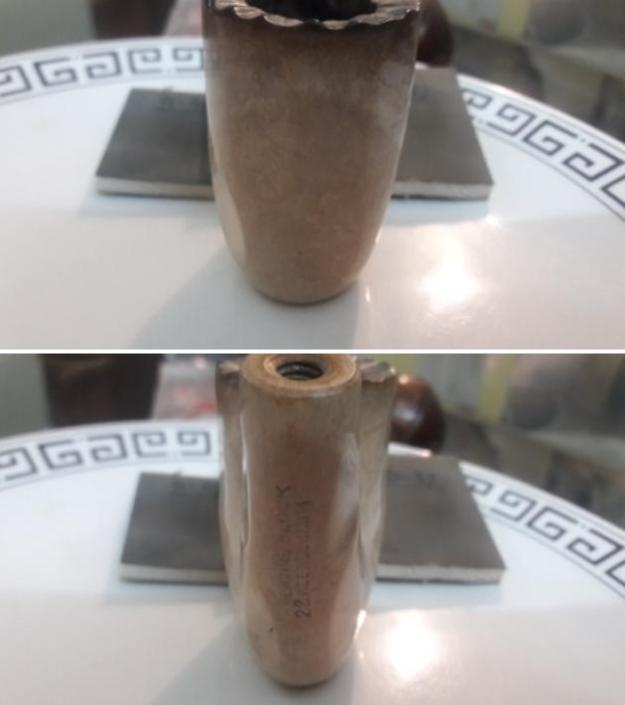
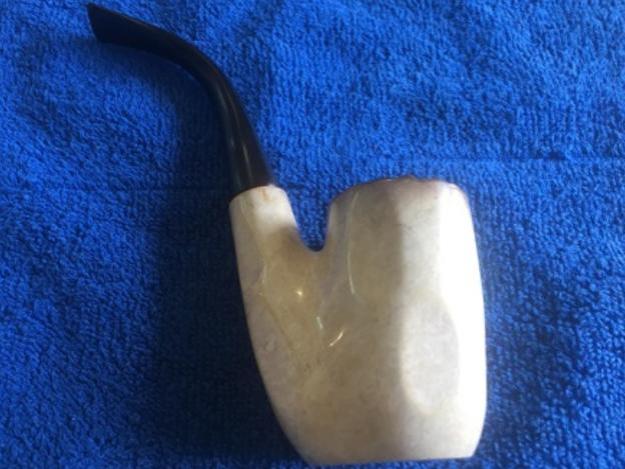
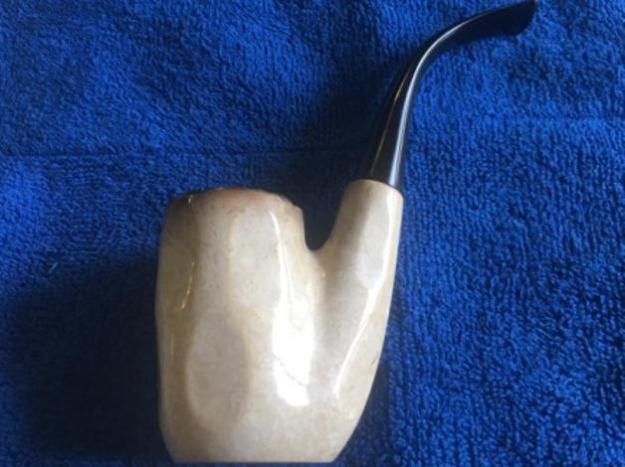
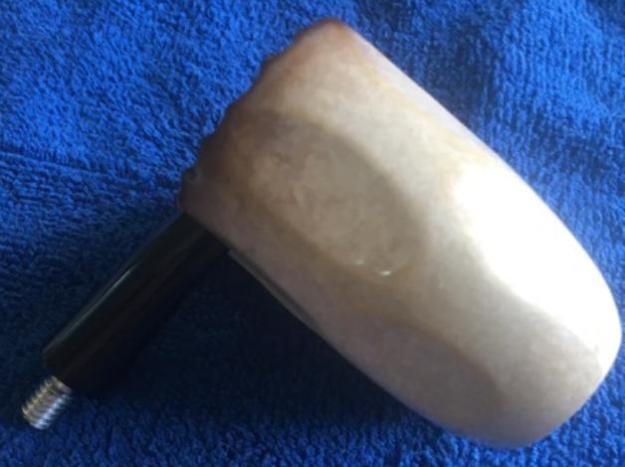
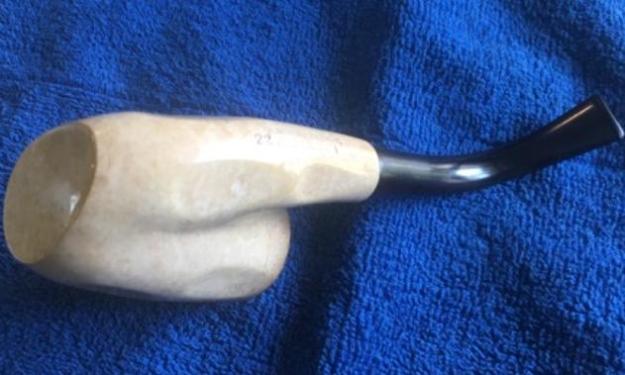
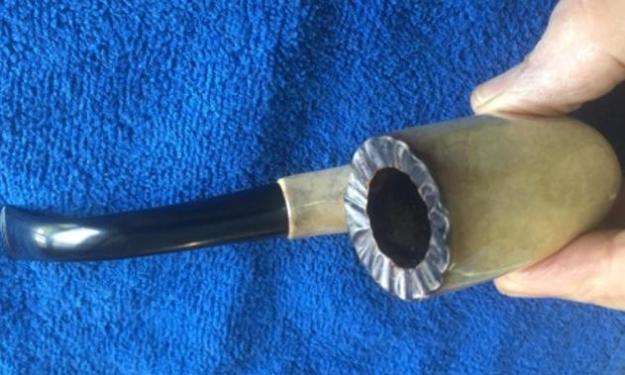
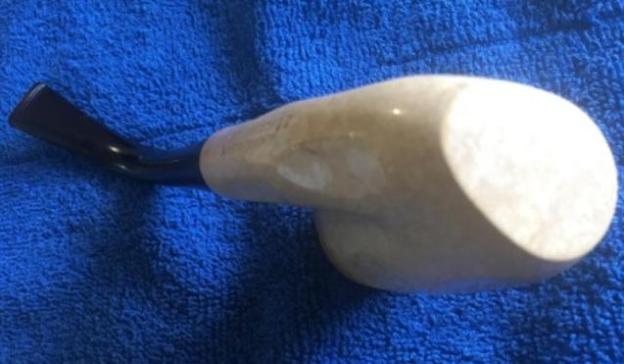
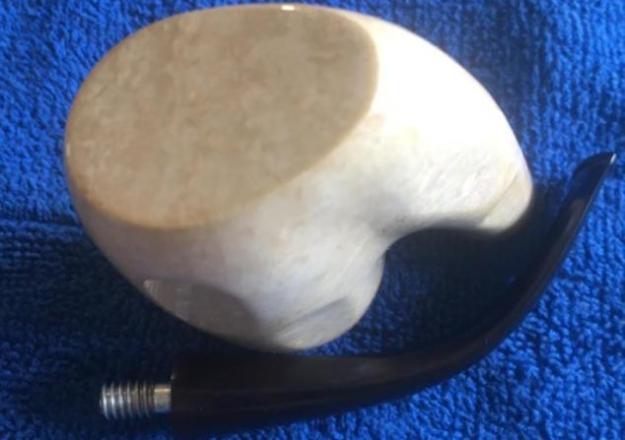
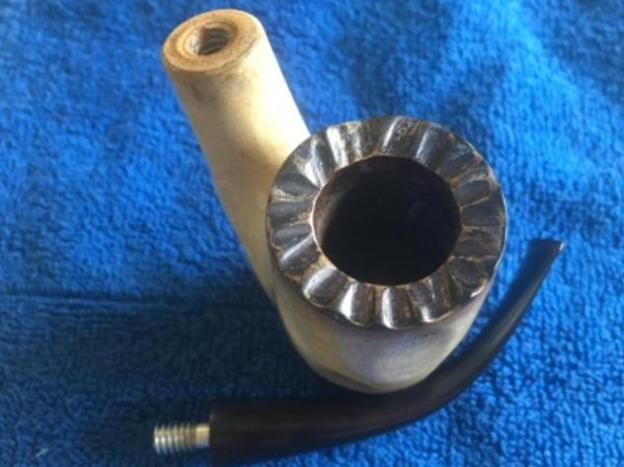
This well made pipe has a beautiful Oom Paul shape with shallow non geometrical concave panels all around. The rim top shows large and evenly serrated surface. The rim top surface appears to have been painted black which has worn out over time.  The bottom of the shank is stamped as “GENUINE BLOCK” over “MEERSCHAUM” with #22 on the left, probably the shape code. The underside of the screw-in vulcanite stem surface bears a very faint stamp of “MADE IN TAN…….IA”, could be and logically most likely is, Tanzania!!The lack of any distinguishing maker’s stamps on the bowl makes it impossible to date and comment upon this pipe. The stamping on the stem points to this pipe as being made in Tanzania, probably by Amboseli? All that I can say is that this a beautiful, well made pipe that feels nice in the hand.

INITIAL VISUAL INSPECTION
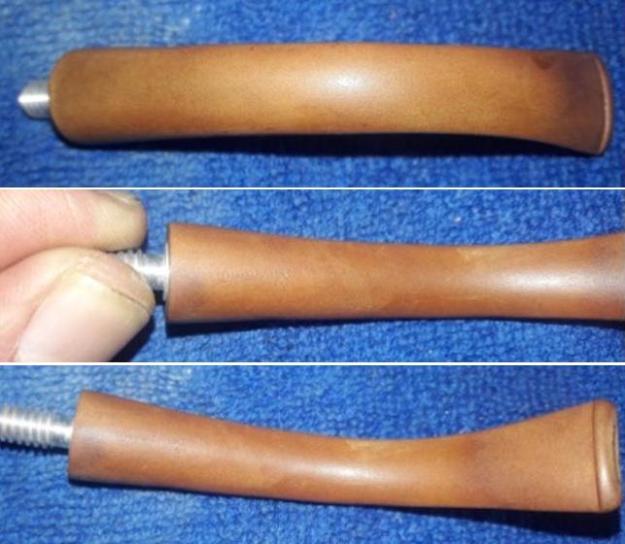
This is virtually an un-smoked pipe with no cake in the chamber. However there are a few scratches on the walls of the chamber. The serrated rim top surface and the rim edges are in pristine condition. The darkened rim top surface points it to have been painted black to provide a contrast with the white of the meerschaum and which over a period of time has been rubbed off. The draught hole is perfectly at the bottom center and should be a great smoker.The stummel surface is covered with minor scratches and one odd very minor chip commensurate with uncared storage and age (??). The stummel has yellowed at some places and appears lifeless being covered in dust and dirt. These issues should not pose any trouble while being addressed. The shank end is clean and air flow is full and smooth. Running a few pipe cleaners dipped in isopropyl alcohol should freshen up the shank internals. The main protagonist of the entire exercise is this heavily oxidized stem!! To be very honest, I have not seen a more heavily oxidized stem since the time I was introduced to the art of pipe restoration. Even the gentleman who coaxed/ cajoled me in to this wonderful world, Mr. Steve, was unanimous in his comment of this being one of the many most heavily oxidized stems that he has come across….. And he has seen many!!! The threaded metal tenon is clean and shining almost like new. The air flow through the stem is open and full. Again, one odd pipe cleaner through the stem air way should clean out any traces of dust and dirt that could have lodged itself in the stem.THE PROCESS
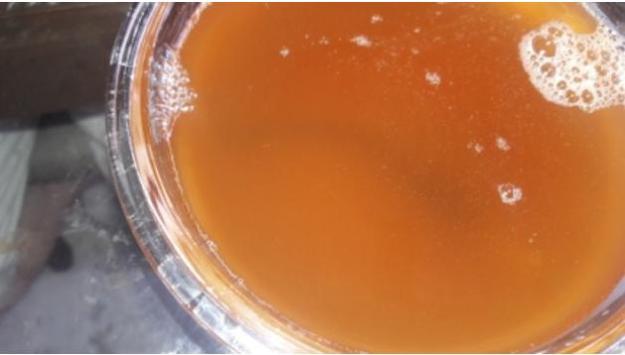
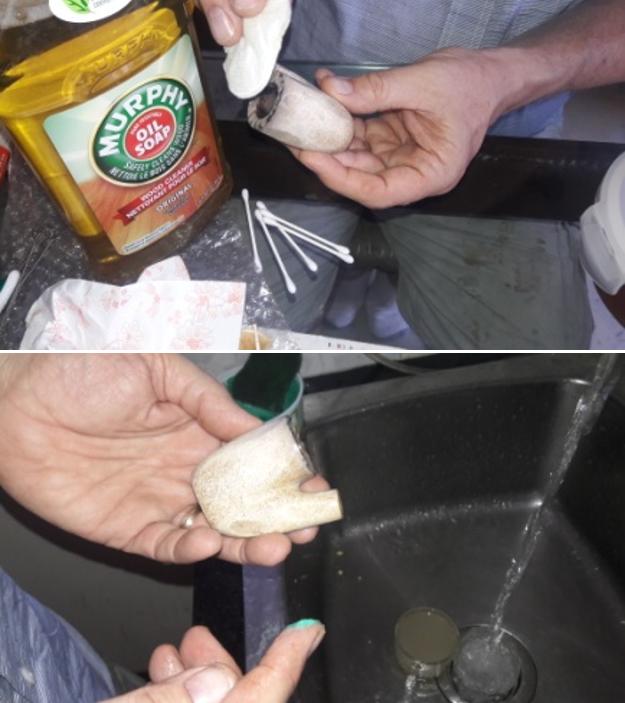
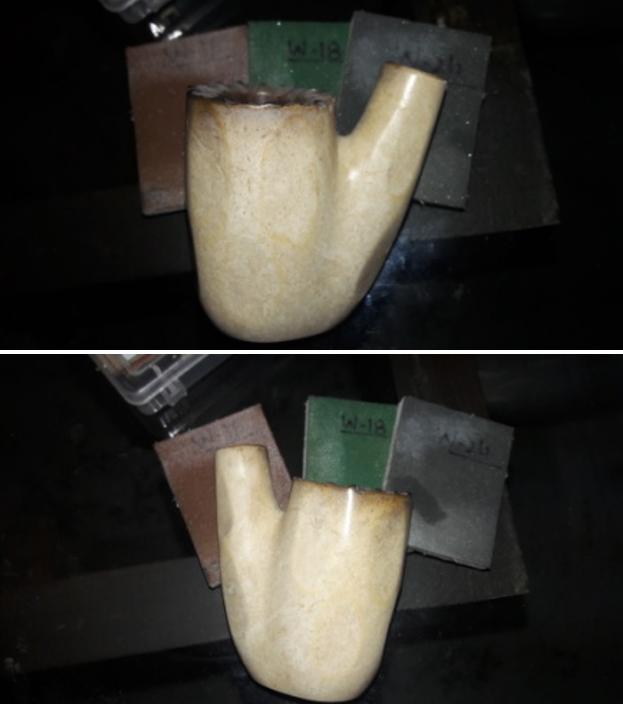
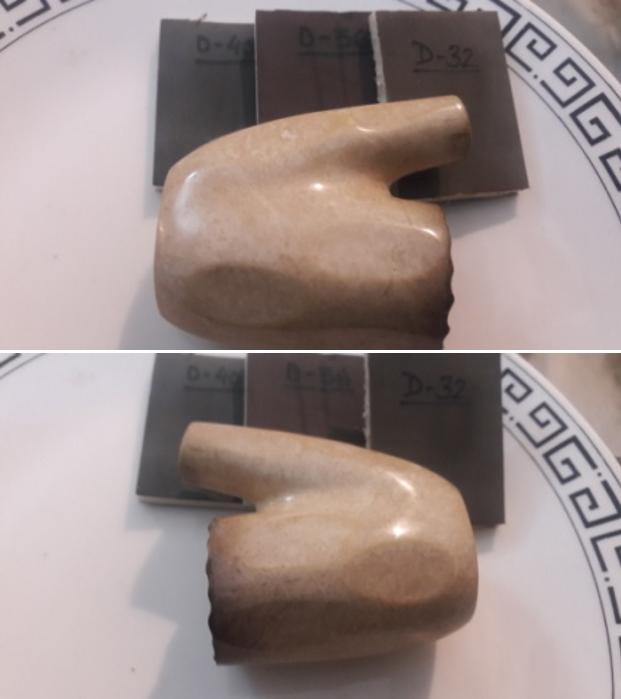
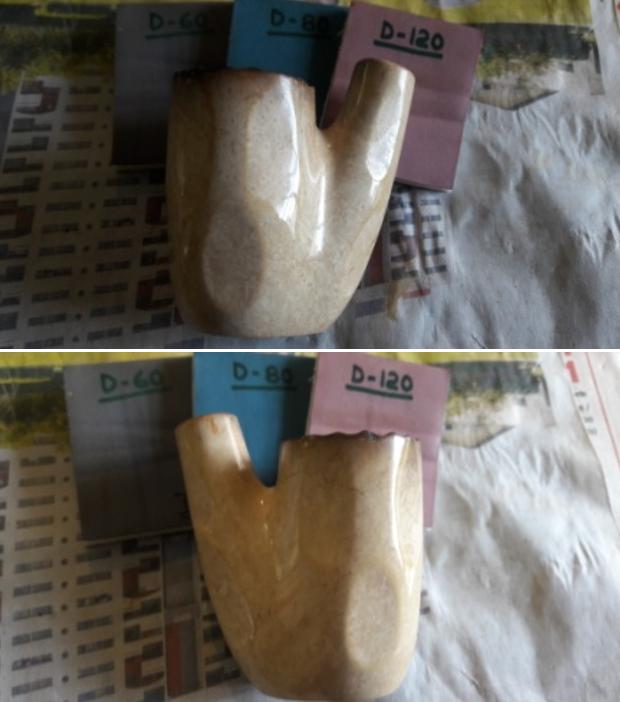
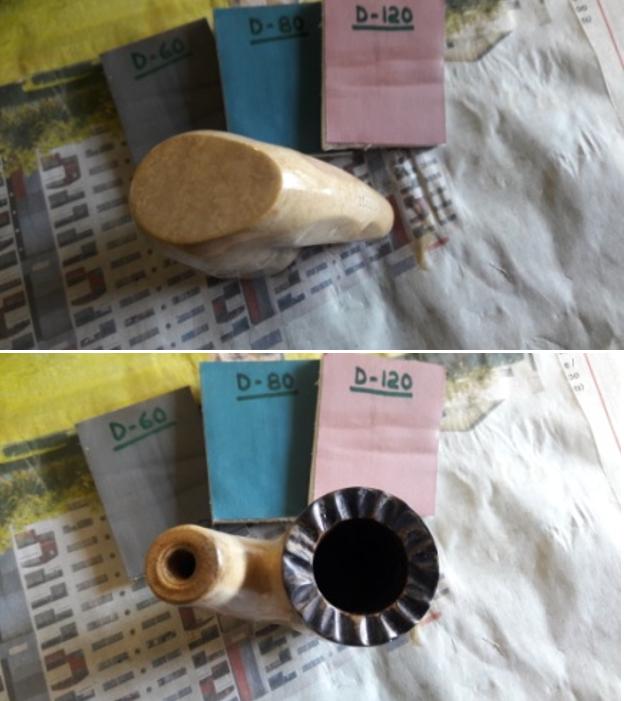
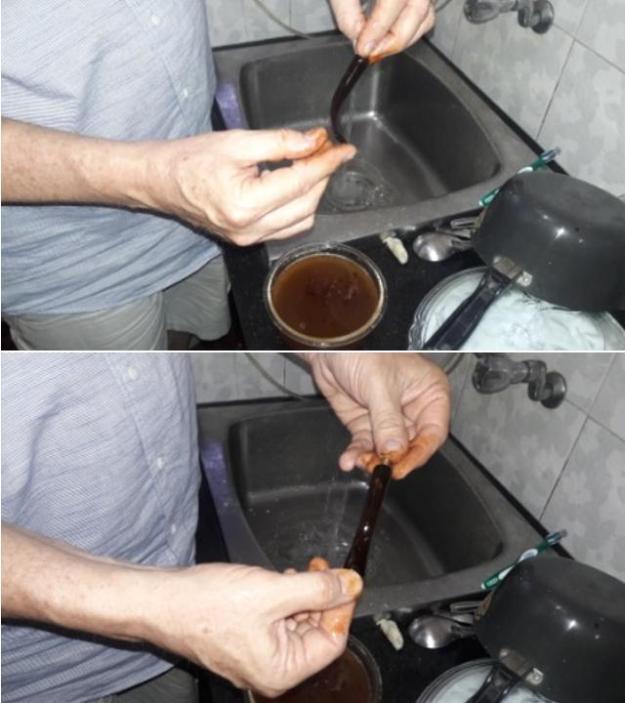
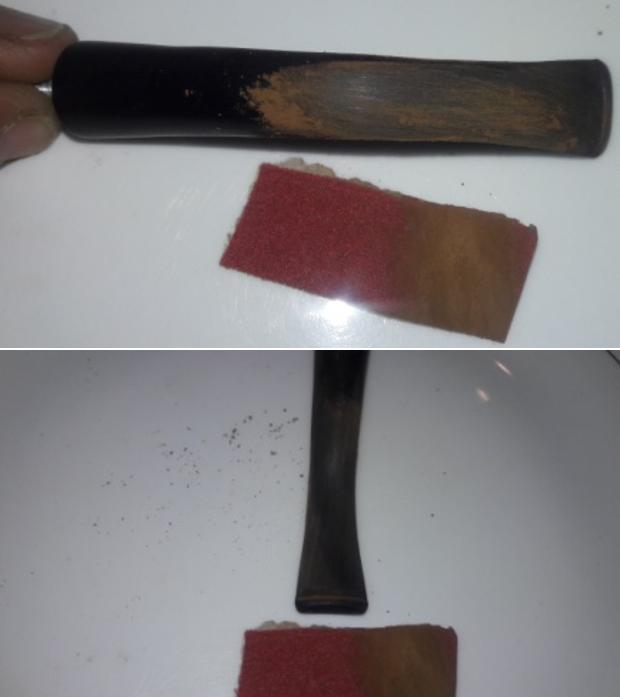
Since the aim of selecting this pipe for restoration was to check the efficacy of the “Before and After Deoxidizer” solution, this was also the start point. Jeff ran a couple of pipe cleaners dipped in isopropyl alcohol through the stem just to make sure that the air way is clean and open. Thereafter, he immersed this stem in to the deoxidizer solution and let it sit for 6 hours.While the stem was soaking in the deoxidizer solution, Pavni, my younger daughter who loves and specializes in working the chamber walls to a smooth surface, worked on the chamber walls with a folded piece of a 220 grit sand paper to a smooth and an even surface.Once Pavni was through with her work, Jeff took over further cleaning of the stummel. He began by cleaning the stummel and rim top surface with Murphy’s Oil soap on a cotton swab to remove the dust and remnants of the black coloration from the serrated rim top. He followed it up by further cleaning the stummel with a dish washer paste on his finger tip till all the accumulated dirt and dust was removed and thoroughly rinsed it under running tap water. Jeff also cleaned the internals of the shank with q tips and pipe cleaner dipped in isopropyl alcohol. I took over from where Jeff had left and began polishing the stummel with micromesh pads, dry sanding the entire stummel with 1500 to 12000 grit pads. The stummel now has a nice smooth and shiny surface. I wiped the stummel and each pad with a soft slightly moist cloth to remove the meerschaum dust from the surface. Once I was done with the micromesh pads, Steve decided to blacken the rim top surface using a permanent black marker. Since the burning tobacco would not be in contact with the rim surface, this should have no harmful effect while the pipe is being smoked. This darkening of the rim top surface transformed the complete appearance of this Oom Paul as can be seen in the last picture.  All the while, the stem was soaking in the deoxidizer solution. At the end of this stage, we got the stem out of the solution only to find that there was not much effect on the oxidation (as can be seen from the picture below) and it was then unanimously decided to let the stem soak overnight. That decided we sat down peacefully for our Single Malt Scotch, pipe smoking and discussing pipes, tobaccos and other things in general. The best part of such times was that Dal, Steve and Jeff ensured that everyone was part of the conversation by discussing and talking on topics wherein my daughters could also participate. My daughters adore these gentlemen!!The next dawn came with the excitement of seeing the result of the fight between the deoxidizer and the stubborn stem oxidation. After a hearty breakfast, we flocked around Jeff, our undisputed expert on cleaning and in use of this solution. Jeff removed the stem from the solution, washed it under running water, blew through the stem to remove any solution that had entered in the stem air way and rigorously cleaned it with a microfiber cloth. We all closely observed the result. Though at this stage, the stem did appear black, but the oxidation was still very much visible.Dal suggested cleaning the stem surface with Murphy’s Oil soap to see if that made any difference. We tried it without much success, though there was some improvement. Next Steve suggested to rub a small quantity of “Before and After Restoration” balm in to the stem surface. Although the stem was now completely black in appearance, we knew that underneath the blackness still lurks the ugly oxidation. We tried cleaning it with isopropyl alcohol and Fine and Extra fine stem polish (both products developed by Mark Hoover). All that has happened is that this residual oxidation was just masked. We kept wondering what is it that Mark does to the stem that they come out shining like they do just after a soak in this solution.When all other ideas and permutations/ combinations failed, I suggested the good old method of using sand paper to remove the oxidation, which incidentally was also the last resort!! This task fell on to the participant who had suggested it in the first place. So there I was, again in my familiar territory of sanding the stem with a 220 grit sand paper and following it up with 400, 600 and 800 grit papers. I followed it up with polishing the stem, going through the micromesh cycle of wet sanding with 1500 to 12000 grit pads. I rubbed a small quantity of Extra Virgin Olive oil in to the stem and set it aside for it to be absorbed by the vulcanite. To finish the pipe, Steve generously rubbed some natural Bee’s Wax in to the stummel surface and set it aside to coat the stummel surface. The prevalent heat here ensured that the wax remained melted and absorbed in the meerschaum! I mounted a clean cotton buffing wheel on to my hand held rotary tool and gave it a nice buffing. I polished the stem, applying carnauba wax with the rotary tool. The pipe, after marrying the stem and stummel looks amazing, to say the least. Have a look at it in the pictures below. The smile on Abha’s face and in her eyes made it well worth the effort and beyond. I wish to make it amply clear here that these conclusions are not laboratory results or a result of sterile and accurate experimentation processes under ideal conditions. This was just a fun filled attempt at attaining the level of finish which our friend Mr. Mark Hoover achieves by just a soak in to this solution. To summarize the findings, we all narrowed down to these followings facts: –

(a) Slight to slightly heavy stem oxidation is very effectively addressed by soaking in the solution of “Before and After Deoxidizing” solution followed by rigorous wipe with a microfiber cloth.

(b) Very heavy/ severely oxidized stem, similar to the one on this pipe, we could not completely remove the oxidation from the stem surface without resorting to invasive processes like sanding with grit papers etc. The oxidation was only masked, but not removed. However, the oxidation had loosened greatly and made further progress easy and rapid. This does save considerable time. It can be inferred that the heavily oxidized stem may be soaked twice for better results.

The outcome of all this is that this is an amazing product and will ease your work on stem. This could form a part of your “MUST HAVE” list while embarking on the journey in to world of pipe restoration.


Briars vs. Meerschaum:  Right Brain – Left Brain – I Choose the Middle Way!


Blog by Norman Skiba

I have seen this discussion and argument in the past and even in the present on various pipe smoking forums.  New threads, old threads – they are all the same.  Personally I am kind of bored with the various arguments.  I have smoked both briar and meerschaum’s pretty much from the start.  In the 60’s and 70’s there was a lot of myth about pipes, briars, tobacco, and meers.  And there still is a whole lot of myths about these various things.  Many people that contributed to this plethora of facts, and opinions, and just downright incorrect information were either ignorant of the information, ego-driven to show their pedanticism, opinionated with an enough-to-be-dangerous knowledge, and people that in this case never smoked either briars or meerschaums, or smoked briars or meerschaums that were of decent smoking Quality to even begin to make a comparison as to the briar or meerschaum discussion at a credible level of discourse.  The creation of myths and biases still continue to this very day.

As stated earlier, I have been fortunate to have smoked both briars and meerschaums pretty much from the beginning of my pipesmoking journey.  Most people, if not all of the people around me were briar smokers and briar master pipe makers.  Most probably never smoked or owned a meer, and if they did, they never smoked it enough to make an educated opinion – just an opinion.  A lot of the myths and information that I learned, and I bet, most people in similar situations have learned are biased and twisted information,  some true – some partially true, and some just off the wall in any sense of possible truth.  As neophytes – how do we know what is credible.  The blind leading the blind.

As an old guy who has been around this journey into pipes and tobacco, I have to say that I have worked hard and went broke to have 3 nice pipe collections in my life.  2 of the collections were extensive and the last in my close to the end of life is extremely modest, but exquisite.  The first 2 collections had both briars and meers, but the predominant pipes were briars. (The types and kinds of pipes are a whole ‘nother story that may be pursued in another little blurb.)  I have always loved the meers – for aesthetical reasons, smoking Qualities, and the artistic carving and coloring experience for example. (Just like the shape and finish and grain of briars) They were nice pipes and smoked wonderfully.  I did notice a difference, yet I could not at the time explain it as such.  Again being surrounded by briar people I may have had some slant on that – i.e. an opinion or observations of this briar vs. meerschaum dynamic of the smoking Qualities that they offered.  This last tiny collection is predominantly meerschaum at the moment – 4 meers and 2 briars (I may get 1 more briar in the future due to my love of pipes and the briar made by a deceased famous pipemaker.)  But that would still make:  meer 4 and briar 3.  I have understood late in life during my sannyasin period as espoused in Hinduism, that 5 pipes are nice – 6 – 7 OK – and No More.  Now you may ask – ‘Why do you go from 5 – 6 or 7 pipes?’  Due to my love of Latakia and a wife who has asthma – I am forced to have to smoke outside and when raining or cold/very cold in my cold small shed.  I need some briars to smoke in the freezing cold where meers are technically possible to crack or shatter so the need for an extra briar or two.  I must say that the briars that I do have are wonderful pipes and wonderful smokers so I love them and do smoke them in the summer too.  Even if I lived in Bali where the weather is pleasant all year, I still would own my briars.  I love wood and I love grain.  But I have fallen deeply, in my old age like never before, for the White Goddess!  I have always had, and smoked, and loved meers; so this is nothing new; however, the Passion is just so Intense at this stage I cannot explain.  The meers I am smoking more during the summer/warmer weather because I love smoking them, and not just because of the weather.  Today for example, I had 3 bowls in the morning in a meer and later on when I took a break after working all morning outside, I smoked an old relatively conservative Preben Holm.  It was wonderful.  There is a difference, in a sense, in the briar experience and meer.  I have struggled to define it for decades and I just cannot.  However, the difference is not ‘a one is good and the other bad’ sort of difference that one thinks exists.  Maybe the term is characteristic(s)?  Maybe it will always be elusive and not definable.  It is so abstract – yet one knows it when it is understood/experienced.  It may just not be graspable in an ideational way or in word play.  It just must be experienced and appreciated each for what they have to offer.

In a post I made on an old thread on a forum recently regarding the briar vs. meer argument (edited and expanded here):

I do say that the meers do smoke drier and cleaner in many respects. I have had some meers that were sweet as in smooth and easy to smoke and enjoy and a few that were maybe a bit brutal if that be the word. Some had a warmth and a dimensionality to the smoke and the taste. I have had some briars that were – yech!  I have also had some briars that have that warmth that I mentioned for the meers.  Again – maybe the meers take a few bowls of a tobacco when new to achieve a warmth that is inherent in it – the pipe itself.  Even briars need to be broken in as such.  Again, each pipe, whether briar or meer can be special or a loser. I find the more I smoke the meers and they develop and are good in their way – the warmth and the taste of the tobacco opens up and improves tremendously.  Funny – similar analogies to briars.  No real answers here, just observations.  It boils down to a good pipe is a good pipe and one that isn’t may not ever be!  Briar and meer!

I choose the Middle Way of Buddhism.  Briar AND Meer.  Enjoy!


Flow Dynamics in Meerschaum Coloring – A Theory


Blog by Fred Bass

Here is another reflective piece by Fred Bass that I had in the files saved on my computer. I think it is time to resurrect this discussion. Anyone with contributions, thoughts or comments please note them below… thanks. – Steve

I’ve been giving some thought to the issues of flow dynamics as they relate to Meerschaum coloring. With little else but the most rudimentary exposure to scientific thought on flow principles long ago, my grasp of this concept is weak. Still, it seems a topic of interest to both myself and others. I offer these thoughts in the hopes that others will take some interest. The combination of burning tobacco and beeswax cause Meerschaums to color over time. OK, so what’s going on? It seems that heat will cause the wax to migrate into the Block. Continued heating/cooling cycles will cause the wax to migrate in a progressive manner, but at some point, the wax evaporates. This process works like a wick to the by-products of tobacco combustion and draws them into the Block, where they accumulate, in a progressive result of color, that changes character over time. If I understand it, this is the process that results in the patina that Meerschaum smokers prize. Is this what’s going on? Do I have a cogent theory in this line of thought?

An interesting observation to add to this is that Meerschaums that have been smoked for long periods of time, without rewaxing, may not demonstrate a well developed patina. When such a Pipe is rewaxed, it will quickly display colors. Like all coloring in Meerschaums, the repetition of rewaxing in concert with smoking the Pipe, will eventually produce coloring that does not quickly fade.

I believe that I’ve addressed the path of wax dissipation. Continued heating/cooling cycles will cause the wax to migrate in a progressive manner, but at some point, the wax evaporates. This process may account for wax loss, but certainly some will also be lost to friction on the Pipe’s surface. I’ve not taken any additives that the Carver may choose to mix in with the wax or the porosity of the Block into account.

Smoke from the tobacco smoking is giving the brown color, that is certainly a factor. The heat and the moisture of the tobacco are also involved. The Pipe’s shank usually starts to color first, as it is the site of major condensation via cooling, of the tobacco being smoked.

I agree that the wax protects the outer surface of the Pipe, which is not to say that it doesn’t migrate into the Block. As I understand it, the Carver blocks off the Pipe’s draft & the bowl, so that the wax does not get into the Pipe, but this is done to avoid having the first few smokes taste like burning wax. I also agree with you about the wax not being the coloring agent for the Block, but instead, it serves to wick the by-products of the smoke along it’s migration routes. The point that has me stumped, is the quick color shown by waxing Pipes that have not been rewaxed, but have been smoked. This suggests that some part (or all) of the nicotine, tars & moisture are already in the Block from smoking, but do not display this coloring as fast, if left without rewaxing. Even if the wax’s role is to wick and protect, how does it contribute to the Pipe’s color. Your idea of the wax serving to seal the Block from loss of these smoke by-products may be a demonstration of this idea. It is an interesting puzzle.

I’ve been turning this bit of a puzzle over in my mind, as it seems that it will not let me rest. Perhaps the wax, the heat and the burning tobaccos also interact chemically. This would explain how rewaxing a Pipe, that has been smoked for a long period of time, will produce coloring with a rapid permanence more dramatically than a Pipe that has been smoked less that has been rewaxed. It is also quite possible that the Meerschaum itself plays a part in this chemical interaction. I suspect that this has all been thought of before, and tested by Carvers. Such knowledge would enable a Carver’s work to stand apart from the competition, and not likely to be widely known, as with anything in the Meerschaum trades. So much is lost to us in the guarded history of the Carver’s art. 😉

Back to Bob Kerr’s Estate – a Dunhill Bruyere 0313 Billiard


Blog by Steve Laug

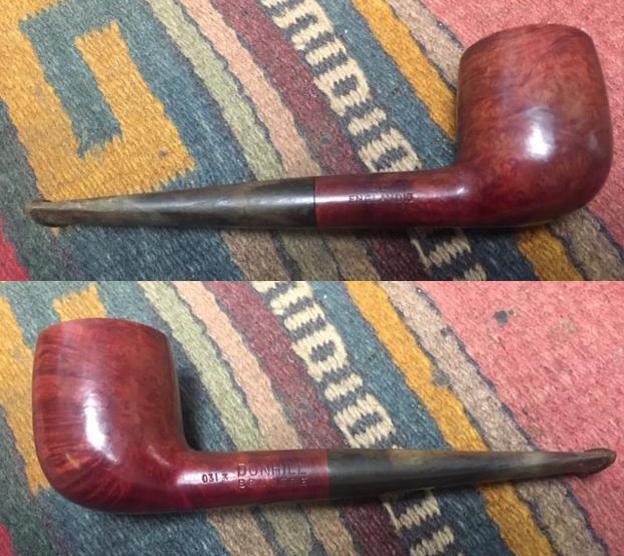
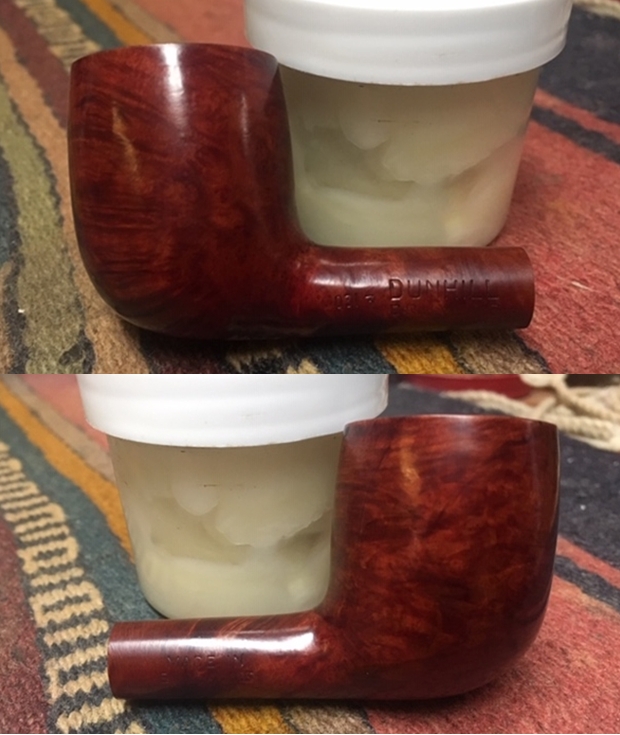
With this Dunhill Bruyere I am turning again to work on Bob Kerr’s estate. This is the third of the smooth pipes in his Dunhill Collection. I am cleaning them for the family and moving them out into the hands of pipemen and women who will carry on the trust that began with Bob and in some pipes was carried on by Bob. In the collection along with the Dunhills are a good bevy of Petersons, some Comoy’s and Barlings as well as a lot of other pipes – a total of 125 pipes along with a box of parts. This is the largest estate that I have had the opportunity to work on. I put together a spread sheet of the pipes and stampings to create an invoice. I was taking on what would take me a fair amount of time to clean up. I could not pass up the opportunity to work on these pipes though. They were just too tempting.

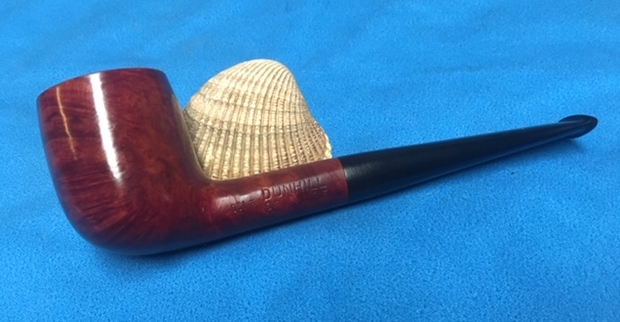
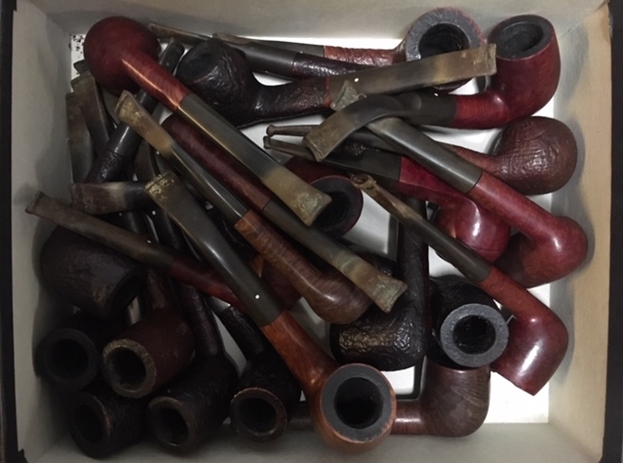
I sorted the pipes into groups of the various brands and had a box of 25 different Dunhill pipes in different shapes, styles and sizes. I decided to work on the Dunhills first. It was a great chance to see the shape variety up close and personal. The photo below shows the box of Dunhill pipes.With the completion of the restoration on this one there are only 9 more Dunhills of the original 25 left to work on – all smooth finished pipes in a variety of shapes. I went through the box of the remaining smooth Dunhills shown above and chose a beautiful little straight billiard. It is stamped 0313 followed by Dunhill over Bruyere on the left side of the shank. On the right side it is stamped Made in England 16 which means it was made in 1976. I wanted to know more about the shape stamp 0313 so I turned to Pipephil’s site for help. The link is as follows – http://pipephil.eu/logos/en/dunhill/shapes.html. From there I was able to decipher the number stamp on the pipe.

Dunhill pipes are stamped with a four digit code.

Digit 1: (from 1 to 6) denotes the size of the pipe (the group).

Digit 2: denotes the style of the mouthpiece (0,1=tapered, 2=saddle). Digit 3 and 4: denote the generic pipe shape (in yellow in the chart on top).

Example: 5102

(5 = size | 1 = tapered stem | 02 = Bent). When 5 digits occur, the meaning of the 4 first remain the same

In this case of the pipe I have in hand I believe the numbering system is actually reverse of what is spelled out above. The first two digits 03 refer to the Dunhill shape of a billiard. The second digit 1 designates the style of stem – in this case it is a tapered stem. The last number is a 3 which designates the size of the pipe – a Group 3.

Here is a summary of the information I gathered regarding the numbering on this pipe. The number 0313 breaks down as follows: the 03=straight billiard |1= tapered stem | 3= size of the pipe, a Group 3.

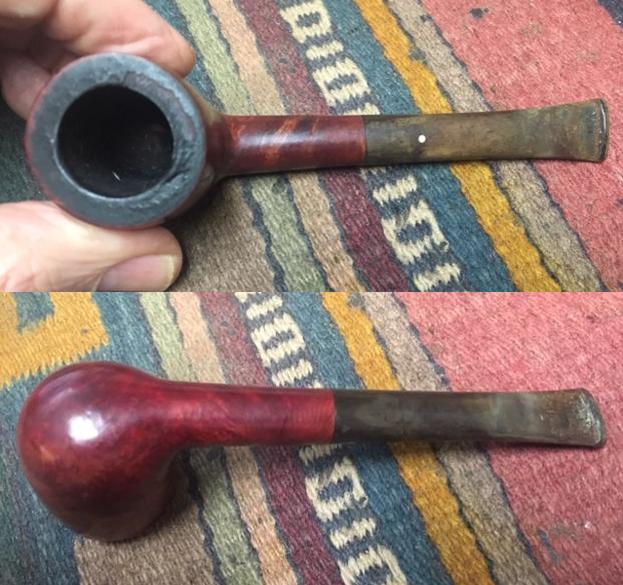
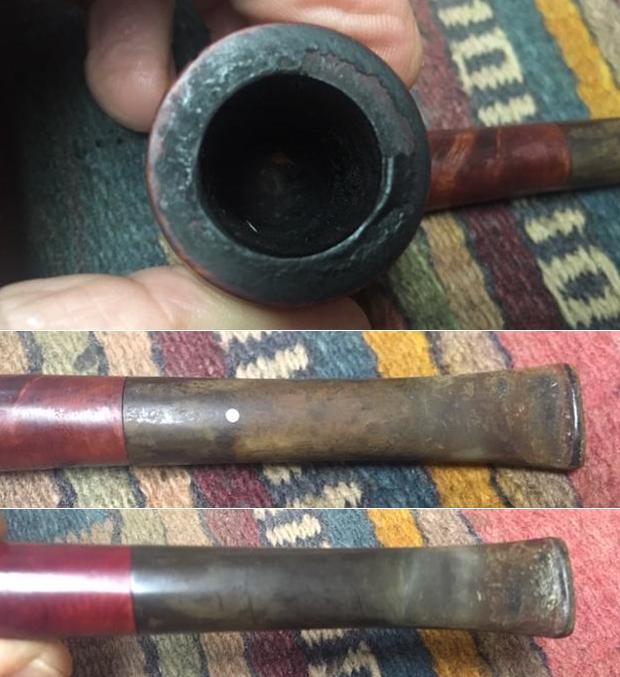
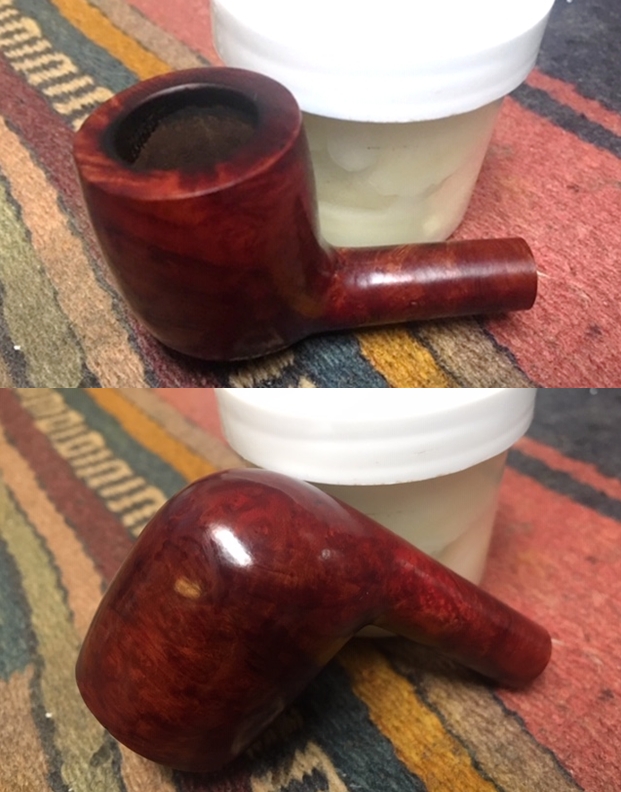
The smooth Bruyere finish is dirty and faded on the right side, but like the other pipes in Bob’s collection there is something quite beautiful about the birdseye and cross grain on the pipe. The bowl had a thick cake and thick lava overflows from the bowl onto the rim top. The stem is oxidized and has tooth marks and chatter near the button. There is some calcification on the first inch of the stem ahead of the button and there is some light damage to the top of the button. I took pictures of the pipe before I started working on it. I took some close up photos of the rim top and the stem to show what I was dealing with. This Bruyere Billiard had some serious cake in the bowl and a thick overflow of lava on the rim top. It was a real mess. It was hard to assess damage on the inner edge of the bowl due to the cake and lava. I would know more once I had reamed it and removed the lava coat. The stem was dirty, oxidized, calcified and had a lot of tooth chatter on the top and underside for about an inch ahead of the button.I took a photo of the stamping on both sides of the shank. The stamping was very sharp and readable and confirms the information above. The left side reads clearly with the shape number 0313 next to the Bruyere stamp. The stamping on the right side is clear and the D of England is followed by 16 which identifies the pipe as made in 1976.Since this is another pipe Bob’s estate I am sure that some of you have read at least some of the other restoration work that has been done on the previous pipes. You have also read what I have included about Bob Kerr, the pipeman who held these pipes in trust before I came to work on them. Also, if you have followed the blog for long you will already know that I like to include background information on the pipeman whose pipes I am restoring. For me, when I am working on an estate I really like to have a sense of the person who held the pipes in trust before I worked on them. It gives me another dimension of the restoration work. I asked Brian if he or his wife would like to write a brief biographical tribute to her father, Bob. His daughter worked on it and I received the following short write up on him and some pictures to go along with the words. Once again I thank you Brian and tell your wife thank you as well.

I am delighted to pass on these beloved pipes of my father’s. I hope each user gets many hours of contemplative pleasure as he did. I remember the aroma of tobacco in the rec room, as he put up his feet on his lazy boy. He’d be first at the paper then, no one could touch it before him. Maybe there would be a movie on with an actor smoking a pipe. He would have very definite opinions on whether the performer was a ‘real’ smoker or not, a distinction which I could never see but it would be very clear to him. He worked by day as a sales manager of a paper products company, a job he hated. What he longed for was the life of an artist, so on the weekends and sometimes mid-week evenings he would journey to his workshop and come out with wood sculptures, all of which he declared as crap but every one of them treasured by my sister and myself. Enjoy the pipes, and maybe a little of his creative spirit will enter you!

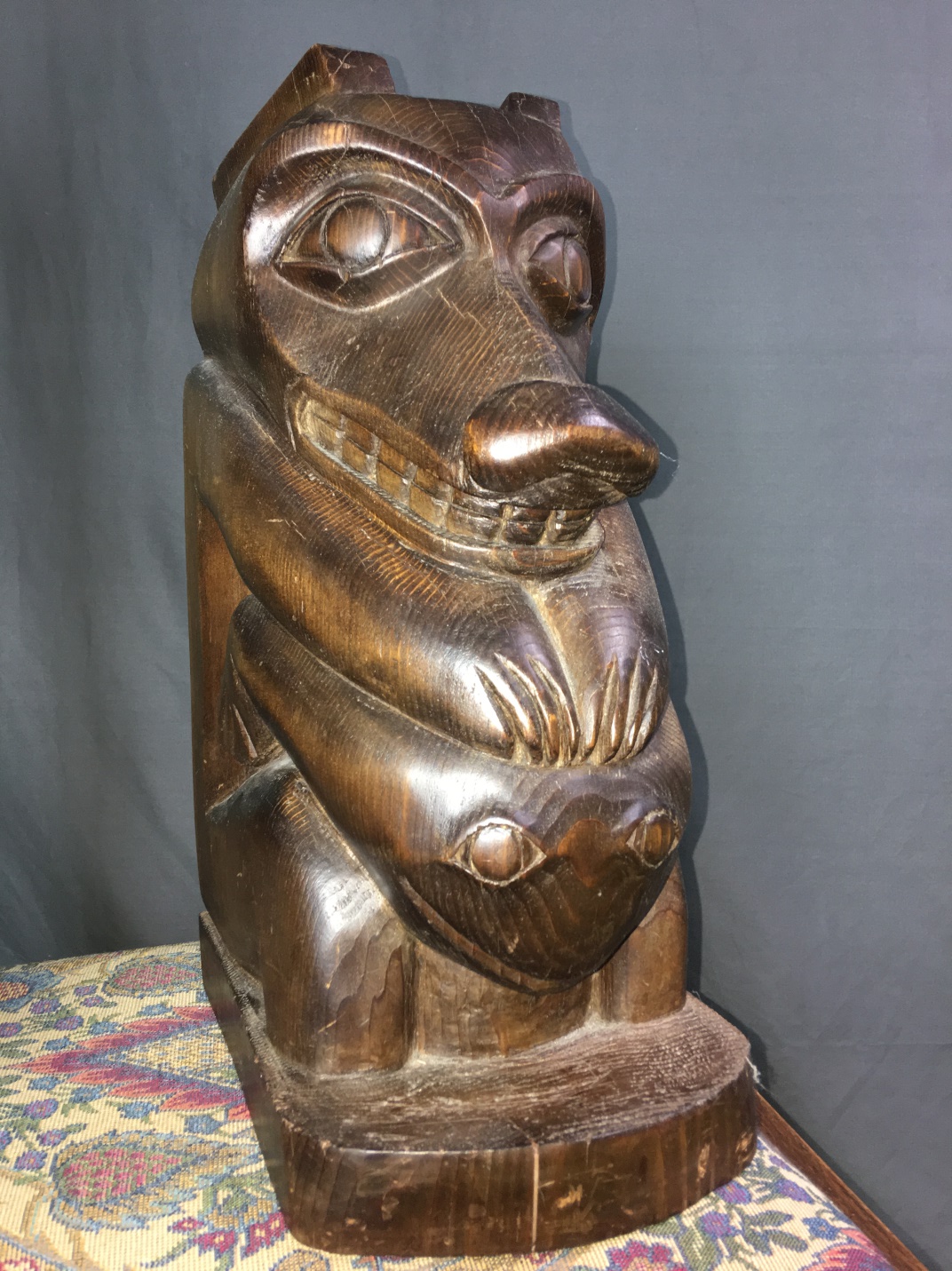
I have included a photo of one of Bob’s wood carvings to give you an idea of what he daughter wrote about above. You can see his artistry in the carving that is patterned after British Columbia’s Coastal First Nations people. To me this is a sea otter but perhaps a reader may enlighten us.

Having already worked on other pipes from Bob’s estate I think I understood how he used and viewed his pipes. I had learned to tell which pipes were his favoured ones and which were his work horses. He really loved his billiards. I could get a sense of the ones that accompanied him into his carving shop. I think this Bulldog also was one that went into the shop and I can almost imagine him reaming it out with a carving knife. In many ways it was as if he was standing over my shoulder while I cleaned up his pipes.

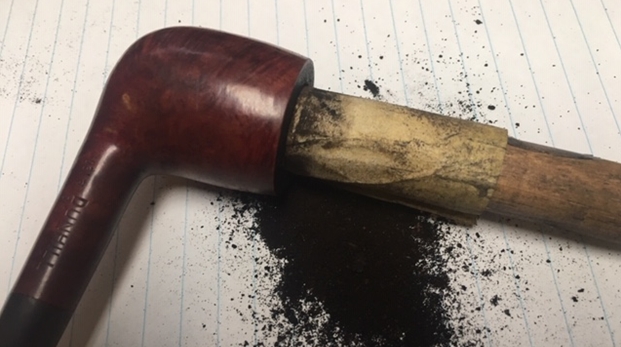
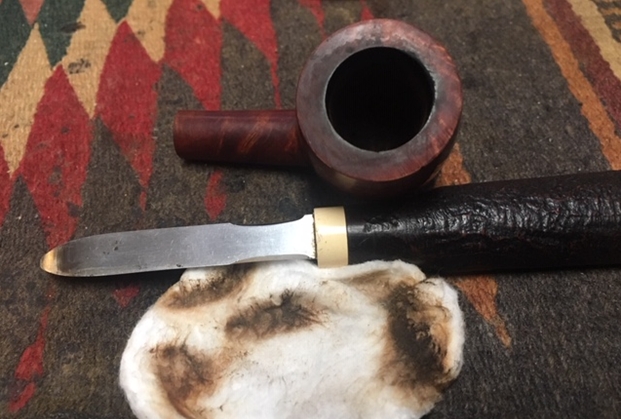
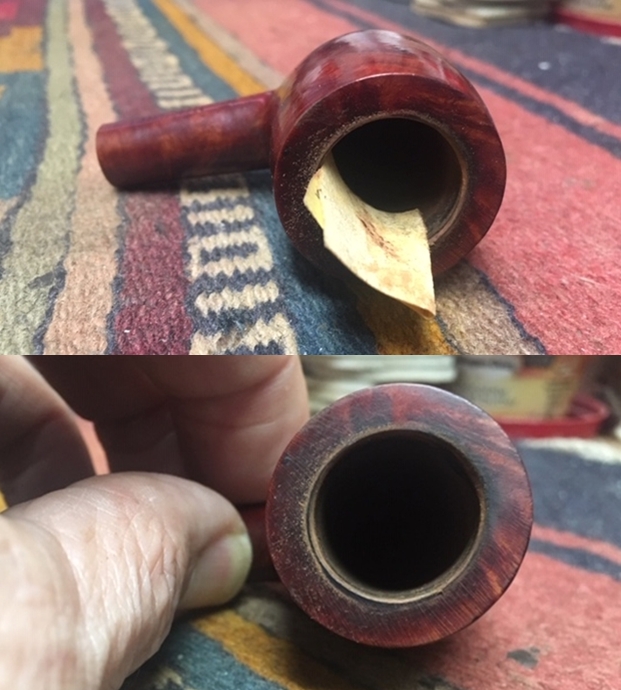
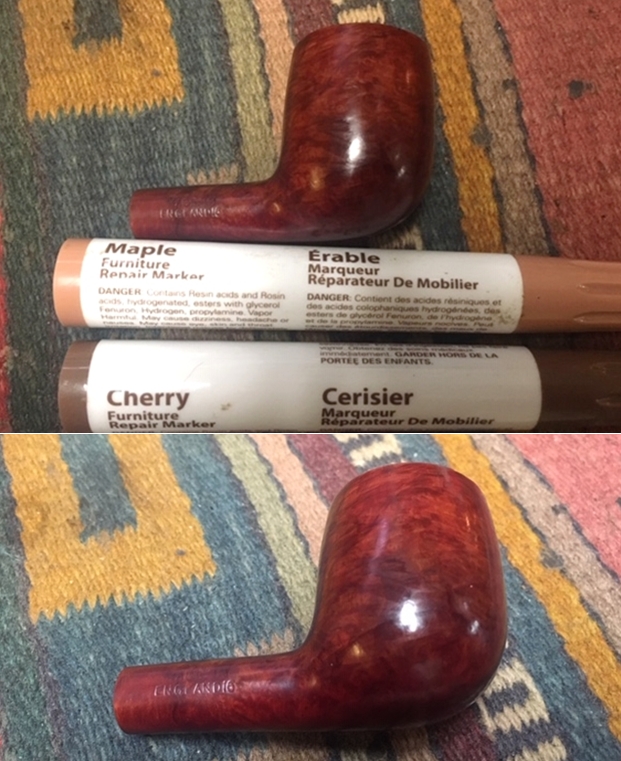
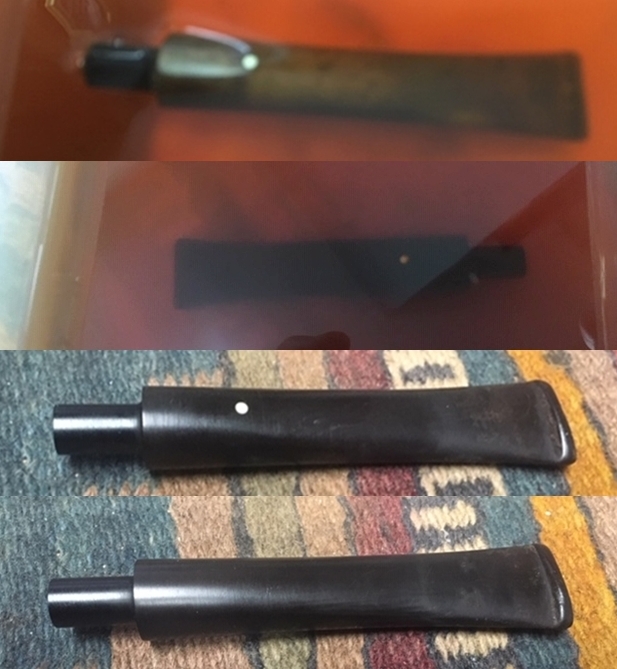
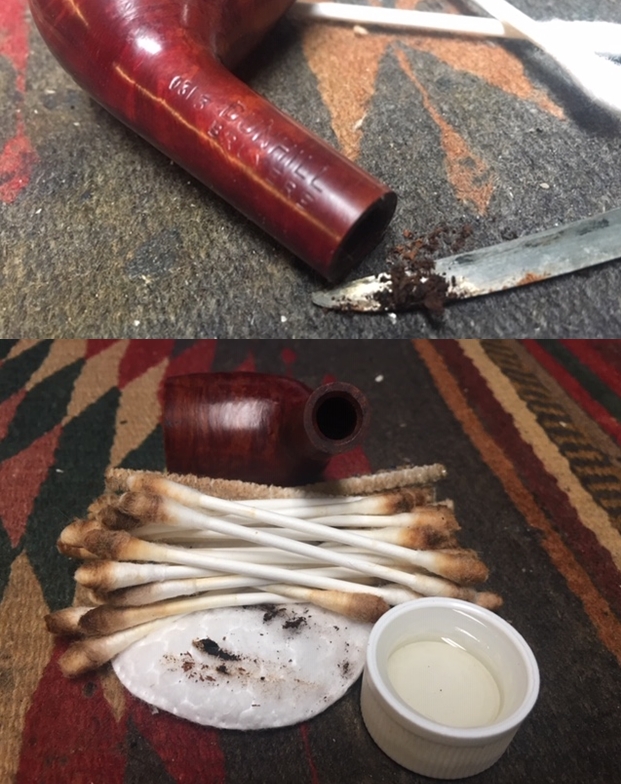
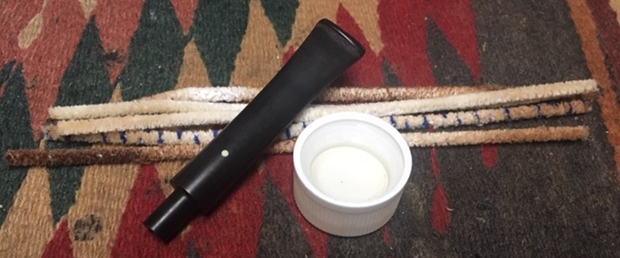
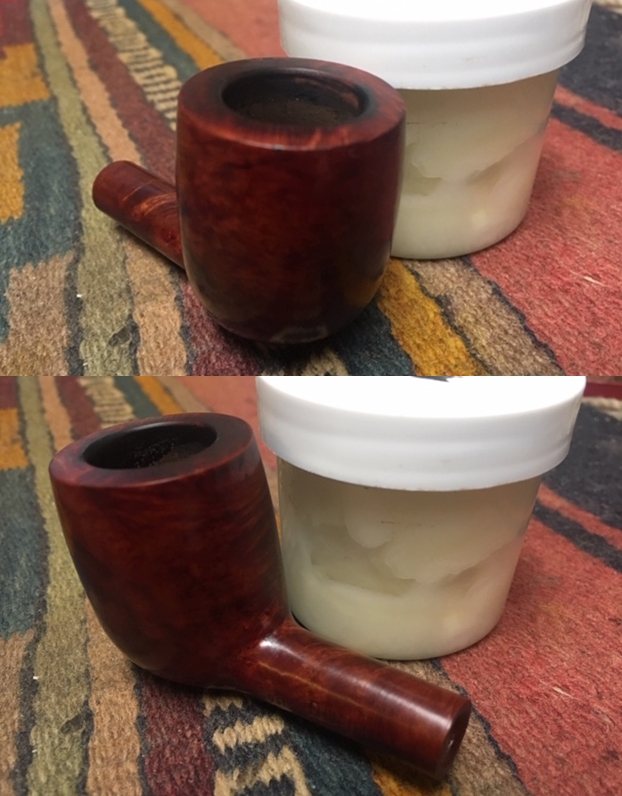
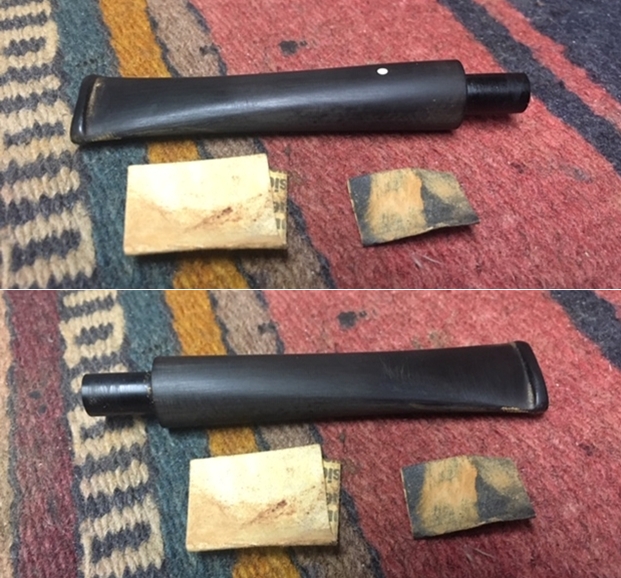
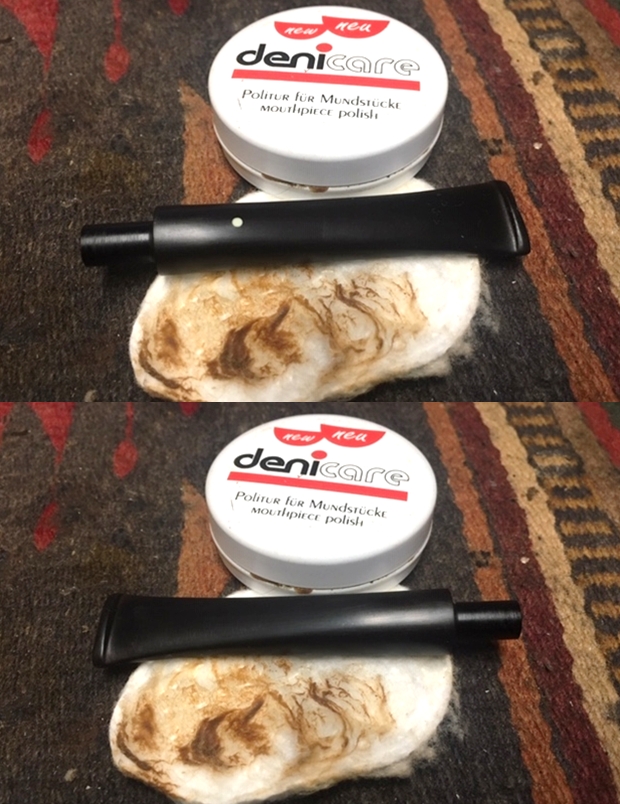
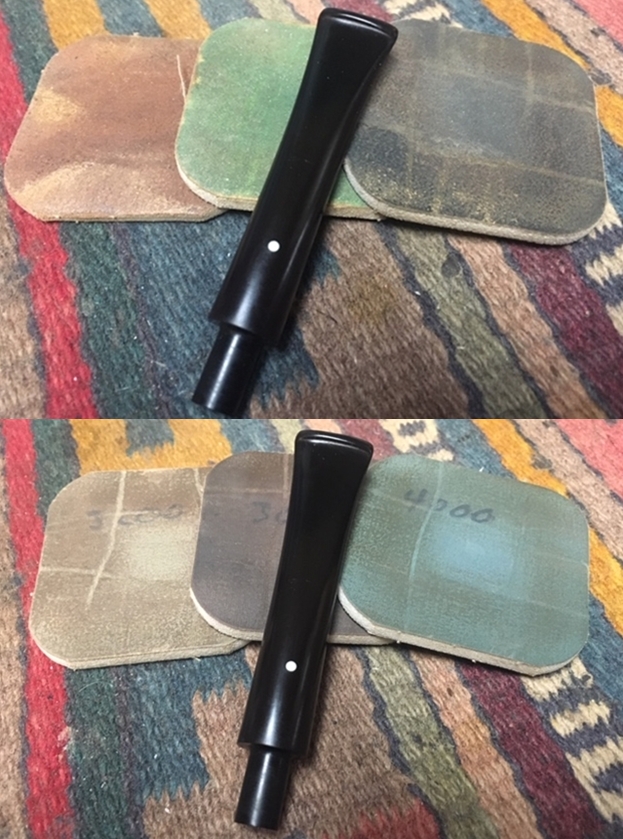
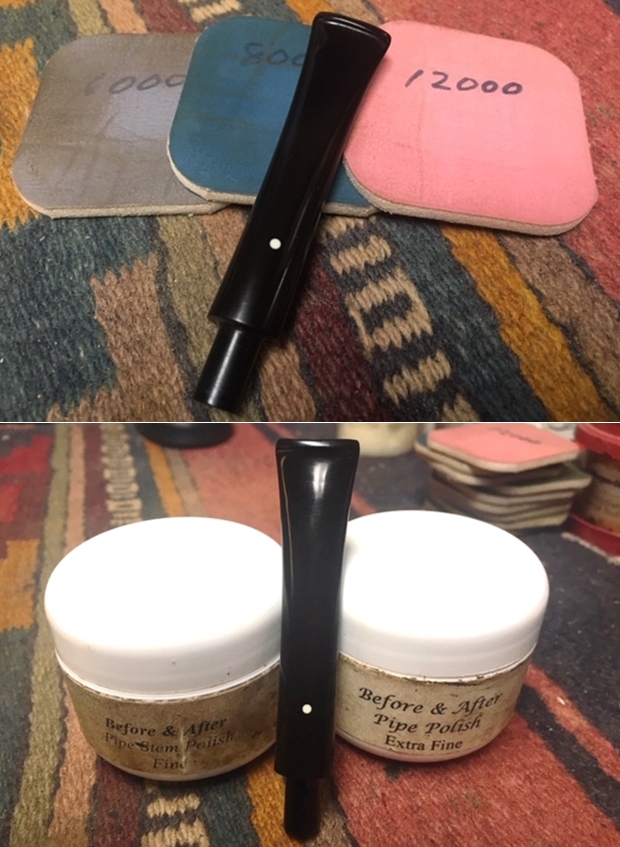
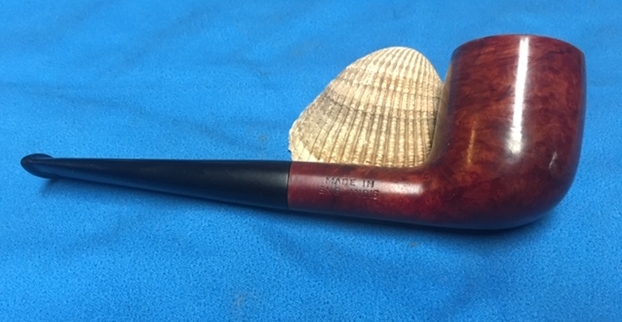
With that in mind I turned to work on this pipe. I reamed the bowl to remove the cake on the walls and the debris of tobacco shards that still remained. I used a PipNet pipe reamer with the first to cutting heads to start the process. I followed that with a Savinelli Fitsall Pipe Knife to clean up the remaining cake in the bottom portion of the bowl and near the entry of the airway into the chamber. I sanded the bowl with 220 grit sandpaper wrapped around a piece of dowel. It smooths out the walls and also cleans up any light damage to the inner edge of the bowl. I scraped the rim top and removed the thick lava coat in the rim with the edge of the Savinelli Fitsall knife. I scrubbed it down with saliva on a cotton pad until the rim top was clean. The finish was quite lifeless once I had removed the debris buildup but it looked pretty decent otherwise. I think that the lava served to protect the rim top and edges because once it was removed they looked to be in decent condition. There was some light damage to the front inner edge and a bit of darkening but overall it was in good shape.I worked over the inner edge of the bowl with a folded piece of 220 grit sandpaper to remove some of the darkening. The rim top definitely looks better than when I started the process.The stain on the right side of the bowl was quite faded and in the light showed that much of it had been rubbed off. I mixed two different stain pens (Cherry and Maple) to match to colour of the rest of the Bruyere bowl. The colour came out very well and the pipe looked fresh. I set the bowl aside to let the stain dry before buffing and polishing it. The first picture shows it after staining and the second after buffing with a microfiber cloth.I decided to address the stem that had been soaking. I had put the stem in a bath of Before & After Deoxidizer to soak overnight (Photo 1 below). When I returned home from work (Photo 2 below), I took the stem out of the bath and rinsed it with warm water to remove the solution. I blew through the stem to clean out the insides and rinsed them with water as well. I rubbed the stem dry with a microfiber cloth to remove the remnants of oxidation. I took the following photos to show the condition of the stem at this point (Photos 3 and 4 below) the difference is quite remarkable. The majority of the oxidation is gone as is the calcification. Once the externals of the stem were cleaned I turned my attention to the internals of the pipe. I scraped the mortise with a small pen knife to break up the hardened oils and tars. Once I had removed them I cleaned out the mortise and airway to the bowl and in the stem with 99% isopropyl alcohol, cotton swabs and pipe cleaners. I cleaned both until the cleaners came out white. It was a dirty pipe. With the internals cleaned I went back to the externals of the bowl. I polished the restained right side with a microfiber cloth to work the stains together to blend them into the remainder of the bowl. I worked some Before & After Restoration Balm into the finish of the bowl and the rim top. I worked it into the surface with my fingertips to clean, enliven and protect the wood. I let the balm sit for about 10 minutes and buffed it off with a soft cotton cloth. I took photos of the pipe at this point in the process to show what the bowl looked like at this point. I am happy with the blend of the stain on the right side and the overall look of the bowl at this point. Now the bowl was finished except for the final polishing. I set the bowl aside and turned my attention back to the stem. I also sanded out the tooth marks and chatter on the surface of the vulcanite with a folded piece of 220 grit sandpaper. I followed the 220 grit sandpaper with 400 grit wet dry sandpaper to minimize the scratching. The two papers combined do a great job removing the tooth chatter and remaining oxidation left behind after the stem soak. I polished the stem with Denicare Mouthpiece Polish to take out the oxidation at the button edge and on the end of the mouthpiece. I buffed the stem with a microfiber cloth. I polished out the scratches with micromesh sanding pads – wet sanding with 1500-12000 grit pads. I wiped the stem down after each sanding pad with Obsidian Oil. I polished it with Before & After Pipe Stem Polish – both Fine and Extra Fine. Once I had finished the polishing I gave it final coat of oil and set it aside to dry. I am finally on the homestretch with this pipe and I really look forward to the final look when it is put back together and polished and waxed. I put the bowl and stem back together. I polished the bowl and stem with Blue Diamond to polish out the scratches in the briar and the vulcanite. I gave the bowl and the stem multiple coats of carnauba wax. I buffed the pipe with a clean buffing pad to raise the shine. I hand buffed it with a microfiber cloth to deepen the shine. The pipe polished up pretty nicely. The cross grain and birdseye grain that show up in the polished bowl looked good with the polished black vulcanite. This 1976 Dunhill Bruyere 0313 Straight Billiard presented some challenges in the restoration process but it was a fun pipe to work on. It really has that classic Dunhill Billiard look in a Bruyere finish that catches the eye. The combination of red and black stains really makes the pipe look attractive. It is a comfortable pipe to hold in the hand and I think that as it heats with smoking that over time the finish will darken and look even better. The finished pipe is shown in the photos below. The dimensions of the pipe are Length: 5 ¼ inches, Height: 1 5/8 inches, Outside diameter of the bowl: 1 1/4 inches, Chamber diameter: ¾ of an inch. If you would like to carry on Bob’s legacy let me know by email or message on Facebook. I still have 8 more Dunhill pipes with smooth finishes – Root Briar, Bruyere etc. Perhaps one of those will catch your attention. Thanks for reading this blog and my reflections on the pipe while I worked on it. This is an interesting estate to bring back to life.