
Guest Blog by Robert M. Boughton
Member, North American Society of Pipe Collectors
http://www.naspc.org
http://www.roadrunnerpipes.com
http://about.me/boughtonrobert
Photos © the Author
“Cave ne venditor.”
“Let the seller beware.”
― From Latin, inspired by “Caveat emptor” – Let the buyer beware
INTRODUCTION
I might just as well have started this blog with former President Richard Nixon’s televised statement to 400 Associated Press editors on November 17, 1973, denying any involvement in the Watergate scandal: “Well, I’m not a crook. I’ve earned everything I’ve got.” He certainly did. But I thought the Latin reference was more appropriate to describe my fortunate acquisition of this unusual and magnificent example of a Savinelli panel pipe. After all, it’s not my fault the online seller probably thought he would get more for it. I suspect that in hindsight, he now wishes he had asked for a higher amount, perhaps as a “Buy Now” offer. I would have paid it, within reason. In fact, I went so far as to look for a charitable donation link to make up for some of the money I saved, but this seller didn’t have one.
The two aspects of this serendipitous acquisition that surprised me even more were that the other four bidders seemed not to recognize a fantastic bargain when it seemed to scream the fact at them, and that I lucked out in that no other serious collectors chanced upon the offer. The minimum asking price was $9.50. About 24 hours later, the first bidder appears to have made a max offer of $12.00 and for the moment had it for $10. Then the second entrant offered $14.50 because when I entered what I thought would be a sharply escalating war with my first $25 bid and two days left, a third-party had the beautiful pipe for $15. The second and third amateurs took the price up to $24.50 by the time I bumped my bid to $50 with 22 minutes remaining and my finger on a higher last-second bid should it have become necessary. It did not, and I won for a total of $29.45 with shipping. The vagaries of eBay bidding never cease to amaze me.
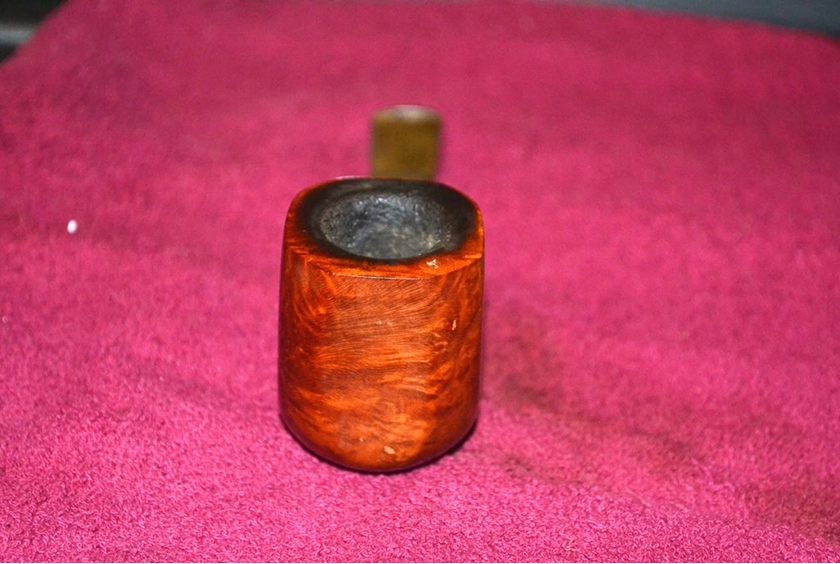
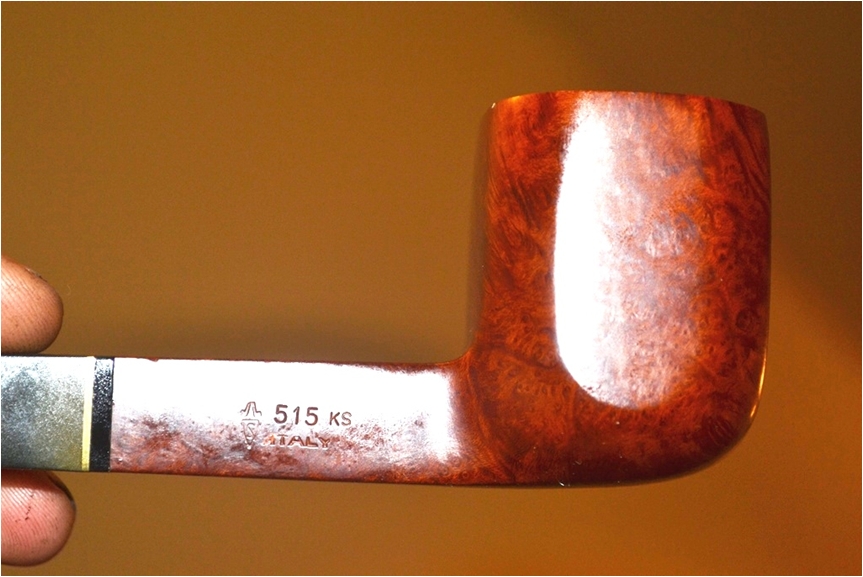
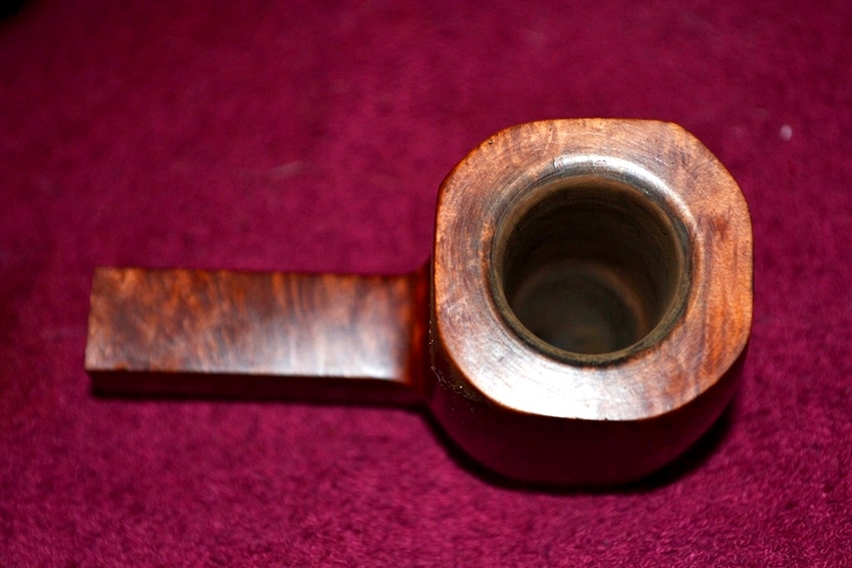
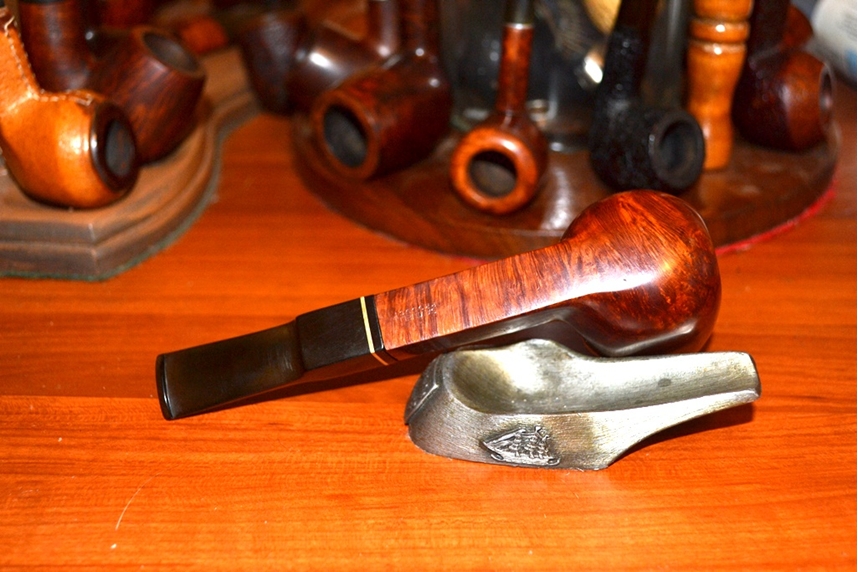
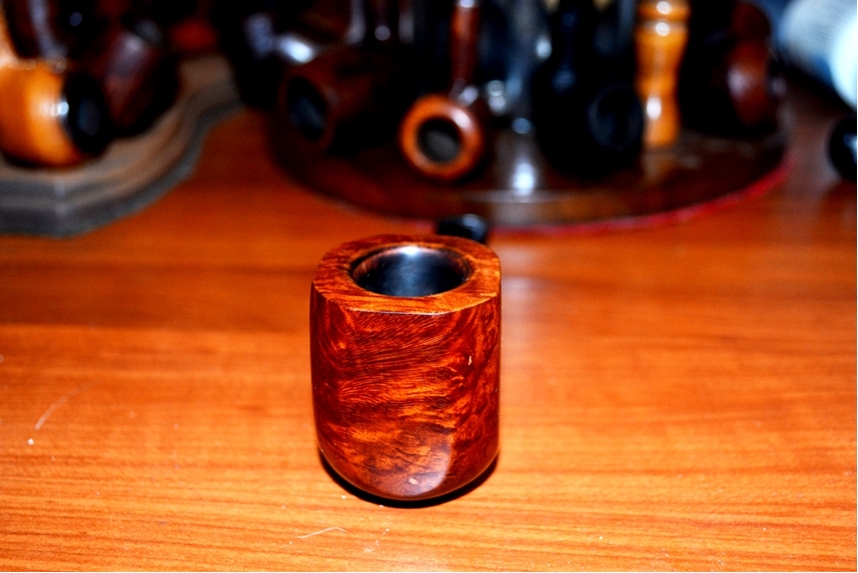
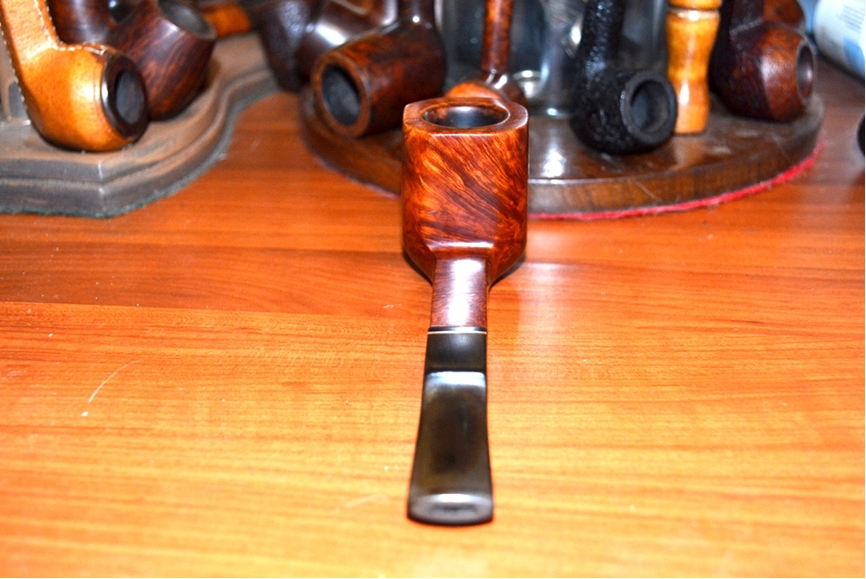
The Champagne, as with most varieties of the 515 KS shape, measures 6″ in length with a chamber diameter of ¾”x1″. The bowl is 5¼”x1¾”. The shank is a 2¼” square leading into the 2½” stem with a wide comfort bit. Check out these other versions. When the box arrived, somehow I managed to keep it unopened on the seat beside me until I reached my next destination, the best old-style tobacconist in these parts, where I almost have my own cushioned chair and a cot to sleep on in the back. Taking a seat in my favorite spot, with its view of the whole shop, I retrieved my knife from my pipe go-bag and slit through the packing tape, then peeled open the glued sides of the box. Here is what I was overjoyed to find inside.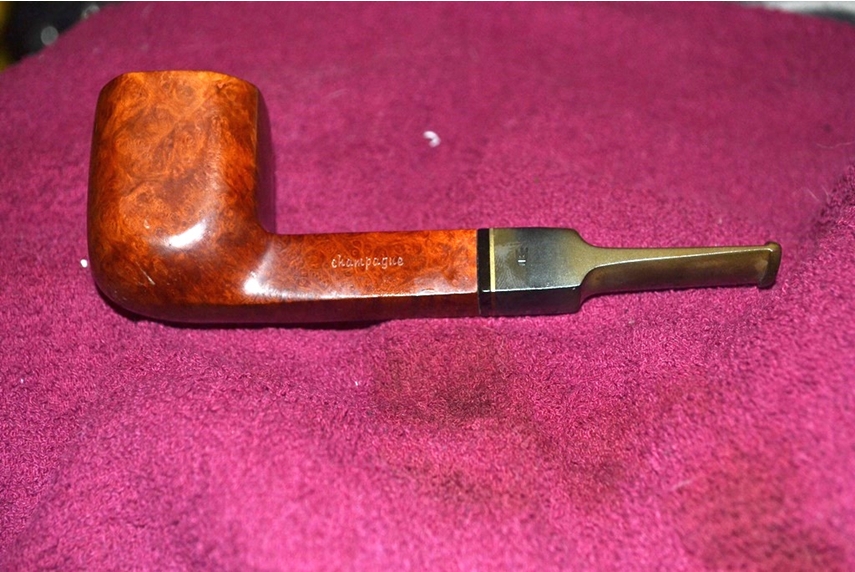
 THE RESTORATION
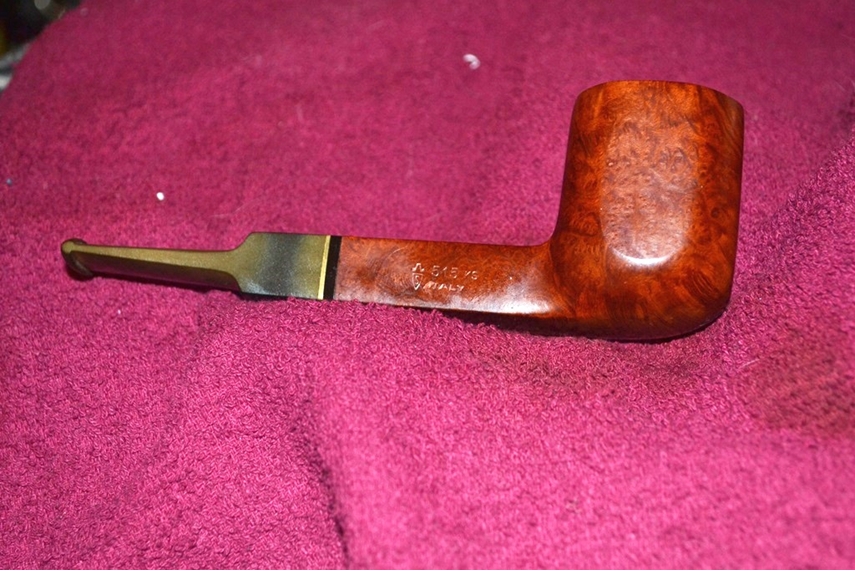
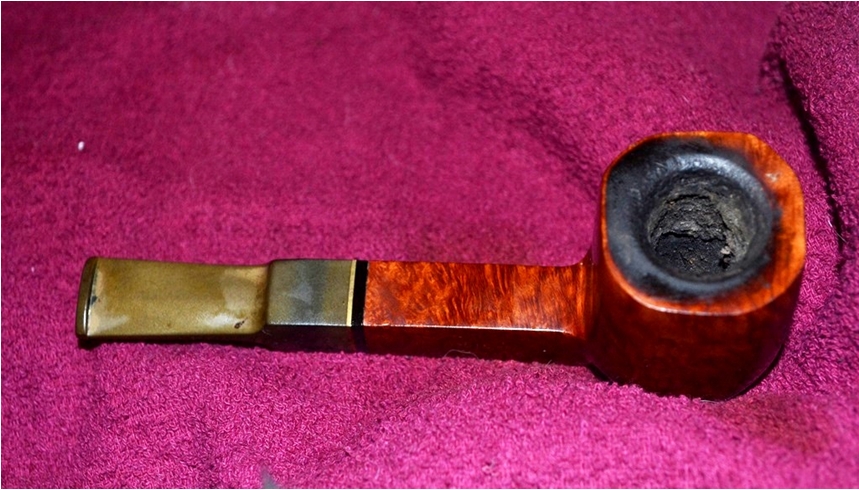
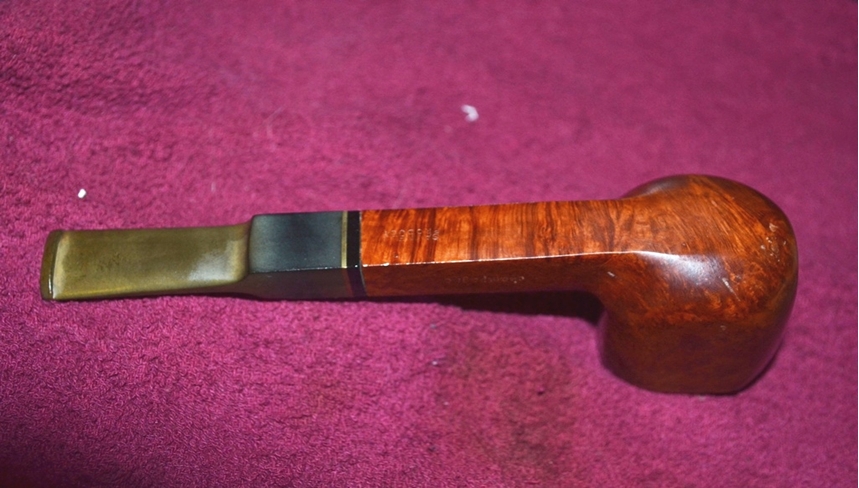
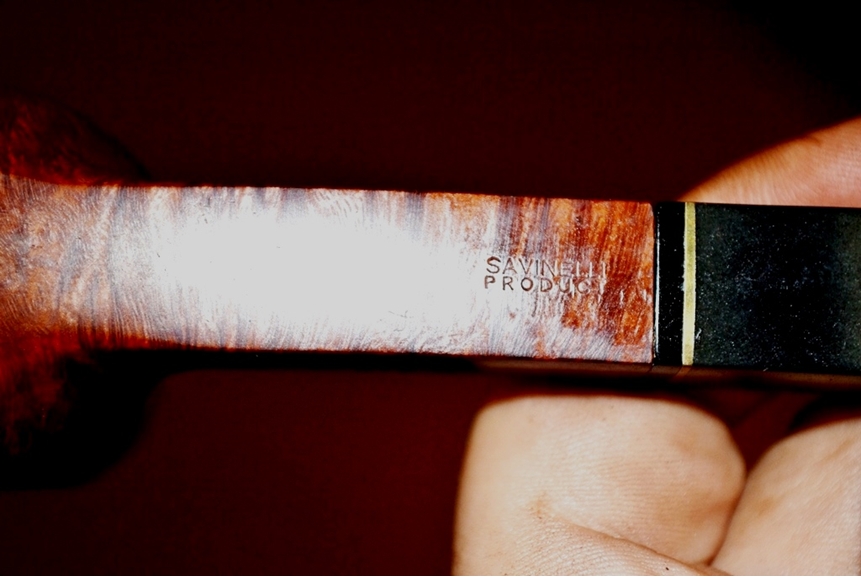
Disregarding the few minor detractions seen in some of the photos above (namely, the rim, chamber and stem), this was a restorer’s dream. The nomenclature was crystal clear through the oil and dirt of handling: Champagne on the left shank, the Savinelli shield and 515 KS above Italy on the left and Savinelli Product on the bottom. Even the full black outline of the crown was still on the stem.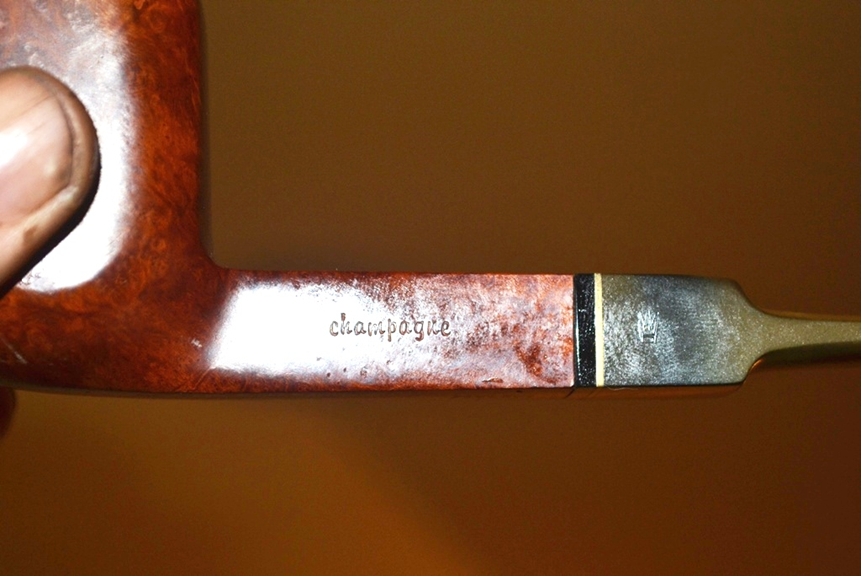
 And for the first time in my experience, the chamber was all that needed sanding, with 150-grit paper followed by 320. I put the stem in a water and OxiClean soak for a half-hour while I gave the bowl and shank a quick bath with purified water and a couple of small pieces of cotton cloth, and then prepared the rim with super fine steel wool and the chamber as described.
 Removing the stem from the wash, I ran a soft fluffy cleaner through the air hole, clearing out considerable grime. An initial concerted scrubbing of the rinsed and still wet outer stem with a soft meshed cotton rag followed by rubbing hard with a four-grade progression of micromesh from 1500-4000 removed all but a few pernicious patches of green. And so I replaced the stem in the OxiClean mix and gave it another hour. By then, a second fluffy cleaner came out almost clean, all discoloration was gone and the same micro-meshing left it ready for buffing.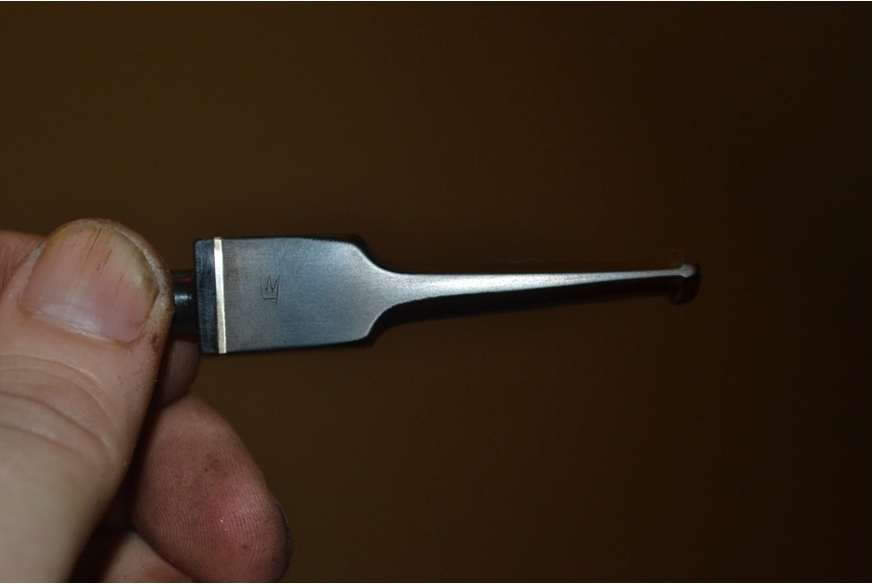
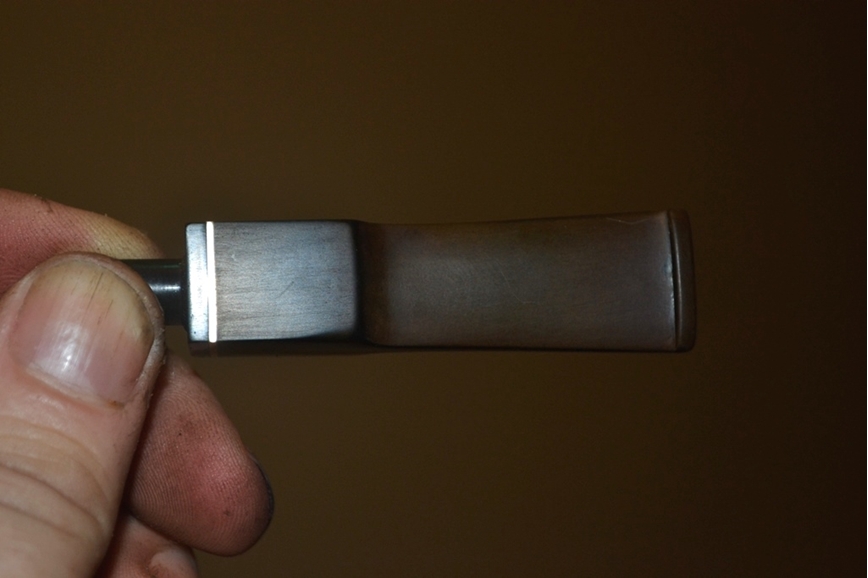
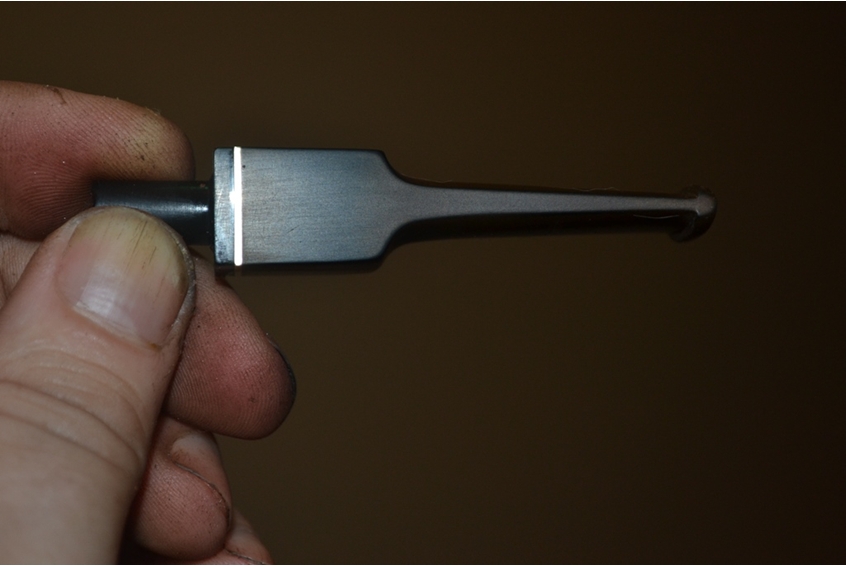
 I retorted the pipe with two Pyrex test tubes of boiled alcohol and eliminated the considerable smoke, carbon and other crud that had, over time, leached into the shank and bowl. A vigorous scrubbing of the inner shank with both ends of another fluffy cleaner pulled out the residual dark wet mess that remained after extraction from the briar; the same treatment of the chamber with hard, tight, squeaky turns of a final small piece of thin cotton cloth cleared the last bit of blackness there.
There were very fine scratches all around the panels of the pipe, but they were so minuscule that they all but vanished with steady, even, up-and-down strokes of 1500 and 3200 micromesh, and dissipated to a nice gloss with the final buffs of 3600 and 4000.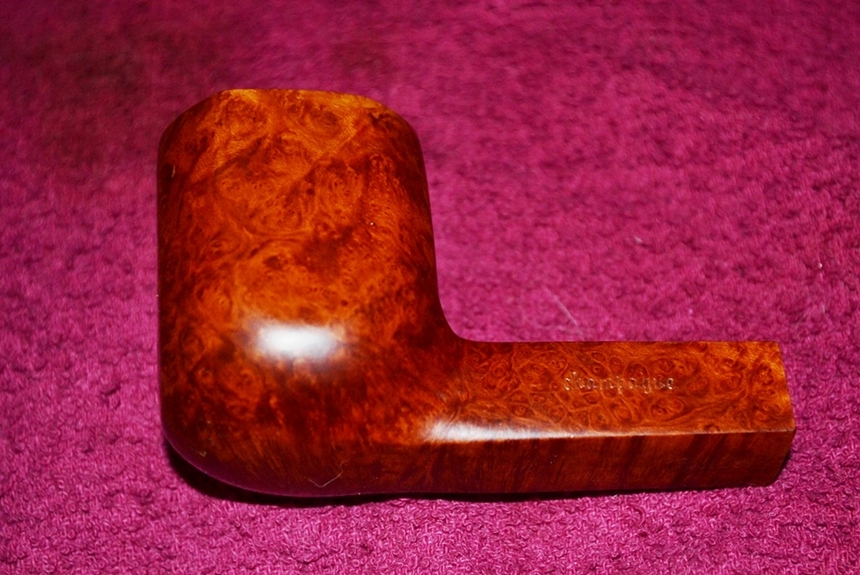
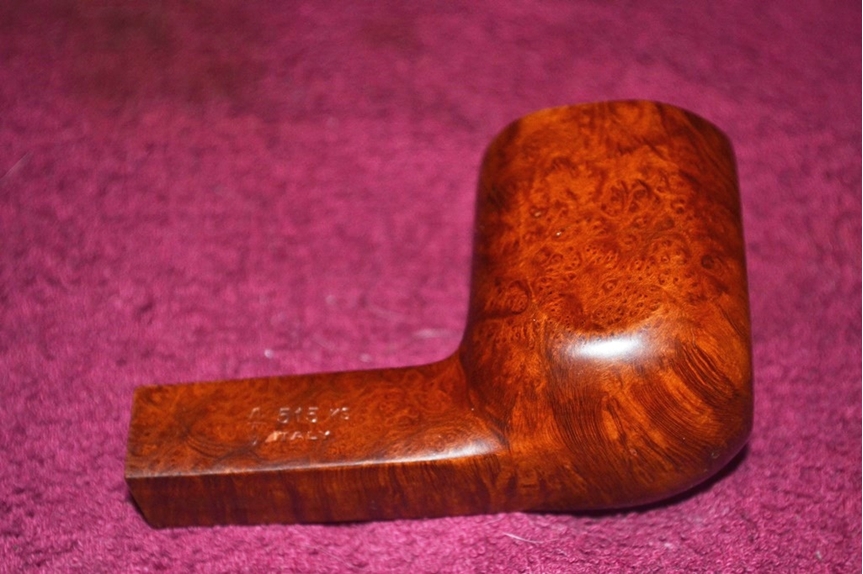
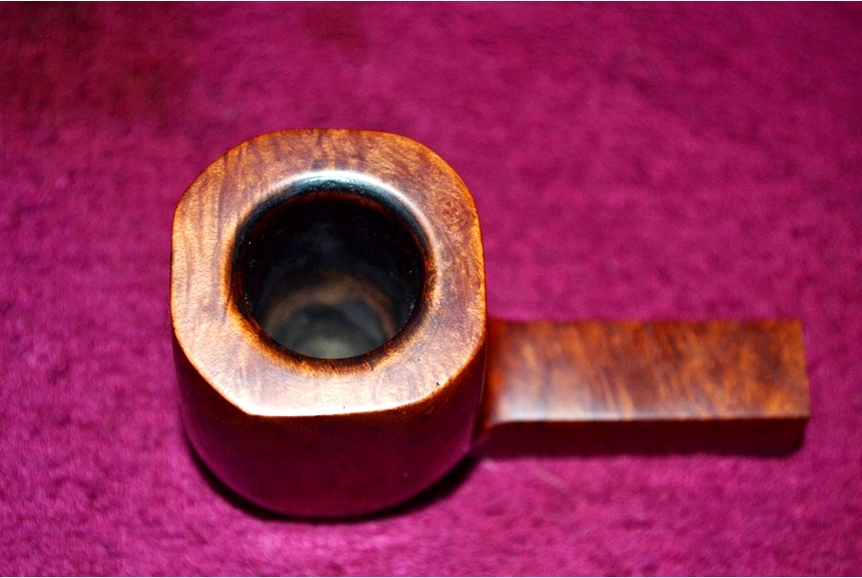
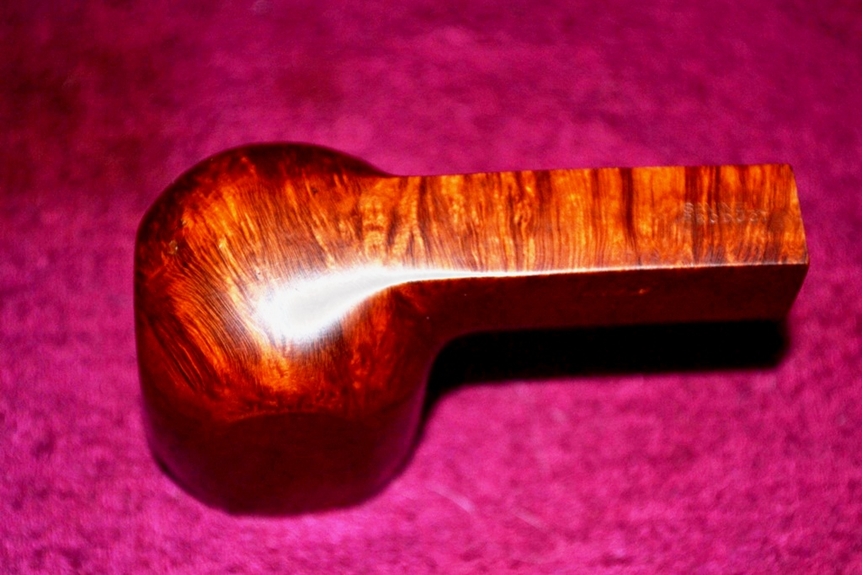
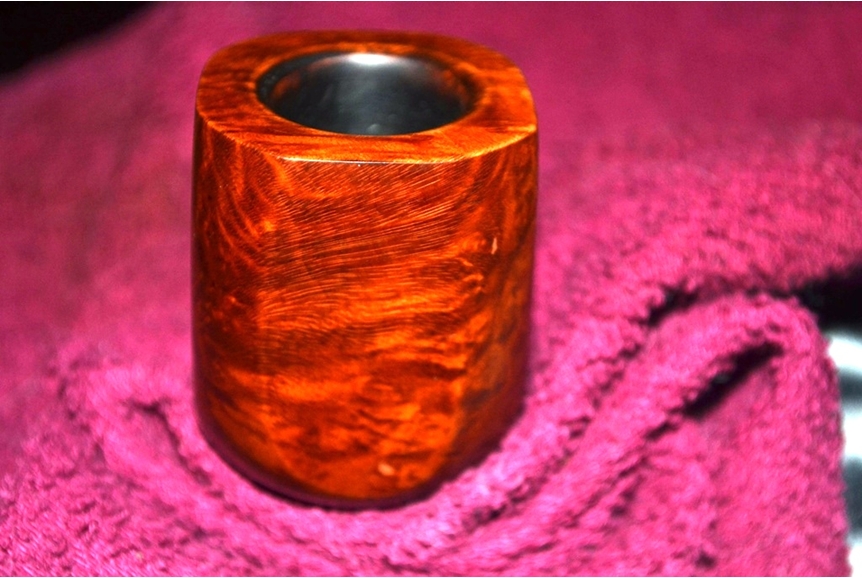
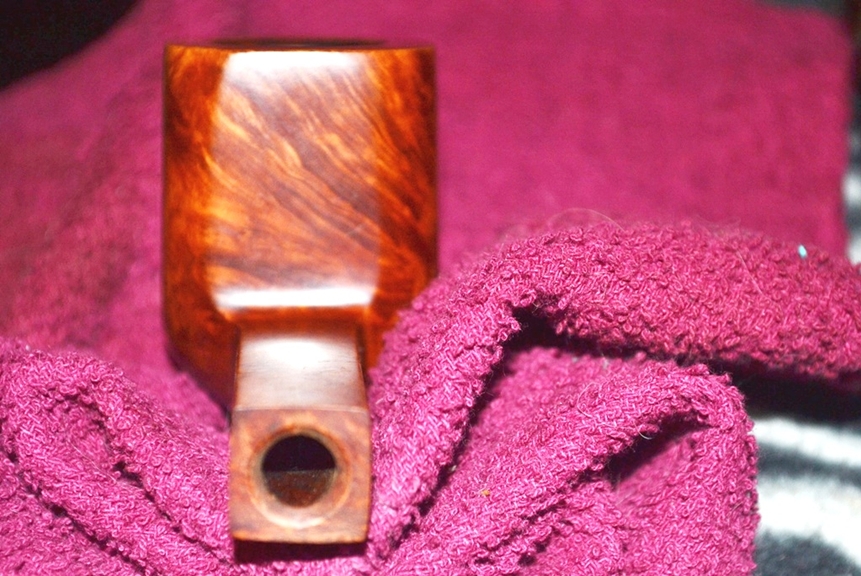 The final step of putting the stem to the wheels with white and red Tripoli and White diamond, clearing the excess and giving all of these a stronger grip with a gentle spin on an un-waxed buffing cloth, brought out a high, more durable sheen. The same approach, without the red Tripoli but adding two coats of carnauba, had the same effect on the briar.
The finishing touch was filling in the crown on the stem with a white china marker.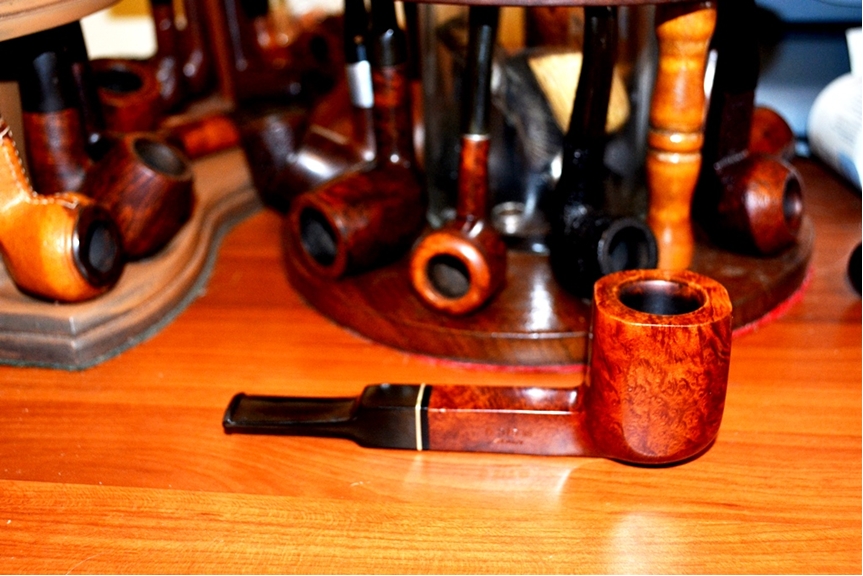
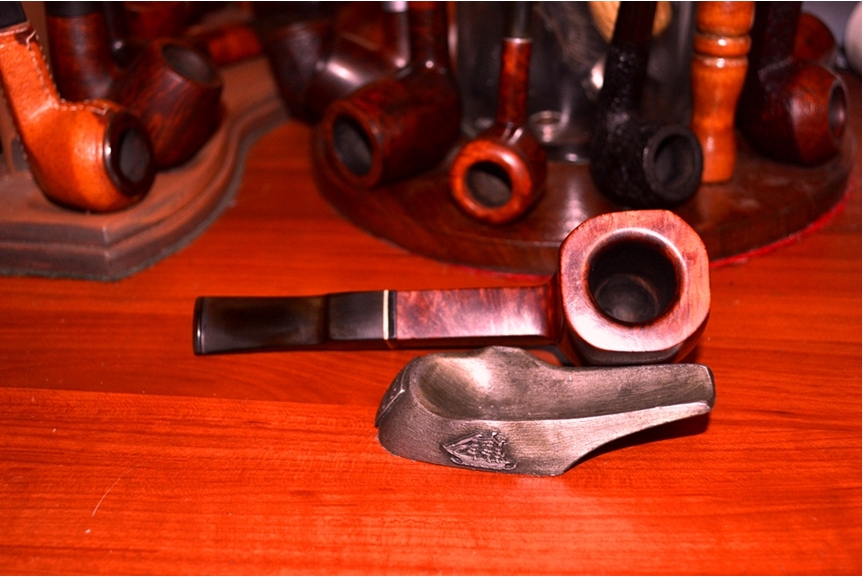
 CONCLUSION
In my online pipe sales and service business, I have been successful in a steady upgrade of the brands and quality of products offered. I have listed and sold a number of pipes I dearly wanted to keep – including a smooth, old meerschaum bulldog with an excellent patina, a Comoy’s Satin Matte Christmas edition, a Jobey Fawn small apple, a WDC 14K band full bent smooth billiard and even a no-name Italian semi-rusticated full bent billiard that was exceptional in its resemblance to a Peterson full bent system pipe and was engineered as well as most of that brand’s models.
My struggle with the question of whether to add the newly restored Savinelli Champagne Panel to my private collection or offer it up for sale was the longest, most tortuous inner debate I have made due to my strong desire to add a Savinelli to the inventory, which I have in fact already done by sacrificing one of my old favorites, a Clark’s Favorite medium smooth churchwarden that sold immediately. But, as some might already have guessed, I succumbed to the more powerful voice urging me to keep this one. I know I can’t horde everything that comes my way, but I can select those that speak to me deeply and personally.
I have not even enjoyed the pipe yet, so recent was my decision not to let it go. That patience will almost certainly end today, and soon.
 rebornpipes
As predicted in the end of my conclusion, I did indeed try out my Champagne that night. As I wrote to Steve, I now consider it among the finest pipes I own. At the moment, I’m enjoying some V. Samil Semois Reserve du Patron a Belgian fellow on SF was good enough to purchase for me as this Semois is not yet available in the U.S. It is an excellent Burley blend and works well, along with everything I’ve tried so far in the 515 KS. And the generous Belgian included, as appears to be the habit there, two Dutch treats of very dark black licorice and caramel wafer cookies!
LikeLike
Your post reminds me of another reason to enjoy the older Savinellis, vulcanite stems. What a lovely shape and grain, congrats on your illicit gain!
LikeLike