Blog by Steve Laug
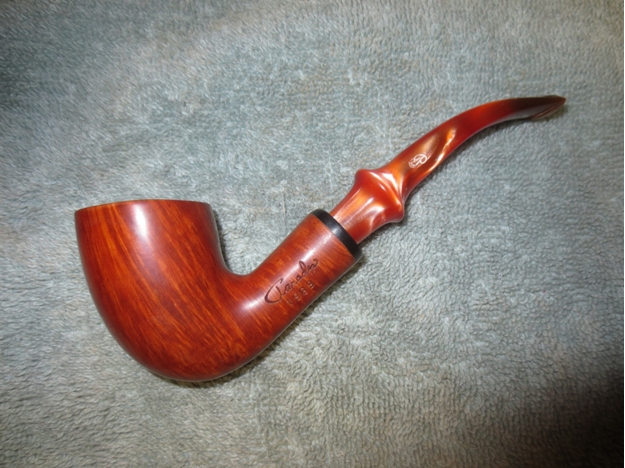
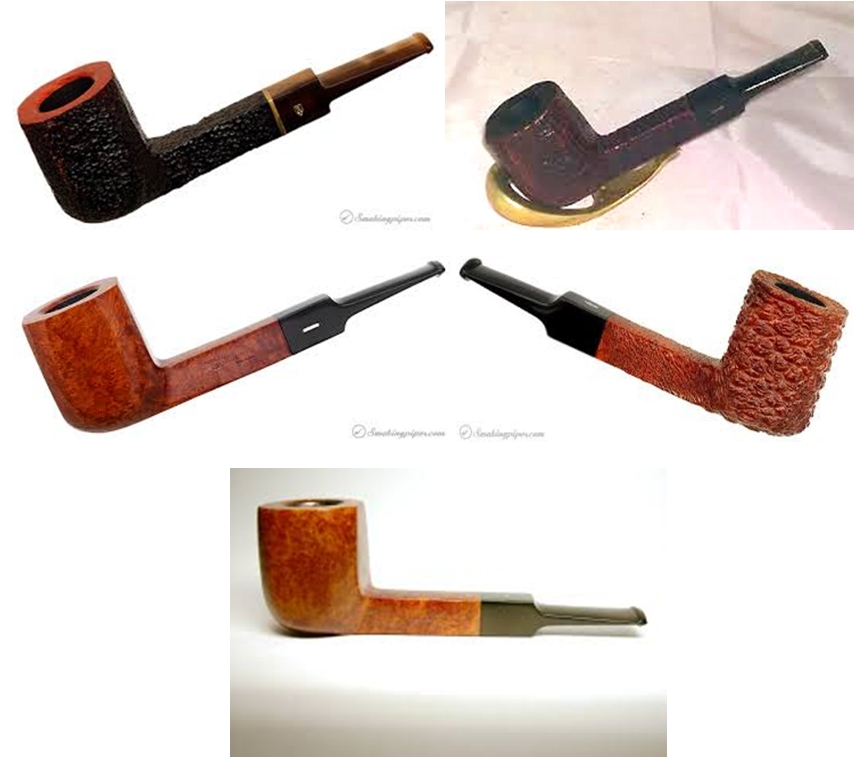
I picked up a lot of seven pipes from a craigslist seller in Vancouver. The first one I decided to work on was the Paradis with the broken tenon pictured at the top left in the photo below. 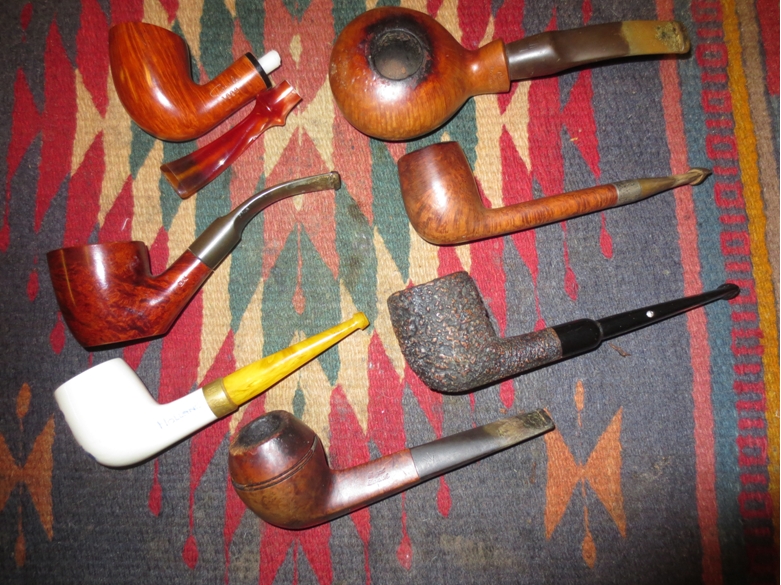 It included quite a few nice pipes including this virtually unsmoked Paradis pipe. It was stamped Paradis in script and underneath that 1989 on the left side of the shank. On the right it was stamped 93. The pipe is Canadian made coming from Saintes-Foy, Quebec. Paradis pipes are made by two brothers. They sell their pipes on the Pipesworld website at this link. The prices are quite reasonable. http://www.pipesworld.com/pipes/search.php3?PIPEMAKER=Paradis&SEARCH=&x=29&y=4
 The finish appeared to be a natural colour, unstained and clean though it was coated with at thick coat of Polyurethane. There appeared to be a deep scratch on the left side of the bowl near the top side. The tenon was snapped and stuck in the shank. Looking at it the tenon was threaded and it had snapped inside the stem. There was a portion in the stem. The stem was orange/amber coloured acrylic. It was stamped with a script “P” on the left side. From the looks of it the pipe had been smoked once and the stem broke during that initial smoke. There was a bit of darkening on the top ¼ inch of the bowl and the rest of it was raw briar. The stem was clean on the inside so I had a virtually unsmoked pipe to work on.
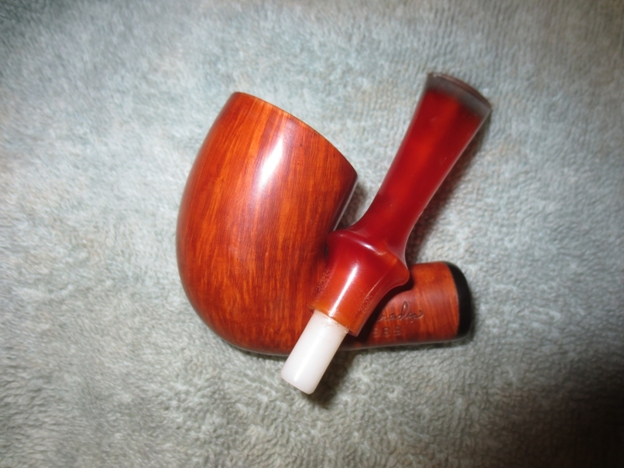
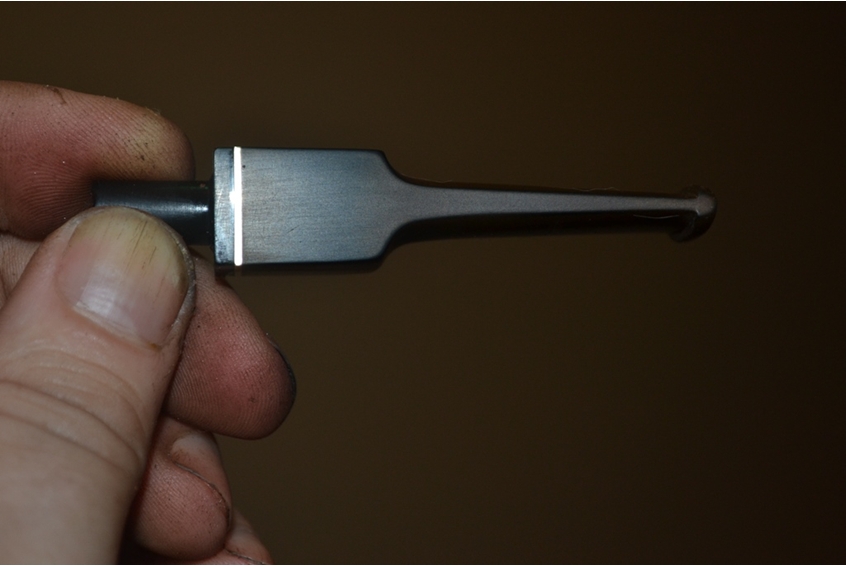
The broken tenon came out of the shank fairly easily. It was not stuck and there was some of the threaded portion of the tenon extending out of the shank. I was able to get a good hold on it with a pair of pliers and pull it out of the tenon. It had broken in the threaded area inside of the stem so it was going to be a relatively easy repair. The stem was not damaged so I could glue it into the stem and then fill in the gap around it with glue to give a solid repair. I cleaned the end of the break on the tenon piece and then put super glue on it. I pressed it into the stem and pressed the two parts together until the glue set. I filled the open area around the tenon with glue and pushed it down in the gap with a dental pick. I set the stem aside to dry.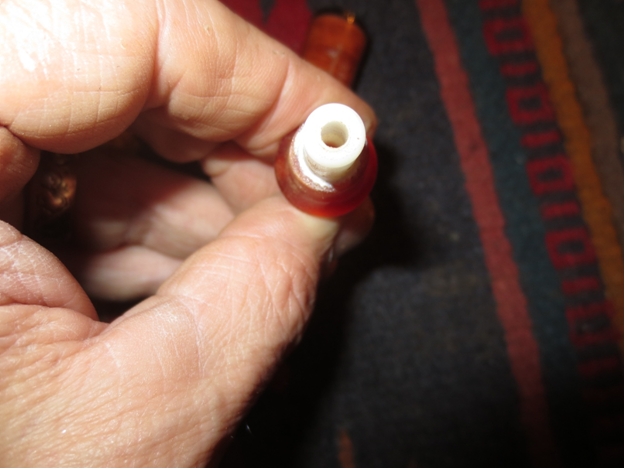
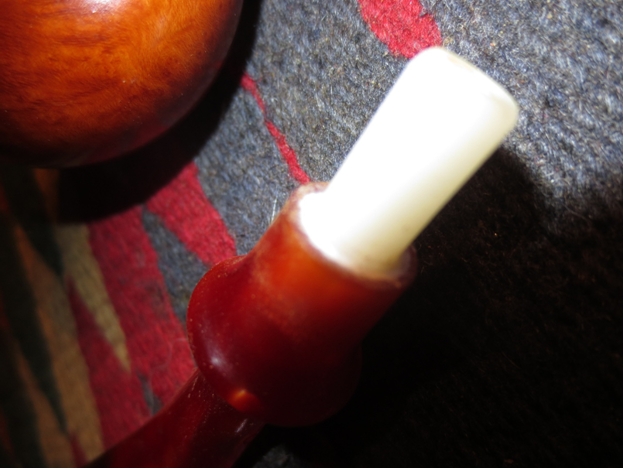
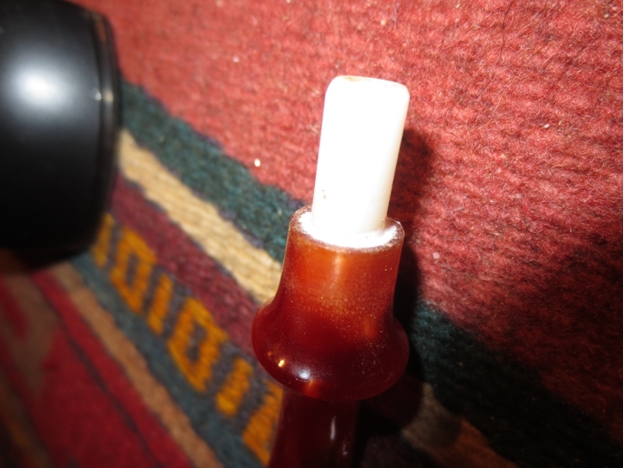 I took the next photos of the pipe and stem as it was drying.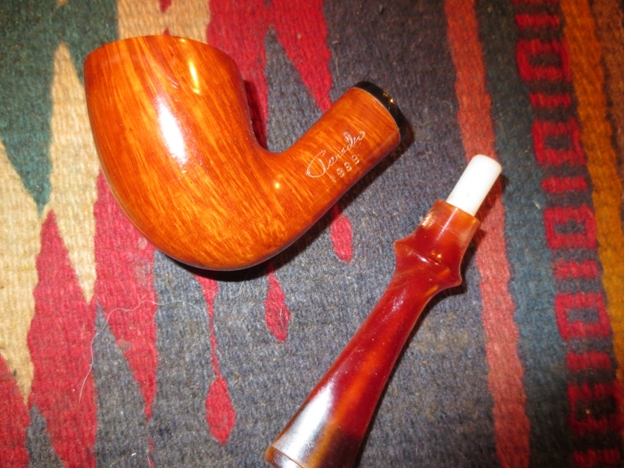
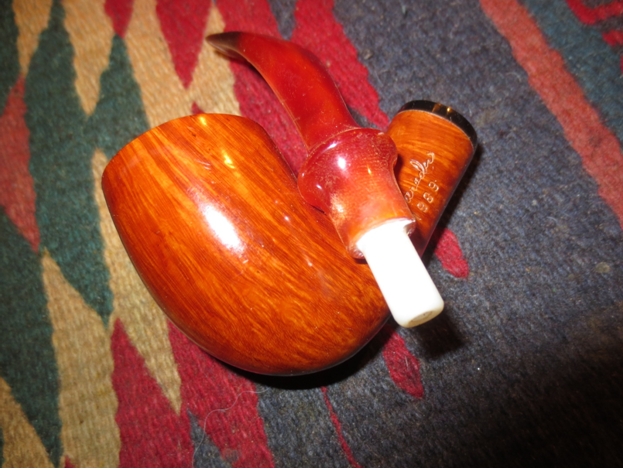 On the left side of the bowl near the top was what appeared to be a large horizontal dent. In the photo below you can see the dent looking almost like a line on the briar. It was about 1 inch long and followed the curve of the bowl.
 I tried to steam out the dent using a damp towel and a hot butter knife.
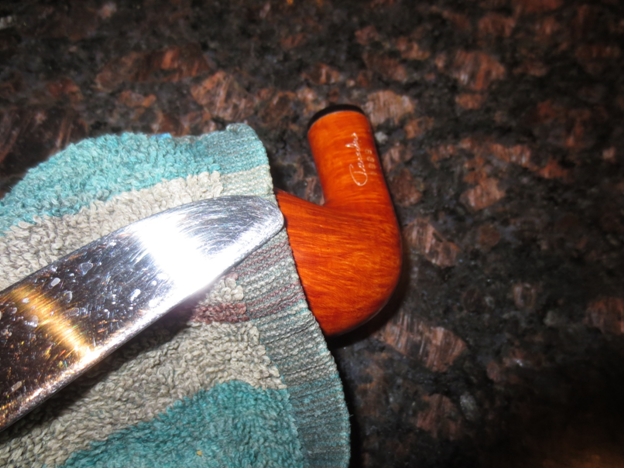 The next photo shows the look of the dent even more clearly. After steaming I examined it more closely and found that the dent had lifted and what remained was a run in the polyurethane coating that was on the bowl. It was like a long sag in the coating.
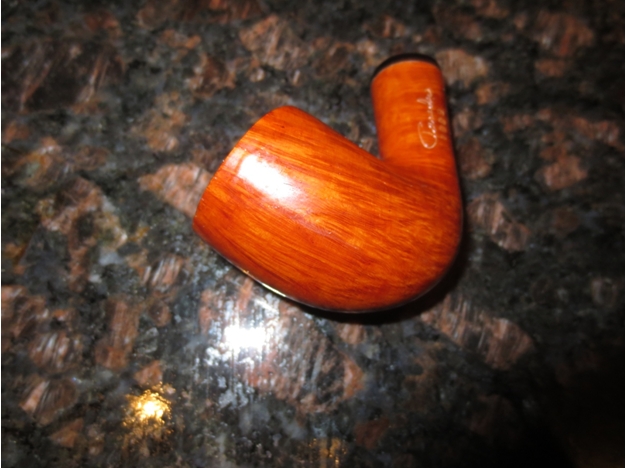 I took the pipe back to my work table and sanded the sag in the finish with a medium grit sanding sponge. I knew that I would have to remove the entire polyurethane coat from the bowl to clean up the sag completely.
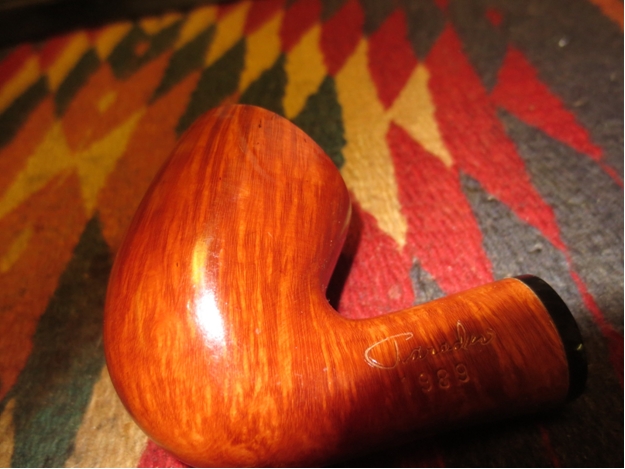 I sanded the bowl and shank with a medium grit sanding sponge and then wiped it down with acetone on cotton pads to break through and remove the finish.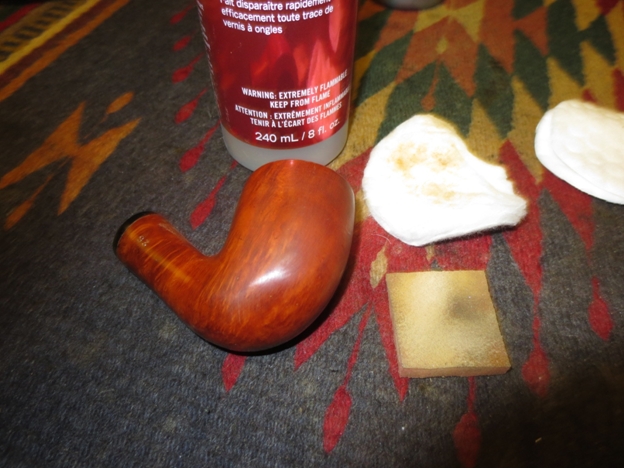
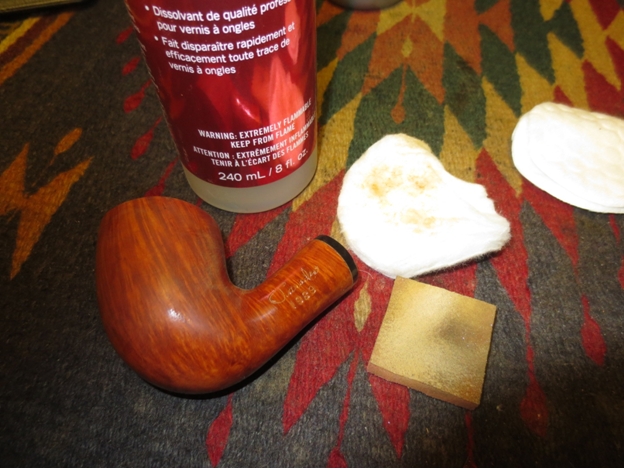 It took a lot of sanding and scrubbing before the polyurethane finish was gone and a clean smooth briar surface remained.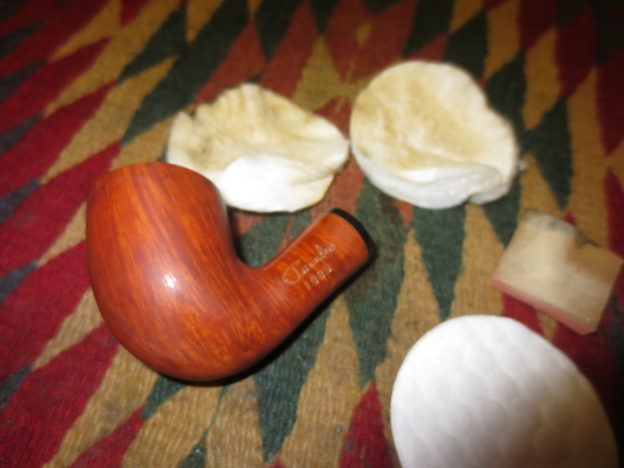

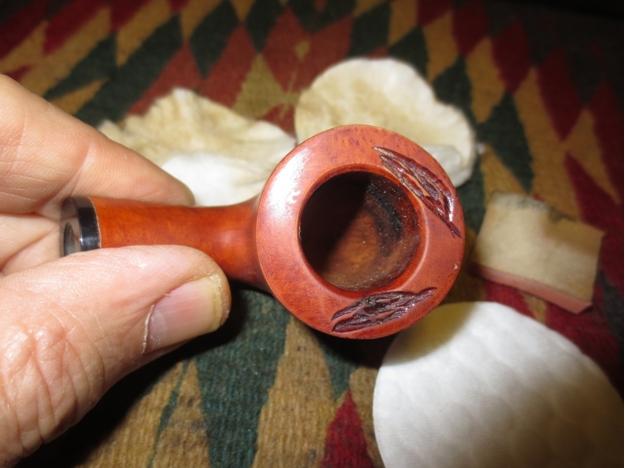 When I finished cleaning up the surface of the bowl and removed the finish completely I set the bowl aside and addressed the stem. There were no tooth marks or chatter to deal with so all I had to do was polish the dull surface with micromesh sanding pads. I wet sanded with 1500-2400 grit pads and dry sanded with the 3200-12,000 grit pads. I buffed the stem with White Diamond to polish the acrylic.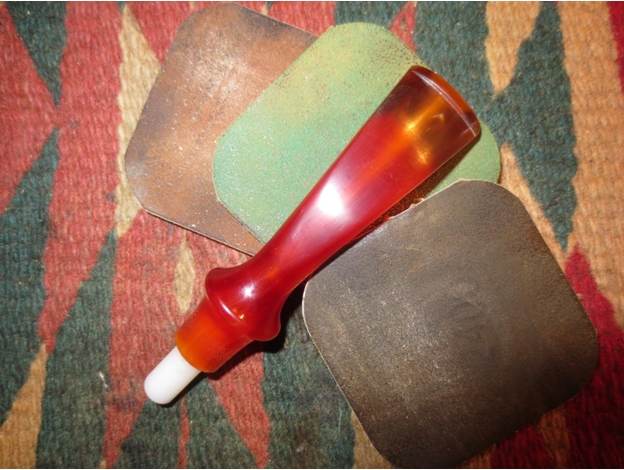
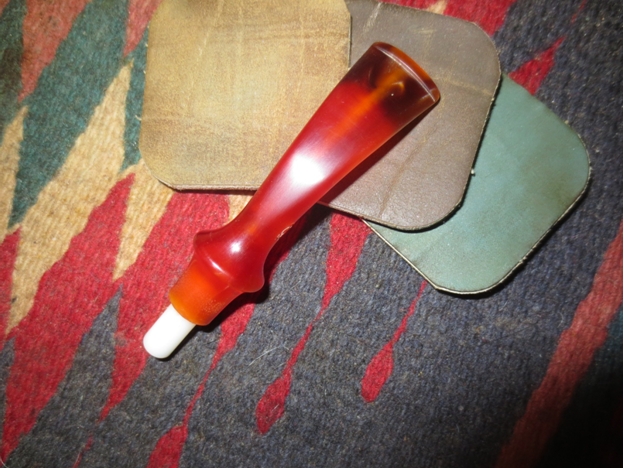
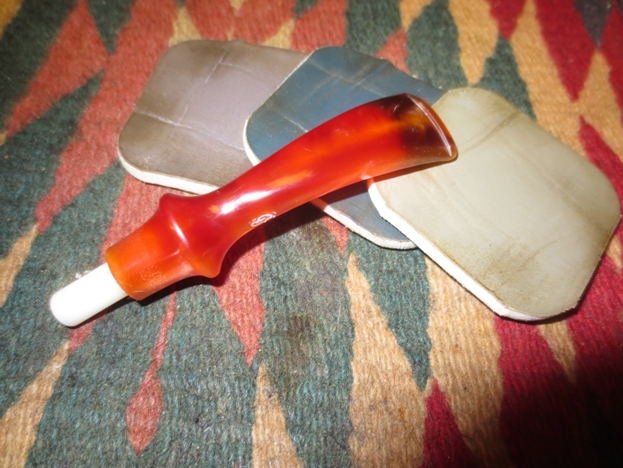 I dry sanded the bowl with micromesh sanding pads using all of the grits to raise a shine in the briar and smooth out the surface of the briar.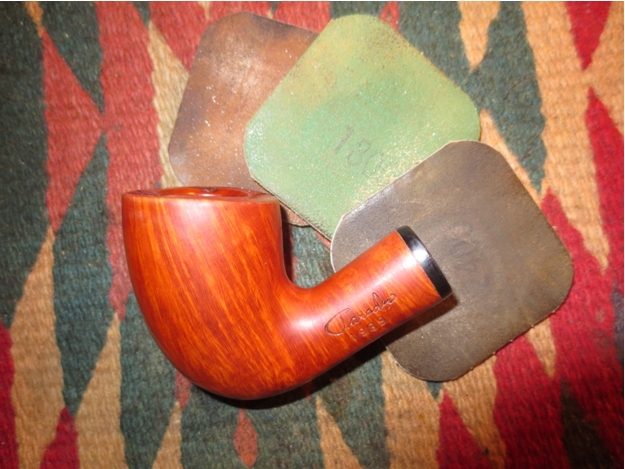
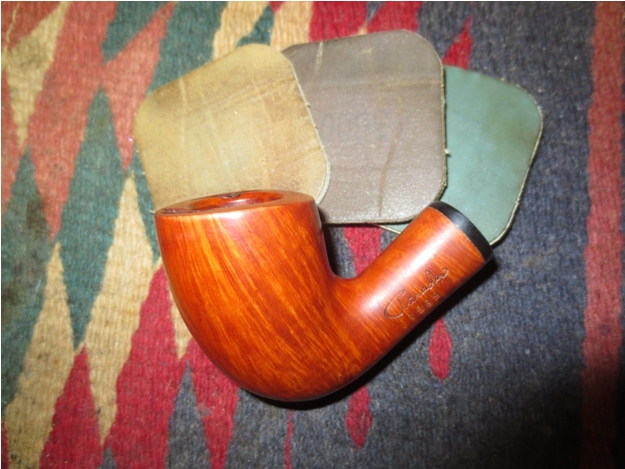
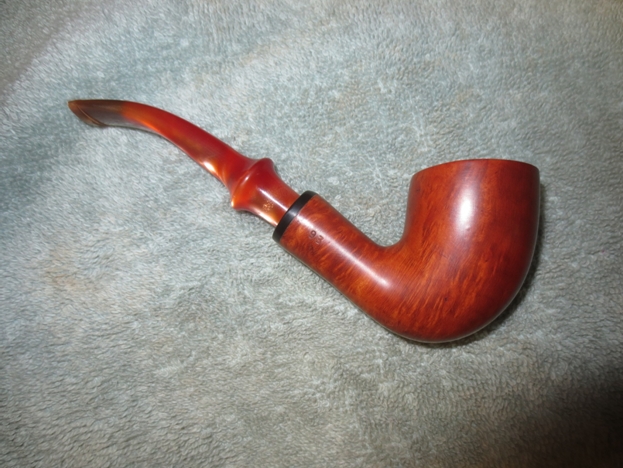
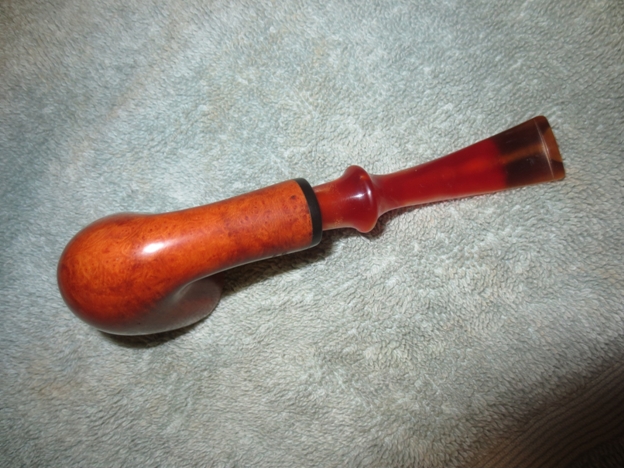
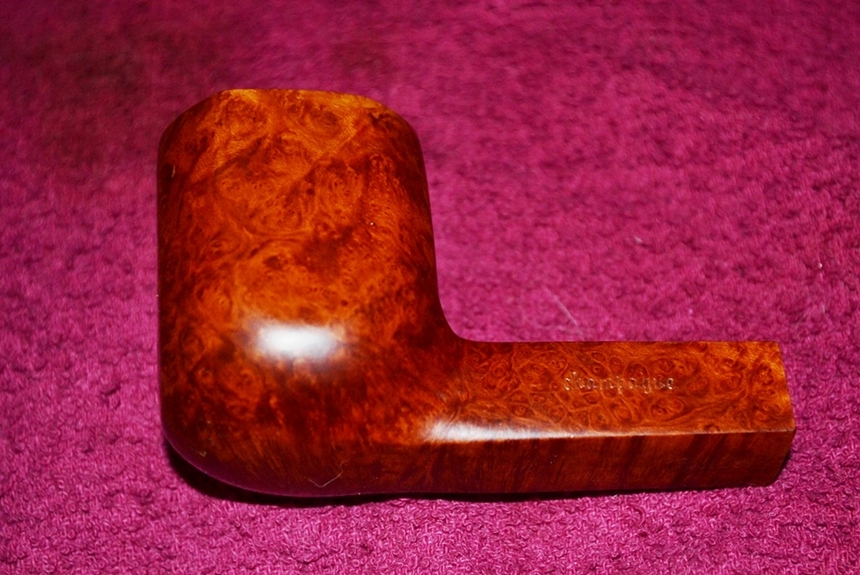
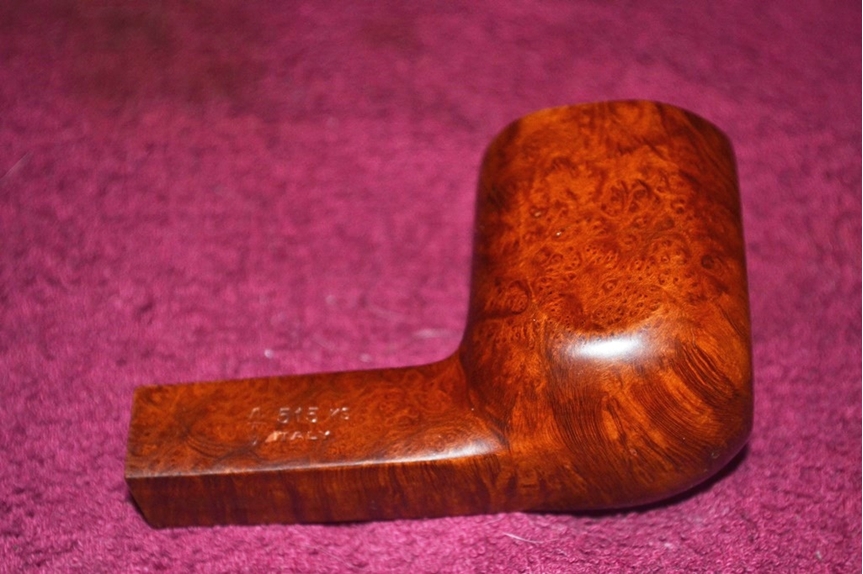
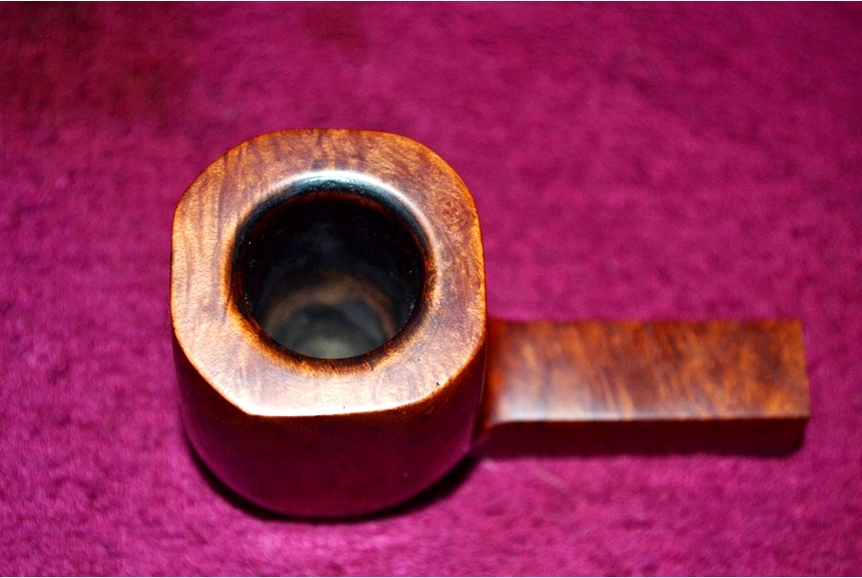
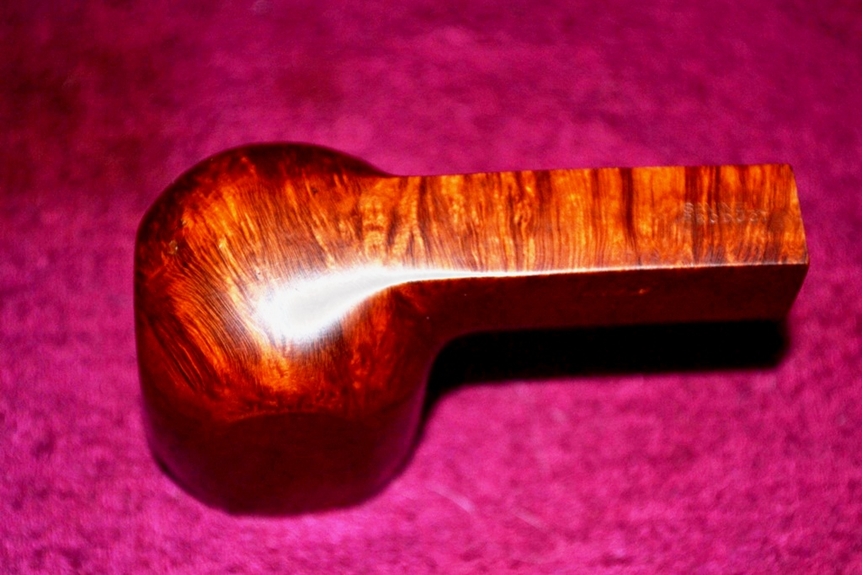
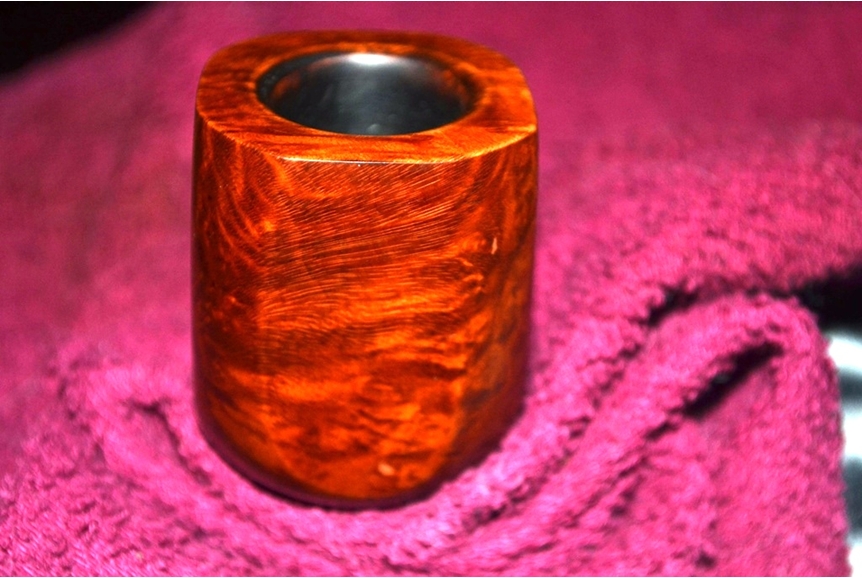
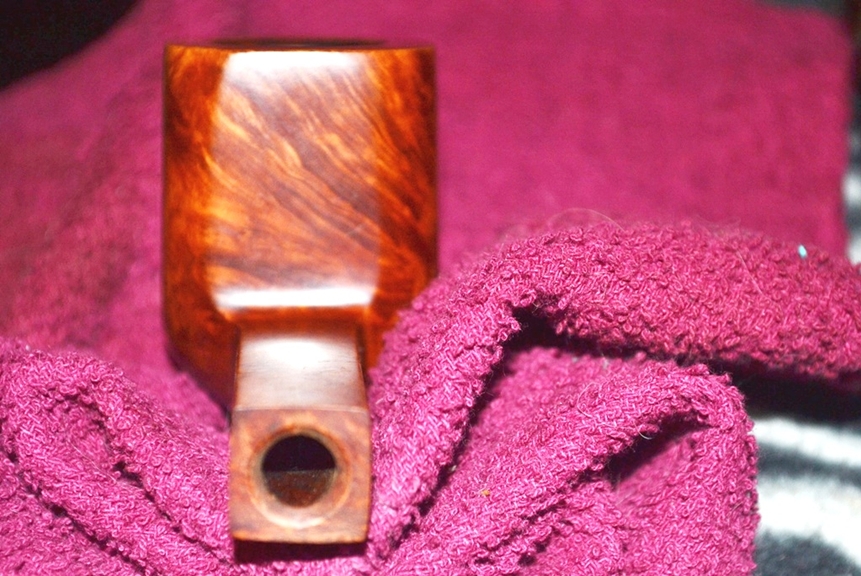
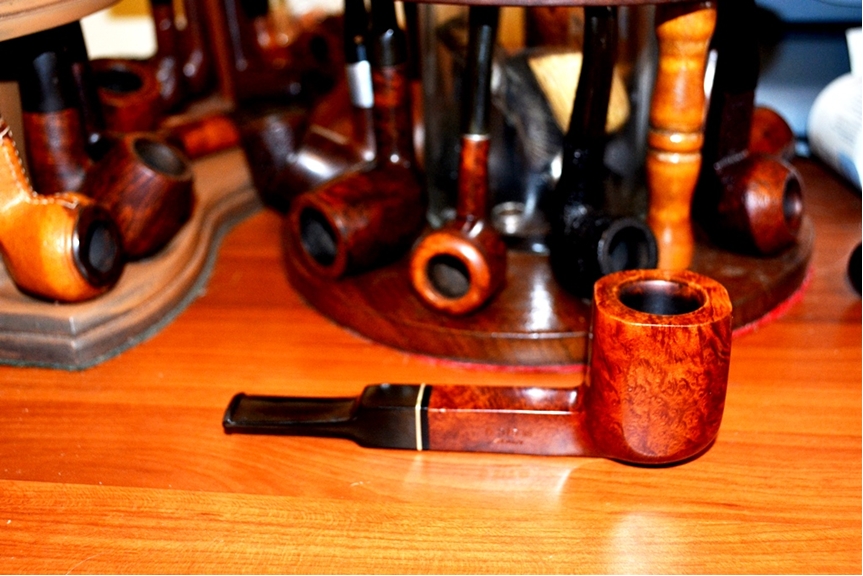
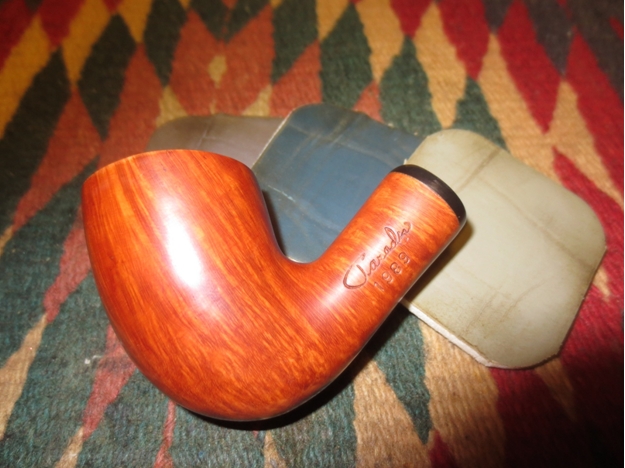 I gave the bowl a light buff with Blue Diamond polish and did the stem separately. I gave the bowl and stem several coats of carnauba wax and buffed it with a soft flannel buffing pad to raise the shine. The finished, repaired and refinished pipe is shown in the next series of photos.