
by Steve Laug
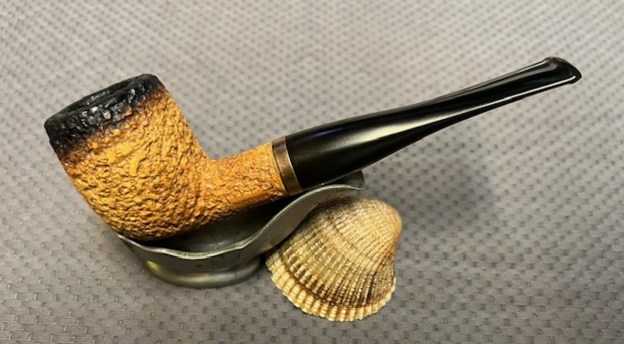
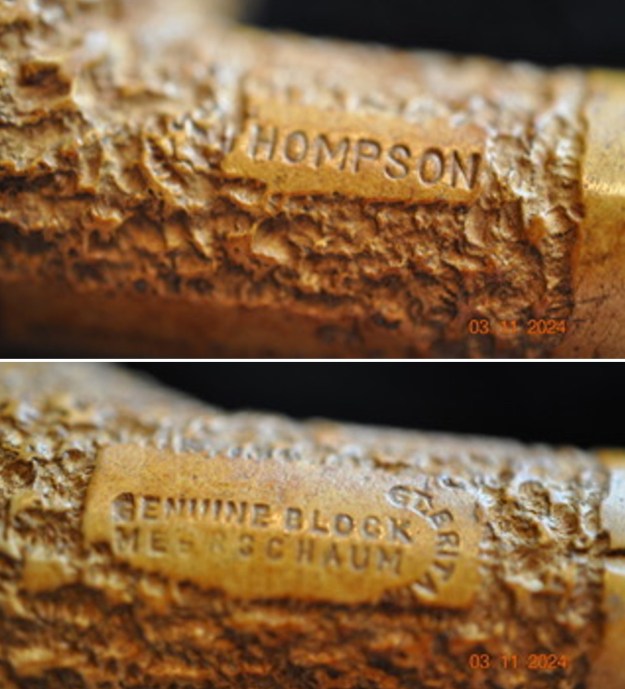
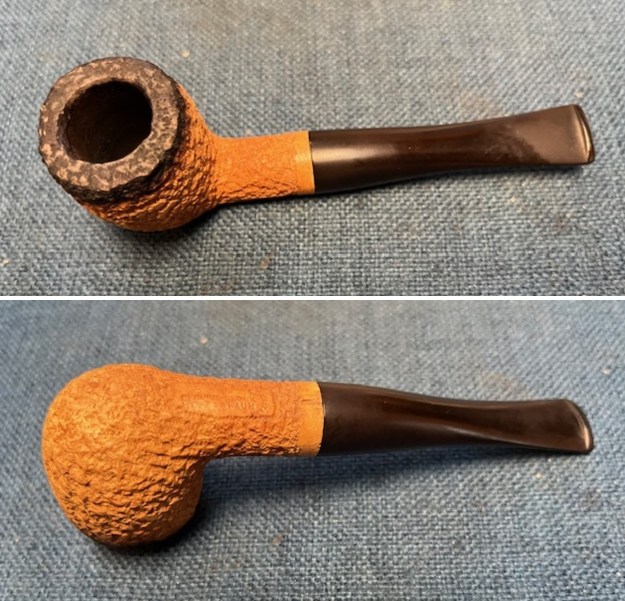
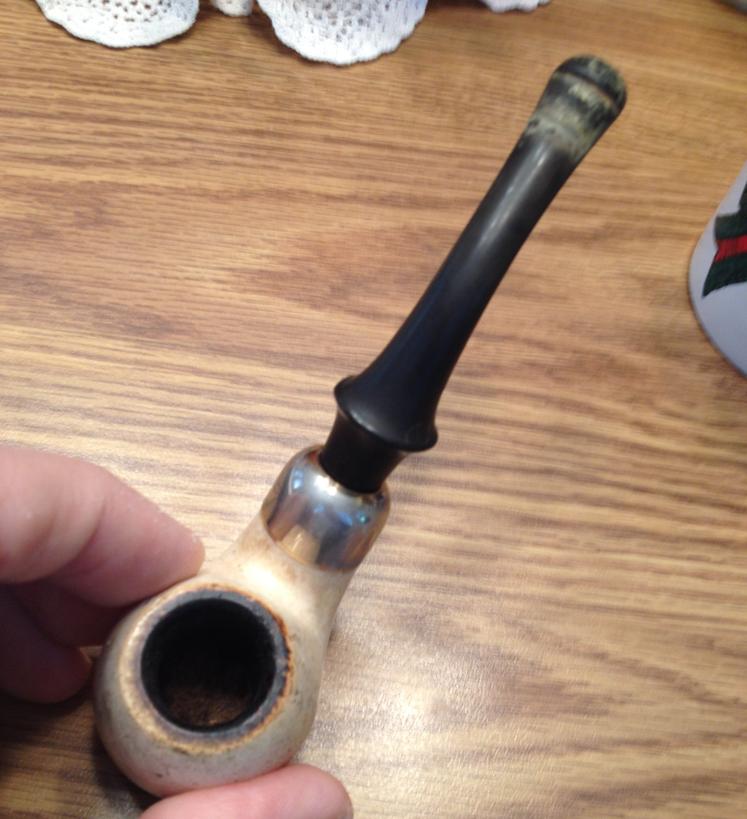
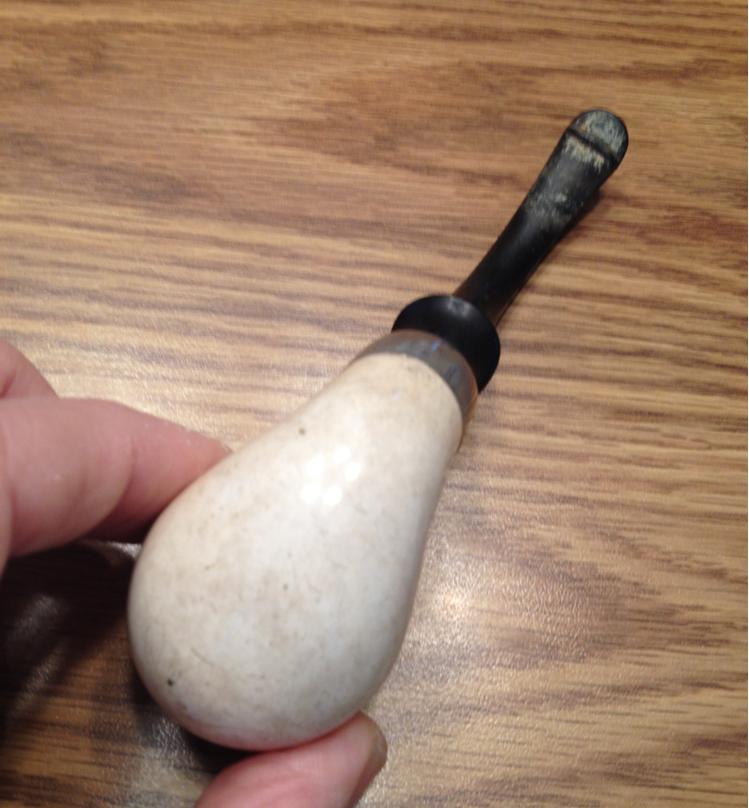
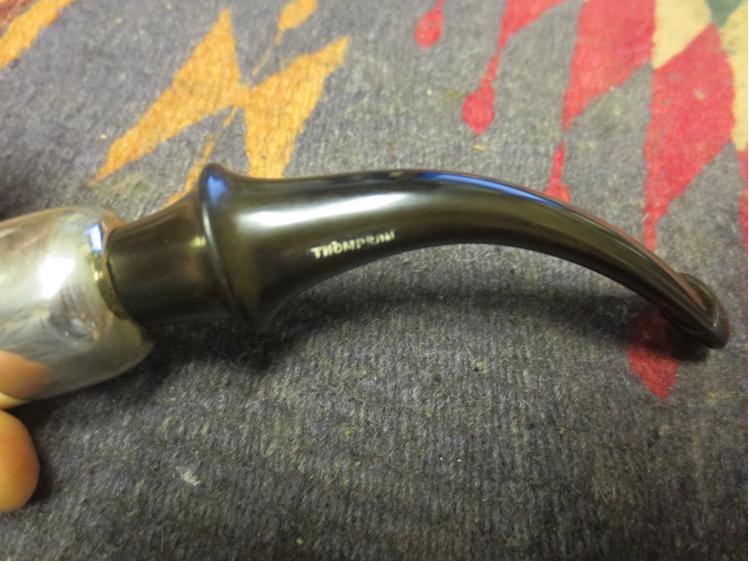
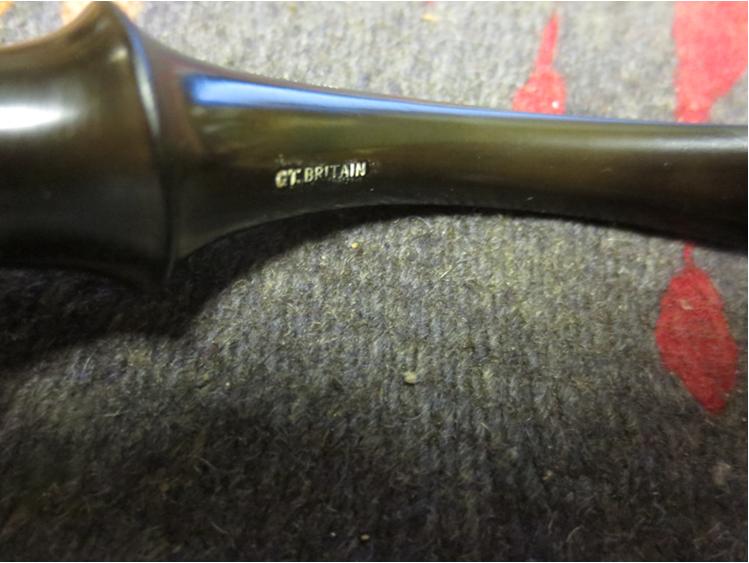
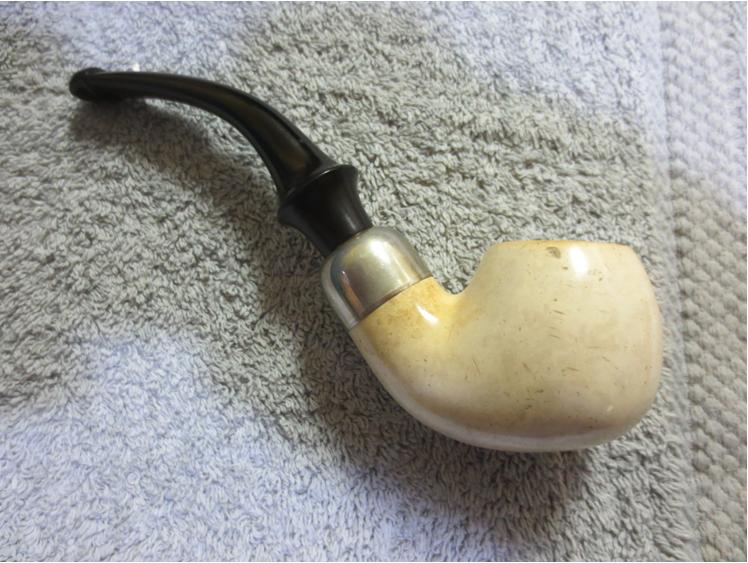
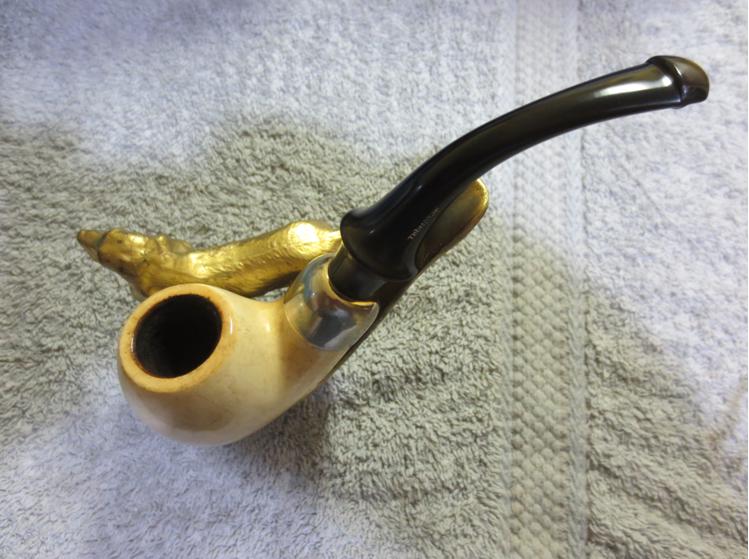
The next pipe I have chosen is a medium sized rusticated African Meerschaum Billiard. The stem is a vulcanite taper. We purchased it from an Antique Store on 08/24/2024 in Wheeler, Oregon, USA. The rugged rustication on the meerschaum points me to an Isle of Man pipe probably made by Laxey Pipes Ltd. It was stamped left side of the shank and read Thompson. On the underside it is stamped Genuine Block [over] Meerschaum. After the “m” at the end of Meerschaum there is an arched Gt. Britain. The pipe was heavily smoked. The bowl was moderately caked there was lava on the rusticated rim top and inner edge. The condition of the rim and top were slightly worn and the fluming around the top edge are faded in places. The black vulcanite stem was in good condition other than being dirty and having light tooth marks and chatter on both sides of the stem ahead of the button. The fit against the shank end was snug and there was no damage to the shank end. There was no stamping or logo on the stem itself though it is certainly the original. Jeff took photos of the pipe before his cleanup work. They tell the story and give a glimpse of the pipe.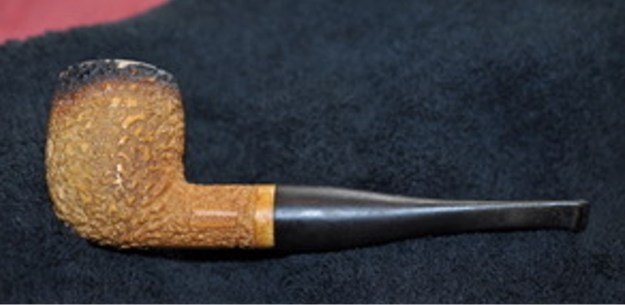
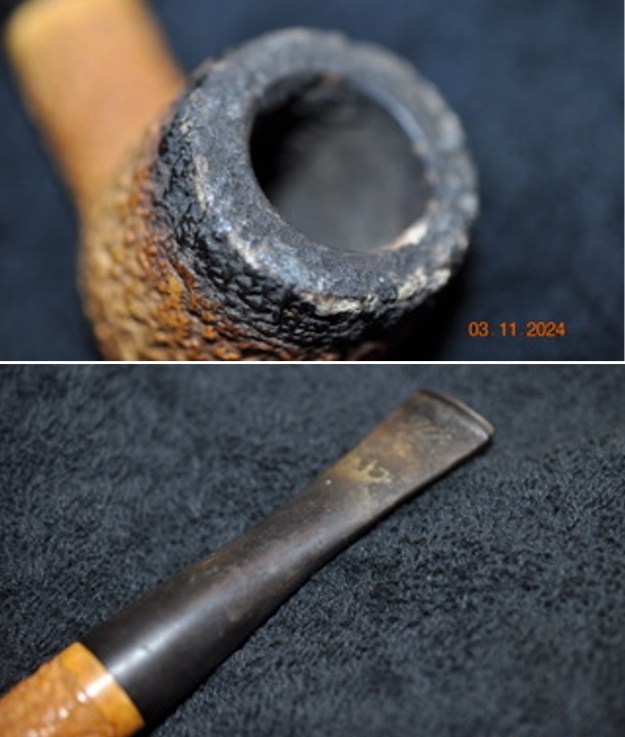
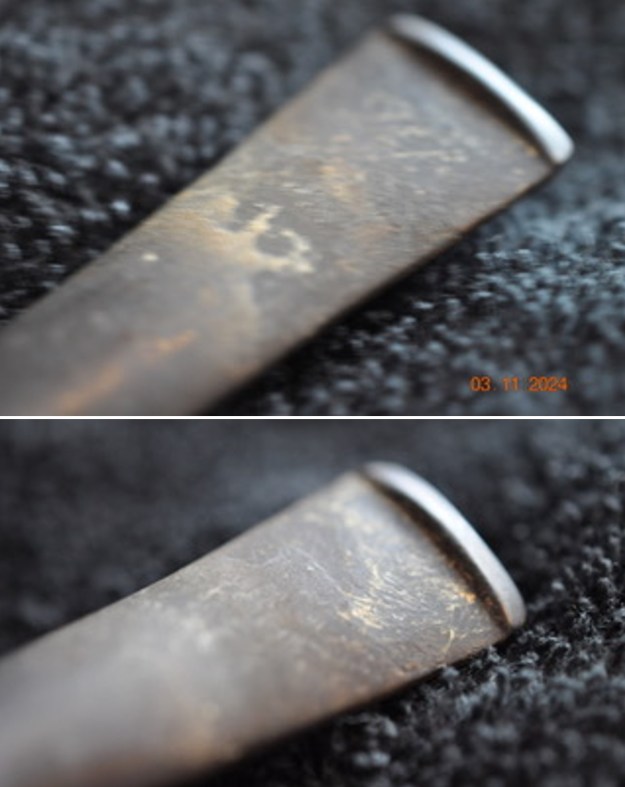
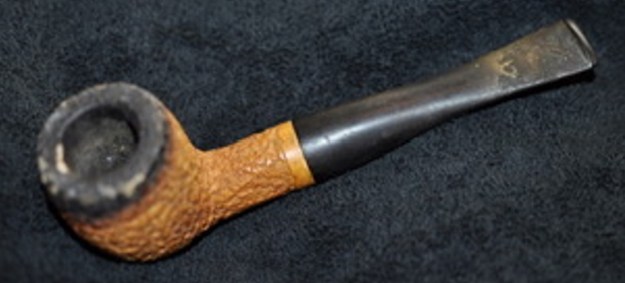 Jeff took close up photos of the bowl and rim to capture the condition of the pipe before he started his cleanup work. The cake in the bowl and the lava on the edges and rim top are visible. There are also some chips on the top and inner edge where the white was visible. He also took photos to show the condition of the stem surface. There is oxidation, calcification and light tooth marks and chatter on both sides near the button and wear on the button surface and edges.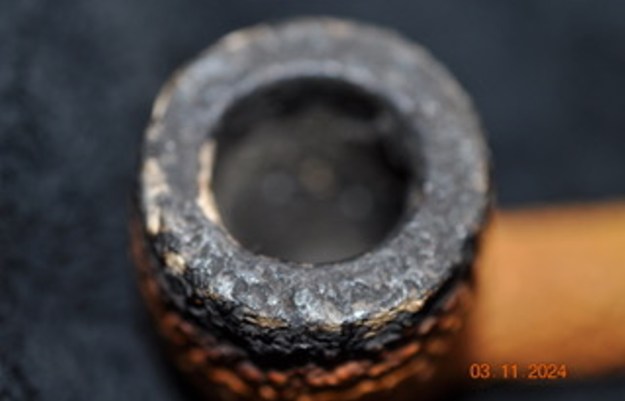
 He also took a photo of the bottom of the bowl and shank to show the condition of the finish around the top edge and rim top. The photo shows the general condition of the bowl and wear on the finish. It is very dirty but still an interesting pipe.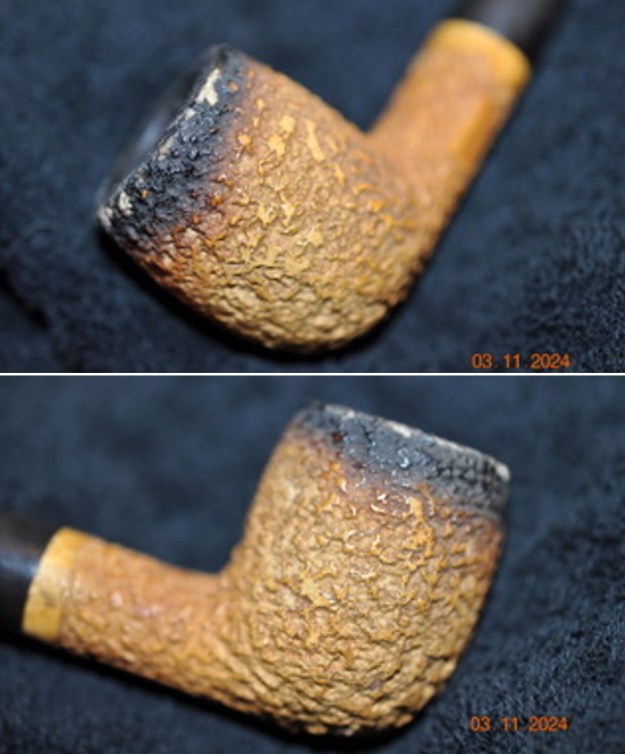
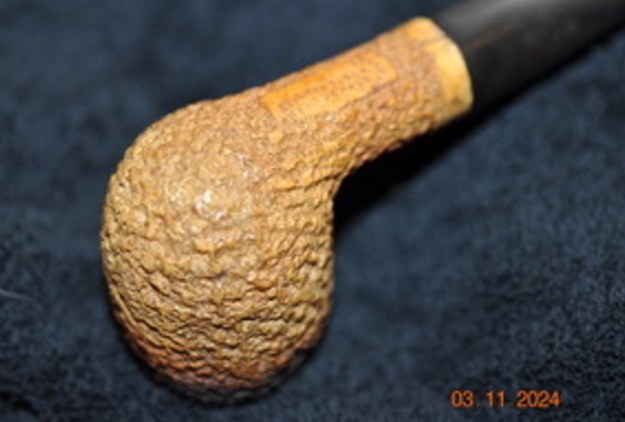 He took photos of the stamping on the sides of the shank. They are clear and readable as noted above.
 I turned to the bog and looked for a blog that I remembered Dal Stanton had written on a Thompson Meerschaum pipe. Here is the link (https://thepipesteward.com/2024/03/23/diving-into-the-provenance-of-a-thompson-genuine-block-meerschaum-gt-britain-brandy/). I quote his research below:
My research on the origins of the Thompson Block Meerschaum name can be summarized like this: It was made with African Meerschaum from the Tanganyika Meerschaum Corporartion (Tanganyika Meerschaum Corporation – Pipedia) and produced by Laxey Pipe Ltd. on the Isle of Man. This conclusion was deduced from comments made about Thompson from various pipe forum threads. Here is one example from Pipesmagazine.com (2012) among several that I found that demonstrates what I have found generally:
@tschiraldi – Thanks! It’s my understanding that the Thompson Meerschaum pipes were made by the Manx Meerschaum Company on the Isle of Mann (Great Britain). Back story is that my 3x Great Grandfather was Sir Hall Caine who was a famous author known as the Manx Man and lived on the Isle of Mann. I thought it would be cool to own a pipe made by the Manx Meerschaum Company which was made on the Isle of Mann. Just thought it was interesting.
“It’s my understanding…” is the key idea. I found several comments with the assumption that Thompson Block Meerschaum pipes were produced by ‘Manx’ or ‘Laxey’ – the same producer. When doing the research on James’ first commission, I discovered that the Laxey Co. produced the Peterson’s Meerschaum. Here is the Pipedia information on Laxey Pipes Ltd.:
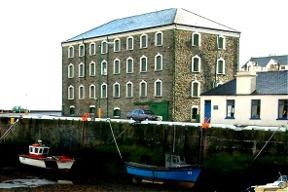 Laxey Pipes Ltd. resided in a historical 19th century four-storey Man stone building at The Quay, Old Laxey, Isle of Man, which thankfully has been preserved.
The company specialized in the production of meerschaum pipes using the Meerschaum mined by the Tanganyika Meerschaum Corporation in the Amboseli basin in Tanganyika (since 1964 part of the United Republic of Tanzania).
Please note: you may often find names like “Manx Pipes Ltd.”, “Man Pipe Co.” and others more, but there is no indication of another Isle of Man pipe producer other than Laxey Pipe Ltd. at any time!
Laxey Pipes Ltd. marketed their own brands like “Manxpipe”, “Manxman”, “Manxland” e.c. Names like “John Bull”, “White Knight” (unwaxed), “Domino” (black, or lined) indicated some shapes / colours of Laxey’s own series. The stems either showed the astronomical sign for “male” or “man” (circle + arrow), or the crest of the Isle of Man, the 3-legged X in a circle. Manxpipes and Laxey’s other brands were available through pipe retailers in general, but also were sold (mainly) to tourists through their own shop in Laxey.
Furthermore Laxey Pipes Ltd. manufactured the meer bowls for Peterson, Barling, Nørding and others from the later 1960’s until 2001. Man Pipe e.g. was a brand distributed by Comoy’s. The bowls usually showed no nomenclature indicating the orderer. “Genuine Block Meerschaum” was engraved frequently. Often, just the stems were different, while bowls were the same.
Supply of meerschaum from East Africa ran out (Kenya / Tanzania exhausted, Somalia inaccessible), and thus the last Laxey meers were supplied to trade in May, 2001. Laxey Pipes Ltd. tried to survive continuing with briar pipes – mainly in the Danish style -, but to no success. It closed down business in July 2002.
In this article from Pipedia, there is no direct mention of Thompson Block Meerschaum however, it was left open that there were other brands produced from the 1960s until 2001 beyond those mentioned – Peterson, Barling, and Nording.
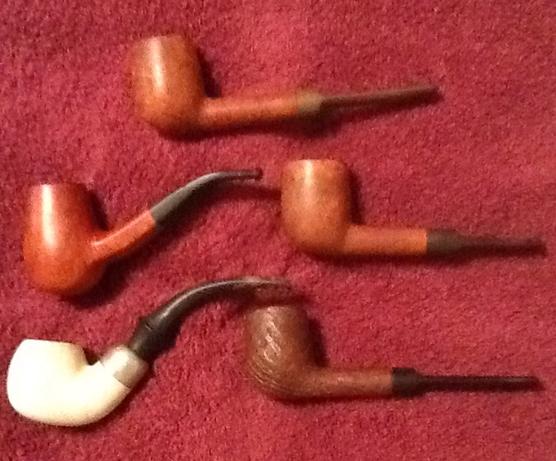
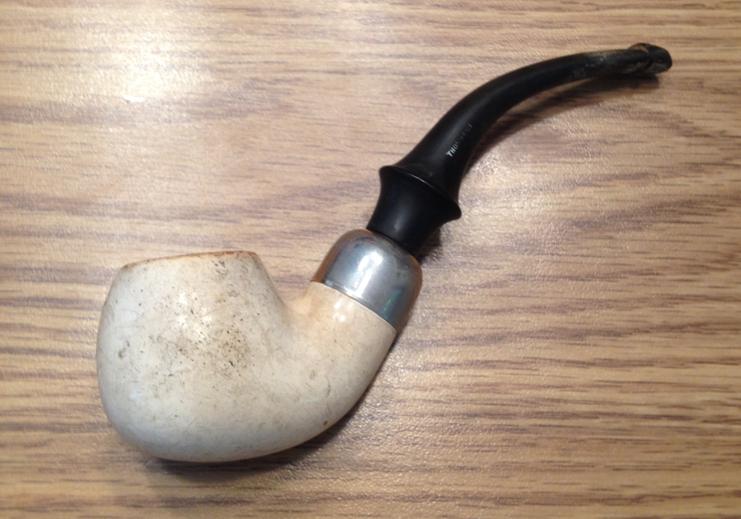
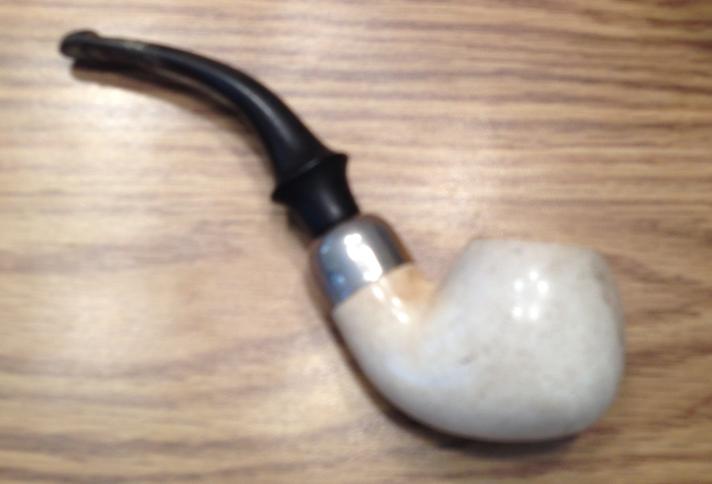
I tend to agree with the sentiments of the Thompson Block Meerschaum pipes being produced by Laxey. Why? First, with the COM being ‘GT. Britain’ leaves few options (if any) of a Meer block being produced other than on the Isle of Man. Secondly, the Thompson on the worktable resembles other products of Laxey with the smokestack coloring and the usual stamping: “Genuine Block Meerschaum”. Here are examples of Laxey pipes including our Thompson.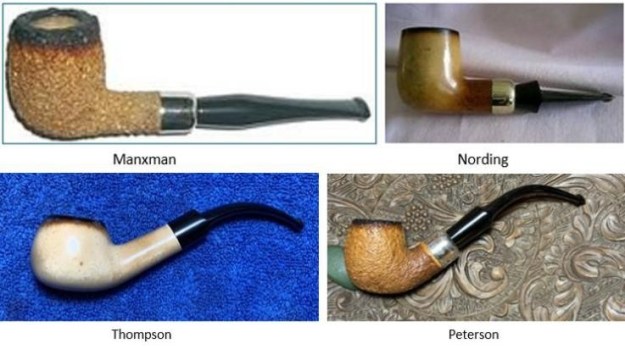 The last characteristic that promotes the Isle of Man provenance is that the Thompson is made with African Meerschaum. Tanganyika Meerschaum that was used by the Laxey production is described as tougher, less porous, and cheaper than Meerschaum mined in Turkey (Tanganyika Meerschaum Corporation – Pipedia). The denser characteristics of the Thompson on the worktable I believe fits the general characteristics of African Meerschaum. Even though I can find no direct link with Laxey and Thompson, I believe it is a safe assumption that Thompson was produced by the Laxey Company on the Isle of Man. If this is to be accepted, the dating of the Thompson would be no later than 2001 when Meerschaum ran its course from the mines of Tanganyika.
In terms of the pipe that I am working on I concur with Dal’s conclusions on the Thompson pipe he restored. This one is also a Laxey Made pipe using the African Meerschaum. The rusticated finish is precisely like some of the Laxey Peterson’s Meerschaums that I have worked on. It has a lot of promise to it.
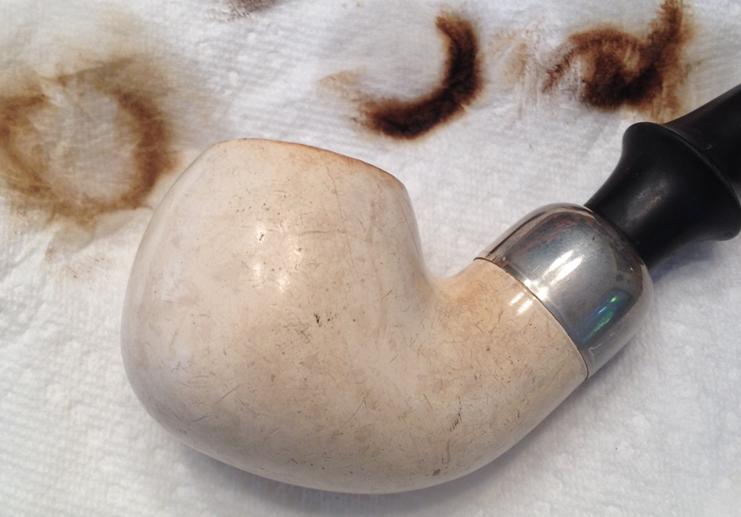
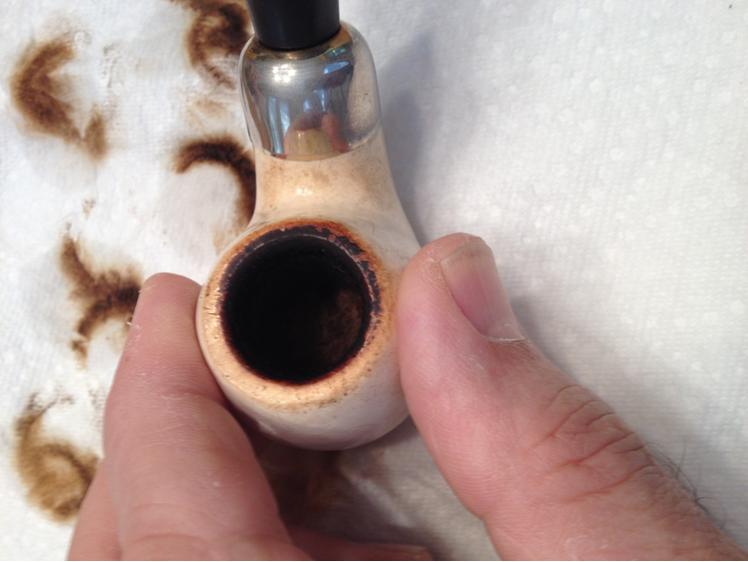
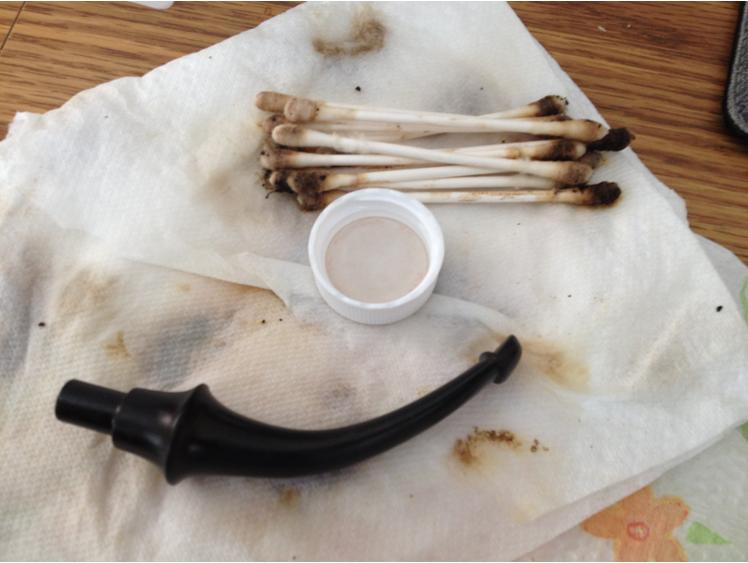
Now it is time to work on the pipe itself. Jeff reamed the bowl with a PipNet pipe reamer and followed up with a Savinelli Fitsall pipe knife to remove the cake. He scrubbed out the mortise and the airway in the shank and the stem with alcohol, cotton swabs and pipe cleaners. He scrubbed the exterior of the bowl, rim, shank and stem with a tooth brush and undiluted Murphy’s Oil Soap to remove the oils, tars and lava on the rim and the grime on the finish of the bowl. He rinsed it under running water. He dried it off with a soft cloth. He was able to remove the lava build up on the rim top and the flat surface of the rim looked better. The inner edge of the rim and the outer edge looked much better. He soaked the stem in Before & After Deoxidizer and rinsed it with hot water. I took photos of the pipe to show its condition before I started my work on it.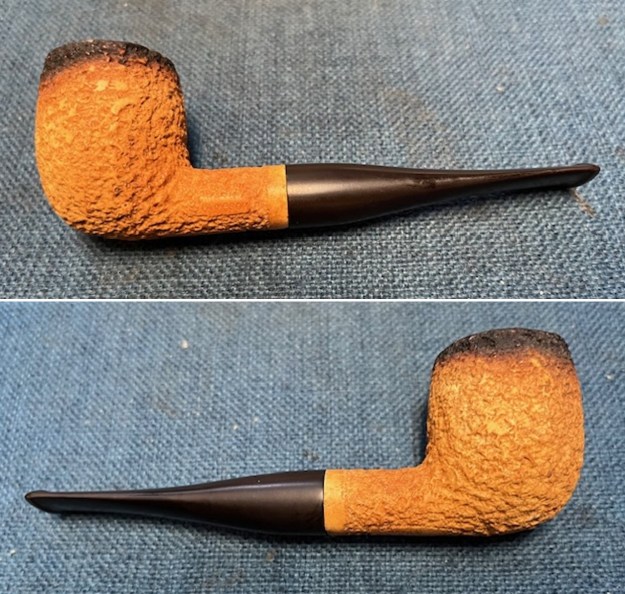
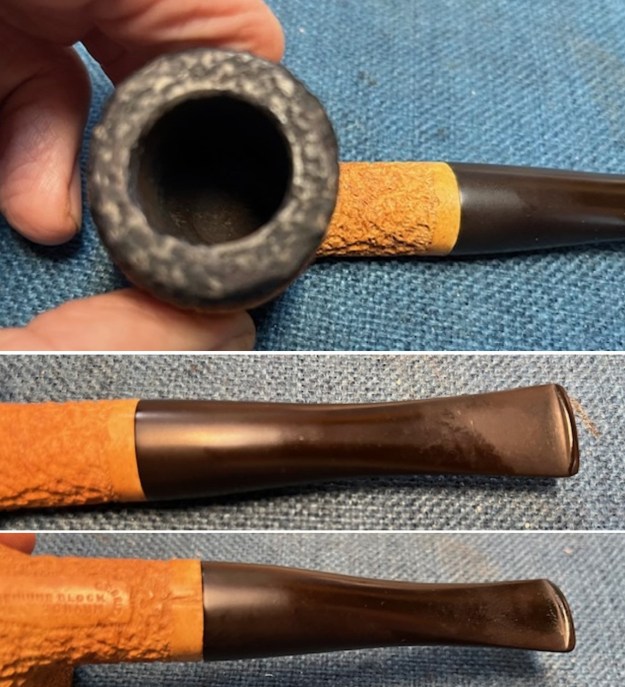
 I took close up photos of the rim top and the stem surface. I wanted to show how well it had cleaned up. The rim top and edges looked very good. Somehow in the cleanup process the black stain on the fluming of the bowl filled in many of the spots on the rim top and edges that were faded and missing stain. I took photos of the stem to show the condition it was in. There was light chatter on both sides ahead of the button.
 I took photos of the stamping on the sides of the shank. You can see that it is stamped as noted above and is clear and readable. I took the pipe apart and took a photo of the pipe. It is a good looking pipe with great grain.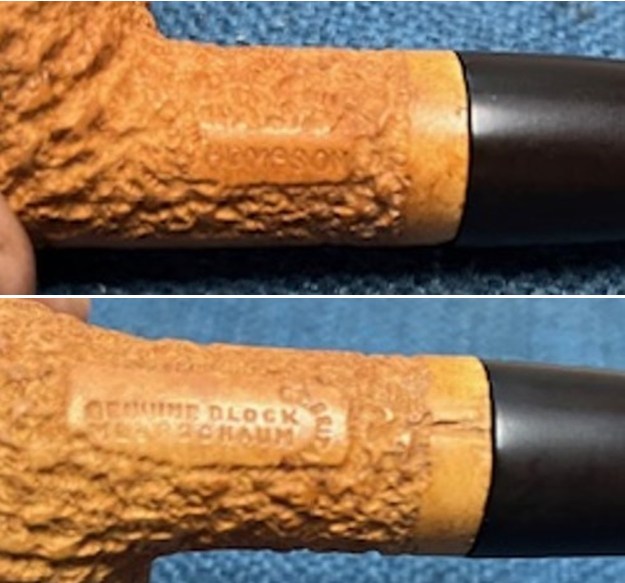
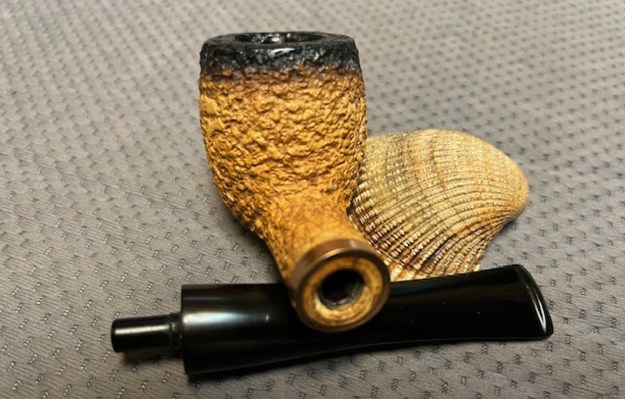
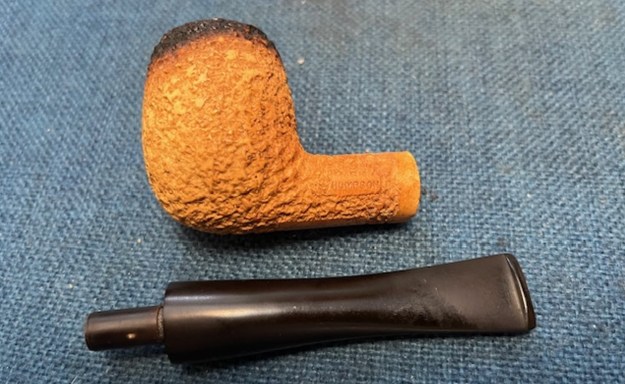 The fit of the stem on the shank was perfect though loose as the tenon was not snug in the mortise. The look of the pipe at this point was a bit dull though clean to me. I decided to try a thin brass band on the shank to see what that would do to the look. Sometimes a band is not for restoration or repair but merely for adding a bit of bling to an otherwise dull pipe.
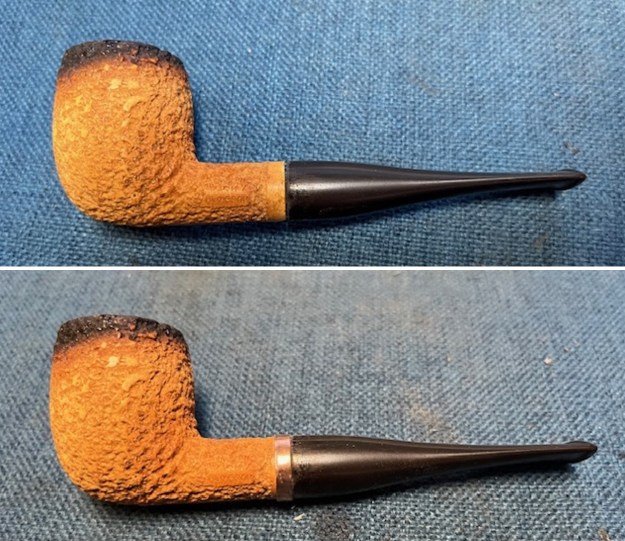 I liked the look of the band on the shank as shown in the photo above but decided to get a few more opinions about the look. Everyone I asked like the look of the band on the shank. I decided to glue the band on the shank end. I used some white all purpose glue and applied it to the inside of the band and then pressed onto the shank. I set it aside and let the glue cure.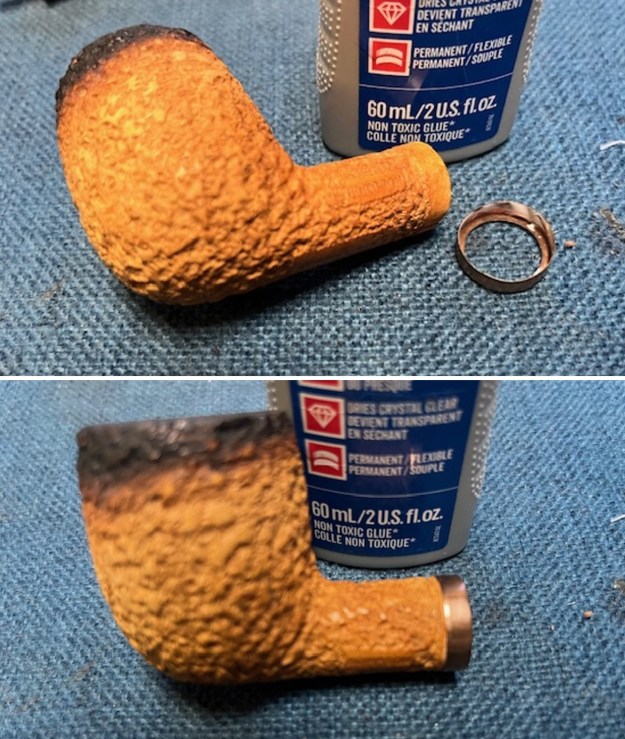
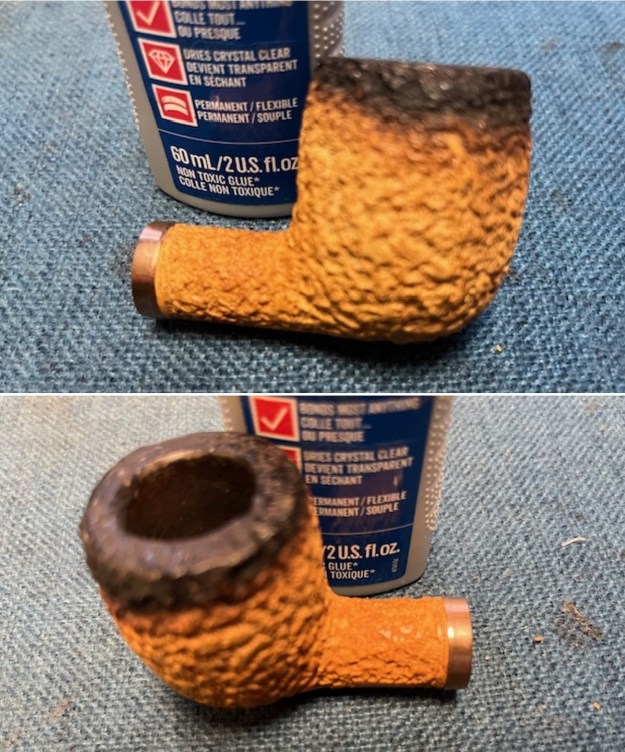
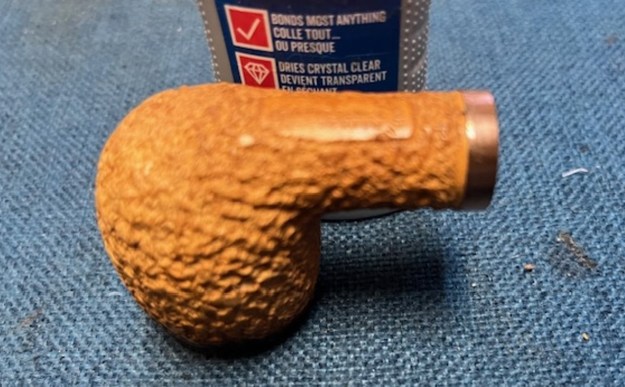 I used a black stain pen to touch up the light spots on the rim top and the edges of the bowl – both inside and outside edges. Once the stain had set in the finish the rim top and edges looked very good.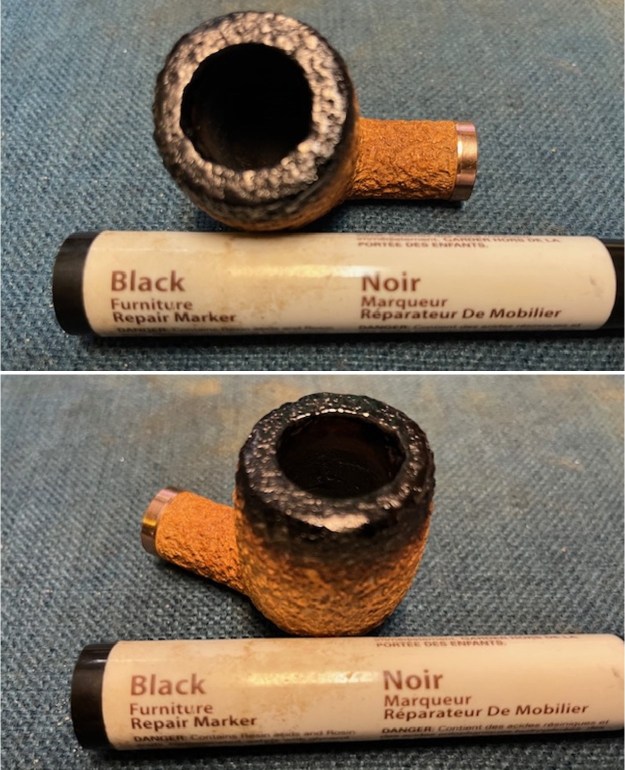
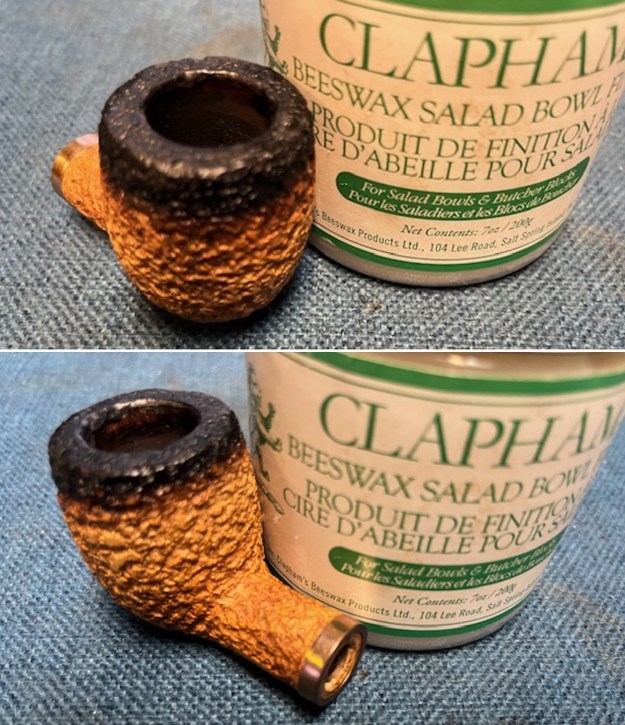
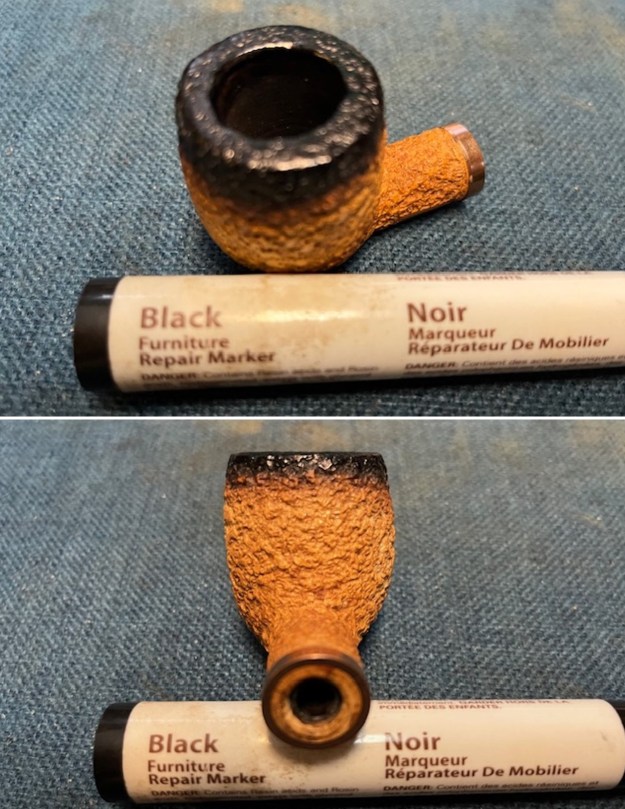 I worked some Clapham’s Beeswax/Carnauba wax into the finish of the bowl. I used a horsehair show brush to work it into the rusticated finish. I set it aside to allow the wax to dry. I buffed the pipe with a soft cotton cloth to raise the shine on the meerschaum.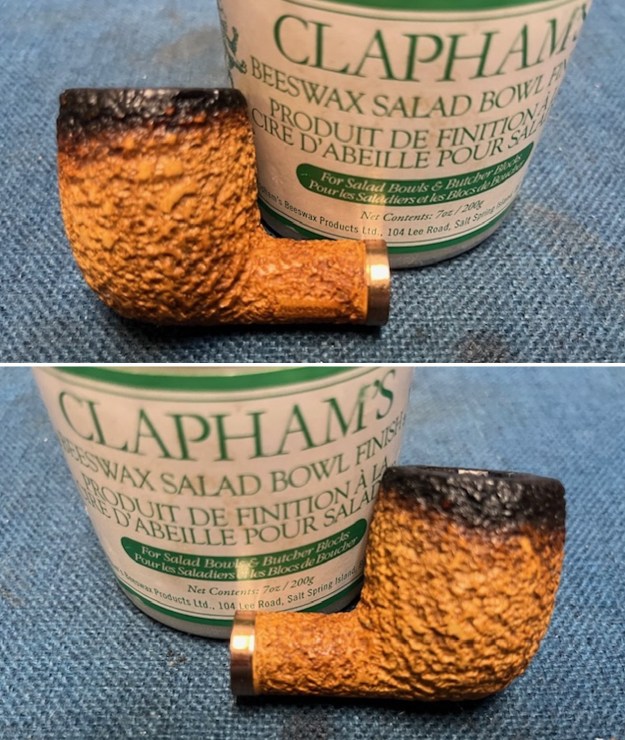
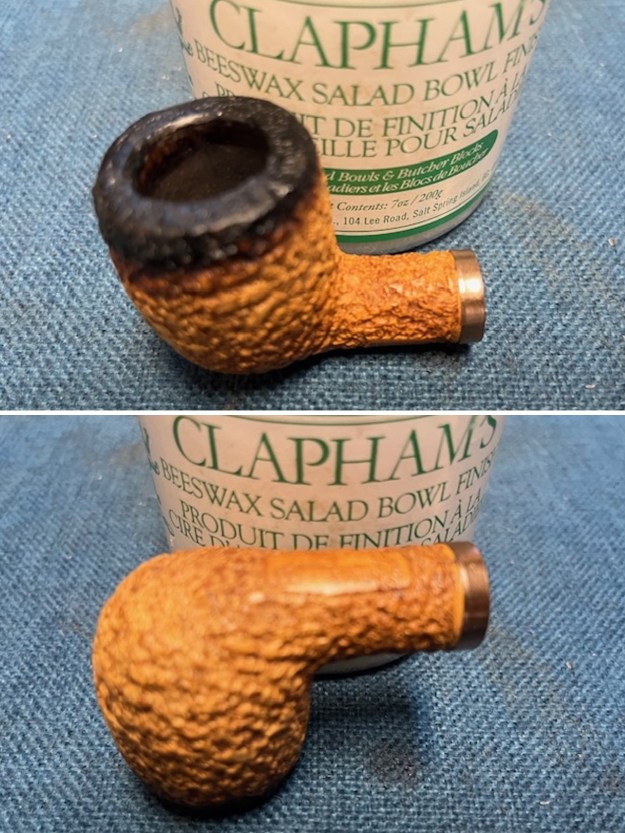
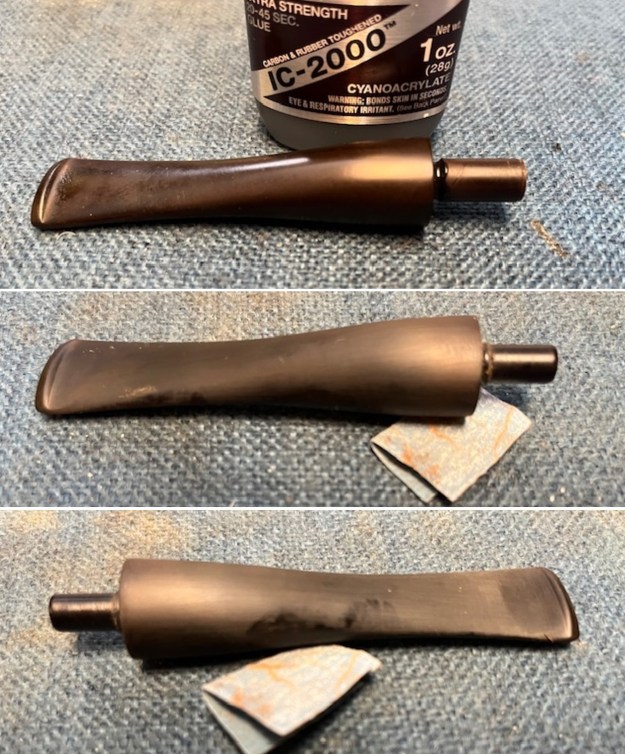
 I set the bowl aside and turned my attention to the stem. I filled in the gap of the replacement tenon in the stem with black CA glue. I also gave the surface of the tenon a coat of the glue to build it up for a snug fit in the shank. Once the glue cured I used a piece of 220 grit sandpaper to smooth out the joint and the surface of the tenon. Once finished the stem fit snugly in the shank.
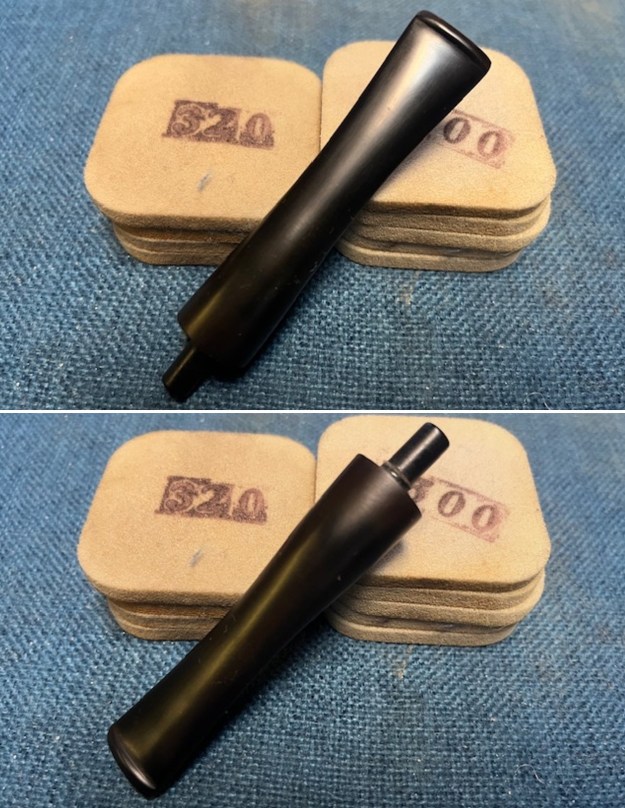
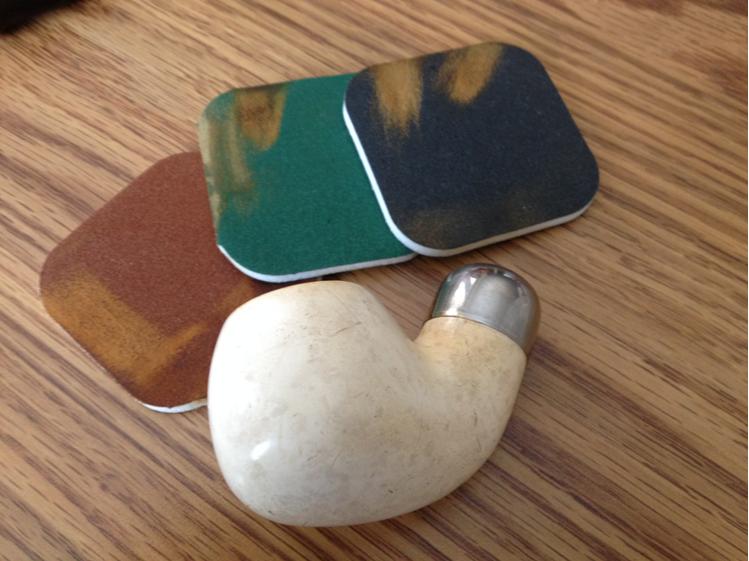
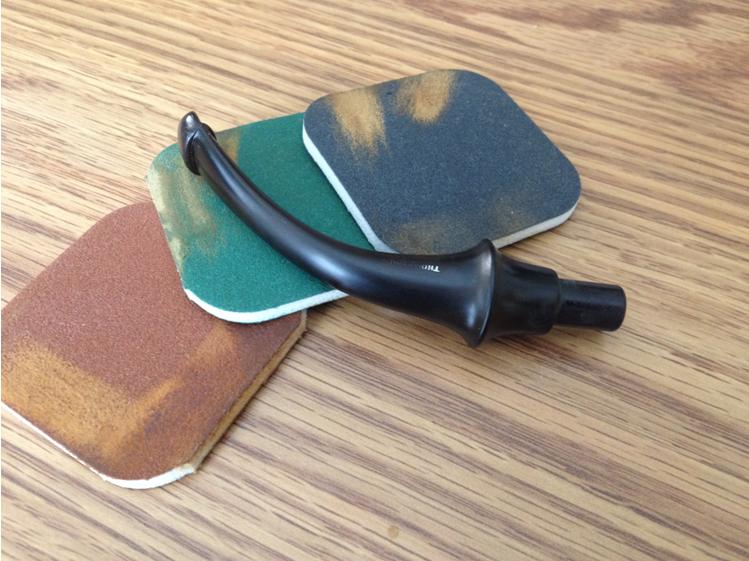
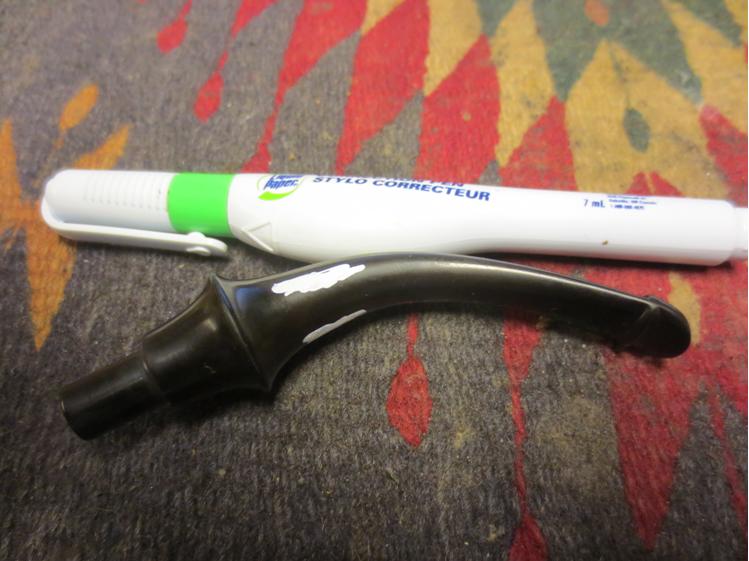
 I sanded the stem with 320-3500 grit sanding pads to remove the tooth marks and chatter against the button edge and sand the logo. It worked well on the tooth marks but did little on the logo on the stem top.
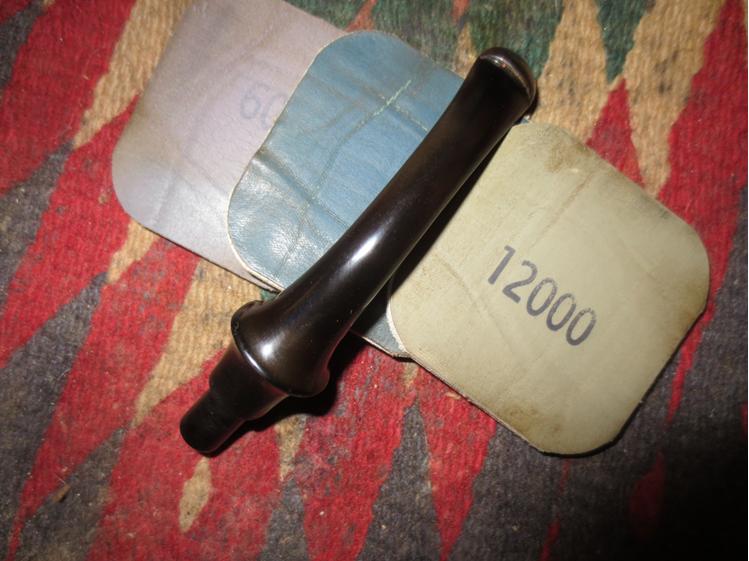
 I polished the stem with micromesh sanding pads – dry sanding with 1500-12000 grit sanding pads. I wiped it down after each sanding pad with Obsidian Oil. I polished it with Before & After Pipe Stem Polish – both Fine and Extra Fine.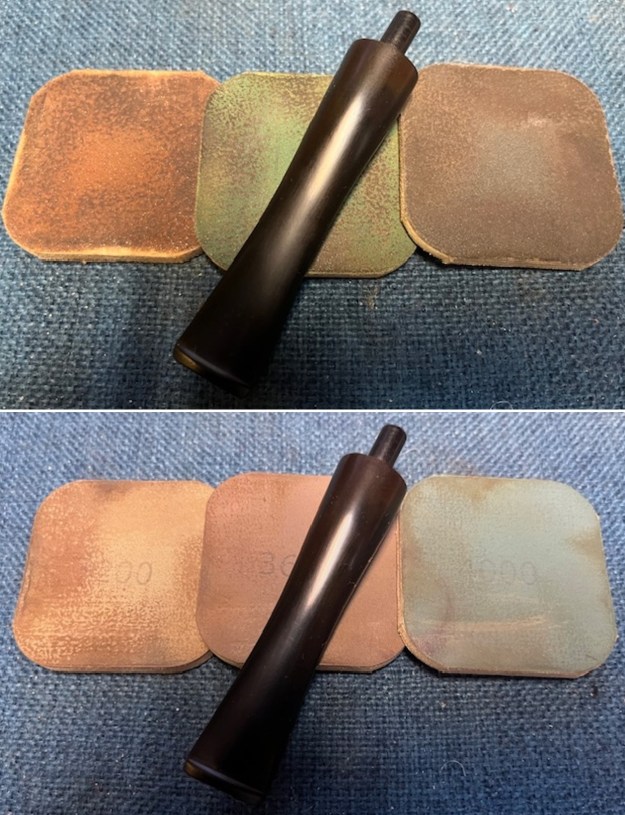
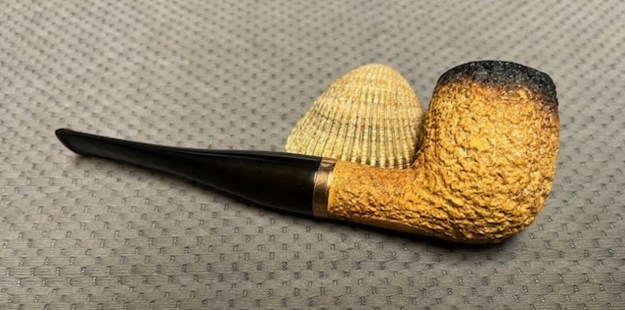
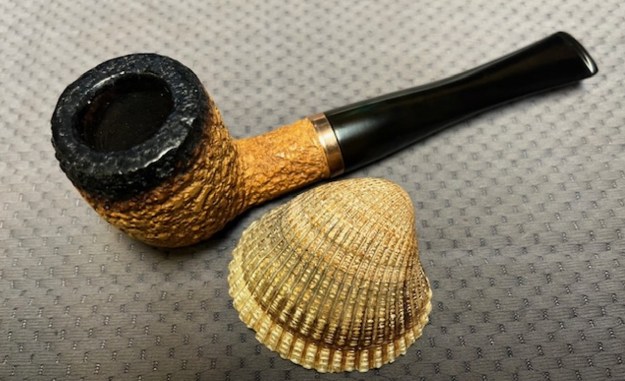
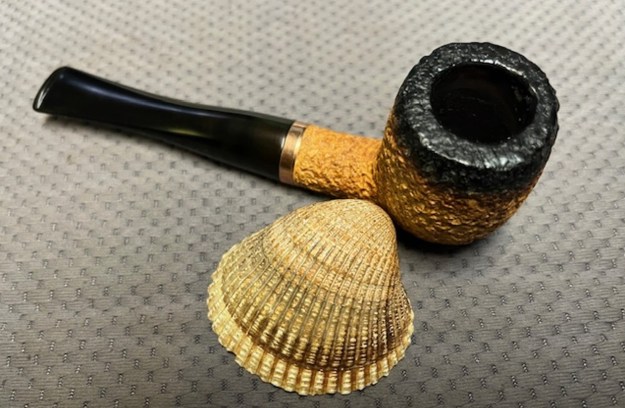
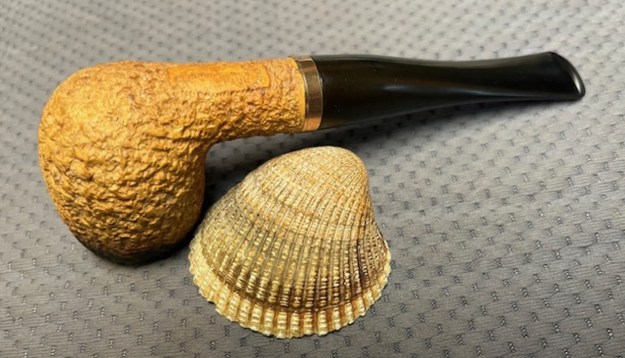
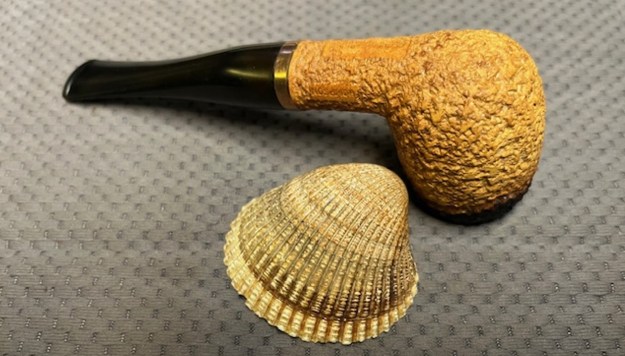
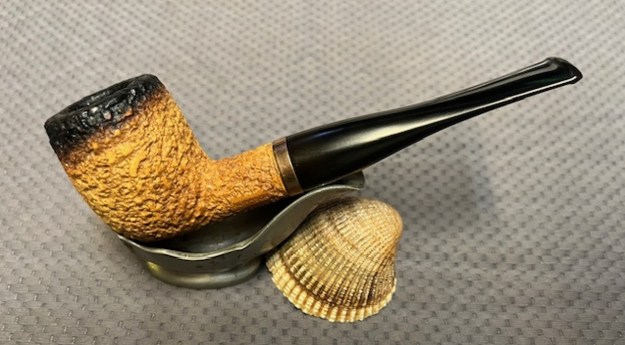
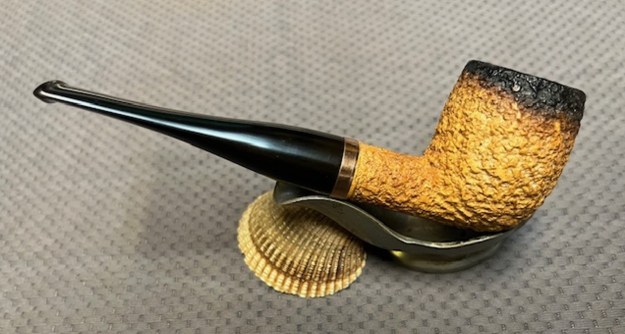
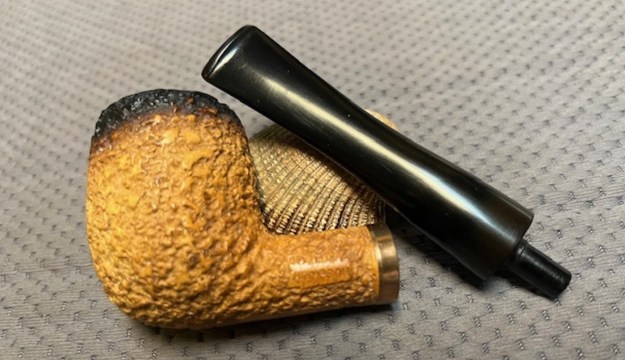
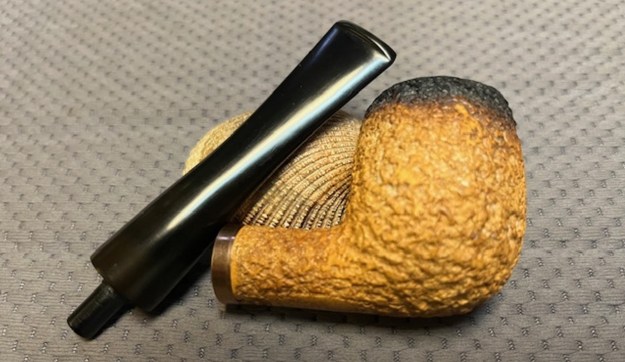
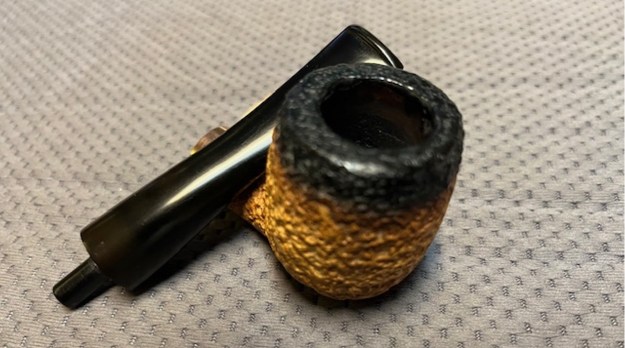
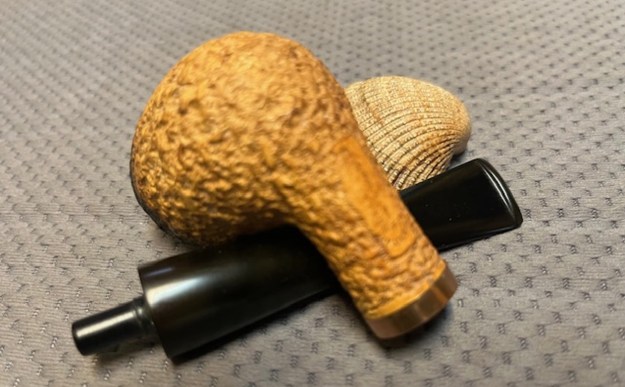
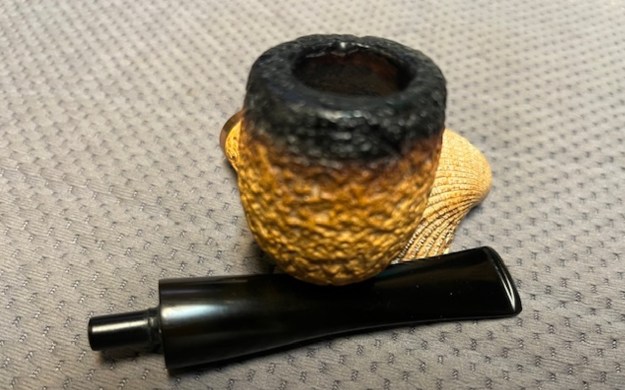
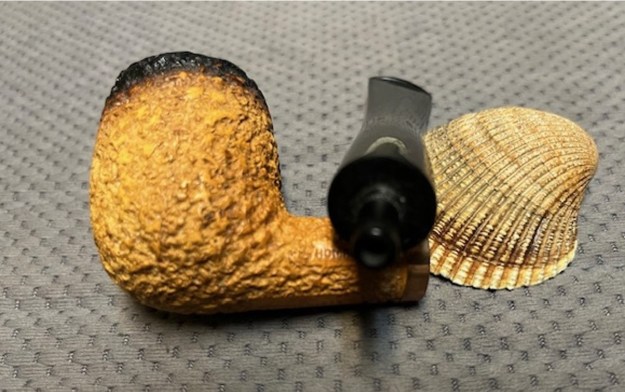
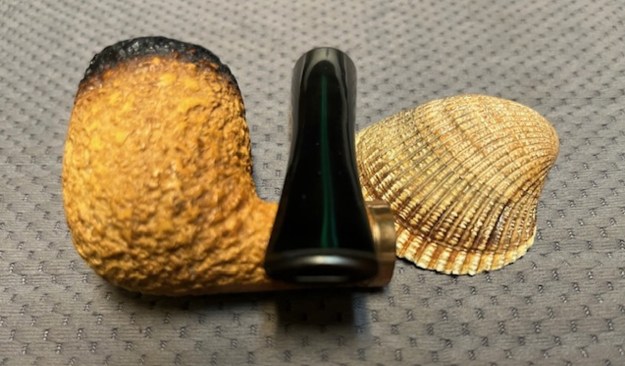
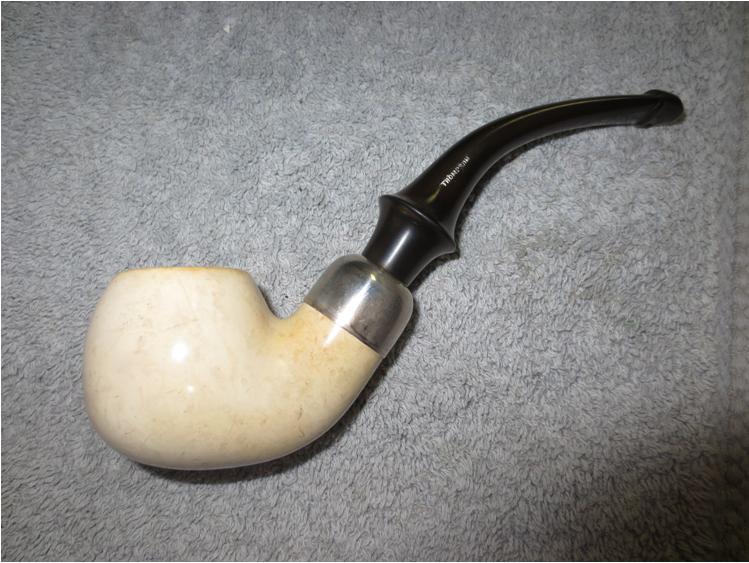
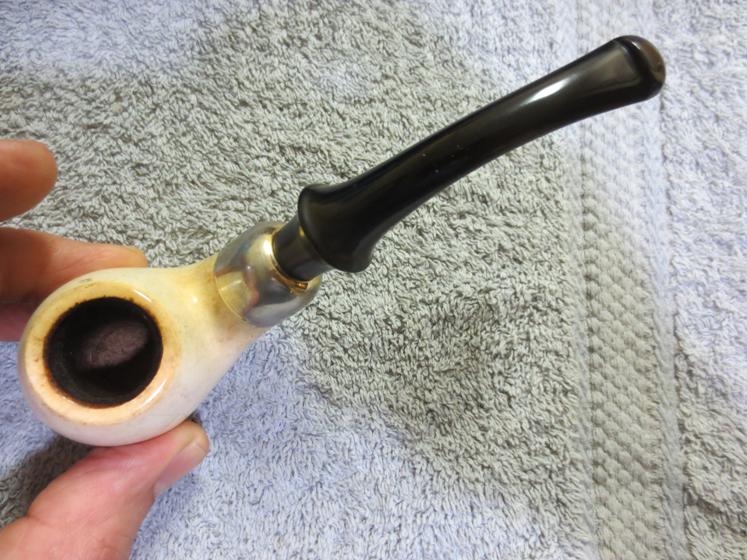
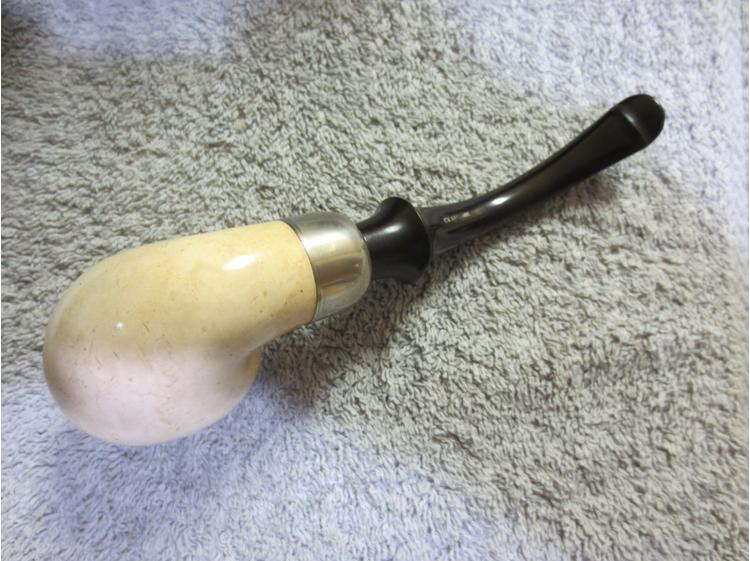
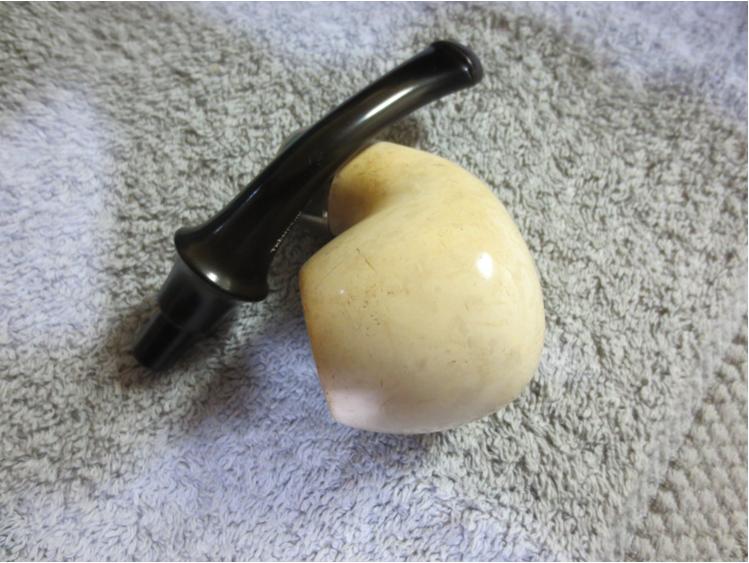
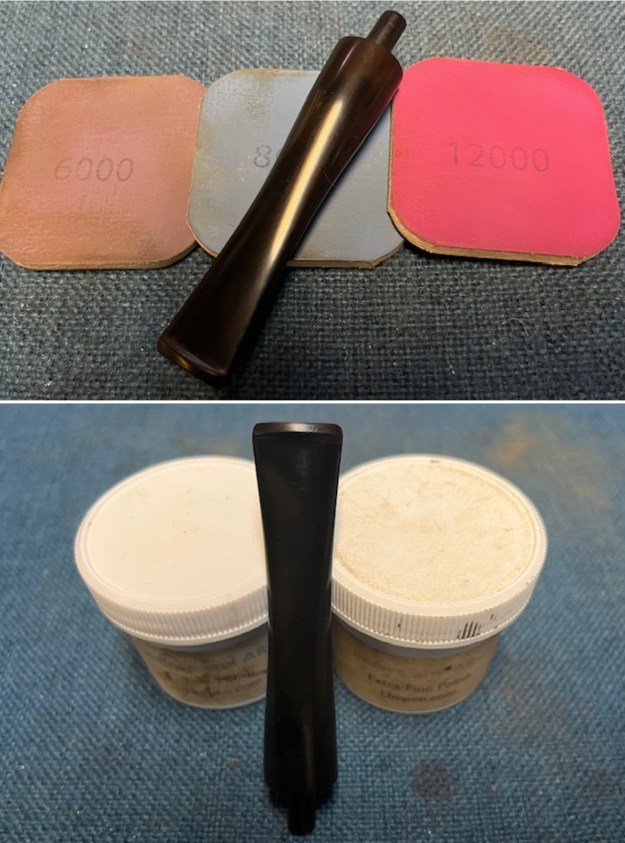 I put the stem back on the Rusticated Thompson Genuine Block Meerschaum Gt. Britain Billiard and took it to the buffer. I buffed the stem with Blue Diamond to polish the vulcanite. Blue Diamond does a great job on the smaller scratches that remain on the surface. I gave the bowl multiple coats of Clapham Wax and the stem several coats of carnauba wax and buffed the pipe with a clean buffing pad to raise the shine. I hand buffed it with a microfiber cloth to deepen the shine. I am amazed at how well it turned out. The finished pipe is shown in the photos below. This is a beautiful Thompson Genuine Meerschaum Billiard with a smooth finish and the vulcanite taper stem has a great look. The dimensions of the pipe are Length: 5 ½ inches, Height: 1 ¾ inches, Outside diameter of the bowl: 1 ¼ inches, Chamber diameter: ¾ of an inch. The weight of the pipe is 1.83 ounces/52 grams. This is another pipe that I will be putting on the rebornpipes online store in the Meerschaum and Ceramic Pipes Section shortly, if you are interested in adding it to your collection. Thanks for walking through the restoration with me on this beauty!
As always, I encourage your questions and comments as you read the blog. Thanks to each of you who are reading this blog. Remember we are not pipe owners; we are pipe men and women who hold our pipes in trust until they pass on into the trust of those who follow us.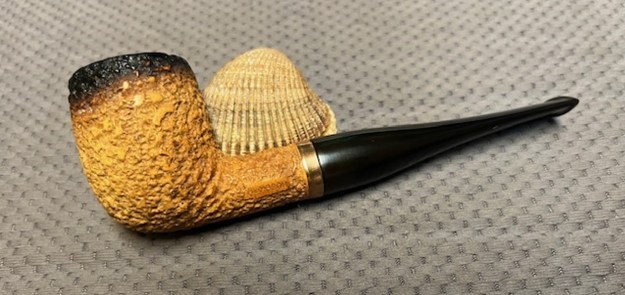


 rebornpipes