
Blog by Steve Laug
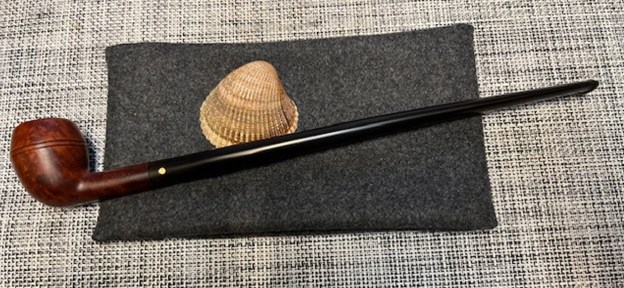
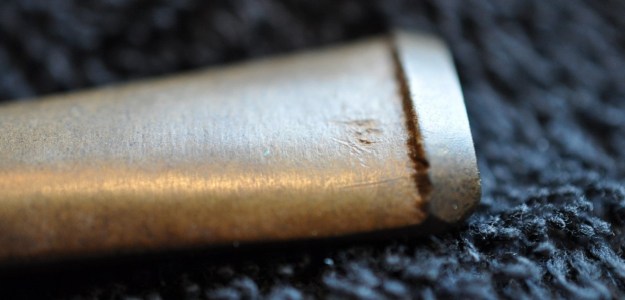
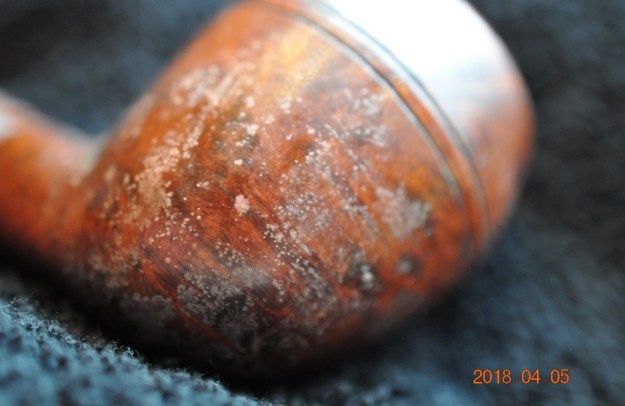
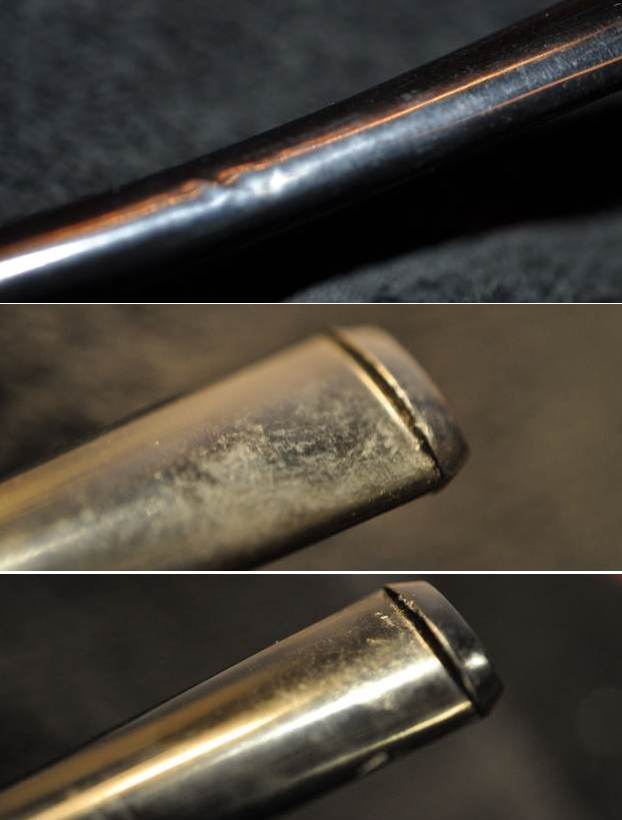
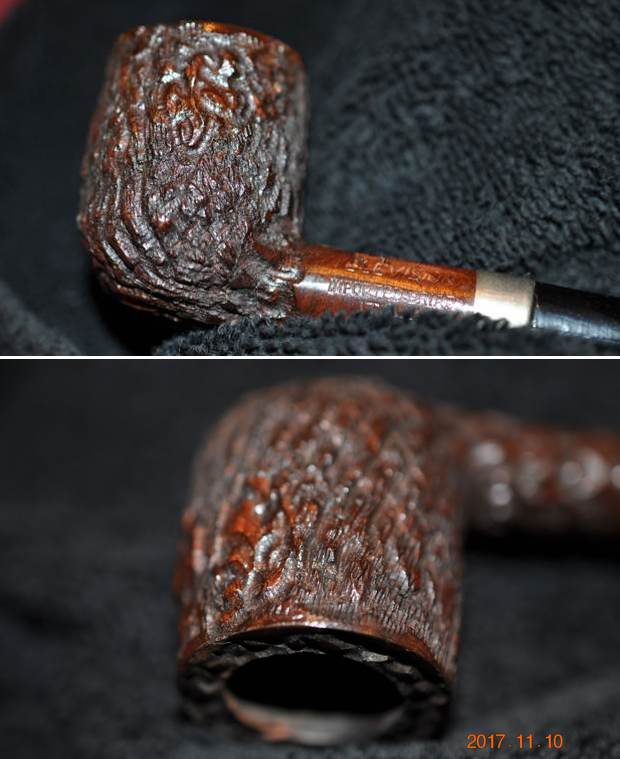
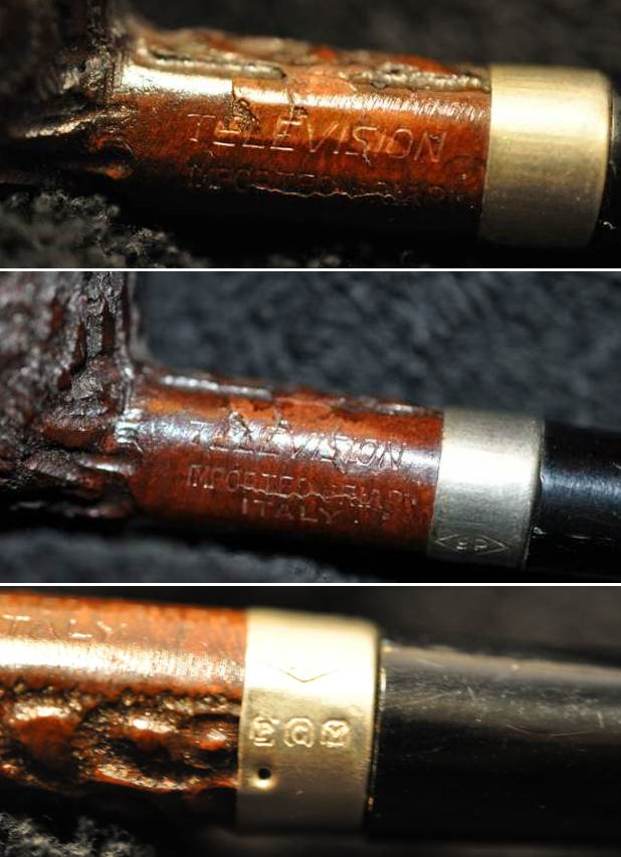
The next pipe on the table was purchased from a fellow in St. Leonard, Maryland, USA on 03/24/2018. It is a nice looking Smooth Rhodesian Churchwarden with twin rings around the cap on the bowl and a long straight stem. It is stamped on the left side of the shank and reads TELEVISION. On the right side it is stamped Imported Briar [over] Italy. The stamping is very clear and readable. The finish had a spotty coat of varnish around the rim, sides and shank and several small fills on the left side of the shank and underside. The bowl had a thin cake and dust and debris. The rim top had spots of lava on it and was dirty. The rest of the bowl and shank. The stem was acrylic and in decent condition with some ripples in the underside from when it had been heated to bend it. It had some tooth chatter and marks on both sides near the button was also dirty and covered with bubbly varnish and debris. Jeff took photos of the pipe when he unpacked it and before he started his clean up work. It is a great looking piece of briar. Jeff took photos of the bowl and rim top to show the cake in the light cake bowl and the debris in the finish. He also took photos of the stem to show the nicks and dents stem surface s well as the light tooth marks and chatter on the vulcanite stem.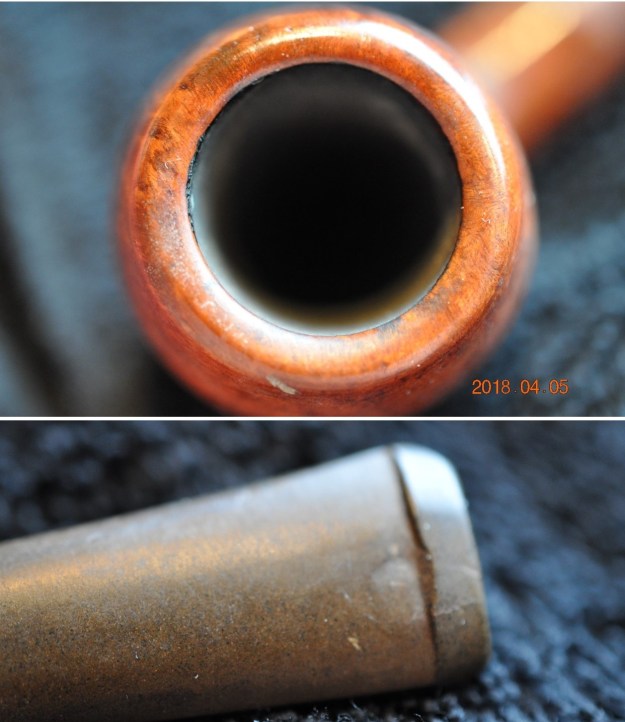
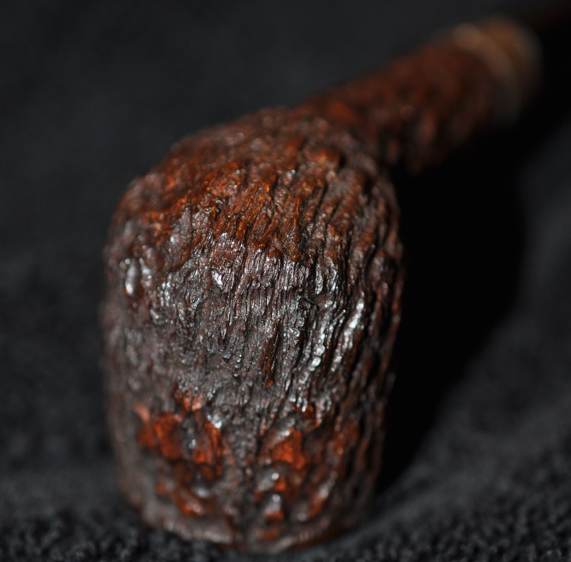
 He took photos of the bowl and heel to show the condition of the finish. Though the photos show the spotty varnish coat the grain underneath actually looks very good underneath.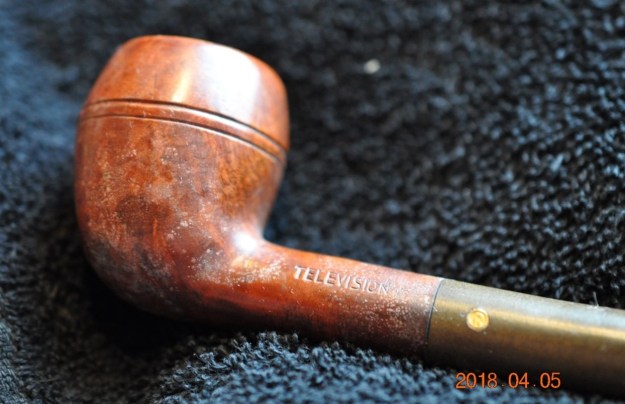
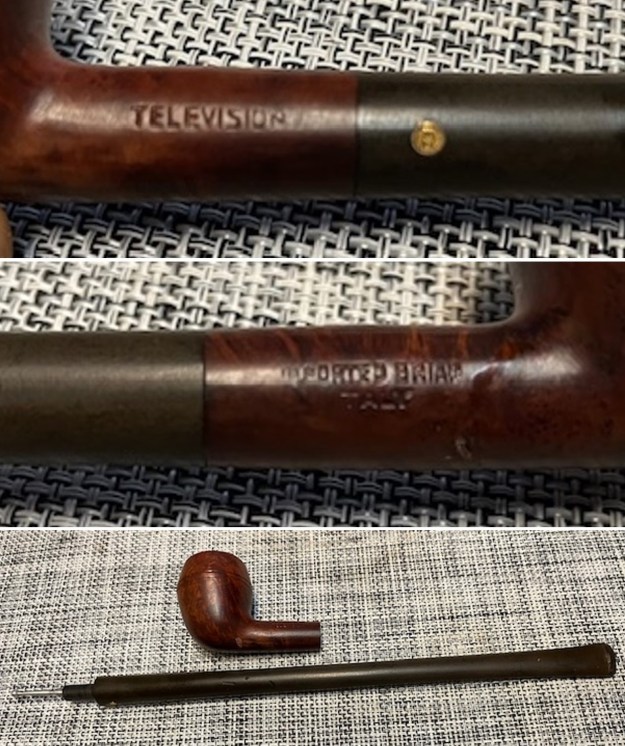
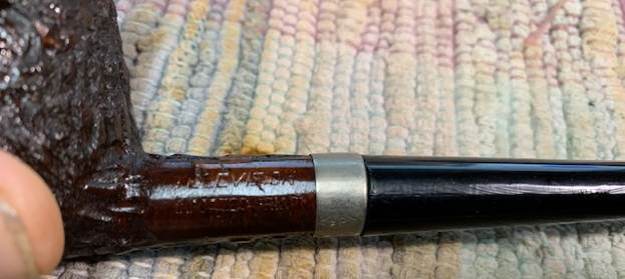
 Jeff took photos of the stamping on the sides of the shank. It read as noted above and was readable. You can also see the spots and crackle in the varnish coat on the shank. There is also a gold disc on the left side of the taper shank with an R stamped in the disc.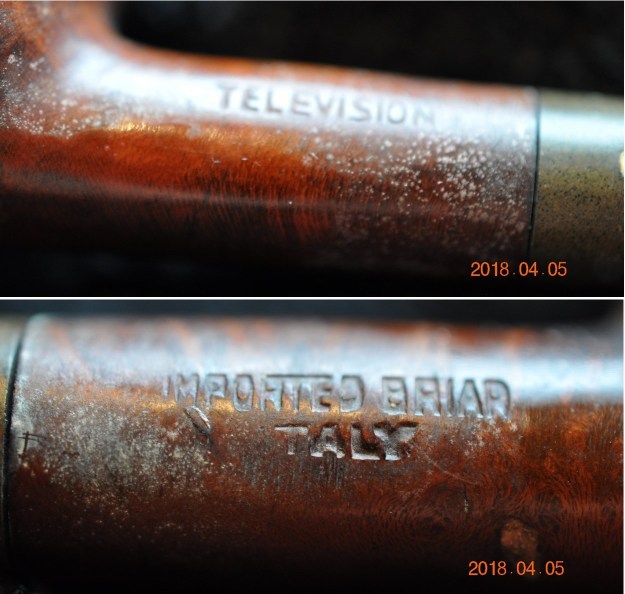
 I have worked on quite a few Television Pipes over the years – old timers, billiards and several Churchwarden pipes. I checked all the usual sites for information and I could find nothing about the brand. I decided to leave the hunt behind and just work on the pipe.
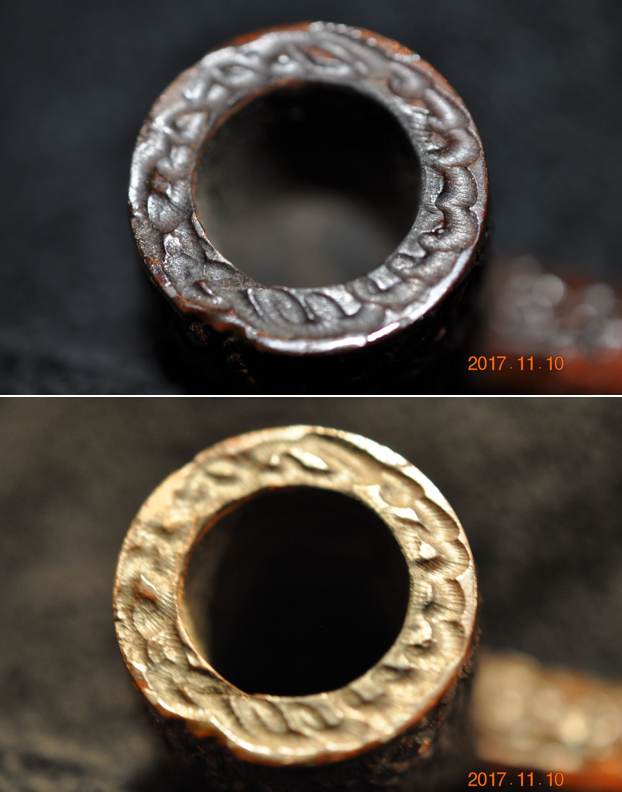
I took some photos of the pipe as I took it out of the box. Here is what I saw. I slid it out of the wrapper around it. I could see that Jeff had cleaned it well. The bowl had been reamed with a PipNet reamer and Savinelli Fitsall Pipe Knife. He had scrubbed the exterior with undiluted Murphy’s Oil Soap. He rinsed it with warm water. He cleaned out the internals with alcohol, cotton swabs and pipe cleaners. He cleaned out the airway in the stem with pipe cleaners and alcohol. The grain on the bowl is quite nice with just a few small fills that are solid and well blended in with the surrounding briar. I took photos of the pipe before I started my work on it. 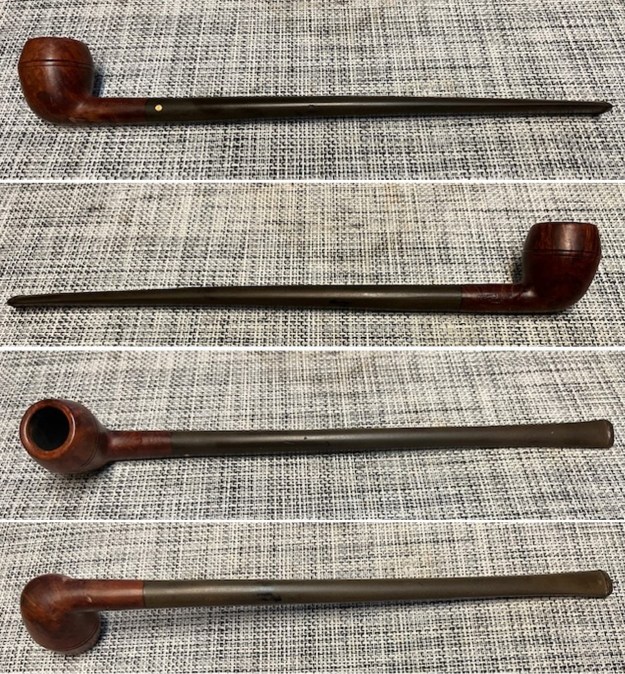 The rim top had cleaned up very well and the rim top and edges looked very good. There were still shiny spots on the rim and in the rings. The stem was in decent condition other than light tooth chatter on both sides at the button. The stem also has some nicks on the sides midstem. The stem was vulcanite and has some light oxidation remaining.
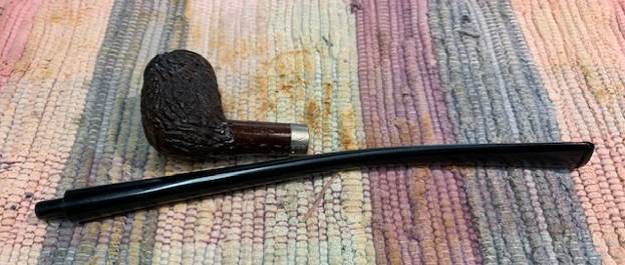
 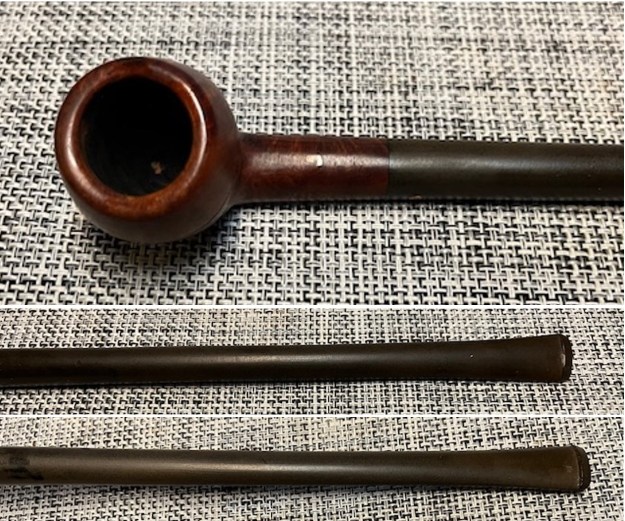 I took a photo of the stamping on the smooth panel on the left side of the shank. It is clear and readable as noted above. I removed the stem and took a photo of the pipe to show the proportion of the stem to the bowl. It is a nice looking pipe.
 I took some photos of the fills in the underside and up the side of the shank next to the bowl junction. They both were damaged and shrunken.
 I repaired the two fills with clear CA glue and some briar dust. Once the repairs hardened I sanded them with 220 grit sandpaper to smooth them out and start blending them into the surface.
 I wiped down the bowl with acetone to remove the s potty varnish on the briar. I avoided wiping down the two repaired areas so the acetone would not dissolve the repairs.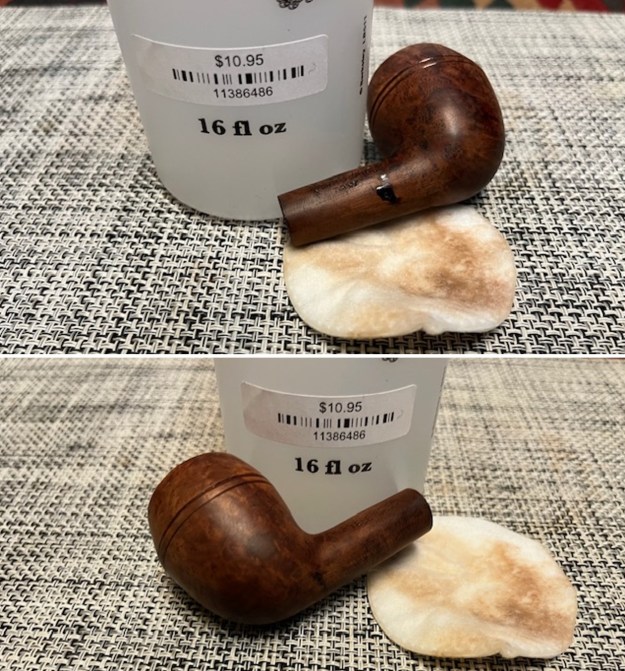
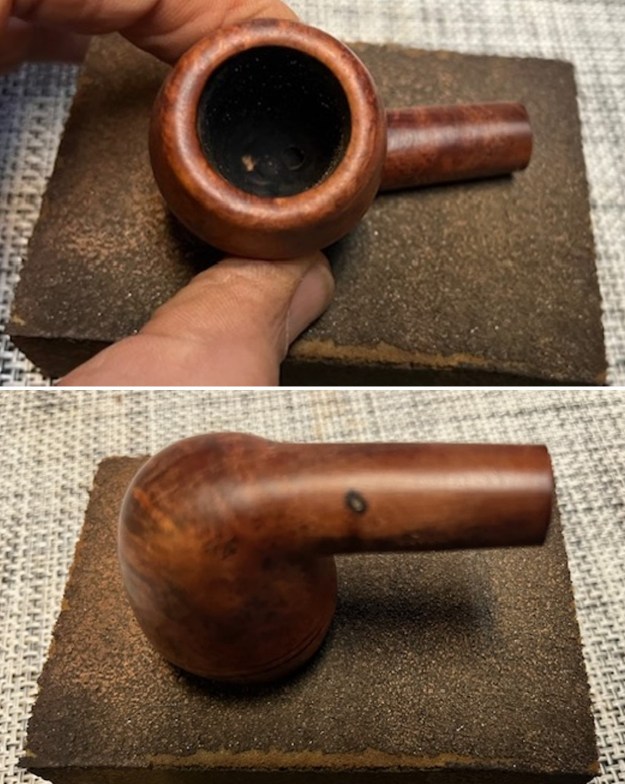
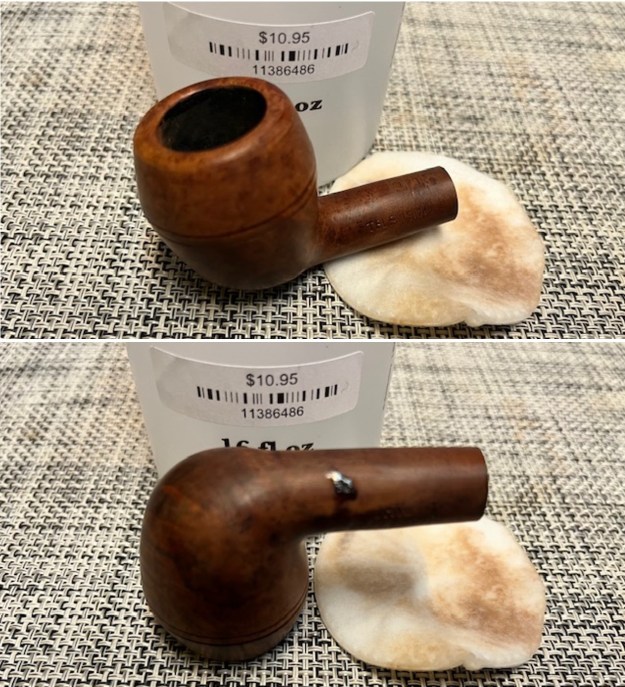 I sanded the bowl with a Medium and a Fine sanding sponge to remove the varnish coat that remained. I also worked over the repaired areas and they began to look very good against the rest of the briar.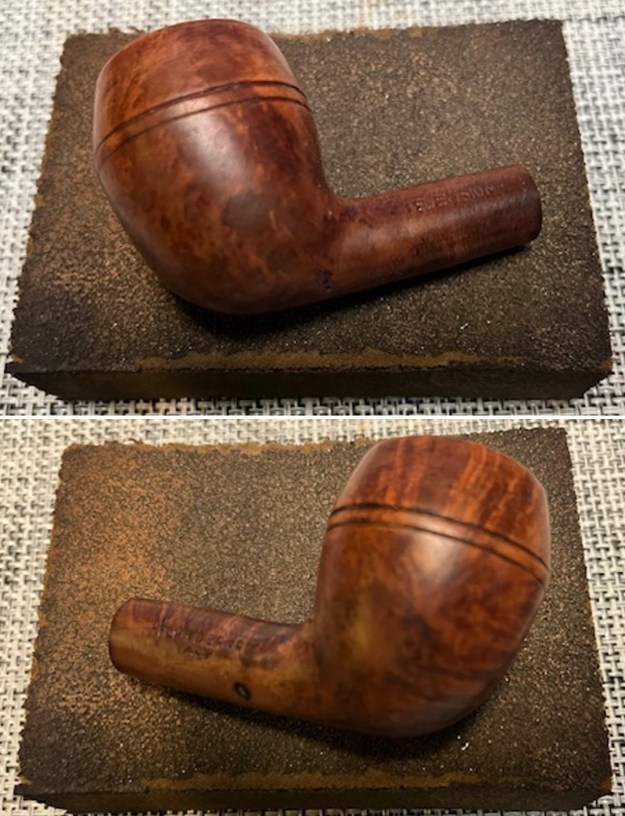
 I polished the bowl with micromesh sanding pads – dry sanding with 1500-12000 grit sanding pads. I wiped the bowl down with a damp cloth after each sanding pad. It began to look much better.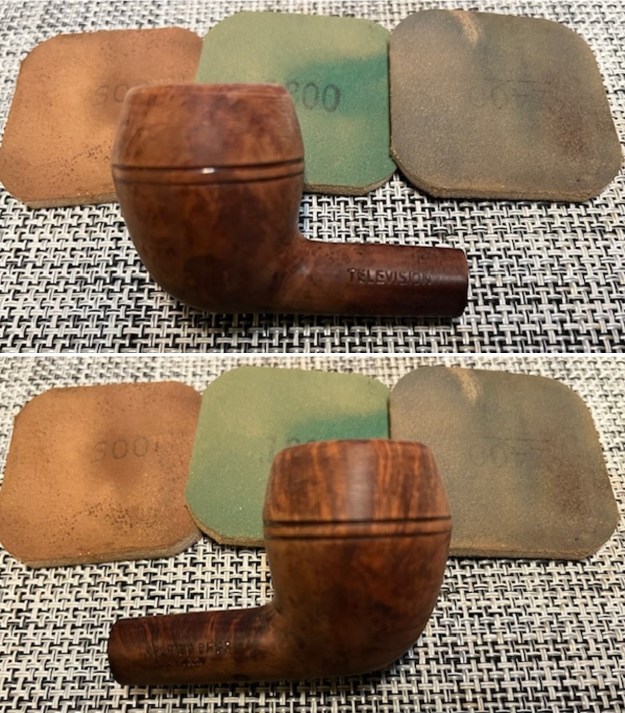
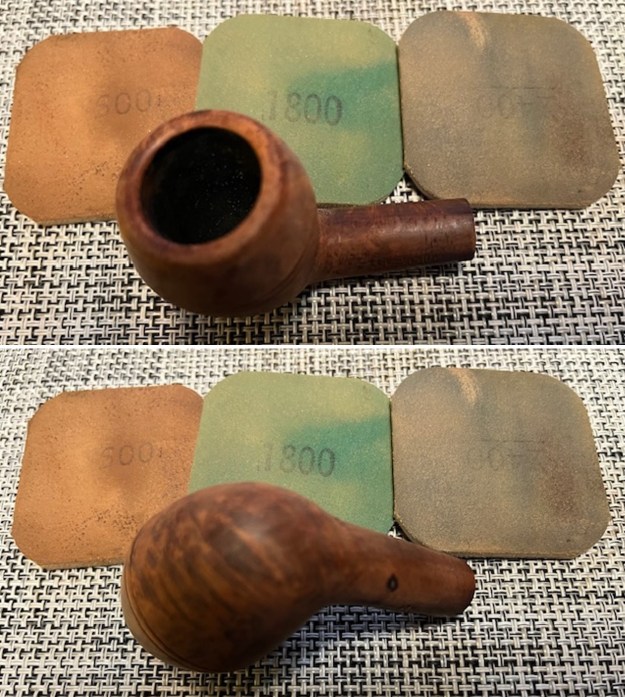
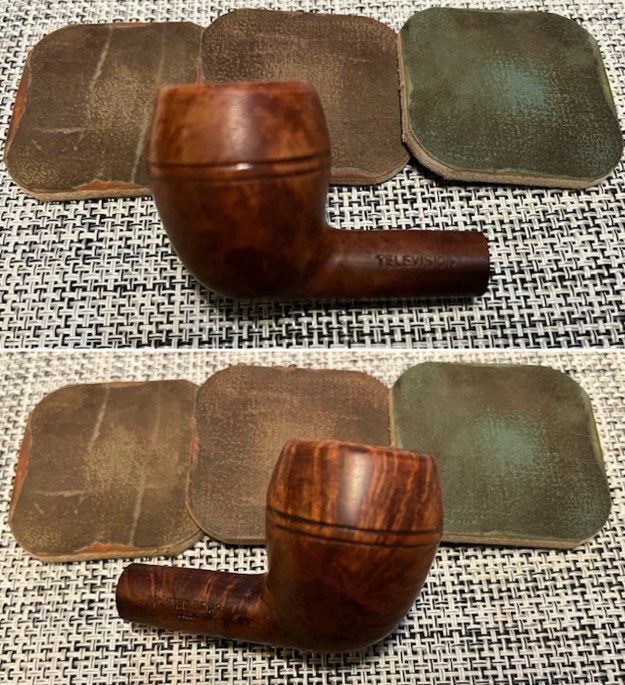
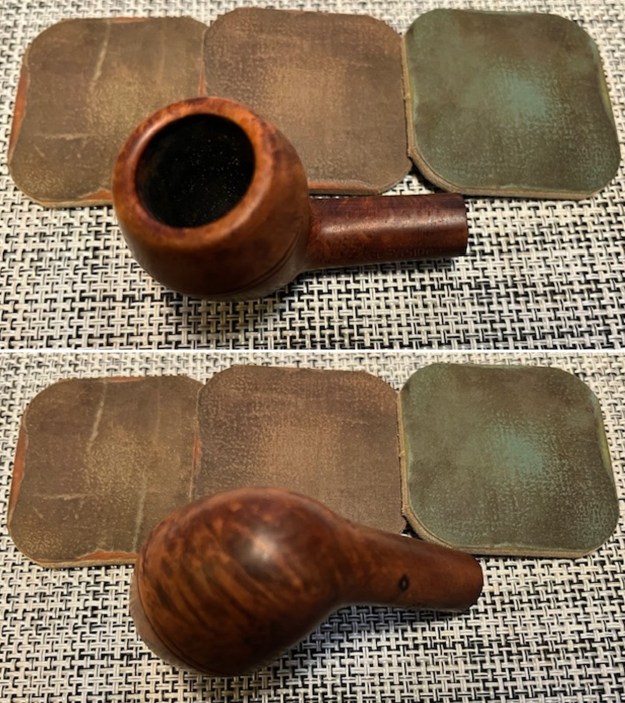
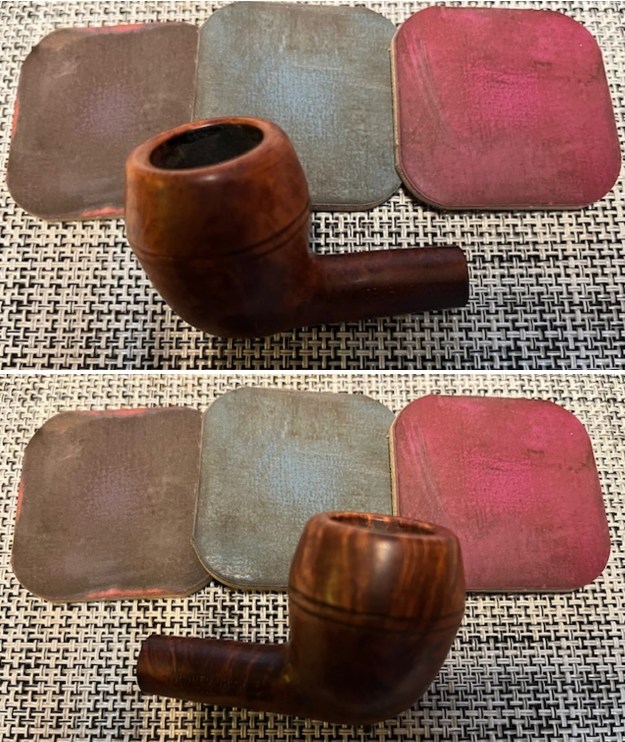
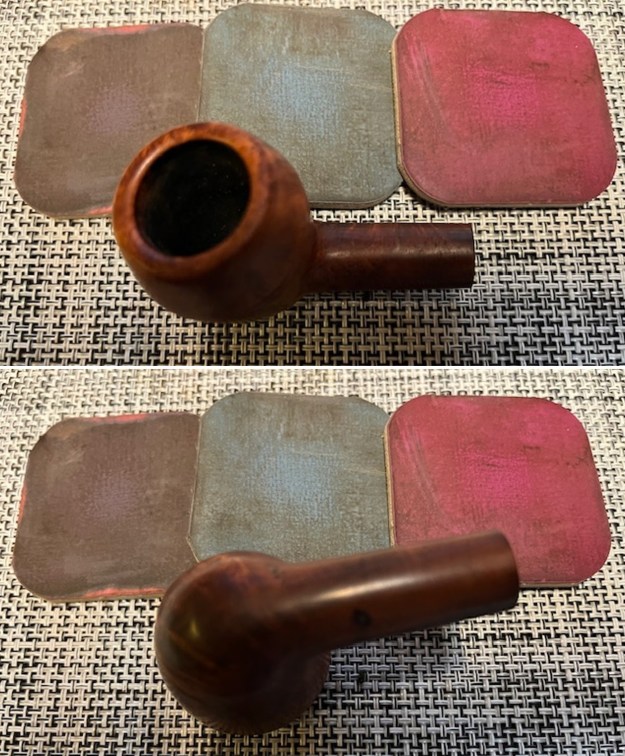 I worked some Before & After Restoration Balm into the surface of the briar and into the twin rings around the bowl cap. I rubbed it on with my fingertips and let it sit doing it is job for 10 minutes. The product works to clean, rejuvenate and preserve the briar. I buffed it off with a soft cloth after the ten minutes. It looked much better at this point.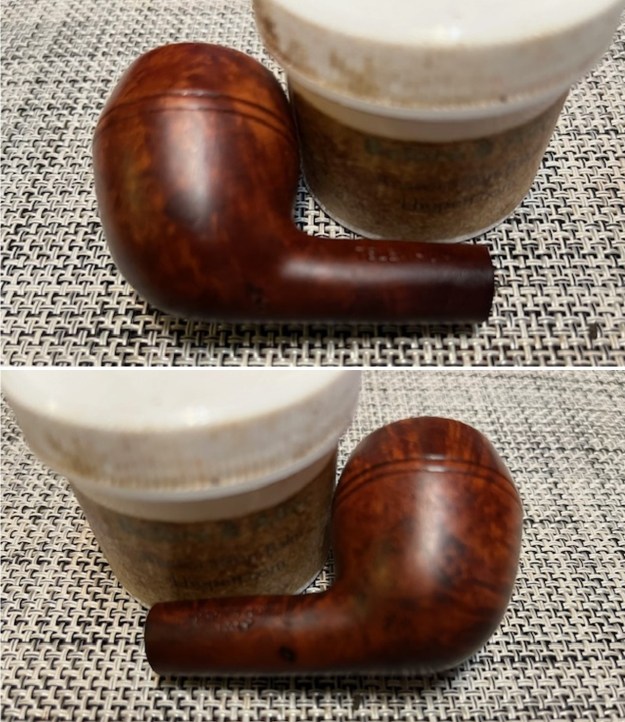

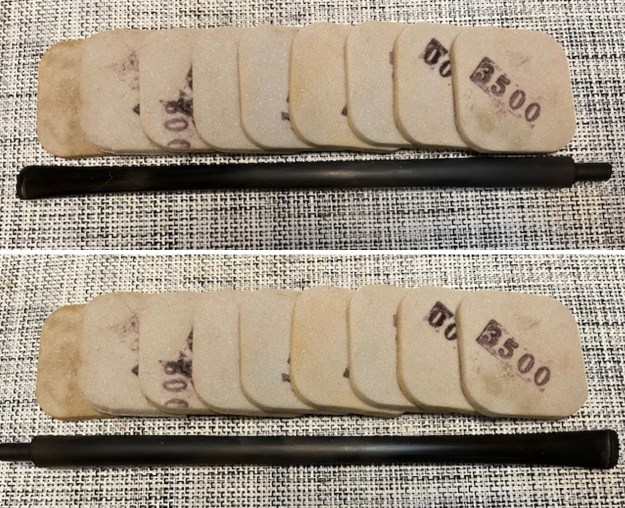
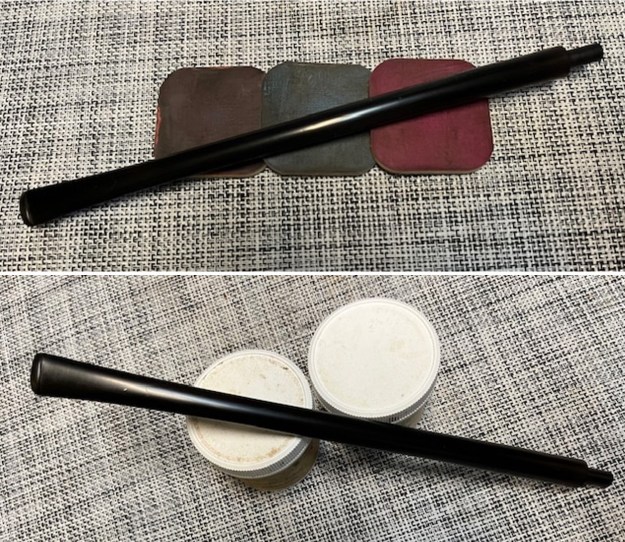
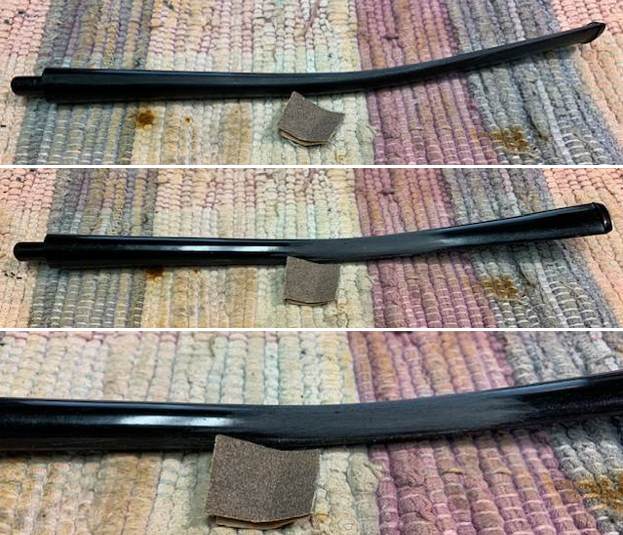
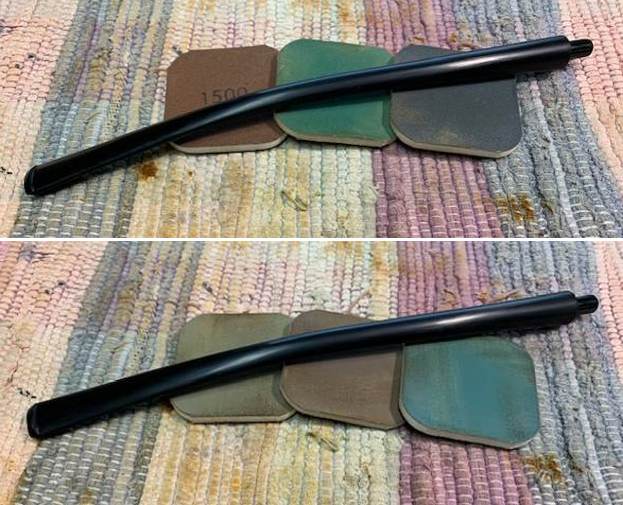
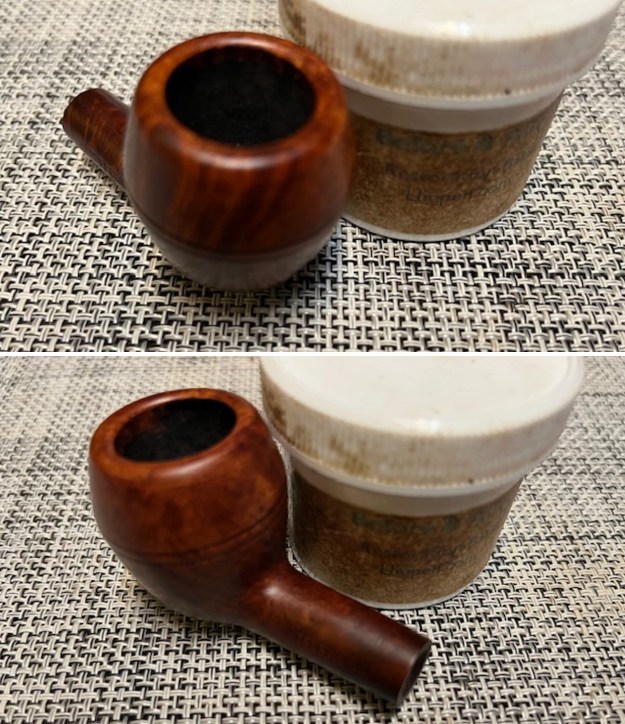 I set the bowl aside and turned my attention to the stem. I removed the stinger and then filled in the deep gouge marks on the stem surface with black CA glue. Once the repairs cured I sanded the stem with the new 320-3500 grit sanding pads to blend the repairs into the stem surface and also to remove the slight oxidation.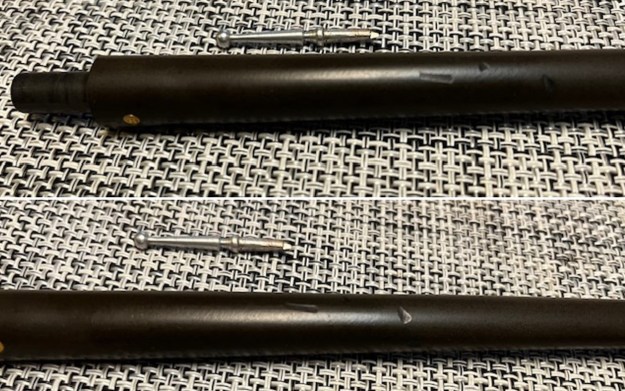
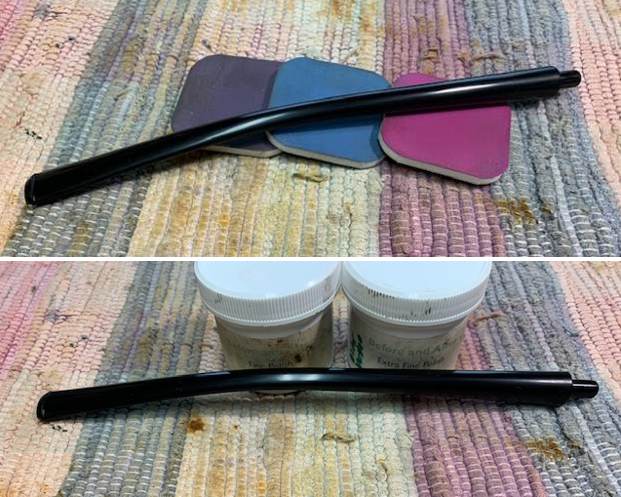
 I polished the stem with micromesh sanding pads – 1500-12000 grit pads. I wiped it down with Obsidian Oil after each sanding pad. I used Before & After Pipe Polish – both Fine and Extra Fine to further polish the stem. I gave it a final coat of Obsidian Oil and set it aside to dry.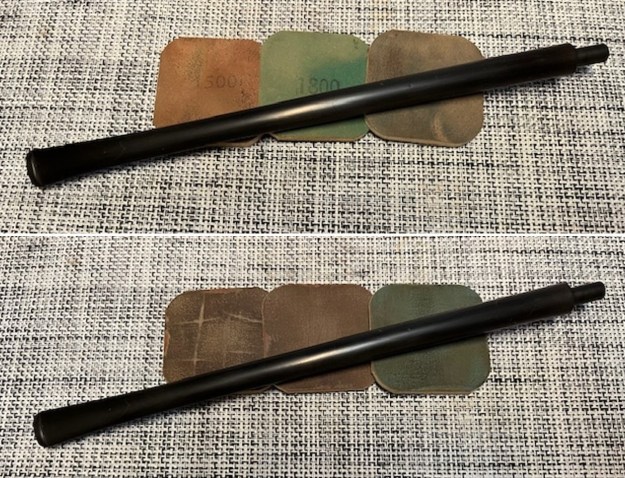
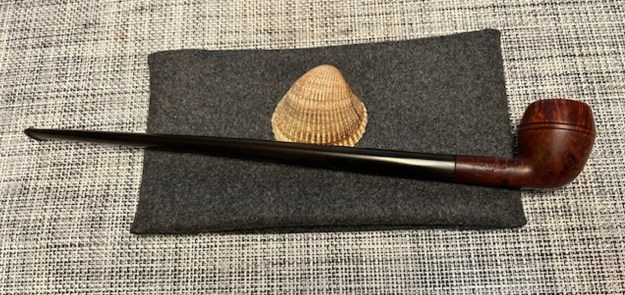
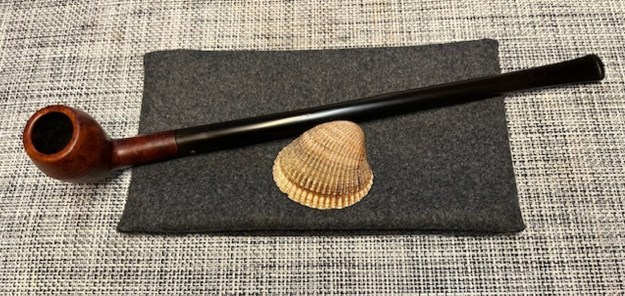
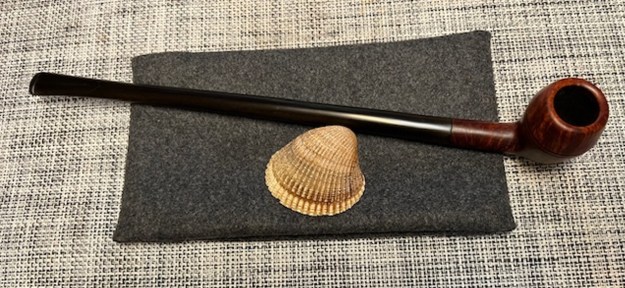
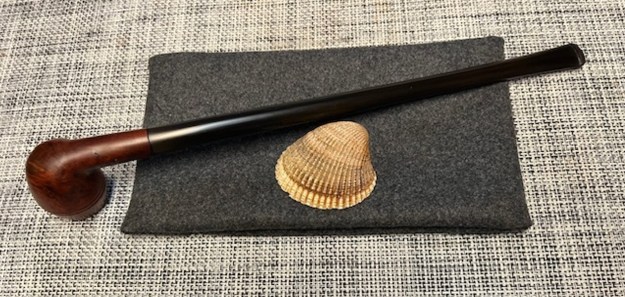
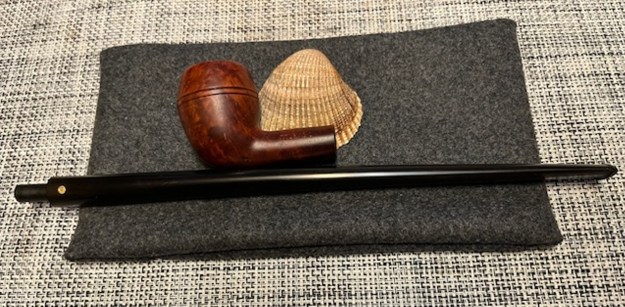
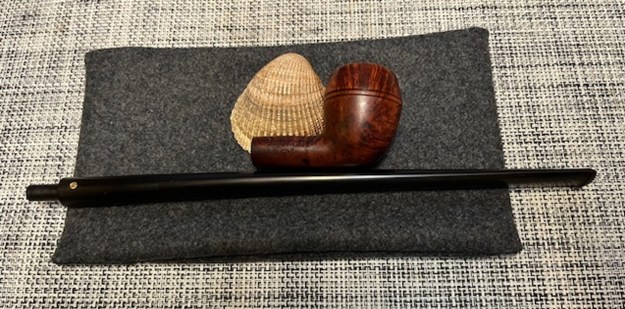
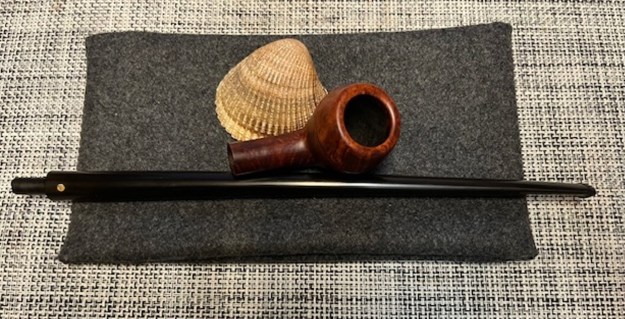
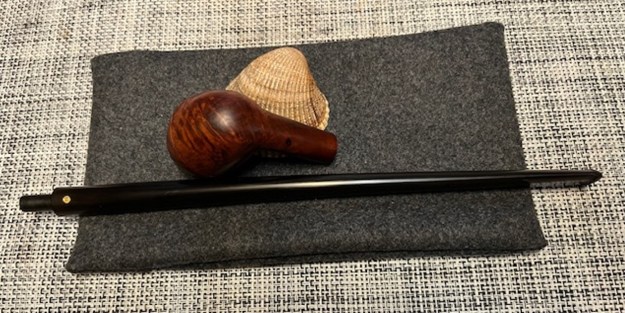
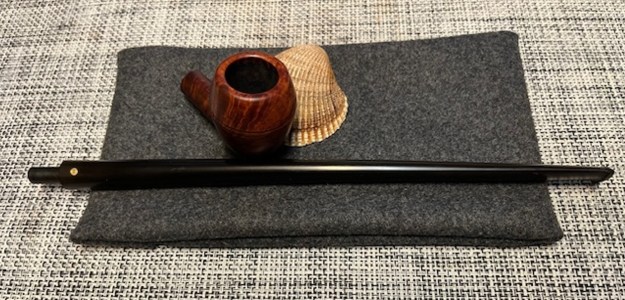
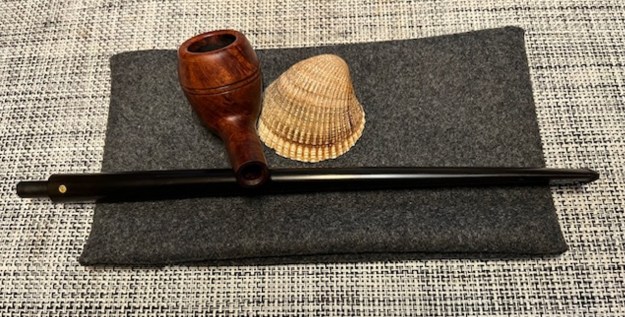
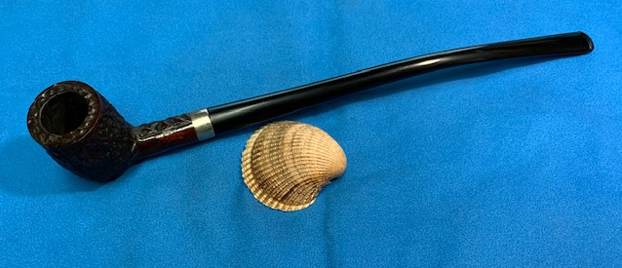
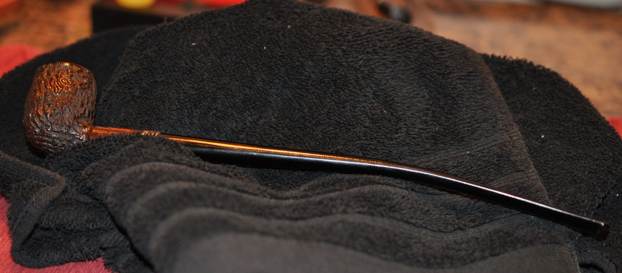
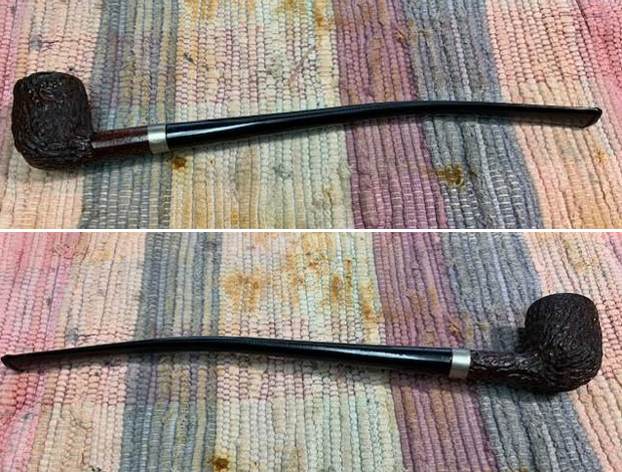
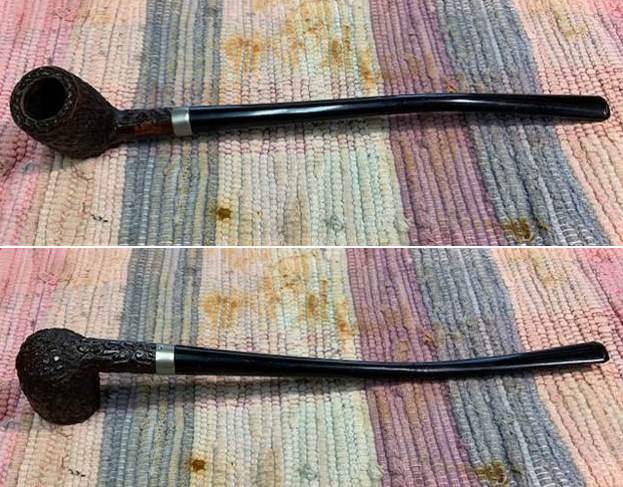
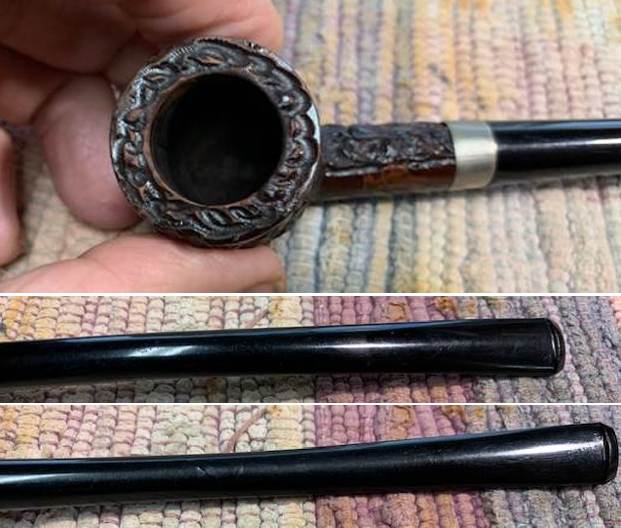
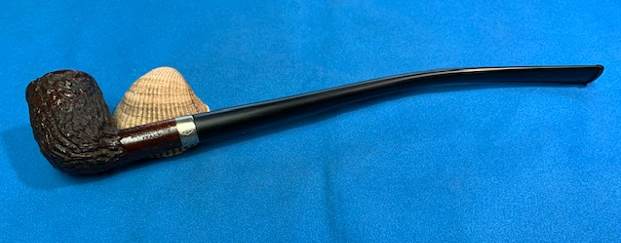
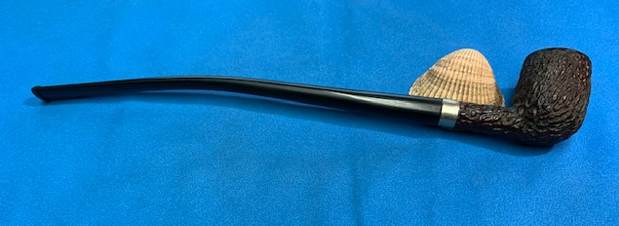
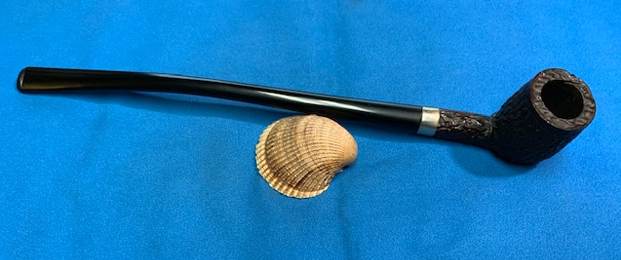
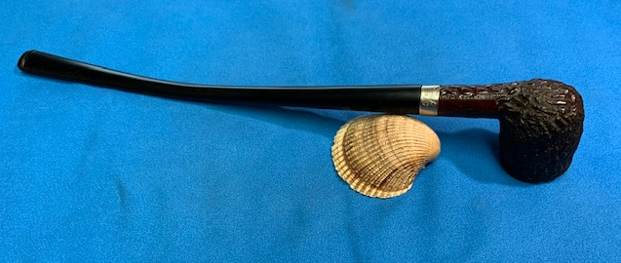
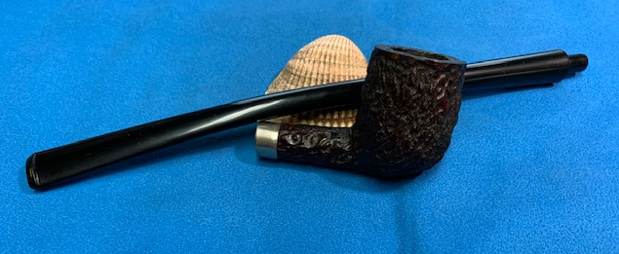
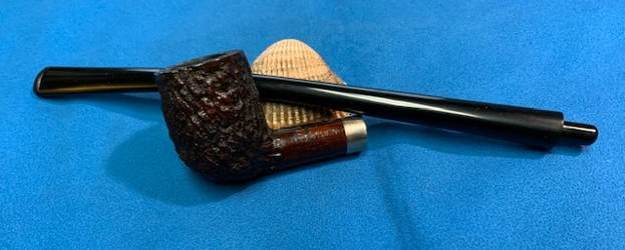
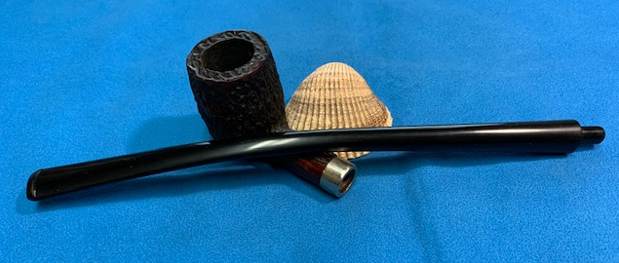
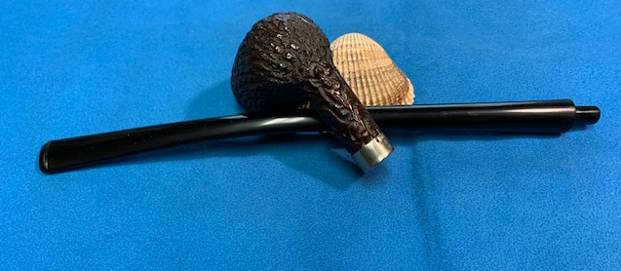
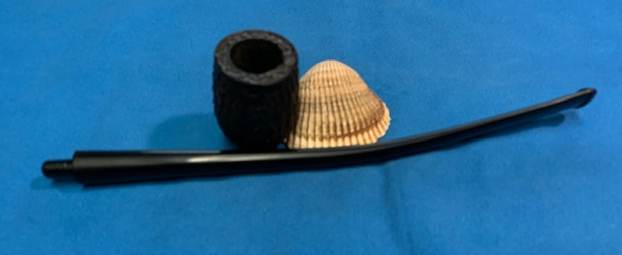
 Once I finished working on the stem and put it back together you can see that this Television Imported Briar Italy Churchwarden is another beautiful pipe. The rusticated briar around the bowl is clean and really tactile. The rim top and edges are in great condition. The rich brown stains gave the grain a sense of depth with the polishing and waxing. The depth of the rustication really stood out. I put the acrylic stem back on the bowl and carefully buffed the pipe with a clean buffing pad to raise the shine. I hand buffed the pipe with a microfiber cloth to deepen the shine. The finished Television Italian Churchwarden is a beauty and feels great in the hand and looks very good. Give the finished pipe a look in the photos below. The dimensions of the pipe are Length: 11 inches, Height: 1 ½ inches, Outside diameter of the bowl: 1 ¼ inches, Chamber diameter: ¾ of an inch. The weight of pipe is 1.66 ounces /47 grams. It is another one that is much more beautiful in person than these photos can capture. I will be putting it on the rebornpipes store soon. Look for it in the Italian Pipe Makers section. If you would like to add it to your collection let me know. Thanks for walking through the restoration with me.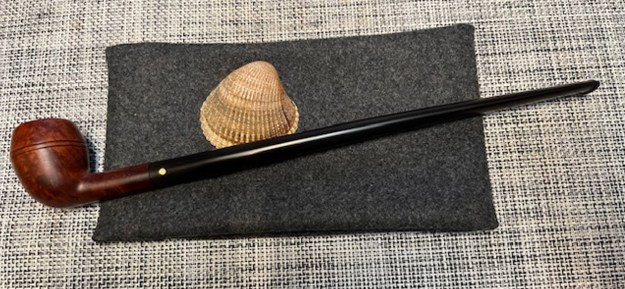




 rebornpipes