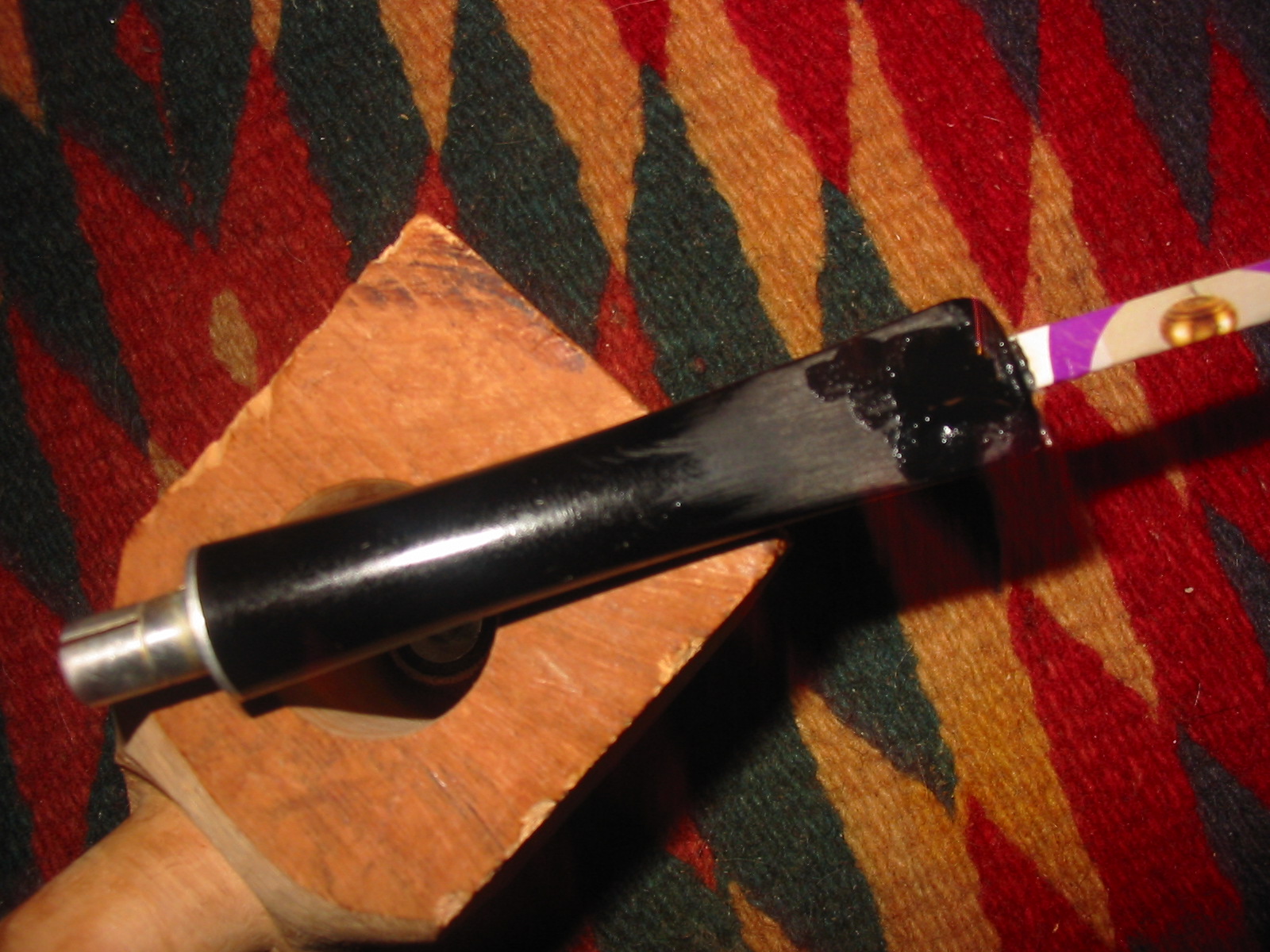
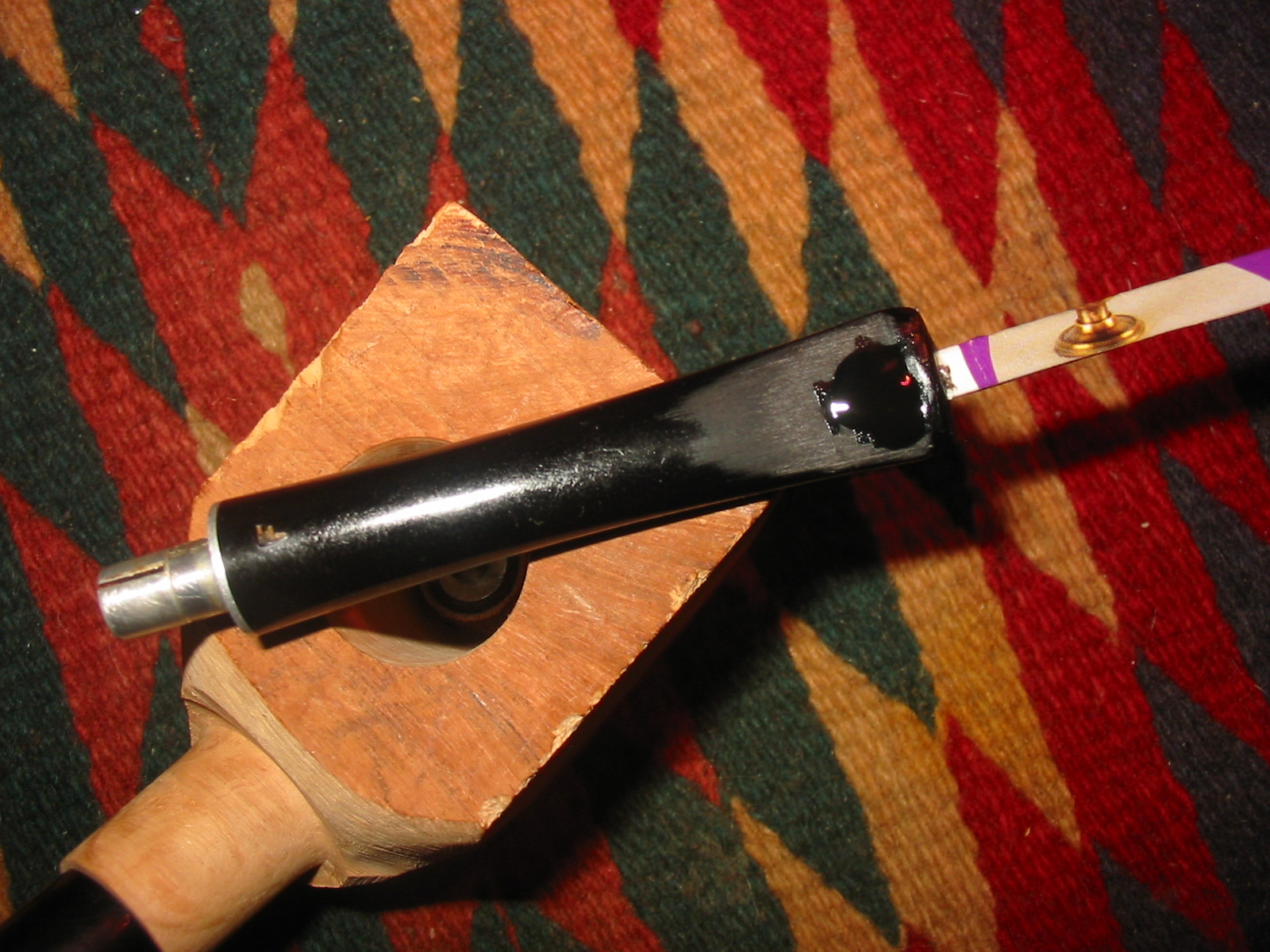
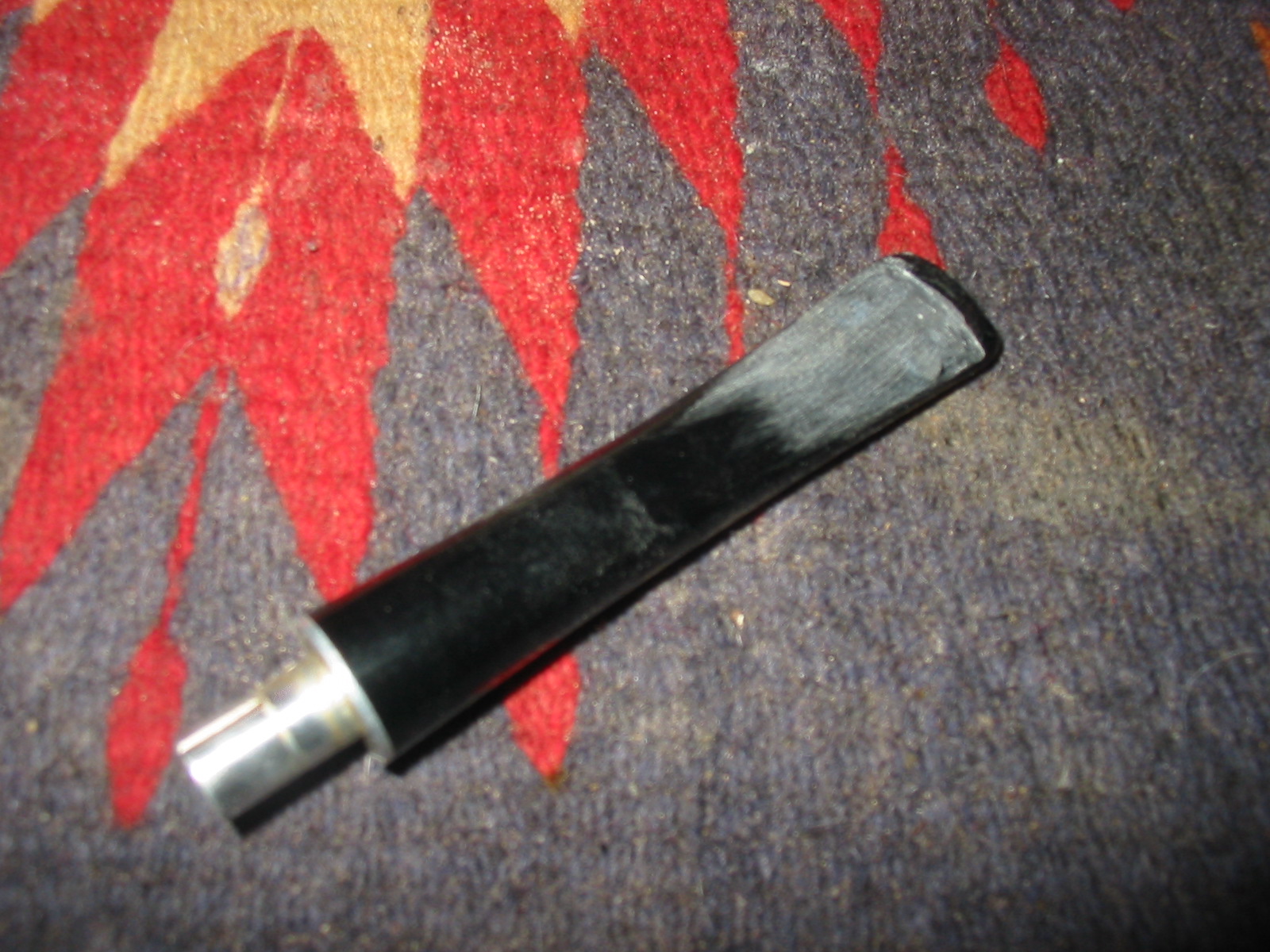
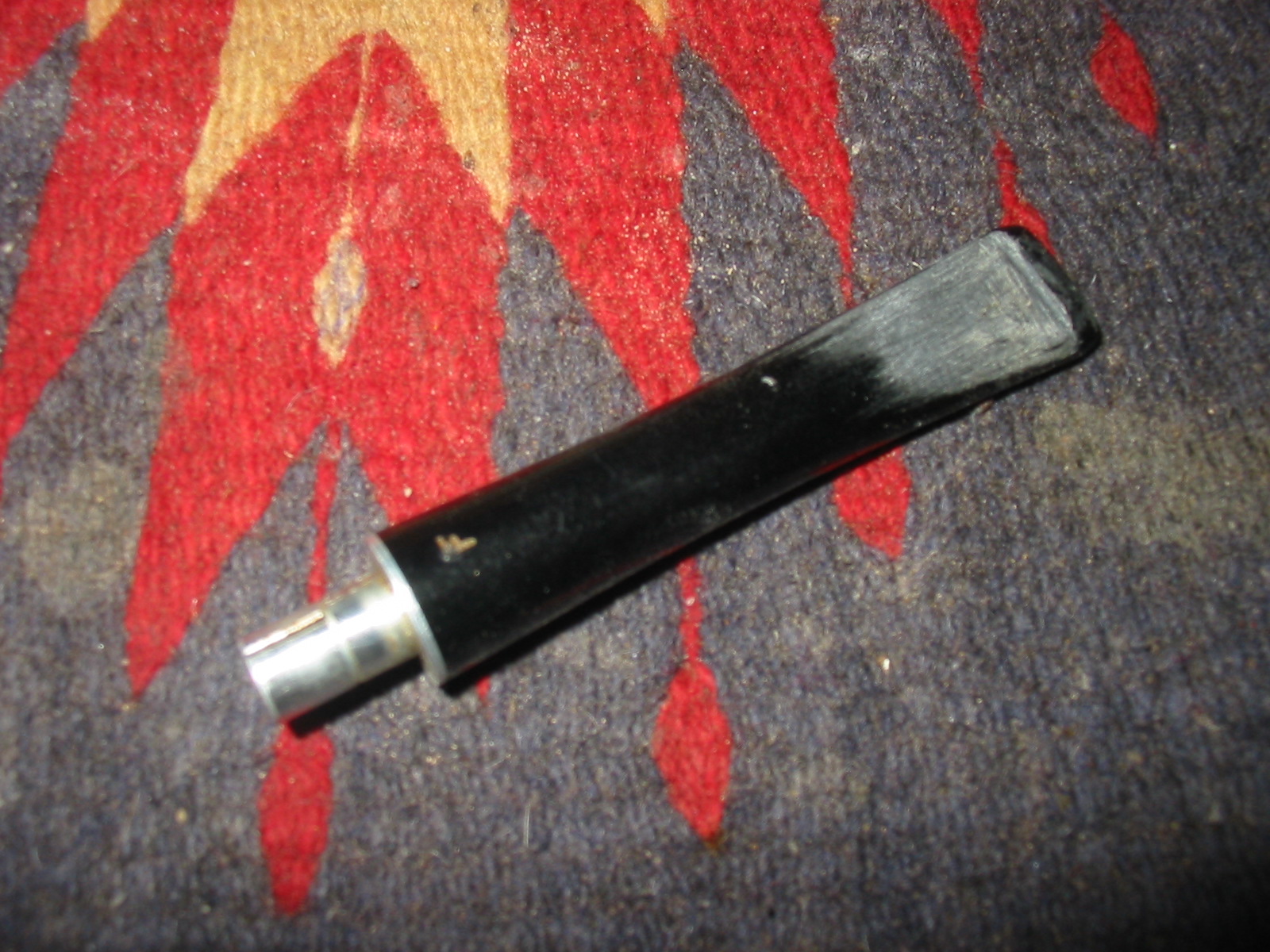
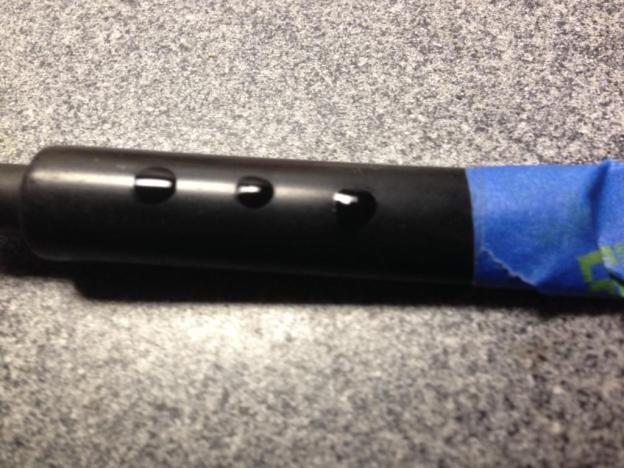
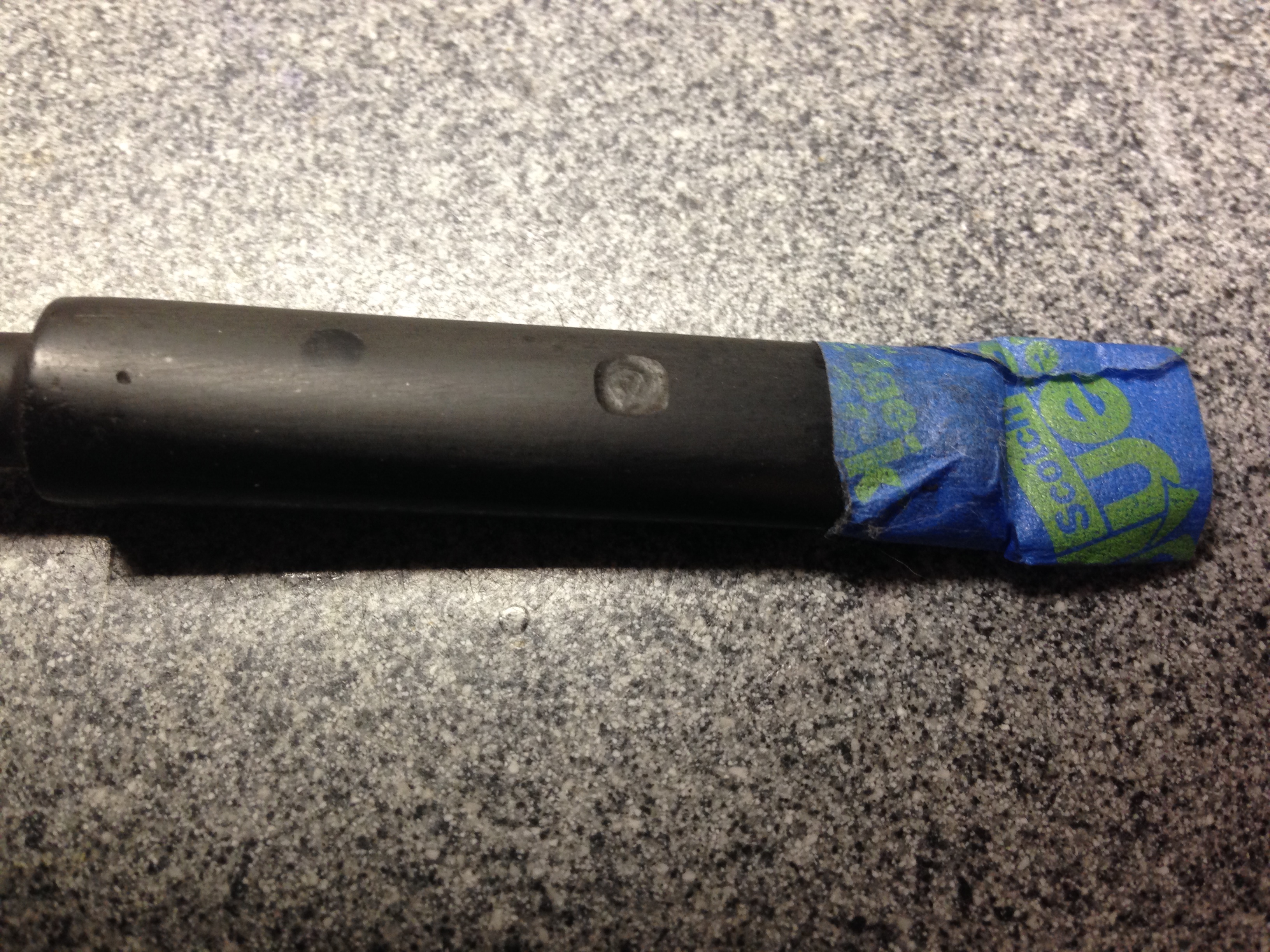
Tag Archives: stem work

Restoring and Restemming a Peterson’s Kapmeer 999S


Blog by Steve Laug

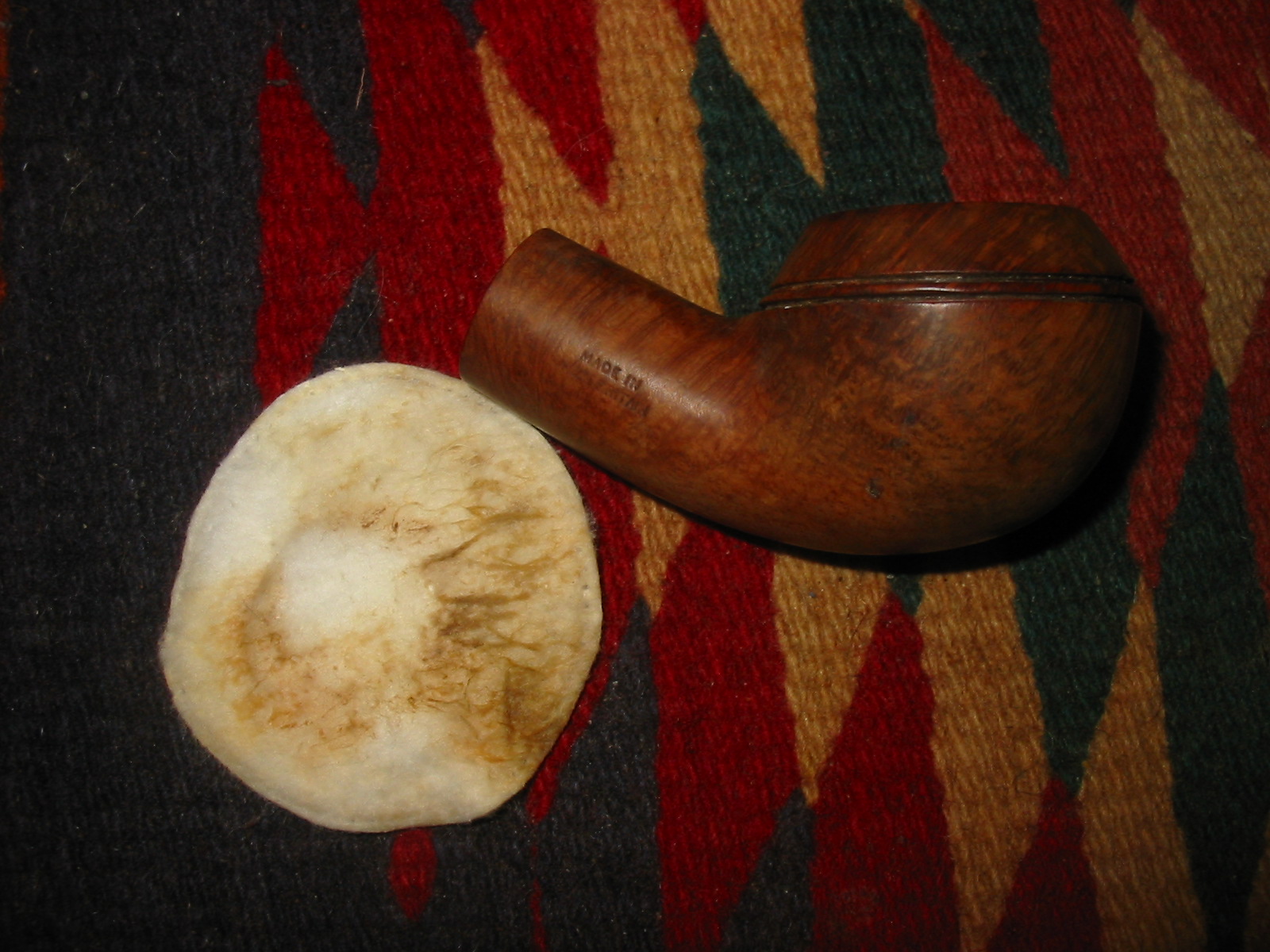
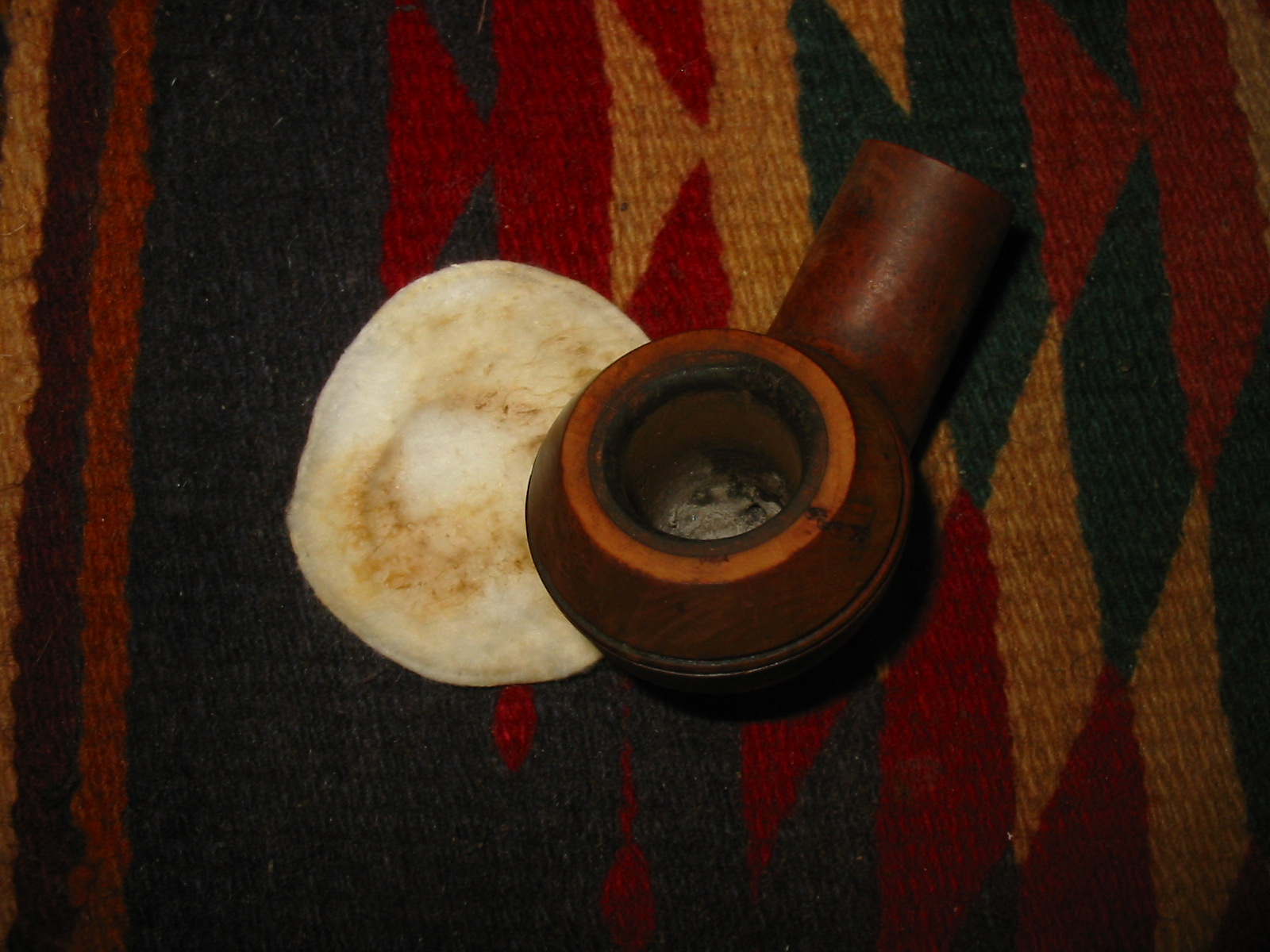
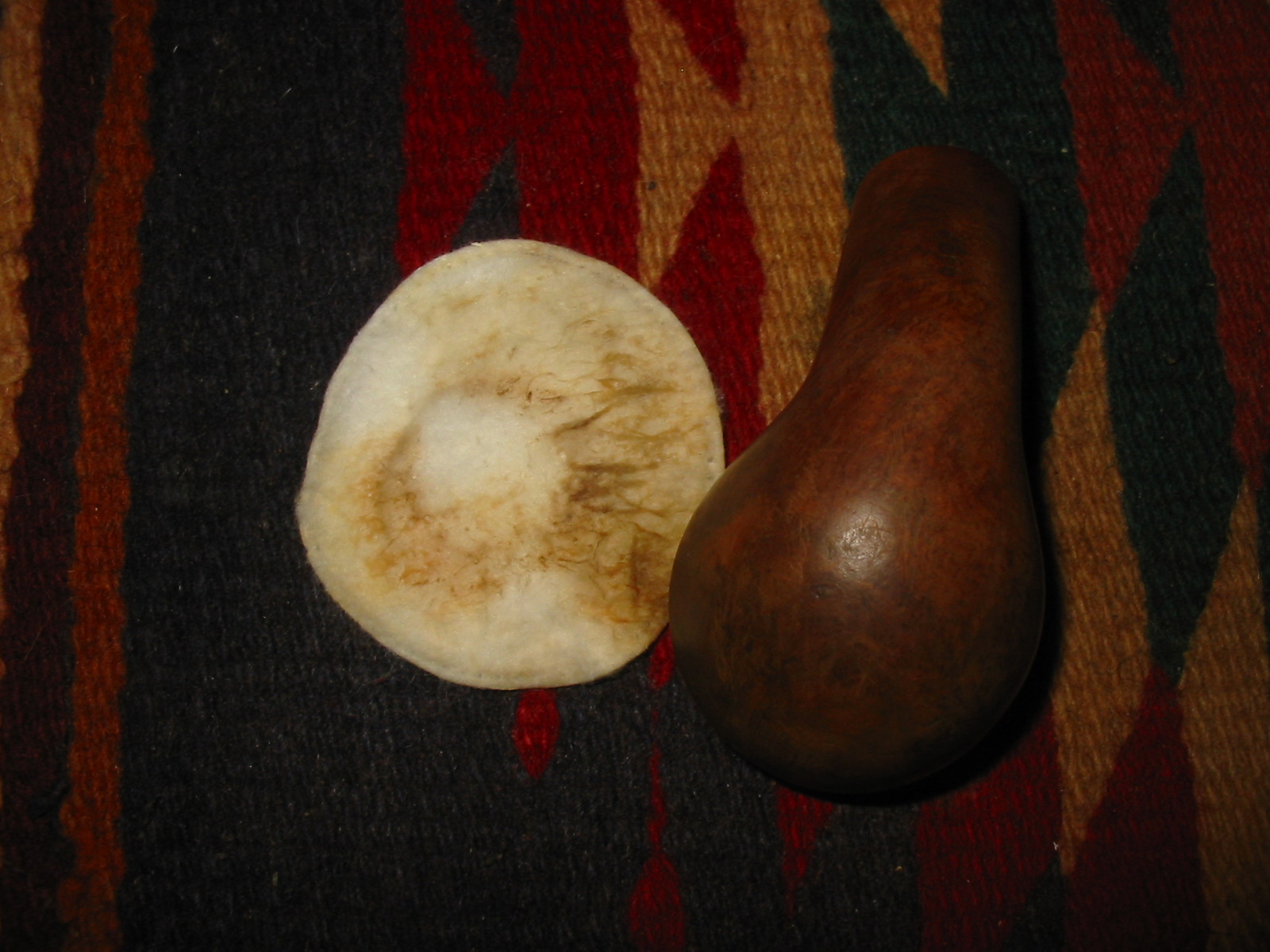
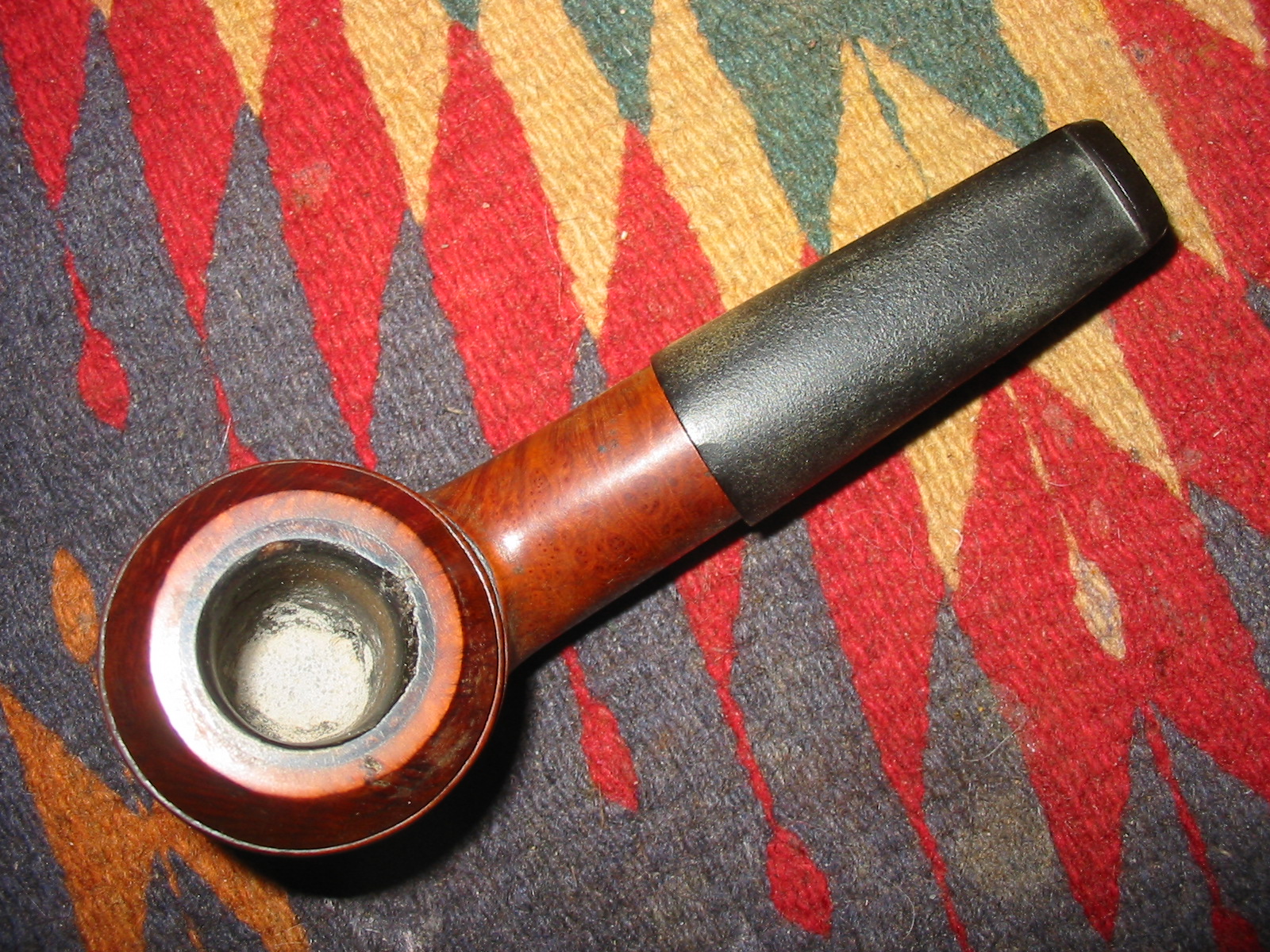
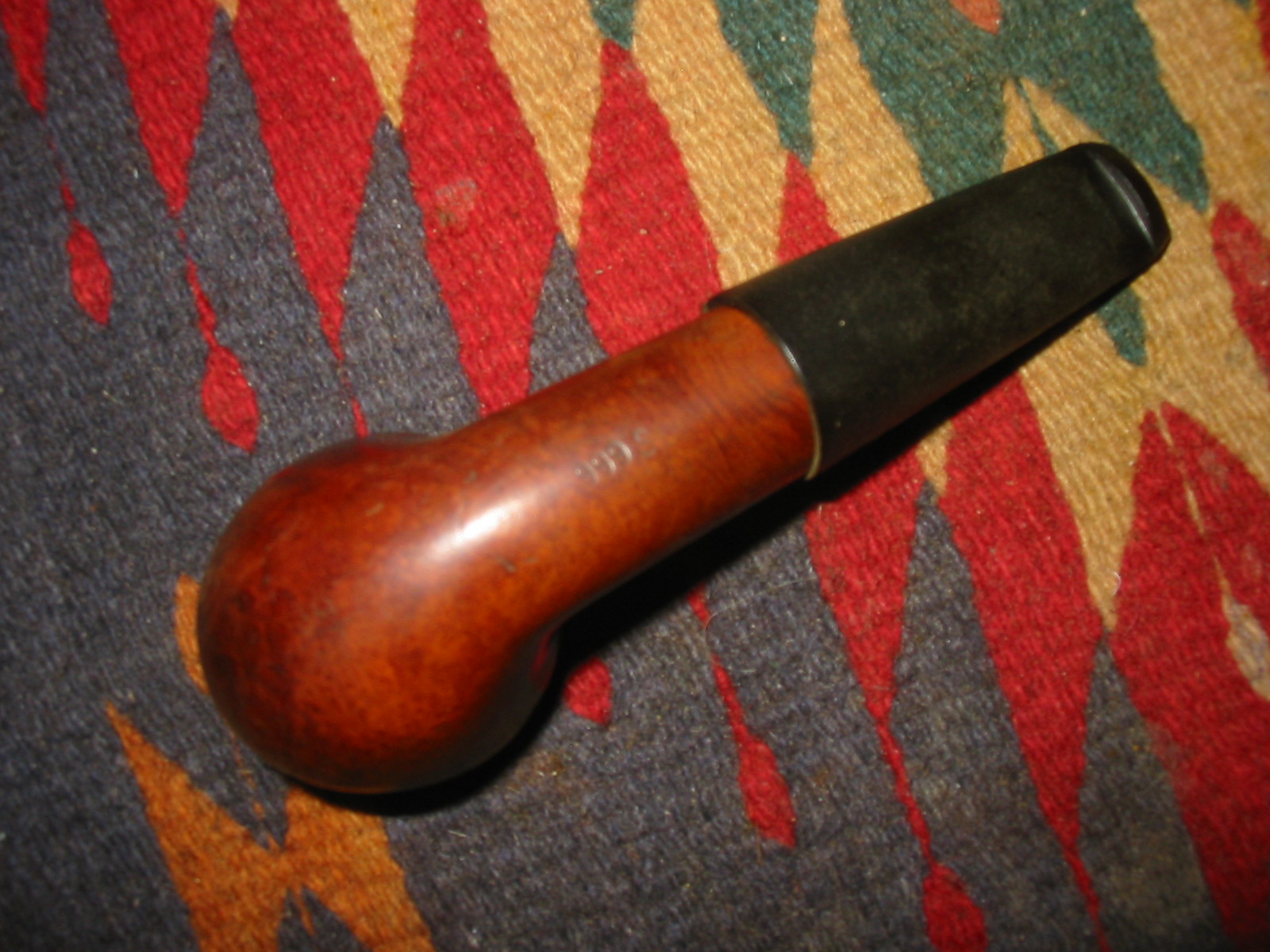
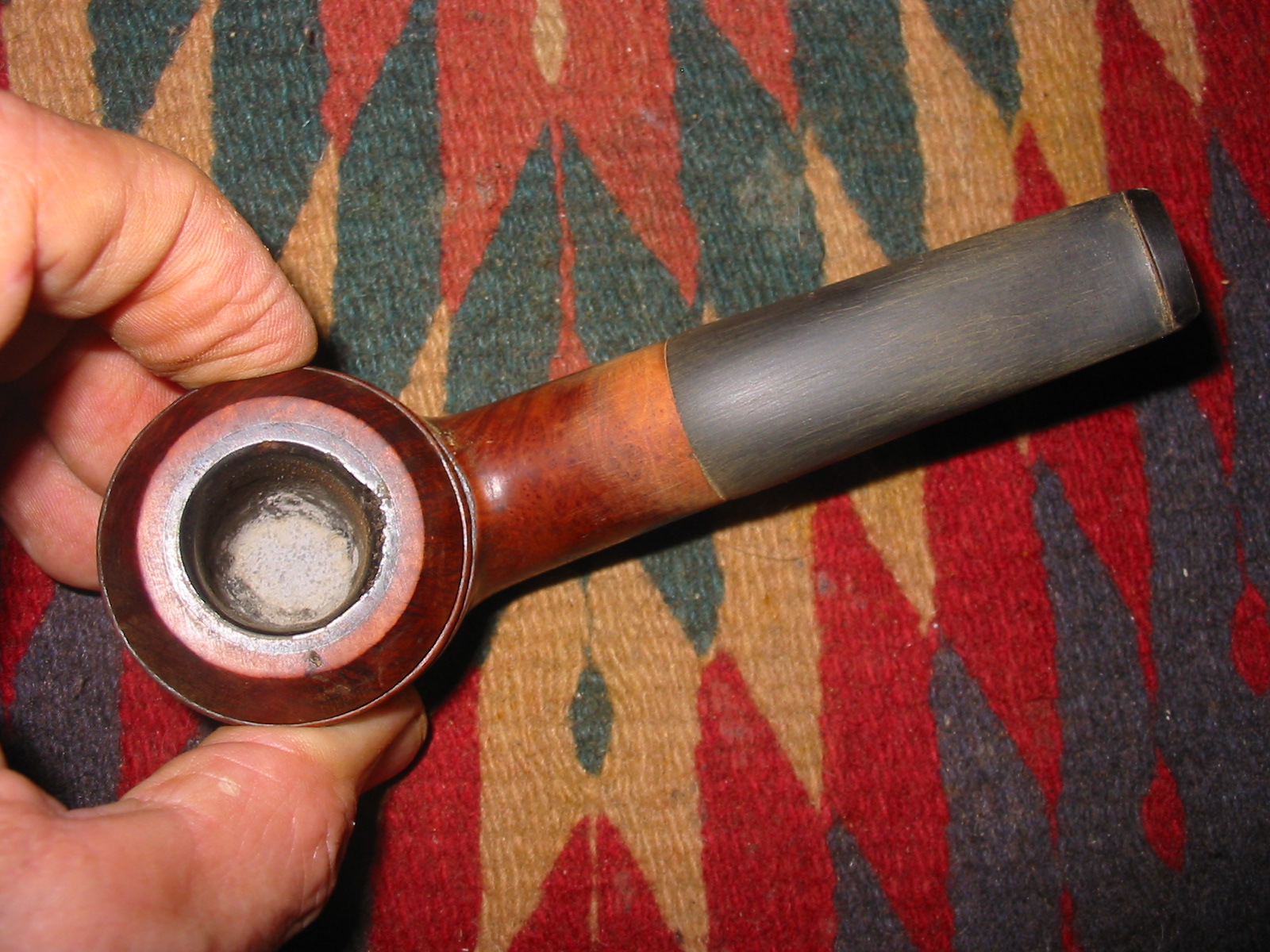
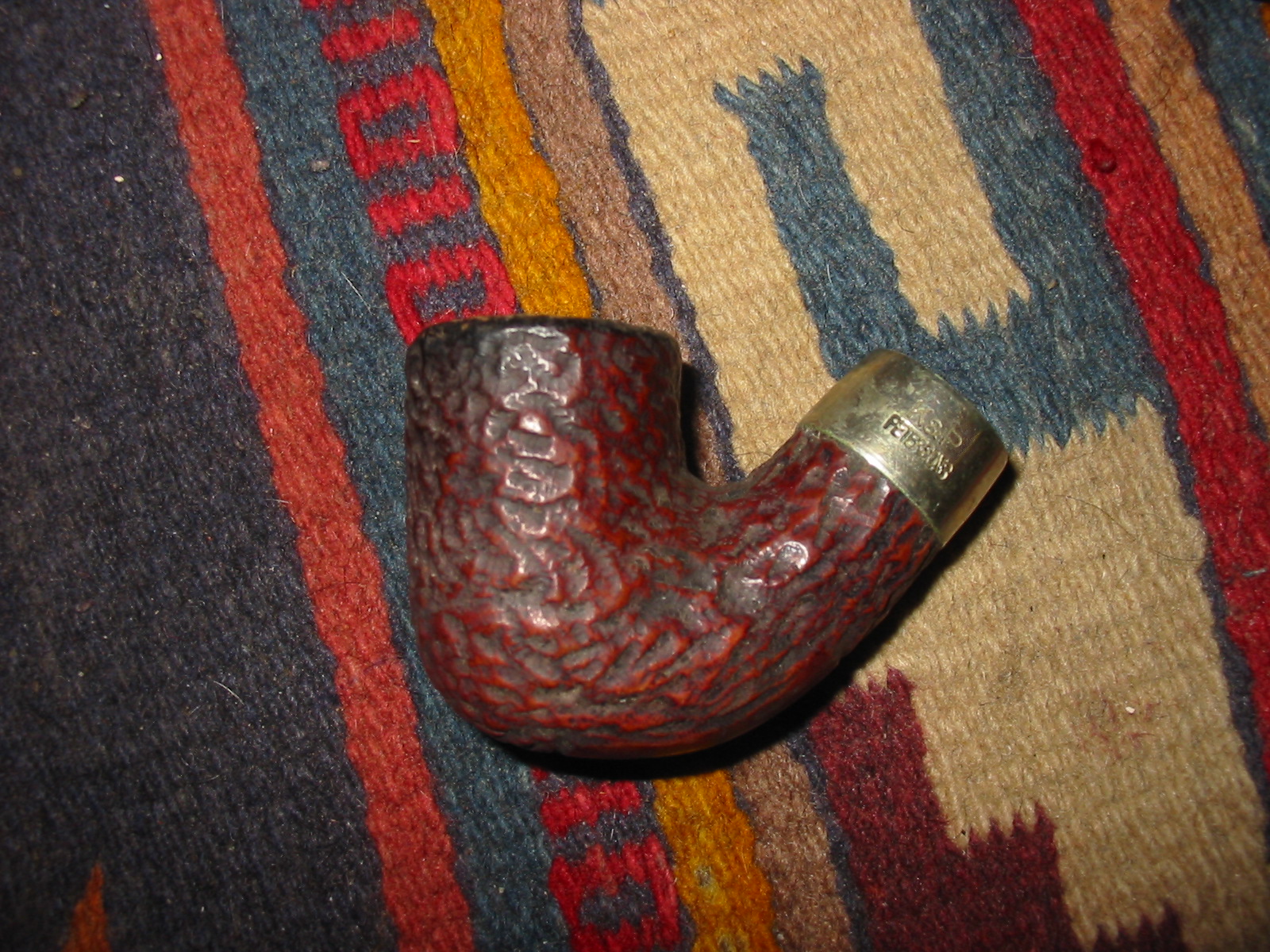
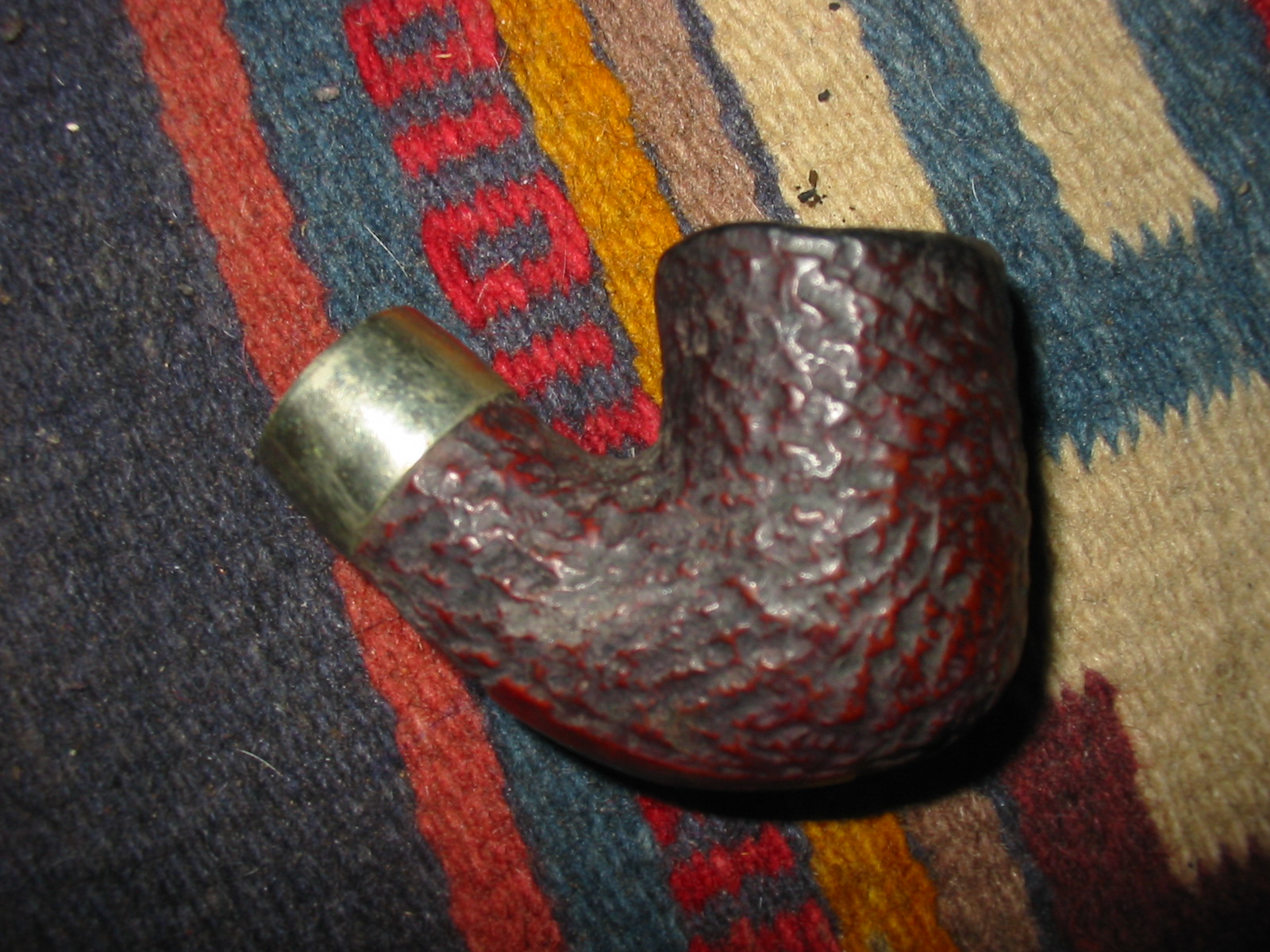
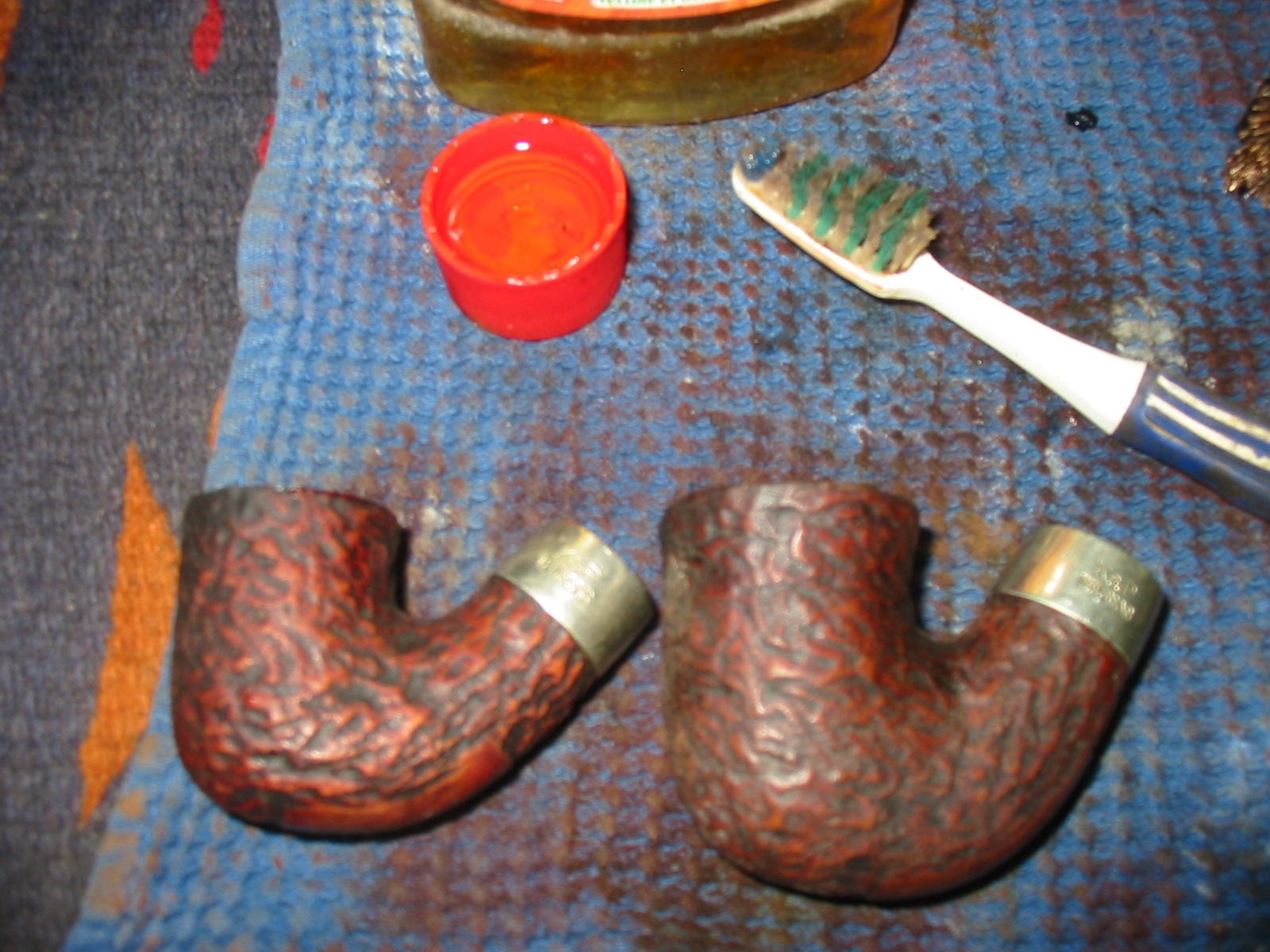
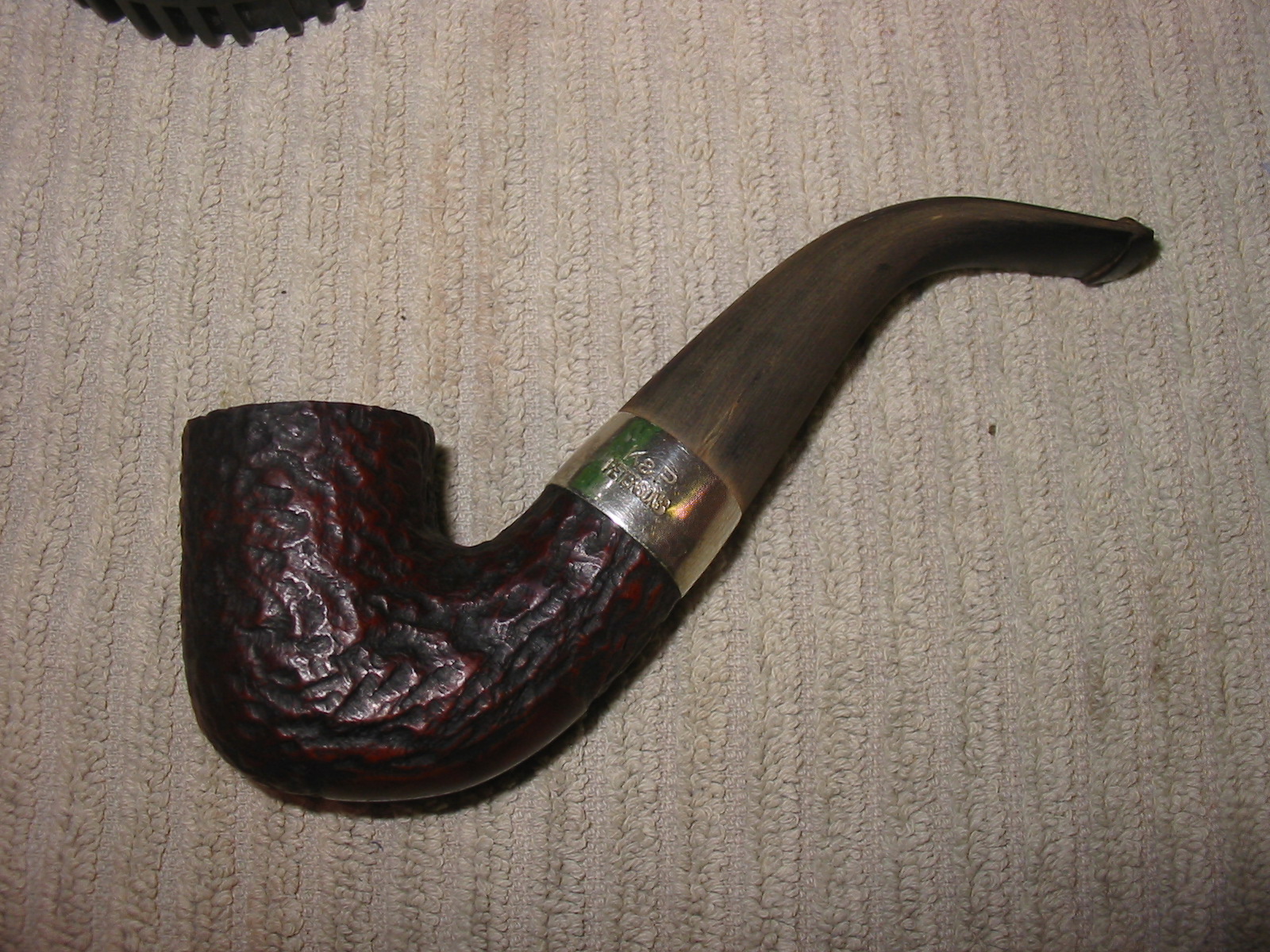
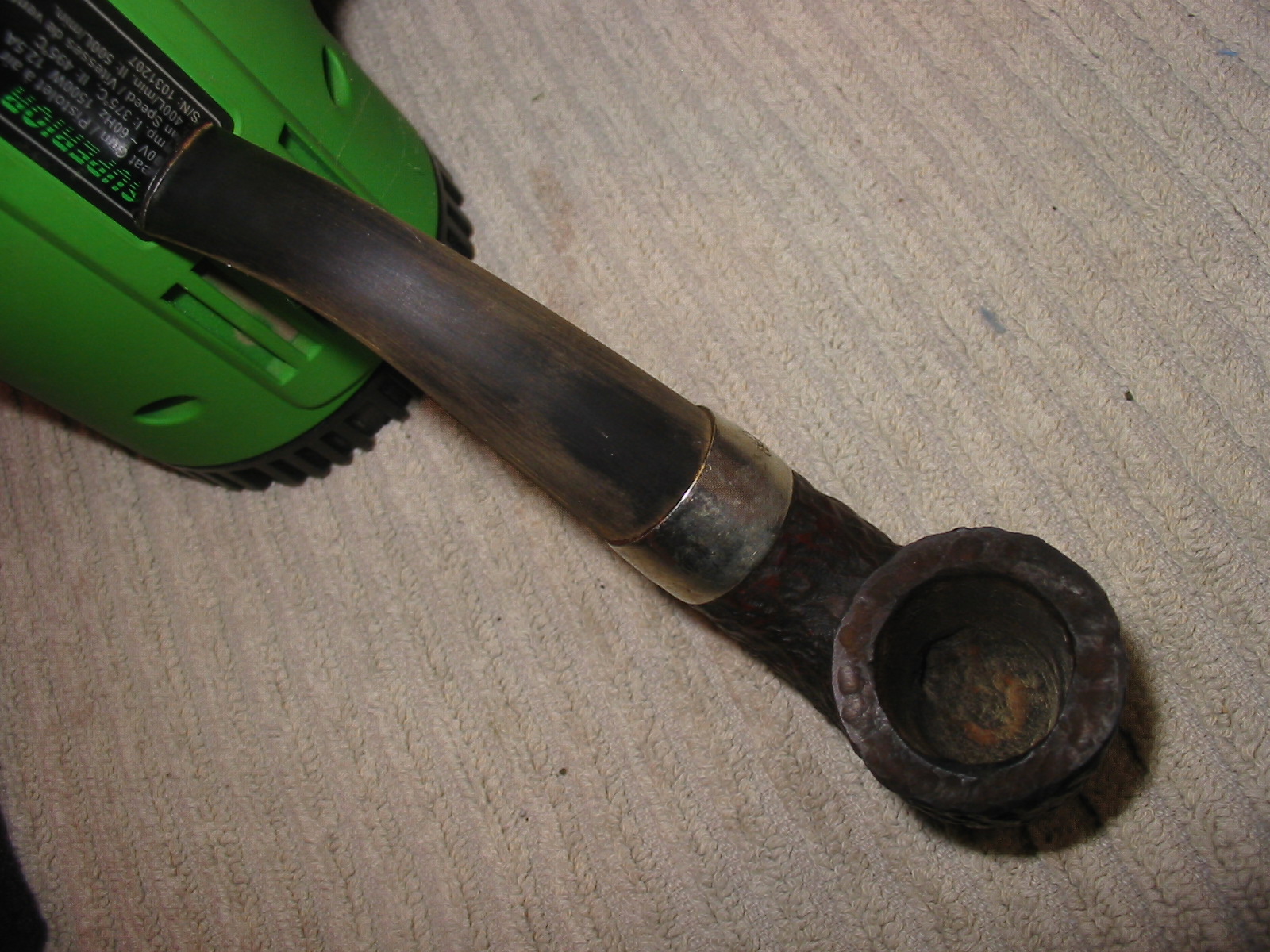
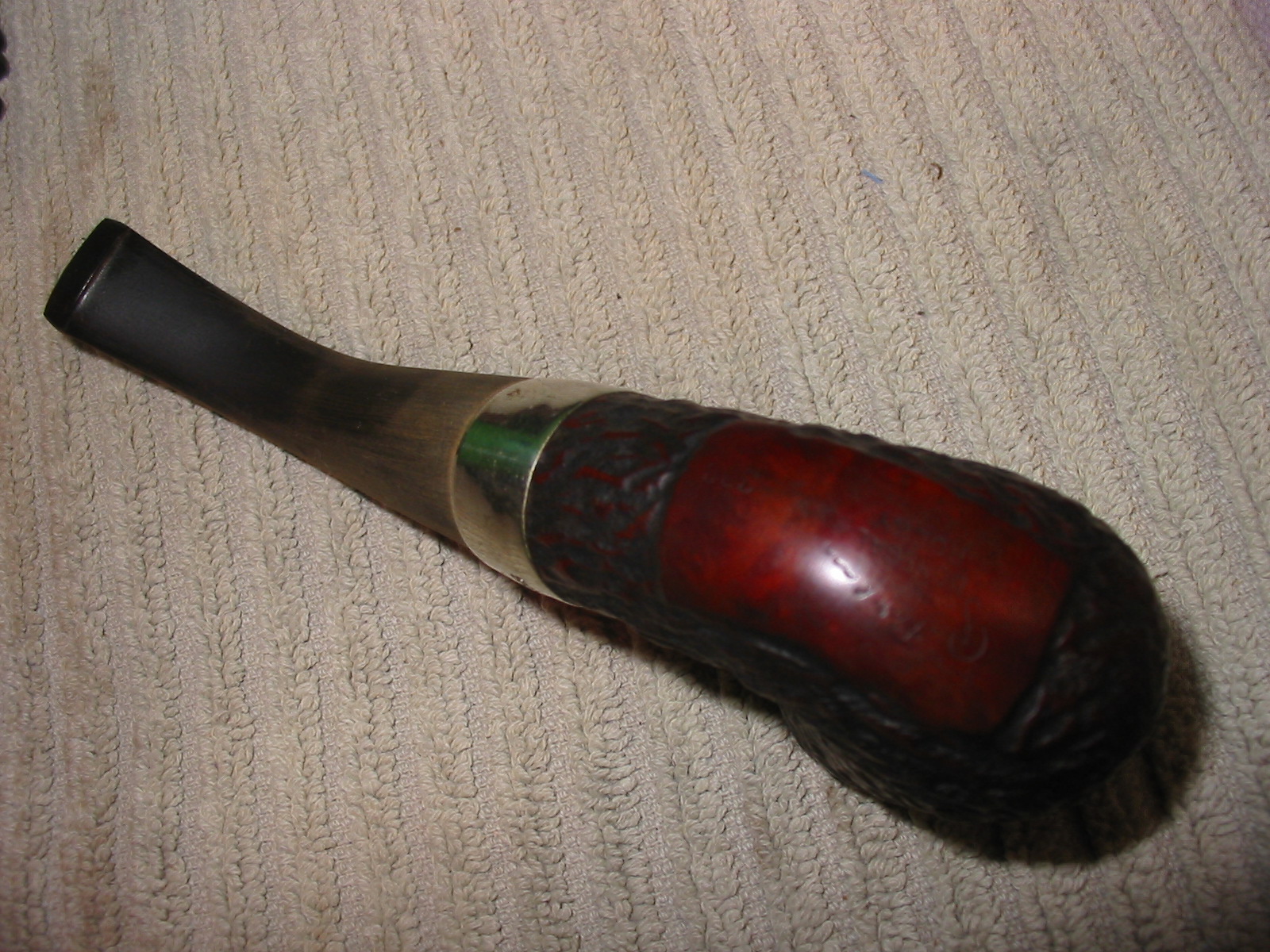
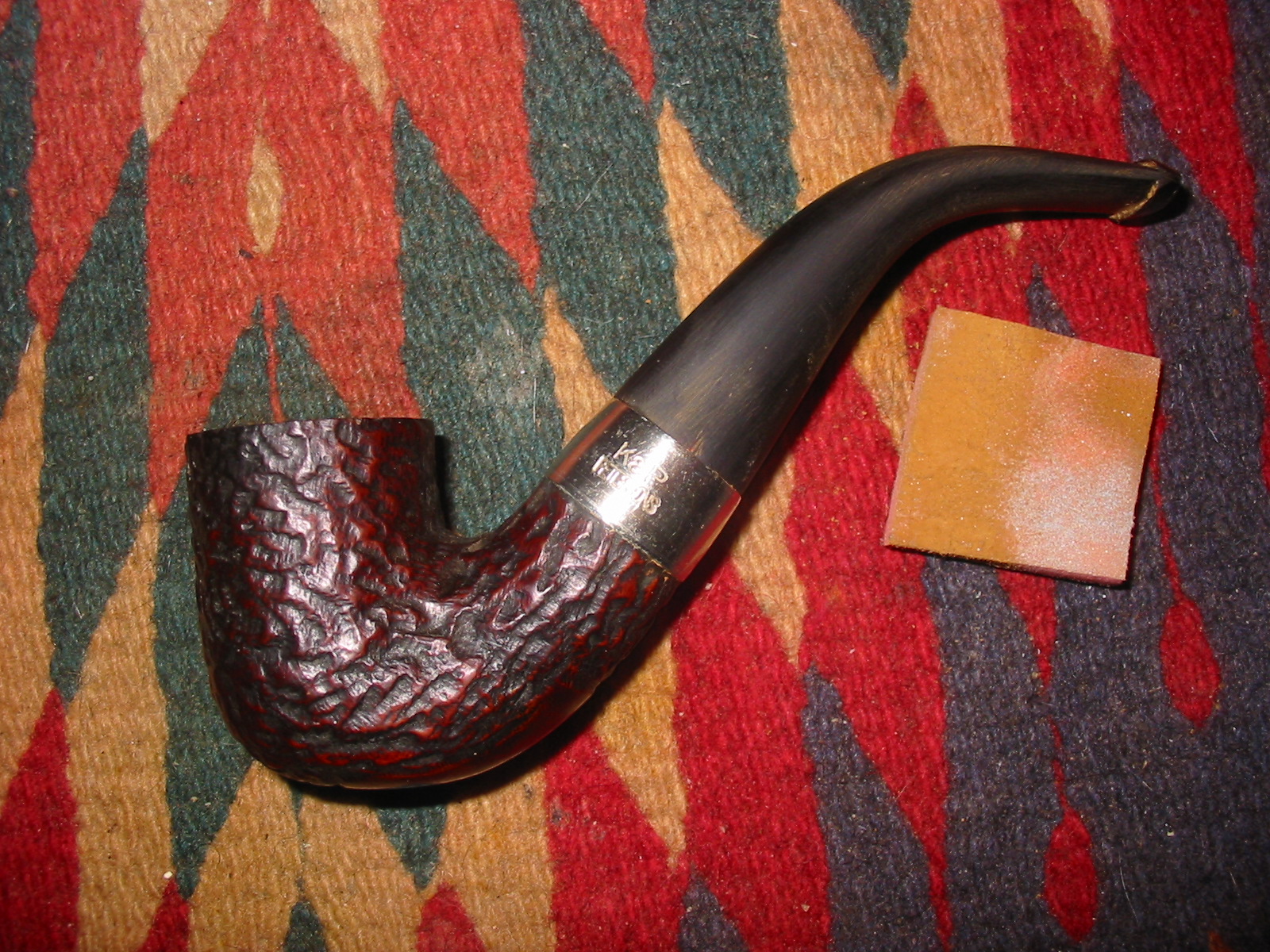
I just finished working on the second of the three pipes that I picked up on Ebay in the lot of three Petersons. It is the third bowl in the photos below. It is stamped Peterson’s over KAPMEER on the left side of the shank, 999S on the underside of the shank and Made in Great Britain on the right side of the shank. It is actually the reason I bid on this lot of pipe bowls. I love the older 999 shape with the thick shank. I like the way it feels in hand and the look of it. As you can see it was in rough shape. There was no stem for it. The finish was rough and worn, the bowl had a thick uneven cake in it and the top of the rim was thick with a cake build up. From what little I knew the KAPMEER was a meerlined pipe. There was something unique about its design but that escaped me at the moment.

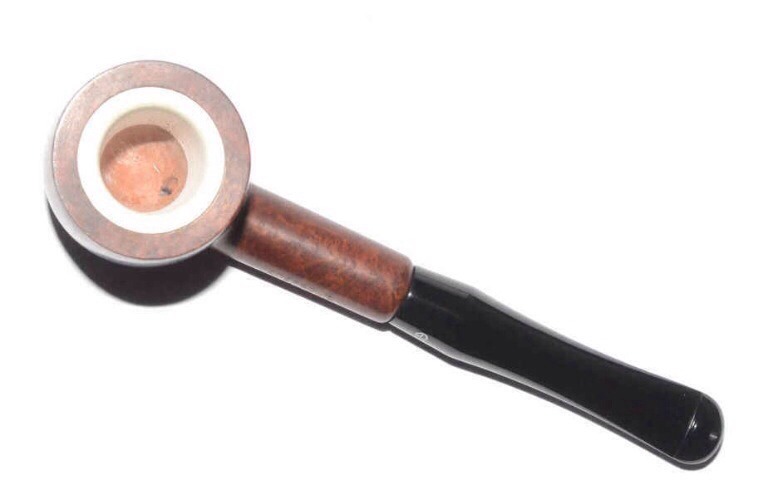
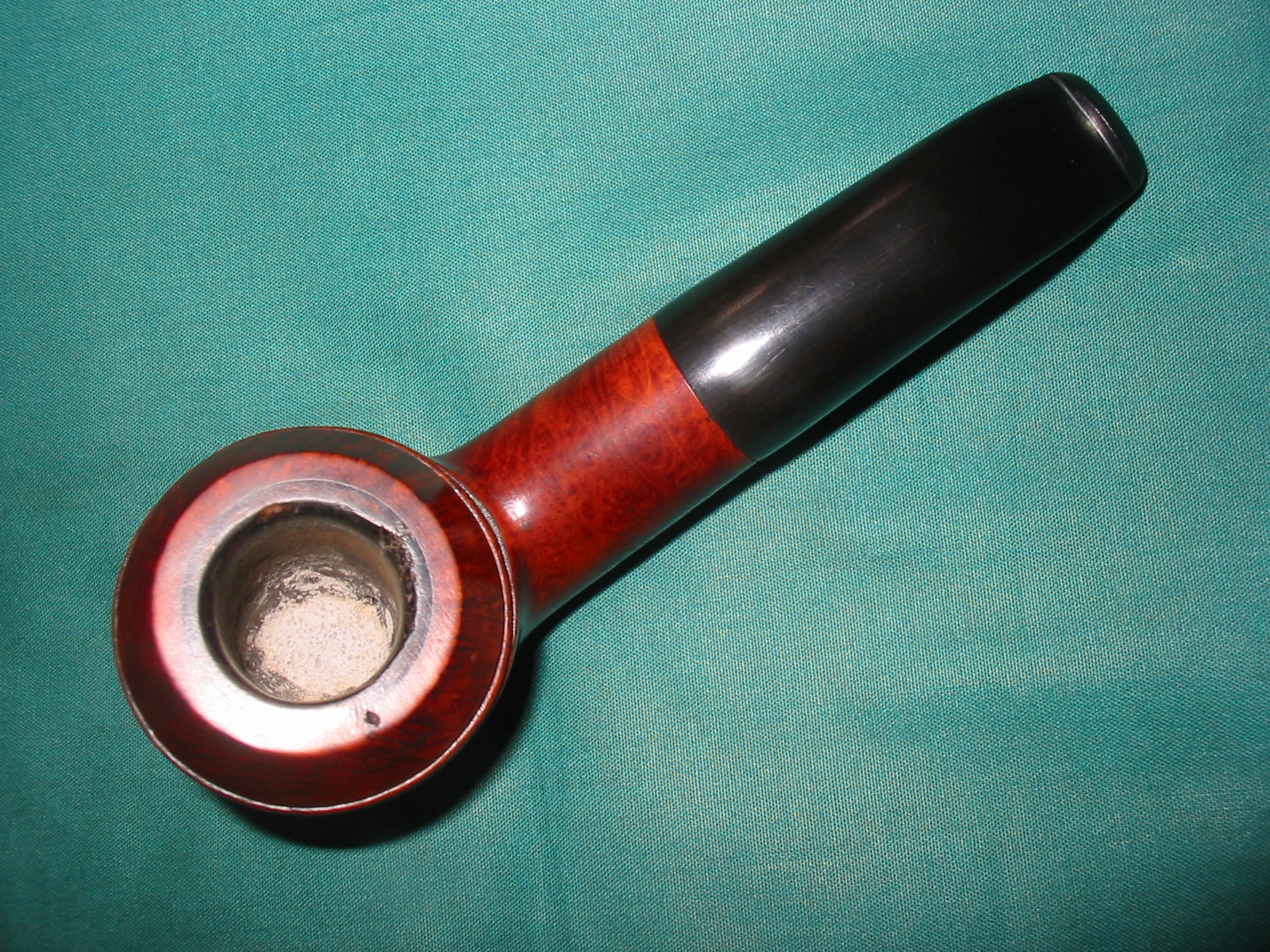
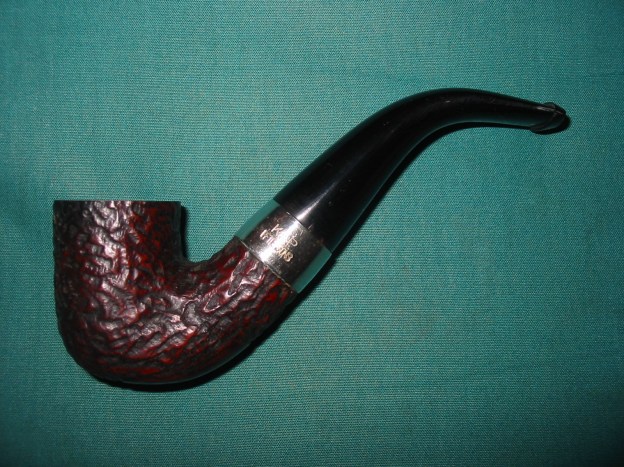
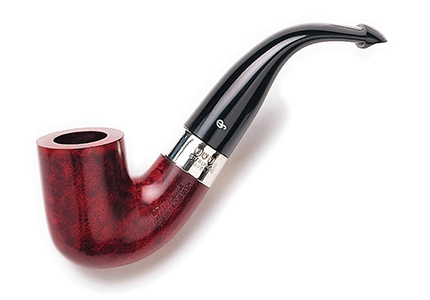
While I waited for it to arrive I did a bit of digging into the KAPMEER line. The first thing I found was a quote that said, “The line was introduced for those who preferred to smoke their tobacco in a meerschaum bowl, but still have the looks and advantages of a briar pipe”. That was not altogether helpful to me. It is much the same advertizing info that is included in most of the sales material for meerlined pipes. What was the difference between those pipes and the KAPMEER? The meerschaum lining ended just before the draw hole, so you do not have the problem of deterioration in the bottom of the meerschaum insert in the tobacco chamber. It was believed that this would reduce the possibility of a burn out on the sides of the bowl. I found the two photos below online that clearly show the design of the KAPMEER bowl. The first photo shows the bottom edge of the insert just above the draught hole. The bowl bottom is briar. The second photo shows the contrast between the meerschaum lining and the briar on the bottom of the bowl. In looking at these photos I think I understand the idea of combining the best of meerschaum and briar pipes. The theory would be that the meerschaum lining would deliver a meerschaum style cool smoke and the briar bottom would give the durability and strength of briar.
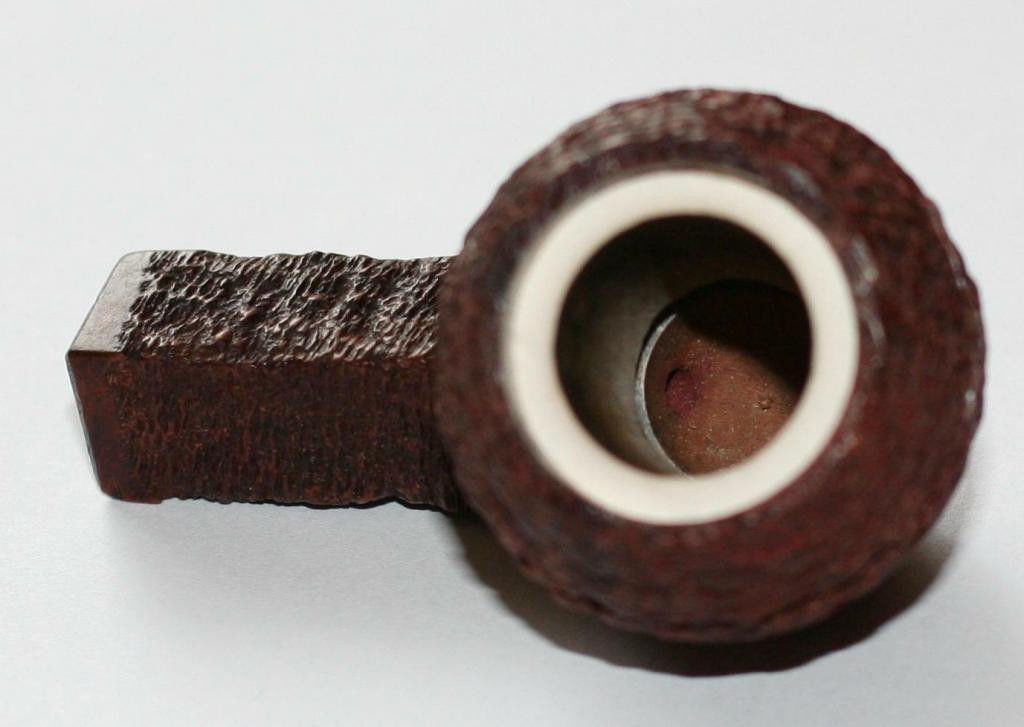
Kapmeer bowl top view

tumblr_mw3ugfrLNV1t13exzo2_1280
or early 1970s. The pipe in the second photo is a later design. The early pipes had a regular stem/shank junction rather than the faux military stem. The one that I had came from a period in time where the stem was most likely a tapered stem with an aligned fit. The pipes were made in Great Britain on the Isle of Man. I found out that though Peterson had maintained a factory in London since 1899, the ‘Made in England’ stamp was discontinued with the closing down of the London-based factory (1969/70). That puts my bowl pre-1970 in terms of date. The thick shank on the 999 bowl dates it earlier than that period.

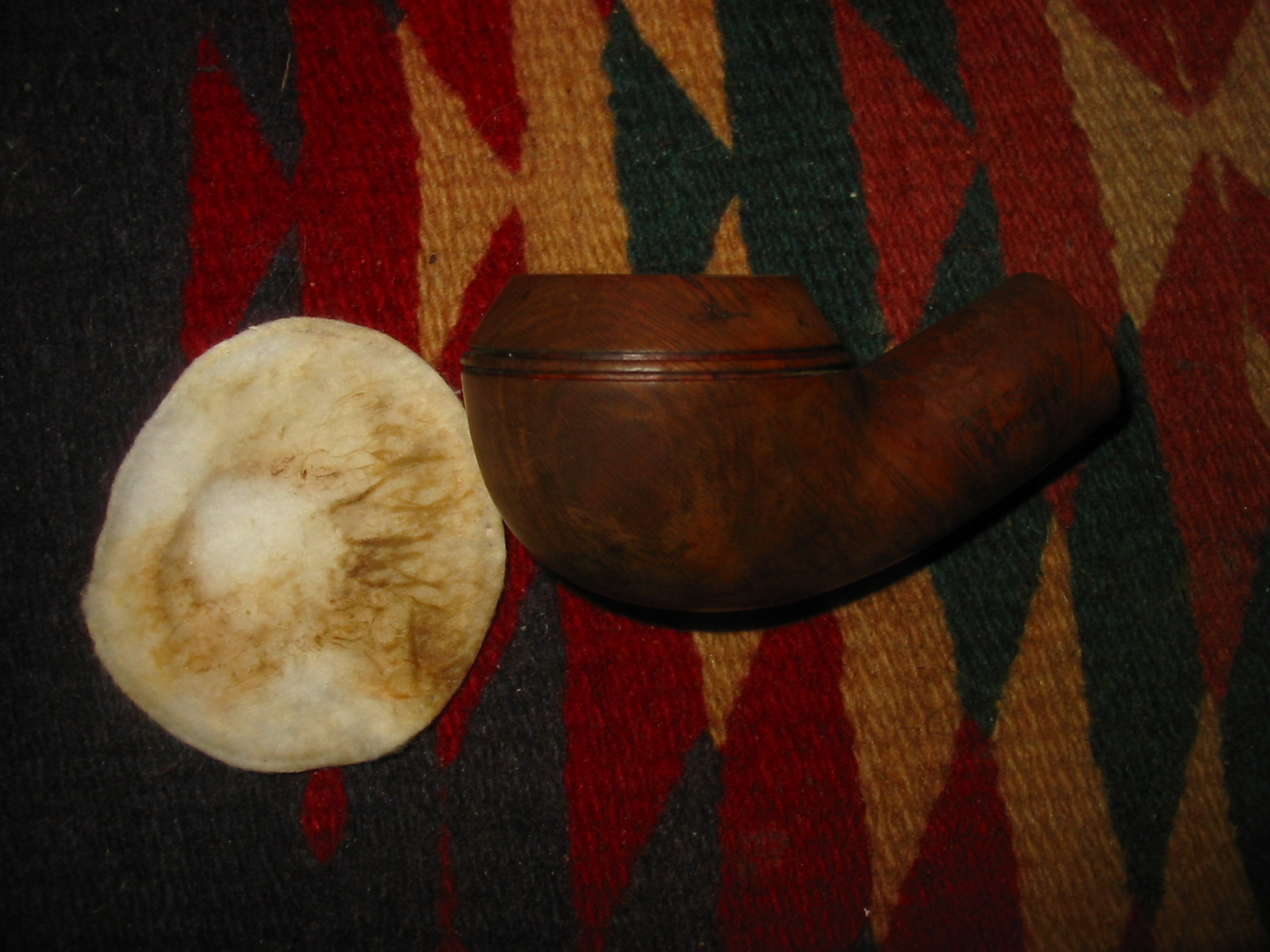
I gently reamed the bowl, being careful to not damage the meer lining. I wanted to take the cake back as far as possible with the reamer and would do the rest with sandpaper. I sanded the meer lining with 220 grit sandpaper until the entire cake was gone and the meer was once again smooth. It was darkened and would not be white again do to use. I gently topped the bowl with a topping board to remove the cake and smooth out the rim damage before working on the rest of the bowl. I wiped the bowl down with acetone on cotton pads, carefully avoiding the meerschaum lining on the top of the rim. The acetone removed the grime and the spotty stain on the bowl and would form the base for restaining the bowl later.

The bottom of the bowl had been over reamed and the briar damaged with deep gouges on the bottom. The bottom was still thick so there were no worries about burn out. I mixed a batch of pipe mud from cigar ash and water and applied it to the bottom of the bowl to bring the bottom up to the airway entrance. I tamped it in place with a pipe nail. I put some mud on the side walls below the end of the meerschaum lining. I set it aside to cure.
IMG_7169

IMG_7170

IMG_7171

IMG_7172
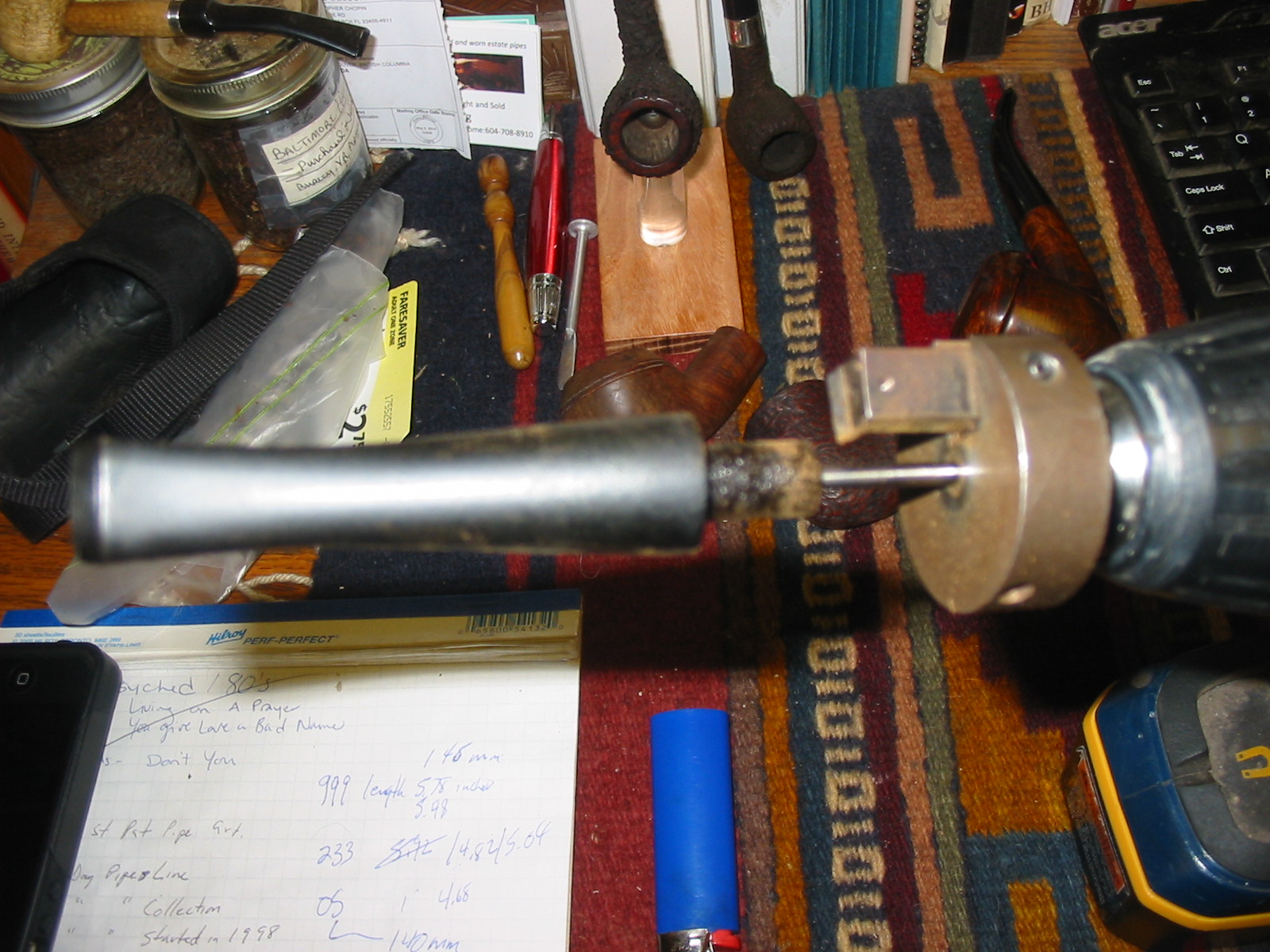
Once the mud had cured I wiped out the inside of the bowl with a damp cotton pad to clean any of the mud that had gotten on the meer lining. I wiped down the outside of the bowl with acetone and cotton pads a final time. I had a stem set aside from my can of stems that would fit the shank once the tenon was turned and the diameter of the stem reduced. I turned the tenon with a PIMO Tenon Turning Tool slowly until it fit the shank. I sanded the tenon with a sanding drum on a Dremel to finish the fit. I sanded the casting marks on both sides of the stem and on the end of the button with the Dremel as well. When all was finished the fit against the shank was snug and clean.

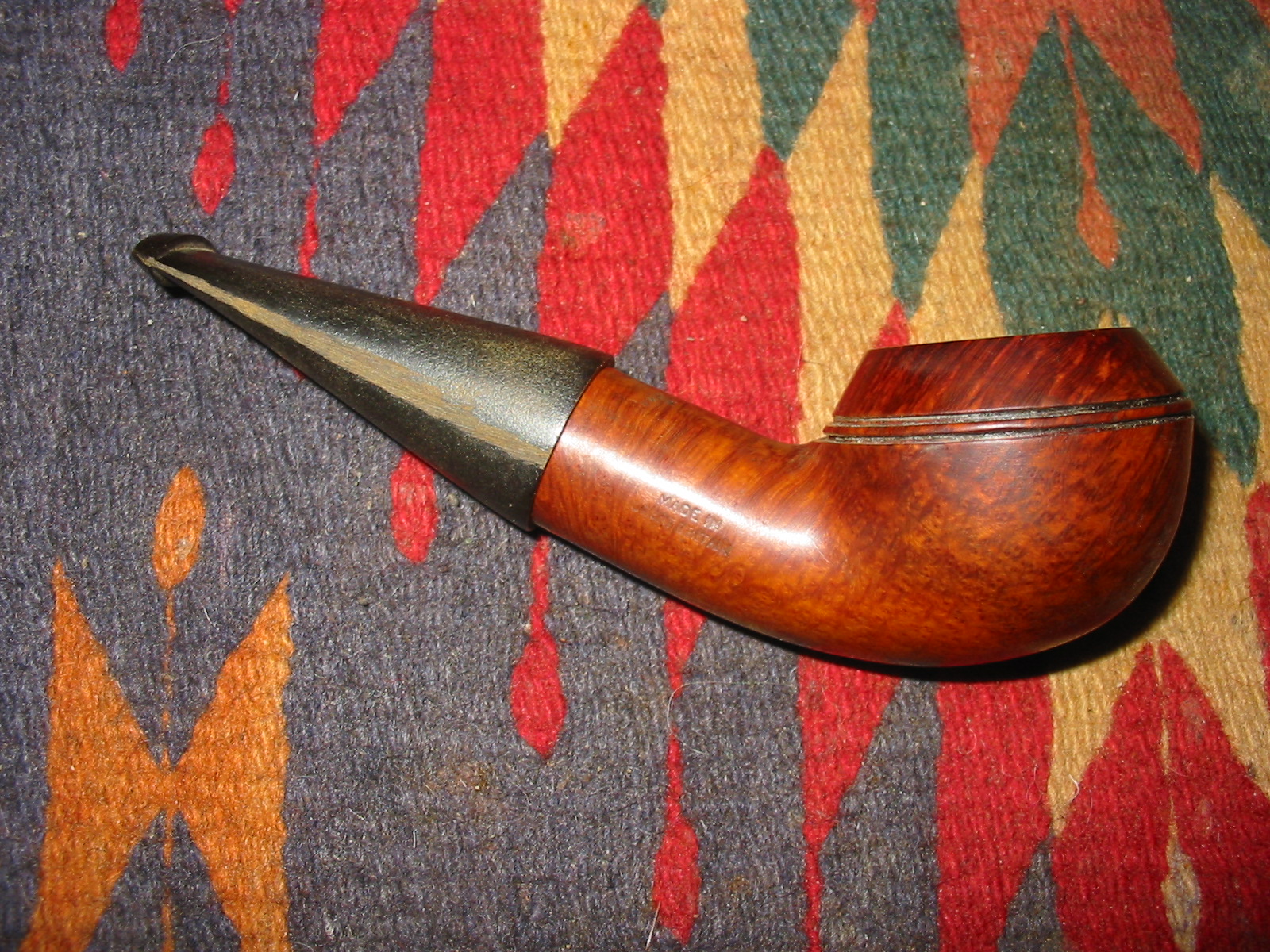
IMG_7243 IMG_7244 IMG_7245 IMG_7246As can be seen from the photos above the diameter of the stem was bigger than that of the shank. I used the sanding drum on the Dremel to take it down as close as possible to the shank diameter without damaging the shank. Once I had it close I did the rest of the work with 150 grit sandpaper and followed that with 220 grit sandpaper. When the transition between the two was smooth to touch I used a medium and a fine grit sanding sponge to remove the scratch marks from the stem. Since I was planning on restaining the pipe I sanded the shank gently to make sure that the transition would be smooth and the flow correct. I have found that this is the only way to keep the stem and shank matching without and shift in height on either material.
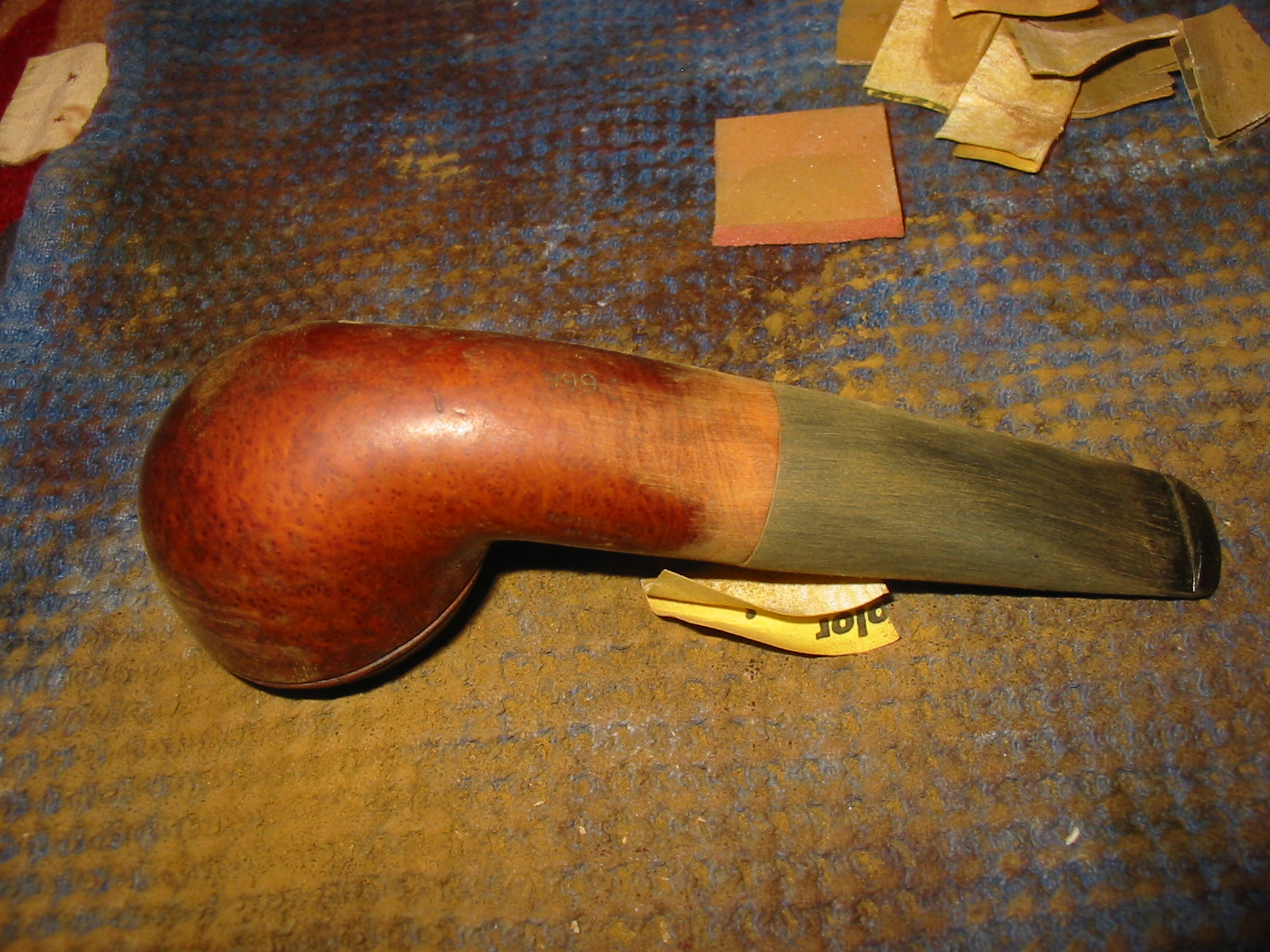
IMG_7247IMG_7248IMG_7249IMG_7250I wiped off the sanding dust with a damp cloth and gave the stem a wipe down as well. The photos below show the look of the stem and shank union at this point in the process. I also gave the rim a light sanding with the sanding sponges as well. There is one small sandpit in the top left side of the rim. I decided to leave it rather than fill it.
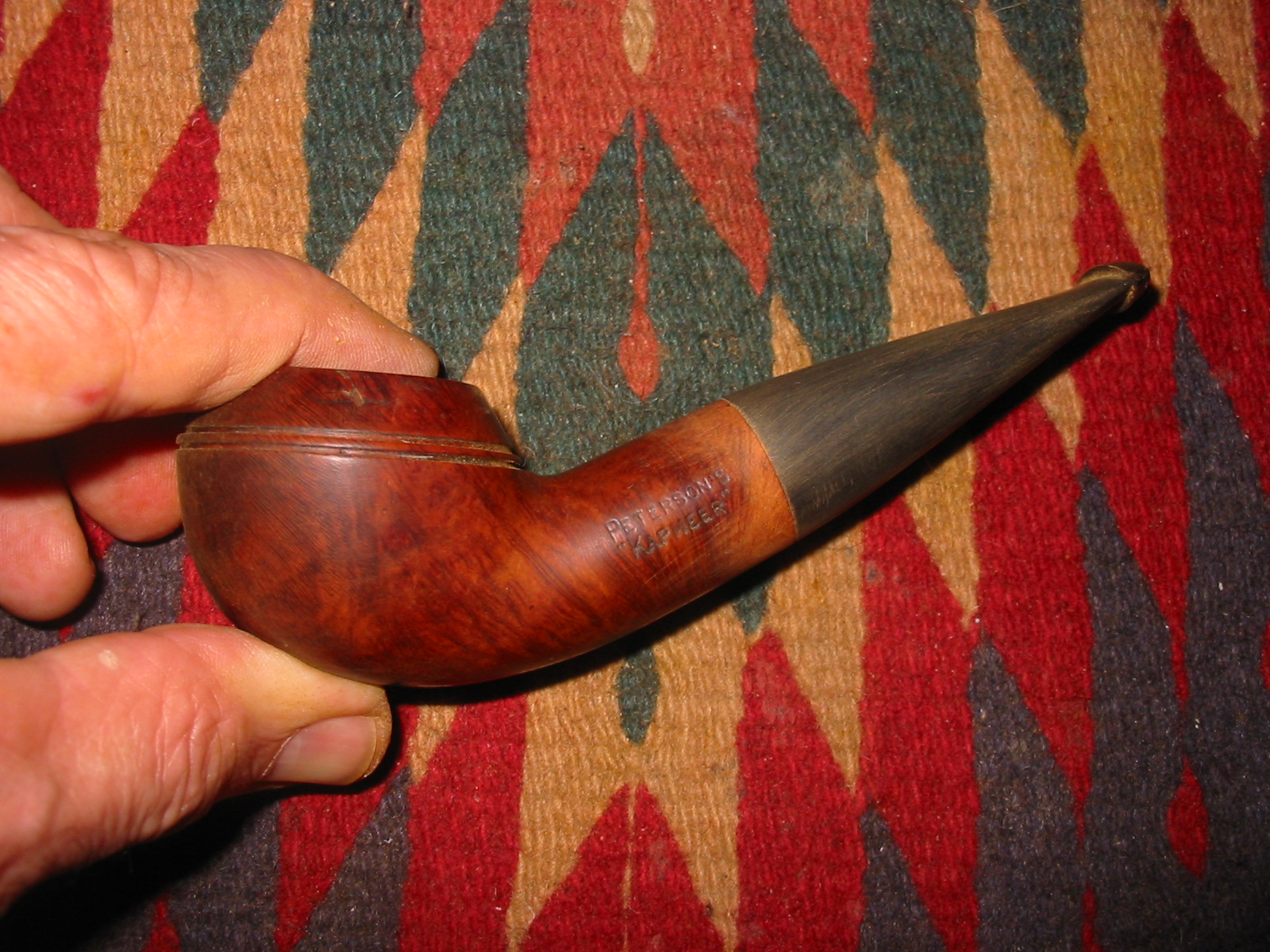
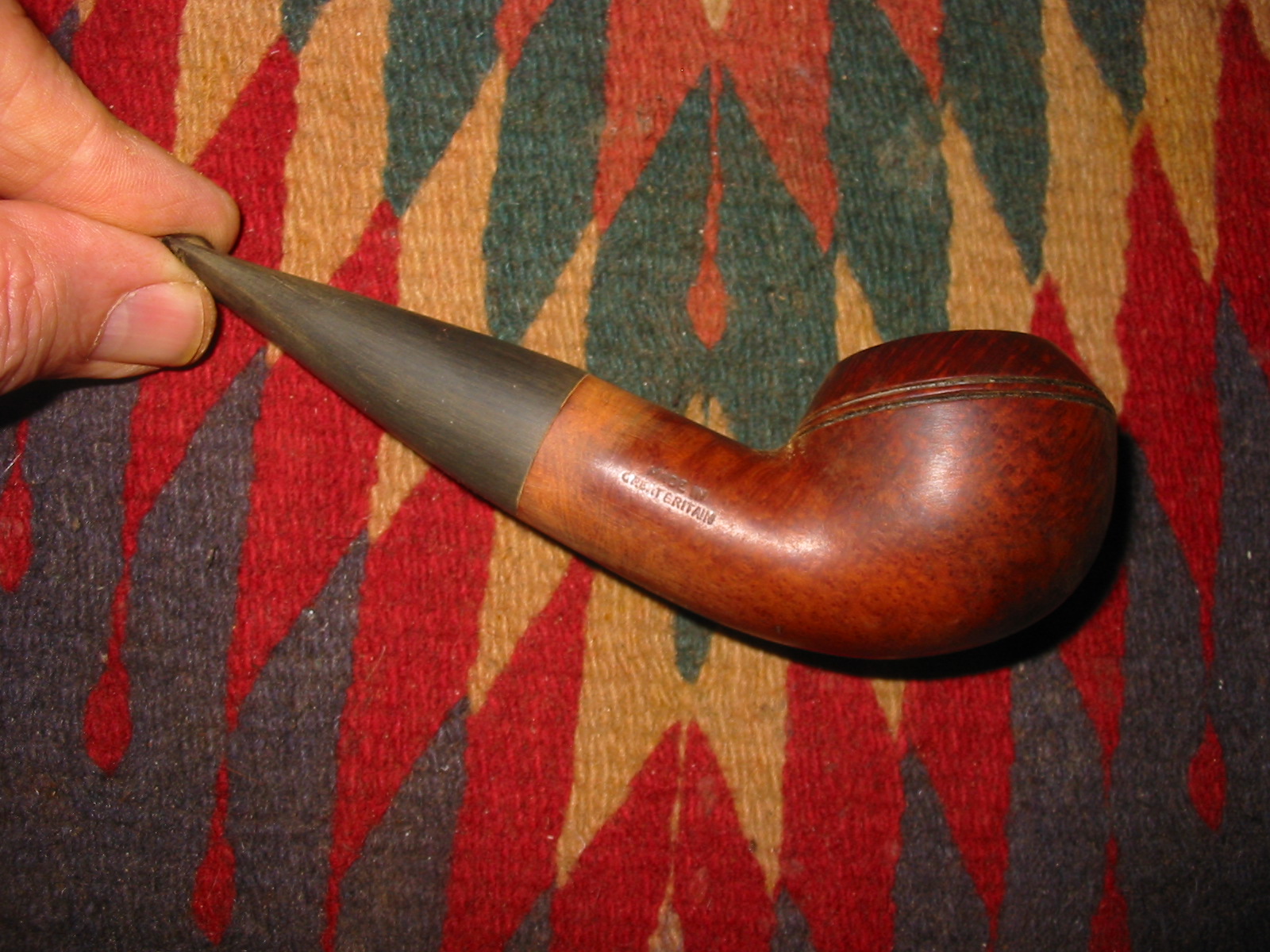
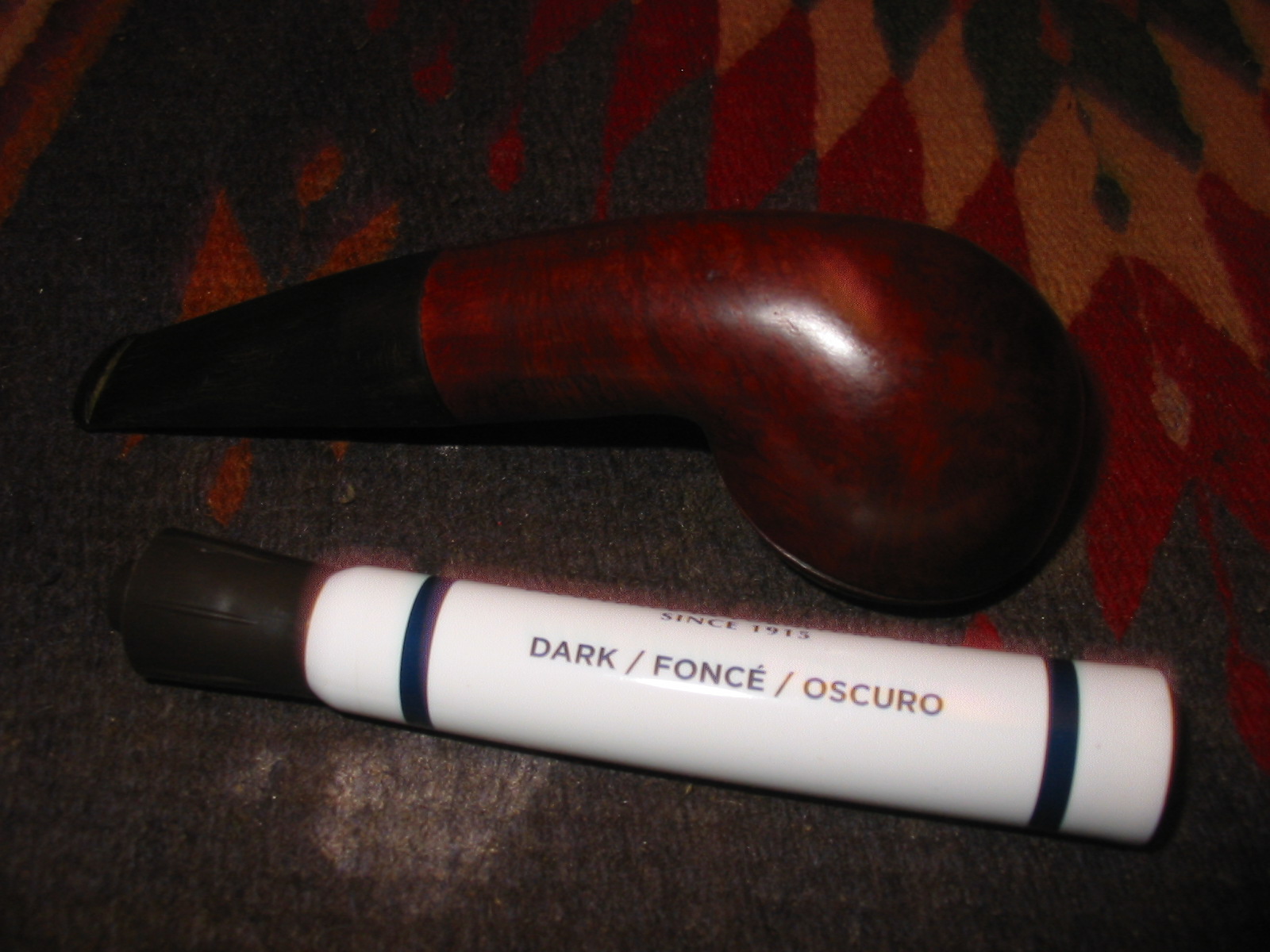
IMG_7253 IMG_7256IMG_7254IMG_7255I sanded the shank with 1500-2400 grit micromesh sanding pads to remove scratches in the finish and wiped the bowl down with alcohol on a cotton pad. Greg sent me a set of staining pens to work with so I decided to try them out on this pipe. I tried the light and medium pens and found that they did not match the stain on the pipe so I settled for the dark pen. I drew on the unstained surface of the shank and then blended it into the rest of the bowl. I also did the same on the rim, blending it downward into the sides of the bowl. The pen was very easy to control and keep off the meer lining on the inner edge of the rim.
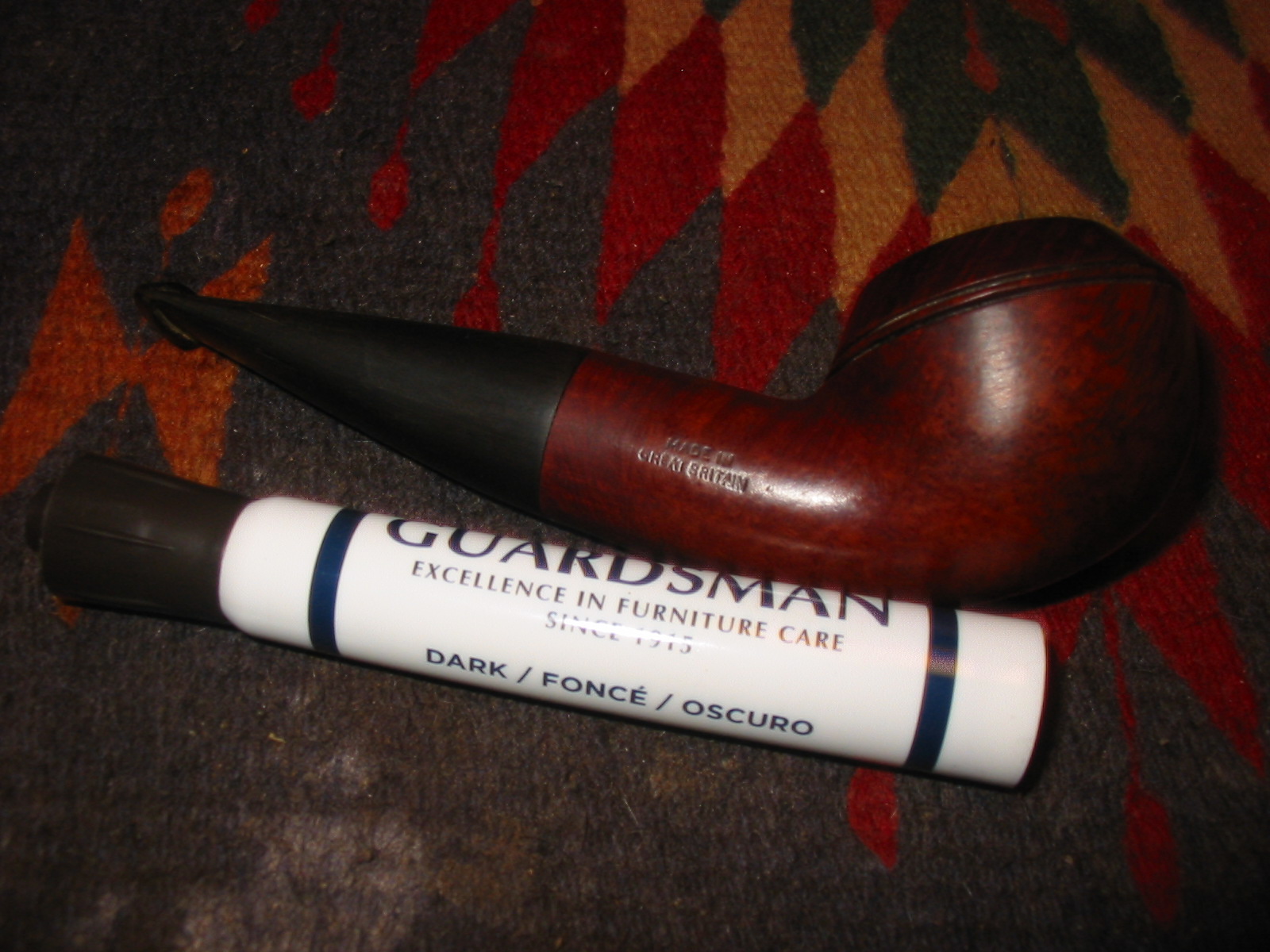
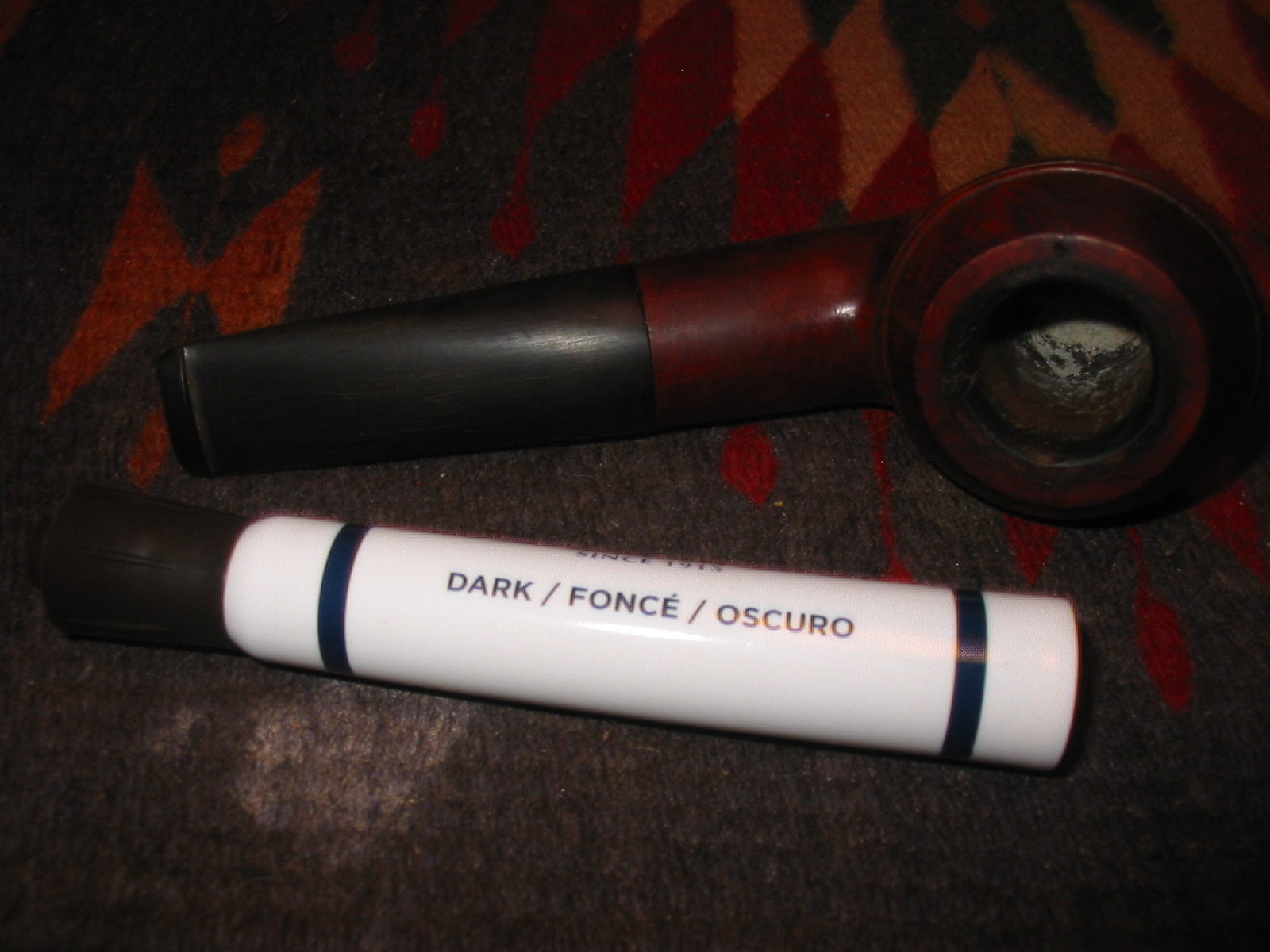
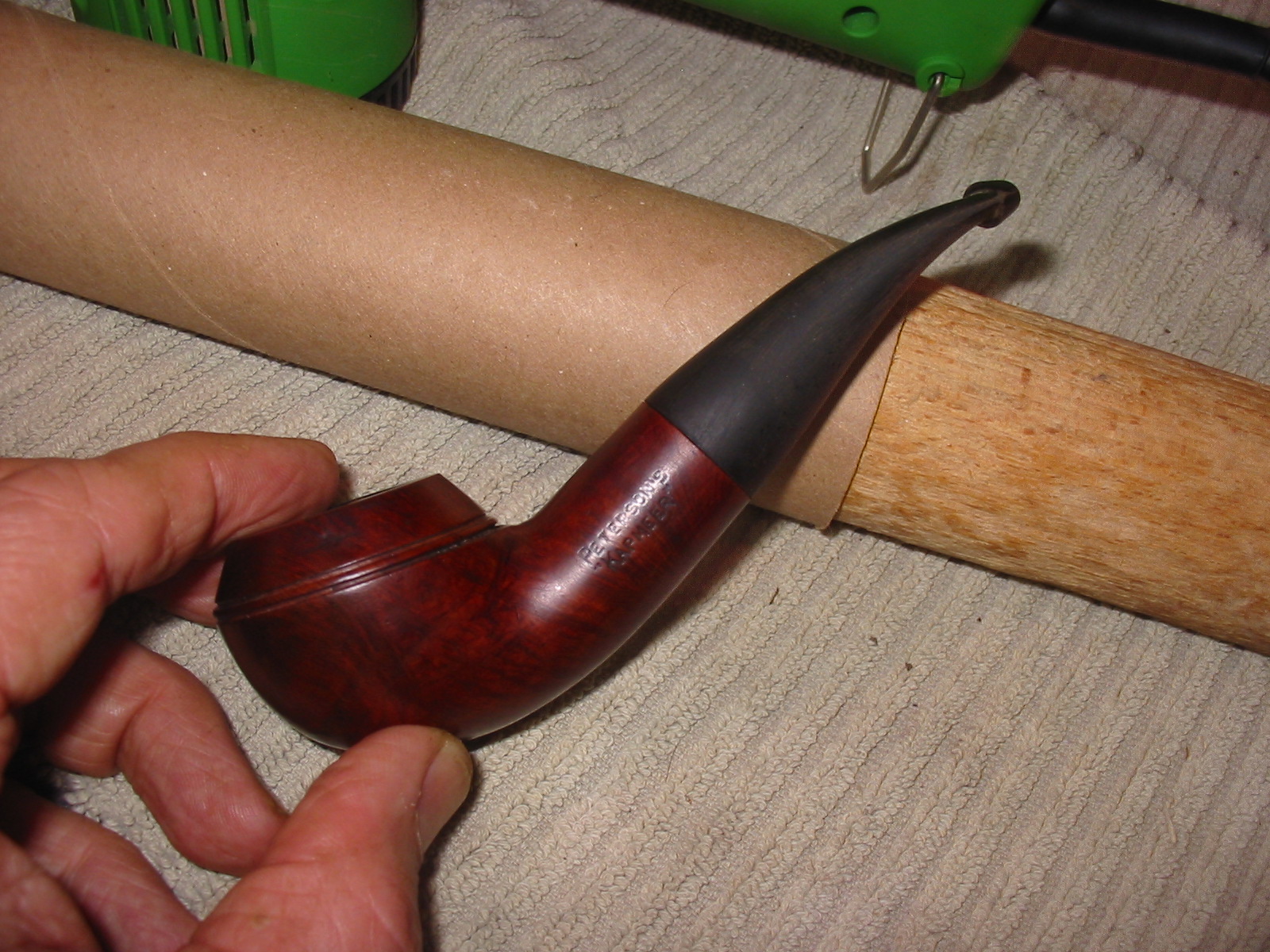
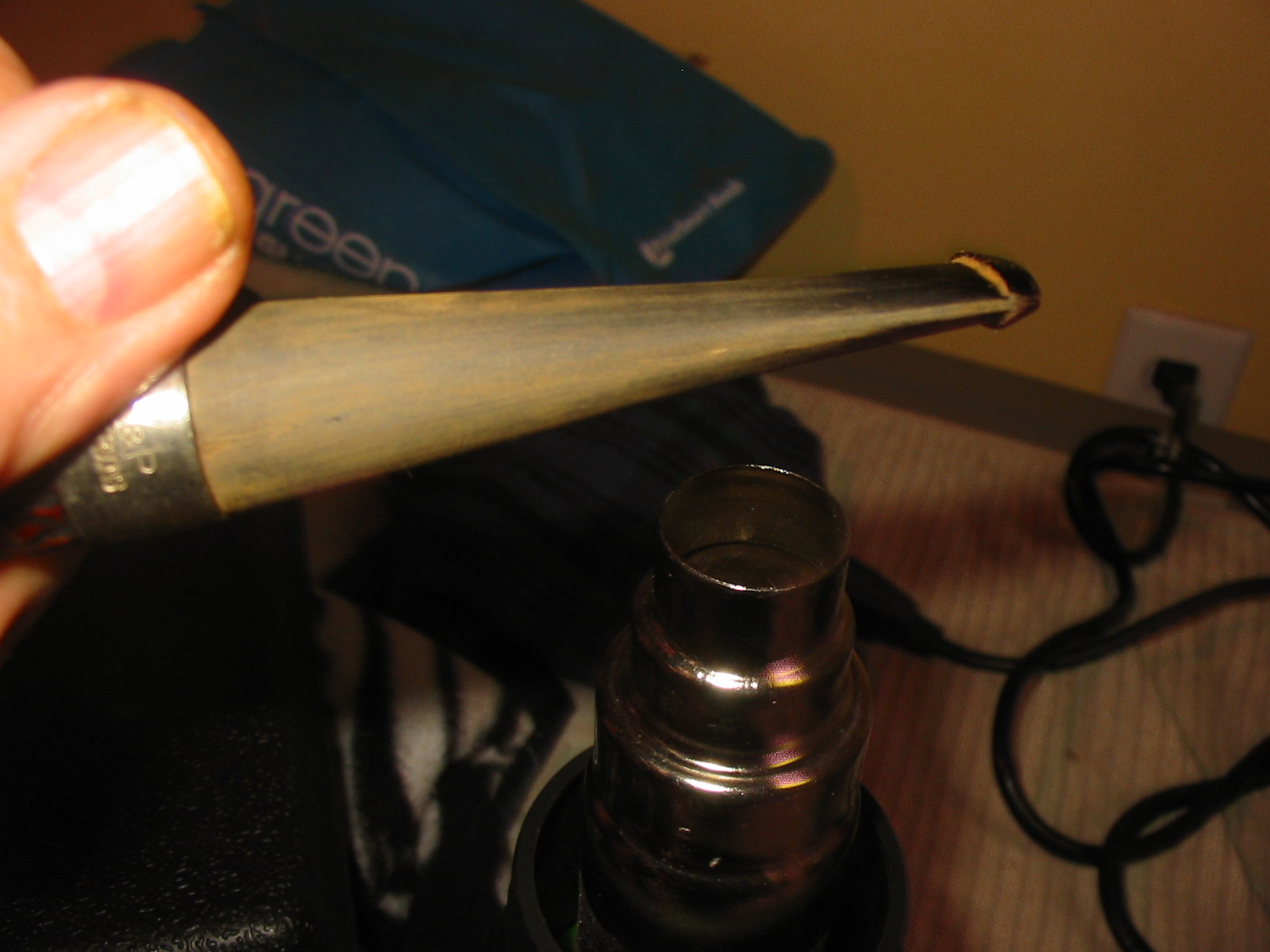
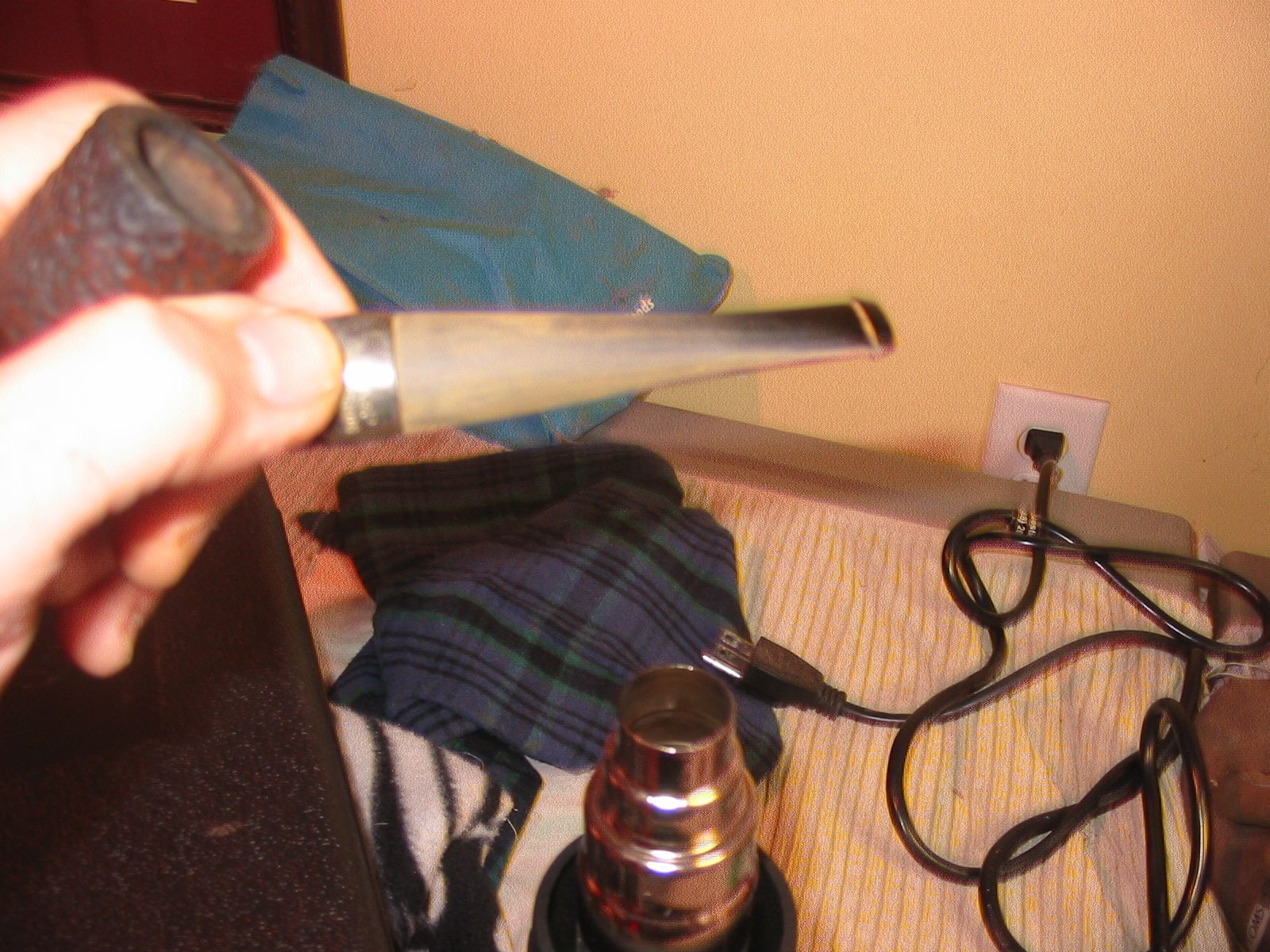
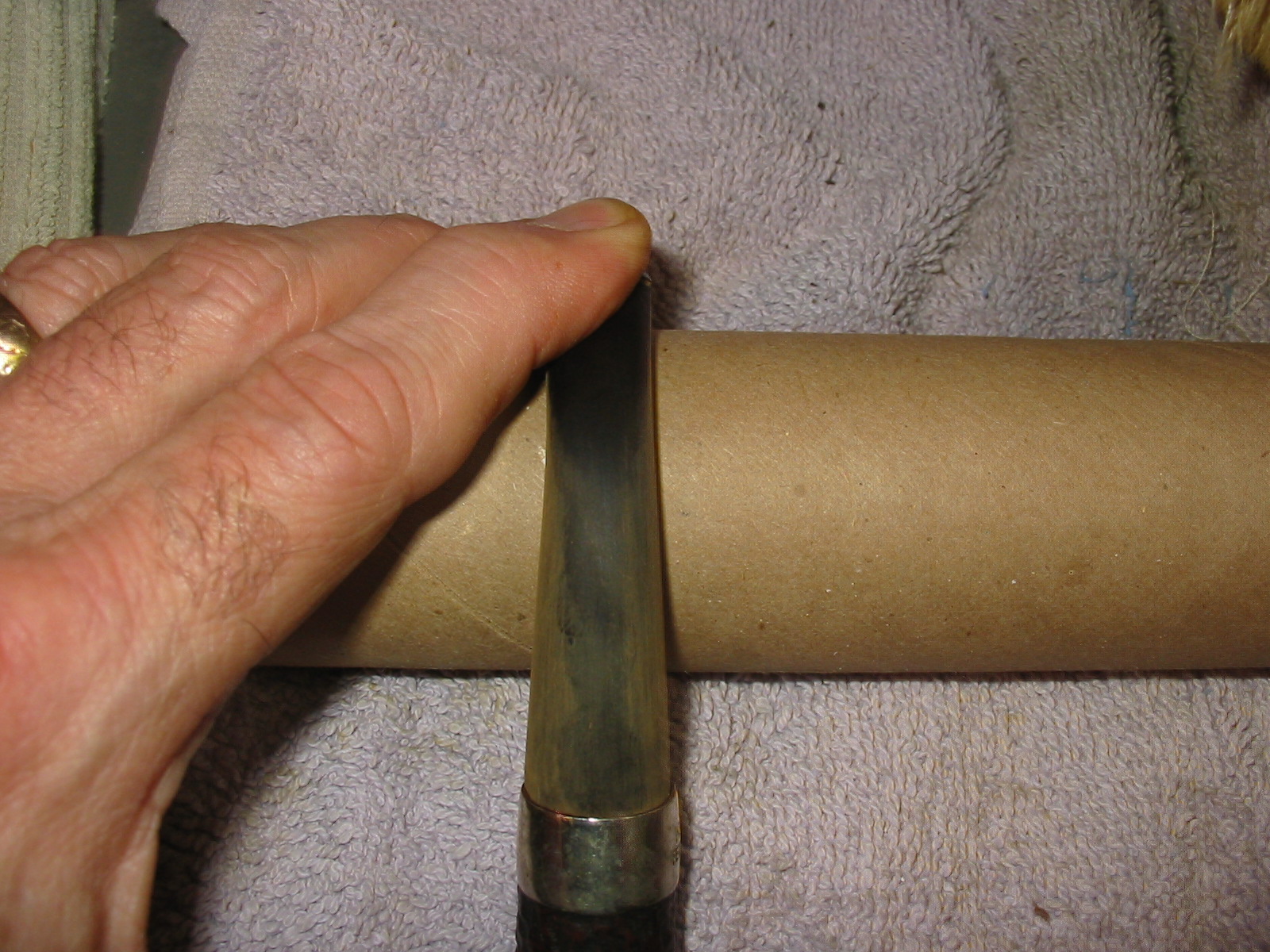
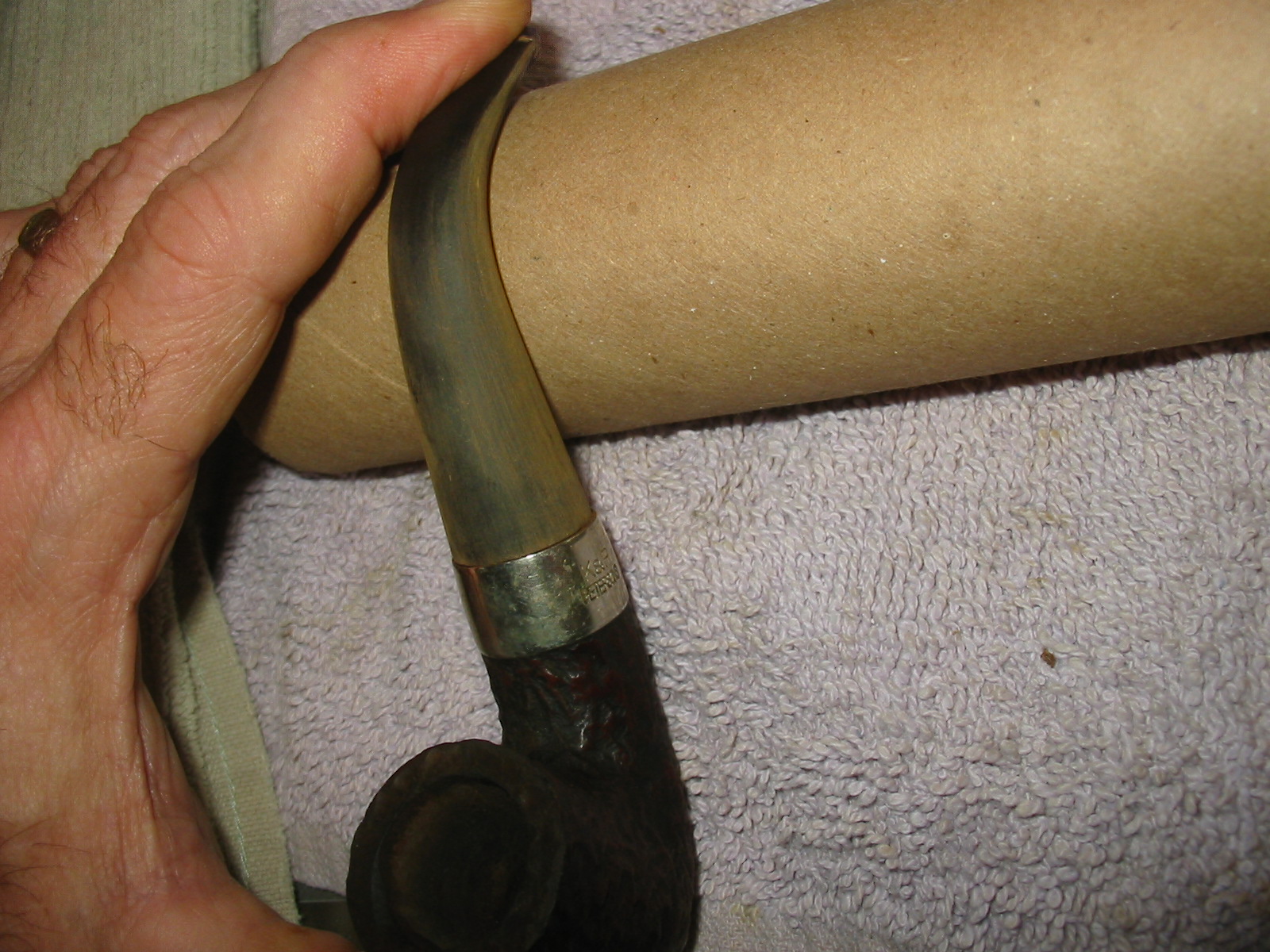
IMG_7262 IMG_7263 IMG_7264 IMG_7265When the stain had dried I buffed the bowl with White Diamond and then gave it a coating of carnauba wax to seal it and give it a shine. I had done enough of the early sanding on the stem by that point to set up a heat gun to heat and bend the stem. I held it over the heat until the stem was soft and then bent it over a rolling pin that I use for bending stems. I have a thick cardboard tube that I slide on the rolling pin to provide a softer surface than the old rolling pin when I am bending the heated vulcanite.
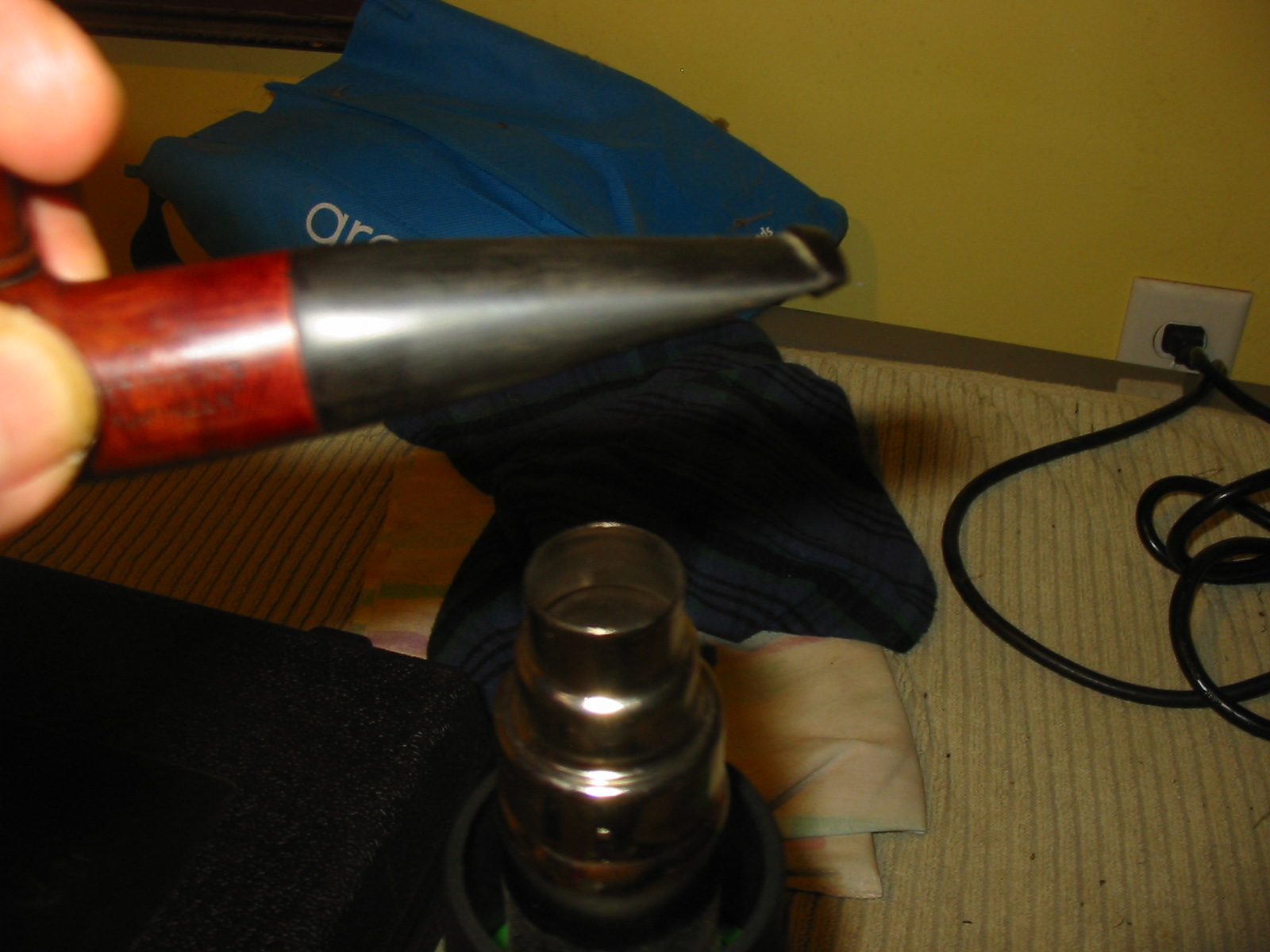
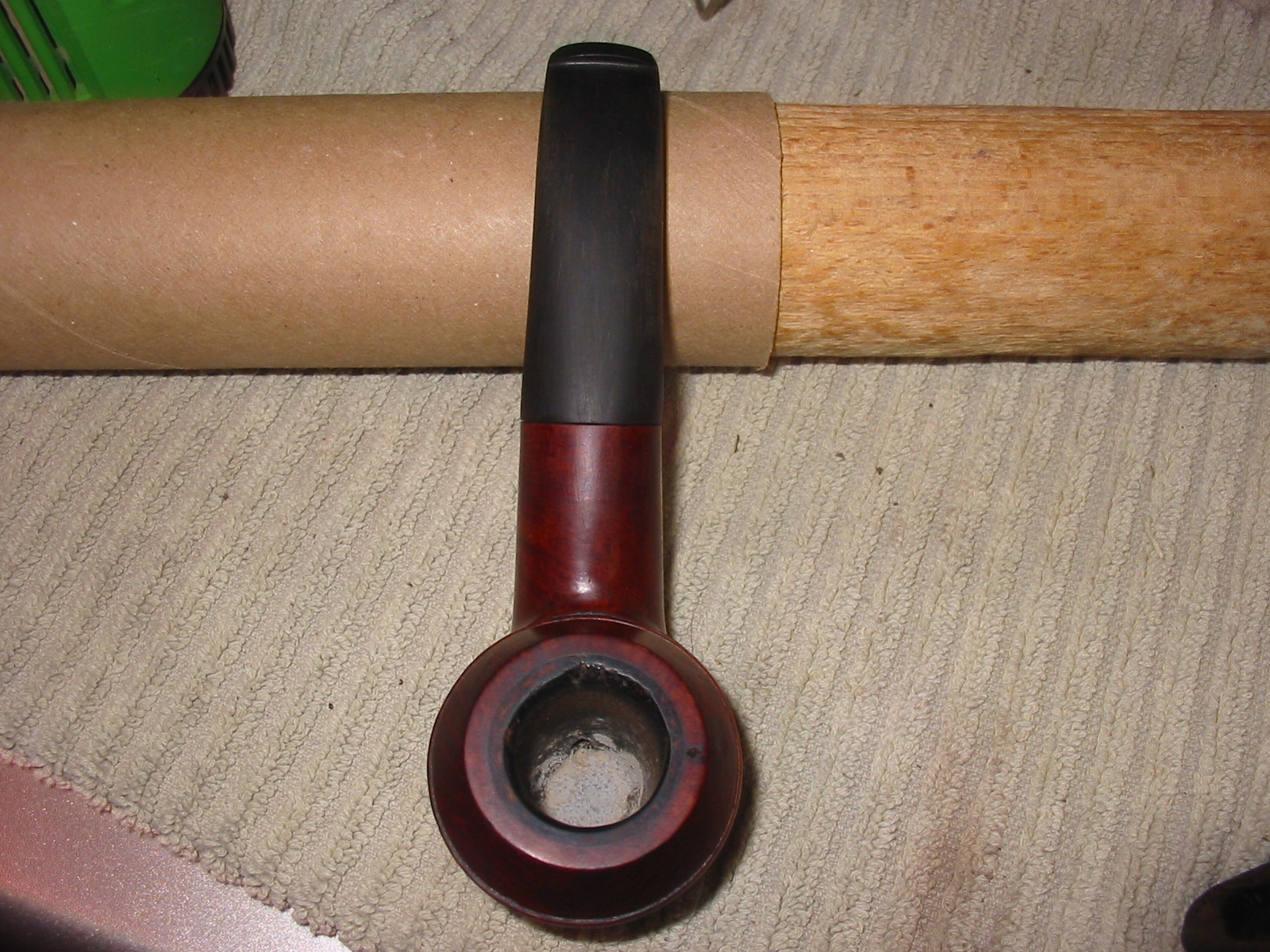
IMG_7268 IMG_7272 IMG_7273The photo above shows the first attempt at the bend in the stem. It was not bent enough to my liking so I reheated it and bent it again. Once the bend was correct I set it in cool water.

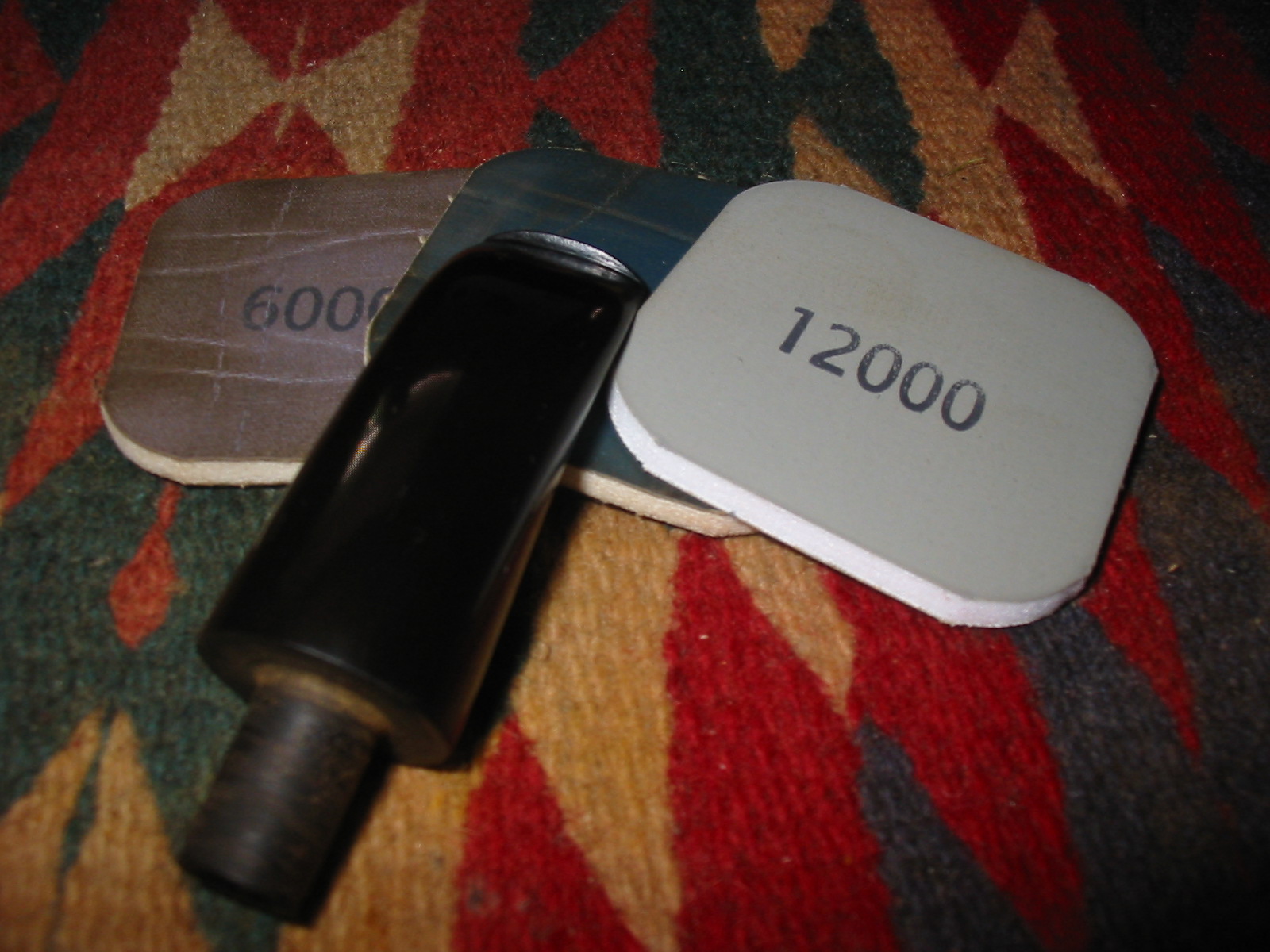
IMG_7276I took the pipe back to the worktable to sand the stem. I wet sanded with 1500-2400 grit micromesh sanding pads and dry sanded with 3200-12,000 grit pads. I rubbed the stem down between each of the three grits with Obsidian Oil and let it soak in before moving on to the next series of three grits.
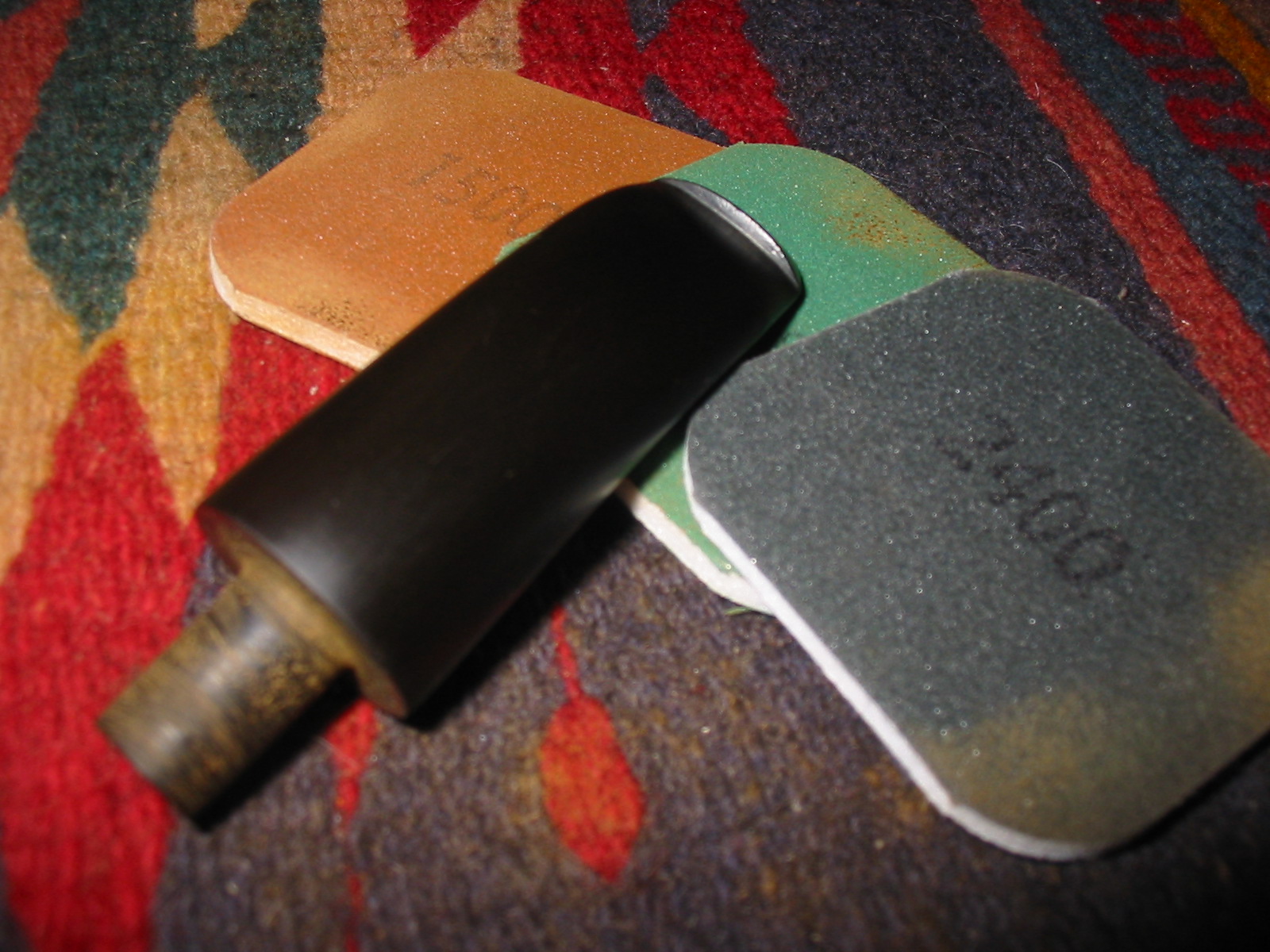
IMG_7278 IMG_7279 IMG_7280I rubbed it down a final time with the Obsidian Oil and then buffed the pipe and stem with White Diamond on the wheel. I gave the pipe multiple coats of carnauba wax and between each coat buffed it with a soft flannel buff. The finished pipe is shown in the photos below. All that is left is to load a bowl of some aged Louisiana Red and enjoy a bowl.
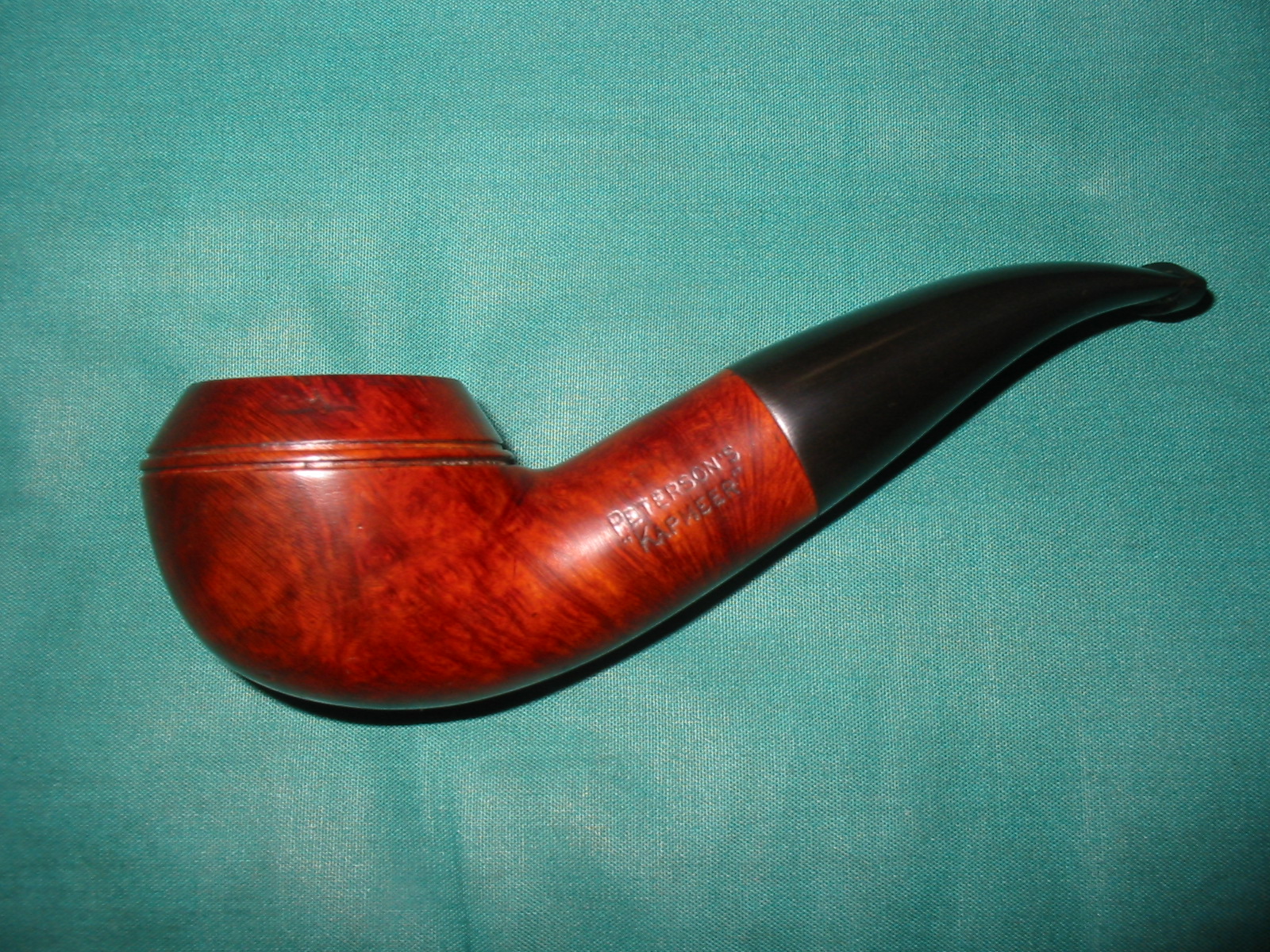
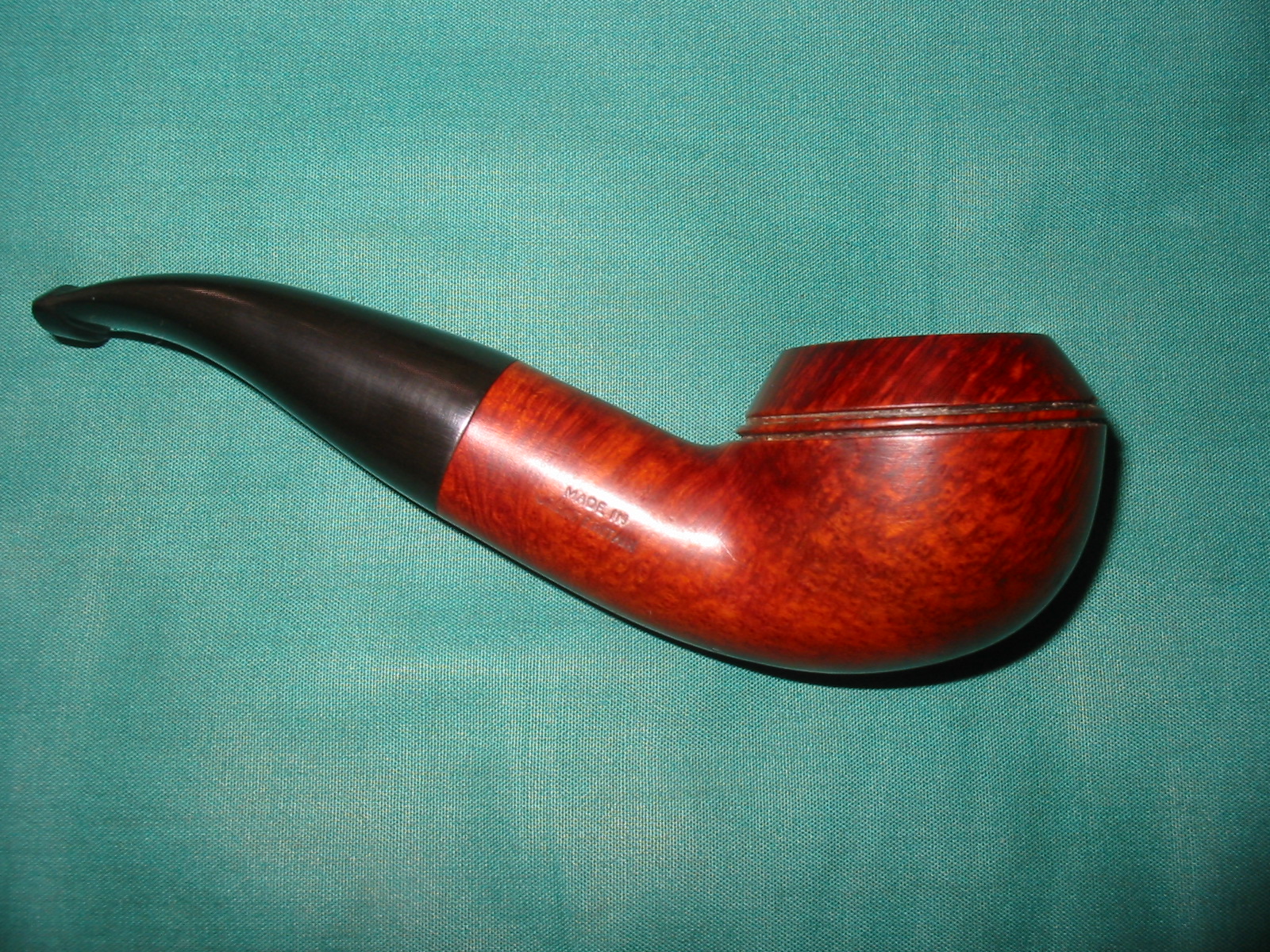
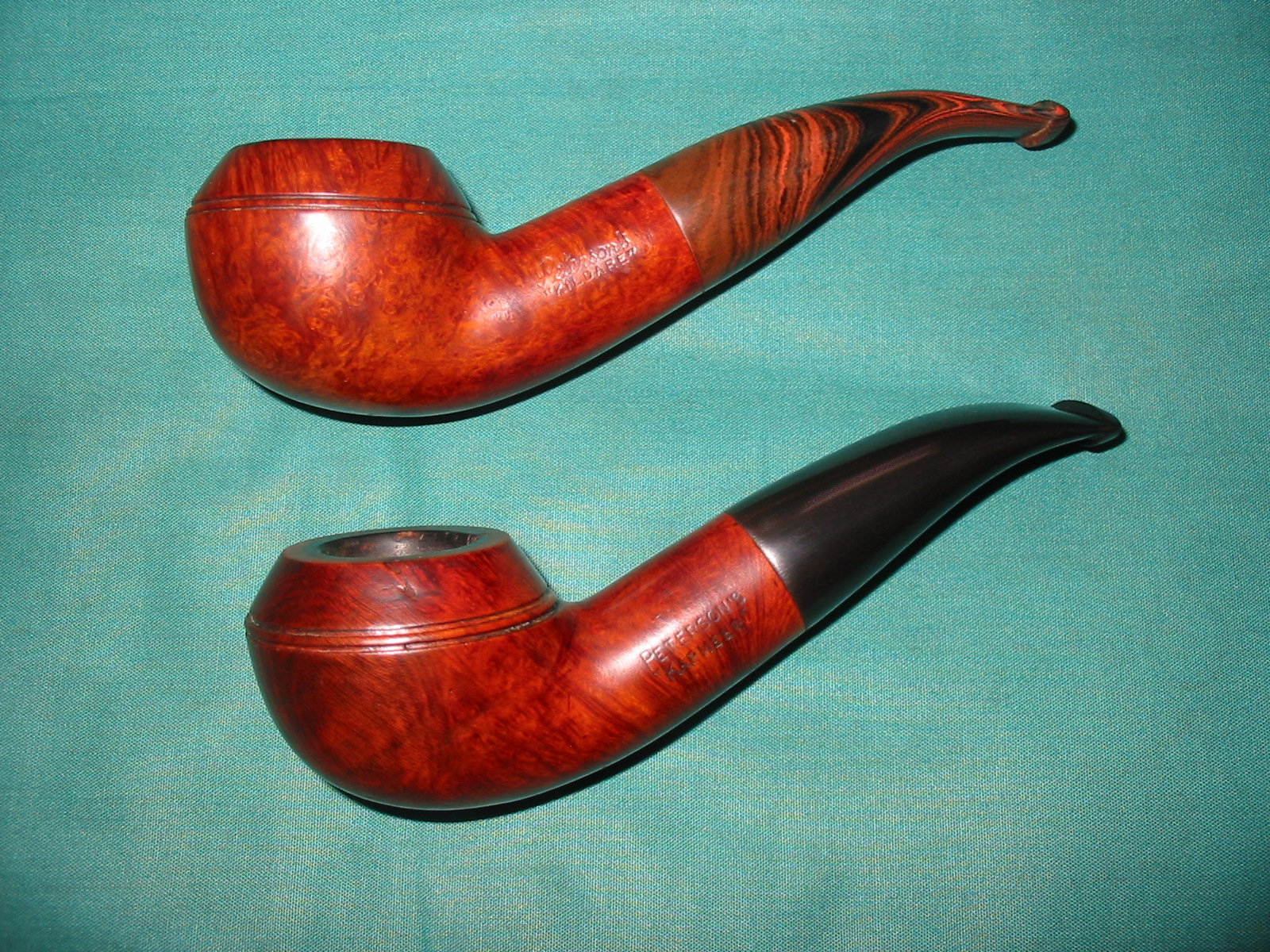
IMG_7281 IMG_7284 IMG_7285 IMG_7289For comparison sake, I have included a photo of the newly reworked KAPMEER with the earlier KILDARE that I restemmed from a piece of Cumberland rodstock that I purchased from Todd Bannard of Briar, Sweat and Tears Pipes http://www.briarsweatandtears.com/ . Todd cut the length and did the drilling and shaping on that piece before sending it to me to finish. As you can see both have the thicker old style shanks that are no longer used on Peterson 999 pipes. This pipe is the third one that I have from that earlier time period. It is the shape of the 999s that I favour.
IMG_7291

Using Charcoal Powder and Black Super Glue to Repair a Bite Through on a Nylon Stem


Blog by Steve Laug

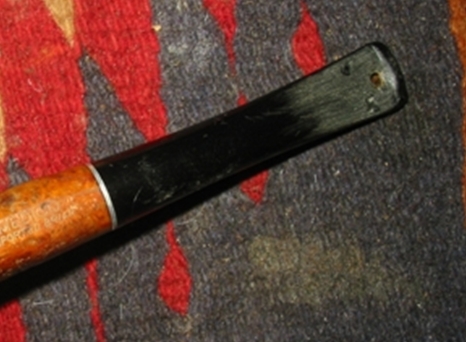
With all of the blog posts recently on repairing stems I decided to do a little work on one I had here. I wanted to use a black superglue and carbon mixture to see what I could do with this seriously damaged stem. It was a Medico pipe stem bearing the stamping F. The F stamping is a Medico brand mark but this stem was a different diameter than the shank of the pipe that it had come attached to so I replaced the stem on that pipe. I was left with this one and almost threw it away because the hole was large and on both sides of the stem. That combined with the fact that the stem was nylon would make it less desirable to repair for me. There were also deep tooth marks all around the holes. But I figured it was a perfect stem to do experiments on so went ahead with the repairs. I sanded the stem with 220 grit sandpaper to highlight the tooth marks and the holes. The button itself had dents in it as well and the crease had been flattened.
IMG_6982

IMG_6983
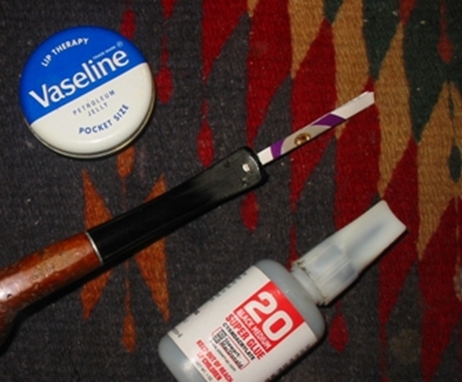
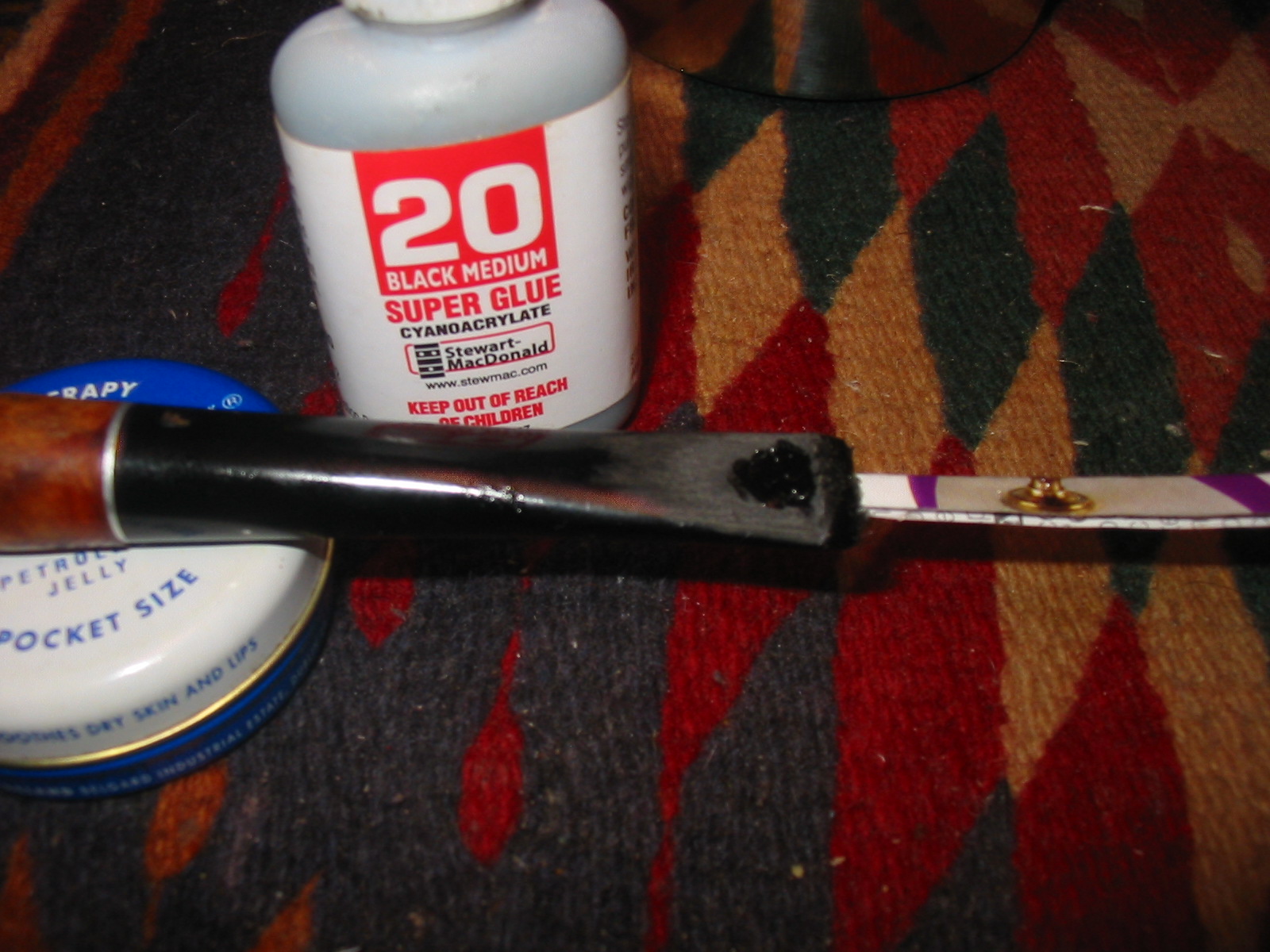
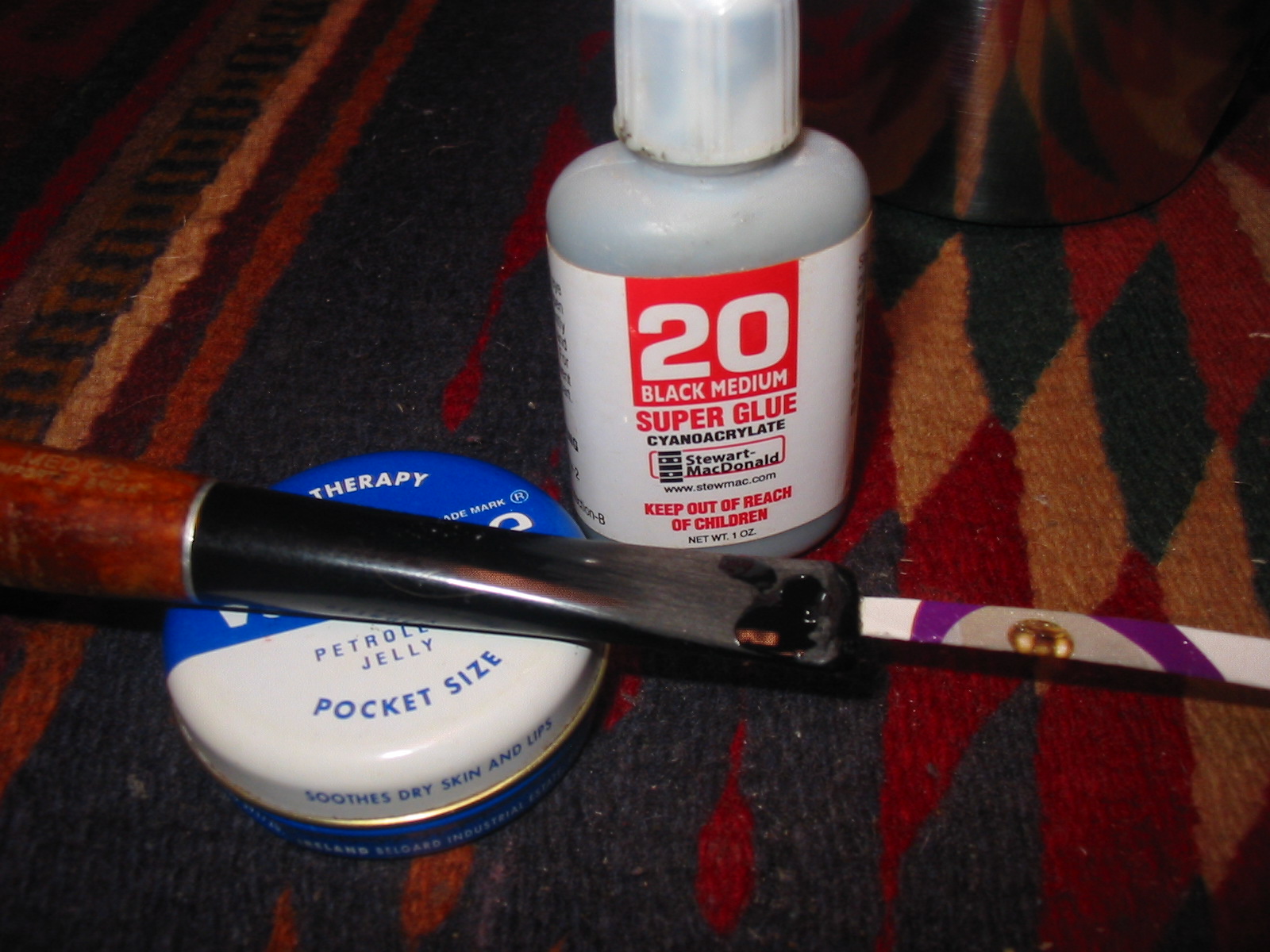
I cleaned out the debris from the hole with a dental pick (rather than the Dremel and bur that Joyal uses) and sanded around the edges of the hole with 220 grit sandpaper. I removed all of the loose or damaged material from the hole so that the edges were solid. I sanded them to roughen the edges slightly to provide a surface for the glue to bond to. I used a cotton pad and alcohol to clean out the dust from sanding and picking. I cut a piece of cardboard the same shape as the slot in the stem and greased it with Vaseline. I slipped it into the slot. I made sure that the Vaseline did not ooze out into the hole on either side.
IMG_6984

IMG_6985
I used Stew Mac Black super glue to build up the edges of the holes. I find that I get a much stronger patch/repair if I slowly build up the patch with multiple layers of the glue. I mixed in some carbon powder taken from a charcoal digestive capsule. I put the glue on the edges of the hole; mixed in the carbon and then more glue more carbon to build the first layer. The next series of four photos show the gradual build up of the glue and carbon. The glue was allowed to cure over night between each layer of the repair. I sanded lightly between the layers to roughen the surface of the patch and smooth out some of the pitting. I find that doing so provides a surface for the new layer to bond to.
IMG_6986

IMG_6987

IMG_7028

IMG_7029
Once the patch had thoroughly cured and hardened I sanded it. I test the hardness by pressing a fingernail into the patch. If it is not hard I let it sit longer. Once it is hard I sanded it with 220 grit sandpaper to smooth out the patch. I used a small needle file to redefine the edge of the crease. Nylon turns white when sanded and so did the patch fortunately. The patch was slightly darker than the stem at this point but would blend in with further sanding.
IMG_7059

IMG_7060

IMG_7063
I sanded the stem with a medium and fine grit sanding sponge to remove the scratches. I further redefined the crease to sharpen it. The repairs are visible in the photos as slightly darker than the stem colour at this point.
IMG_7158

IMG_7159
In the process of the sanding I noticed that the dents in the button itself were not filled enough so I cleaned them out and filled them with black super glue. I also used black super glue to refill some spots on the surface of the blade that seemed to be pitted after the sanding. I sanded these after they were dry using 220 grit sandpaper followed by medium and fine grit sanding sponges. Once the surfaces were flat and smooth to my liking it was time to turn to sanding with the micromesh sanding pads. I wet sanded with 1500-2400 grit pads and dry sanded with 3200-12000 grit pads. I went back to the sanding sponges several times when I found that some of the scratches were not adequately removed. I then repeated the wet and dry sanding with the micromesh pads until the surface was shiny and smooth and the patches blended into the stem.
IMG_7217

IMG_7219
I rubbed the stem down with Obsidian Oil and when it was dry hand buffed the s tem and then resanded with the 3200-12,000 grit micromesh sanding pads.
IMG_7221

IMG_7222

IMG_7223

IMG_7226

IMG_7227

IMG_7230
I polished the finished stem lightly with White Diamond. You have to have a very light touch when buffing nylon as the heat the buffing creates melts the nylon and creates a mess. In this case I just lightly touched it and then gave it a light coating of carnauba wax and then hand buffed it. I gave the stem several coats of Paragon Wax and hand buffed it. The finished stem is shown in the photos below.
IMG_7266

IMG_7267

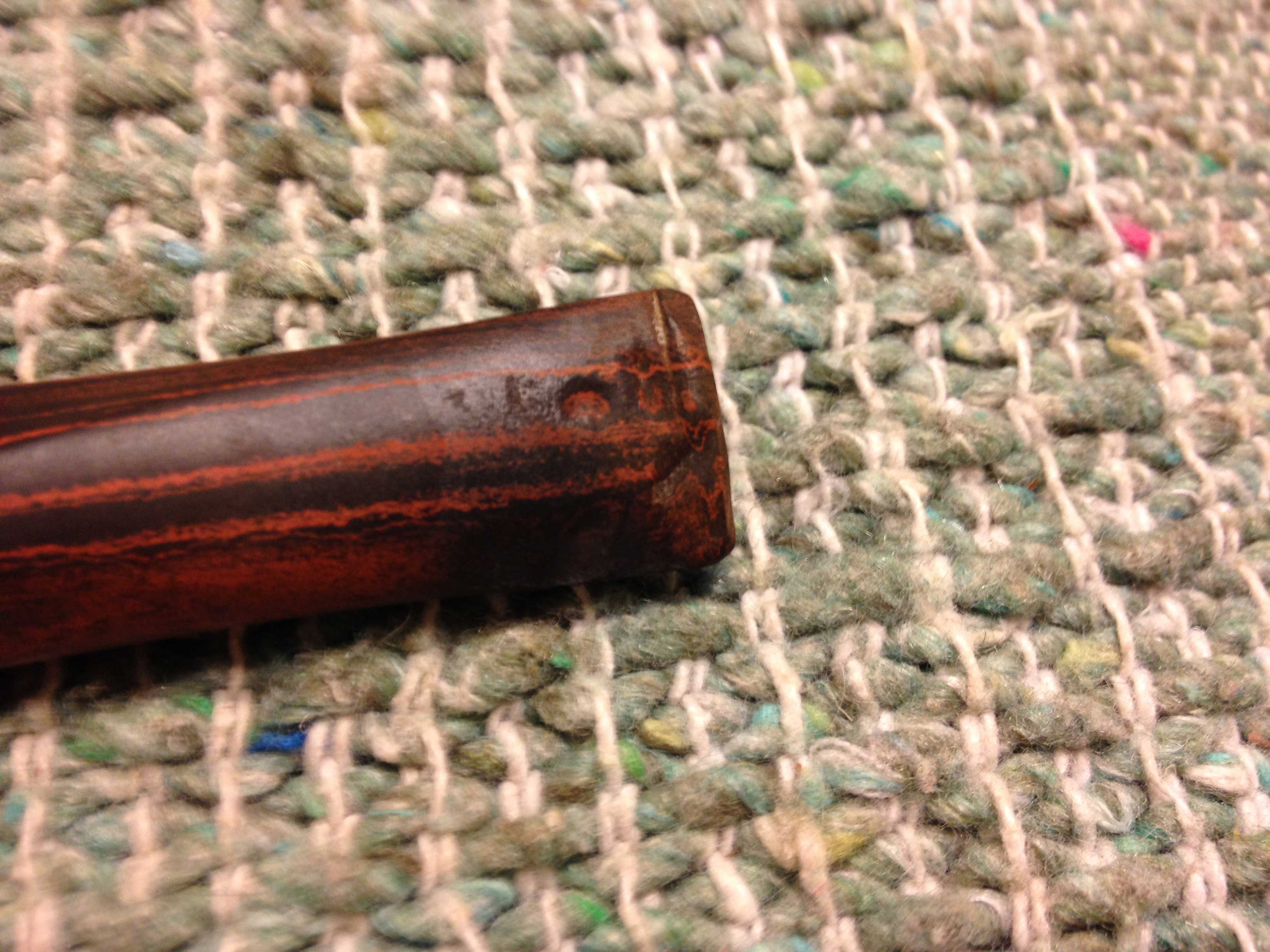
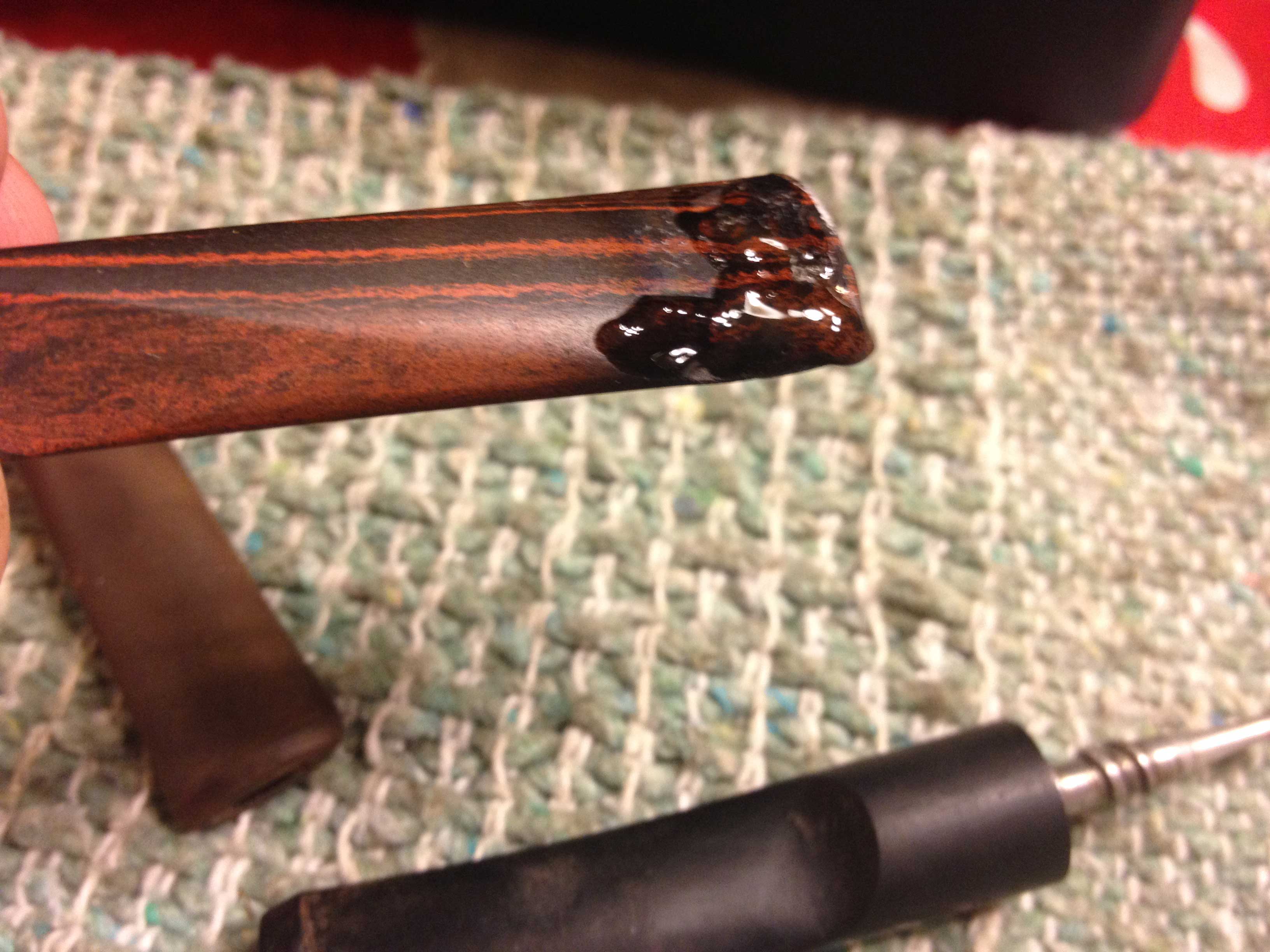
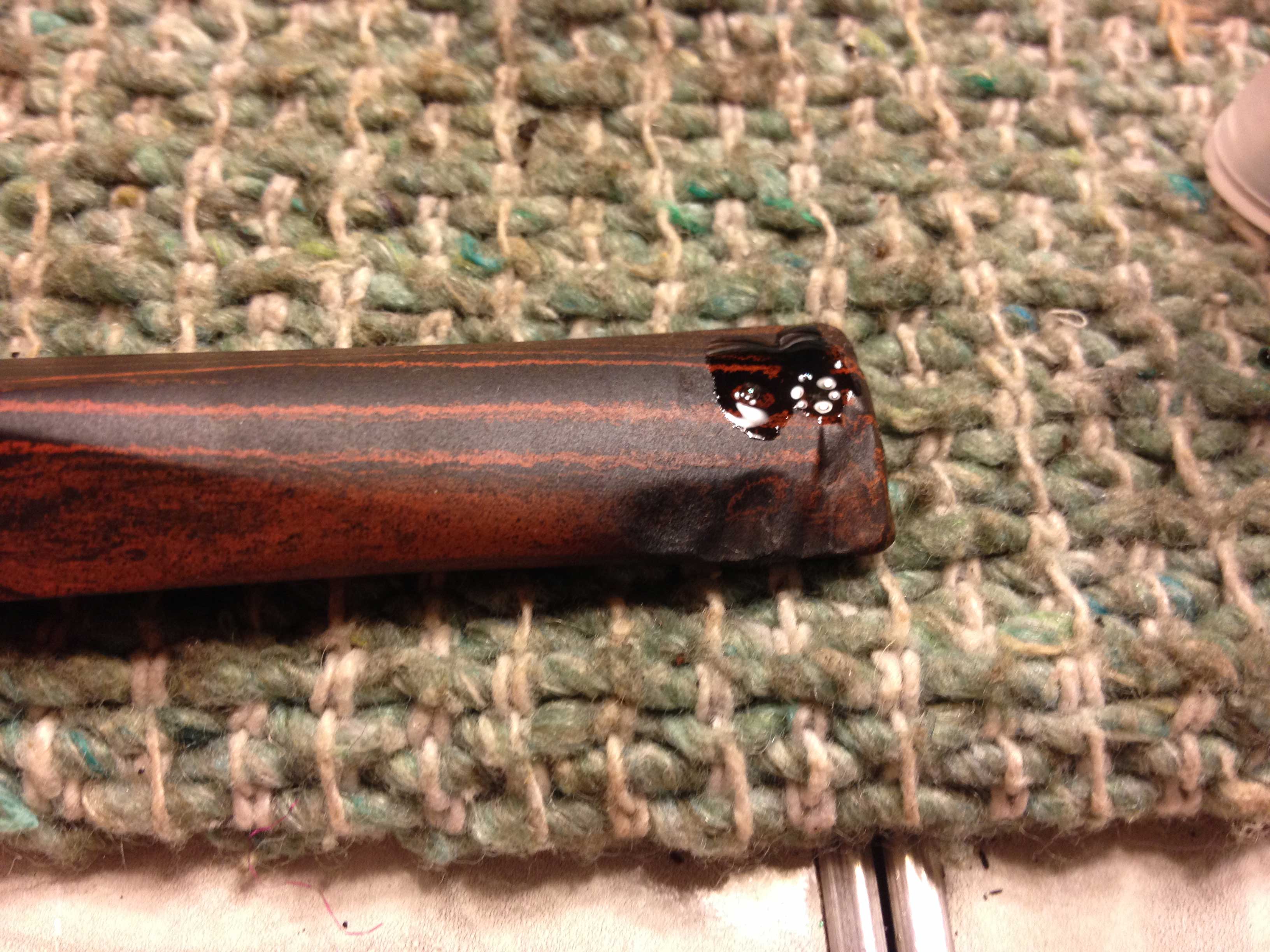
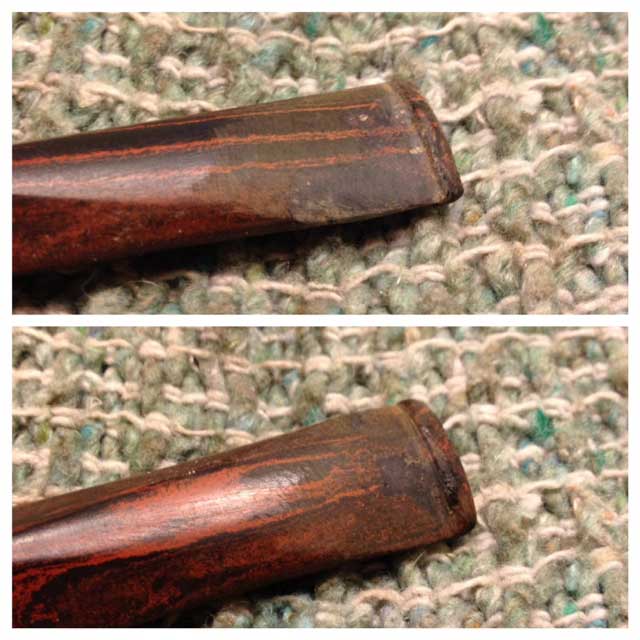
Reparing a Cumberland Stem on a Kaywoodie Regent Bulldog 98B


Blog by Greg Wolford

I’ve been hoping to add a Kaywoodie Regent to my collection for some time now. A month or so ago we were out-of-town on vacation when I happened upon one in an antique store. There were actually several pipes in this vendor’s case, most of which I wasn’t interested in. Other than the Regent, there were also two other Kaywoodies I was interested in: a Relief Grain and an extra long Canadian. They all looked to have pretty good bones in the dark little store so I made them mine.

When  I got them back to where we were staying I eagerly opened them up to see what I had. I found that they were a lot dirtier and caked up than I thought. I also now got a really good look at the damage to the Regent’s stem; this was going to take some trail and error I knew.

photo1_zps671dd981 photo2_zps4257f072

When I got home I took some better photos, showing the damage to the stem. There were deep teeth marks on the top and bottom of the stem and the edge of the side where the clover logo is was almost gone completely. This was going to take a lot of time and some research to get it even close to decent again I now realized.

IMG_9492 IMG_9491

My first step was to try some experiments on a Medico VFQ. Although I ended up with a good looking and smoking pipe, the experiments were somewhat in vain: the stems on the VFQ turned out to be nylon. So I now turned to some fellow restorers on the PSU Forum for hints. tips and ideas – and they really came through with many ideas and several new articles posted by Joyal. Some of the best advice for this project come from JoeMan: the idea of using activated charcoal powder with Gorilla brand super glue.

This project took days to complete do to all the patching a rebuilding of the stem. So, I didn’t do a great job documenting it all with photos and because of the extended time frame of the project I may miss a step or two in this article; I apologize in advance for these things.

The fist thing I did (after thoroughly cleaning the stem with pipe cleaners and alcohol) was try to  raise the dents as much as I could with heat from a candle; there was little success here.

IMG_9673 IMG_9672

Now I began the filling and shaping process. This took many forms and layers: I used clear super glue, both “regular” and gel, mixing in some of the StewMac black glue at times, and also Gorilla brand super glue both with and without charcoal powder mixed into it. one of the challenges was to add strength and black-color in some places while not covering up too much of the red in the Cumberland stem. Another challenge was to build up that chewed up side so the end of the stem would have the proper shape again.

IMG_9683 IMG_9682

The StewMac glue was too thin and took so long to dry that it wasn’t much help to me on this project. The Gorilla glue, both “plain” and with the charcoal powder mixed in, was a big help; it is thicker and dries quite fast, especially when the powder is mixed in.

Another thing that added time was the way I went about this repair. There were multiple layers needed, as well as different thicknesses, so I would apply a patch, let it cure, and then shape it as I needed, and then start the whole process over again. I did this many times to get an acceptable result. This photo is after almost all of the layering and shaping was done:

IMG_9730I used needle files and a vulcrylic file for most of the shaping. I also used 220 grit sandpaper. After I had the final shape I was happy with I wet sanded with 320/400/600 and then micro mesh through 12000 grit; after 600 and every few grits thereafter I also polished the stem with Meguiar’s Scratch X2.0,which helps me see if I’ve missed anything along the way. The next four images are before micro mesh and after:

IMG_9733IMG_9734

IMG_9735IMG_9736

As you can see, this stem came out pretty nicely and is more than useable now. Then lines came out well, to my eye, and the rebuilding and patching blended rather nicely.

I didn’t do a lot to the stummel; the nomenclature is readable but very weak. There are some small “pocket” marks but I think they give the pipe an air of character so I basically left the stummel as I found it, sans, the thick cake, mess of tars and oils in the shank, and the buildup on the rim. The rim did require a very light topping and a round or two with the medium touch up marker to give it a head start on matching the patina on this rest of the wood. I only very lightly buffed the pipe with white diamond and carnauba wax and ending with a soft clean buff and hand polish with a micro fabric cloth.

IMG_9737 IMG_9738 IMG_9739 IMG_9740 IMG_9741 IMG_9742

I just noticed there is a bit of wax residue that I missed in the photos. Oh well, that’s easy enough to take care of after while ….

I’m very happy with how this project came out. It will soon find its way, I think, onto my rack where I can hopefully enjoy it for many years – unless my wife learns of its collectors appeal and potential value, then I might be in trouble!

Yellow Acrylic Stem Patch – Part 2 – Joyal Taylor (aka holymolar)


Blog by Joyal Taylor

Earlier I posted a You Tube video that Joyal posted about patching this yellow acrylic stem https://rebornpipes.com/2014/07/08/stem-patch-using-amber-super-glue-joyal-taylor-aka-holymolar/ It is part of an ongoing work in progress where Joyal is experimenting with different mixture to patch a bite through in an acrylic yellow stem. This is Part 2 of the ongoing experiment. Thanks Joyal for taking us with you in this experiment.

Since the amber superglue didn’t work well on this stem, I’m trying other things.

I tried mixing yellow and orange Fiebing’s Leather Dye with clear superglue, but the dye caused the glue to set instantly, even before I could mix it.

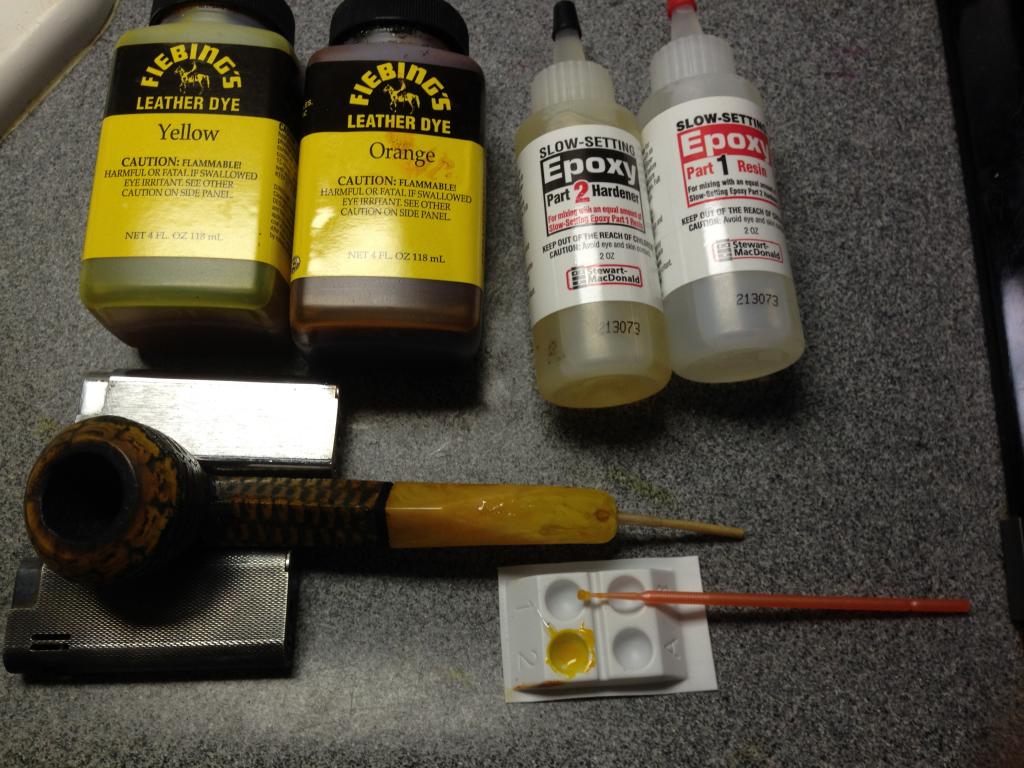
Next, I tried StewMac 2 part clear epoxy with Fiebing’s yellow and orange dyes, which mixed well.

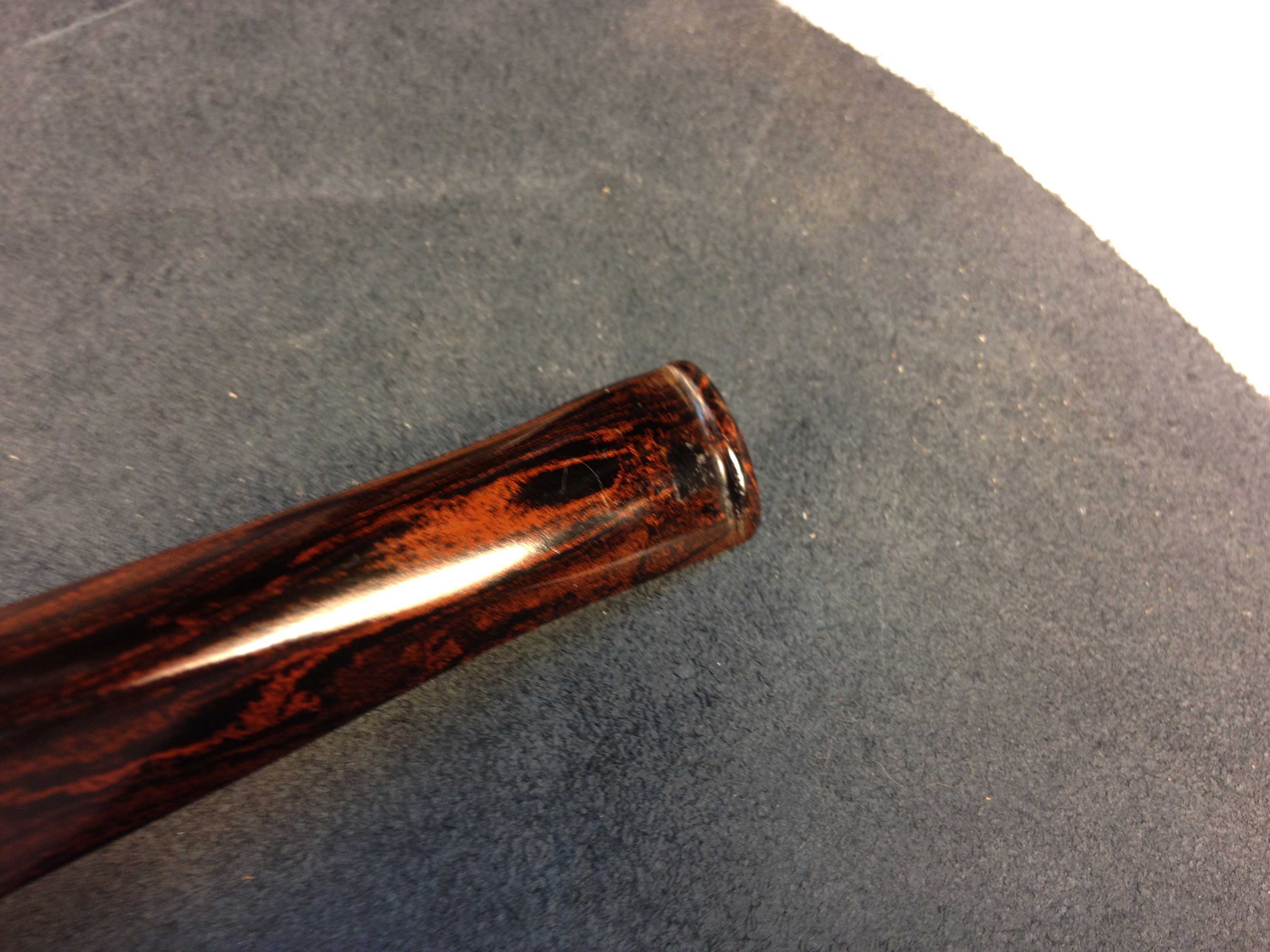
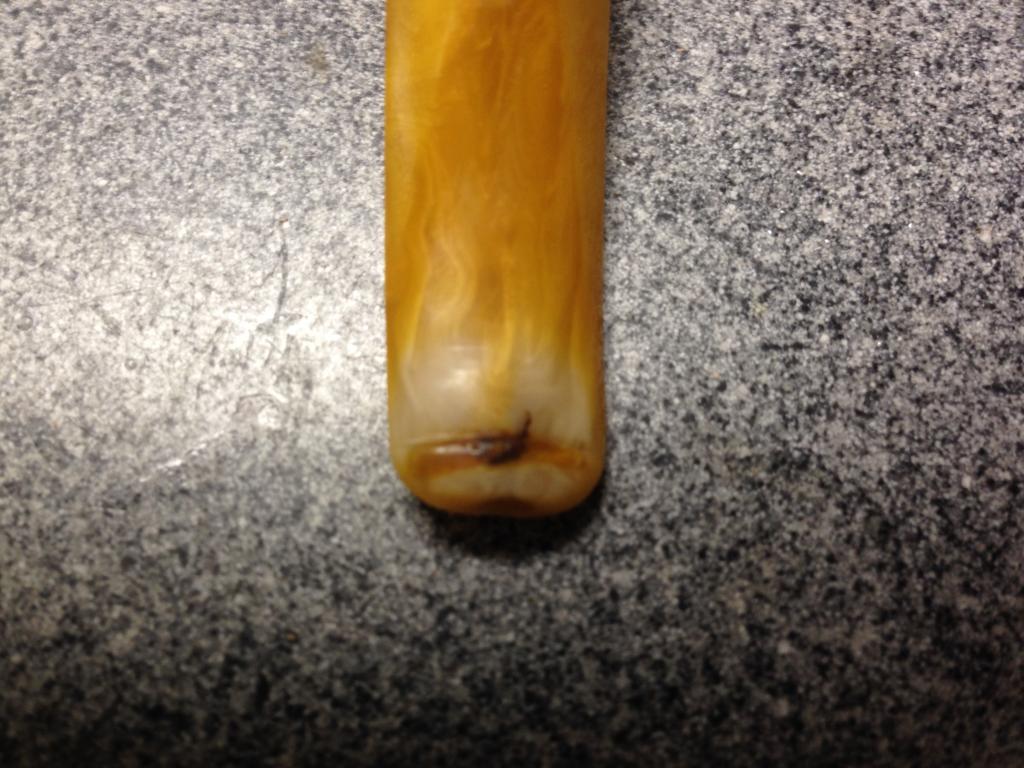
Before photo of only one side of the stem, but I worked on both sides:
Photo #1
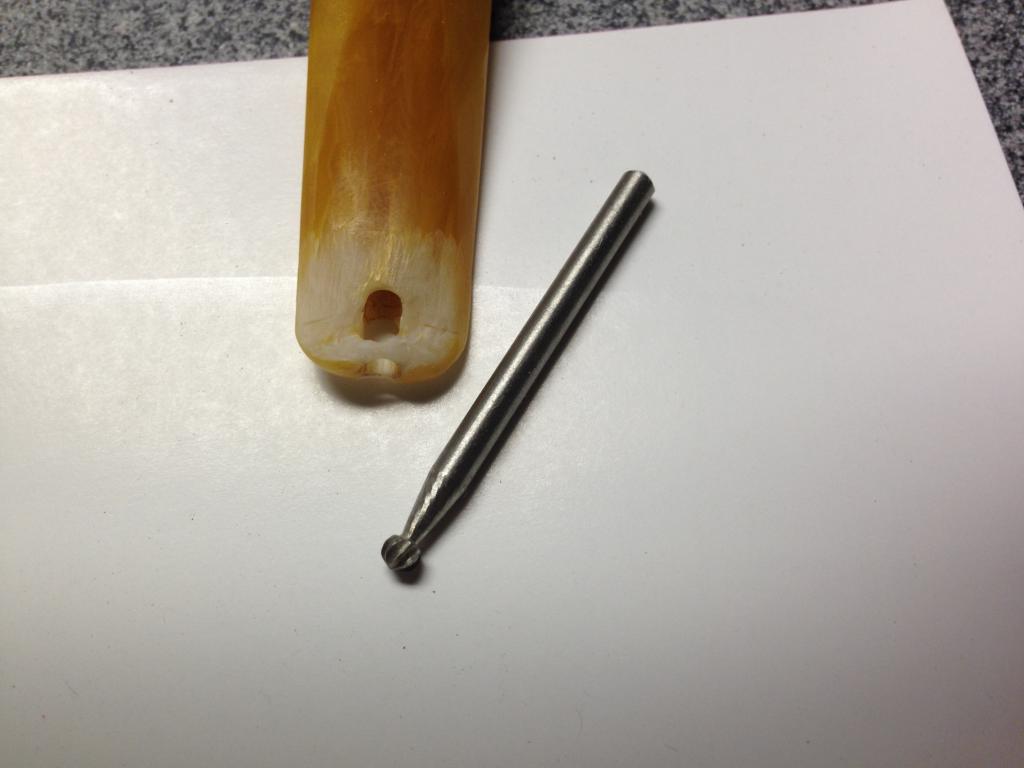
I used a round bit in my dremel to remove the previous amber superglue patch and discoloration. Also, I roughen-up the area in front of the bit to try to re-color that area.
Photo #2
I tried several combinations of yellow and orange dye until I got close to the color of the stem
Photo #3
Close up photo looks like it may work
Photo #4
After shaping the bit with needle files and sanding/micromesh the epoxy.
Photo #5
This didn’t work out so well, either. Not only the color isn’t good but, also, the epoxy feels soft and rough to my teeth and lips.

We learn from our mistakes, so I’m going to continue experimenting with this.

Next, I’m going to remove the epoxy and try patching a third time by mixing dye powders with clear superglue.

I would appreciate it if anyone has other ideas to try for this stem repair.

Stem Patch Using Amber Super Glue, Part 1 – Joyal Taylor (aka holymolar)


In a conversation with Joyal about patching a stem that had a yellow/orange tint I suggested that he try the amber super glue from Stew Mac. He replied that he had tried it and done a video on it on You Tube. He said it was too clear and not opaque enough for a good match. He sent me the link to his You Tube video on using the Stewart MacDonald Amber coloured super glue.

Since You Tube is not something I have ever done, I was intrigued with it. I thought it would be great to post the link here for you to have a look at.

The amber super glue Joyal is using is available online at:
http://www.stewmac.com/Materials_and_Supplies/Glues_and_Adhesives/Glues/StewMac_Super_Glues/StewMac_Tinted_Super_Glue.html

Part 2 is a continuation of this work and is found under the title “Yellow Acrylic Stem Patch – Part 2 – Joyal Taylor (aka holymolar)” can be read at this link https://rebornpipes.com/2014/07/08/yellow-acrylic-stem-patch-part-2-joyal-taylor-aka-holymolar/

Resuscitating a Peterson Donegal Rocky 338 Bent Billiard


A few weeks ago one of the EBay sellers that I have bought several pipes from over the years had three Peterson bowls, sans stems listed for sale. They were in rough shape but I decided I wanted to give refurbishing them all a try. Besides one of them was a 999S and I love the 999 shape. That alone would have pushed me to make a bid on this lot. I ended up buying the threesome for more than I usually pay for pipe bowls but I figured it was worth the effort. This is the photo of the threesome from the sale listing.

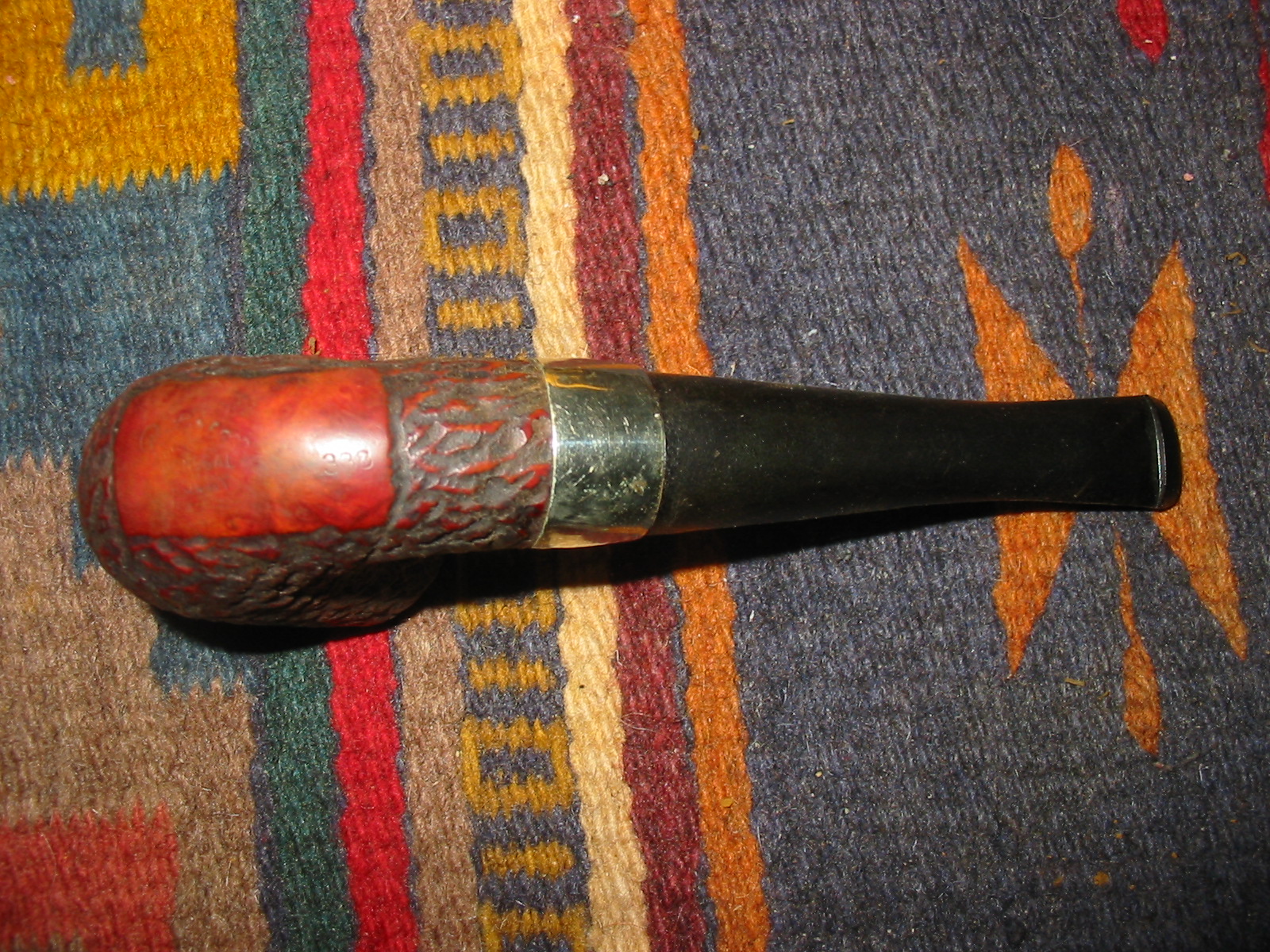
The first of the three Peterson bowls is on the worktable at the moment. The finish was very rough on the pipe. It had built up grime in all of the grooves of the rustication. The inside of the bowl was caked almost to the top of the rim. The shank was one of the foulest things I think I have seen before. It was caked with oily tars from just inside the edge of the mortise to the bottom of the mortise. The rim was badly damaged with the front edge burned down lower than the rest. The rim was ragged looking and uneven all the way around. It looked to be solid though underneath the damage. The stamping on the underside of the shank said Petersons Donegal Rocky with the shape number 338. All the stamping is quite faint but still readable with a lens.
IMG_7098

IMG_7099
I cleaned and reamed the bowl. It is funny how short and easy that sounds but in this case that was not true. The cake in the bowl was like concrete and had totally closed off the bottom half of the bowl. The remaining top half had a slight slice to the airway but that effort was useless as the shank was completely clogged and no air could go through. I reamed as much of the bowl as I could with a PipNet reamer, not even getting as low as the airway. This stuff was very hard. I cleaned the shank with alcohol and cotton swabs. I tried to push a pipe cleaner through the clogged airway in the shank and was unable to get it to through. I decided to throw the bowl in an alcohol bath to soak for several hours to loosen things up.
IMG_7100

IMG_7111
When I took it out of the bath the alcohol soak had done its work. I was able to ream the rest of the way to the bottom of the bowl and completely remove the cake. I was able to push a wire through the airway and then cleaned out the airway and shank with cotton swabs and some assorted dental tools (thanks Joyal).
IMG_7112

IMG_7108
I scrubbed the rusticated finish of the bowl with Murphy’s Oil Soap and a tooth brush. I used a soft brass bristle brush to work on the rim and clean up the loose build up. Once I had scrubbed it I rinsed it with warm water. I dried it off and still had to do some more scrubbing. I cleaned the inside of the bowl and shank with the dental tools and cotton swabs and alcohol.
IMG_7125

IMG_7127
The rim was so badly damaged and uneven with the burned area that I topped it using the topping board and 220 grit sandpaper until it was flat.
IMG_7121

IMG_7123

IMG_7124
I went through my stem can and found a three inch long stem that was approximately the same shape and length as the original stem. I turned the tenon with the PIMO Tenon Turning tool and removed the castings on the sides and the end of the stem. I further shaped it with the Dremel and sanding drum.
IMG_7128

IMG_7129

IMG_7131

IMG_7132

IMG_7133
I wanted the top of the bowl to have the same rustication that it originally had before all the rim damage. It had a pattern that was similar to the rustication on the bowl itself. I looked on line to find photos of the rim of a Donegal Rocky that would be a pattern for me to copy. I put a dental bur that Joyal has given me on a Dremel tool and set the speed to a slow speed and used it to rusticate the rim to match the pattern in the photo of the bowl.
IMG_7134
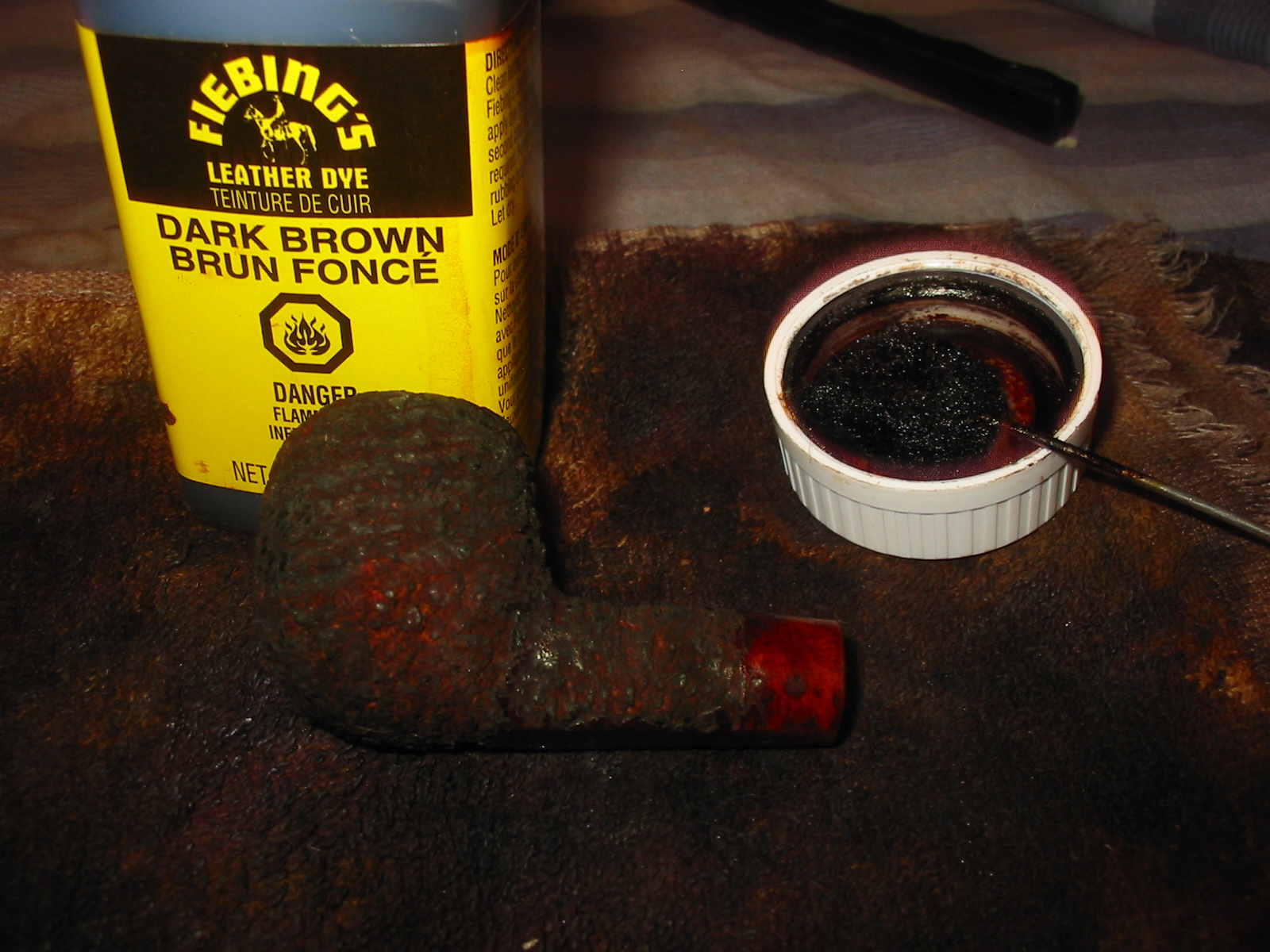
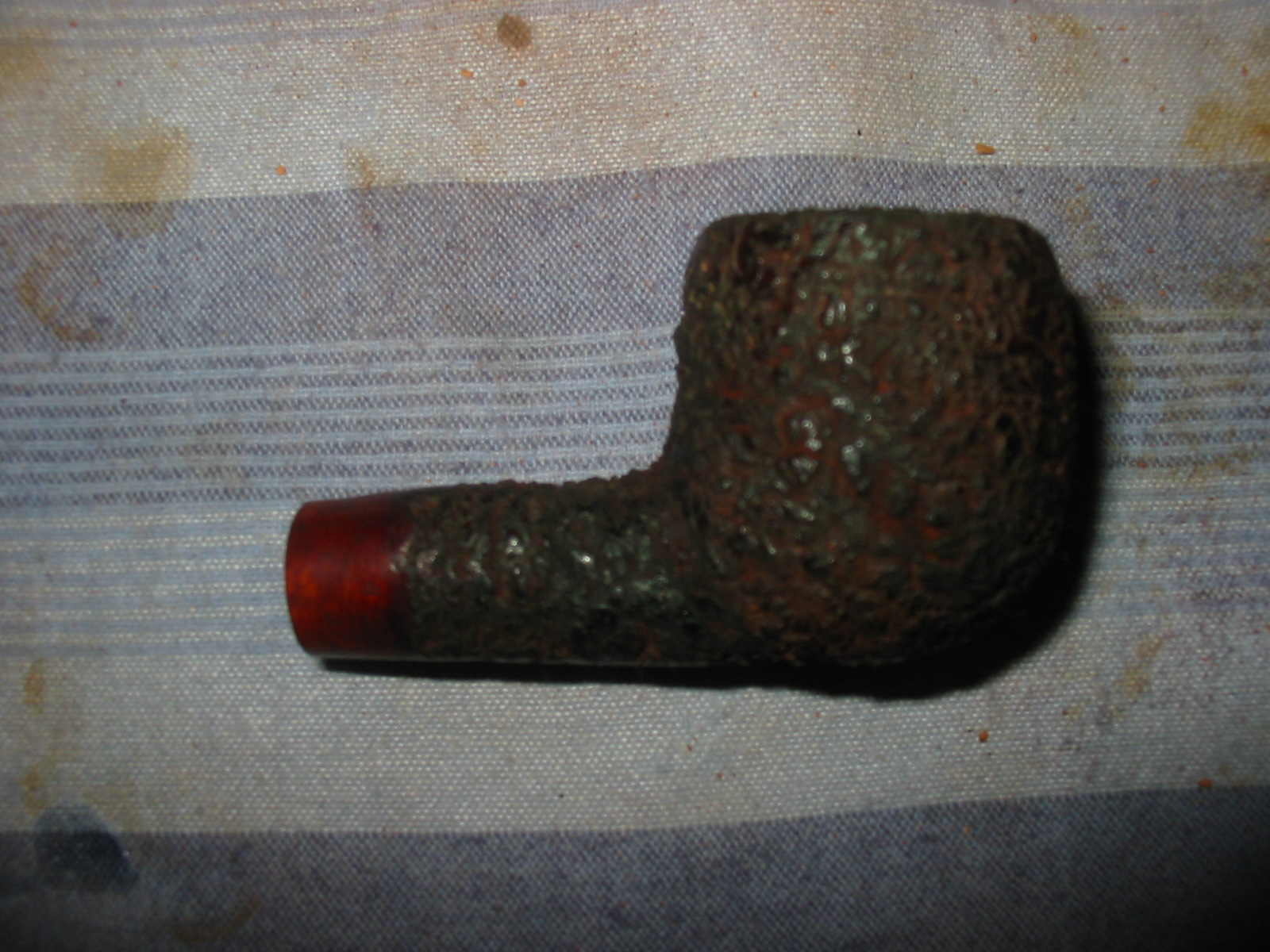
I wiped the bowl down with a cotton pad and alcohol to clean off the dust from the rustication and then stained the whole bowl with a dark brown aniline stain. In the photos below the rim is obviously much lighter in colour than the rest of the bowl so it took five coats of stain before it matched the bowl. I applied the stain and flamed it with a lighter to set the stain repeatedly until the coverage was correct.
IMG_7135

IMG_7136
The brown was very dark and the original contrast look on the Donegal Rocky was not evident. I wiped the bowl down with acetone on cotton pads to lighten it and bring back some contrast to the rusticated finish. In the photos below the properly darkened rim is visible.
IMG_7137

IMG_7138

IMG_7139
I lightly buffed the bowl and rim with White Diamond and then applied some Halcyon II wax on both and then buffed with a soft flannel buff. I knew that I would have to wax it again once I had finished but I always put a coat of wax on the bowl to protect the finish when I give it a more thorough clean. I sanded the stem with 220 grit sandpaper to smooth out the casting marks and the Dremel marks. Once I had the initial sanding finished I decided to bend the stem. I heated it over a heat gun until it was pliable and bent it over and old rolling pin. I used a photo of 338 I found on the net as a template for the bend in the stem. I made the photo life sized and laid the pipe against the computer screen to match the bend. Once I had the bend correct the rest of the stem work could begin.
IMG_7140

IMG_7141

IMG_7142

IMG_7143

0003284_sterling-silver-338_430

IMG_7144

IMG_7145

IMG_7146

IMG_7147
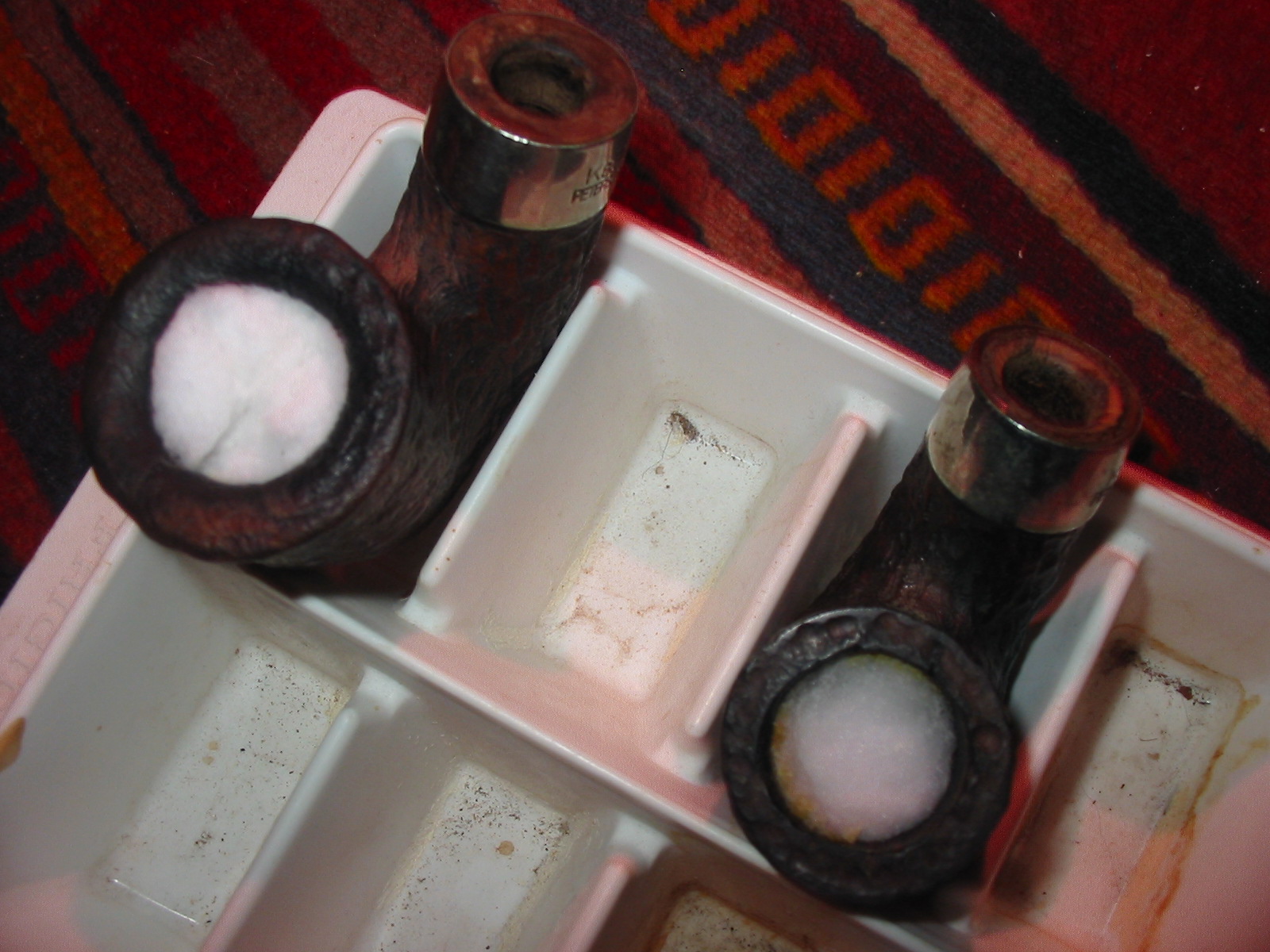
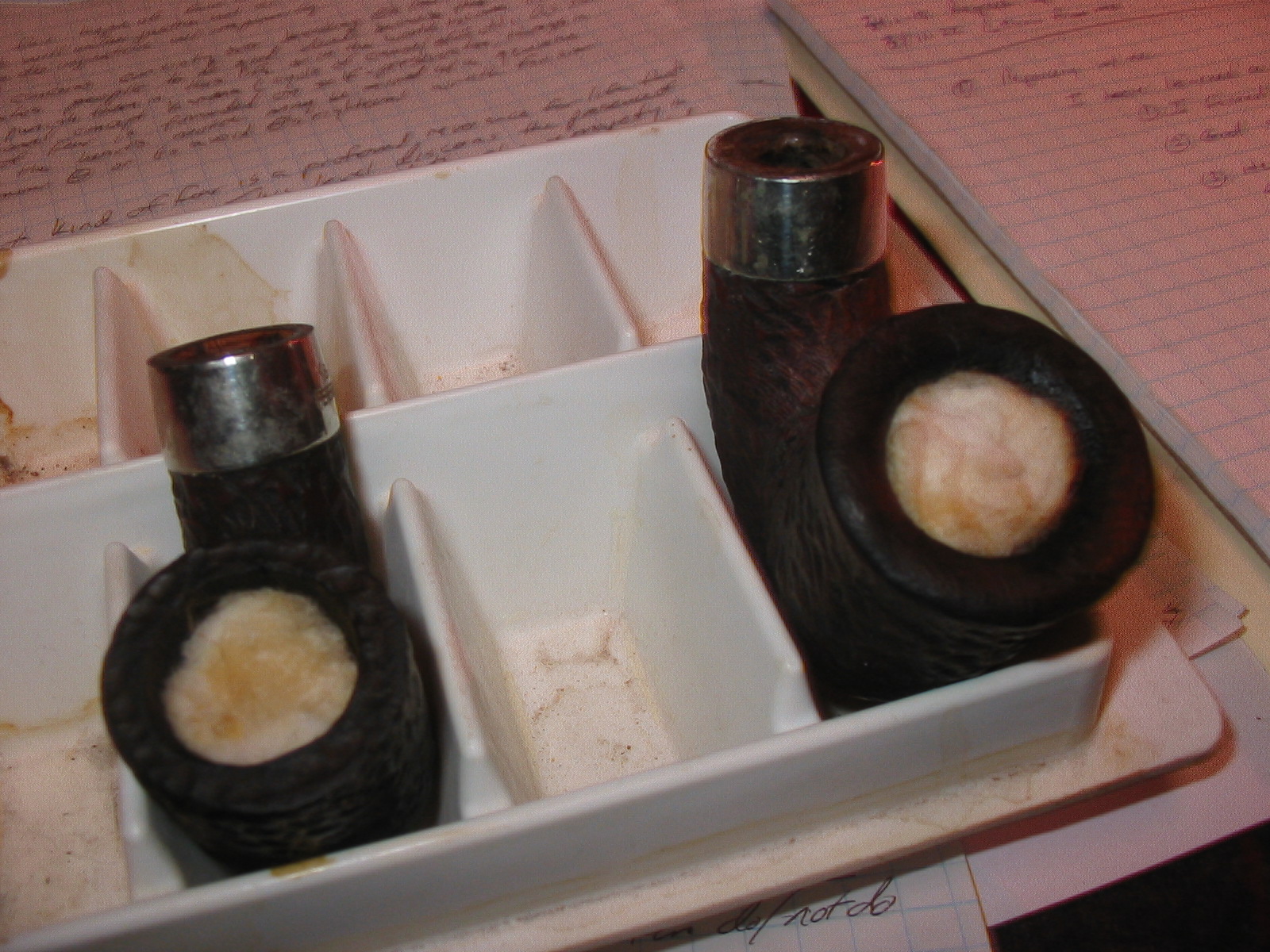
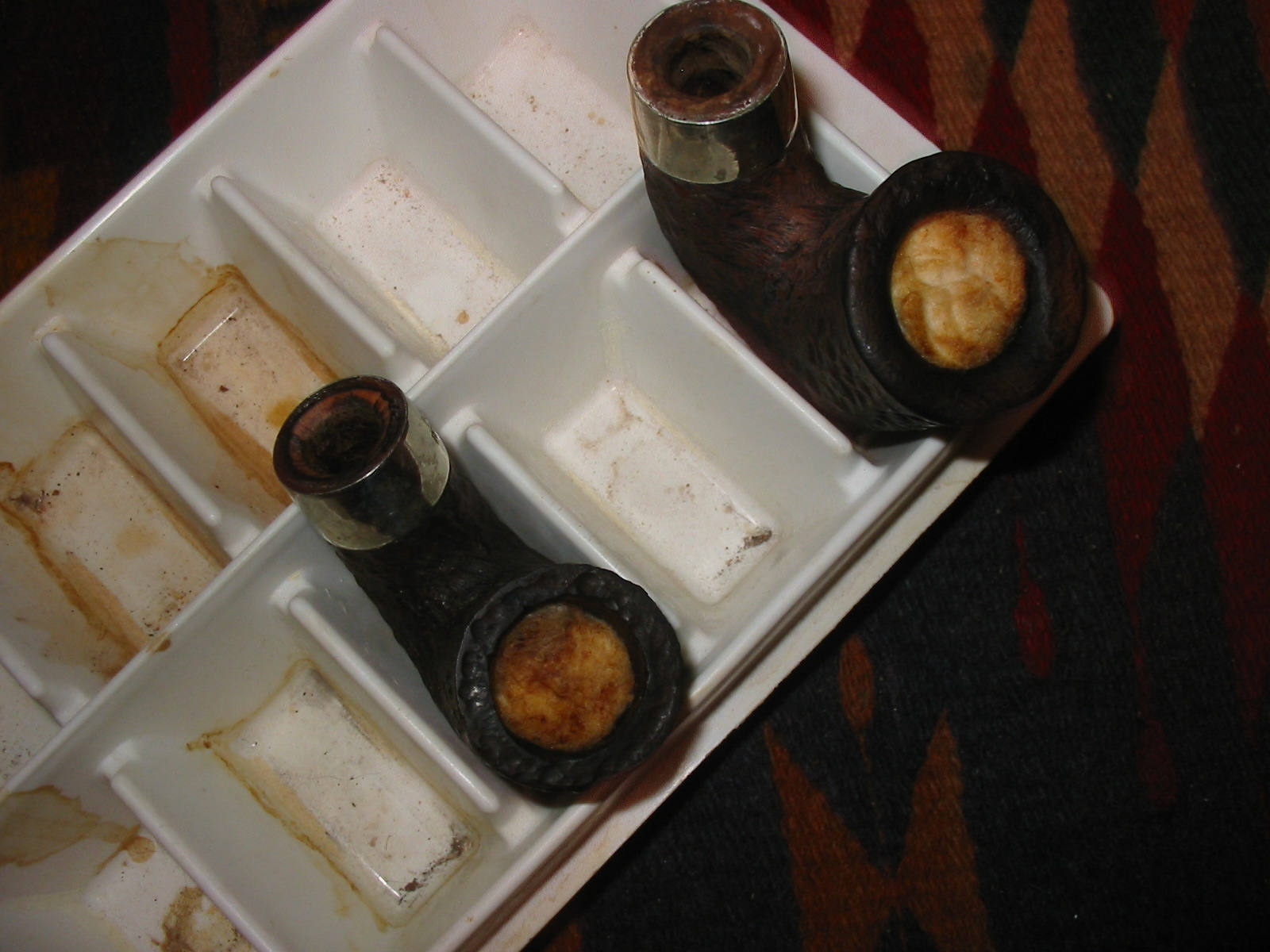
I removed the stem from the bowl, stuffed cotton bolls in the bowl of the pipe and used an ear syringe to fill the bowl with isopropyl alcohol. I set the bowl in an old ice cube tray that keeps the bowl upright. I set the tray aside to let the alcohol sweeten the pipe and draw out the oils in the bowl and shank.
IMG_7149
Four hours later the alcohol had begun to pull out the tars and oils into the cotton.
IMG_7152
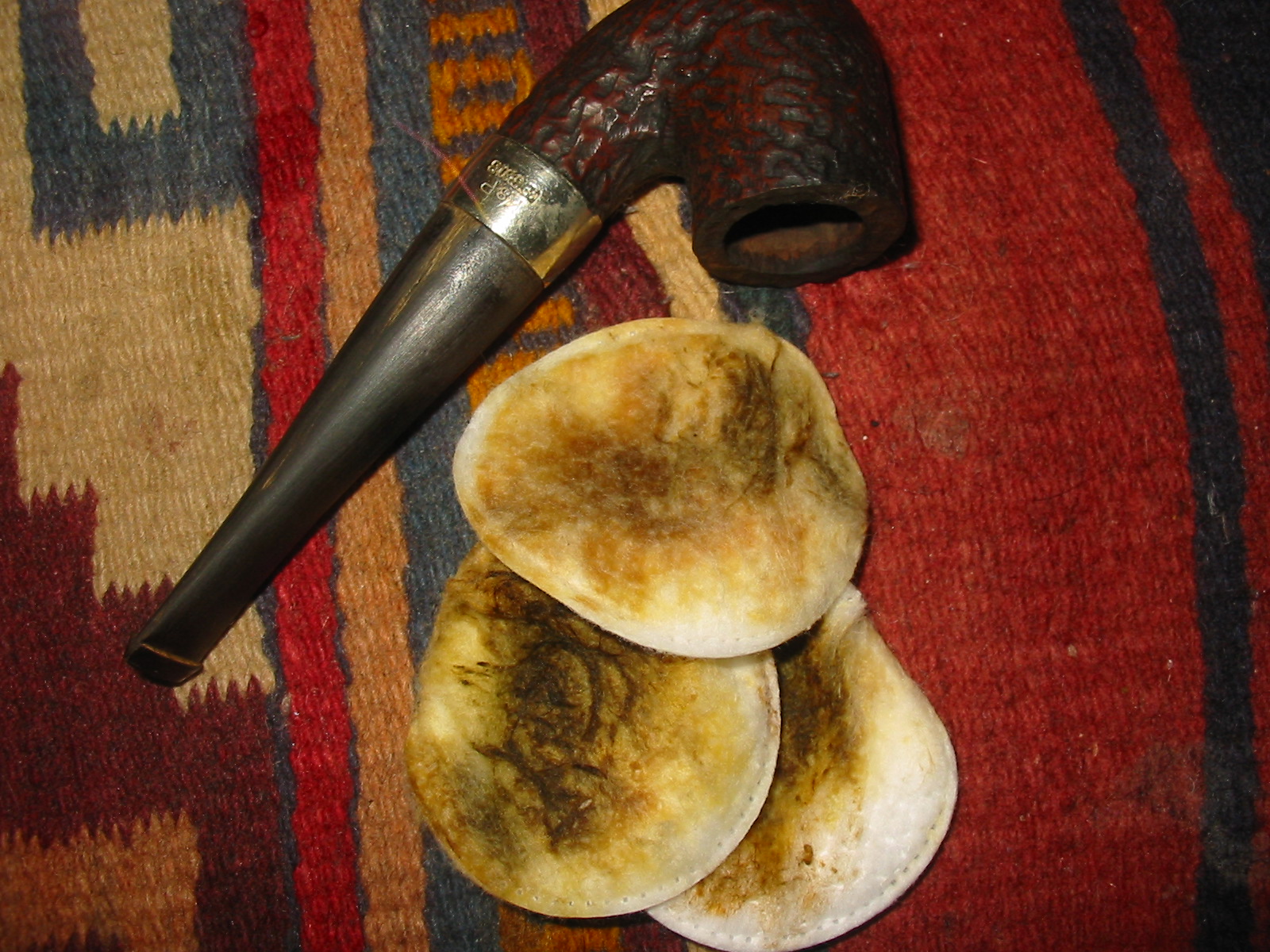
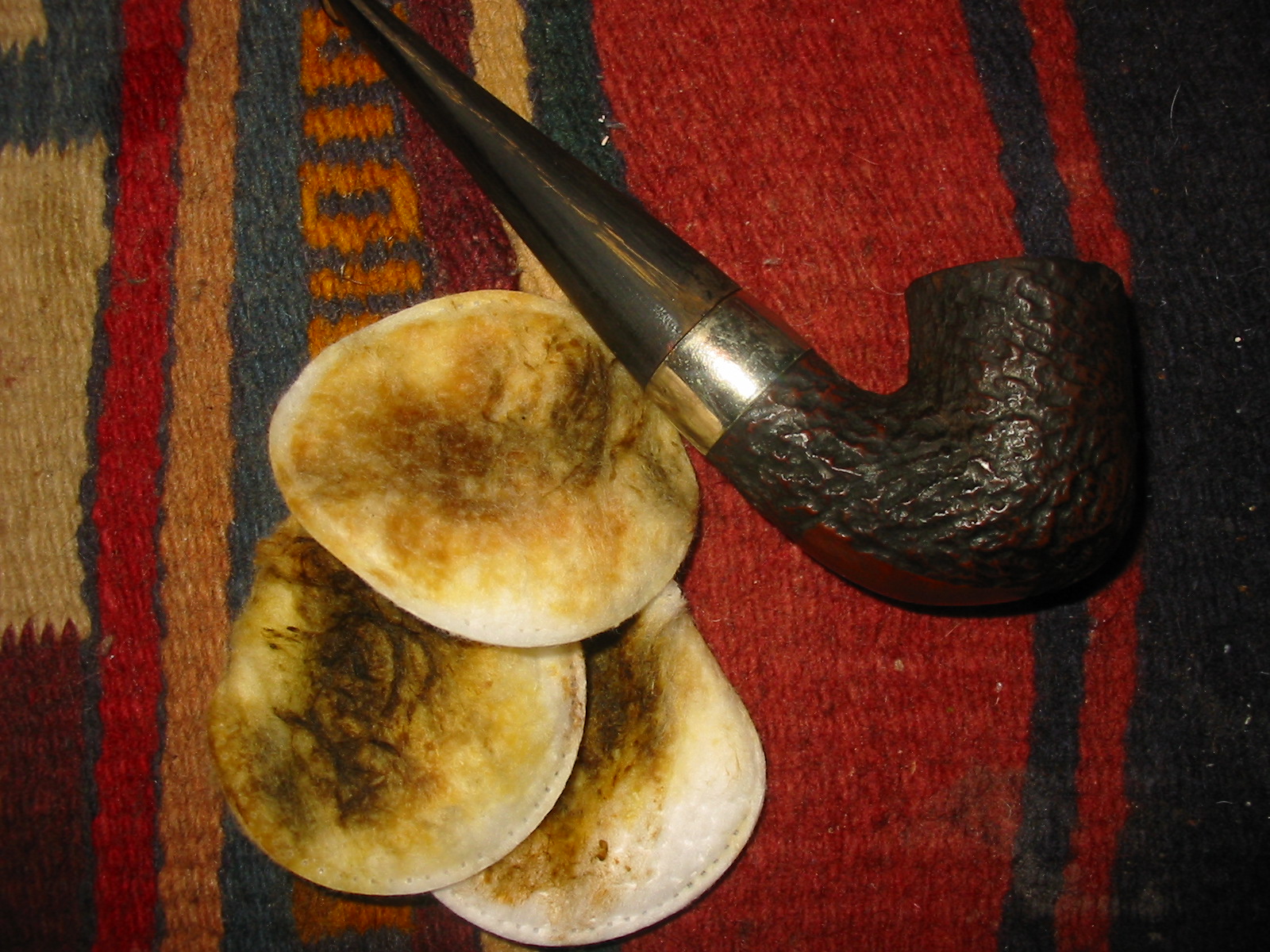
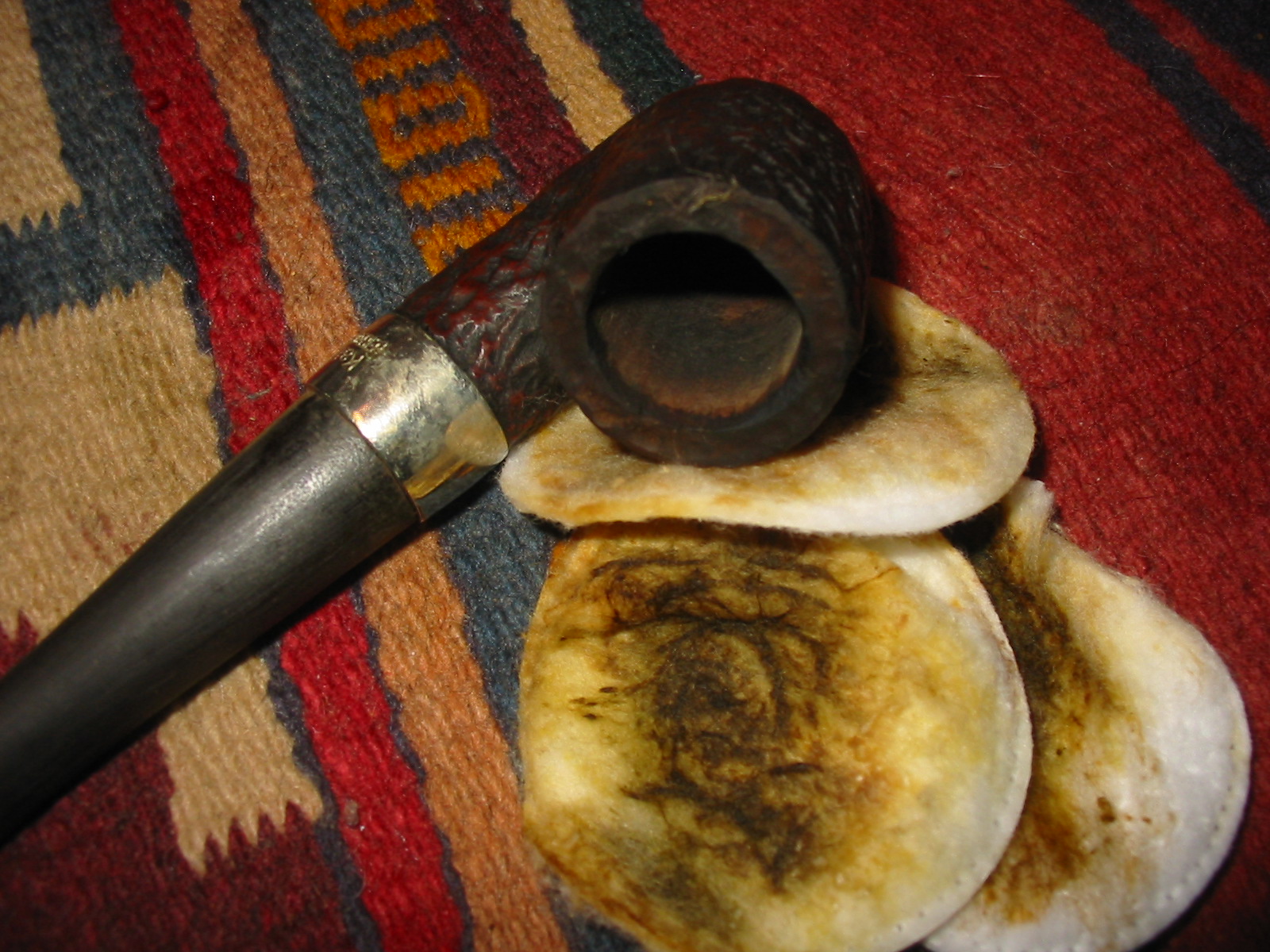
Twelve hours from the starting time, the cotton was a dark brown and most of the alcohol had evaporated. I pulled the cotton out of the bowls and wiped them dry with a cotton swab soaked in clean alcohol and they came out clean other than a little bit of the detritus that had collected in the bottom of the bowl. I swabbed out the shank and airway as well with pipe cleaners and cotton swabs dipped in alcohol and the shank was clean. The pipe smelled sweet and ready to smoke.
IMG_7153
I turned my attention to the stem and sanded it with a medium and a fine grit sanding sponge. It removed the majority of scratches from the surface of the stem left behind by the 220 grit sandpaper (I believe these sponges are equivalent to 400 and 600 grit wet dry sandpaper).
IMG_7154

IMG_7155
The rustication that I did on the top of the bowl rim is very clear in the next photo.
IMG_7156

IMG_7157
I sanded the stem with micromesh sanding pads – wet sanding with 1500-2400 grit pads and dry sanding with 3200-12,000 grit pads. Between each set of three grits I wiped the stem down with Obsidian Oil and let it soak into the vulcanite.
IMG_7160

IMG_7161

IMG_7162
When I had finished sanding with the 12,000 grit pad I rubbed it down with a final coat of Obsidian Oil and when it had dried buffed the stem with White Diamond and a Blue Plastic buffing compound. I then gave the stem multiple coats of carnauba wax, buffing with a soft flannel buff between coats. I waxed the bowl with Halcyon II wax and hand buffed it with a soft bristle shoe brush and a cotton buffing cloth. I used the 6000, 8000 and 12,000 grit micromesh pads to polish the nickel band and then gave it a buff with a silver polishing cloth. This old Peterson 338, that must have been an incredible smoke to have been smoked as hard as it was, is now ready to enter the next era of its life and provide the same kind of service to me. I look forward to smoking it later in the week once I am sure the alcohol in the bowl and shank has all evaporated. I have to tell you, I am looking forward to having a bowl in this old timer.
IMG_7163

IMG_7164

IMG_7165

IMG_7167

IMG_7166

Carving Another One from a Pre-Drilled Kit


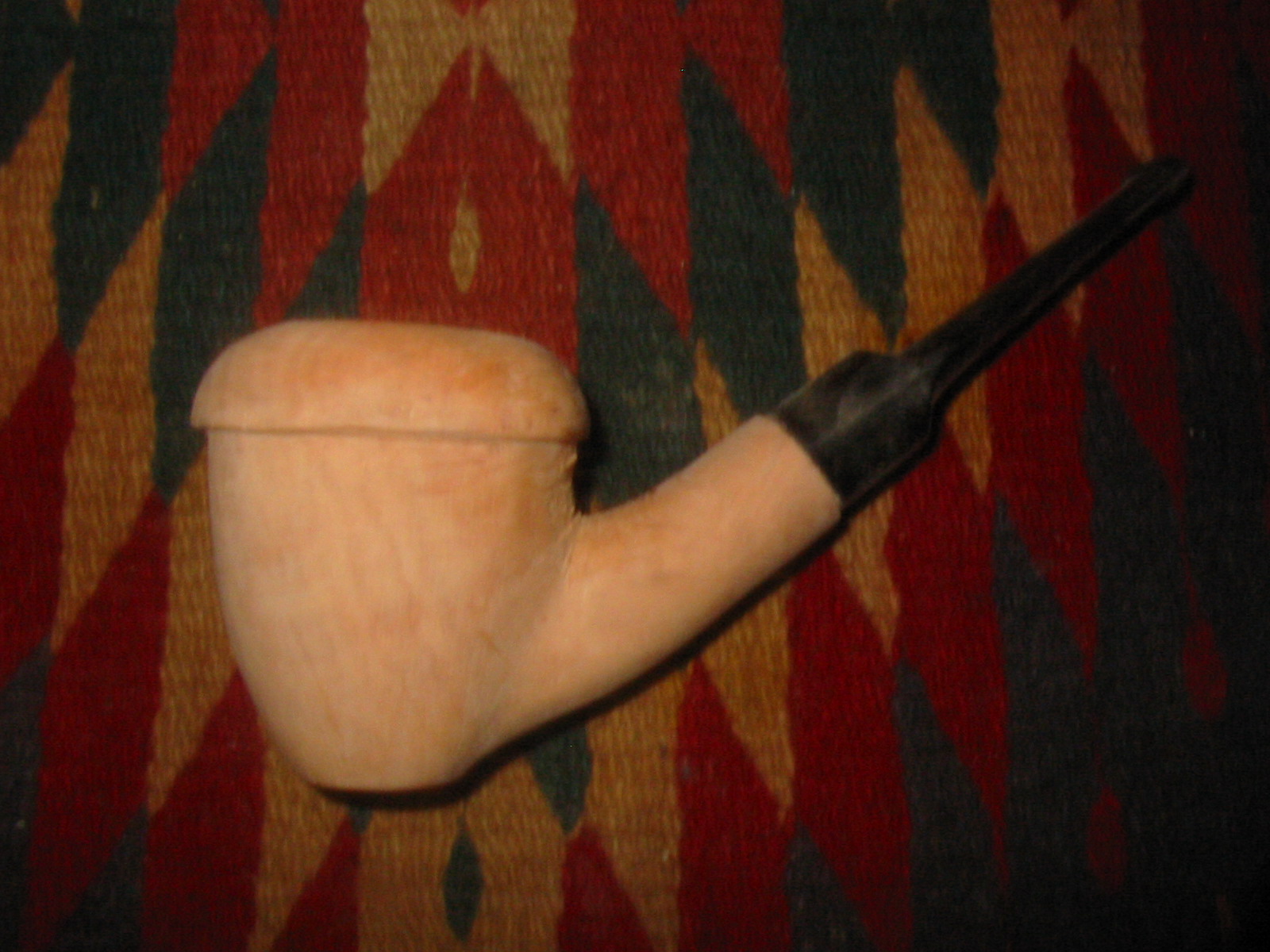
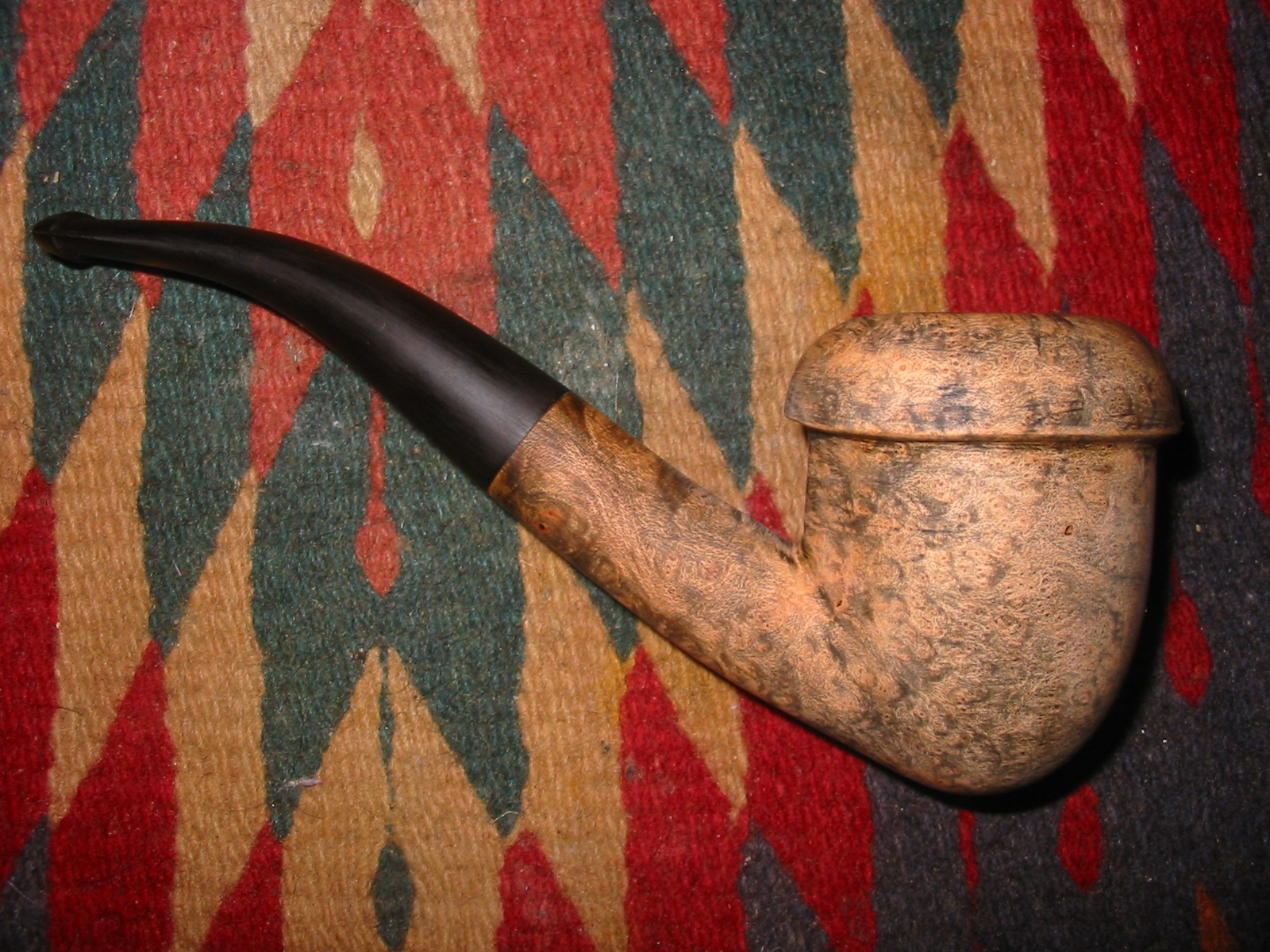
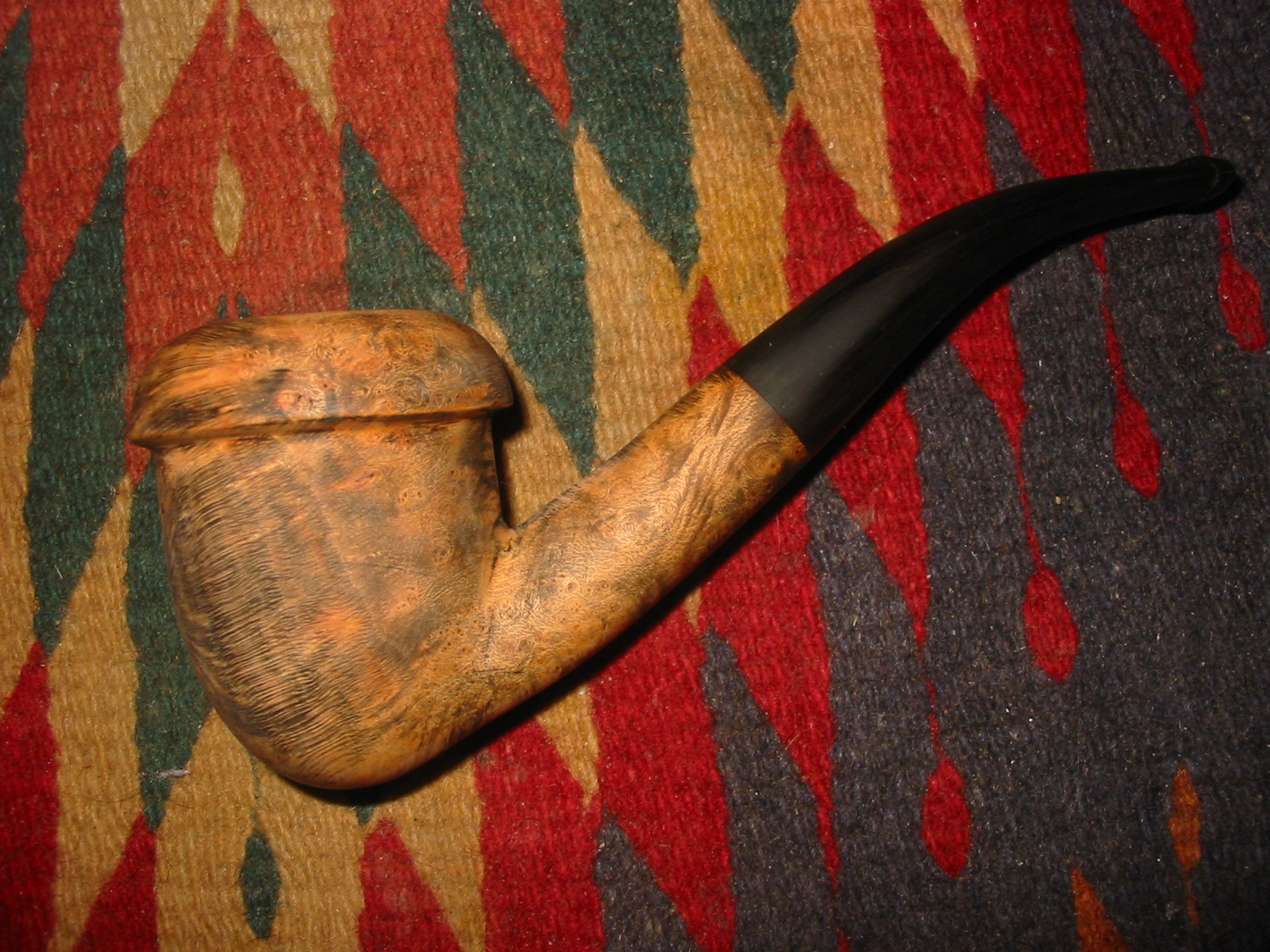
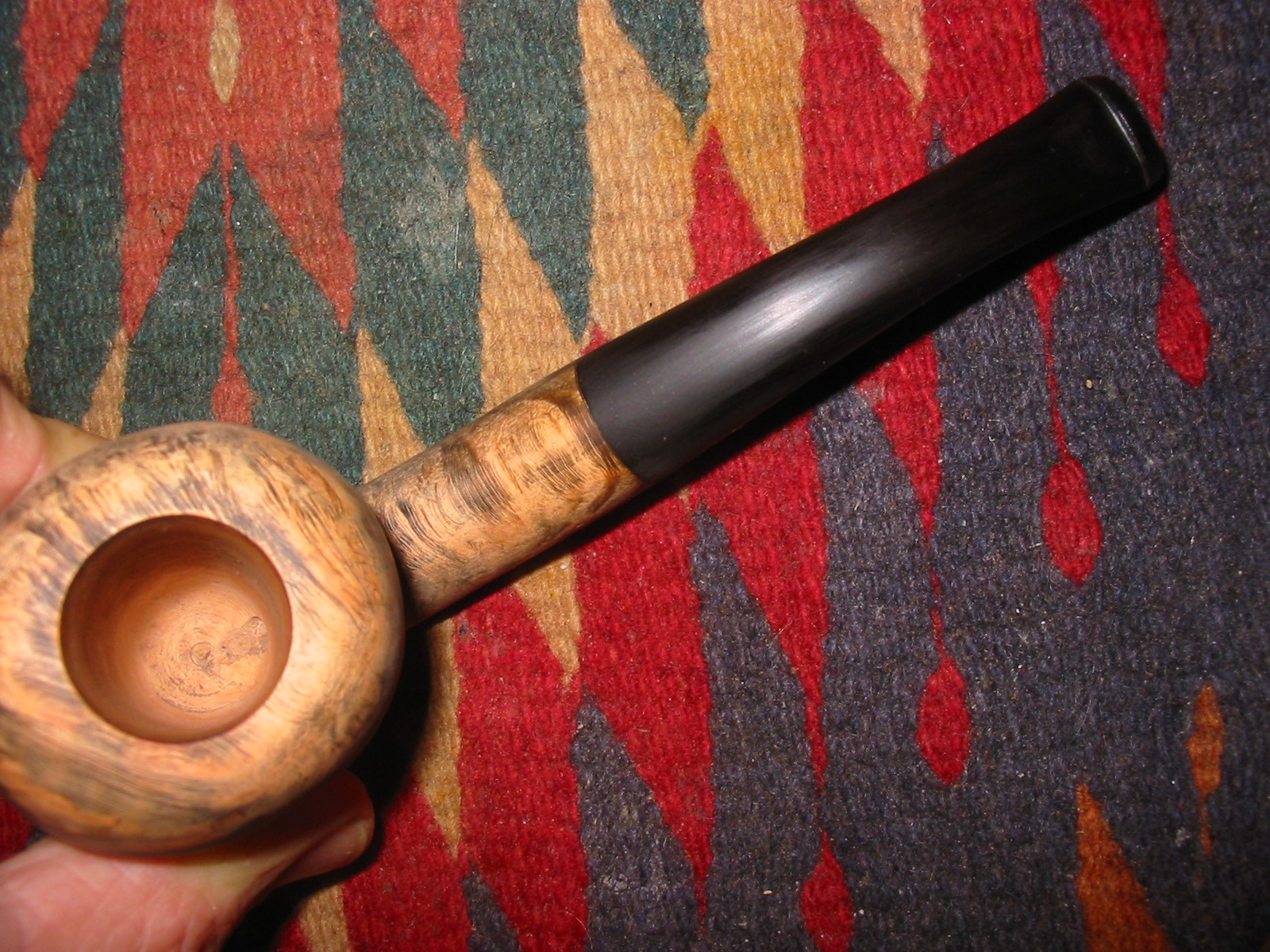
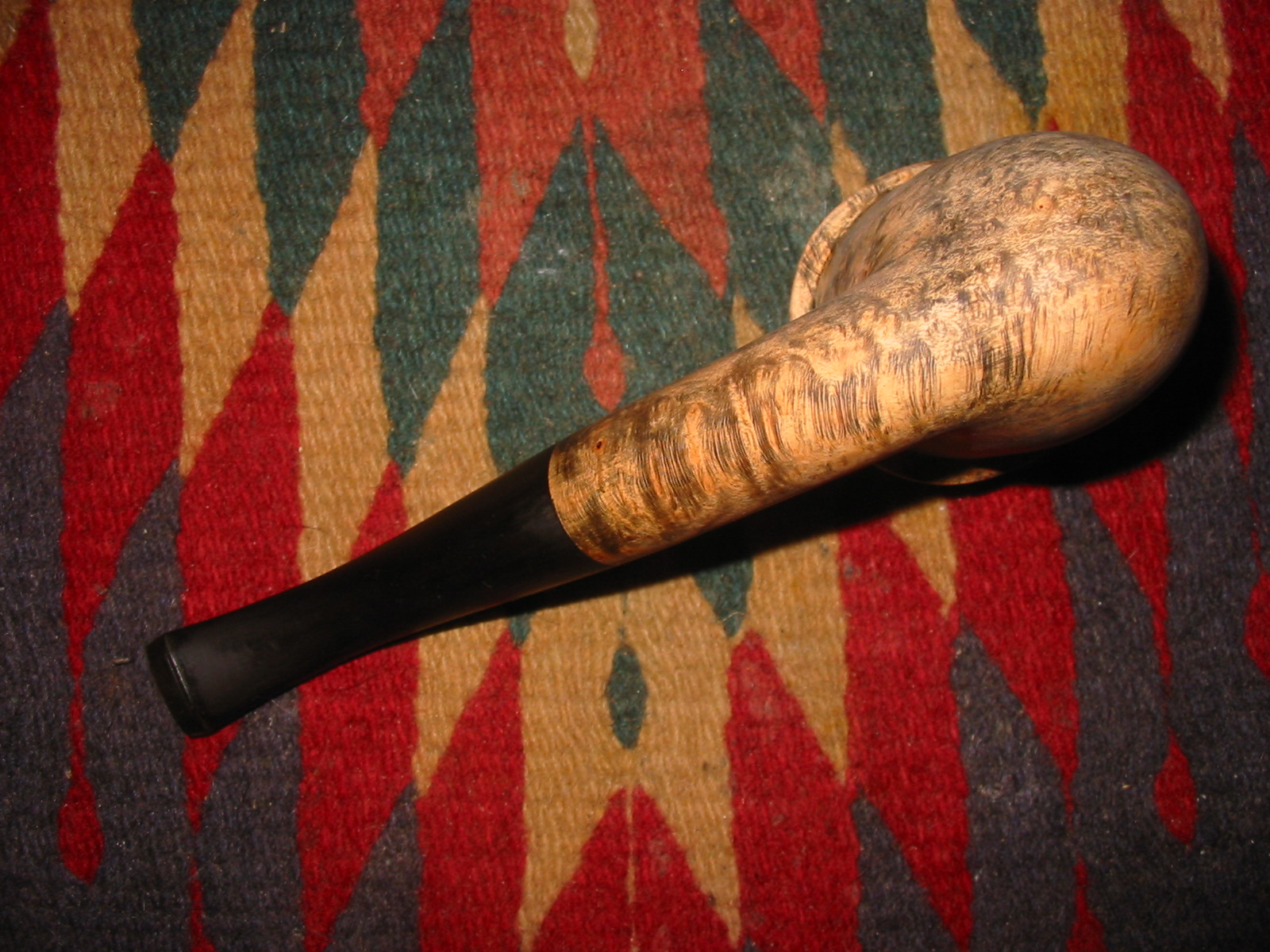
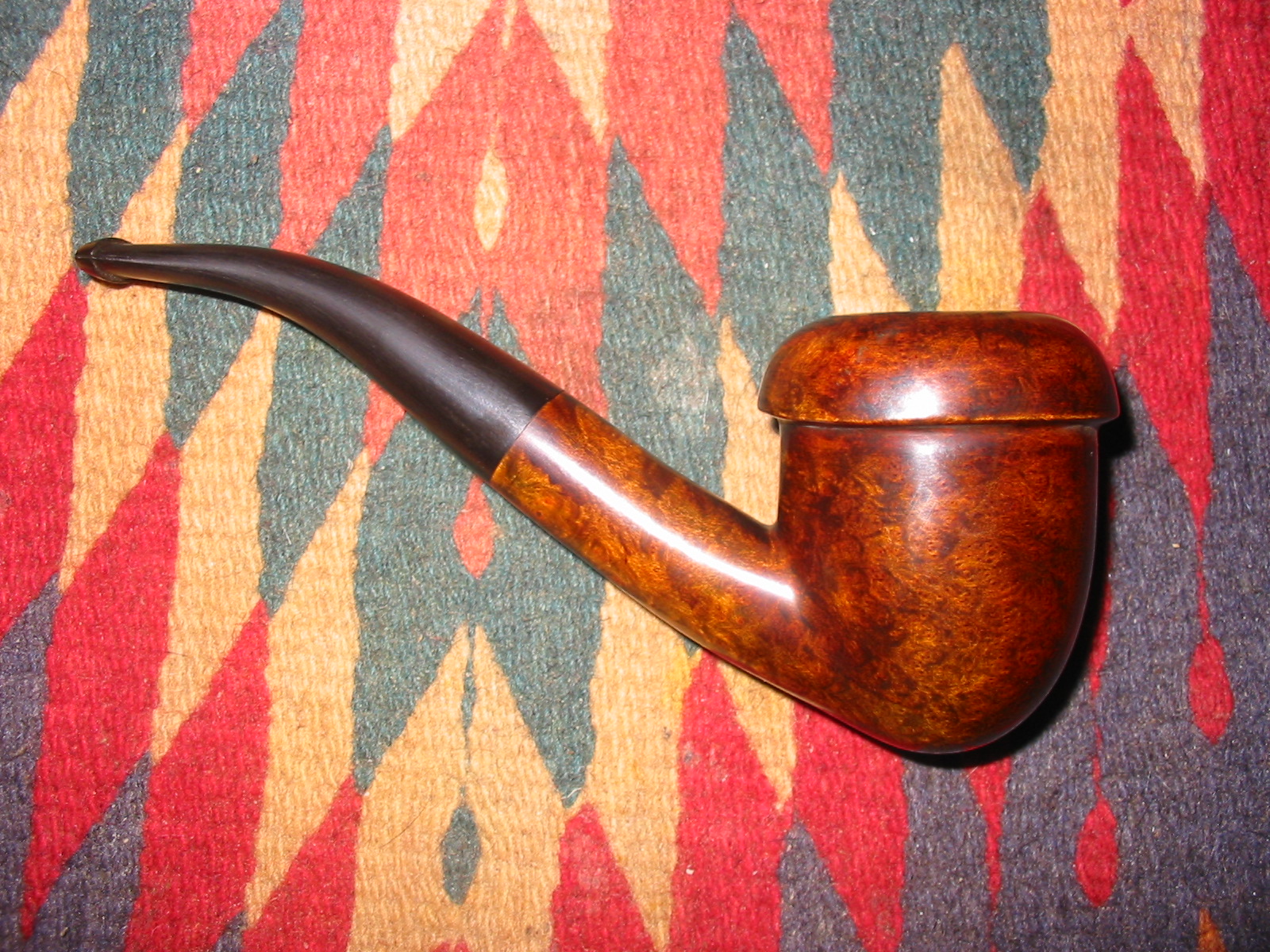
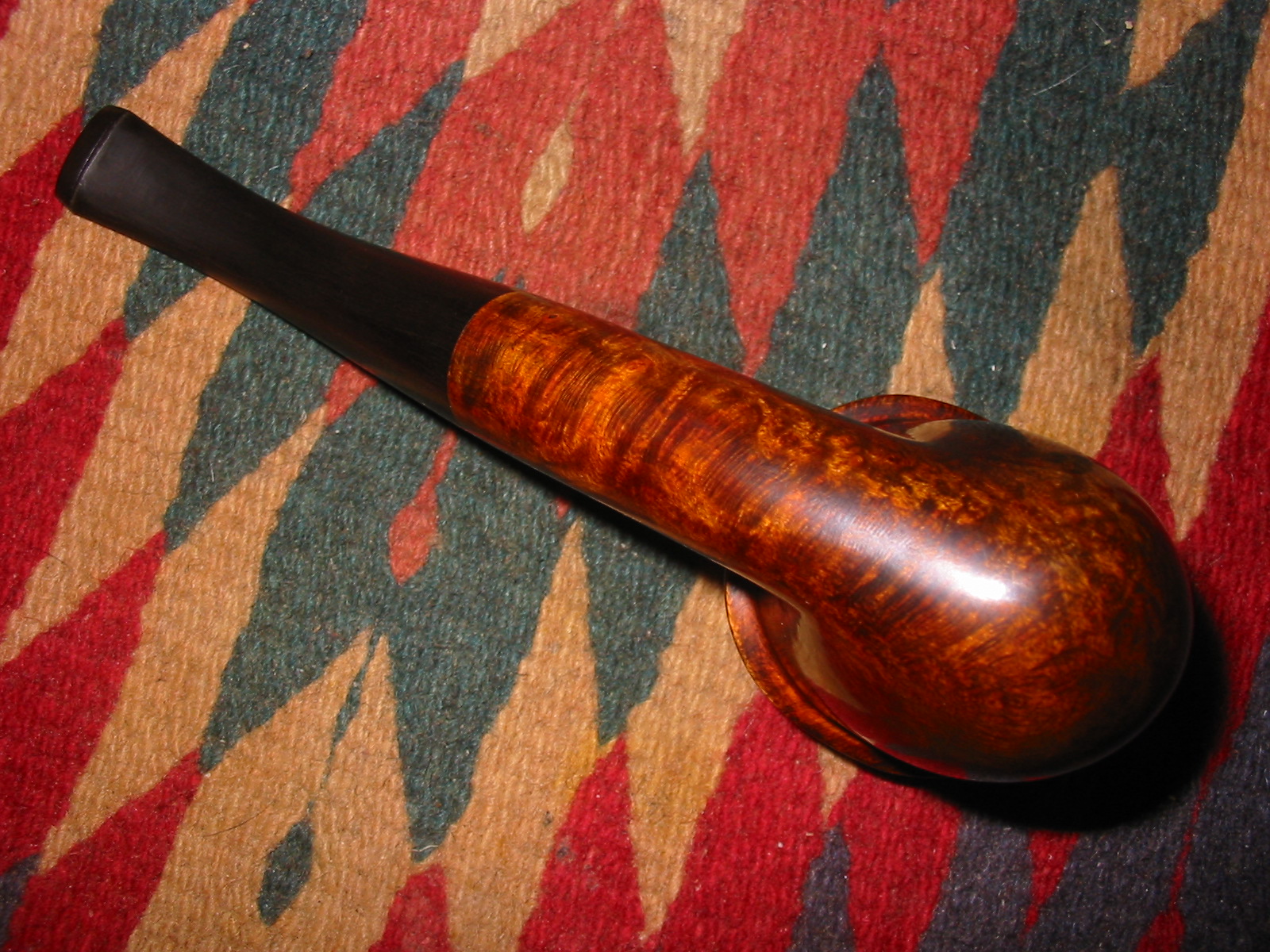
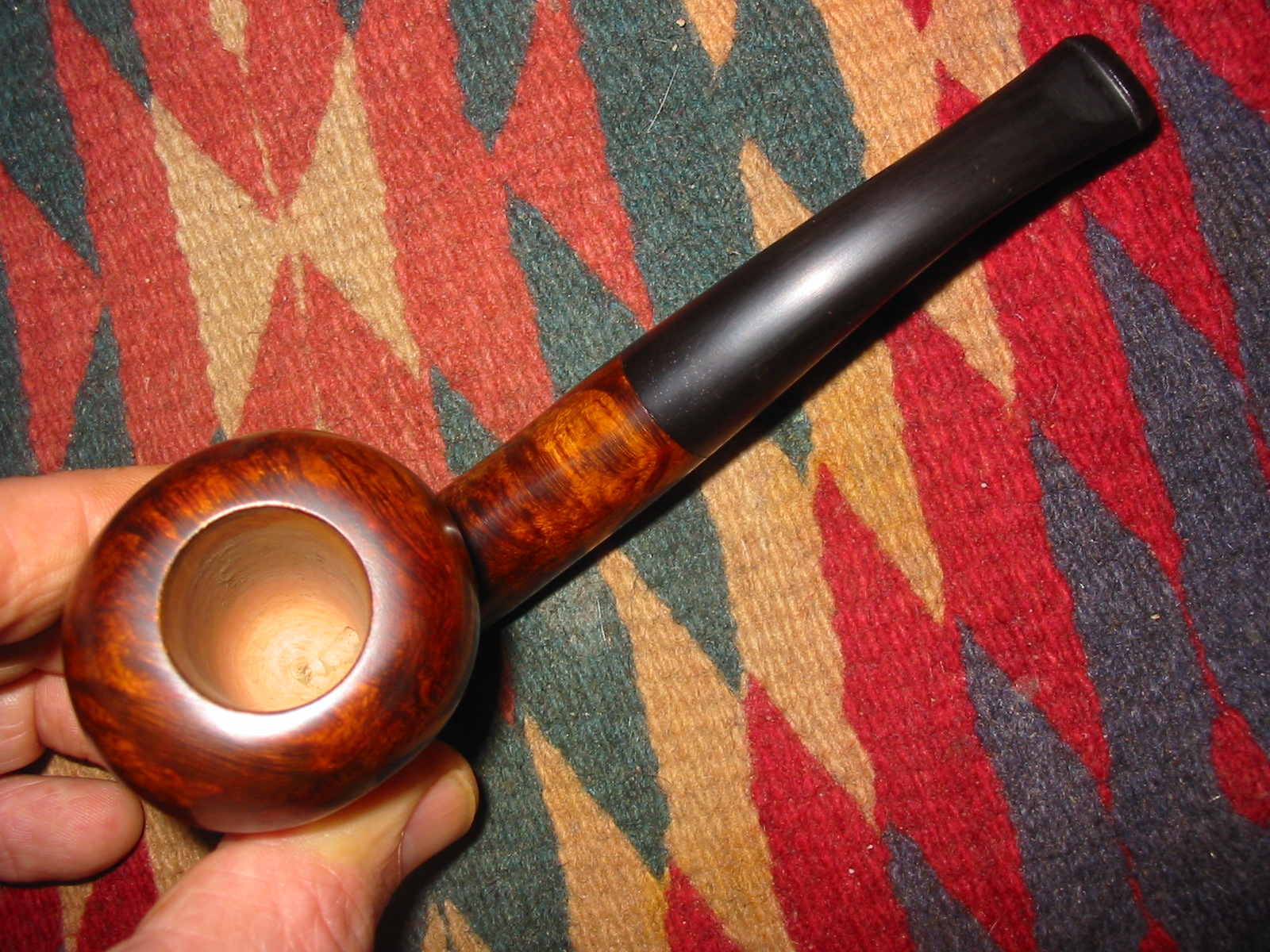
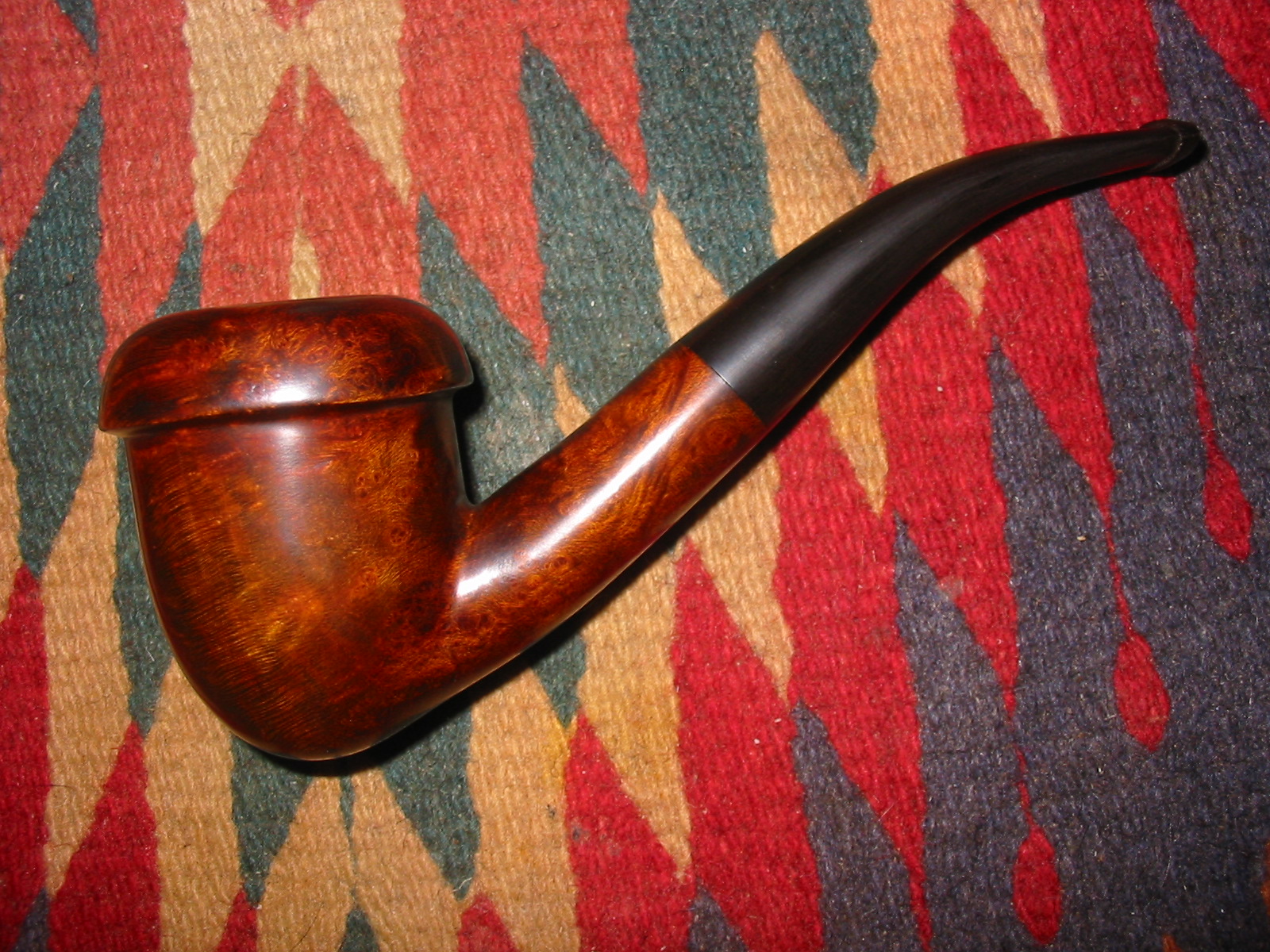
When I was traveling in the early spring I stopped by Burlington on Whyte Tobacconist in Edmonton, Alberta, Canada to pick up some tobacco and have a look at their stock. In the past I had purchased a pipe kit from them and found it to be a pretty decent piece of briar. It was the last pipe I had carved for myself. I looked through the lot and found one I like this time as well. I purchased it and carried it home. It sat on my desk for the past several months while I tried to figure out what I wanted to do with it. It was drilled to be a three-quarter bent pipe and had a vulcanite stem this time. The last one I has purchase had a Lucite stem. I thought it had potential and I just needed time to let it marinate in my brain until I decided what to carve.
IMG_6970

IMG_6971

IMG_6972

IMG_6973
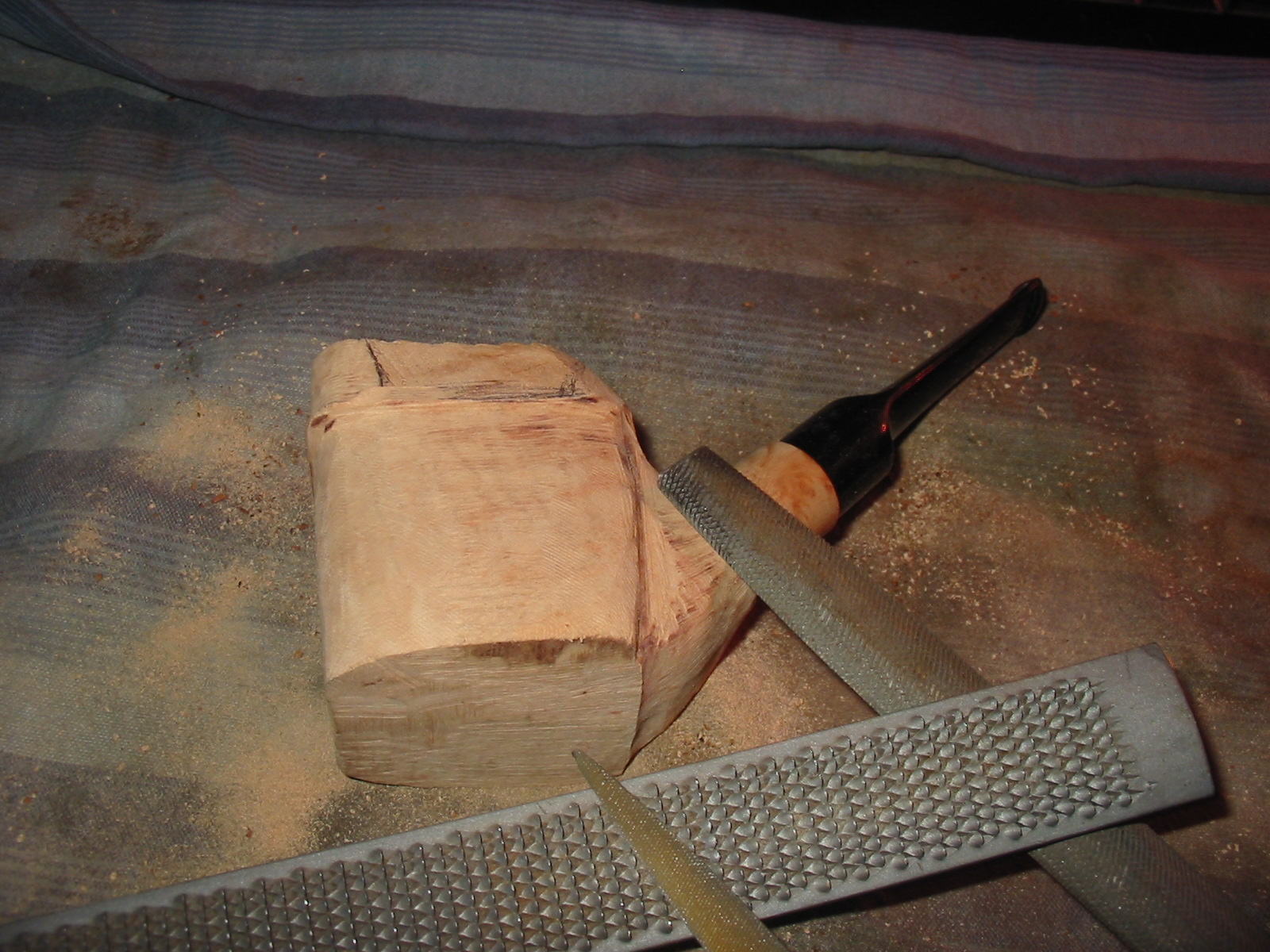
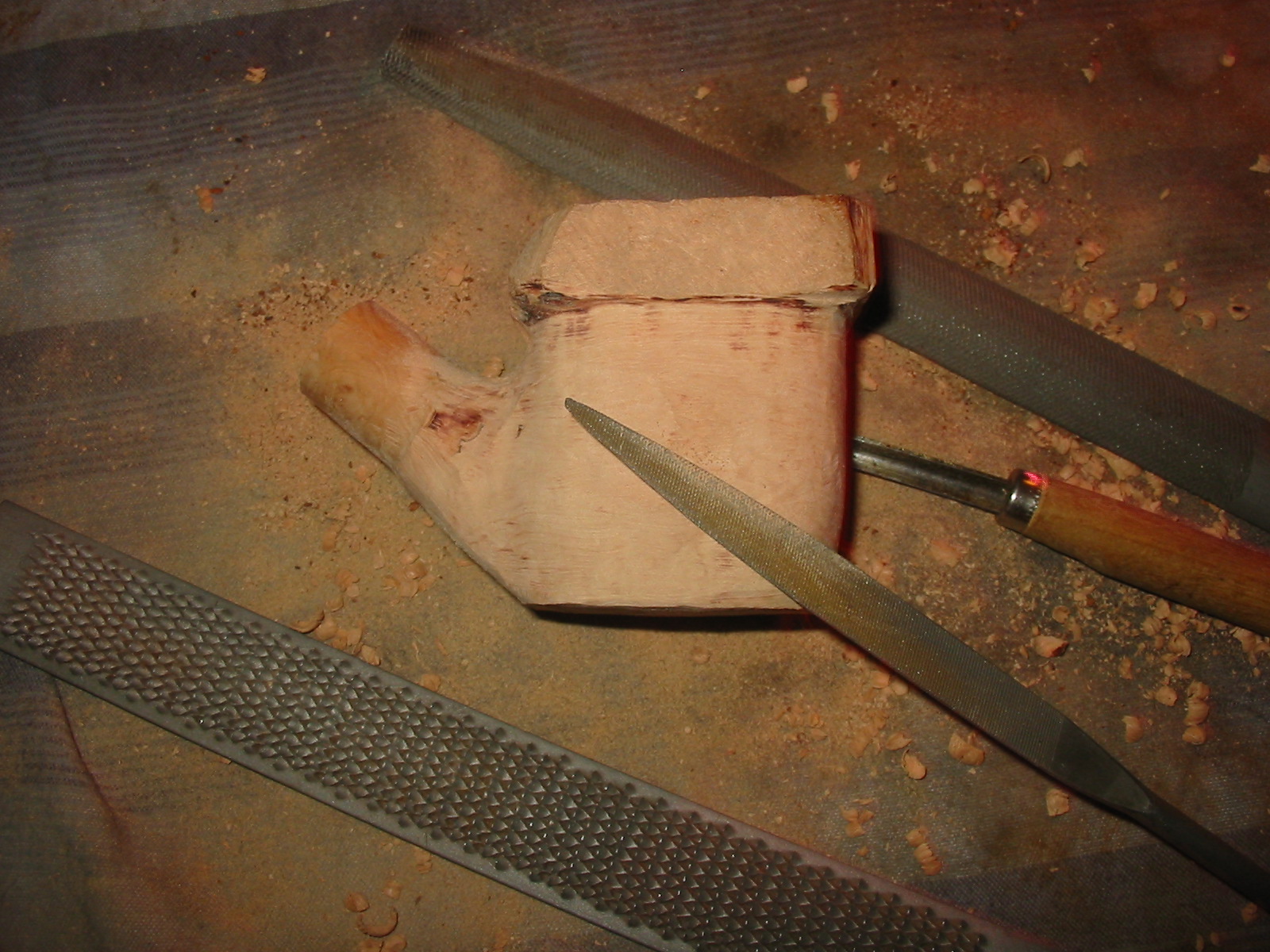
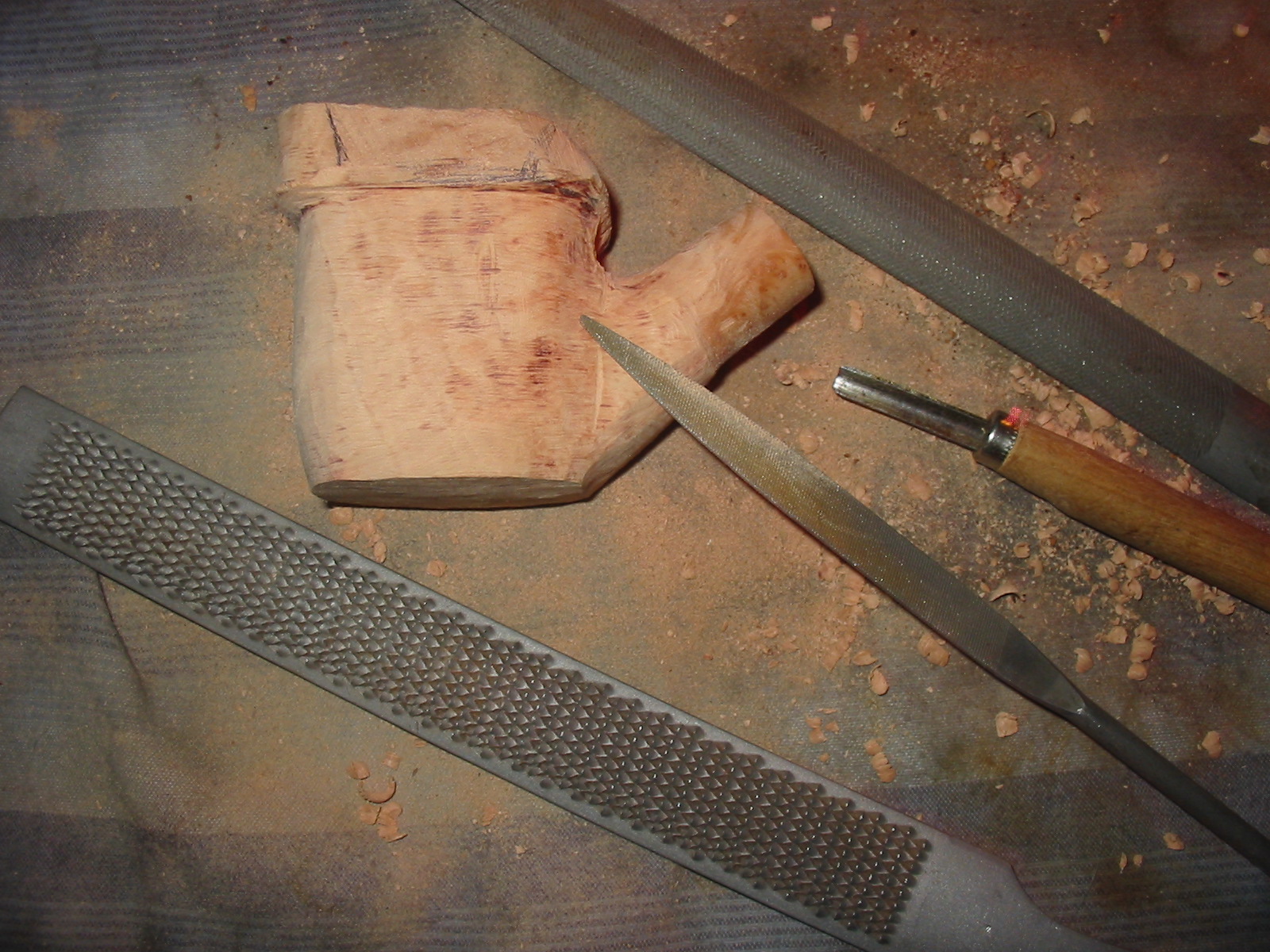
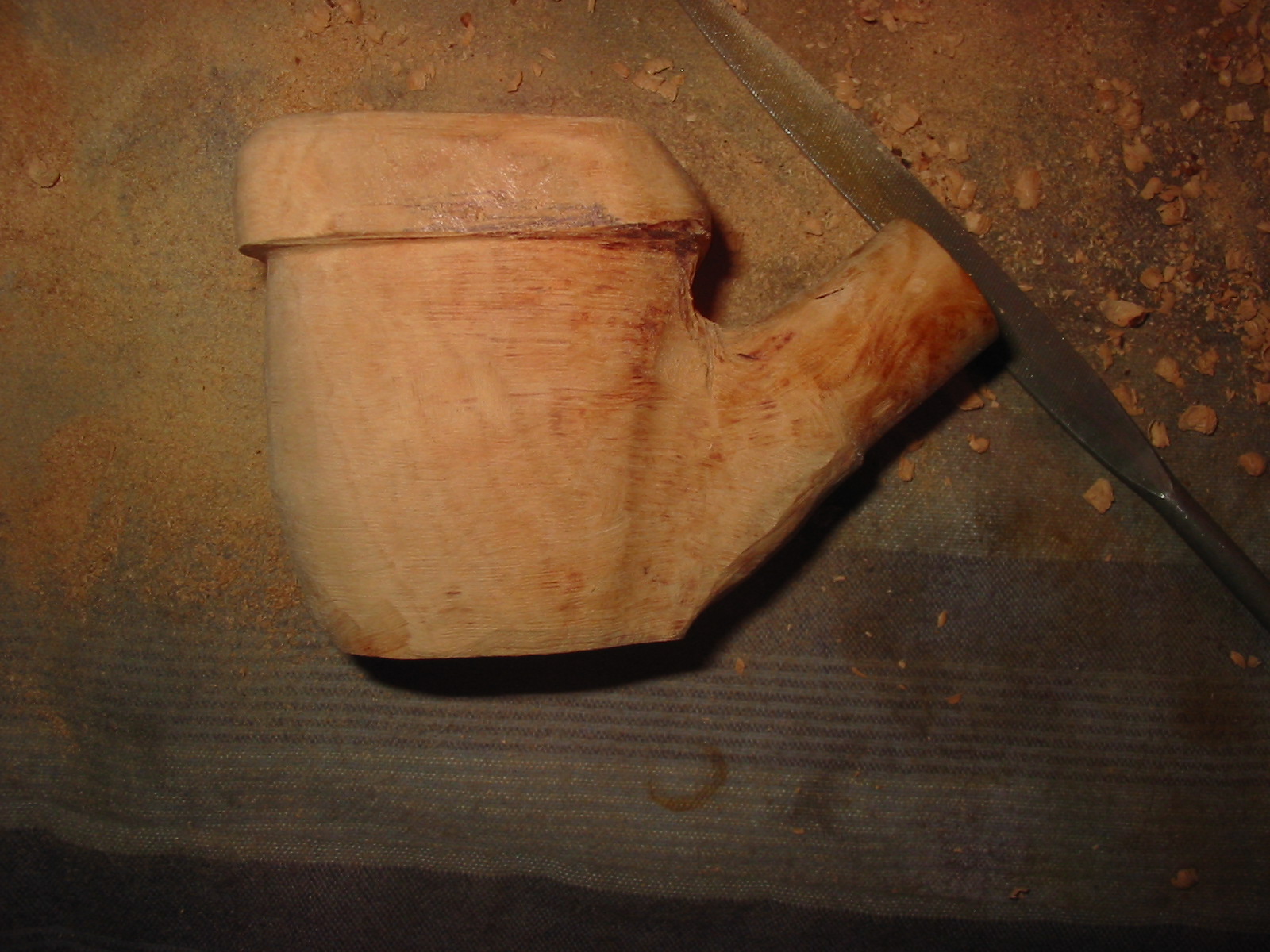
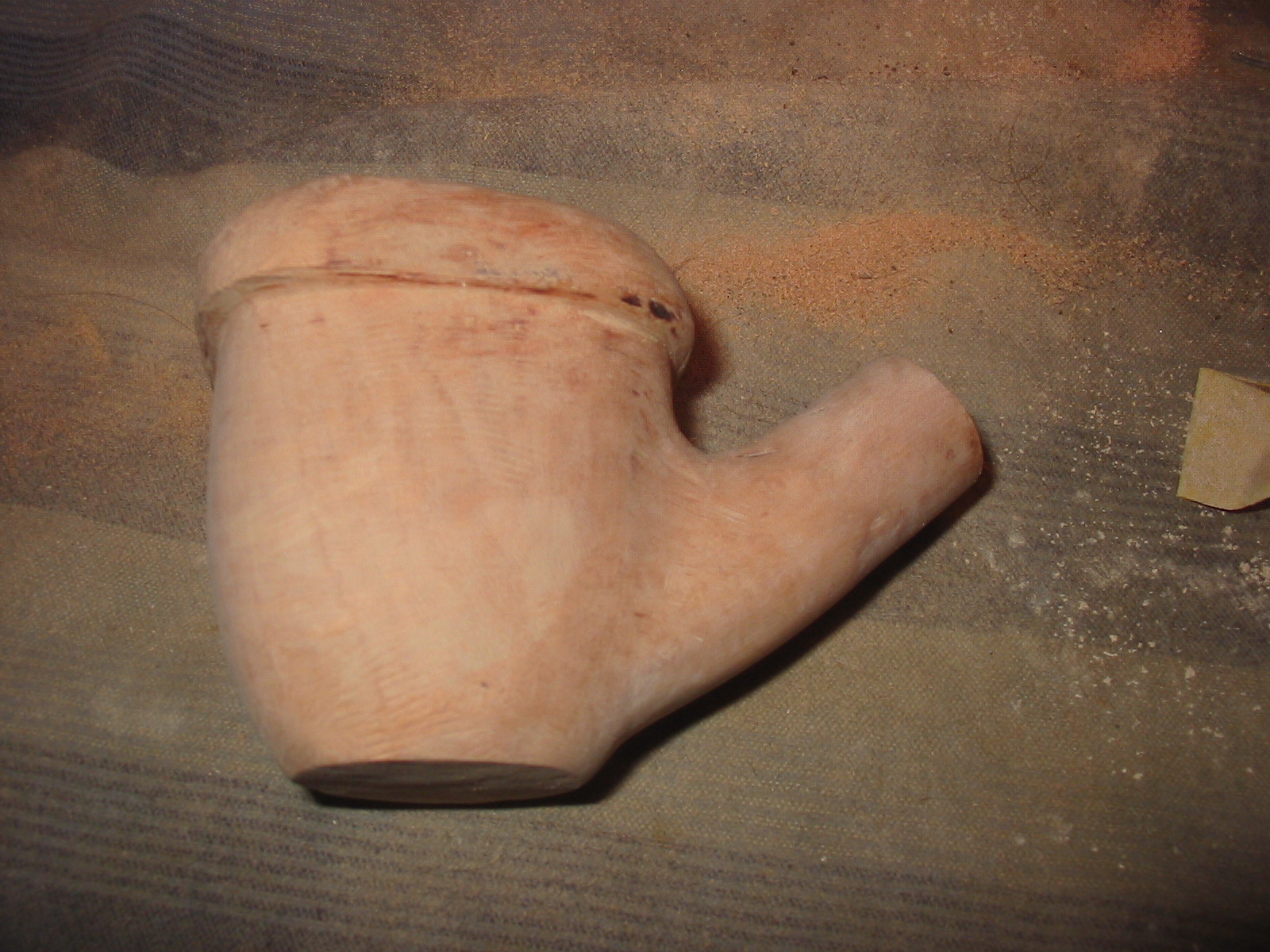
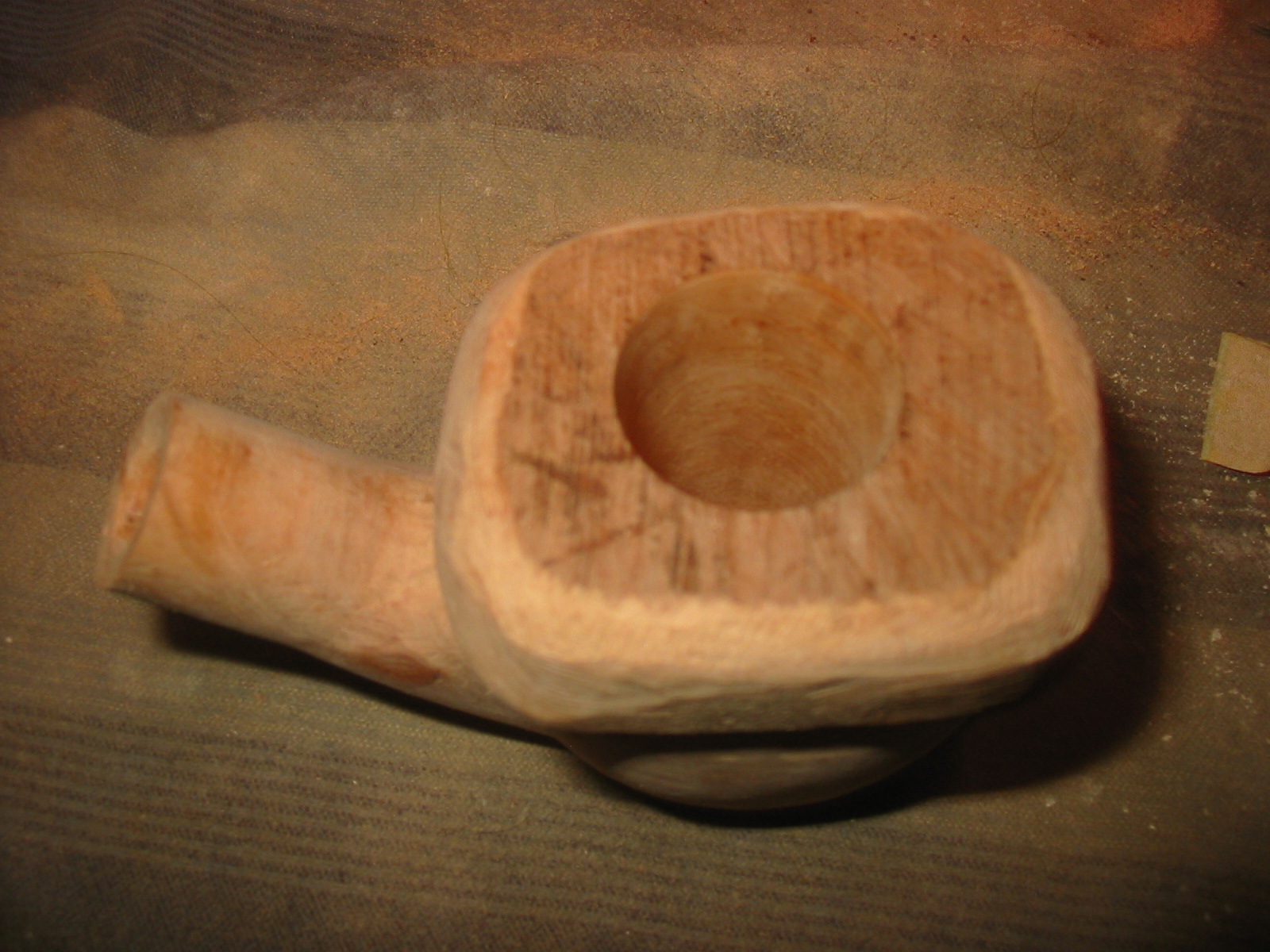
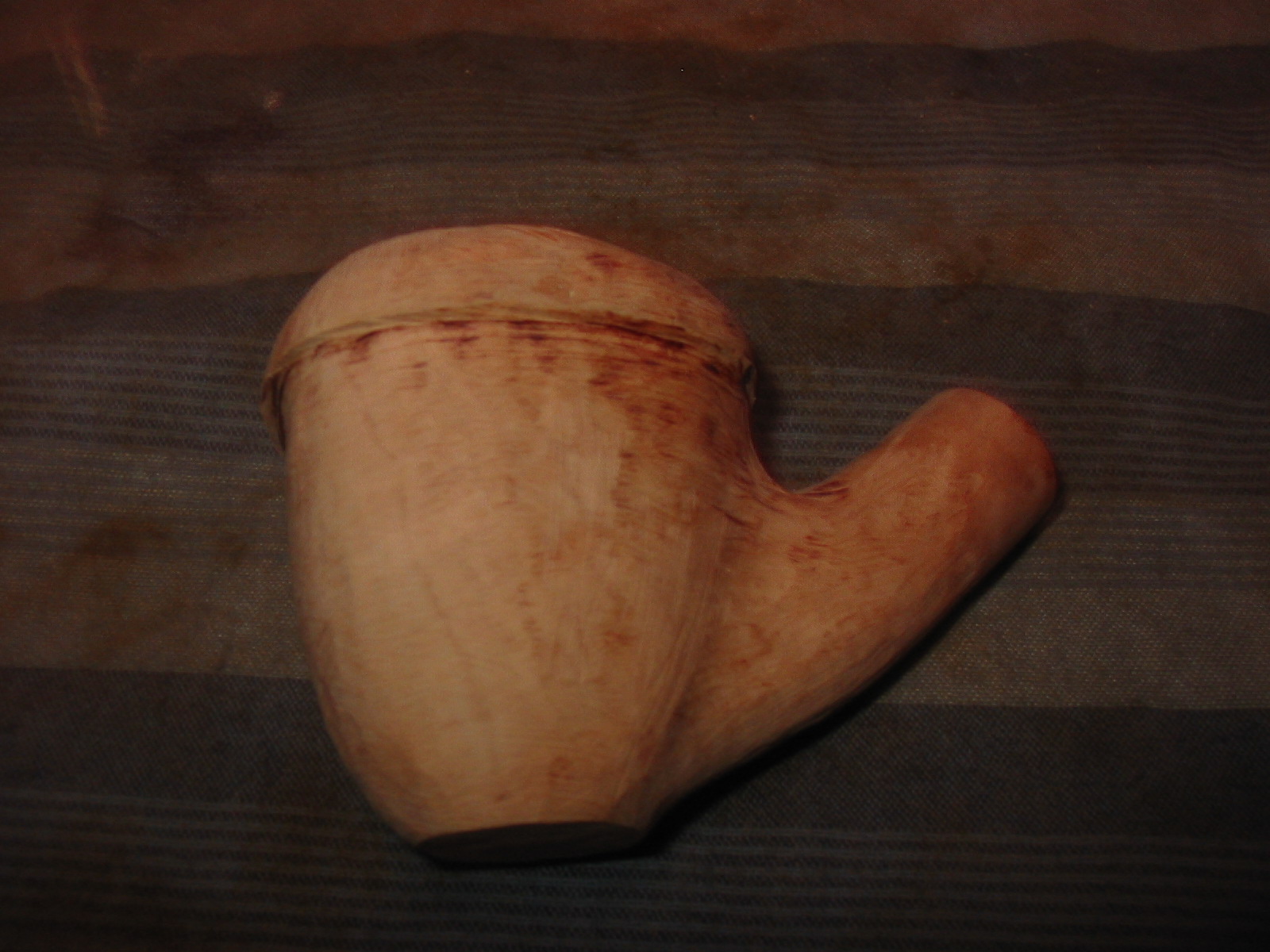
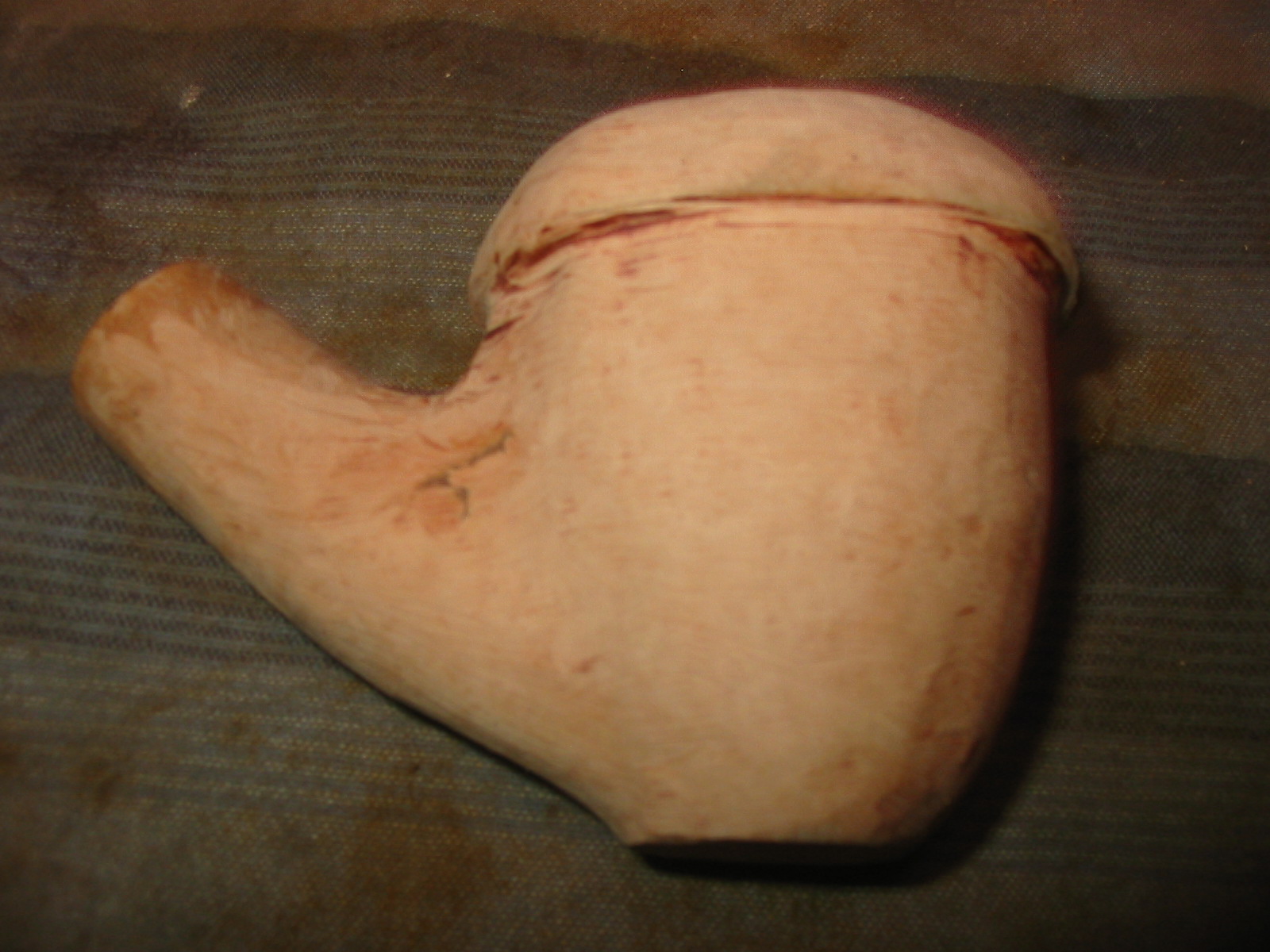
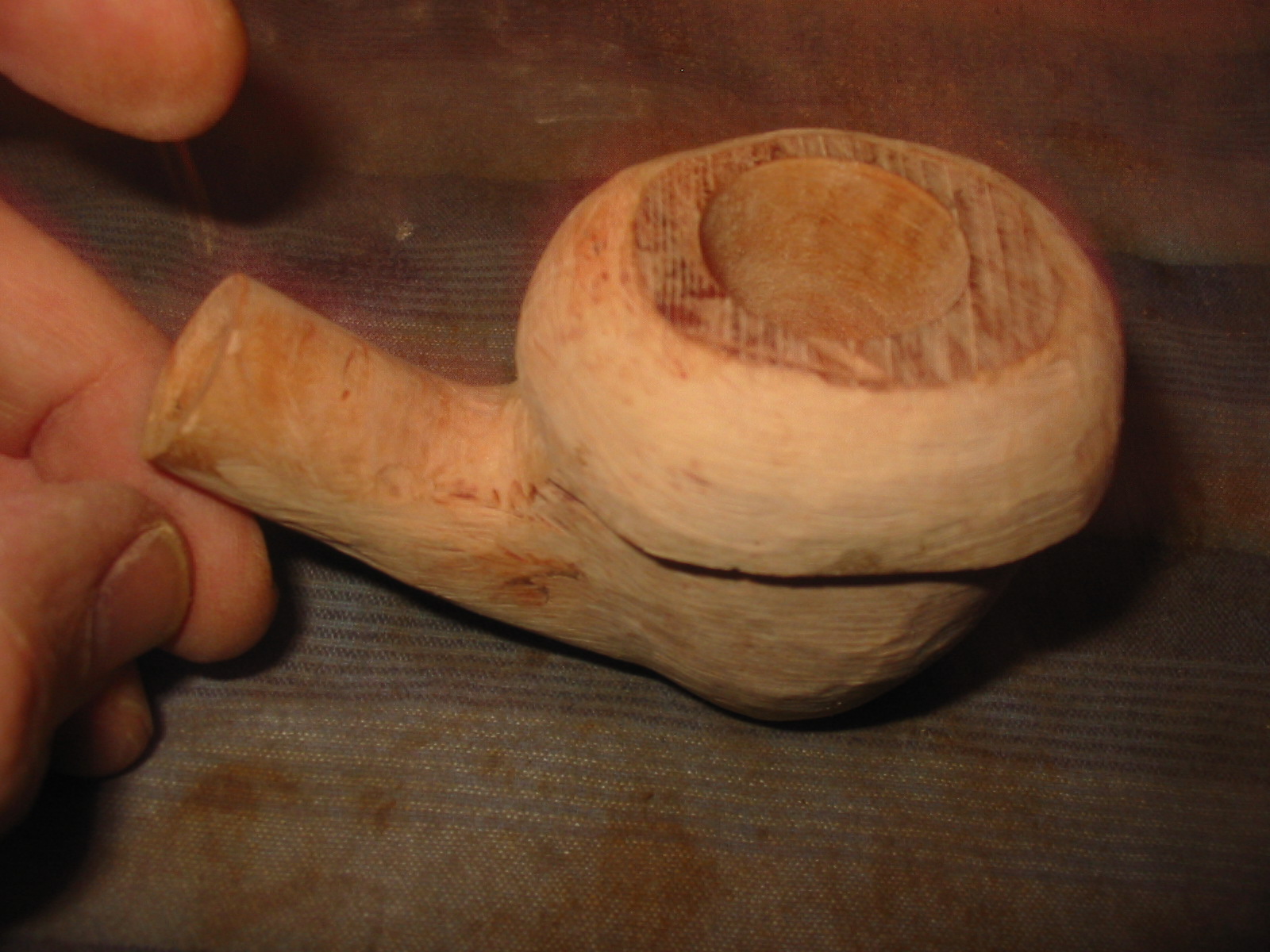
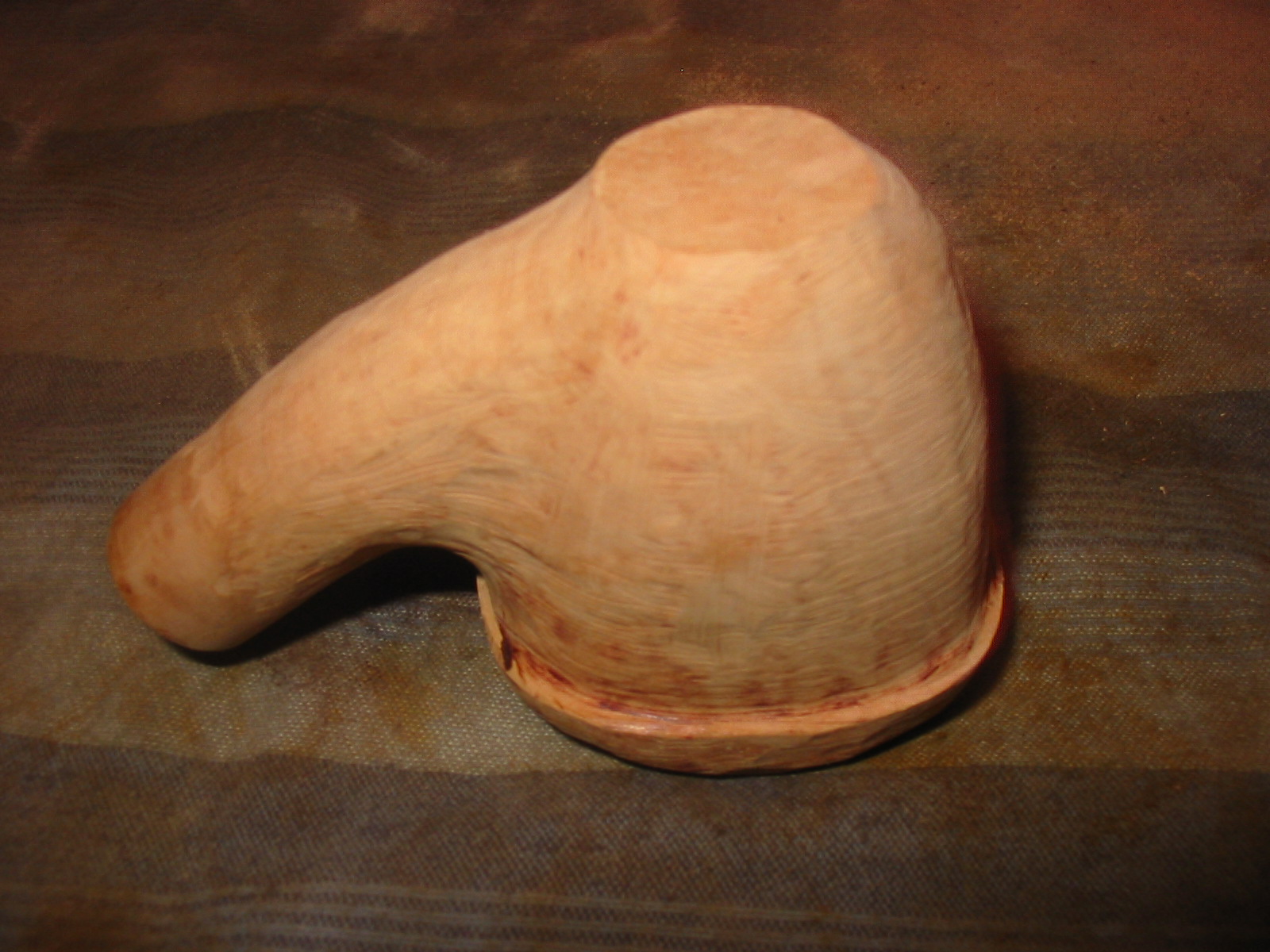
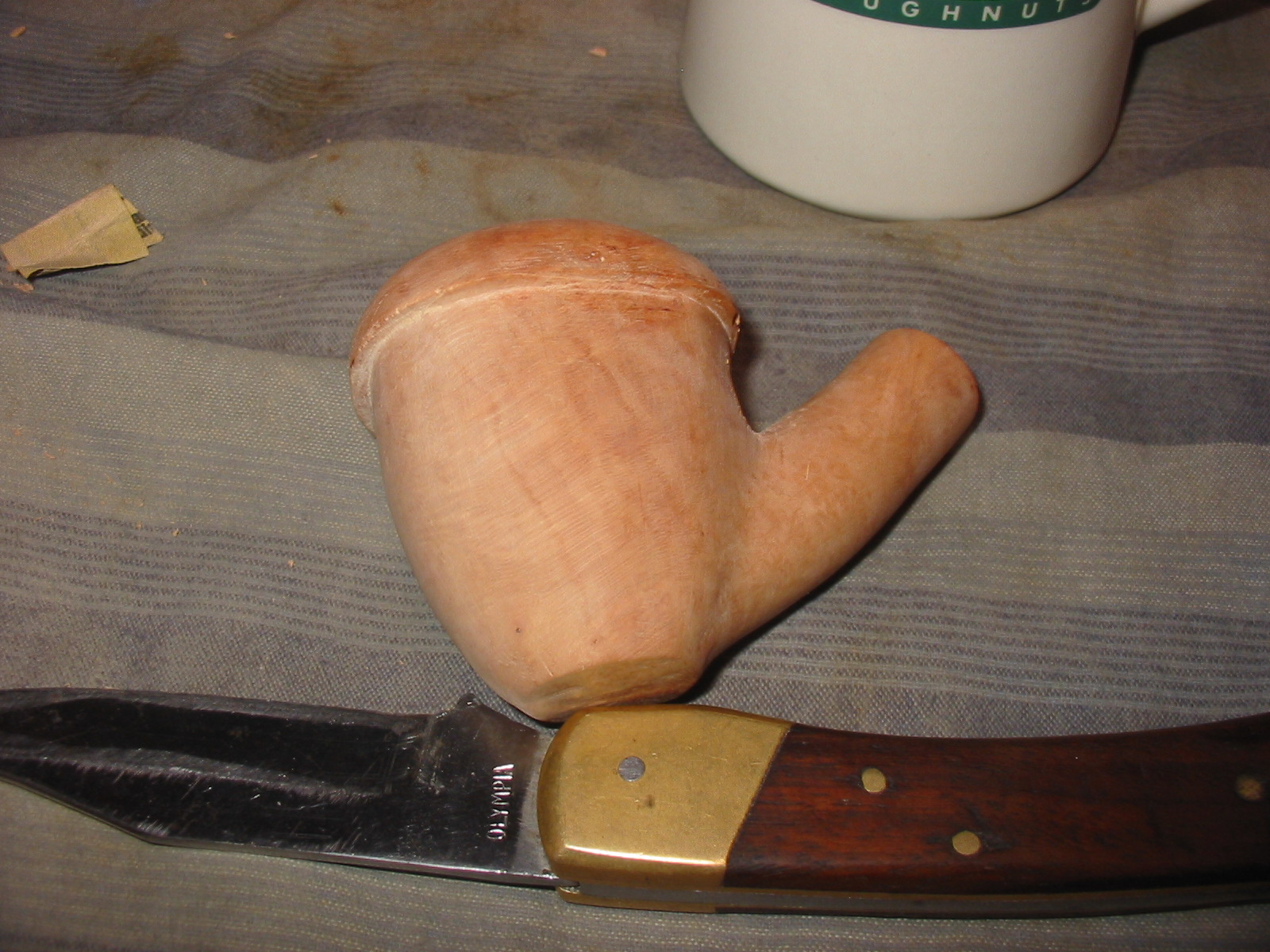
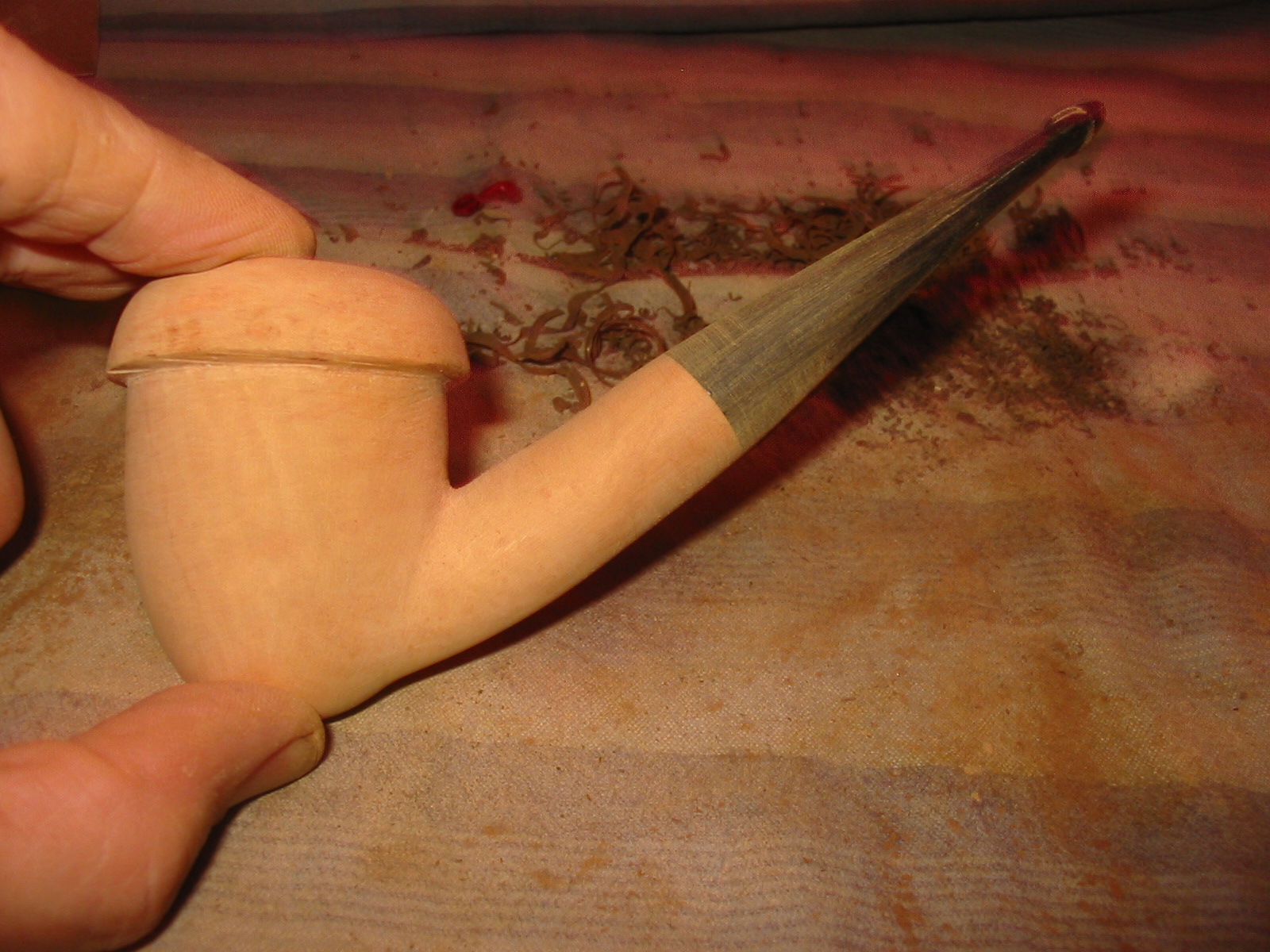
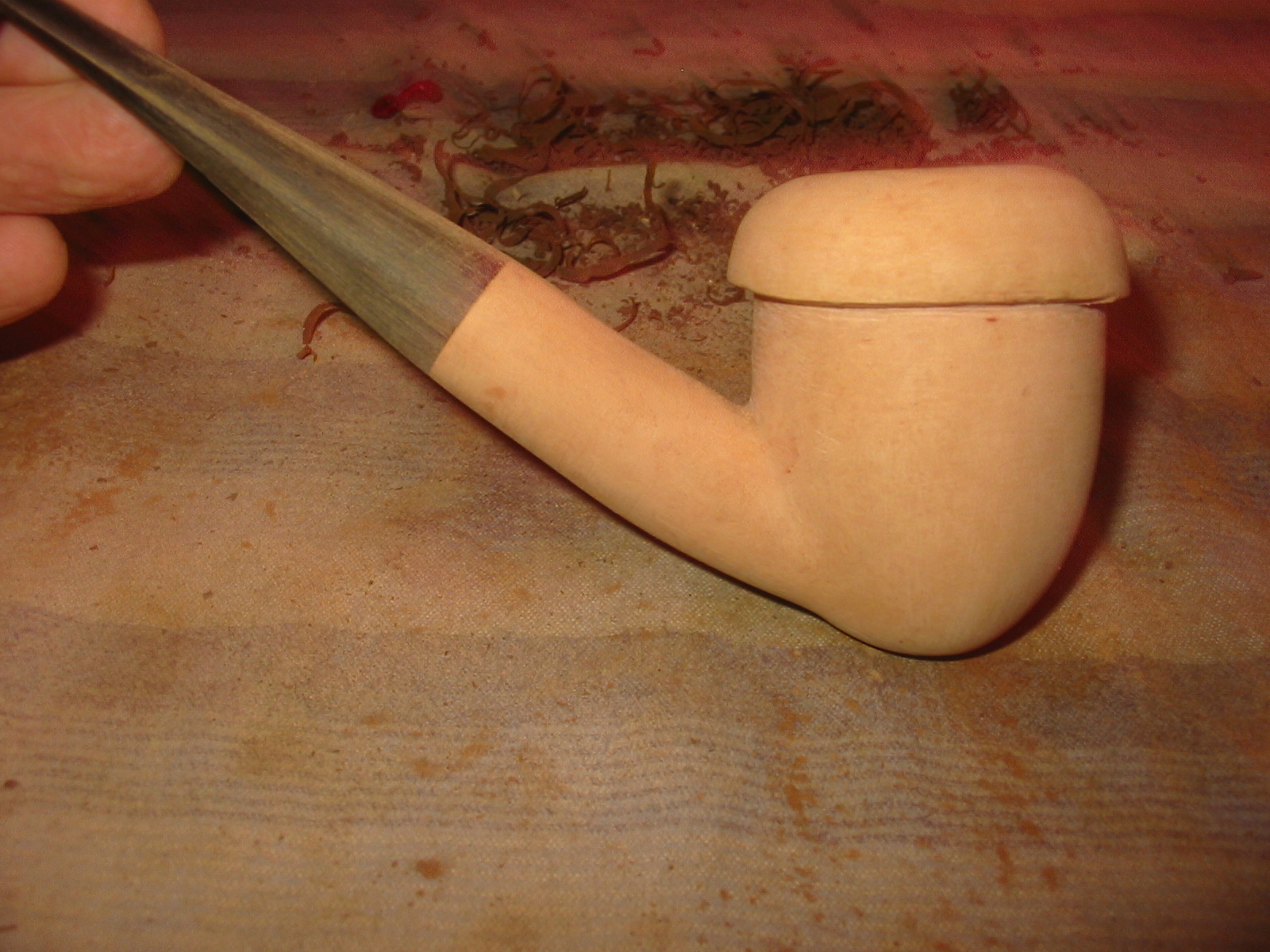
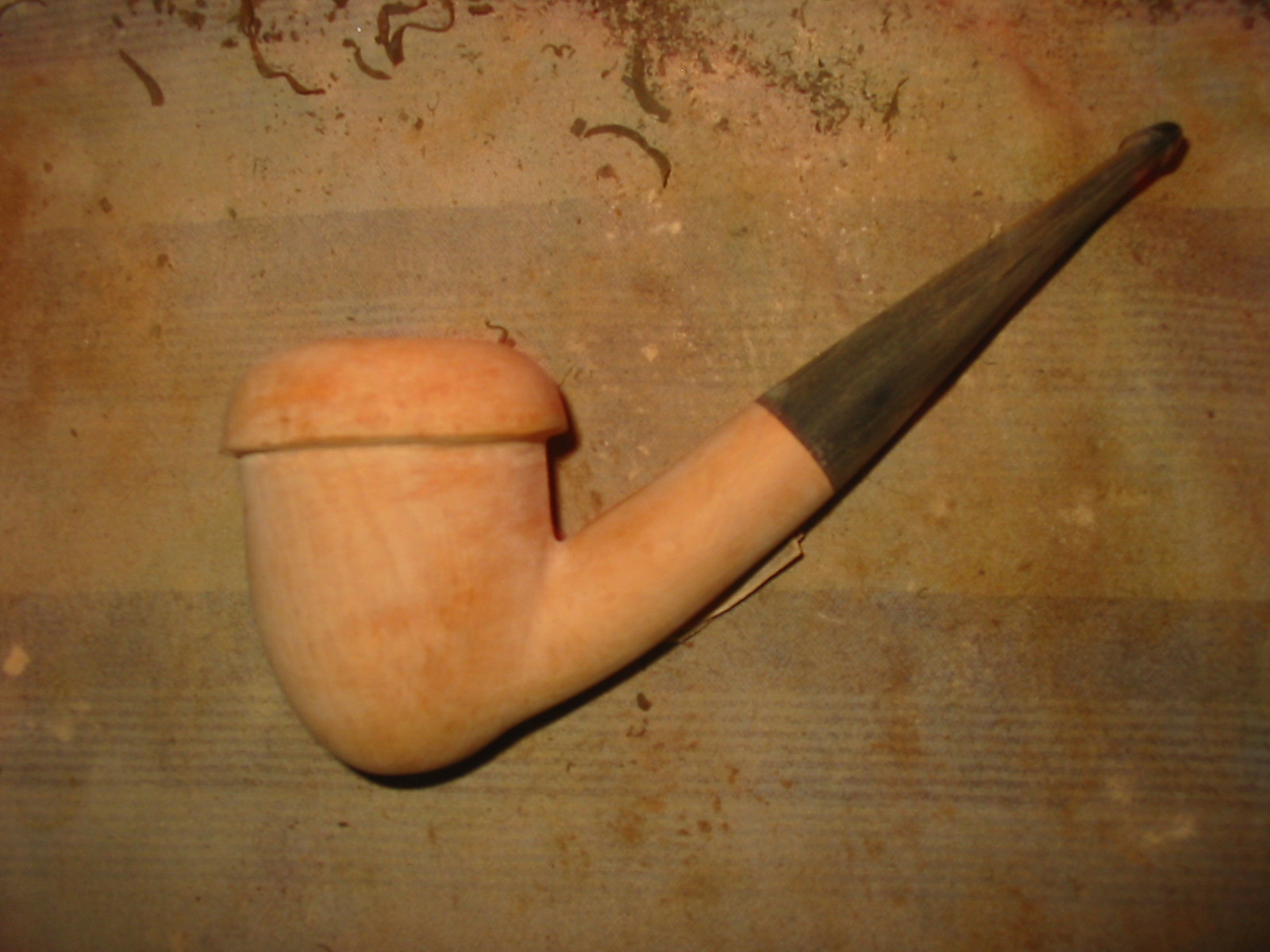
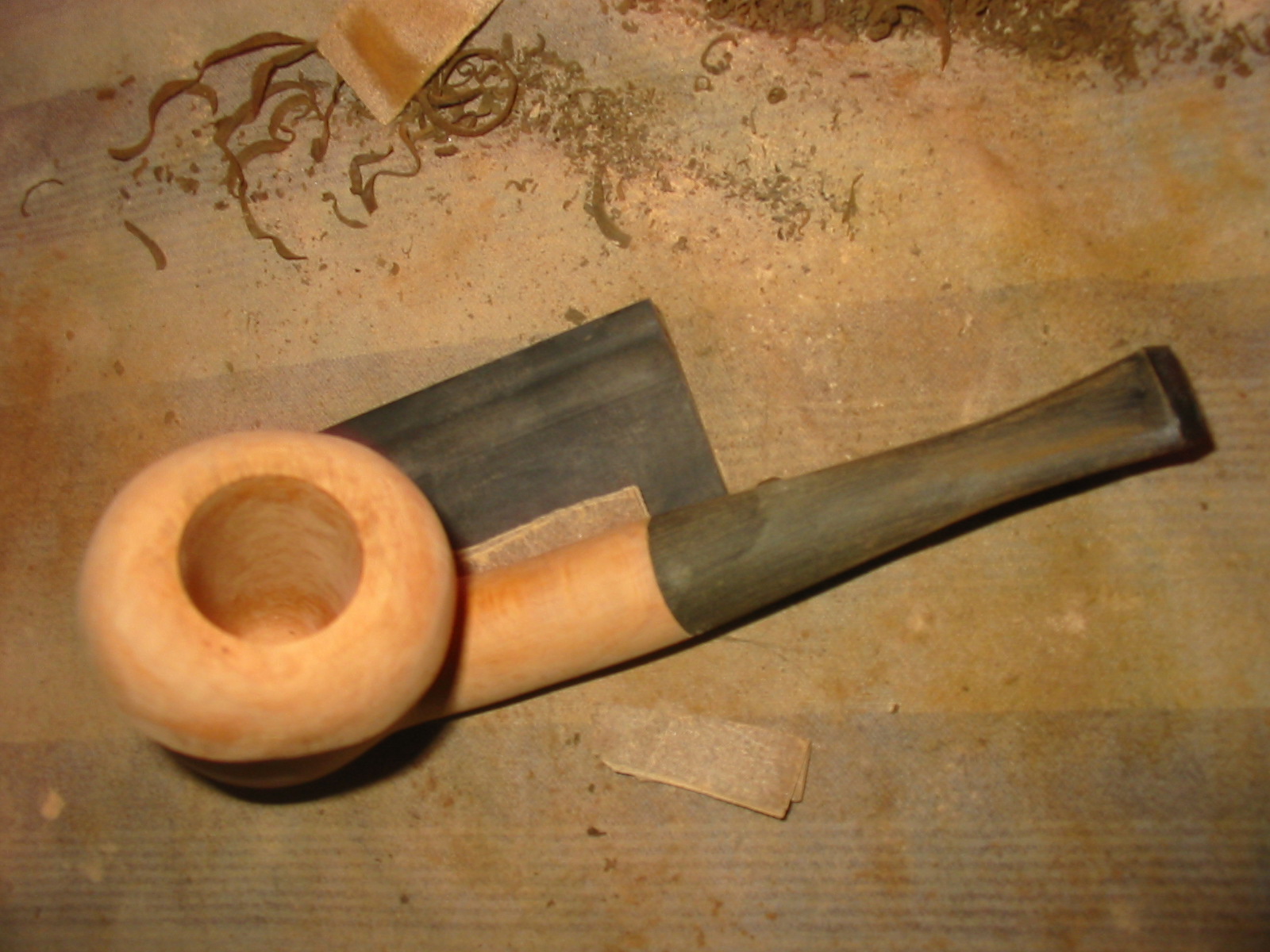
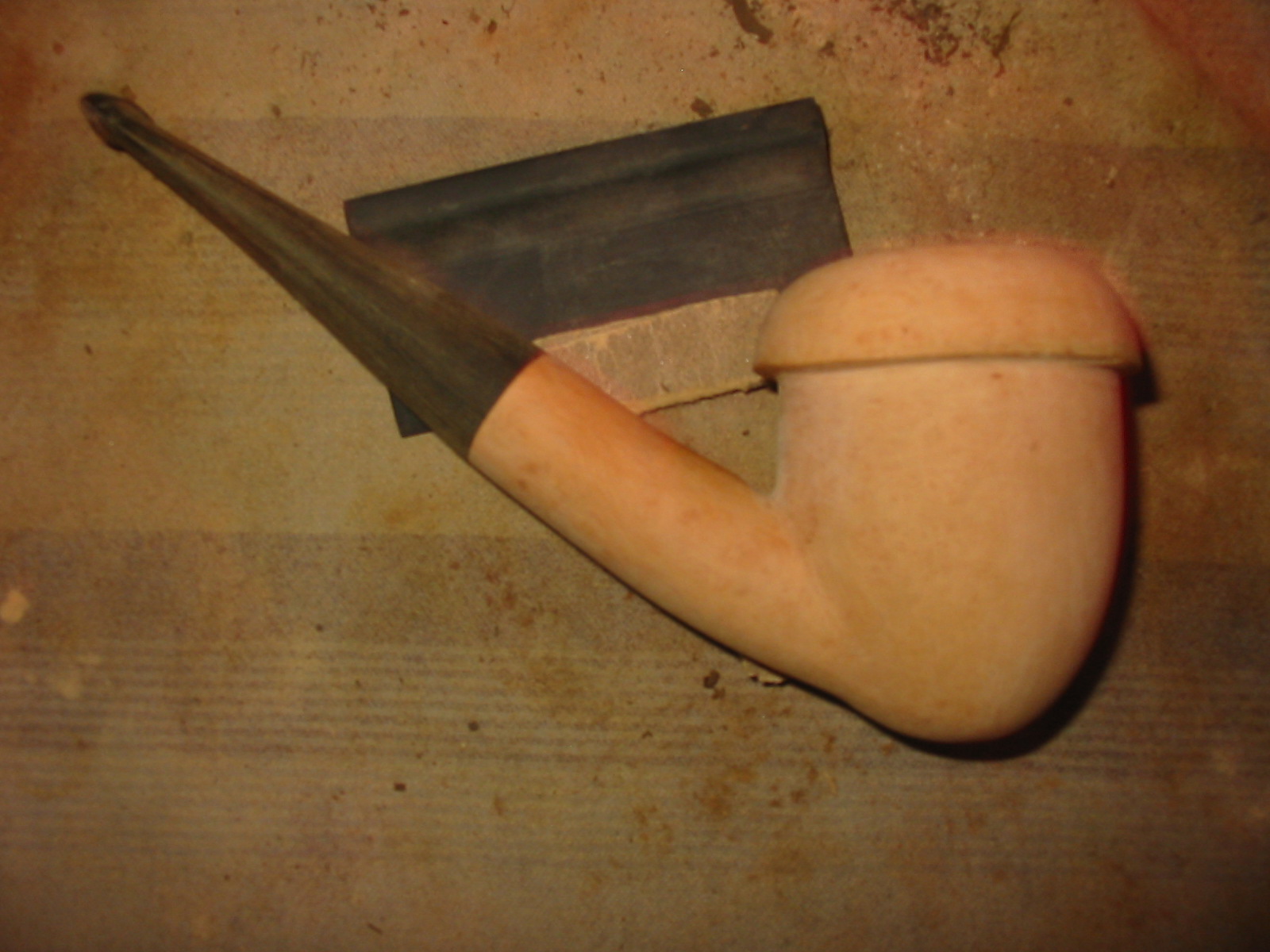
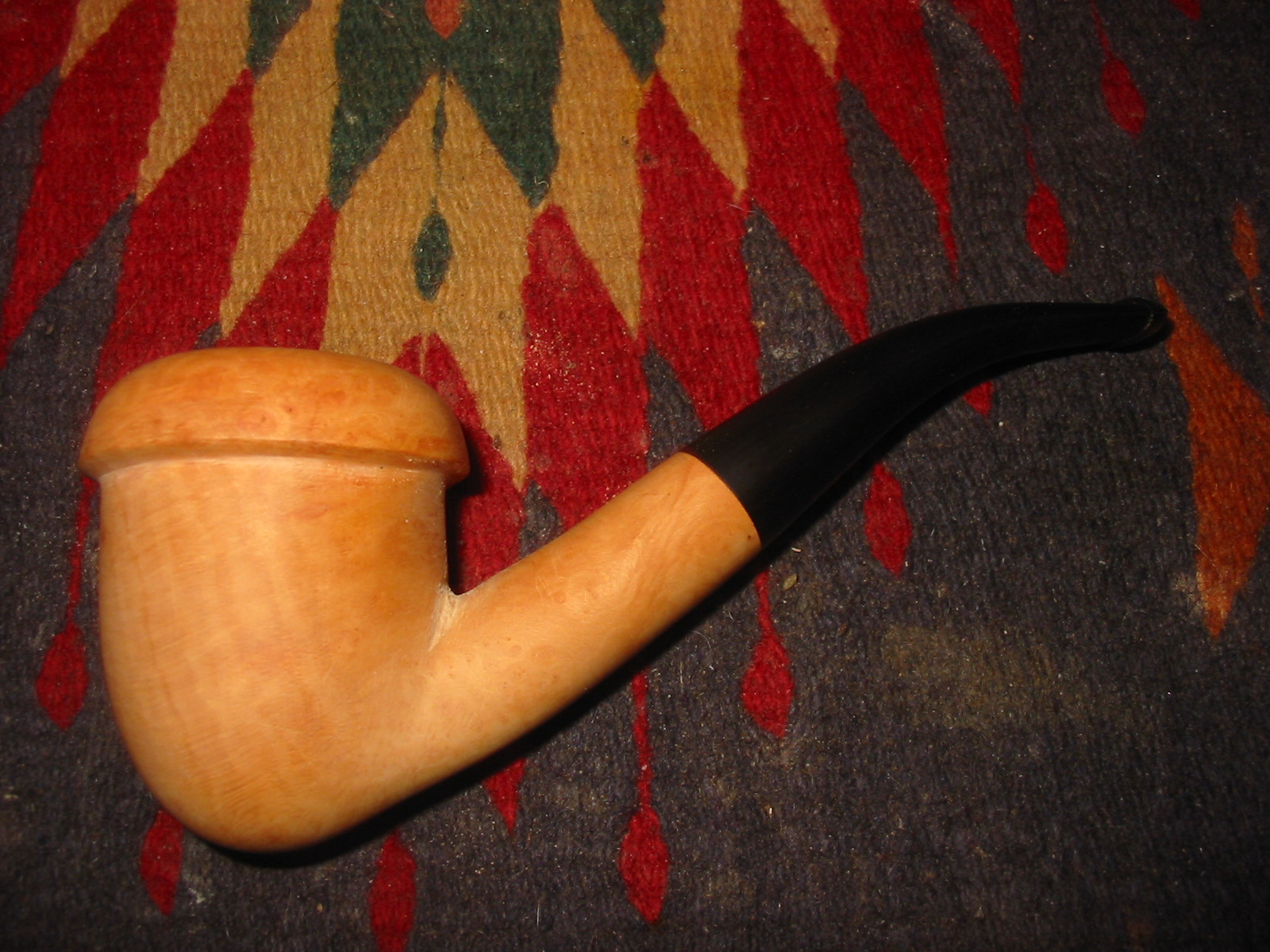
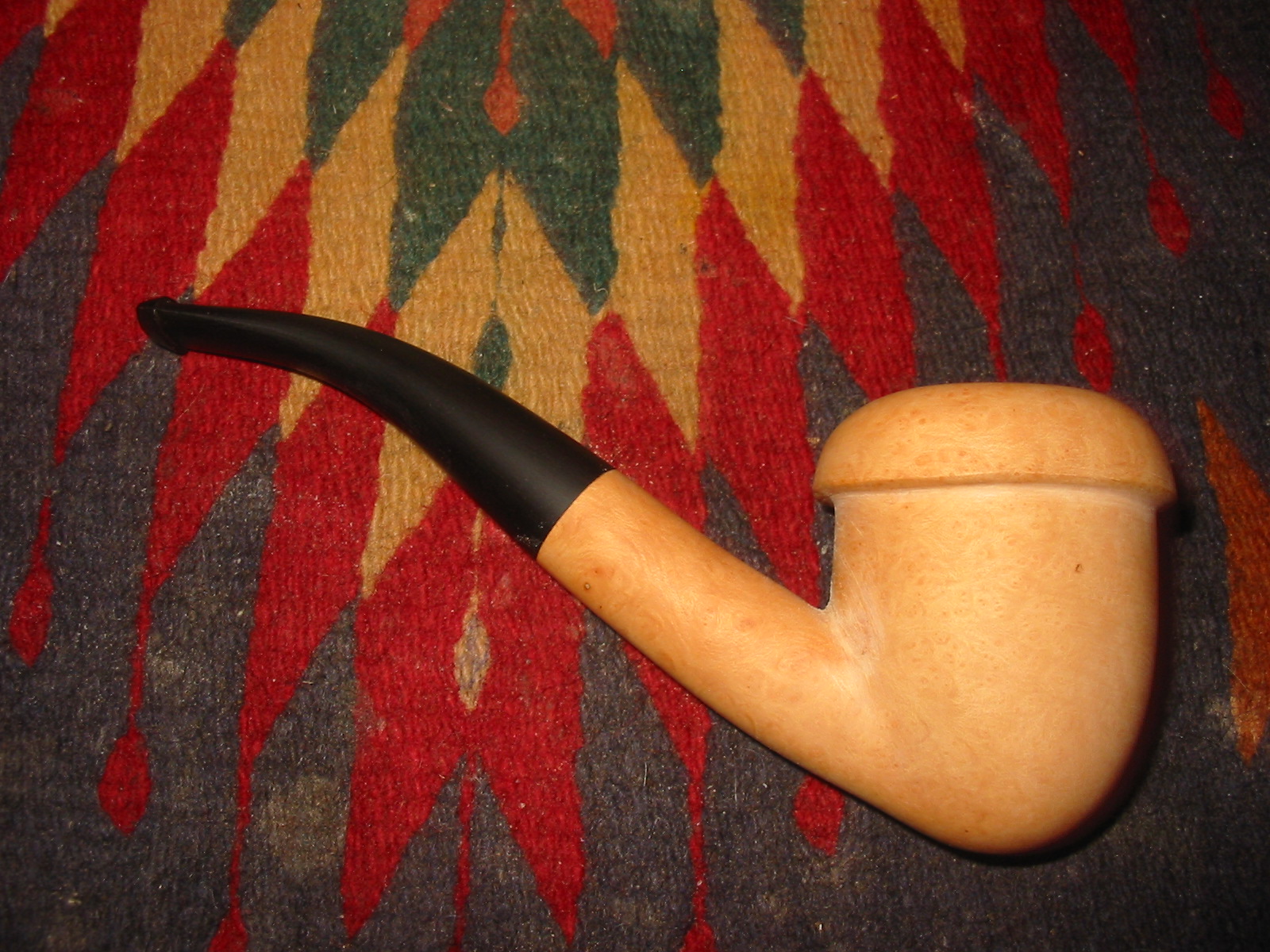
I had a long weekend with rainy days forecasted for the entire time so it was a perfect opportunity to work on the block and see what I could carve. I don’t have many power tools in terms of facilitating carving but I do have files, knives and a Dremel with many sanding drums. I sketched out an idea on the block and began to sand away the excess briar with the Dremel. I had drawn a calabash/acorn shaped pipe. I have an old 100+ year old oak tree in my front yard and every fall I fight the squirrels in picking up the acorns. I was cleaning up around the tree recently and came across one they had dropped. I had the thought that an acorn shape including the cap would make an interesting looking pipe. With that in mind I attacked the work of shaping the briar. I find that I always am reticent to remove briar because I know I cannot put it back once it is gone so it takes me awhile to get the pipe walls and shank the proper shape and thinness. This one was going to be a bit thicker that I wanted when I realized that the shank was drilled for a 9mm filter. That would mean that the diameter of the shank would be larger than I had hoped.

In the photos and words below I plan on taking you with me on the journey from block to pipe. You might well have made different decisions than I did in the shaping of the block. And you probably would use better/different tools to work the shape. However, I worked with the tools I had and really wanted to show that the shaping can be done with a few tools, persistence and lots of hard hand work. Thanks for coming along with me on this journey. If you want to skip the words, feel free to do so and enjoy the process shown in the photos.
IMG_7030
I used a Dremel tool with a sanding drum, several different wood rasps and files to cut away the excess material. I find that the Dremel works fairly quickly in removing the briar and the files and rasps work well in the area where the shank joins the bowl. In the past I have tried to do that work with sandpaper and sanding sponges and was not happy with the overall results. The files and rasps facilitate a more defined junction. I also used several carving knives that I have to further define the angles of the junction.
IMG_7031

IMG_7033

IMG_7035

IMG_7037

IMG_7032

IMG_7034

IMG_7036
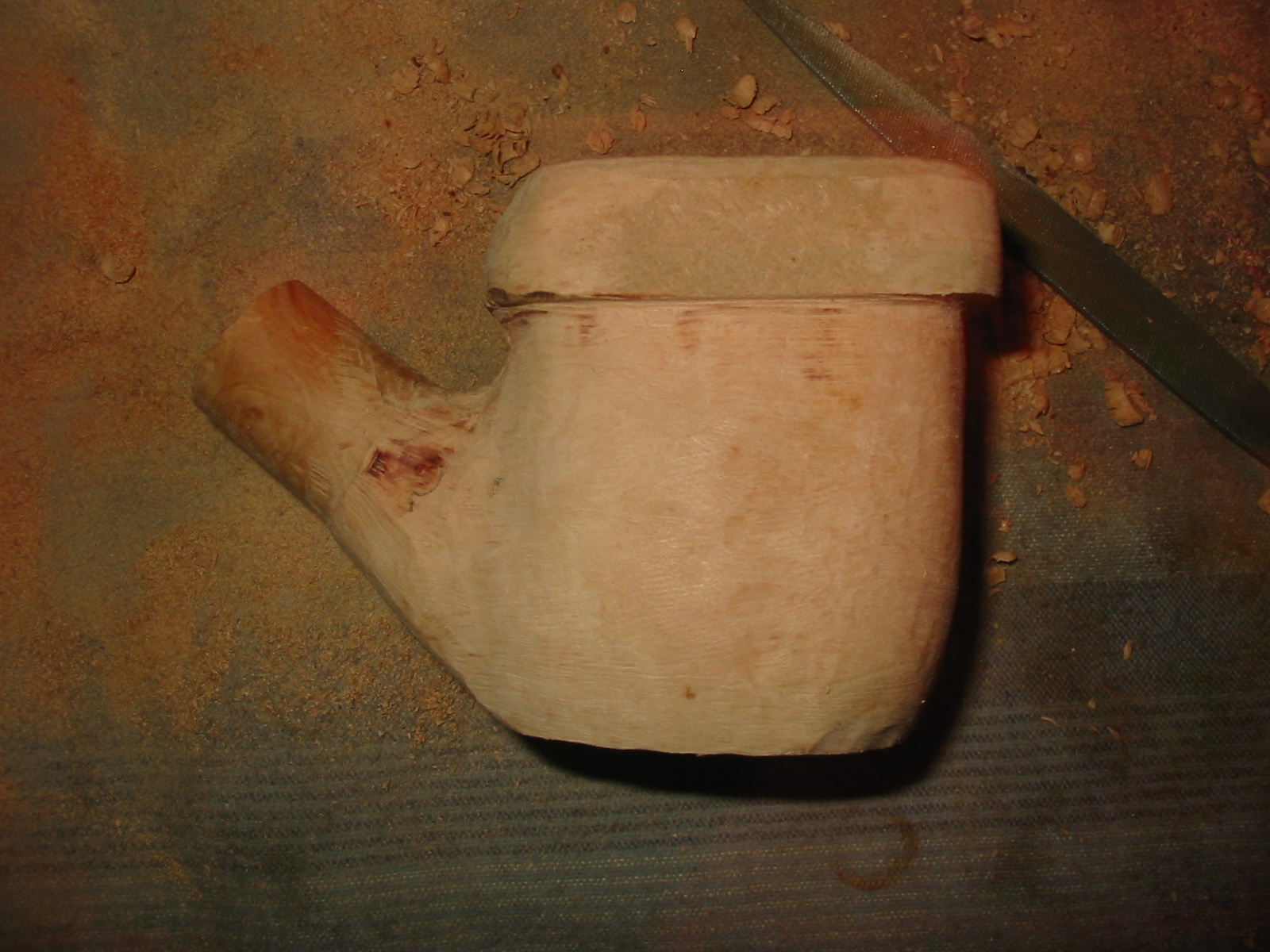
It took a lot of sanding with the Dremel and sanding drum to round out the corners on the block and remove the excess material around the shank. I worked to taper the bowl into the point at the bottom of the acorn and files and the Dremel to cut in the edge of the cap on the top of the bowl. I had spent approximately two hours to get the bowl to this point in the process. The photos below show that the shape is beginning to emerge from the block.
IMG_7039

IMG_7041

IMG_7038

IMG_7040
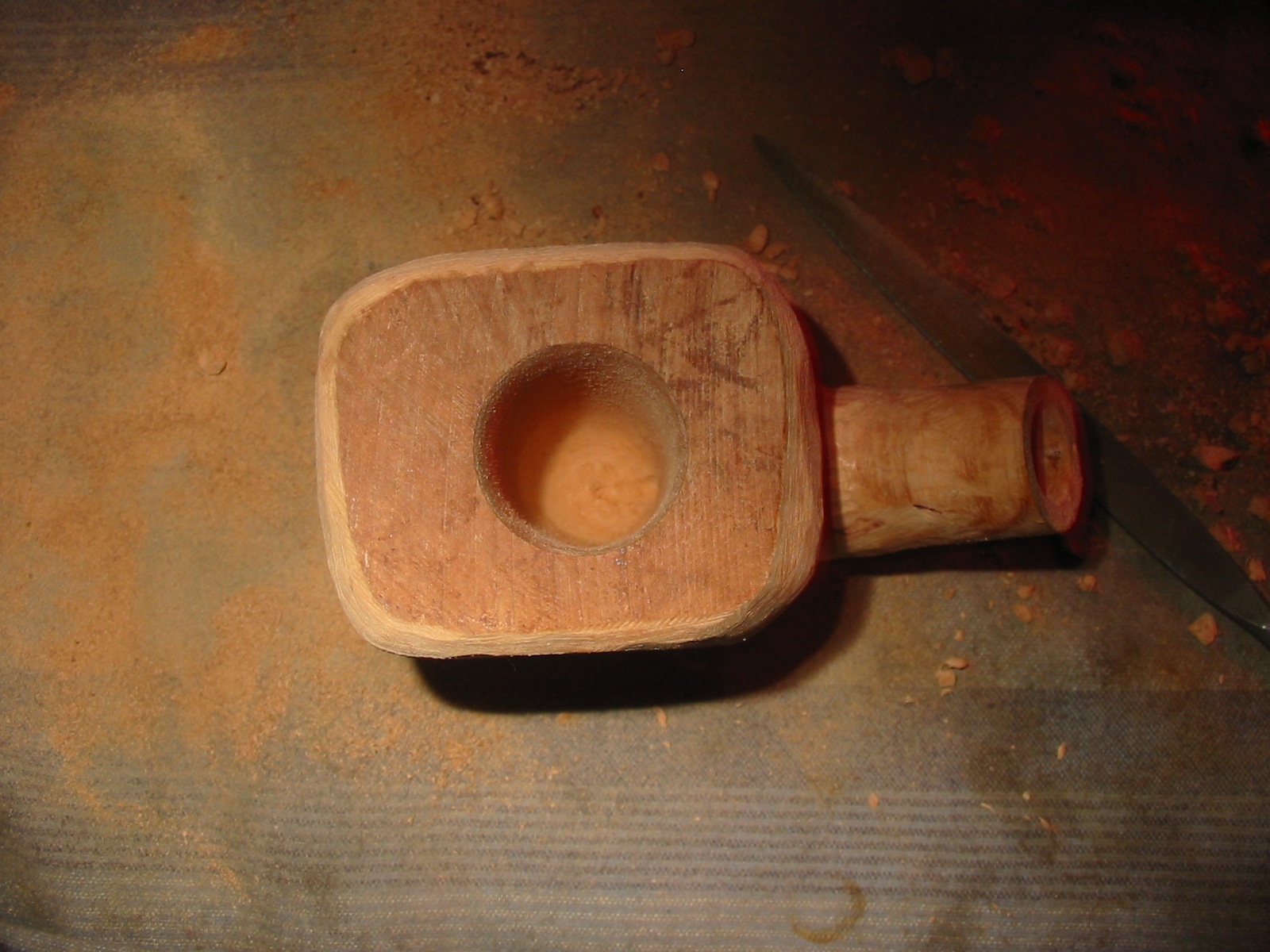
I worked on defining the shape of the bowl and differentiating the shank from the bowl. I continued to use the Dremel and sanding drum to taper the bowl and further define the shank/bowl junction. I also used it to increase the depth of the line between the cap and the body of the acorn as well as the curves of the cap. I was trying to shape the curves to resemble a meerschaum cup in a calabash.
IMG_7042

IMG_7043

IMG_7044

IMG_7045
I worked on the block with 100 grit sandpaper to further refine the angles and shape. I used a sharp knife to clean up the shank and bowl junction and give it even a clearer definition.
IMG_7046

IMG_7049
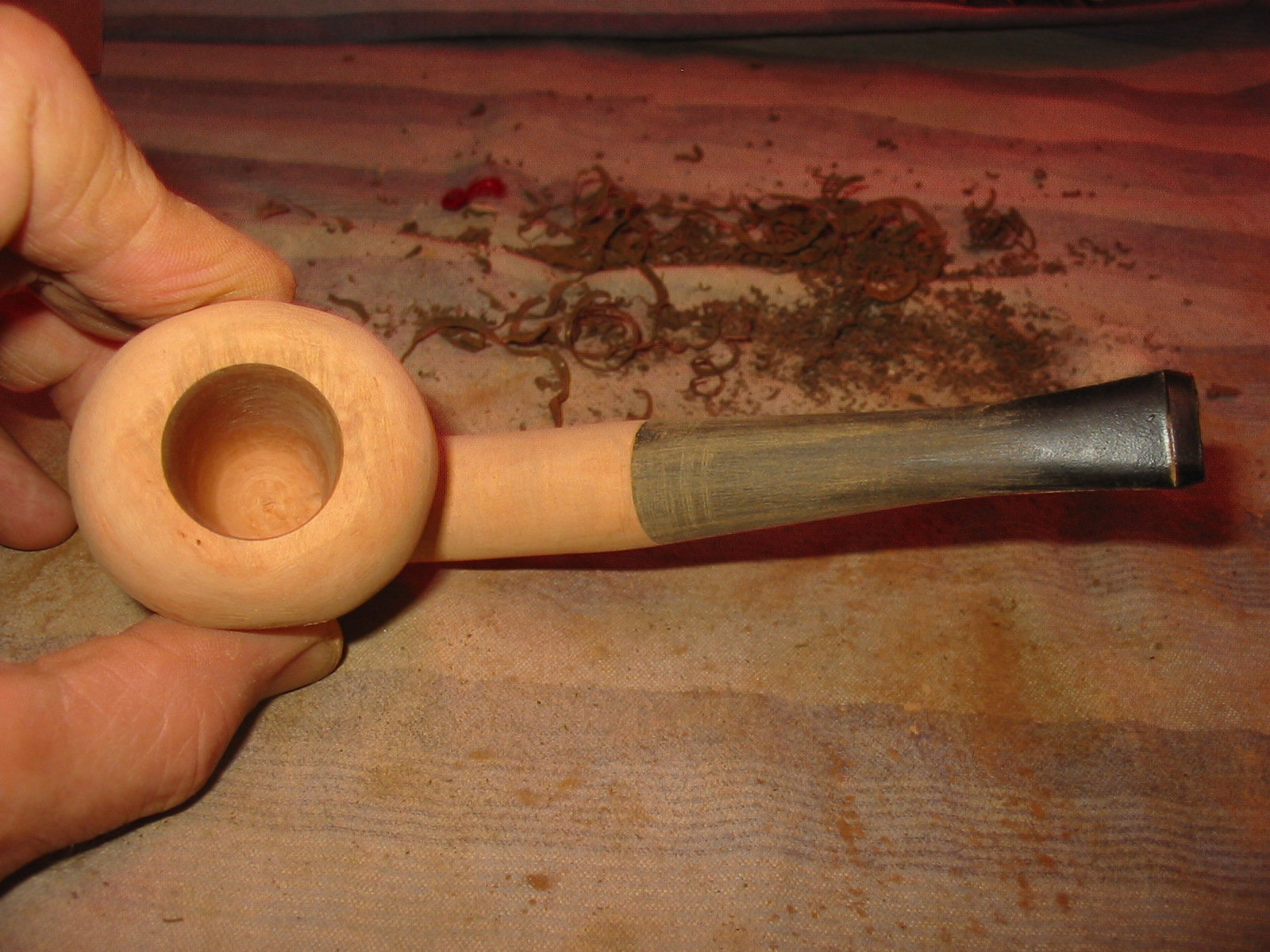
Before I took down more of the thickness of the shank I decided to make a new stem for the pipe. I wanted to get rid of the 9mm stem and put a tapered stem on the shank instead of the saddle stem. I turned the tenon with a PIMO tenon turning tool on a cordless drill and then hand fit it to the mortise. Once I had a good fit I sanded the shank and stem to get a smooth transition between the two materials. I used 100 grit sandpaper and then 220 grit to smooth it out. I continued to take down the taper on the bowl and round out the bottom of the bowl and the edges around the cap with the 100 grit and 220 grit sandpaper. The bowl was starting to take shape at this point in the process. It was still too thick to my liking and the cap was too blocky. A lot more sanding waits for me.
IMG_7050

IMG_7051

IMG_7052
I used the Dremel and sanding drum to remove more of the briar and then hand sanded with the 100 grit sandpaper to further refine the shape. I used a sanding wedge to work on the angle at the junction of the shank and bowl and clean up the carving marks. I also want to flatten the bottom of the bowl slightly and minimize the dip at the shank and bowl on the bottom.
IMG_7053

IMG_7054

IMG_7056
I continued to remove diameter from the shank and also work on the bottom of the bowl to give it a more rounded look and feel. I used 100 grit sandpaper to work on these areas. I sanded the stem as well to keep the taper and flow even between the two materials. I also sanded the curve on the cap to makes the angles less sharp.
IMG_7057
I used a heat gun to heat the stem and bent it over an old rolling pin I use for bending stems. I wanted the angle of the stem to approximate the angle of the curve on the bottom of the bowl so I needed to do a bit more sanding on the bowl. The next three photos show the progress on reducing the point on the bottom of the bowl.
IMG_7058

IMG_7061

IMG_7062
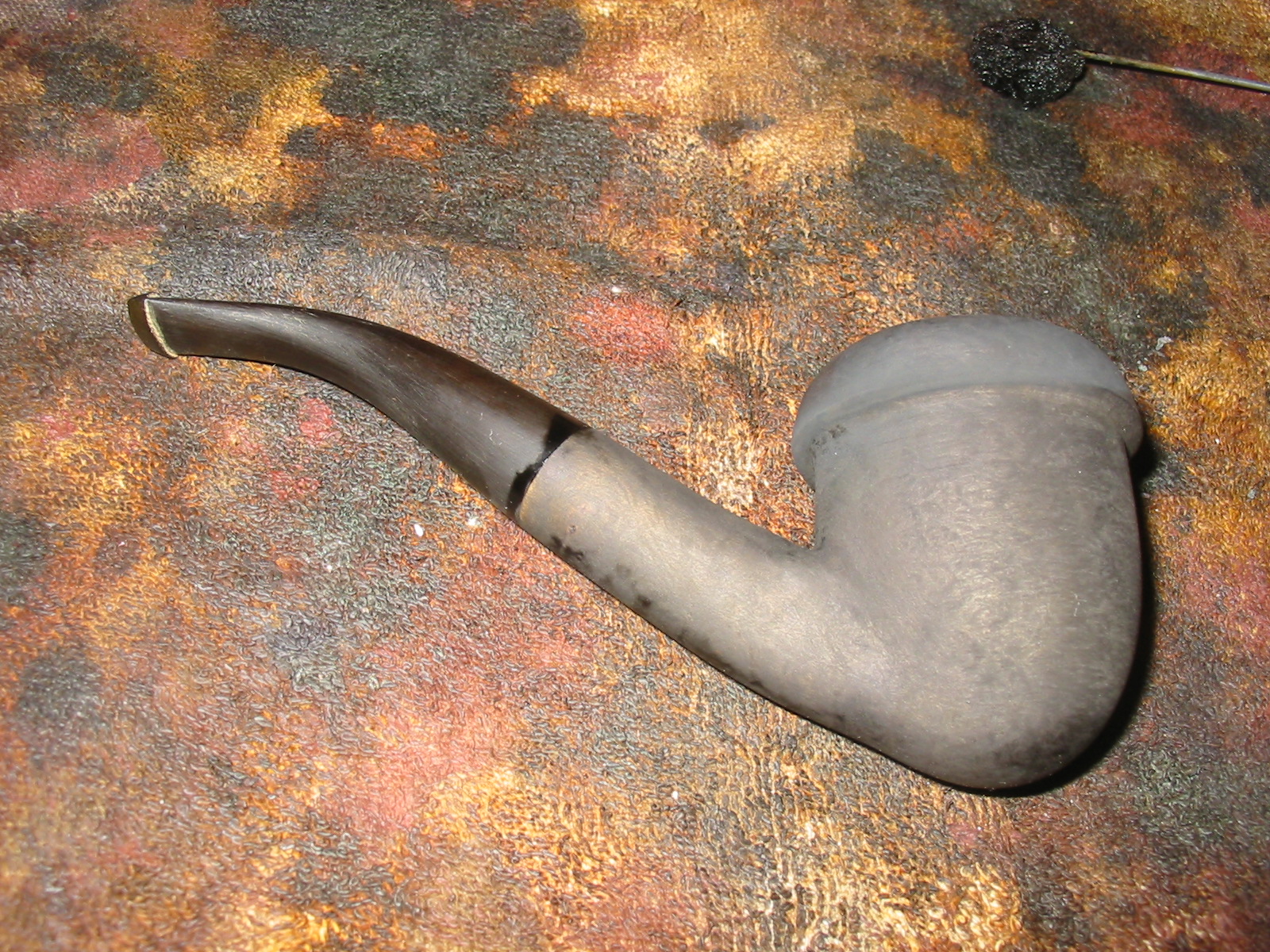
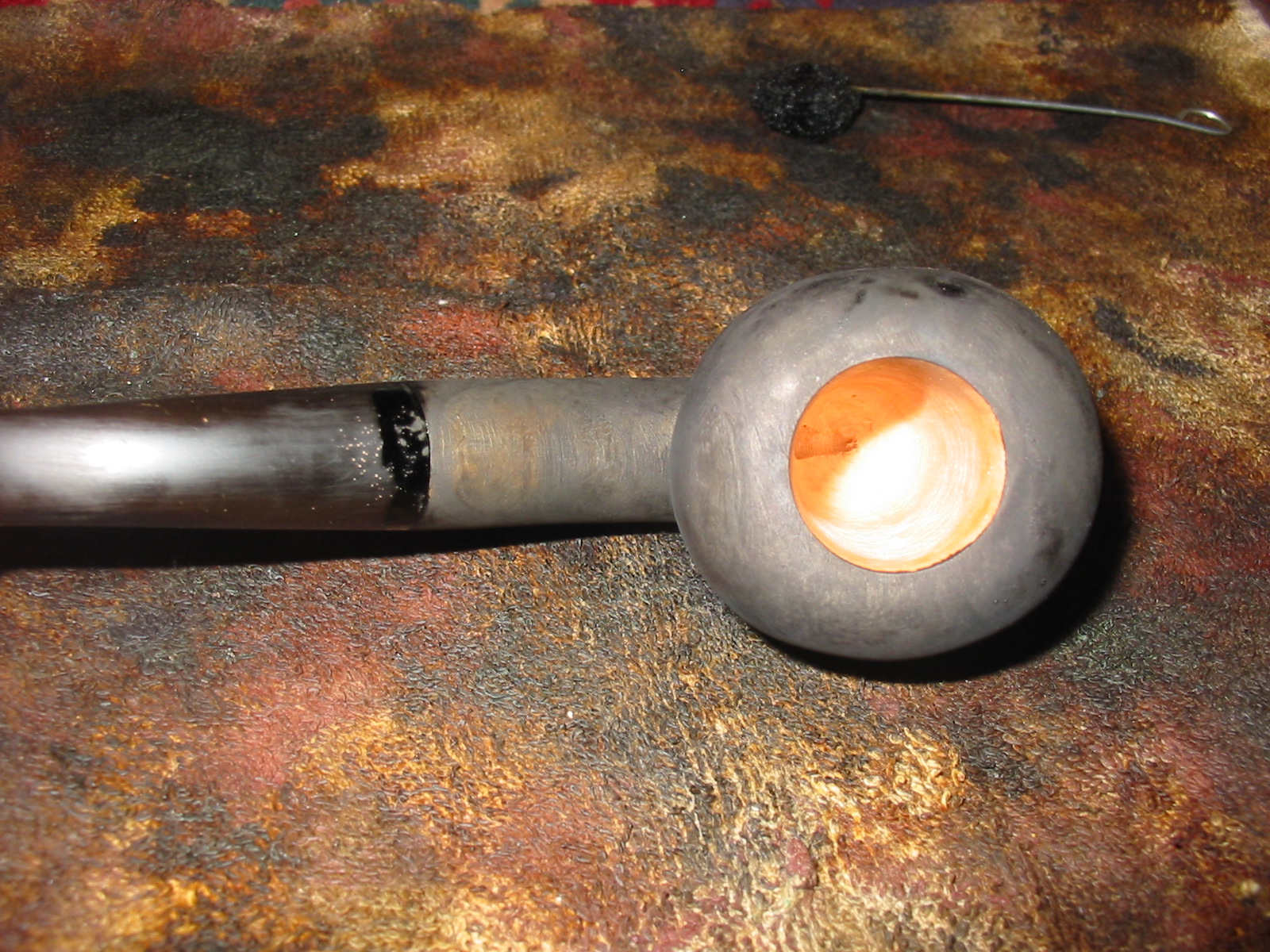
I decided to give the bowl a black under stain to highlight the grain. The right side of the bowl and shank had some great birdseye grain and the top and bottom of the shank had cross grain. The left side of the bowl had a mixed grain pattern but it was still quite nice. The black stain would permeate the grain and make it stand out. I heated the briar with the heat gun and applied a coat of black stain, flamed it and reapplied it repeating the pattern until the coverage was even. Once it had dried I wiped it down with acetone on cotton pads to remove the stain from the harder briar where it had not gone into the grain.
IMG_7065

IMG_7066

IMG_7067
I sanded the bowl with a medium grit sanding pad to remove more of the stain and to help highlight the contrast between the grain and the lighter portions of the briar. I buffed it with red Tripoli. The photos below show the bowl as it stood after the buffing. There was still sanding to do to remove the dark scratch marks in the finish and further remove the black stain.
IMG_7074

IMG_7075

IMG_7076

IMG_7077
I wanted to add to the contrast of the grain so I stained the pipe with oxblood aniline stain and then buffed it with White Diamond. The contrast was evident and the grain stood out nicely against the second coat of stain but it was just too red for my liking. I wanted more of a reddish brown colour than the red it was after the stain.
IMG_7079

IMG_7080

IMG_7081

IMG_7082
I rubbed bowl down with a cherry stain to lighten the red. It was still too red for me. The pipe in the photo below shows the cherry stain over coat on the oxblood.
IMG_7083
I decided to add a coat of dark brown stain to the bowl and give it a deeper, richer colour. I applied the dark brown stain and flamed it, reapplied, flamed it again and then buffed the bowl with White Diamond to polish it and make it more transparent. I wanted the grain to pop through the finish but I wanted it to be less obtrusive than the above photos.
IMG_7090

IMG_7091

IMG_7092

IMG_7093
I sanded the bowl with micromesh sanding pads using 3200-6000 grit pads to even out the dark and light portions. I also wanted to polish the finish more before calling it finished. I buffed the bowl with White Diamond and gave it several coats of carnauba wax to give a shine. I polished the stem with the micromesh pads – wet sanding with 1500-2400 grit pads and dry sanding with 3200-12,000 grit pads. I rubbed the stem down with Obsidian Oil and when dry I buffed the pipe with White Diamond. I gave the bowl and stem multiple coats of carnauba wax, buffing with a soft flannel buff between applications of wax. The finished pipe is shown below. (However, there is one disclaimer – with any pipe I have made in the past I have always gone back after a time and changed the look. The odds are thus quite high that I will modify this one as well somewhere down the road.)
IMG_7094

IMG_7095

IMG_7096

IMG_7097
I took the new pipe with me to work yesterday and planned to take a walk and fire it up at my lunch hour. It actually worked out that I did just that! I packed a bowl of Hearth and Home Louisiana Red and enjoyed a good walk and contemplative time. The bowl got warm but not hot, the draw was very good and the feel in the hand and mouth was comfortable. It is bigger than the pipes I usually smoked but surprisingly it is not very heavy.
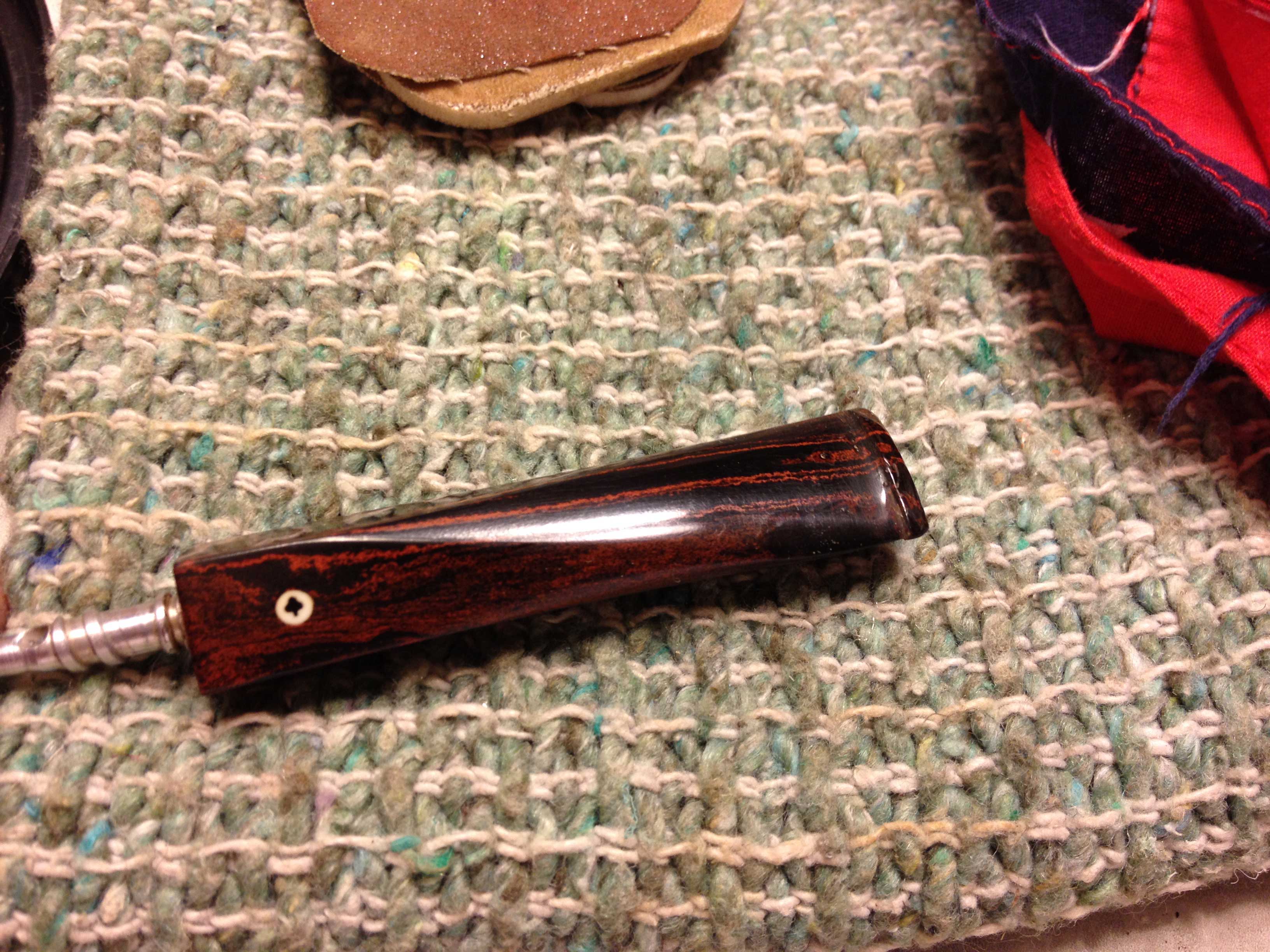
Thanks for taking the journey with me from block of briar to pipe.

Black Superglue Experiments – Joyal Taylor (aka holymolar)


Blog by Joyal Taylor

I have been waiting for this article since the product was mentioned on Pipe Smokers Unlimited Forums. Mark Domingues (who contributes on the blog) and Joyal both ordered the powder to try out. Both said they would experiment with it and report back. Joyal spoke with Mark and they agreed that he would post the results of his experiments. I have used Black Super Glue for a long time now in patching tooth marks and bite throughs on stems. I have dealt with the shrinkage and the long curing times and lived with them. Joyal has done all of us a service in doing this experiment and writing up the process and results of his work. Thanks Joyal for taking the time to work through this and document your process. It is well worth a read.

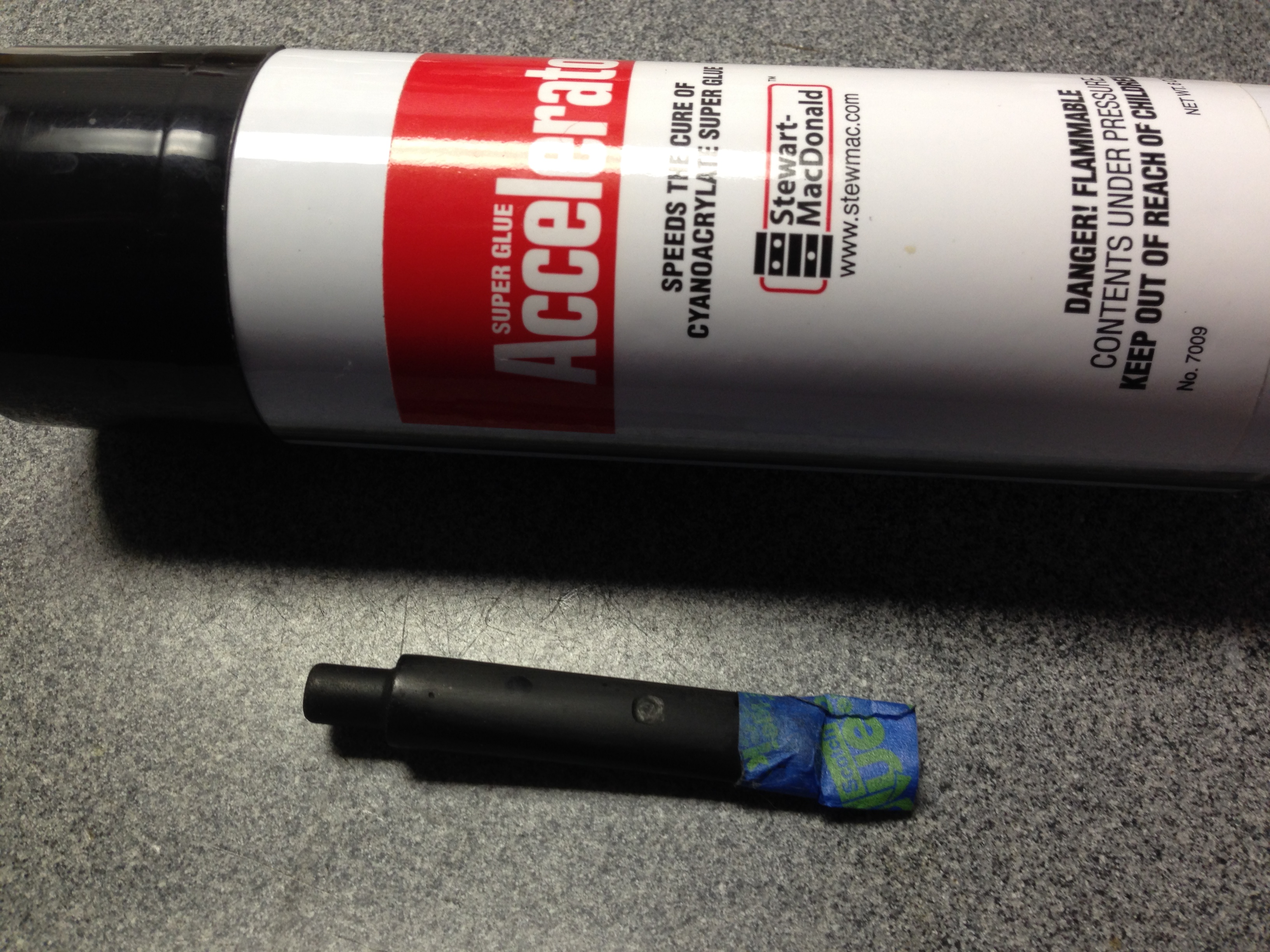
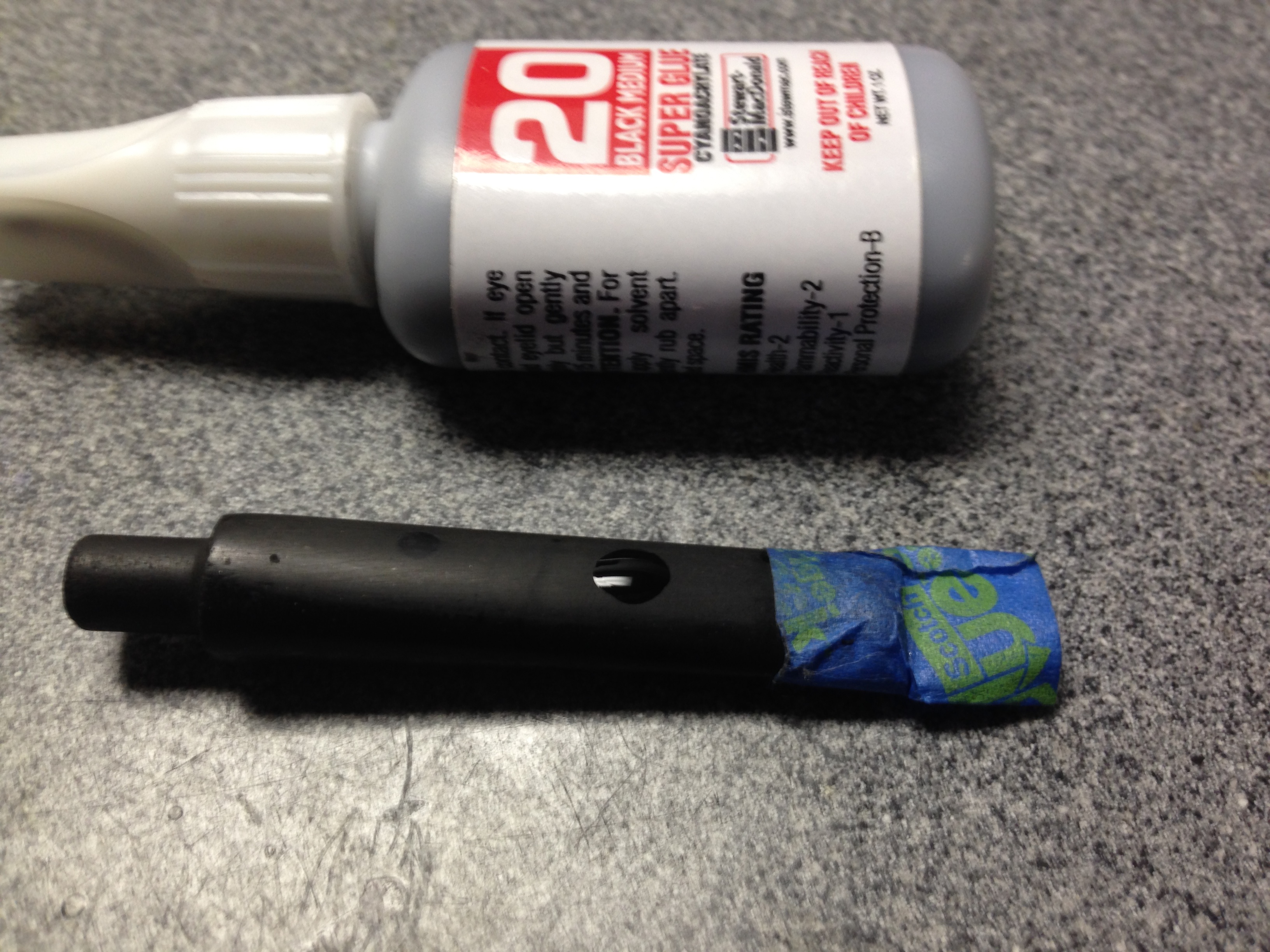
Experiment #1 – Black Superglue with Accelerator:

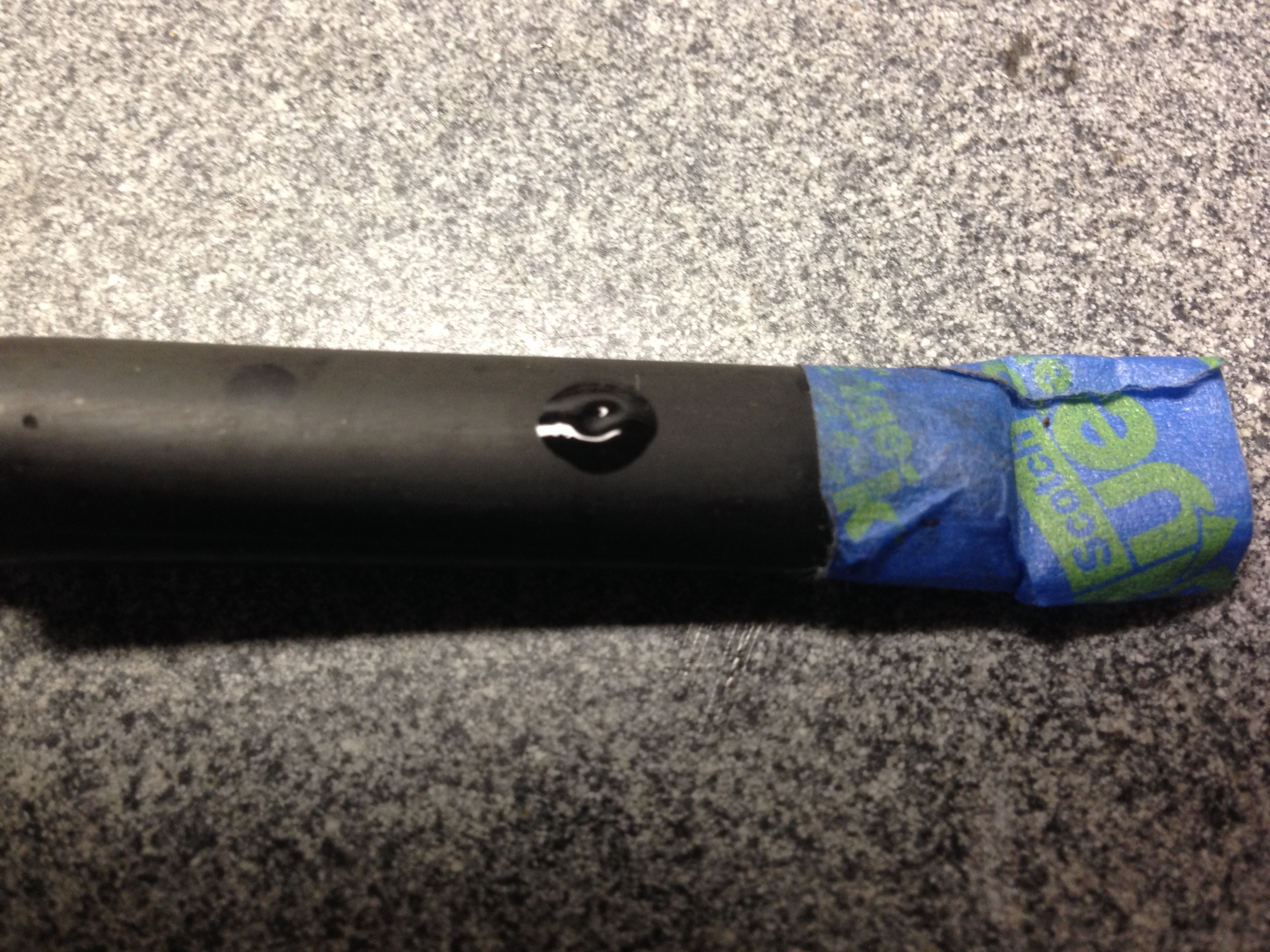
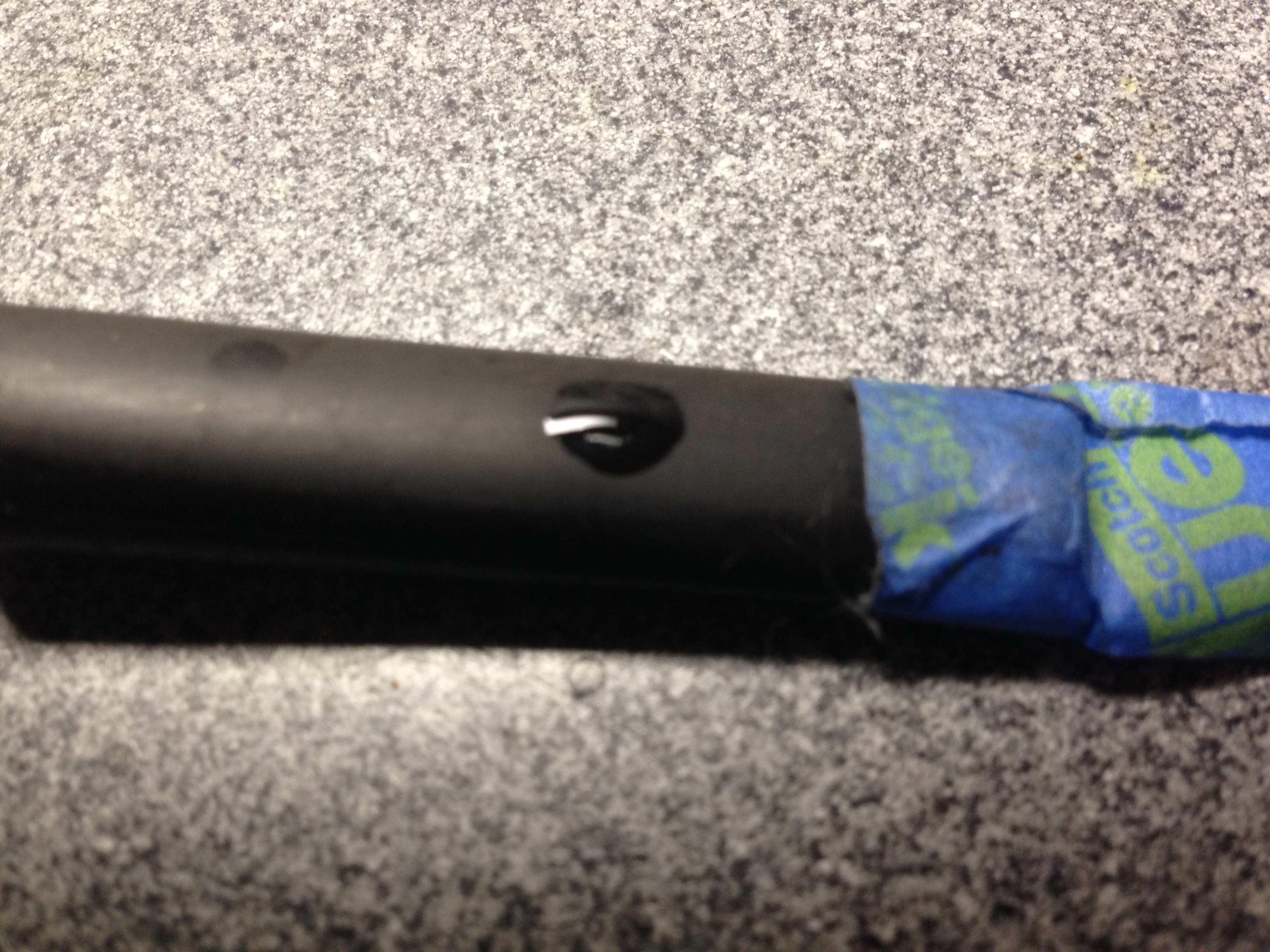
I used a round Dremel bur to cut a divot in a vulcanite stem, to simulate tooth marks.
Photo #1.JPG
I sprayed the area with accelerator and allowed it to dry for 5 minutes before adding superglue
Photo #2.JPG

Photo #3.JPG
I let the superglue cure for 30 minutes. As expected, the glue shrunk.
Photo #4.JPG
I sprayed more accelerator on the area and added another coat of superglue.
Photo #5.JPG
Then I sanded the patch with wet sandpaper (220 – 600 grit).
Photo #6.JPG
Later, I used micromesh pads (1500 – 12000 grit) and polished with white diamond and carnauba wax. It polished and shined so well that I couldn’t get a decent photo because of the camera flash.

Experiment #2 – Black Superglue with Plastex, as well as Behlen’s Furniture Powder:

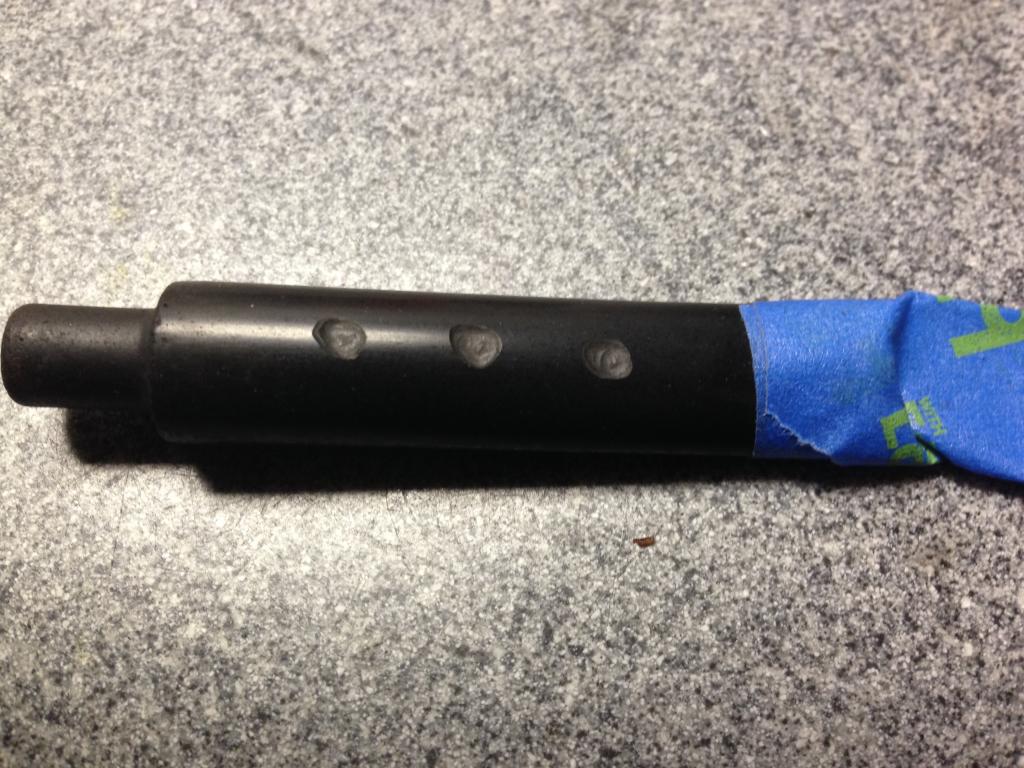
I used a round dremel bur to cut three divots in a vulcanite stem, to simulate tooth marks.
Photo #7
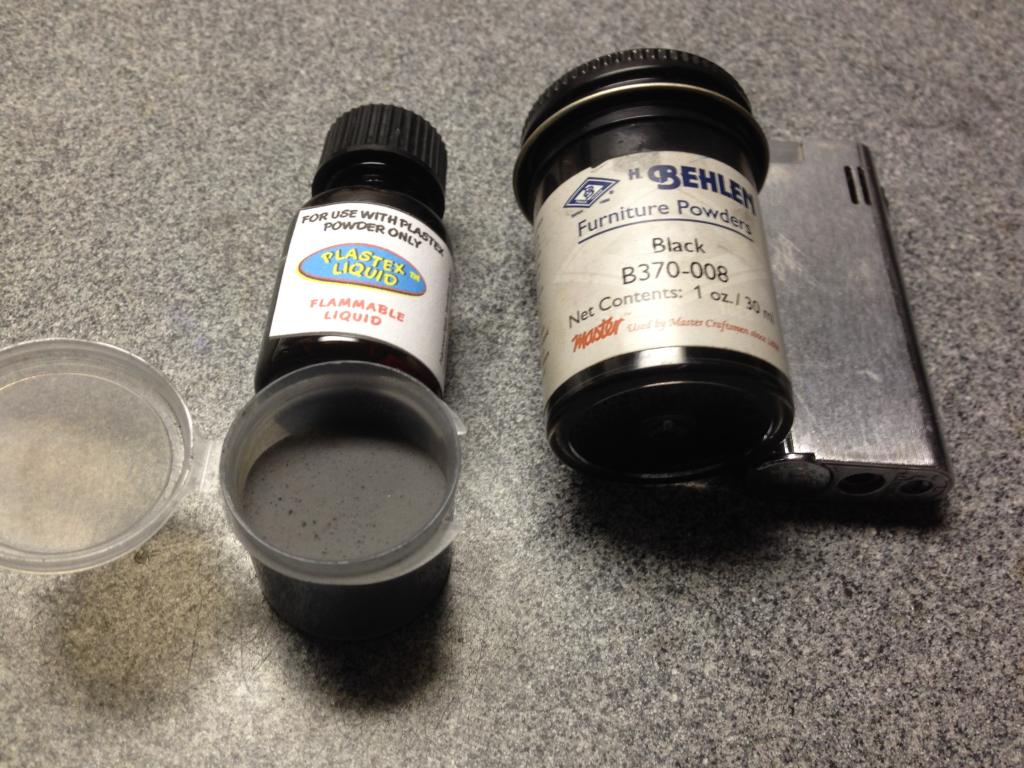
Black Plastex and Behlen’s Black Furniture Powder.
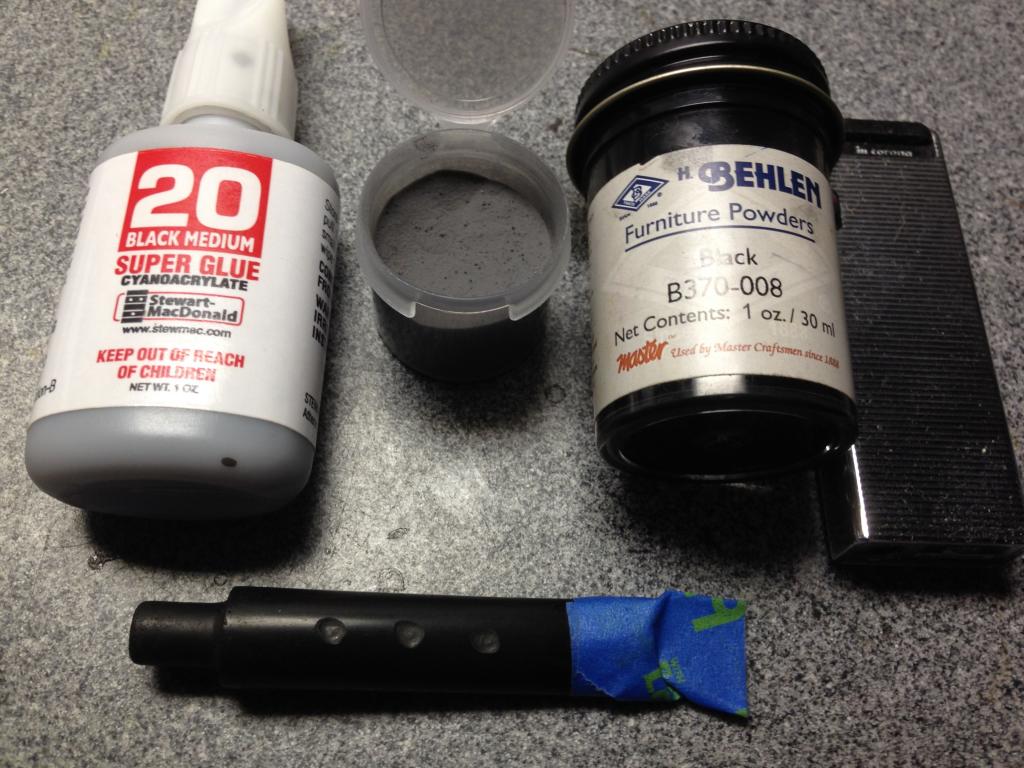
Photo #8
Will use from left to right
Patch 1 – Black Superglue only
Patch 2 – Black Superglue w/ Black Plastex
Patch 3 – Black Superglue w/ Black Behlen Furniture Powder
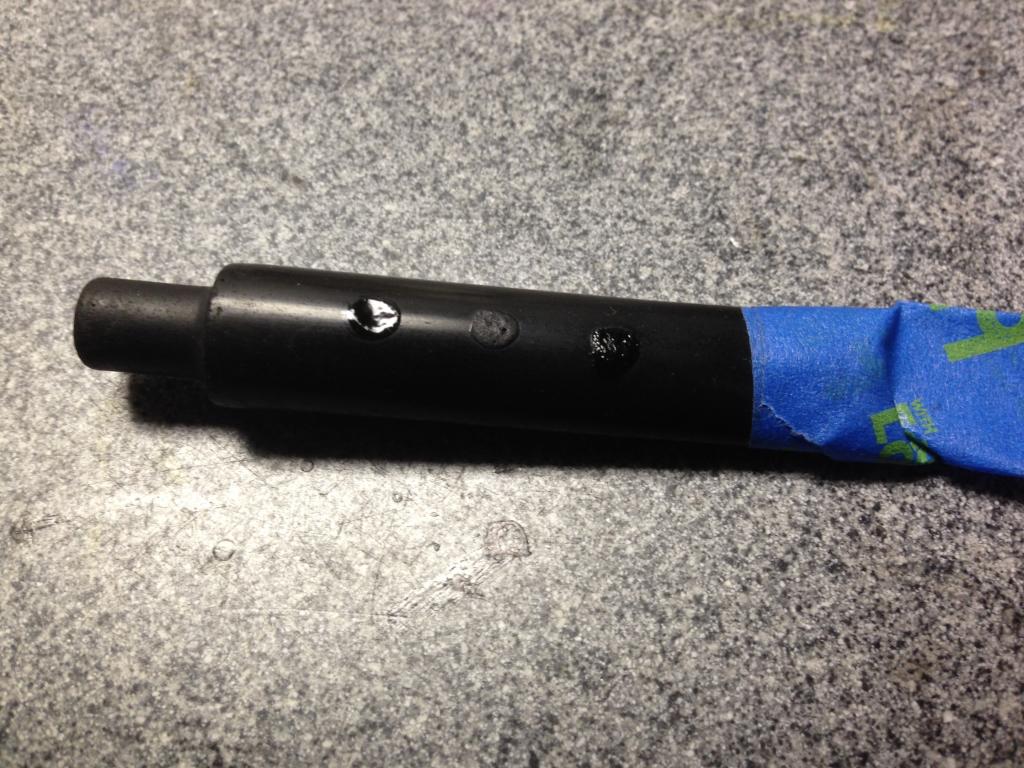
Photo #9
Patch 1 – cured for 8 hrs, it shrunk. Added 2 additional layers and let the final layer cure for 24 hrs.
Patch 2 – cured for 8 hrs, no shrinkage but the surface was pitted
Patch 3 – cured very quickly, 5 minutes, but the surface was pitted
Photo #10

Photo #11
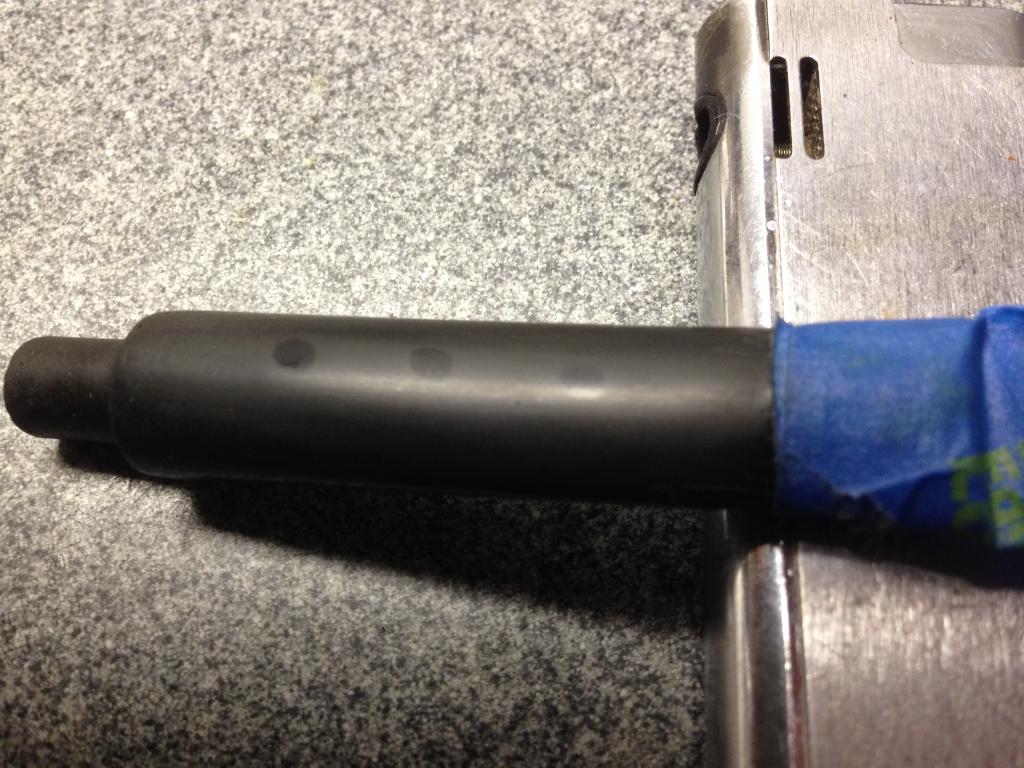
Sanded the patches with wet sandpaper (220 – 600 grit). Fortunately, I had overfilled Patches 2 & 3 and the sanding smoothed out the surfaces. Extra layers were not necessary.
Photo #12
Later, I used micromesh pads (1500 – 12000 grit) and polished with white diamond and carnauba wax. The patches polished and shined so well that I couldn’t get a decent photo because of the camera flash.

Discussion:
Adding Plastex to Superglue reduced the curing time (it didn’t shrink and one layer filled it up). Also, the Plastex adds strength to the patch and could be good for large patches and holes.

Adding Behlen Furniture Powder could be used if you’re impatient (it has something in it that causes the Superglue to cure very quickly). Too much powder will cause the glue to cure so quickly that there isn’t enough time to place it into the divot.

I haven’t tried it yet, but using the Accelerator first, then Black Superglue with Plastex could be a good way to go.

Plastex can be ordered from: http://www.plastex.net/
Behlens Furniture Powder can be ordered from: http://www.shellac.net/furniture-powder.html or http://www.highlandwoodworking.com/b…owders1oz.aspx

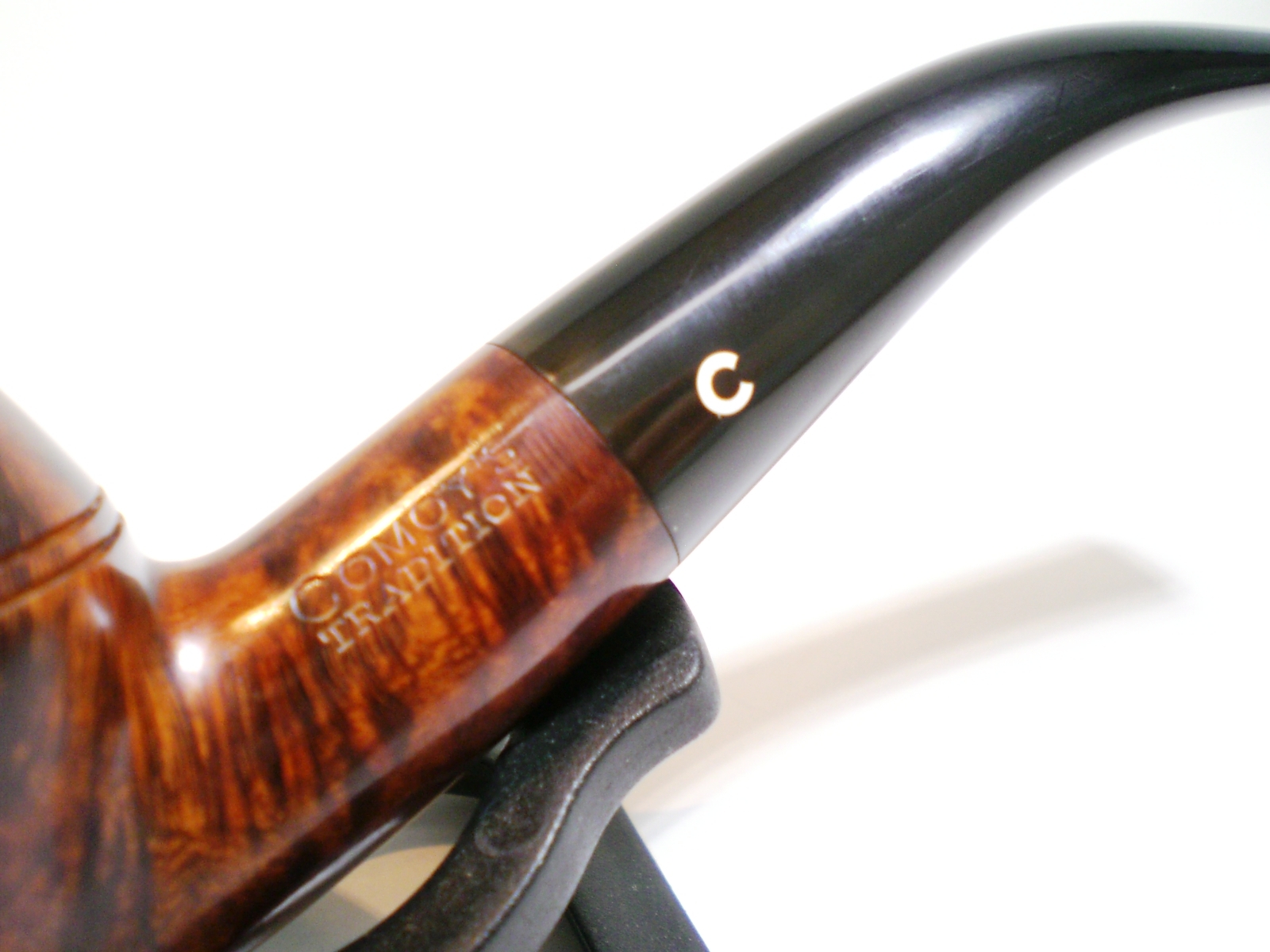
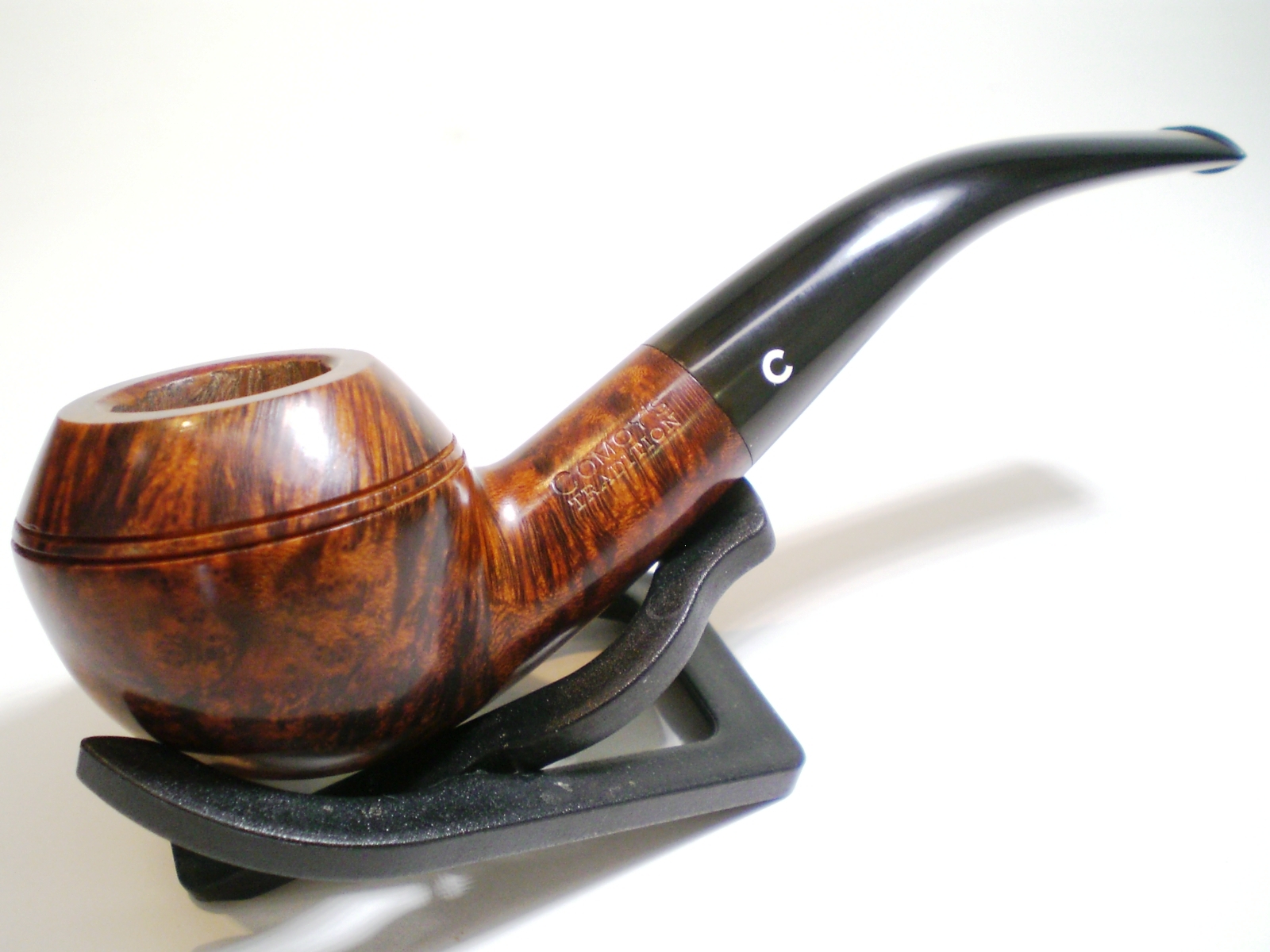
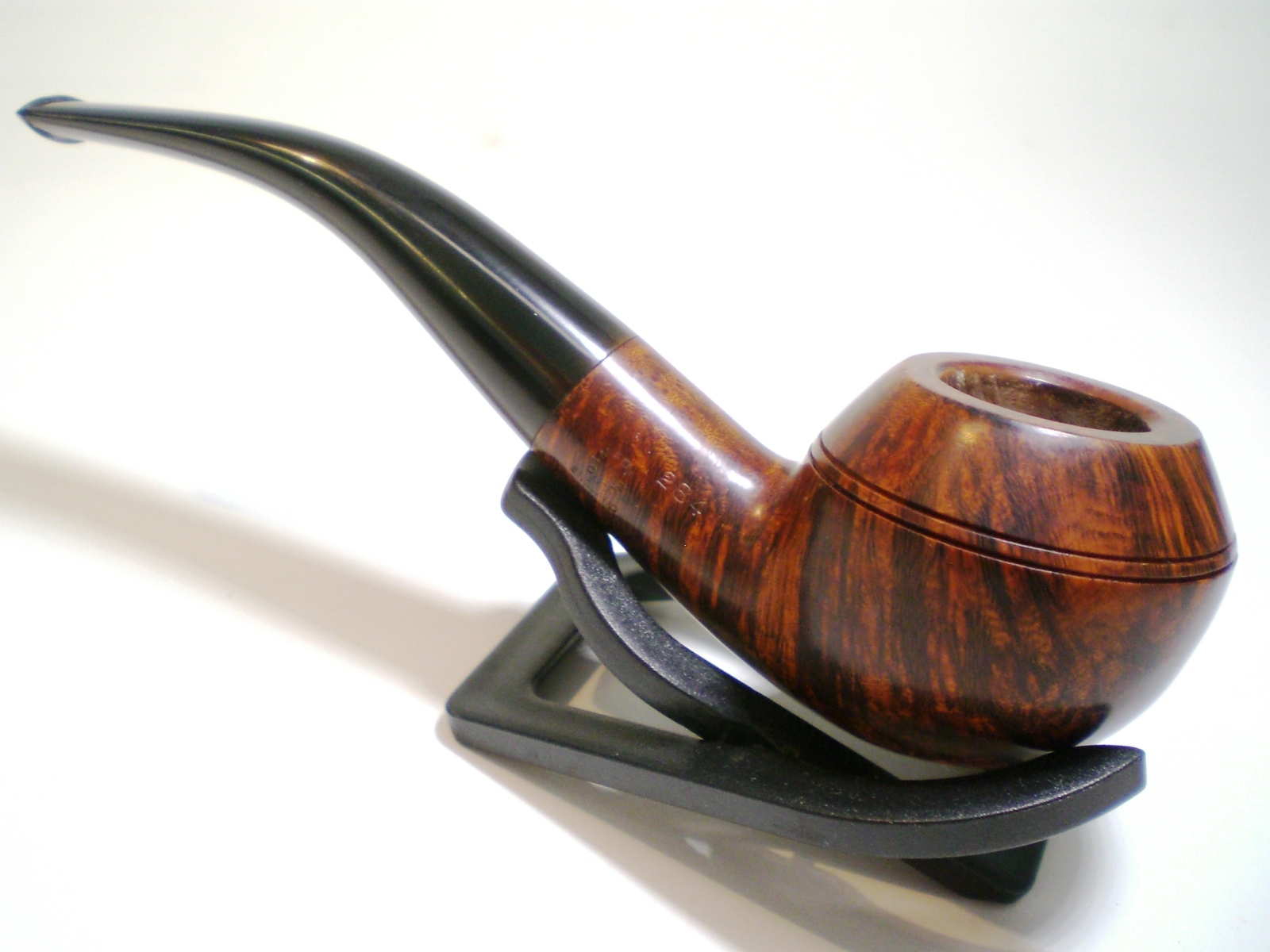
Comoys 284 Tradition Restored


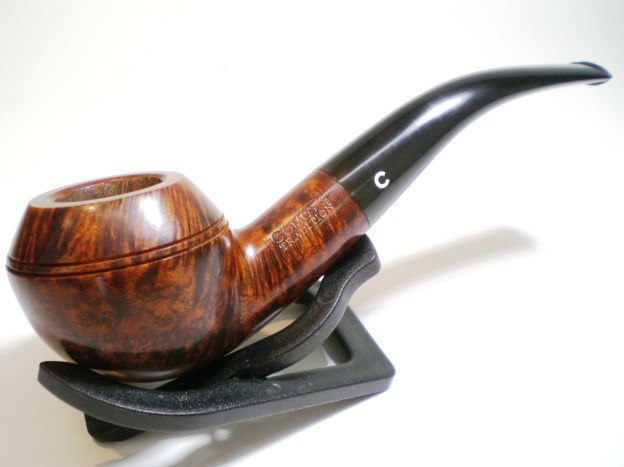
As a fan of the Rhodesian pipe shape, the Comoys Shape 284 is one of my favorites and in the top 5 of my “Holy Grail” list. Last week, this Tradition grade pipe showed up for auction. I made an offer to the buyer and surprised to find it accepted. As this is a hotly sought after shape on the market, I couldn’t believe my good fortune until I opened the package and held it in my hand.

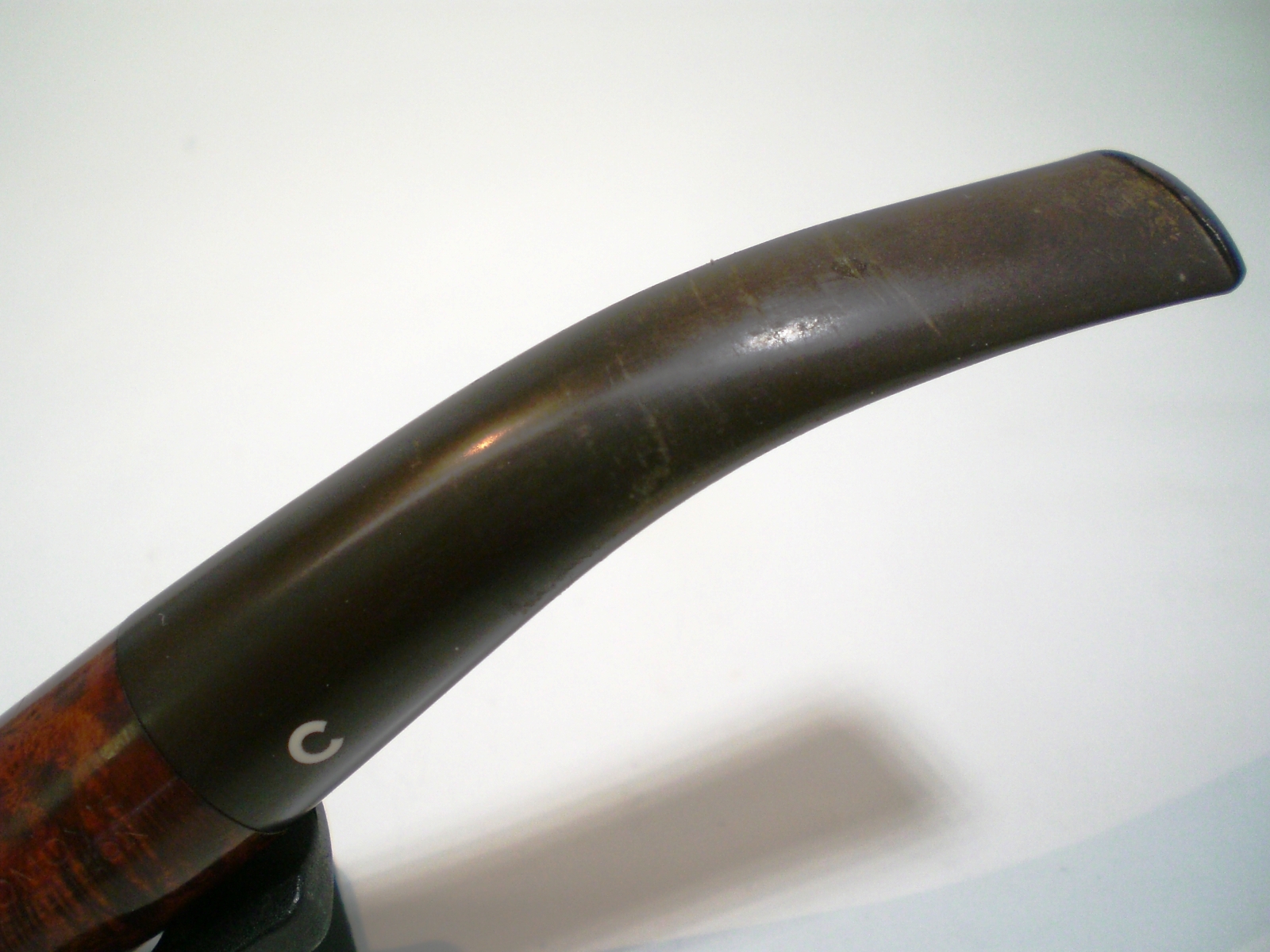
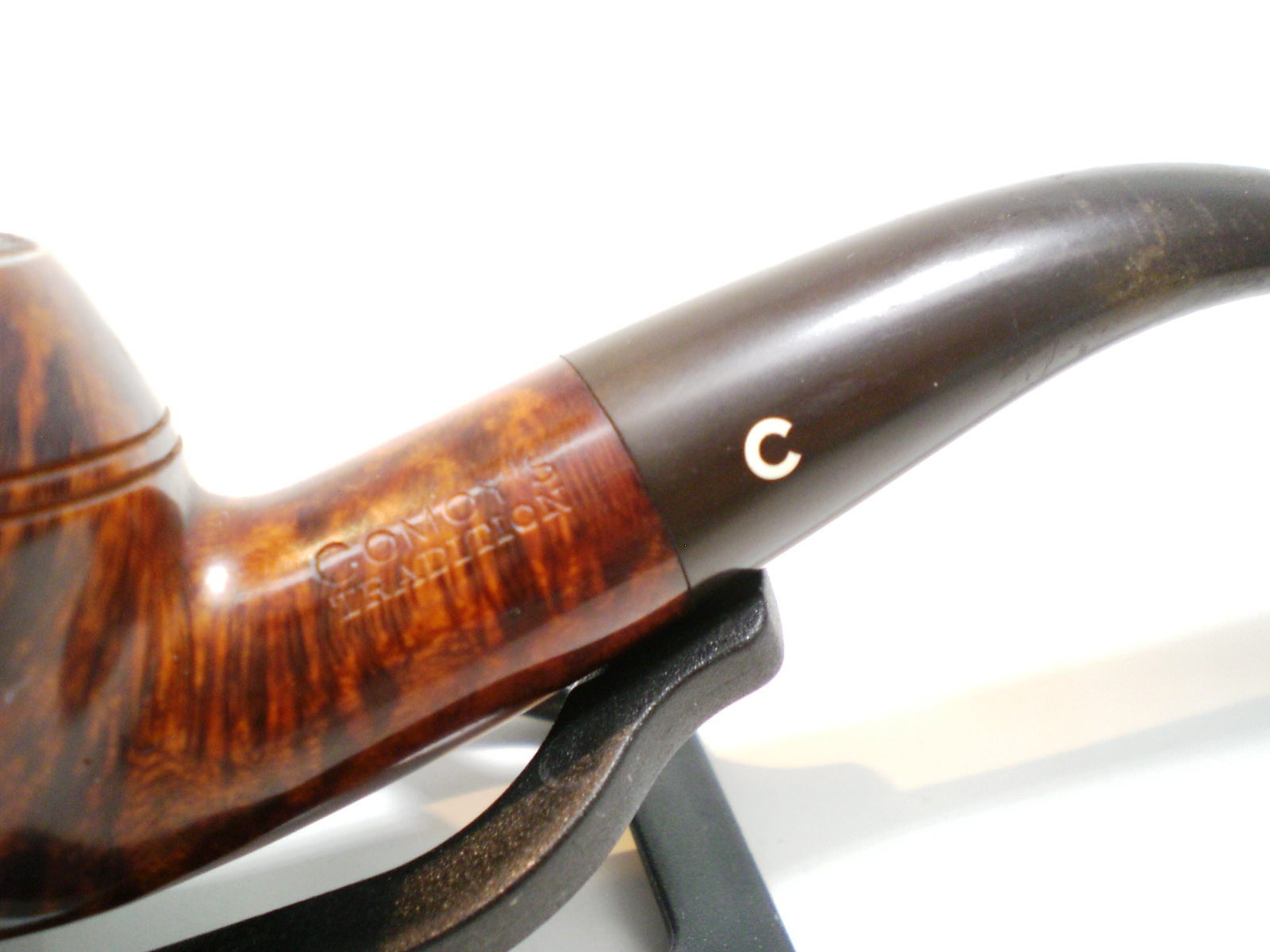
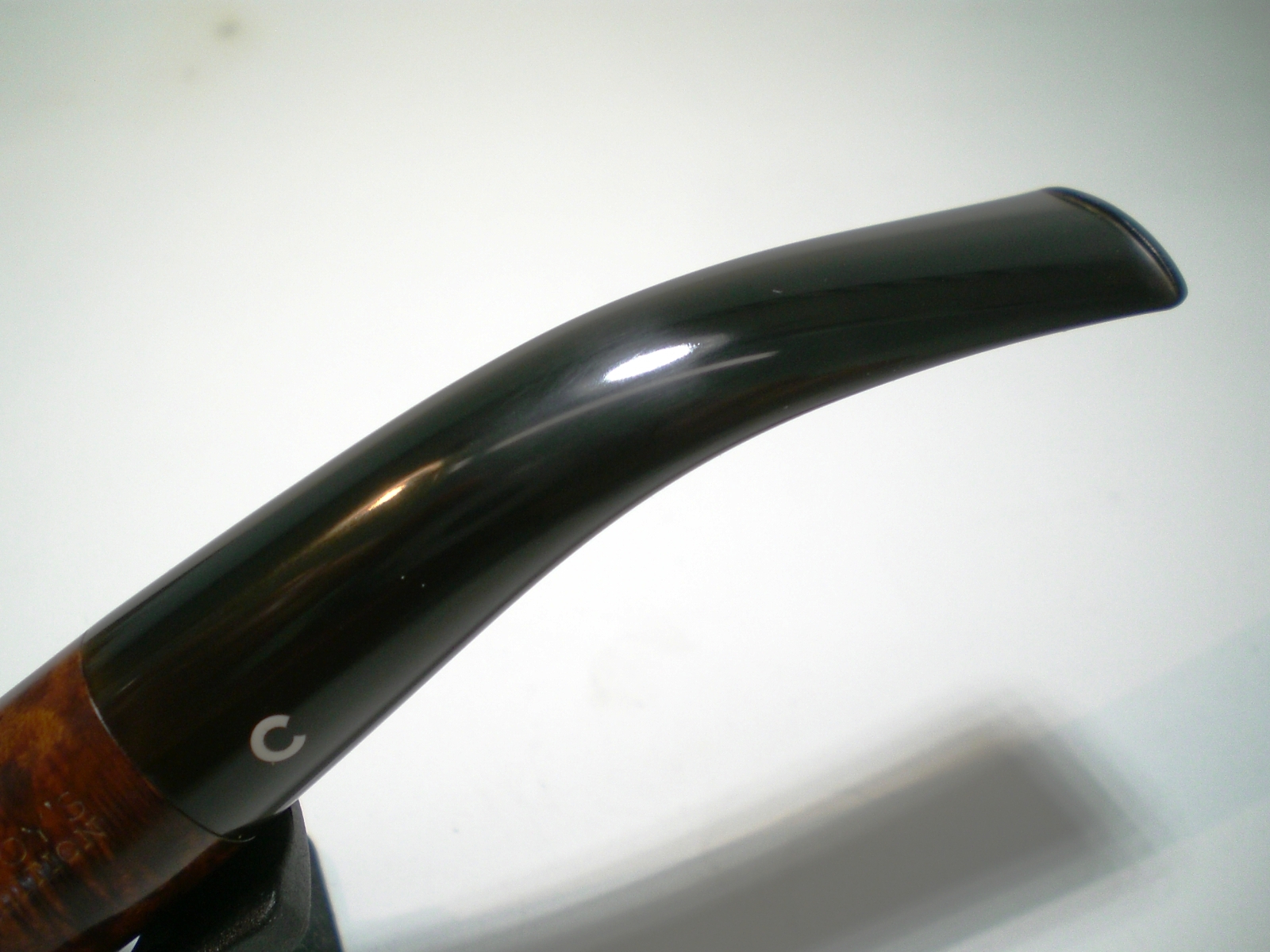
The pipe was in excellent condition, bowl and stem. There were only the slightest handling marks and the bowl top was not scorched. The stem, while oxidized only had two tiny teeth marks on the button. The three piece “C” logo was in perfect condition. I love working on Comoys stems, they just seem to shine more brilliantly than other British made vulcanite stems of that era.

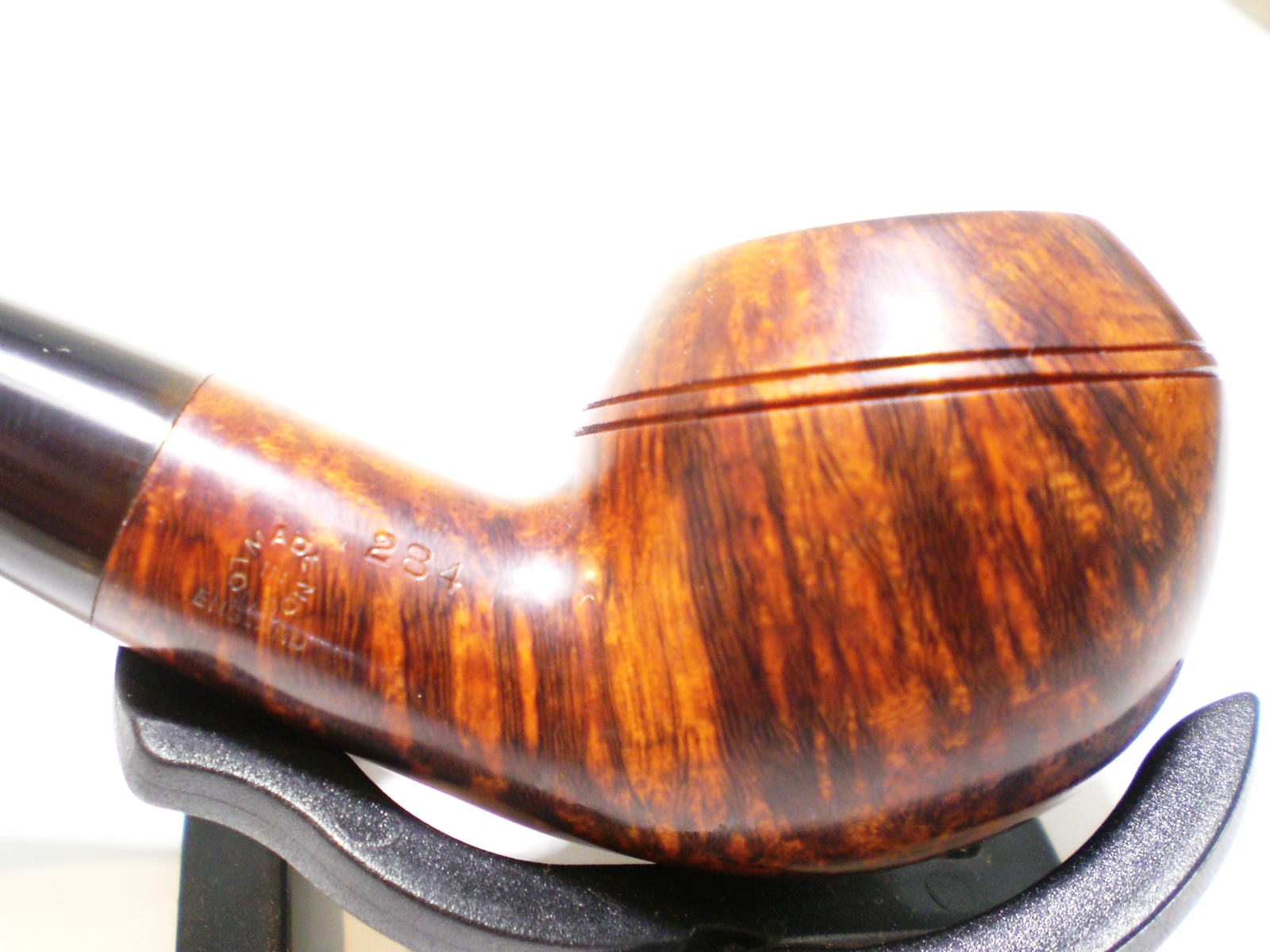
The stamping of “Comoy’s” with the slightly larger “C” and the apostrophe was started in the 1950’s and the round “Made In London” with England below was also used in that era. The pipe could have been made from the 1950’s to the end of the Cadogan era in 1982 (give or take!).

Comoys_284_Before

Comoys_284_Before (8)

Comoys_284_Before (4)

Comoys_284_Before (3)

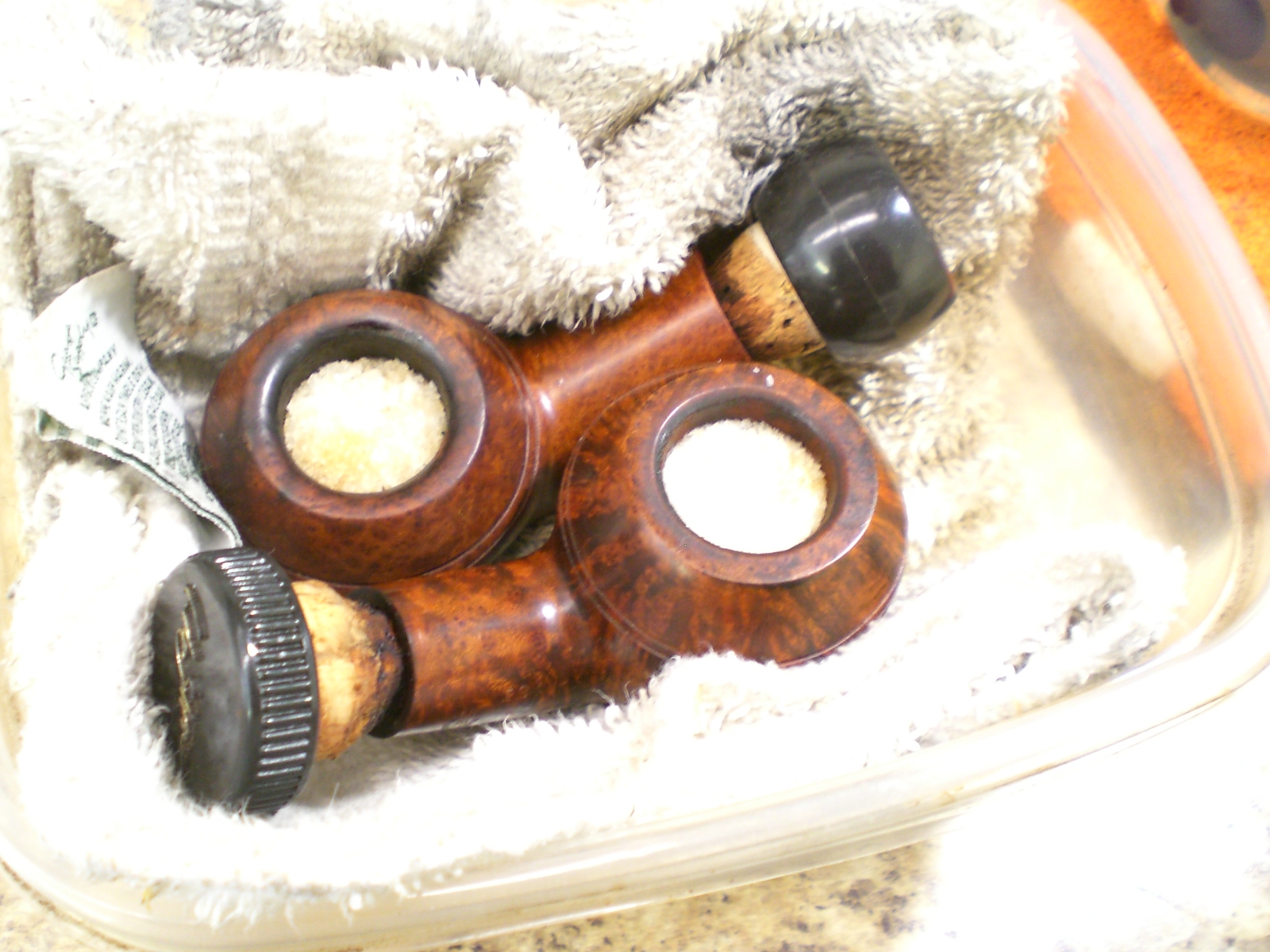
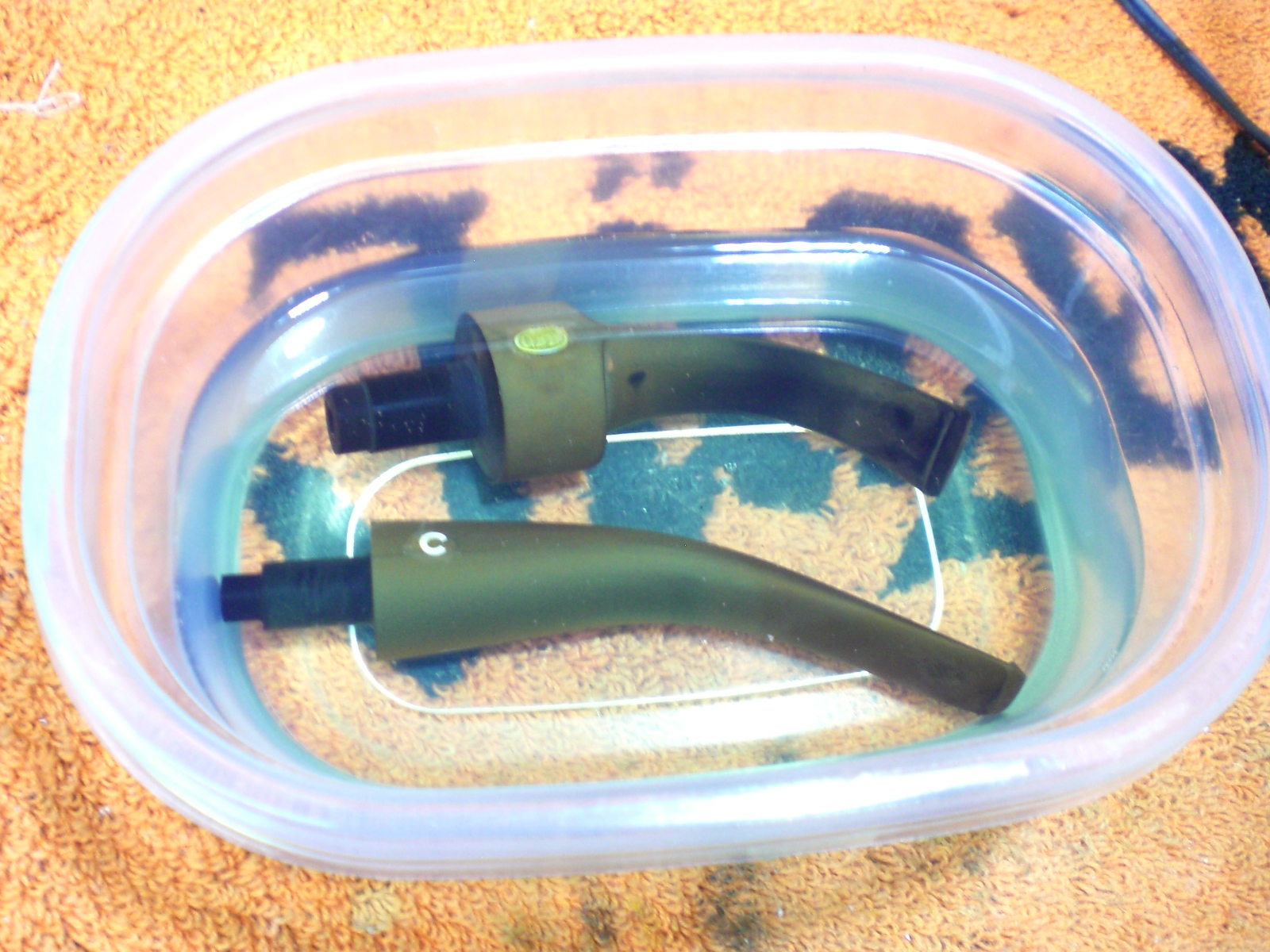
I soaked the bowl in salt and Isopropyl alcohol. Here the pipe is shown along with another project, a GBD 9438 Century. I put a dab of grease on the stem logo and soaked the stem for several hours in a mild Oxyclean/water solution to loosen the oxidation.

CIMG1104

CIMG1103

The bowl only required a light buff with white diamond and then a few coats of Carnuba wax. The nomenclature is quite strong and I didn’t want to damage it.

I started removing the stem oxidation with 800 grit wet paper and then moved thru 1000, 1500 and 2000 grades. I used the 8000 and 12000 grade Micromesh papers before going to the buffing wheel. The stem was buffed lightly with White Diamond and then Meguiars Plastic Polish.

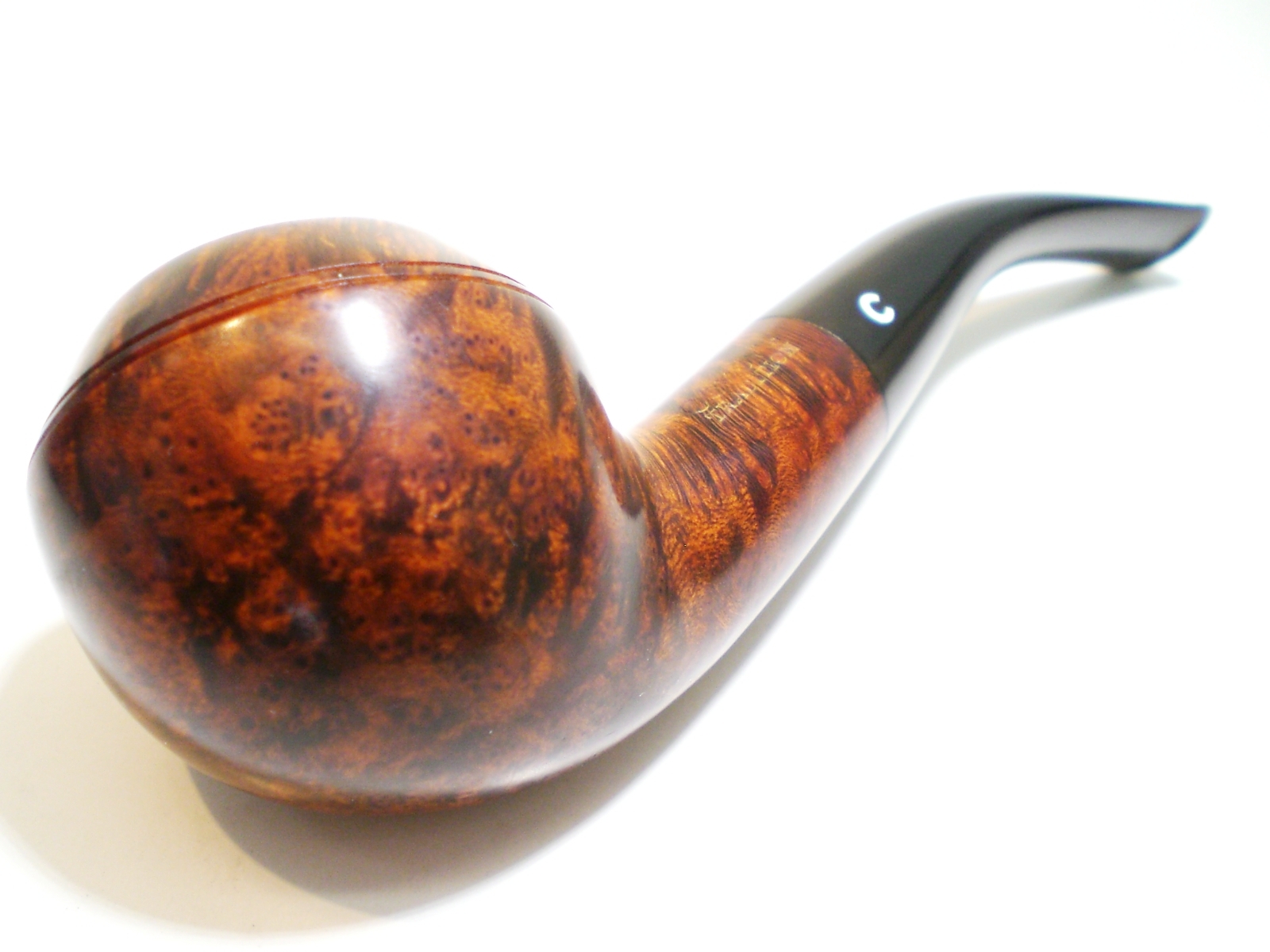
Below is the finished pipe. I’m thrilled to add this one to my collection of Rhodesian pipes and look forward to breaking it in later this evening.

Comoys_284_Gallery (6)

Comoys_284_Gallery (5)

Comoys_284_Gallery (4)

Comoys_284_Gallery (2)

Comoys_284_Gallery (1)

Comoys_284_Gallery

Comoys_284_Gallery (3)

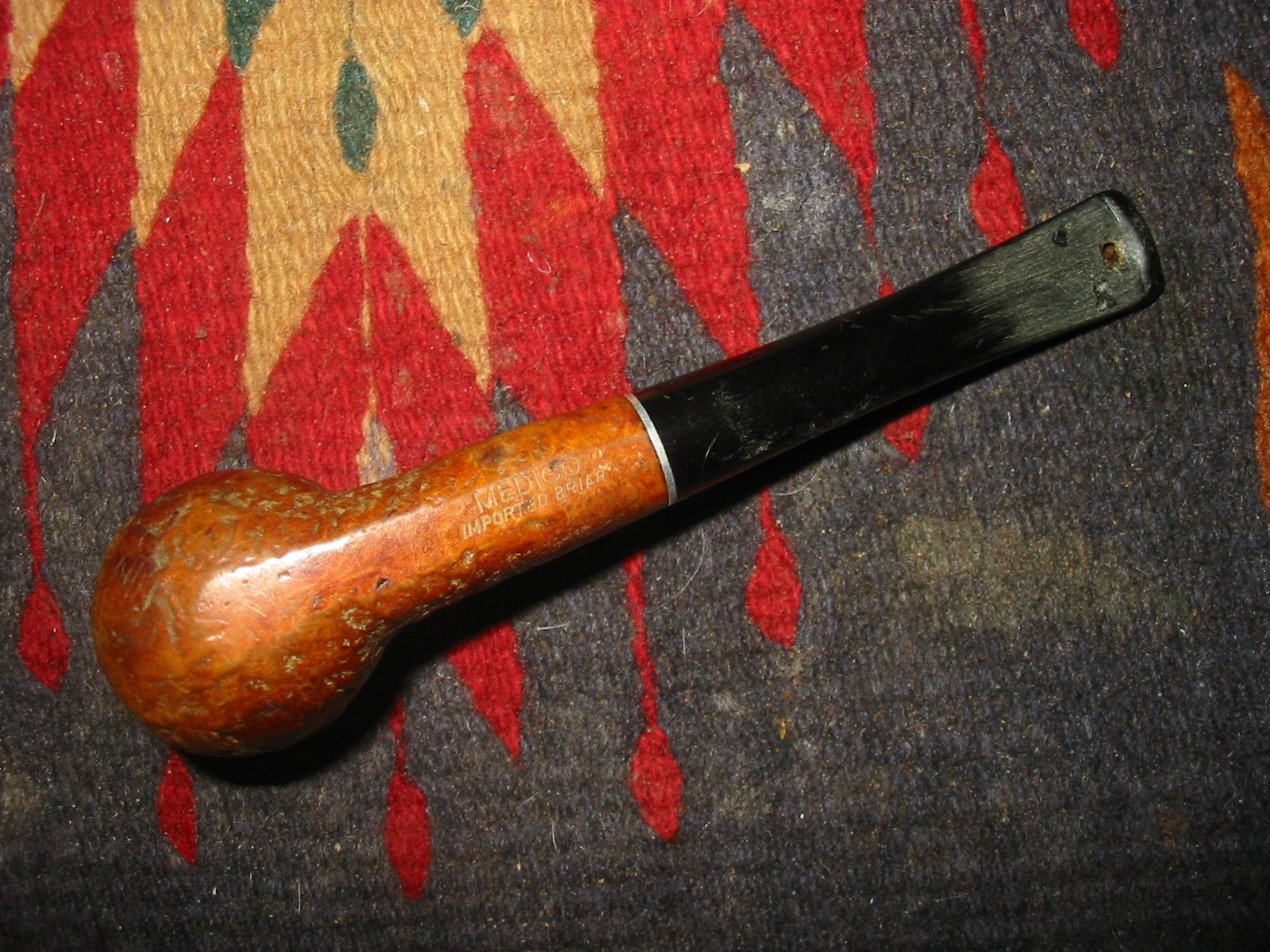
Reworking a Medico Apple – A Save this Pipe Project of My Own!


The last pipe in my box of pipes to refurbish was a Medico Apple that was stamped Medico over Imported Briar on the underside of the shank. It was a well-worn sandblast bowl that had dark stain marks on the front and back of the bowl. It appeared to be a dark blue India ink type of staining. The grooves in the blast were worn down almost smooth and what was left was dirty with light brown grime that raised the surface of the grooves smooth. The top of the bowl was damaged and worn from being struck against a surface to empty the bowl. The inside of the bowl was badly caked and crumbling when I received and I cleaned and dumped out the carbon and shreds of tobacco before throwing it in the box. The stem had been bitten through on both the top and the bottom sides next to the button. The nylon stem was in rough shape with many deep tooth dents around the holes. At one point I had taken the stem out thinking I would work on it and sanded down the tooth chatter and some of the lighter marks. I had heated the stem to raise them and gotten quite a few of them out-of-the-way. The holes in the stem left me questioning whether I even wanted to work on this poor worn pipe.
IMG_6980

IMG_6981

IMG_6982

IMG_6983
After reading Greg’s post about saving a pipe – the Medico VFQ I was moved to go and have a look at the last pipe in the box. I have four days off starting today and it is a rainy cool day in Vancouver. It is a perfect day for working on pipes so I took the pipe to the worktable. I knew all of the flaws that awaited me but the bones of the pipe, the briar was still sound. The damage truly was cosmetic. The stem was another question. But I figured it was worth the effort. I cleaned the surface of the nylon stem and wiped it down with alcohol. I folded a piece of cardboard and coated it with Vaseline before sticking it in the airway to provide a backing for the black super glue patches that I was going to use for the holes.
IMG_6984

IMG_6985
The super glue had become quite viscous which actually worked for me. It was not the thin liquid it had been when I purchase it several years ago. I shook it well and then applied it to the holes on the stem. I always do the patching in layers. I start quite wide around the edges of the hole and work toward the centre to close off the hole. I decided to work on both sides of the repair at the same time so I put the glue in both holes. I set the stem aside for the repair to cure before adding more layers of glue.
IMG_6986

IMG_6987
I scrubbed the bowl with Murphy’s Oil Soap to remove the grime. I used a tooth brush to get into the remaining grooves in the briar. I used the soap undiluted as I find it is less liquid and works better on rounded surfaces as a gel. I wiped off the soap with cotton pads, rinsed the bowl with warm water and dried it off. The next four photos show the bowl after this cleaning. The sandblast was basically worn away and I needed to make a decision on what to do with the finish on this bowl.
IMG_6988

IMG_6989

IMG_6990

IMG_6991
The worn finish and the ink stains on the front and back of the bowl made the decision pretty easy for me. To clean and restain the pipe would still leave it worn and the ink stains visible. I decided I would rusticate the bowl with the rusticator I had received from Chris. I wanted the finish to look slightly different from the previous pipe that I rusticated so I had some ideas on what to do once I had rusticated the finish.
IMG_6992

IMG_6993

IMG_6994

IMG_6995

IMG_6996

IMG_6997
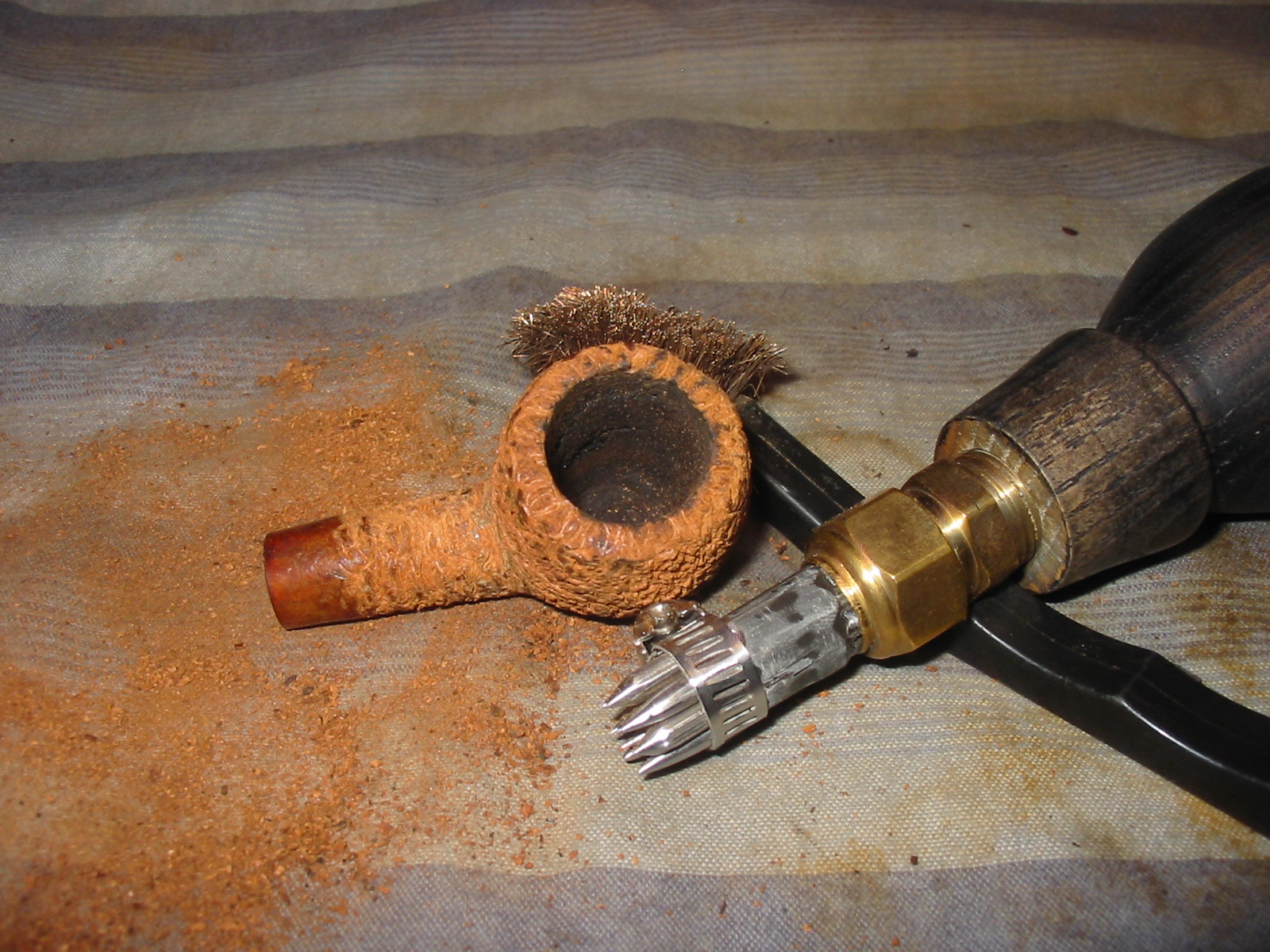
Once the bowl was rusticated I scrubbed the rough surface with a brass tire brush to knock of the edges. I carefully rusticated the rim and used the tool to round the edges on the outer rim to hide some of the obvious damage that had been present before. Once finished I stained it with a dark brown aniline stain. I had left the underside of the shank smooth and a portion of the shank next to the stem shank junction. I stained the bowl, flamed it, stained it and flamed it again until the coverage of the stain was even all over the briar.
IMG_6998

IMG_6999

IMG_7000

IMG_7001
I buffed the bowl with red Tripoli to further smooth out the high spots on the rustication and give a little contrast to the stain. I used the brass brush a second time on the surface. It still was not quite what I was aiming for but I laid it aside for a while to look at it and think about the options. It was while I was doing that I thought I would see if I had a new stem that would work. It gave me a second option to try should the repair or patches not work well.
IMG_7002

IMG_7003

IMG_7004
I did not have a round taper or saddle stem in my can of stems that was the right diameter for the shank but I did have quite a few square stems that could be modified to fit the shank diameter. I found one that had the tenon already turned for a previous pipe I was working on and put it on the pipe to have a look. I could see some potential in the stem and the look of the wide blade saddle stem. It would certainly be worth a try. If it turned out well and the patch on the other stem worked then I would have several options to work with. The tenon on the square stem was too long but that could easily be adjusted for a tight fit against the shank. I did the adjustment with a Dremel and sanding drum.
IMG_7006

IMG_7007
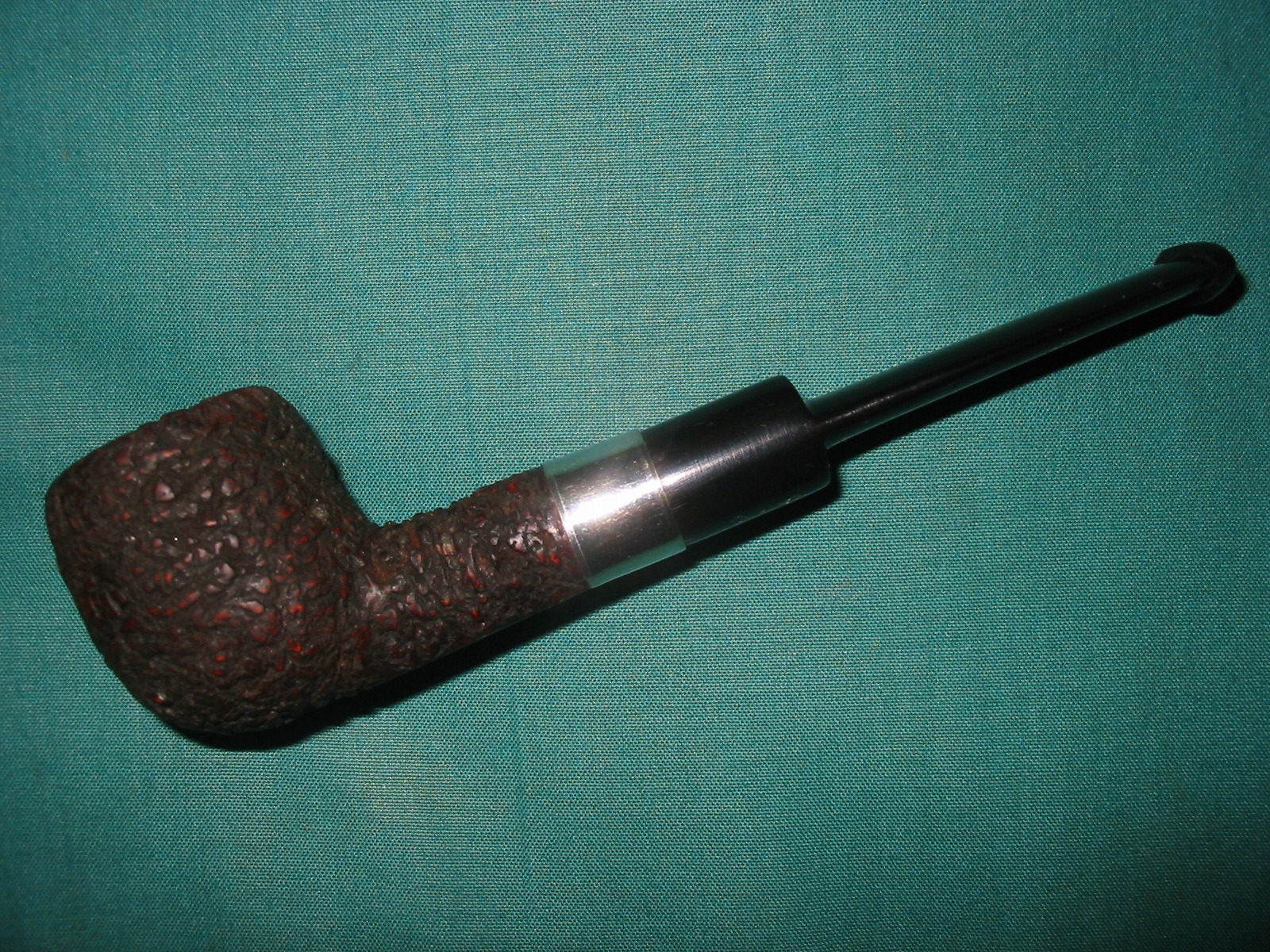
With the stem in place against the shank I could see the very evident taper of the shank on the topside and the underside. It was significantly narrower than the rest of the shank. I wondered if the smooth briar at the shank/stem junction was not from a previous refitting of a stem. I looked over the stem I was patching and saw that it actually bore the F stamping on the top rather than the M stamp that I had expected. I had not paid attention to that before but combined with the shape of the shank I was relatively certain that the stem was a replacement and the damage to the shank was caused by a sanding the shank to more readily match the smaller diameter of the replacement stem. That made the stem choice easy – I would refit a new stem to the shank. I would use a nickel band to level the shank out and make the taper of the shank more even. This would also make fitting the new stem quite easy. I set up a heat gun, heated the nickel band and pressed it into place on the shank. The silver actually looked good against the rustication of the bowl.
IMG_7008

IMG_7009

IMG_7010

IMG_7011

IMG_7012
I used the Dremel and large sanding drum to take off the square edges of the new stem. I worked on it until it was round. I started by taking off all the corners and creating an octagon first and then continuing to round out the stem until it was the same shape as the shank. The bottom of the shank on the pipe was flattened so the pipe would sit upright on its own so I left the bottom side of the stem slightly flattened as well. I sanded the stem with 220 grit sandpaper and medium and fine grit sanding sponges to get the fit against the bowl and band perfect. I also sanded the rustication on the bowl to soften the high spots and flatten them out. I wiped the bowl down with alcohol after I had sanded. The next series of four photos show the sanded bowl and stem. The rustication is getting closer to the look that I was after when I started.
IMG_7013

IMG_7014

IMG_7015

IMG_7016
I continued to sand the stem with the fine grit sanding sponge and also the bowl. I once more wiped the bowl down with a soft cloth and alcohol to remove the dust. Each step in the process is flattening out the rustication slightly more and bringing a shine to the newly rounded stem.
IMG_7017

IMG_7018

IMG_7019

IMG_7020
I sanded the stem with micromesh sanding pads – wet sanding with 1500-2400 grit pads and dry sanding with 3200-12,000 grit pads.
IMG_7021

IMG_7022

IMG_7023
I rubbed the stem down with Obsidian Oil and when it had dried I buffed the bowl and the stem with White Diamond. I sanded the bowl with 1500-2400 grit micromesh sanding pads to further flatten he high points of the rustication and then buffed the bowl a final time with White Diamond. I gave the stem multiple coats of carnauba wax. I buffed with a soft flannel buff between the coats of wax. I wiped the bowl down lightly with a coat of olive oil. The finished pipe is shown below. It has come a long way from the worn and tired looking old Medico with the bite throughs in the stem. The rustication came out the way I wanted it to with the high spots showing a lighter brown and the valleys in the rustication holding the dark brown stain. It is finished and ready for an inaugural smoke – if not by me at least by someone who will take it home to their rack.

Oh, and for those who wondered about the “original” stem that I was patching earlier in this post, I am continuing to work on the repairs. Both sides have had two layers of super glue and the holes are sealed. There are still more layers to go as the glue shrinks as it cures. It will be used on some other pipe in the future I am sure but for now once the patch is finished it will go back to the stem can to be used on another pipe.
IMG_7024

IMG_7025

IMG_7026

IMG_7027