
by Kenneth Lieblich
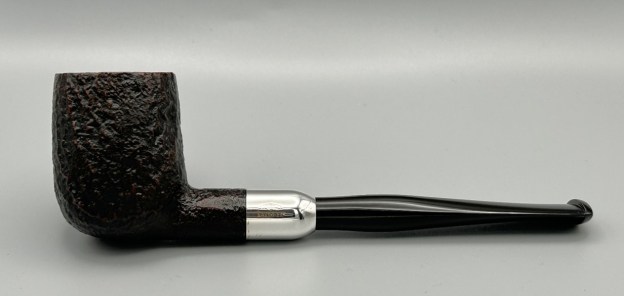
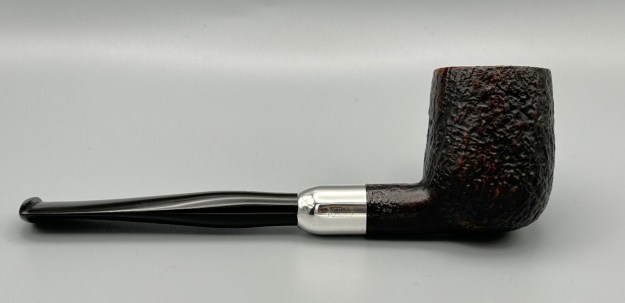
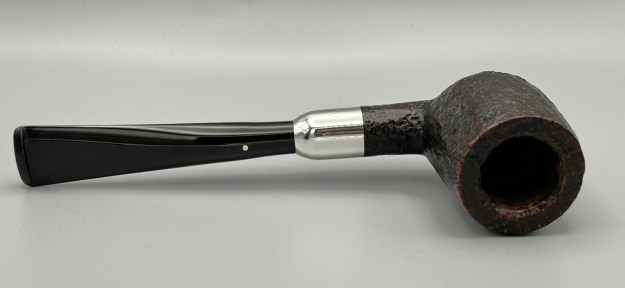
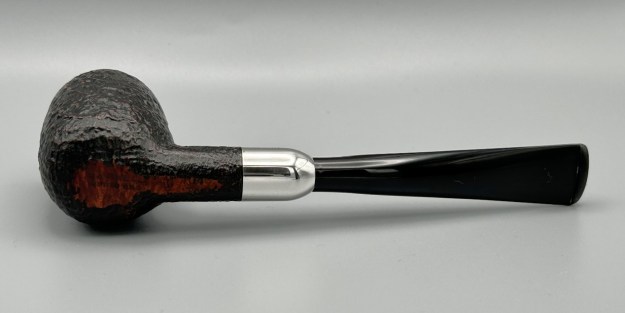
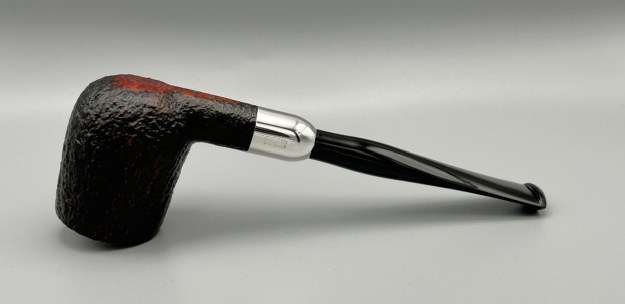
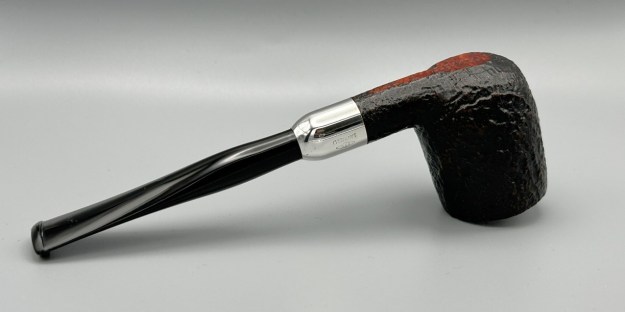
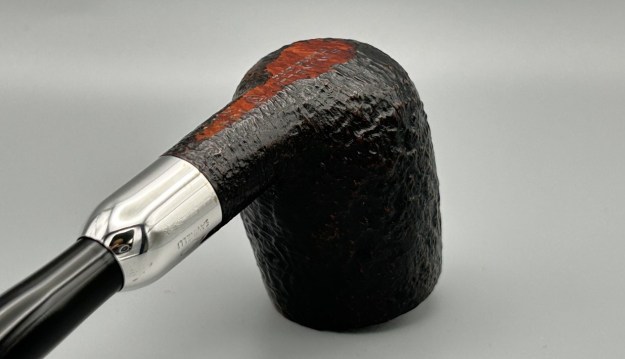
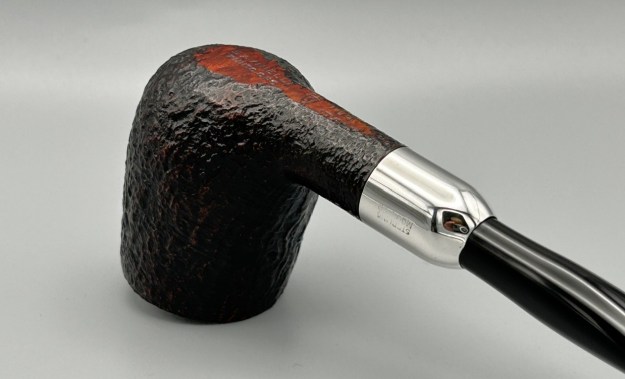
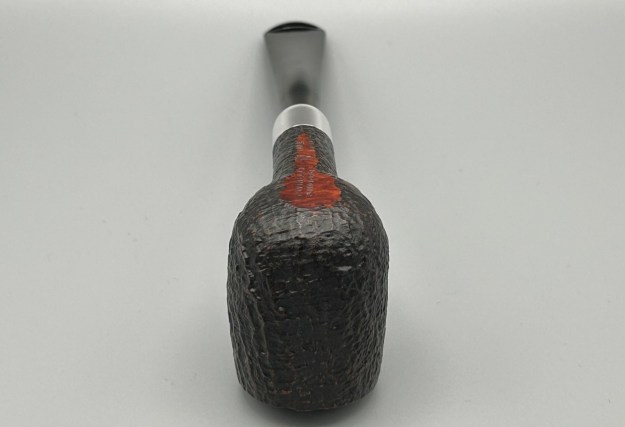
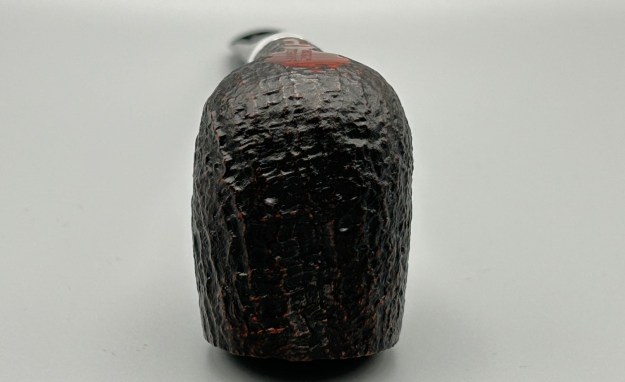
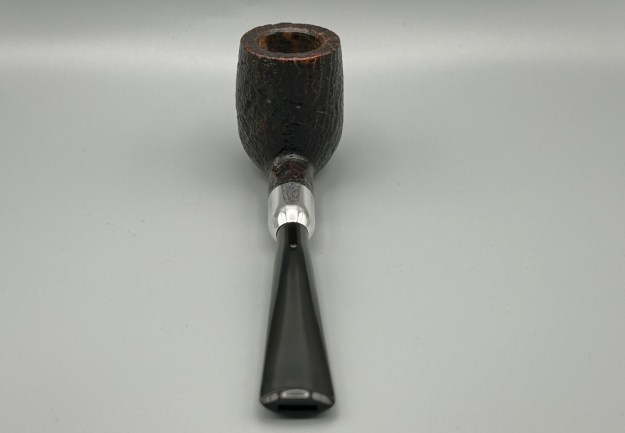
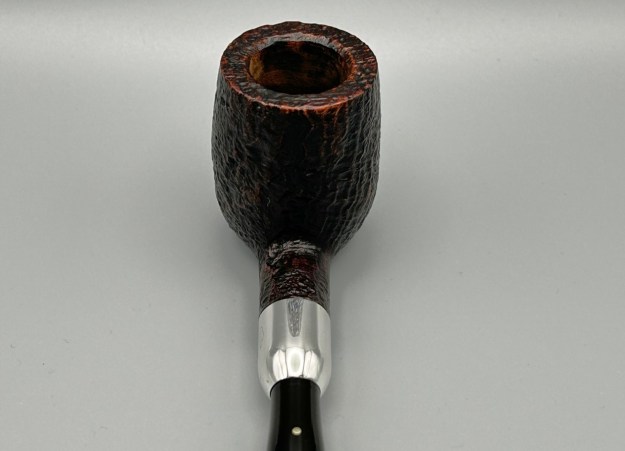
What a handsome pipe this is! When I first saw it, I thought, ‘Oh, someone’s going to love this pipe’. As you can see, this is a Savinelli Punto Oro 104. It is a beautifully sandblasted billiard, with a sterling silver band, and a vulcanite military mount stem. I acquired it in a recent auction and was pleased to get it. It’s a wonderful pipe and it deserves to be part of someone’s collection again.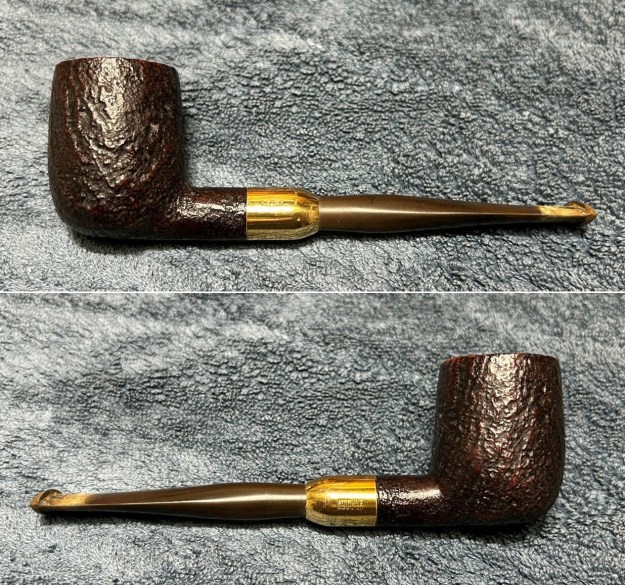
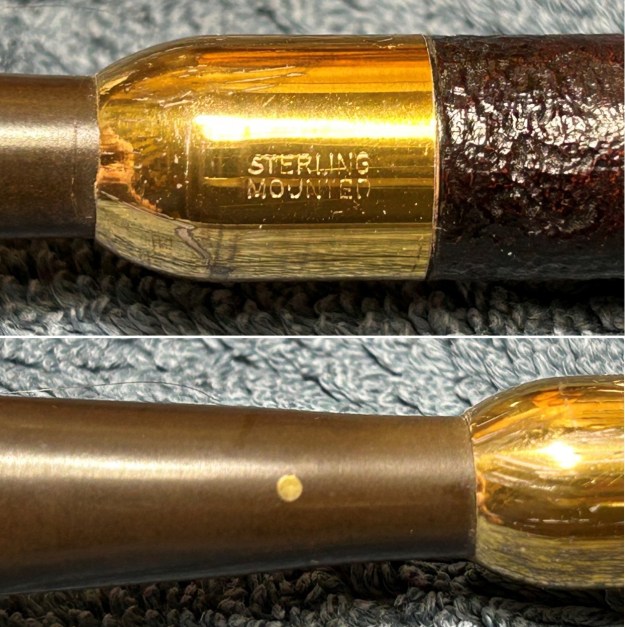
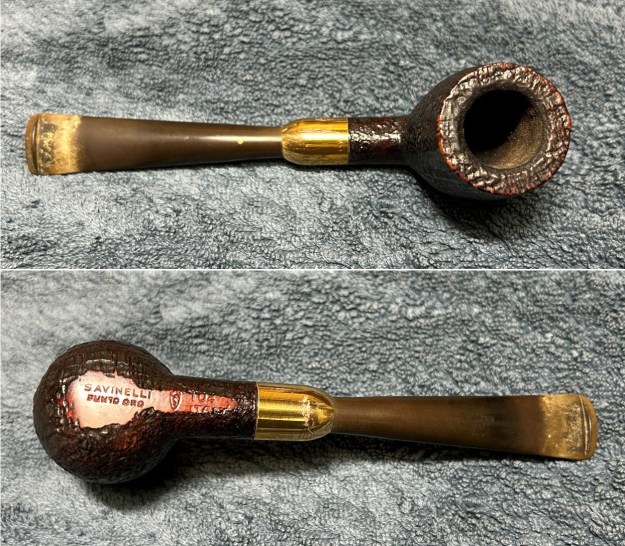 This pipe promises to be a great smoker. Let’s look at the markings. The underside of the shank reads Savinelli [over] Punto Oro. Savinelli, of course, is an Italian pipe company, and the words Punto Oro mean, literally, ‘gold point’. To the right is the Savinelli coat of arms, showing a stylized ‘S’ on a shield, topped by two pipes. Next to this are the marks 104 [over] Italy. Naturally, the number refers to the shape – a billiard – and the three digits tell us that the pipe dates from the 1970s or later. The sterling silver mount on the shank also has markings. On one side it reads 925 [over] Savinelli, and on the other side it reads Sterling [over] Mounted. The photos show an almost gold look to this mount, but that’s just the coating on top of the silver. The coating is peeling off. Finally, there is a gold-coloured dot on the stem (made of brass) – a very nice touch.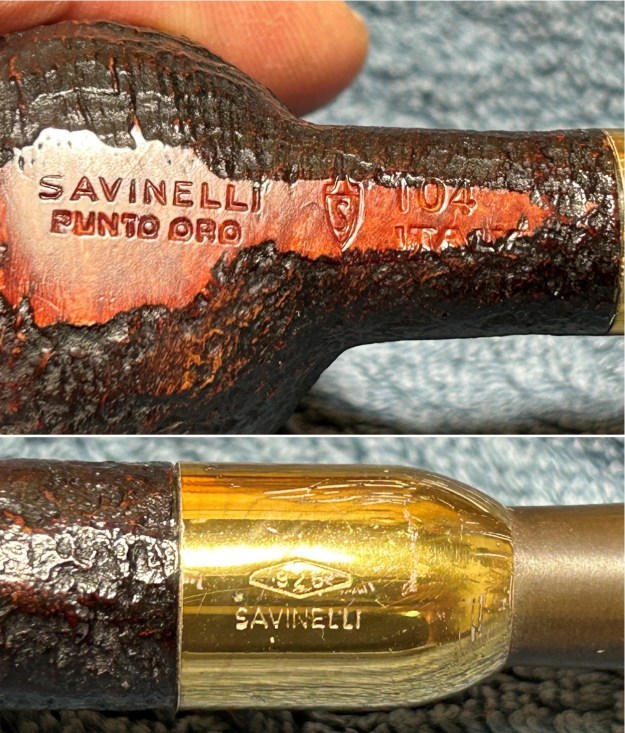
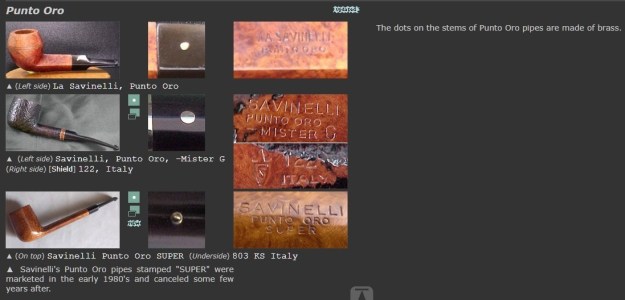
 Savinelli is one of the most recognized names in pipe smoking and they have a long and storied history. You can read about them from their own website or from Pipedia’s article about them. I was particularly interested in learning more about the Punto Oro line. Sadly, Pipedia had nothing on this subject. I checked with Pipephil and they did have a bit of information, which I display below.
 I also found a bit of information on the Punto Oro line from Savinelli’s own website. They write:
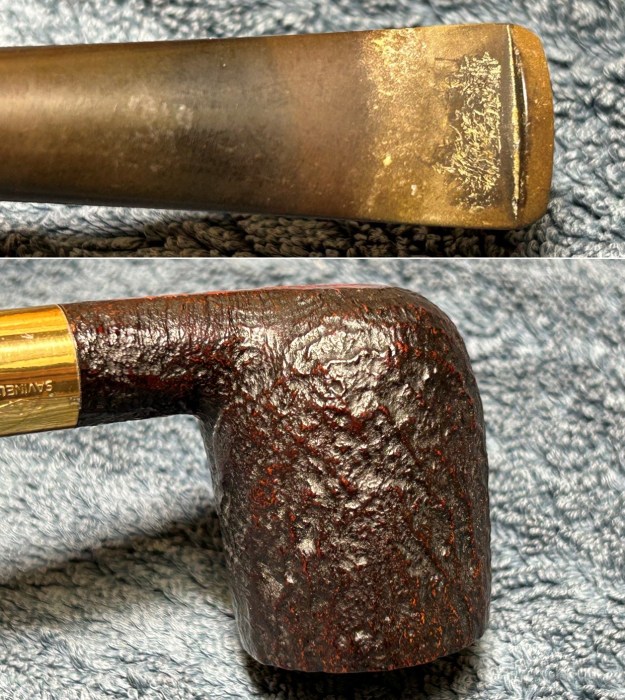
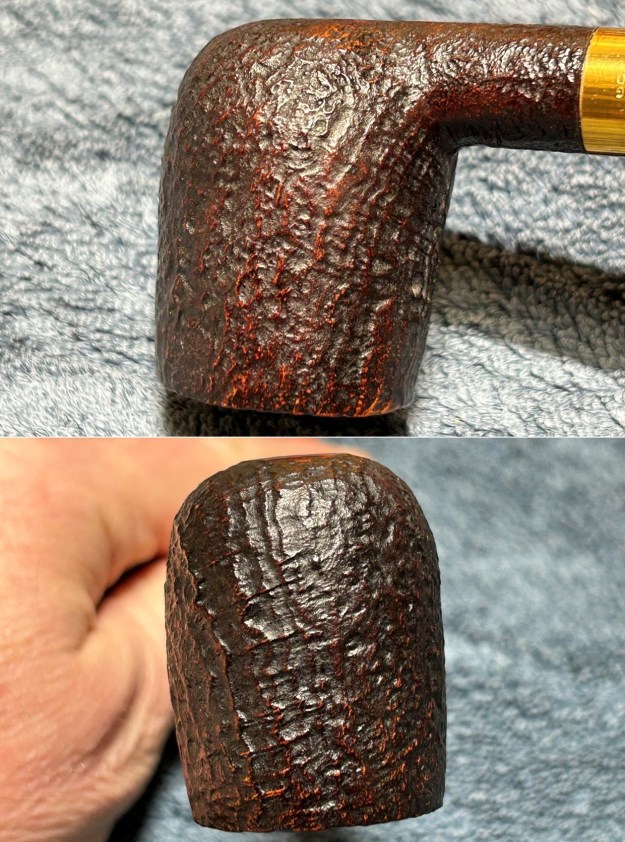
PUNTO ORO pipe was the first pipe created by Achille Savinelli after the opening of the factory in 1958; a pipe that has always distinguished the Savinelli brand, its elegance, reliability and tradition. It is a top quality pipe with a wonderful grain. It is important to know it is very difficult to find a briar piece suitable to become a PUNTO ORO: just 1,2% of the whole choice is selected for this series, therefore not all our shapes are always available for these pipes.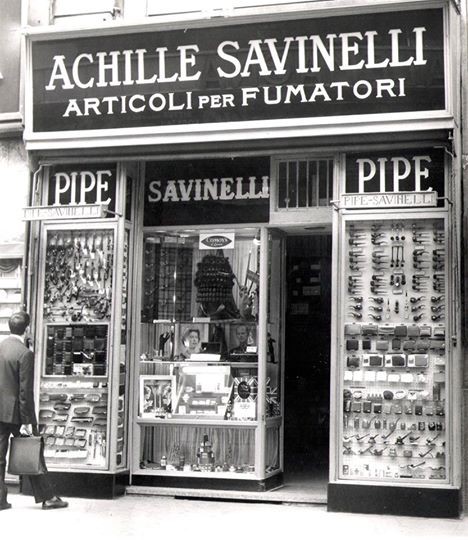 What’s the condition of the pipe? Very good, I’m pleased to say. The stummel is in beautiful shape – no damage or significant lava. There’s some cake in the bowl, but nothing of note. The silver mount looks like it has scratches – but it doesn’t. This is where the old coating on the silver was coming off. The stem is a bit oxidized and heavily calcified, but we can sort that out.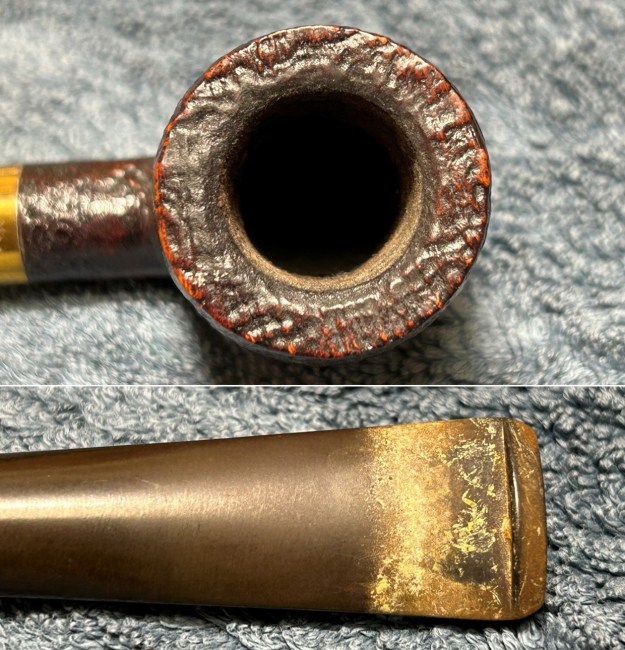
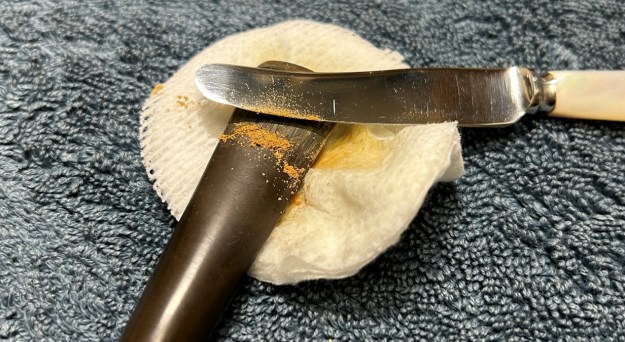
 The stem’s calcification was quite substantial. I used an old butter knife and gently scraped some of the thicker accretion off. Doing this now helps later in removing the oxidation.
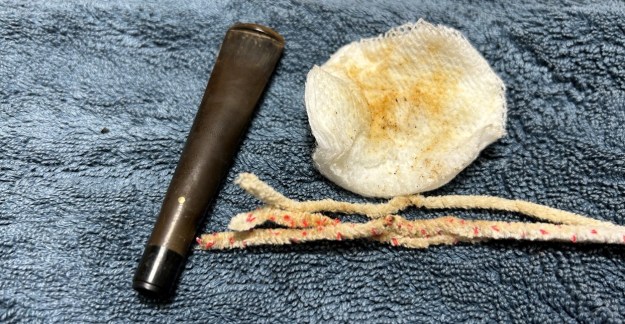
 I used isopropyl alcohol on a few cotton rounds and wiped down the stem to provide an initial cleaning of filth before moving on to the next steps. The primary cleaning came next. I disinfected the inside of the stem with both pipe cleaners and cotton swabs dipped in lemon-infused 99% isopropyl alcohol. I scrubbed thoroughly to make sure the interior was very clean.
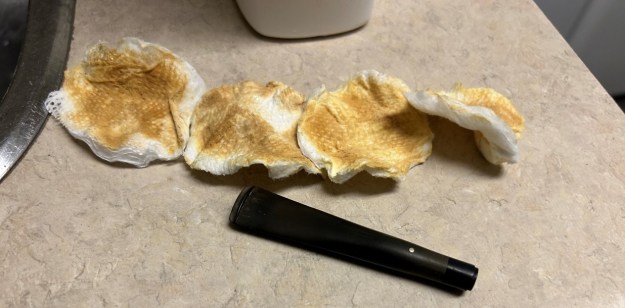
 The goal of the next step is the removal (or minimization) of oxidation. Going to my sink, I used cream cleanser, cotton rounds, and a toothbrush, and scoured the stem to remove as much surface oxidation as possible. As the photos show, the result was a hideous, ochre-coloured mess – but better off the stem than on it.
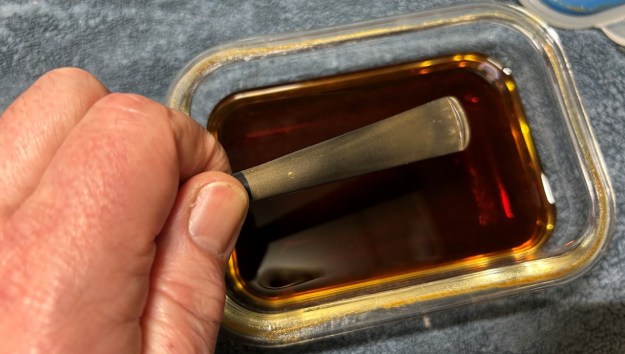
 Once the stem was reasonably clean, I soaked it overnight in some Briarville Stem Oxidation Remover. This solution works to draw oxidation in the stem to the surface of the vulcanite. This is a major aid and an important step in ensuring a clean stem. The following day, I drew out the stem from its bath and scrubbed the lingering fluid with a toothbrush.
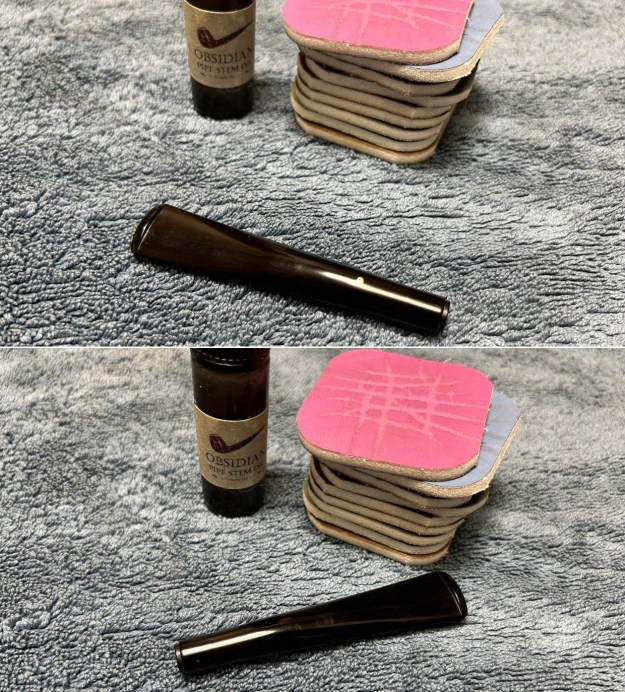
 The penultimate step for the stem is sanding. I used all nine of the micromesh sanding pads (1,500 through 12,000 grit) to sand out flaws, even out the vulcanite, and provide gentle polishing of the finished surface. I also applied pipe-stem oil while using the last five micromesh pads. There was a wonderful, deep black shine to the stem when I was done.
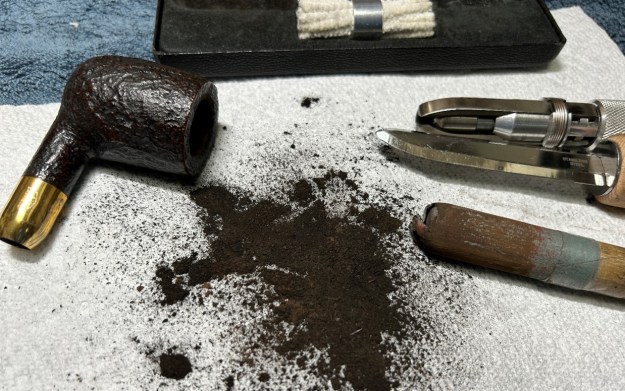
 As the stem was (nearly) complete, I moved on to the stummel. The first step was to ream out the bowl – that is to say, remove all the cake inside the bowl. This accomplished a couple of things. First (and most obviously), it cleaned the bowl and provided a refurbished chamber for future smoking. Second, when the old cake was removed, I could inspect the interior walls of the bowl and determine if there was damage or not. I used a reamer, a pipe knife, and a piece of sandpaper taped to a wooden dowel. Collectively, these ensured that all the debris was removed.
 Similar to the stem, I then cleaned the stummel with both pipe cleaners and cotton swabs dipped in lemon-infused 99% isopropyl alcohol. It took quite a while and much cotton to clean.
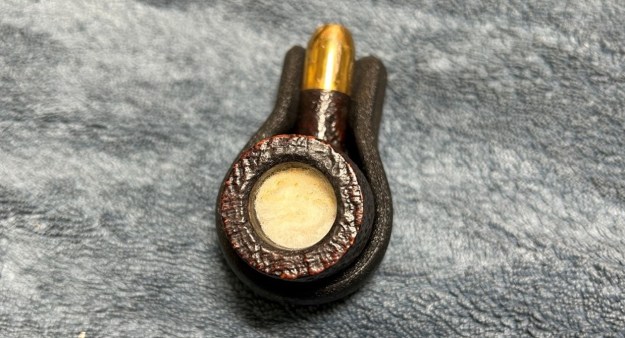
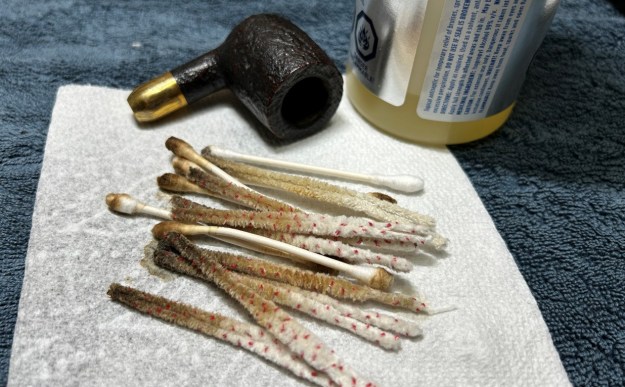 I then decided to ‘de-ghost’ the pipe – that is to say, exorcize the remaining filth from the briar. I filled the bowl and the shank with cotton balls, then saturated them with 99% isopropyl alcohol. I let the stummel sit overnight. This caused the remaining oils, tars and smells to leach out into the cotton.
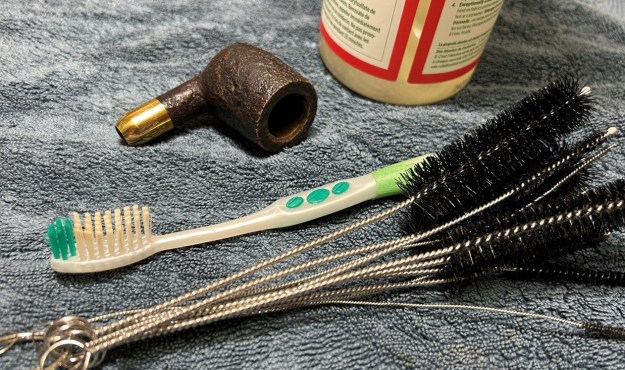
 To tidy up the briar, I wiped down the outside, using a solution of a pH-neutral detergent and some distilled water, with cotton rounds. I also used a toothbrush in the crevices. This did a good job of cleaning any latent dirt on the surface of the briar. The last step of the cleaning process was to scour the inside of the stummel with the same mild detergent and tube brushes. This was the culmination of a lot of hard work in getting the pipe clean.
 I rubbed some LBE Before & After Restoration Balm into the briar and let it sit for 30 minutes or so. The balm moisturizes the wood and gives a beautiful depth to the briar. I then buffed the stummel with a microfibre cloth.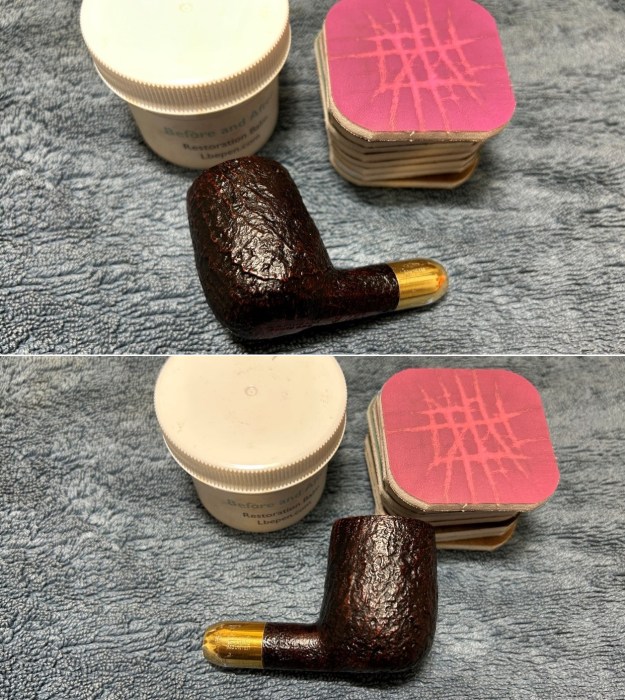
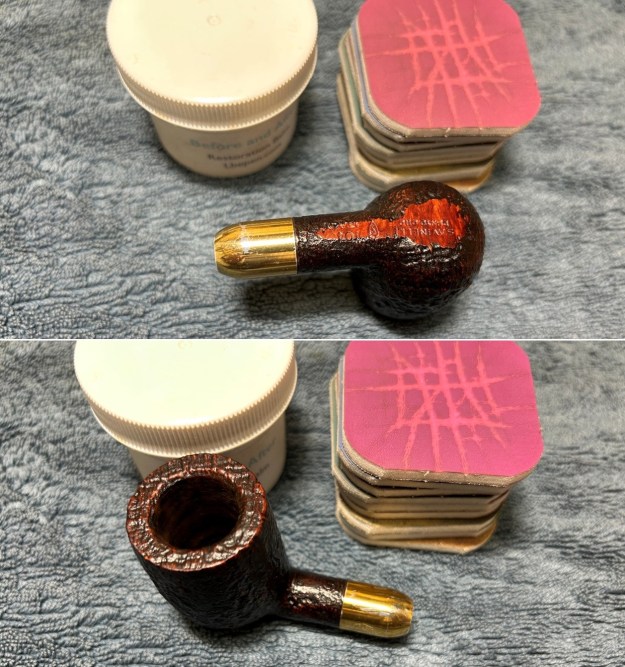 For the final step, I took the pipe to my bench polisher and carefully buffed it – first the stem with a blue diamond compound, then the stummel with three coats of conservator’s wax. This procedure makes the pipe look its best – the stummel sings and the stem glows. When I was done, I use my jeweller’s cloth and buffed the silver mount – wow!
All done! This Savinelli Punto Oro 104 billiard looks fantastic again and is ready to be enjoyed by its next owner. I am pleased to announce that this pipe is for sale! If you are interested in acquiring it for your collection, please have a look in the ‘Italian’ section of the store here on Steve’s website. You can also email me directly at kenneth@knightsofthepipe.com. The approximate dimensions of the pipe are as follows: length 5⅔ in. (144 mm); height 1¾ in. (45 mm); bowl diameter 1⅓ in. (34 mm); chamber diameter ¾ in. (18 mm). The weight of the pipe is 1⅛ oz. (33 g). I hope you enjoyed reading the story of this pipe’s restoration as much as I enjoyed restoring it. If you are interested in more of my work, please follow me here on Steve’s website or send me an email. Thank you very much for reading and, as always, I welcome and encourage your comments.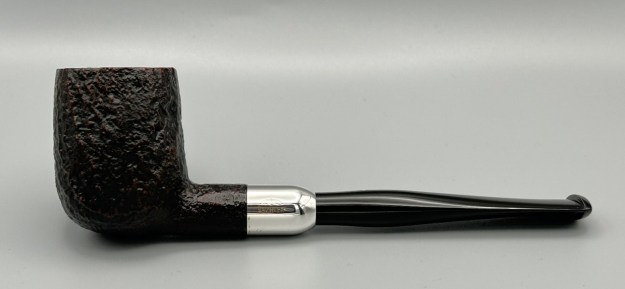
 rebornpipes