Tag Archives: Savinelli Antique Shell pipes

Breathing New Life into an Antique Shell 1021 EX Rusticated Pot


Blog by Steve Laug

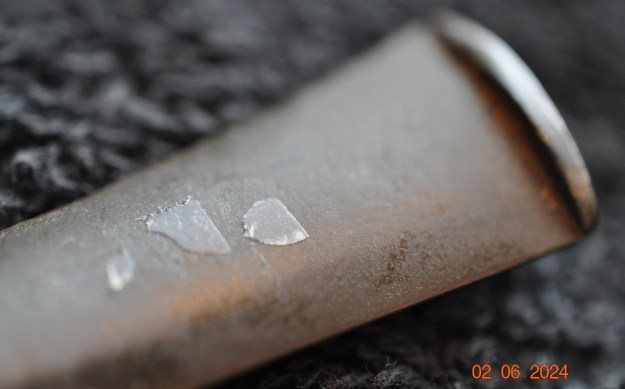
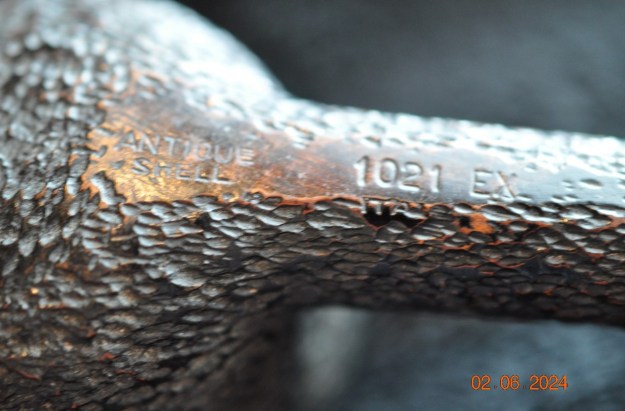
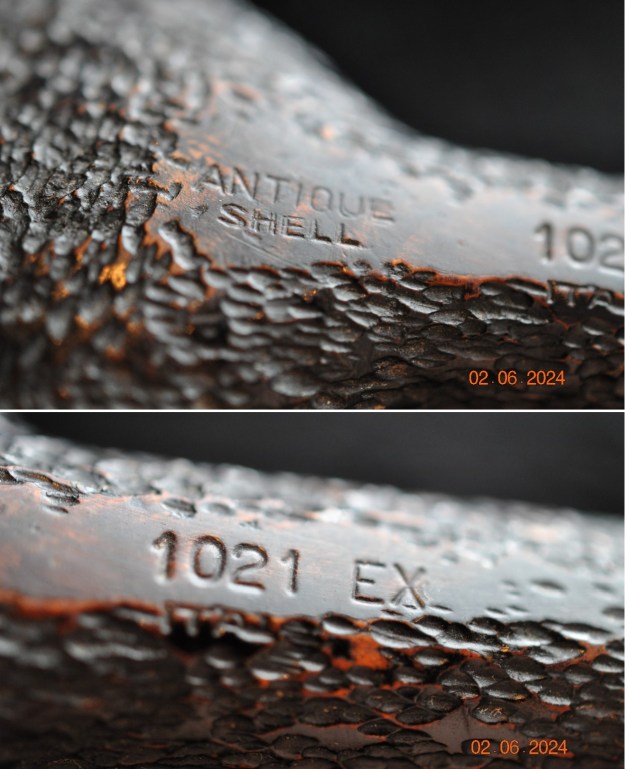
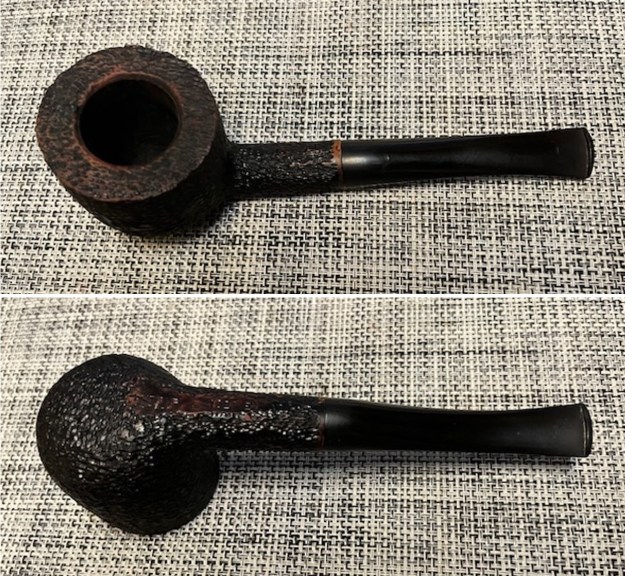
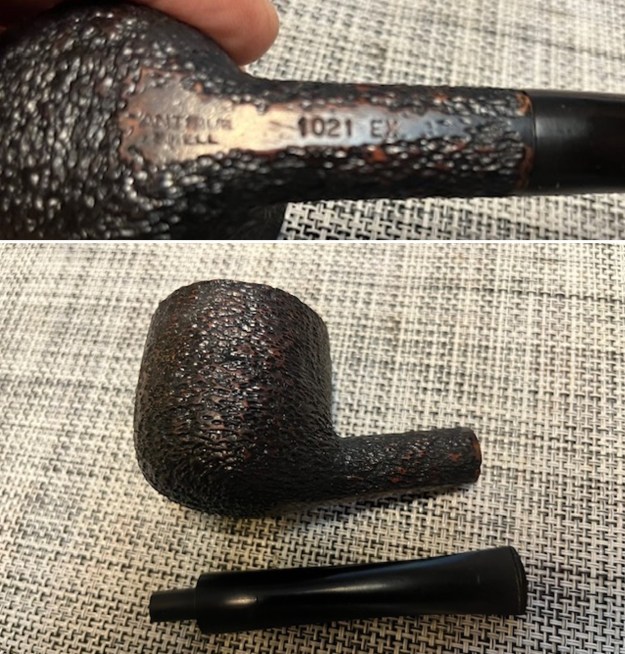
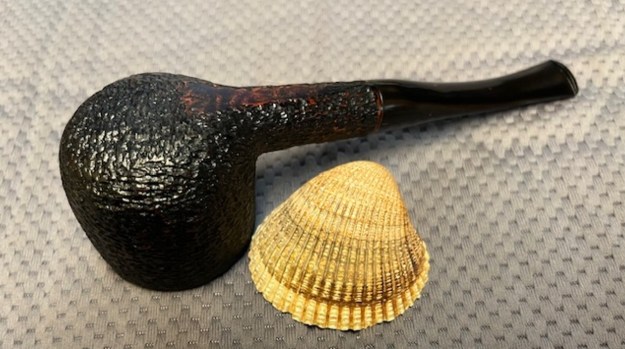
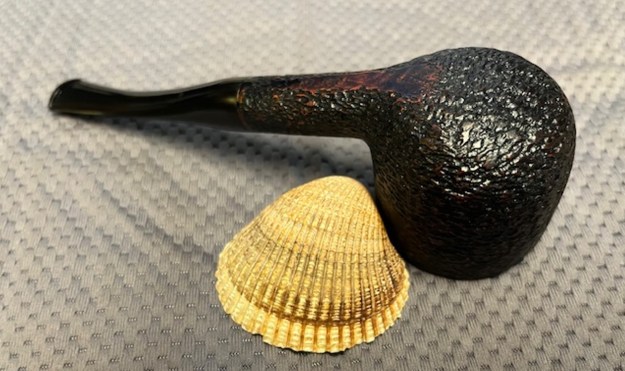
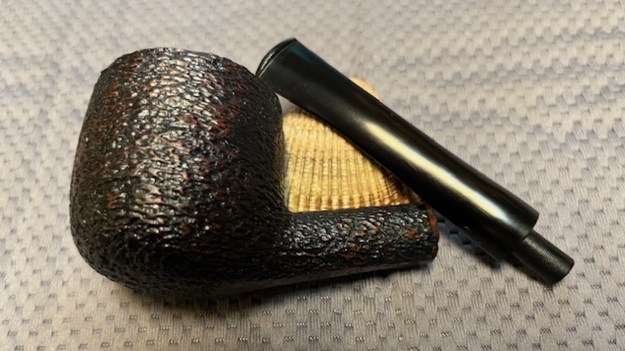
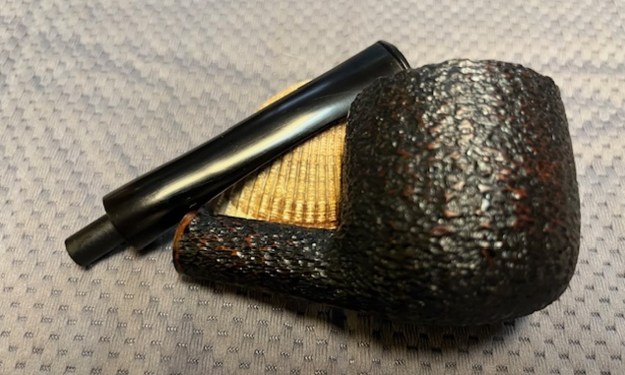
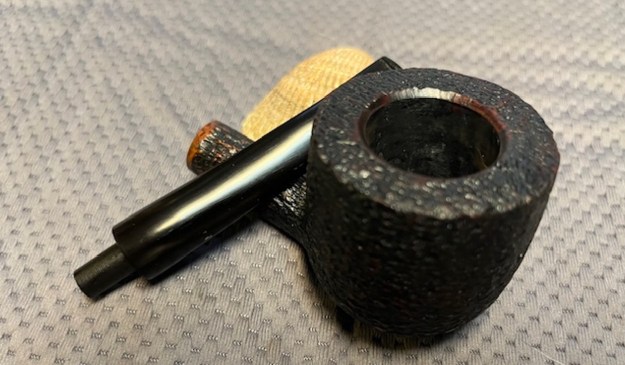
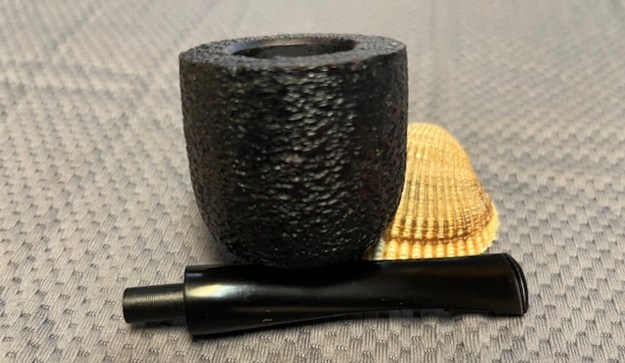
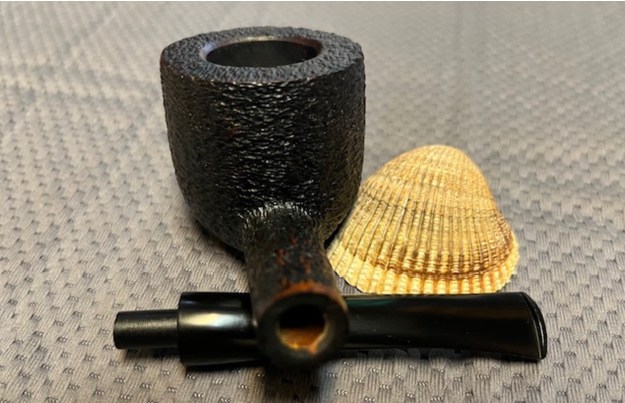
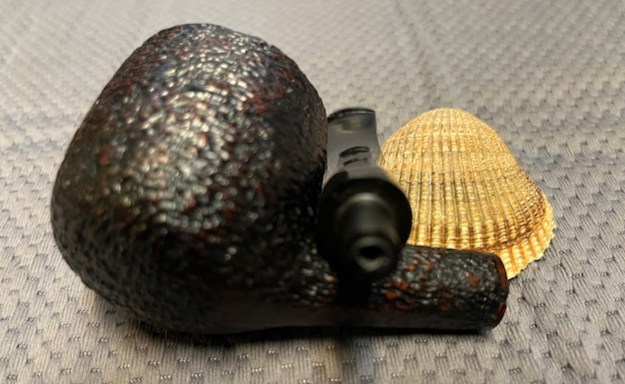
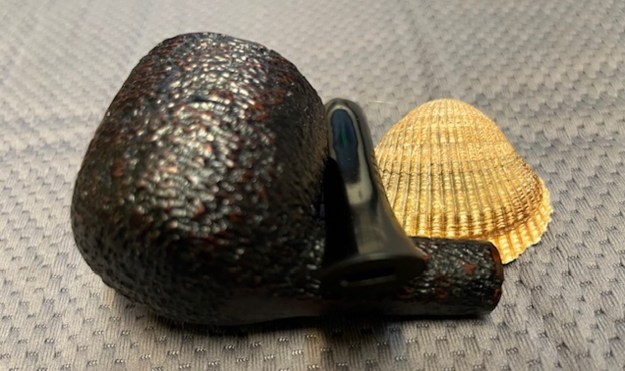
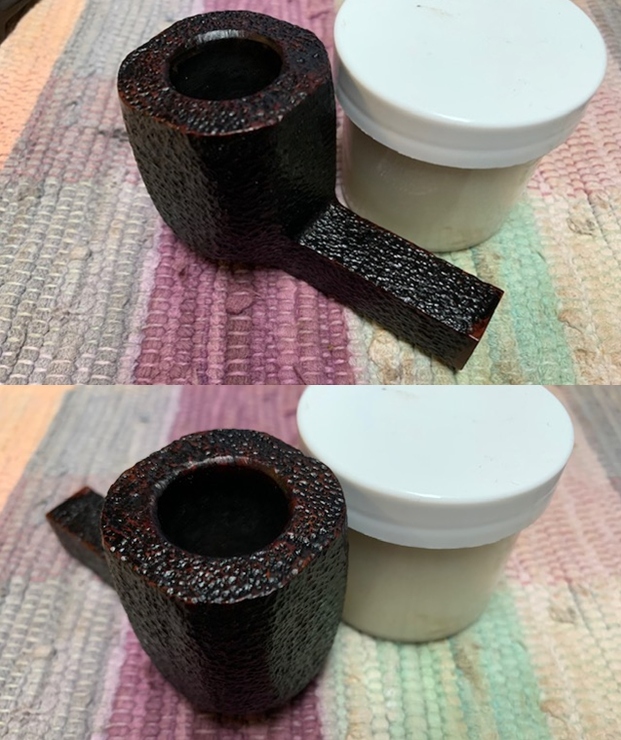
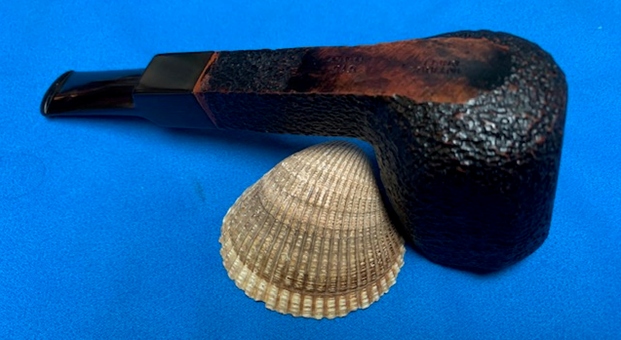
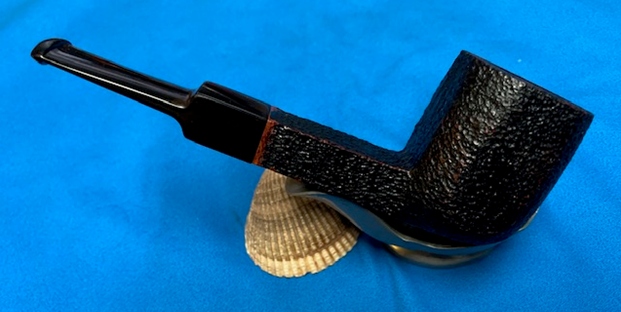
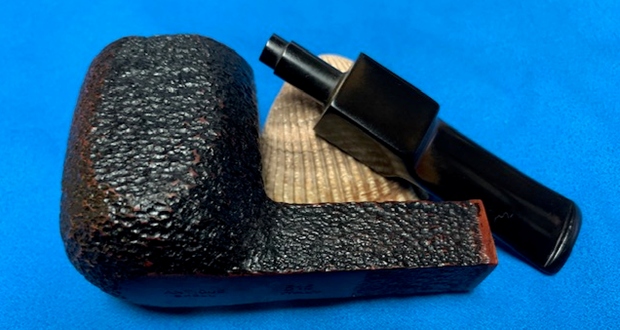
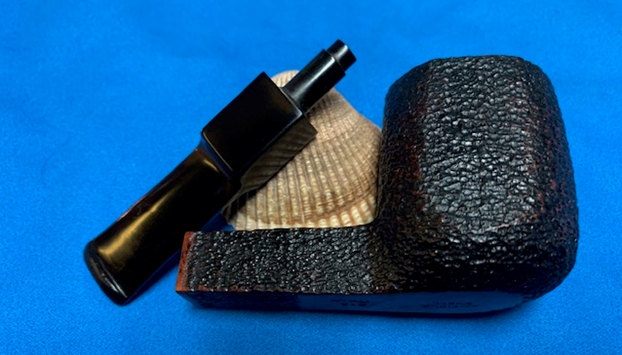
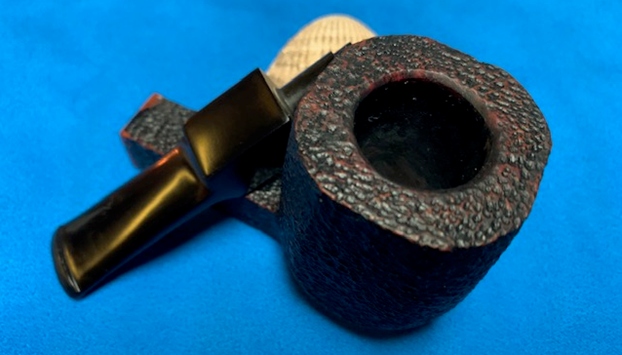
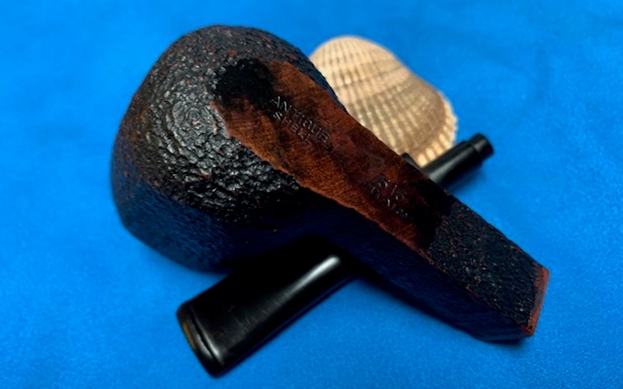
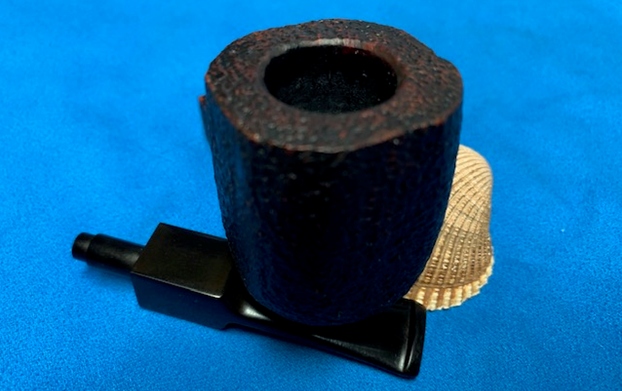
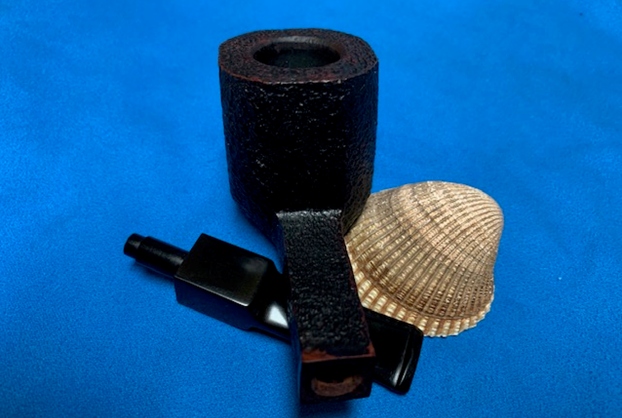
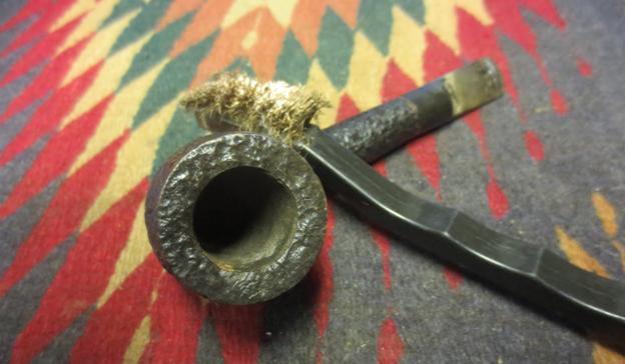
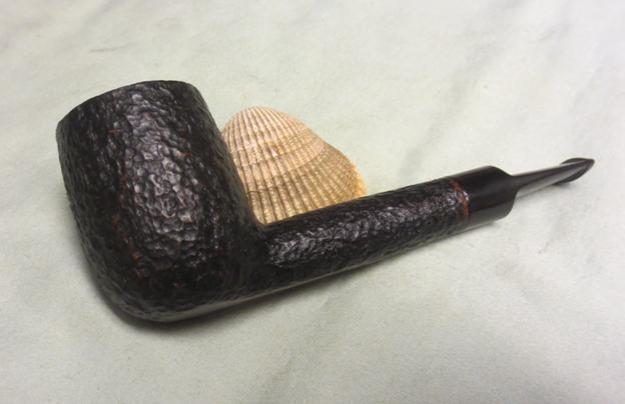
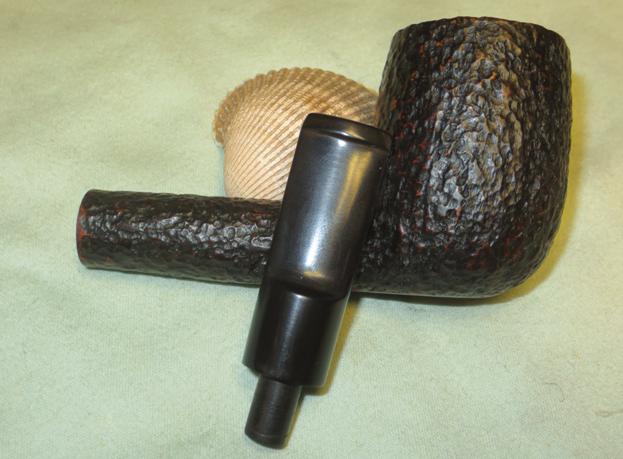
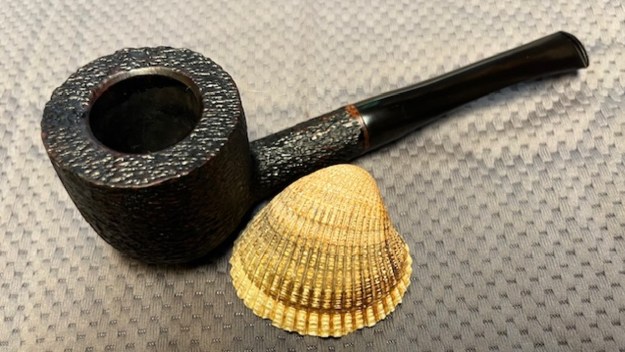
The next pipe on the table is large rusticated finished Pot. We purchased it from an Antique Mall in Ogden, Utah, USA on 07/23/2023.The pipe is stamped on the underside of the shank on a smooth panel and reads Antique [over] Shell followed by the shape number 1021 EX. The rim was in good condition other than a lot of lava in the finish overflowing from the thick cake in the bowl. There was grime ground into the bowl sides. The rusticated finish was oily and dirty. The stem is oxidized and calcified. It had light tooth marks on both the top and underside of the stem just ahead of the button. Jeff took photos of the pipe before he started his clean up work. I have included them below.He took photos of the rim top to show the cake and the dust in the rustication on the top. It is another dirty pipe. He also captured the tooth marks on the top and underside of the stem near the button. There is also a spot of blue paint on the top of the stem. He took photos of the sides and heel of the bowl to show the rustication around the bowl and the amount of grime ground into the surface of the briar.   He took photos of the stamping on the underside of the shank. It is clear and quite readable. I turned Pipephil’s section on Savinelli pipes and found the Antique Shell listed there with and an example of the stamping on both the shank and the stem. The stamping on the bowl matches the one that I am working on (http://www.pipephil.eu/logos/en/logo-savinelli1.html). I turned to Pipedia and looked up the specifics of the Antique Shell line from Savinelli and read through the article. There were several pictures of the stamping but nothing on the details (https://pipedia.org/wiki/Savinelli).
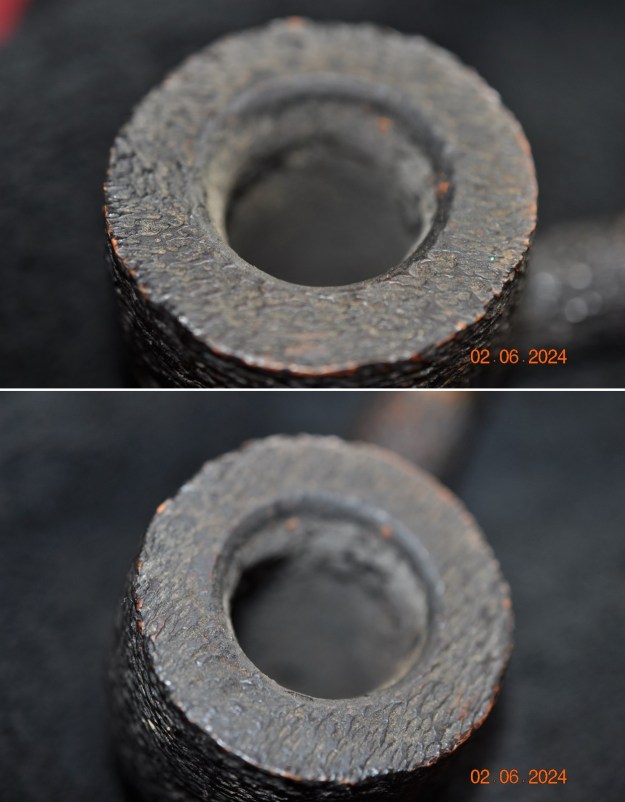
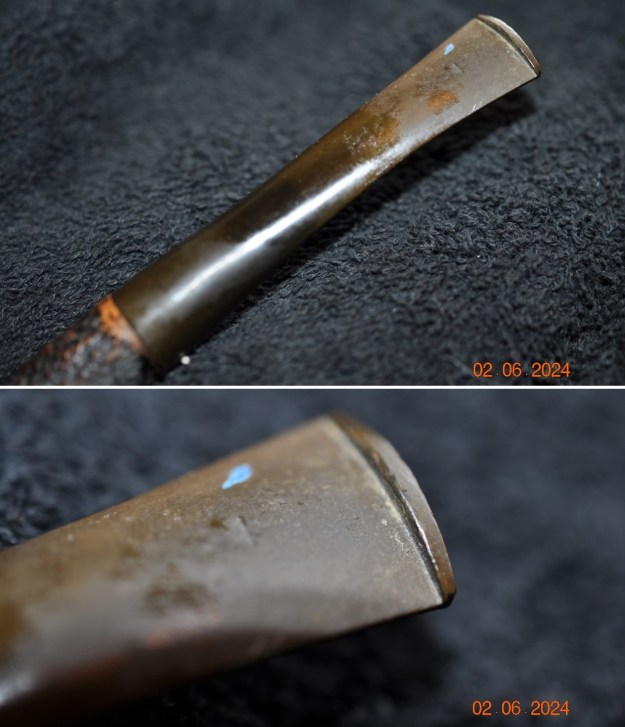
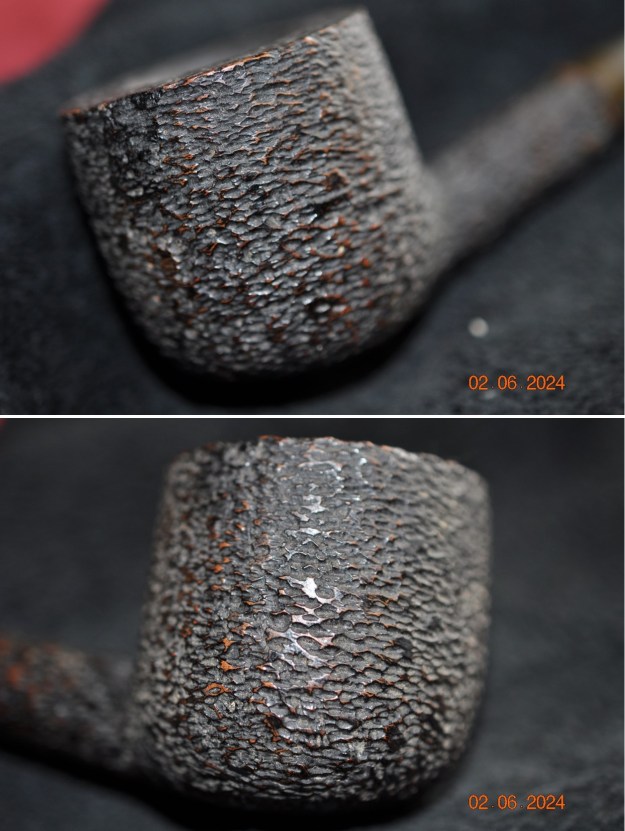
I knew that I was working on a Savinelli Made Pot that had the unique Antique Shell style of rustication. Now it was time to work on the pipe.

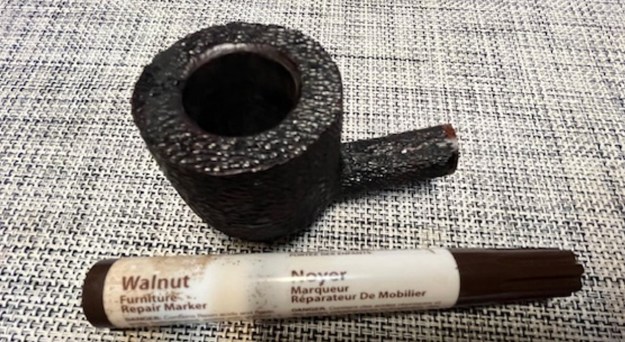
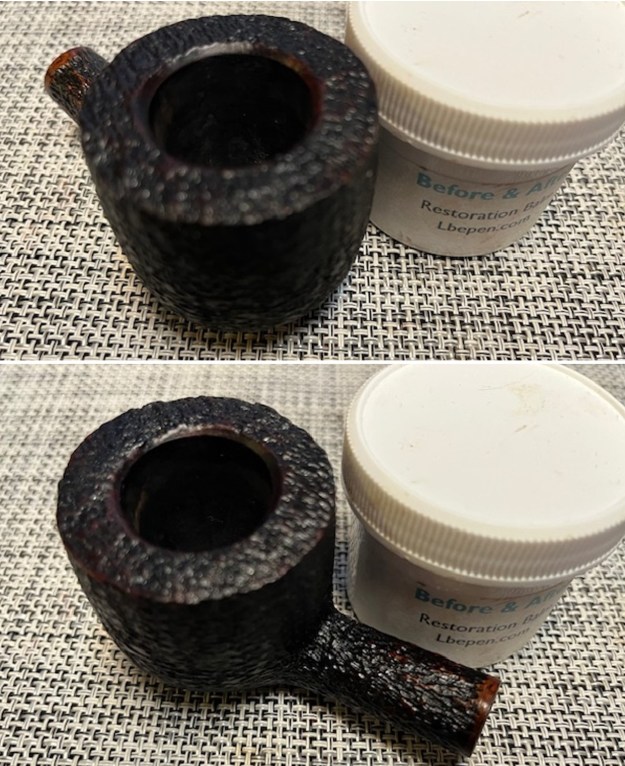
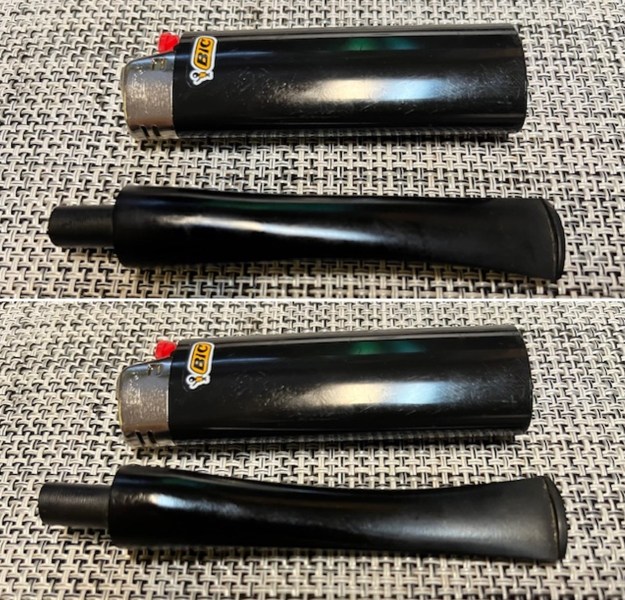
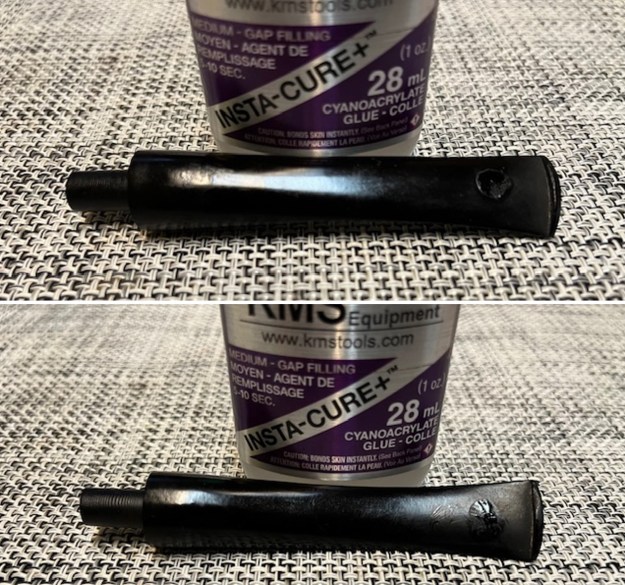
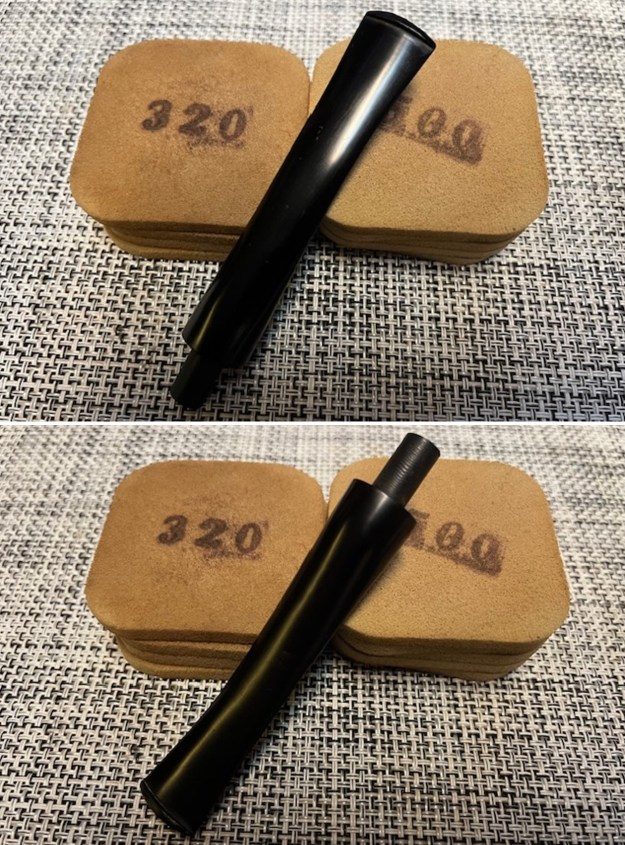
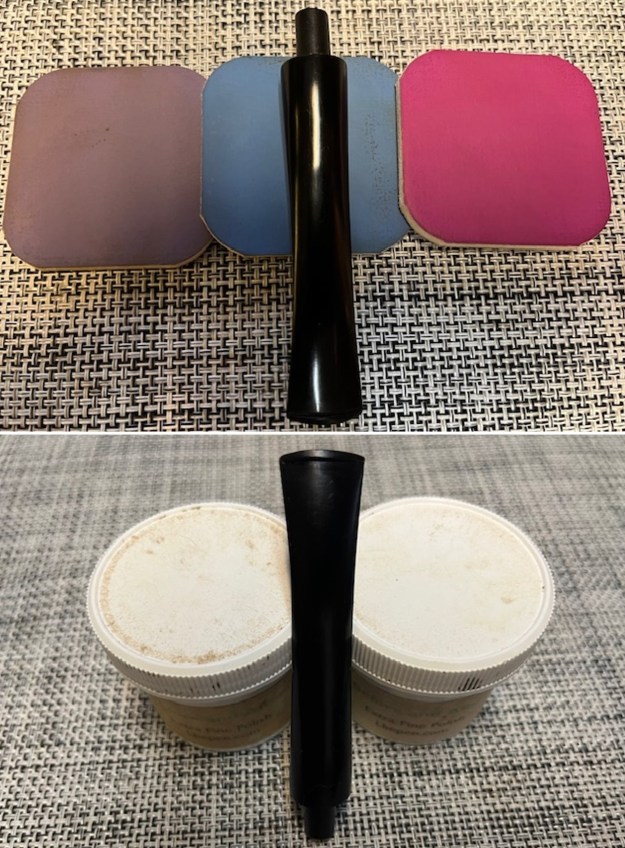
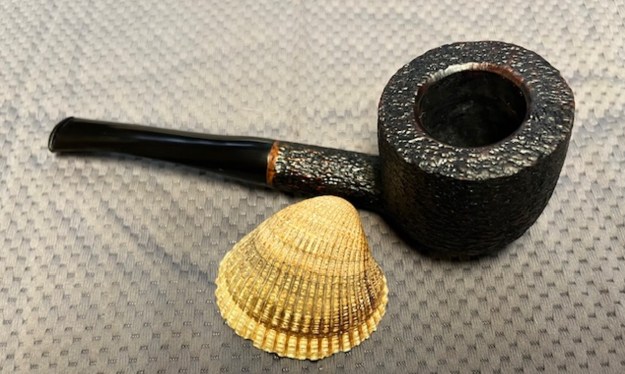
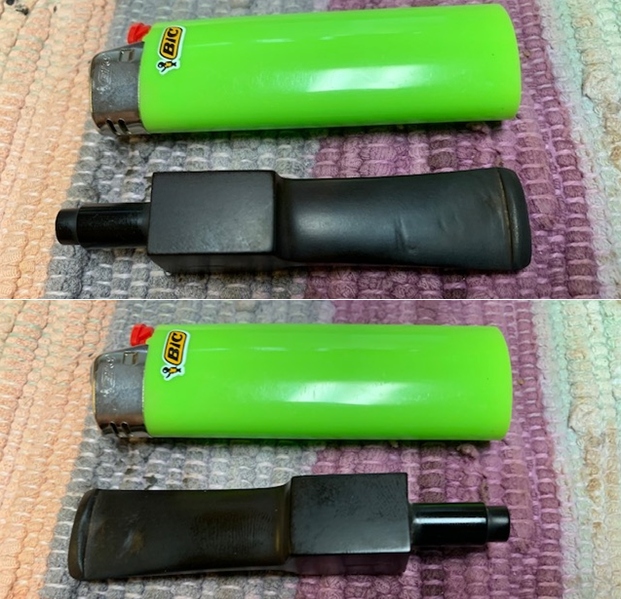
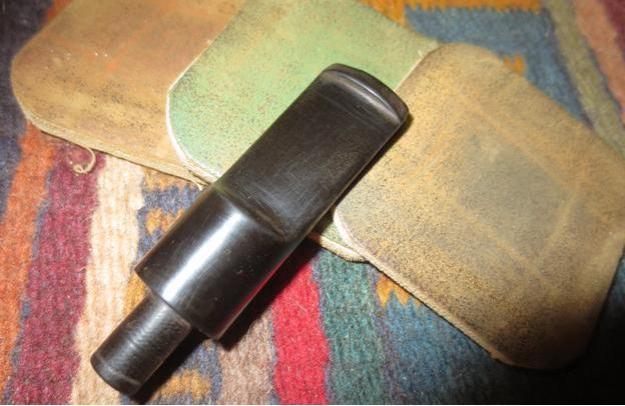
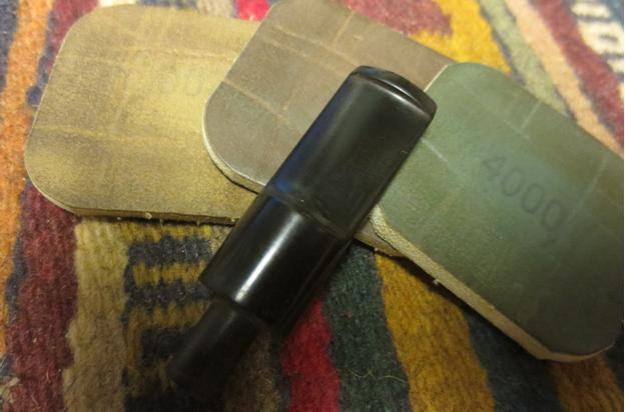
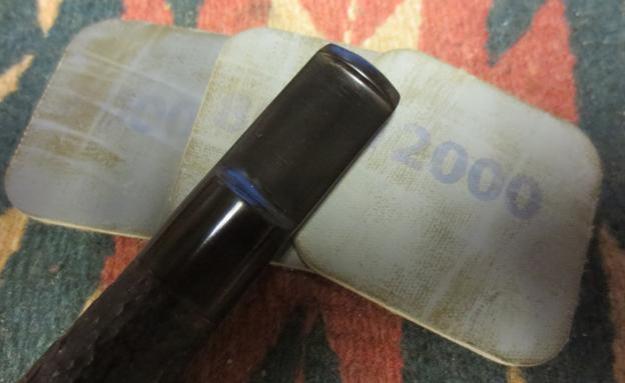
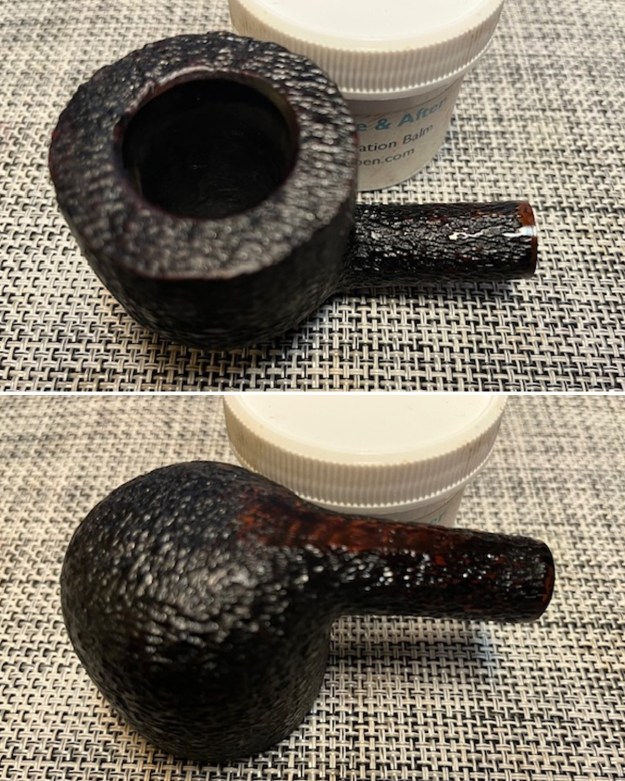
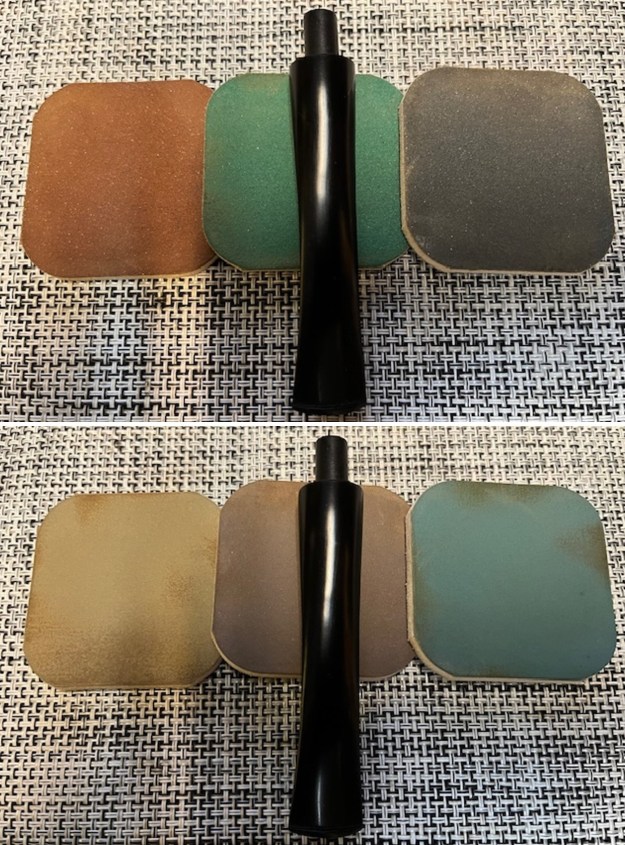
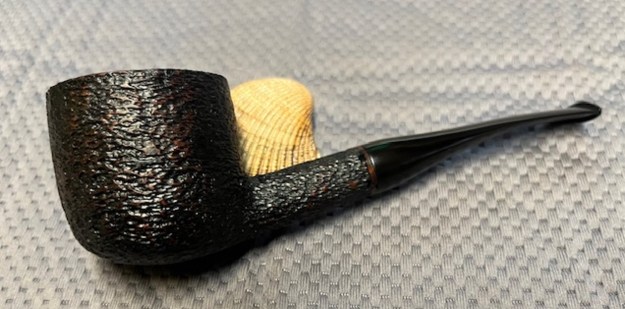
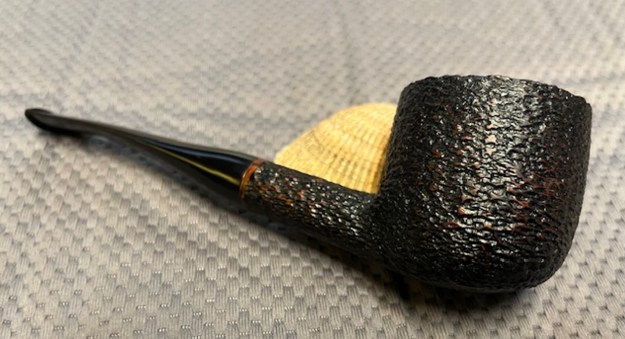
Jeff had done his usual thorough cleanup on the pipe. He reamed the bowl with a PipNet pipe reamer and followed up with a Savinelli Fitsall pipe knife to remove the cake. He scrubbed out the mortise and the airway in the shank and the stem with alcohol, cotton swabs and pipe cleaners. He scrubbed the exterior of the bowl, rim, shank and stem with a tooth brush and Murphy’s Oil Soap to remove the oils and tars on the rim and the grime on the finish of the bowl. He rinsed it under running water. He dried it off with a soft cloth. He cleaned the internals and externals of the stem with alcohol, pipe cleaners and cotton swabs. He soaked the stem in Before & After Deoxidizer and rinsed it off with warm water and cleaned out the airway in the stem with alcohol. The pipe looked very good. I took a photo of the rim top and stem to show the condition. They cleaned up really well and the top of the rim and inner looked very good. Some of the stain lightened around the top and inner edge of the bowl. The vulcanite saddle stem had tooth chatter and marks on both sides ahead of the button and on the button edges.I took a photo of the stamping on the underside of the shank. It read as noted above. I removed the stem and took a photo of the pipe to give a sense of the whole. It is a well shaped large Pot in the Antique line with the EX stamp.Now it was time to do my work on the pipe. I started by restaining the rim top and inner edges of the bowl. I used a Walnut stain pen to match the rest of the bowl colour.Since it was clean and looked good I rubbed the bowl and shank down with Before & After Restoration Balm. I worked it into the surface of the rusticated bowl sides and shank with my fingertips and a horsehair shoe brush to clean, enliven and protect the briar. I let the balm sit for a little while and then buffed with a cotton cloth to raise the shine. It helped to give depth to the tight rustication around the bowl. The final buffing would bring the pipe alive. I set the bowl aside and turned my attention to the stem. I painted the stem with the flame of a Bic lighter to raise the tooth dents in the vulcanite. I filled in the dents that remained with CA glue to repair them. I sanded the stem with the 2 inch square 320-3500 grit sanding pads. I wiped down the stem after each sanding pad. I was able blend in the repairs on both sides with the pads. The stem looked very good.I polished the vulcanite stem with micromesh sanding pads – 1500-12000 grit pads. I wiped it down with a damp cloth after each sanding pad. I used Before & After Pipe Polish – both Fine and Extra Fine to further polish the stem.   This beautiful tightly rusticated Savinelli Made Antique Shell 1021 EX Pot with a vulcanite saddle stem is a great looking pipe now that it has been restored. The rich Antique Shell coloured finish came alive with the polishing and waxing. The dimensions of the rustication really popped. I put the stem back on the bowl and carefully buffed the pipe with Blue Diamond on the buffing wheel using a light touch on the briar. I gave the bowl multiple coats of Conservator’s Wax and the stem multiple coats of carnauba wax on the buffing wheel. I buffed the pipe with a clean buffing pad to raise the shine. I hand buffed the pipe with a microfiber cloth to deepen the shine. The finished Antique Shell 1021 EX Pot is a beauty and fits nicely in the hand and looks very good. Give the finished pipe a look in the photos below. The dimensions of the pipe are Length: 6 inches, Height: 1 ¾ inches, Outside diameter of the bowl: 1 ¾ inches, Chamber diameter: 1 inch. The weight of the pipe is 2.22 ounces/63 grams. I will be adding it to the Italian Pipe Makers Section soon. If you are interested in adding this pipe to your collection send me a message or an email. Thanks for reading this blog and my reflections on the pipe while I worked on it. There are many more to come!

Cleaning up a Savinelli Made Antique Shell 515 Panel Billiard


Blog by Steve Laug

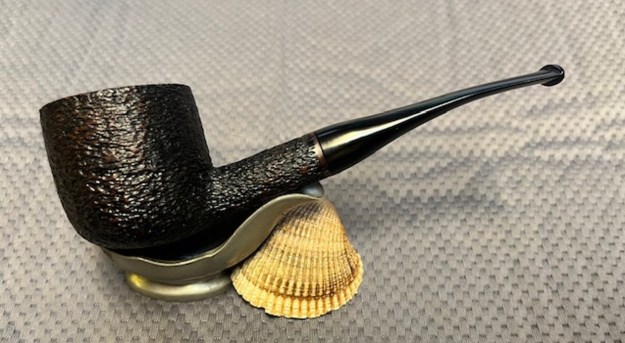
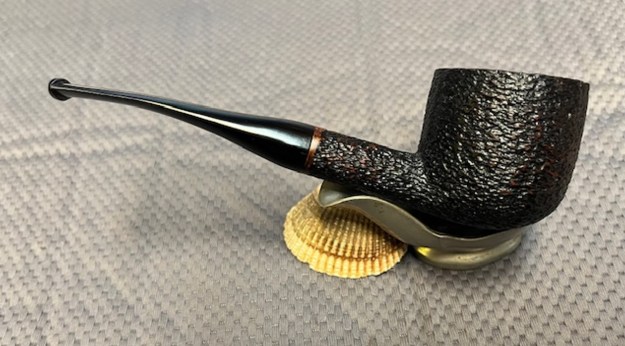
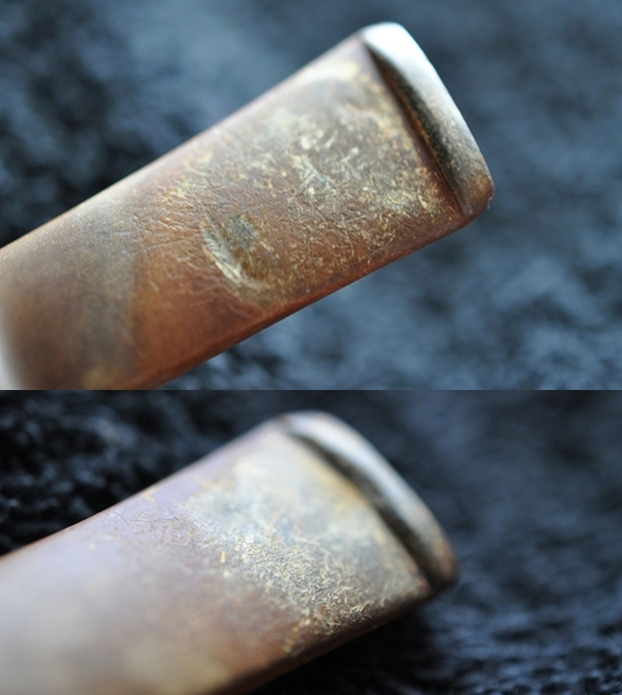
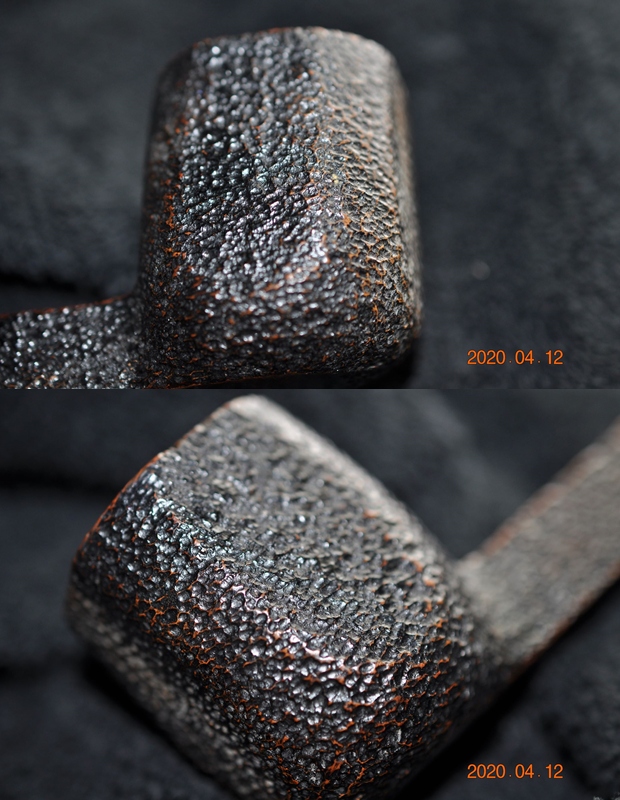
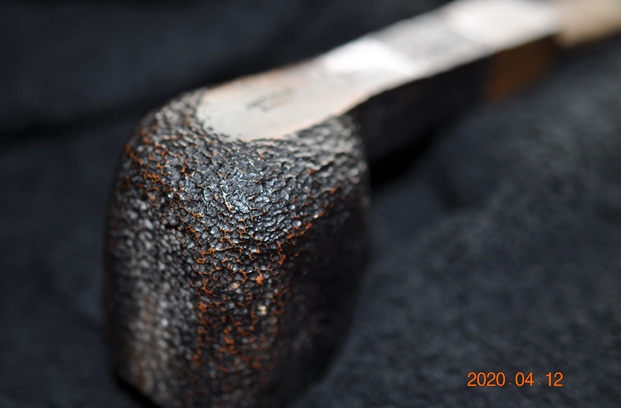
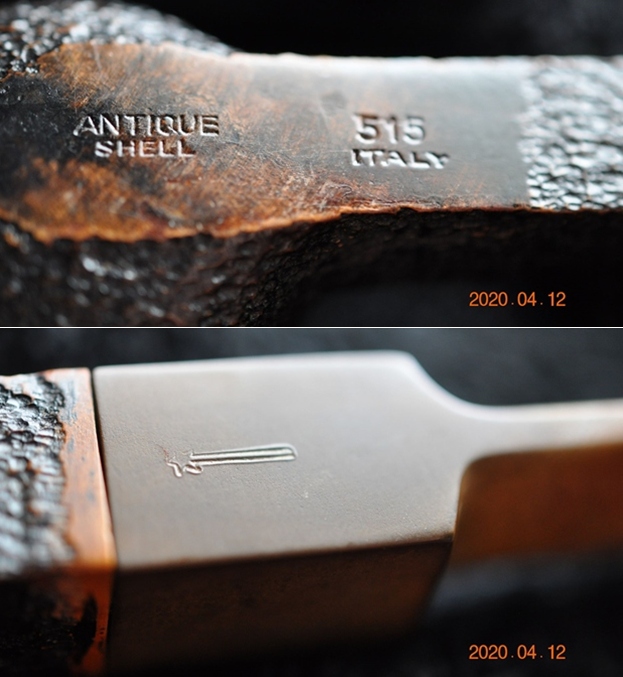
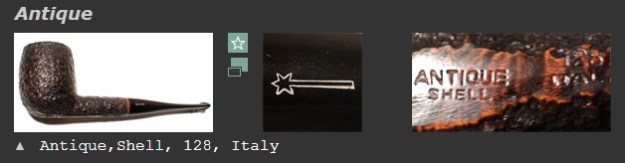
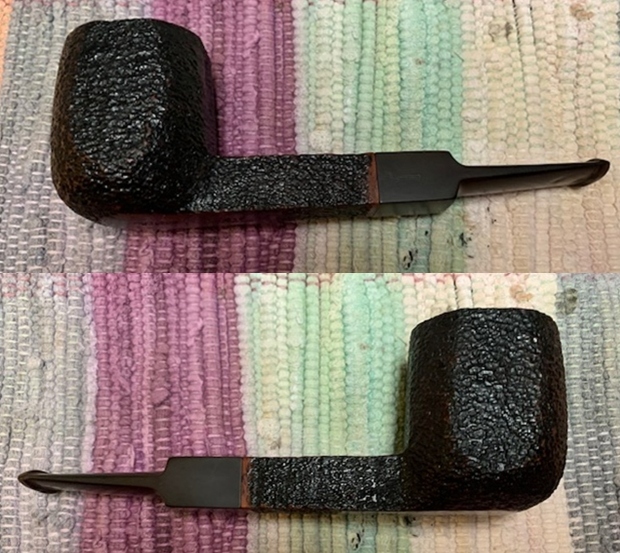
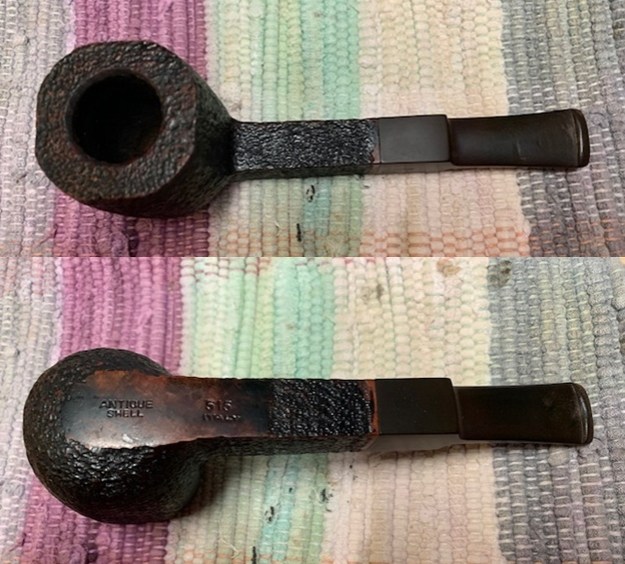
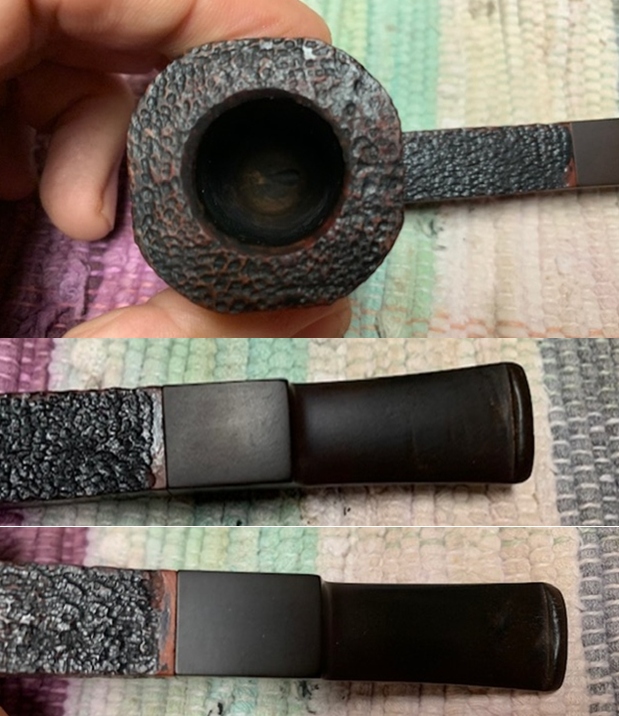
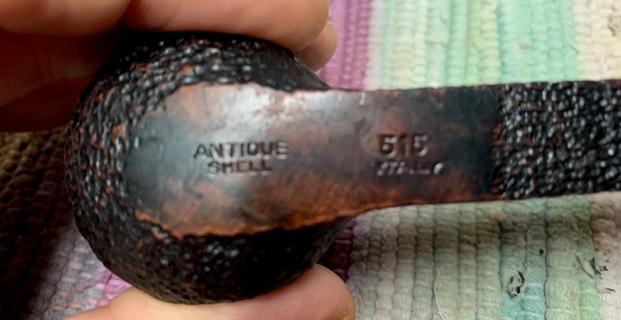
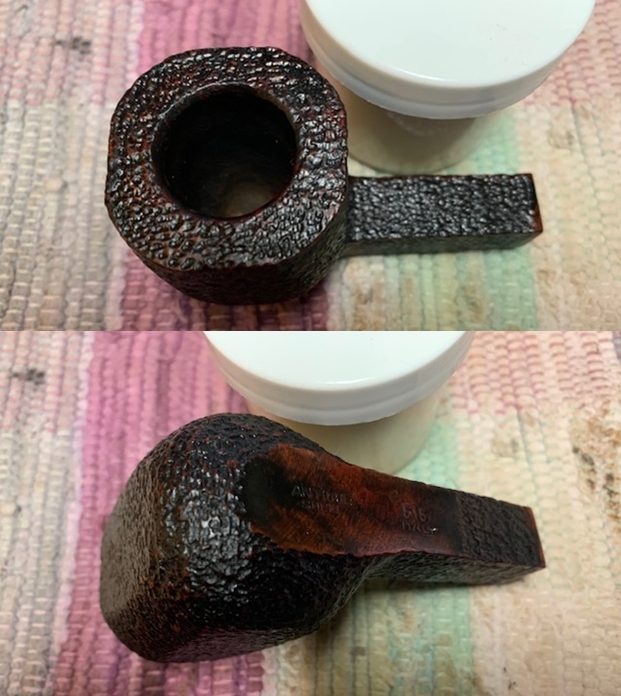
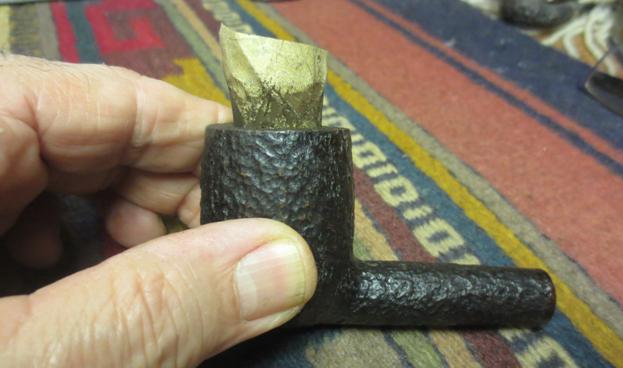
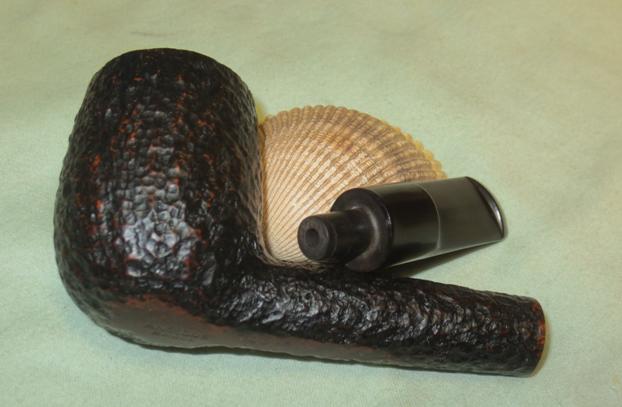
The next pipe on the work table came to us from and online auction from Ohio, USA. It is a rusticated Panel Billiard with a vulcanite saddle stem and a tight, unique rustication around the bowl. It has a brown and black finish that highlights the details of the rustication. I have worked on several Antique Shell pipes from Savinelli over the years and have always found the fit and finish very well done. This pipe is stamped on the flat underside of the heel and shank and reads Antique [over] Shell followed by the shape number 515 [over] Italy. The square, saddle vulcanite stem was oxidized, calcified and had tooth marks and chatter on both sides of the stem near the button. The pipe looks to be in decent condition under the grime. Jeff took photos of the pipe before he started his cleanup. He took photos of the rim top to show the cake and the dust in the rustication on the top. It is another dirty pipe. He also captured the tooth marks on the top and underside of the stem near the button.    He took photos of the sides and heel of the bowl to show the rustication around the bowl and the amount of grime ground into the surface of the briar.     He took photos of the stamping on the underside of the shank and the shooting star logo on the left side of the stem. It is faint but still present. I turned Pipephil’s section on Savinelli pipes and found the Antique Shell listed there with and an example of the stamping on both the shank and the stem. The stamping matches the one that I am working on (http://www.pipephil.eu/logos/en/logo-savinelli1.html). I turned to Pipedia and looked up the specifics of the Antique Shell line from Savinelli and read through the article. There were several pictures of the stamping but nothing on the details (https://pipedia.org/wiki/Savinelli).
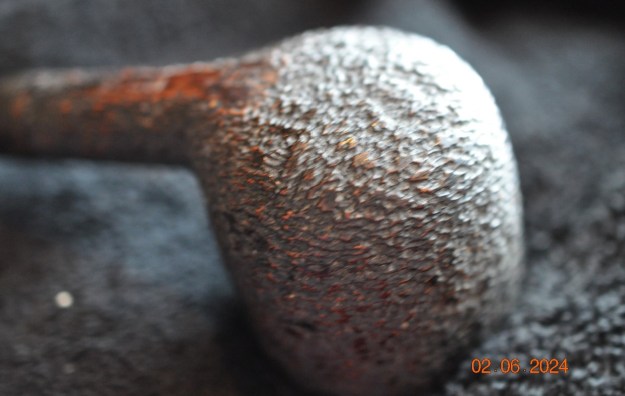
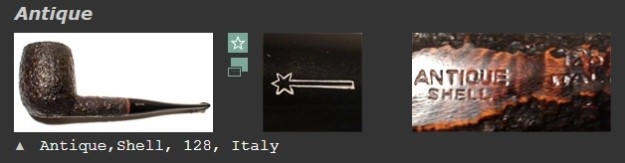
I knew that I was working on a Savinelli Made Panel that had the unique Antique Shell rustication. Now it was time to work on the pipe.

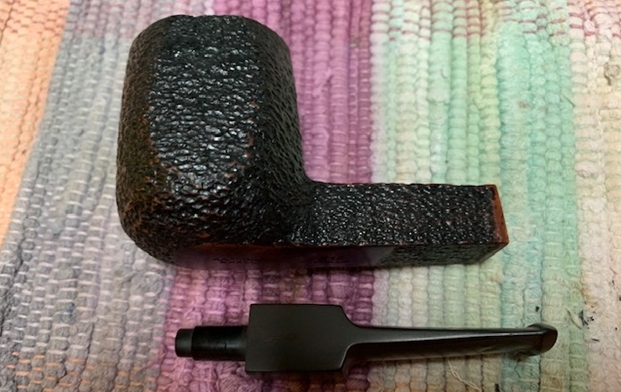
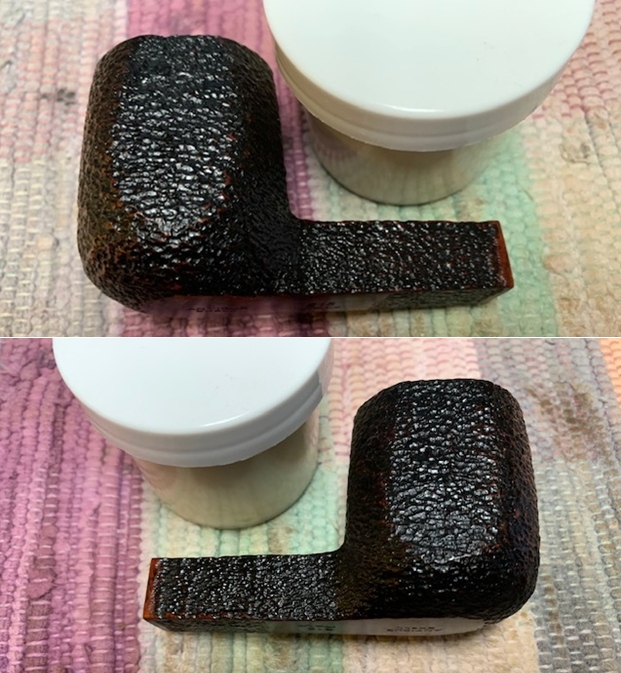
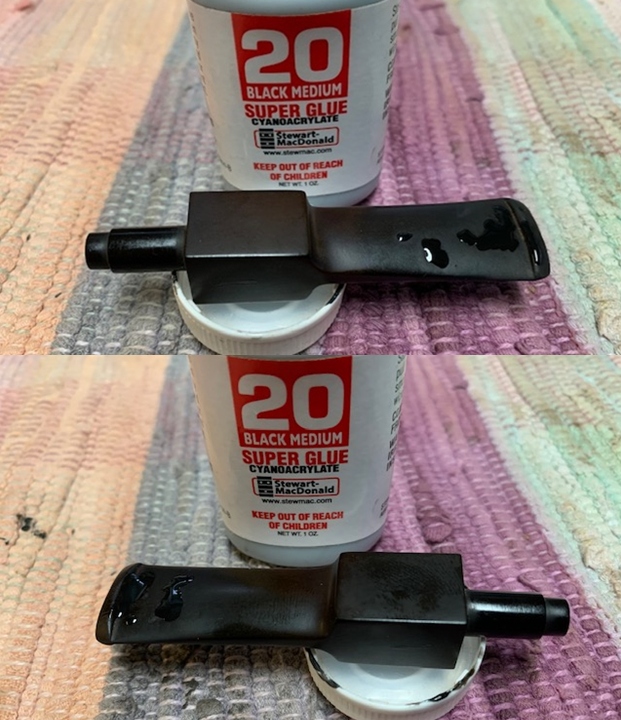
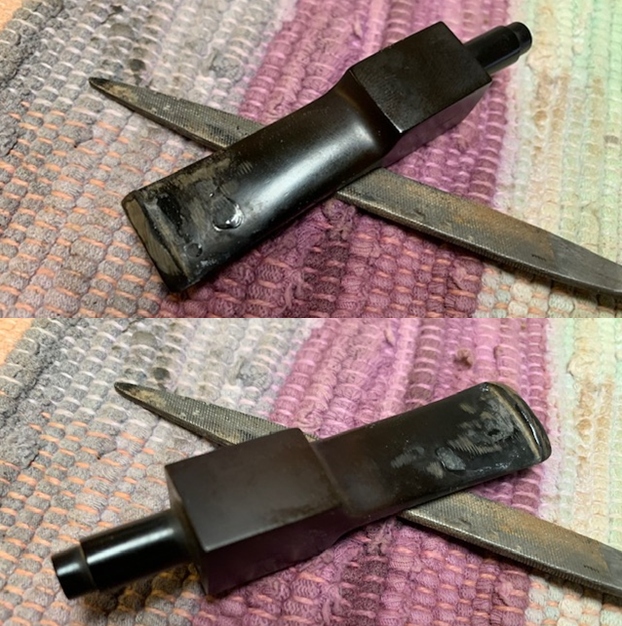
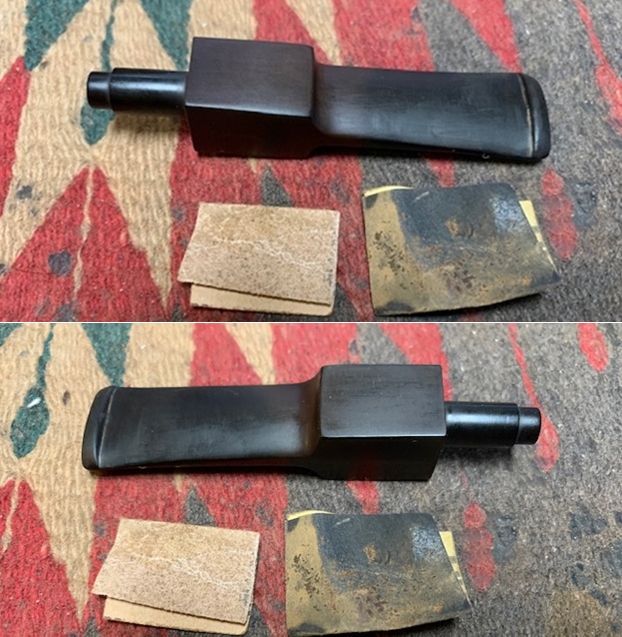
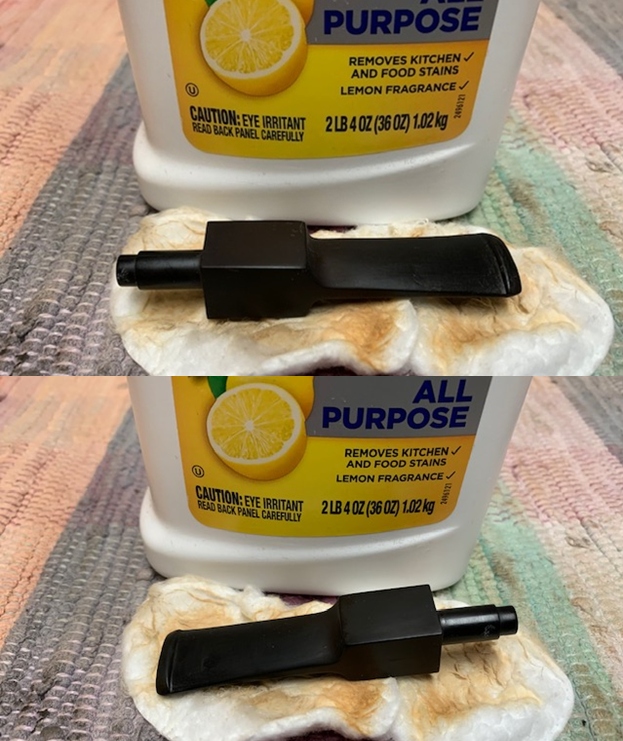
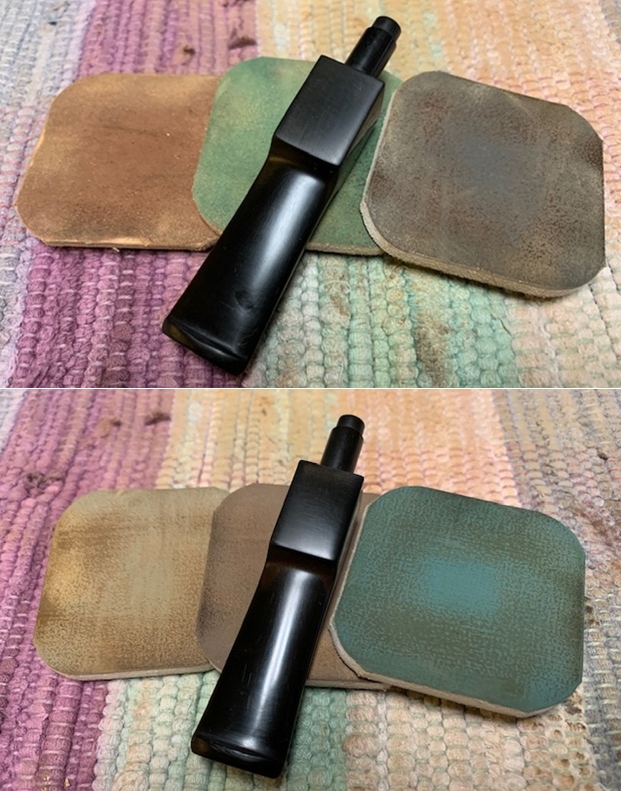
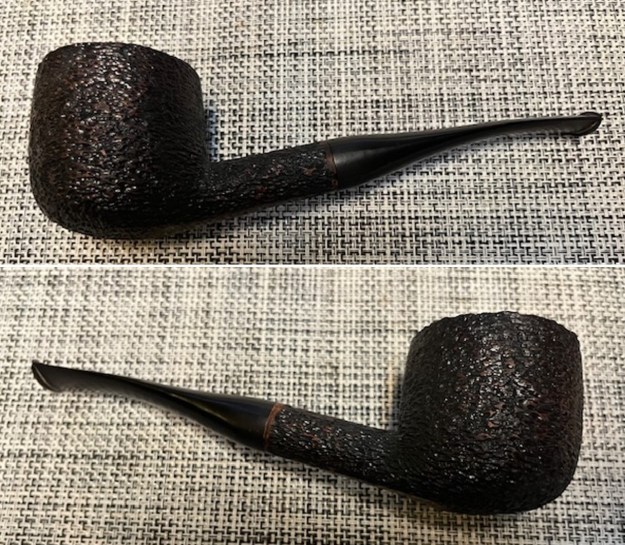
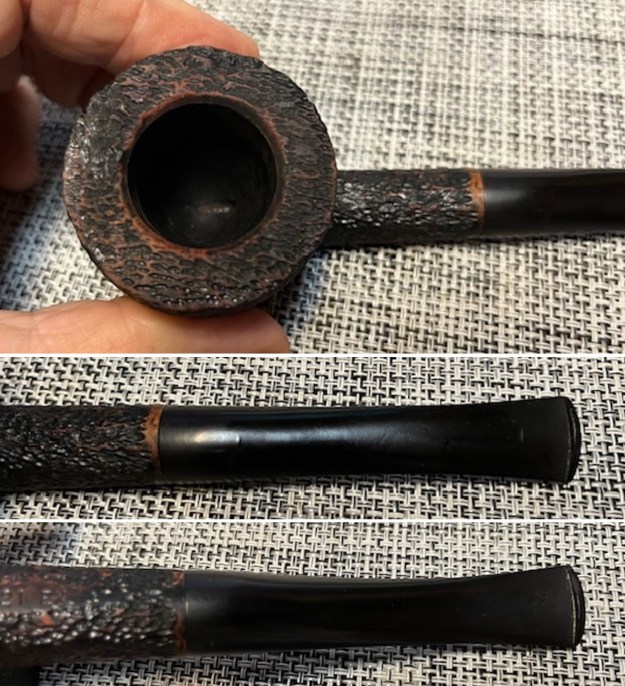
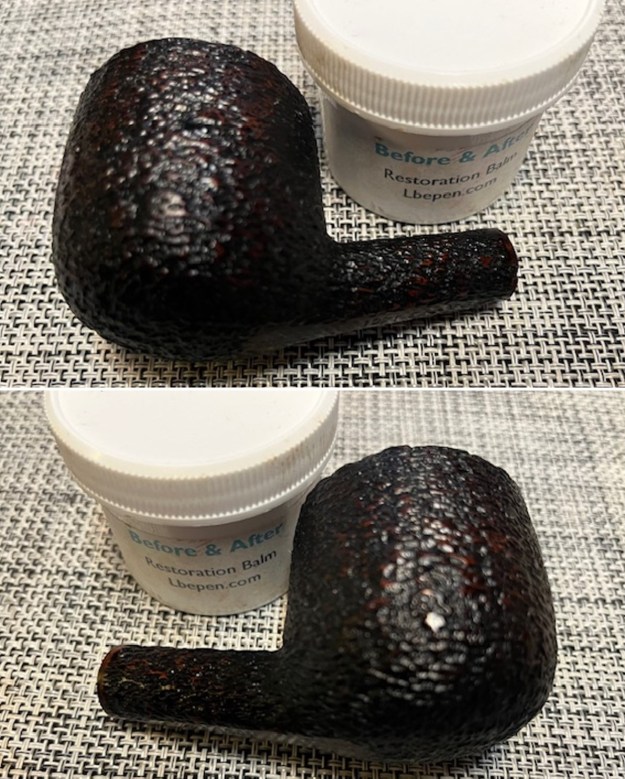
Jeff had done his usual thorough cleanup on the pipe. He reamed the bowl with a PipNet pipe reamer and followed up with a Savinelli Fitsall pipe knife to remove the cake. He scrubbed out the mortise and the airway in the shank and the stem with alcohol, cotton swabs and pipe cleaners. He scrubbed the exterior of the bowl, rim, shank and stem with a tooth brush and Murphy’s Oil Soap to remove the oils and tars on the rim and the grime on the finish of the bowl. He rinsed it under running water. He dried it off with a soft cloth. He cleaned the internals and externals of the stem with alcohol, pipe cleaners and cotton swabs. He soaked the stem in Before & After Deoxidizer and rinsed it off with warm water and cleaned out the airway in the stem with alcohol. The pipe looked very good.   I took a photo of the rim top and stem to show the condition. They cleaned up really well and the top of the rim looked very good. The inner edge of the bowl was in great condition. The vulcanite saddle stem had tooth chatter and marks on both sides ahead of the button and on the button edges.  I took a photo of the stamping on the underside of the shank. It read as noted above.  I removed the stem and took a photo of the pipe to give a sense of the whole. It is a well shaped Panel Billiard that looks great. Now it was time to do my work on the pipe. Since it was clean and looked good I rubbed the bowl and shank down with Before & After Restoration Balm. I worked it into the surface of the sandblast bowl sides and shank with my fingertips and a horsehair shoe brush to clean, enliven and protect the briar. I let the balm sit for a little while and then buffed with a cotton cloth to raise the shine. It helped to give depth to the tight rustication around the bowl.  The final buffing would bring the pipe alive. I set the bowl aside and turned my attention to the stem. I painted the stem with the flame of a Bic lighter to raise the tooth dents in the vulcanite.     I filled in the dents with black super glue to repair them. Once the repairs had cured I recut the button and smoothed out the repairs with a needle file.  I used 220 grit sandpaper to smooth out the tooth chatter and marks and blend them into the stem surface. I started the polishing with 400 grit wet dry sandpaper.  I scrubbed off the remaining oxidation with Soft Scrub All Purpose Cleaner. I polished the vulcanite stem with micromesh sanding pads – 1500-12000 grit pads. I wiped it down with a damp cloth after each sanding pad. I used Before & After Pipe Polish – both Fine and Extra Fine to further polish the stem.      This beautiful tightly rusticated Savinelli Made Antique Shell 515 Panel Billiard with a vulcanite saddle stem is a great looking pipe now that it has been restored. The rich Antique Shell coloured finish came alive with the polishing and waxing. The dimensions of the rustication really popped. I put the stem back on the bowl and carefully buffed the pipe with Blue Diamond on the buffing wheel using a light touch on the briar. I gave the bowl multiple coats of Conservator’s Wax and the stem multiple coats of carnauba wax on the buffing wheel. I buffed the pipe with a clean buffing pad to raise the shine. I hand buffed the pipe with a microfiber cloth to deepen the shine. The finished Antique Shell Panel Billiard is a beauty and fits nicely in the hand and looks very good. Give the finished pipe a look in the photos below. The dimensions of the pipe are Length: 5 ½ inches, Height: 2 inches, Outside diameter of the bowl: 1 ½ inches, Chamber diameter: 7/8 of an inch. If you are interested in adding this pipe to your collection send me a message or an email. Thanks for reading this blog and my reflections on the pipe while I worked on it. There are many more to come!
Cleaning up a Unique Savinelli Made Antique Shell 623 Bulldog


Blog by Steve Laug

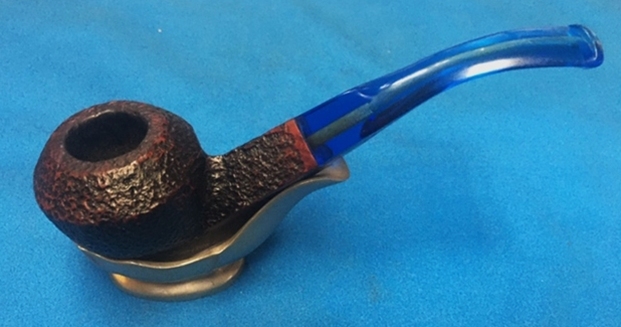
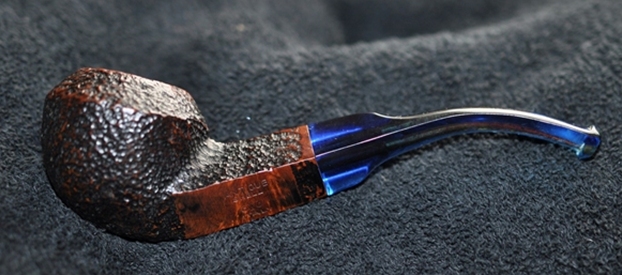
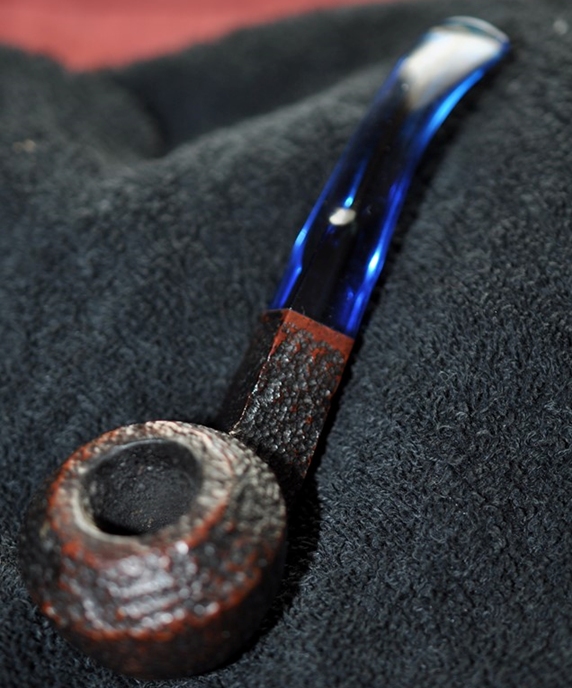
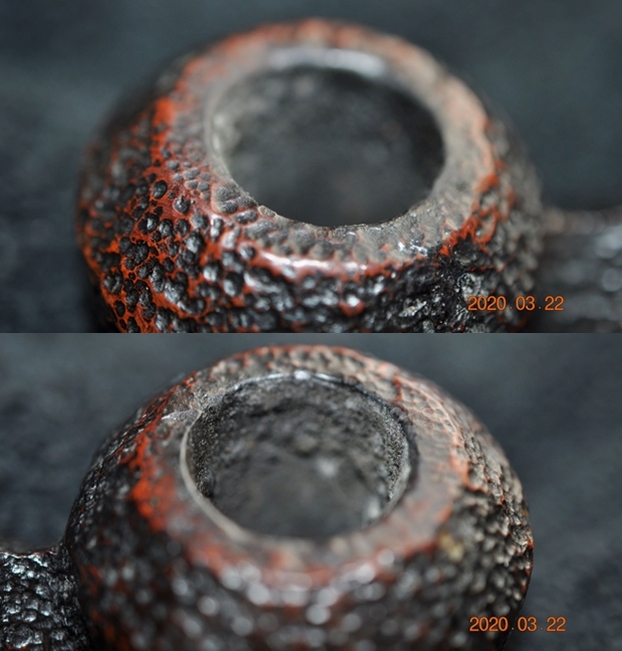
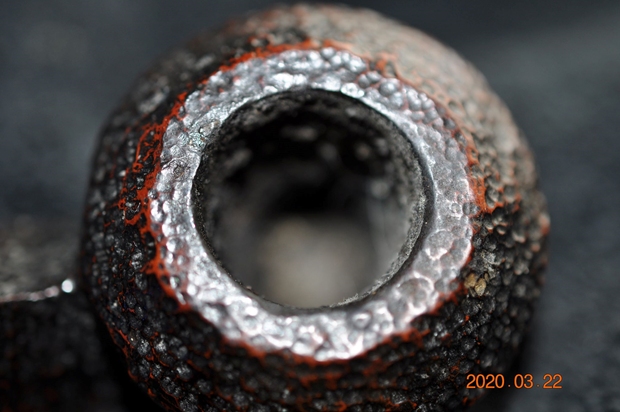
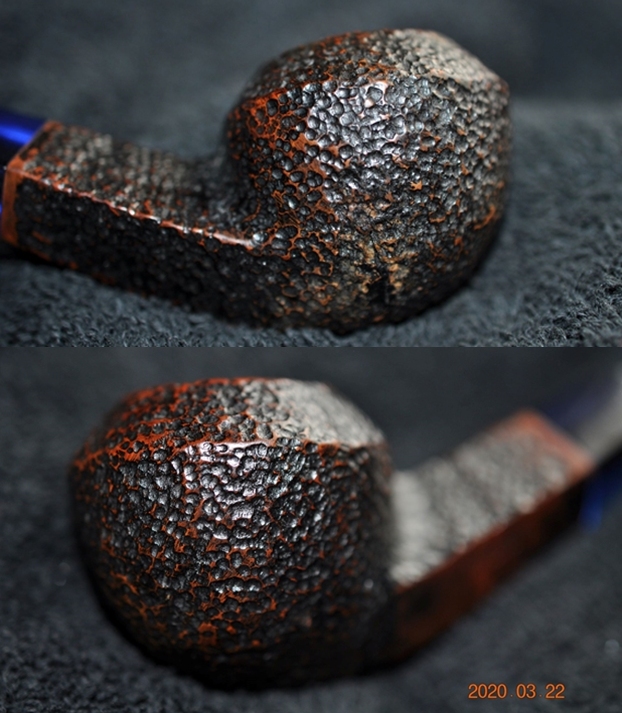
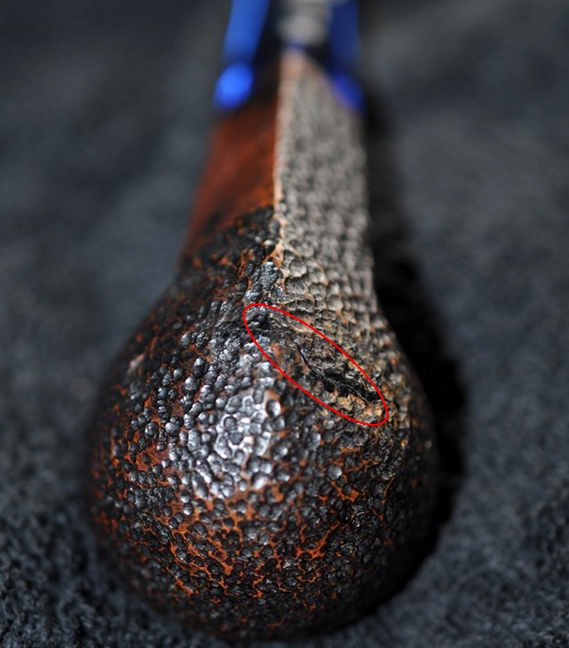
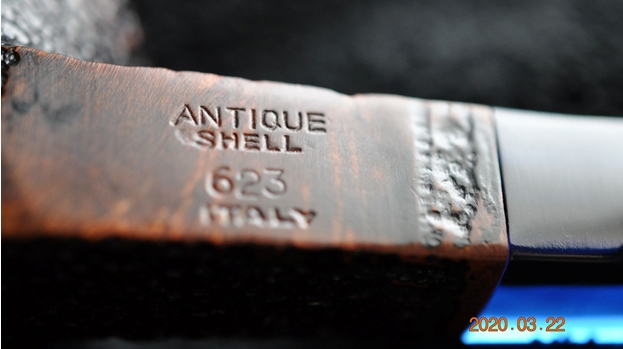
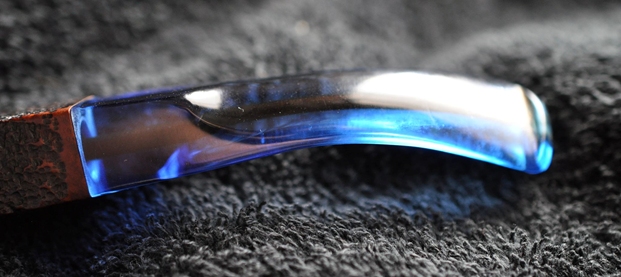
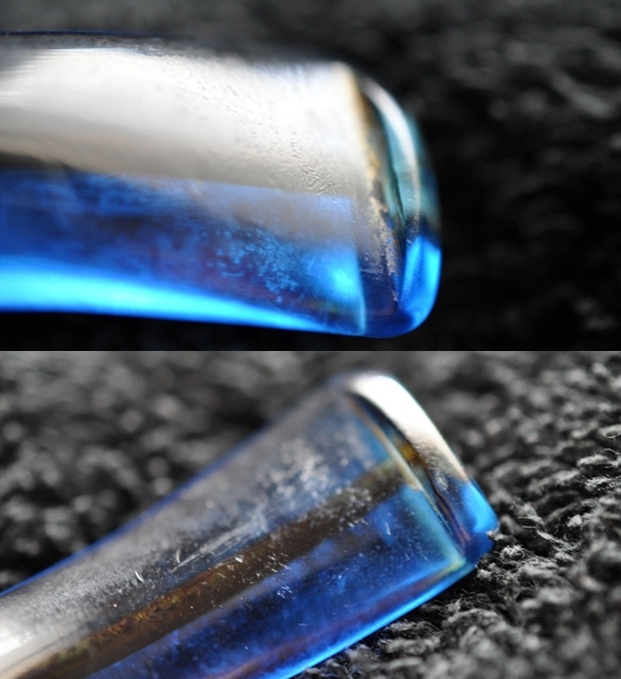
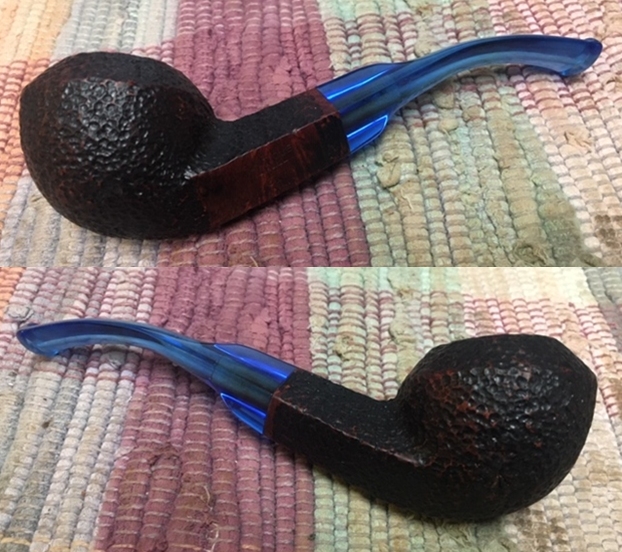
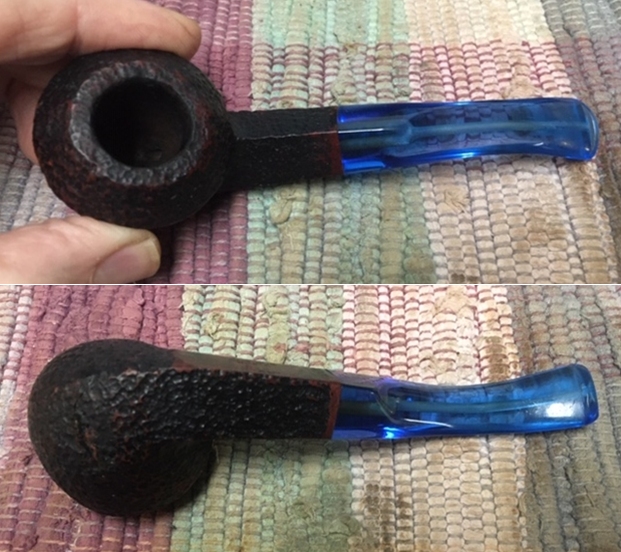
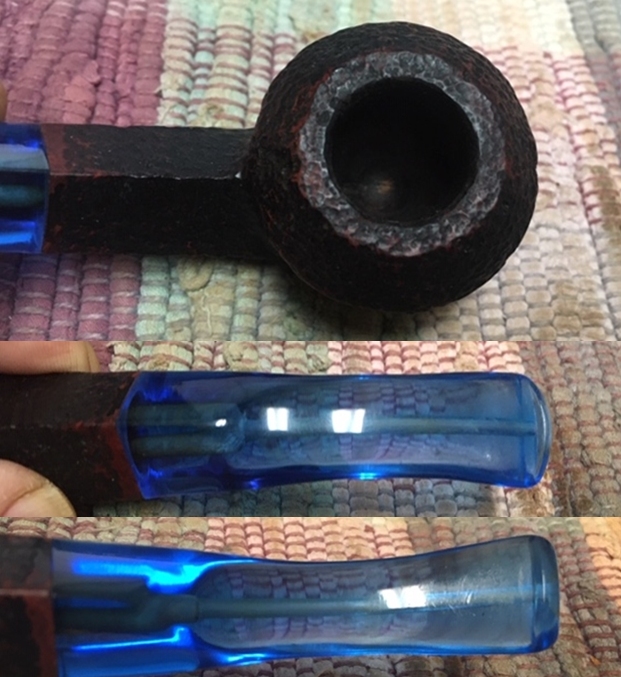
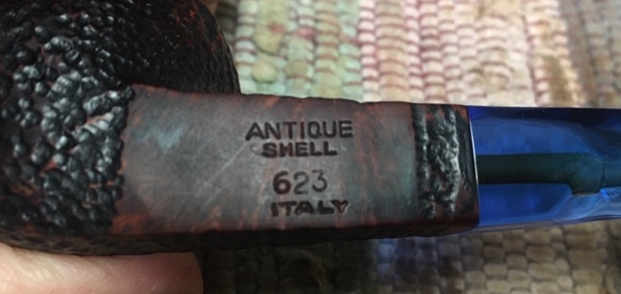
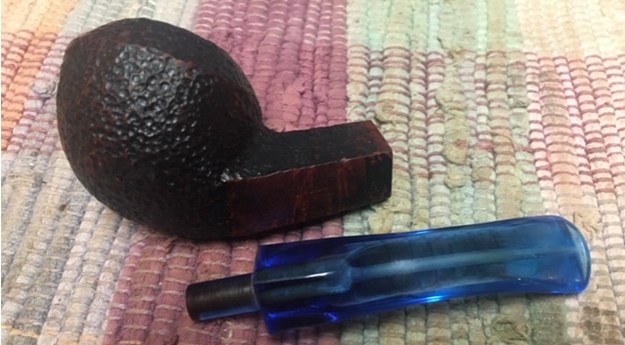
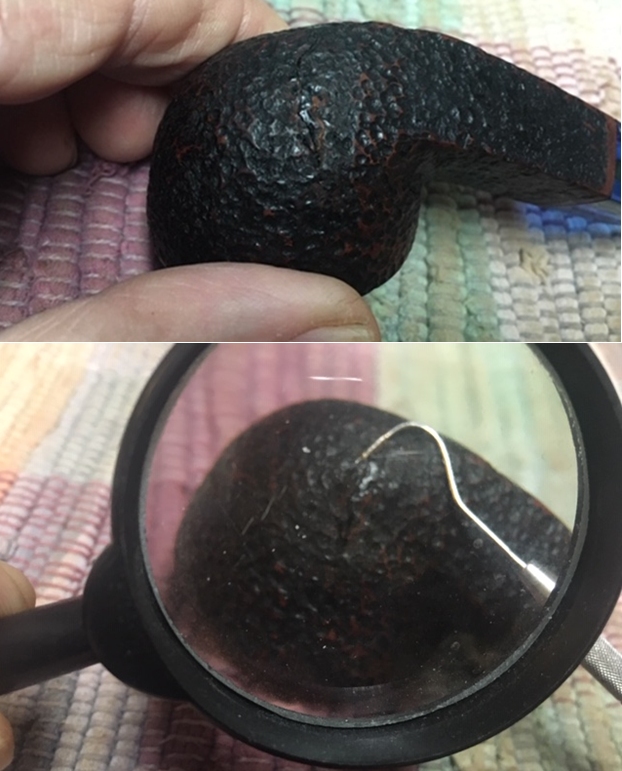
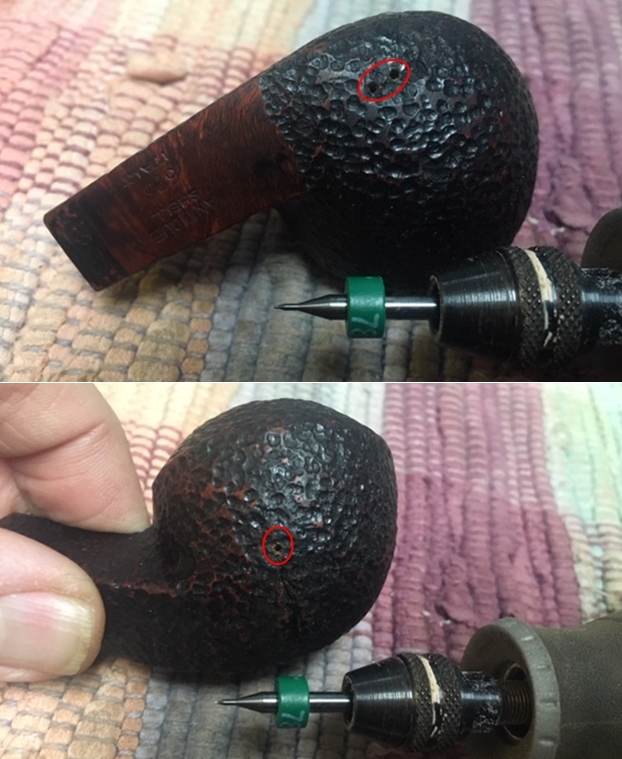
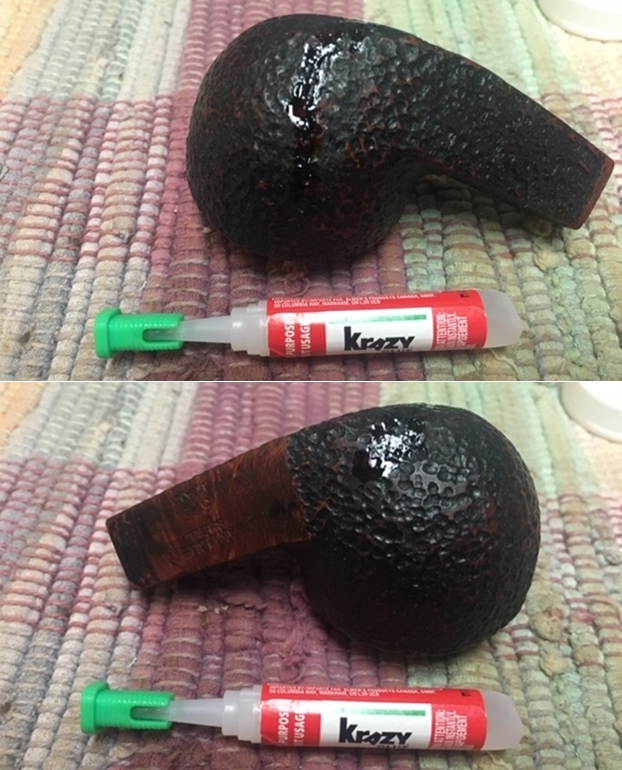
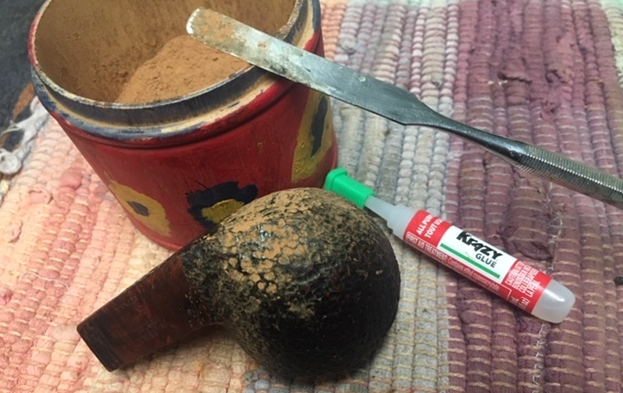
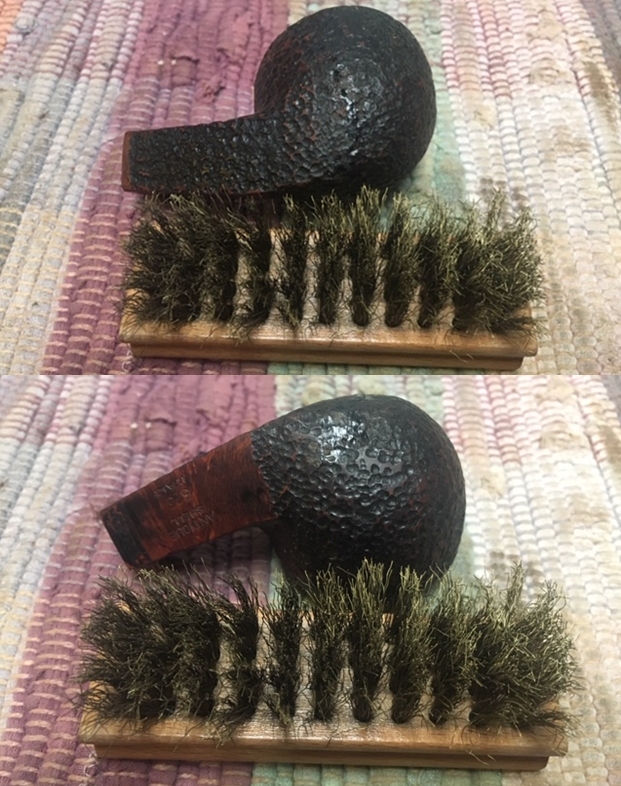
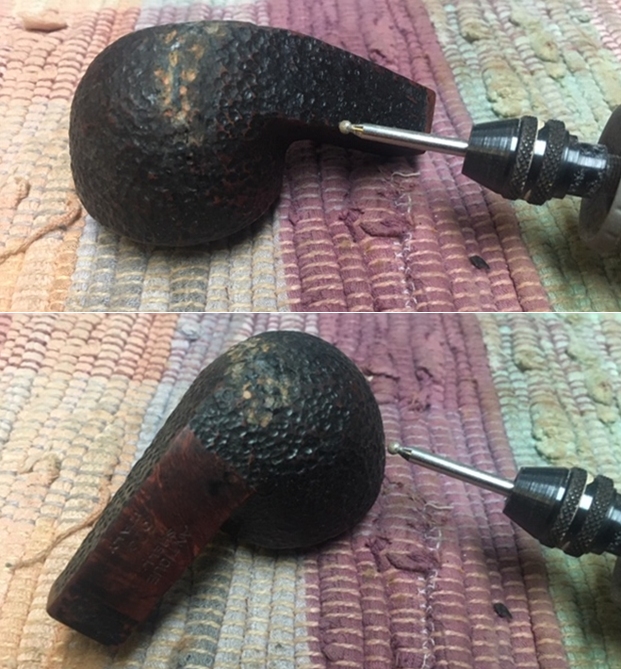
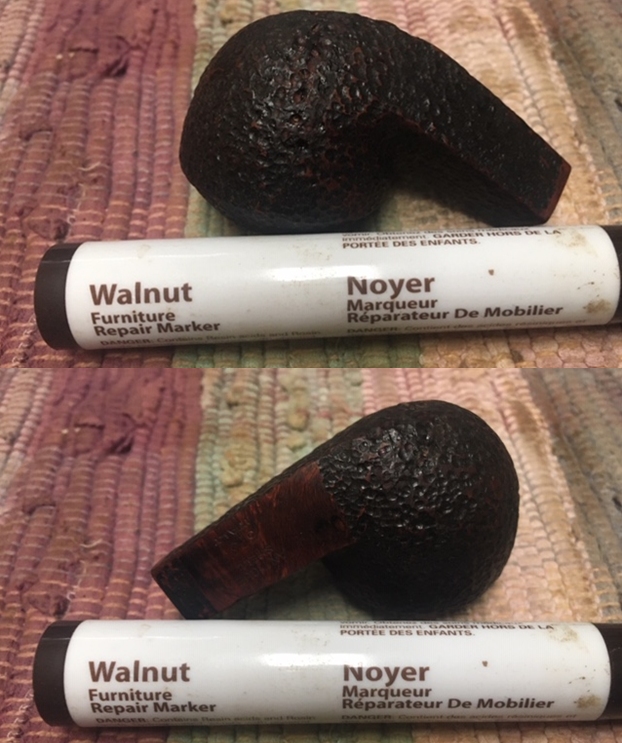
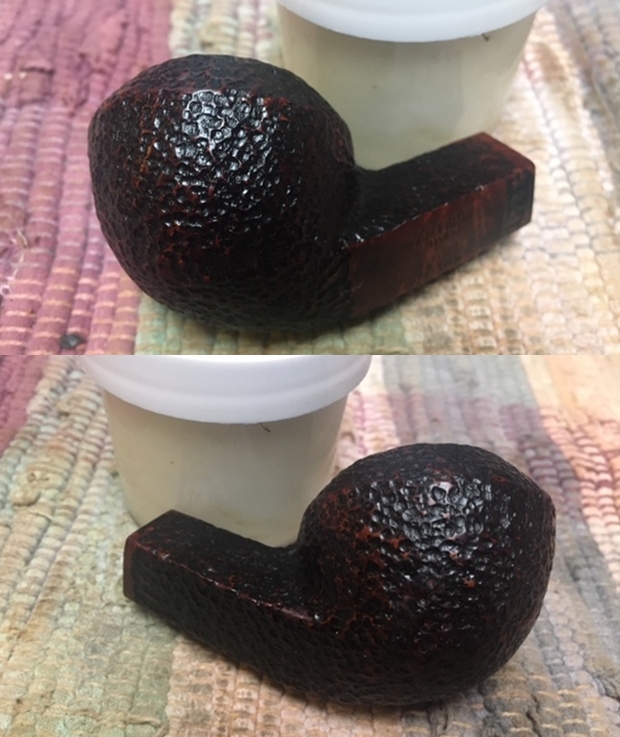
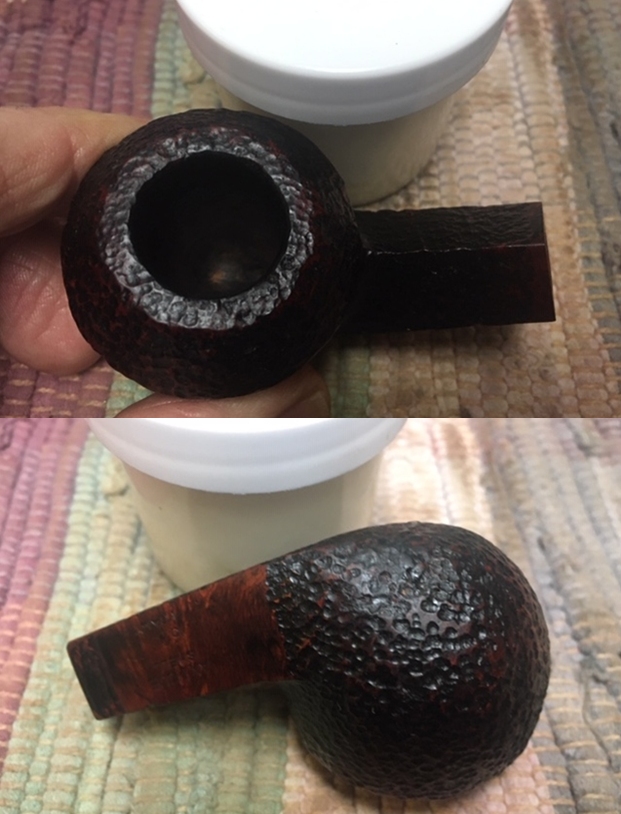
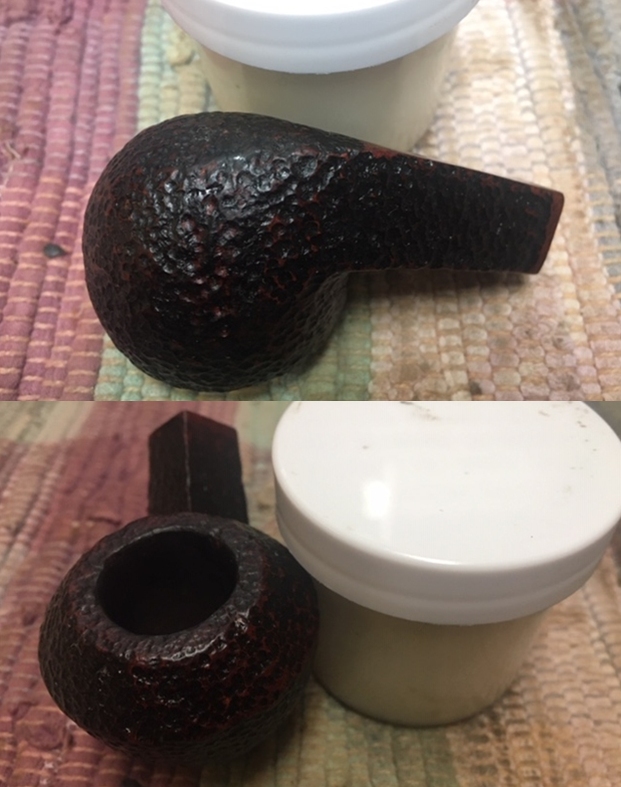
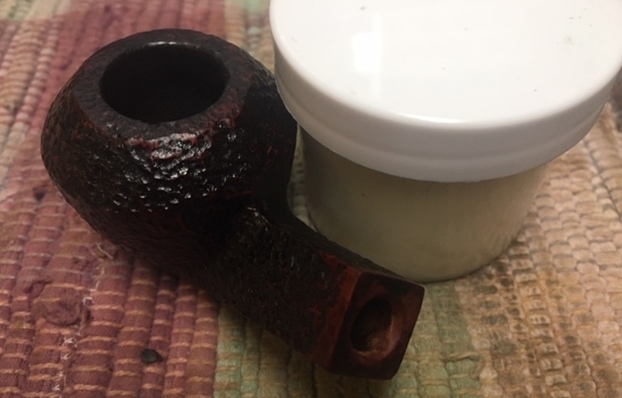
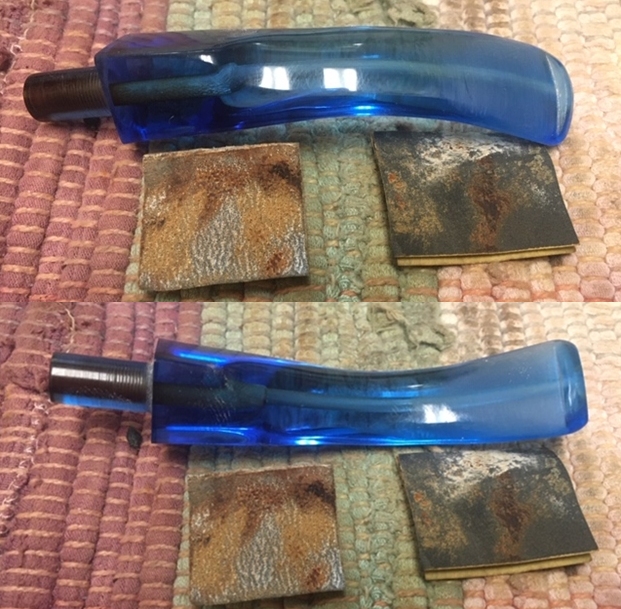
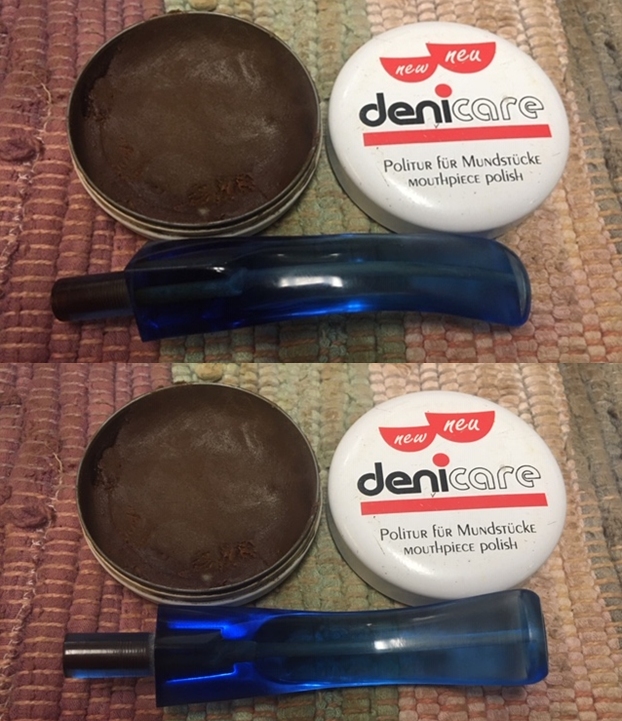
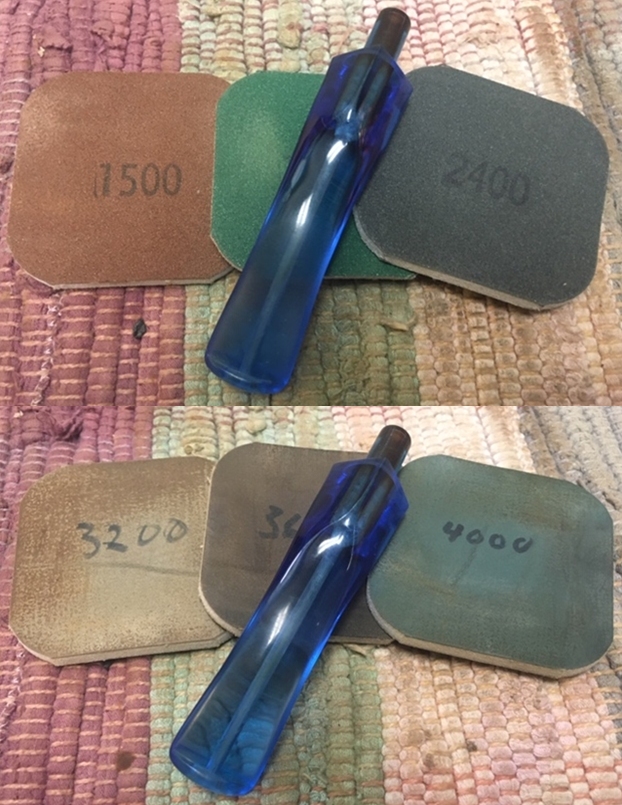
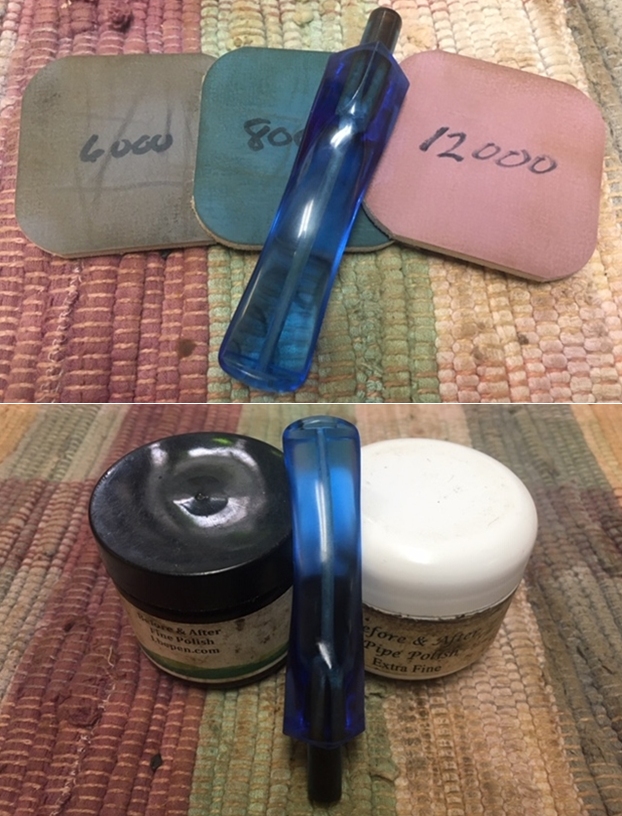
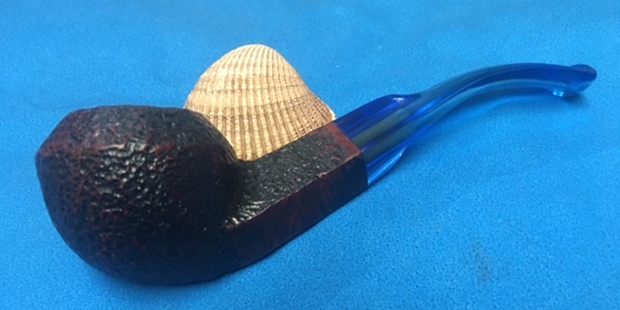
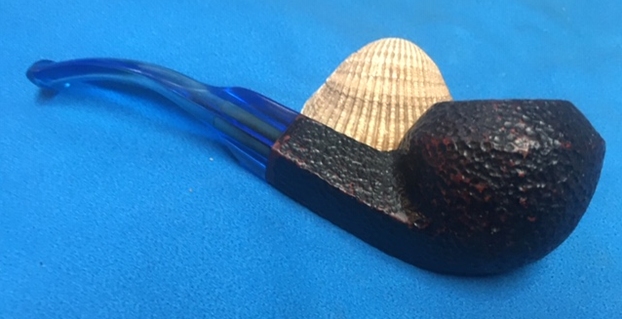
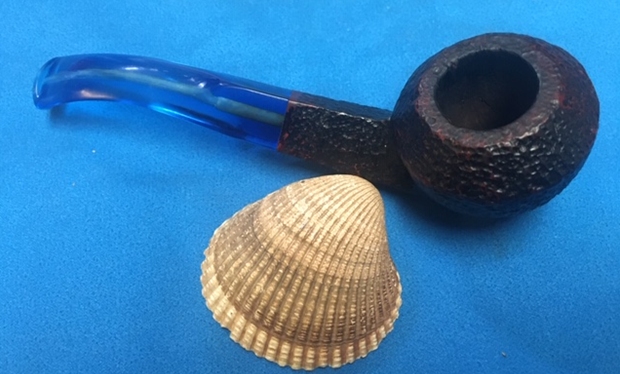
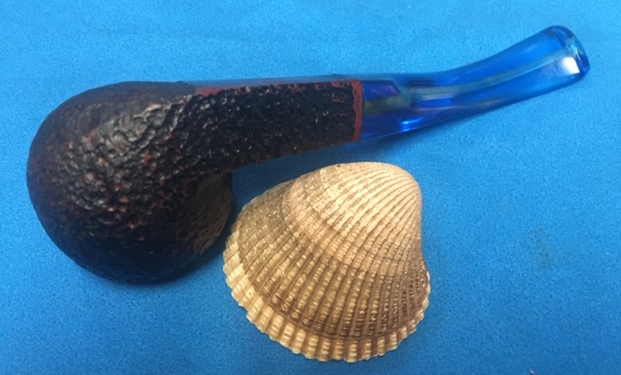
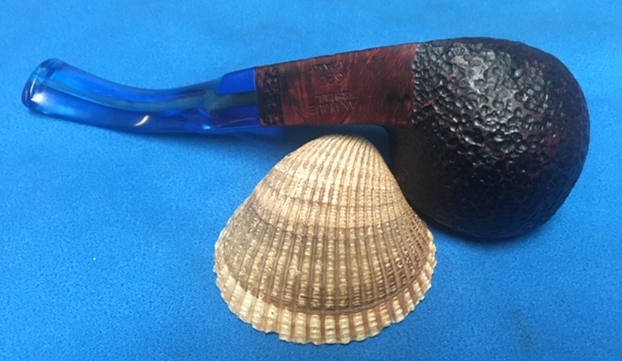
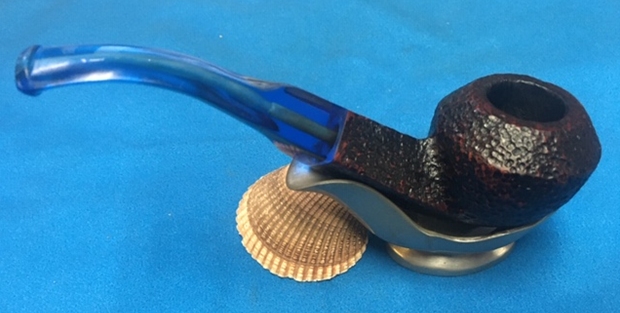
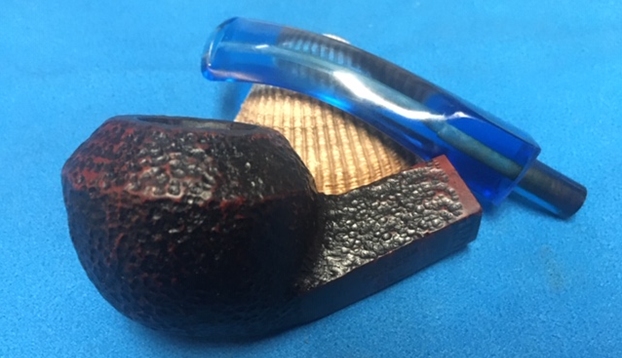
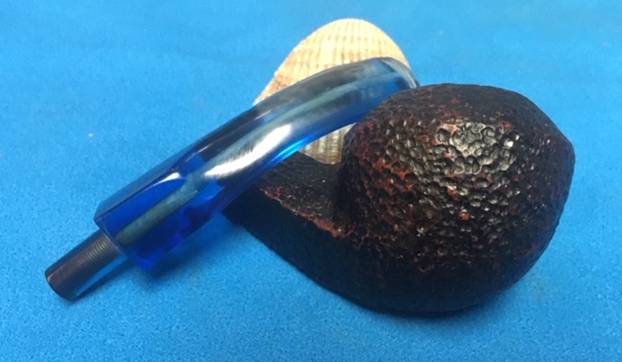
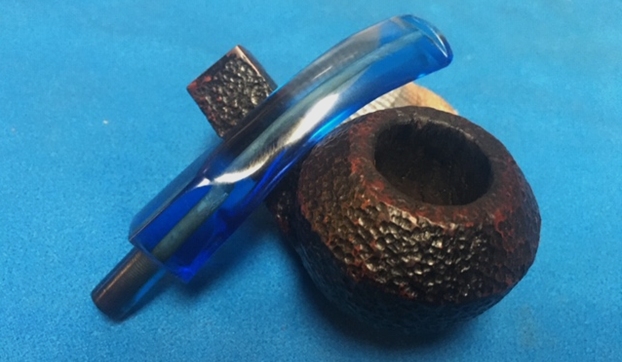
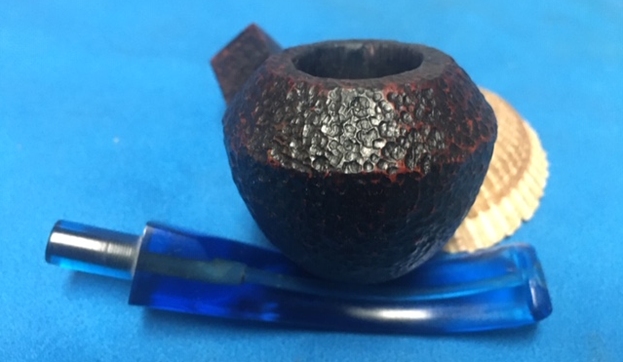
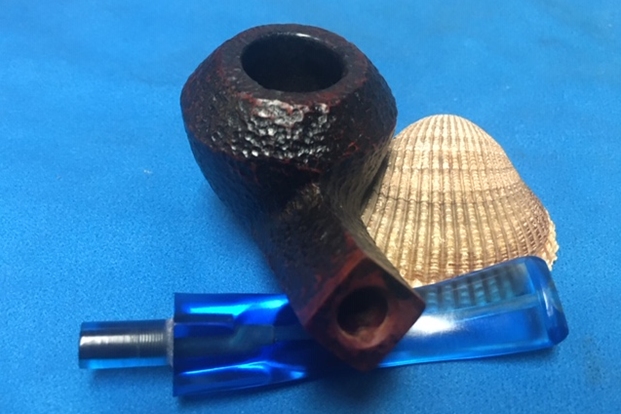
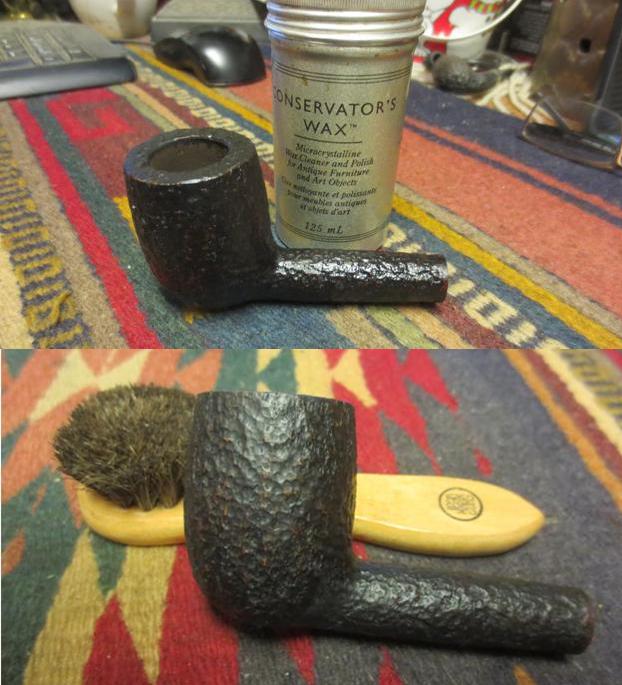
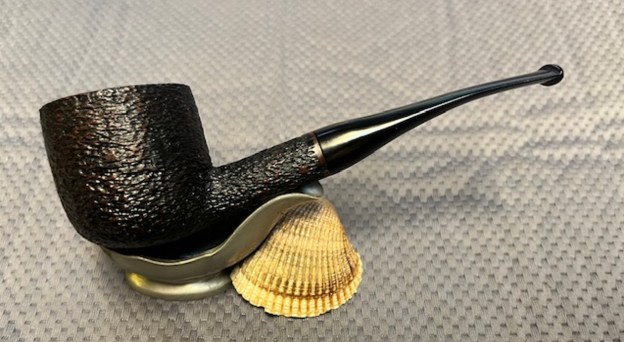
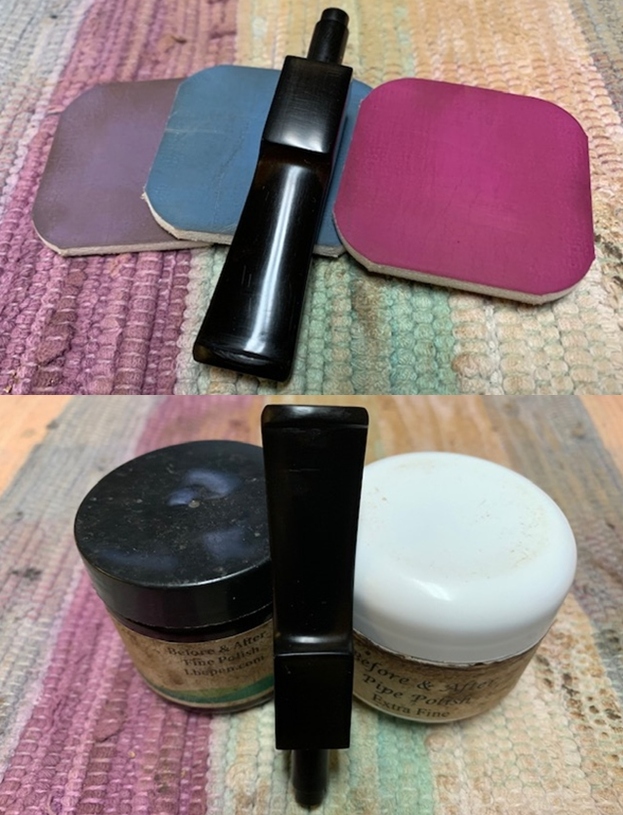
In the next box of pipes Jeff sent me there was an interesting Bulldog with a blue acrylic stem that I wanted to restore. It is stamped on the left underside of the diamond shank Antique Shell and the shape number 623 over Italy. The shape number is definitely a Savinelli shape number so I am safe to assume that this is a Savinelli Product. I have not seen one with a blue acrylic stem before so I was looking forward to the restoration. It was a dirty pipe when we received it. There was a coat of lava and dust in the rusticated finish of the rim top. The inner edge and outer edges of the rim looked very good. There was a thick cake in the bowl that had remnants of tobacco stuck in it. The finish was dirty and there dust and debris in the rusticated finish around the bowl. There also appeared to be what looked like either a crack or a fissure in the right side of the bowl toward the bottom. The blue acrylic stem looked good but there were tooth marks on the top and underside ahead of the button. There was tooth chatter on both sides of the stem. Jeff took some photos of the pipe before he started his cleanup work. He took photos of the bowl and rim top to show their general condition. You can see the tars and debris in the rustication of the rim top. The cake in the bowl is quite thick and there is tobacco debris on the walls of the bowl. The finish on the bowl is dirty but looks good. Jeff took some photos of the sides and heel of the bowl to give an idea of the finish on this particular piece of briar. It is different and tactile looking. I cannot wait to see what it looks like once it is polished and waxed.Jeff took a photo of the heel of the bowl. On the right side of the photo (also right side of the bowl) there is an area that looks like a crevice or possibly a crack in the bowl. I have circled it in red for easy identification. I will need to check that out once I am working on the pipe.He took a photo of the stamping on left underside of the diamond shank. There was a smooth panel with the stamping on it. It reads as it is stated above.This pipe has a very unique clear blue acrylic stem that goes really well with the contrasting browns of the bowl and shank. It is in very good condition with light tooth marks and chatter near the button.  I have worked on Savinelli Antique Shell pipes in the past but this was the first one with the blue acrylic stem. There are no stampings on the stem so it may be a replacement but it fits the shank very well. I moved forward to work on the pipe itself and see what I had to do with it. It had come back looking amazingly clean. The bowl looked very good and the crevice on the bottom of bowl, though still visible was even more obviously a crevice rather than a crack. I would need to probe it more once I started to clean up the pipe. The stem looked like new, with most of the tooth chatter gone. I was impressed. Jeff had done his normal thorough clean up – reaming, scrubbing, soaking and the result was evident in the pipe when I unpacked it. I took photos of the pipe before I started my work on it. I took some photos of the rim top and stem. The rim top and bowl looked very good. The cake and lava overflow were gone and the rim was very clean. Jeff had been able to get rid of the lava and tars. The close up photos of the stem shows that it is a much cleaner and better looking stem. The light tooth chatter was greatly reduced and the stem looked really good.I took a photo of the stamping on the left underside of the shank to show the condition after the cleanup. Often the stamping takes a hit with the cleaning and is lessened in it clarity. Jeff does a great job in leaving the stamping looking very good.I removed the stem from the shank and took a photo of the pipe at this point. It really is quite a stunning pipe with the clear blue acrylic stem.I started my restoration work on this pipe by addressing the crevice or potential crack on the lover right side of the bowl. I probed it with a dental pick to see how deep it went and if it was a crack or just a natural flaw in the surface of the briar. It did not appear to go very deep into the briar but my examination with the probe using a lens were inconclusive. I used a light and lens to check out the inside of the bowl and it was flawless – whew! I was glad to see that. It added credence to my thinking that it was a crevice. However, I decided to address it as a cosmetic crack and do the repair accordingly.I used a microdrill bit on my Dremel to drill a small pilot hole at what I ascertained were the ends of the crevice/crack. These are tiny holes shown in the next two photos. I have circled them in red below. The first photo has two and the second has one hole.I filled in the holes and the crevice on the heel and side of the bowl with clear super glue. I pressed briar dust into the holes and the crevice with a dental spatula. I cleaned off the debris with a brass bristle wire brush. It removes the loose debris but leaves the repairs in the crevice and holes intact.I was happy with the coverage of the repair but as is often the case a super glue and briar dust repair leaves smooth shiny spots on the finish. I dislike these shiny tells! I used a small round burr on the Dremel to create the same kind of rustication that was on the rest of the bowl. Once it was stained I was pretty sure it would look great.I used a Walnut stain pen to restain the newly rusticated surface of the repair. I like the way it looks and it will look even better as the bowl is polished and waxed.I worked some Before & After Restoration Balm into the surface of the briar with my fingertips to clean, enliven and protect it. I let the balm sit for a little while and then buffed with a cotton cloth to raise the shine. The photos show the bowl at this point in the restoration process. The repair looks really good. I set the bowl aside and turned my attention to the blue acrylic stem. I sanded out the remaining tooth chatter with 220 grit sandpaper and started to polish it with a folded piece of 400 wet dry sandpaper. Once it was finished it was smooth.I used some Denicare Mouthpiece Polish that I have in my kit to start polishing out some of the scratches and remaining oxidation on the stem. I rubbed it in with a cotton pad and my finger tip and buffed it off with a cotton pad.I polished the stem with micromesh sanding pads – dry sanding with 1500-12000 grit sanding pads. I wiped it down after each sanding pad with a cloth containing some Obsidian Oil. I finished polishing it with Before & After Pipe Stem Polish – both Fine and Extra Fine and buffed it off with a cotton cloth. I love the end of a restoration project like this one that needed more than first appeared. It is the moment when all of the parts come together and the pipe looks better than when we started the cleanup process. I put the stem back on the bowl and lightly buffed the pipe with Blue Diamond on the buffing wheel. I carefully avoided the stamping on the shank sides during the process. I gave the bowl multiple coats of Conservator’s Wax and the stem multiple coats of carnauba wax on the buffing wheel and followed that by buffing it with a clean buffing pad on the buffer. I hand buffed the pipe with a microfiber cloth to deepen the shine. The finished pipe is a really beautiful rusticated bowl with a stunning blue acrylic stem. Give the finished pipe a look in the photos below. I can only tell you that it is much prettier in person than the photos capture. The dimensions of the pipe are Length: 5 ½ inches, Height: 1 ¾ inches, Outside diameter of the bowl: 1 ¼ inches, Chamber diameter: ¾ of an inch. This Savinelli Made Antique Shell Bulldog shape 623 is a great looking pipe. Thanks for walking through the restoration with me as I worked over another beautiful pipe. I will be putting this pipe on the rebornpipes store shortly. If you want to add it to your collection let me know. Thanks for your time.
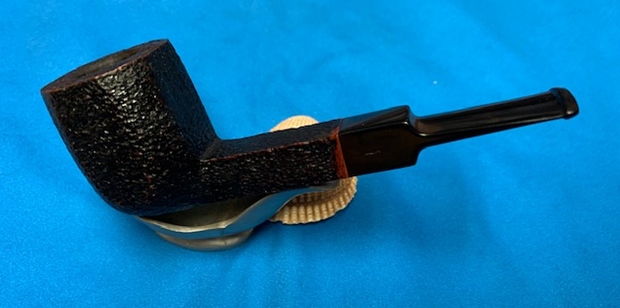
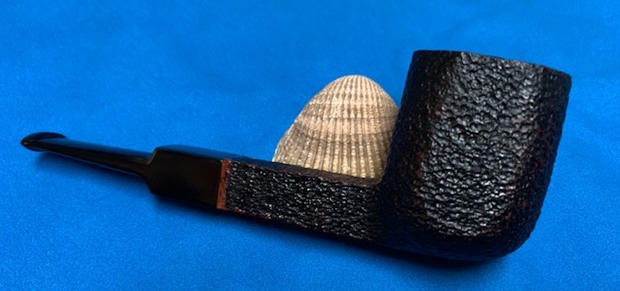
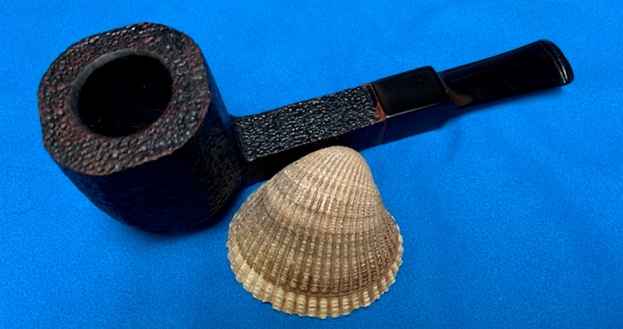
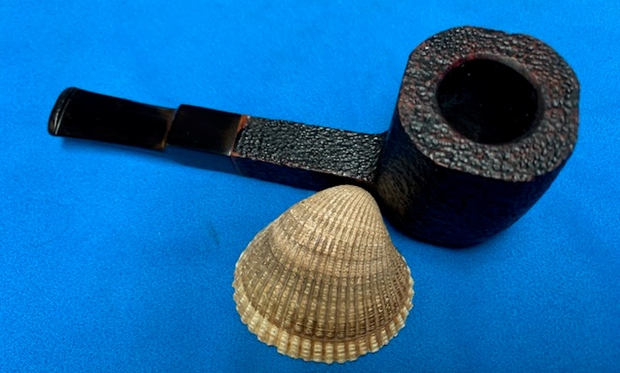
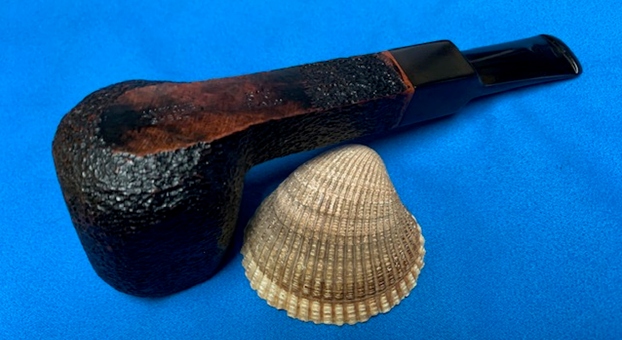
Just finished cleaning up a Savinelli Antique Shell Lovat


Blog by Steve Laug

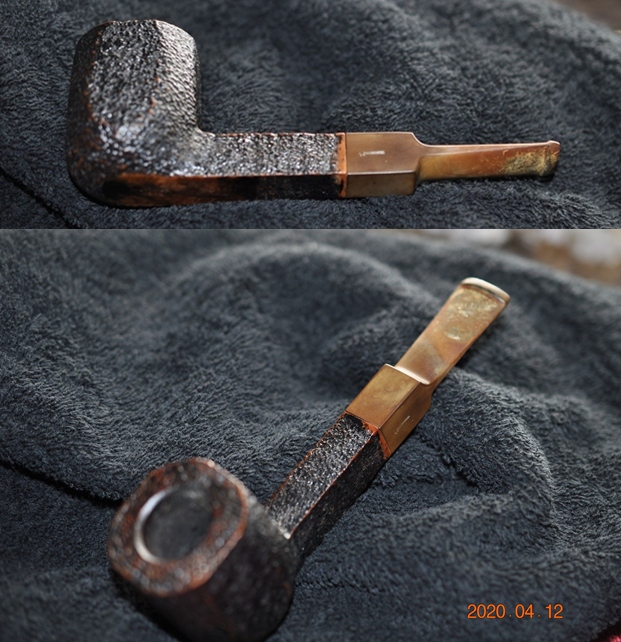
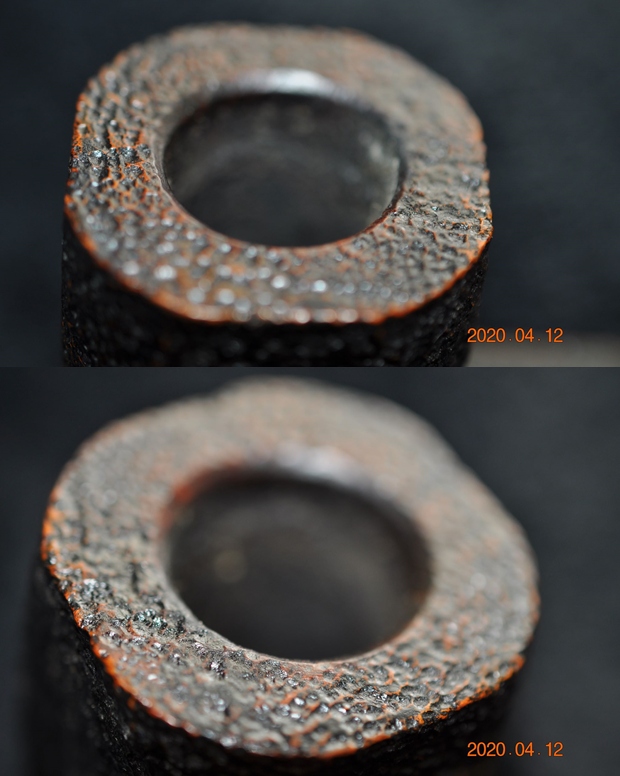
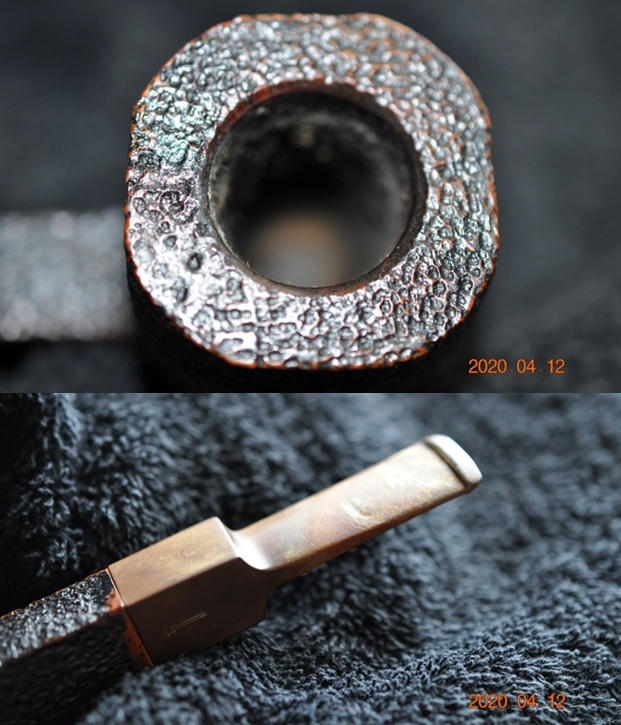
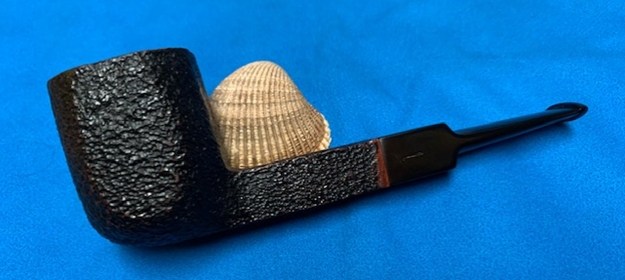
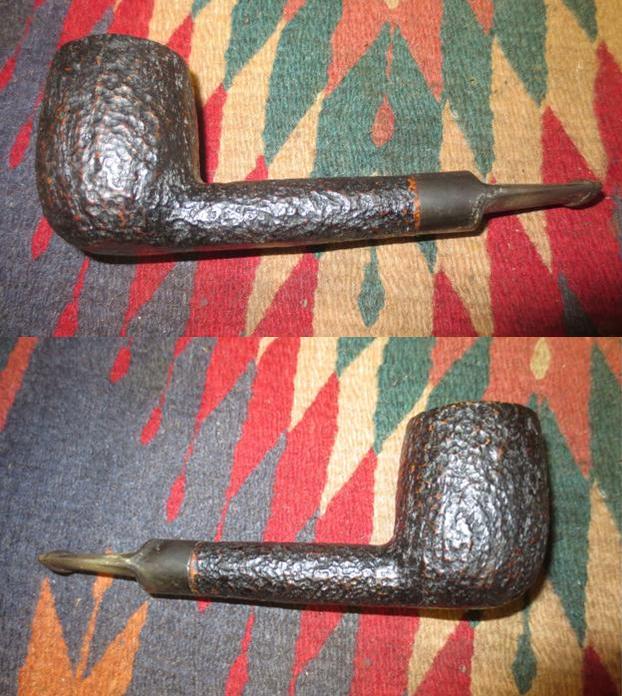
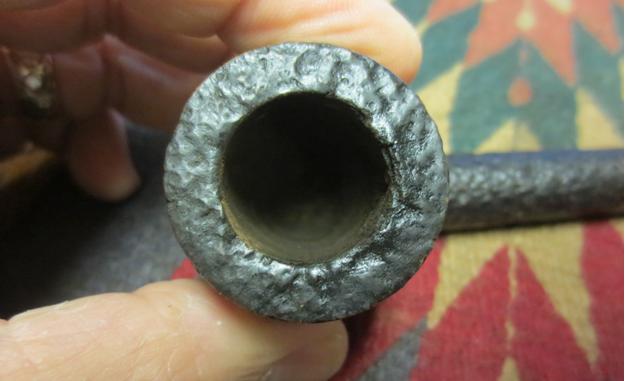
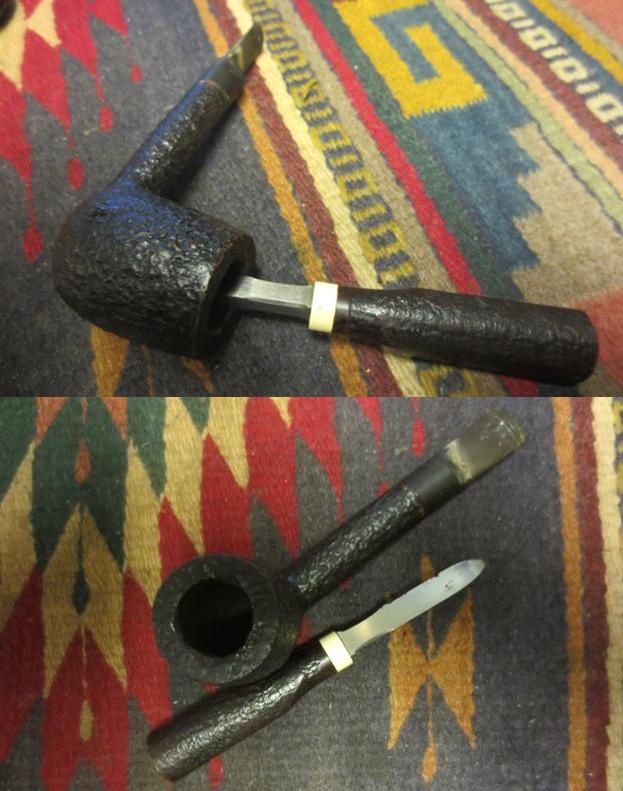
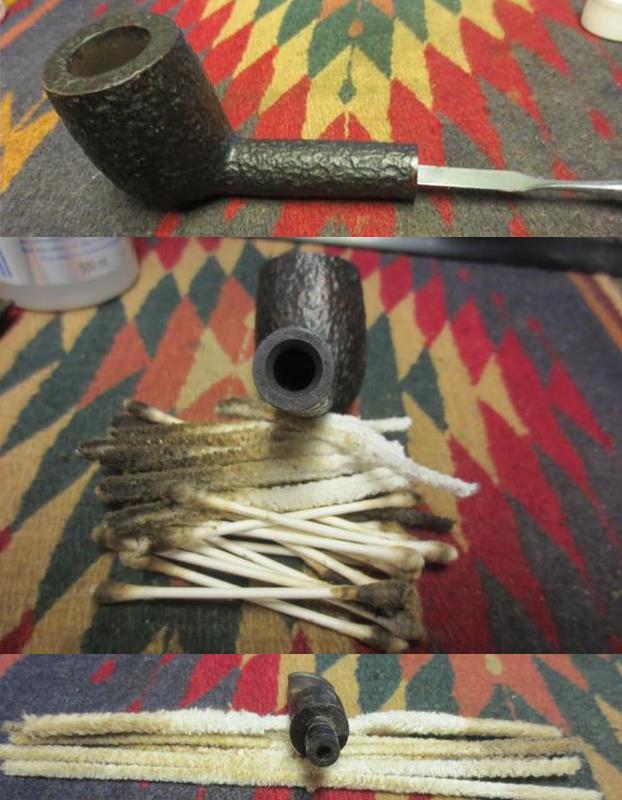
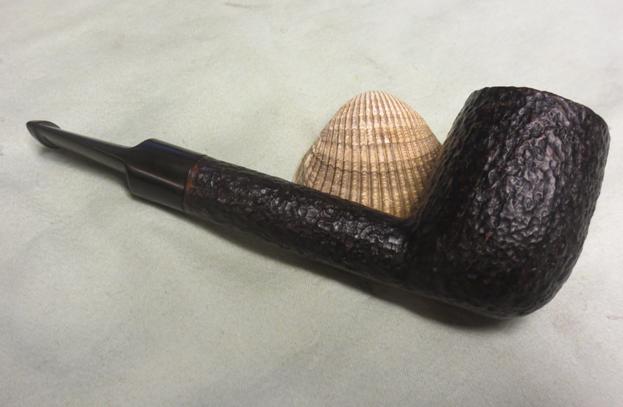
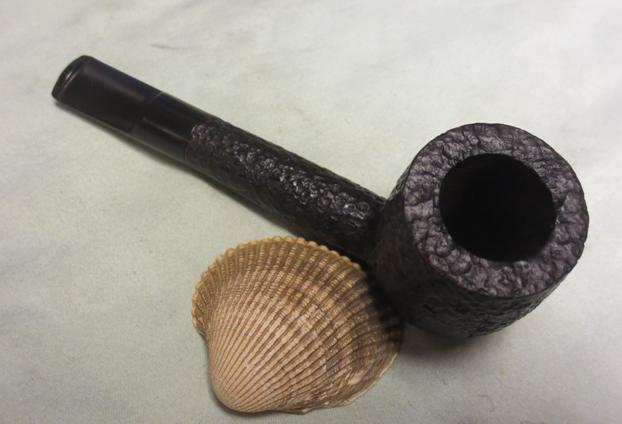
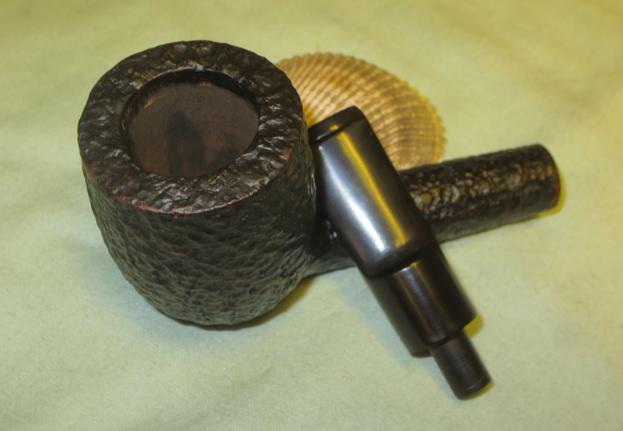
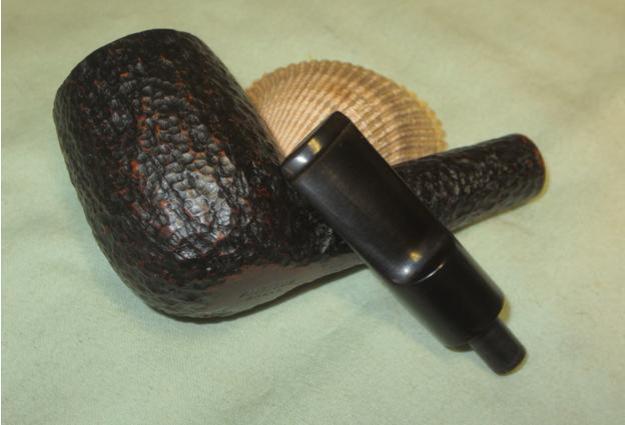
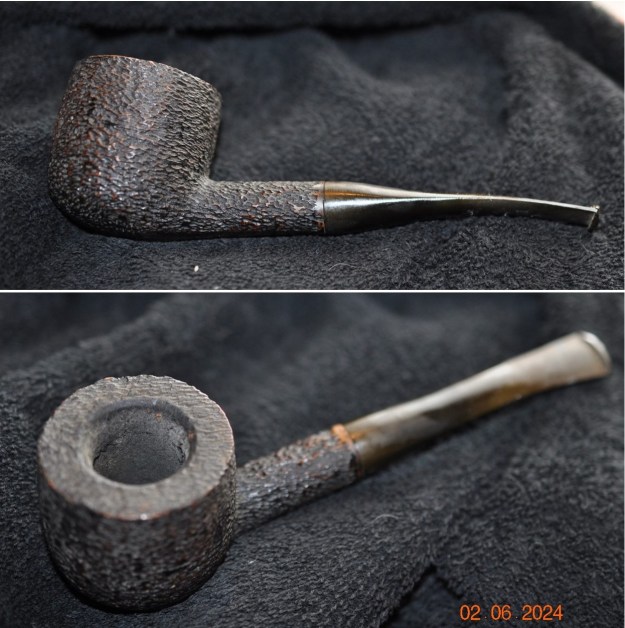
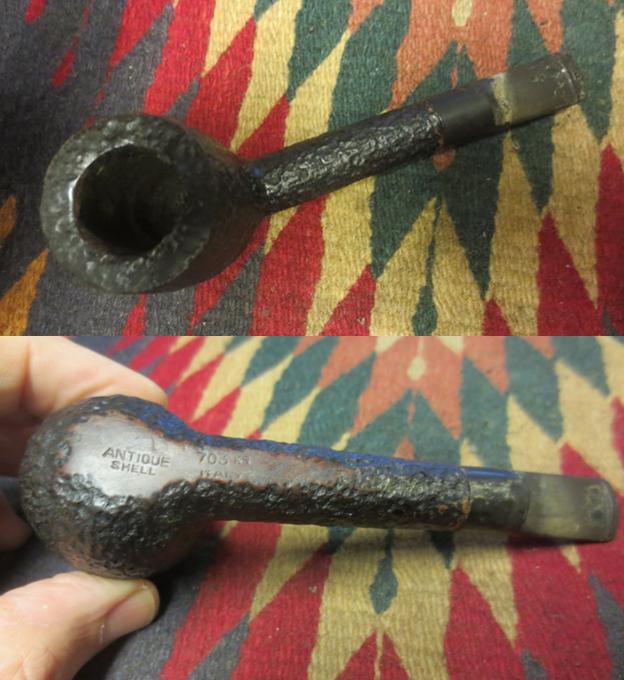
Throughout the past 15 years or more I have cleaned up a lot of Savinelli pipes. I have cleaned a large variety of shapes and sizes but I have never seen one that is a Lovat shape, the 703 KS. I have worked on quite a few of the Antique Shells in the past but still not one of these. I have restemmed and restored any number of fascinating Shells but never a Lovat. This little pipe grabbed my attention when I opened my box of pipes to be refurbished. It is one that my brother picked up either on eBay or in an antique shop somewhere on his journeys. When I started working on this one it was in decent shape. The bowl had a light cake. The rim was really dirty with an overflow of tars and oils. The finish was dirty but there was no damage to the exterior of the pipe. The dark brown and medium brown contrasting stains looked like they would clean up really well. The stem was oxidized and had what looked like the debris left behind when a pipe has been smoked with a rubber softee bit.Shell1 Shell2I took a close up photo of the rim top to show the buildup of tars and oils. They were thick on the rim filling in all of the crevices and grooves in the finish. It was raised and thickened along the back inner edge of the bowl. I also tried to get a couple of photos of the condition of the stem to show the oxidation and the white calcification line where the softee bit must have been. There were not any tooth marks or chatter on either side of the stem.Shell3 Shell4I reamed the bowl with the Savinelli Pipe Knife and took the thin cake back to the walls.Shell5The rim was a mess so I used a brass bristle wire brush and a dental pick to clean up the rim top. It took some work to get all of it off the rim. The picture below shows the process about half finished. I used the dental pick out the debris from the top. I then wire brushed it some more and between the two was able to remove all of the grime.Shell6I scraped the bowl edge one more time with the pipe knife and then used a rolled piece of sandpaper to sand out the inside of the bowl.Shell7I gave the bowl several coats of Conservator’s Wax and hand buffed it with a shoe brush.Shell8I used the dental spatula to clean out the inside of the shank and followed it up with pipe cleaners, cotton swabs and alcohol. I also cleaned out the airway in the stem with pipe cleaners and alcohol.Shell9I sanded the stem with 220 grit sandpaper to remove the oxidation and the calcification on the stem. I wet sanded with 1500-2400 grit micromesh sanding pads and rubbed it down with Obsidian Oil. I dry sanded it with 3200-4000 grit pads and gave it another coat of oil. I finished sanding with 6000-12000 grit pads, gave it a final coat of Obsidian Oil and set it aside to dry.Shell10 Shell11 Shell12I buffed the bowl and stem with Blue Diamond polish on the wheel and then gave the stem several coats of carnauba wax. I gave the bowl several more coats of Conservator’s Wax and buffed the bowl and stem with a clean buffing pad. I hand buffed the pipe with a microfibre cloth to give it a deeper shine. The finished pipe is shown in the photos below. This one will soon be for sale in the store. If you are interested contact me, and this could be yours. Thanks for looking.Shell13 Shell14 Shell15 Shell16 Shell17 Shell18 Shell19 Shell20