by Steve Laug
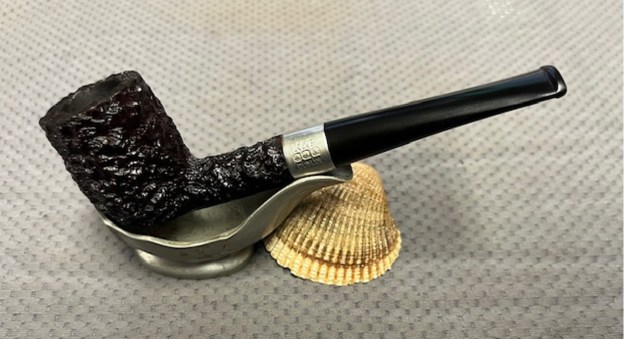
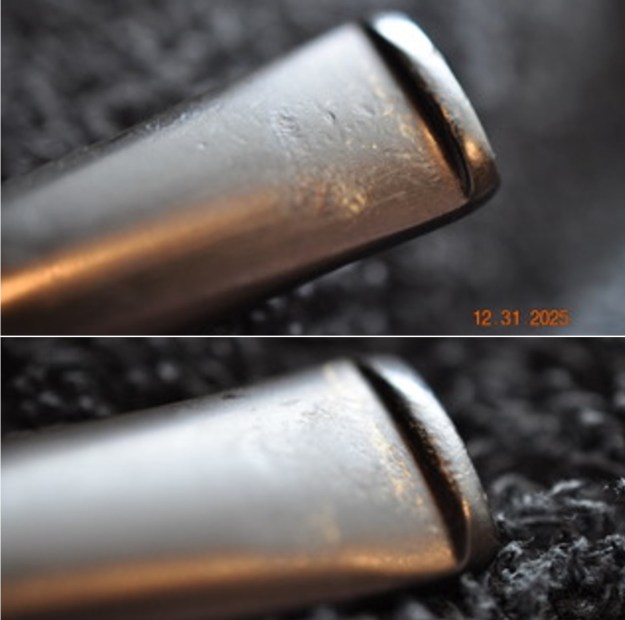
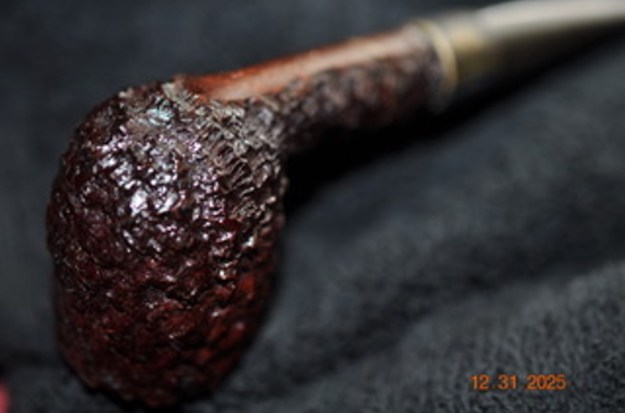
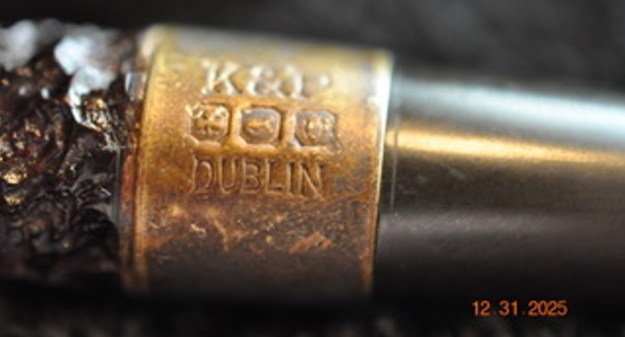
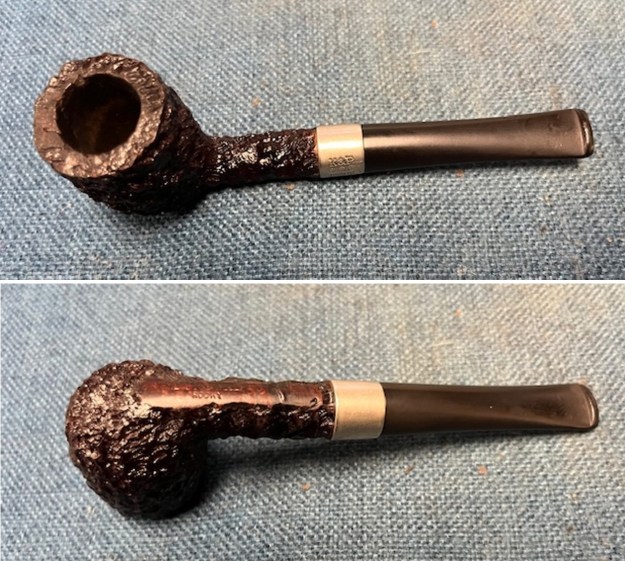
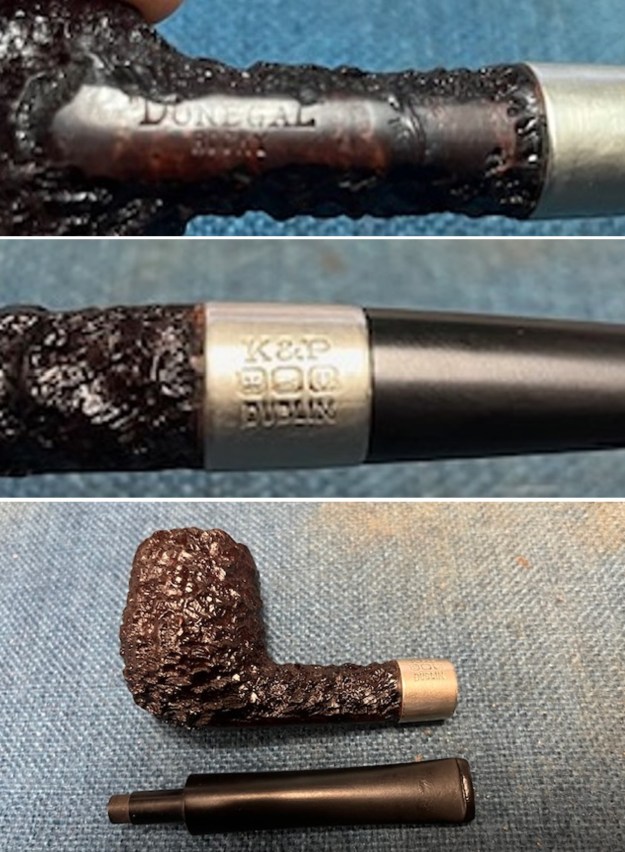
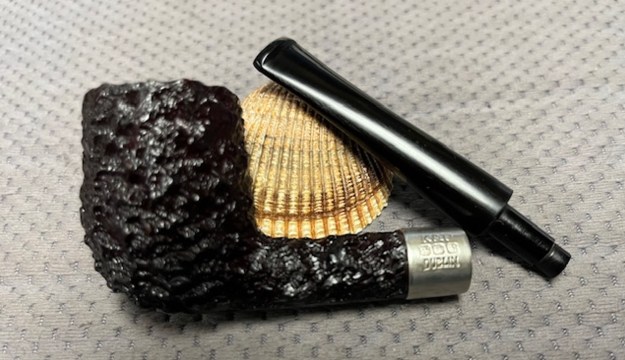
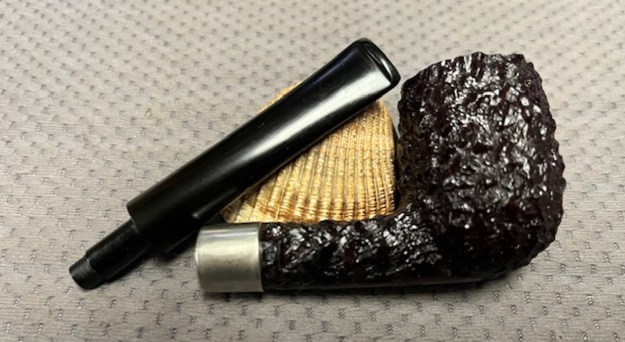
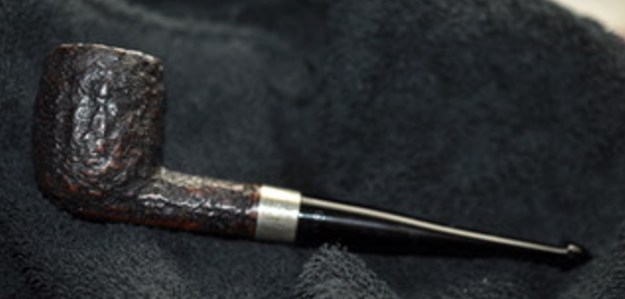
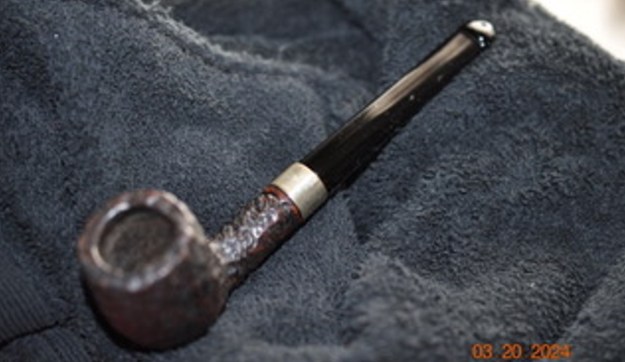
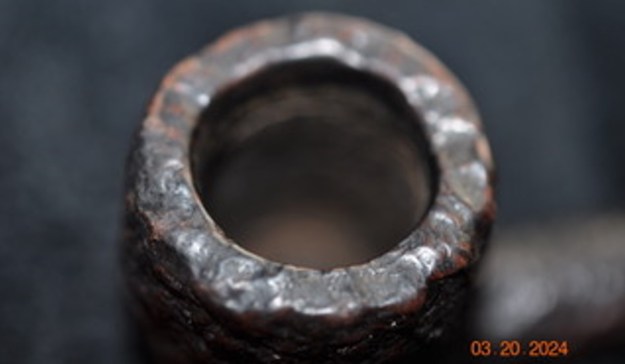
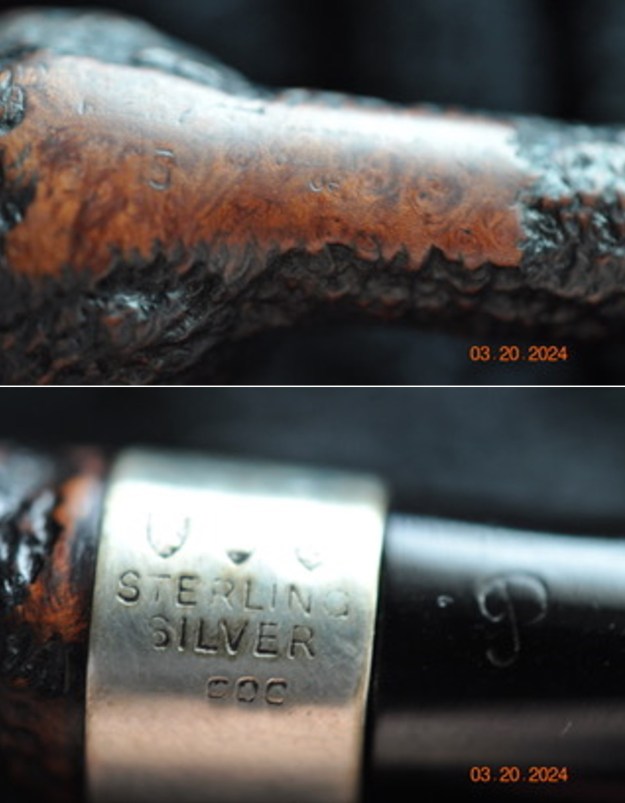
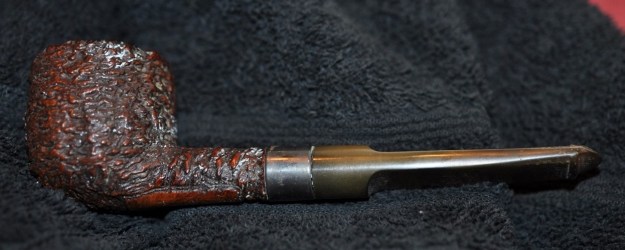
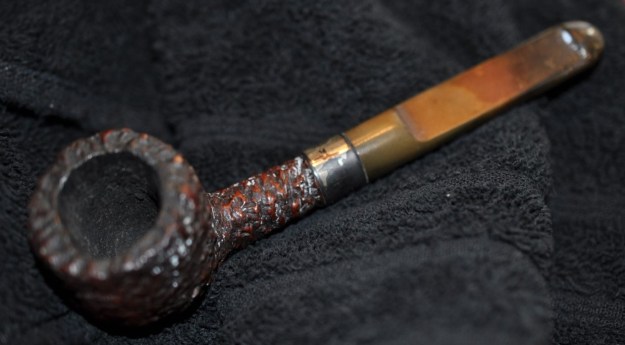
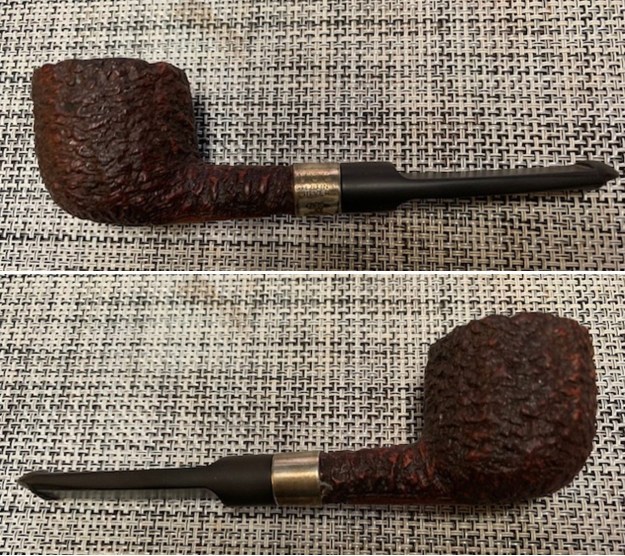
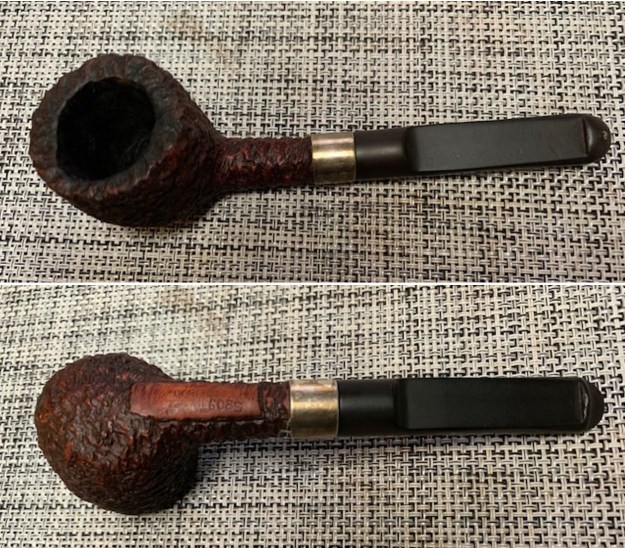
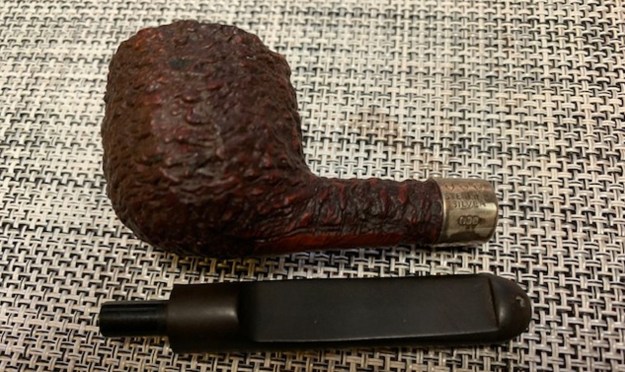
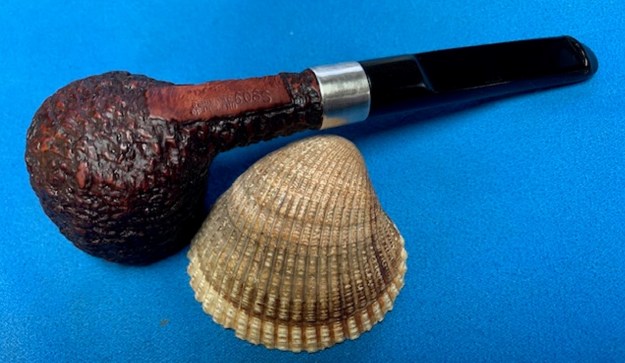
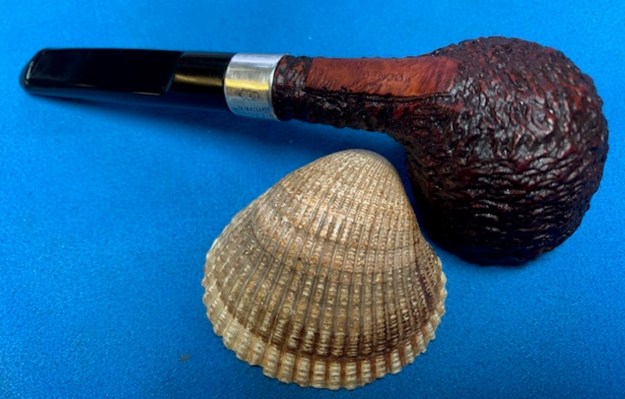
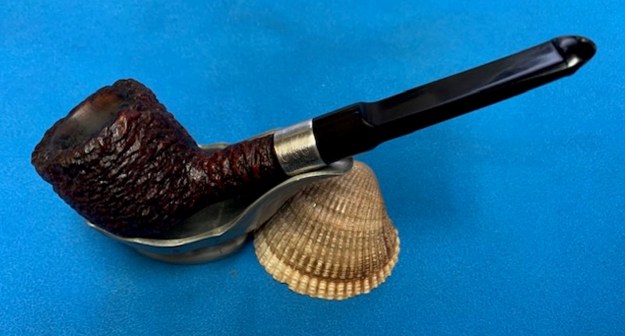
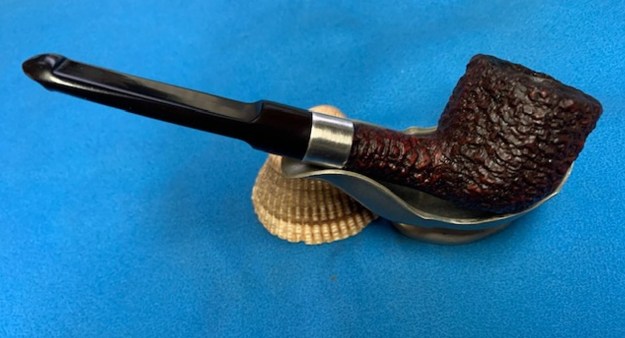
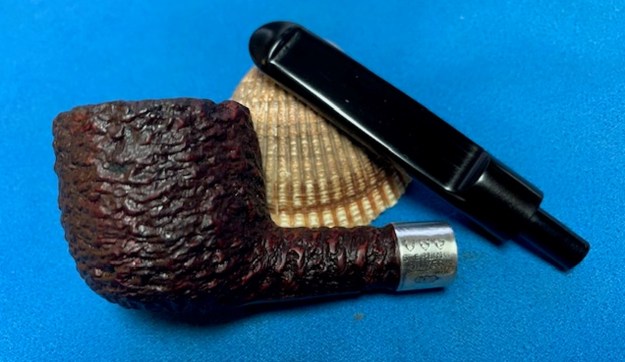
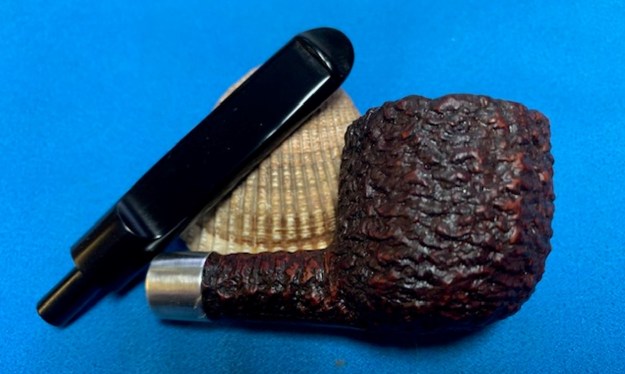
The next pipe on the work table is a sandblast Peterson’s Rusitcated Billiard shaped pipe that we received from a friend in Naples, Florida, USA on 07/17/2024. It was stamped on the underside of the bowl and shank and on the heel, it was stamped “Donegal” [over] Rocky. There was no shape number though it appears to be a shape 15. Following that it read, Made in Ireland (in circle). There is a band on the shank that is stamped on the left side and reads K&P [over] three faux hallmarks, or Makers Marks. These were used before 1963. These included a Refined Shamrock, Wolf Hound and a Tower without a door. Under that it read DUBLIN. It has a deeply rusticated finish around the bowl and shank that has a lot of oils, debris and grime in the finish. The pipe had been recently reamed and there was a light cake in the bowl and a lava overflow in the rustication on the rim top. The inner edge of the bowl looks to be in good condition. There was a very beautiful pipe underneath all of the buildup of years of use. The stem was a Peterson’s Fishtail Taper Stem. It had light chatter on both sides ahead of the button. Jeff took photos of the pipe before he started his cleanup work on it.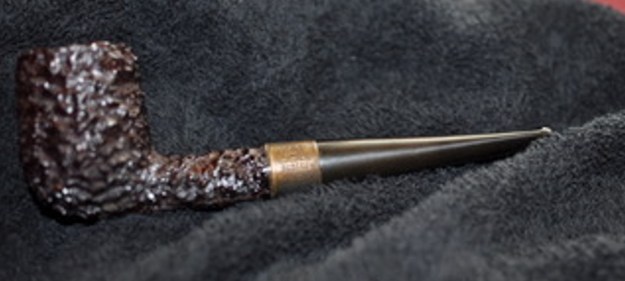
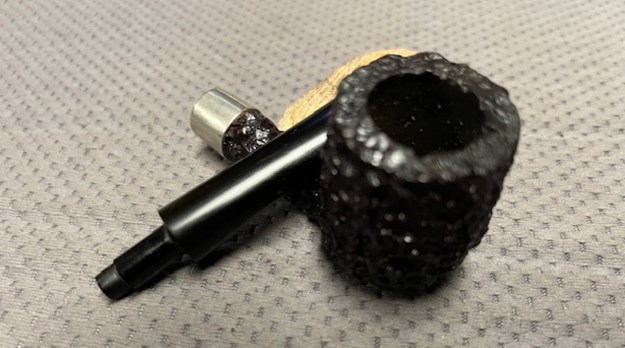
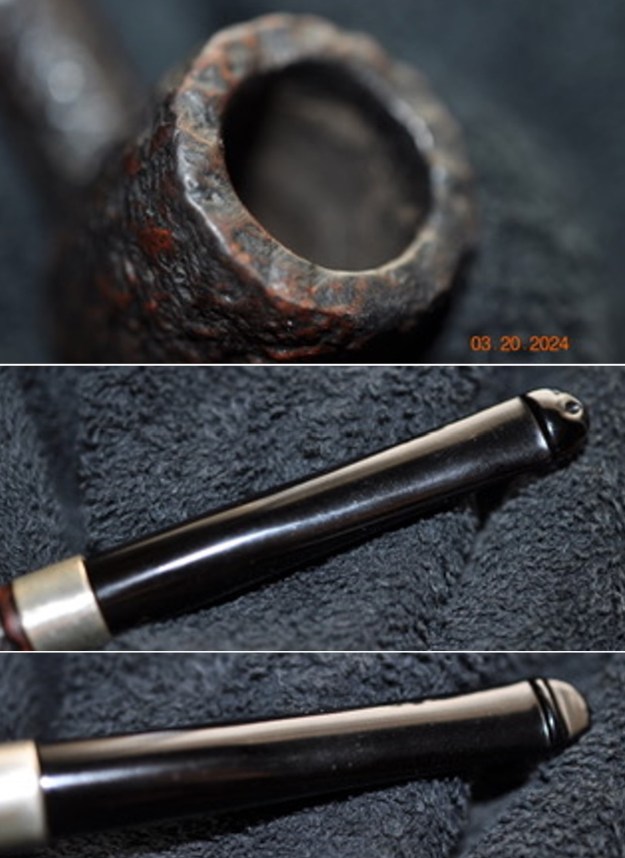
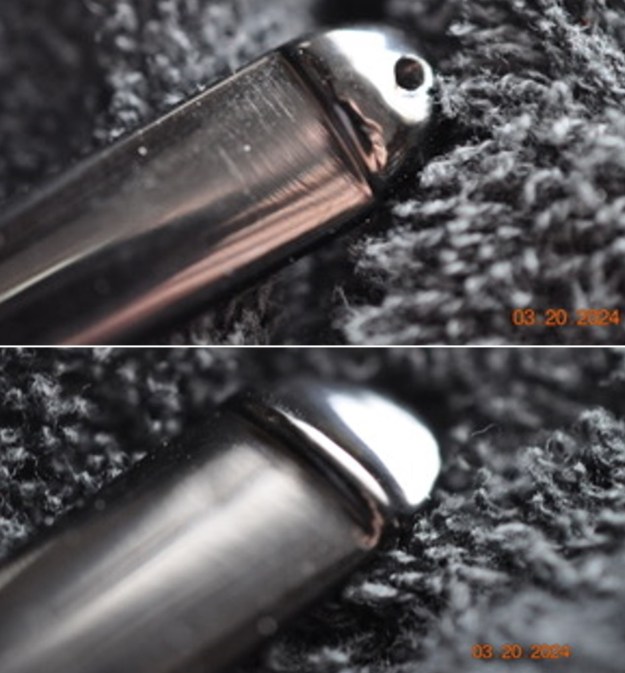
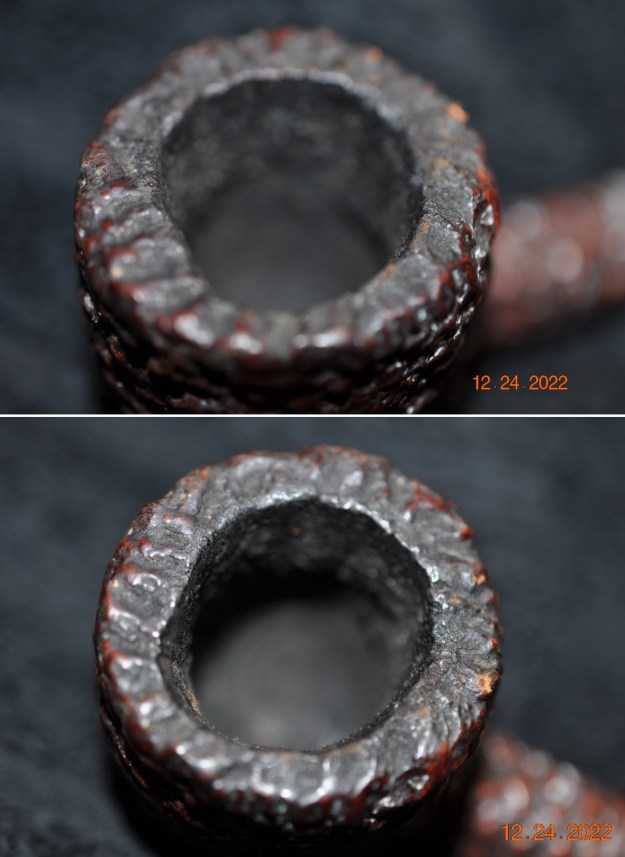
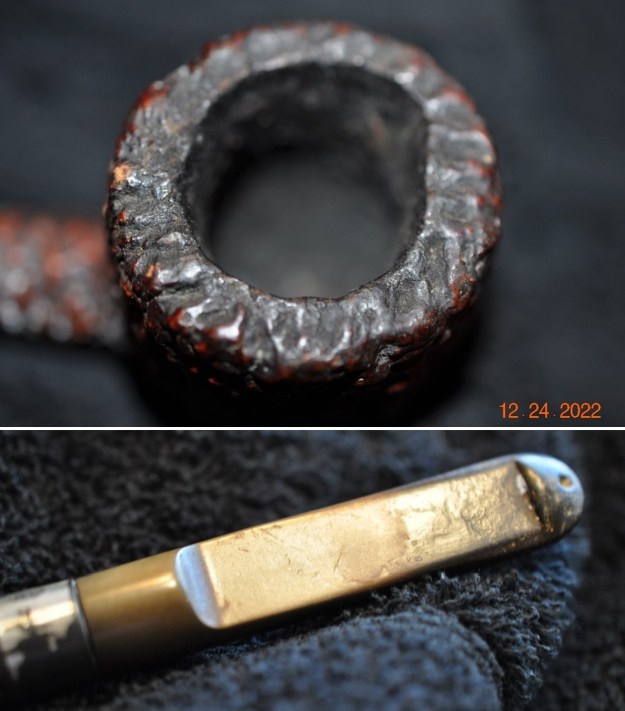
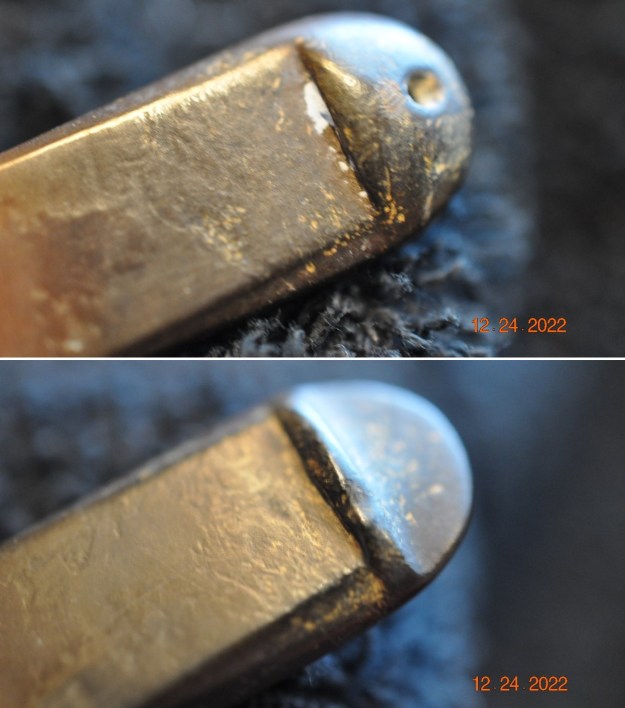
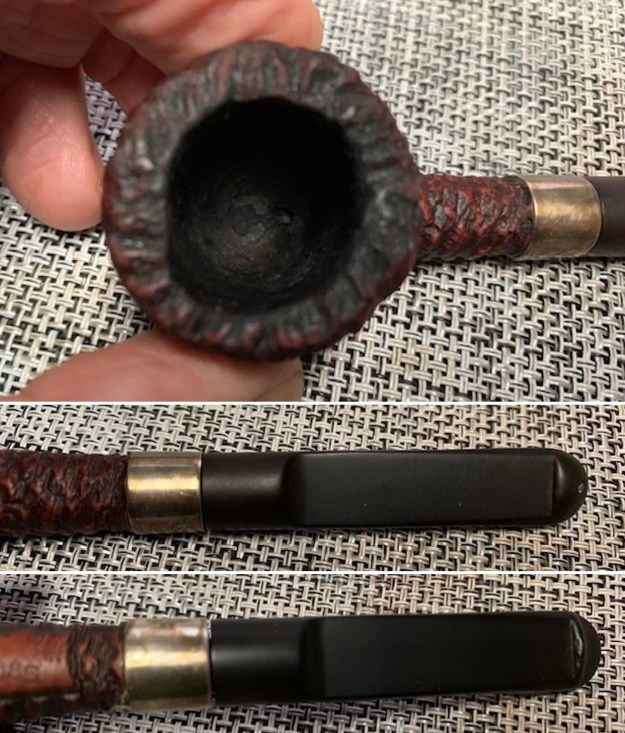
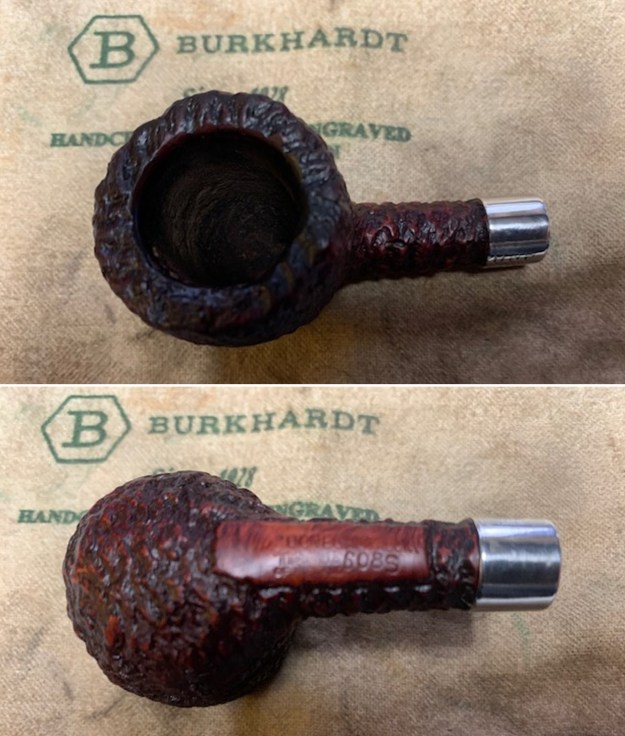
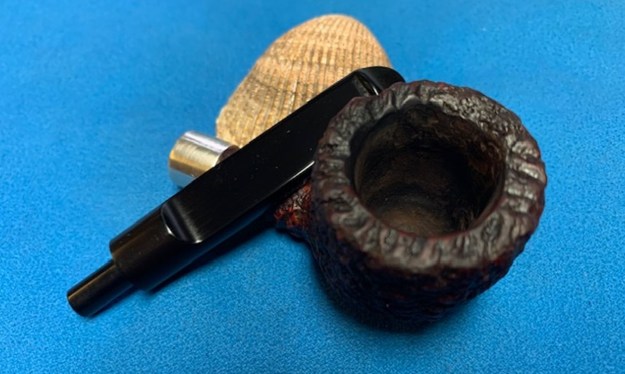
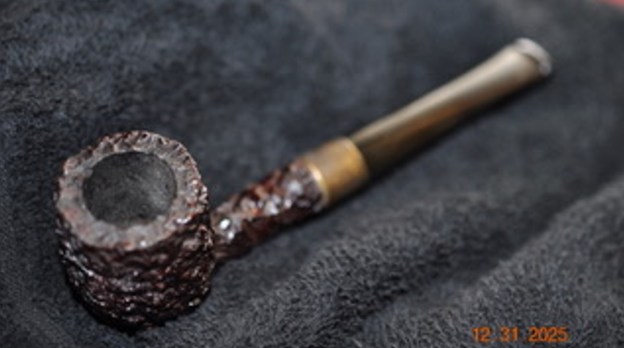 Jeff took photos of the bowl and rim top to show the thin cake in the bowl and the light lava build up on the rusticated rim top and the edges of the bowl. The rim top and edges looked good. Jeff took photos of the top and underside of the stem showing the tooth chatter on an otherwise good looking stem. More would be visible once Jeff cleaned it up.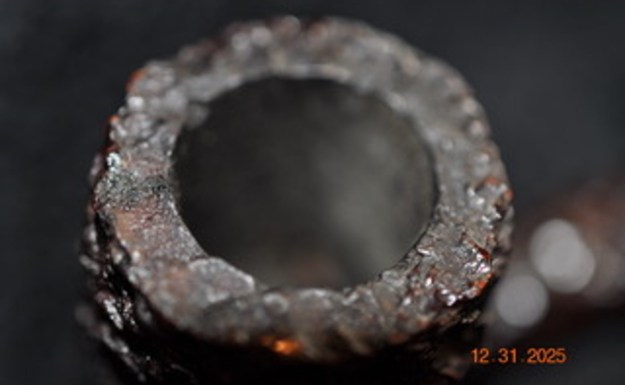
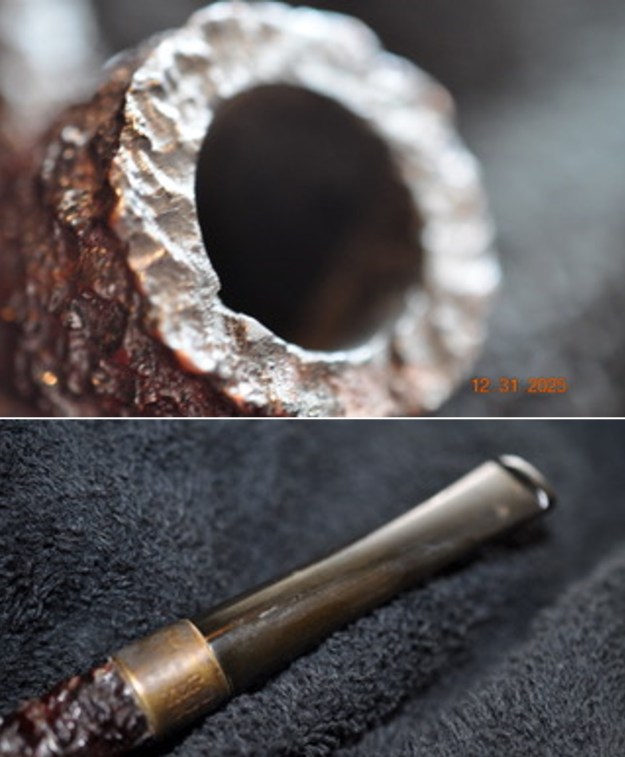
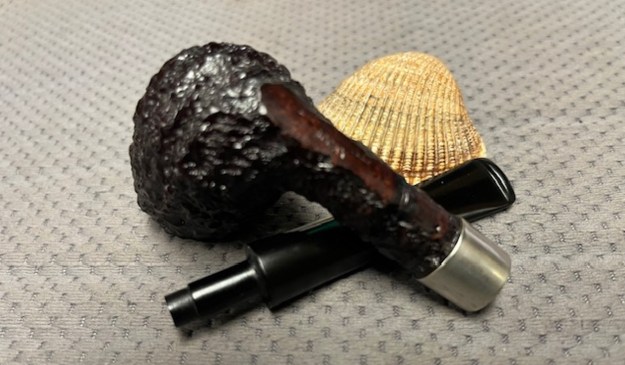
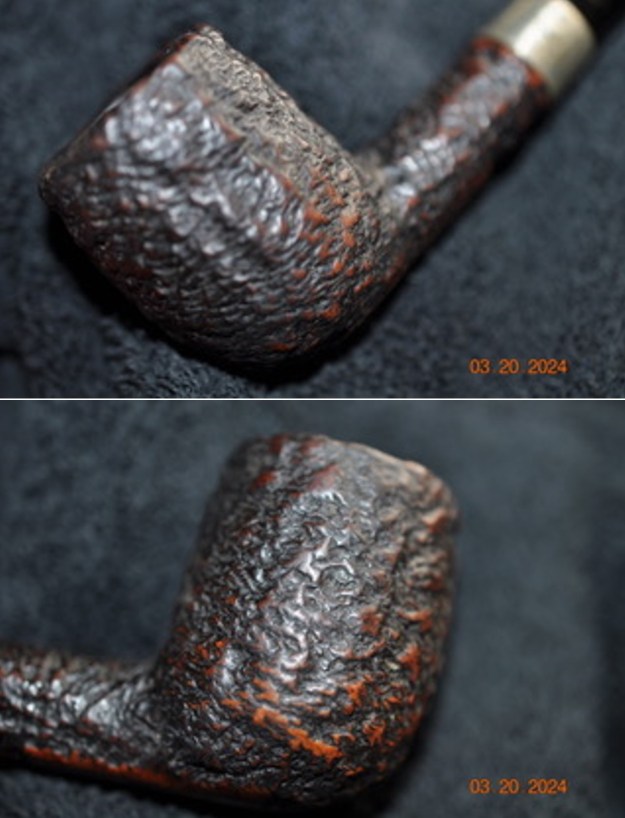
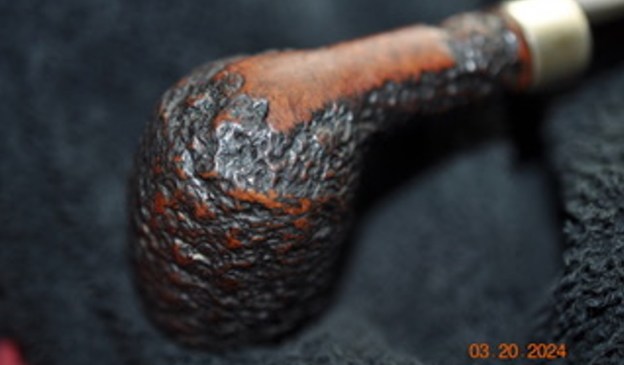
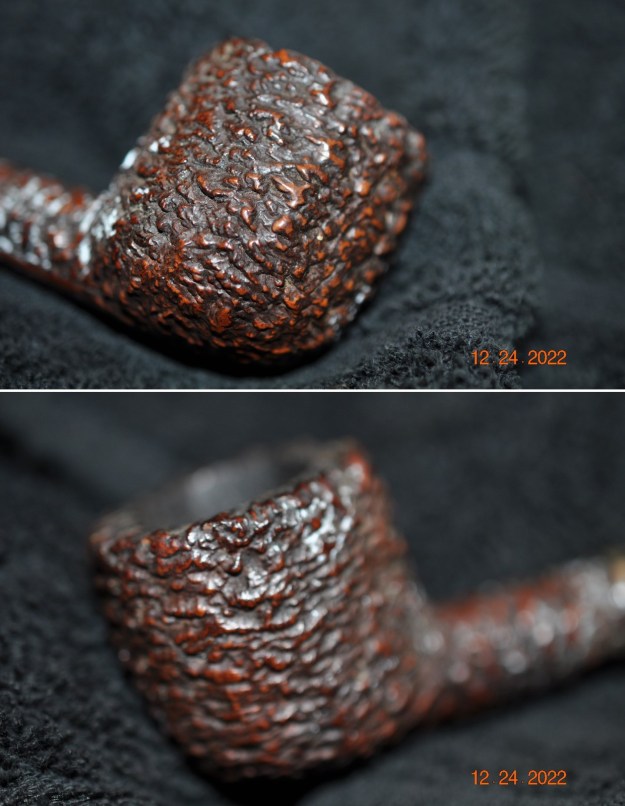
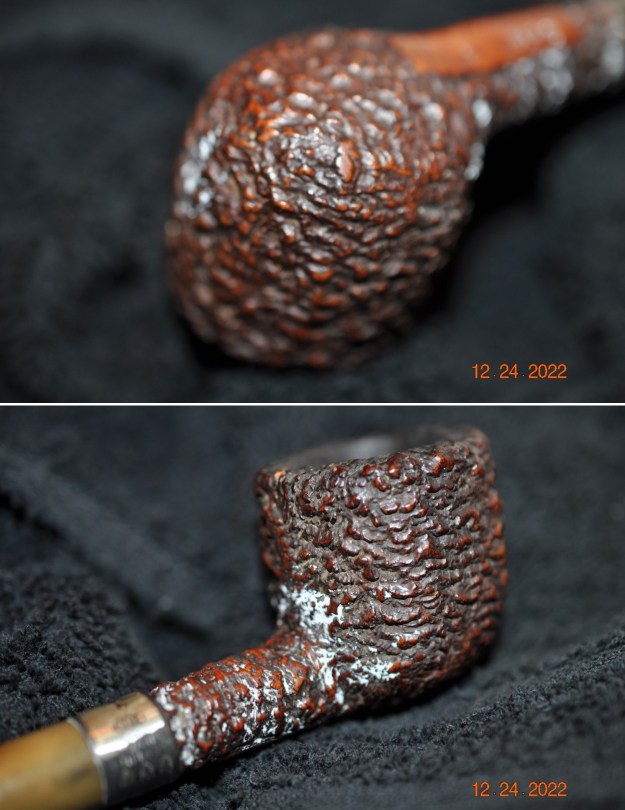
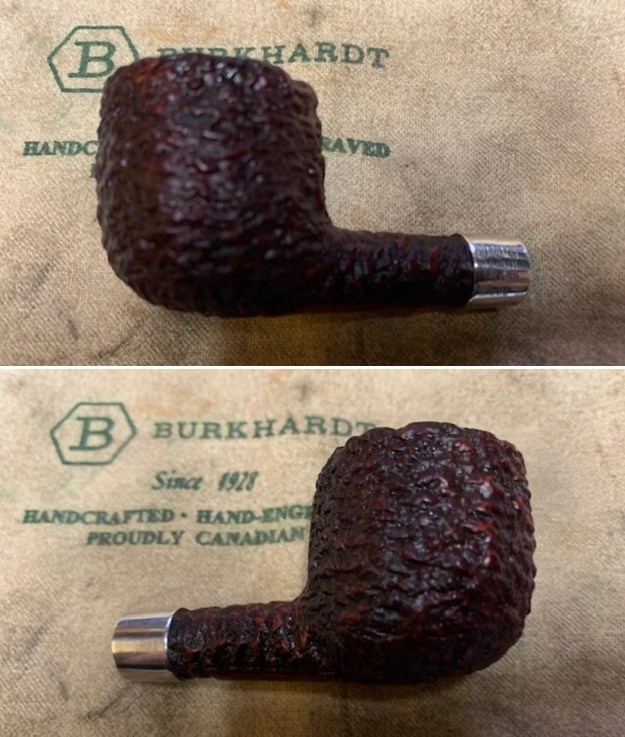
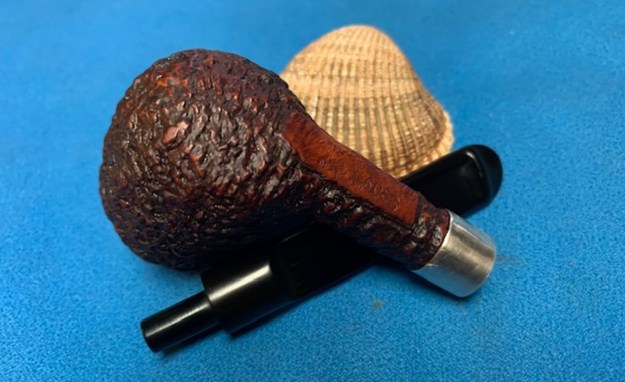
 Jeff took photos of the sides and heel of the bowl to show the condition of the finish. You can see the dust and grime around the sides of the bowl and shank in the heavily rusticated finish.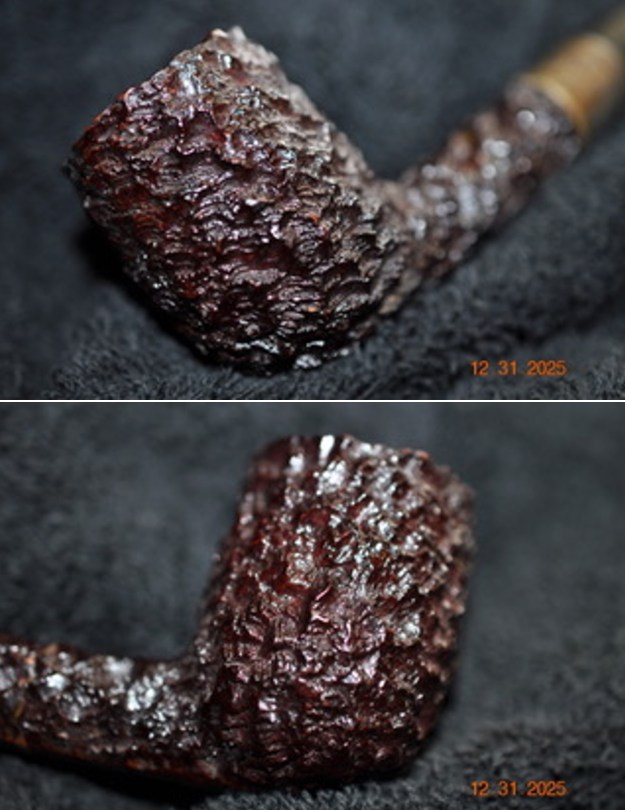
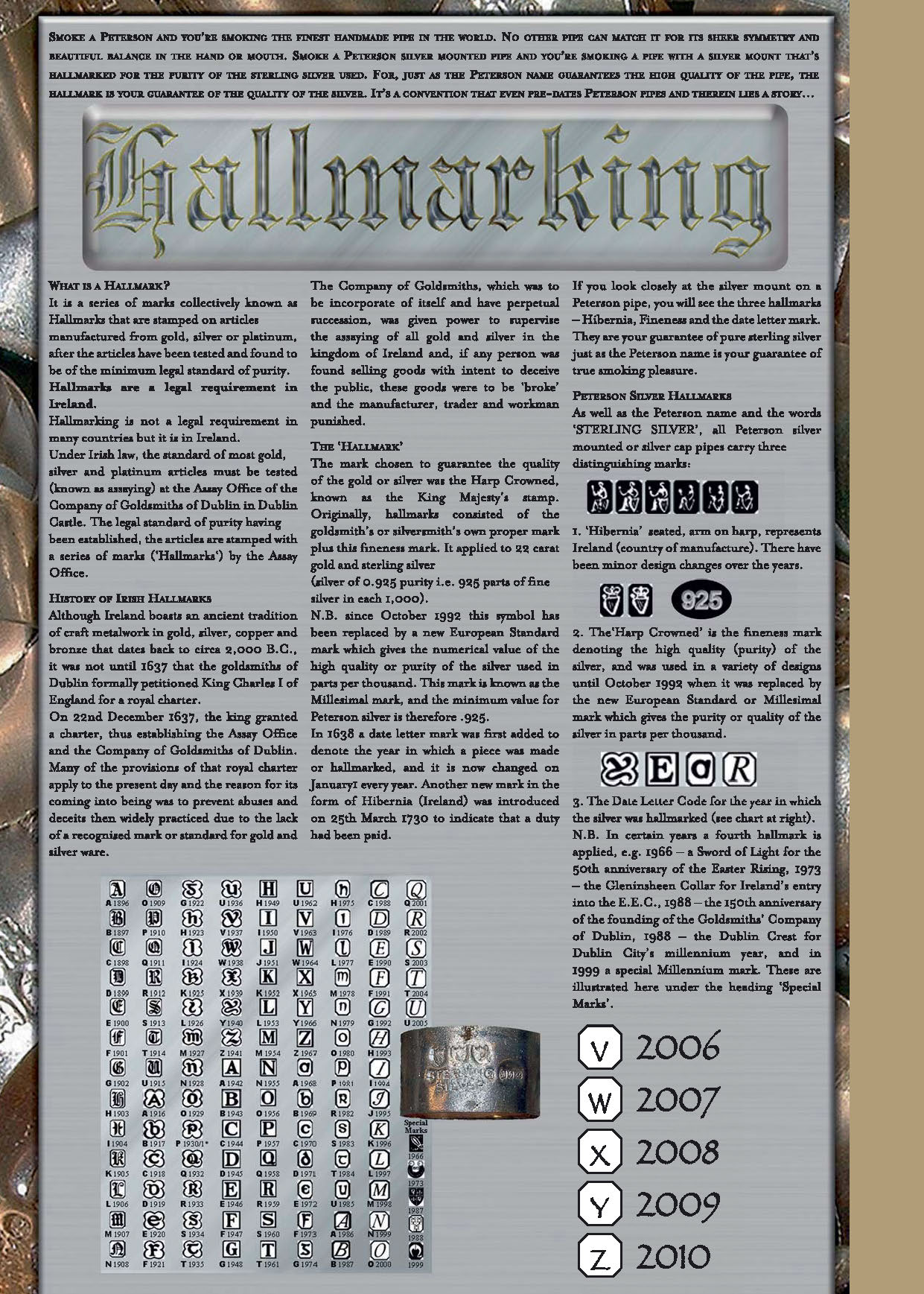
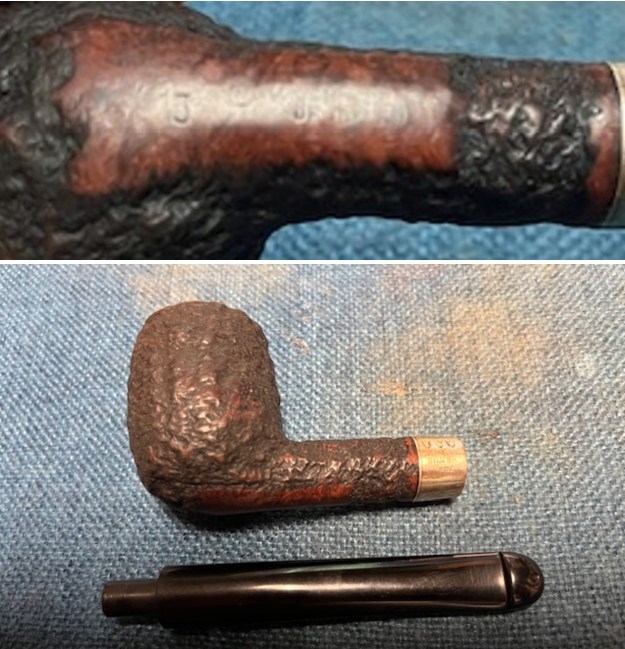
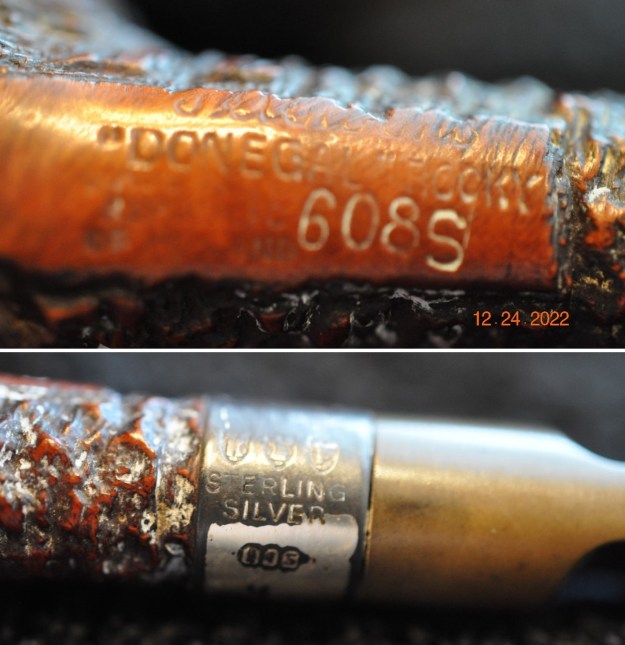
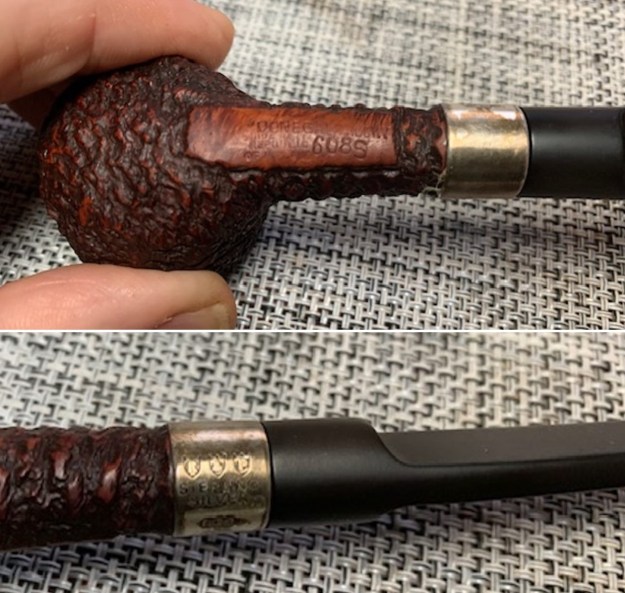
 Jeff took photos of the stamping on the underside of the bowl and shank. The stamping was faint but readable as you can see from the photos. It read as noted above. The Silver ferrule is actually clearly stamped and readable.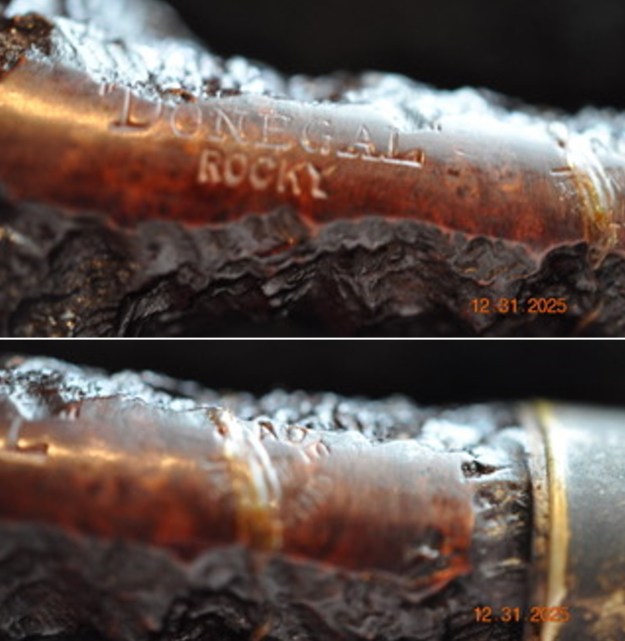
 I am including the information from Pipedia’s article on Peterson pipes. It is a great read in terms of the history of the brand (https://pipedia.org/wiki/Peterson). I have included a bit of the pertinent history here.
1915 – 1949 The Pre Republic Period
This was a turbulent period for the company with the outbreak of World war 1 and the start of the Easter uprising in 1916. The K&P shop was extensively damaged during the military action at this time (see attached newspaper report).
Following quote by Kapp & Peterson.
“Kelly’s, the well known Dublin landmark at the corner of Sackville Street and Bachelor’s Walk, one of the most shot at and fully punctured premises in Dublin, was in our possession practically before the smoke ceased over the ashes of our fine shop under the Metropole Hotel. This was one of the most sensational business captures arising out of the Rebellion.”
Around 1916, Peterson began stamping their pipes “Made in Ireland” in what is referred to as a block format.
Charles Peterson died shortly after retiring and moving to Hamburg in Germany in 1919 where he is buried. The original 1890 ‘system’ pipe patent expired at around this time.
The Irish free state came into being in December 1922. The Free State Era was from 1922 through to 1937.
Peterson followed with a stamp of “Irish Free State” in either one or two lines, either parallel or perpendicular to the shanks axis and extremely close to the stem. Ireland was a republic in all but name. Eventually the Irish people voted for a new constitution in 1937 and Ireland then formally became Eire (Ireland in Irish). The Made in Eire era stamps were from 1938 through till 1941. Peterson now stamped their pipes with “Made in Eire” in a circle format with “Made” and “Eire” in a circle with the “in” located in the centre of the circle. This was used during the years of 1938 – 41. Later they stamped their pipes with “Made in Ireland” in a circle format 1945-1947 and still later with “Made in Ireland” in a block format 1947-1949. The “Made in Ireland” block format came in either one line or two lines. The Republic of Ireland was formed on 17 April 1949.
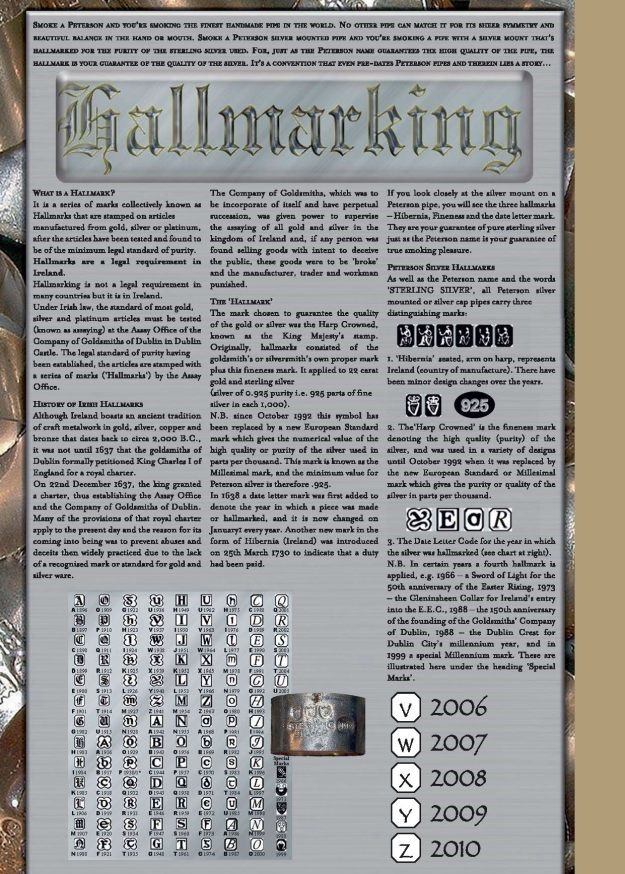
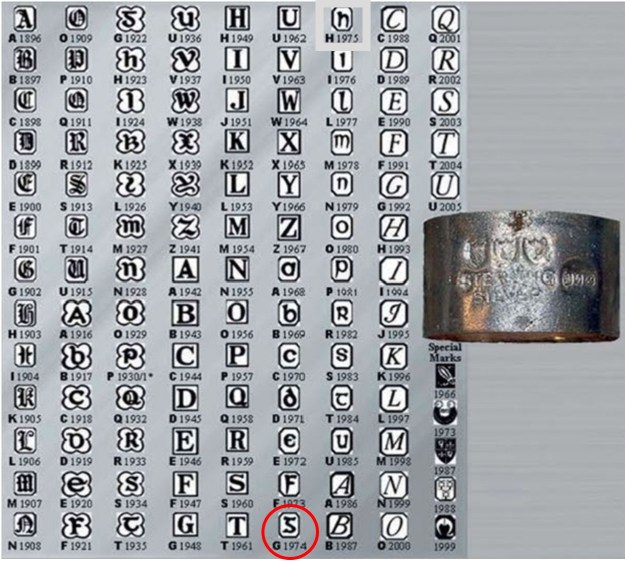
The above information helped me date the pipe. I knew from the Maker’s Marks on the Silver that it was made prior to 1963. The Made in Ireland circular COM stamp helps to take the date back a bit further as it was used from 1945-1947. This was another older pipe. That was a bit of a surprise for me.
Jeff had done a great job cleaning up the pipe as usual. He cleaned up the reaming with a PipNet reamer and a Savinelli Fitsall Pipe Knife. He scrubbed the interior of the bowl and shank with pipe cleaners, cotton swabs and alcohol to remove the tars and oils. He scrubbed the exterior of the pipe with undiluted Murphy’s Oil Soap and a tooth brush to remove the grime from the finish. He worked on the rim top lava and darkening with the soap and tooth brush. He scrubbed the inside of the stem with alcohol and pipe cleaners. He scrubbed the exterior of the stem with Soft Scrub and then soaked it in Briarville’s Pipe Stem Deoxidizer. He rinsed it off with warm water to remove the Deoxidizer. The pipe looked far better when it arrived. The silver tarnished once again and would need to be polished because it had been sitting here for awhile.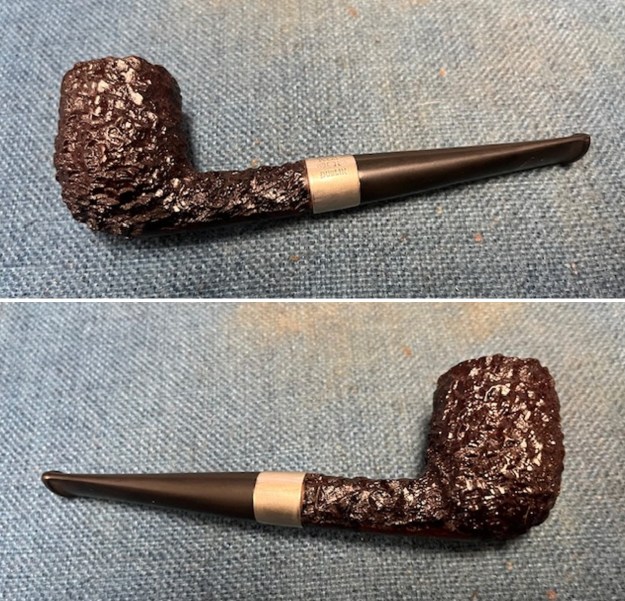
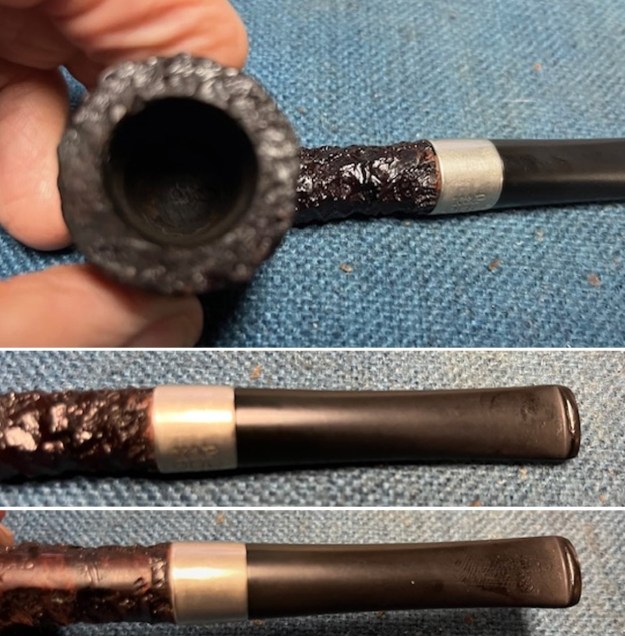
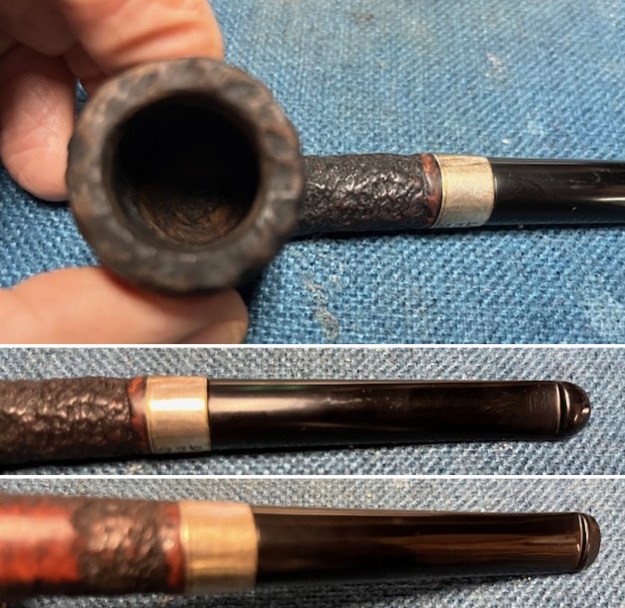
 I took some close up photos of the rim top and also of the stem surface. I wanted to show how well it had cleaned up. The rim top and edges look quite good. I also took close up photos of the stem to show the light tooth marks on the surface near the button.
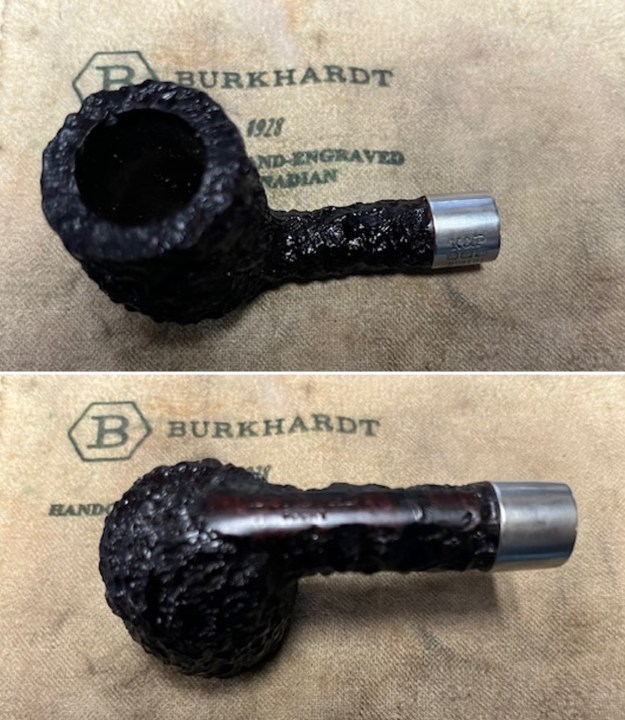
 I took a photo of the stamping on the underside of the shank and the band. You can see that it is stamped as noted above. It is faint but still readable. I took the pipe apart and took a photo of the pipe. It is a good-looking pipe and has a rugged rustication around the bowl.
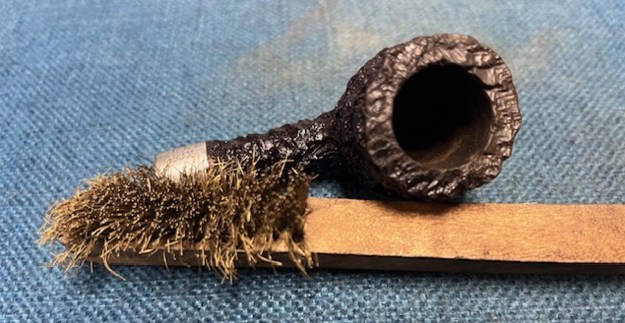
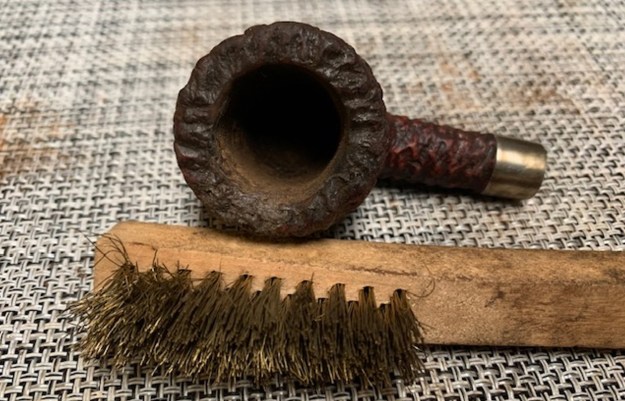
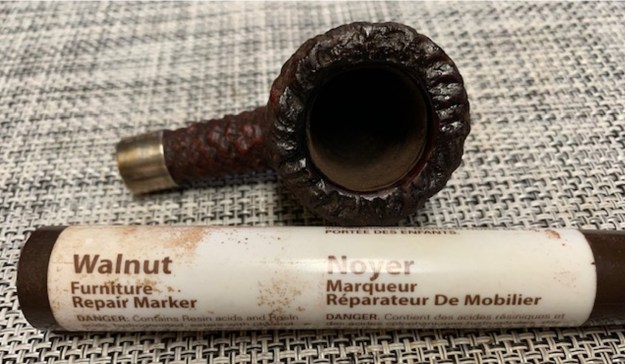
 I worked over the dull area on the rusticated rim top with a brass bristle wire brush to knock off the remnants of crud in the deep grooves. It looked better.
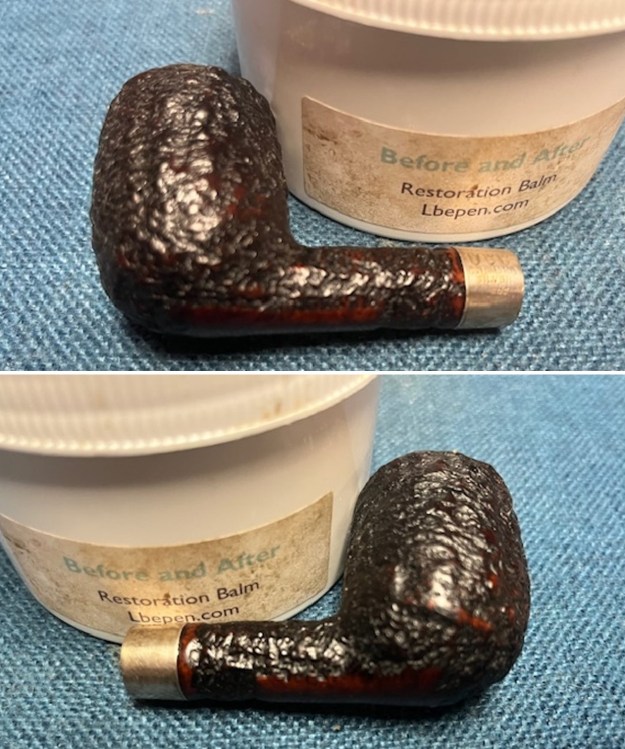
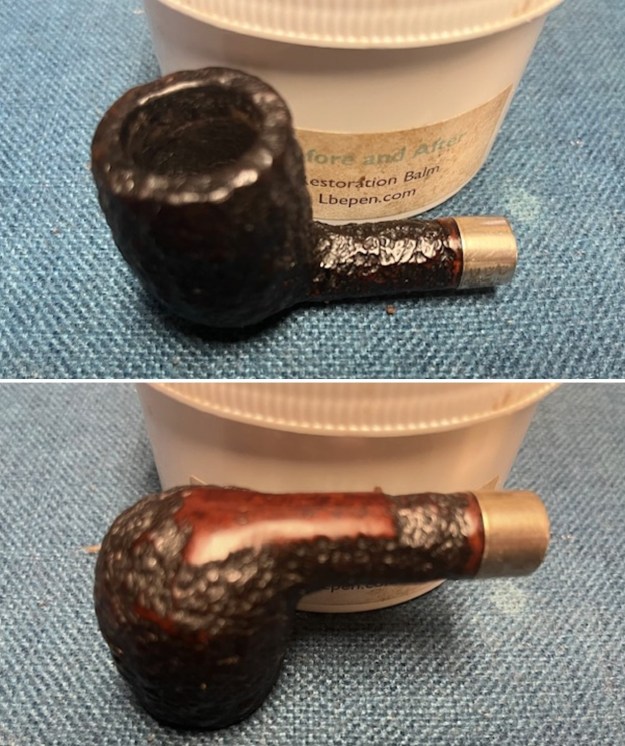
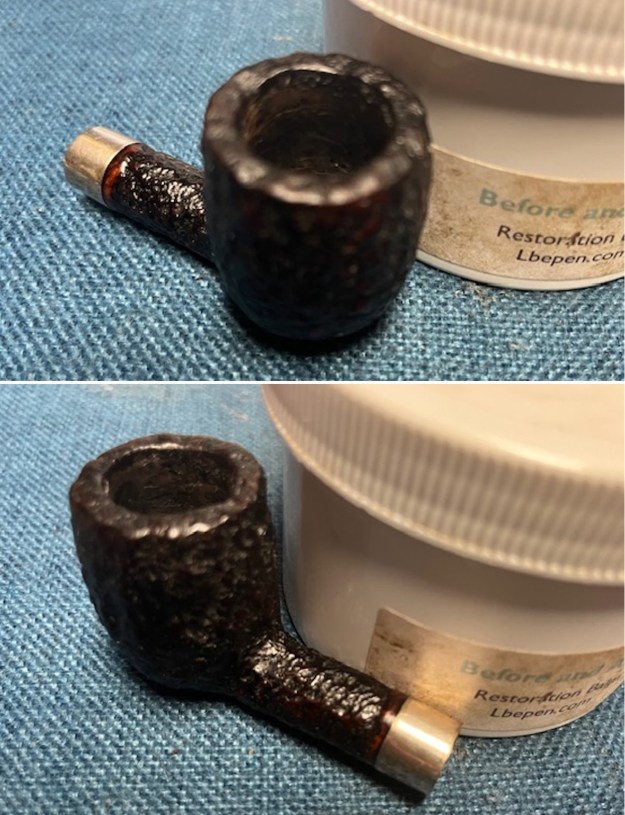
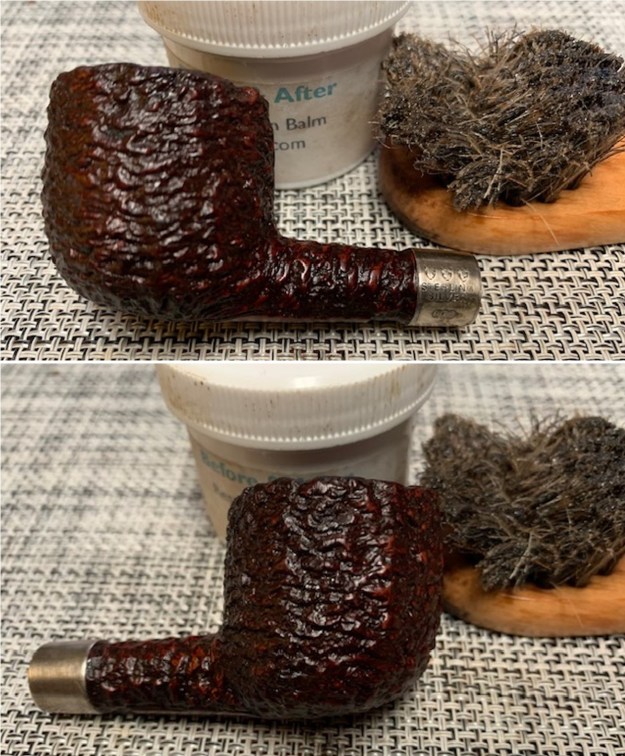
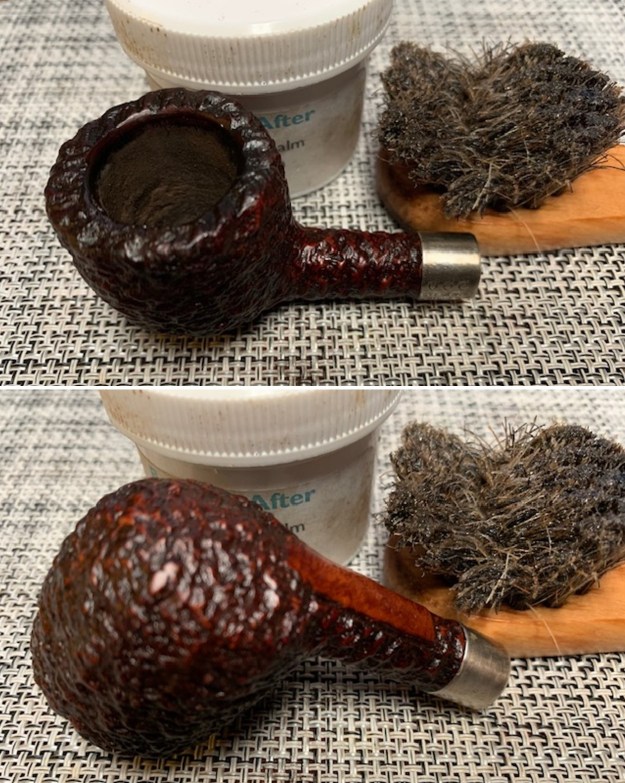
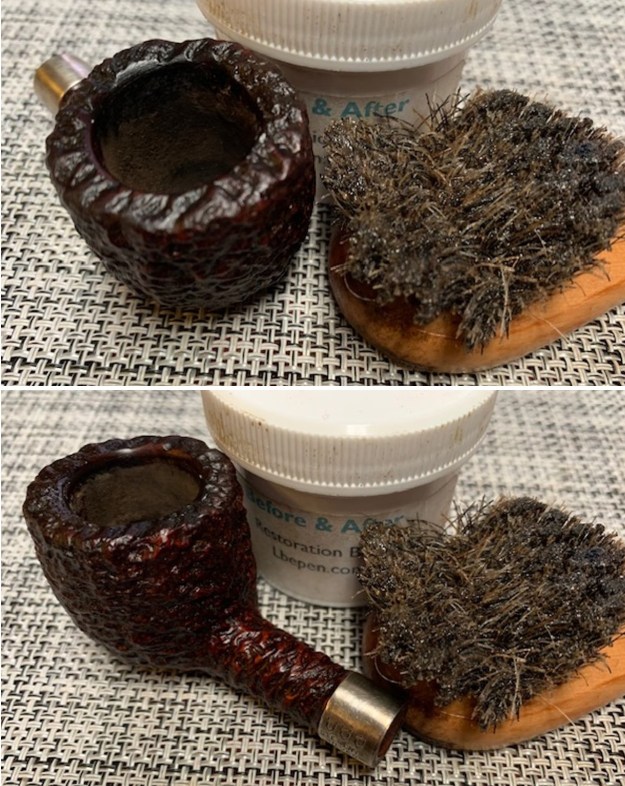
 I worked some Before & After Restoration Balm into the surface of the briar with my fingertips and a horsehair shoe brush to clean, enliven and protect the briar. I let the balm sit for 10 minutes and then buffed with a cotton cloth to raise the shine. The photos show the bowl at this point in the restoration process.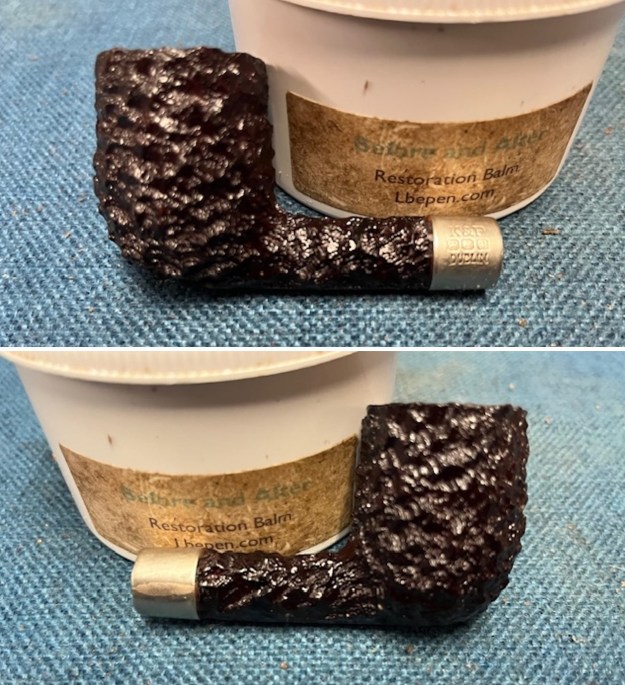
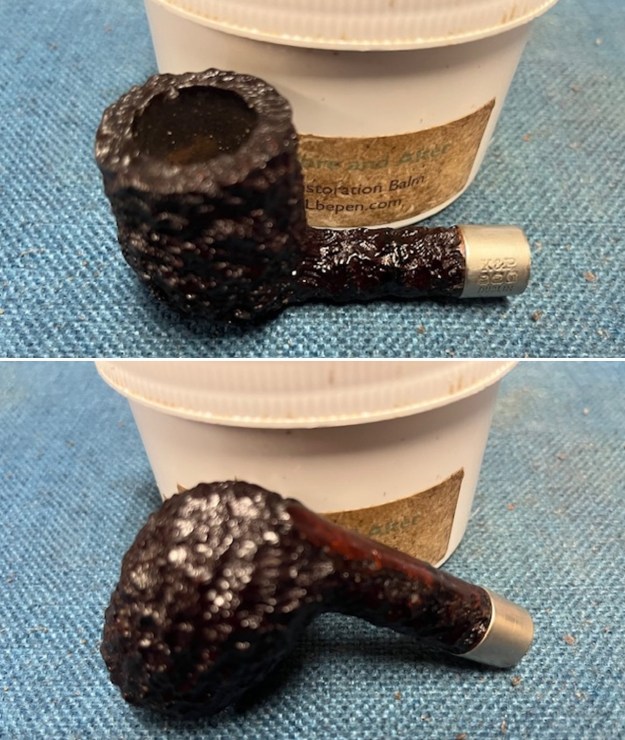
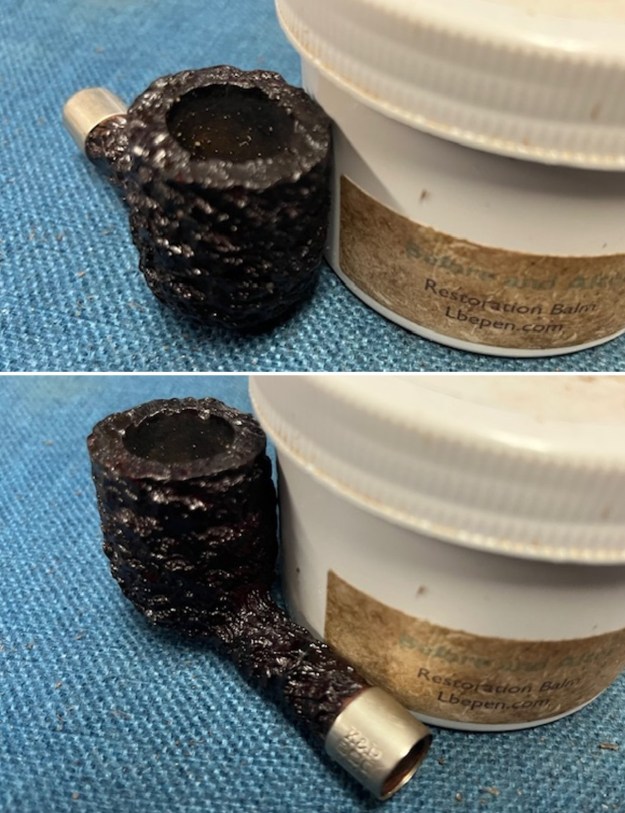 I polished the Sterling Silver band on the shank with a jeweller’s cloth to remove the tarnish and protect it from further tarnishing.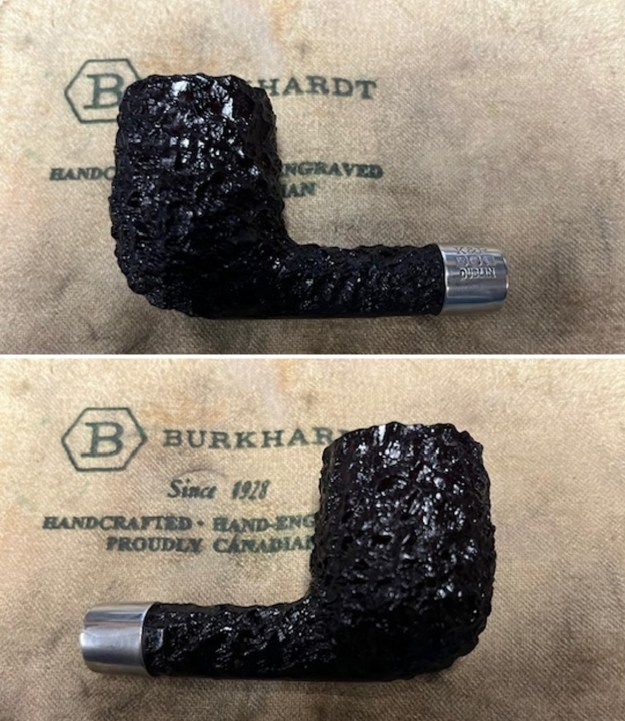
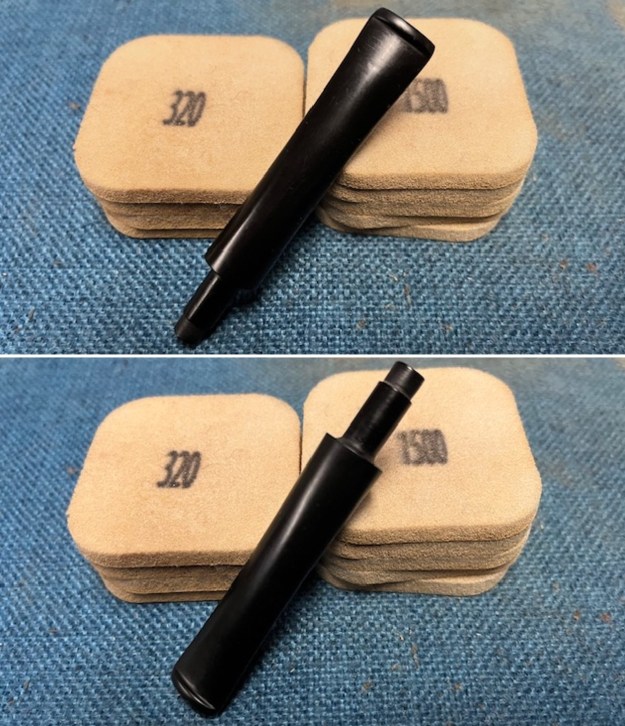
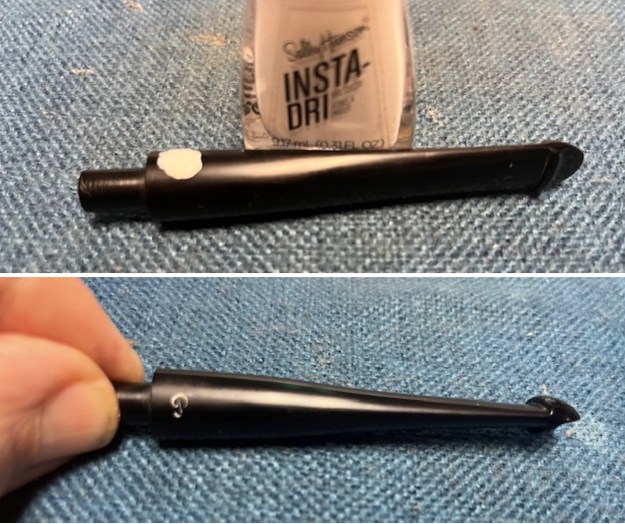
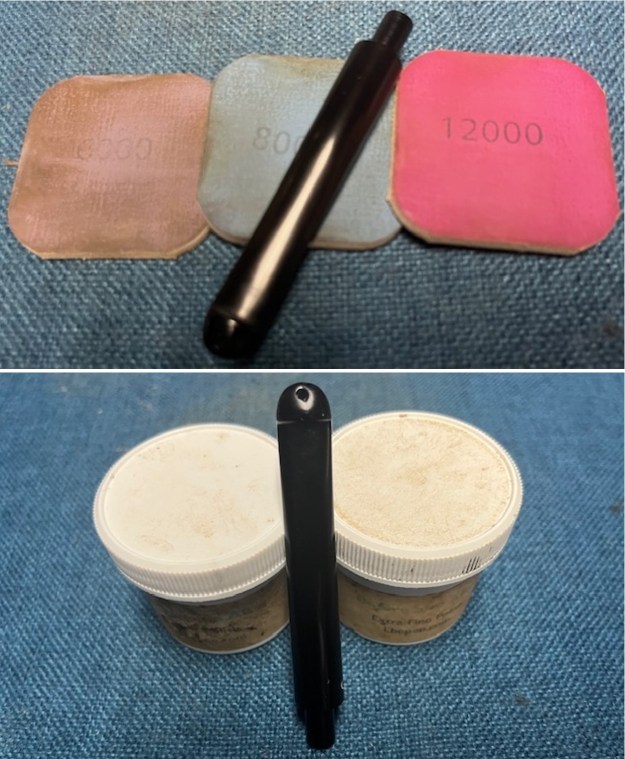
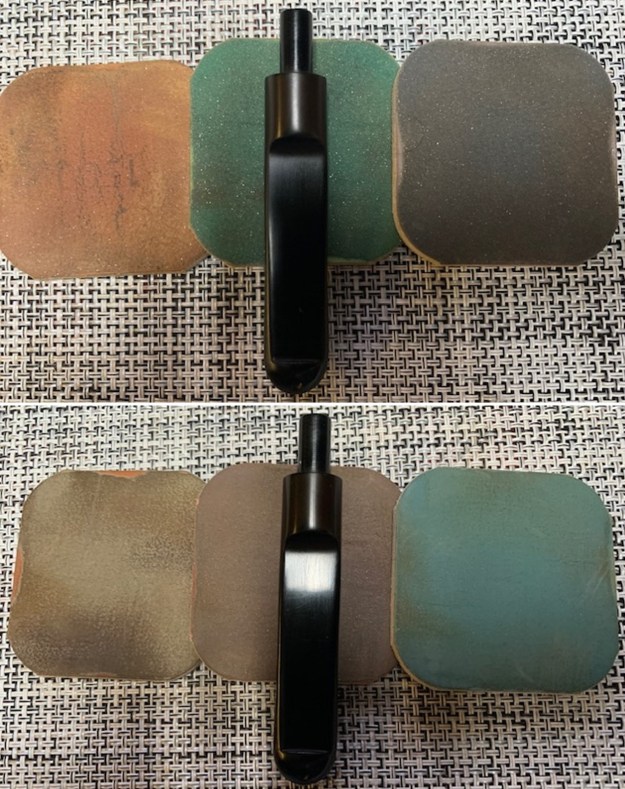
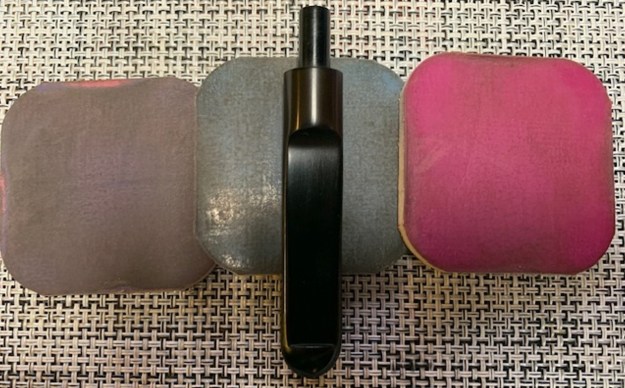
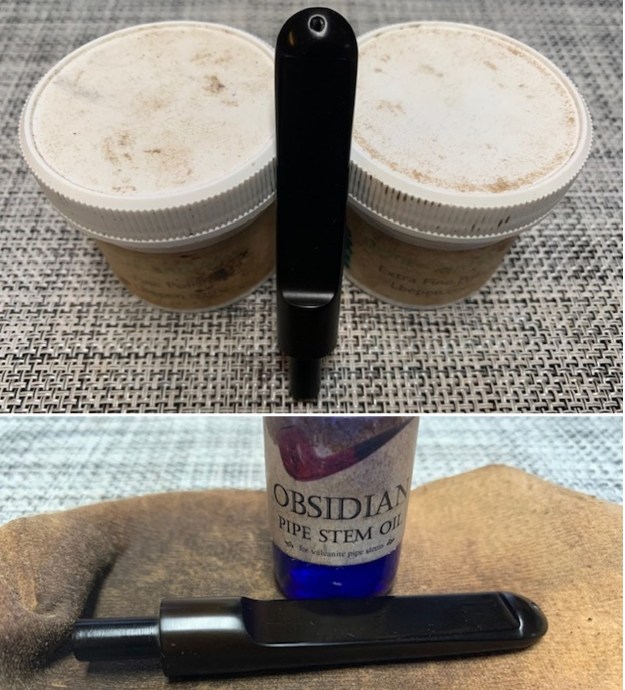
 I sanded the stem with the 2 inch square 320-3500 grit sanding pads to remove the light tooth chatter and marks in the acrylic. I wiped down the stem after each sanding pad with Obsidian Oil. I was able to remove the marks and the stem looked very good.
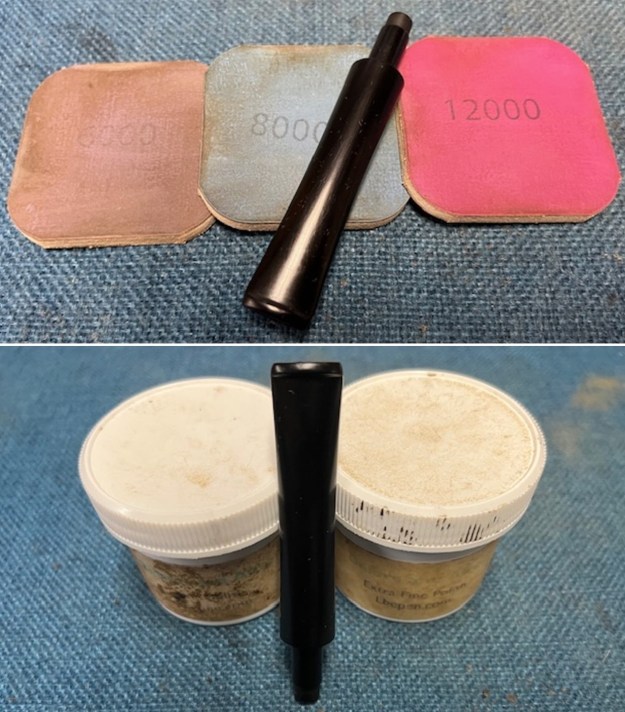
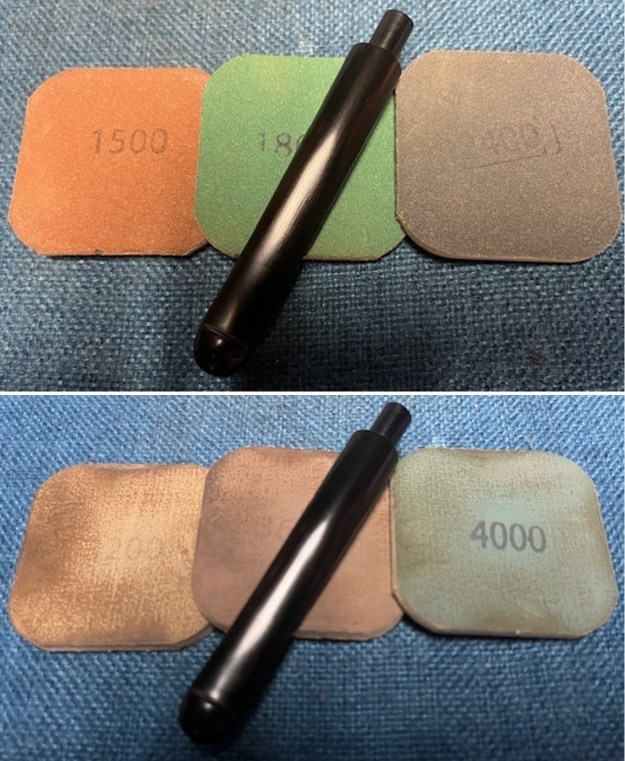
 I polished the stem with micromesh sanding pads – wet sanding with 1500-12000 grit sanding pads. I wiped it down after each sanding pad with Obsidian Oil. I polished it with Before & After Pipe Stem Polish – both Fine and Extra Fine. I gave it a coat of Obsidian Pipe Stem Oil. It works to protect the stem from oxidizing. I set it aside to dry.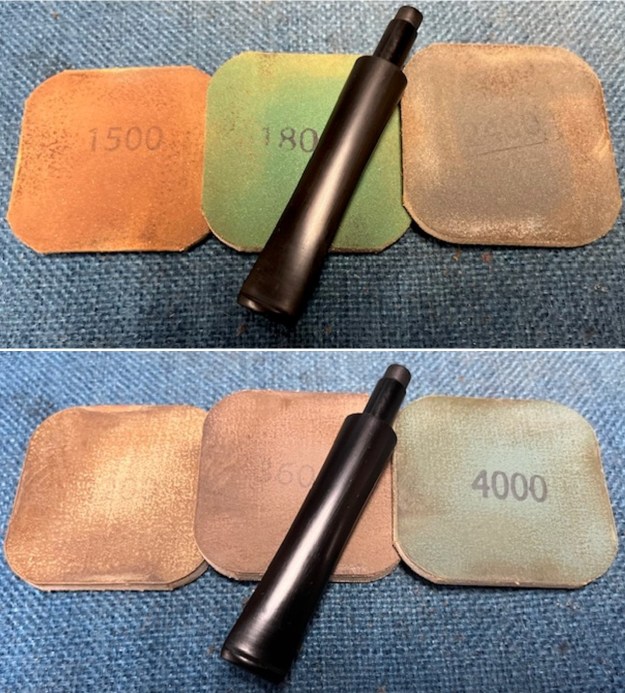
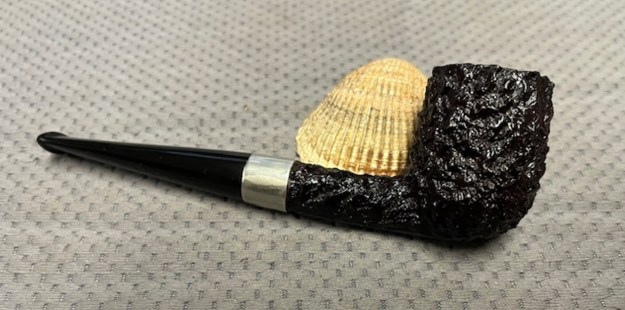
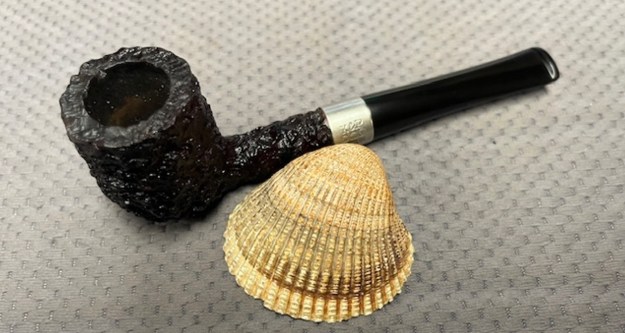
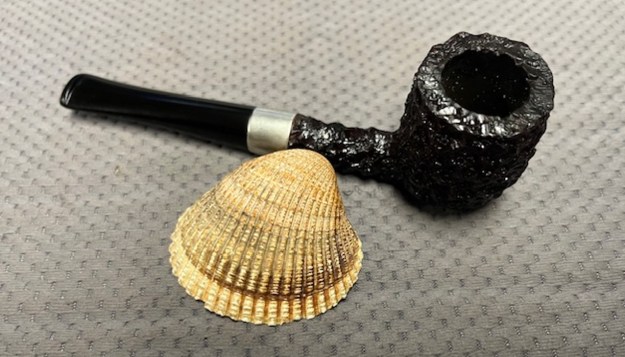
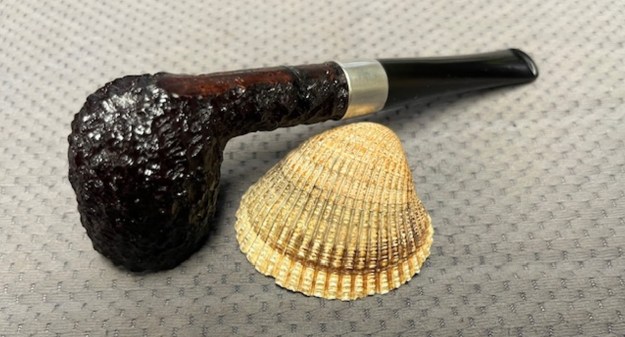
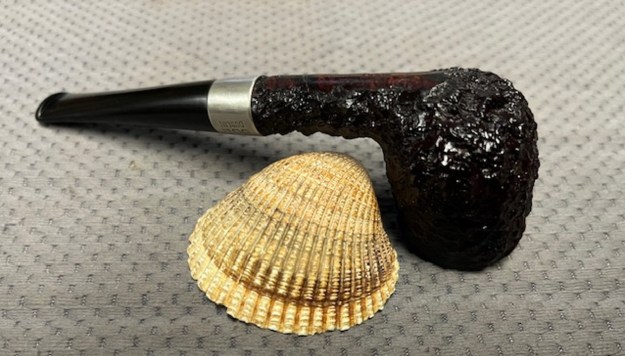
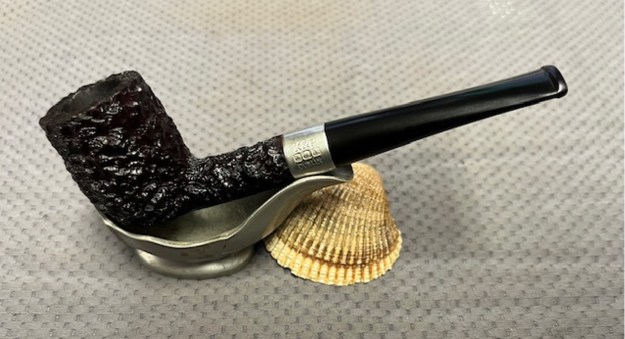
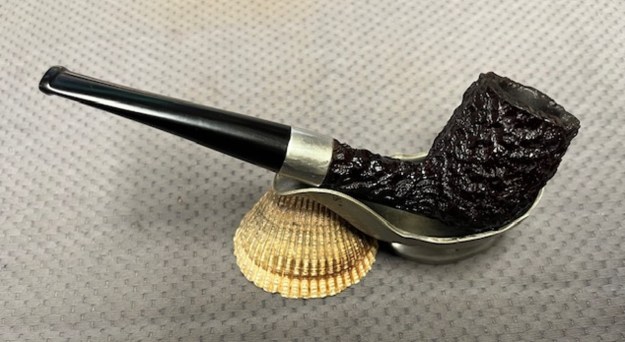
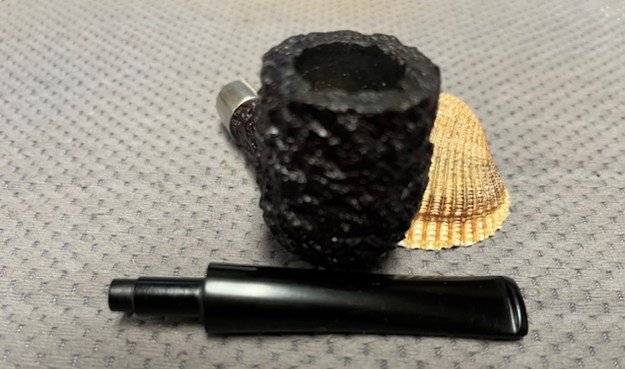
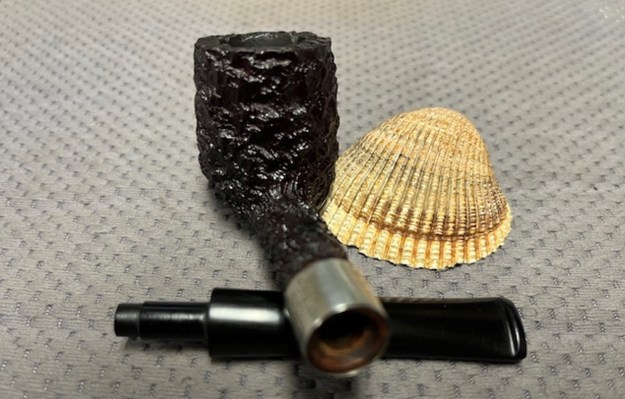
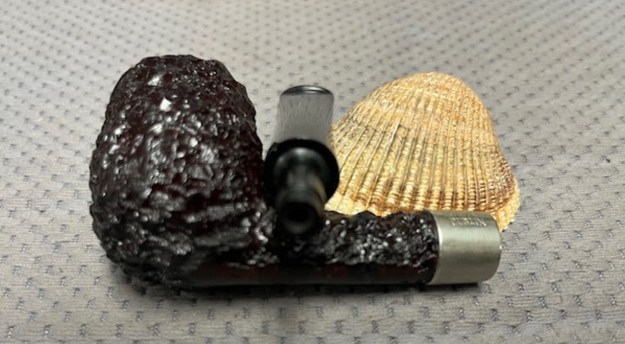
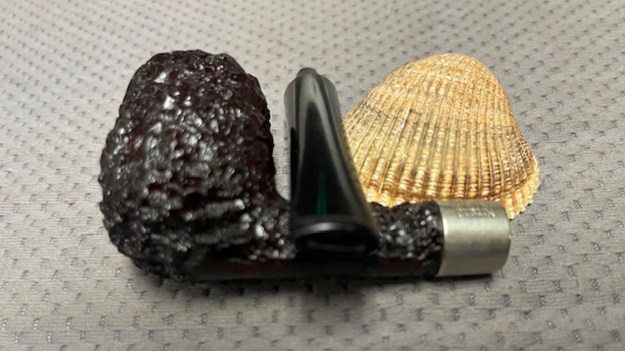
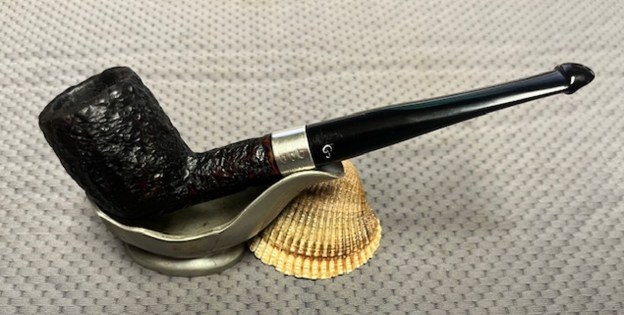
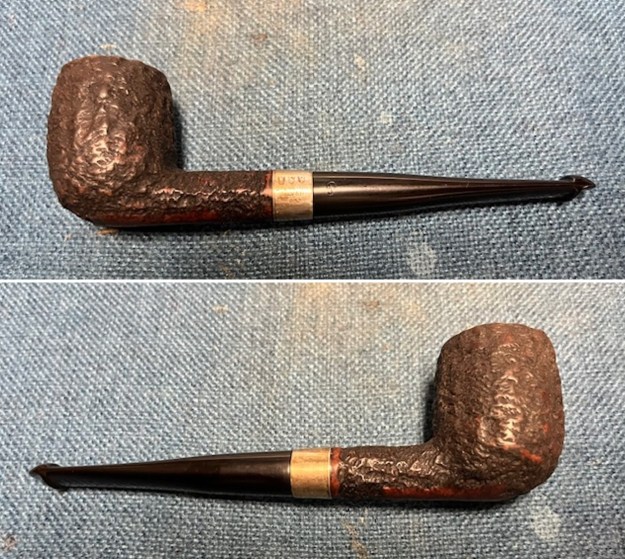
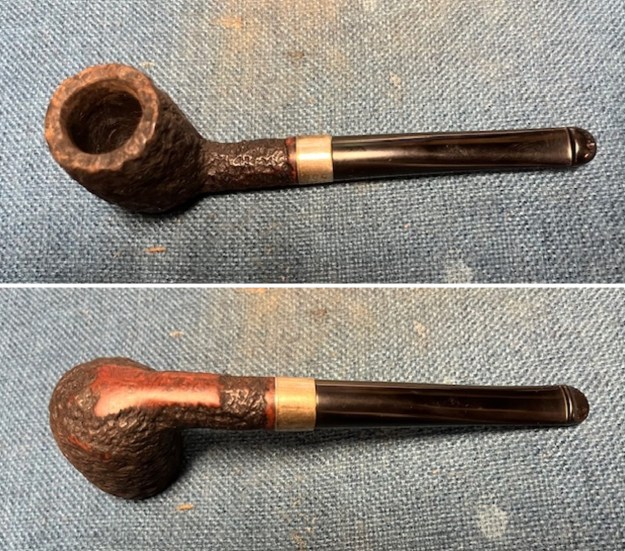
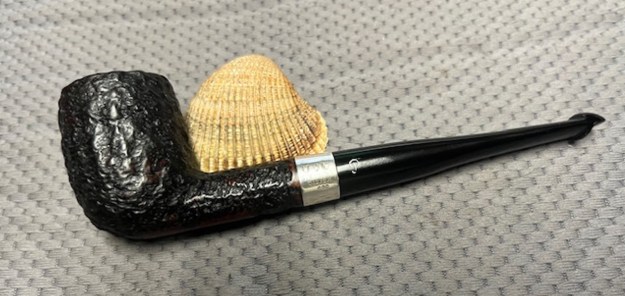
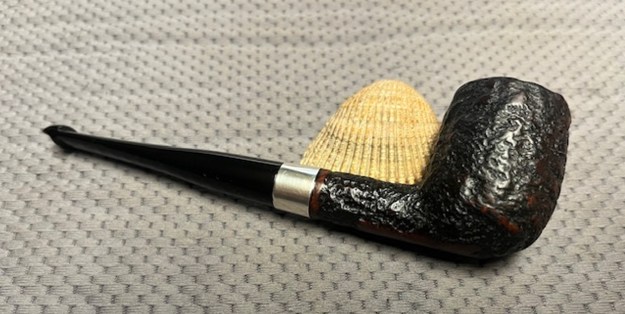
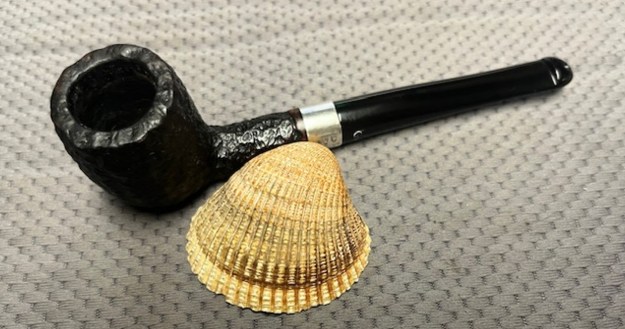
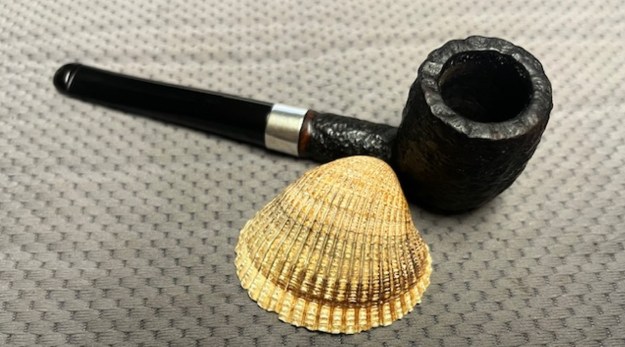
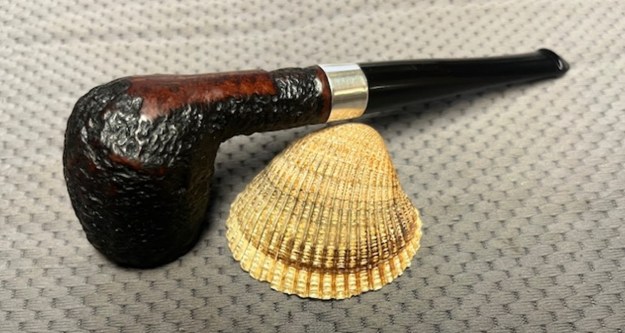
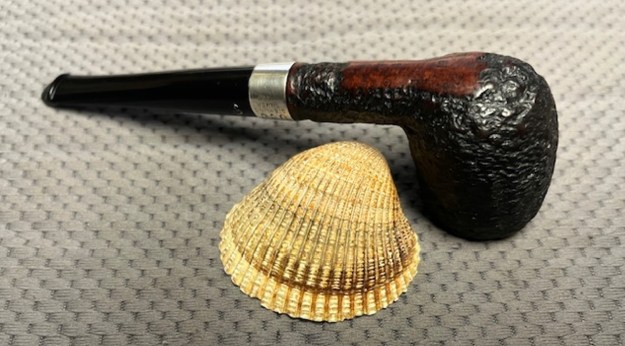
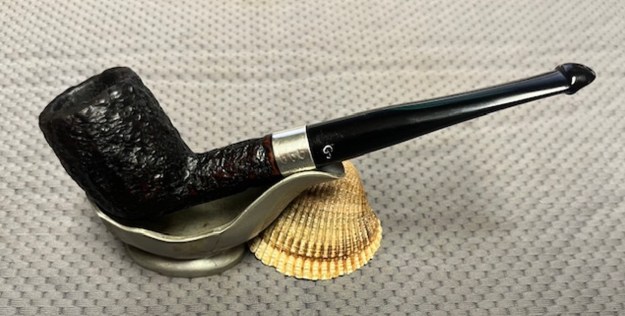
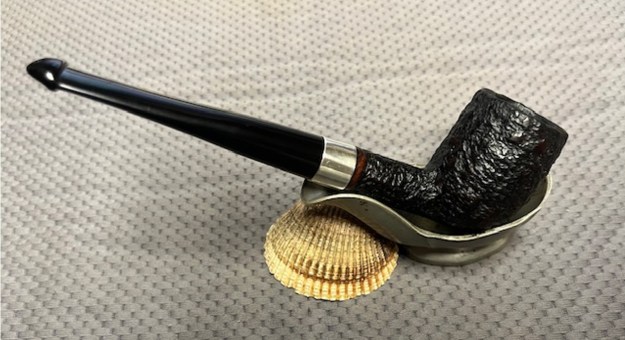
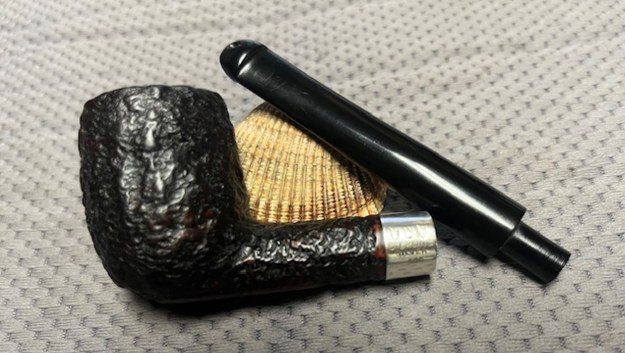
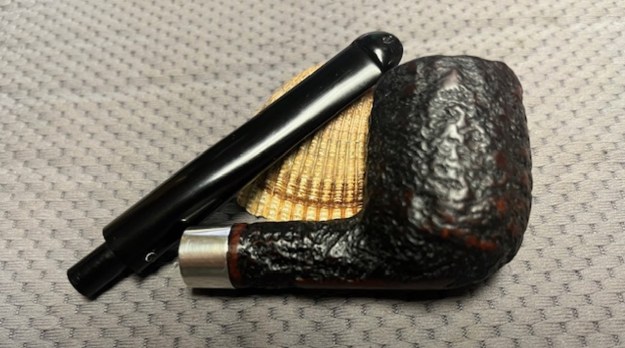
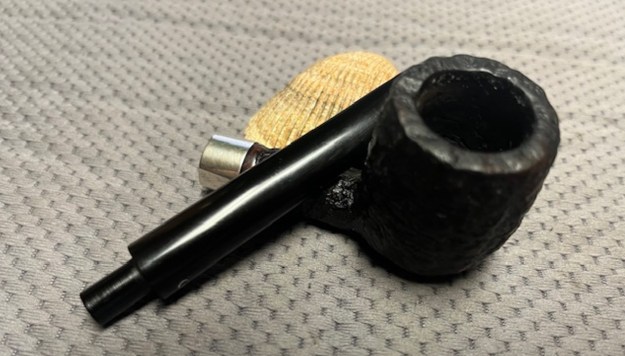
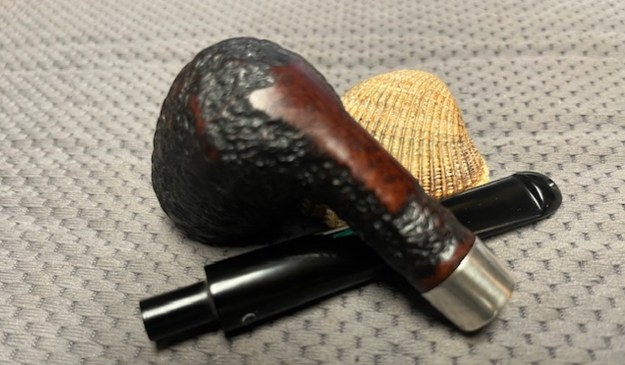
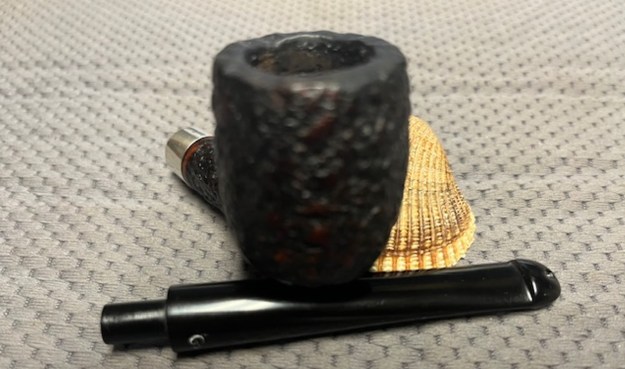
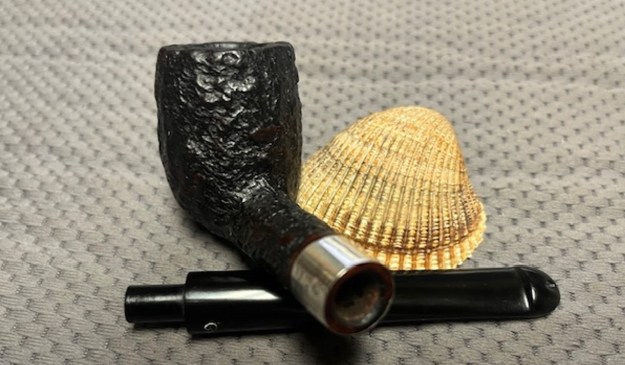
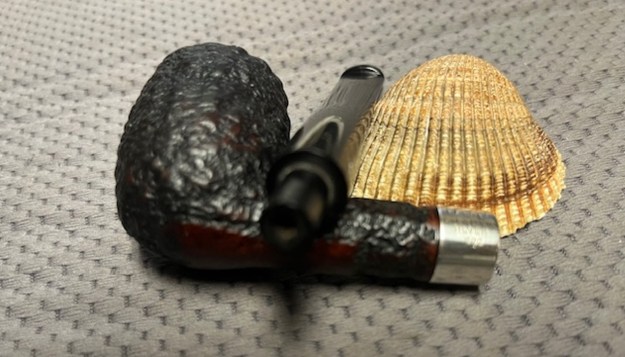
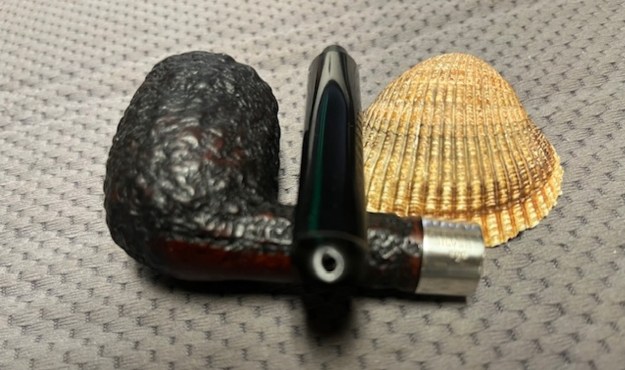
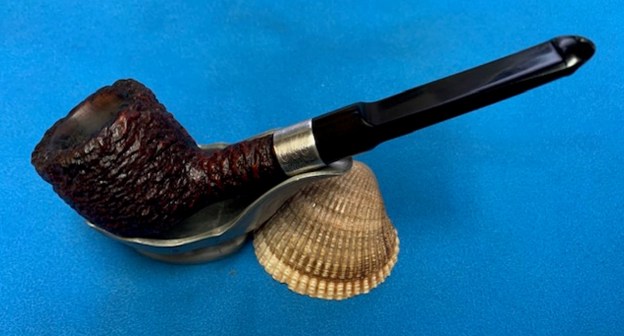
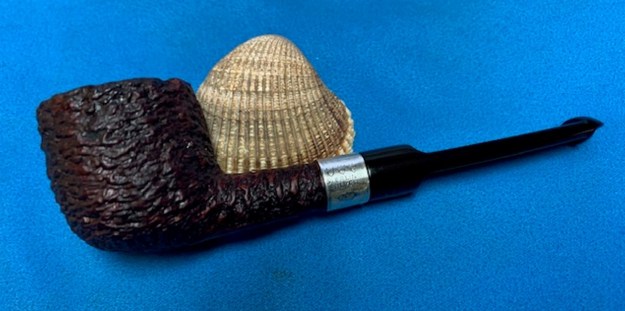
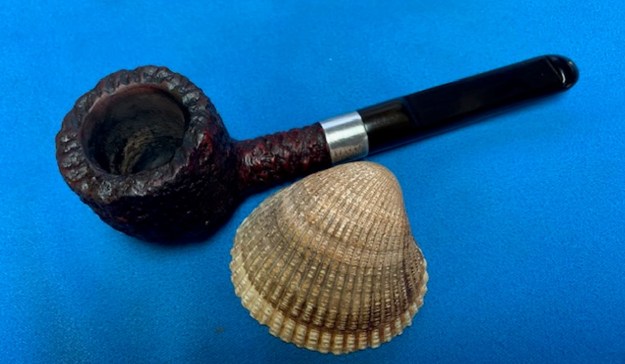
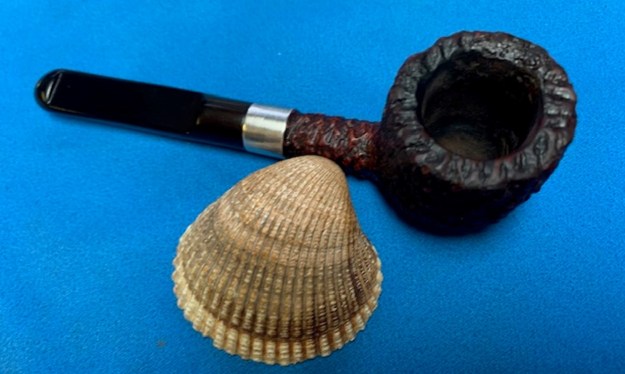
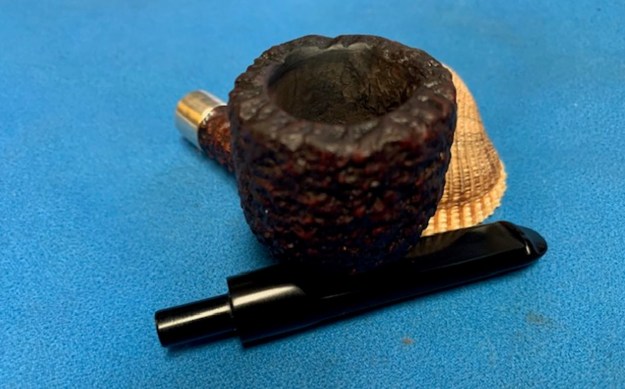
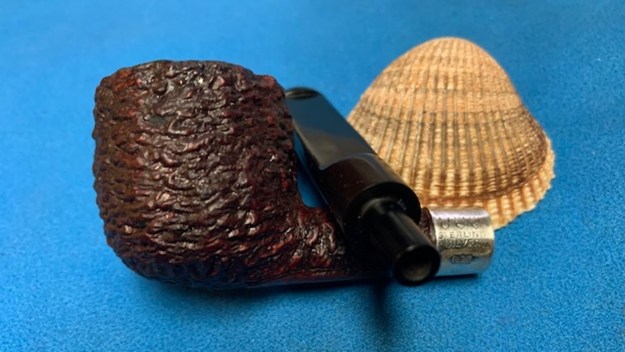
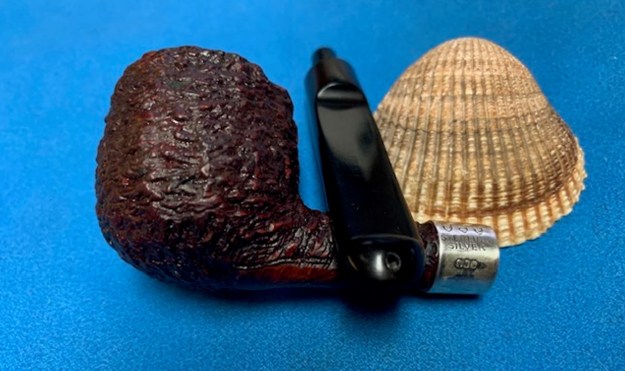
 I am excited to finish this Republic Era Peterson’s “Donegal” Rocky 15 Billiard. I put the pipe back together and buffed it with Blue Diamond on the buffing wheel. I gave the bowl multiple coats of Conservator’s Wax and the stem multiple coats of carnauba wax. I hand buffed the pipe with a clean buffing pad to raise the shine. It is fun to see what the polished bowl looks like with the rugged rustication all around it. Added to that the polished Sterling Silver band and the black vulcanite stem was beautiful. This rusticated Classic Peterson’s “Donegal” Rocky Billiard is nice looking and the pipe feels great in my hand. It is light and well balanced. Have a look at it with the photos below. The dimensions are Length: 5 ½ inches, Height: 1 ½ inches, Outside diameter of the bowl: 1 ¼ inches, Chamber diameter: ¾ of an inch. The weight of the pipe is 34 grams/1.20 ounces. It is a beautiful pipe and one that will be on the Irish Pipe Makers Section of the rebornpipes store soon. If you are interested in adding it to your collection let me know. Thanks for walking through the restoration with me as I worked over this pipe. Thanks to each of you who are reading this blog.
As always, I encourage your questions and comments as you read the blog. Thanks to each of you who are reading this blog. Remember we are not pipe owners; we are pipe men and women who hold our pipes in trust until they pass on into the trust of those who follow us.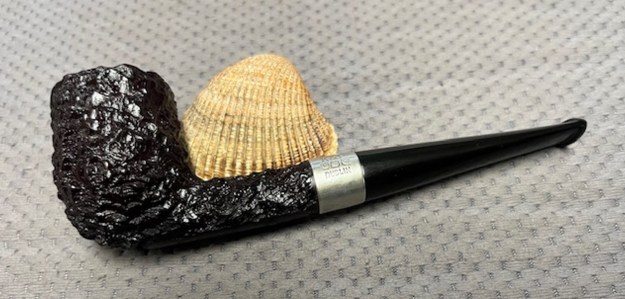




 rebornpipes