
by Steve Laug
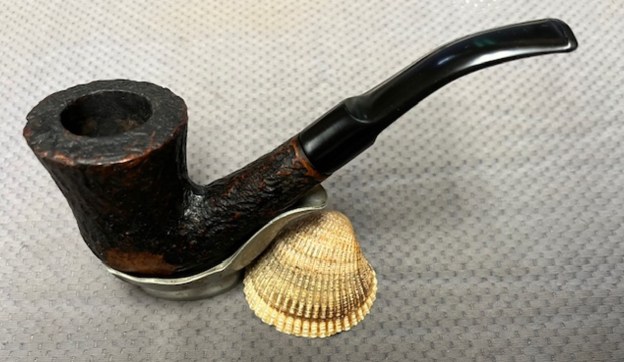
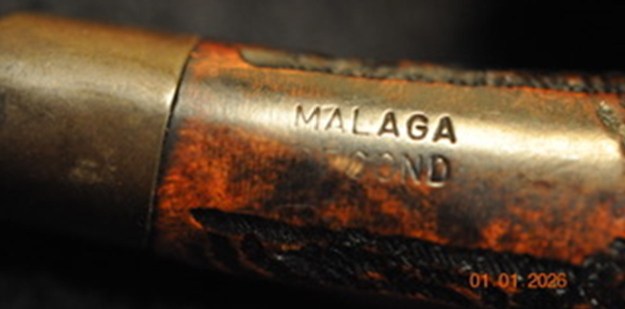
The next pipe on the table is an interesting Malaga Second Sandblast Dublin. Jeff saw it on eBay and purchased it on 08/22/2024 from a seller in Harrison Township, Michigan, USA. The grain on this pipe is quite nice beneath the oil cured finish. The pipe is stamped on the right side of the shank and reads Malaga [over] Second. It is a nice one in terms of the well-done ½ Bent Dublin. The bowl and shank were in good condition. The finish was in good condition though dirty with dust in the depths of the sandblast. The bowl had a thick cake that over flowed over the top of the sandblast rim in a lava coat. The rim top and inner edge of the bowl appeared to be in good condition under the grime. The saddle stem was vulcanite and was lightly oxidized and calcified. There were tooth marks and chatter on the top and the underside ahead of the button. Jeff took photos of the pipe before he started his clean up work. 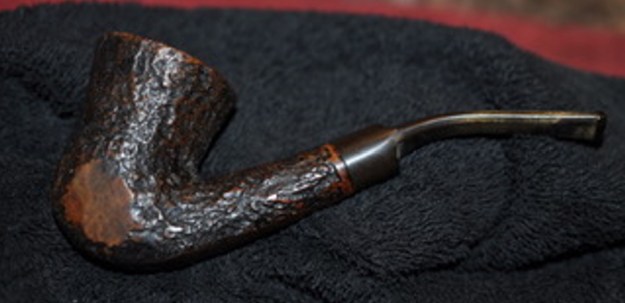
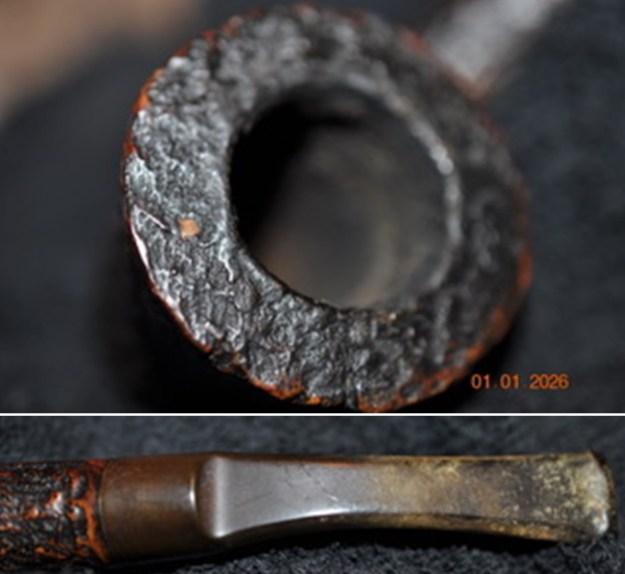
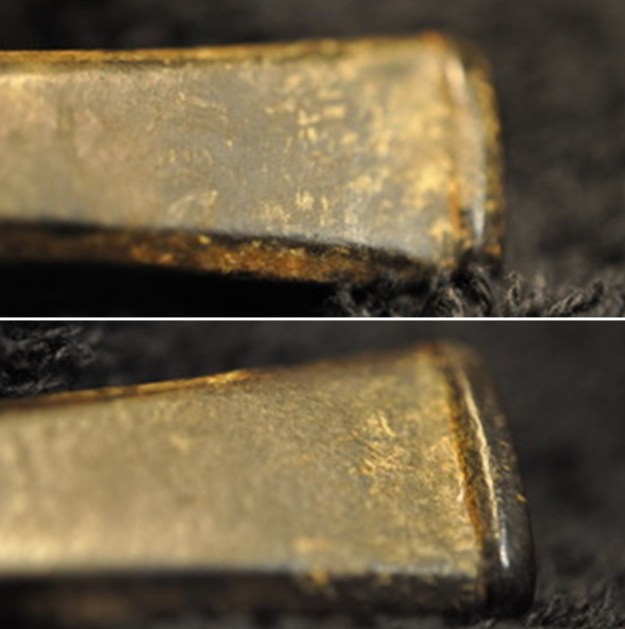
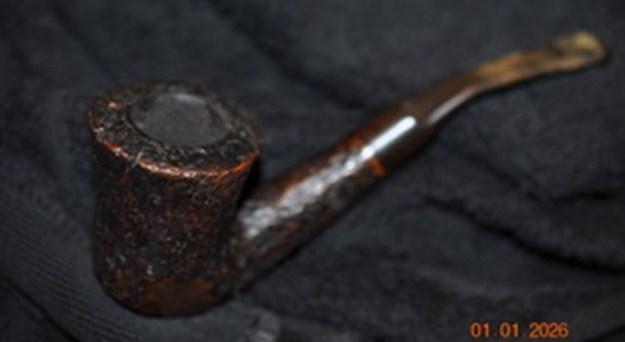 Jeff took photos of the rim and bowl to show the cake and lava coat in the sandblast on the rim top and edges. The inner edge of the rim was caked and lava coated but seemed to be okay underneath. It was a dirty pipe but still a beauty. The vulcanite saddle stem was lightly oxidized, calcified and had some tooth marks and chatter on both side against the button.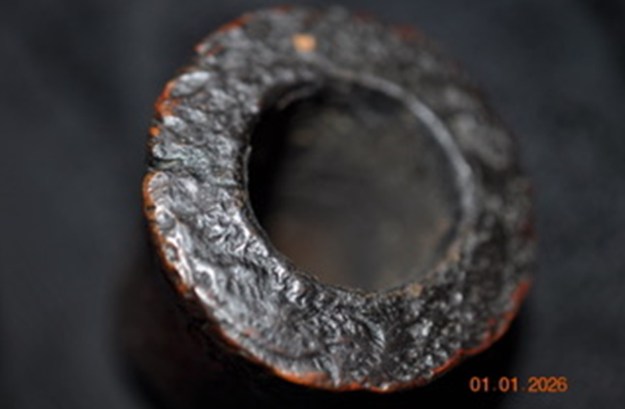
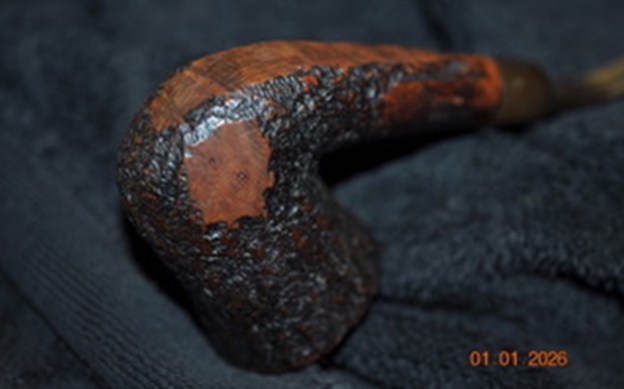
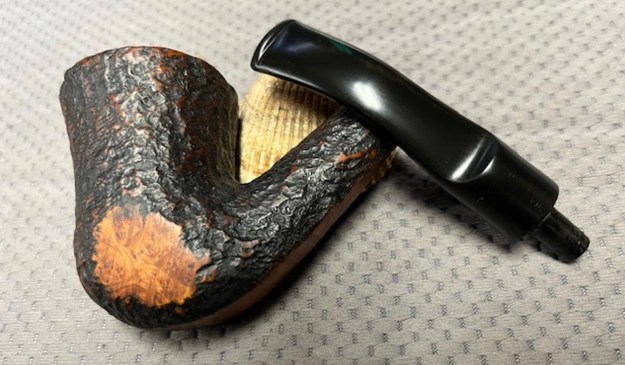
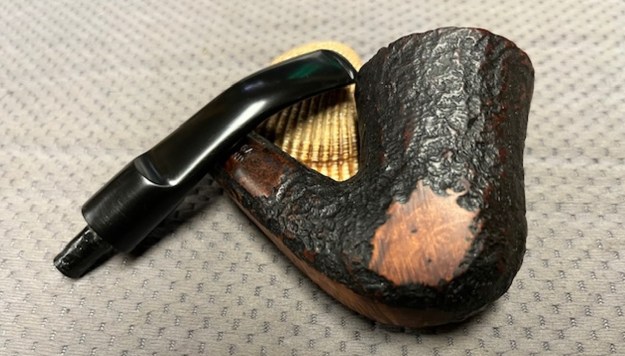
 The photos of the sides and heel of the bowl show how the sandblast has followed the grain around the bowl and shank. The oil curing/finish makes the grain really stand out on the smooth panels on the sides of the bowl and underside of the shank.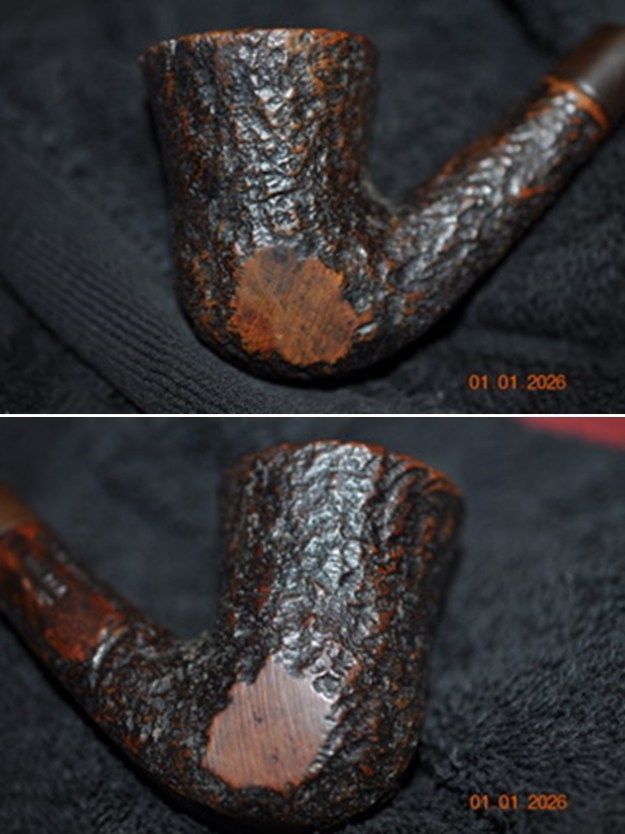
 Jeff took a photo of the stamping on the right side of the shank and it is clear and readable as noted above.
  For those of you who are unfamiliar with the brand, I am also including the link to a blog that I wrote that gives some of the history of the Malaga brand and the Malaga Pipe Shop in Royal Oak, Michigan in the USA. Here is the link – https://rebornpipes.com/2013/02/09/george-khoubesser-and-malaga-pipes/. That blog also includes links to a catalogue and the history of the pipemaker George Khoubesser. If you are interested to learn more then I invite you to follow the link to get a feel for the brand and the pipemaker.
I am also am including a link to some printed material on the Malaga brand that came to me from the daughter of George Koch (we purchased George’s pipes from his daughter) to help identify the particular stamping on the pipe. The link takes you to the entire collection of materials that were sent to me. (https://rebornpipes.com/2019/02/27/malaga-pipes-catalogue-of-pipes-and-tobaccos/).
Jeff had cleaned up the pipe using his usual process. He reamed the pipe with a PipNet pipe reamer and removed the rest of it with a Savinelli Fitsall Pipe Knife. He scrubbed the bowl with undiluted Murphy’s Oil Soap with a tooth brush. He rinsed it under running warm water to remove the soap and grime. He cleaned out the inside of the shank and the airway with alcohol, cotton swabs and pipe cleaners. He cleaned up the stem with Soft Scrub to remove the oxidation and the calcification on the surface. He cleaned out airway in the stem with pipe cleaners and alcohol. It looked clean. I took photos of the pipe once I received it. 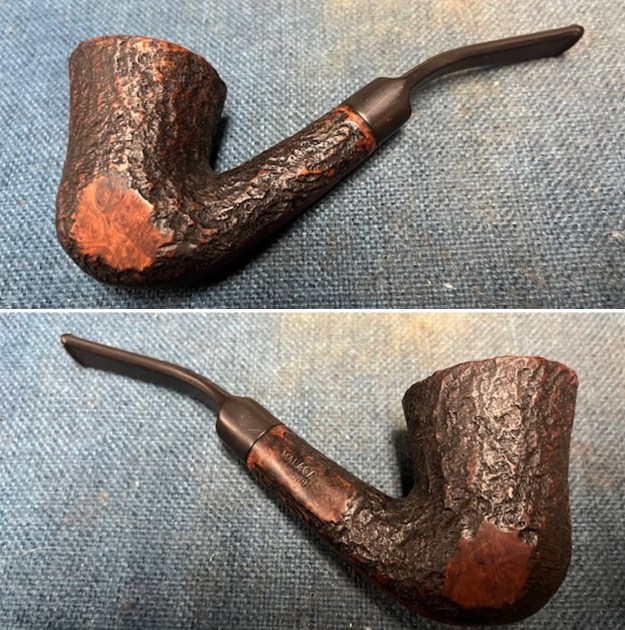
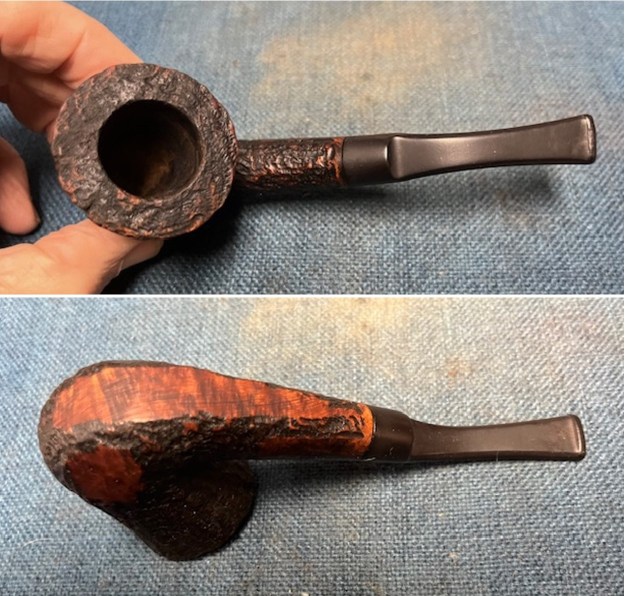 I took a photo of the bowl, rim top and the stem to show their condition. Jeff was able to clean up the cake and the lava overflow that was shown in the rim and bowl photos above. The rim top was clean and the inner and outer edges of the bowl showed no burn damage. The stem looked better and the tooth marks are very visible on both sides ahead of the button. There was also a hairline crack in the topside of the stem mid blade.
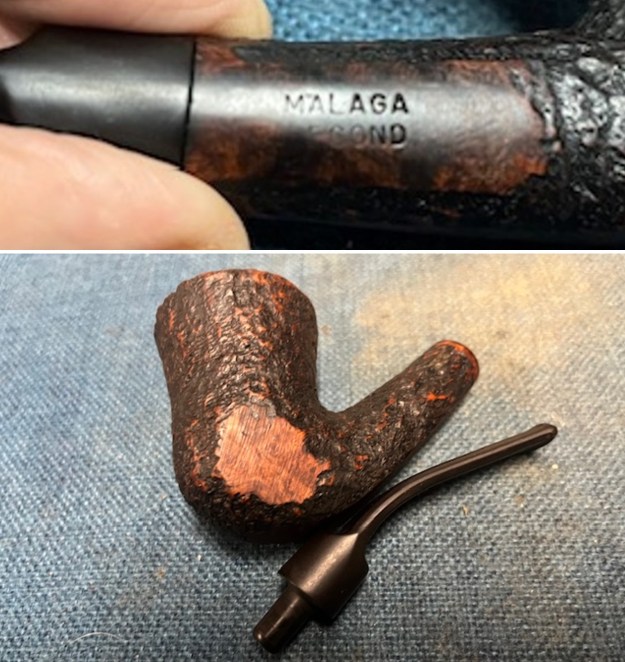
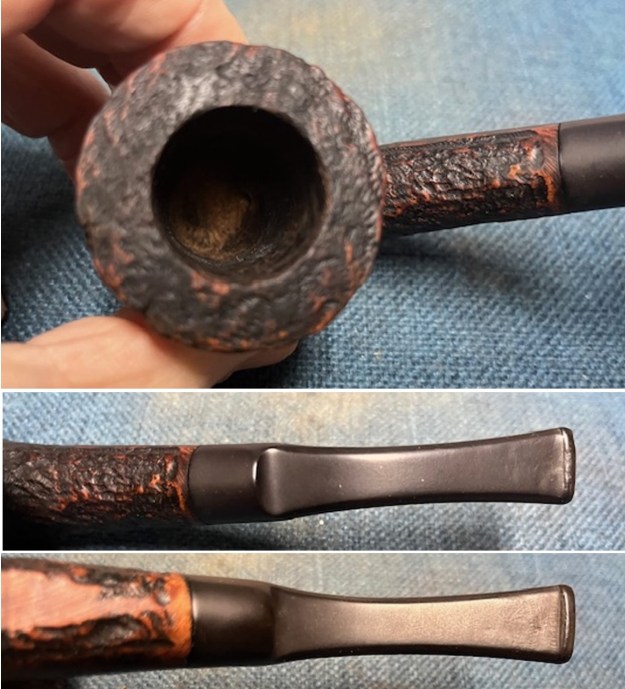 I took a photo of the stamping on the top side of the shank to show that it was clean and faint in spots but still readable as noted above. I removed the stem from the shank and took a photo of the parts to give a sense of what the pipe looks like.
  The condition of the bowl was excellent after the cleanup. The only thing that look like it needed work were the smooth patches on the sides and underside of the shank. They showed sanding marks and scratching. I would need to smooth out the marks and polish the smooth portions. I used 320-3500 grit 2×2 inch sanding pads to smooth them out. It looked much better.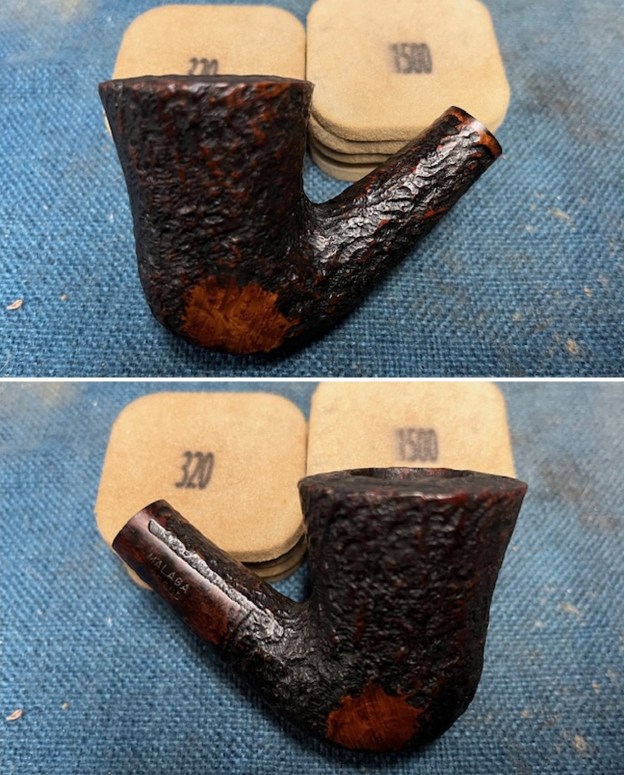
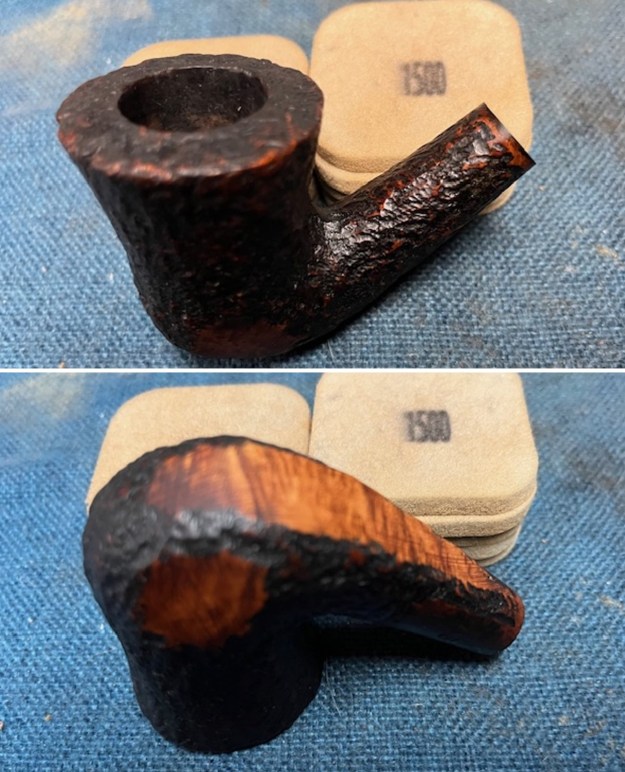 I polished them further with 1500-12000 grit micromesh sanding pads. I dry sanded with each pad and wiped the smooth spots down with a damp cloth to remove and sanding debris. While not flawless it looked much better.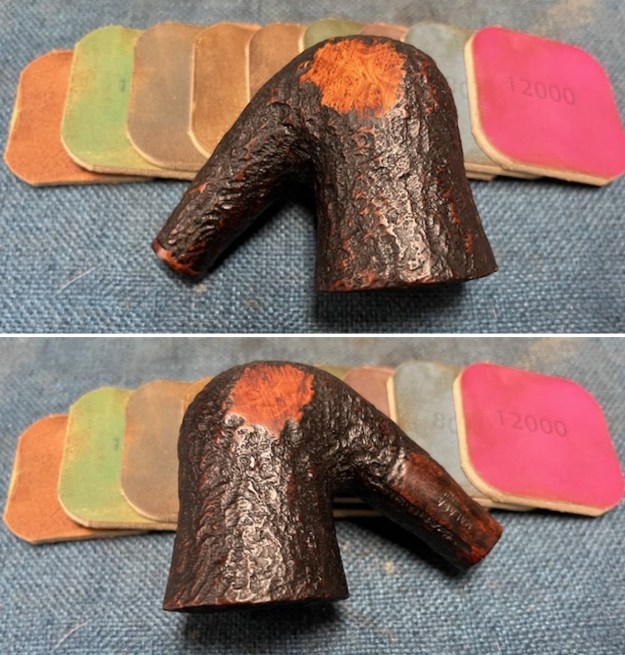
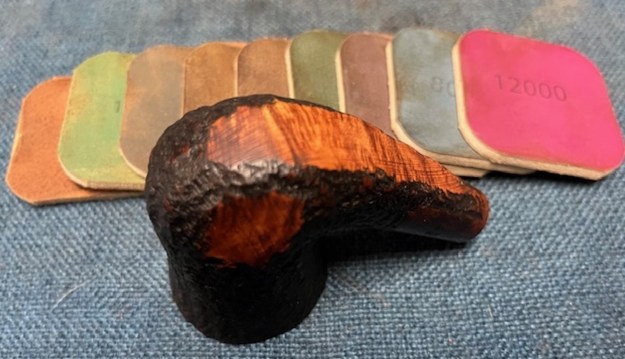 I rubbed the bowl and shank down with Before & After Restoration Balm to deep clean the finish on the bowl and shank. The product works to clean, enliven and protect the briar. I worked it in with my fingers to get it into the briar. I let it sit for 10 minutes then I wiped it off and buffed it with a soft cloth. The briar really began to have a rich shine. I took some photos of the bowl at this point to mark the progress in the restoration. It is a beautiful bowl.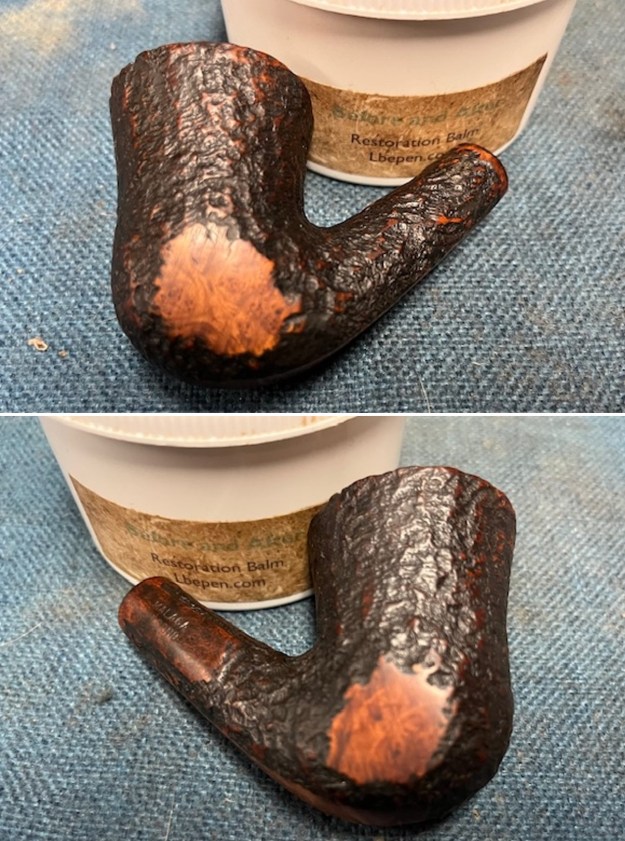
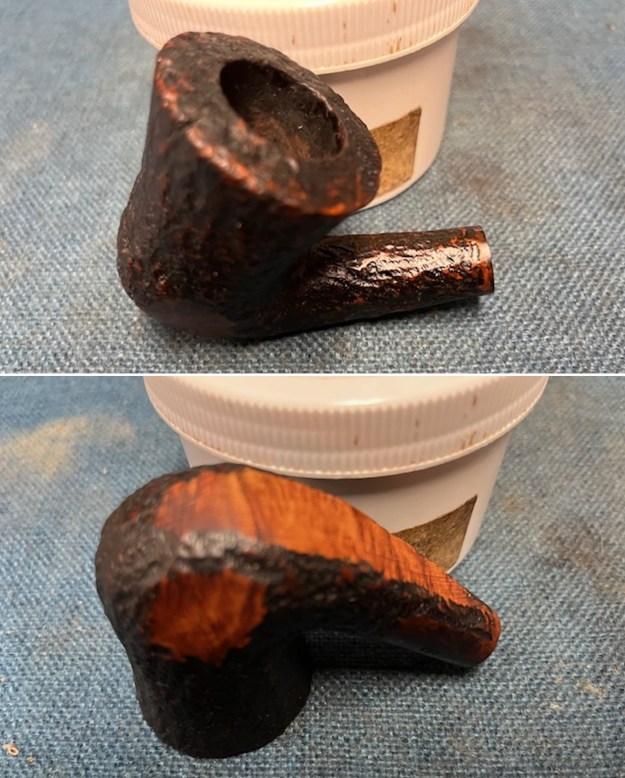
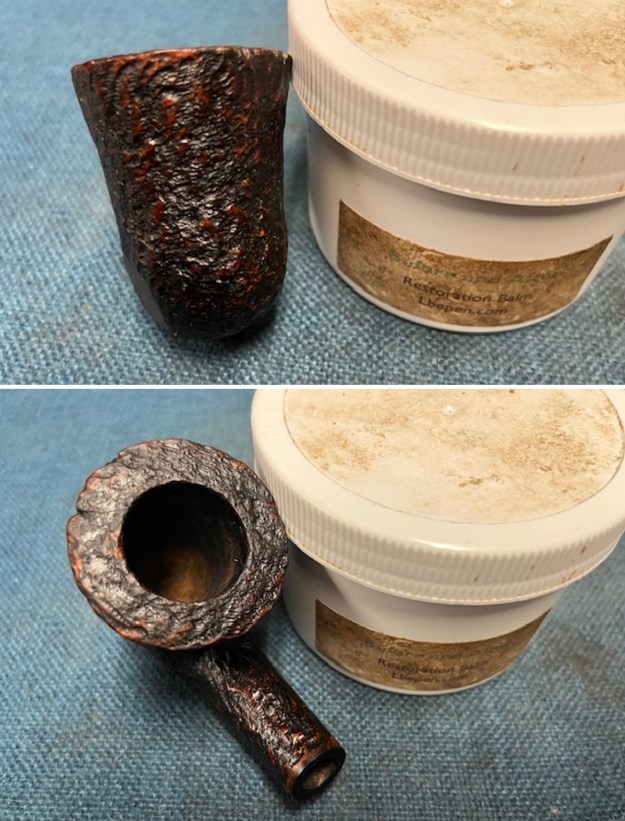 I set the finished bowl aside and turned my attention to the stem. I examined it and found that the blade was cracked at the bend. It would need to be replaced.
 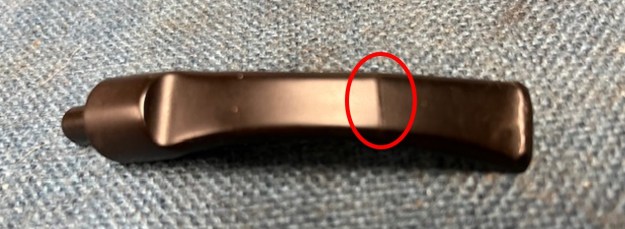 To replace the stem I need to find one that would work. I went through my stems and found one that look workable. It was a little larger in diameter at the saddle than the broken one but with some work it would fit well. I reduced the diameter of the tenon and the diameter of the saddle portions with a Dremel and a sanding drum. I needed to sand out the sanding marks and make the fit smooth to the shank and mortise.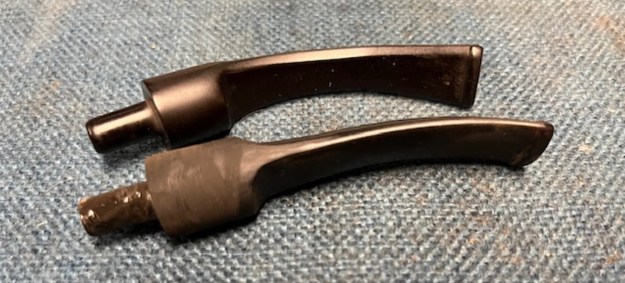
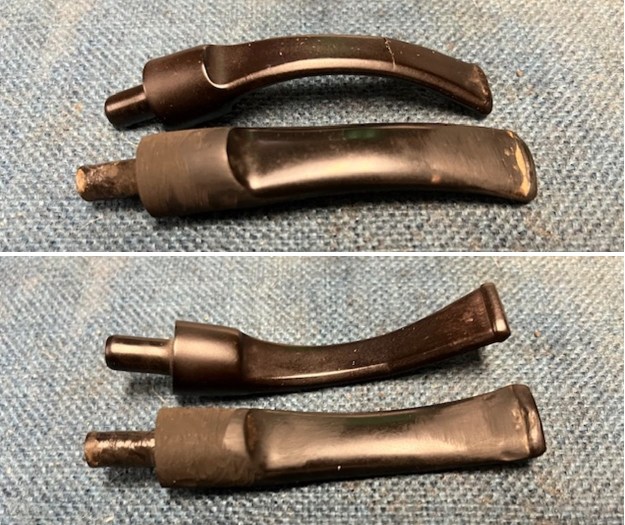 I took a photo of the fit of the stem at this point. It needed more sanding to get a smooth transition with the shank but it looked quite good.
 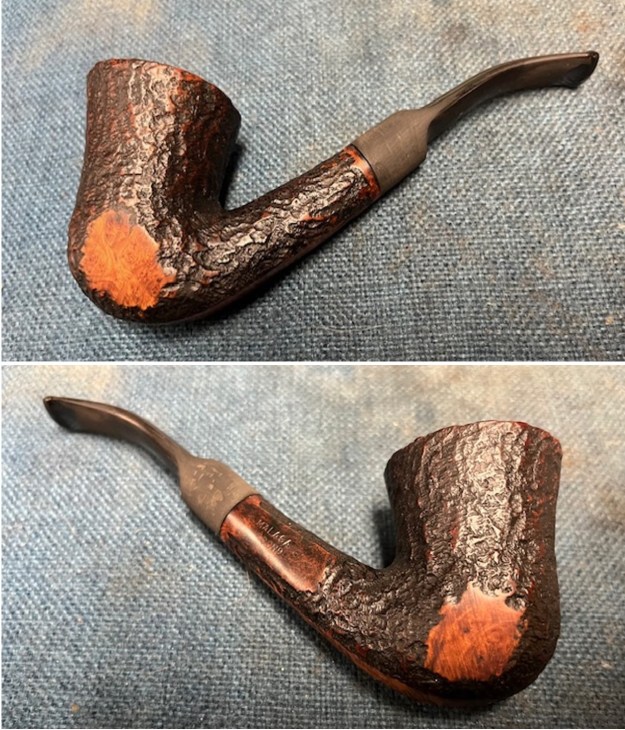 I set the bowl aside and worked on the tooth marks on the stem. I “painted” them with the flame of a lighter to lift them. They came up a bit and I filled in what remained with the extra strength rubberized Black CA glue. Once the repairs cured I flattened them out and redefined the button edge with small flat files. I sanded them smooth with a folded piece of 220 grit sandpaper.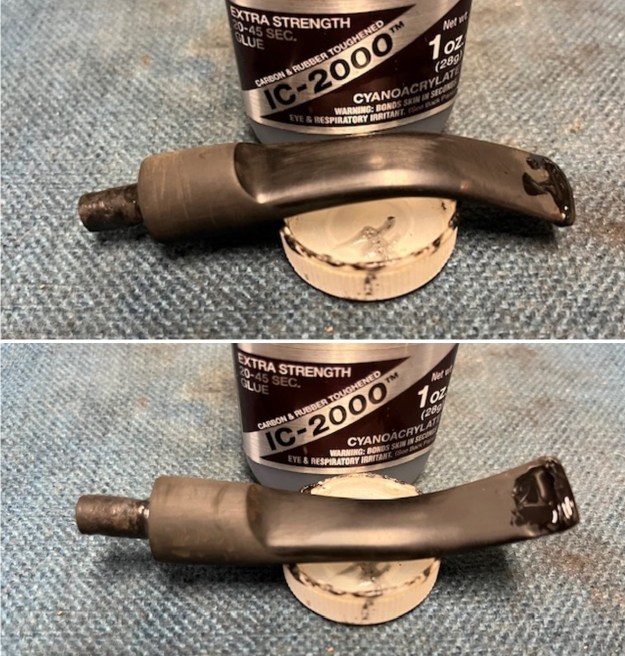
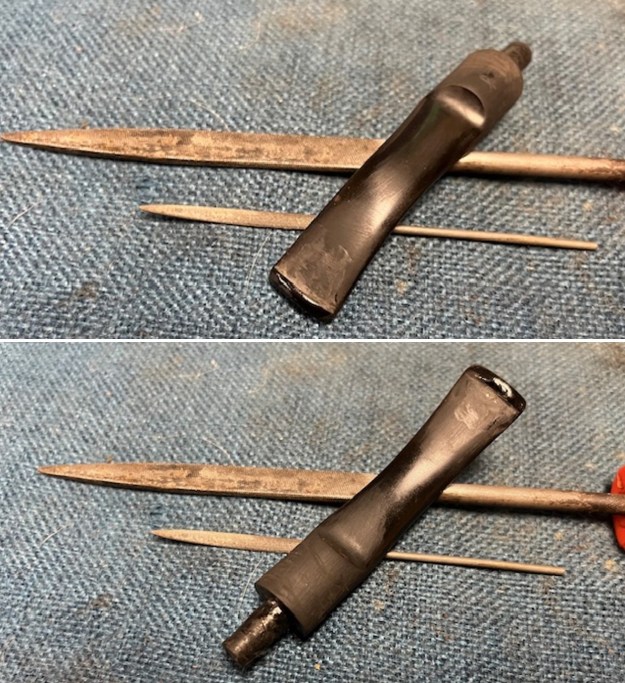
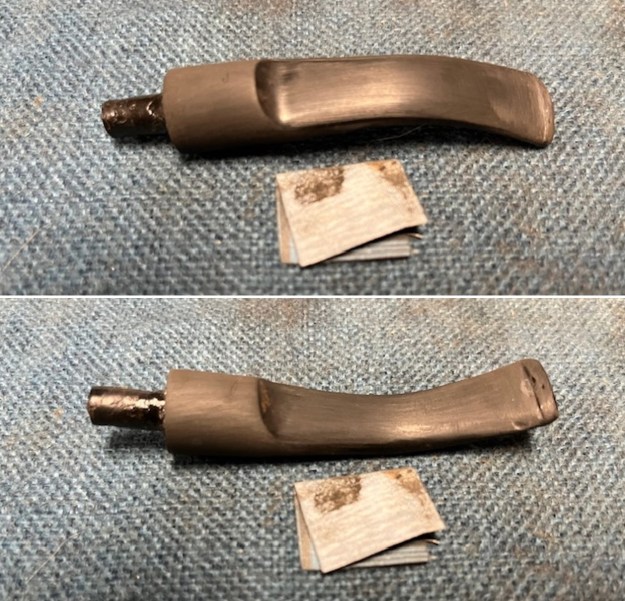 I sanded the stem with 2 x 2 inch sanding pads – dry sanding with 320-3500 grit pads and wiping it down after each pad with an Obsidian Oil cloth.
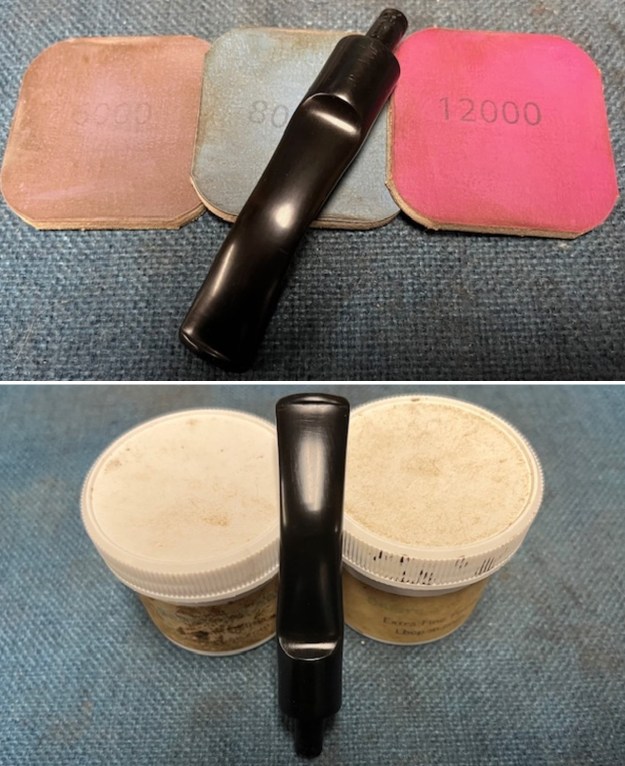
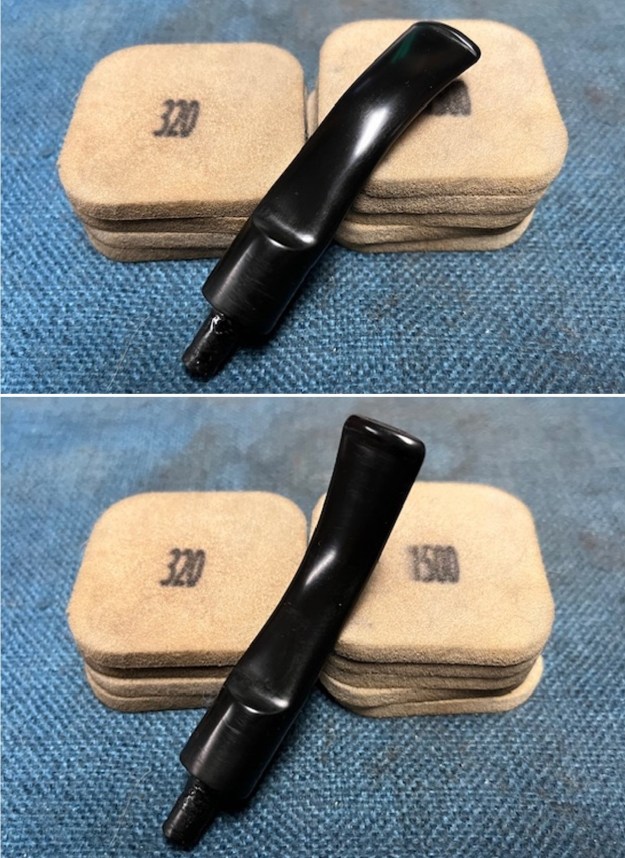 I polished the stem with micromesh sanding pads – dry sanding with 1500-12000 grit pads. I wiped the stem down after each sanding pad with Obsidian Oil. I did a final hand polish of the stem with Before & After Pipe Stem Polish – both Fine and Extra Fine. I gave it a coat of Obsidian Pipe Stem Oil. It works to protect the stem from oxidizing. I set it aside to dry.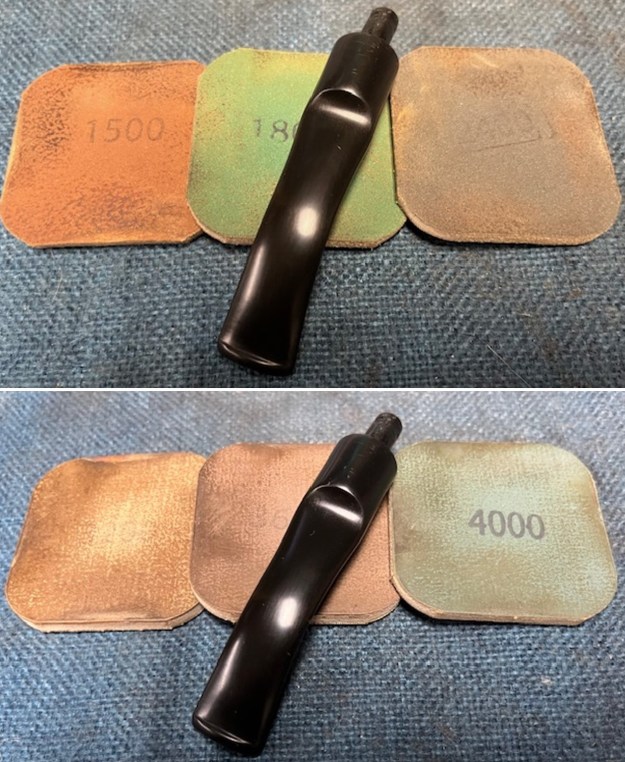
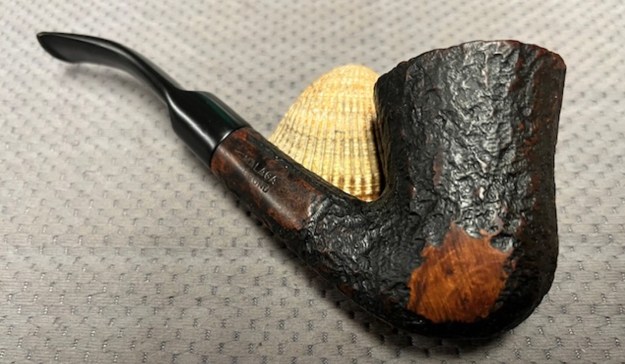
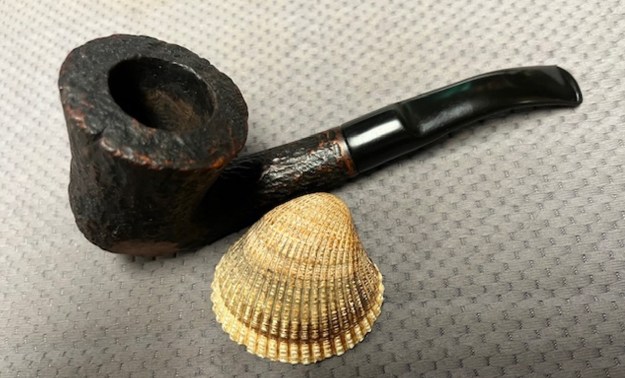
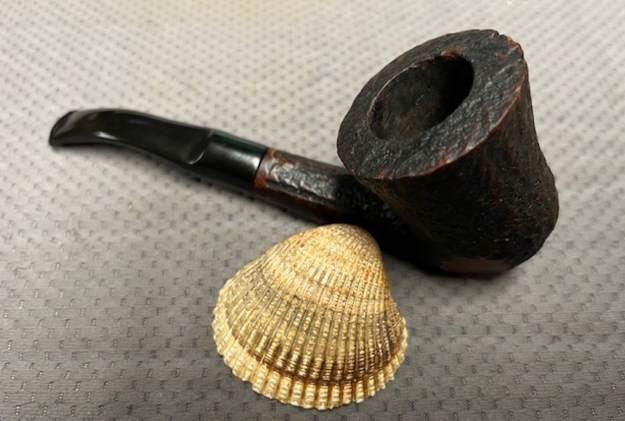
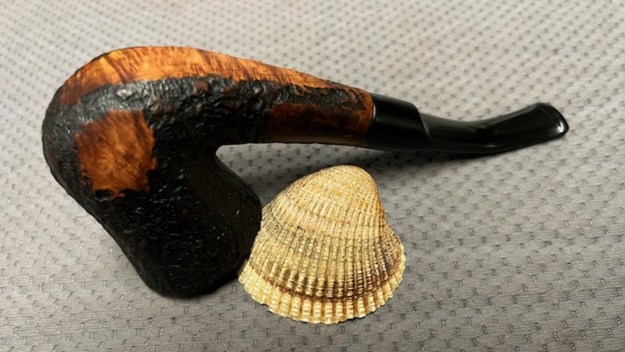
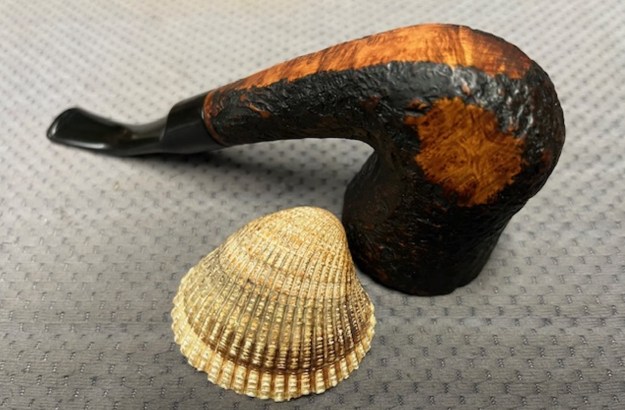
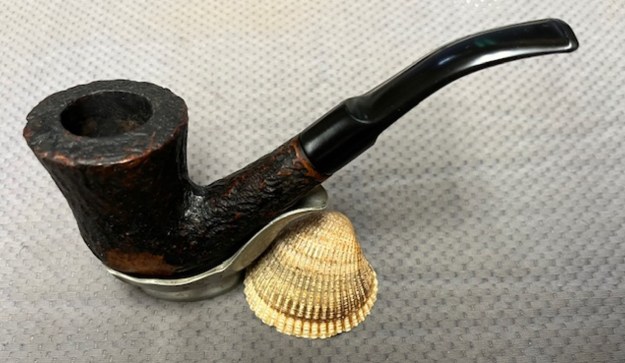
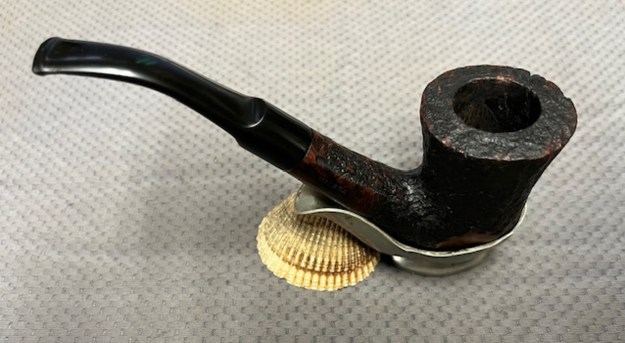
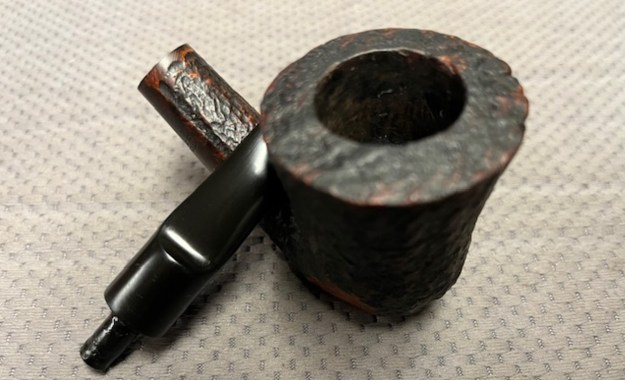
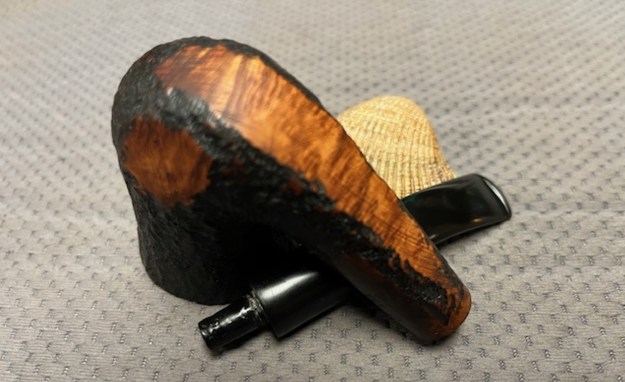
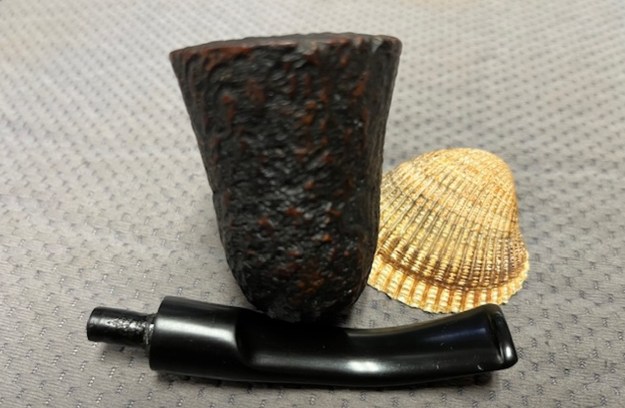
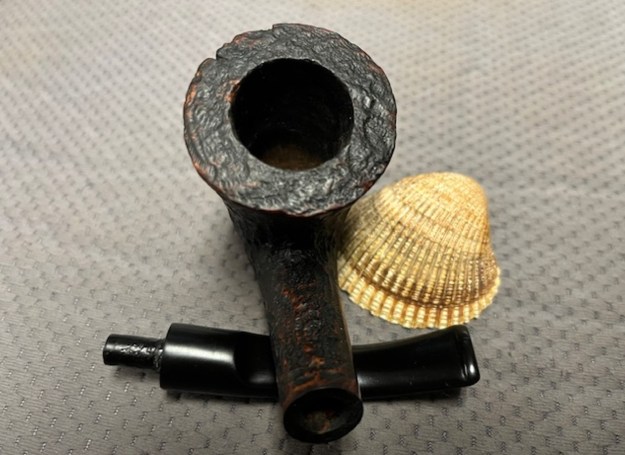
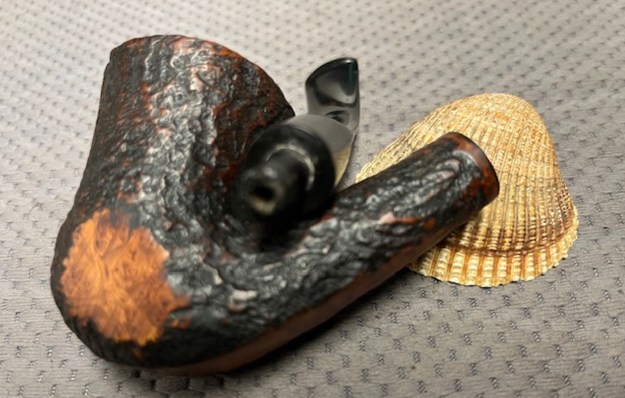
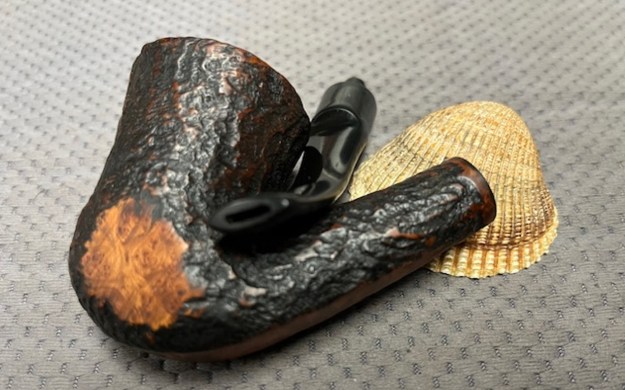
 I put the new stem back on the Malaga Second Sandblast Dublin and took it to the buffer. I buffed the bowl and stem with Blue Diamond to polish the briar and the vulcanite. Blue Diamond does a great job on the smaller scratches that remain in both. I gave the bowl and the stem several coats of carnauba wax and buffed the pipe with a clean buffing pad to raise the shine. I hand buffed it with a microfiber cloth to deepen the shine. I am amazed at how well it turned out. The finished pipe is shown in the photos below. This is a beautiful Malaga Second Sandblast Dublin and the vulcanite saddle stem and smooth patches in the sandblast finish combine to give the pipe a great look. The dimensions of the pipe are Length: 5 ¾ inches, Height: 2 ¼ inches, Outside diameter of the bowl: 1 ¾ inches, Chamber diameter: 7/8 of an inch. The weight of the pipe is 2.26 ounces/64 grams. This is another pipe that I will be putting on the rebornpipes online store in the American Pipe Makers and Pipemaking Companies Section shortly, if you are interested in adding it to your collection. Thanks for walking through the restoration with me on this beauty!
As always, I encourage your questions and comments as you read the blog. Thanks to each of you who are reading this blog. Remember we are not pipe owners; we are pipe men and women who hold our pipes in trust until they pass on into the trust of those who follow us.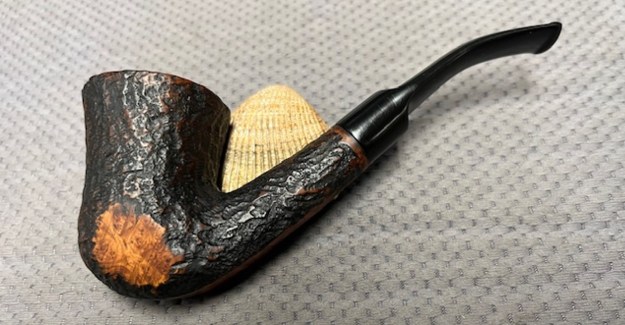
 rebornpipes