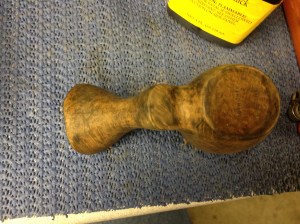
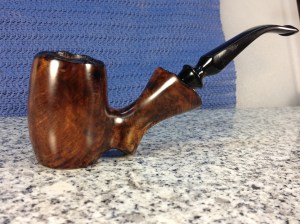
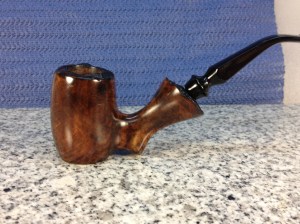
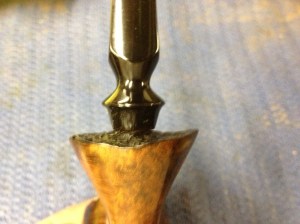
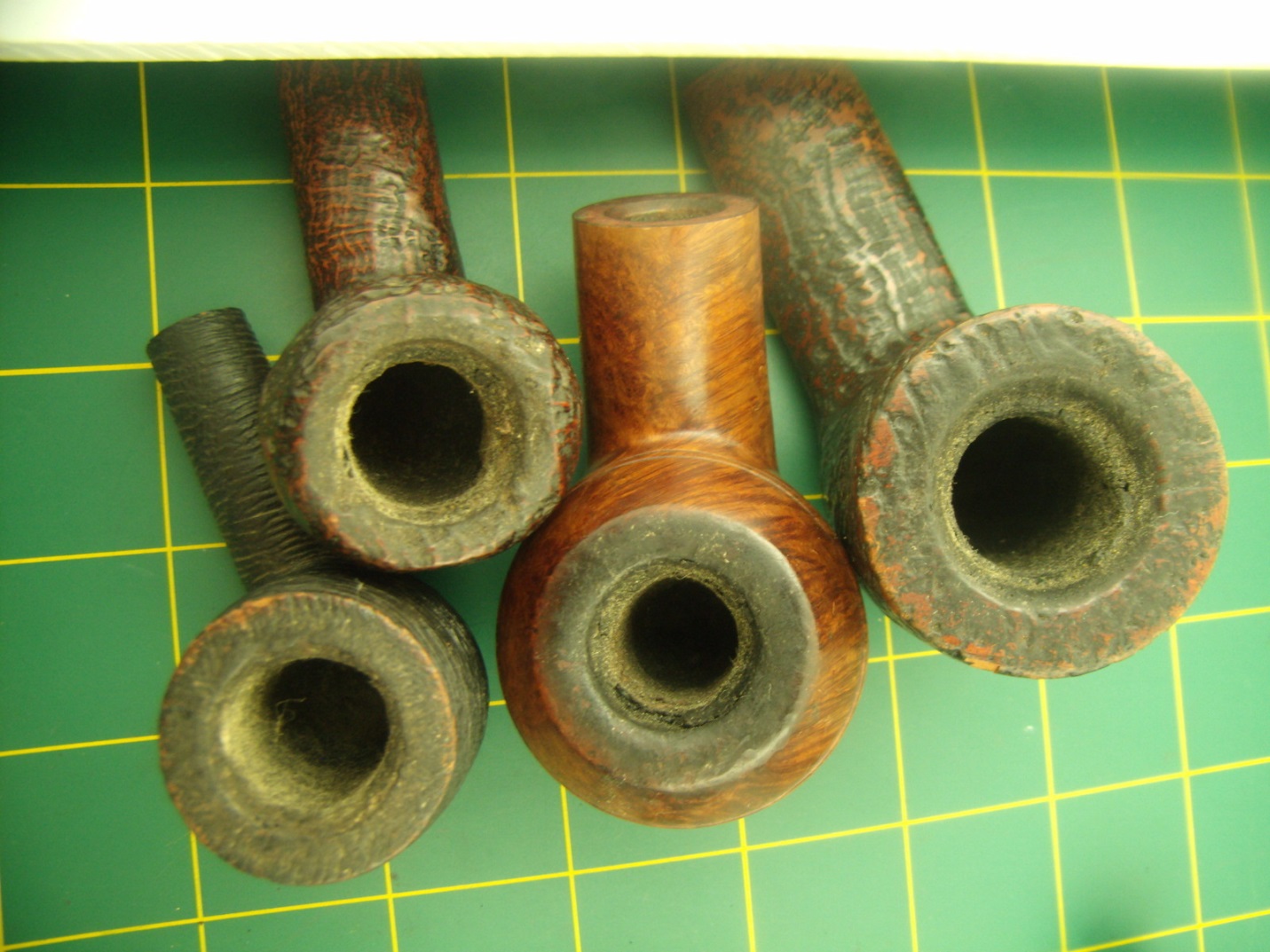
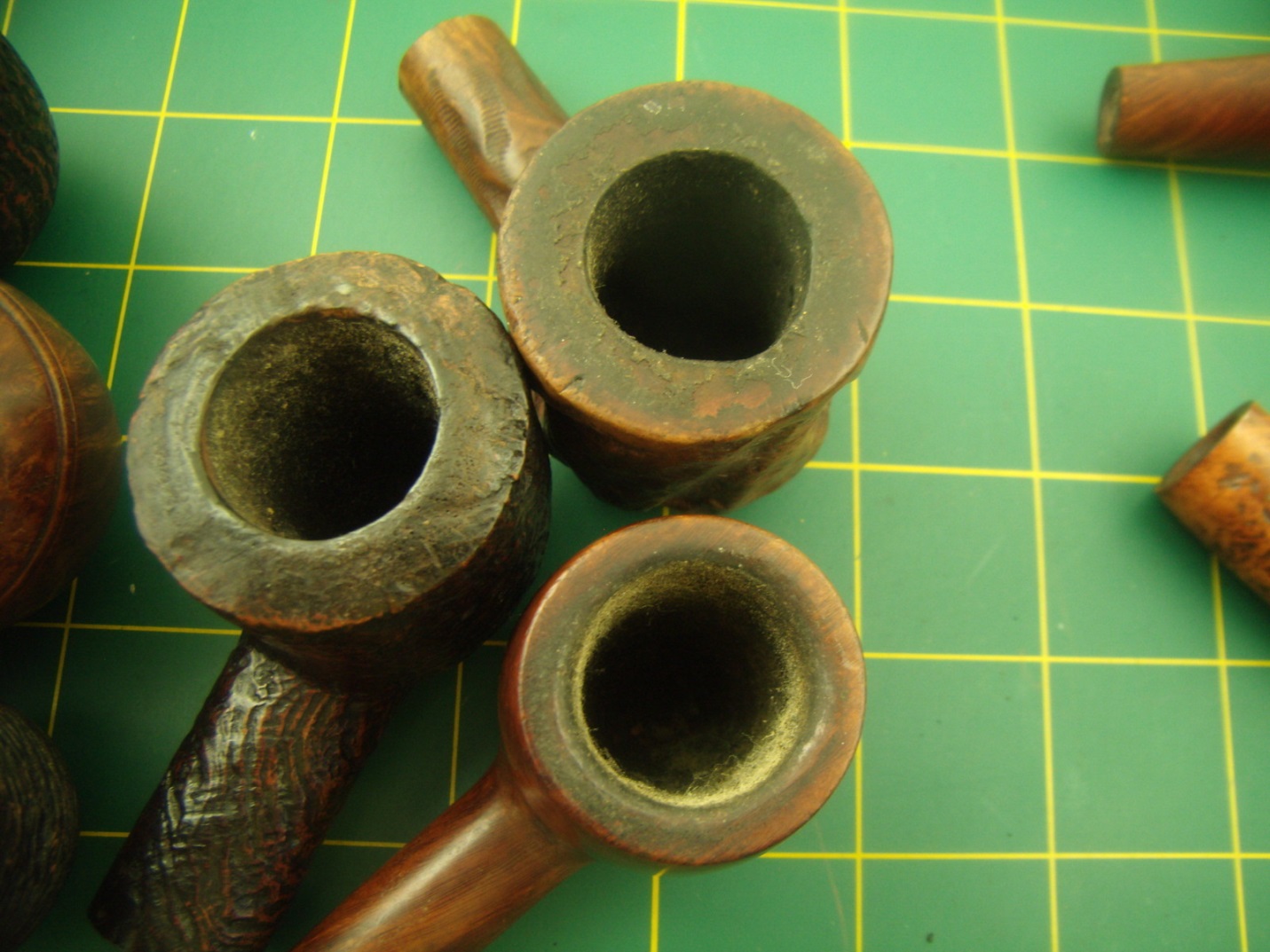
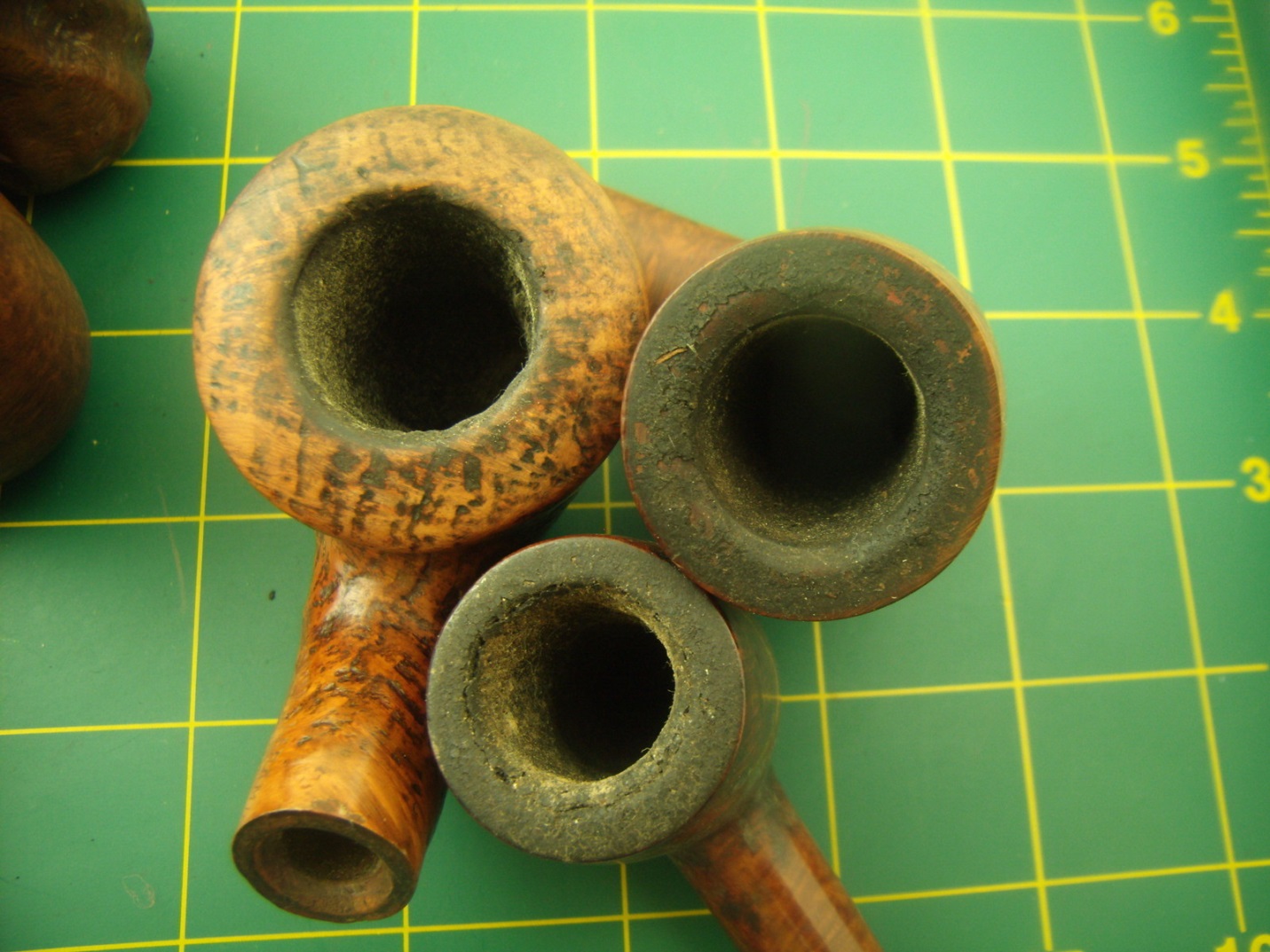
Tag Archives: refinishing
New Life for a BBB Ultima Thule Pocket Billiard


Blog by Steve Laug

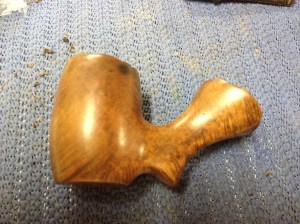
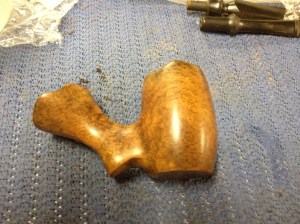
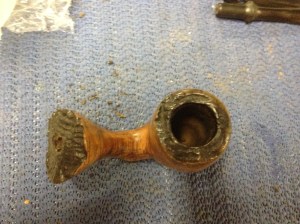
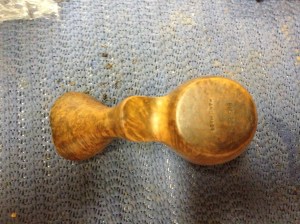
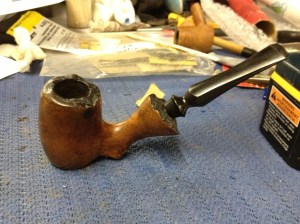
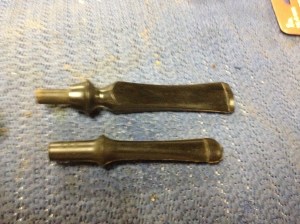
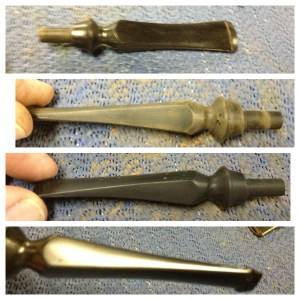
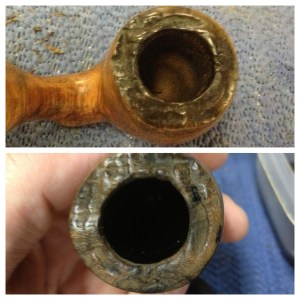
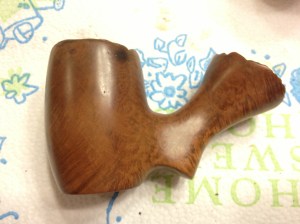
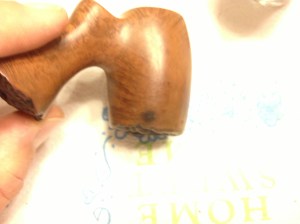
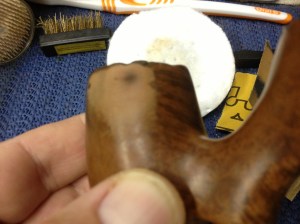
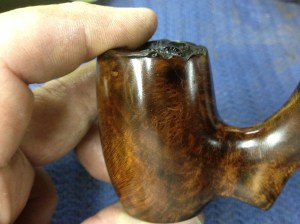
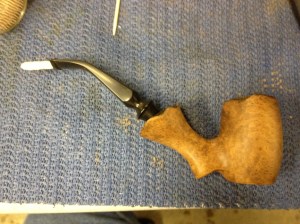
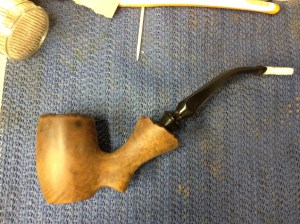
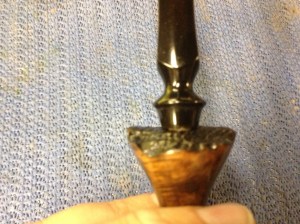
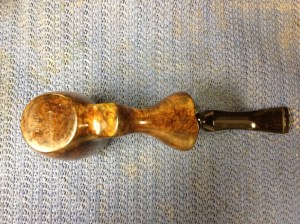
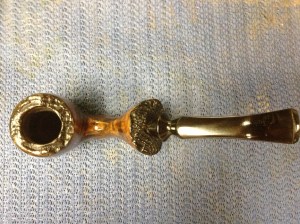
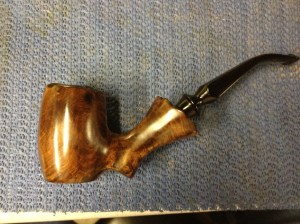
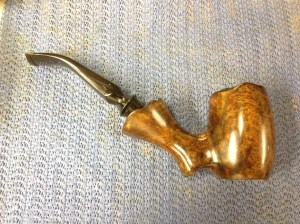
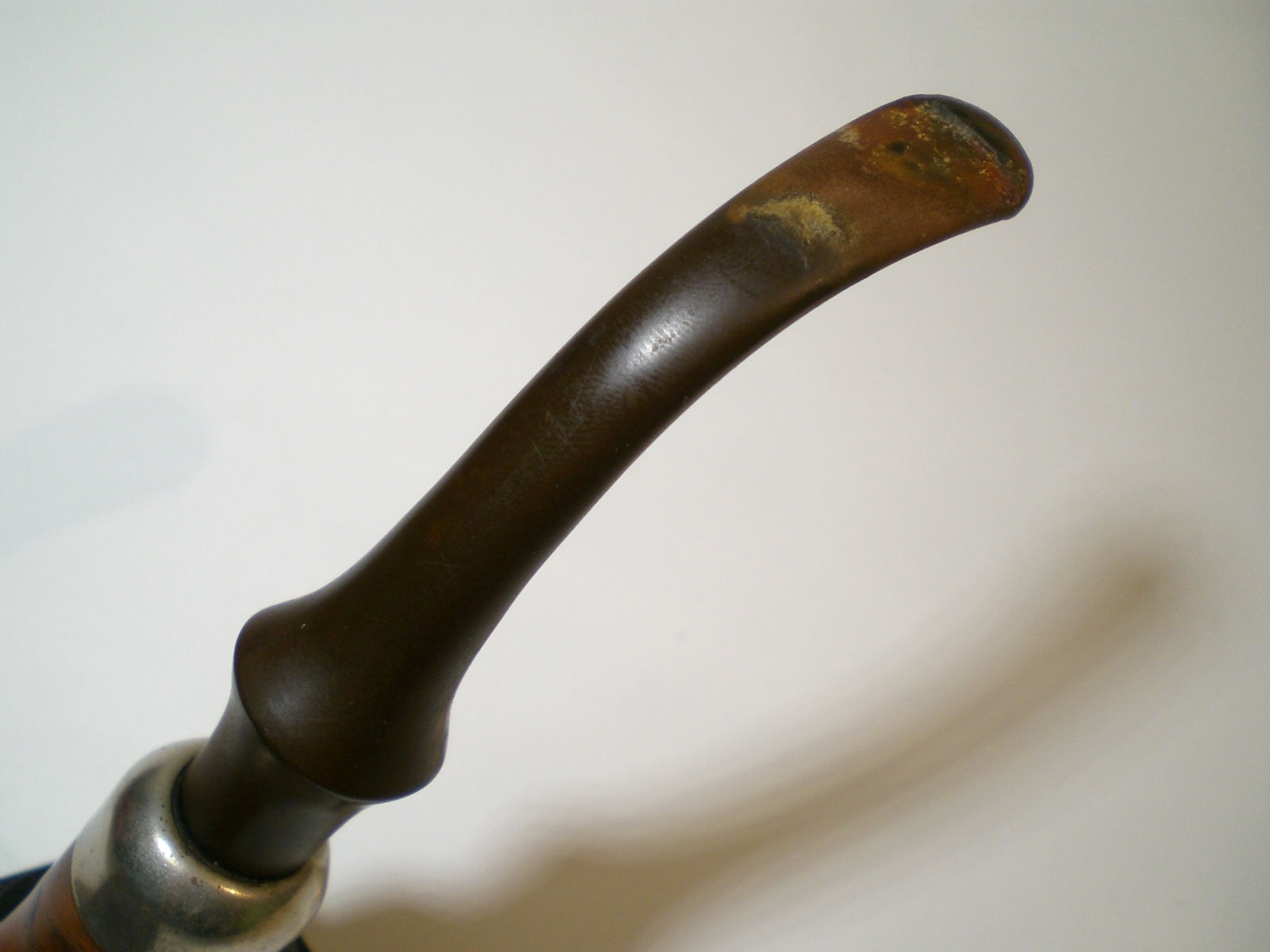
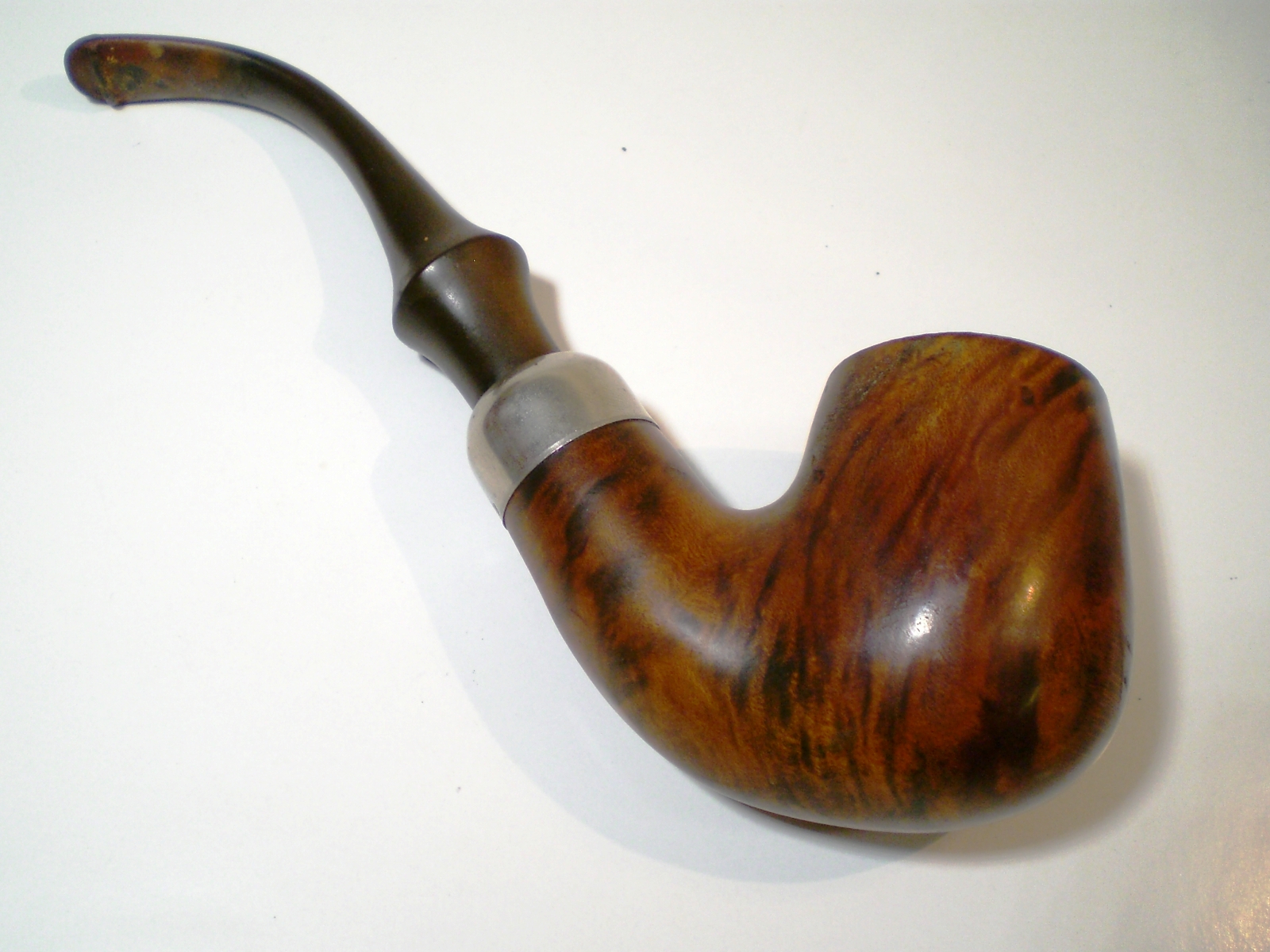
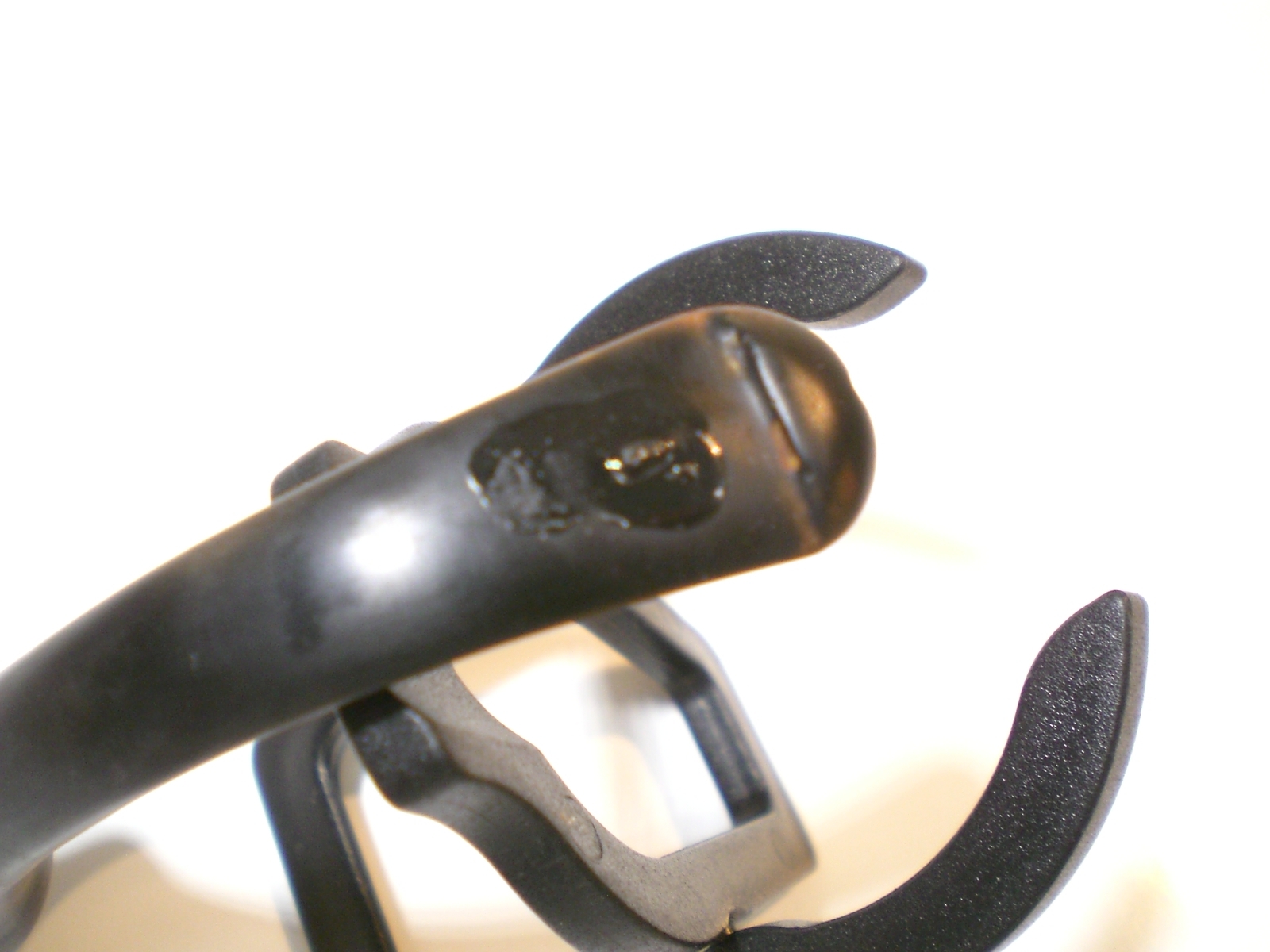
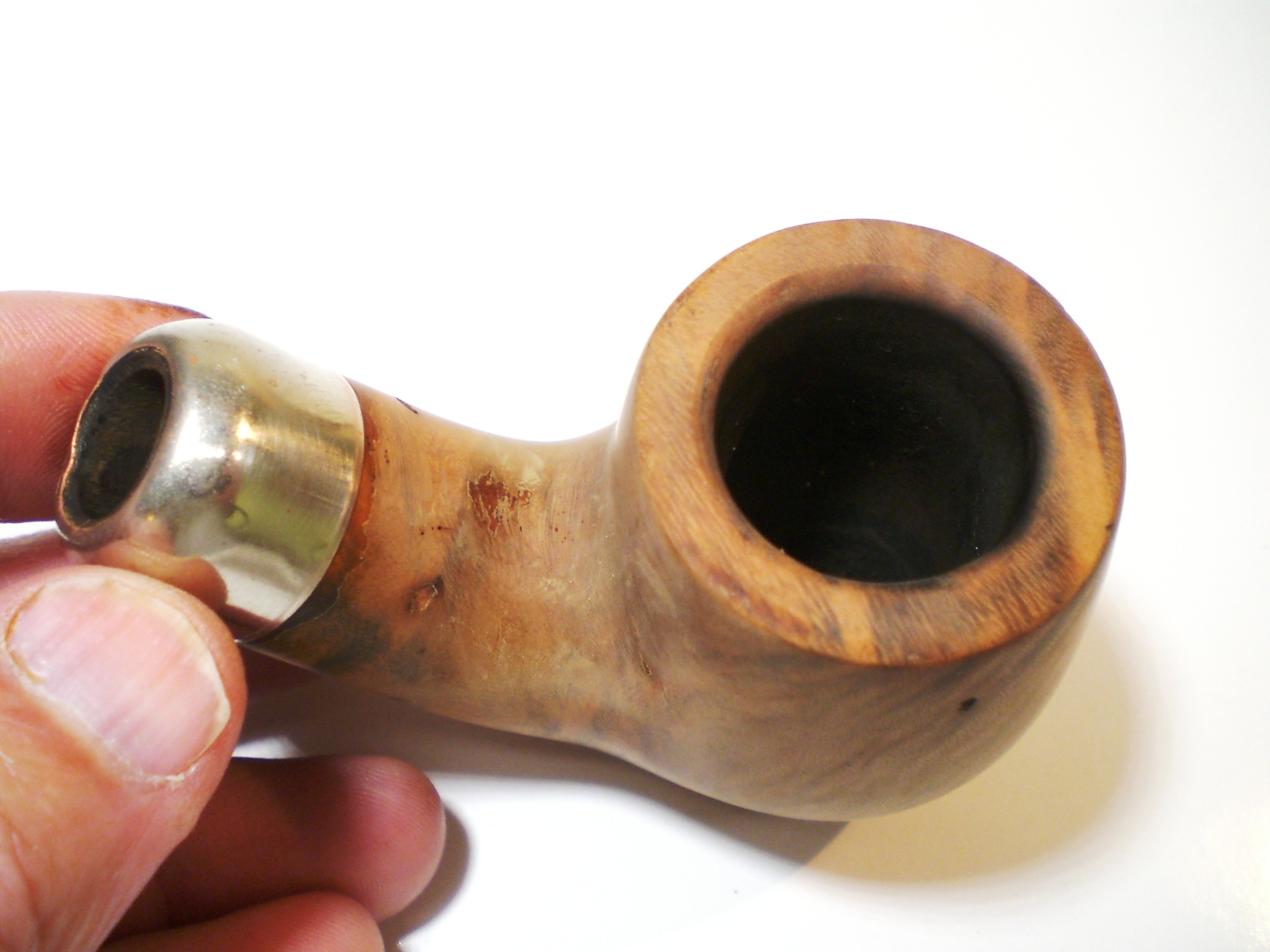
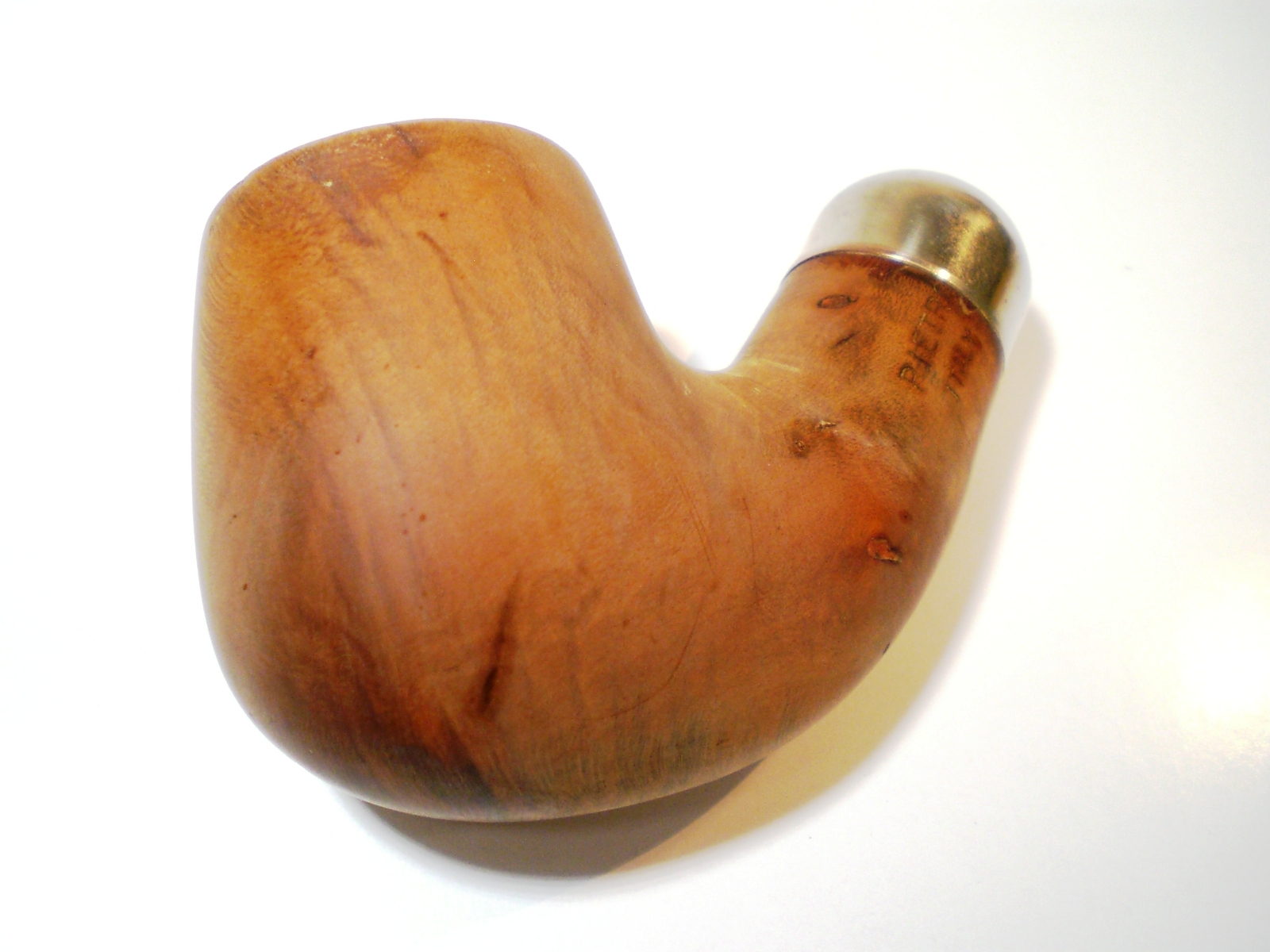
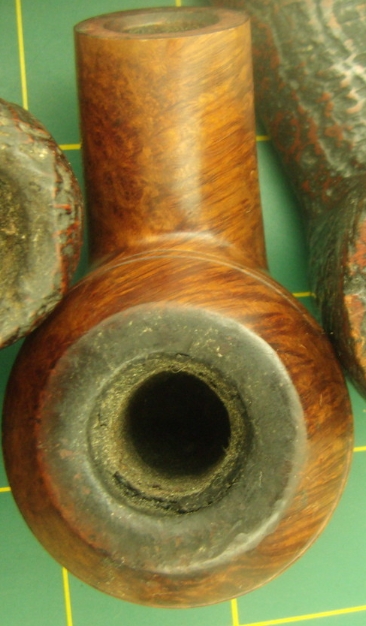
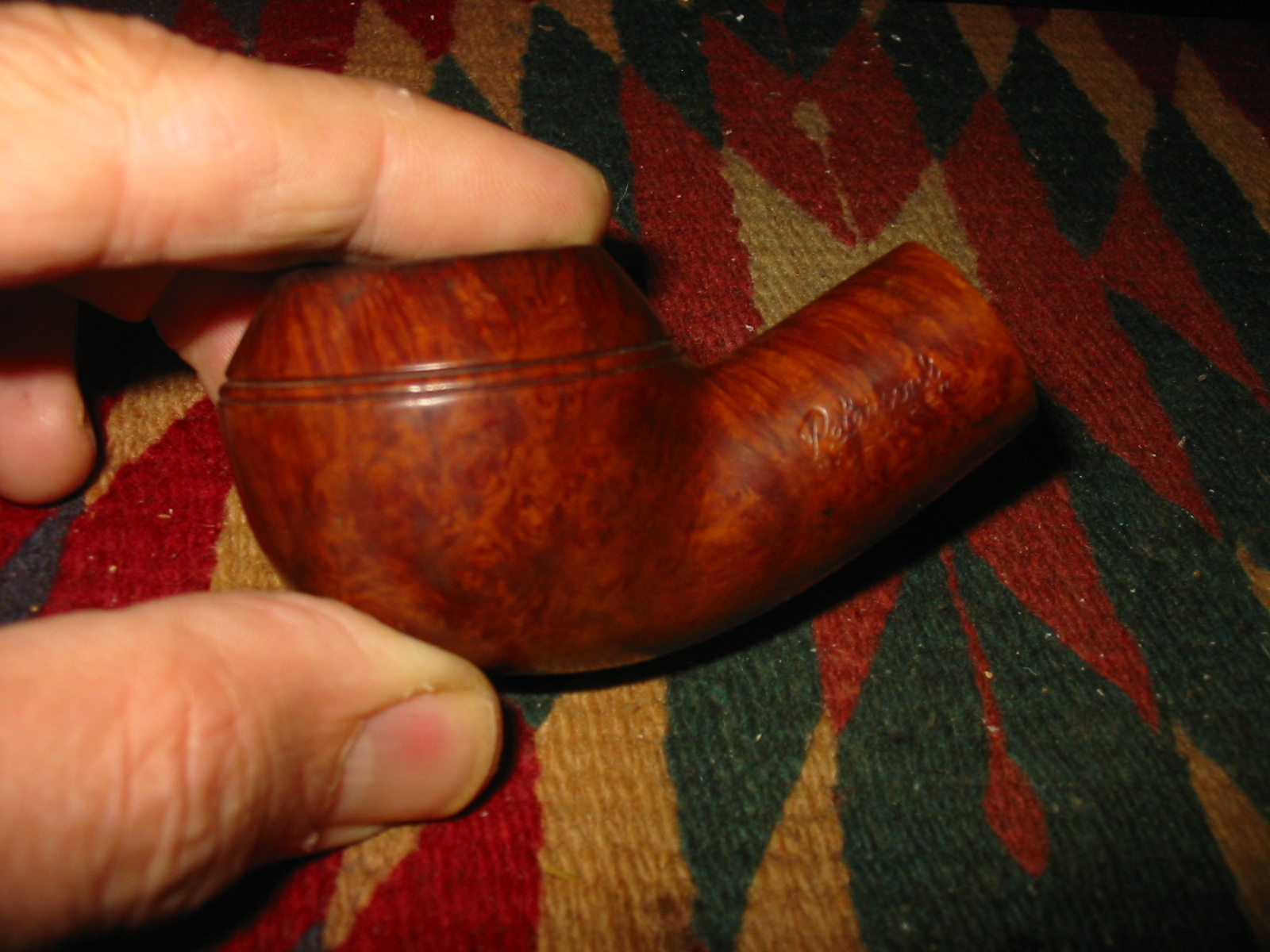
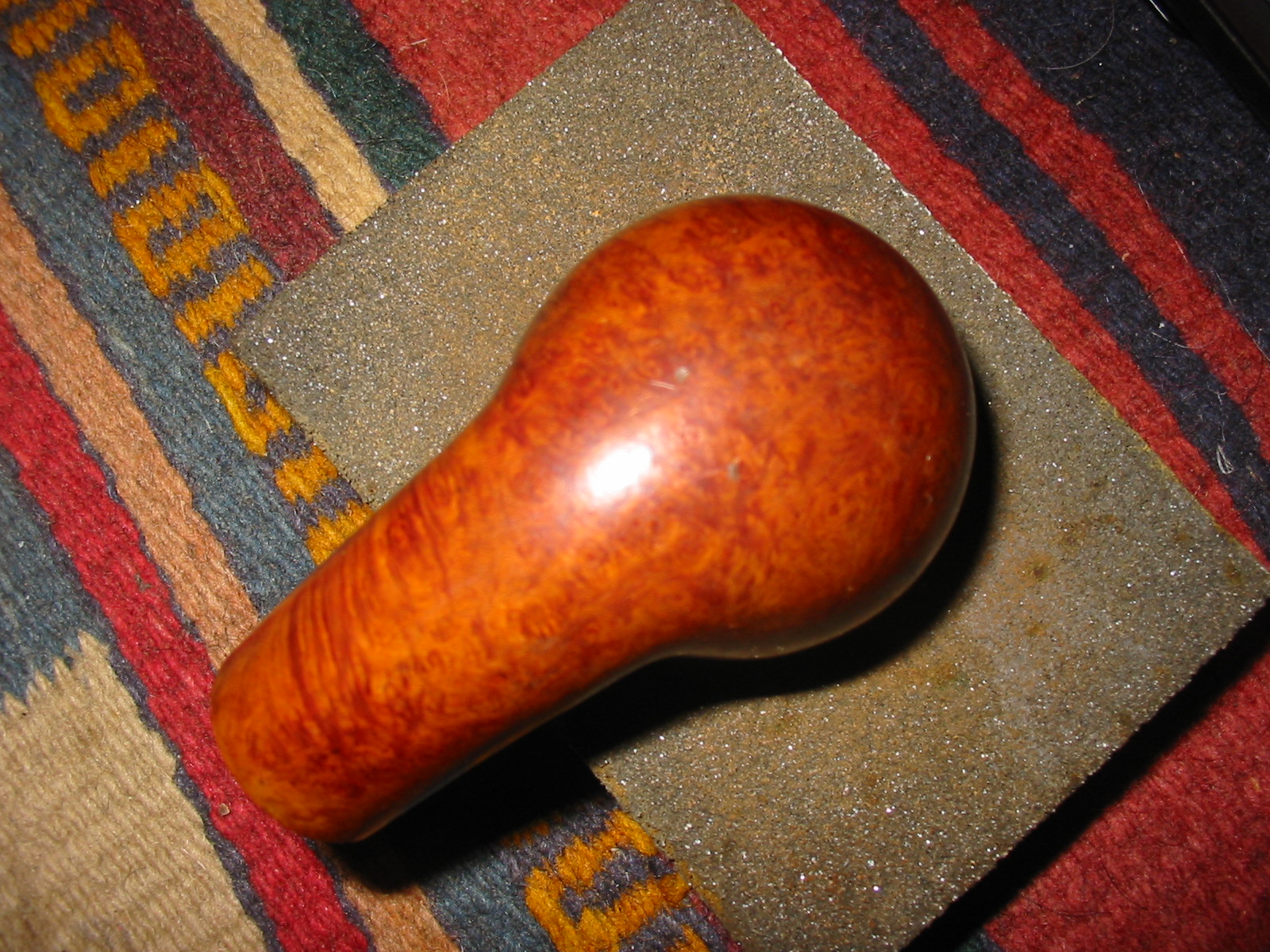
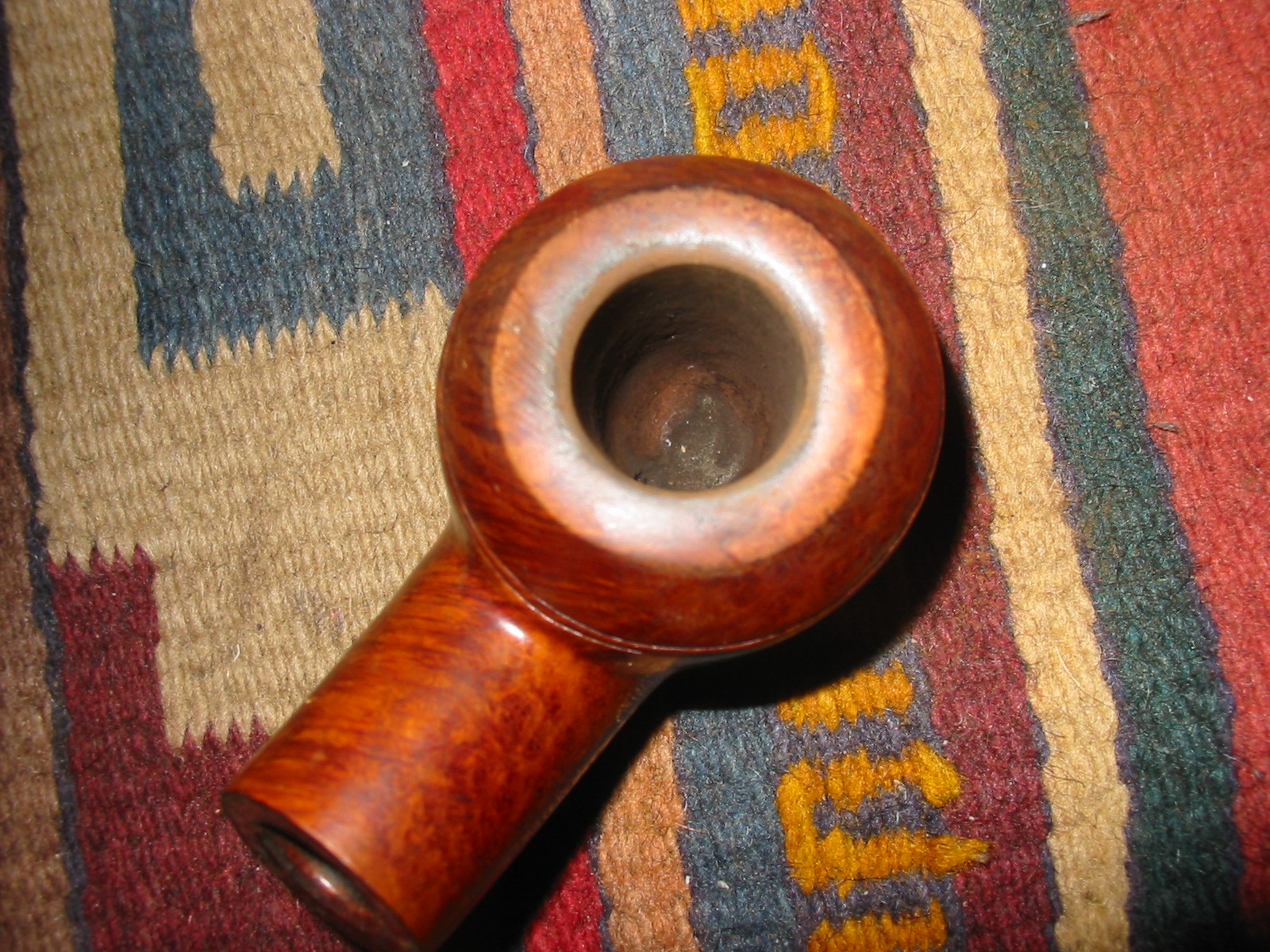
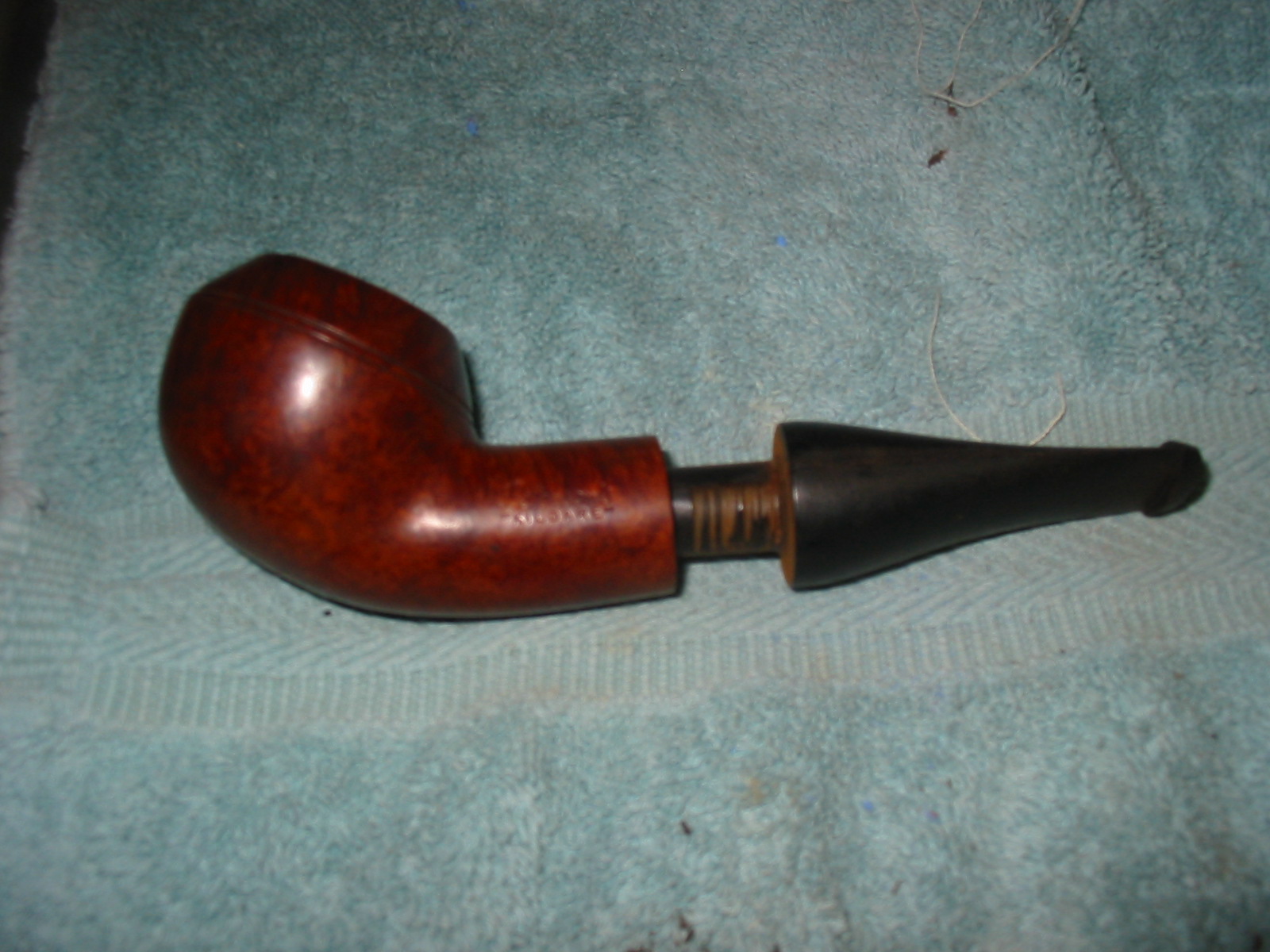
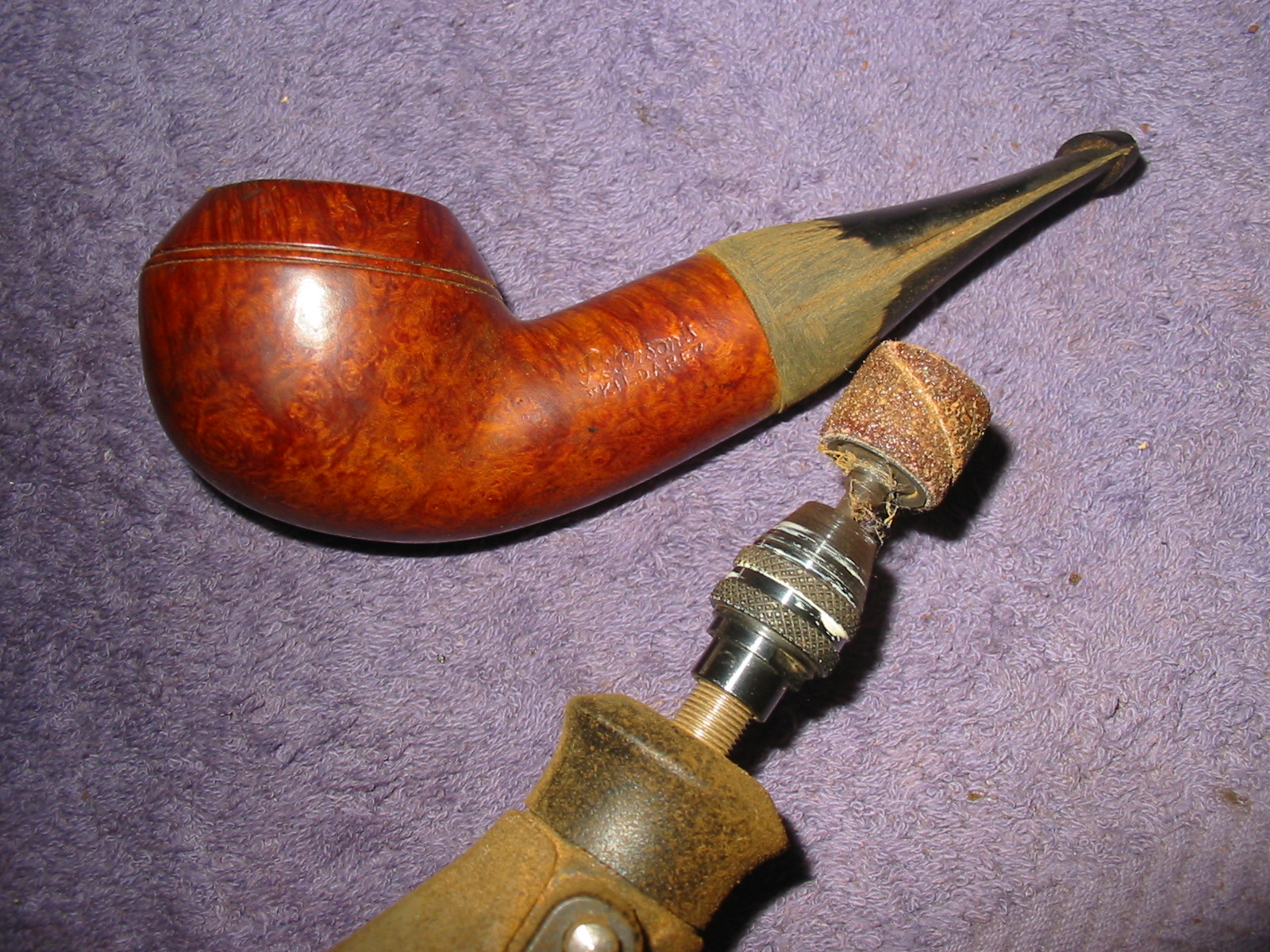
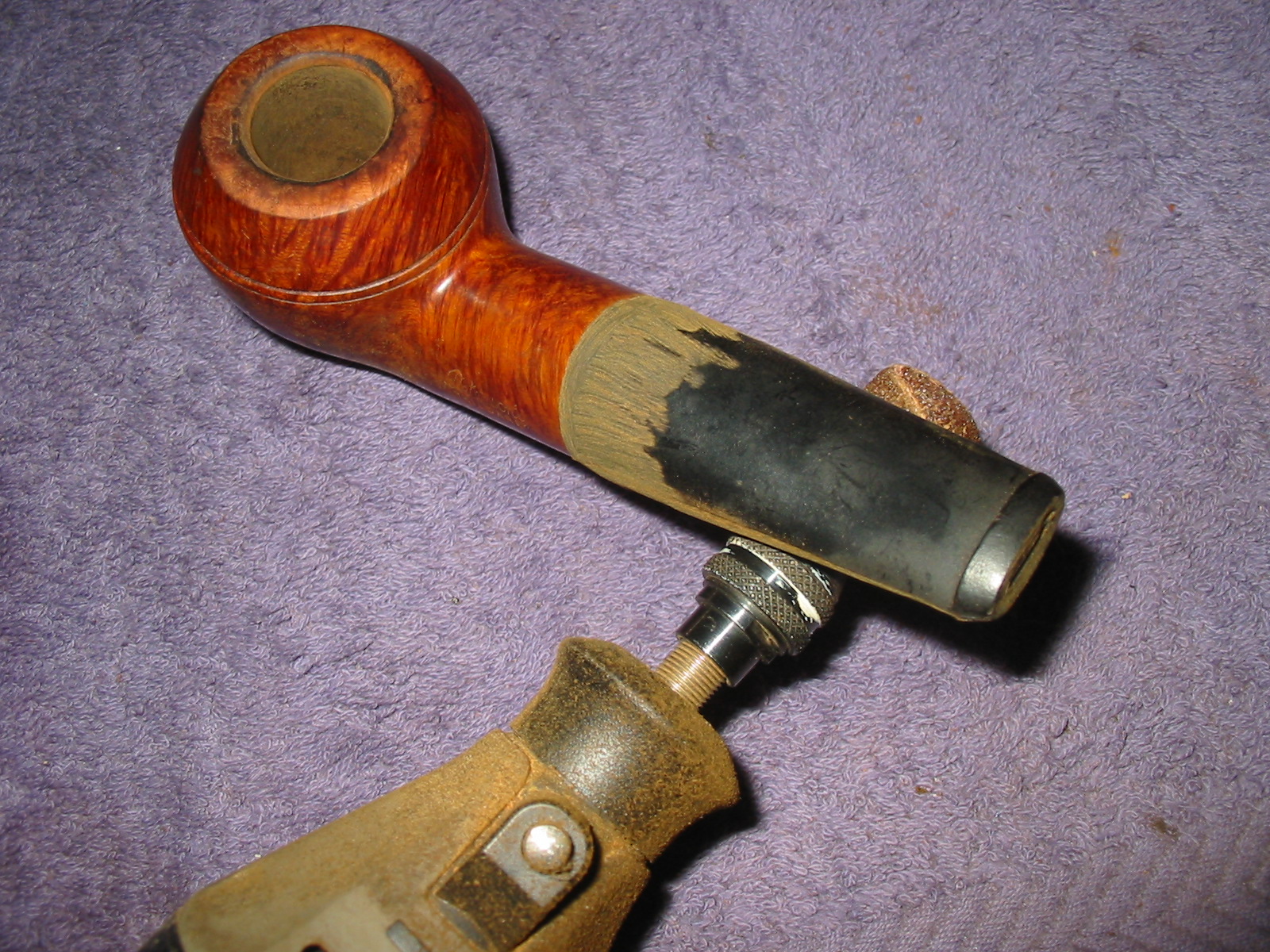
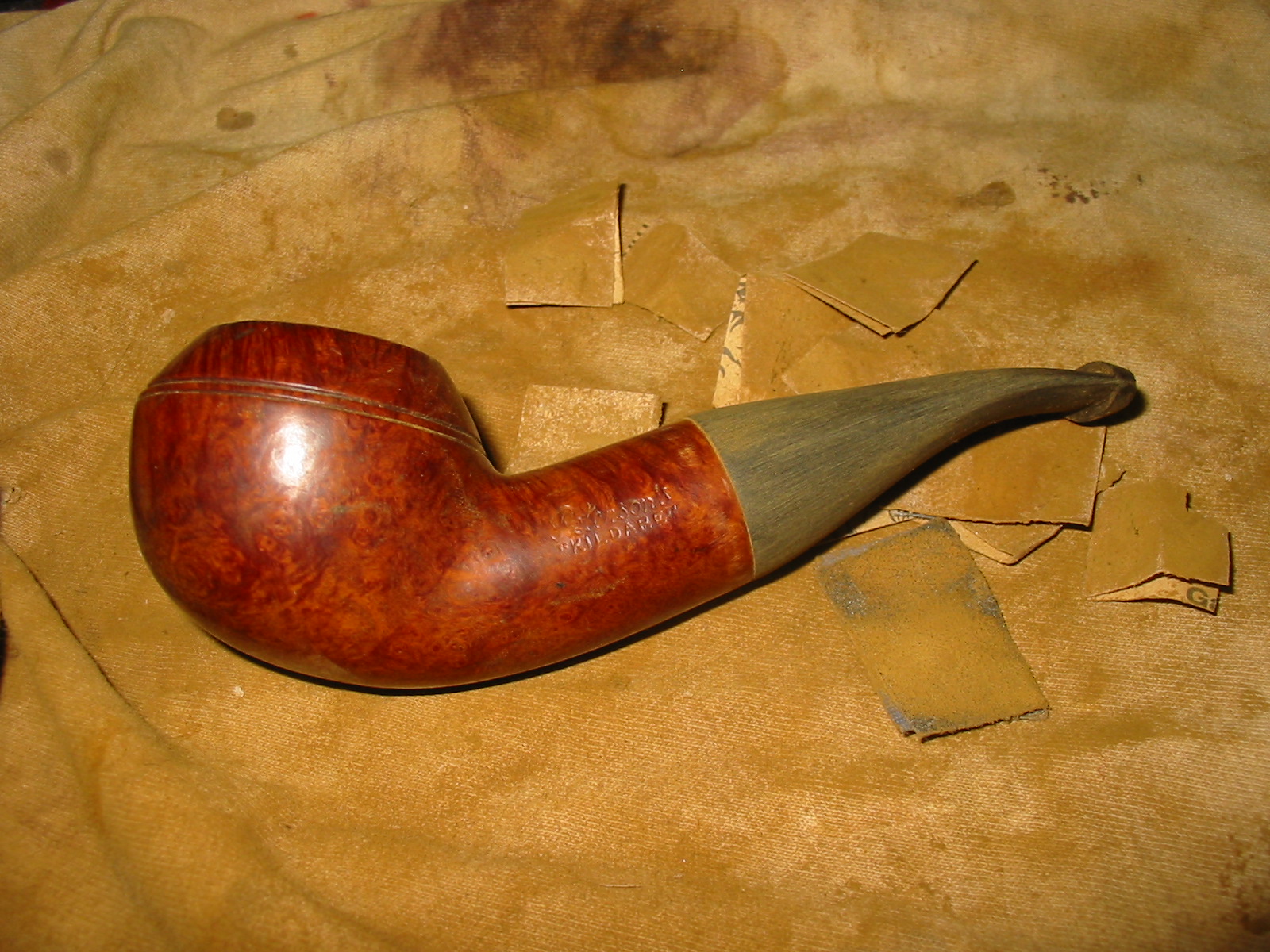
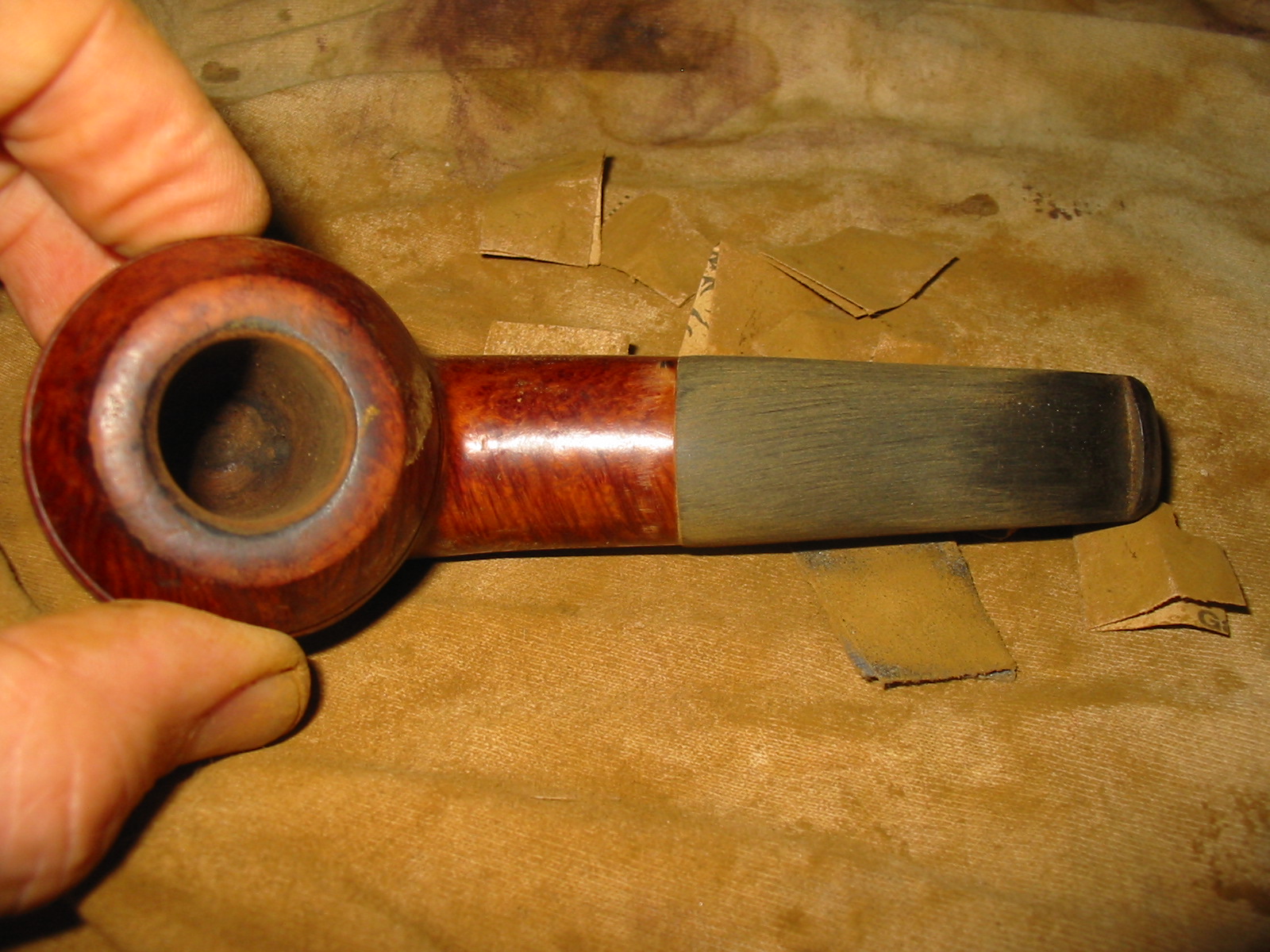
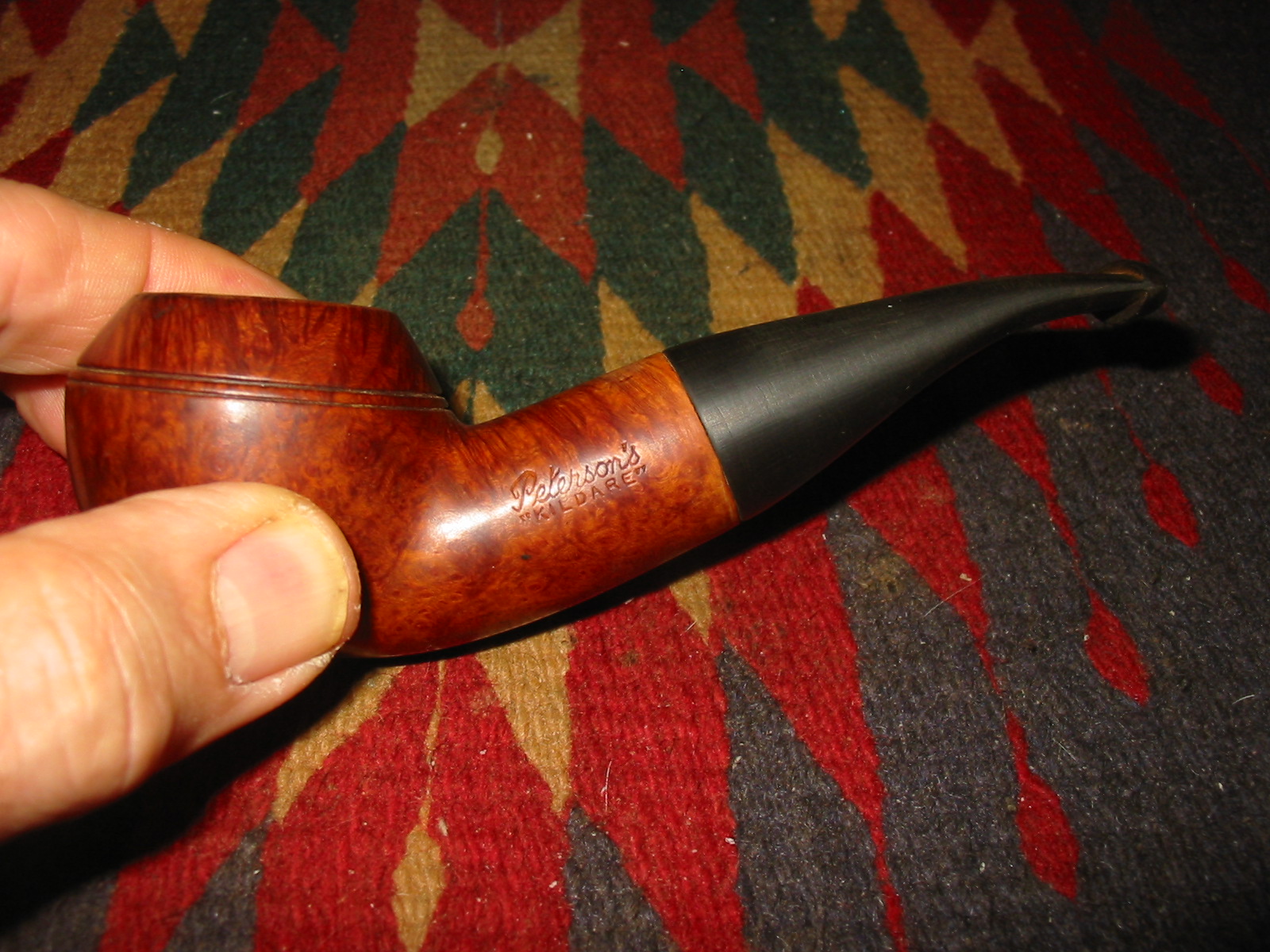
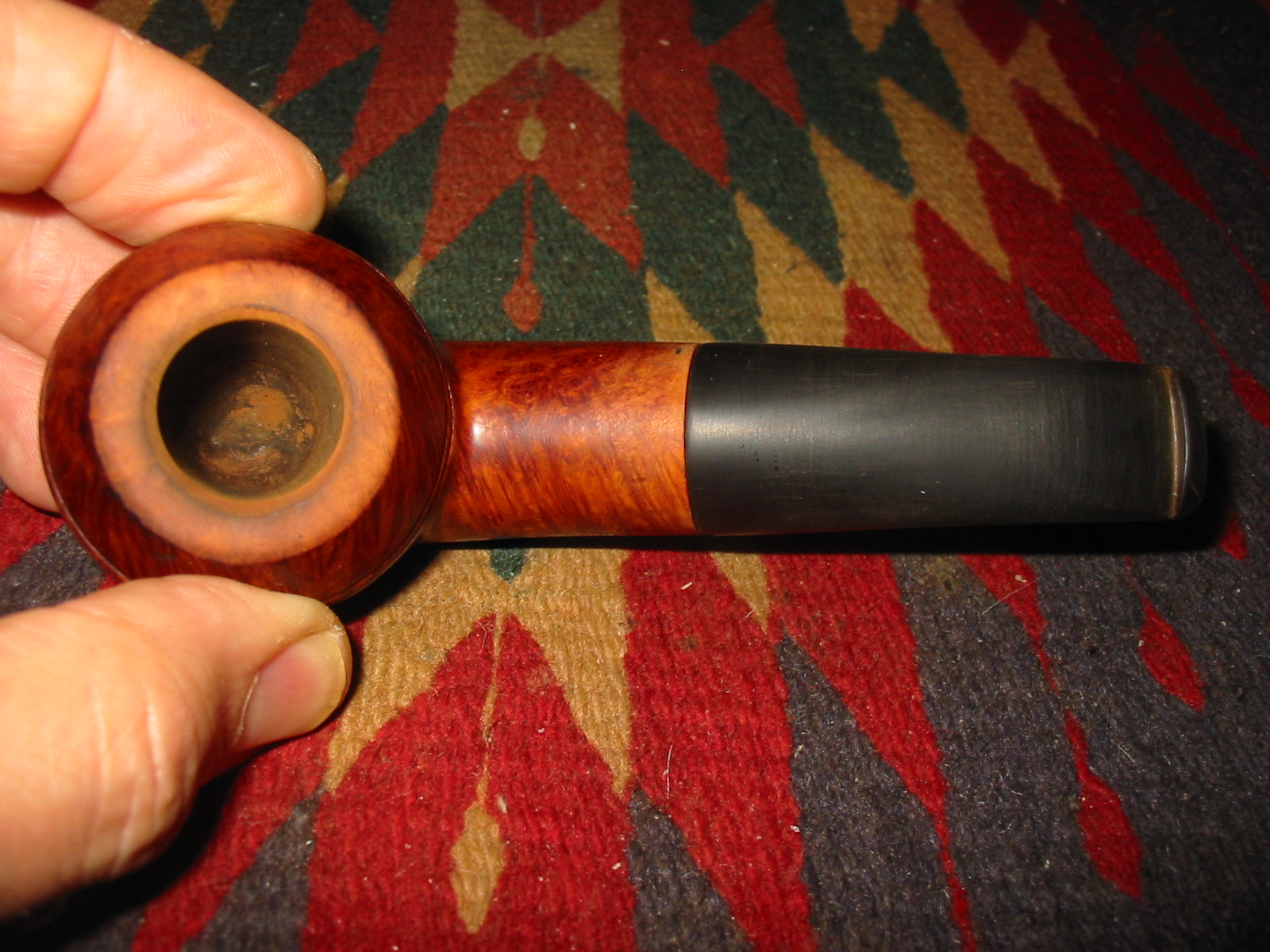
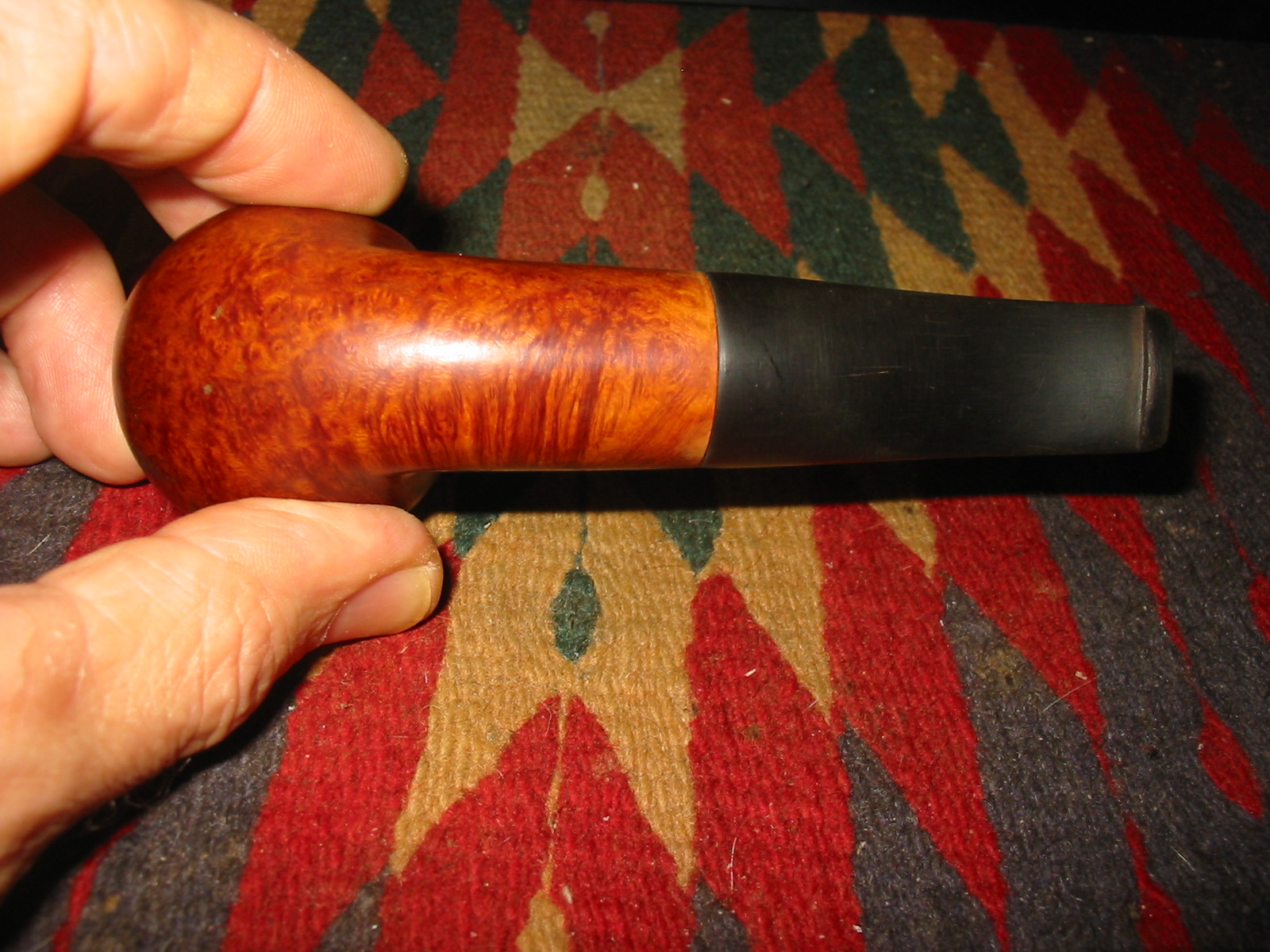
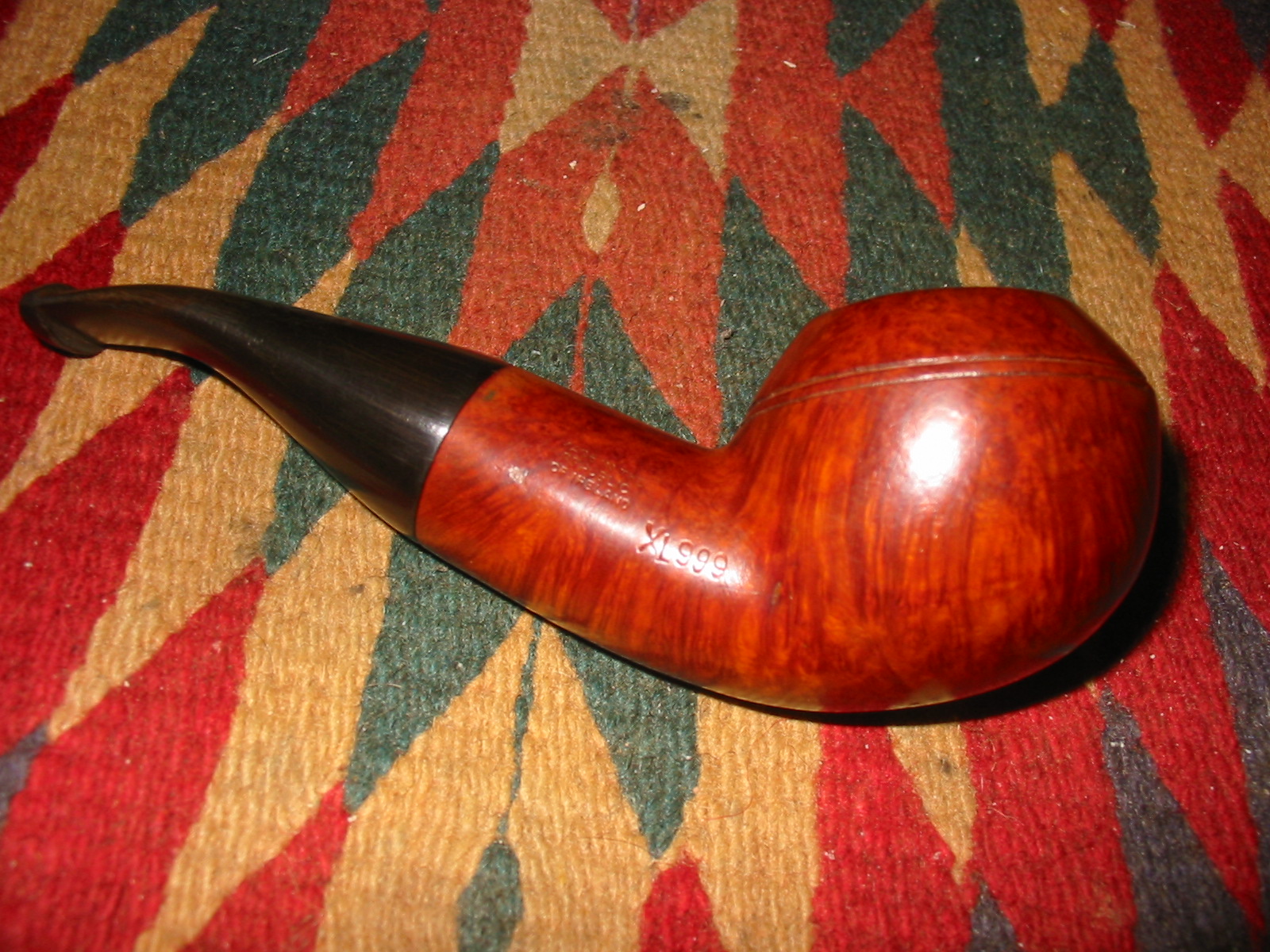
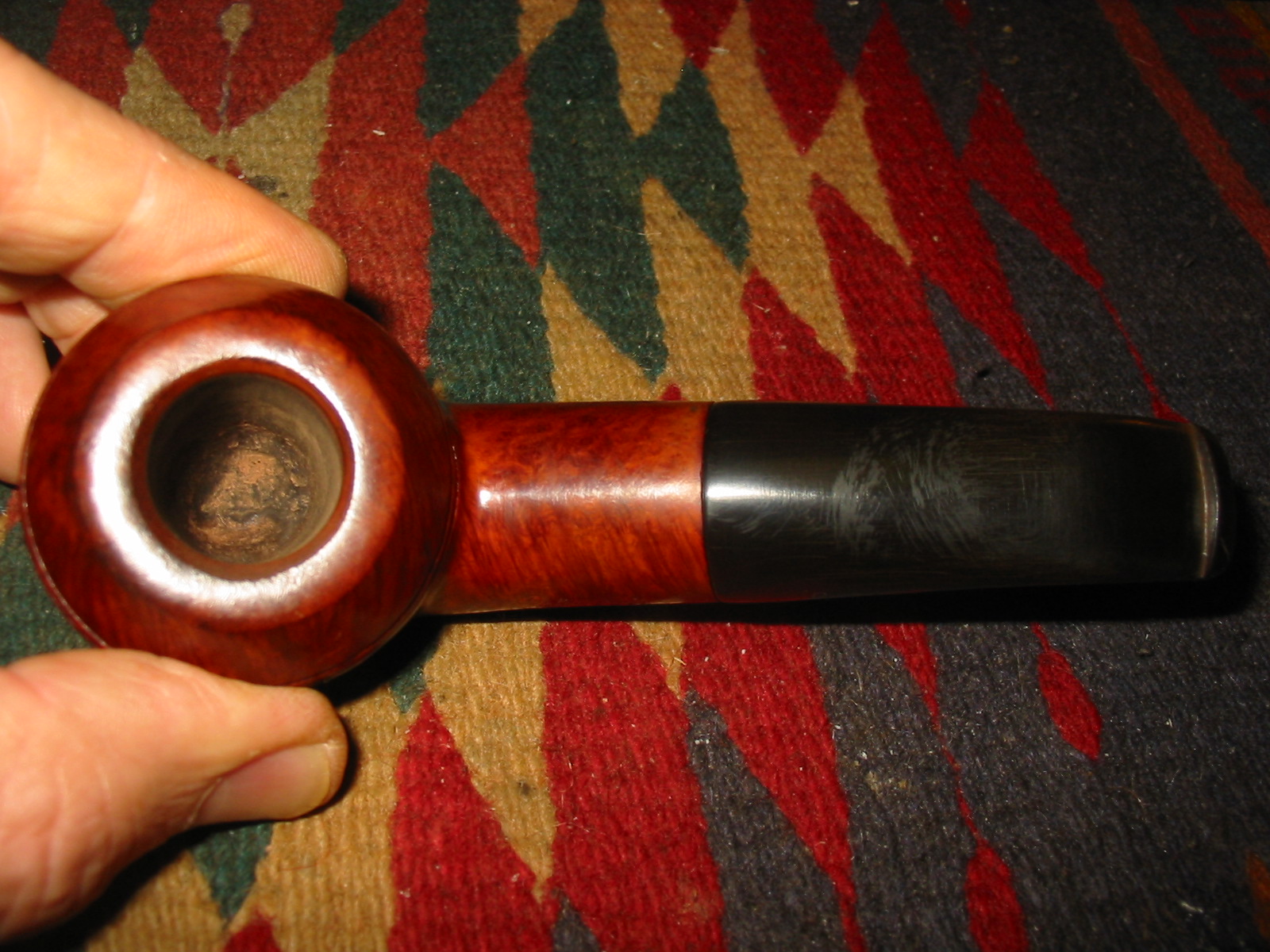
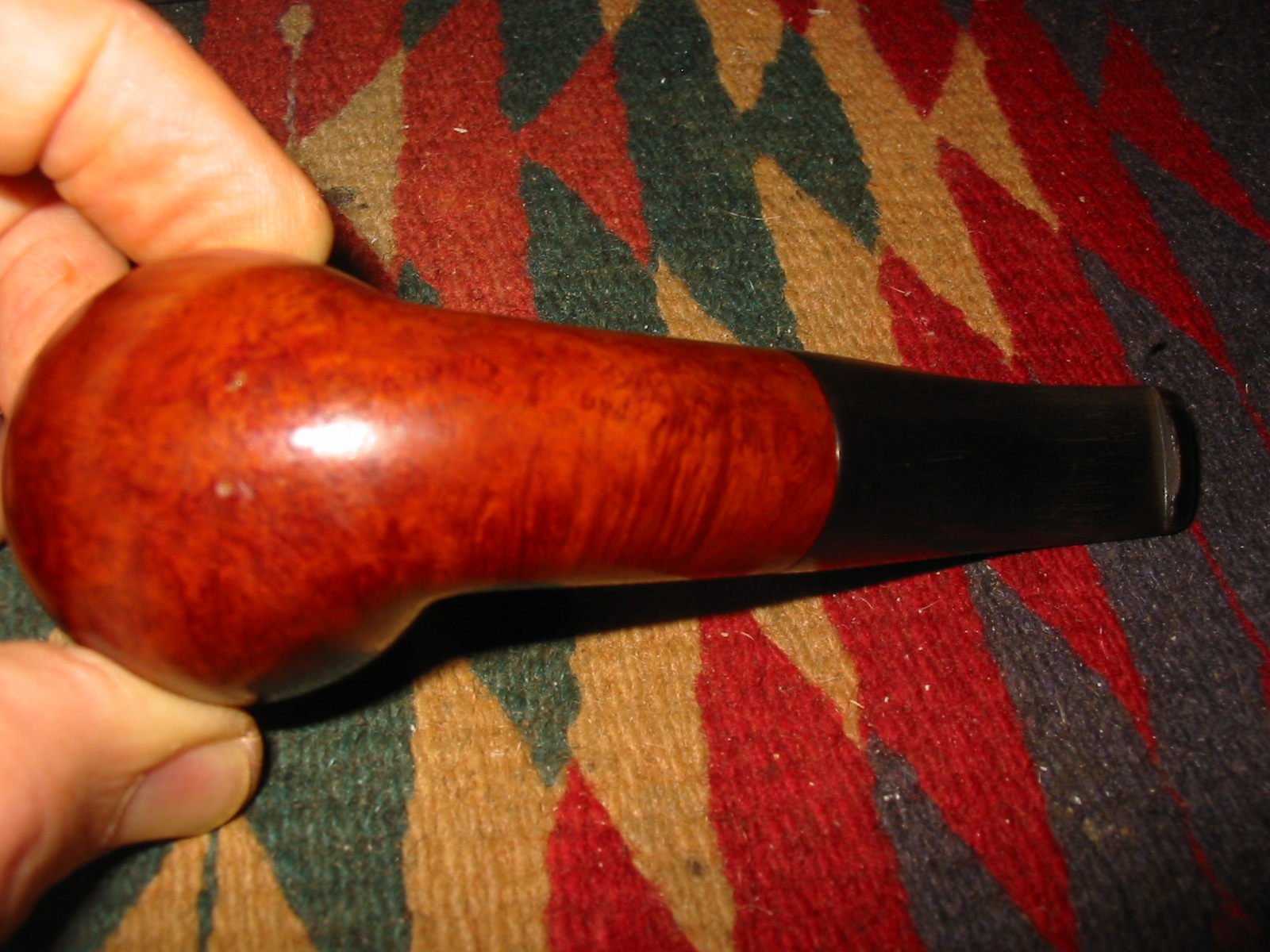
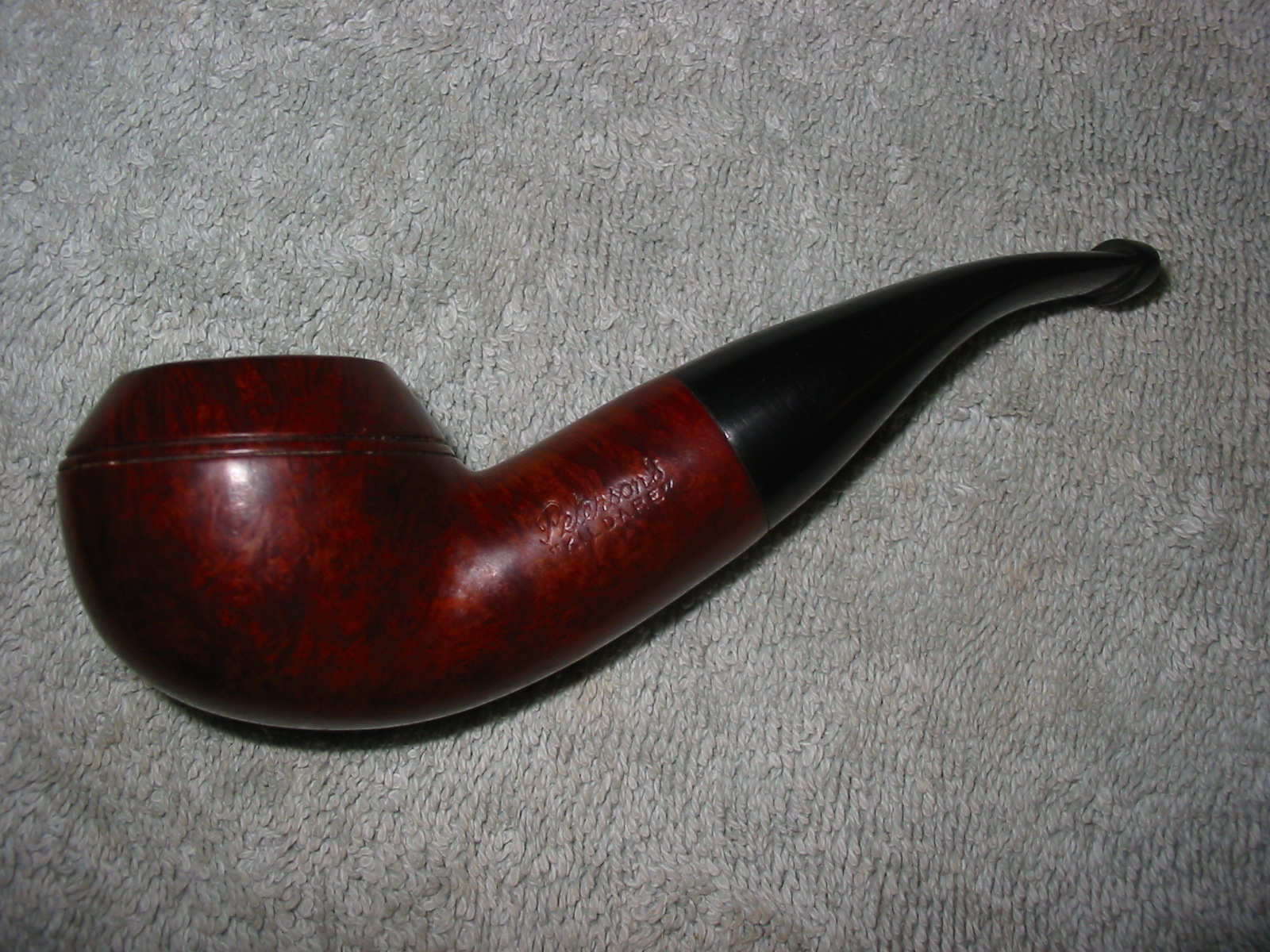
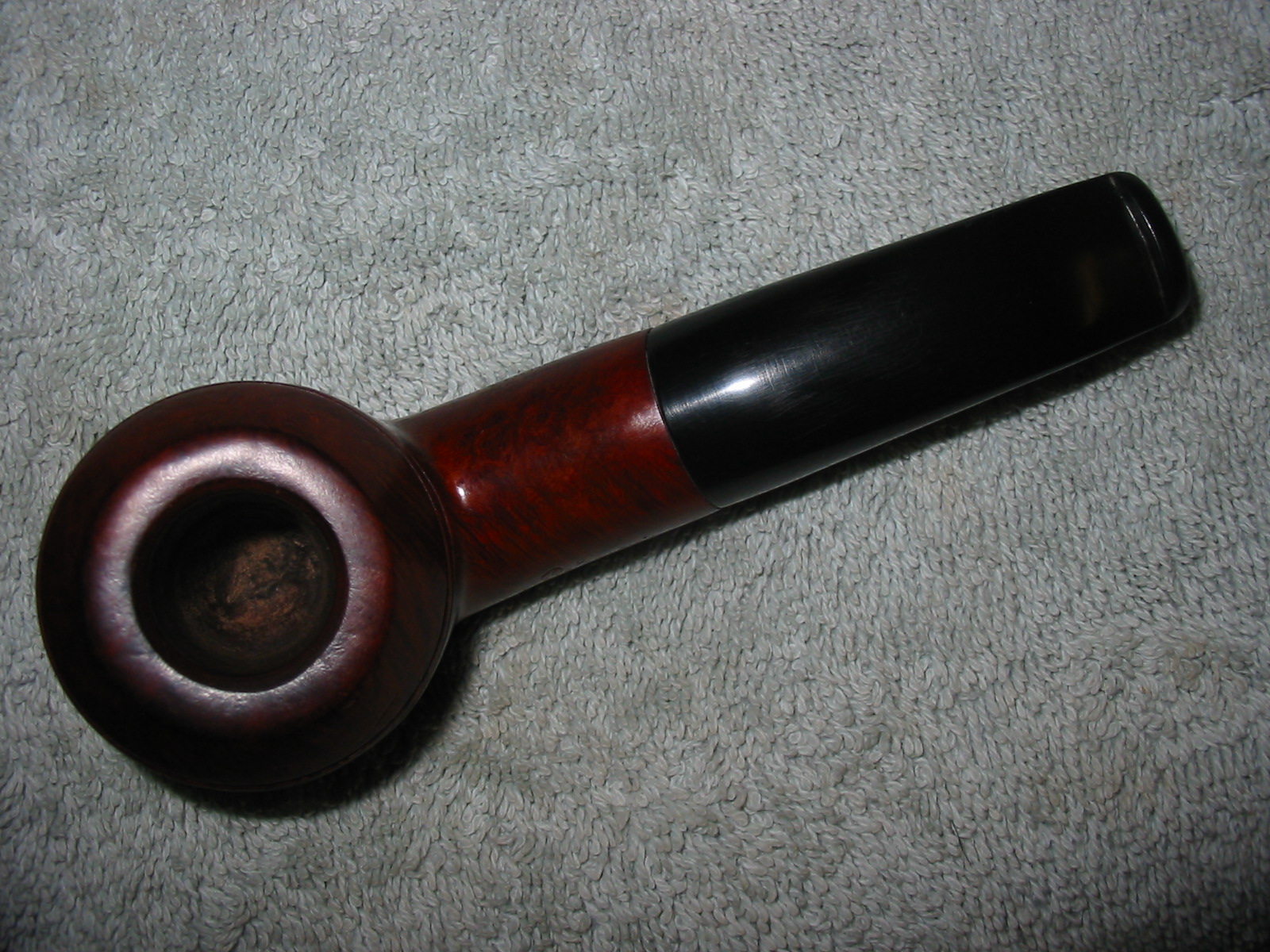
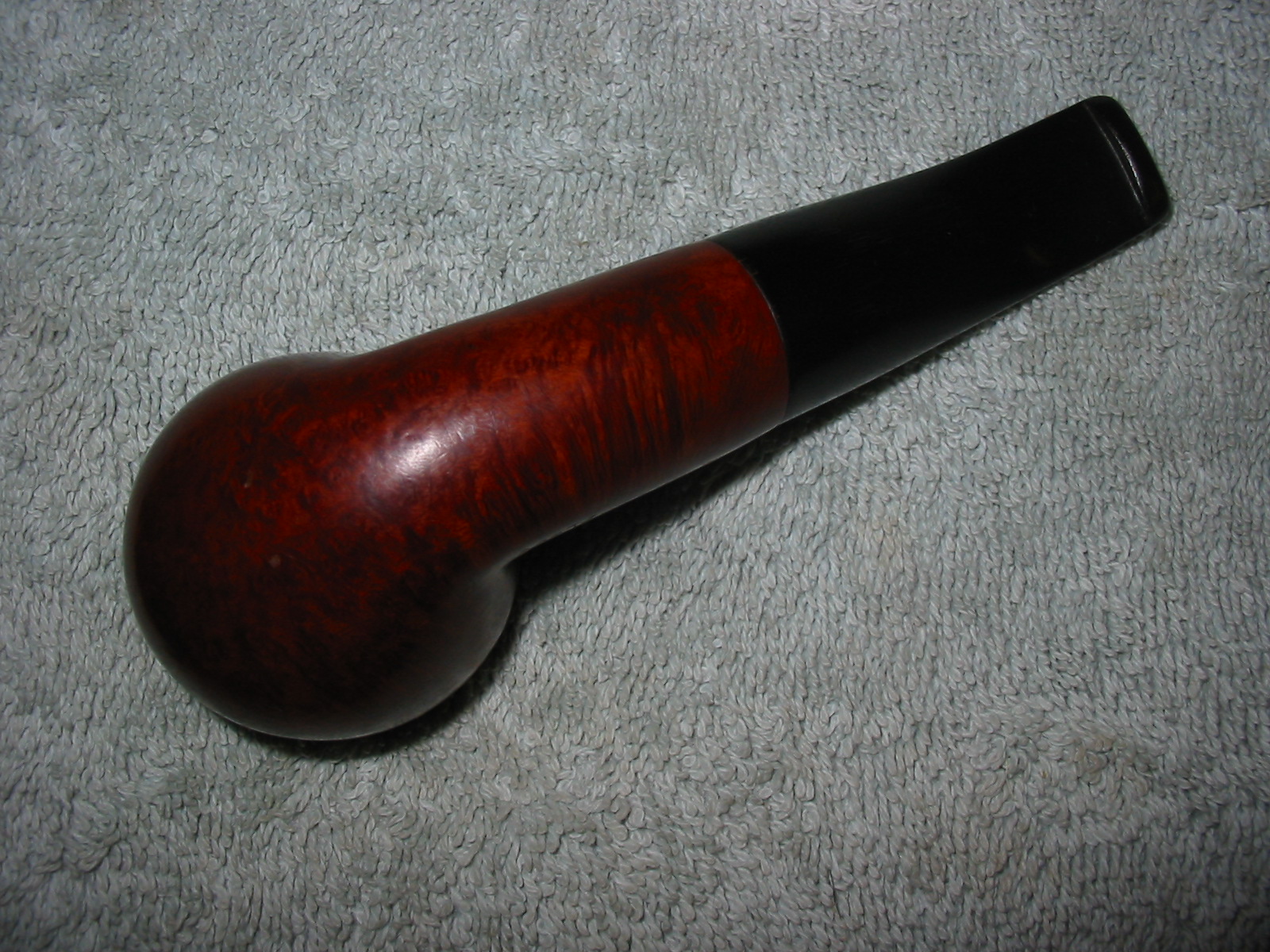
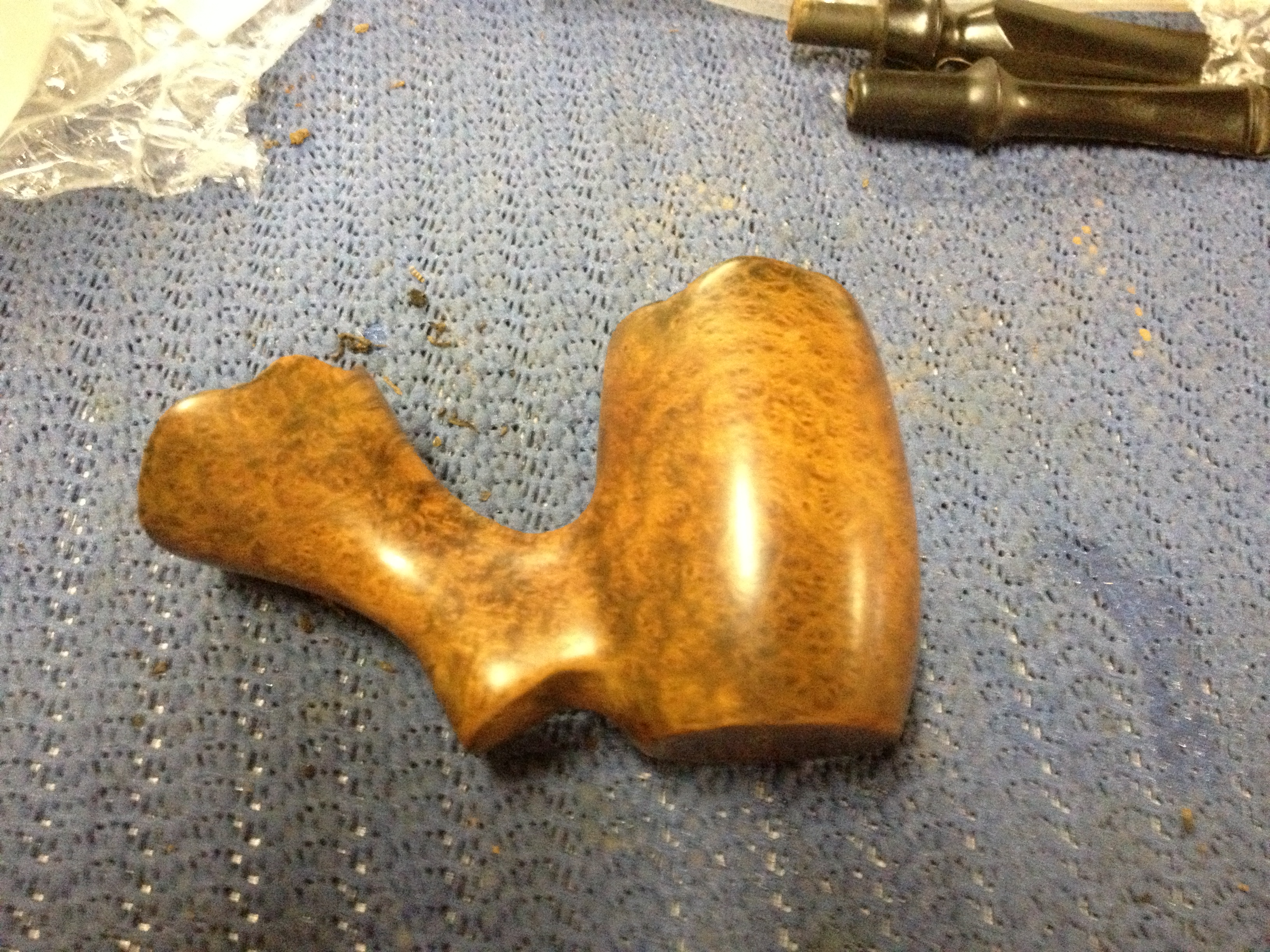
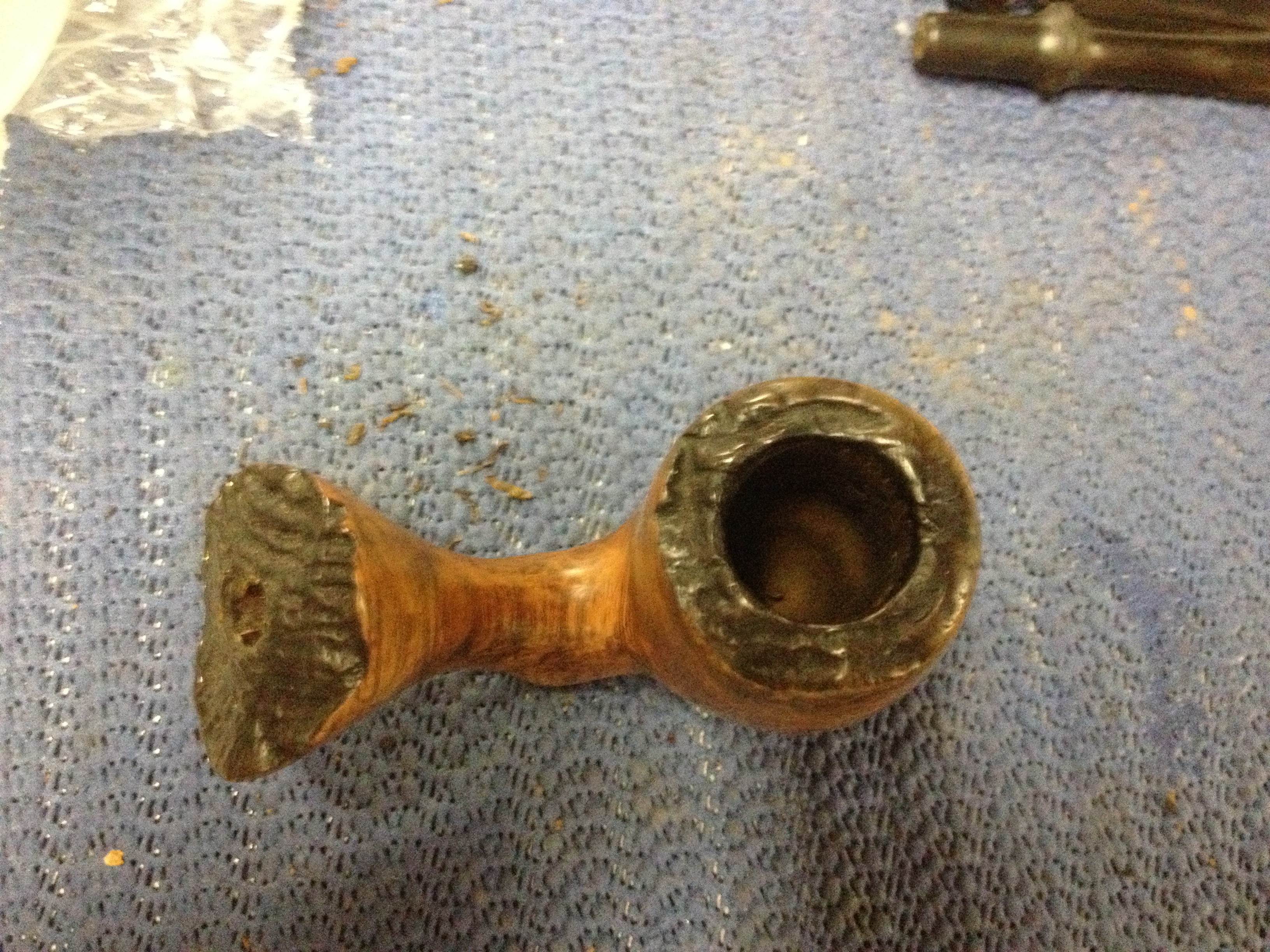
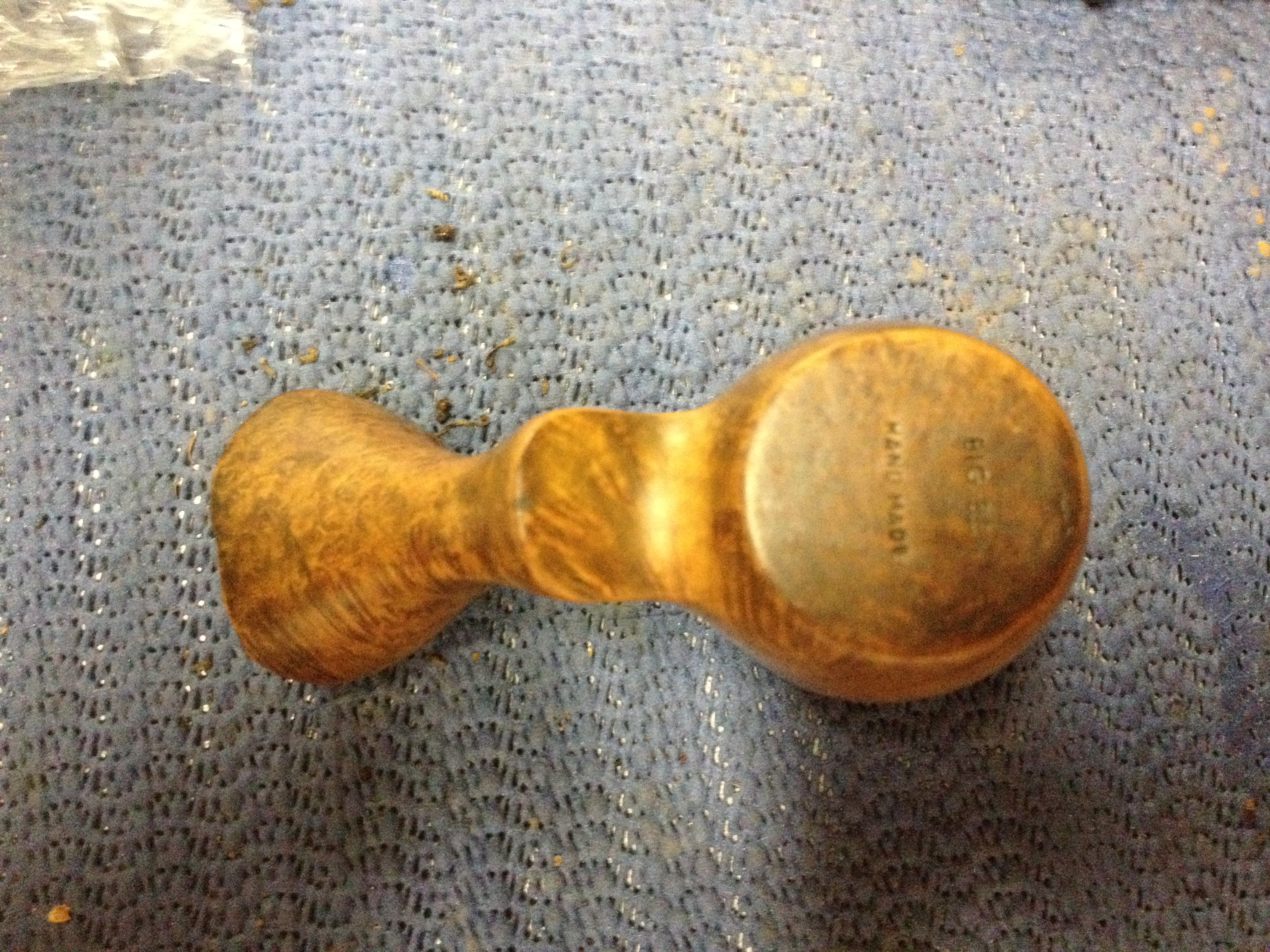
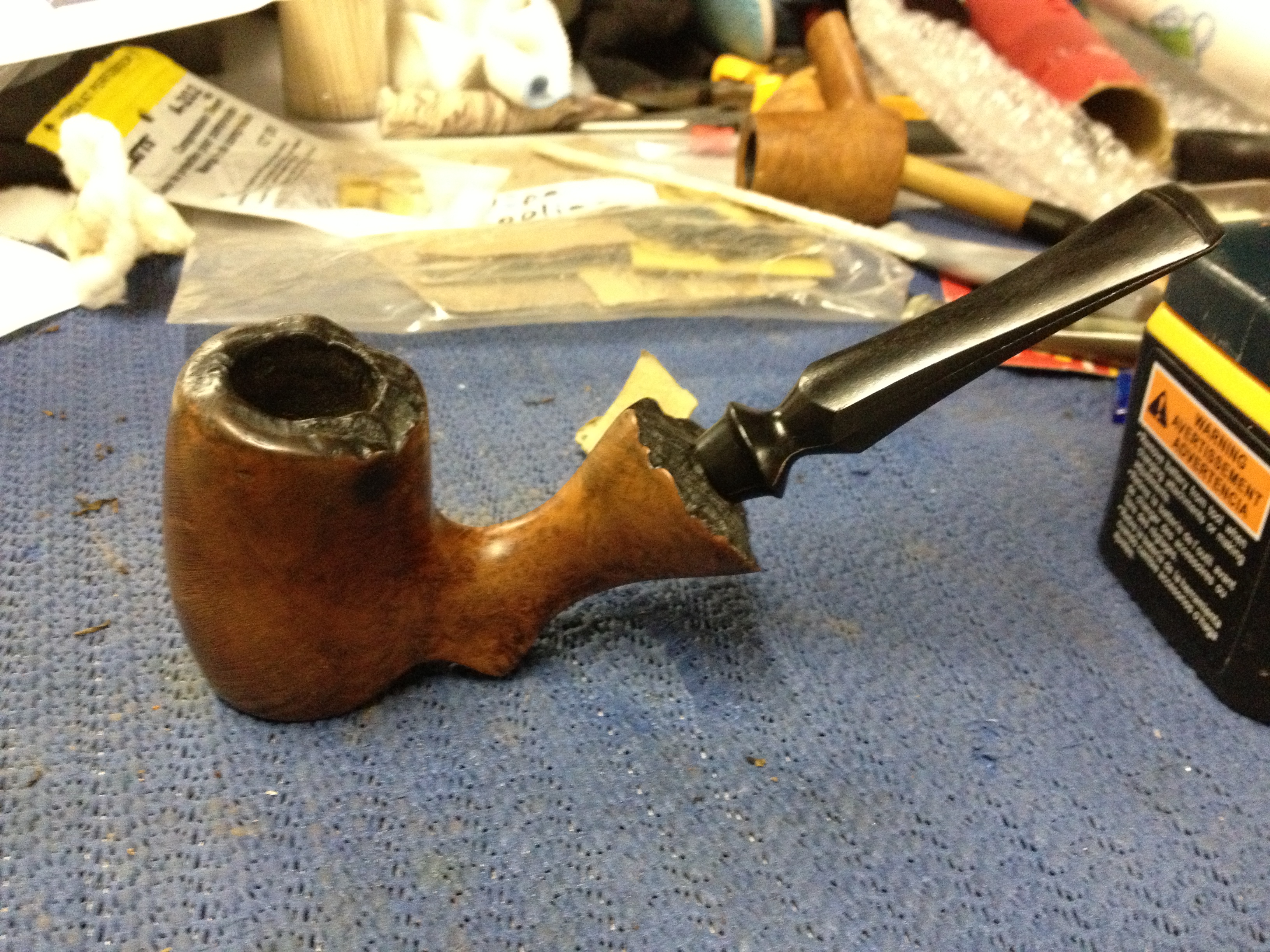
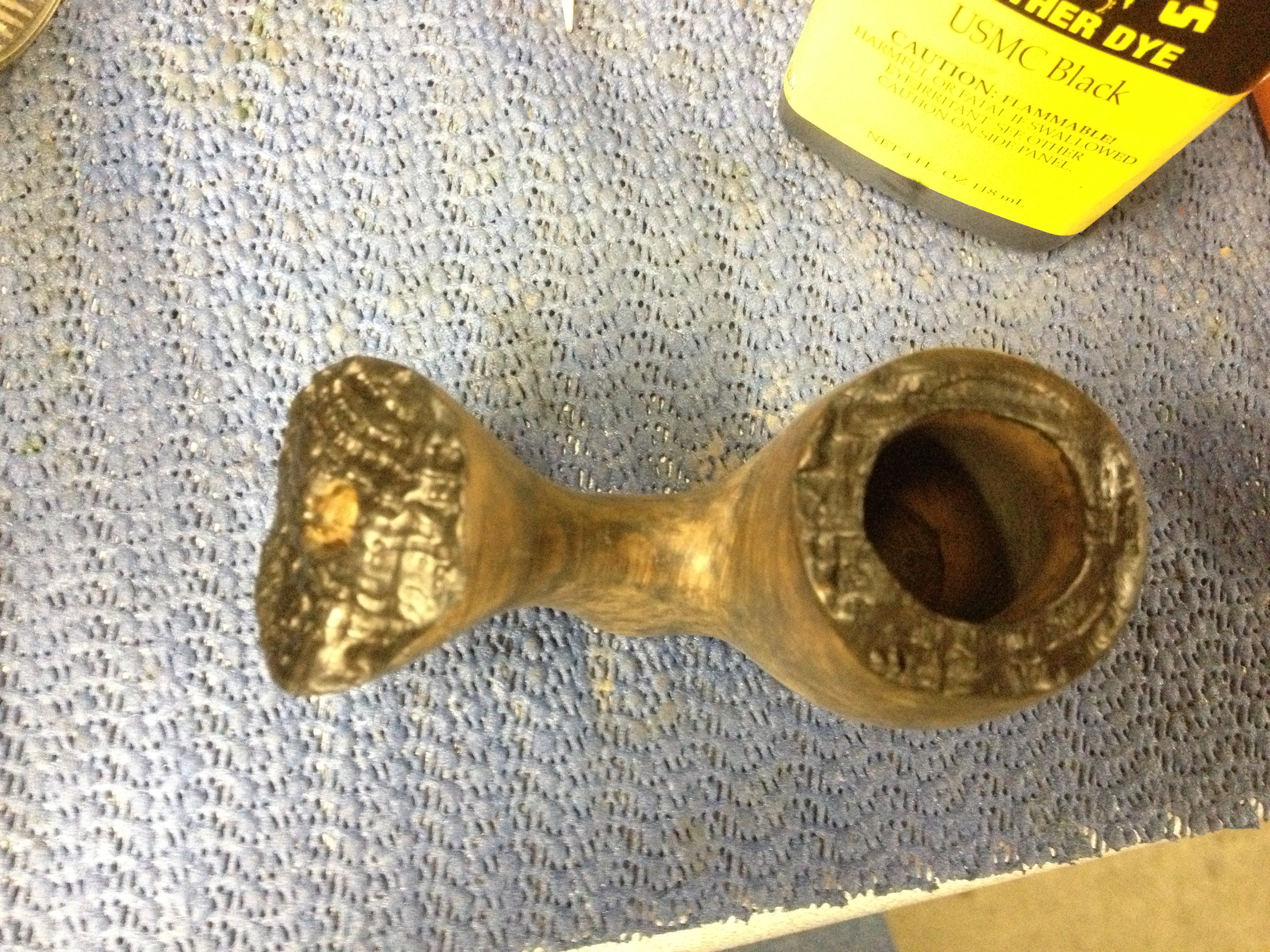
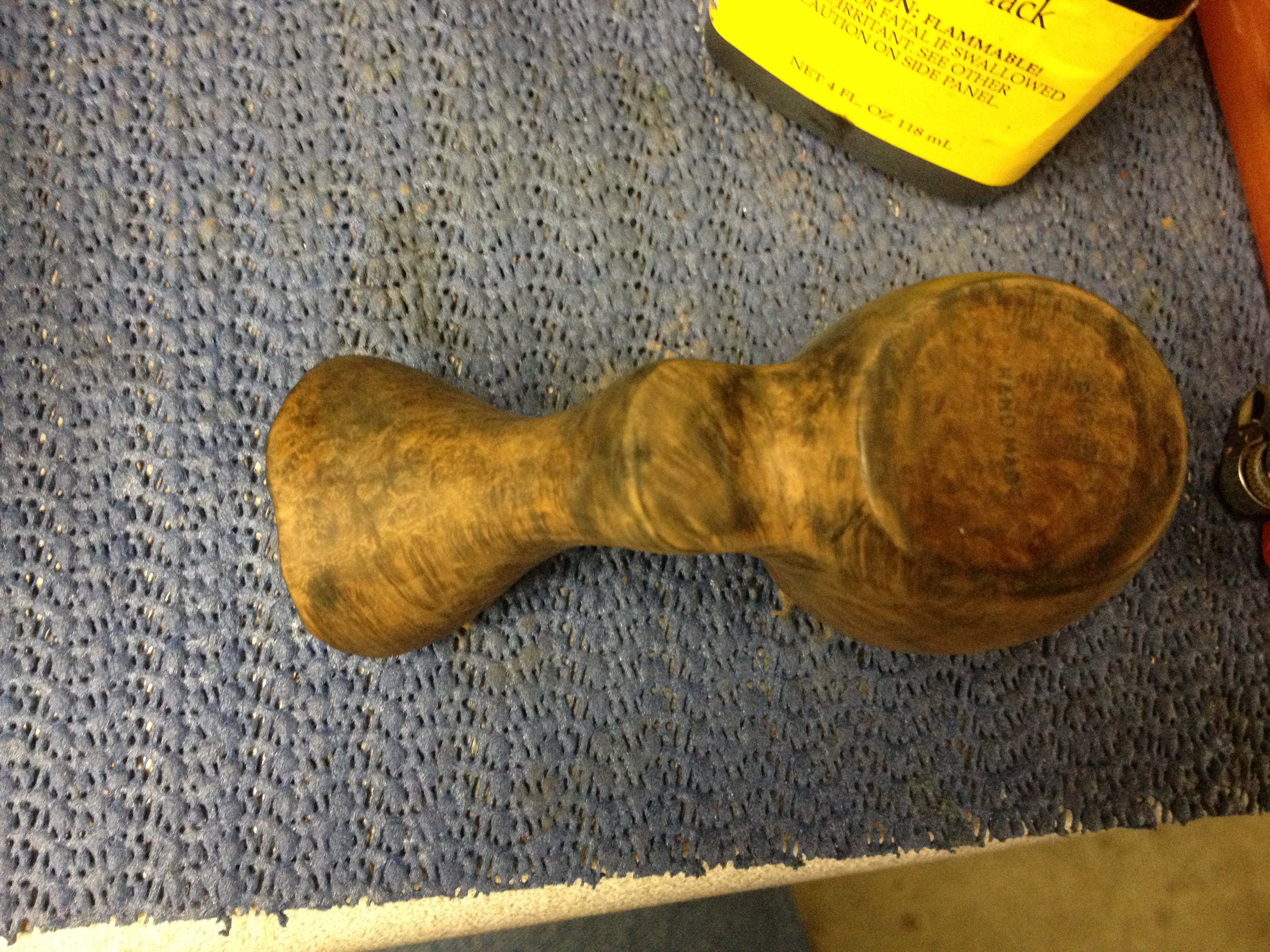
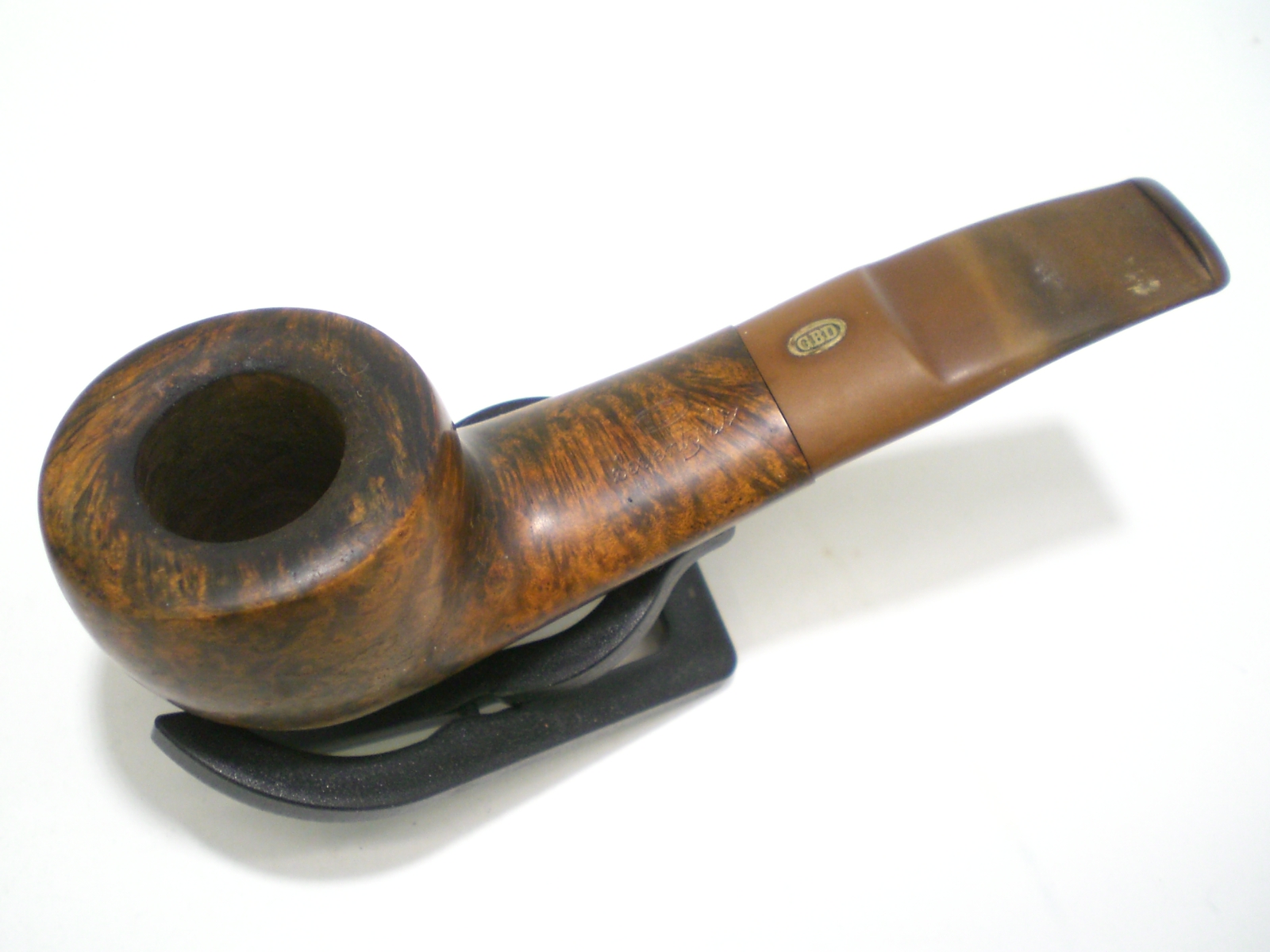
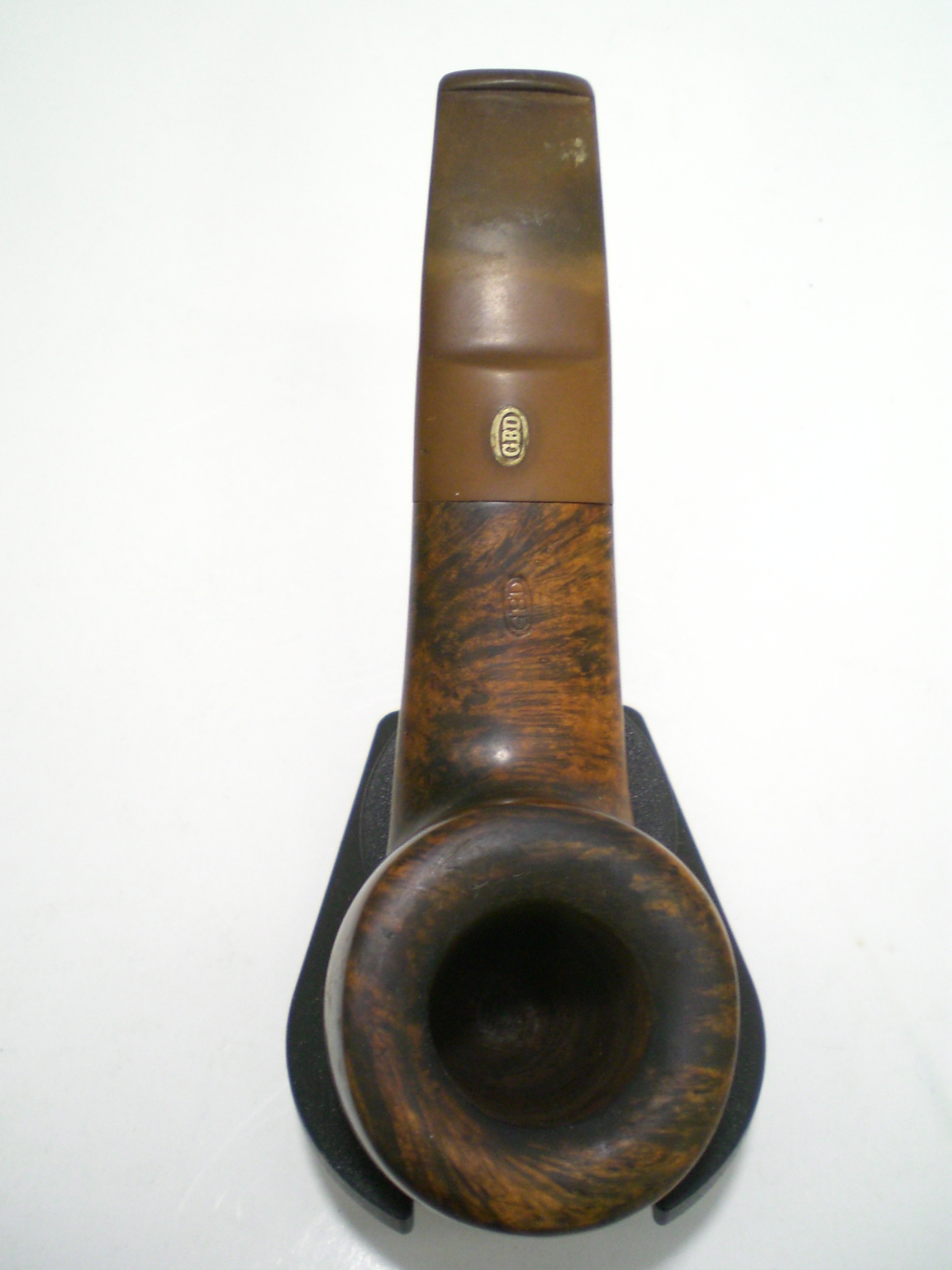
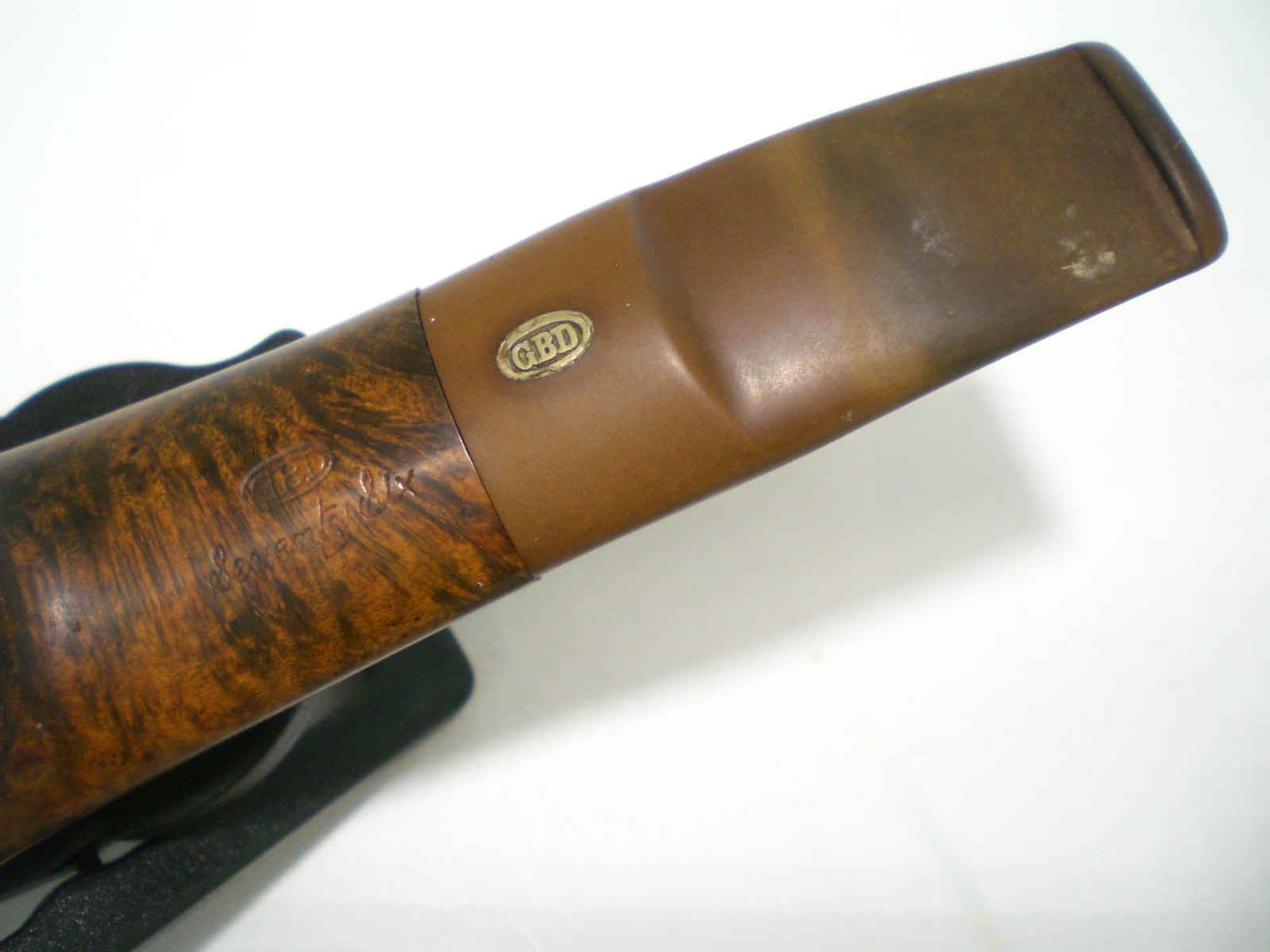
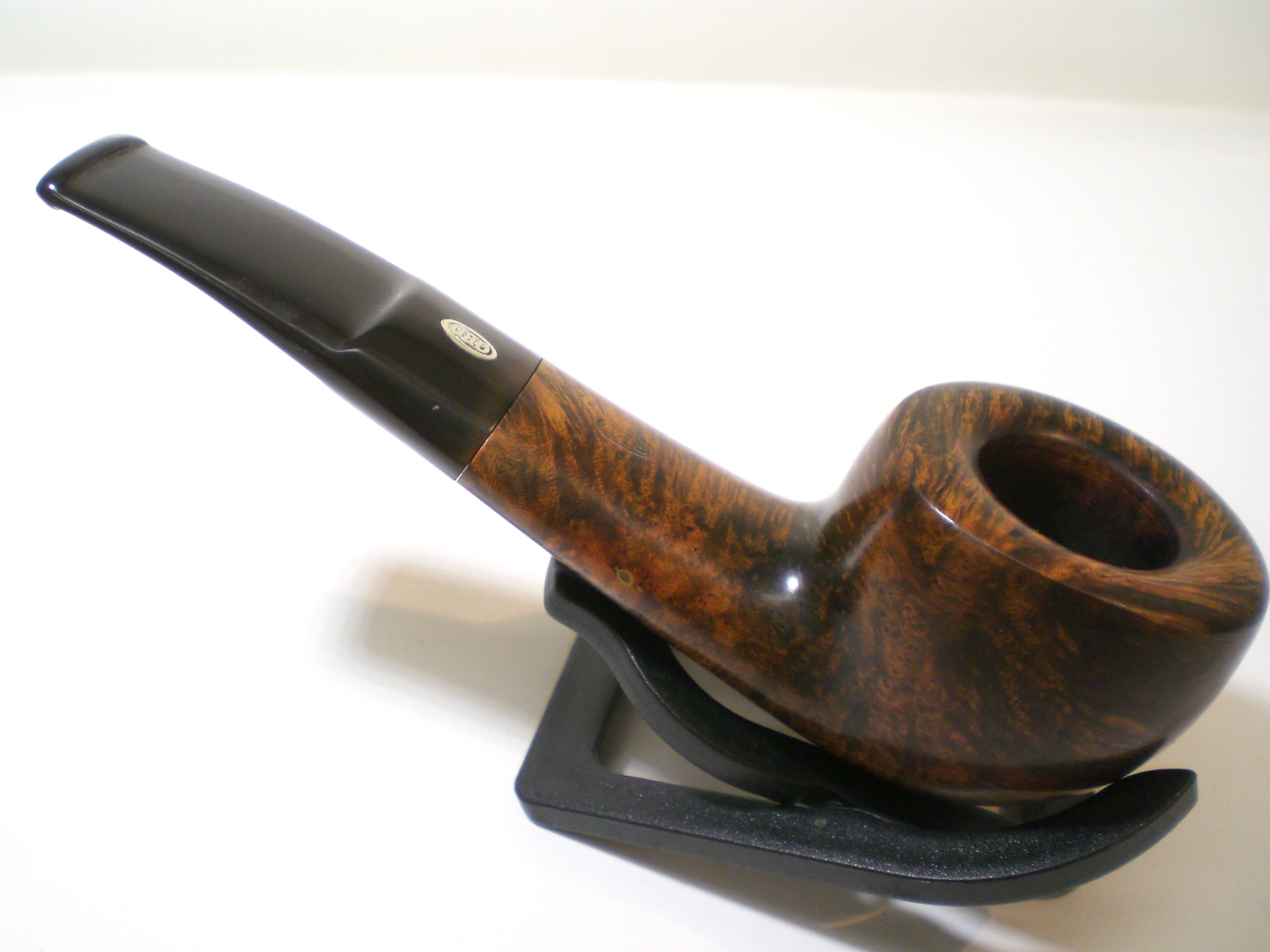
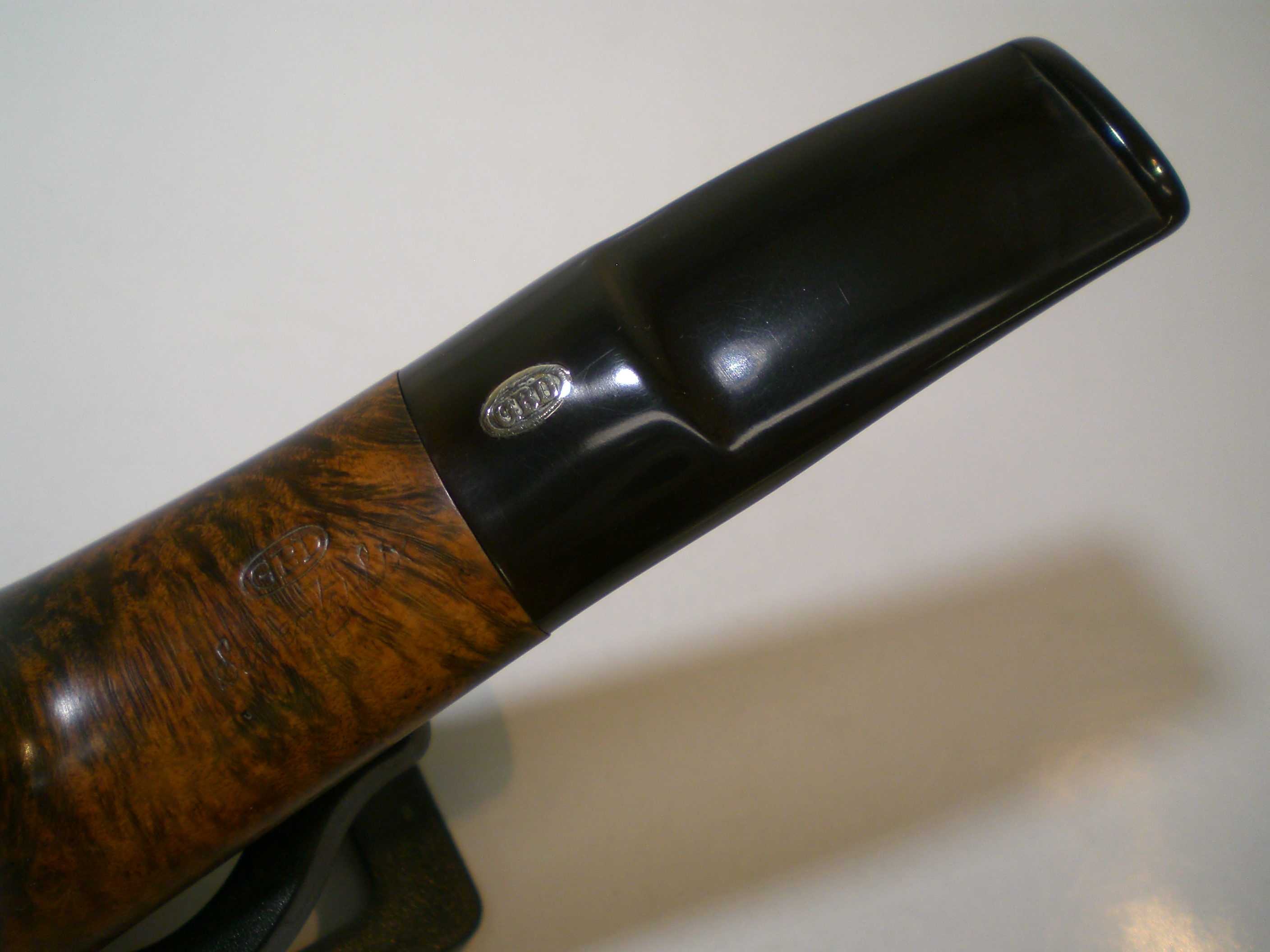
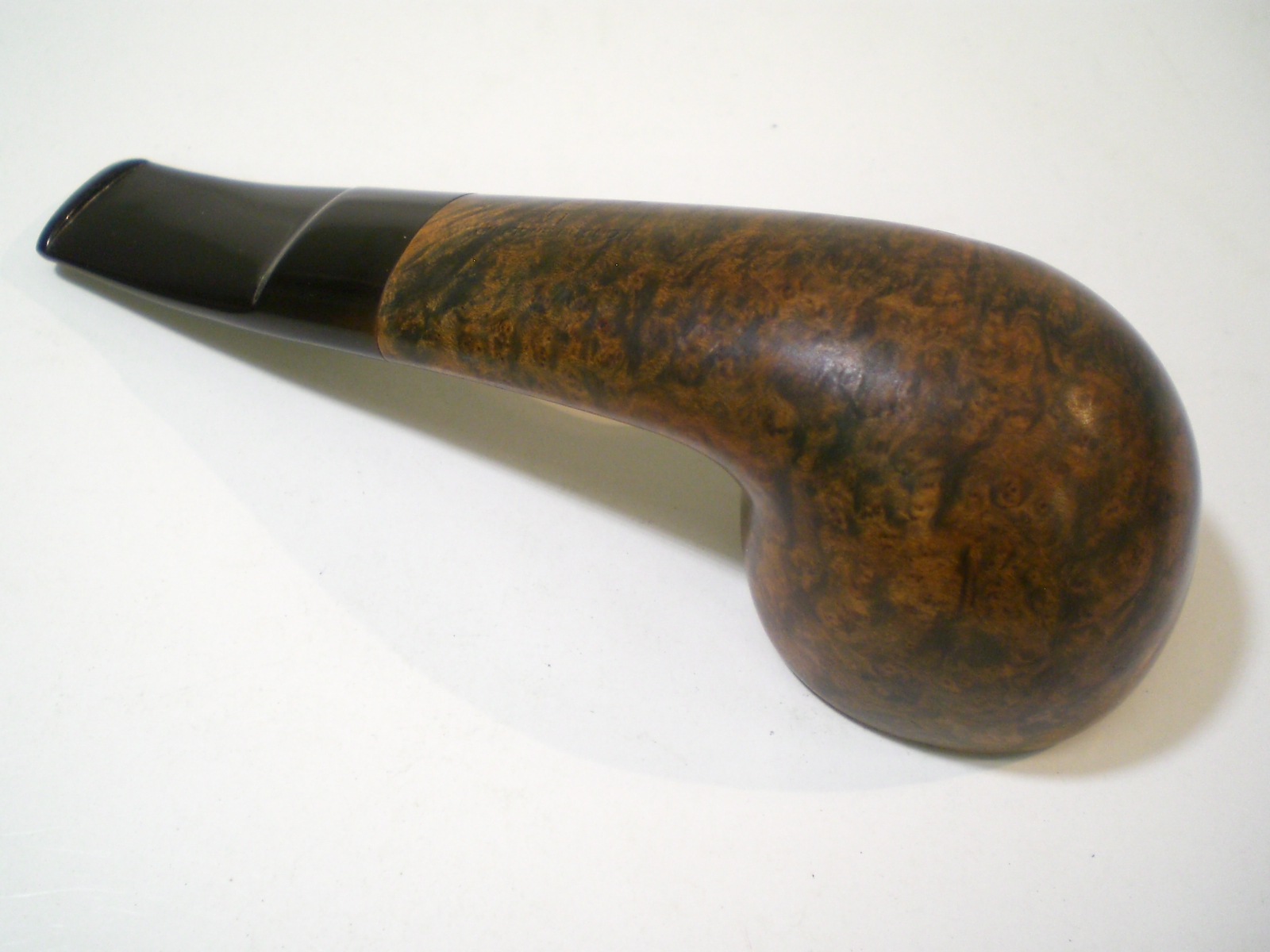
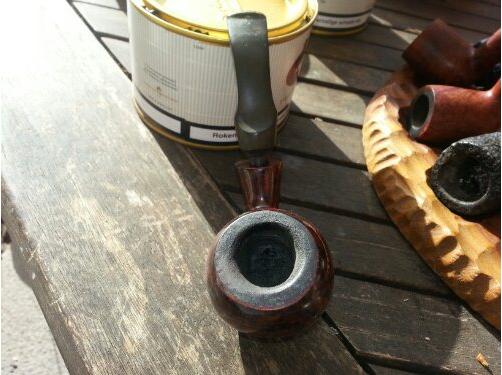
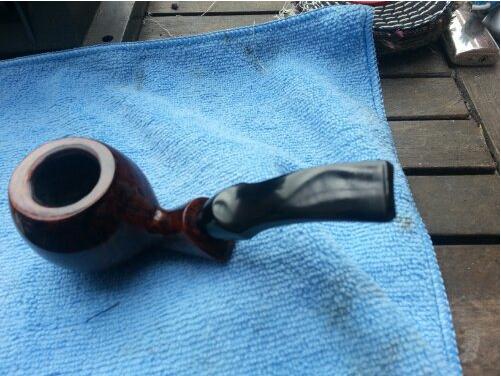
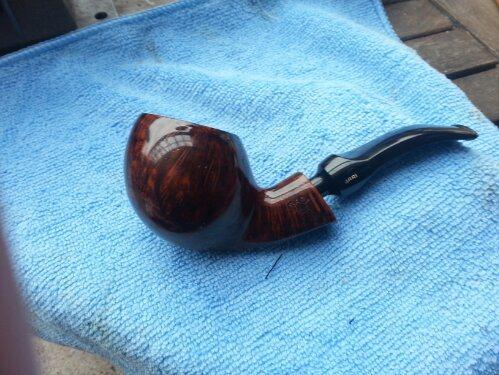
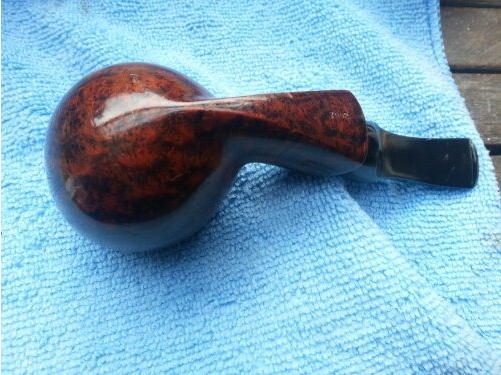
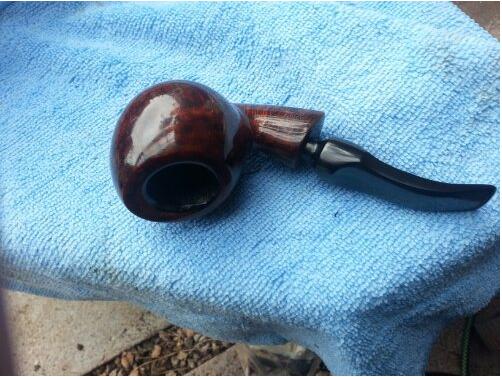
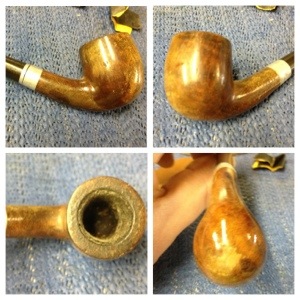
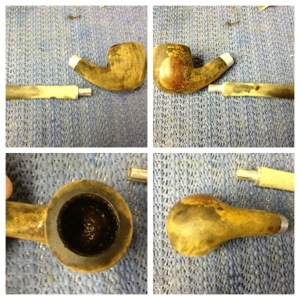
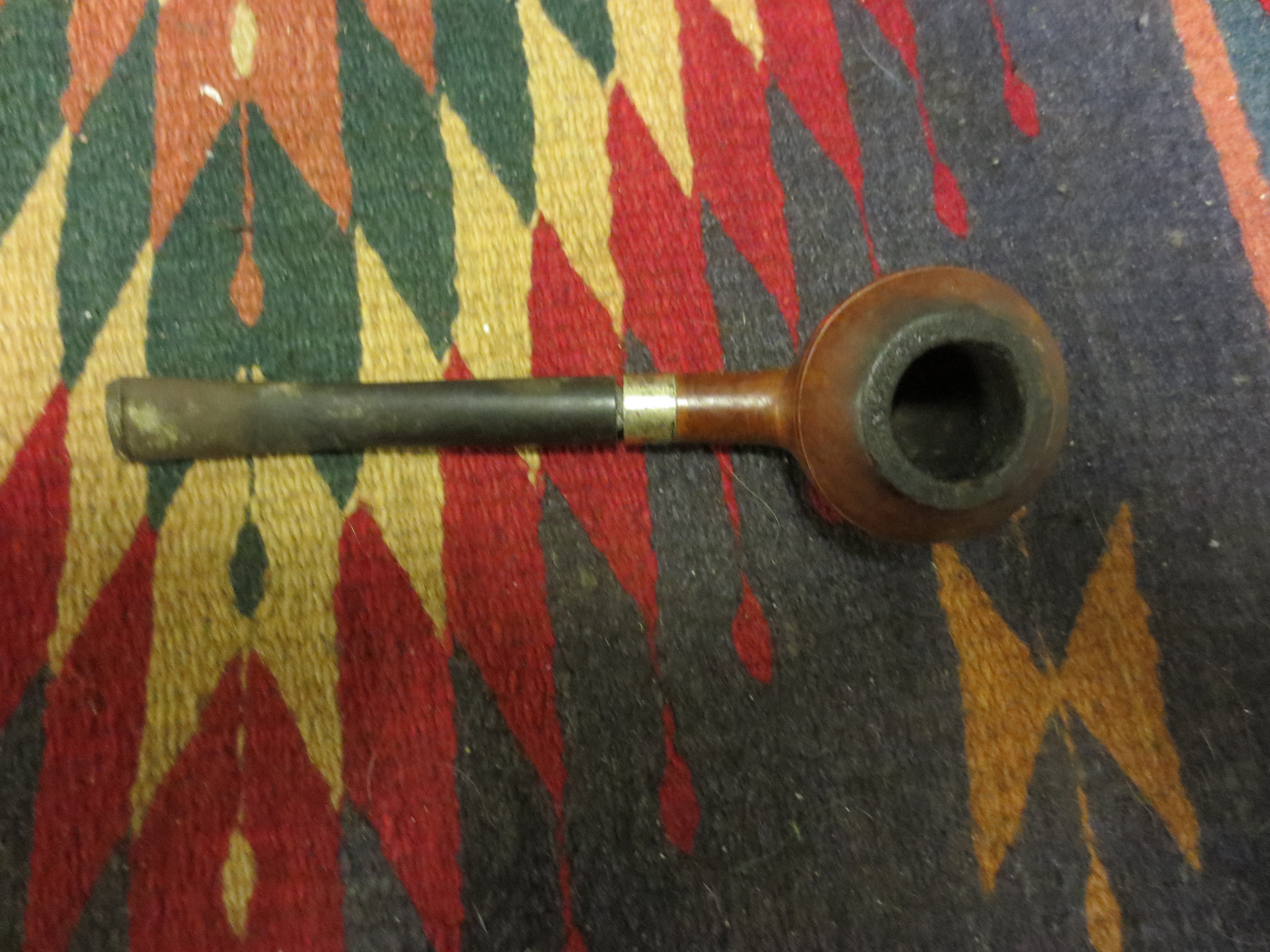
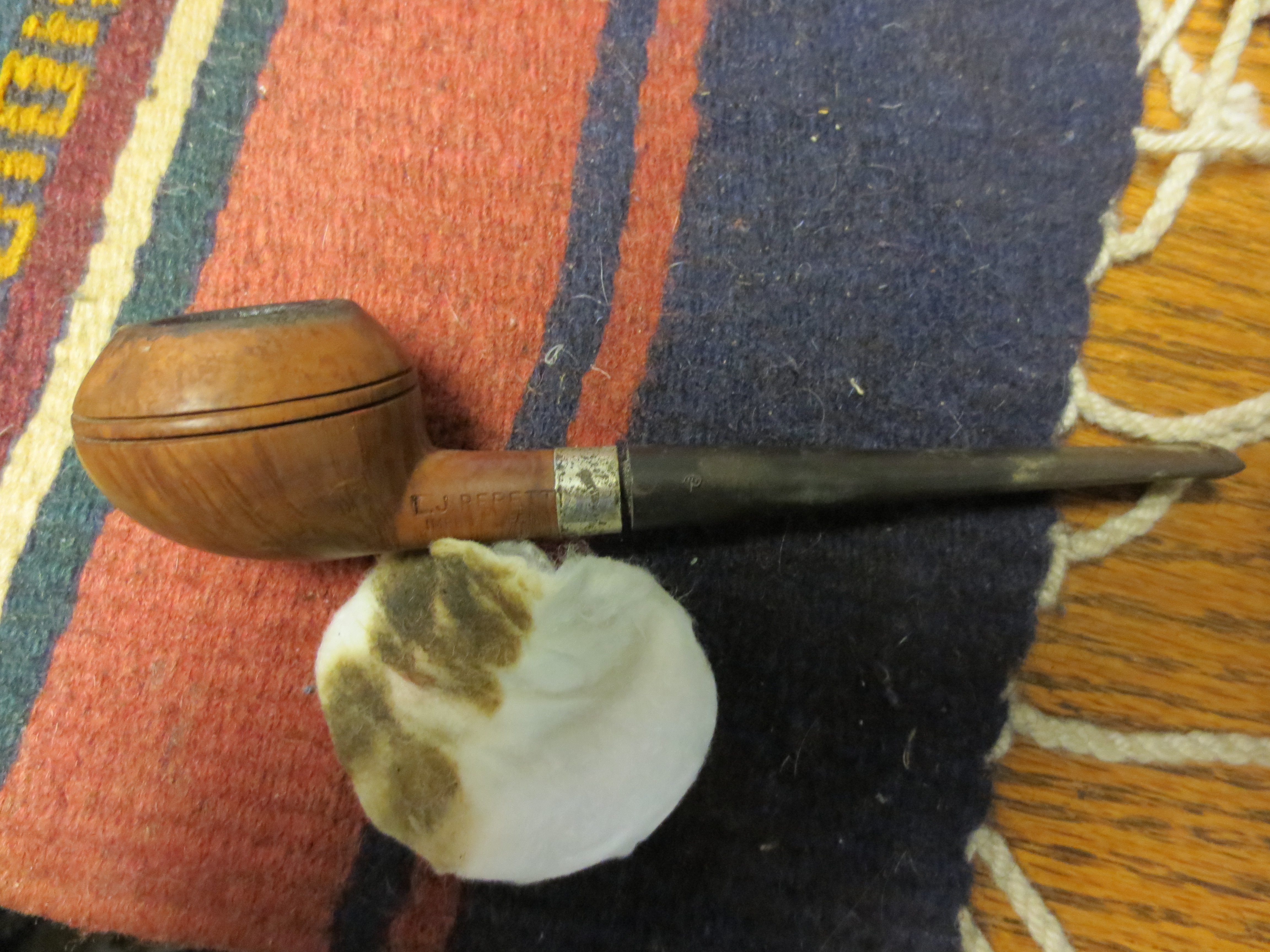
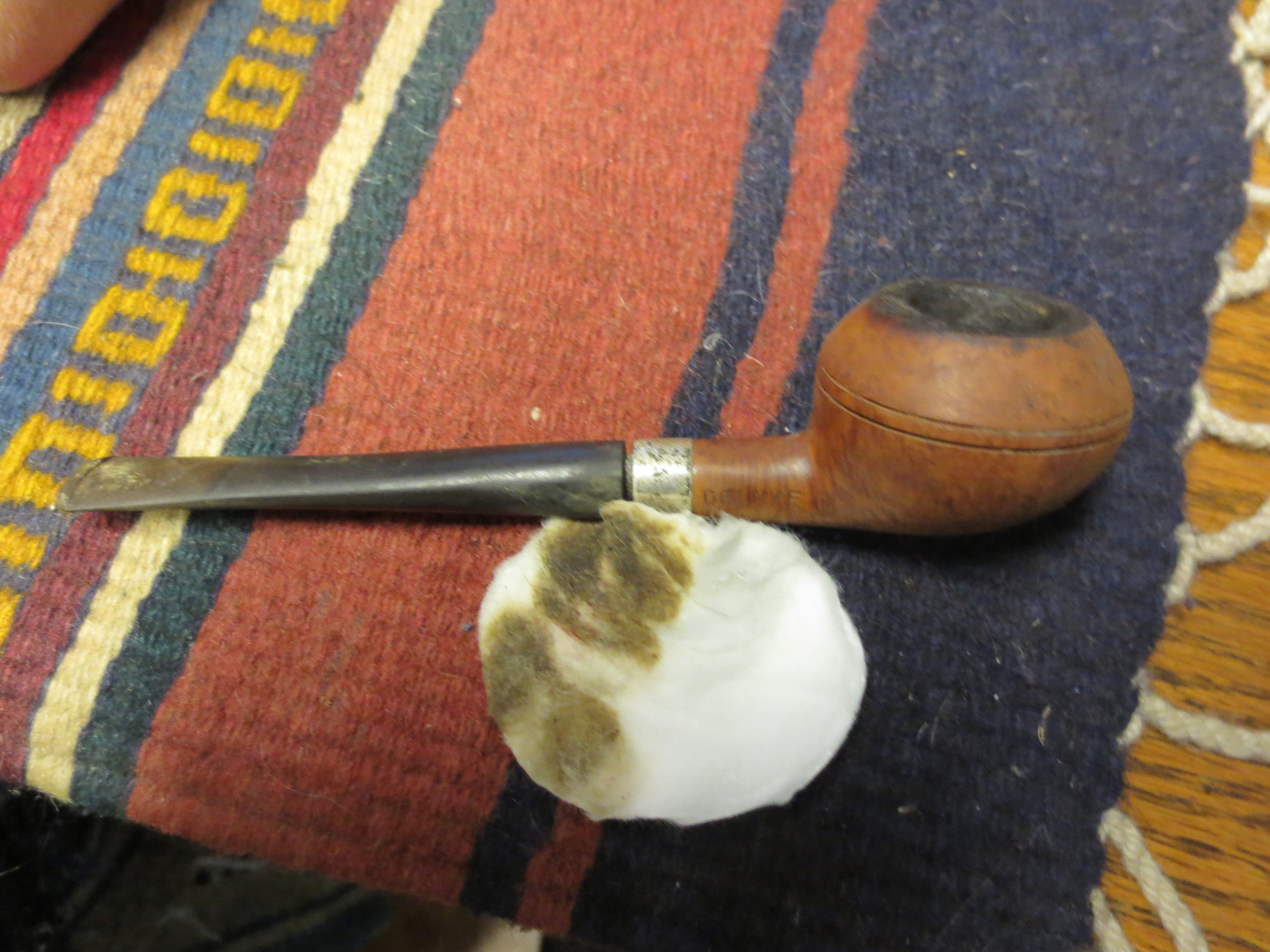
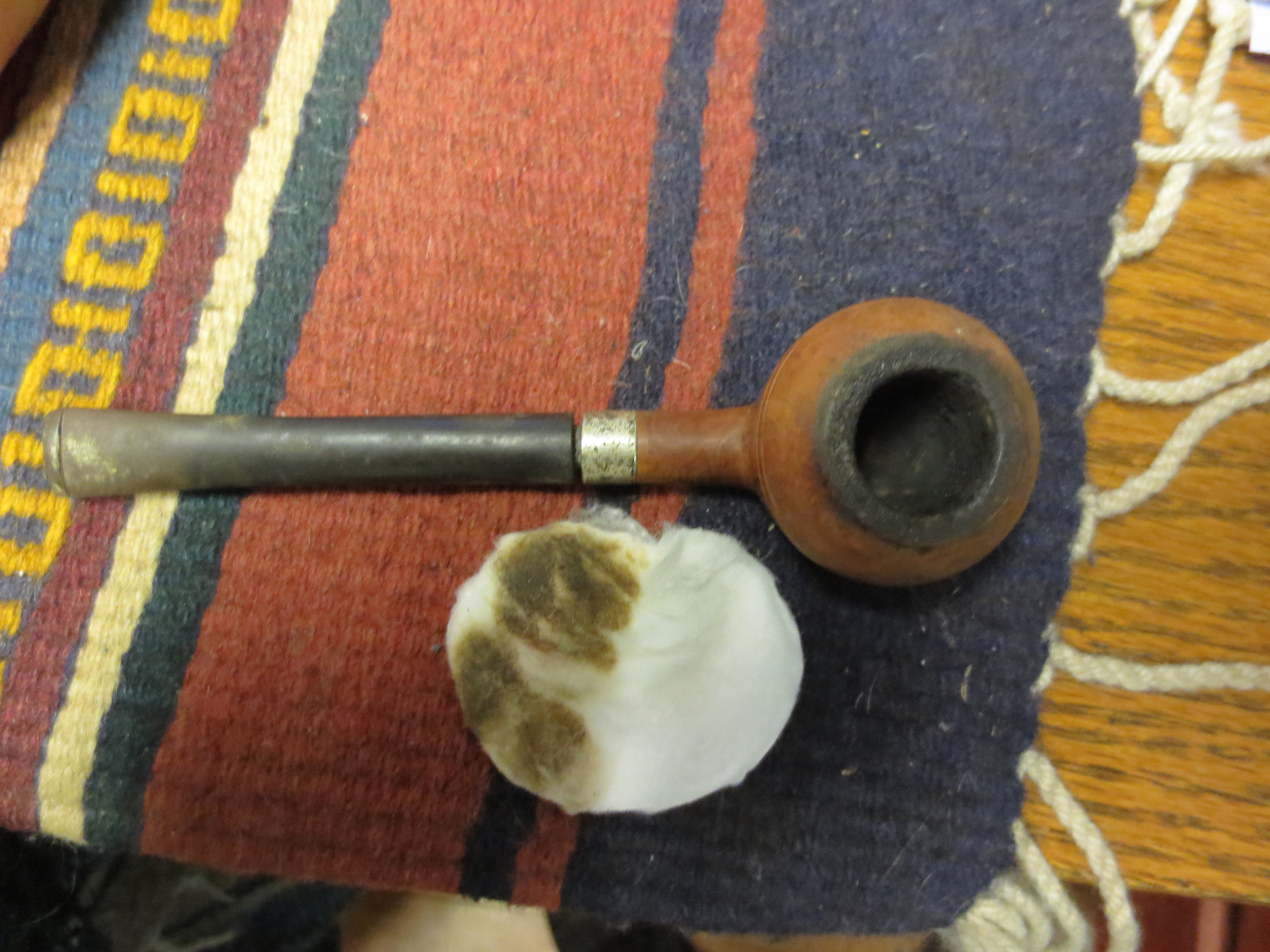
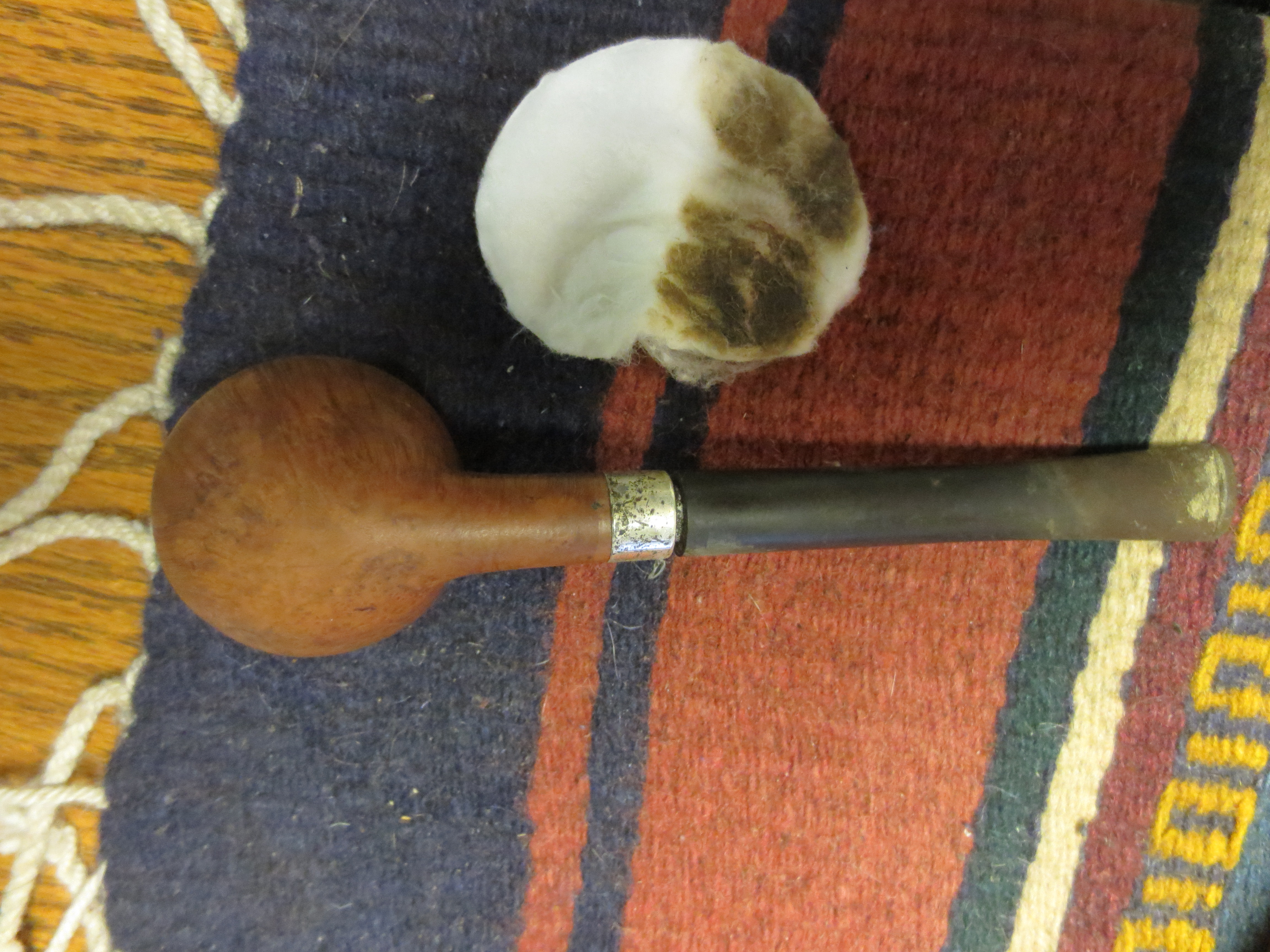
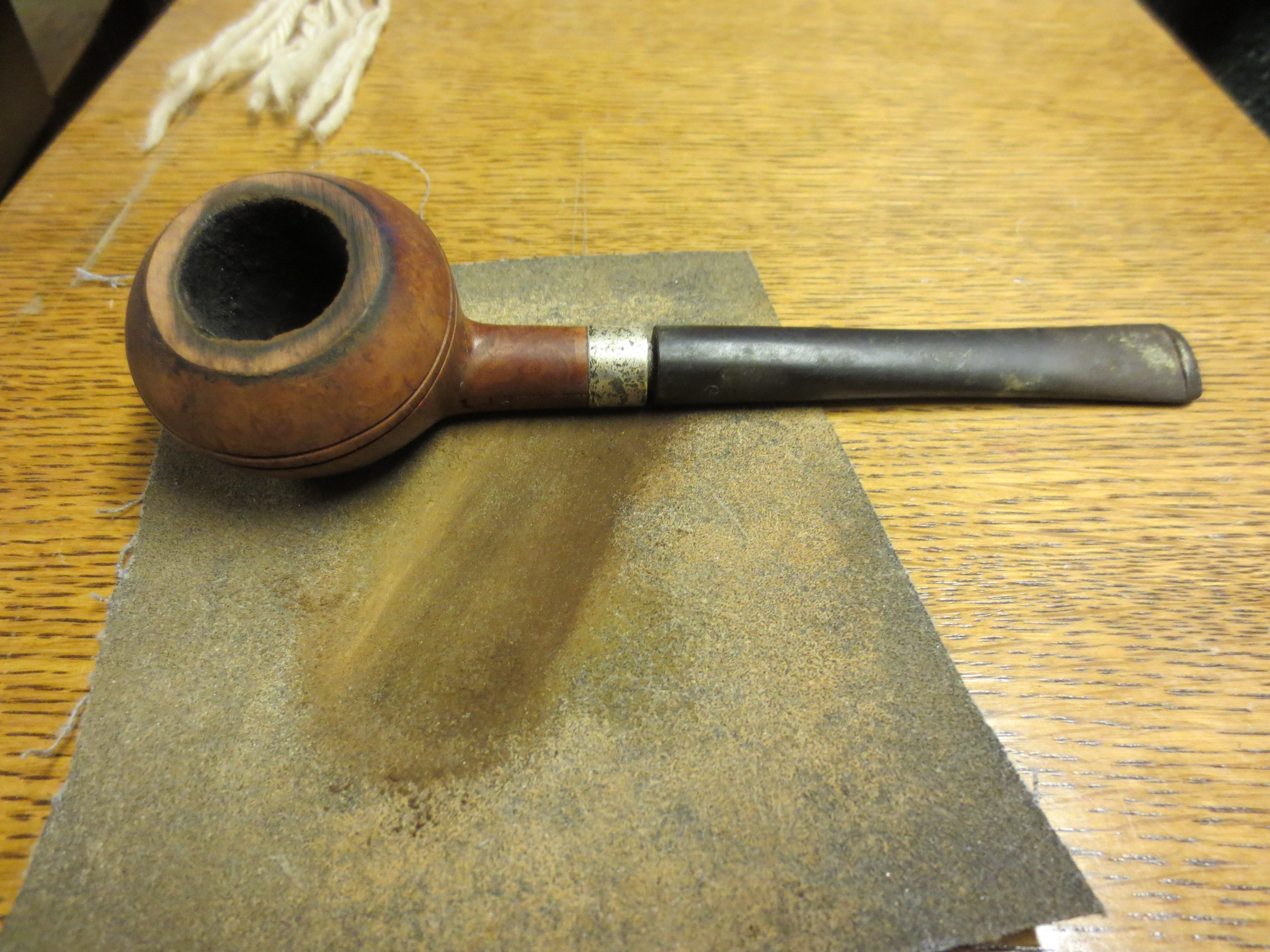
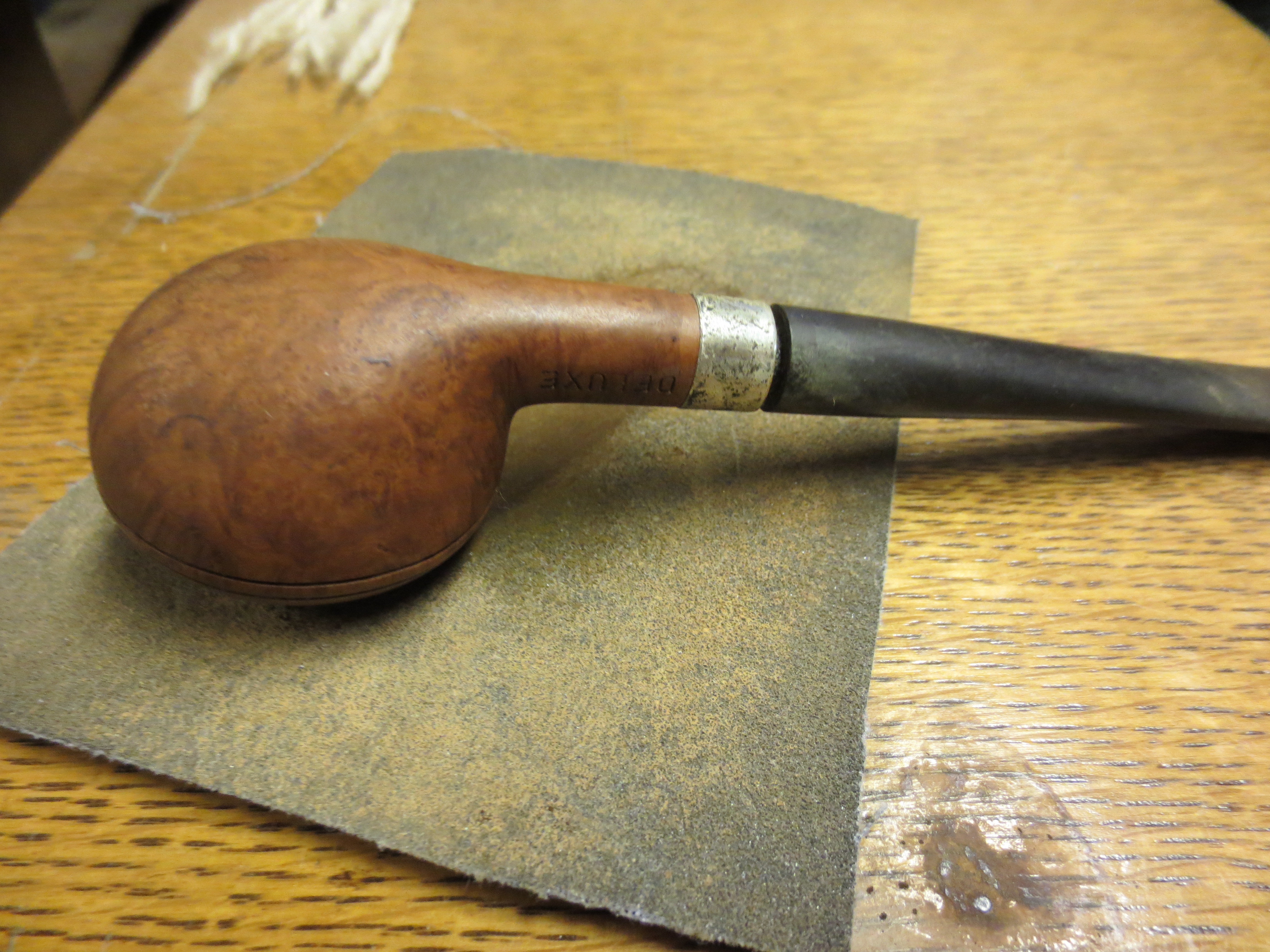
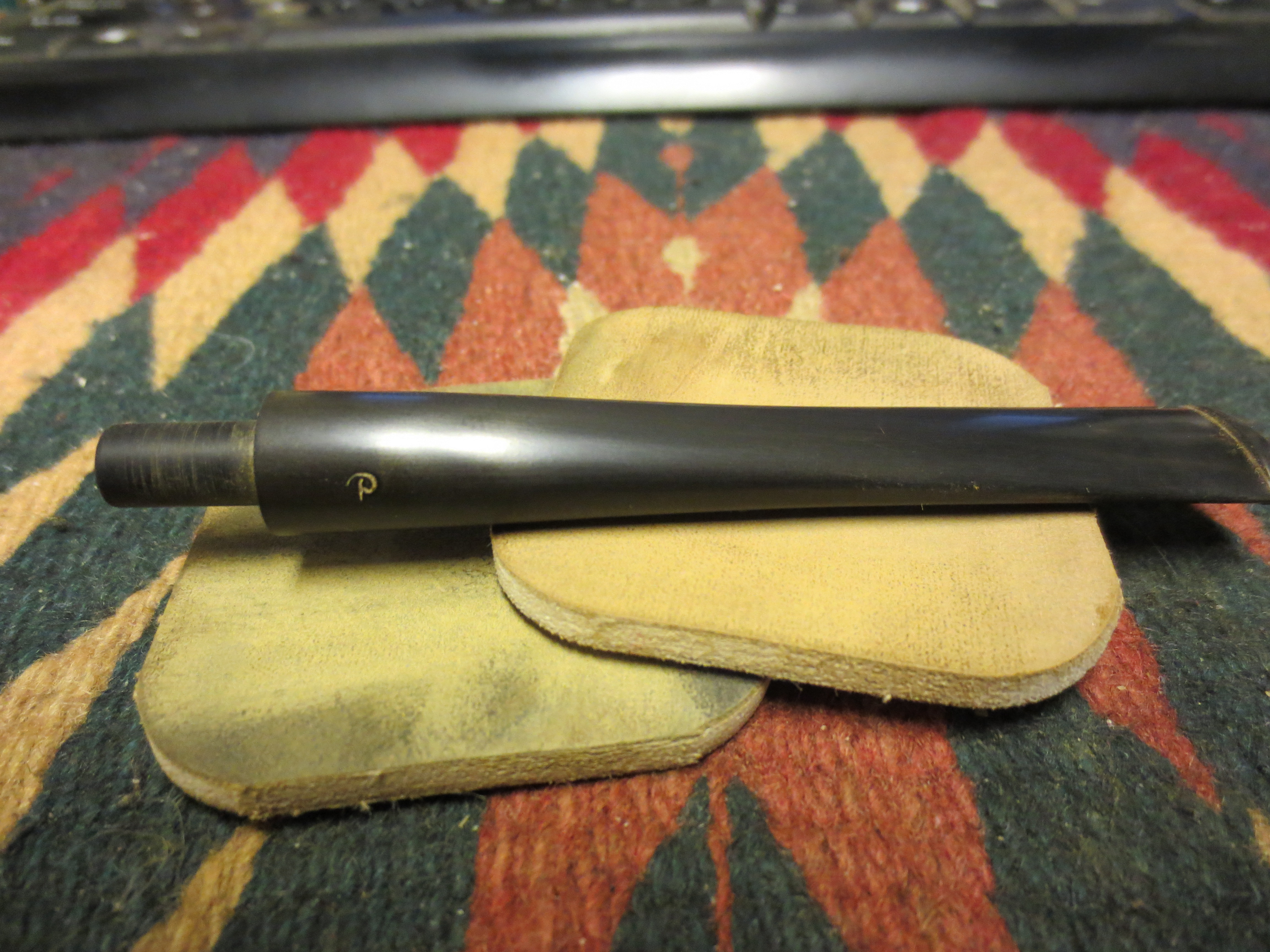
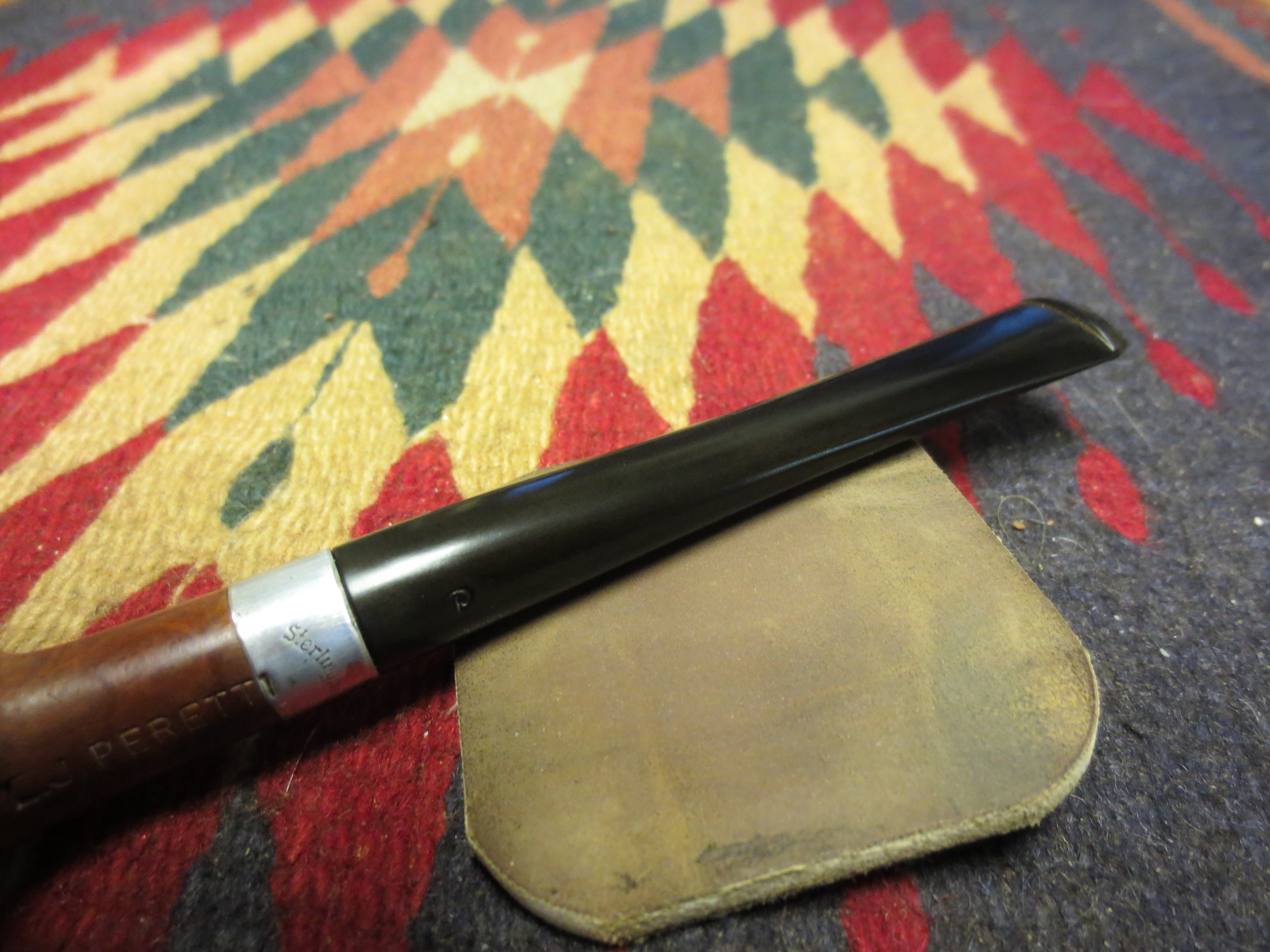
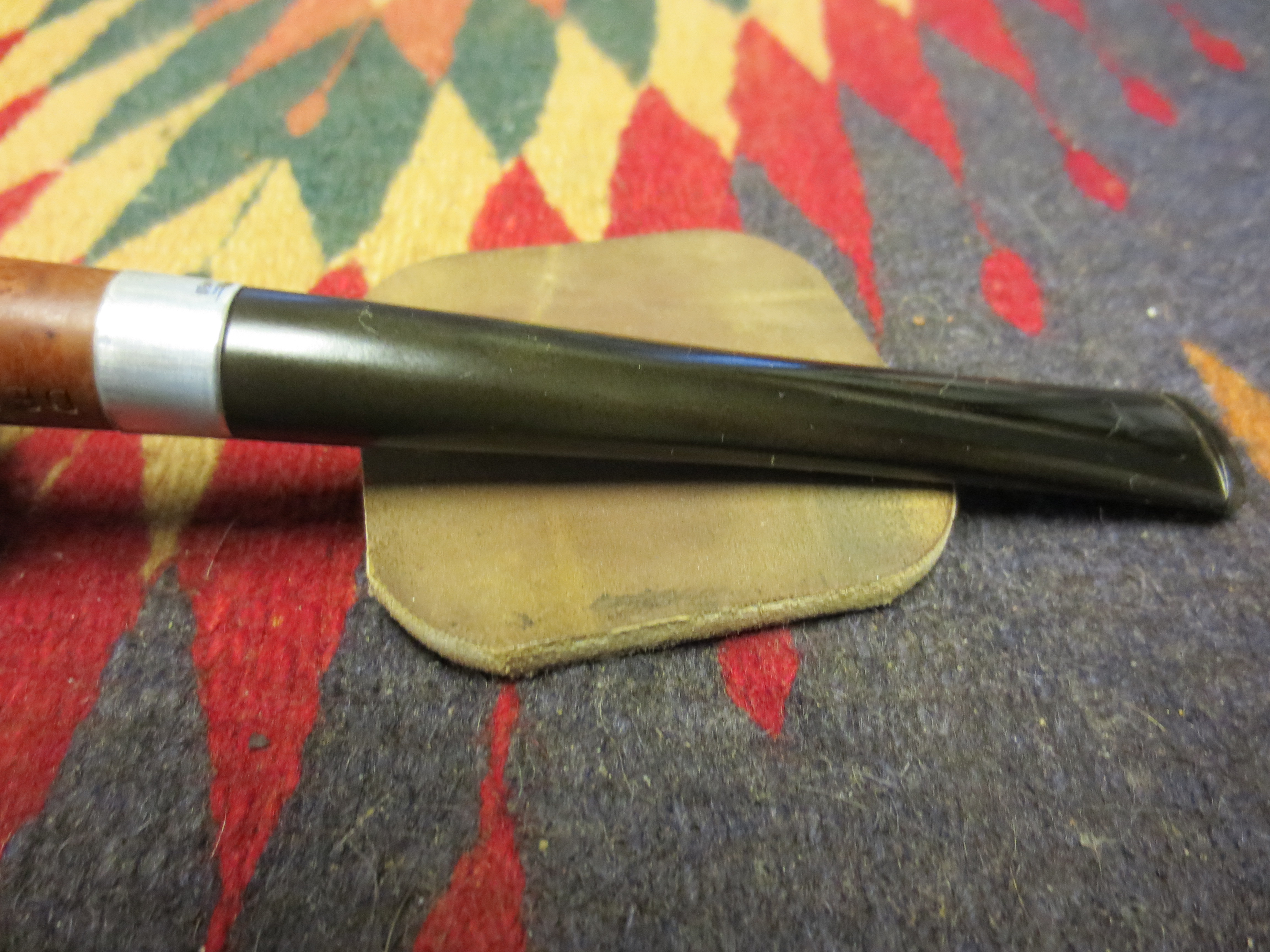
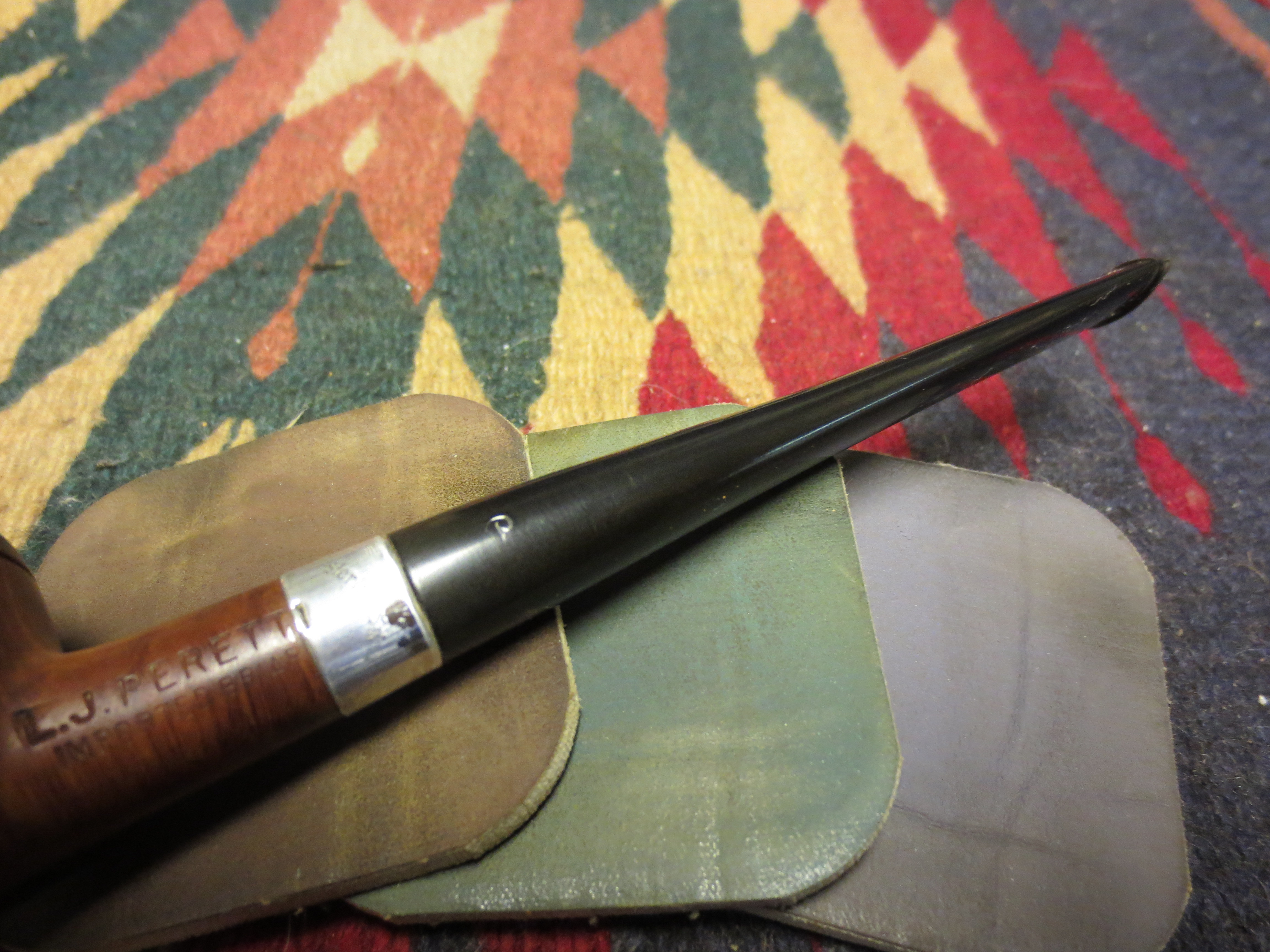
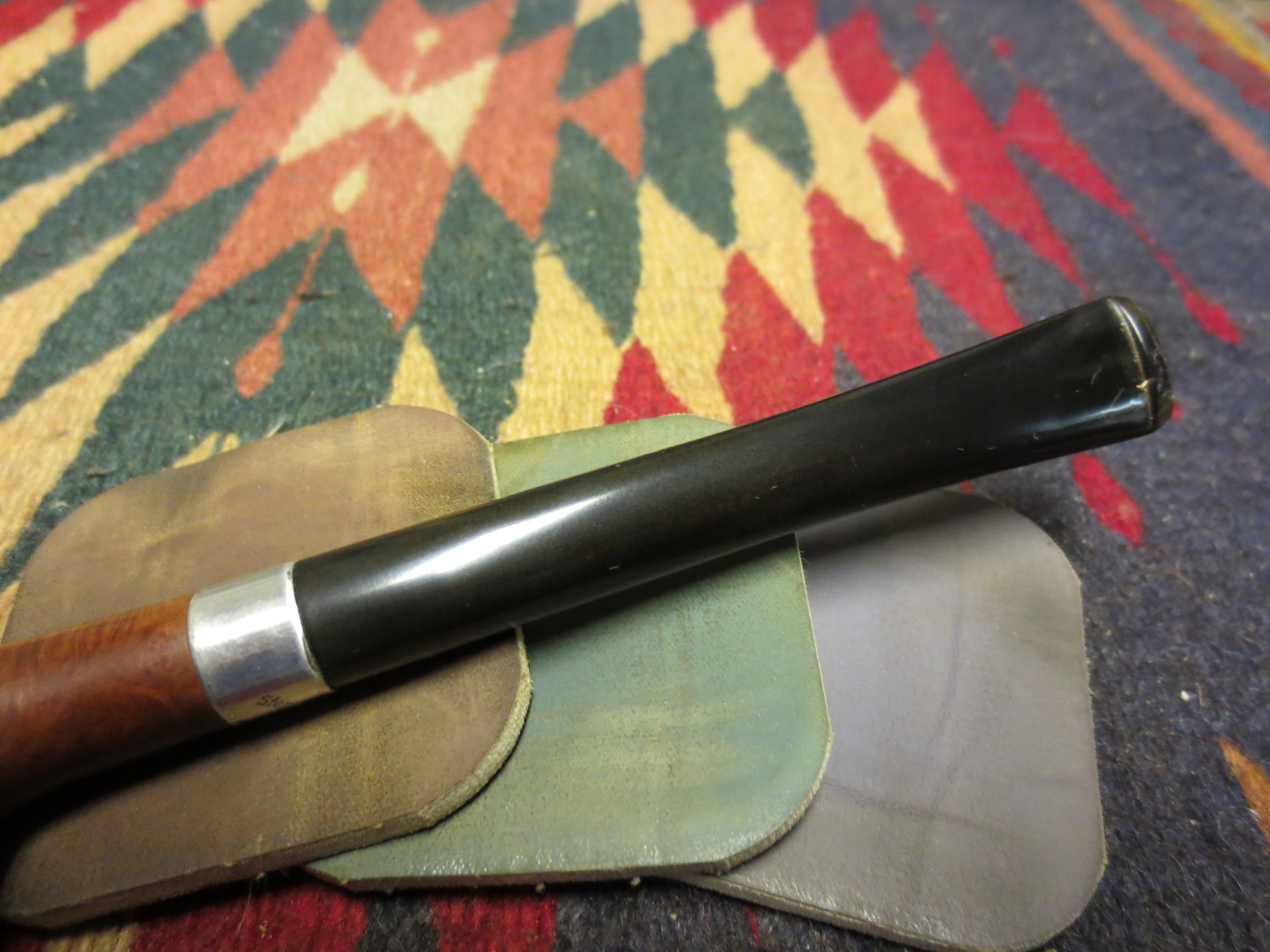
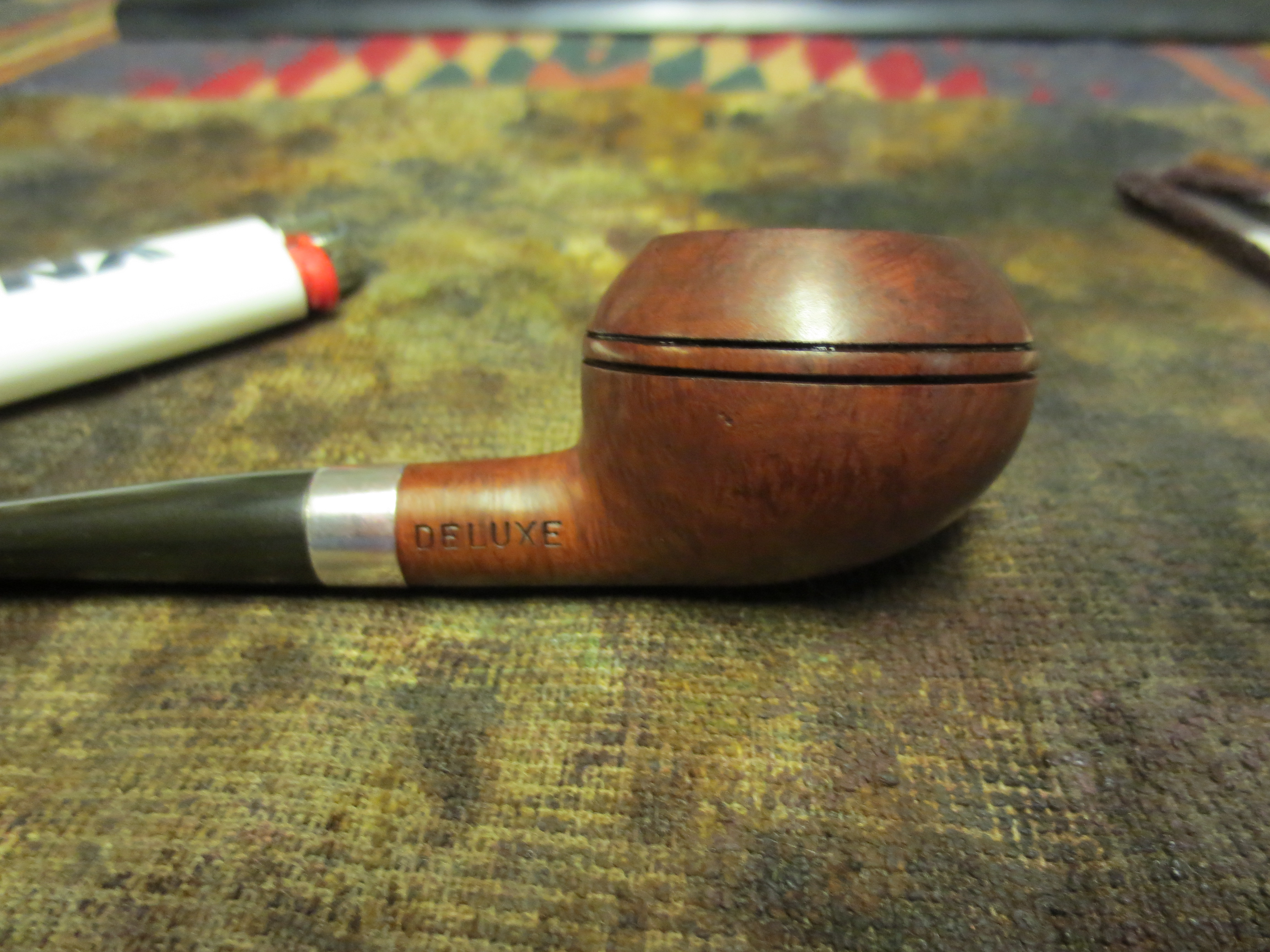
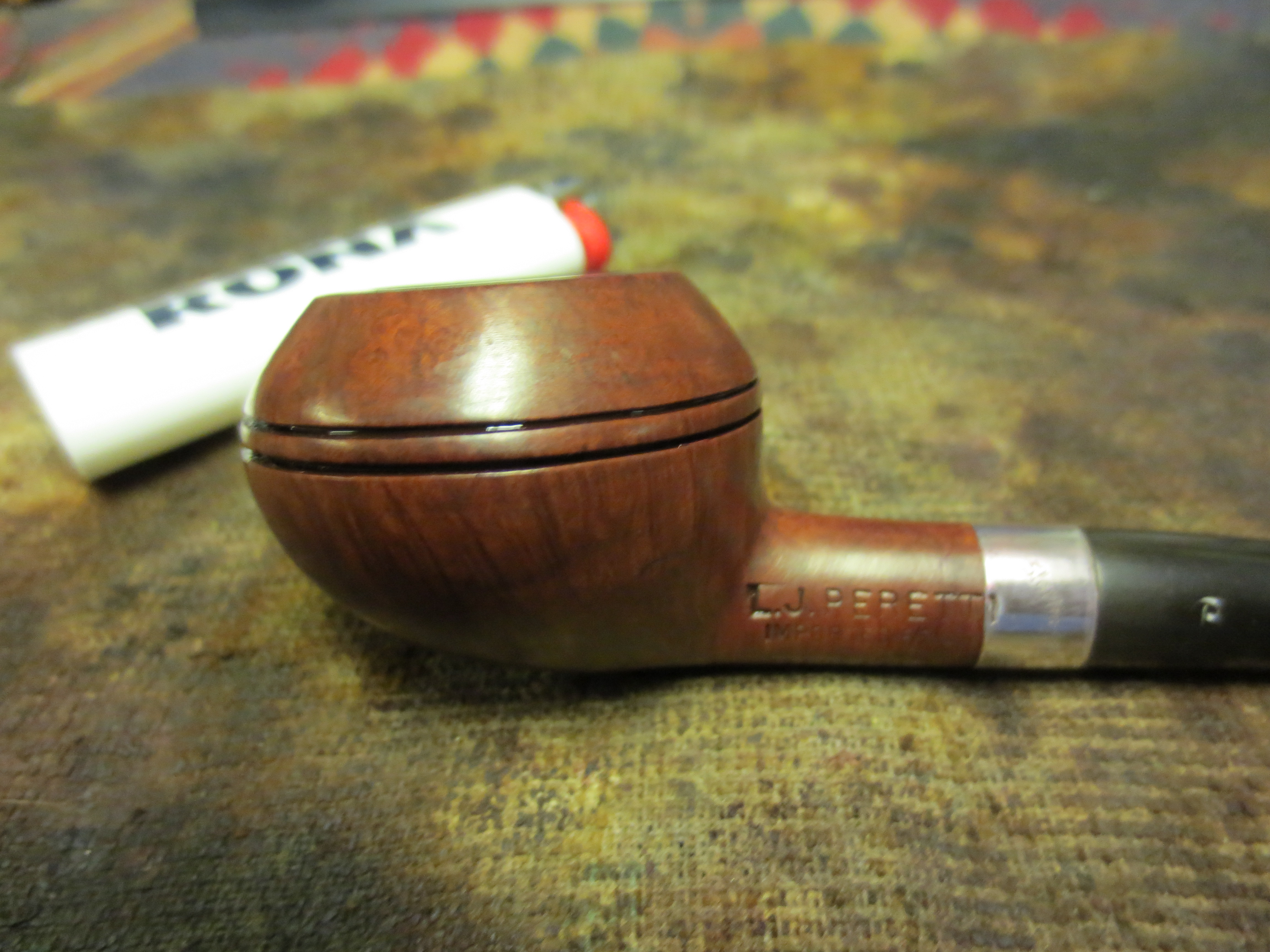
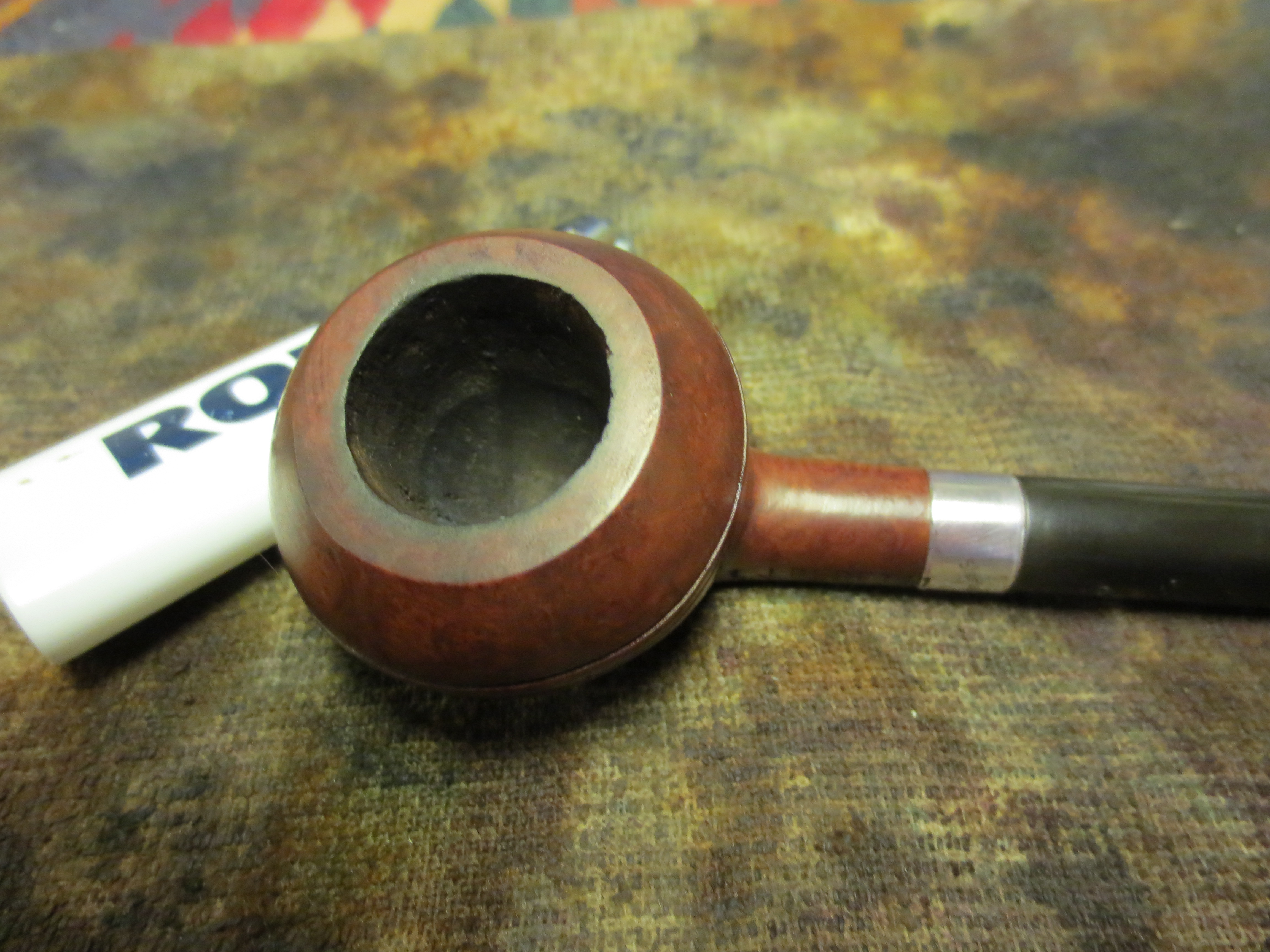
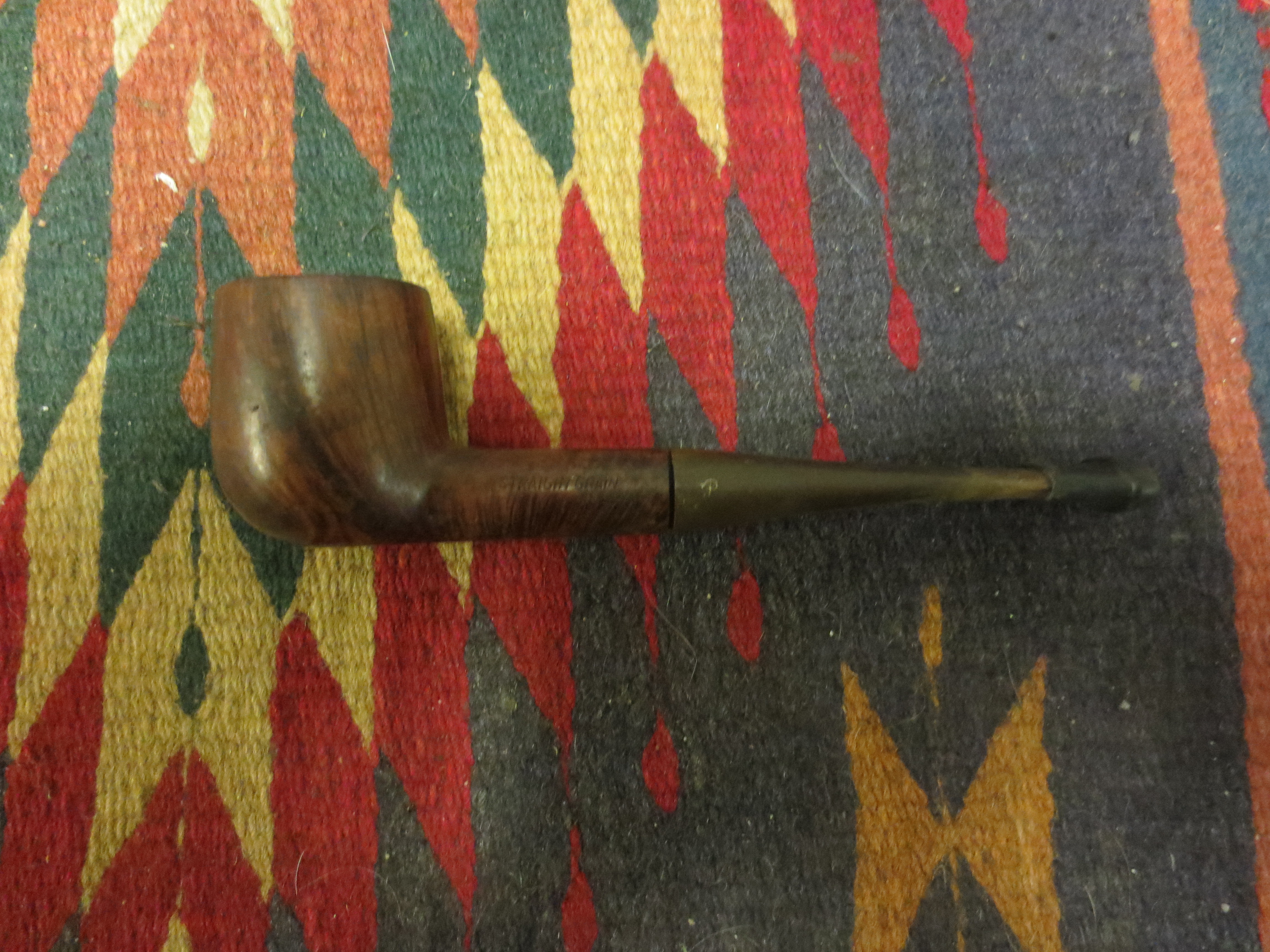
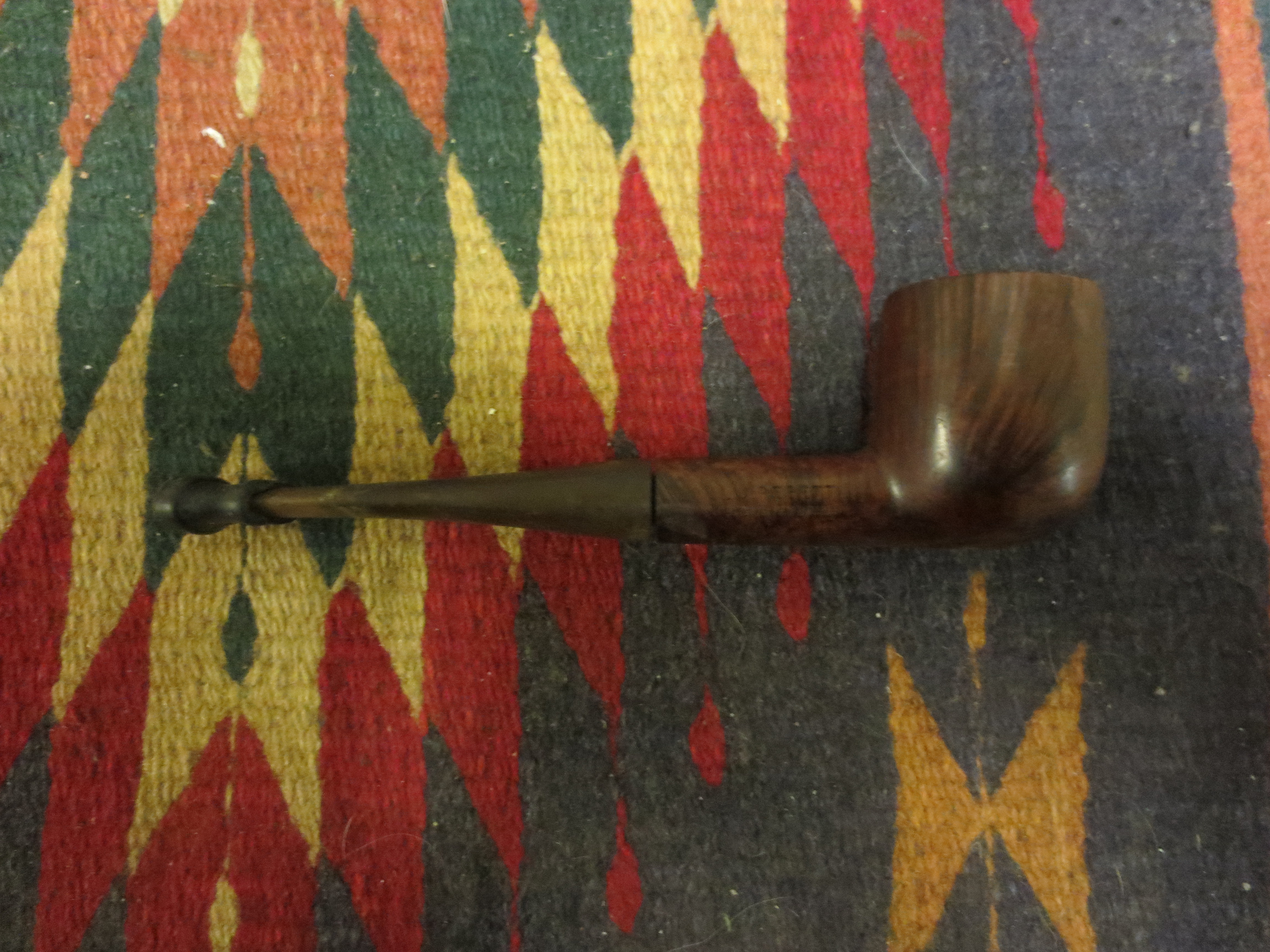
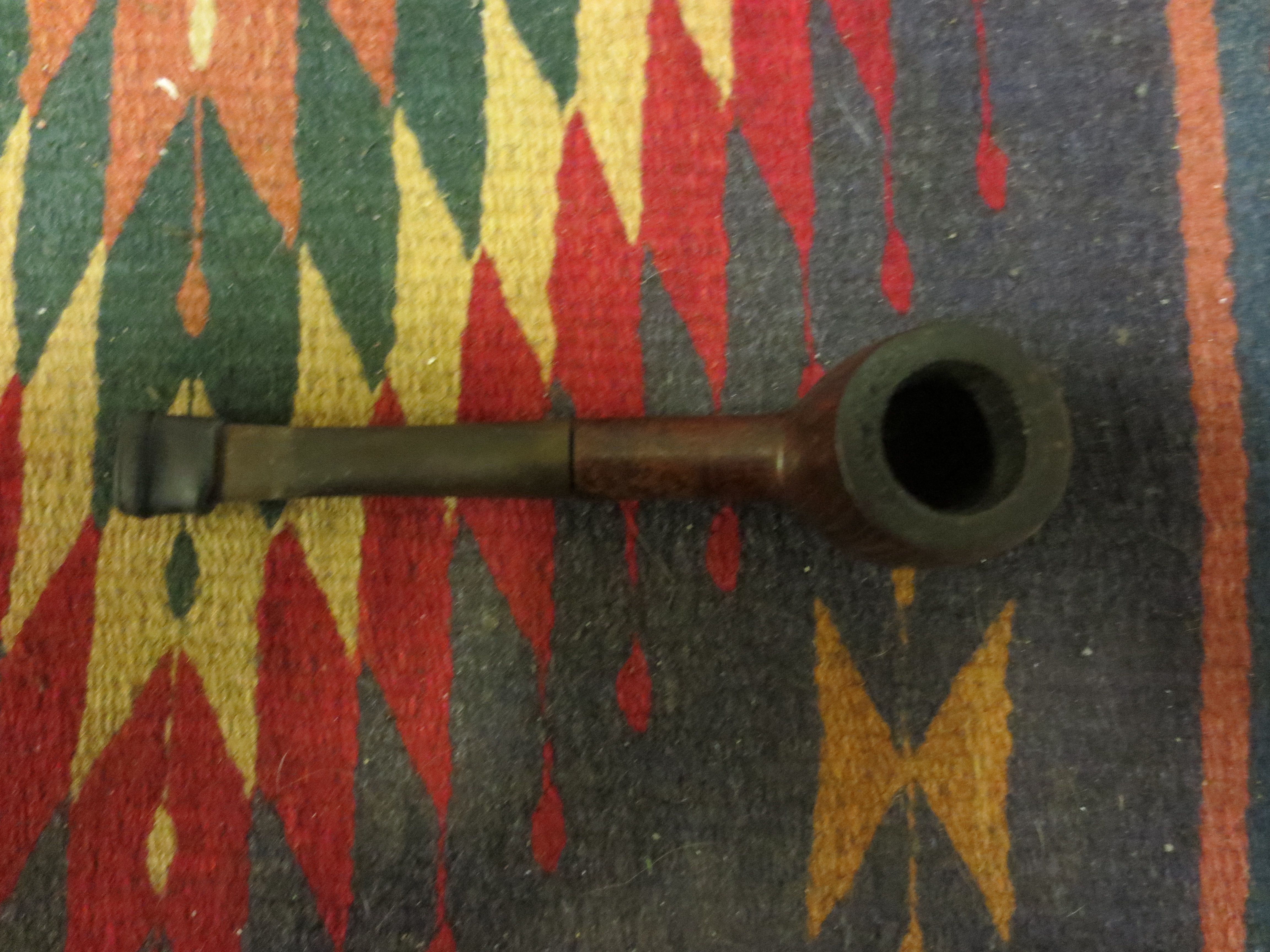
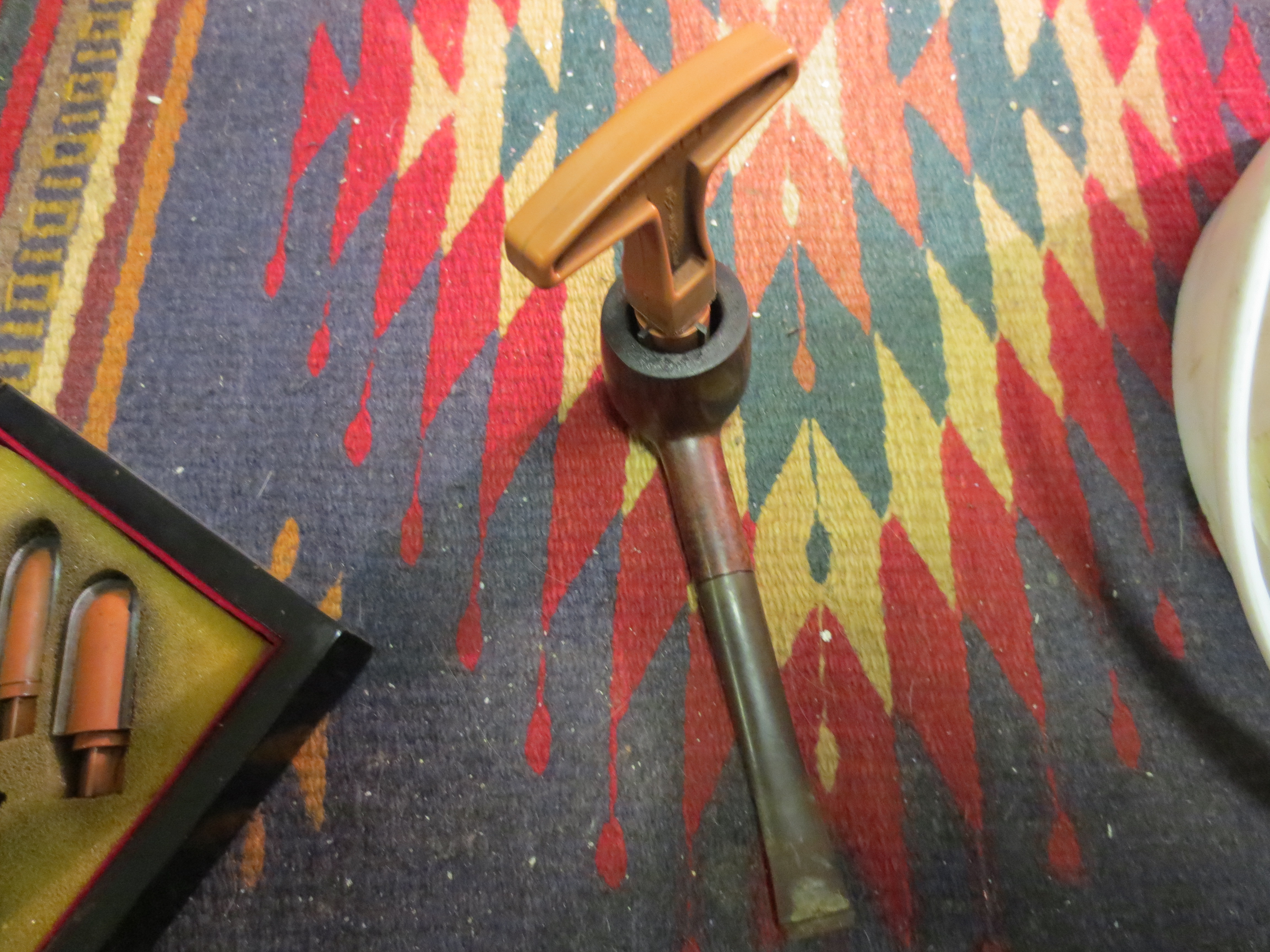
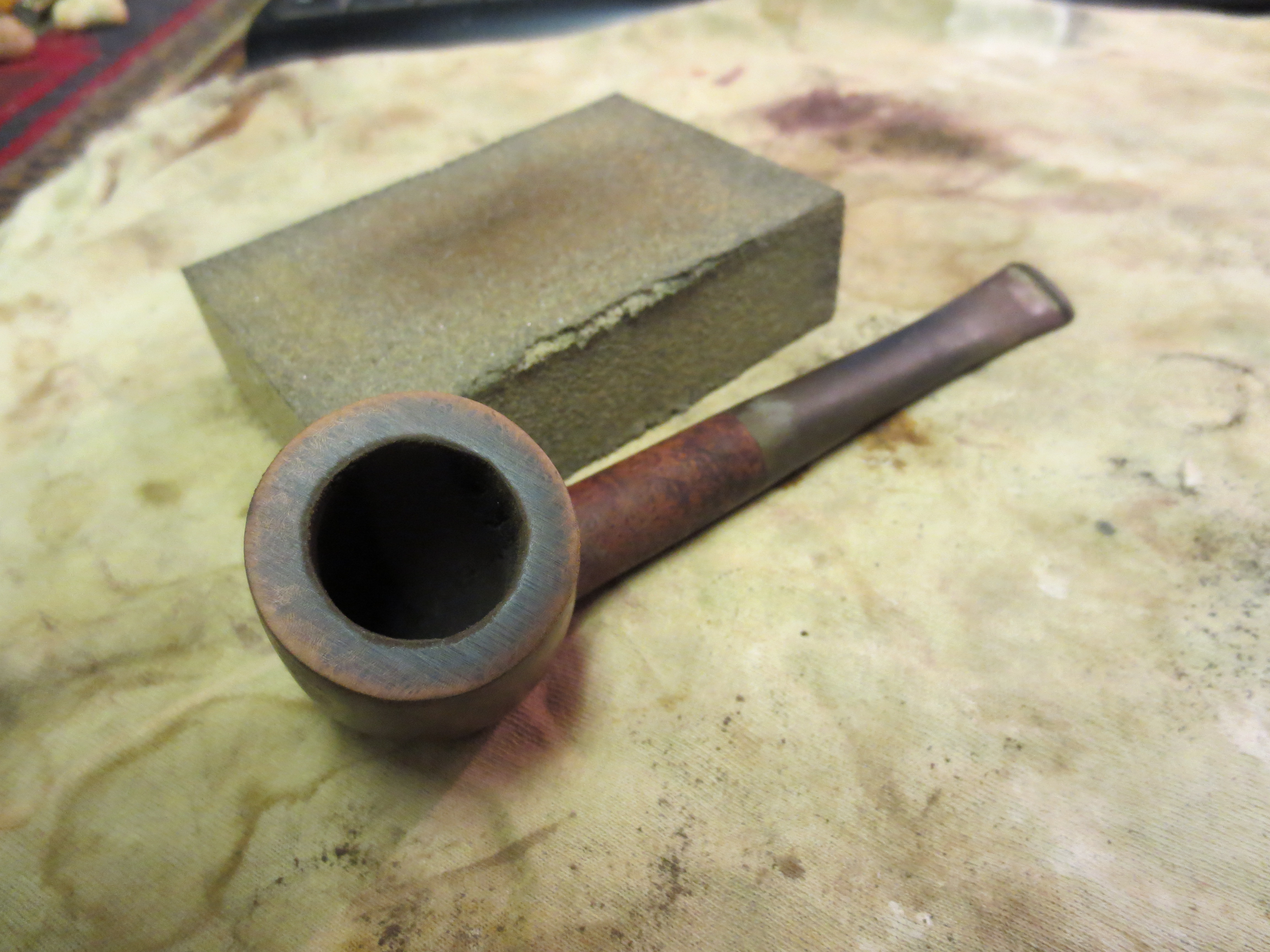
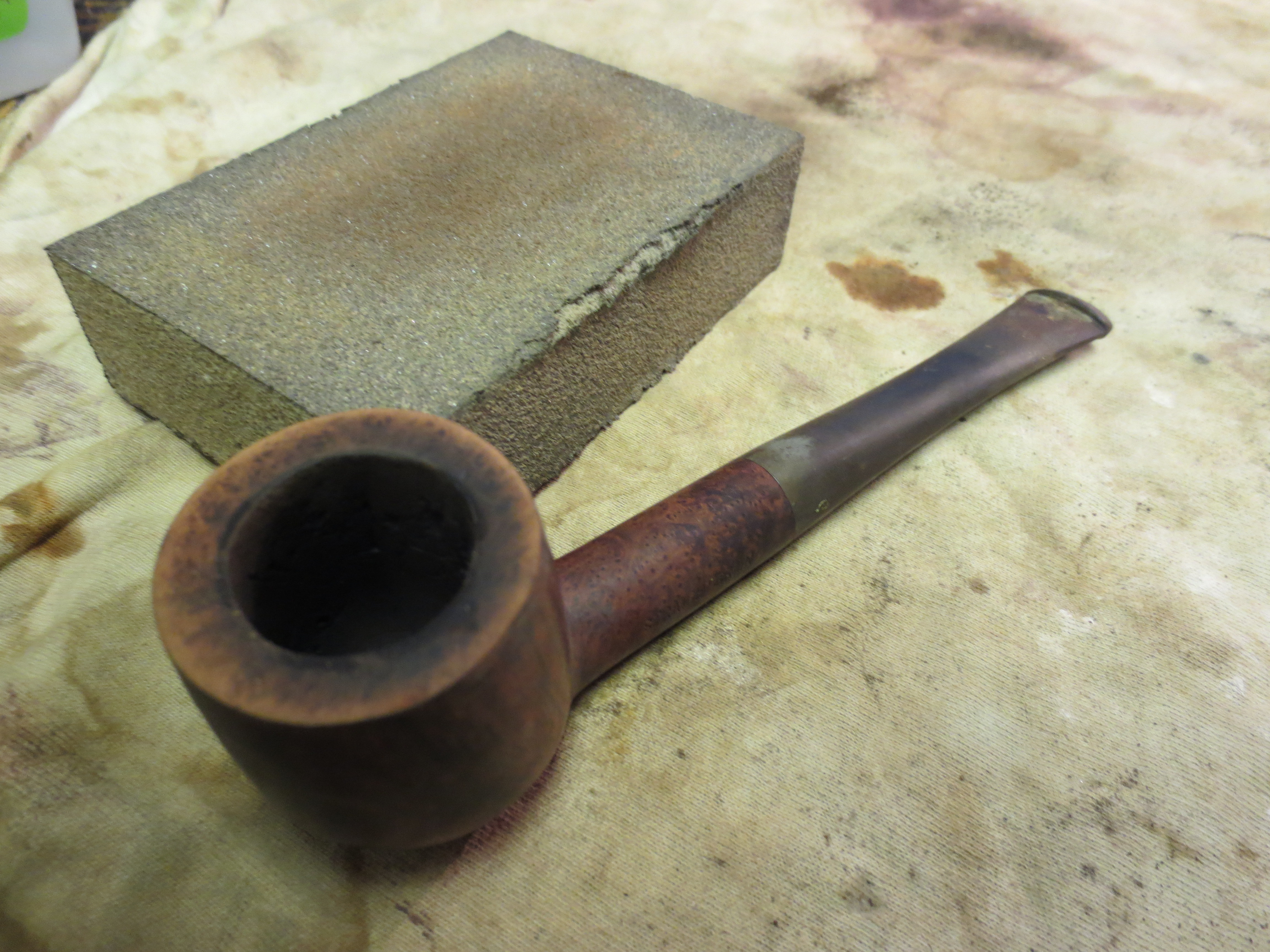
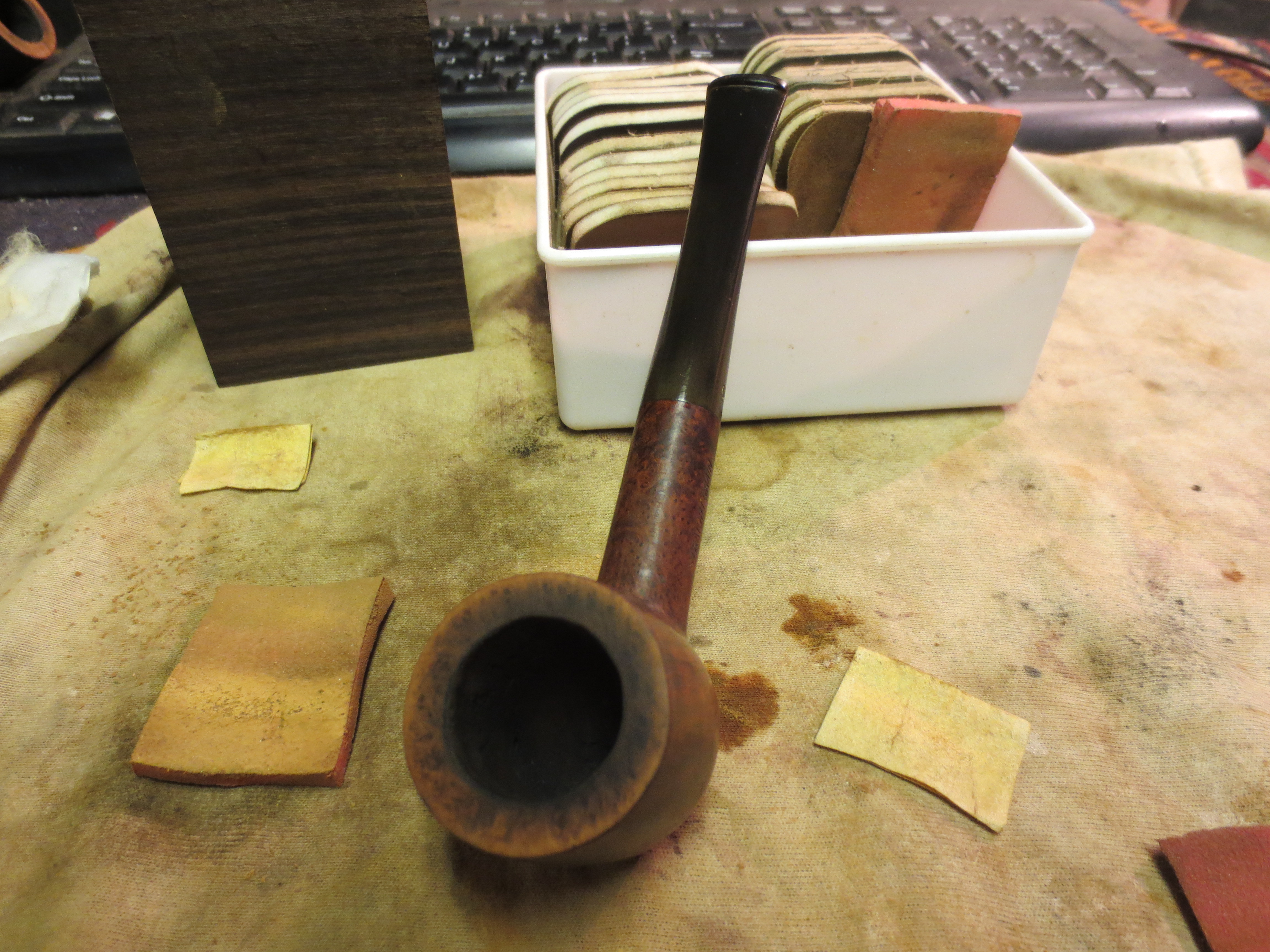
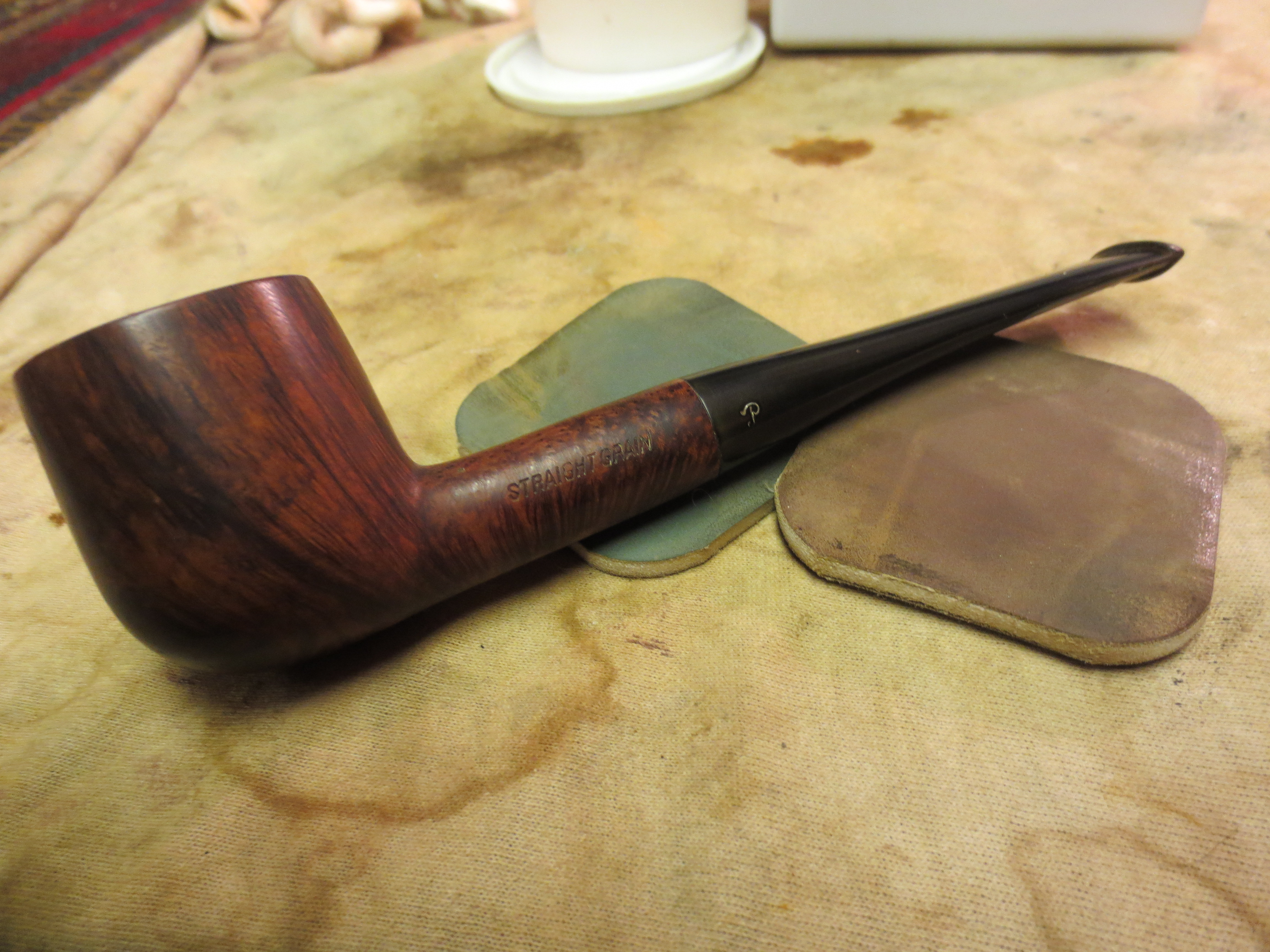
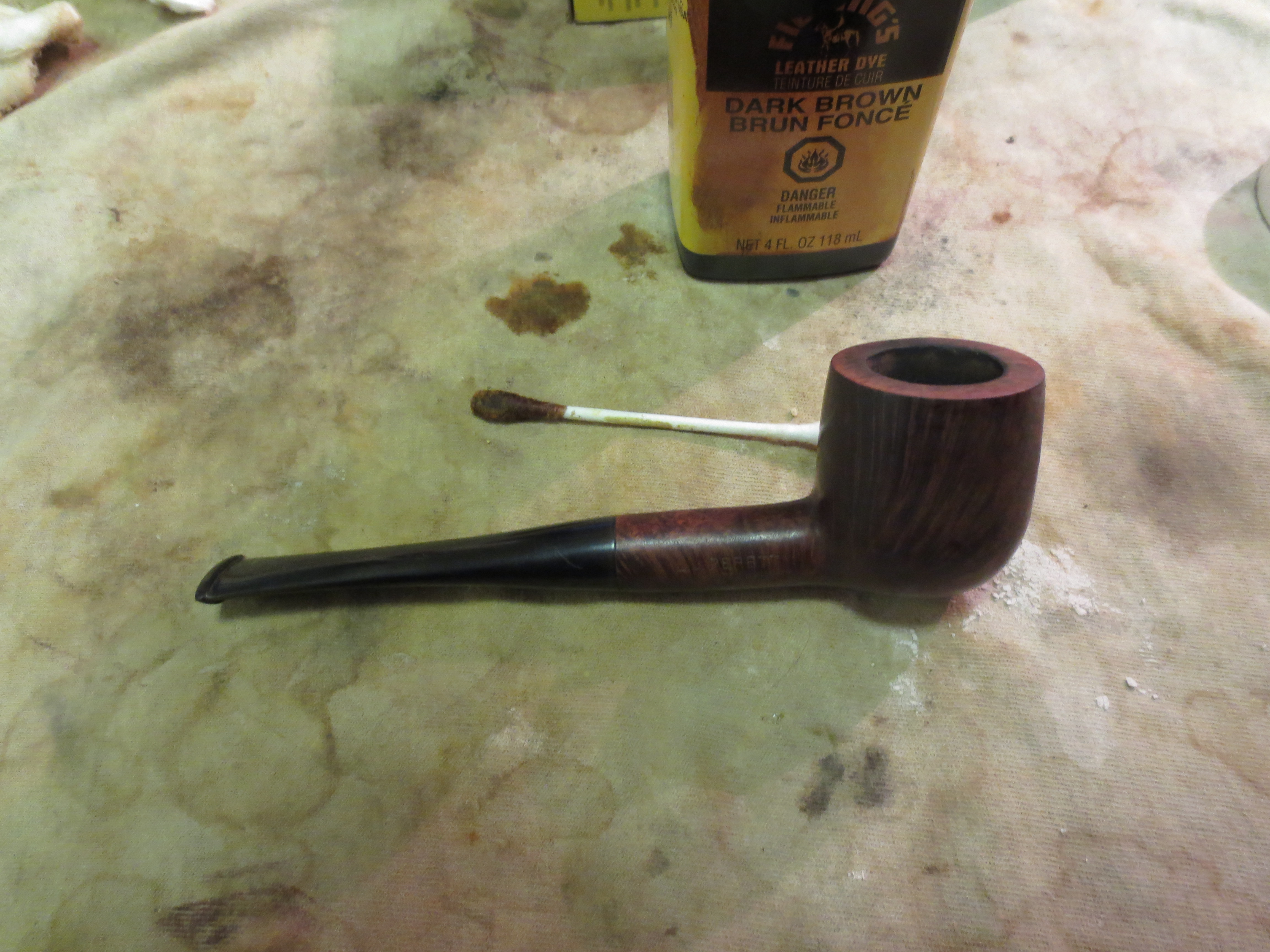
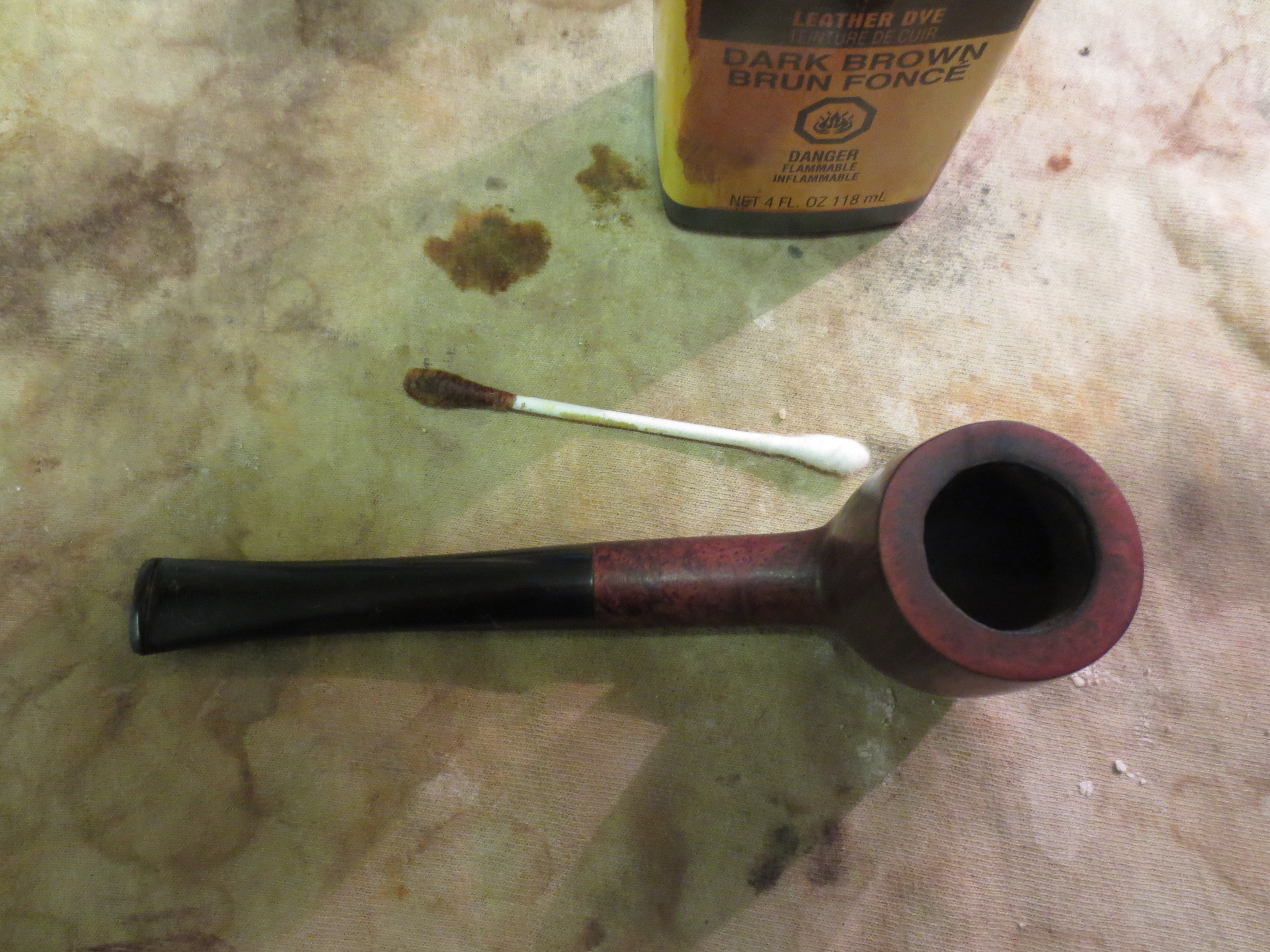
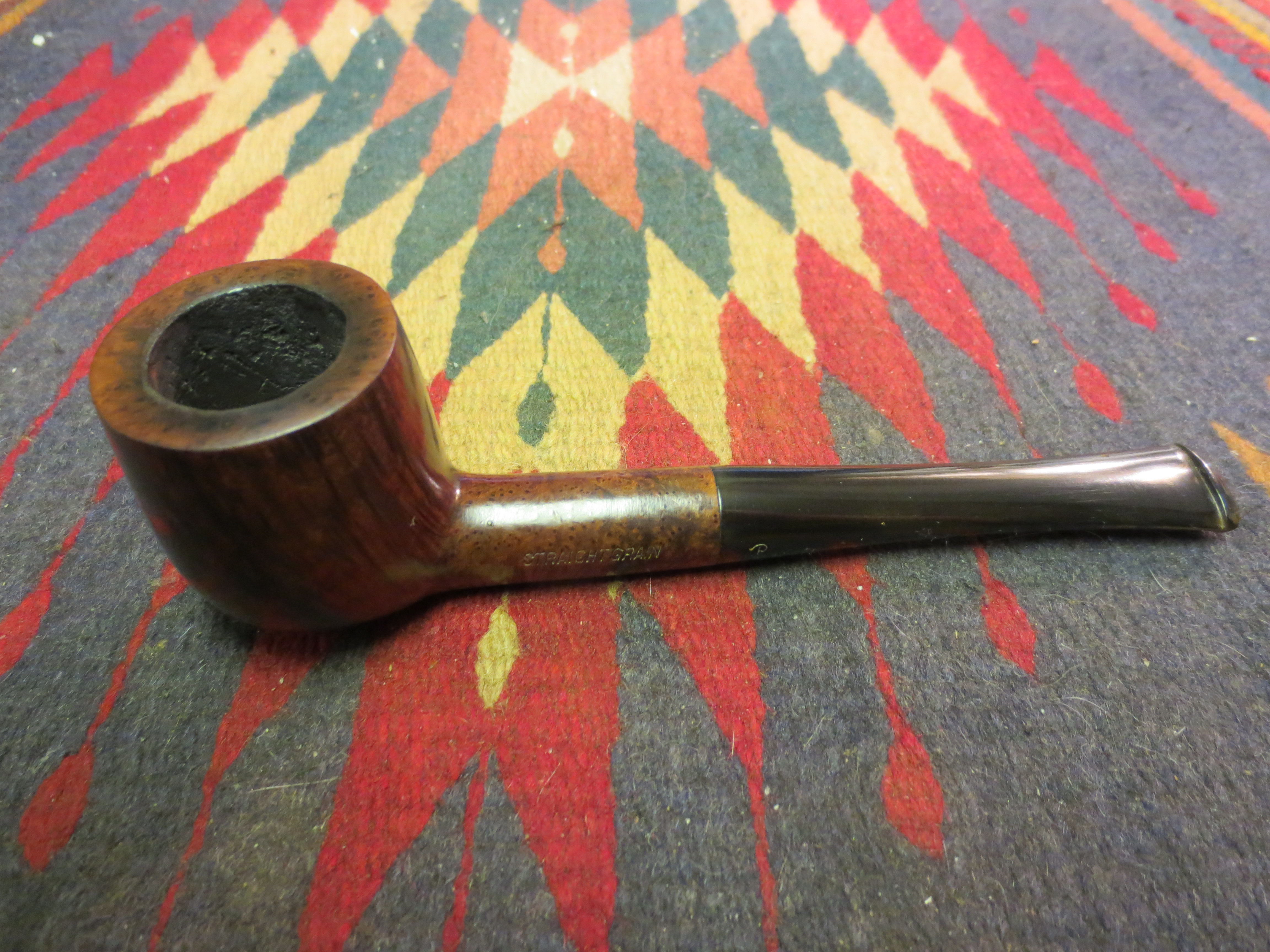
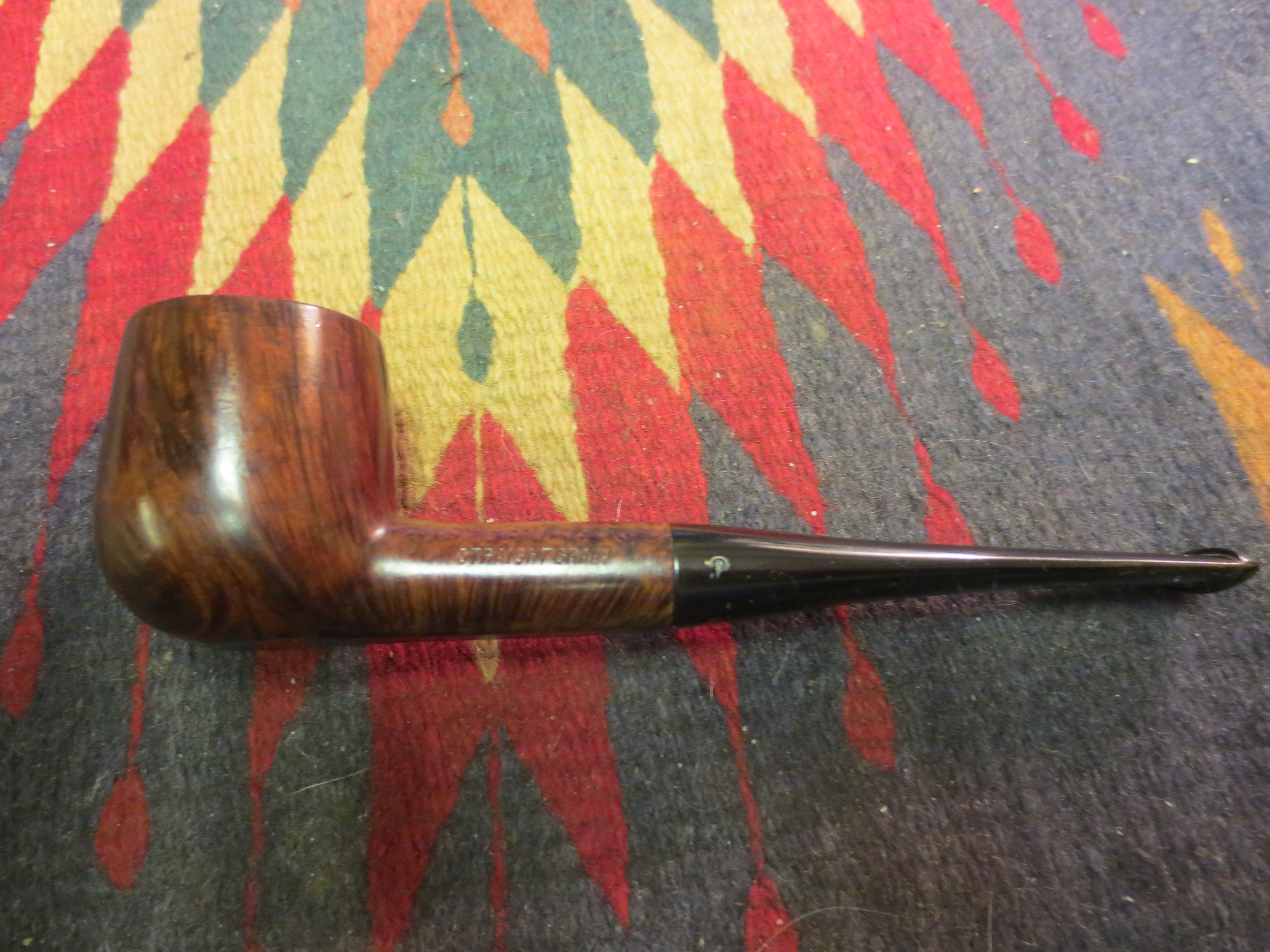
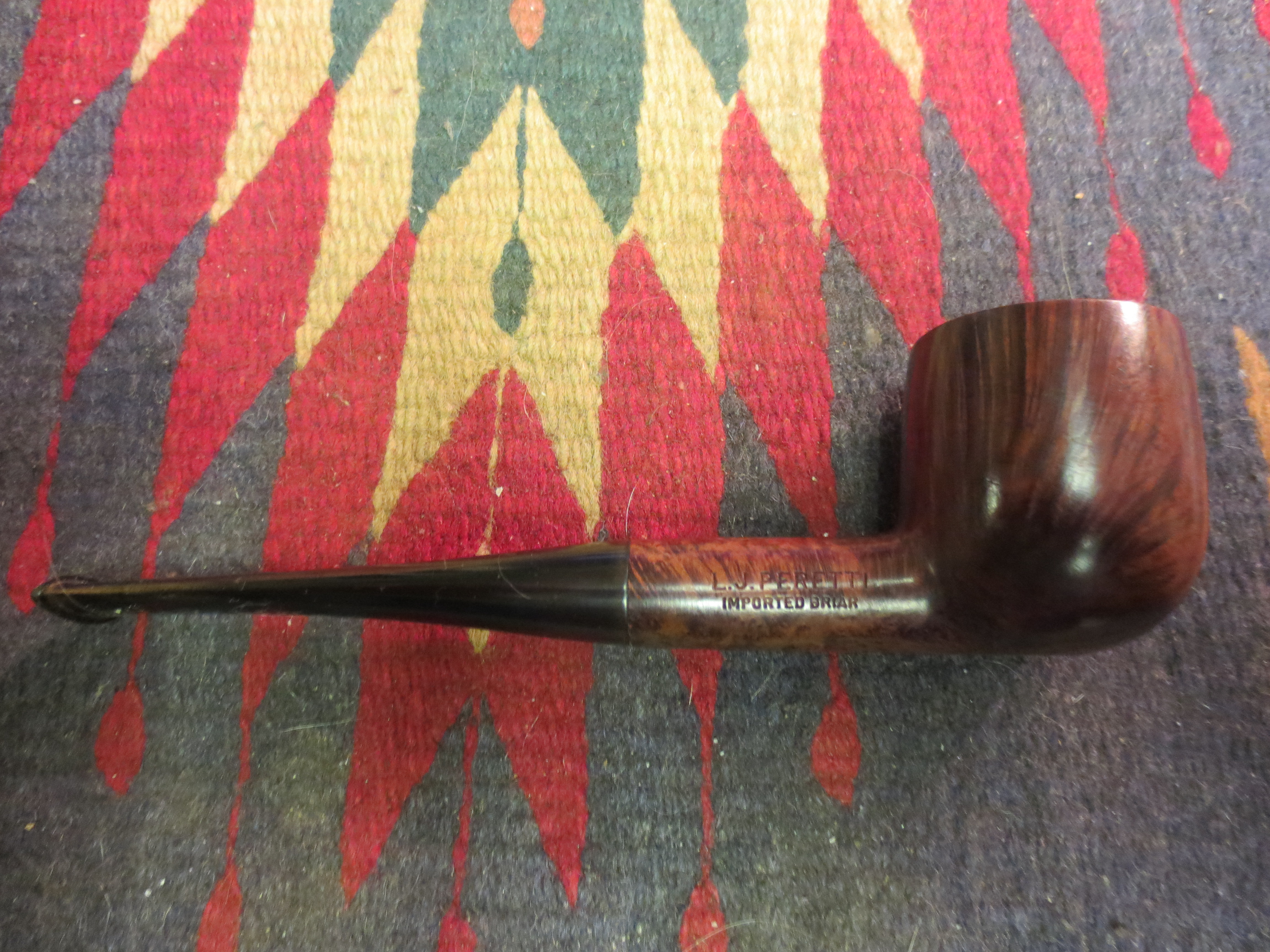
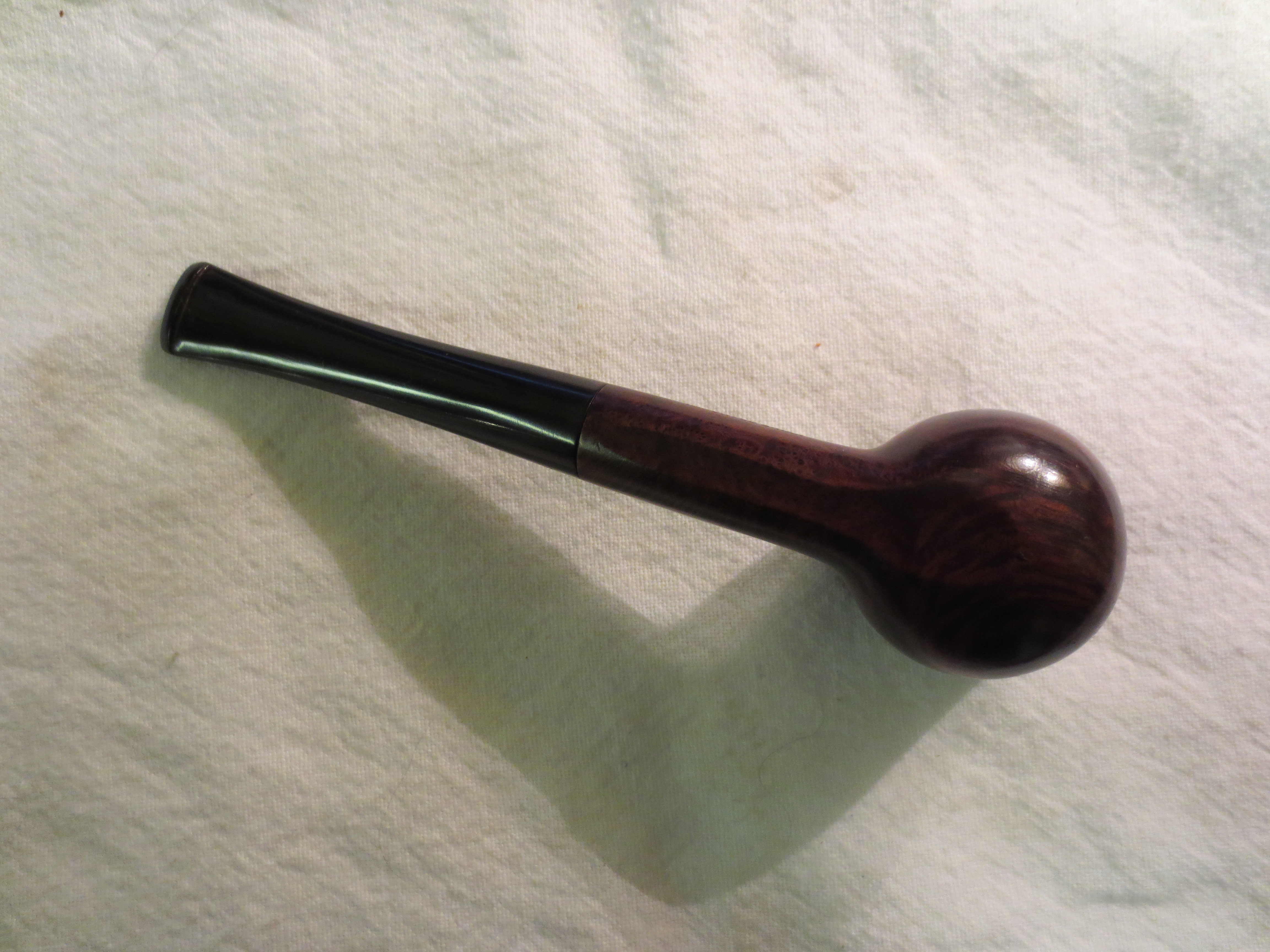
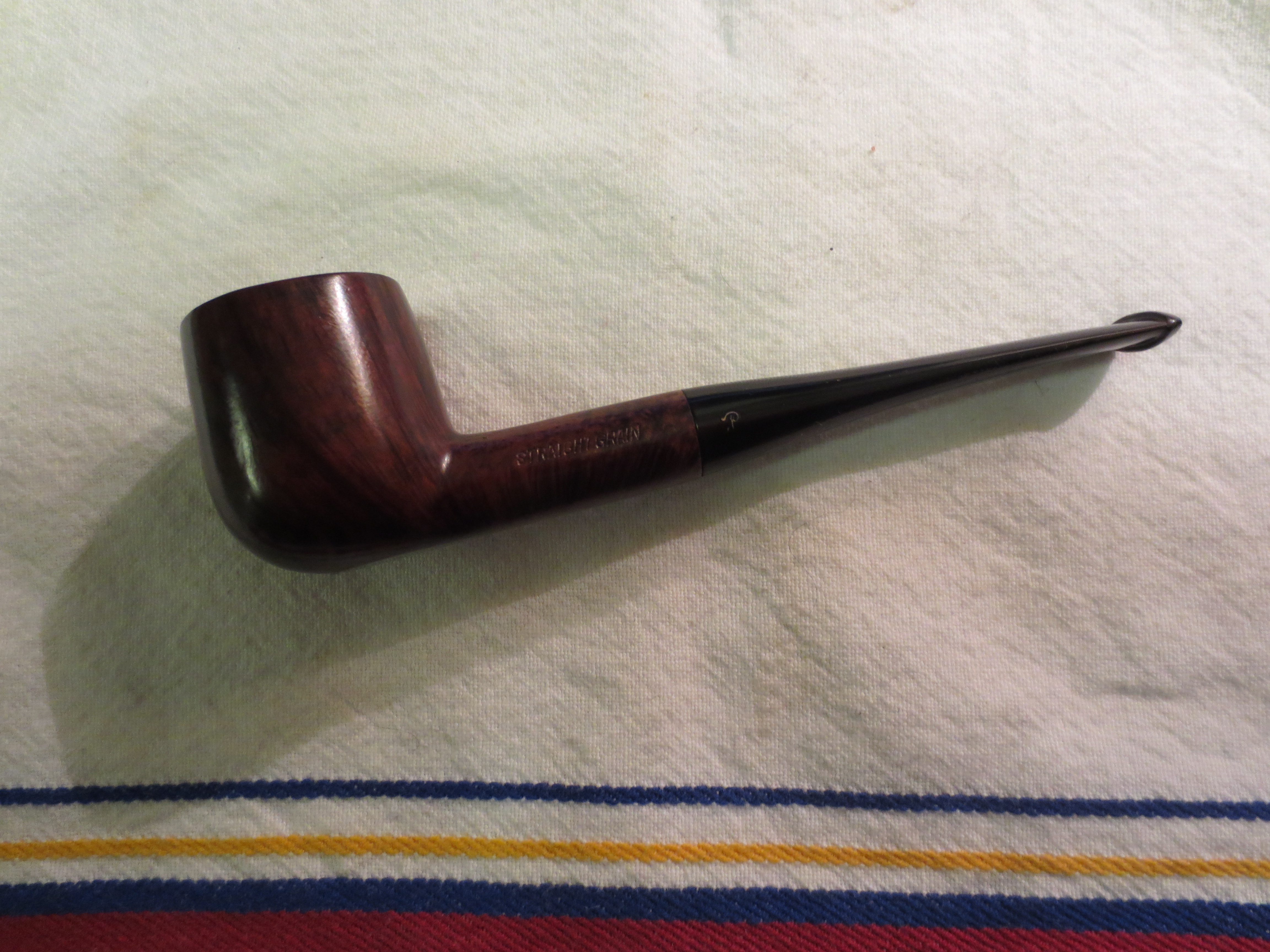
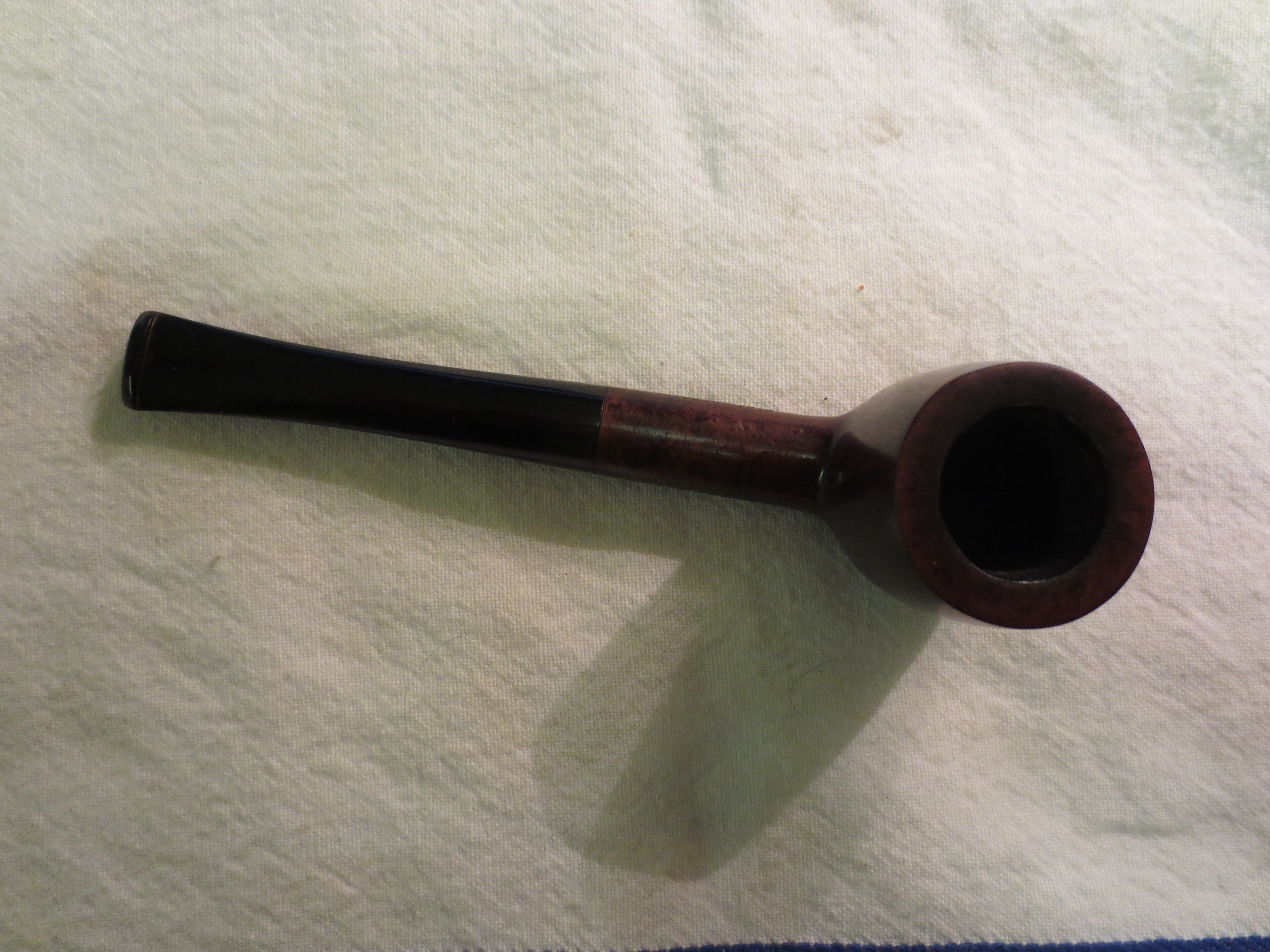
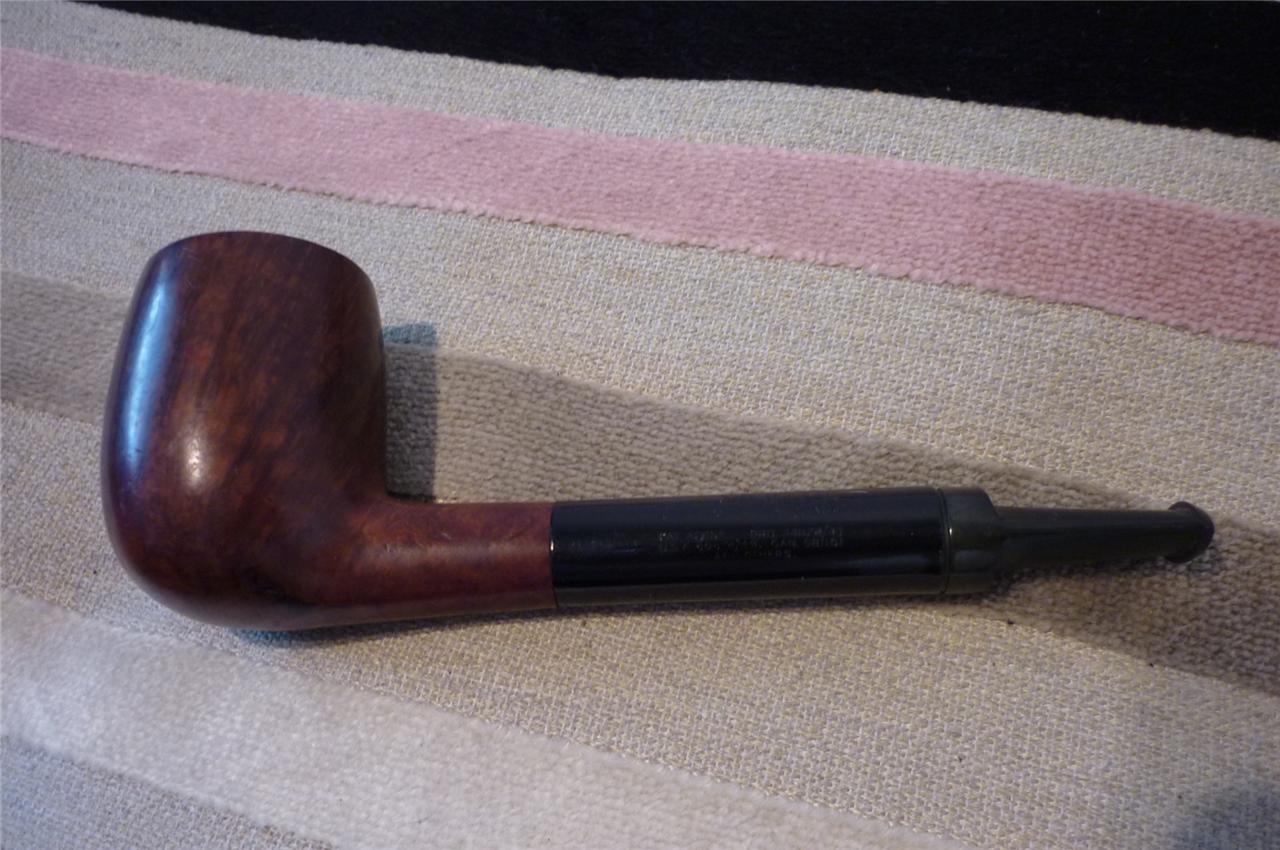
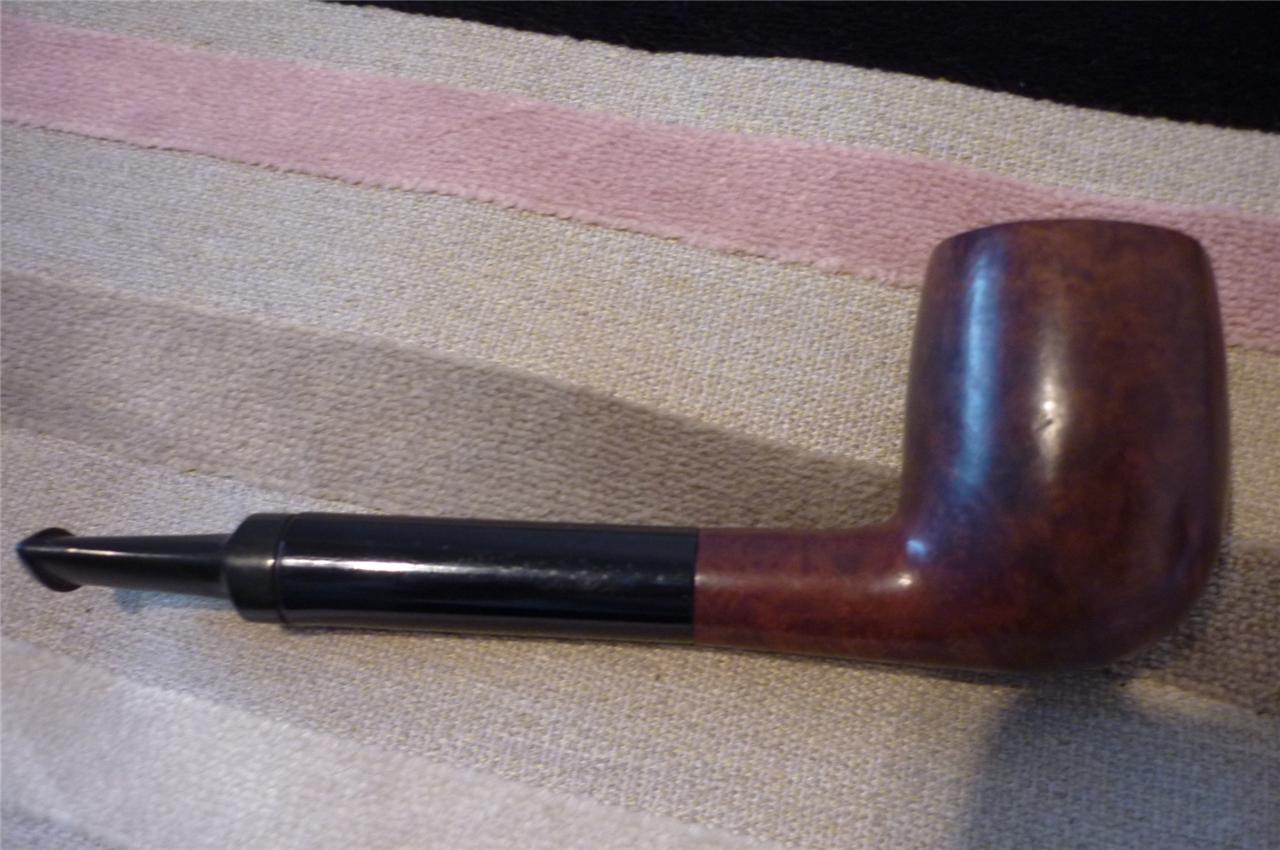
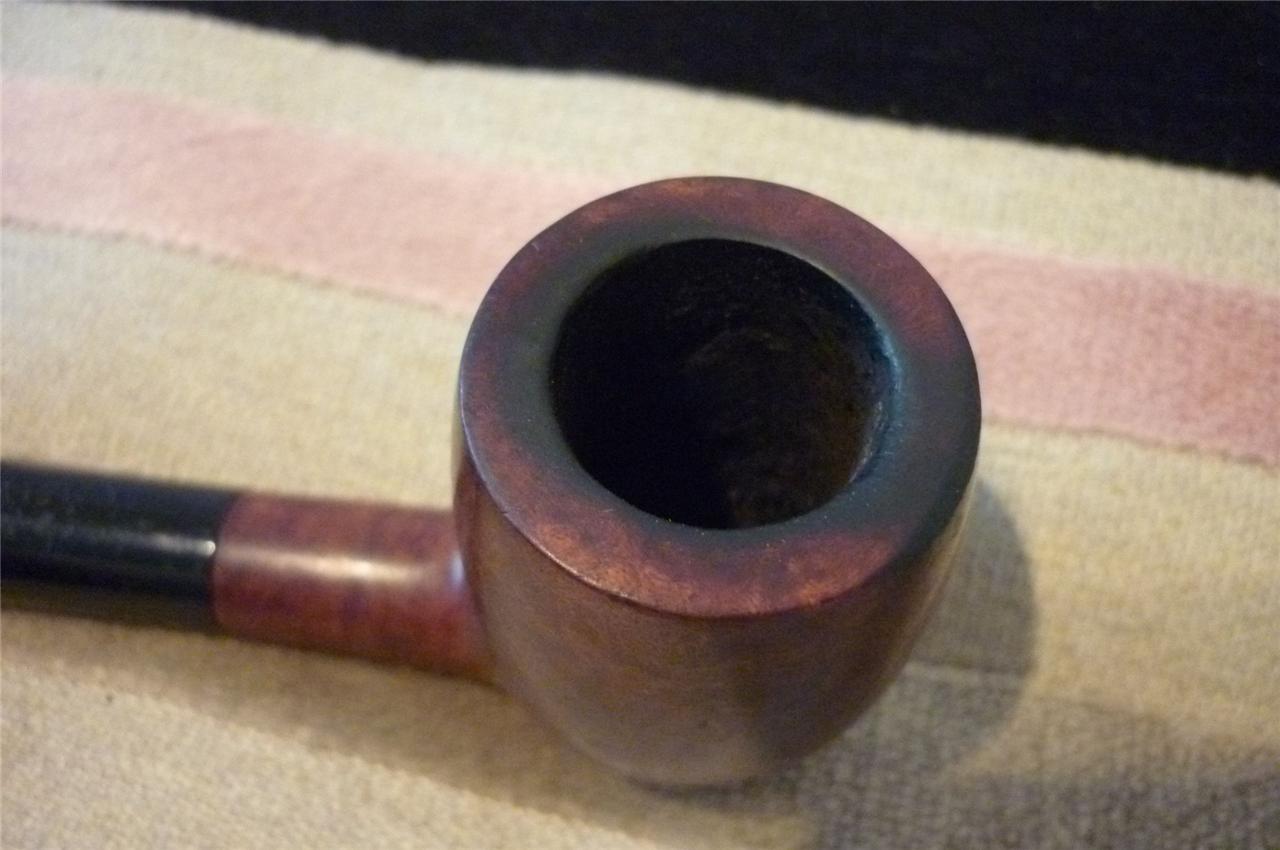
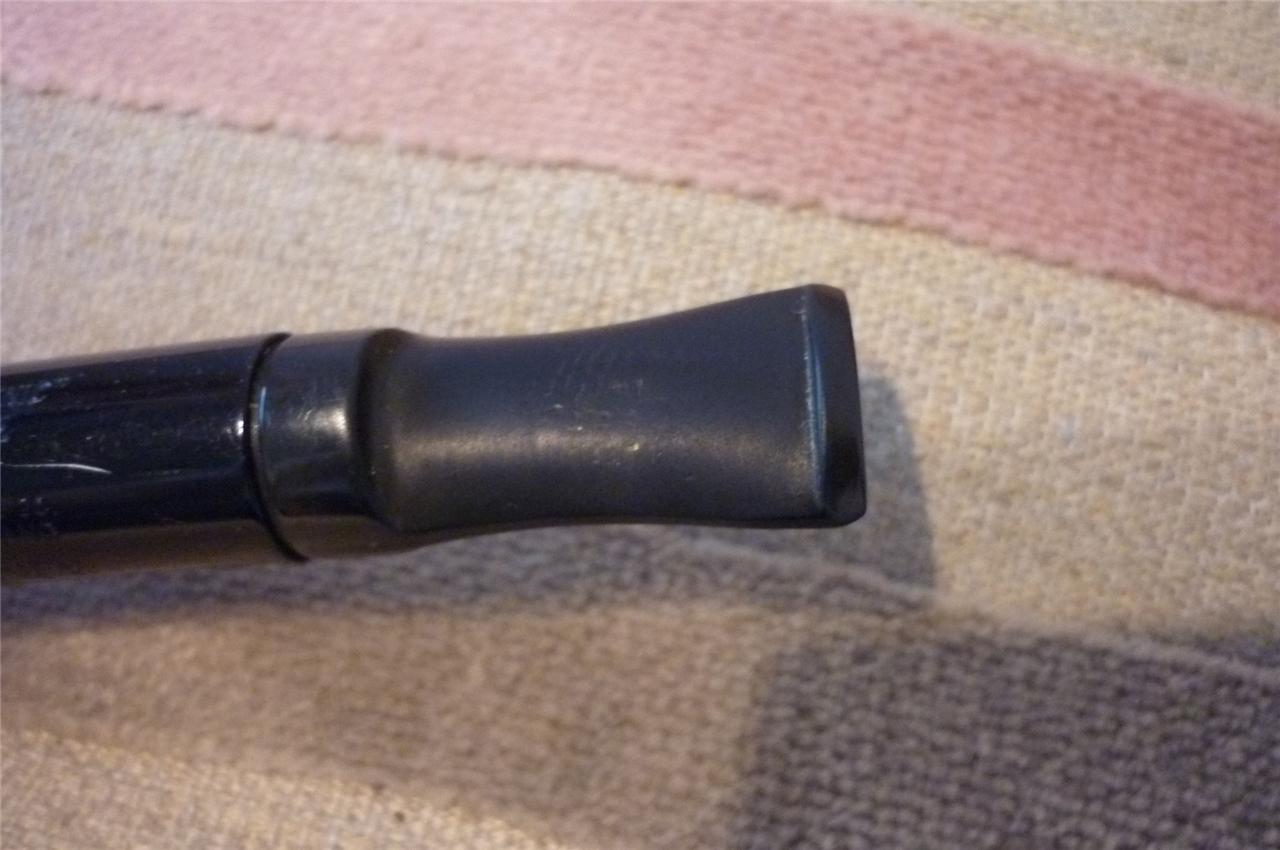
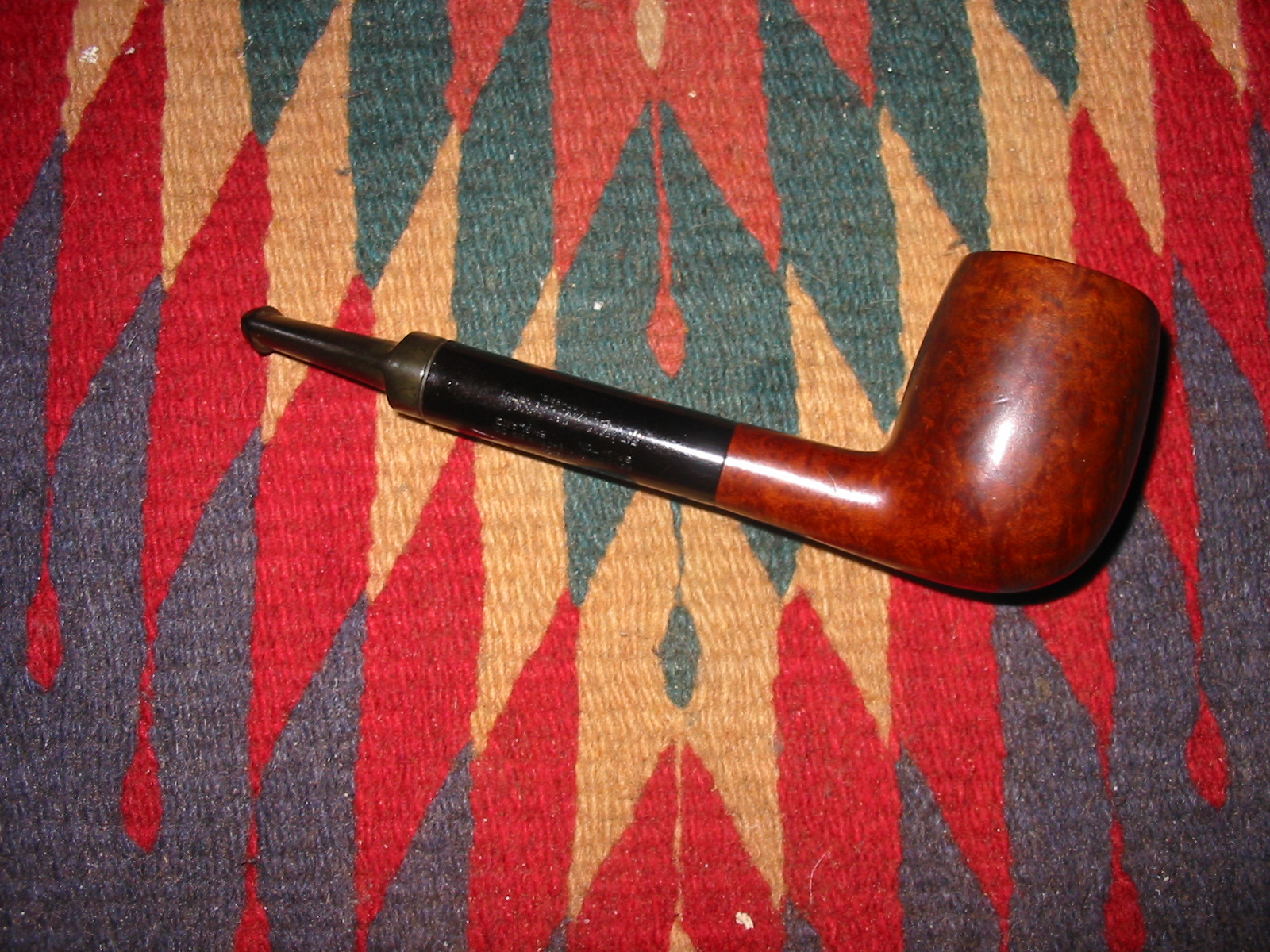
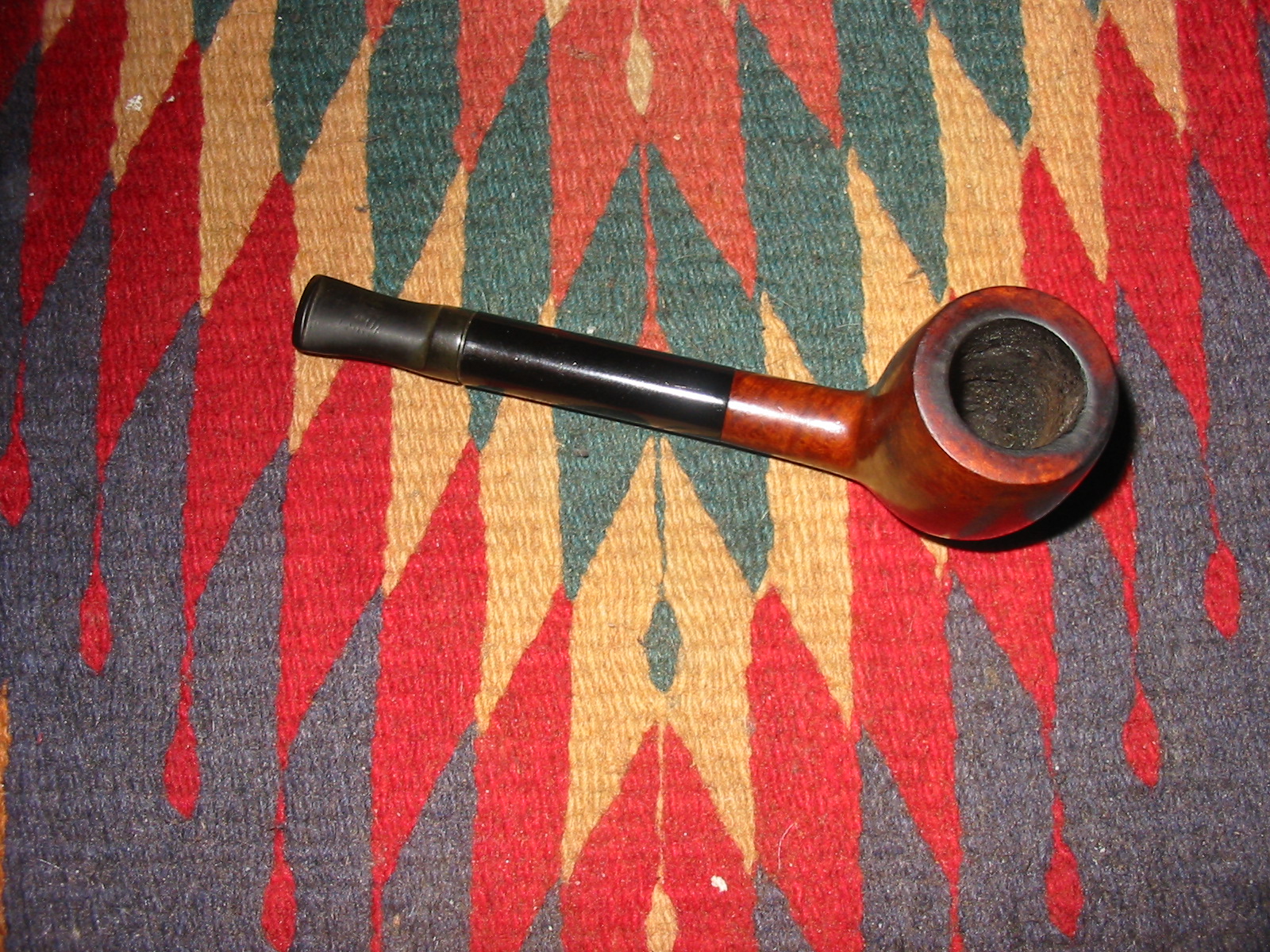
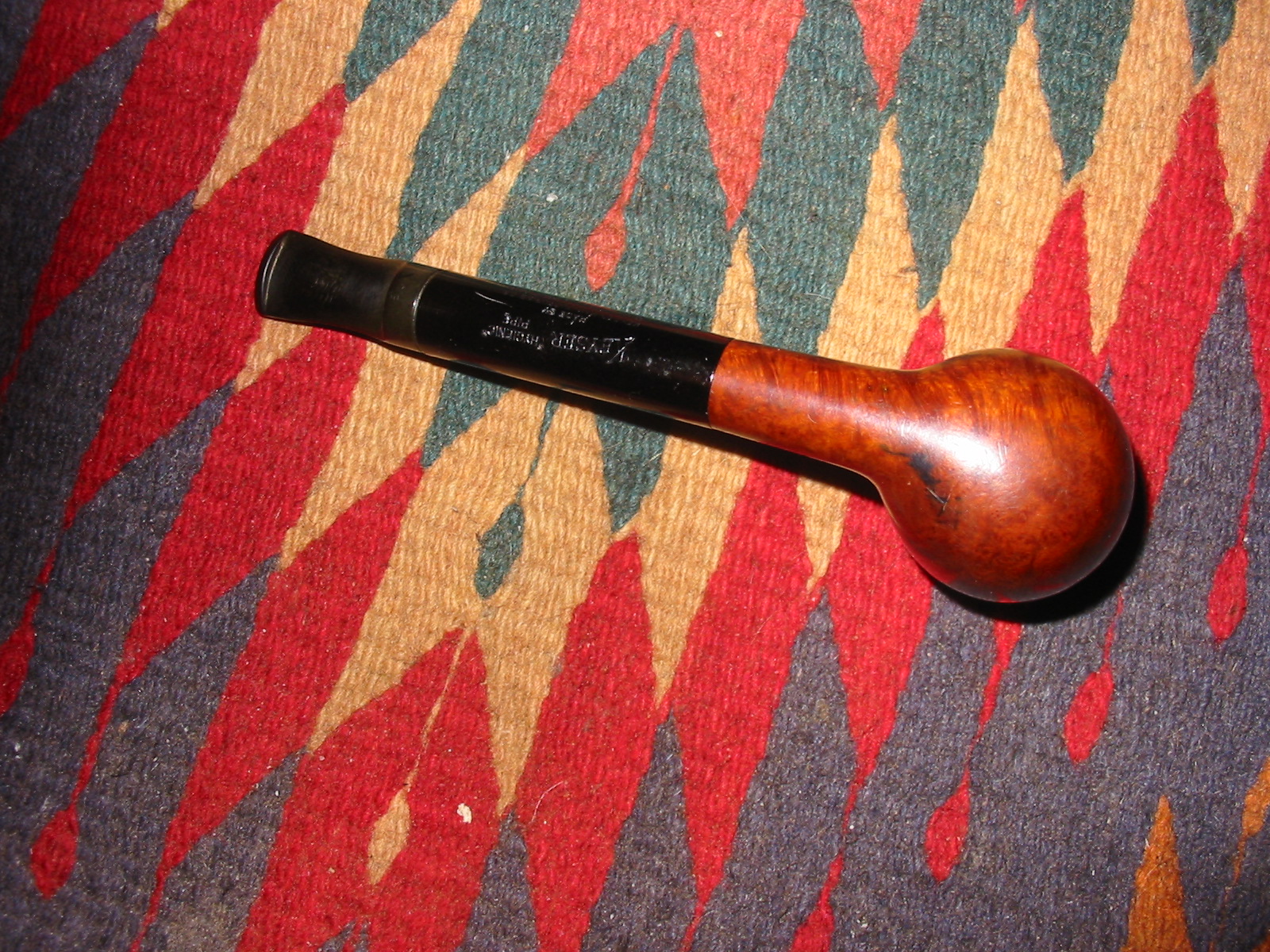
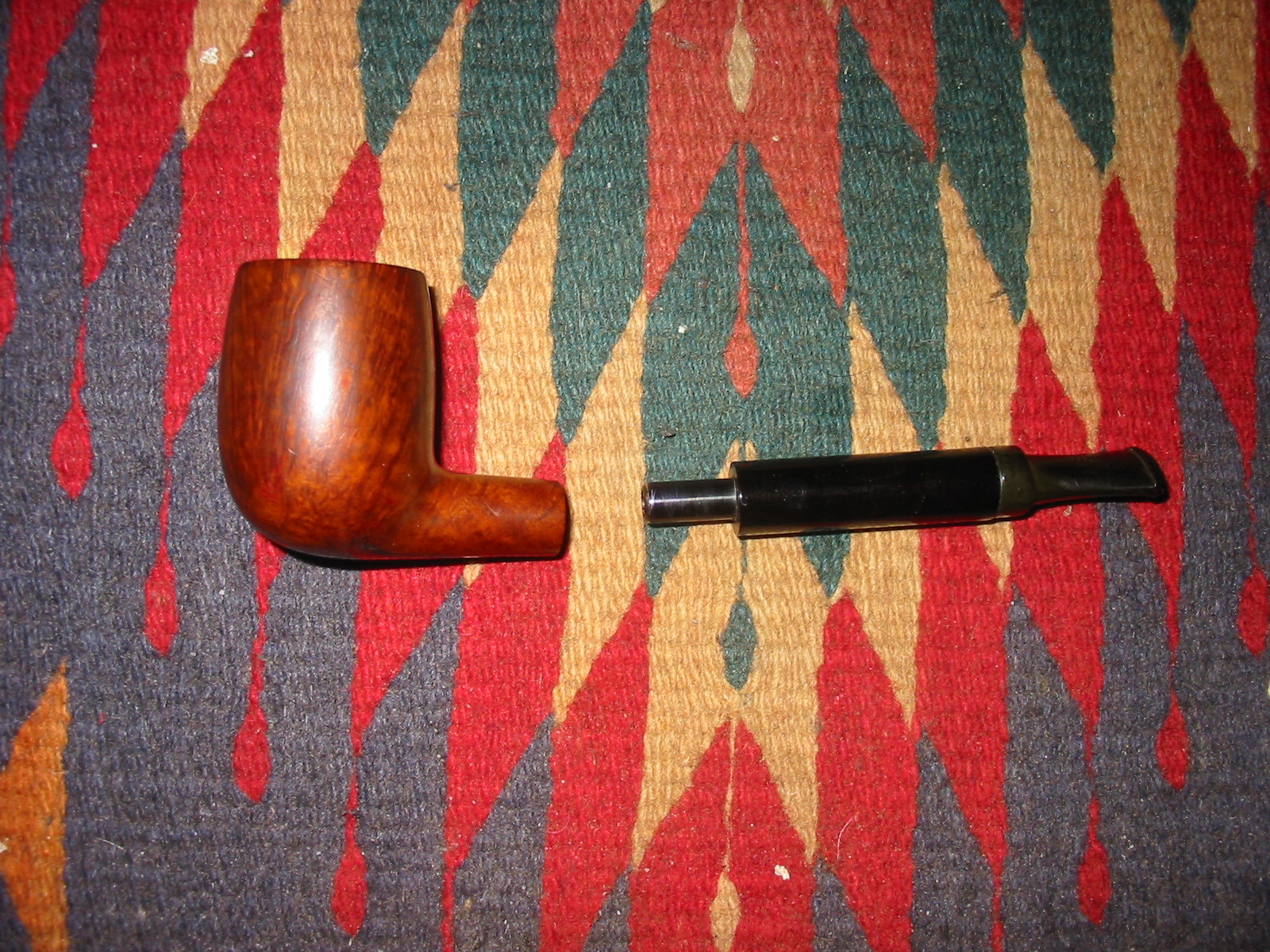
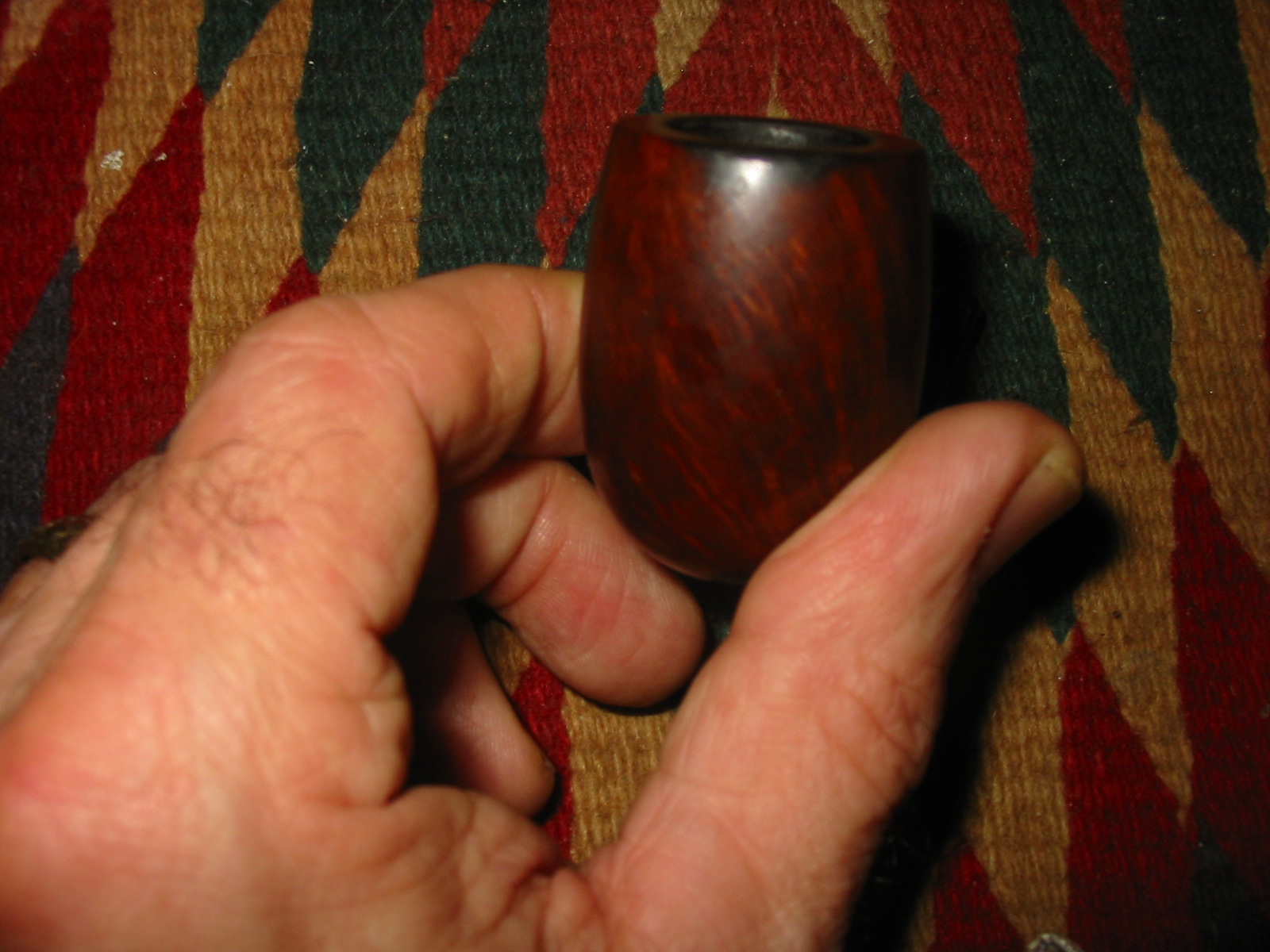
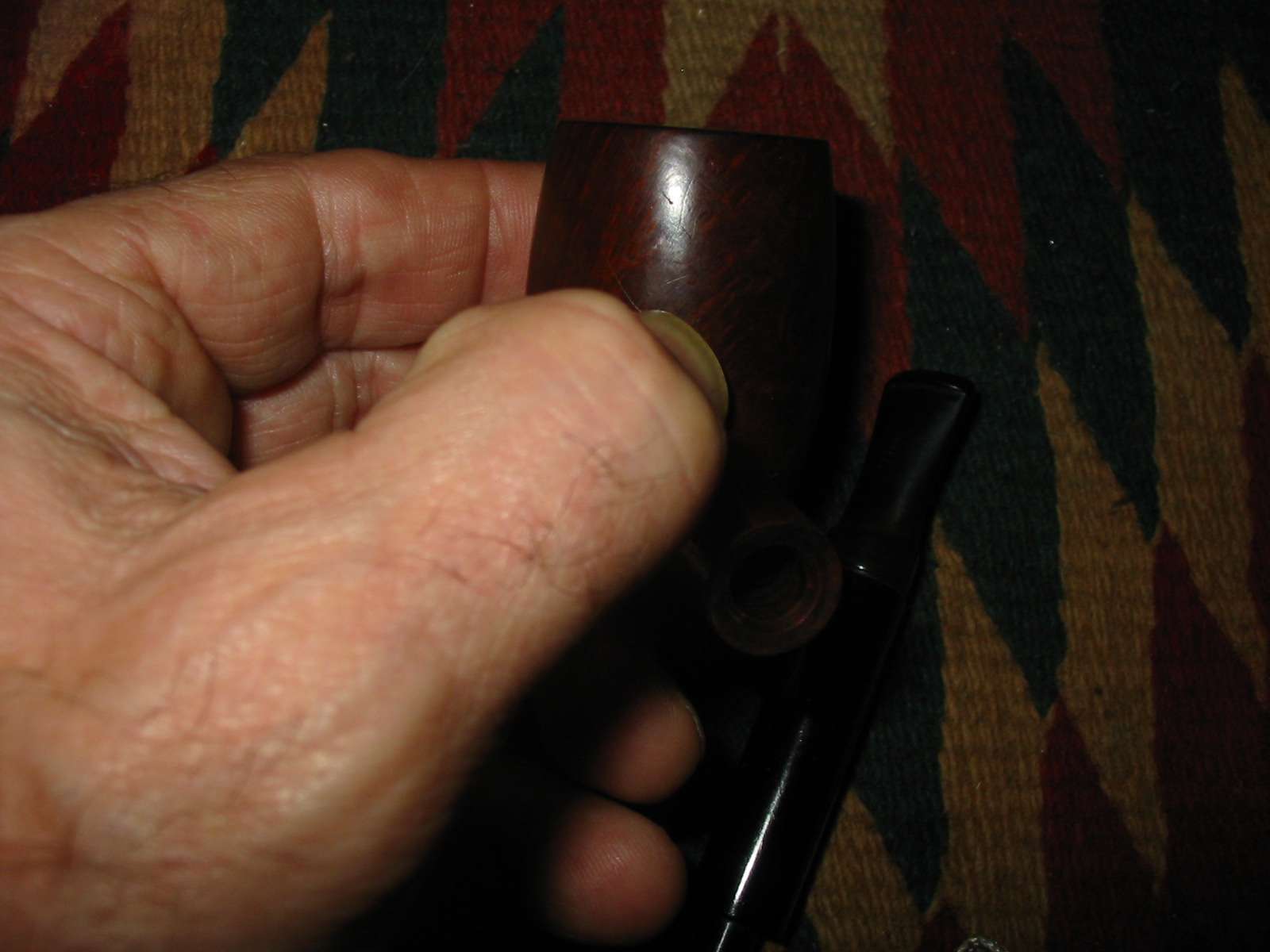
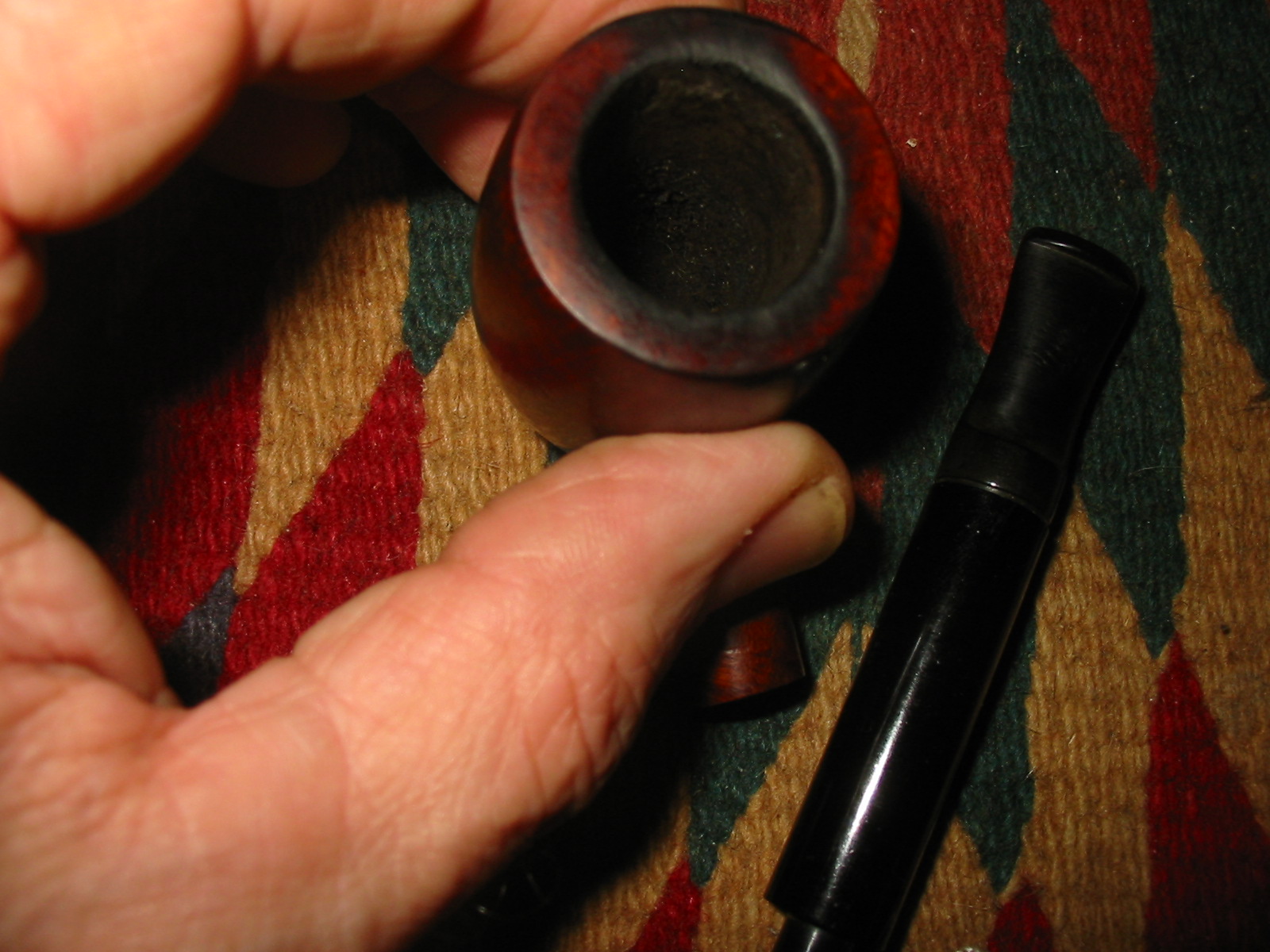
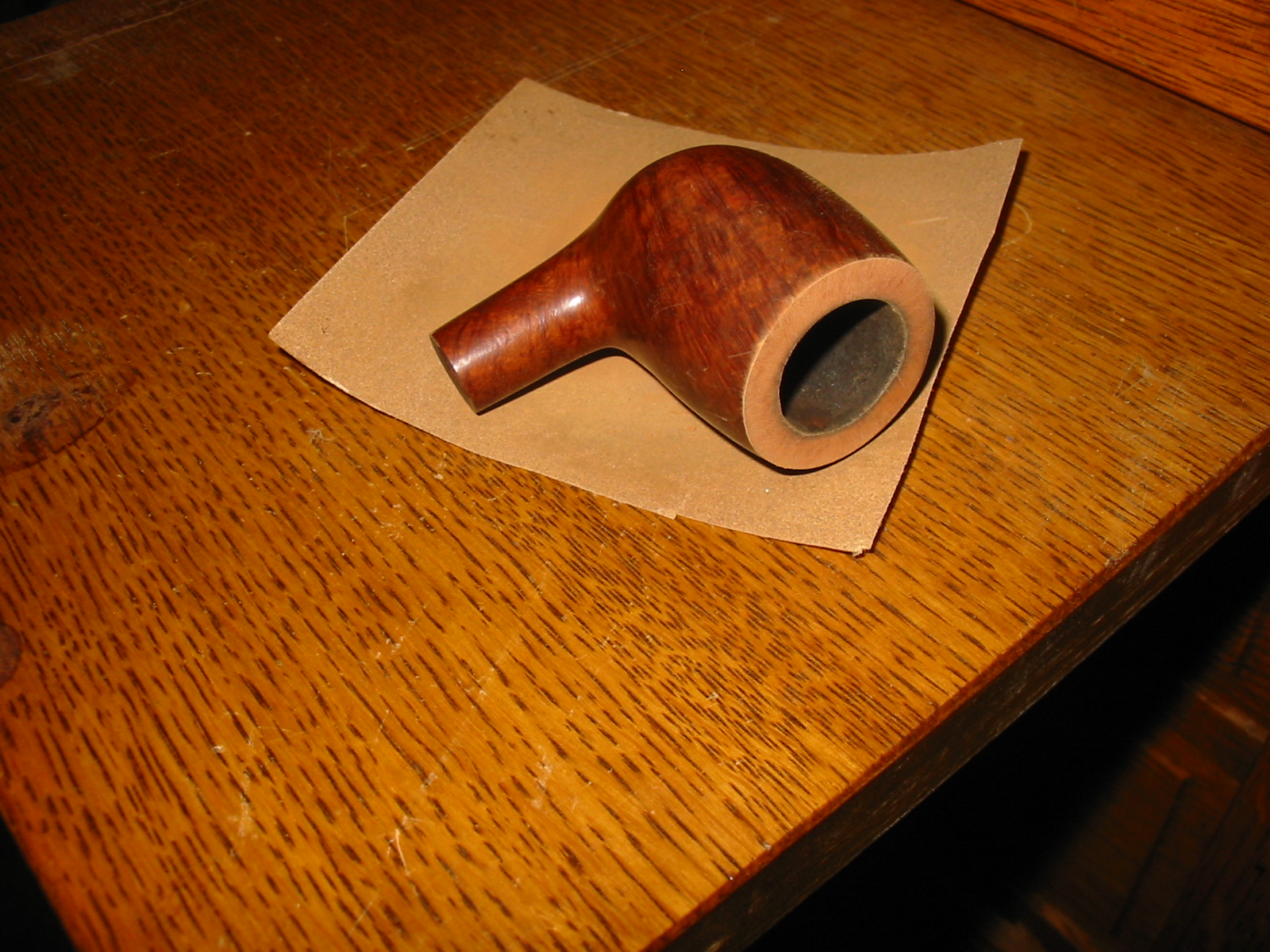
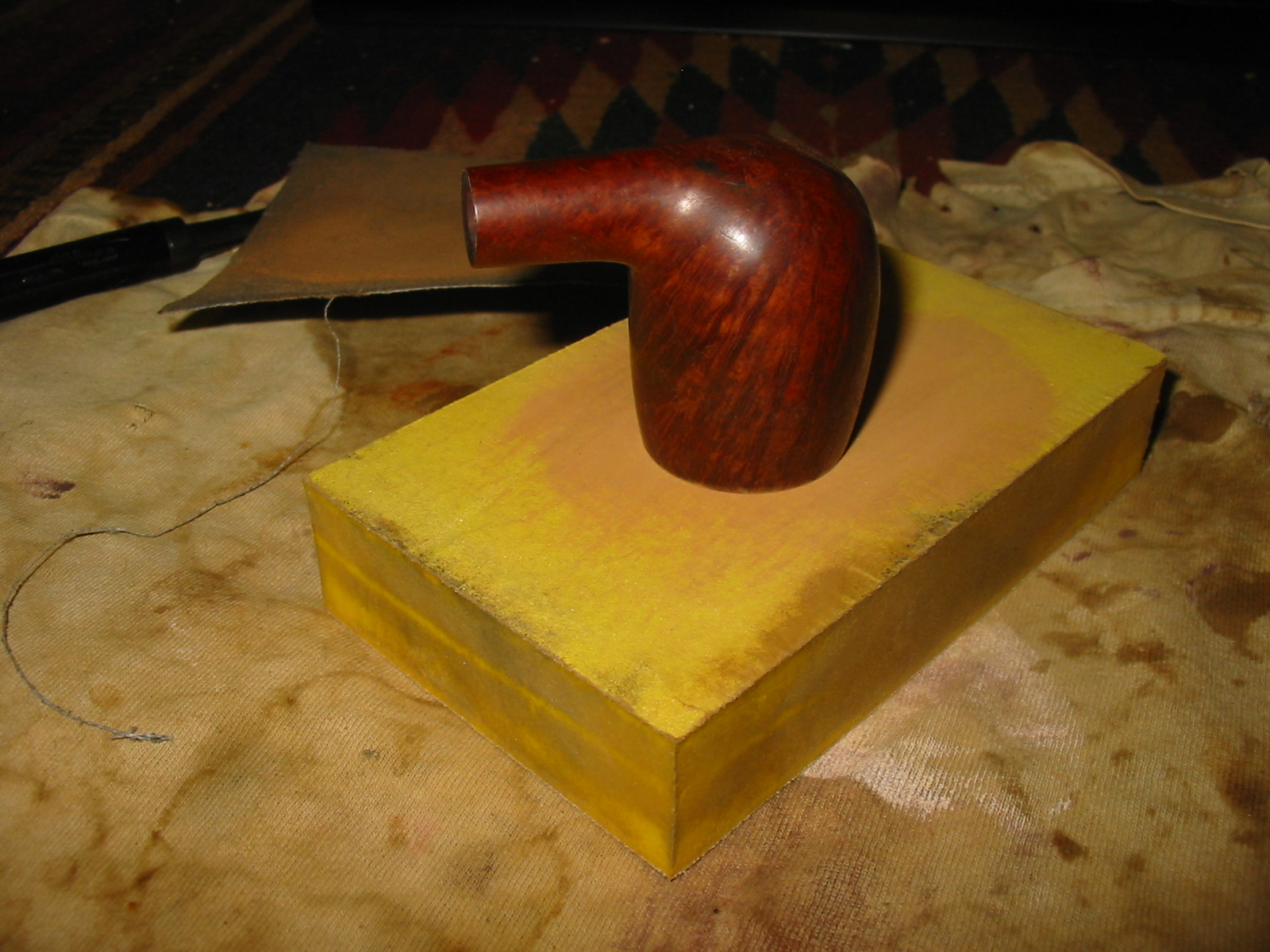
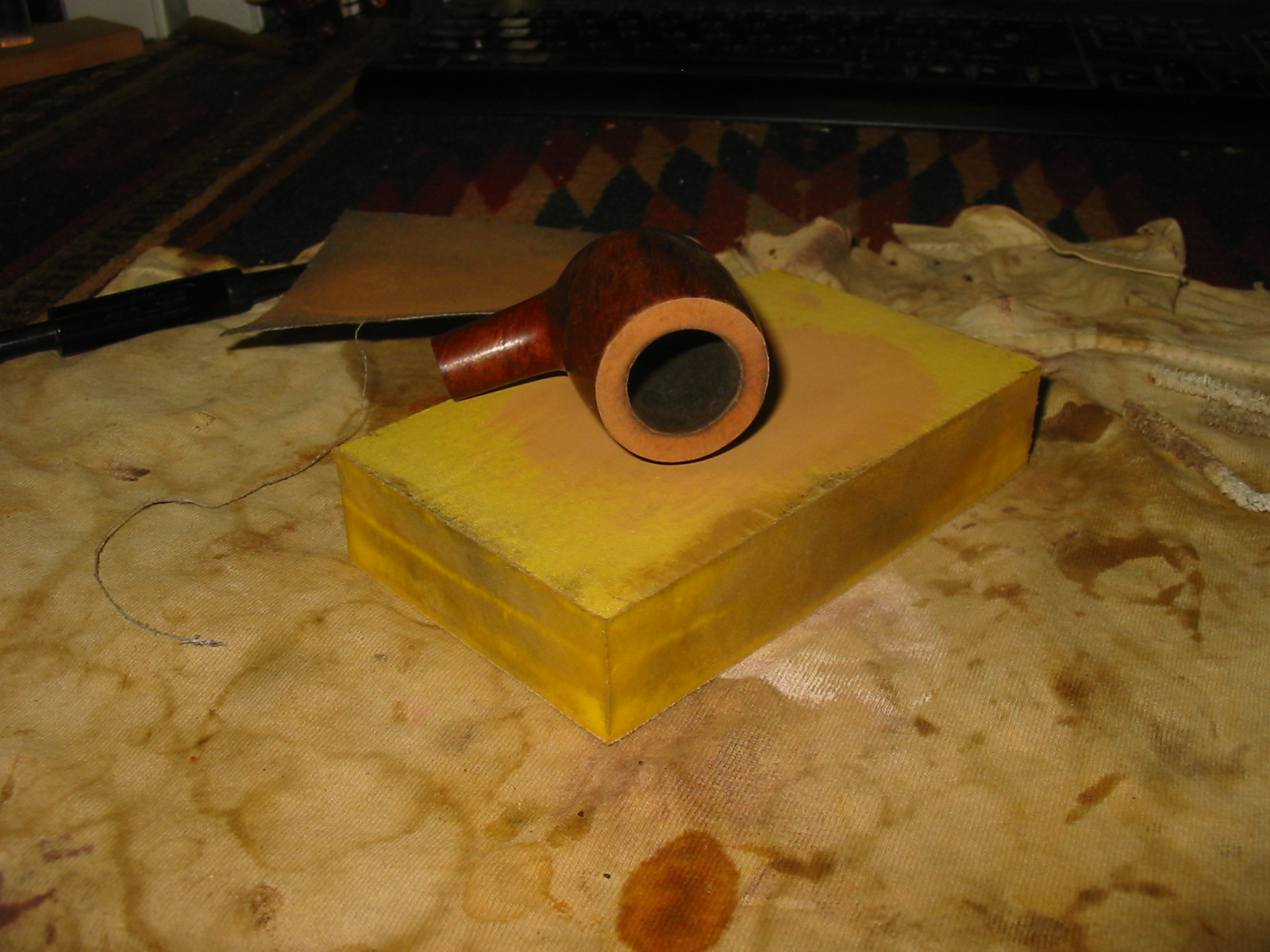
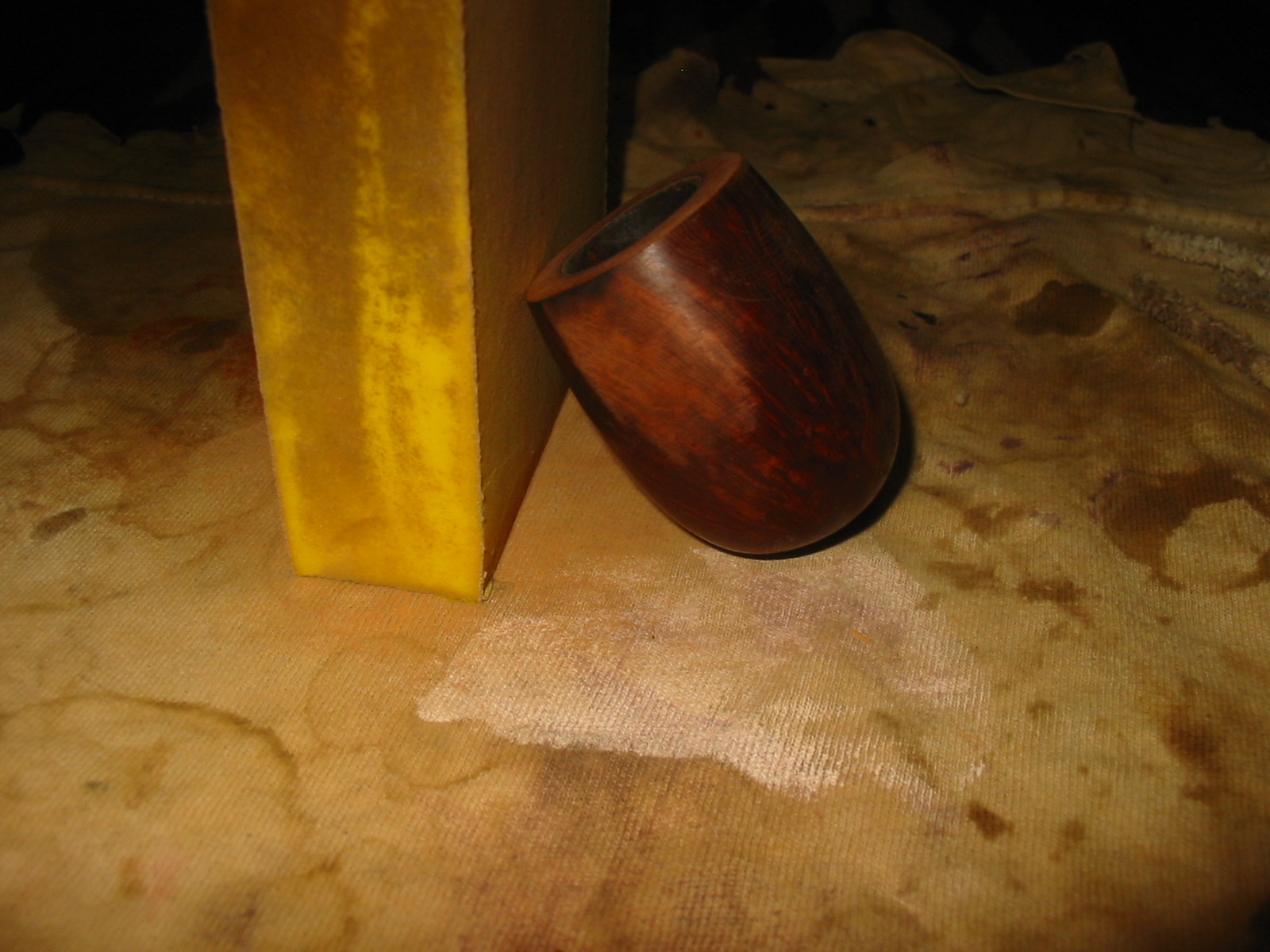
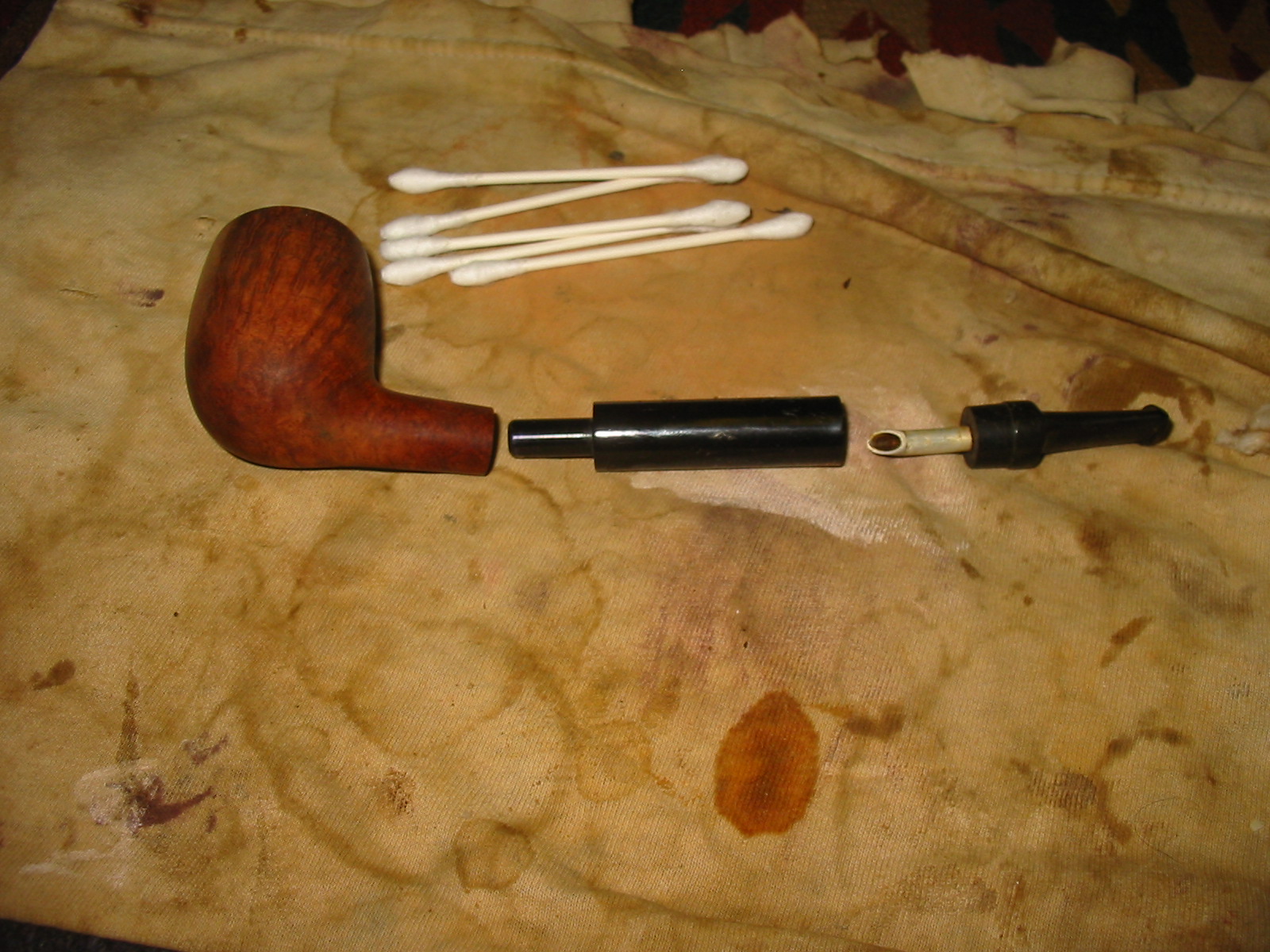
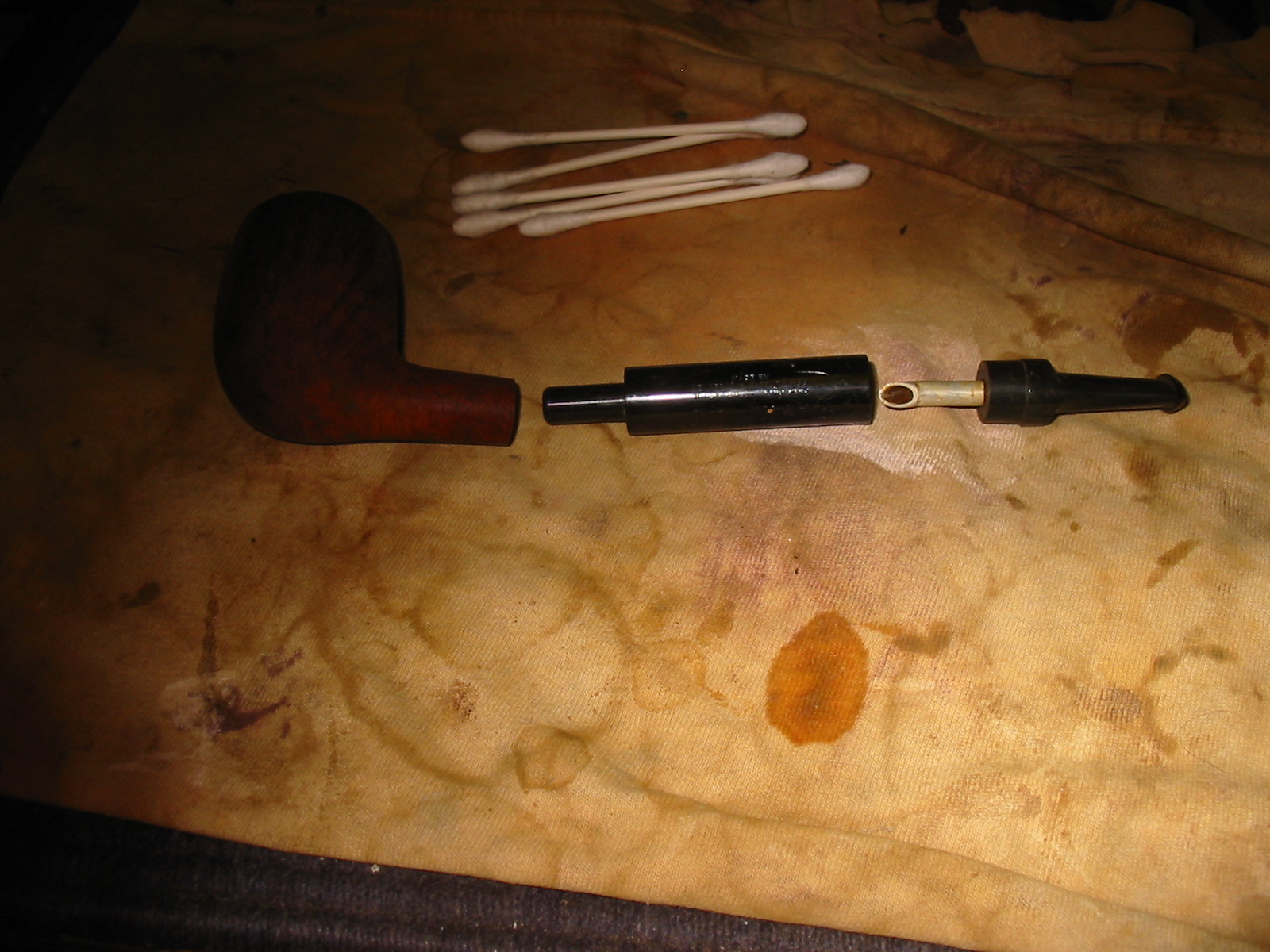
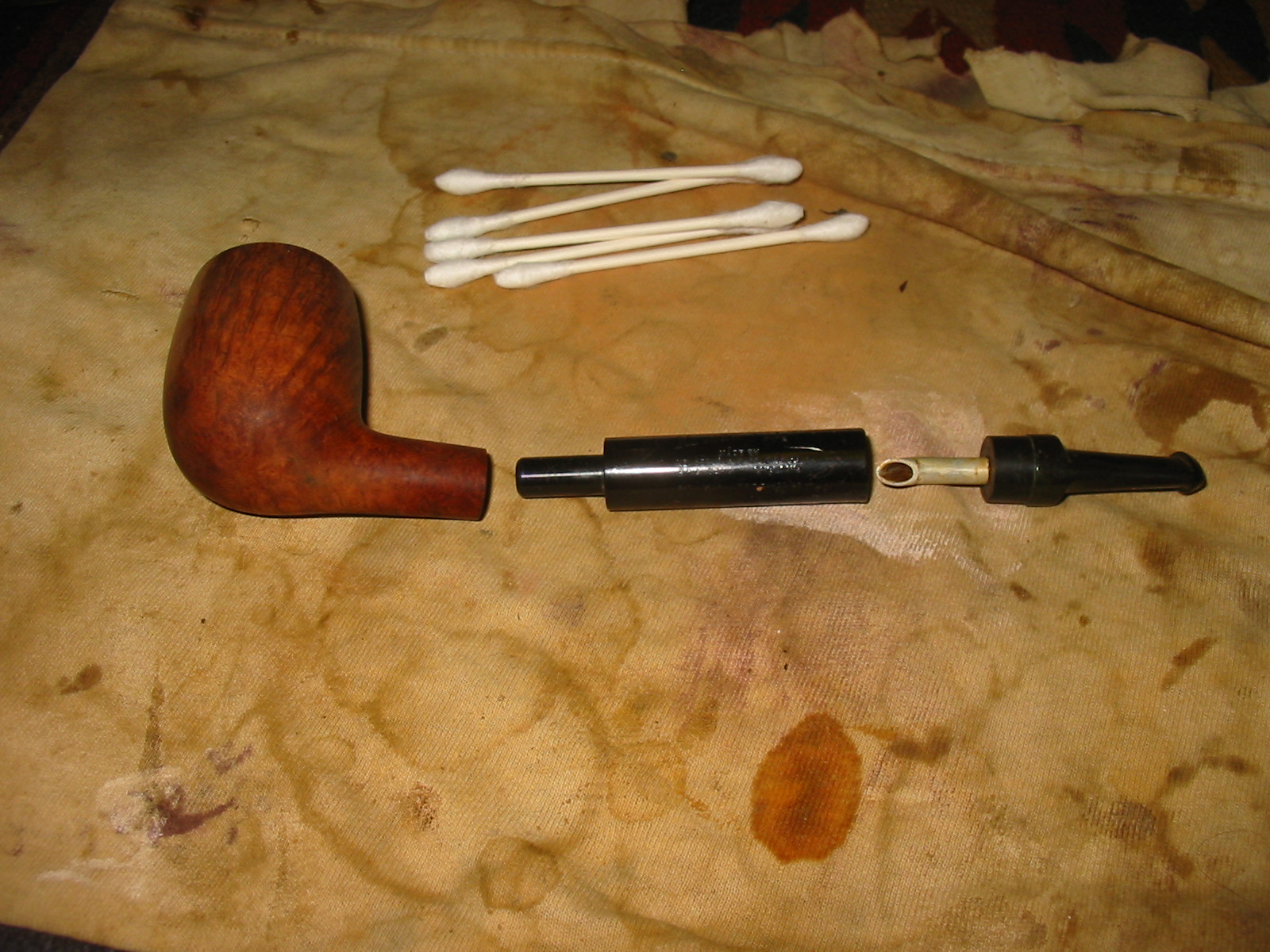
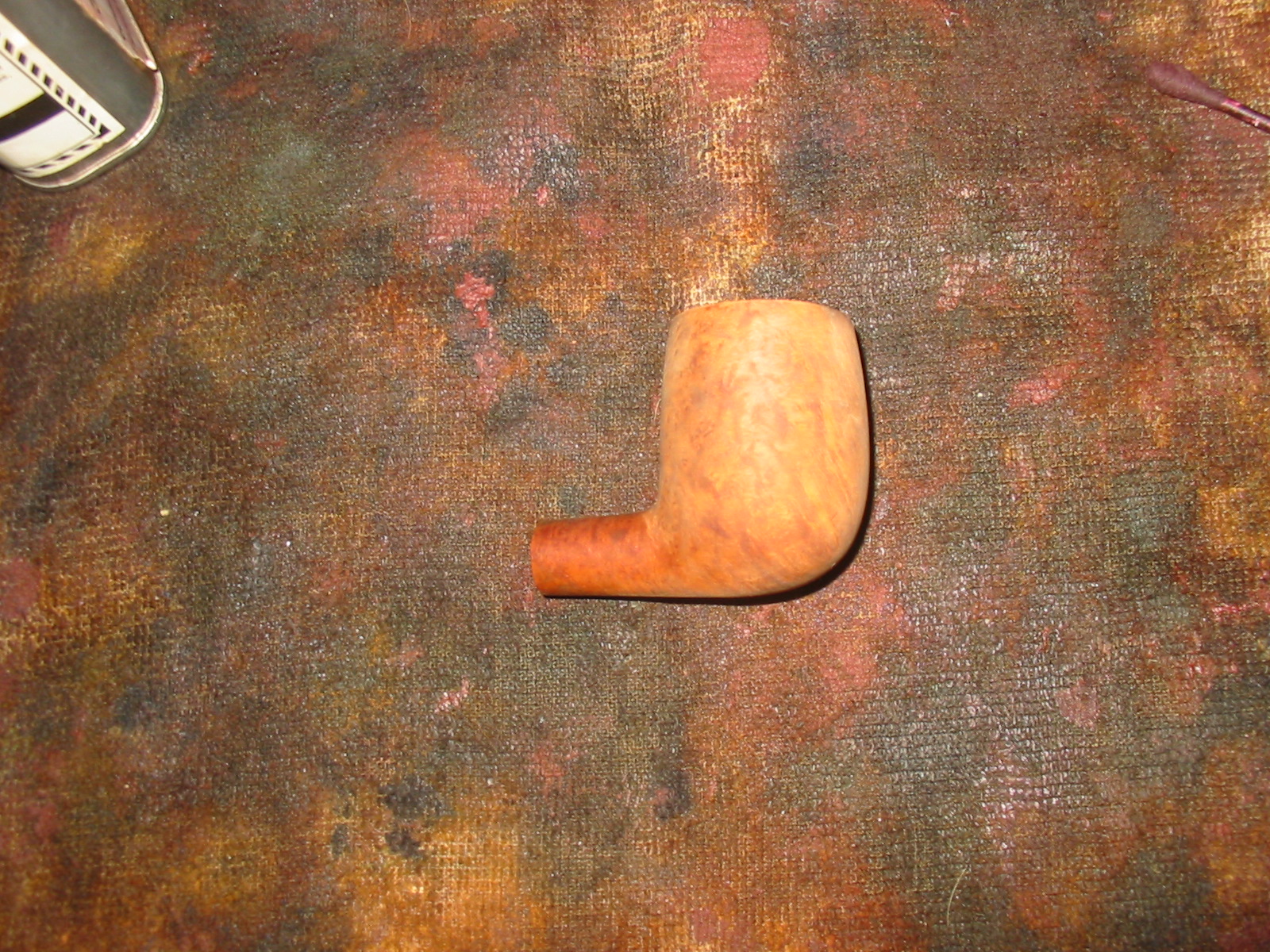
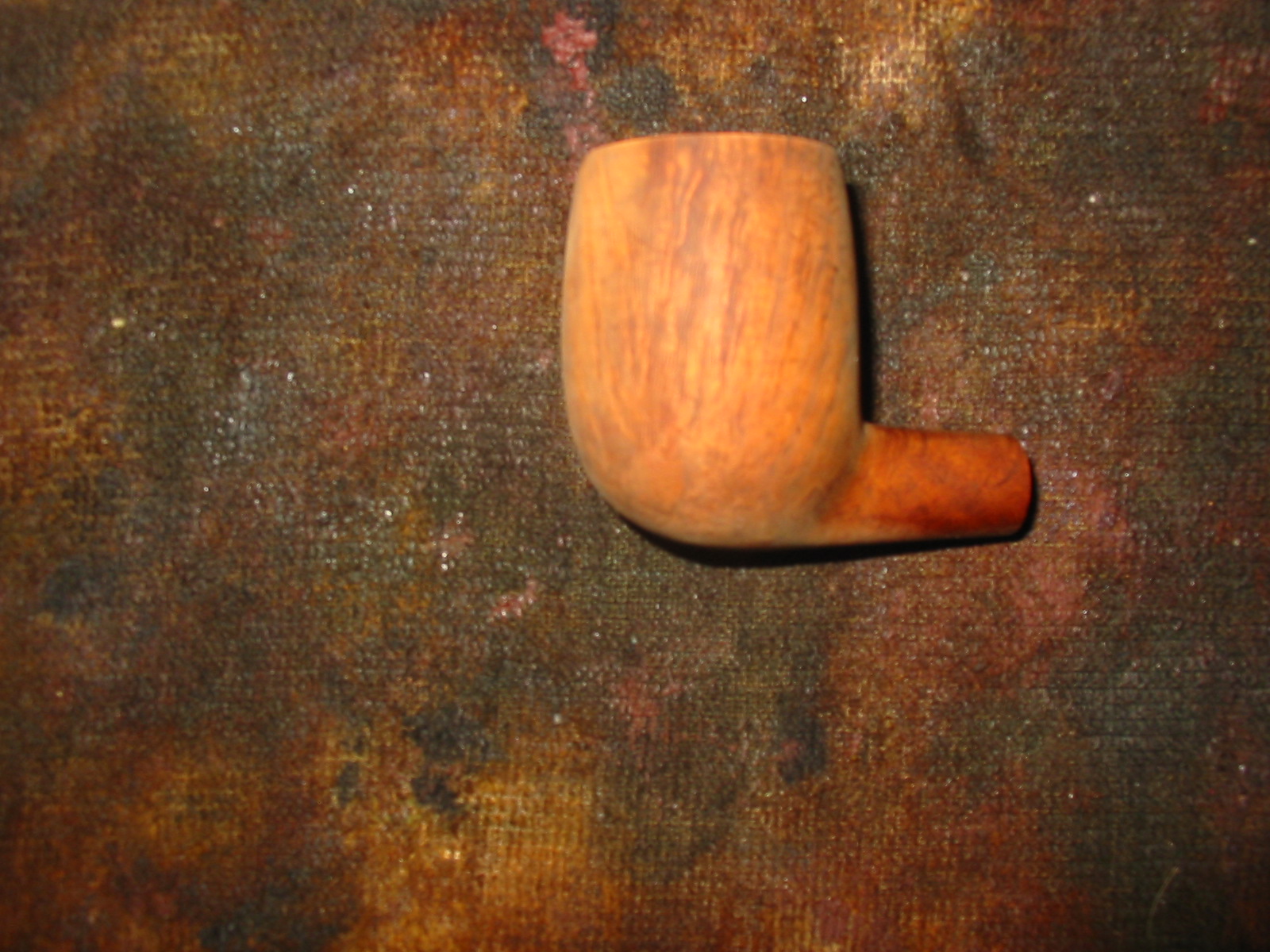
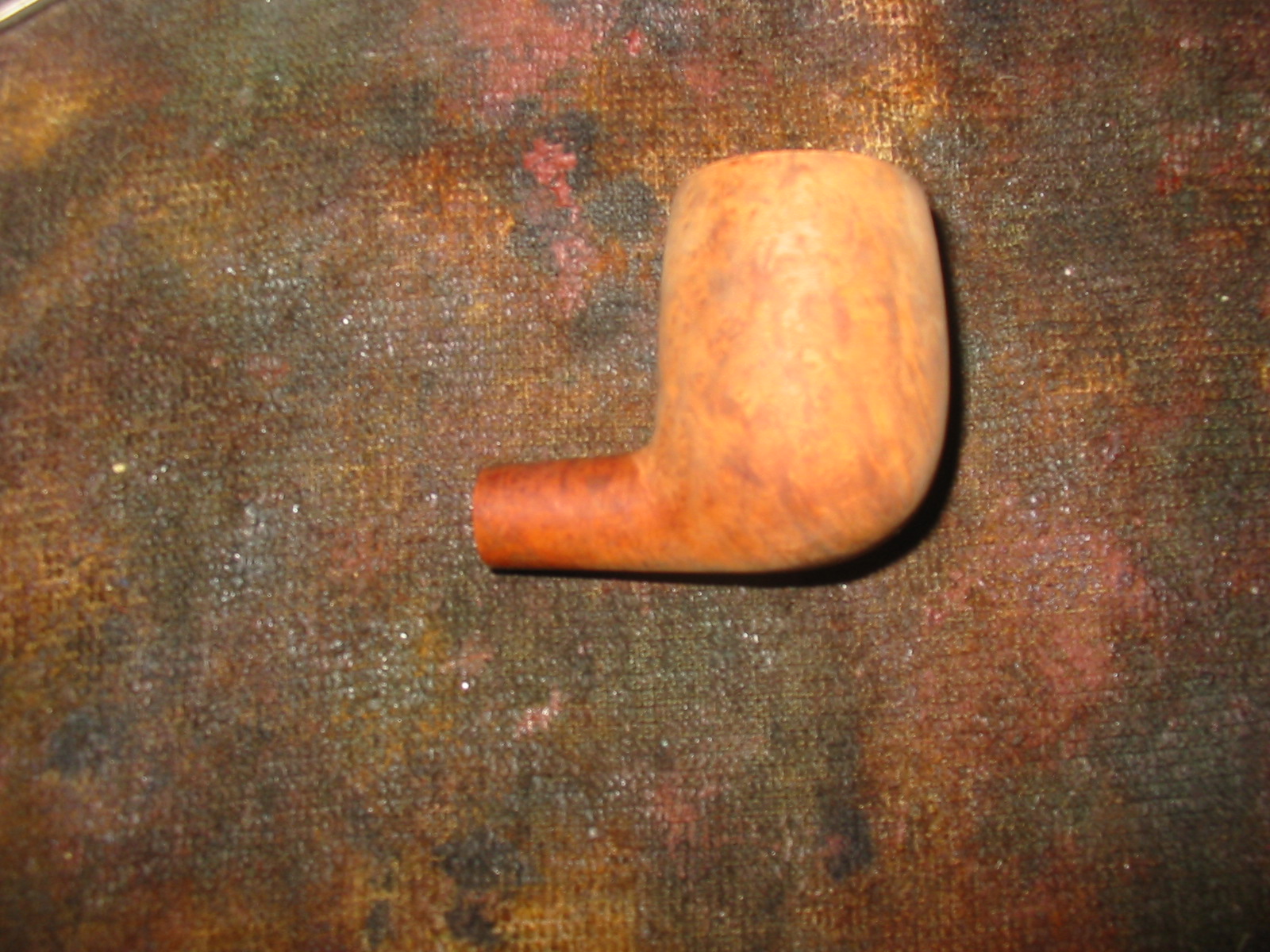
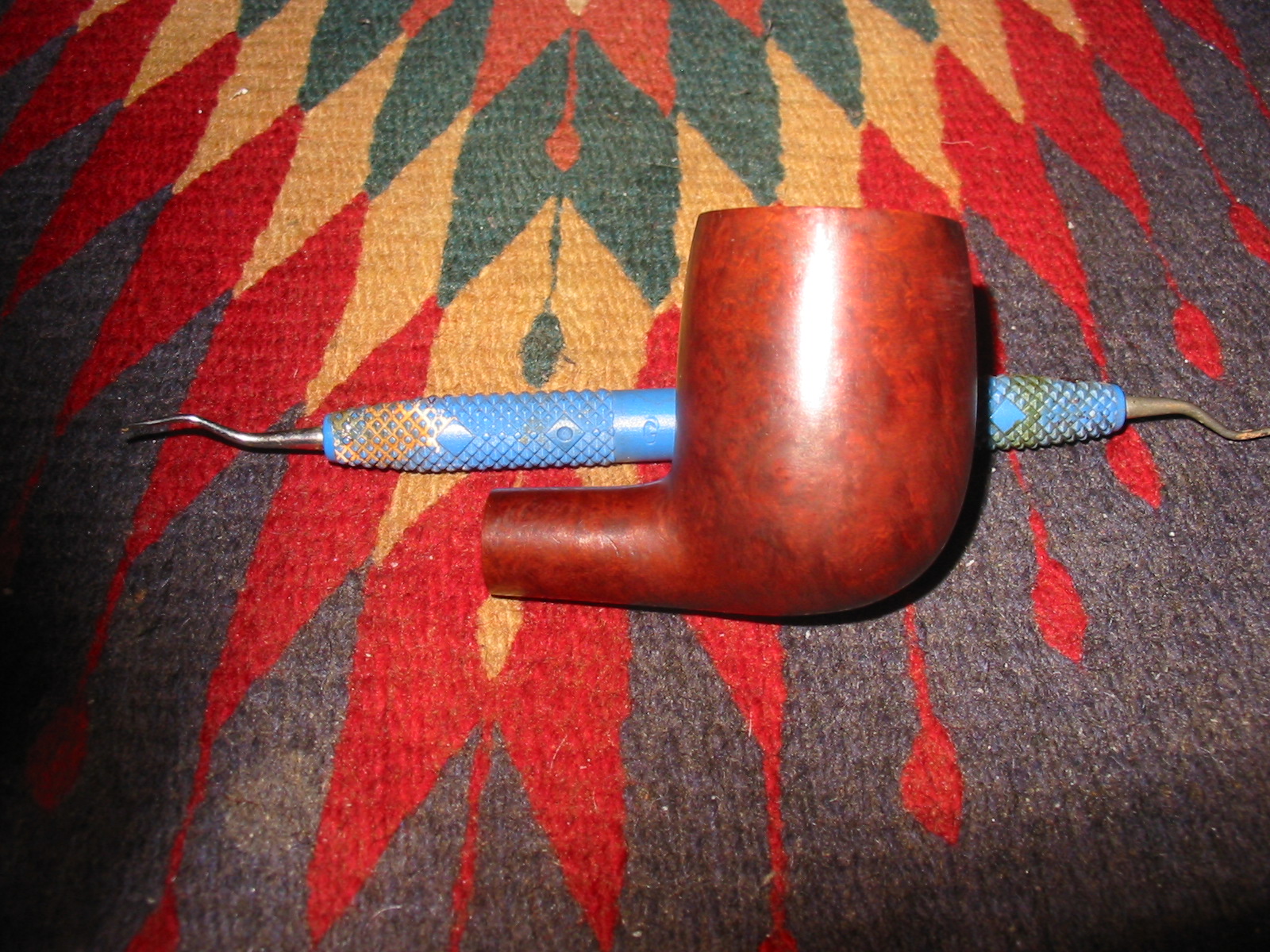
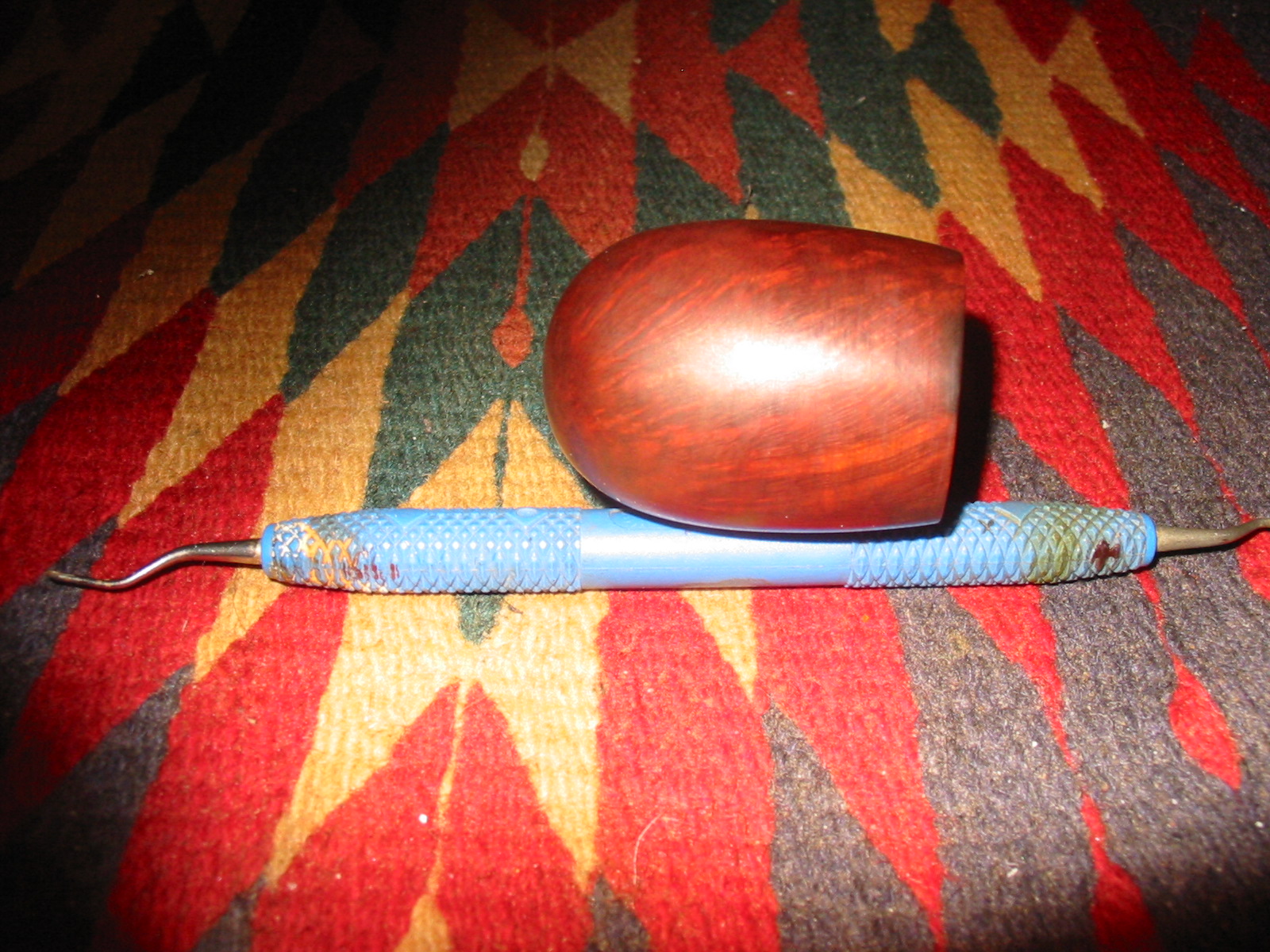
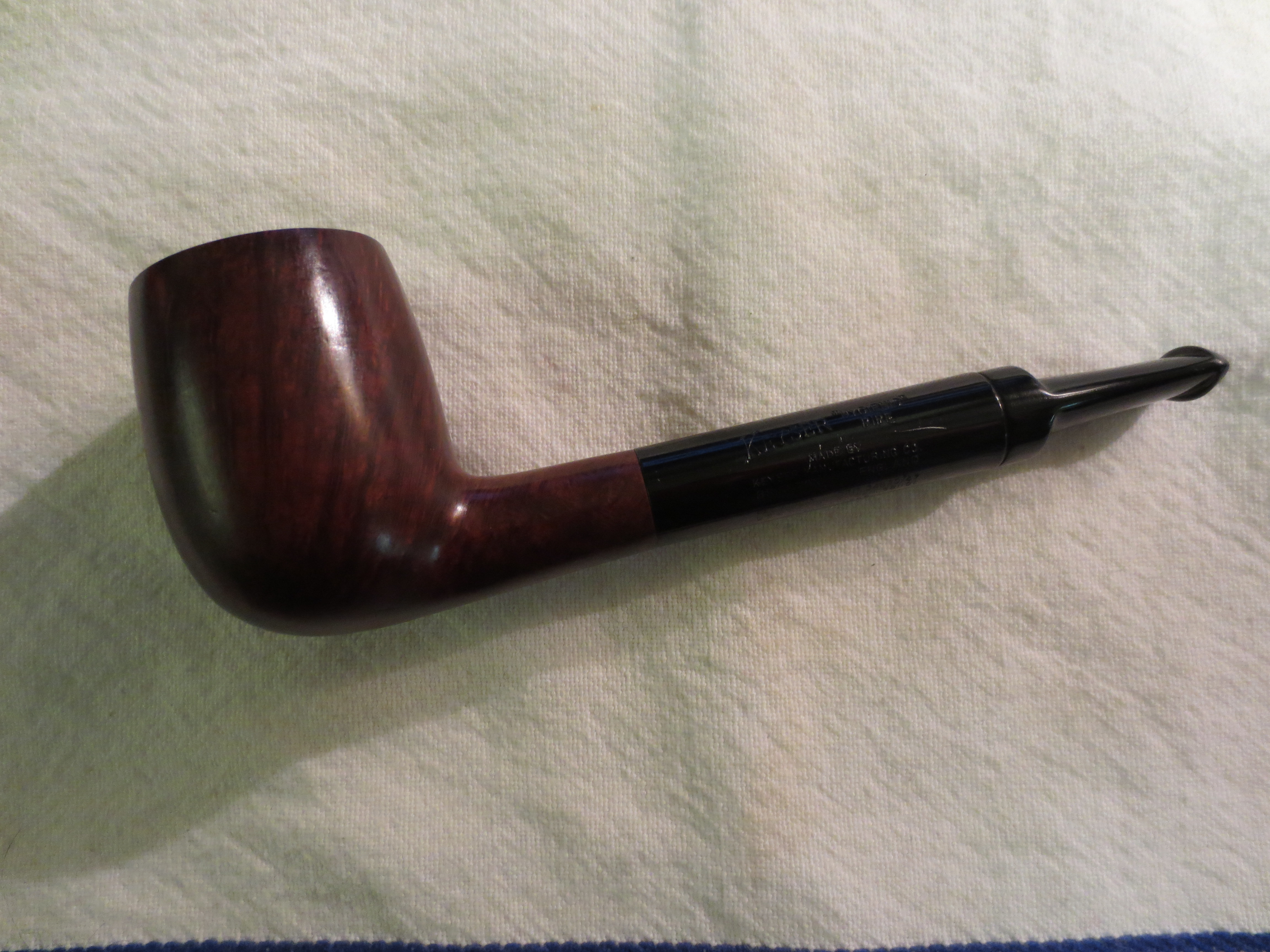
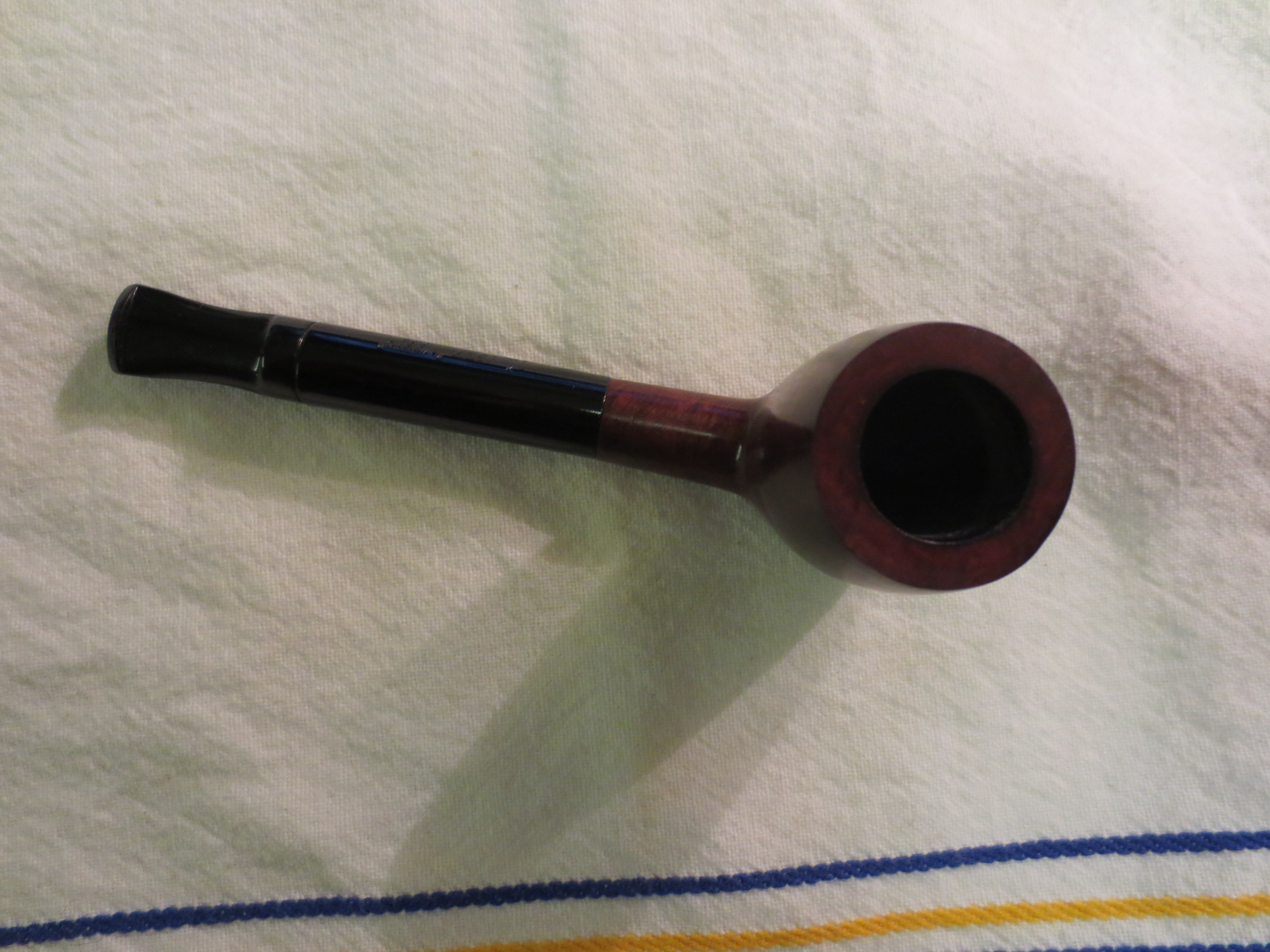
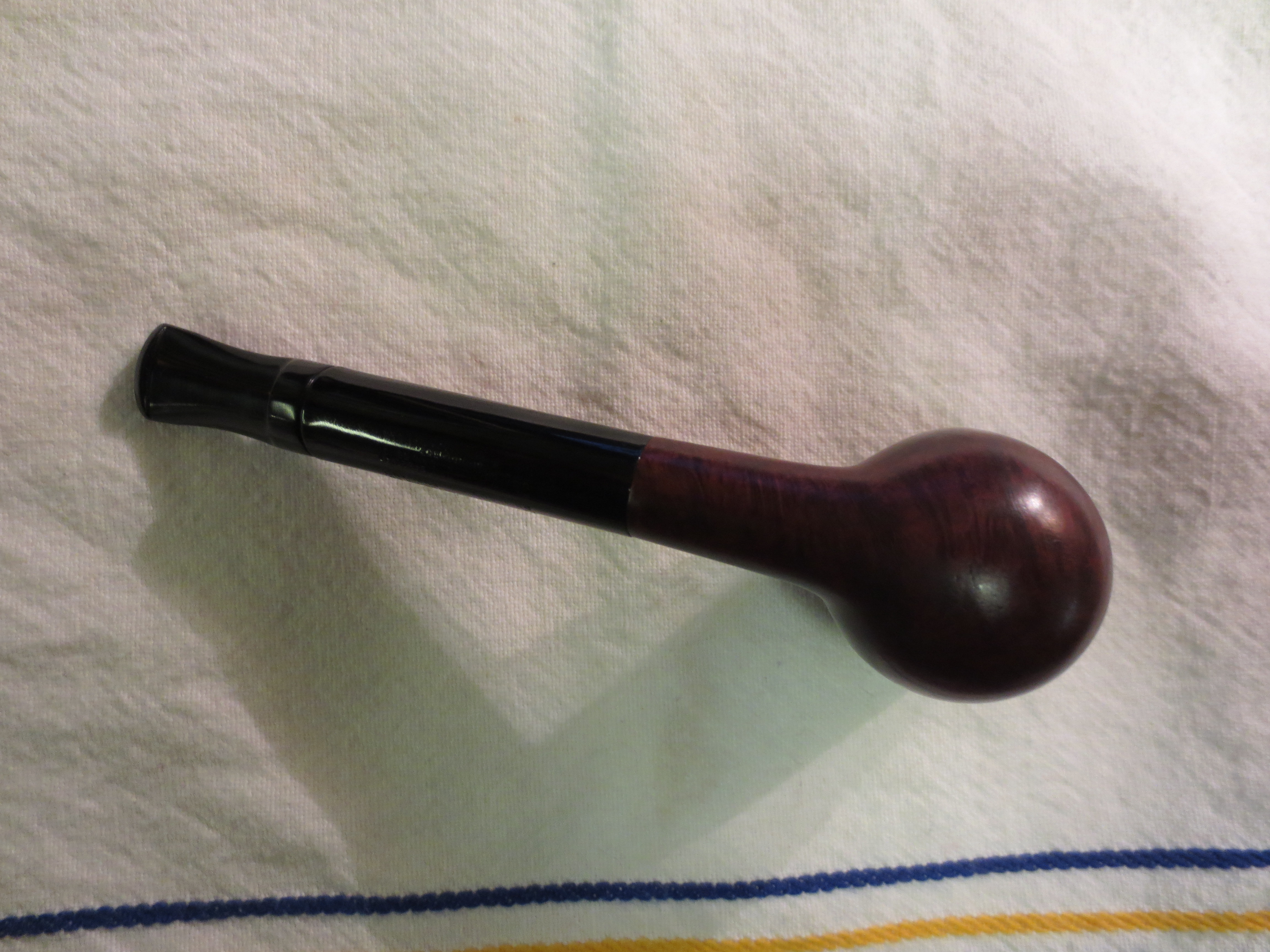
I picked up this little BBB in the same lot as the little BBB bulldog that I posted about recently. It is a similar pocket size (4 and ½ inches) and needed a bit of work. It is stamped BBB in the standard diamond and over that Ultima Thule. (According to Wikipedia the name refers to any distant place beyond the known world.) Under the diamond it is stamped Own Make. The first two pictures are the EBay seller’s photos. When the pipe arrived I can honestly say that the seller did a great job on taking honest photos. The pipe was solid but in rough shape. The rim was slanted toward the front and round all the way around with many nicks and dents in it from tamping the pipe out. It was still round on the inner edge which is pretty amazing on these old timers. This was a pretty well cared for pipe other than the tamping. The finish was dirty and spotty – lighter in some places than others – with a mottled look to it. The stem was oxidized and the edge/ shoulder at the shank junction was rounded and no longer a good smooth fit. There were no bite marks on the stem and the surface was smooth under the oxidation. This would not be a bad clean up.
ult1

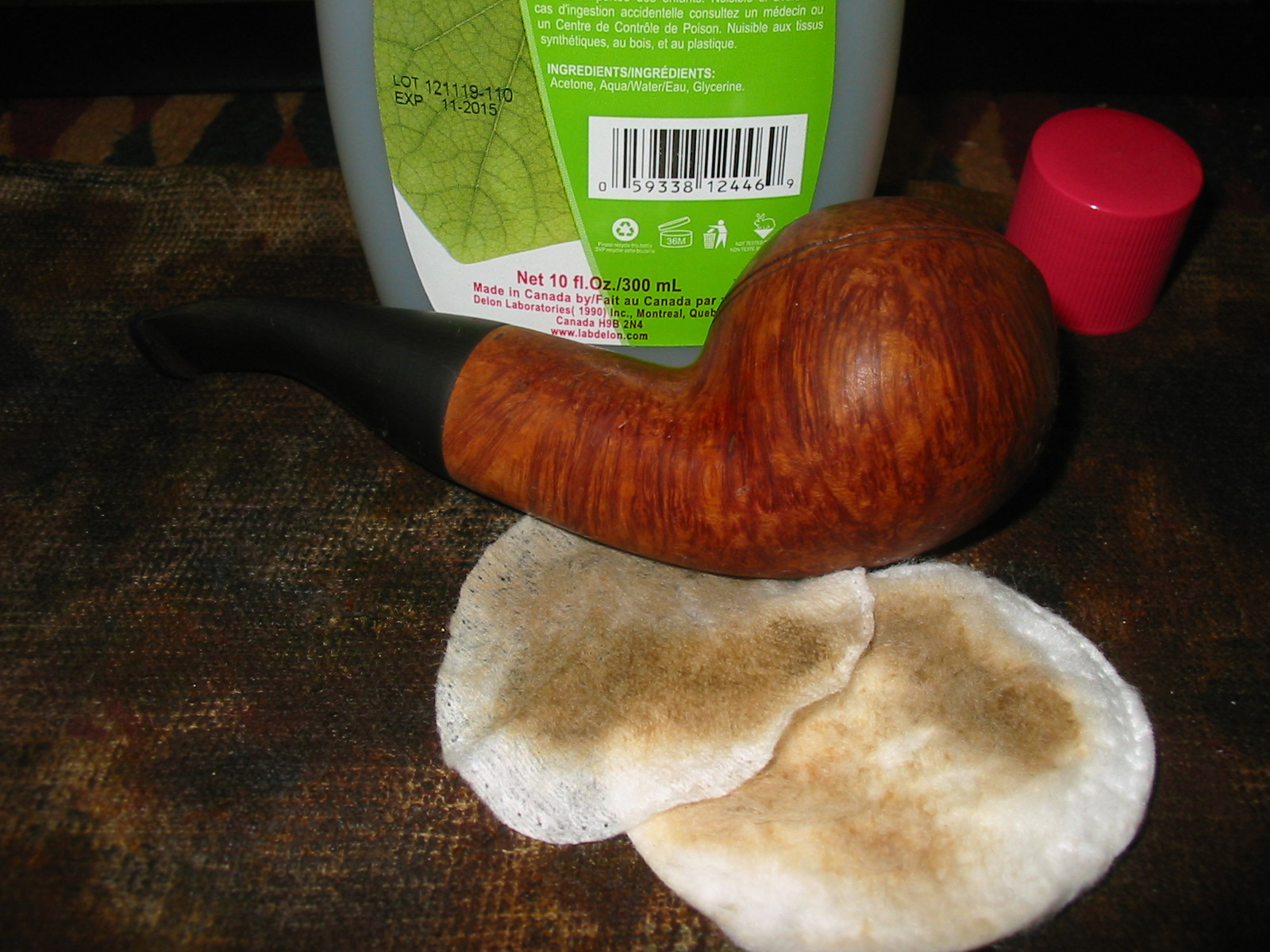
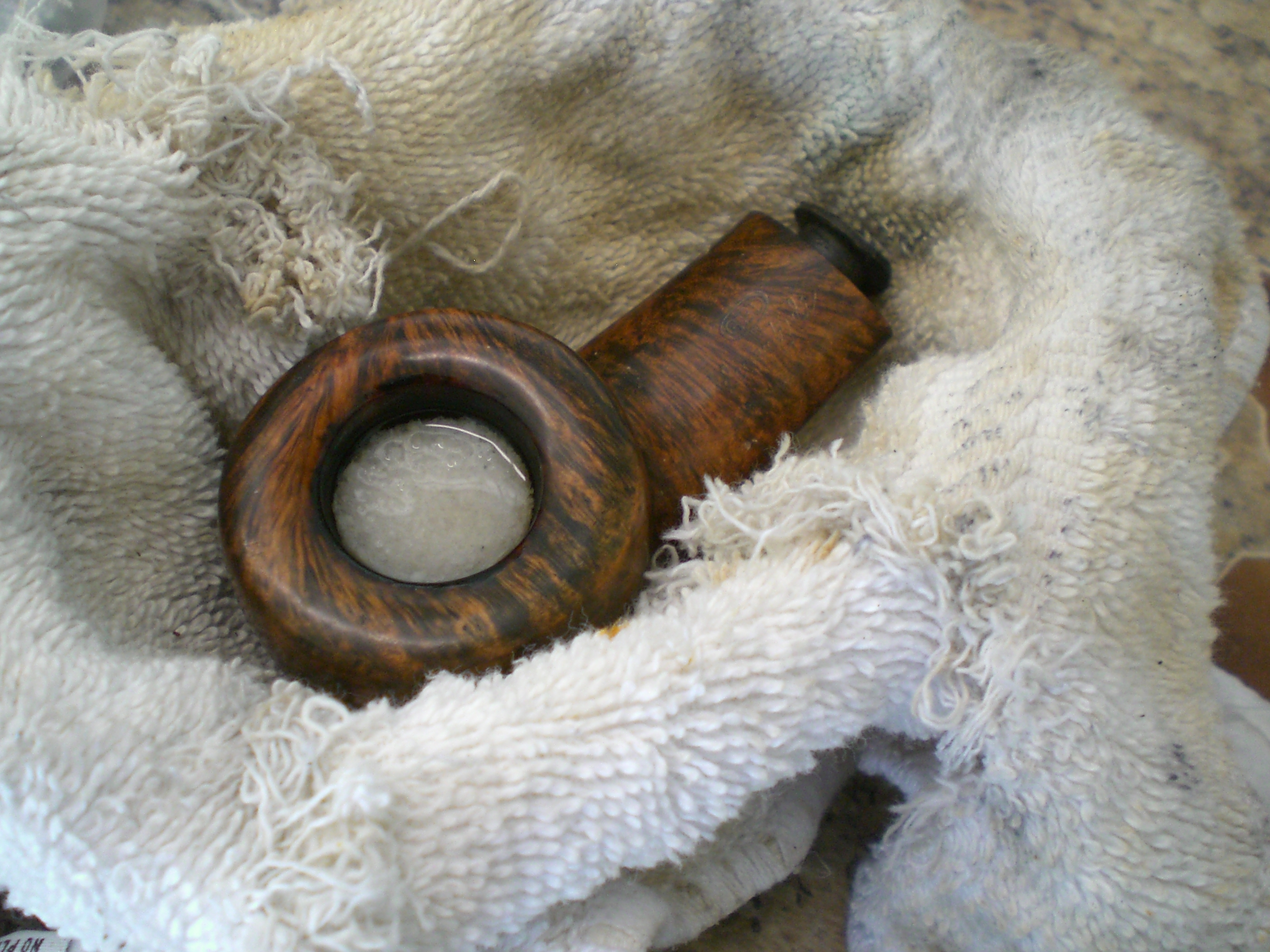
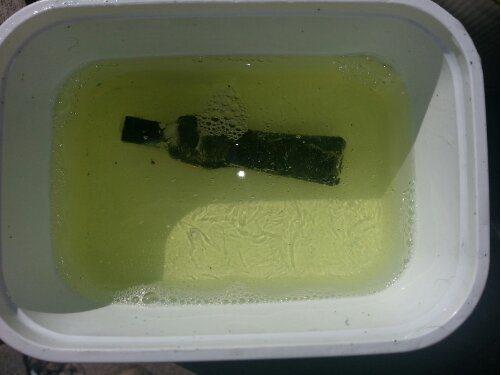
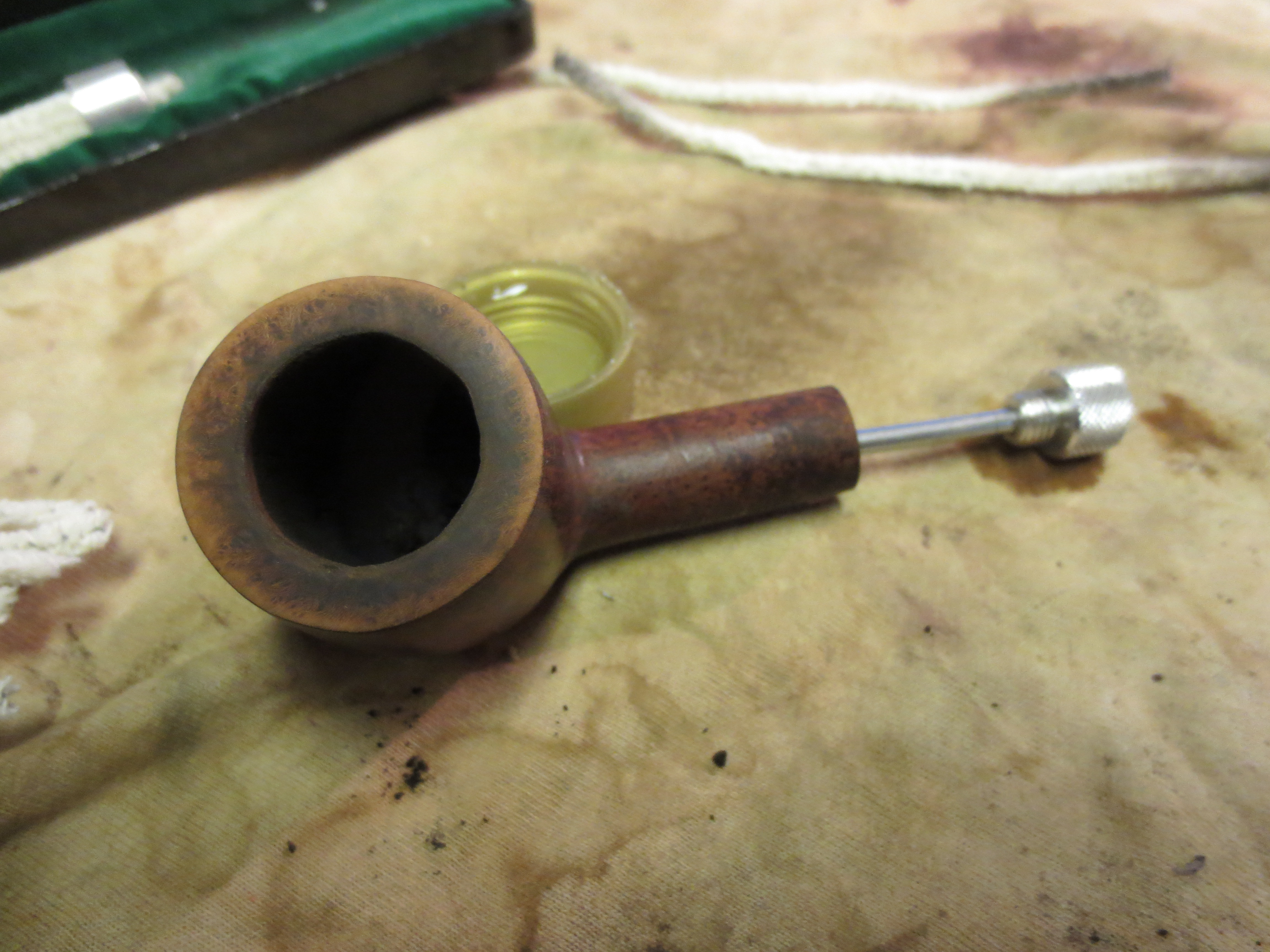
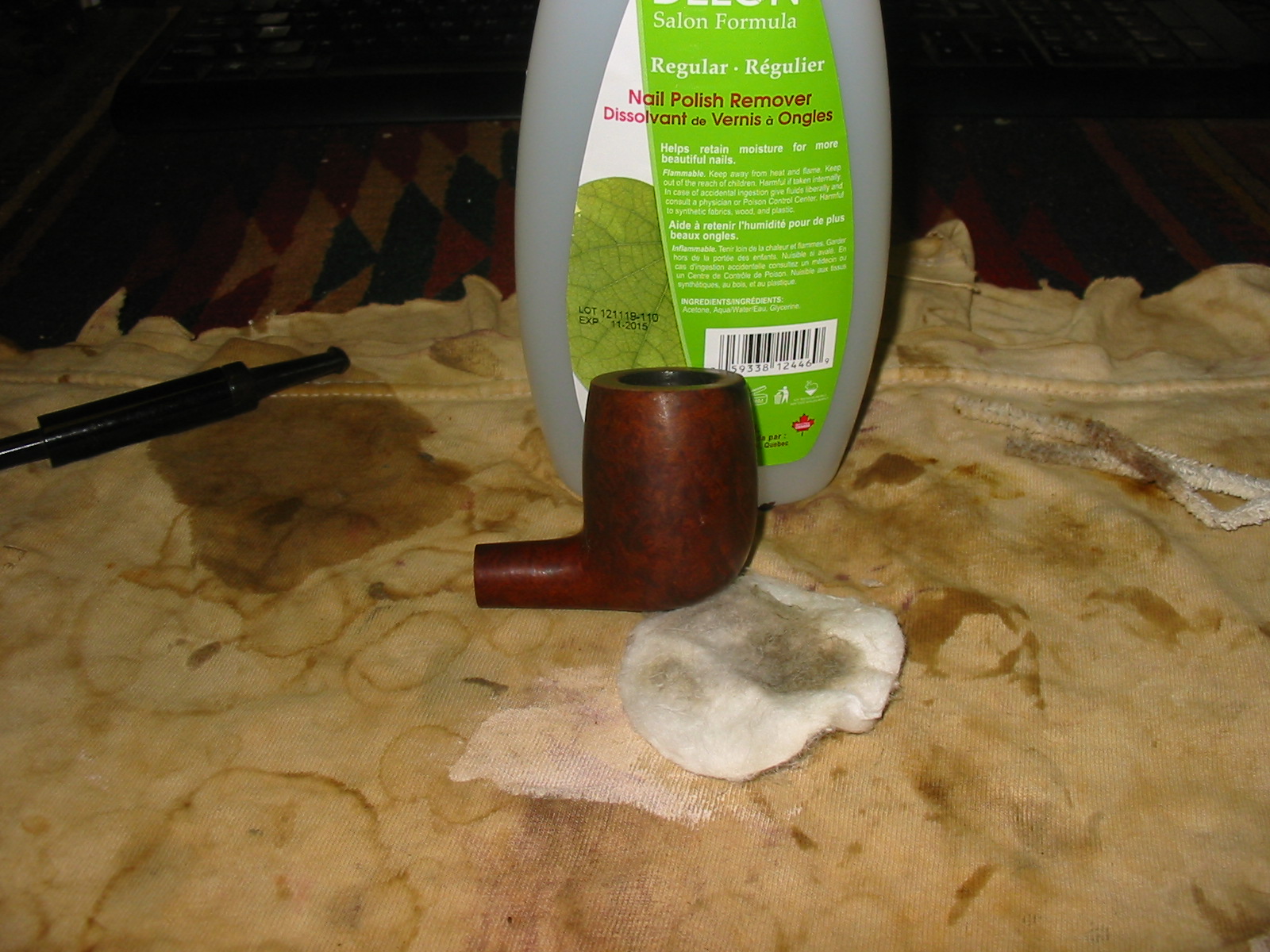
I separated the stem and bowl and reamed the bowl. I wiped the exterior with acetone to remove the remaining finish and the grime. Then I placed the bowl in the alcohol bath to soak while I worked on the stem.

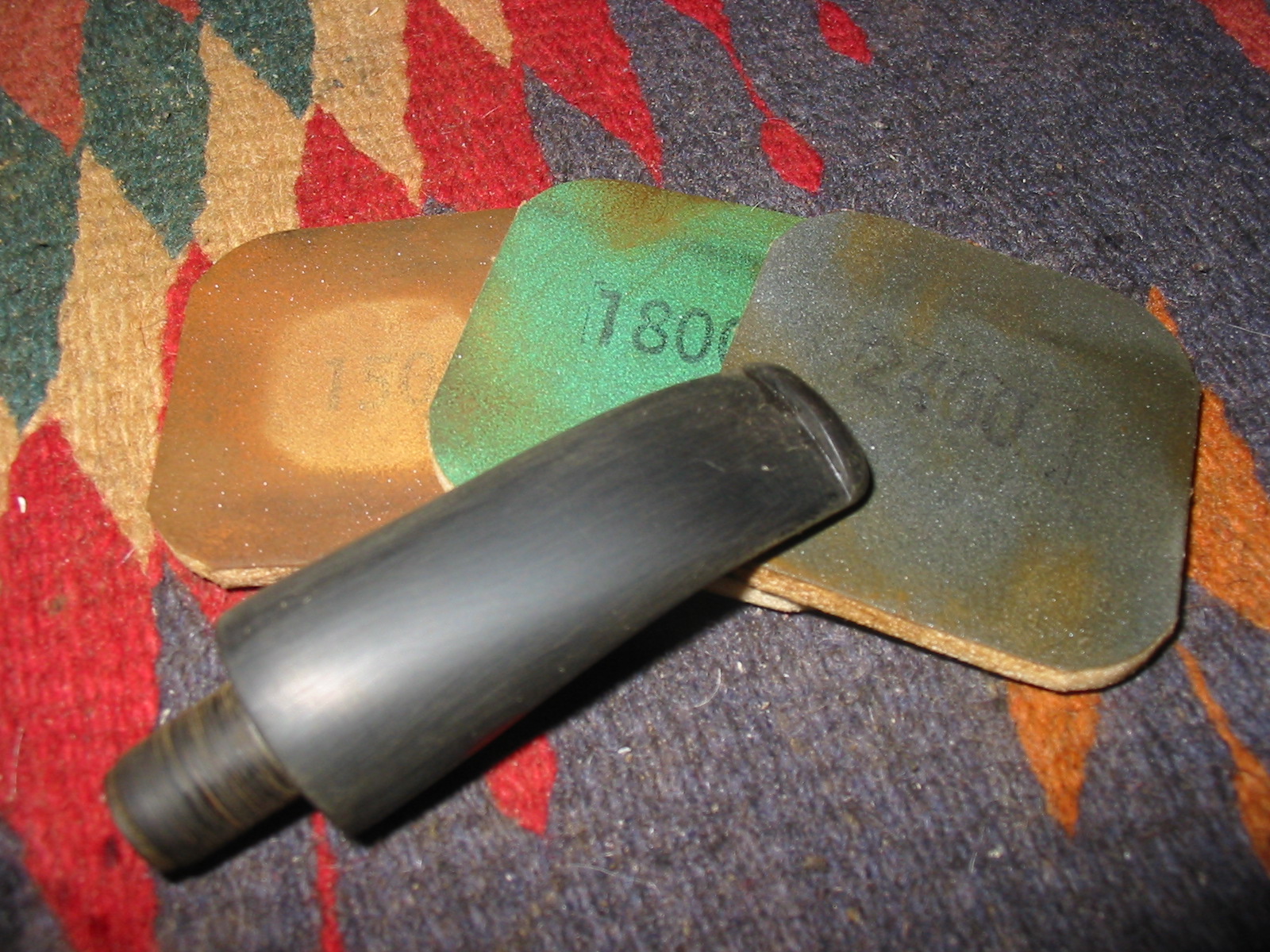
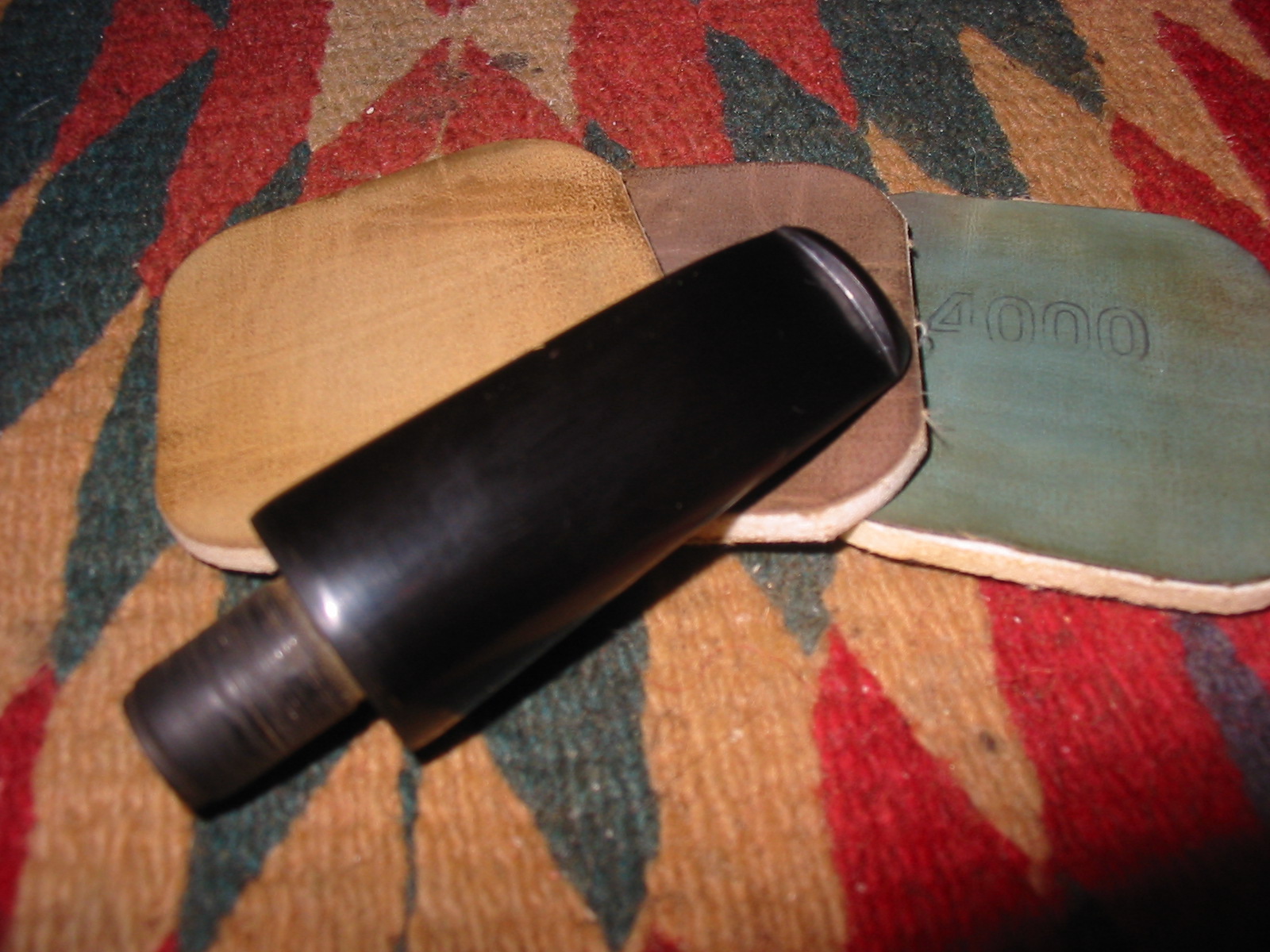
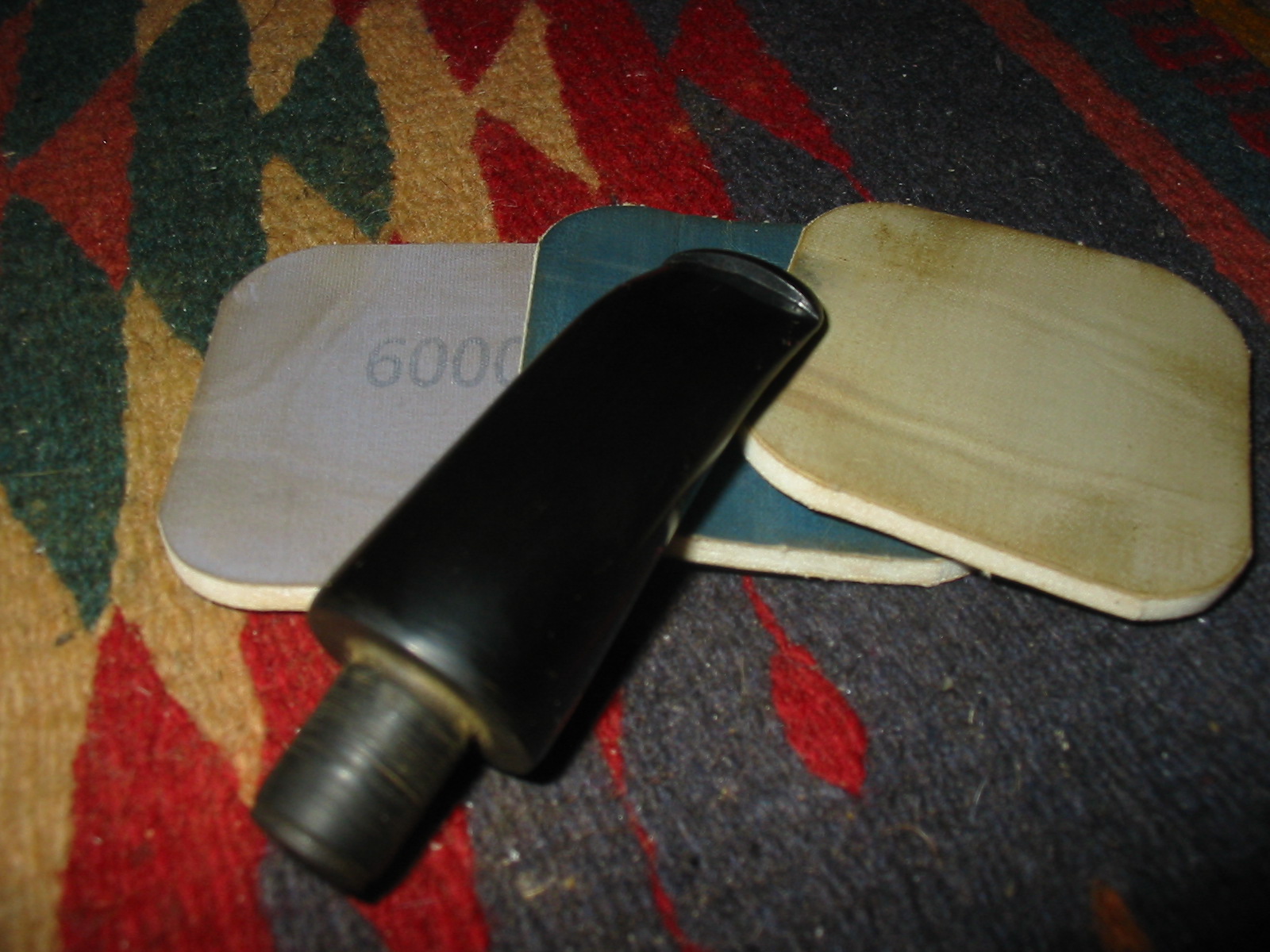
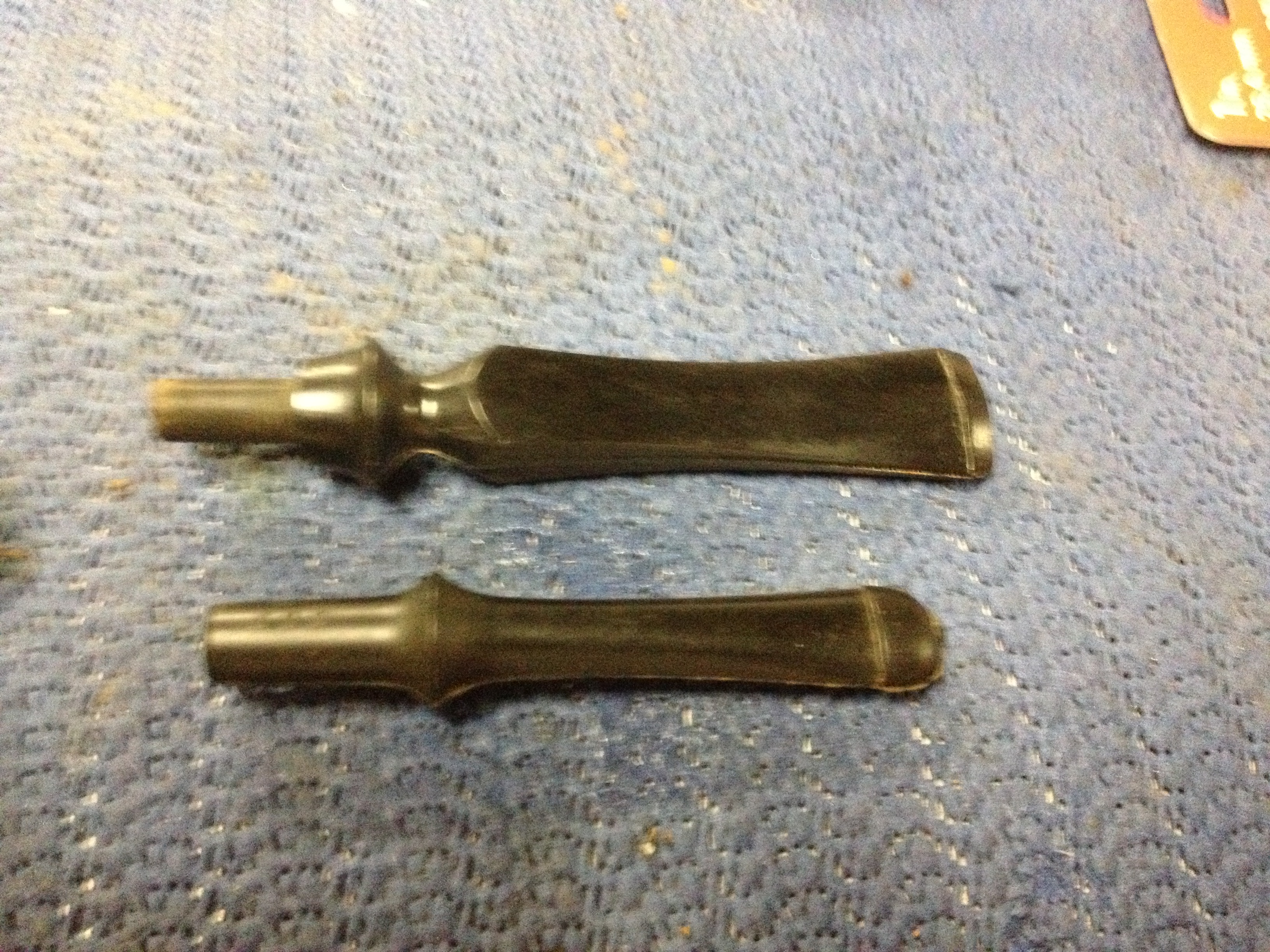
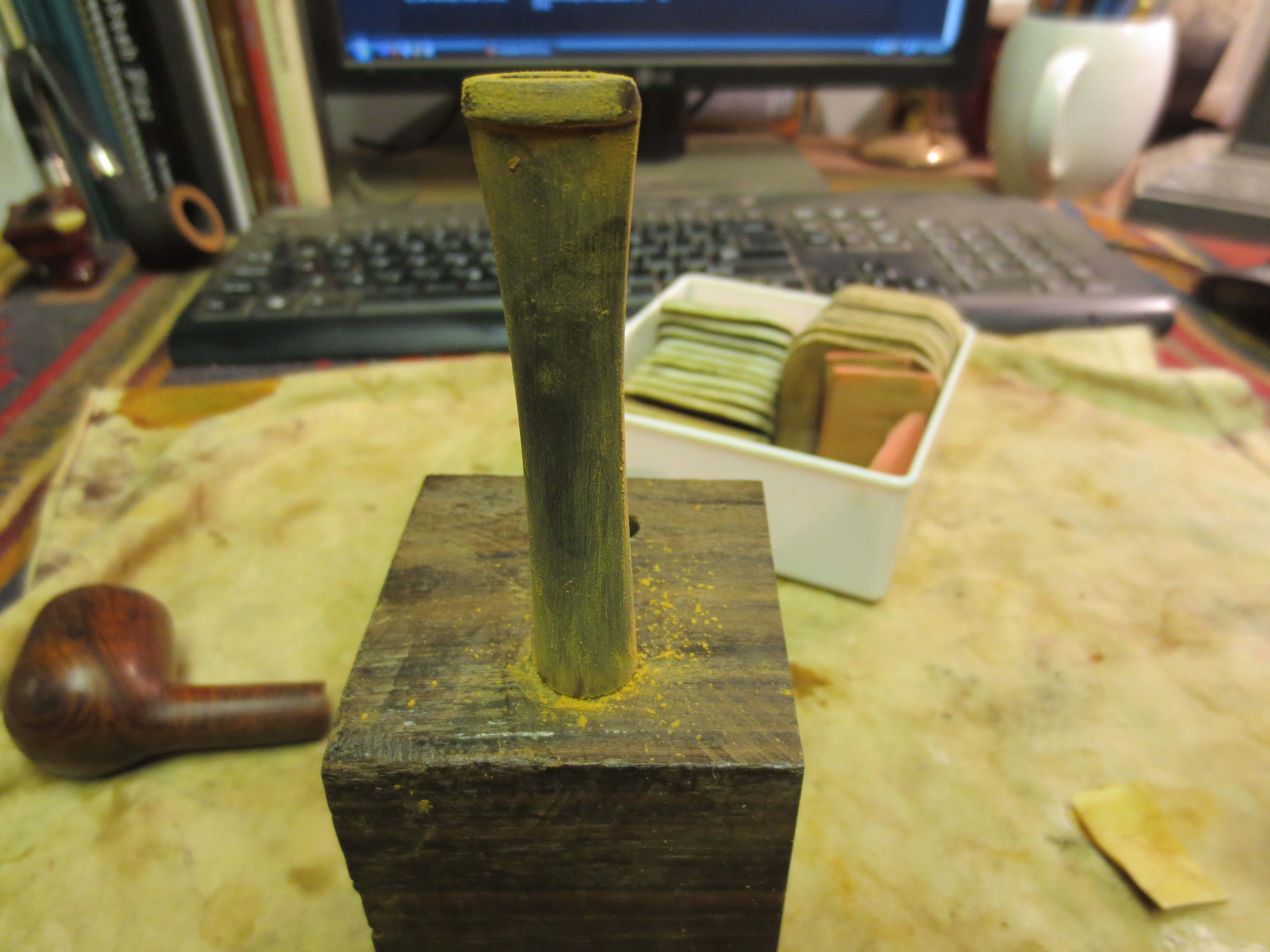
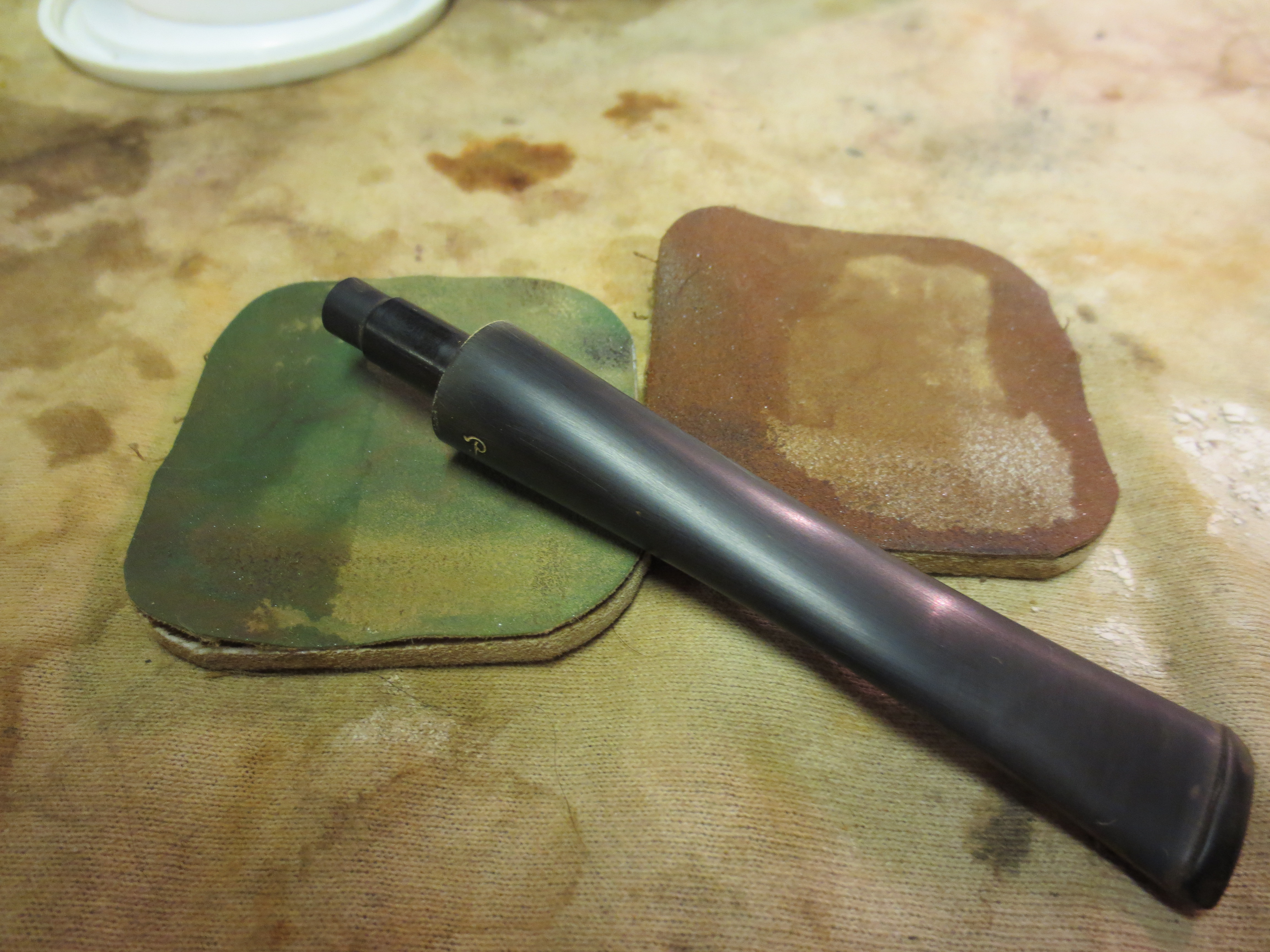
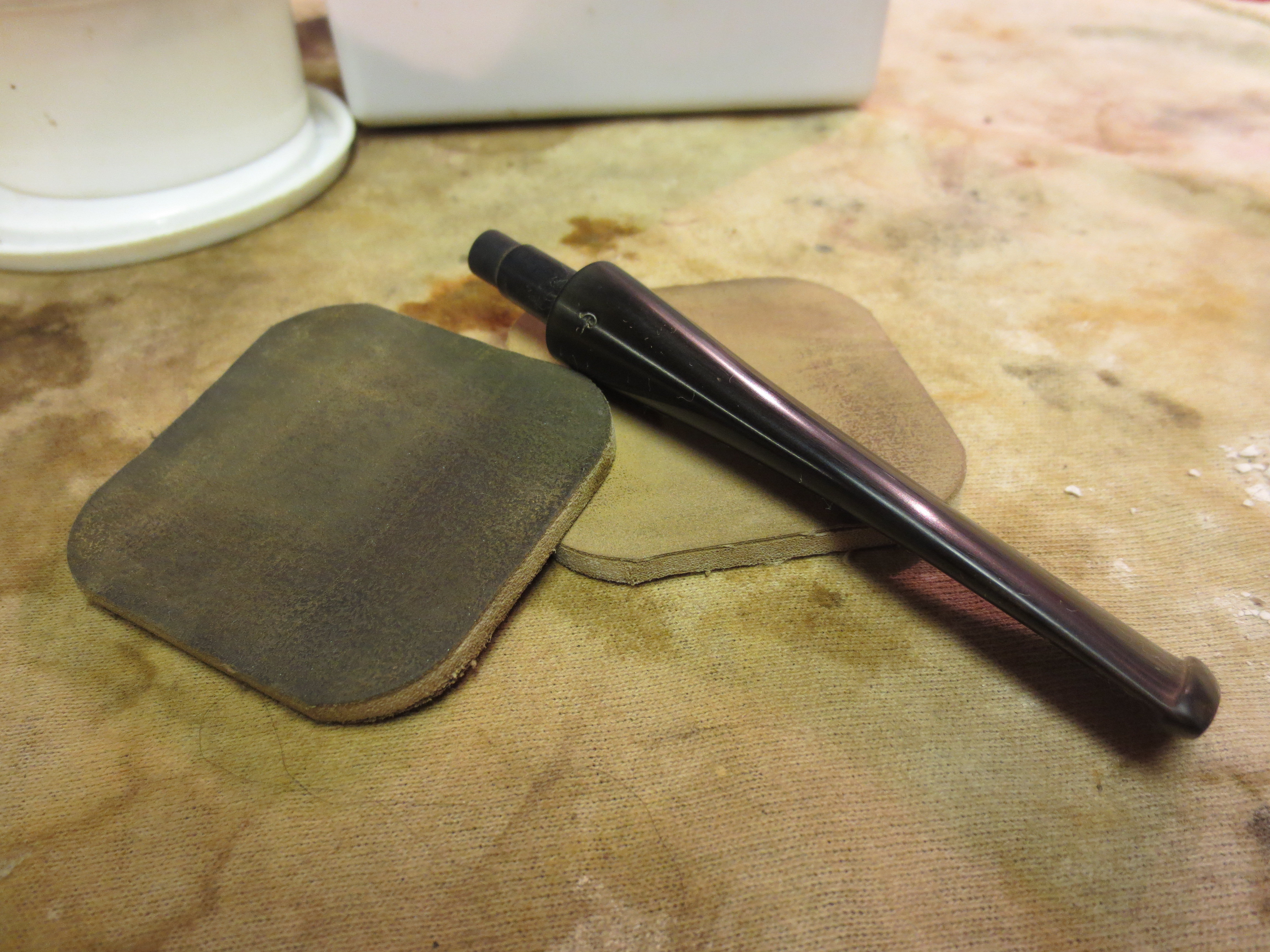
The stem actually was relatively easy to clean up. I wiped it down with a damp magic eraser and removed the majority of oxidation. Then I sanded it with 400 and 600 grit wet dry sandpaper followed by 1200-6000 grit micromesh sanding pads. I gave it a coating of Obsidian Oil and set it aside to dry. Once the bowl was finished I would buff them together. I did not want to chance rounding the edges even more. I also did not want to lose any more of the button on the pipe stem by over buffing.

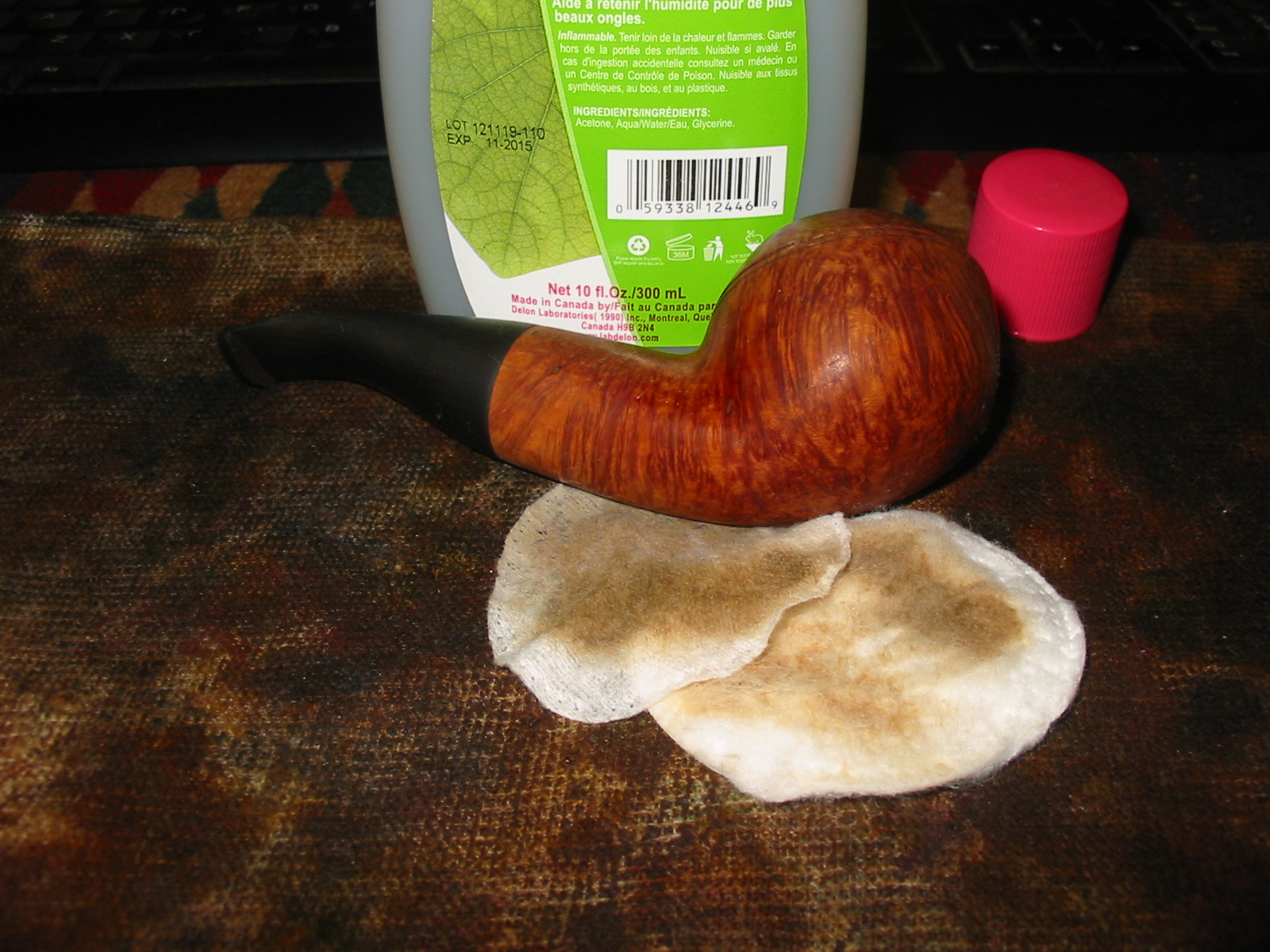
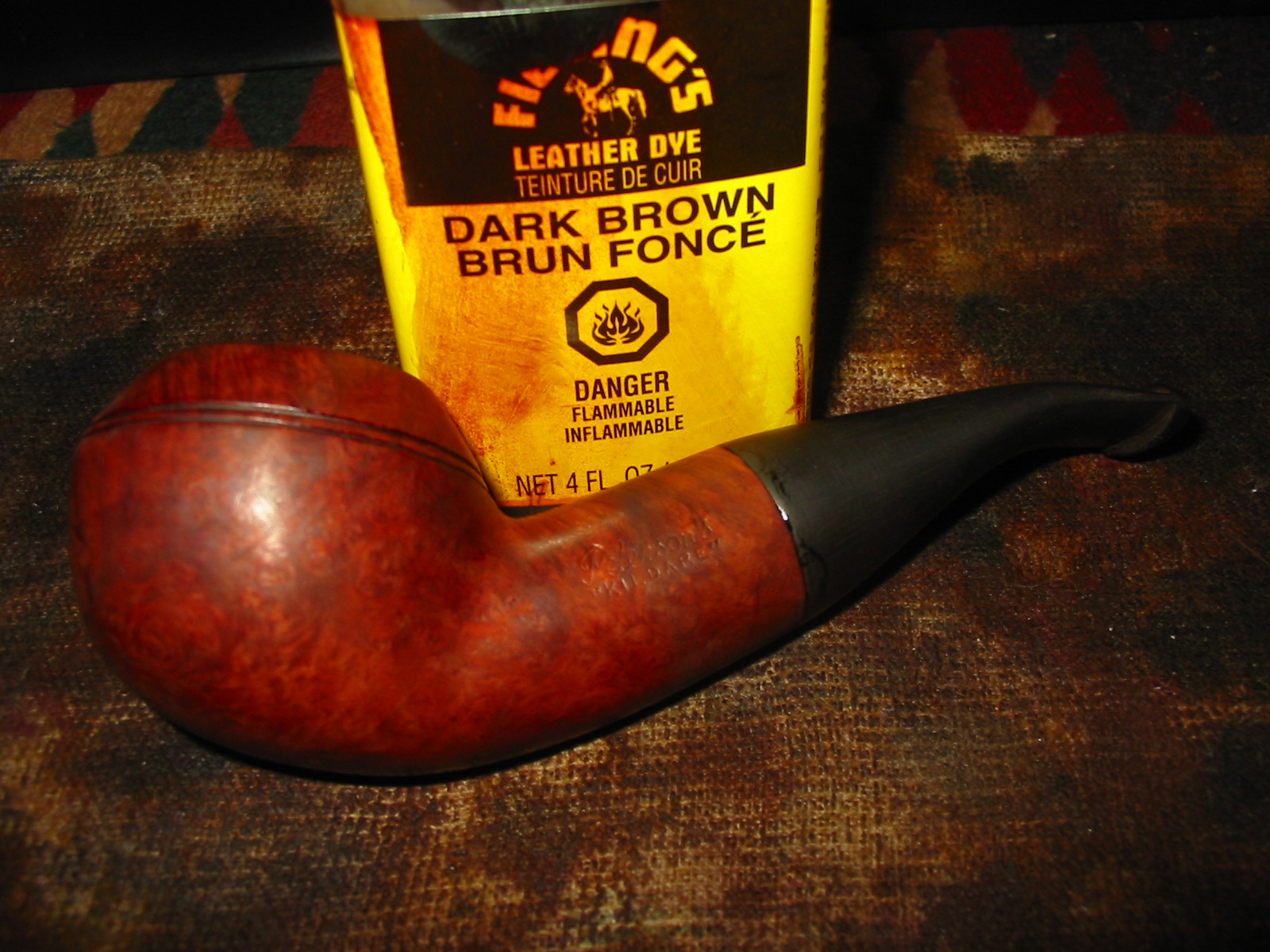
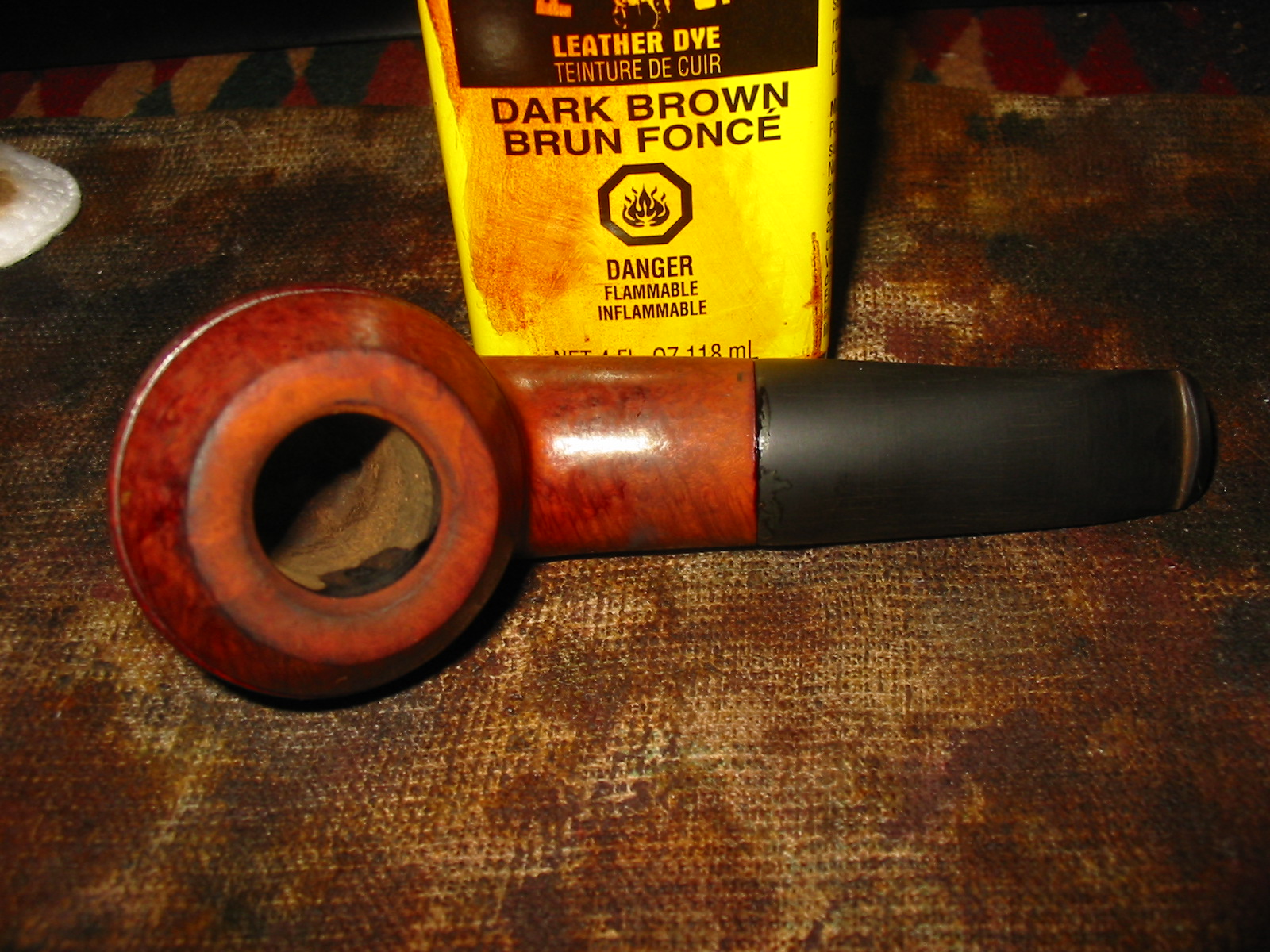
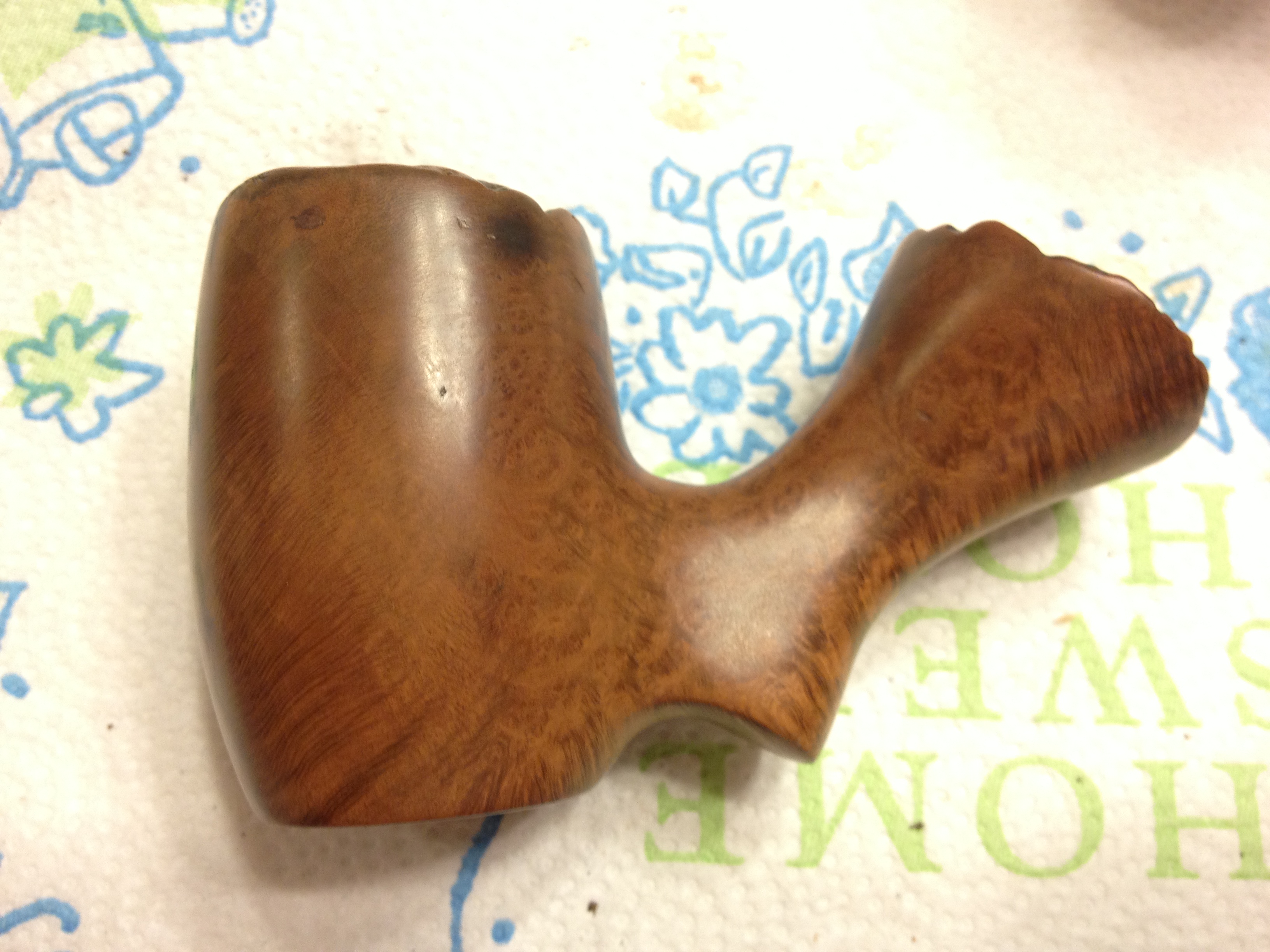
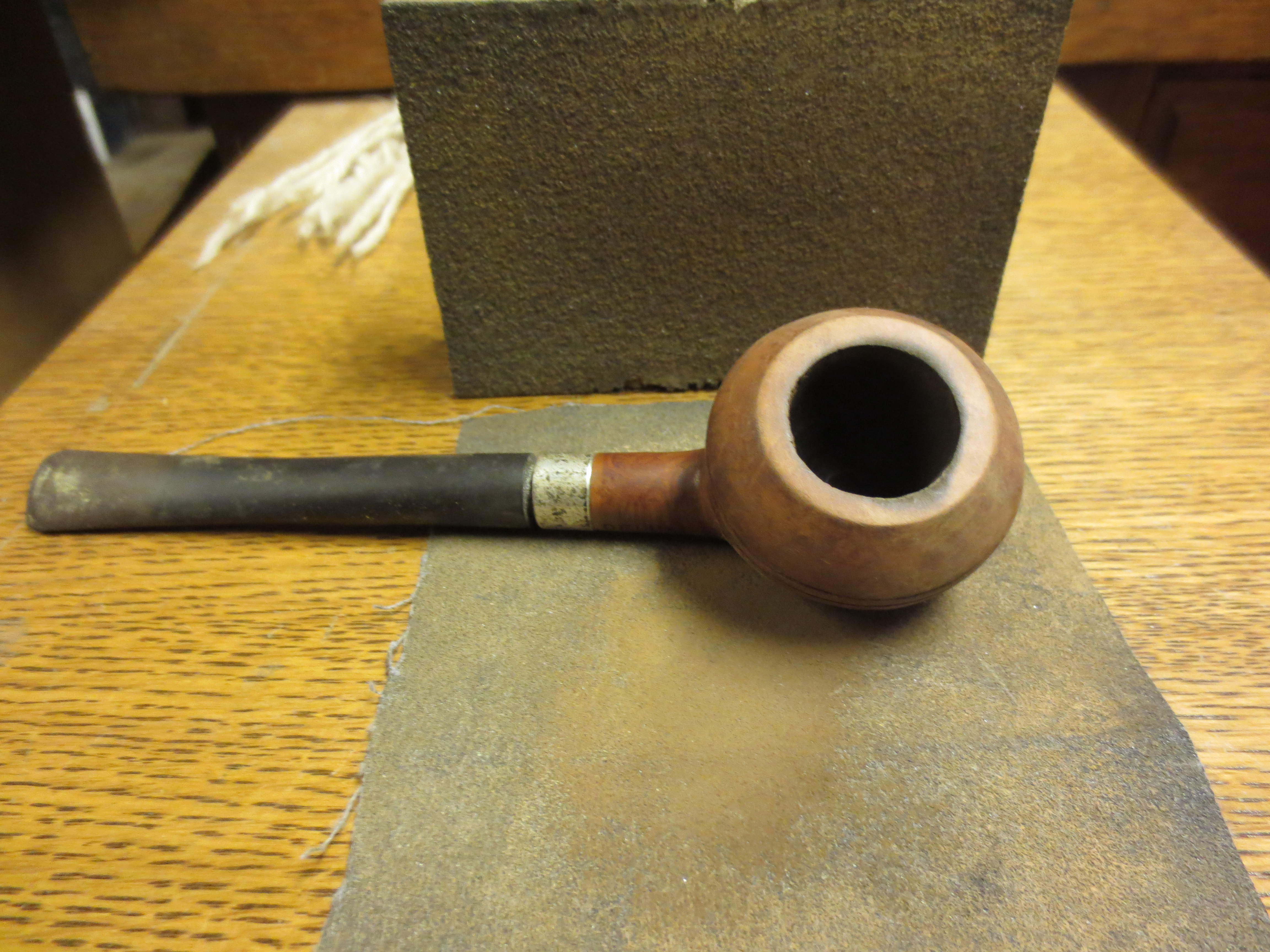
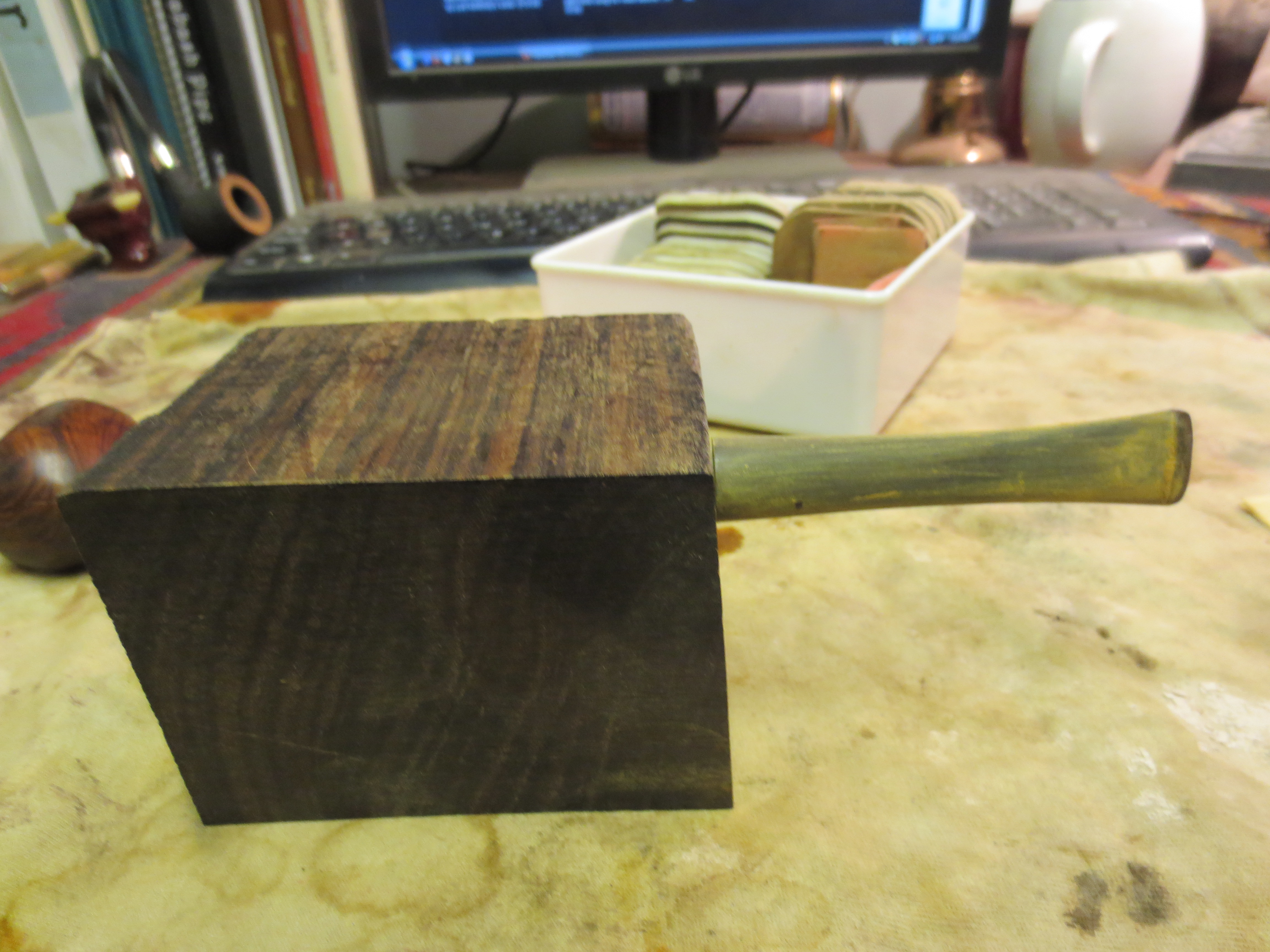
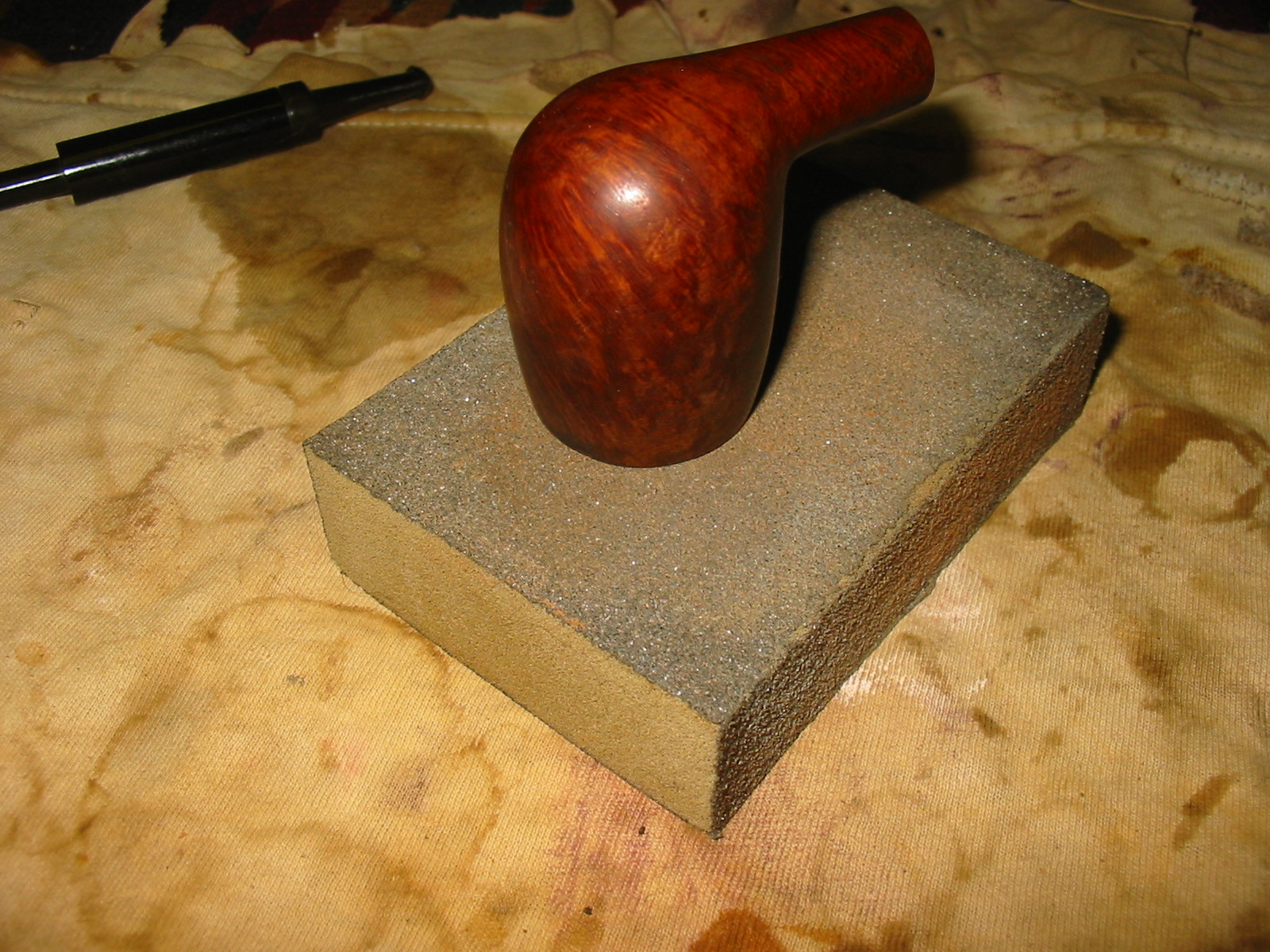
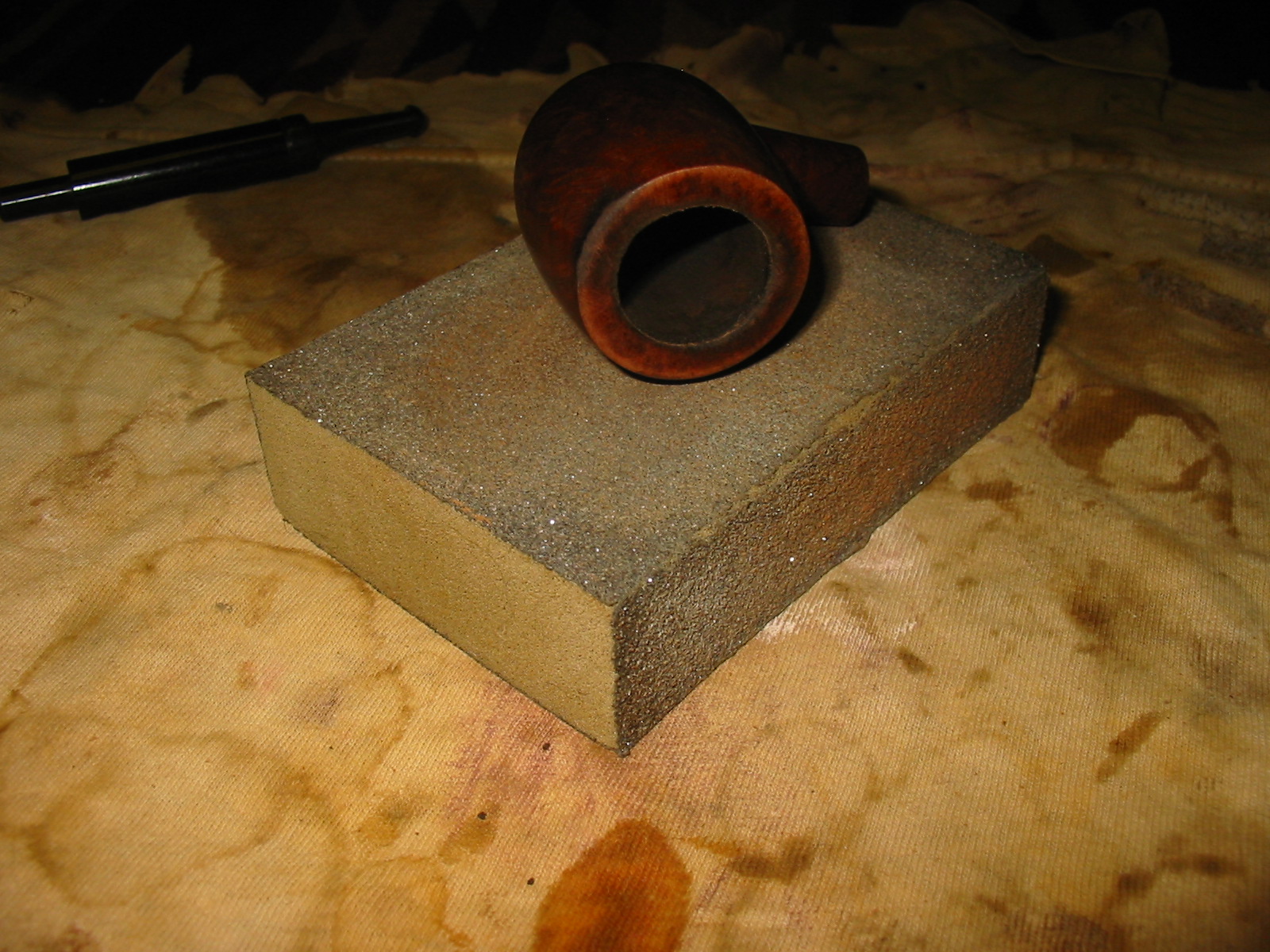
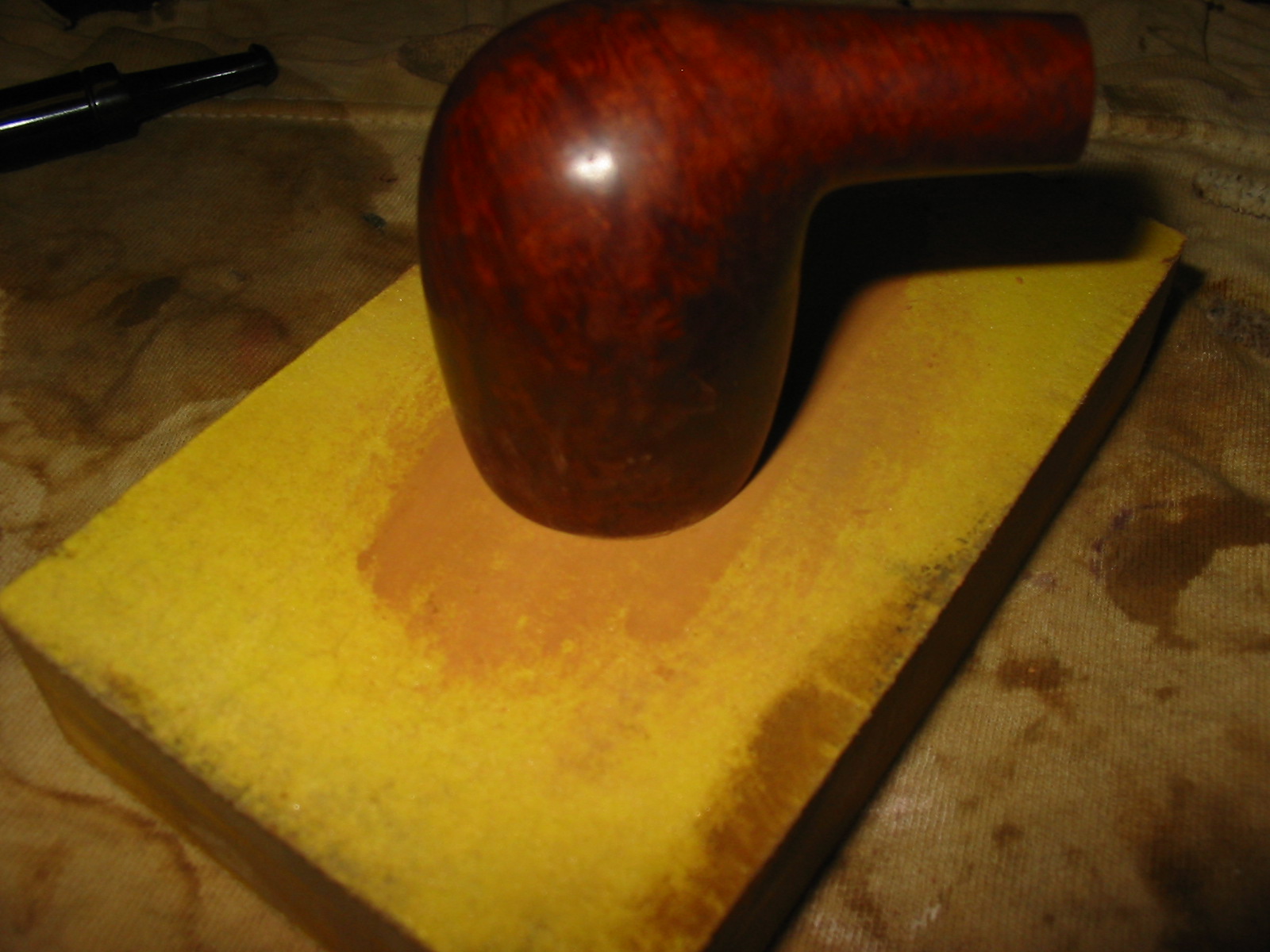
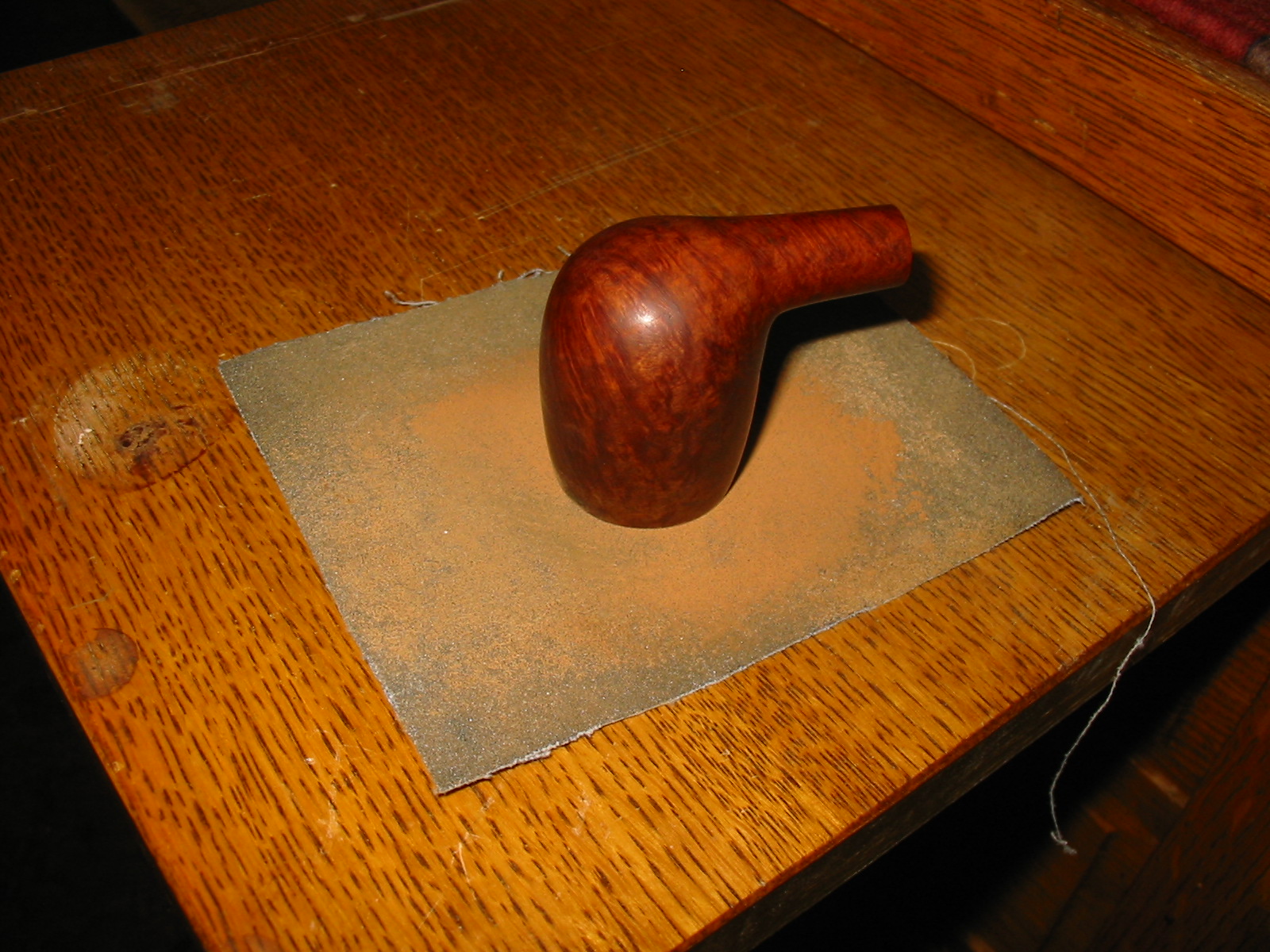
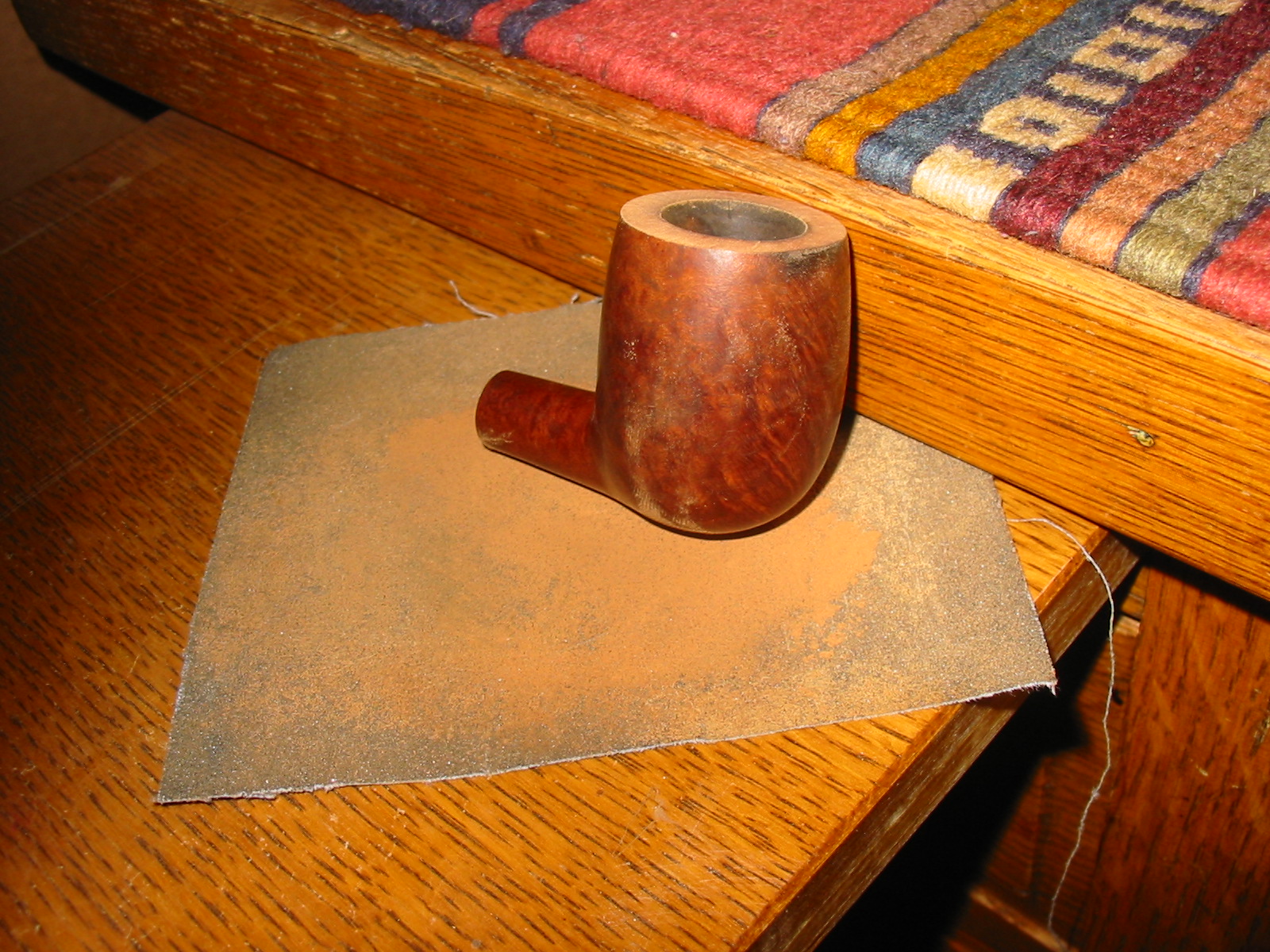
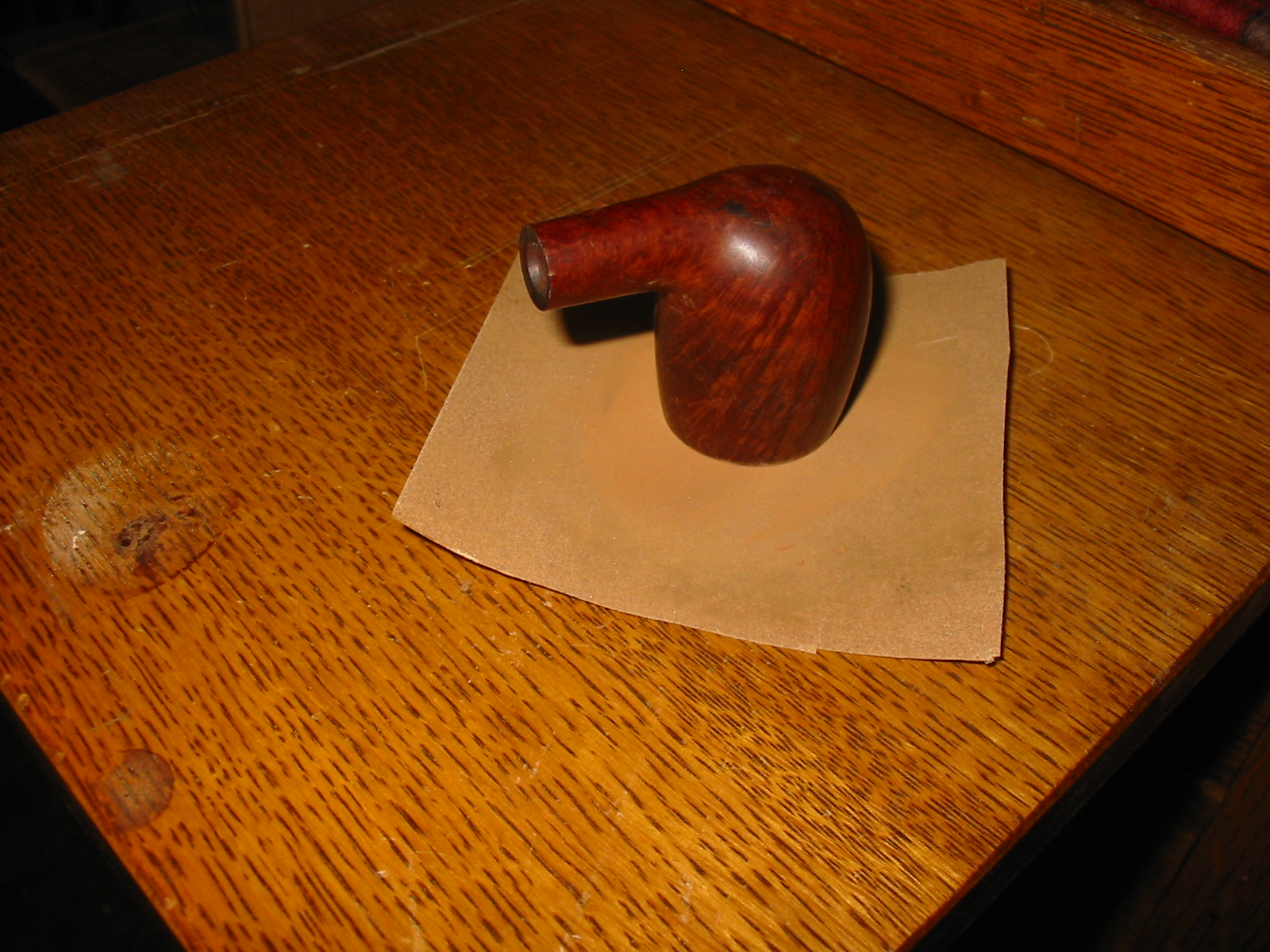
I removed the bowl from the alcohol bath after 1 hour of soaking. I dried it off and cleaned out the shank with pipe cleaners, shank brush and cotton swabs soaked in isopropyl alcohol. I worked those until they came out clean. I used sandpaper on the interior of the bowl to smooth out the remaining cake and clean the surface. I wiped it down with cotton swabs and isopropyl afterwards. I used the sanding board and paper to top the bowl and bring it back to a flat and even condition. I did not have to remove very much of the top but I wanted it to be straight and not slanted toward the front. I used my normal variety of sandpapers (280, 400 and 600) to do this and finished it with micromesh sanding pads 1200-6000 to remove the remaining scratches. I wiped down the bowl with a cotton pad dampened with acetone to remove any sanding dust and remnants of the topping process. I restained this bowl with an oxblood stain thinned with isopropyl to arrive at the original colour. I flamed the stain and when dry took it to the buffer and gave it a buff with White Diamond.

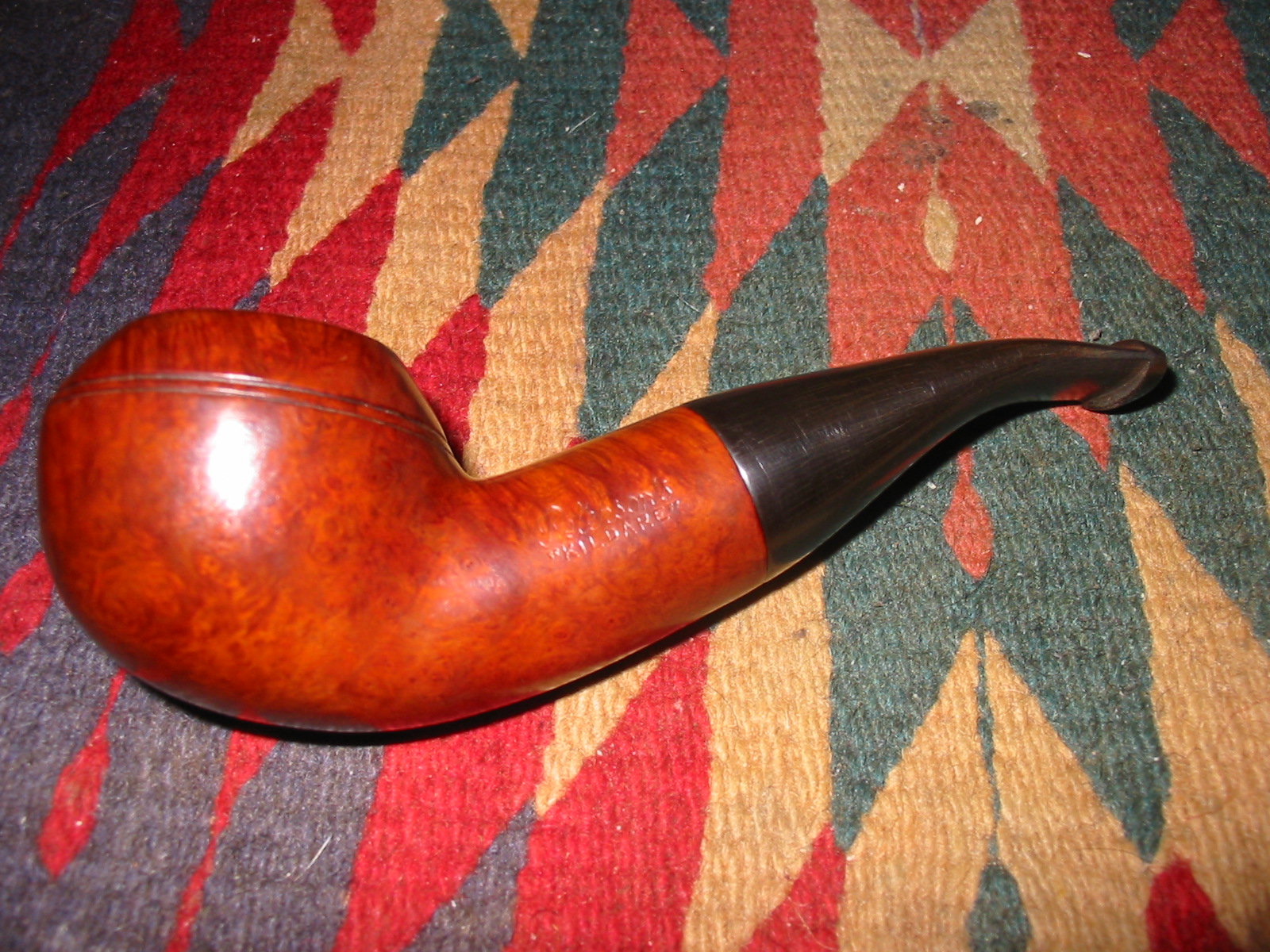
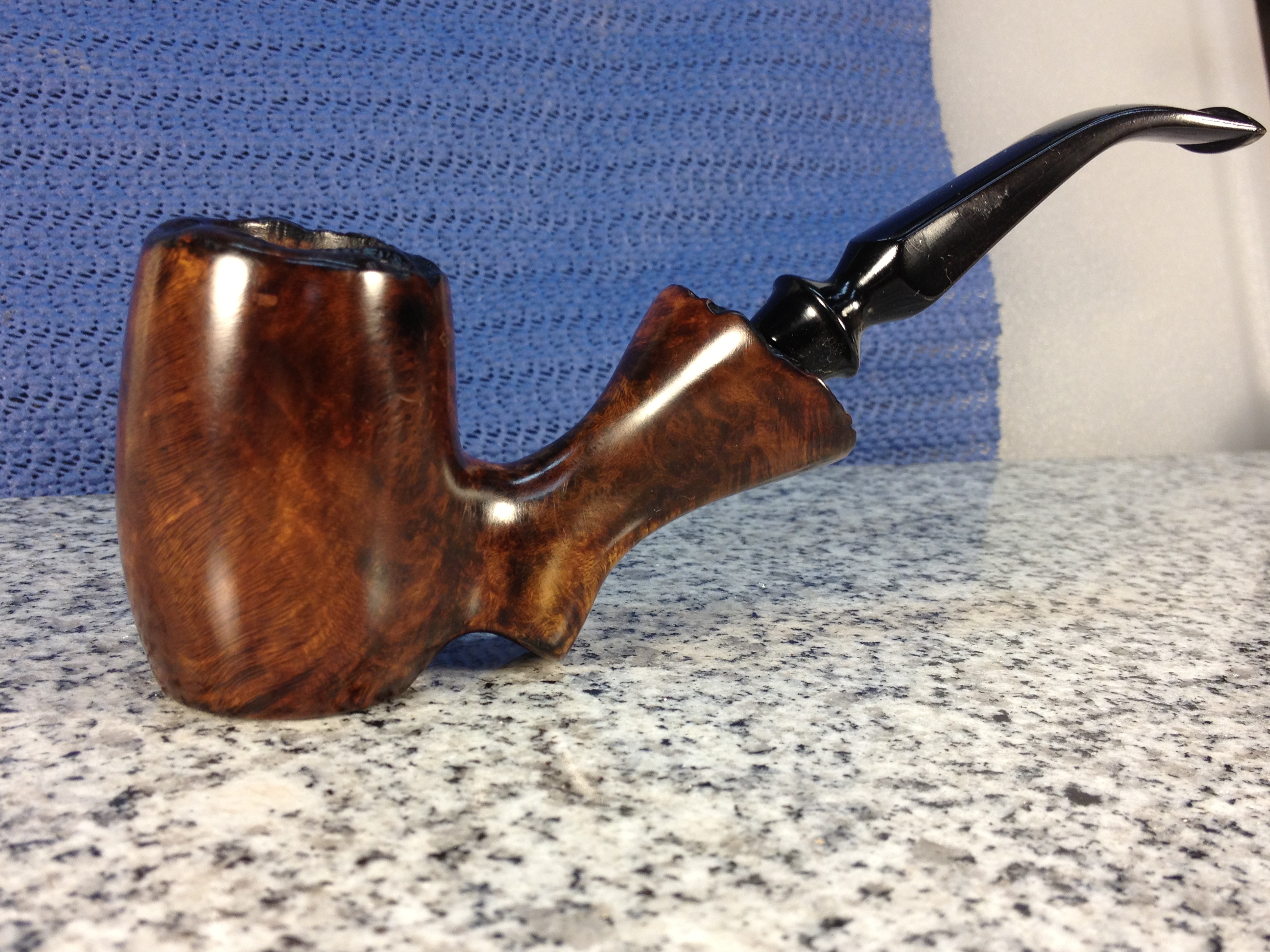
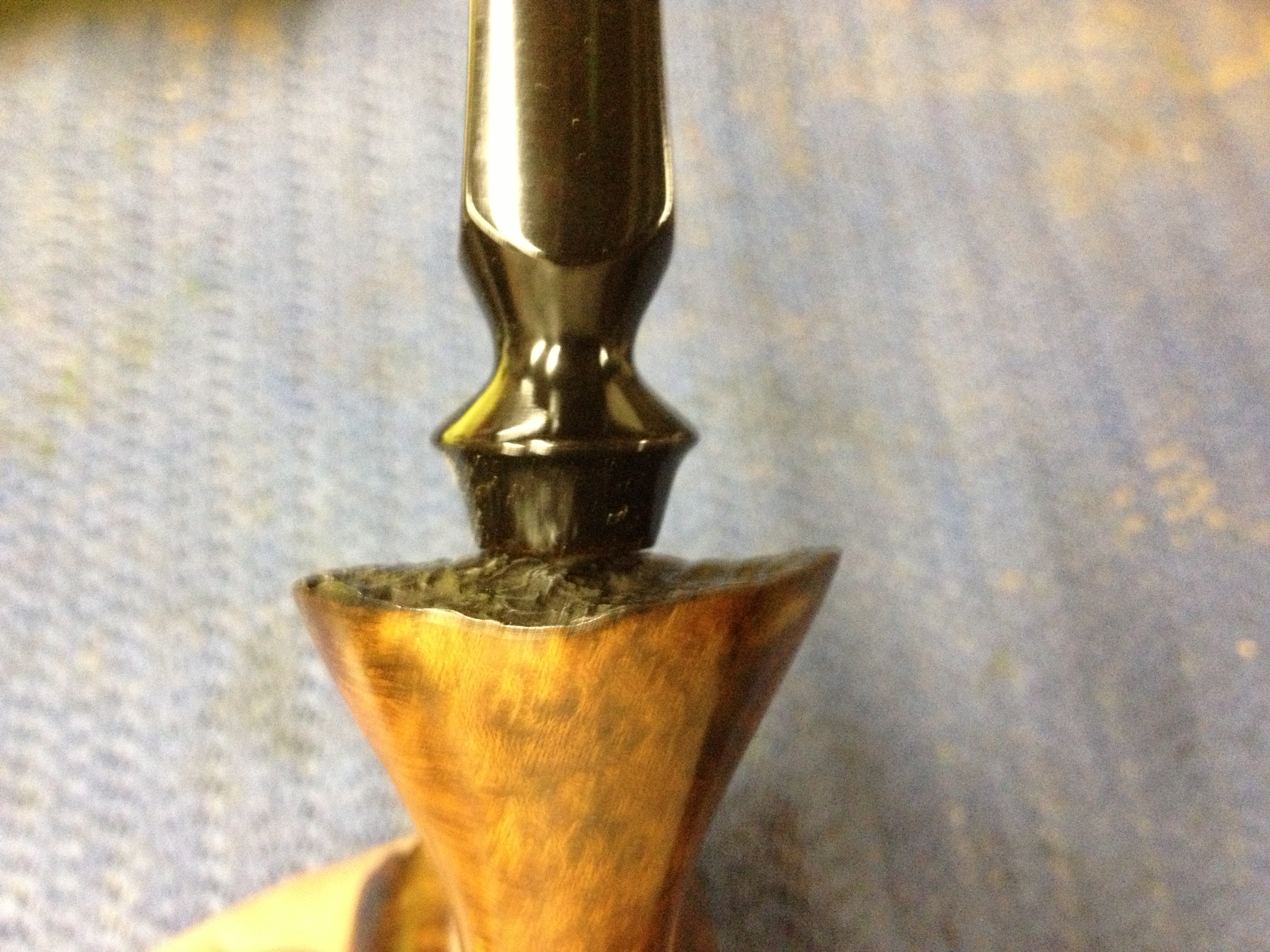
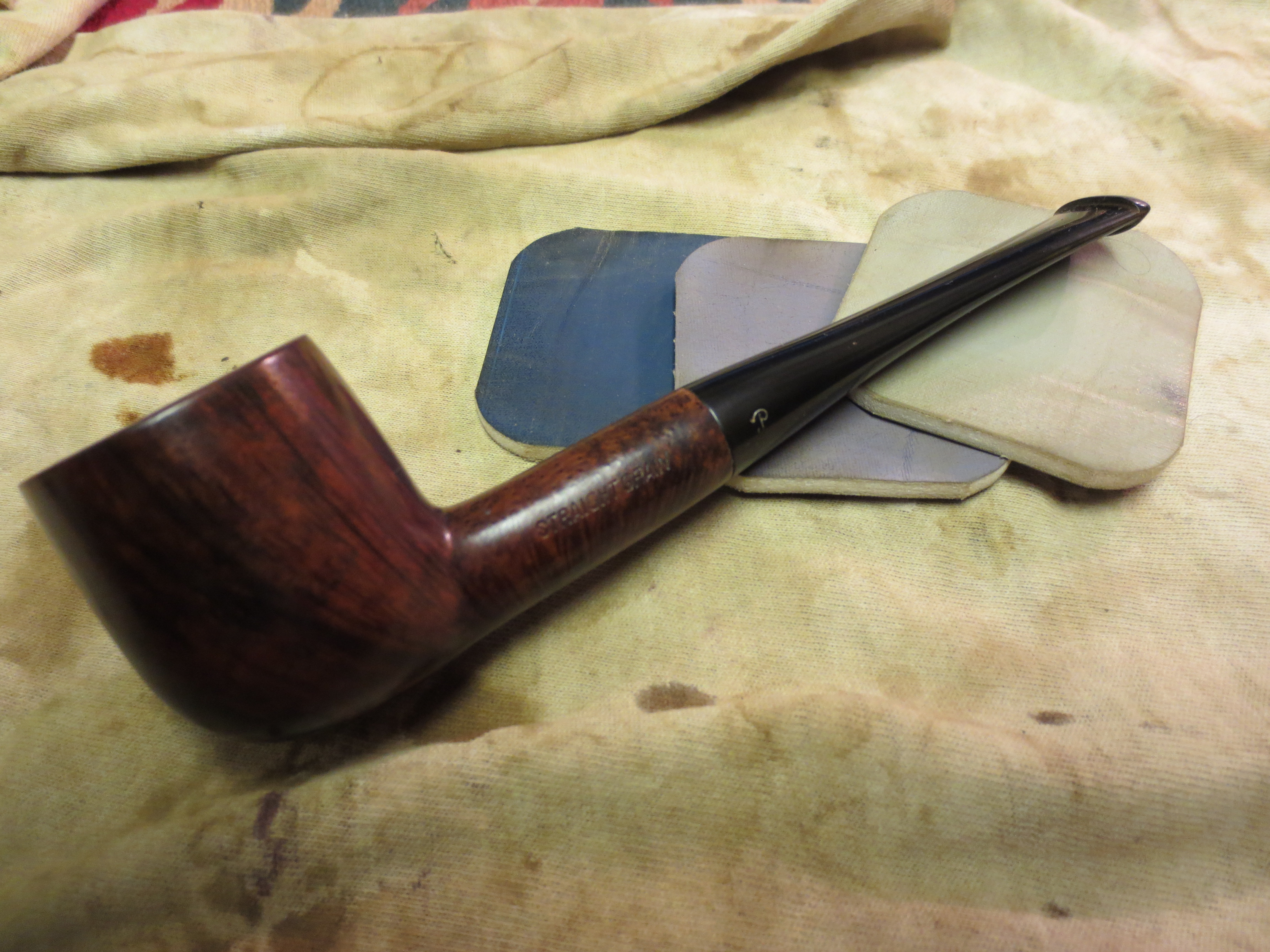
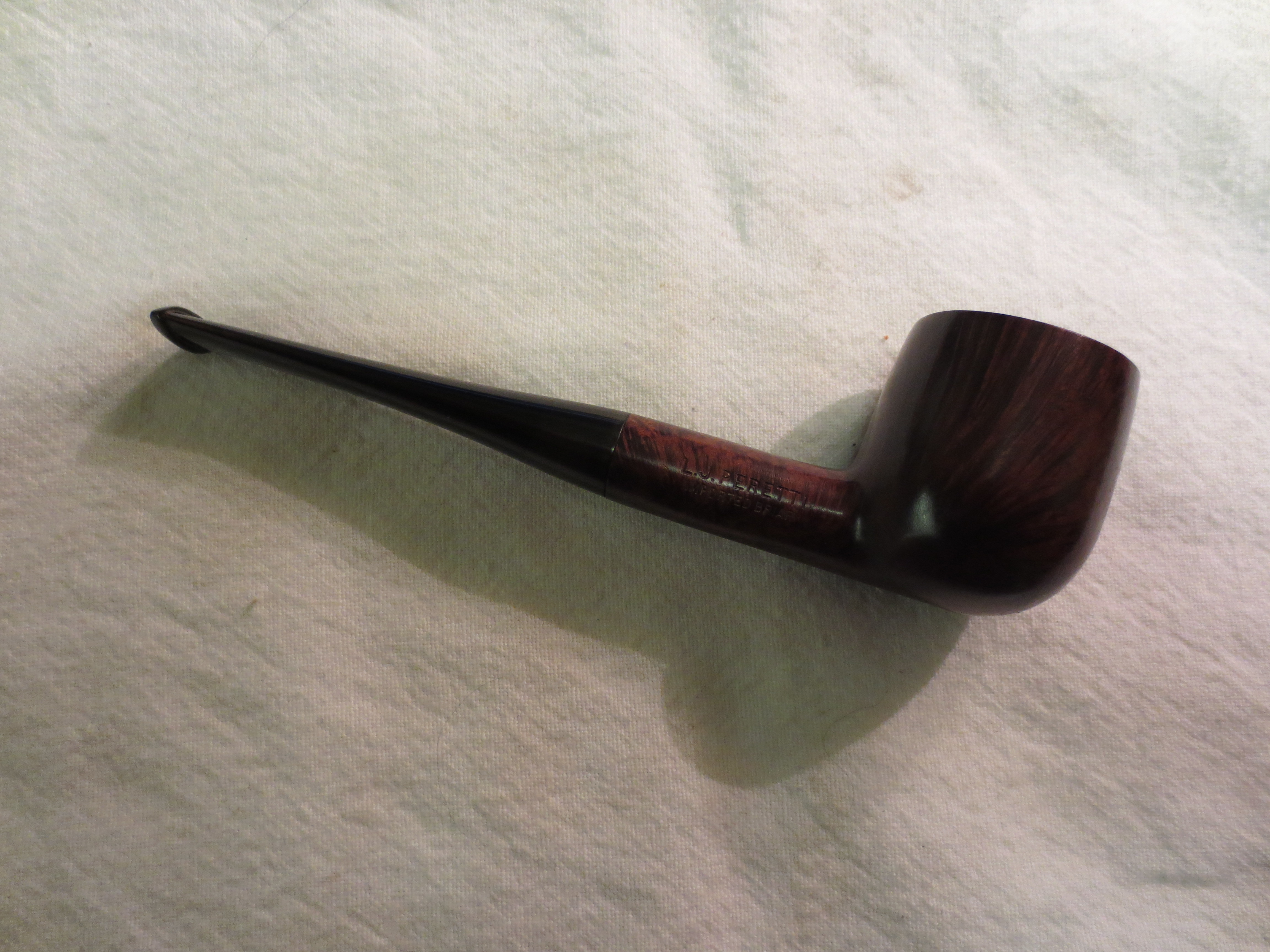
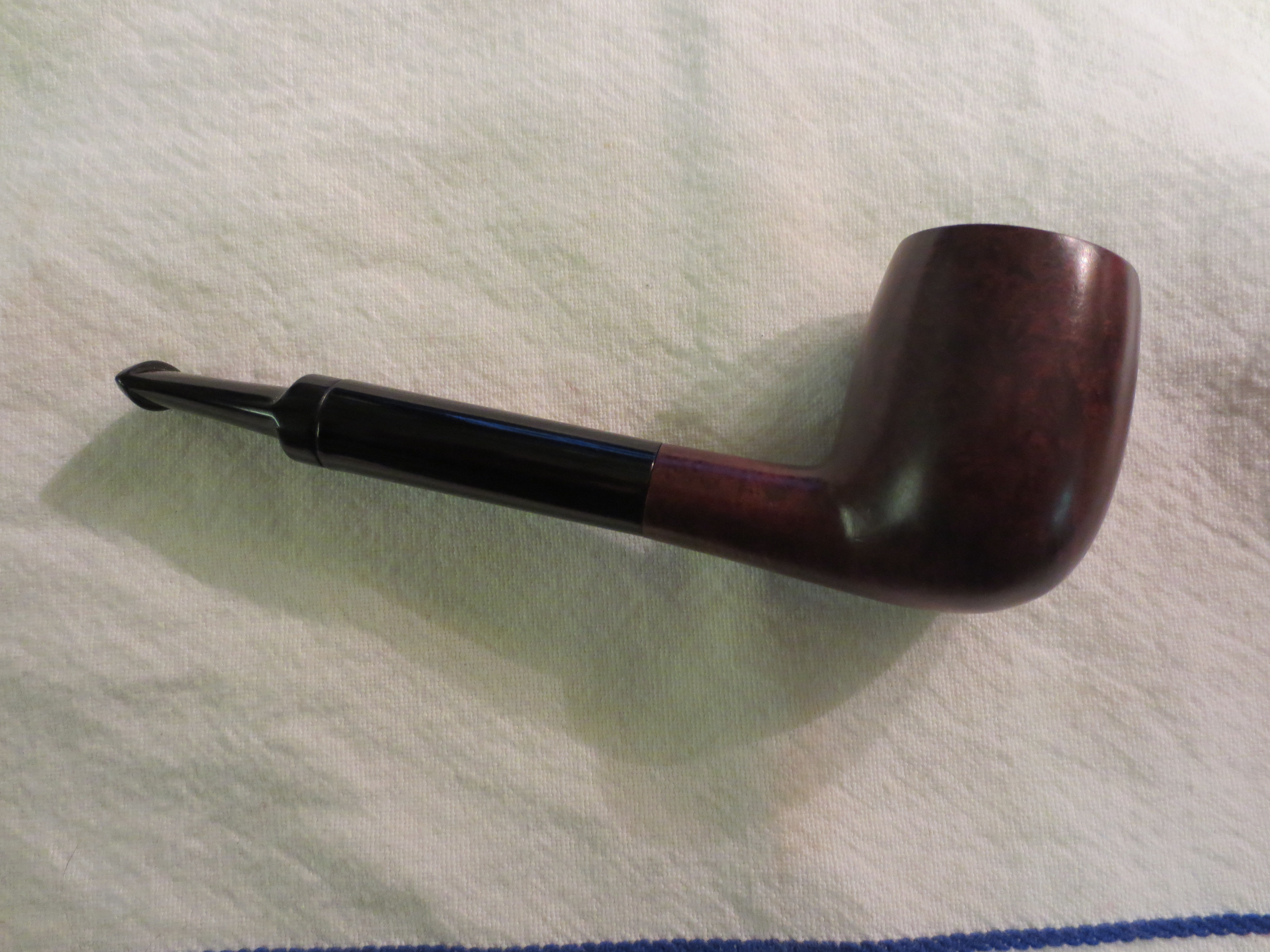
I reinserted the stem and the gap and roundness of the shoulders on the stem made a smooth fit impossible to attain. I decided to use an old BBB band that I had in my box and heated it and pressure fit it to the shank. I liked the finished look of the pipe. I gave the entirety several coats of carnauba wax and a polishing buff with a clean flannel buffing pad. The pictures below show the finished product.
ult2

ult3

Refurbished – A Stunning New Look for a Butz Choquin Billiard


I picked up this old Butz Choquin in a lot I was given by a friend and it was in very rough shape. I somehow neglected to take any pictures of what the pipe looked like when it arrived. But it came stem less and the rim was ruined. It had been hammered on concrete or something like that as it was stippled and rough. The inner rim was ruined as it seemed to have been reamed with a pocket knife and it was cut and grooved at all different angles. To have topped it I would have had to lose almost a half an inch on the pipe. In my opinion that would have ruined the billiard profile and created a pot shape. I decided to try something different on this one. The finish was shot as well and the stain was gone. It was a dull brown with much dirt and grime ground into the surface of the briar.

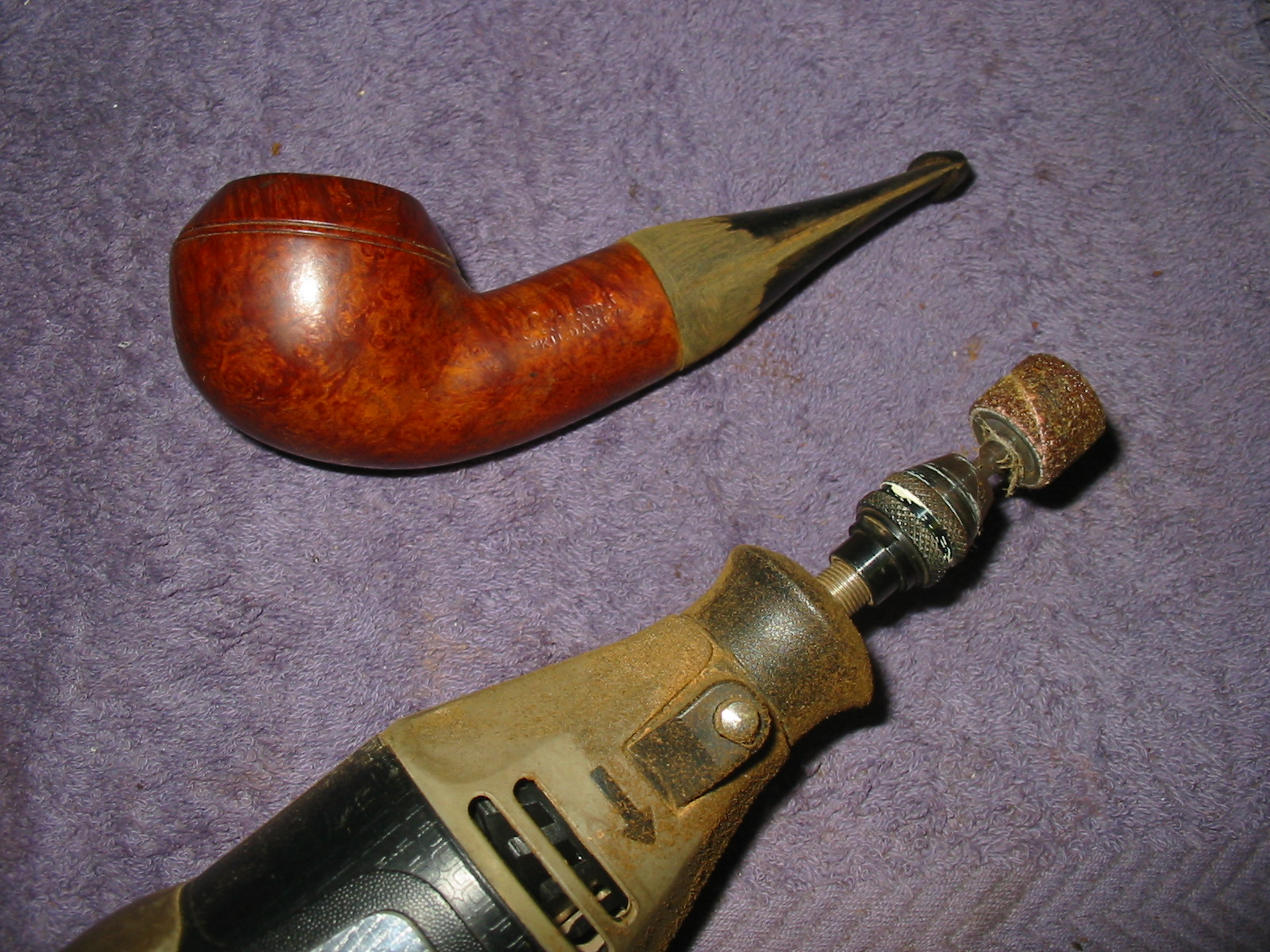
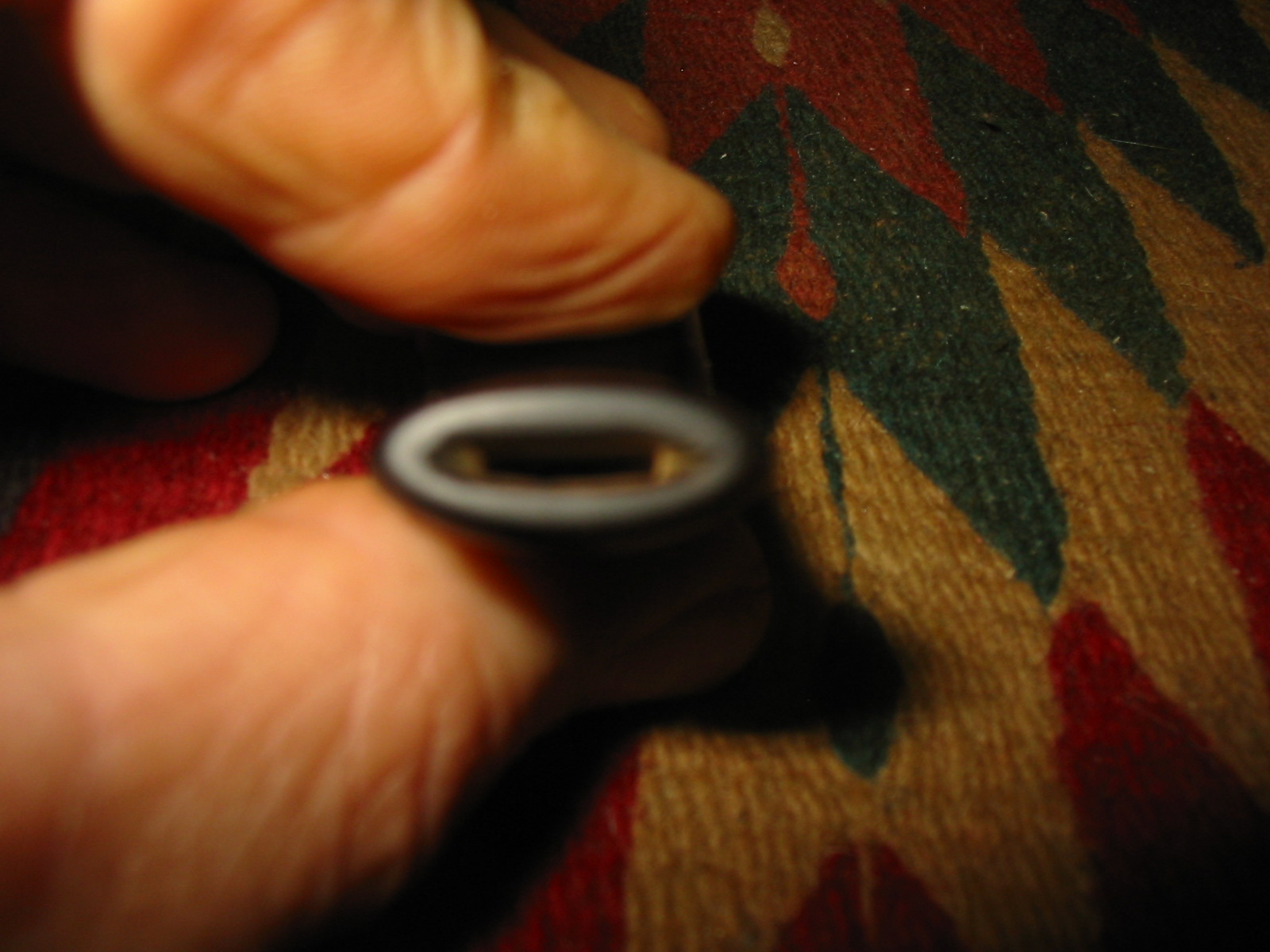
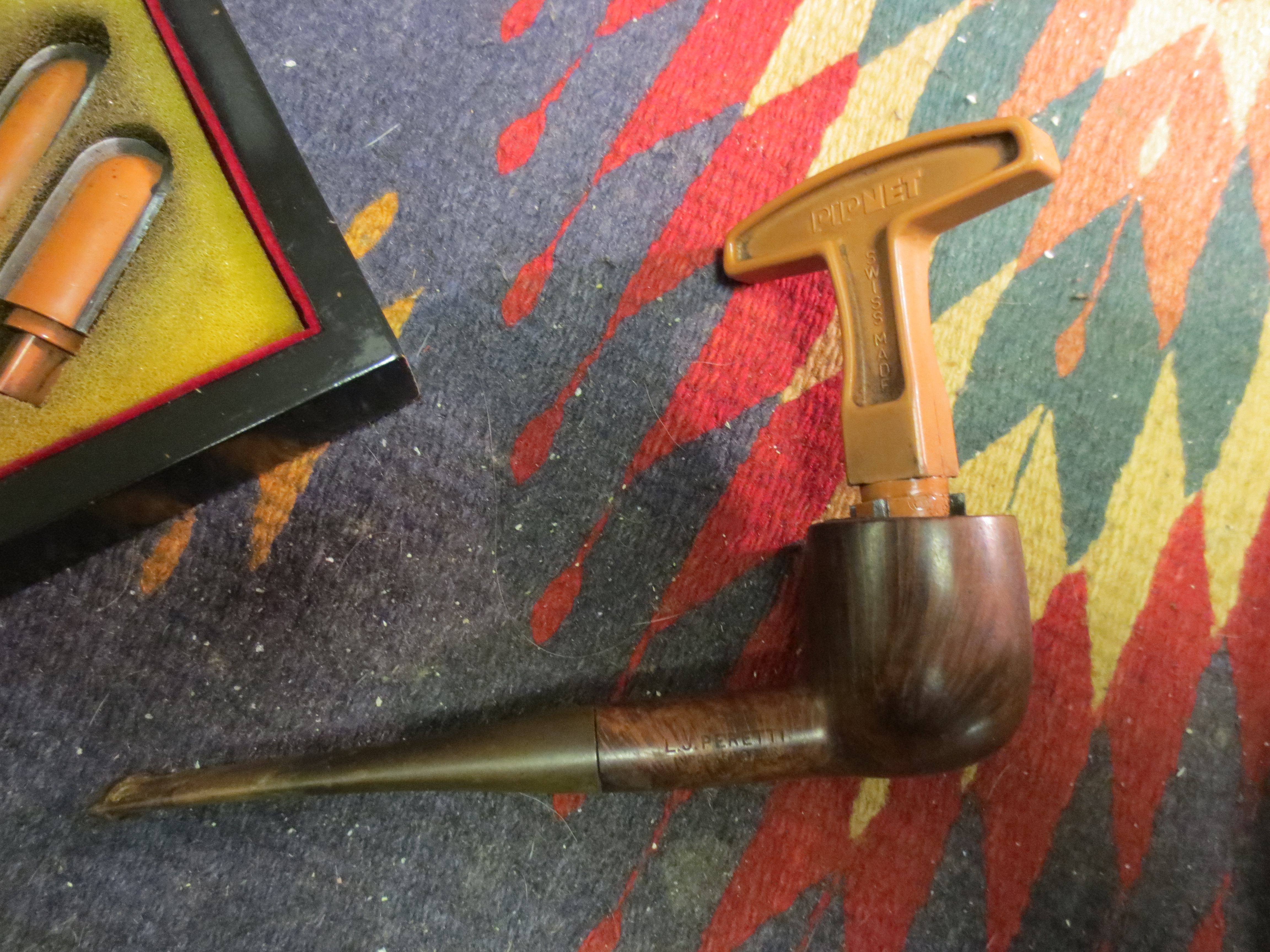
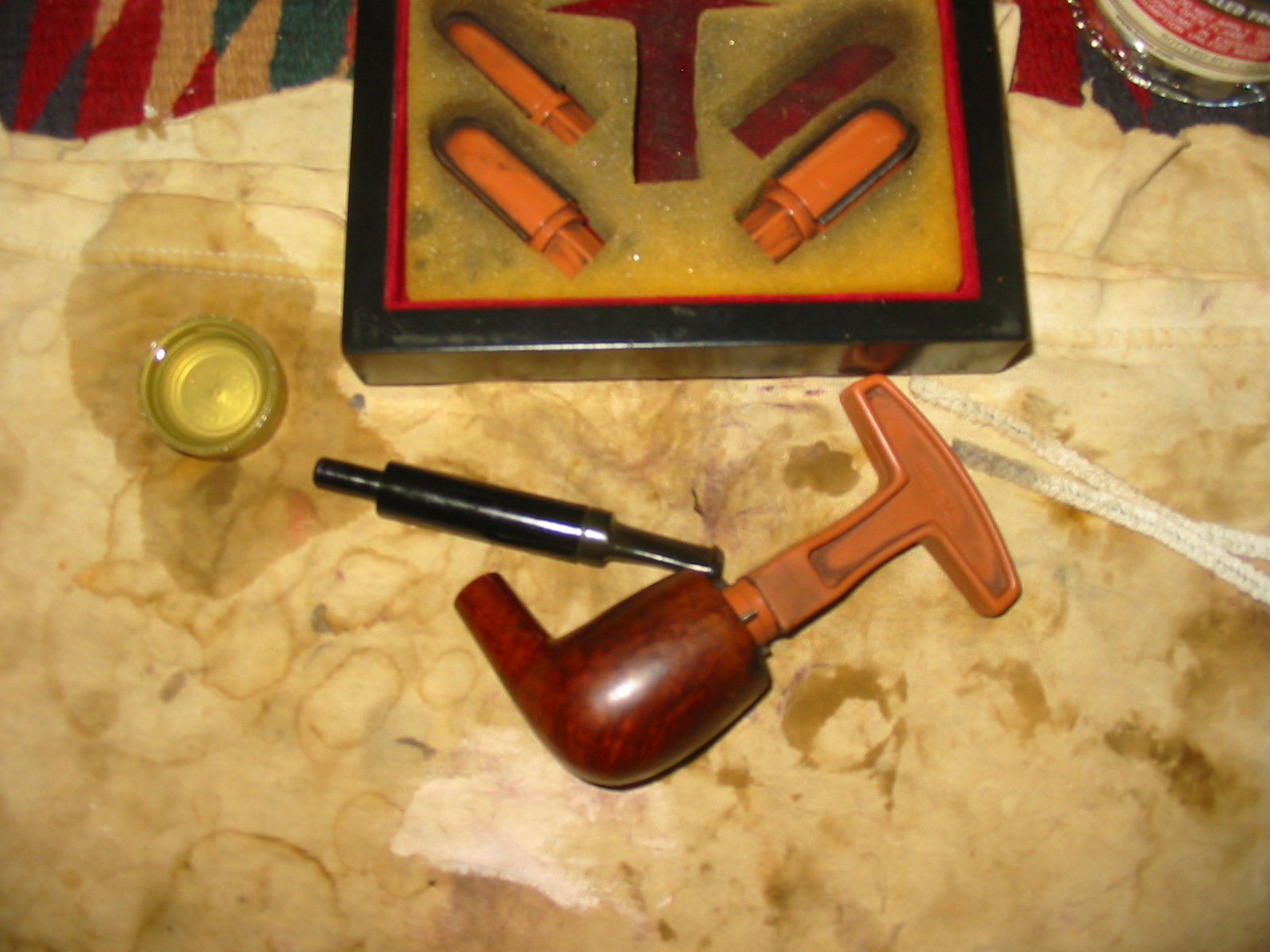
I reamed the pipe with a PipNet reamer (like a Castleford T handle reamer) to even the sides of the bowl and smooth out the inner surface. I wiped the bowl down with acetone to clean off the grime and grit. Once it was clean I hunted down a stem blank that would work on a pipe with this sized shank. I cut the tenon with my Pimo tenon turner and shaped the stem to a clean fit with my Dremel. Then I took the bowl and dropped it in the alcohol bath while I worked on the stem. I sanded the stem to remove the scratches left by the Dremel. I also shaped the button a bit to change the shape and open up the slot to an oval.

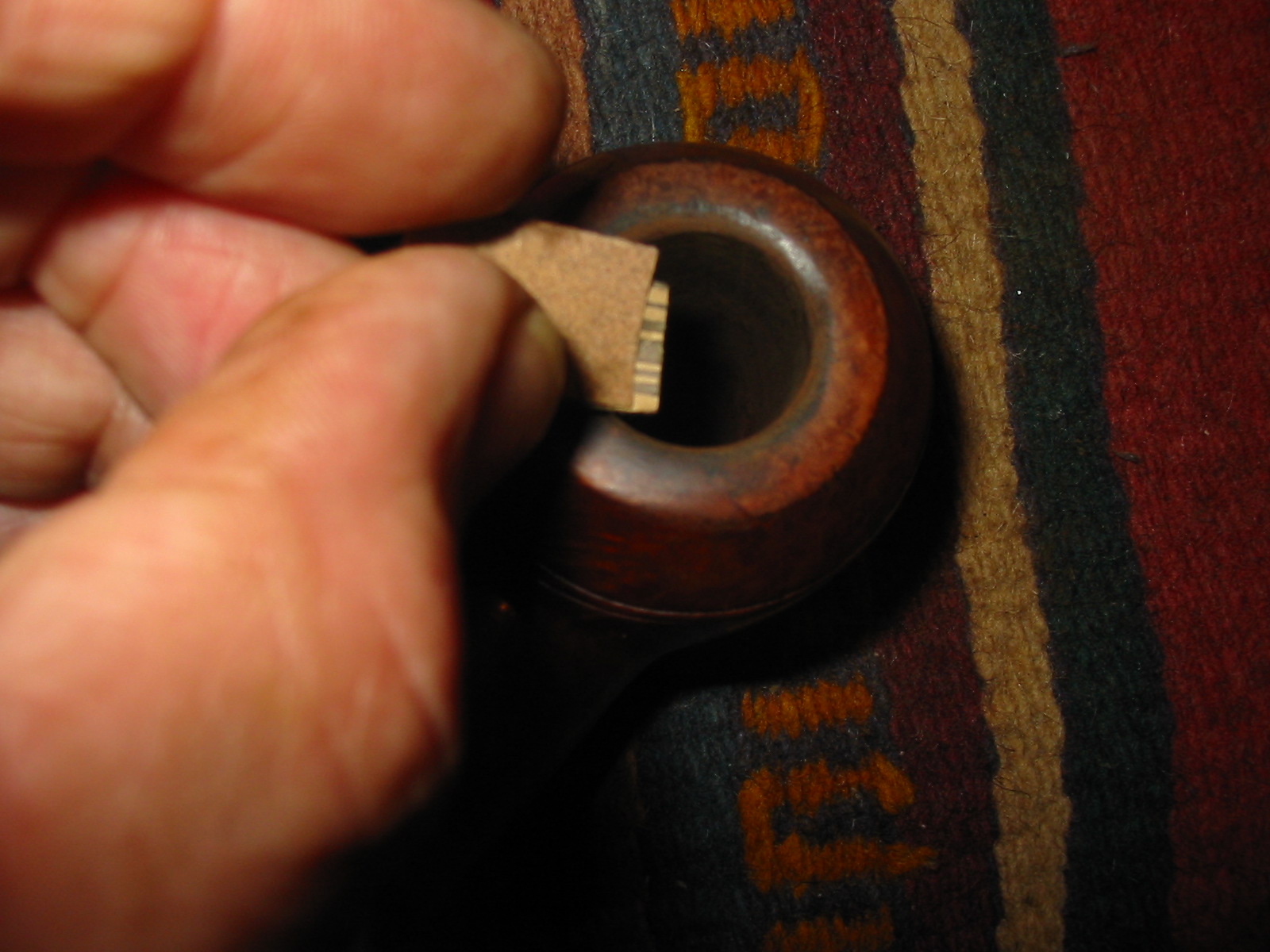
I took the bowl out of the bath and dried it off. I gave it another wipe down with the acetone to give me a clean surface to work on. I then went to work on the rim. I wanted to chamfer the rim inward toward the bowl to remove the damaged material and give it a different look. I topped the bowl first to get a smooth and even surface. From there I sanded the inner edge of the rim with a folded piece of sandpaper (280 grit). I use a one inch square piece of sandpaper folded into quarters. Then I set the angle I want to have on the chamfer by the way I hold the paper. I sanded it until I got it at the angle I wanted and removed the damaged material. Once I had the angle right I then changed the grade of sandpaper sanding it with 400 and 600 grit wet dry and then with the micromesh sanding pads from 1500 to 6000 grit.

At that point I put the stem back on the pipe and sanded it until the transition between the shank and the stem was smooth. I wanted it to be a fit that appeared to be seamless. Once I had that done and had sanded the stem smooth with the various grades of micromesh sanding pads I took it to the buffer to give the stem a shine. I brought it back to my work table and sanded the bowl and shank until they were also smooth. I did not sand around the nomenclature as I wanted that to be intact.

I decided that I would give the bowl a contrasting stain finish. I heated the briar with a blow dryer to warm it up and open the grain on the bowl. Once it was warm I stained it with a black aniline stain. I flamed the stain and let it dry. I took it to the buffer and buffed it with Red Tripoli to remove the black stain from the surface of the briar. This takes off the extra black and leaves it in the softer grain of the briar. I sanded it again with 600 and 800 grit wet dry sandpaper and then buffed it again with White Diamond. I wanted contrast between the black that was deeply set in the grain and the harder smooth surfaces. Once that was done I wiped the bowl down with acetone to tone down the blacks and to clean off the surfaces that did not have the stain set in them. I restained the pipe with a Medium Brown aniline stain and flamed it as well. Once it was dry I buffed it with White Diamond to polish it. The whole pipe was then given multiple coats of carnauba wax and a finish buff with a soft, clean, flannel buffing pad.

While I liked the look of the pipe at this point I decided that it needed a bit of bling to finish it off. I have a box of bands here and found one the correct size – a nickel band that would add just the touch I was looking for. I heated the band with my heat gun and pressure fit it on the shank of the pipe. The finished product is in the photos below. This pipe found a new home with a friend on one of the online forums. I am sure he has enjoyed it as it was a great smoking machine.

The verdict is yours is the new look stunning or not?
bc1

bc2

bc3

bc4

bc5

New Life for a BBB Short Dog


I picked up this little BBB Bulldog on EBay and knew it would take some work. In the photo below you can see the cut in the stem – a groove or channel that served as a dental grip for the pipe. It is just in front of the button. There was some minor oxidation on the stem as well. The button had an orific opening (round hole in the button) rather than a slot. The rim and sides of the bowl were dirty and there was some darkening around the edges. The bowl was caked with a thick cake that would need to be reamed. The photo below is the one that was on EBay.
BBB1

When the pipe arrived it was smaller than I had imagined. No problem there as I like these pocket sized pipes. The stamping on the shank only had the BBB logo in the diamond. No name or other identifying marks were on either side of the shank. The stem did not have the BBB stamp or roundel. The finish was not too bad. The majority of work would need to be done on the rim and the top edges of the bulldog bowl. The stem was going to take some work to get rid of the trough that had been cut in it by a previous owner as a kind of dental bit. The bowl was not as caked as it had appeared in the original picture but had been over reamed and was out of round. The walls at the top appeared to be thinner than normal on a pipe of this shape.
bbb2

bbb3

You can see the size of the pipe from the photos above with the ruler. It is four inches long and delicate in the hands. I went to work on the stem first with my needle files and sandpaper to remove the trough on the top of the stem and the underside of the stem. This took some work as it could have radically changed the slope of the stem. I worked to keep the angle looking right from the saddle to the button. It took quite a bit of time to remove the excess vulcanite and reshape the blade of the stem. I sanded the stem smooth and then progressed through the micromesh grits 1500 through 12000. I put it back on the pipe and took it to the buffer and buffed it with White Diamond until it shone. Then I removed the stem and set it aside while I worked on the bowl.

The bowl needed most of the work on the area of the rim and the edges following down the bowl. There was lava and also darkening. I worked on the rim and the darkening with acetone on a soft cloth. It removed the majority of the darkening and grime. I decided to top the bowl minimally to smooth out the surface. I chamferred the inner rim with a folded piece of sandpaper to minimize the chatter from the over reaming. The pipe was given a coat of medium brown aniline stain, flamed and then buffed gently with White Diamond. The entirety was given multiple coats of carnauba wax and buffed with a soft clean flannel buff. The final picture below has a Canadian penny included to give an idea of size. This will be helpful to those who are familiar with US and Canadian money. To others who are not you can refer to the photos above with a ruler. This is a nice little pipe that smokes very well. It also fits nicely into a coat pocket or shirt pocket!
bbb4

bbb5

bbb6

bbb7

Hot Rods – next round please, Basket briar massacre. (October 2012) Part 2 – Piet Binsbergen


Ok, so here is the silly bit.

These 2 pipes I did not photograph before I started. Once again apologies!

Die Braaivleis pyp (Afrikaans for the BBQ pipe)

This is my opinion. I guess that basket briars are not that bad. What makes them unattractive is that they are drilled skew and full of putty. Now skew drilling sucks and these pipes are laid to rest. When I do find pipes that look like the drilling is solid enough I often find the bowls to be full of putty fills hence they become basket briars. So why do they do it then? Well, time is money and to fill a pipe and sand it, covering it with a dark stain seems to be fast and cost effective.

I have found that if one spends time and uses the right tools, with some practise you can rusticate the bowl and the fills become part of the character of the pipe. So why do the pipe manufacturers not do it then? The answer again is a simple one! Time versus money. A solid rustication job may take me some hours. Now hours I have, low end pipe manufacturers do not!

In time I will put together a photo essay of my rustication process.

With this pipe, the bowl was semi rusticated. I added a silver shank ring and fitted a green Lucite shank ring for contrast. The stem was replaced.
Piet1
The Bushveld Poker

Before you all have a stroke, this is NOT a CASTELLO but a Purex basket briar.

This was fun as I could get the stummel into the lathe chuck and work it back into true. The drilling was good but the tobacco chamber was off set to the outside of the bowl (Welcome to the wonderful world of basket briars). I was able to turn the bowl down just a bit to bring it back into true. I also added some rings. As the bowl was full of fills lower down on the stummel I used the same rustication process as above. I added a silver shank ring for contrast. The stem is a screw in type fit with one of those nasty stingers fixed to the tenon of the stem. Here I removed the stinger and saved the stem. This is one of the few pipes that had a stem which was saveable so I went through the motions of bleaching soaking and polishing. All the pipes have draft holes open to 4mm.
Piet2

Hot Rods – next round please, Basket briar massacre. (October 2012) – Piet Binsbergen


Hi guys, you know some times I am really dumb. I am so excited to get going that I fail to take some before pictures. I have come to realise that posting the end product only does not do the process or the hobby any justice. I have done 2 more pipes for which I do not have any before pictures, my apologies.

Well I got a batch of basket briars sent to me by my good friend and tobacconist Alan from Sturks in Cape Town. These pipes are really low enders with nothing much going for them. I like this, here I can go mad and be myself as there is nothing to lose and much to gain. I am under the impression that these putty filled beauties may hold some magic, and after all, they do seem to look like some old briars. Most of them are just nameless, others are Medico ‘Frank’ pipes and the odd one marked Purex, (Sounds like a contraceptive, juck, LOL)

I have been on the quiet side for a bit as my PhD title defence was looming and I needed to get that done and dusted. When I needed a solid break from my studies I took time out to do up some pipes. Hope you like them.

The DAMASCUS PIPE (LA Mort)

This is a Medico Frank, Maple I suspect or maybe some of you can help me out here? Either way I wondered what it would look like in its blasted form. It came out fantastic. The blast is fine and delicate so I decided to stain the pipe black and laid off heavy carnauba waxing. I added a Hippo bone shank ring for contrast and replaced the stem.

Before:
rod1

After:
rod2

rod3

The S.A.Y. 15 Plumbing Pipe

Well my father-in-law is a plumber by trade. I spent some time with him last weekend. He lives far away so I do not get much time to spend with him. I decided that if I was going to do crazy things to old pipes they might as well tell a story. This is another Medico ‘Frank’ with a cracked shank. The pipe is briar with plenty of ‘meat’ for me to go mad with. The crack in the shank caused the stem (screw fit) not to align. I cut off the shank, and had some fun.

The shank extension is stained cherry wood, the shank ring is a S.A.Y. 15 Copper plumbing pipe coupling. I rusticated the pipe and fitted a shorter ‘Lovat’ style saddle stem. The cool part is I managed to get a matt finish on top of the stem and polished the sides. The black ring next to the copper ring was burnt with a fine soldering iron.

Before:
rod4

After:
rod5

The Jockey

This is a no name briar. It is in a nasty state but under all that dirt and grime I found some really good wood. Here I did a full refurb as I always do and sanded the bowl starting at 150 grit and working it up to 2000. If you are after a good finish on smooth pipes you have to be prepared to put in the hours. My rule of thumb is that the pipe should shine before you add the final buffing and polishing wax. Carnauba wax will never hide your short cuts.

Stain is applied at the 600 grit sanding stage and a fresh layer of stain is added as the grit number climbs. In this way I get a deep stain, rich in colour. Steve has recently published his staining and sanding method in detail. It is published here on the blog and in the latest issue of the NASPC Pipe Collector. It is well worth checking out.

3 Shank extensions (rings) were added, Red ivory wood, Aluminium and African olive wood.  The stem was replaced.

Before:
rod6

After:
rod7

Restemmed Petersons 69 – Second Try was a Charm


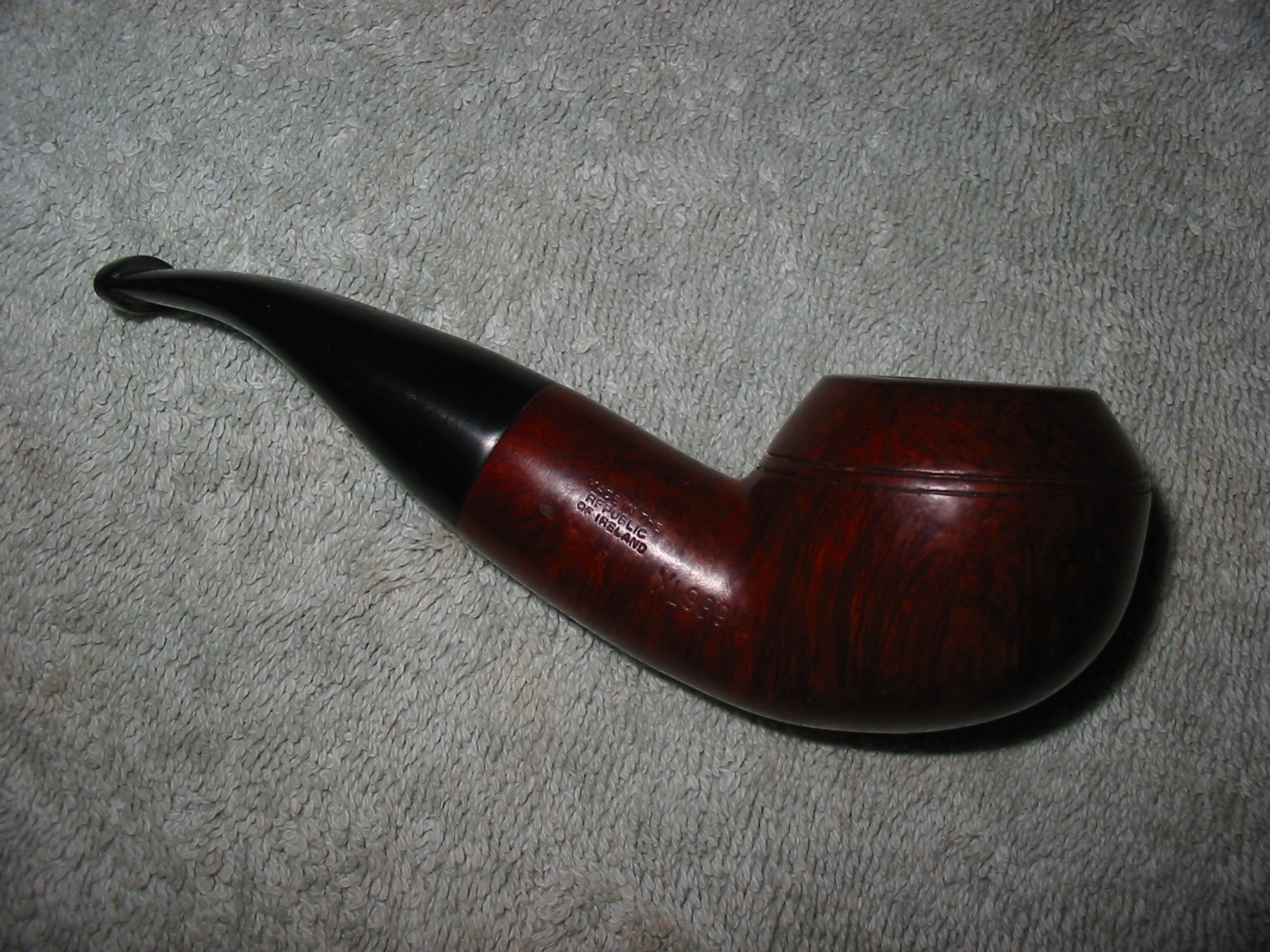
I had this old Peterson 69 bowl in my refurb bin for quite awhile. It is stamped also on the other side K&P Dublin, Made in the Republic of Ireland. I cleaned and reamed the bowl and cleaned out the mortise area with cotton swabs. I wiped the bowl down with acetone to remove the surface grime. I topped the bowl as it had major dents and roughening on the top from abuse. It needed a stem so I researched the kind of stem it needed and called a Peterson repair person in the states to have one sent to me.

Here is where the story gets a bit dicey. All I really wanted was to have the stem sent and I would fit it to the pipe but I let myself be talked into sending it south. It came back with the wrong stem on it and also had some serious cut marks on the tenon end. It also was a stem for a p-lip system pipe and the 69 is not a system pipe as far as I can tell. I was a bit frustrated to say the least so I set it aside for a week or two before calling the repairman and letting him know what I was feeling. I have to say that it is frustrating to expect one thing and get another. It is also frustrating to know that I could have done the work myself in less time if only I had a stem blank that I could have used.

I sent it back to him for a redo and included this internet photo of the pipe with the stem.
peter1

When it finally came back it was better – see the photos below. It was much better so I decided I was done with sending it back. Two times is enough. Once it was back I finished working on the rim and the rest of the bowl. I stained it with a medium brown aniline stain. It took the stain well and came out a reddish brown colour. I buffed it with Tripoli and White Diamond to polish the stem so the grain would show through. I finished it with several coats of carnauba wax and buffed with a soft flannel buff. The silver ferrule was polished with silver polish. It is a good smoker and is comfortable in the mouth.
Peter2

peter3

peter4

peter5

Refurbishing a GBD Penthouse with a Chairleg Stem


While scanning EBay for interesting old pipes to work on I came across a pipe for sale with the stamping Penthouse. There was little other information on the advert regarding the pipe but it looked interesting to me. The chairleg type stem made me think of the series of pipes that Al (upshalfan) has restored so I put a bid in for the pipe. I contacted Al and he sent me the following picture from a Tinderbox catalogue showing that indeed the pipe was a GBD line. (NOTE: The GBD catalog page came courtesy of Jerry Hannah. Jerry created the GBD Shapes/Model page that I frequently use for reference. I’m not sure if he reads this blog, but if so, thanks!) The headline on the page says that GBD breaks with tradition and forges bold new designs. Pipes marked J, K, and L in the picture below are all Penthouse pipes. I have no idea where they took the name but let imaginations rest, the pipes are stunning and the stems are uniquely beautiful.
Pent1

The Penthouse pipe that I bid on and subsequently won is an apple shape. The first six photos below are the seller’s pictures. It was these pictures that tempted me to place my initial bid on this pipe. As it turned out I was the sole bidder. The stem was badly oxidized and had some tooth chatter at the button. The stamping showed up but was not as deep as it appears in the photos. The rim appears to be darkened but not charred in the photos and the finish appeared to be dirty but not dented or scratched deeply. It was stamped on the left side- Penthouse in script over Made in England in block letters. On the right side it was stamped London England over 347. Now the wait began.
pent2

pent3

pent4

pent5

pent6

Pent7

When the pipe arrived it was much as the pictures had shown. I am never sure what to expect when I bid on these old pipes as I have been utterly surprised both ways – they have shown up in much worse shape than the photos showed or in much better shape. The next four photos show it as it appeared when I removed it from the box.
pent8

Pent9

Pent10

Pent11

The finish was actually quite dirty. Many of the dark areas of the finish were actually grime and grit and not the understain on the pipe. I wiped the pipe down with acetone to remove the grime. I also used a battery terminal brush to clean out the remaining cake remnants in the bowl. Then I dropped the bowl in the alcohol bath and the stem in a bath of Oxyclean. The bowl sat for about an hour in the alcohol bath and the stem sat in the bath overnight. When I removed them I cleaned out the shank and the inside of the stem until the pipe cleaners and cotton swabs came out clean. I wiped the entirety with a soft cotton pad and acetone to remove any remaining grime and the next series of four photos show the state of the pipe at this point in the process. The alcohol bath and acetone had successfully removed the remaining finish and the grime on the surface of the pipe. The Oxyclean had done a great job on the oxidation. You will notice the shiny areas on the top of the stem – I had run my fingernail across the surface to show how the oxidation had softened. It was ready for the next step in the process of cleaning the stem.
Pent12

Pent13

Pent14

Pent15

The next two photos show the stem after I had scrubbed it with a Magic Eraser. The stem was wet and shiny and you can see the oxidation on the Magic Eraser under the stem. I continued to scrub the stem with the Magic Eraser until it came out clean.
Pent16

Pent17

The oxidation was greatly decreased at this point but there was more work to be done on the stem. The hard points on the stem were obviously around the chairleg section. The grooves were difficult to get to with the Magic Eraser. I decided to use some Meguiar’s Scractch X 2.0 which is a scratch and blemish remover for auto paint finishes. I used soft cotton pads (makeup removal pads) with a spot of the Scratch X 2.0 on them to scrub the grooves and the area around the button as well. The next series of three photos show the stem after the scrubbing with X 2.0. The oxidation is further removed but still evident.
Pent18

Pent19

Pent20

At this point I continued to scrub with the X 2.0 until the stem was once again black. I buffed the stems with White Diamond on my buffer once that was finished. The next two photos (please forgive the blurry focus) show the stem after the application of Obsidian Oil to the clean stem. I left the Obsidian Oil on the stem until it was absorbed and then coated the stem with an initial coating of carnauba wax to protect it while I went to work on the bowl.
Pent21

Pent22

I coated the bowl with an oxblood aniline stain. The next two photos show the coated bowl before I flamed the stain to set it in the grain. The stem appears to be brown again but I had coated it with wax and left it to dry while I worked on the bowl.
Pent23

Pent24

I buffed off the stain with a soft flannel cloth that is pictured below. I wanted to highlight the variety of grain in the pipe so that is why I chose the stain I did. It also shows that the black understain that appeared in the original photos still remained and makes the grain very visible in the pictures below.
Pent25

Pent26

Pent27

Once the stain was dry I put the pipe back together and took it to my buffer. I buffed the stem and bowl with White Diamond until is shone. Then I moved on to a soft flannel buff with carnauba wax and a final polishing buff with a clean soft flannel buff. The finished pipe is pictured below. All that remains is to fire it up and enjoy a bowl in the “new” Penthouse pipe. The stamping on the stem is still present and not harmed by the work but it is light and will not hold any whitening product.
Pent28

Pent29

Pent30

Pent31

Reworked Jobey Shellmoor Apple


This is one I wish that I had remembered to take a picture of before I started working on. But I did not. Sometimes when I am in a hurry I forget to take the photos and this was one of those cases. I was on my way out the door so I took this pipe out of my box of pipes to refurbish, quickly reamed the bowl and threw the stummel in the alcohol bath and the stem in a bath of Oxyclean. You will have to take my word for it – it was a mess. Probably the worst looking mess I had in the box. The bowl was caked with a dark, tarry cake that smelled like roses. The blast was so clogged with grit and grime that you could not feel texture anymore. It was smooth and muddy black looking in colour. The rim was thick with tars and lava build up and the stem was a dark and deep brown from the heavy oxidation. I pretty much figured I would be working on this one for a while to clean it up. After I dropped it in the bath I went off to work and promptly forgot about the pipe altogether. In fact it was two days before I remembered I had left it there.

I went to my work table and took both jars that held the baths. I opened the lid not sure of what I would find when I removed the pipe parts. I took the bowl out first and dried it off with a cotton cloth I have here. Then I took the stem out of the Oxyclean bath. The water had grown cold and dark tea coloured and I wondered what I would find. I dried off the stem with a cotton cloth and put them both on the work table. I was amazed at the work the baths had done to both of them. I reamed the bowl back to bare wood so start over and then wiped the bowl down with acetone on cotton pads. The first four pictures below show the bowl and stem after the bath and the reaming. I then went to work on the inside of the shank and bowl and the inside of the stem. I used both cotton swabs as pictured below and also a series of shank brush, bristle pipe cleaners and regular pipe cleaners all dipped in isopropyl to clean out the shank and stem. I went through quite a pile of both to clean out all the dark tars and oils from inside the shank and stem. The aromatic that had been smoked in this one still survived the two + days in the alcohol and Oxyclean baths and the floral scent remained – not a Lakeland like floral more of a Mixture 79 floral smell. Once the swabs and cleaners were coming out white the smell was gone from the stem and shank.

I scrubbed the exterior of the bowl one last time with a soft bristled brass tire brush to clean out any remaining grit in the sandblast finish. Once it was clean I wiped it down one last time with acetone before I was ready to stain it. I used a dark brown aniline stain to cover the bowl. I flamed it to set the stain and gave it a second coat, flamed it again and then took it to the buffer and buffed it with a Tripoli buff. The stain was still too dark to my liking and also too opaque (though they are dark photos 1-3 below give a pretty accurate picture of the colour of the pipe after staining and buffing). I took it back to my work table and wipe the bowl down with acetone on a cotton pad to lighten the stain. The fourth photo below showing the underside of the bowl gives you an idea of what the stain looked like when I was finished with the wipe down.

I worked on the scratches and tooth marks on the stem with emery cloth (medium grit) first. I worked until they were gone and then used a medium grit sanding pad and a fine grit sanding pad to remove the scratches left behind. I switched to 240 grit sandpaper and took out the rest of the scratches and marks. I buffed the stem with Tripoli and White Diamond and then used micromesh pads on it. I started with the 1500 and 1800 grit sanding pads and then applied a coat of Obsidian Oil. I let it soak in and then rubbed it down with a soft cloth. I then used the rest of my micromesh pads from 2400-12,000 grit to finish sanding the stem. I rubbed in some plastic polish and wiped it off and then buffed the stem with some Blue polishing compound on my buffing wheel. The finished pipe was given multiple coats of Halcyon II wax on the bowl and carnauba on the stem. The colour of the bowl is precisely what I was aiming for and the stem just glows. I am not sure my photos capture the reflective quality of the buff but it is pretty amazing in person.

Reborn Kaywoodie Super Grain Long Shank Billiard


I have grown in my love of the older Kaywoodies. The ones I have worked on are made of some great briar and have classic English shapes. The stems are comfortable and well engineered. The finishes are usually above average and they smoke great – even with the four-hole stingers! I picked this one up on a recent trip to the US. My wife and I were on our 37th Anniversary trip and we always visit antique shops and malls as well travel. This one was one of about 8 that I picked up on that trip. The briar under the grime was quite nice and the pipe showed some promise.

The bowl was in good condition and still round. No one had gone made with a knife or a reamer and ruined the bowl shape. The finish was shot and there were dark places on the wood from ground in dirt and grime. The stem was oxidized and there was some rippling along the stem for the first inch back from the button. I am still wondering if the stem had been trimmed and a new button cut on it. There are some conflicting signs regarding that. The slot is the typical KW slot in the button and the stem is meaty around the button. The taper looks right so I am not sure. The bowl had some caking but oilier tar rather than carbon cake – it reeked of cherry tobacco! The rim was damaged on the front from tapping out the dottle. This one would need some TLC and work to bring it back. ImageImageImageImage

I reamed the bowl and cleaned out the tars and oils that were in it. I also put it in the alcohol bath to soak for a half an hour while I worked on the stem. When I took it out of the bath I dried it off and then wiped down the bowl with acetone to remove the remaining stain and finish that the bath did not remove. I really like the way the acetone removes the finish and leaves the pipe clean and ready to stain. You can see in the four pictures below the shiny spots and dark spots on the briar where I needed to concentrate the work to remove the finish and grime with the acetone. ImageImageImageImage

The damage to the front of the bowl and rim required that the bowl be topped. I removed about 7mm from the height of the bowl to remedy the damage to the front. If I had not done that the bowl looked out of round. The damage made the front rim seem thin. It was not as the curve of the damage accounted for the apparent thinness. I topped it as pictured below using medium grit emery cloth to remove the damage and then following that up with 240 grit sandpaper and finally sanding with a fine grit sanding pad to remove the scratches left behind. ImageImage

When I finished the work on the rim I wiped the bowl down one last time with the acetone to clean off the dust and grime of the sanding and prepped the bowl for staining. In the photos below you can see the state of the bowl as it stood ready for staining. The grain is very nice. The grime was removed and the dark spots lightened. The rim was back to a clean and sharp state and ready to stain. The darkened spots on the right side of the bowl influenced the choice of stain used on the bowl.

ImageImageImage

I chose to use a medium brown aniline stain to give some coverage to the dark spots but still allow the grain to come through. I applied the stain with the dauber and then flamed it to set the stain in the briar. Then I repeated the staining and flaming a second time. Once it was done I wanted to remove a bit of the opacity of the stain so I used some acetone on a cotton pad and wiped the pipe down until it had the saturation that I was looking for. In the next series of four photos below you can see the colour and the saturation levels. At this point I had not buffed the pipe or polished it on the buffer. In the third photo you will note that the stem was under turned and would not line up straight with the shank. ImageImageImageImage

To correct the under turned stem I heated the stinger apparatus with my heat gun – avoiding heating the vulcanite. I wanted to soften the glue in the stem holding the stinger in place so that I could readjust the turn on the stem. Once the glue is heated and softened I screw the stem back in place and twist the stem in the shank until it aligns. I have to repeat it often to check on the softening of the glue. Once it is aligned I cool the stem and shank with running water and then dry quickly so as not to cause oxidation or damage to the finish. ImageImageImage

I continued to sand the stem to remove the oxidation and waves in the surface near the button using various grits of sandpaper. I started the process with medium grit emery cloth to level out the waves and remove tooth marks. Then I used 240 grit sandpaper to smooth out the scratches left by the emery cloth and level the stem. I followed that up with 400 and 600 grit wet dry sandpaper to smooth it more and remove more of the scratches. I finished the stem with micromesh sanding pads – 1500-12,000 grit to bring the stem to a shine. I coated it with Obsidian Oil and let it sit, repeated the application and wiped it down. I then gave the whole pipe a buff with White Diamond and then several coats of carnauba wax for protection and shine. ImageImageImageImage

Piet Binsbergen “Hot Rods” – Piet Binsbergen


Well I am known as the visual artist, the mad man, the cowboy with a drill bit! This story is about my custom pipes offering you some history and the reasons why I do what I do.

I enjoy pushing boundaries at times and do so due to my training in the arts up to masters’ level. I do pipe repair and still hold firm that pipes need to brought back to life as close to their original state as possible. I would never dream of doing a custom job on a Dunnie shell for instance, or a pipe that remains in a repairable state.

My “Hot Rods” are custom renditions which I keep in my own collection. These are pipes lying in ICU close to flat line. They are in a poor state, often with busted shanks or missing or broken stems. You name it, these pipes have a terminal diagnosis.  From here on I have fun. I tend to push myself a little further each time with the challenge being to save the pipe at all costs. Some I have won and others lost but no matter how bad they are, I give them my best shot.

Now a bit of Pipe lore history from the dark continent, South Africa. Smokers here are few and far between. As RSA is no bigger than the state of Texas our smokers per capita will never service the demand for good pipes and tobacco. We have but a few collectors. The majority are smokers who pride themselves in workhorses such as the famous Keyser pipe smoking OTC heavily doused aro’s in them. Now, we were a British colony until the mid-1960’s so it is not uncommon to find older GBD’s, Pete’s and even antique Dunnies floating around here. As a matter of fact most British pipe makes are here in their dozens with the American and European pipe manufacturers taking a back seat.

During the apartheid years most countries in the world imposed sanction on South Africa reducing the inflow of pipes to a trickle. Being a commonwealth country we were still able to obtain Brit pipes. America and the most of Europe would have nothing to do with us. Most imported tobacco ground to a halt with South African tobacco farmers inventing the most hideous blends the world has ever seen. During the late 80’s and 90’s the South African rand lost plenty of value and after the new ANC Government took charge in 1994 we have been experiencing a slippery slope with the current exchange rate. An example of this is the pound stirling sitting at 12 to 1  and the US dollar close to 9 to 1.

The abolishment of Apartheid and the emergence of the New Democratic South Africa meant that the world re opened trade relations with South Africa. This meant that the tobacco shops locally were now again stocking Italians, Danish and American pipes. Great you may say. Think again! With the current exchange rate, expect to pay an average of $250-00 for a mid-range Savinelli which has established itself well here during the post-apartheid years. So what do we do? The solution is simple. Hunt ebay, import good tobacco and say your prayers that your orders and purchases arrive in one piece and that Mr Import Duty Officer does not sniff you out.

My journey into pipe restoration was born from a need to survive. I needed to learn the trade with speed if I was going to dabble in this pass time. It took years of experimentation and thank the Pope for the internet indeed. I found pipes in barns, begged friends and ex pipe smokers and family members for their boxed pipes to experiment on. I made headway and met some great people along the way. Mike Mitchely “Muddler”, David Peterson from the Virtual Smoking Lounge, Steve Laug, Jan Pietenpauw, Alan Philips from Sturks tobacconist in Cape town, Charl Goussard, Dean Swanepoel and the list goes on. I made friends not only locally but worldwide. We traded, gifted and swopped pipes and tobacco. My friends sent me pipes as gifts with the result being that I have to date Lee von Erck, Rad Davis, Mark Tinsky, Chris Askwith pipes in my collection to name just a few. For this I am eternally grateful.

As soon as my skills were honed I put up a website (www.binsbergenpipes.co.za) in the hope that I may meet fellow smokers and collectors around the world. I was surprised! I met people who wanted pipes cleaned, repaired, restored etc. My client base now reaches the far corner of the globe. What seems to be happening is that most of my friends locally and abroad, shop on ebay and send the pips to me for restoration.  The result is that I am paid for my services with pipes, tobacco, etc. as I simply cannot accept money from friends.  The regular Jo Soap down the road however, is billed for my services which to date keeps this pass time self-sufficient. I am not making any profit and I am happy with this arrangement as this life style now pays for itself.

A big pipe enthusiasm injection for South Africa came with the inception of the Brotherhood of International Pipe Smokers forum in December 2010. In conversation with a fellow pipe smoker from Cape Town, Dean  Swanepoel who is a web designer, we bounced around the idea of the first South African based Pipe Forum. The first question was who would join this forum? After all we are up against the big guns, Pipe Chat, Tamp and Puff, Brothers of Briar, Smokers Forum and many more. We took the leap of faith and soon friends made on other forums came to the BIPS campfire. It was decided to keep BIPS a closed forum holding membership low in order to keep a sound brotherhood medium. Members are recruited on an “invite in” basis only, not that we are snobs but in order to keep a tight nit community of brothers who care for one another. It has become a cyber-home for all the members, a place to kick up feet and enjoy the pleasures of wood and leaf.

In returning to my “hot Rod” pipes, it was important to offer the background history in order for the reader to understand the viewpoint of a South African repairman. Now, where do I find the pipes? Well, I scout antique markets over weekends and public holidays. South African’s seem to be patriotic buggers at heart and such markets are well attended with buyers seeking out Afrikana memorabilia of years past. This is where I find the gems at give-away prices. Make no mistake, they are near dead and price says it all. I pay on average for the pipes you will see here a mere average of R 30-00 ($ 5.00 to $8.00). It was here I noticed the inflow of many Brit pipes, especially GBD’s. These are entry level pipes from the 50’s and 60’s, nothing special at all.  GBD Populars and New Standards seem to be in overflow. Also Sasieni seconds destined for international markets stick their heads out once in a while. I have found some big scores too, a 1959 Dunnie Shell in mint condition in its box with booklet and sock, some Peterson’s,  BBB’s and Comoy’s either carrying the original names or their second lines. Either way, this makes little difference as we are after old wood which become reborn.

What you are about to see are the finished pipes. Some have made their way into my smoking rotation; others are yet to get there. Either way, welcome a part of my crazy world. In conclusion, most of the pipes were found at markets, others come from friends as far north as Michigan and down south in Mexico City. Unfortunately I do not have before pictures but you may get the idea.

Most of the pipes come to me looking like this, and trust me, this is a good one with a solid heart beat!Image

The Green Mamba

Pipe: GBD Canadian (Cadogan era, 1980’s) Shape 262

Location: Mexico City

Price: Gift from Eric Hyland (Mr. E)

Diagnosis: Broken Clear Lucite Stem

Sandblasted the stummel. Stained the pipe green. Fabricated a green Lucite stem. Image

The Fire Starter (Blitzkrieg)

Pipe: GBD Popular, Shape 3781

Location: Cape Town, South Africa

Price: Gift from Alan Philips (Sturks Tobacconist)

Dignosis: Ugly chubby Lovat, a perfect candidate

Sandblasted the stummel as it was full of putty fills. Replaced the stem adding an olive wood shank ring. Sanded the shank and shaded the stem to go from yellow through red to black using leather dye hence the name fire starter. The process is time consuming as the stains go on and sanded with 1200 grit paper, restained and so on in order to obtain the shading in colour. Image

The Hippo

Pipe: Carey Magic inch Pipe

Location: Michigan, USA

Price: Gift from Chuck Rewalt (Velveteagle)

Diagnosis: Smooth bowl full of fills and dents. Chewed mouth piece. Heavily smoked and caked.

Sandblasted the stummel. Stained it black. As this is a “magic inch” pipe the stem needed to be salvaged. I sanded the teeth marks out and reshaped the bit. This was difficult as the stems are plastic castings. I added a hippo bone shank ring stained green that I got from the pipe maker Jan Pietenpauw. Image

The Black Beauty

Pipe: GBD Popular, shape unknown

Location: Johannesburg, South Africa (antique market)

Price: R 20-00 (ZAR)

Diagnosis: Snapped stem, heavily smoked, Burn mark on bowl from leaving the pipe in an ashtray next to a burning ember or cigarette. This was a major eyesore.

Replaced the stem. Did not opt for any shank adornments here. Sanded the bowl and stained it black to hide the burn mark in the wood. Image

The Red Head

Pipe: GBD Popular, shape 3781

Location: Pretoria, South Africa (antique market)

Price: R20-00 (ZAR)

Diagnosis: Broken stem. Heavily smoked, dings on rim from knocking pipe on hard surface.

Under all the dirt, grime and dents the wood on this one was good. I lost 0.5 mm on the rim to remove dents. Sanded the bowl and restained it. Replaced the stem adding an olive wood flush shank ring and contrasting it with a blue raised Lucite ring. Image

The Reject

Pipe: GBD, Cadogen era Billiard, shape unknown, stamped RJ (I take it that GBD stamped the pipe reject as it carries no marking on the stummel but has GBD printed on the stem)

Location: Pretoria, South Africa (antique market)

Price: R 50.00 (ZAR)

Diagnosis: Cracked shank. Stem was intact but it was a yellow Lucite saddle with restricted draw.

Heavily smoked. Dings on bowl.

A tough call. Repaired cracked shank by spinning brass sleeve to fit flush on the shank. Added olive raised shank ring. Sanded and restained the bowl. Image

The Half & Half Virgin

Pipe: GBD Virgin, Shape Unknown

Location: Ghana, Africa.

Price: Gift, Duncan Nebbe (Rhodesian). Scored in a lot of GBD pipes on Ebay. Most were cleaned, this one flat lined.

Diagnosis: The lot of pipes were in a barn or some place exposed to the elements for many years (we suspect). Fine cracks appeared on the outside of the bowl. Stem broken. In a shocking state. It lay around the in the trash box for some weeks before it called to me.

We all know GBD Virgin are not blasted pipes due to the quality of the wood. This one needed to be blasted to remove the surface cracks in the wood. I masked the shank in order to retain some faint nomenclature and the word ‘Virgin’.  Bowl restained and a new stem fitted. Tambotie shank ring added. Image

The MOERSE Billiard

Pipe: Byford/Orlik, shape unknown

Location: Pretoria, South Africa (Hospice charity shop)

Price: R15.00 (ZAR)

Diagnosis: Heavily smoked. Dings on rim from knocking pipe on hard surface. Dings and fills on the bowl. Stem clogged and chewed.

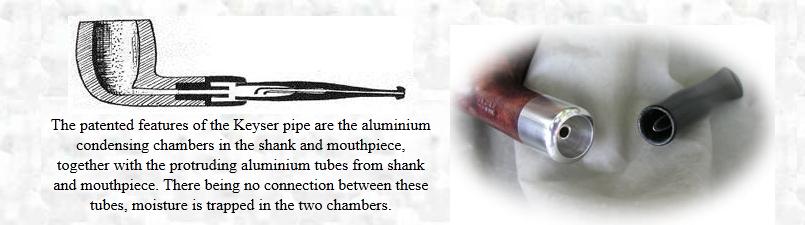
The Byford was a system pipe in its heyday.  The stem consisted of 3 tubes running back and forth in the stem in order to cool and purify the smoke. If it is not cleaned regularly the system gets clogged and there is nothing one can do to save it. I replaced the stem. The alu butt on the shank comes standard with the pipe. It was cleaned and polished. Buckeye Burl shank ring added. Bowl sanded and stained. Image

LOJ se Vlieg Masjien (Lord Oom Jan’s Flying Machine)

Pipe: Keyser Hygienic patent, shape Unknown.

Location: Pretoria, South Africa (Antique market)

Price: R10-00 (ZAR)

Diagnosis: Cracked shank. Broken Stem. Heavily smoked.

For those of you who are familiar with the Keyser pipe, this looks nothing like it. I may get shot for tampering with tradition South African pipe lore but this is how it came out. Named after the South African carver Jan Pietenpauw (LOJ) as parts for the pipe were salvaged from his reject box in order to fix the pipe. Brass shank ring added to repair the crack in the shank. Buckeye burl extension added to seat the shank extension. Stem was replaced by spinning down a pre mould to create a military mount fit. Image