Tag Archives: reaming a pipe

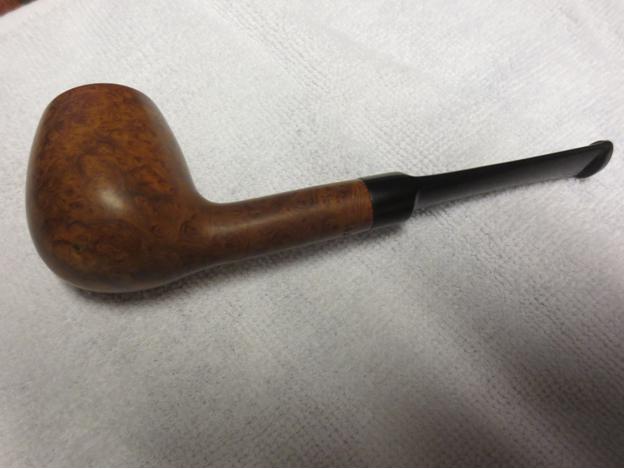
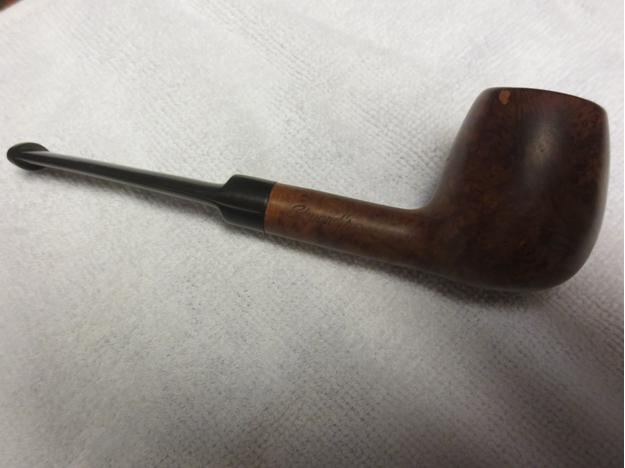
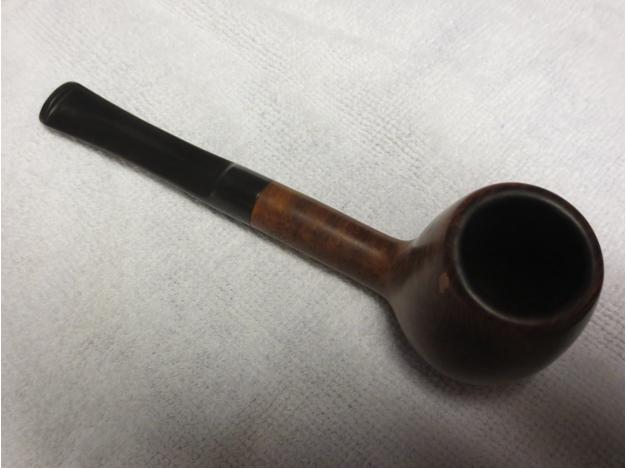
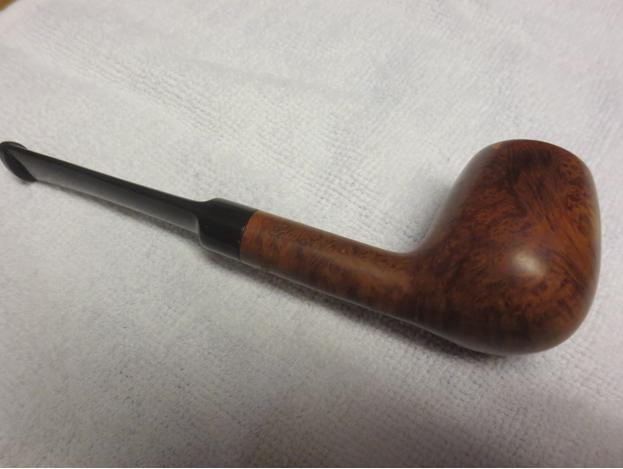
Cleaning up an Edward’s Brandy Shaped pipe


Blog by Steve Laug

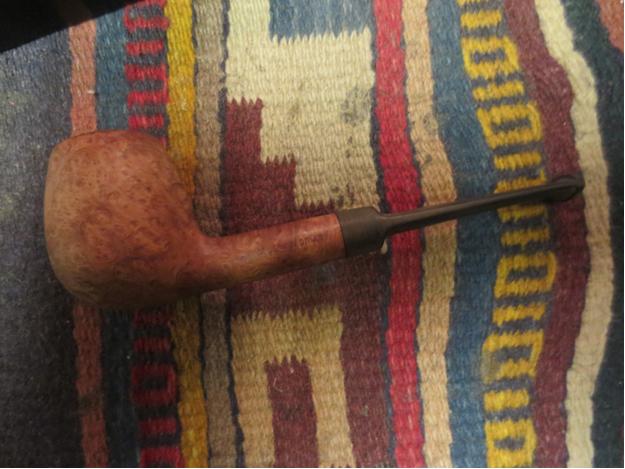
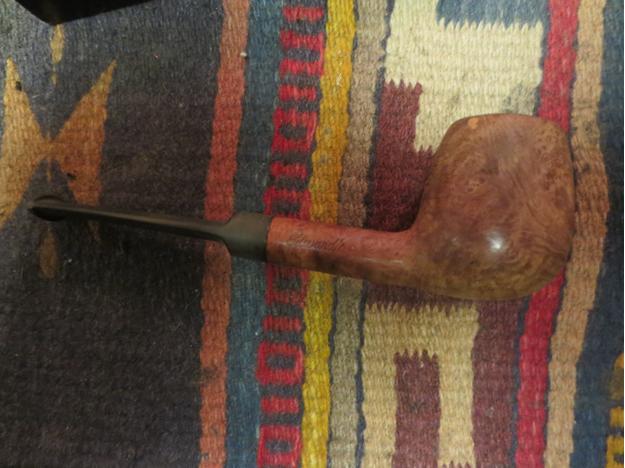
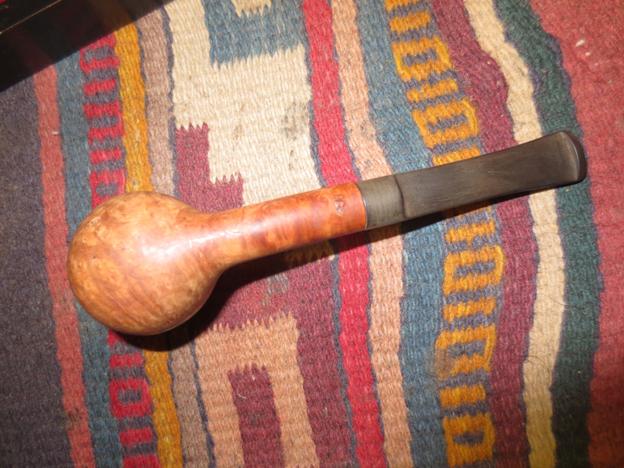
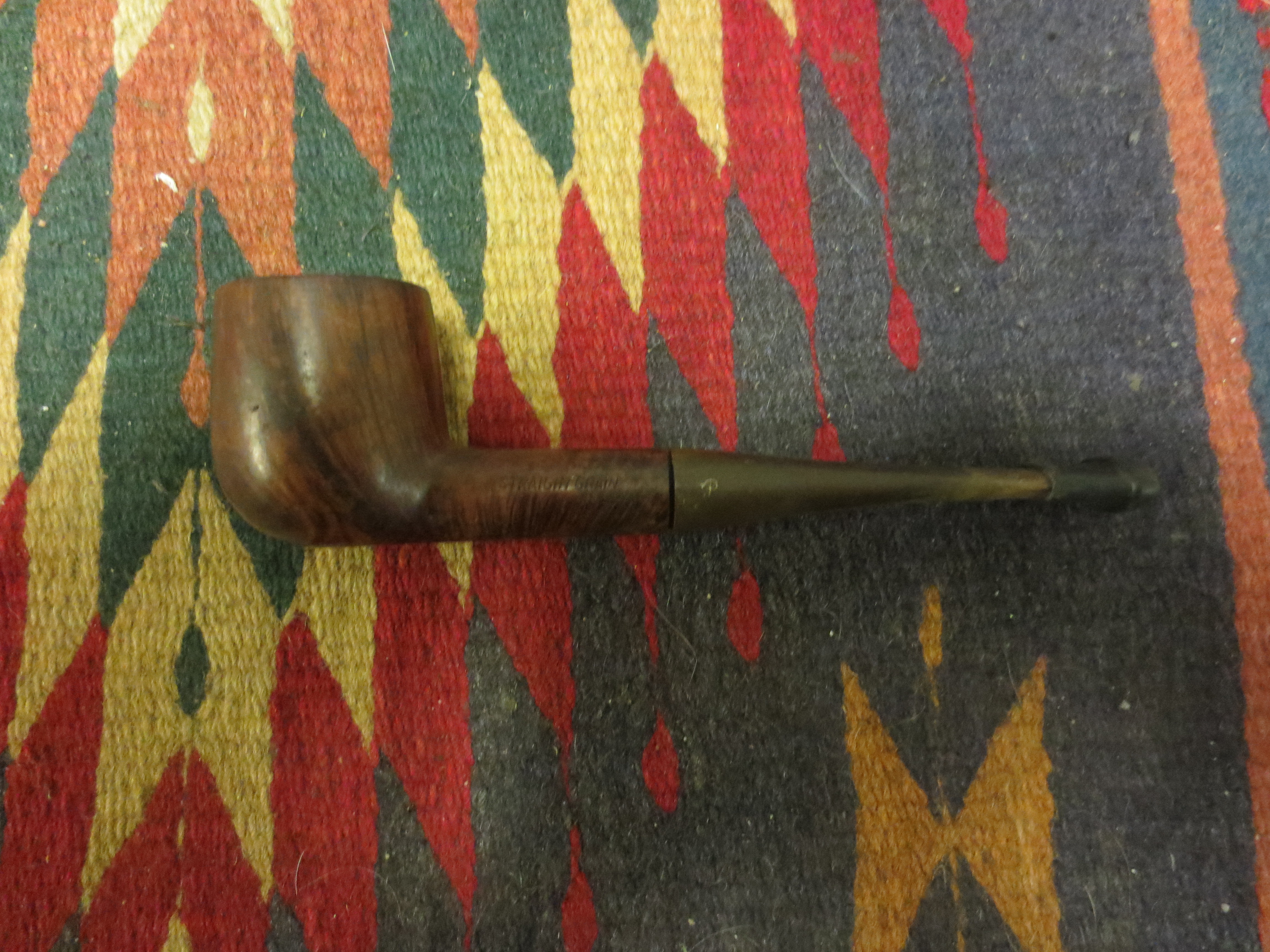
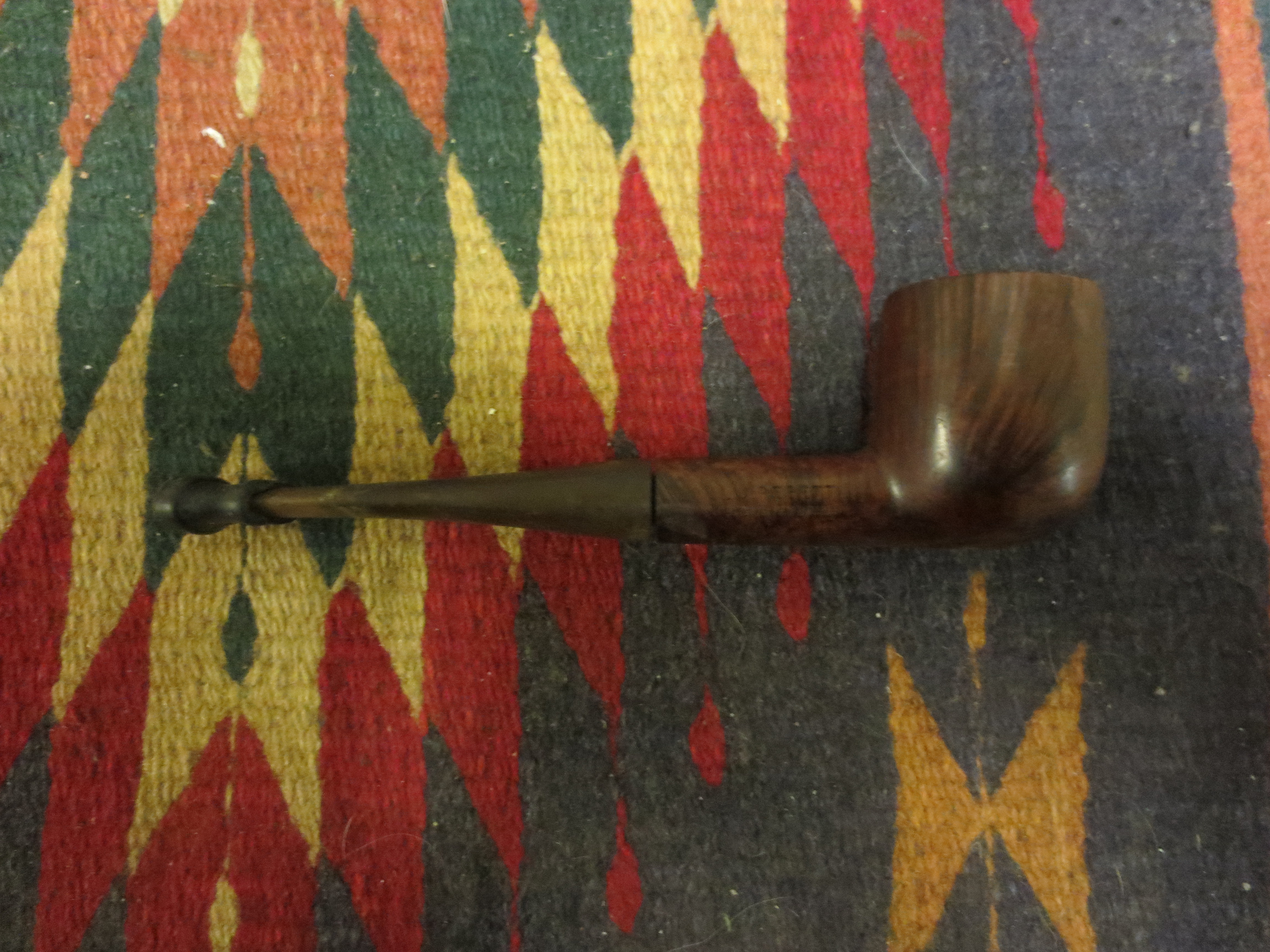
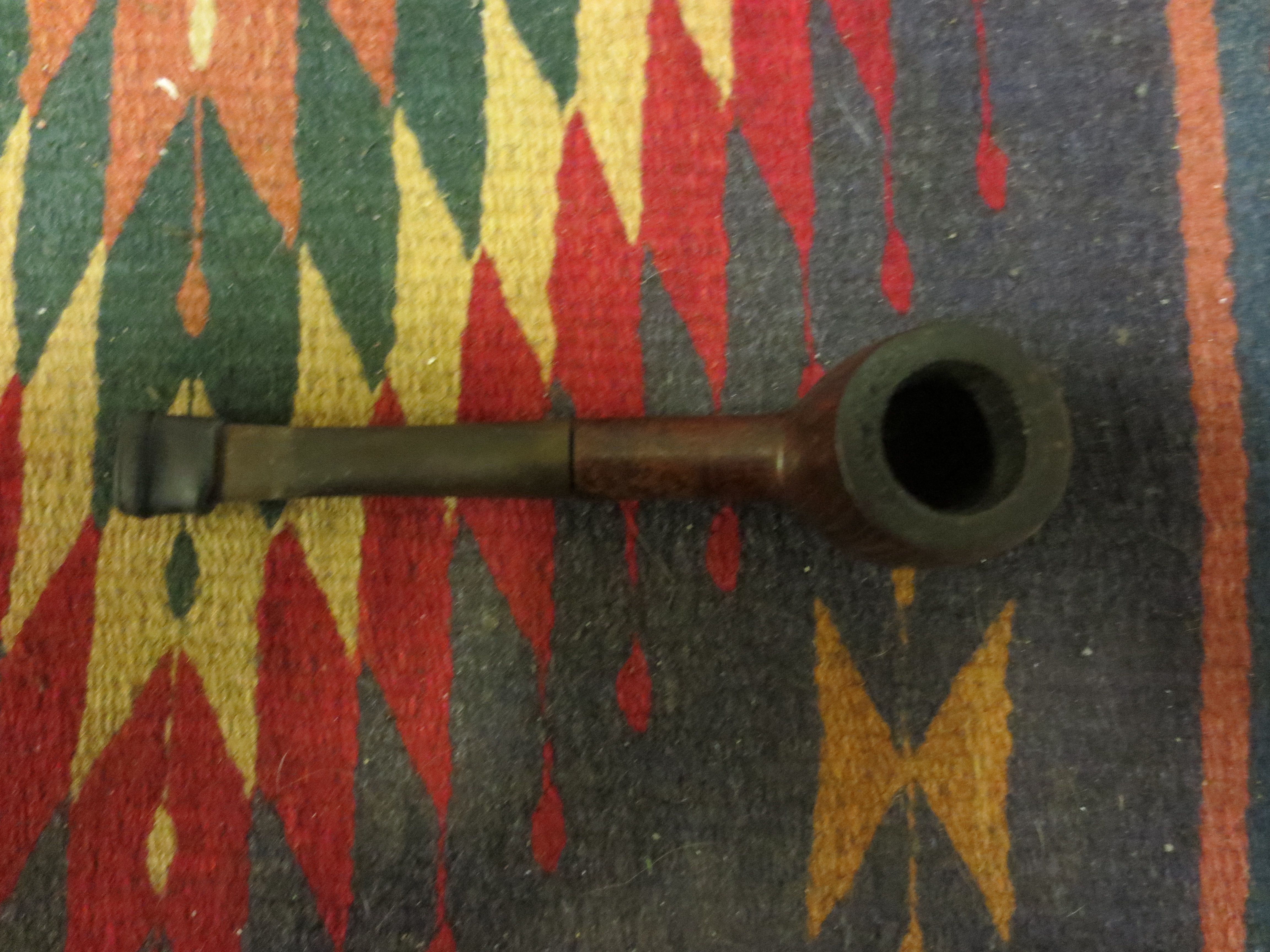
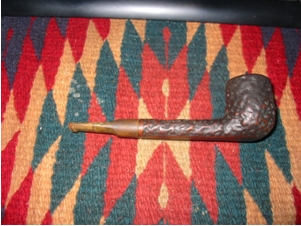
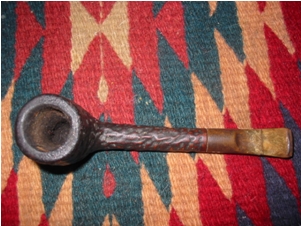
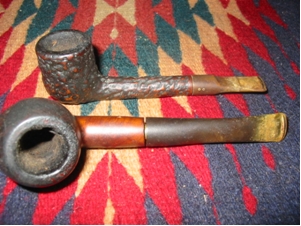
Label Logo_mediumThe third Edward’s pipe that came to me in the box of pipes to clean up and sell for the support of Smokers Forums is stamped Algerian Briar in block print on the left side of the shank and on the right side Edward’s in script. There is a large 7 toward the bowl end of the underside of the shank. Near the shank it is stamped 13L which according to Edwards shape charts generally has a 7 as the first number. I think this is the same age as the previous pipes I have been working on and it only has the two digits and the letter L. That numbering is called a large apple. On the original pipes it appears that the pipe originally had a taper stem. That would explain why this stem is slightly loose and does not perfectly match the diameter of the shank.

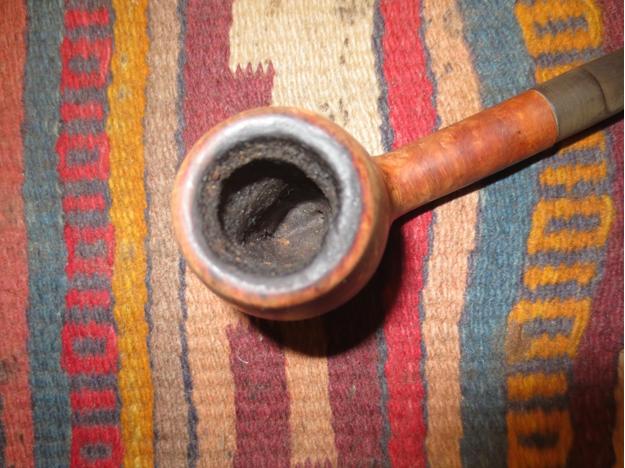
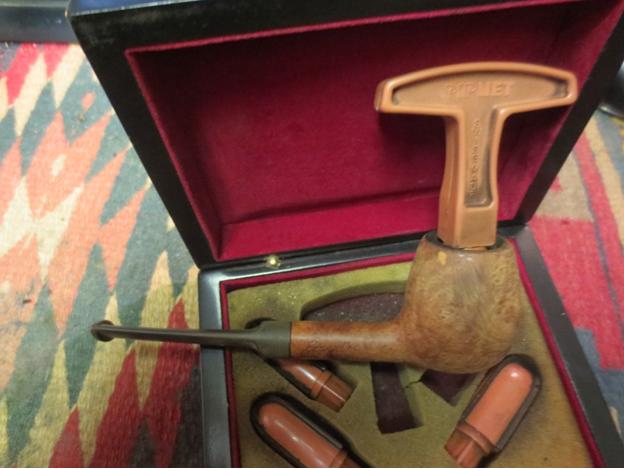
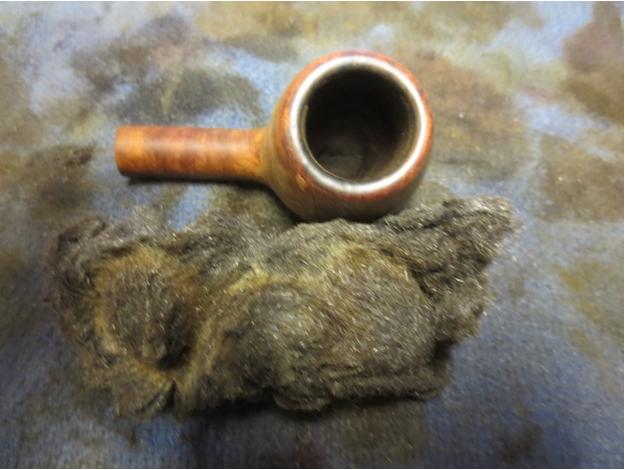
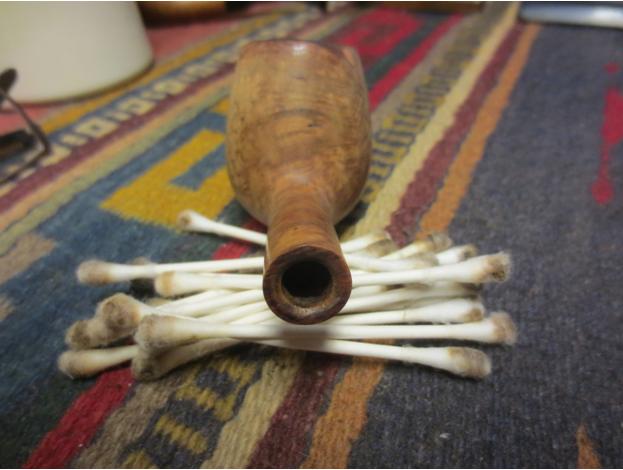
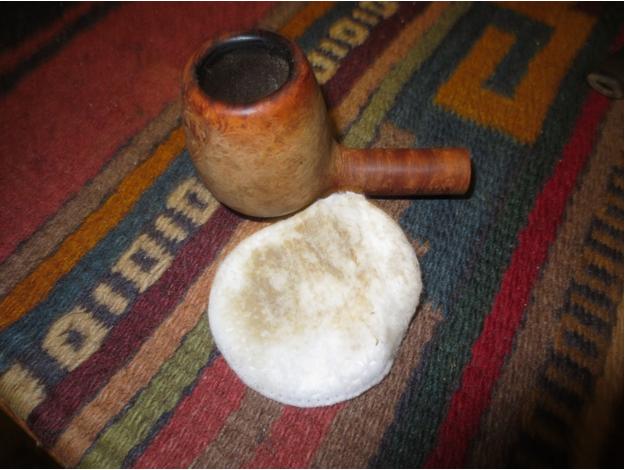
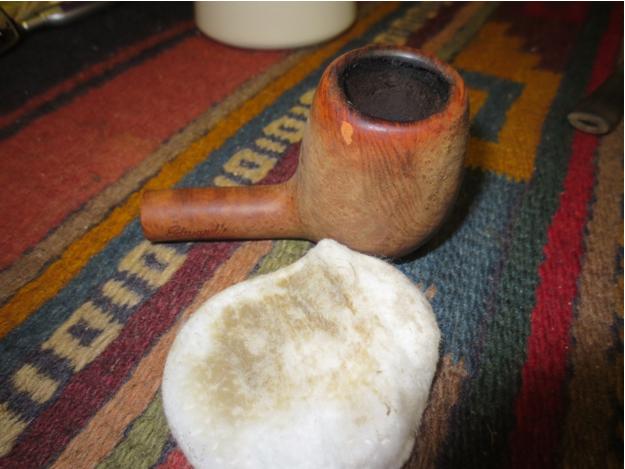
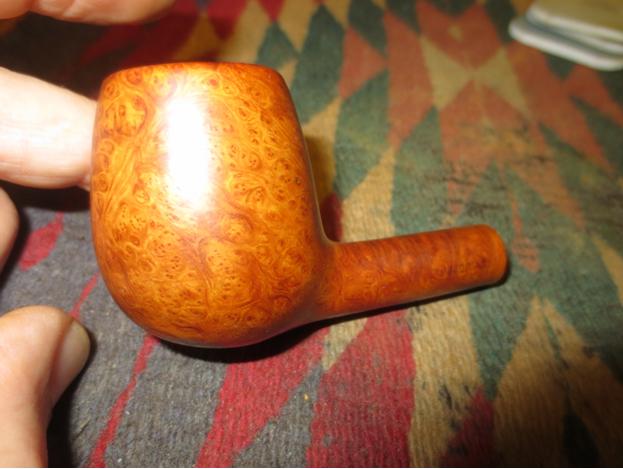
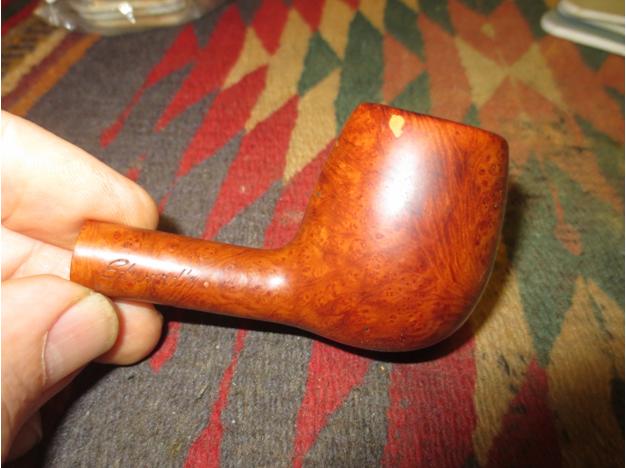
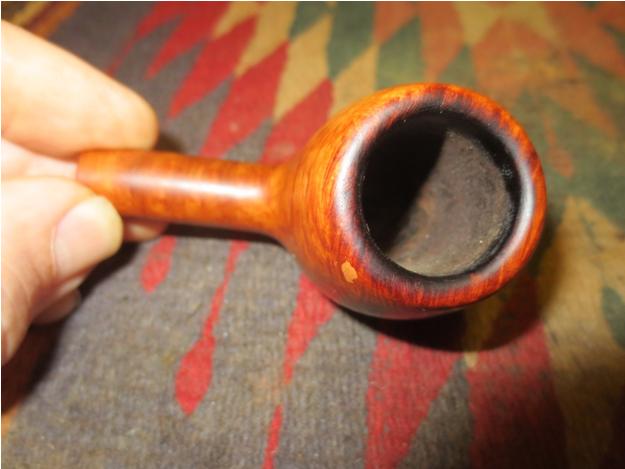
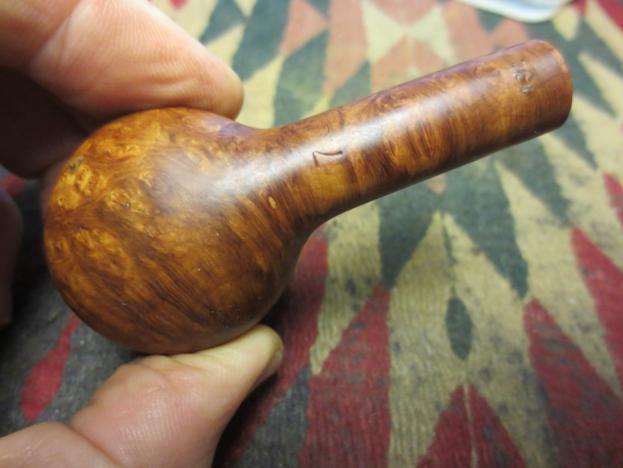
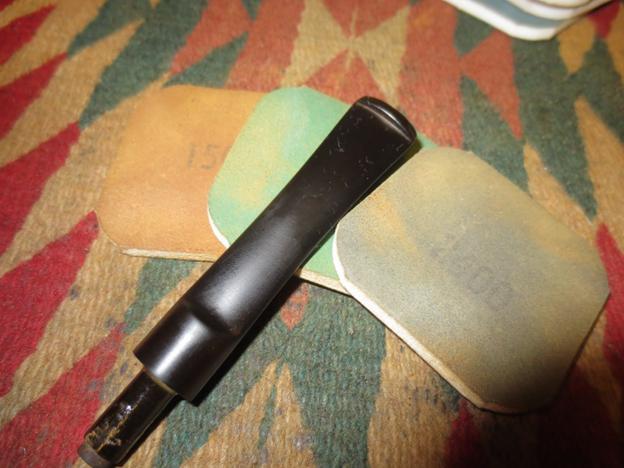
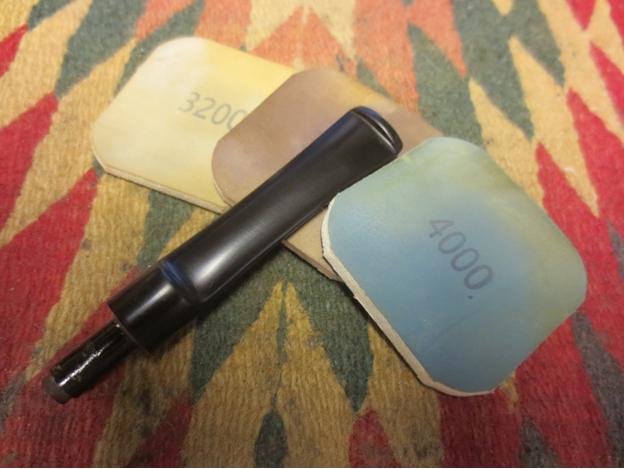
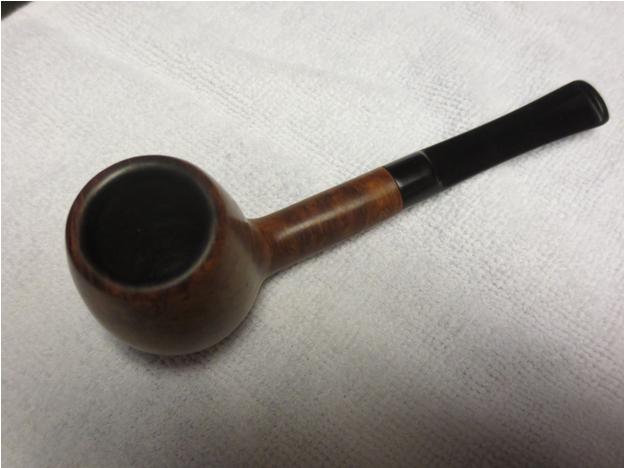
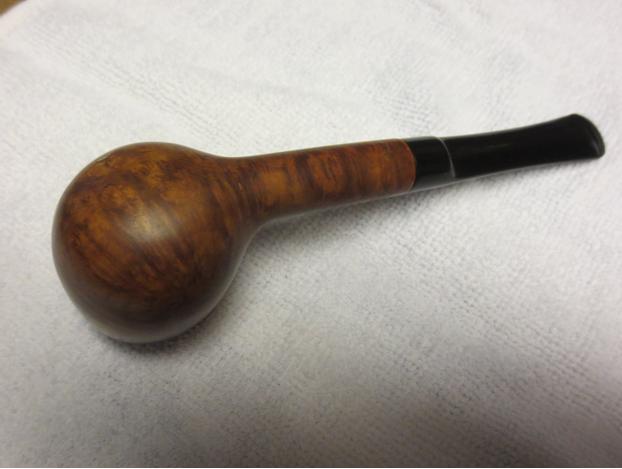
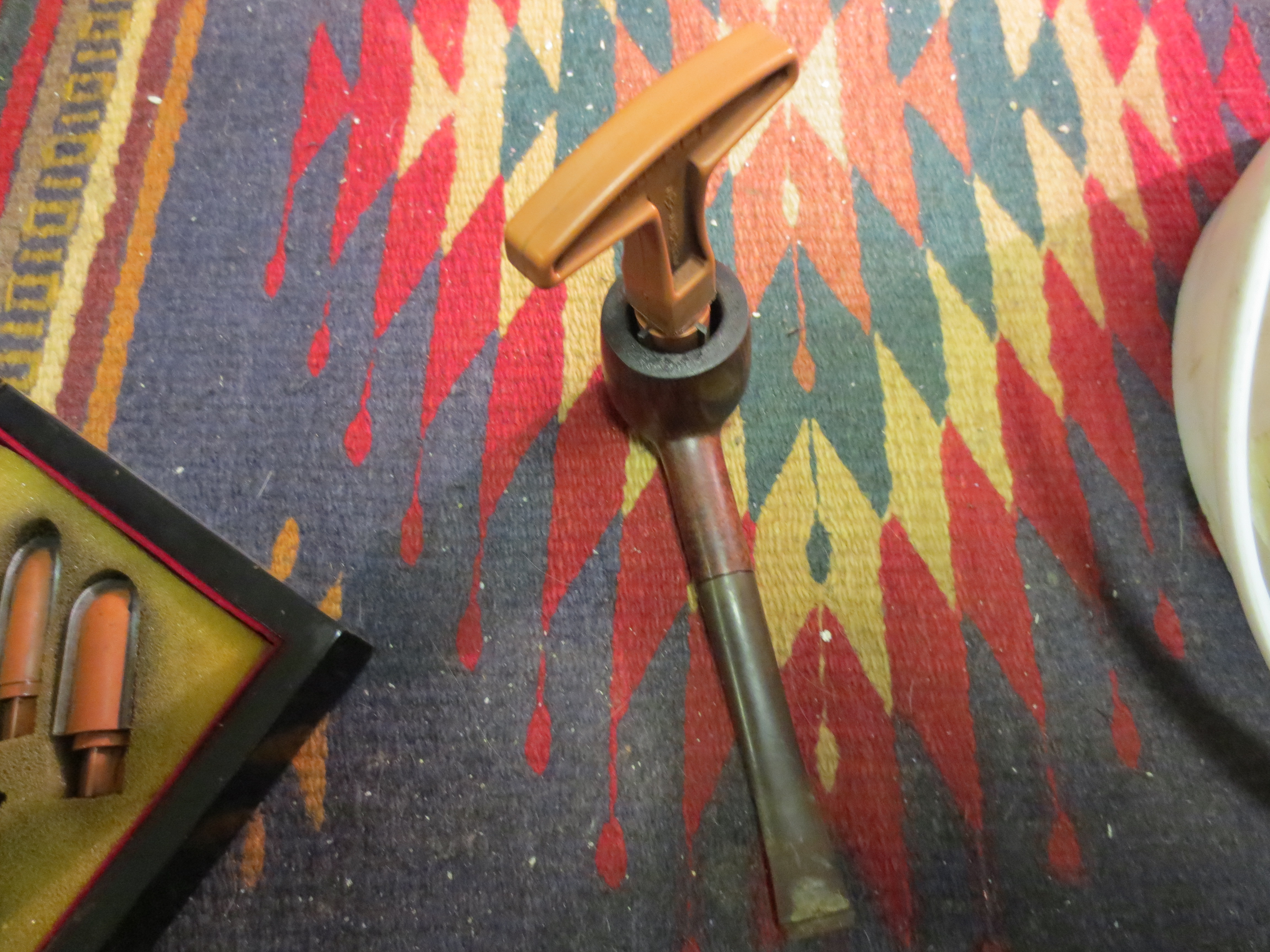
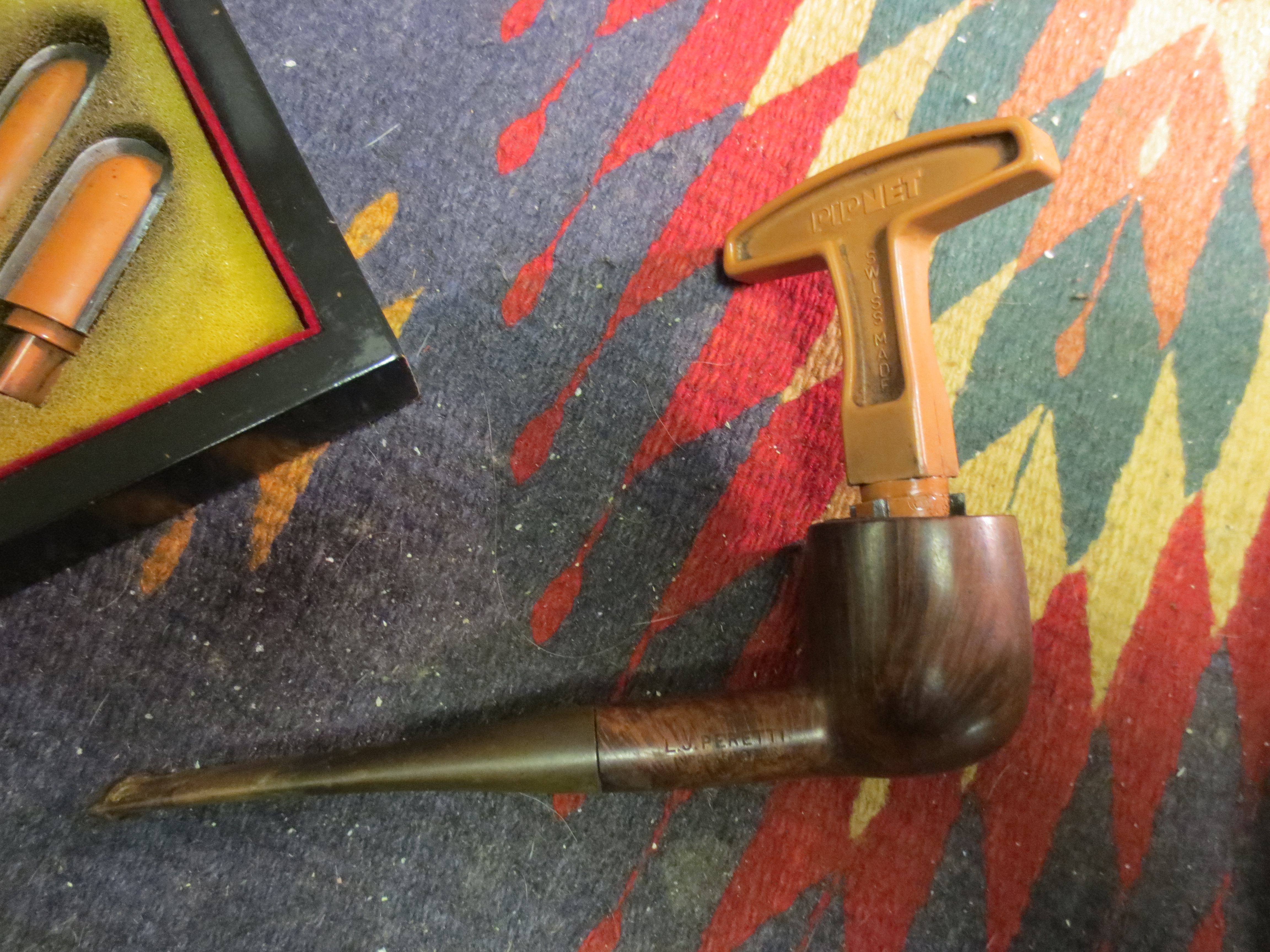
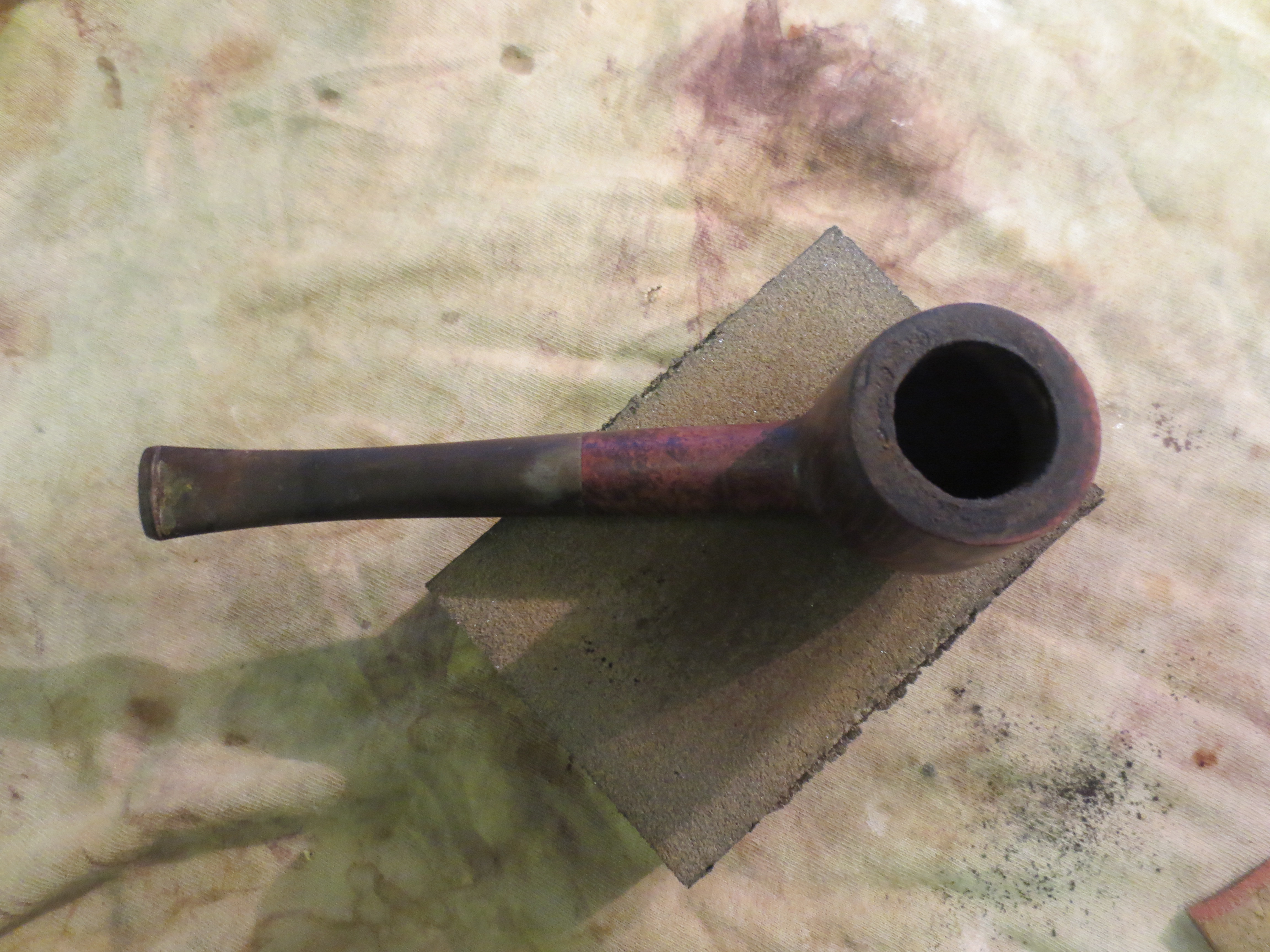
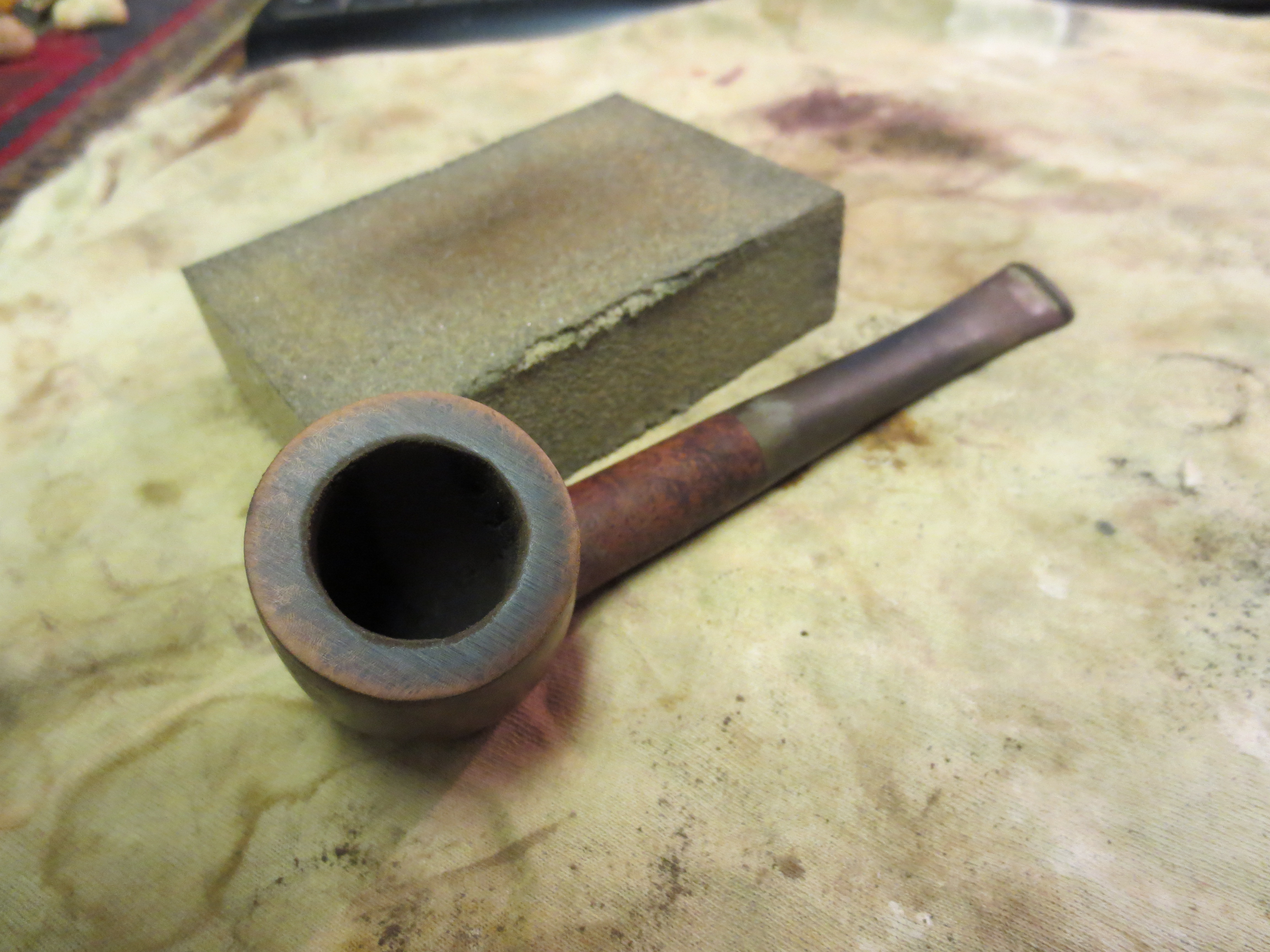
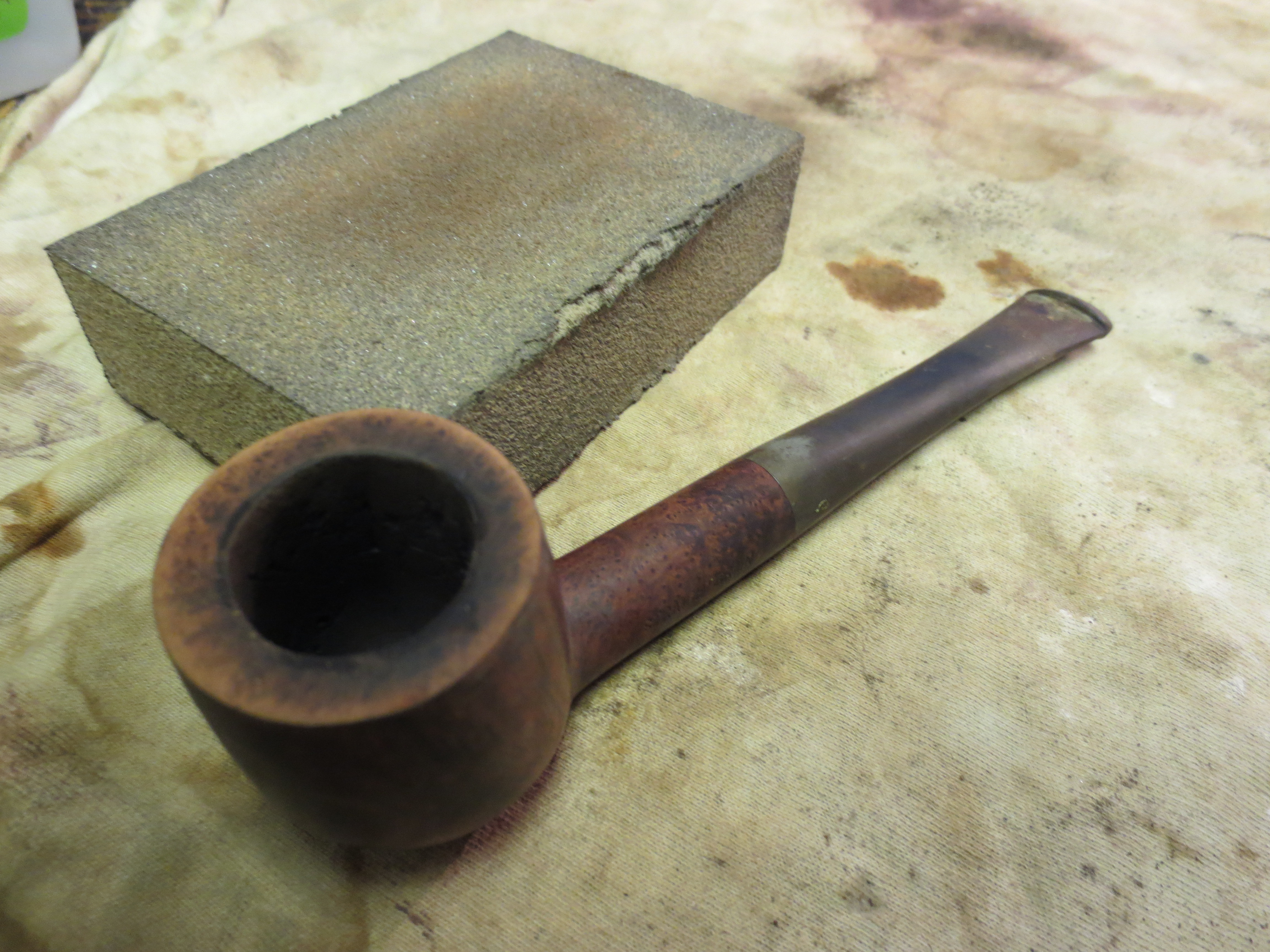
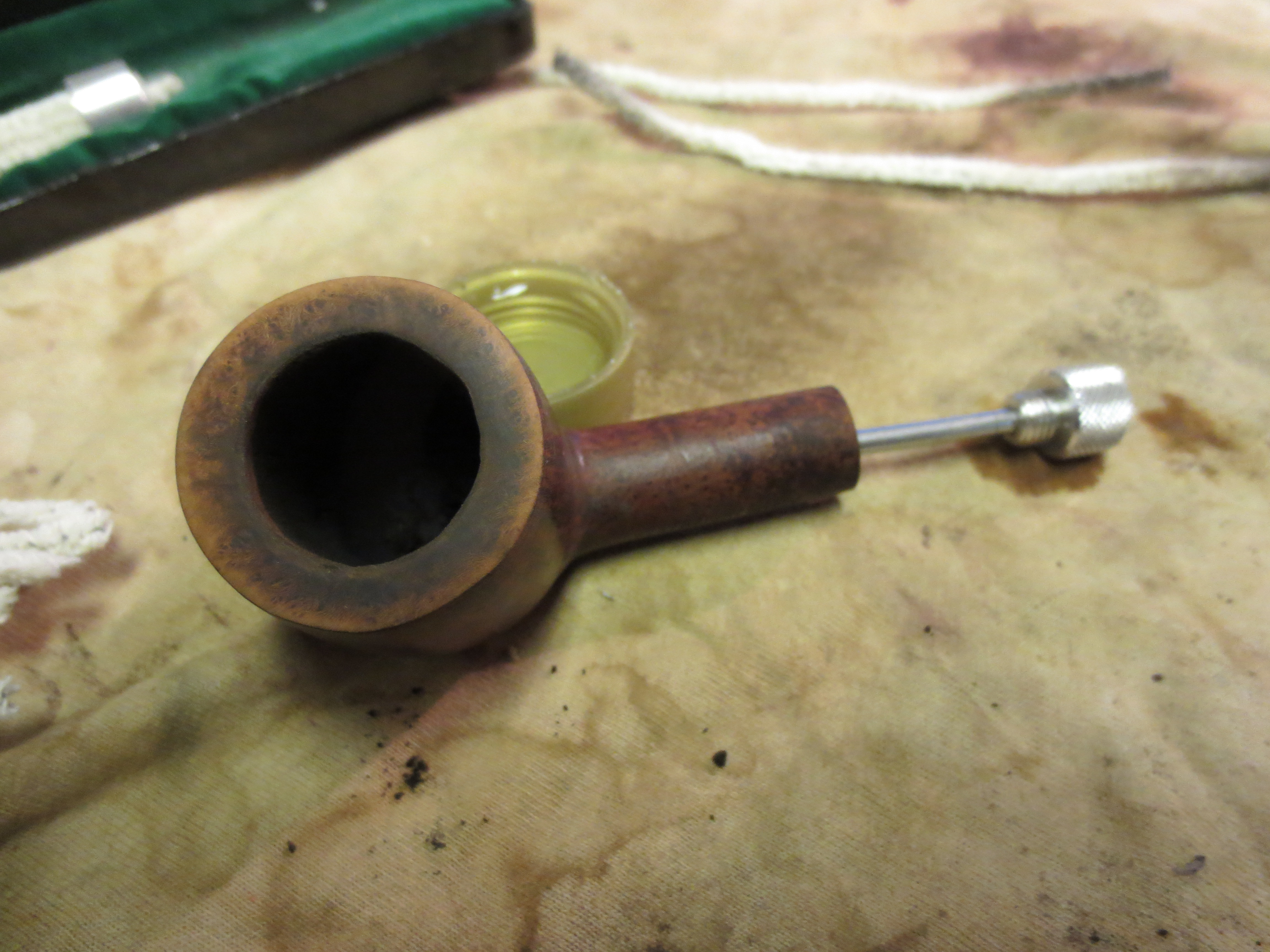
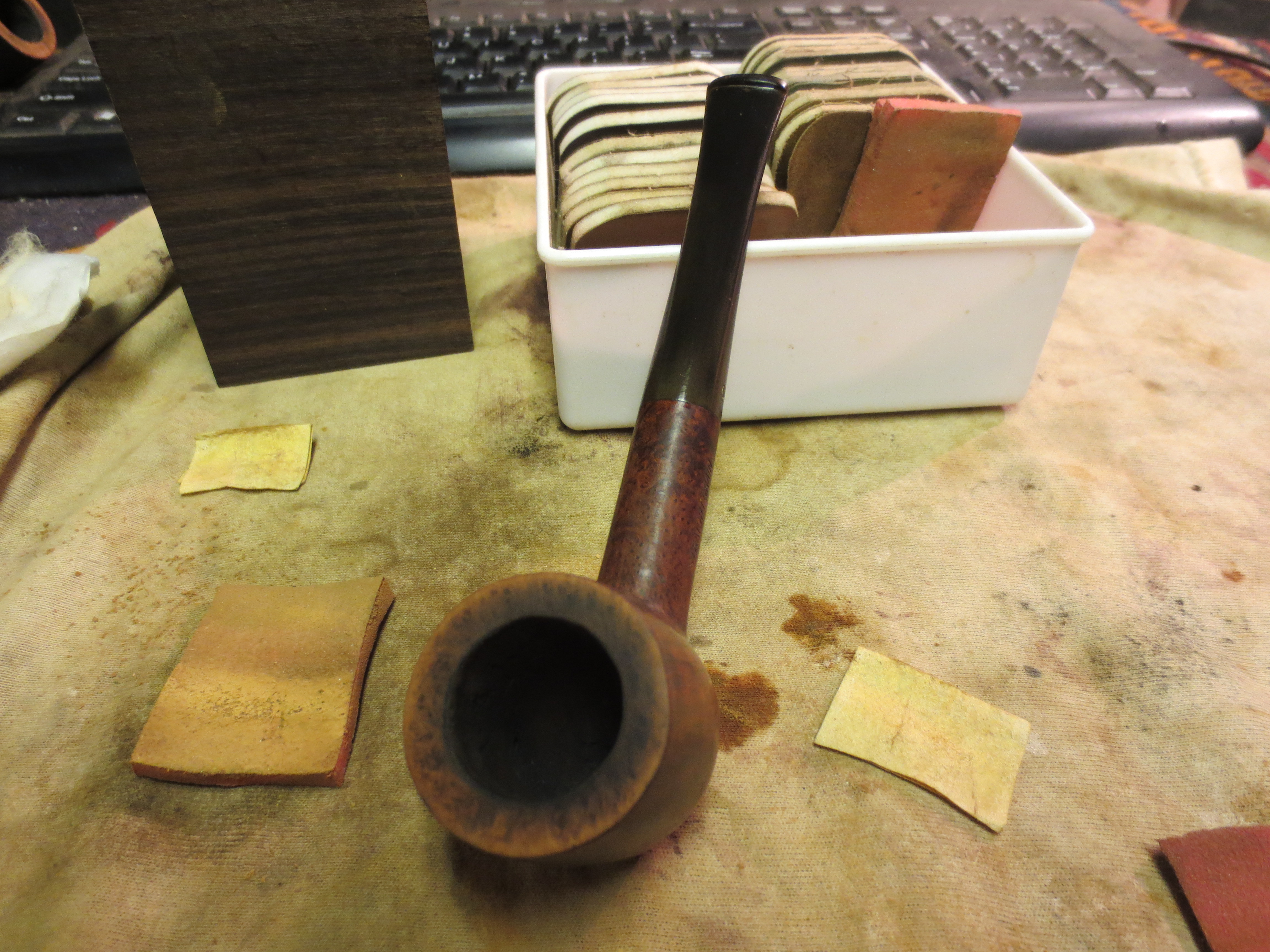
It is about the same size as the Dublin and the apple that I just finished restoring. It has similar grain. The back and front of the bowl are cross grain and the sides are birdseye grain. The top and the bottom of the bowl and the shank are cross grain as well. The finish on the bowl was in rough shape. The briar was dry and lifeless looking. The surface of the pipe was dirty and grimy. The rim was covered with an overflow of lava like the other pipes in the lot. The bowl had a thick cake that had the same sticky and crumbling consistency as it had in the other bowls. The stem was oxidized and had some tooth chatter on the top and the bottom of the stem. The internals of the stem and the shank were very dirty and covered in a thick tar. There were quite a few fills in the bowl. There was a large on the back right side near the top of the bowl. There were several smaller fills on the front of the bowl and on the underside at the bowl shank junction. There were also some small sandpits that were not filled. Like all of the Edward’s pipes that I have worked on this one was natural briar. Once it was cleaned up it would have a rich natural look that would darken over time and use.Brandy1 Brandy2 Brandy3I took a close-up photo of the bowl to show the build up on the rim and also the odd configuration of the cake.Brandy4 Brandy5I reamed the bowl with a PipNet pipe reamer and started with the smallest cutting head and worked my way up to the head that was the same diameter as the bowl. I reamed it back to bare wood and cleaned out the debris that was left with a pen knife.Brandy6 Brandy7I scrubbed the rim with 0000 steel wool to remove the lava overflow that had hardened on the rim. I have used the steel wool on the last two pipes and I am impressed with how easy it makes this process. Of course it helps that the bowl is a natural finish so I am not damaging any of the original finish on the bowl with the steel wool.Brandy8I cleaned the internals with pipe cleaners, cotton swabs and alcohol until the inside was clean and sweet smelling. I swabbed out the bowl with a cotton swab and alcohol to clean up any of the dust left behind by the steel wool.Brandy9I scrubbed the exterior of the bowl with acetone on cotton pads to remove the ground in grime in the finish. I scrubbed it until the finish was clean and lifeless looking.Brandy10 Brandy11 Brandy12I gave the bowl a light coat of olive oil and rubbed it in to bring some of the original colour back to the briar and give it a little life. The photos below show the bowl after this treatment. It has some awesome grain – along with a few sandpits and fills.Brandy13 Brandy14 Brandy15 Brandy16With the bowl finished it was time to work on the stem. I am pretty certain that this is a replacement stem as the fit is not quite right and according to the charts it was supposed to be a taper stem. However, I decided to go with the stem that came with it in the box I received and clean it up and make it fit as best as possible. I sanded the stem with a medium and a fine grit sanding sponge and then went on to sand with micromesh sanding pads. I wet sanded with 1500-2400 grit pads and then rubbed the stem down with Obsidian Oil. I went on to dry sand it with 3200-4000 grit pads and gave it another coat of oil.Brandy17 Brandy18I buffed the stem with Tripoli and then White Diamond before sanding it with the final three grits of micromesh – 6000-12000 grit.Brandy19I buffed the pipe with Blue Diamond Plastic polish on the wheel and then gave bowl and stem multiple coats of carnauba wax. I buffed it with a clean flannel buff and then took it back to the table and hand buffed it with a microfibre cloth. The finished pipe is shown below. I kind of like the saddle stem as it gives the pipe a bit of an English flair.Brandy20 Brandy21 Brandy22 Brandy23 Brandy24 Brandy25

Different methods for removing a ghost from a pipe


Blog by Steve Laug

The latest pipe I worked on came with a stubborn ghost so I was forced to use almost all the tools in my arsenal for removing the ghost. As I worked through the various procedures that I use I thought it would be helpful to spell out each method individually for ease of reference. Some of the pipes I work on are quite easy to clean and merely take pipe cleaners, cotton swabs and alcohol. Most though need a thorough reaming and cleaning. Other like the one in the photos below take a lot of elbow grease and a lot of different methods to remove the ghosts and deliver a clean smelling pipe.

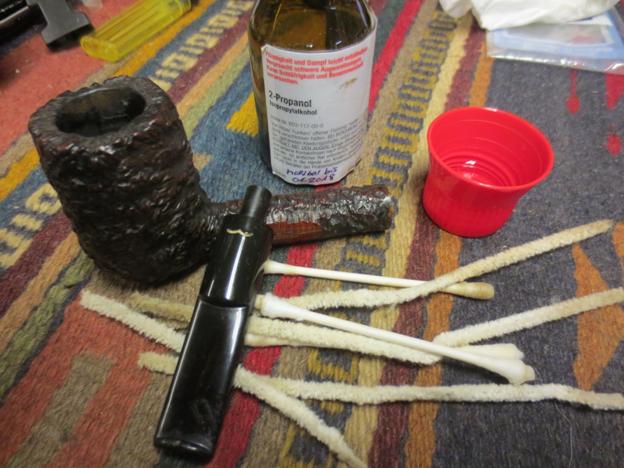
1. Thorough cleaning and reaming – the first method is by far the one I use the most. I have found that 9 times out of 10 I ream the pipe with a PipNet reamer with four different sized cutting heads. I generally start with the smallest head and work my way up to a cutting head that is close to the size of the bowl. I will finish any portion left behind with a sharp pen knife. I use cotton swabs, pipe cleaners and isopropyl alcohol to scrub out the shank and bowl as well as the stem. This method works well on many of the lightly smoked pipes that I clean out. I also find that those pipes used to smoke straight Virginia tobaccos or Virginia Perique tobaccos are the cleanest and generally do not have a ghost. The worst for tars and buildup are the pipes used for aromatics. Those smoked with English/Balkan blends are somewhere in between.Cam8

Cam9

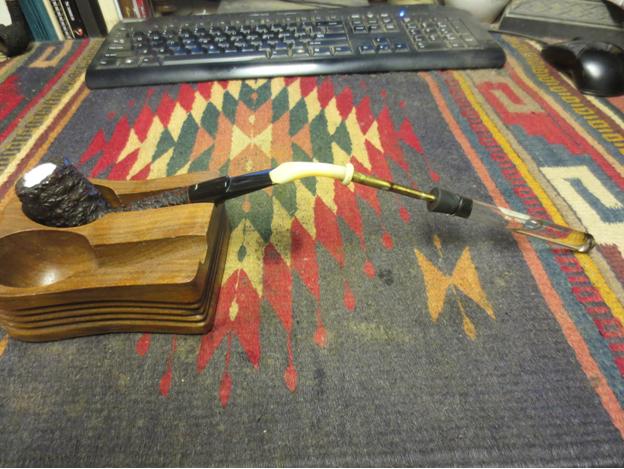
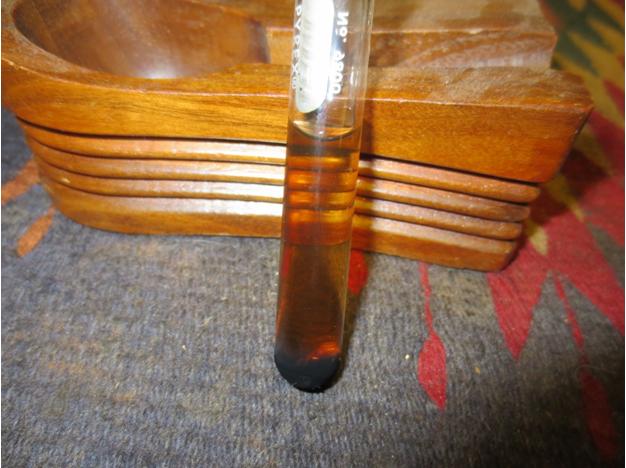
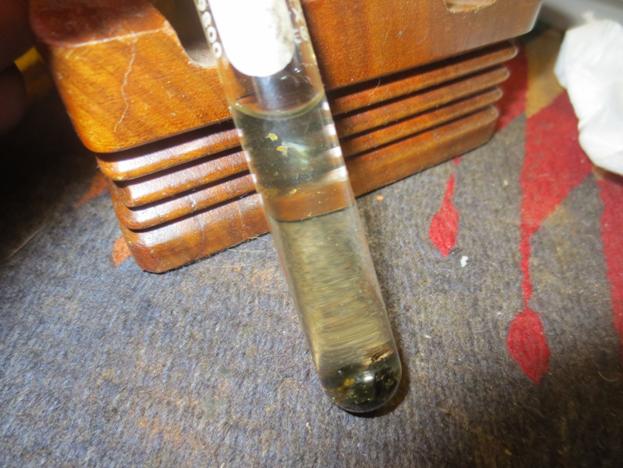
Cam15 2. Retort – The second tool in the kit is a retort. A retort is a simply made tool that includes a test tube, cork, a connector and surgical tubing. The surgical tubing is stretched over the stem or inserted in the shank (see Andrew Selking’s posts). A cotton ball is stuffed into the bowl and alcohol put in the test tube. Canned heat, an alcohol lamp or a candle is used to heat the alcohol to boiling and it is pushed through the stem, shank and bowl. When the test tube is removed from the heat source the cooled alcohol returns to the test tube. It carries with it tars and oils that have been boiled out of the pipe. I have found that I have to often repeat this process several times before I get a clear alcohol back in the cooled tube. I am currently working on a pipe that I have used the retort on four times and just now am getting a clear alcohol return in the test tube. Once I remove the cotton ball and the tubing I use pipe cleaners, cotton swabs and alcohol to remove any remnants of tars and oils. Once the pipe dries out the retort has generally removed all but the most stubborn ghosts and leaves the pipe smelling clean.Cam10

Cam11

Cam12

Cam13

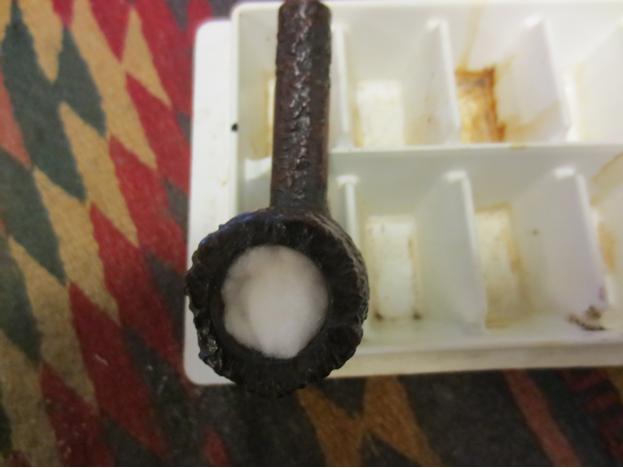
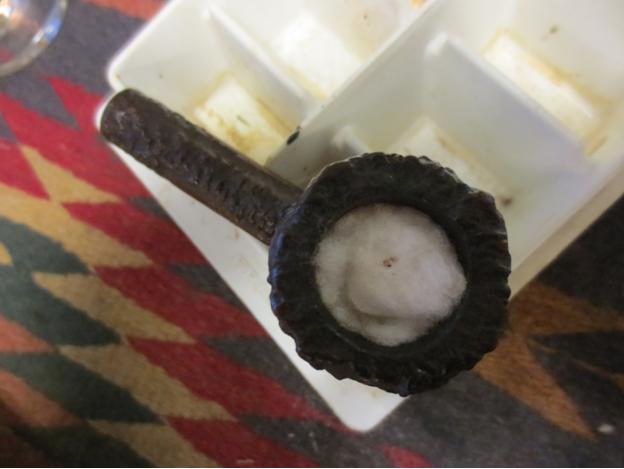
Cam14 3. Cotton ball and alcohol treatment – This treatment is one that I use instead of the salt and alcohol treatment that many have written about. Sometimes I use this method instead of a retort – if the pipe has a ghost but is not terribly dirty. Other times I use it along with a retort. I stuff the bowl full of cotton balls all the way to the bottom. I stick a cotton swab in the shank to plug the airway or in some cases put a rubber stopper or cork in the end of the shank. I use a rubber ear syringe to fill the bowl with alcohol. I used 99% isopropyl alcohol and fill it until the cotton is covered. As it evaporates I add more alcohol to the bowl. The alcohol generally goes into the shank as well and draws the oils and tars into the cotton balls in the bowl. I leave the pipe sitting in an old ice cube tray over night or until the cotton is darkened. Then I remove the cotton balls and repeat the process until the cotton remains white. Once the bowl is empty I use pipe cleaners, cotton swabs and alcohol to clean out any remaining oil and tars in the bowl and shank.Cam16

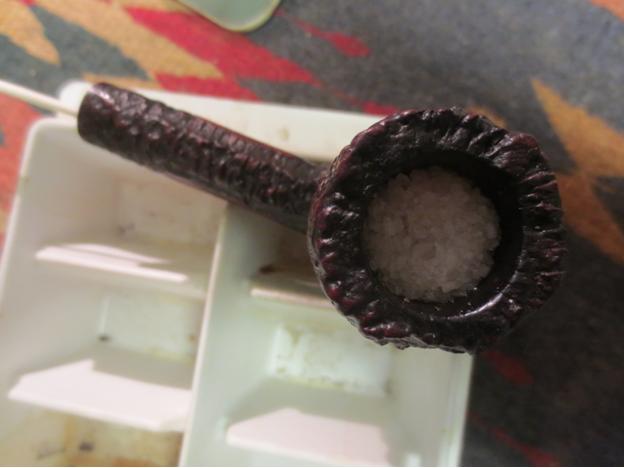
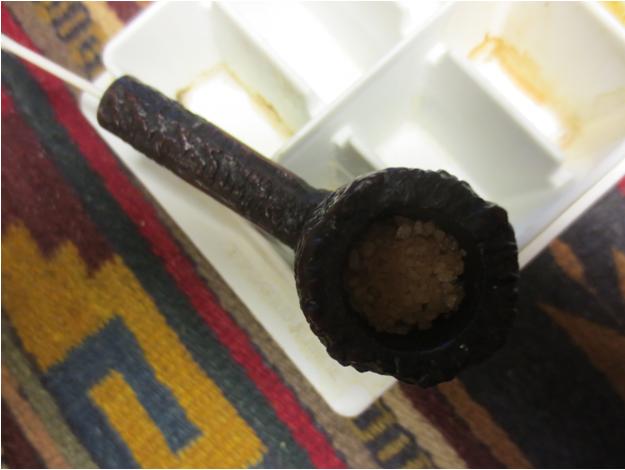
Cam18 4. Kosher salt and alcohol treatment – The salt and alcohol treatment is a variation on the above method. I used it for years and had no issues with pipes that I did the treatment on. Many have spoken of split shanks and bowls cracking after this treatment and will not use it. I have never had a problem so I continue to use it on stubborn bowls and ghosts. I use a Kosher sea salt that is in rock salt form and fill the bowl with it. I then use the rubber ear syringe to fill the bowl with alcohol. I prepare the shank in the same way either plugging it with a cork or stopper or even a cotton swab. I let the alcohol run into the shank and then set the pipe in the ice cube tray overnight. The alcohol wicks out the oils and tars from the briar and turns the salt dark. In the bowl in the pictures I had already used a retort and the cotton ball and alcohol treatment. The salt and alcohol treatment drew out more oils that were left. I empty the darkened salt from the bowl and then clean out the bowl and shank with alcohol, cotton swabs and pipe cleaners. The key is thoroughly flush out the salt with the alcohol and pipe cleaners/cotton swabs. I let the pipe dry for three or more days before I smoke a bowl in it.Cam19

Cam20

Cam21 5. Cotton ball and white vinegar treatment – This treatment is also a variation on the alcohol/salt and alcohol/cotton ball treatment. Instead of using alcohol as the liquid in the bowl I use white vinegar. I have found that it works wonders to draw out the tars and oils that are left behind by the alcohol. I also use it to freshen the foulest bowl. No need to rinse the bowl afterwards as the vinegar evaporates leaving behind a faint smell. I stuff the bowl with cotton balls and then fill it using an ear syringe. Like the previous methods I leave the pipe sitting overnight. I remove the cotton balls and clean out the bowl and shank with alcohol, pipe cleaners and cotton swabs to remove any remaining oils.Cam17 6. Activated Charcoal and heat treatment – The final option is to fill the bowl with activated charcoal pieces (I pick them up from aquarium shops or from the pet area at Walmart) and set it in a metal pan in the oven on the lowest heat setting that is available. The heat softens the oils and they are drawn out into the charcoal. I usually leave it in the oven for 15-30 minutes though could probably leave it in longer. I then dump out the charcoal and clean the bowl and shank with alcohol, pipe cleaners and cotton swabs.

The last pipe I worked on I used all of the methods other than the charcoal one. I may still have to use that as there is a faint ghost remaining in the pipe. For most of the pipes I work on a combination of one or two of the above methods accomplish the task. Only the most stubborn need to use all of them. Experiment with the methods and let us know what works for you and also any variations you might have adapted to improve the methods. Pass on what you have learned as for me that is the best part of the hobby – learning from another refurbisher what works for them.

An Interesting Challenge – Restoring a Horn Stemmed Austrian Silver Capped Briar Sitter


Blog by Steve Laug

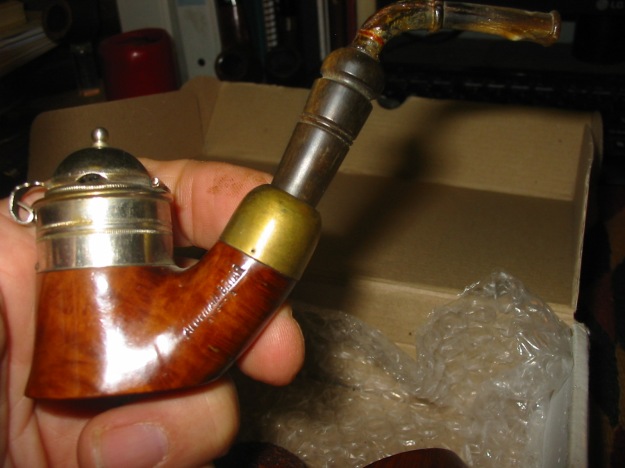
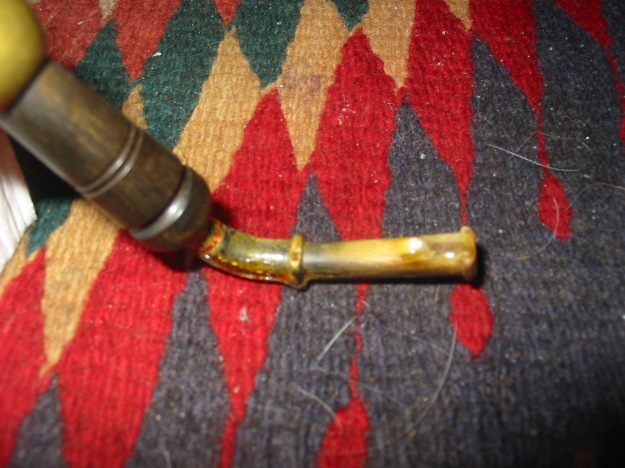
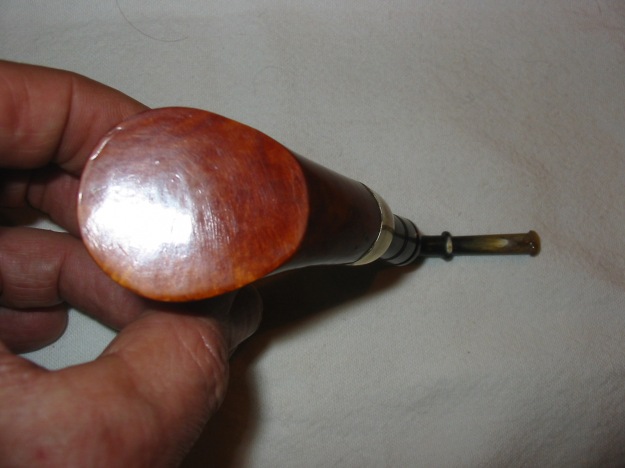
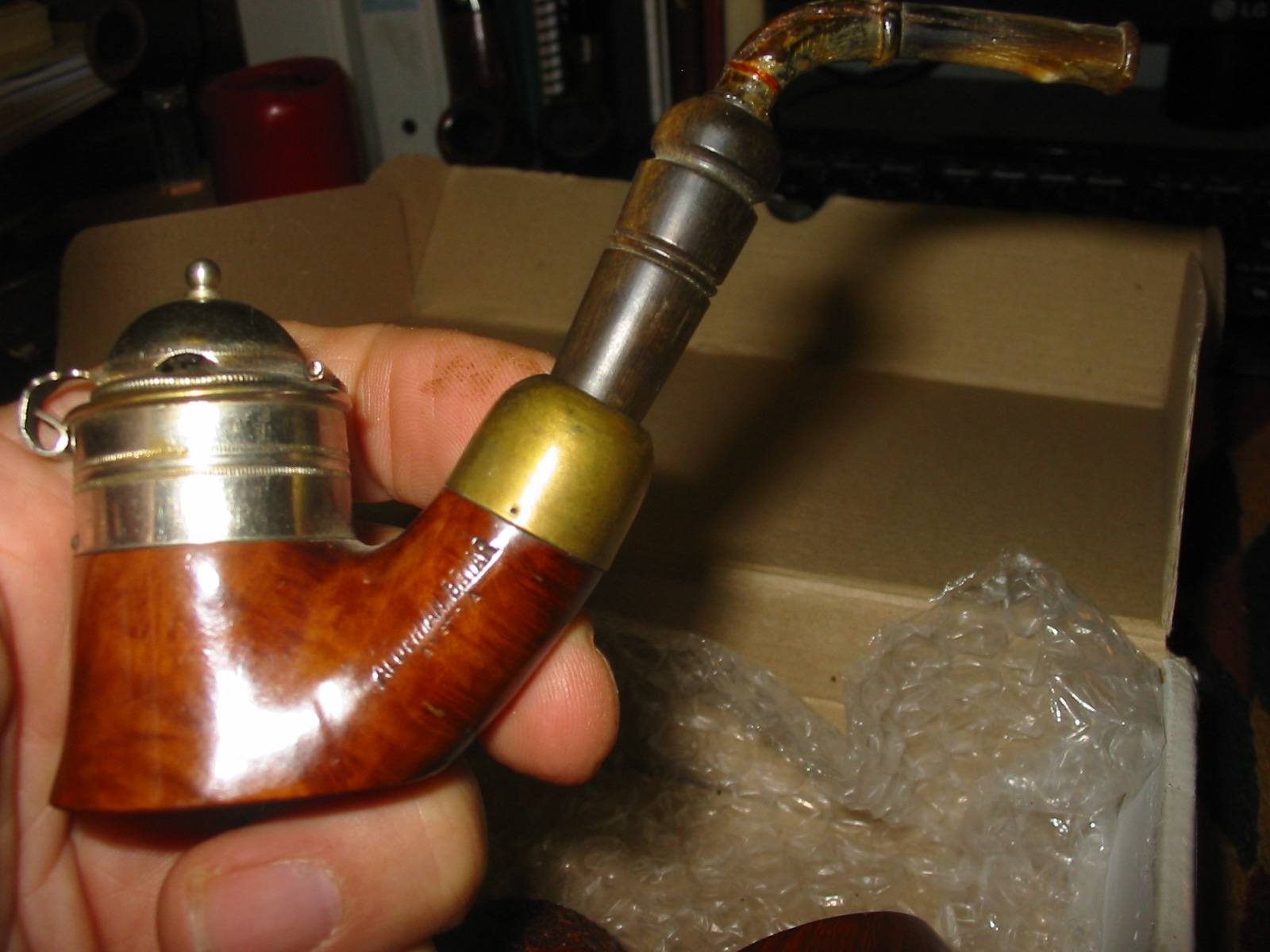
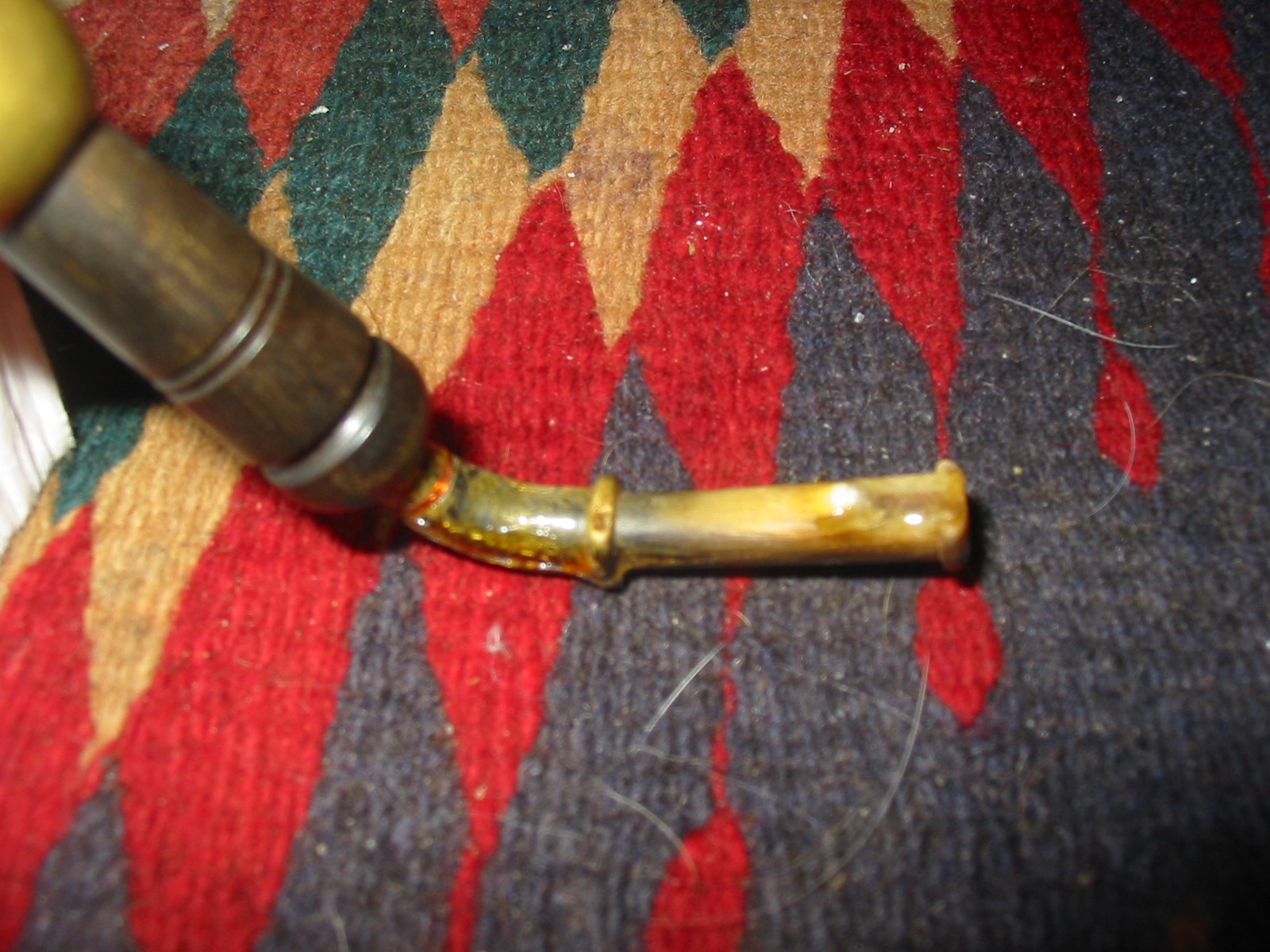
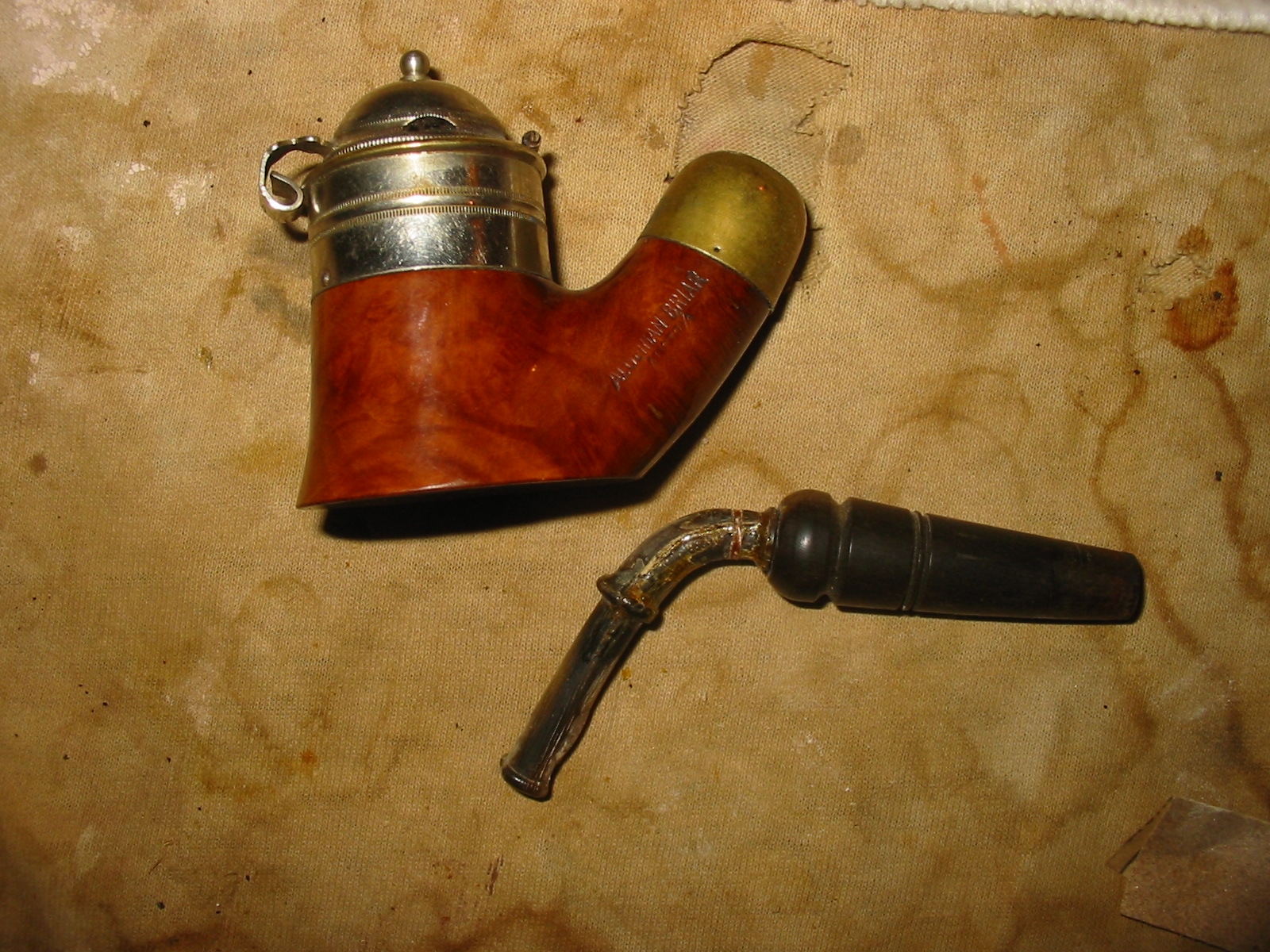
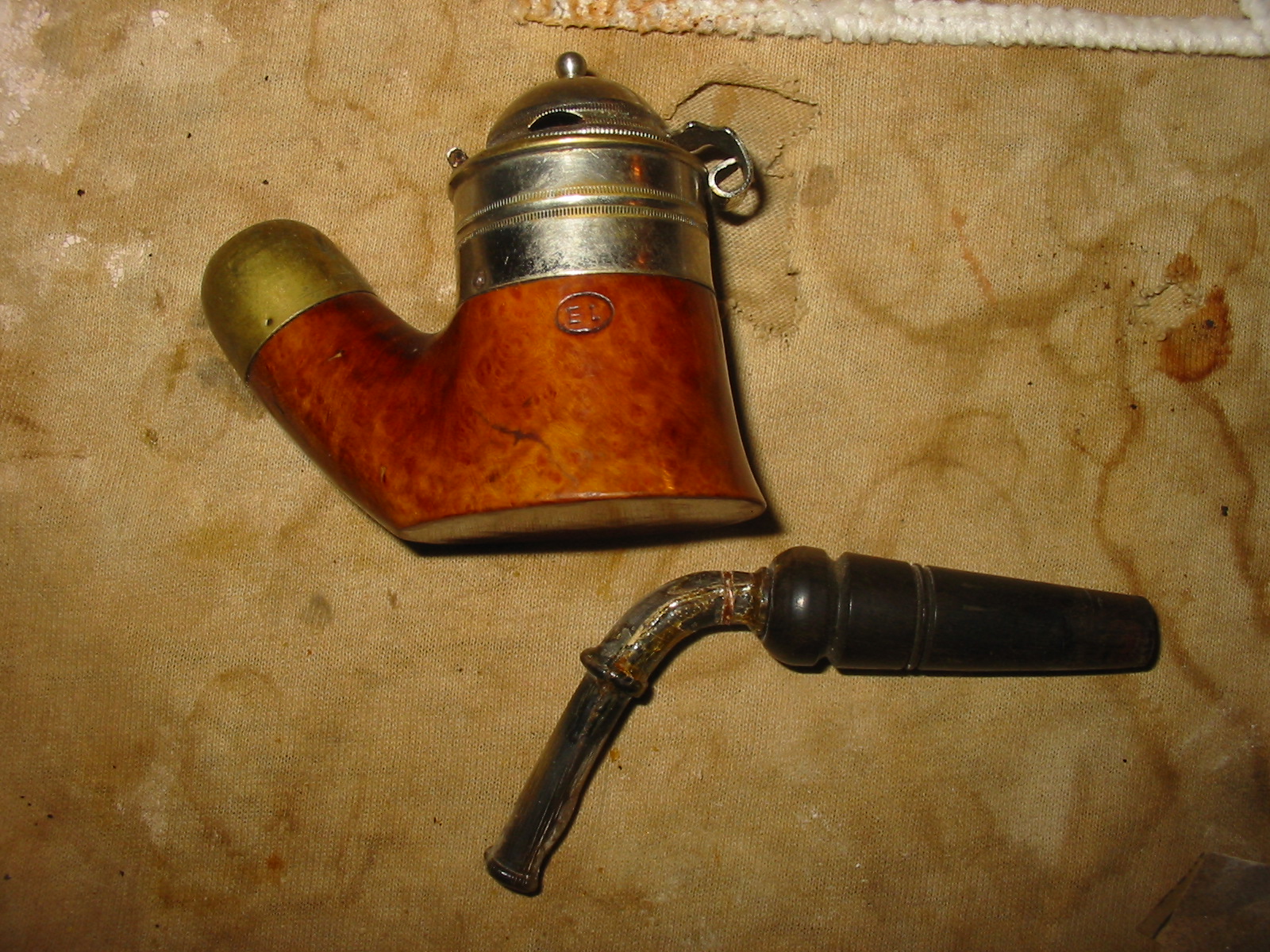
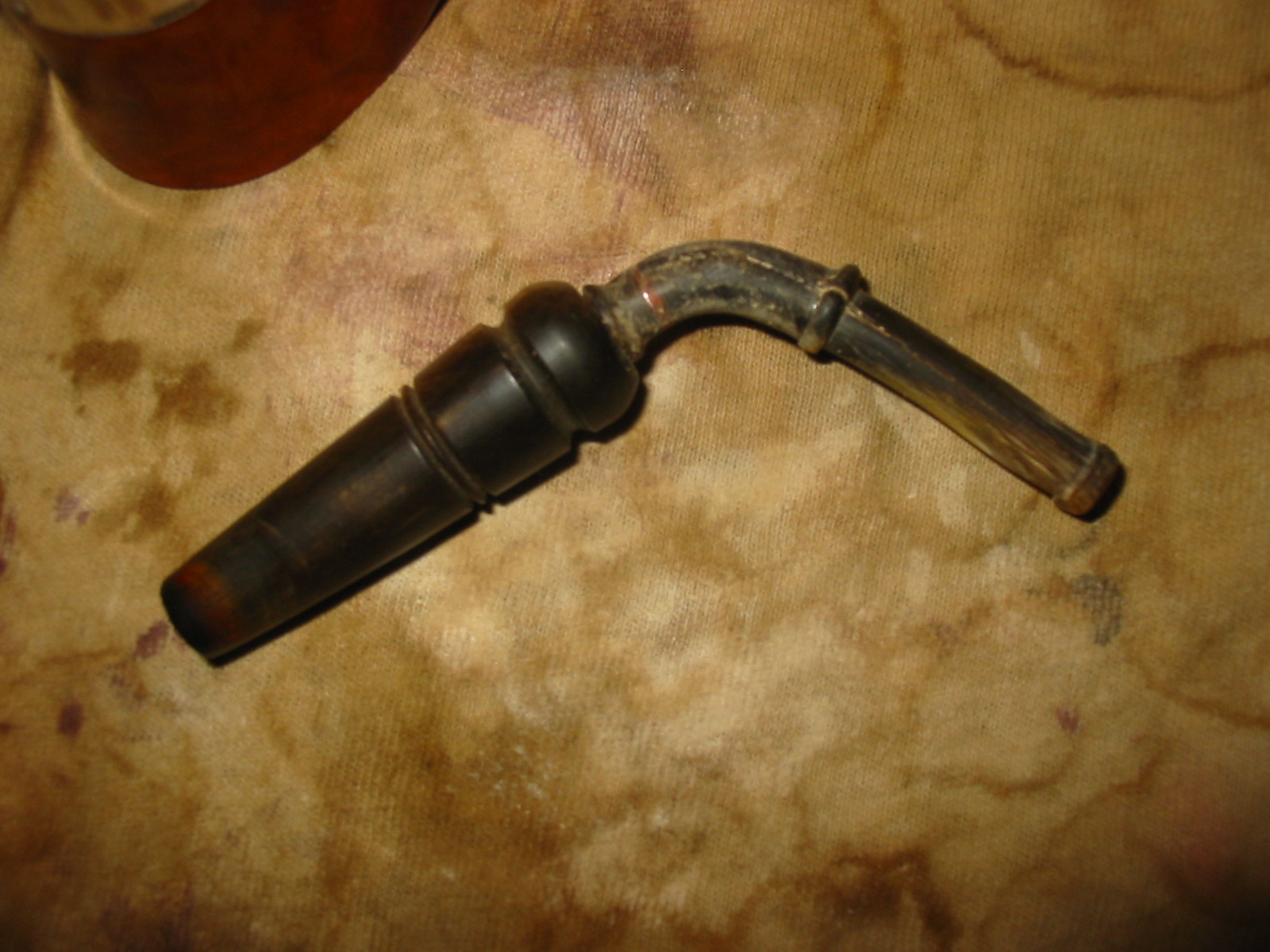
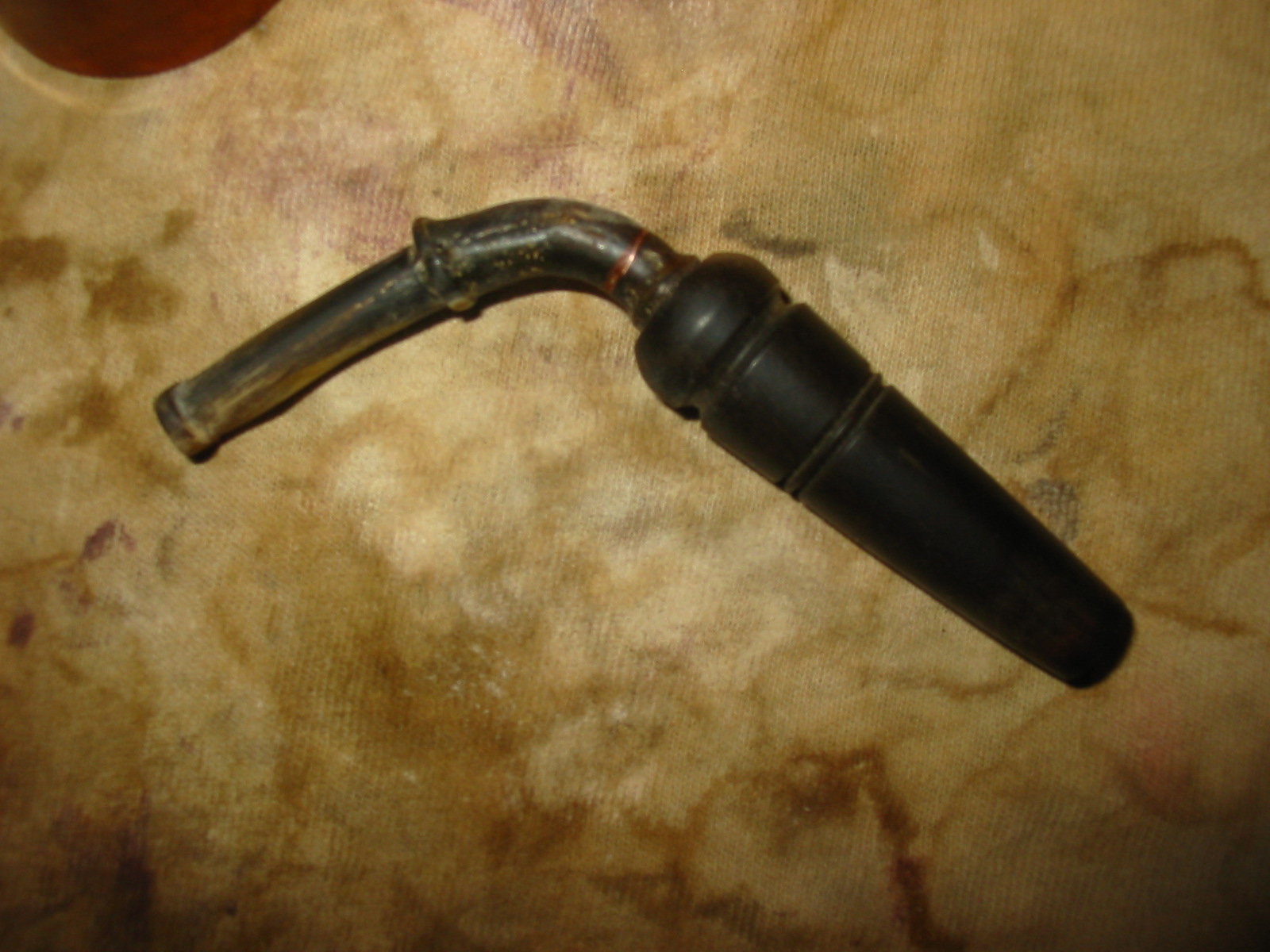
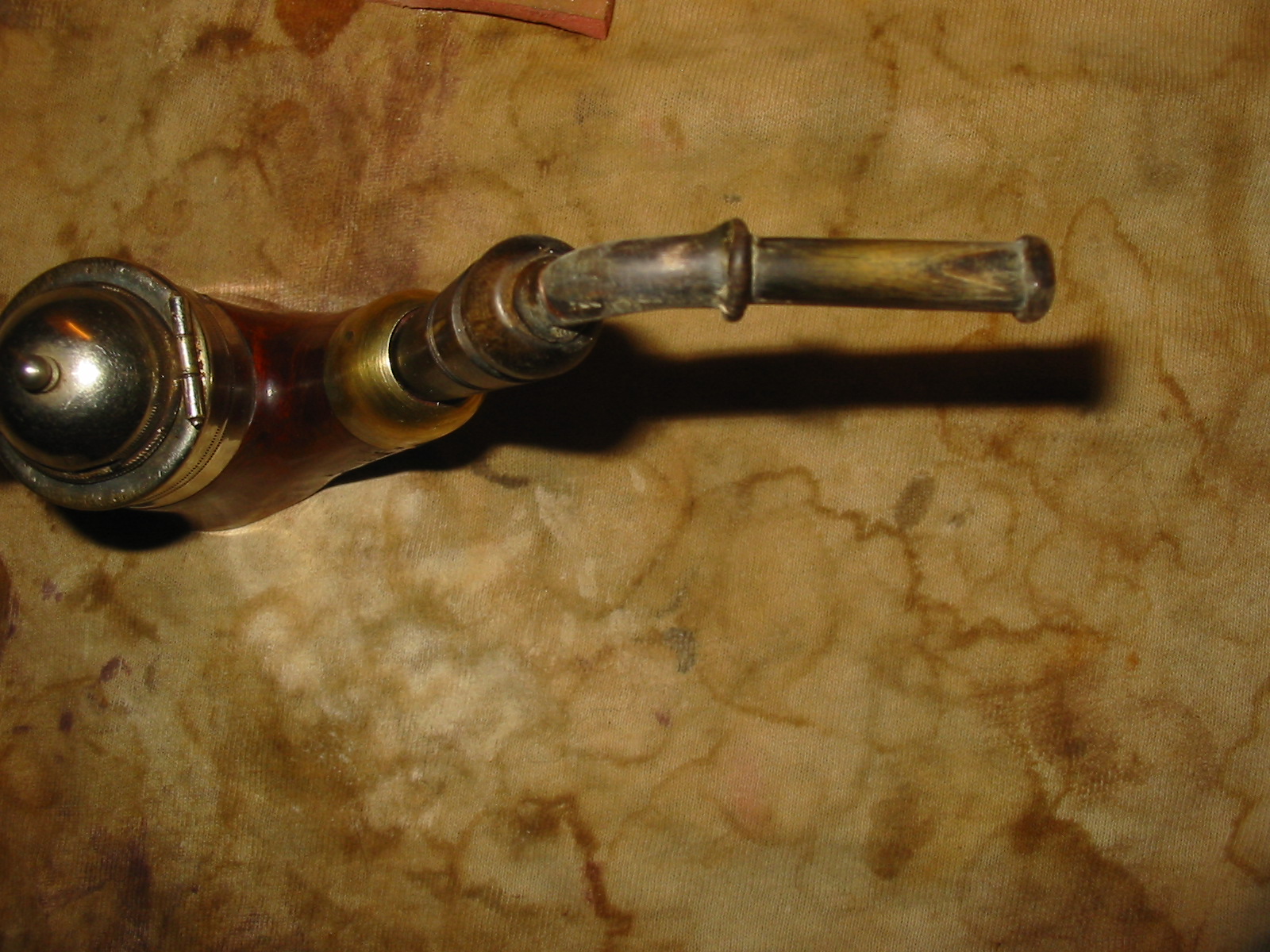
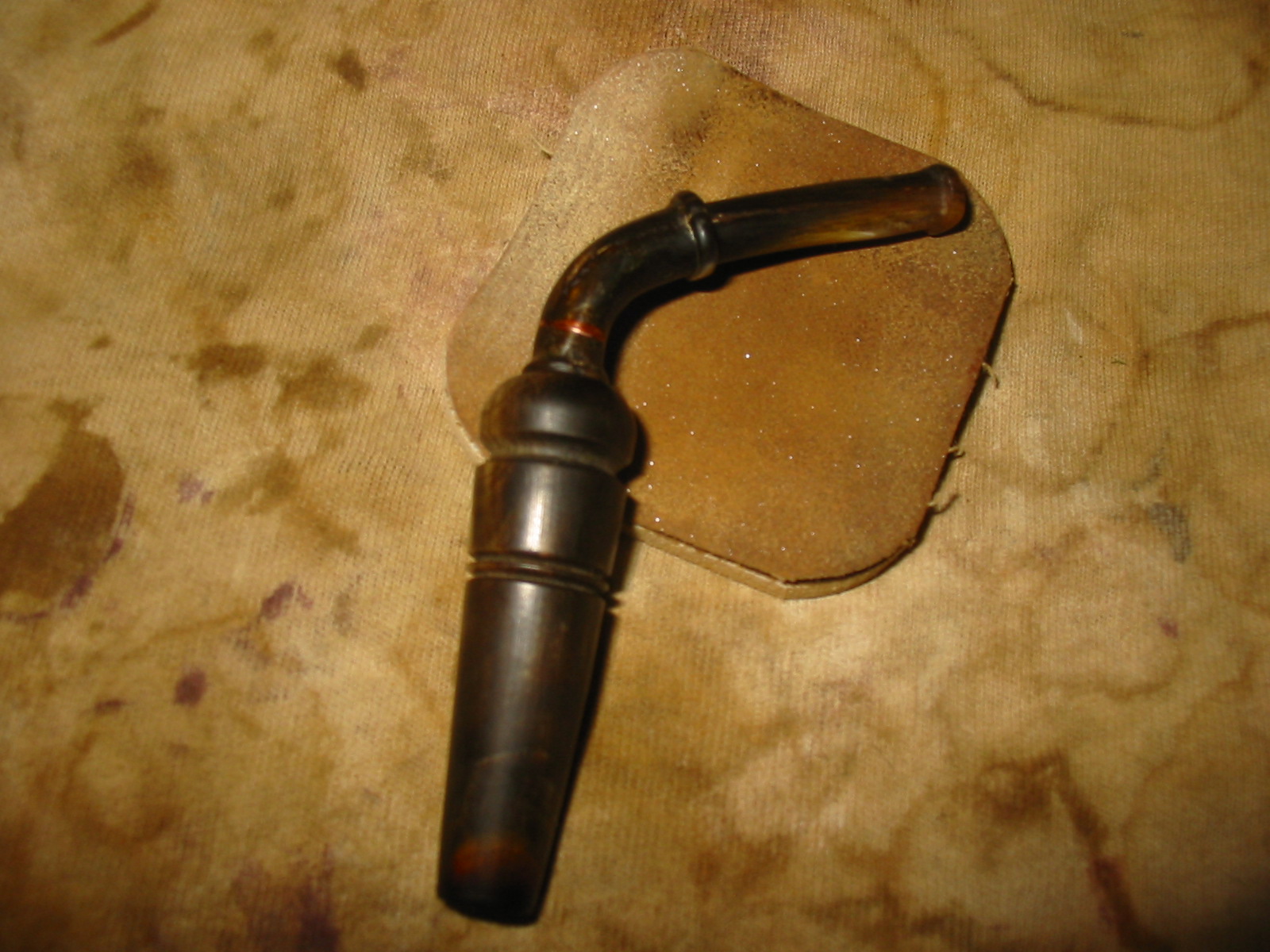
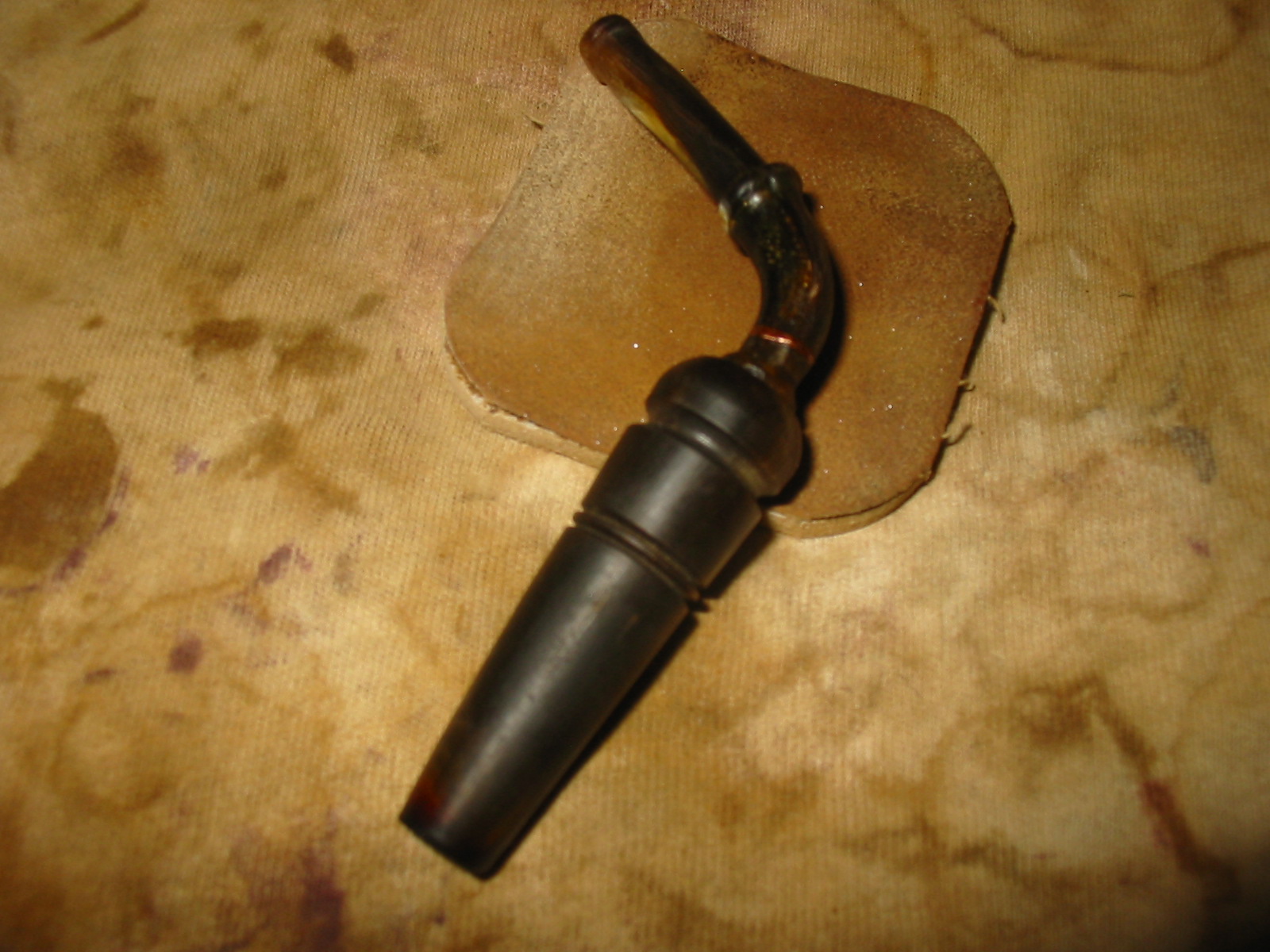
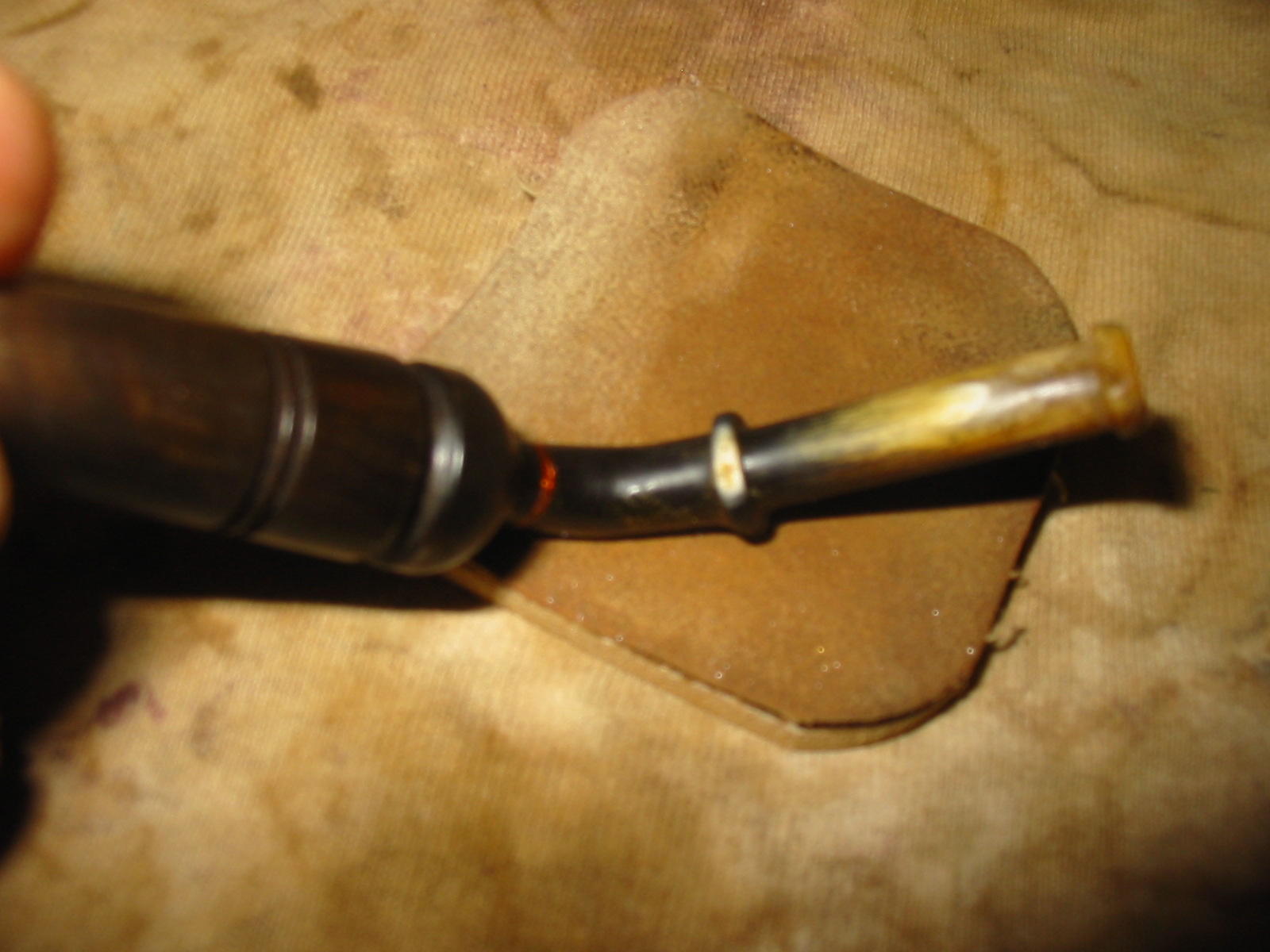
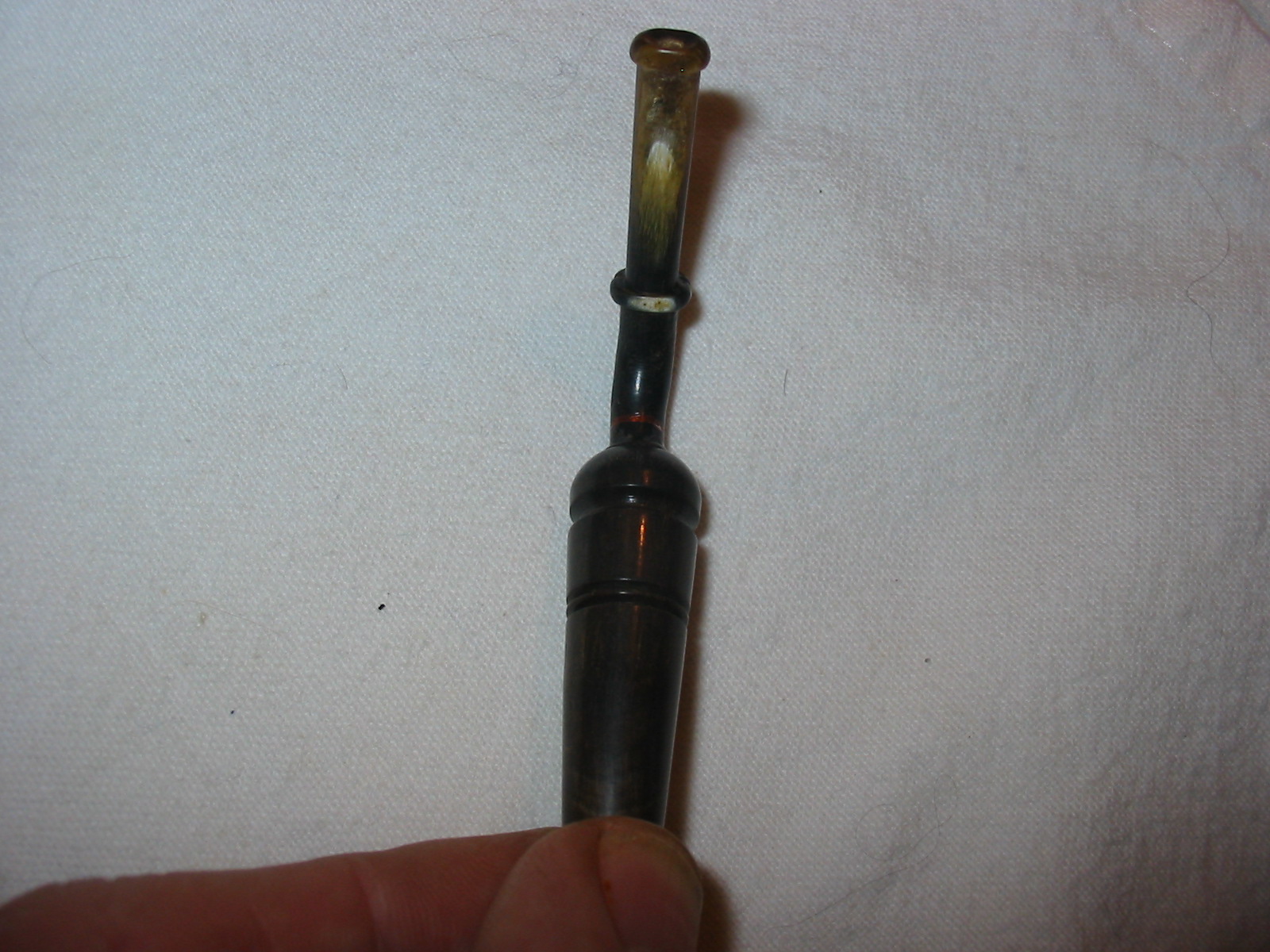
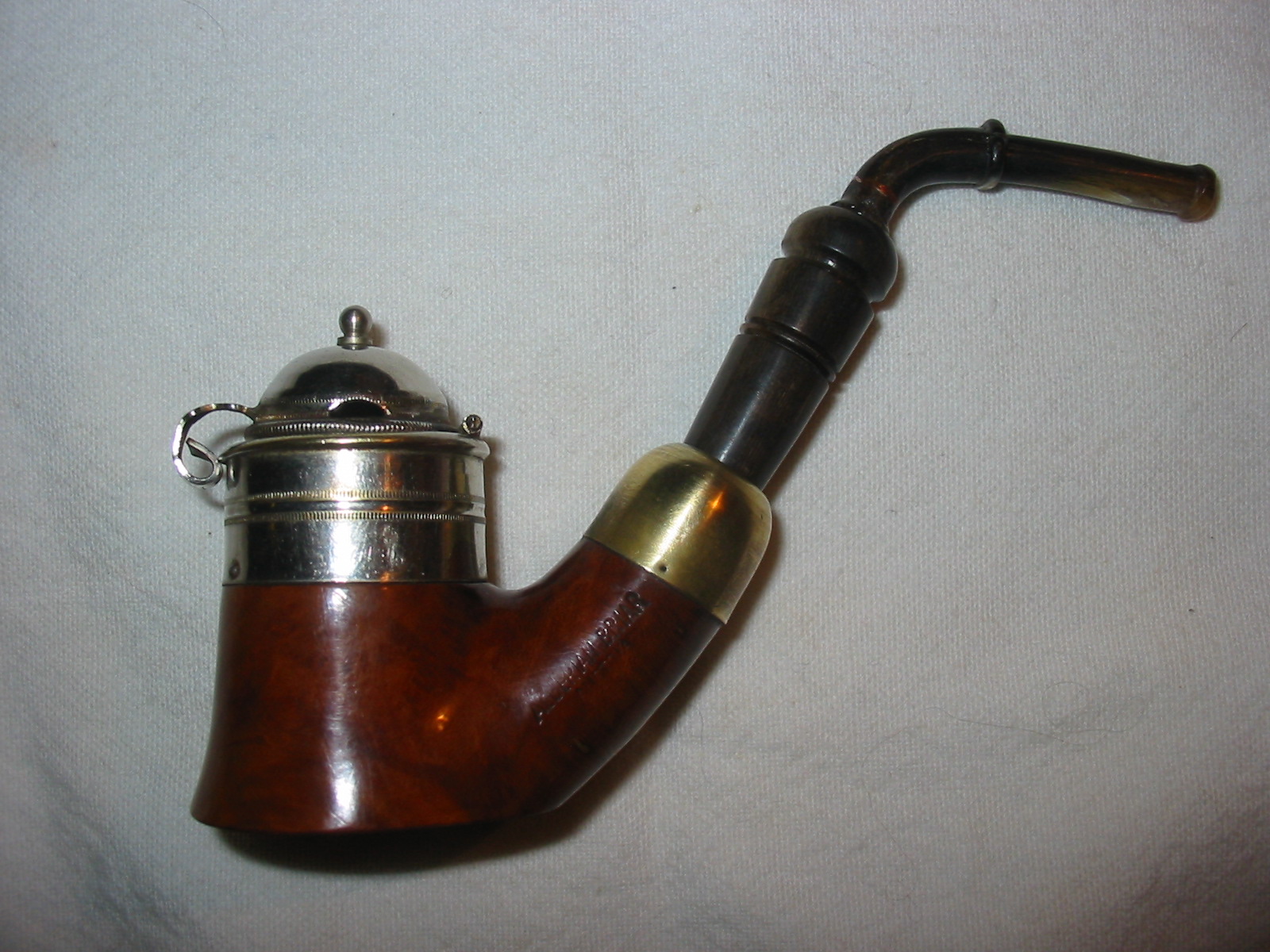
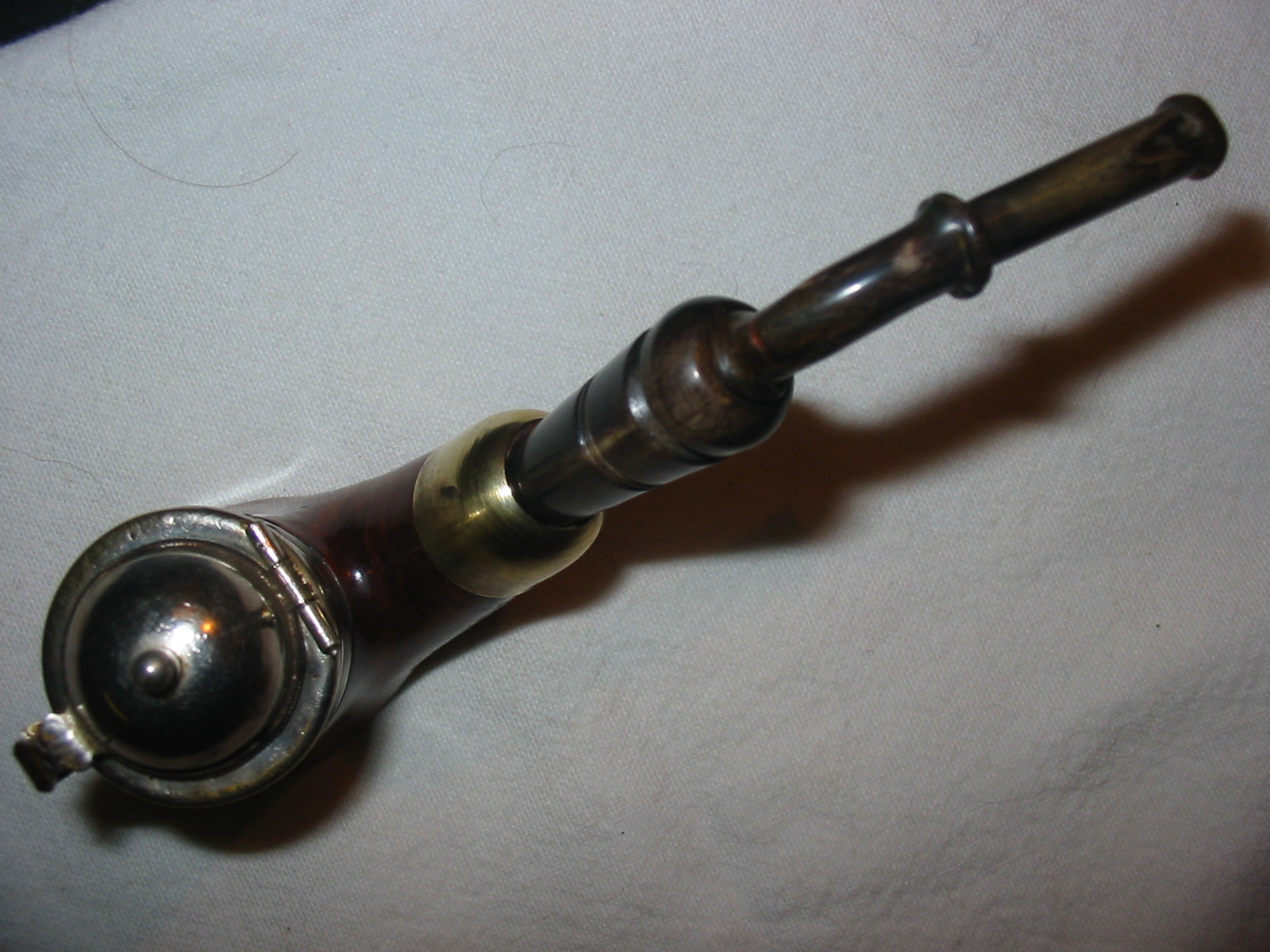
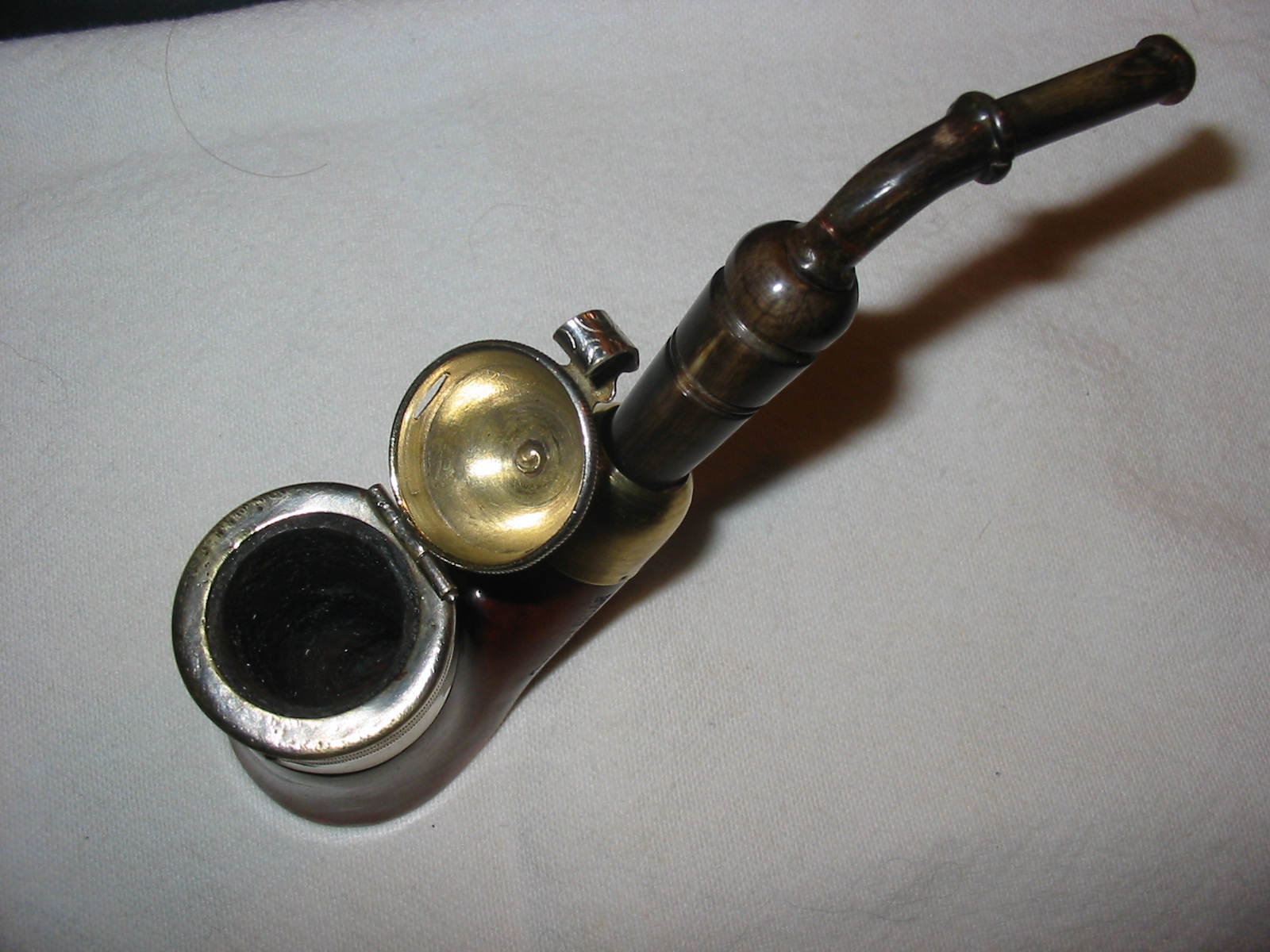
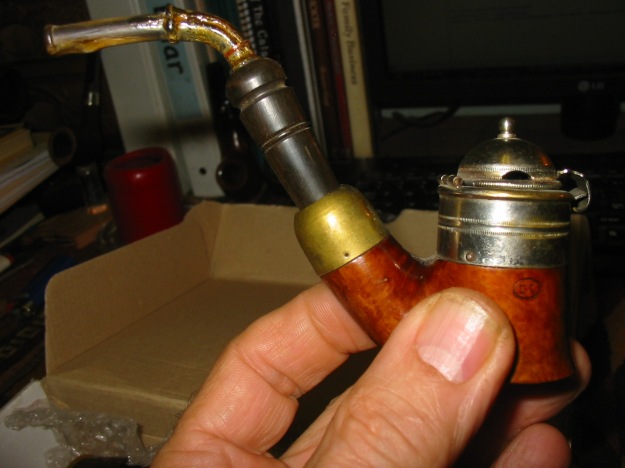
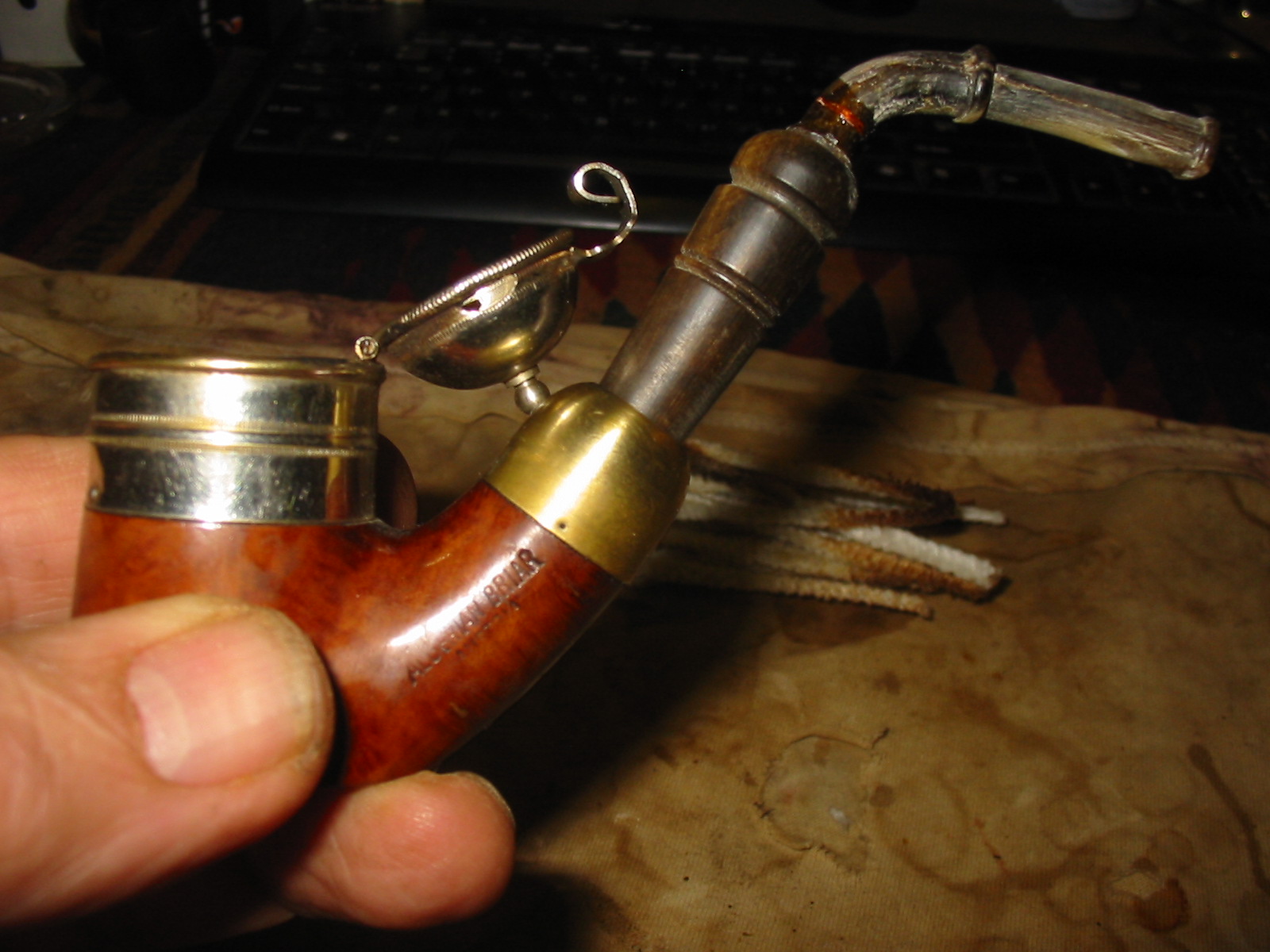
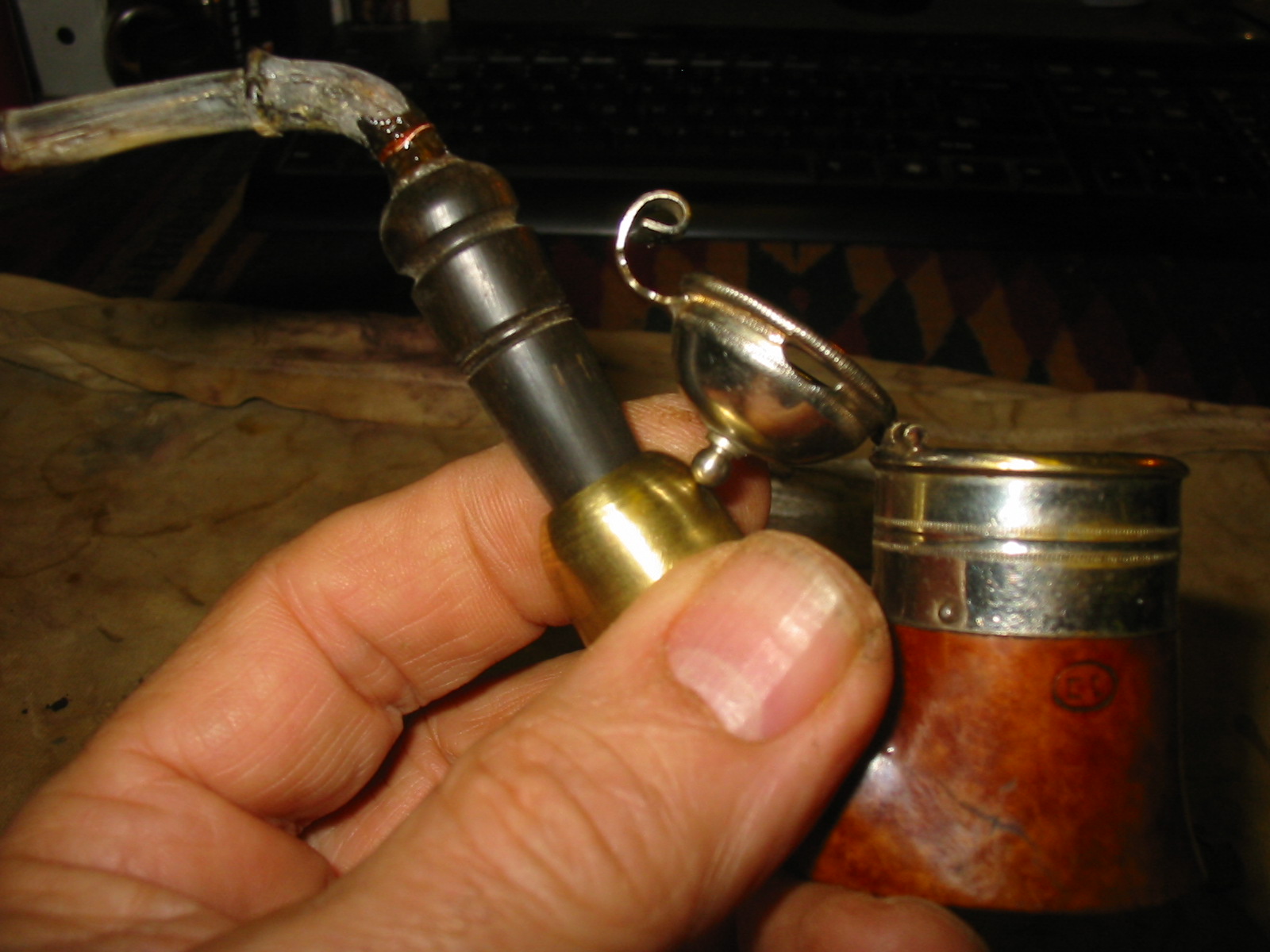
This is the second pipe that was given to me by Chuck Richards. It was a real challenge and it was actually an enjoyable restoration project. This particular pipe is stamped Algerian Briar over Austria on the left side of the shank and on the right side of the bowl below the cap it is stamped EL in an oval. It is actually a nice piece of briar. It is capped by a silver rim cap that goes down the bowl a 1/2 inch. It is rounded over the edges of the rim and flattens in towards the inner rim leaving a briar edge of 1/8 inch. It is topped by a silver wind cap that is hinged a little off centre toward the right side from the back of the bowl. The front of the cap has a folded ornate flap stamped with curls and swirls on the surface. This flap acts as a catch for the lid on the outer lip of the bowl. The cap has a small ball-shaped handle on the top that is for decoration. The cap also has two half circle opening for air. The bowl was heavily caked with a crumbly and soft cake. The stem was horn and was nicely carved. It had also been repaired at least once in its life. At the junction of the smaller part of the stem to the saddle there had been a repair done. It looked at first as if it was copper wire that was used to band the horn which seemed to have splintered and been repaired. Upon closer examination I am almost certain it is a small copper band that was set into the horn stem to secure the break. It is solid. The upper portion of the stem had also splintered and not been repaired. The round end of the button had been worn down on the top and bottom edges to where it was almost squared off. The splinter on the bottom of the stem was loose. The horn was also covered with a shiny lacquer like substance that hid the beauty of the horn. I wonder if it was part of the original repair. The next series of three photos show the pipe as it appeared when I took it out of the shipping box and bubble wrap. I was really interested in seeing what I could do with this one – a worthy challenge that would be enjoyable to work on.
IMG_0668

IMG_0669

IMG_0667
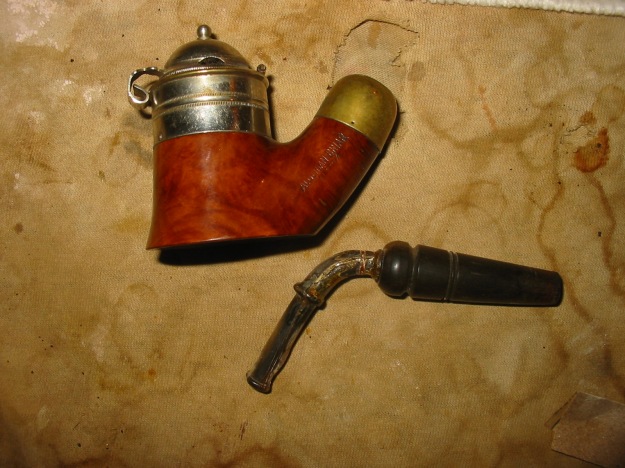
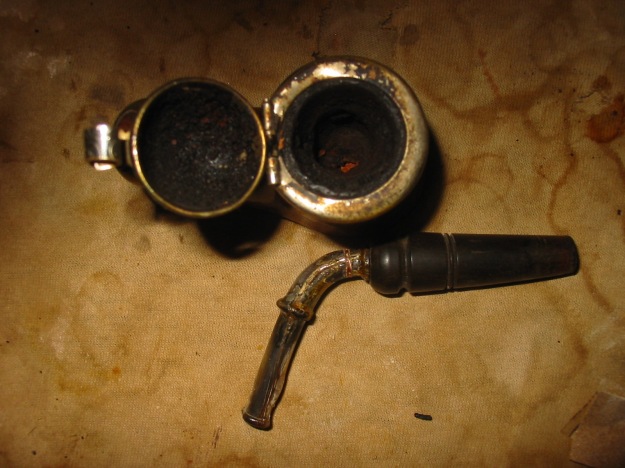
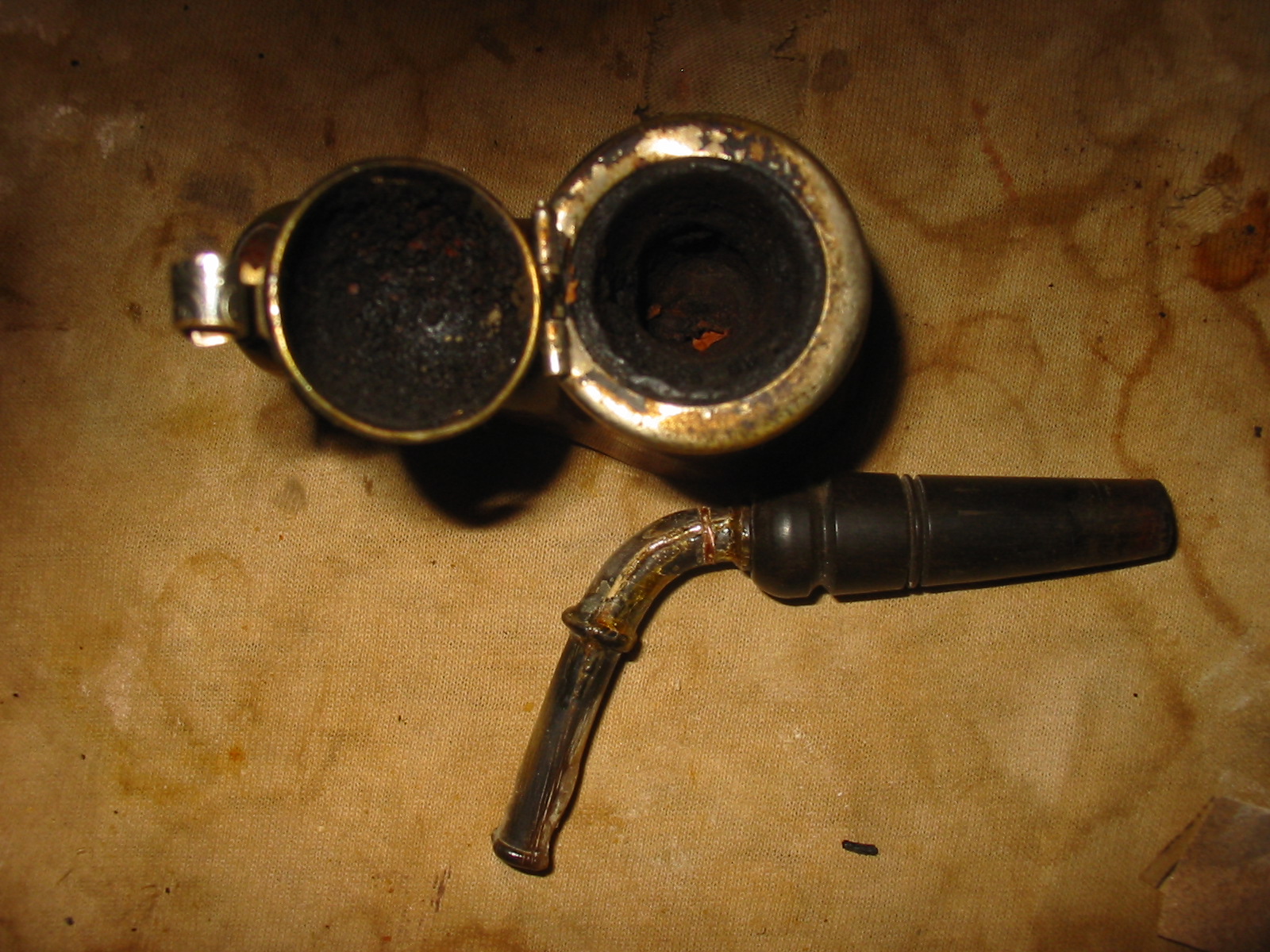
I took it to my work table and removed the stem. I examined the shank and the bowl as well as the stem. I have noted above what I saw in my examination. The interior of the shank was in good shape, there was little wear on the inside from the insertion of the horn stem. The drilling was similar to a Peterson in that it had a sump area with the airway drilled above that. It allowed for condensation of the tobacco juices to settle into that well. It was full and dark and the stain of the juices had migrated up the stem and stained the bottom edge. You can also see the repairs that had been made to the stem in the three photos below. The bowl cap was tarnished and the brass shank cap was also tarnished. The stamping is also clearly visible in the photos. At this point I sat and examined the stem to make a decision whether to seek and revive it or to replace it with a newer Peterson style fish tail stem. After some time examining it I decided to see what I could do with the existing stem and left the other stem idea in reserve should I need to do that.
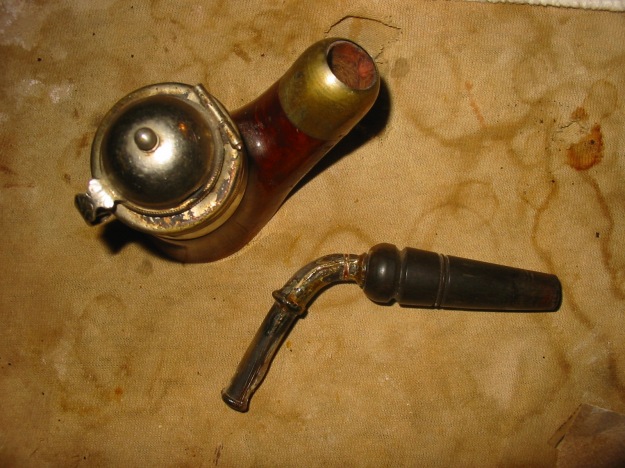
IMG_0670

IMG_0671

IMG_0672
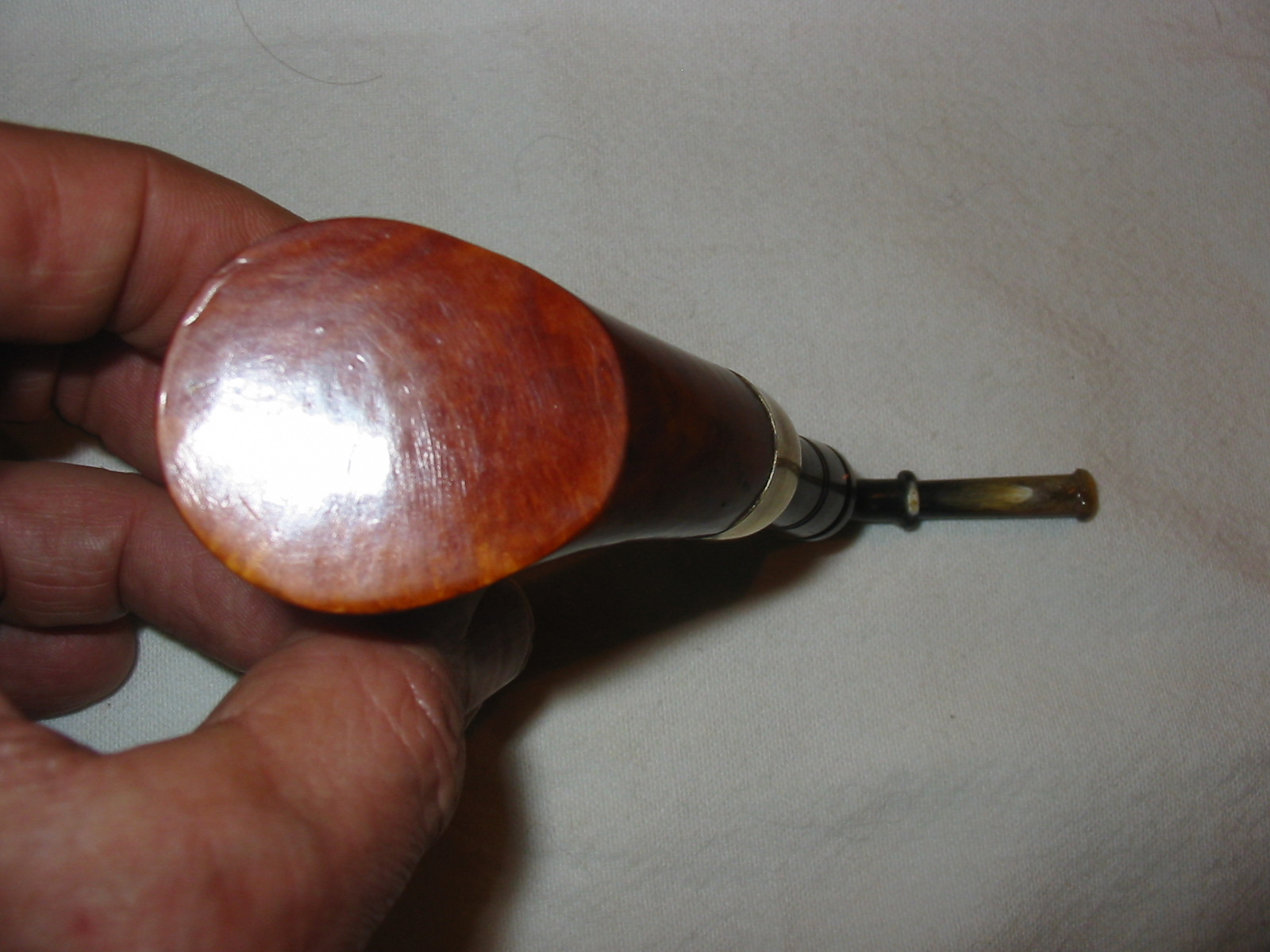
The first of the next two photos shows the bottom of the bowl and give a clear idea of the nice piece of briar that I was dealing with. The second photo shows the inside of the bowl and the wind cap. The cake and build up of lava like tar on the lid is prominent.
IMG_0673

IMG_0674
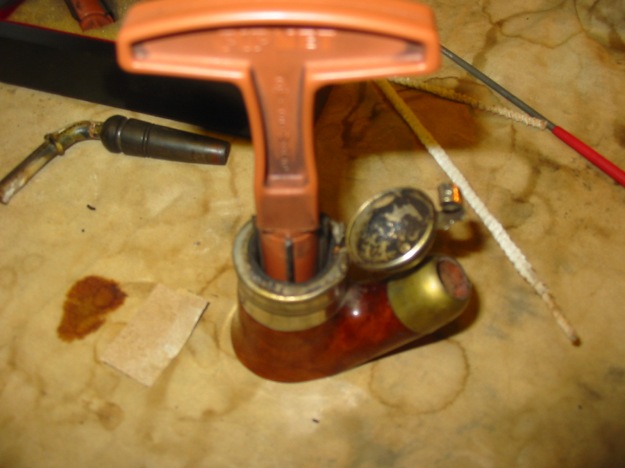
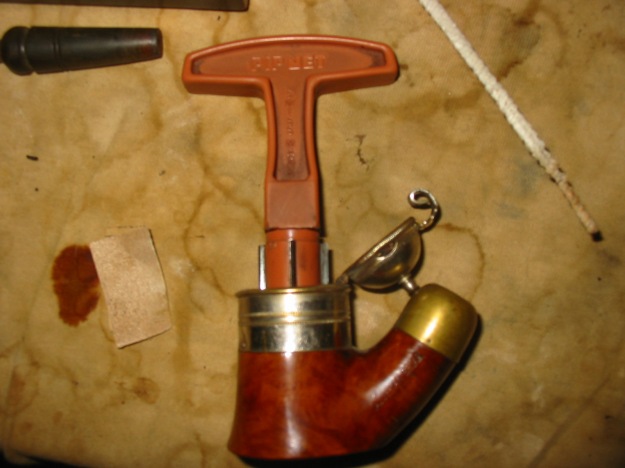
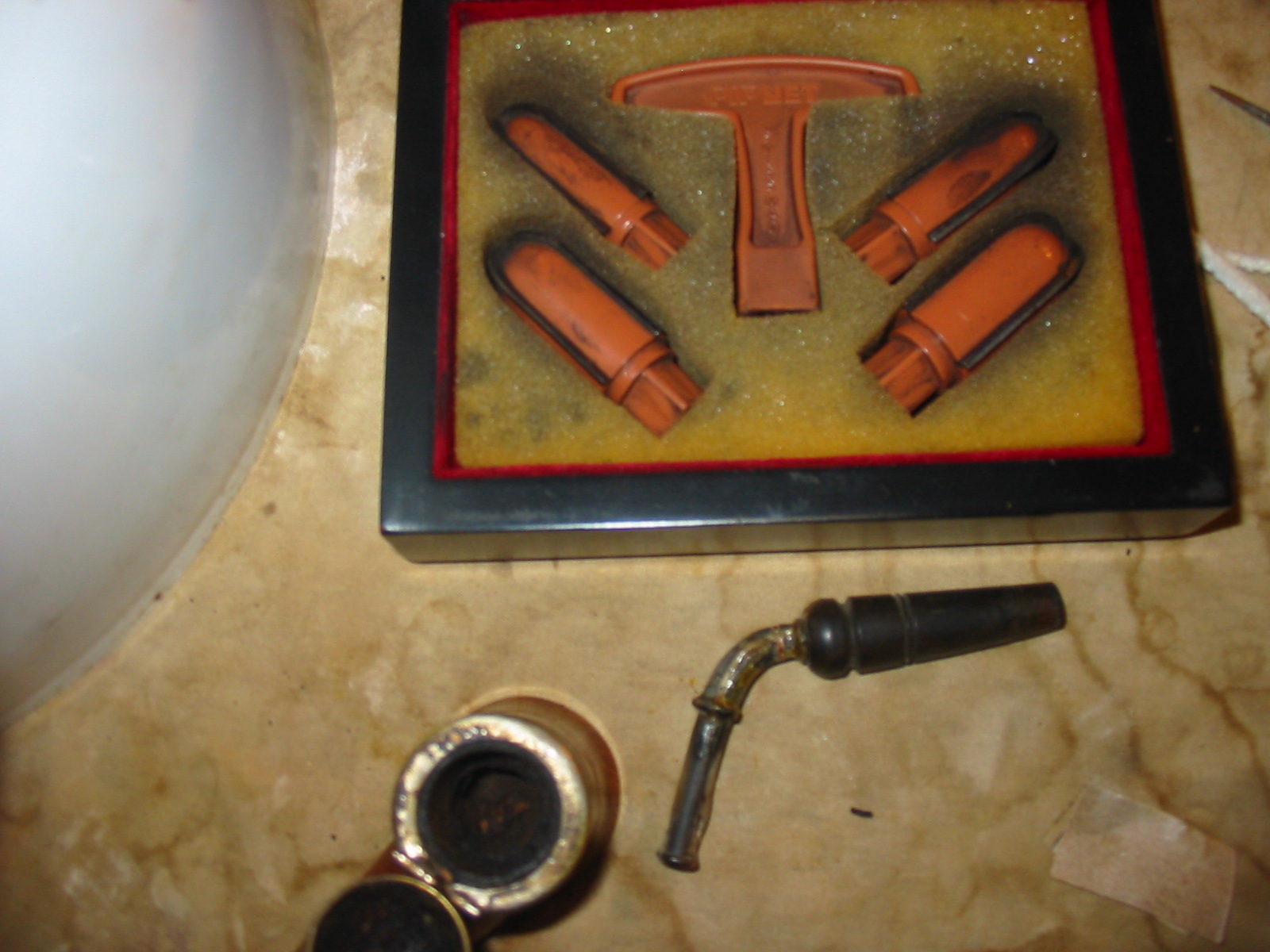
I decided to begin with cleaning the bowl. I used a PipNet reamer set with different sized cutting blades. I used the first two heads on this bowl. The first one, the smallest opened up the cake and cut off the broken edges. I followed that up with the second cutting head and took the cake back to the briar so that I could give it a thorough cleaning. The next four photos show the reaming process. I also cleaned out the sump and the airway in the shank with folded pipe cleaners, cotton swabs and Everclear. Once that was done I also scraped out the inside of the cap with the head of the cutting blades on the PipNet set.
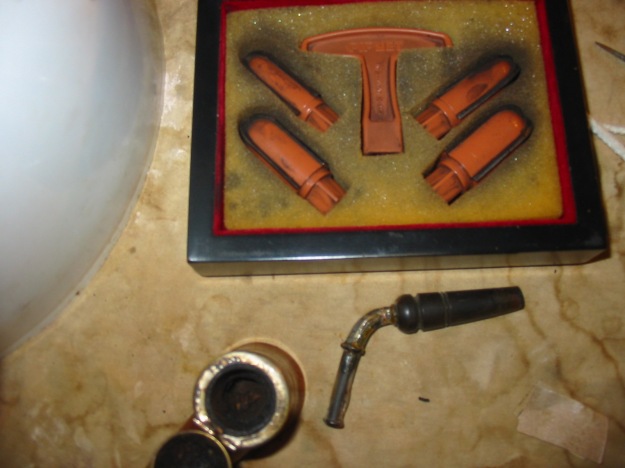
IMG_0675

IMG_0676

IMG_0677

IMG_0678
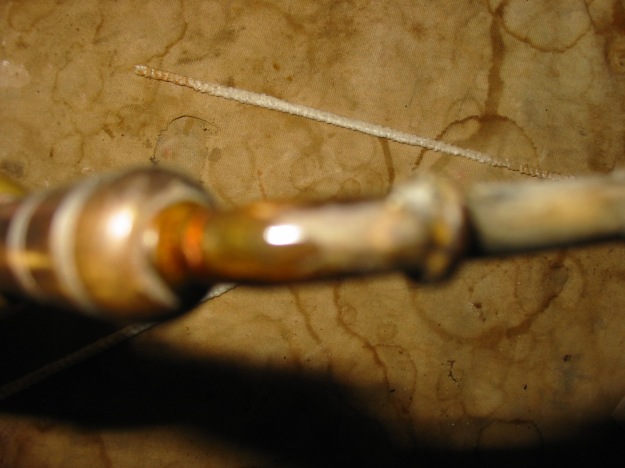
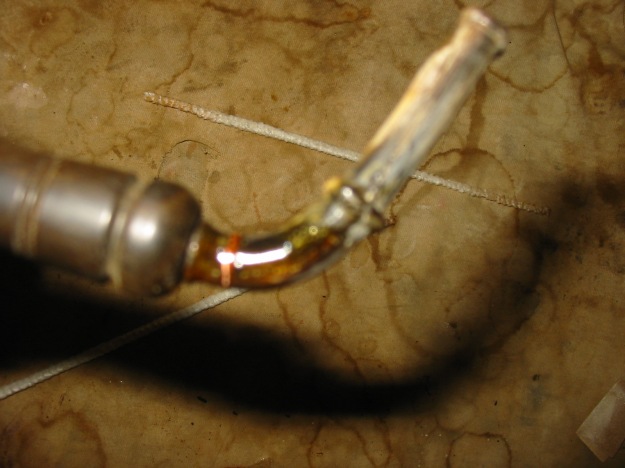
I took a break from the work on the cap and bowl to work on the stem. I cleaned of the surface with a damp cloth and then used superglue to fill the openings in the surface of the stem left from the previous repaired splits. I also used it to repair the splintered part on the bottom of the stem. Once the glue was dry I used 240 grit sandpaper to sand off the excess glue and also the clear coat of varnish or lacquer on the stem. I tried to put a pipe cleaner through the stem and was not successful. I blew through it and found that it was open but that the draw was tight. I would work on that later. The main purpose at the moment was to see what was underneath the clear coat. The next photos show the grain pattern on the horn stem underneath the clear coat. That gave me hope to see if I could restore that unique pattern in the horn stem and bring it back to life. The entire stem from tip to the bottom of the tenon was all horn so it would have a unique look if I was able to restore it. Several of the photos below are out of focus, I apologize for that, however they help to see the pattern and colours of the horn stem. You can also see the repairs on the side of the stem toward the button and the copper band around the lower part of the stem.
IMG_0679

IMG_0680

IMG_0681

IMG_0682

IMG_0683
I worked on the inside of the cap and the rim with 0000 steel wool to remove the build up and tars. I worked on that until the surface of the inside shined and the rim was clean. I then polished the silver with a silver cloth to bring back some of the shine to the bling. The next three photos show that process. (You might have the impression from the photos that I bounced back and forth between the stem and the bowl in this refurbishing. While it appears that way in the photos it actually happened over the period of several days and hours. Each time I set the pipe aside to go and do something else I would come back and pick up at whatever point struck my fancy at the moment.)
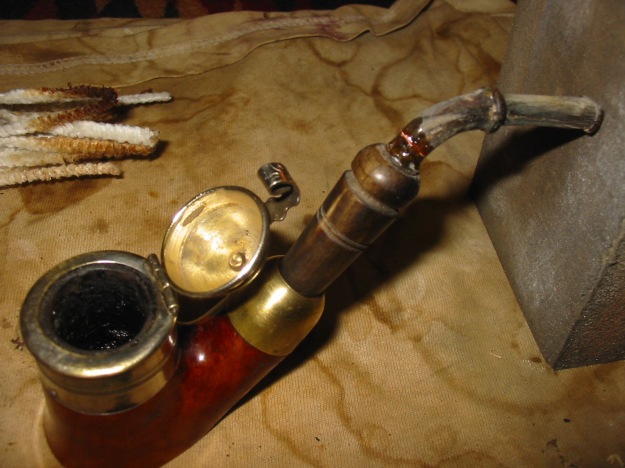
IMG_0684

IMG_0685

IMG_0686
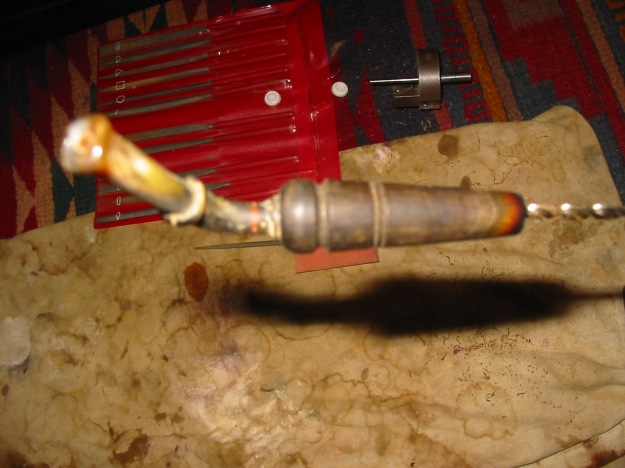
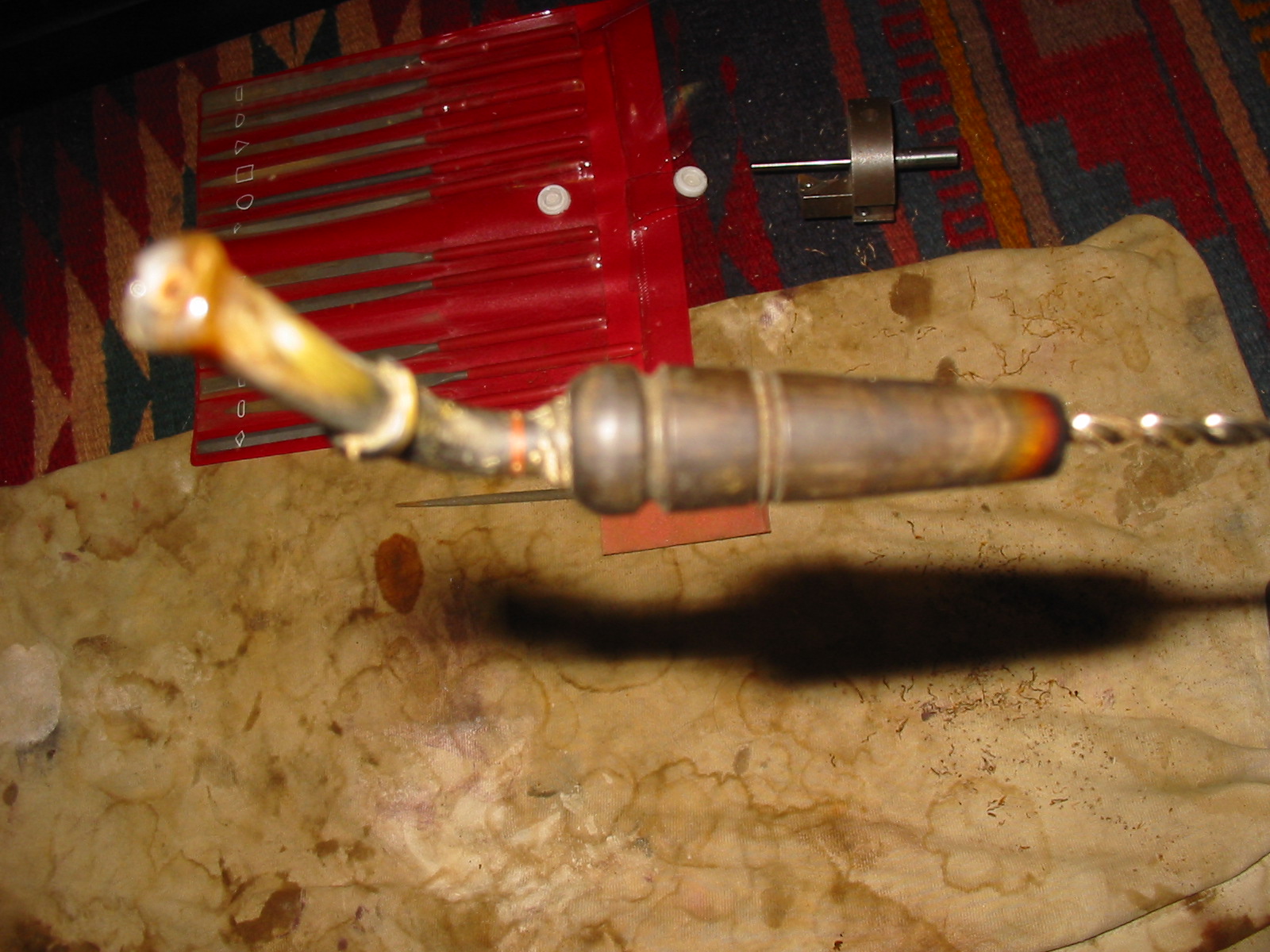
The next time I came back to work on the pipe I decided to open up the stem and improve the draw. I was able to ascertain that the tenon end of the stem was much more constricted than the button end. I could easily fit a pipe cleaner in the button and down about half way but was unable to do the same from the tenon end. Even the thinnest pipe cleaner would not go through from the tenon end. I measured the length of the tenon portion of the stem and then used a small drill bit to drill the depth of the larger portion of the tenon. I did this with a cordless drill and proceeded slowly. I was careful to keep the drill bit at the same angle as the airway as I did not want to make the problem worse by slanting the airway or overdrilling the stem. The next two photos show the drilling. The third photo below shows the newly opened end of the stem. The draw was now quite open and the airway clear for a pipe cleaner to easily pass all the way through the stem.
IMG_0699

IMG_0700

IMG_0701
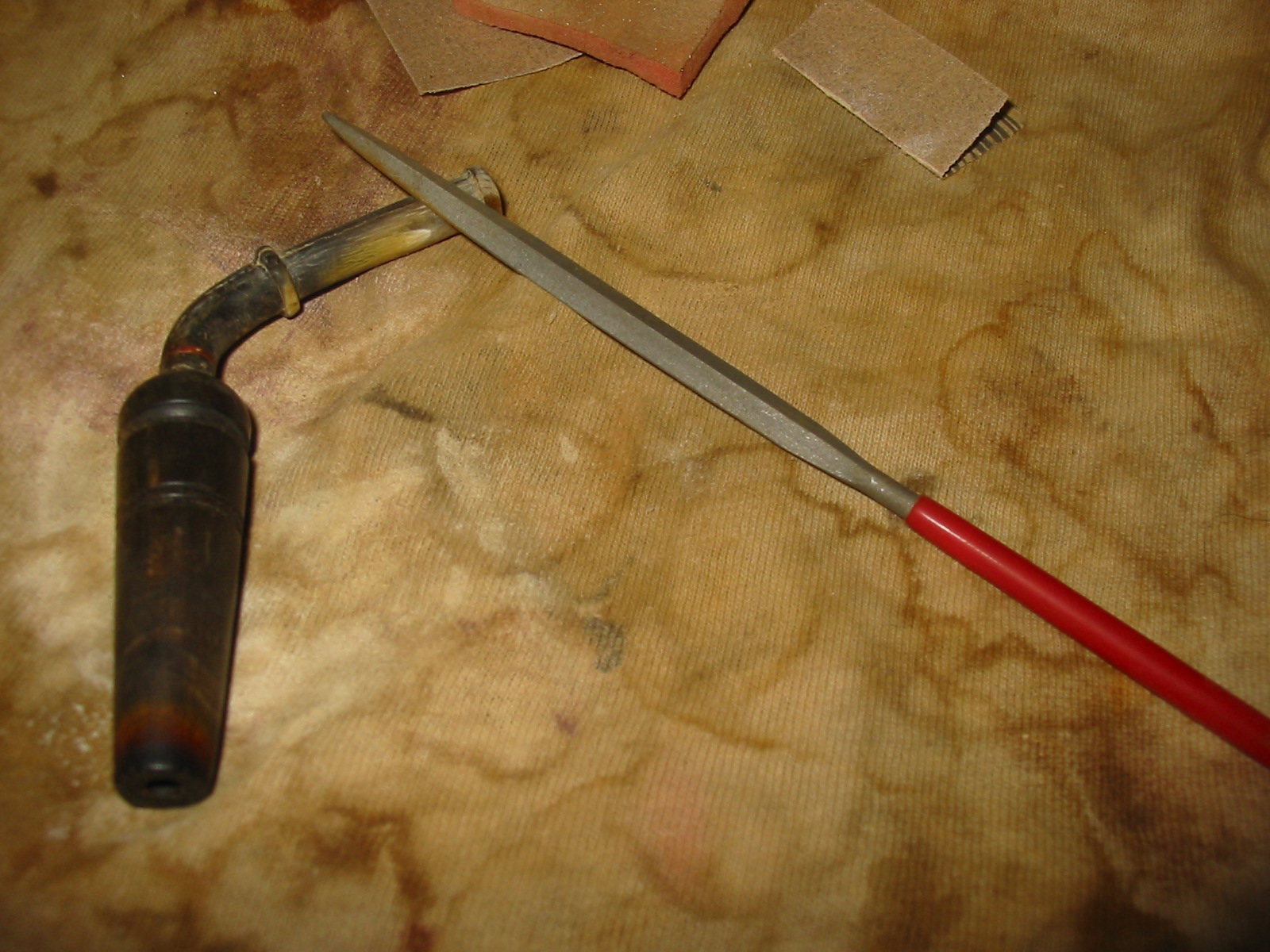
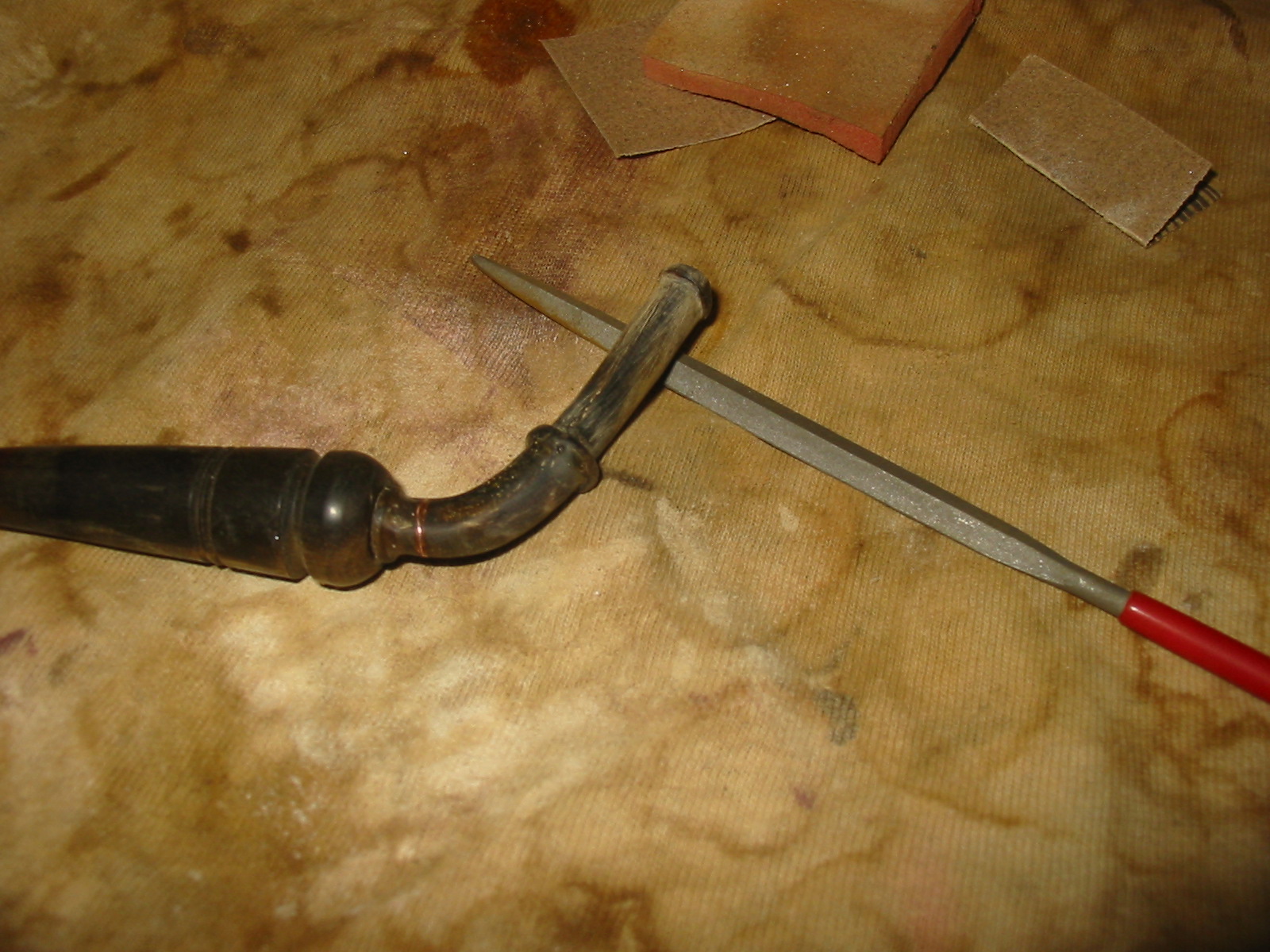
I redefined the button area using needle files. The top edge and the bottom edge next to the button were not sharp and distinct. As the top and the bottom of the button had been flattened, it was almost parallel with the stem. I used the needle files to sharpen the edge and to round the button surface as well. The next two photos show the process and picture the results. Note also that the stem is shaping up nicely with the various sandpaper and the colours and definition of the horn are coming out beautifully.
IMG_0702

IMG_0703
The next series of four photos shows the progress of sanding the stem with 240, 320 grit sandpaper and a fine grit sanding sponge. The thick, shiny coat that hid the horn is pretty well gone at this point. The sanding has also smoothed out the shape of the stem and removed the overfills of the previous repair. The stem is beginning to take shape and the grain of the horn is visible. I think that the repair will work well and when I am done I will have a stem that will work quite well.
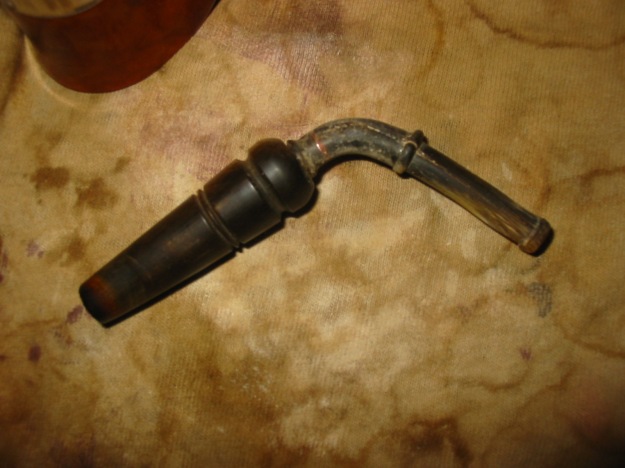
IMG_0704

IMG_0705

IMG_0706

IMG_0707
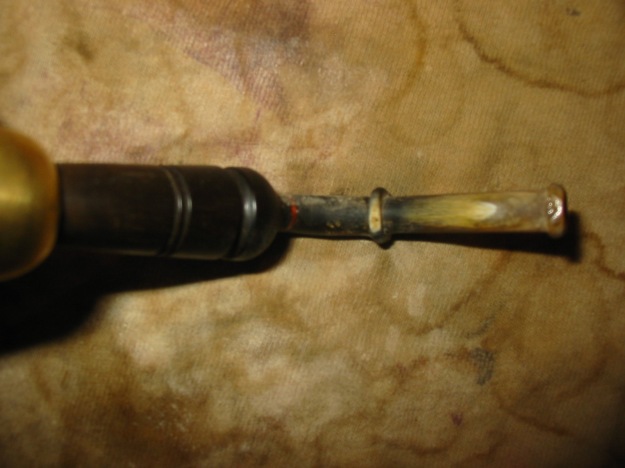
I continued to sand the stem with micromesh sanding pads from 1500-12,000 grit. I wet sanded with the 1500, 1800 and the 2400 grit pads. My goal was to remove the scratches in the horn and begin to bring out the natural shine of the material. The next series of four photos show the effects after sanding with the 1500 grit pads. The next four that follow show the finished stem after sanding with all of the micromesh pads. Once it was finished I coated it with Obsidian Oil to add some life to the horn stem. I have found that it soaks into the horn material and builds some luster over time. You can now see the variations in colour, almost striations in the horn stem. This pearlescence is what I love about the old horn stems and what made me want to try to redeem this old-timer.
IMG_0708

IMG_0709

IMG_0710

IMG_0711

IMG_0712

IMG_0713

IMG_0714

IMG_0715
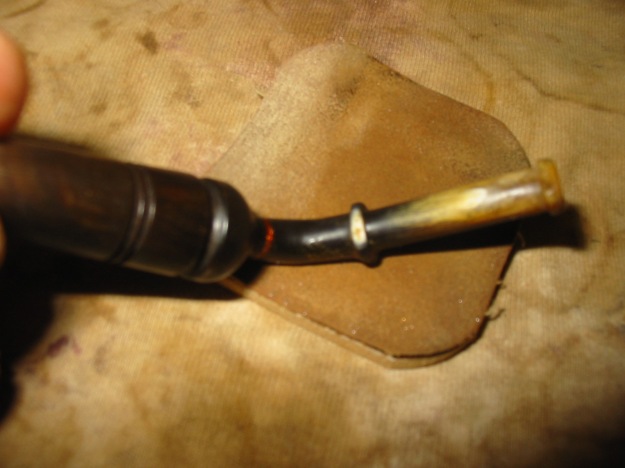
I took the stem to my buffer and carefully buffed it with White Diamond. I was careful to have a light touch on the wheel as I did not want to damage the horn. The material is sensitive to pressure on the wheel so care must be exercised when buffing it. I gave it multiple coats of carnauba wax and hand buffed with a shoe brush and a soft cotton cloth. The next four photos show the rejuvenated stem ready to be put back on the pipe.
IMG_0718

IMG_0719

IMG_0720

IMG_0721
I reinserted the stem in the pipe, polished the entirety with another coat of carnauba and buffed it by hand to give it a shine. The next five photos show the finished pipe. This old-timer is ready to be loaded with a bowl of aged tobacco, fitting to the age of the pipe and given its reintroduction to its original purpose. This restoration was a pleasure to do and one that gave me a sense of accomplishment in bringing back the old horn stem. The variations in colour and the striations in the horn really give life to this old pipe. The copper repair in the stem actually adds a flair of uniqueness and mystery to the pipe – it makes me wonder who did it and where it was done. Thanks for the challenge Chuck.
IMG_0722

IMG_0723

IMG_0724

IMG_0725

IMG_0726

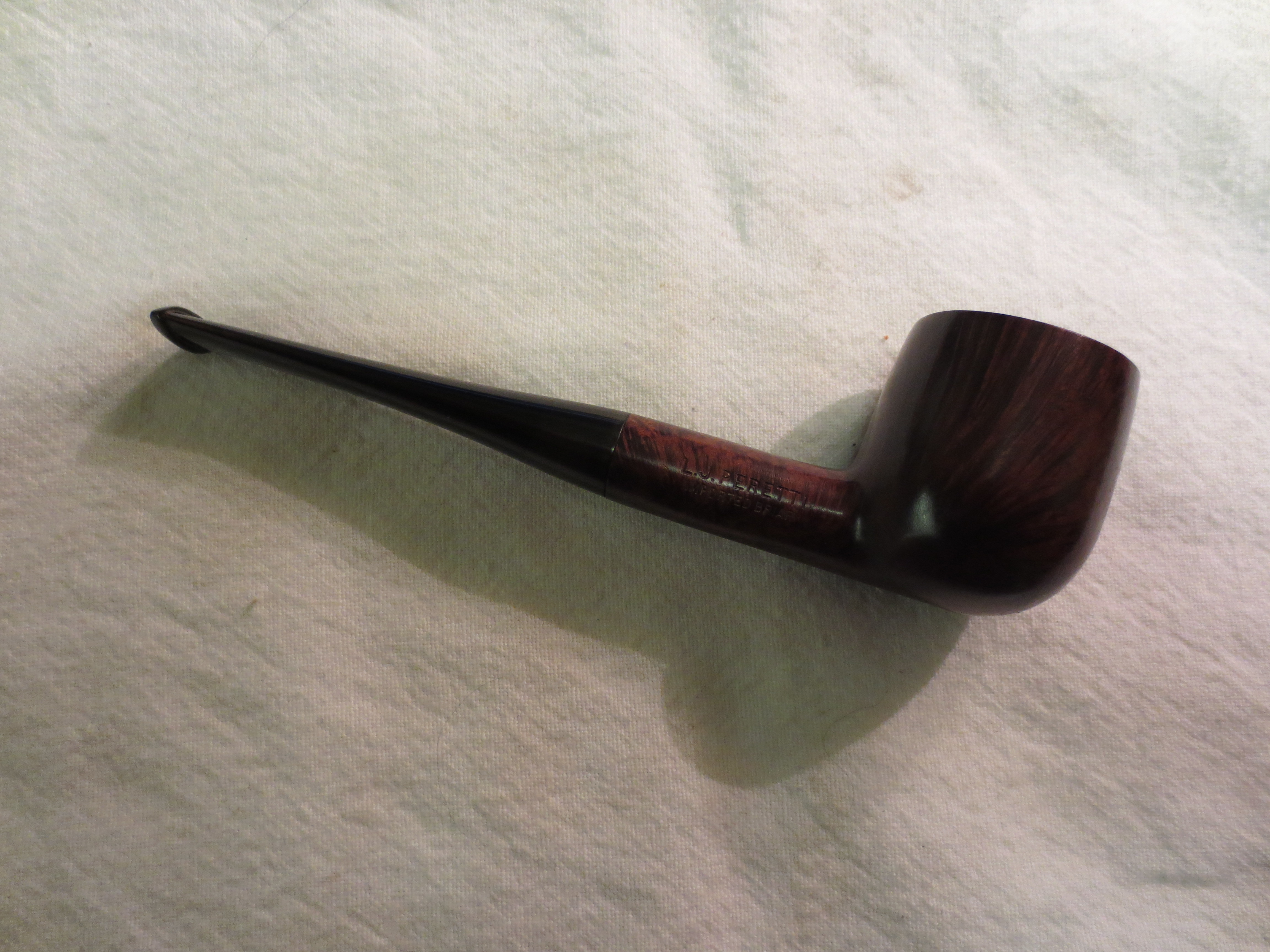
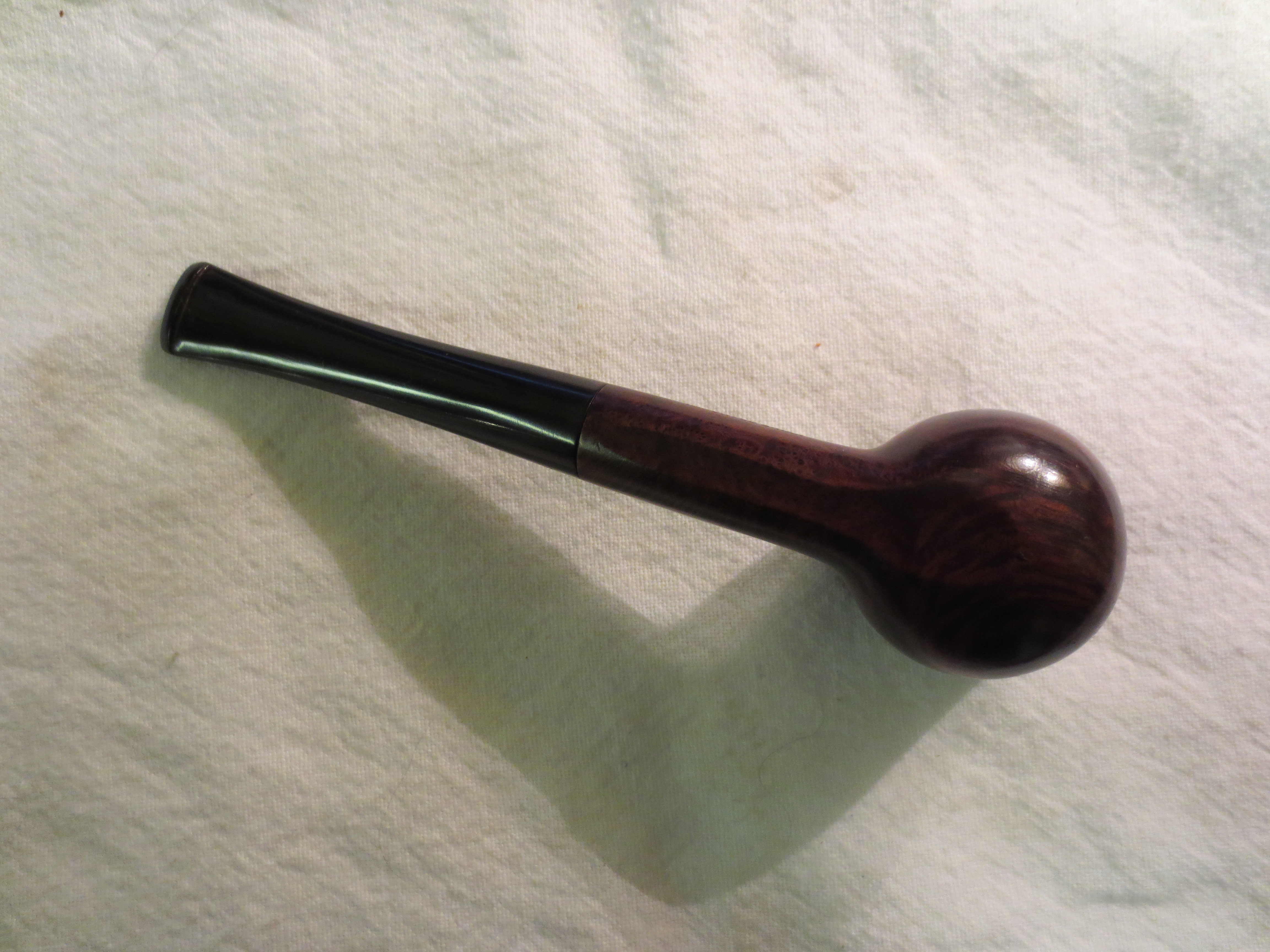
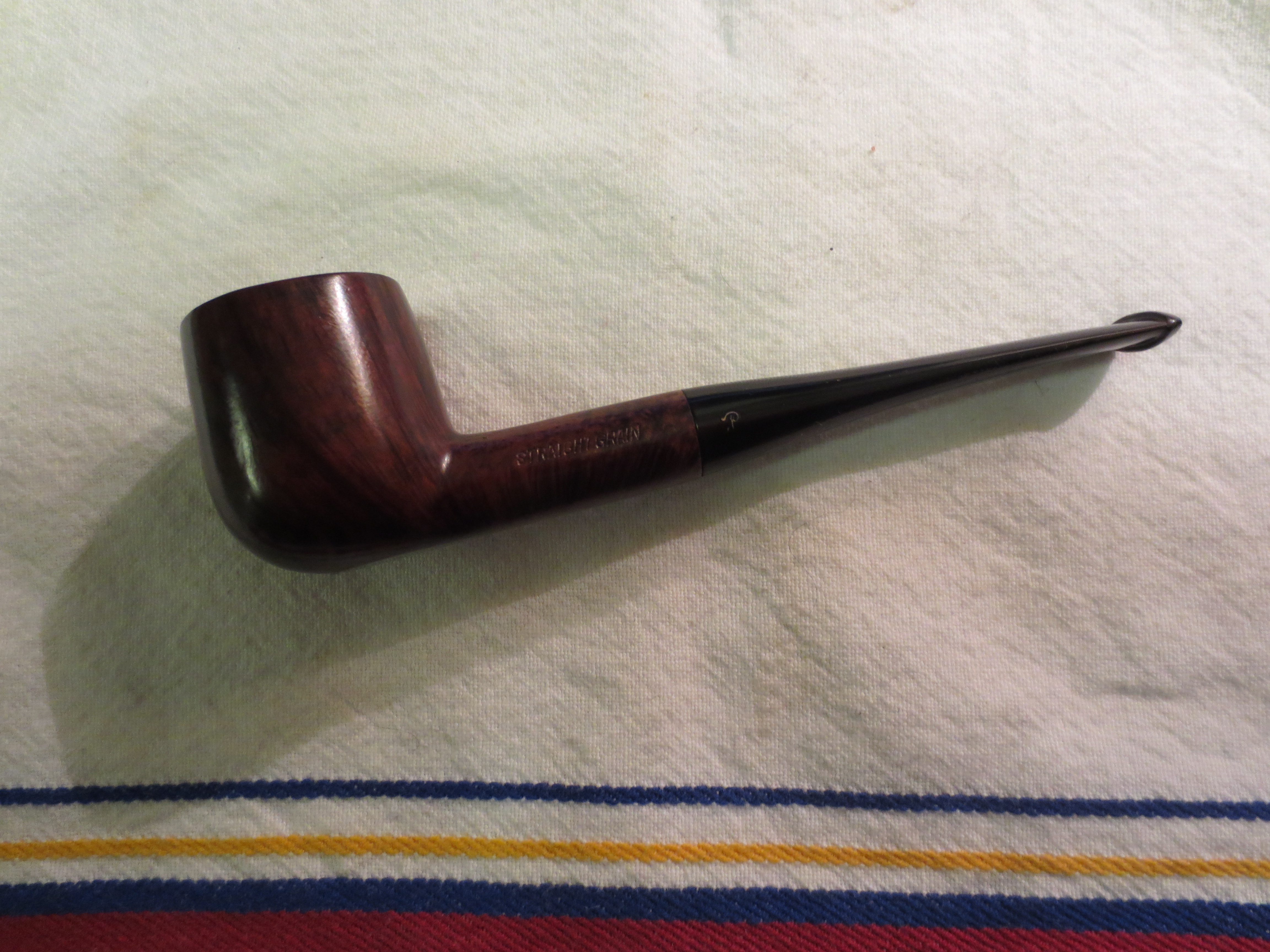
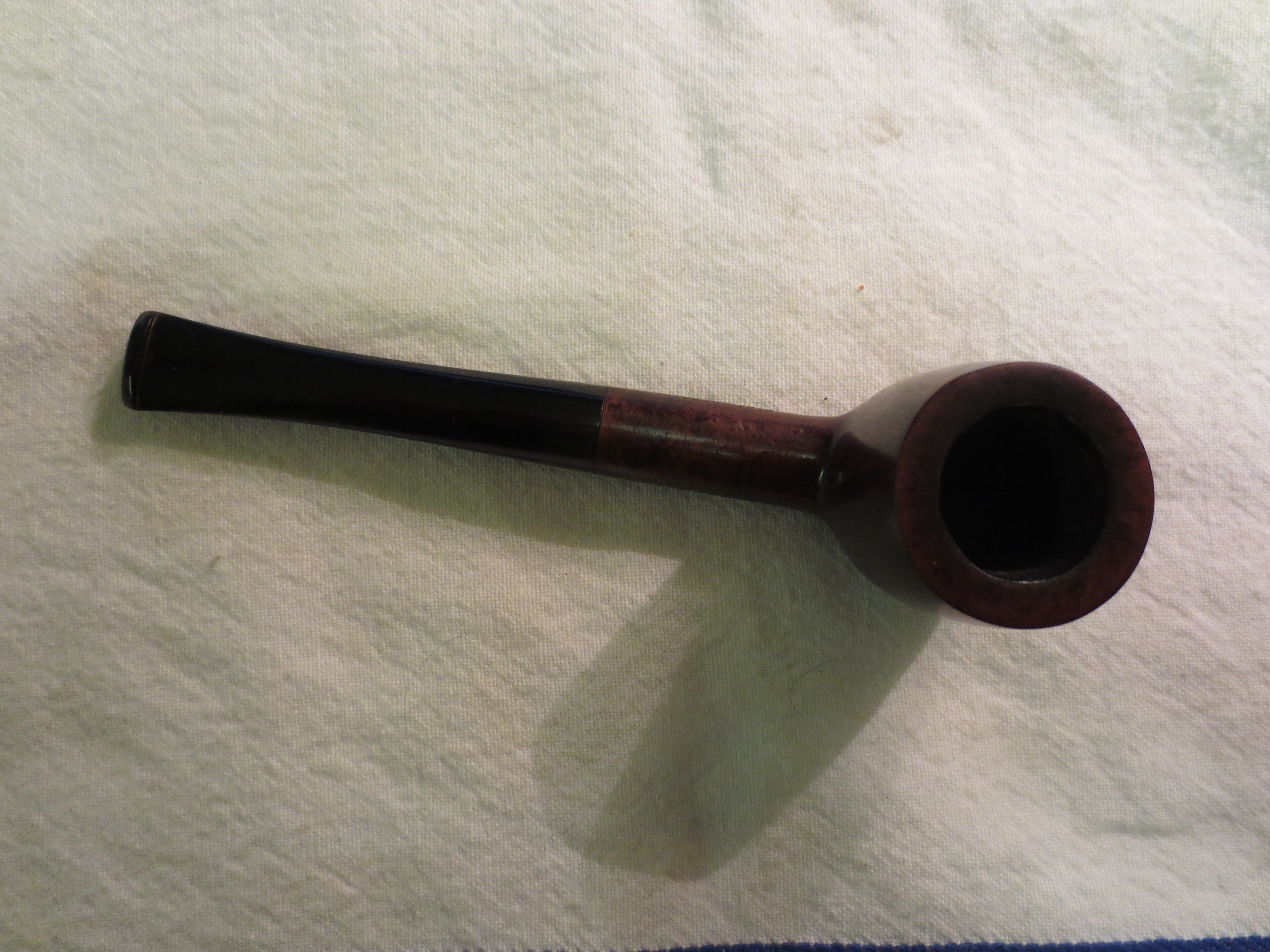
LJ Perretti Straight Grain Rejuvenated


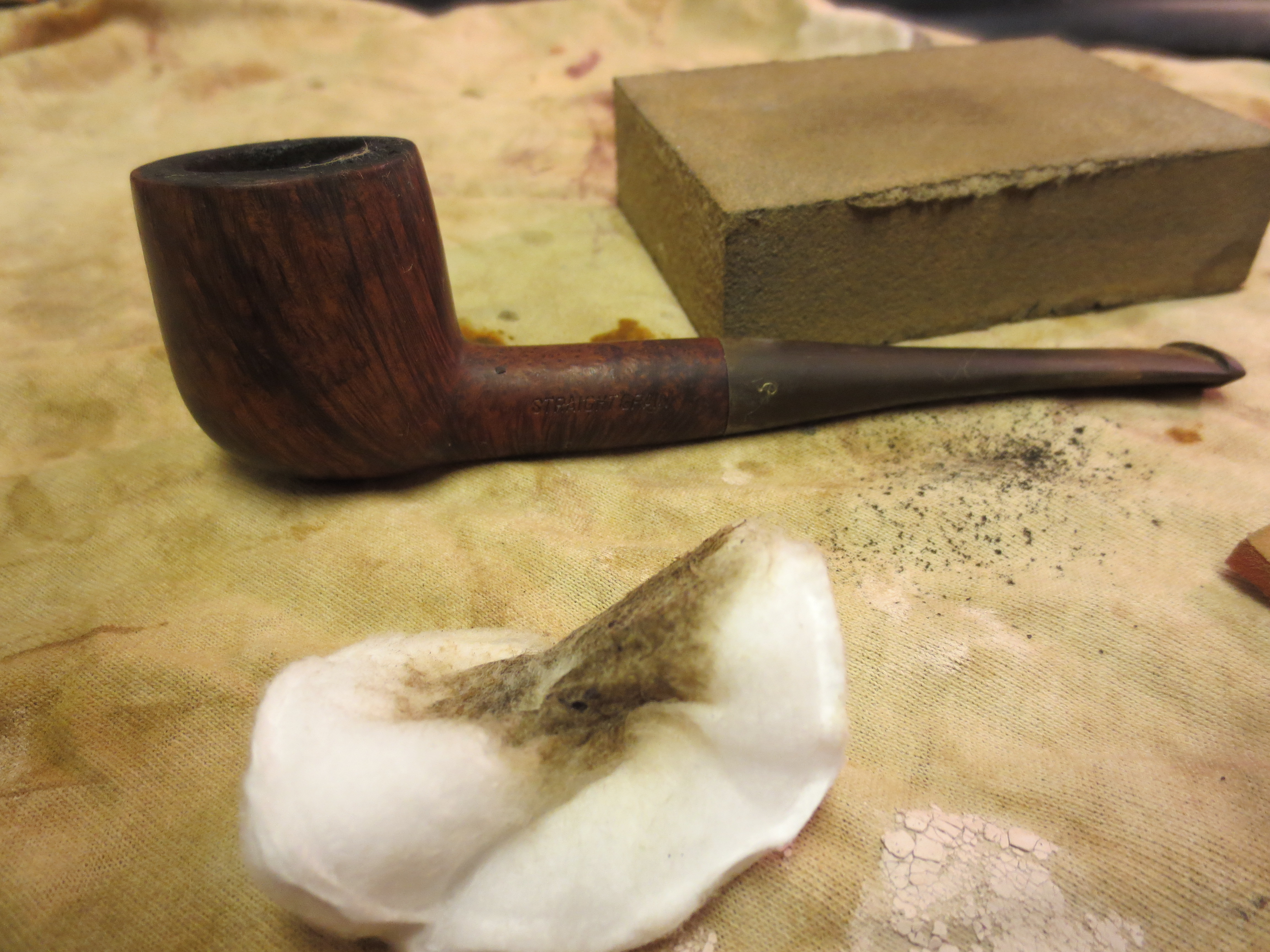
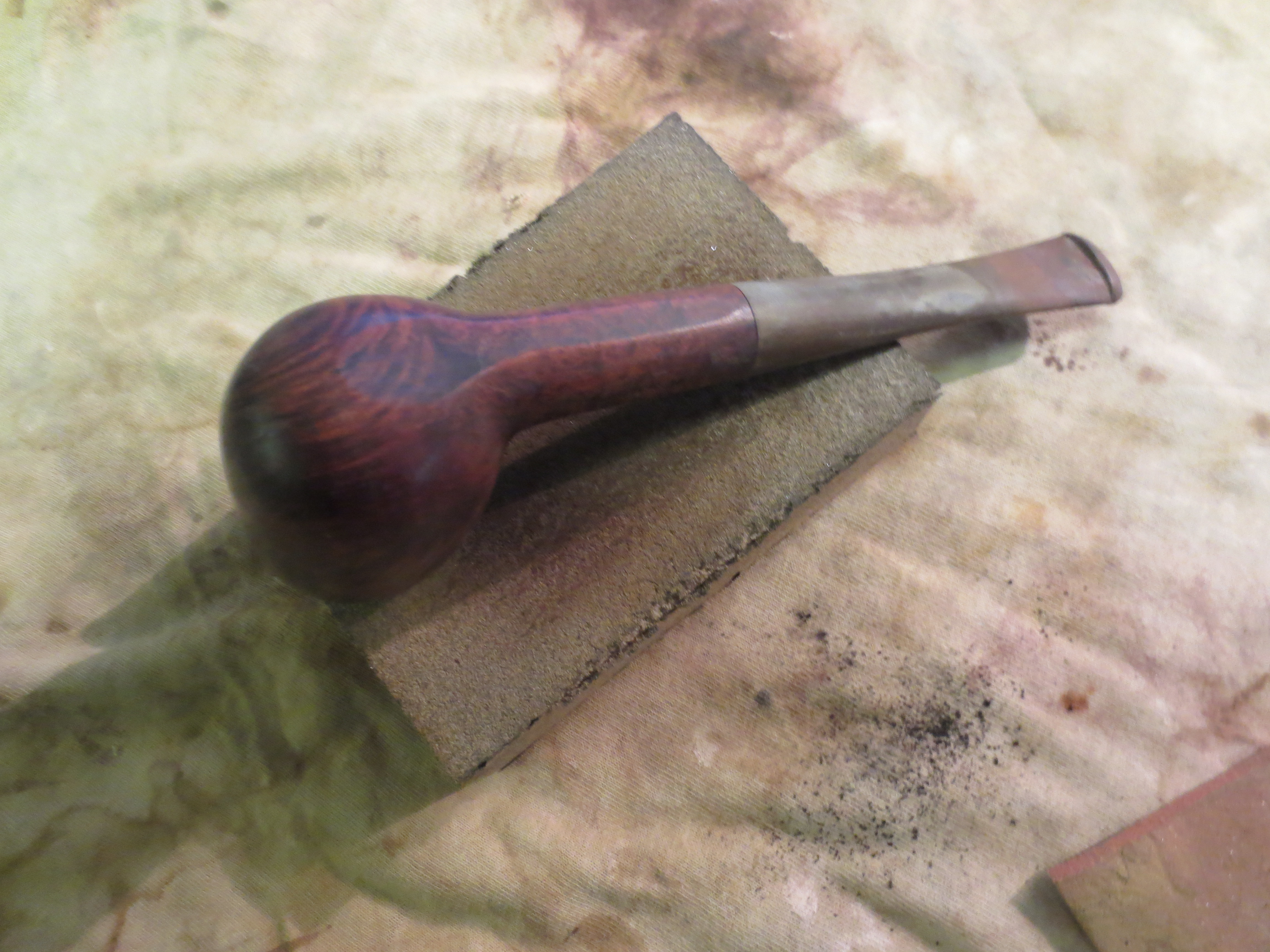
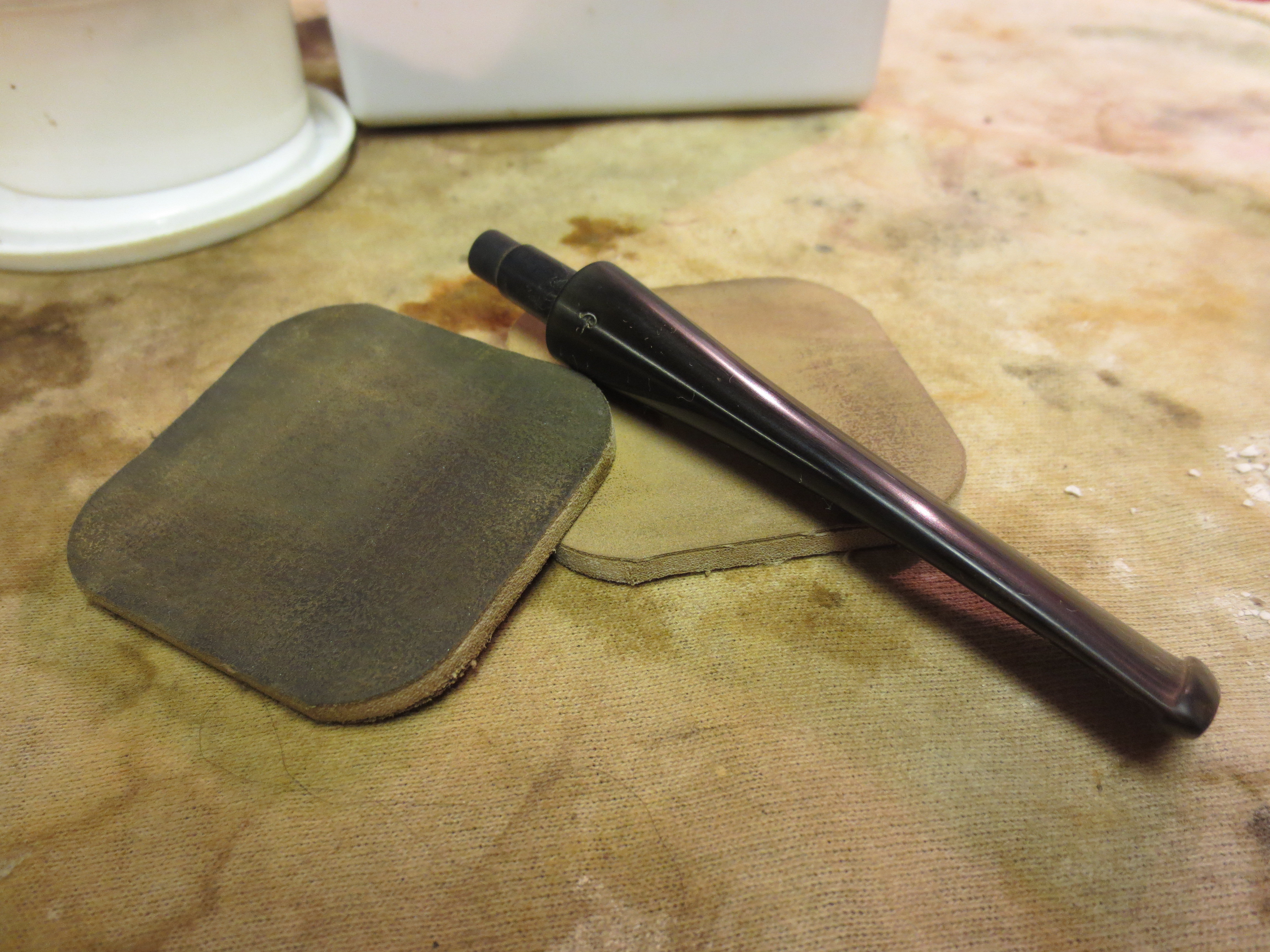
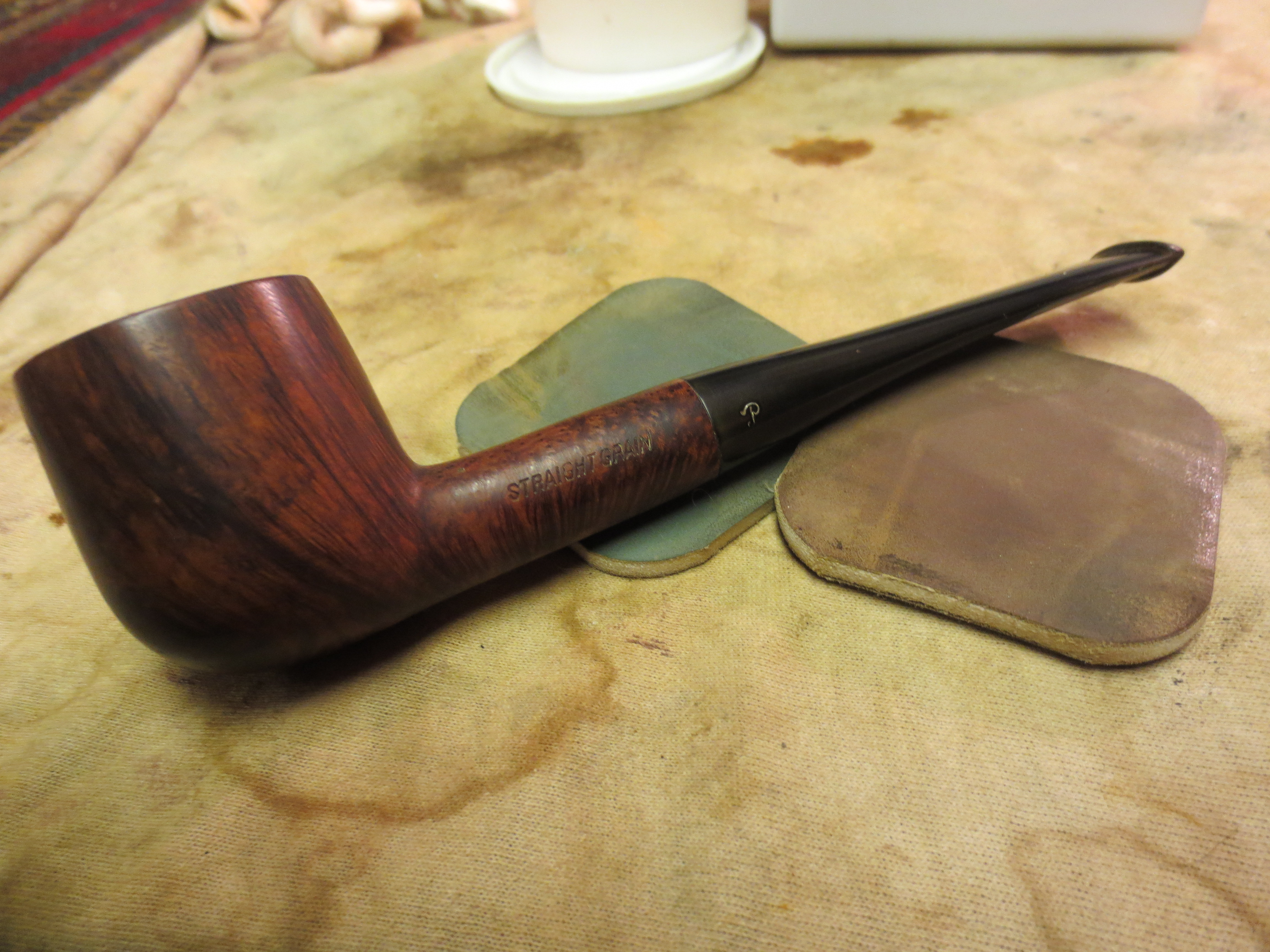
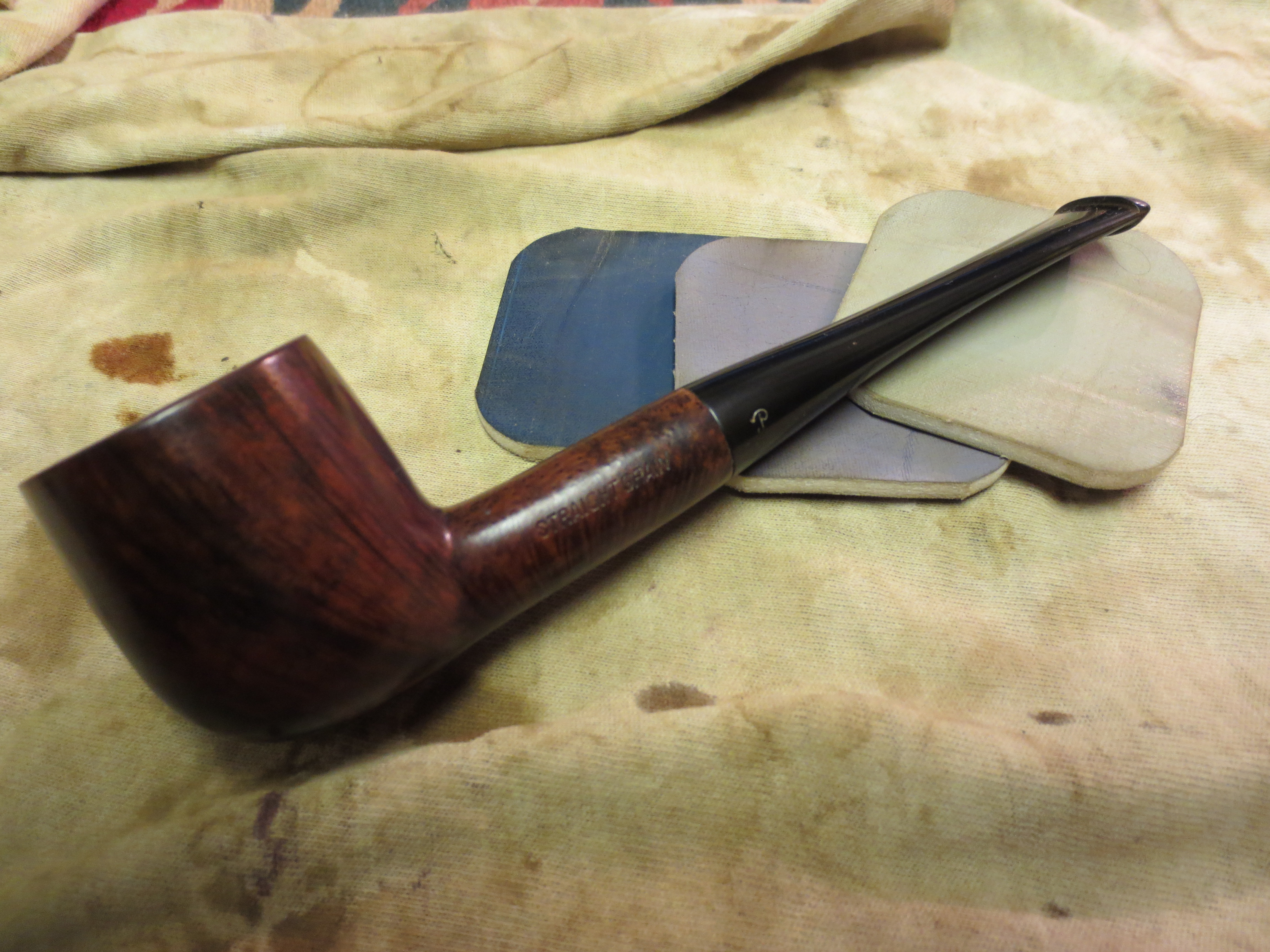
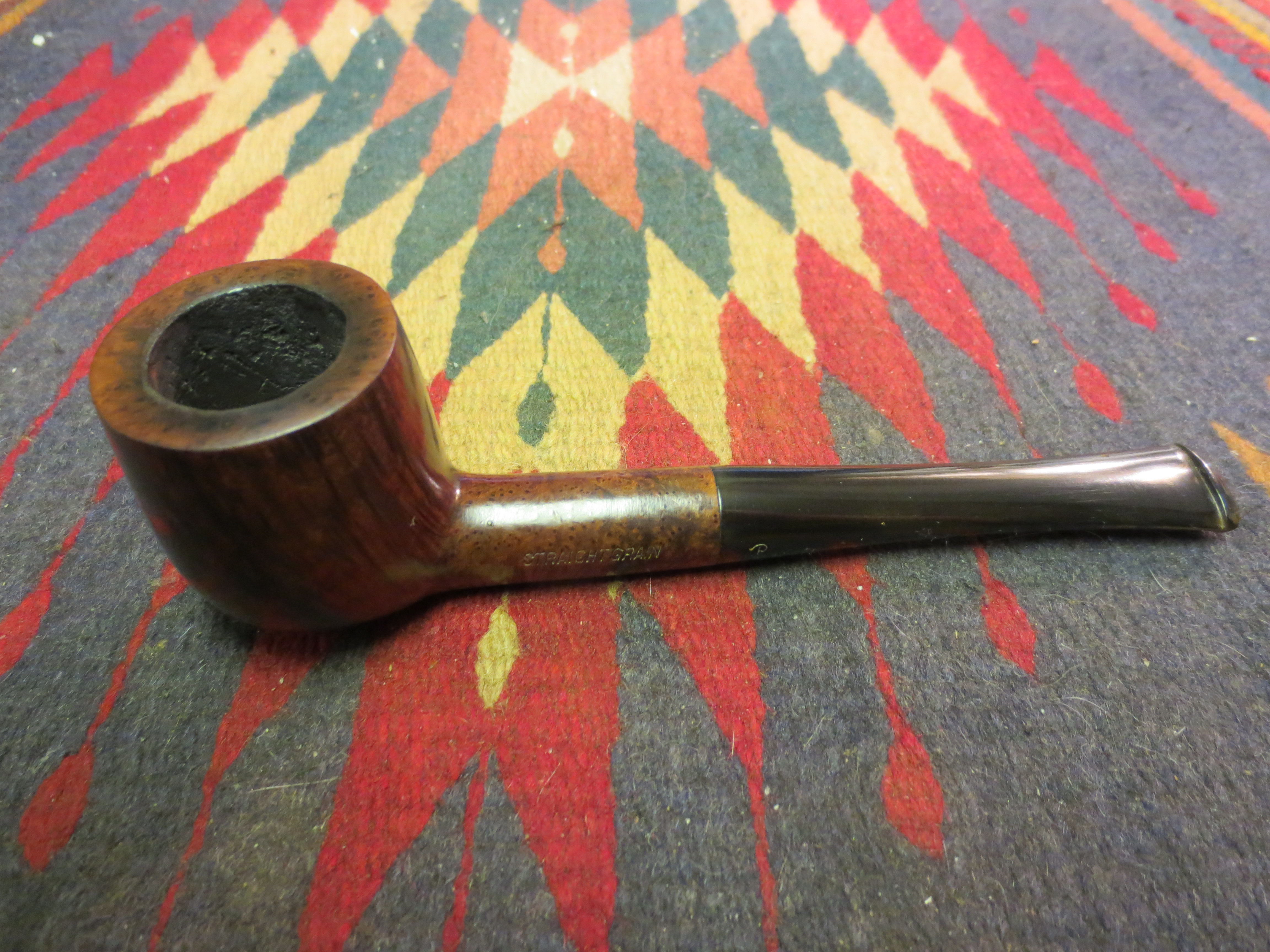
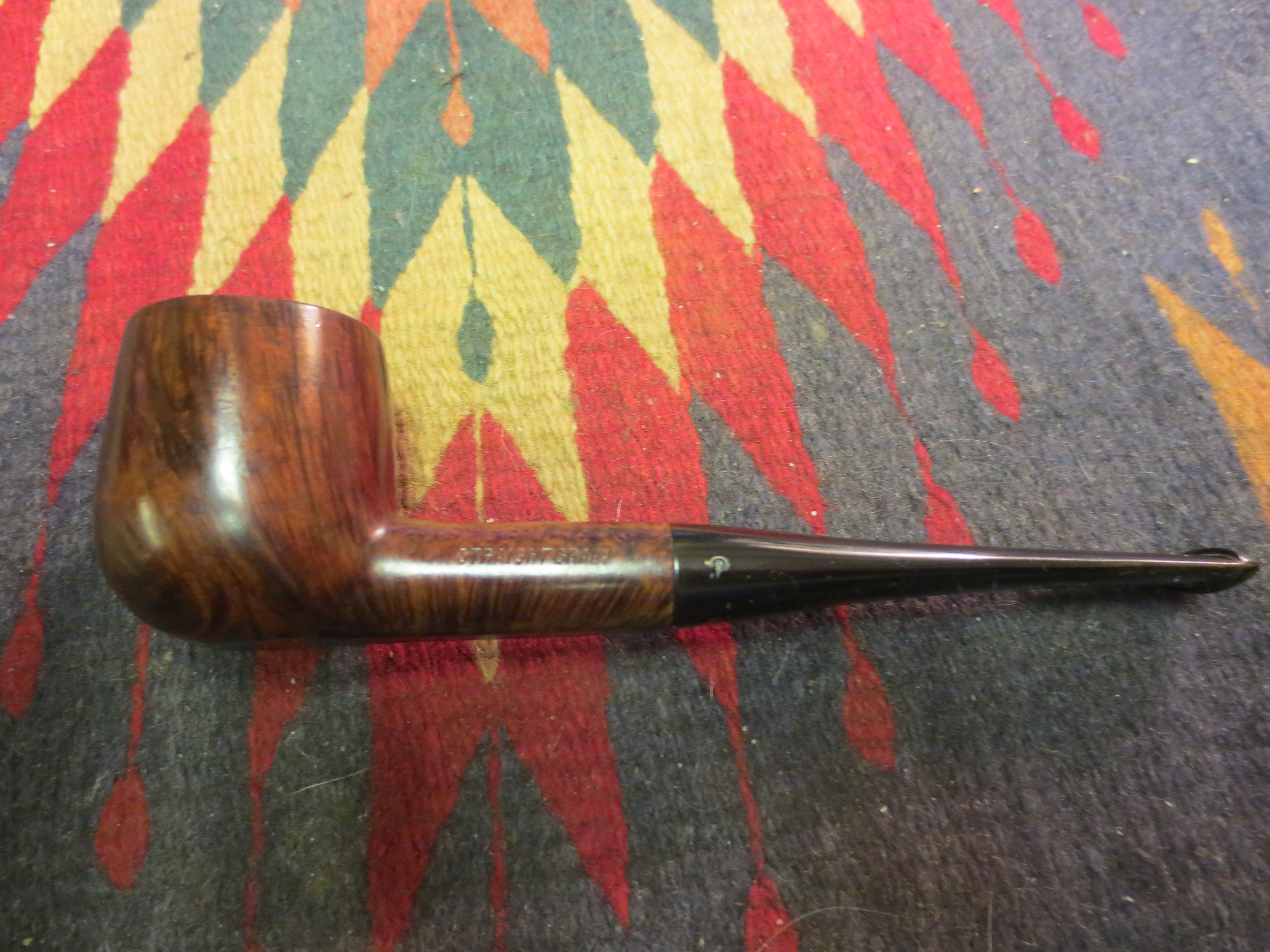
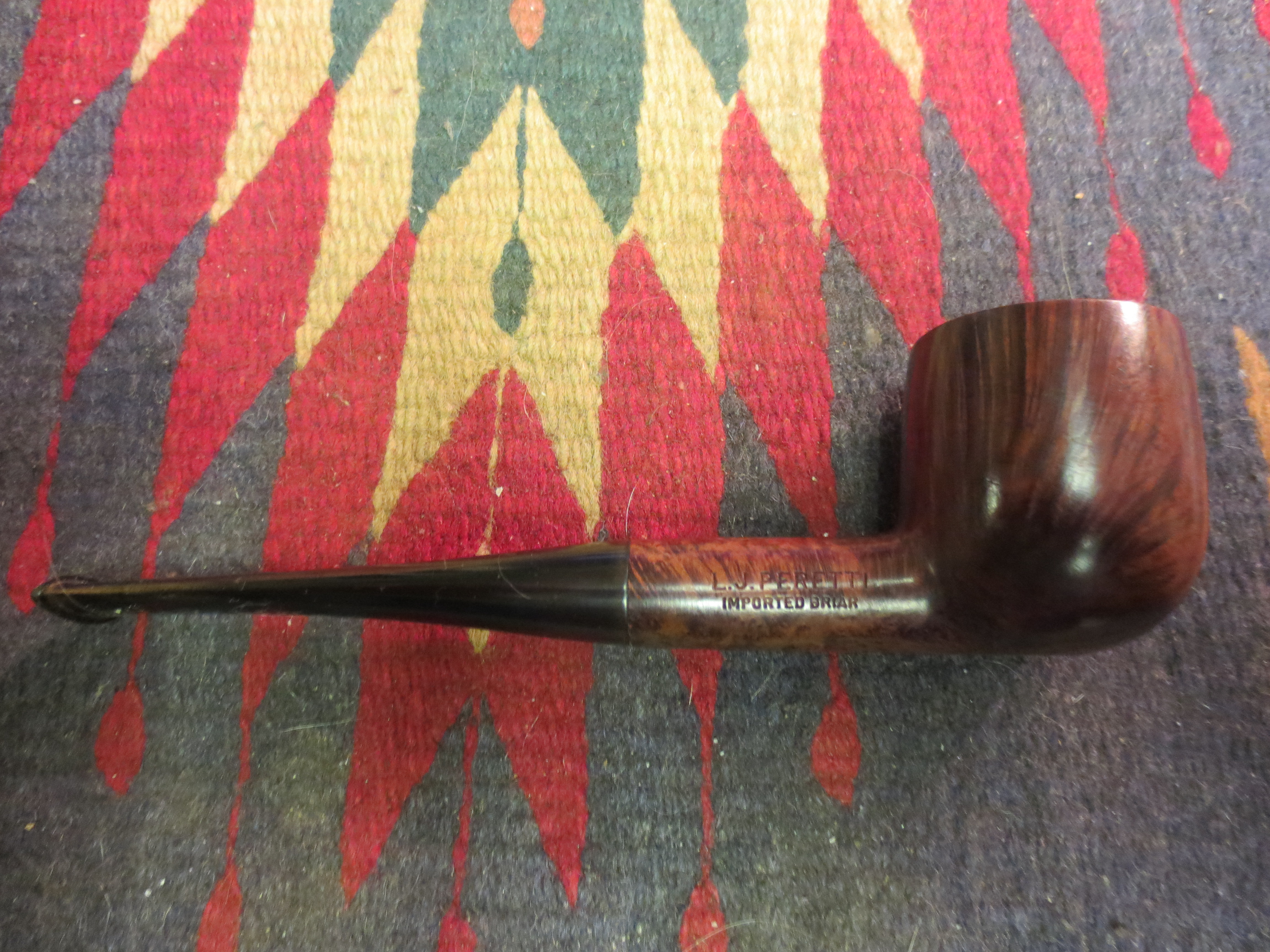
I picked up a seven pipe lot on EBay all because there were at least two of the pipes that were stamped LJ Perretti. One of them is the little pot/billiard pictured in this article. I say pot/billiard because the proportion of the bowl and shank more accurately fit a billiard but the height of the bowl is more like a pot. Ah well whatever it is it showed promise even in the seller’s photos on EBay. I bid and won. There is another Perretti that I will write about as I rework it but this one is stamped L.J. PERRETTI over IMPORTED BRIAR on the right side. It is stamped Straight Grain on the left side of the shank. The grain is quite nice and there are no fills in the briar that are visible. It was a dirty pipe – the finish was darkened and grit and oils were ground into the outside of the bowl. The rim had a serious cake of lava on it and the bowl was packed with a cake. The inside of the shank was so dirty and gritty that the stem would not sit all the way in the mortise. The stem was oxidized and had a rubber softy bit guard that was stuck on the stem. There was a cursive P on the left side of the stem. The Perretti pipes are shop pipes that may have been made by a variety of carvers or by Robert Perretti himself. These are old enough that they may well be done by Perretti. The stamping on the side of the shank that says Imported Briar seems to point to the pipe being American made. The first series of three photos shows the state of the pipe when I took it to my work table.
IMG_0895

IMG_0896

IMG_0897
I cut off the rubber softie bit guard with a knife and peeled it free of the stem. I reamed the bowl with a PipNet pipe reamer to remove the buildup of carbon. I cleaned out the stem and the shank with pipe cleaners and Everclear until the pipe cleaners came out as clean as they went in. It never ceases to amaze me how many pipe cleaners it takes to clean out the inside of the pipe and stem. Once the internals were clean the stem fit into the shank with no interference.
IMG_0901

IMG_0902
I wiped won the outside of the bowl with acetone on a cotton pad (Photo 1 below). I wiped down the rim with acetone as well and then decided to lightly top the bowl (Photos 2 – 5). I used a medium grit sanding sponge to top the bowl on this one. I just wanted to remove the carbon build up on the rim and leave as much of the stain intact as I could. Once finished I wiped it a second time with acetone. I also used the drill bit from the Kleen Reem reamer to clean out the airway from the mortise to the bowl. I recleaned the shank with pipe cleaners and Everclear afterwards (Photo 6 below).
IMG_0903

IMG_0904

IMG_0905

IMG_0906

IMG_0907

IMG_0908
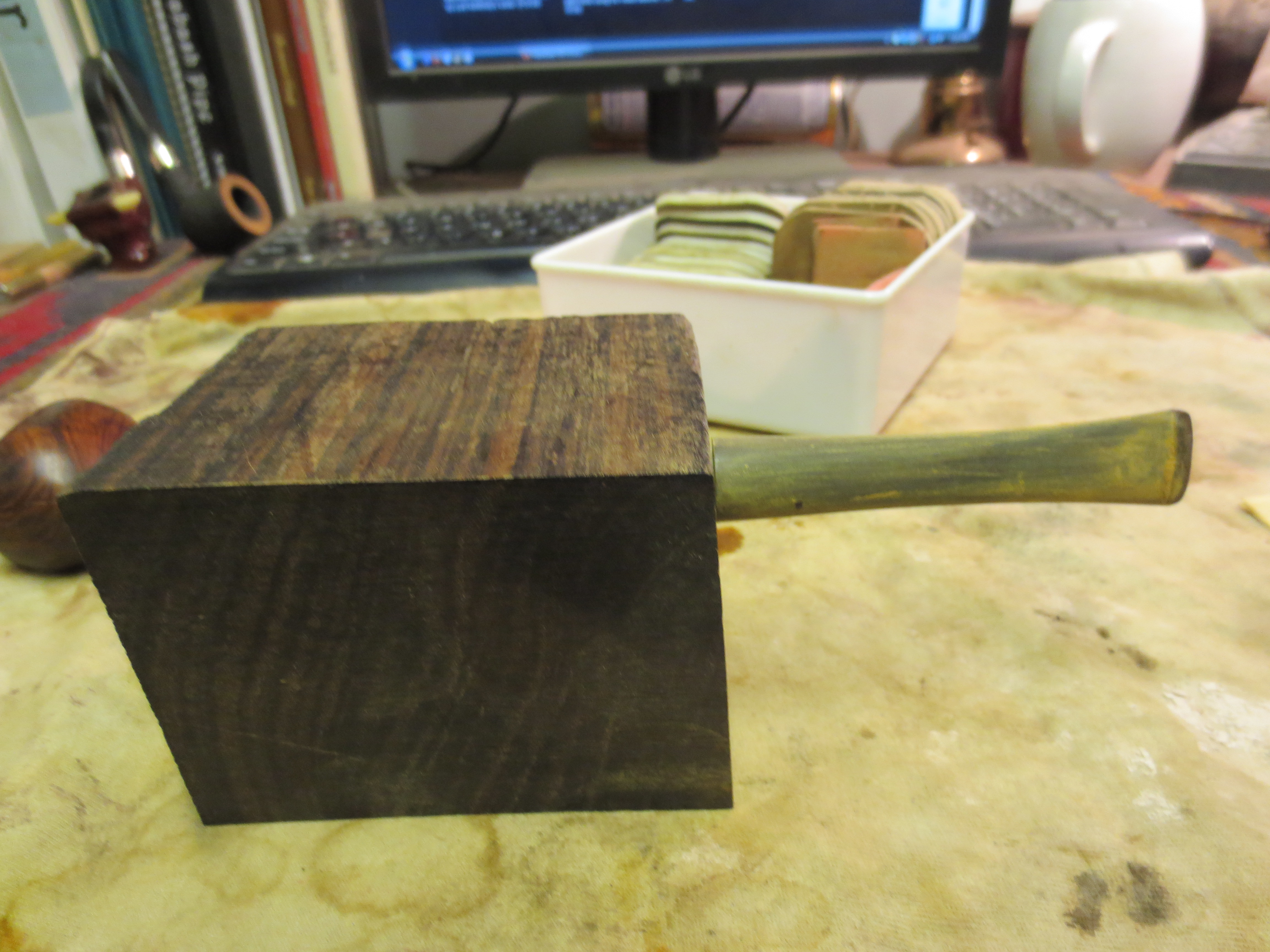
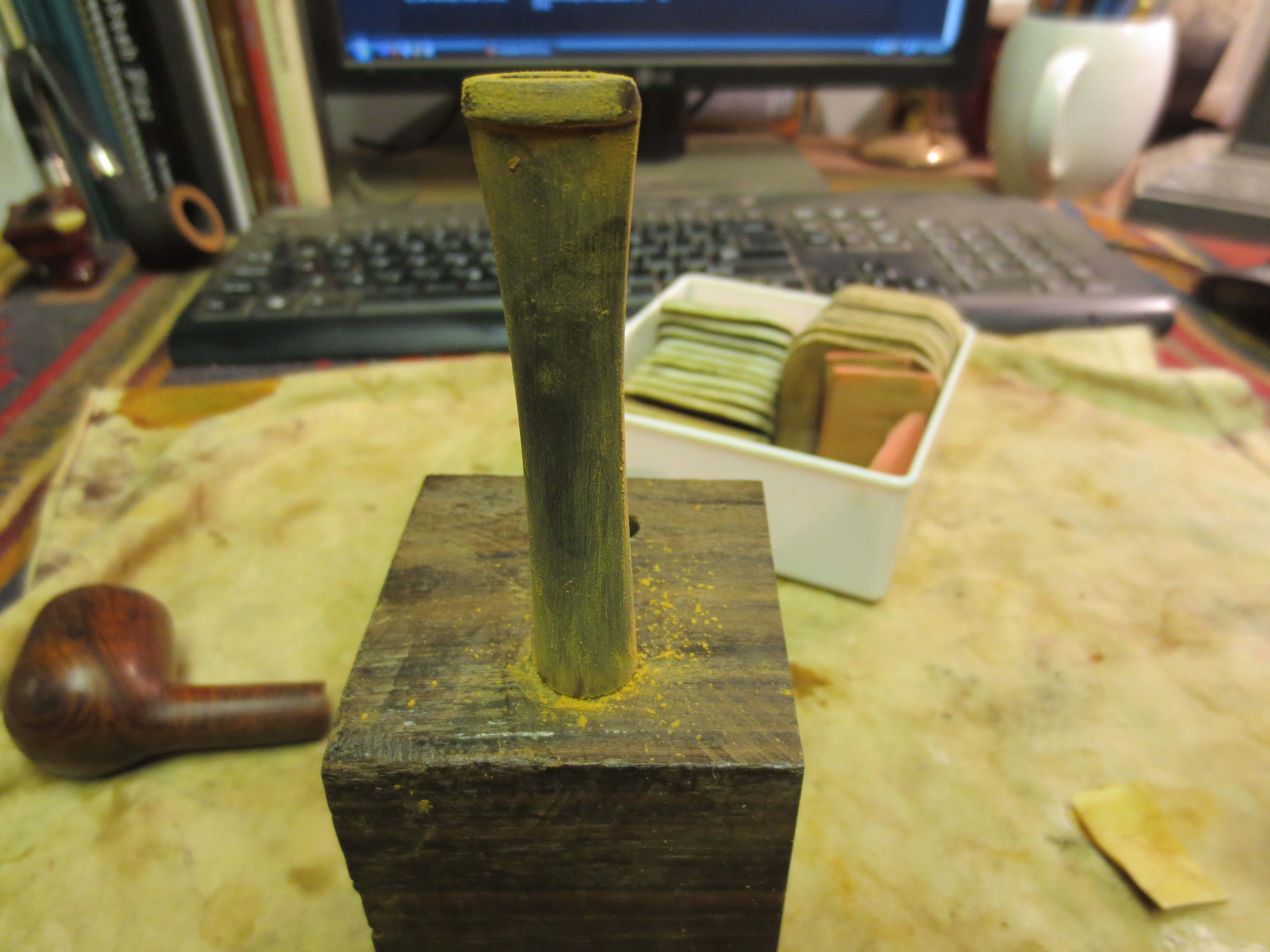
I set the bowl aside and then worked on the stem. I inserted it in the ebony block that I drilled as a mortise to work on the oxidation. I sanded it with 320 grit sandpaper to break up the oxidation and remove the calcium buildup that was under the softee bit. There were also some tooth chatter and marks that needed to be worked out. These were not deep so all I did was sand them with the 320 grit sandpaper. The next two photos show the work on the stem.
IMG_0909

IMG_0910
I reinserted the stem on the pipe and then continued to work on the stem and clean up the oxidation. I sanded around the edge of the stem/shank junction. I used 320 grit sandpaper and a medium grit sanding sponge.
IMG_0911
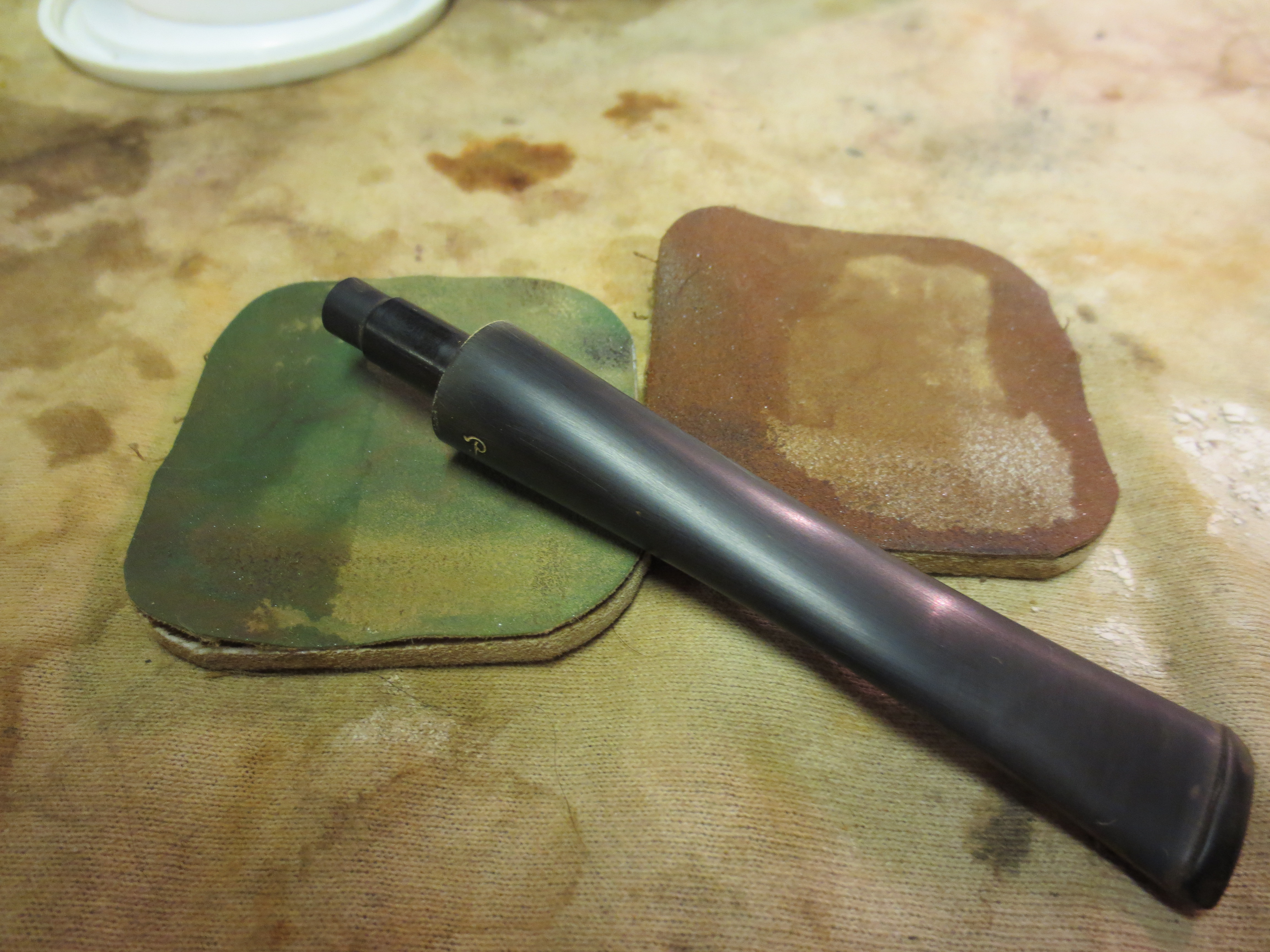
I wet sanded the stem with 1500 and 1800 grit micromesh sanding pads. I dry sanded with 2400-12,000 grit micromesh sanding pads. The next three photos show the progress of the sanding with the pads. I selected three to show the progress but could easily have shown the lot. The main idea is to show the development of the shine on the stem. I finished sanding with 12,000 grit and then wiped the stem down with Obsidian Oil and buffed it by hand with some carnauba wax.
IMG_0912

IMG_0913

IMG_0914
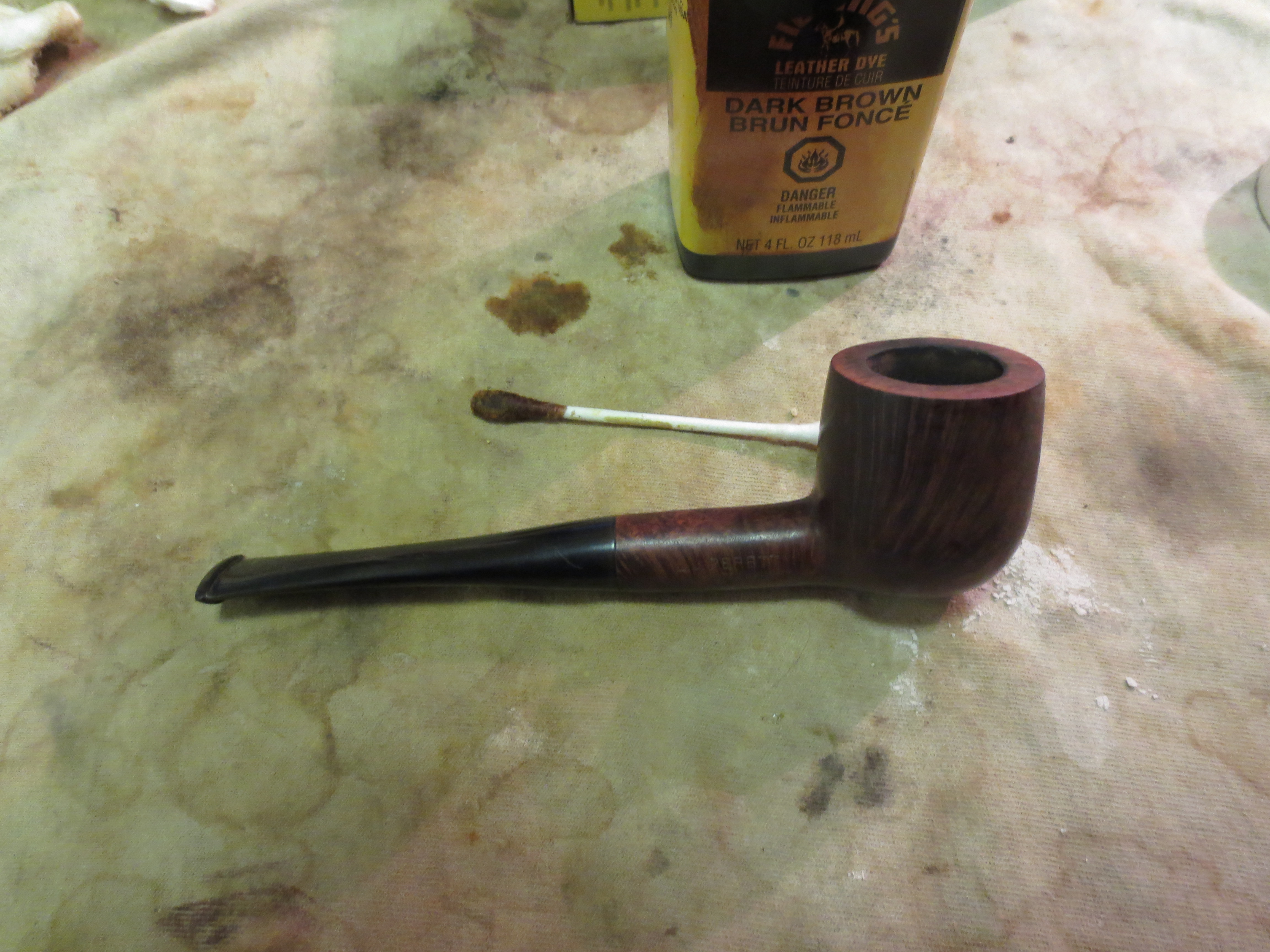
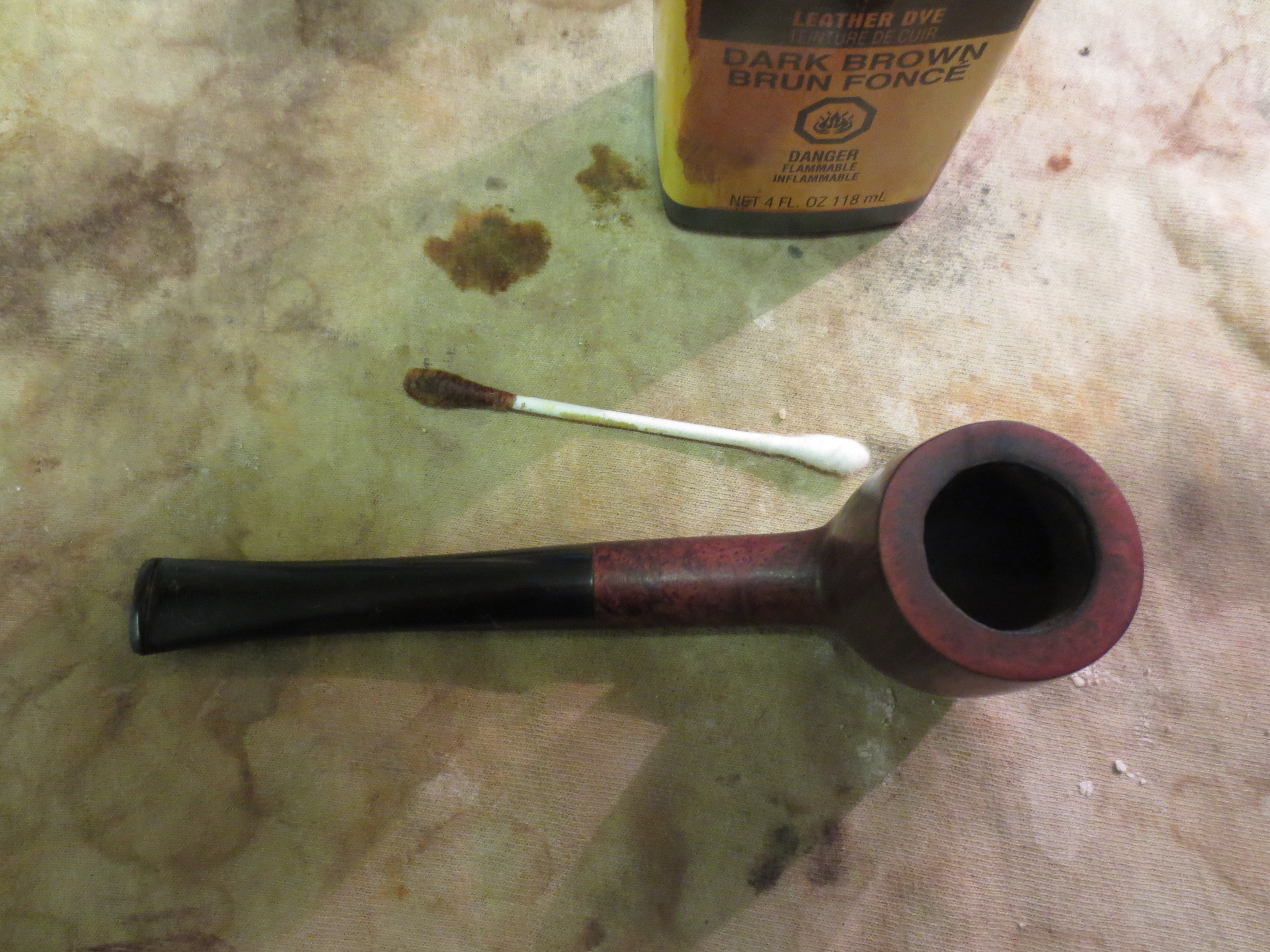
I restained the pipe with dark brown aniline stain thinned 2:1 with isopropyl alcohol. I flamed the stain and then restained it and reflamed it. I applied a third coat of the stain to the rim and flamed that again as well (Photos 1 & 2 below). I then sanded the bowl and the stem with the 6000, 8000 and 12,000 grit micromesh sanding pads (Photo 3 below) and then took it to the buffer and buffed it with White Diamond (Photos 4 – 6).
IMG_0915

IMG_0916

IMG_0917

IMG_0918

IMG_0919

IMG_0920
I finished by buffing the pipe with multiple coats of carnauba wax and then polished with a soft flannel buff on the buffer. The final series of four photos below show the finished pipe.
IMG_0922

IMG_0925

IMG_0921

IMG_0923

Refurb on a Brigham 2 Dot Lovat


Blog by Steve Laug

I just finished refurbishing this Brigham 2 Dot Lovat that I picked up in the estate pipe rack at a local tobacconist. This one was a challenge, but I loved working on it. It has the standard Brigham style rustication. It was in rough shape. The bowl was incredibly grimy and needed a lot of work. The grime had filled in most of the rustication to the point that it looked worn out and smooth. I soaked and scrubbed it for about an hour using a brass white wall tire brush to scrub out the grime caked on the outside of the bowl. The inside of the bowl was so badly caked that I reamed it back to the wood. Once I had it reamed and the scrubbing of the outside finished I dropped it in the alcohol bath overnight and went to work on the stem.

ImageImageImage

The stem was another story. It was given a soak in OxyClean to soften the oxidation. I find that OxyClean does not remove the oxidation at all, but it does soften it and make working on it much simpler. After the Oxy soak I went to work on the inside of the stem. Where normally there was to be a Brigham filter in the long metal tenon this time it was gone and the tars had built up to the point that the stem was totally closed off. I tried to blow through it but could not get any air through. I used an awl or ice pick to open up the stem and the tenon. Then I worked on it with bristle pipe cleaners and a shank brush. It took a lot of pipe cleaners and alcohol to get it clean. Then the outside was sanded with 400 and 600 grit wet dry sandpaper followed by the run of micromesh sanding pads. Once it was clean and shiny I set it aside and turned my attention to the bowl.

I took the pipe bowl out of the alcohol bath and went to work on it. I used the brass brush one last time to clean off the remaining grime and then dried off the pipe. There was no finish left on the pipe so I restained it with a cherry stain. I reinserted the stem in the shank and took it to my buffer and polished the entirety with Tripoli and White Diamond, finishing with a coat of wax.

ImageImageImage

Seeing through the grime – a story told by an old pipe


I had this story I had written sitting on the hard drive. I reworked it quite a bit the last two evenings and thought I would post it. In it I try to capture the old stories that I find in the estate pipes I seek to bring back to life. Thanks for reading it.

Awhile ago I was working on cleaning up an old estate pipe. I had purchased this old timer on eBay and when I came home from work one afternoon I found it had arrived in the mail. When I opened the box I could not believe my eyes. The pictures the seller posted on eBay did not begin to capture the sorry state of this poor pipe. It was a disaster – the bowl was caked to the point of not holding any more tobacco. I could barely fit a pencil in what remained of the tobacco chamber. The cake that filled the bowl was not the typical hard carbon but was crumbling and very soft. The stem would not fit all the way into the shank as both it and the inside of the shank were covered with tar and a white lime crust. The airflow on this poor old timer certainly must have been miniscule, but there was no way I was going to put this thing in my mouth to even blow on it. I found that once I removed the stem that it had the weirdest stinger apparatus I have ever seen that would have constricted the airflow even more. It was short, thick metal and absolutely crammed full of tars and unidentifiable tan chunks. I know, the word “chunks” does not help understand what I am talking about but I don’t know how else to describe the brown stuff that was thick and packed all over this stinger. The metal of the stinger was rough and appeared to be pitted or at least it had craters and crevices all over the sides and top of it. It was in truly sad shape. It certainly must have been a beautiful pipe when all this started. It was that hope of hidden beauty beneath the grime that drew me to this pipe and caused me to want to take a risk on cleaning and restoring it. On top of that was also the challenge of restoring what looked to be a hopeless cause.

I carefully wiped the outside of the bowl with a damp rag to get some of the surface grime off. I wanted to see what the grain looked like underneath the grit. I carefully separated the stem from the shank and removed the stinger for a soak. I then used several reamers that I have to ream both the bowl and shank of the pipe. All of this was preliminary to the actual cleaning work. I wanted to be able to more knowledgeably assess the condition of the pipe under the years of grime. What a lot of carbon dust lay on the paper that I put on my work table. The grain did not look too bad. There was some interesting curly birdseye on one side and flame grain on the back and front of the bowl. A twisting grain flowed across both the bottom of the pipe and the shank. I turned the pipe over in my hands to inspect it for cracks. I have found that there are often cracks in pipes that have been smoked this hard. Surprisingly, there were none in this bowl at all. But this pipe had been smoked right through the bottom of the bowl – yes burned out. That would not surprise you if you had seen the condition of the pipe. But what made it surprising to me was that the bottom of the bowl had been plugged and repaired with a well worked briar plug. It had darkened but I could still see that it fit very snugly and carefully and showed some thoughtful work at the hands of a good repairman. All this caused me to reassess what I had originally concluded about the pipe and the piper who used to smoke it.

A pipe, that at first glance, appeared to have been “abused” this much, must have been ignored and not cared for by its owner. But I am not convinced of that verdict – in fact I was beginning to conclude just the opposite – it must have been a well loved and favourite pipe. The fact that it had obviously been smoked to the same point before in its life and then repaired with a well done plug and then smoked to the same point of cake again says a lot about what kind of pipe it must be and what kind of smoke it must have delivered to it owner. On the one hand, the original owner did not take care of his pipe in terms of daily maintenance and cleaning. I don’t think it had ever seen a pipe cleaner in all of its years. But on the other hand, he cared enough to take the time to have a well done plug put in the bottom of the bowl to fix the burn out and then smoked it again to this point a second or maybe a third or fourth time. That is the contradiction that exists when I look at a pipe like this. There is more to the story than initially meets the eye.

Only when it is stripped down and cleaned do I get a bit more of the story underneath all the surface grime. I think that the old fellow who must have owned this pipe would have been interesting to spend time with having a talk. I am certainly making an educated guess but I believe that this was a pipe that belonged to an old timer. By the looks of it, I would say it would have been disposed of with his other non-sellable or unwanted estate items. The fact is that if that was not true it would still be in his mouth. I would guess that he was a one pipe guy who refused to give up on an old friend and kept repairing and smoking his old buddy. Each problem that came up was a puzzle to be addressed and repaired before the pipe was returned to its smoking regimen. There is a silver band on the pipe that probably is original and matches the shape of other pipes like this one that I found on the web, but it is also engraved with what appeared to be initials – a monogram that possibly identified it as his. The band had turned around on the shank several times and had been obviously re-glued several times to keep it with the pipe. It was a not only a mark of ownership but of pride. It made me wonder if he had it engraved himself of if one of his children might have had it done as part of a very personal gift for “dad”. In the bottom of the bowl there remained a bit of old and very dry tobacco. The bowl had been smoked to that point and left. There is no way of knowing what the tobacco was as it was pretty well destroyed. But it was there and was crumbling with the cake in the bowl. It gave me pause to wonder what happened to the guy that made him stop at that point of the bowl and lay his pipe down.

As I moved to do the first stage of cleaning the stem I was amazed to see is that the stem was actually pristine under the grime. There were no tooth marks or bites on it. There was no sign of the kind of abuse that I have come to expect in this kind of pipe. Sure, the button was clogged and airway was almost solid with tars but there are no bite marks at all on the stem. There are no scratches and no problems that a good buffing and cleaning would not take away. That too tells me something of the old pipesmoker. He was not a clencher. He did not chomp on his bit. It was the original bit and it was in good shape under the grime. He was a man who held his pipe in his hand while he enjoyed the process of sipping the smoke. He was obviously one who was not to be hurried in his process and did not want to be bothered by anything that stopped the enjoyment of his pipe. I appreciate the care that he took to not bite the stem after having repaired many stems that have been marked by the fangs of the owner.

The cleanup was finished and the bowl was refinished and re-stained with a cherry stain to match the original colour of the pipe when it was made. The silver was polished and the stem was polished to a pristine black. The bowl was coated with a charcoal based coating to give it a bit of protection as I work to rebuild a hard cake in the bowl. I loaded a bowl of my favourite Virginia/Perique blend for the inaugural smoke. I chose a quiet spot to relax while I put the fire to the tobacco and sipped the smoke. The flame jumped to the tobacco and the smoke began to curl around the lip of the bowl and out the edges of my mouth as I puffed. Ahhh, now I had joined the ongoing story of this pipe to my own history. It smoked very well and delivered a cool flavourful smoke to the bottom of the bowl… I think next bowl I will remove that odd old stinger and see what I get from it. What a great pipe. I think I had begun to understand the charms of this old pipe. I tip my “new” pipe in quiet thanks to the old piper who had pointed the way to this well loved pipe.