
by Steve Laug
 In January Jeff found out about an estate sale in Pocatello, Idaho, USA. It turned out that the sale was for a fellow Jeff and I had purchased pipes from in the past, Gene. He had been the owner of Outwest Tobacco in Pocatello (long closed now) and I bought tobacco and other smoking items from him in the past. As I think about it now, it seems that I had known Gene for over 30 years Jeff and I had been to his home and enjoyed coffee and a few pipes together. I have no idea how many pipes we bought on those visits as well as to the antique shop of his daughter. I know that there were many pipes. When we heard that it was Gene’s personal collection that was for sale and that he had passed away we decided for Jeff to go to the house and have a look. He went on January 25, 2024 to scope it out as we had seen his personal collection of pipes and there were definitely some among those well smoked old warriors that would be great to pick up. Perhaps there would even be one that could join my own collection in memory of Gene.
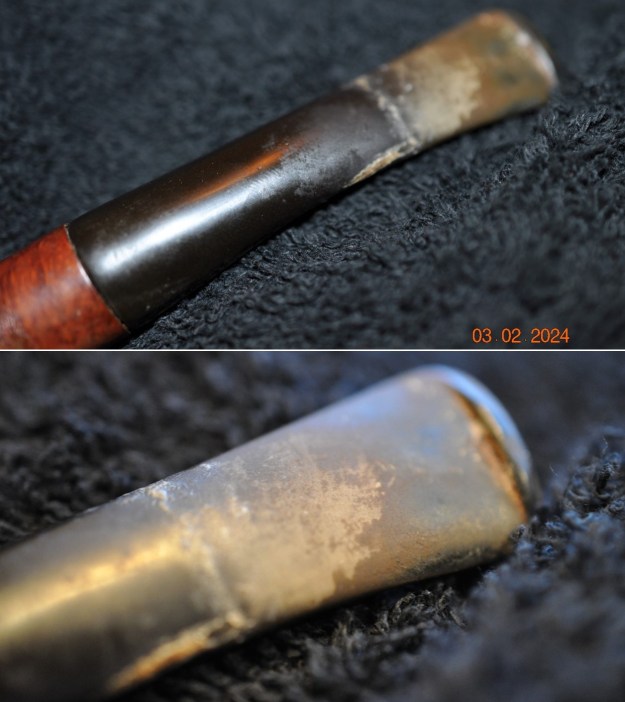
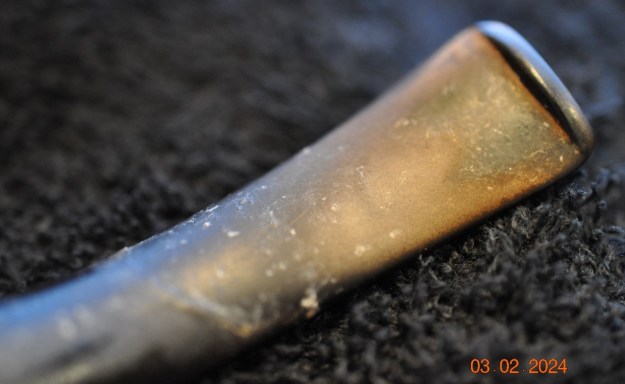
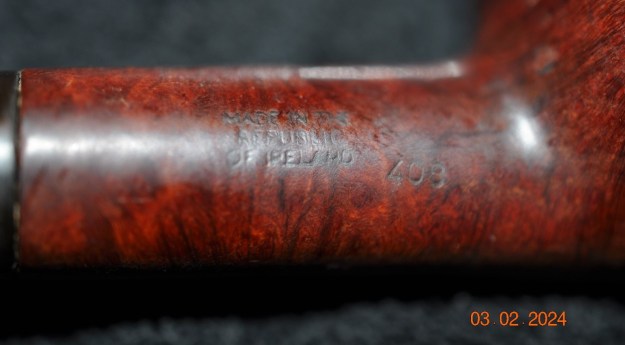
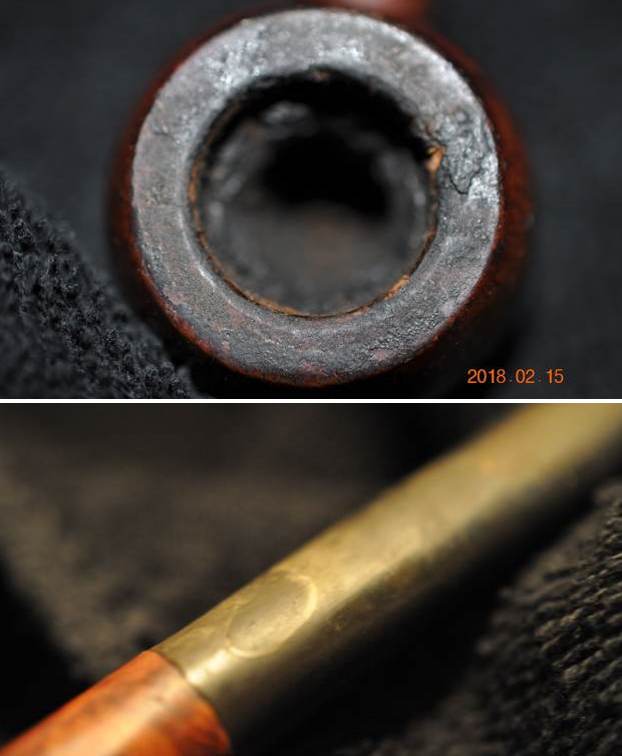
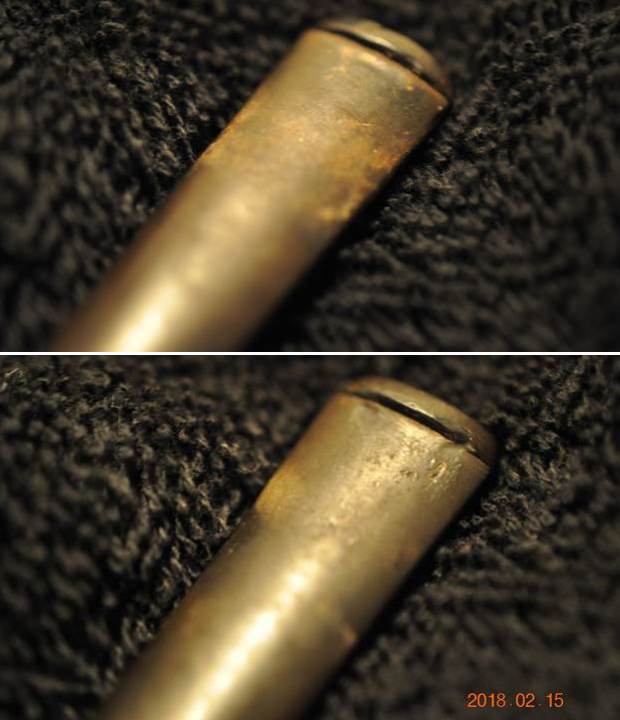
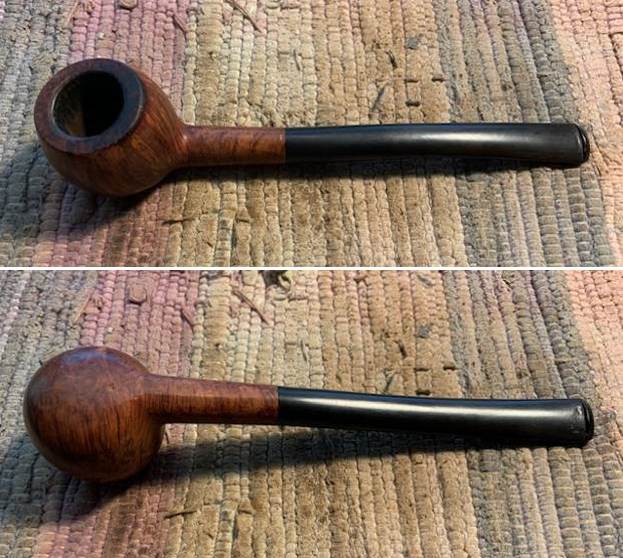
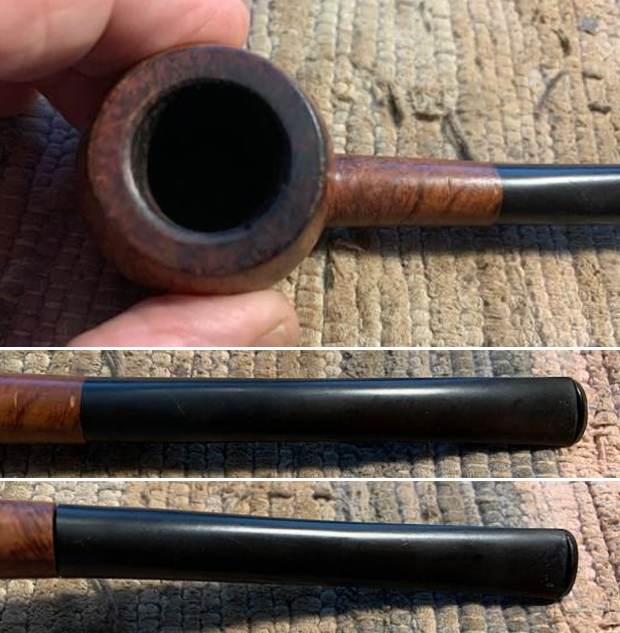
Jeff went to the house and looked through the racks, pipe bags, tobacco both bulk and tinned as well as a variety of pipes. All the pipes were well smoked and needed serious cleaning. One the pipes he picked up was this Peterson’s Kildare 408 Apple with a black vulcanite replacement fishtail stem. It was very dirty and was a natural coloured pipe when it started. The smooth finish around the bowl was dirty and had hand oils ground into the grooves. The bowl had a thick cake that overflowed in lava onto the rim edge and top of the bowl. The stem was a replacement vulcanite one that was very dirty and had the marks of a rubber Softee Bit on the end. It had become discoloured and there was a line where the debris from smoking had accumulated along the edge and under the bit protector. The good news was that there were no tooth marks or chatter. The rest of the stem was dirty and had lost the characteristic shine. I really did not matter as I would be replacing it with a P-lip stem. The pipe was stamped on the left side of the shank and read Peterson’s [over] Kildare and on the right side it read Made in the [over] Republic [over] of Ireland (in three lines) and next to that was the shape number 408 next to the shank/bowl joint. Jeff took photos of the pipe so I could have a sense of what it looked like before he started his work on it. Jeff took photos of the stem surfaces and the bowl and rim to give a sense of condition of the pipe. You can see the thick cake in bowl and the lava overflow on the edges and rim top of the bowl. It is had to know if there is any damage as the cake and lava is quite thick. The stem surface is very dirty and you can see the area on the end of the stem where the Softee Bit had protected it from chewing but had left it dirty and discoloured.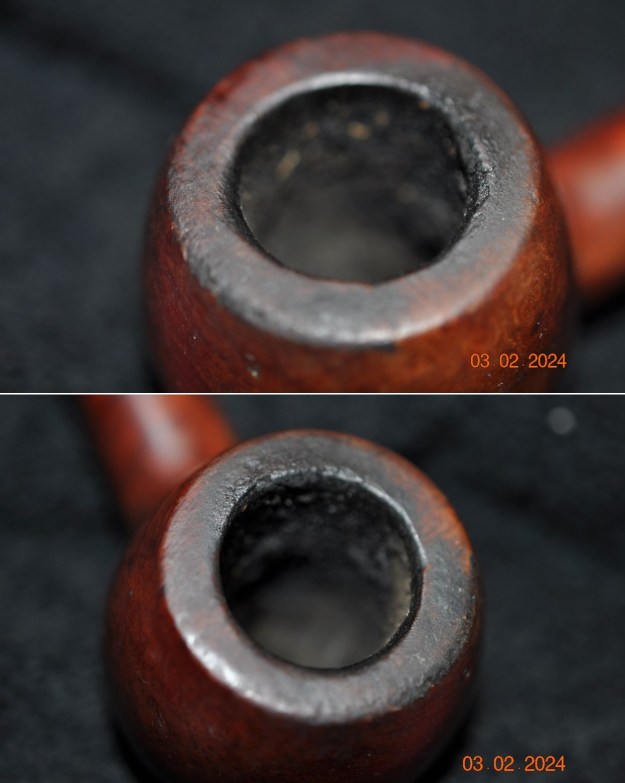
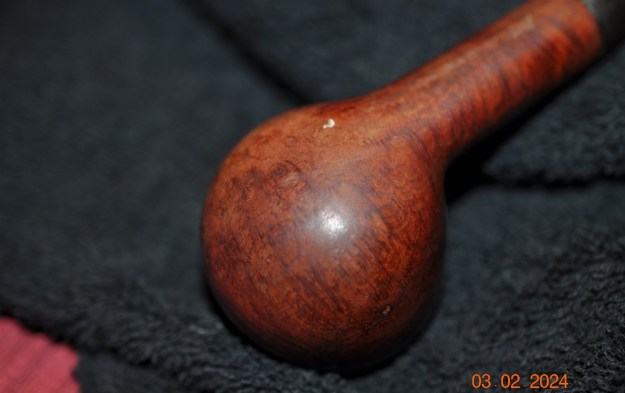
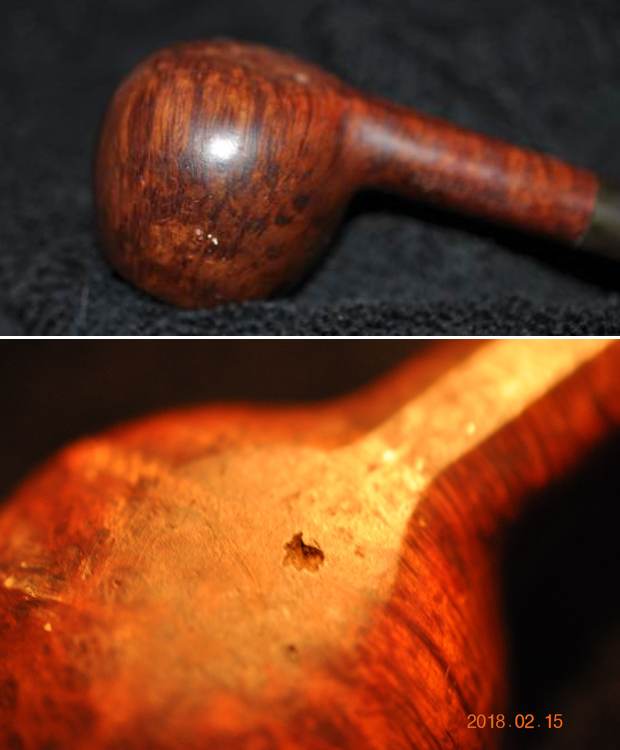
 He also took photos of the sides of the bowl and the heel to show the interesting grain that went around the bowl. The grain is beautiful. You can see the oils and debris ground into the finish of the bowl.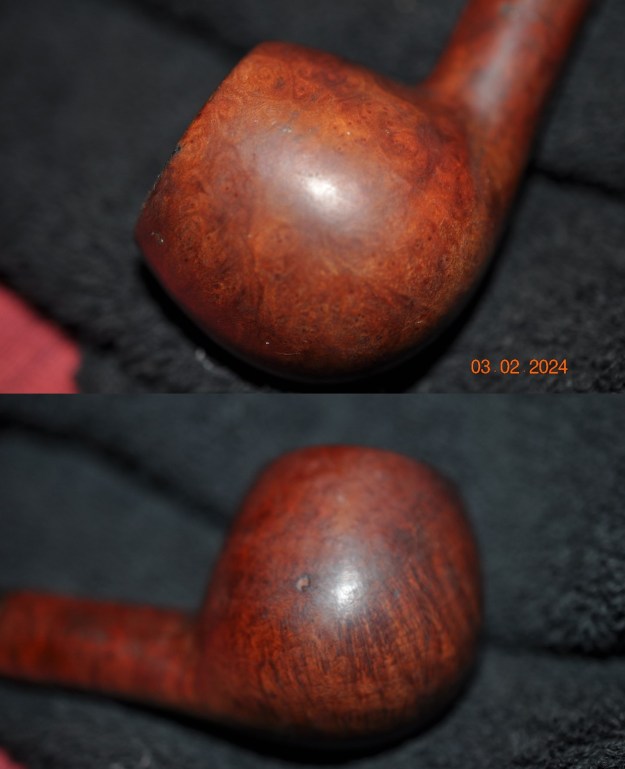
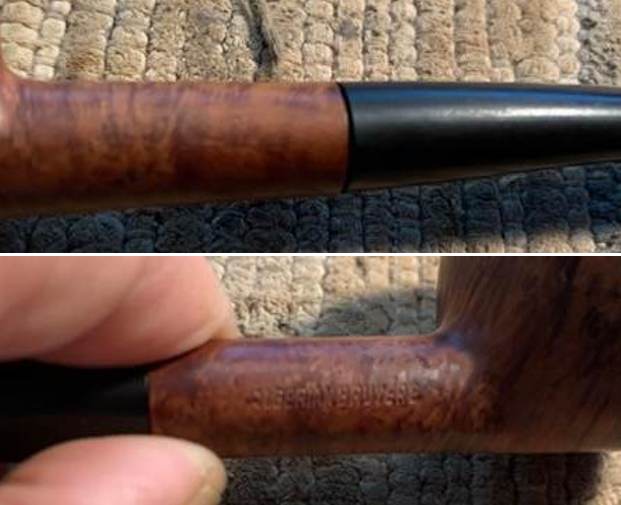
 He took photos of the stamping on the sides of the shank. It is faint but still is readable as noted above.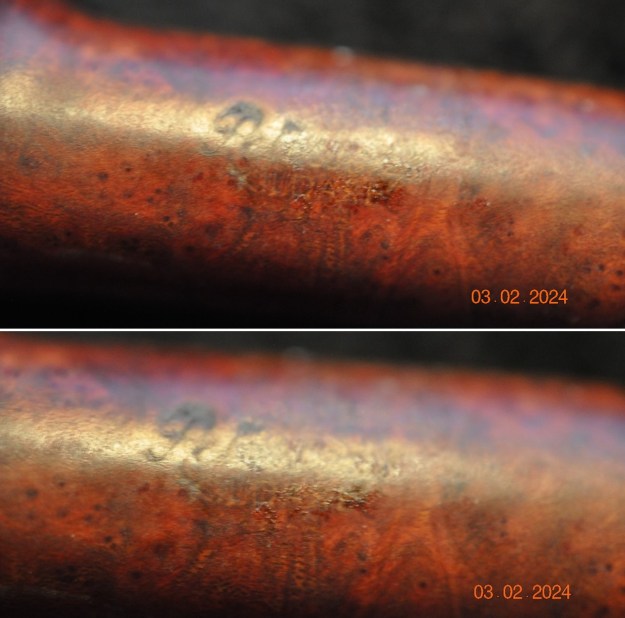
 I reread Pipedia’s article on Peterson pipes. It is a great read in terms of the history of the brand (https://pipedia.org/wiki/Peterson). I am quoting nothing specifically from that article but recommend you take time to read it.
I turned to “The Peterson Pipe” by Mark Irwin and Gary Malmberg to get some background on the Peterson’s Kildare Line. It has become my go to any time I want information on the brand. On page 314 it had the following information on the Kildare Line.
Kildare (1965-) First issue of line with matte-finish in Classic Range shapes, P-Lip and fishtail mouthpiece. Second issue C.1979 as Kildare Patch, with rusticated patches on pipe surface. Third issue 2010, matte-brown, P-Lip or fishtail mouthpiece, no band. Fourth issue 2011-, burgundy sandblast finish, nickel army mount, fishtail mouthpiece, exclusive to smokingpipes.com.
The information given above identifies the pipe as a First Issue of the line with a matte-finish. It would have been issued between 1965 and 1979. This line was issued is a brown finish with either a P-lip or a fishtail mouthpiece. This means that the pipe is an older issue Kildare. The 408 shape number is attached to a ¼ bent Apple.
Now it was my turn to work on the pipe. Jeff had done an amazing cleanup of the pipe. It was a real mess and I wondered what it would look like after his work. He reamed the heavy cake with a PipNet reamer and cleaned up that with a Savinelli Fitsall Pipe Knife. He scrubbed the internals of the bowl and stem with alcohol, cotton swabs, shank brushes and pipe cleaners. He scrubbed the externals with undiluted Murphy’s Oil Soap and rinsed the bowl off with running water. He soaked the stem in Briarville’s Pipe stem Deoxidizer and once it had soaked rinsed it off with warm water to remove the residual solution. He dried it off and rubbed it down to remove any oxidation that was still on the stem. The scratches in the briar stood out once clean. There were some on the left side toward the top of the bowl that appear in the first photo below. Overall the pipe looked good when I received it.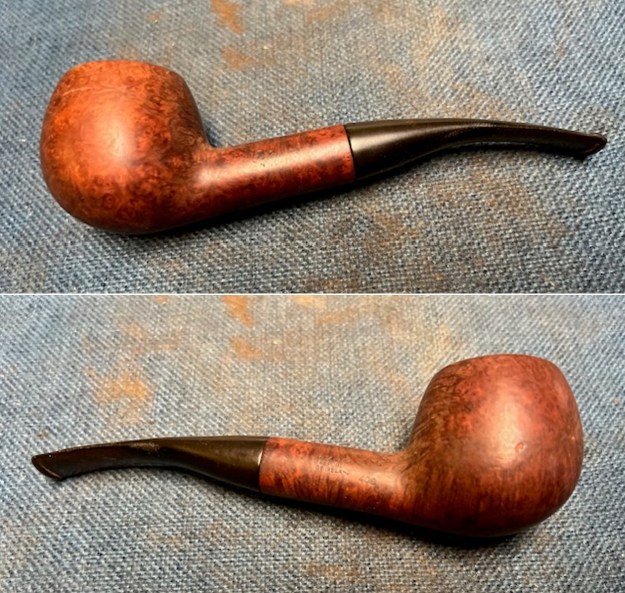
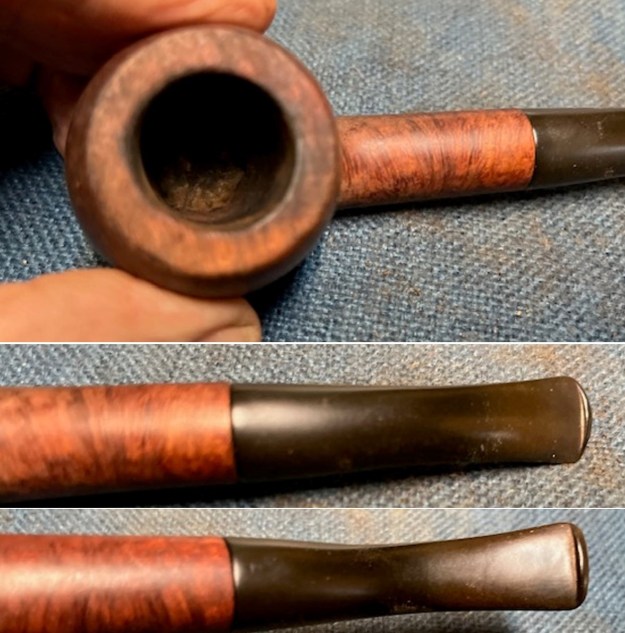
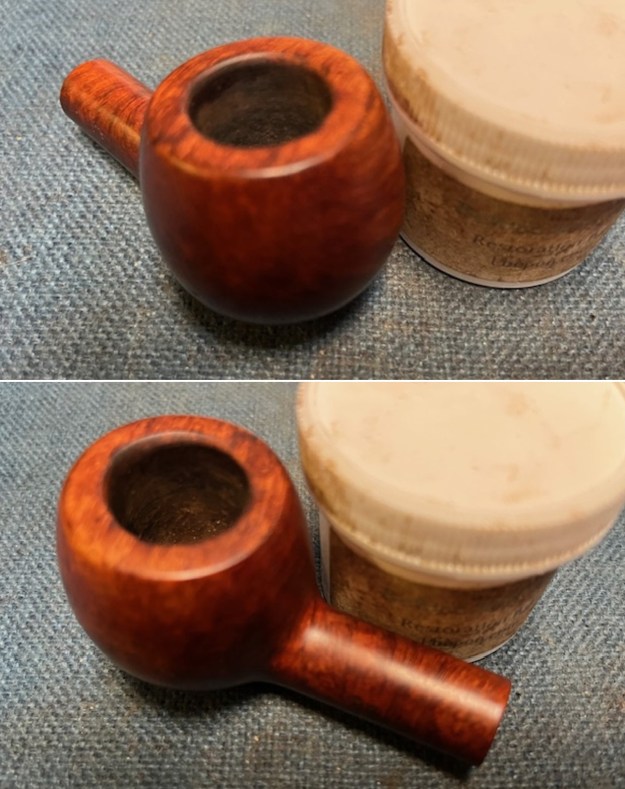
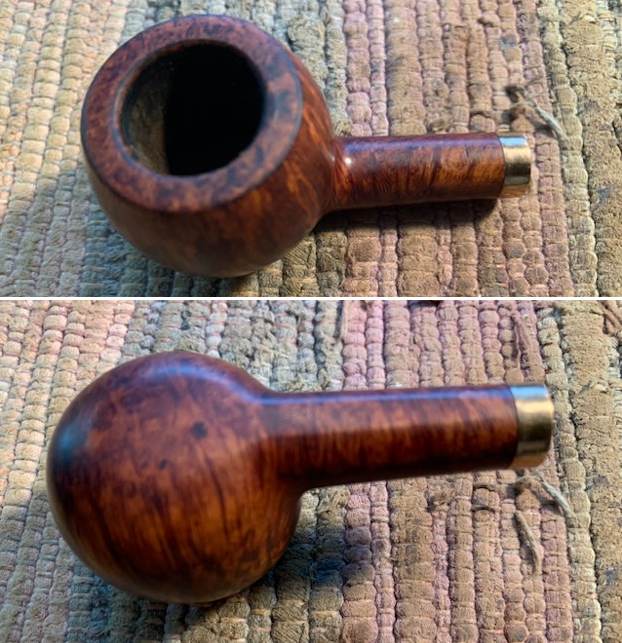
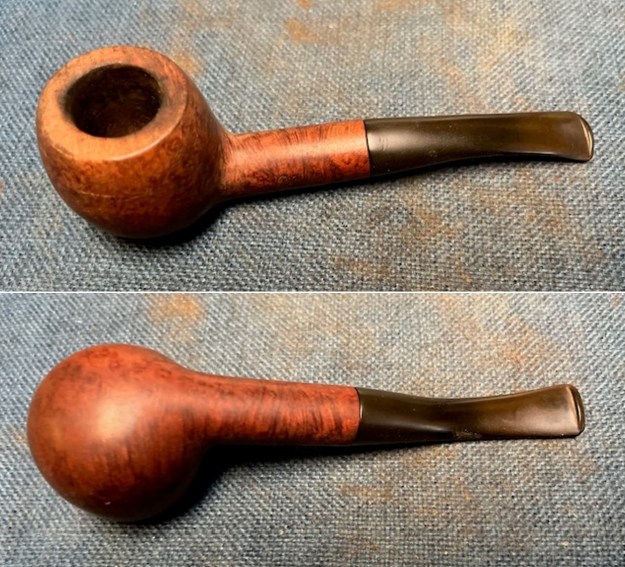 I took a photo of the rim top to show the condition. You can see the clean bowl. The bowl is in excellent condition and the rim top shows some darkening and some damage on the inner edge of the bowl and the outer edge as well. The misfit stem came out looking quite good, but since I would replace it in the restoration process I will add it to my cans of stems once I fit a new one to this pipe.
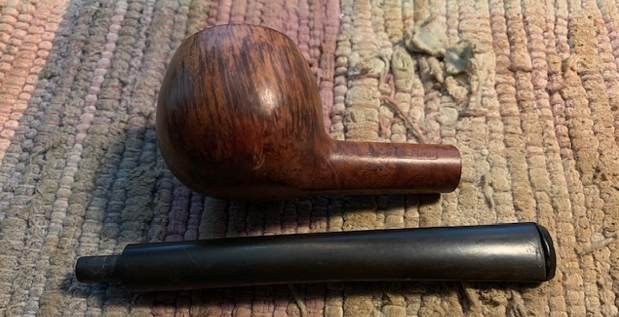
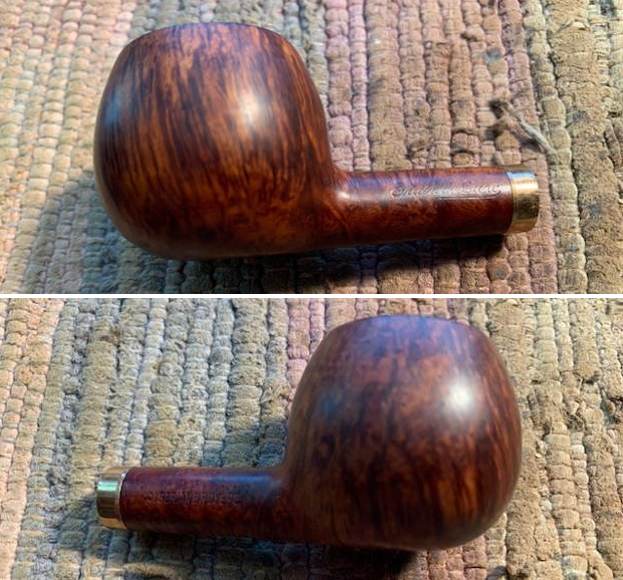
  I took photos of the sides of the shank to show the stamping. The photo clearly shows the faint stamping though it is actually more readable in person. I removed the stem from the shank and took a photo of the pipe parts to show what I was working with. The very short tenon is visible in the photo and was only one of the issues with this replacement stem.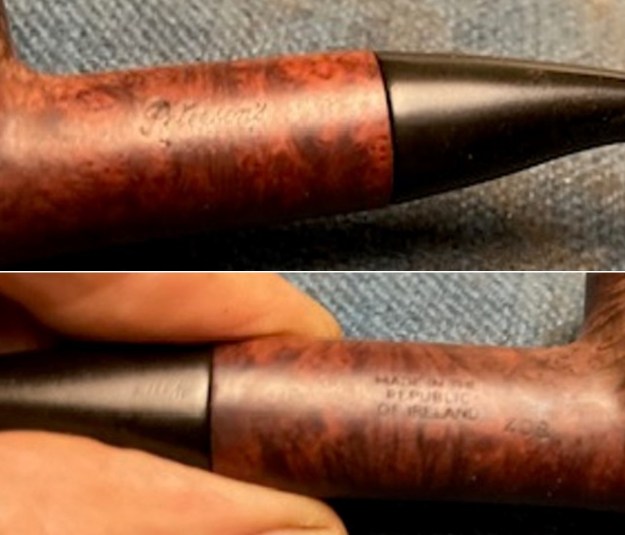
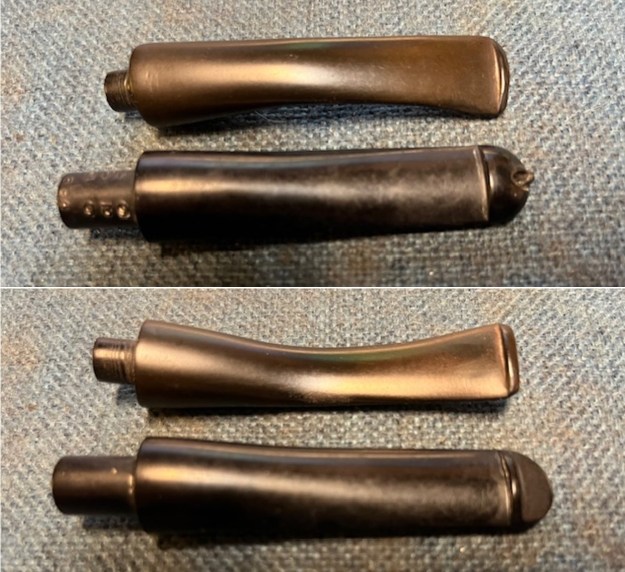
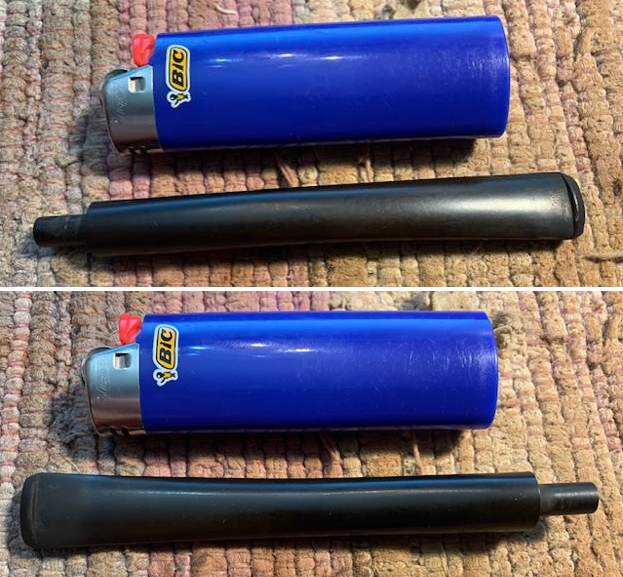
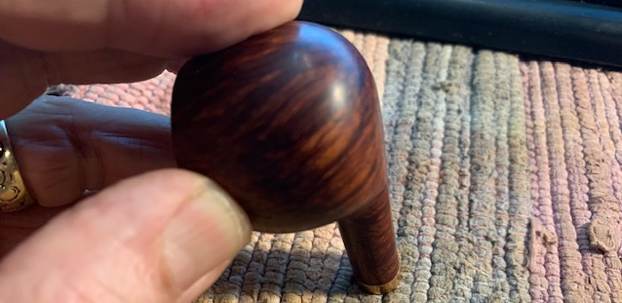
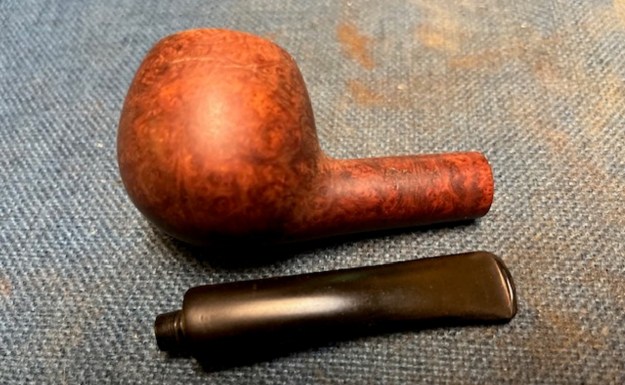 I set aside the bowl and turned my attention to the stem. I had decided to replace the stem so I went through my stems for fine one. I wanted a straight P-lip style stem for the Peterson’s Apple. I went through my many stems and did not find one that would work with the diameter of the shank. I contacted Kenneth with the dimensions of the shank and he found several that were close. He graciously dropped them by on Sunday afternoon. In the bag he brought were several new Peterson replacement P-lip stems. I chose the taper stem below as my first choice. It had the right diameter and after the tenon was turned should work well. You can see the casting marks on the button area and tenon showing it as new stock.
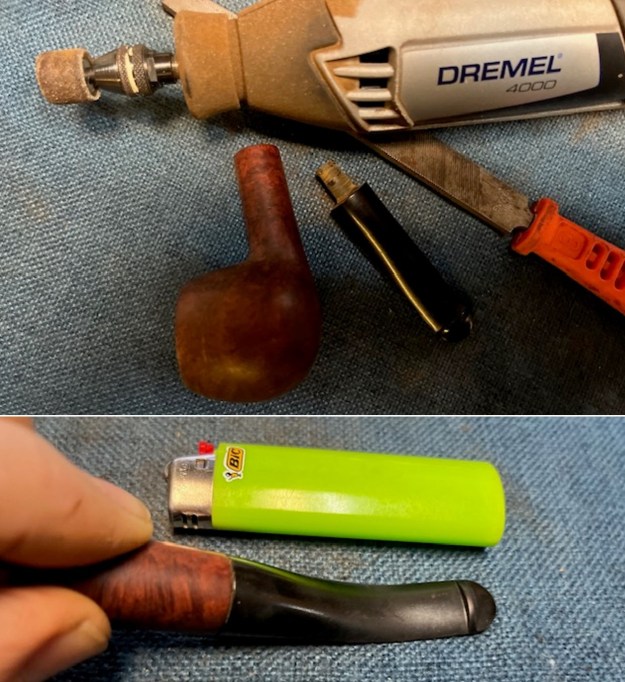
 I have a tenon turning tool here that I often use to do this job. But for this one I decided to use the Dremel and a sanding drum to reduce the diameter of the tenon. It actually worked very well and I cleaned up the tenon with a file to remove the ridges of the sanding drum. The diameter was correct and the fit to the shank was perfect. Once the fit in the shank was right I used a lighter to heat the stem to give it the proper bend for the angle of the shank on this apple.
 I fit the stem on the shank and took photos of the new stem to give a sense of the new look. Personally, I like doing this as it gives me a chance to see it apart from a lens or on my desk top and assess the bend and the fit. I was happy with what I say. Now I needed to sand and shape the stem.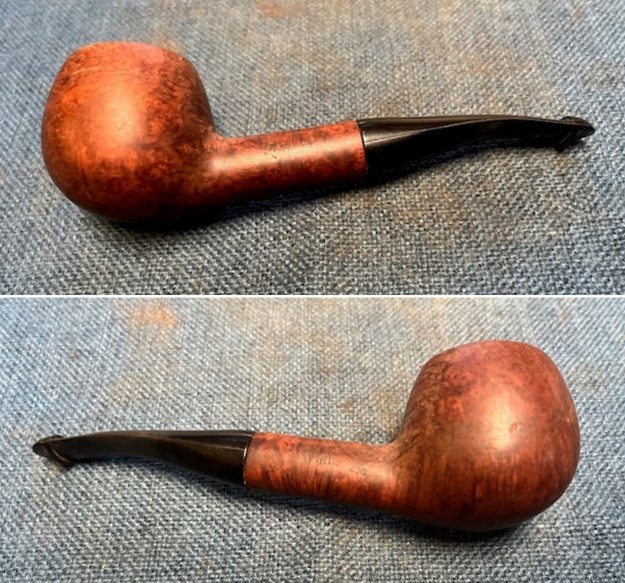
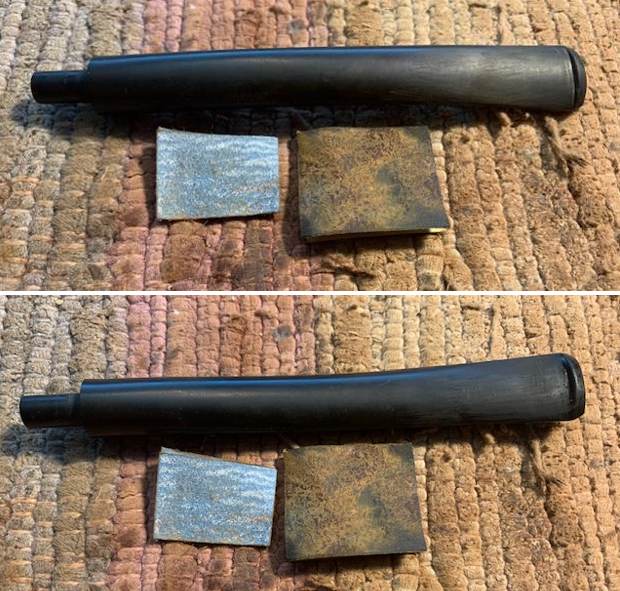
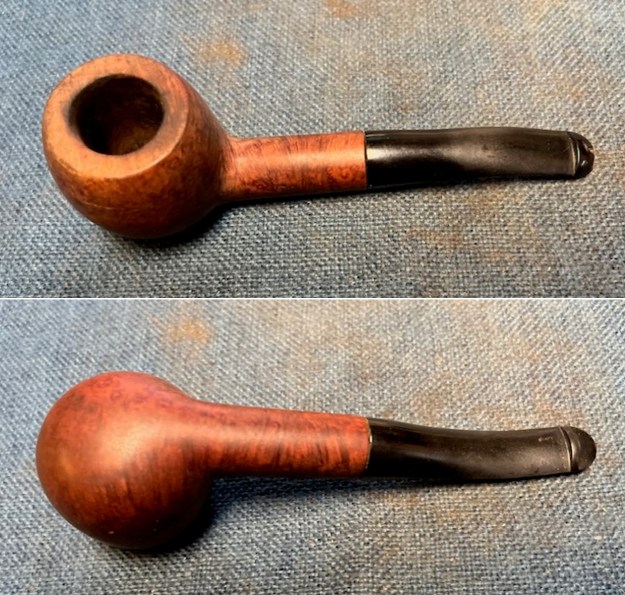 I worked on the stem to remove the casting marks from the sides and the P-lip end with 220 grit sandpaper. I also removed some of the excess diameter on the top and underside of the stem to make the transition smooth. It definitely looked better at this point. Still lots to do.
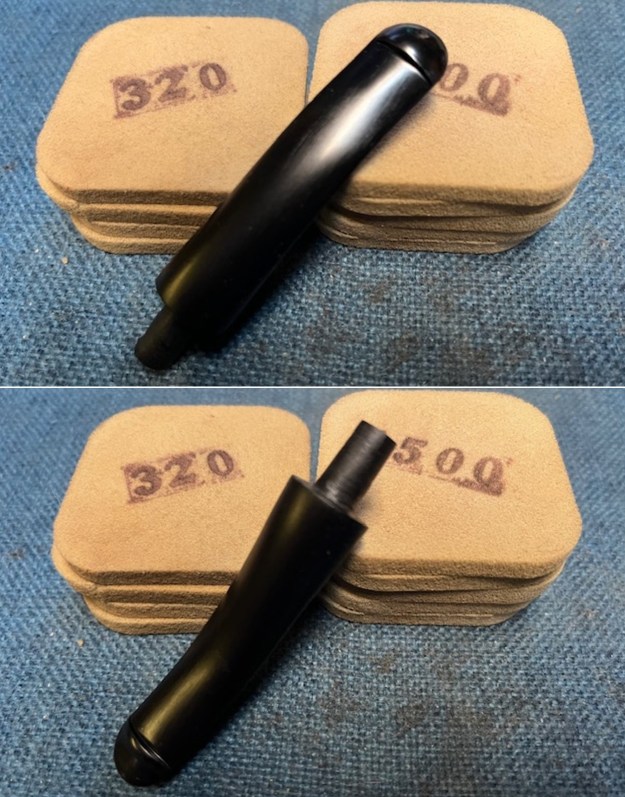
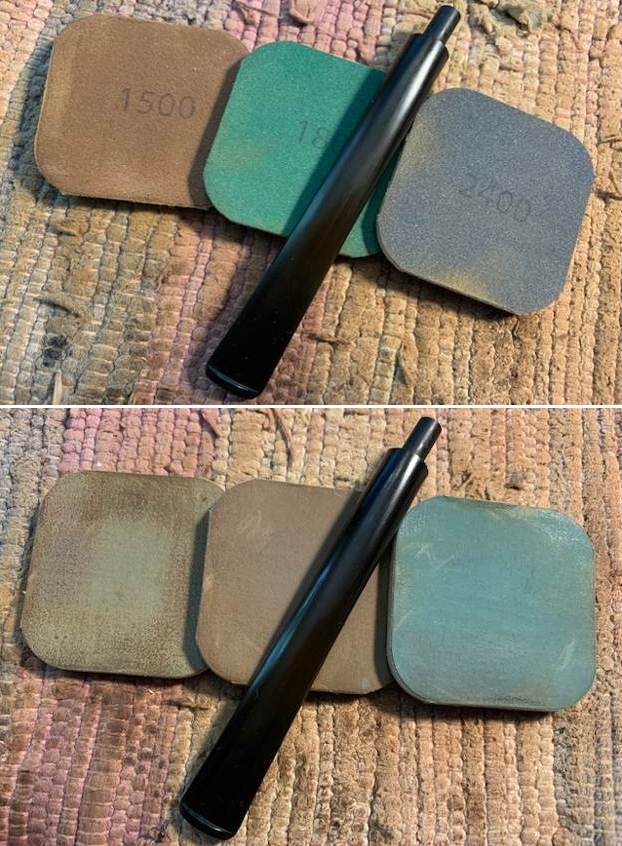
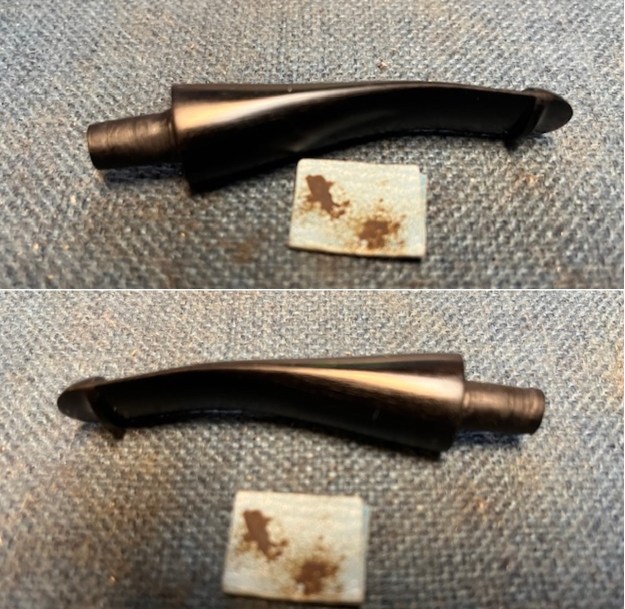 I started the polishing process on the pipe by sanding the stem and tenon with 320-3500 grit sanding pads. Each successive pad brought smoother shape and definition to the stem and tenon surface. It was starting to look very good.
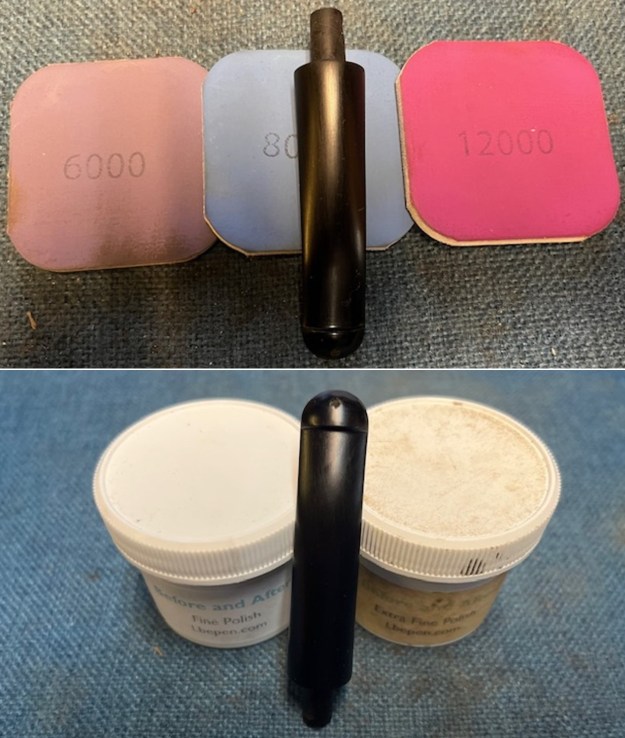
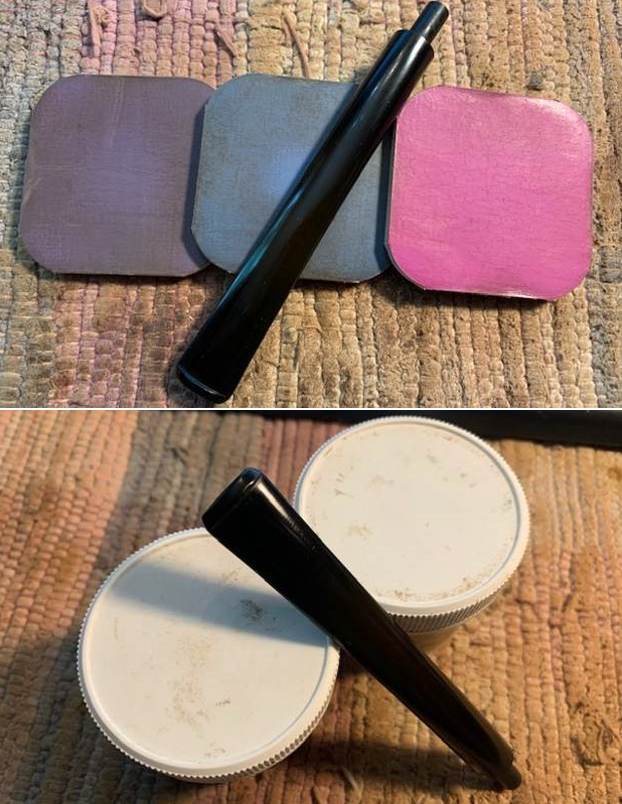
 I polished the stem with micromesh sanding pads – 1500-12000 grit pads. I wiped them down with Obsidian Oil after each sanding pad. I used Before & After Pipe Polish – both Fine and Extra Fine to further polish the stem. I gave it another coat of Obsidian Oil and set aside for the product to absorb into the vulcanite.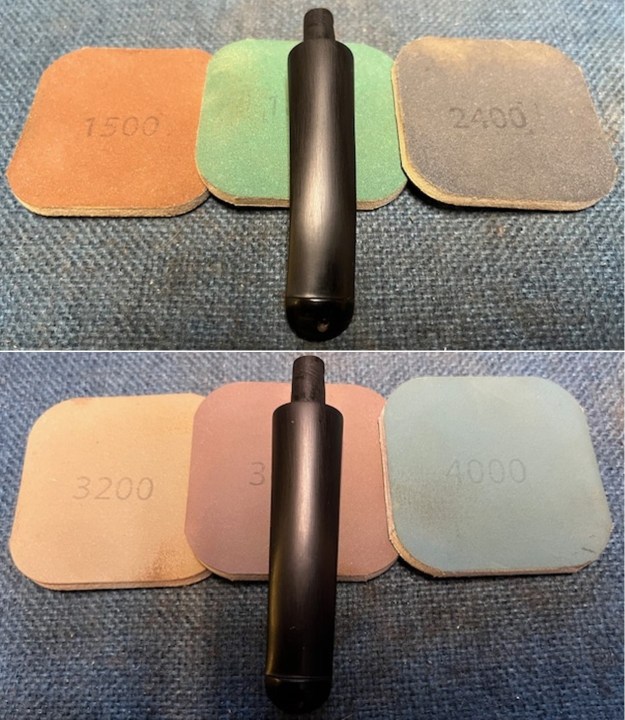
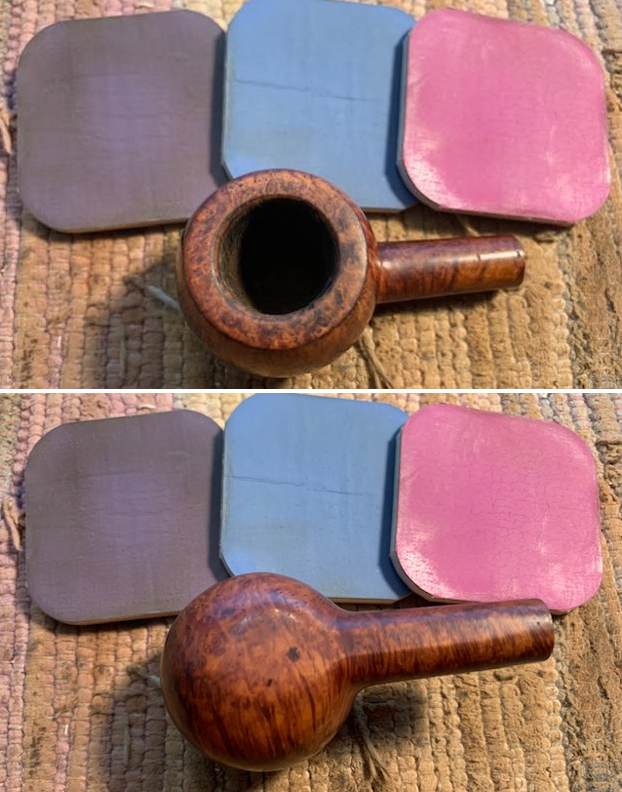
 I set the stem aside finished with all but the buffing and turned my attention to the bowl. I cleaned up the inner edge bevel with a folded piece of 220 grit sandpaper. I lightly topped the bowl on a topping board with 220 grit sandpaper to minimize the damage on the top and outer edge of the bowl. Once finished it definitely looked better.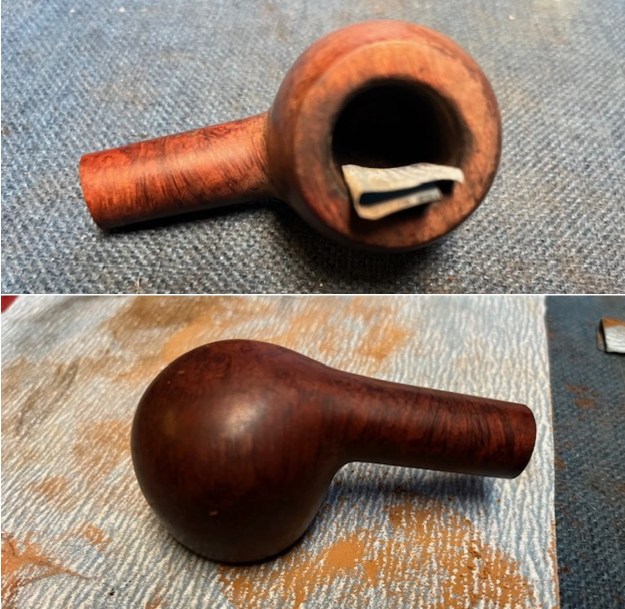
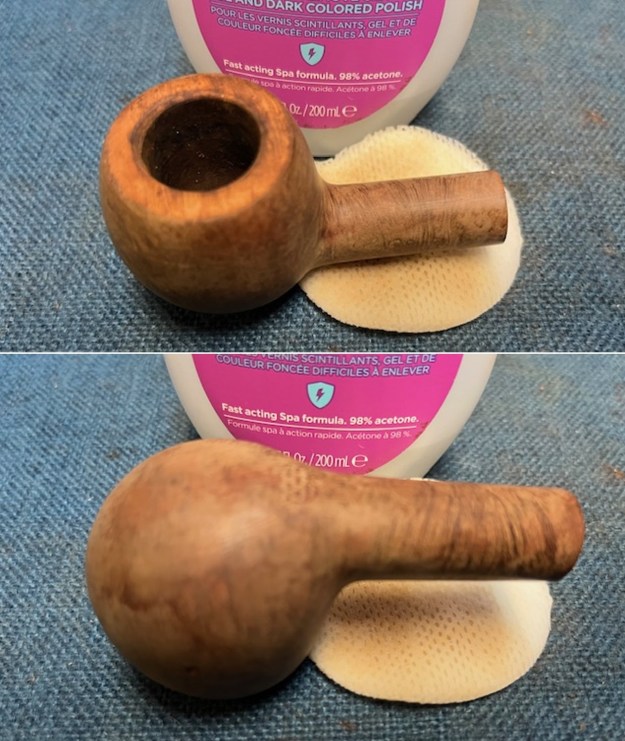
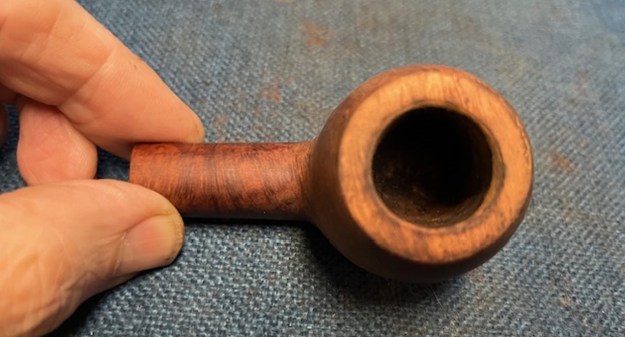 I wiped the bowl down with cotton pads and acetone to remove the darkening on the bowl sides and begin the process of cleaning the surface in my check for damage and cracks to the bowl. It actually looked very good.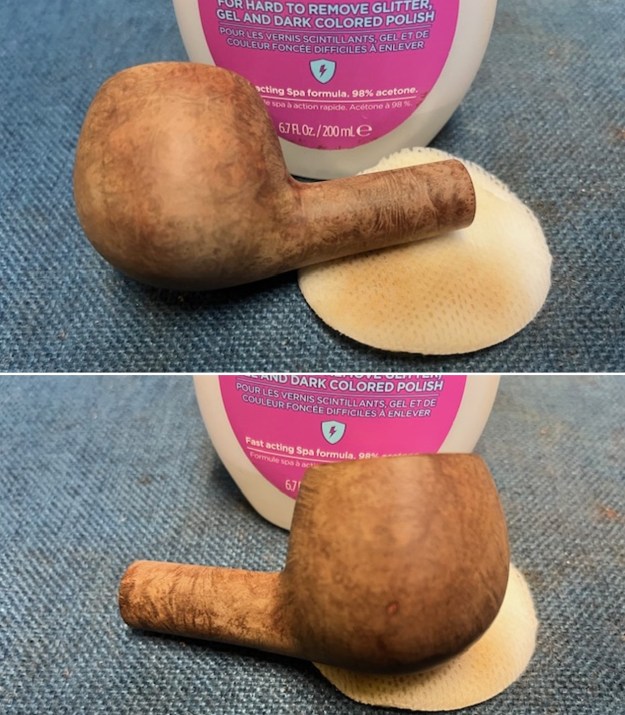
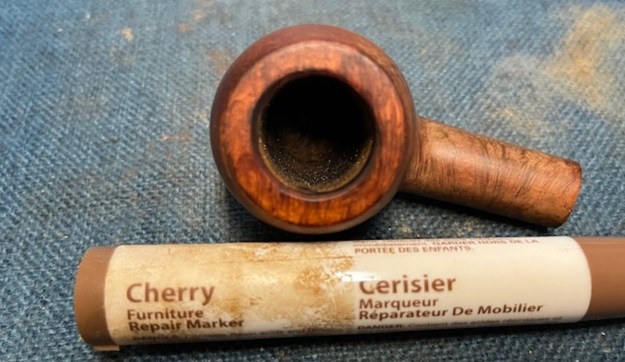
 I used a Cherry stain pen to restain the inner edge and rim top to match the rest of the briar before I started sanding it. Once it had been sanded the match should be perfect.
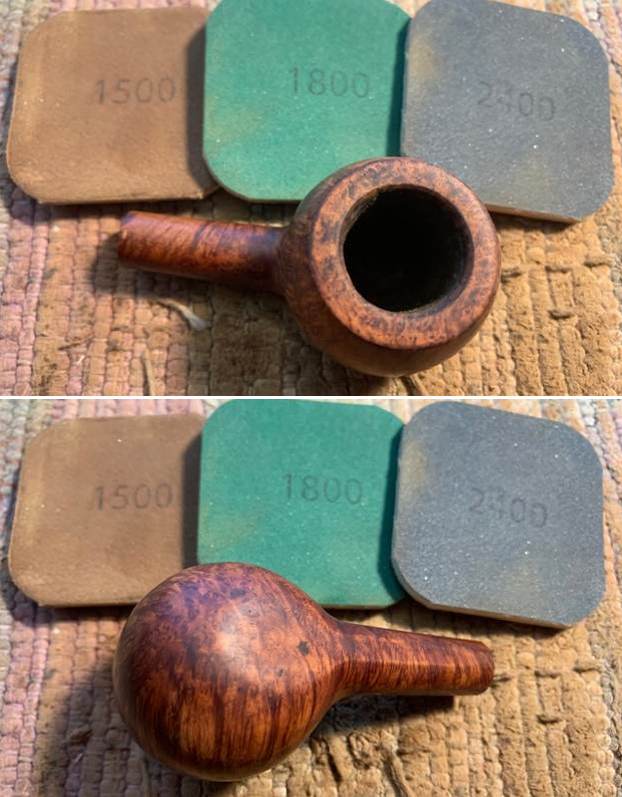
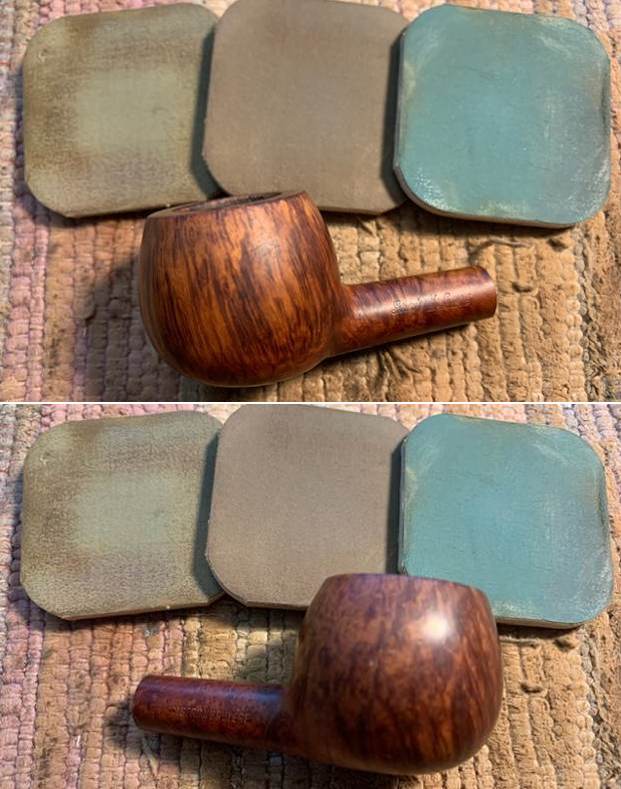
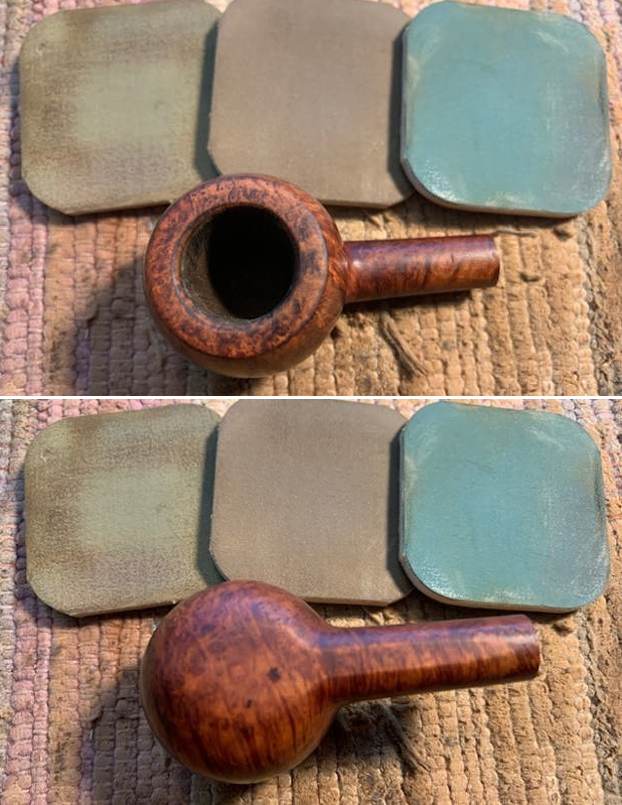
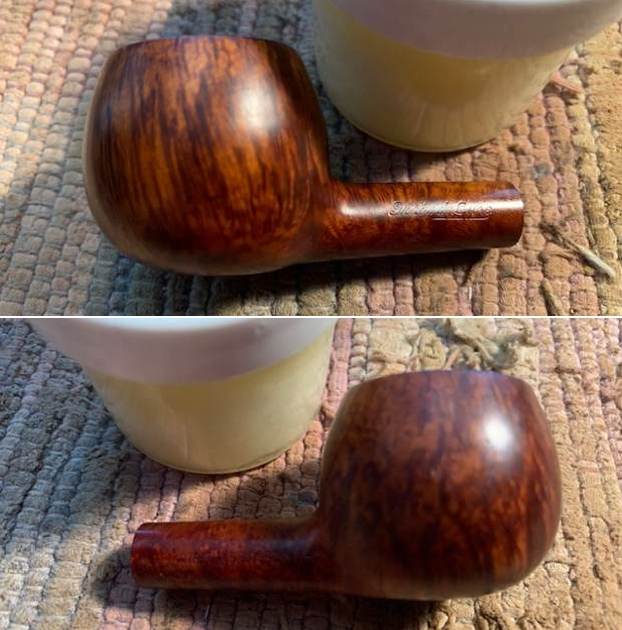
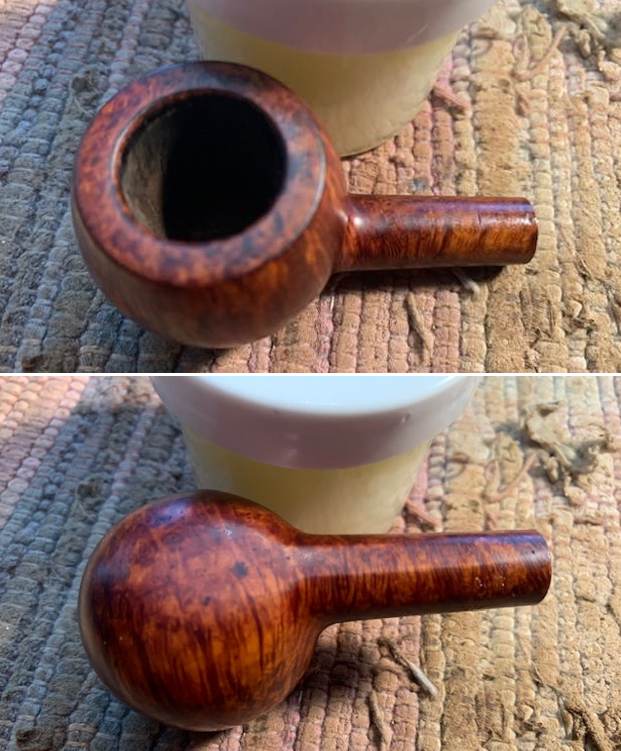
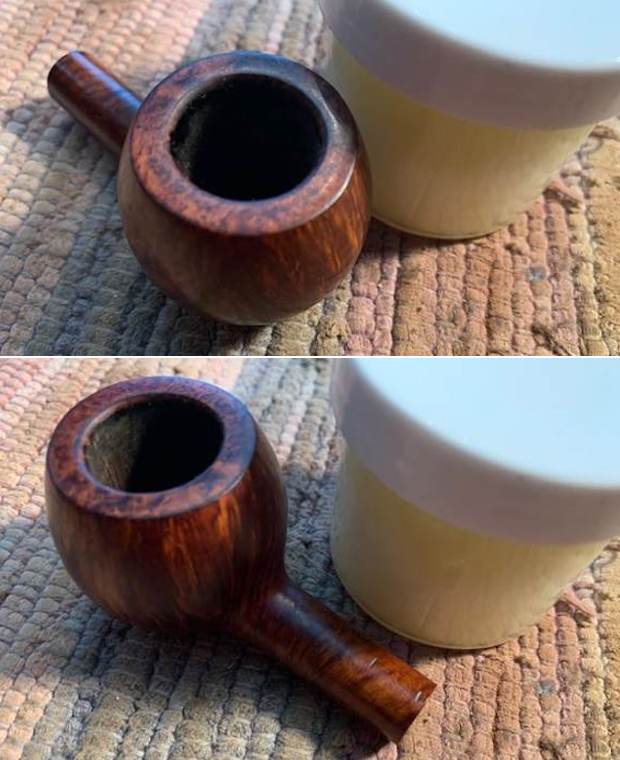
 I sanded the bowl with 320-3500 grit sanding pads to remove the scratching and marks on the bowl surface and top and underside of the shank. I wiped it down after each pad with a damp cloth and by the end the bowl really began to show some promise. I carefully avoided the stamping on the shank sides.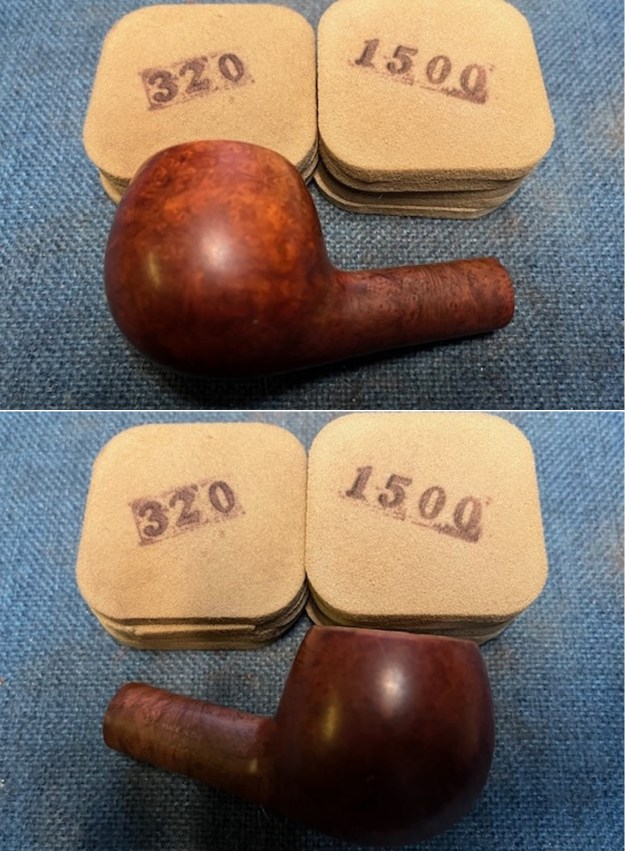
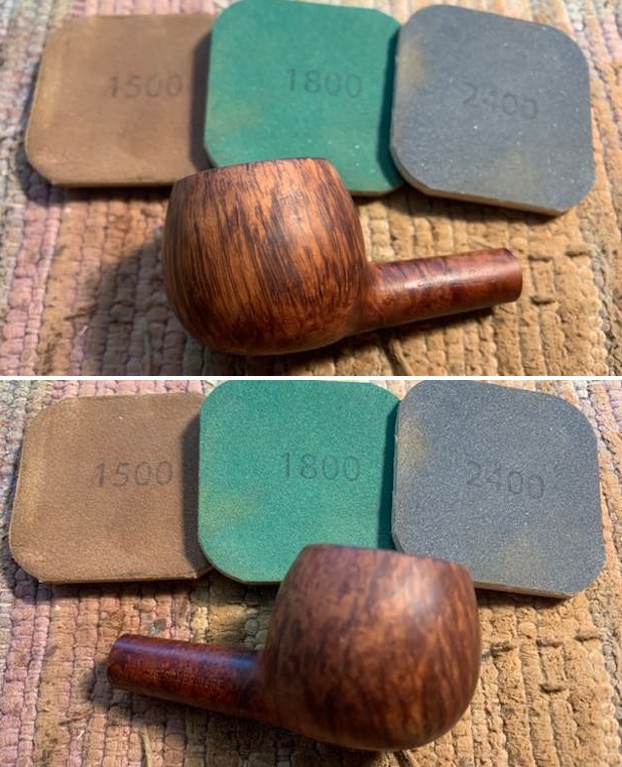
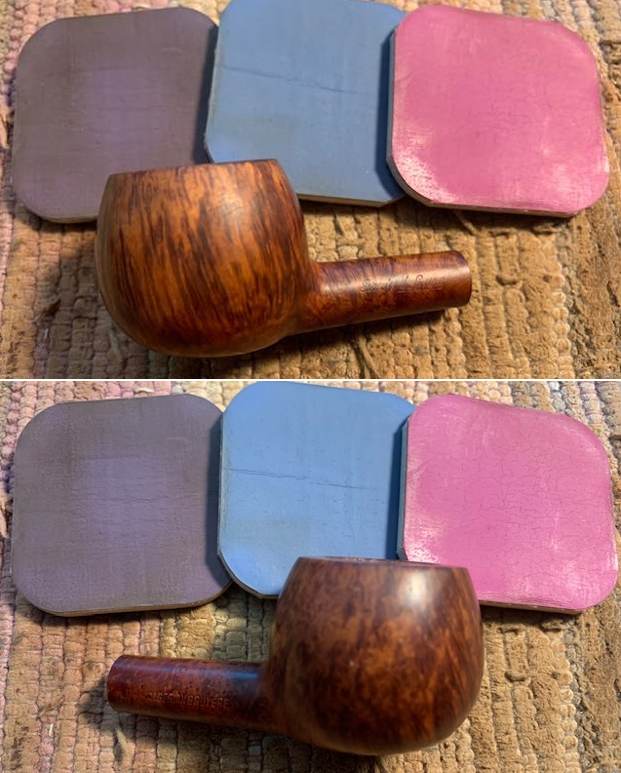
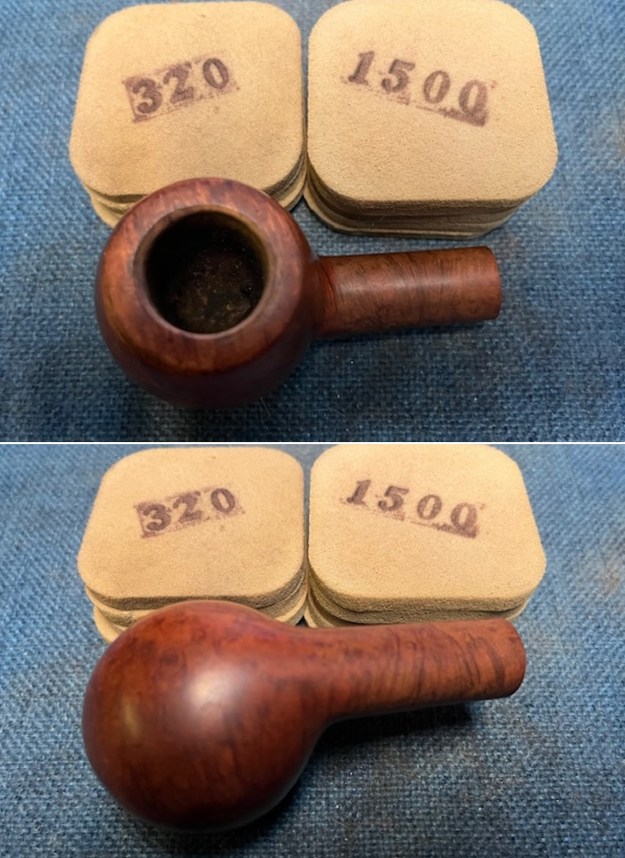 I polished the briar with micromesh sanding pads. I dry sanded it with 1500-12000 grit sanding pads and wiped the bowl down after each pad with a damp cloth. By the final pads the briar really had a shine.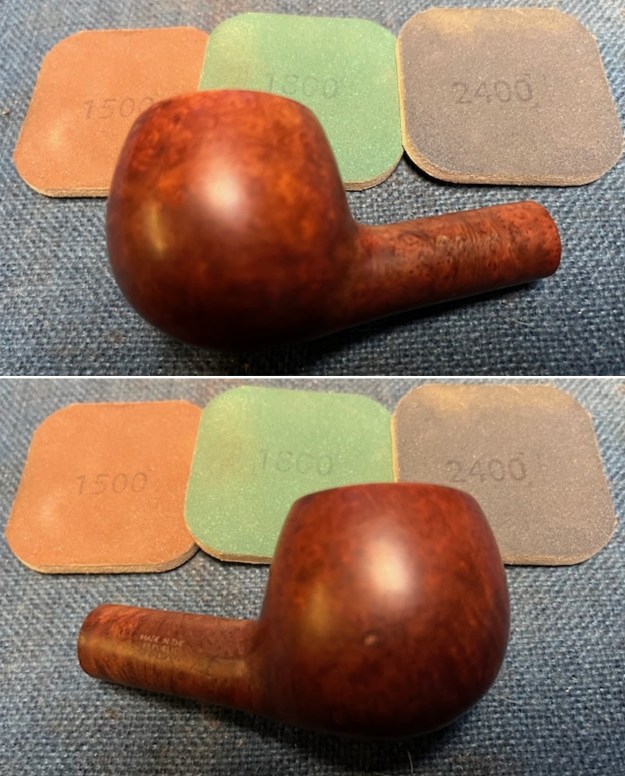
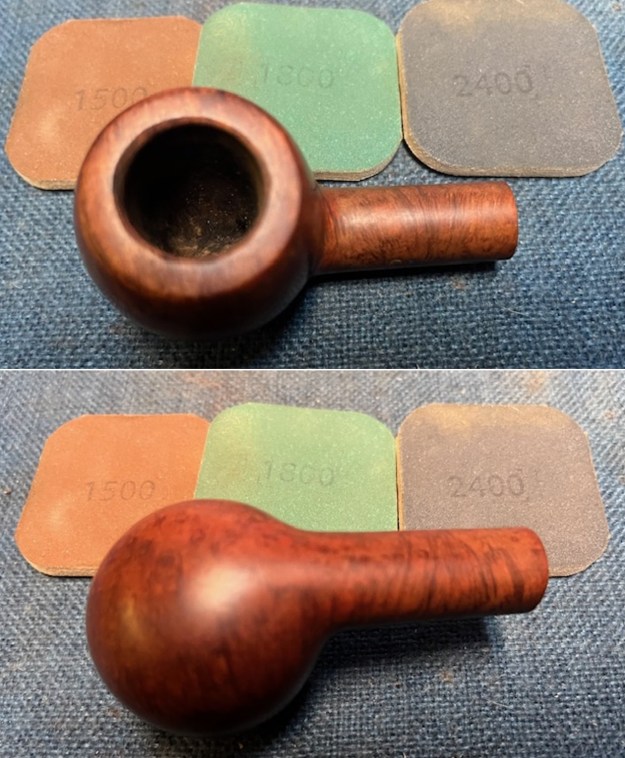
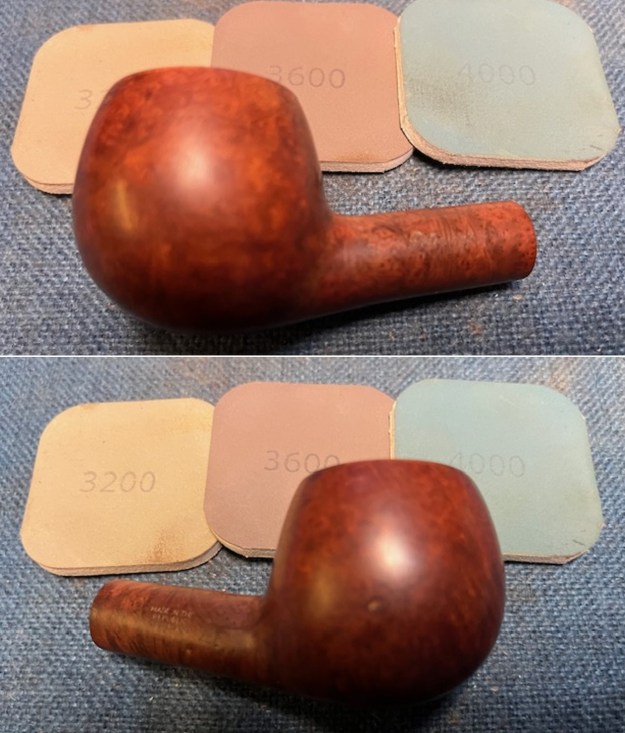
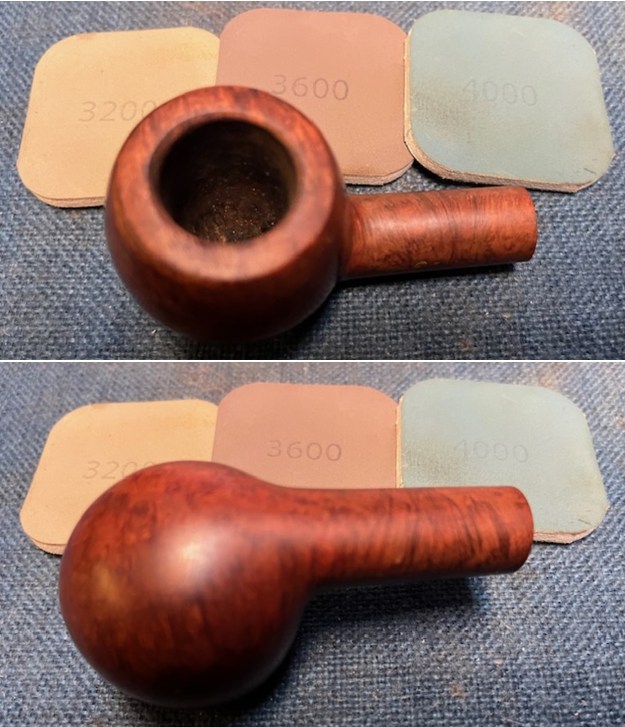
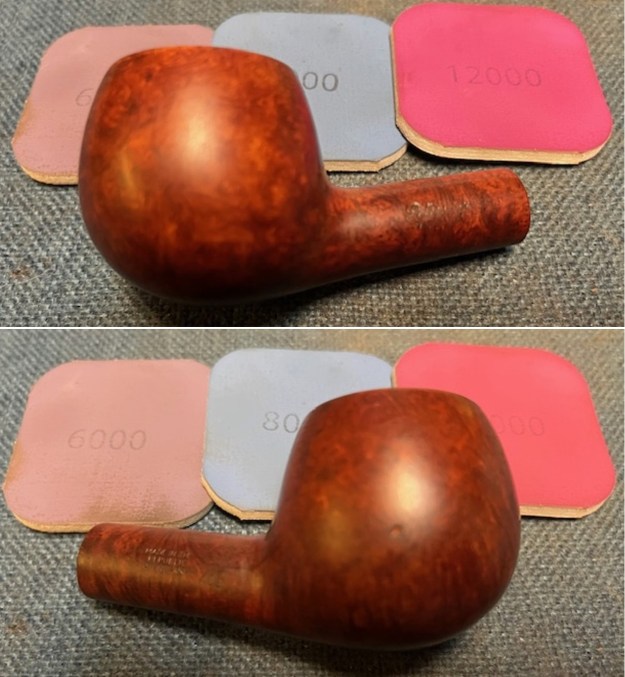
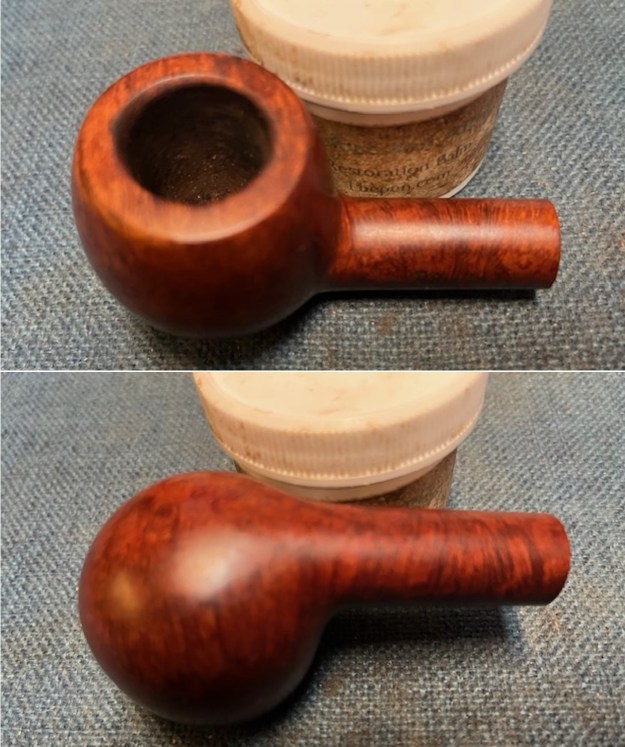
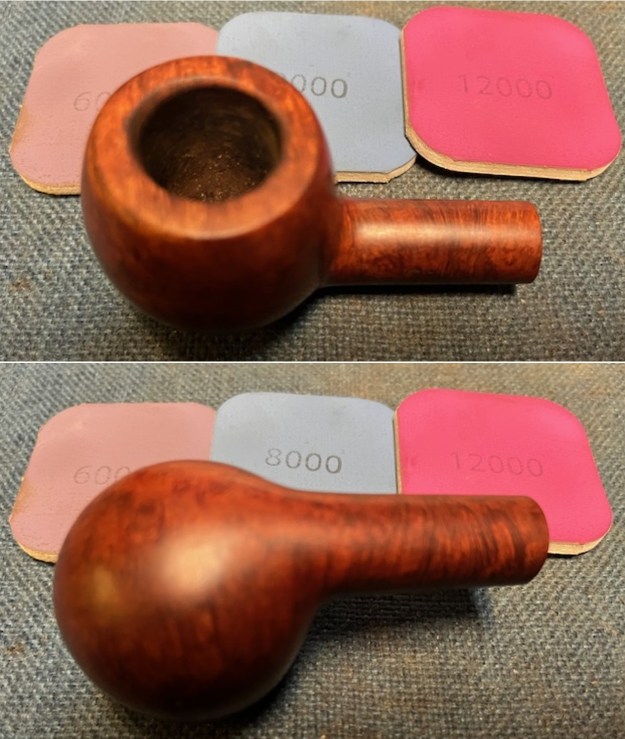 I rubbed the briar down with Before & After Restoration Balm. I worked it into the briar with my fingertips to work it into the finish. The product works to clean, enliven and preserve the briar. I let it sit for 10 minutes then I buffed it with a cotton cloth to deepen the shine. The briar really comes alive with the balm.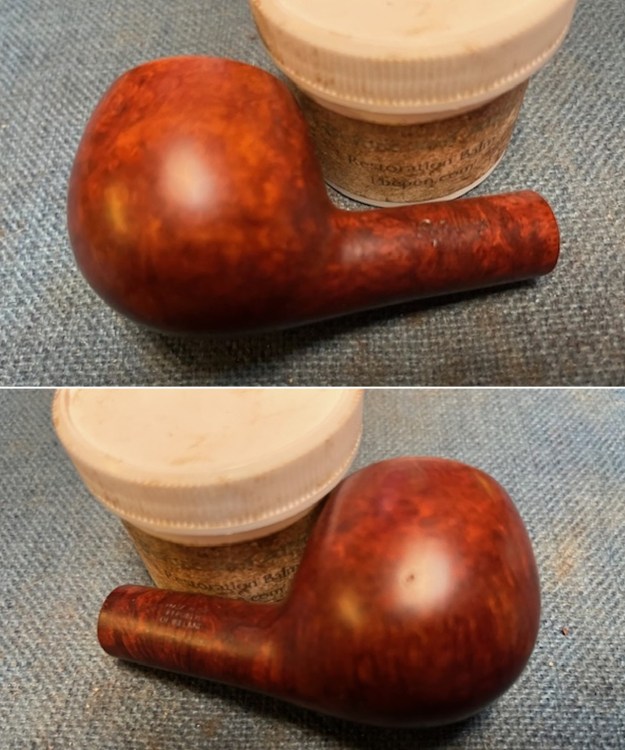
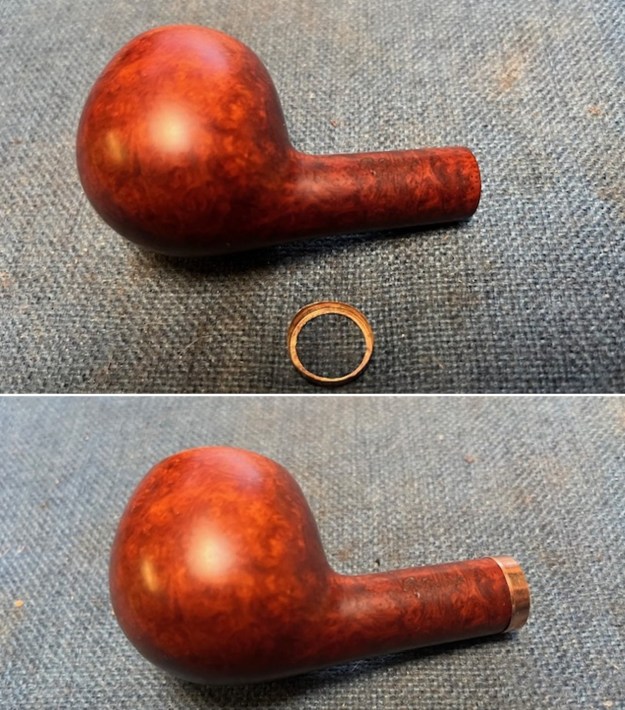
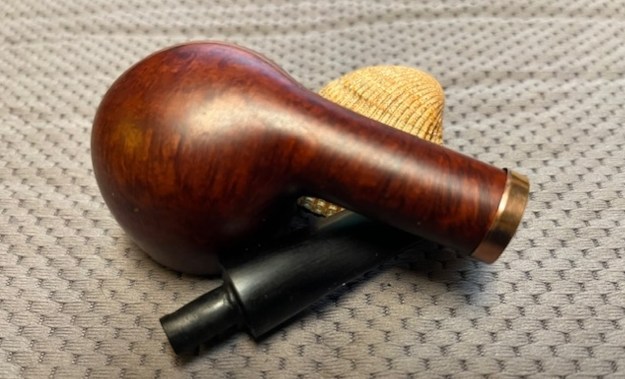
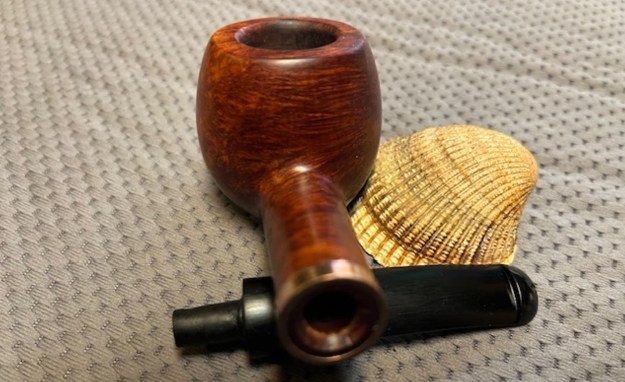
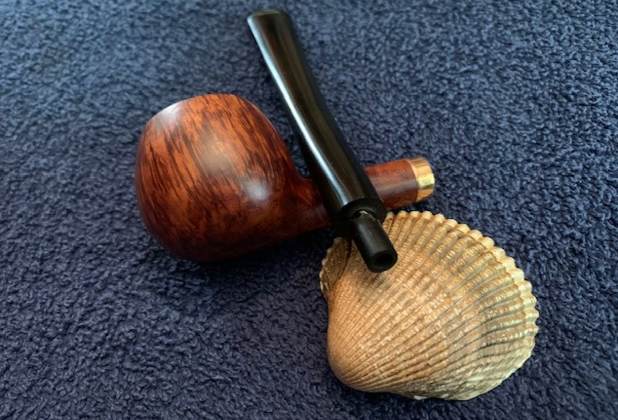
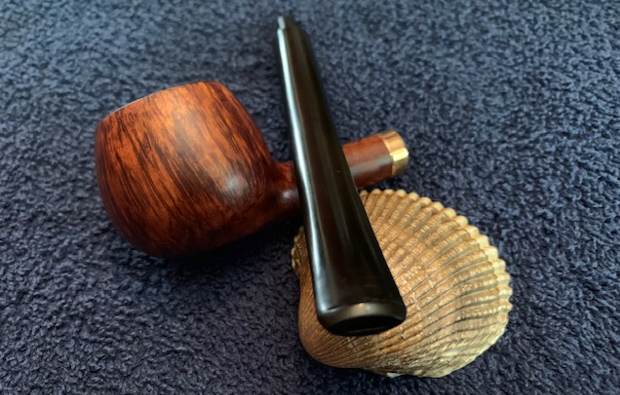
 I decided at the last minute to add a cosmetic thin brass band to the shank end. There was no need to do this in terms of damage to the stem or shank end. I just thought it would add a touch of bling to the pipe and give it a good interruption between the briar and the vulcanite. I heated the band and pressed it in place on the shank.
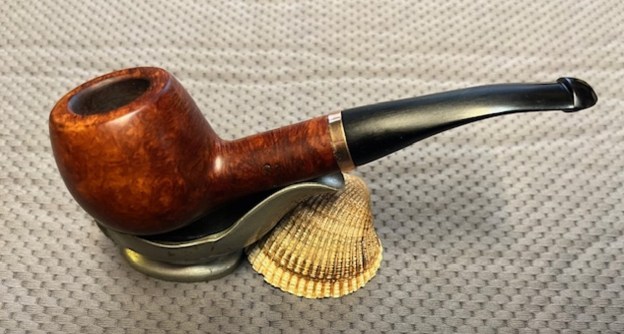
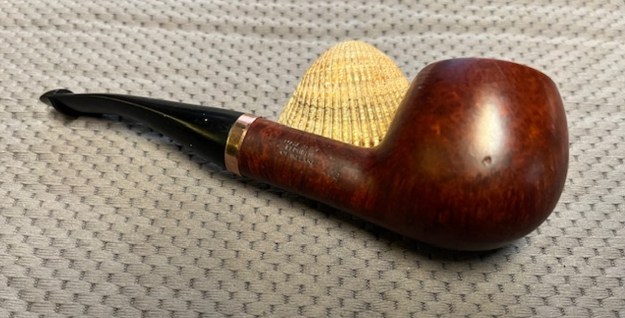
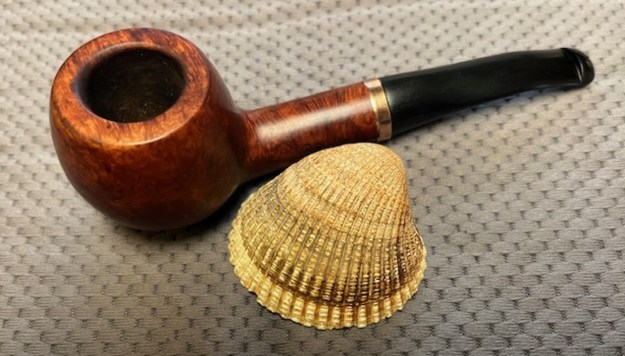
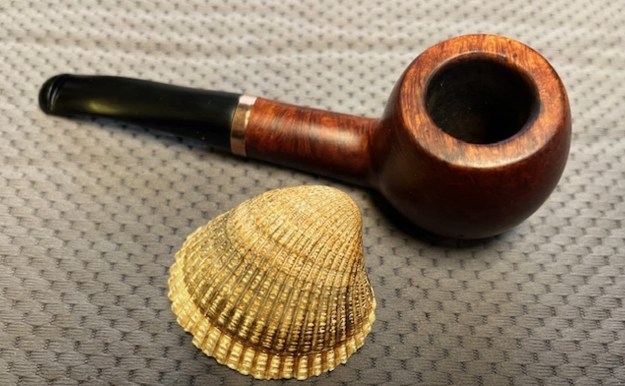
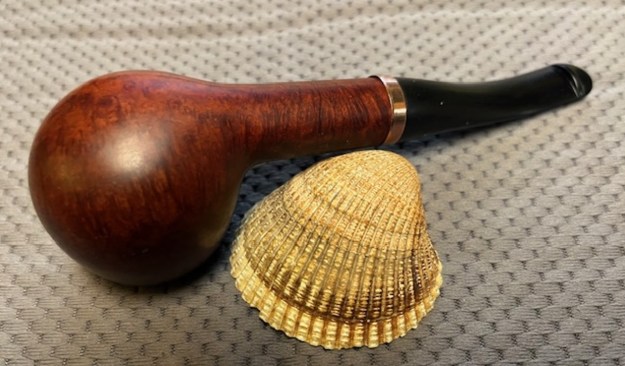
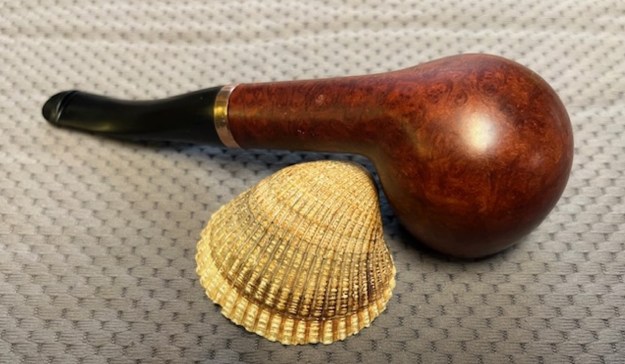
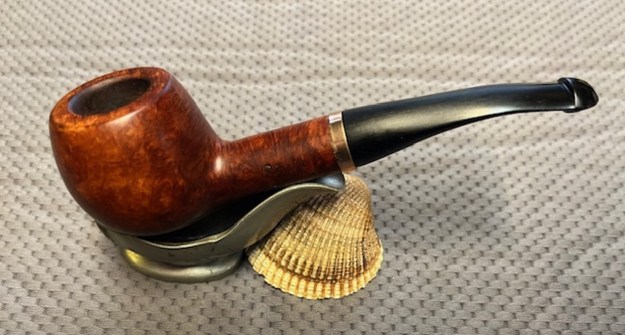
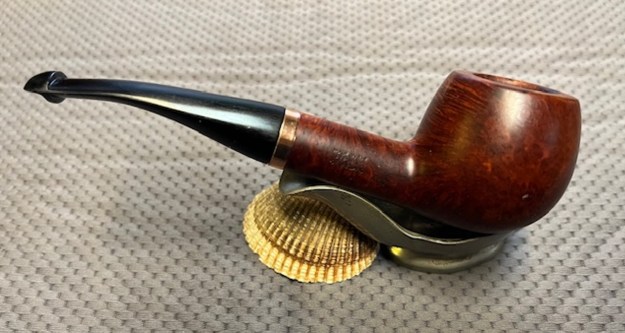
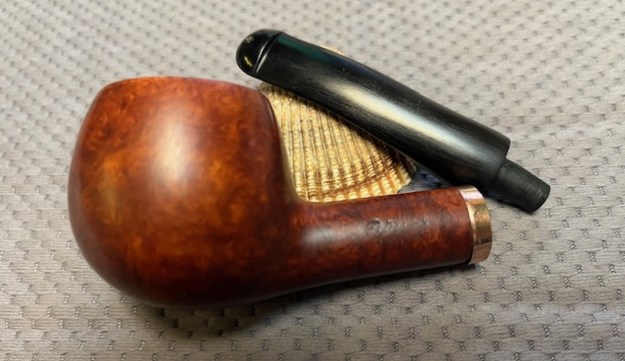
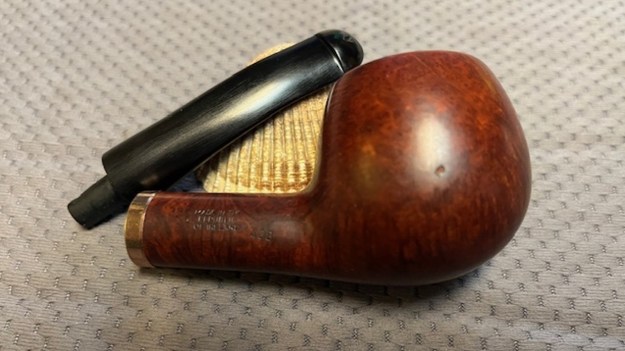
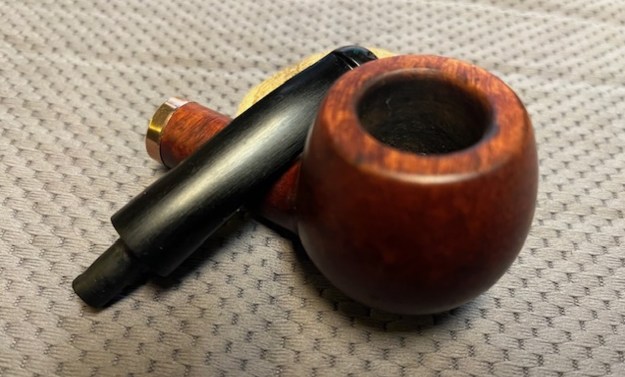
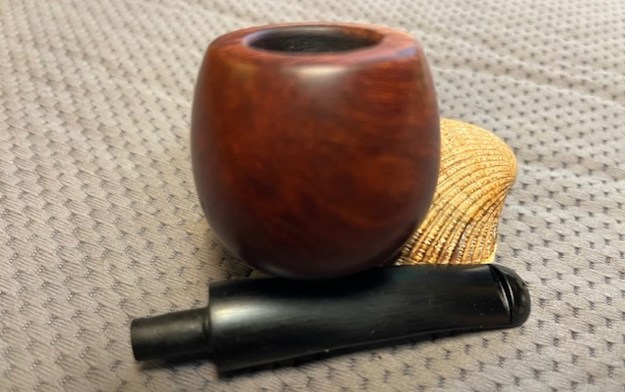
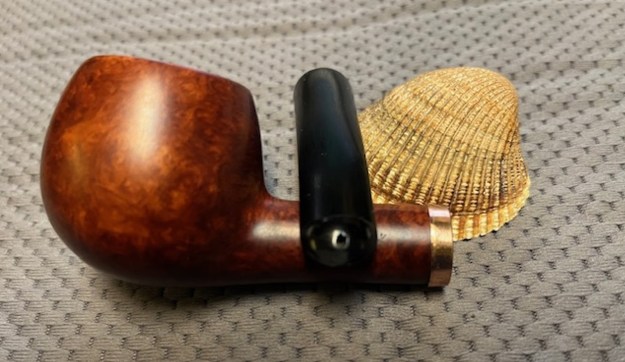
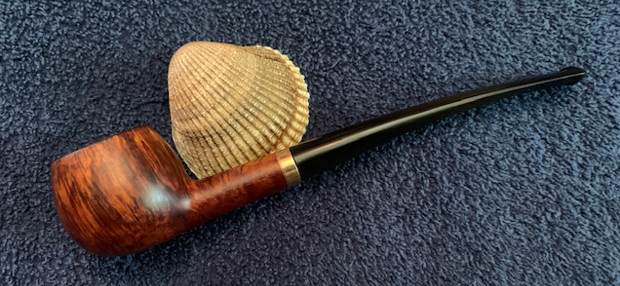
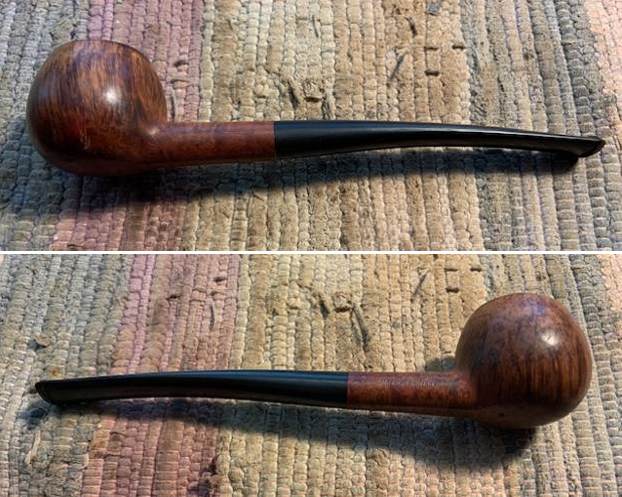
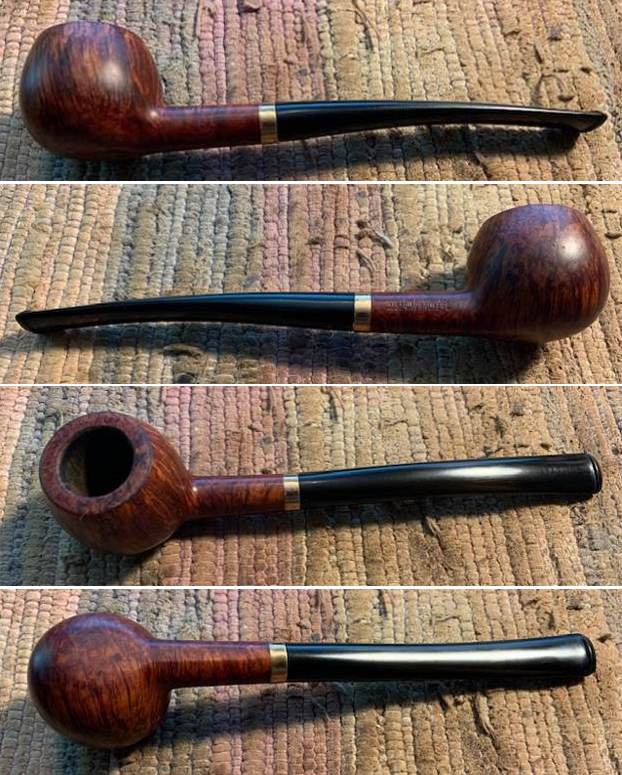
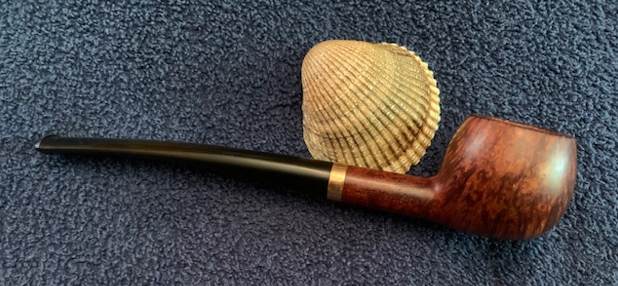
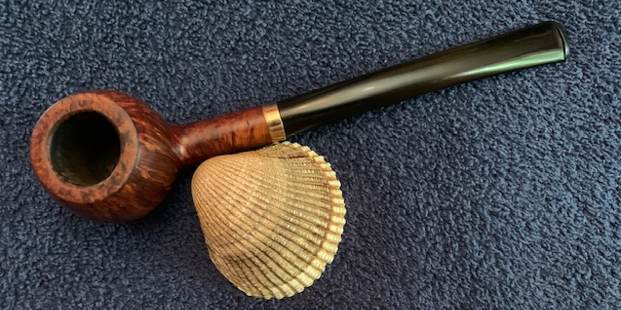
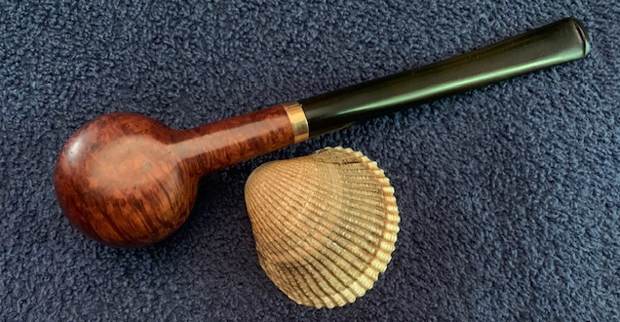
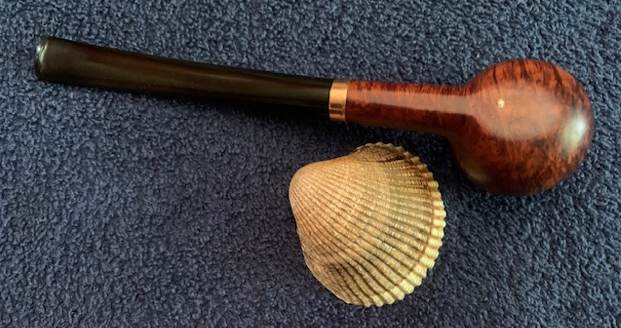
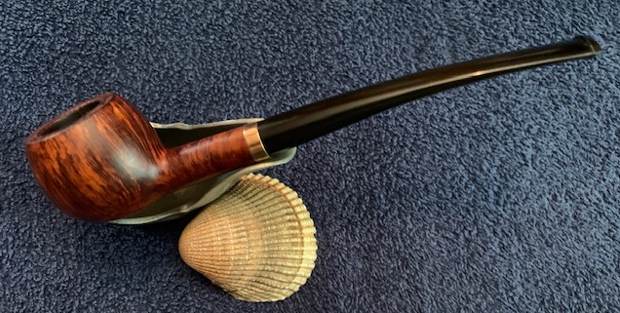
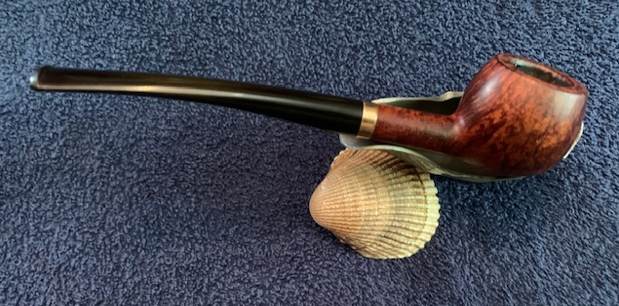
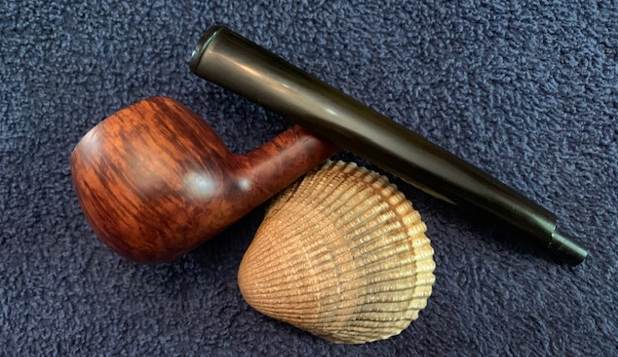
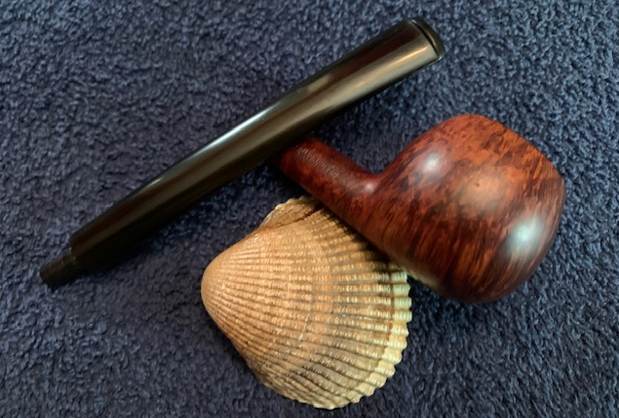
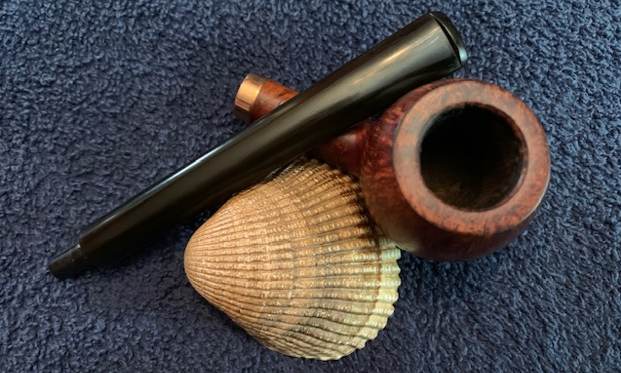
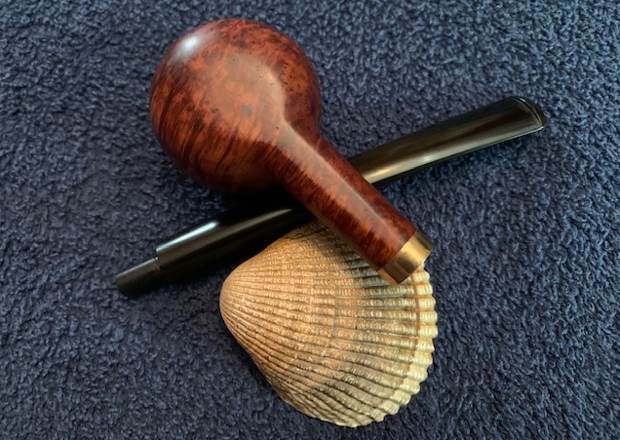
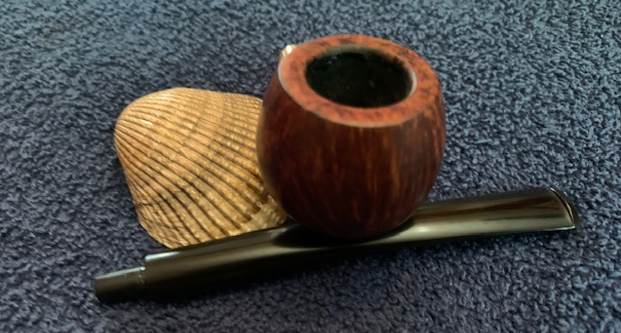
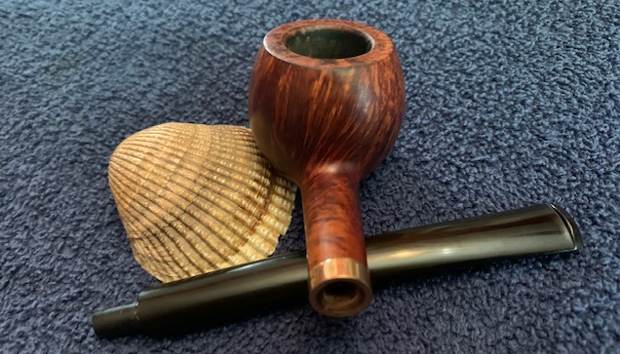
 It was great to finish this older (1965-79) Republic Era Peterson’s 408 Apple. I put the bowl and the newly fit stem together and buffed it with Blue Diamond on the buffing wheel. I gave the bowl and the stem multiple coats of carnauba wax. I buffed the pipe with a clean buffing pad to raise the shine. I hand buffed the pipe with a microfiber cloth to deepen the shine. It is fun to see what the polished bowl looks like with deep sandblast all around it. Added to that the polished black vulcanite stem was beautiful. This Peterson’s Kildare 408 Apple is great looking and the pipe feels great in my hand. It is light and well balanced. Have a look at it with the photos below. The dimensions are Length: 5 ¾ inches, Height: 1 ¾ inches, Outside diameter of the bowl: 1 ¼ inches, Chamber diameter: 7/8 of an inch. The weight of the pipe is 56 grams/1.98 ounces. It is a beautiful pipe and one that will soon be on the rebornpipes store in the Irish Pipe Makers Section of the store. If you want to add it to your collection let me know. Thanks for walking through the restoration with me as I worked over this pipe. Thanks to each of you who are reading this blog.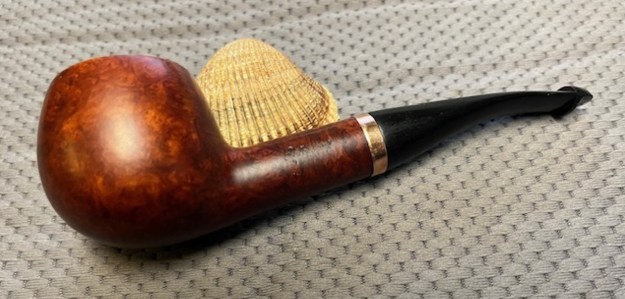



 rebornpipes