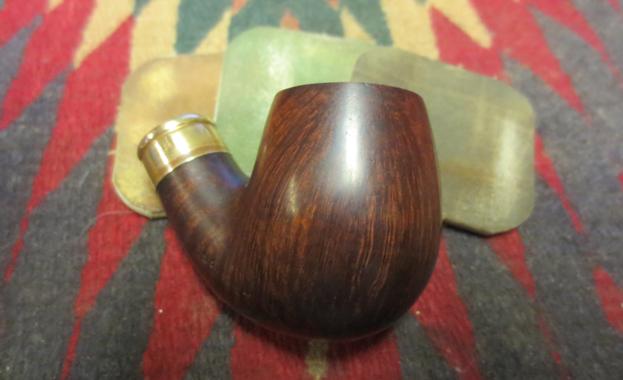
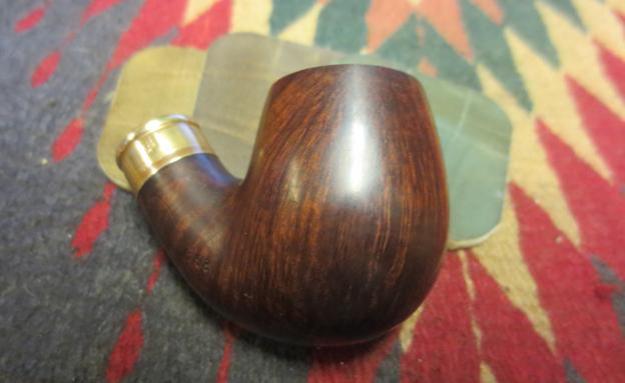
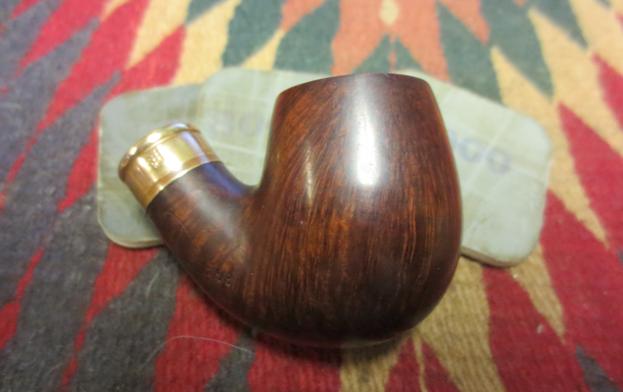
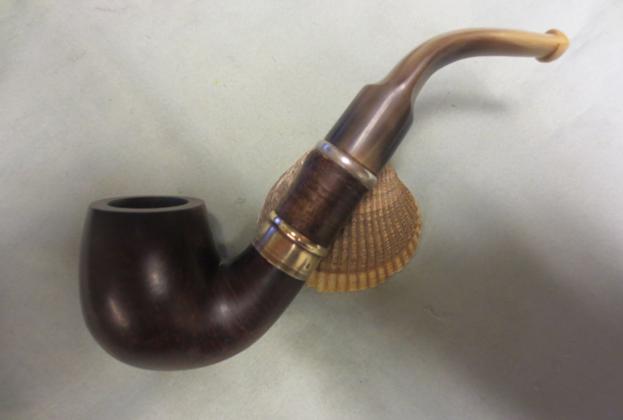
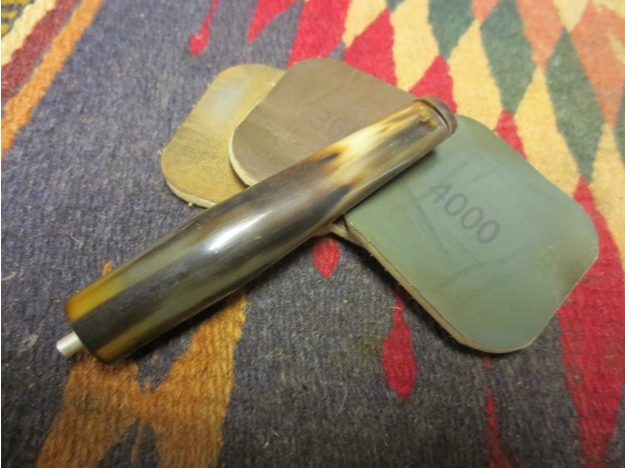
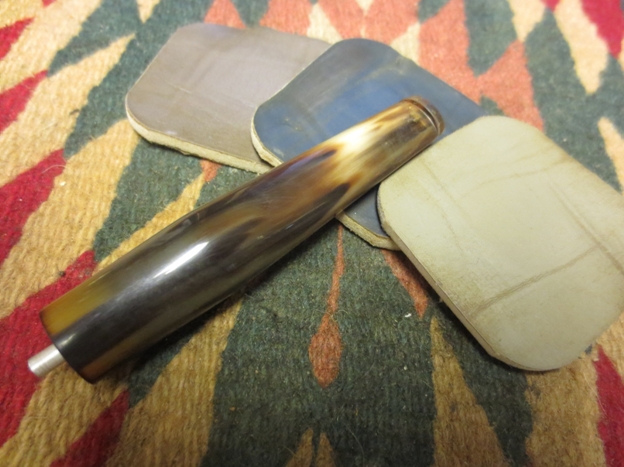
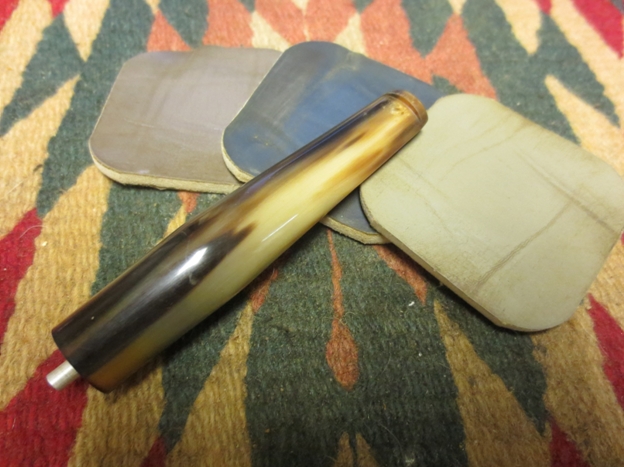
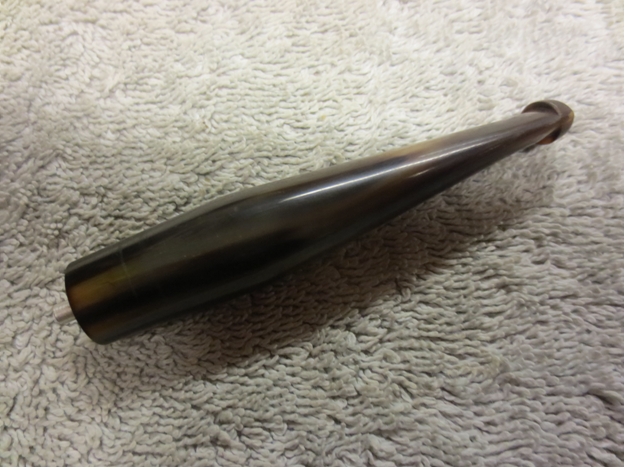
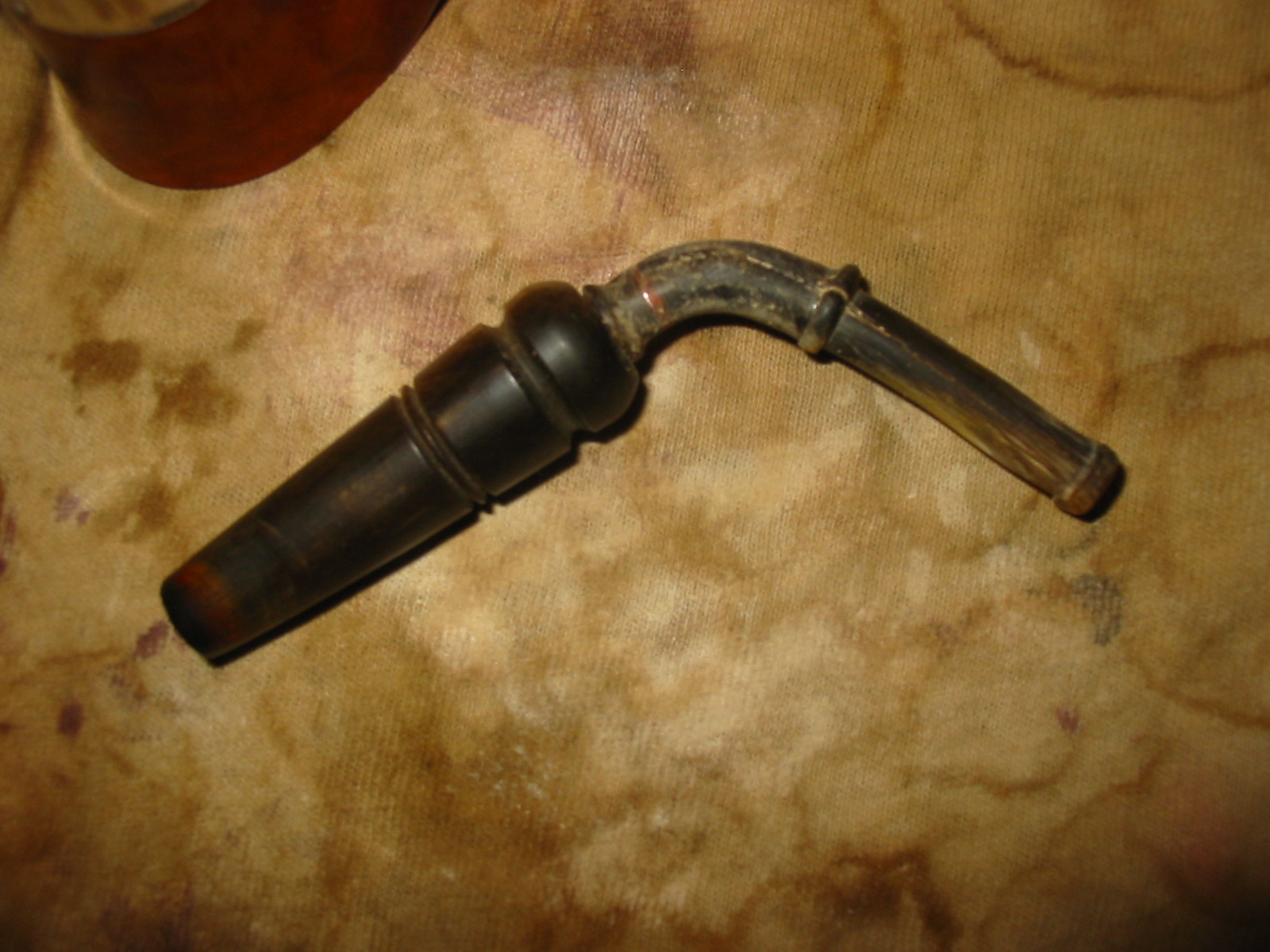
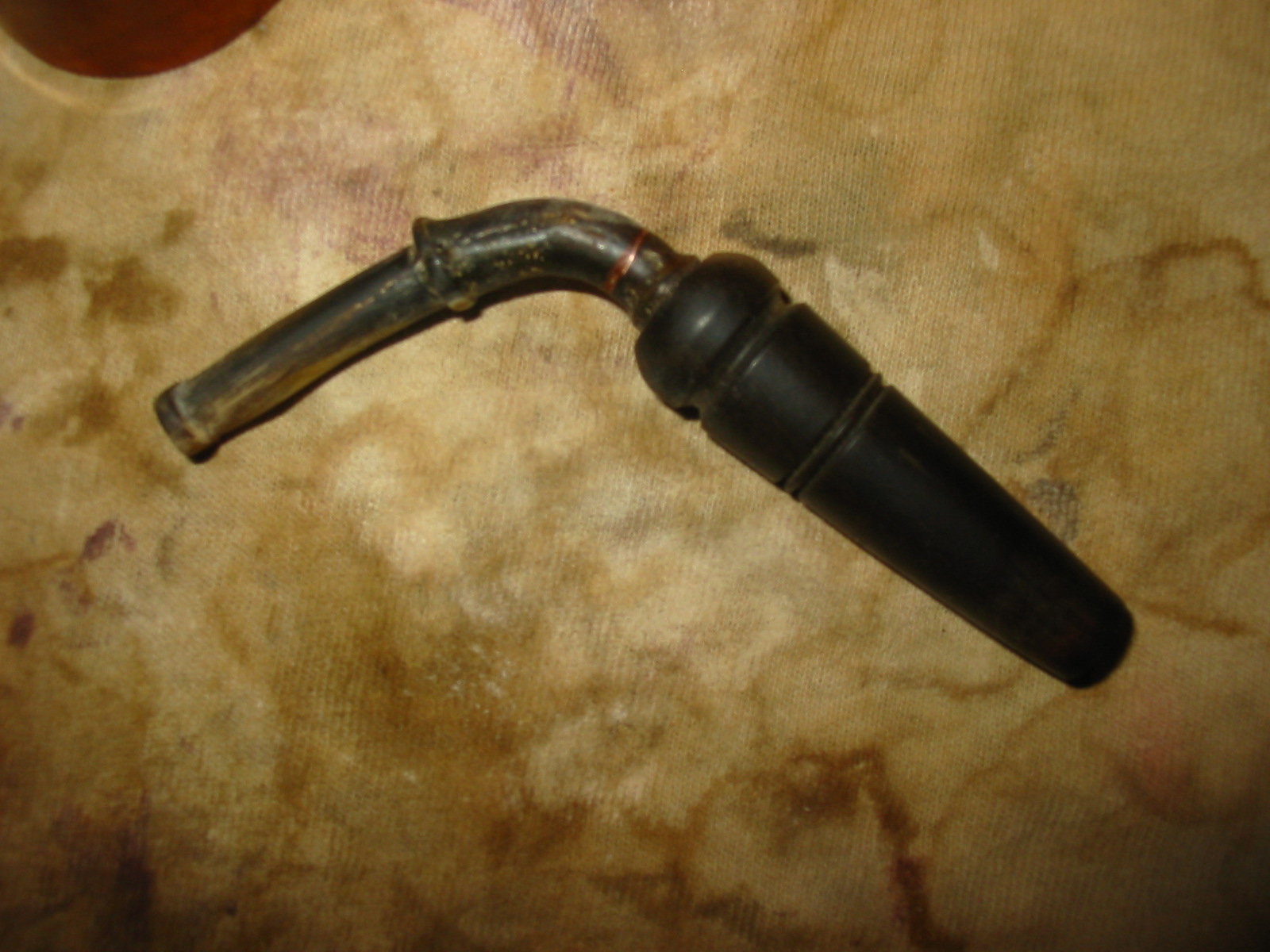
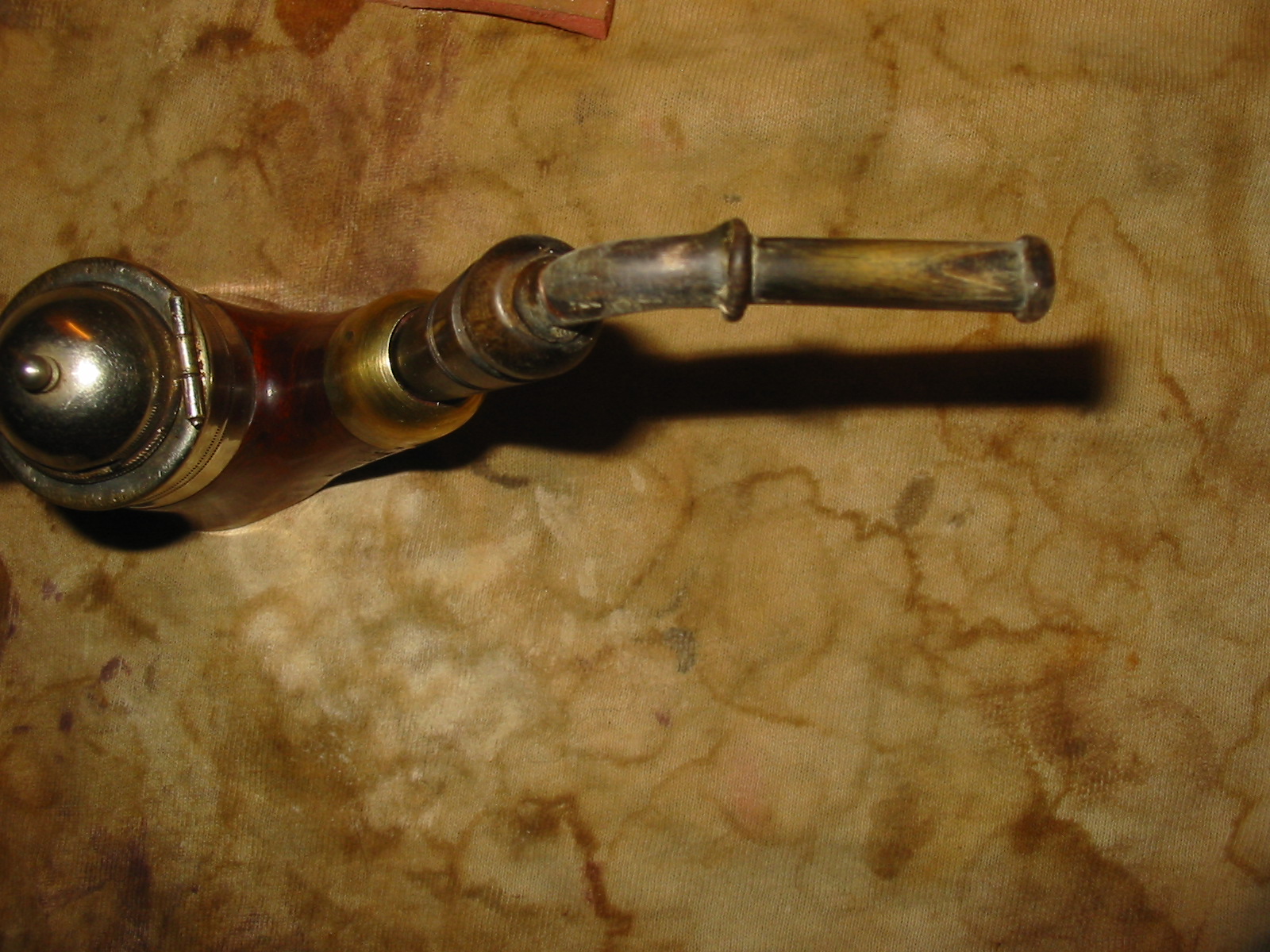
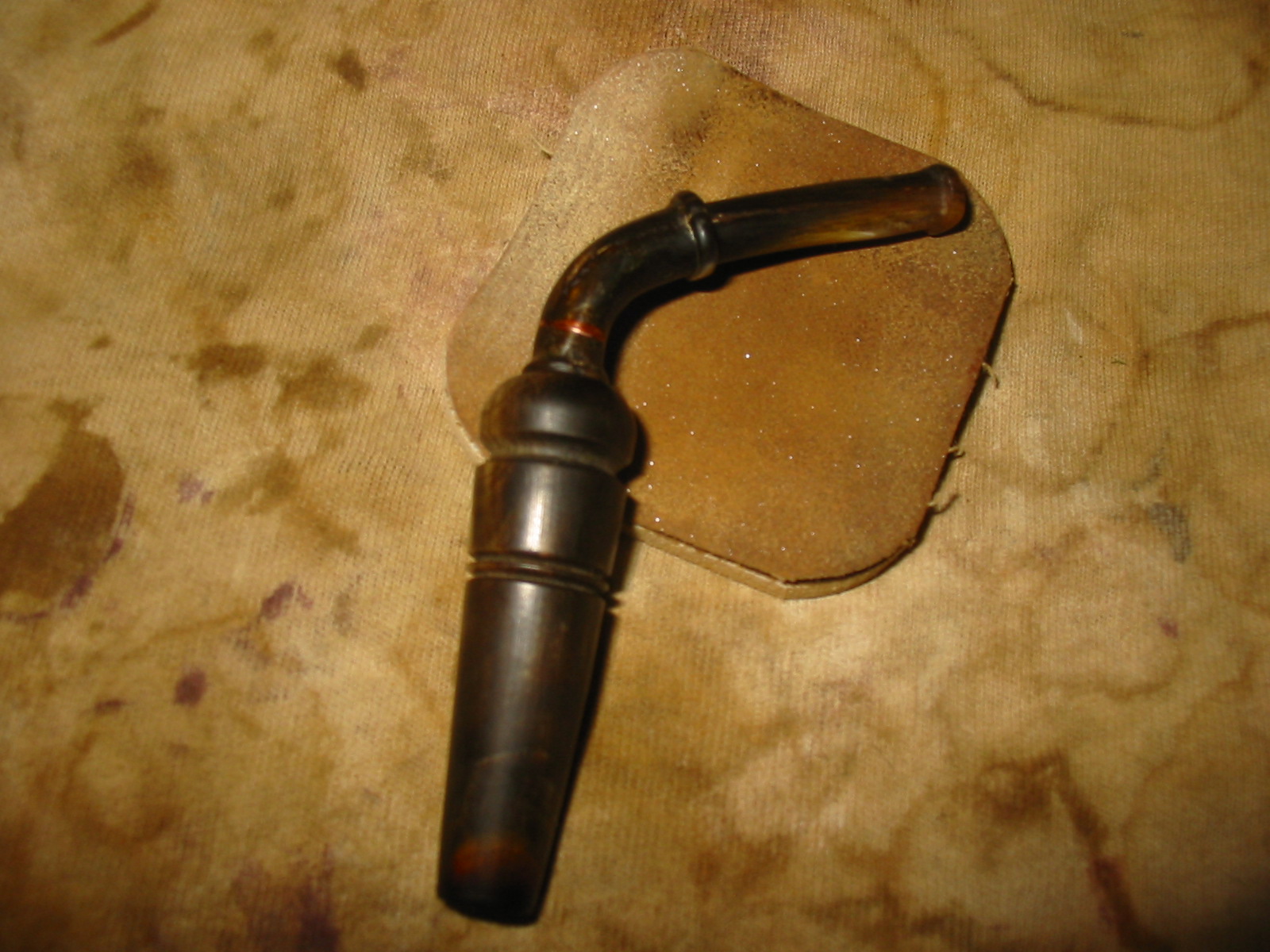
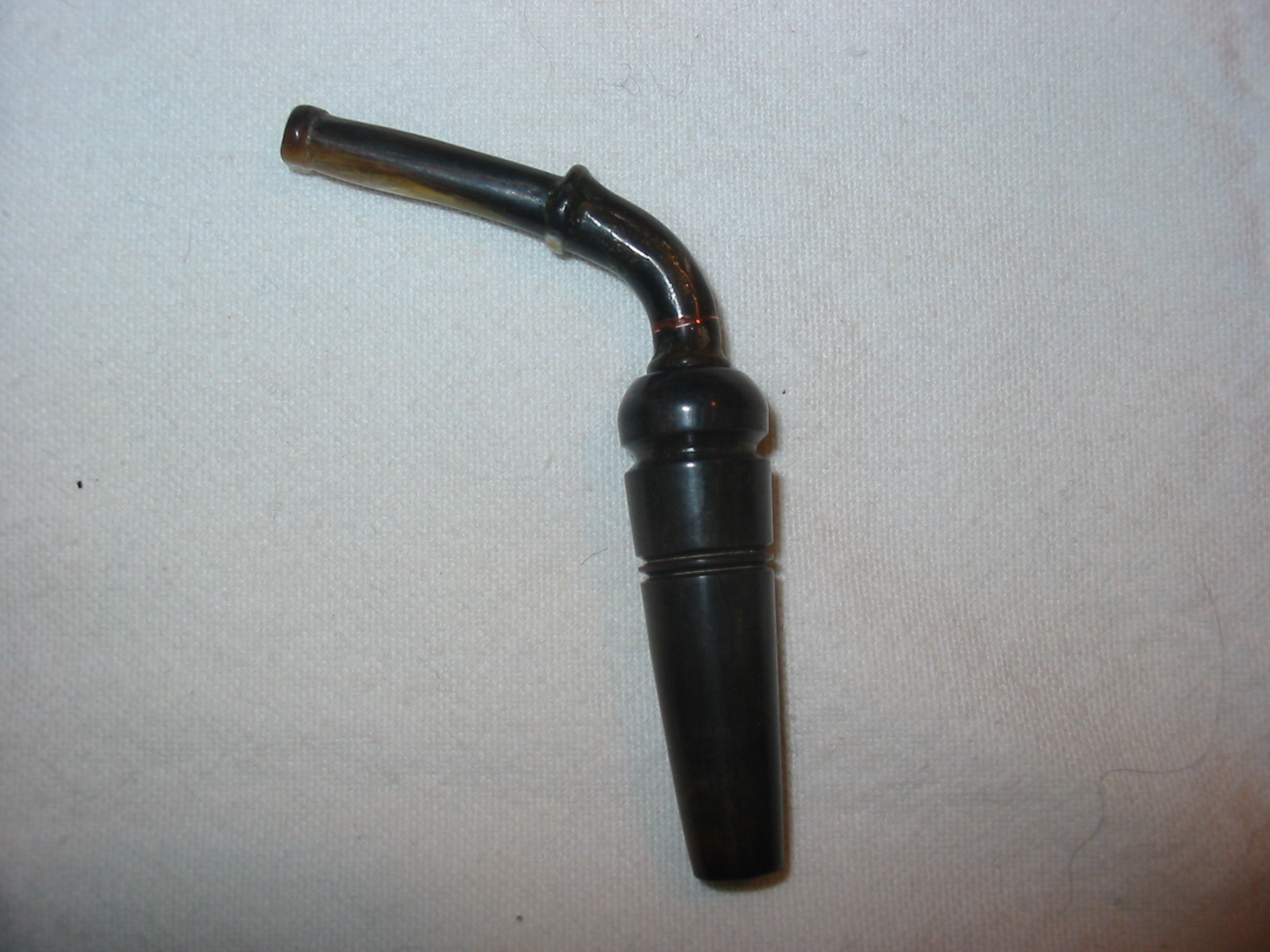
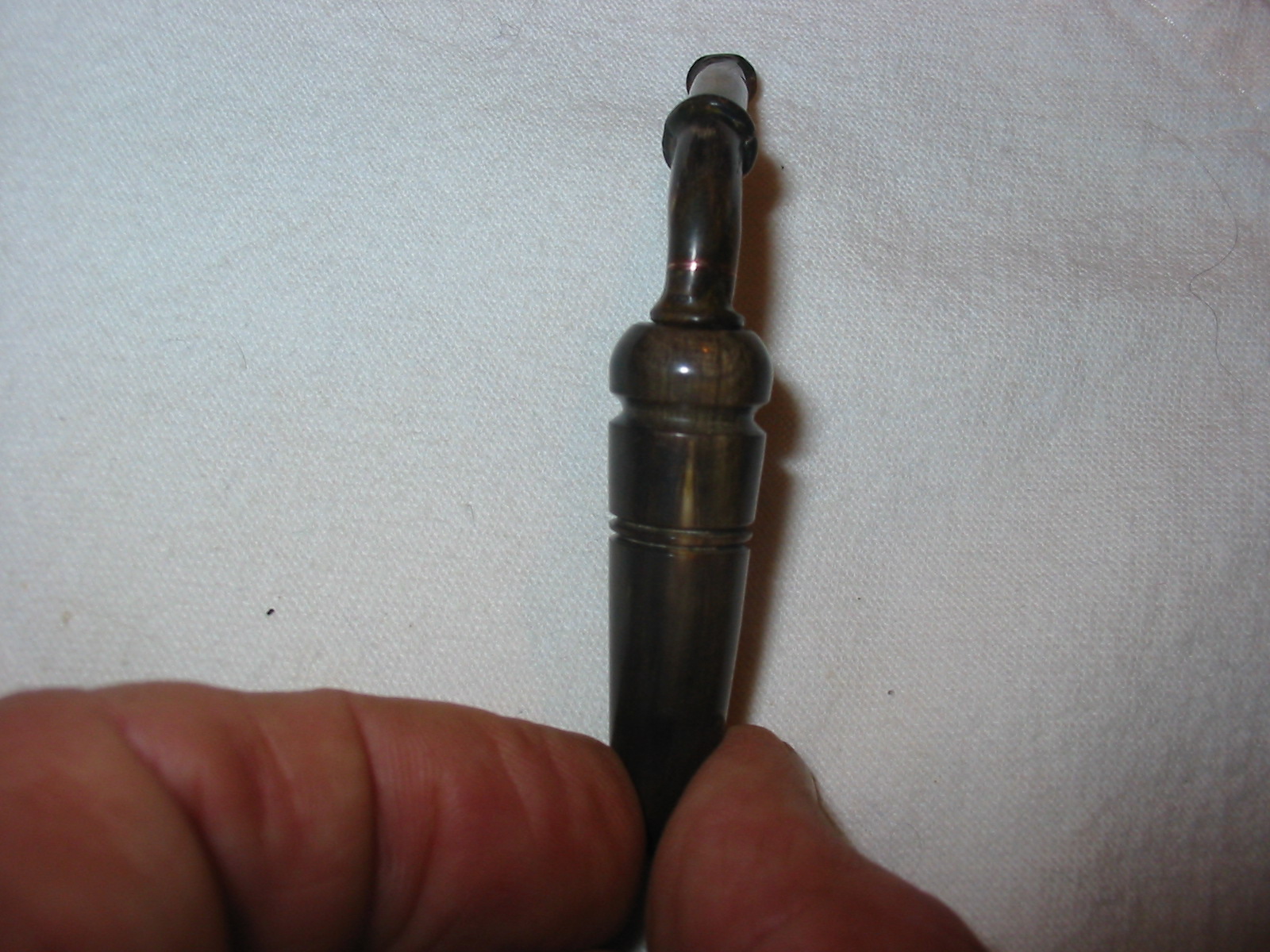
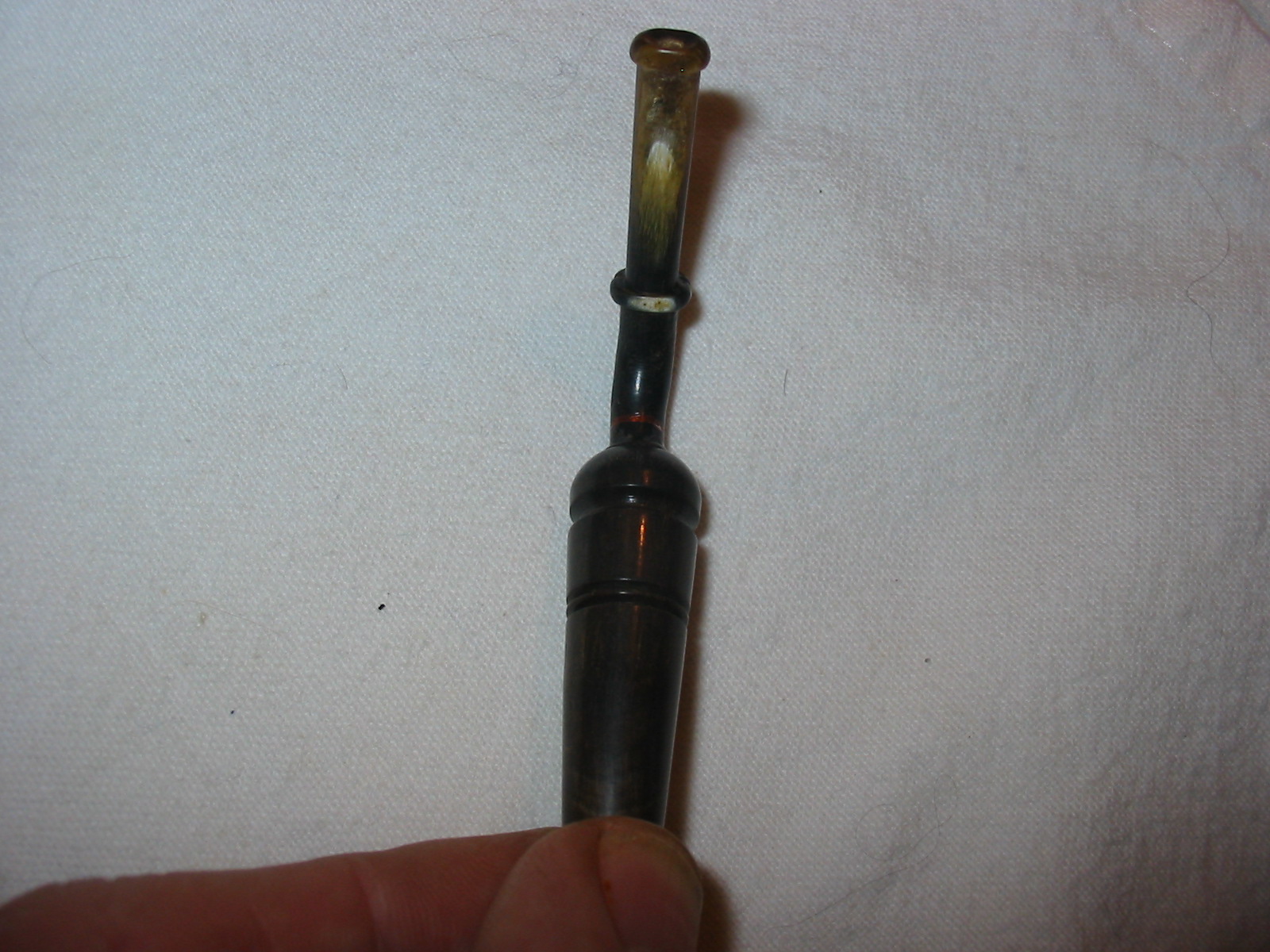
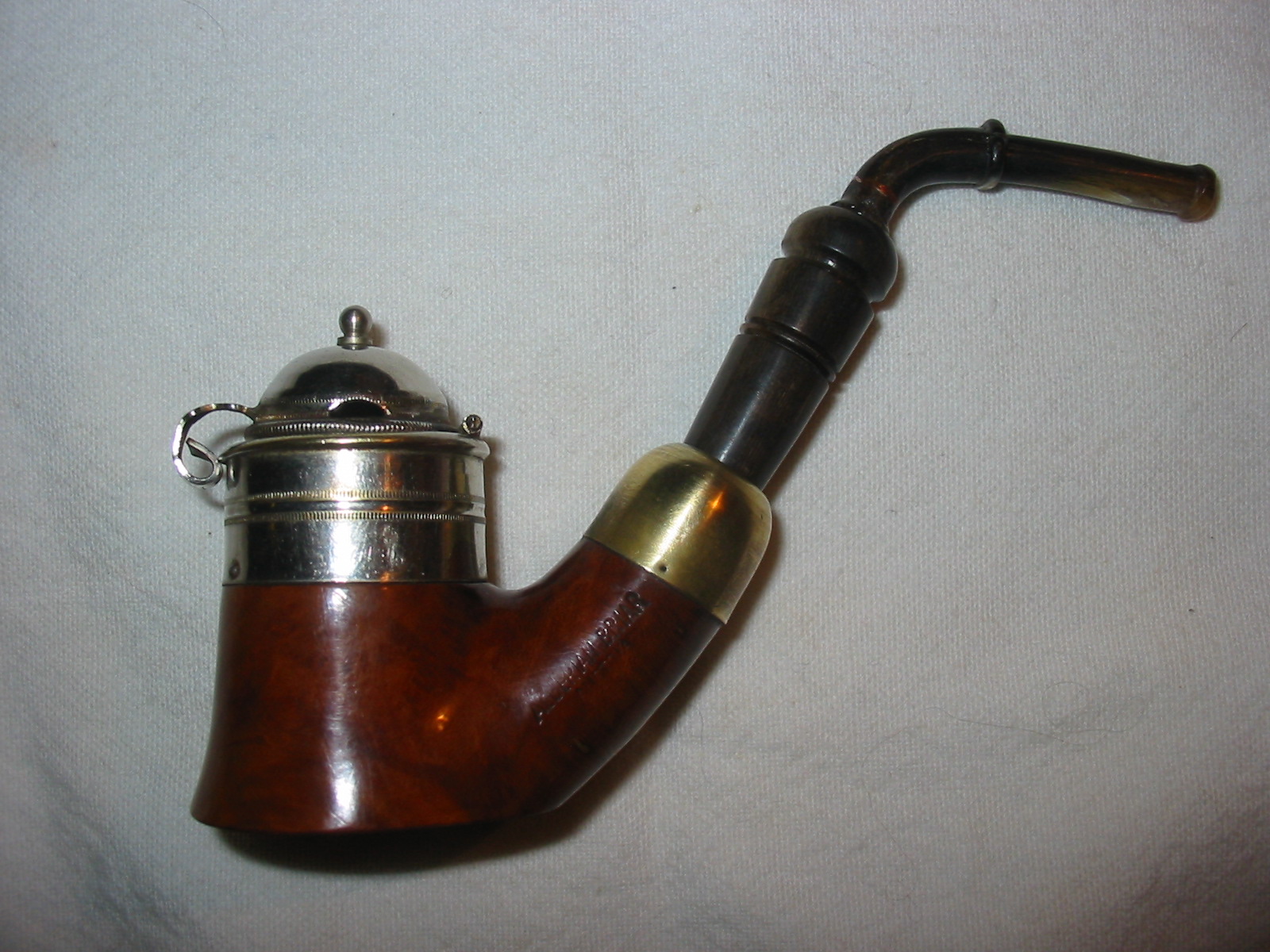
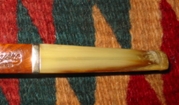
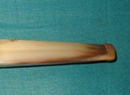
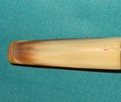
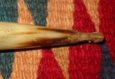
Tag Archives: polishing horn stems

Restoring a Unique Alternative Wood C.P.F. Tulip


Blog by Steve Laug

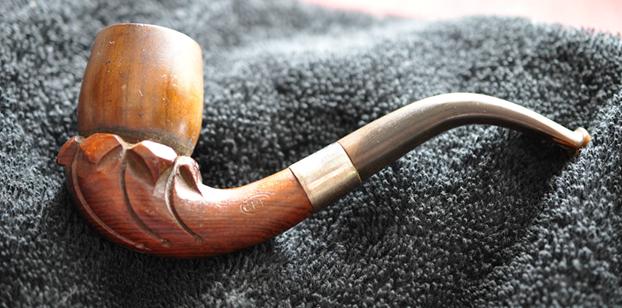
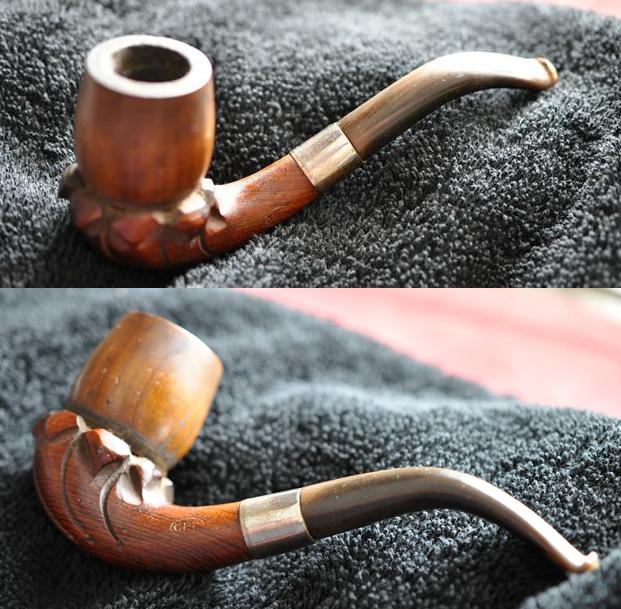
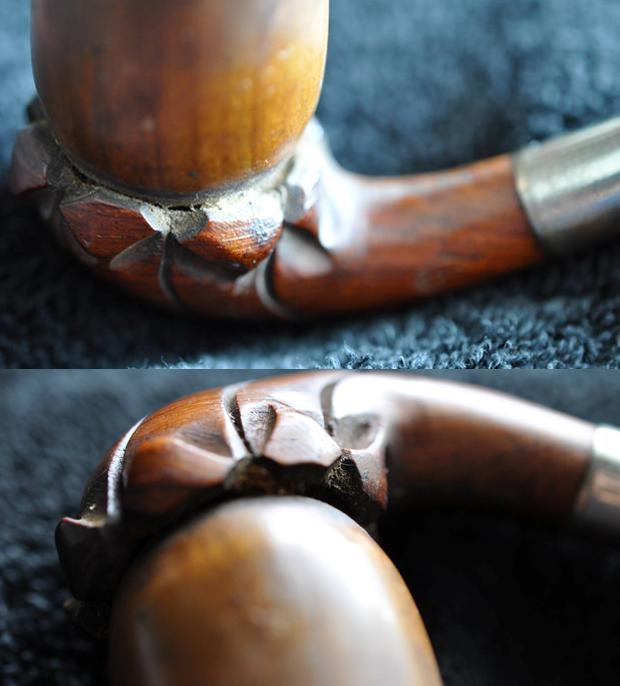
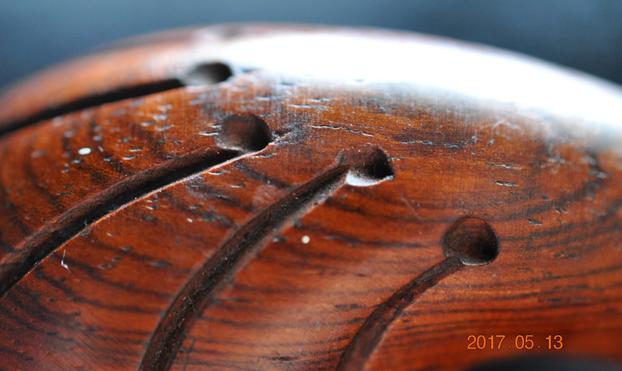
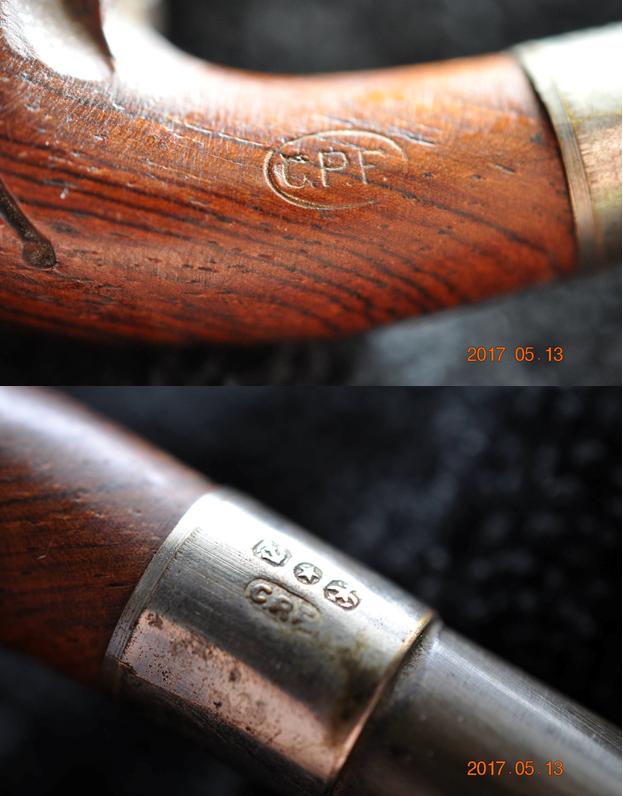
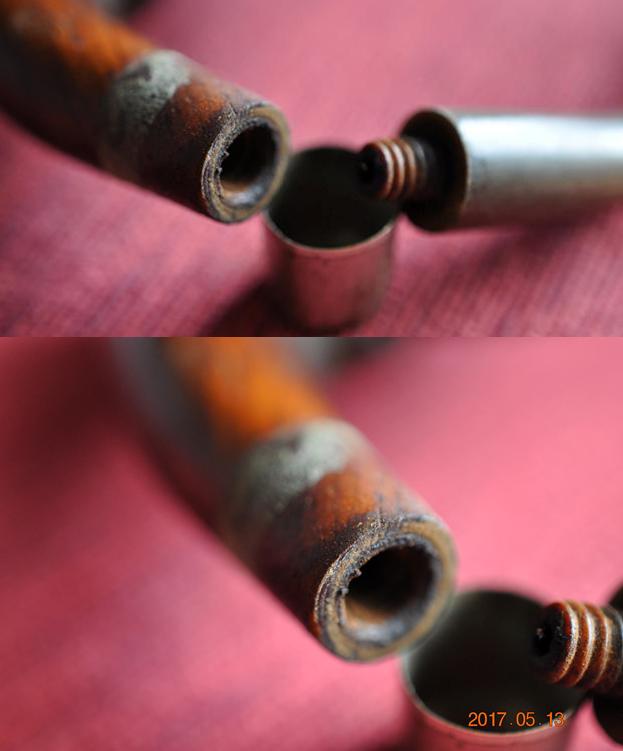
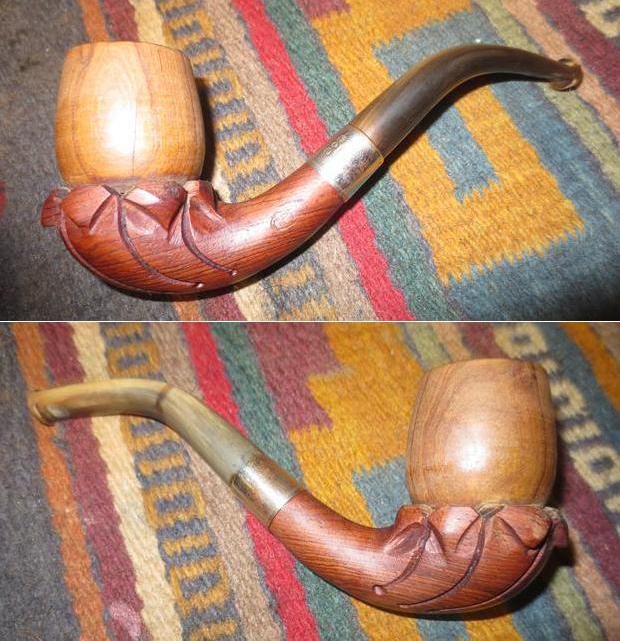
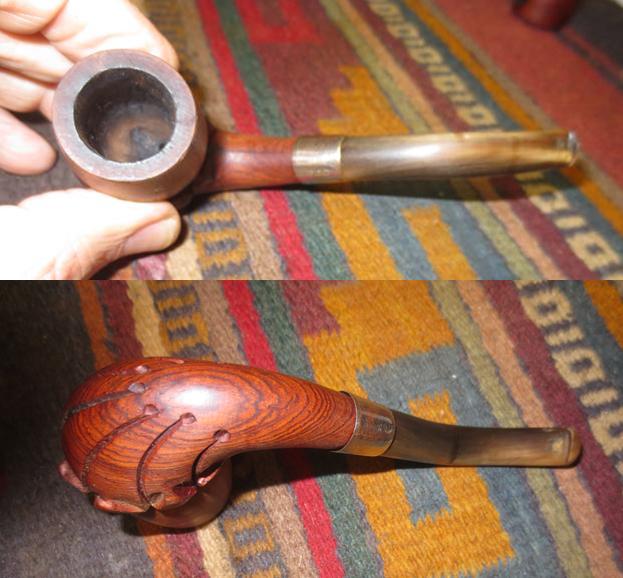
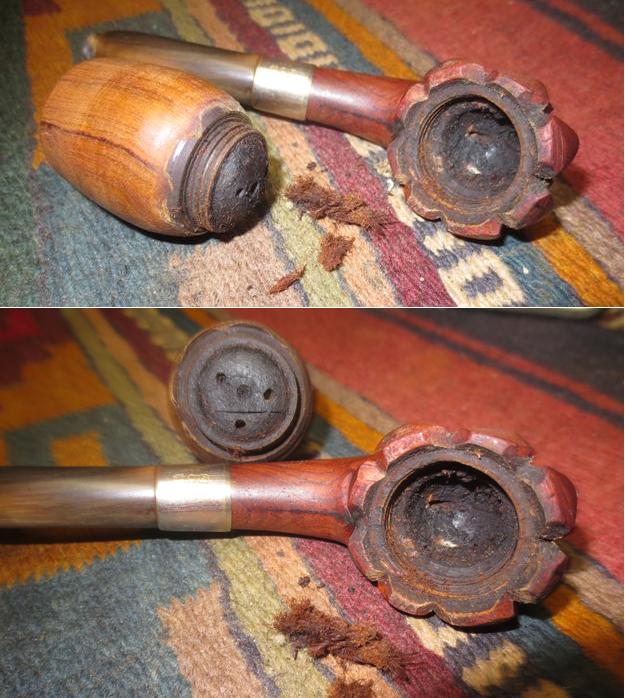
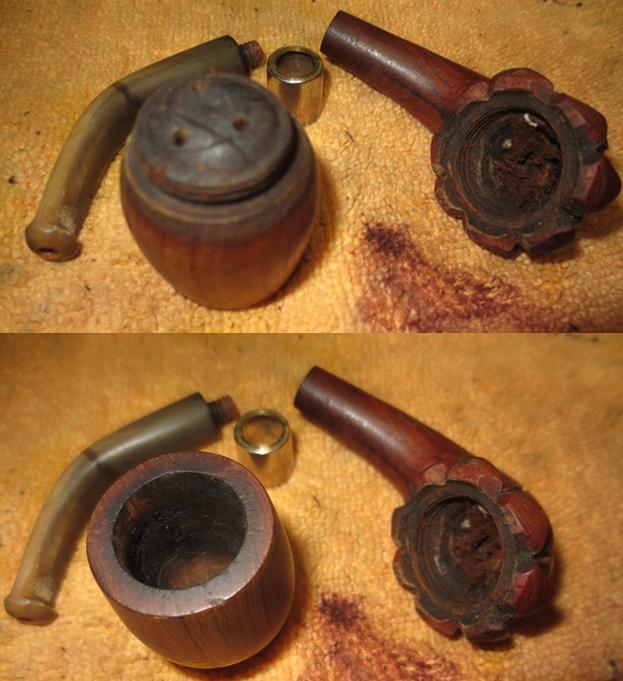
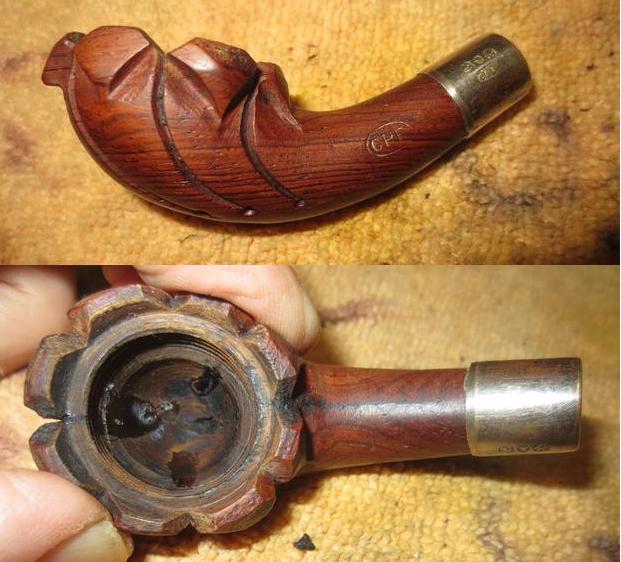
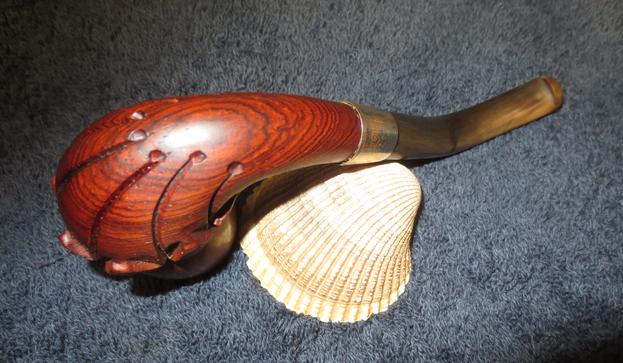
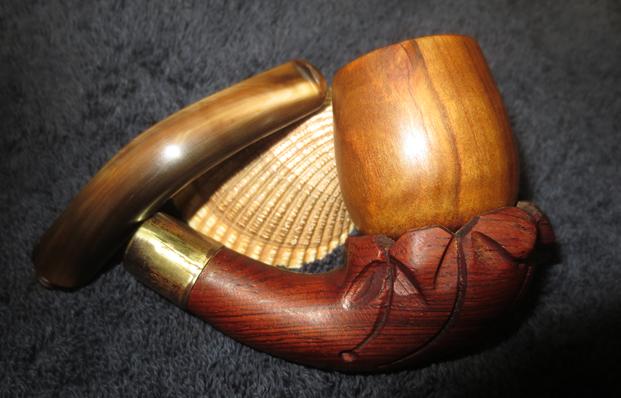
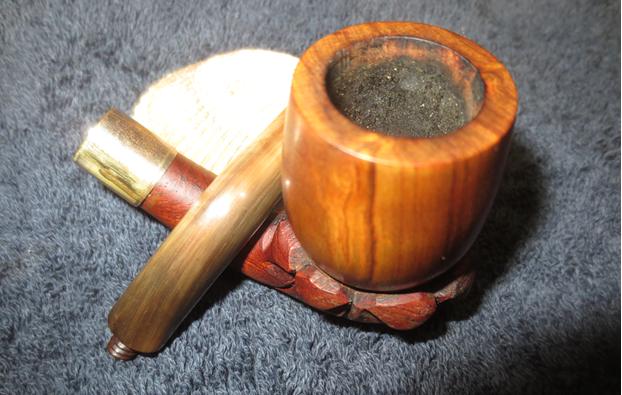
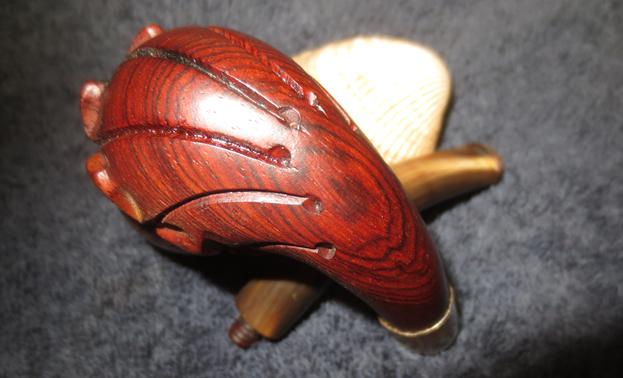
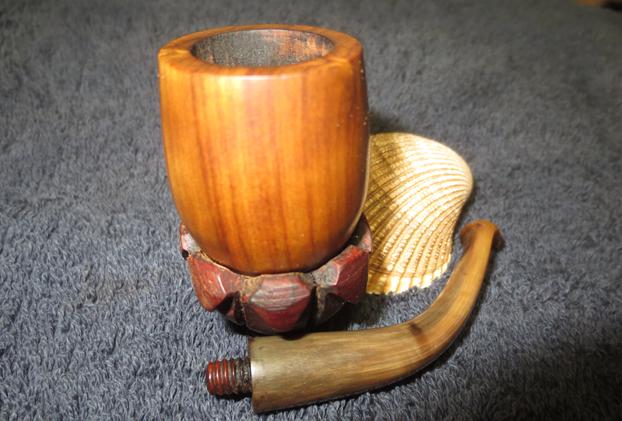
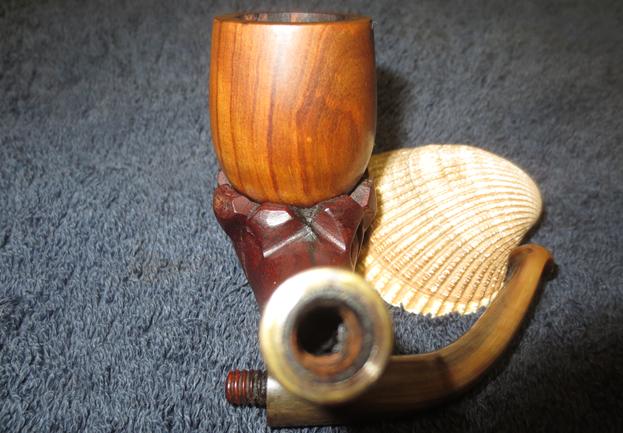
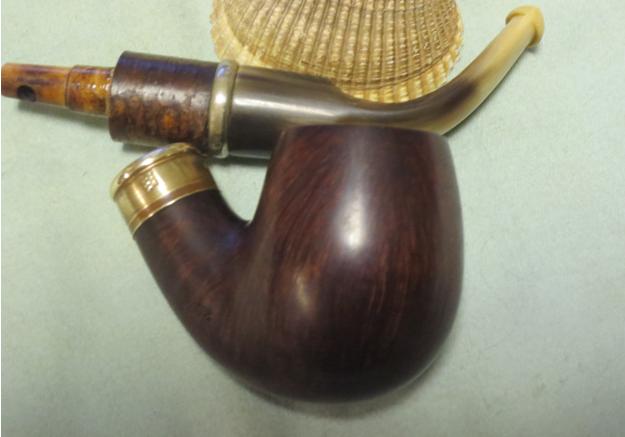
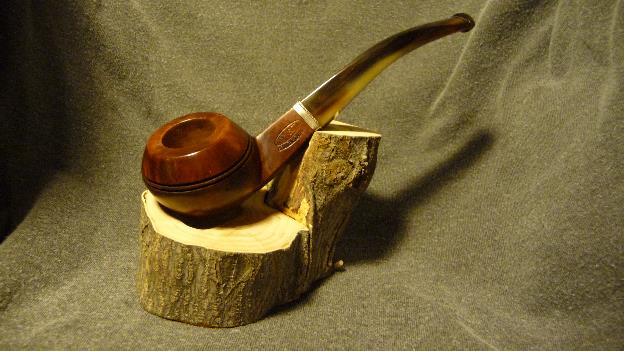
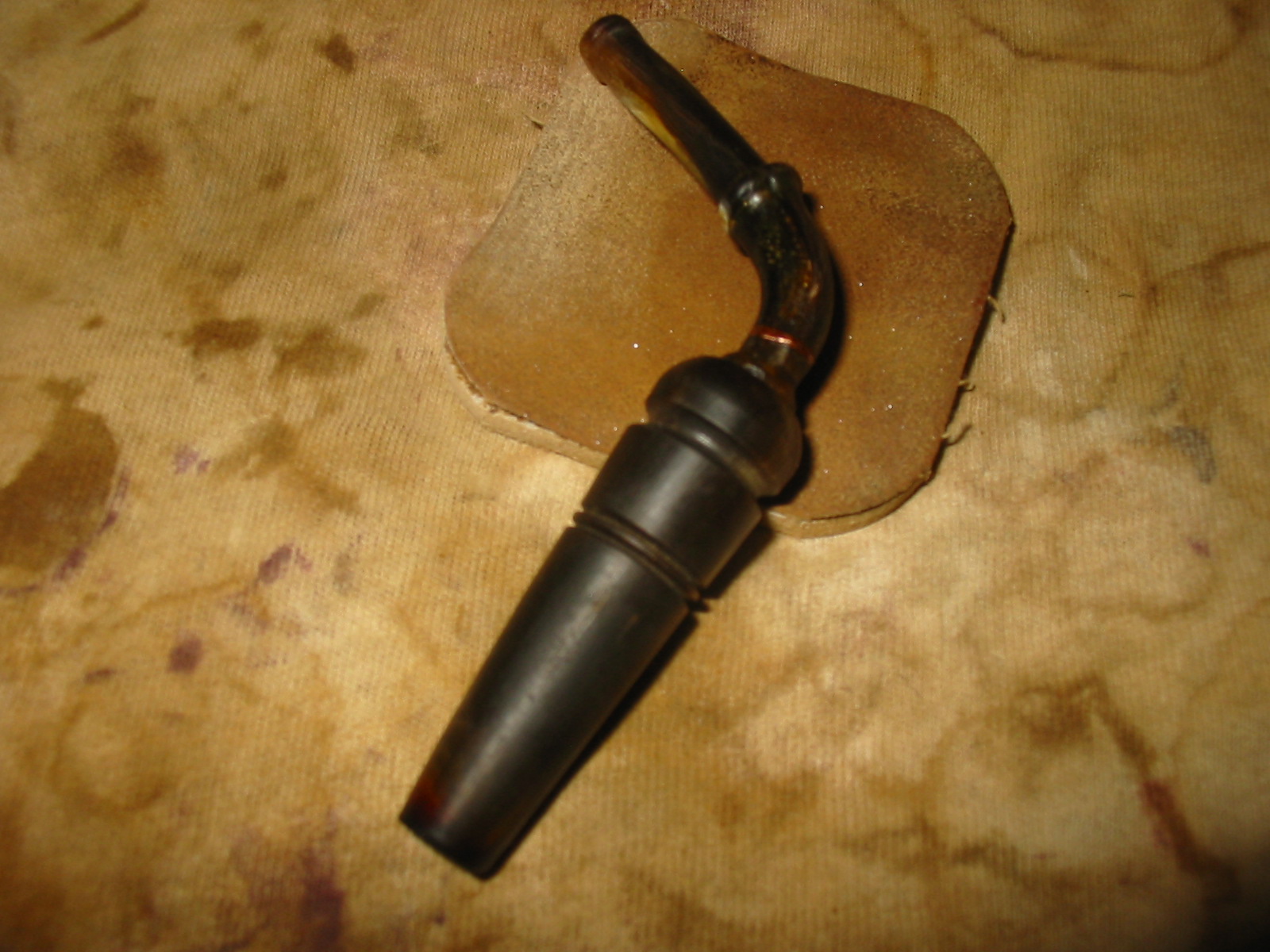
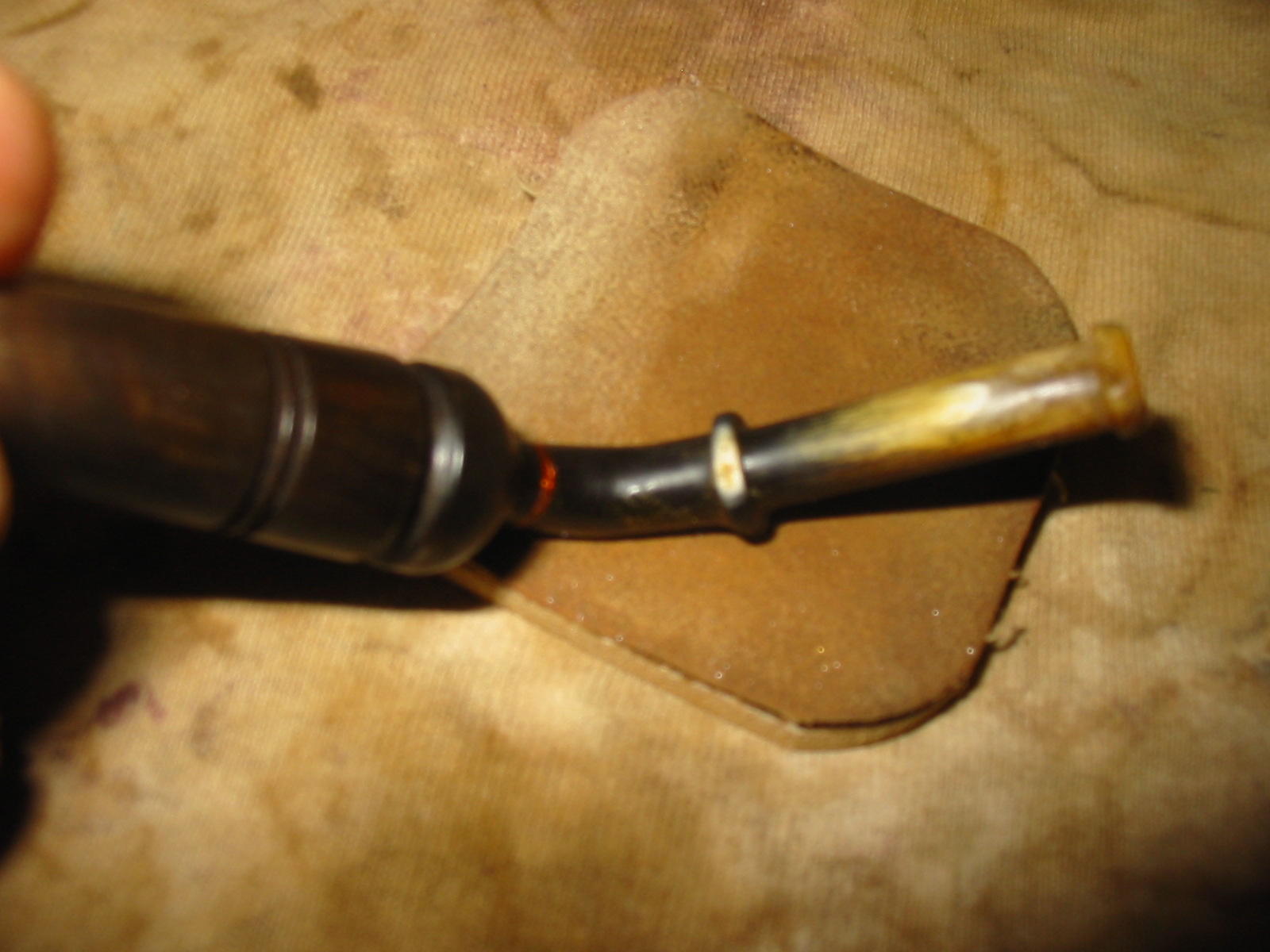
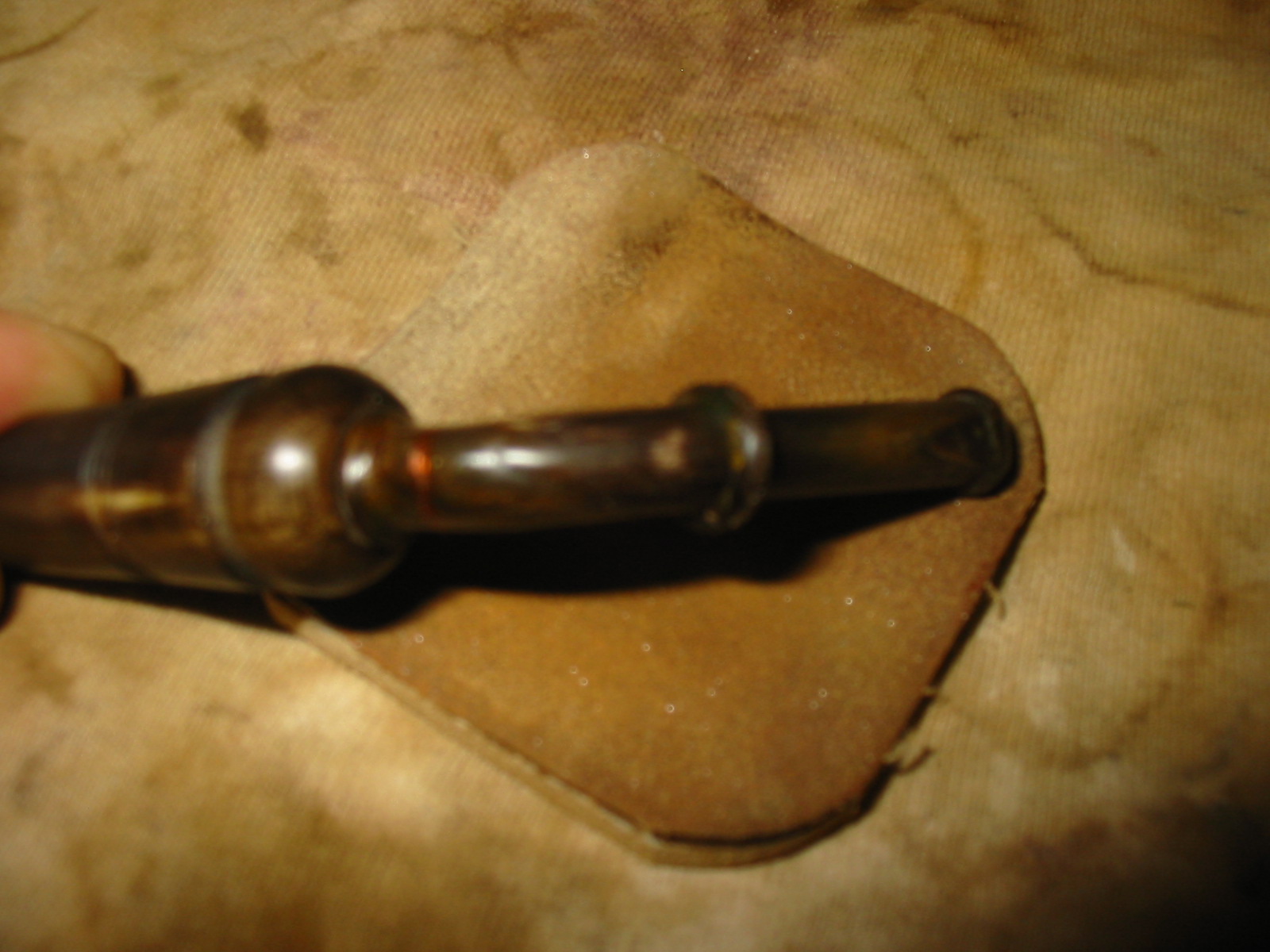
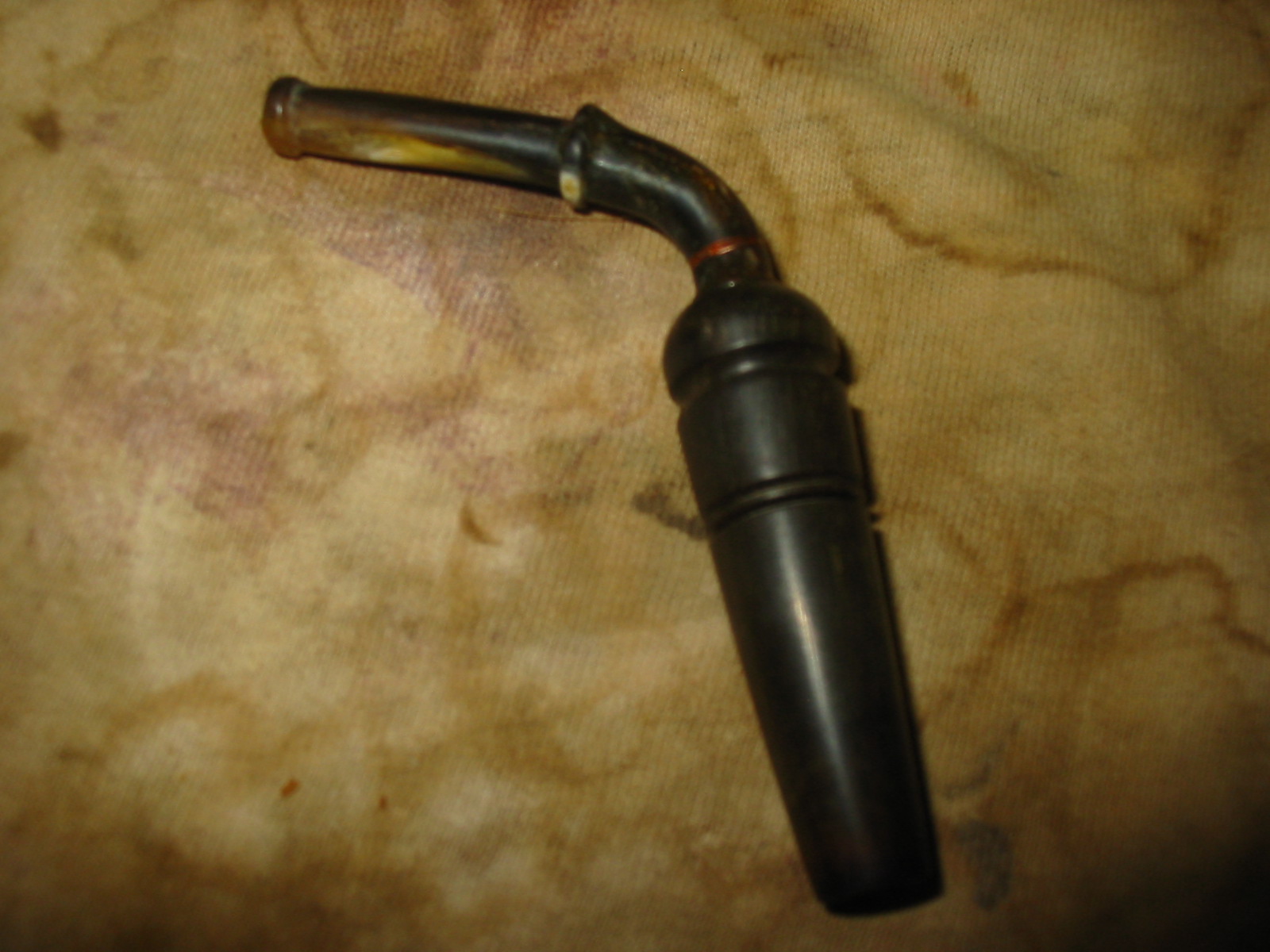
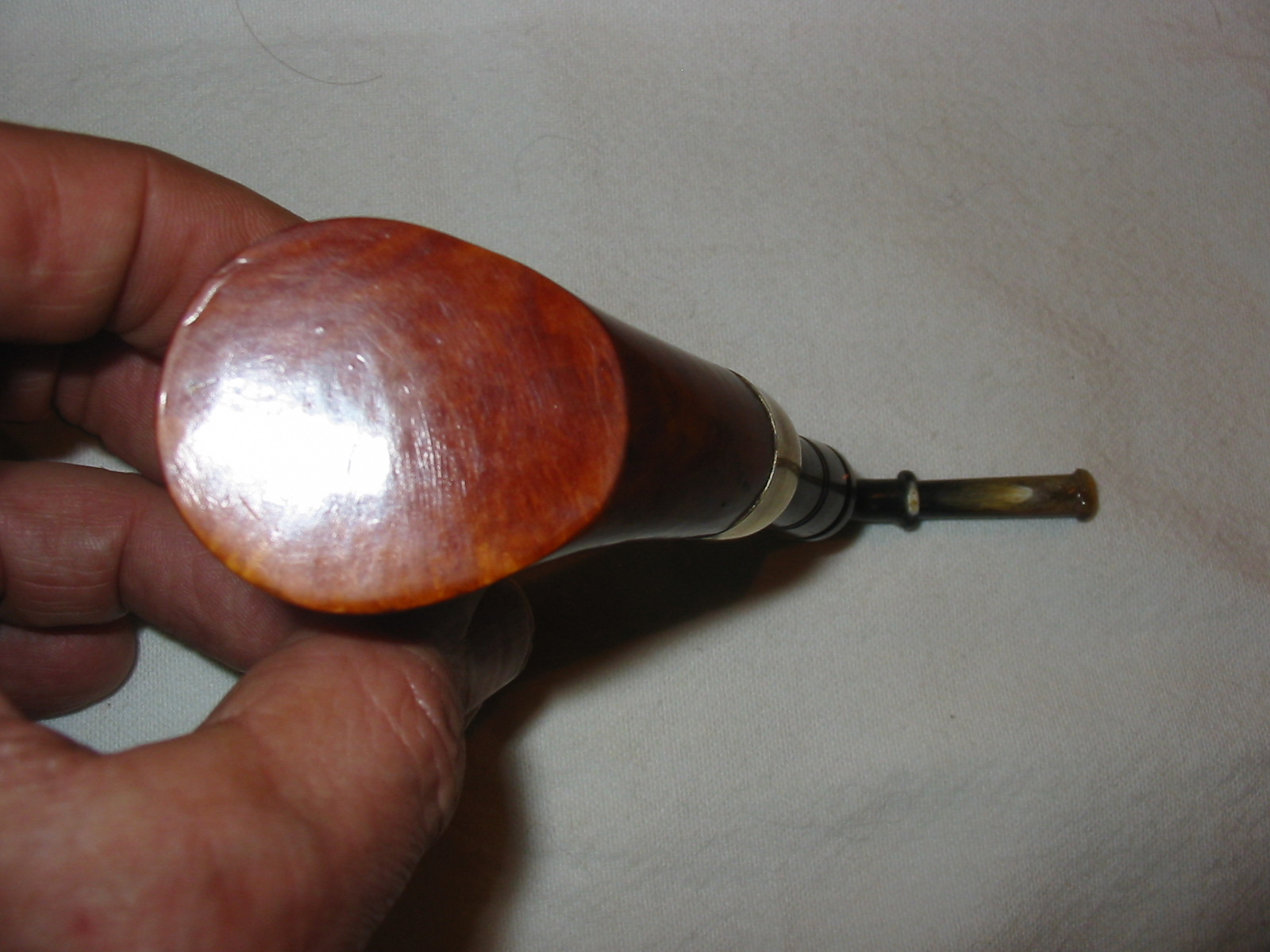
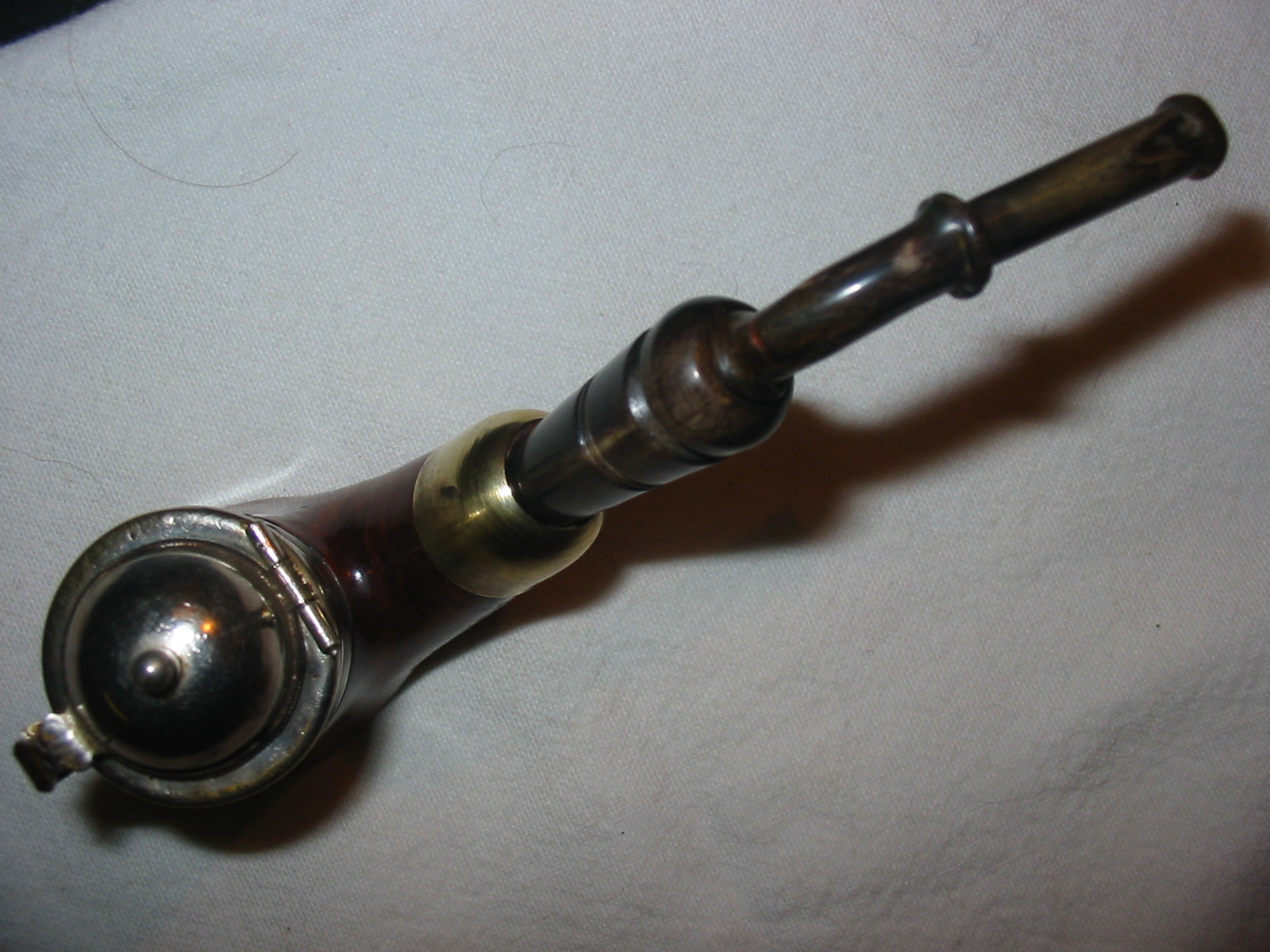
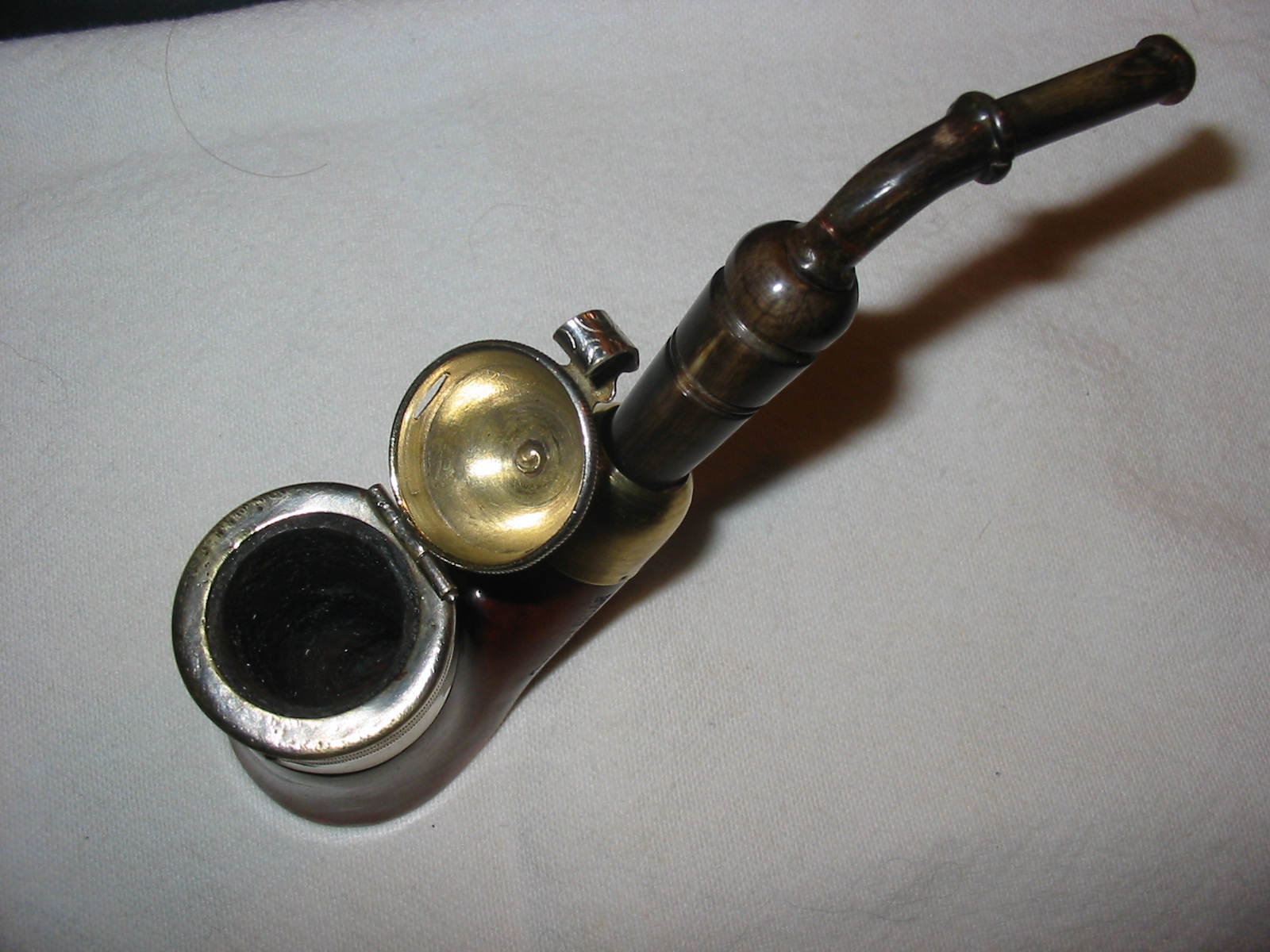
This is yet another unique older C.P.F. pipe find from our Virtual Pipe Hunt in Montana. It is amazing the number of older C.P.F. and other brands we found in that antique shop. Even more amazing is the sheer number of shapes that I have never seen or worked on before. This one is a C.P.F. that is made in two parts – a bowl that is screwed onto a base. The wood is not briar. The bowl is olivewood and the base is cherry. The pipe has the C.P.F. in an oval stamp on the left side of the shank. It is also stamped on the band with the faux hallmarks from that era and the logo. The stem is made of horn. It is a graceful and elegant looking pipe and one that I look forward to working on. My brother took quite a few photos of the pipe before he cleaned it up to show the details of the carving and the wood. I have included them at the beginning of the blog. My guess is that this pipe also comes from the mid-1880s to the early 1890s like the other C.P.F. pipes in the lot.The pipe was in pretty rough shape. The bowl had a thick cake with lava overflowing the rim. The finish was very dirty though appeared to look good underneath the grime. The screw in bowl was stuck in place on the base and we were uncertain that it would even come off. It looked like it originally was a separate piece but the grime and grit had locked it in place. The grooves in the base were filled with grime and the silver band was tarnished. The gold C.P.F. logo on the shank was faint. The horn stem had the usual tooth chatter and marks but other than that was in decent condition. With a little work this would be a beautiful pipe.

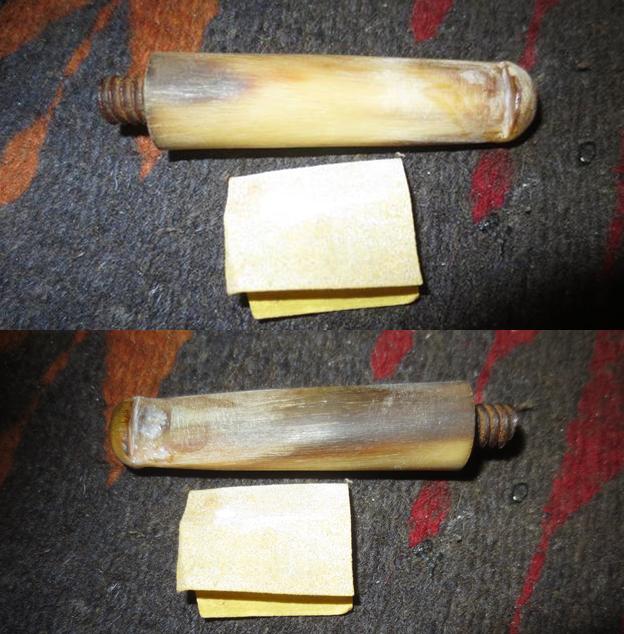
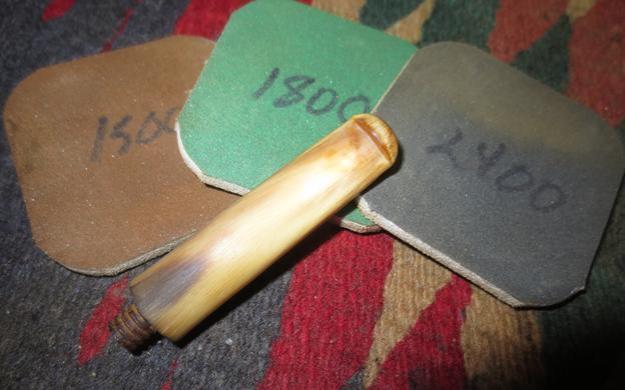
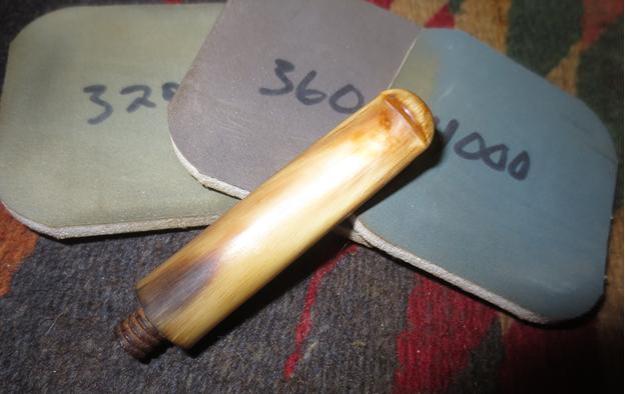
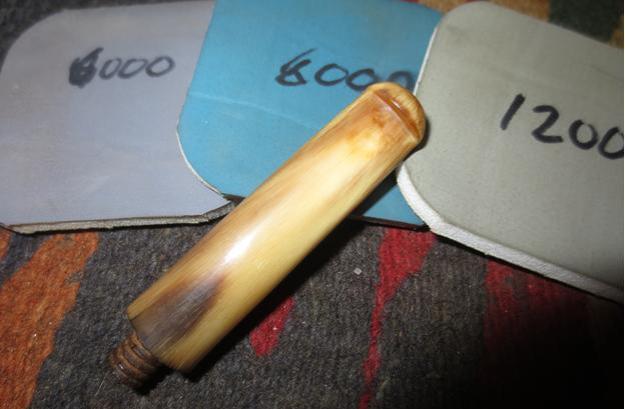
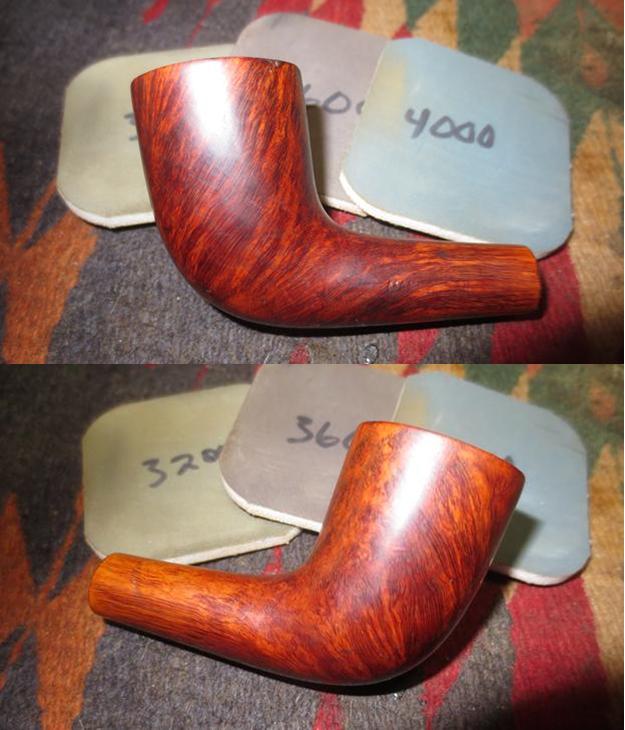
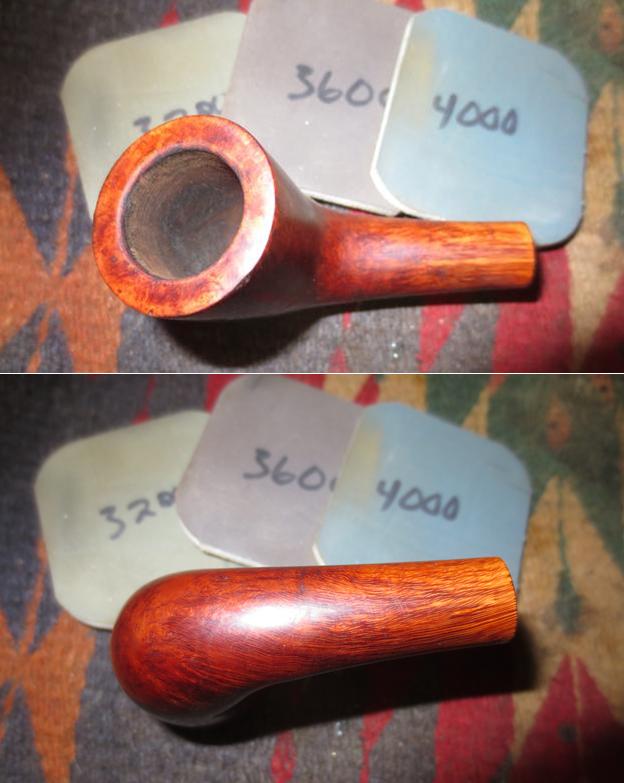
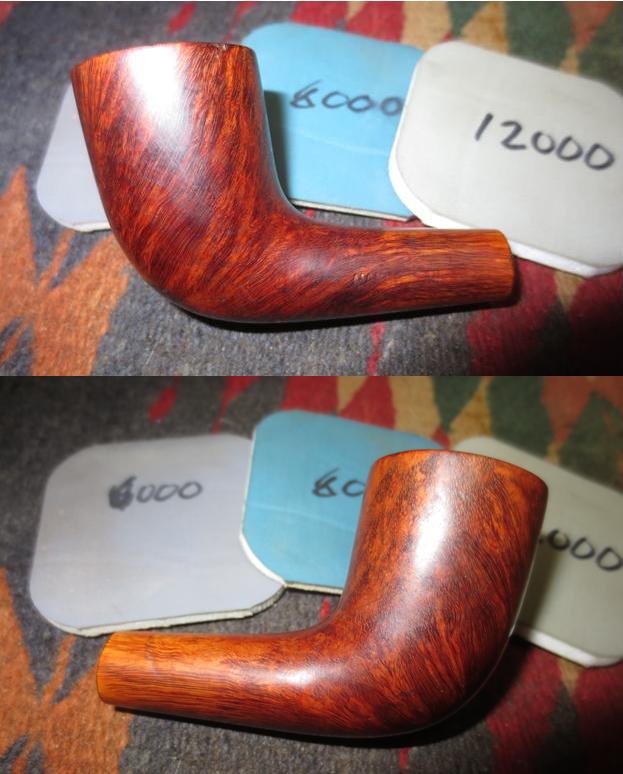
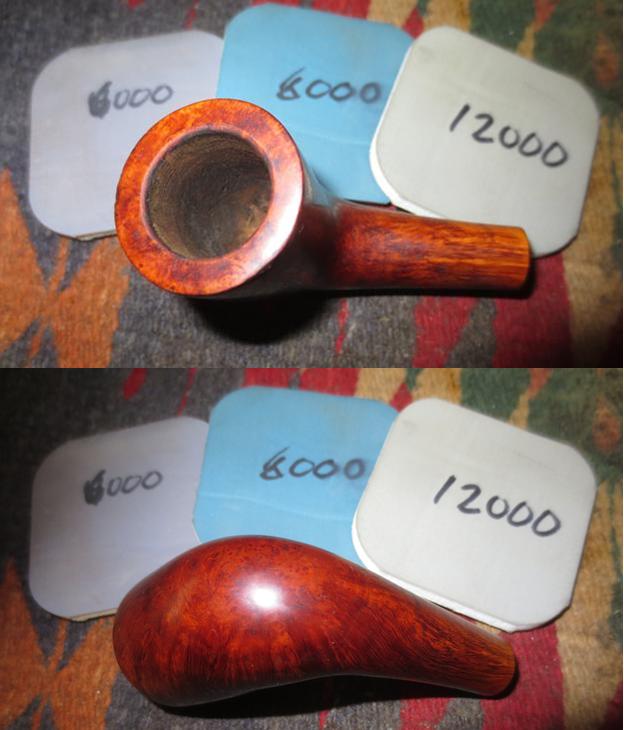
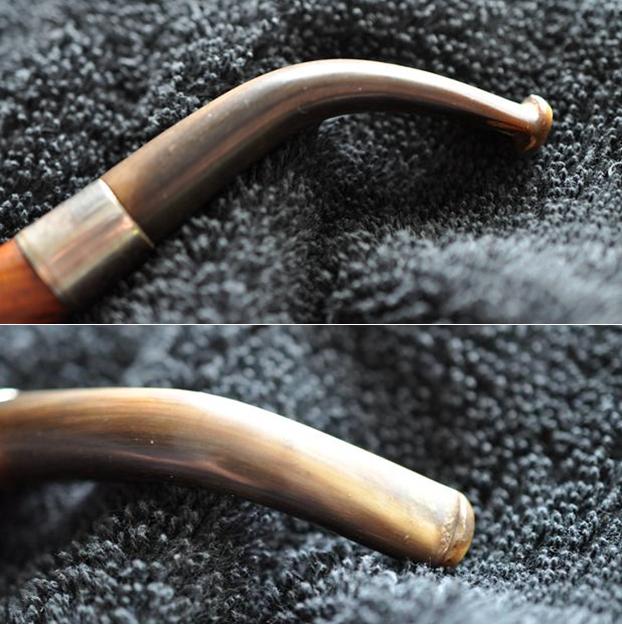
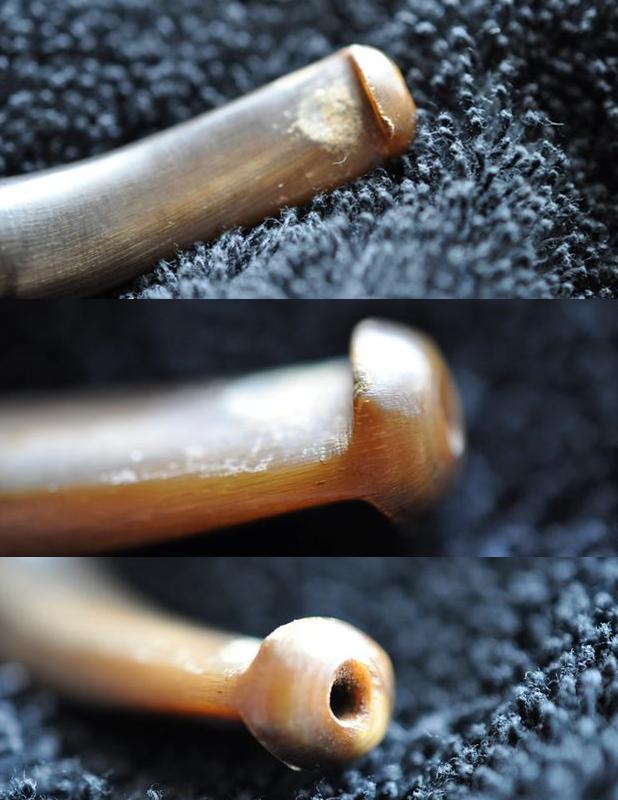
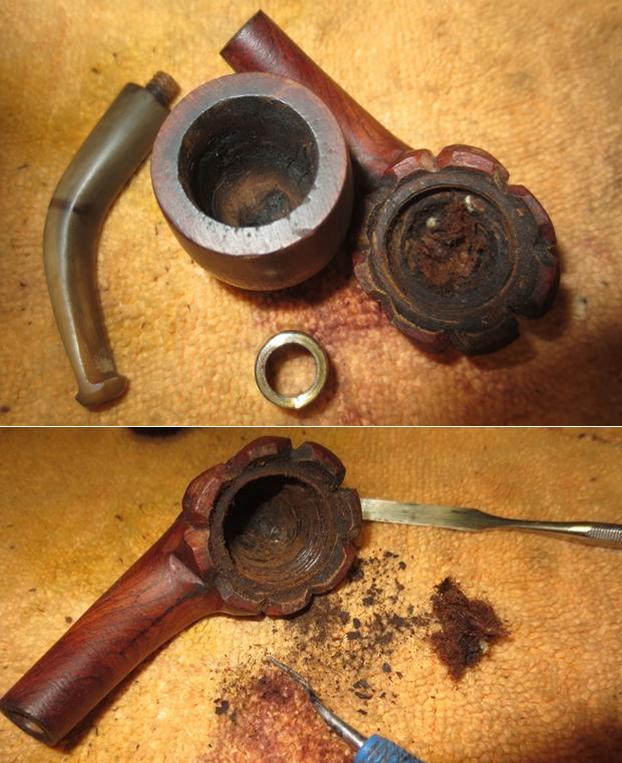
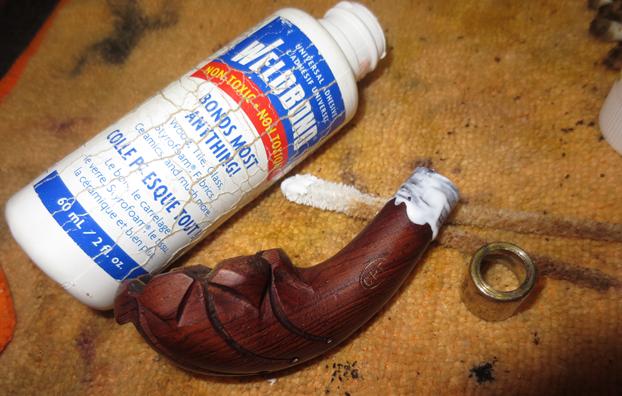
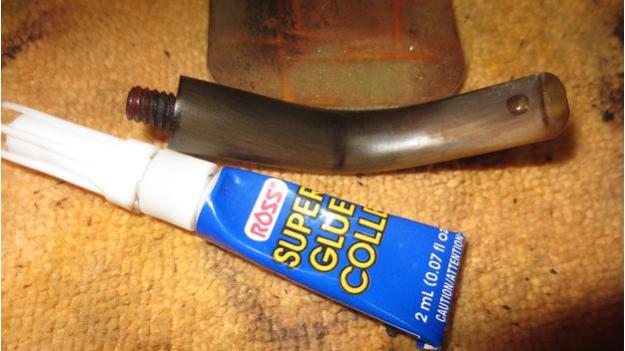
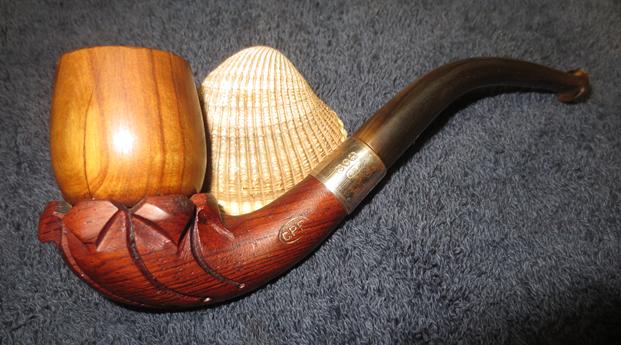
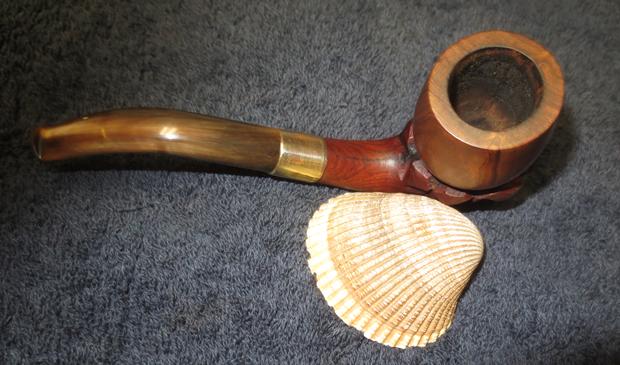
If you would like to read a bit of history on the brand you can have a look at a blog I wrote concerning C.P.F. or the Colossus Pipe Company https://rebornpipes.com/2013/04/14/some-reflection-on-the-historical-background-on-cpf-pipes/.The next series of photos show the condition of the bowl before cleaning. It was very dirty and there appeared to be cracks in the backside of the bowl. I would not be certain until it was cleaned and I had it in hand. The next photos show some of the detail on the base of the pipe. It is an interesting piece of carving. I have never seen one like it in either the old C.P.F. catalogues or in my online research regarding the brand. The bottom of the base shows the grain on this portion. Notice how well the carver centered the grain pattern on the base. It is a beautiful piece of wood. I am guessing cherry but I am not certain. You can see from the unique vertical grain on the bowl portion of the pipe that it is not briar. My thoughts are that it is olivewood but I could be wrong. Note also the buildup of grime around where the bowl sits on the base.The C.P.F. oval logo can be seen on the left side of the shank and also on the silver band. You can see from the photo that the band appears to be loose. Later photos reveal that it was indeed loose and could be slipped on and off the pipe.The next two photos show the shank with the band sitting under it and the threaded bone tenon on the horn stem. It is really dirty looking in the shank and mortise.The stem was probably in the best condition of the entire pipe. The graceful curve of the horn was undamaged. The striations were not separating and the variation in colour was stunning. The overall condition was really good. There was some light tooth chatter and marks near the button on each side but otherwise it was clean. The button was not chewed and the orific airhole in the centre of the button looked good. Jeff cleaned up the pipe – reaming the bowl with a PipNet reamer and cleaning up the reaming with a Savinelli Fitsall Pipe Reamer. He took the cake back to bare wood. He scrubbed the exterior of the pipe with Murphy’s Oil Soap and rinsed the soap and grime off the pipe. He removed the band and scrubbed under that as well with the soap. He cleaned out the mortise and the airway in the shank and the stem with pipe cleaners, cotton swabs and alcohol. He cleaned the horn stem with some oil soap as well. I took these pictures when the pipe arrived in Vancouver. It was in better shape than when we picked it up. Jeff had not been able to unscrew the bowl from the base as it was stuck with the goop that had covered the bowl and base. The rim top still had some darkening and spotty damage to the surface. Jeff and I were talking last evening on FaceTime and I decided that I would tackle the restoration on this old timer next. While we were chatting I held the base in one hand and wiggled the bowl with the other. After a few moments I was able to turn it from the base. What was underneath was absolutely gross. It looked like someone had packed the base with some kind of coarse material to act as a filter to trap any moisture that came from the combustion of the tobacco above. I also noticed that the bowl bottom had three airholes and one was entirely plugged and could not be seen from the inside of the bowl. The bowl had some dark staining and build up on the bottom of the bowl. I put the junk back in the bowl and set the pipe aside for the night.In the morning I took the pipe apart again to clean out the bowl base. I used a dental pick and a spatula to clear out the debris and hard build up in the base. I scraped out the threads on the bowl and the base to remove the debris. I scraped out the rounded base bottom to also remove the debris. I twisted the tip of a dental pick through the clogged third hole in the bottom of the bowl. I worked it from both the inside and the outside of the bowl until I had cleaned out the blockage. Once again the bowl had three holes that worked.I scrubbed the base and the bottom of the bowl with alcohol and cotton swabs. I scrubbed until it was absolutely clean. I scraped out the ledges on the inside of the base to remove the buildup that was there as well.I painted the shank end with Weldbond white glue so that I could put the band back in place. The band had a split on the right side that would need to be worked on as well. I put the band on the glue and held it in place until the glue had dried. I sanded the split in the band with 220 grit sandpaper and filled it in with clear super glue. There were also cracks in the bottom of the base just below the threads that matched the grooves carved on the outside of the shank. Once the glue dried I sanded the inside of the base smooth. With the repairs done to the base I turned to what had appeared to be cracks in the bowl sides and base. I sanded the stained and dirty base and the part of the bowl that had been seated in the base behind the leaves. I used clear super glue to fill in the small cracks on the bowl sides and bottom. They were very tight and did not move when I worked them with a dental pick. When the glue dried I sanded the bowl with 220 grit sandpaper until they were smooth and blended in well with the surface of the olivewood. I lightly topped the bowl with 220 grit sandpaper on a topping board until all of the damaged areas were removed and the rim top was smooth once again. I polished the olivewood with micromesh sanding pads – wet sanding it with 1500-2400 grit pads and dry sanding it with 3200-12000 grit pads. I wiped the bowl down after each of the micromesh sanding pads with a damp cotton pad to remove the sanding dust. The photos below show the progress of the polishing. I sanded the stem to remove the tooth chatter on the top and underside near the button. There was one deep tooth mark on the underside that I could not remove by sanding. I filled it in with clear super glue and let it dry. Once it had cured I sanded it smooth with 220 grit sandpaper to blend it into the rest of the stem surface. It was smooth but a bit lighter in colour than the surrounding area. Thankfully it was on the underside.When the stem was turned on to the shank it was slightly underclocked and there was no give in the stem to get the alignment correct. I carefully heated the bone tenon without burning it to soften the glue that held it in place. While it was still warm I was able to screw it in and align the stem properly.Now that things were aligned it was time to polish the stem. I polished the stem with micromesh sanding pads – wet sanding it with 1500-2400 grit pads and dry sanding it with 3200-12000 grit pads. I wiped the stem down after each of the micromesh sanding pads with Obsidian Oil to remove the sanding dust and give it more life. The photos below show the progress of the polishing. I love polishing horn stems because as you work them over they seem to take on a life of their own with a deep and resilient sheen. I took the pipe apart and buffed the parts. I buffed the bowl and the bottom and sides with Blue Diamond on the buffing wheel. I buffed the stem with Blue Diamond as well to polish out the tiny scratches that were left behind by the micromesh. I gave the parts multiple coats of carnauba wax and buffed them with a clean buffing pad to raise the shine. I hand buffed all of the parts with a microfiber cloth and put the pipe back together. I hand buffed it once again to finish the restoration. The finished pipe is shown in the photos below. It is a remarkable example of pipe making at the end of the 19th Century. The wood and the shape work well with the beautifully striated and gracefully bent horn stem. The silver band with the hallmarks and C.P.F. logo is a nice transition between the stem and the cherry wood base. Thanks for walking with me through this restoration.

A Ropp La Montagnarde Deposee 298 Horn-Cherrywood-Briar


Blog by Steve Laug

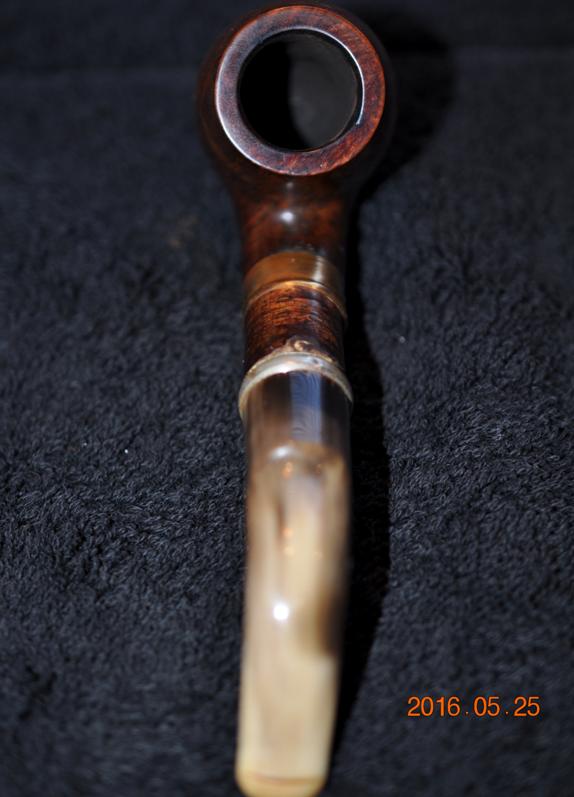
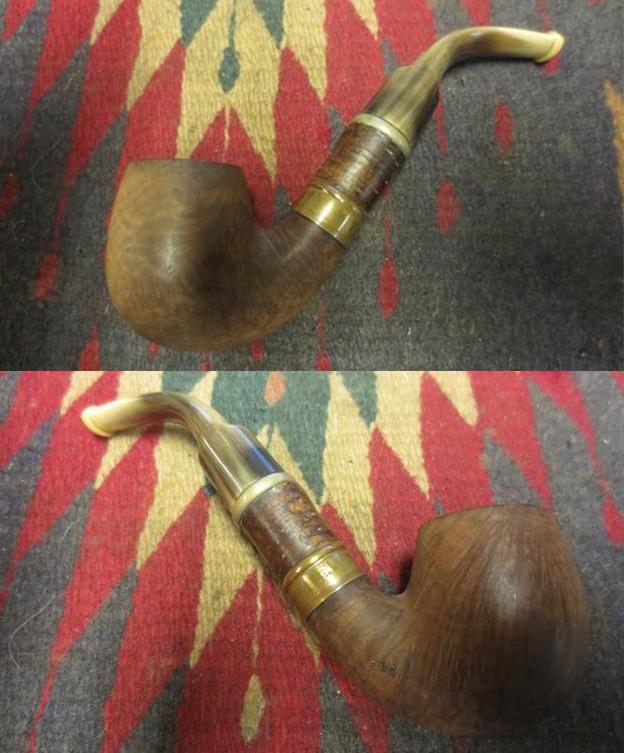
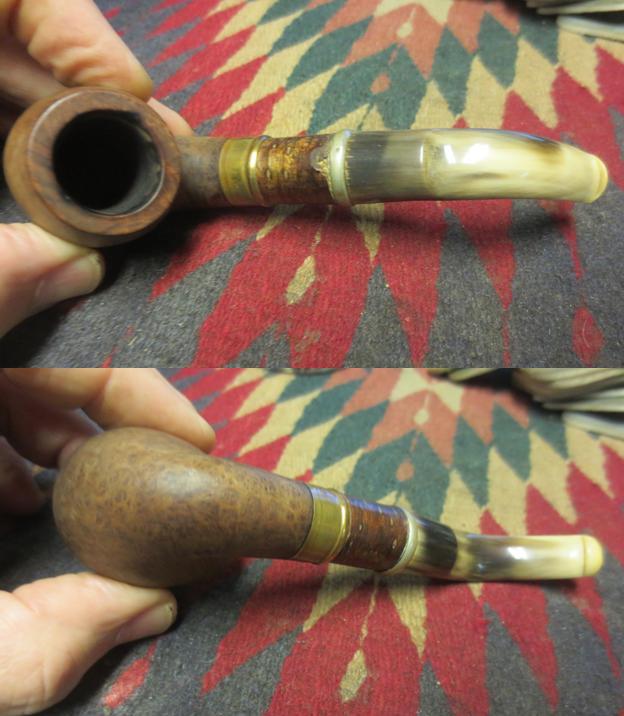
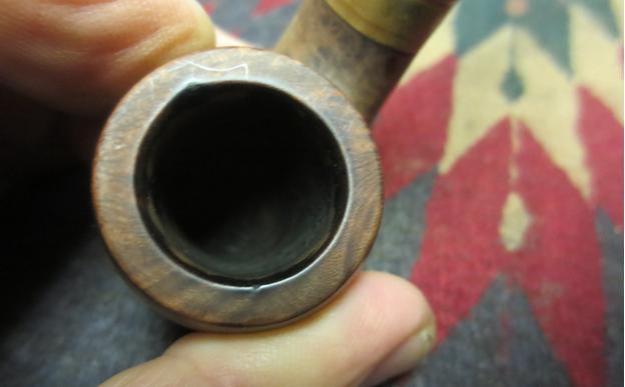
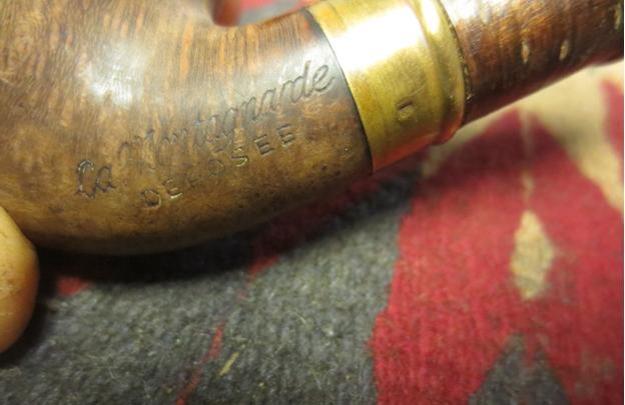
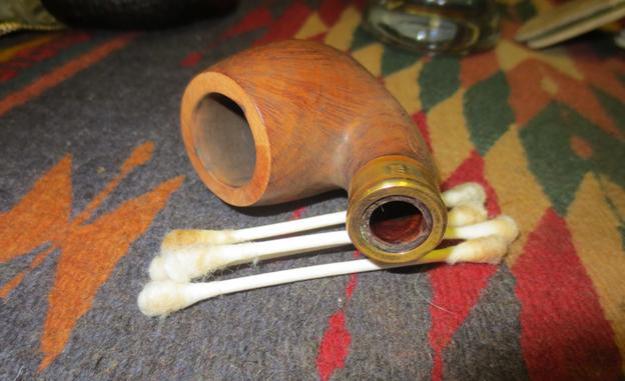
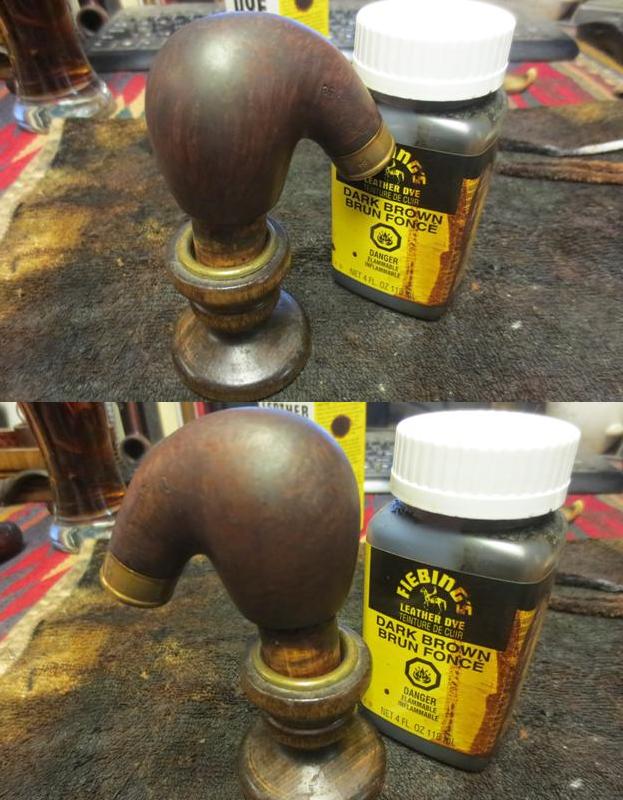
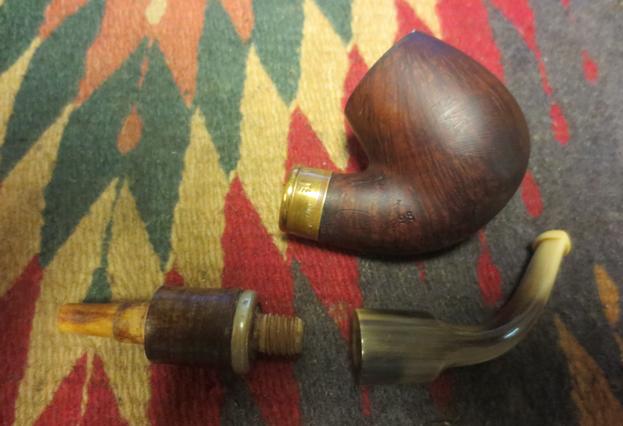
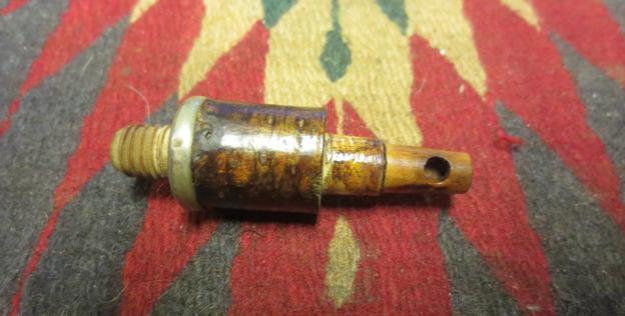
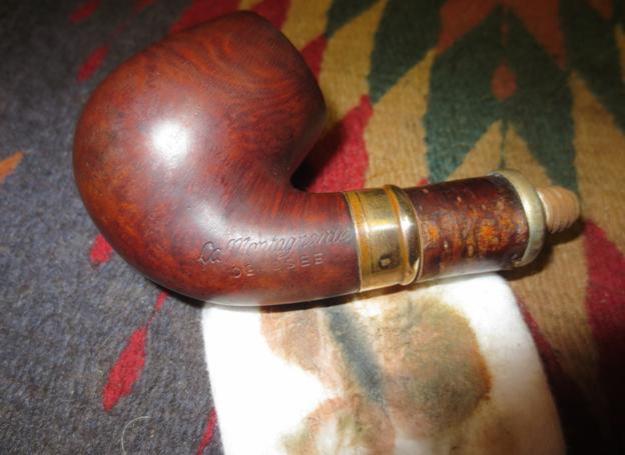
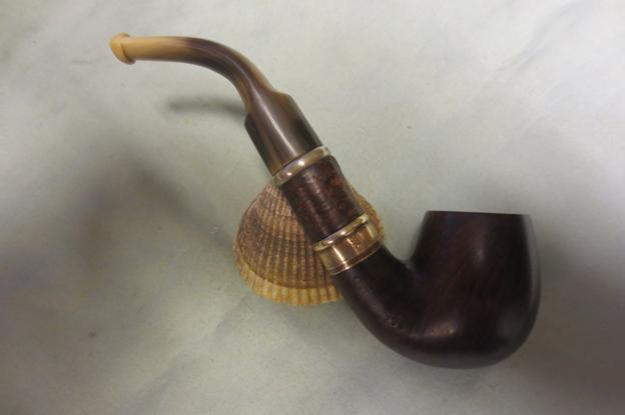
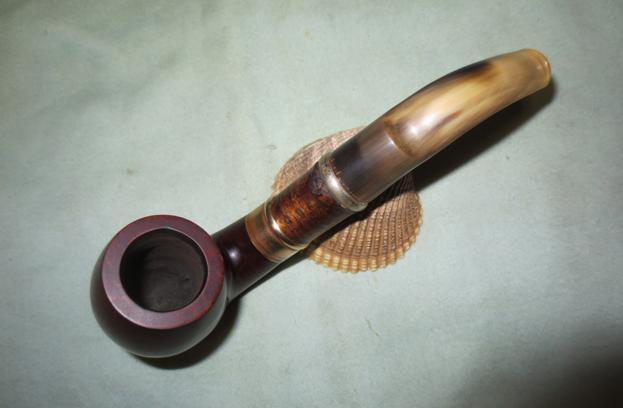
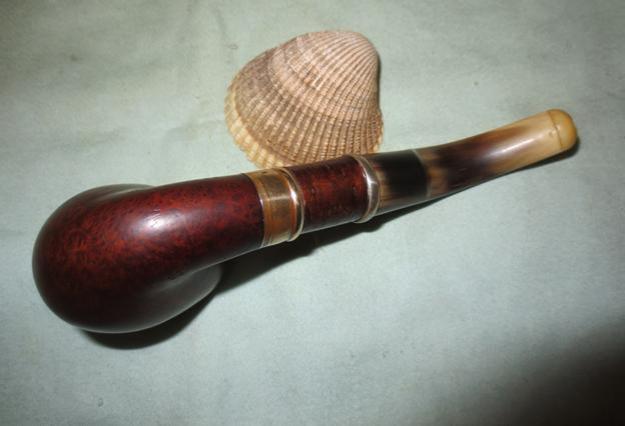
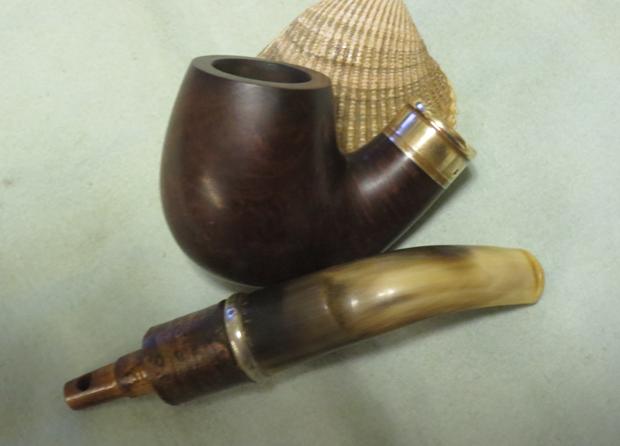
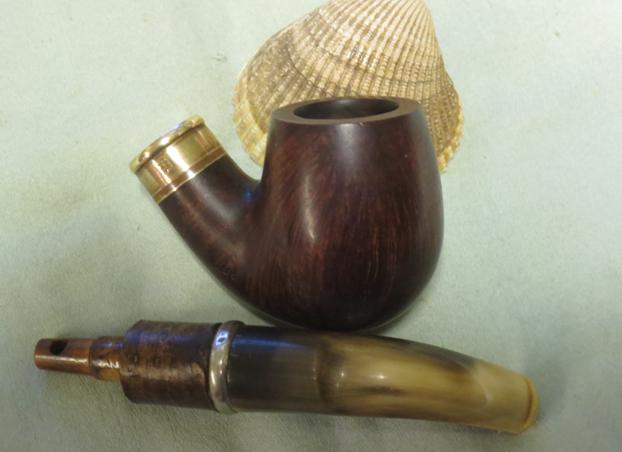
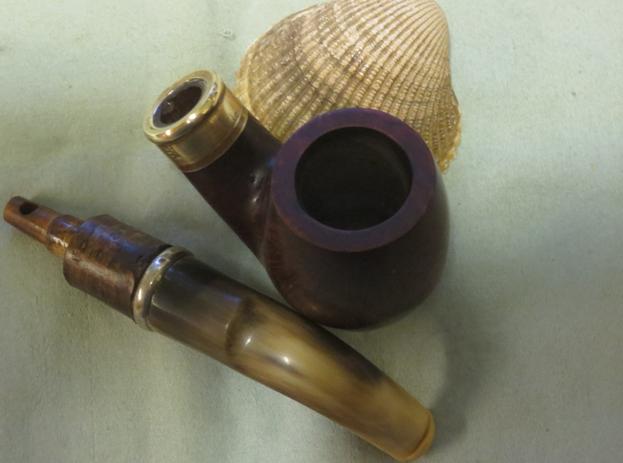
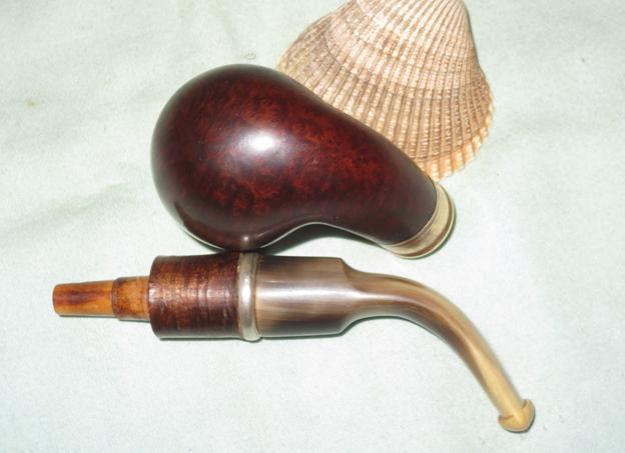
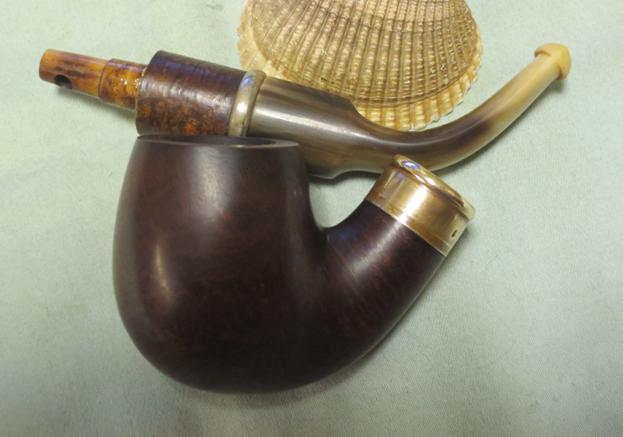
I have been cleaning up a lot of pretty standard pipes lately, whether metal, meerschaum or briar. It has been a while since I took on a unique looking piece that captured my interest. In the current box of pipes my brother sent there are some great one of a kind pipes that I have not seen before so I turned my attention to one of them. The first one that I decided to work on just called out my name. The combination of rustic cherrywood with the bark on, really nicely striated horn and beautifully grained briar just called out to see what I could do with a restoration. I have no idea of the age of the pipe but the horn stem with the orific button speaks of some age. The pipe is stamped on the left side La Montagnarde over Deposee and on the right side it is stamped with Ropp in an oval with the 298 shape number next to it. The brass band on the shank and the small wedding ring brass band on the cherrywood extension give the pipe a touch of class. The next two photos were the seller’s photos. The pipe looked to be in really good condition.Cherry1 Cherry2When the pipe arrived at my brother’s house it was not nearly as clean as it appeared. The finish was spotty and worn. It had been waxed or maybe shellacked to give it a shine. The stem screws into the cherrywood and then the wood end is pressure fit into the shank of the pipe. It was very loose and would not stay in place. My brother cleaned the internals and scrubbed the exterior with Murphy’s Oil Soap. It took off the soiled finish and the remnants of the polish. When I got it the pipe was very clean. The brass bands were tarnished and the horn was dull.Cherry3 Cherry4I took some close up photos of the rim and the stamping to have a better look. The top of the rim had a burn mark on the inner edge of the right side. It did not go deep into the surface of the briar so a light topping would remove the damaged area.Cherry5The second close up shows the stamping on the shank. La Montagnarde Deposee is what it reads. La Montagnarde translates from French as “The Mountain” and Deposee translates as “Filed” or “Registered”.Cherry6I topped the bowl with 220 grit sand paper on a topping board. Once the bowl was topped I used a rolled piece of sand paper to sand out the bowl and smooth out the inner edge of the rim.Cherry7 Cherry8The internals were pretty clean. My brother had done a good job scrubbing out the mortise and shank. I used a few cotton swabs and pipe cleaners and alcohol to remove and of the dust left behind by my sanding.Cherry9I stained the bowl with dark brown aniline stain and flamed it. I repeated the process until the bowl was covered.Cherry10I wiped the bowl down with a cotton pad and alcohol to thin the stain and make the grain stand out better.Cherry11I buffed the bowl with Blue Diamond and gave it a light coat of olive oil. I rubbed down the cherrywood bark with oil as well to bring some life to it. In the photo below you can see the way in which the pipe is held together.Cherry12The cherrywood insert has a threaded wooden tenon on the outer side which the horn stem threads onto. The other end is a wooden stinger apparatus that fits into the shank of the pipe and holds the stem in place on the bowl.Cherry12aI polished the brass bands with a tarnish polish to bring back the shine.Cherry13I cleaned out the threads in the end of the stem with cotton swabs and alcohol.Cherry14I sanded the stem with micromesh sanding pads – wet sanding with 1500-2400 grit pads and dry sanding with 3200-12000 grit pads. I rubbed the stem down with Obsidian Oil between each set of three pads. What appears to be chips along the end of the stem are not actually chips but striations that run through the rest of the stem.Cherry15 Cherry16 Cherry17I sanded the bowl with 1500-12000 grit micromesh sanding pads. As I sanded it the grain really began to pop and some of the scratches in the briar disappeared.Cherry18 Cherry19 Cherry20I buffed the bowl and stem with Blue Diamond. I avoided buffing the cherrywood insert as I did not want to risk peeling the bark. The finish began to take on a rich glow. The finished pipe is shown in the photos below. The first four photos show the pipe as a whole. The rest of the photos show the various pipe parts. Thanks for looking.Cherry21 Cherry22 Cherry23 Cherry24 Cherry25 Cherry26 Cherry27 Cherry28 Cherry29 Cherry30

Easy Cleanup of a M&T Bent Horn Bulldog


Aaron Henson – 7/23/16

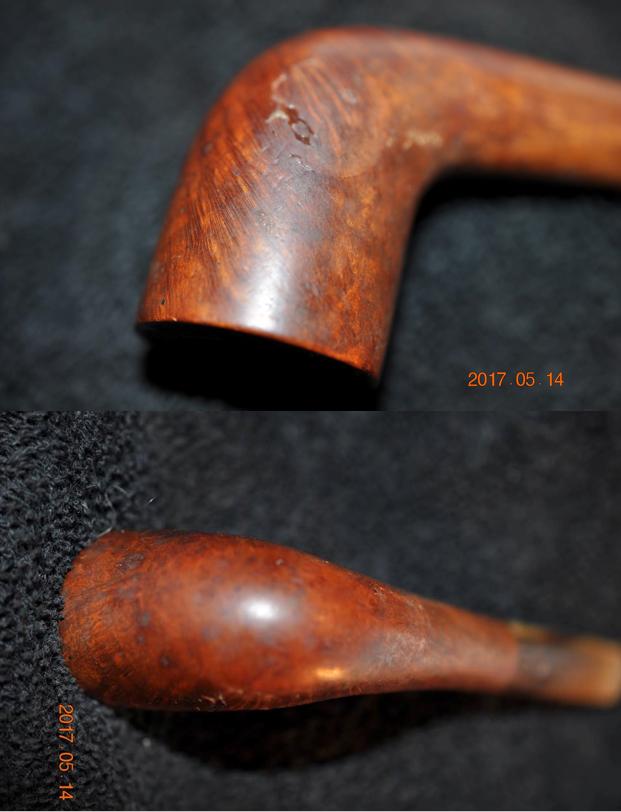
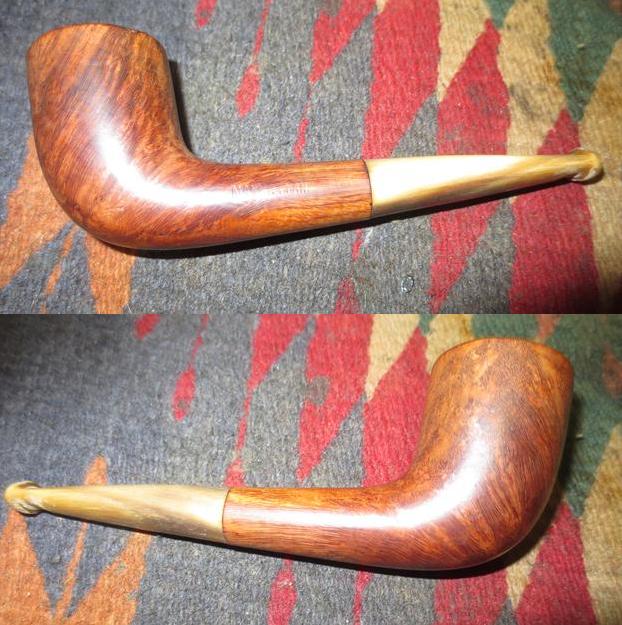
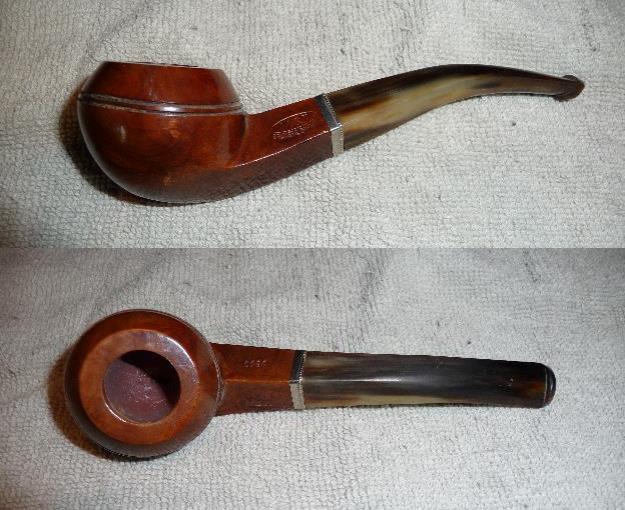
I have not been very good at documenting my last few restorations. Once I get into a project I tend to get so focused I forget to take pictures, especially if it’s a repair that is technically challenging or that I have not done before. The most recent example of this was an unsmoked M&T bent bulldog with a horn stem.  Even though it had never been used (it still had the factory purple putty bowl coating) it had a few issues to be addressed from its 40+ years of tumbling around in a drawer.M1When I saw the pipe in the case at the antique store the first thing that caught my eye was the horn stem and I knew I wanted it. In all honesty, I wasn’t one hundred percent sure that it was horn until I got it home. A couple of passes with a 2400 micro mesh pad and a sniff test confirmed my suspicions – it’s the same smell as when you use an emery board on a finger nail. M2I started with a little research into the brand.  The only M&T that I could find was the German pipe maker Müllenbach & Thewald.  They made pipes from 1830 until the 1972.  The company still exists but is solely devoted to mineral mining.  You might think this strange but M&T was known originally for clay pipes. In 1860 they branched into making wood pipes.  A short article on M&T can be found on Pipedia.

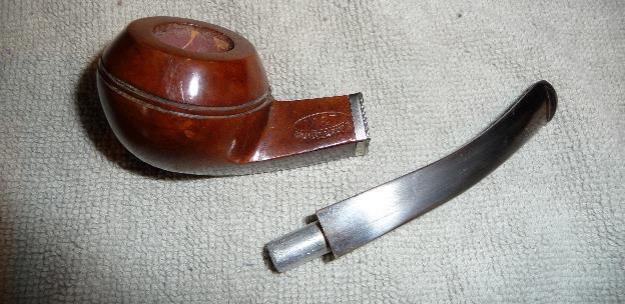
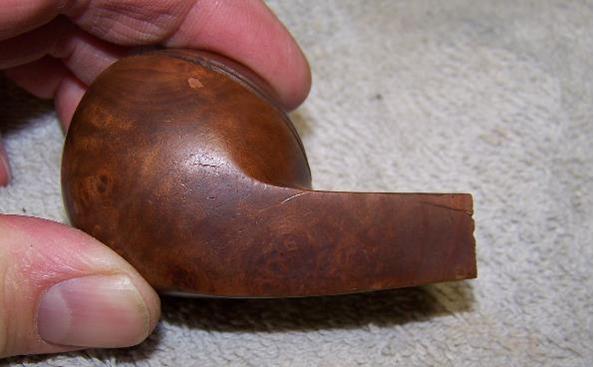
I began the restoration by performing triage of the issues to be addressed. The bowl was clean but had a dull finish that was marred with some dents and minor scratches. The factory bowl coating was starting to chip and a there were three small fills on the outside of the bowl that needed to be repaired. A close inspection of the shank revealed a small crack where the aluminum tenon inserted (seen in the picture below). I had assumed the narrow band was original to the pipe but perhaps it had been added to reinforce the shank?  I may never know the answer to that.  All in all the bowl was very good condition.M3The stem too was in almost “like new” condition.   A few scratches but the button was well define and, of course, no tooth chatter. The aluminum tenon was a little rough around the edges but the fit to the shank was fine.

I started by applying a thin coat of mineral oil on the stem. This seemed to ‘hydrate’ the horn and give some bite to the micro mesh pads. I worked through the 1500 to 12000 pads stopping to apply oil as the horn dried out. The button was quite large and the edges sharp, a bit more than I like. But I kept it original and only slightly smoothed the corners while polishing. I smoothed up the edges of the tenon and set the stem aside.

The first order of business was the cracked shank. Using a 1/64 drill bit, I drilled a hole at the end of the crack to stop its spread then filled the crack with clear supper glue.  Then I picked out the three putty fills and using a super glue and briar dust mixture, refilled the pits. Once cured I sanded the repair smooth.M4I steamed the dents out of the briar with a clothes iron applied to a wet cloth wrapped around the stummel – keeping away from the stampings and fingers.  I sanded the entire stummel up to the 3200 micro mesh then wipe down with alcohol before I stained.  In this case I tried to match the original color with several coats of different browns aniline dyes.

Before reassembling I decide to remove the factory bowl coat and leave it bare briar. Then I wiped the whole outside of the pipe with mineral oil and set it aside for twelve hours before taking to the buffer.  The oil seems to hydrate the briar and brings out a nice shine when waxed.  I first buff with red diamond, wipe off the residue with a soft cotton cloth then apply three coats of carnauba wax giving the pipe a little rest between each coat.

The bent bulldog is one of my favorite shapes and I love the horn stem.  I’m not sure when I will get around to breaking it in.  It might just stay unsmoked for a while.M5 M6 M7 M8

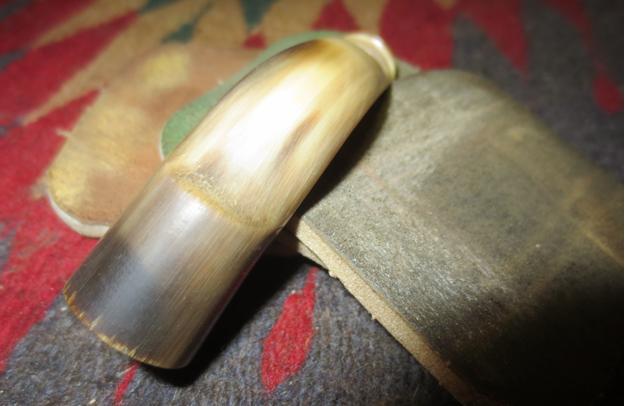
My Process for Repairing and Polishing Horn Stems


Blog by Steve Laug

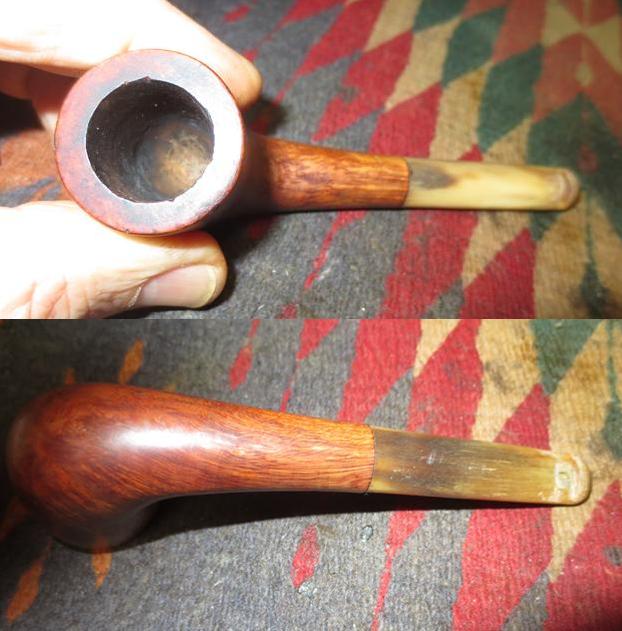
I recently worked on repairing a horn stem and thought I would document the process. I have found that when working with horn a conservative approach is the best. I do not change the profile of the stem or thin the button. I do not change the taper or thin the bit at all. I only want to bring it back to its original shine and gloss and make it look as close as possible to what it was like when the original owner purchased the pipe that carried it. I also want to make the surface smooth and unbroken again so that it does not soften with further use.
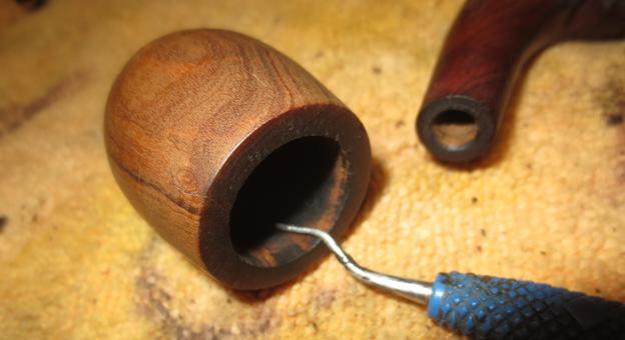
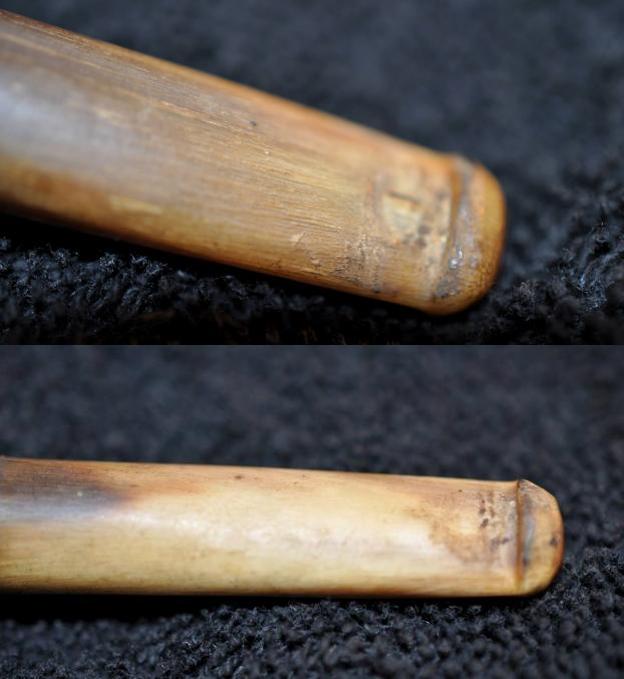
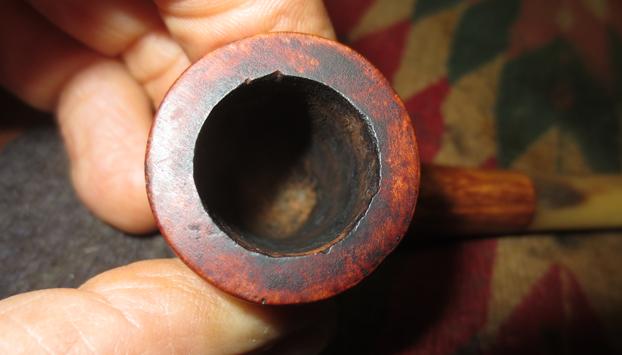
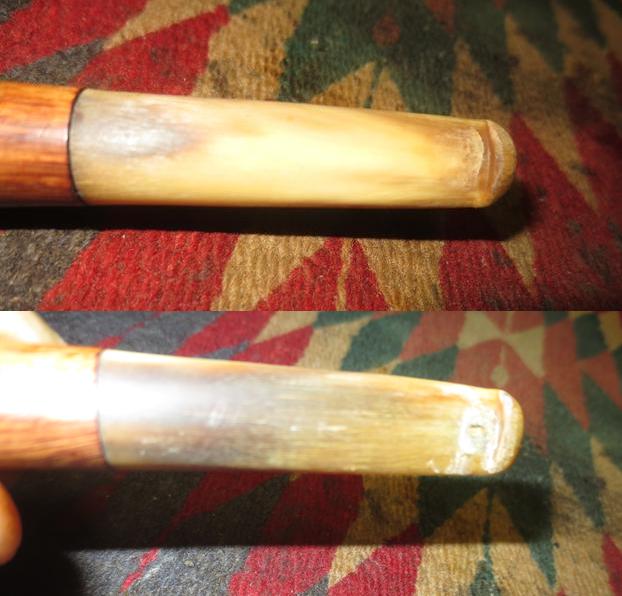
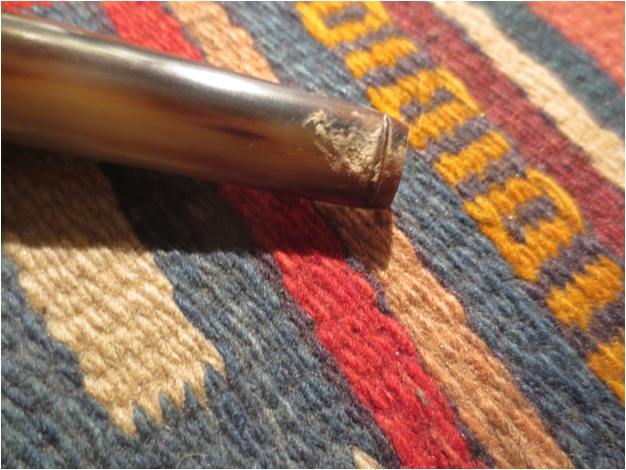
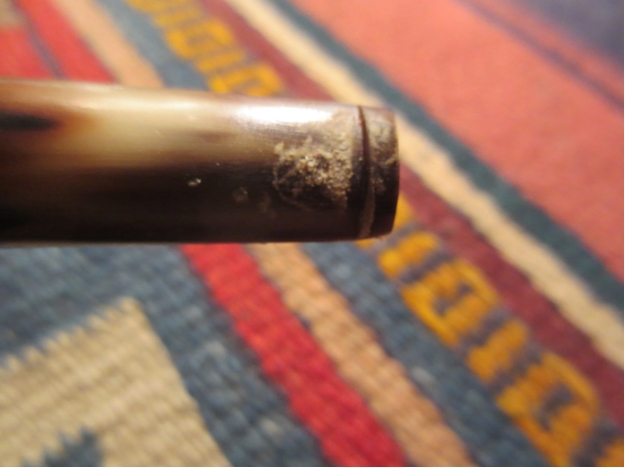
The horn stems I have worked on have all had tooth chatter and bite marks for up to an inch from the button. Unlike tooth chatter on vulcanite or Lucite the chatter on a horn tends to splinter or break through the soft surface of the material. It leaves a rough feeling behind and if not taken care of will splinter away from the marks. It will also soften as the shine and polished surface has been broken and it can become spongy. The trouble with a stem that has worn that far is it is very difficult to bring back. In the case of this stem the surface was broken and in the centre of each rough area there was a deep tooth mark – only one that was almost round in shape.Terminus12

Terminus13 My first step in the repair process and the eventual polishing is to sand the rough area smooth and clean up the area around the tooth marks. I sand with 220 grit sandpaper folded and minimally work over the area to its furthest reaches. In this case I worked the area into a rectangular shaped pattern. I feathered the rough surface into the surrounding stem. Then I wiped off the surface with tepid water on a soft cotton pad.

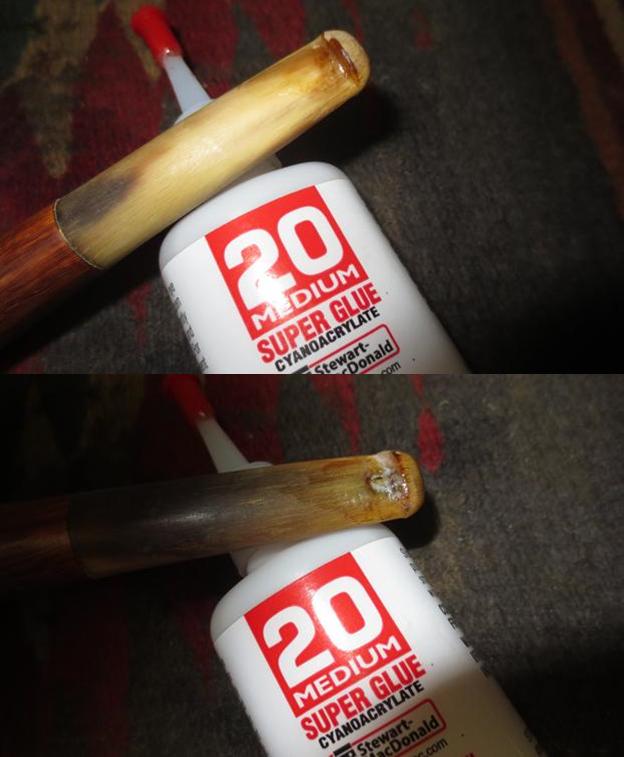
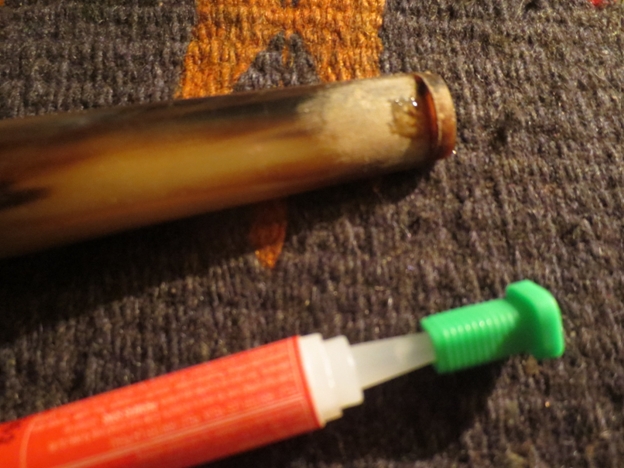
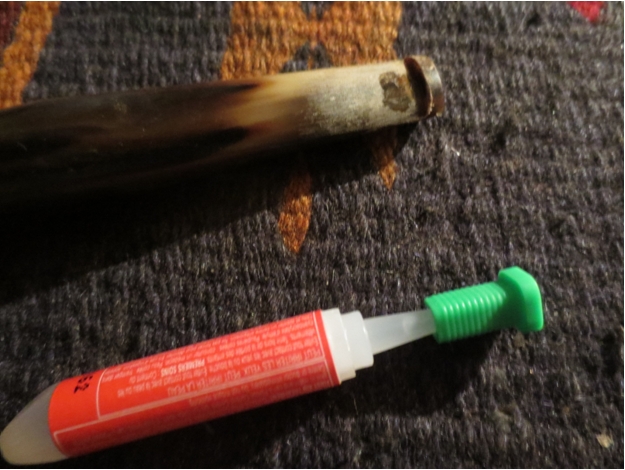
With the stem surface smoothed and the roughness removed and blended into the surface it was time to repair the two tooth marks – one on each side of the stem. Over the years I have used clear super glue to make these repairs in horn stems. I find that the translucency works well with the warmth of a polished stem and though the repair is visible it is smooth and seals the surface around the roughened tooth marks. The fact that it is sealed keeps the horn from further splintering and softening. The high ridge on the button allowed me to patch both sides simultaneously without the glue sticking to the worktable while it dried.Terminus14

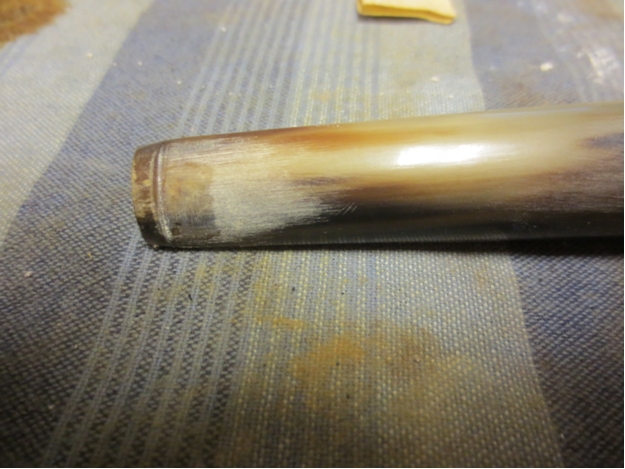
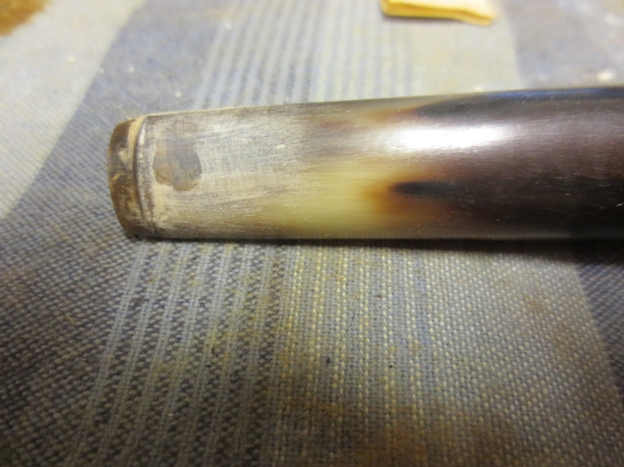
Terminus15 When the super glue has hardened/cured I sand the patches with 220 grit sandpaper to smooth out the small bump that is made by the patch. I work the sandpaper to smooth out the patch with the surface of the stem. In this case I sanded both sides. In the photo below you can see the two rectangular spots on the stem surface. These are the spots where the patches were placed. The tooth marks are gone. All that remains is to do some more sanding to blend the rectangle into the stem.Terminus16

Terminus17 The next step involved sanding the stem with a medium and fine grit sanding sponge to further feather in the patch to the stem surface. I wanted the patch to be seamless with the horn so that when I ran my tongue or finger across the repair it would be unnoticeable to touch. Once I had finished with the sanding sponges the surface was smooth. The scratches left behind by the 220 grit sandpaper were gone. The rectangular patches were disappearing.Terminus18

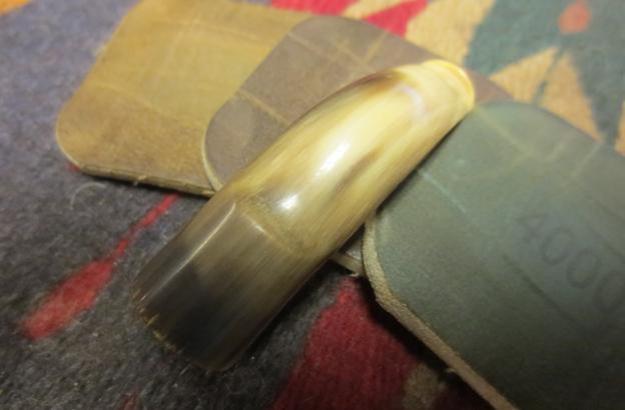
Terminus19 The next step involved sanding the stem and polishing it with micromesh sanding pads. I wet sanded the stem with 1500-2400 grit micromesh pads and dry sanded with 3200-12,000 grit pads. In between each set of three pads I rubbed the stem down with Obsidian Oil. The oil was absorbed into the surface of the horn stem and lubricated the surface and provided a bite for the sanding pads. The repairs have ceased to be rectangles and now were small patches over the tooth marks in the stem. The surface was smooth even though the damage could be seen through the clear patch at this stage in the process.Terminus25

Terminus26 Each successive grit of micromesh smooth out the surface, deepened the shine and feathered the patch into the finish.Terminus27

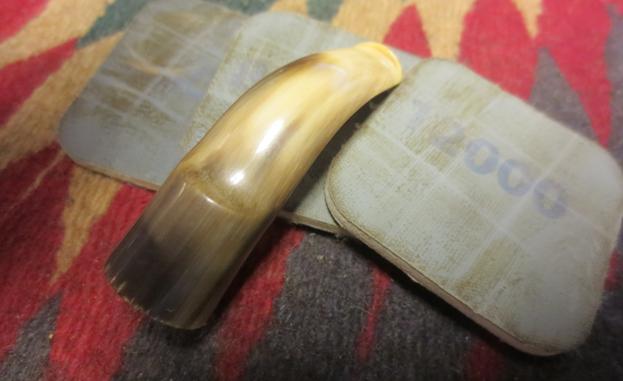
Terminus28 The final set of three pads really brought a deep shine to the stem. The patch though visible is smaller than any of the previous pictures.Terminus29

Terminus30 When I had finished with the 12,000 grit pad I gave the stem a light buff with White Diamond on the buffing wheel and then gave it multiple coats of carnauba wax. Buffing a horn stem takes a light touch. You do not want to press the stem into the wheel too hard as the heat generated will cause the horn to separate. (I speak this from experience after having done it and having to start over with my sanding process.) The finished stem is shown below. It is smooth and the variations in colour of the stem make it really look living. The colours and stripes almost undulated as it is turned over under a bright light or outside in the sunshine (uncommon in Vancouver in January).Stem1

Stem2

Stem3

Stem4 I really enjoy working on horn stems and also smoking them. They have a feeling in the mouth that no other stem material even approximates. They are not for a clencher or a biter that is for certain. They need to be cared for – wiped down after each smoke and given new coats of wax regularly. But this one and others in my collection have survived far more years and in better shape that I have. I am always on the lookout for another horn stem to work on. If you have not restored one or smoked one – you really need to give it a try.

An Interesting Challenge – Restoring a Horn Stemmed Austrian Silver Capped Briar Sitter


Blog by Steve Laug

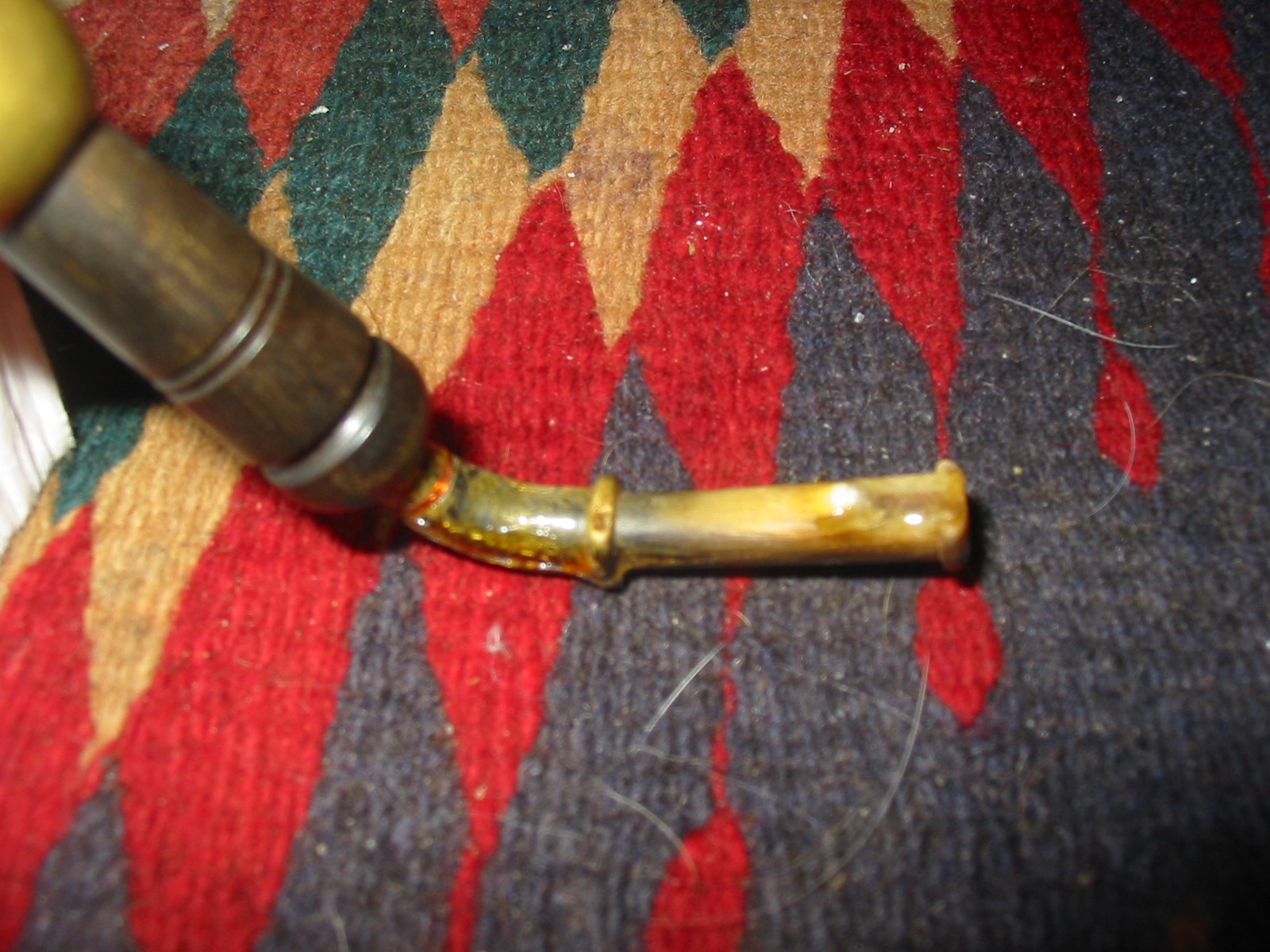
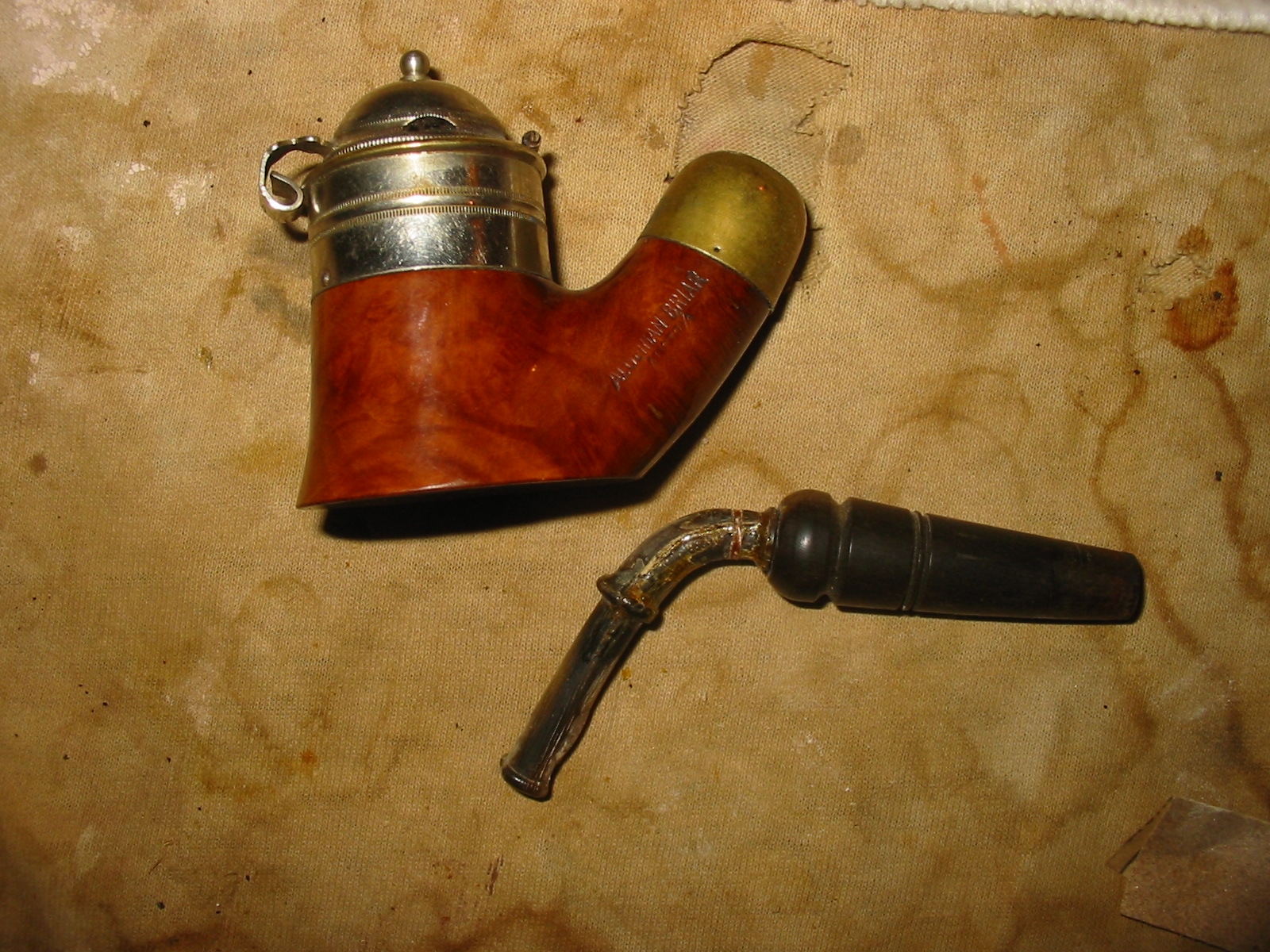
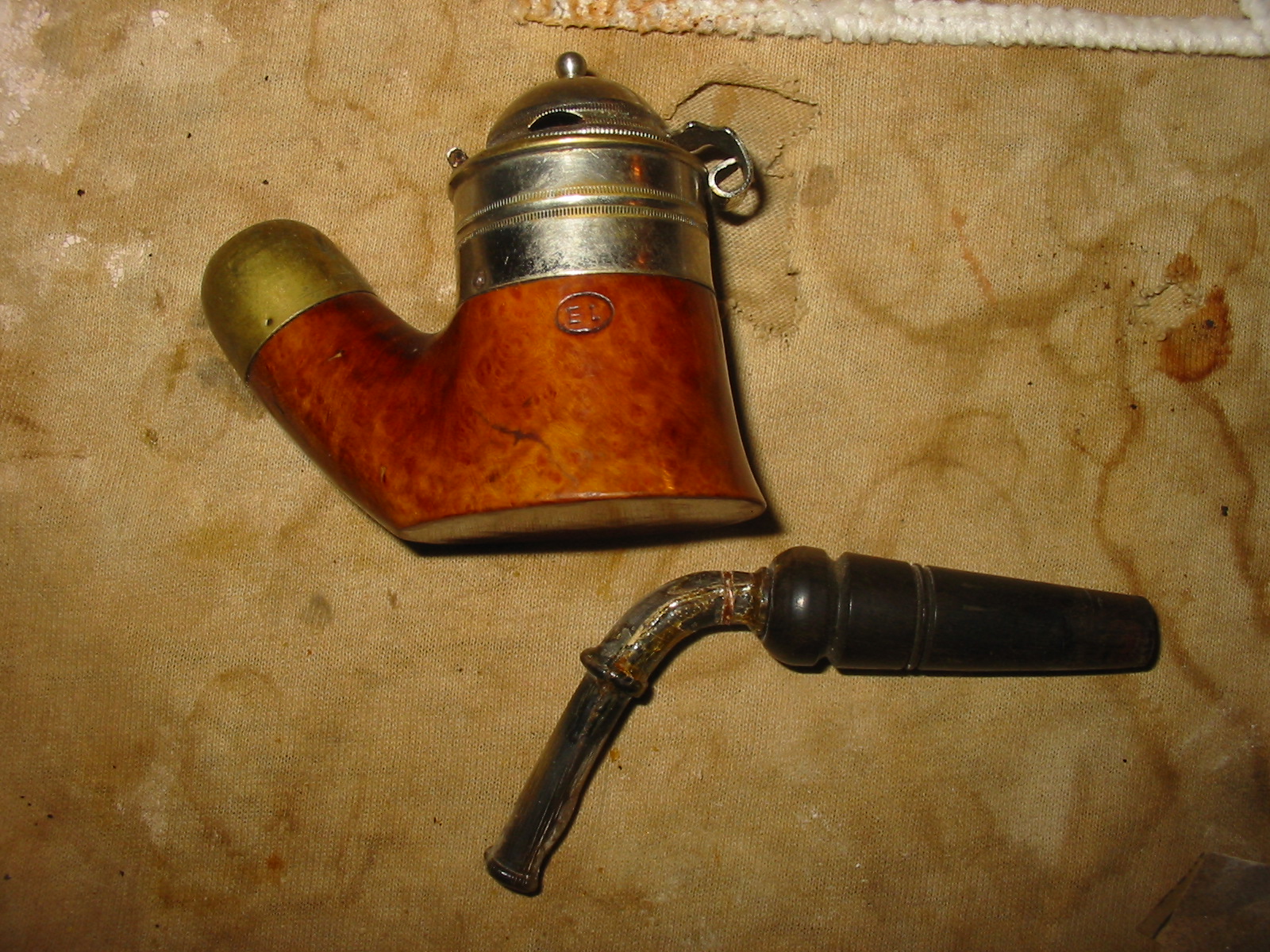
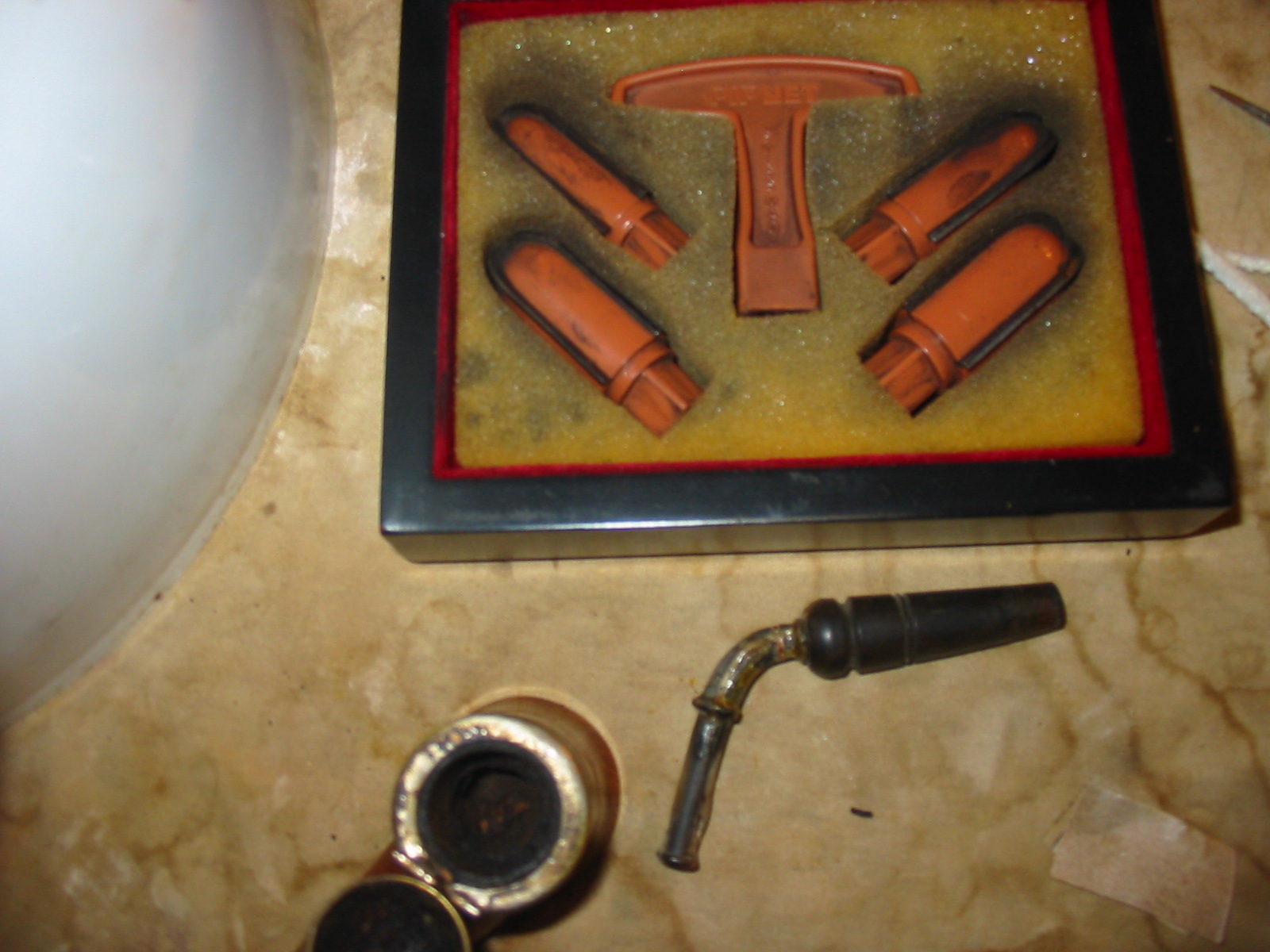
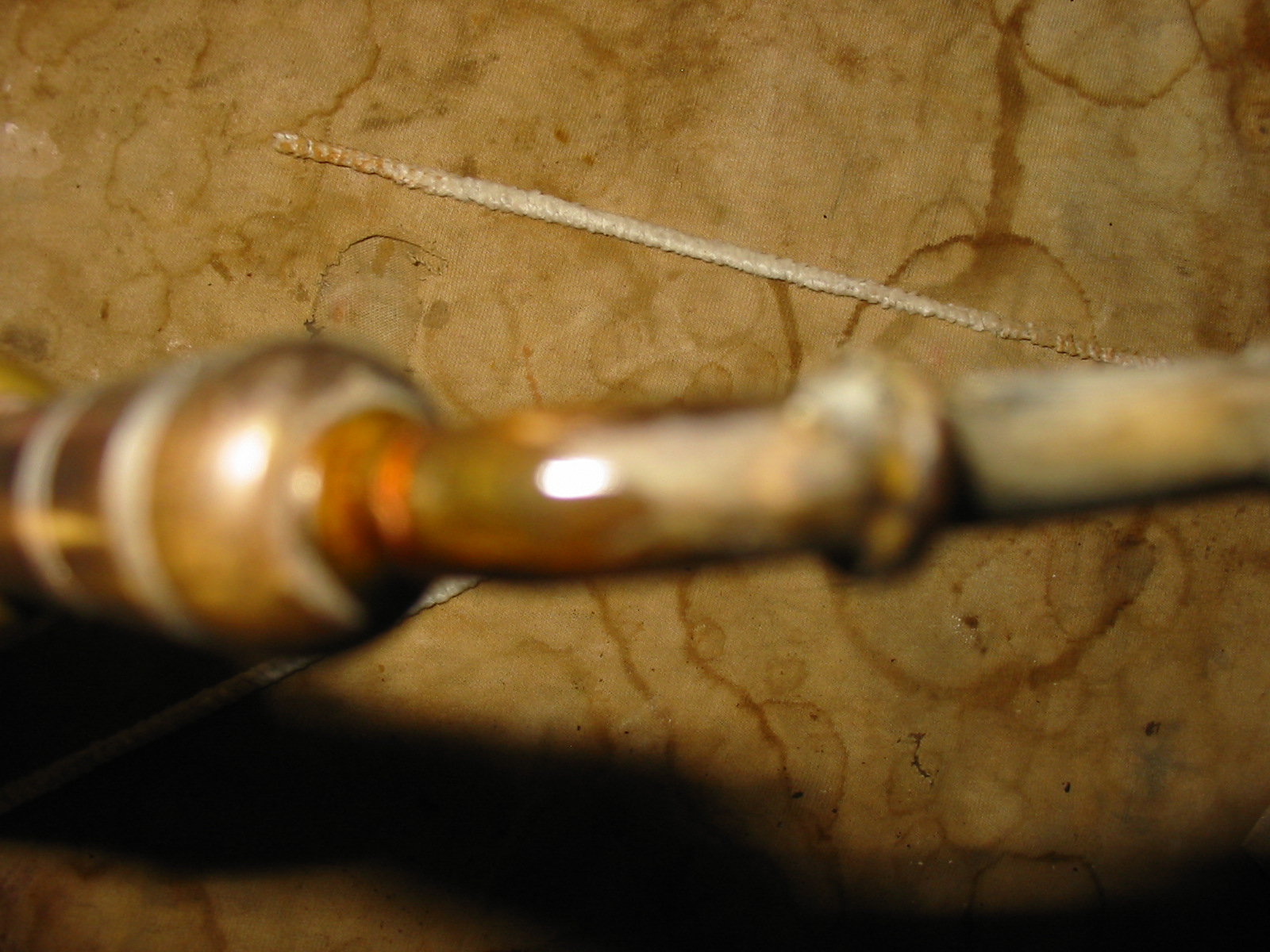
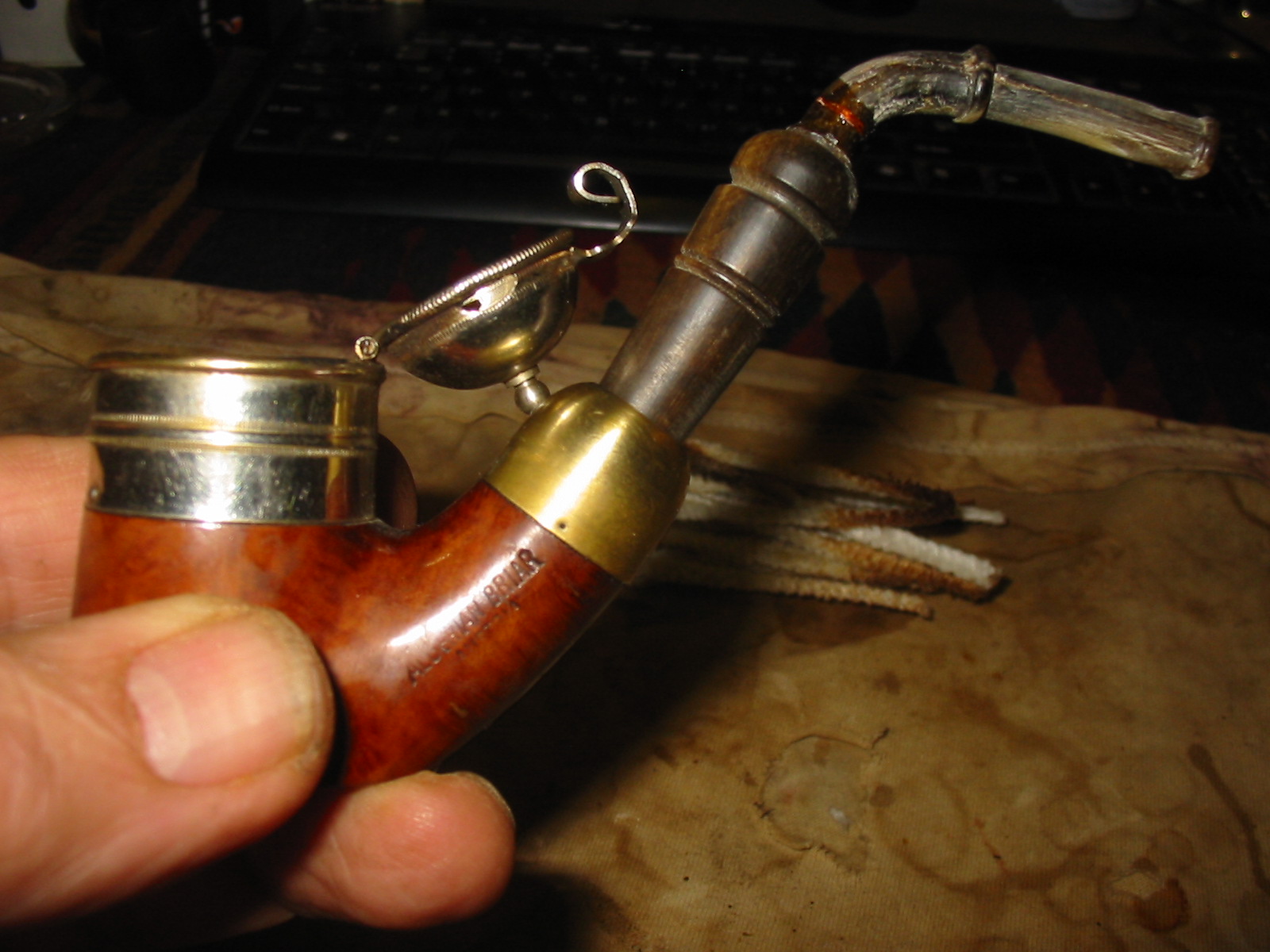
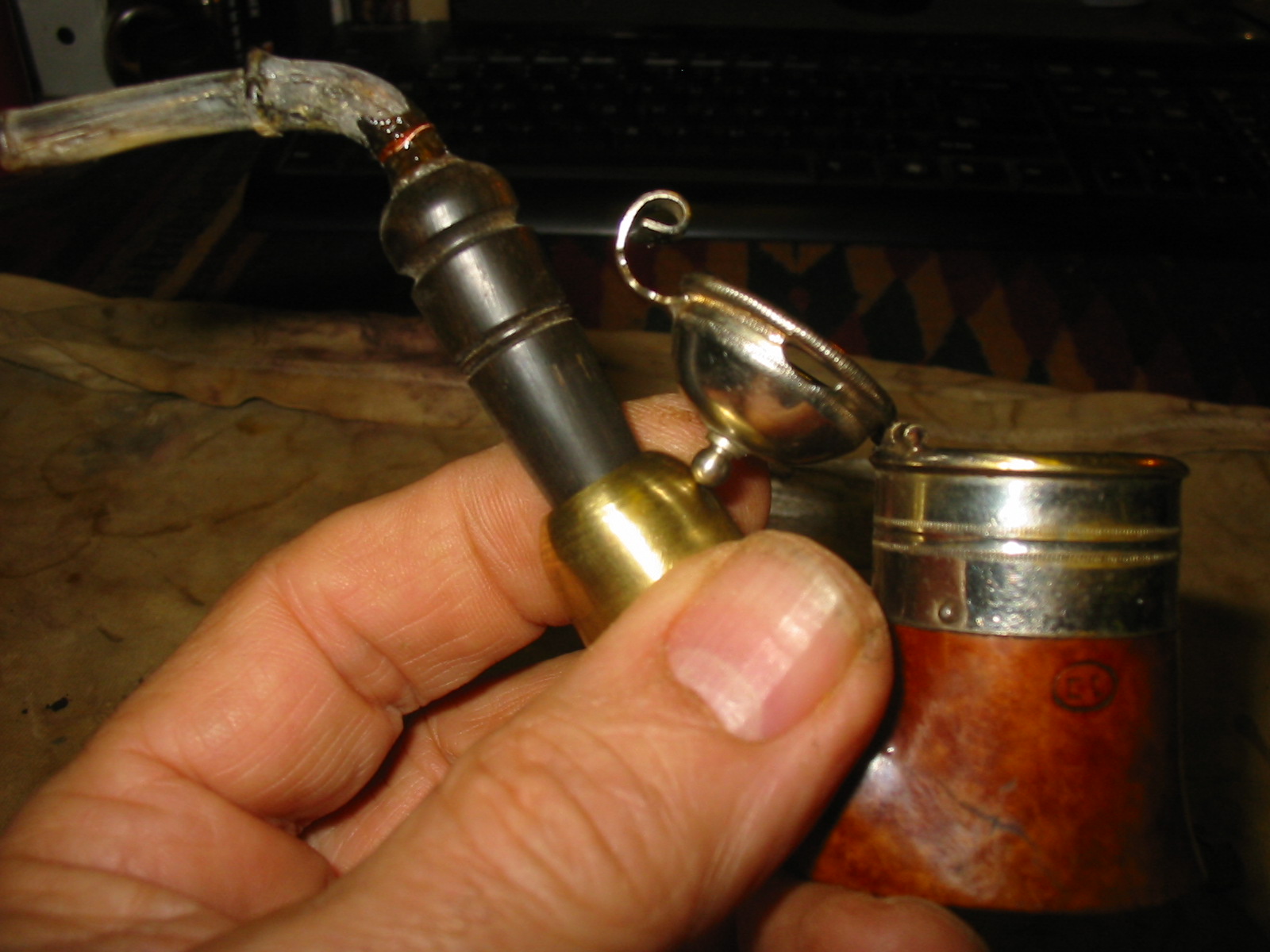
This is the second pipe that was given to me by Chuck Richards. It was a real challenge and it was actually an enjoyable restoration project. This particular pipe is stamped Algerian Briar over Austria on the left side of the shank and on the right side of the bowl below the cap it is stamped EL in an oval. It is actually a nice piece of briar. It is capped by a silver rim cap that goes down the bowl a 1/2 inch. It is rounded over the edges of the rim and flattens in towards the inner rim leaving a briar edge of 1/8 inch. It is topped by a silver wind cap that is hinged a little off centre toward the right side from the back of the bowl. The front of the cap has a folded ornate flap stamped with curls and swirls on the surface. This flap acts as a catch for the lid on the outer lip of the bowl. The cap has a small ball-shaped handle on the top that is for decoration. The cap also has two half circle opening for air. The bowl was heavily caked with a crumbly and soft cake. The stem was horn and was nicely carved. It had also been repaired at least once in its life. At the junction of the smaller part of the stem to the saddle there had been a repair done. It looked at first as if it was copper wire that was used to band the horn which seemed to have splintered and been repaired. Upon closer examination I am almost certain it is a small copper band that was set into the horn stem to secure the break. It is solid. The upper portion of the stem had also splintered and not been repaired. The round end of the button had been worn down on the top and bottom edges to where it was almost squared off. The splinter on the bottom of the stem was loose. The horn was also covered with a shiny lacquer like substance that hid the beauty of the horn. I wonder if it was part of the original repair. The next series of three photos show the pipe as it appeared when I took it out of the shipping box and bubble wrap. I was really interested in seeing what I could do with this one – a worthy challenge that would be enjoyable to work on.
IMG_0668

IMG_0669

IMG_0667
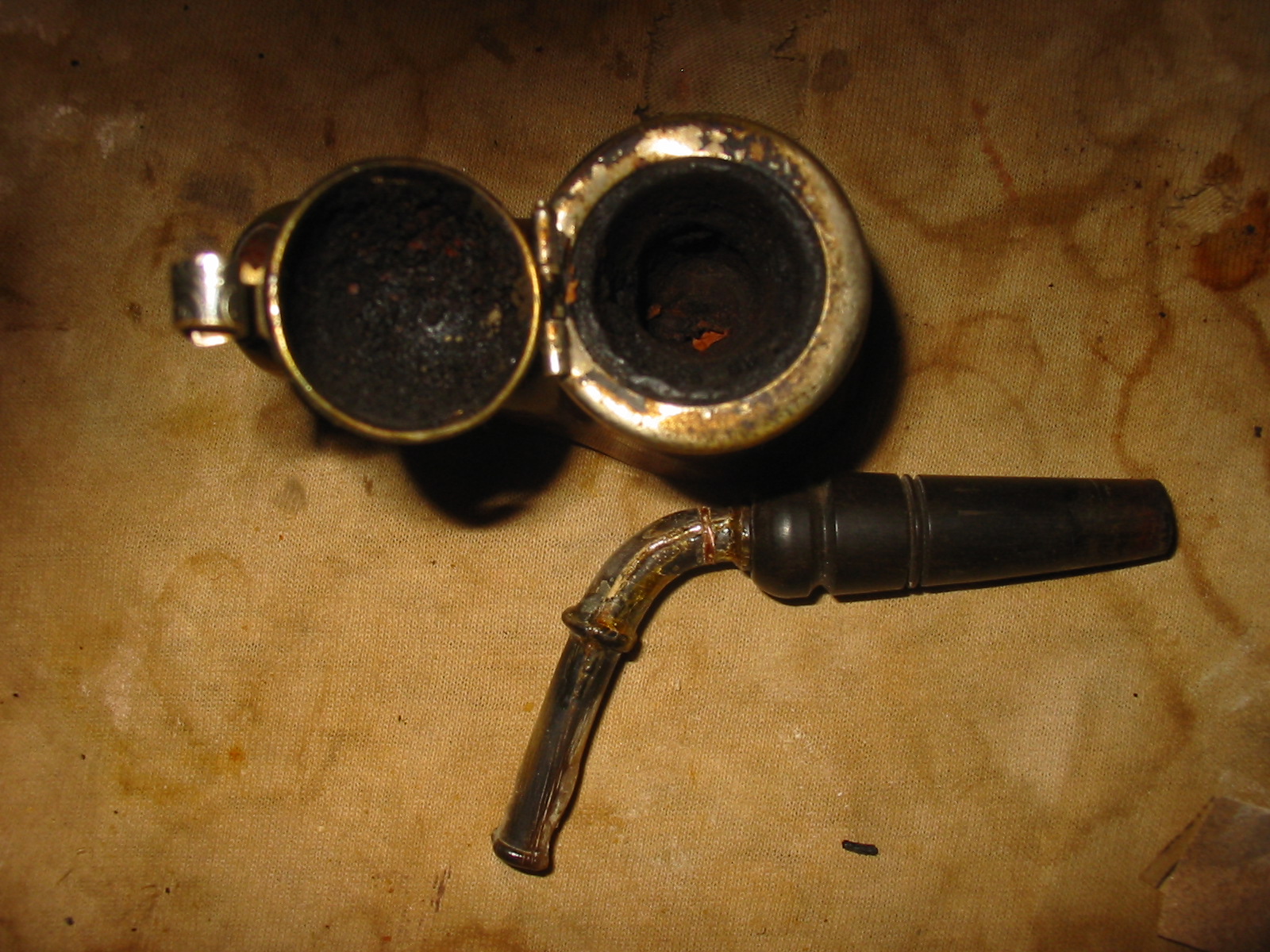
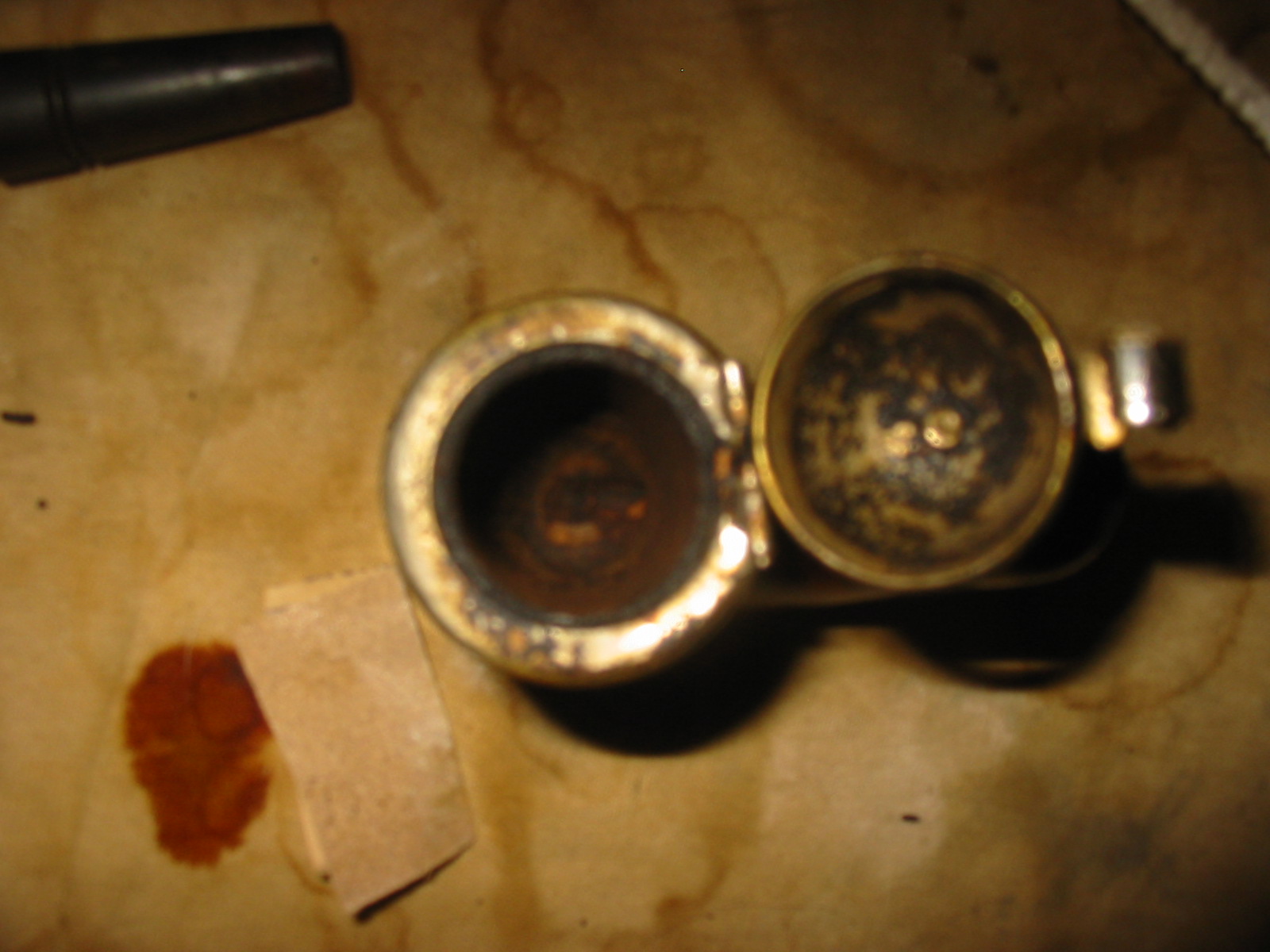
I took it to my work table and removed the stem. I examined the shank and the bowl as well as the stem. I have noted above what I saw in my examination. The interior of the shank was in good shape, there was little wear on the inside from the insertion of the horn stem. The drilling was similar to a Peterson in that it had a sump area with the airway drilled above that. It allowed for condensation of the tobacco juices to settle into that well. It was full and dark and the stain of the juices had migrated up the stem and stained the bottom edge. You can also see the repairs that had been made to the stem in the three photos below. The bowl cap was tarnished and the brass shank cap was also tarnished. The stamping is also clearly visible in the photos. At this point I sat and examined the stem to make a decision whether to seek and revive it or to replace it with a newer Peterson style fish tail stem. After some time examining it I decided to see what I could do with the existing stem and left the other stem idea in reserve should I need to do that.
IMG_0670

IMG_0671

IMG_0672
The first of the next two photos shows the bottom of the bowl and give a clear idea of the nice piece of briar that I was dealing with. The second photo shows the inside of the bowl and the wind cap. The cake and build up of lava like tar on the lid is prominent.
IMG_0673

IMG_0674
I decided to begin with cleaning the bowl. I used a PipNet reamer set with different sized cutting blades. I used the first two heads on this bowl. The first one, the smallest opened up the cake and cut off the broken edges. I followed that up with the second cutting head and took the cake back to the briar so that I could give it a thorough cleaning. The next four photos show the reaming process. I also cleaned out the sump and the airway in the shank with folded pipe cleaners, cotton swabs and Everclear. Once that was done I also scraped out the inside of the cap with the head of the cutting blades on the PipNet set.
IMG_0675

IMG_0676

IMG_0677

IMG_0678
I took a break from the work on the cap and bowl to work on the stem. I cleaned of the surface with a damp cloth and then used superglue to fill the openings in the surface of the stem left from the previous repaired splits. I also used it to repair the splintered part on the bottom of the stem. Once the glue was dry I used 240 grit sandpaper to sand off the excess glue and also the clear coat of varnish or lacquer on the stem. I tried to put a pipe cleaner through the stem and was not successful. I blew through it and found that it was open but that the draw was tight. I would work on that later. The main purpose at the moment was to see what was underneath the clear coat. The next photos show the grain pattern on the horn stem underneath the clear coat. That gave me hope to see if I could restore that unique pattern in the horn stem and bring it back to life. The entire stem from tip to the bottom of the tenon was all horn so it would have a unique look if I was able to restore it. Several of the photos below are out of focus, I apologize for that, however they help to see the pattern and colours of the horn stem. You can also see the repairs on the side of the stem toward the button and the copper band around the lower part of the stem.
IMG_0679

IMG_0680

IMG_0681

IMG_0682

IMG_0683
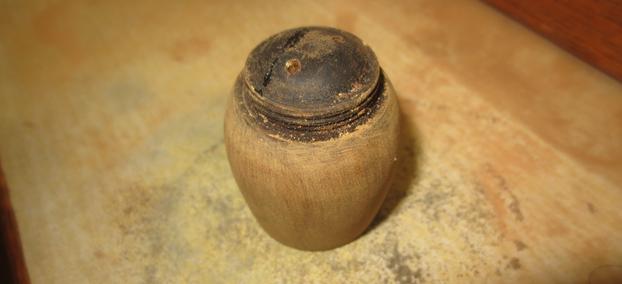
I worked on the inside of the cap and the rim with 0000 steel wool to remove the build up and tars. I worked on that until the surface of the inside shined and the rim was clean. I then polished the silver with a silver cloth to bring back some of the shine to the bling. The next three photos show that process. (You might have the impression from the photos that I bounced back and forth between the stem and the bowl in this refurbishing. While it appears that way in the photos it actually happened over the period of several days and hours. Each time I set the pipe aside to go and do something else I would come back and pick up at whatever point struck my fancy at the moment.)
IMG_0684

IMG_0685

IMG_0686
The next time I came back to work on the pipe I decided to open up the stem and improve the draw. I was able to ascertain that the tenon end of the stem was much more constricted than the button end. I could easily fit a pipe cleaner in the button and down about half way but was unable to do the same from the tenon end. Even the thinnest pipe cleaner would not go through from the tenon end. I measured the length of the tenon portion of the stem and then used a small drill bit to drill the depth of the larger portion of the tenon. I did this with a cordless drill and proceeded slowly. I was careful to keep the drill bit at the same angle as the airway as I did not want to make the problem worse by slanting the airway or overdrilling the stem. The next two photos show the drilling. The third photo below shows the newly opened end of the stem. The draw was now quite open and the airway clear for a pipe cleaner to easily pass all the way through the stem.
IMG_0699

IMG_0700

IMG_0701
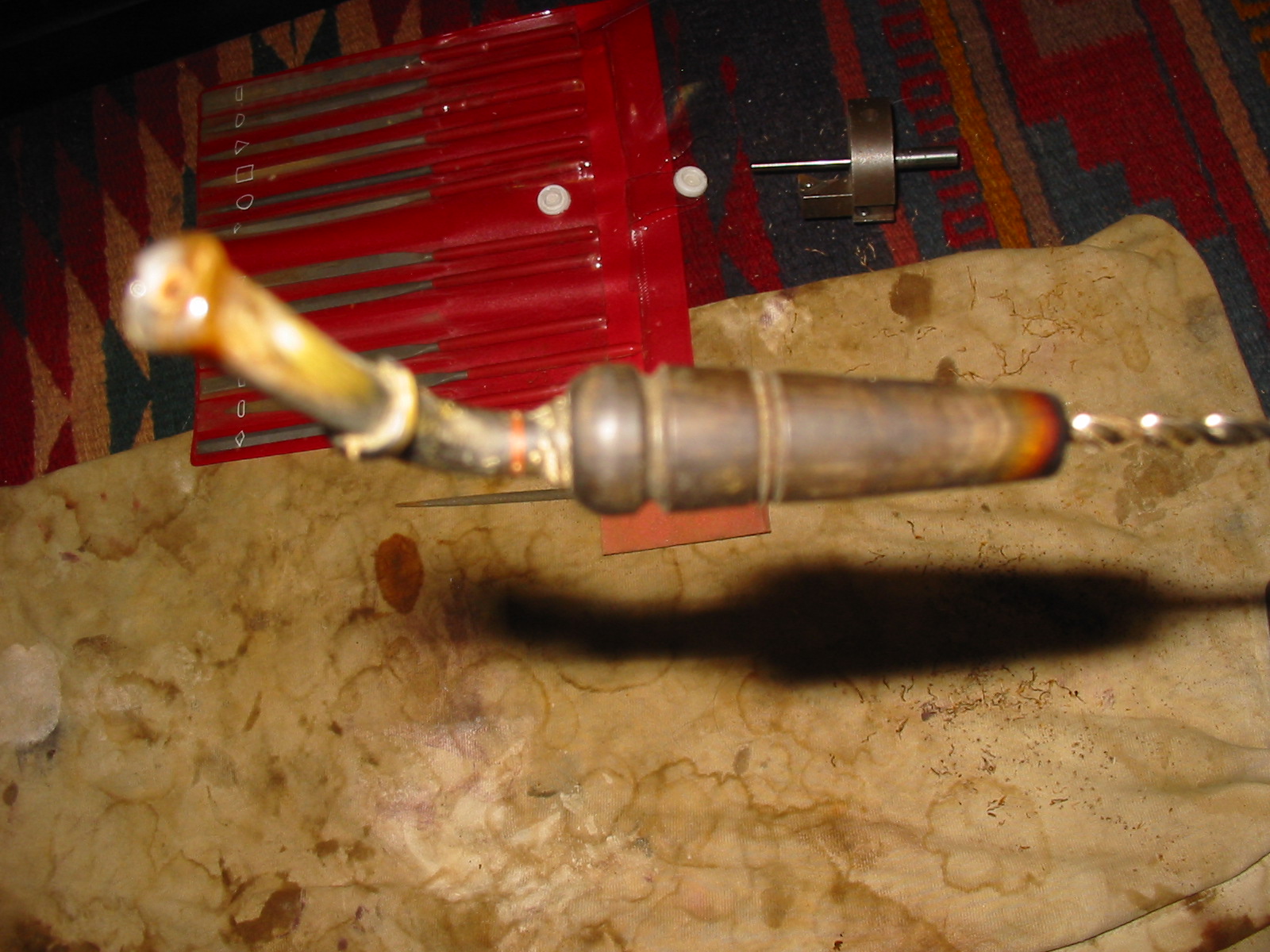
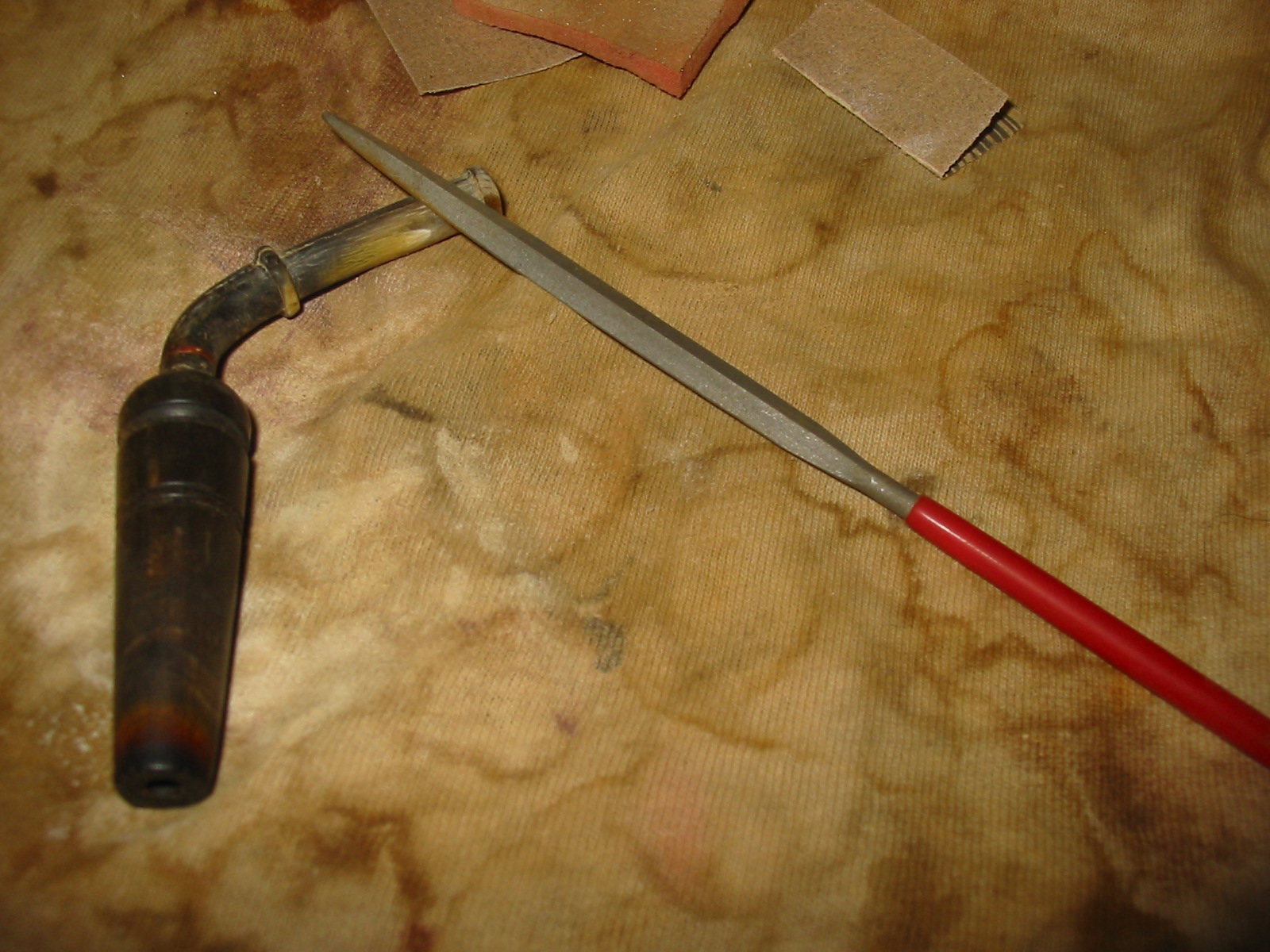
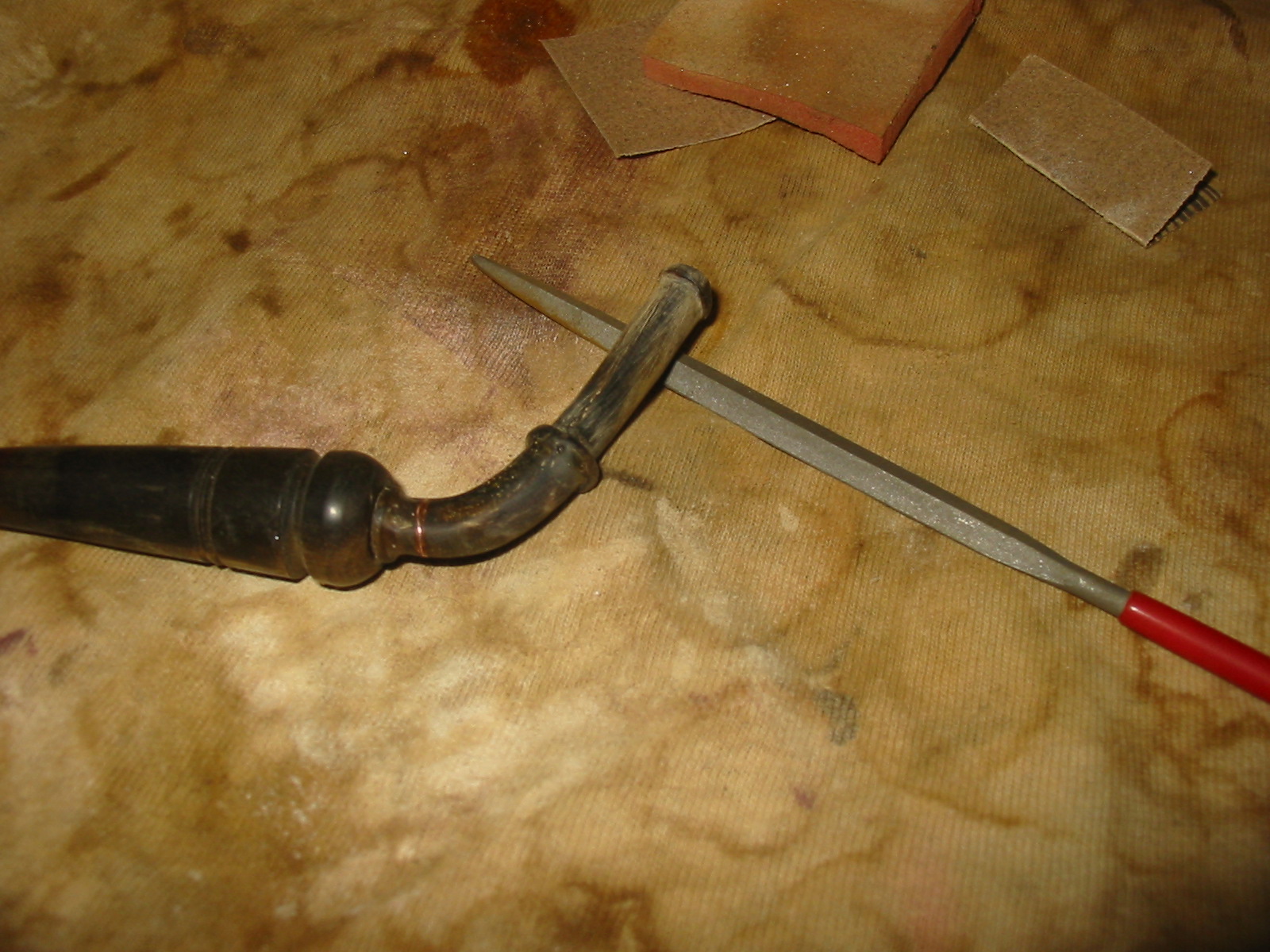
I redefined the button area using needle files. The top edge and the bottom edge next to the button were not sharp and distinct. As the top and the bottom of the button had been flattened, it was almost parallel with the stem. I used the needle files to sharpen the edge and to round the button surface as well. The next two photos show the process and picture the results. Note also that the stem is shaping up nicely with the various sandpaper and the colours and definition of the horn are coming out beautifully.
IMG_0702

IMG_0703
The next series of four photos shows the progress of sanding the stem with 240, 320 grit sandpaper and a fine grit sanding sponge. The thick, shiny coat that hid the horn is pretty well gone at this point. The sanding has also smoothed out the shape of the stem and removed the overfills of the previous repair. The stem is beginning to take shape and the grain of the horn is visible. I think that the repair will work well and when I am done I will have a stem that will work quite well.
IMG_0704

IMG_0705

IMG_0706

IMG_0707
I continued to sand the stem with micromesh sanding pads from 1500-12,000 grit. I wet sanded with the 1500, 1800 and the 2400 grit pads. My goal was to remove the scratches in the horn and begin to bring out the natural shine of the material. The next series of four photos show the effects after sanding with the 1500 grit pads. The next four that follow show the finished stem after sanding with all of the micromesh pads. Once it was finished I coated it with Obsidian Oil to add some life to the horn stem. I have found that it soaks into the horn material and builds some luster over time. You can now see the variations in colour, almost striations in the horn stem. This pearlescence is what I love about the old horn stems and what made me want to try to redeem this old-timer.
IMG_0708

IMG_0709

IMG_0710

IMG_0711

IMG_0712

IMG_0713

IMG_0714

IMG_0715
I took the stem to my buffer and carefully buffed it with White Diamond. I was careful to have a light touch on the wheel as I did not want to damage the horn. The material is sensitive to pressure on the wheel so care must be exercised when buffing it. I gave it multiple coats of carnauba wax and hand buffed with a shoe brush and a soft cotton cloth. The next four photos show the rejuvenated stem ready to be put back on the pipe.
IMG_0718

IMG_0719

IMG_0720

IMG_0721
I reinserted the stem in the pipe, polished the entirety with another coat of carnauba and buffed it by hand to give it a shine. The next five photos show the finished pipe. This old-timer is ready to be loaded with a bowl of aged tobacco, fitting to the age of the pipe and given its reintroduction to its original purpose. This restoration was a pleasure to do and one that gave me a sense of accomplishment in bringing back the old horn stem. The variations in colour and the striations in the horn really give life to this old pipe. The copper repair in the stem actually adds a flair of uniqueness and mystery to the pipe – it makes me wonder who did it and where it was done. Thanks for the challenge Chuck.
IMG_0722

IMG_0723

IMG_0724

IMG_0725

IMG_0726

Restoring Horn Stems


Blog by Steve Laug

I have had the pleasure of working on over a half dozen horn stems on some old pipes I have purchased and been given. Each of them presented a different challenge in terms of restoration. Several had the normal tooth dents and chatter that come as a normal part of the stems of many old pipes while other stems had been gnawed to the point of changing the profile of the stem forever. Horn is significantly different to work with than vulcanite or Lucite stems. In many ways it is softer and more pliant than either of the other materials. When it is in good order the sheen is almost translucent and there is deep almost internal warmth to them. In this article I want to talk about the process of reworking horn stems and restoring them to their former glory.

The first issue with horn stems I had to learn to work on was the tooth dents and tooth chatter that often covers the last half inch or more of the stem just ahead of the button. When I first attacked this I did it with a bit of fear and trepidation as I had all kinds of concerns about the laminate of the horn separating or delaminating. However, through the help of several of the folks on Smokers Forums, an online pipe smoking community, many of my concerns were alleviated. Here are some pictures of this first issue with horn stems. I took pictures of the top/side profile and the bottom/side profile of this particular stem as it highlights the issue.

ImageImage

Looking closely at the stems above you will see the tooth marks along the button area of the stem. This area was rough to the touch and was dry and almost flakey feeling. I was concerned that the horn had softened from the breakdown of the outer coating and wondered if it could be brought back. They were shallow though so I went to work on them with multiple grits of sandpaper to smooth out the surface. I used 240 grit to smooth out the roughness and then worked my way through 400 and 600 grit wet dry sandpaper. The trick with the latter two was to wet them as I sanded the stem. Each progressively higher grit smoothed out the roughness until it was smooth to touch. The wetness of the sandpaper made the grit really bite into the surface of the horn. I then used micro-mesh pads beginning with 1500 grit followed by 1800, 2400, 3200, 4000 and 6000. By the time I got to the 3200 the scratches in the surface were virtually gone – even under a bright light. Again the trick is to work with a bowl of water near at hand to wet the pads as you sand the stem. When I finished with the 4000 and 6000 there was a good sheen to the stems.

At that point in the process I took them to my buffer to finish the work. I used White Diamond polishing compound on the buffing wheel to give it a deep gloss finish. Then I gave a polish with carnauba wax and buffed to a glassy finish.

Here are some pictures of the finished stem minus the tooth chatter. The original issue had been addressed and the stem returned to its former beauty.

ImageImage

One quick note that I should mention is that horn will stink as you work it. Its smell has been likened to the smell of a tooth getting drilled by the dentist or burning hair. I found though, that as I worked with it I got used to it.

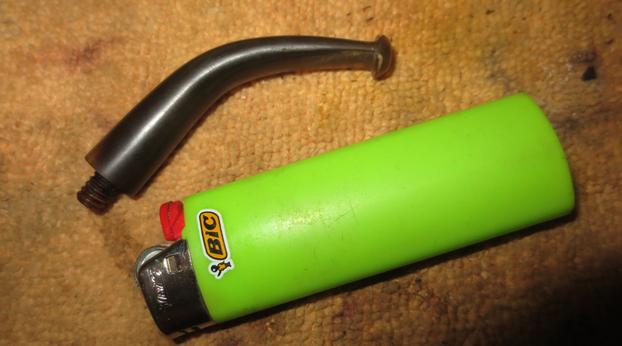
The second issue with horn stems that I had to learn to deal with was more serious. It involved deep tooth dents and a chewed stem. The stem pictured below was a real mess. The previous owner obviously gnawed it and clenched it so the horn was dented and chewed with the profile changed. The question for me was whether I would be able to raise the tooth dents and smooth the surface while reworking the profile of the old stem to make it look as much as possible like it did when it came out of production. Here are three pictures to give you a look at the stem in its state of disarray.
ImageImageImage

Looking closely at the stem pictured above you will see the depth of the tooth dents in the second and third picture and the serious loss of shape in the stem profile in the first picture. The profile shows the pinched look of the stem in front of the button and how thin the stem had been squeezed by chewing. My concern was whether there would be enough meat on the stem at that point to restore it without breaking through into the airway. The second and third pictures show the stem from the top and the bottom. In those two pictures you can see how deep the dents are in the surface of the stem. Also notice the virtual loss of the lip on the edge of the button. The stem appeared to be a loss.
From Chris Askwith, a talented young British pipe maker I learned a few tricks that I was anxious to try out on the stem (http://www.askwithpipes.com/). I had used the same tricks to lift dents out of the rims and sides of briar bowls so I was looking forward to seeing the process work as described by Chris. I steamed the dents and lifted the major depth of them by using a damp cloth laid on the surface of the dents and then heating a butter knife on the gas stove and applying the hot blade to the wet surface of the cloth on the stem. The gentle hiss and the presence of steam assured me that the steaming was working. You have to be careful as you work this process, checking repeatedly as you apply the knife and steam to make sure not to scorch or split the horn. Most of the deeper dents rose significantly and the more shallow ones came out completely.

I sanded the stem and cleaned up the chewed part starting with 240 grit sandpaper as I did with the stem above. I gradually worked my way through 400 and 600 grit wet dry sandpaper clean up and even out the surface. I worked on the profile and cleaned up the sharp edges of the button with a set of needle files to restore the right angles of the button and stem surface. There were still a few remaining spots on the stem where the tooth dents had cut the surface of the horn and would not lift with the steam. I addressed these by filling them with a few drops of clear super glue. The glue dried quickly and left a small bump in place of the dent. I sanded these with the sandpaper combo mentioned above until the surface was even and smooth. Once I had a clean and smooth surface to work with I then moved on to Micro-mesh pads beginning with 1500 grit followed by 1800, 2400, 3200, 4000 and 6000. By the time I got to the 3200 the scratches in the surface were virtually gone – even under a bright light. Again the trick was to work with a bowl of water near at hand to wet the pads as you sand the stem. When I finished with the 4000 and 6000 there was a good sheen to the stems. They were beginning to shine like glass.

I took the stem to my buffer and used White Diamond polishing compound to  buff the surface smooth and shiny. It was truly glassy in terms of look and feel. I finished the stem by applying a good coat of carnauba wax and buffing to polish the wax.

Here are some pictures of the finished stem minus the tooth dents and with a restored profile. Notice the restored profile of the stem in the first and second picture below. Notice the functional button and lip that has been restored. The third and the fourth picture show the top and bottom of the stem and show the way the super glue patch and the work with the steam and sandpaper restored the deep pits in the surface of the stem.

ImageImageImageImage

Because of the success I experienced with these two different issues with horn stems I have gone on to bid on others that need work. I have found those that only needed a buff and polish to restore them to their pristine condition and I have found others with similar problems to those shown above. The challenge of restoring them to the original beauty always is a draw to me. To smoke one of these old horn stem pipes is an experience that all pipemen should have. The work to restore them is worth the effort when you put the newly restored stem in your mouth for the first time. There is nothing quite like the feel of a “new” horn stem on your lips as you puff a favourite tobacco. And that is to say nothing of the good aged briar that is on the other end of the stem. Give restoring a horn stem a try. It is a pleasure! Won’t you join me for a bowl full in one of these old timers?

Steve Laug

June 8, 2012

Refurbished another horn stemmed pipe


I just finished the second little horn stemmed French pipe that I picked up recently. It is stamped P. Viou which is an old French brand made in St. Claude. It is a 5 inch long pot that is paneled as well. The bowl was in pretty good shape – I reamed and cleaned it. The finish was rough so I removed the varnish and the stain and re-stained it. It came out a bit darker than the original but it really highlights the grain. The rim is beveled in a bit, chamfered nicely.

The stem was a mess. The previous owner obviously gnawed it and clenched it so the horn was dented and chewed with the profile changed. I steamed the dents and lifted them with a damp cloth and hot knife. Most of them came out. I sanded the stem and cleaned up the chewed part. I then restored the profile and filled the remaining spots with super glue and then sanded and buffed. I like the end product.

Here are some before shots:

ImageImage

Image

Here is the refurbished pipe:

ImageImageImageImage

Bruyere Deluxe Horn Stem refurb


Blog by Steve Laug

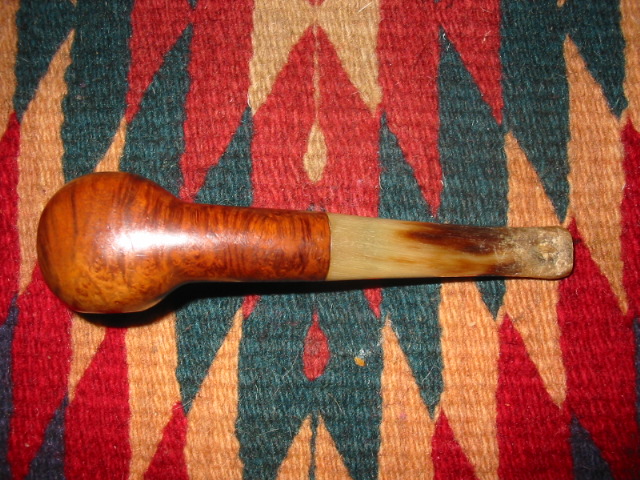
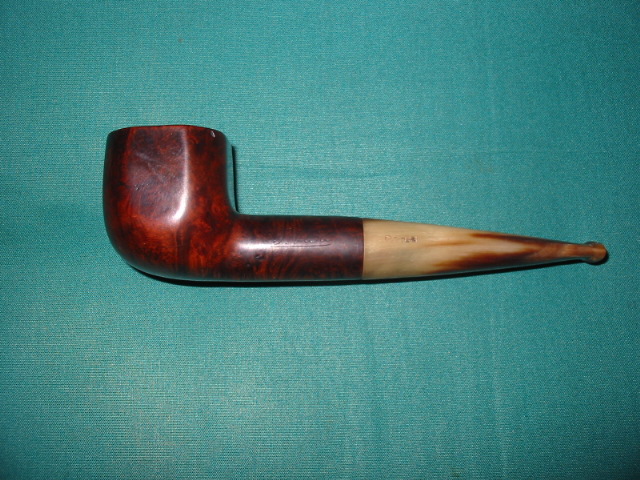
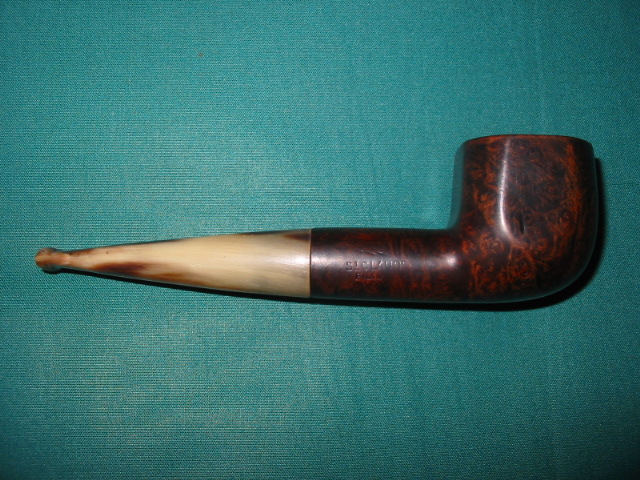
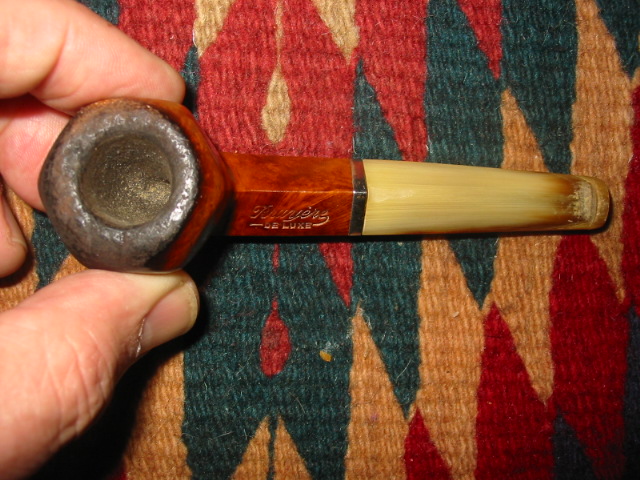
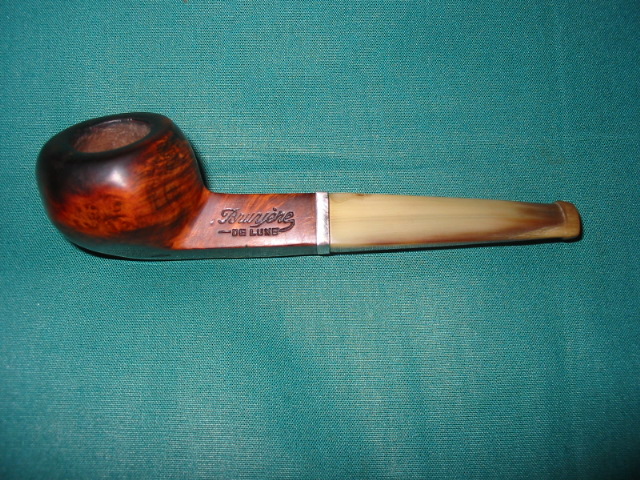
The two pipes that had what looked like horn stems arrived yesterday. They indeed were horn stems. One of them the little 4 1/2 inch bulldog need some work on the stem as it had some tooth marks. The bowl itself was rough. The varnish (?) was crackling and the lava had overflowed the top of the bowl and stained the wood around it. Fortunately it was not charred at all! I reamed and cleaned the bowl. It was a mess. Then I sent it to the alcohol soak and it lifted some of the tars and stain as well as the varnish. I then reworked the bowl with sand paper and with micro mesh pads. It then was re-stained with a black under stain and then a cherry over stain. I then buffed and polished it.
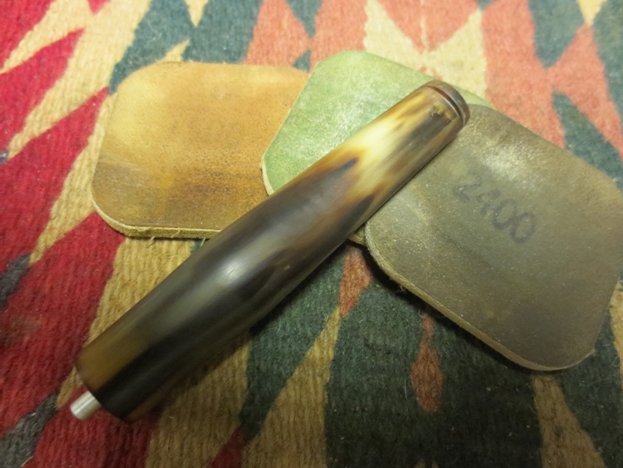
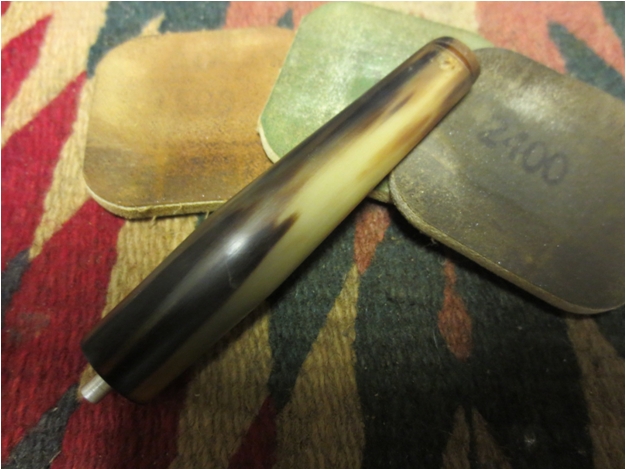
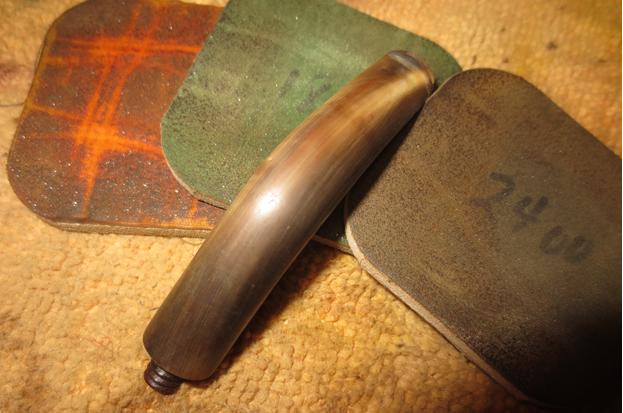
For the horn stem I heated a knife and used a damp cloth and the hot knife to lift the tooth marks. Thanks to Nigel and others (Chris/Caskwith) who gave that bit of advice. It is the same process that is used to lift dents in the briar. I repeated this process until they were gone and the stem was smooth to touch. I then used micro mesh to sand and polish the stem. Finally I gave it a buff with white diamond and carnuba wax.

Here are the before shots:

ImageImage

The front rim was solid but the tars seemed to have permanently stained the briar. I did not want to take much off as it would change the panel shape of the bowl so I cleaned the wood as deeply as I could and was able to get it so that I can see grain through the dark stain. I may give the entire bowl a dark stain to further hide the top but still considering that…

ImageImage

Image