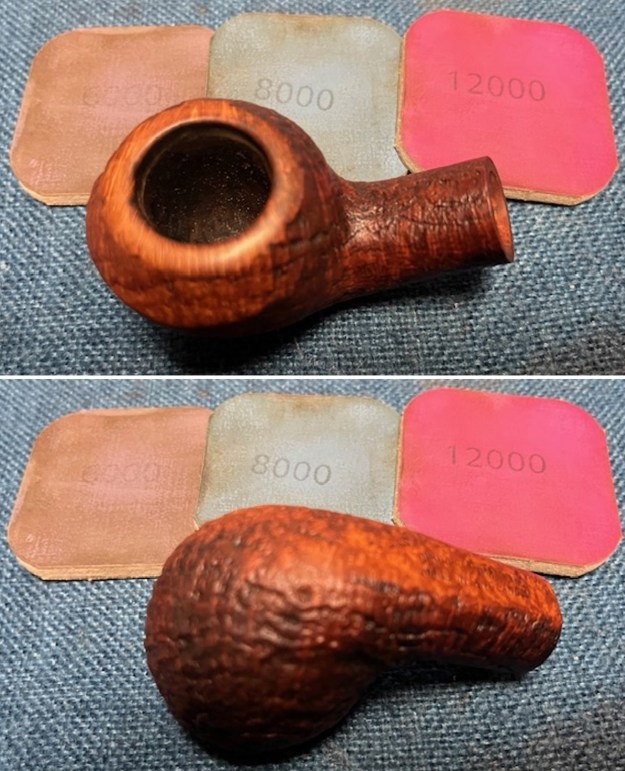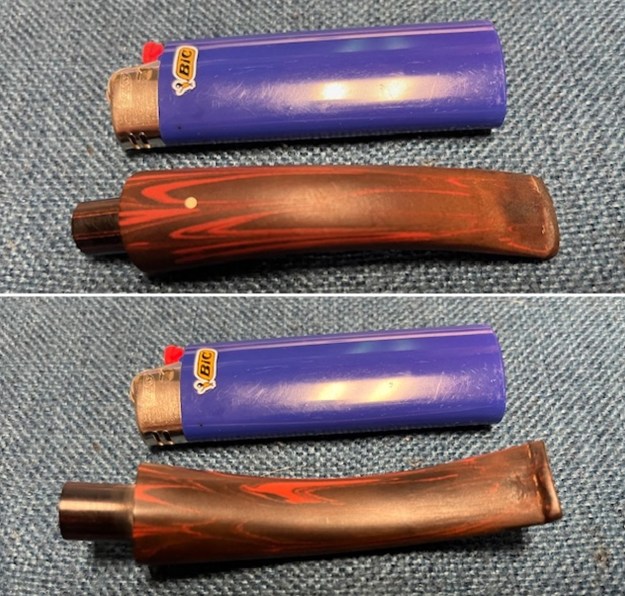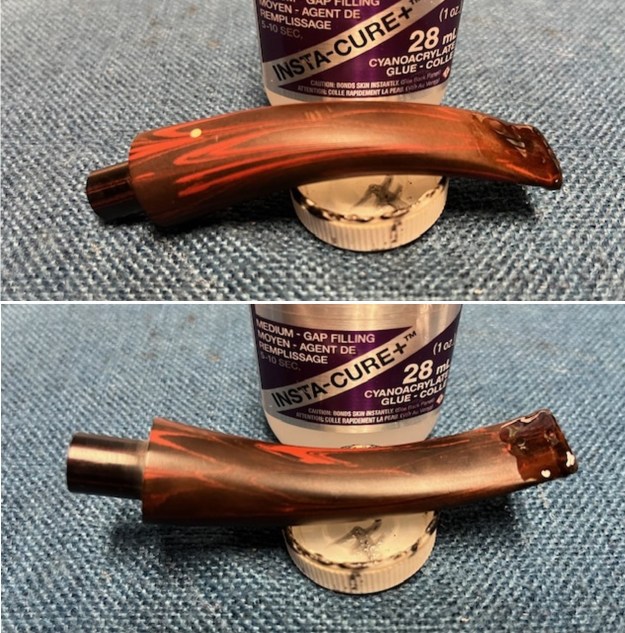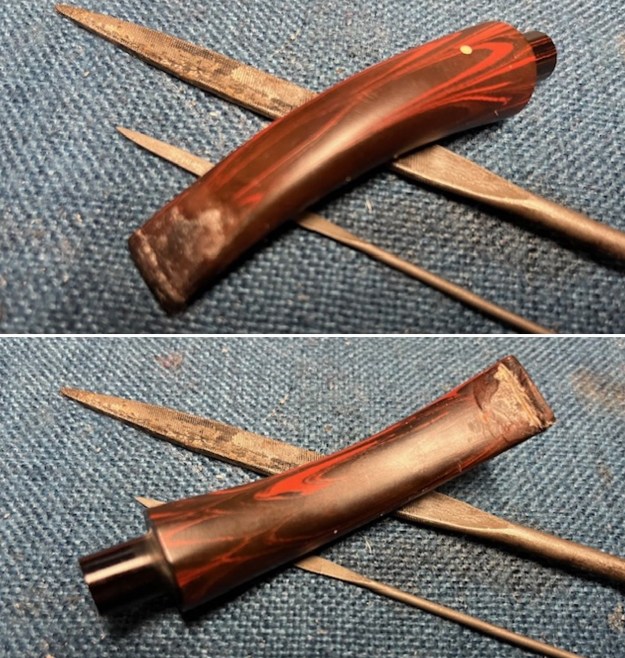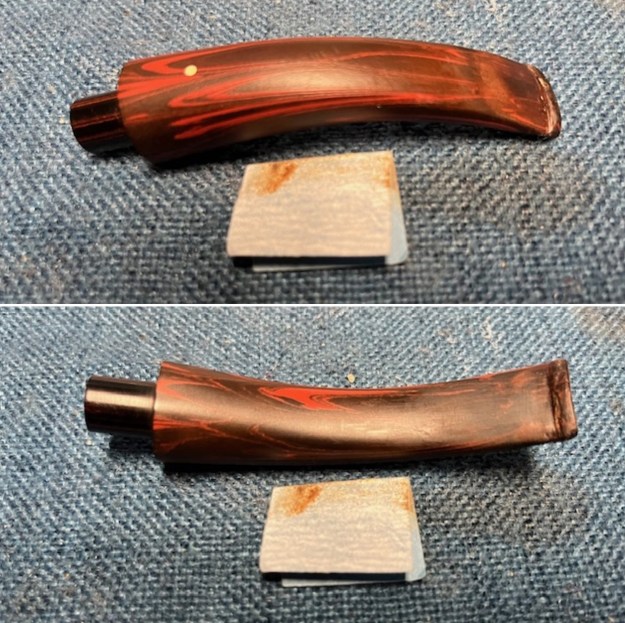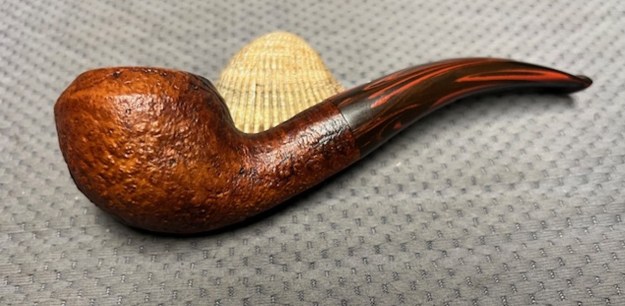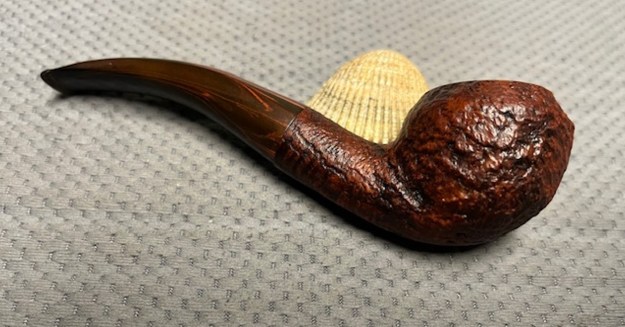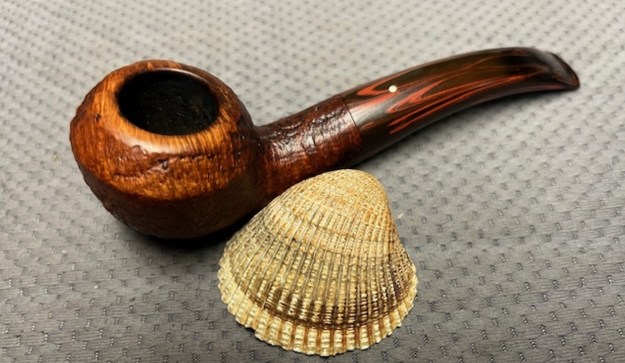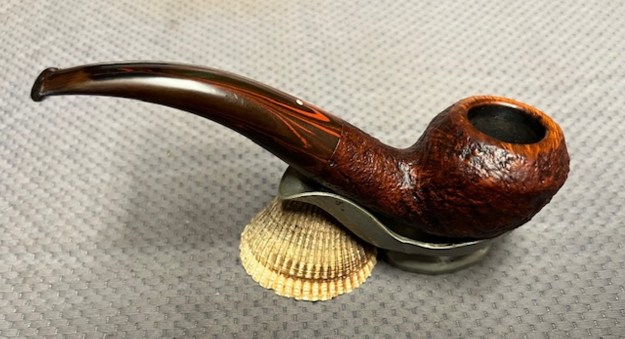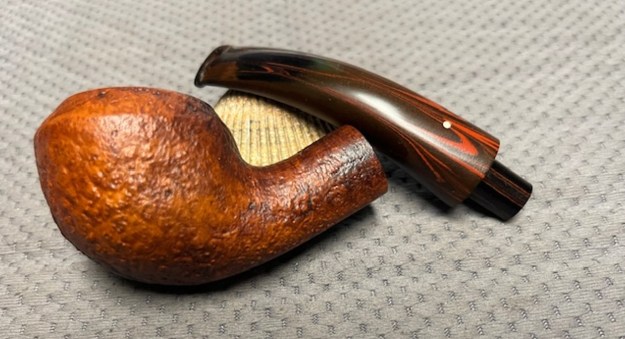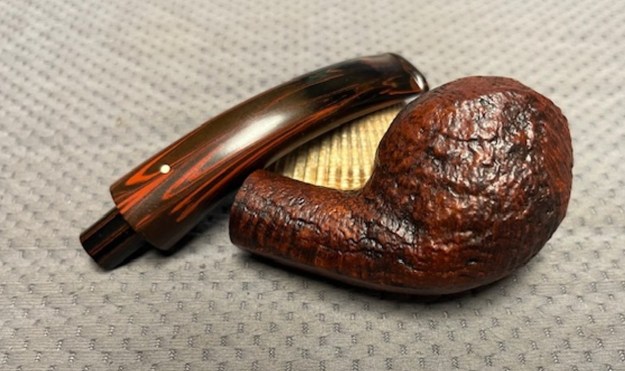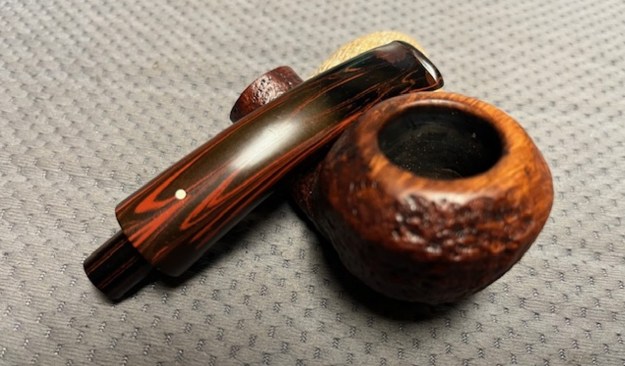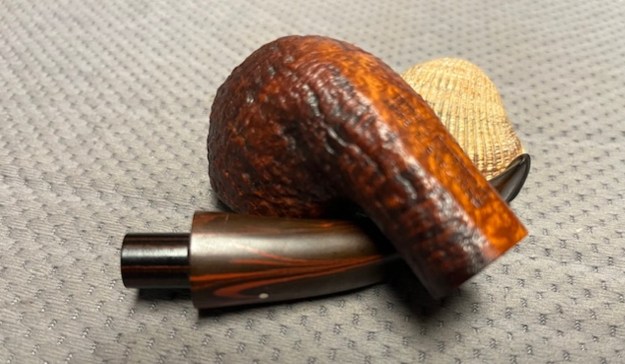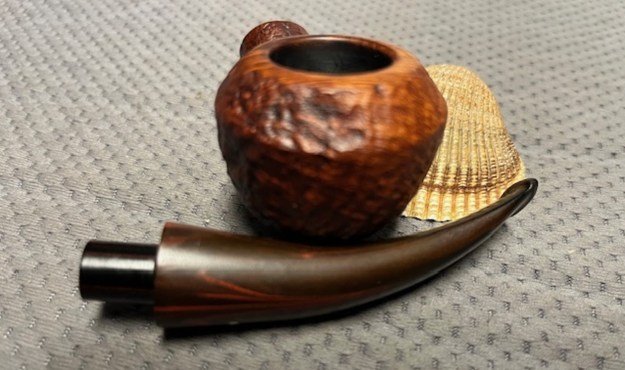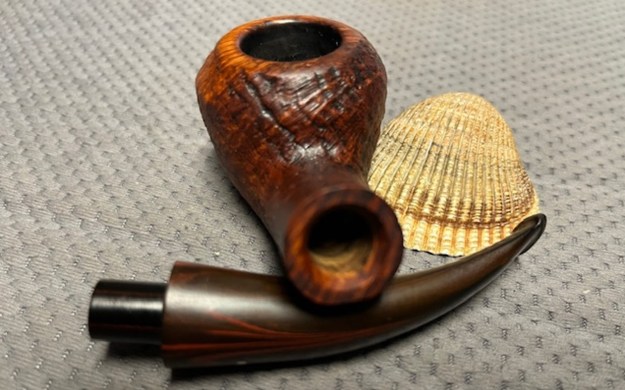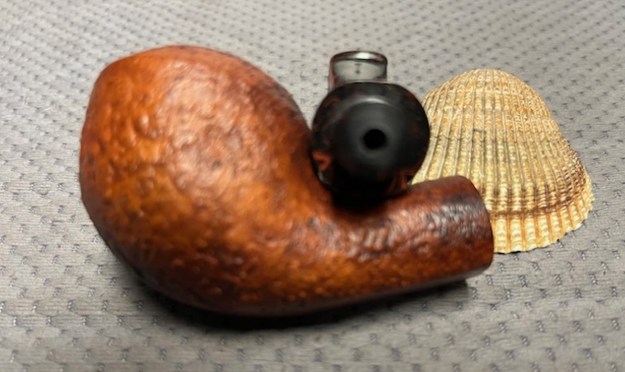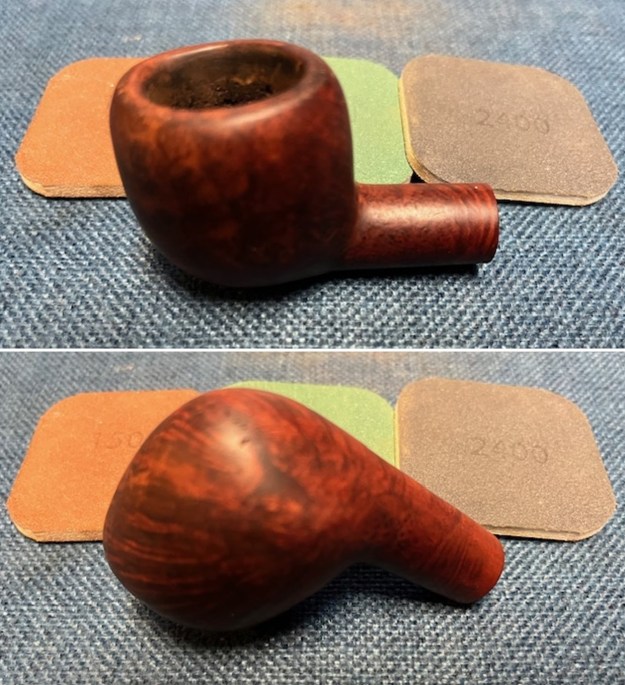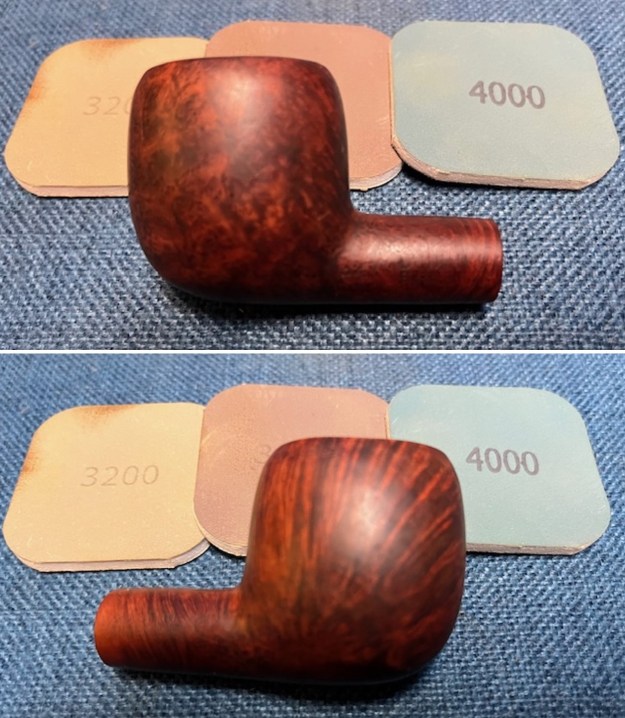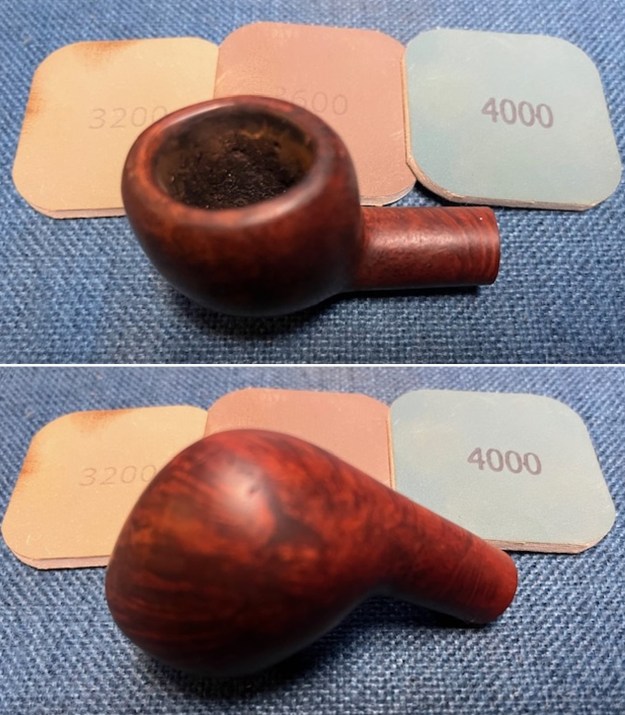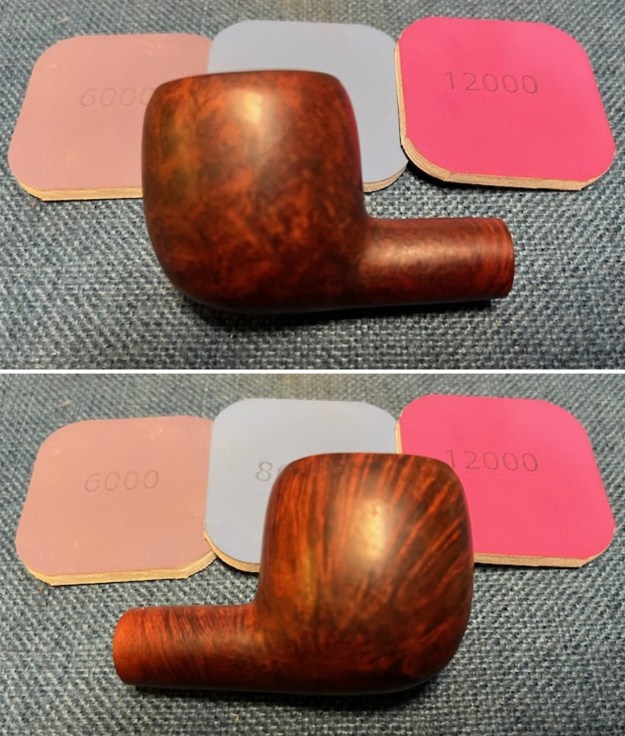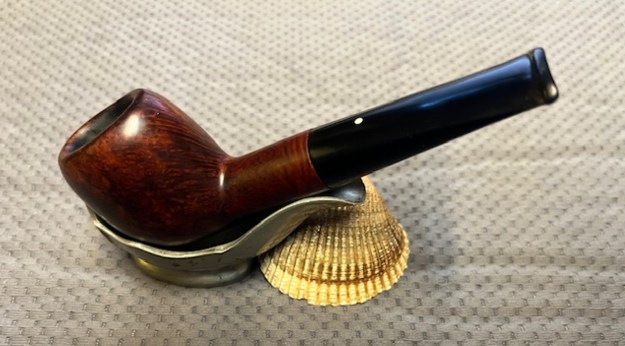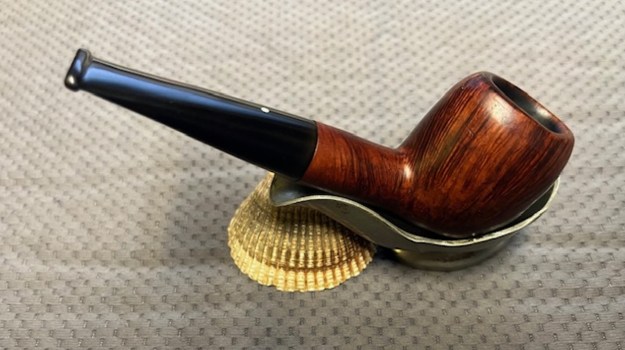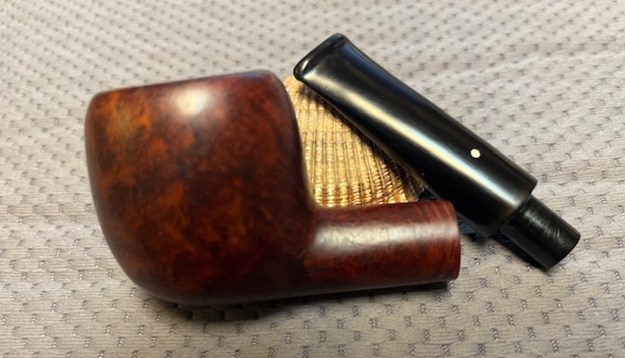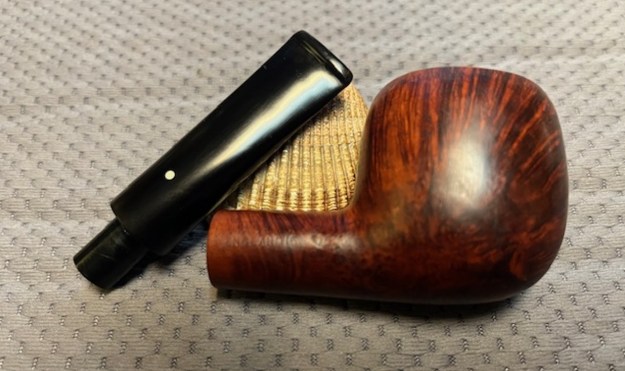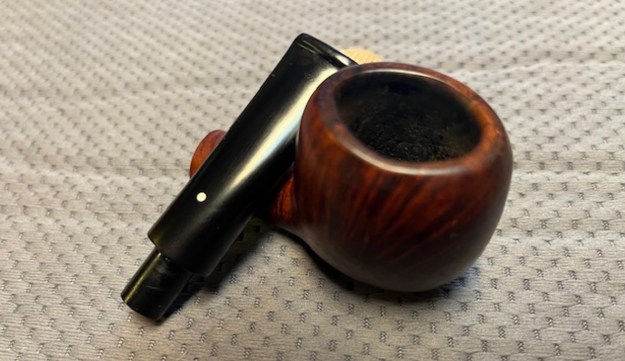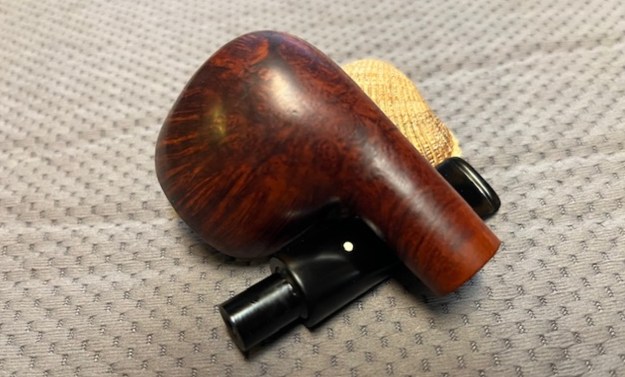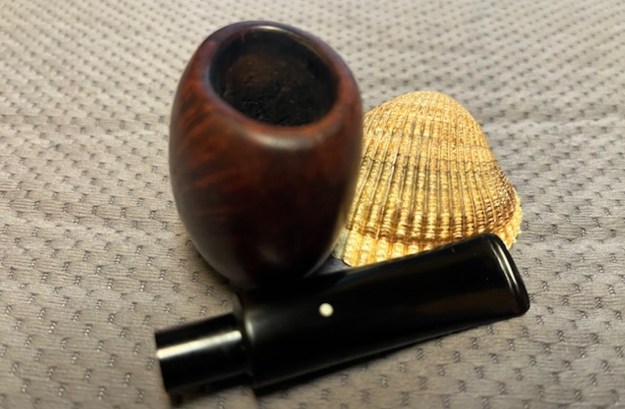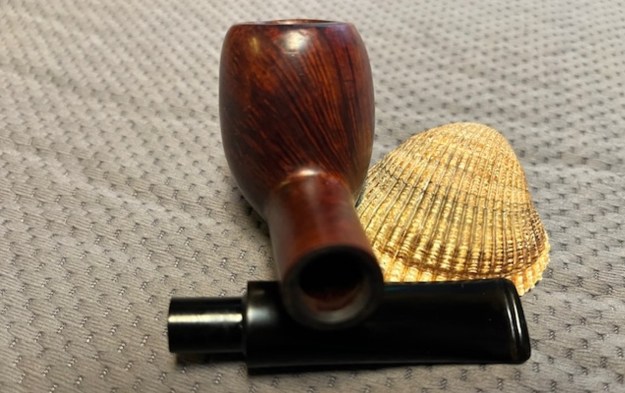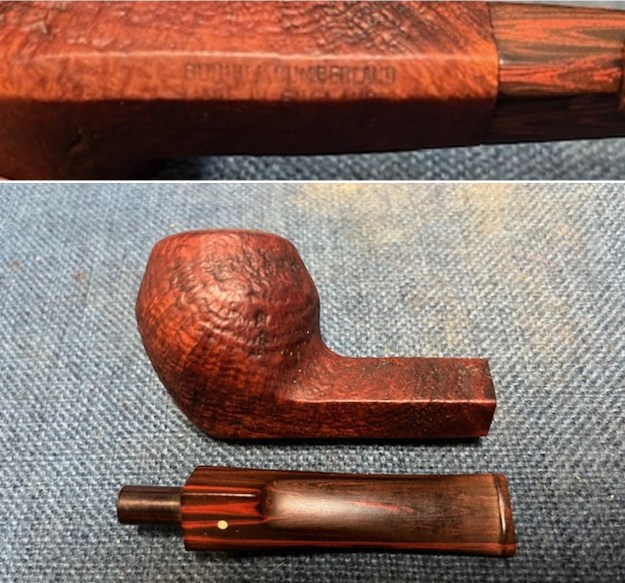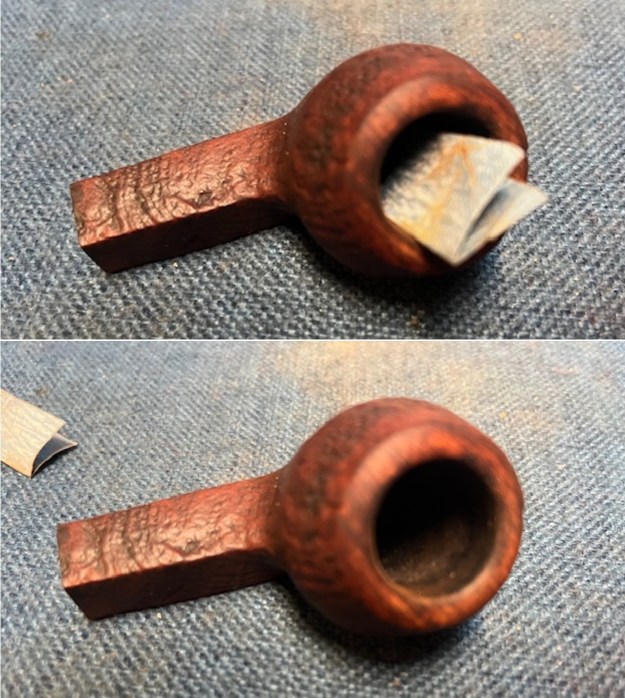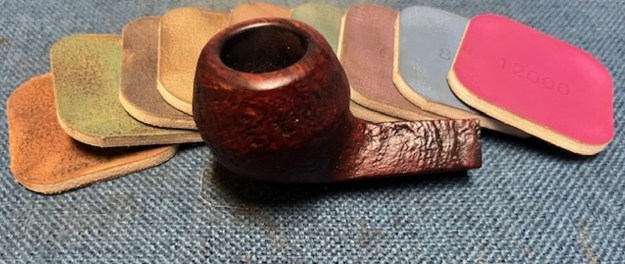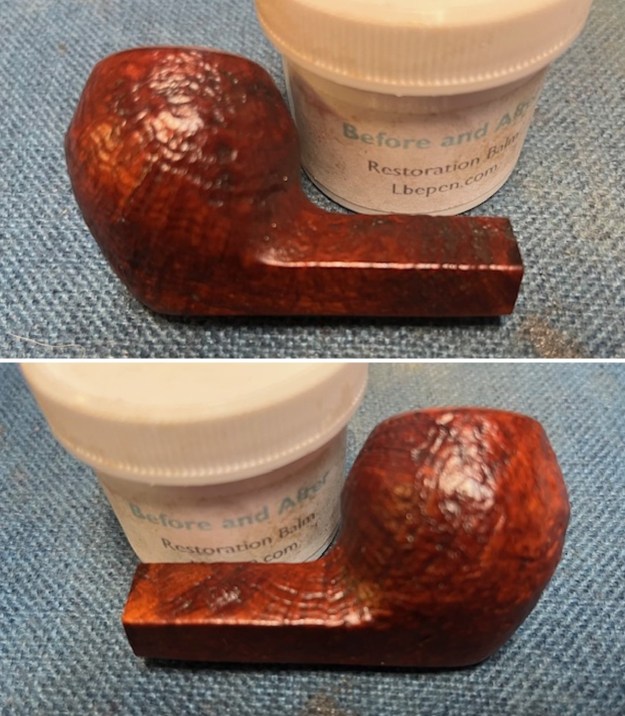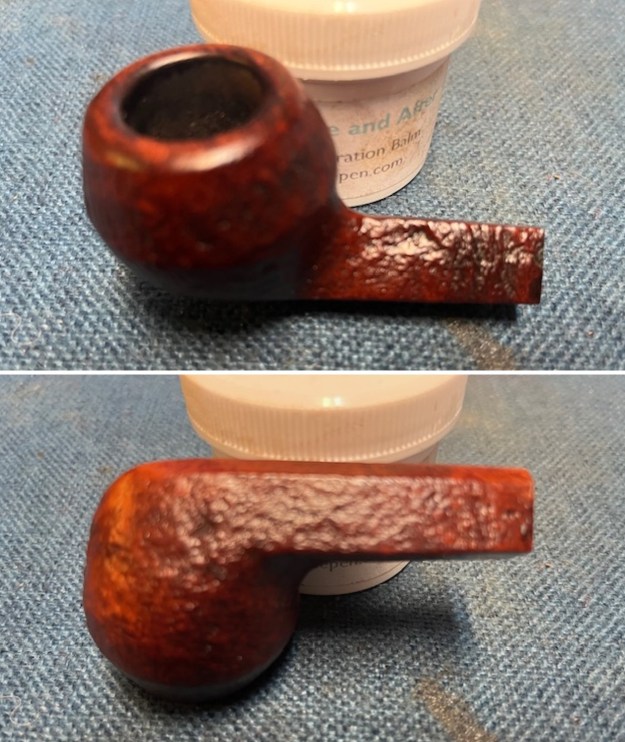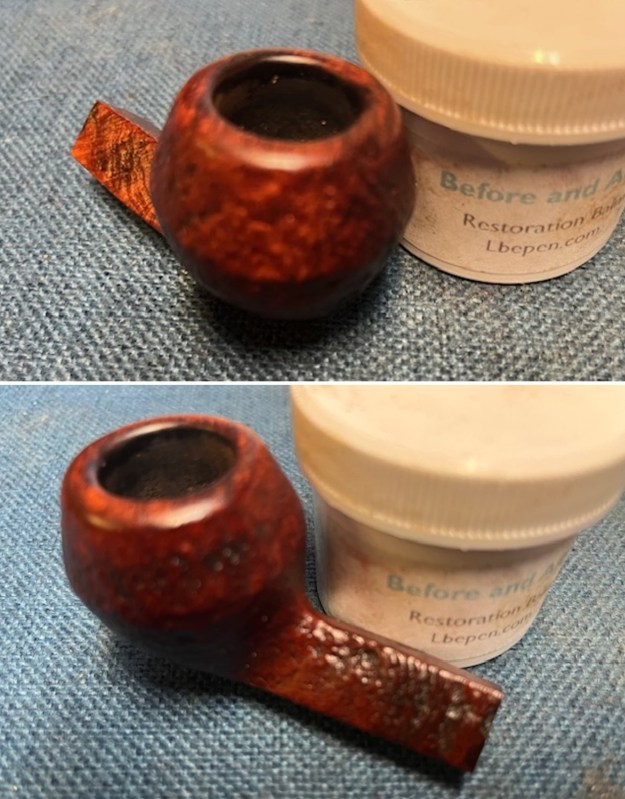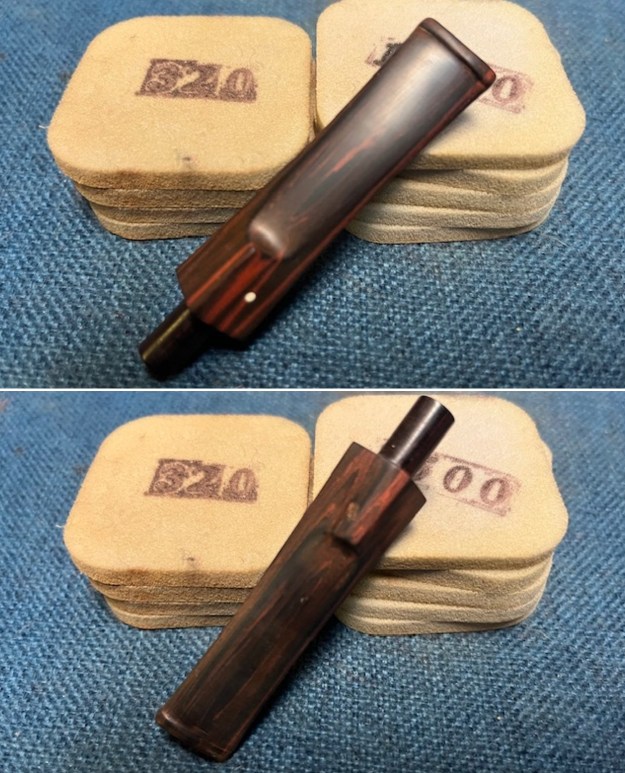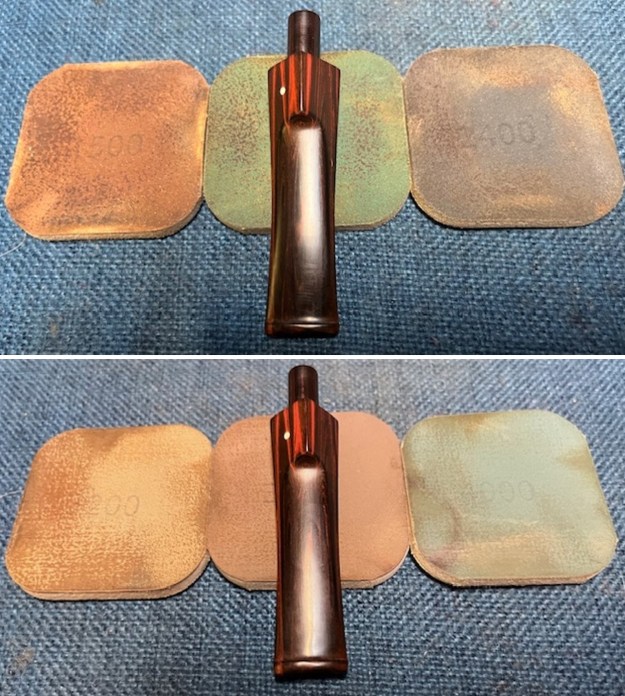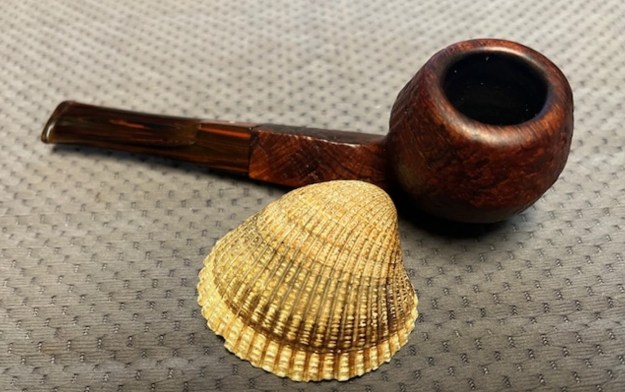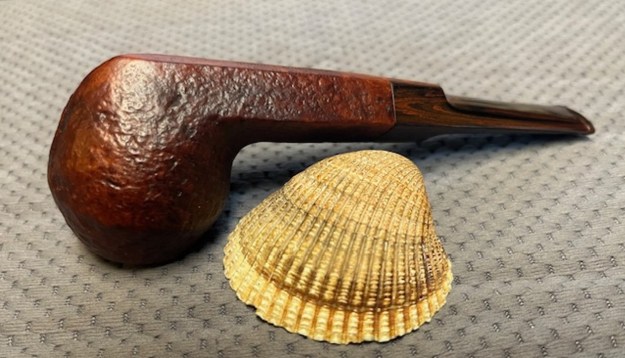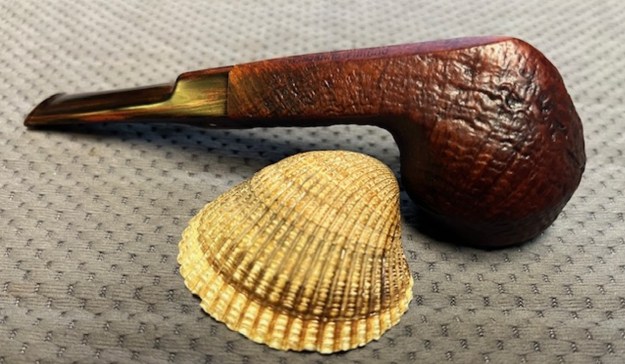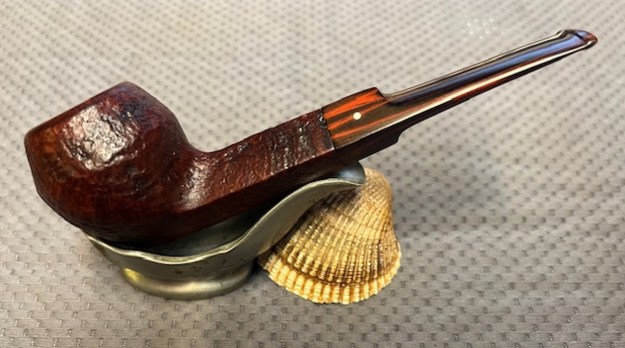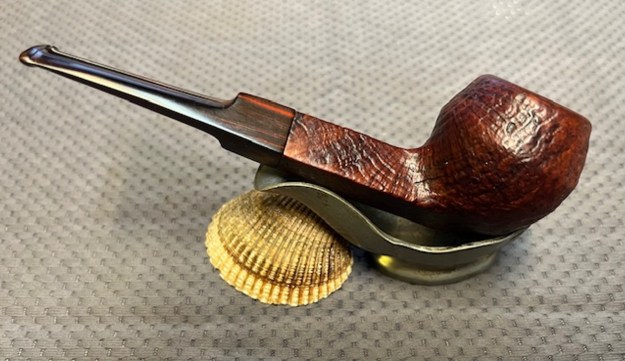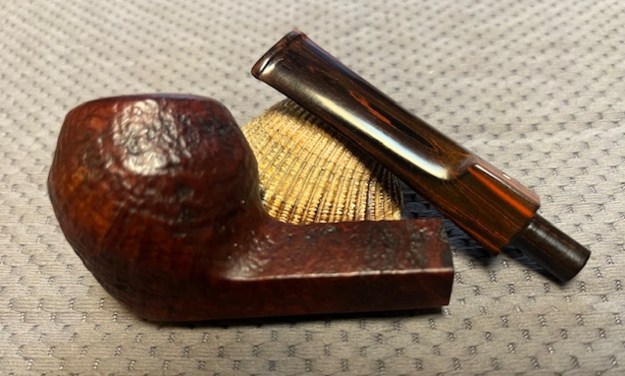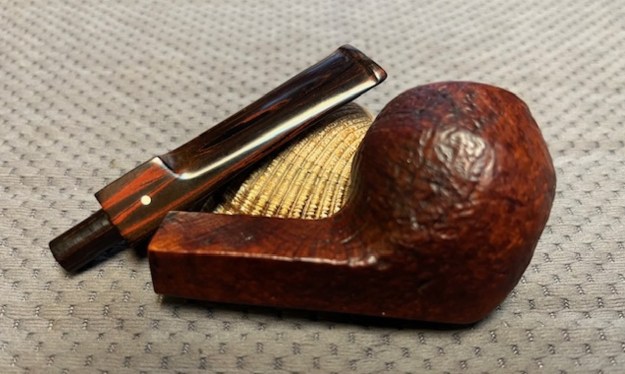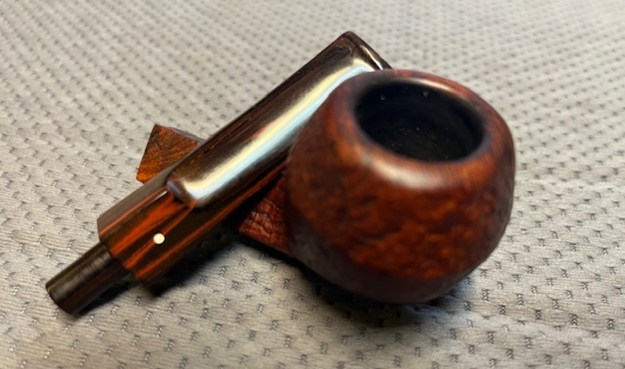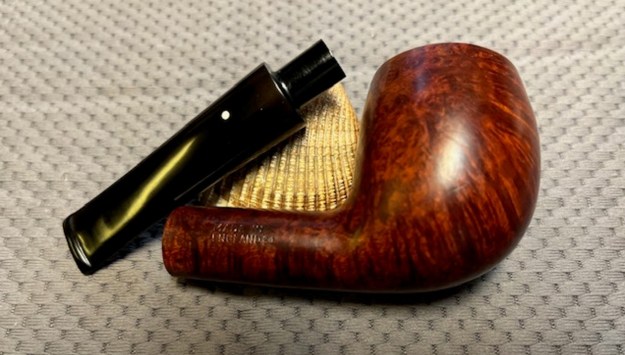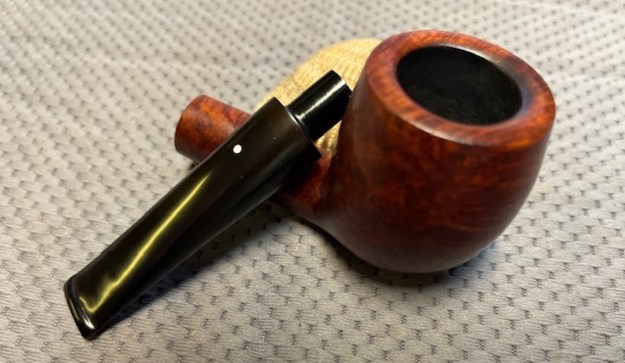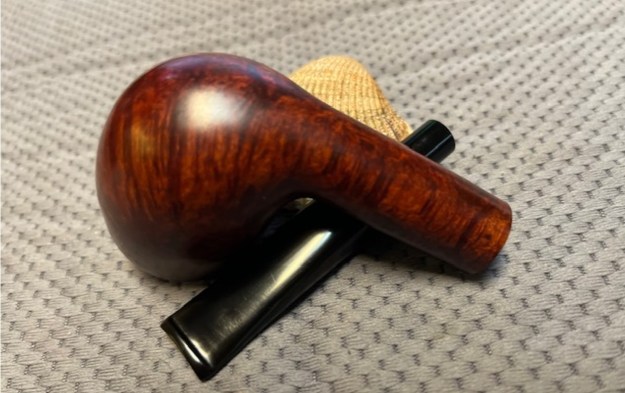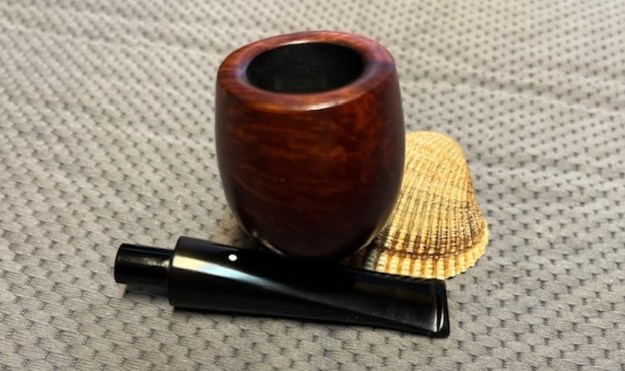
Tag Archives: polishing briar with micromesh pads

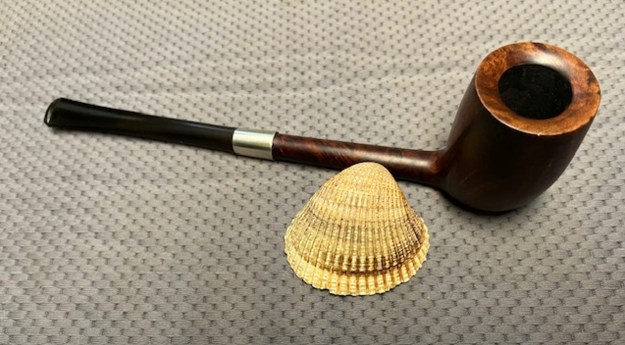
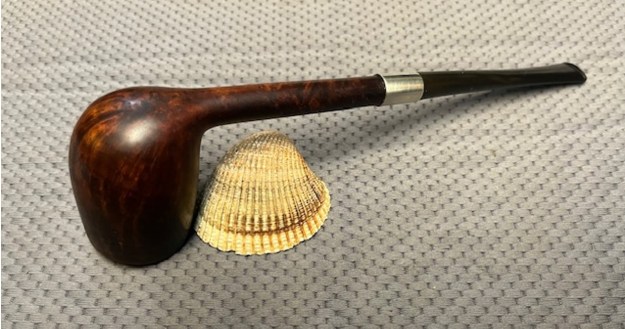
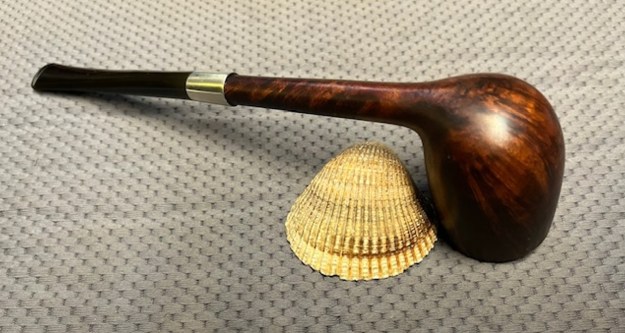
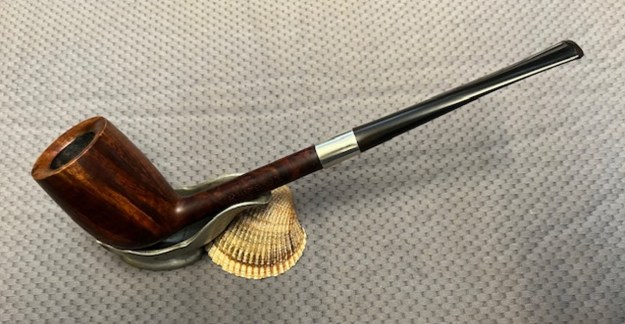
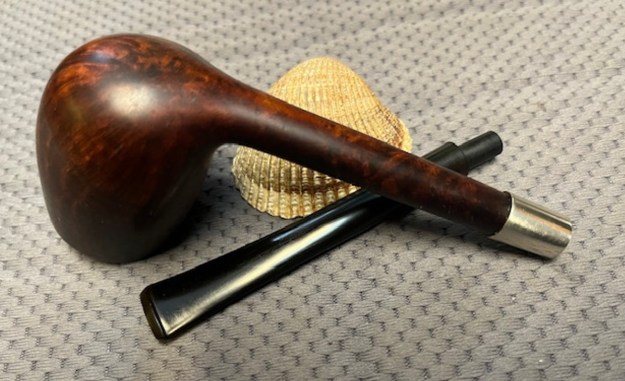
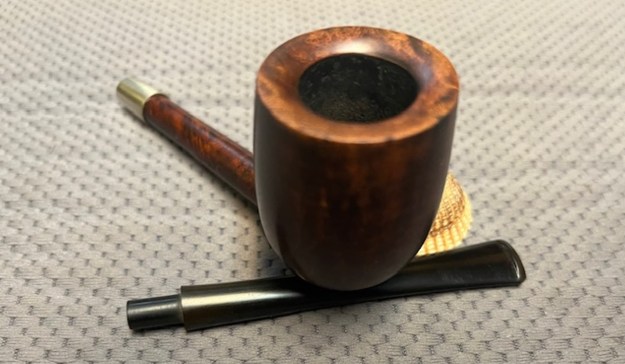
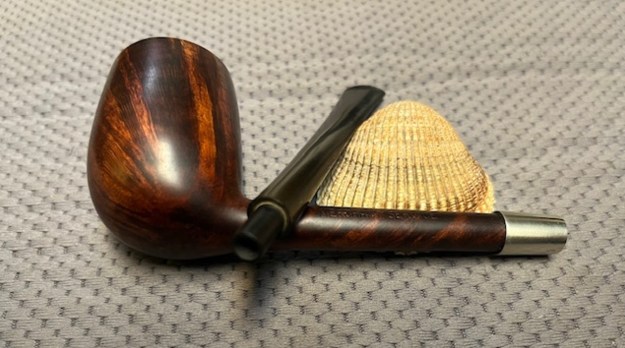
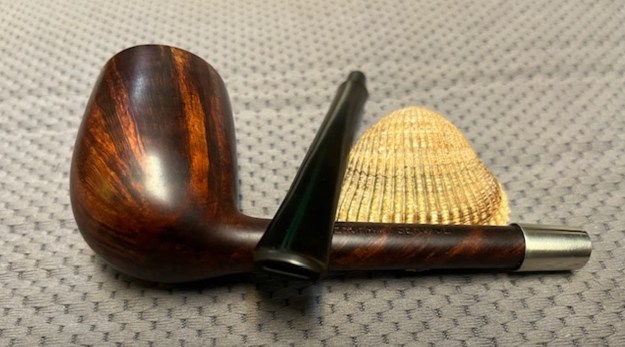
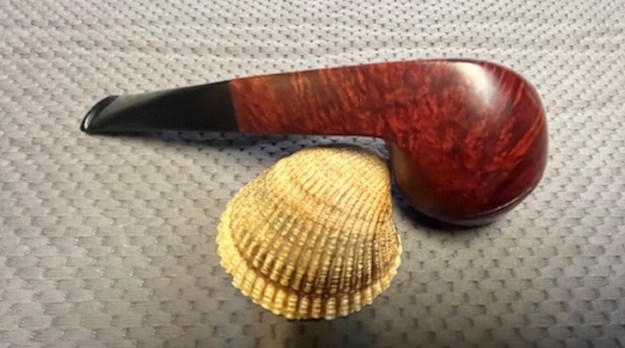
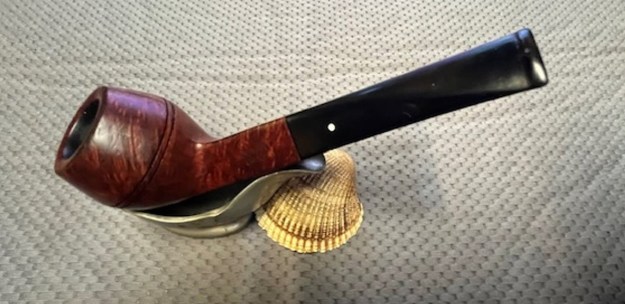
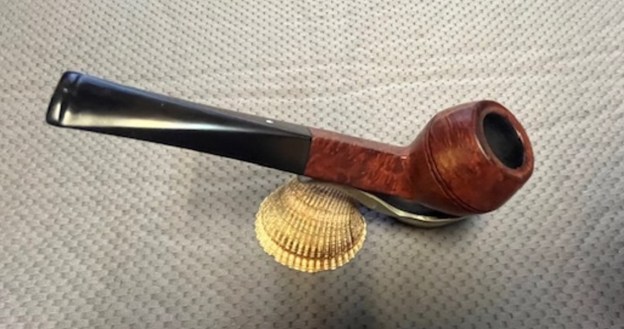
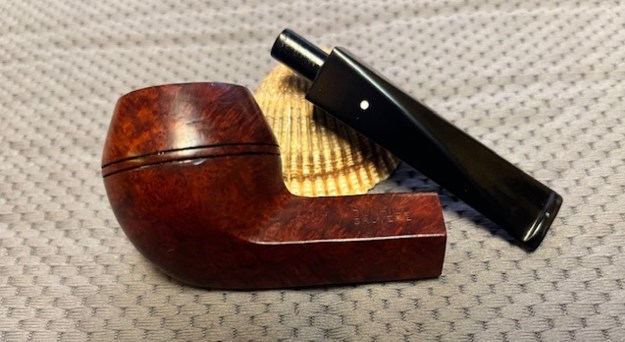
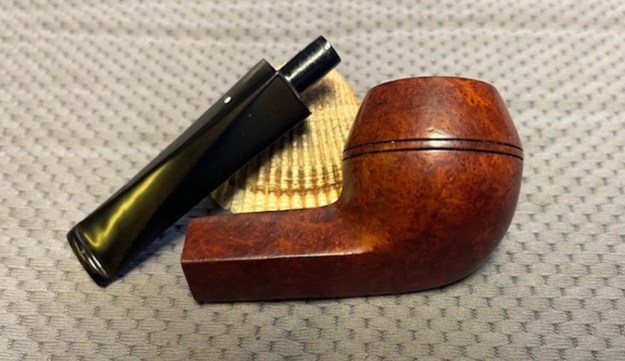
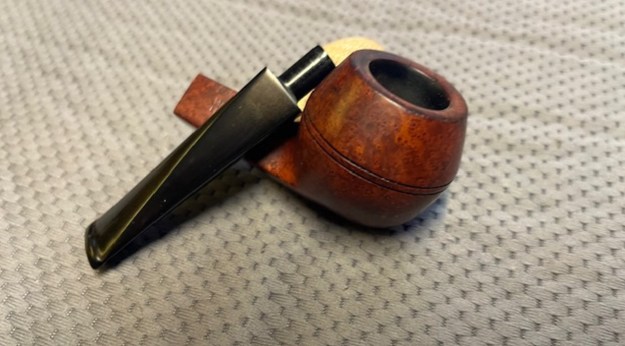
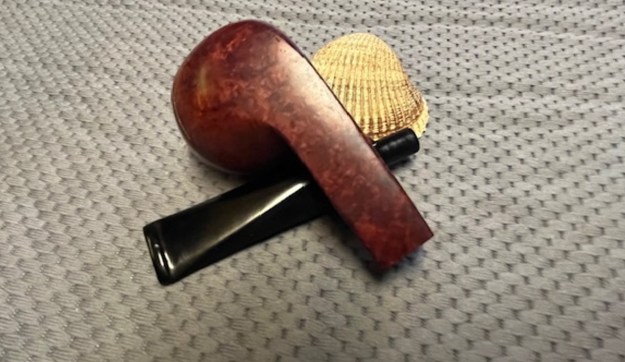
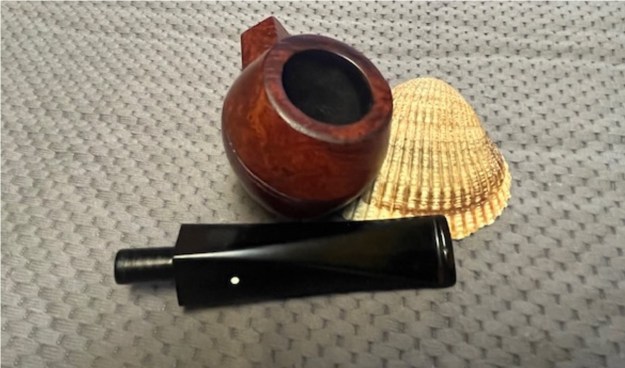
Bringing New Life to a Merchant Service Special Long Pencil Shank Billiard


by Steve Laug

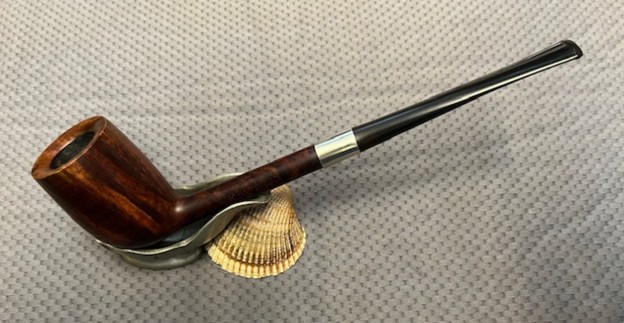
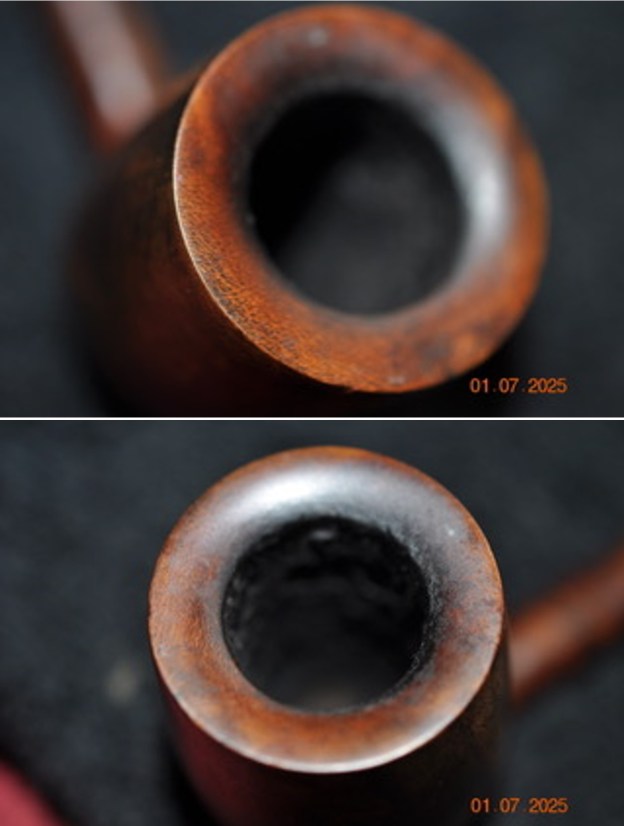
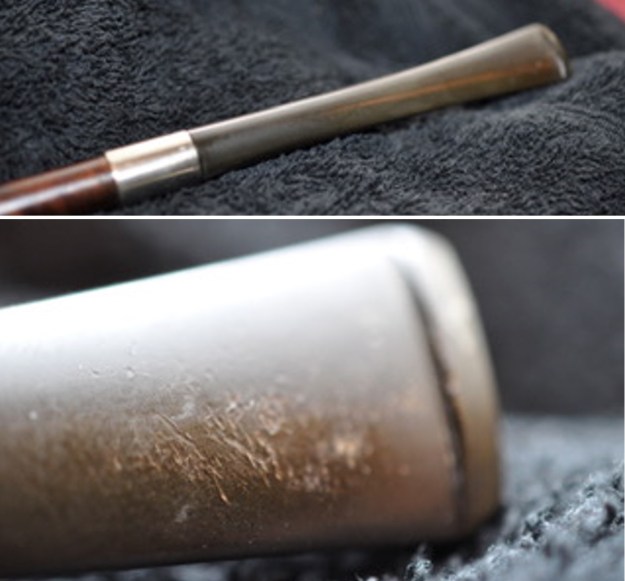
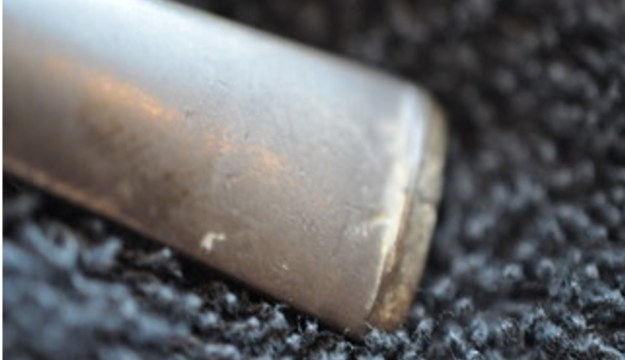
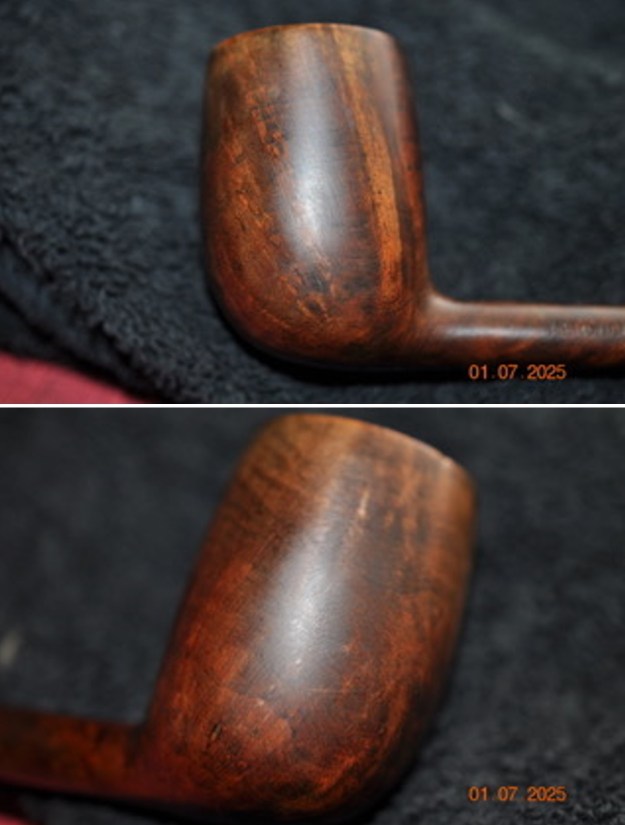
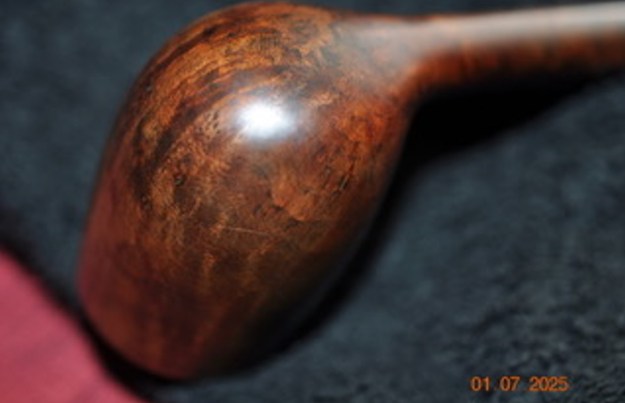
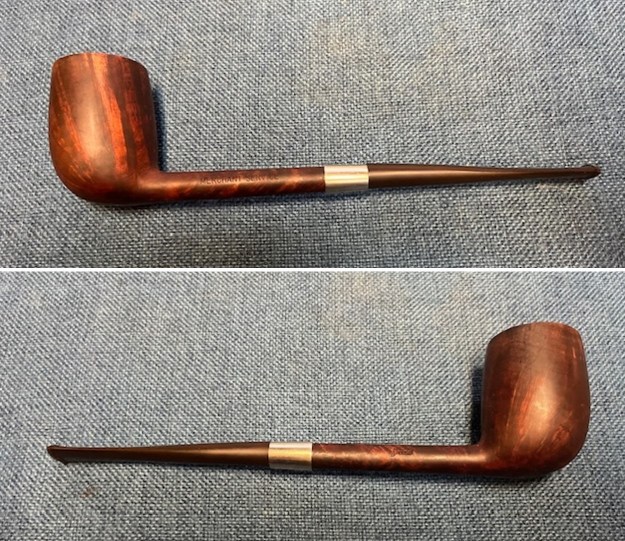
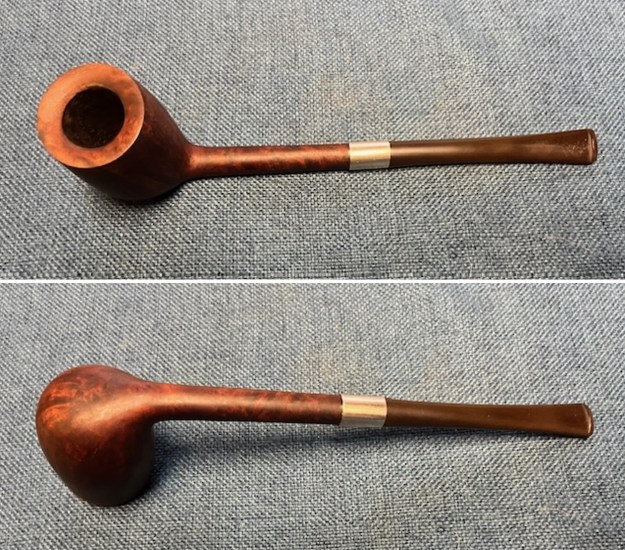
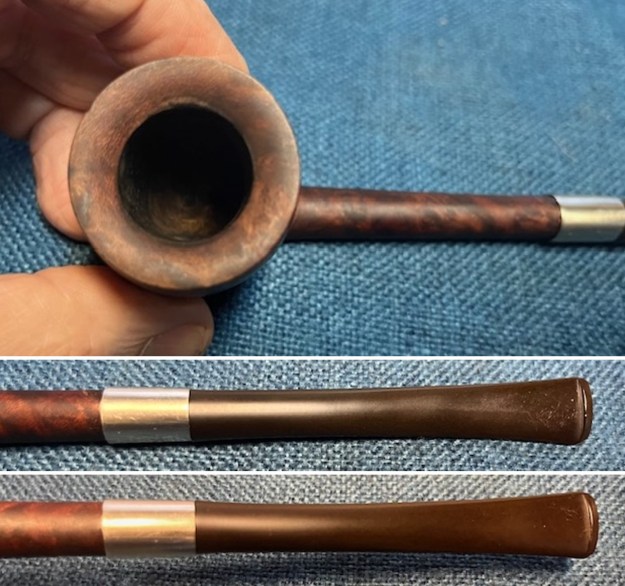
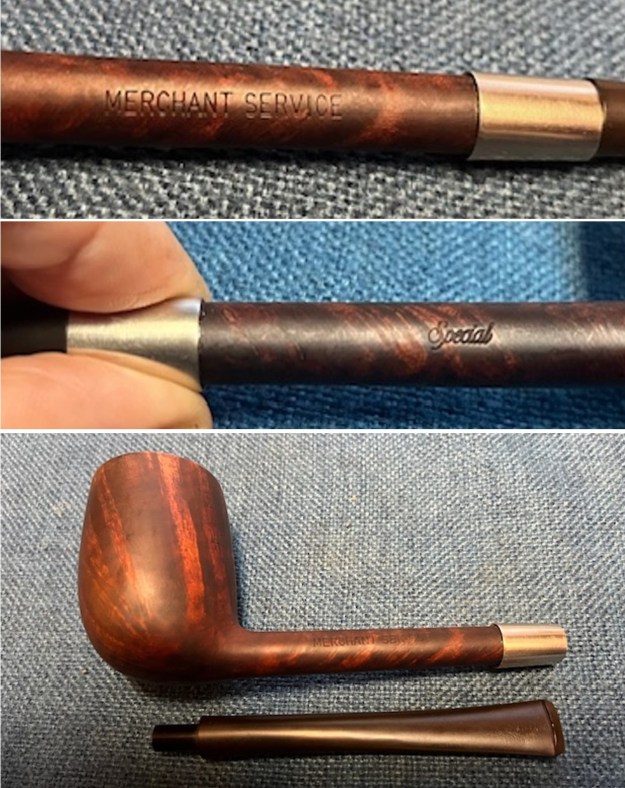
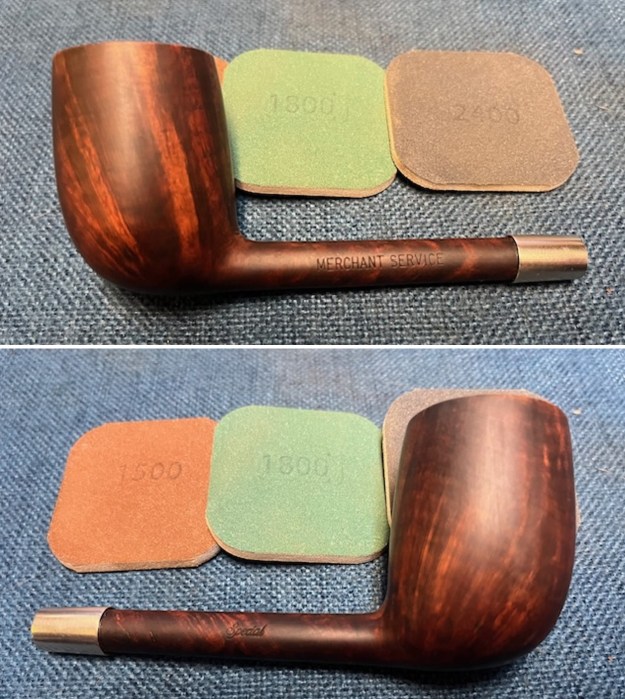
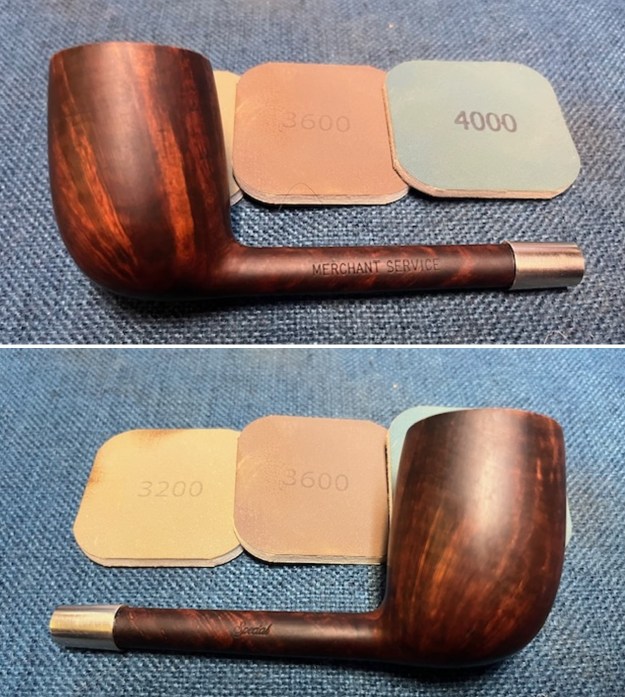
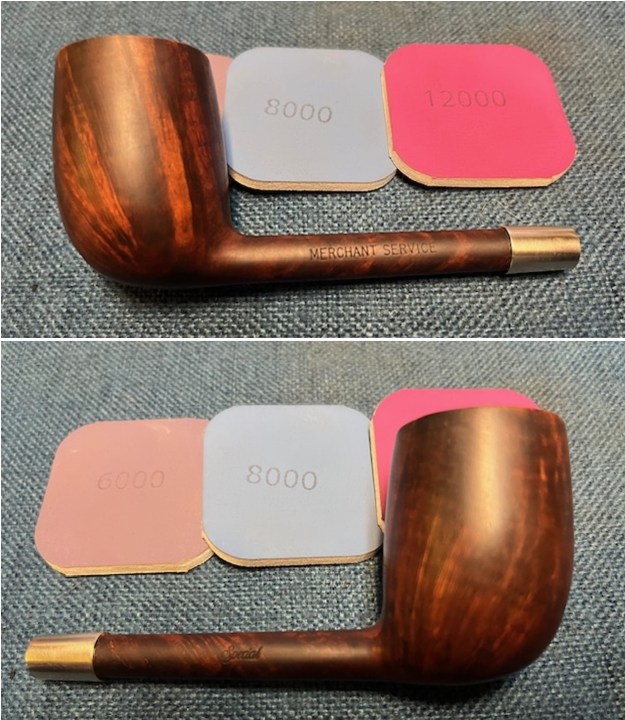
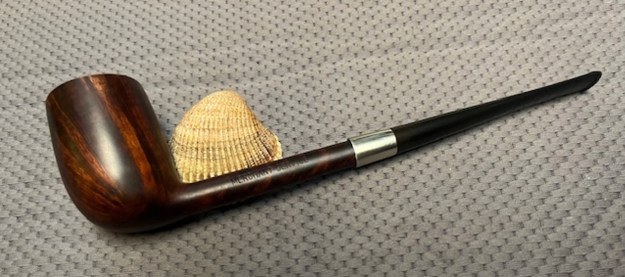
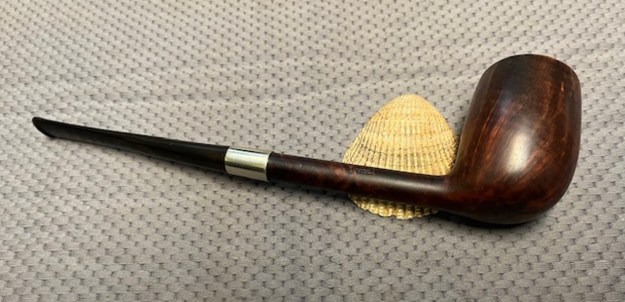
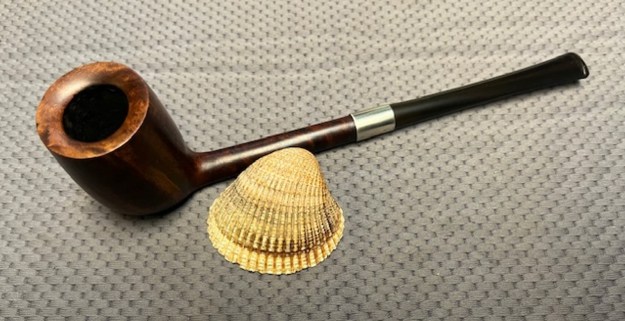
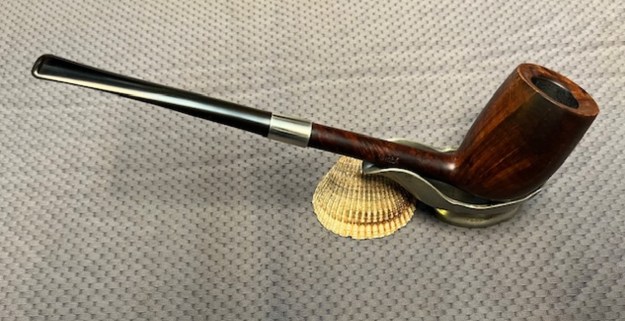
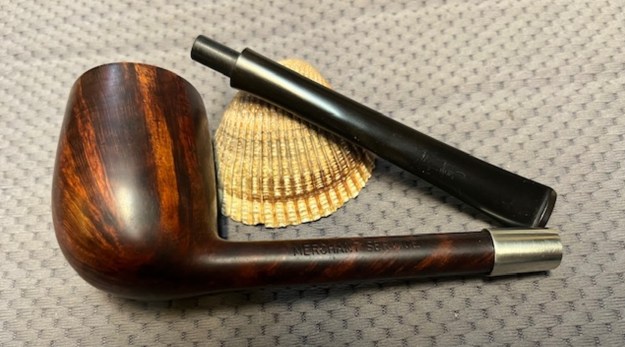
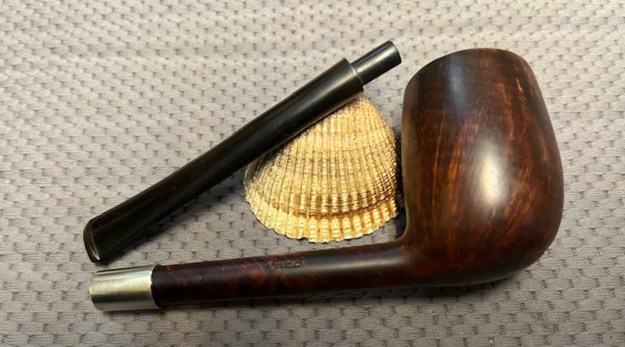
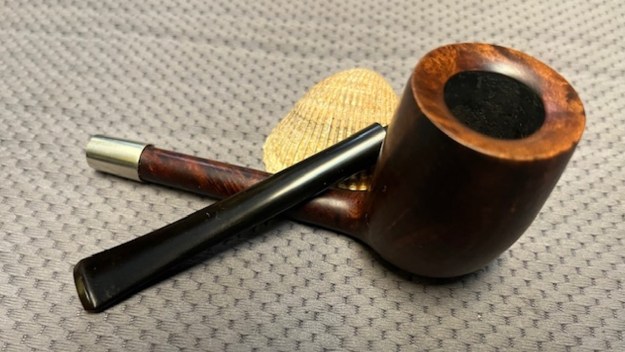
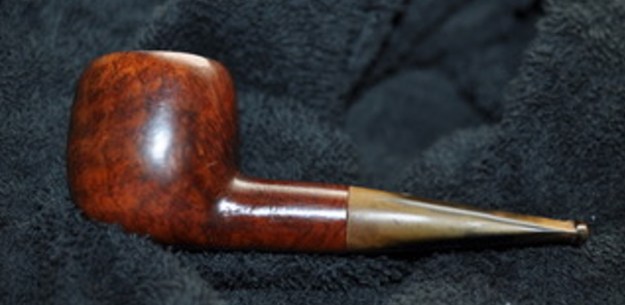
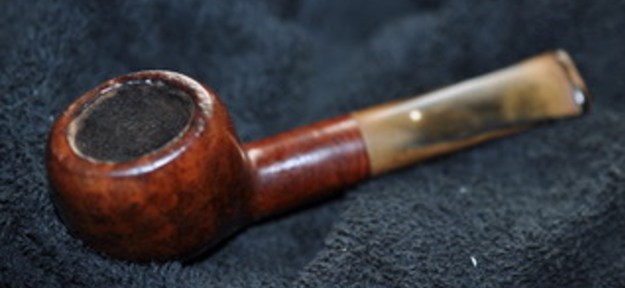
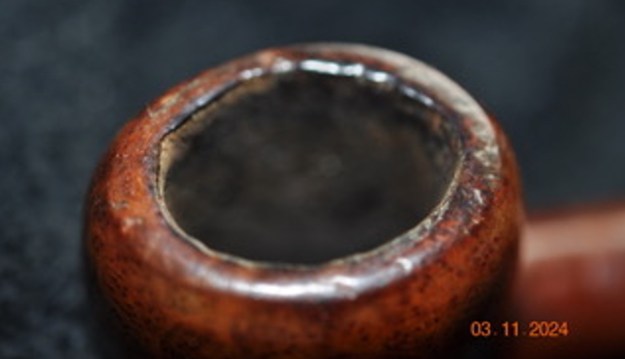
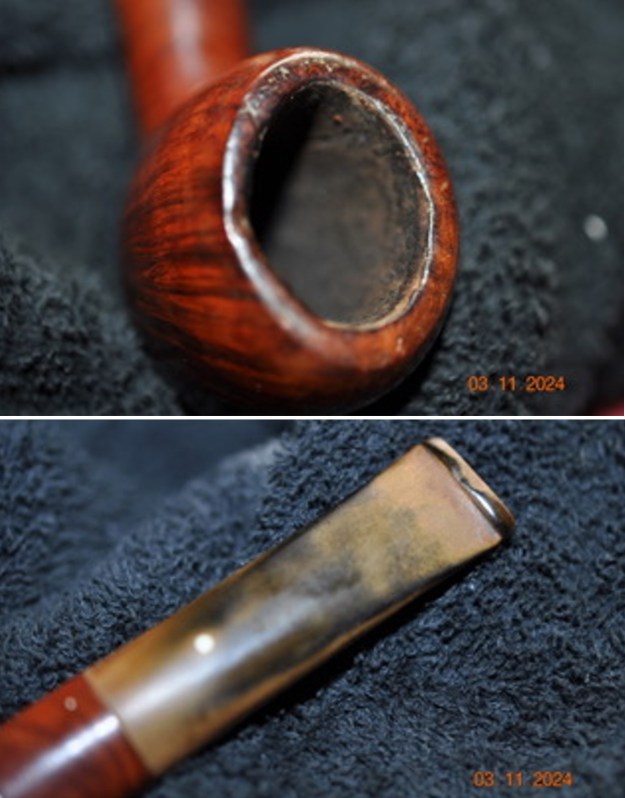
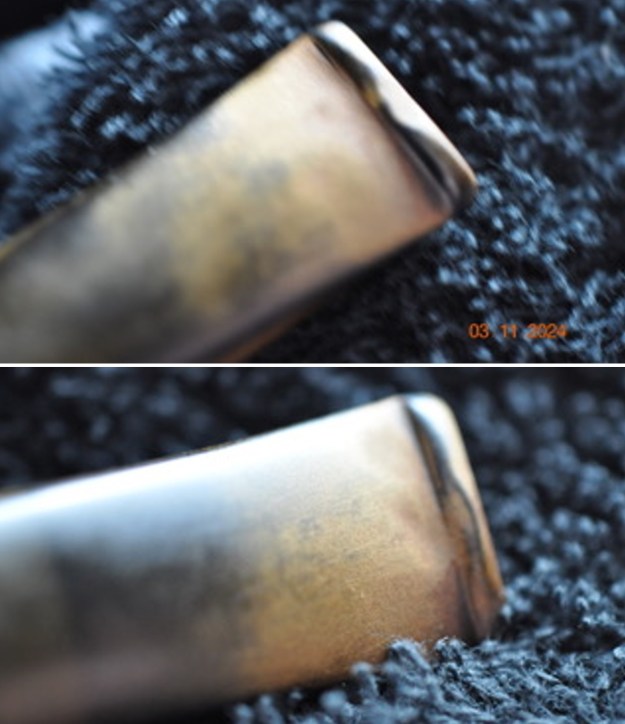
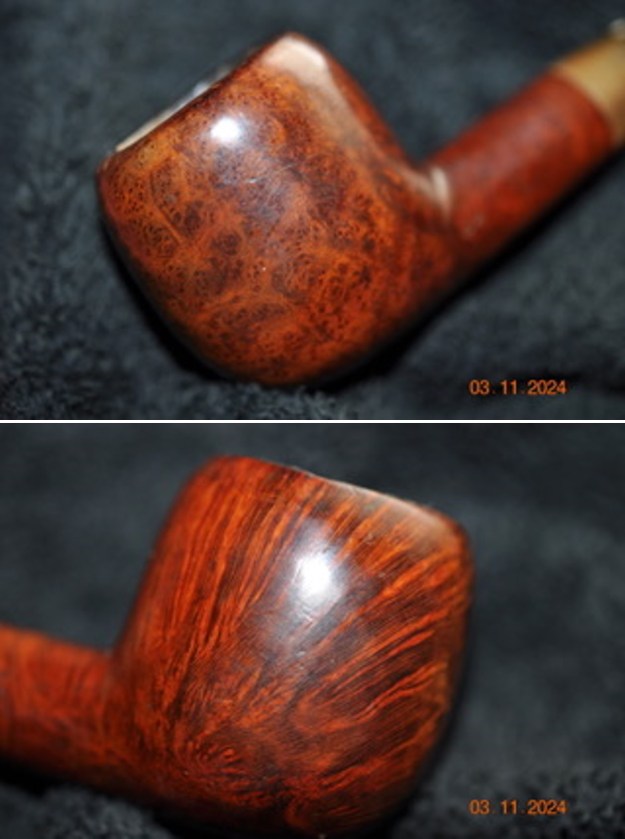
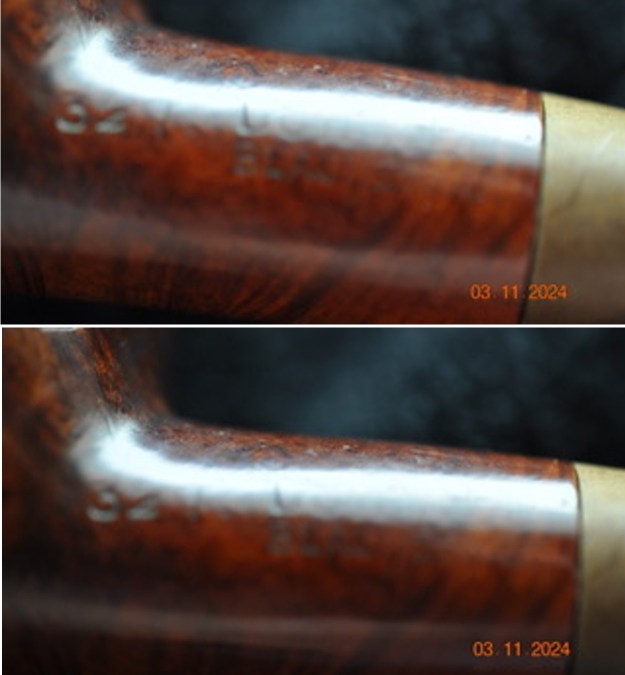
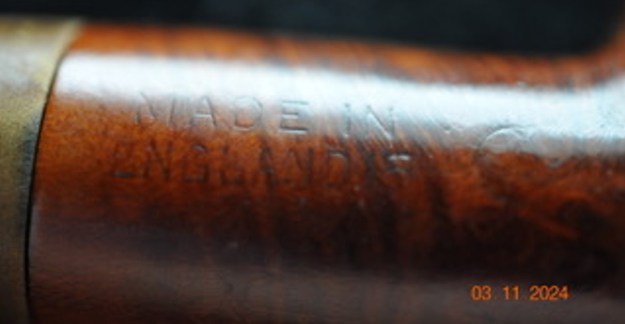
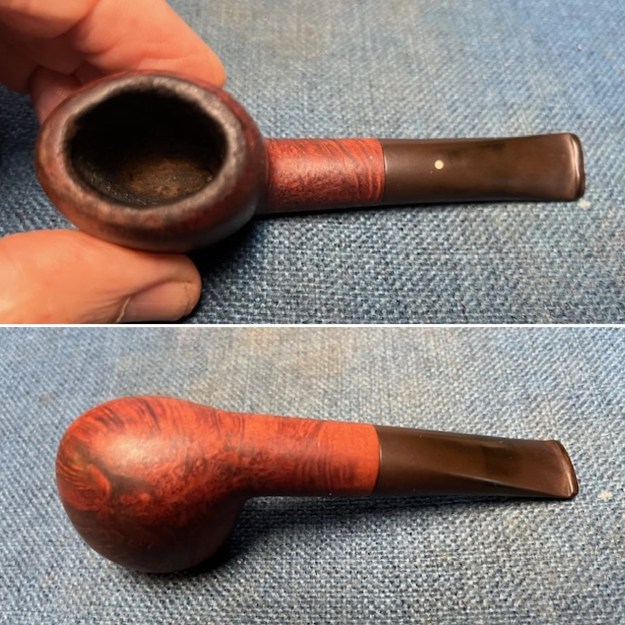
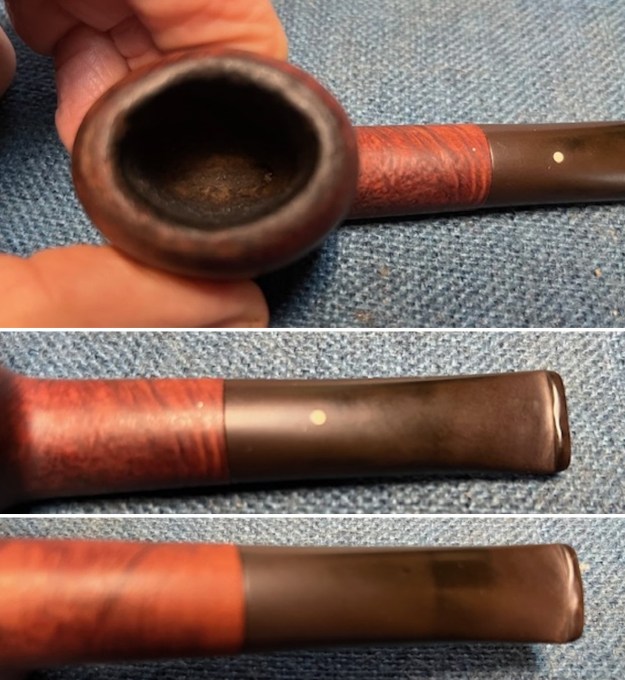
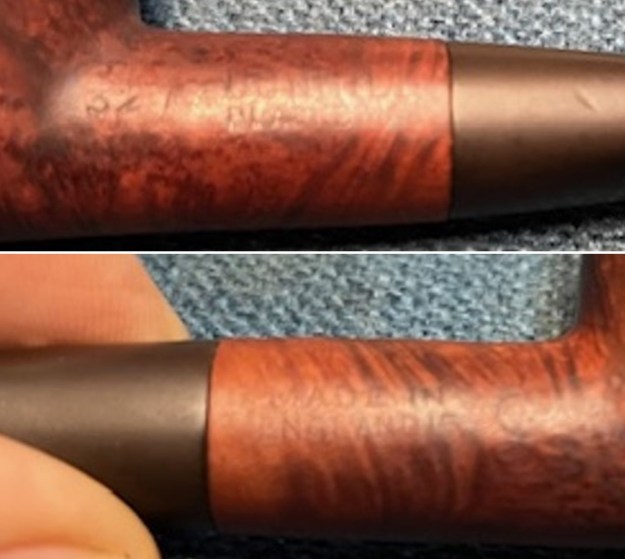
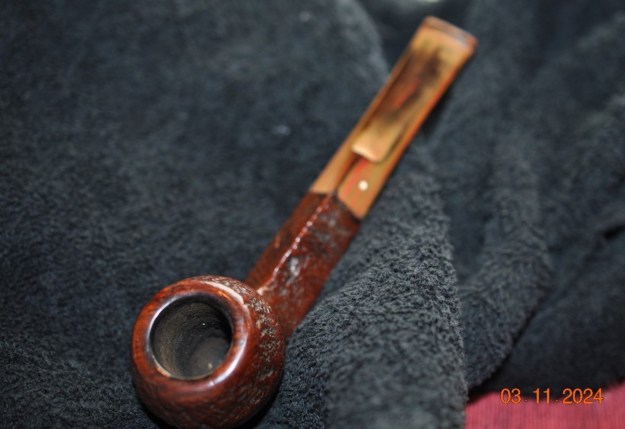
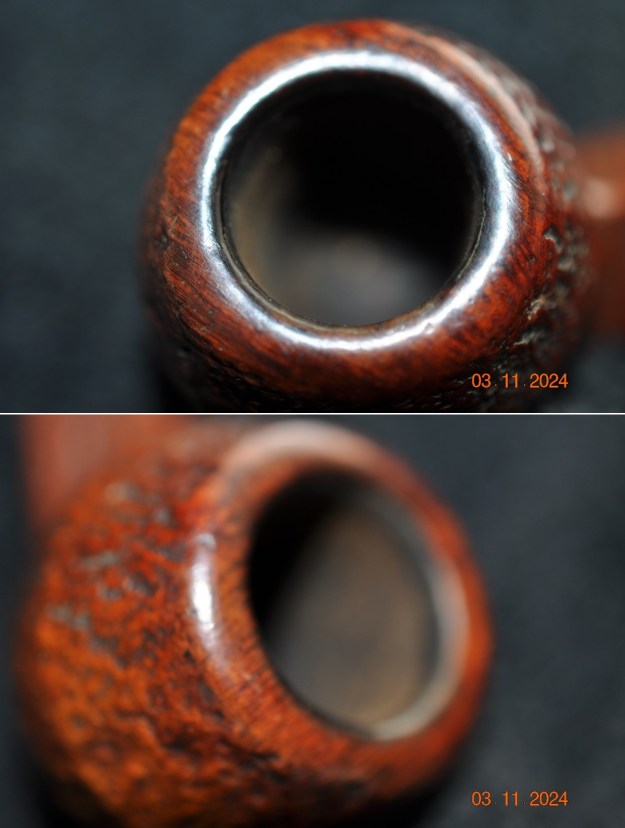
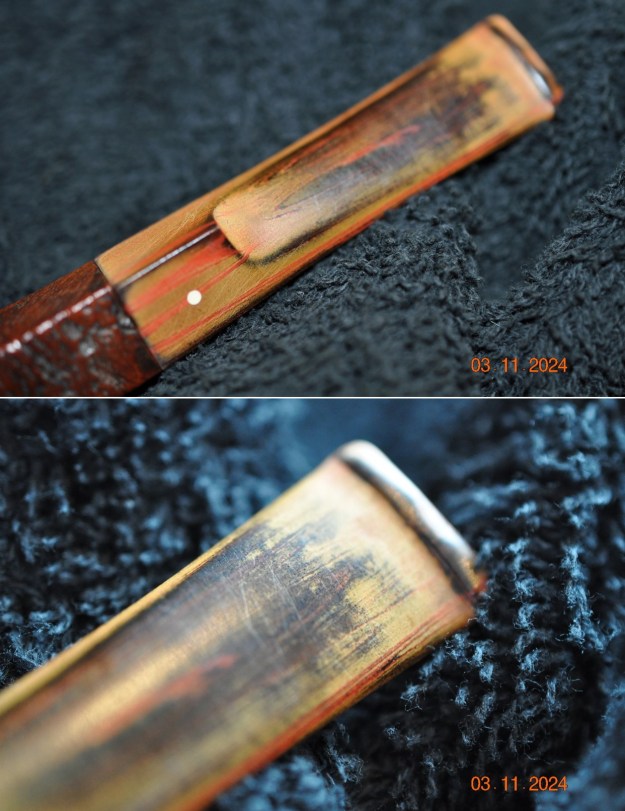
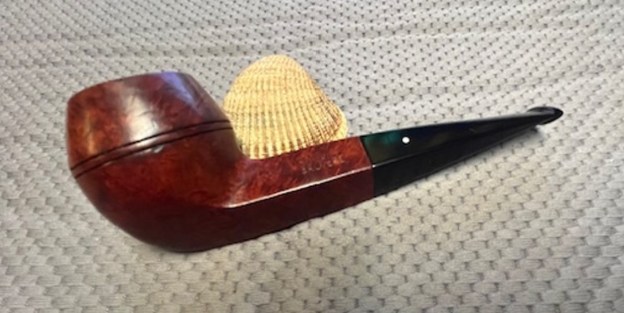
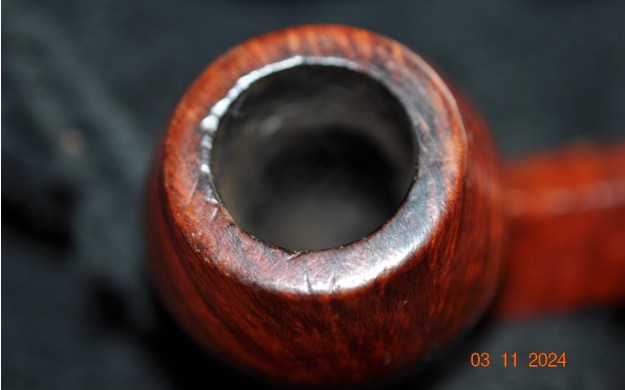
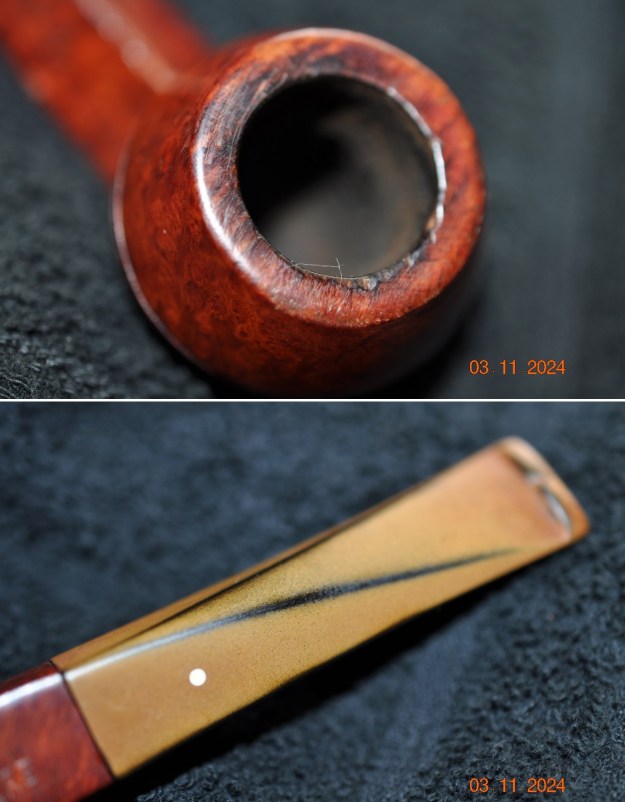
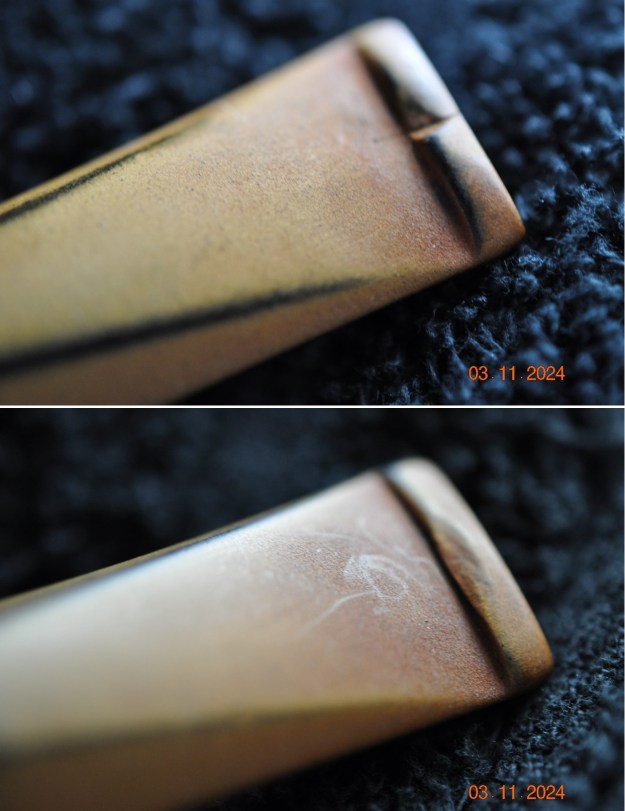
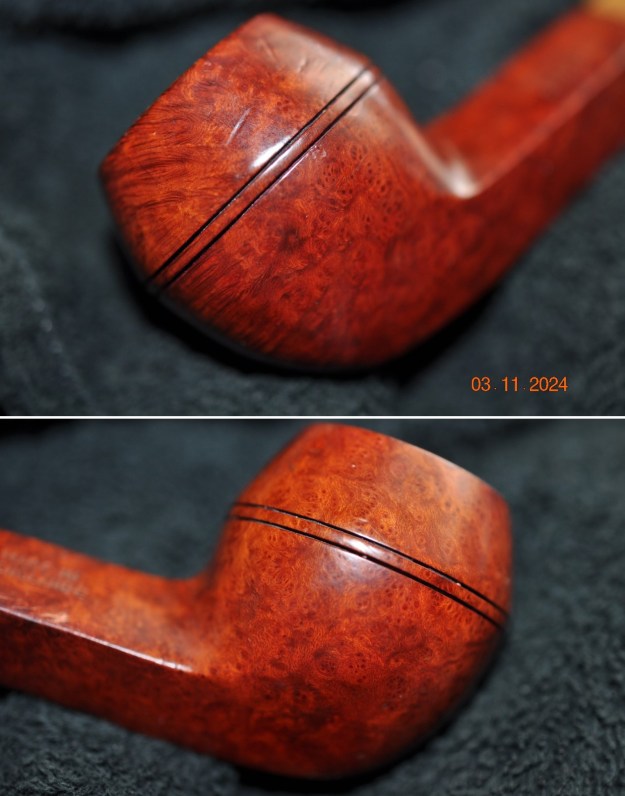
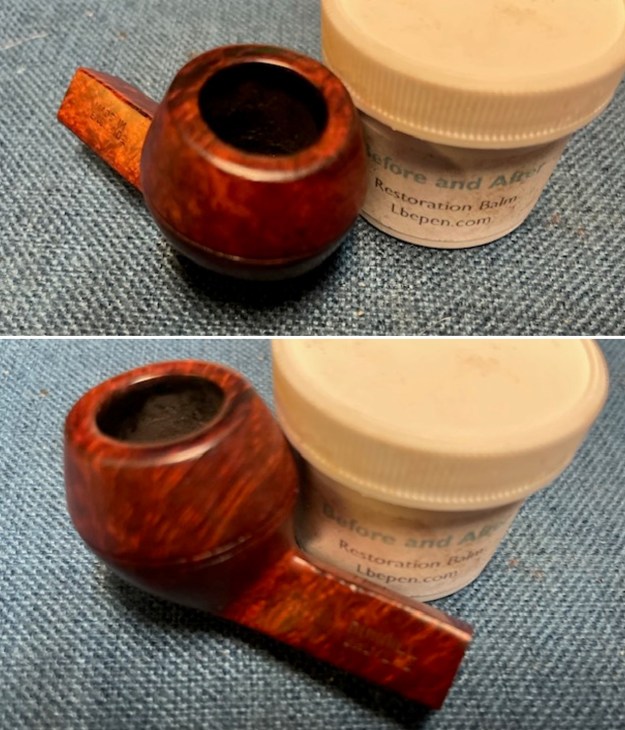
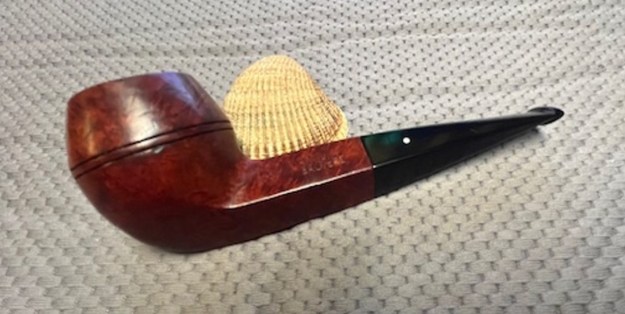
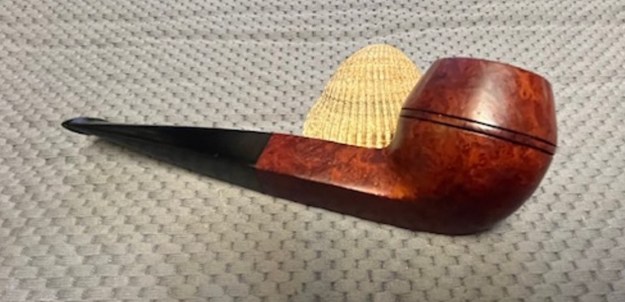
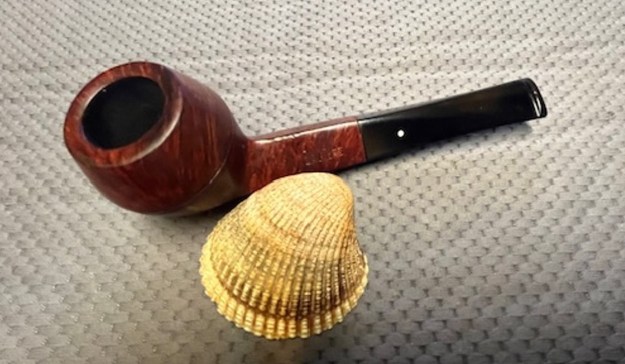
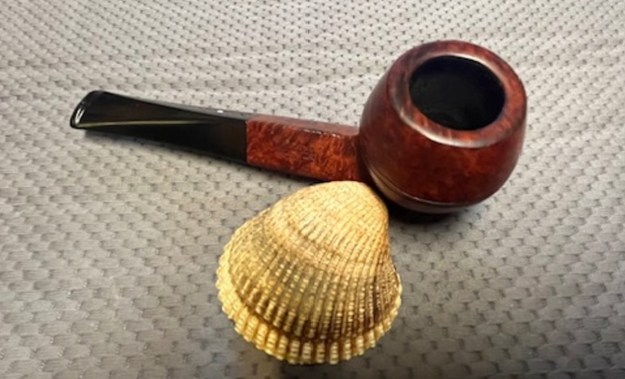
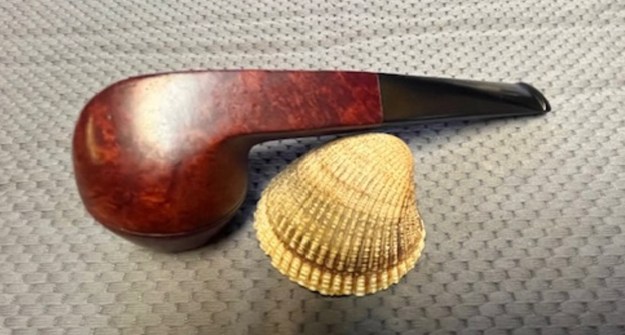
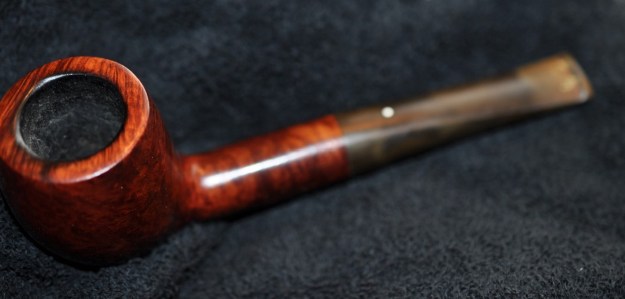
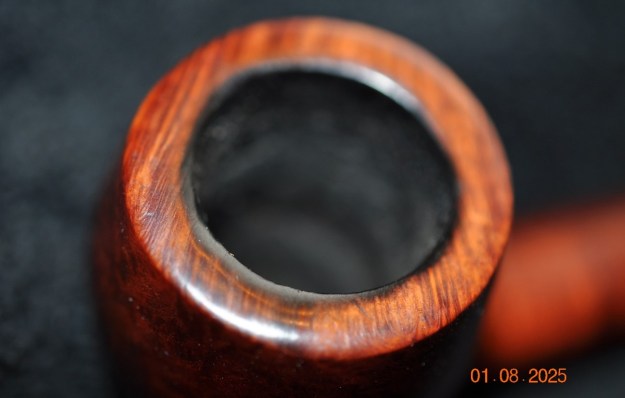
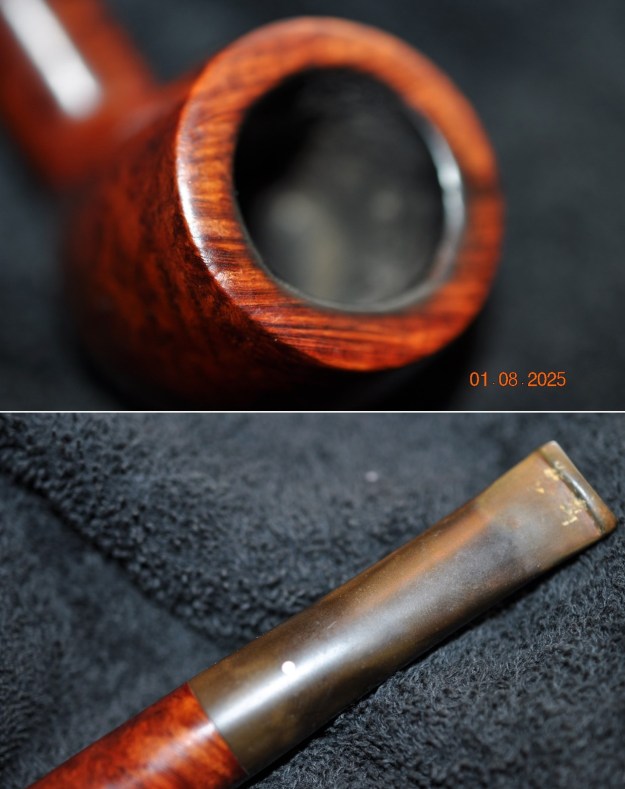
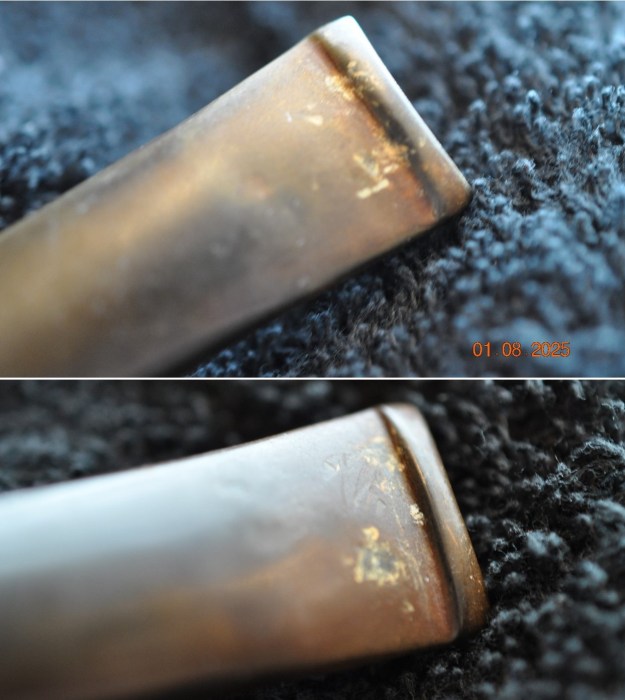
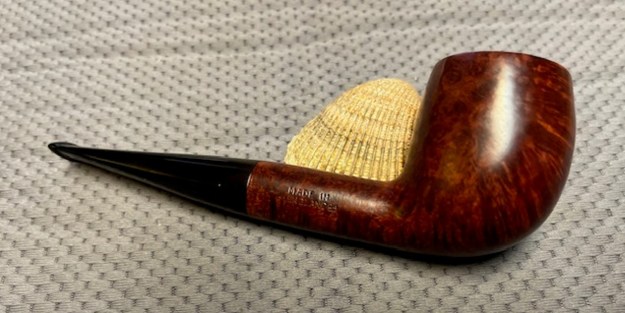
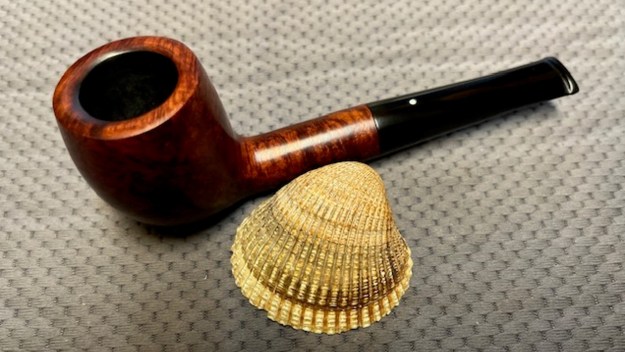
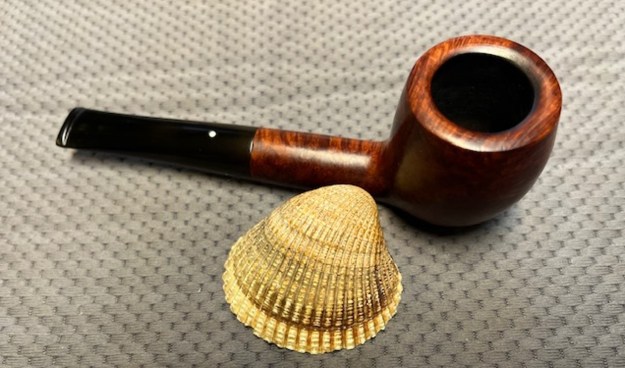
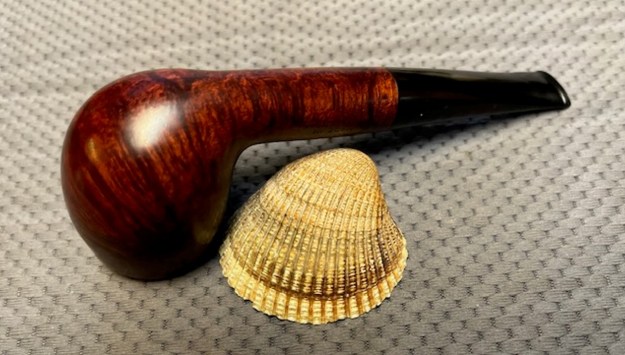
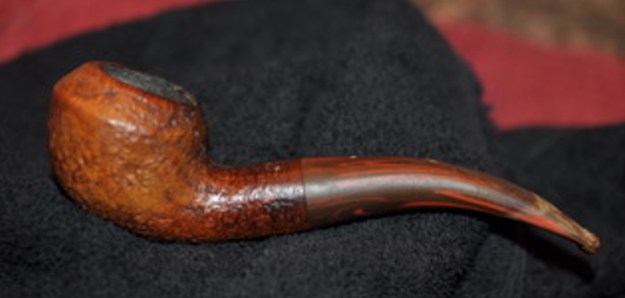
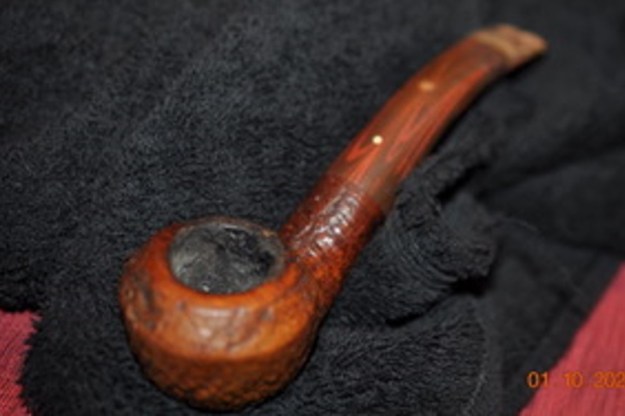
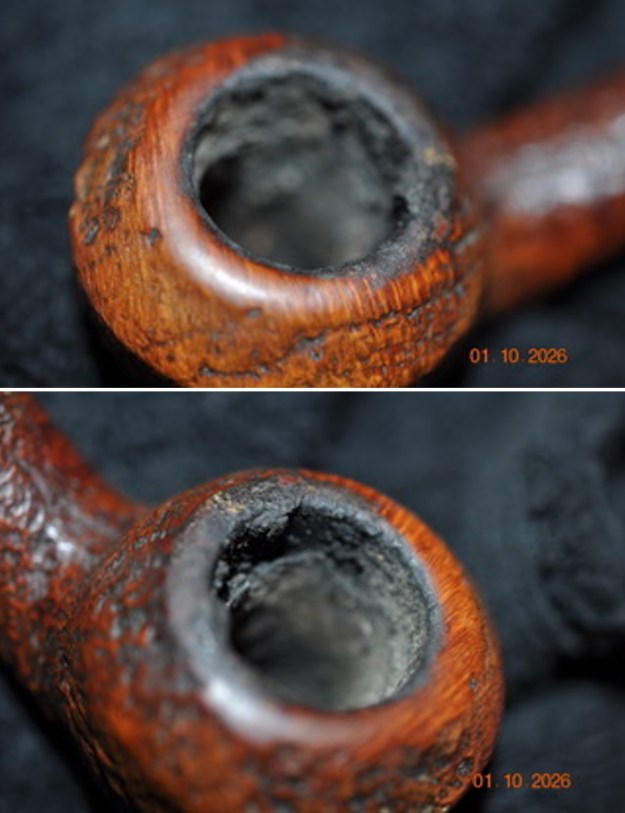
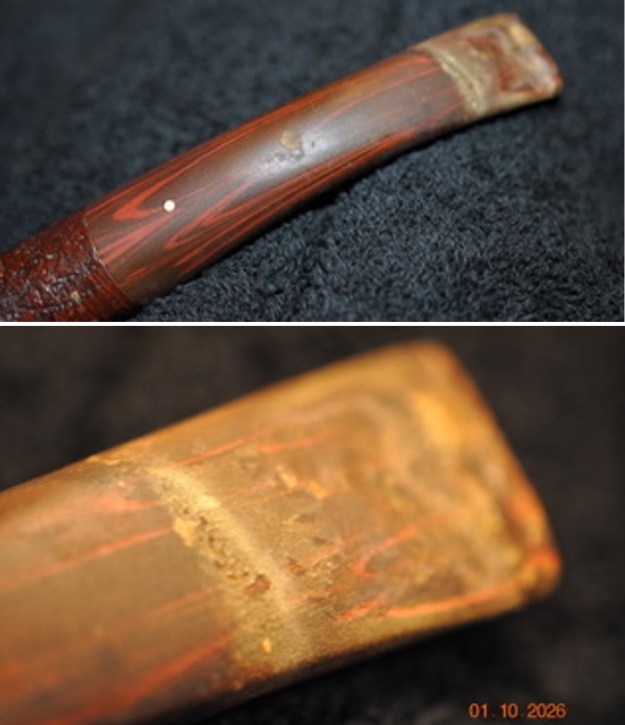
The next pipe on the table is one that we picked up in the lot from a seller in Ogden, Utah, USA on 12/12/2024. The shape/size, grain, finish and the Merchant Service stamping is what caught our eye. It is stamped on the left side of the shank and reads Merchant Service. On the right side it is stamped Special in script. It has a smooth finish that is stained dark that highlights the beautiful grain around the bowl and shank. The shank includes a nickel band as standard equipment for decoration. Both go well with the long, thin vulcanite taper stem. The bowl appears to be moderately caked and the inner edge and the top show some lava overflow and darkening. The stem is oxidized and has some tooth marks and chatter on the top and underside ahead of the button. There is no stamping or logos on the nickel band or the stem. Jeff took some photos of the pipe to show the general condition of the pipe before he started his clean up. He took some photos of the rim top and bowl from various angles to give me a clear picture of the condition of the rim top and bowl. You can see the lava and darkening on the rim top and inner edge of the bowl. The cake in the bowl is visible as well but is thicker than the photos show. He included photos that show the top and underside of the stem. It is as described above. Jeff took some photos of the sides and heel of the bowl to show the condition of the finish on the pipe. The photos showed some great grain around the bowl and shank under the dirt and grime of use. It is a great looking piece of briar. He took some photos of the stamping on the sides of the shank. The stamping was clear and readable as noted above. I turned to both Pipephil’s site and Pipedia to gather some historical information on the brand. There was nothing on Pipephil’s site and Pipedia had a brief quote from Manuel Lopes that I have included below (https://pipedia.org/wiki/Herbert_Merchant_Inc.).
Herbert Merchant Inc owned by Herbert Merchant, who died in 1944. They made the Marchent Service pipe, which later belonged to Holland Penny Limited. It was a favorite of the Norh American entertainer Bing Crosby.

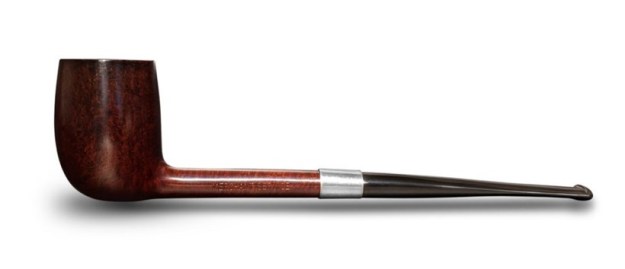
I knew I was not dealing with the older brand of Merchant Service Pipes as I had heard and read that the brand had been resurrected and was operating in England. I googled the website and found a link that I have included (https://merchantservicepipes.com/?v=5435c69ed3bc). I quote sections of the site below and have included a photo from the site as well.

British pipe design has withstood the test of time because it represents the confluence of function with elegance. We have produced our products to share this vision of classic design. A lengthy search for the best materials has now enabled us to reproduce an icon of smoking pipe history.

A bit of history…

Among the joys of pipe smoking and collecting is understanding and appreciating the traditions of the craft.

Perhaps the greatest traditions are associated with the British. For decades they produced some of the most sought after brands by creating the most beautifully refined classic shapes. Interestingly, a brand surfaced in the late 1930s that was not very well known. A small English company produced a unique variation on the billiard shape that caught the eye of a noted American crooner and famous pipe smoker.

That shape ultimately took on iconic proportions.     

.      When one looks at this shape, the smoker is taken back to a time when pipe smoking was commonplace. It reflects a certain quiet elegance that the British were noted for in men’s fashion – a style that is just as important today as it was when Frederick Sholte first designed the “drape” suit for the then Duke of Windsor.

And so we welcome the release of the new Merchant Service billiard pipe. It is offered in smooth, sandblasted and rusticated models at prices that will appeal to a broad spectrum of today’s smokers. We offer two versions of the billiard. The “Special” is made with a larger bowl than the original British version. The “Standard” is very close to the smaller original bowl specifications. Otherwise both versions have essentially the same proportions and length. Therefore, the smoker has the option of a longer or shorter smoke as the mood strikes.

Our briar has been carefully sourced to produce bowls that are well aged and dry. Special attention has been paid to produce an open draw and to minimize turbulence. These details will produce satisfactory performance and at a reasonable price.

Please examine our pipes. We at Merchant Service sincerely believe you will enjoy our pipes as much as previous generations enjoyed the originals.

I now knew that I was working on the larger bowled “Special” and not the standard. It is truly a large pipe but incredibly light weight. The grain and flow are spectacular.

On the site I turned to the store and found the pipe I was working on. It is called a Special Dark Smooth (https://merchantservicepipes.com/shop/dark-smooth/?v=5435c69ed3bc). I have included a photo and description below

Special Dark Smooth         A richly burnished finish in the British tradition.

Approximate Measurements   Bowl Height:       ~2″
Chamber Depth: ~1-3/4″
Chamber Width: ~13/16″
Overall Length:   ~7 -1/2″+
Weight: ~1-1/2 oz
Stem Material: Vulcanite

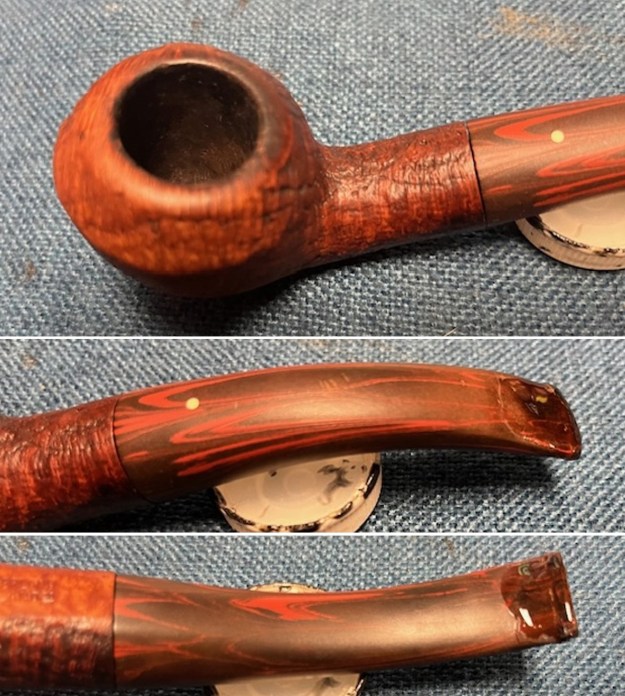
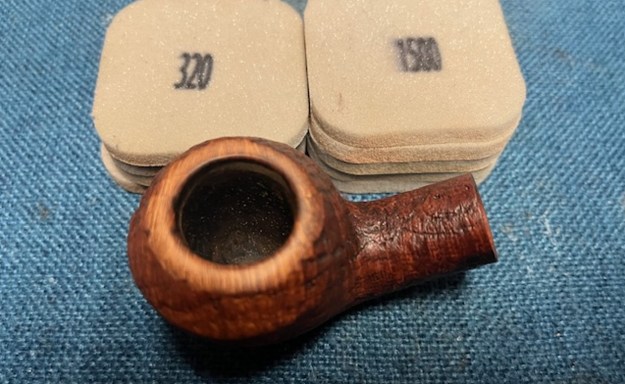
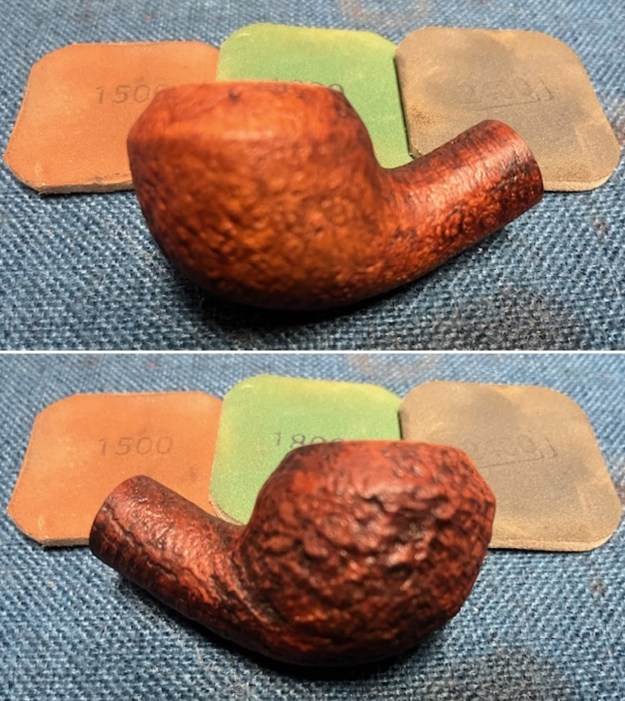
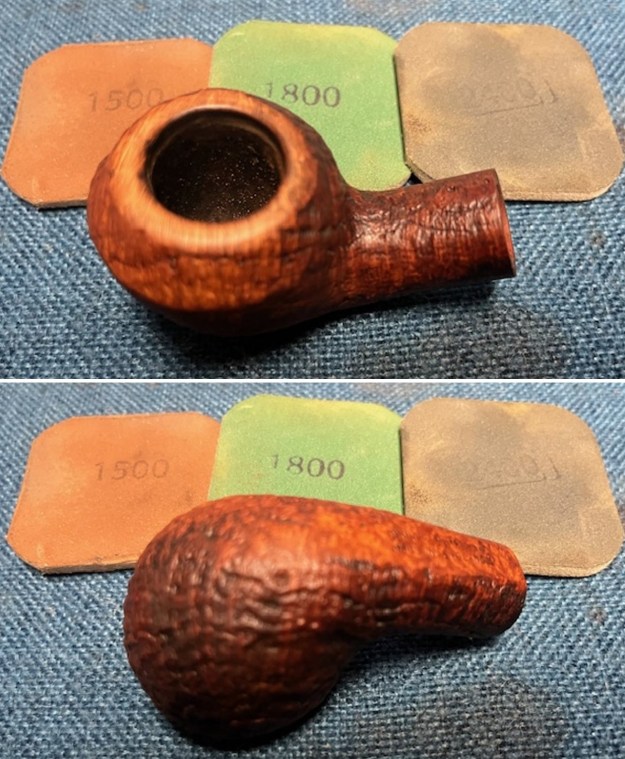
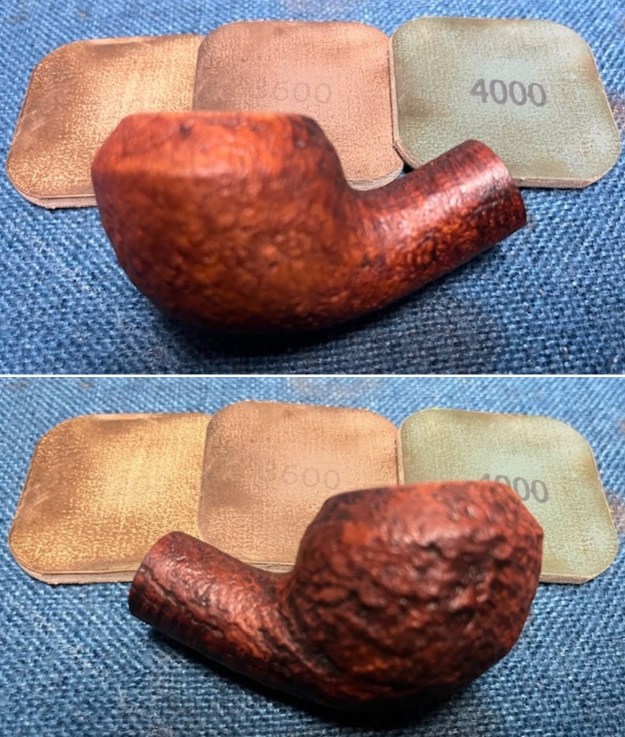
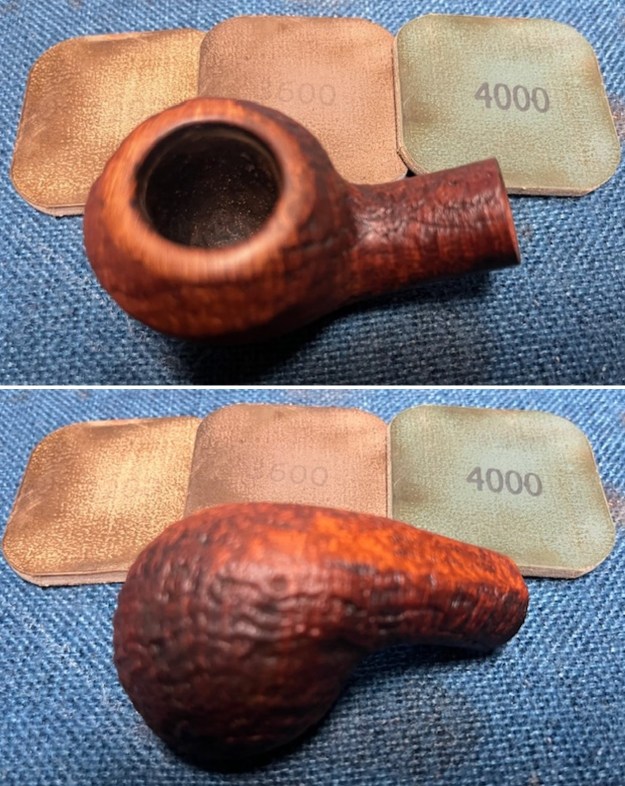
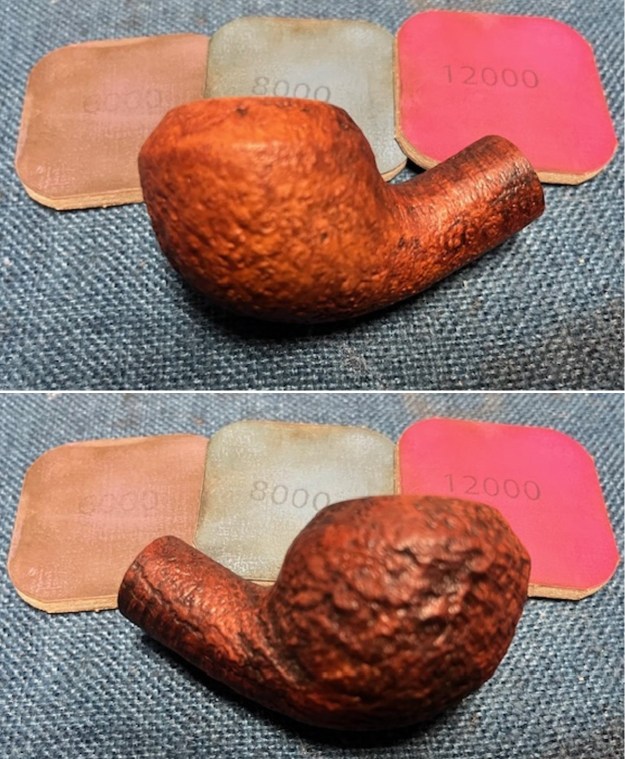
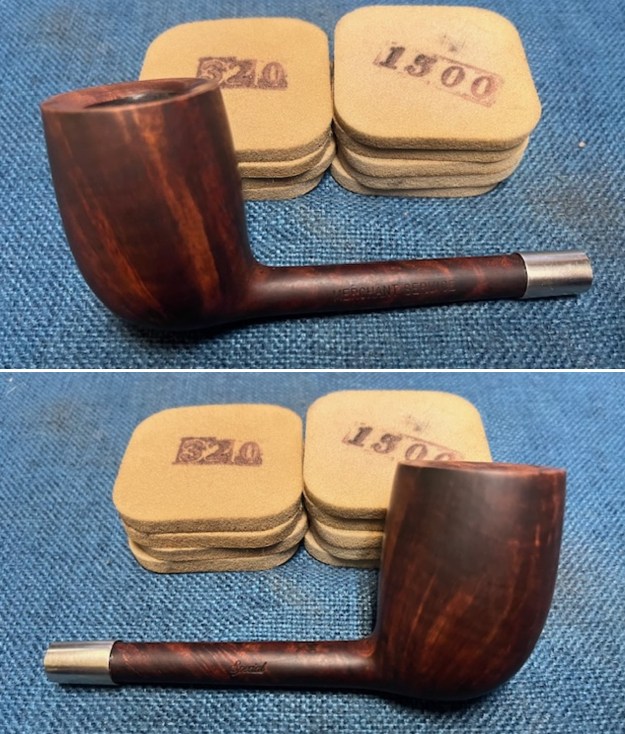
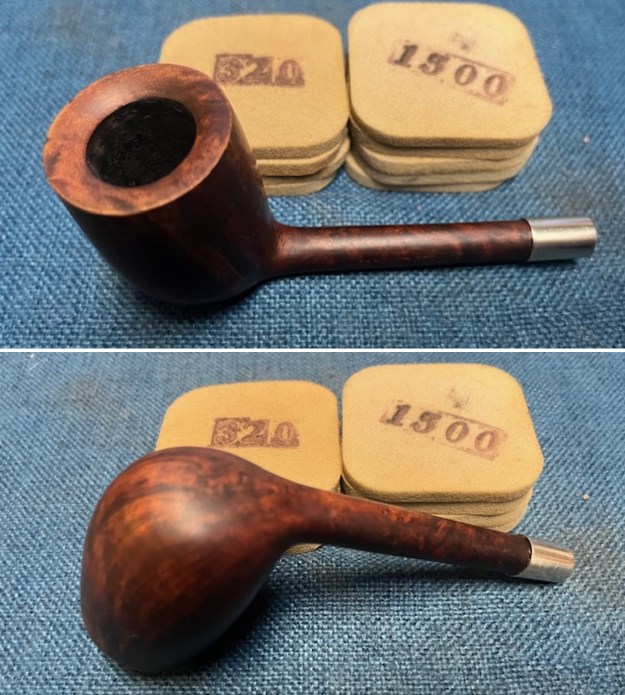
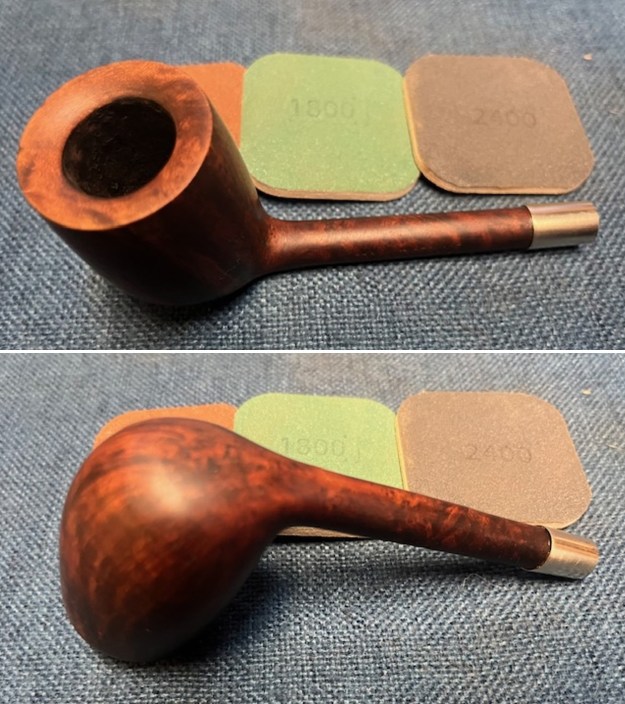
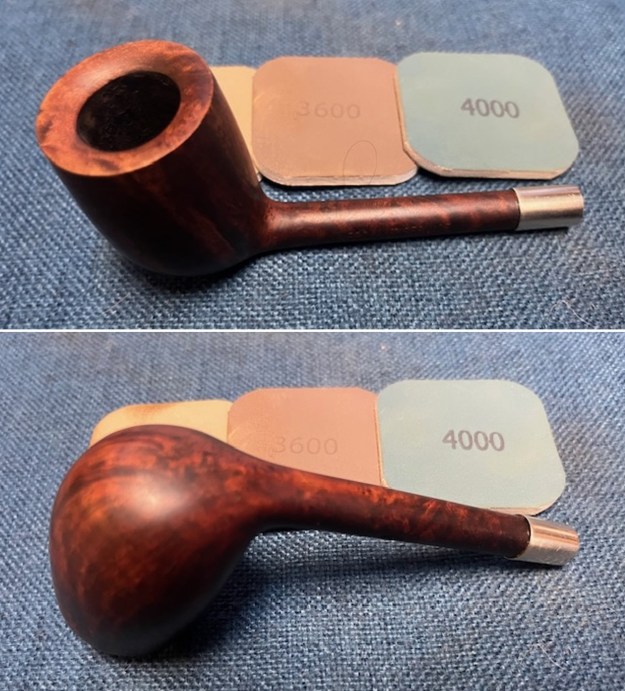
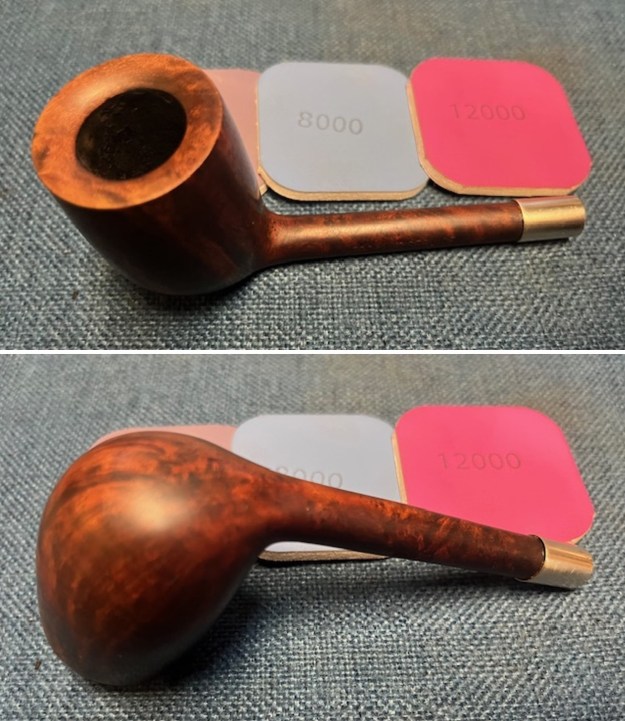
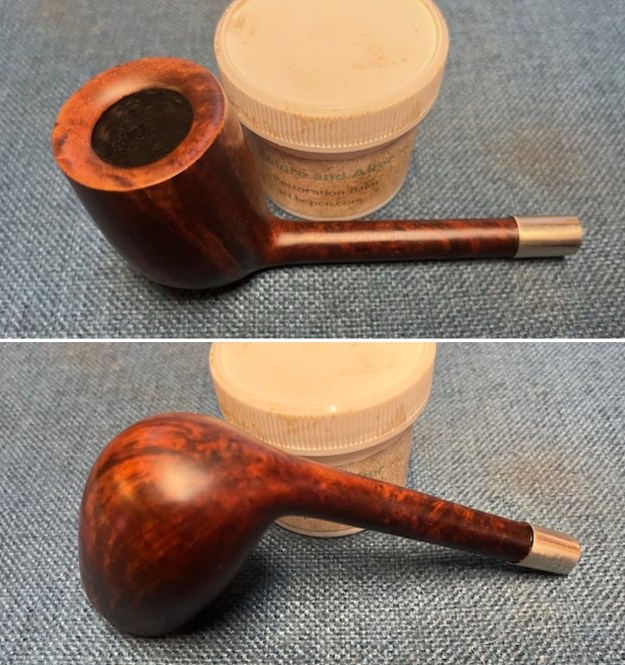
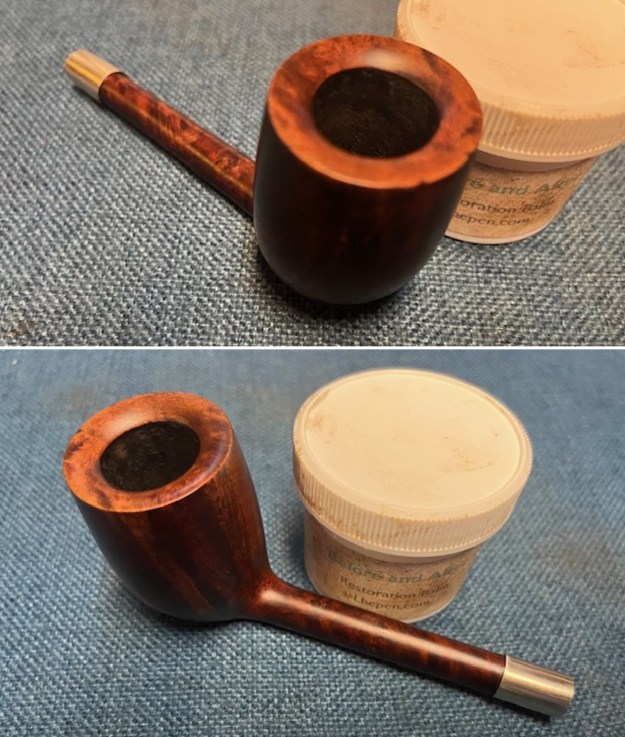
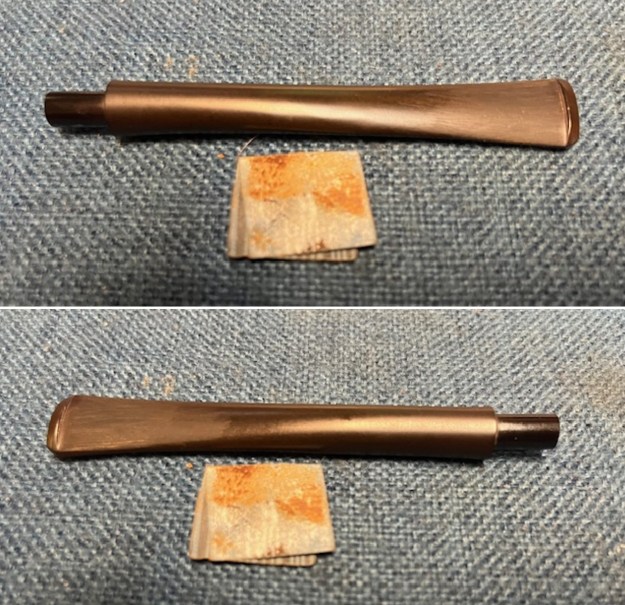
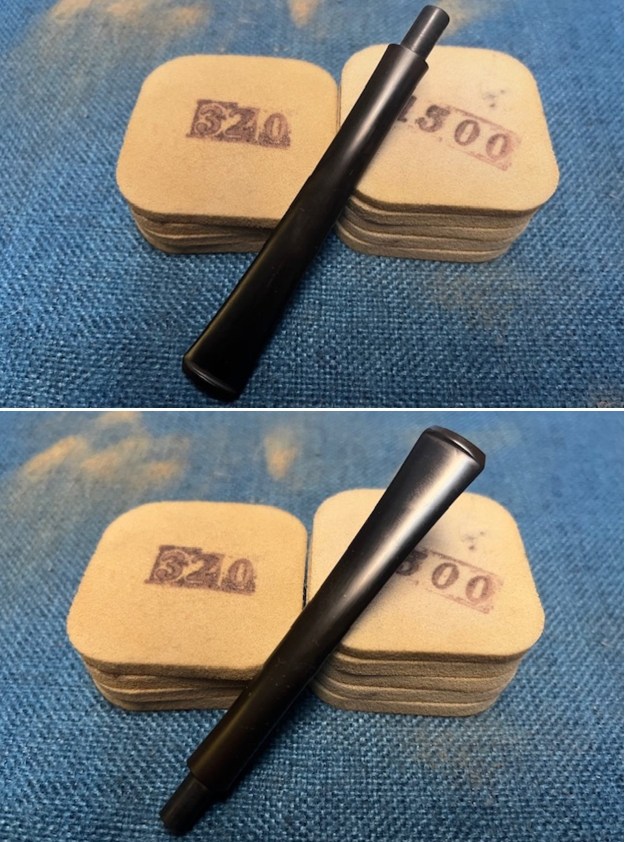
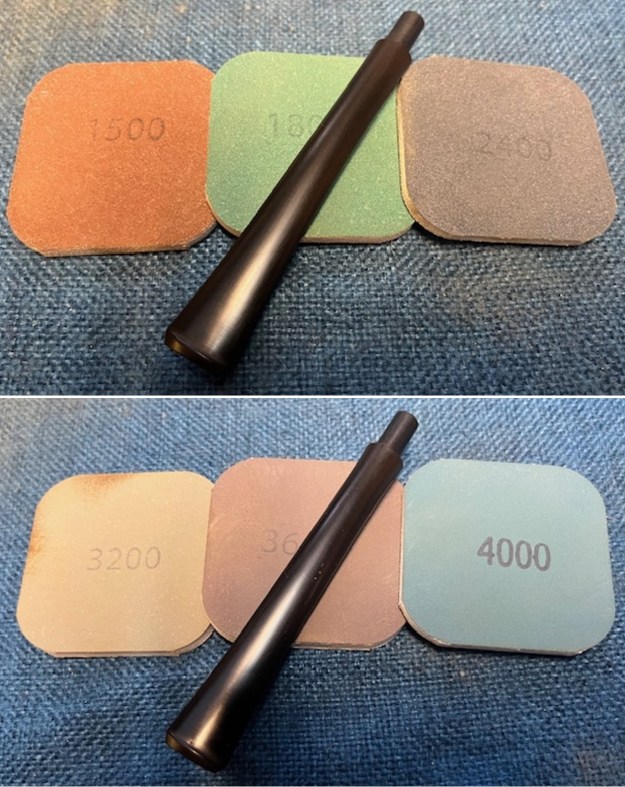
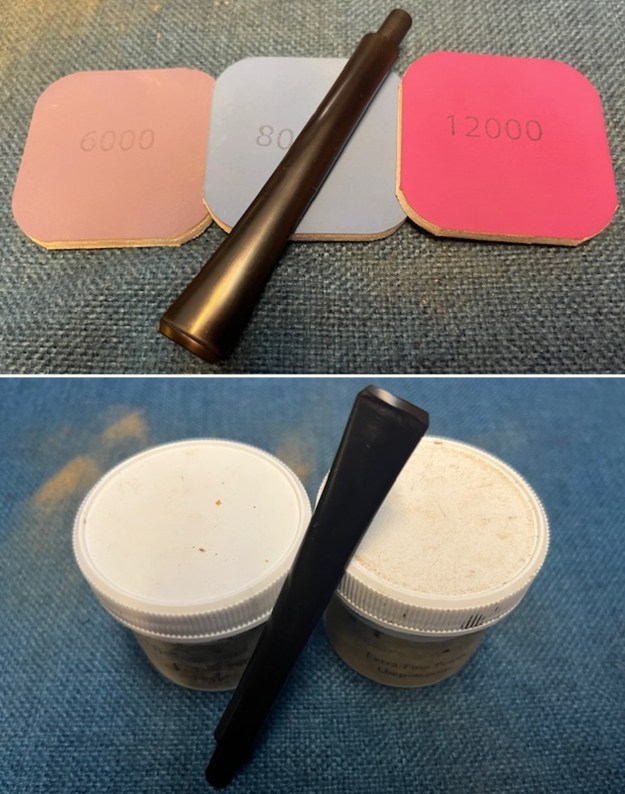
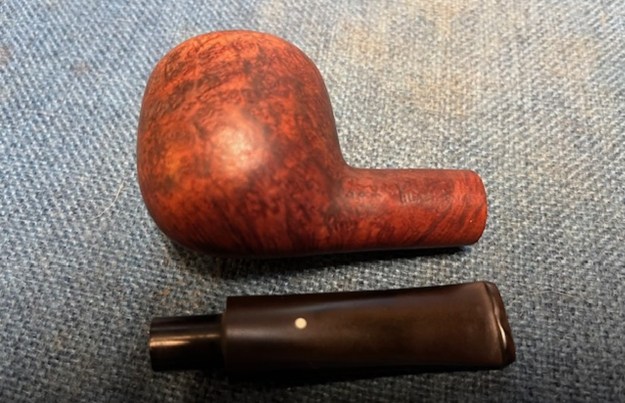
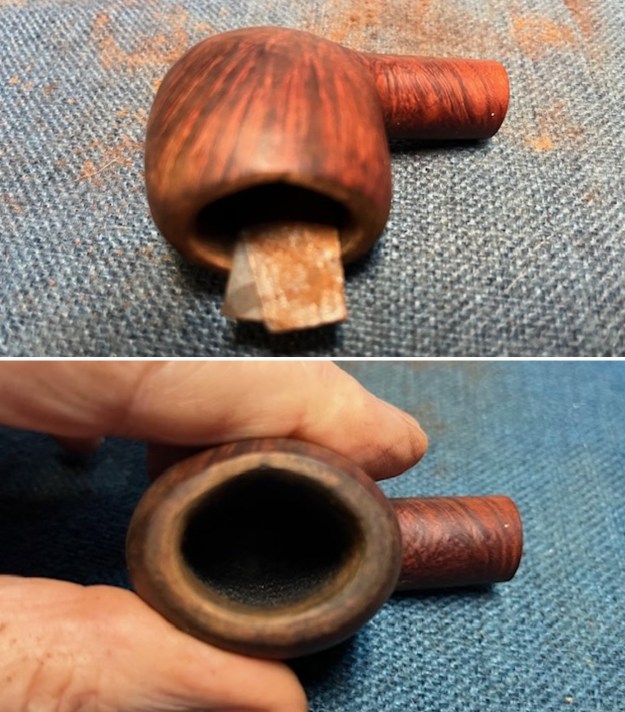
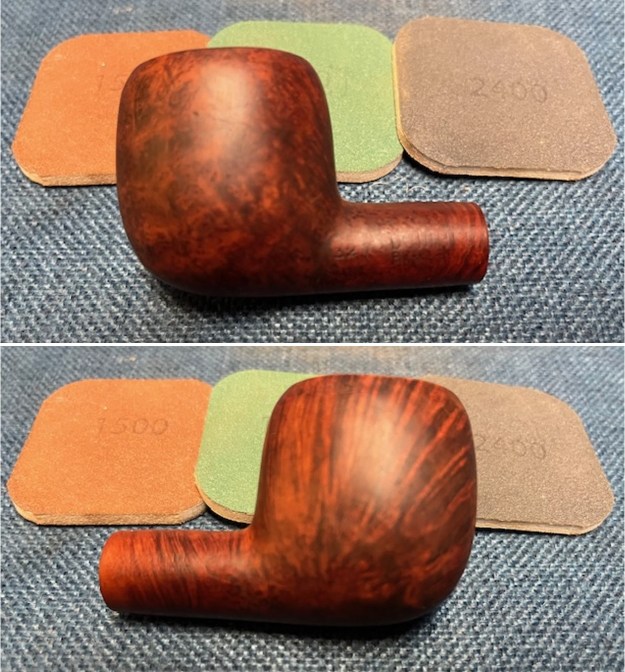
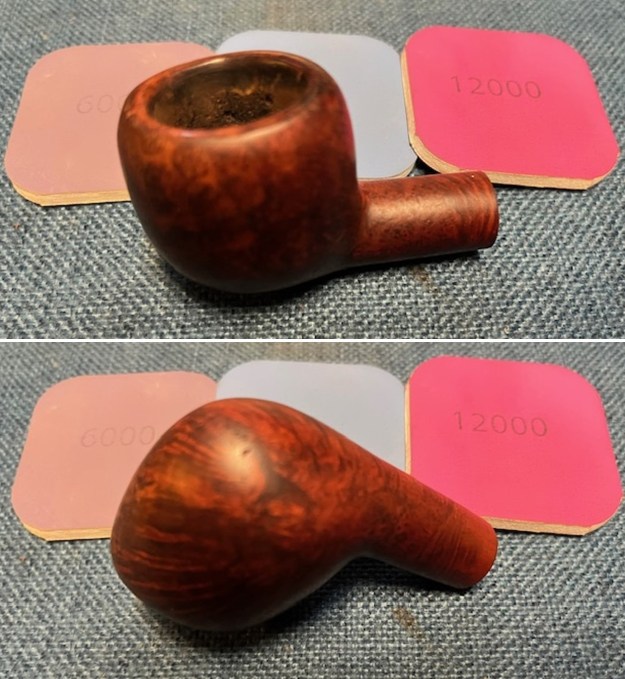
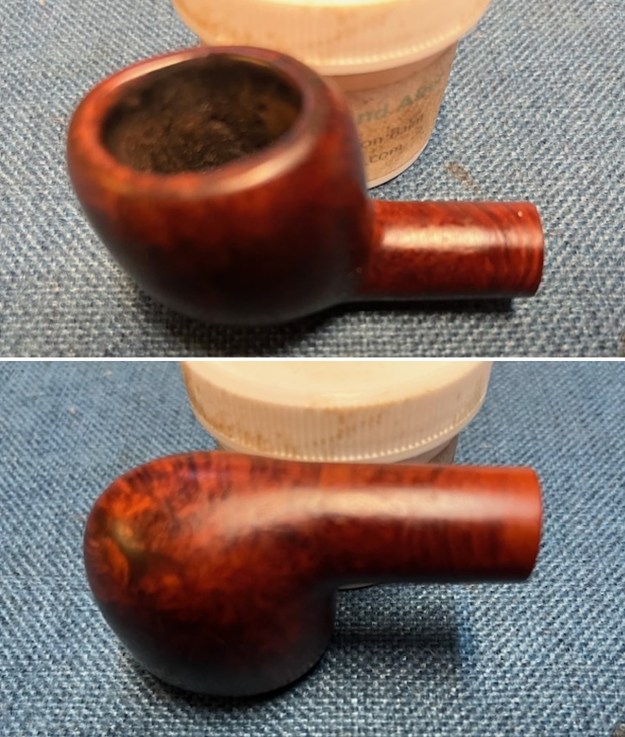
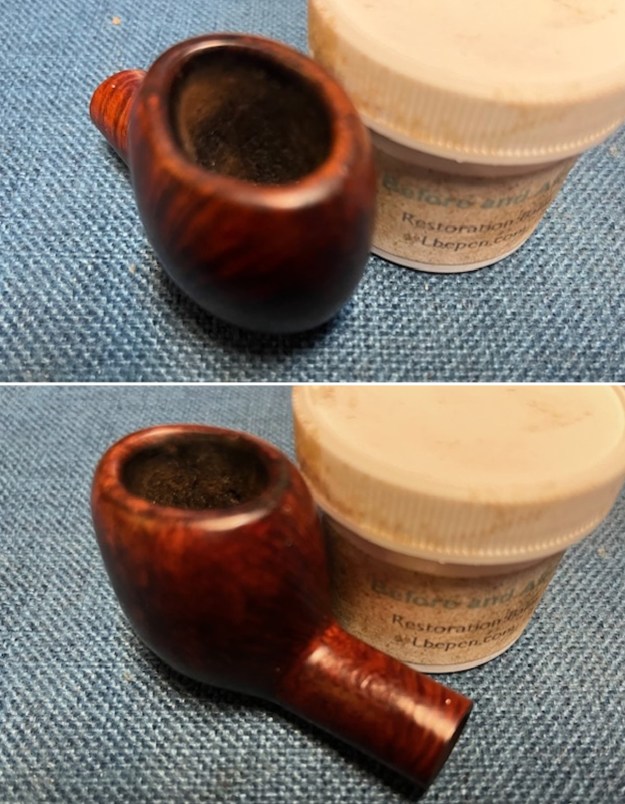
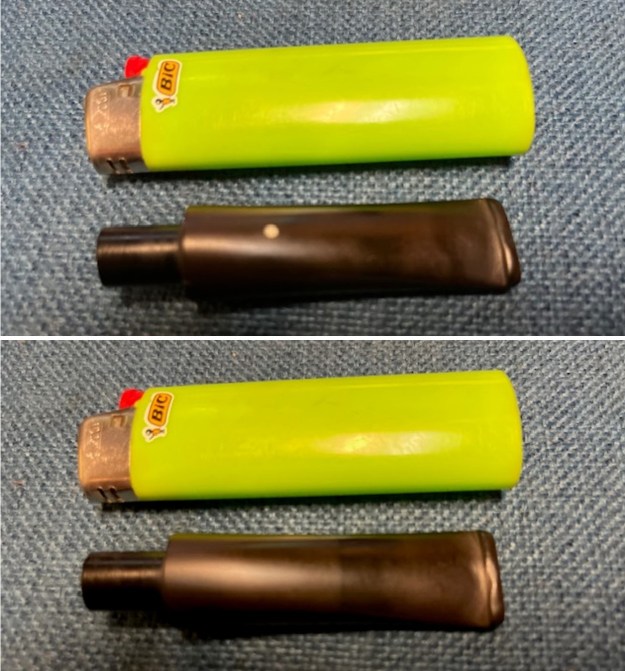
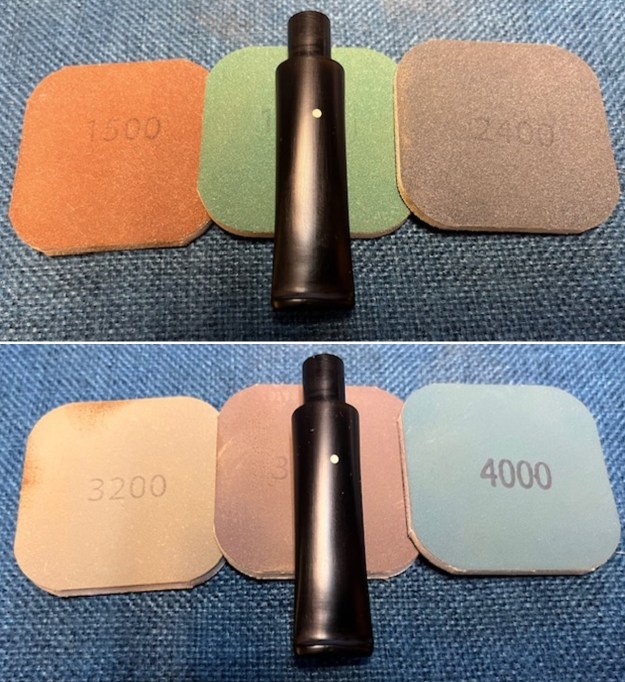
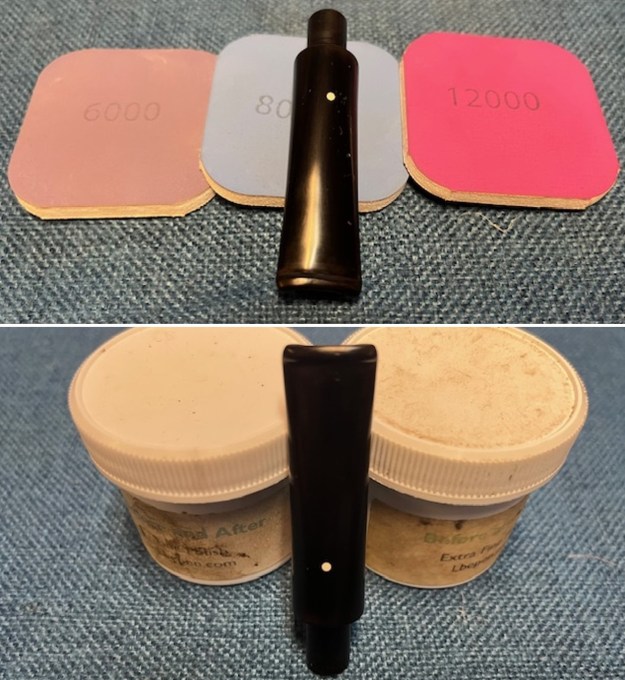
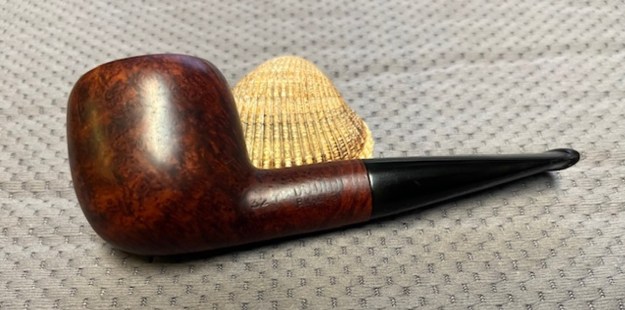
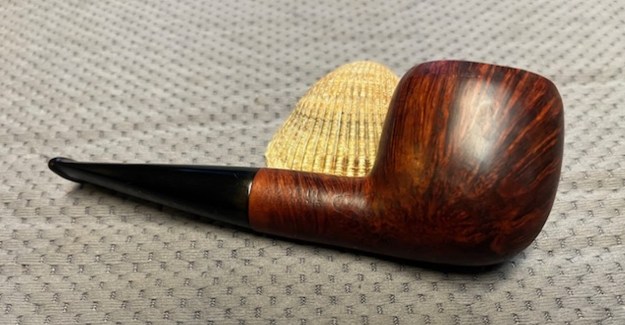
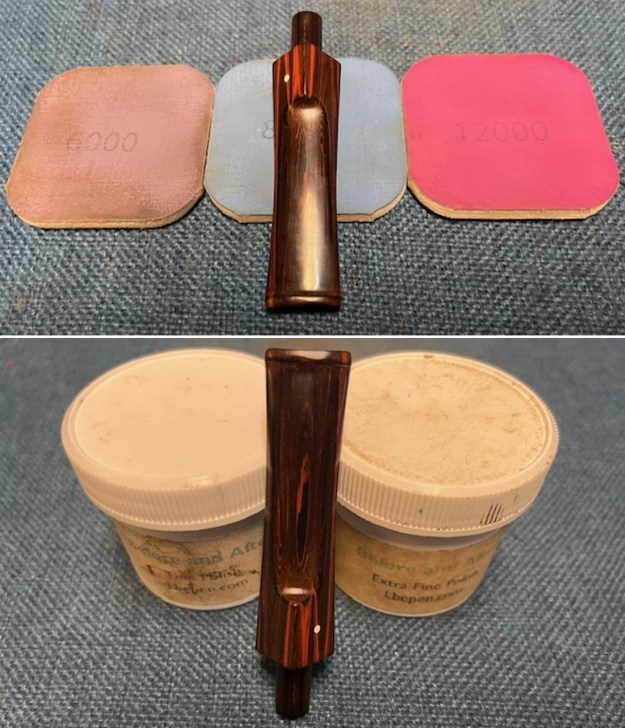
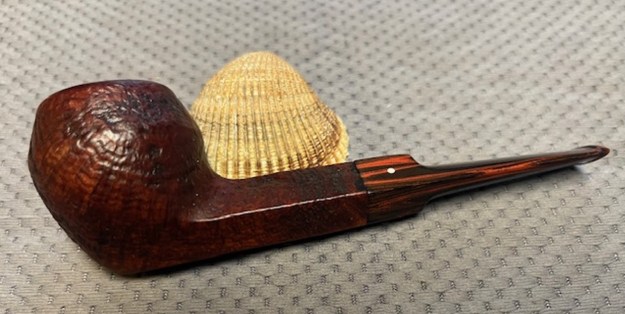
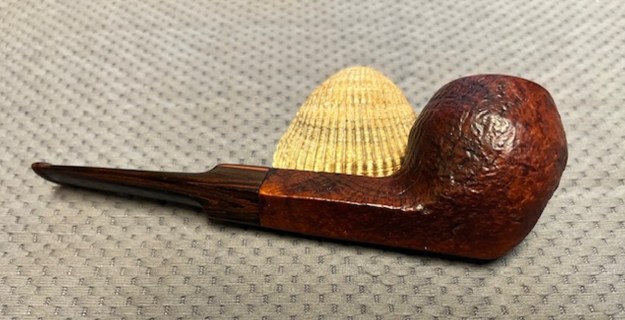
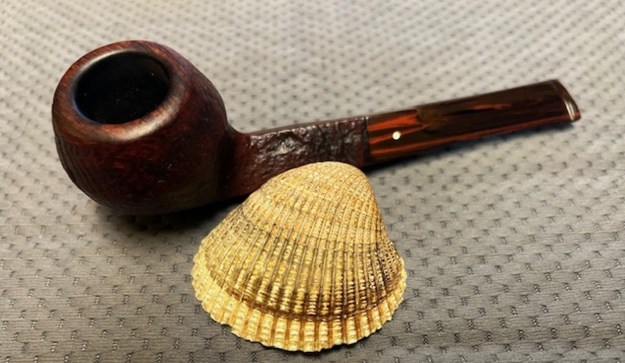
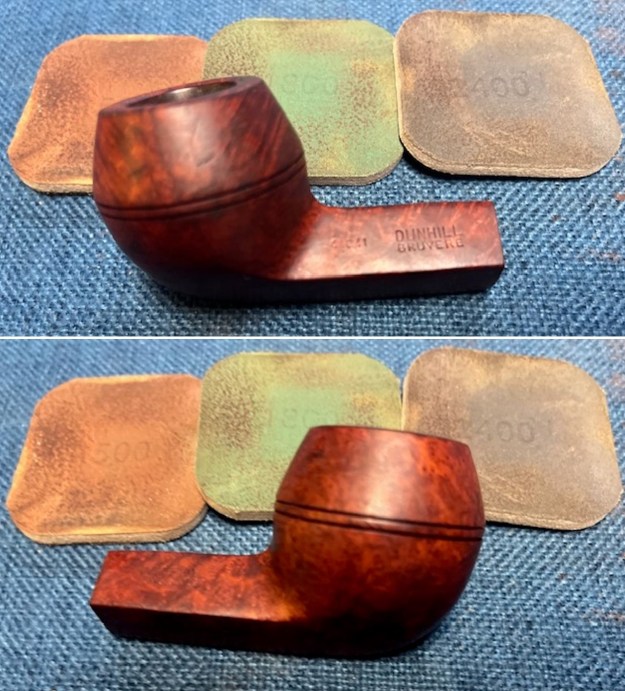
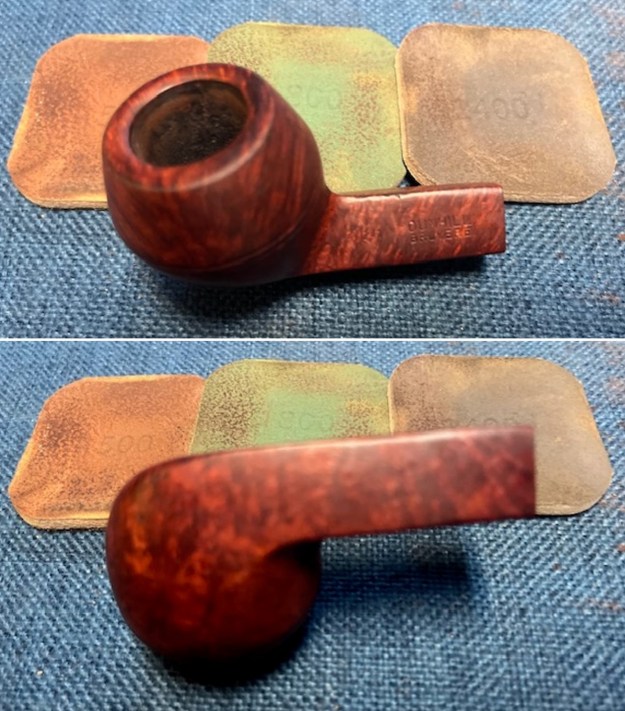
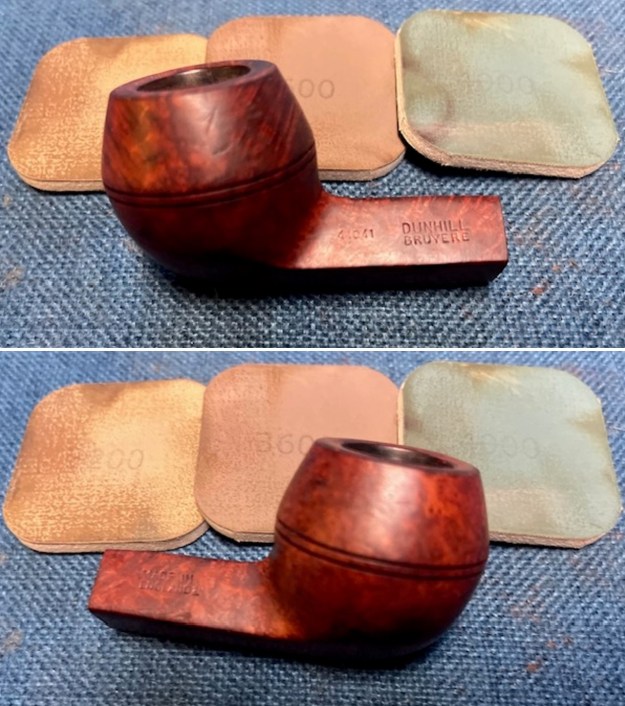
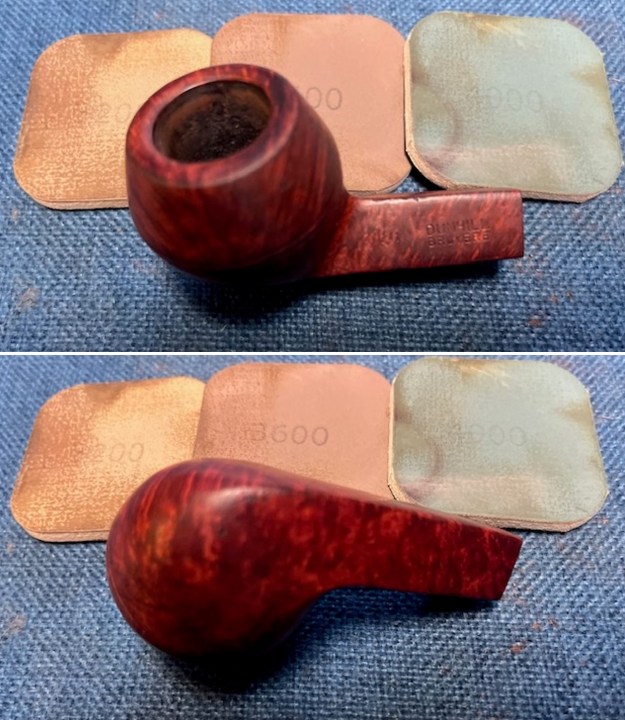
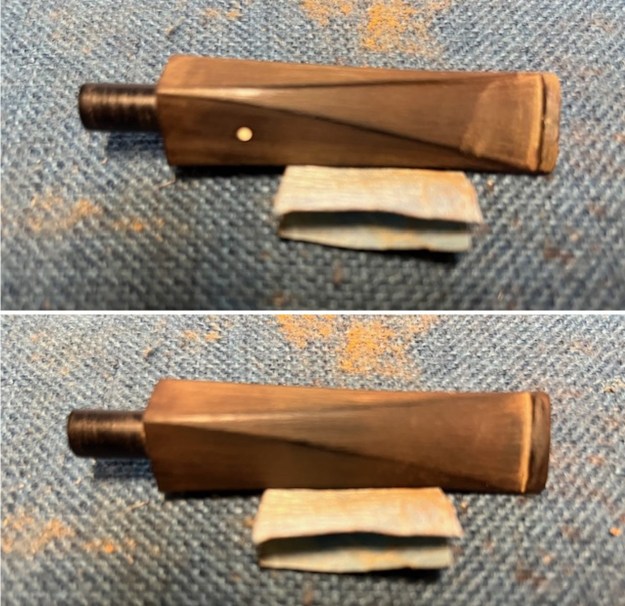
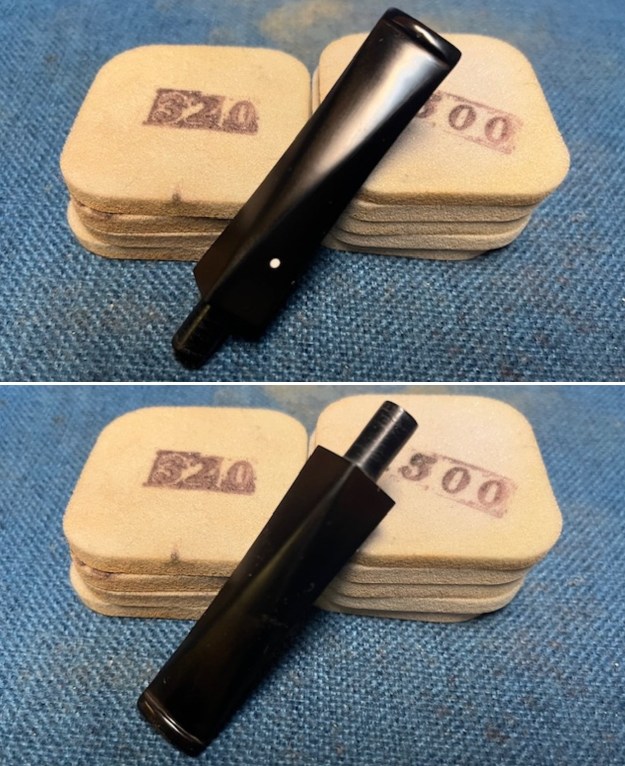
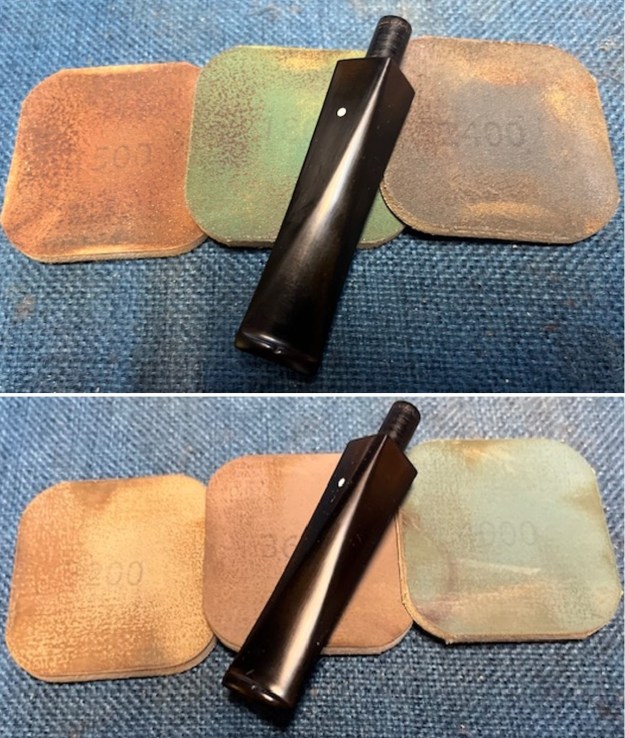
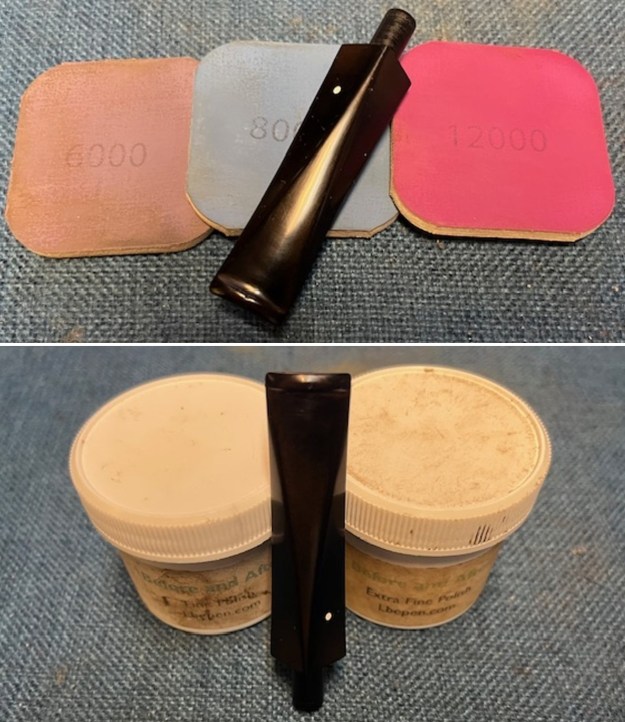
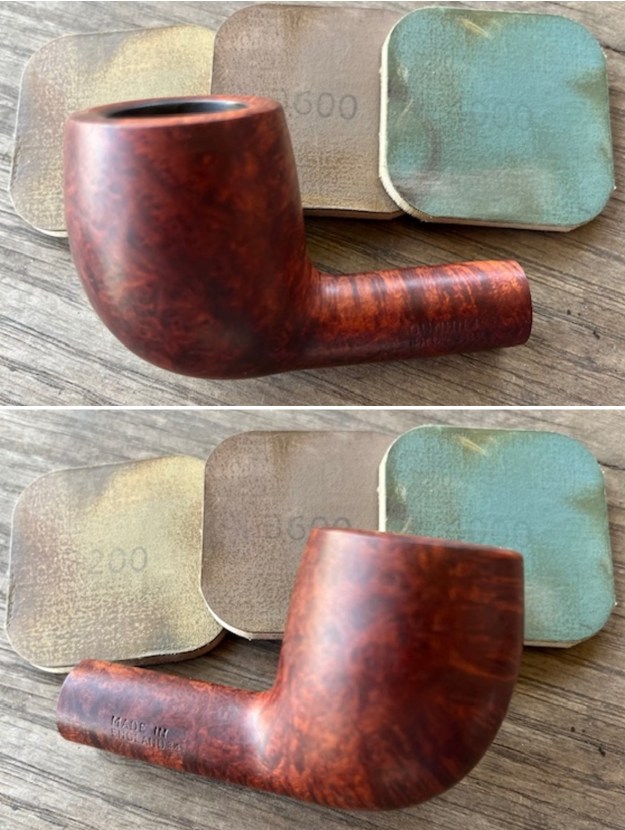
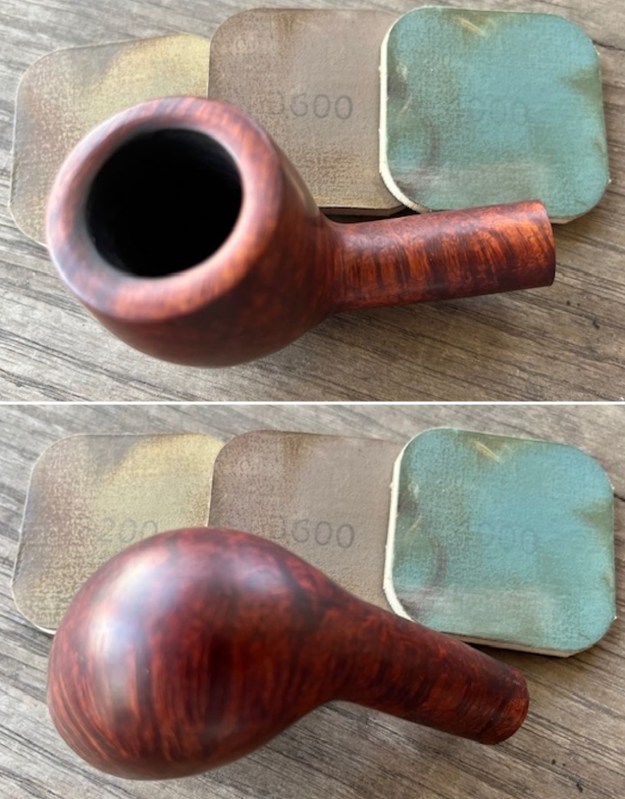
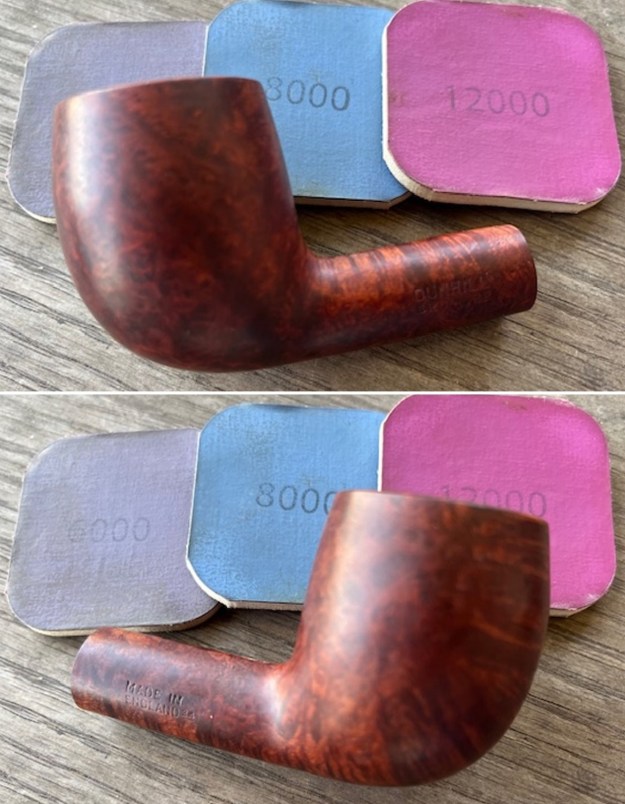
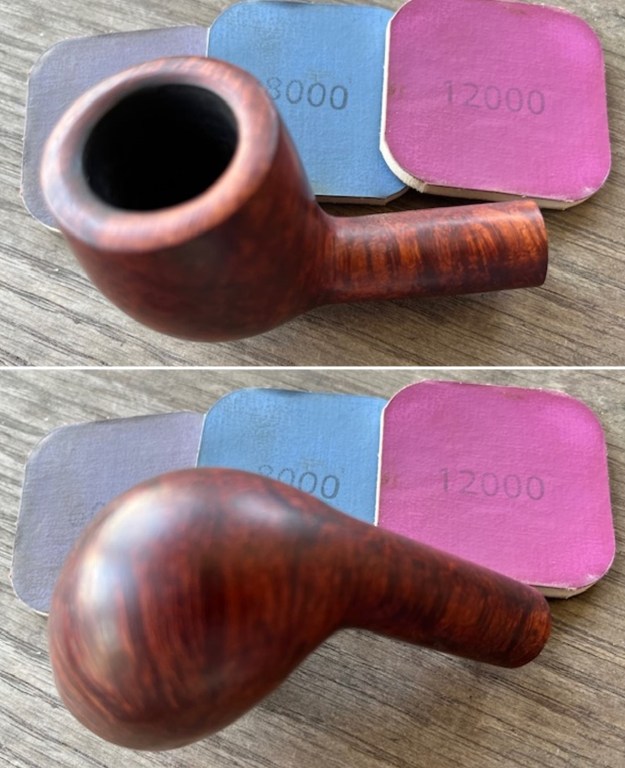
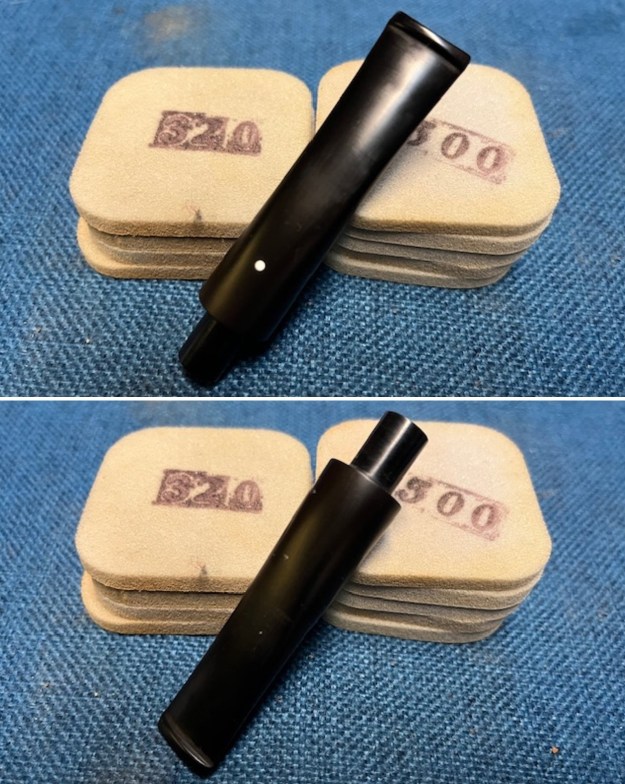
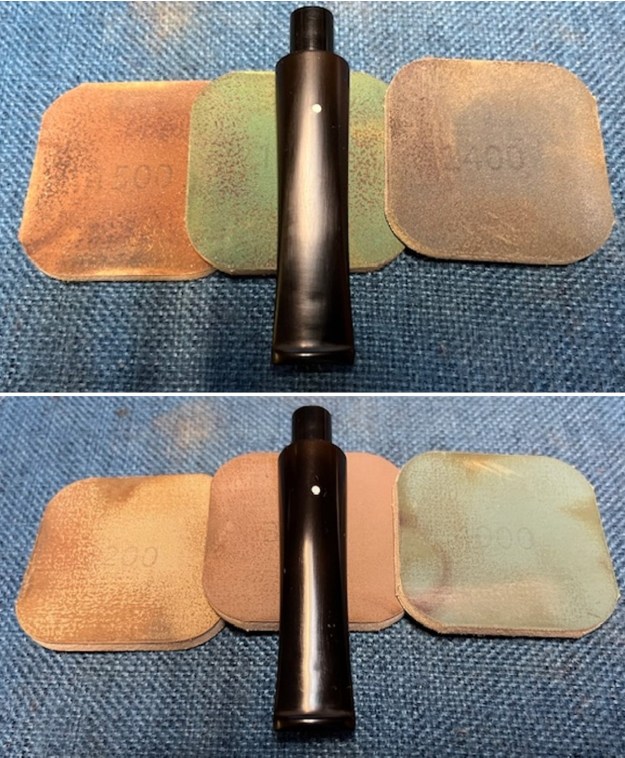
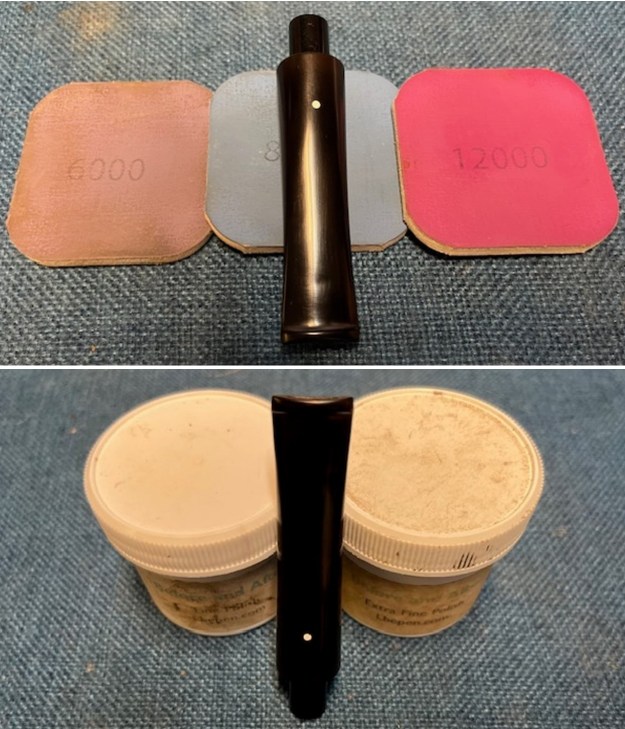
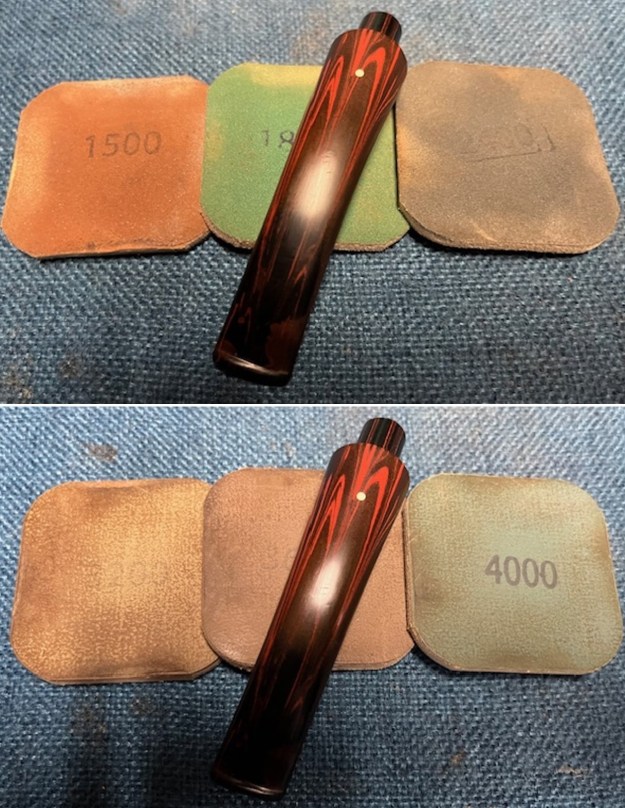
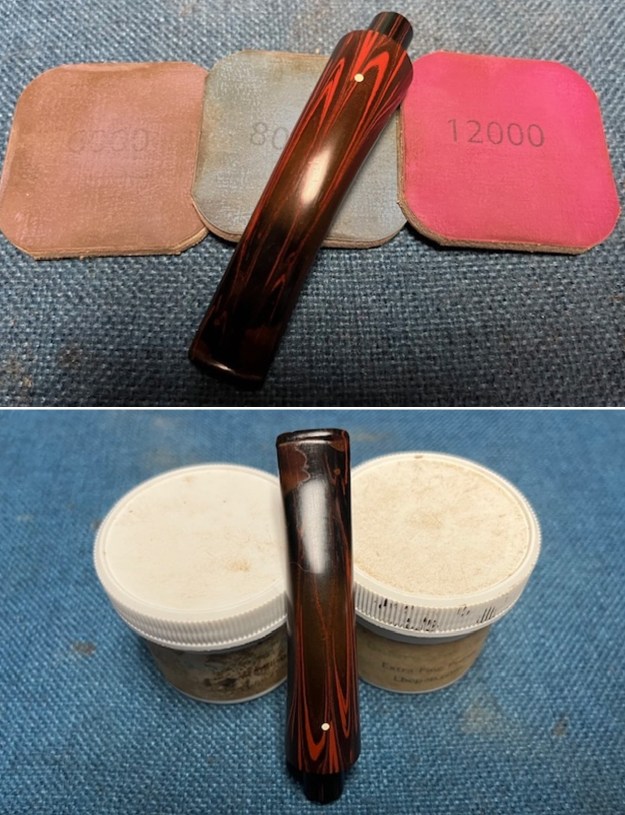
Armed with that information I turned to work on the pipe itself. Jeff had done a great job cleaning up the pipe as usual. He cleaned up the inside of the bowl with a PipNet reamer and a Savinelli Fitsall Pipe Knife. The rim top and the inner edge of the bowl look very good. The bowl walls looked very good. He scrubbed the interior of the bowl and shank with pipe cleaners, shank brushes, cotton swabs and alcohol to remove the tars and oils. He scrubbed the exterior of the pipe with undiluted Murphy’s Oil Soap and a tooth brush to remove the grime from the finish. He worked on the rim top lava and darkening with the soap and tooth brush. He scrubbed the inside of the stem with alcohol and pipe cleaners. He scrubbed the exterior with Soft Scrub and then soaked it in Briarville’s Pipe Stem Deoxidizer. He washed it off with warm water to remove the deoxidizer. The stem looked good with only light chatter on both sides ahead of the button. I took photos of the pipe when I received it before I started working on it. I took close up photos of the bowl, rim top and stem to show how clean the pipe was. The bowl was clean and the rim top and the inner edge look very good. The stem was clean and the light tooth marks and chatter can be seen in the photos.I took photos of the stamping on the sides of the shank. It is very clear and readable and read as noted above. I also removed the stem from the shank and took photos of the pipe to show the look of the parts.I started my work on the pipe sanding the bowl and rim top with 320-3500 grit sanding pads. I wiped the bowl down after each pad with a damp cloth. The grain is really beginning to stand out.I started my work on the pipe sanding the bowl and rim top with 320-3500 grit sanding pads. I wiped the bowl down after each pad with a damp cloth. The grain is really beginning to stand out. I polished the briar with micromesh sanding pads – dry sanding with 1500-12000 grit pads. I wiped the bowl down between pads and was happy with the rich shine. The exterior of the bowl look better after sanding. I worked some Before & After Restoration Balm into the briar with my finger tips. I let it sit on the bowl for 10 minutes and then buffed it off with a paper towel and soft cloth. The product is a great addition to the restoration work. It enlivens, enriches and protects the briar while giving it a deep glow. It is a product I use on every pipe I restore. I set the bowl aside and turned my attention to the stem. I smoothed out the tooth chatter and marks on the surface of the stem with a folded piece of 220 grit sandpaper. I wiped it down with an Obsidian Oil cloth.I sanded the stem with 320-3500 grit sanding pads to remove residual oxidation on the stem surface and further blend the repairs into the surrounding vulcanite.It was ready for the next step. I polished it with micromesh sanding pads – dry sanding with 1500-12000 grit pads and wiping the surface down with Obsidian Oil after each sanding pad. It is really shining. I polished it further with Before & After Stem Polish – both Fine and Extra Fine. I gave it another coat of Obsidian Oil to finish this step. I am excited to be on the homestretch and look forward to seeing the Merchant Service Select Pipe put back together, polished and waxed. I put the bowl and stem back together and lightly polished the bowl and stem with Blue Diamond to polish them. I gave the bowl and the stem multiple coats of carnauba wax. I buffed the pipe on the wheel with a clean buffing pad to raise the shine. I hand buffed it with a microfiber cloth to deepen the shine. The depths of the grain really pop with the wax and polish. The repaired and polished vulcanite stem is a beautiful contrast to the combination of Black and Brown stains on the bowl and shank. This Merchant Service Large Select Billiard was fun to bring back to life. The pipe is light weight, comfortable in the hand and should feel great as it is warmed up when smoking. The finished pipe is shown in the photos below. The dimensions of the pipe are Length: 8 inches, Height: 2 inches, Outside diameter of the bowl: 1 ¼ inches, Chamber diameter: ¾ of an inch. The weight of the pipe is 1.62 ounces/46 grams. I will be putting this one on the rebornpipes store in the British Pipemakers Section soon. Let me know if you wish to add it to your collection.

As always, I encourage your questions and comments as you read the blog. Thanks to each of you who are reading this blog. Remember we are not pipe owners; we are pipe men and women who hold our pipes in trust until they pass on into the trust of those who follow us.

Restoring a Dunhill Black Briar 32 F/T Circle 4 Opera Pipe


by Steve Laug

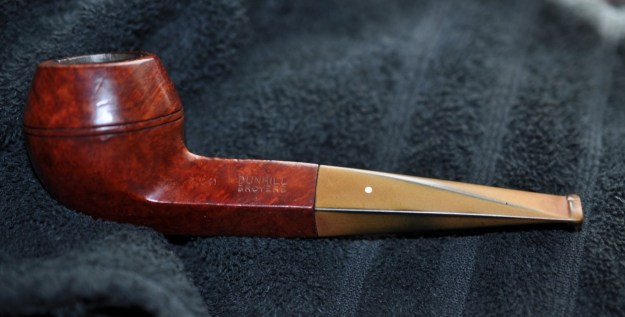
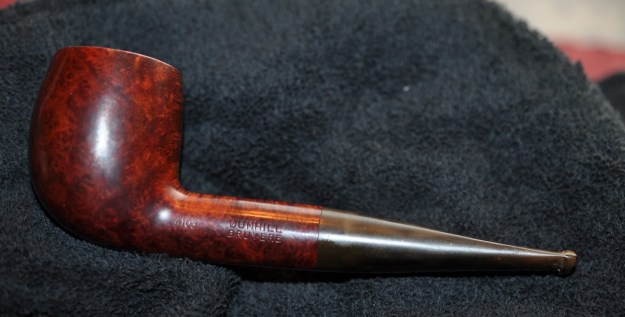
The next pipe on the table is one that we picked up in the lot from our contact in Copenhagen, Denmark on 08/09/2024. The shape, grain, finish and the Dunhill stamping is what caught our eye. It is stamped on the left side of the shank and reads 32 F/T next to the bowl/shank union followed by Dunhill [over] Black Briar. On the right side it is stamped Made in [over] England15 followed by a Circle 4. It has a classic dark Black Briar smooth finish that is a stark contrast to vulcanite taper stem. The bowl appears to be heavily caked and the inner edge and the top show some lava overflow. The inner edge is quite rough with nicks and cuts taking the oval shape of the Opera Pipe and straining it. The stem is heavily oxidized and calcified which is quite normal for what I see. It also has some deeper tooth marks and chatter on the top and underside ahead of the button and on the surface of the button edge. The classic white spot is on the top of the stem and looks to be in good condition. Jeff took some photos of the pipe to show the general condition of the pipe before he started his clean up. He took some photos of the rim top and bowl from various angles to give me a clear picture of the condition of the rim top and bowl. You can see the damage on the rim top and inner edge of the bowl. There is some lava on the rim top and edges as well as part of the cake in the bowl. He included photos that show the top and underside of the stem. It is as described above. Jeff took some photos of the sides and heel of the bowl to show the condition of the finish on the pipe. The photos showed some great grain around the bowl and shank. It is a great looking piece of briar. He took some photos of the stamping on the sides of the bowl and shank. The stamping was clear and readable as noted above. As is my regular practice, before I started my work on the pipe, I turned to Pipedia’s section on Dunhill Bruyere Pipes to get a refresh the information I know regarding the Dunhill Black Briar and Dress pipe finishes (https://pipedia.org/wiki/Dunhill#Black_Briar_&_Dress). I quote:
Black Briar & Dress

Black Briar is a smooth dark finish with vein contrasted in black introduced in 1970 and renamed the DRESS in 1979.

Dress – introduced in 1979. The Dress is a black smooth finish designed to look elegant with a tux or other formal ware – refined and sophisticated. A smooth jet-black stain with a silver band and a black mouthpiece that give to this line of pipes the distinctive elegance that has come to be associated with the Dunhill name.

I looked further on Google and found some other links that helped with the Black Briar finish (https://pipetobacco.cc/dunhill-c-1_8/dunhill-black-briar-3113-2018-p-3109.html). I quote from the first of those sites.

The Black Briar shares origins with Dunhill’s Dress finish, first introduced in 1973 and characterized by a smooth, ebony finish. In 1979, though, the English marque renamed the line “Dress” with the addition of sterling silver, contributing to what would later become known as the dress-pipe style. That said, The White Spot still produces Black Briar pipes, though on a considerably less frequent basis. They share the same finish as Dunhill’s Dress pipes but forego the silver accent for a more reserved presentation of elegance and class, lending this pipe a distinctly formal aesthetic that’s ready for any black-tie affair.

A second site that I checked on google was on smokingpipes.com and included some additional details (https://www.smokingpipes.com/pipes/new/dunhill/moreinfo.cfm?product_id=214708). I quote from a paragraph by Daniel Bumgardner

Black Briar is a Dunhill line that has enjoyed something of a storied history. It seems to have first appeared around the same time as the Dress (maybe a few years later) sharing the same ebony finish but without accents. It continued from there as a rarity, appearing to be the moniker given to those ebony-finished briars which wore accents other than the Dress series’ sterling silver bands…. – Daniel Bumgardner

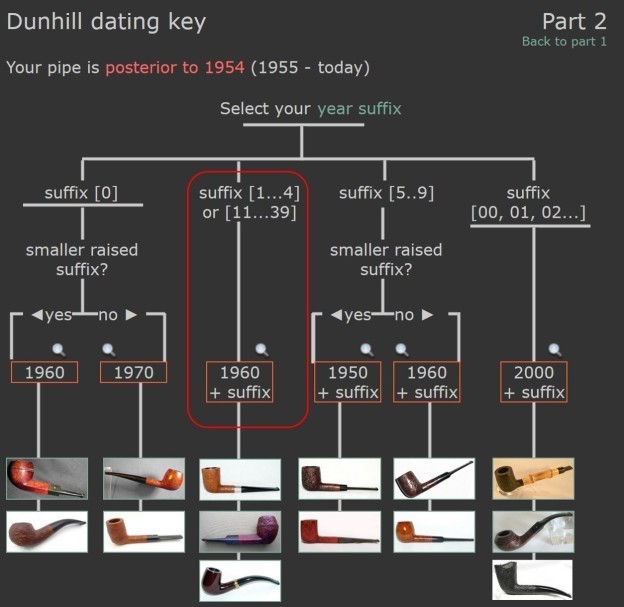
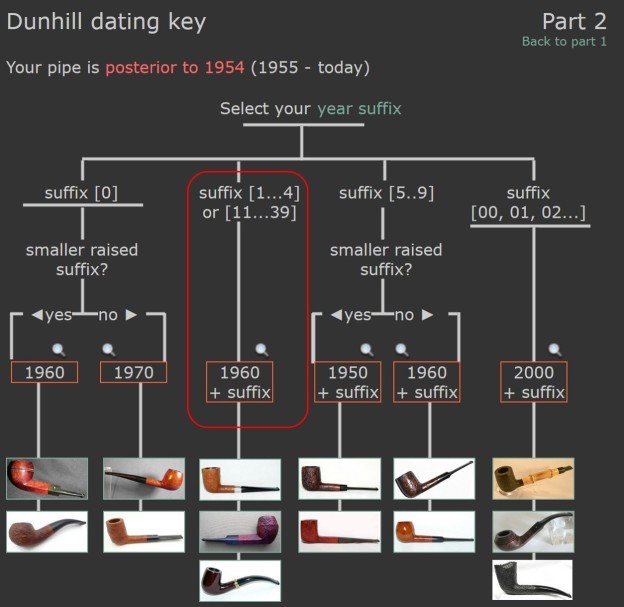
I turned to Pipephil’s dating guide to show how I arrived at the date of manufacture for this pipe (http://www.pipephil.eu/logos/en/dunhill/cledat-en1a.html). I am including the chart that is provided there for the dating a pipe. I have drawn a red box around the section. Since the pipe I am working on has a superscript suffix 15 after the D in England it points to the 1960 line on the chart below. To date it just add 1960 +15 for a date of 1975. I have drawn a red box around the pertinent section in the chart.I now knew that I was working on a Black Briar Pipe that came out in 1975. The shape of the pipe is called a smooth Billiard with a 32 Shape number on the left side of the bowl told me it was a Dress pipe or an Opera shape.

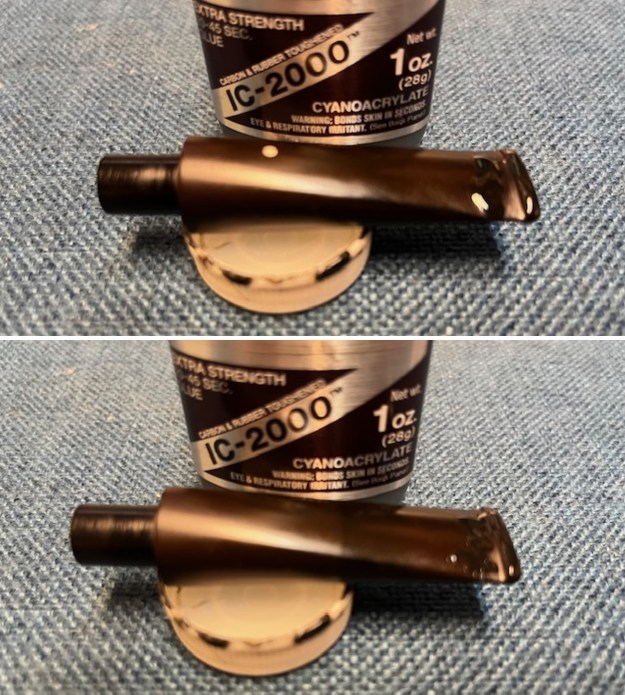
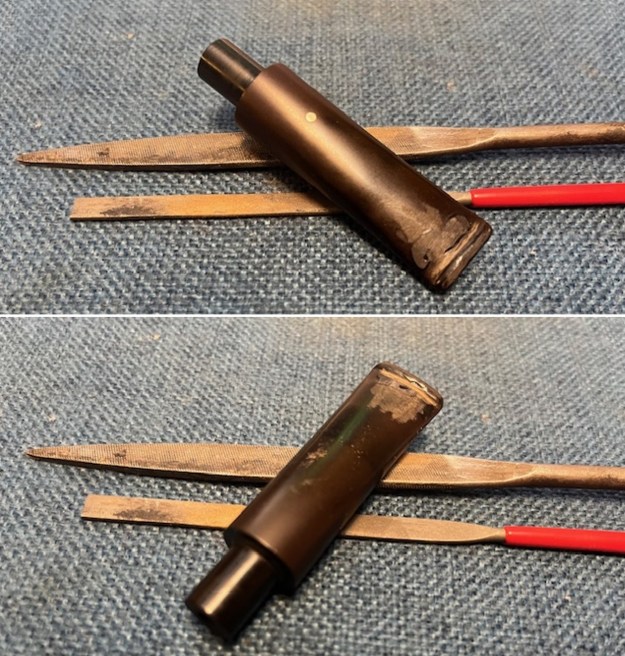
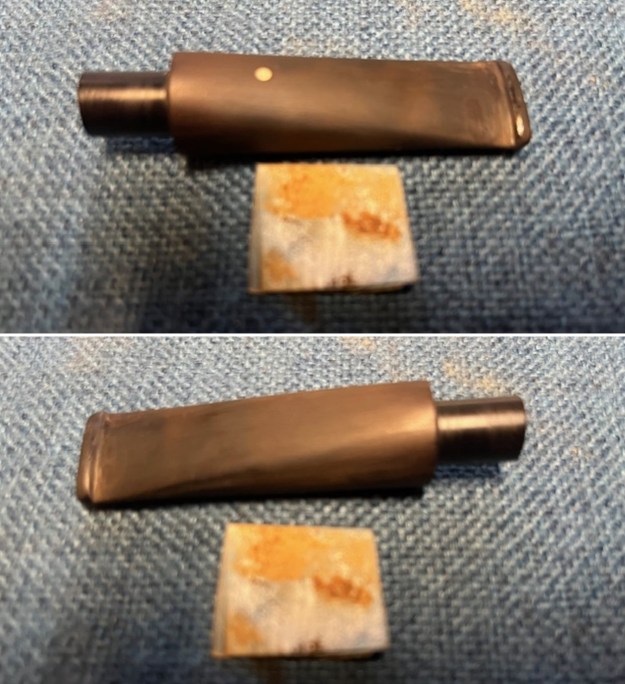
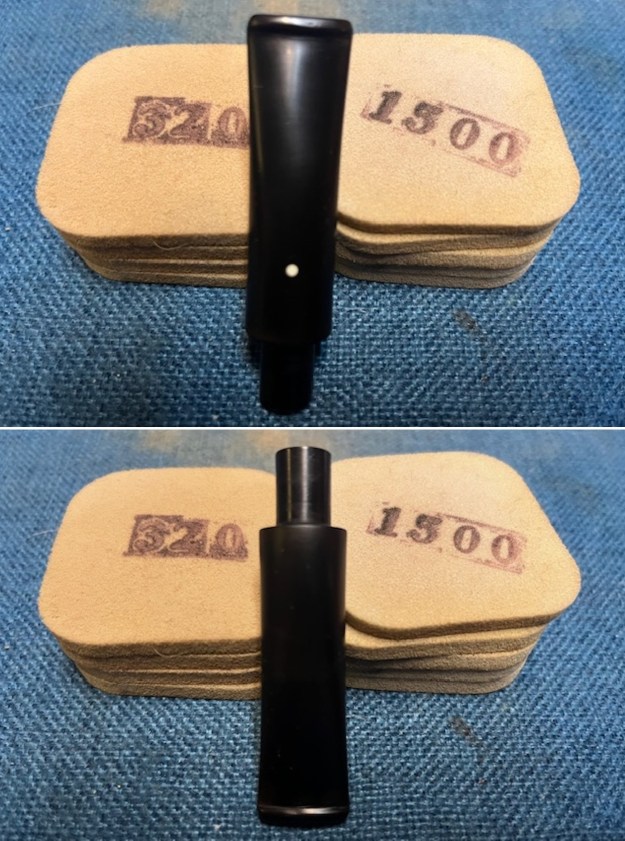
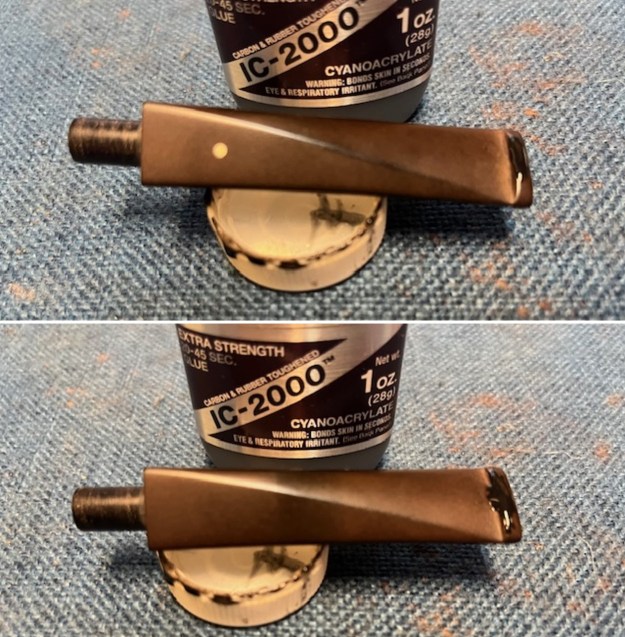
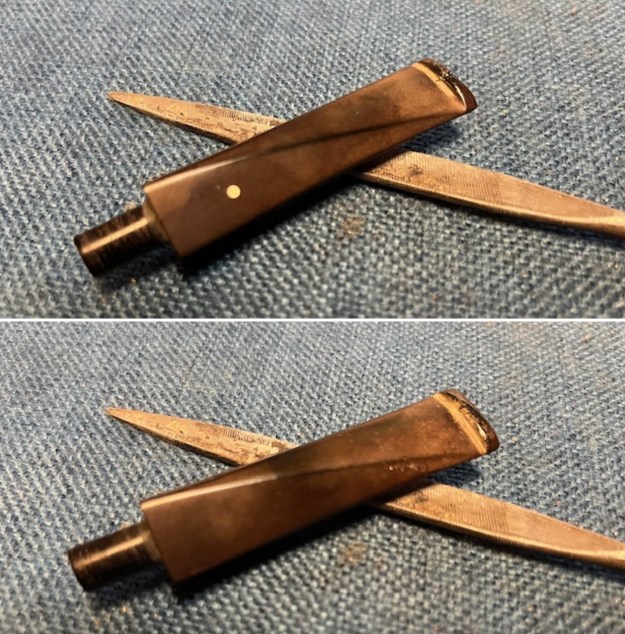
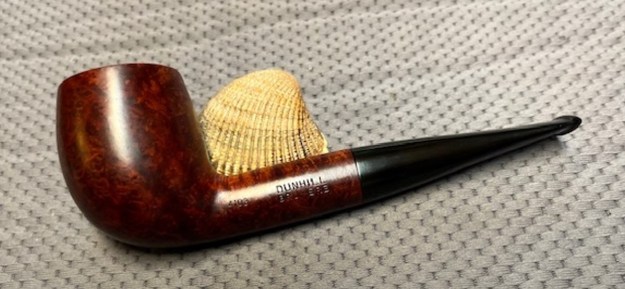
Armed with that information I turned to work on the pipe itself. Jeff had done a great job cleaning up the pipe as usual. He cleaned up the inside of the bowl with a PipNet reamer and a Savinelli Fitsall Pipe Knife. The rim top shows some damage on the top and the inner edge of the bowl. The bowl walls looked very good. He scrubbed the interior of the bowl and shank with pipe cleaners, cotton swabs and alcohol to remove the tars and oils. He scrubbed the exterior of the pipe with Murphy’s Oil Soap and a tooth brush to remove the grime from the finish. He worked on the rim top lava and darkening with the soap and tooth brush. He scrubbed the inside of the stem with alcohol and pipe cleaners. He scrubbed the exterior with Soft Scrub and then soaked it in Briarville’s Pipe Stem Deoxidizer. He washed it off with warm water to remove the deoxidizer. Now the damage to the stem was very clear. Overall, the pipe looked far better. I took photos of the pipe when I received it before I started working on it. I took close up photos of the bowl, rim top and stem to show how clean the pipe was. The bowl was clean and the damage to the rim top and the inner edge is very visible in the photo below. The stem was clean and the tooth marks and chatter can be seen in the photos.I took a photo of the stamping on the sides of the shank. It is very clear and readable and read as noted above. I also removed the stem from the shank and took photos of the pipe to show the look of the parts. I started my work on the pipe by addressing the damage to the rim top. I used a folded piece of 220 grit sandpaper to clean up the bevel on the inner edge of the bowl and reshape it. It looked much better once finished.I polished the bowl and shank with 1500-12000 grit micromesh sanding pad – dry sanding it with the pads. I wiped the bowl down with a damp cloth after each pad. It began to take on a deep shine. The exterior of the bowl look better after sanding. I worked some Before & After Restoration Balm into the briar with my finger tips. I let it sit on the bowl for 10 minutes and then buffed it off with a paper towel and soft cloth. The product is a great addition to the restoration work. It enlivens, enriches and protects the briar while giving it a deep glow. It is a product I use on every pipe I restore. I tried to raise the tooth marks as much as possible by “painting” the surface of the stem with a lighter flame. It worked very well and I was able to lift many of them. I filled in the remaining spots with black rubberized CA glue. I recut the button edge and flattened the surface of the repairs with some small flat files. I was able to smooth the surface and give the button a very sharp edge. I flattened it further and smooth out the surface with a folded piece of 220 grit sandpaper. I sanded the stem with 320-3500 grit sanding pads to remove residual oxidation on the stem surface and further blend the repairs into the surrounding vulcanite.It was ready for the next step. I polished it with micromesh sanding pads – dry sanding with 1500-12000 grit pads and wiping the surface down with Obsidian Oil after each sanding pad. It is really shining. I polished it further with Before & After Stem Polish – both Fine and Extra Fine. I gave it another coat of Obsidian Oil to finish this step. I am excited to be on the homestretch and look forward to seeing the 1975 Dunhill Black Briar 32F/T Opera Pipe put back together, polished and waxed. I put the bowl and stem back together and lightly polished the bowl and stem with Blue Diamond to polish them. I gave the bowl and the stem multiple coats of carnauba wax. I buffed the pipe on the wheel with a clean buffing pad to raise the shine. I hand buffed it with a microfiber cloth to deepen the shine. The depths of the grain really pop with the wax and polish. The repaired and polished vulcanite stem is a beautiful contrast to the combination of Black and Brown stains on the bowl and shank. This Dunhill Black Briar 32 F/T Opera Pipe was a lot of work to bring back to life. The pipe is light weight, comfortable in the hand and should feel great as it is warmed up when smoking. The finished pipe is shown in the photos below. The dimensions of the pipe are Length: 4 ¾ inches, Height: 1 ¾ inches, Outside diameter of the bowl: 1 ¼ inches wide x 1 ½ inches long, Chamber diameter: 3/4 of an inch wide x 1 inch long. The weight of the pipe is 1.41 ounces/41 grams. I will be putting this one on the rebornpipes store in the British Pipemakers Section soon. Let me know if you wish to add it to your collection.

As always, I encourage your questions and comments as you read the blog. Thanks to each of you who are reading this blog. Remember we are not pipe owners; we are pipe men and women who hold our pipes in trust until they pass on into the trust of those who follow us.

Restoring a Dunhill Cumberland 42041 Bulldog with a Cumberland Saddle Stem


by Steve Laug

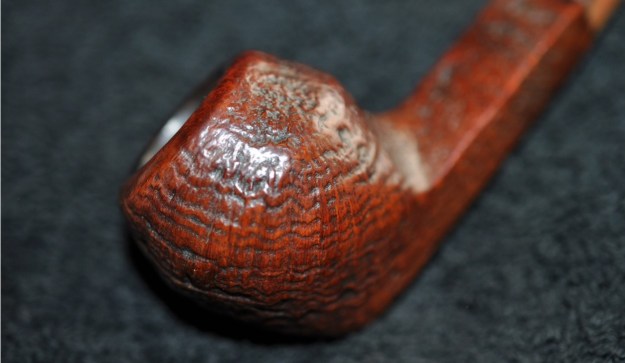
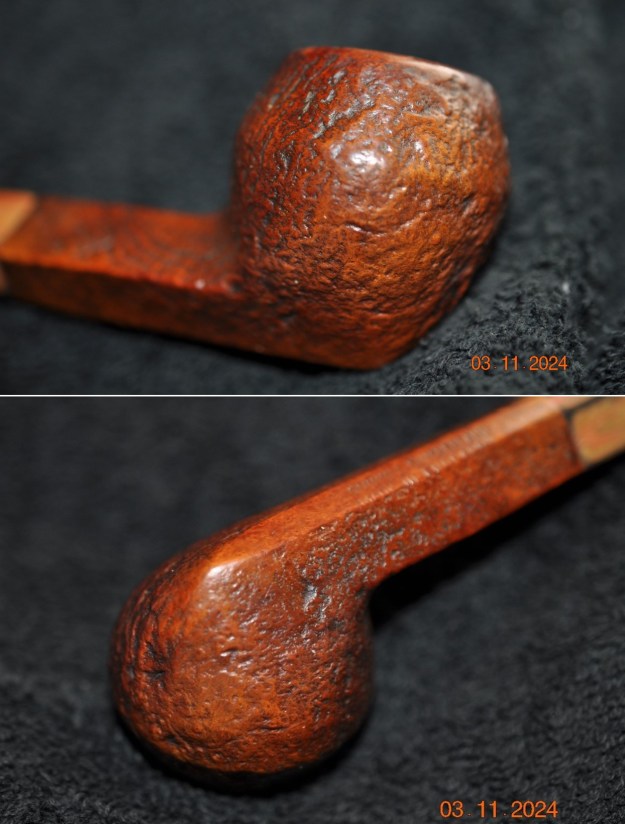
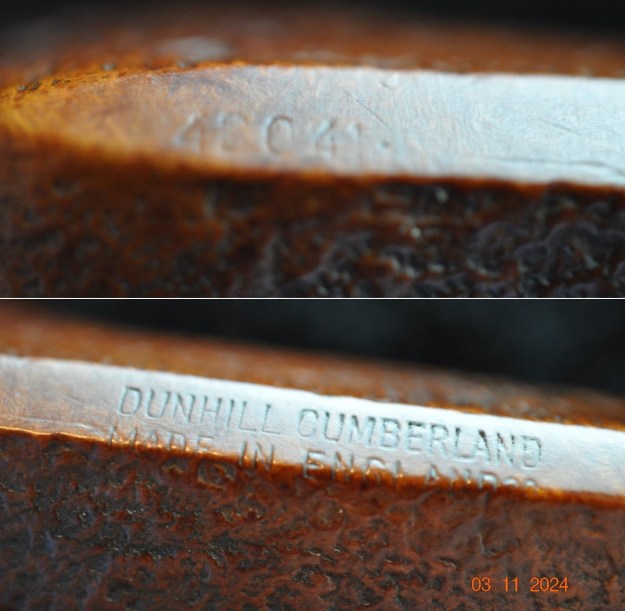
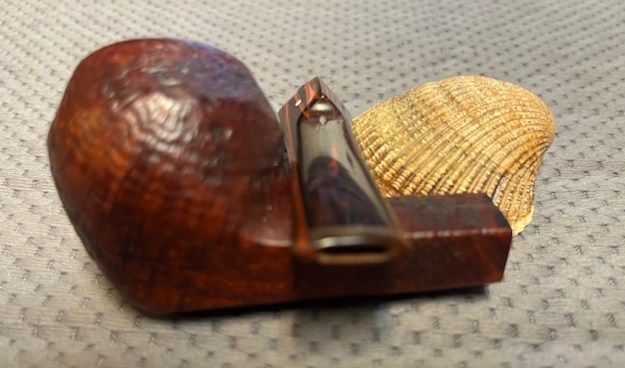
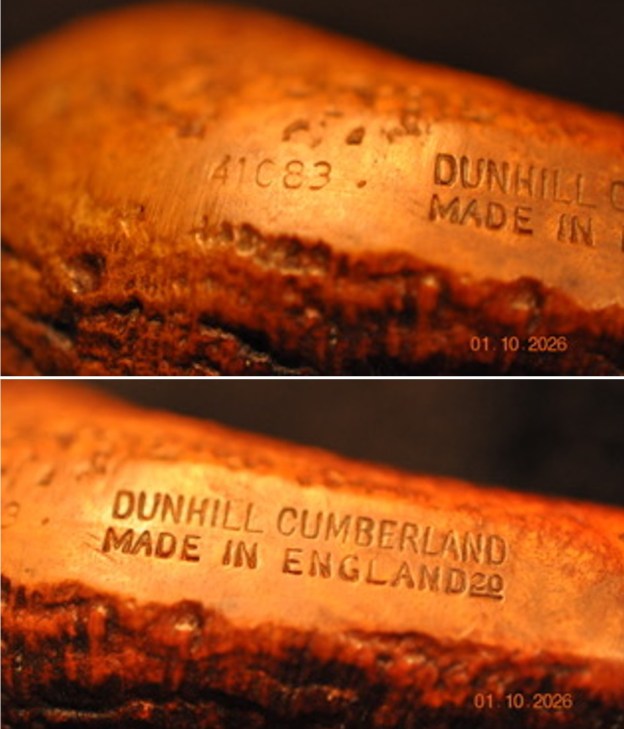
The next pipe on the table is one that we picked up in the lot from our contact in Copenhagen, Denmark on 08/09/2024. The Sandblast finish and the Dunhill stamping is what caught our eye. It is stamped on the underside of the shank and reads 42041 on the heel of the bowl followed by Dunhill Cumberland [over] Made in England20. It has a classic Cumberland sandblast with a smooth rim top that is a stark contrast to Cumberland, diamond saddle stem. The finish is a light sandblast and there is a lot of debris and dust in the nooks and crannies of the blast. The bowl appears to be moderately caked. The inner edge and the top show some lava overflow and what looks like potential burn damage on the inner edge. The stem is oxidized and has light tooth marks and chatter on the top and underside ahead of the button. The classic white spot is on the left top side of the diamond stem and looks to be in good condition. Jeff took some photos of the pipe to show the general condition of the pipe before he started his clean up. He took some photos of the rim top and bowl from various angles to give me a clear picture of the condition of the rim top and bowl. You can see the lava on the rim top and edges as well as part of the cake in the bowl. He included photos that show the top and underside of the stem. It is as described above. Jeff took some photos of the sides and heel of the bowl to show the condition of the finish on the pipe. The photos showed some great grain through the sandblast around the bowl and shank. It is a great looking piece of briar. He took some photos of the stamping on the underside of the bowl and shank. The stamping was clear and readable as noted above.As is my regular practice, before I started my work on the pipe, I turned to Pipedia’s section on Dunhill Bruyere Pipes to get a refresh the information I know regarding the Dunhill finishes (https://pipedia.org/wiki/Dunhill#Cumberland). I quote:
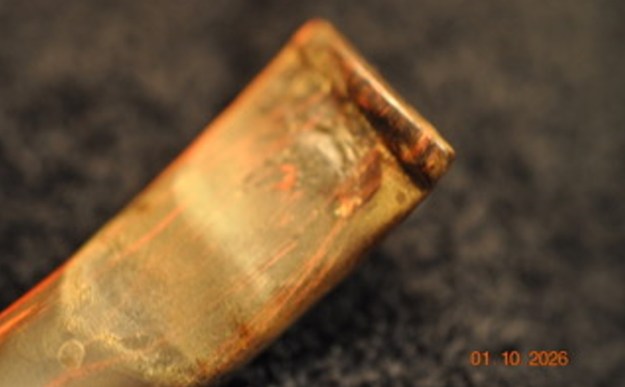
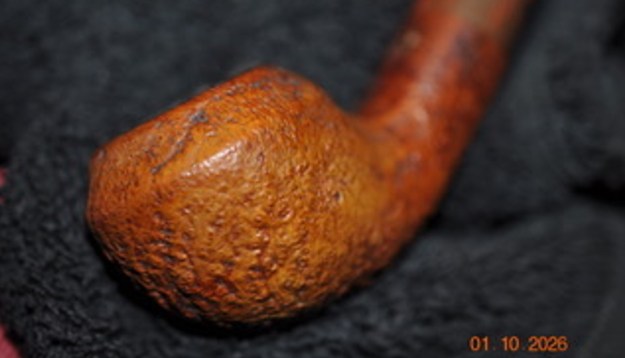
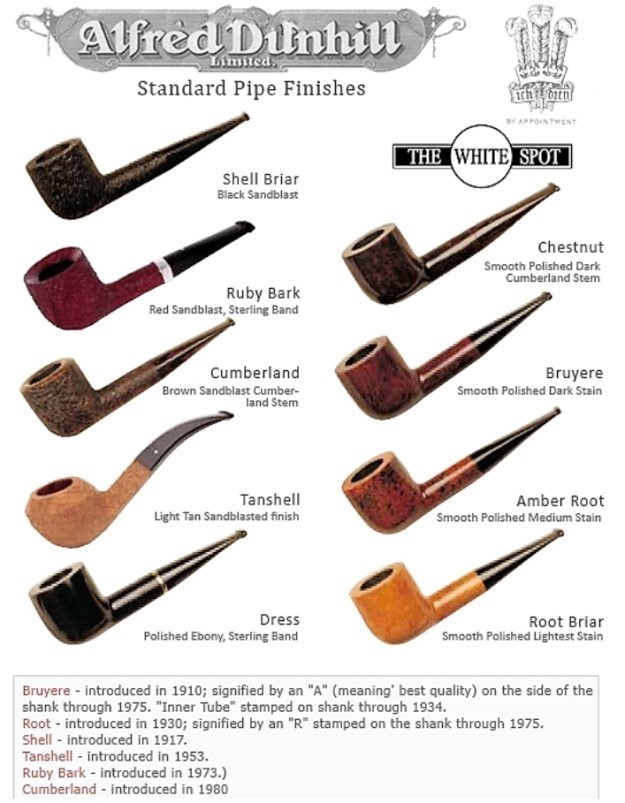
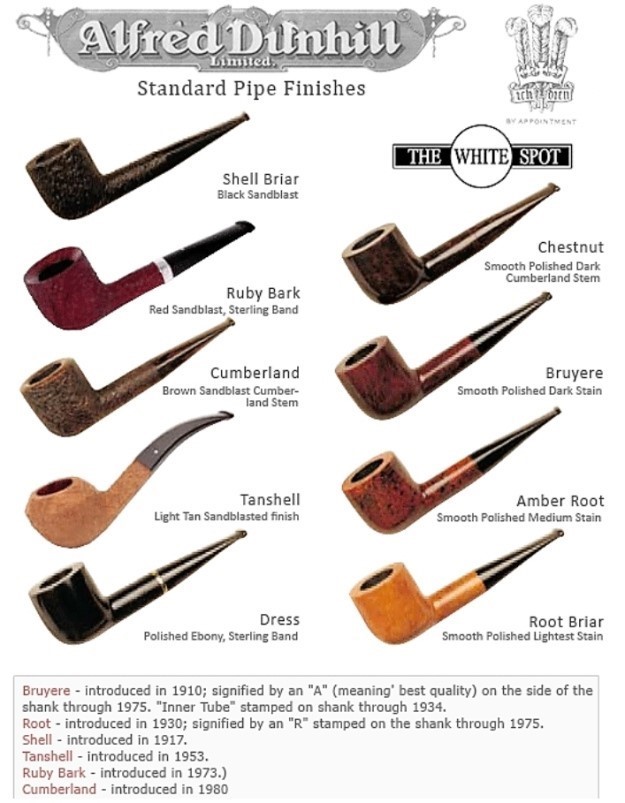
Cumberland – Introduced in 1979. Cumberland is another sandblast with a brown stain and a brindle stem (the material is more commonly called ‘Cumberland’ these days, thanks to Dunhill’s influence and the success of the finish over the past quarter-century). Originally, the Cumberland always featured a smooth brown rim, but in the current production the rim is sometimes smooth, sometimes sandblasted. Occasionally, a straight grain blast is finished with a Cumberland stain and a “Shilling Grain,” similar to the “Ring Grain,” resulting in a new variation on the traditional sandblast. The Shilling series is named for the British coin: the sandblast looks like a stack of shillings. Named after the warehouse on Cumberland Road. The old pipes that inspired this finish were found there. I turned to Pipephil’s dating guide to show how I arrived at the date of manufacture for this pipe (http://www.pipephil.eu/logos/en/dunhill/cledat-en1a.html). I am including the chart that is provided there for the dating a pipe. I have drawn a red box around the section. Since the pipe I am working on has a superscript suffix 21 after the D in England it points to the 1960 line on the chart below. To date it just add 1960 +21 for a date of 1981. I have drawn a red box around the pertinent section in the chart.I now knew that I was working on a Bruyere that came out in 1980. The shape of the pipe is called a sandblast straight Bulldog with a 42041 Shape number on the heel of the shank/ bowl.

I turned to Pipephil’s shape list (http://www.pipephil.eu/logos/en/dunhill/shapes.html). At the bottom of the list of shapes (with the 04 being a Billiard) is a key for interpreting the digits in the stamp I have included that below.

Dunhill pipes are stamped with a four digit code.
Digit 1: (from 1 to 6) denotes the size of the pipe (the group).
Digit 2: denotes the style of the mouthpiece (0,1=tapered, 2=saddle)
Digit 3 and 4: denote the generic pipe shape (in yellow in the chart on top) 

Example: 5102
(5 = size | 1 = tapered stem | 02 = Bent)

When 5 digits occur, the meaning of the 4 first remain the same

The 42041 was thus a Group 4 size, with a saddle mouthpiece, and in an 04 or straight Bulldog shape.

Armed with that information I turned to work on the pipe itself. Jeff had done a great job cleaning up the pipe as usual. He cleaned up the inside of the bowl with a PipNet reamer and a Savinelli Fitsall Pipe Knife. The rim top shows some damage on the top and the inner edge of the bowl. The bowl walls looked very good. He scrubbed the interior of the bowl and shank with pipe cleaners, cotton swabs and alcohol to remove the tars and oils. He scrubbed the exterior of the pipe with Murphy’s Oil Soap and a tooth brush to remove the grime from the finish. He worked on the rim top lava and darkening with the soap and tooth brush. He scrubbed the inside of the stem with alcohol and pipe cleaners. He scrubbed the exterior with Soft Scrub and then soaked it in Briarville’s Pipe Stem Deoxidizer. He washed it off with warm water to remove the deoxidizer. Now the damage to the stem was very clear. Overall, the pipe looked far better. I took photos of the pipe when I received it before I started working on it. I took close up photos of the bowl, rim top and stem to show how clean the pipe was. The bowl was clean and the damage to the rim top and the inner edge is very visible in the photo below. The stem was clean and the light tooth marks and chatter can be seen in the photos. You can also see the light oxidation.I took a photo of the stamping on the underside of the shank. It is very clear and readable and read as noted above. I also removed the stem from the shank and took photos of the pipe to show the look of the parts. I started my work on the pipe by addressing the damage to the rim top. I used a folded piece of 220 grit sandpaper and smoothed out the damage on the rim top and the inner edge. It looked much better once finished.I polished the rim top with 1500-12000 grit micromesh sanding pads and wiped it down with a damp cloth to remove the sanding dust. It took on a rich shine.The exterior of the bowl look better after sanding. I worked some Before & After Restoration Balm into the briar with my finger tips. I let it sit on the bowl for 10 minutes and then buffed it off with a paper towel and soft cloth. The product is a great addition to the restoration work. It enlivens, enriches and protects the briar while giving it a deep glow. It is a product I use on every pipe I restore. I sanded the Cumberland stem with 320-3500 grit sanding pads. The repairs began to disappear into the surface of the vulcanite and the stem began to take on a smooth new look. Progress for sure.It was ready for the next step. I polished it with micromesh sanding pads – dry sanding with 1500-12000 grit pads and wiping the surface down with Obsidian Oil after each sanding pad. It is really shining. I polished it further with Before & After Stem Polish – both Fine and Extra Fine. I gave it another coat of Obsidian Oil to finish this step. I am excited to be on the homestretch and look forward to seeing the 1980 Dunhill Cumberland 42041 Sandblast Straight Bulldog put back together, polished and waxed. I put the bowl and stem back together and lightly polished the bowl and stem with Blue Diamond to polish them. I gave the bowl and the stem multiple coats of carnauba wax. I buffed the pipe on the wheel with a clean buffing pad to raise the shine. I hand buffed it with a microfiber cloth to deepen the shine. The depths of the grain really pop with the wax and polish. The polished Cumberland stem is a beautiful contrast to the combination of stains on the bowl and shank. This Dunhill Cumberland 42041 Bulldog was a bit of work to bring back to life. The pipe is light weight, comfortable in the hand and should feel great as it is warmed up when smoking. The finished pipe is shown in the photos below. The dimensions of the pipe are Length: 5 ½ inches, Height: 1 ¾ inches, Outside diameter of the bowl: 1 1/8 inches, Chamber diameter: ¾ of an inch. The weight of the pipe is 1.31 ounces/36 grams. I will be putting this one on the rebornpipes store in the British Pipemakers Section soon. Let me know if you wish to add it to your collection.

As always, I encourage your questions and comments as you read the blog. Thanks to each of you who are reading this blog. Remember we are not pipe owners; we are pipe men and women who hold our pipes in trust until they pass on into the trust of those who follow us.

Restoring a beautifully grained Dunhill Bruyere 41041 Taper Stem Bulldog


by Steve Laug

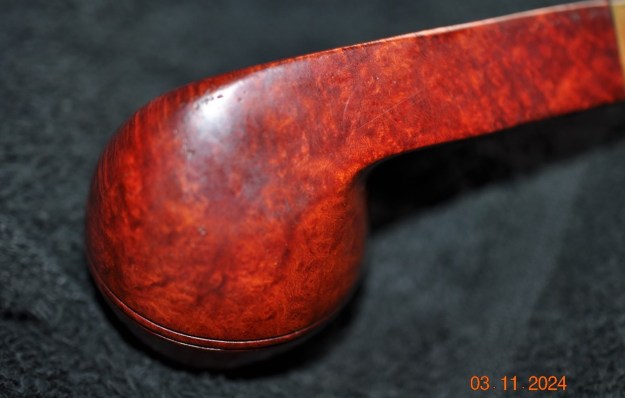
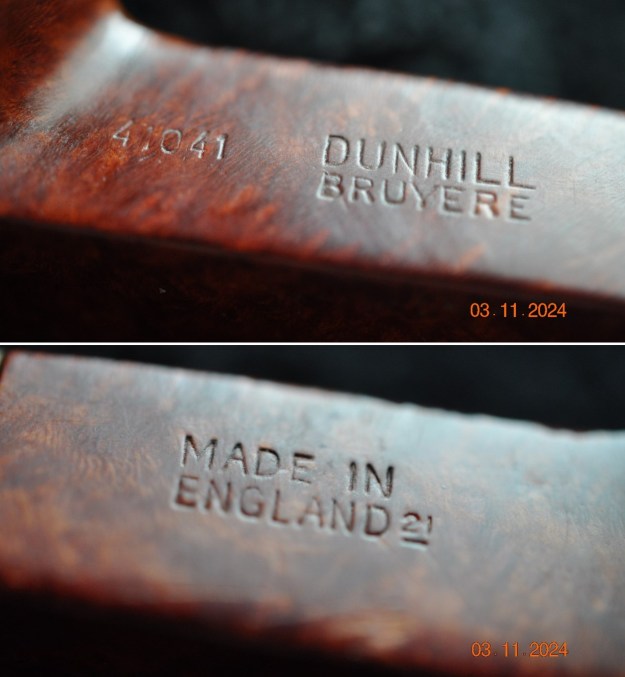
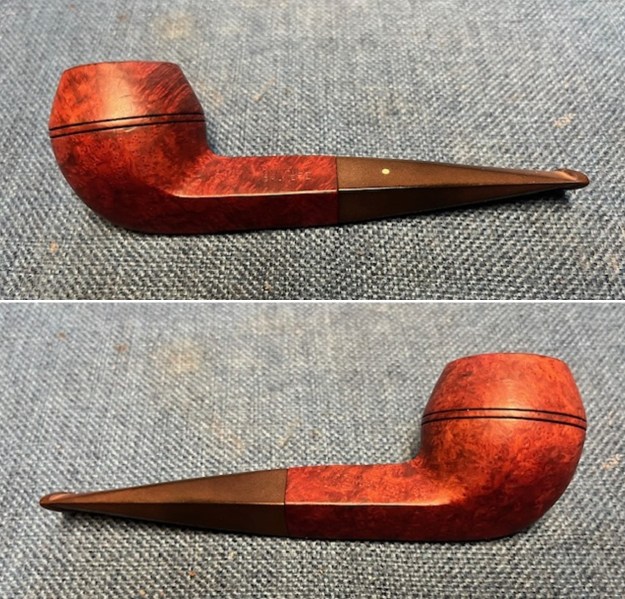
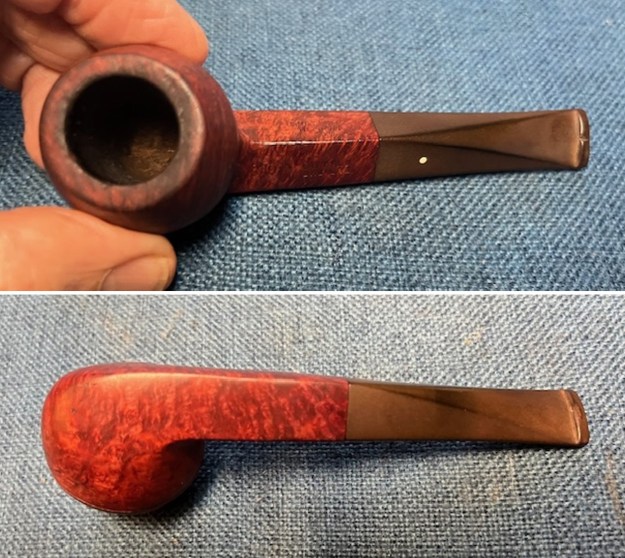
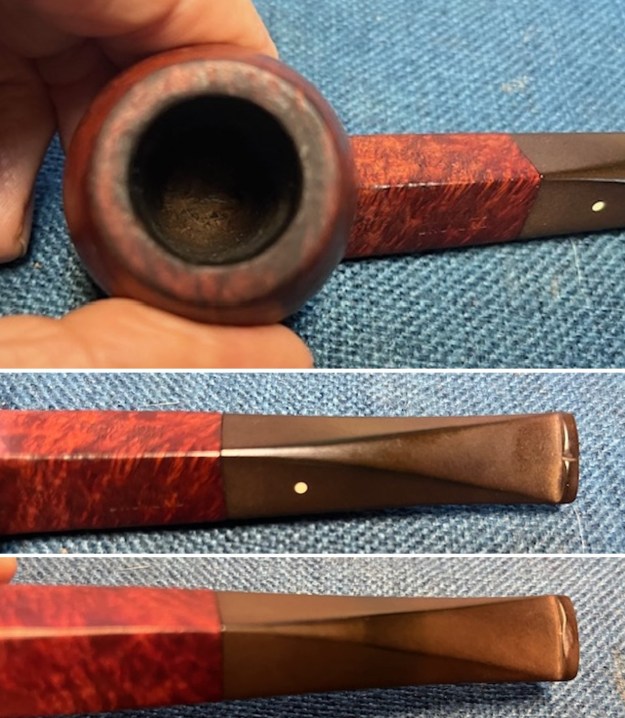
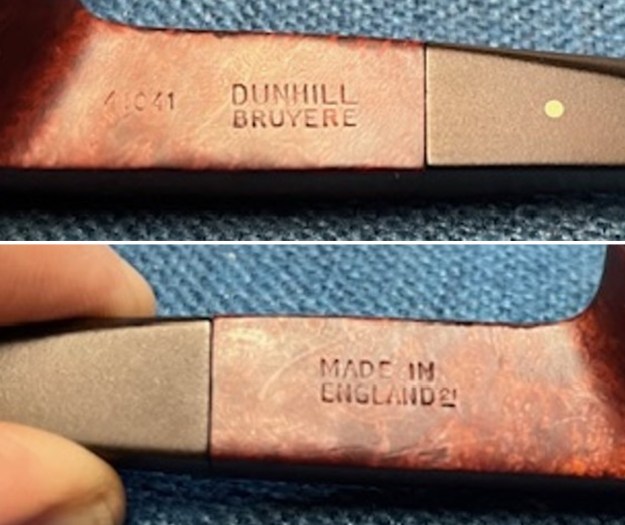
The next pipe on the table is one that we picked up in the lot from our contact in Copenhagen, Denmark on 08/09/2024. The Bruyere finish and the Dunhill stamping is what caught our eye. It is stamped on the left side of the shank and reads 41041 next to the bowl/shank union followed by Dunhill [over] Bruyere. On the right side it is stamped Made in [over] England21. It has a classic Bruyere smooth finish that is a stark contrast to vulcanite, diamond taper stem. The finish has some scars that are a part of the pipe’s story particularly on the rim cap. The bowl appears to be moderately caked. The inner edge and the top show some lava overflow and what looks like knife damage from reaming on the inner edge. The stem is very oxidized and tooth marks and chatter on the top and underside ahead of the button and on the button surface itself. The classic white spot is on the left top side of the taper, diamond stem and looks to be in good condition. Jeff took some photos of the pipe to show the general condition of the pipe before he started his clean up. He took some photos of the rim top and bowl from various angles to give me a clear picture of the condition of the rim top and bowl. You can see the lava on the rim top and edges as well as part of the cake in the bowl. He included photos that show the top and underside of the stem. It is as described above. Jeff took some photos of the sides and heel of the bowl to show the condition of the finish on the pipe. The photos showed some great grain around the bowl and shank. It is a great looking piece of briar. He took some photos of the stamping on the sides of the bowl and shank. The stamping was clear and readable as noted above. As is my regular practice, before I started my work on the pipe, I turned to Pipedia’s section on Dunhill Bruyere Pipes to get a refresh the information I know regarding the Dunhill finishes (https://pipedia.org/wiki/Dunhill_Bruyere). I quote:
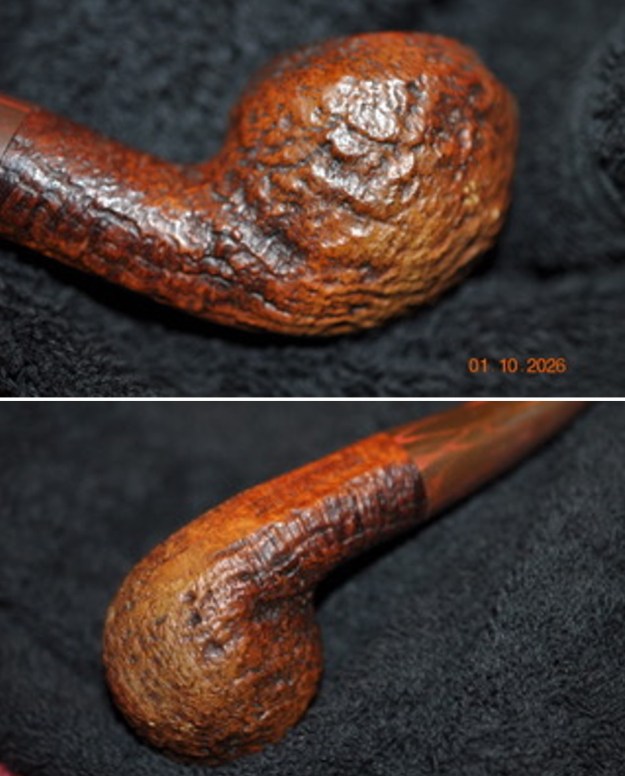
Initially, made from over century-old briar burls, classified by a “B” (denoted highest quality pipe); “DR” (denoted straight-grained) and an “A” (denoted first quality), until early 1915. After that, they became a high-end subset to the Dunhill ‘Bruyere’. The DR and B pipes, a limited production, they should be distinguished as hand-cut in London from burls as opposed to the Bruyere line which was generally finished from French turned bowls until 1917, when the Calabrian briar started to be used, but not completely. Only in 1920 Dunhill took the final step in its pipe making operation and began sourcing and cutting all of its own bowls, proudly announcing thereafter that “no French briar was employed”.

Bruyere pipes were usually made using Calabrian briar, a very dense and hardy briar that has a modest grain but does very well with the deep red stain.

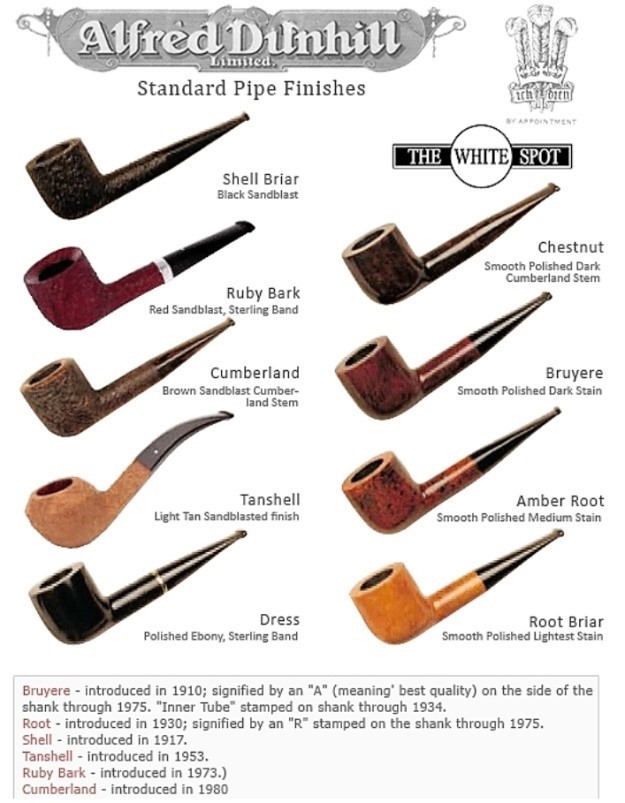
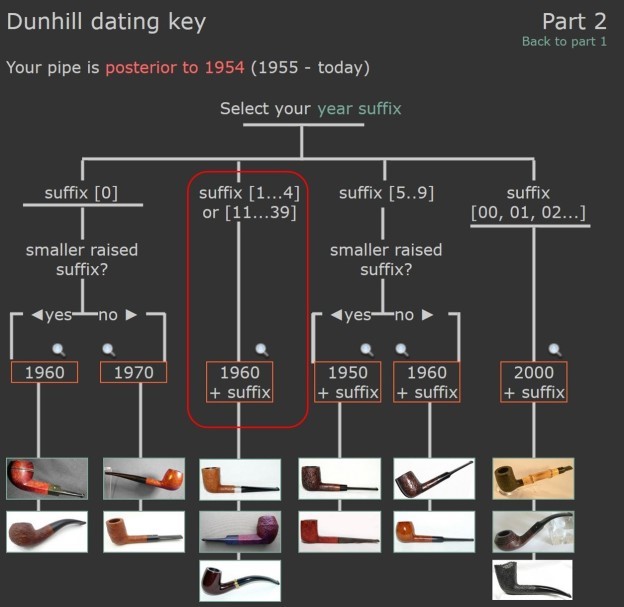
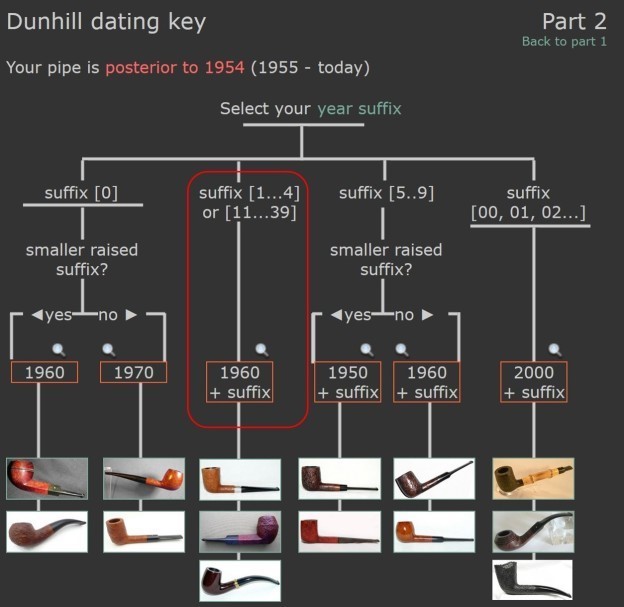
“Before the 1950s, there were three possible finishes for Dunhill pipes. The Bruyere was a smooth finish with a deep red stain, obtained through two coats, a brown understain followed by a deep red. The Shell finish was the original sandblast with a near-black stain (though the degree to which it is truly black has varied over the years). Lastly, the Root finish was smooth also but with a light brown finish. Early Dunhill used different briars with different stains, resulting in more distinct and identifiable creations… Over the years, to these traditional styles were added four new finishes: Cumberland, Dress, Chestnut and Amber Root, plus some now-defunct finishes, such as County, Russet and Red Bark.”[1]I turned to Pipephil’s dating guide to show how I arrived at the date of manufacture for this pipe (http://www.pipephil.eu/logos/en/dunhill/cledat-en1a.html). I am including the chart that is provided there for the dating a pipe. I have drawn a red box around the section. Since the pipe I am working on has a superscript suffix 21 after the D in England it points to the 1960 line on the chart below. To date it just add 1960 +21 for a date of 1981. I have drawn a red box around the pertinent section in the chart.I now knew that I was working on a Bruyere that came out in 1981. The shape of the pipe is called a smooth straight Bulldog with a 41041 Shape number on the left side of the shank/ bowl.
I turned to Pipephil’s shape list (http://www.pipephil.eu/logos/en/dunhill/shapes.html). At the bottom of the list of shapes (with the 04 being a Billiard) is a key for interpreting the digits in the stamp I have included that below.

Dunhill pipes are stamped with a four digit code.
Digit 1: (from 1 to 6) denotes the size of the pipe (the group).
Digit 2: denotes the style of the mouthpiece (0,1=tapered, 2=saddle)
Digit 3 and 4: denote the generic pipe shape (in yellow in the chart on top) 

Example: 5102
(5 = size | 1 = tappered stem | 02 = Bent)

When 5 digits occur, the meaning of the 4 first remain the same

The 41041 was thus a Group 4 size, with a taper mouthpiece, and in an 04 or straight Bulldog shape.

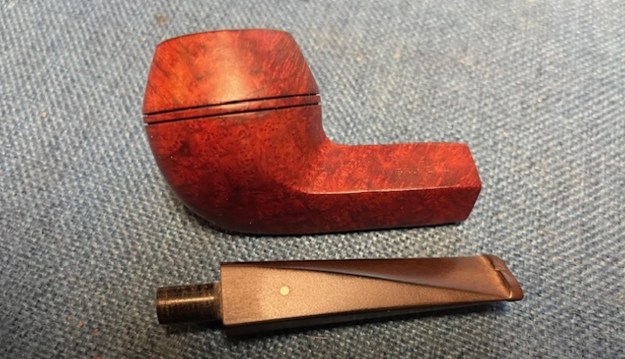
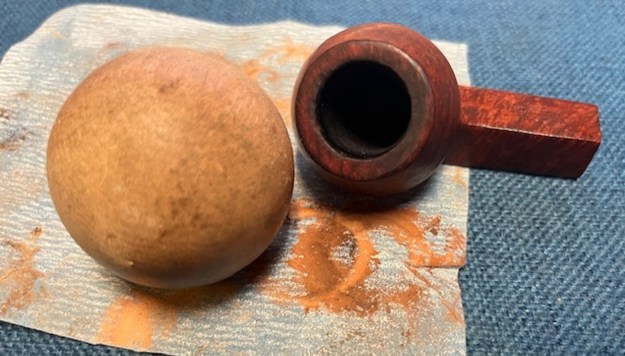
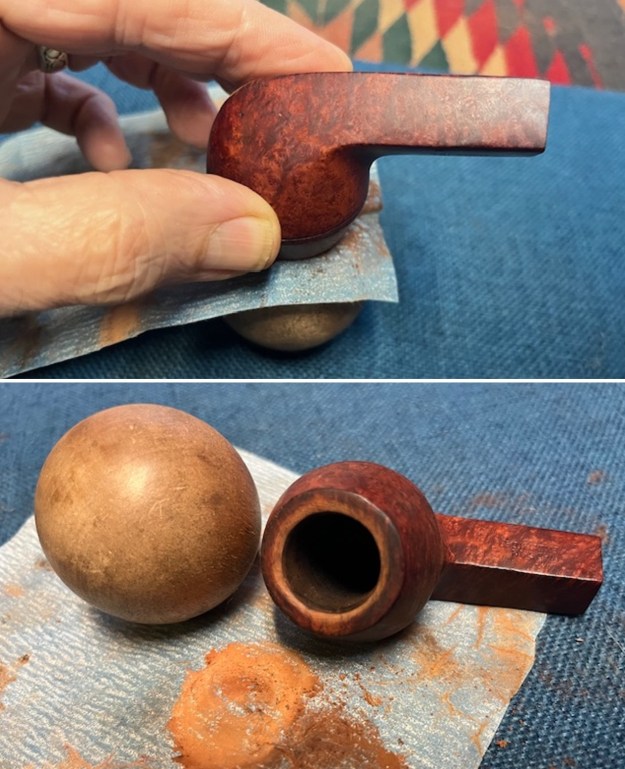
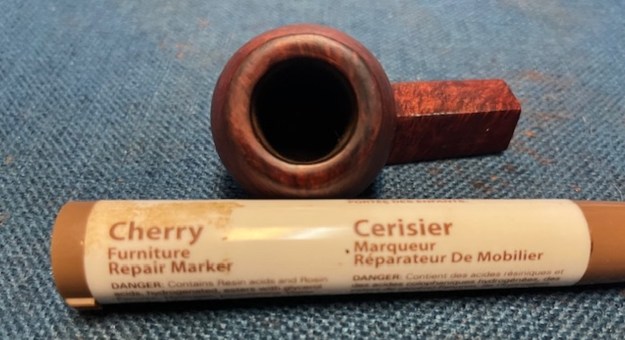
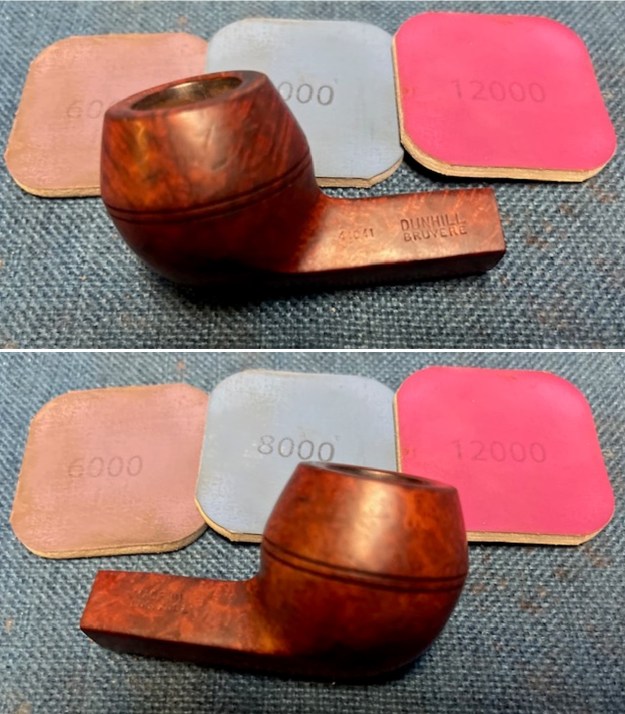
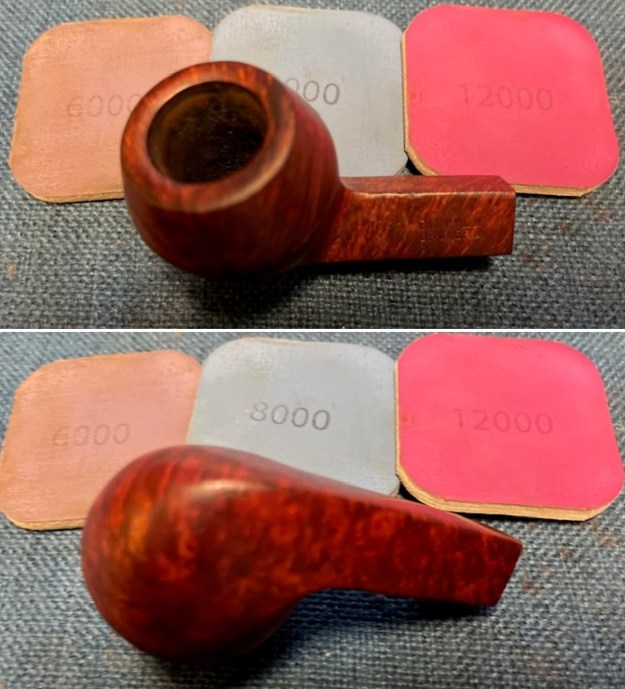
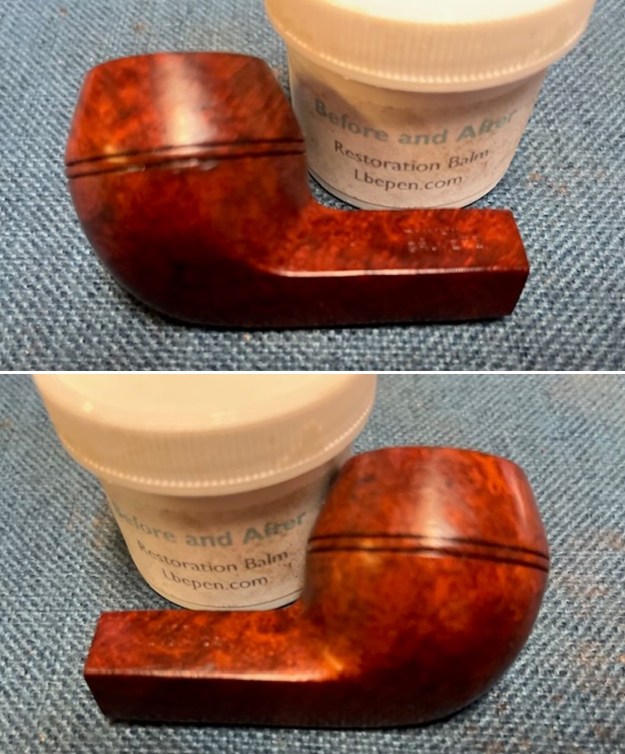
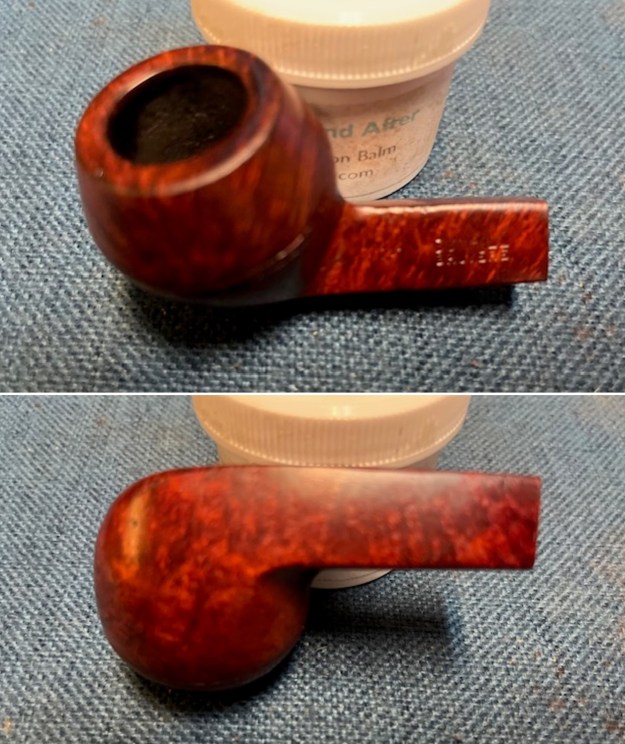
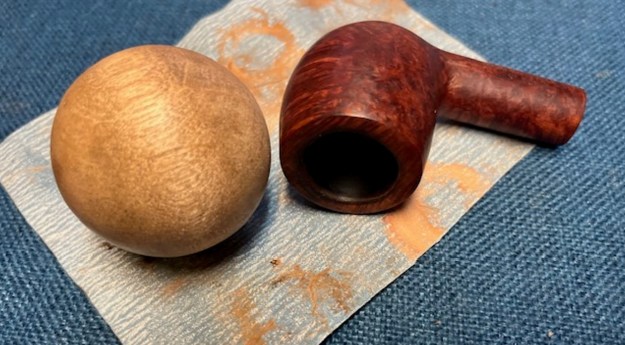
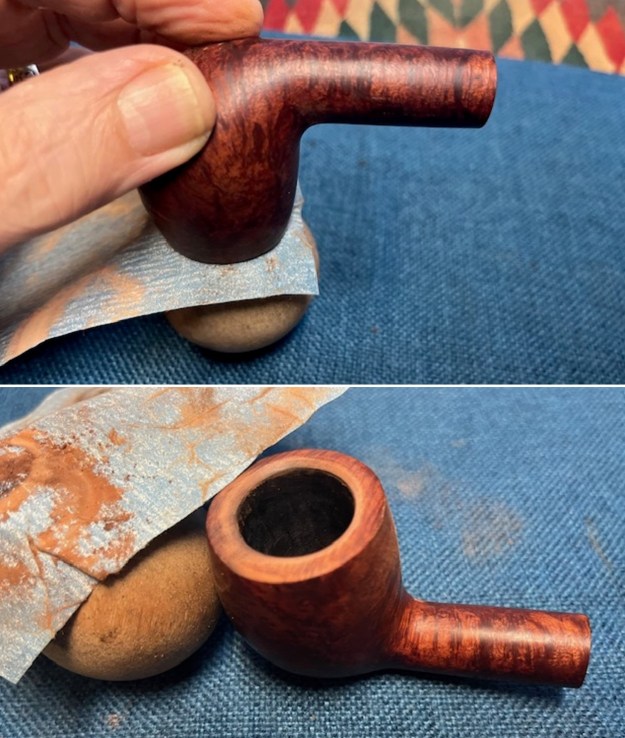
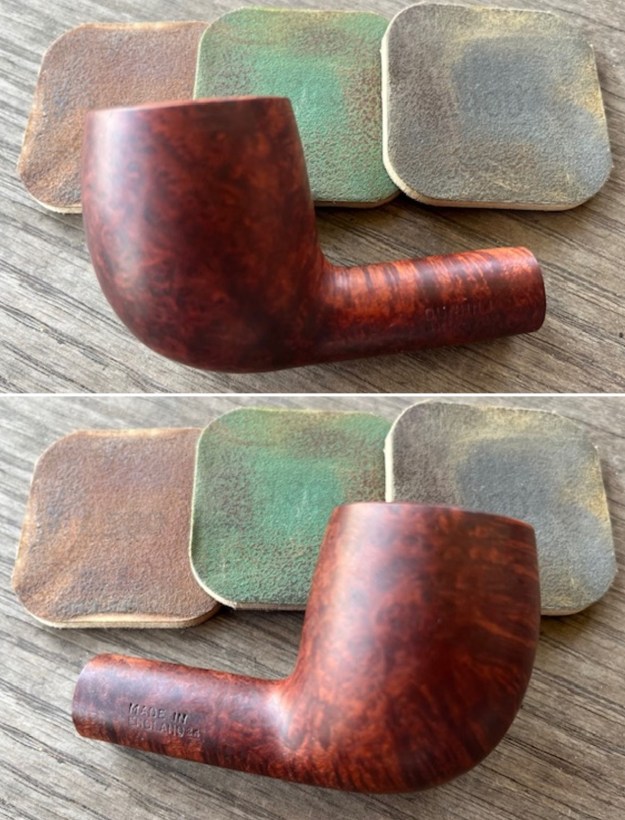
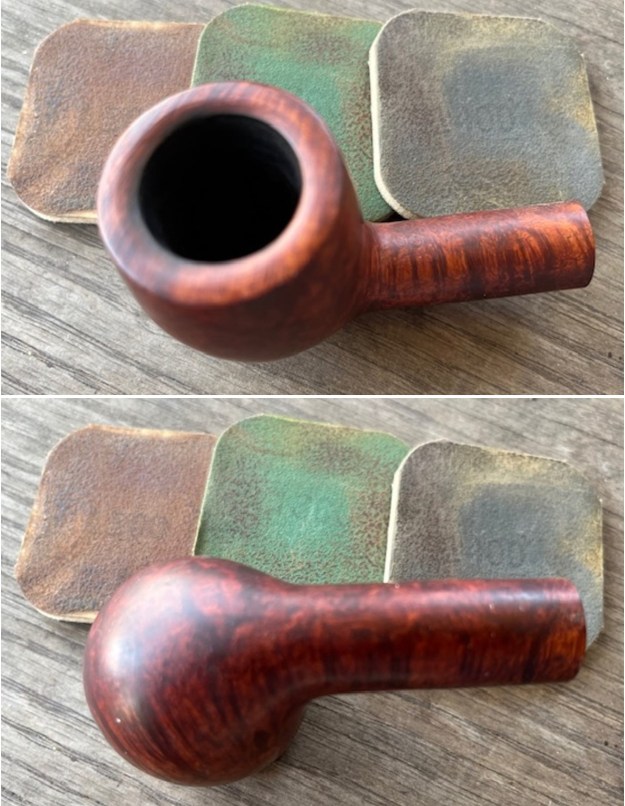
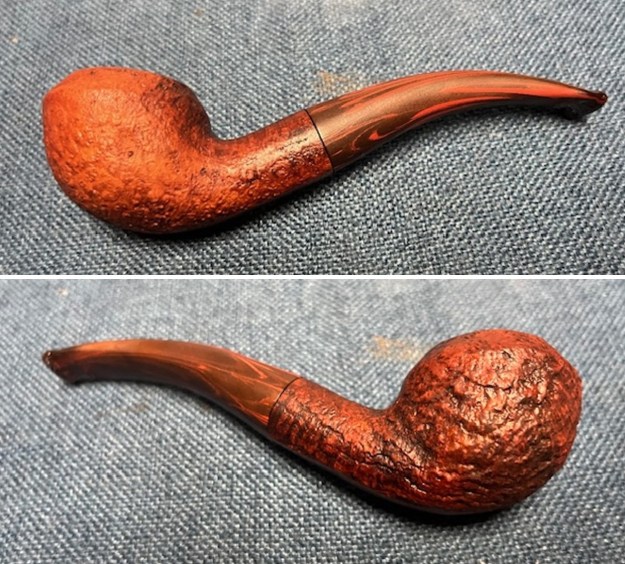
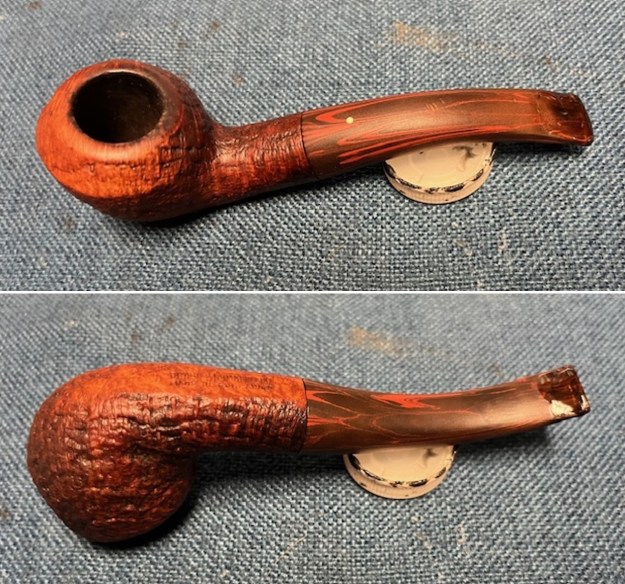
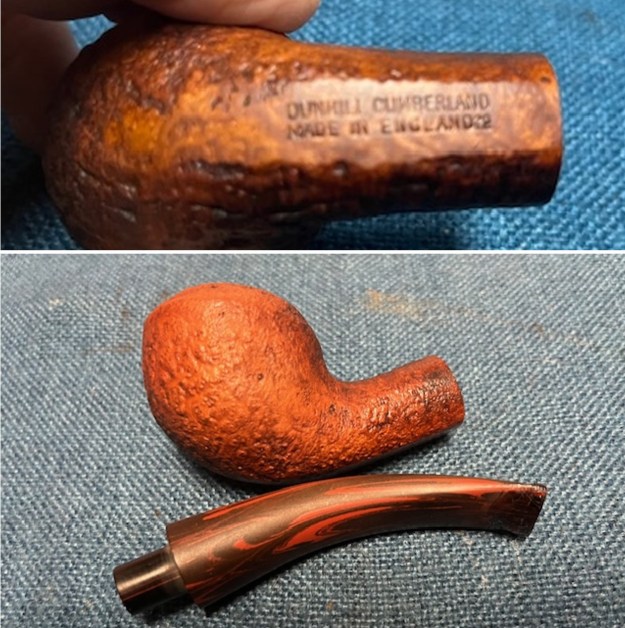
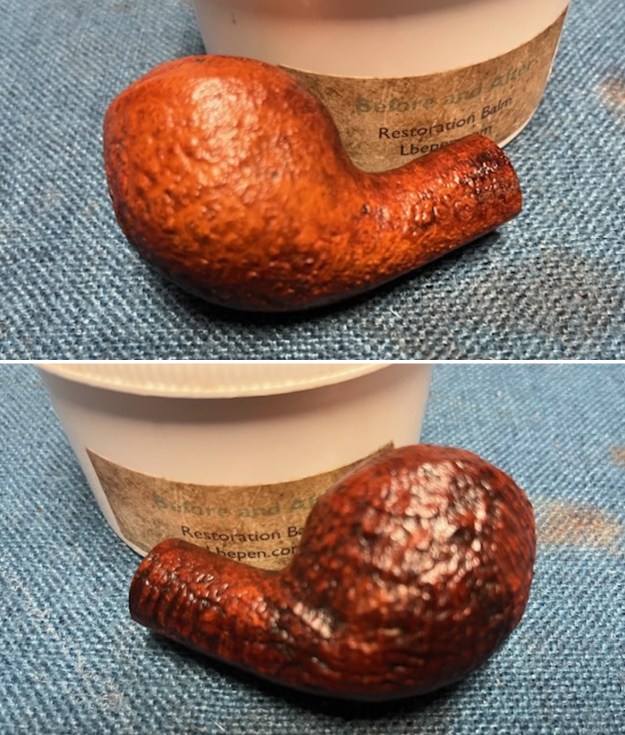
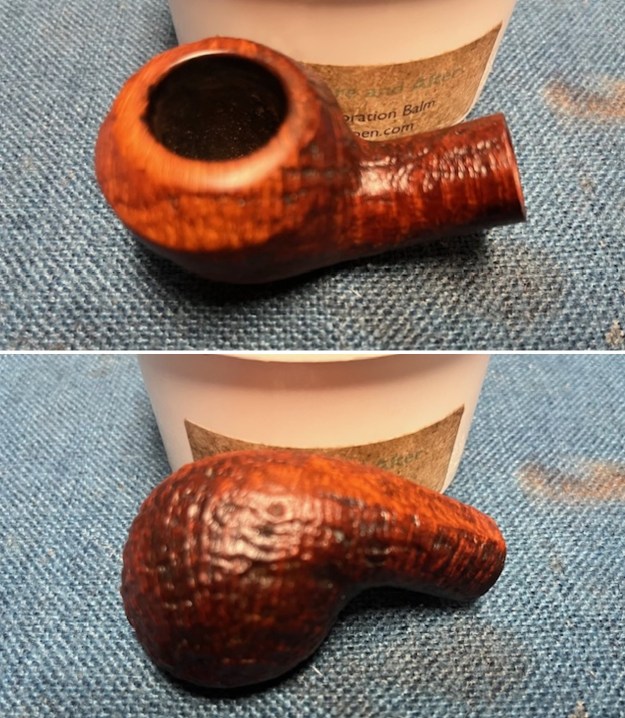
Armed with that information I turned to work on the pipe itself. Jeff had done a great job cleaning up the pipe as usual. He cleaned up the inside of the bowl with a PipNet reamer and a Savinelli Fitsall Pipe Knife. The rim top shows some damage on the top and the inner edge of the bowl. The bowl walls looked very good. He scrubbed the interior of the bowl and shank with pipe cleaners, cotton swabs and alcohol to remove the tars and oils. He scrubbed the exterior of the pipe with Murphy’s Oil Soap and a tooth brush to remove the grime from the finish. He worked on the rim top lava and darkening with the soap and tooth brush. He scrubbed the inside of the stem with alcohol and pipe cleaners. He scrubbed the exterior with Soft Scrub and then soaked it in Briarville’s Pipe Stem Deoxidizer. He washed it off with warm water to remove the deoxidizer. Now the damage to the stem was very clear. Overall, the pipe looked far better. I took photos of the pipe when I received it before I started working on it. I took close up photos of the bowl, rim top and stem to show how clean the pipe was. The bowl was clean and the damage to the rim top and the inner edge is very visible in the photo below. The stem was clean and the light tooth marks and chatter can be seen in the photos.I took a photo of the stamping on the sides of the shank. It is very clear and readable and read as noted above. I also removed the stem from the shank and took photos of the pipe to show the look of the parts. I started my work on the pipe by addressing the damage to the rim top. I used some 220 grit sandpaper and a round wooden sphere to clean up the bevel on the inner edge of the bowl. It looked much better once finished. I touched up the sanded inner edge and top with a cherry stain pen to match the surrounding briar. It is looking very good.I polished the Bruyere bowl and shank with 1500-12000 grit micromesh sanding pad – dry sanding it with the pads. I wiped the bowl down with a damp cloth after each pad. It began to take on a deep shine. The exterior of the bowl look better after sanding. I worked some Before & After Restoration Balm into the briar with my finger tips. I let it sit on the bowl for 10 minutes and then buffed it off with a paper towel and soft cloth. The product is a great addition to the restoration work. It enlivens, enriches and protects the briar while giving it a deep glow. It is a product I use on every pipe I restore. The stem surface looked good other than some deeper oxidation. It showed up in the bright lights of the photos. There were some deep tooth marks in the middle of the button surface on both sides of the stem. I filled them in with black CA glue and set it aside to cure. Once it had cured I recut the button edge and flattened it with a small file. I sanded it with a folded piece of 220 grit sandpaper. I continued the sanding process with 320-3500 grit sanding pads. The repairs began to disappear into the surface of the vulcanite and the stem began to take on a smooth new look. Progress for sure.It was ready for the next step. I polished it with micromesh sanding pads – dry sanding with 1500-12000 grit pads and wiping the surface down with Obsidian Oil after each sanding pad. It is really shining. I polished it further with Before & After Stem Polish – both Fine and Extra Fine. I gave it another coat of Obsidian Oil to finish this step. I am excited to be on the homestretch and look forward to seeing the 1981 Dunhill Bruyere 41041 Bulldog put back together, polished and waxed. I put the bowl and stem back together and lightly polished the bowl and stem with Blue Diamond to polish them. I gave the bowl and the stem multiple coats of carnauba wax. I buffed the pipe on the wheel with a clean buffing pad to raise the shine. I hand buffed it with a microfiber cloth to deepen the shine. The depths of the grain really pop with the wax and polish. The repaired and polished vulcanite stem is a beautiful contrast to the combination of stains on the bowl and shank. This Dunhill Bruyere 41041 Bulldog was a lot of work to bring back to life. The pipe is light weight, comfortable in the hand and should feel great as it is warmed up when smoking. The finished pipe is shown in the photos below. The dimensions of the pipe are Length: 5 ½ inches, Height: 1 ¾ inches, Outside diameter of the bowl: 1 ¼ inches, Chamber diameter: ¾ of an inch. The weight of the pipe is 1.34 ounces/38 grams. I will be putting this one on the rebornpipes store in the British Pipemakers Section soon. Let me know if you wish to add it to your collection.
As always, I encourage your questions and comments as you read the blog. Thanks to each of you who are reading this blog. Remember we are not pipe owners; we are pipe men and women who hold our pipes in trust until they pass on into the trust of those who follow us.

Restoring a beautifully grained Dunhill Bruyere 4103 Billiard


by Steve Laug

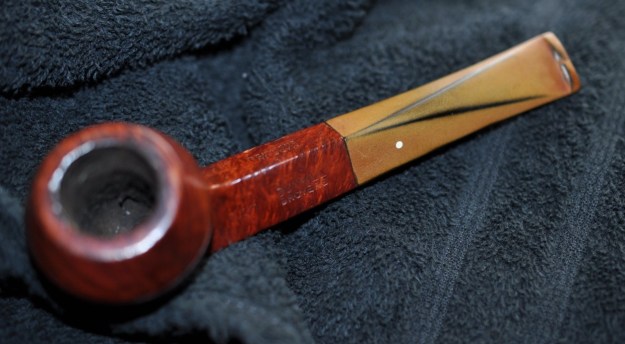
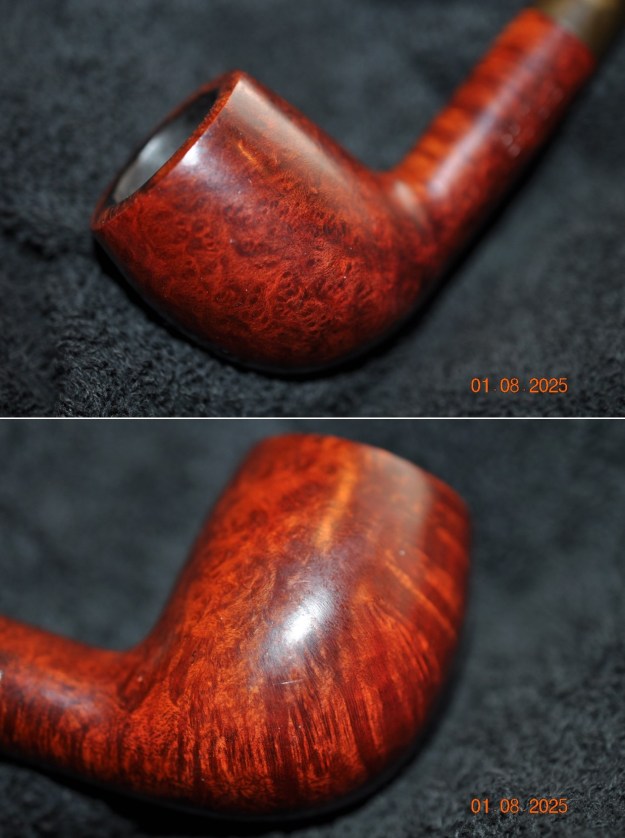
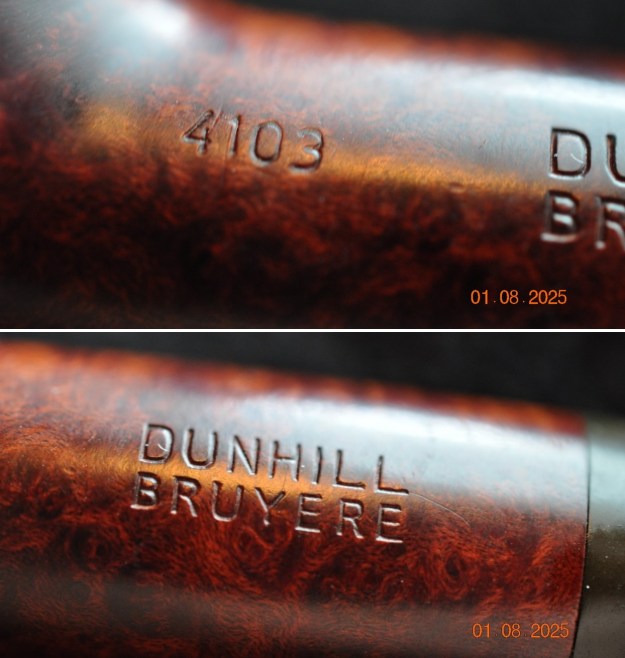
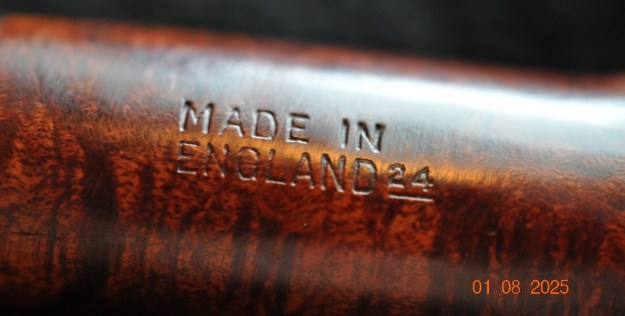
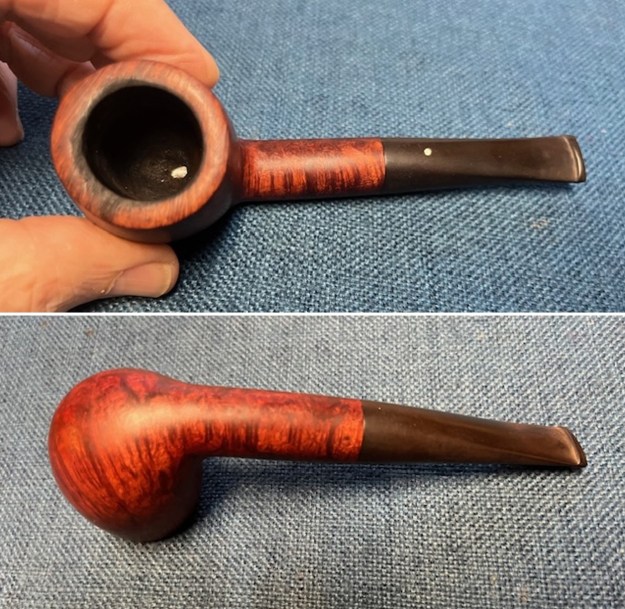
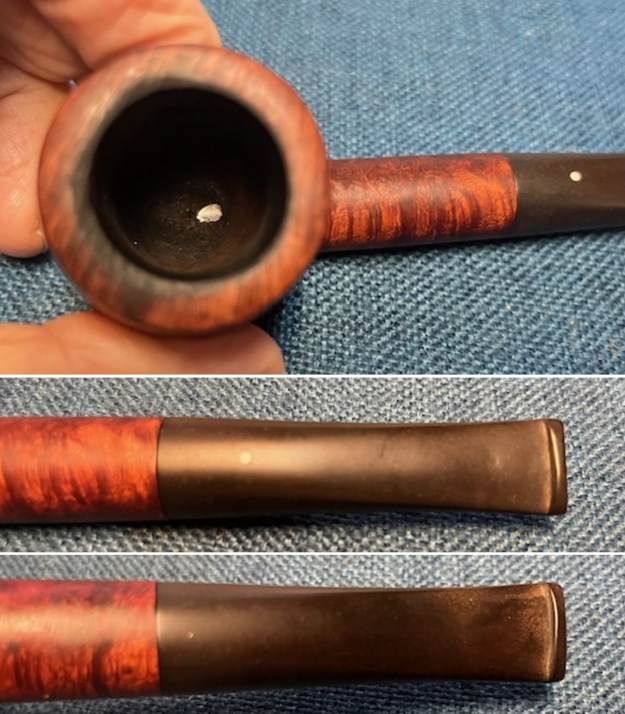
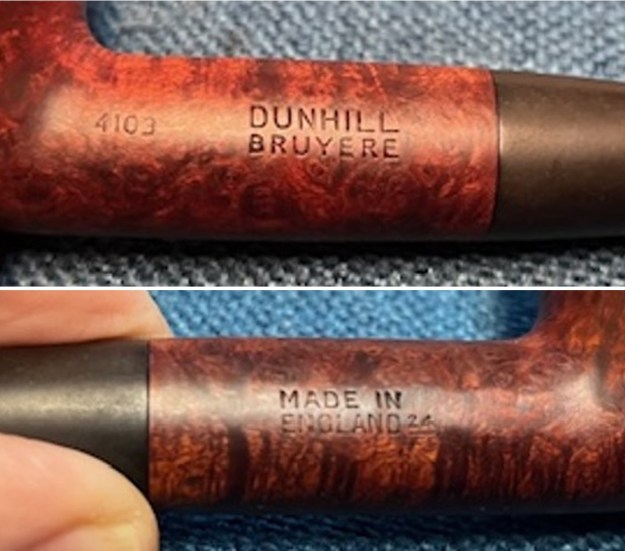
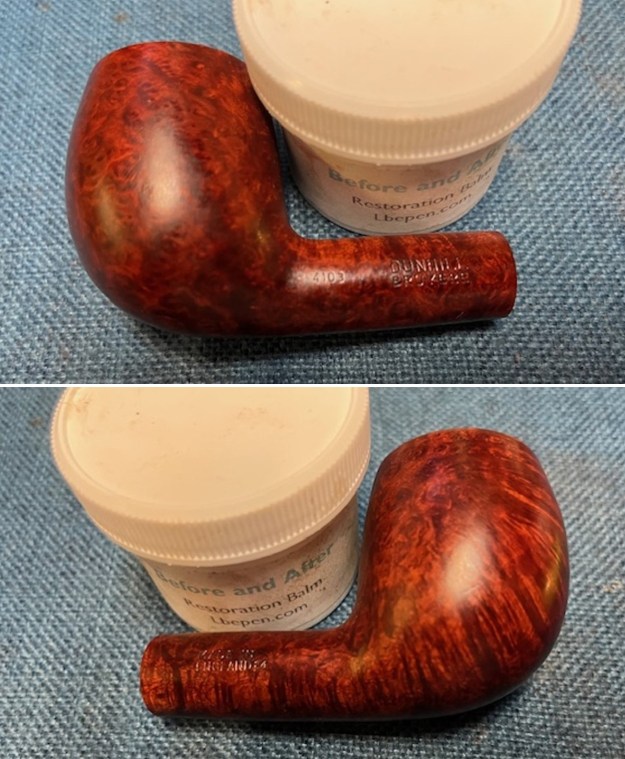
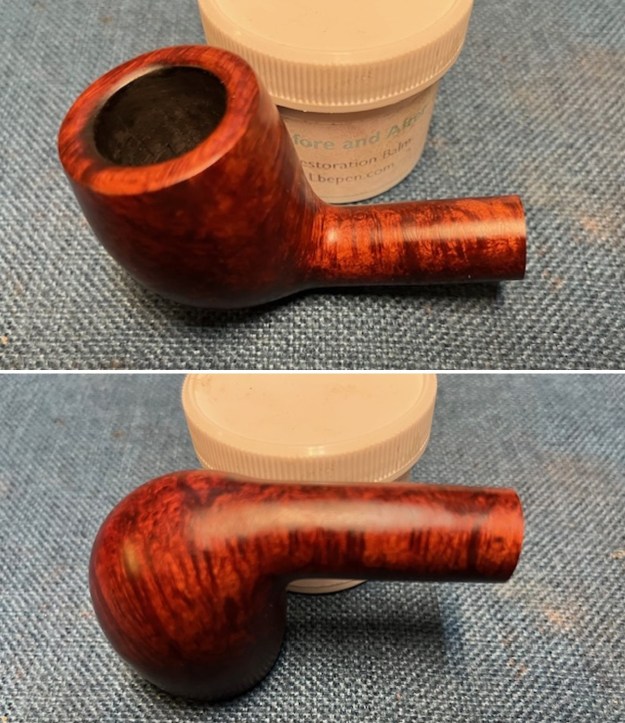
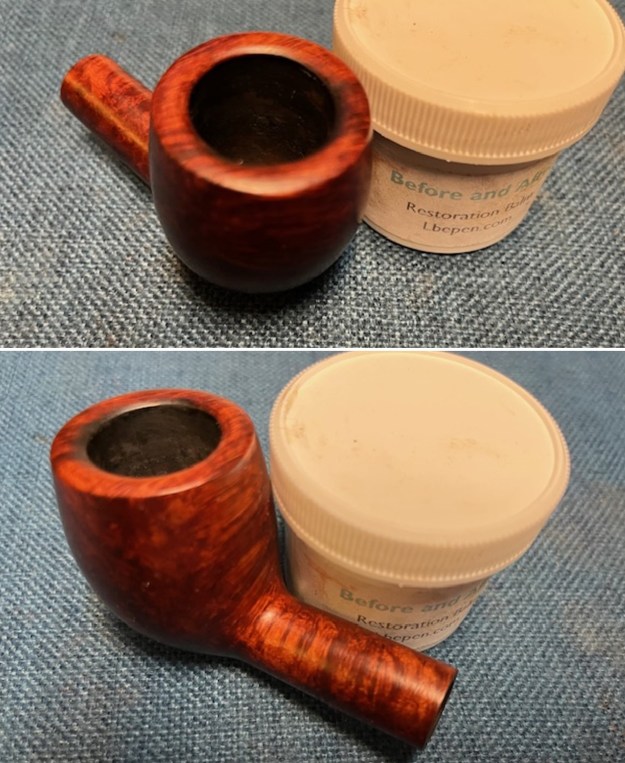
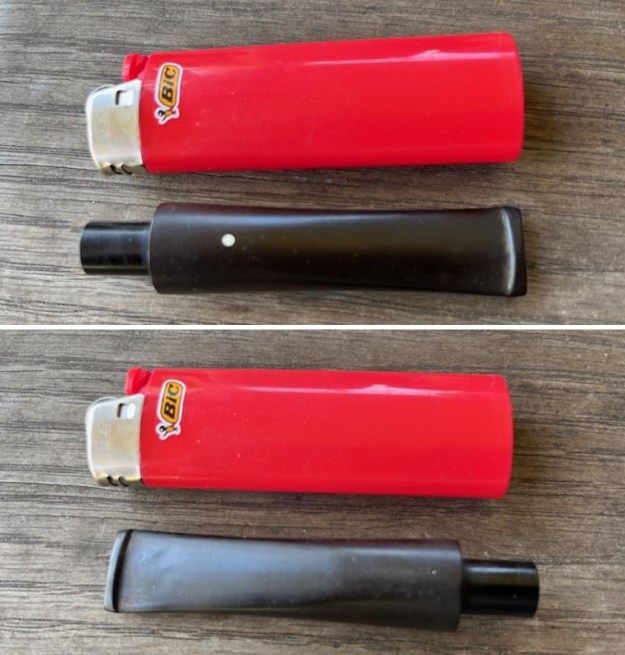
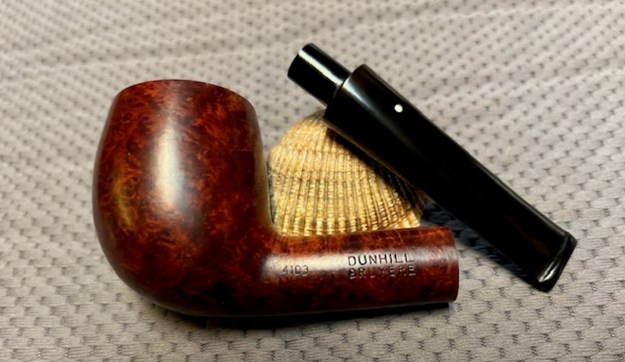
The next pipe on the table is one that we picked up in the lot from a seller in Ogden, Utah, USA on 12/12/2024. The Bruyere finish and the Dunhill stamping is what caught our eye. It is stamped on the left side of the shank and reads 4103 next to the bowl/shank union followed by Dunhill [over] Bruyere. On the right side it is stamped Made in [over] England24. It has a classic Bruyere smooth finish that is a stark contrast to vulcanite taper stem. The bowl appears to be moderately caked at first glance but could be thicker deeper in the bowl. The inner edge and the top show some lava overflow and what looks like some burn damage on the inner edge. The stem is oxidized and calcified which is quite normal for what I see. It also seems to have marks from a Softee Bit and some light tooth marks and chatter on the top and underside ahead of the button. The classic white spot is on the top of the stem and looks to be in good condition. Jeff took some photos of the pipe to show the general condition of the pipe before he started his clean up. He took some photos of the rim top and bowl from various angles to give me a clear picture of the condition of the rim top and bowl. You can see the lava on the rim top and edges as well as part of the cake in the bowl. He included photos that show the top and underside of the stem. It is as described above. Jeff took some photos of the sides and heel of the bowl to show the condition of the finish on the pipe. The photos showed some great grain around the bowl and shank. It is a great looking piece of briar.He took some photos of the stamping on the sides of the bowl and shank. The stamping was clear and readable as noted above. As is my regular practice, before I started my work on the pipe, I turned to Pipedia’s section on Dunhill Bruyere Pipes to get a refresh the information I know regarding the Dunhill finishes (https://pipedia.org/wiki/Dunhill_Bruyere). I quote:

Initially, made from over century-old briar burls, classified by a “B” (denoted highest quality pipe); “DR” (denoted straight-grained) and an “A” (denoted first quality), until early 1915. After that, they became a high-end subset to the Dunhill ‘Bruyere’. The DR and B pipes, a limited production, they should be distinguished as hand-cut in London from burls as opposed to the Bruyere line which was generally finished from French turned bowls until 1917, when the Calabrian briar started to be used, but not completely. Only in 1920 Dunhill took the final step in its pipe making operation and began sourcing and cutting all of its own bowls, proudly announcing thereafter that “no French briar was employed”.

Bruyere pipes were usually made using Calabrian briar, a very dense and hardy briar that has a modest grain but does very well with the deep red stain.

“Before the 1950s, there were three possible finishes for Dunhill pipes. The Bruyere was a smooth finish with a deep red stain, obtained through two coats, a brown understain followed by a deep red. The Shell finish was the original sandblast with a near-black stain (though the degree to which it is truly black has varied over the years). Lastly, the Root finish was smooth also but with a light brown finish. Early Dunhill used different briars with different stains, resulting in more distinct and identifiable creations… Over the years, to these traditional styles were added four new finishes: Cumberland, Dress, Chestnut and Amber Root, plus some now-defunct finishes, such as County, Russet and Red Bark.”[1]I turned to Pipephil’s dating guide to show how I arrived at the date of manufacture for this pipe (http://www.pipephil.eu/logos/en/dunhill/cledat-en1a.html). I am including the chart that is provided there for the dating a pipe. I have drawn a red box around the section. Since the pipe I am working on has a superscript suffix 24 after the D in England it points to the 1960 line on the chart below. To date it just add 1960 +24 for a date of 1984. I have drawn a red box around the pertinent section in the chart.I now knew that I was working on a Bruyere that came out in 1984. The shape of the pipe is called a smooth Billiard with a 4103 Shape number on the left side of the bowl.

I turned to Pipephil’s shape list (http://www.pipephil.eu/logos/en/dunhill/shapes.html). At the bottom of the list of shapes (with the 03 being a billiard) is a key for interpreting the digits in the stamp I have included that below.

Dunhill pipes are stamped with a four digit code.
Digit 1: (from 1 to 6) denotes the size of the pipe (the group).
Digit 2: denotes the style of the mouthpiece (0,1=tapered, 2=saddle)
Digit 3 and 4: denote the generic pipe shape (in yellow in the chart on top) 

Example: 5102
(5 = size | 1 = tappered stem | 02 = Bent)

When 5 digits occur, the meaning of the 4 first remain the same

The 4103 was thus a Group 4 size, with a taper mouthpiece, and in an 03 or Billiard shape.

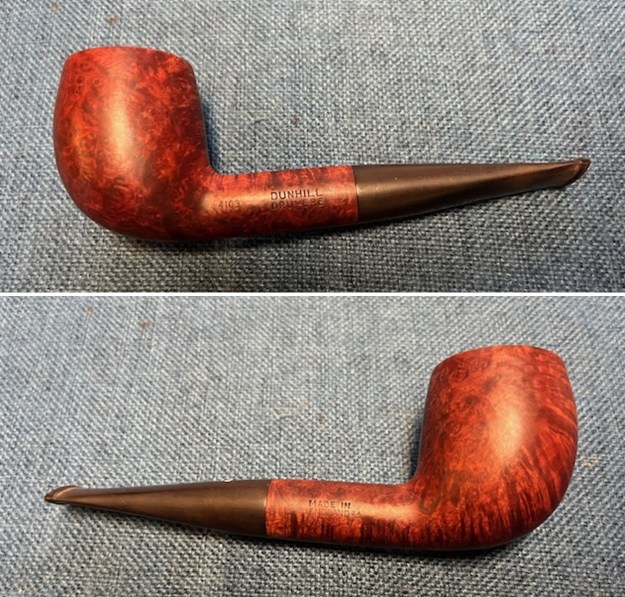
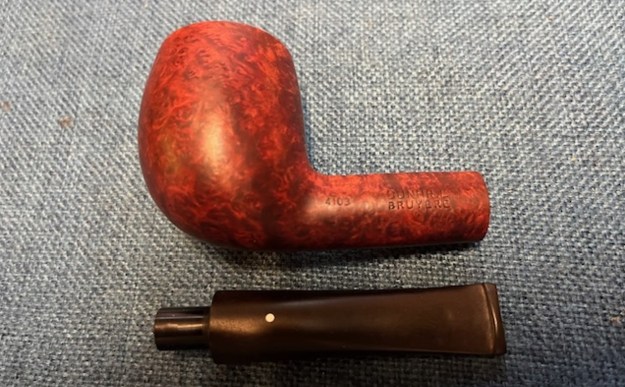
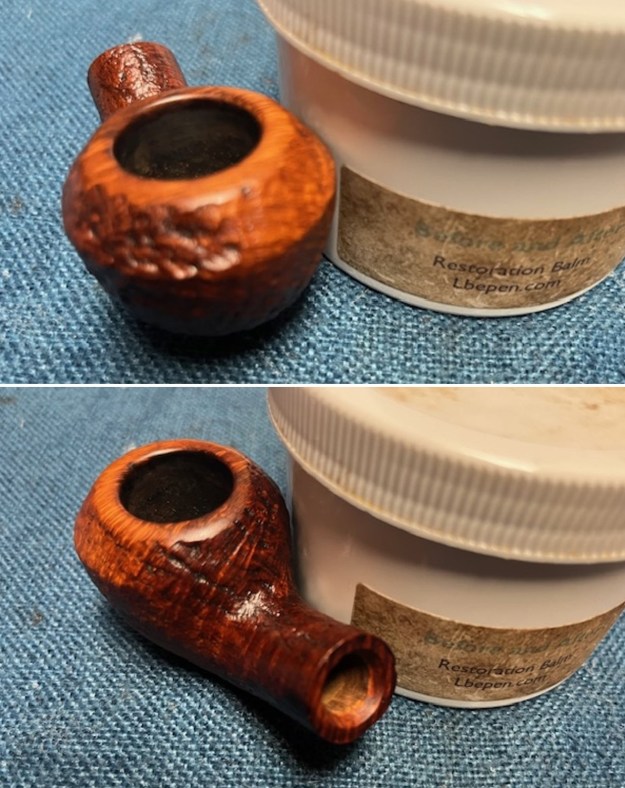
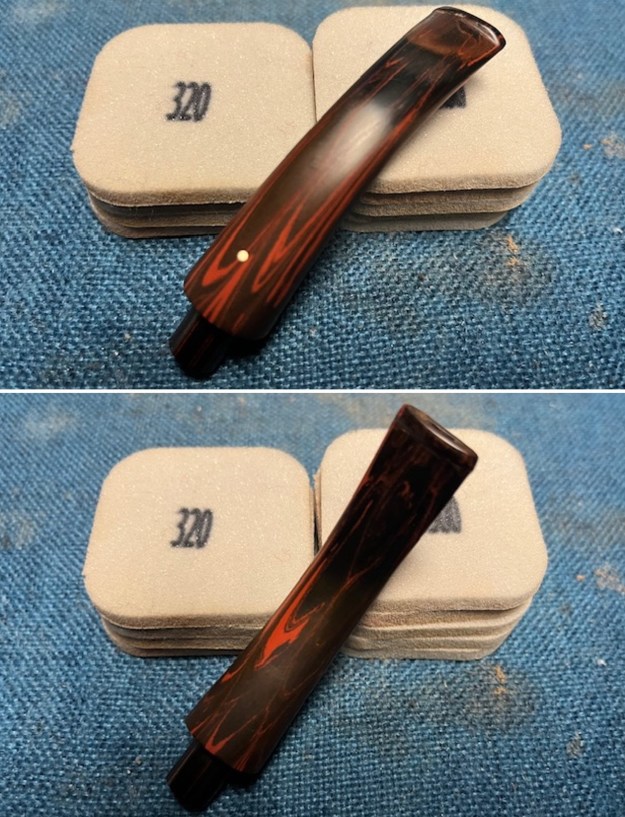
Armed with that information I turned to work on the pipe itself. Jeff had done a great job cleaning up the pipe as usual. He cleaned up the inside of the bowl with a PipNet reamer and a Savinelli Fitsall Pipe Knife. The rim top shows some damage on the top and the inner edge of the bowl. The bowl walls looked very good. There was also a short inner tube in the airway into the bowl. It did not extend in the shank. He scrubbed the interior of the bowl and shank with pipe cleaners, cotton swabs and alcohol to remove the tars and oils. He scrubbed the exterior of the pipe with Murphy’s Oil Soap and a tooth brush to remove the grime from the finish. He worked on the rim top lava and darkening with the soap and tooth brush. He scrubbed the inside of the stem with alcohol and pipe cleaners. He scrubbed the exterior with Soft Scrub and then soaked it in Briarville’s Pipe Stem Deoxidizer. He washed it off with warm water to remove the deoxidizer. Now the damage to the stem was very clear. Overall, the pipe looked far better. I took photos of the pipe when I received it before I started working on it. I took close up photos of the bowl, rim top and stem to show how clean the pipe was. The bowl was clean and the damage to the rim top and the inner edge is very visible in the photo below. The stem was clean and the light tooth marks and chatter can be seen in the photos.I took a photo of the stamping on the sides of the shank. It is very clear and readable and read as noted above. I also removed the stem from the shank and took photos of the pipe to show the look of the parts. I started my work on the pipe by addressing the damage to the rim top. I used some 220 grit sandpaper and a round wooden sphere to clean up the bevel on the inner edge of the bowl. It looked much better once finished. It was sunny today and warm so I sat on the porch and enjoy a bowl of tobacco and polished the Bruyere bowl and shank with 1500-12000 grit micromesh sanding pad – dry sanding it with the pads. I wiped the bowl down with a damp cloth after each pad. It began to take on a deep shine. The exterior of the bowl look better after sanding. I worked some Before & After Restoration Balm into the briar with my finger tips. I let it sit on the bowl for 10 minutes and then buffed it off with a paper towel and soft cloth. The product is a great addition to the restoration work. It enlivens, enriches and protects the briar while giving it a deep glow. It is a product I use on every pipe I restore. I tried to raise the tooth marks as much as possible by “painting” the surface of the stem with a lighter flame. It worked very well and I was able to lift them all enough that sanding them would remove them all.I continued the sanding process with 320-3500 grit sanding pads. The repairs began to disappear into the surface of the vulcanite and the stem began to take on a smooth new look. Progress for sure.It was ready for the next step. I polished it with micromesh sanding pads – dry sanding with 1500-12000 grit pads and wiping the surface down with Obsidian Oil after each sanding pad. It is really shining. I polished it further with Before & After Stem Polish – both Fine and Extra Fine. I gave it another coat of Obsidian Oil to finish this step. I am excited to be on the homestretch and look forward to seeing the 1984 Dunhill Bruyere 4103 Billiard put back together, polished and waxed. I put the bowl and stem back together and lightly polished the bowl and stem with Blue Diamond to polish them. I gave the bowl and the stem multiple coats of carnauba wax. I buffed the pipe on the wheel with a clean buffing pad to raise the shine. I hand buffed it with a microfiber cloth to deepen the shine. The depths of the grain really pop with the wax and polish. The repaired and polished vulcanite stem is a beautiful contrast to the combination of Shell stains on the bowl and shank. This Dunhill Bruyere 4103 Billiard was a lot of work to bring back to life. The pipe is light weight, comfortable in the hand and should feel great as it is warmed up when smoking. The finished pipe is shown in the photos below. The dimensions of the pipe are Length: 5 ½ inches, Height: 1 ¾ inches, Outside diameter of the bowl: 1 ¼ inches, Chamber diameter: 7/8 of an inch. The weight of the pipe is 1.73 ounces/48 grams. I will be putting this one on the rebornpipes store in the British Pipemakers Section soon. Let me know if you wish to add it to your collection.
As always, I encourage your questions and comments as you read the blog. Thanks to each of you who are reading this blog. Remember we are not pipe owners; we are pipe men and women who hold our pipes in trust until they pass on into the trust of those who follow us.