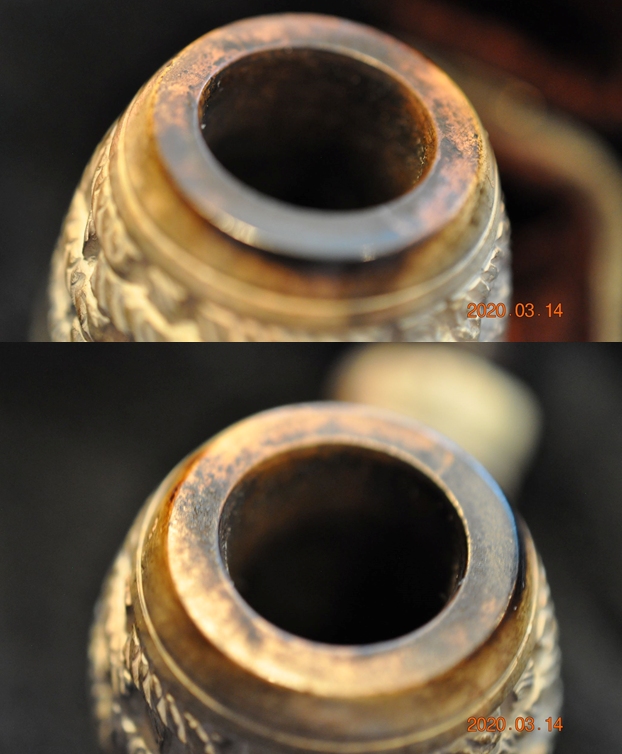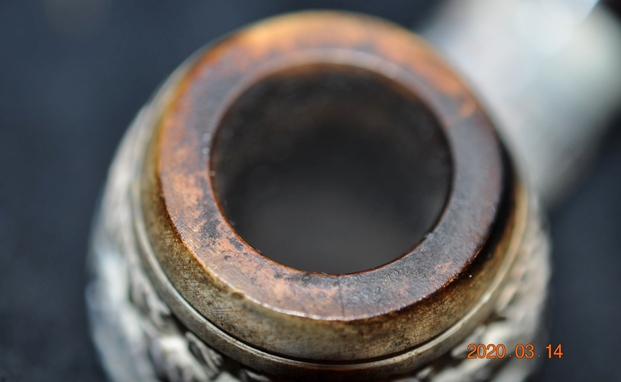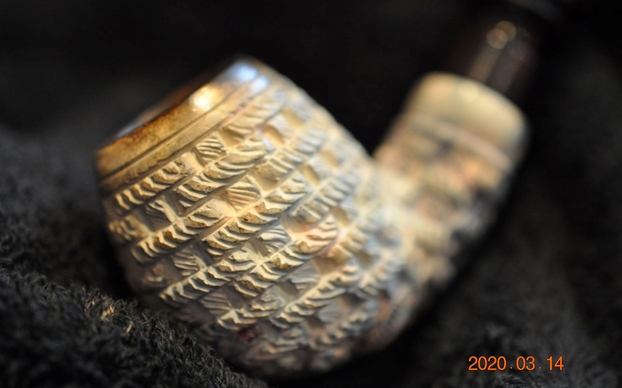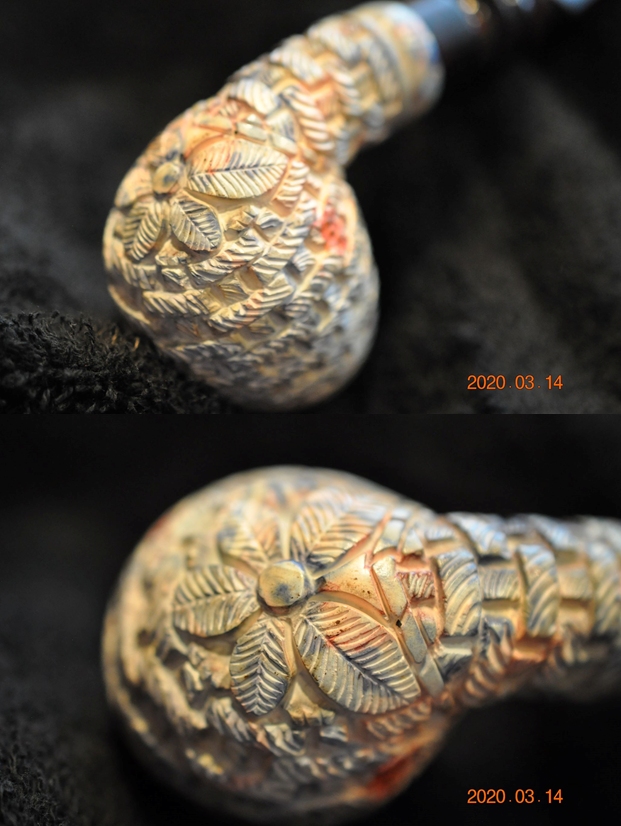
Tag Archives: Polishing a meerschaum bowl

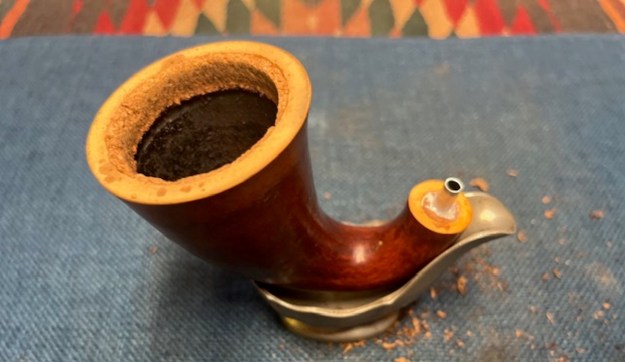
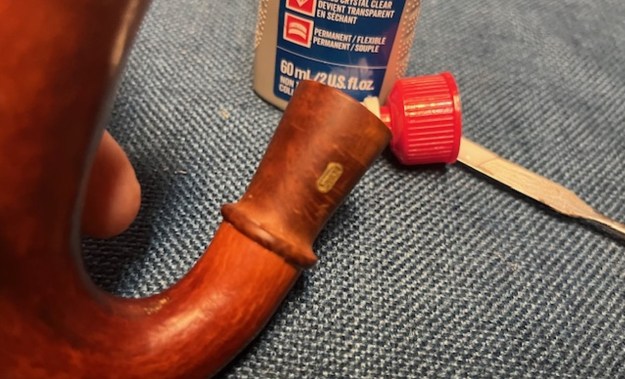
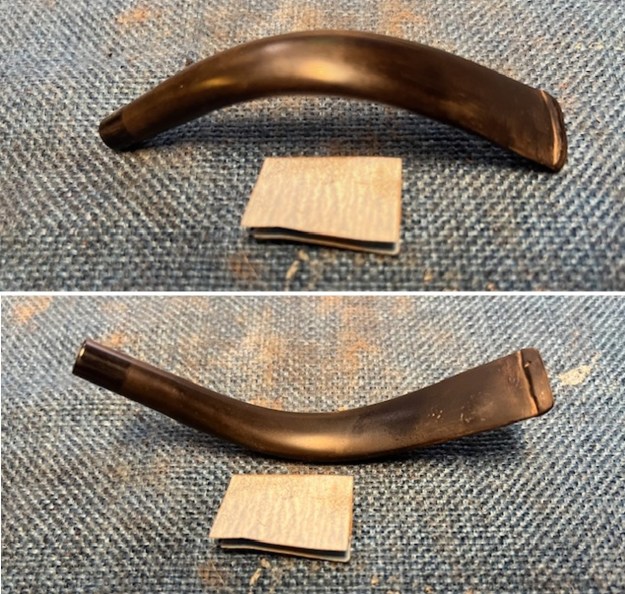
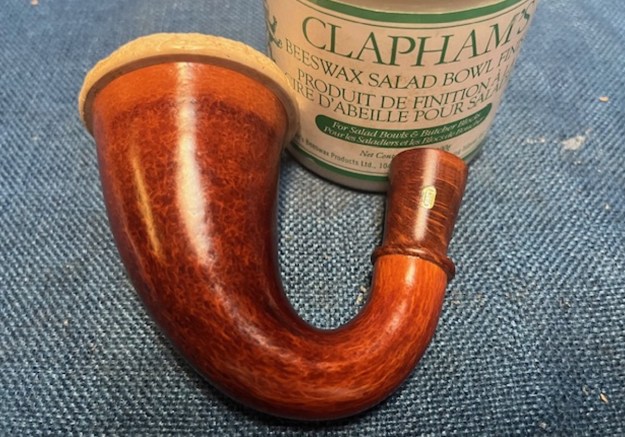
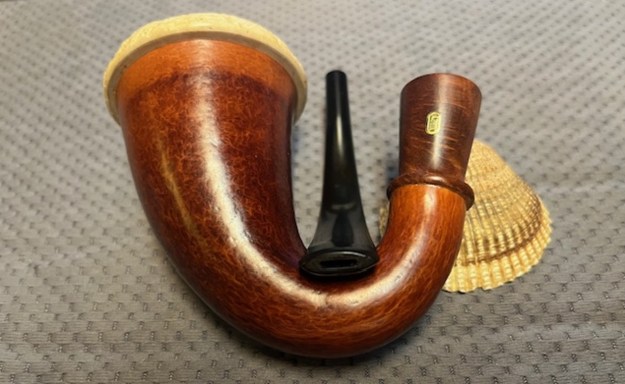
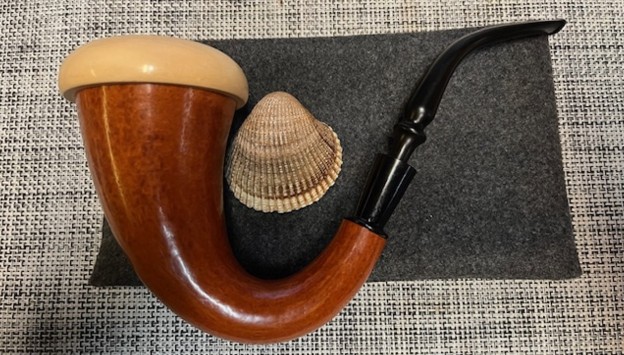
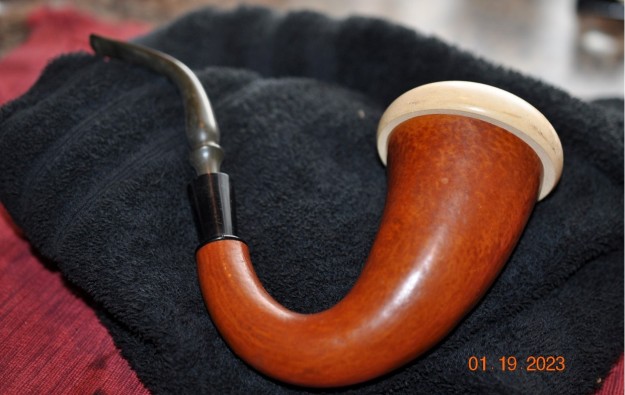
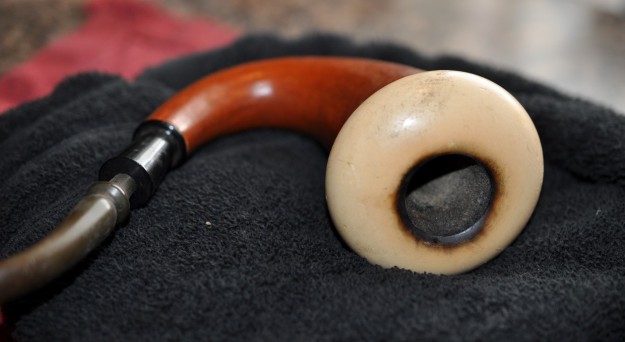
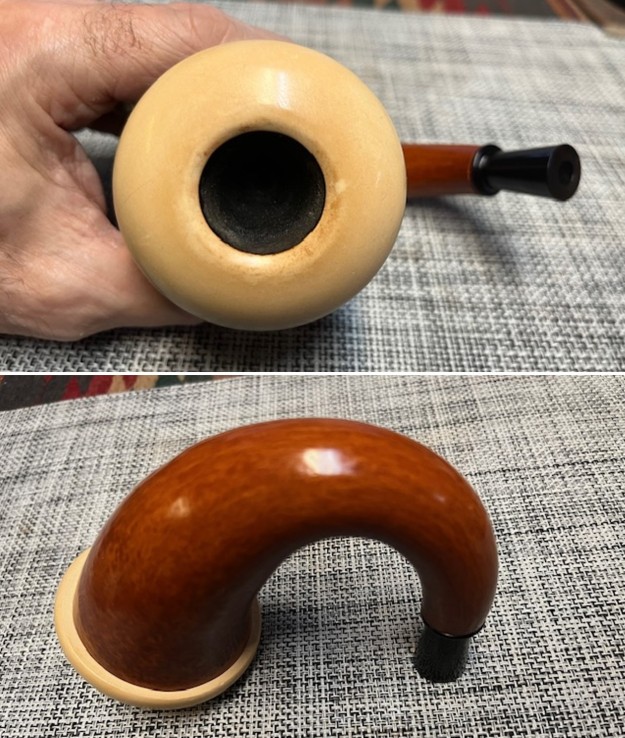
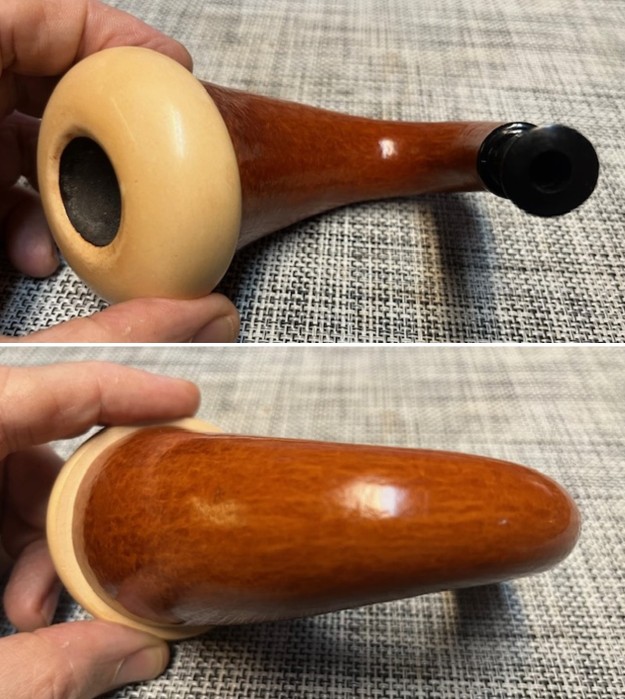
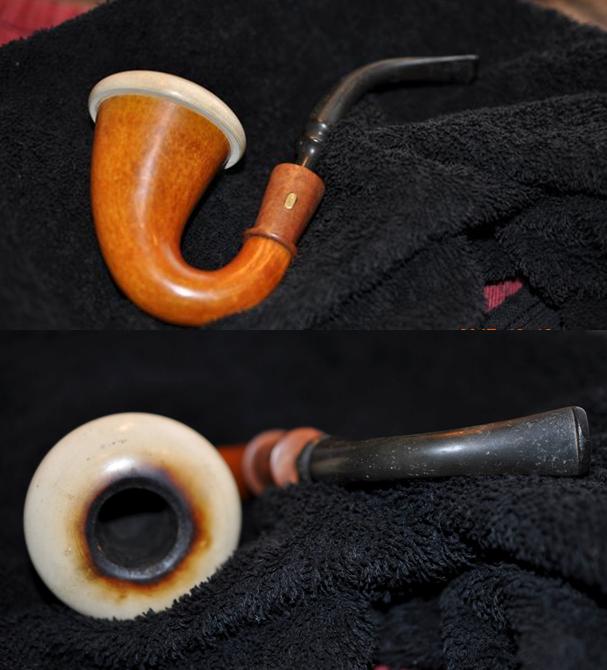
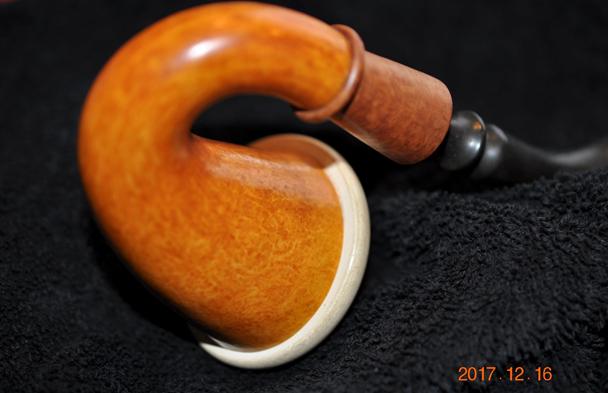
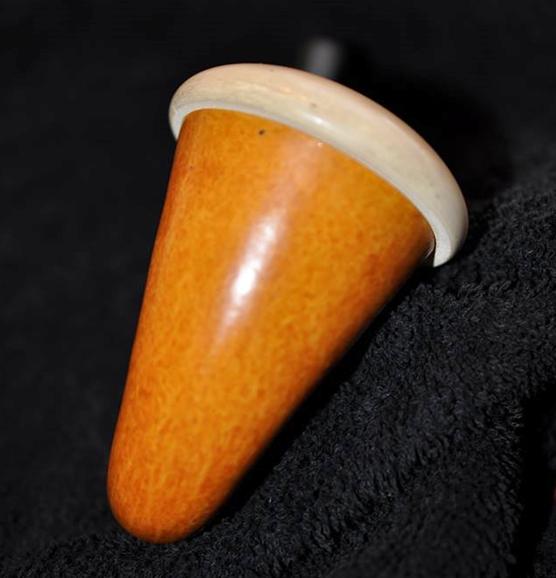
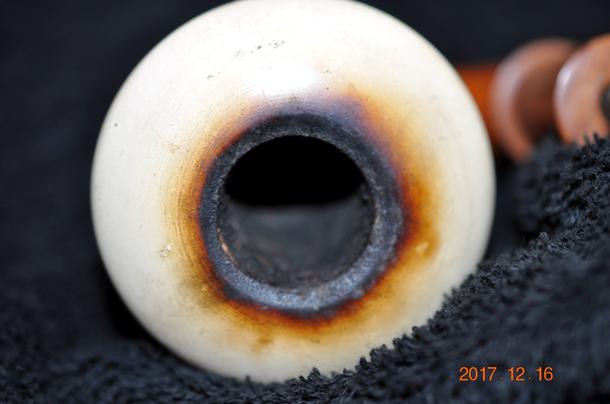
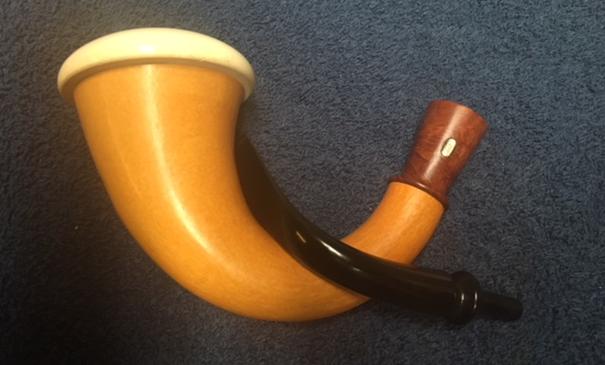
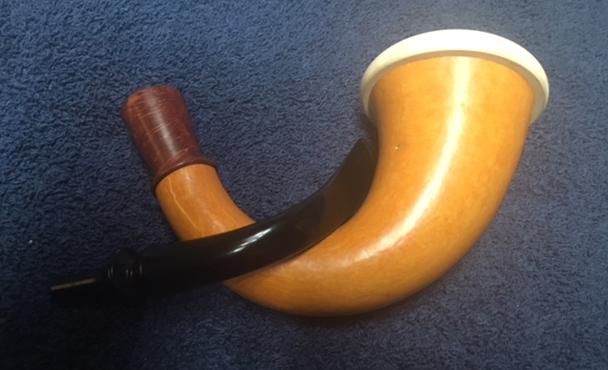
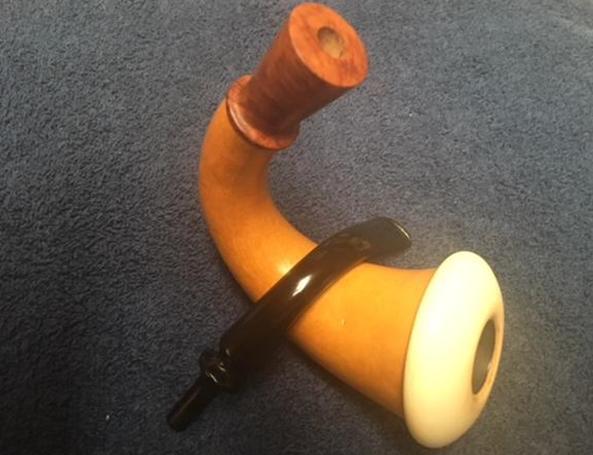
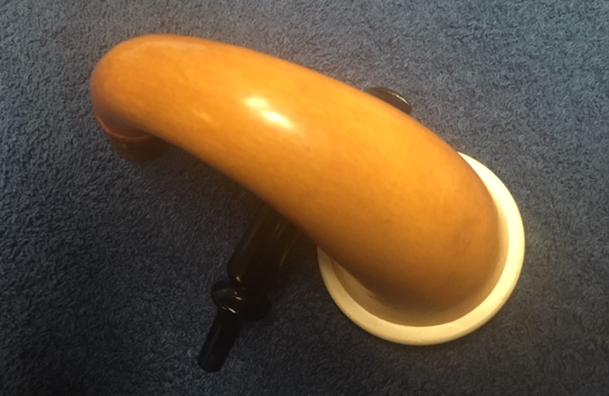
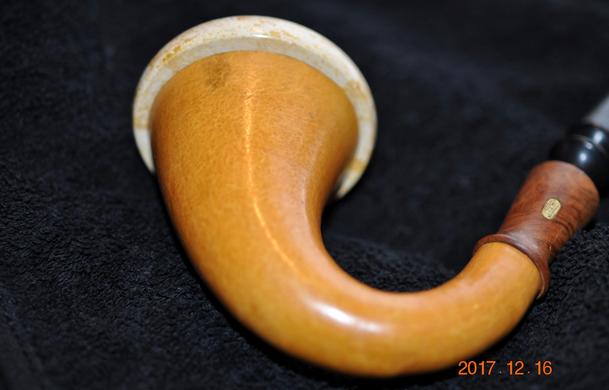
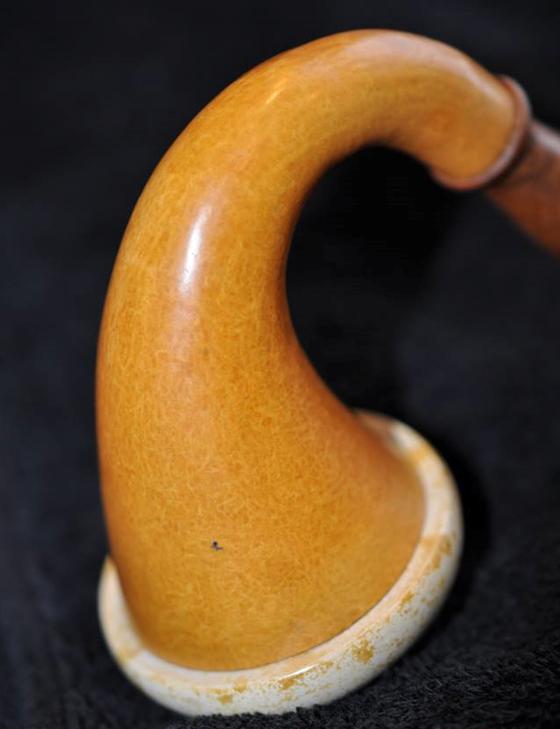
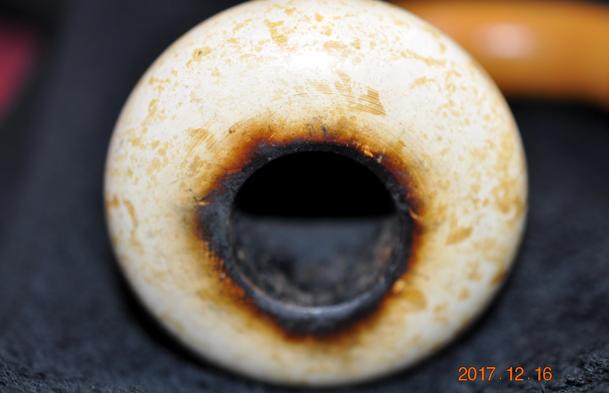
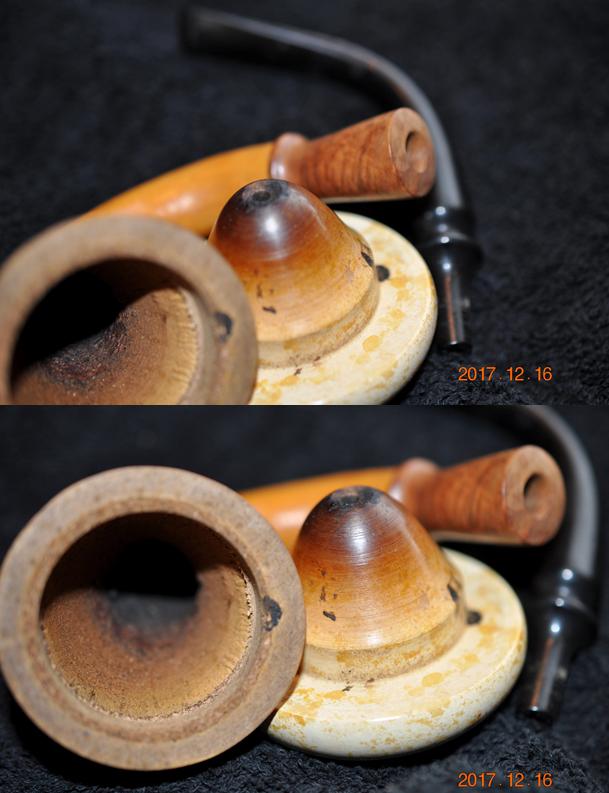
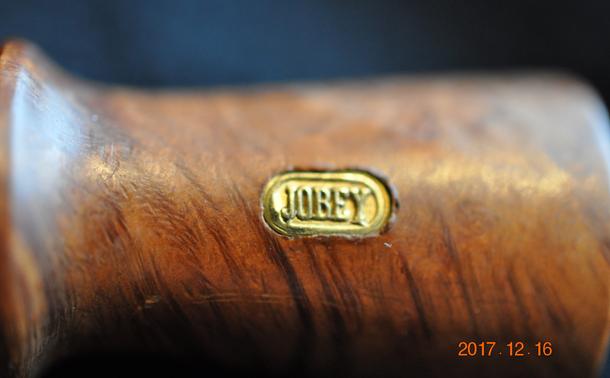
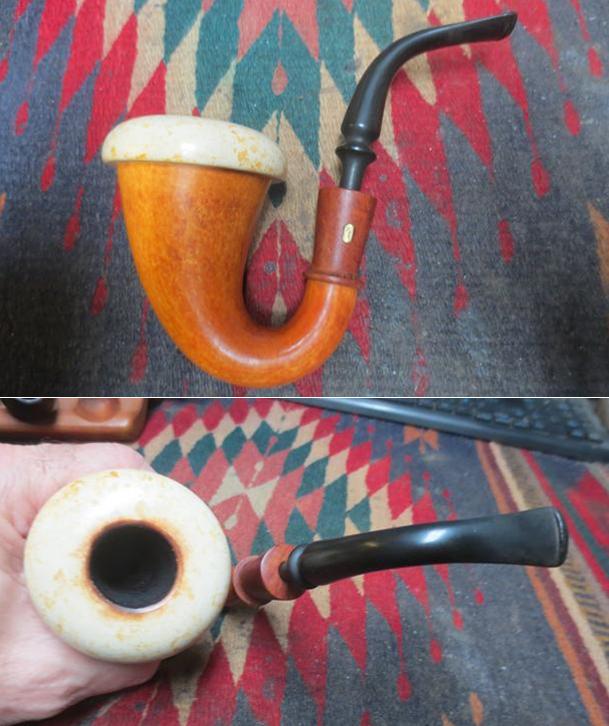
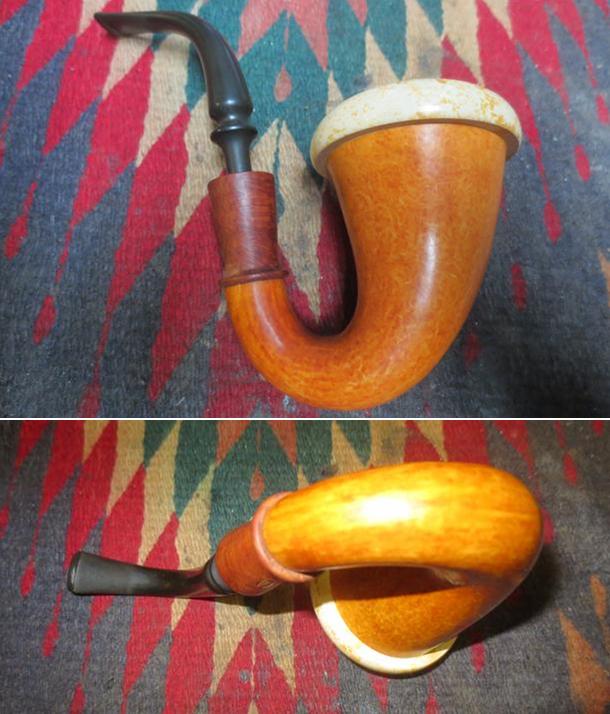
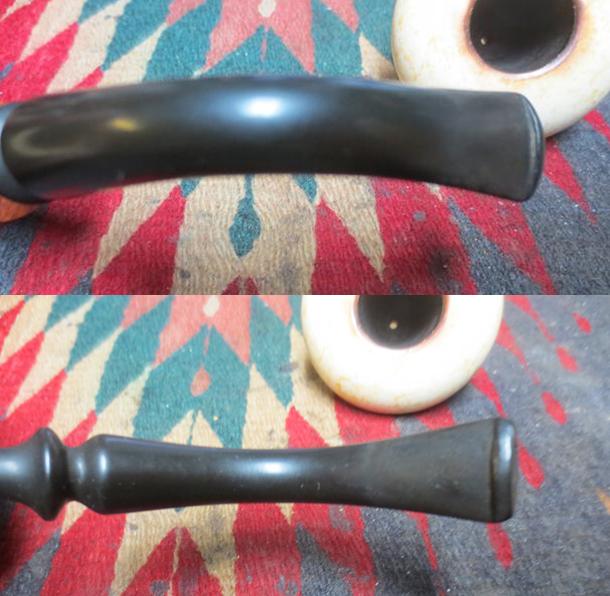
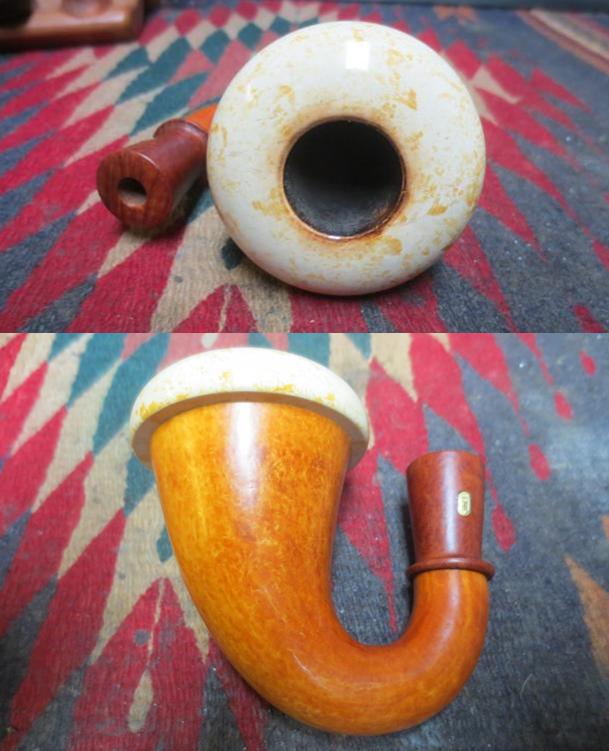
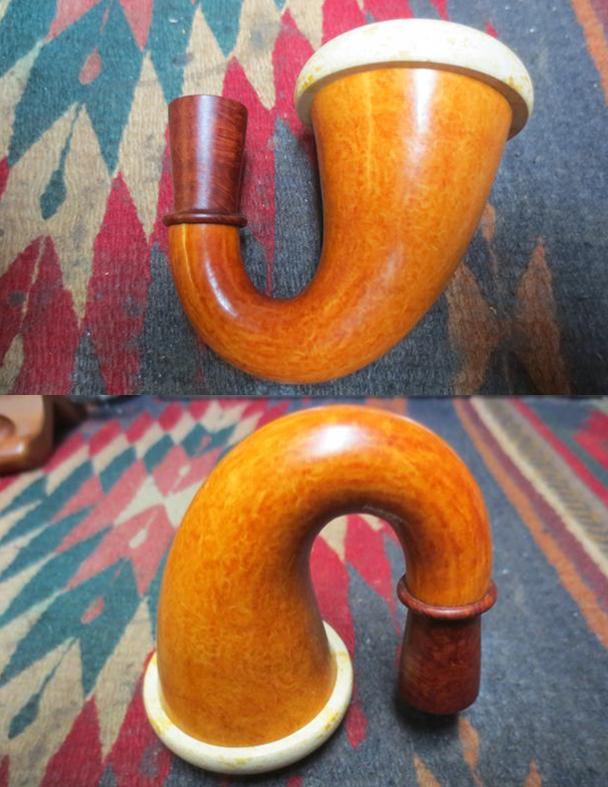
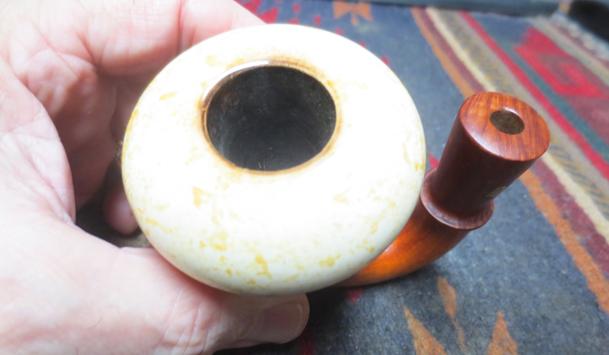
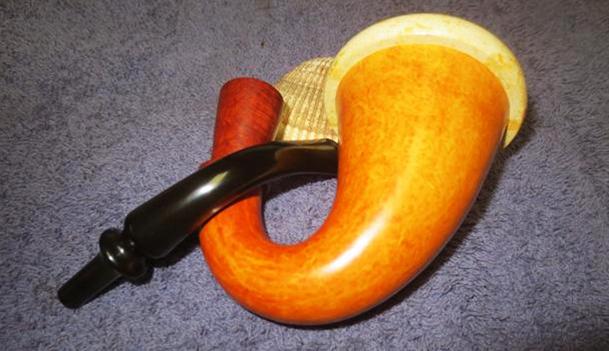
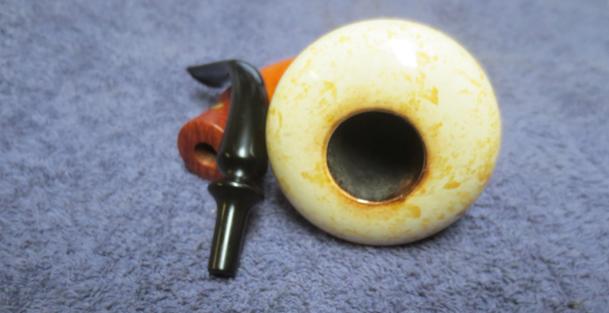
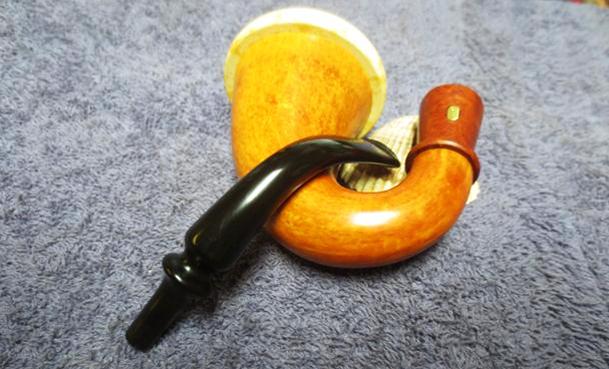
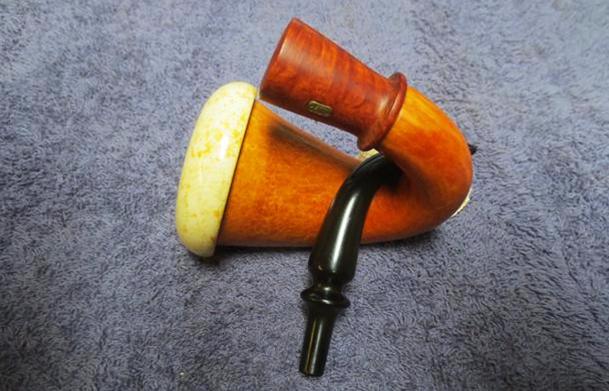
Rebirthing a Damaged Jobey Gourd Calabash and Meerschaum Bowl


by Steve Laug

While I was in Idaho visiting my Dad last month I received an email from John about whether I could repair his Jobey Calabash. I have included the email below

Hello, I’m looking for a pipe repair shop. I have a Jobey Calabash pipe dropped it, and well it broke. I’m hoping I can send it to you for repair. Thank you, John

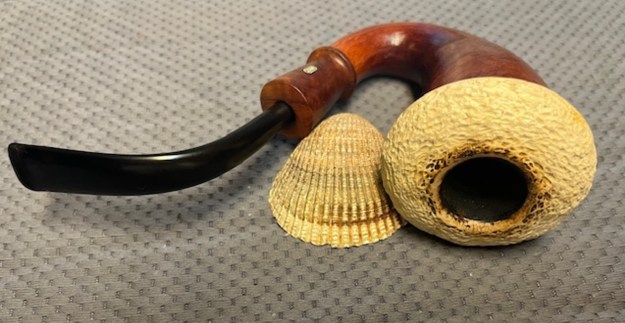
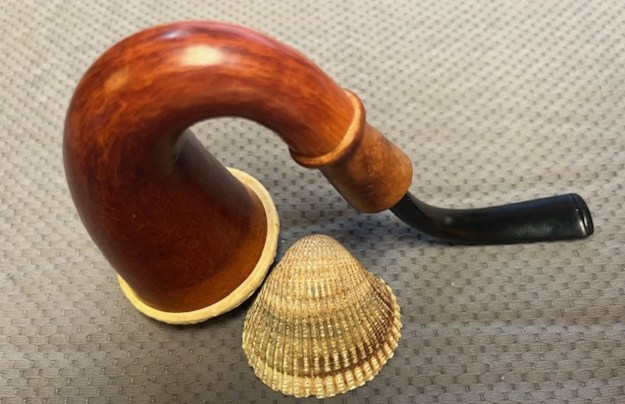
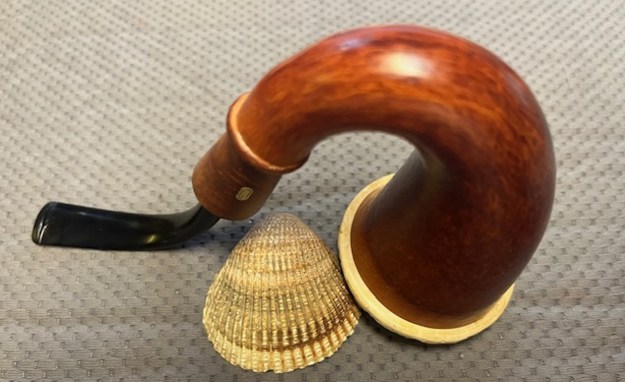
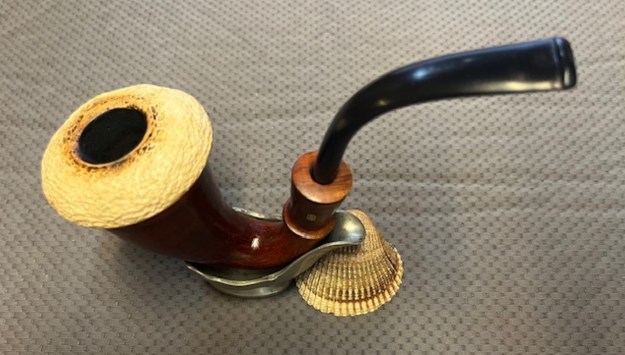
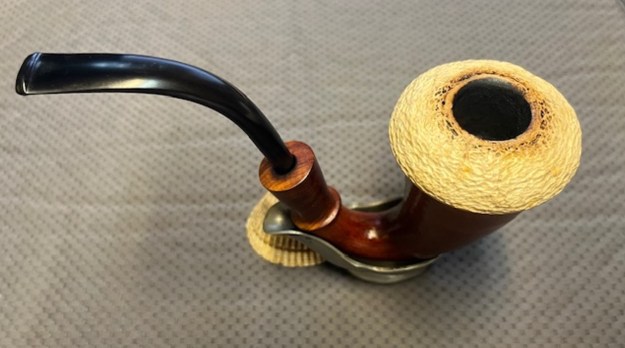
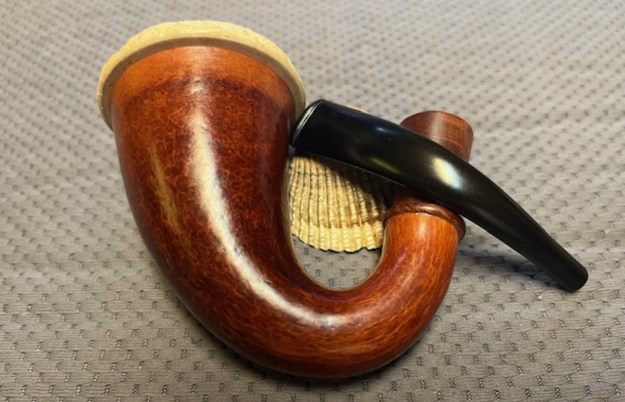
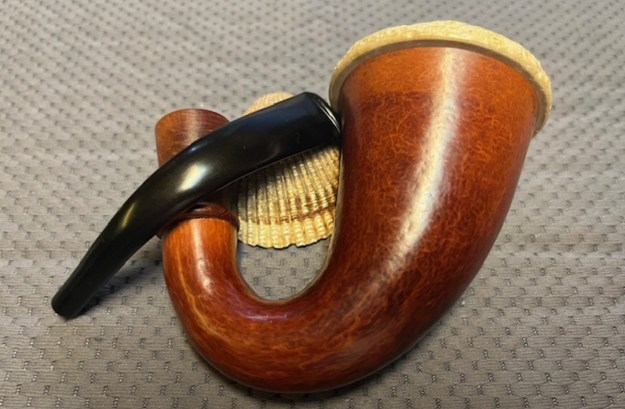
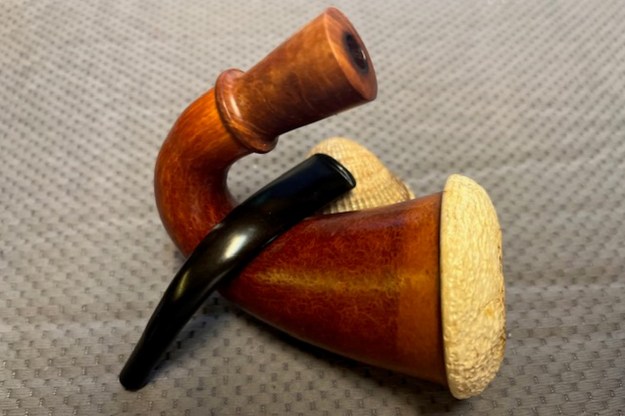
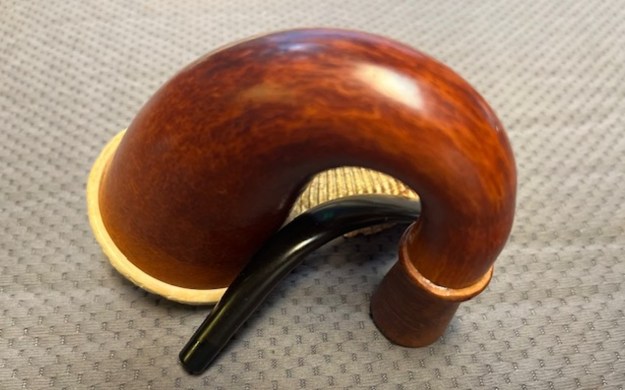
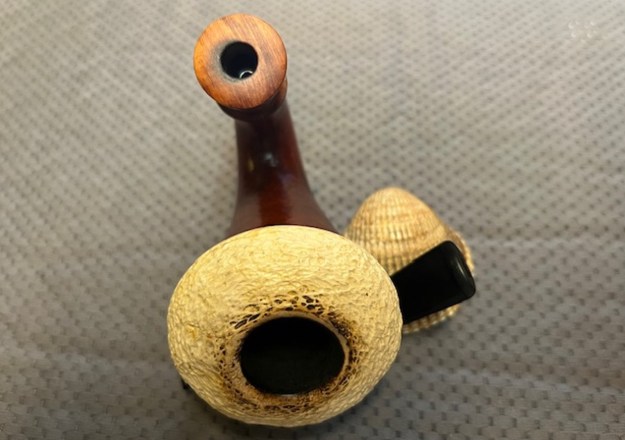
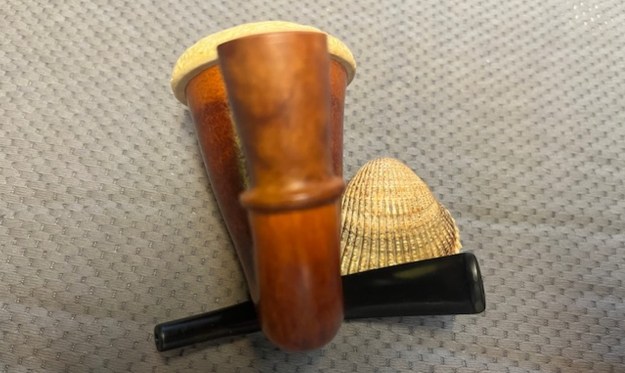
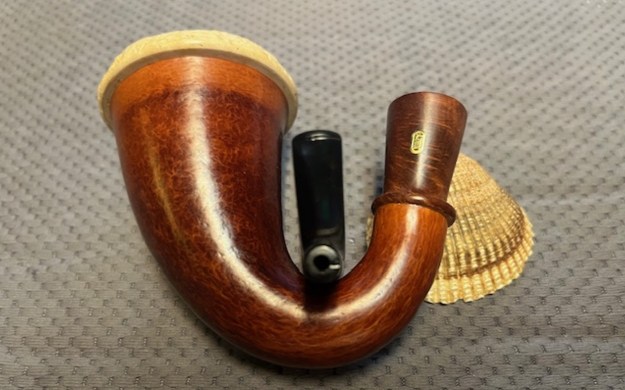
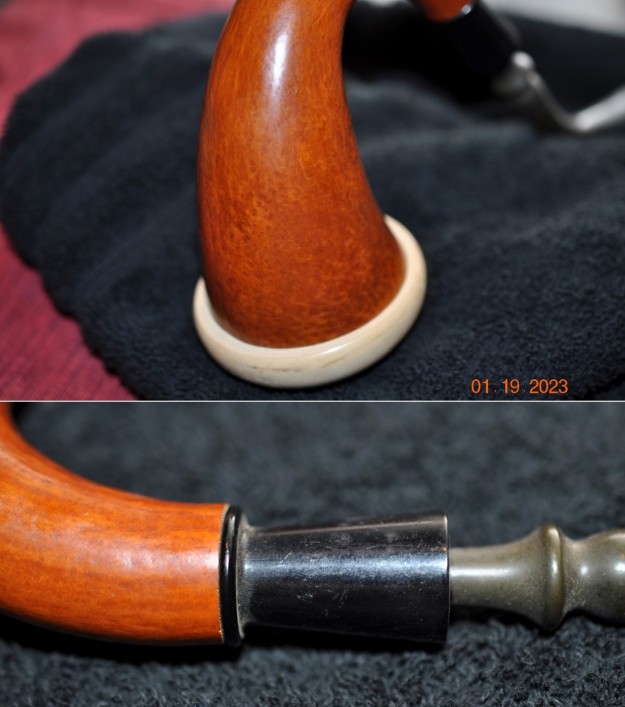
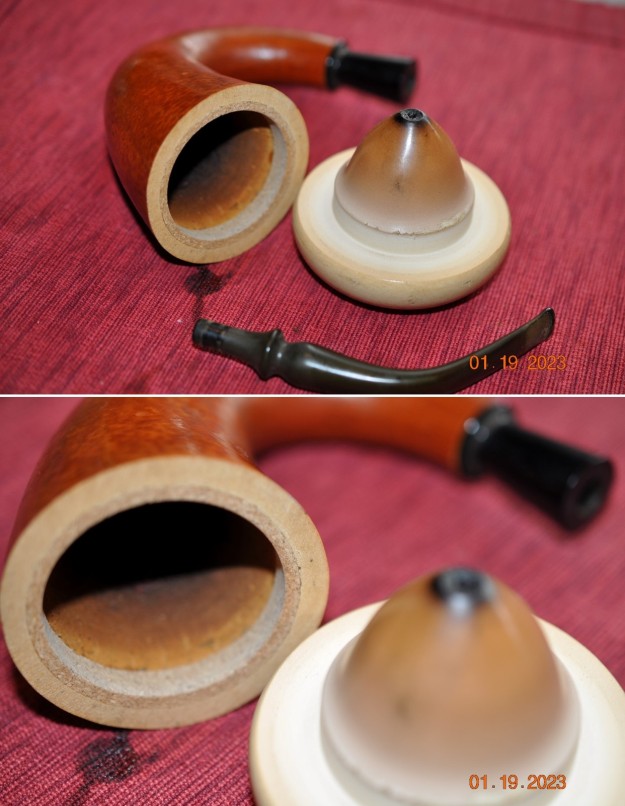
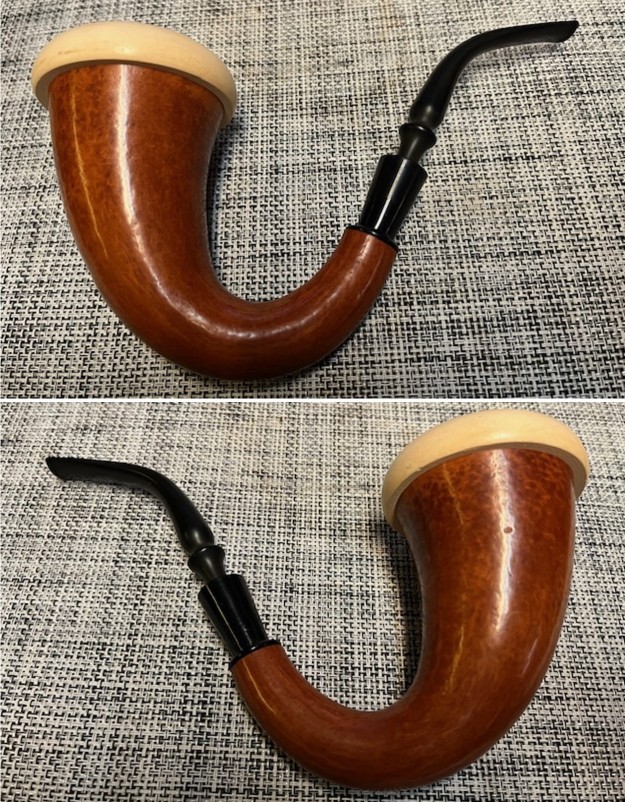
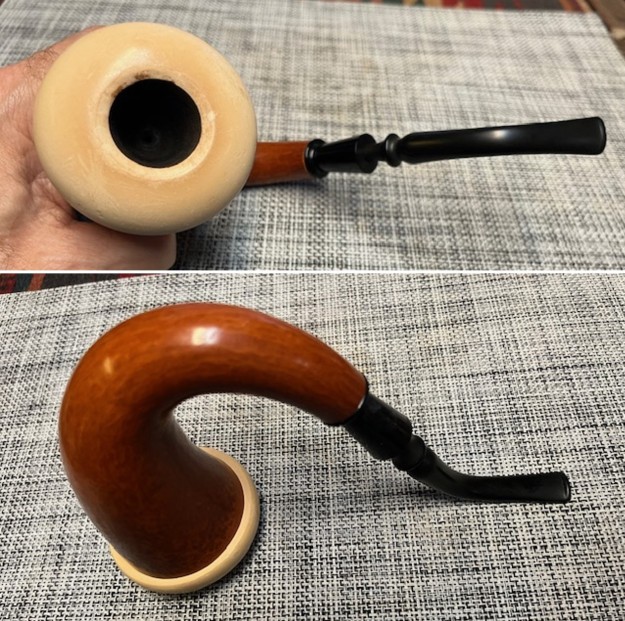
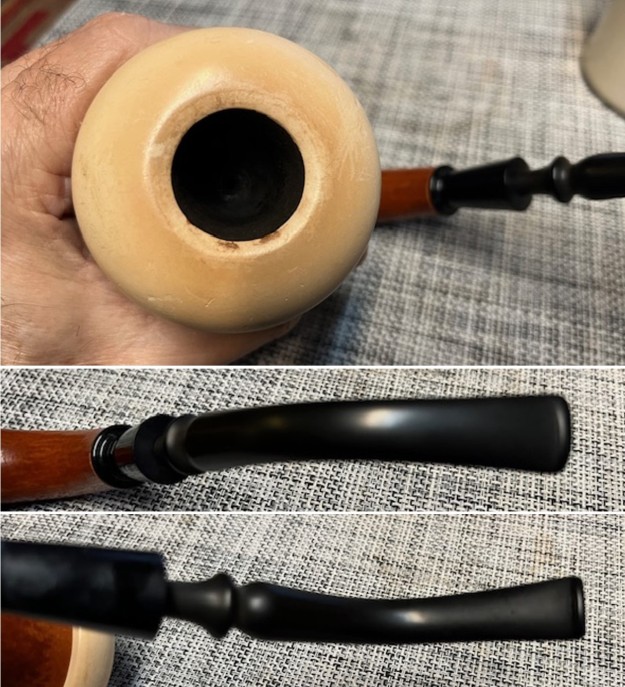
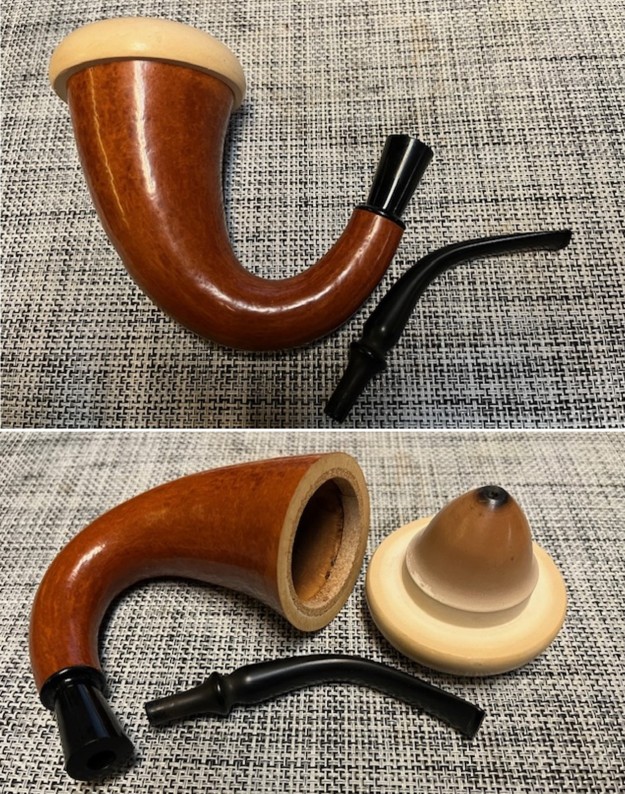
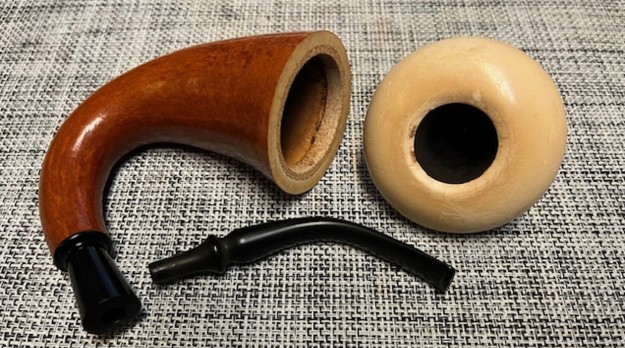
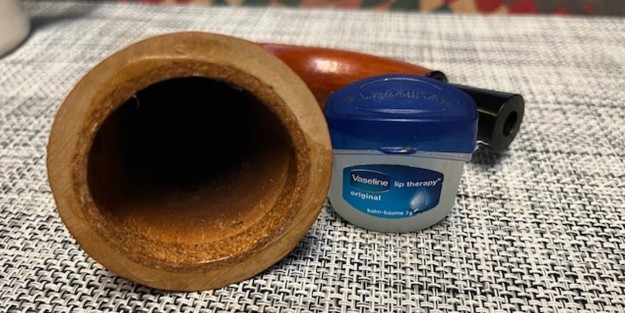
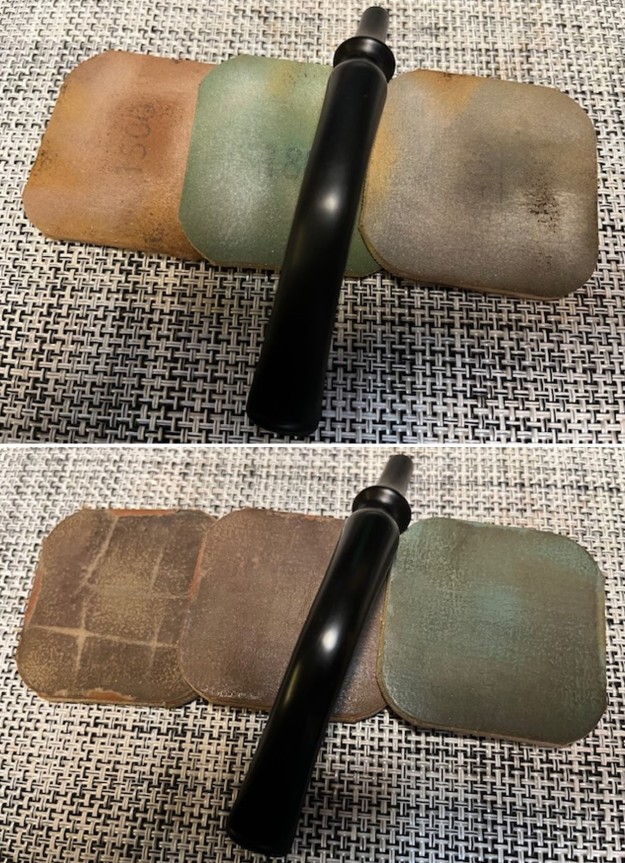
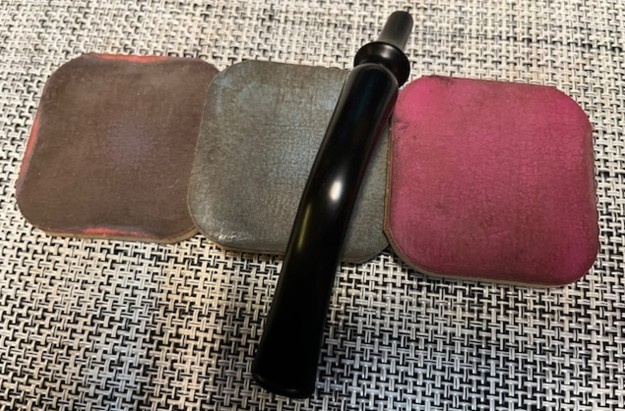
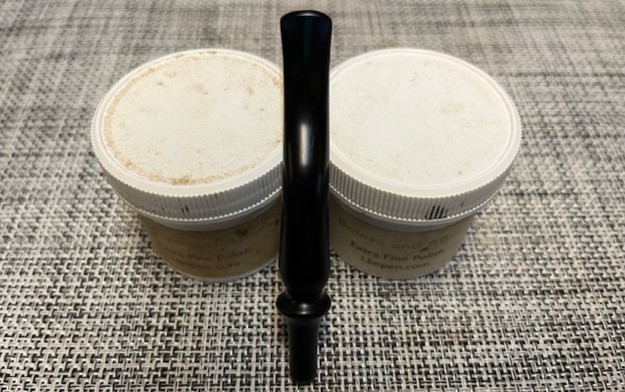
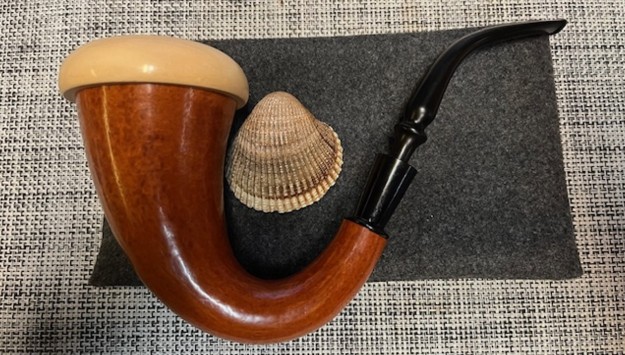
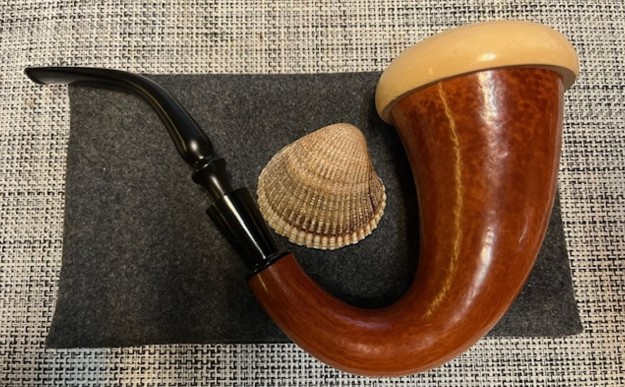
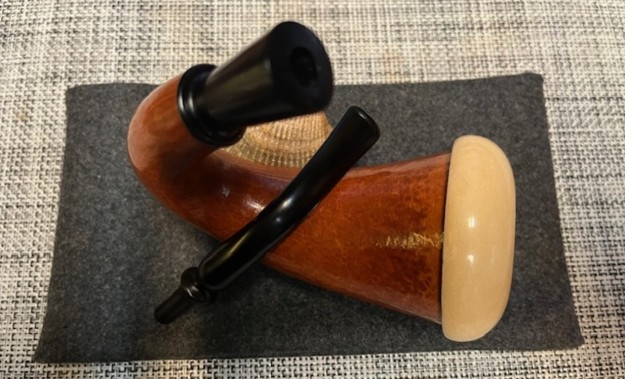
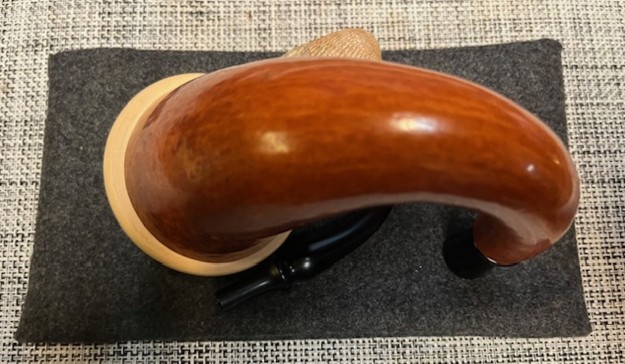
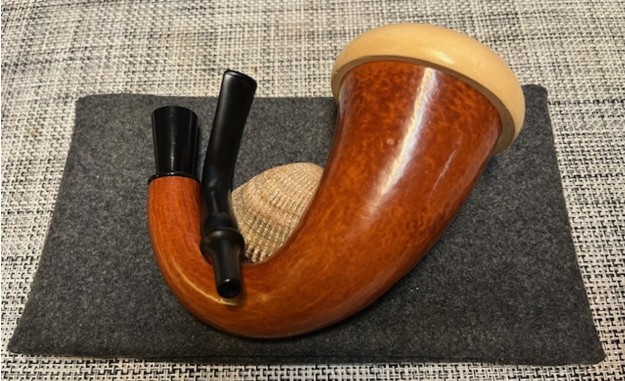
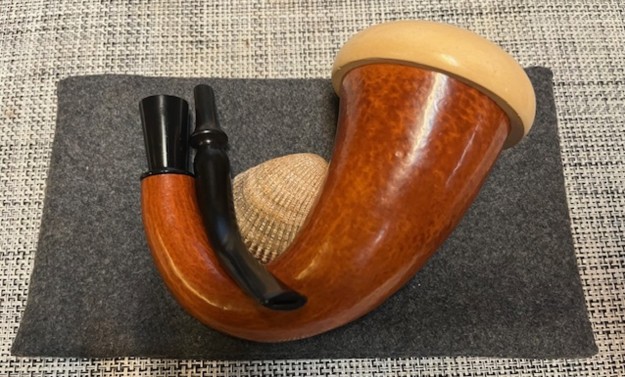
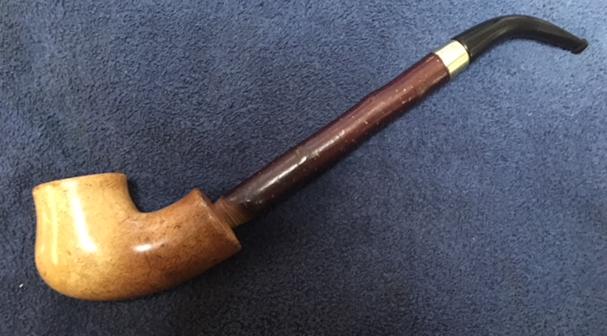
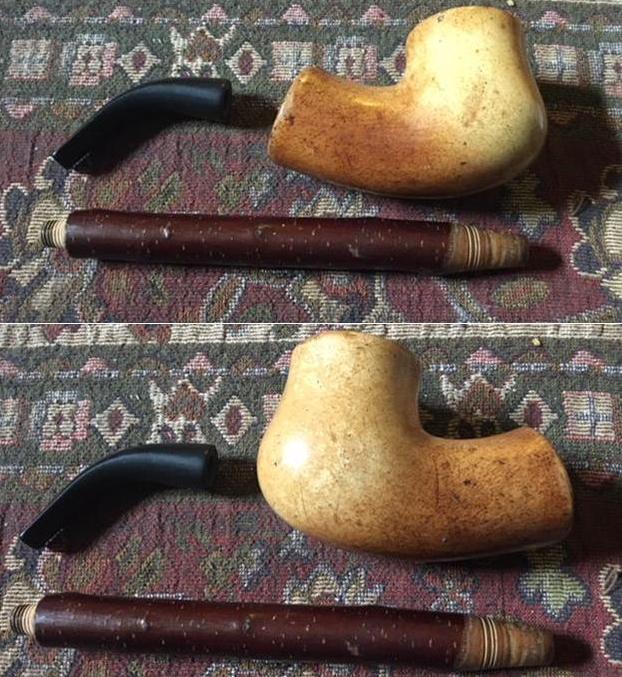
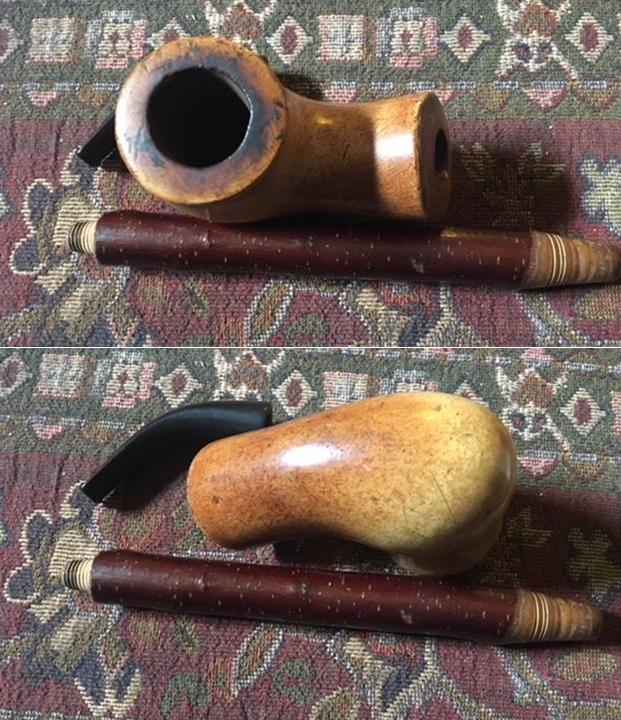
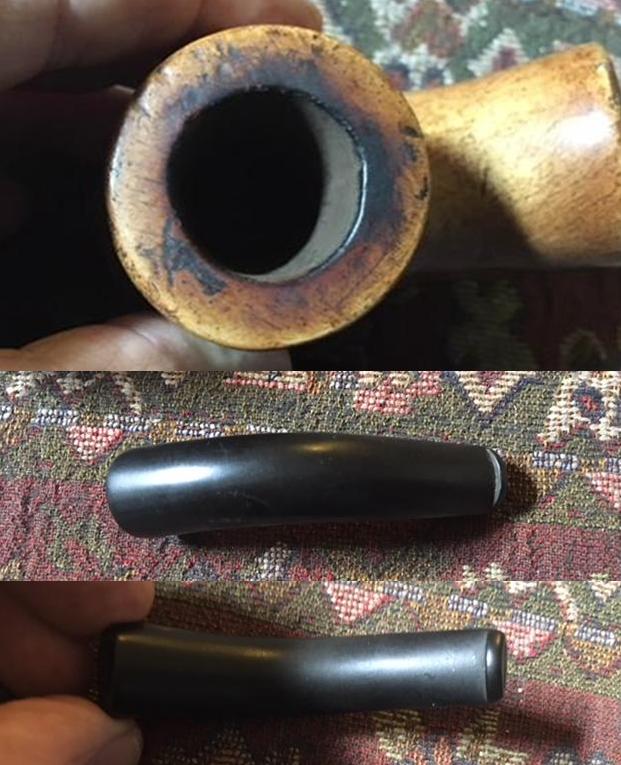
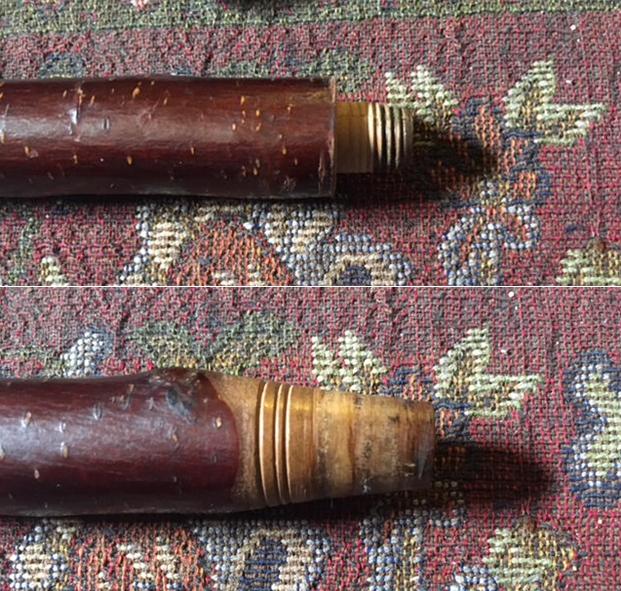
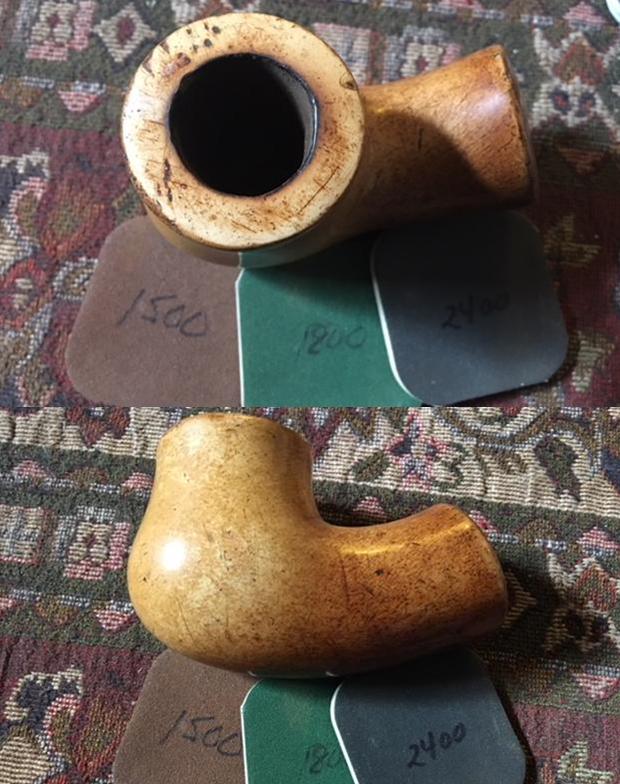
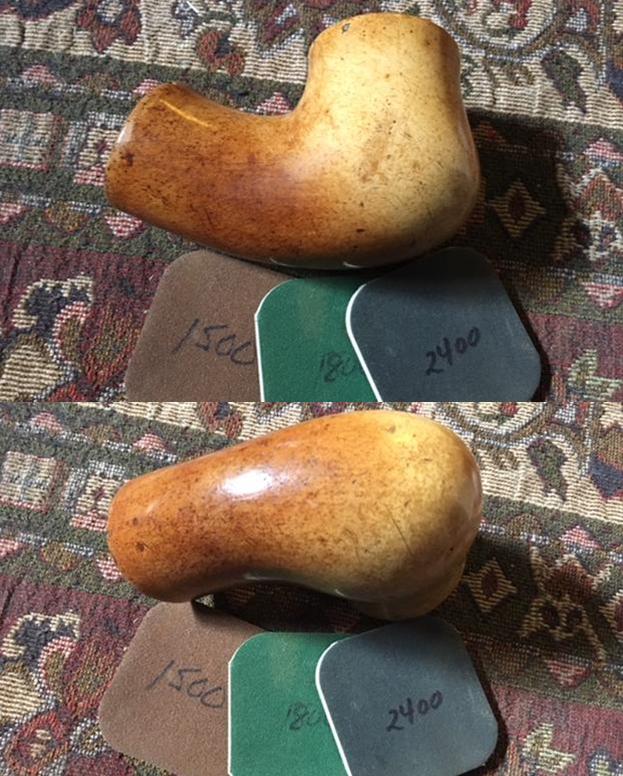
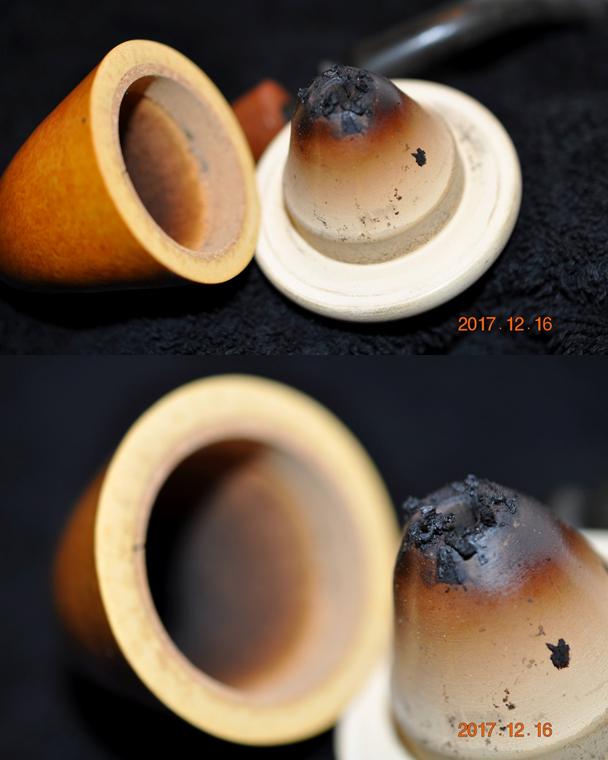
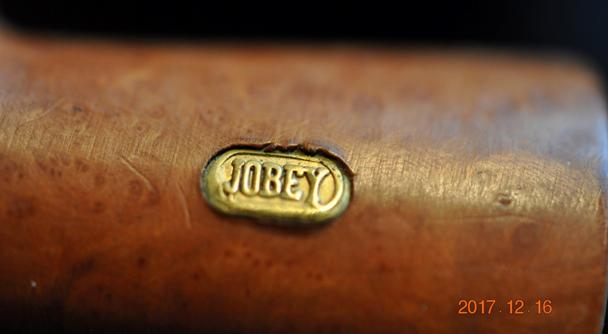
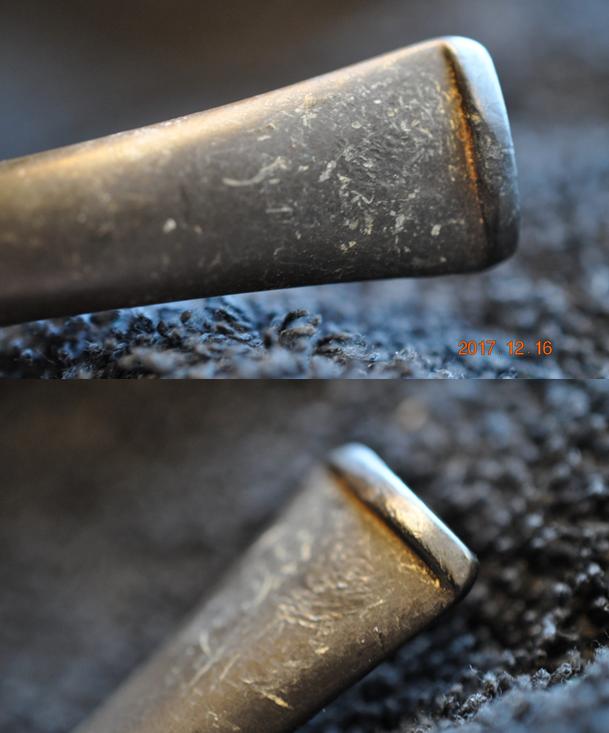
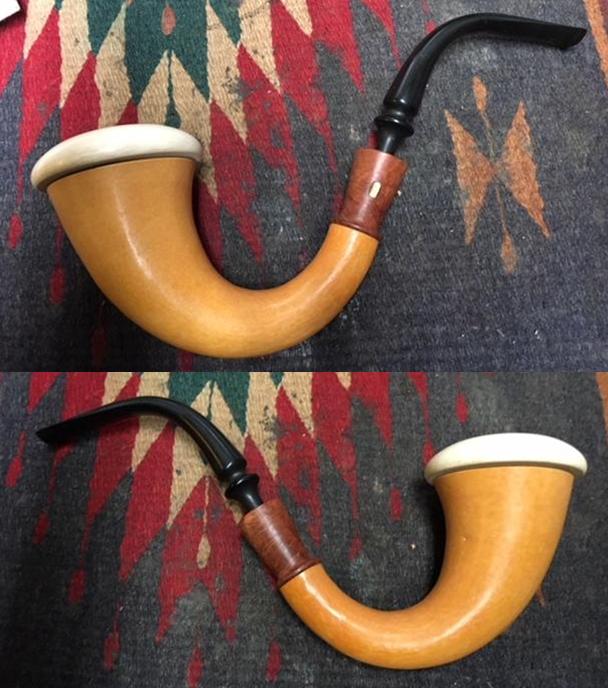
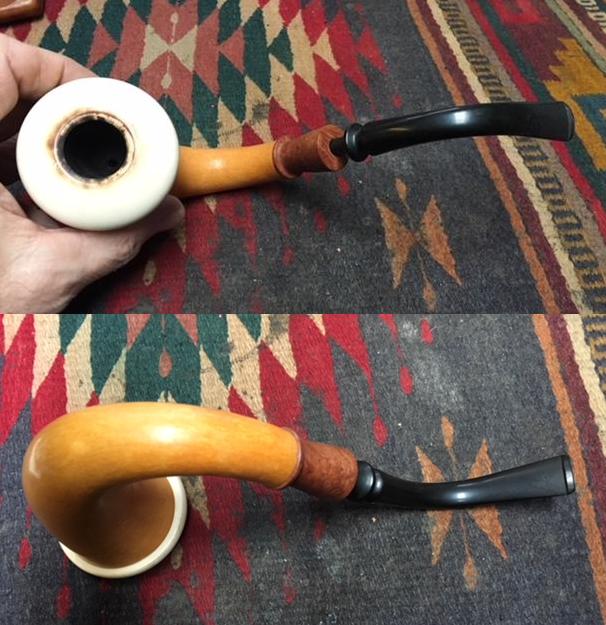
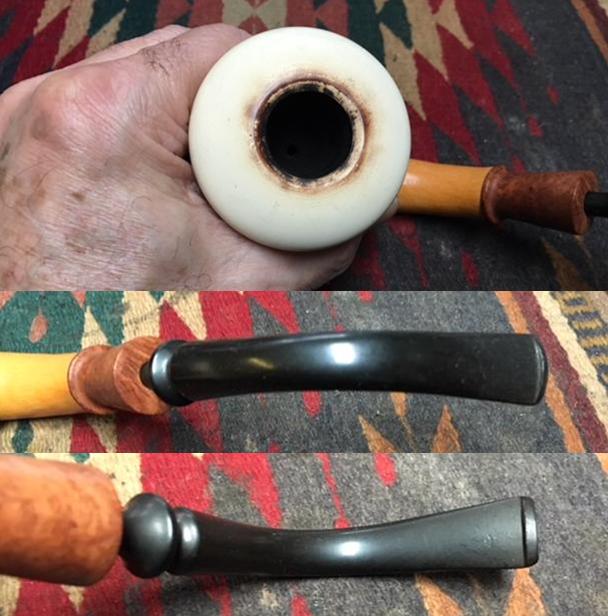
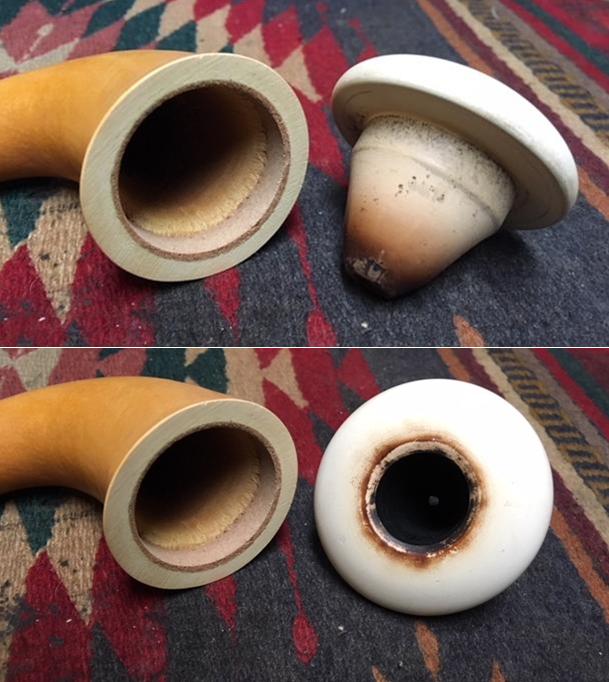
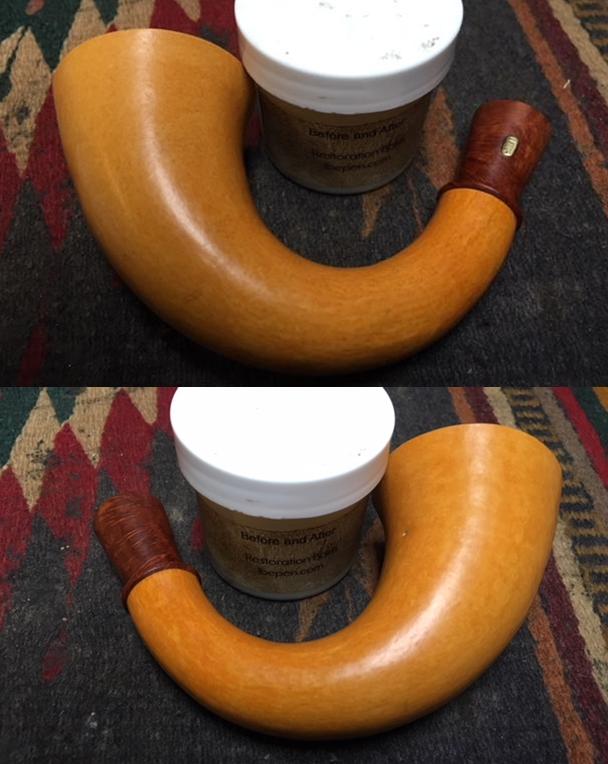
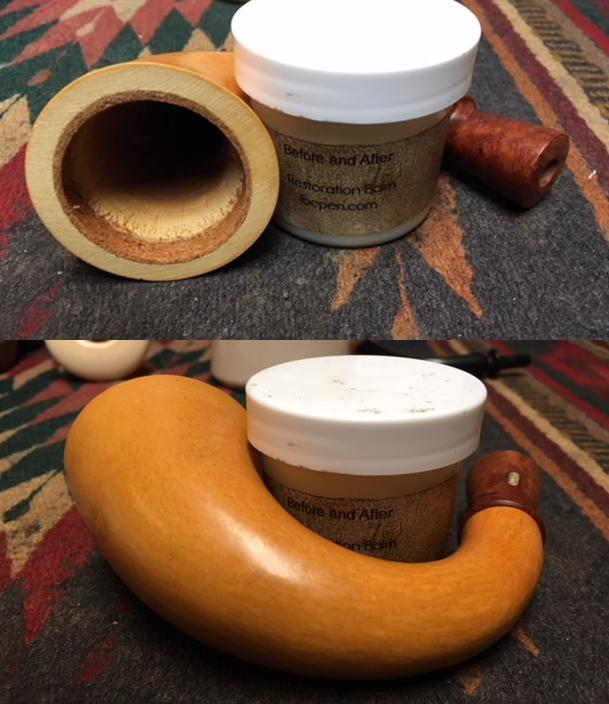
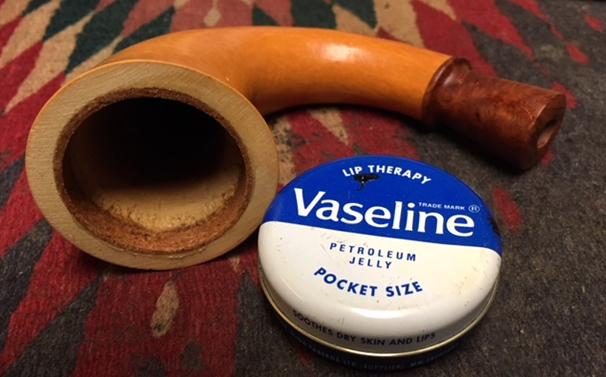
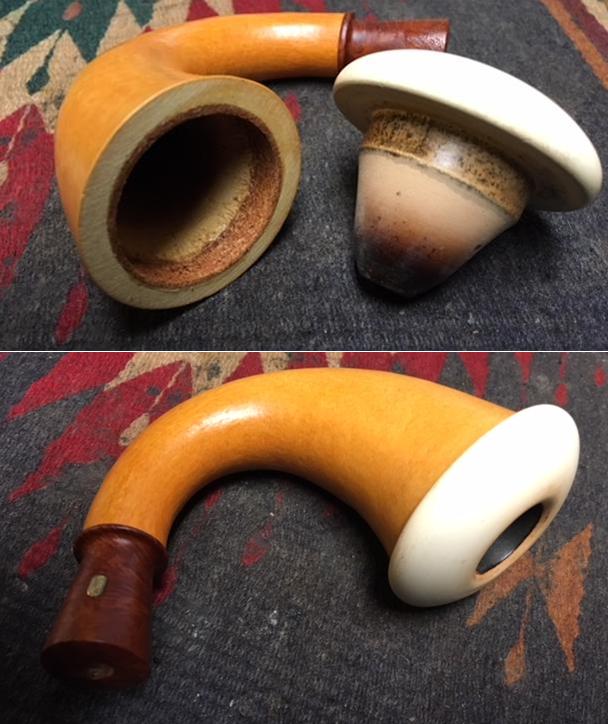
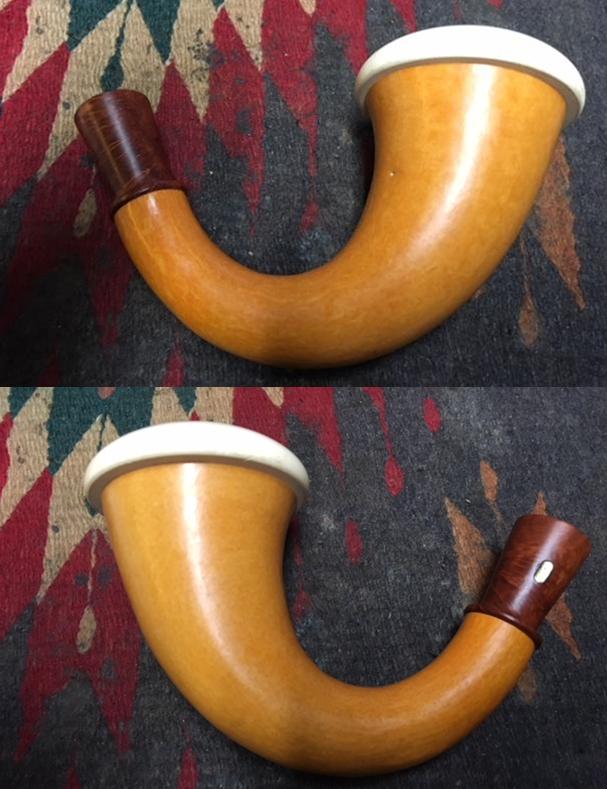
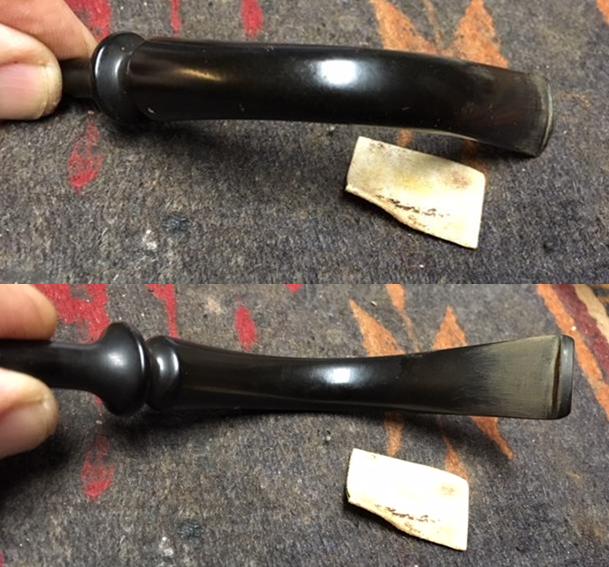
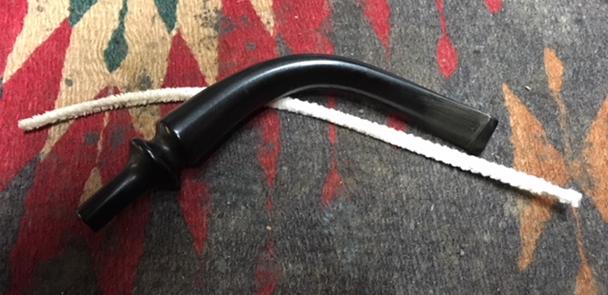
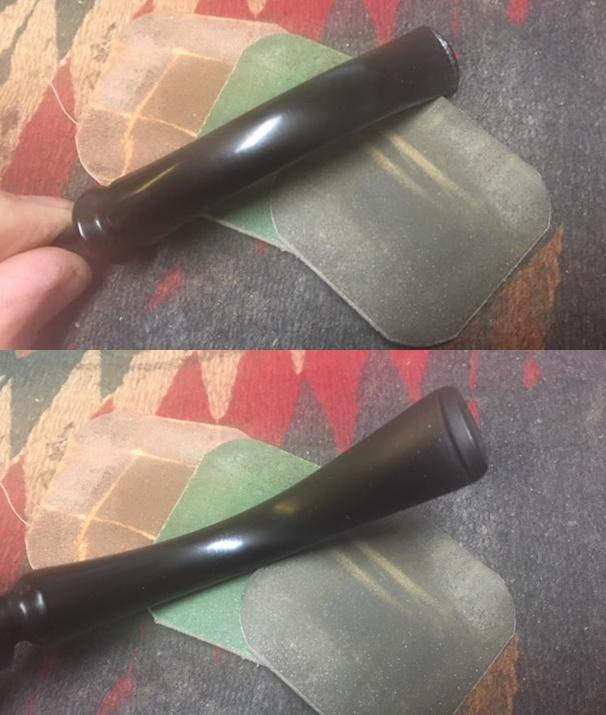
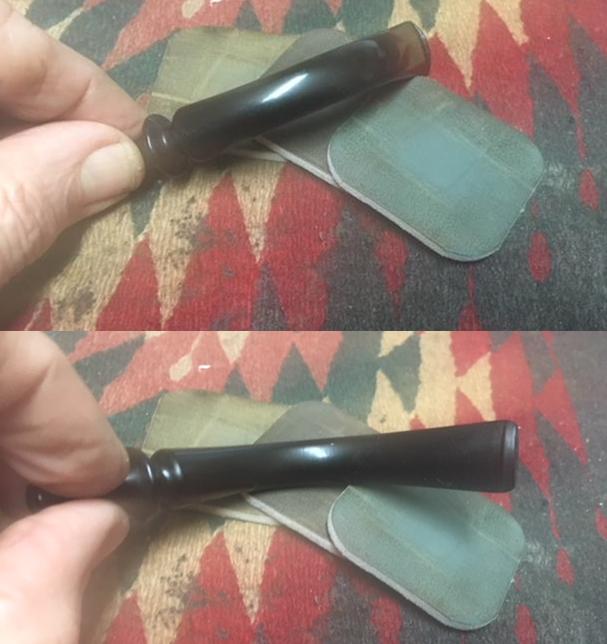
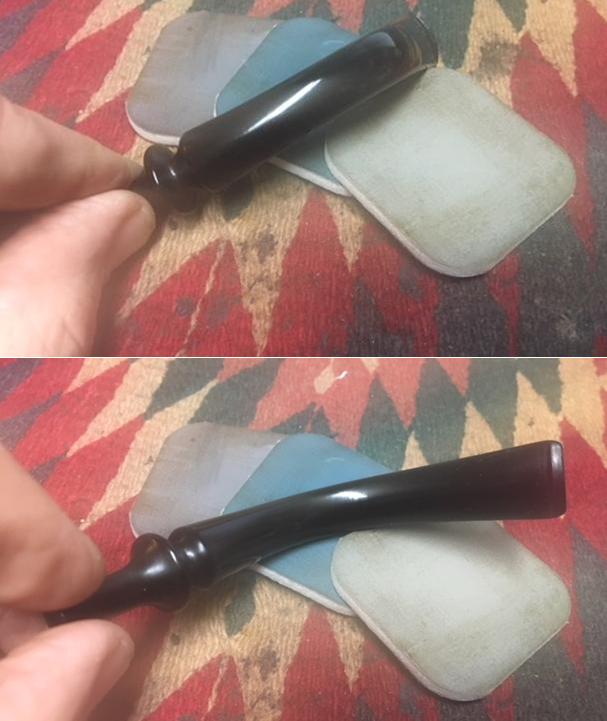
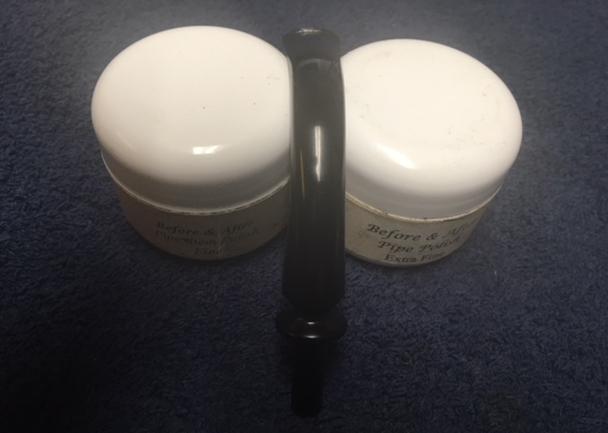
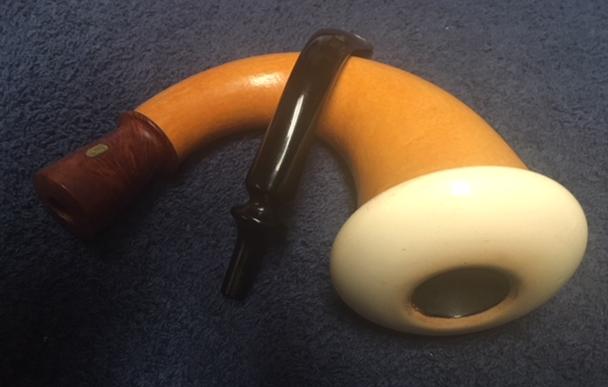
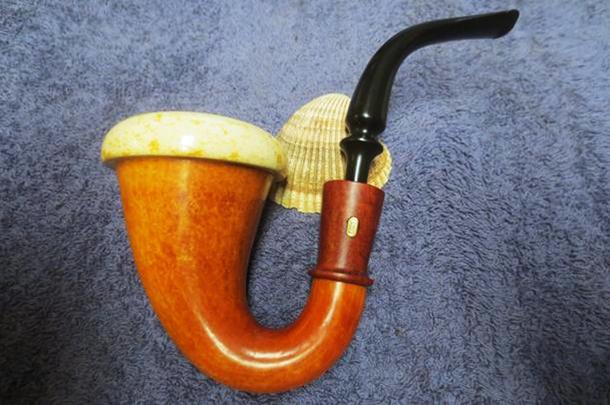
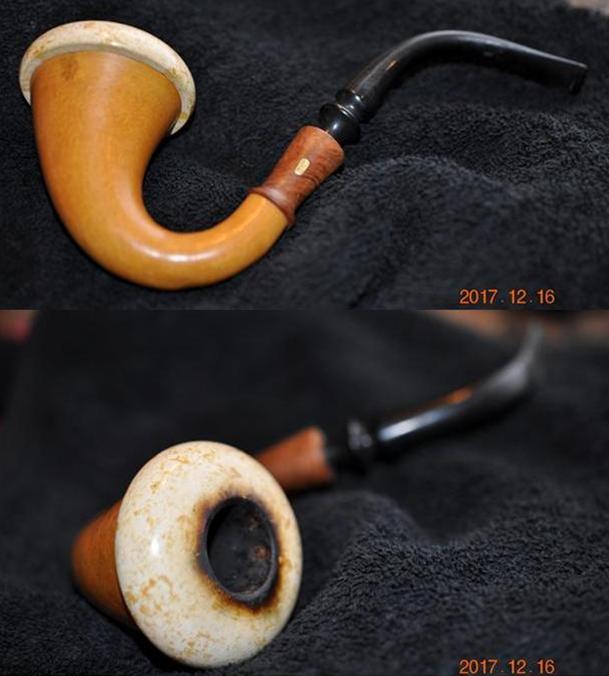
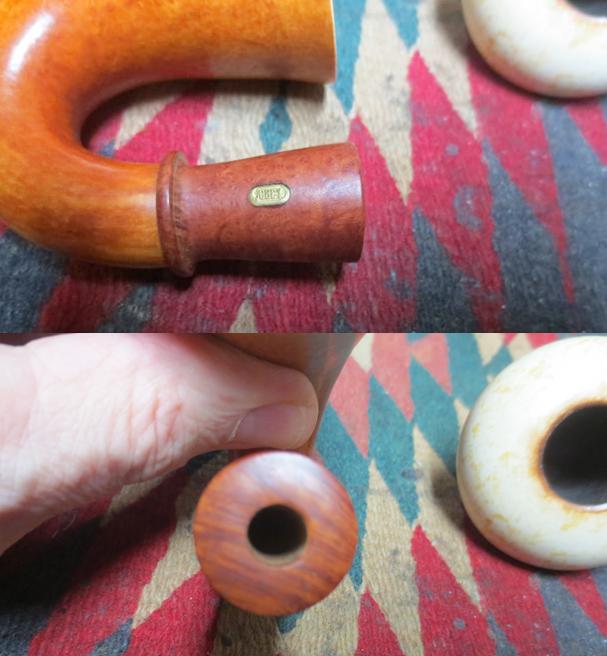
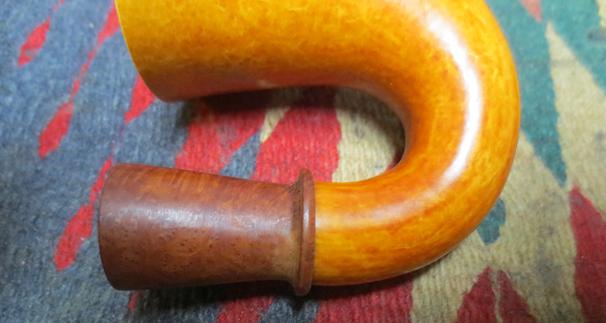
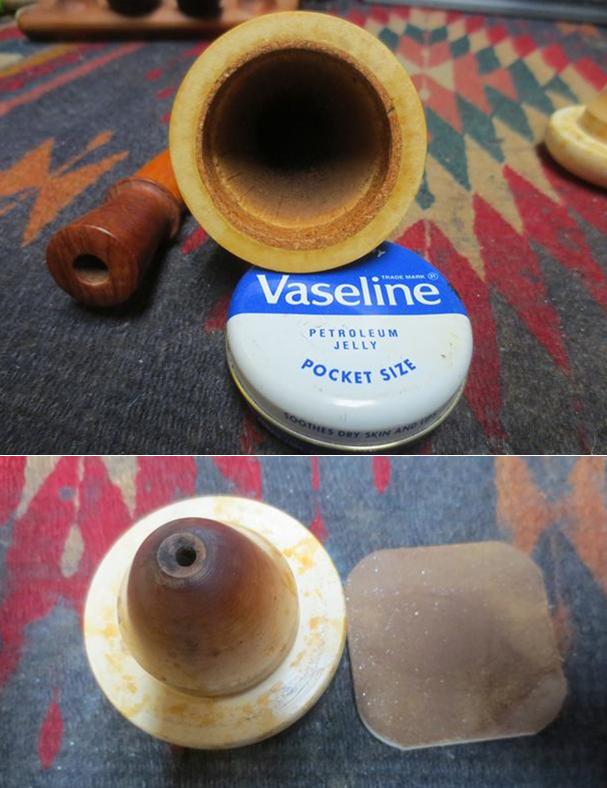
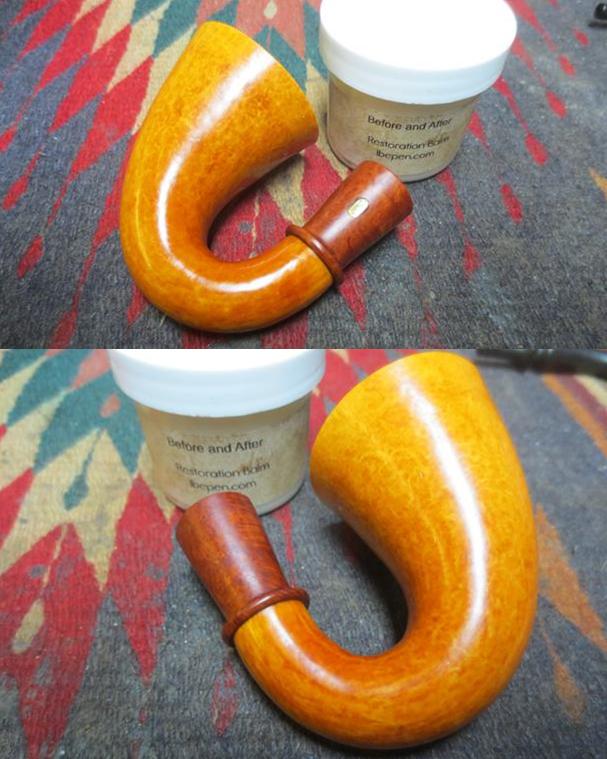
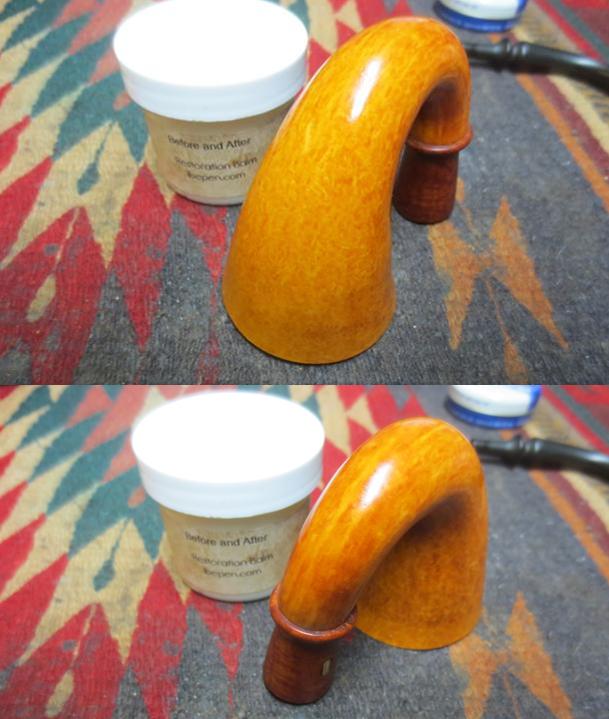
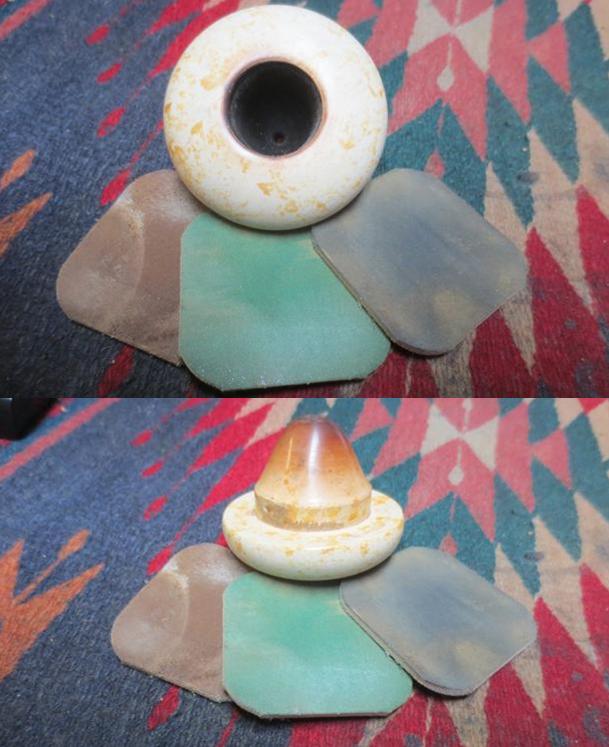
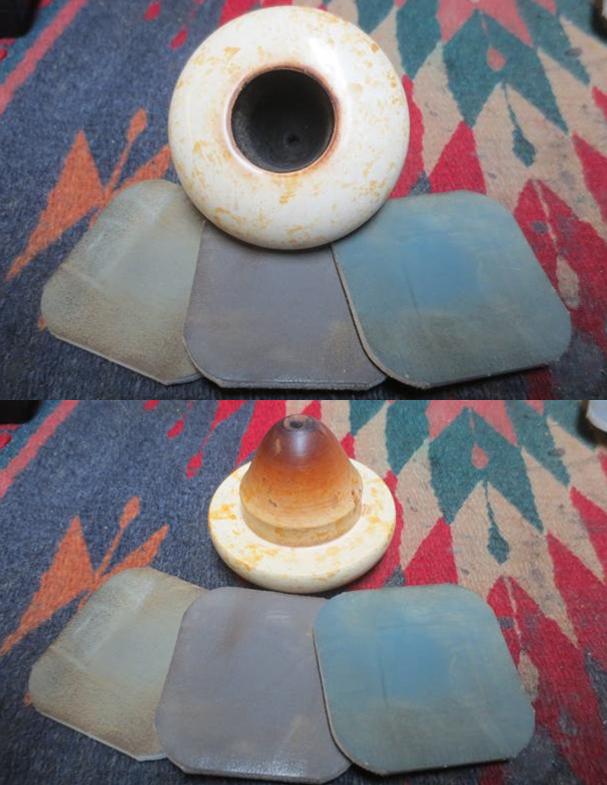
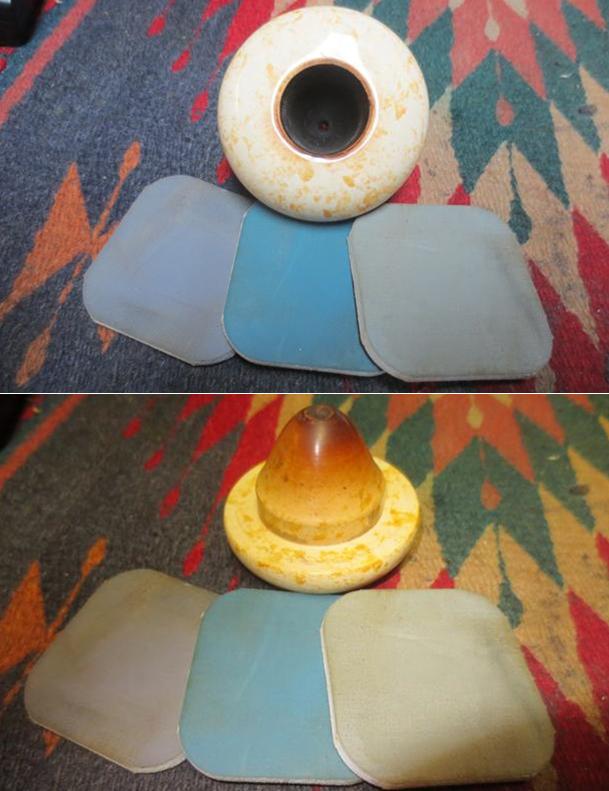
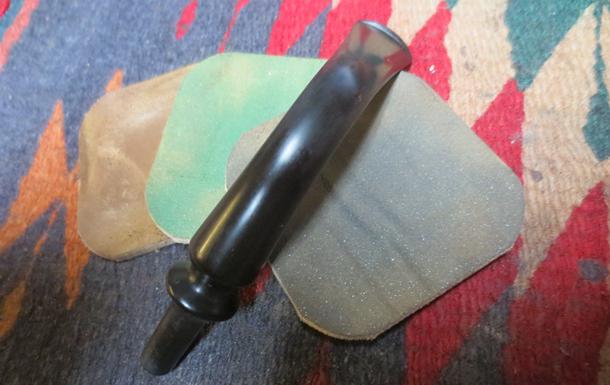
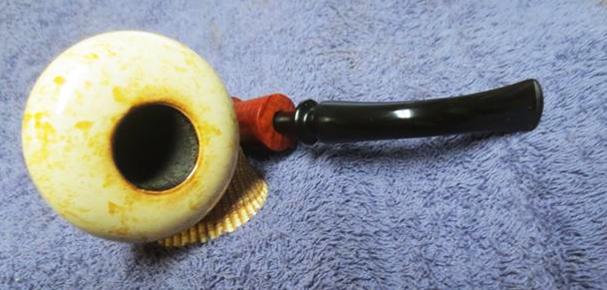
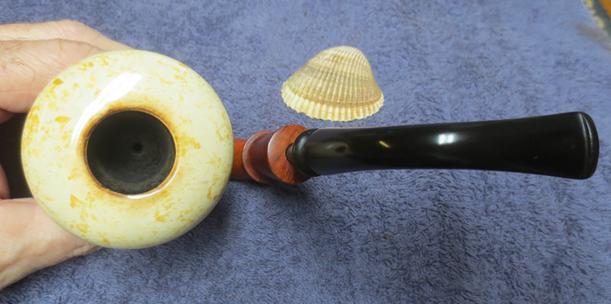
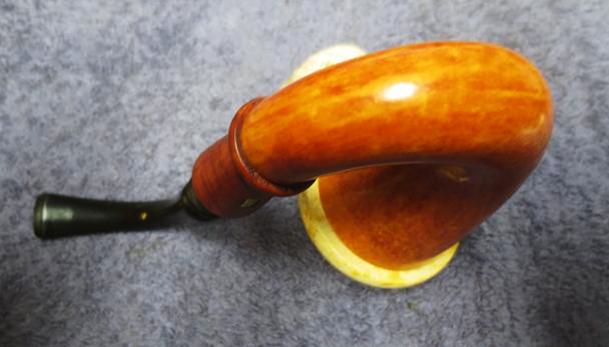
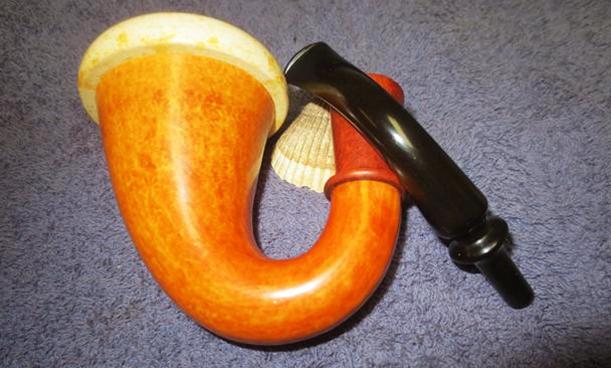
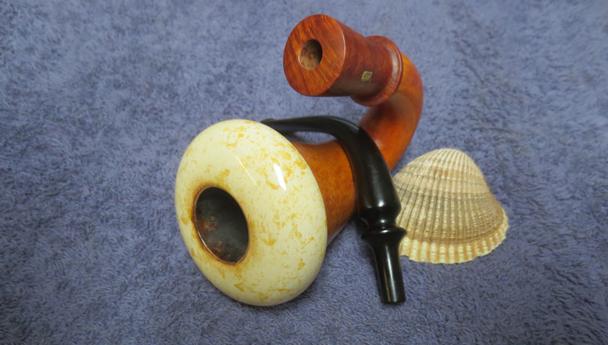
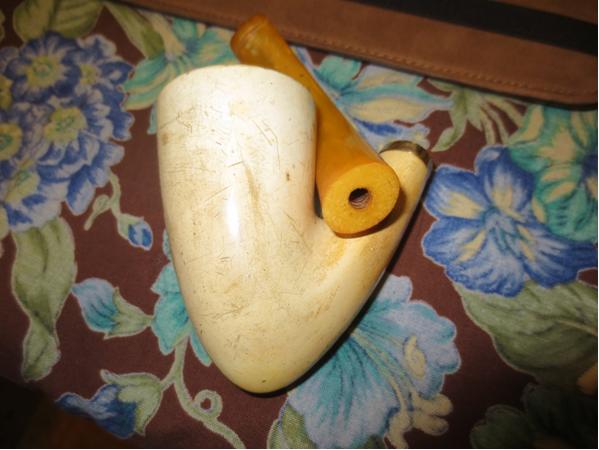
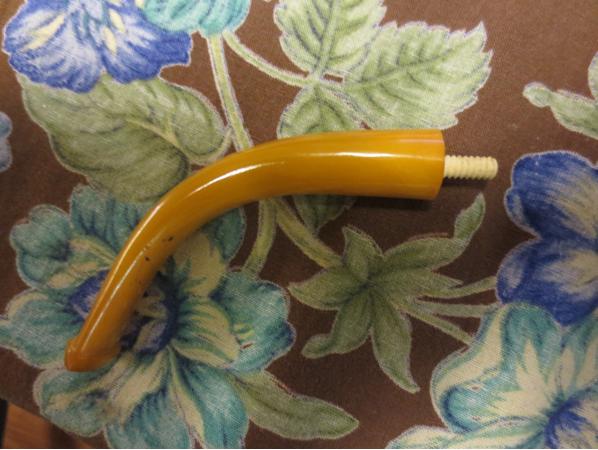
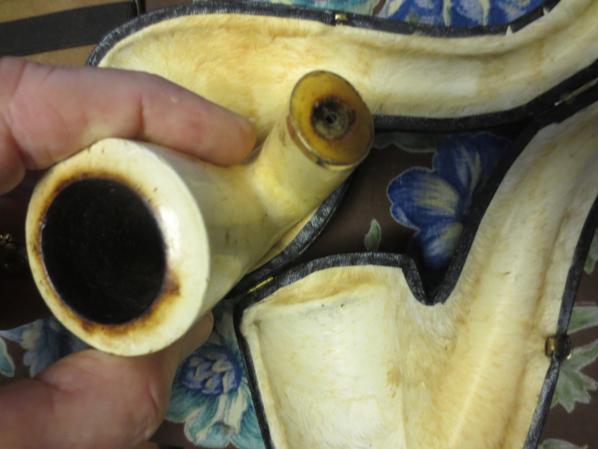
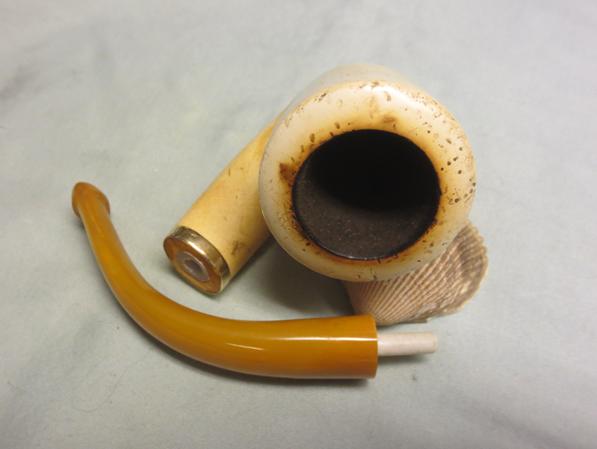
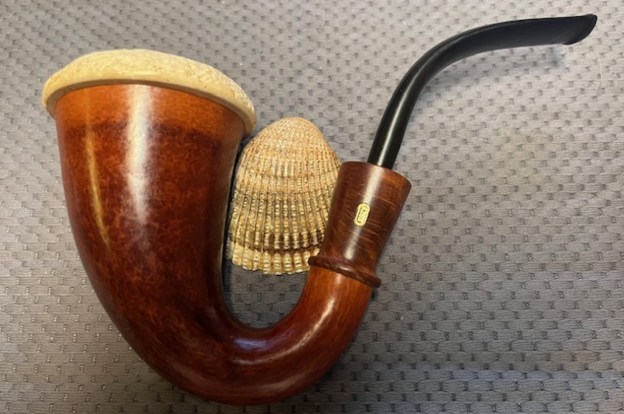
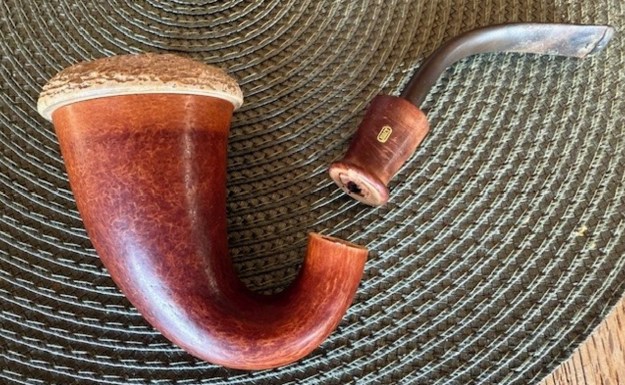
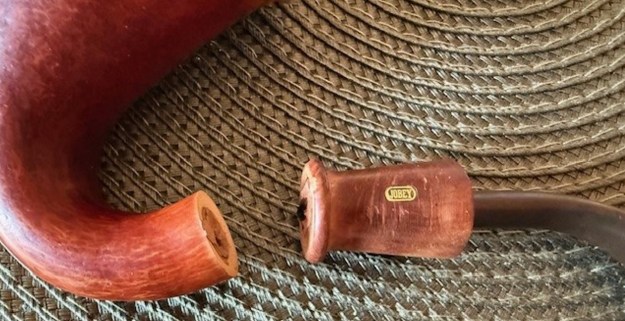
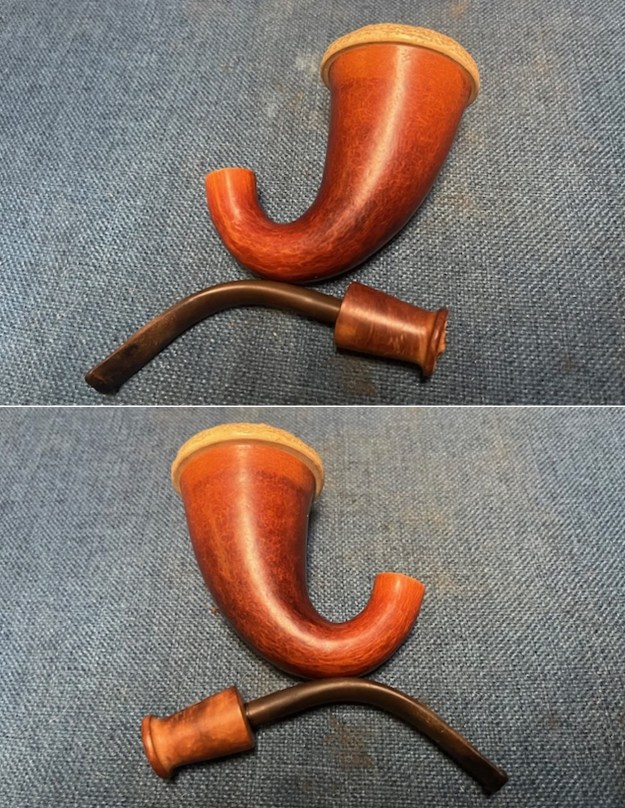
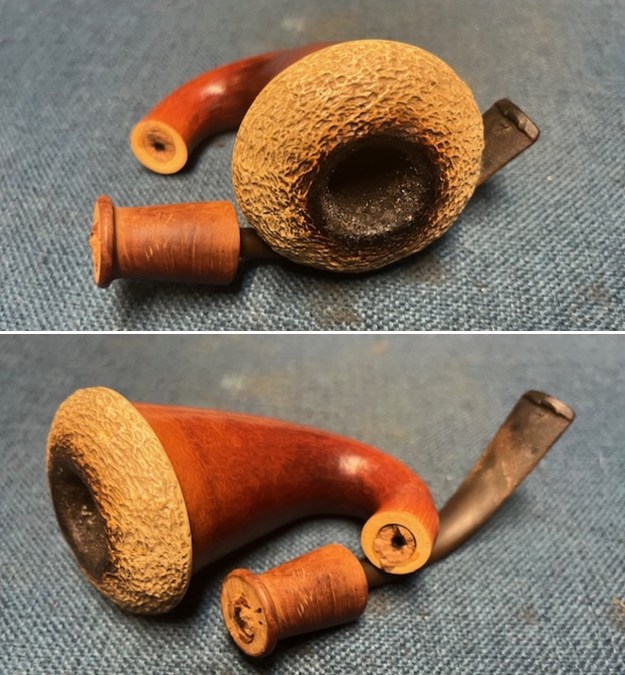
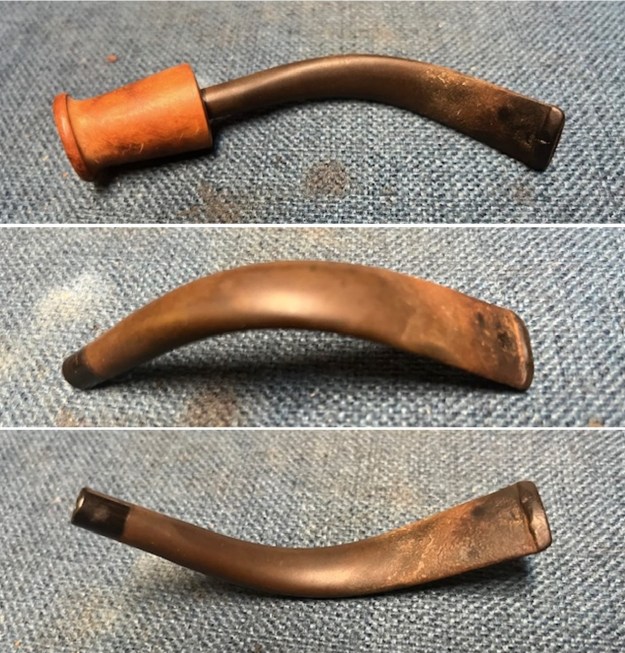
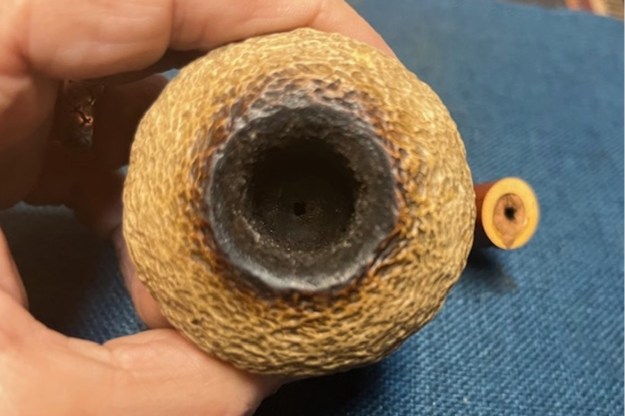
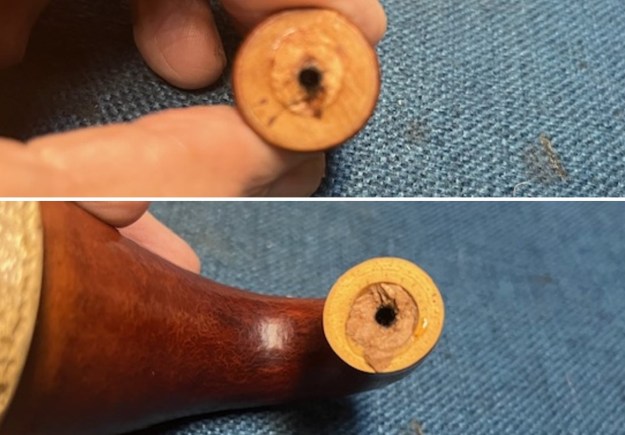
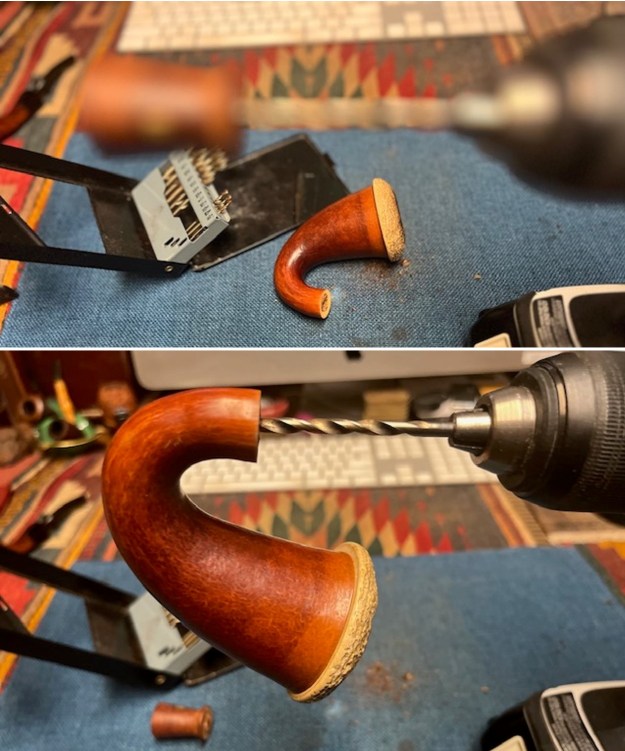
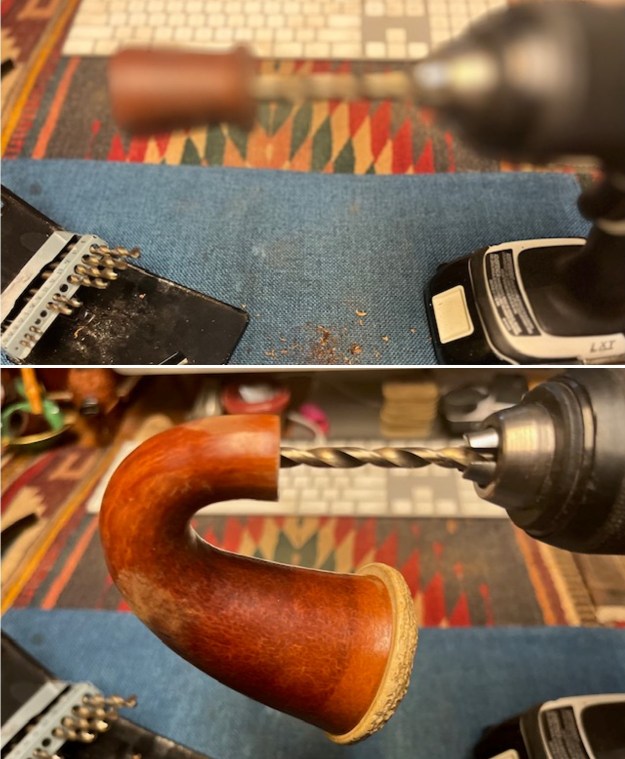
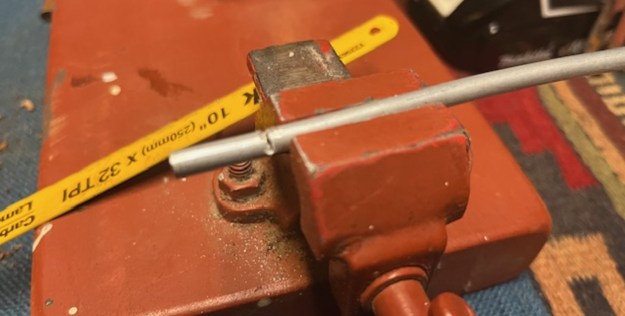
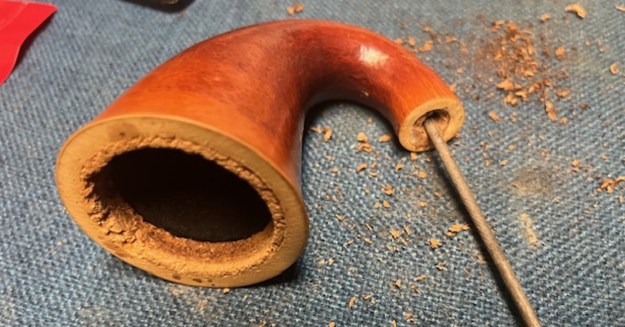
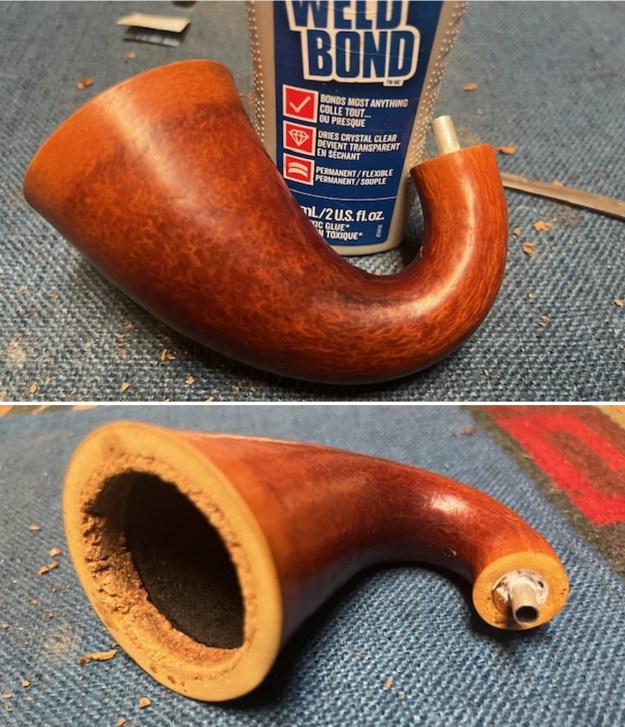
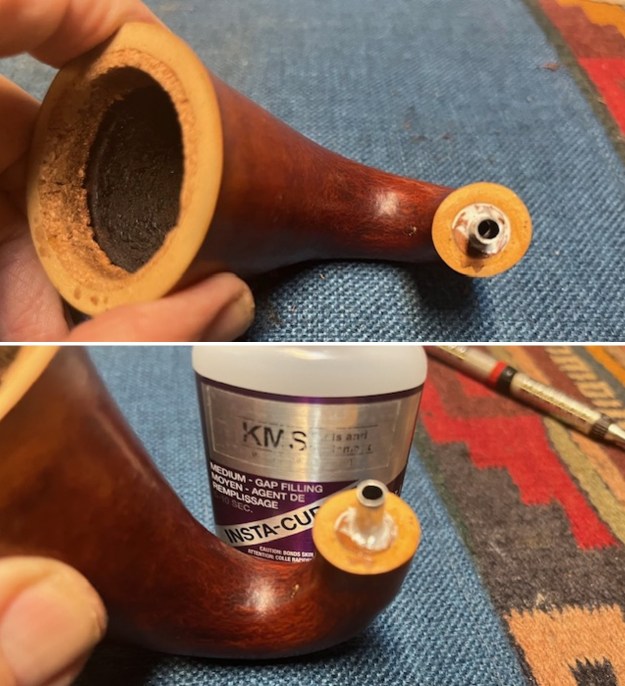
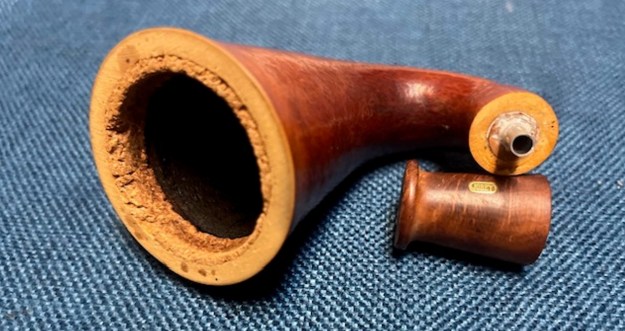
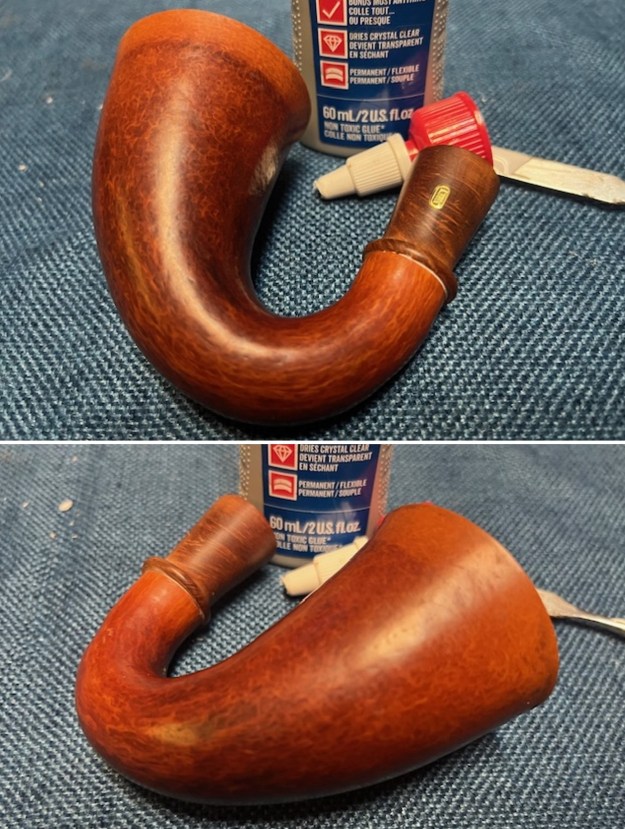
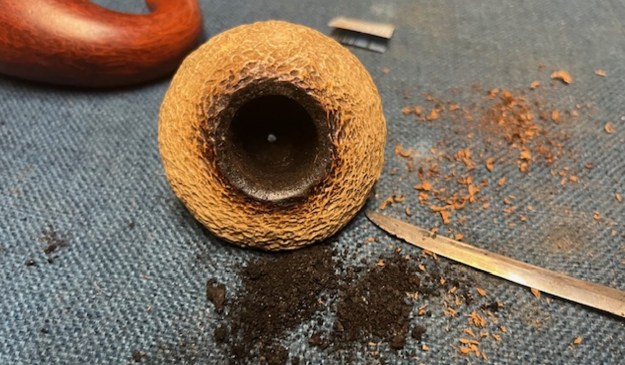
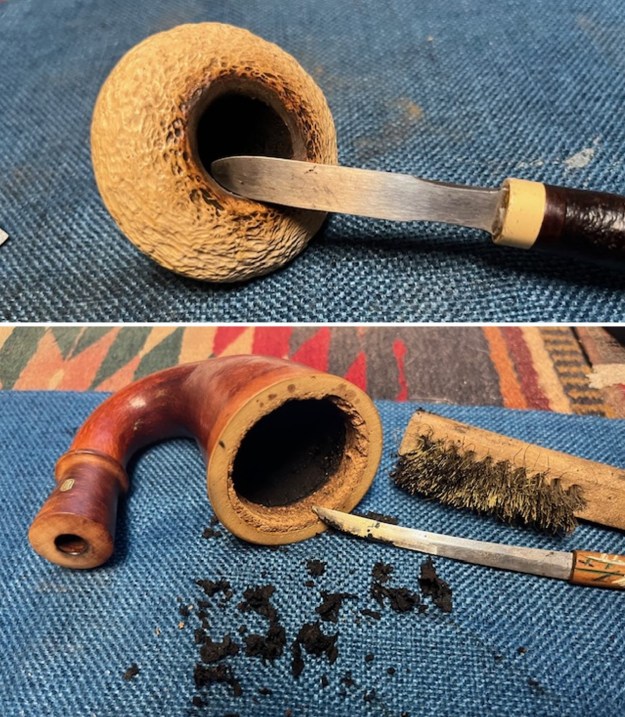
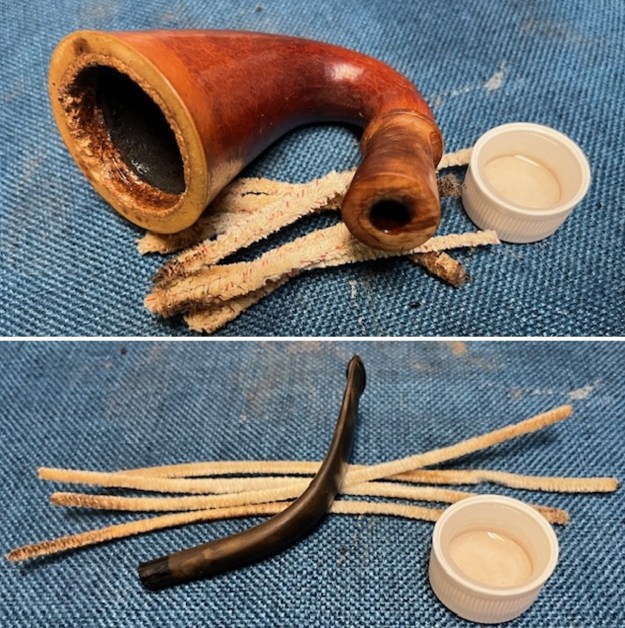
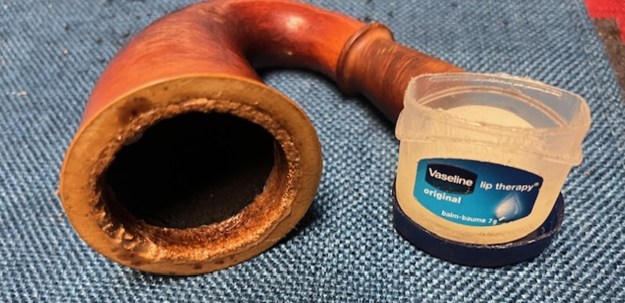
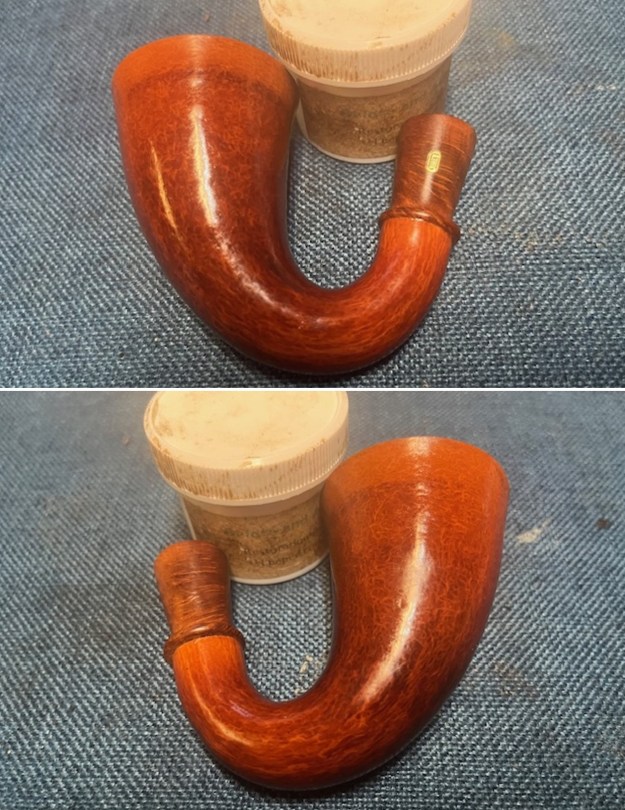
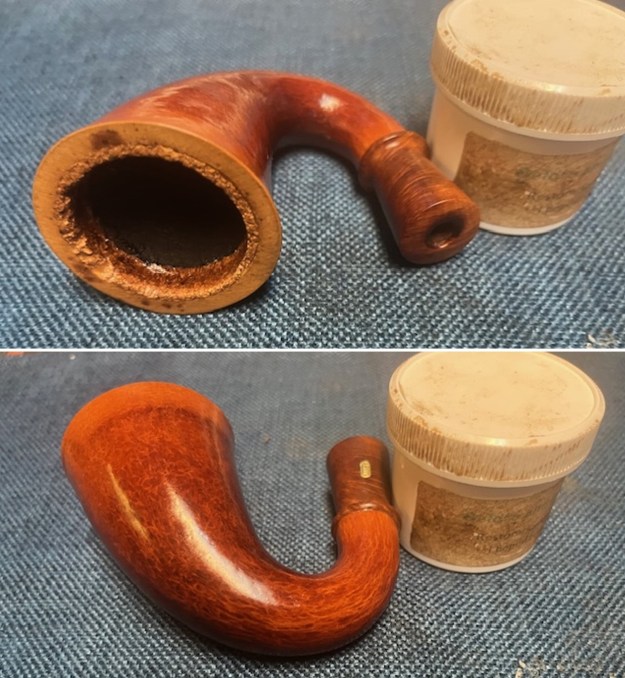
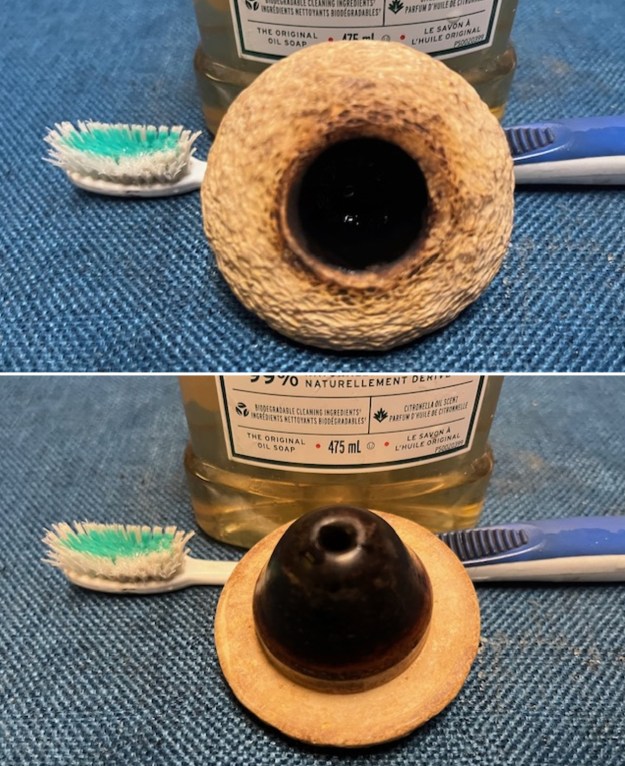
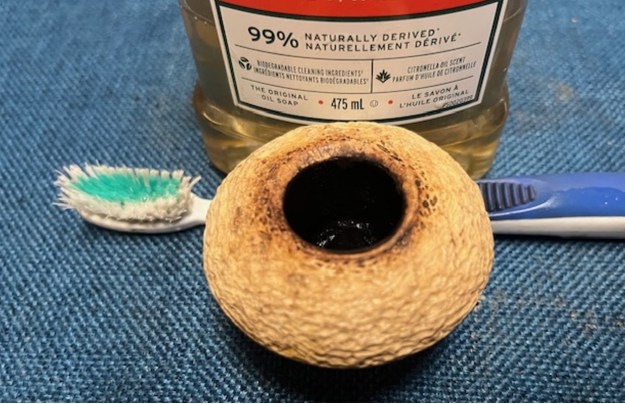
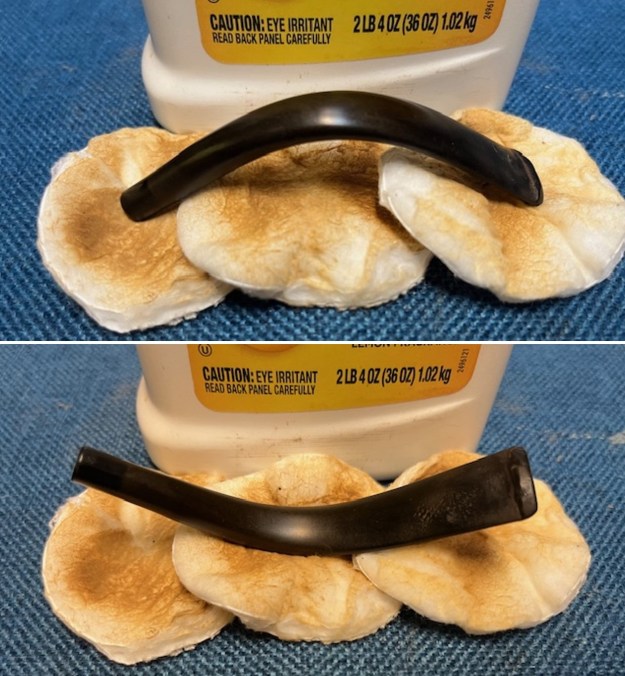
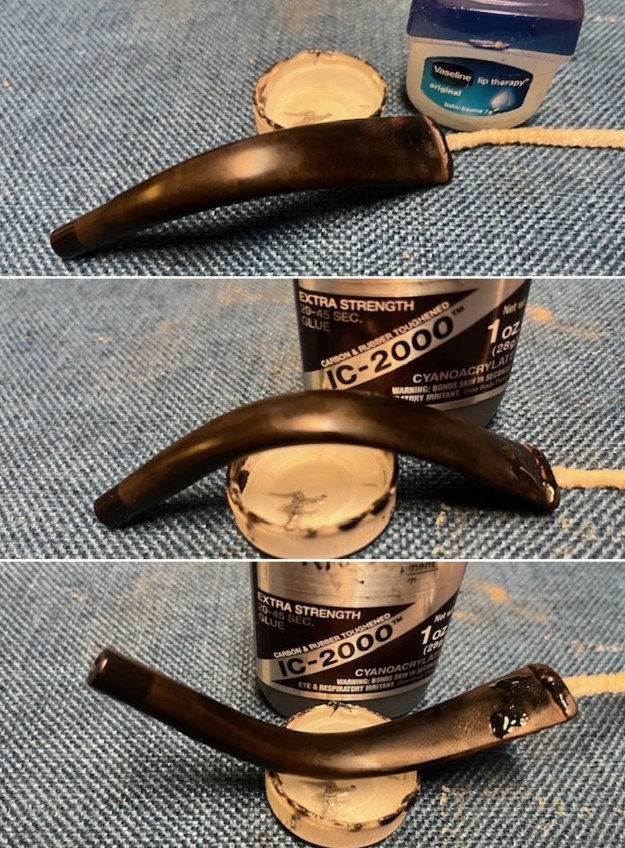
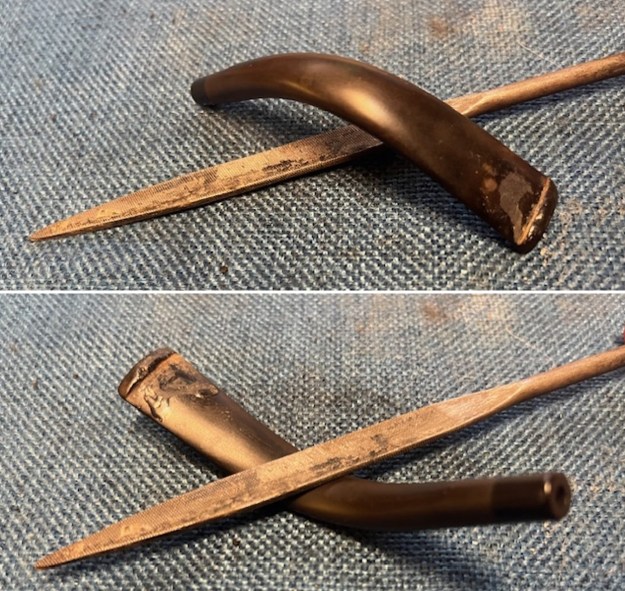
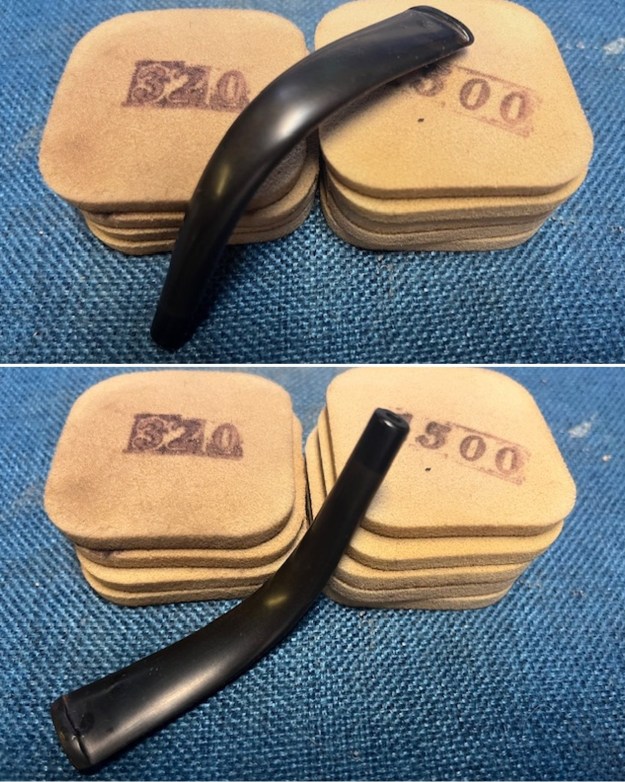
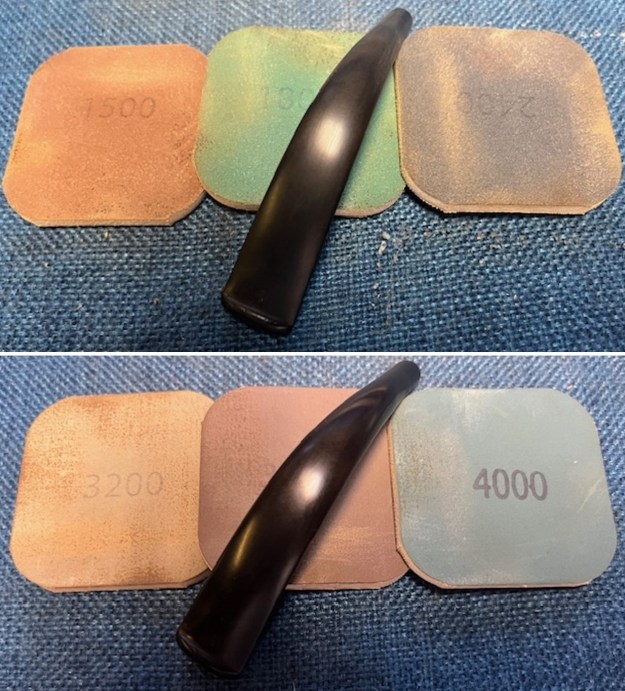
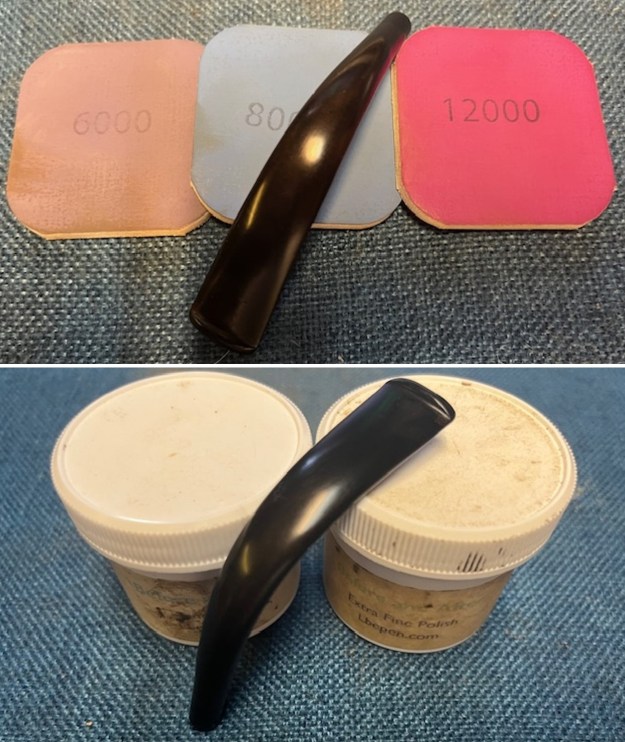
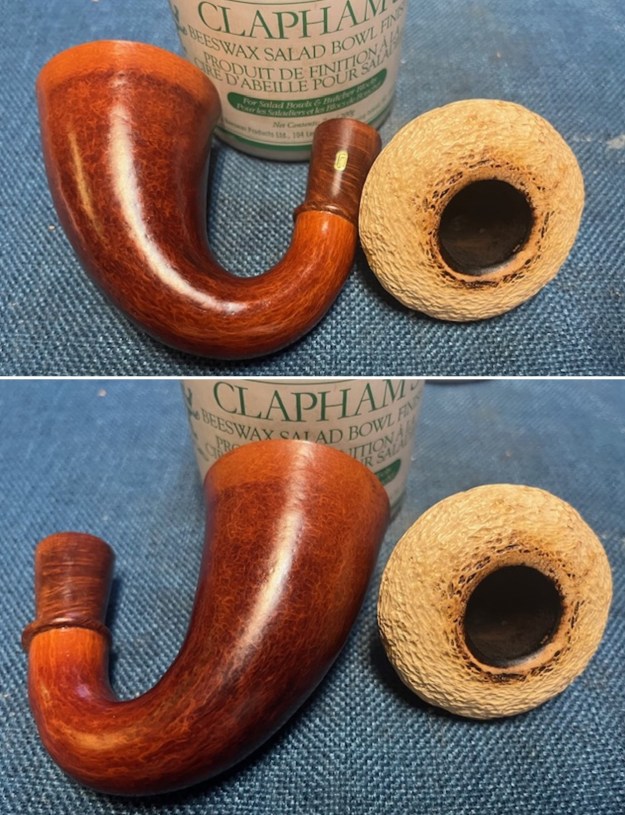
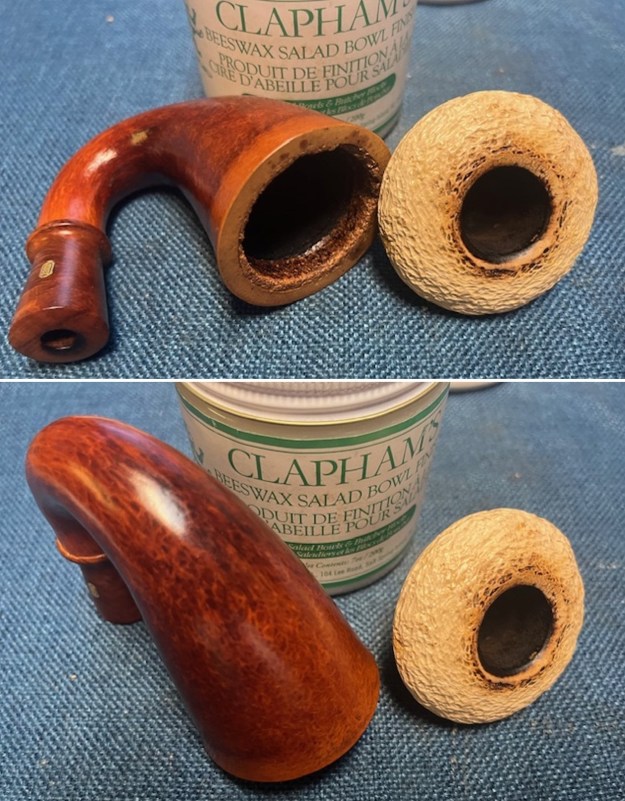
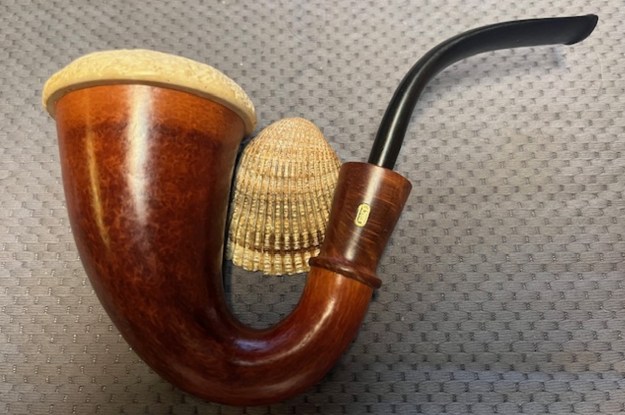
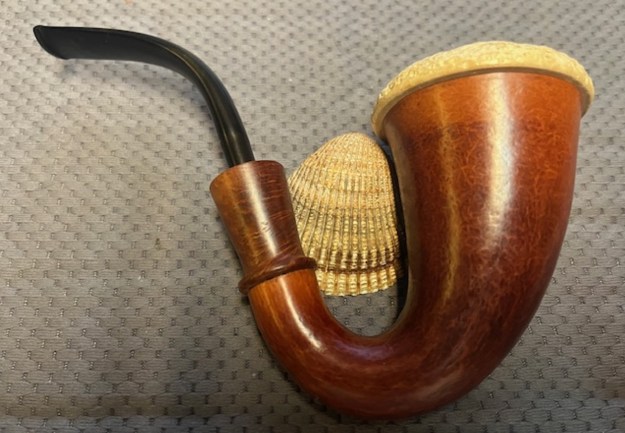
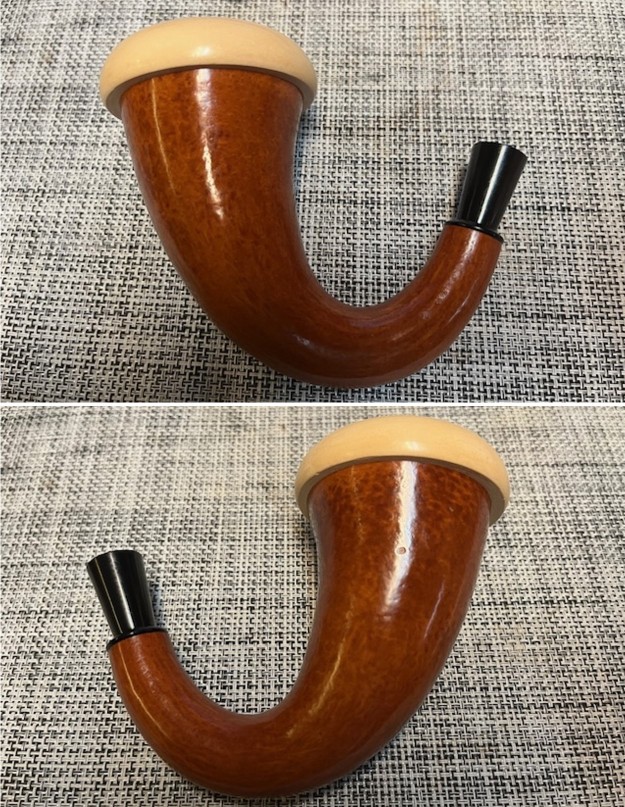
I wrote back and asked for photos to clarify what had broken when the pipe had dropped. I have visions of a cracked bow, a cracked gourd or even worse. I have learned to ask for photos before I make any commitment to repairing a pipe. John sent me the two photos below that show the condition of the break. It is probably the easiest break to deal with. In the drop the wooden dowel tenon that held the briar shank extension to the gourd had snapped off. It was a very clean break from what I could see in the photos. I could not see the condition of the bowl or the rest of the pipe but I figured that what he sent me was what was broken. It had a rusticated meerschaum bowl and a vulcanite stem that showed oxidation. I have included his photos below so you can see what I saw before I received the pipe. I explained to John what I saw and asked a few questions regarding cracks in the gourd or the briar shank extension is Jobey used. There were none that he could see. I told him to pack it up and send it to me and I would repair it. I was gone for about a month but yesterday at the end of week two at home the package arrived from John. It was a large box and when I opened it the pipe was well packed with bubble wrap. In the centre of the packing was two small bubble wrapped bundles. I removed the tape from them and removed the parts. The larger of the two was the gourd and the meerschaum bowl. The second, smaller bundle was the stem in the shank extension. I tried to remove the stem but it was solidly stuck in place. I examined the broken dowel tenon. It was indeed a clean break. There were some spots where the glue held remnants of the dowel on the surface of the briar and the wooden plug in the end of the gourd. I would need to flatten the spots before I tried to rejoin the parts. Here are some photos of the pipe.The bowl was 2/3s full with the last tobacco smoked in it. The dottle was dry and brittle. I took a photo of the bowl to show a bit of that and the tarry lava build up on the rim top and inner edge of the bowl as well as the thick cake in the meer bowl itself. It was quite a mess to look at and my wife and daughters commented about the smell. Ah well, such is the life of those who live with a pipe restorer/repair person. I took some photos of the bowl to give a sense of that look. In the second photo below, you can see the wooden plug and down in the shank of the gourd.I tried to remove the stem from the shank extension piece and it was frozen solid. I put it in the freezer for 30 minutes and when I took it out the stem turned easily from the extension. The photos show the stem in place solid and also once I had removed it. The stem was oxidized and had some deep tooth marks on both sides on the button edge and the ahead of the button. One of the deep marks on the topside was almost a bite through.I took a photo of the thick cake in the bowl and the overflow of lava on the rim top. It should clean up fairly well though the darkening in the rustication may remain. Before I started drill out the extension and the plug on the end of the calabash shank I took photos to show the alignment of the airway. The airway is not centred but it should be easy to open up and reset the fit.I used a cordless drill and a bit slightly larger than the airway in both parts. While the picture of the shank extension is out of focus you can see the principle in the photos of the drilling. I used the same bit in the gourd shank. Once it was open I stepped up one size in the drill bit to open the hole further. I once again have an out of focus photo of the shank extension but you can see the bit size in the photo of the gourd shank. The second drill bit opened the airway in both parts to the same size as the metal tubing I use to join them together. I measured the length of tube I needed so that the tube would not extend to deep in the mortise. I used a small vise to hold it while I cut the length with a hacksaw blade.I used a small round file to centre the airway in both the shank of the gourd and the extension. Once it was well centred I was good to start the process of joining the parts.I used the same type of All Purpose white glue as had been used previously on the tenon. I glued the metal tenon in place in the shank of the gourd and filled in the hollow around the tube with the glue. Once it had hardened I gave the glue a coat of clear CA glue to set the tube in place. I set the gourd aside to let the glue cure over night. In the morning when the glue was cured I painted the tubing with the glue as well as the end of the shank and the extension. I put the glue on a little heavy as I wanted it to bind well. I pressed the extension in place and aligned the Jobey brass logo on the left side in line with the shank. I clamped the extension in place until the glue cured and the shank extension was immovable. I set it aside to let it cure for the rest of the day. While the repair to the shank extension cured I turned my attention to the meerschaum cup or bowl. I carefully scarped out the thick cake with a sharp knife and worked over the rim top at the same time. I used a Savinelli Fitsall Pipe Knife to further clean the cup so that the bowl was no longer sticky with the tars and oils of the tobacco. I also scraped out the gourd with the same tools as well as a brass bristle brush. It was much less sticky than it was before. I cleaned out the airway in the shank (carefully) as well as the inside of the bowl with alcohol and pipe cleaners – both bristle and smooth. I cleaned the airway in the stem at the same time. The pipe began to smell much better.I greased the cork gasket in the calabash with Vaseline. I rubbed it in with my fingertips and set the gourd aside to absorb the Vaseline. I worked some Before & After Restoration Balm into the surface of the briar shank extension and the gourd calabash. Once it was all covered with the product I let it sit for 10 minutes or more to do its magic. The product works to deep clean, restore and renew the gourd and briar. I wiped it down with a clean cloth and buffed it by hand. It looked very good. I set the gourd aside to dry and turned my attention to the meerschaum cup. I scrubbed it with a tooth brush and undiluted Murphy’s Oil Soap. I scrubbed the outside and inside of the bowl at the same time. I rinsed it with warm running water. The cup looked significantly better though still having some stains on the rustication. I set the bowl aside to air dry. I turn my attention to the stem. I scrubbed the surface of the stem with Soft Scrub Cleanser on cotton pads. I was able to remove the heavy oxidation. The rest would come off as I cleaned the stem.I checked to tooth marks on the stem surface. The deep one on the top of the stem was almost a bit through. In fact there may well have been a small hole. I greased a pipe cleaner with Vaseline and slipped it into the button airway. I filled in the tooth marks on both sides with black rubberized CA glue and set the stem aside for the repairs to cure.Once the repairs cured I used a small file to flatten the against the surface and clean up the sharp edge of the button. I sanded the repaired areas with a folded piece of 220 grit sandpaper to further flatten and blend them into the surface. I sanded the stem further with 2×2 inch sanding pads to smooth out the stem surface. I wiped it down with a damp cloth after each sanding pad. I took photos of the stem after the sanding.I polished the stem with micromesh sanding pads – wet sanding with 1500-12000 grit sanding pads. I wiped it down after each sanding pad with some Obsidian Oil. I finished polishing it with Before & After Pipe Stem Polish – both Fine and Extra Fine and buffed it off with a cotton cloth. I gave the gourd and the meerschaum bowl multiple coats of Clapham’s Soft Beeswax mixed with Carnauba. I let it dry and then buffed it with a soft cloth. It is a beautiful bowl. Normally at this point I put the stem back on the bowl and take the pipe to the buffing wheel to work it over. This time I took the parts to the buffing wheel. I gently buffed the meerschaum cup and rim with Blue Diamond to polish the meerschaum cup. I carefully buffed the gourd base and briar shank extension with Blue Diamond being cautious about the pressure I put on the gourd. I buffed the stem with Blue Diamond to raise the gloss on the vulcanite. I took the pipe back to the work table and gave the gourd and meerschaum bowl multiple coats of Clapham’s Beeswax paste. I gave the stem several coats carnauba wax. I buffed the parts of the pipe with a clean buffing pad to raise the shine. I hand buffed it with a microfiber cloth to deepen the shine. The finished Jobey Meerschaum pipe is shown in the photos below. This one is heading back to John later this week so he can return it to his son. I think he will really enjoy the unique look of his new pipe. Thanks for looking.
Restoring a Gourd Calabash with a Meerschaum Bowl from an Estate


Blog by Steve Laug

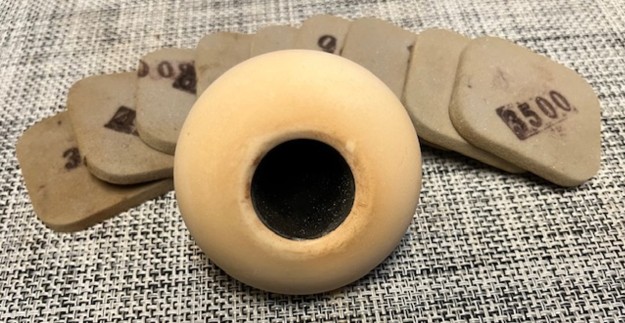
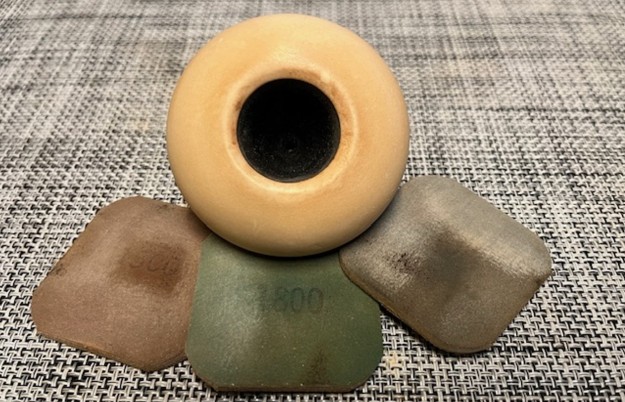
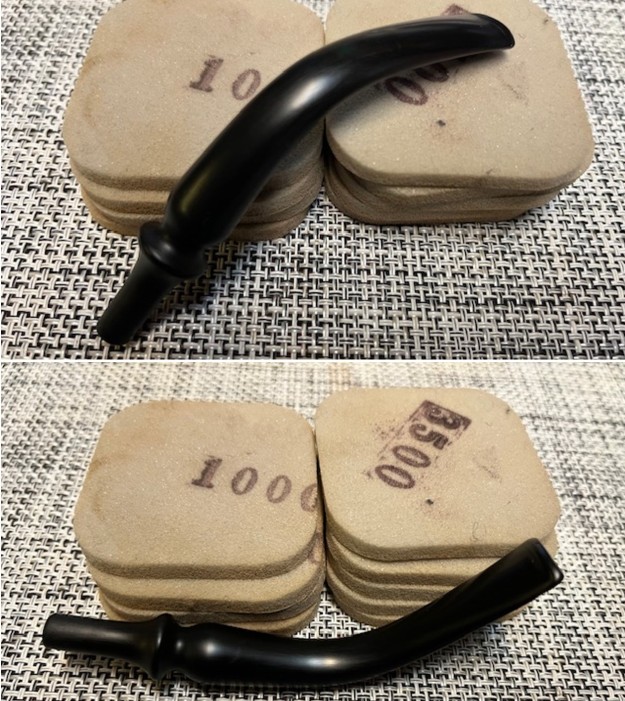
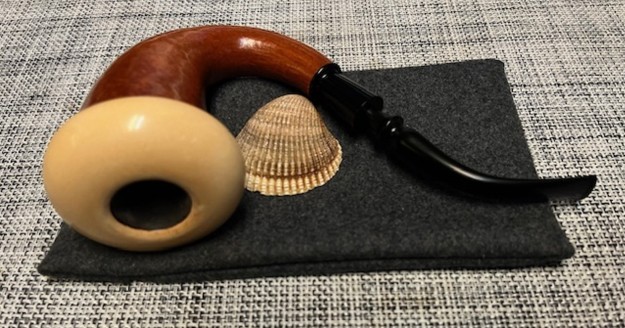
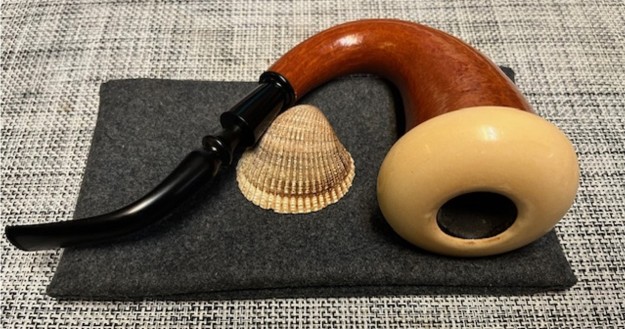
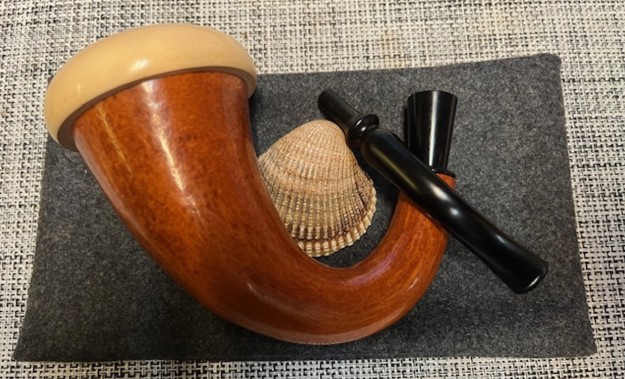
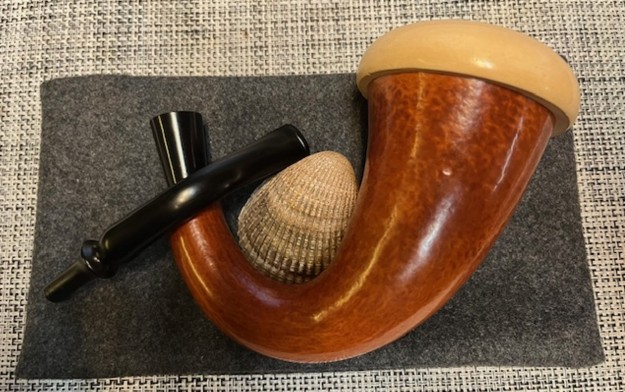
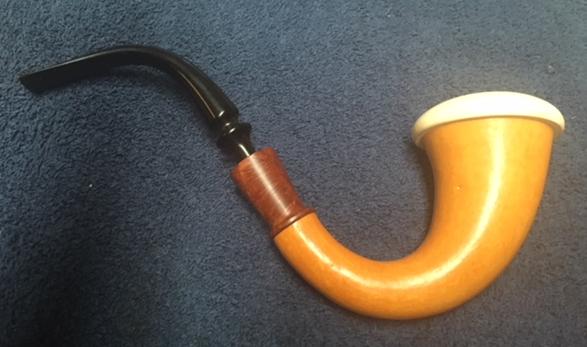
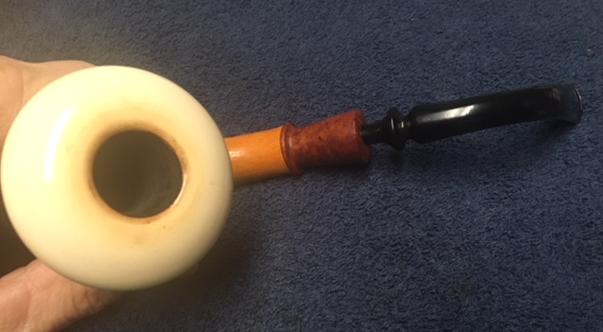
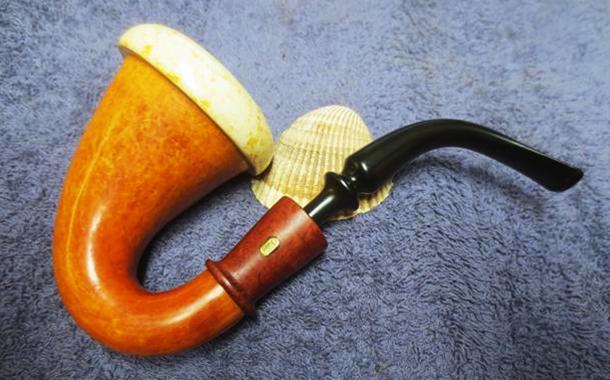
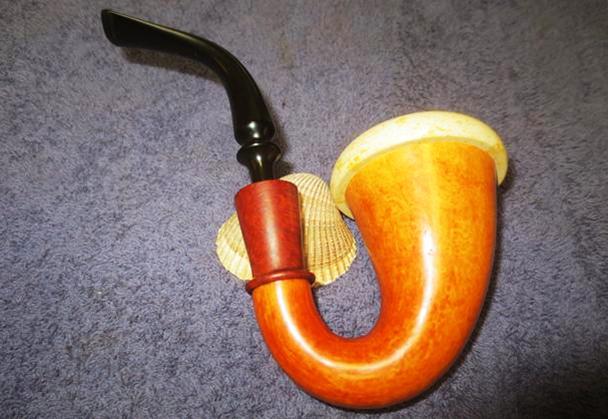
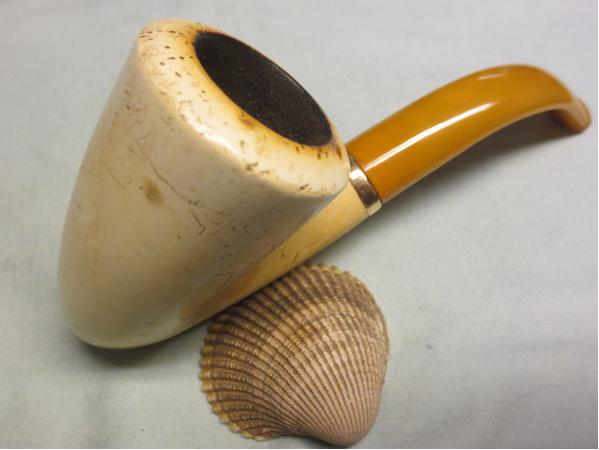
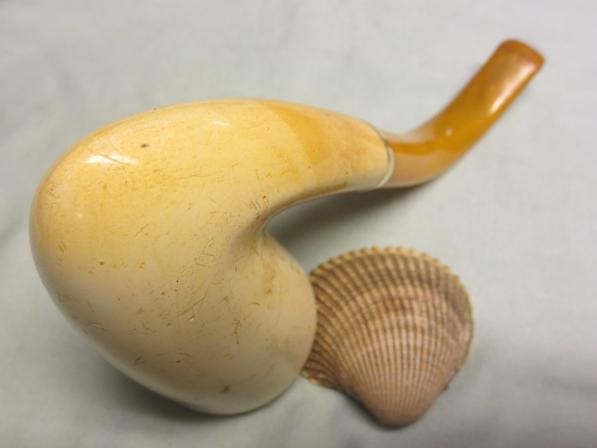
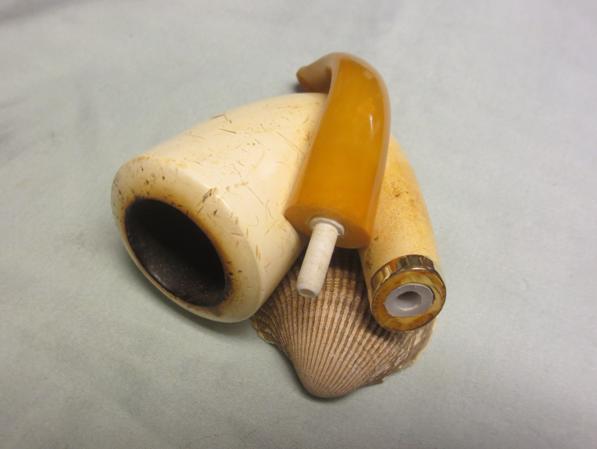
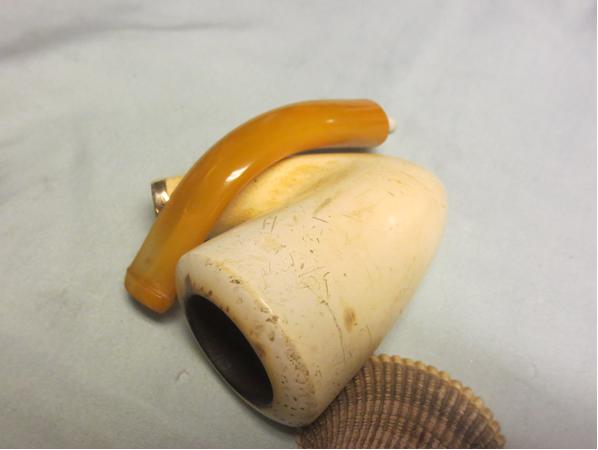
Jeff and I always keep an eye for Gourd Calabash pipes. We pick them up at a variety of spots – antique shops, auctions and periodically we purchase them in estates that we buy. We bought two calabashes from an estate of a pipeman in Plano, Texas, USA on 03/30/2022. This was a great example of a great looking Calabash. It has a well-made block meerschaum cup that fits well in the gourd. The meerschaum cup had a thick cake in the bowl some darkening around the inner edge and rim top. The cup had some patina developing around the cup top. The gourd itself was quite clean on the inside with some tars on the sides of the gourd. There is a new cork gasket around the gourd top that was dry but was in good condition and when rejuvenated would hold the cup in place. At the shank end of the gourd there was an acrylic shank extension. There was no stamping on the shank or gourd but it reminds me of many of the Pioneer Gourd Calabash pipes that I have worked on. The stem was well made fancy vulcanite and was oxidized, calcified and had light tooth marks and chatter on both sides ahead of the button. Jeff took photos of the pipe before he started the clean up on the pipe. It should clean up amazingly well. Jeff took photos of the meerschaum cup, bowl and inner edge. You can see the moderate cake in the bowl. tars/lava around the inner edge of the bowl and the lava and darkening on the op round the bowl edge. He also took photos of the stem. It is oxidized, calcified and has light tooth marks and chatter on both sides near the button. He took a photo of the gourd bowl and a close up of the briar shank extension. The fit of the meerschaum cup to the top of the gourd is snug and looks good. The acrylic shank extension fits well against the gourd and against the stem. He removed all the parts and took photos of the parts of the pipe showing the inside and the outside of the gourd and the meerschaum cup.Over the years I have worked on quite a few Gourd Calabash pipes like this one. The shank extension, the stem and the way the bowl fits all say to me that it is an American made Pioneer Gourd Calabash. As such it is hard to pin down a date for it. So, it was time to work on it. Jeff cleaned up the pipe for me. He carefully reamed the bowl with a Savinelli Fitsall Pipe Knife. He scrubbed the exterior of the gourd and the meerschaum with Murphy’s Oil Soap and a tooth brush to clean off the grime off the finish and the overflow of lava on the rim top. The cleaning had removed the grime on the rim top. He cleaned up the internals of the gourd with the soap and a brush as well. He cleaned the airway in the shank, mortise and stem with pipe cleaners, cotton swabs and alcohol to remove all of the oils and tars in the pipe. He soaked the stem in Briarville Pipe Stem Deoxidizer and was able to remove much of the oxidation, calcification. When it arrived here in Vancouver it was a clean pipe and I knew what I had to work with. I took photos of it before I started my part of the restoration. I took a photo of meerschaum rim top and the stem to show their condition once it arrived in Canada. Jeff was able to clean up the cake and the lava overflow that was shown in the rim and bowl photos above. The rim top looked very good but there was some darkening to the top and inner edge of the bowl. The stem looked better, though there were light tooth marks and chatter on both sides near the button.I took a photo of the bowl with the stem removed to give a sense of how it looked. I also took it apart to show how clean the parts are. I started my work on the pipe by greasing the cork gasket in the inner edge of the gourd. I worked some Vaseline into the cork and set it aside to let it soften the cork and make it more elastic.I set the gourd aside to let the cork absorb the Vaseline and turned my attention to the meerschaum cup. I sanded the rim top and the underside of the cup with a set of 2 inch sanding pads for 320-3500 grit sanding pads. I used the 320-600 grit pads on the underside, the cone of the cup. I used the 1000-3500 grit pads on the rim edge and top. They work amazingly well and are easy to manage and sand smooth.I worked on the meerschaum cut with micromesh sanding pads – dry sanding with 1500-12000 grit pads and wiping it down after each pad with a damp cloth. It really began to have a rich shine by the last pad.   At this point I rubbed the meerschaum cup down with some Restoration Balm and buffed it off with a soft cloth. The cup really shone.I set the meerschaum cup aside and rubbed the gourd down with Before & After Restoration Balm to deep clean the finish on the bowl and shank. The product works to clean, enliven and protect the gourd. I worked it in with my fingers to get it into the bowl and shank surface. I let it sit for 10 minutes then I wiped it off and buffed it with a soft cloth. The gourd really began to have a rich shine. I took some photos of the bowl at this point to mark the progress in the restoration. I put the cup on the gourd and gave both several coats of Conservator’s Wax and buffed them by hand. The pipe really looked good at this point and once the stem was on it would be a beautiful pipe. I set the bowl aside and worked on the stem at this point in the process. I sanded out the chatter and marks on the stem surface with a set of 2 inch sanding pads for 320-3500 grit sanding pads. They work amazingly well and are easy to manage and sand close to the sharp edge of the button. I polished the stem with micromesh sanding pads – dry sanding with 1500-12000 grit pads. I wiped the stem down after each sanding pad with Obsidian Oil. I polished the stem with Before & After Pipe Stem Polish – both Fine and Extra Fine. I gave it a coat of Obsidian Pipe Stem Oil. It works to protect the stem from oxidizing. I set it aside to dry. I put the stem back on the “Pioneer” Gourd Calabash with a Meerschaum Cup and took it to the buffer. I buffed the stem with Blue Diamond to polish the vulcanite. Blue Diamond does a great job on the smaller scratches that remain in the vulcanite. I gave the bowl multiple coats of Conservator’s Wax and the stem several coats of carnauba wax and buffed the pipe with a clean buffing pad to raise the shine. I hand buffed it with a microfiber cloth to deepen the shine. I am amazed at how well it turned out. The finished pipe is shown in the photos below. This is a beautiful Meerschaum Cup Gourd Calabash – the vulcanite taper stem, the polished gourd and meerschaum cup combine to give the pipe a great look. The dimensions of the pipe are Length: 8 inches, Height: 4 inches, Outside diameter of the bowl: 2 ½ inches, Chamber diameter: 1 inch. The weight of the pipe is 4.13 ounces/117 grams. This is another pipe that I will be putting on the rebornpipes online store in the Ceramic and Meerschaum Section shortly, if you are interested in adding it to your collection. Thanks for walking through the restoration with me on this beauty!

As always, I encourage your questions and comments as you read the blog. Thanks to each of you who are reading this blog. Remember we are not pipe owners; we are pipe men and women who hold our pipes in trust until they pass on into the trust of those who follow us.

Restoring one from my own collection – an Andreas Bauer Billiard


Blog by Steve Laug

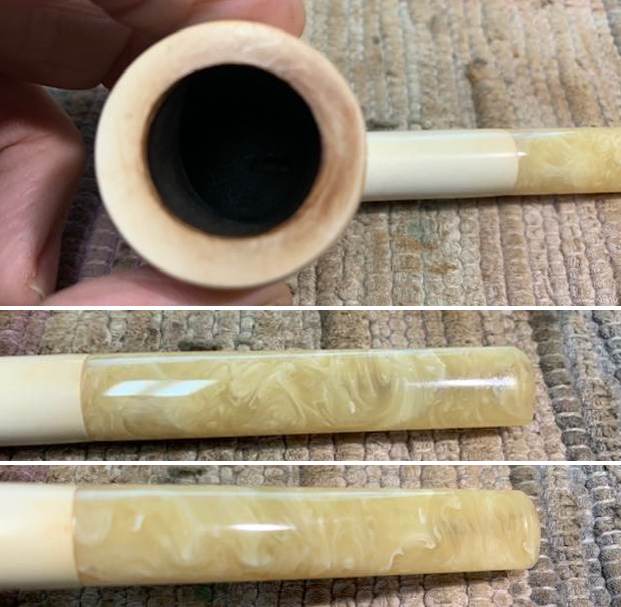
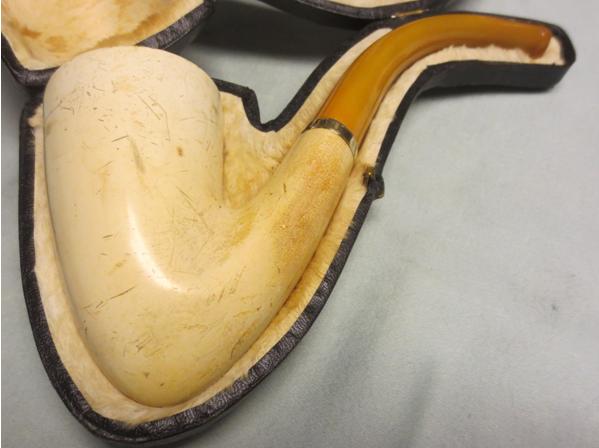
The next pipe I chose to work on came from an auction back in May of 2018 in Beaumont, California, USA. It came in a nice burgundy leather case with a cream coloured lining. The case is marked on the outside and reads FINEST CULTURED AMBER on the front edge and MADE IN AUSTRIA on the back edge. Those two stamps caught my attention. I always have an eye out for Austrian Made Meerschaums and the Finest Cultured Amber made me wonder what that was.Inside the case the lid was stamped as well and bore the AB logo with Genuine Block Meerschaum around the letters. It is also stamped Hand Made. The case is fitted to a beautiful lightweight meerschaum billiard with what the case describes as a Cultured Amber Stem. I was looking forward to working on this one and potentially adding it to my own collection as it is quite stunning.Jeff took the pipe out of the case and took a photo of it. It is quite clean. The rim to has some darkening and a bit of tars/lava on the back inner edge of the bowl and some developing patina around the rest of the rim top. The stem is very clean with light tooth chatter. The swirls in the stem are rally quite beautiful and very unique to Bauer Meerschaum pipes.         He took photos of the rim top and the stem to show the condition. You can see the issues on the rim top and stem as I noted above. There are also some light scratches on the rim top itself. It should clean up quite well. Jeff took a photo of the side and heel of the bowl. Even though the picture is a bit out of focus you can see the graceful lines of the pipe. It is probably the lightest meerschaum I have worked on. Everything about is speaks to the classiness of this beauty.To confirm the that the logo is indeed from and Andreas Bauer pipe I did a quick Google search and picked up a few pictures of his pipes in their cases that show the same logo and markings on the case lid. My thinking about the logo was confirmed through this quick check. I also found one smaller photo that showed the markings on the exterior of the case. Both the Made in Austria stamp on the back edge and the Finest Cultured Meerschaum stamp on the front of the case. The interior stamps also matched the one that I was working on. It was interesting to also note that in all of the photos I looked at in the search had the same kind of stem composition as the one that I was working on today.

I wanted more information on the brand and also some help in understanding what the Finest Cultured Amber stamping meant on the case. I was familiar with Amber but not the concept of Cultured Amber. It made me think of the difference between Cultured Pearls and Natural Pearls. I wondered if this was similar.

I turned to the first link given on Google to the estate pipe section of smokingpipes.com (https://www.smokingpipes.com/pipes/estate/misc/moreinfo.cfm?product_id=204496). The link took me to tall billiard with a description by Eric Squires that gave me some information on the Cultured Amber stamp. I have included the photo and the description below.Bauers are known for being particularly high quality meerschaums. They are also known for having a curious stem material, “amberoid”. It looks like very nice acrylic, but it takes a static charge like natural amber. That latter aspect is easily explained, as amber itself was one of the main ingredients used to create amberoid. This Billiard is one of only three Bauers I’ve ever personally seen, but three has been enough to notice something else about the stems: despite their material being amber-based, they don’t seem to suffer from the usual wear of pure amber, such as crackling and cracking. – Eric N. Squires

Thanks for the information Eric. It seems that Bauer developed an “Amberoid” or man made amber that looks a lot like acrylic but is like natural amber takes a static charge. He also notes that the material wears better than natural amber.

Another pipe on smokingpipes.com had some more information on the brand in an intro by Bear Graves (https://www.smokingpipes.com/pipes/estate/misc/moreinfo.cfm?Product_ID=46253). I quote the pertinent information below and have made it bold.

Founded in Vienna in 1908, Andreas Bauer quickly developed what would become the single largest producer of meerschaum pipes up until the second Word War. In most “normal” planes of existence, there is supposed to be a trade-off between quality and quantity, but (evidently) the word never got to Andreas Bauer; at the very height of their production they were raking in Gold Medals for excellence and design (such as the one they were awarded at the 1937 Paris World Exhibition).

Then, or now, to own a Bauer meerschaum is to own an iconic meerschaum, the likes of which have never been surpassed… –Bear Graves

I then turned to Pipedia (https://pipedia.org/wiki/Andreas_Bauer) expecting to find a lot of information on the brand but was surprised by the brevity of what I found there. I quote from the site in full below.

Andreas Bauer of Vienna was probably the most famous brand manufacturing Meerschaum pipes – the best of the best. But prior to 1990 Bauer merged with Koncak Meerschaum of Eskisehir / Turkey. Today Strambach of Vienna is the last of all the Austrian Meerschaum manufacturers.

 I found some more information on Worthpoint that was included with a pipe that was being sold (https://www.worthpoint.com/worthopedia/andreas-bauer-block-meerschaum-hand-1778055263). For the most part it confirms what I had learned to this point. I quote:

Andreas Bauer Company Andreas Bauer of Vienna was probably the most famous brand manufacturing Meerschaum pipes – the best of the best. The company was founded 1906 in Vienna, Austria by Andreas Bauer. In 1942 Ernst Bauer became head of the company up to 1971. In 1972 the company was sold to the family Mrstik. In 1990 Bauer merged with Koncak Meerschaum of Eskisehir / Turkey. Bauer Meerschaum Pipes are something very special to smoke. Meerschaum has the characteristic to reabsorb humidity, thus permitting a very cool and dry smoking, furthermore Meerschaum has a very low specific weight, allowing to build very light. This pipe is made pre-merger and dates from 1982. In the late 1970’s early 80’s Bauer used a replication for their amber stems, Cultured amber (Acrylic, Amberiod). Back in the Golden days, Bauer Meerschaum pipes were fitted with fossil amber bit on a bone tenon. “It’s unlikely that pipes of this quality will ever be produced again” Fossil amber application made the smoking of their pipes a very fragile object. Their new adopted stem material still gives the same amber effect and offers the smoker a more robust pipe, that you will enjoy for many years.

With that information I have come to believe that this pipe was made during the late 1970s and early 1980s prior to the merger with Koncak. It is from the period when Bauer used the Cultured Amber stem material that they had come up with. Now it was time to work on the pipe itself.

Jeff had cleaned up the pipe with his usual thoroughness. He carefully reamed the pipe with a Savinelli Fitsall Pipe Knife. He scrubbed the bowl with undiluted Murphy’s Oil Soap with a tooth brush. He rinsed it under running warm water to remove the soap and grime. He cleaned out the inside of the shank and the airway in the stem with alcohol, cotton swabs and pipe cleaners. He cleaned the stem Soft Scrub cleanser and rinsed it off with warm water. I took photos of the pipe 3 years later when I finally got around to working on it. First the case and then the inside of it. It really is a beauty to behold. I removed the pipe from the case and took some photos of the pipe. I am quite stunned by how beautiful it was after Jeff’s cleanup. I would not need to do a lot of work to bring it back to full beauty. Just a clean up and possible a rewaxing would bring it to life. The rim top and inner edge of the rim looked very good with some slight darkening on the rim top. The stem surface looked very good with some very light tooth marks and chatter on both sides near the button. I removed the stem and took a photo of the pipe to give a sense of the whole. The has a white nylon integrated tenon that fits snug in the shank. The stem is absolutely gorgeous with the swirling material.I polished the smooth meerschaum with micromesh sanding pads – wet sanding with 1500-12000 grit pads. I worked on the darkening of the rim top at the same time. I wiped the bowl down after each pad with a damp cloth. I wanted it to be as smooth as possible before I rewaxed the bowl. I heated some beeswax in a small metal pan with my heat gun. Once the wax was melted I coated the meerschaum with the liquid wax both by dipping the bowl in it and painting the rest of it with a paint brush. I put a cork in the bowl for a handle and used the heat gun to melt the wax on the bowl and wiped it off with a paper towel. I polished it with a soft cotton cloth to raise the shine on the meerschaum. I was really happy with the way the pipe had turned out. I set the bowl aside and turned my attention to the stem. I polished out the chatter and faint tooth marks with micromesh sanding pads. I dry sanded it with 1500-12000 pads and wiped the bowl down after each pad with a cloth and Obsidian Oil. I finished polished it with Before & After Fine and Extra Fine stem polish. I wiped it down with the cloth and Obsidian Oil one final time and set aside to dry. This Andreas Bauer Hand Made Meerschaum Billiard with a Cultured Amber Taper stem is a beautiful pipe. With the addition of the beeswax the meerschaum took on a slightly darker patina. The polished light weight meerschaum that shines through the polished finish is stunning. I put the stem back on the bowl and carefully buffed the pipe with a clean buffing pad. I hand buffed the pipe with a microfiber cloth to deepen the shine. The finished Bauer Meerschaum Billiard fits nicely in the hand and feels great. Give the finished pipe a look in the photos below. The dimensions of the pipe are Length: 5 inches, Height: 1 ¾ of an inch, Outside diameter of the bowl: 1 ¼ inches, Chamber diameter: ¾ of an inch. The weight of the pipe is 26 grams/ .92 oz. I have been keeping my eye open for a Bauer Meerschaum Billiard for a long time so this one will stay with me. Thanks for reading this blog and my reflections on the pipe while I worked on it. There are many more to come!

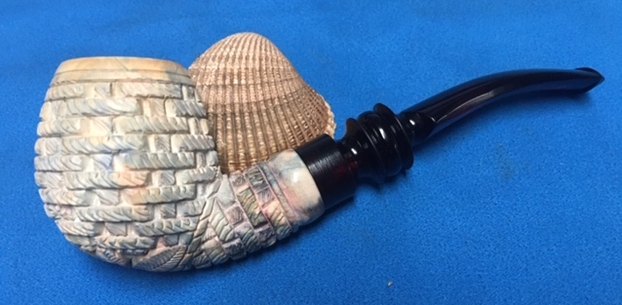
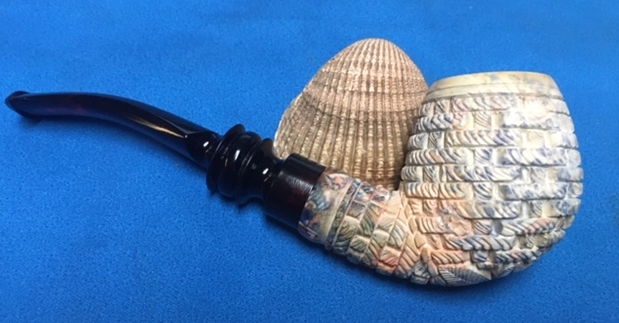
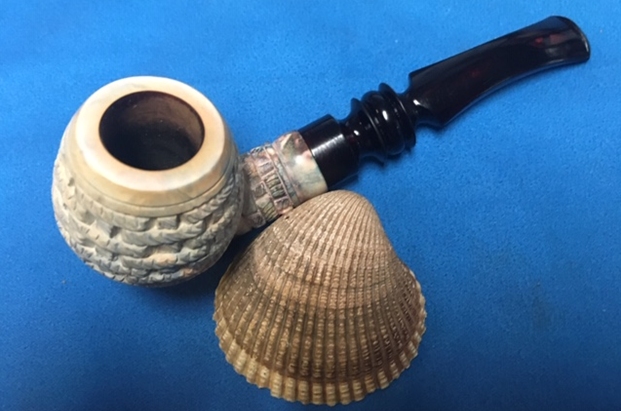
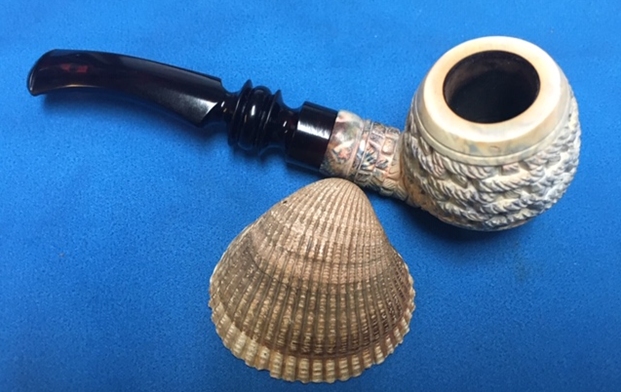
One I have not seen before: A Coloured Basket Weave Meerschaum pipe


Blog by Steve Laug

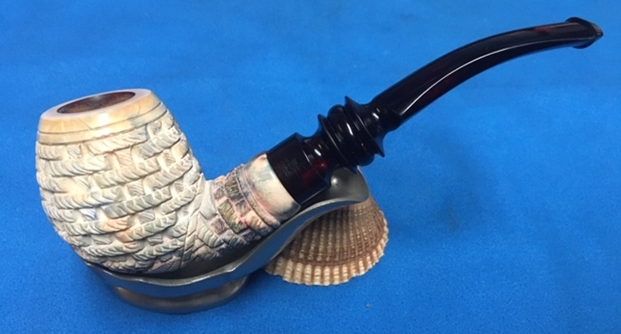
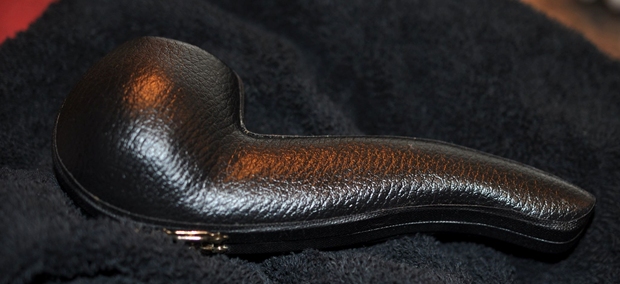
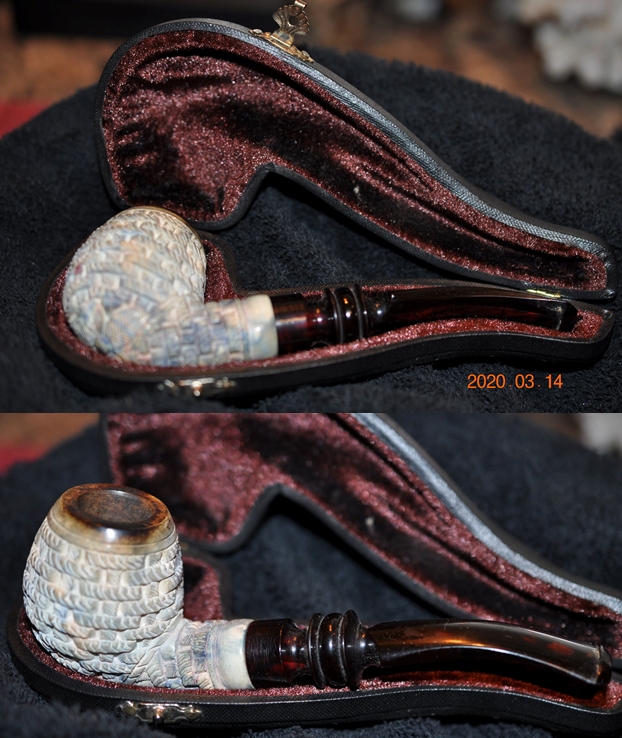
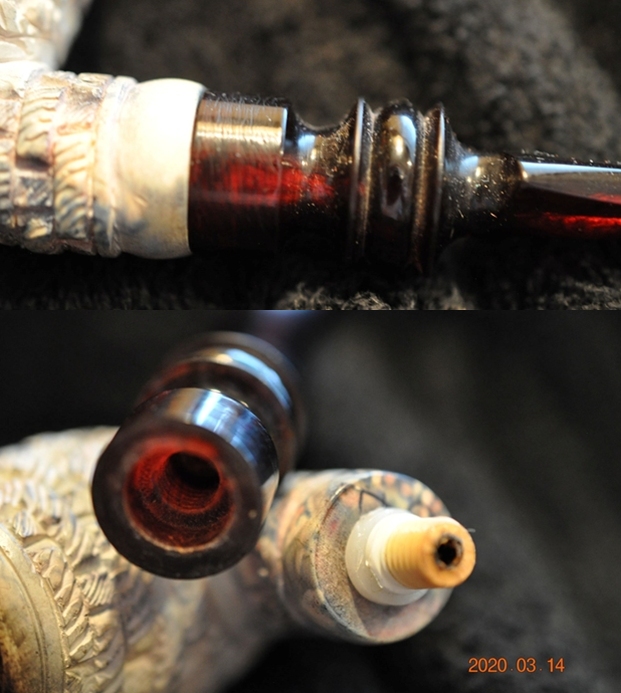
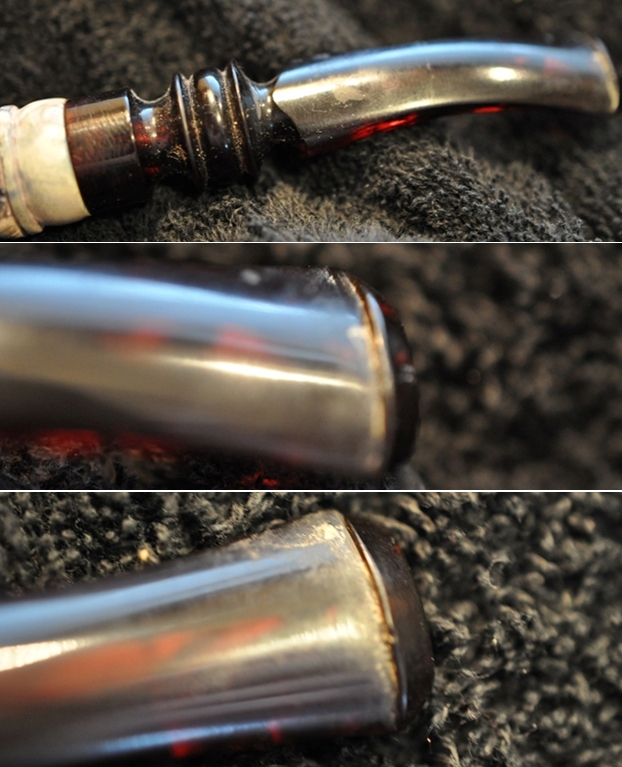
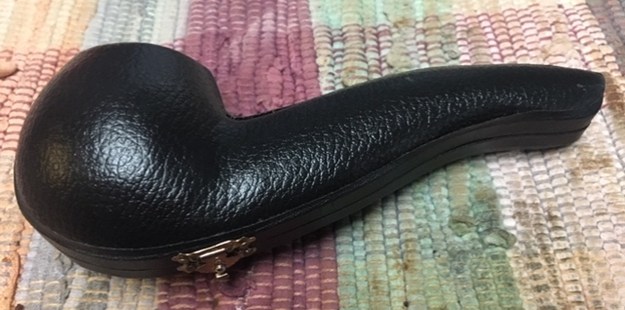
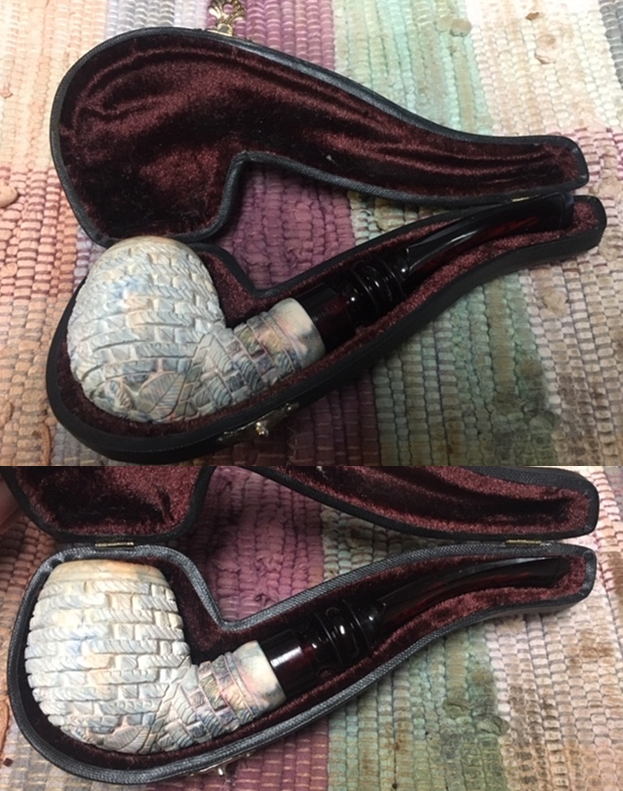
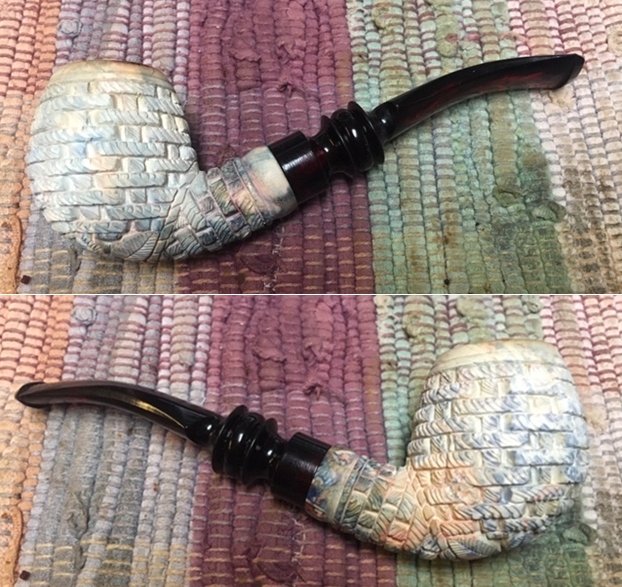
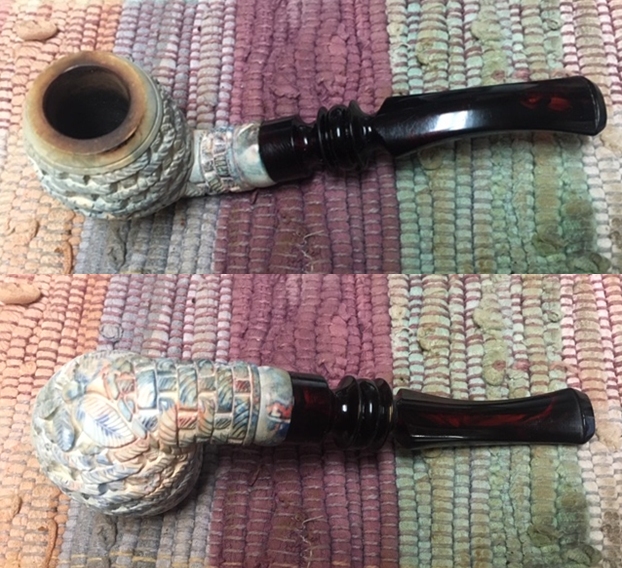
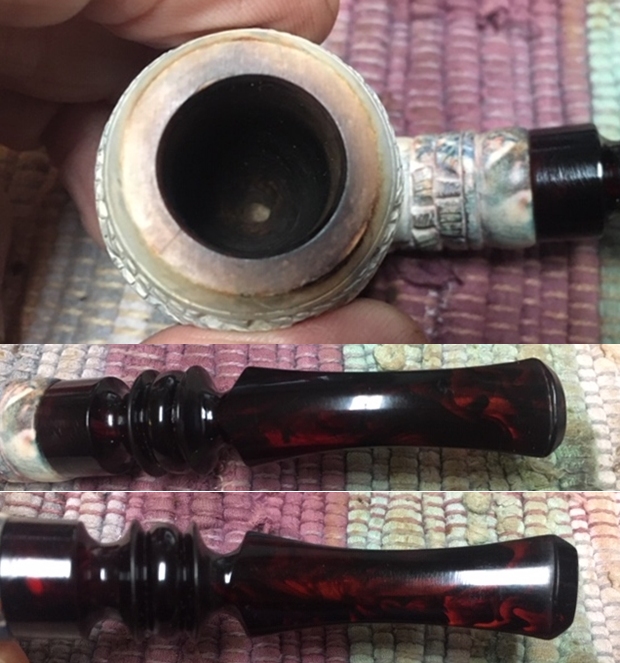
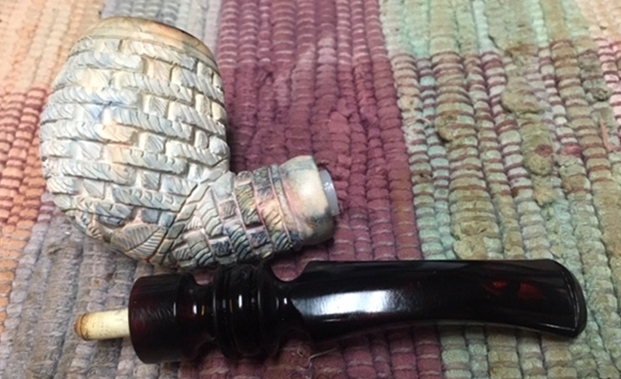
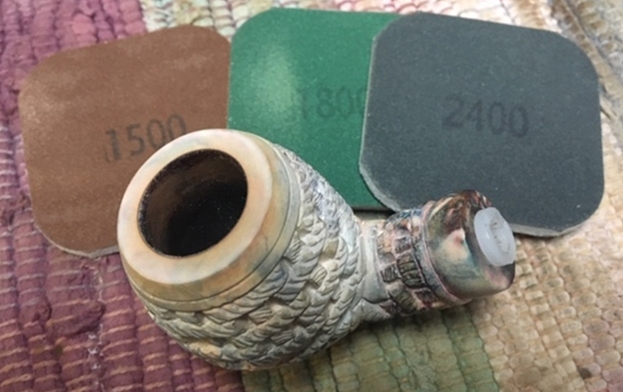
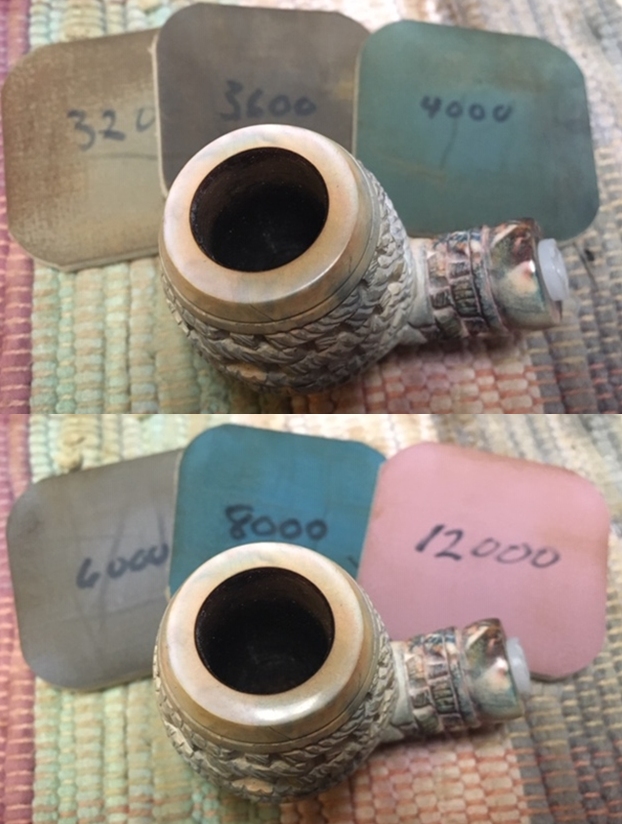
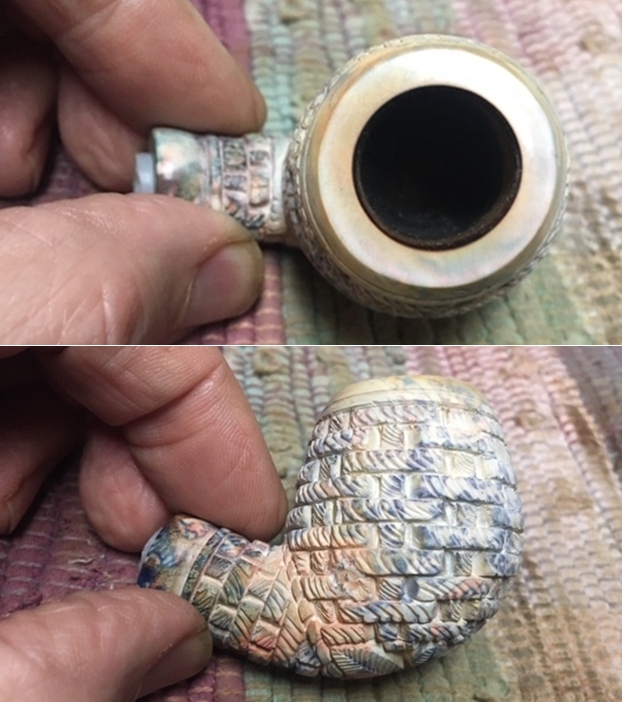
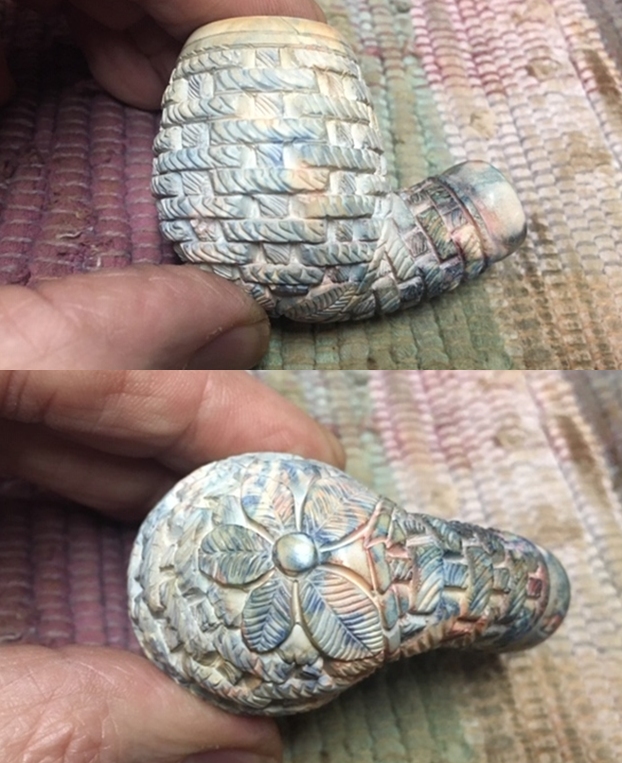
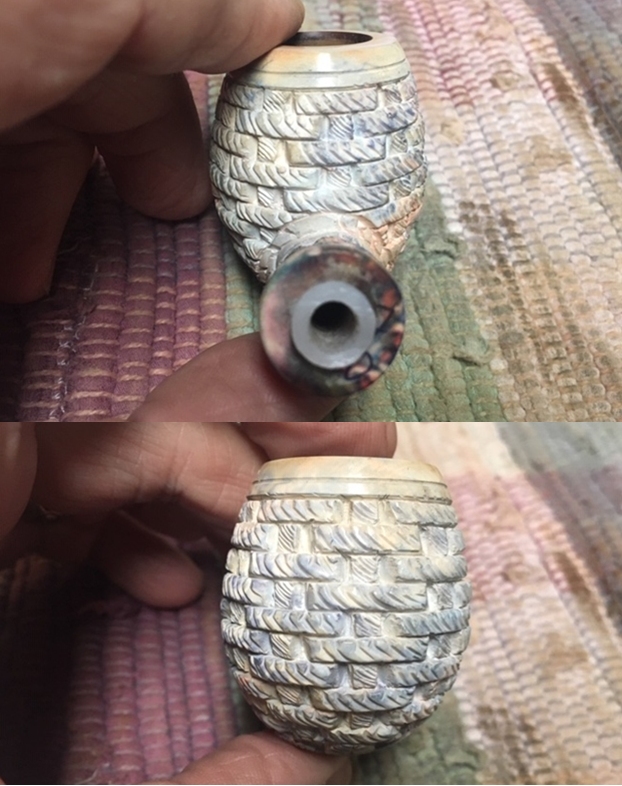
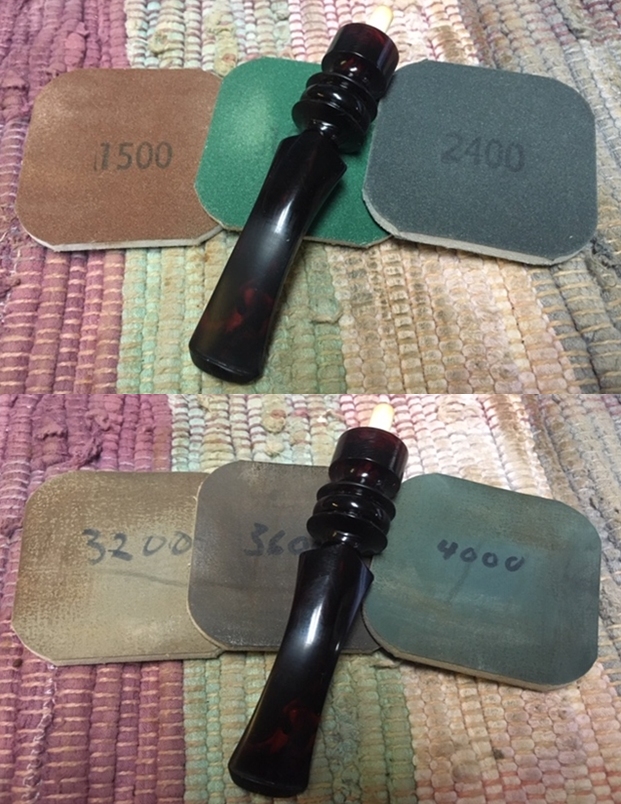
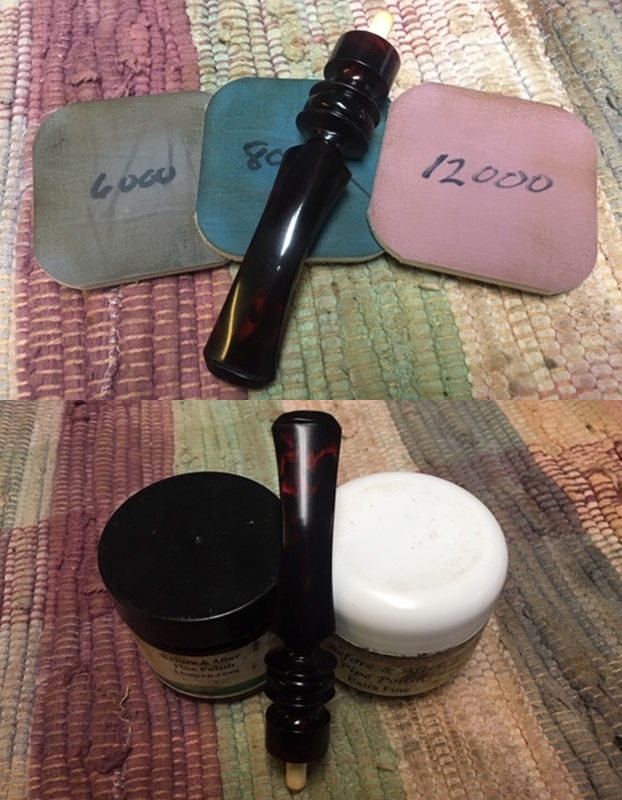
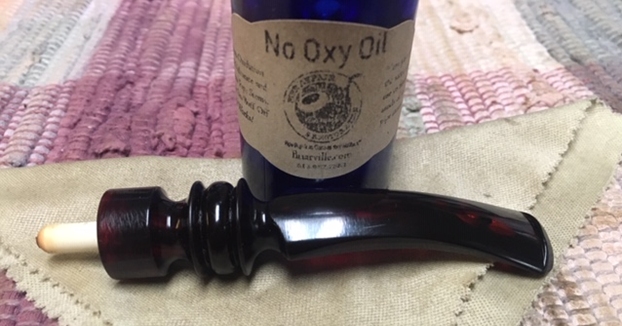
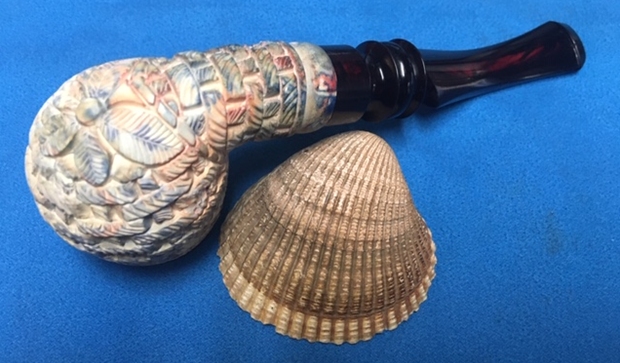
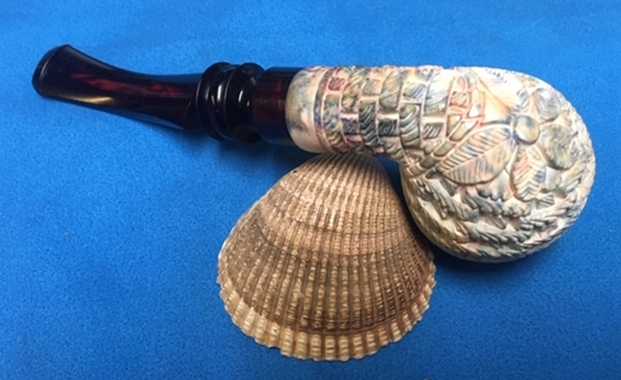
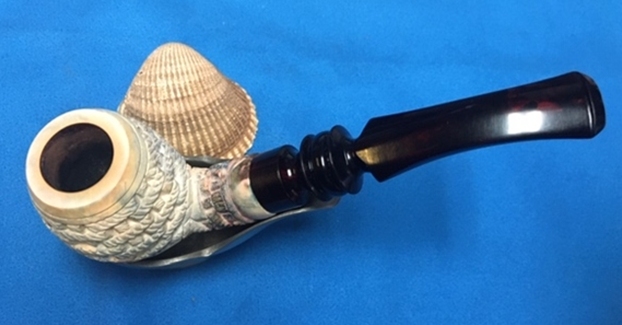
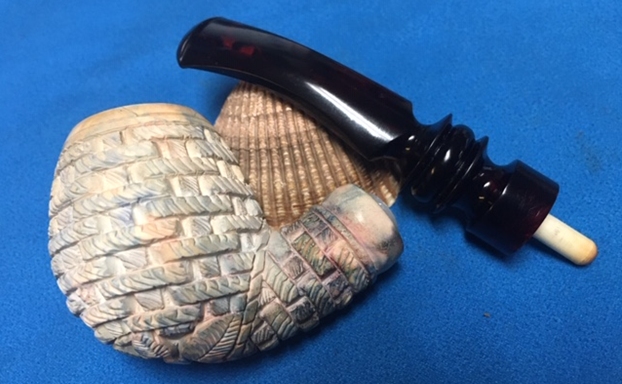
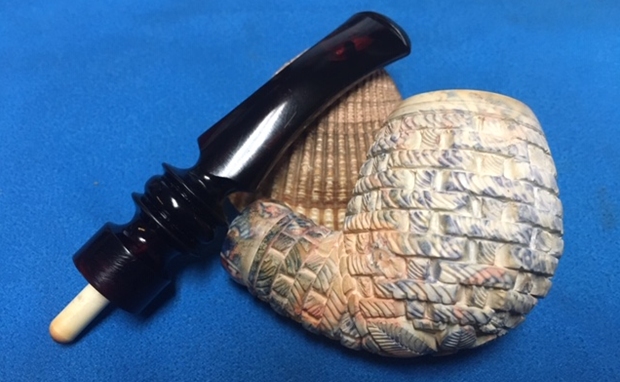
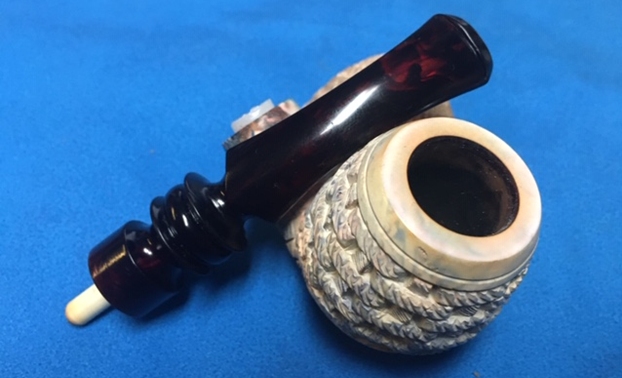
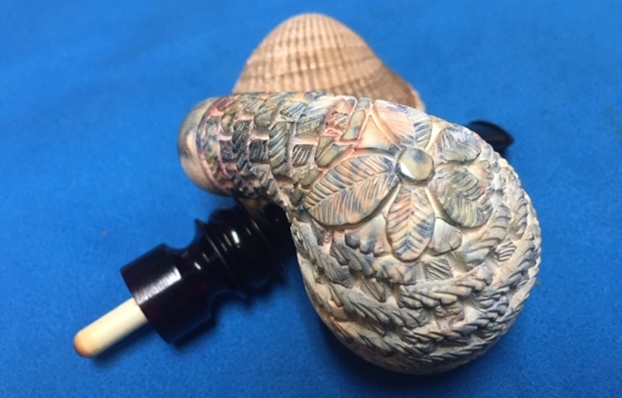
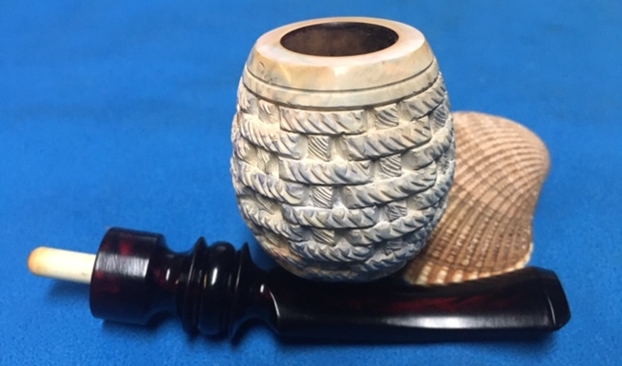
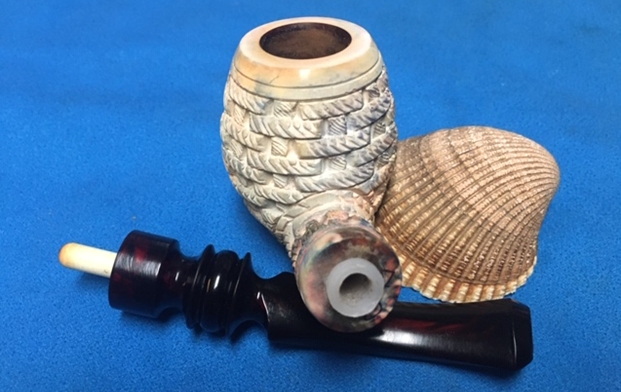
Jeff and I picked up this Egg shape Basket Weave Meerschaum with a red acrylic stem from a recent trip we took together. It came in a black vinyl covered case lined with rich brown velour in the cover and lower portion of the case. The case was in very good condition with brass hinges on the back and a brass clasp on the front. There were no identifying marks in the case or on the pipe itself. Jeff opened the case and this was the meerschaum pipe that was inside. It was a nice looking basket weave carved egg shaped bowl that had a colouration that neither of us had ever seen before. We both wondered if somewhere along the way it had come in contact with a cloth that had bled stain on the pipe. But the pattern and intensity of the colour was bowl wide and deep in the meerschaum. Looking at the shank end we also saw that it seemed to go even into the internals of the pipe. The exterior of the bowl was very dirty and had tars and oils ground into the finish and was dull. Looking at the top of the bowl you can see the light lava that had overflowed onto the rim top. You can also see the darkening on the inner and outer edge of the bowl. There was a thin cake in the bowl. The stem looked to be in good condition with a little chatter but no tooth marks. Jeff took photos of the pipe to show its condition before he started his clean-up.Jeff took close-up photos of the bowl and rim top from various angles to capture the condition of the bowl and rim top edges. There was a very thick cake in the bowl that was hard and uneven.  There was thin overflowing lava coming up from the cake onto the rim top. Jeff took photos of the sides and heel of the bowl to show the carving and colour around the bowl as well as the darkening that had occurred on the outer edge of the bowl. Jeff took the stem off the shank and took a photo. It appears to be a threaded tenon that unscrewed from the stem. This was the first sign of a problem with the tenon being stuck in the shank. It was not clear what kind of tenon we were dealing with here. I expected a push tenon and that could well be the case.  I would know more about that once I had it in hand. The stem was dusty and dirty.  The internals of the pipe looked quite dirty judging from the tenon end. Notice the colours that permeate deep into the meerschaum on the shank end.Jeff took photos of the stem to show the general condition of the fancy stem shape. The curve is graceful and gentle. The photo shows the profile of the stem. He took photos of the top and underside of the stem to show the light tooth chatter on both sides near the button. Having seen the pipe I did before his cleanup I did not know what to expect when I unpacked the most recent box Jeff sent to me. The pipe was present in the box with other cased pipes so as I took each one out and opened it I waited to see this one. When I finally opened a case and this pipe was there I did not know what to expect. The colours left me wondering what to expect so I opened the case with a bit of fear and trepidation at what awaited me inside. I put the case on my desk and opened it to see what was there. I opened the case and took a photo of the pipe inside.I was astonished to see how clean the pipe was. The bowl was definitely coloured with the bubblegum speckles all around the pipe. It actually looked very good at first glance.Now it was time to take it out of the case and have a look at it up close and personal. Jeff had done an incredible job in cleaning up this meerschaum. He had carefully reamed the bowl with a Savinelli Fitsall Pipe Knife, scraping away the thick cake on the walls of the bowl. He also scraped off the lava on the rim top. He scrubbed the exterior of the bowl with Murphy’s Oil Soap and a tooth brush to remove the grime on the bowl and rim and was able to remove much of the darkening. He cleaned out the interior of the bowl and shank with pipe cleaners, cotton swabs and alcohol until they came out clean. The rim top looked incredible when you compare it with where it started. There is some slight darkening on the inside edge of the bowl. He cleaned the stem with Soft Scrub to remove the grime on the exterior and cleaned out the airway with alcohol, cotton swabs and pipe cleaners. I took some photos of the pipe as I saw it. To show how clean the rim top and stem really was I took a close-up photo of the rim. The bowl was clean and cake free. The rim top is quite clean and the inner edge of the bowl has all of the lava removed. There is still some general darkening to the rim top that I would like to remove but it is very clean. The rich Redmanol coloured stem looks very good. The surface and the button edge look really good. There are no issues that are there to address.I removed the stem from the bowl and took photos of the parts. When I first unscrewed it the stem came off the tenon. I looked it over and could see that I was dealing with a push stem system. I screwed it back in place and twisted in the opposite direction and I was able to twist the push stem off the mortise insert. I would clean it up and it should be easy to work with in the future. I decided to address the darkening on the rim top and edges first. I polished the rim top and edges with micromesh sanding pads – wet sanding with 1500-12000 grit pads to remove the blackened spots on the rim top and clean up the top. I wiped it down with a damp cloth to remove the sanding dust. The polishing of the rim top and edges had removed the darkening and left behind a light patina. I took photos of the top, sides and heel of the bowl to show what it looked like at this point. Note the carved flower on the heel of the bowl. It is well done and a unique touch on this basket weave style bowl. The bowl was basically finished so I set it aside and turned my attention to the stem. Since it was quite clean I decided to polish it with micromesh sanding pads – dry sanding with 1500-12000 grit sanding pads. I also worked over the staining of the push tenon at the same time. I wiped the stem down after each sanding pad with a cloth containing some Obsidian Oil. I finished polishing it with Before & After Pipe Stem Polish – both Fine and Extra Fine and buffed it off with a cotton cloth. Even though the stem is acrylic I decided to give it a coat of Briarville’s No Oxy Oil to preserve and protect it. I put the bowl and stem back together again and buffed it with a microfiber cloth to raise the shine on the meerschaum and the acrylic stem. The hand buffing adds depth to the shine. I gave the stem several coats of carnauba wax and the bowl multiple coats of Clapham’s Beeswax Polish. The Beeswax Polish is a soft wax that I can apply with a soft cotton pad and buff with a microfiber cloth. The colours of the pipe came alive and looked great to me. It has a great feel in the hand that is very tactile and an interesting patina should develop as the pipe is smoked. The finished pipe is shown in the photos below. The dimensions of the pipe are Length: 5 ½ inches, Height: 2 inches, Outside diameter of the bowl: 1 ¼ inches, Chamber diameter: 5/8 of an inch. This Coloured Basket Meerschaum is a beauty whose colours make it interesting. When I first saw it I was dubious about the flecks of colour but as I have worked on it I have come to appreciate them. It should make someone a great pipe. It is one that will be on the rebornpipes store very soon. If you are interested let me know. Thanks for reading this blog and my reflections on the pipe while I worked on it.

Restoring the final pipe from the Florida lot – a Meerschaum Bacchus


Blog by Steve Laug

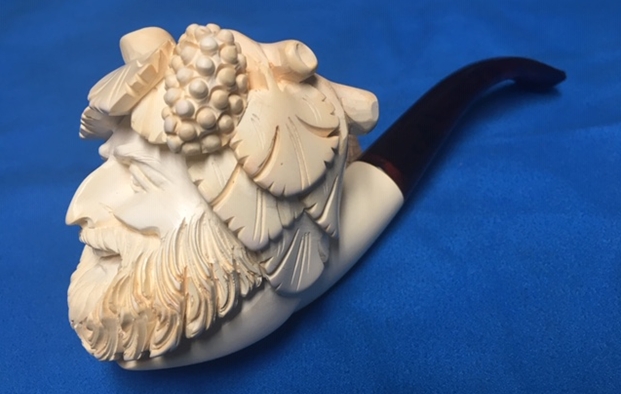
Back home after the first day at work in 2019. It was a long day and I need the down time to relax and unwind so I made my way to the basement workshop. My wife and kids know my habits and that after a day of talking I am talked out – used up my verbal quota and need down time. Of course they are also convinced that working on pipes is an illness but at least it keeps me out of their way! Tonight I feel a lot like Spencer in the photo below. He is pacing around me this evening having missed me today. So I am still working under the watchful eye of my buddy and Shop Foreman, Spencer. He has seriously enjoyed having me at home with him the past two weeks. His life is pretty much laying on a blanket by my feet while I am fiddling with pipes. At 14+ years old my fiddling does not faze him much him, he just wants to make sure I stay put with him in the basement. He snoozes, comes over to me now and then to smack my leg and beg for a treat and then retreats to nap again. He really is company in the shop and keeps me mindful to get up and move around now and then.Tonight I am working on a meerschaum that came in the lot. It was by far in the best condition of the five pipes but was still dirty. It came in its own unmarked case. It is a well carved figural of Bacchus, the Greek god of wine, in a well inebriated pose suggestive of having enjoyed his wine. There is no stamping on the shank or anywhere on the pipe. The stem is amber coloured acrylic and is in decent shape. It has a threaded tenon and screws directly into the shank. It is the fifth and last pipe that came to me in a lot of five pipes that I bought from a pipeman in Florida. The other pipes in the lot were the two Mastro de Paja and the two Savinelli Autographs that I have already restored. I decided to work on this final pipe and be finished with the lot. It is a change of pace from all the briar pipes that I have been working on these past weeks. It is shown in the bottom left side of the photo below.I had the fellow in Florida send the pipes to my brother Jeff in Idaho for the cleanup work. He does a great job and expedites my restoration process a lot. He took the following photos of the pipe before he worked his magic on them. The first photo gives a frontal view of Bacchus and gives you a feel for the quality of the carving and craftsmanship on this meer. The pipe is dirty but the meer is undamaged. There is some colouring starting to happen around the grapes and vine on the top of the bowl.Like his other pipes in this collection this Meerschaum must also have been a terrific smoker because the bowl was pretty caked and the shank and stem were dirty. The lava flowing over the rim top was light and there was some darkening from lighting on the edges of the rim and top. It really was a mess and the cake was hard from sitting. The Florida pipeman had laid aside his pipe some 15-20 years earlier and it had been in storage. It was going to take some work to clean out that bowl and be able to see what the rim looked like underneath the layer of lava. The next two photos give two different exposures and views of the top side of the pipe.The rest of the bowl looked dirty but the carving was quite well done.  Jeff included a photo of the beard from the underside that shows the intricate carving of the hair and shaping of the beard and chin of Bacchus. The pipe was dusty but the case had protected it very well. The rich amber coloured acrylic/Lucite stem was in decent condition. It had a threaded nylon tenon or connector that screwed directly into the shank of the pipe. It was dirty, was scratched and had tooth chatter and damage to the stem surface. The button looked like it had some damage and tooth marks on the sharp edge but I would know more once it arrived in Vancouver.Jeff cleaned the pipe with his usual thoroughness – carefully reaming the bowl with a PipNet pipe reamer and cleaning up the remnants with a Savinelli Fitsall Pipe Knife. He scrubbed the internals of the bowl, shank and stem with alcohol, cotton swabs and pipe cleaners. He scrubbed the exterior with dish soap and a soft tooth brush to clean off the dust and grime on the finish. The rim top looked very good under the thick lava coat. There were just a few nicks and scratches to deal with. The inside of the bowl itself looked great. The stem was in great shape other than a bit of tooth chatter. I took photos of the pipe when it arrived here. You can see the developing patina on the grapes, leaves, vine and beard… it is going to be a beautiful pipe as it darkens. I took some close up photos of the rim top, bowl and stem to show what they looked like after Jeff’s cleanup. It is a startling difference. The rim top still has some darkening that will need to be dealt with while not damaging the developing patina around the rim top. The stem was dull and there were tooth marks and chatter on both sides near the button.I polished the rim top and the area around the inner edges of the bowl with micromesh sanding pads to remove the scratches and to remove the remaining dark areas and tar – wet sanding with 1500-2400 grit pads and dry sanding with 3200-12000 grit pads. I wiped the rim top down after each pad to remove the sanding dust and get a sense of the how the finish was developing. The photos show the progress. With the rim top cleaned, polished and still showing a lot of patina I set the bowl aside and worked on the stem. I wet sanded it with 1500-2400 grit micromesh sanding pads. I was able to remove it. I dry sanded it with 3200-12000 grit pads to polish it further. I wiped it down with a damp cloth after each sanding pad. I finished polishing the stem with Before & After Pipe Polish – both Fine and Extra Fine polishes. I wiped the stem down with a damp cotton pad afterwards and buffed it with a soft microfiber cloth. I lightly polished the stem with Blue Diamond to polish out the scratches in the acrylic and raise a shine. I hand buffed the meerschaum bowl with a microfiber cloth to polish it. I gave the stem multiple coats of carnauba wax. I carefully buffed the pipe with a clean buffing pad to raise the shine. I hand buffed it with a microfiber cloth to deepen the shine. The pipe polished up pretty nicely. The contrast of the beautiful developing patina on the white meerschaum with the polished amber colour Lucite/acrylic stem is quite stunning. The carved figural of Bacchus is well done and looks very good. This is another beautiful pipe that is for sure. The finished pipe is shown in the photos below. The dimensions of the pipe are Length: 6 inches, Height: 2 3/4 inches, Outside diameter of the bowl: 2 ½ x 2 inches, Chamber diameter: 3/4 of an inch. I will be putting the finished pipe on the rebornpipes store shortly. Thanks for walking through the restoration with me. It was a great break away from the briars that await me. Cheers.  

Paresh’s Grandfather’s Pipe #4 – An Antique Kalmasch Meerschaum Pipe


Blog by Steve Laug

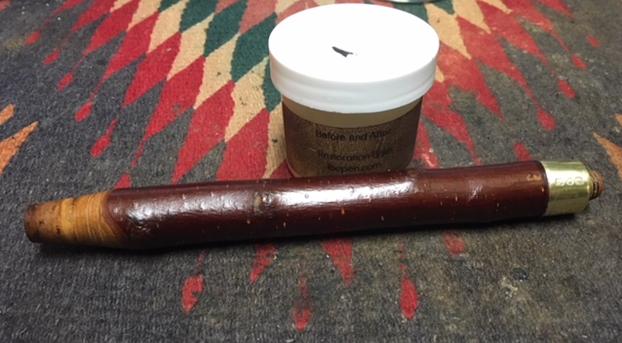
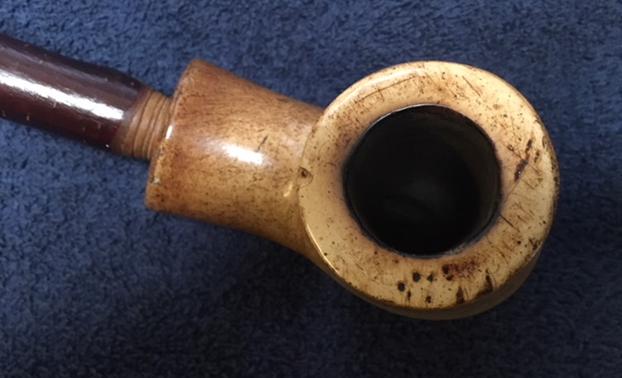
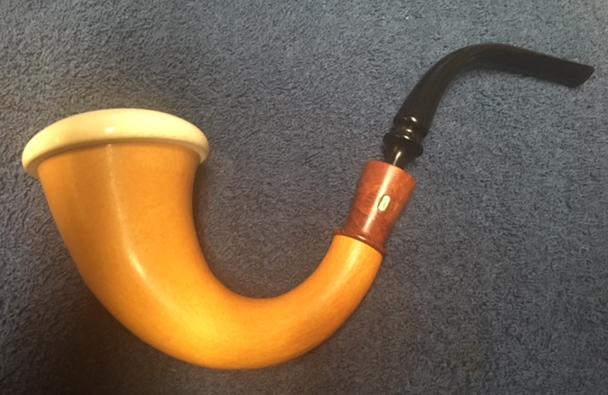
I have repaired three of the pipes from the seven of his Grandfather’s pipes that Paresh sent me. It is an interesting assortment of older pipes that come from the period of 1937-1950s. His Grandfather worked for the Indian Railroad and was a pipeman. Paresh is also a pipeman and only recently learned that his Grandfather smoked a pipe. The fourth pipe is an antique Meerschaum pipe with a Cherrywood shank and vulcanite stem. It is what is known as a Kalmasch Meerschaum pipe. It is a large pipe – 12 inches long and 2 ½ inches tall. I took the following photos of the pipe before I stated to work on it. It was in excellent condition, very clean with just a thin bit of lava and tar on the top of the rim. The inner and outer edge of the bowl was in excellent condition. I took some photos below show the pipe as it arrived.

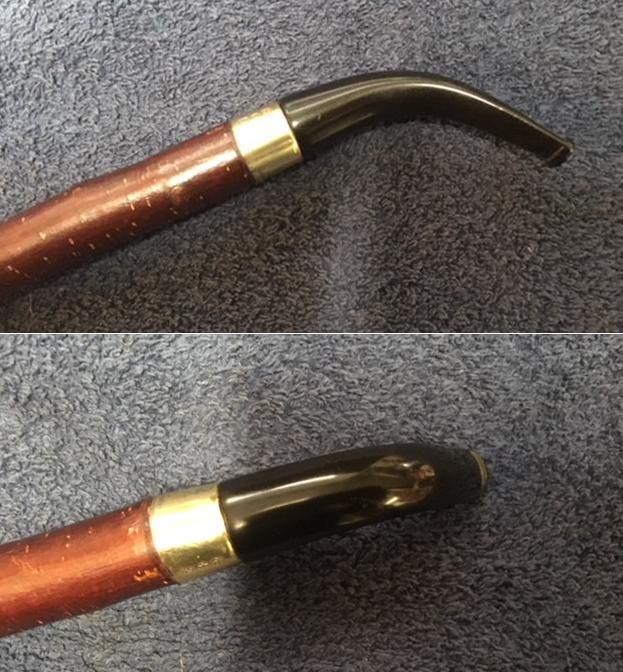
The photos of the pipe show the parts. Abha, Paresh’s wife had cleaned it up and sent the parts of the pipe individually packaged for safe shipping. The bowl was a heavy piece of meerschaum that had already begun to take on colour in the shank and up the sides of the bowl. The Cherrywood shank had one end threaded and the other end carved into a cone shape. The cone shaped end had the same angles as the mortise in the meerschaum bowl. The vulcanite stem was threaded and was made to be turned onto the threaded end of the cherry wood shank. You can see in the photos below how far down the threads the stem could be turned as they are darkened. There is about a ½ in gap between the stem and the shank when the stem is turned onto the shank. That will need to be addressed in the restoration. The rim top has some lava that had overflowed from the bowl and darkened the gouges in the surface and was built up around the back side of the bowl. It is not too thick and hard. It will need to be scraped off when I started the cleaning. The outer edge of the bowl looks pretty good with a little wear on the front edge and back right side. The bowl was very clean and smooth on the inside. I also took a close up photos of both sides of the stem. You can see that there is light tooth chatter on the top and underside of the stem just in front of the button. The surface of the stem is lightly oxidized and pitted.I took close up photos of both ends of the Cherrywood shank. The first photo shows the threaded end where the stem is screwed onto the shank. The first portion is threaded and the bottom half is partly threaded. It appears to me that there was originally a space between the stem and the rest of the shank end. The other end of the shank shows the conical shaping that matches the taper of the inside of the mortise in the bowl portion of the pipe.  I put the pieces back together and took photos of the pipe to show what it looked like. You can see the fit of the shank to the bowl. It is snug and it will not need to be changed. The stem is screwed in place on the shank and you can see the ½ inch gap between the stem and the shank. As I have mentioned in the previous three restorations, I always enjoy getting some background information on the pipeman whose pipes I am restoring when I am working estate pipes from the family members. If you have followed rebornpipes for a while you have read a few of these summaries from estates like Kathy’s Dad, Barry’s Dad and Farida’s Dad. Each of them did a great job summarizing their fathers’ estates. Since the next group of seven pipes that I will be working came to from India and belonged to the Grandfather of Paresh, I asked him to write a short tribute to his Grandfather. What follows is his writeup.

Respected Sir,

Now that the first batch of my Grandfather’s pipes has reached you, I would like to share my memories of him with you, the aim being to provide you with an insight to his personality, the era in which he lived, and a brief history associated with the pipes that I have inherited from him.

My Grandfather, Ananta (named after an exotic seasonal white flower having lovely fragrance), was born in a small coastal town of Konkan region of Maharashtra, India, in 1918. These were very turbulent times when India’s freedom struggle against British rule was gathering momentum and the atmosphere was charged with “Quit India Movement”. Having completed his graduation from Bombay, he joined Railways in 1937. This also marked the beginning of his journey into the world of pipe smoking!!!!!

Having seen his potential, in 1945, he was sponsored by the Government to visit England, for gaining further experience and expertise in his profession. This was a period when India’s Independence was round the corner and efforts were being made to train Indians for various administrative appointments in future Independent India. He returned back to India after a year, in 1946 and with him came some pipes that he had purchased in England. I believe a few of his Petes, Barlings, Charatans and GBDs are from this visit.

In 1947, when the British finally left India for good, my Grandfather was gifted pipes by his British peers, subordinates and Superior Officers as a parting gift. He stayed in touch with a few of them over all these years, even visiting them in 1959-60. Some of his later era Charatans and Barlings and Petes are from this trip. He quit smoking in early 1970s (before I was even born!!!!) and his pipes were packed up. There were a number of pipes which were used as TINDER for lighting fires (CAN’T BELIEVE IT…… I have not overcome my grief of this loss till date!!!!!) due to ignorance!!!!!!

My Grandfather was a very strict disciplinarian and temperamental (I did not know this as he was neither when dealing with me as I am the youngest of all his grandchildren!!!!!! He was always the most understanding and loving person in my life). I later learned that in his office, he was not to be disturbed when his pipe was lit, as he would be in his thinking/ contemplating mode while it was just the opposite as he lit his pipe in the evening while at home, when he would be at his relaxed best!!!!.

The interesting part is that neither of us knew that we each smoked a pipe until after his demise in Jan 2018!!!! In our culture, to this day, smoking or alcohol consumption is socially never talked about (mute acceptance!!!). It was during his last rites that absent mindedly I lighted my pipe and looking into the flickering flames of his funeral pyre, remembered and recollected all the wonderful memories and talks that we had shared. No one said a word to me about my lighting up a pipe!!!!!! Immediately thereafter, I rejoined my duty station. A few days later, my wife, Abha, received a box from my Uncle with a note that said “Grandfather would have loved Paresh to have these”. This box contained a collection of his fountain pens and 8-10 of his pipes (since then as my folks are winding up his belongings, I have received 2-3 packets and a large number of pipes, some in decent condition and some in unspeakable state). Abha immediately messaged me with pictures of these pipes and pens. I had been collecting and restoring (no major repairs, though) fountain pens since long and immediately recognized some of them as highly collectibles, however, pipes were a totally different ball game! I was inexperienced with no knowledge/ information regarding various brands/ pipe makers, shapes and materials. I knew nothing about the value of these pipes, nothing about pipe restorations, nothing about caring for them; I mean zero knowledge about collecting pipes. I smoked some real cheap Chinese pipes which were readily and unfortunately, the only ones, available in India and some inexpensive pipes from eBay India!!!!! Also regular pipe cleaning, pipe rotation, pipe cleaners and such things were unknown to me.

Thus, to know more about the REAL pipes, I embarked upon the journey of exploring finer nuances of pipe brands/ makers, their history and watching “How to videos” on packing a pipe, cleaning, repairing and caring for ones pipes. I found it extremely interesting and satisfying. It was while meandering through this confusing quagmire of pipe world that I came across rebornpipes.com website and eventually established contact with you, Mr Steve, who has since been my mentor, guide and GURU, making this journey a wonderful and satisfying experience.

Sir, there is one more thing that I need to thank you for and that is when you asked me to write a brief about my grandfather and his pipes, I realized how little I knew about him, in fact, knew nothing, as I was not even aware that he was a “pipeman” as no one in my family ever spoke about it being taboo subject and since he had quit a long time before I was even born!!!! This led me to ask the elders in my family, questions on the subject and came to know the above details. I cannot thank you enough for prodding me to get to know my grandfather and his pipes a lot better. Sir, these pipes of his, with your help and guidance, will remain with me forever in mint condition……

Thanks Paresh for this great descriptive take of your Grandfather. It really gives me a sense of the pipes that you have sent me and what they meant to him. It is obvious from the variety of pipes that you sent and the overall condition that he knew how to choose good quality pipes and obviously enjoyed smoking them throughout most of his life.

Paresh’s wife Abha cleaned all of the pipes before she sent them to me here in Canada and did an amazing job cleaning them up. She reamed the bowls, cleaned the rims and scrubbed the exterior of the pipes and the stems with Murphy’s Oil Soap and cleaned off the buildup on the stems. On this pipe she had removed the cake in the bowl and done a great job cleaning the exterior of the bowl. The cherrywood shank had also been cleaned. The stem was lightly oxidized on both sides and had light chatter and pitting.

I polished the top of the bowl with micromesh sanding pads to remove all of the tar and lava that was on the surface. I wet sanded it with 1500-2400 grit pads and dry sanded with 3200-12000 grit pads. I wiped the bowl down with a damp cloth to remove the dust that was left behind by the sanding. While I was working on the bowl top I also worked over the sides and bottom of the bowl to polish them as well. I went through my box of bands and ferrules and found a brass ferrule that would work well to fill the gap between the shank and the stem when it was put in place. I put it on the end of the shank and screwed the stem in place. I took photos of the shank with the stem in place. It still needed to be polished and the edge below the ferrule will need to be smoothed out and touched up with stain to blend in the edge. However, you can see what it will look like when it is finished. I polished the ferrule with micromesh sanding pads to polish off the tarnish. I wet sanded it with 1500-2400 grit pads and dry sanded it with 3200-12000 grit pads. I polished it with a jeweler’s cloth and the shine really stood out. I took photos of the band after polishing.I worked Before & After Restoration Balm deep into the Cherrywood shank to clean, enliven and protect it. I worked it into the finish with my fingertips. I worked it into the threaded and conical end. I set it aside for a few minutes to let the balm work. I wiped it off and buffed it with a soft cloth to polish it. The bark on the shank really began to have a deep shine. I took a photo of the shank with the polish ferrule and polished Cherrywood at this point to mark the progress in the restoration. The shank is really beginning to look good.I sanded out the tooth chatter and pitting on both sides of the stem at the button with 220 grit sand paper. I polished the stem with micromesh sanding pads – wet sanding with 1500-2400 grit sanding pads and dry sanding with 3200-12000 grit pads. I wiped the stem down with Obsidian Oil after each sanding pad and set it aside to dry. With the stem polished I put it back on the pipe and lightly buffed the bowl and stem with Blue Diamond. I gave the Cherrywood shank and the stem several coats of carnauba wax. I gave the bowl a coat of beeswax and buffed the pipe with a clean buffing pad to raise the shine and hand buffed it with a microfiber cloth to deepen the shine. The pipe polished up pretty nicely. The finished pipe is shown in the photos below. I have three more of Paresh’s Grandfather’s pipes to finish and then I will pack them up and send across the sea to India where he can carry on the legacy. I know that he is looking forward to having them in hand and enjoying a bowl of his favourite tobacco in memory of his Grandfather. Thanks for walking through the restoration with me as I worked this pipe over.

Restoring the last of three Jobey Gourd Calabashes with a Briar Shank Extension


Blog by Steve Laug

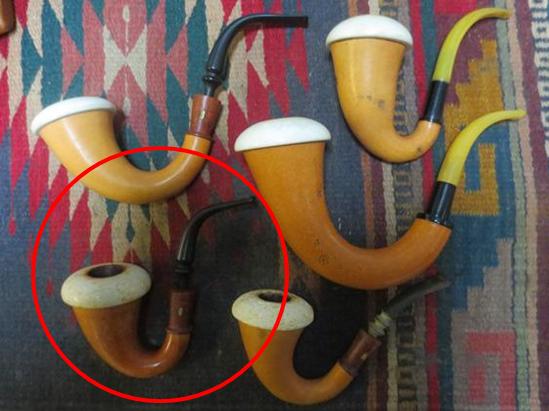
As I have mentioned before my brother Jeff has really gotten good at finding Gourd Calabash pipes when he is pipe hunting. He picked up this batch recently. I posted about the large calabash in the middle of the right hand column recently and it is available on the rebornpipes store. It is by far the largest of the five calabash pipes that he found. The second one I am working on is the pipe at the bottom right of the photo. It is another unique looking Calabash to me in that it is a nicely shaped gourd with a briar shank extension on the end of the gourd. It bears the Jobey brass oval logo on the side of the briar extension. The third of the calabash pipes that I worked on was a second Jobey calabash. It is the one on the bottom left of the photo below. As I mentioned before, when I first looked these Jobey calabashes I wondered if any of them had the Jobey system tenon that I have come to expect on Jobey pipes. However, this was not the case on any of the three Jobey Gourd Calabashes in the bunch. All of them have the mortise drilled in the briar extension and is made for a push stem. Once again, I had never seen Jobey Gourd Calabashes before learned that they were probably made by Wally Frank. Here is the link to the first of the pipes I worked on – the one circled in red in the photos below:  https://rebornpipes.com/2018/01/09/restoring-a-full-bent-jobey-gourd-calabash-with-a-briar-shank-extension/. Here is the link to the second of the three circled in blue: https://rebornpipes.com/2018/01/28/restoring-the-second-of-three-jobey-gourd-calabashes-with-a-briar-shank-extension/. Today I am working on the third of the Jobey Calabash pipes and the fourth of the lot. It is the pipe on the top left of the photo below.

Once again Jeff took some photos of the pipe before he did his cleanup work on it. The photos below show it in the condition he found it in on one of his hunts. The gourd was dull looking and generally dirty. It had spots of sticky label material on the sides of the bowl. The briar shank extension was also dull and lifeless looking and there was a gummy substance in the brass logo on the shank extension. The meerschaum bowl on this pipe was light weight and appeared to be block meerschaum. There was a thick cake in the bowl and the rim had a coat of lava that went almost all the way around the inner edge of the chamber onto the rim top. The chair leg style stem was oxidized and dirty. There were tooth marks and tooth chatter on both sides of the stem at the button. The next photo shows the condition of the meerschaum cup. The cup of the meer was had some lava overflow from the bowl on the inner edge and top. There is also darkening around the inner edge of the bowl and cake in the bowl.The next two pictures show the condition of the underside of the bowl and the tars and oils on the walls of the gourd. The underside of the meerschaum cup was dirty but in good condition. The cork gasket on the inside edges of the gourd was in good condition but dried out. It needed some grease to liven it up.The briar shank extension was dirty and there was debris around the outside of the oval and in the letters stamped in the brass.The stem had light oxidation and tooth marks and chatter on both sides near the button. It also had the same price tag glue on the top and underside of the stem.Jeff did a thorough cleanup on the meerschaum bowl, the inside of the gourd and the stem. He carefully scraped the cake in the bowl with a Savinelli Fitsall Pipe Knife. He cleaned the internals with alcohol, pipe cleaners and cotton swabs – scrubbing out the mortise as it was dirty. He scrubbed the exterior of the meerschaum cup and the gourd with Murphy’s Oil soap and a tooth brush and was able to remove all of the oils and dust ground into the gourd. He was able to remove all of the lava and overflow from the top of the meerschaum bowl and left it looking very clean. Once he had removed the lava on the rim top and inner edge they were cleaner than I expected. The scratches in the meerschaum were quite shallow and would be easy to polish out. He cleaned internals of the stem with alcohol. When it arrived I took some photos of it to show how it looked before I did the restoration.   He did a great job of cleaning up the rim top including the tars and lava. The bowl is clean and smooth with all cake removed. The photo below shows the condition of the bowl and rim at this point. The inner edge of the bowl is clean but there is some wear and damage to the edge. The stem had cleaned up nicely with relatively little oxidation. The tooth marks on the top and underside along with the chatter were still present.I took the bowl off the gourd to have a look at the inside of the pipe. The gourd was very clean. The cork gasket was dry but that could be remedied easily enough. The mottled appearance carried through to the inside of the meerschaum bowl and can be seen in the photos.I used my fingers to rub the gourd and briar extension down with Before & After Restoration Balm to bring life to both and to remove any residual dust or dirt in the surface of the calabash. I wiped it off with a cotton cloth and buffed it with a shoe brush. The next few photos show the gourd at this point in the process. I used some Vaseline petroleum jelly to lubricate the cork gasket and soften it. I have done this for years and I really like the effect of the jelly on the cork. I used 1500 grit micromesh sanded off the spots along the surface of the meerschaum cup where it sat against the cork and the top of the gourd to ensure a smooth fit.I checked the pliability of the cork gasket, rubbed a little more Vaseline into it and put the bowl back on the gourd. The fit of the cup against the gasket was snug but not hard to insert. It was perfect. The pipe was beginning to look finished. The shine on the gourd and the rim looked good. The briar extension had its own shine as well. I took the cup off the gourd and polished it with micromesh sanding pads – wet sanding with 1500-2400 and dry sanding with 3200-12000 grit pads. I wiped the bowl down after each sanding pad with a damp cloth to remove the sanding dust. I buffed the cup with a microfiber cloth to polish it. I sanded the stem with 220 grit sandpaper to remove the tooth marks and chatter on the top and underside near the button. The rest of the stem was in decent condition. I rubbed the stem down with Obsidian Oil at this point and let it sit for a little while.I cleaned out the airway in the stem with pipe cleaners and alcohol to remove any residual bath and also the sanding dust from the work on the stem surface and tooth chatter.I polished the vulcanite stem with micromesh sanding pads – wet sanding with 1500-2400 grit pads and dry sanding with 3200-12000 grit pads. I rubbed the stem down with Obsidian Oil between each sanding pad. After using the 12000 grit pad I buffed the stem with Blue Diamond to give a deep and rich shine. I polished the stem with Before & After Pipe Polish using both the fine and the extra fine product. I gave it a final coat of Obsidian Oil and set it aside to dry. Normally at this point I put the stem back on the bowl and take the pipe to the buffing wheel to work it over. This time I took the parts to the buffing wheel. I gently buffed the meerschaum cup and rim with Blue Diamond to lightly polish the meer. I carefully buffed the gourd base and briar shank extension with Blue Diamond being cautious about the pressure I put on the gourd. I buffed the stem with Blue Diamond to raise the gloss on the vulcanite. I took the pipe back to the work table and gave the gourd multiple coats of Conservator’s Wax. I gave the stem several coats carnauba wax. I buffed the parts of the pipe with a clean buffing pad to raise the shine. I hand buffed it with a microfiber cloth to deepen the shine. The finished pipe is shown in the photos below. The dimensions of the pipe are, Length: 9 inches, Height: 3 ½ inches, Diameter of the cup: 2 ½ inches, Diameter of the chamber: 7/8 inches. I will be adding this one to the rebornpipes store shortly if you are interested in adding it to your collection. Thanks for looking.

Restoring a Jobey Gourd Calabash with a Briar Shank Extension


Blog by Steve Laug

My brother Jeff has really gotten good at finding Gourd Calabash pipes on his recent “treasure” hunts. He picked up this batch recently. I posted about the large calabash in the middle of the right hand column recently and it is available on the rebornpipes store. It is by far the largest of the five calabash pipes that he found. The one I have chosen to work on it the one on the left side at the bottom circled in red. It is a unique looking Calabash to me in that it is a well bent and shaped gourd with a briar shank extension on the end of the gourd. It bears the Jobey brass oval logo on the side of the briar extension. When I first looked at it I wondered if it had the Jobey system tenon that I have come to expect on the Jobeys that I have in my own collection and the ones that I have worked on. However, this was not the case on this or the other two Jobey Gourd Calabashes in the bunch. All of them have the mortise drilled in the briar extension and is made for a push stem. I have never seen Jobey Gourd Calabashes before and frankly had no idea that the company even made them.Jeff took some photos of the pipe before he did his cleanup work on it. The photos below show it in the condition he found it in on one of his hunts. The gourd was dull looking and generally dirty. It had spots of sticky label material on the sides of the bowl. The briar shank extension was also dull and lifeless looking and there was a gummy substance in the brass logo on the shank extension. The meerschaum bowl was quite unique it is light weight and appeared to be block meerschaum but I am not certain as it had flecks of colour shot throughout the entirety of the bowl. There was a thick cake in the bowl and the rim had a coat of lava that went almost all the way around the inner edge of the chamber onto the rim top. The stem was oxidized and dirty. There were tooth marks and tooth chatter on both sides of the stem at the button.  The next two photos give a clear picture of the sticky label glue on the gourd and the dirty condition of the gourd. It also shows the flecks of colour throughout the meerschaum cup. The colour in the meerschaum matches the colour of the gourd. The next photo shows the condition of the meerschaum cup. The rim top of the meer had scratches in the surface and a heavy overflow of tars on the top of the rim. There is also darkening around the inner edge of the bowl and a thick cake in the bowl itself. It was hard to know if there was damage to the rim but once it was clean that would be clear. The two pictures following that show the condition of the inside of the bowl and the tars and oils on the walls of the gourd. The underside of the meerschaum cup is in good condition. There is some darkening on the underside of the bowl. There were some tars and oils spotted on the underside of the bowl. The cork gasket on the inside edges of the gourd was in good condition but dried out. It needed some grease to liven it up. The briar shank extension is dried out and has water spots. The next photo shows the brass Jobey oval insert inset in the left side of the briar shank extension. There is grime and a gummy substance in the lettering and around the edges of the insert. The briar was dirty and in need of a deep cleaning.The stem had light oxidation and tooth marks and chatter on both sides near the button. It also had the same price tag glue on the top and underside of the stem.I did some digging to see if I could find out about the connection between the calabash maker and Jobey. I found a bit of history of the brand on the Pipedia website at the following link. https://pipedia.org/wiki/Jobey . The section I am quoting is entitled Possible Jobey Origin. I quote it in its entirety.

Possible Jobey Origin

…the origins of this company seem to be shrouded in mystery, and most people claim that the origins were in England, followed by American production, and then a later move to St. Claude. There is another possible origin for the company, however, and it would suggest that Jobey was in Brooklyn, New York long before the 1969 patent of the Jobey “link”.

There’s not a lot of chatter about it, but if you can lay your hands on a copy of “The Tobacco World”, Volume 61, from 1941, there is a brief mention that reads “Norwalk Pipe Expands” and in the body states that Norwalk Pipe Corporation, “manufacturers of Jobey and Shellmoor pipes”, is moving to larger offices at 218 East Twenty-Sixth Street, NYC, as announced by Louis Jobey, president of that company. Norwalk is listed as one of the alternate distributors for Jobey on this page but apparently Louis Jobey was also actually working there at the time.

Before that, the first mention of Jobey seems to be back in 1915, when two brothers named Ulysses and Louis Jobey of Brooklyn, New York obtained a patent for an odd sort of cavalierish pipe in 1915, here’s the link: http://www.google.com/patents/USD46998

But less than four years later, in 1918, there’s a notice in the Brooklyn Daily Eagle on November 6th to the effect that Louis Jobey declared bankruptcy in the District Court, with final hearing scheduled for December 1918. And in an even sadder turn, that same month sees a funeral notice for Lorraine Jobey, the daughter of Mr. and Mrs. Louis Jobey, formerly of Brooklyn but now living in Moline Illinois at the home of Mr. and Mrs. George E. Hutchinson. The little girl evidently died in a fall.

There’s little else on Ulysses Jobey except that he evidently had a “junior” after his name or a son by the same name. Because Ulysses Jobey, Jr. was listed as the vice president in New Jersey of Lakewood Pipe Company Inc., a maker of smoker’s articles, in the 1922 New York Co-partnership and Corporation Directory for Brooklyn. Given the timing it’s likely this was the brother.

So while it is speculative, one possible origin story for Jobey is that the company was started by two brothers in Brooklyn in the teens with a new idea for a pipe, and failed amidst terrible tragedy. One brother went to one company and another to the other, but it was Louis who continued making Jobey pipes through the 40s under that name, despite evidently no longer owning the company. It would appear to be the Norwalk Company that was bought out by Wally Frank in the pre-link days. This would suggest that Jobey was always American.

From this I surmise that the Gourd calabash pipes were probably made by the Wally Frank Company or at least for them. I don’t know the dates of the manufacture of the pipes but my guess is that it is in the 60s.

Jeff did a thorough cleanup on the meerschaum bowl, the inside of the gourd and the stem. He carefully scraped the cake in the bowl with a Savinelli Fitsall Pipe Knife. He cleaned the internals with alcohol, pipe cleaners and cotton swabs – scrubbing out the mortise as it was dirty. He scrubbed the exterior of the meerschaum cup and the gourd with Murphy’s Oil soap and a tooth brush and was able to remove all of the oils and dust ground into the gourd. He was able to remove all of the lava and overflow from the top of the meerschaum bowl and left it looking very clean. Once he had removed the lava on the rim top and inner edge they were cleaner than I expected. The scratches in the meerschaum were quite shallow and would be easy to polish out. He cleaned internals of the stem with alcohol. When it arrived I took some photos of it to show how it looked before I did the restoration. I took the bowl off the gourd to have a look at the inside of the pipe. The gourd was very clean. The cork gasket was dry but that could be remedied easily enough. The mottle appearance of the meerschaum bowl can also be seen in the photos.The stem had cleaned up nicely with relatively little oxidation. The tooth marks on the top and underside along with the chatter were still present.The wooden shank extension (which looks like briar to me) is very clean and ready for polishing. I used some Vaseline petroleum jelly to lubricate the cork gasket and soften it. I have done this for years and I really like the effect of the jelly on the cork. I used 1500 grit micromesh sanded off the spots along the surface of the meerschaum cup where it sat against the cork and the top of the gourd to ensure a smooth fit.I used my fingers to rub the gourd and briar extension down with Before & After Restoration Balm to bring life to both and to remove any residual dust or dirt in the surface of the calabash. I wiped it off with a cotton cloth and buffed it with a shoe brush. The next few photos show the gourd at this point in the process. I polished the rim top, inner edge and underside of the meerschaum bowl with micromesh sanding pads – wet sanding with 1500-2400 grit pads and dry sanding with 3200-12000 grit pads. I wiped the surface of the cup down with a damp cloth after each sanding pad. When I finished sanding with the last pad I wiped it down again and set it aside. I checked the pliability of the cork gasket, rubbed a little more Vaseline into it and put the bowl back on the gourd. The fit of the cup against the gasket was snug but not hard to insert. It was perfect. The pipe was beginning to look finished. The shine on the gourd and the rim looked good. The briar extension had its own shine as well. I sanded the stem with 220 grit sandpaper to remove the tooth chatter on the top and underside near the button. I also found as I examined the underside that there was a strange rippling to the vulcanite almost like it had some heat damage. I sanded that area to clean up the ripples and smooth them out.I polished the vulcanite stem with micromesh sanding pads – wet sanding with 1500-2400 grit pads and dry sanding with 3200-12000 grit pads. I rubbed the stem down with Obsidian Oil between each sanding pad. After using the 12000 grit pad I buffed the stem with Blue Diamond to give a deep and rich shine. Normally at this point I put the stem back on the bowl and take the pipe to the buffing wheel to work it over. This time I took the parts to the buffing wheel. I gently buffed the meerschaum cup and rim with Blue Diamond to polish the meer. I carefully buffed the gourd base and briar shank extension with Blue Diamond being cautious about the pressure I put on the gourd. I buffed the stem with Blue Diamond to raise the gloss on the vulcanite. I took the pipe back to the work table and gave the gourd multiple coats of Conservator’s Wax. I gave the stem several coats carnauba wax. I buffed the parts of the pipe with a clean buffing pad to raise the shine. I hand buffed it with a microfiber cloth to deepen the shine. The finished pipe is shown in the photos below. This one is already spoken for and I think that the pipeman that it is going out to will really enjoy the unique look of his new pipe. Thanks for looking.
 

Replacing a Threaded Mortise/Tenon system with a Push Mortise/Tenon System in a Meerschaum Pipe


Blog by Steve Laug

When I received this meerschaum pipe the sender said that it needed to have the tenon replaced. It looked like it would be a simple repair so I left it until last. I restemmed the other little meerschaum that I posted earlier and put a new tenon on an Italian pipe for him and figured that this would be an easy fix. I unscrewed the stem from the broken tenon – it was split and half of it was missing. The stem came off with no problem. I had a perfect replacement tenon available to me so I screwed it into the stem and then looked at the broken tenon in the shank. Still the problem seemed quite simple. I used my wood screw and threaded it into the airway and tried to pull the tenon – either unscrewing it or at least wiggling it free. It did not move at all. I looked at it with a lens and saw that there were remnants of epoxy around the portion of the tenon that showed. Now I was in trouble. What had originally been an easy fix now was complicated.Meer1Meer2Meer3 Meer4Before I drilled out the tenon I took a few photos of the bowl to show the condition of the meer. It was worn and scratched but had some beauty that shown through the grime and the scratches. The rim was dirty and pitted but the edges were sharp. The bowl interior was lightly caked and the pipe smelled of strong aromatics.Meer5 Meer6 Meer7 Meer8I drilled out the tenon in the shank of the pipe starting with a bit slightly larger than the airway. No problem with that first step. I increased the size of the bit and drilled it again. It was my hope to have the glued tenon break free with the drilling. I increased the size of the bit yet again, this time to almost the same size as the threaded tenon. No luck. The tenon was absolutely stuck to the insert in the shank. I increased the bit size once more and this time the tenon broke. I tried to pick out the remaining pieces but they were solidly glued in place. I looked at the insert with a lens and could see that the glue and tenon had damaged the internal threads on the insert. This was turning into a real pain. I would have to drill out the entire insert and replace it. Once I had the tenon free I figured this would be easy as well. Again I was wrong. The insert was also glued in place. I increased the size of the bit several times until I had removed the insert itself. This old pipe was turning into a head ache.
I finally was able to remove the insert. I examined the inside of the shank. The original drilling of this pipe was fascinating. It was obviously drilled in several stages stepping down the mortise to the airway. I wrote to the owner and asked if it would be okay to replace the threaded tenon and mortise set up with a push tenon. I figured why complicate things. He confirmed that he was okay with that replacement. I started work on the stem and shank for that set up. I drilled the airway on the stem slightly bigger to take the push tenon. I cleaned out the inside of the stem to remove the debris and the tars. I checked the fit of the tenon in the stem and it was a good fit. I would need to countersink the airway to accommodate the rim on the tenon.Meer9 Meer10 Meer11I cleaned out the shank and airway on the bowl as well. I fit the insert in the shank. The fit was good but I would also need to countersink it to make a flat surface for the stem to sit against.Meer12I used a slightly larger drill bit to create the countersink on the shank and pushed the insert in place. The fit was perfect. Due to the damage on the shank from all of the glue I would need to use glue to hold the insert in place but I wanted to clean up the fit before I set the glue in place. In the photo below the new system can be seen. The mortise insert is in place and the push tenon is on the stem.Meer13I cleaned out the shank one more time and then mixed a two part epoxy for the insert. I applied the mixture to the insert and pressed it into place. I aligned the airway and the stem so that things would be straight once it dried and set the bowl aside so the epoxy could cure.Meer14I used a drill bit to countersink the rim on the tenon into the stem. I threaded it in place to make sure the fit was correct.

I sanded the bowl with micromesh sanding pads to smooth out the roughness and bring back some of the shine of polished meer. I wet sanded it with 1500-2400 grit pads and was able to bring back a lot of the life in the meerschaum. I dry sanded with 3200-4000 grit pads to polish it further. The photos below show the pipe after I had sanded it. When I am working on an older meerschaum I do not like to remove all of nicks and scratches as they add character to an old pipe. They are like battle scars and each of them has a story to tell. I clean up the surface damage and highlight the patina but leave the pipe clean but looking its age.Meer15 Meer16 Meer17I let the epoxy set over night and then this morning pushed the stem into the new mortise. The fit was a little tight and I could see some light between the stem and the shank end. I needed to finesse the fit of the stem and shank.Meer18 Meer19 Meer20 Meer21I carefully sanded the end of the mortise with the Dremel to make sure the insert was flush against the meerschaum end of the shank. I also worked on the countersink of the tenon in the stem with a sharp knife to give it a wider and sharper bevel to accommodate the rim around the middle of the tenon. I polished the newly sanded and cut areas with micromesh sanding pads to smooth out the fresh work. I polished the stem and the bowl lightly with some soft white Beeswax and then buffed the pipe by hand with a microfibre cloth to raise the shine. The finished pipe is shown in the photos below. Soon I will pack up the threesome of pipes and send them back to the pipe man who sent them to me. They are all functional now and to me actually look and work better than they did before. Thanks for looking.Meer22 Meer23 Meer24 Meer25 Meer26 Meer27 Meer28 Meer29