
Blog by Steve Laug
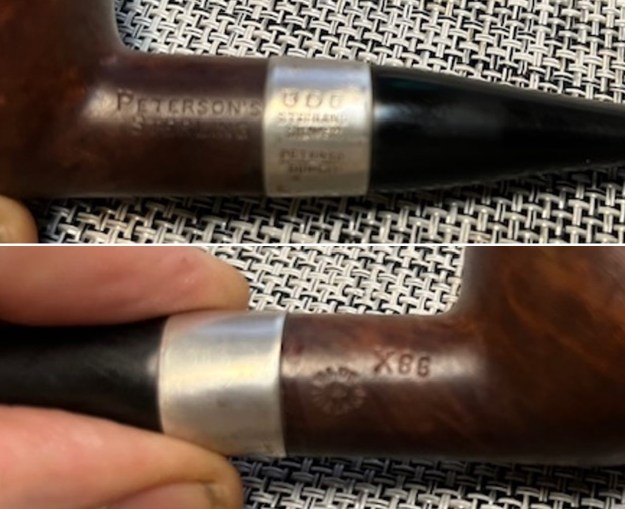
The next pipe I have chosen to work on is a Peterson’s Sterling X86 Apple. The pipe belongs to a fellow in Texas that I have restored pipes for in the past. He contacted me a few weeks ago about this pipe and asked it I would work on it for him. I said yes, he shipped it and I received it yesterday. The pipe is stamped on the left side of the shank and reads Peterson’s [over] Sterling. On the right side it is stamped with the shape number X86 next to the bowl/shank junction and behind that near the band it is stamped Made in Ireland in a circle with “in” centred in the circle around the stamp. It has a Sterling Silver band around the shank that is stamped K&P in three shields [over] Sterling [over] Silver [over] Peterson [over] Dublin. It is lightly tarnished and oxidized. The bowl had a moderate cake but the rim top and inner edge were clean with no damage. The outer edge looked to be in good condition. The finish on the bowl was dirty with oils around the sides and shank but the mixed grain was quite nice. The stem was lightly oxidized and has very light tooth marks and chatter on both sides ahead of the button. It should clean up very well. I took photos of the pipe before I started working on it. 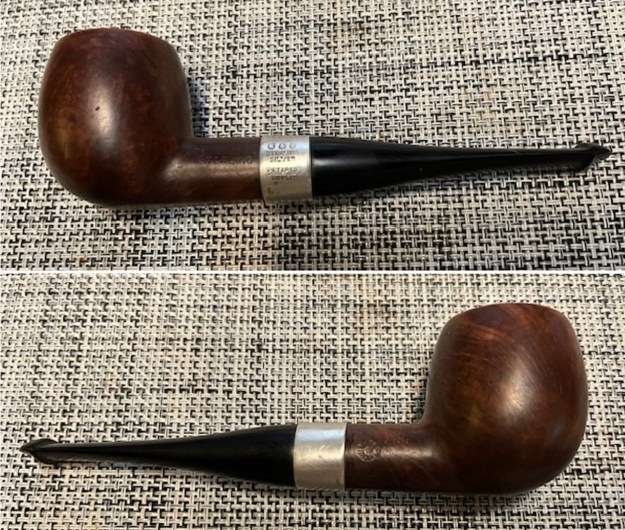
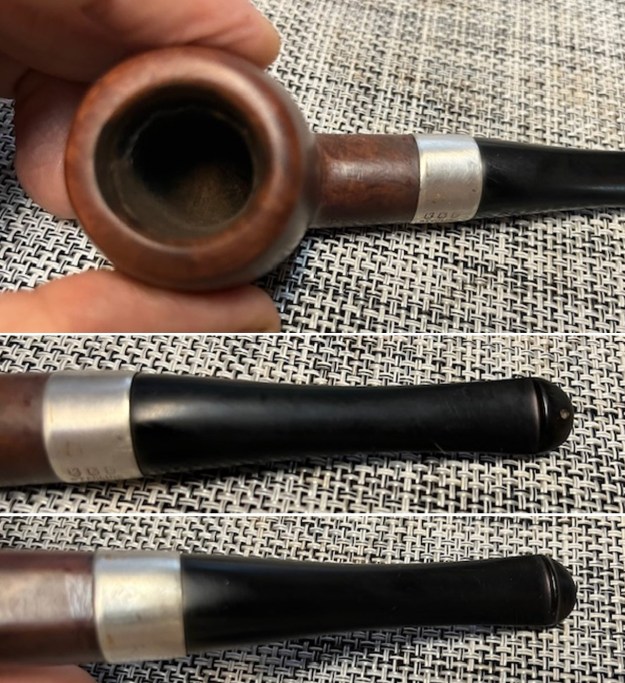
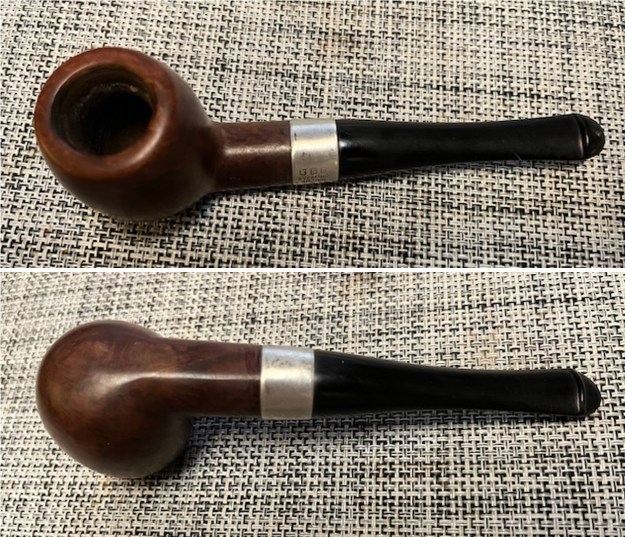 I took photos of the rim top and stem to show the general condition of the pipe. The bowl has a moderate cake with a hard layer of carbon on the chamber surface. You can see the excess glue squeezed out from under the band leaving behind some shiny, dried glue on the shank ahead of the band. The stem looks quite good with a little bit of oxidation on the surface and light tooth marks and chatter on both sides.
 I took some photos of the bowl sides and heel to show the grain that was around this bowl. It is a nice looking pipe under the grime on the outside of the bowl.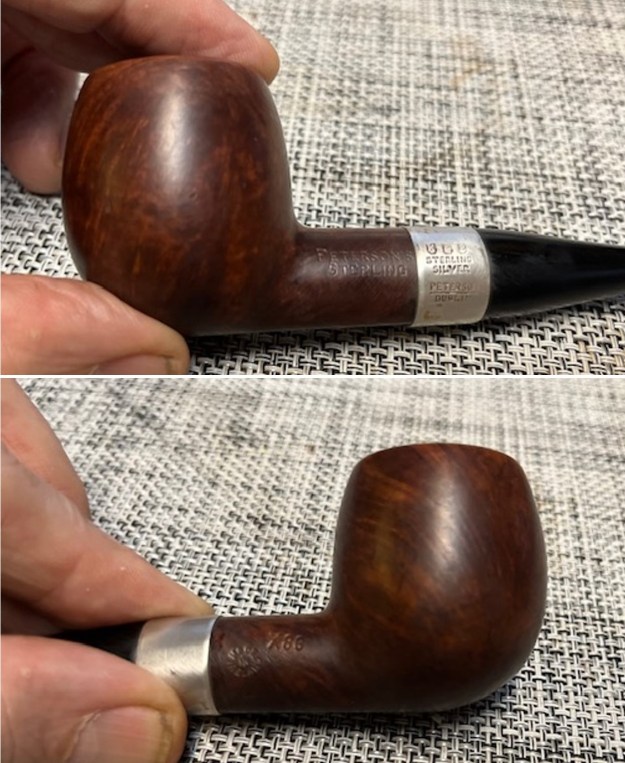
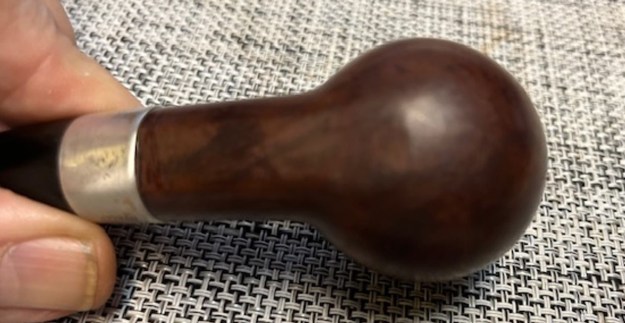 I took photos of the sides of the shank to show the stamping. The stamping is readable in the photos below and is as noted above. I also took a photo of the band.
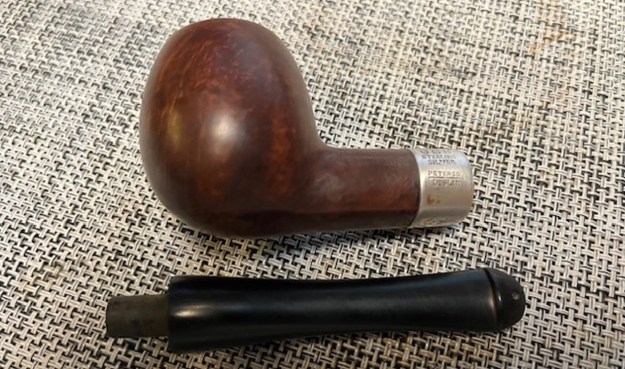
  I removed the stem from the shank and took a photo to try to capture the overall look and proportion of the pipe. It is a beauty.
 I checked on Pipephil’s website to see what I could learn about the stamping on the pipe. I found the following information that I quote:
The country of manufacture stamp changed from “Made in Eire” to “Made in Ireland” (In circle) about 1945. Later (1947-49) it became “MADE IN IRELAND” (block letters) stamped in one or two lines (http://www.pipephil.eu/logos/en/logo-peterson.html).
I turned to Pipedia’s article on Peterson pipes to see what I could garner from that information. It is a great read in terms of the history of the brand (https://pipedia.org/wiki/Peterson#1950_-_1989_The_Republic_Era). In a section on
Prior to 1920 it was rare for a country of origin to be stamped on the pipe, just Peterson’s Dublin on the band. After 1921/22 if it is stamped “MADE IN IRELAND” and the “Made in” is stacked over “Ireland” or “MADE IN EIRE” or several other forms, it was made between 1922 and 1938. A considerable number of Peterson pipes were stamped “Irish Free State”. From about 1930 to 1949, most of the pipes (those which were stamped) were stamped “Made in Ireland”.” If the stamp reads “MADE IN IRELAND” in a circle, the pipe was made between 1939 and 1948. These are all “prerepublic” pipes.
I then turned to the book I should have consulted first, The Peterson Pipe, by Mark Irwin and Gary Malmberg. On page 155 I found some information on the line.
Peterson’s US distributor during the early Republic era was Rogers Imports, Inc., a New York firm whose catalogs offered all varieties of smoker’s products. Rogers was the exclusive wholesale dealer for several prominent European pipe manufacturers, they also marketed accessories under their own name. On behalf of Kapp & Peterson they registered the Killarney, Shamrock and Sterling trademarks with the US Patent Office in the 1950s, and their catalogs also featured the System, Premier Selection and Supreme.
On page 156-157 in the same book there is a catalogue page with the Sterling shown on it. It sold for $7.50 in 1953. It read:
 As the name implies the Sterling quality of this fine pipe is distinguished in a careful selection of its fine Mediterranean Bruyere, its careful workmanship and sparkling finish. Banded with a Sterling Silver band – a Hallmark of quality – the pipe is available in a handsome natural or dark rich walnut finish. Patent P-lip stem. Individually boxed.
With that information in hand I knew what I was dealing with in terms of the stamping on the pipe. It is a Pre-republic era pipe. The Made in Ireland stamped in a circle on the right side of the shank tells me it was made between 1922-1938.
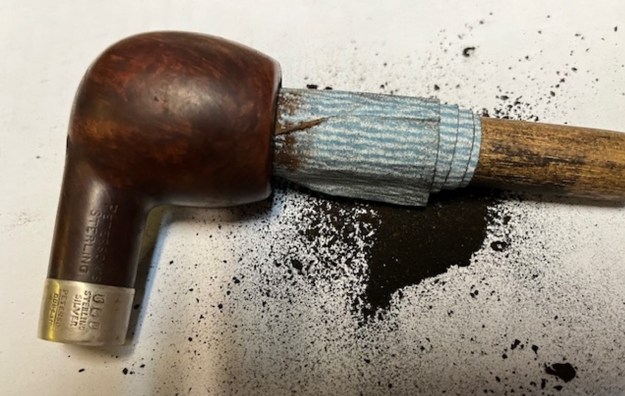
Now, on to the restoration of this beautifully grained Peterson’s Sterling 406 Prince. I began the work by reaming the pipe with a PipNet reamer and cut back the cake back to the bare briar. I scraped out what remained with a Savinelli Fitsall Pipe Knife. I sanded the walls of the bowl with a piece of dowel wrapped with 220 grit sandpaper to smooth the out. The walls looked to be in excellent condition with no checking or heat damage.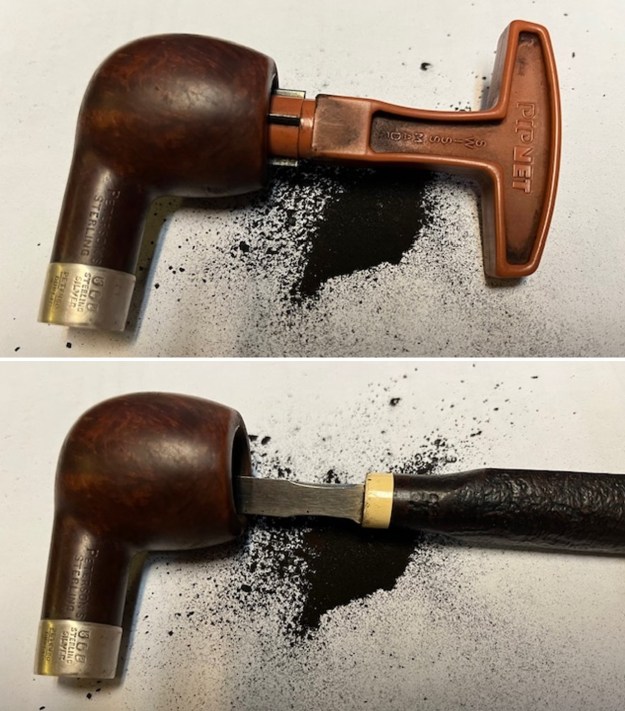
 I scrubbed the exterior of the pipe with Murphy’s Oil Soap and a tooth brush to remove the grime from the finish. I worked on the bevelled inner edge to try to remove the darkening and was able to remove some.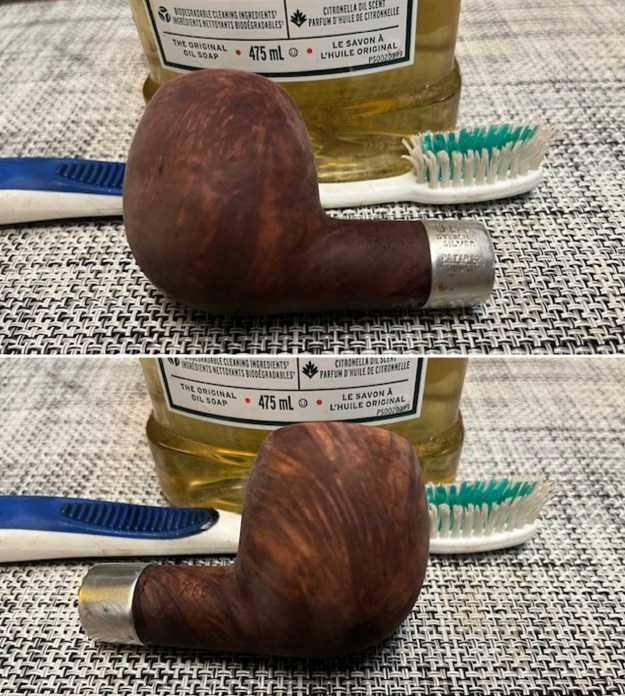
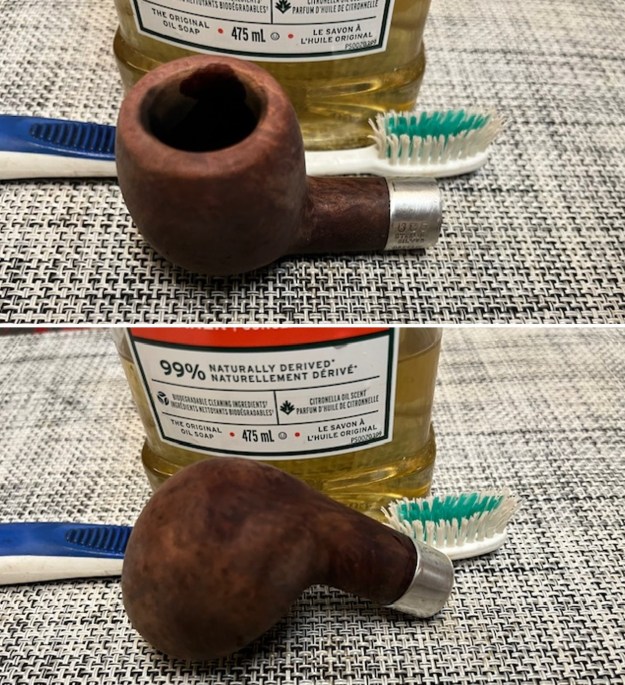 I scrubbed off the excess glue behind the silver band on the shank with a folded pipe cleaner and some acetone to remove the glue.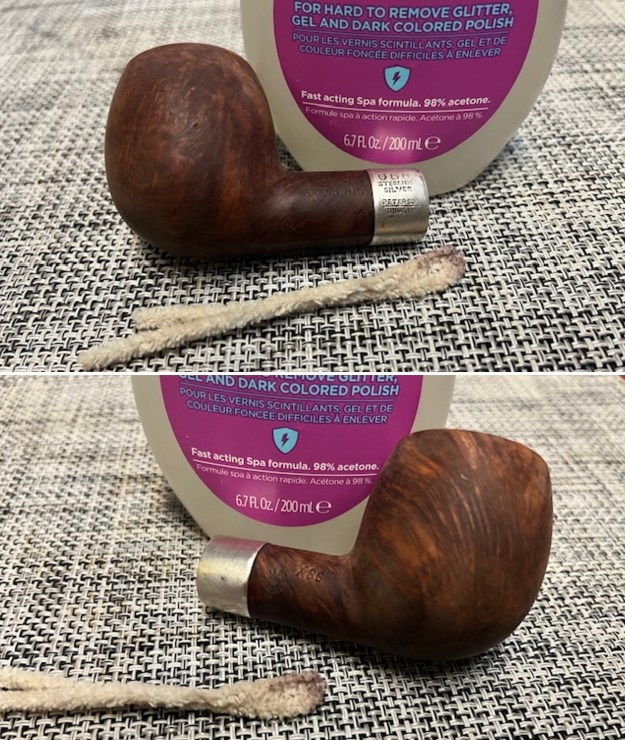
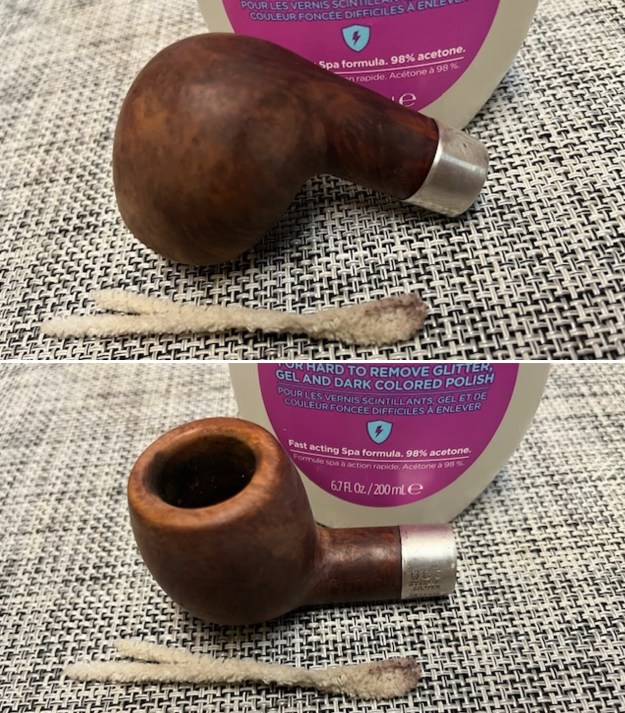 I scrubbed the inside of the mortise and shank along with the stem with alcohol, cotton swabs and pipe cleaners. The pipe was looking better than when it arrived.
 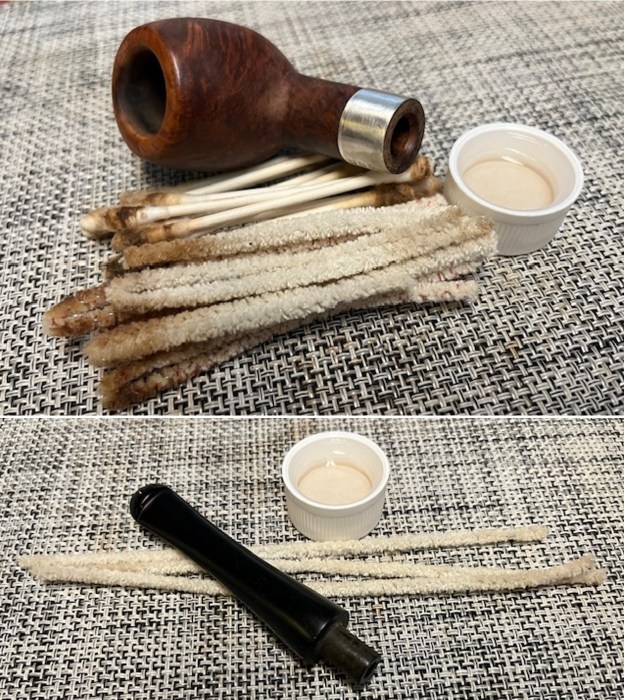 I decided to start the process by addressing the damage on the rim top and the inner edge of the bowl. I used a folded piece of 220 grit sandpaper to sand the top and to clean up the darkening and the damage on the edge. It was still slightly present on the front of the bowl but looked much better.
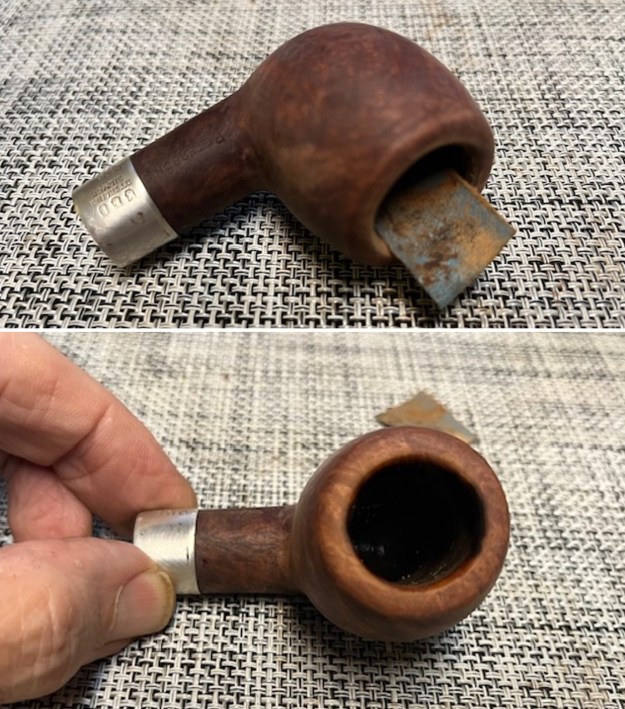 I polished the briar with micromesh sanding pads – dry sanding it with 1500-12000 grit sanding pads. I wiped the bowl surface down with a damp cloth to remove the sanding dust. Once I finished the exterior of the briar looked much better and had taken on a shine.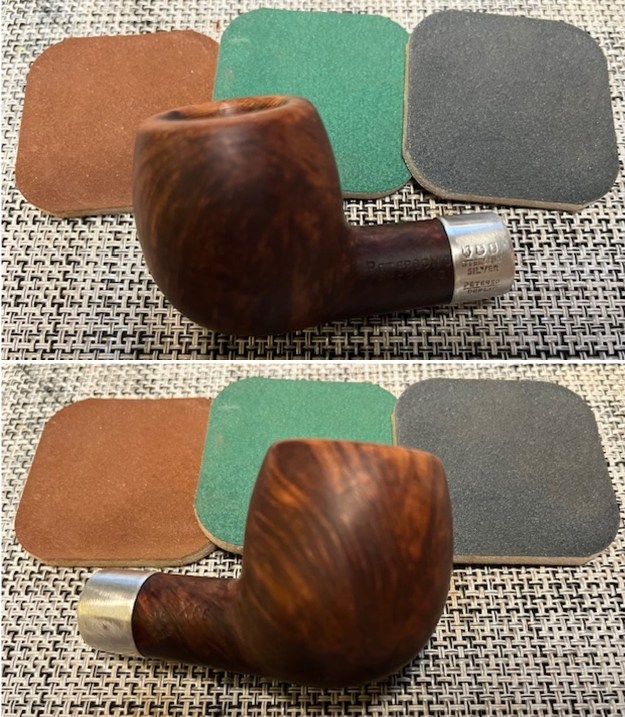
 I paused sanding the rim top after the 2400 grit micromesh pad and used a Cherry stain pen to touch up the rim top to match the rest of the pipe.
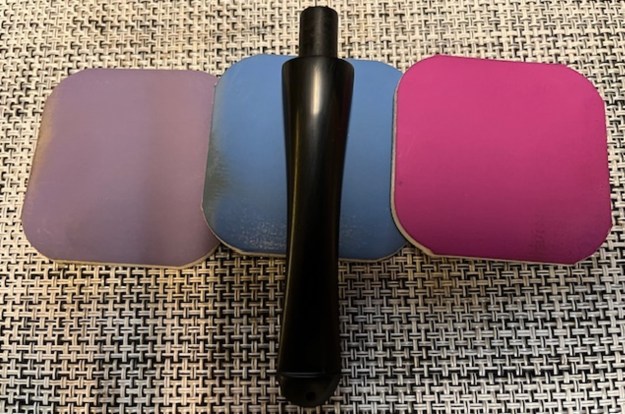
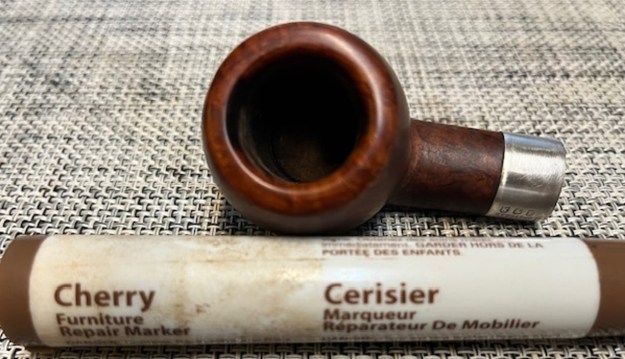 I went back to the micromesh sanding pads – starting with the 3200 grit pad and working my way through the 15000 grit pad.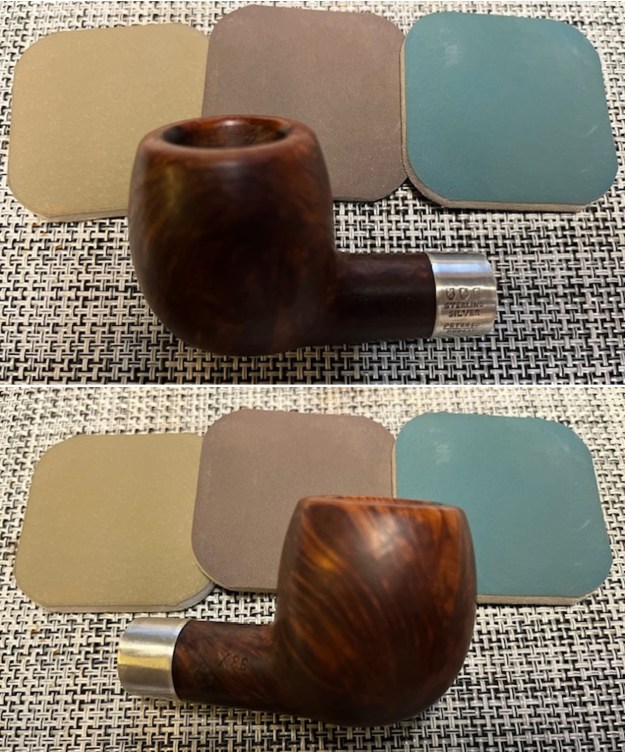
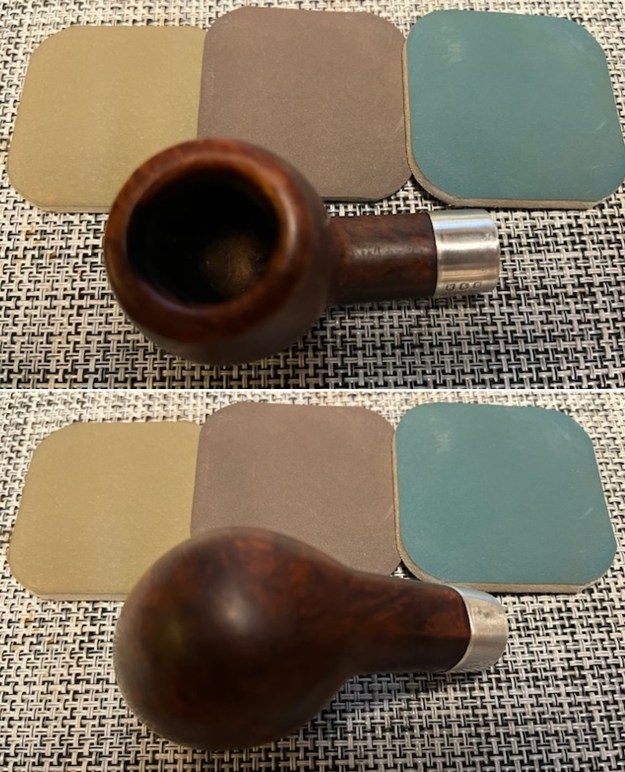
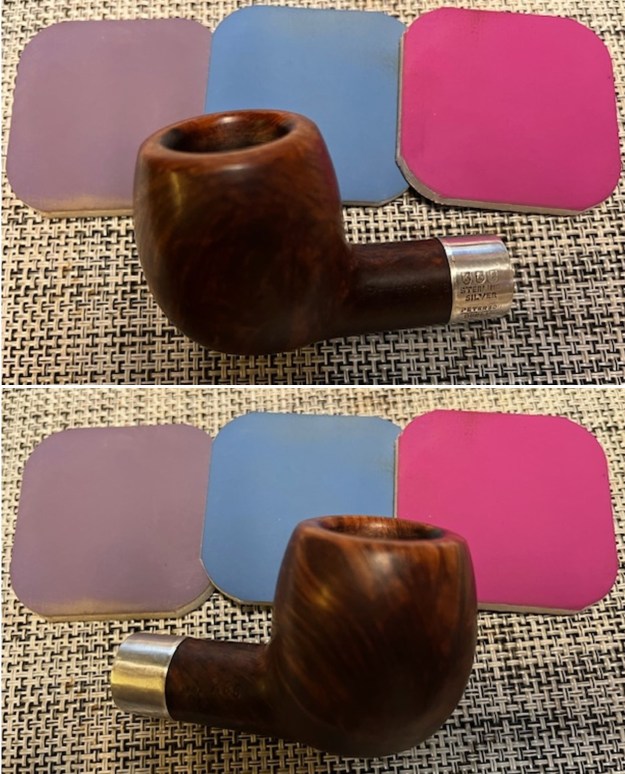
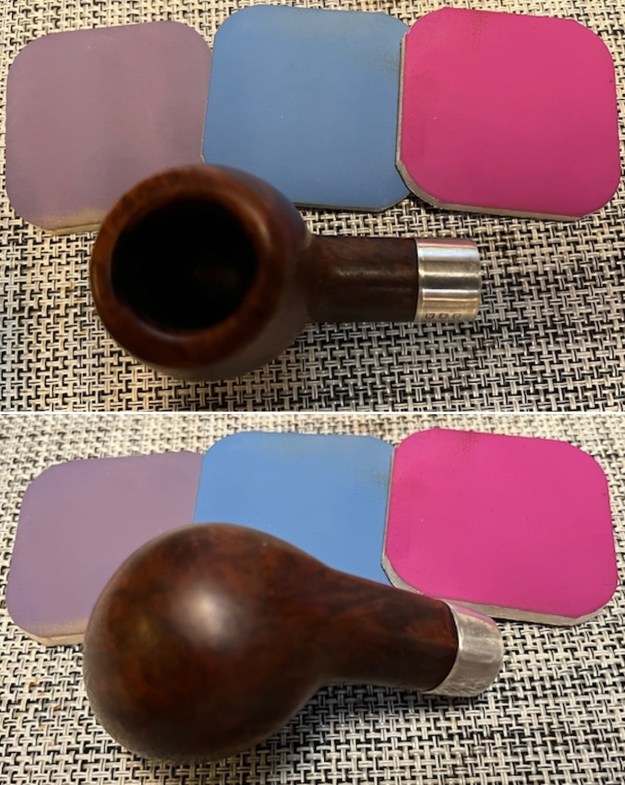 I rubbed the bowl down with Before & After Restoration Balm. I worked it into the surface of the briar with my fingertips to clean, enliven and protect it. I let the balm sit for 15 minutes and then buffed with a cotton cloth to raise the shine. Mark Hoover’s Balm is a product that I have come to appreciate and one I use on every pipe I have been working on.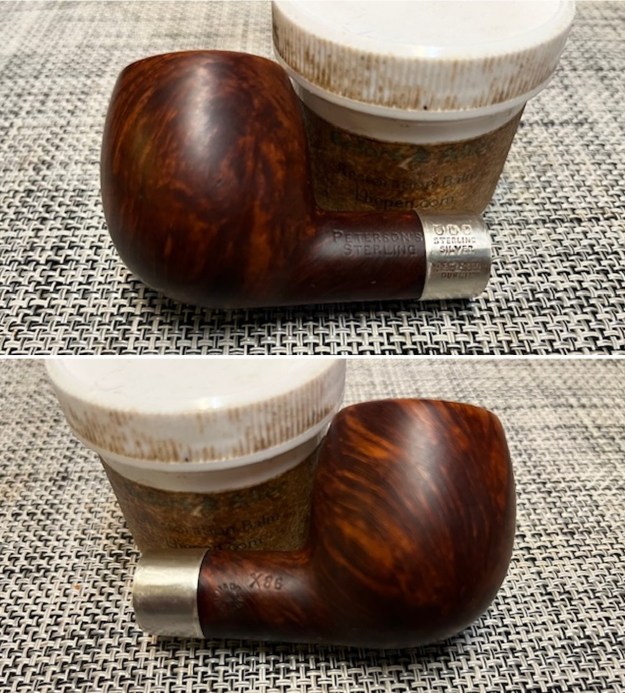
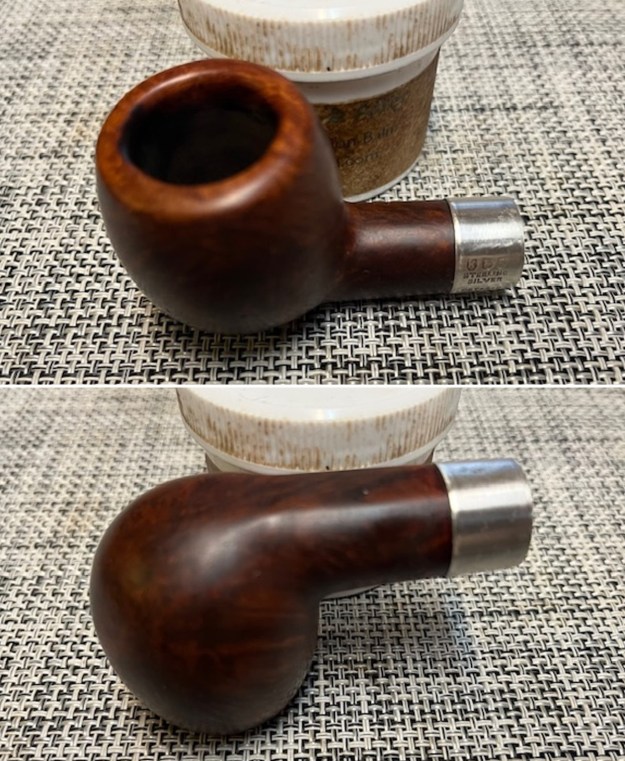
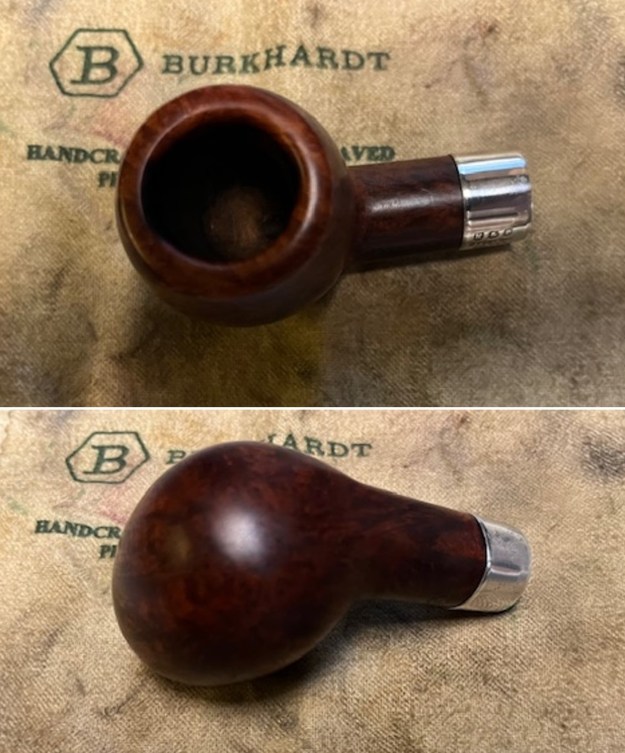
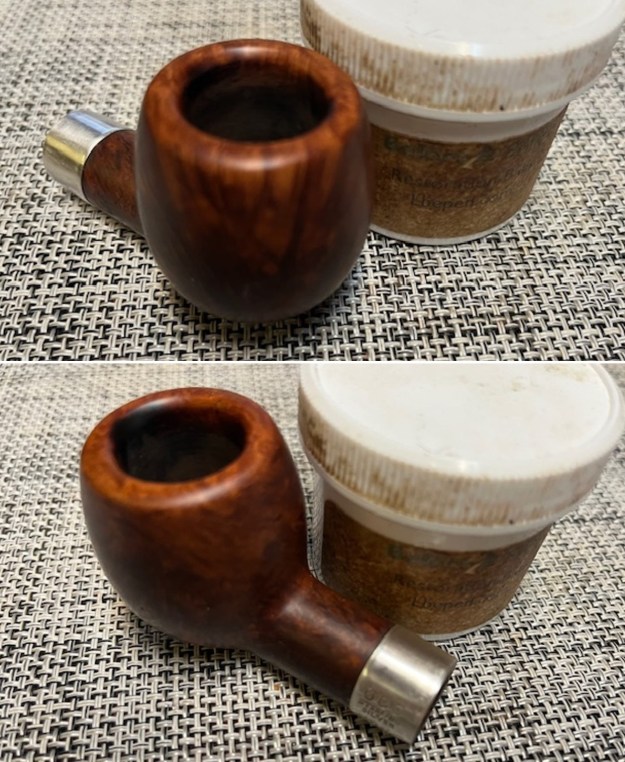 I polished the silver band on the shank with a jewelers cloth to remove the existing oxidation and tarnish and to protect the band from further tarnish. It looks so much better than when I started.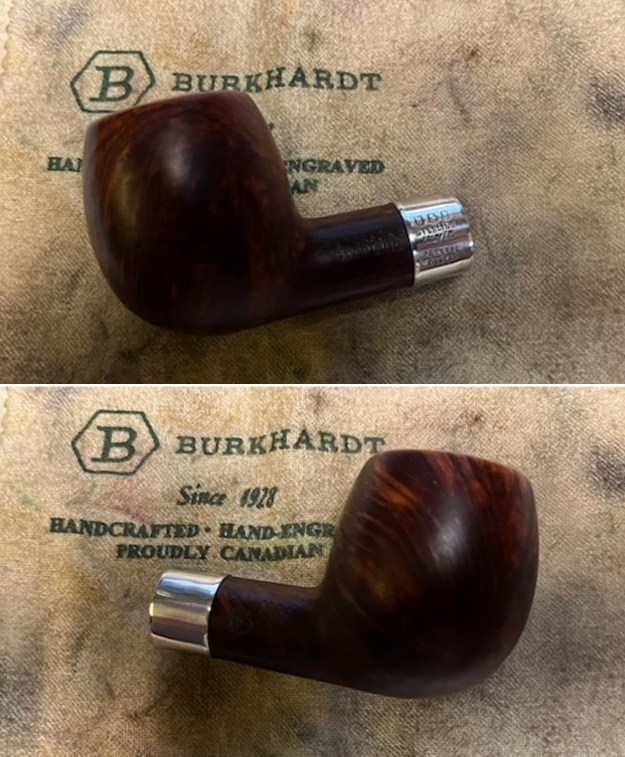
 I set the bowl aside and turned my attention to the stem. I used the sanding pads I purchased recently – 320-3500 grit regular pads to smooth out the finish and remove the light tooth and chatter marks in the stem. I wiped the stem down with Obsidian Oil to finish the preliminary work after the 3500 grit pad.
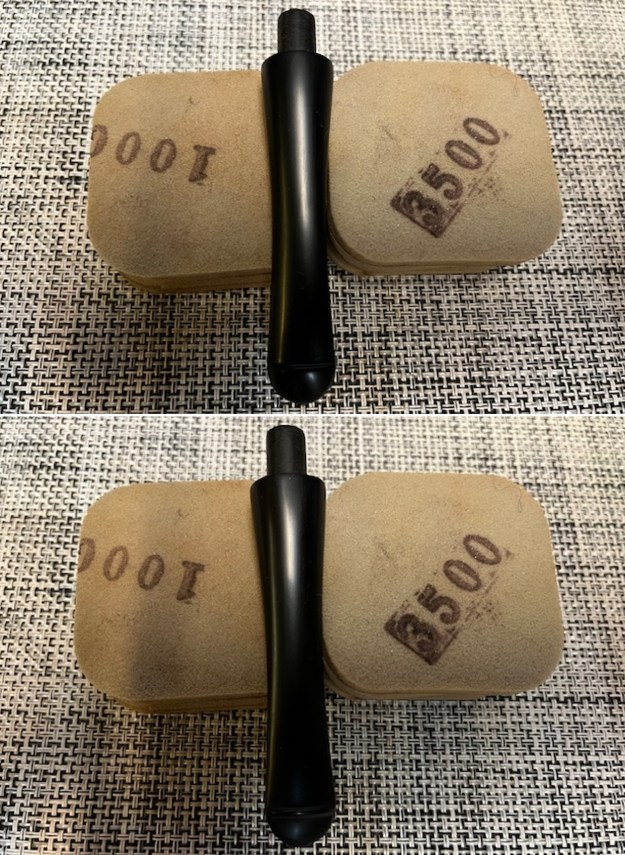 I polished the stem with micromesh sanding pads – wet sanding with 1500-12000 grit pads. I wiped the stem down after each sanding pad with Obsidian Oil.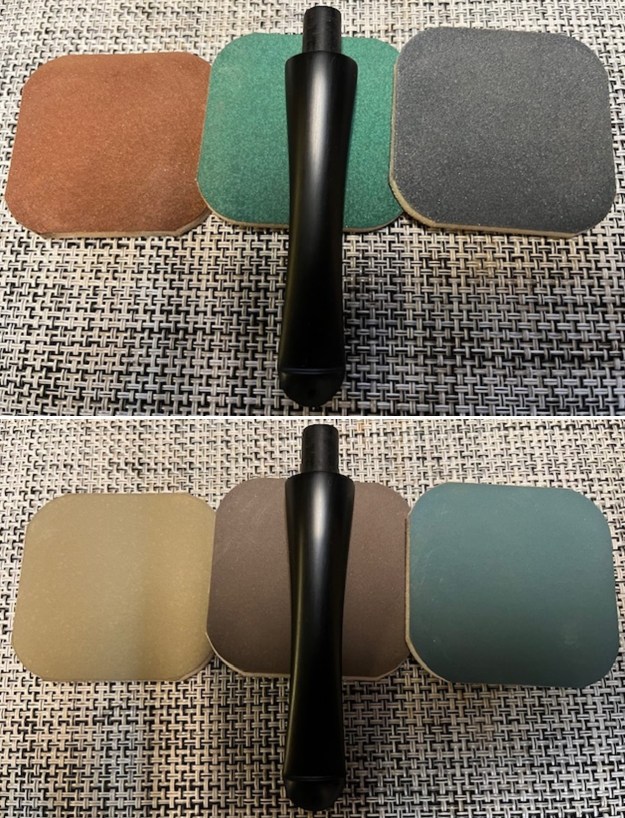
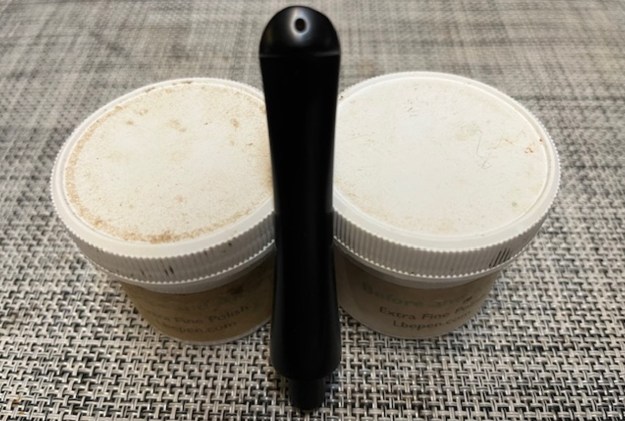
 I finished polishing it with Before & After Pipe Stem Polish – both Fine and Extra Fine. Once I had finished the polishing I gave it final coat of oil and set it aside to dry.
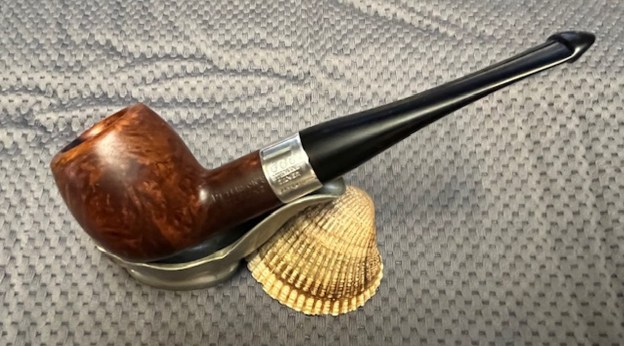
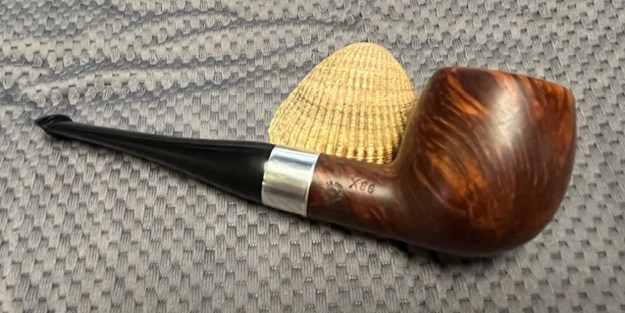
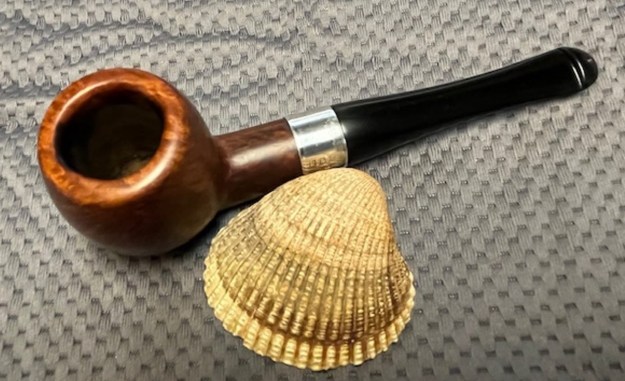
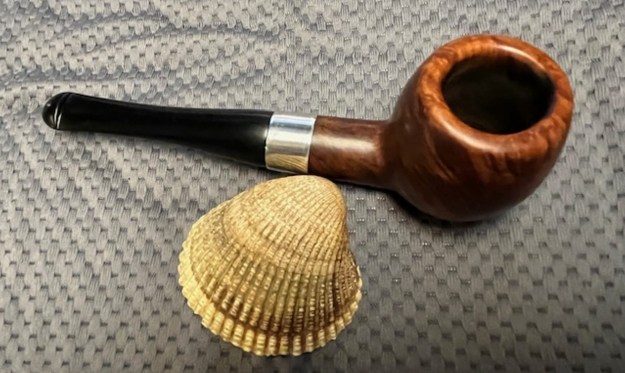
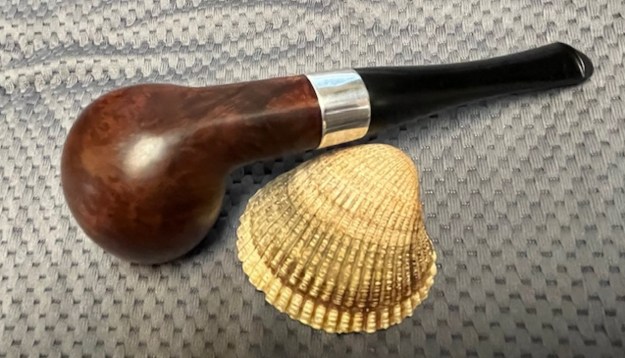
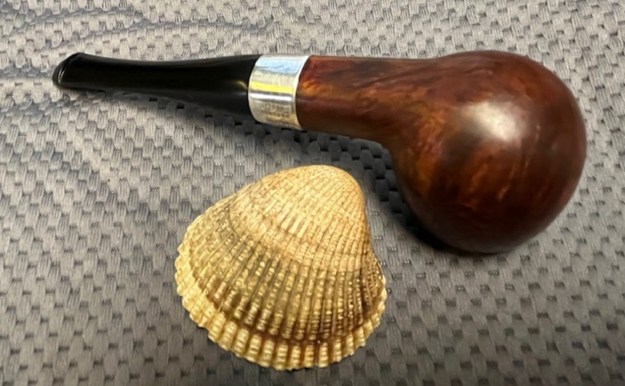
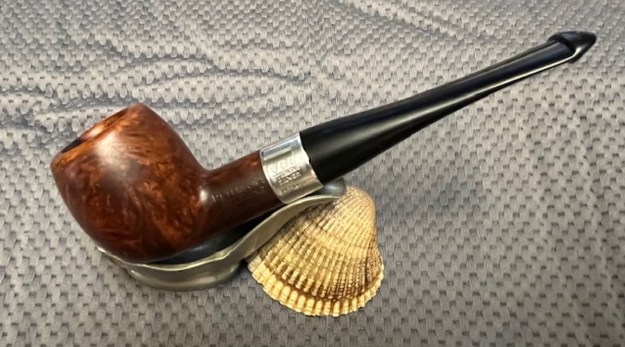
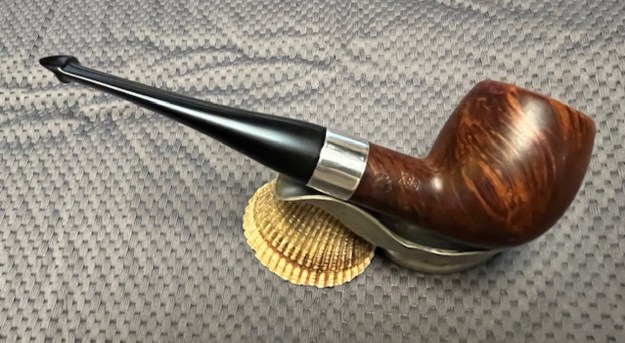
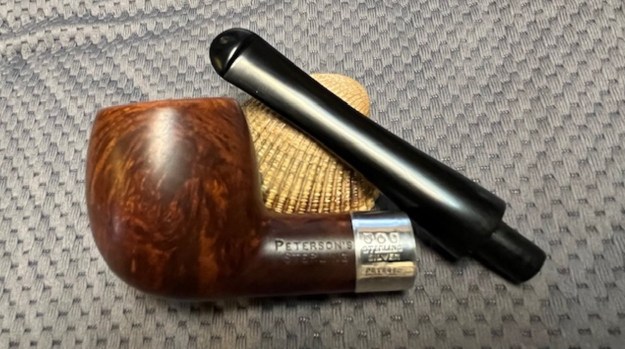
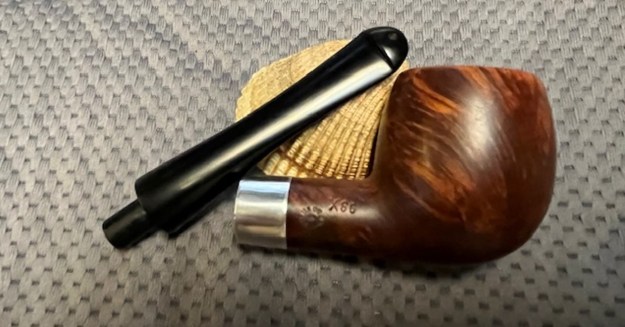
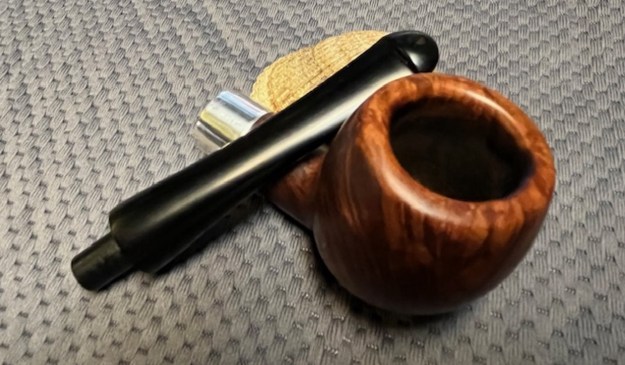
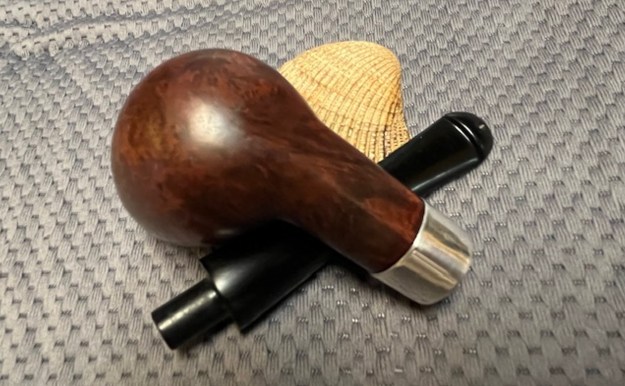
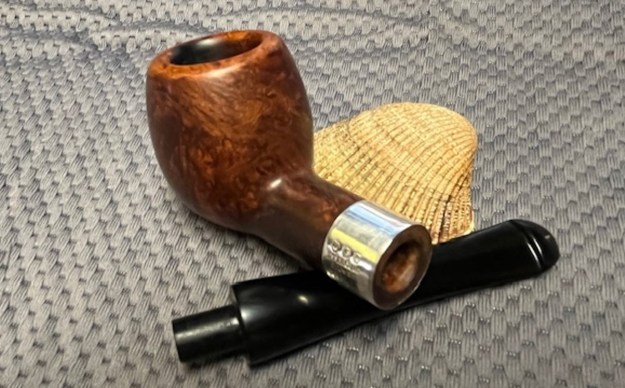
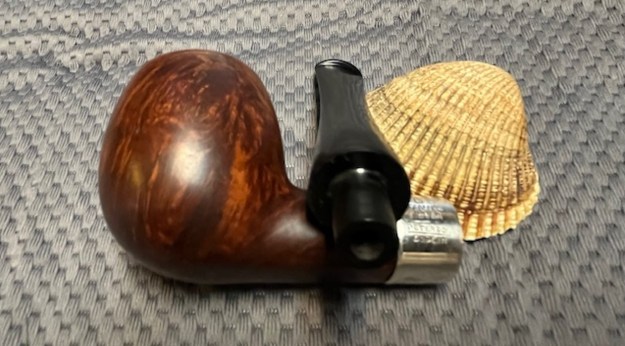
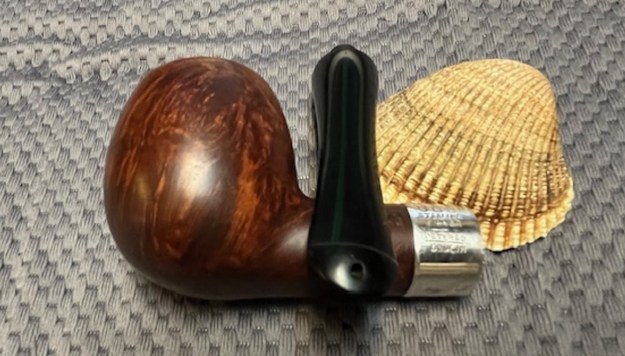
  As usual at this point in the restoration process I am excited to be on the homestretch. I look forward to the final look when it is put back together, polished and waxed. I put the Made In Ireland Peterson’s Sterling X86 Apple back together. I polished the bowl and stem with Blue Diamond to polish out the scratches in the briar and the vulcanite. I gave the bowl and the stem multiple coats of carnauba wax. I buffed the pipe with a clean buffing pad to raise the shine. I hand buffed it with a microfiber cloth to deepen the shine. I polished the silver with a jeweler’s cloth. The pipe polished up pretty nicely. The grain really pops with the wax and polish. The shiny black vulcanite stem is a beautiful contrast to the browns of the bowl. This Peterson’s Sterling 86X Apple was a great pipe to spruce up. It is a very comfortable pipe to hold in the hand. The finished pipe is shown in the photos below. The dimensions of the pipe are Length: 5 ½ inches, Height: 1 ¾ inches, Outside diameter of the bowl: 1 ¼ inches, Chamber diameter: ¾ of an inch. The weight of the pipe is 43 grams/1.55 ounces. This pipe will be going back to my friend for him to enjoy. Thanks for reading this blog and my reflections on the pipe while I worked on it. This is an interesting estate to bring back to life.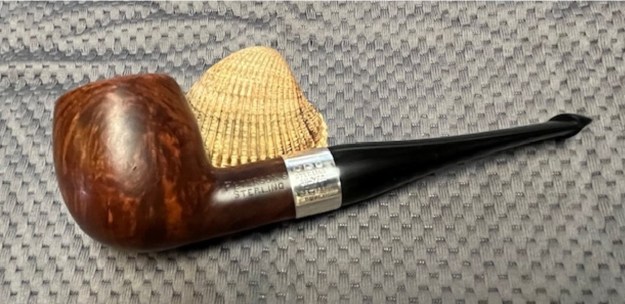

 rebornpipes