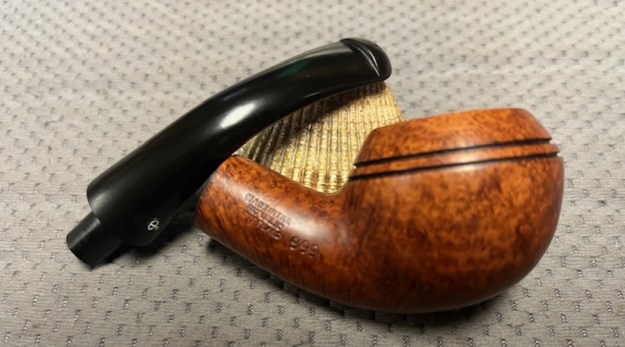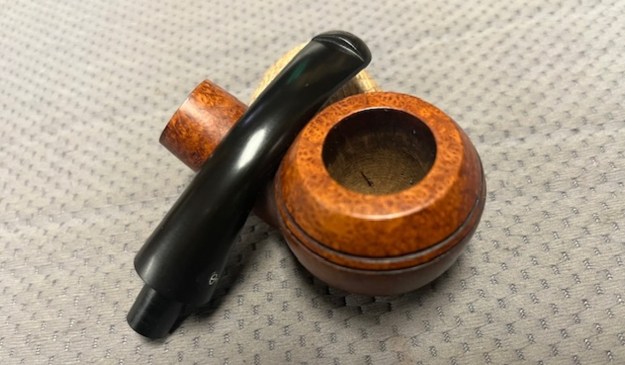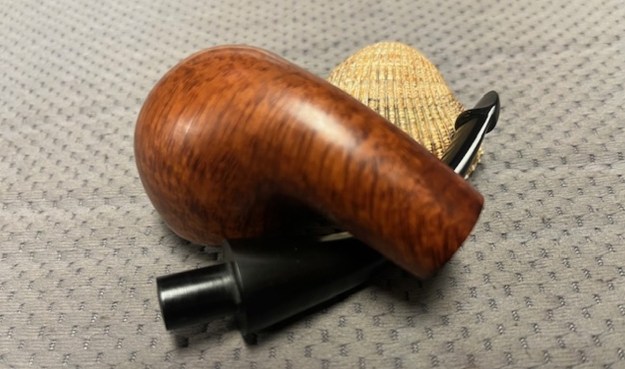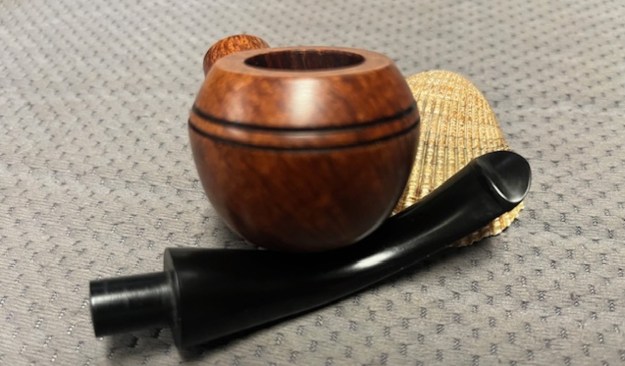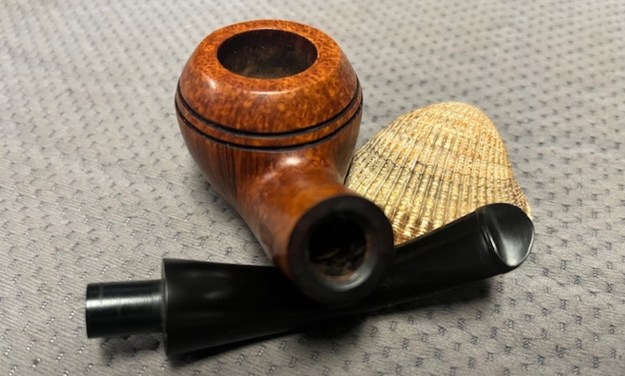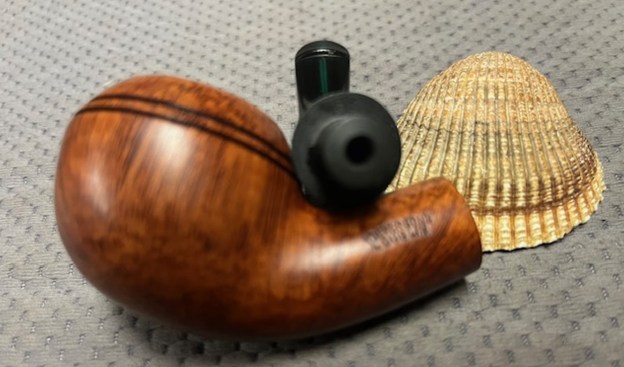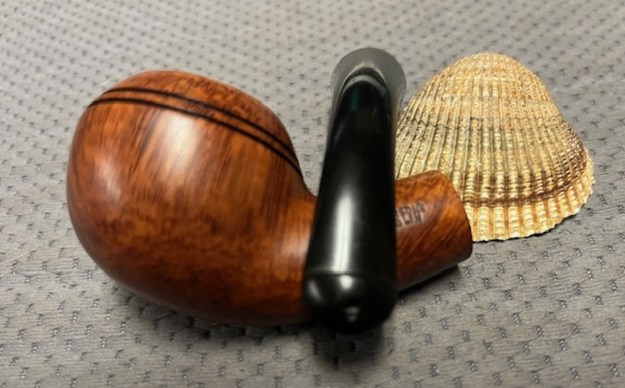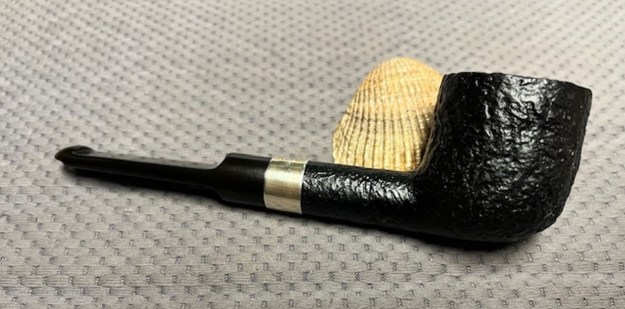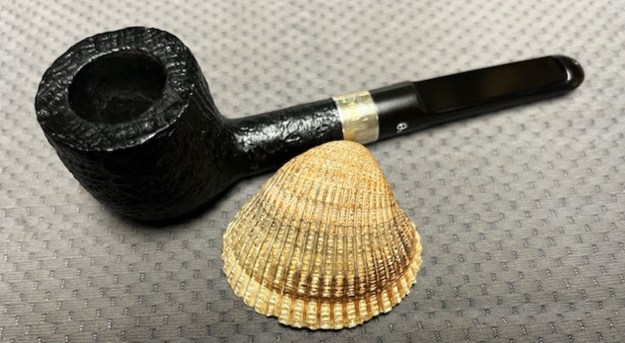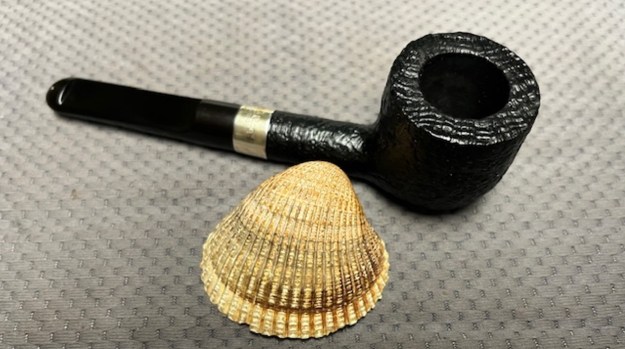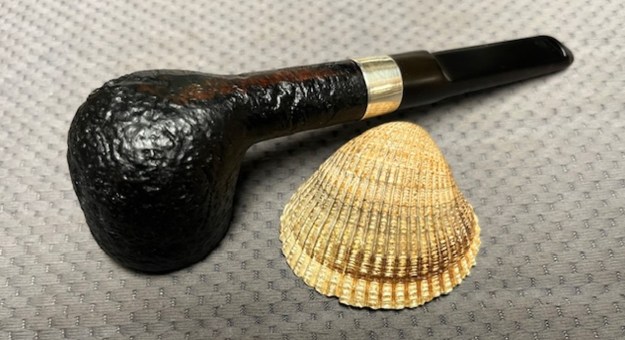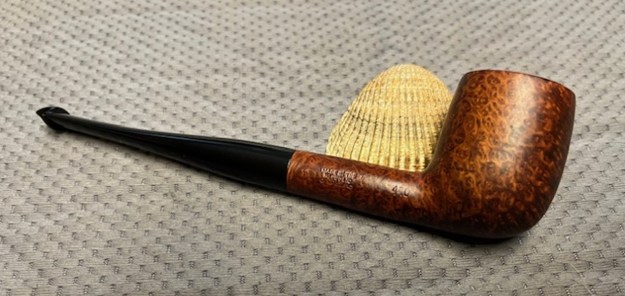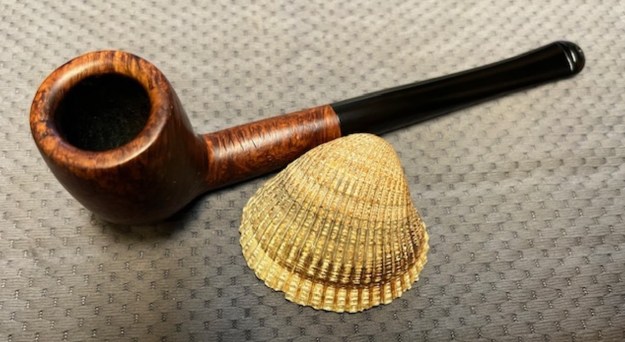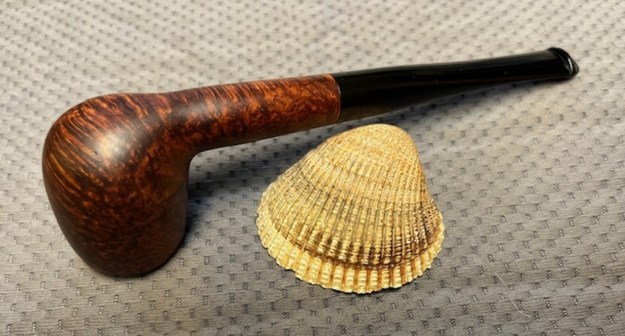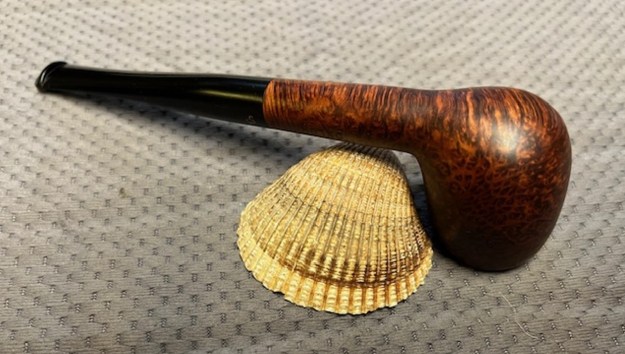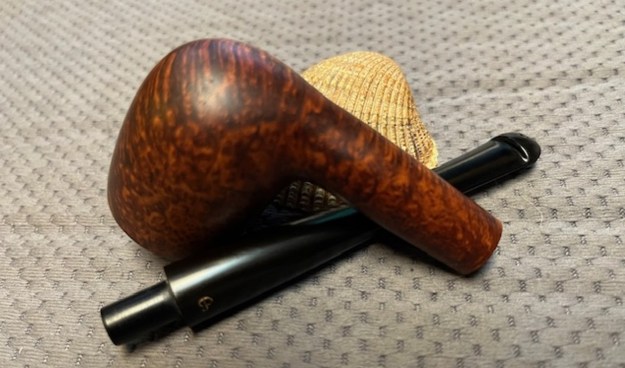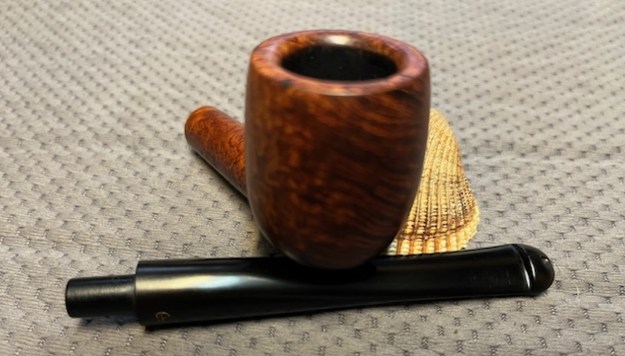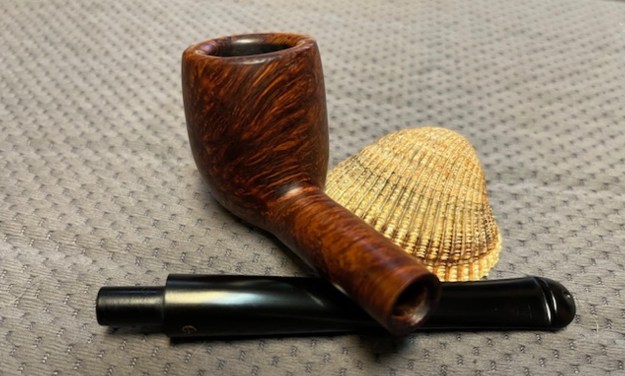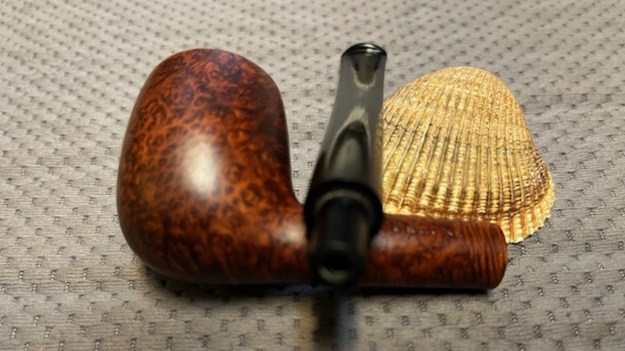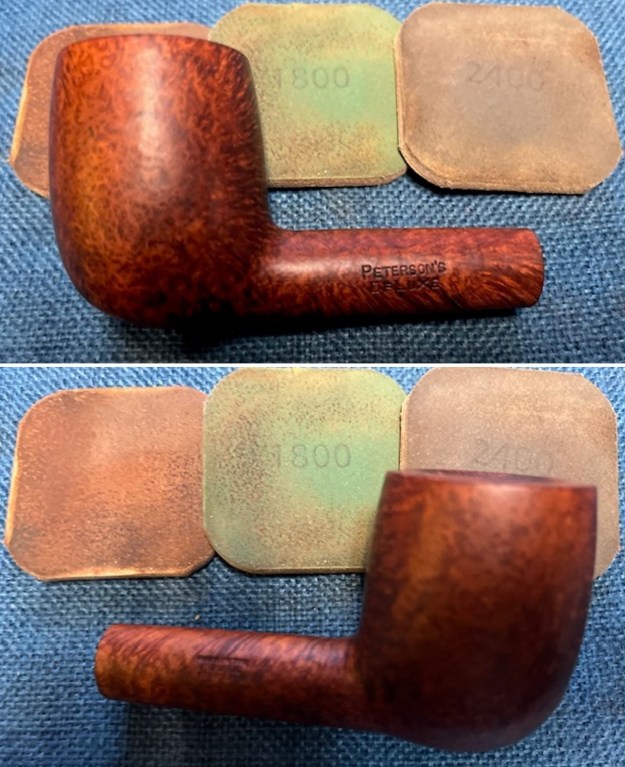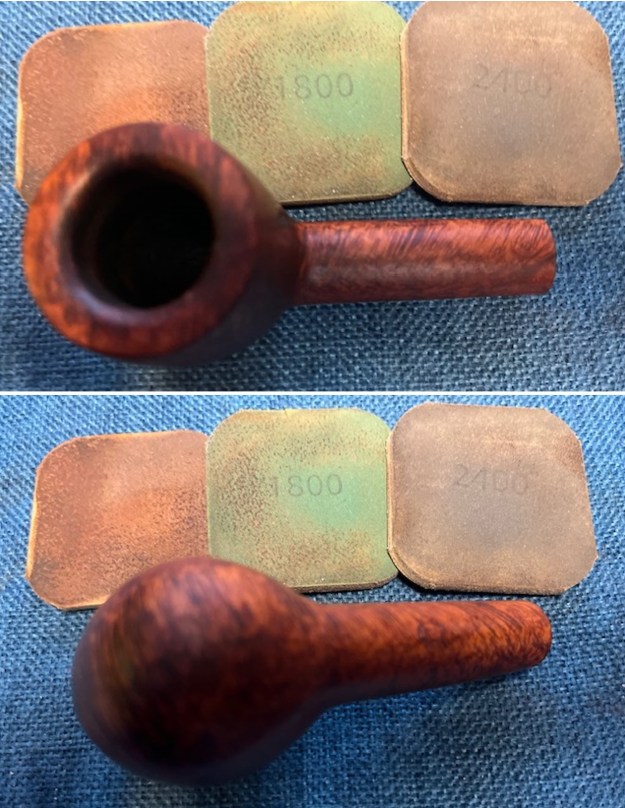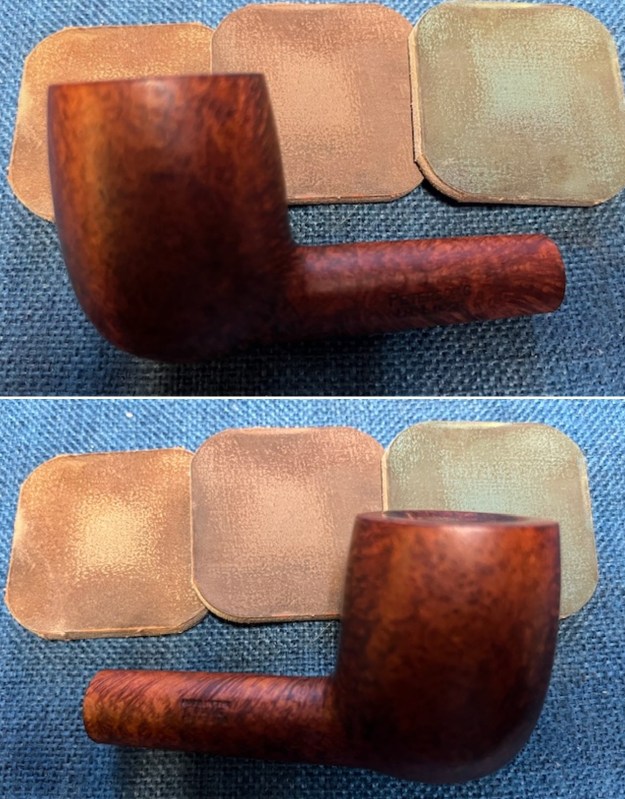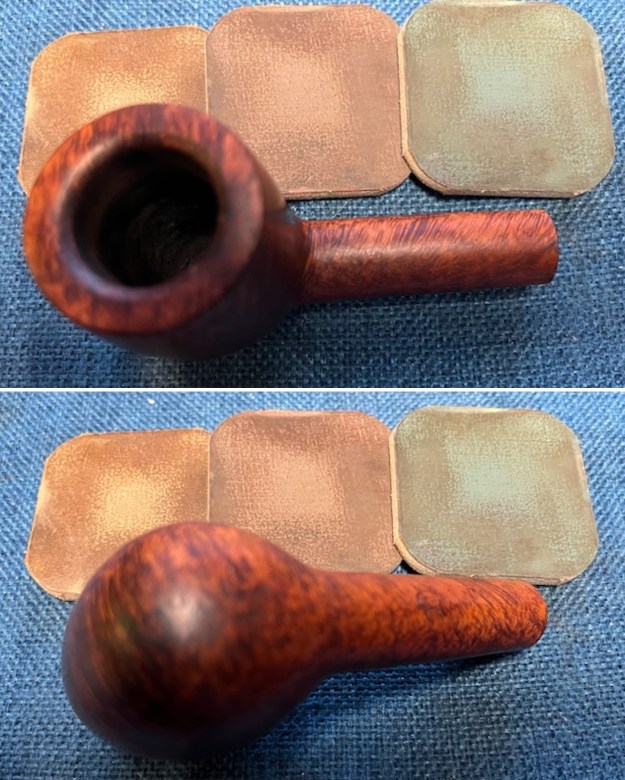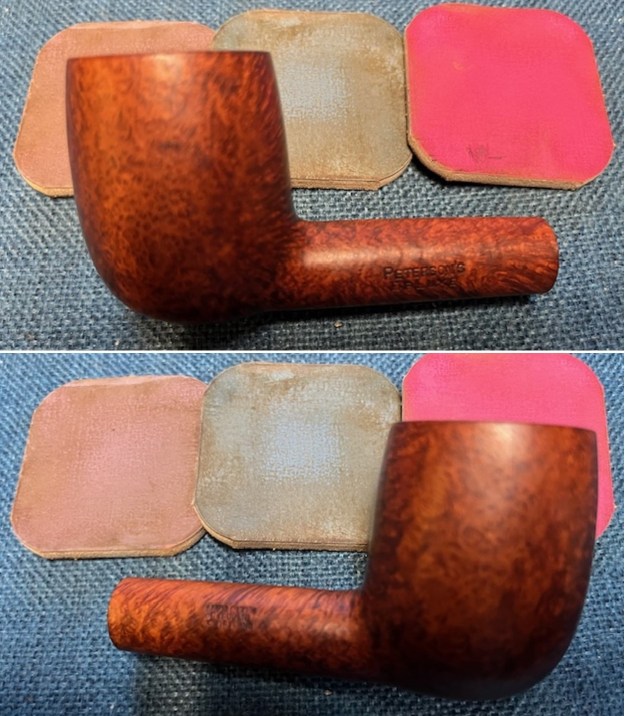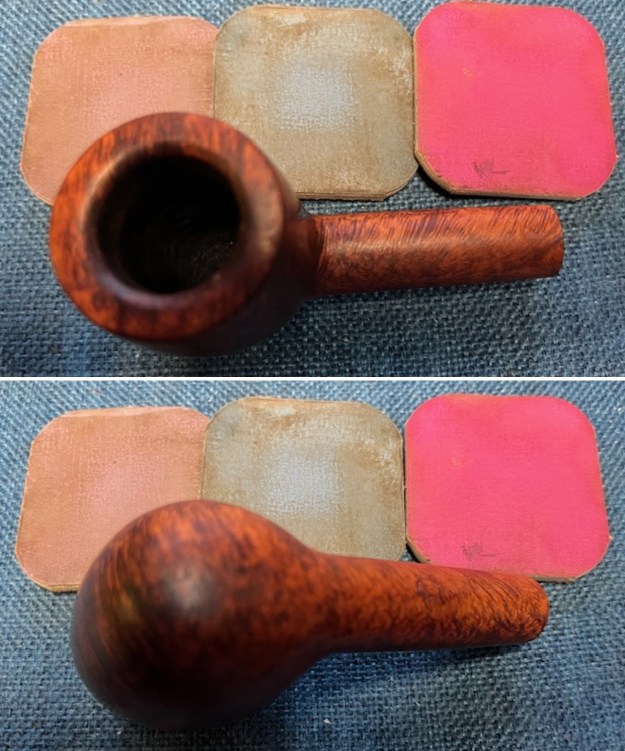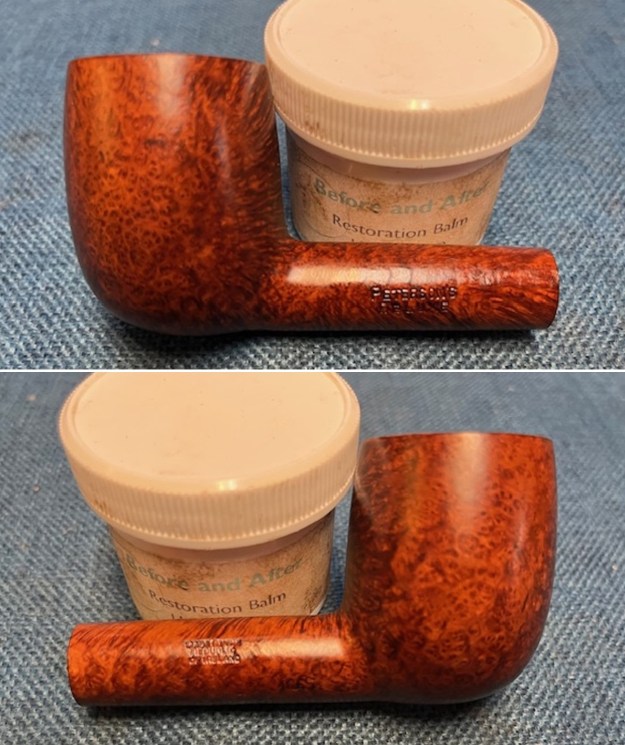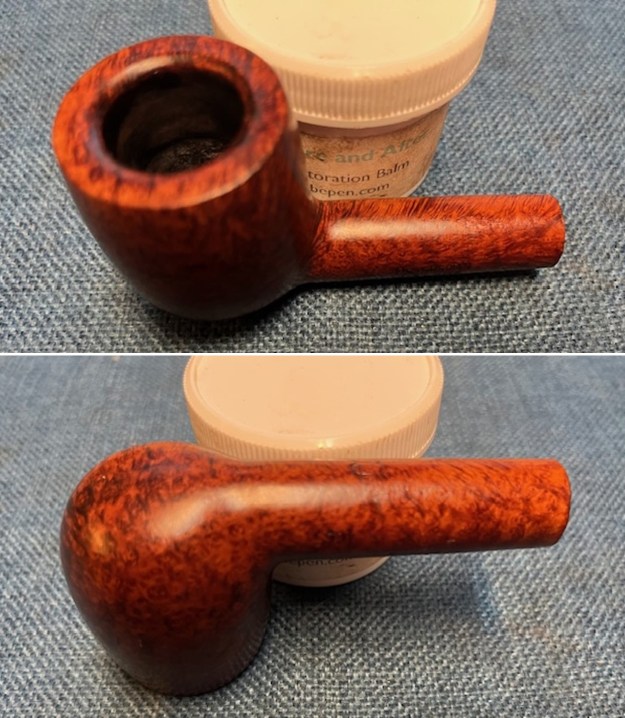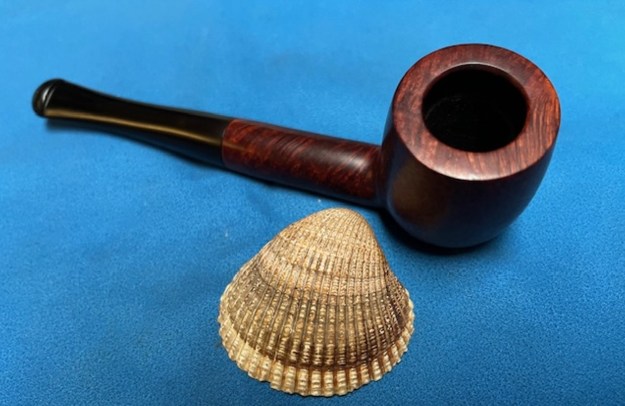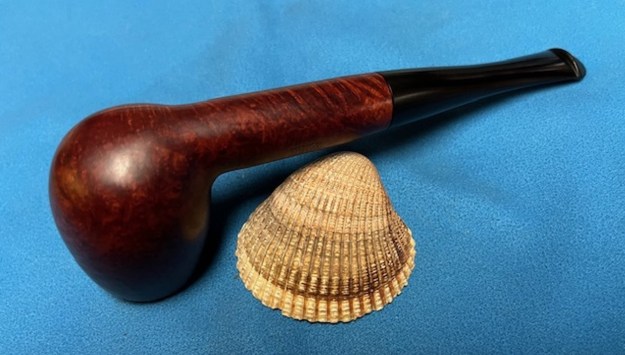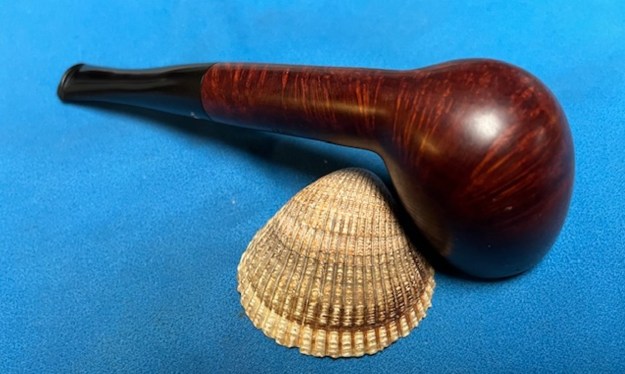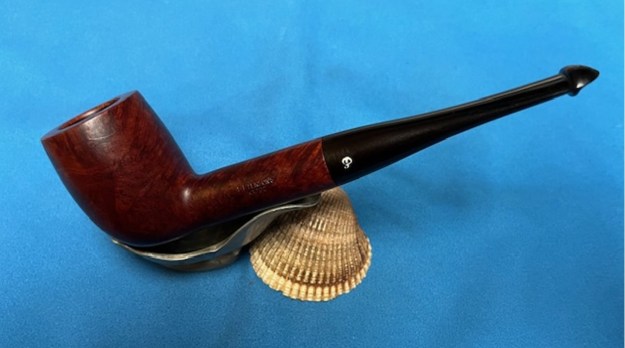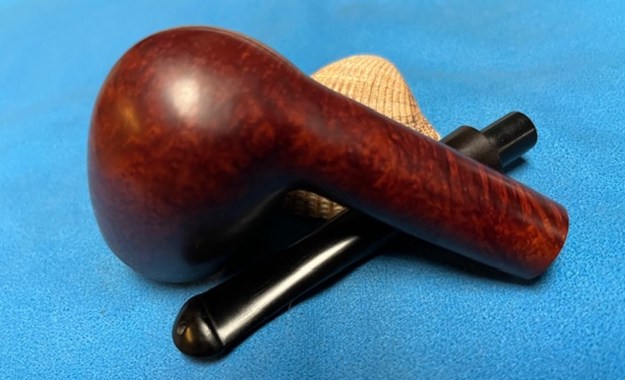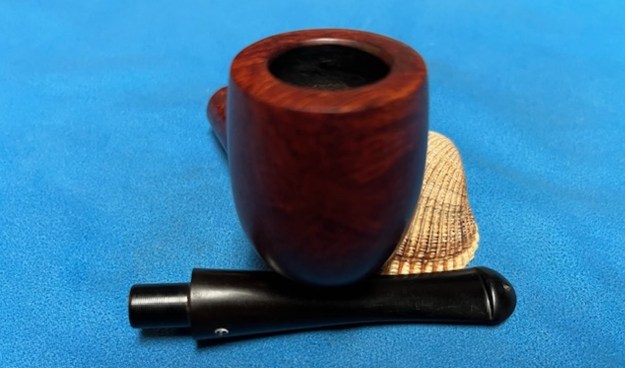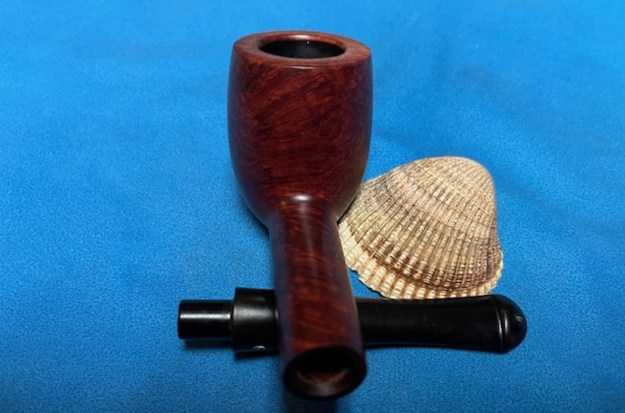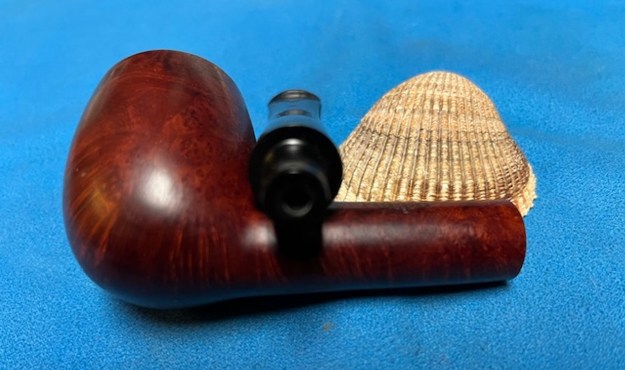
Tag Archives: Peterson’s Made In the Republic of Ireland Pipes

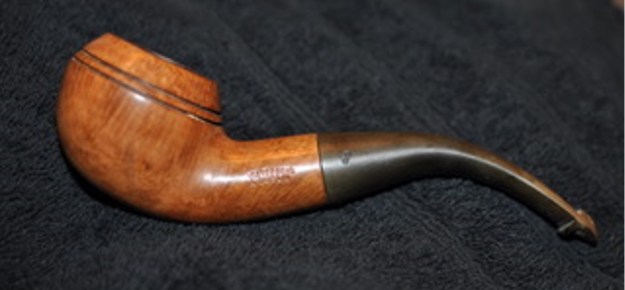
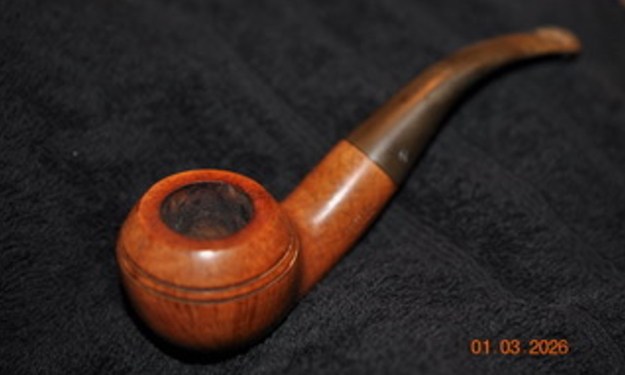
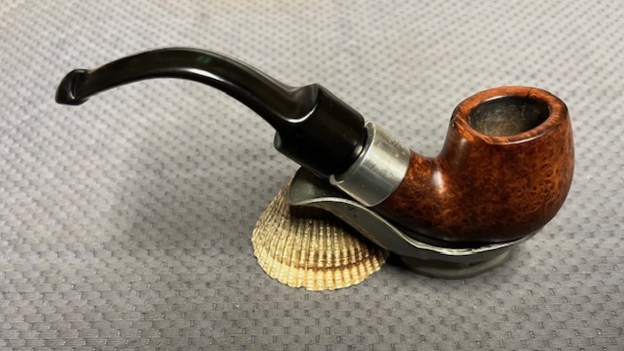
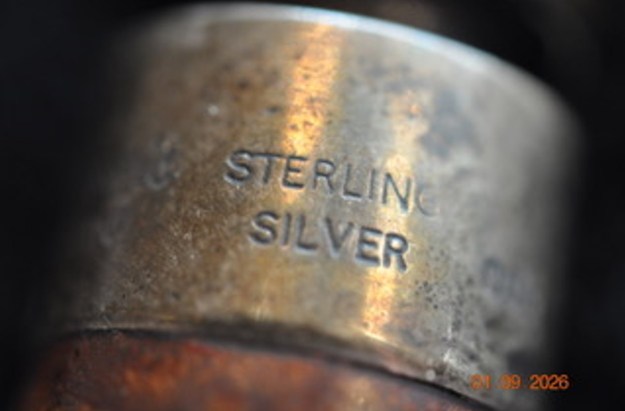
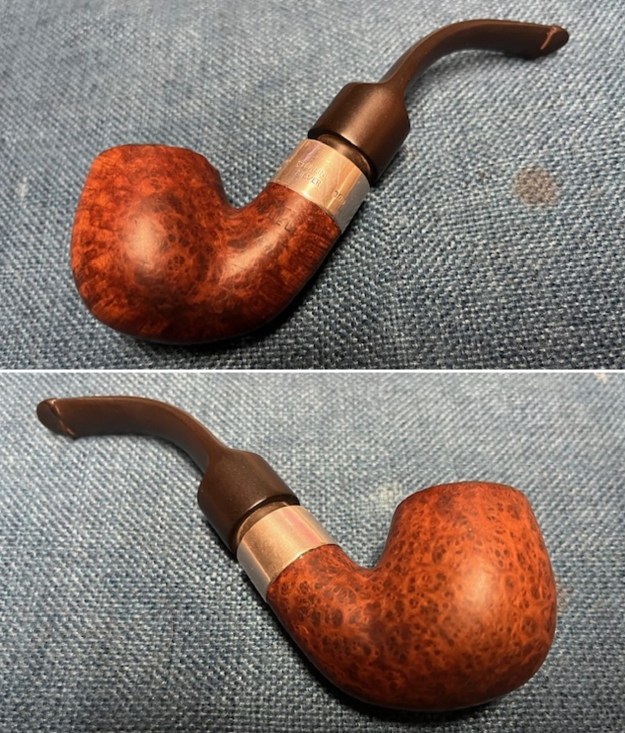
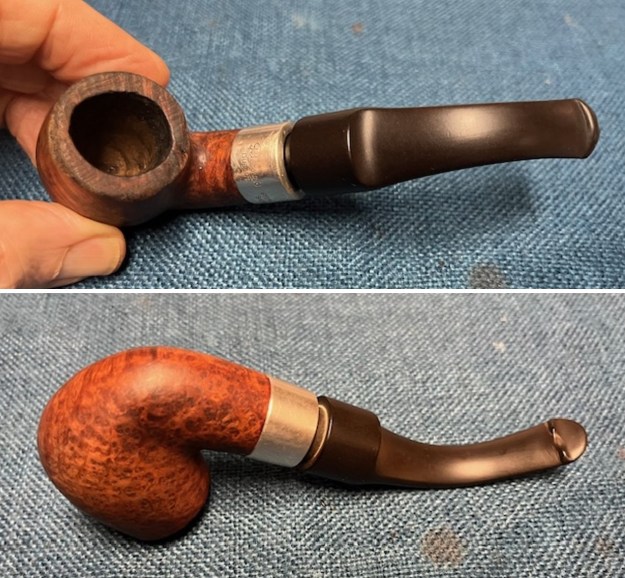
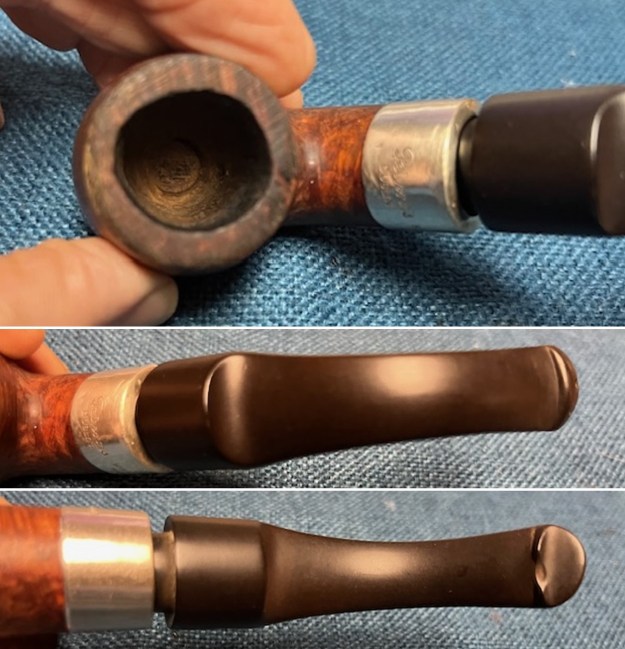
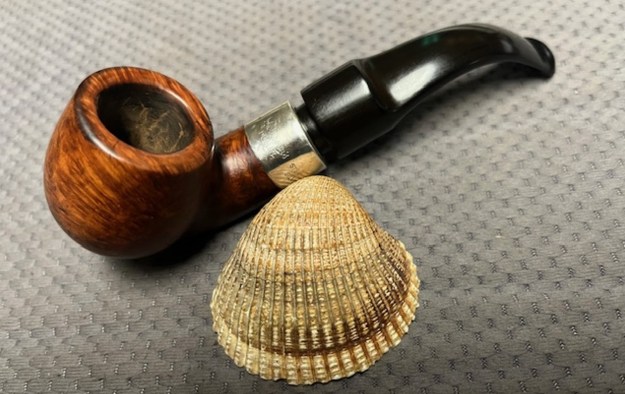
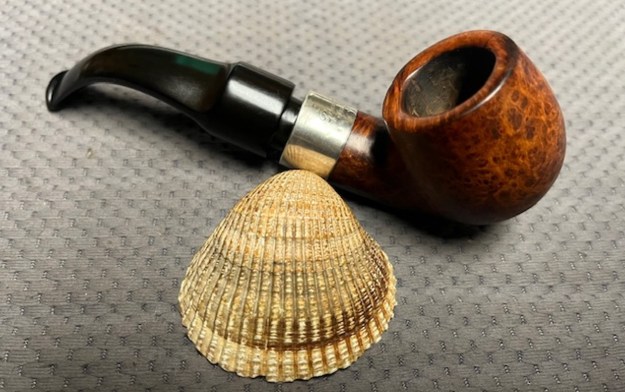
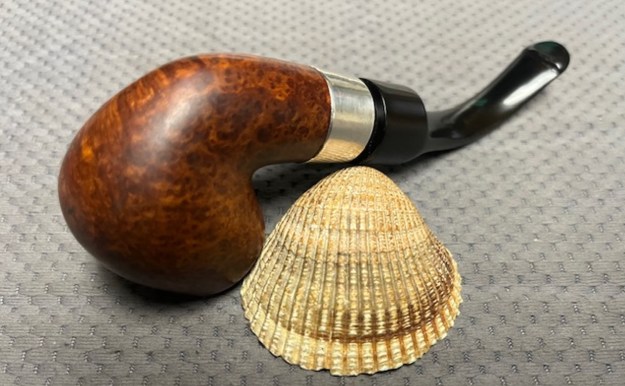
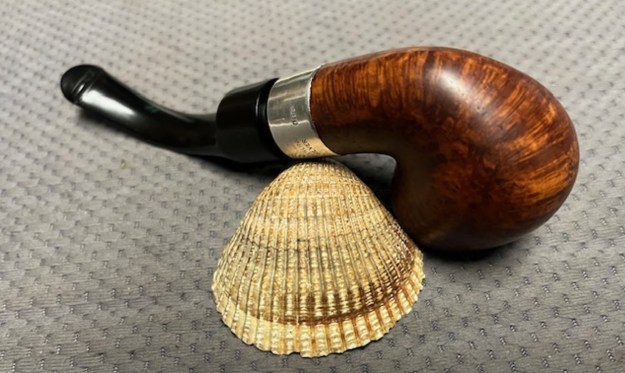
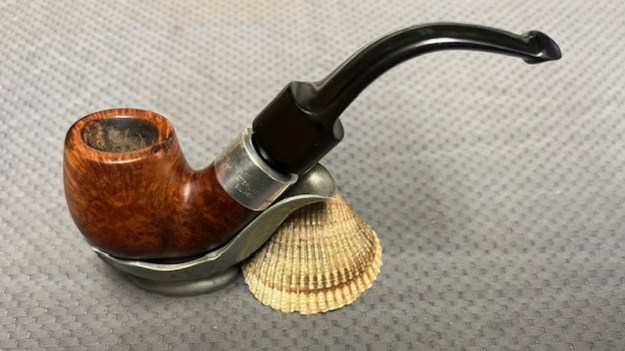
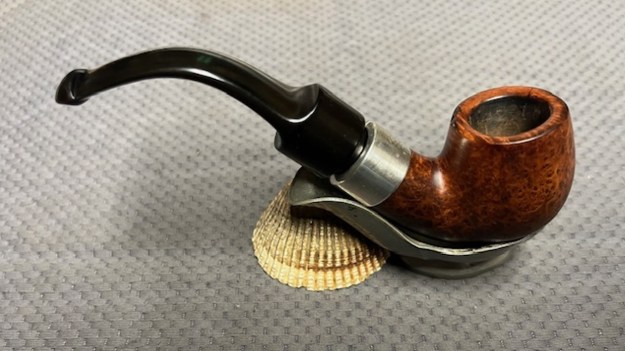
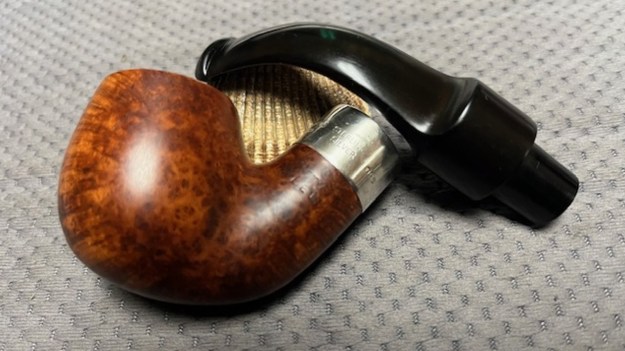
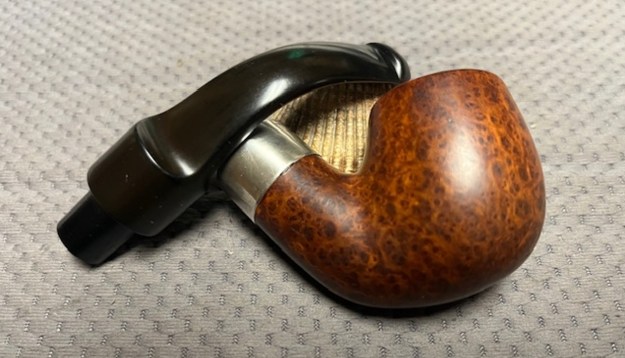
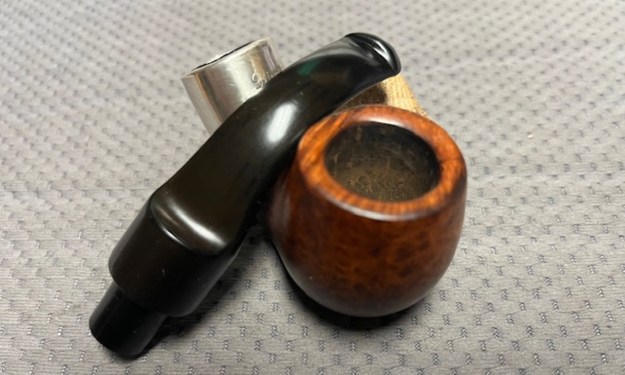
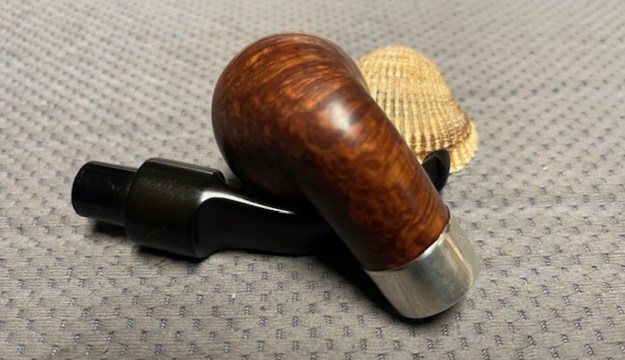
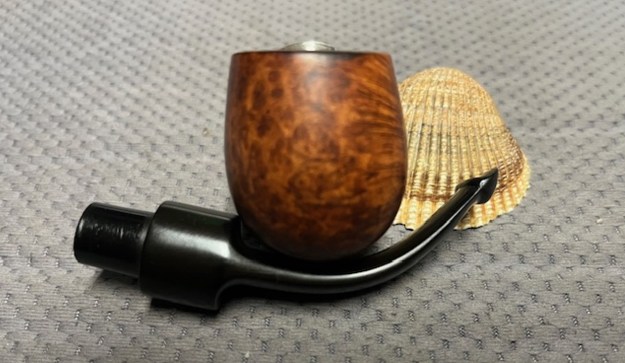
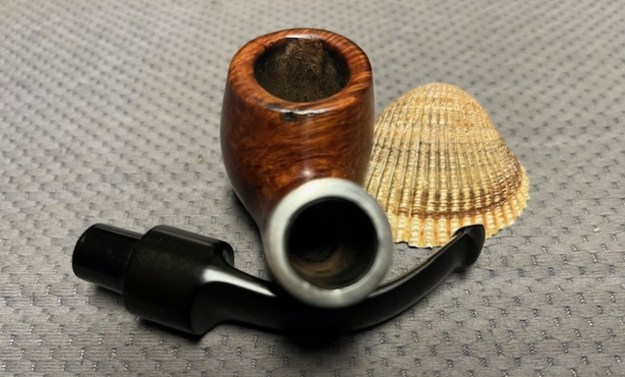
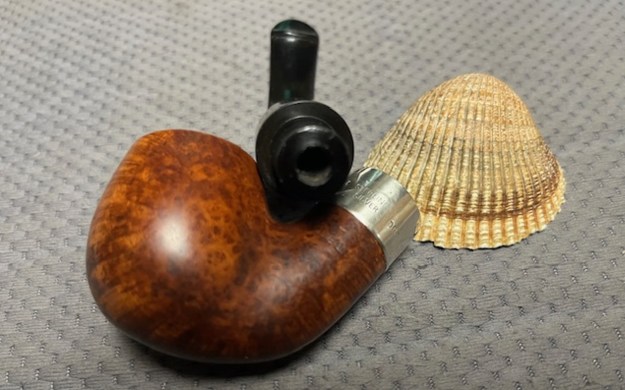
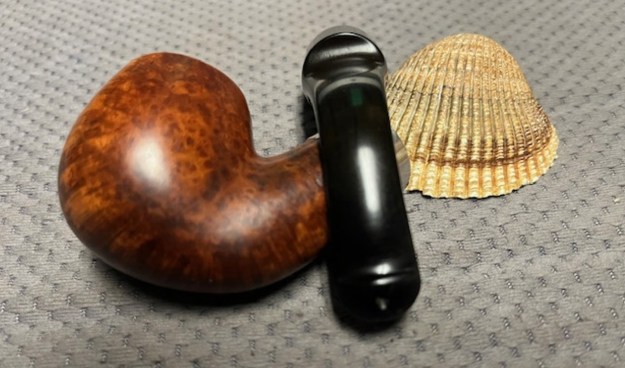
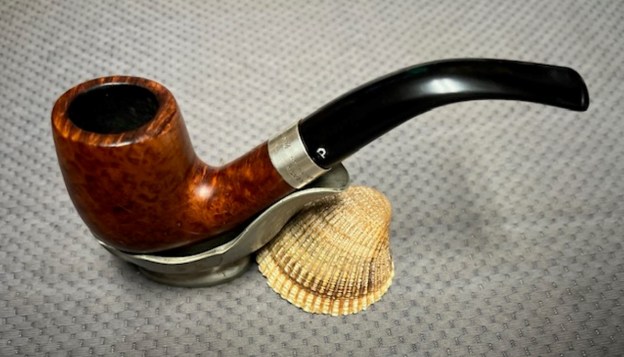
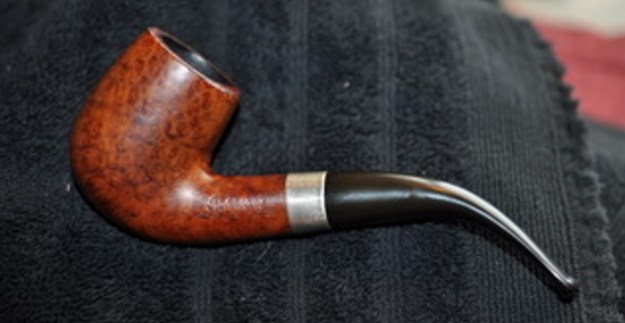
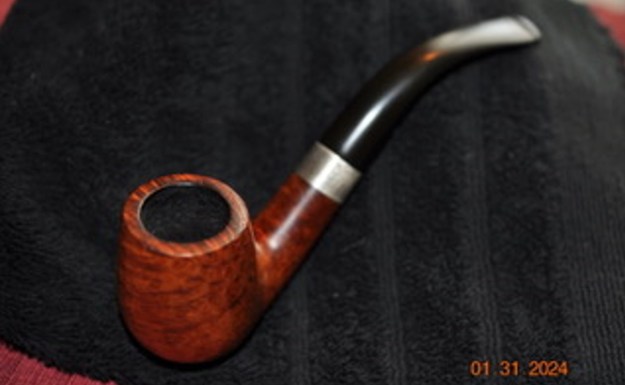
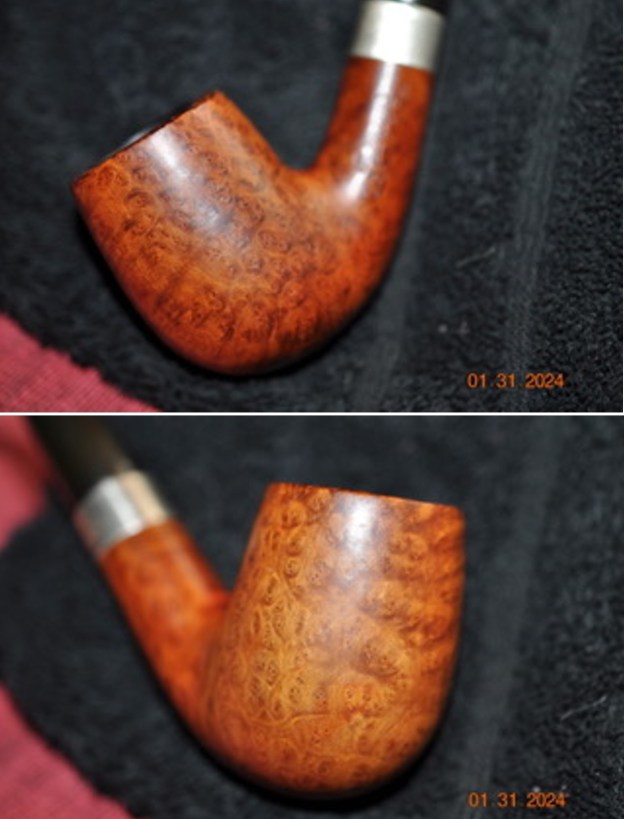
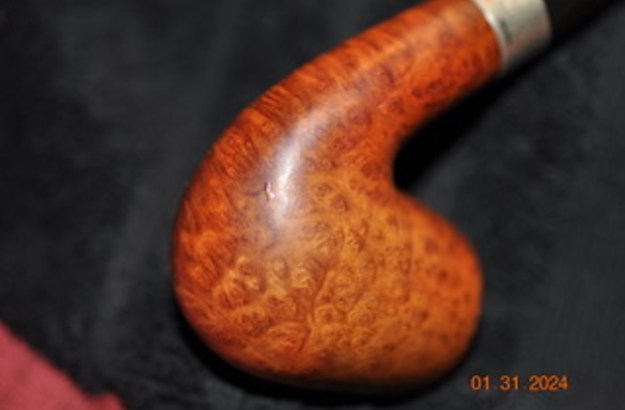
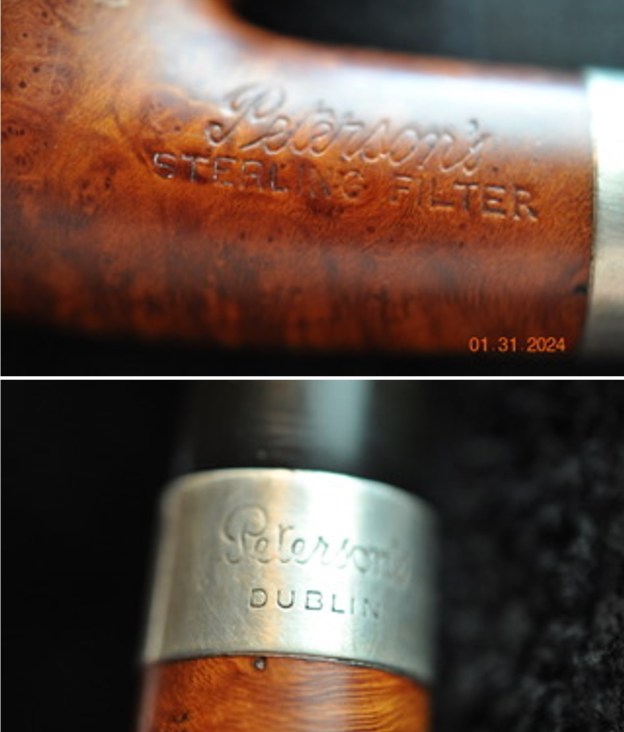
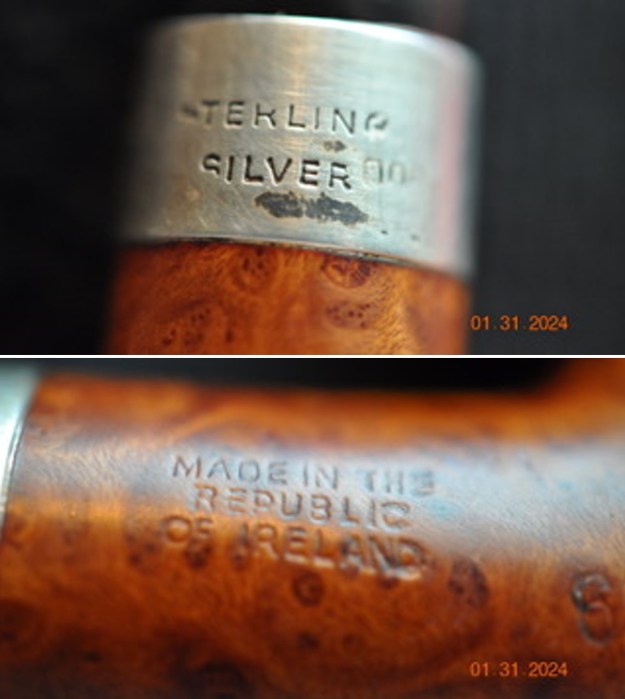
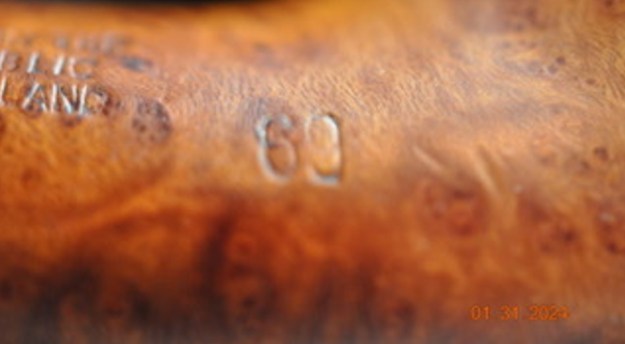
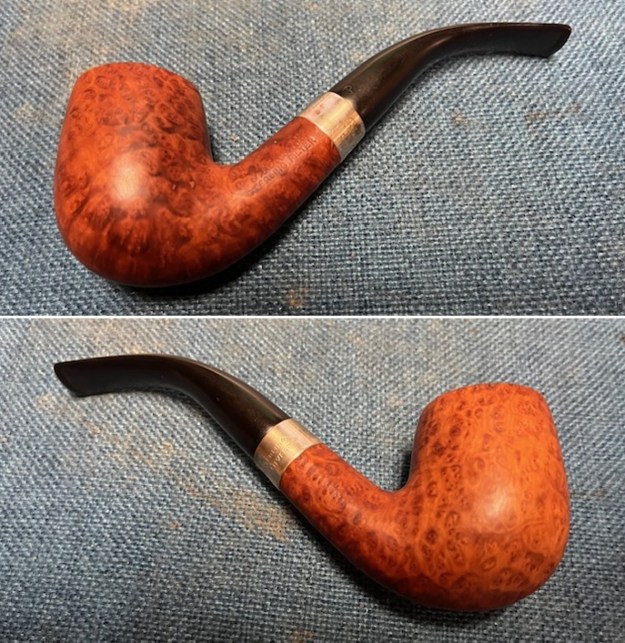
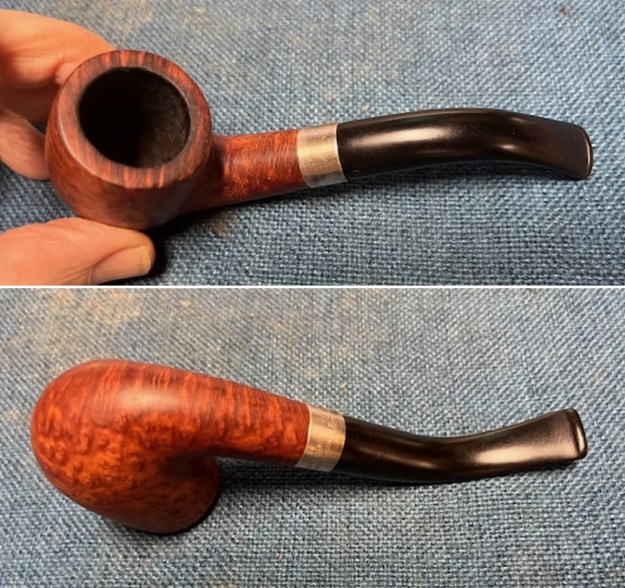
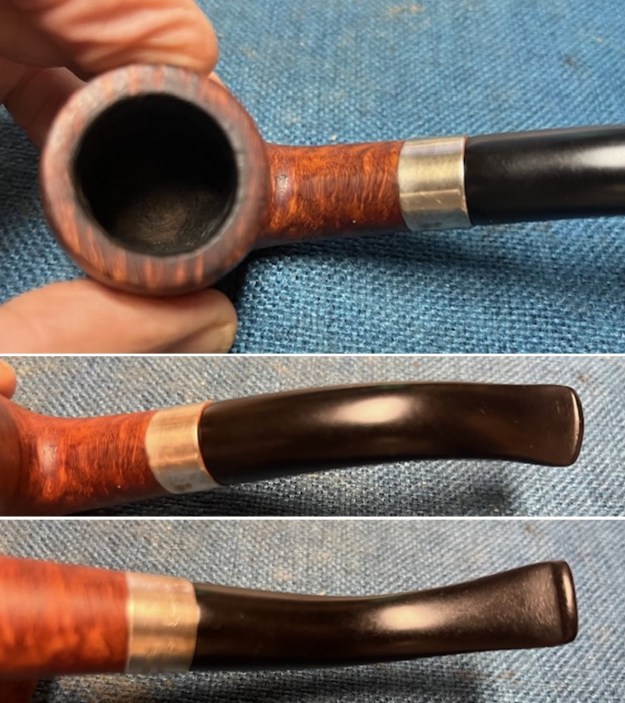
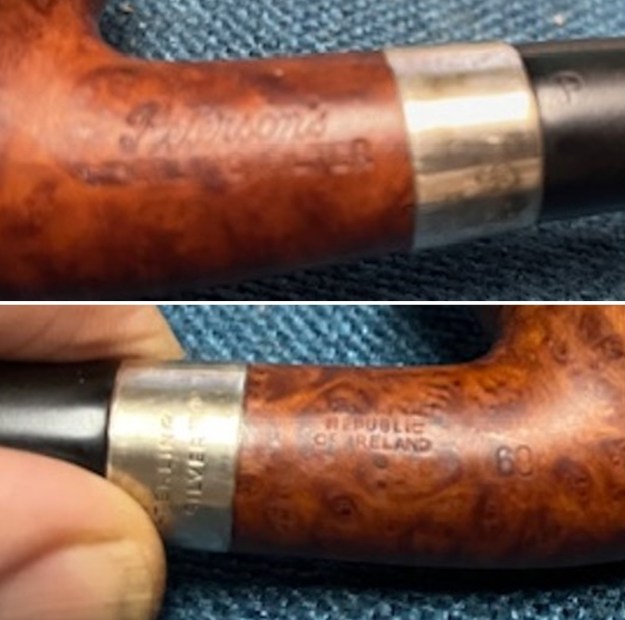
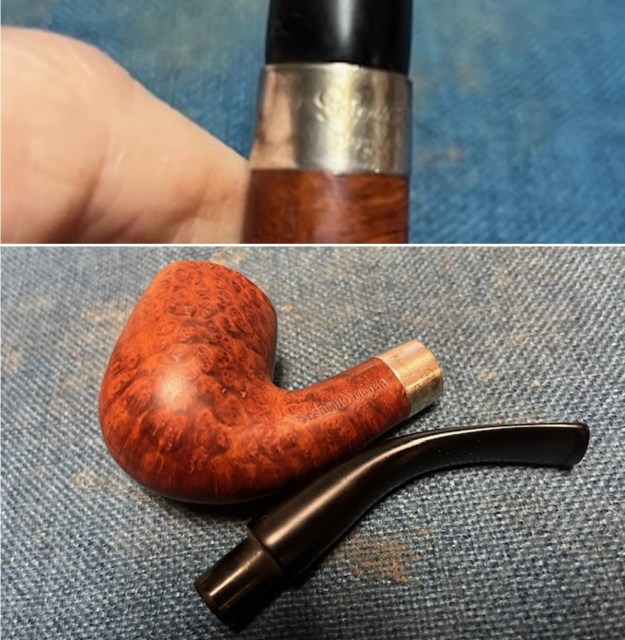
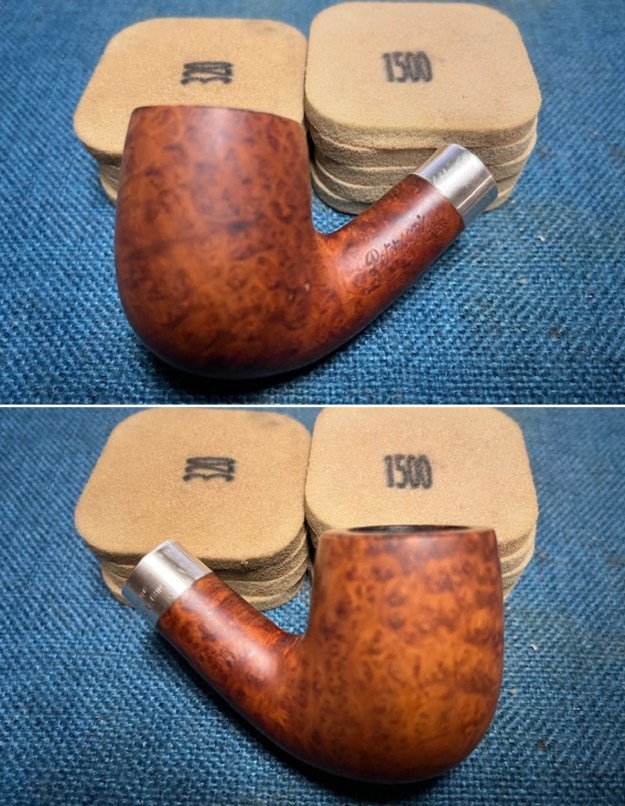
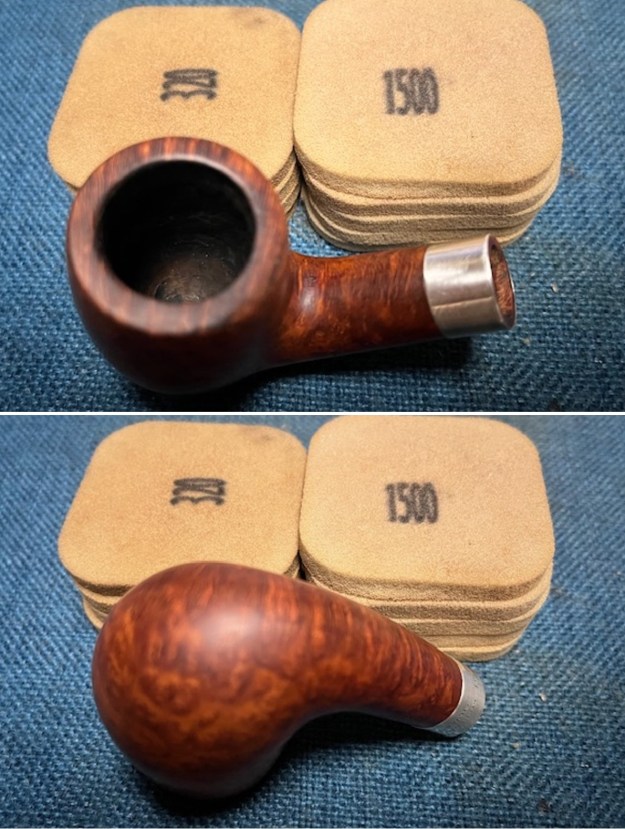
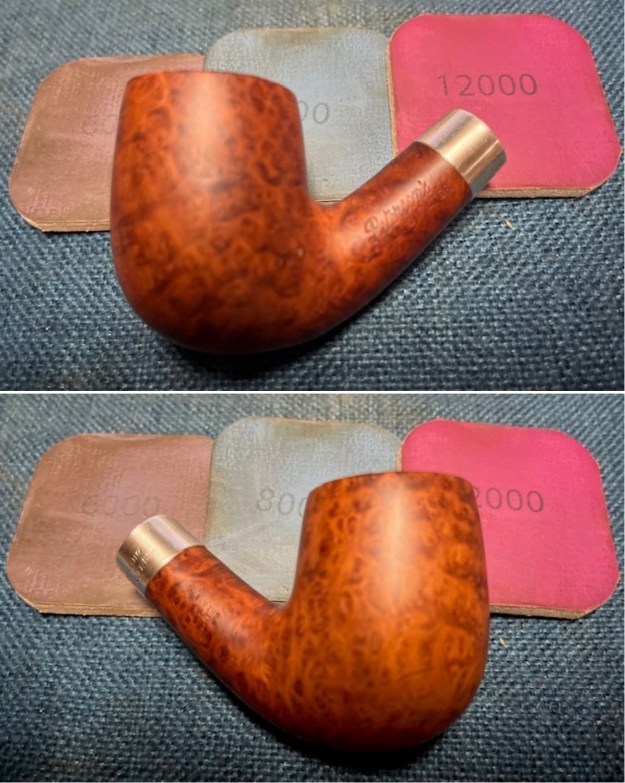
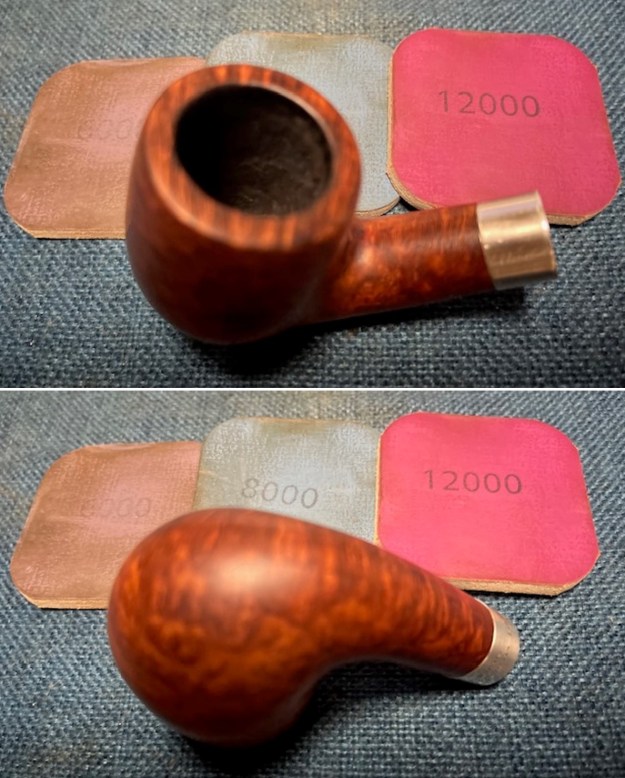
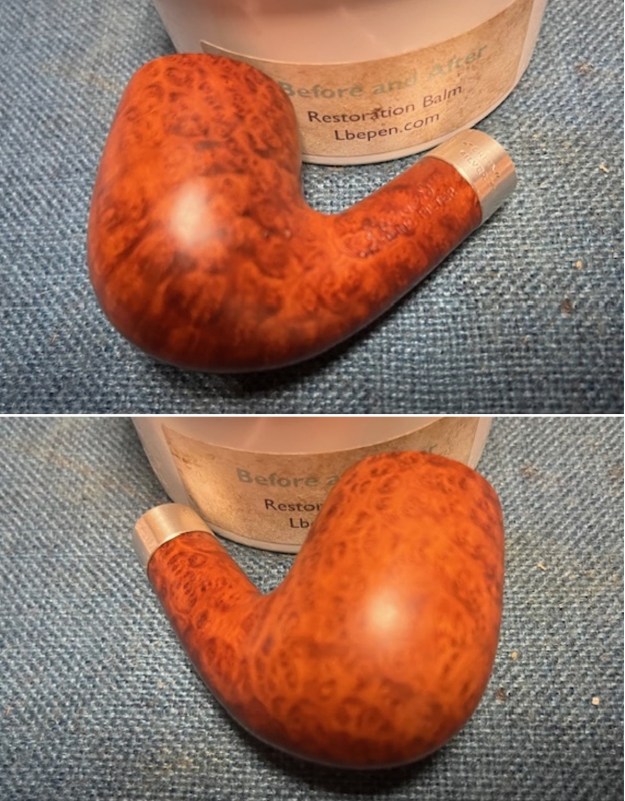
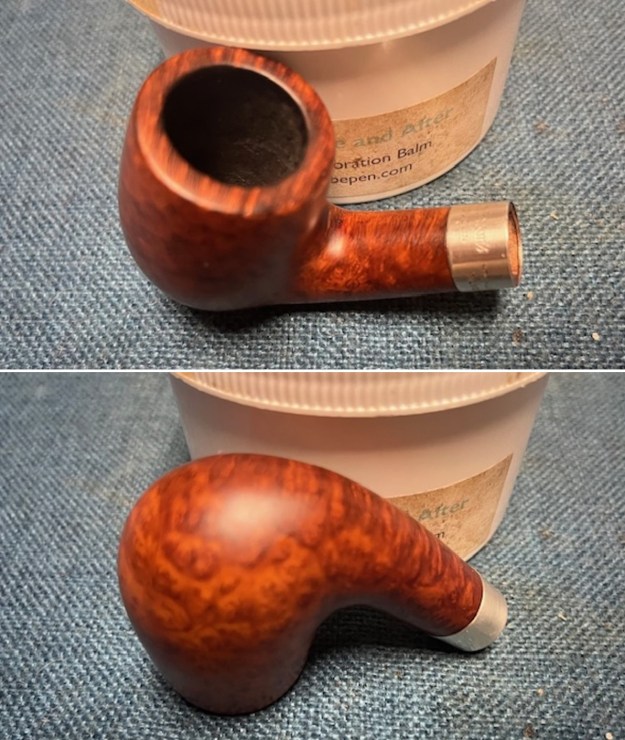
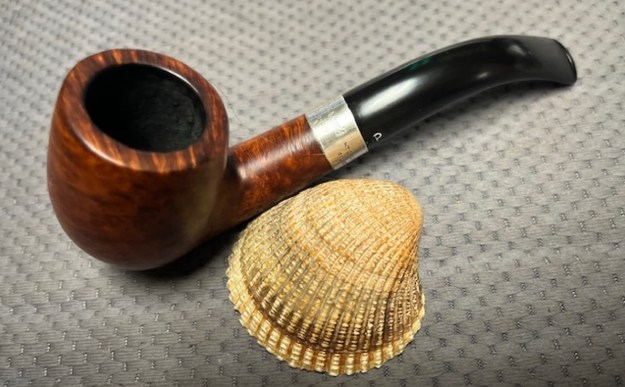
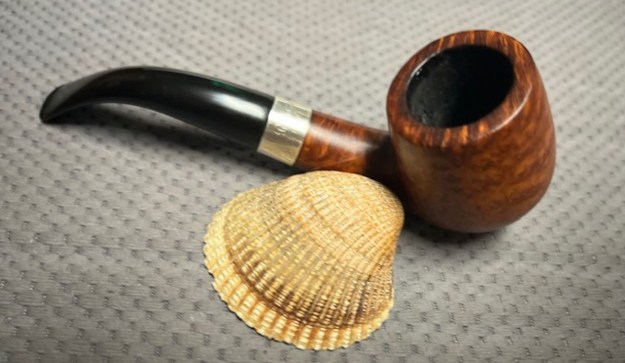
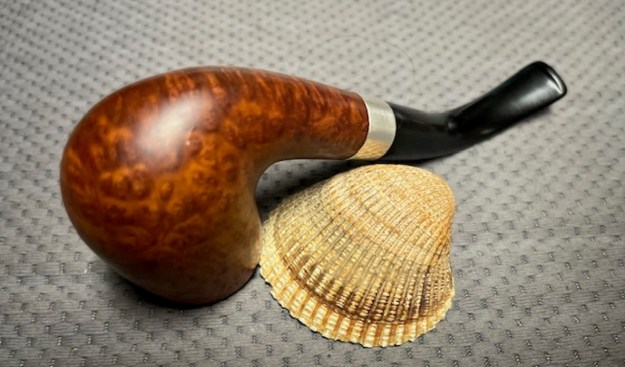
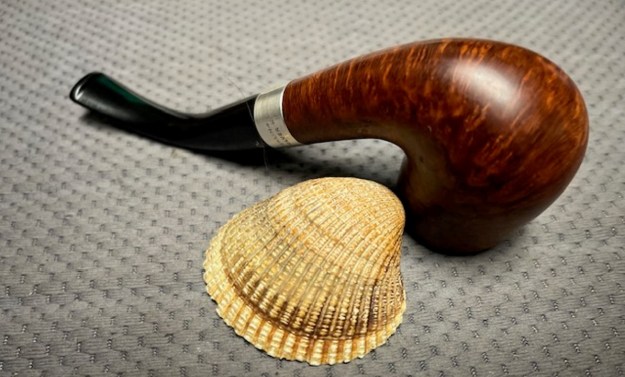
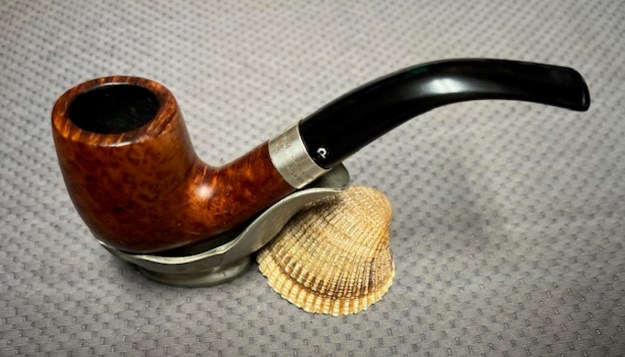
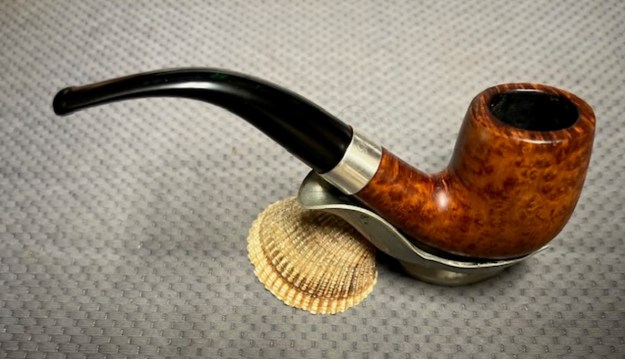
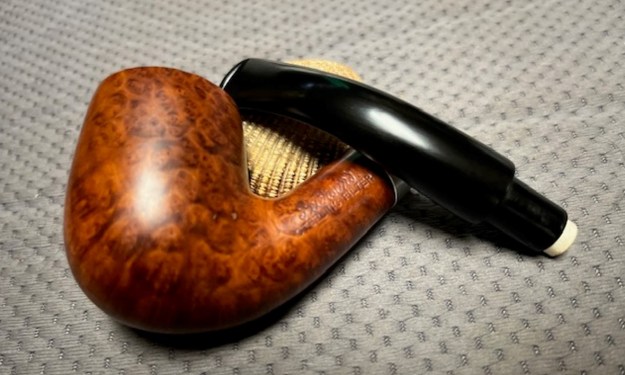
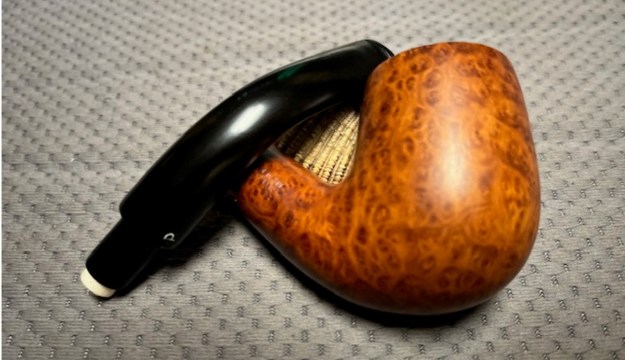
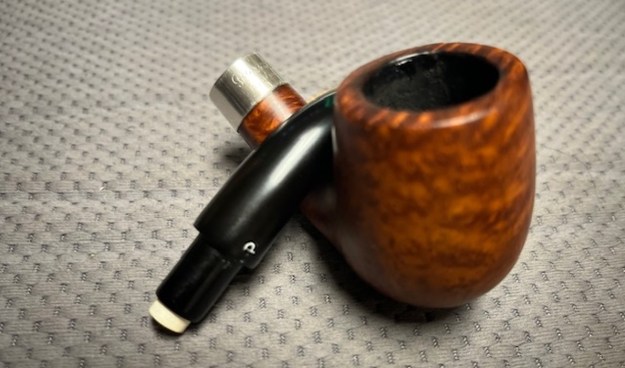
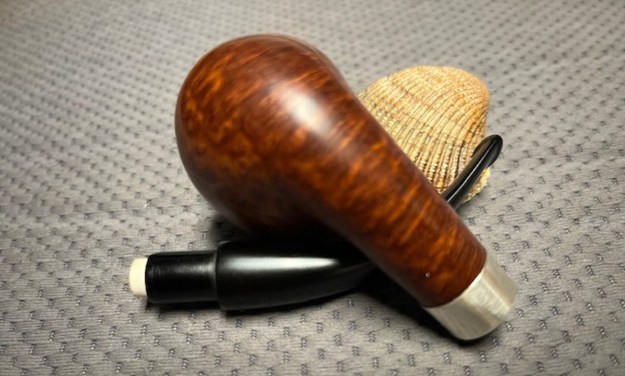
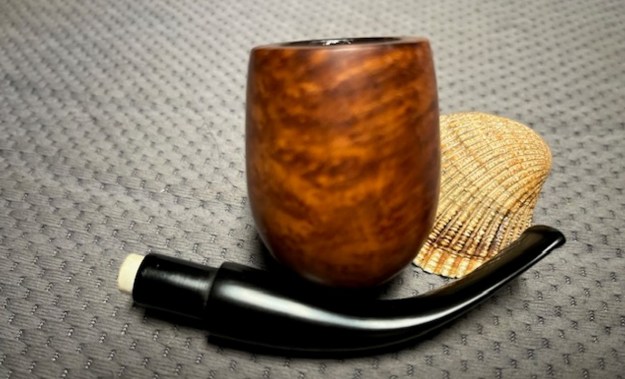
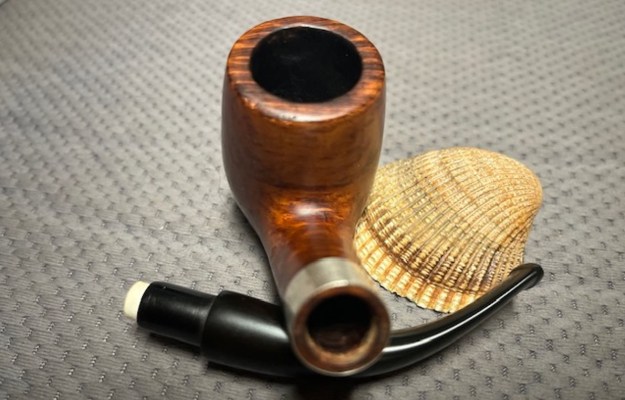
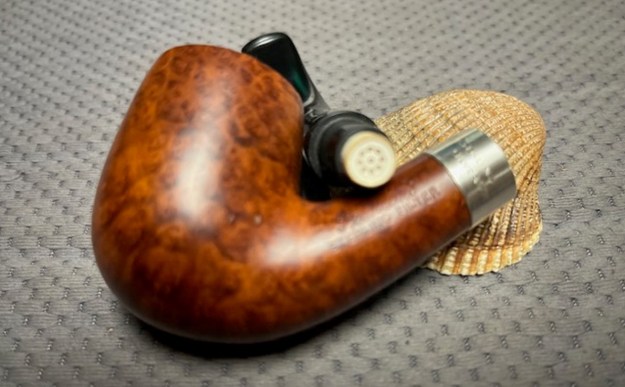
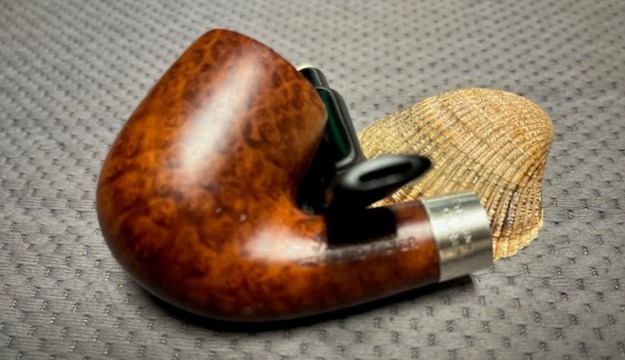
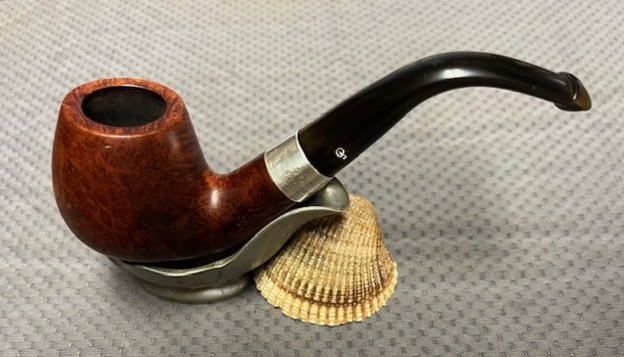
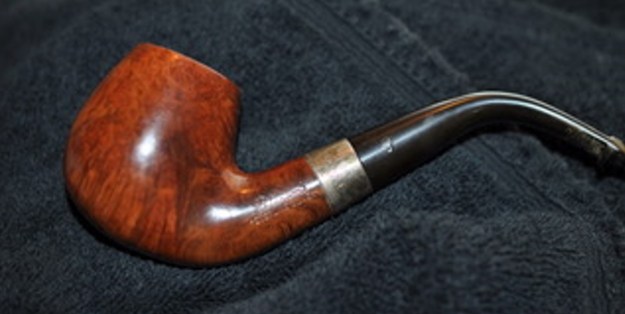
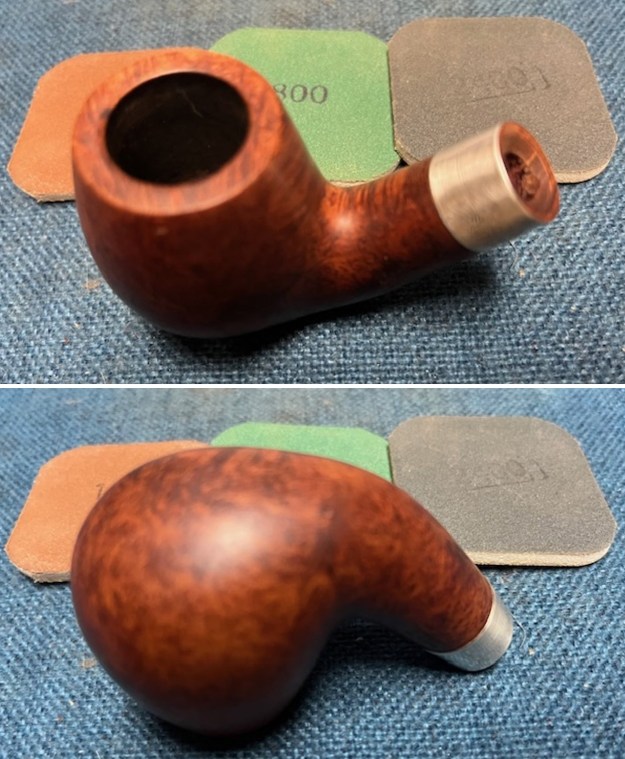
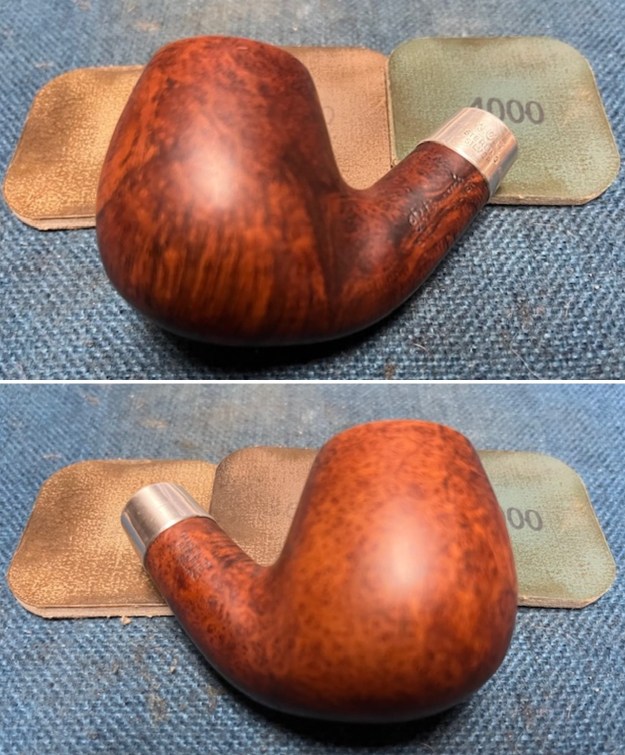
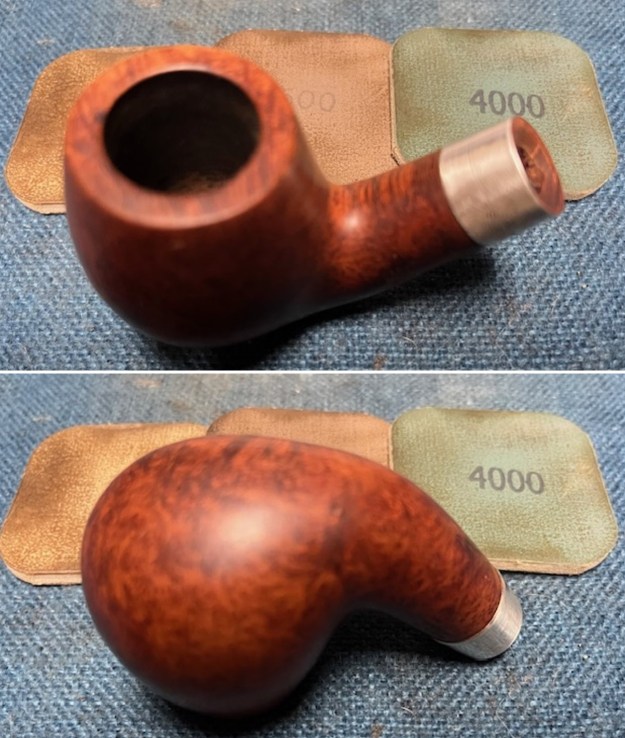
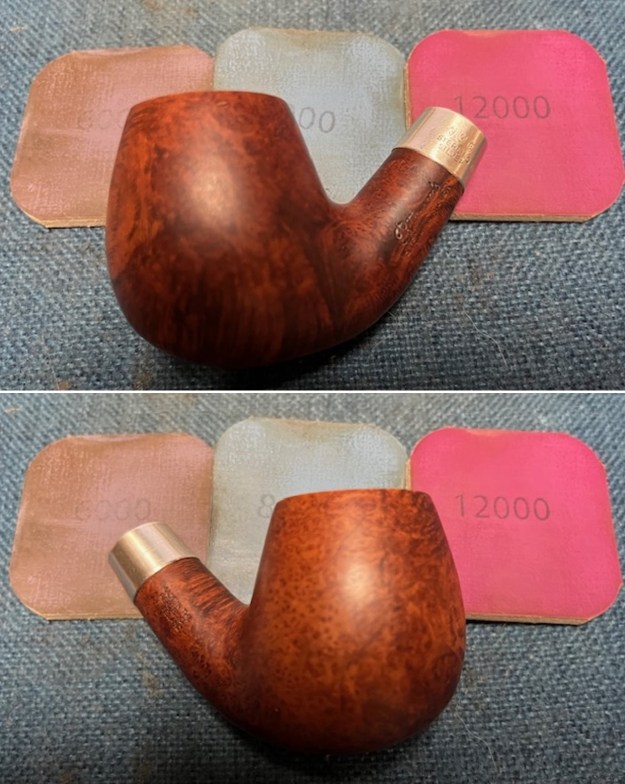
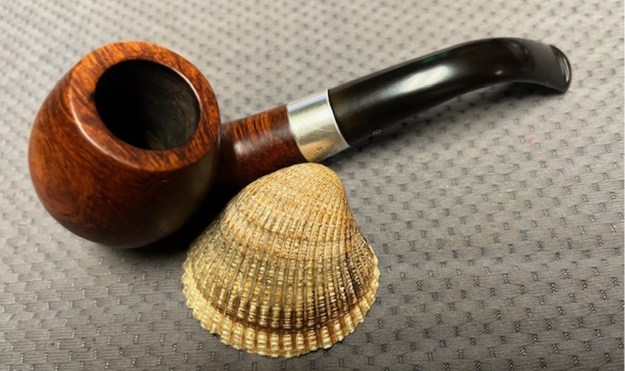
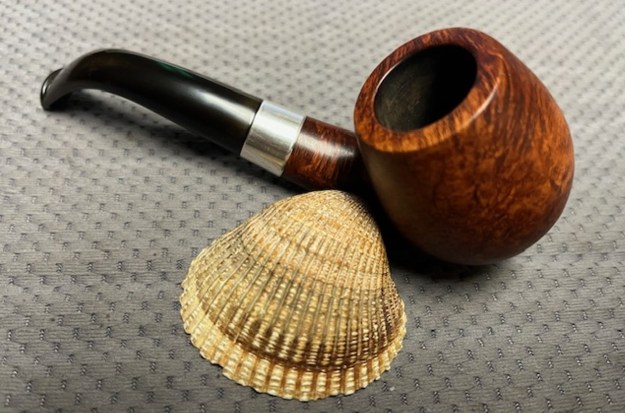
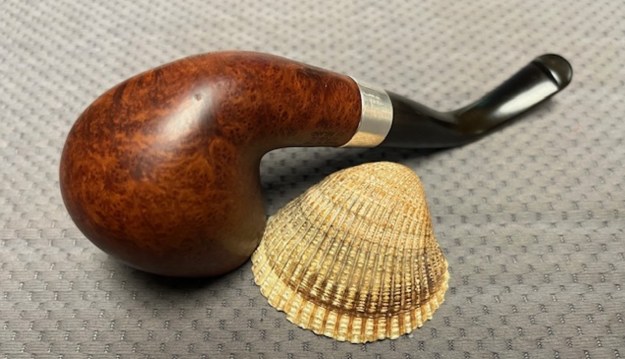
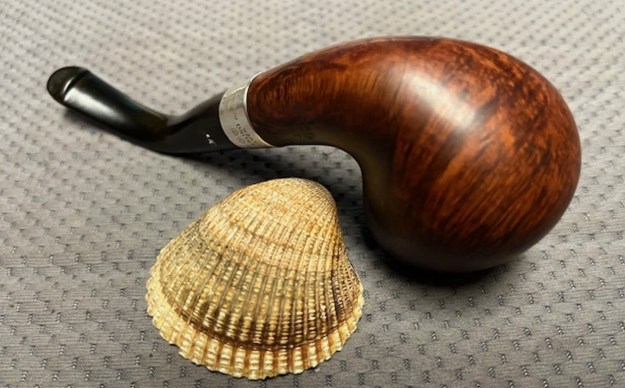
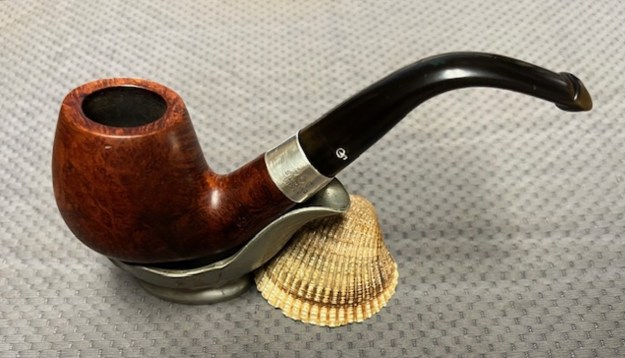
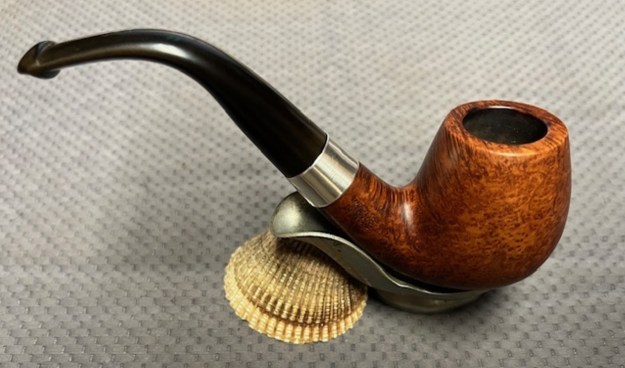
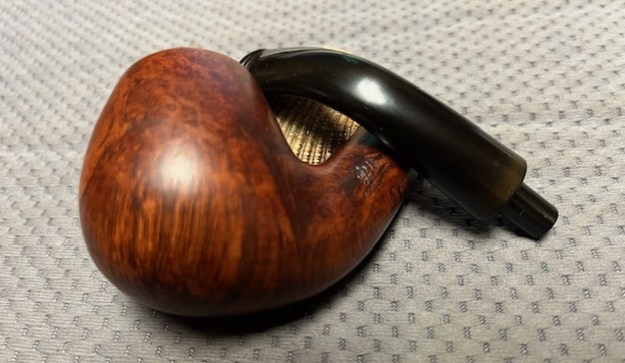
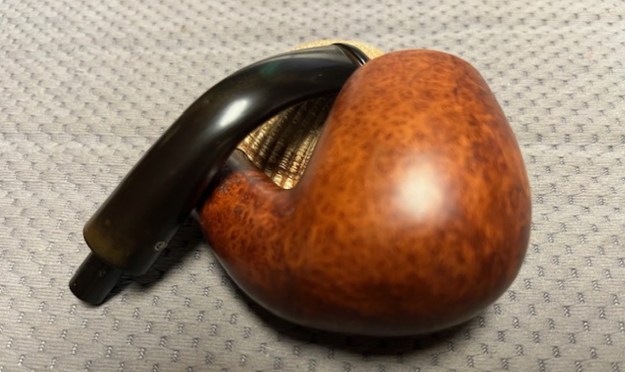
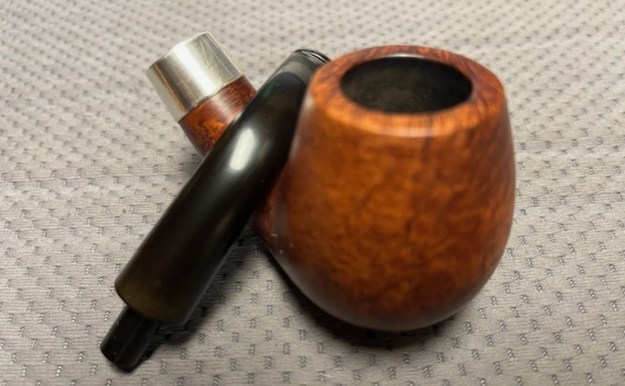
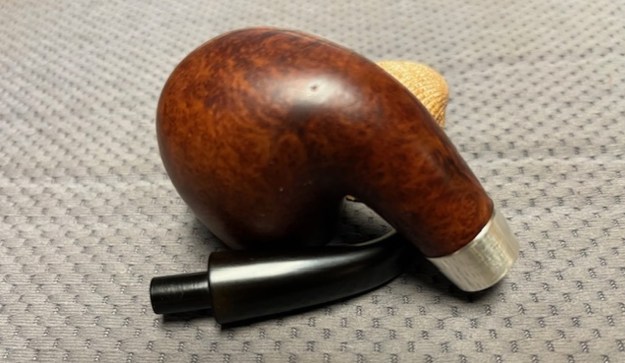
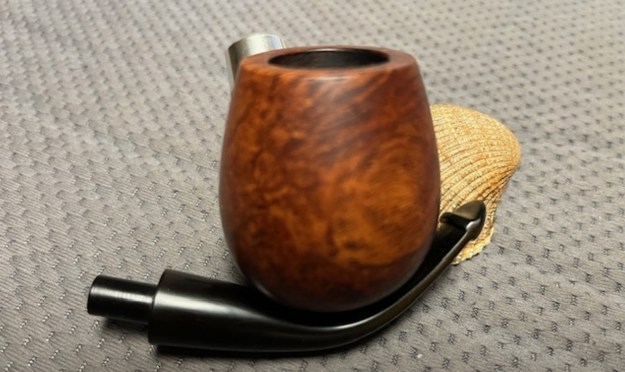
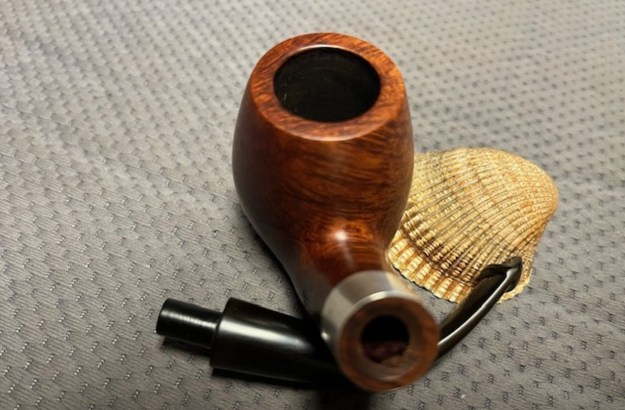
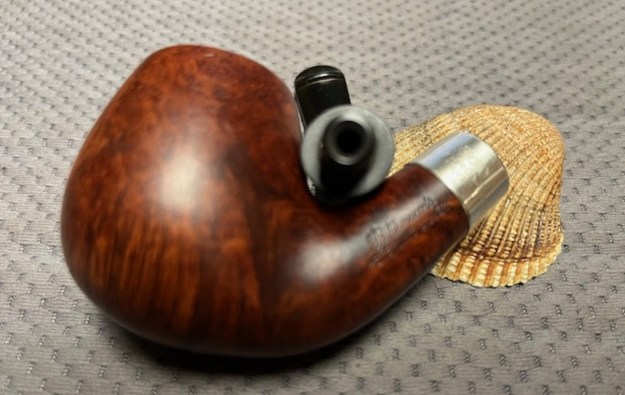
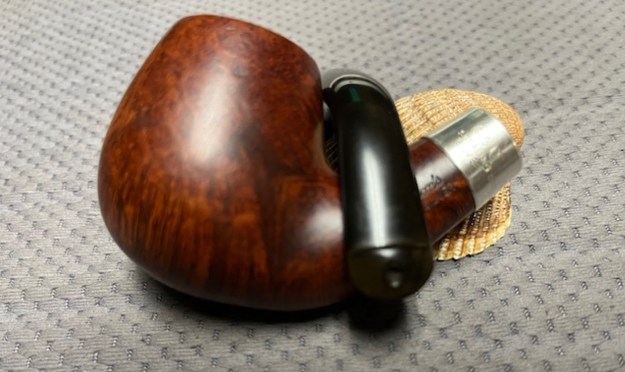
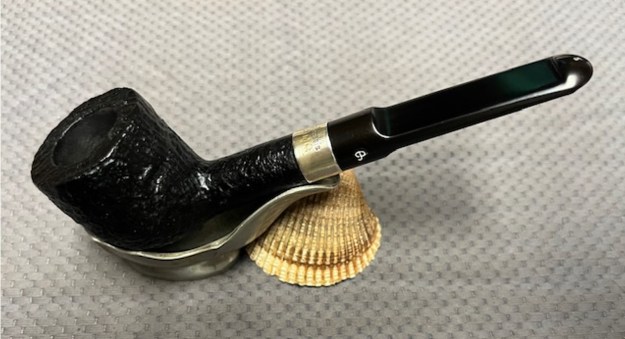
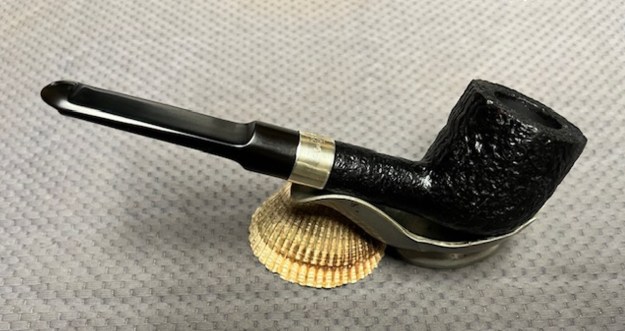
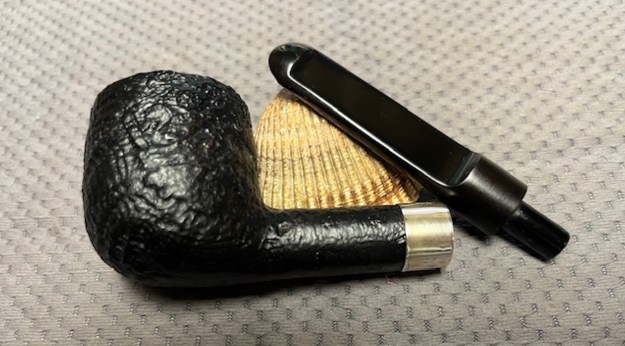
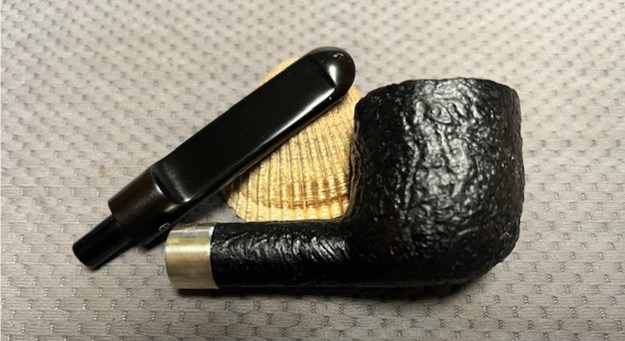
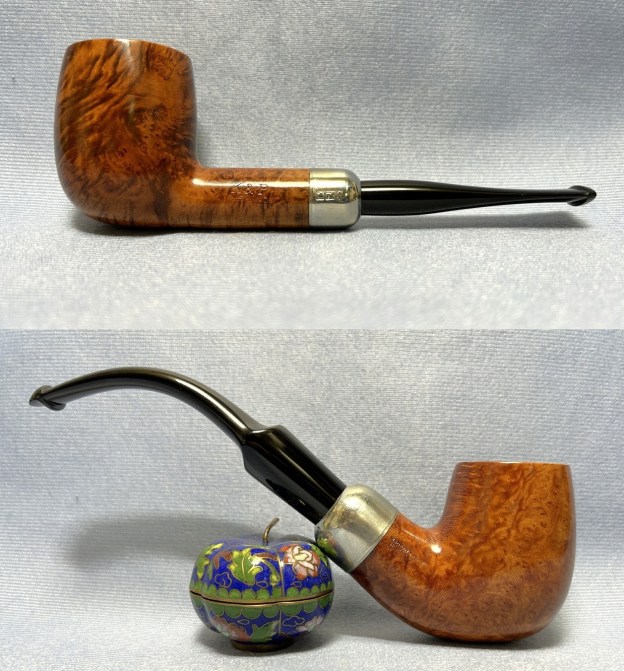
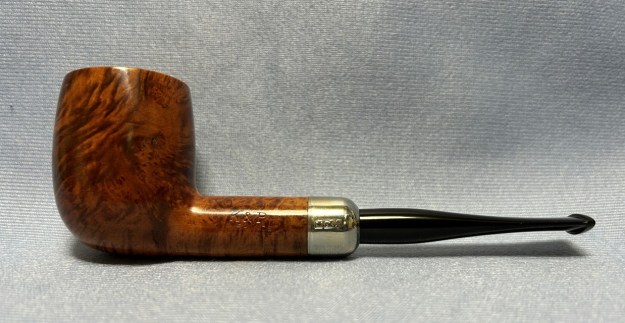
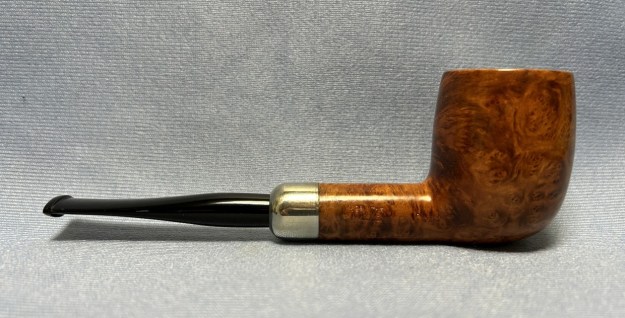
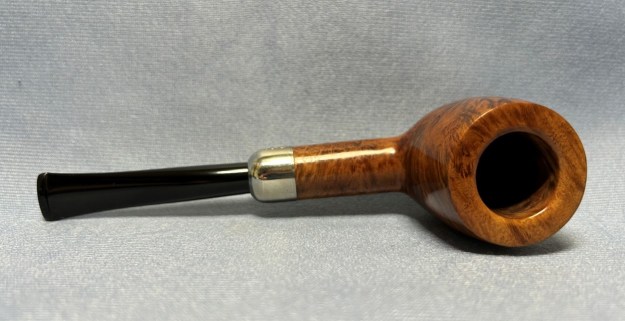
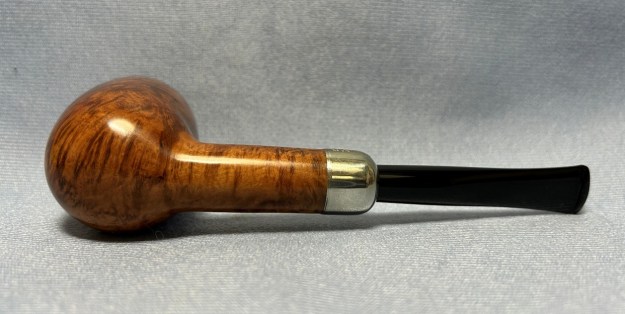
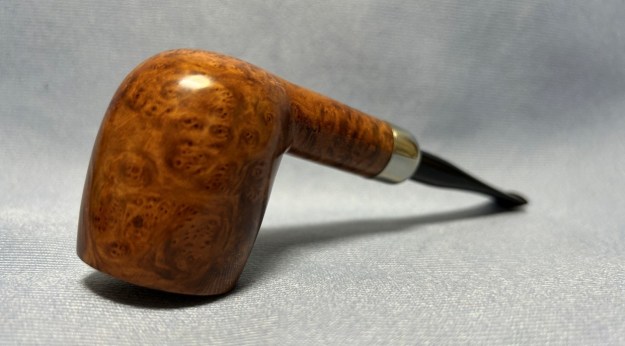
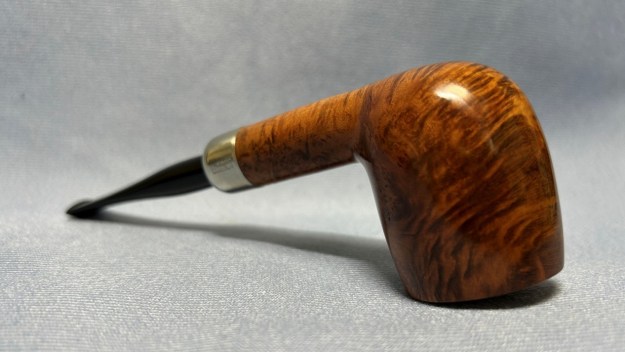
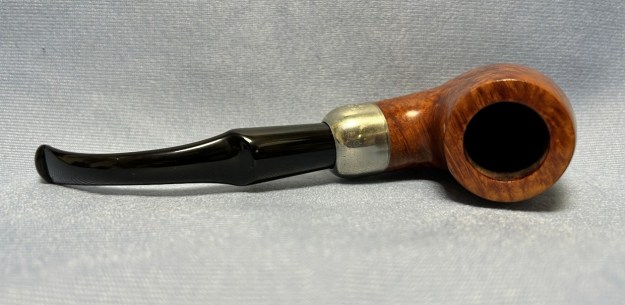
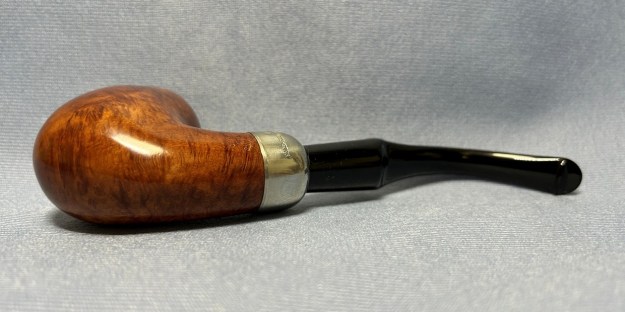
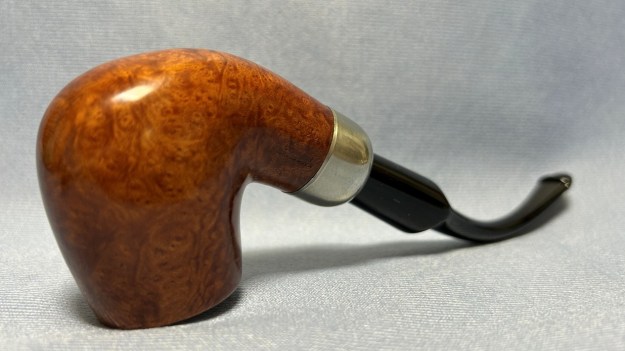
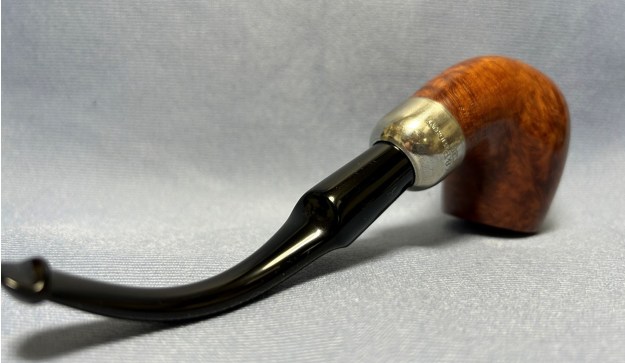
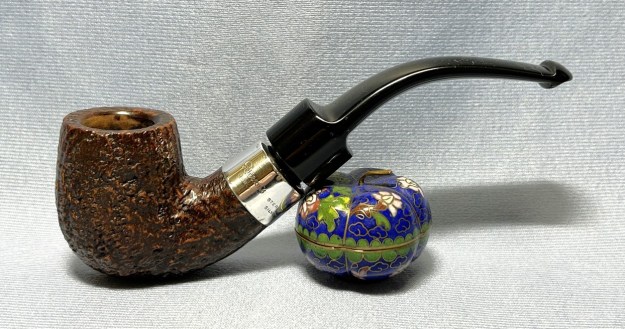
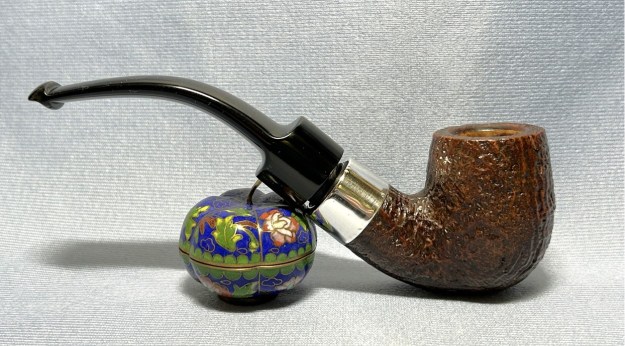
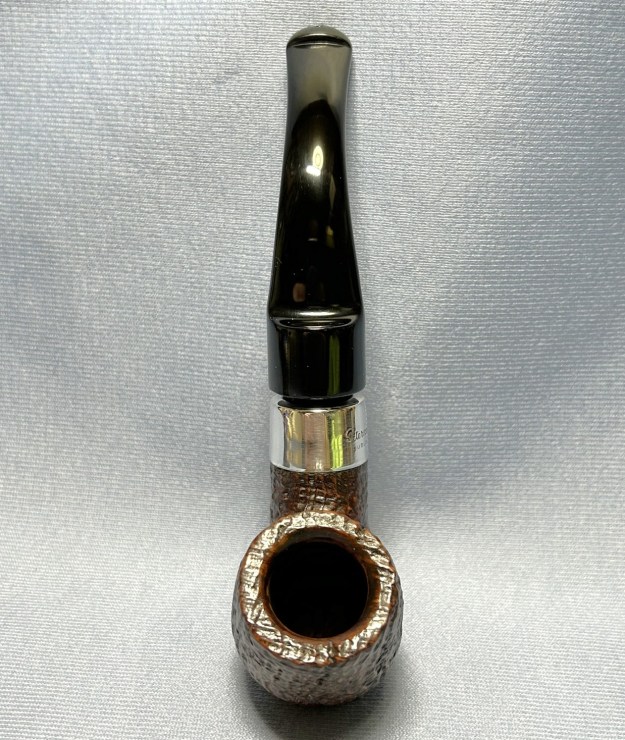
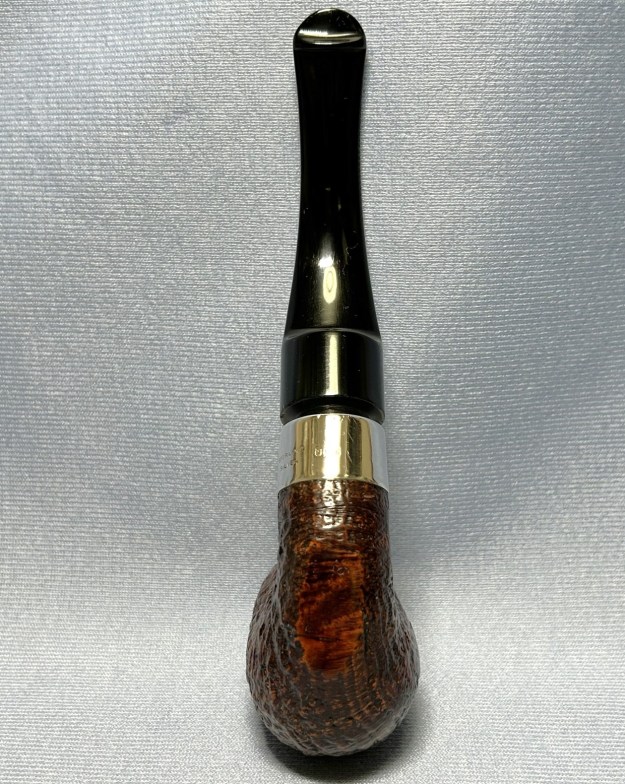
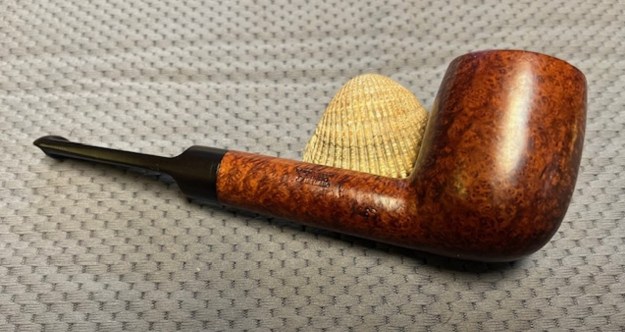
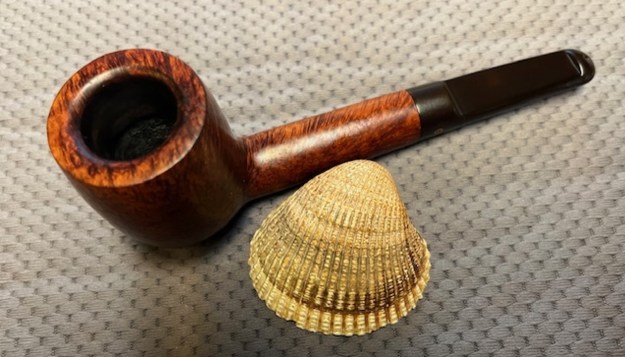
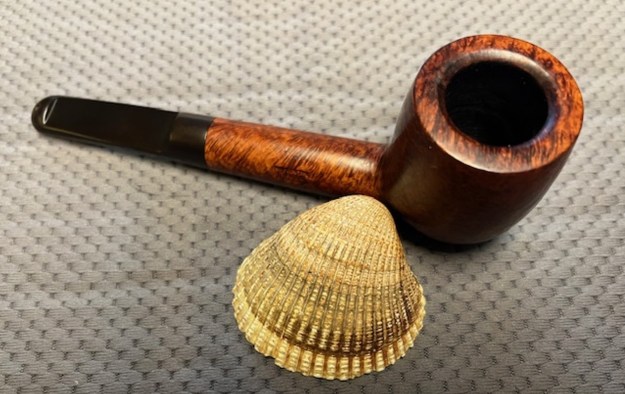
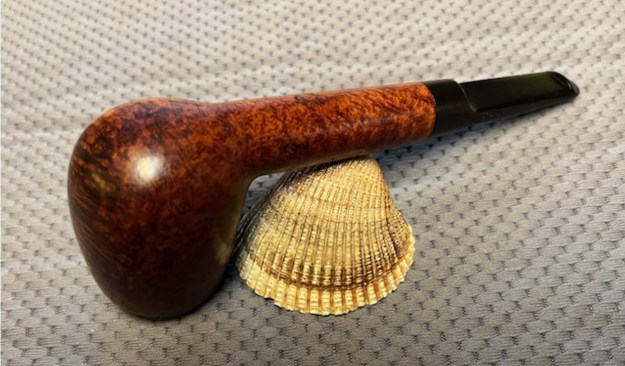
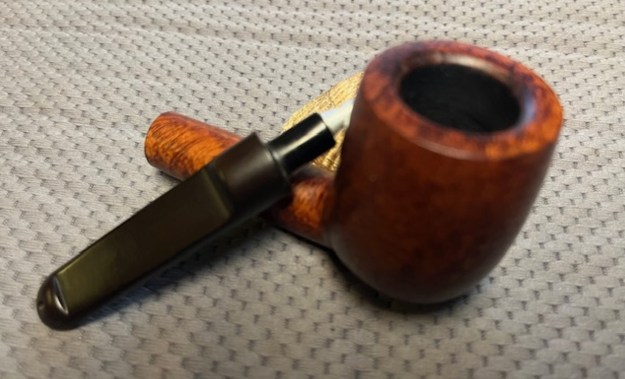
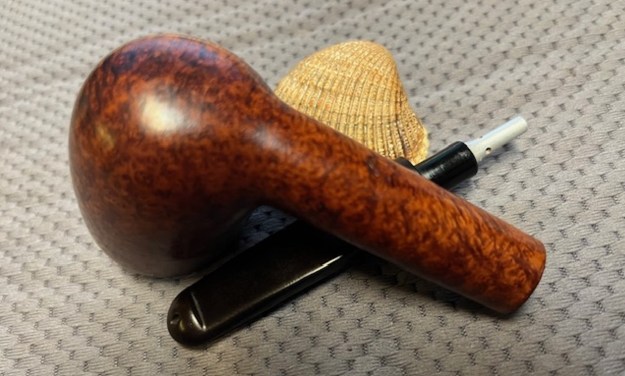
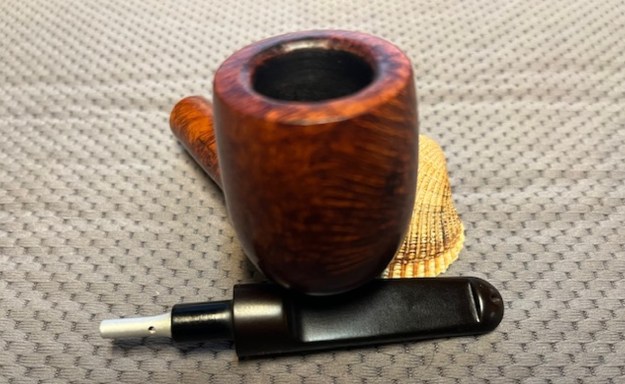
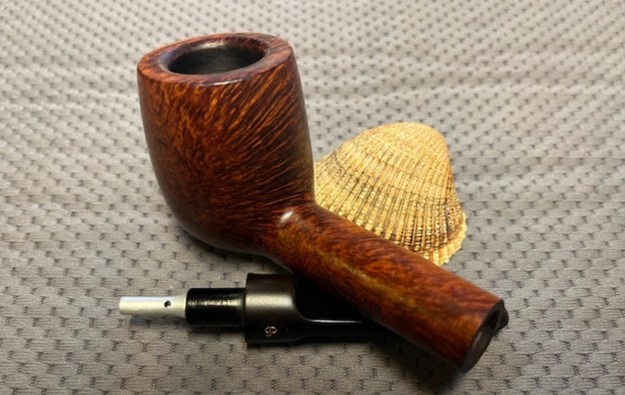
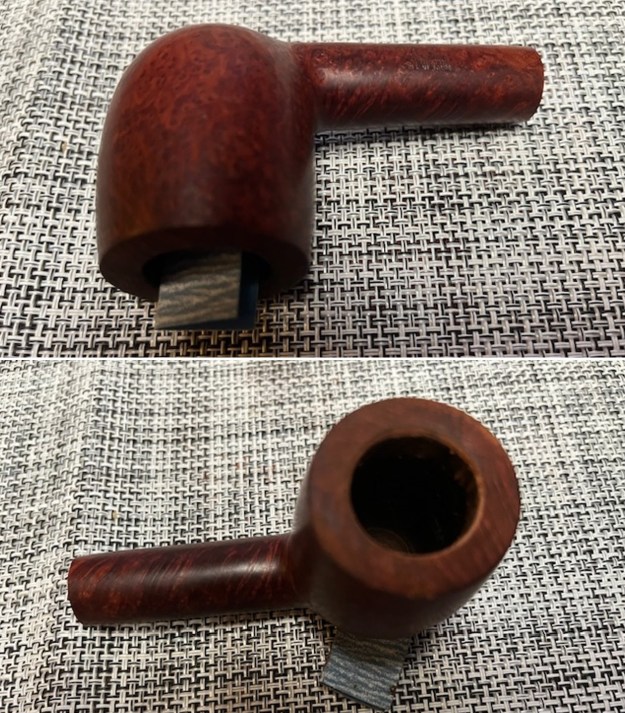
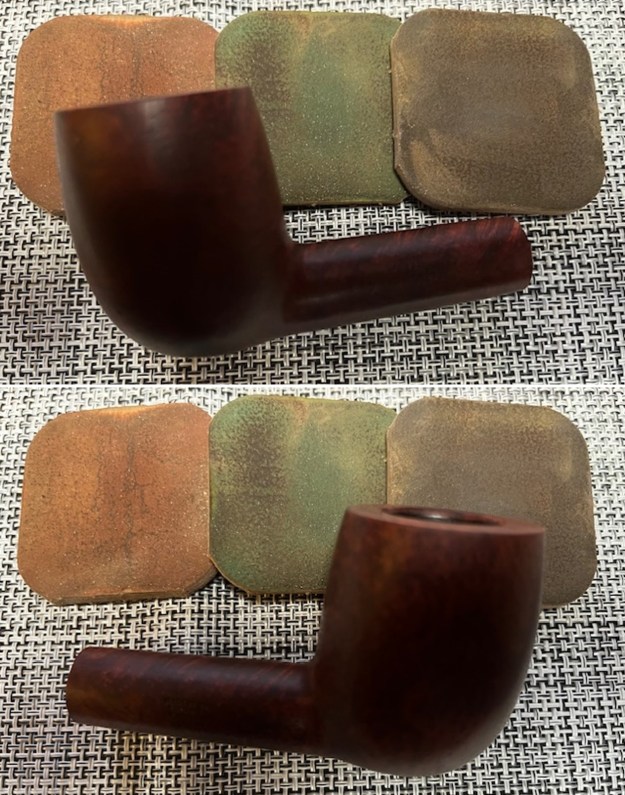
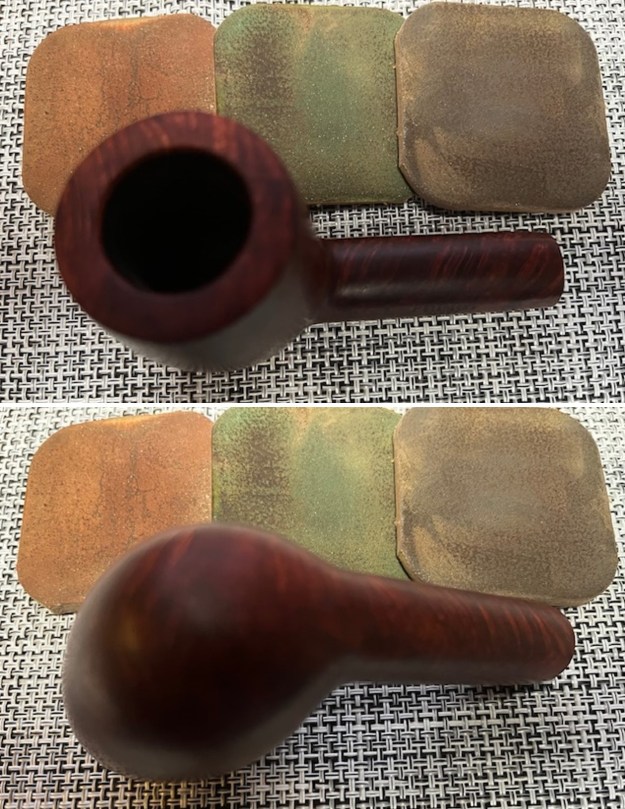
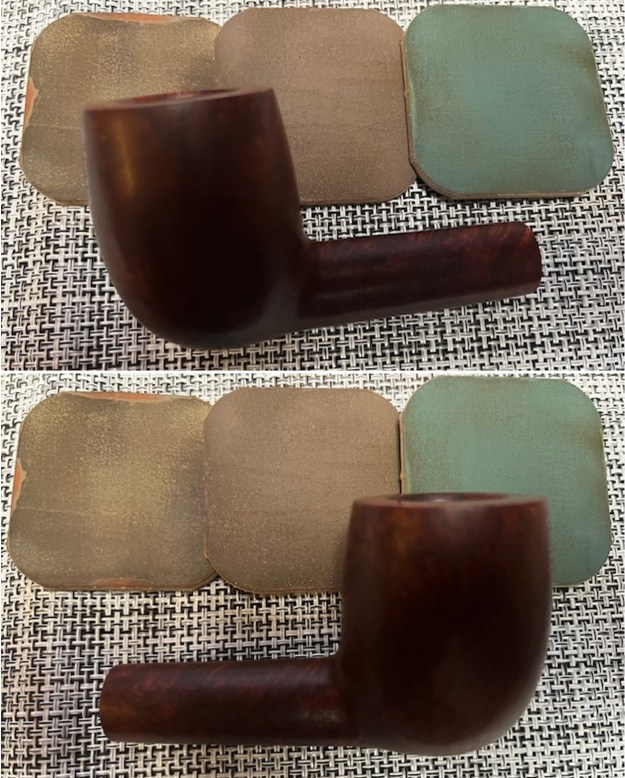
A Lovely Republic Era Peterson’s Sterling Filter 69 Stirling Bent Billiard


by Steve Laug

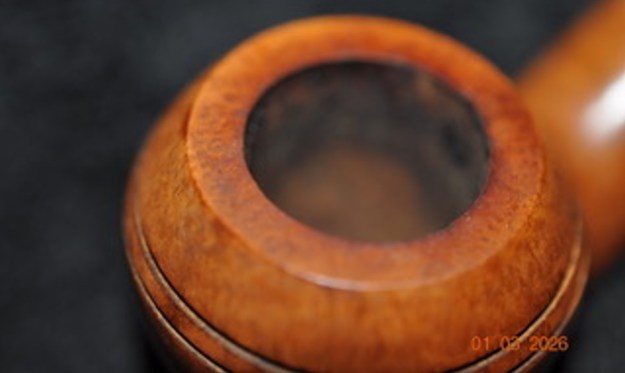
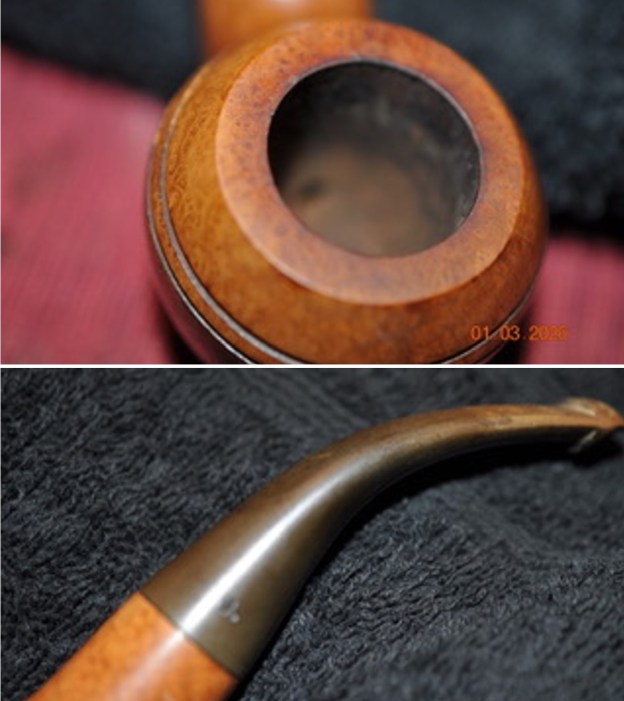
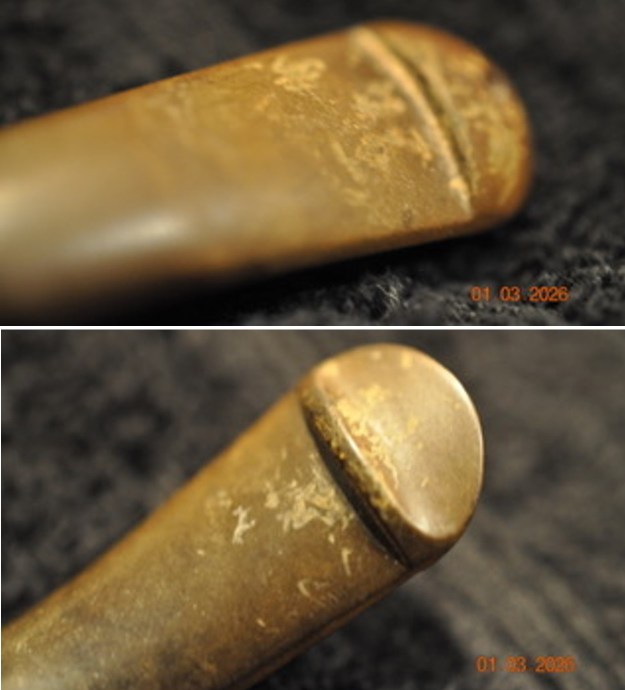
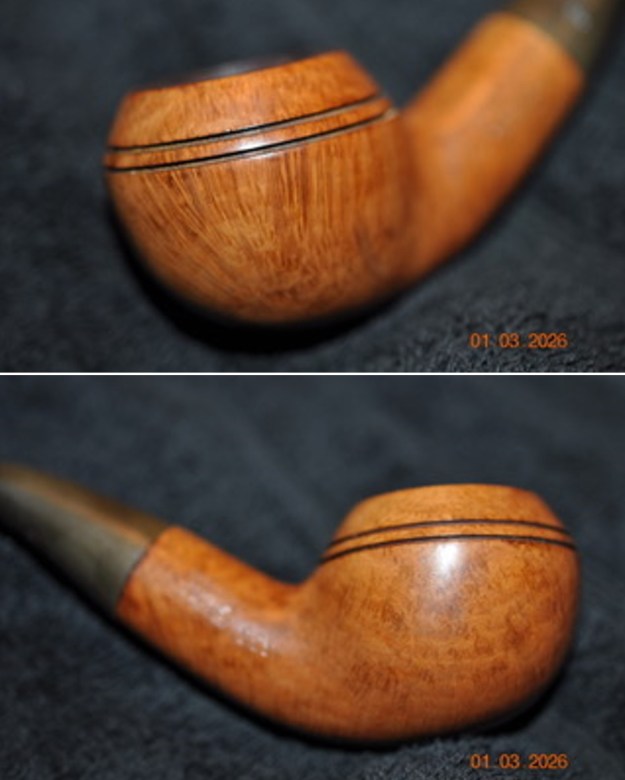
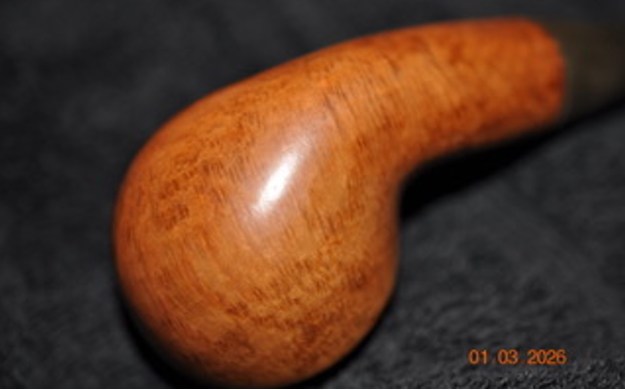
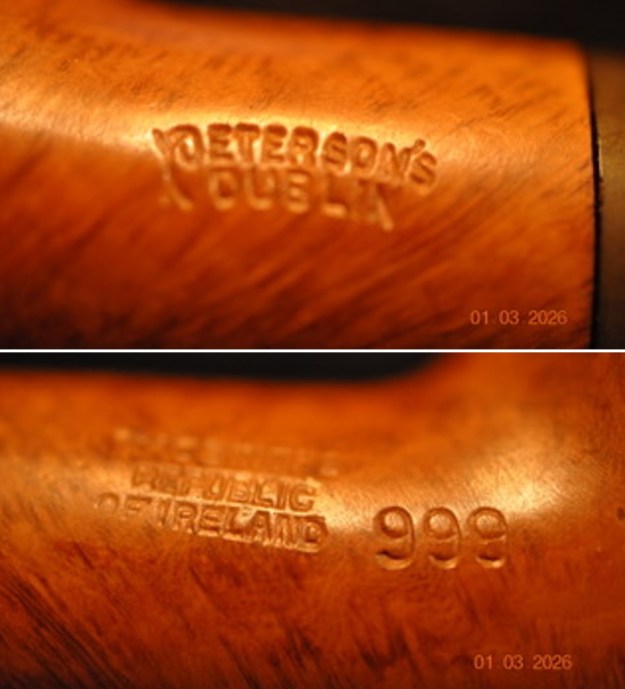
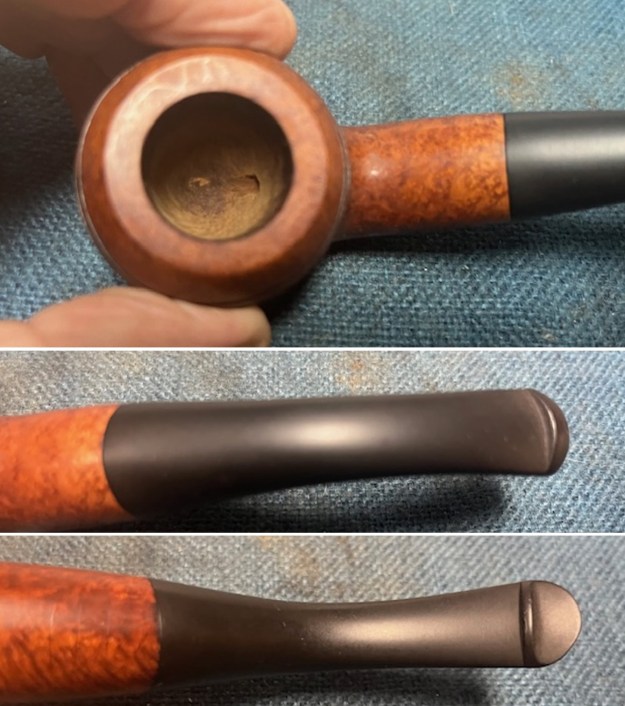
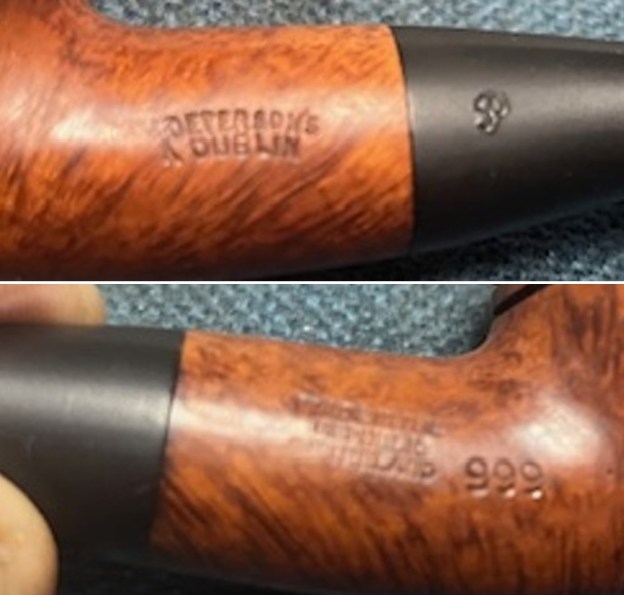
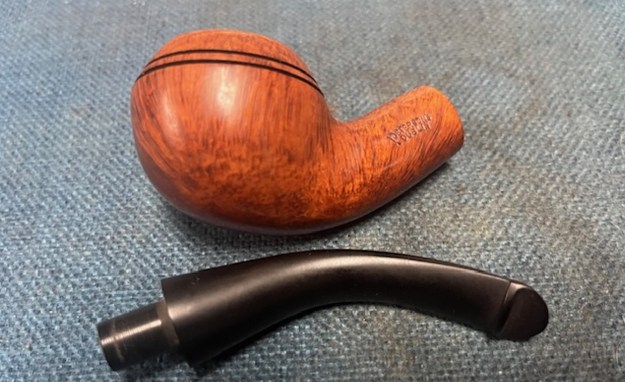
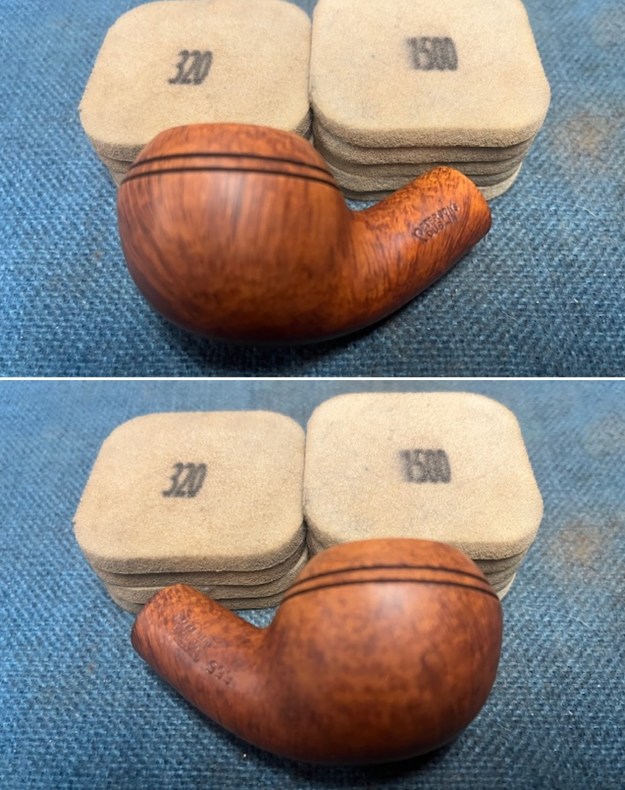
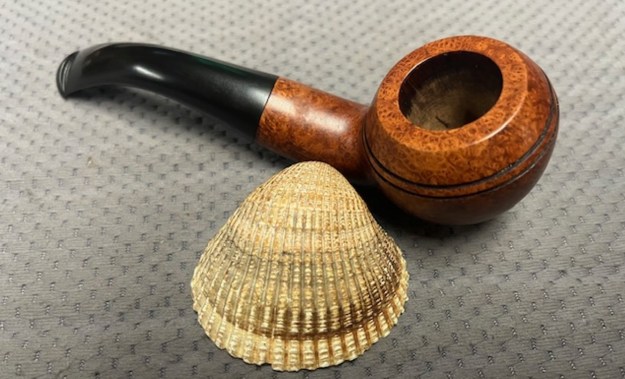
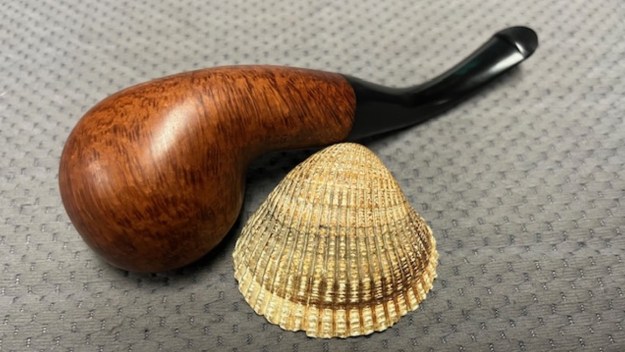
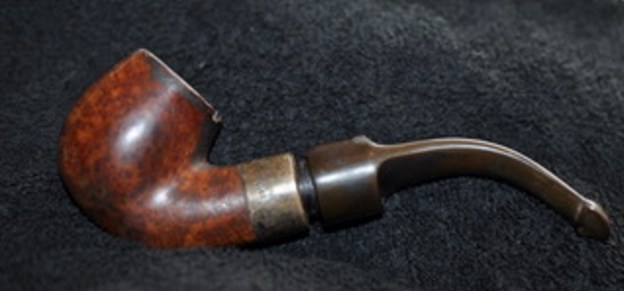
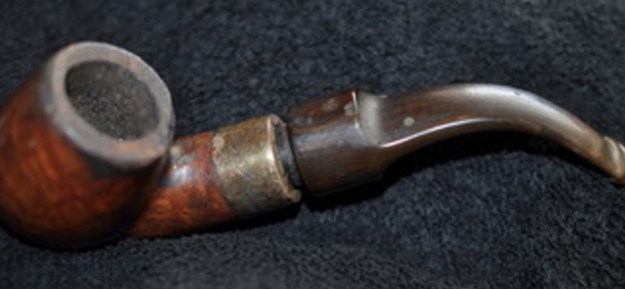
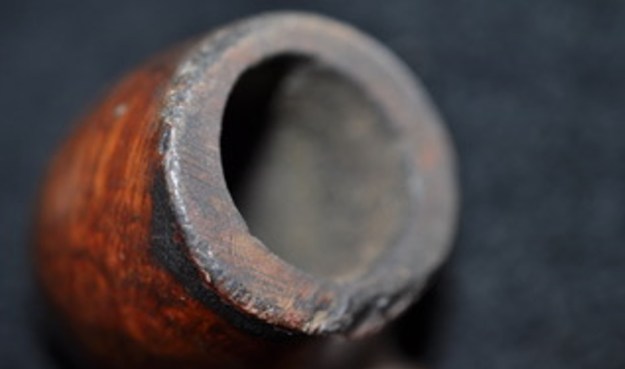
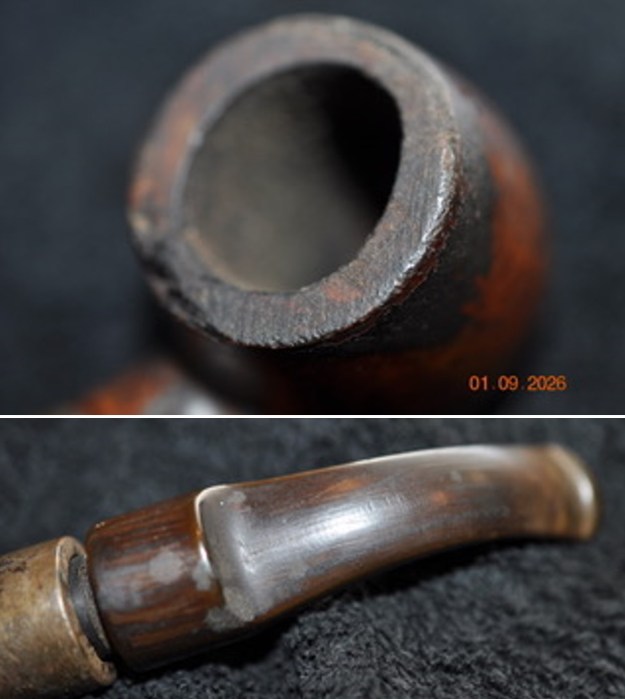
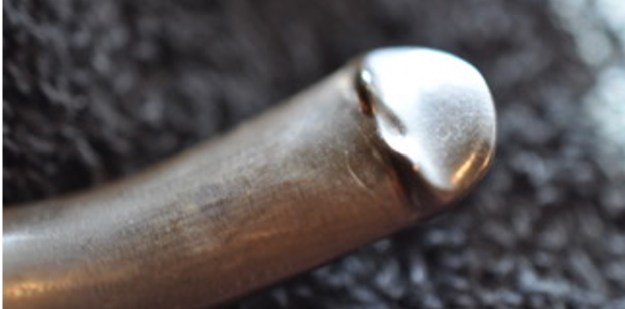
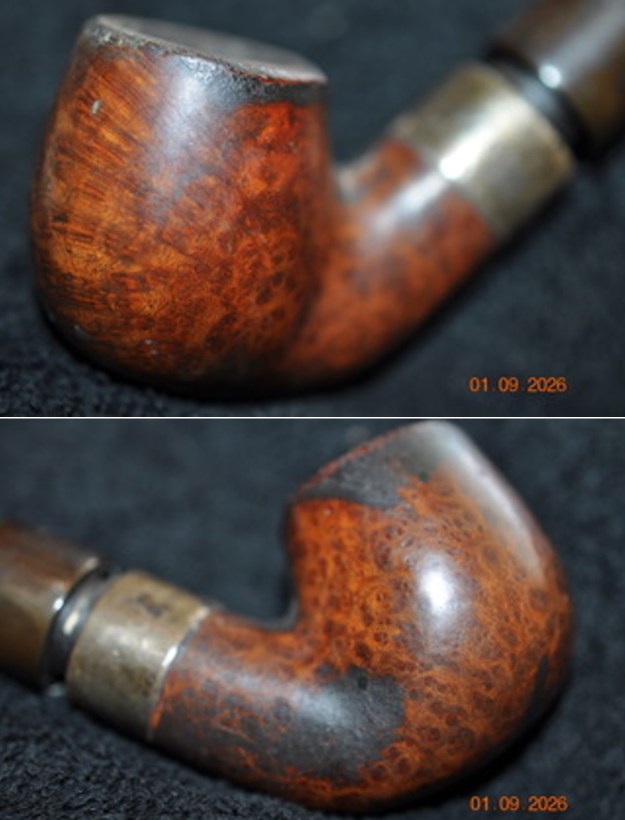
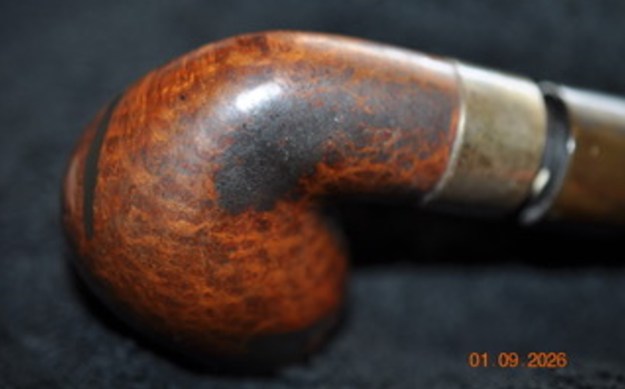
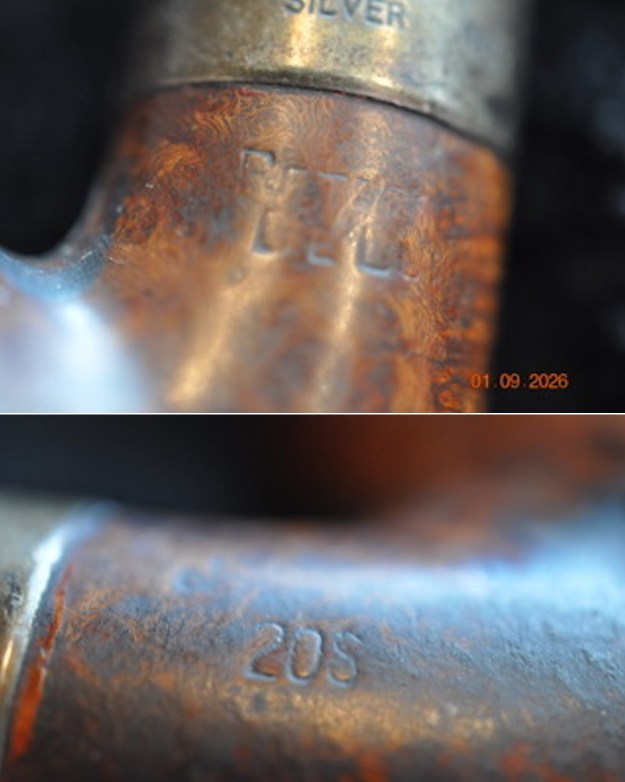
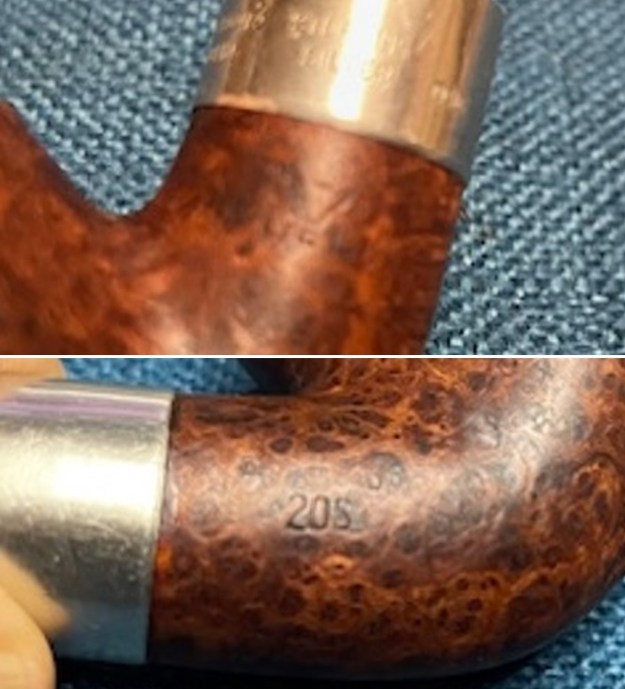
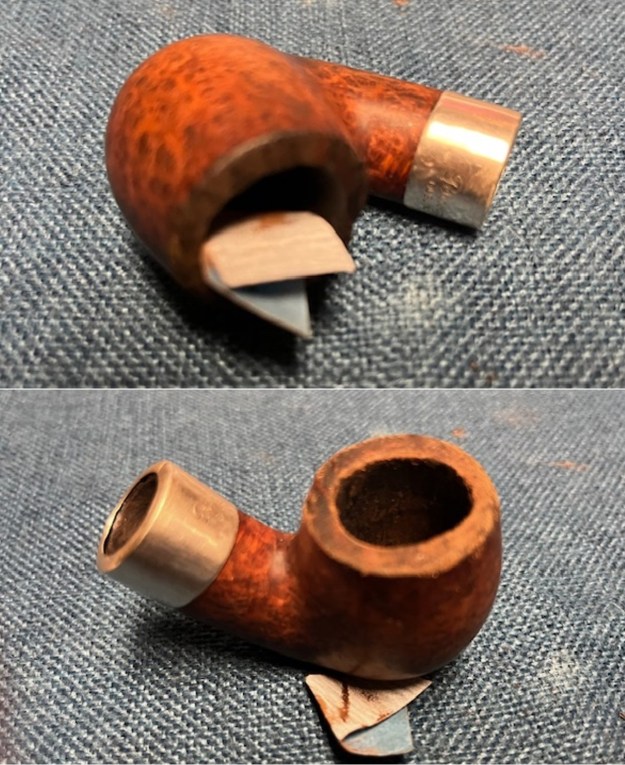
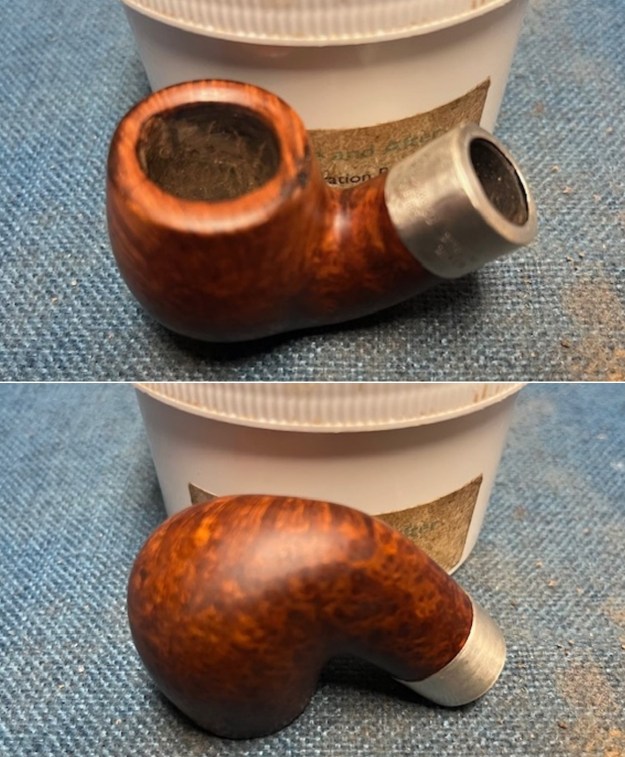
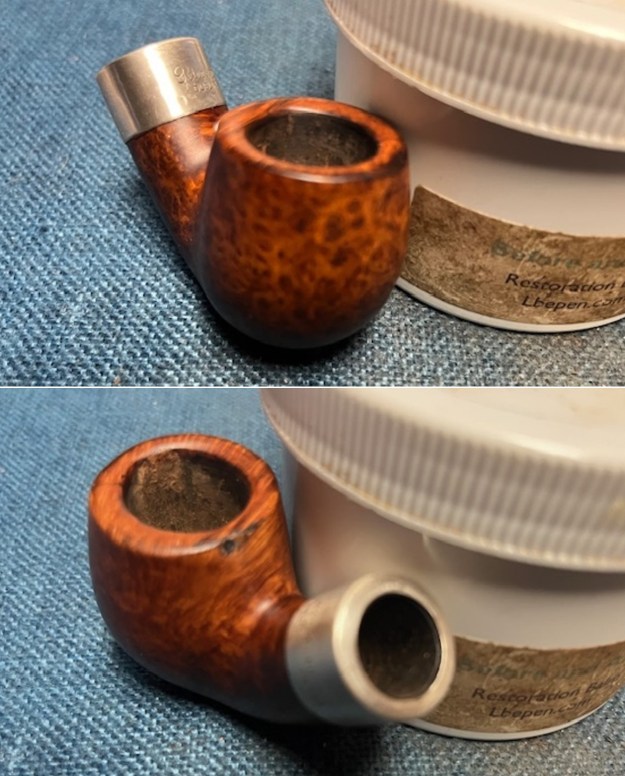
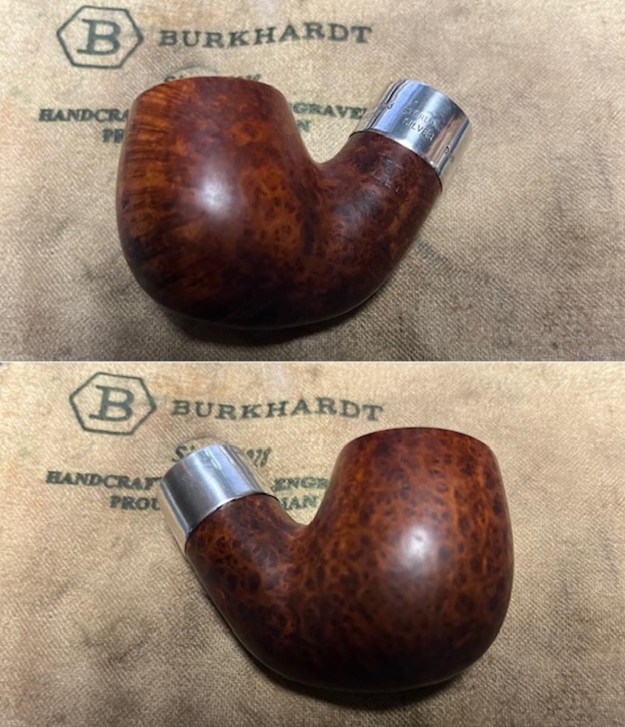
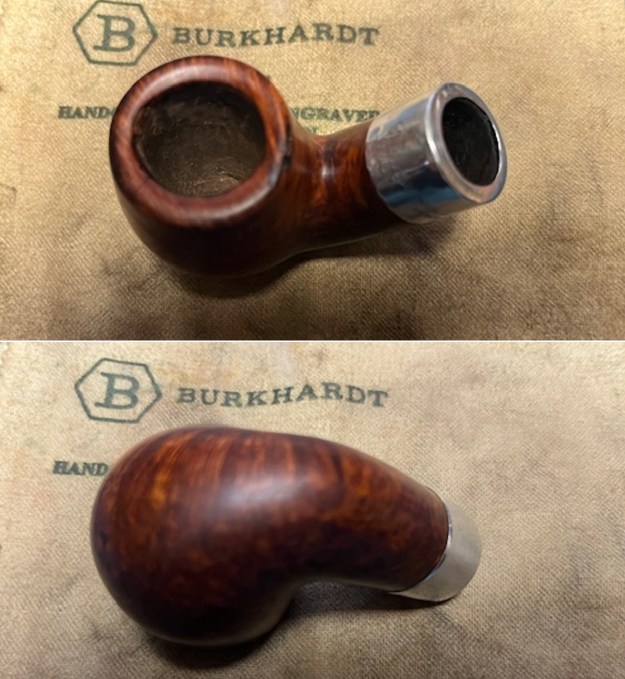
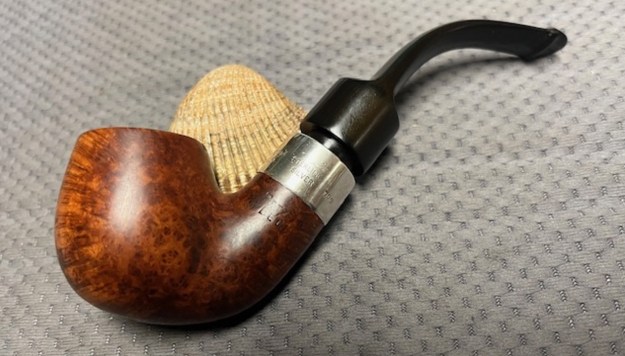
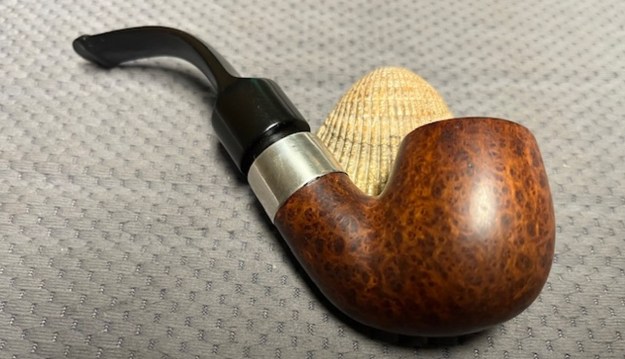
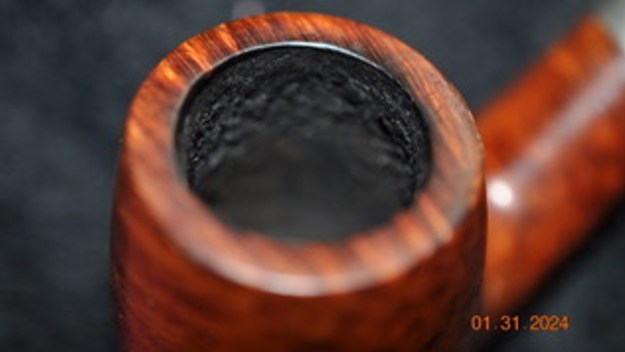
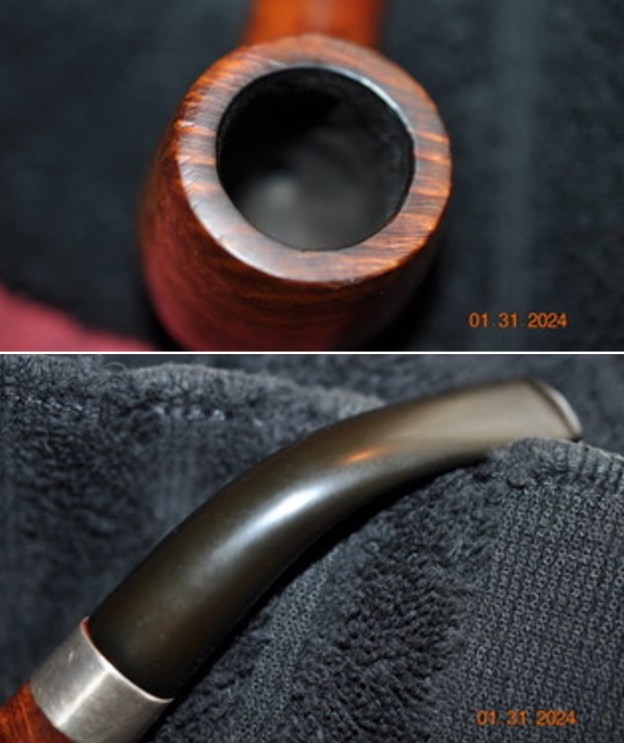
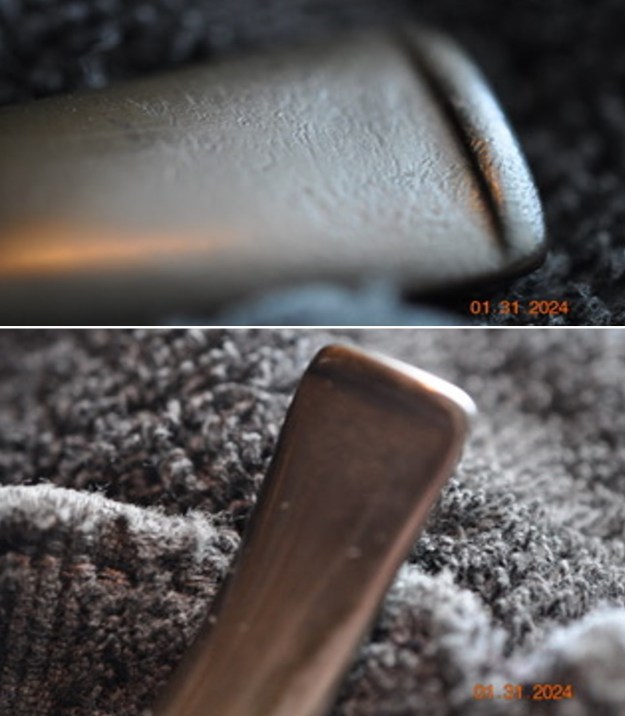
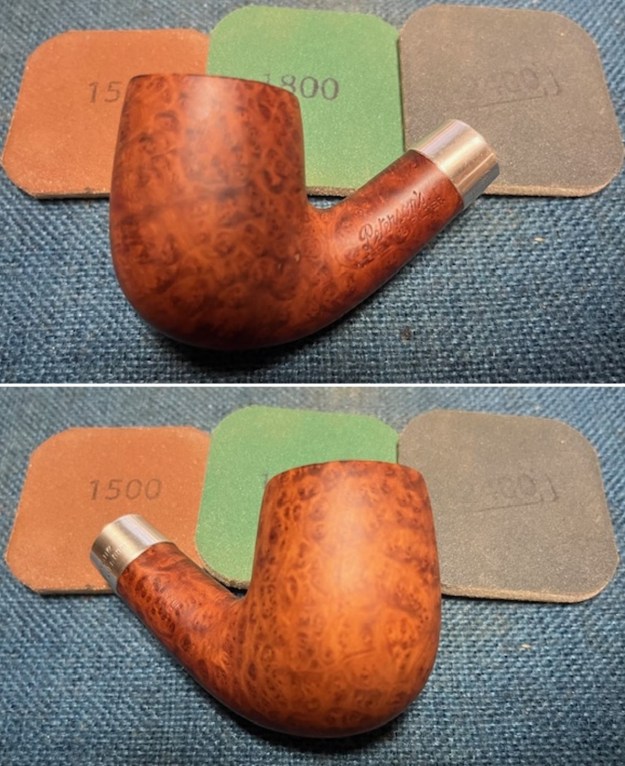
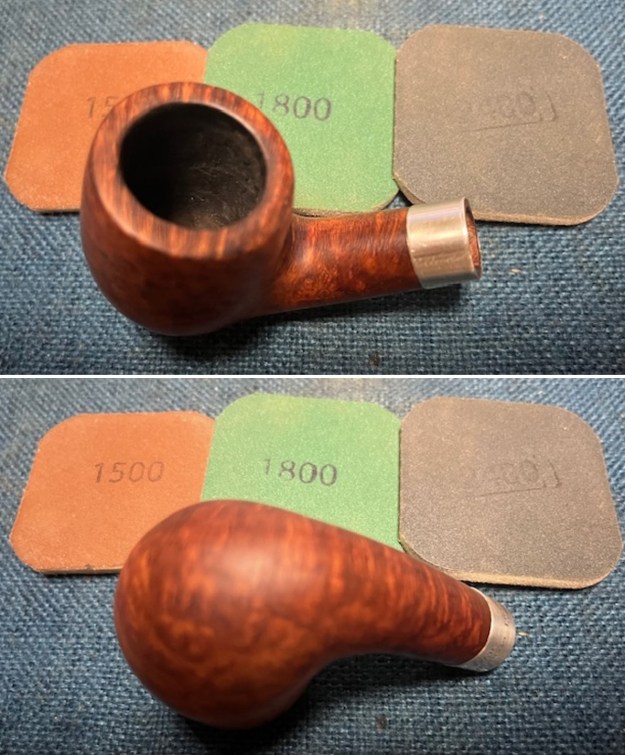
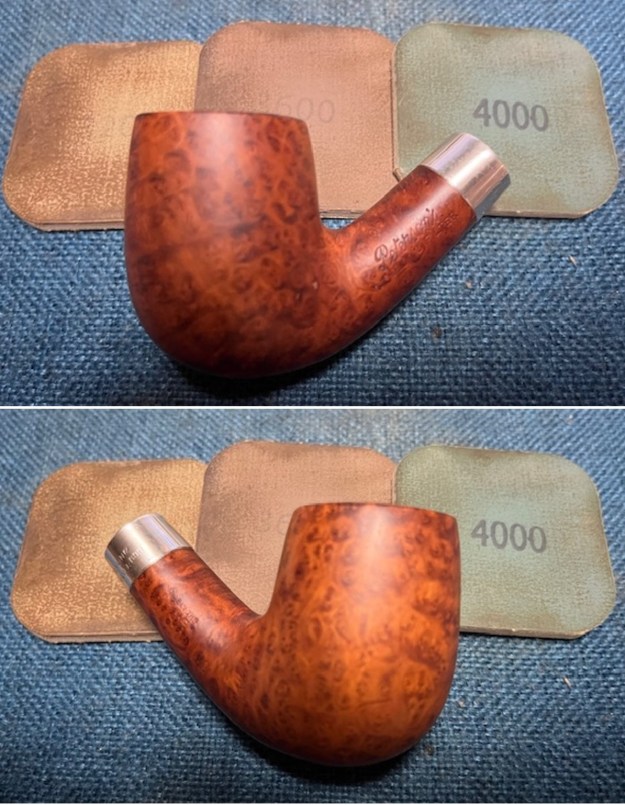
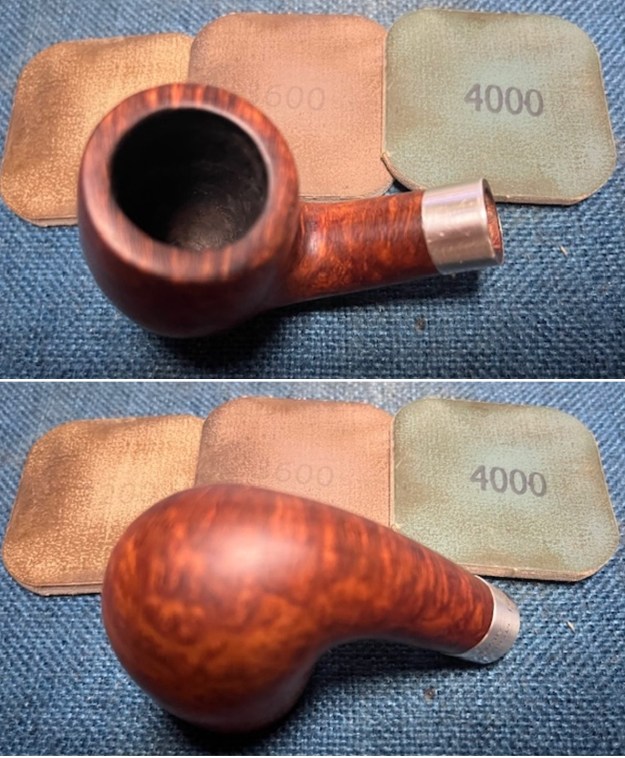
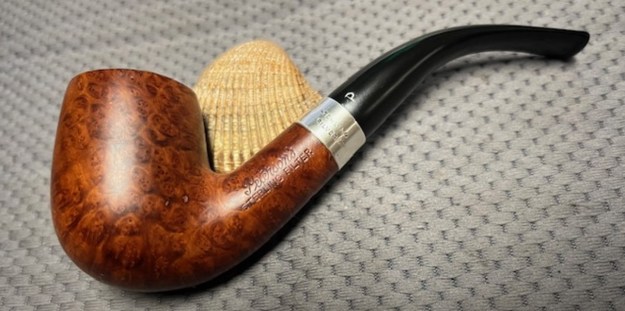
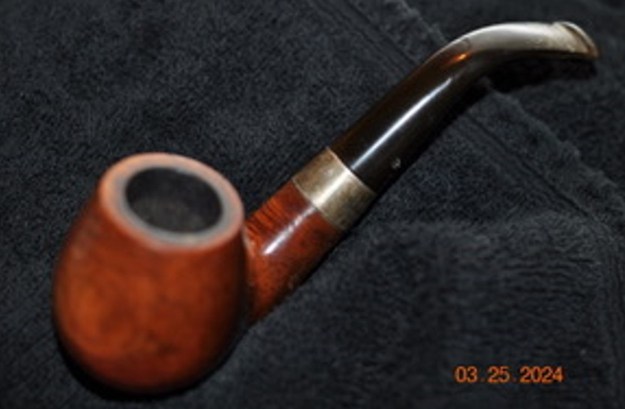
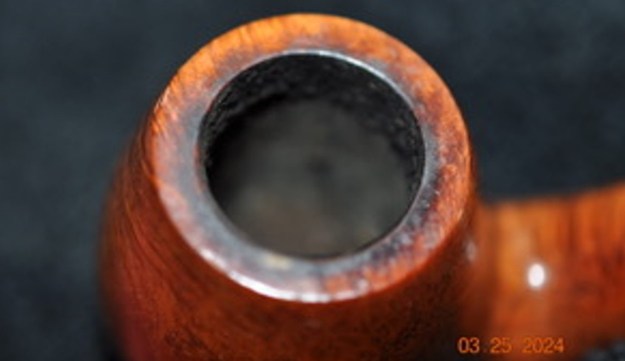
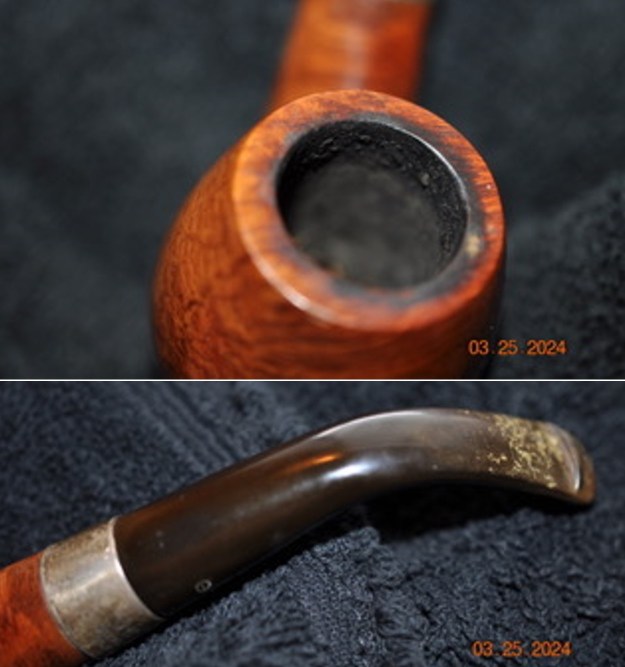
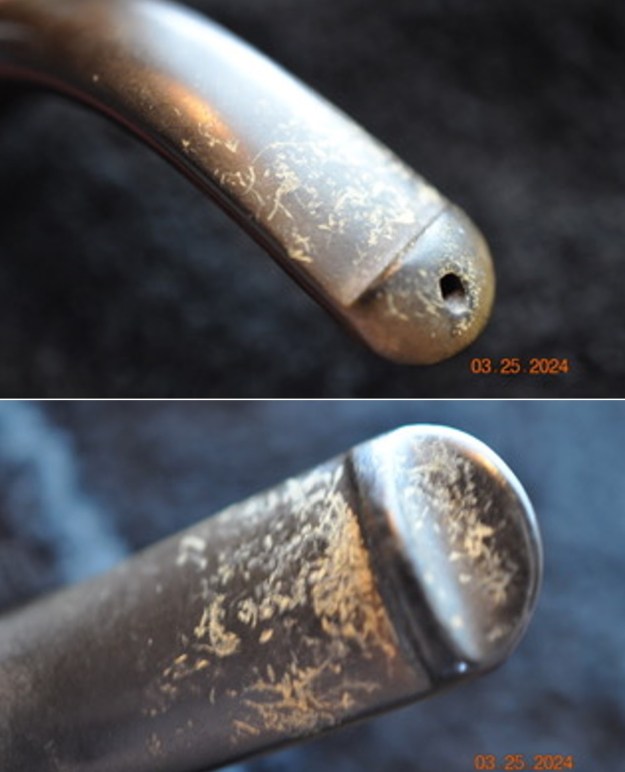
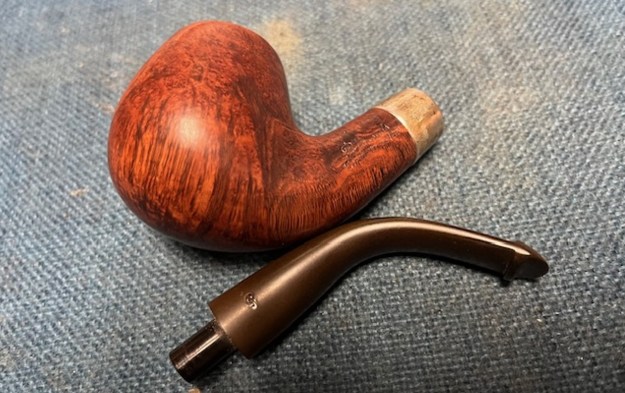
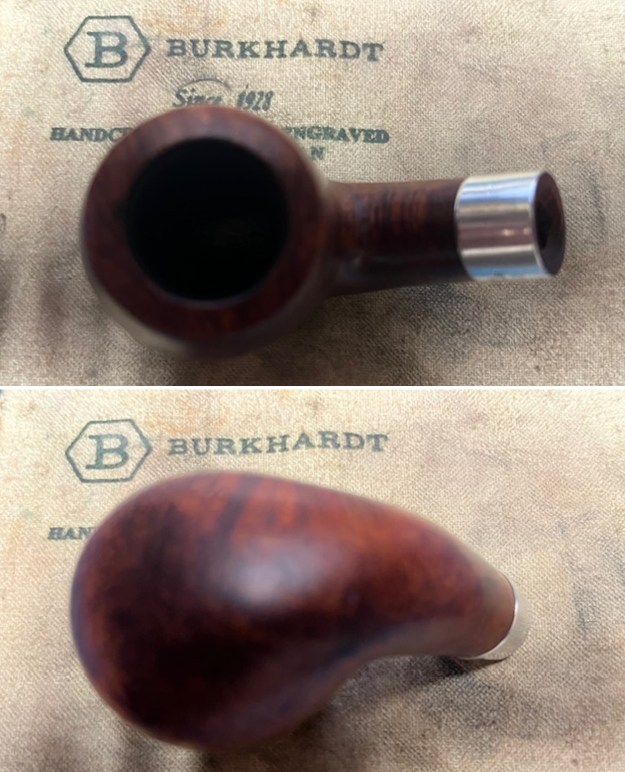
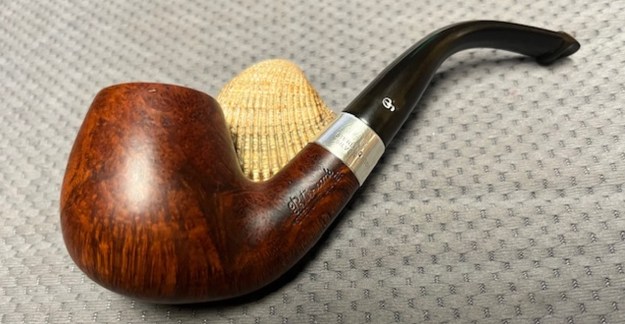
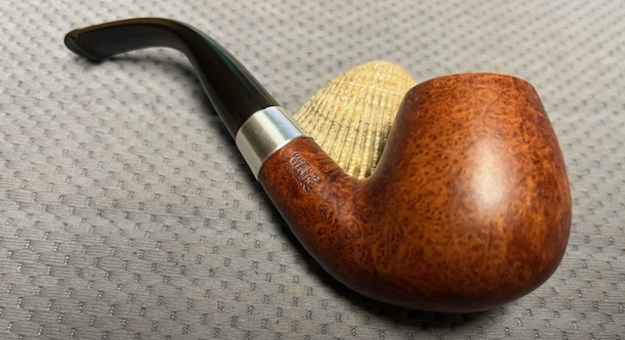
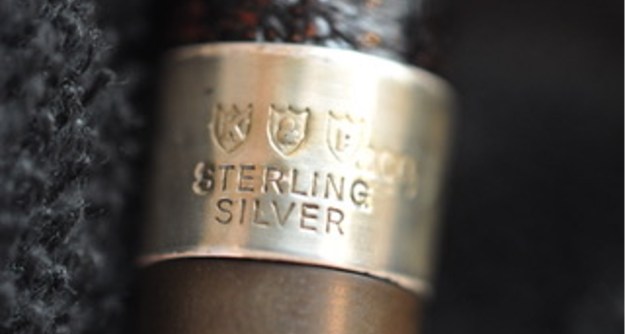
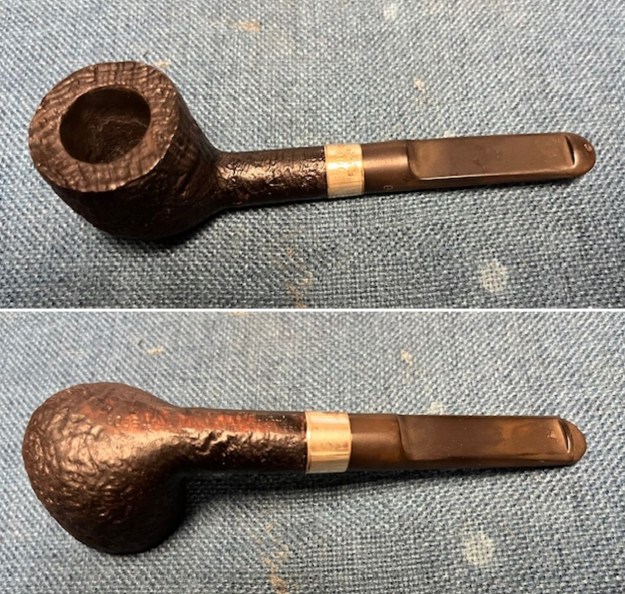
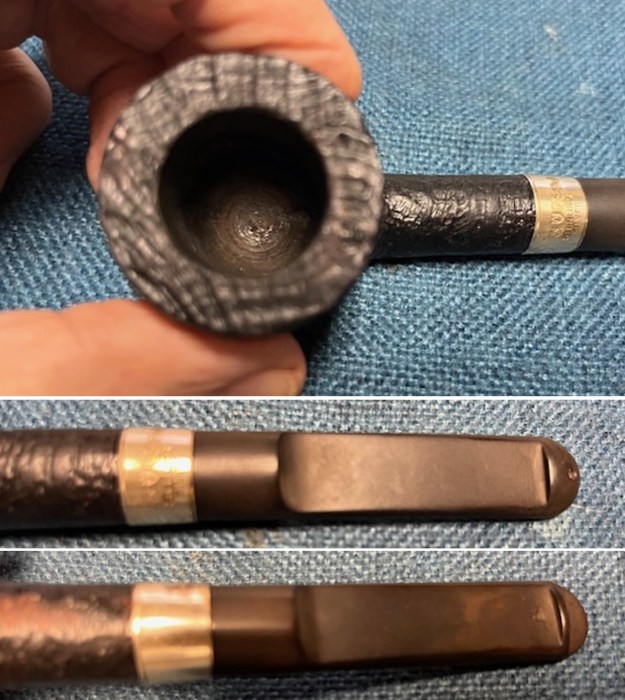
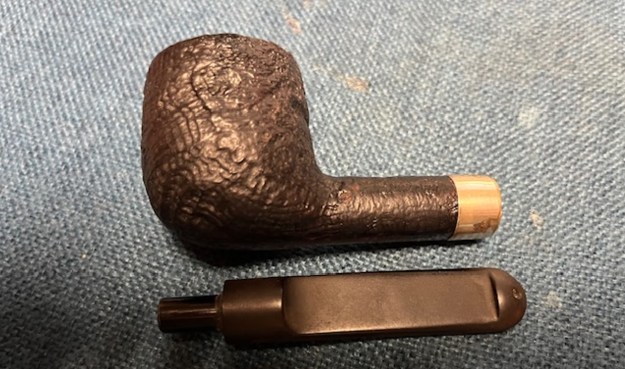
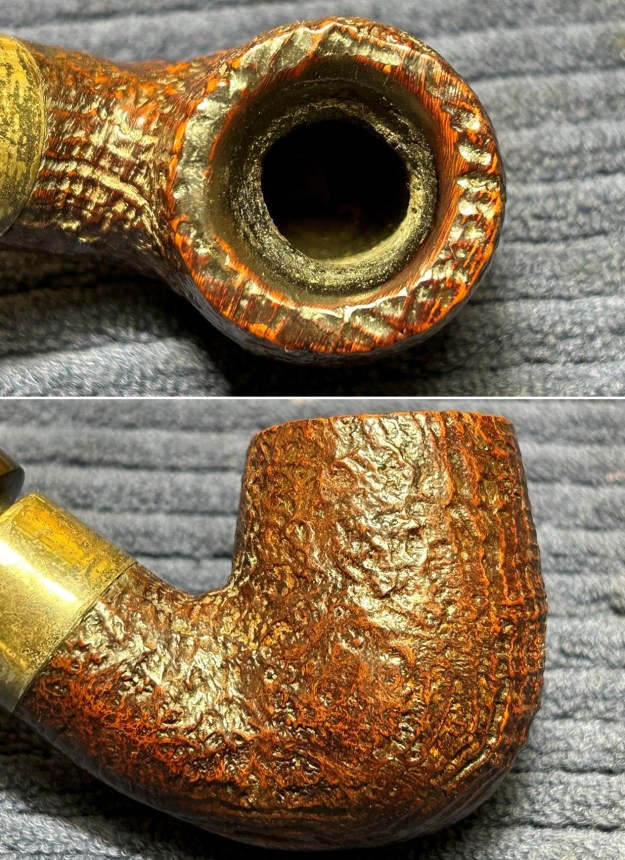
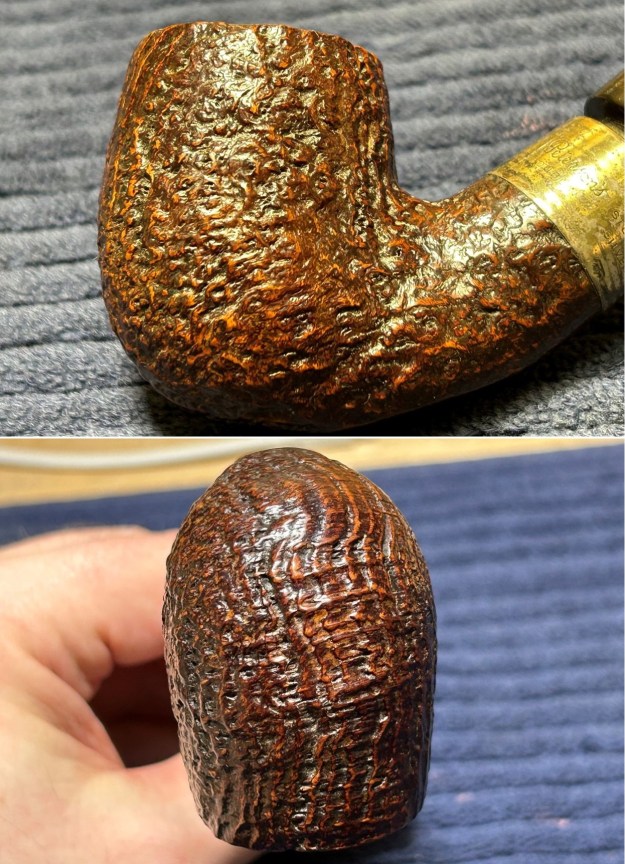
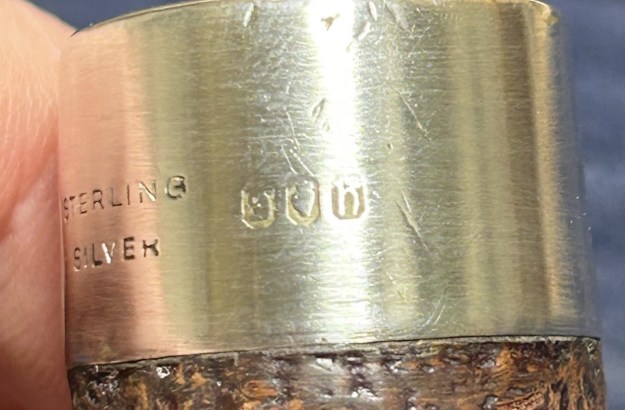
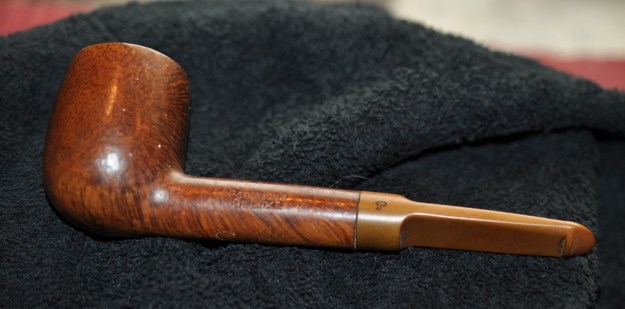
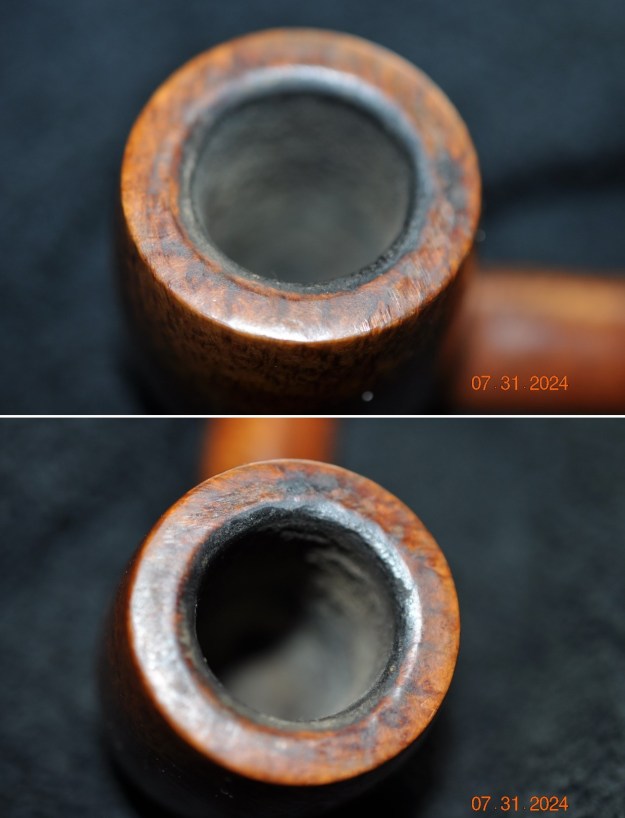
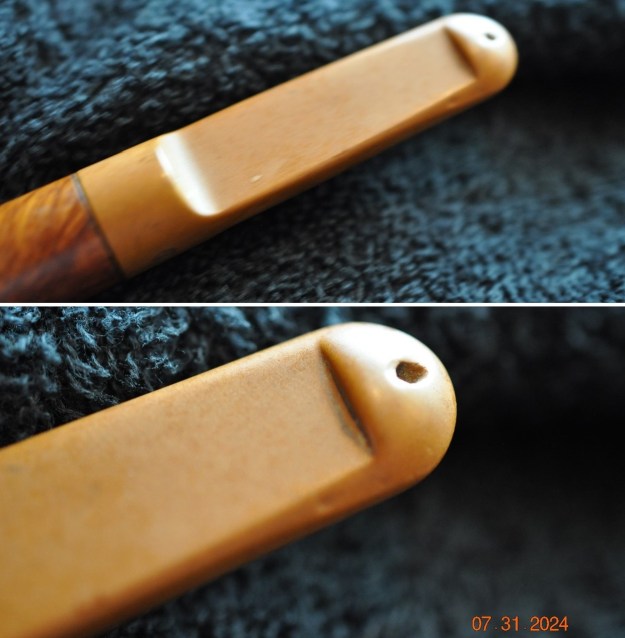
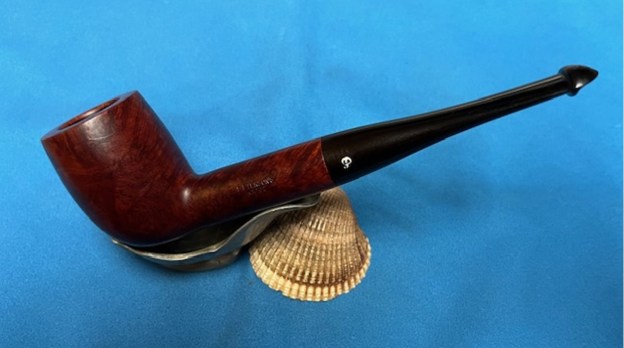
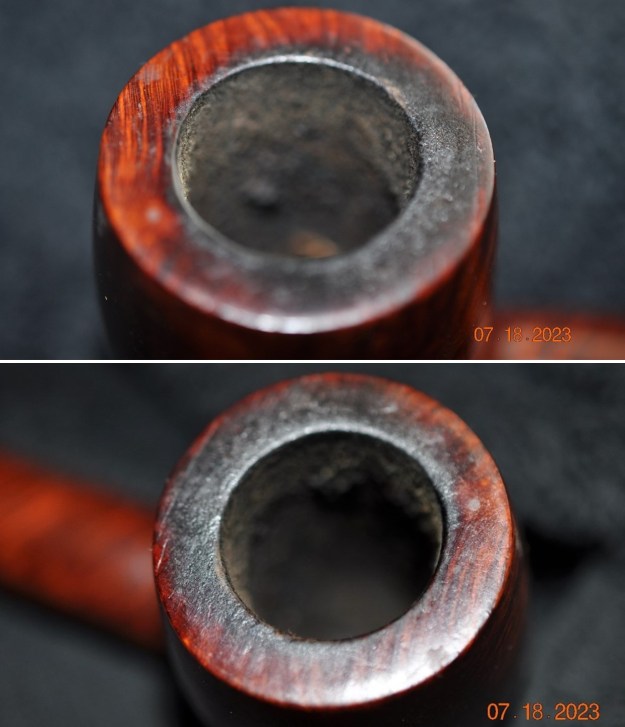
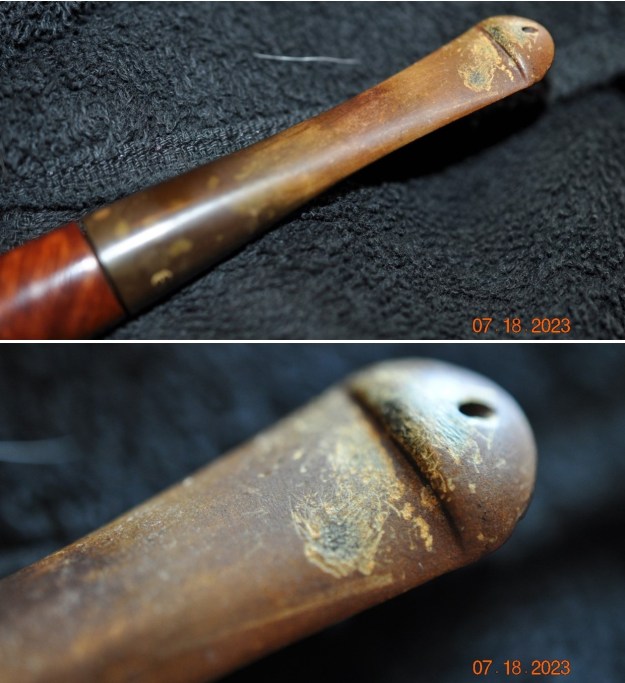
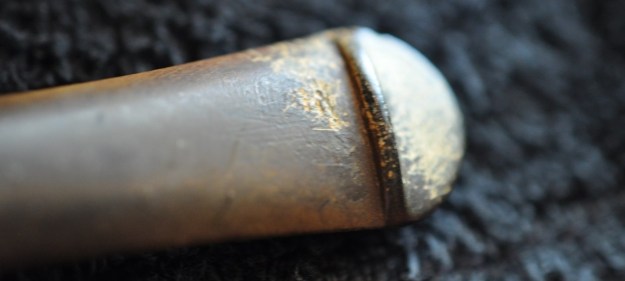
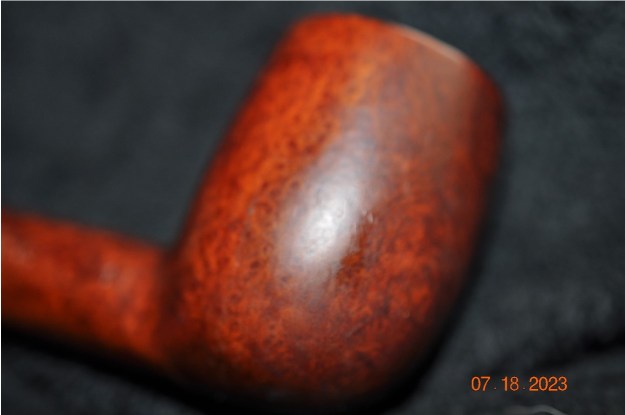
The next pipe I have chosen is smooth finished Peterson’s “Sterling Silver” pipe. The pipe came to us from our contact in Copenhagen, Denmark. This one is a Peterson’s Bent Billiard pipe with a taper fishtail stem. It has a rich brown coloured finish with interesting grain around the bowl sides and shank. It is very dirty. This Bent Billiard has a silver band on the shank that was oxidized. The grime on the finish was ground into the briar. The brown stains make the grain really pop. It was stamped on the left side of the shank and reads Peterson’s [over] “Sterling Filter”. On the right side it is stamped with the three line Made in the Republic of Ireland stamp followed by the shape number 69. The tarnished band is stamped with Peterson’s [over] Dublin followed by Sterling [over] Silver. To the right that it has three hallmarks – Hibernia seated arm on a harp (signifies country of manufacture), a crowned harp designating Sterling quality and finally a Date Letter mark – in this case an italic “I” (1976). It was in filthy condition when Jeff brought it to the table. There was a thick cake in the bowl and spots of lava on the rim top and inner edge of the bowl. The stem was oxidized, calcified and had light tooth marks and chatter on the top and underside near the button. Jeff took photos of the pipe before his cleanup work before he started on the pipe. Jeff took photos of the rim top and stem to show the general condition of the pipe. The bowl is lightly caked and the rim top and edges look very good. The stem is oxidized and has light tooth marks on the top and underside near the button. Jeff took some photos of the bowl sides and heel to show the grain that was around this bowl. It is a nice looking pipe. He took photos of the sides of the shank to show the stamping. The stamping is readable in the photos below and is as noted above. The stamping on the Sterling Silver band is also readable through the oxidation. I am including the information from Pipedia’s article on Peterson pipes. It is a great read in terms of the history of the brand (https://pipedia.org/wiki/Peterson).

I turned to “The Peterson Pipe” by Mark Irwin and Gary Malmberg to get some background on the Sterling Pipe. On page 314 it had the following information on the line.

Sterling (1949-c1957; 1978-) – Higher grade line with sterling band. Early example, 1949-57, with COM of Made in Ireland forming a circle, were offered to the US market through Rogers Imports and have no hallmark, although until recent years the line carried Peterson’s maker’s mark, the K&P is in separate shields. Models beginning in ’78 with hallmarked dates and a COM stamp of Made in [over] the Republic [over] of Ireland.

I knew that I was dealing with a pipe made between 1949-1957 as shown by the Made in the Republic of Ireland three-line format stamp. Now it was time to work on the pipe.

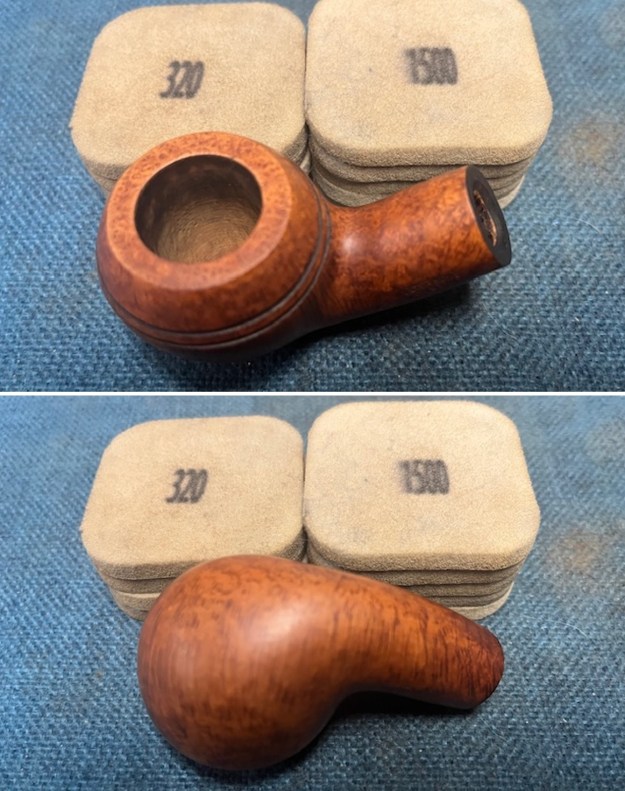
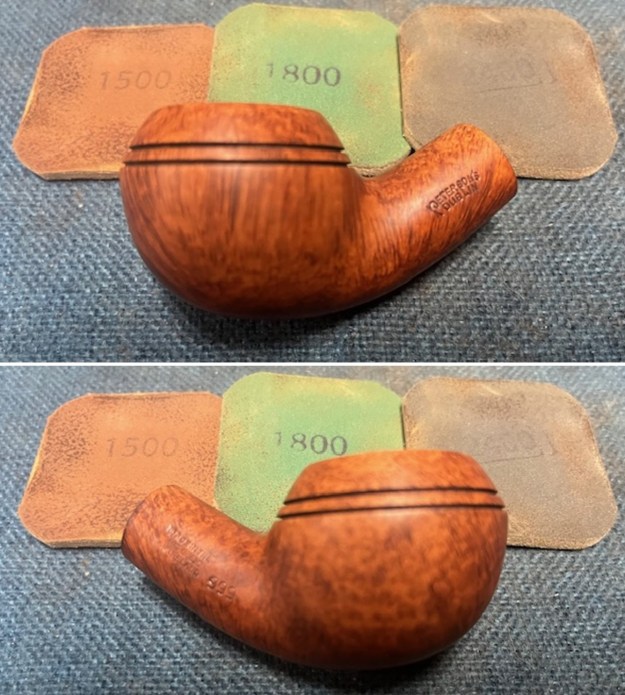
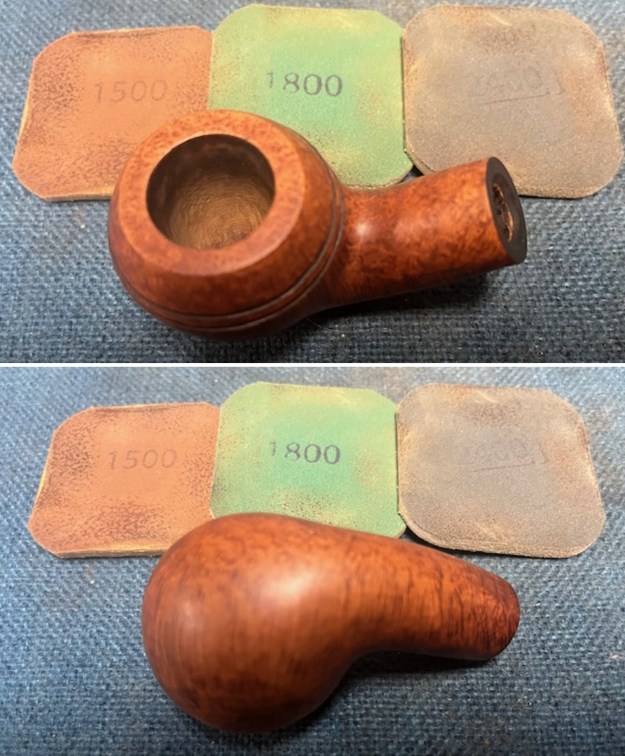
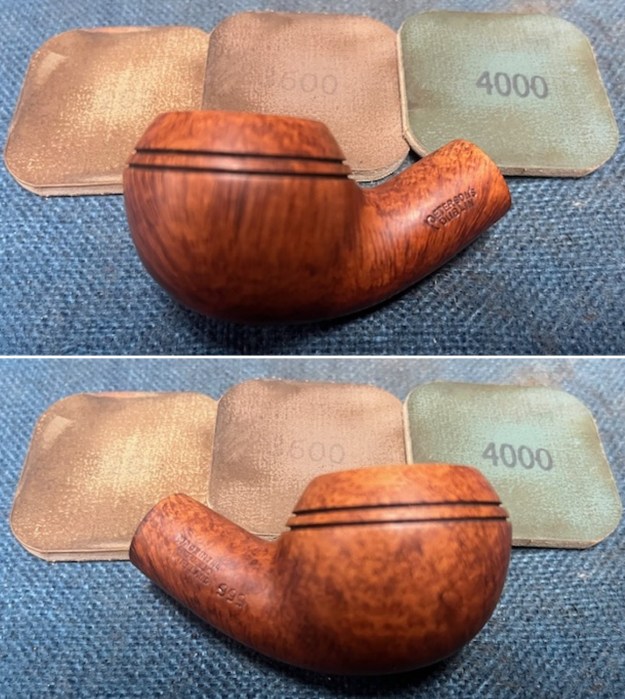
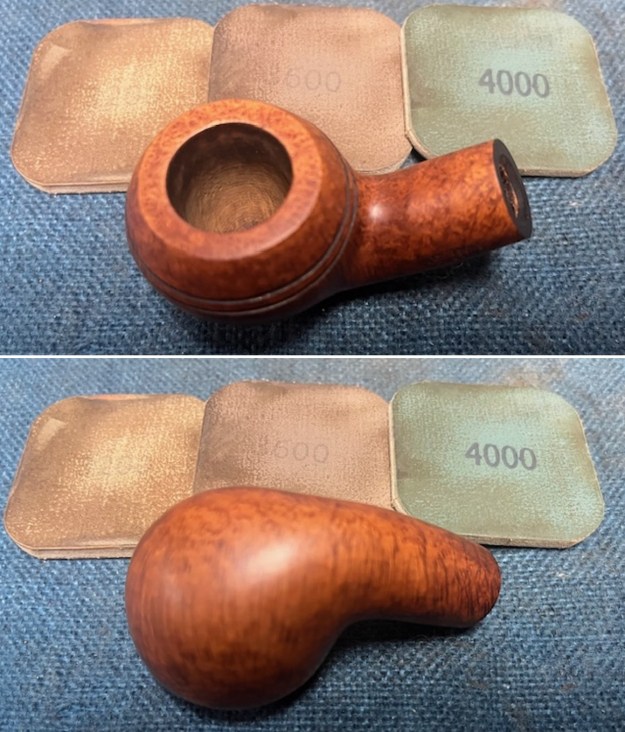
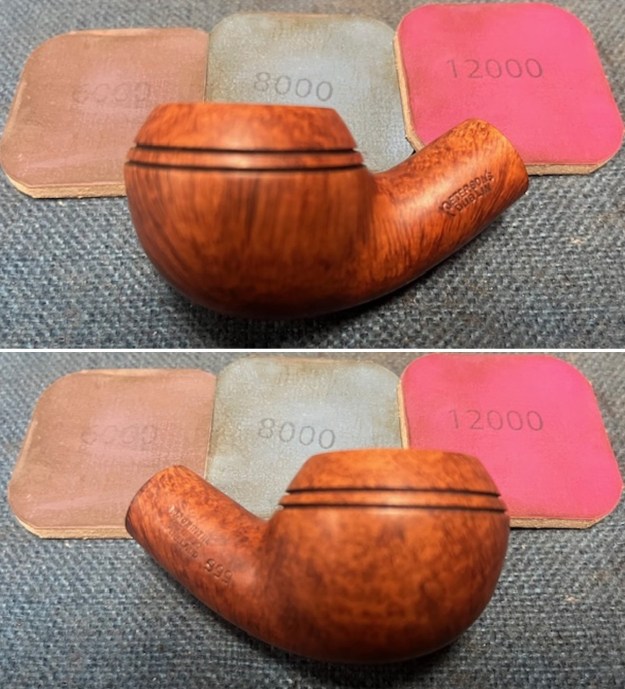
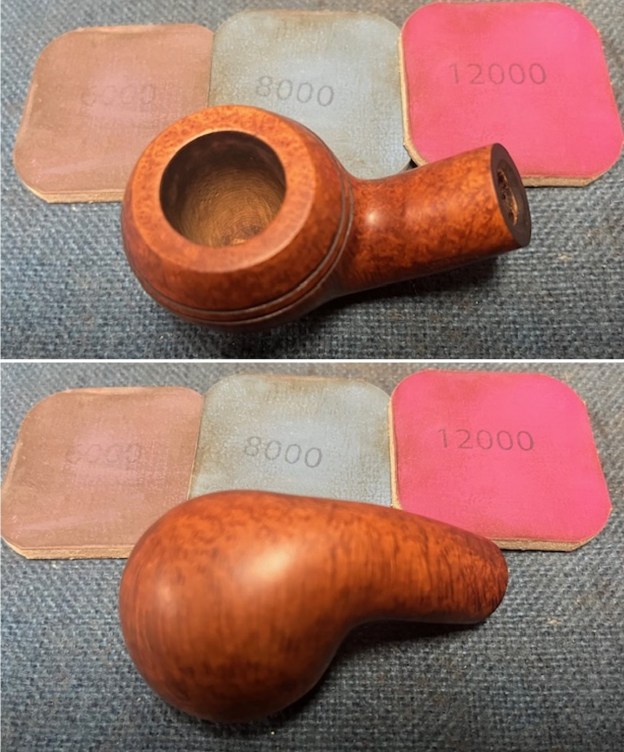
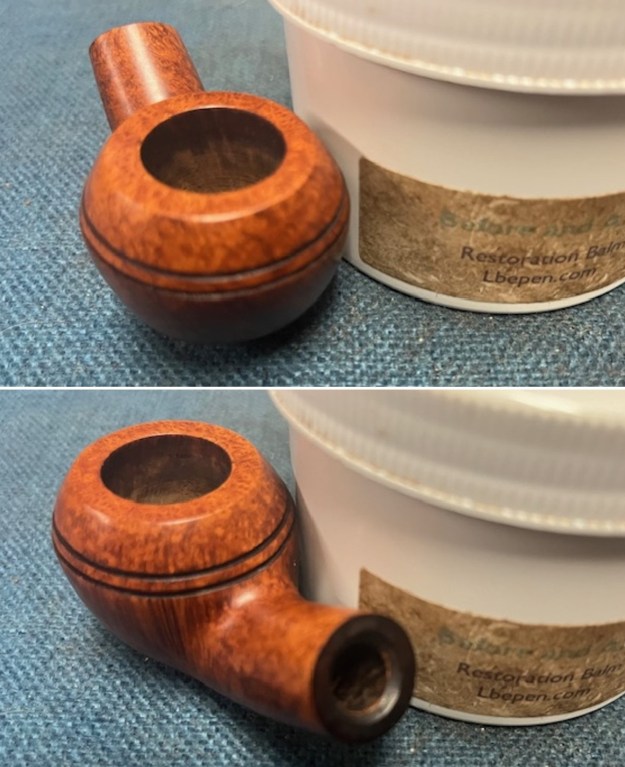
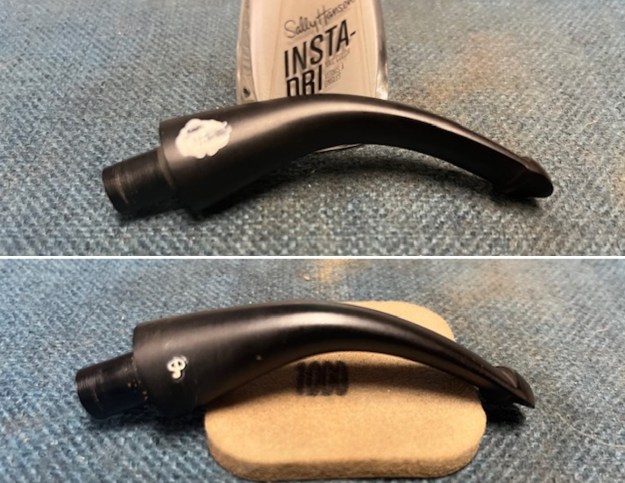
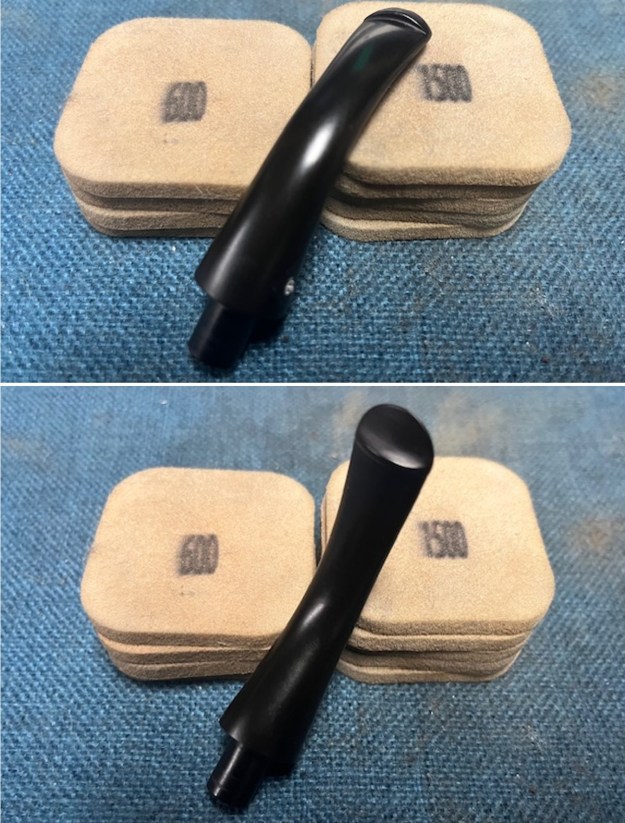
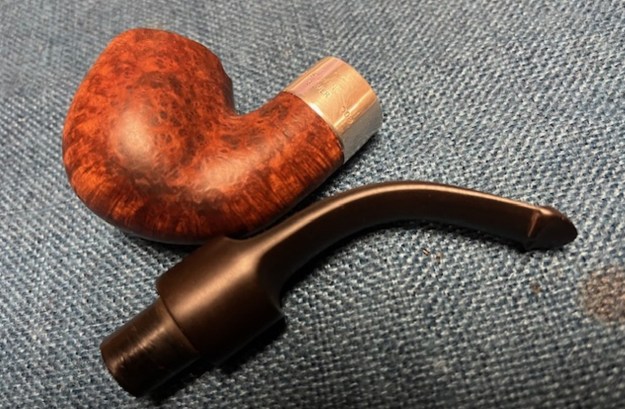
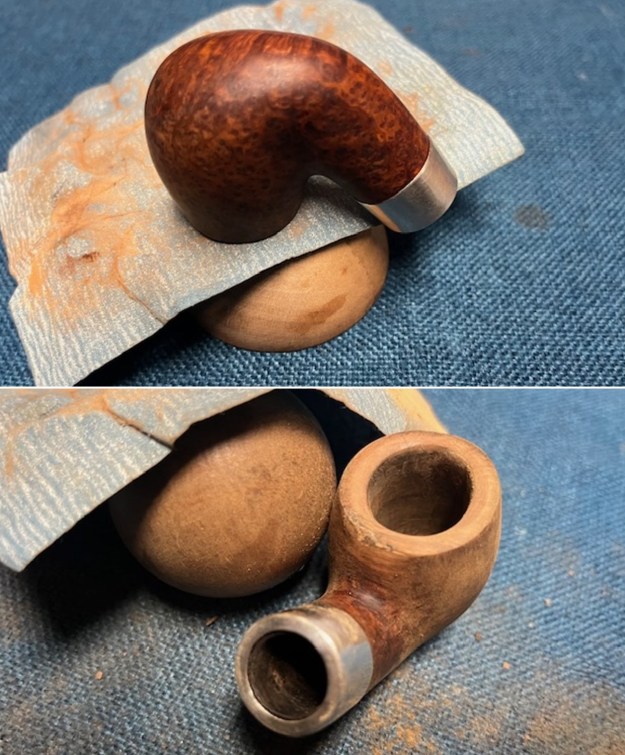
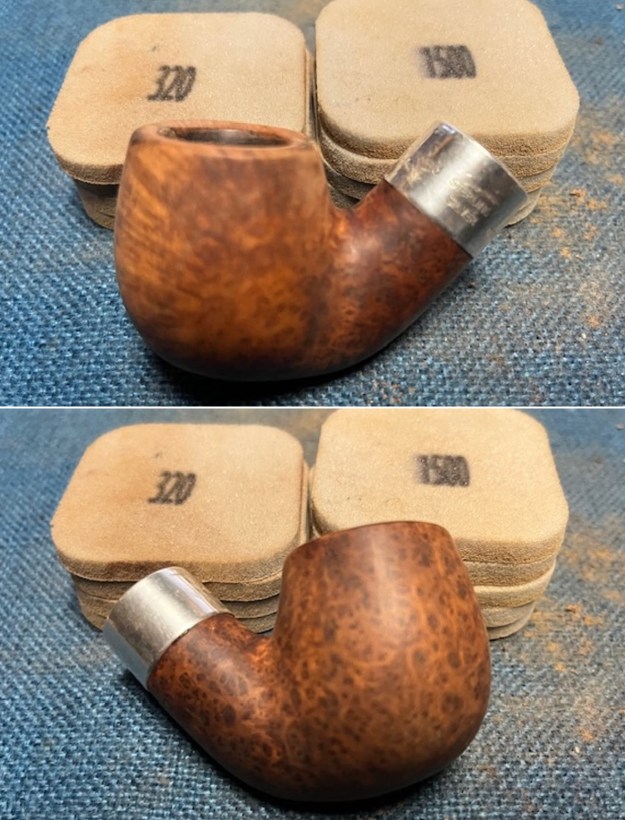
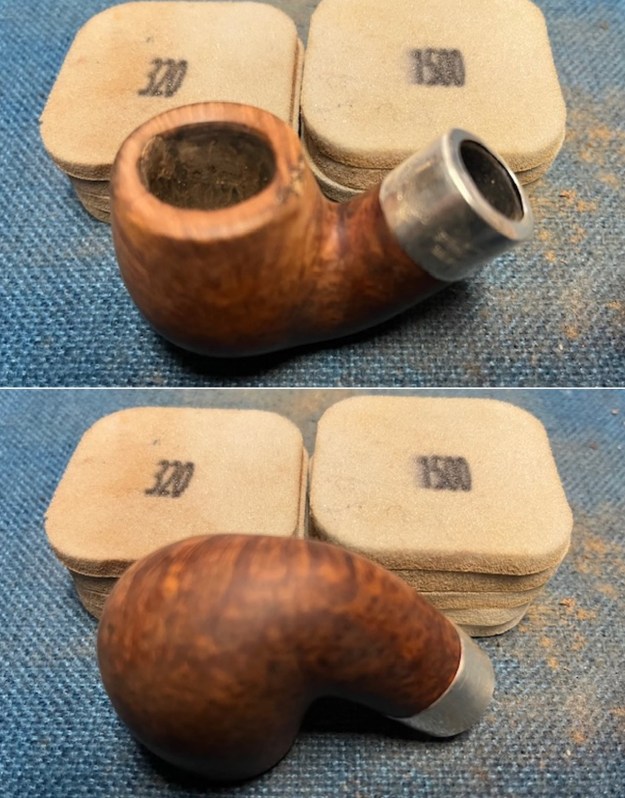
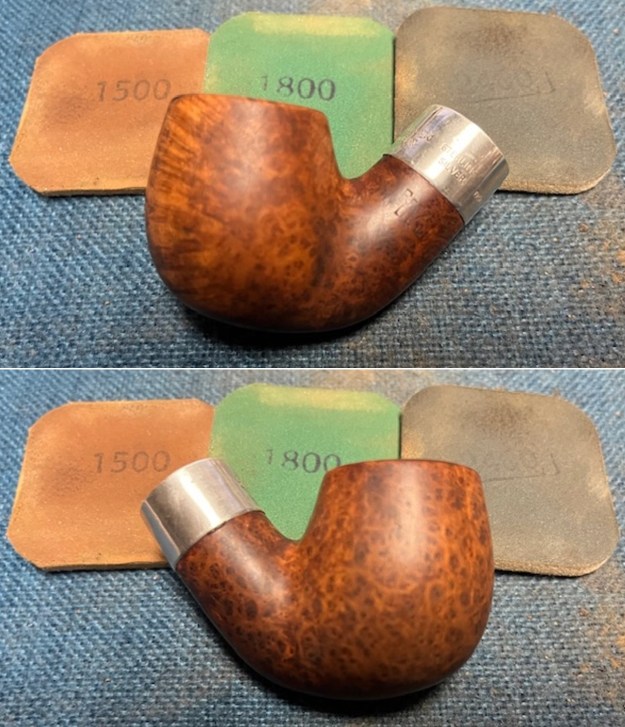
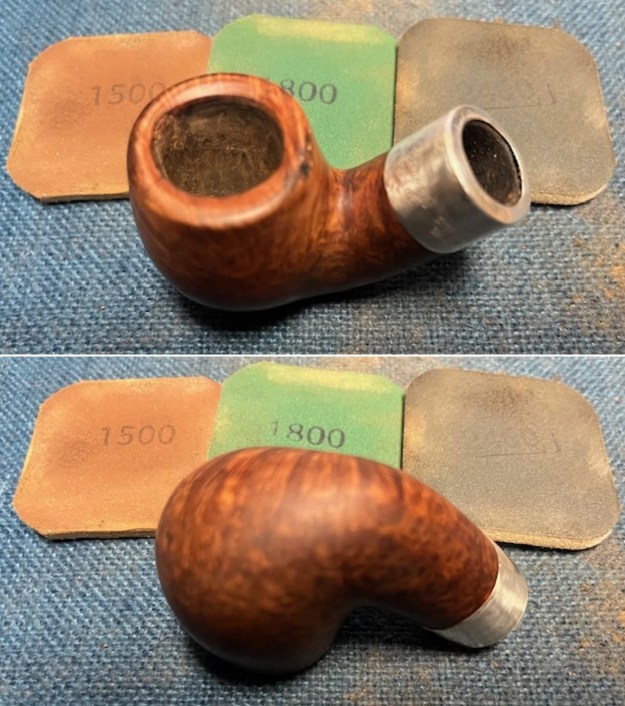
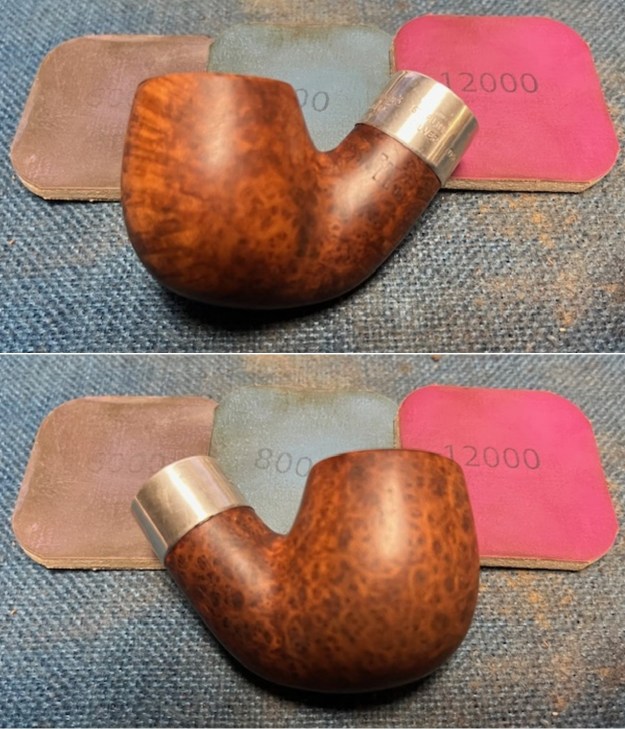
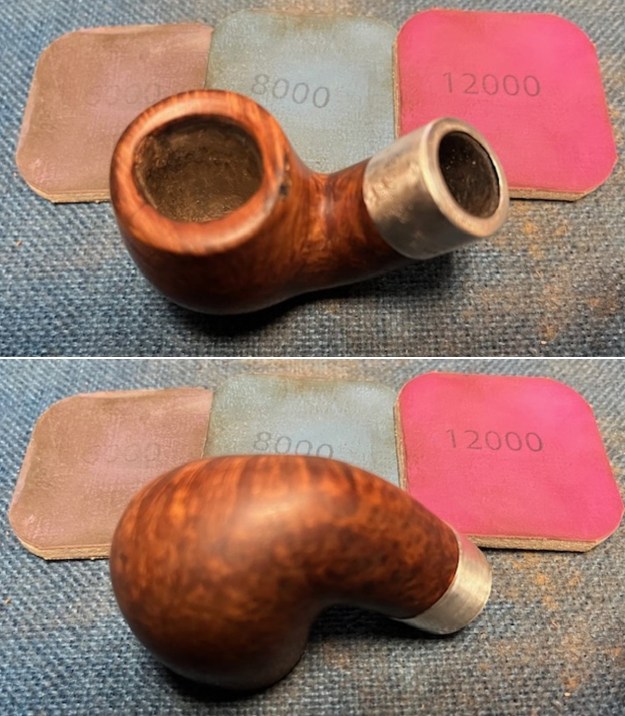
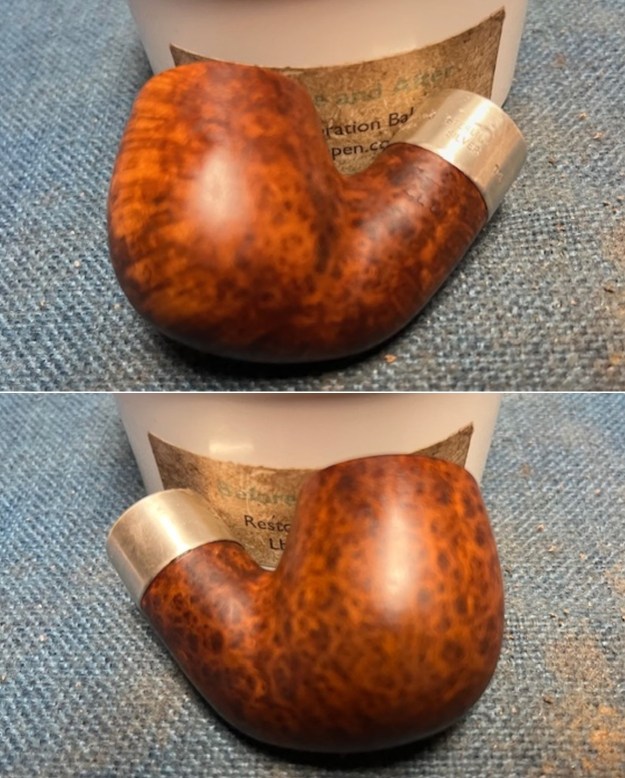
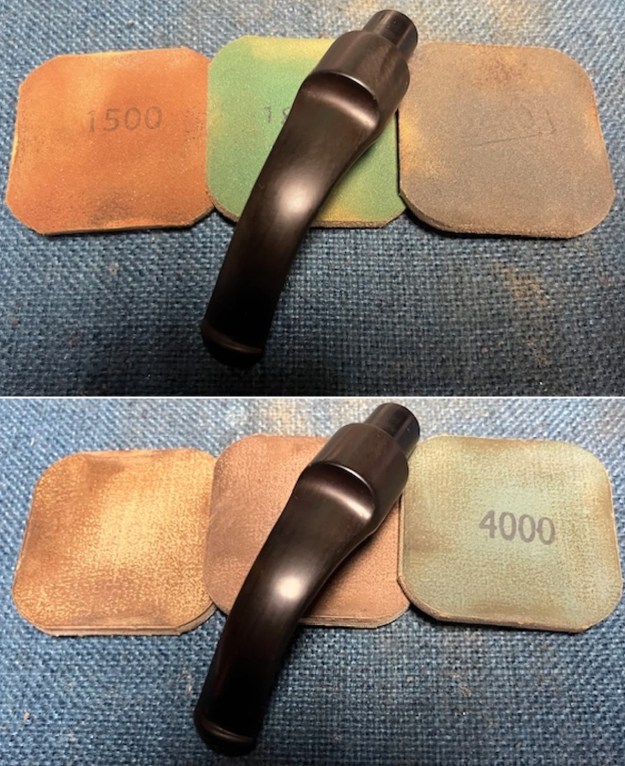
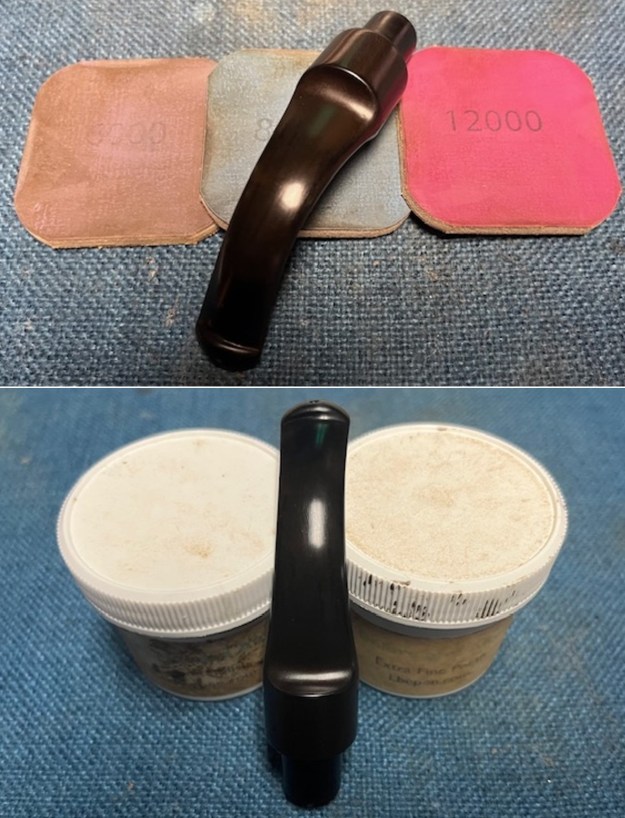
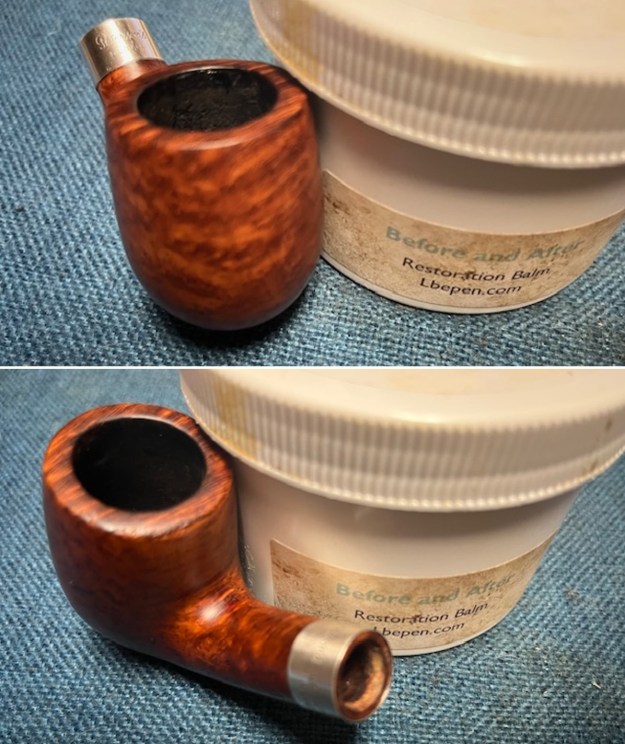
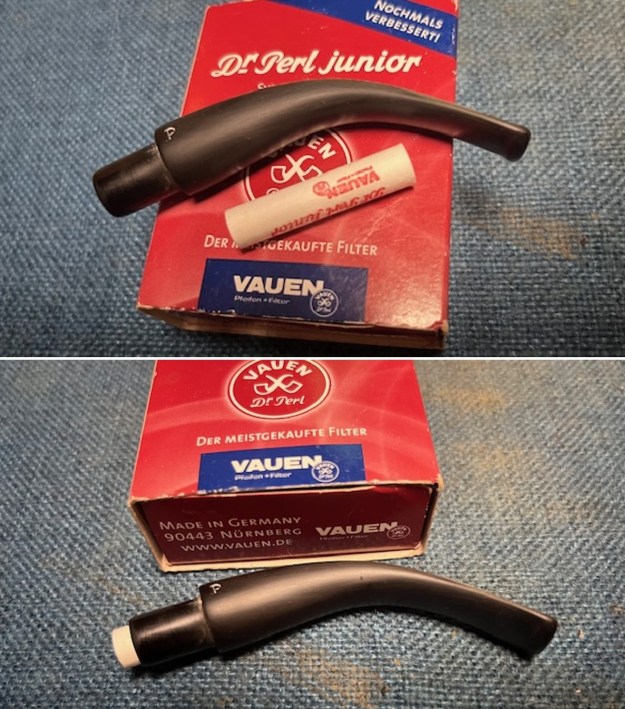
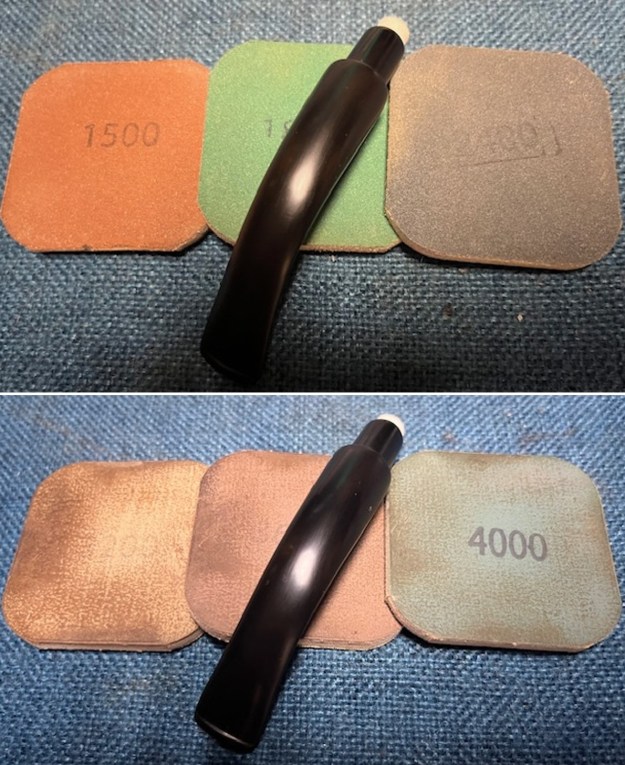
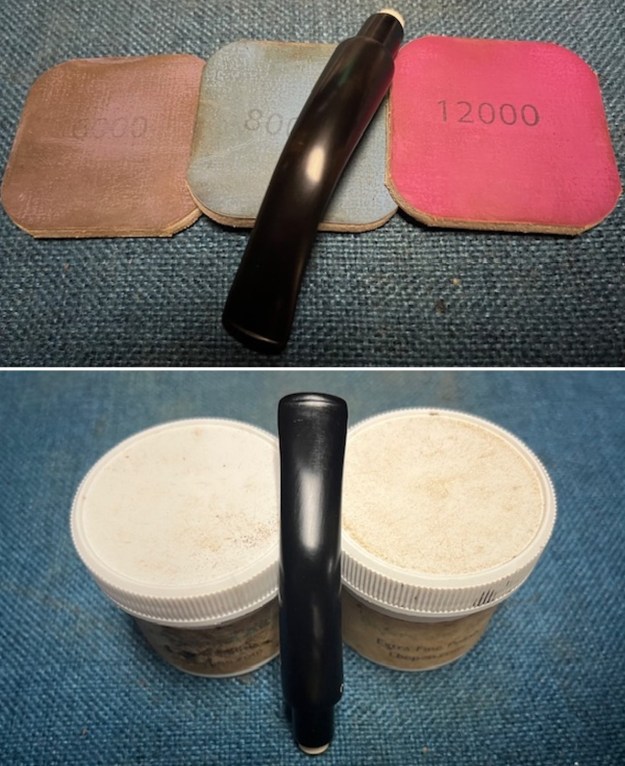
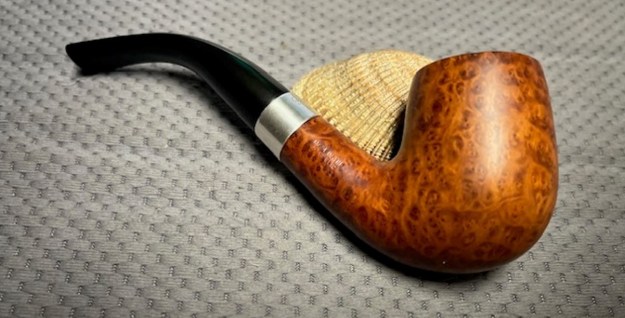
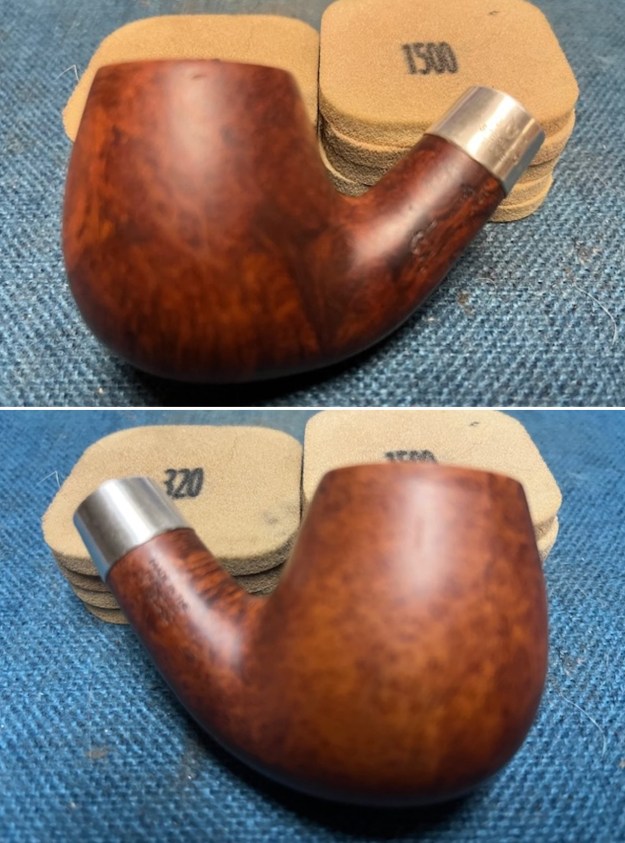
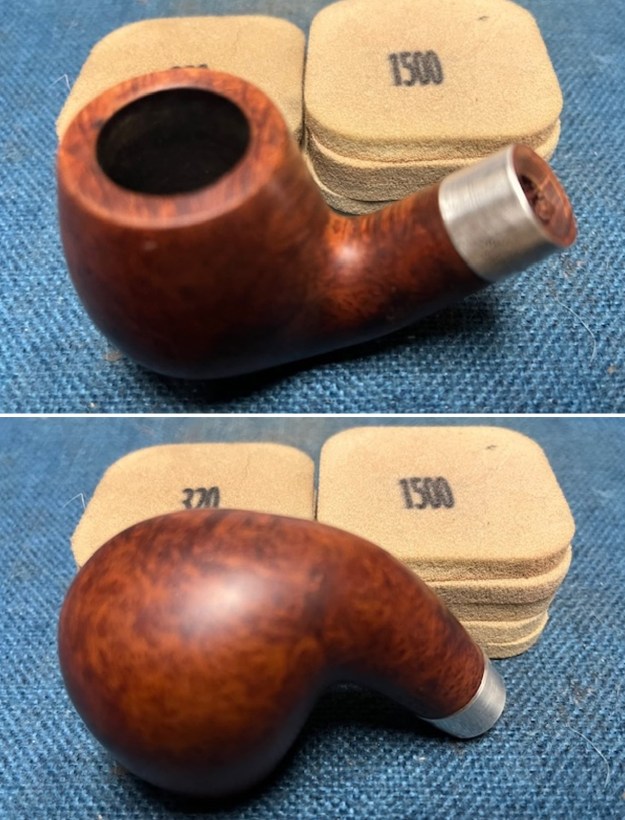
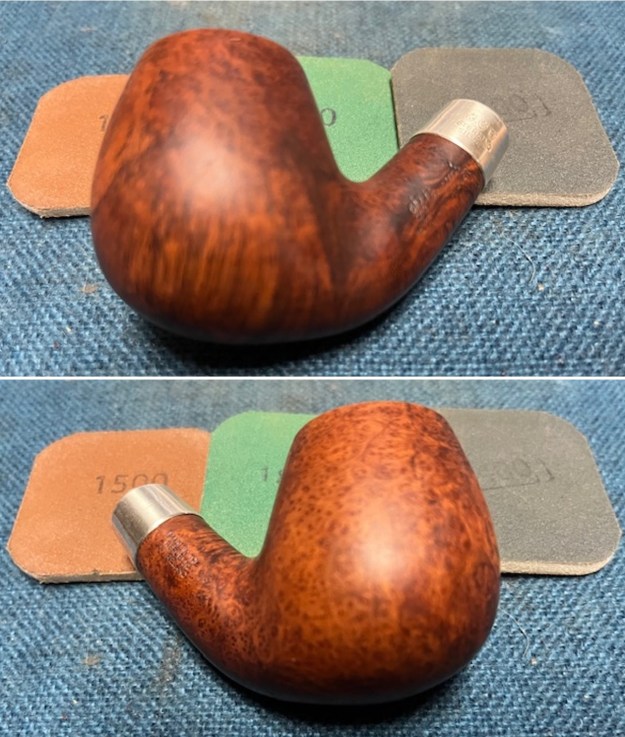
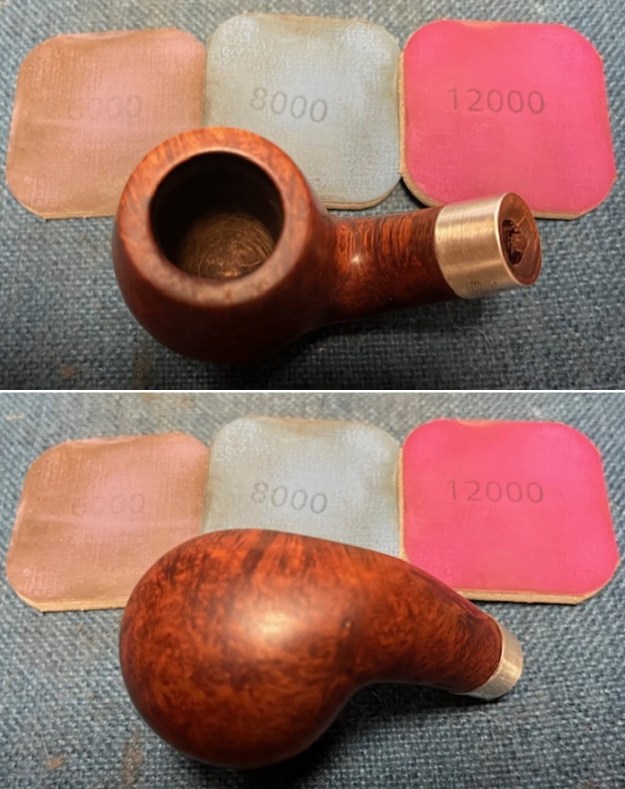
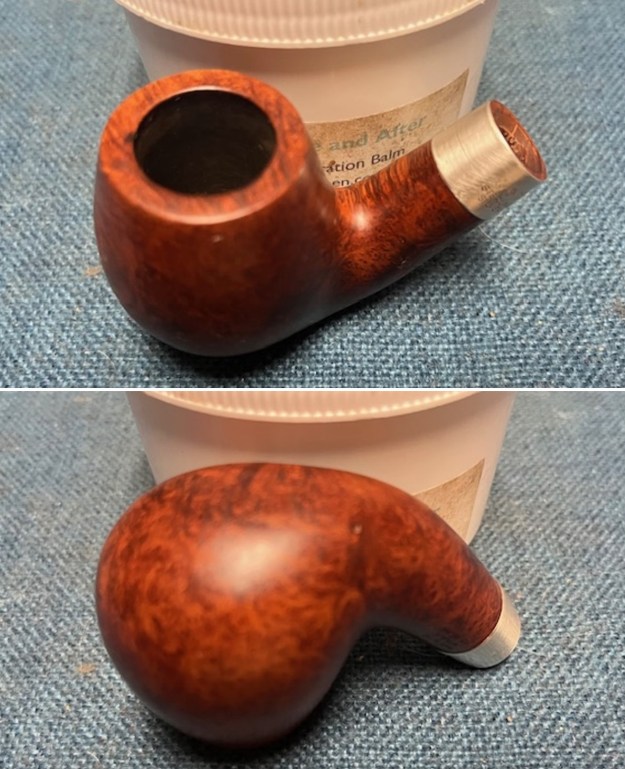
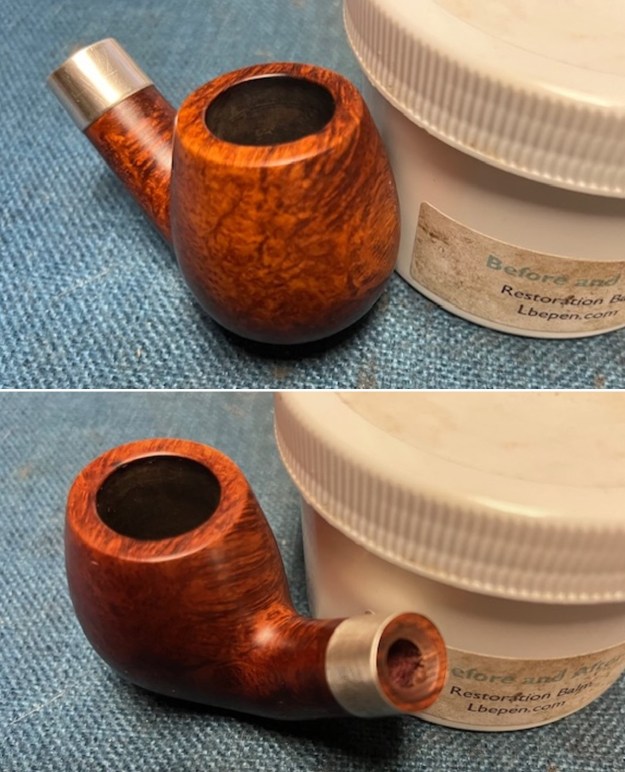
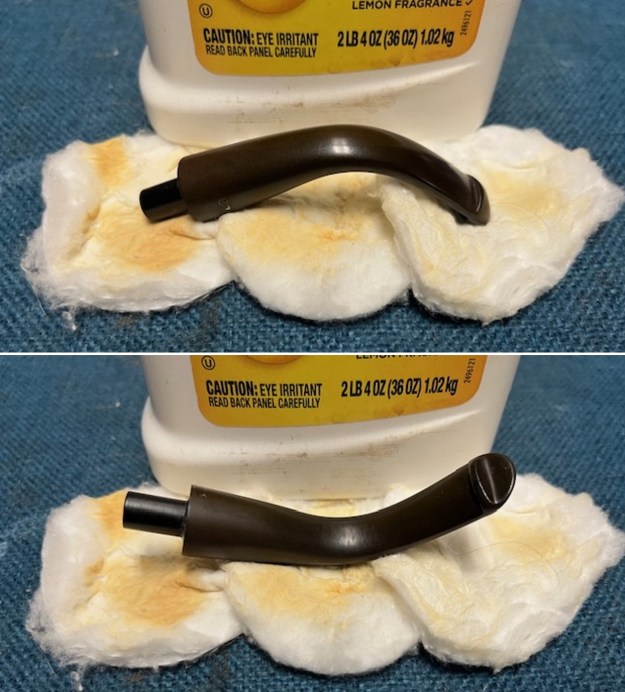
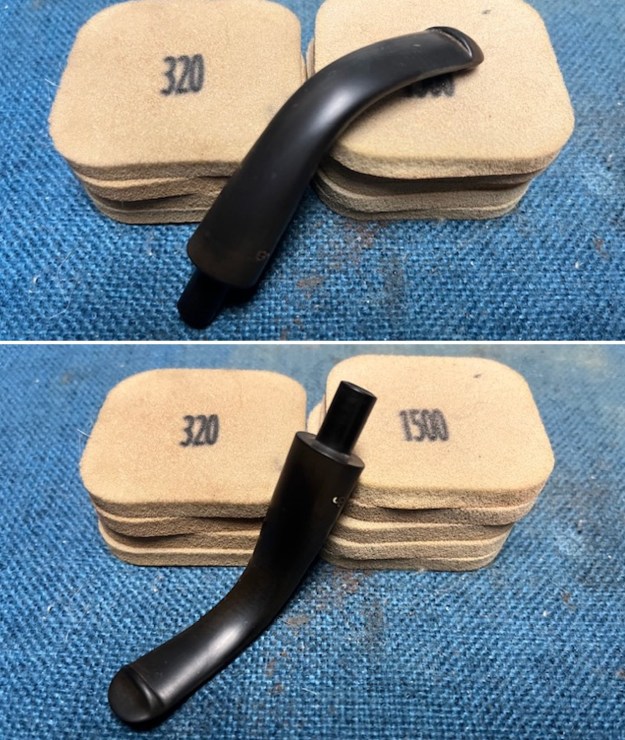
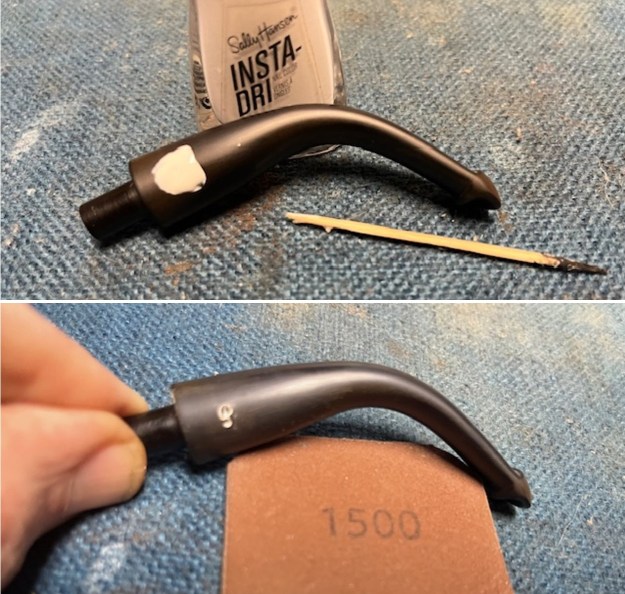
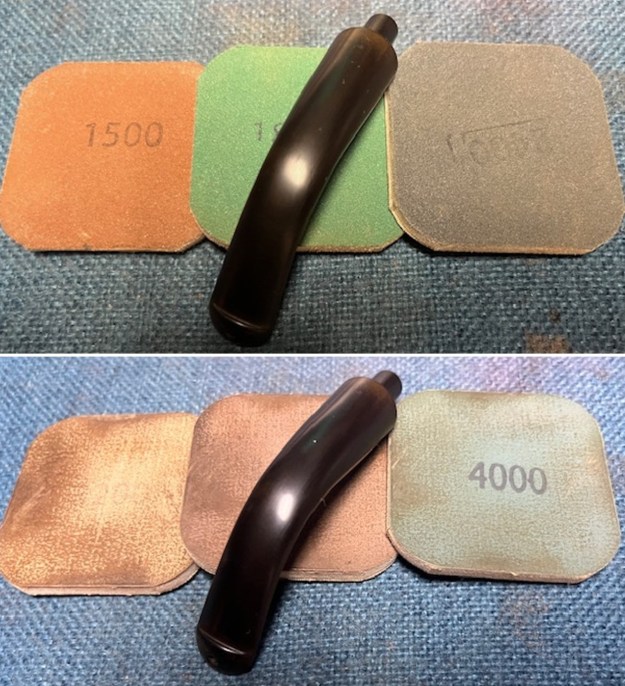
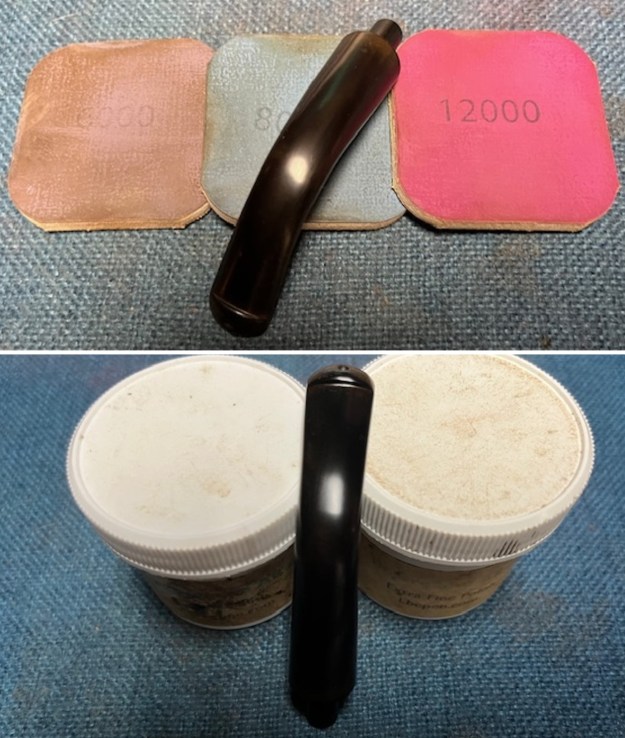
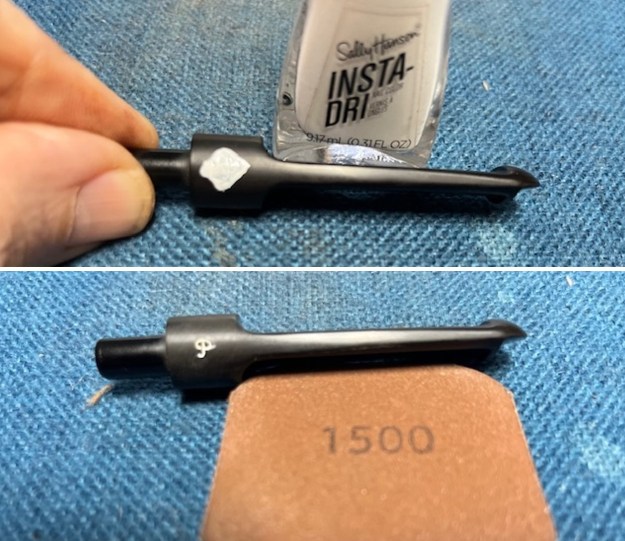
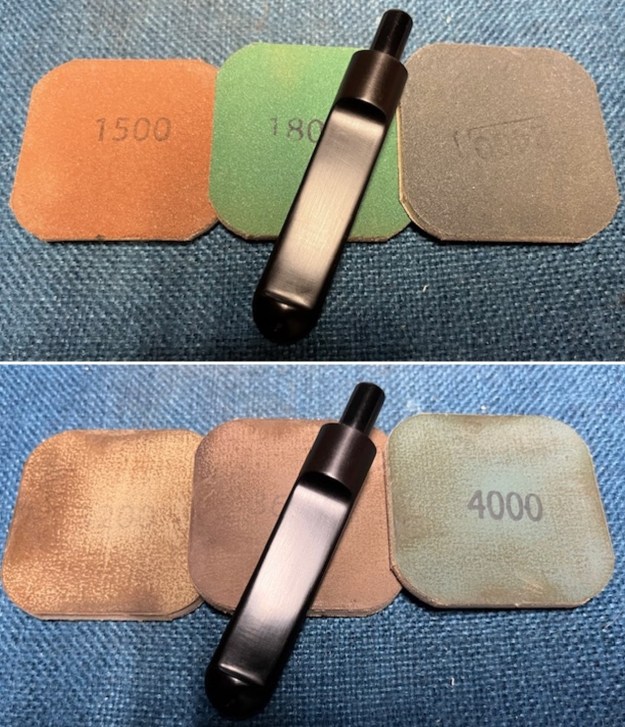
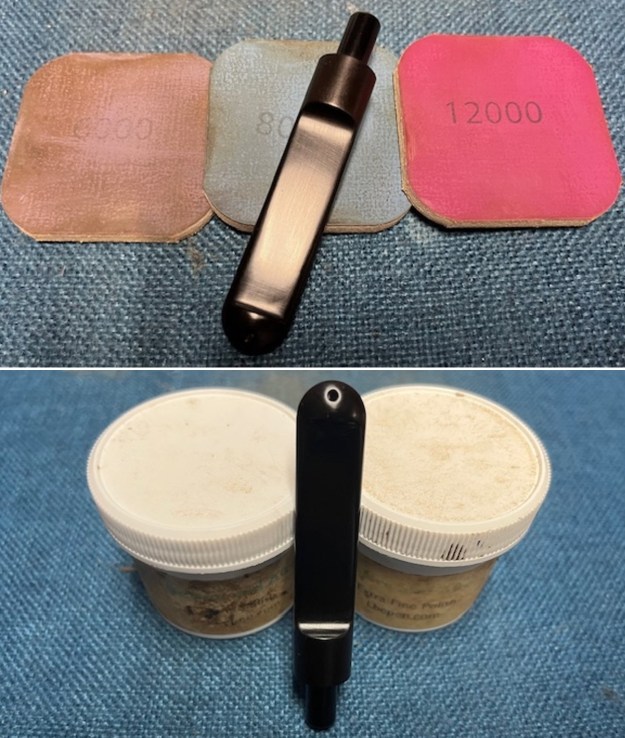
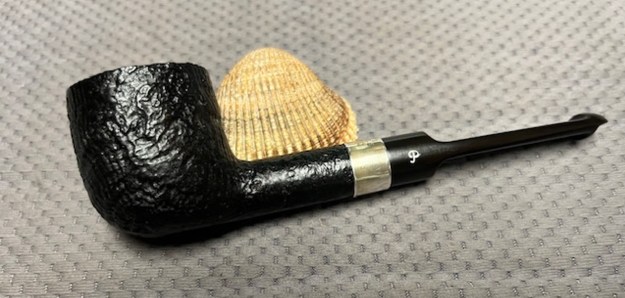
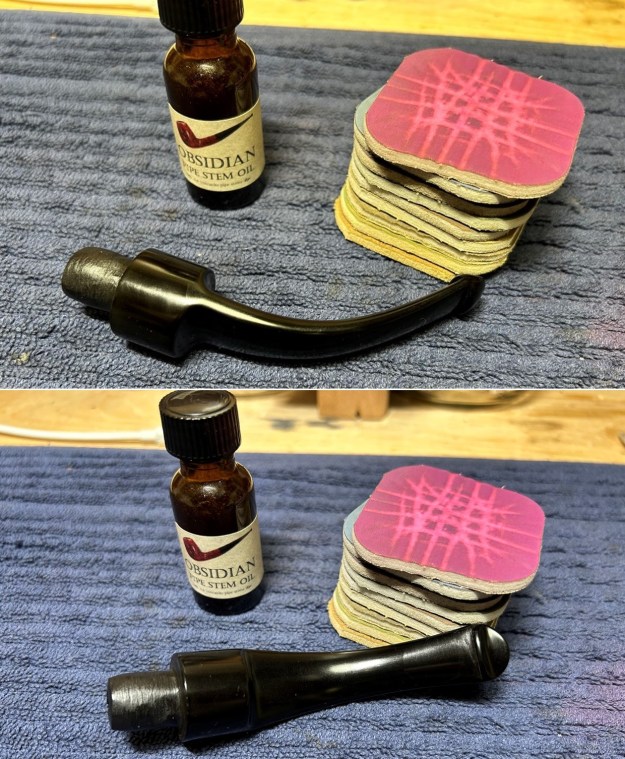
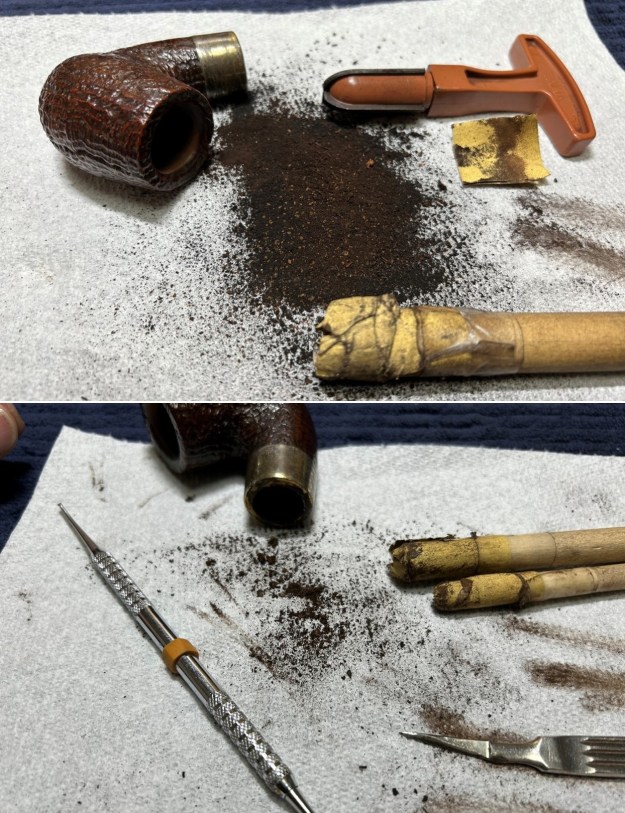
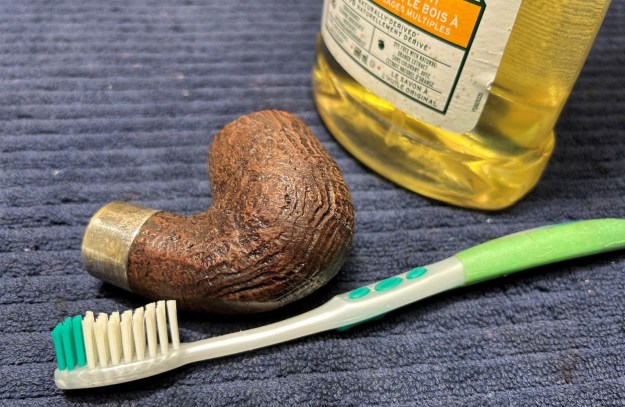
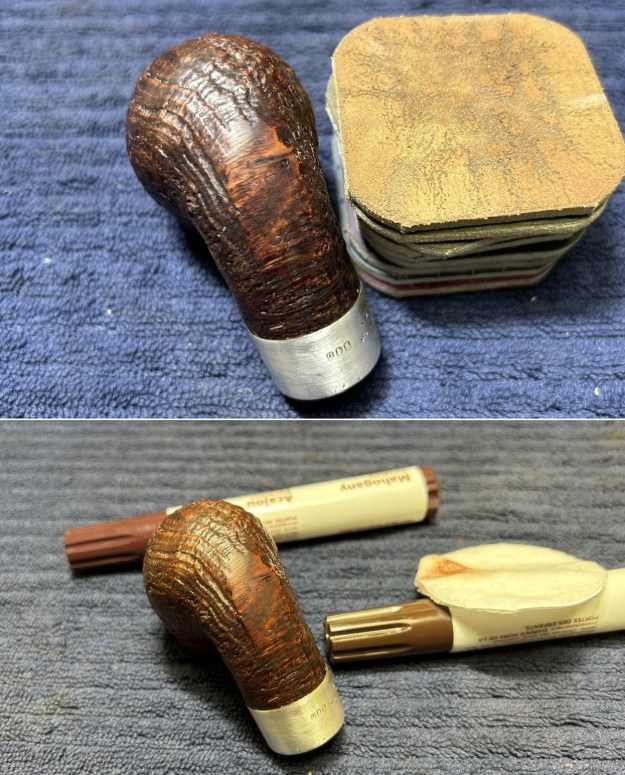
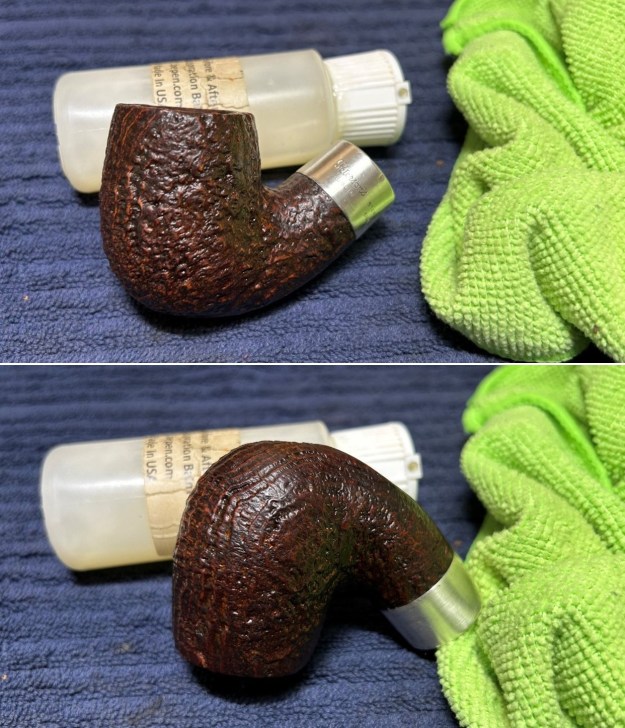
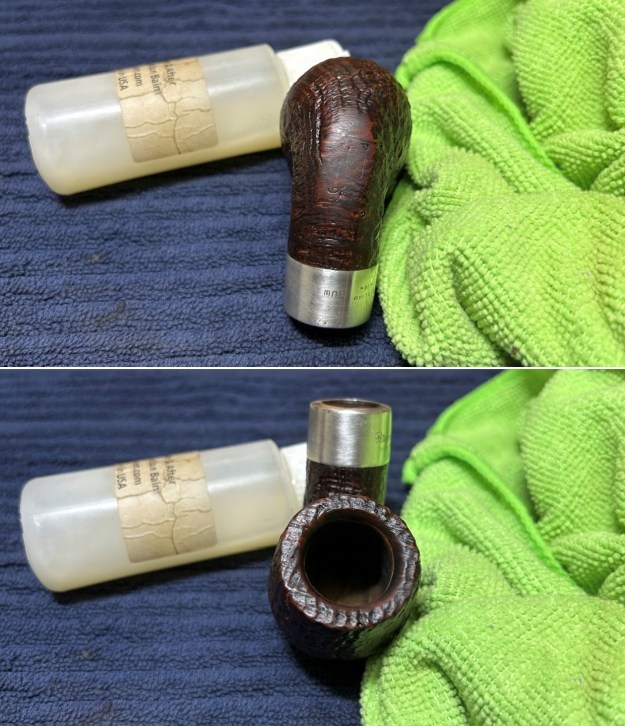
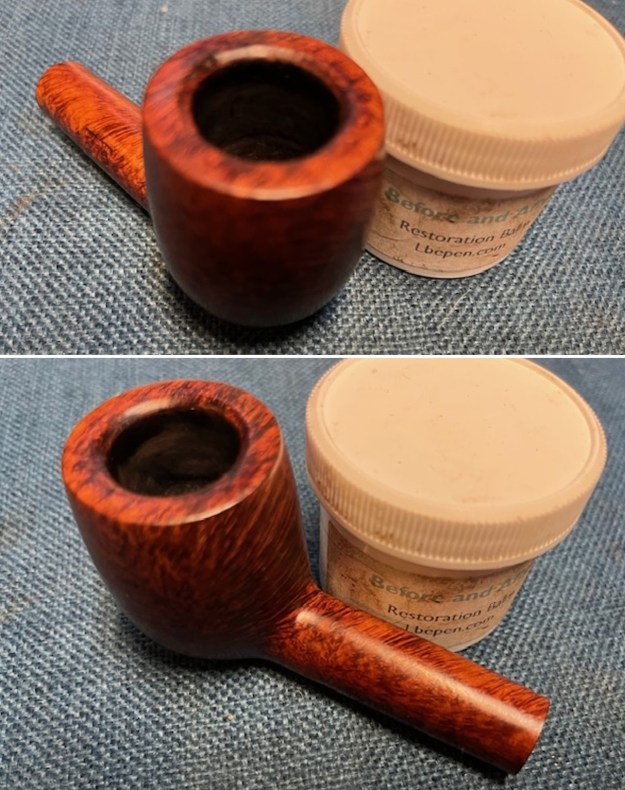
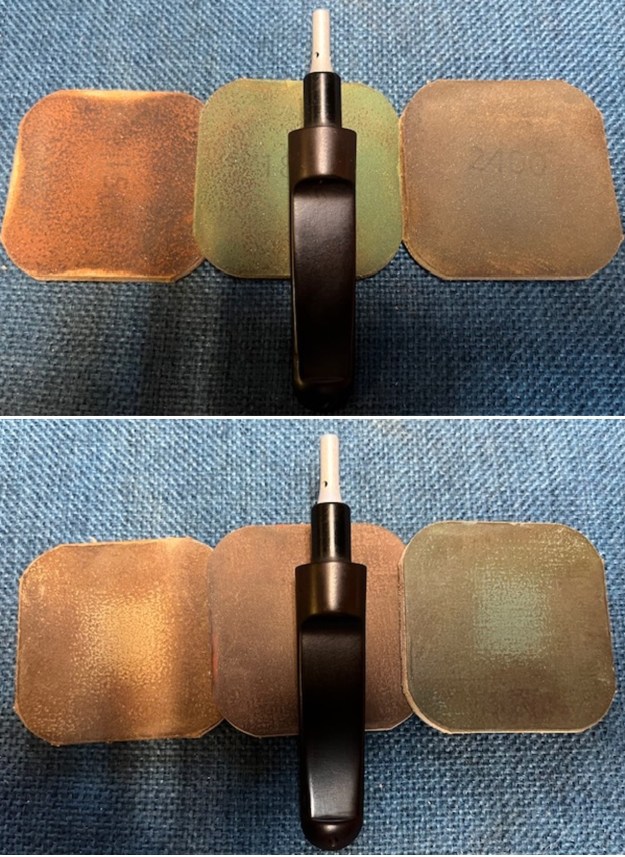
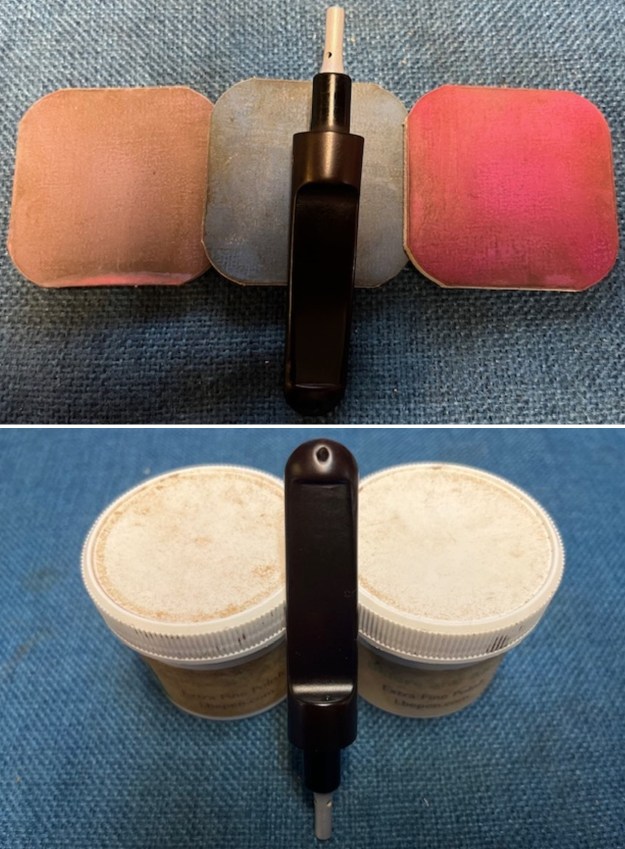
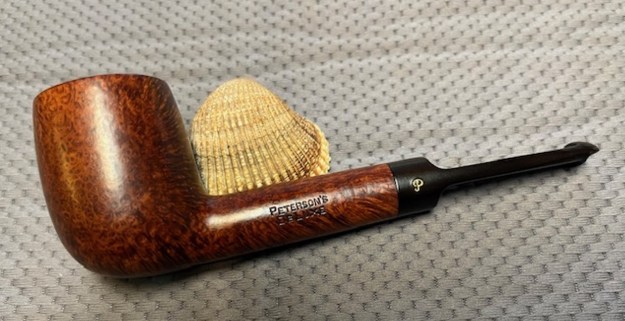
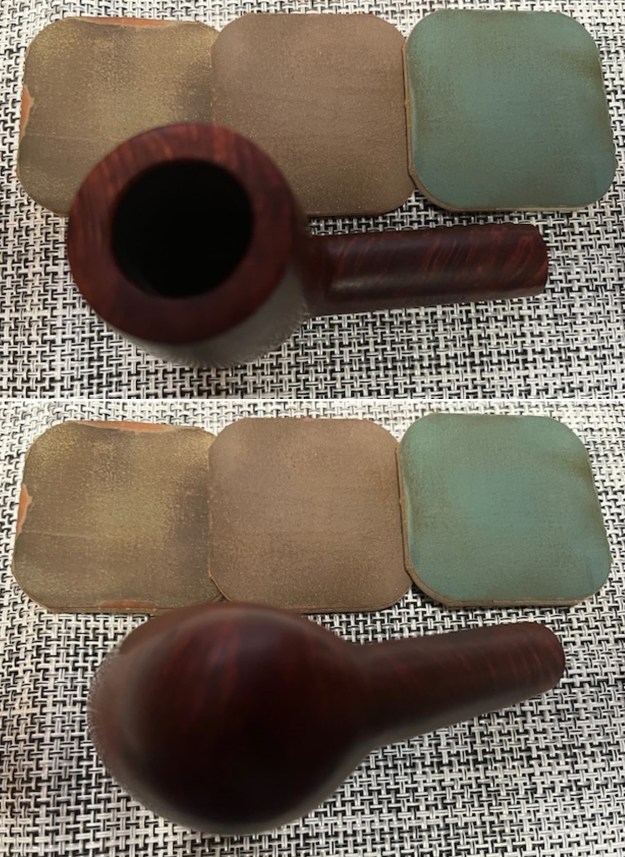
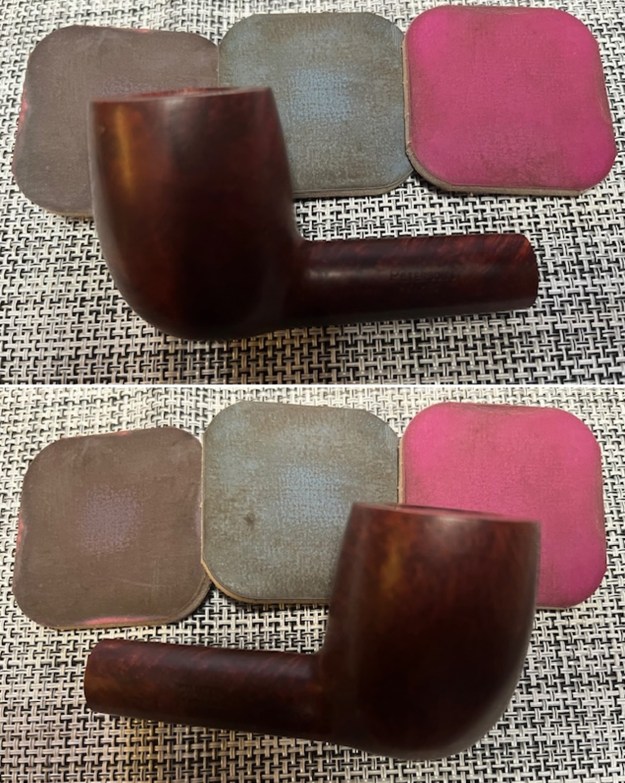
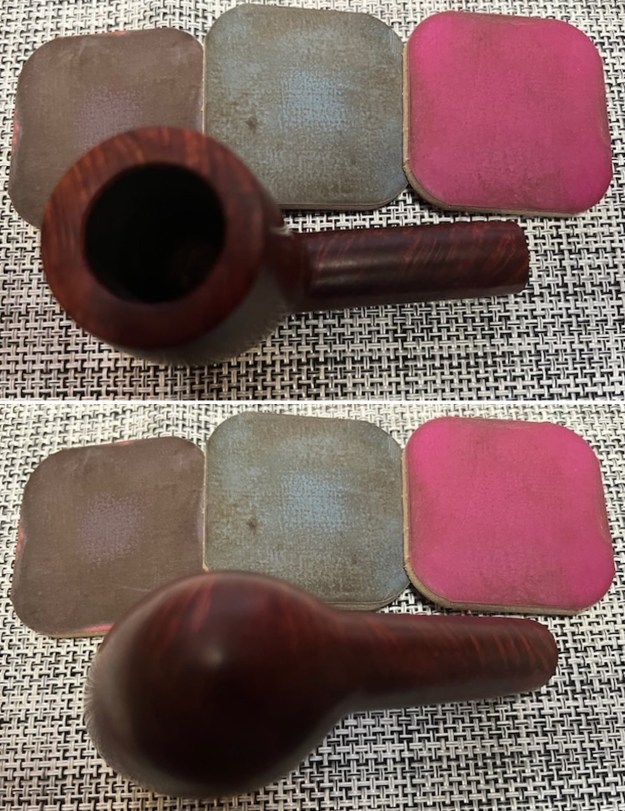
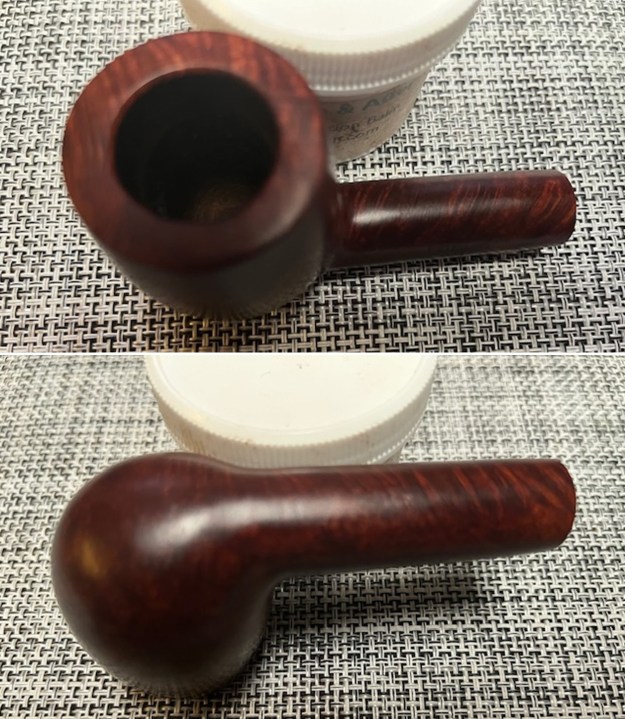
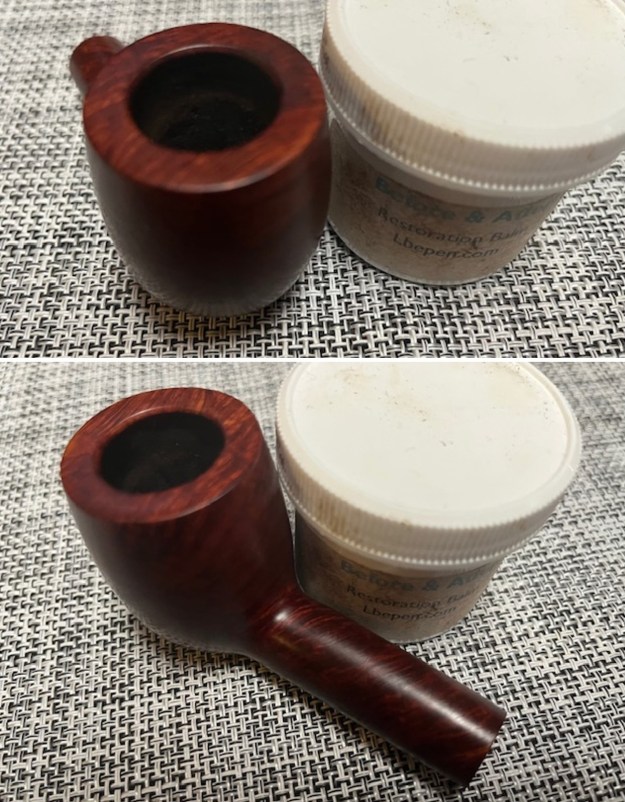
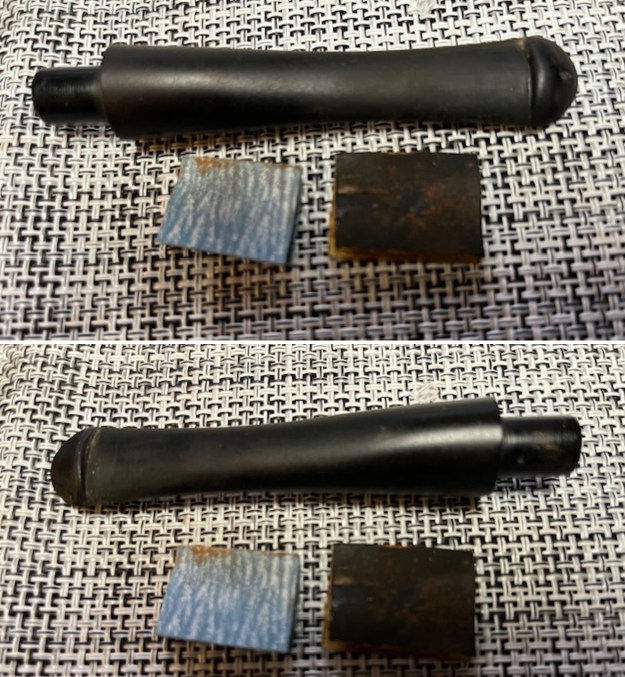
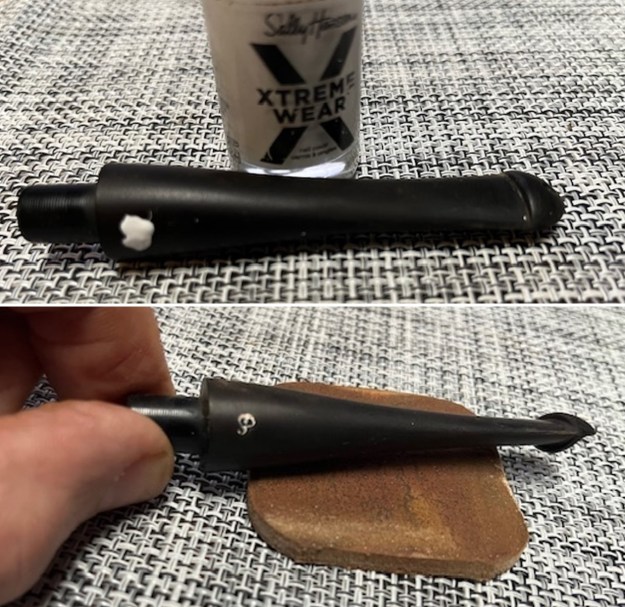
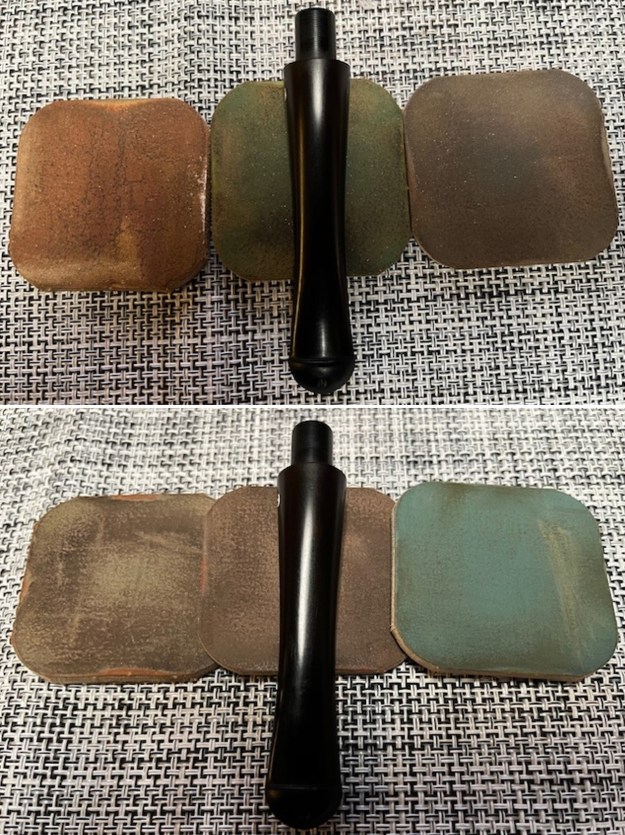
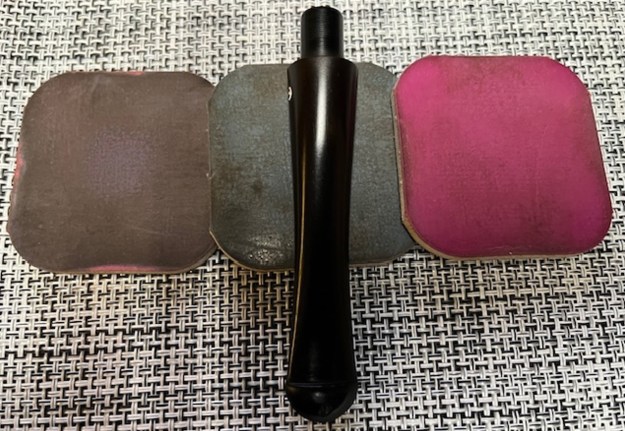
Jeff had done a great job cleaning up the pipe as usual. He reamed the pipe with a PipNet reamer and cut back the cake back to the bare briar. He cleaned up the walls with a Savinelli Fitsall Pipe Knife. He scrubbed the interior of the bowl and shank with pipe cleaners, shank brushes, cotton swabs and alcohol to remove the tars and oils. He scrubbed the exterior of the pipe with undiluted Murphy’s Oil Soap and a tooth brush to remove the grime from the finish. He worked on the rim top lava with the soap and tooth brush. He scrubbed the inside of the stem with alcohol, shank brushes and pipe cleaners. He scrubbed the exterior with Soft Scrub and then soaked it in Briarville’s Pipe Stem Deoxidizer. He washed it off with warm water to remove the deoxidizer. The pipe looked very good when it arrived here. I took some close-up photos of the rim top and also of the stem surface. The rim top and the inner edge looked very good. The silver cleaned up well on the band, though it needed more work. The stem was clean and the tooth marks and chatter were minimal.I took photos of the stamping on the top and underside of the shank. You can see that it is stamped as noted above. It is faint and readable. I took the pipe apart and took a photo of the pipe. It is a good looking pipe and has some nice looking grain around the bowl. I sanded the briar with 320-3500 grit 2×2 inch sanding pads to remove the scratches and marks in the finish. I wiped the bowl down with a damp cloth after each sanding pad to remove the sanding debris. It really looks much better. I polished the briar with 1500-12000 grit micromesh pads – dry sanding it with each pad and wiped down the bowl after each pad. I gave it a final wiped with a Briar Wipe cloth to polish the finish. The briar looked very good at this point. I began my work on it by working some Before & After Restoration Balm into the surface of the briar with my fingertips to clean, enliven and protect the briar. I let the balm sit for 15 minutes and then buffed with a cotton cloth to raise the shine. The photos show the bowl at this point in the restoration process. I polished the Sterling Silver band on the shank with a jeweller’s cloth to remove the tarnish and polish it. I set the bowl aside and turned my attention to the stem. I sanded the stem with 320-3500 grit 2×2 inch sanding pads and wiped it down with an Obsidian Oil cloth after each sanding pad. The stem began to take on a shine.I touched up the P stamp on the left side of the stem with white acrylic fingernail polish. I worked it into the P stamp with a tooth pick. Once it dried I scraped off the excess of the acrylic with my fingernail. I sanded the stem area with a worn 1500 grit micromesh sanding pad. It looked very good. I fit the stem with a Vauen Dr. Perl Junior 9mm filter in the filter tenon of the pipe. It is a great fit and that it fit very well.I polished the stem with micromesh sanding pads – wet sanding with 1500-12000 grit sanding pads. I wiped it down after each sanding pad with Obsidian Oil. I polished it with Before & After Pipe Stem Polish – both Fine and Extra Fine. I am excited to finish this smooth Peterson’s “Sterling Filter” 69 Bent Billiard. I put the pipe back together and lightly buffed it with Blue Diamond on the buffing wheel. I gave the bowl and the stem multiple coats of carnauba wax. I hand buffed the pipe with a clean buffing pad to raise the shine. It is fun to see what the polished bowl looks like with the depths of the sandblast taking on a rich glow. Added to that the polished Sterling Silver band and the black vulcanite taper P-lip stem was beautiful. This smooth Classic Peterson’s “Sterling Filter” 69 Bent Billiard is nice looking and the pipe feels great in my hand. It is light and well balanced. Have a look at it with the photos below. The dimensions are Length: 5 ½ inches, Height: 2 inches, Outside diameter of the bowl: 1 ¼ inches, Chamber diameter: ¾ of an inch. The weight of the pipe is 59 grams/2.08 ounces. It is a beautiful pipe and one that will be on the Irish Pipe Makers Section of the rebornpipes store soon. If you are interested in adding it to your collection let me know. Thanks for walking through the restoration with me as I worked over this pipe. Thanks to each of you who are reading this blog.

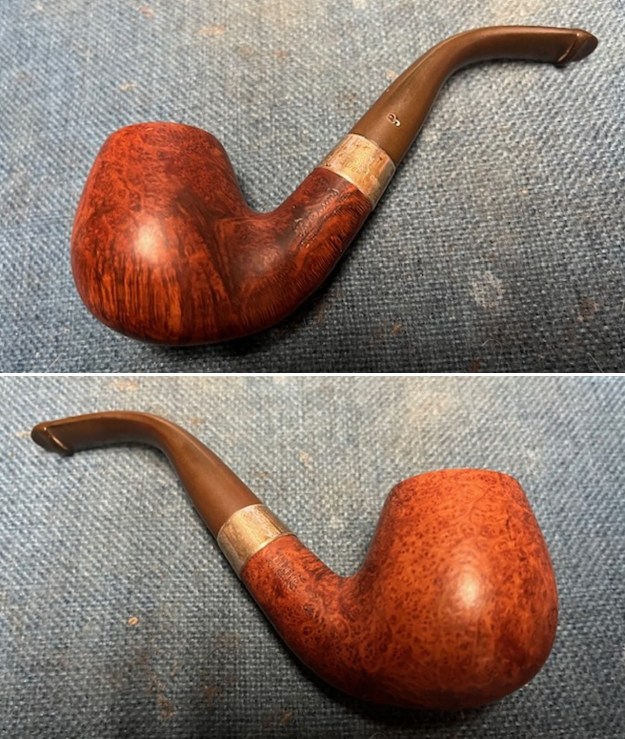
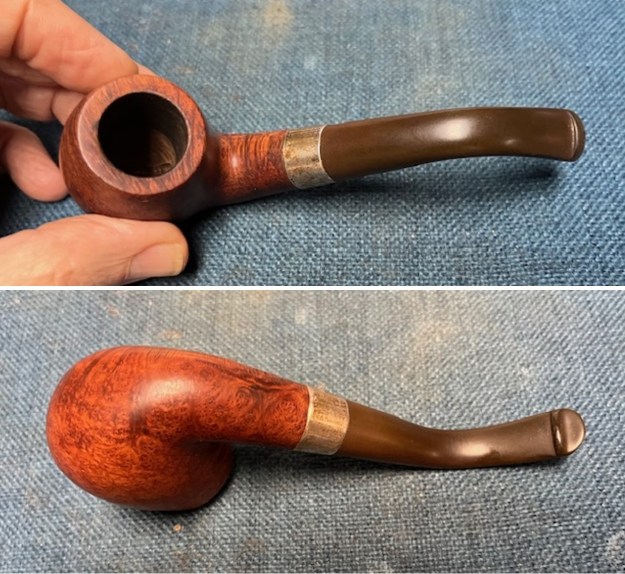
What a Lovely Republic Era Peterson’s “Sterling Silver” 68 Brandy


by Steve Laug

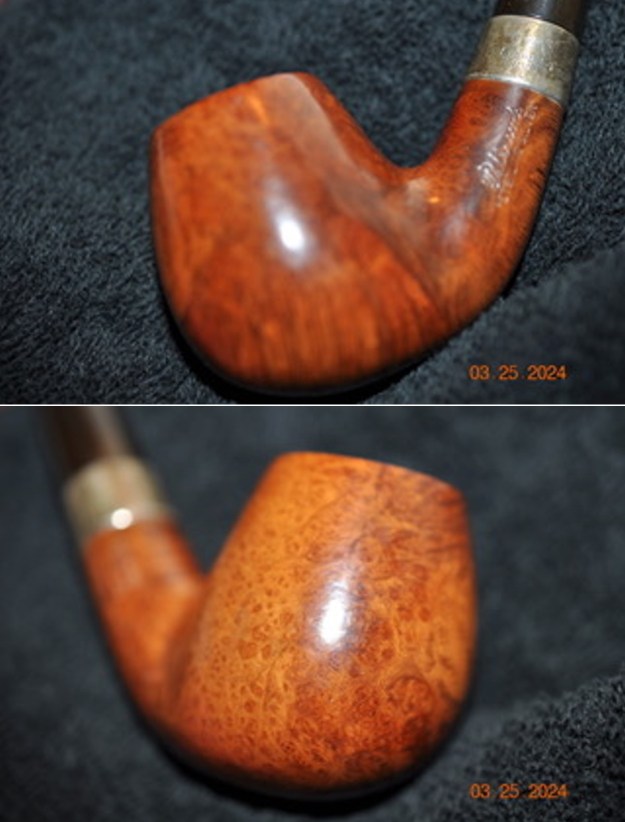
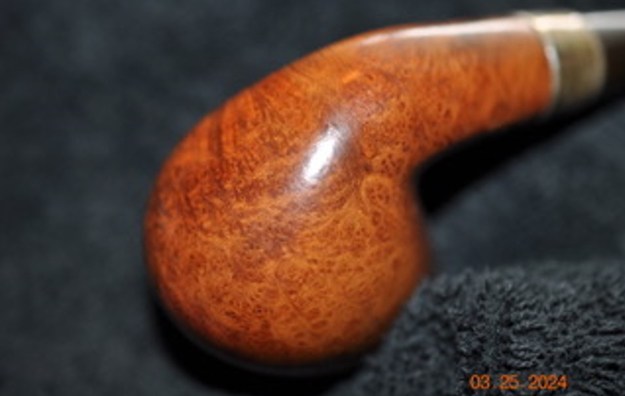
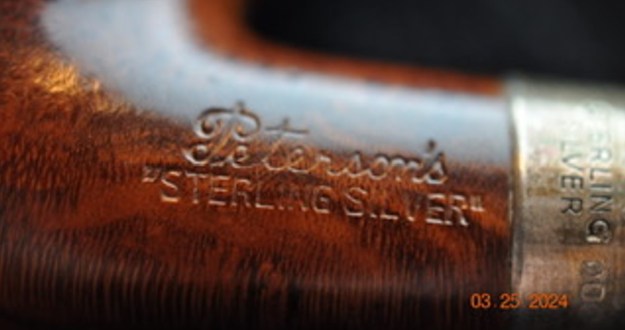
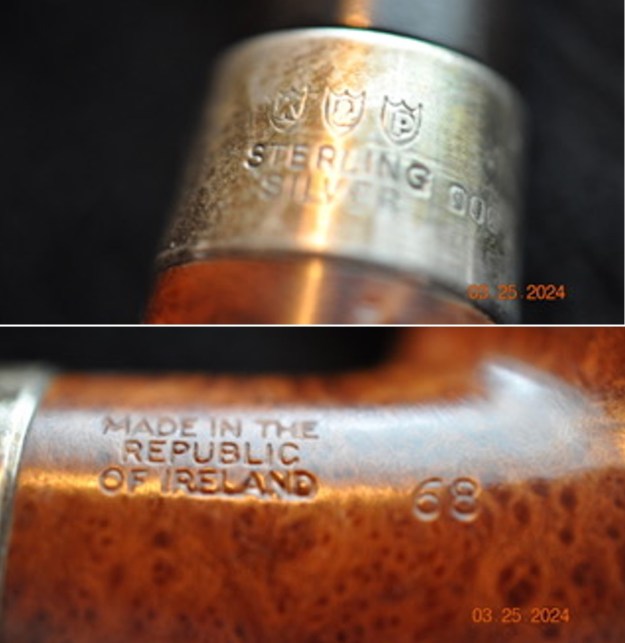
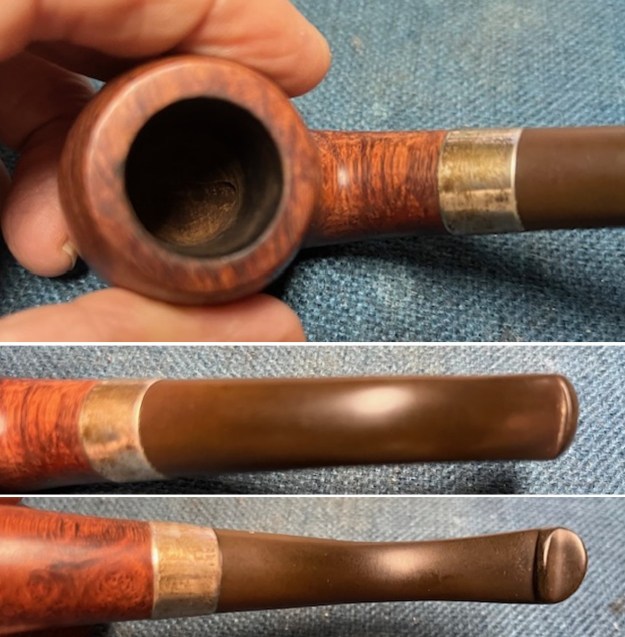
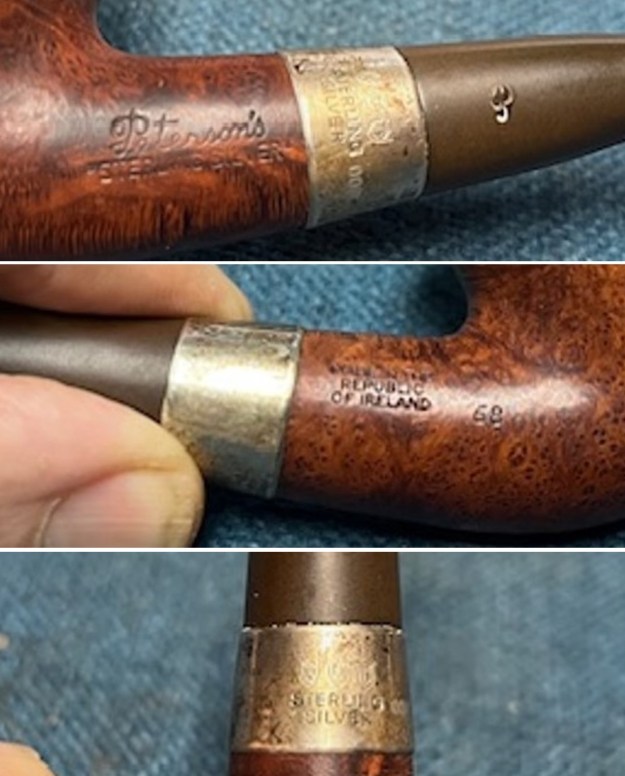
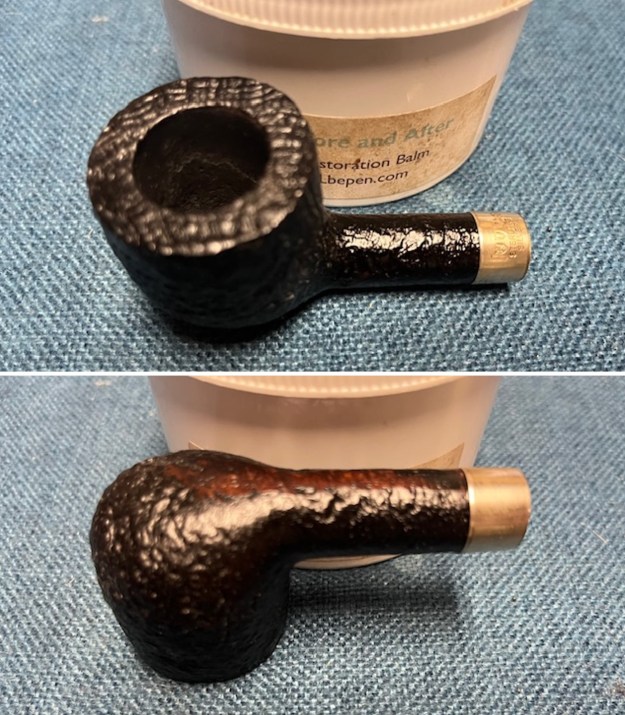
The next pipe I have chosen is smooth finished Peterson’s “Sterling Silver” pipe. The pipe came to us from a Facebook seller in Oregon City, Oregon, USA. This one is a Peterson’s Brandy shaped pipe with a taper P-lip stem. It has a rich brown coloured finish with interesting grain around the bowl sides and shank. It is very dirty. This Brandy has a silver band on the shank that was badly oxidized. The grime on the finish was ground into the finish on the bowl sides. The brown stains make the grain really pop. It was stamped on the left side of the shank and reads K&P in shields [over] “Sterling [over] Silver”. To the right of that it is stamped with the three line Made in the Republic of Ireland stamp followed by the shape number 68. The heavily tarnished band is stamped with K&P in shields [over] Sterling [over] Silver. To the right that it has three hallmarks – Hibernia seated arm on a harp (signifies country of manufacture), a crowned harp designating Sterling quality and finally a Date Letter mark – in this case an italic upper-case italic “I” (1994). It was in filthy condition when Jeff brought it to the table. There was a thick cake in the bowl and spots of lava on the rim top and inner edge of the bowl. The stem was oxidized, calcified and had light tooth marks and chatter on the top and underside near the button. Jeff took photos of the pipe before his cleanup work before he started on the pipe. Jeff took photos of the rim top and stem to show the general condition of the pipe. The bowl is lightly caked and the rim top and edges look very good. The stem is oxidized and has light tooth marks on the top and underside near the button. Jeff took some photos of the bowl sides and heel to show the grain that was around this bowl. It is a nice looking pipe. He took photos of the sides of the shank to show the stamping. The stamping is readable in the photos below and is as noted above. The stamping on the Sterling Silver band is also readable through the oxidation. I am including the information from Pipedia’s article on Peterson pipes. It is a great read in terms of the history of the brand (https://pipedia.org/wiki/Peterson).

I turned to “The Peterson Pipe” by Mark Irwin and Gary Malmberg to get some background on the Sterling Pipe. On page 314 it had the following information on the line.

Sterling (1949-c1957; 1978-) – Higher grade line with sterling band. Early example, 1949-57, with COM of Made in Ireland forming a circle, were offered to the US market through Rogers Imports and have no hallmark, although until recent years the line carried Peterson’s maker’s mark, the K&P is in separate shields. Models beginning in ’78 with hallmarked dates and a COM stamp of Made in [over] the Republic [over] of Ireland.

I knew that I was dealing with a pipe made between 1949-1957 as shown by the Made in the Republic of Ireland three-line format stamp. Now it was time to work on the pipe.

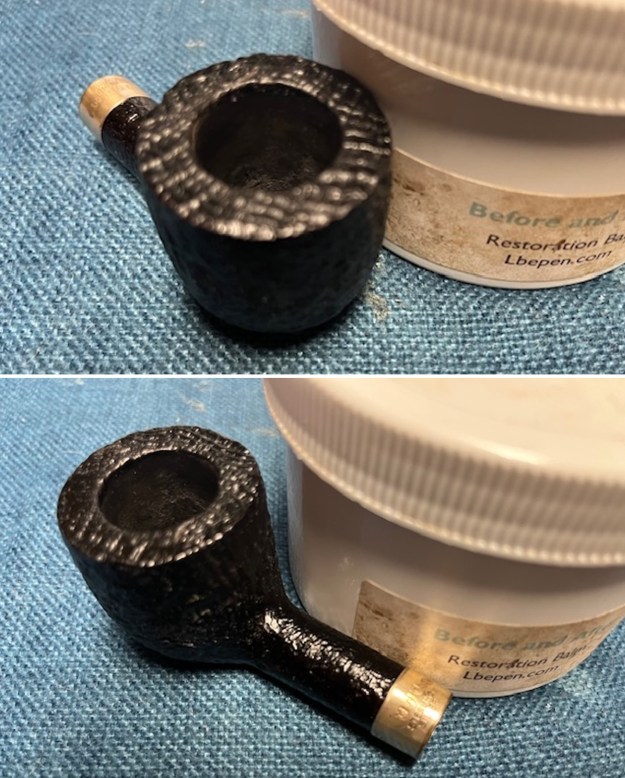
Jeff had done a great job cleaning up the pipe as usual. He reamed the pipe with a PipNet reamer and cut back the cake back to the bare briar. He cleaned up the walls with a Savinelli Fitsall Pipe Knife. He scrubbed the interior of the bowl and shank with pipe cleaners, shank brushes, cotton swabs and alcohol to remove the tars and oils. He scrubbed the exterior of the pipe with undiluted Murphy’s Oil Soap and a tooth brush to remove the grime from the finish. He worked on the rim top lava with the soap and tooth brush. He scrubbed the inside of the stem with alcohol, shank brushes and pipe cleaners. He scrubbed the exterior with Soft Scrub and then soaked it in Briarville’s Pipe Stem Deoxidizer. He washed it off with warm water to remove the deoxidizer. The pipe looked very good when it arrived here. I took some close-up photos of the rim top and also of the stem surface. The rim top and the inner edge looked very good. The silver cleaned up well on the band. The stem was clean and the tooth marks and chatter were minimal.I took photos of the stamping on the top and underside of the shank. You can see that it is stamped as noted above. It is faint and readable. I took the pipe apart and took a photo of the pipe. It is a good looking pipe and has some nice looking grain around the bowl. I sanded the briar with 320-3500 grit 2×2 inch sanding pads to remove the remainder of the varnish coat that the acetone did not remove. I wiped the bowl down with a damp cloth after each sanding pad to remove the sanding debris. It really looks much better. I polished the briar with 1500-12000 grit micromesh pads – dry sanding it with each pad and wiped down the bowl after each pad. I gave it a final wiped with a Briar Wipe cloth to polish the finish. The briar looked very good at this point. I began my work on it by working some Before & After Restoration Balm into the surface of the briar with my fingertips to clean, enliven and protect the briar. I let the balm sit for 15 minutes and then buffed with a cotton cloth to raise the shine. The photos show the bowl at this point in the restoration process. I polished the Sterling Silver band on the shank with a jeweller’s cloth to remove the tarnish and polish it. I scrubbed the oxidized stem surface with Soft Scrub cleanser on cotton pads. I was able to remove a major portion of the oxidation. It began to look much better.I set the bowl aside and turned my attention to the stem. I sanded the stem with 320-3500 grit 2×2 inch sanding pads and wiped it down with an Obsidian Oil cloth after each sanding pad. The stem began to take on a shine.I touched up the P stamp on the left side of the stem with white acrylic fingernail polish. I worked it into the P stamp with a tooth pick. Once it dried I scraped off the excess of the acrylic with my fingernail. I sanded the stem area with a worn 1500 grit micromesh sanding pad. It looked very good.I polished the stem with micromesh sanding pads – wet sanding with 1500-12000 grit sanding pads. I wiped it down after each sanding pad with Obsidian Oil. I polished it with Before & After Pipe Stem Polish – both Fine and Extra Fine. I am excited to finish this smooth Peterson’s “Sterling Silver” 68 Brandy. I put the pipe back together and lightly buffed it with Blue Diamond on the buffing wheel. I gave the bowl and the stem multiple coats of carnauba wax. I hand buffed the pipe with a clean buffing pad to raise the shine. It is fun to see what the polished bowl looks like with the depths of the sandblast taking on a rich glow. Added to that the polished Sterling Silver band and the black vulcanite taper P-lip stem was beautiful. This smooth Classic Peterson’s “Sterling Silver” 68 Brandy is nice looking and the pipe feels great in my hand. It is light and well balanced. Have a look at it with the photos below. The dimensions are Length: 5 ½ inches, Height: 2 inches, Outside diameter of the bowl: 1 ¼ inches, Chamber diameter: ¾ of an inch. The weight of the pipe is 59 grams/2.08 ounces. It is a beautiful pipe and one that will be on the Irish Pipe Makers Section of the rebornpipes store soon. If you are interested in adding it to your collection let me know. Thanks for walking through the restoration with me as I worked over this pipe. Thanks to each of you who are reading this blog.

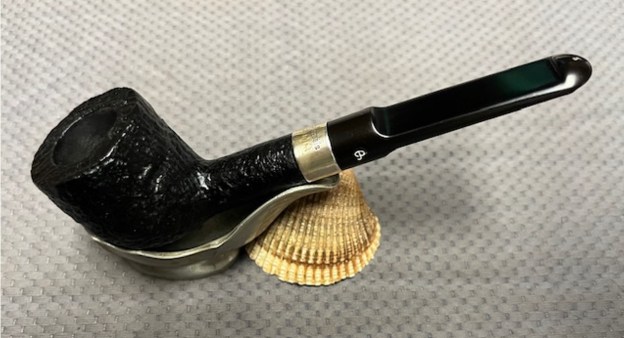
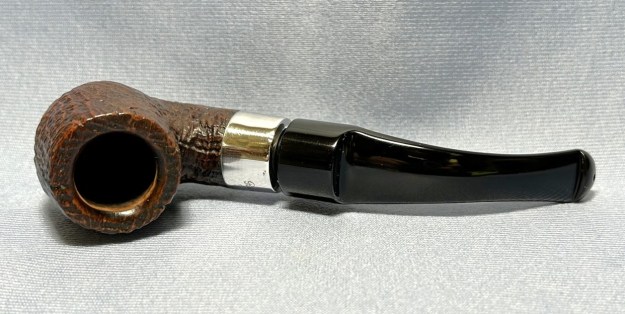
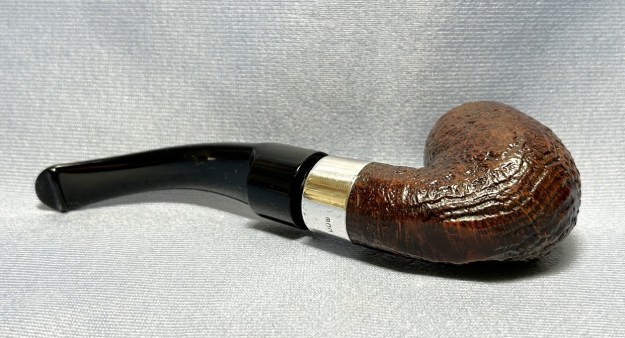
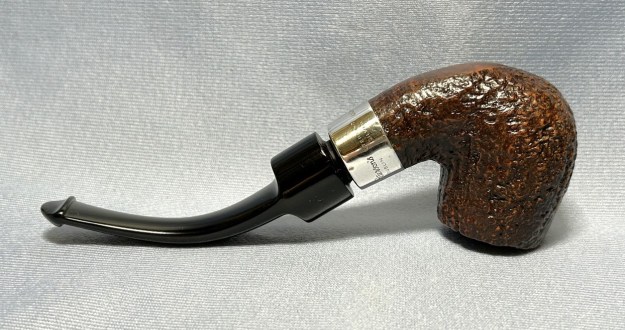
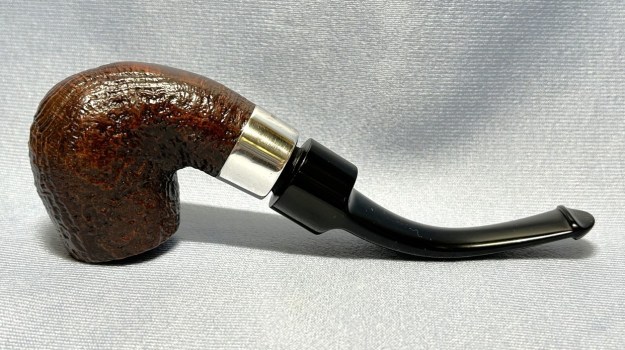
Restoring a Republic Era Peterson’s “Sterling Silver” 606S Sandblast Pot


by Steve Laug

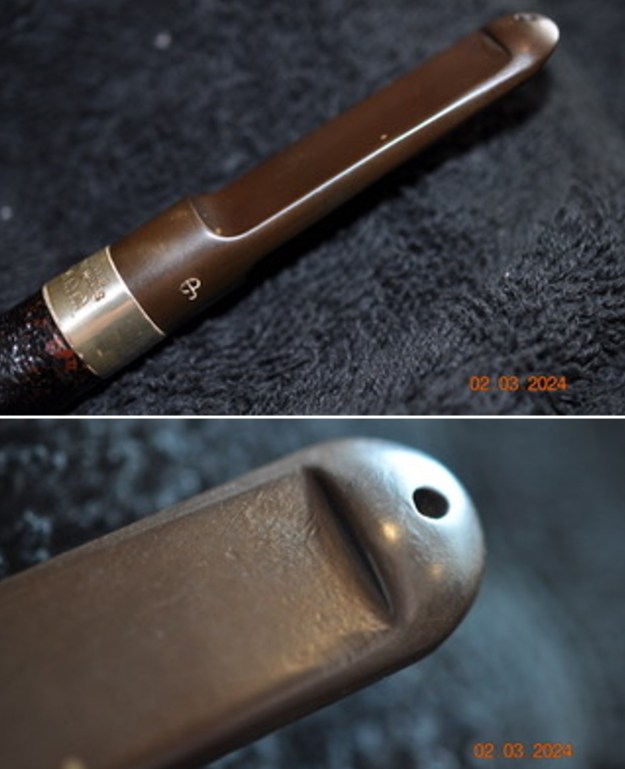
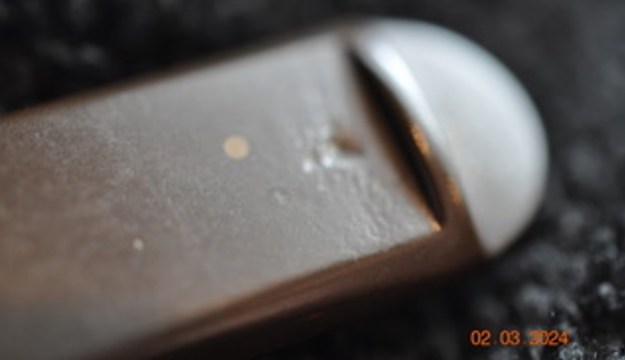
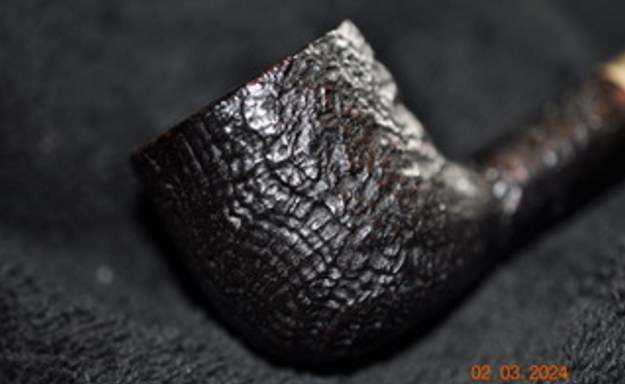
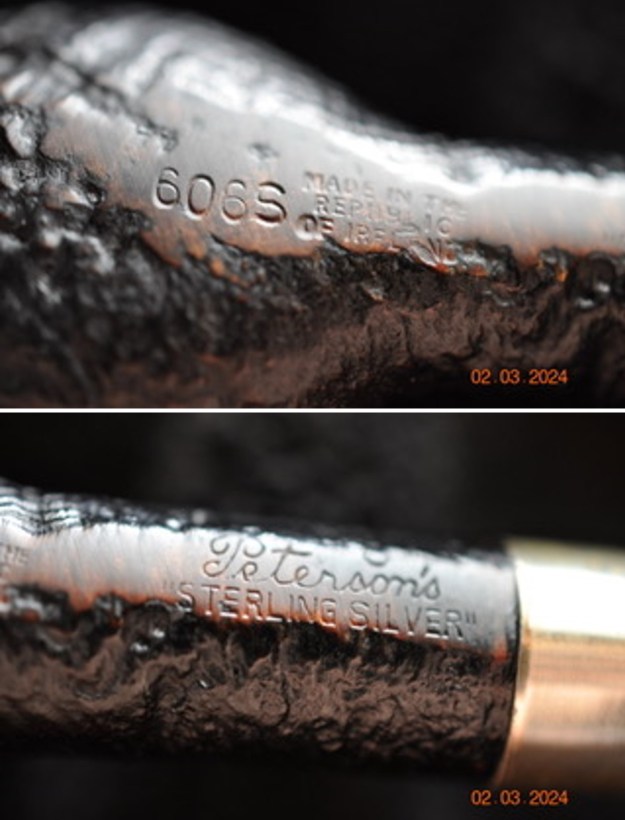
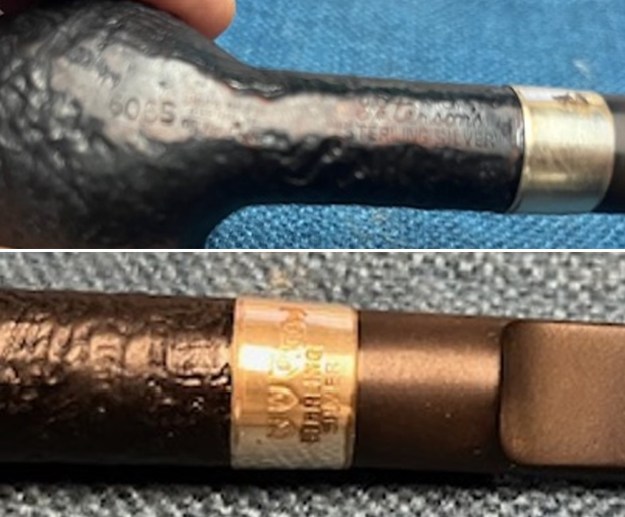
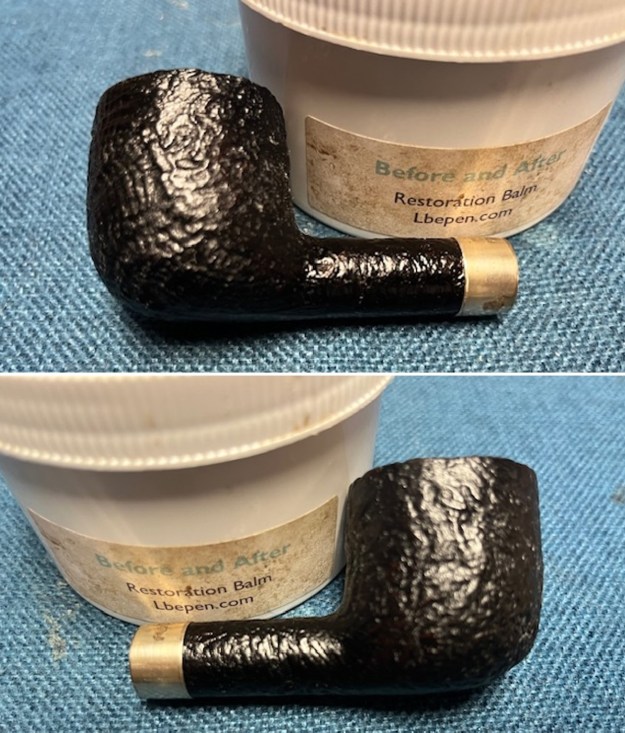
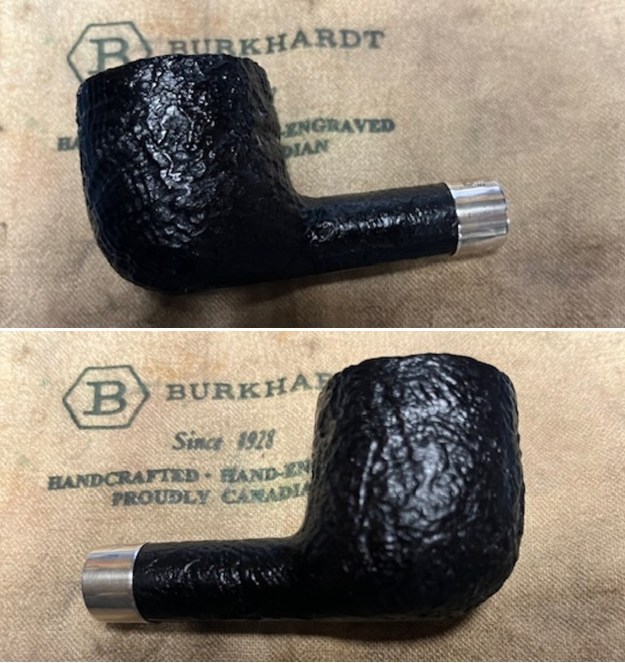
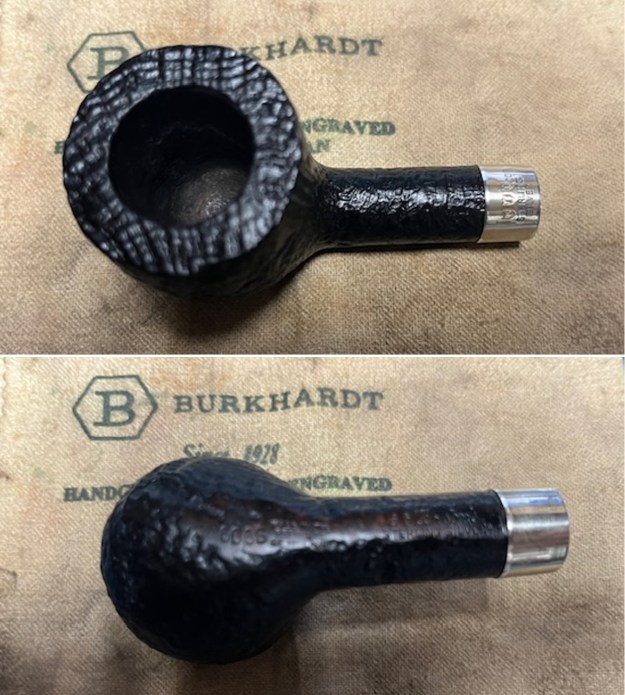
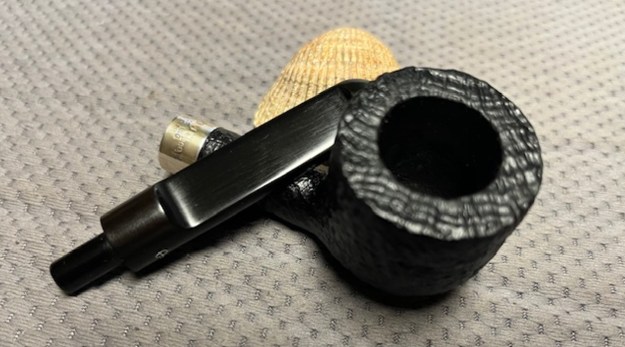
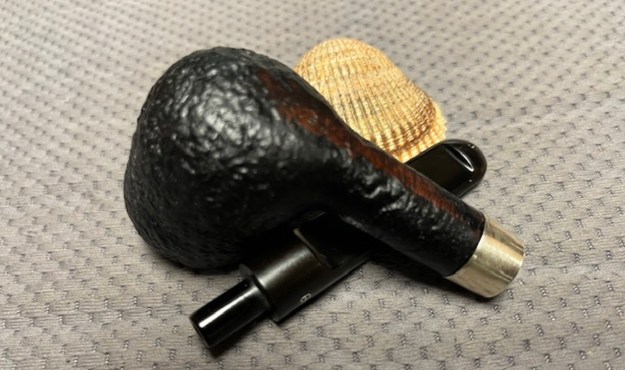
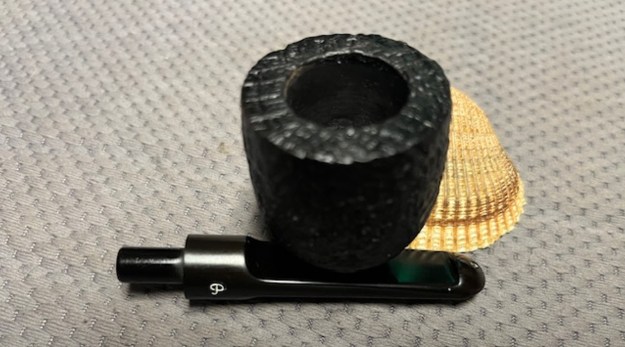
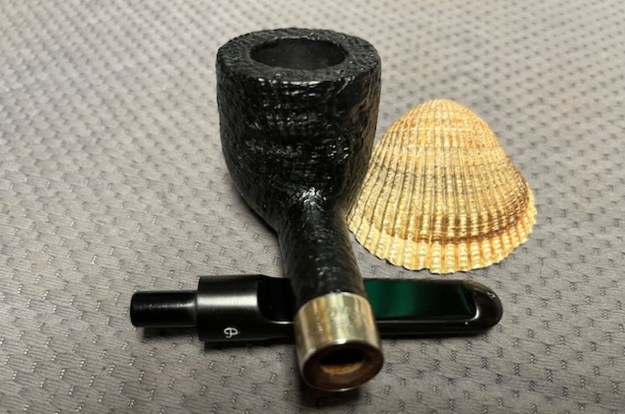
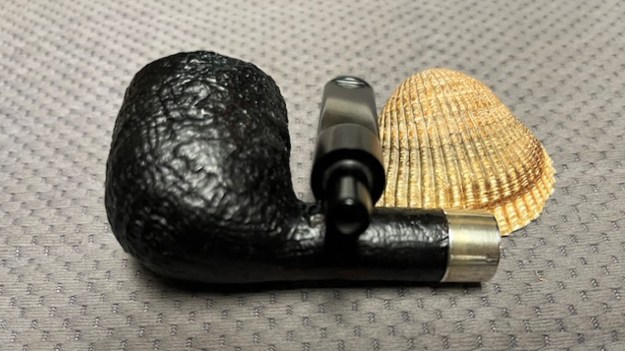
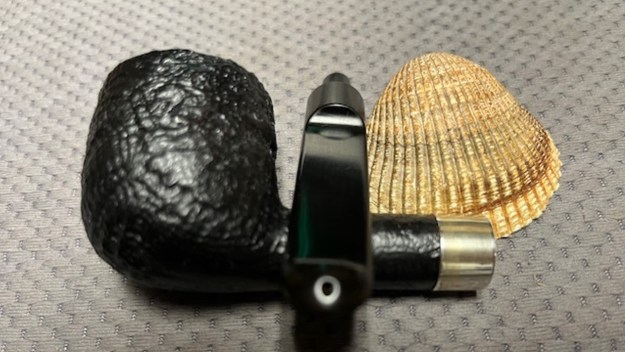
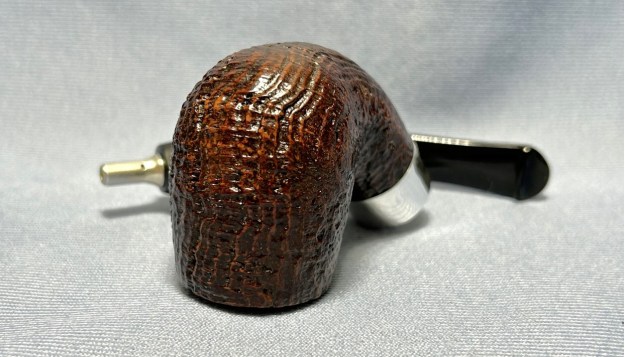
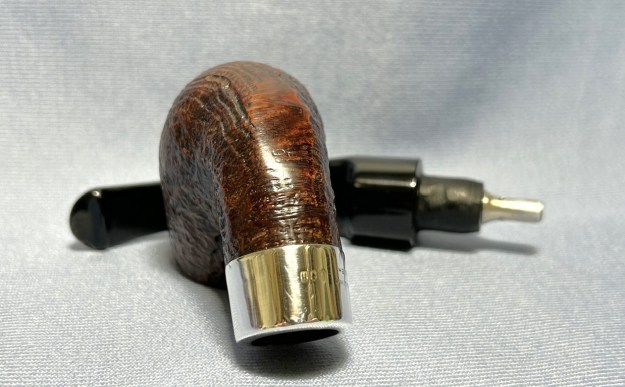
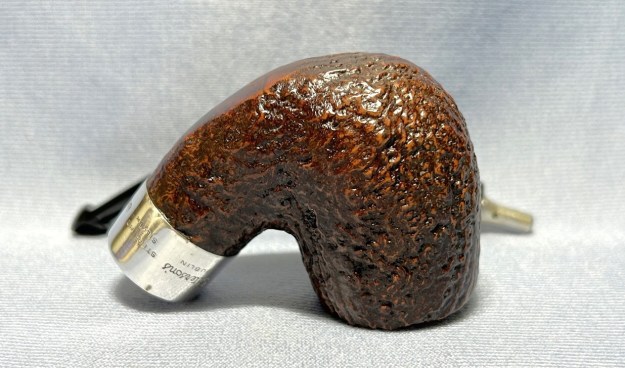
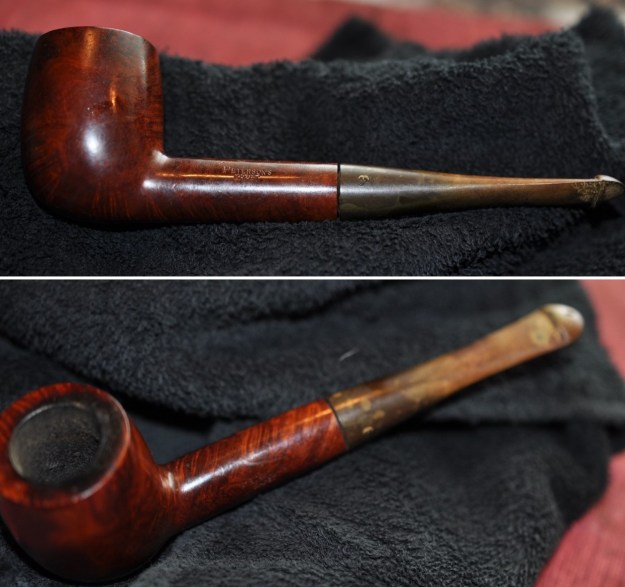
The next pipe I have chosen is smooth finished Peterson’s “Sterling Silver” pipe. The pipe came to us from our contact in Copenhagen, Denmark. This one is a classic Peterson’s Pot shaped pipe with a saddle P-lip stem. It has a dark brown coloured finish with amazing sandblast grain around the bowl sides and shank. It is very dirty. This Pot has a silver band on the shank that was badly oxidized. The grime on the finish was ground into the finish on the bowl sides. The contrast of the brown stains make the sandblast really pop. It was stamped on the underside of the shank and reads 606S the shape number on the heel of the bowl followed by the three line Made in the Republic of Ireland followed by Peterson’s [over] “Sterling Silver”. The heavily tarnished band is stamped with K&P in shields [over] Sterling [over] Silver. To the right that it has three hallmarks – Hibernia seated arm on a harp (signifies country of manufacture), a crowned harp designating Sterling quality and finally a Date Letter mark – in this case it is a lower case “s” (1983). It was in filthy condition when Jeff brought it to the table. There was a thin cake in the bowl and a spattering of lava in the sandblast of the rim top but a clean inner edge of the bowl. The stem was oxidized and had light tooth marks and chatter on the top and a deeper on on the underside near the button. Jeff took photos of the pipe before his cleanup work before he started on the pipe.  Jeff took photos of the rim top and stem to show the general condition of the pipe. The bowl is lightly caked and the rim top and edges look very good. The stem is oxidized and has light tooth marks on the top and underside near the button. Jeff took some photos of the bowl sides and heel to show the grain that was around this bowl. It is a nice looking pipe. He took photos of the sides of the shank to show the stamping. The stamping is readable in the photos below and is as noted above. The stamping on the Sterling Silver band is also readable through the oxidation. I am including the information from Pipedia’s article on Peterson pipes. It is a great read in terms of the history of the brand (https://pipedia.org/wiki/Peterson).

I turned to “The Peterson Pipe” by Mark Irwin and Gary Malmberg to get some background on the Sterling Pipe. On page 314 it had the following information on the line.

Sterling (1949-c1957; 1978-) – Higher grade line with sterling band. Early example, 1949-57, with COM of Made in Ireland forming a circle, were offered to the US market through Rogers Imports and have no hallmark, although until recent years the line carried Peterson’s maker’s mark, the K&P is in separate shields. Models beginning in ’78 with hallmarked dates and a COM stamp of Made in [over] the Republic [over] of Ireland.

I knew that I was dealing with a pipe made between 1949-1957 as shown by the Made in the Republic of Ireland three line format stamp. Now it was time to work on the pipe.

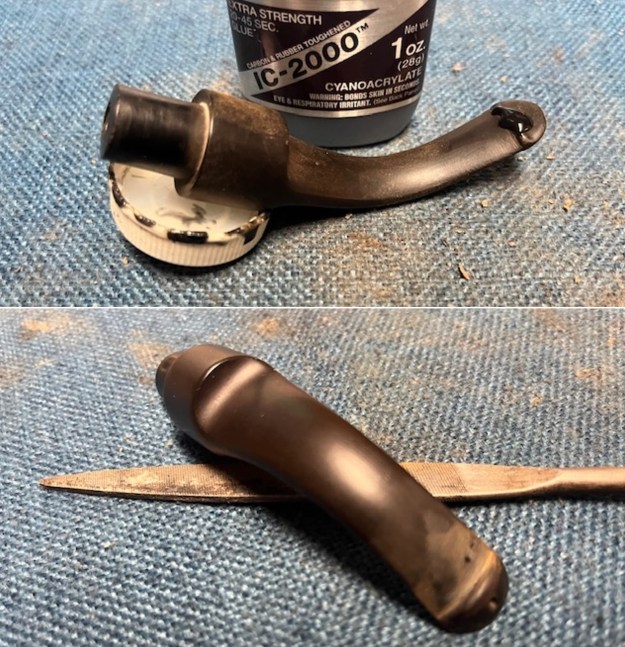
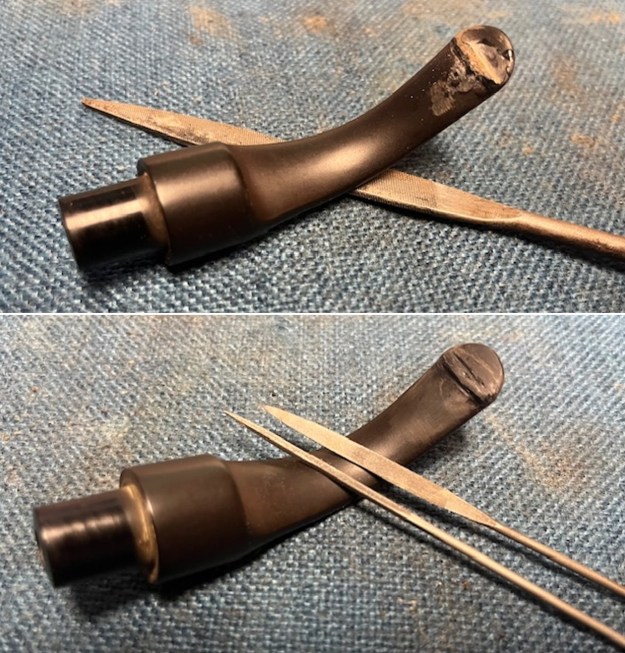
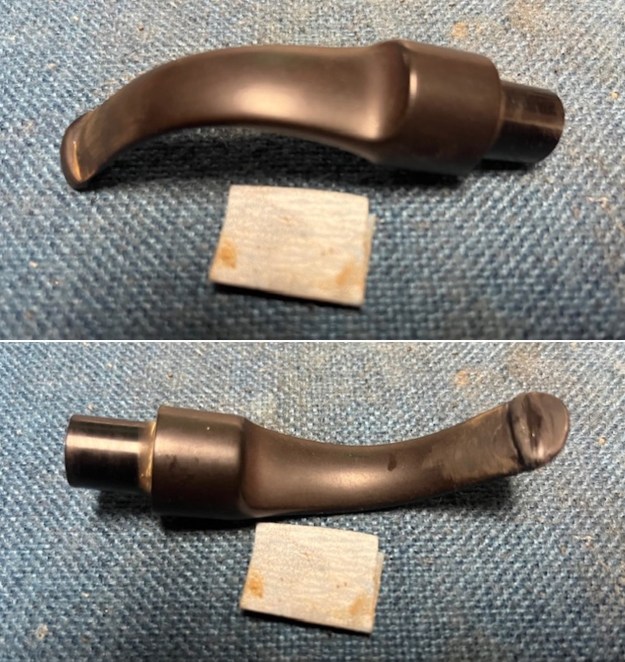
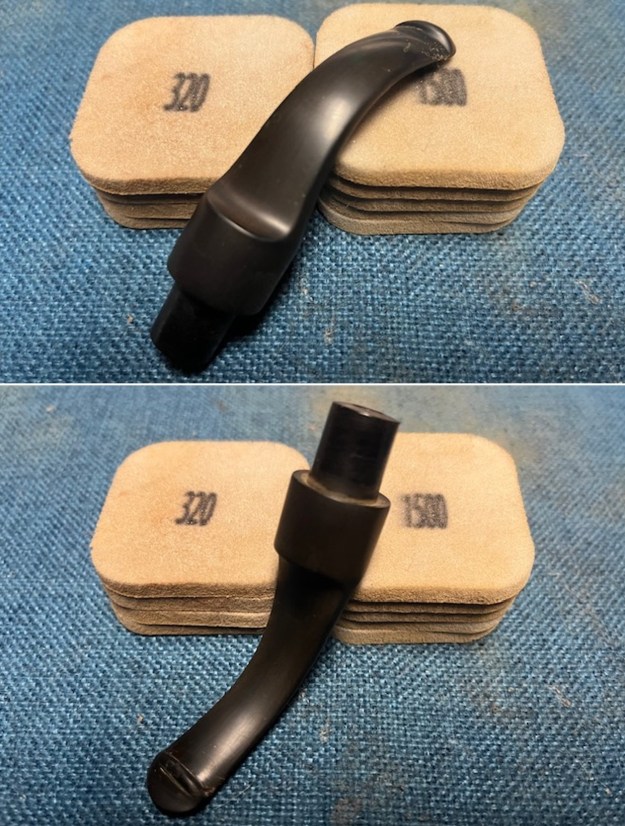
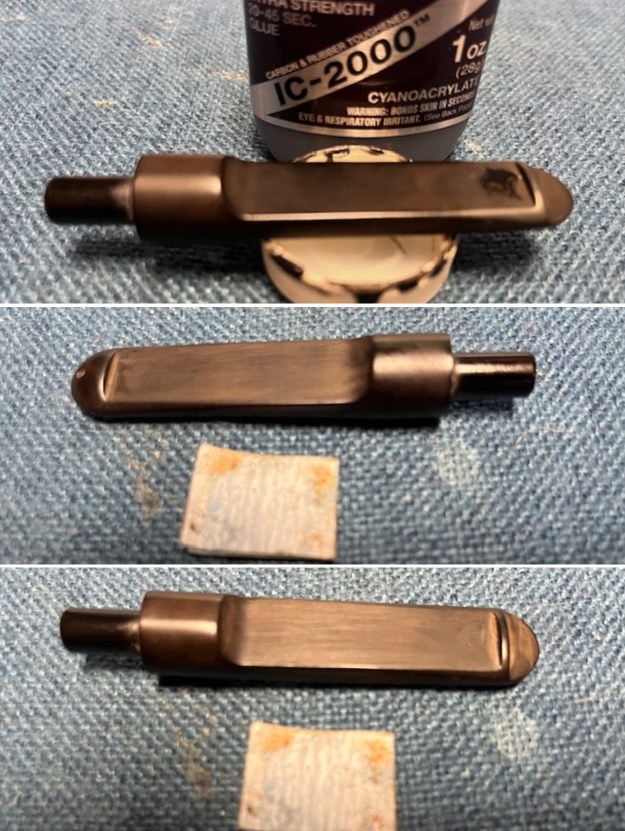
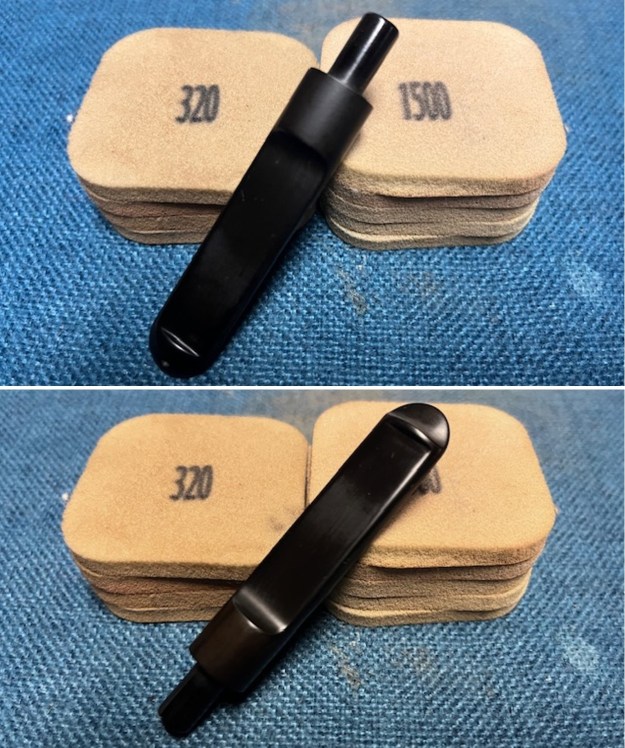
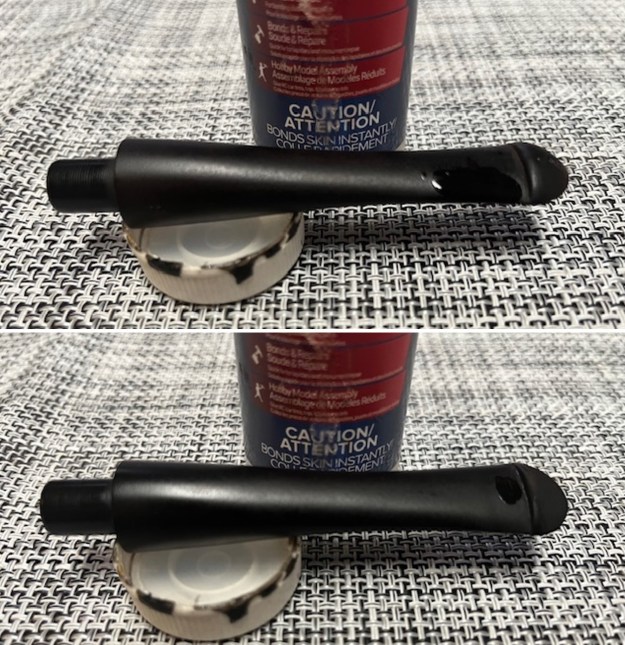
Jeff had done a great job cleaning up the pipe as usual. He reamed the pipe with a PipNet reamer and cut back the cake back to the bare briar. He cleaned up the walls with a Savinelli Fitsall Pipe Knife. He scrubbed the interior of the bowl and shank with pipe cleaners, shank brushes, cotton swabs and alcohol to remove the tars and oils. He scrubbed the exterior of the pipe with undiluted Murphy’s Oil Soap and a tooth brush to remove the grime from the finish. He worked on the rim top lava with the soap and tooth brush. He scrubbed the inside of the stem with alcohol, shank brushes and pipe cleaners. He scrubbed the exterior with Soft Scrub and then soaked it in Briarville’s Pipe Stem Deoxidizer. He washed it off with warm water to remove the deoxidizer. The pipe looked very good when it arrived here. I took some close up photos of the rim top and also of the stem surface. The rim top had some darkening on the back top and the inner edge. It also had some nicks and scratch on the rim top at the back and on the right. The silver cleaned up well on the band. The stem was clean and the tooth marks and chatter were minimal.I took photos of the stamping on the top and underside of the shank. You can see that it is stamped as noted above. It is faint and readable. I took the pipe apart and took a photo of the pipe. It is a good looking pipe and has some nice looking grain around the bowl. The briar looked very good at this point. I began my work on it by working some Before & After Restoration Balm into the surface of the briar with my fingertips to clean, enliven and protect the briar. I let the balm sit for 15 minutes and then buffed with a cotton cloth to raise the shine. The photos show the bowl at this point in the restoration process. I polished the Sterling Silver band on the shank with a jeweller’s cloth to remove the tarnish and polish it. I set the bowl aside and turned my attention to the stem. I filled in the deep tooth mark on the underside of the stem with black rubberized CA glue. Once the repair cured, I sanded the stem with a folded piece of 220 grit sandpaper to remove the remnants of oxidation and the repair on underside of the stem ahead of the button.I sanded the stem with 320-3500 grit 2×2 inch sanding pads and wiped it down with an Obsidian Oil cloth after each sanding pad. The stem began to take on a shine.I touch up the P stamp on the left side of the saddle stem with some white acrylic fingernail polish. I pressed it into the stamp with a toothpick and scraped off the excess with the pick and then lightly sanded it with a worn 1200 grit sanding pad. I polished the stem with micromesh sanding pads – wet sanding with 1500-12000 grit sanding pads. I wiped it down after each sanding pad with Obsidian Oil. I polished it with Before & After Pipe Stem Polish – both Fine and Extra Fine. I am excited to finish this Sandblast Peterson’s “Sterling Silver” 606S Pot. I put the pipe back together and lightly buffed it with Blue Diamond on the buffing wheel. I gave the bowl and the stem multiple coats of carnauba wax. I hand buffed the pipe with a clean buffing pad to raise the shine. It is fun to see what the polished bowl looks like with the depths of the sandblast taking on a rich glow. Added to that the polished Sterling Silver band and the black vulcanite saddle stem was beautiful. This smooth Classic Peterson’s “Sterling Silver” 606S Pot is nice looking and the pipe feels great in my hand. It is light and well balanced. Have a look at it with the photos below. The dimensions are Length: 5 ½ inches, Height: 1 ½ inches, Outside diameter of the bowl: 1 ½ inches, Chamber diameter: ¾ of an inch. The weight of the pipe is 40grams/1.41 ounces. It is a beautiful pipe and one that will be on the Irish Pipe Makers Section of the rebornpipes store soon. If you are interested in adding it to your collection let me know. Thanks for walking through the restoration with me as I worked over this pipe. Thanks to each of you who are reading this blog.

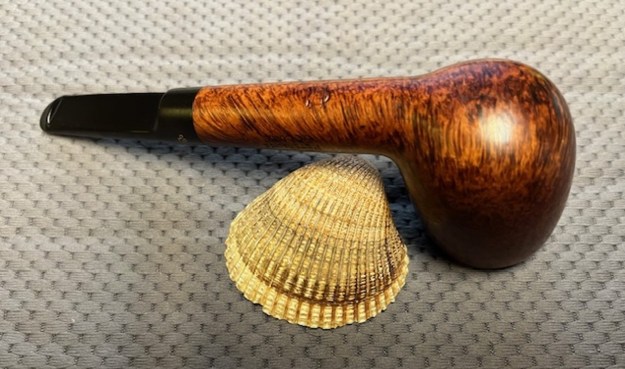
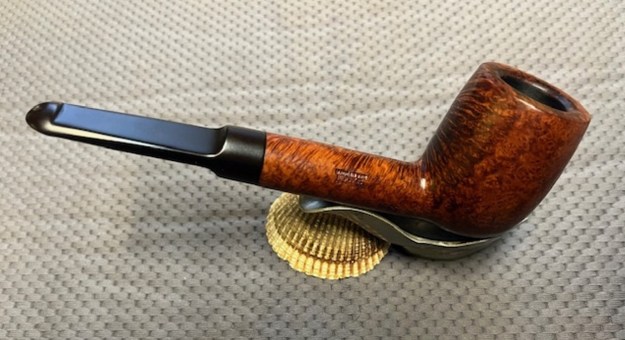
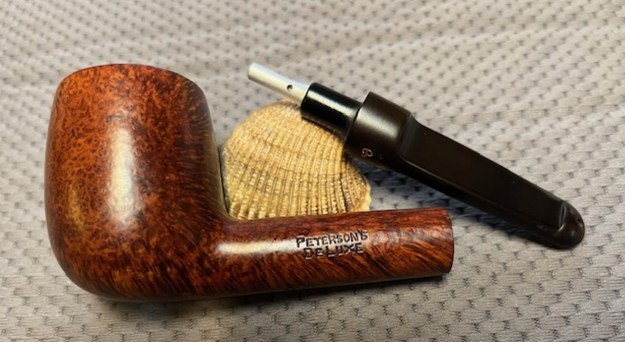
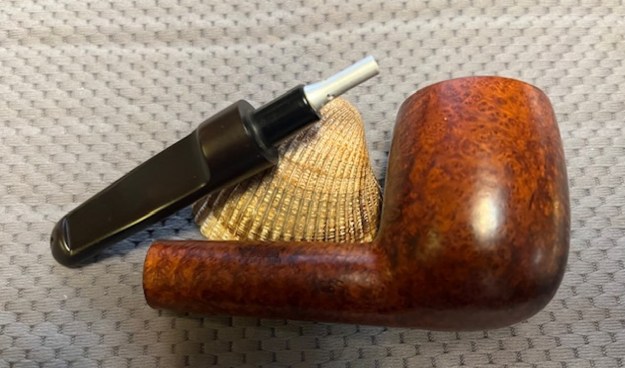
New Life for a Republic Peterson’s De Luxe 440 Billiard


by Steve Laug

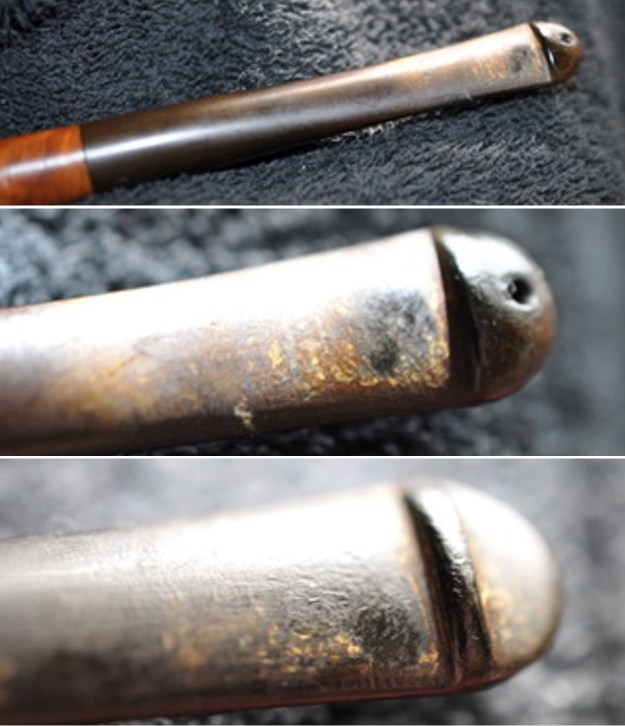
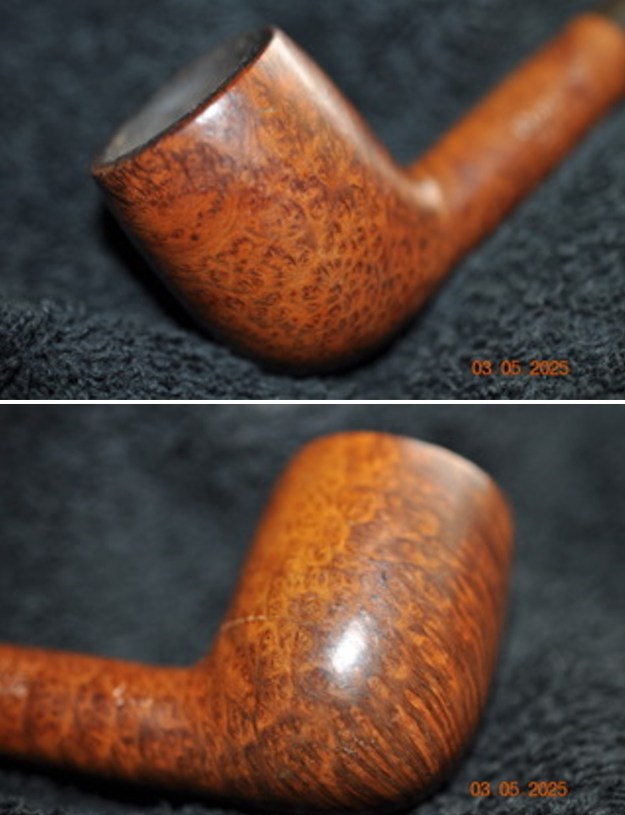
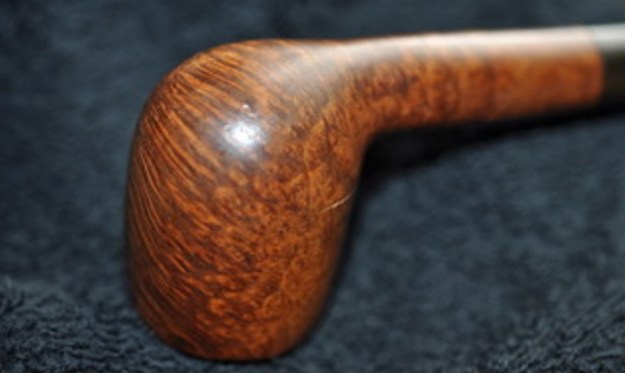
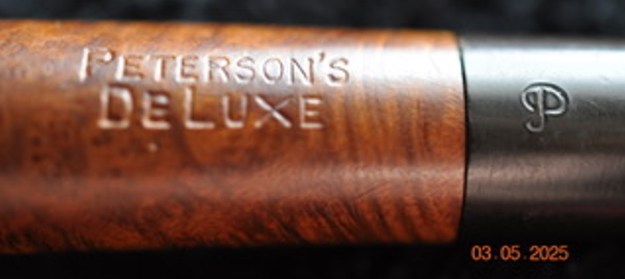
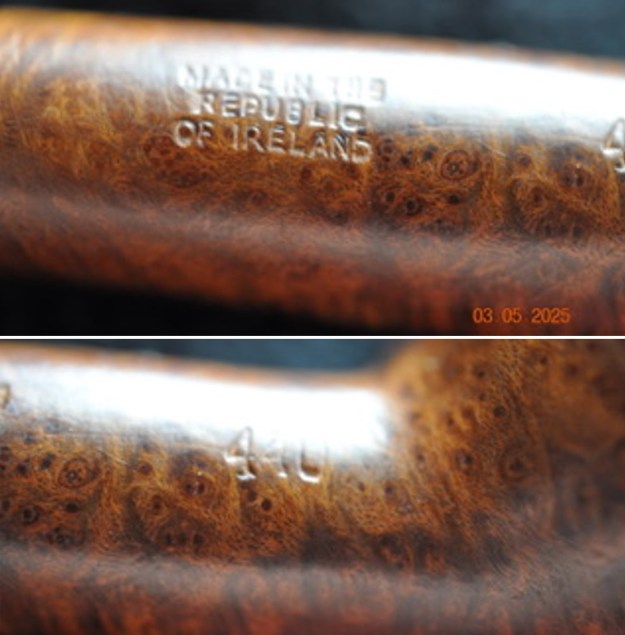
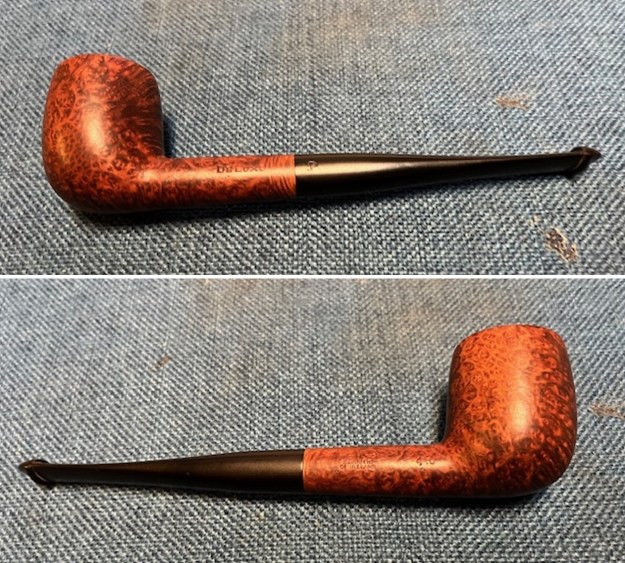
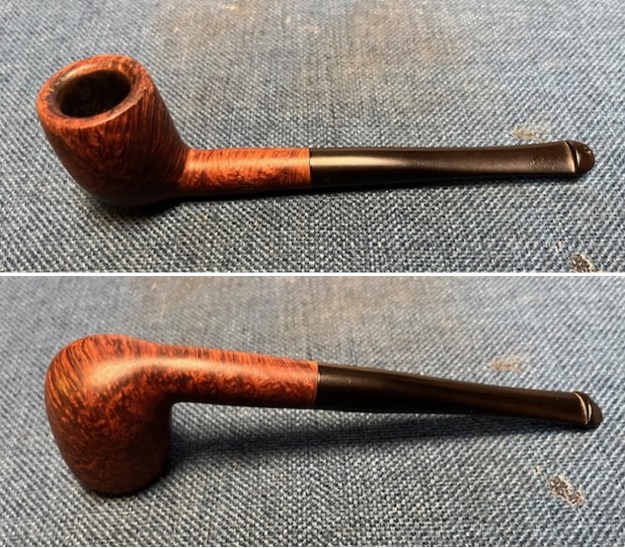
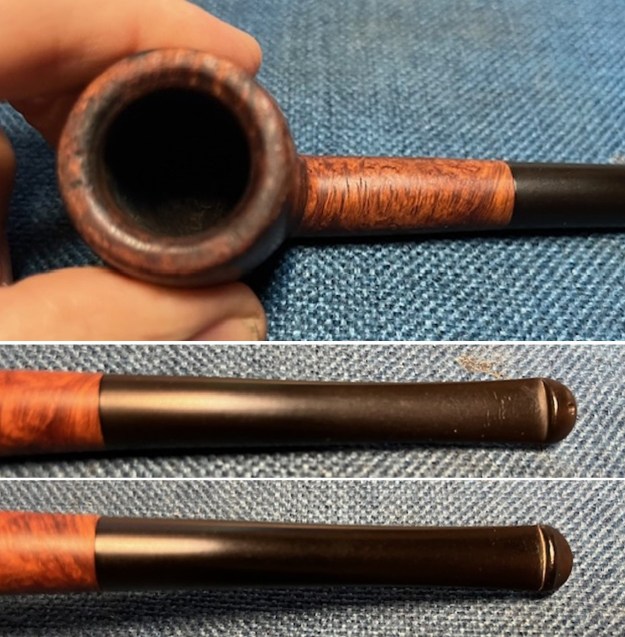
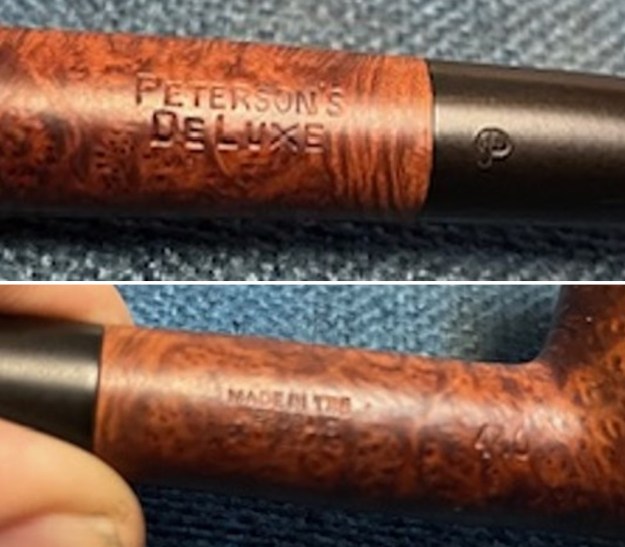
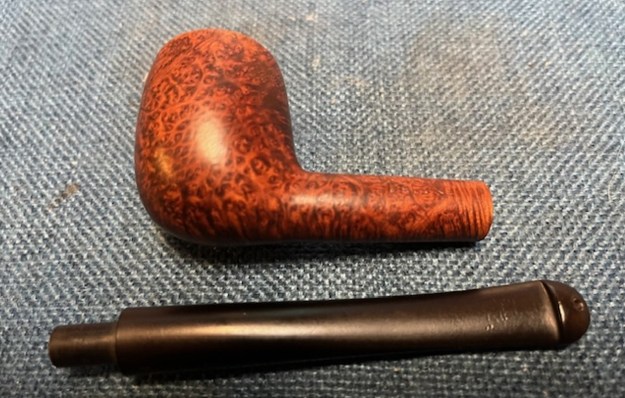
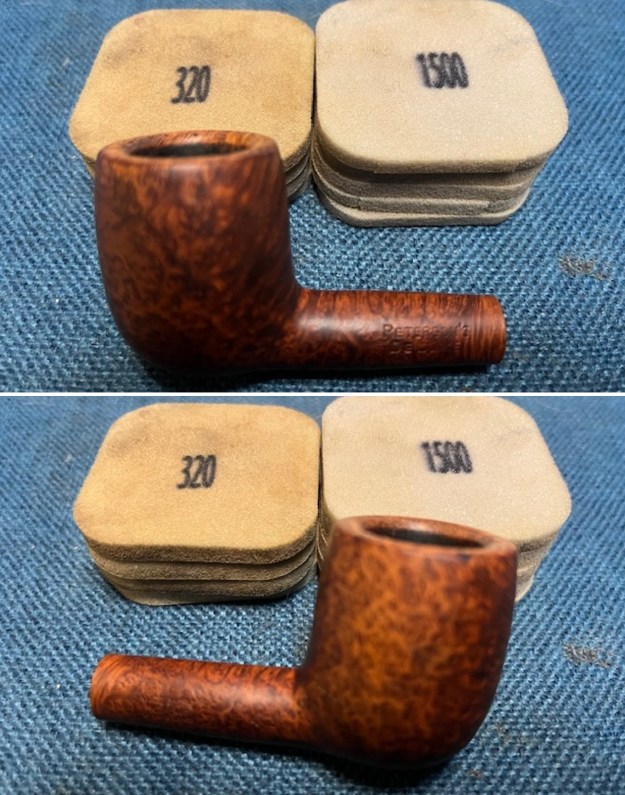
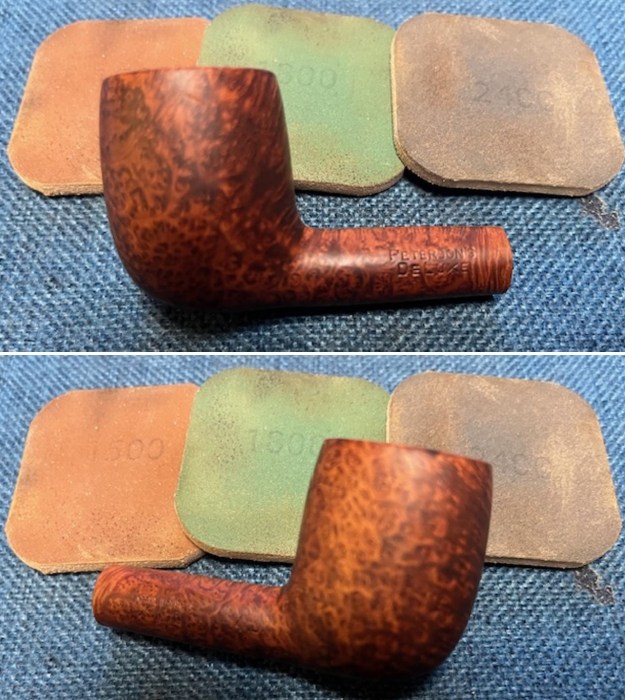
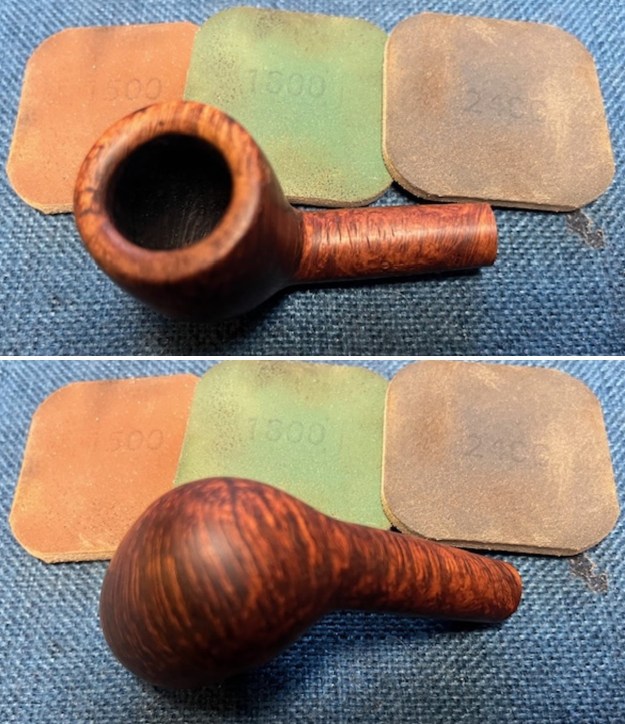
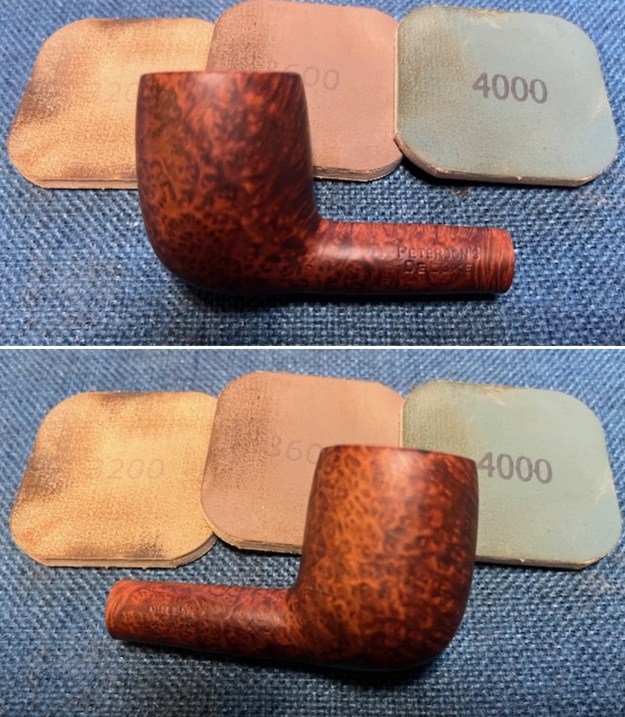
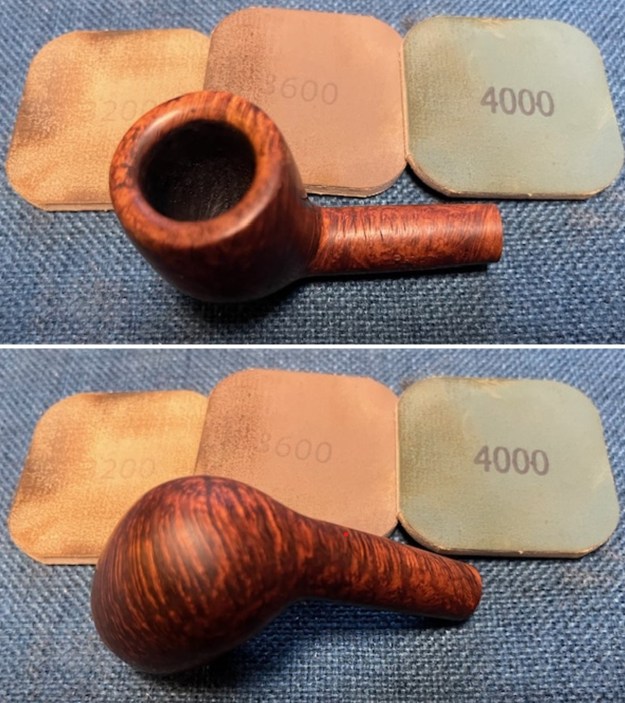
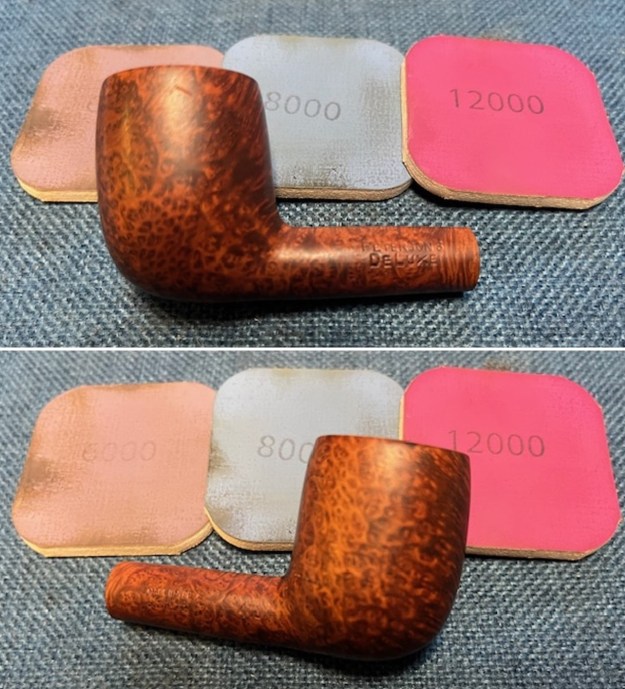
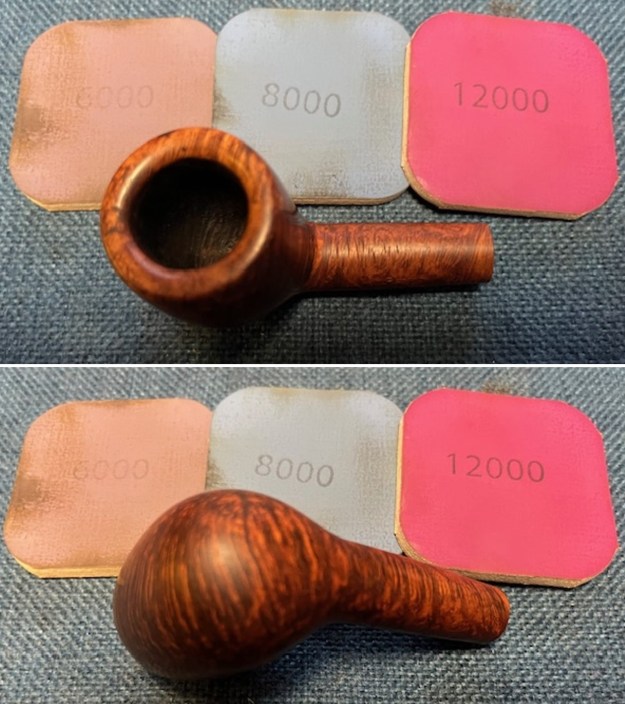
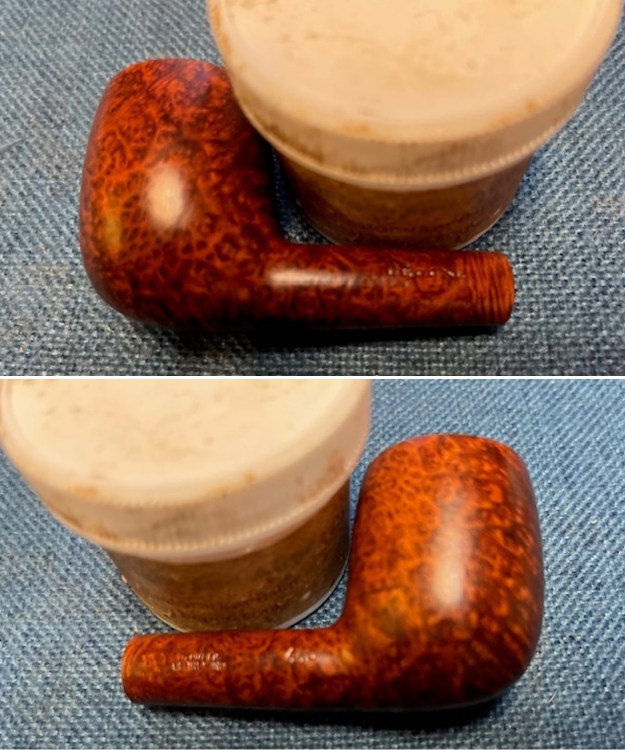
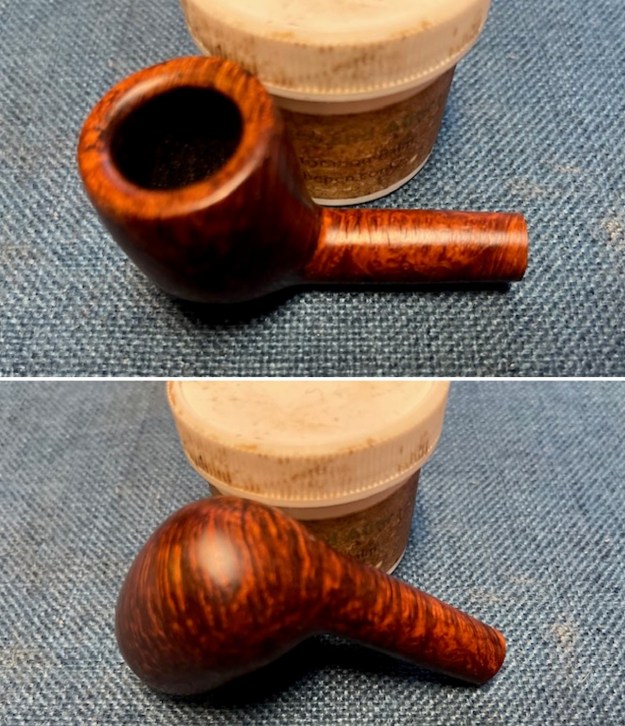
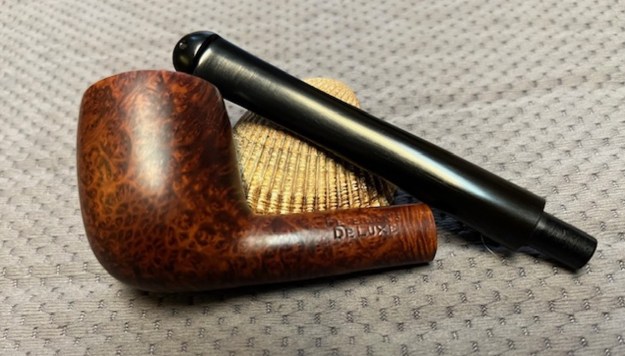
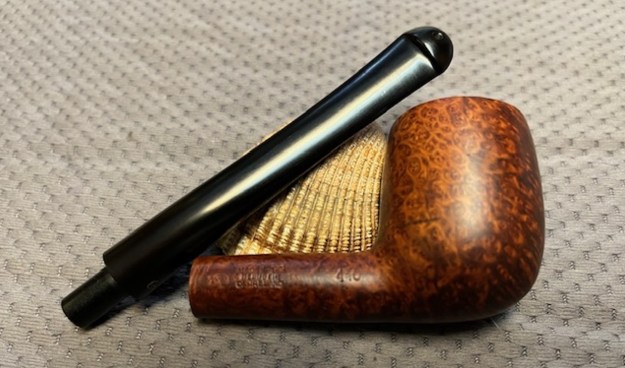
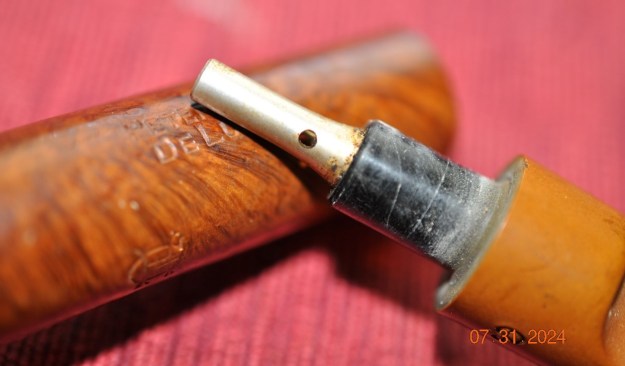
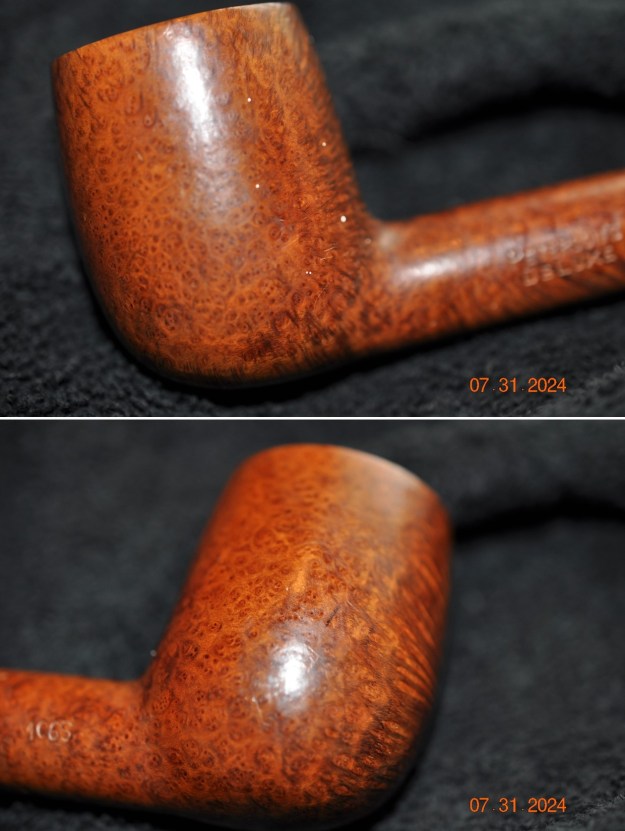
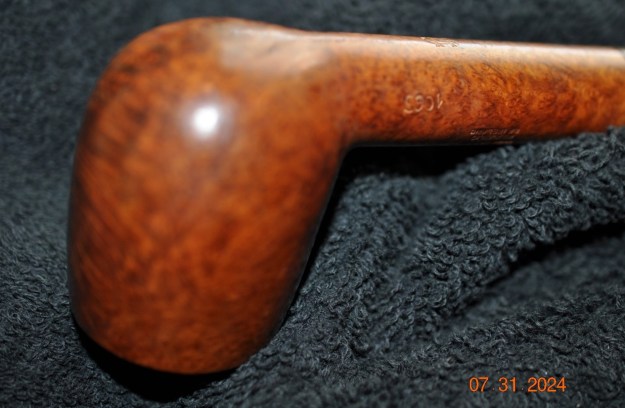
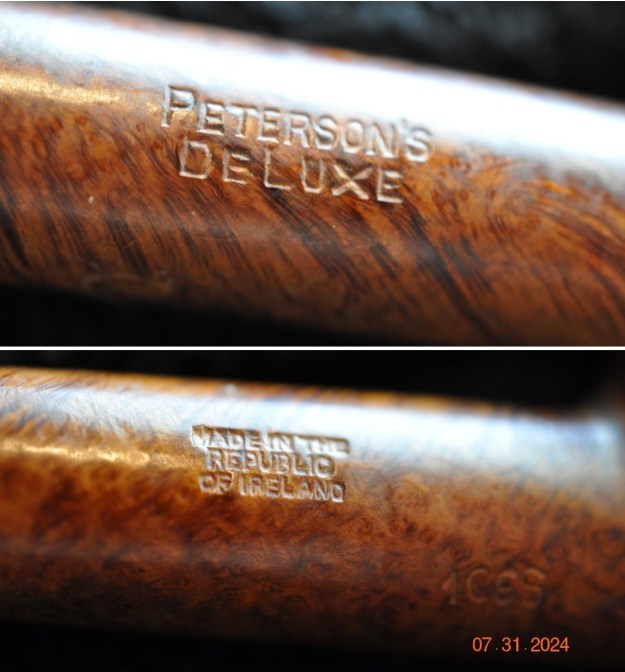
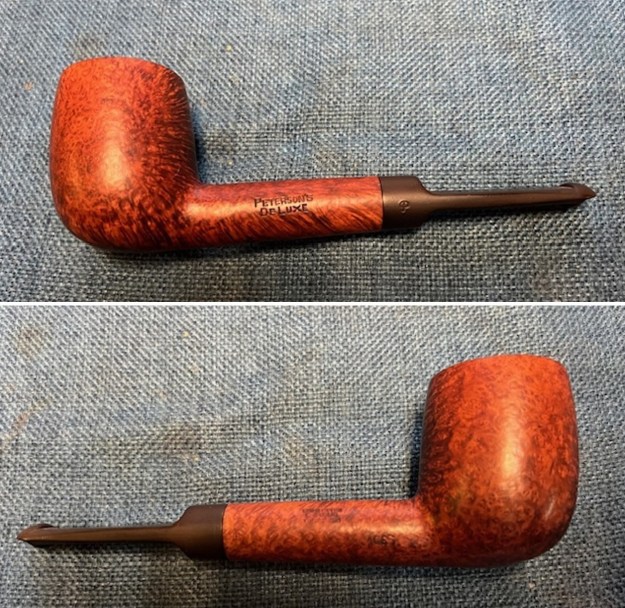
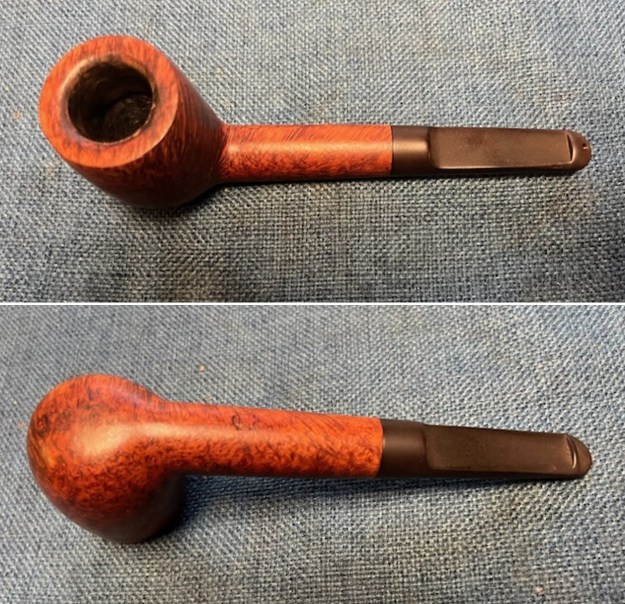
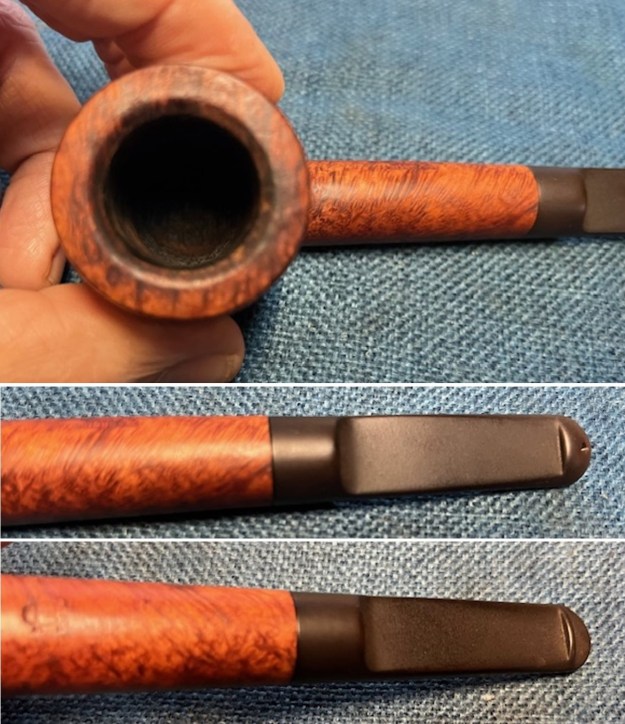
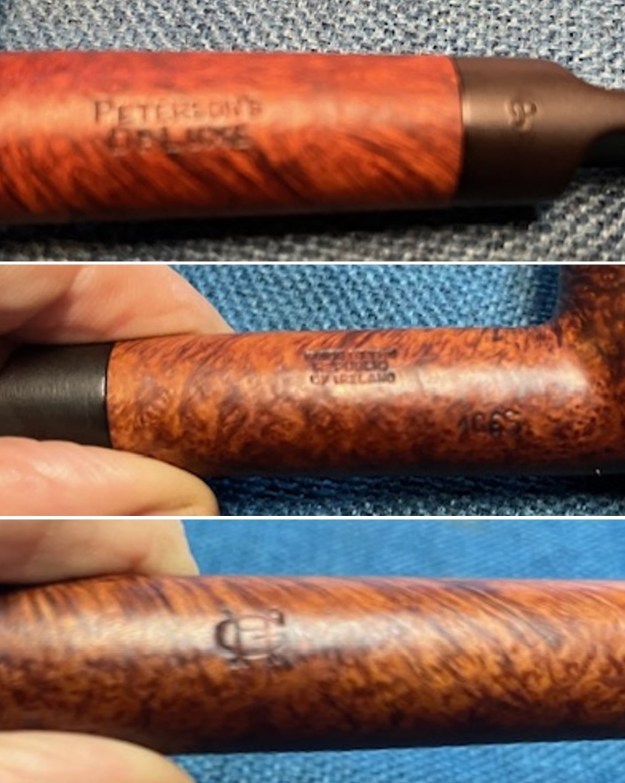
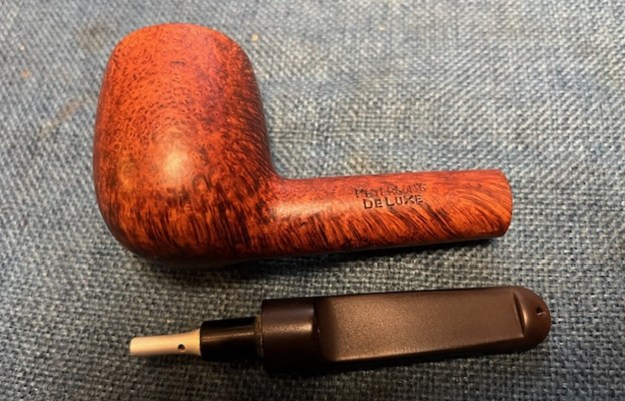
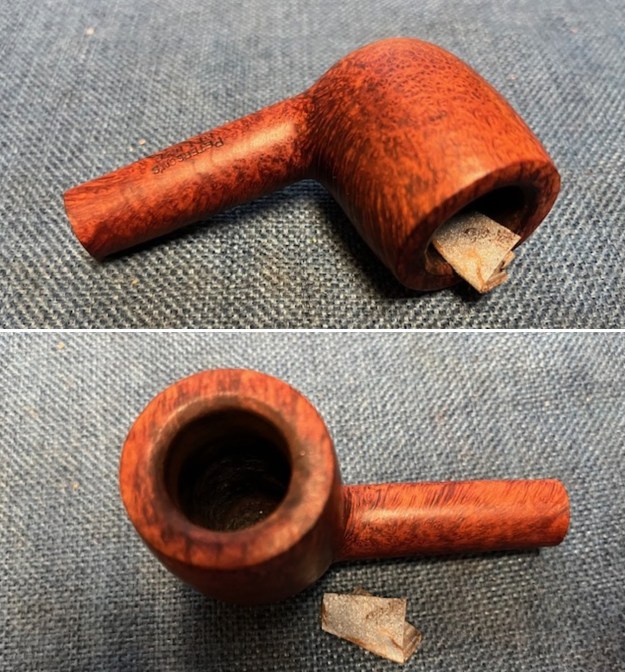
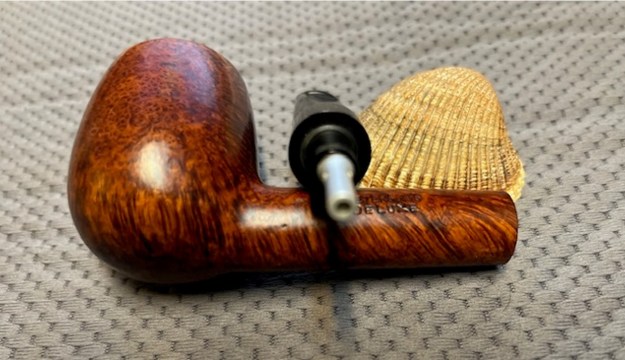
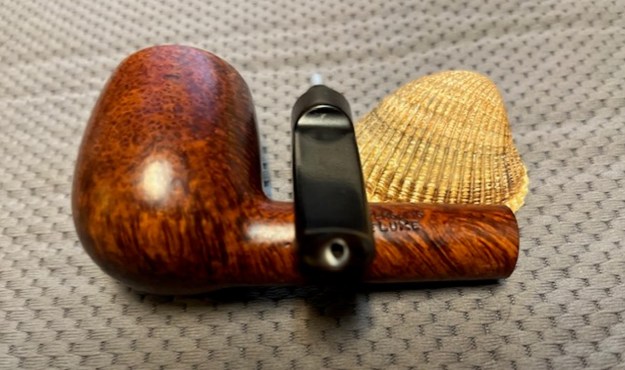
In the last box of pipes Jeff sent me there was an interesting, nicely grained Peterson’s Billiard to restore. We purchased it from a seller on eBay on 08/22/2024 who was in Harrison Township, Michigan, USA. It is a Peterson’s De Luxe 440 Straight Billiard. It is stamped on the left side of the shank Peterson’s [over] De Luxe and on the right side it reads Made in the Republic of Ireland (three lines) followed by the shape number 440. It was a dirty pipe when we received it. There was lava on the rim top and heavily coated on the bevelled inner edge of the rim. The rim top was dirty and showed some wear and tear on the surface coming up for the bowl. There was a thick cake in the bowl that had remnants of tobacco stuck in it. The finish was dirty and there were spots of grime and oils. Under the finish was a great looking pipe with nice grain. The stem was calcified, oxidized and there were light tooth marks and chatter on the top and underside ahead of the button. Jeff took some photos of the pipe before he started his cleanup work.He took photos of the bowl and rim top to show their general condition. You can see the tars on the inner edge and some scuffing on the rim top. The cake in the bowl is quite thick and there is tobacco debris on the walls of the bowl. The finish on the bowl is dull but the grain is still very stunning. This pipe has a classic Peterson’s P-lip stem on a saddle stem. It has calcification and oxidation on the surface of the vulcanite that is quite deep. There seems to be some tooth marks and chatter on the top and underside. Jeff took some photos of the sides and heel of the bowl to give an idea of the grain on this particular piece of briar. It is amazing and I cannot wait to see what it looks like once it is polished and waxed. He took photos of the stamping on both sides of the shank to capture it for me. The first photo shows the left side of the shank and the stamping as noted above as well as the P logo on the stem. The second and third photos show the right side of the shank with the Made in the Republic of Ireland three line stamp and shape number 440. I did a bit of work on Google to gather background on the De Luxe line of pipes when I worked on the 4S previously. I decided to quote that here as well.

The first information I found about the Deluxe line was on the Peterson’s website (https://www.peterson.ie/pipes/system/deluxe-system-smooth/). I quote from the description of the line below. I have highlighted several key portions in bold black for emphasis.

While the De Luxe stamp first appeared on our System pipes in 1940, the design itself dates to our 1896 and 1906 catalogues and, with the exception of the Supreme, has always marked our highest tier of System pipe. Like the System Standard and System Spigot lines, the Deluxe System pipe incorporates Charles Peterson’s patented System design, including a deep reservoir to collect excess moisture from the smoke; a graduated-bore mouthpiece that funnels the smoke and allows moisture to collect within the reservoir; a sturdy sterling silver military mount, which allows the pipe to be broken down and cleaned without damage or warping; and our patented P-Lip bit, which draws the smoke upward, thus reducing tongue bite. The De Luxe differs from those aforementioned lines, comprised of bowls with only the finest grain patterns and featuring a sterling silver mount and a push-gap stem, which was never designed to be flush-fitting, the space between the mount and stem base gradually decreasing with prolonged use. The Deluxe also elevates the System pipe by fixing each stem with a traditional chimney, an aluminum fitment that extends the tenon past the chamber’s airway for optimal System performance. Created for Peterson enthusiasts interested in acquiring the finest System pipe on the market, the Deluxe System will serve as the crown of any collection. Seen here in the Smooth finish.

From that information I knew how the De Luxe fit in the hierarchy of Peterson’s pipes. It was always the highest tier of the System pipes. The attachment of a chimney at the end of the tenon was to maximize System performance (the chimney was missing in this particular pipe).

From there I also turned to Pipedia to see what that would add to the information I had on the brand and line. I quote from an article by Jim Lilley and have included portions of it below. (https://pipedia.org/wiki/A_Closer_Look_at_The_Peterson_Deluxe_System_Pipe). Once again, I have highlighted pertinent sections in bold below.

The version of the system pipe for our closer inspection is one of Peterson’s more recognisable series, the handsome and very distinctive De Luxe system pipes, which include the Darwin and Mark Twain. These pipes are at the top of the ‘system’ series in terms of quality and finish.

Each Peterson Deluxe is made from carefully selected, age mellowed root briar. In matte finish with hallmarked sterling silver mounts and a unique space fitting mouthpiece to allow for years of wear. They are available in a wide range of shapes numbered, as follows 1s,2s,3s,4s,5s,8s,9s,11s,12.5s,20s, XL5s, 20FB and 11FB.

The pipes are well carved, construction, engineering and workmanship, is outstanding. The stems are well drilled and aligned. Silver work is excellent, finish very good, and the often maligned briar is of outstanding quality.

The design is a very typically Peterson classic shape. Apart from the Darwin, the balance can be stem heavy, the bit is thick and chunky, especially in the larger versions. I also enjoy the sense of presence they give to the pipe, particularly if smoking in company with friends or strangers. They have a sophistication about them.

The smoking qualities are excellent, dry and cool. The draw is good, and the flavour is particularly great in new pipes. The Mark Twain’s are outstanding in this department….

With that information I turned my attention to working on the pipe.

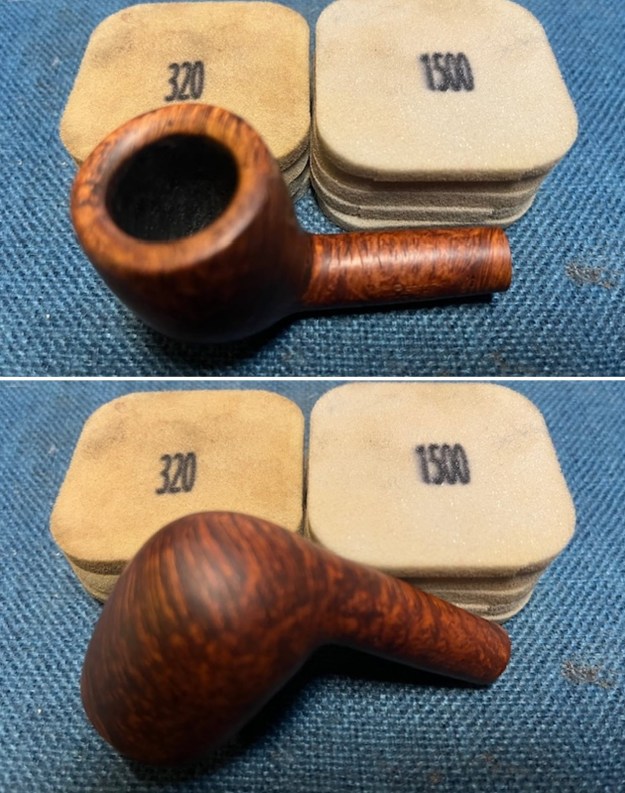
Jeff had cleaned it thoroughly. He had reamed it with a PipNet reamer and cleaned that up with a Savinelli Fitsall Pipe Knife. He had scrubbed the exterior of the briar with undiluted Murphy’s Oil Soap and a tooth brush. He rinsed it with running water to remove the grime and oils. He cleaned out the interior of the shank, sump and airway in the shank and stem with alcohol, pipe cleaners and cotton swabs. He scrubbed the stem with Soft Scrub to remove the oxidation and calcification on the surface. He soaked it in Briarville’s Pipe Stem Deoxidizer to remove the oxidation. He removed it from the Deoxidizer and rinsed it off with warm water. I took some photos of the pipe before I started my part of the work. I took some photos of the rim top and stem. The rim top and bowl looked very good. The cake and lava overflow were gone and the inward bevelled rim was very clean. There was also some darkening on the bevelled inner rim edge and light damage on the edge of the top and the bevel. Jeff had been able to get rid of all of the lava and tars. The rim top looked good with light marks and scratches on the surface. The closeup photos of the stem shows that it is a much cleaner and better looking stem. The tooth marks and chatter were still present ahead of the button.I took some photos of the stamping on the shank sides to show the condition after the cleanup. Often the stamping takes a hit with the cleaning and is lessened in its clarity. Jeff does a great job in leaving the stamping looking very good. The stamp on the stem is also in good condition and will need to be recoloured. I also took the stem off the shank and took a photo of the parts of the pipe to show the proportion. The grain around the bowl and shank on this pipe is very beautiful. I started my restoration work on this pipe by addressing the darkening around the inner edge of the bowl. I used a folded piece of 220 grit sandpaper to clean up the bevelled inner edge and the rim top with the same sandpaper. The finished rim top looked very good.I used 320-3500 grit 2×2 inch sanding pads to remove the darkening on the rim edges and top as well to smooth out some of the scratches in the briar. Once finished it was ready to be polished. I started my polishing regimen on the bowl. I used nine micromesh sanding pads and dry sanded the bowl with 1500-12000 grit pads. I wiped the bowl down with a damp cloth after each pad. The bowl really shines by the final three pads. I worked some Before & After Restoration Balm into the surface of the briar with my fingertips to clean, enliven and protect it. I let the balm sit for a little while and then buffed with a cotton cloth to raise the shine. The photos show the bowl at this point in the restoration process. I set the bowl aside and turned my attention to the stem. On other Deluxe pipes I have used gold to touch up the stamp rather than white acrylic. I touched up the “P” stamp on the left side of the stem with some Rub’n Buff Antique Gold. I worked it into the stamp with a tooth pick. I buffed it off with a soft cloth and some Obsidian Oil. It looked very good.I sanded the stem with 320-3500 grit sanding pads to minimize the scratches and tooth chatter. I wiped the stem down after each pad with Obsidian Oil on a cloth. By the final pad it looked good.I polished the stem with micromesh sanding pads – dry sanding with 1500-12000 grit sanding pads. I wiped them down after each sanding pad with a cloth containing some Obsidian Oil. I finished polishing it with Before & After Pipe Stem Polish – both Fine and Extra Fine and buffed it off with a cotton cloth. I gave it a coat of Obsidian Oil to preserve and protect the stem.  I don’t know how many times I have said this but I love it when I come to the end of a restoration and all of the parts come together and the pipe looks better than when we started the cleanup process. I put the stem back on the Peterson’s De Luxe 440 Billiard and buffed the pipe with Blue Diamond on the buffing wheel. I carefully avoided the stamping on the shank sides during the process. I gave the bowl and stem multiple coats of carnauba wax on the buffing wheel and followed that by buffing it with a clean buffing pad on the buffer. I hand buffed the pipe with a microfiber cloth to deepen the shine. The finished pipe is a real stunning example of a Republic Era Peterson’s De Luxe 440 Straight Billiard. Once again, the grain and the way the shape follows the grain is amazing. Give the finish pipe a look in the photos below. I can only tell you that it is much prettier in person than the photos capture. The dimensions of the pipe are Length: 6 inches, Height: 1 ½ inches, Outside diameter of the bowl: 1 ¼ inches, Chamber diameter: ¾ of an inch. The weight of the pipe is .99 ounces/28 grams. Thanks for walking through the restoration with me as I worked over another beautiful pipe. I will be putting this one on the rebornpipes store in the Irish Pipemakers Section. Let me know if you are interested in adding it to your collection. Thanks for your time.

As always, I encourage your questions and comments as you read the blog. Thanks to each of you who are reading this blog. Remember we are not pipe owners; we are pipe men and women who hold our pipes in trust until they pass on into the trust of those who follow us.

A Pair of Pretty Petes for your Perspicacious Perusal


by Kenneth Lieblich

I have a couple of Peterson pipes that came my way recently and I decided to clean them up and get them ready. Not much of a restoration story on these – just some beautiful pipes. I gave them a quick (and thorough) once over and now it’s time to turn them over to you. Both have been hardly used (once, maybe twice) and they are very handsome. If you’re interested in adding one or both to your collection, be sure to drop me a line.

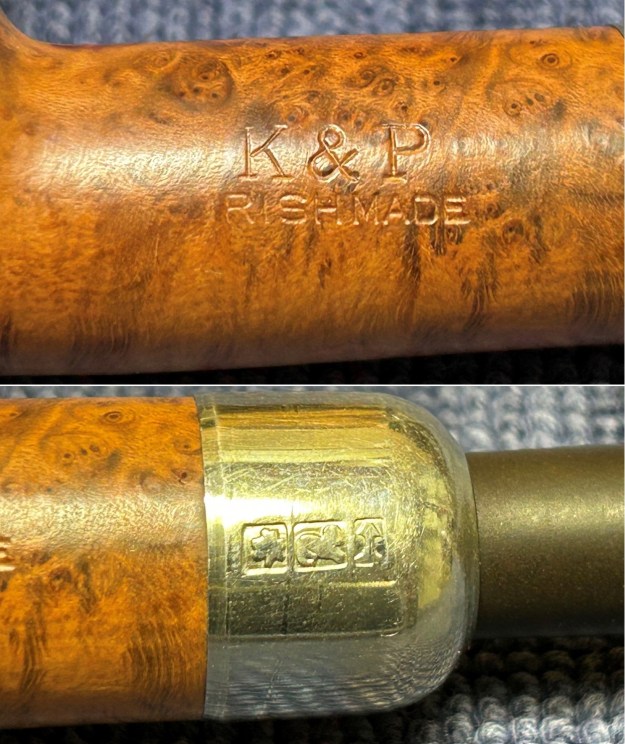
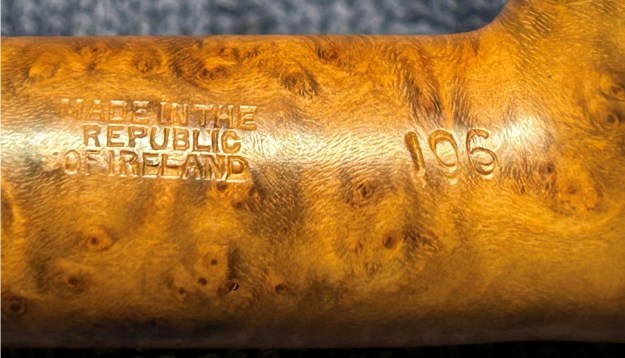
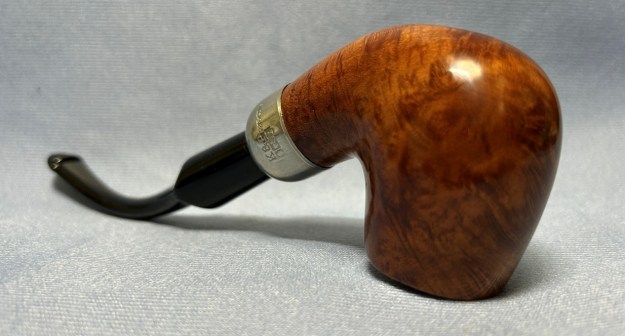
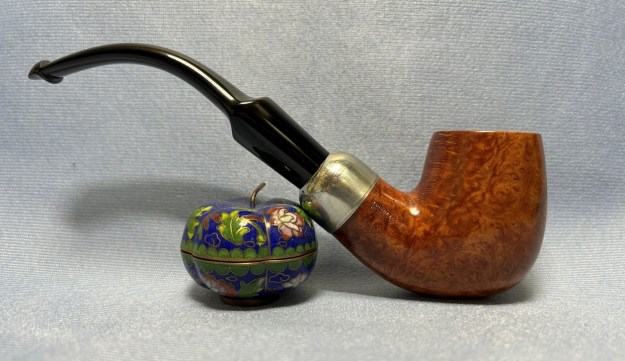
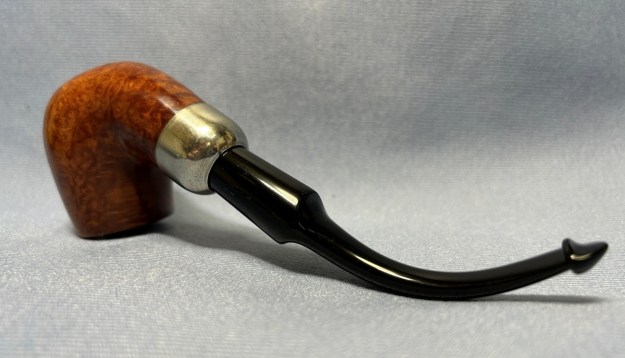
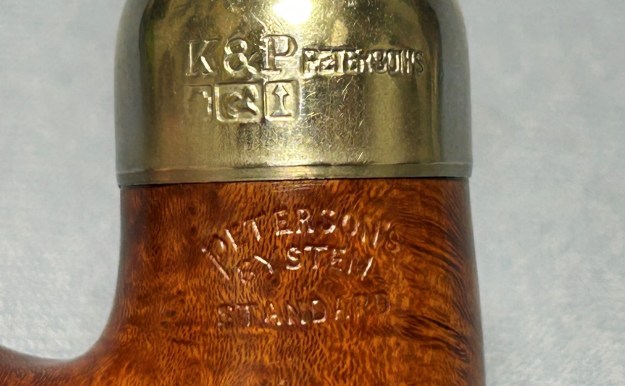
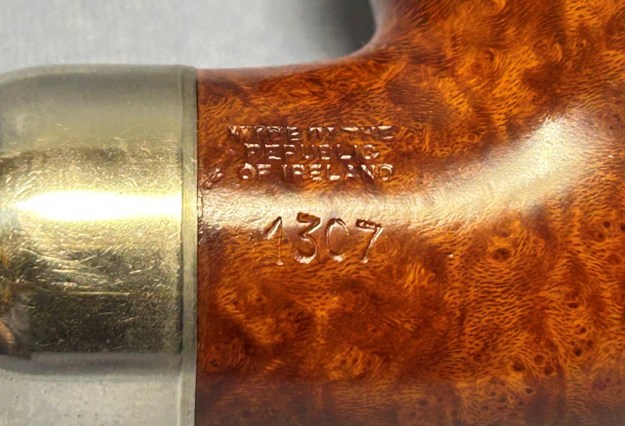
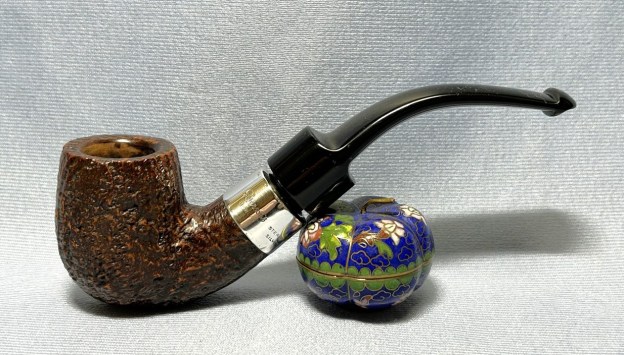
First is a Peterson K&P Irishmade 106 billiard with nickel military mount. Gorgeous pipe. If you are interested in acquiring it for your collection, please have a look in the “Irish” pipe section of the store here on Steve’s website. You can also email me directly at kenneth@knightsofthepipe.com. The approximate dimensions of the Peterson Irishmade 106 are as follows: length 6 in. (152 mm); height 2 in. (51 mm); bowl diameter 1½ in. (40 mm); chamber diameter ¾ in. (20 mm). The weight of the pipe is 1⅝ oz. (48 g). Have a look below. Thanks. Next is a Peterson System Standard 1307 (same as 307) bent billiard. Another lovely pipe. If you are interested in acquiring it for your collection, please have a look in the “Irish” pipe section of the store here on Steve’s website. You can also email me directly at kenneth@knightsofthepipe.com. The approximate dimensions of the Peterson System Standard 1307 are as follows: length 6½ in. (165 mm); height 2⅛ in. (54 mm); bowl diameter 1½ in. (40 mm); chamber diameter ⅞ in. (21 mm). The weight of the pipe is 2⅜ oz. (67 g). Have a look below. Thanks.

Restoring a Handsome Peterson Deluxe System 9S


by Kenneth Lieblich

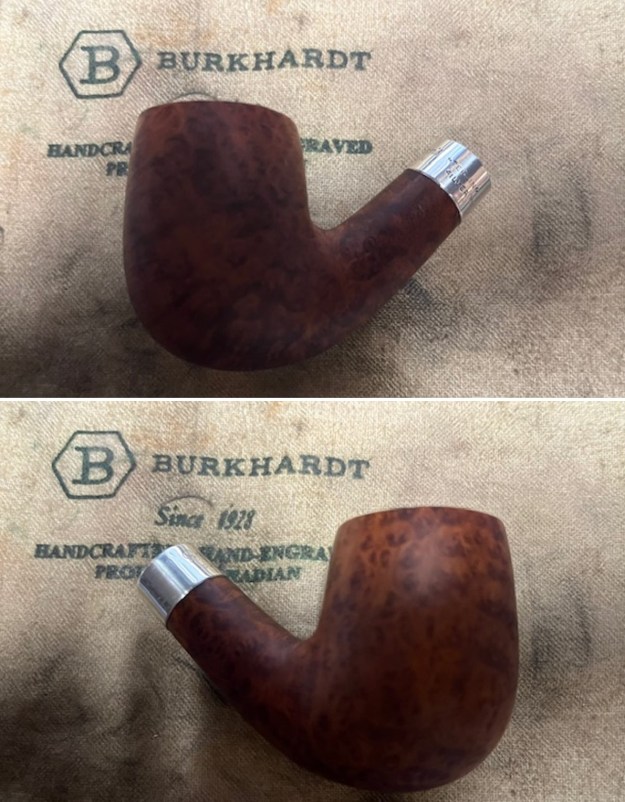
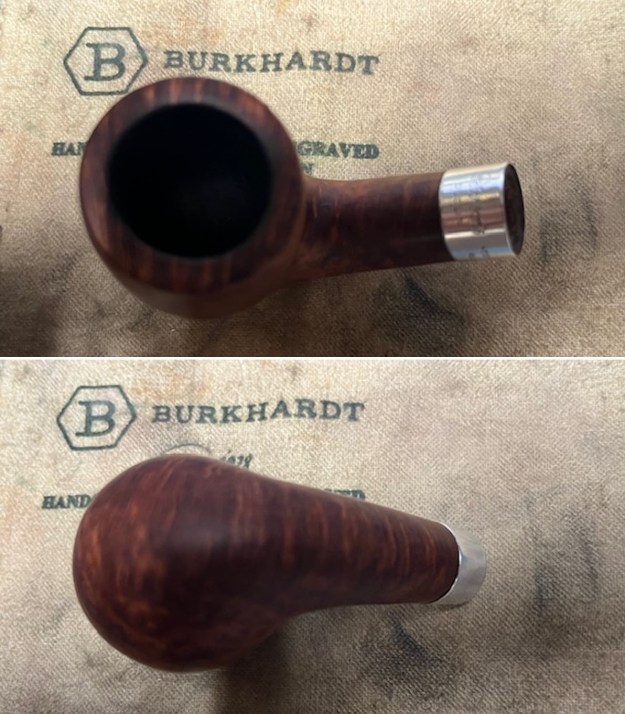
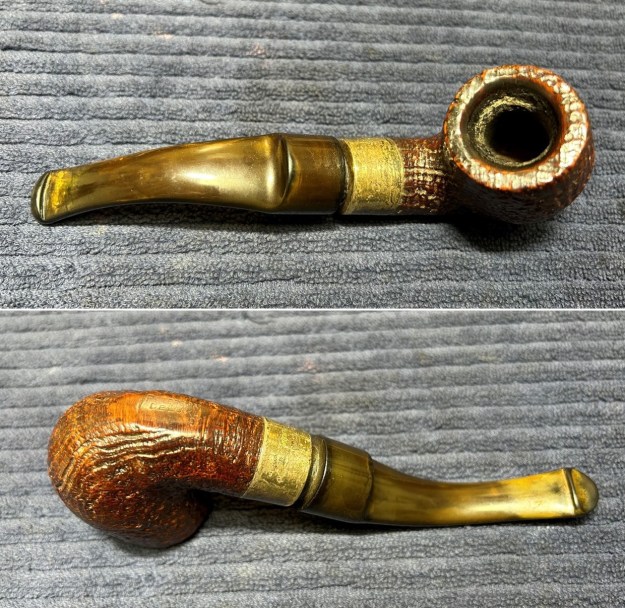
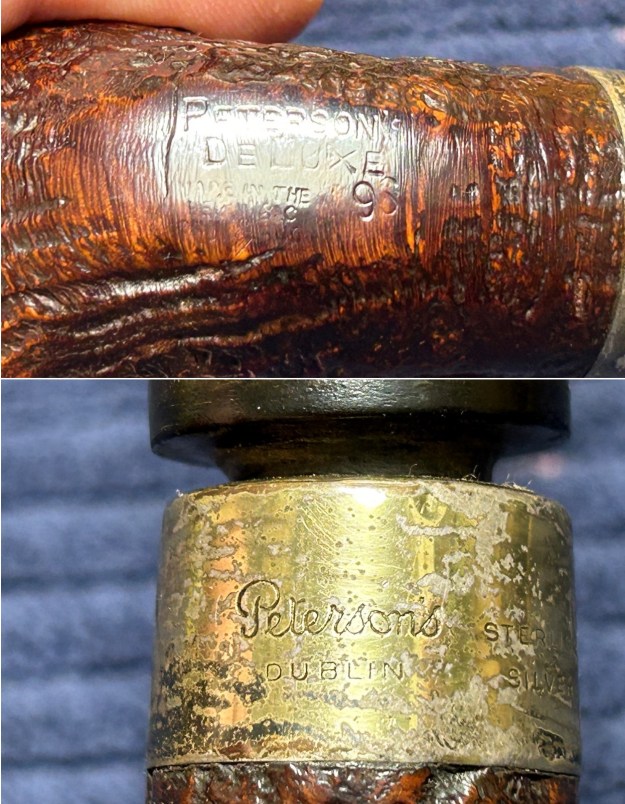
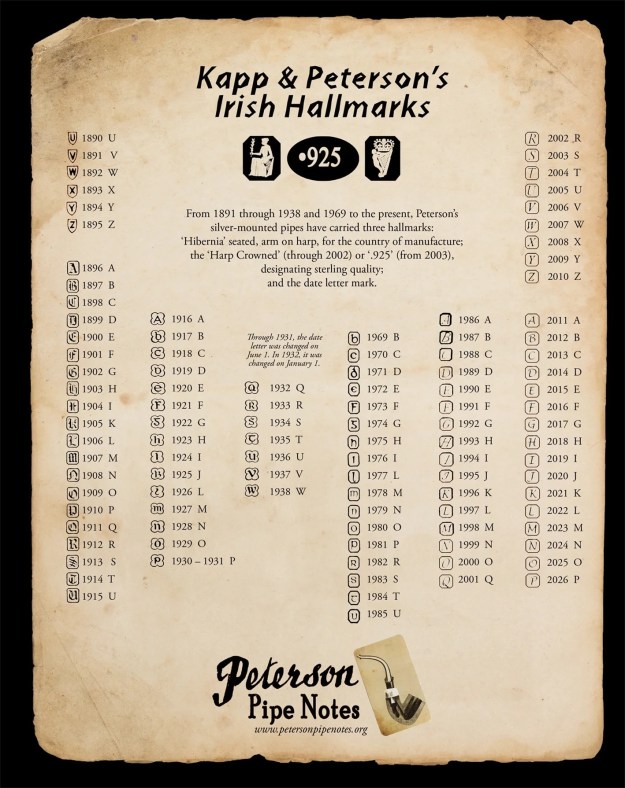
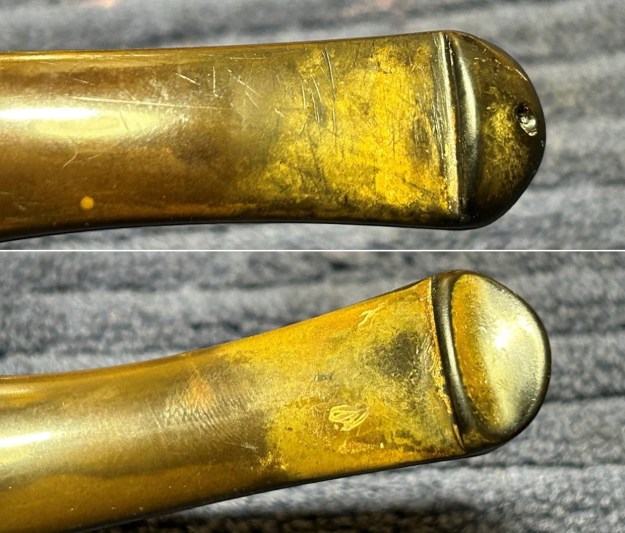
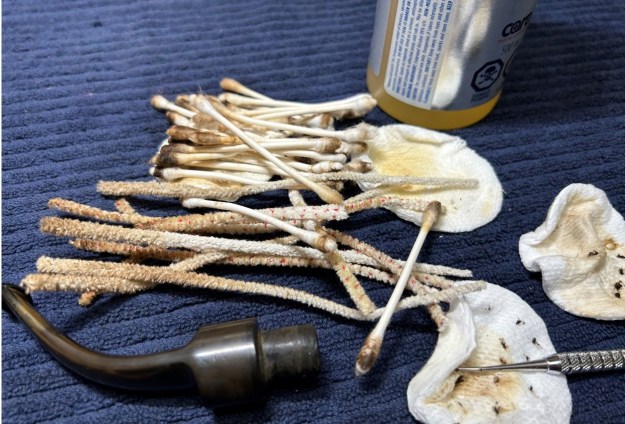
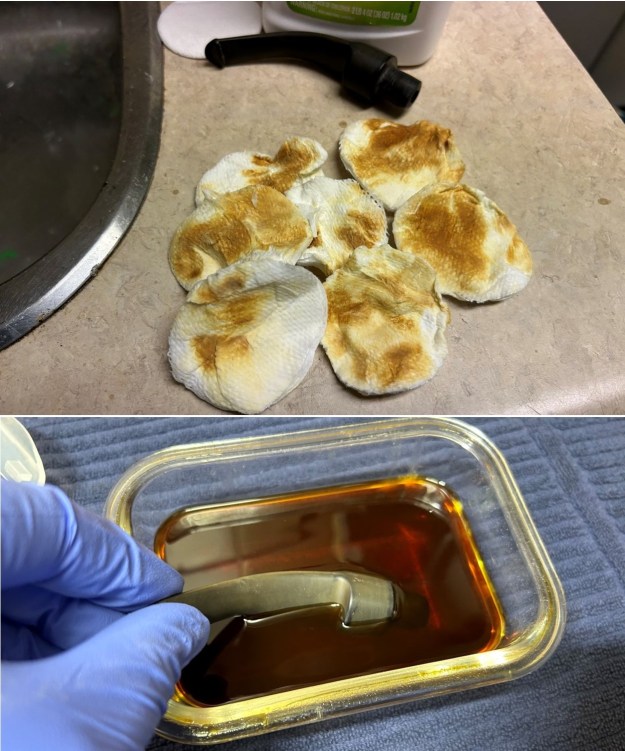
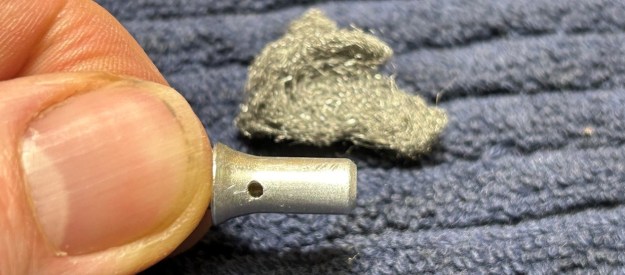
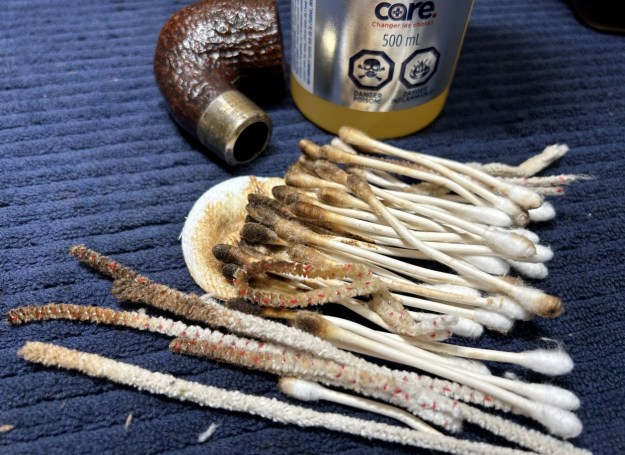
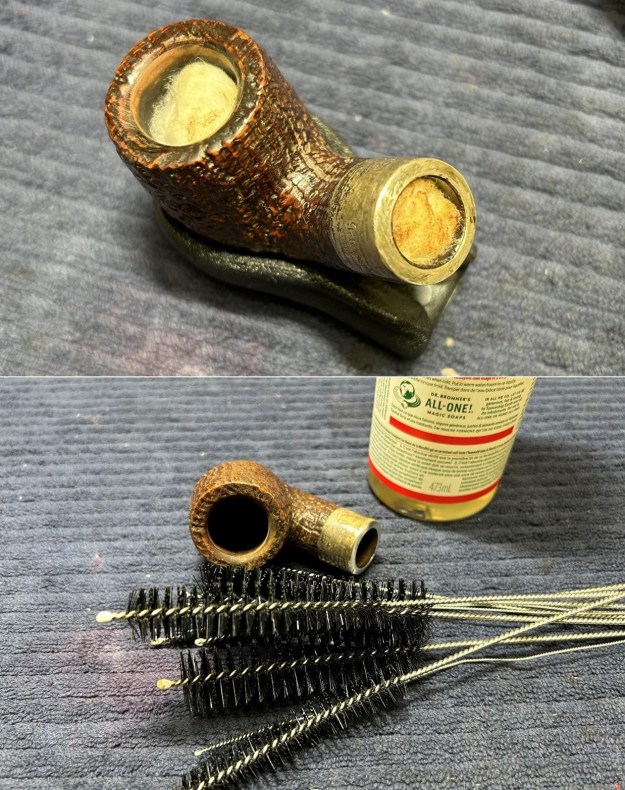
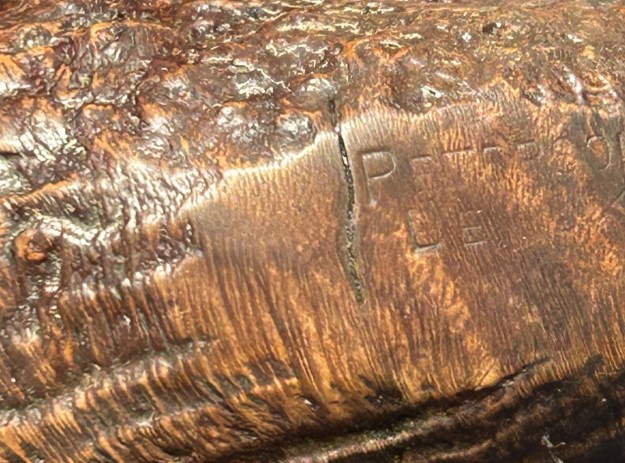
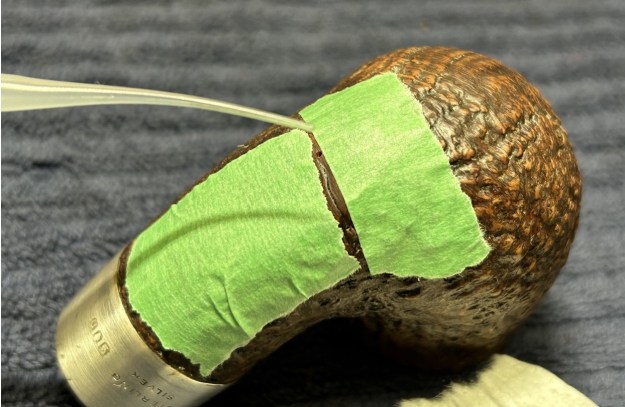
This is the second of the Deluxe Petes I restored recently. You can read about the other one here. This one is a good-looking bent billiard, with a sandblast finish. It comes from the Republic era, has a sterling silver band, and has the classic Peterson P-lip. This one has already been sold, but I thought I’d show it to you anyway. Let’s have a look at the markings on this pipe. The underside of the stummel reads, Peterson’s [over] DeLuxe [over] Made in the [over] Republic [over] of Ireland. Next to that is the shape number, 9S. The band has markings too. First are the words Peterson [over] Dublin. Next to that are the words Sterling [over] Silver. Finally, it has a set of proper hallmarks: Hibernia, which indicated that it was made in Dublin. Next is the Harp Crowned, which indicates sterling silver. Third is the date letter. In this case, it’s a stylized H. Checking the Irish hallmarks chart tells me that this pipe dates from 1975 – almost fifty years ago. For more information on Peterson Deluxe System pipes, click on the link to my previous article and it will provide some useful information.Time to get on with it! The stem was pretty dirty. It had some calcification on it and I used a sharp edge to carefully scrape that off. Once done, I scrubbed the stem with oil soap on some cotton pads. I also took a BIC lighter and ‘painted’ the stem with its flame in order to lift the few bite marks and dents. Then I cleaned out the inside with pipe cleaners, cotton swabs, and lemon-infused isopropyl alcohol. You can see just how filthy it was inside. I wiped down the stem with cleanser to remove surface oxidation. Then the stem went for an overnight soak in the Pipe Stem Oxidation Remover. The next day, I used the cleanser again with some cotton rounds.I also took the opportunity to clean up the aluminum chimney with some isopropyl alcohol, then sanded with some 0000-grit steel wool.I built up the small tooth marks on the stem with black cyanoacrylate adhesive and let them fully cure. I then used my needle files, Micromesh pads and Obsidian Pipe Stem Oil to make it look great. Onto the stummel – it was both beautiful and a mess! The first thing I did was to ream out the mountain of cake inside the bowl. I used the PipNet, and some sandpaper taped to a dowel. Fortunately, there was no damage to the interior walls. I used cotton rounds and a toothbrush with some oil soap to scrub the outside of the stummel. I then proceeded to clean out the insides of the shank with Q-tips, pipe cleaners, and lemon-infused isopropyl alcohol. I followed that up by de-ghosting the pipe and the bowl was nice and clean after this. I then cleaned the insides with some dish soap and tube brushes. In the process of cleaning, however, I noticed something unfortunate. The underside of the stummel has a small crack. After inspecting it closely, I saw that it wasn’t too serious at all and would be an easy fix.Repairing the crack first involves drilling a tiny hole at each end of the crack to stop it from elongating any further. I took my micro drill bit and delicately drilled a hole into the briar. I then administered a dose of CA glue (mixed with briar dust) along the crack and let it cure. It came out really well and, after sanding it smooth, I touched up the colour with my furniture pens. I then worked on cleaning up the sterling silver band. I taped it off, as I didn’t want to damage the wood. This worked well and I was pleased. I followed that up with some Before & After Restoration Balm. I let it sit on the wood for 20 minutes or so, then buffed it off with a microfibre cloth. I took the pipe to the buffer. I gave it a good application of conservator’s wax, since carnauba wax will gum up in the grooves. This made all the difference. It really sparkled after that. I also polished the silver with my jewellery cloth. This Peterson Deluxe System 9S Bent Billiard is such a good-looking pipe. I’m sure my customer will enjoy this one for many years. I hope you enjoyed reading the story of this pipe as much I as I did in restoring it. If you are interested in more of my work, please follow me here on Steve’s website or email me directly at kenneth@knightsofthepipe.com. Thank you very much for reading and, as always, I welcome and encourage your comments.

New Life for a Republic Peterson’s DeLuxe 106S Billiard


By Steve Laug

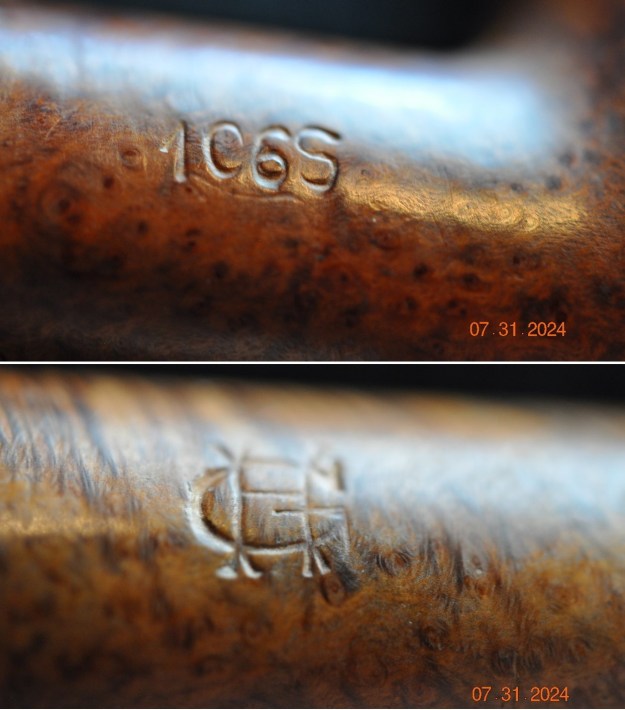
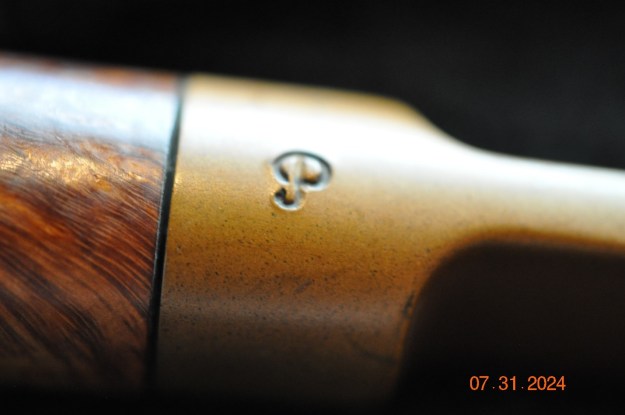
In the last box of pipes Jeff sent me there was an interesting, nicely grained Peterson’s Billiard to restore. This one is a Peterson’s DeLuxe 106S Straight Billiard. It is stamped on the left side of the shank Peterson’s [over] Deluxe and on the right side it bears the 106S shape number near the bowl shank junction and (three lines) Made in the [over] Republic [over] of Ireland. On the underside of the shank it is stamped with a large interlocked GH. From a past restoration (I have included the link) [https://rebornpipes.com/2023/10/14/petersons-kildare-special-hg-republic-of-ireland-10-canadian/], I remembered that the GH stamp is a “GH Retailer’s Monogram.” The SPECIAL stamp indicates that this pipe was made specially for George Huber of Munich, who had other Peterson pipes made expressly for their shop. It was a dirty pipe when we received it. There was lava on the rim top and heavily coated on the bevelled inner edge of the rim. The rim top was dirty and showed some wear and tear on the surface coming up for the bowl. There was a thick cake in the bowl that had remnants of tobacco stuck in it. The finish was dirty and there were spots of grime and oils. There also seemed to be spots of paint on the surface. The stem was heavily oxidized and there were light tooth marks and chatter on the top and underside ahead of the button. Jeff took some photos of the pipe before he started his cleanup work. He took photos of the bowl and rim top to show their general condition. You can see the tars on the inner edge of scuffing on the rim top. The cake in the bowl is quite thick and there is tobacco debris on the walls of the bowl. The finish on the bowl is dull but the grain is still very stunning. This pipe has a classic Peterson’s P-lip stem on a saddle stem. It has heavy oxidation on the surface of the vulcanite that is quite deep. There seems to be some tooth marks and chatter on the top and underside. He removed the stem from the shank and took photos of the aluminum chimney screwed into the end of the tenon.Jeff took some photos of the sides and heel of the bowl to give an idea of the grain on this particular piece of briar. It is amazing and I cannot wait to see what it looks like once it is polished and waxed. He took photos of the stamping on both sides of the shank to capture it for me. The first photo shows the left side of the shank and the stamping as noted above. The second and third photos show the right side of the shank with the Made in the Republic of Ireland stamp and shape number 106S. The fourth photo shows the underside of the shank and it bears the GH Retailer’s Monogram. The final photos shows the P logo stamp on the left side of the saddle stem. I did a bit of work on Google to gather background on the DeLuxe line of pipes when I worked on the 4S recently. I decided to quote that here as well.

The first information I found was on the Peterson’s website (https://www.peterson.ie/pipes/system/deluxe-system-smooth/). I quote from the description of the line below. I have highlighted several key portions in bold black for emphasis.

While the Deluxe stamp first appeared on our System pipes in 1940, the design itself dates to our 1896 and 1906 catalogues and, with the exception of the Supreme, has always marked our highest tier of System pipe. Like the System Standard and System Spigot lines, the Deluxe System pipe incorporates Charles Peterson’s patented System design, including a deep reservoir to collect excess moisture from the smoke; a graduated-bore mouthpiece that funnels the smoke and allows moisture to collect within the reservoir; a sturdy sterling silver military mount, which allows the pipe to be broken down and cleaned without damage or warping; and our patented P-Lip bit, which draws the smoke upward, thus reducing tongue bite. The Deluxe differs from those aforementioned lines, comprised of bowls with only the finest grain patterns and featuring a sterling silver mount and a push-gap stem, which was never designed to be flush-fitting, the space between the mount and stem base gradually decreasing with prolonged use. The Deluxe also elevates the System pipe by fixing each stem with a traditional chimney, an aluminum fitment that extends the tenon past the chamber’s airway for optimal System performance. Created for Peterson enthusiasts interested in acquiring the finest System pipe on the market, the Deluxe System will serve as the crown of any collection. Seen here in the Smooth finish.

From that information I knew how the De Luxe fit in the hierarchy of Peterson’s pipes. It was always the highest tier of the System pipes. It also was made with the gap in the fit of the stem to the shank on purpose with the idea that the distance would decrease over time with prolonged use. The attachment of a chimney at the end of the tenon was to maximize System performance.

From there I also turned to Pipedia. I quote from an article by Jim Lilley and have included much of it below. (https://pipedia.org/wiki/A_Closer_Look_at_The_Peterson_Deluxe_System_Pipe). Once again I have highlighted pertinent sections in bold below.

By Jim Lilley

The version of the system pipe for our closer inspection is one of Peterson’s more recognisable series, the handsome and very distinctive Deluxe system pipes, which include the Darwin and Mark Twain. These pipes are at the top of the ‘system’ series in terms of quality and finish.

Each Peterson Deluxe is made from carefully selected, age mellowed root briar. In matte finish with hallmarked sterling silver mounts and a unique space fitting mouthpiece to allow for years of wear. They are available in a wide range of shapes numbered, as follows 1s,2s,3s,4s,5s,8s,9s,11s,12.5s,20s,XL5s, 20FB and 11FB.

The pipes are well carved, construction, engineering and workmanship, is outstanding. The stems are well drilled and aligned. Silver work is excellent, finish very good, and the often maligned briar is of outstanding quality.

The design is a very typically Peterson classic shape. Apart from the Darwin, the balance can be stem heavy, the bit is thick and chunky, especially in the larger versions. I also enjoy the sense of presence they give to the pipe, particularly if smoking in company with friends or strangers. They have a sophistication about them.

The smoking qualities are excellent, dry and cool. The draw is good, and the flavour is particularly great in new pipes. The Mark Twain’s are outstanding in this department.

As for the aesthetics and ergonomics, I find some shapes much more attractive than others. Favourites for me are the 1s,2s,3s,the Mark Twain’s and the Darwin deluxe. As a clencher most are very good to hang, except the beautiful Darwin which is more of a ‘hand holder.’

The one weakness I find is the modern orange/golden colour, (the so called natural) it is, in my opinion, less attractive than that found in the older Walnut finish of the eighties.

As far as value and cost is concerned, for the excellent quality finish, these are competitively priced at around $135 to $250 depending on size and briar grade.

For what it is worth, I reckon the Deluxe s are probably the best value range of pipes that Peterson produce, both in terms of functionality and value. There is not a thing wrong with these pipes. Those who malign the brand because they’re made by the hundreds using machines, are very wrong, IMHO. I like them a lot and the bang for the buck is the best I’ve ever seen for new pipes of this quality.

The De-luxes are all excellent smokers. The Darwin, of course, is a truly outstanding pipe, its only “flaw” being that it’s not a clencher. One particular aspect of this pipe, that appeals to me most is its physical beauty and presence, they are a pipe like no other. For me, they also offer a bowl capacity that I like and a balance in the hand that I appreciate. They are well named Deluxe s for giving that special experience.

I turned to page 300 of “The Peterson’s Pipe” by Mark Irwin and Gary Malmberg as noted by him and found a great paragraph on the stamping. I quote in full.

GH Retailer’s Monogram (c. 1960s) George Huber of Munich, Germany, a Peterson distributor and retailer for decades, stamped their monogram on pipes sold in their store, G overlaid on H. Peterson shared in the 1988 commemoration of Huber’s 125th year in business by producing a special pipe with a sterling rim cap, stamped HUBER over CELEBRATION.

The pipe I have is one that bears that monogram but does not appear to have ever had the sterling rim cap and was not stamped HUBER over CELEBRATION. With that information I turned my attention to working on the pipe.

Jeff had cleaned it thoroughly. He had reamed it with a PipNet reamer and cleaned that up with a Savinelli Fitsall Pipe Knife. He had scrubbed the exterior of the briar with undiluted Murphy’s Oil Soap and a tooth brush. He rinsed it with running water to remove the grime and oils. He cleaned out the interior of the shank, sump and airway in the shank and stem with alcohol, pipe cleaners and cotton swabs. He scrubbed the stem with Soft Scrub to remove the oxidation and calcification on the surface. He soaked it in Briarville’s Pipe Stem Deoxidizer to remove the oxidation. He removed it from the Deoxidizer and rinsed it off with warm water. I took some photos of the pipe before I started my part of the work. I took some photos of the rim top and stem. The rim top and bowl looked very good. The cake and lava overflow were gone and the inward bevelled rim was very clean. There was also some darkening on the bevelled inner rim edge and light damage on the edge of the top and the bevel. Jeff had been able to get rid of all of the lava and tars. The rim top looked good with light marks and scratches on the surface. The closeup photos of the stem shows that it is a much cleaner and better looking stem. The tooth marks and chatter were still present with deeper ones on the button and on the underside of the stem next to the button.I took some photos of the stamping on the shank sides and the silver on the ferrule to show the condition after the cleanup. Often the stamping takes a hit with the cleaning and is lessened in its clarity. Jeff does a great job in leaving the stamping looking very good. I also took the stem off the shank and took a photo of the parts of the pipe to show the proportion. It is a beauty. I started my restoration work on this pipe by addressing the darkening around the inner edge of the bowl. I used a folded piece of 220 grit sandpaper to clean up the bevelled inner edge and the rim top with the same sandpaper. The finish rim top looked very good.I started my polishing regimen on the bowl. I used nine micromesh sanding pads and dry sanded the bowl with 1500-12000 grit pads. I wiped the bowl down with a damp cloth after each pad. The bowl really shines by the final three pads. I worked some Before & After Restoration Balm into the surface of the briar with my fingertips to clean, enliven and protect it. I let the balm sit for a little while and then buffed with a cotton cloth to raise the shine. The photos show the bowl at this point in the restoration process. I set the bowl aside and turned my attention to the stem. I touched up the “P” stamp on the left side of the saddle stem with some Rub’n Buff Antique Gold. I worked it into the stamp with a tooth pick. I buffed it off with a soft cloth and some Obsidian Oil. It looked very good. It was in pretty decent conditions so I polished it with micromesh sanding pads – dry sanding with 1500-12000 grit sanding pads. I wiped them down after each sanding pad with a cloth containing some Obsidian Oil. I finished polishing it with Before & After Pipe Stem Polish – both Fine and Extra Fine and buffed it off with a cotton cloth. I gave it a coat of Obsidian Oil to preserve and protect the stem. I don’t know how many times I have said this but I love it when I come to the end of a restoration and all of the parts come together and the pipe looks better than when we started the cleanup process. I put the stem back on the Peterson’s DeLuxe 106 Billiard and buffed the pipe with Blue Diamond on the buffing wheel. I carefully avoided the stamping on the shank sides during the process. I gave the bowl and stem multiple coats of carnauba wax on the buffing wheel and followed that by buffing it with a clean buffing pad on the buffer. I hand buffed the pipe with a microfiber cloth to deepen the shine. The finished pipe is a real stunning example of a Republic Era Peterson’s DeLuxe 106 Straight Billiard. Once again, the grain and the way the shape follows the grain is amazing. Give the finish pipe a look in the photos below. I can only tell you that it is much prettier in person than the photos capture. The dimensions of the pipe are Length: 6 inches, Height: 2 inches, Outside diameter of the bowl: 1 3/8 inches, Chamber diameter: ¾ of an inch. The weight of the pipe is 1.55 ounces/44 grams. This Peterson’s De Luxe 106 is a great piece of pipe history that is in exceptional condition. Thanks for walking through the restoration with me as I worked over another beautiful pipe. I will be putting this one on the rebornpipes store in the Irish Pipemakers Section. Let me know if you are interested in adding it to your collection. Thanks for your time.

As always, I encourage your questions and comments as you read the blog. Thanks to each of you who are reading this blog. Remember we are not pipe owners; we are pipe men and women who hold our pipes in trust until they pass on into the trust of those who follow us.

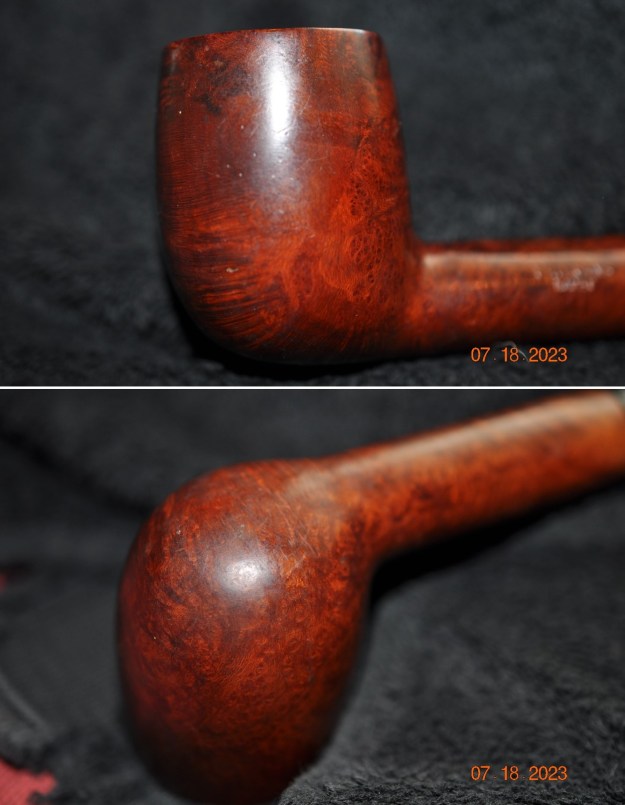
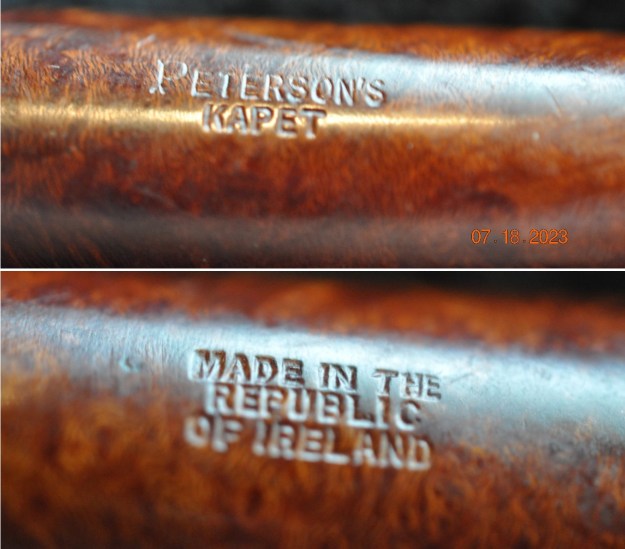
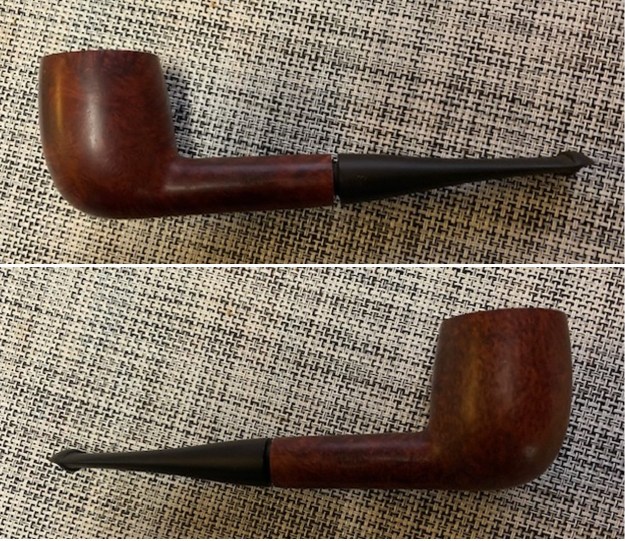
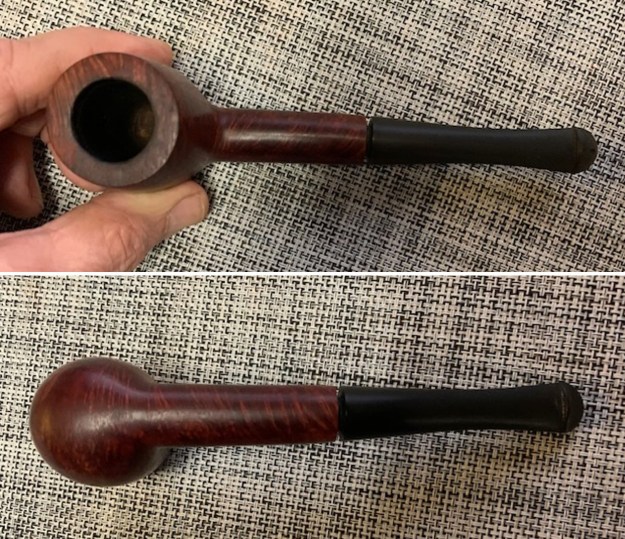
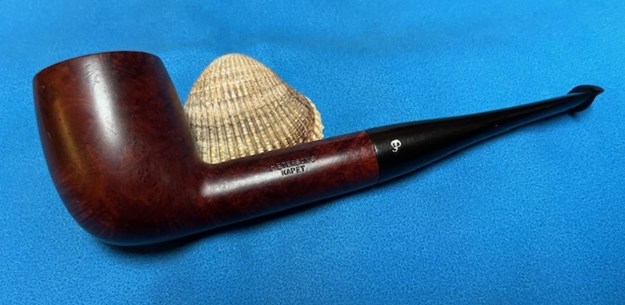
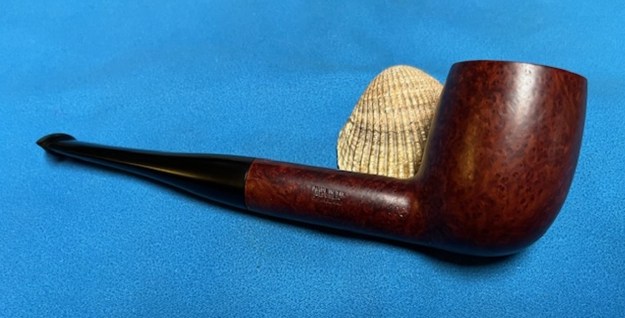
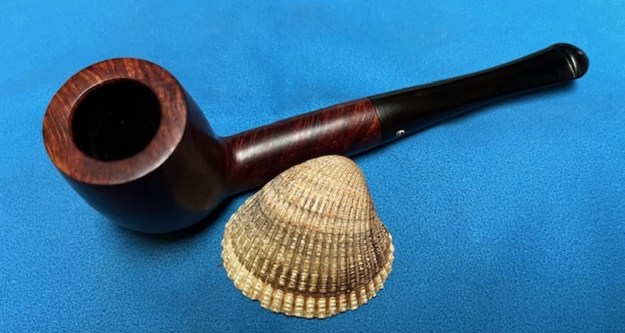
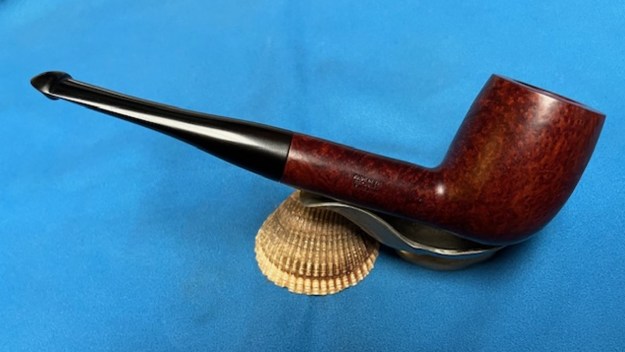
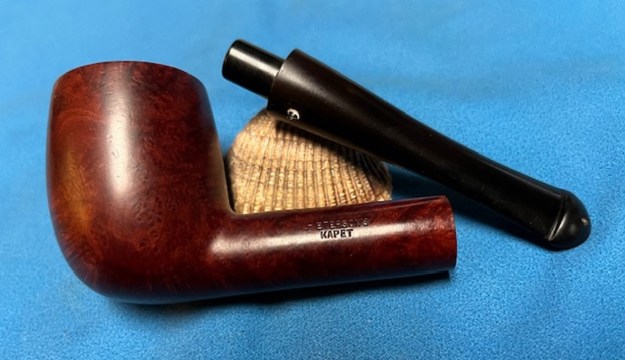
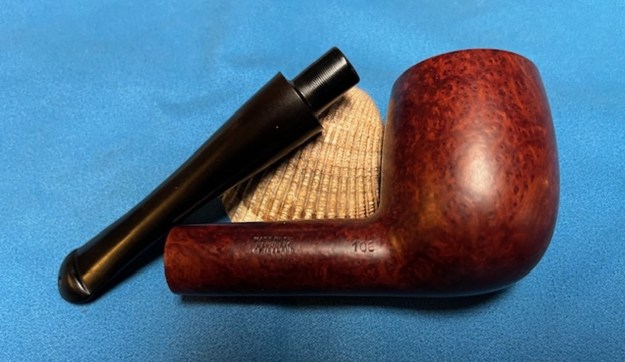
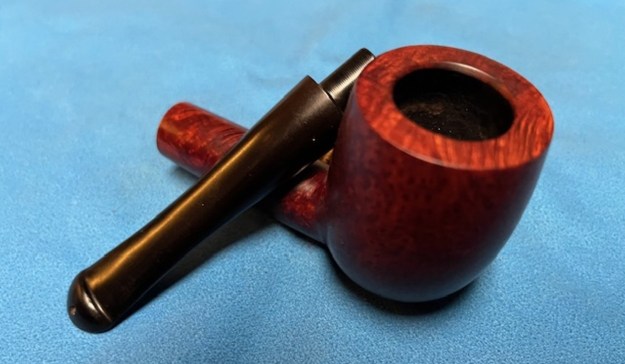
New Life for a Peterson’s Kapet Republic of Ireland 106 Billiard


Blog by Steve Laug

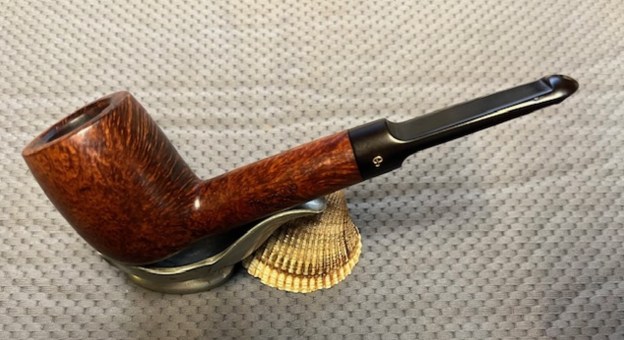
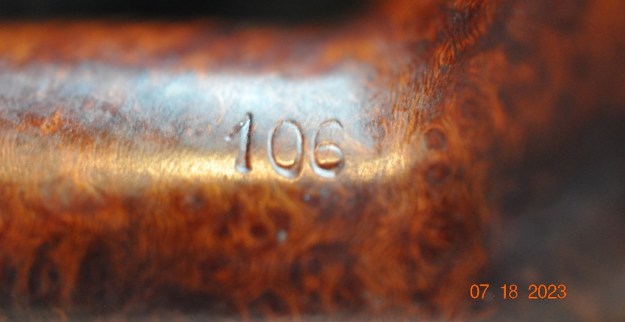
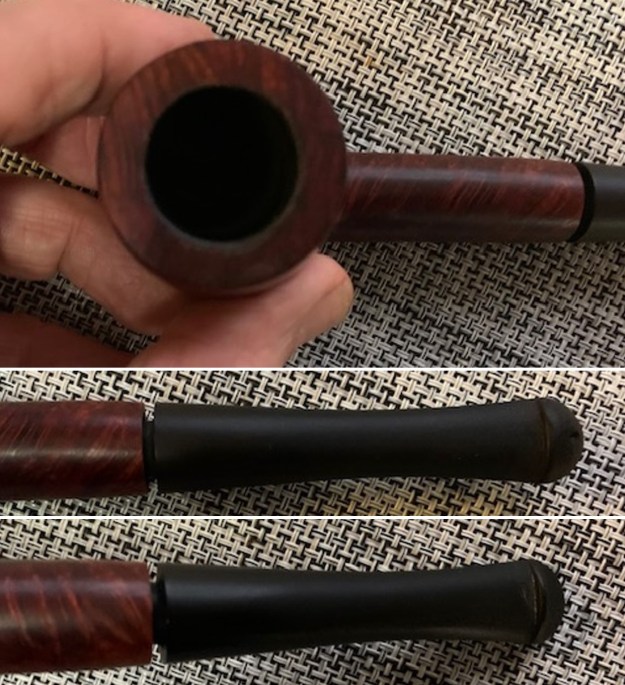
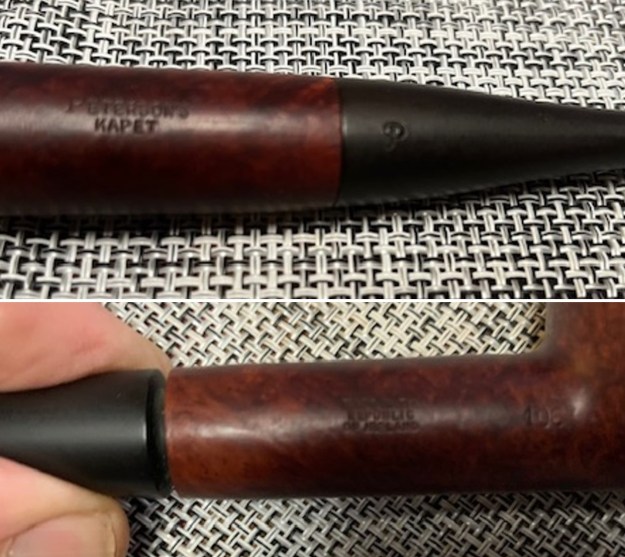
The next pipe on the work table is Peterson’s Large Straight Billiard pipe that we purchased from and our connection in Copenhagen, Denmark on 04/11/2023. It was stamped Peterson’s [over] Kapet on the left side of the shank. On the right it is stamped Made in the Republic of Ireland (in three lines) followed by the shape number 106. It is a large Billiard that has a smooth finish with great grain around the bowl and shank that is covered with a lot of oils, debris and grime. There was a thick cake in the bowl with remnants of tobacco stuck on the walls. There was a heavy lava overflow on the rim top and edges. The top and edges of the rim were well hidden under the tars and lava. There was a very beautiful pipe underneath all of the buildup of years of use. The stem was a Peterson’s style P-Lip taper stem with a “P” logo on the left side. It was oxidized and calcified toward the end with some tooth marks and chatter on both sides ahead of the button. Jeff took photos of the pipe before he started his cleanup work on it. Jeff took photos of the bowl and rim top to show the thick, hard cake in the bowl with remnants of tobacco stuck on the walls of the bowl. There was a lava build up on the top of the rim and the edges of the bowl. The rim top looked pretty good but it was hard to know for sure if there was damage under the thick lava. Only clean up would tell the full story. Jeff took photos of the top and underside of the stem showing the tooth marks, chatter, calcification and oxidation on the stem surface on both sides of the stem. Jeff took photos of the sides and heel of the bowl to show the condition of the finish. You can see the grime around the sides of the bowl and shank. Even under the dirt and debris of the years it looked very good. Jeff took photos of the stamping on the sides of the shank. The stamping was readable as you can see from the photos. It read as noted above.

I am including the link to the Pipedia’s article on Peterson pipes. It is a great read in terms of the history of the brand (https://pipedia.org/wiki/Peterson). There was a short note toward the bottom of the page about the series. It is definitely referring to the newer line that came out later. I quote:

I turned to Pipedia (https://pipedia.org/wiki/Peterson) to first pin down a date that the pipe was made. I knew that the Made in the Republic of Ireland stamp would give me that. I quote:

As usual when trying to get accurate facts in regard to Peterson history, something will jump up and get in the way. They are missing many of their records. The following is the best that we can do for a guide to the myriad markings during the period 1922–1949. Prior to 1920 it was rare for a country of origin to be stamped on the pipe, just Peterson’s Dublin on the band. After 1921/22, if it is stamped “MADE IN IRELAND” and the “Made in” is stacked over “Ireland” or “MADE IN EIRE” or several other forms, it was made between 1922 and 1938. A considerable number of Peterson pipes were stamped “Irish Free State”. From about 1930 to 1949, most of the pipes (those which were stamped) were stamped “Made in Ireland”.” If the stamp reads “MADE IN IRELAND” in a circle, the pipe was made between 1939 and 1948. These are all “Pre-Republic” pipes. I can tell you that the mark “Irish Free State” was adopted in 1922; and replaced by “Eire” in 1937 and then by “Republic of Ireland” in 1949.

That gave me a date for the pipe – it was made after 1949 as can be proved by the Made in the Republic of Ireland stamp on the right side of the shank.

I turned to “The Peterson Pipe” by Mark Irwin and Gary Malmberg to get some background on the Peterson’s Kapet Line. On page 305 it had the following information.

Kapet (1925-87) Line first described in 1925 brochure and featured in occasional catalogs through 1987. Early specimens will be stamped IRISH over FREE STATE. Described in 1937 catalog as available in dark plum or natural finish. Featured an aluminum “inner tube” or stinger until 1945.  Mid-century specimens may be stamped Made In over Ireland. Specimens from 1970 on may have mounts with hallmarks.

Judging from the Made in the Republic of Ireland stamp, the pipe I am working on is probably made after 1949. Those dates work also for the Kapet information above. The stem the “P” emblem on the stem side but no inner tube.

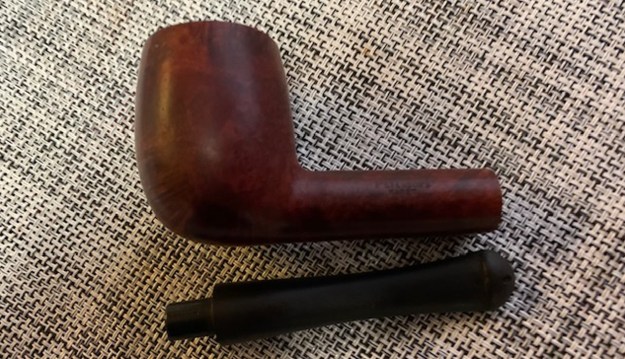
Jeff had cleaned it thoroughly. He had reamed it with a PipNet reamer and cleaned that up with a Savinelli Fitsall Pipe Knife. He had scrubbed the exterior of the briar with undiluted Murphy’s Oil Soap. He removed the shiny coat on the briar with acetone on cotton pads. He cleaned out the interior of the shank, sump and airway in the shank and stem with alcohol, pipe cleaners and cotton swabs. He scrubbed the stem with Soft Scrub to remove the oxidation and calcification on the surface. He soaked it in Briarville’s Pipe Stem Deoxidizer to remove the oxidation. He removed it from the Deoxidizer and rinsed it off with warm water. I took some photos of the pipe before I started my part of the work.  I took some close up photos of the rim top and also of the stem surface. I wanted to show what an amazing job Jeff did in the cleanup of the rim top. The rim top and inner edge had darkening and damage. There was damage to the inner edge on the back of the bowl. The rim top is clean but in nicked and scratched. I also took close up photos of the stem to show the condition of the vulcanite. It was quite clean and the tooth marks on ahead of the button are present but hard to see in the photos.Once again I have to comment on what I appreciate about Jeff’s cleanup is that he works to protect and preserve the nomenclature on the shank of the pipes that he works on. The stamping on this one was very faint to start with so I was worried that it would disappear altogether with the cleanup. He was not only able to preserve and maintain its condition in the process. I took some photos to show the clarity of the stamping. I have noticed that many restorers are not careful to protect the stamping in their cleaning process and often by the end of the restoration the nomenclature is almost destroyed. I would like to encourage all of us to be careful in our work to preserve this as it is a critical piece of pipe restoration! I took the stem off the shank and took a photo of the pipe. I decided to start my work on the pipe by cleaning up the rim top and inner edge of the bowl. I started by working over the edge and the rim top with a folded piece of 220 grit sandpaper. I minimized the damage on the inner edge and rim top. It looked significantly better. I polished the briar with micromesh sanding pads – dry sanding it with 1500-12000 grit sanding pads. I wiped it down with a damp cloth after each sanding pad to remove the dust. The briar was really shining by the final pad. I rubbed the bowl and rim down with Before & After Restoration Balm. I worked it into the surface of the briar with my fingertips to clean, enliven and protect it. I let the balm sit for 10 minutes and then buffed with a cotton cloth to raise the shine. I really like watching the Balm do its magic and bring the briar alive. I set the bowl aside and turned my attention to the stem. I “painted” the tooth marks with the flame of a Bic lighter to try and lift the marks. I was able to lift them slightly. I filled in the marks that remained on the stem with clear CA glue and set it aside to cure. Once cured I used a file to flattened the repairs and redefine the button edge. I sanded the stem with 220 grit sandpaper to further blend in the repairs. I polished it with 600 grit wet dry sandpaper. I touched up the “P” logo on the left side of the saddle stem with white acrylic fingernail polish. I let it dry then I polished off the excess with a worn 1500 grit micromesh sanding pad. Once the excess was removed the stamp looked much better. There were some weak spots on the leg and tail of the “P” stamp.I polished the stem with micromesh sanding pads – wet sanding with 1500-12000 grit pads. I wiped the stem down after each sanding pad with Obsidian Oil. I polished it with Before & After Pipe Stem Polish – both Fine and Extra Fine. I gave it a coat of Obsidian Pipe Stem Oil. It works to protect the stem from oxidizing. I set it aside to dry. I always am excited to finish working on a pipe. This Made in the Republic of Ireland Peterson’s Kapet Straight Billiard is no exception. I put the pipe back together and buffed it with Blue Diamond on the buffing wheel. I gave the bowl and the stem multiple coats of carnauba wax. I buffed the pipe with a clean buffing pad to raise the shine and hand buffed it with a microfibre cloth to deepen the shine. It is fun to see what the bowl looks like with the black vulcanite taper stem. This Classic looking Peterson’s Kapet Smooth Billiard feels great in my hand. It is light and well balanced. Have a look at it with the photos below. The dimensions are Length: 6 inches, Height: 2 inches, Outside diameter of the bowl: 1 ¼ inches, Chamber diameter: ¾ of an inch. The weight of the pipe is 53 grams/1.87 of an ounce. I will be putting it on the rebornpipes store shortly in the Irish Pipe Makers Section if you are interested in it. Thanks for walking through the restoration with me as I worked over this pipe. Thanks to each of you who are reading this blog.

As always, I encourage your questions and comments as you read the blog. Thanks to each of you who are reading this blog. Remember we are not pipe owners; we are pipe men and women who hold our pipes in trust until they pass on into the trust of those who follow us.

Restoring a Peterson’s De Luxe 8S Bent Billiard


Blog by Steve Laug

In the last box of pipes Jeff sent me there was a Peterson’s De Luxe that came to us from our contact in Copenhagen, Denmark on 04/11/2023. This one is a Peterson’s De Luxe Bent Billiard. It is stamped on the left side of the shank Peterson’s [over] Deluxe and on the right side it reads Made in the Republic of Ireland (three lines) [over] 8S. It was a dirty pipe when we received it. The walls of the bowl and shank had tars and oils ground into finish and it was quite grimy. There was a thick coat of lava on the rim top and the inner edge of the rim. There was a thick cake in the bowl that had remnants of tobacco stuck in it. The ferrule on the end of the shank was Sterling Silver. It was stamped K&P each in a cartouche [over] Sterling [over] Silver. Next that it reads Peterson’s [over] Dublin. There is no date stamping/hallmarks on the Silver Ferrule. The stem was oxidized and there were tooth marks and chatter on the top and underside ahead of the button. When the stem was removed the tenon had a bone chimney screwed into the end that was damaged and pitted. Jeff took some photos of the pipe before he started his cleanup work. He took photos of the bowl and rim top to show their general condition. You can see the thick tars and lava on the bevelled inner edge and the rim top. The cake in the bowl is quite thick and there is tobacco debris on the walls of the bowl. The finish on the bowl is very dirty with grime and oils ground into the bowl, but still very stunning. This pipe has a classic Peterson’s P-lip stem that has some oxidation, calcification on the surface of the vulcanite. There is chatter and tooth marks on the top and underside. He took a photo to show the damage to the bone chimney in the tenon end that is a part of the system design by Charles Peterson. It is threaded and turned into the tenon.Jeff took some photos of the sides and heel of the bowl to give an idea of the grain on this particular piece of briar. It is amazing and I cannot wait to see what it looks like once it is polished and waxed. He took photos of the stamping on both sides of the shank to capture it for me. The first photo shows the left side of the shank and the stamping as noted above. The second shows the right side of the shank with the Made in the Republic of Ireland stamp and shape number 8S.Jeff took photos of the stamping on the silver ferrule. It is oxidized and worn looking but the stamping is very clear and readable. He also took a photo of the Hand Cut stamp on the underside of the stem. I did a bit of work on Google to gather background on the DeLuxe line of pipes when I worked on the 4S recently. I decided to quote that here as well.

The first information I found was on the Peterson’s website (https://www.peterson.ie/pipes/system/deluxe-system-smooth/). I quote from the description of the line below. I have highlighted several key portions in bold black for emphasis.

While the Deluxe stamp first appeared on our System pipes in 1940, the design itself dates to our 1896 and 1906 catalogues and, with the exception of the Supreme, has always marked our highest tier of System pipe. Like the System Standard and System Spigot lines, the Deluxe System pipe incorporates Charles Peterson’s patented System design, including a deep reservoir to collect excess moisture from the smoke; a graduated-bore mouthpiece that funnels the smoke and allows moisture to collect within the reservoir; a sturdy sterling silver military mount, which allows the pipe to be broken down and cleaned without damage or warping; and our patented P-Lip bit, which draws the smoke upward, thus reducing tongue bite. The Deluxe differs from those aforementioned lines, comprised of bowls with only the finest grain patterns and featuring a sterling silver mount and a push-gap stem, which was never designed to be flush-fitting, the space between the mount and stem base gradually decreasing with prolonged use. The Deluxe also elevates the System pipe by fixing each stem with a traditional chimney, an aluminum fitment that extends the tenon past the chamber’s airway for optimal System performance. Created for Peterson enthusiasts interested in acquiring the finest System pipe on the market, the Deluxe System will serve as the crown of any collection. Seen here in the Smooth finish.

From that information I knew how the De Luxe fit in the hierarchy of Peterson’s pipes. It was always the highest tier of the System pipes. It also was made with the gap in the fit of the stem to the shank on purpose with the idea that the distance would decrease over time with prolonged use. The attachment of a chimney at the end of the tenon was to maximize System performance.

From there I also turned to Pipedia. I quote from an article by Jim Lilley and have included much of it below. (https://pipedia.org/wiki/A_Closer_Look_at_The_Peterson_Deluxe_System_Pipe). Once again I have highlighted pertinent sections in bold below.

By Jim Lilley

The version of the system pipe for our closer inspection is one of Peterson’s more recognisable series, the handsome and very distinctive Deluxe system pipes, which include the Darwin and Mark Twain. These pipes are at the top of the ‘system’ series in terms of quality and finish.

Each Peterson Deluxe is made from carefully selected, age mellowed root briar. In matte finish with hallmarked sterling silver mounts and a unique space fitting mouthpiece to allow for years of wear. They are available in a wide range of shapes numbered, as follows 1s,2s,3s,4s,5s,8s,9s,11s,12.5s,20s,XL5s, 20FB and 11FB.

The pipes are well carved, construction, engineering and workmanship, is outstanding. The stems are well drilled and aligned. Silver work is excellent, finish very good, and the often maligned briar is of outstanding quality.

The design is a very typically Peterson classic shape. Apart from the Darwin, the balance can be stem heavy, the bit is thick and chunky, especially in the larger versions. I also enjoy the sense of presence they give to the pipe, particularly if smoking in company with friends or strangers. They have a sophistication about them.

The smoking qualities are excellent, dry and cool. The draw is good, and the flavour is particularly great in new pipes. The Mark Twain’s are outstanding in this department.

As for the aesthetics and ergonomics, I find some shapes much more attractive than others. Favourites for me are the 1s,2s,3s,the Mark Twain’s and the Darwin deluxe. As a clencher most are very good to hang, except the beautiful Darwin which is more of a ‘hand holder.’

The one weakness I find is the modern orange/golden colour, (the so called natural) it is, in my opinion, less attractive than that found in the older Walnut finish of the eighties.

As far as value and cost is concerned, for the excellent quality finish, these are competitively priced at around $135 to $250 depending on size and briar grade.

For what it is worth, I reckon the Deluxe s are probably the best value range of pipes that Peterson produce, both in terms of functionality and value. There is not a thing wrong with these pipes. Those who malign the brand because they’re made by the hundreds using machines, are very wrong, IMHO. I like them a lot and the bang for the buck is the best I’ve ever seen for new pipes of this quality.

The De-luxes are all excellent smokers. The Darwin, of course, is a truly outstanding pipe, its only “flaw” being that it’s not a clencher. One particular aspect of this pipe, that appeals to me most is its physical beauty and presence, they are a pipe like no other. For me, they also offer a bowl capacity that I like and a balance in the hand that I appreciate. They are well named Deluxe s for giving that special experience.

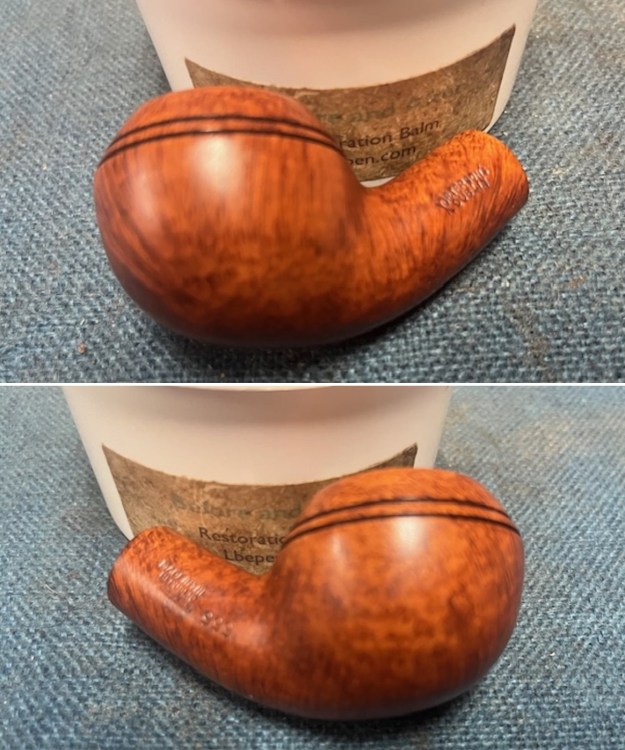
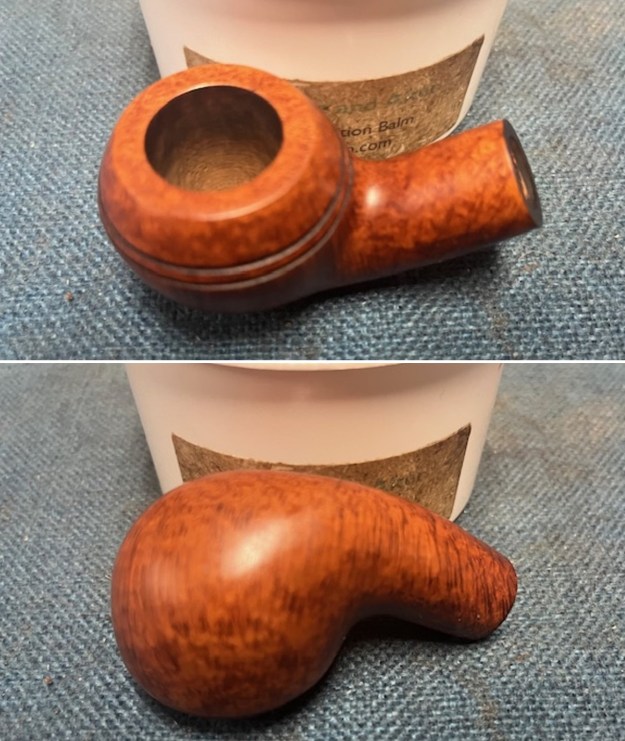
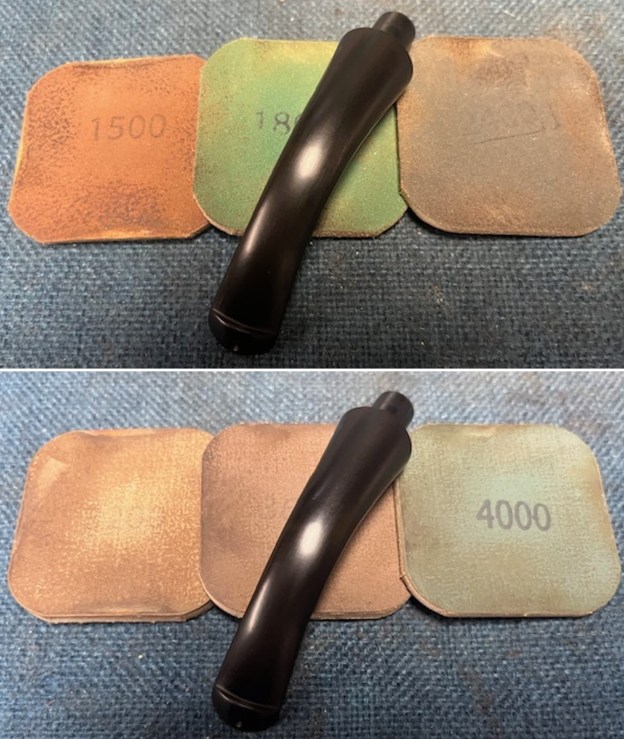
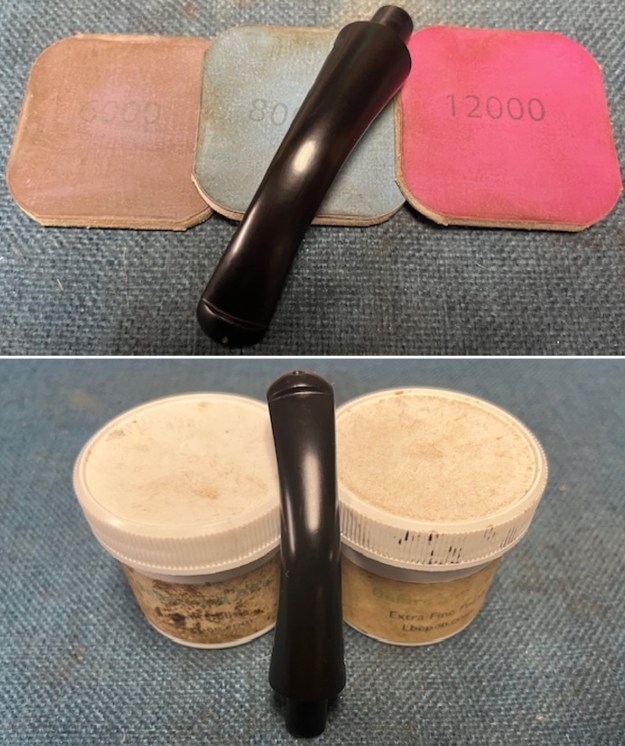
With that information at hand I turned to work on the pipe itself. Jeff had thoroughly cleaned up the pipe. He reamed the pipe with a PipNet Pipe Reamer and cleaned up the remnants with a Savinelli Fitsall Pipe Knife. He scrubbed the bowl with undiluted Murphy’s Oil Soap with a tooth brush. He rinsed it under running warm water to remove the soap and grime. He cleaned out the inside of the shank and the airway in the stem with alcohol, cotton swabs and pipe cleaners. He scrubbed the exterior of the stem with Soft Scrub to remove as much of the oxidation and calcification as possible. He soaked the stem in Briarville’s Pipe Stem Deoxidizer and rinsed it off with warm water. I took photos of the pipe once I started to work on it.   I took some photos of the rim top and stem. The rim top and bowl looked very good. The cake and lava overflow were gone and the inward bevelled rim was very clean. There was also some darkening on the bevelled inner rim edge and light damage on the edge of the top and the bevel. Jeff had been able to get rid of all of the lava and tars. The rim top looked good with light marks and scratches on the surface. The closeup photos of the stem shows that it is a much cleaner and better looking stem. The tooth marks and chatter were still present with deeper ones on the button and on the underside of the stem next to the button. There was some white debris at the joint of the tenon and the stem.I took some photos of the stamping on the shank sides and the silver on the ferrule to show the condition after the cleanup. Often the stamping takes a hit with the cleaning and is lessened in its clarity. Jeff does a great job in leaving the stamping looking very good. I removed the stem from the shank and took a photo of the pipe at this point. Like other Peterson’s Deluxe pipes that I have worked on this stem had chimney threaded into the tenon to extend into the lower part of the mortise and provides a funnel for drawing the smoke into the mouth of the smoker. This time it was a bone chimney that had a chipped portion on the top of the chimney.I started my restoration work on this pipe by addressing the darkening around the inner edge of the bowl. I used a folded piece of 220 grit sandpaper to clean up the bevelled inner edge and the rim top with the same sandpaper. The finish rim top looked very good. I started my polishing regimen on the bowl. I used nine micromesh sanding pads and dry sanded the bowl with 1500-12000 grit pads. I wiped the bowl down with a damp cloth after each pad. The bowl really shines by the final three pads. I worked some Before & After Restoration Balm into the surface of the briar with my fingertips to clean, enliven and protect it. I let the balm sit for a little while and then buffed with a cotton cloth to raise the shine. The photos show the bowl at this point in the restoration process. I polished the Sterling Silver ferrule with a jewellers polishing cloth to remove the tarnish and protect it from further tarnishing. I set the bowl aside and turned my attention to the chipped bone chimney. It was stuck in the tenon end and I could not unscrew it. I carefully wiggled it and got a little give. I painted the area where it sat against the tenon with isopropyl alcohol on a cotton swab. After a few applications I was able to unscrew the chimney. In the photo below, it is shown. The chipped area is on the top of the chimney and the sides are in solid condition. I cleaned out the tenon and the area behind the chimney and the chimney itself with cotton swabs, pipe cleaners and alcohol. It was quite dirty but I was able to clean it thoroughly.I greased a pipe cleaner with Vaseline and inserted it in the chimney under the damaged area. I carefully applied rubberized KMS Black Super glue to the cracked area with a tooth pick. I filled in the damage. I sprayed it with accelerator to harden it and applied several more coats until it was smooth and round.Once the repair cured screwed into the tenon to give me something to hold onto. I sanded it with a folded piece of 220 grit sandpaper to shape it to match the remaining sides of the chimney.I polished it with micromesh sanding pads – dry sanding with 1500-2400 grit pads to smooth out and shape the repairs. I was happy with the finished product. I screwed it back into the tenon and took a photo of the end. It looked good.I took photos of the rebuilt chimney after I had polished it with the remaining micromesh sanding pads – 3200-12000. The repair came out looking very good.I turned to address the tooth marks in the stem next. I filled in the deep tooth marks with black CA glue and set it aside to let the repairs cure. I started the smoothing process with a small flat file to begin blending them in. I further blended in the repairs with 220 grit sandpaper and started to polish it with a folded piece of 600 wet dry sandpaper. Once it was finished it was smooth. I touched up the Hand Cut stamp on the underside of the saddle portion of the stem with white acrylic fingernail polish. I sanded off the excess with a worn piece of 1500 grit micromesh. It looked much better.I screwed in the bone chimney to the tenon and polished it and the stem with micromesh sanding pads – dry sanding with 1500-12000 grit sanding pads. I wiped them down after each sanding pad with a cloth containing some Obsidian Oil. I finished polishing it with Before & After Pipe Stem Polish – both Fine and Extra Fine and buffed it off with a cotton cloth. I gave it a coat of Obsidian Oil to preserve and protect the stem. I don’t know how many times I have said this but I love it when I come to the end of a restoration and all of the parts come together and the pipe looks better than when we started the cleanup process. I put the stem back on the Peterson’s DeLuxe 8S System and buffed the pipe with Blue Diamond on the buffing wheel. I carefully avoided the stamping on the shank sides during the process. I gave the bowl and stem multiple coats of carnauba wax on the buffing wheel and followed that by buffing it with a clean buffing pad on the buffer. I hand buffed the pipe with a microfiber cloth to deepen the shine. The finished pipe is a real stunning example of an Republic Era Peterson’s DeLuxe 8S Bent Billiard. Once again, the grain and the way the shape follows the grain is amazing. Give the finish pipe a look in the photos below. I can only tell you that it is much prettier in person than the photos capture. The dimensions of the pipe are Length: 5 inches, Height: 1 ¾ inches, Outside diameter of the bowl: 1 1/8 inches, Chamber diameter: ¾ of an inch. The weight of the pipe is 1.55 ounces/44 grams. This Peterson’s De Luxe 8S is a great piece of pipe history that is in exceptional condition. Thanks for walking through the restoration with me as I worked over another beautiful pipe. I will be putting this one on the rebornpipes store in the Irish Pipemakers Section. Let me know if you are interested in adding it to your collection. Thanks for your time.
As always, I encourage your questions and comments as you read the blog. Thanks to each of you who are reading this blog. Remember we are not pipe owners; we are pipe men and women who hold our pipes in trust until they pass on into the trust of those who follow us.
Restoring a Beautiful Republic Era Peterson’s De Luxe Silver Band 4S Bent Billiard


Blog by Steve Laug

This afternoon I decided to work on the another one of the Peterson’s Pipes that I have still to work on from a variety of places. This pipe was also purchased as part of an estate on 03/30/2022 from Plano, Texas, USA. It is a larger bent pipe that is stamped on the sides of the shank. On the left side it read Peterson’s [over] De Luxe. On the right side it is stamped Made in the Republic of Ireland (three lines) [over] the shape number 4S. There is a very tarnished Sterling Silver band on the shank. It is stamped Peterson’s [over]Dublin on the top of the shank band. Next to that it is stamped Sterling [over] Silver followed by three hallmarks. The first mark is the seated woman Hibernia, the second is a Harp, and the final one, the date stamp is buffed off and illegible. The pipe was a well used pipe when Jeff received it. There was dust and grime ground into the finish. The mixture of brown stains highlights some beautiful grain under the dirt. The bowl was heavily caked and there was an overflow of lava on the rim top. It is hard to know what the edges looked like at this point but time would tell. The vulcanite stem was oxidized and dirty with tooth marks and chatter on both sides ahead of the button and on the button itself. There is a faint “P” stamp in the vulcanite on the left side of the saddle P-lip stem. Jeff took photos of the pipe before he started his clean up work on it. He took photos of the bowl and rim top to show what they looked like before his clean up. He also took some of the stem to show the condition of both sides. The photos of the sides and heel of the bowl show the amazing grain around the bowl and shank. The mixture of brown stains adds depth finish on the pipe. Even under the grime it is a real beauty. The stamping on the sides of the shank are shown in the photos below. The are clear and readable as noted above. He also took a photo of the very tarnish shank band/ferrule. Jeff captured the detail in the photo below. I am including the information from Pipedia’s article on Peterson pipes. It is a great read in terms of the history of the brand (https://pipedia.org/wiki/Peterson). I have included a bit of the pertinent history here.
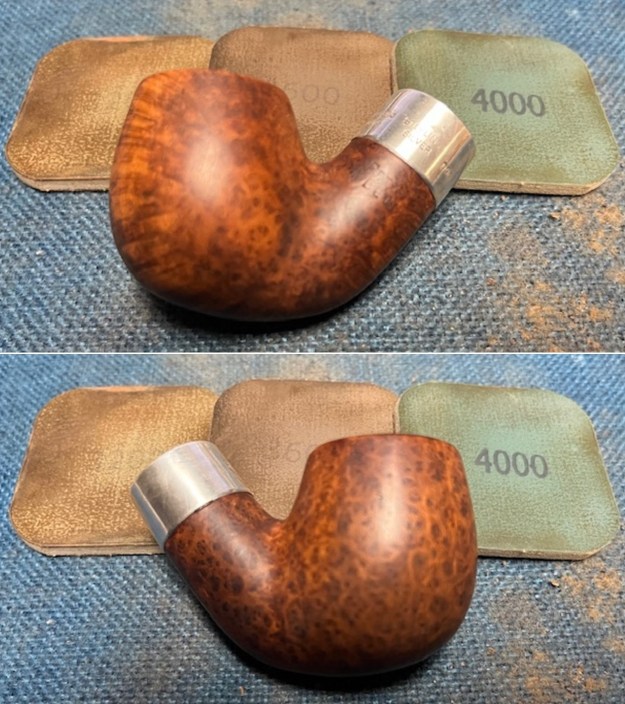
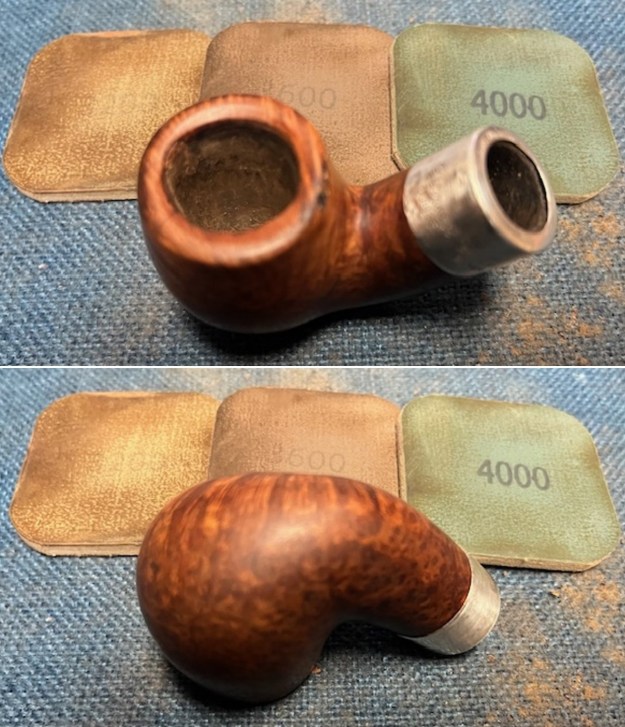
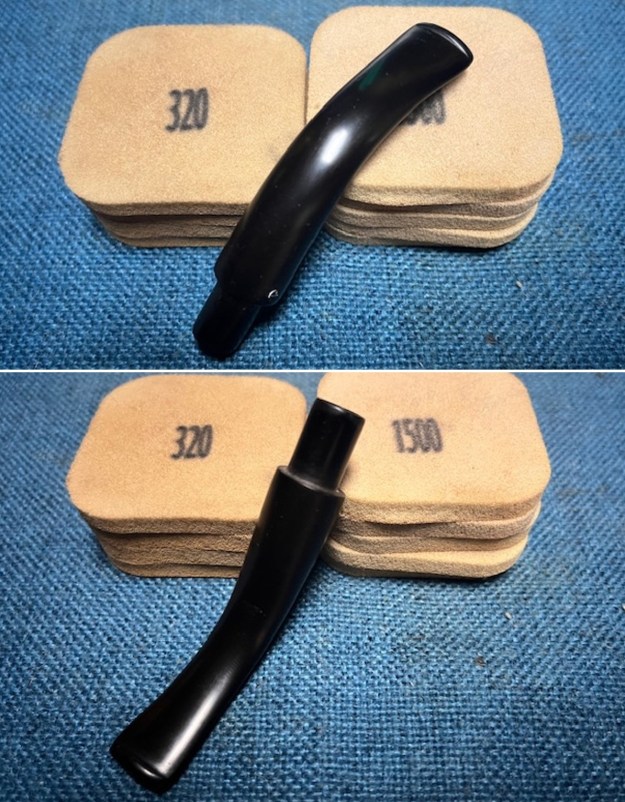
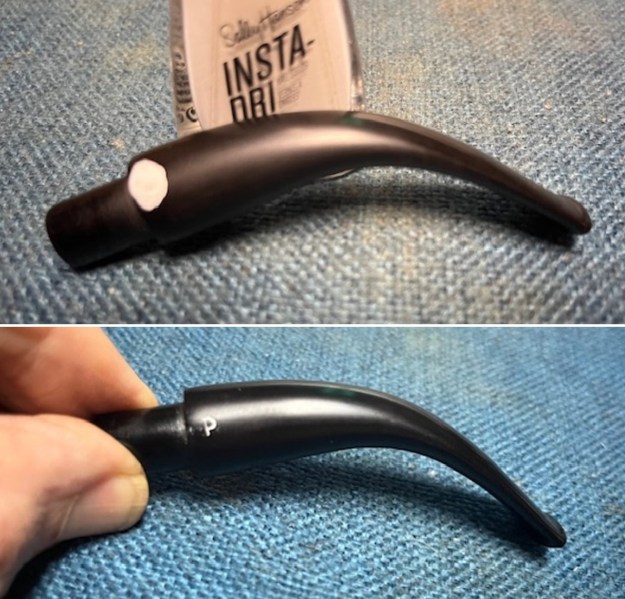
1950 – 1989 The Republic Era – From 1950 to the present time, the stamp for this era is “Made in the Republic of Ireland” in a block format generally in three lines but two lines have been used with or without Republic being abbreviated.

During the 1950’s and 60’s the Kapp & Peterson company was still in the ownership of the Kapp family. However 1964 saw the retiral of the company Managing Director Frederick Henry(Harry) Kapp.

I then turned to The Peterson Pipe – The Story of Kapp & Peterson to look up information on the DeLuxe line. There on page 297 I found this information:

De Luxe (1915-) Introduced in newspaper advertising in 1916, production of this high grade smooth finish model may have been stalled by the Great War and domestic disturbances. It will not appear in Peterson’s catalogs until ’37. Specimens documented from 1915 to the 30s are extremely rare and confined to extra-large house pipes and occasionally medium sized pipes with unconventional shapes. Specimens from 1930-50 in a wide selection of Classic Range shapes, often as Canadians. Catalogs from 1937-50 list it as “the finest possible quality obtainable.” After ’50 the Supreme would supplant the De Luxe as the top of the line model, and to this day the De Luxe is a high quality pipe but not the highest. Early models often have no COM. Models from the twenties until the sixties will be stamped Irish over Free State, Eire, London Made over England, Made in over Ireland (forming a circle) or Made in the over Republic over Ireland. The last three COM stamps, used from’38 through ’68 when no hallmarks were stamped on the Peterson mountings can never be precisely dated. If a De Luxe was made in ’69 or later it will be hallmarked with the date designator and always have a Republic COM.

With that information in hand I knew what I was dealing with in terms of the stamping and the age of this pipe. I knew from the information that the pipe was made during the Republic Era between 1950 and the present day. The COM stamp on the shank and the hallmarks (even though unreadable in terms of the date stamp) help me to know that the pipe came out after 1969. Now it was time to work on the pipe.

Jeff had thoroughly cleaned up the pipe. He reamed the pipe with a PipNet Pipe Reamer and cleaned up the remnants with a Savinelli Fitsall Pipe Knife.  He scrubbed the bowl with undiluted Murphy’s Oil Soap with a tooth brush. He rinsed it under running warm water to remove the soap and grime. He cleaned out the inside of the sump in the shank and the airway in the stem with alcohol, cotton swabs and pipe cleaners. He scrubbed the exterior of the stem with Soft Scrub to remove as much of the oxidation and calcification as possible. He soaked the stem in Before & After Deoxidizer and rinsed it off with warm water. I took close up photos of the bowl, rim and the stem. You can see how clean the bowl and rim top and edges are. There is some slight damage on the inner edge and scratches on the rim top. The stem is in good condition with tooth marks and some chatter as noted above.I took photos of the stamping on the sides of the shank. All are clear and readable as noted above. You can see the faint P stamp on the left side of the stem in the first photo below.I removed the stem from the shank and took a photo to give a sense of the proportions of the pipe. The chunky shank and stem together make for a classic Peterson’s Pipe.I decided to work on the damage on the top and the inner beveled edge of the bowl first. I started the work with a folded piece of 220 grit sandpaper to clean up the rim top and the inner edge of the rim. Once I had finished I think that it looked much better. I polished the briar with micromesh sanding pads – dry sanding with 1500-12000 grit pads. I wiped the bowl down after each  pad to remove the grit. The bowl began to take on a rich shine. It is going to be a beauty.   I rubbed the bowl down with Before & After Restoration Balm. I worked it into the briar with my finger tips. I let it sit for 10 minutes and the Balm did its magic. It enlivens, cleans and preserves the briar. It certainly brought this bowl back to life. I buffed it off with a clean cloth and took the following photos.  I set the bowl aside and turned to work on the stem. I worked on the deep oxidation with Soft Scrub and cotton pads to remove more of the deep oxidation. It worked very well.I “painted” the tooth marks on the stem with the flame of a Bic Lighter to lift them. I was able to lift them all to some degree. I filled in those that remained with clear CA glue. I used a small file to flatten the repairs. I sanded stem surface repairs smooth with 220 grit sandpaper. I started polishing the stem with 400 grit wet dry sandpaper. I soaked it again in Briarville’s Deoxidizer for several hours to further remove the deep oxidation. I removed it, rinsed it and dried it with a coarse cloth. I polished the vulcanite stem with micromesh sanding pads – 1500-12000 grit pads. I wiped it down with a damp cloth after each sanding pad. I used Before & After Pipe Polish – both Fine and Extra Fine to further polish the stem. This Republic Era Peterson’s De Luxe 4S Bent Billiard and a vulcanite, saddle P-lip stem is a great looking pipe now that it has been restored. The beautiful finish really highlights the grain and the polished finish is stunning. I put the stem back on the bowl and carefully buffed the pipe with Blue Diamond on the buffing wheel. I gave the bowl and the stem multiple coats of carnauba wax on the buffing wheel and followed that by buffing the entire pipe with a clean buffing pad. I hand buffed the pipe with a microfiber cloth to deepen the shine. The finished Peterson’s De Luxe 4S Bent Billiard fits nicely in the hand and feels great. Give the finished pipe a look in the photos below. The dimensions of the pipe are Length: 6 inches, Height: 2 inches, Outside diameter of the bowl: 1 ¼ inches, Chamber diameter: ¾ of an inch. The weight of the pipe is 57 grams/2.01 ounces. I will be adding the pipe to the Irish Pipe Makers Section of the rebornpipes store. If you are interested in purchasing this pipe send me a message or an email. Thanks for reading this blog and my reflections on the pipe while I worked on it.