
by Steve Laug
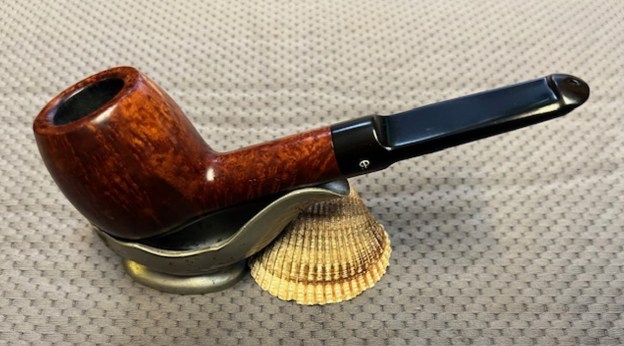
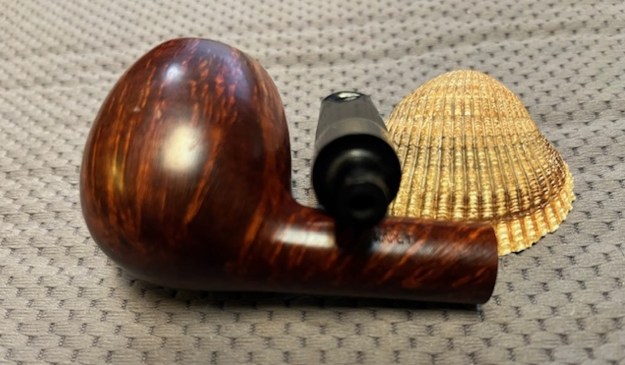
This beautifully grained briar pipe was purchased on 08/27/2024 from an auction on eBay from a seller in Memphis, Tennessee, USA. It is stamped on the left side of the shank and clearly reads Peterson’s [over] Kapet. On the right side it is stamped Made in the Republic of Ireland [three lines]. The shape number 502 is stamped to the right of that next to the bowl/shank junction. The bowl had a thick cake on the walls and an overflow of lava onto the rim top and edges. The smooth finish is dirty with debris and oils. The vulcanite saddle stem has a “P” stamped on the left side of the saddle. It was oxidized, calcified and has light tooth marks and chatter on both sides near the button. It was a beautiful looking pipe even through the grime in the finish. Jeff took photos of the pipe before he started cleaning it up. Have a look.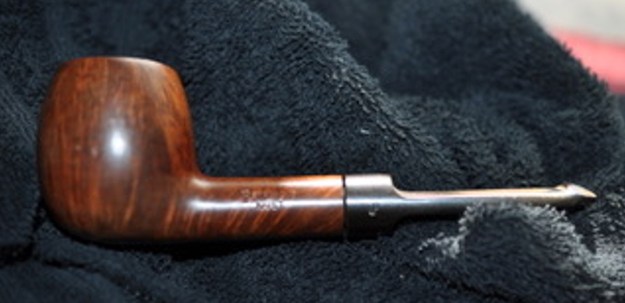
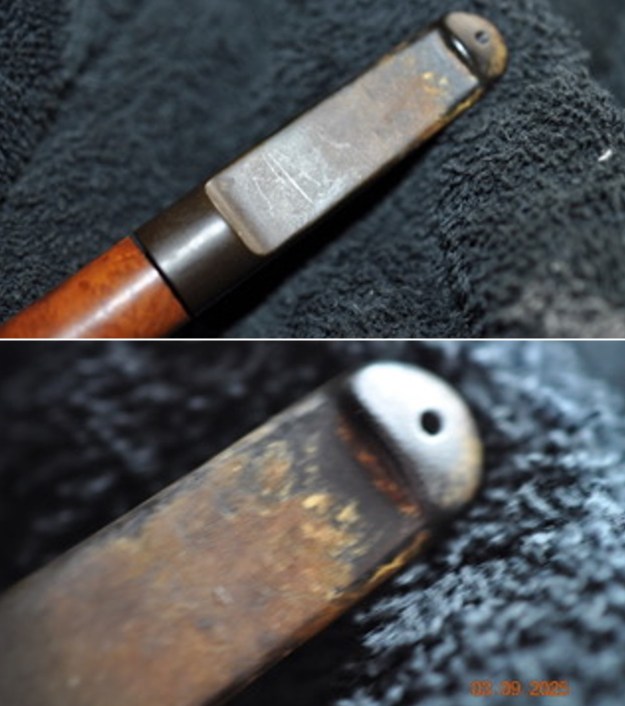
 Jeff took close up photos of the bowl and rim top to show the condition of the bowl and the rim top. You can also see the lava on the rim top, inner edge and the cake in the bowl. He also took close up photos of the stem to show its condition as mentioned above. He also took photos of the tooth marks and chatter on both sides of the stem.
 He took photos of the bowl sides and heel to show the grain around the bowl. There are small fills on the left side mid bowl. The grain is beautiful straight or flame grain.
 Jeff also took photos of the stamping on the sides of the shank. It is clear and readable as noted above.
 I am including the link to the Pipedia’s article on Peterson pipes. It is a great read in terms of the history of the brand (https://pipedia.org/wiki/Peterson). There was a short note toward the bottom of the page about the series. It is definitely referring to the newer line that came out later. I quote:
I turned to Pipedia (https://pipedia.org/wiki/Peterson) to first pin down a date that the pipe was made. I knew that the Made in Ireland stamp would give me that. I quote:
As usual when trying to get accurate facts in regard to Peterson history, something will jump up and get in the way. They are missing many of their records. The following is the best that we can do for a guide to the myriad markings during the period 1922 – 1949. Prior to 1920 it was rare for a country of origin to be stamped on the pipe, just Peterson’s Dublin on the band. After 1921/22, if it is stamped “MADE IN IRELAND” and the “Made in” is stacked over “Ireland” or “MADE IN EIRE” or several other forms, it was made between 1922 and 1938. A considerable number of Peterson pipes were stamped “Irish Free State”. From about 1930 to 1949, most of the pipes (those which were stamped) were stamped “Made in Ireland”.” If the stamp reads “MADE IN IRELAND” in a circle, the pipe was made between 1939 and 1948. These are all “Pre-Republic” pipes. I can tell you that the mark “Irish Free State” was adopted in 1922; and replaced by “Eire” in 1937 and then by “Republic of Ireland” in 1949.
That gave me a date for the pipe – it was made after 1949 as can be proved by the Made in the Republic of Ireland stamp on the right side of the shank.
I turned to “The Peterson Pipe” by Mark Irwin and Gary Malmberg to get some background on the Peterson’s Kapet Line. On page 305 it had the following information.
Kapet (1925-87) Line first described in 1925 brochure and featured in occasional catalogs through 1987. Early specimens will be stamped IRISH over FREE STATE. Described in 1937 catalog as available in dark plum or natural finish. Featured an aluminum “inner tube” or stinger until 1945. Mid-century specimens may be stamped Made In over Ireland. Specimens from 1970 on may have mounts with hallmarks.
Judging from the Made in the Republic of Ireland stamp, the pipe I am working on is probably made after 1945 when the stinger or inner tube was removed. Those dates work also for the Kapet information above. The stem has the original P stamp on the saddle side and no stinger.
To help clarify the stamping on the shank more, I did some digging and found a blog on Mark Irwin’s Site that had information on the 500 shapes and specifically the 502 shape and it did indeed have a saddle stem (https://petersonpipenotes.org/tag/peterson-502/). That also move the date forward to post 1980.
The 500 shapes aren’t documented in the Peterson ephemera, which is an important reason to stop and let everyone know they’re available just now. They’re big, XL shapes, mostly bulldogs and Rhodesians, and appeared around 1980 in a red stain in the Spigot, Sterling Silver and Kapet lines (from high to low), but also in standard brown stain in the lower Kildare and K Briar entry-grade lines. I’ve also seen a Supreme on the internet.
The 1980s were a difficult period in the company’s history, as we recount in The Peterson Pipe: The Story of Kapp & Peterson. Global pipe sales had plummeted to an all-time low and Peterson, like many other companies, was retrenching. While we have a good record of the company’s offerings in the 1970s and 80s, the 500 shapes are nowhere to be seen. They’re big pipes, which made me think they might have been made designed for the U.S. market, were it not for the fact that some of them accommodate a 6mm filter, which is usually a sign that they were destined for the German market.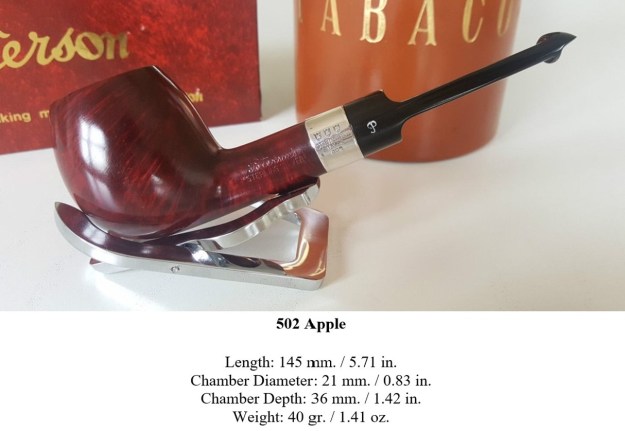 Armed with the information above, I turned my attention to the pipe itself. Jeff had cleaned the pipe with his usual penchant for thoroughness that I really appreciate. He reamed it with a PipNet pipe reamer and cleaned up the reaming with a Savinelli Fitsall Pipe Knife. He scrubbed out the internals with alcohol, pipe cleaners, shank brushes and cotton swabs until the pipe was clean. He scrubbed the exterior of the bowl with Murphy’s Oil Soap and a tooth brush to remove the grime and grit on the briar and the lava on the rim top. The finish looks very good with good looking grain around the bowl and shank. Jeff soaked the stem in Before & After Deoxidizer to remove the oxidation on the rubber. When the pipe arrived here in Vancouver for the second stop of its restoration tour it looked very good. I took photos before I started my part of the work.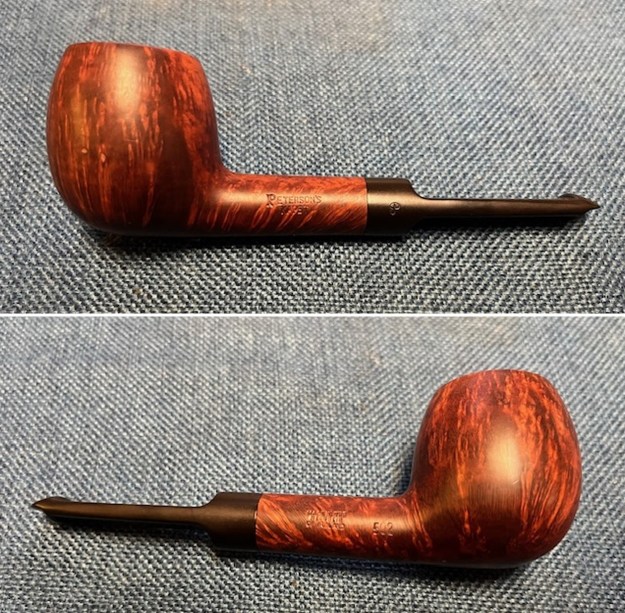
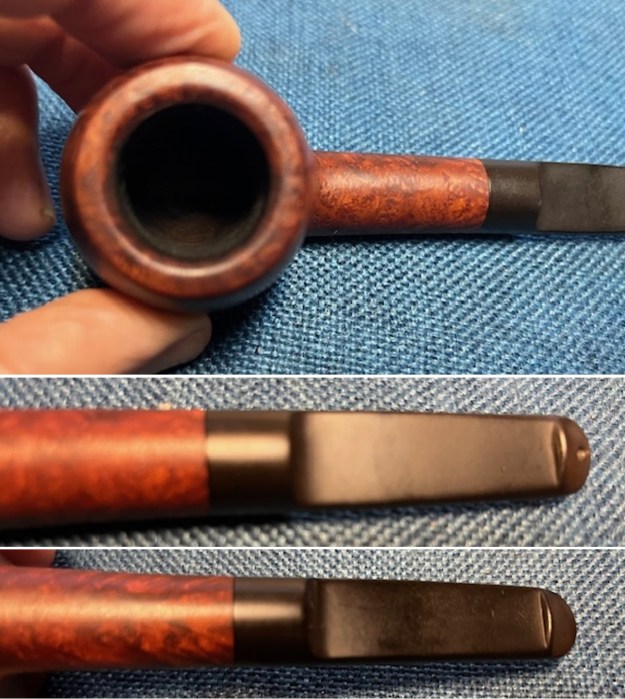
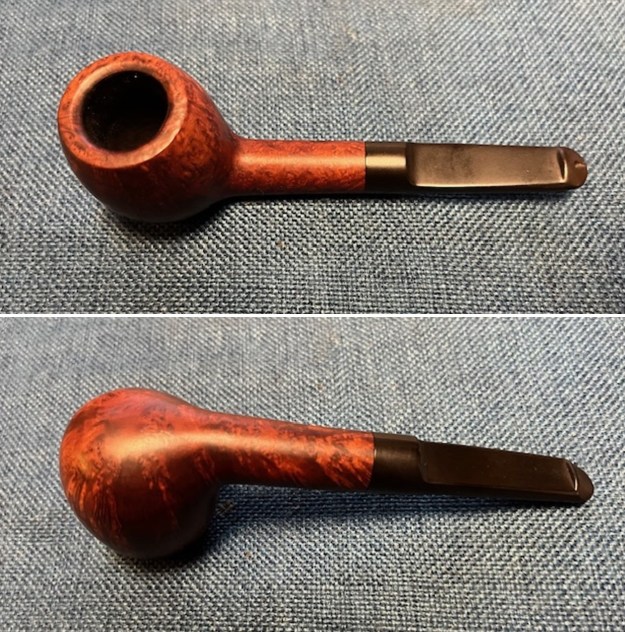 I took close up photos of the bowl, rim top and stem to show how clean the pipe was. The bowl was clean and the rim top and the inner edge look beautiful. The stem was clean and did not show either tooth marks or chatter.
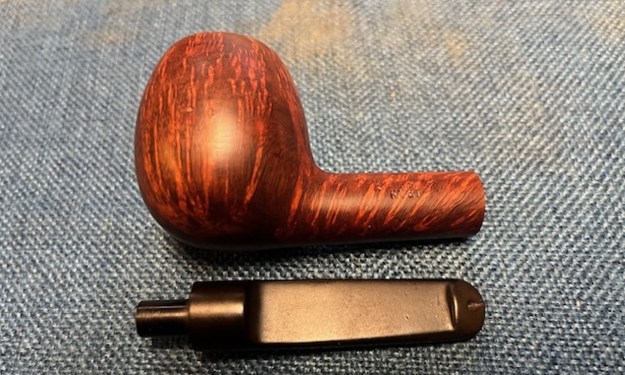
 I took photos of the stamping on the sides of the shank. It is very clear and readable and read as noted above. I also removed the stem from the shank and took photos of the pipe to show the look of the parts.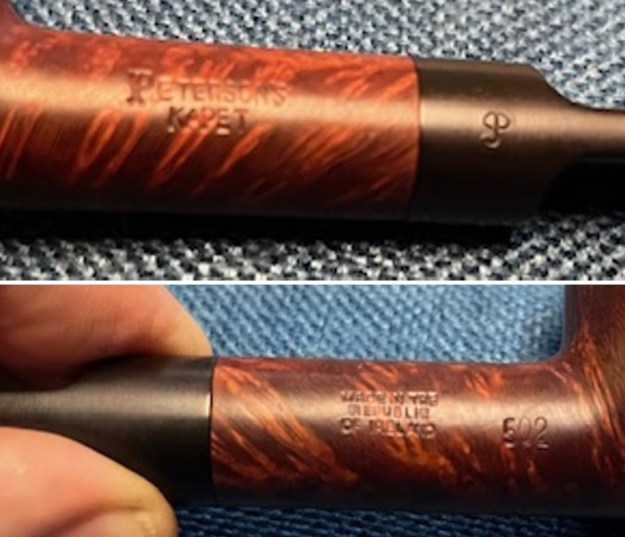
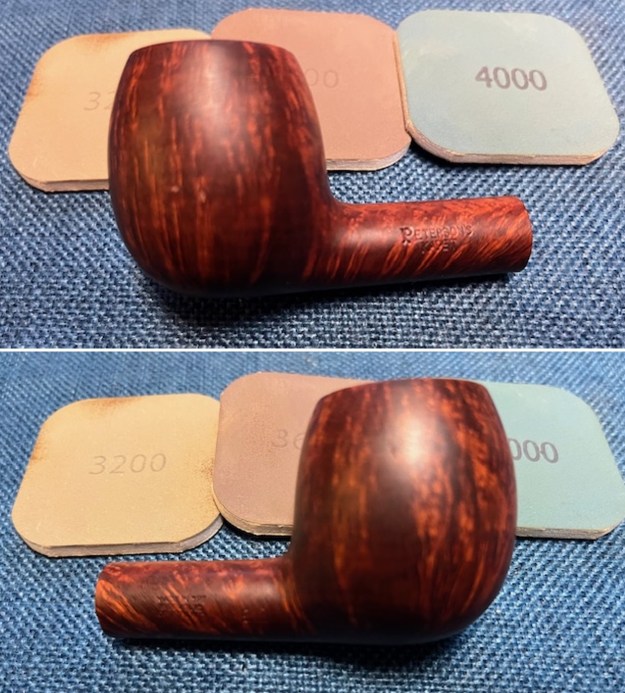
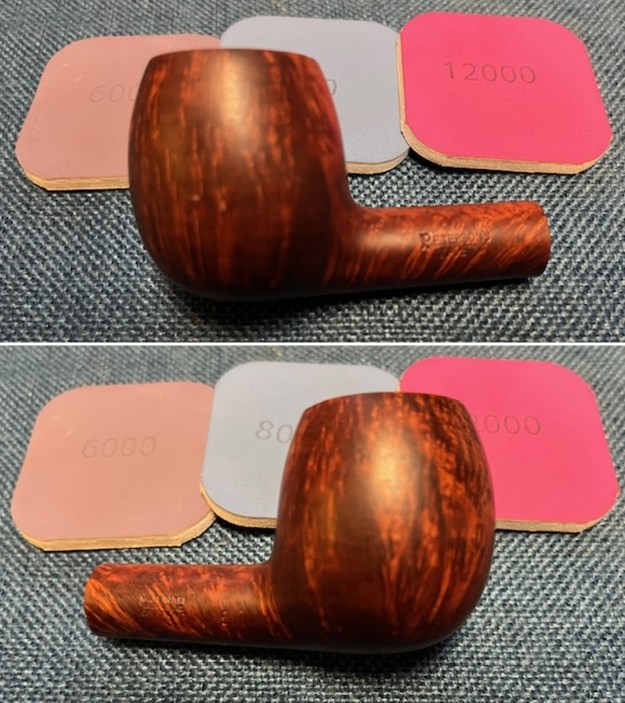
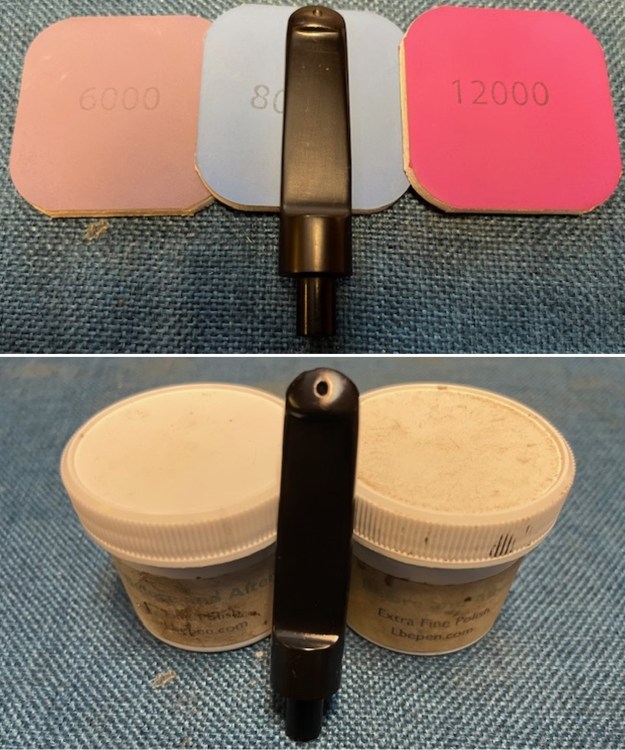
 I started by sanding the exterior of the bowl with 1500-12000 grit micromesh sanding pads. I dry sanded it with each pad and wiped the briar down with a damp cloth to remove the sanding- debris.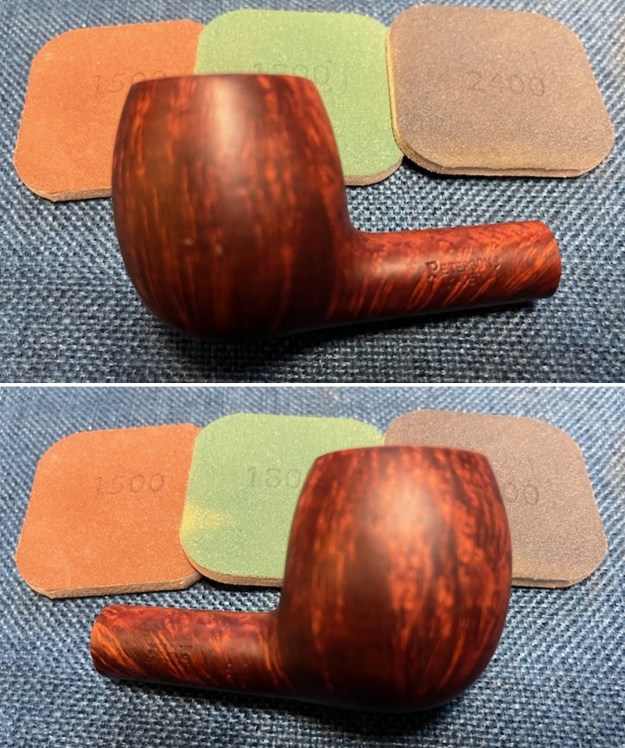
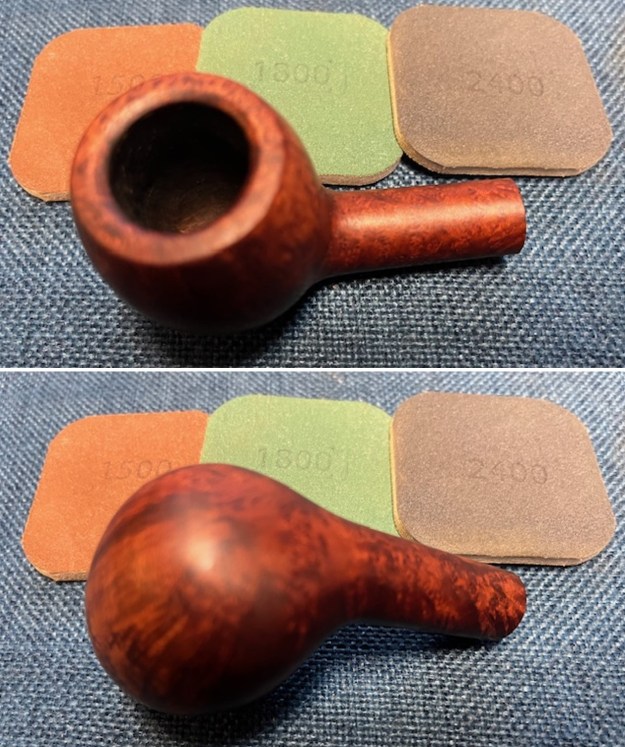

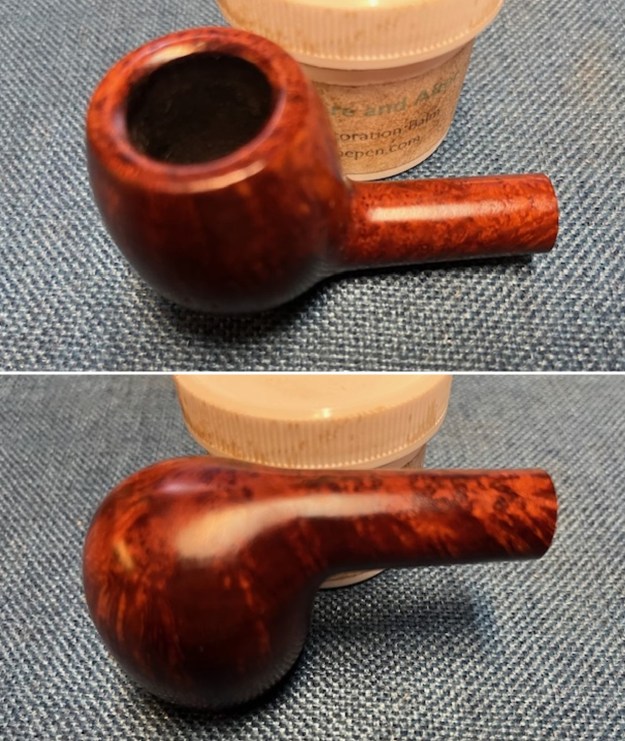
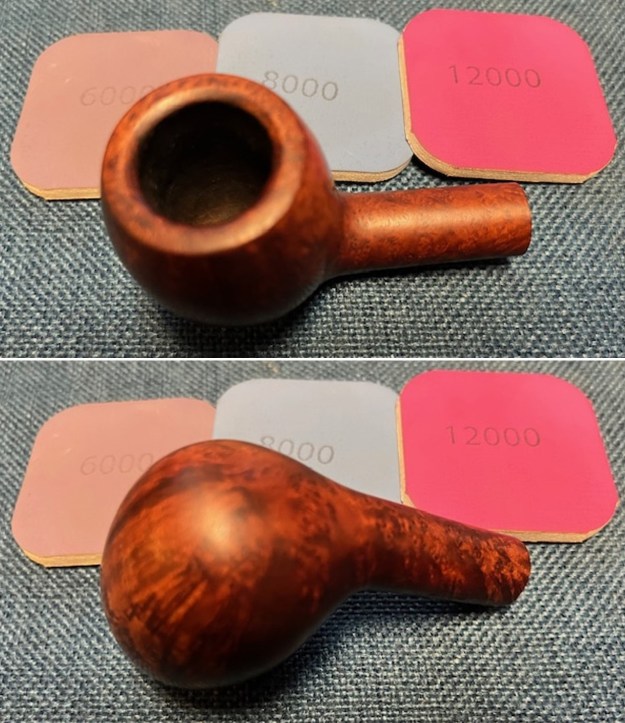 I worked some Before & After Restoration Balm into the briar with my finger tips. I let it sit on the bowl and shank for 10 minutes and then buffed it off with a paper towel and soft cloth. The product is a great addition to the restoration work. It enlivens, enriches and protects the briar while giving it a deep glow. It is a product I use on every pipe I restore.
 I set the bowl aside and touched up the “P” stamp on the left side of the saddle with some white acrylic nail polish. I let it cure then scraped off the excess and sanded the remnant off with a 1500 grit sanding pad.
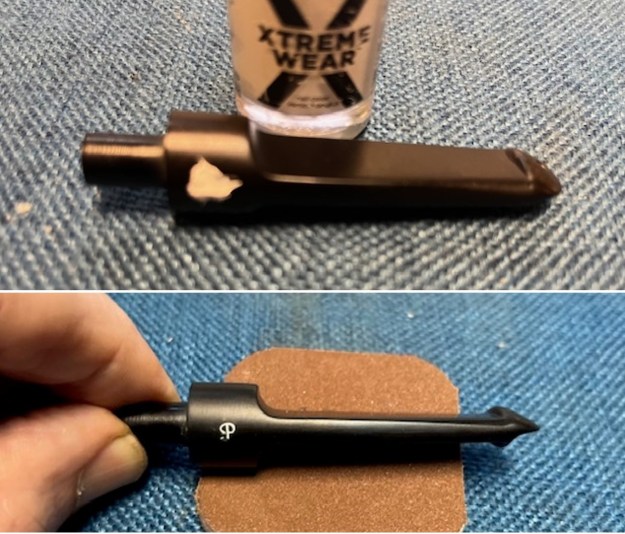 I polished the stem with micromesh sanding pads – dry sanding with 1500-12000 grit pads. Once again, I wiped it down between each pad with Obsidian Oil. I further polished it with Before and After Stem Polish – both Fine and Extra Fine. It looked very good.
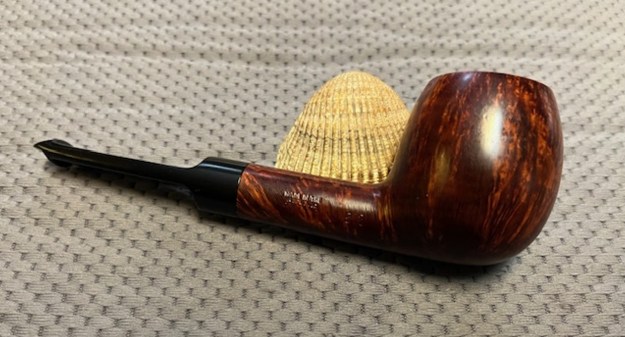
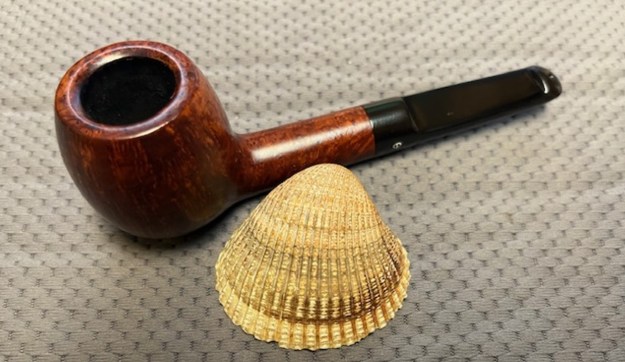
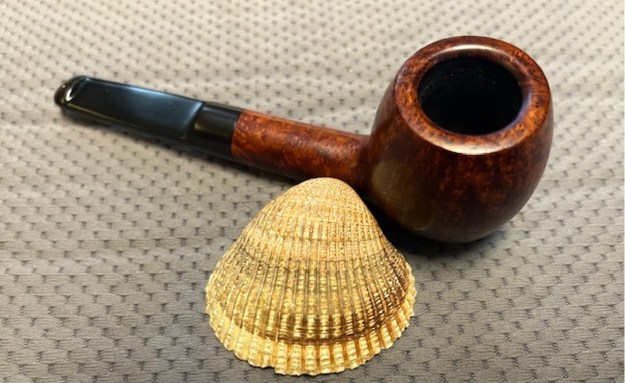
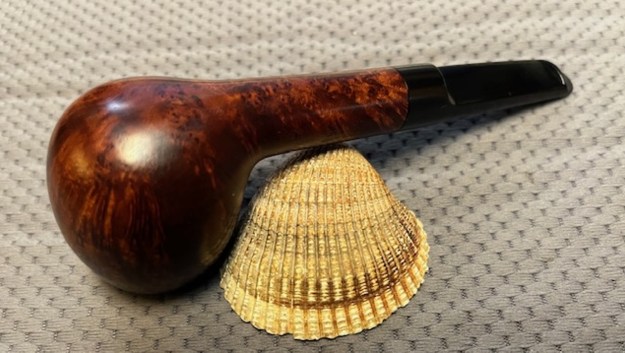
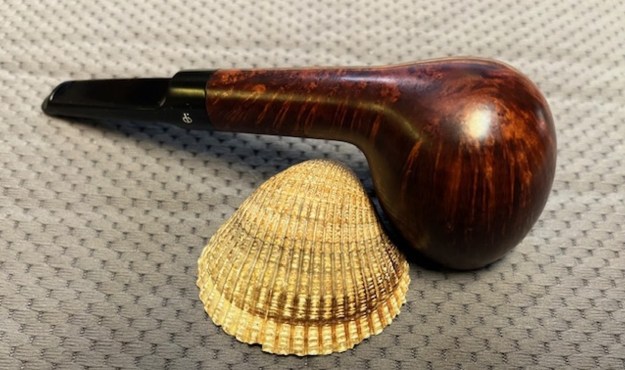
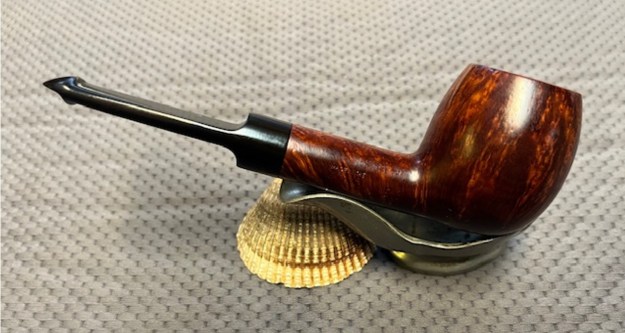
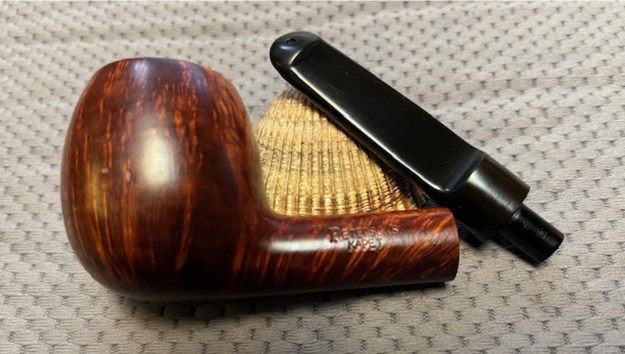
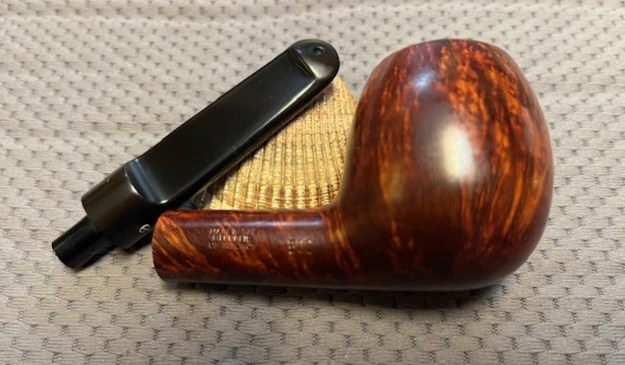
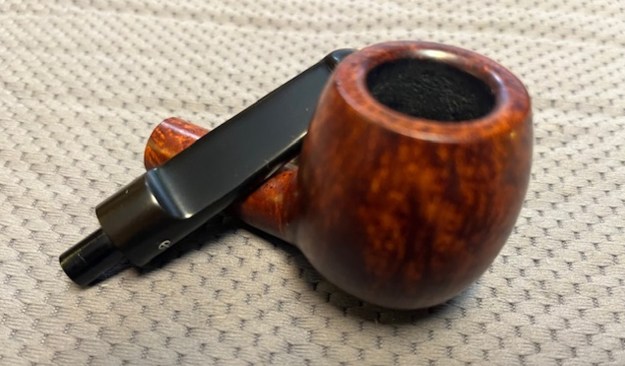
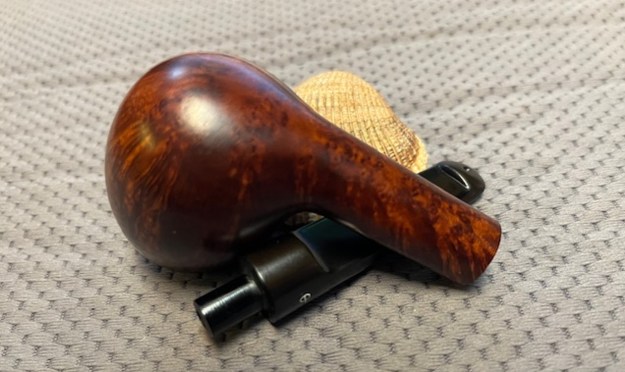
 I am excited to finish this beautifully grained, Peterson’s Kapet 502 Saddle Stem Apple. I put the pipe back together and buffed it with Blue Diamond on the buffing wheel. I gave the bowl and the stem multiple coats of carnauba wax. I hand buffed the pipe with a clean buffing pad to raise the shine. It is fun to see what the polished bowl looks like with beautiful mixed grain all around it. The straight apple looks great with the black vulcanite saddle stem. This smooth Classic Peterson’s Kapet 502 Apple is great looking and the pipe feels great in my hand. It is light and well balanced. Have a look at it with the photos below. The dimensions are Length: 5 ½ inches, Height: 1 ¾ inches, Outside diameter of the bowl: 1 ¼ inches, Chamber diameter: ¾ of an inch. The weight of the pipe is 45 grams/1.62 ounces. It turned out to be a beautiful pipe. I will be putting on the rebornpipes store in the Irish Pipe Makers Section. If you would like to add it to your collection let me know. It is a real beauty. Thanks for walking through the restoration as I brought the pipe back to life.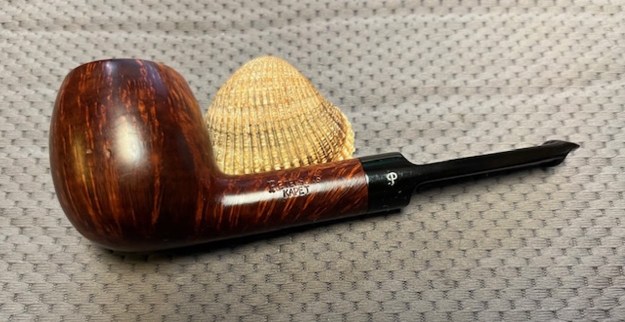




 rebornpipes