Tag Archives: Nording Handmade Pipes

Restoring a Lightly Smoked Handmade by Erik Nording Bulldog


by Steve Laug

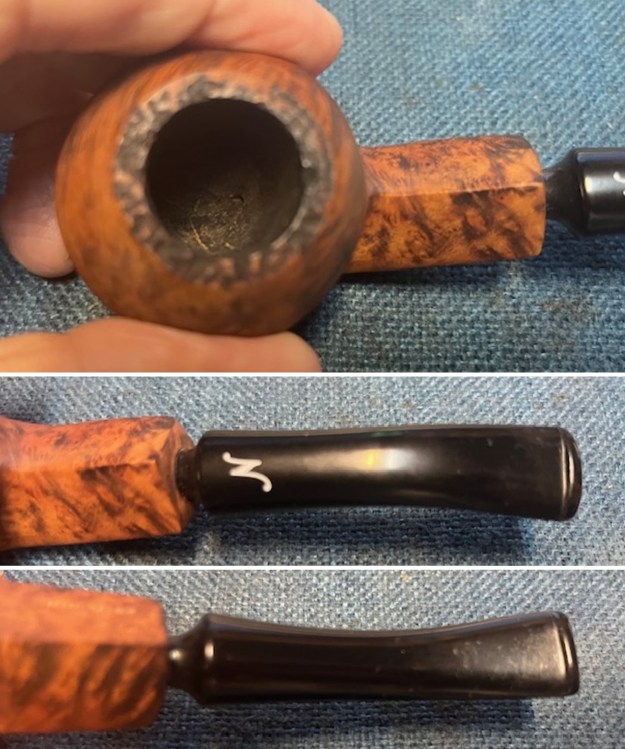
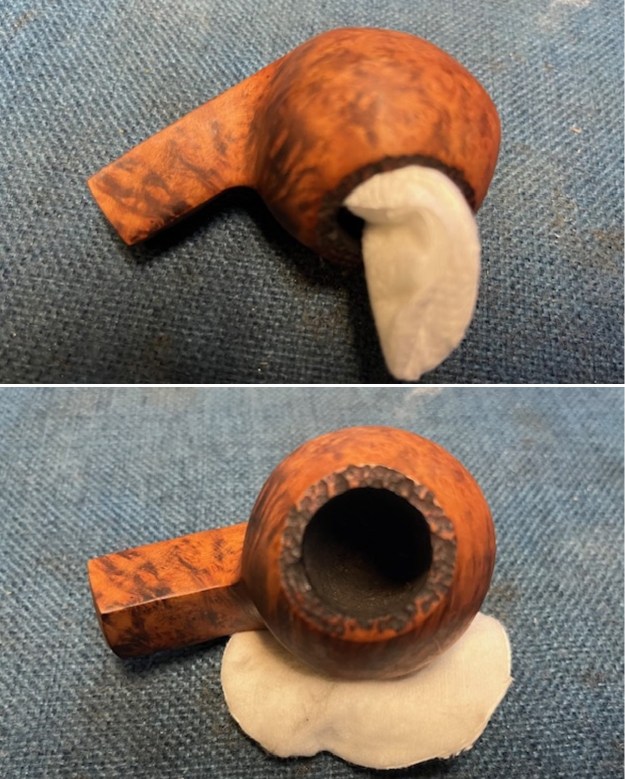
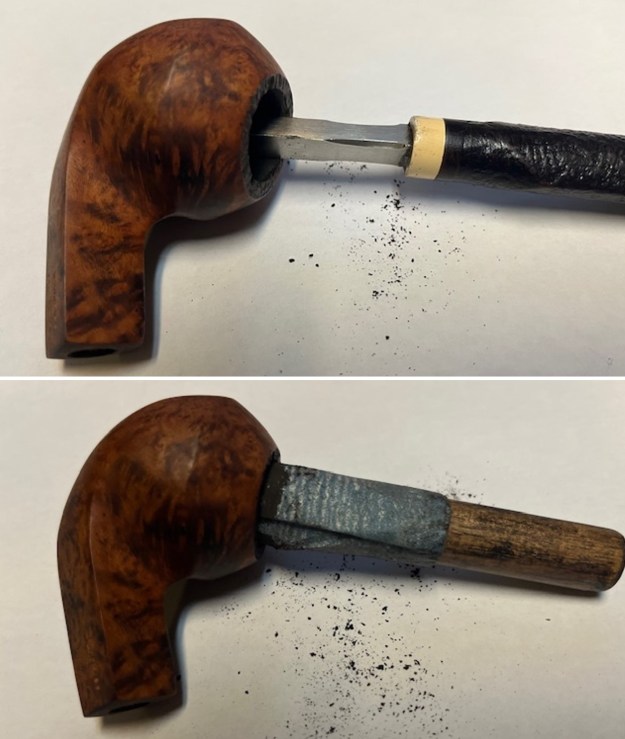
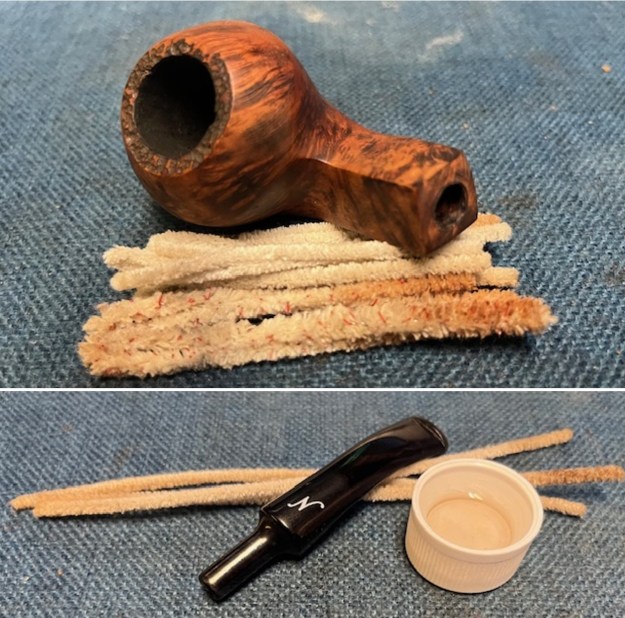
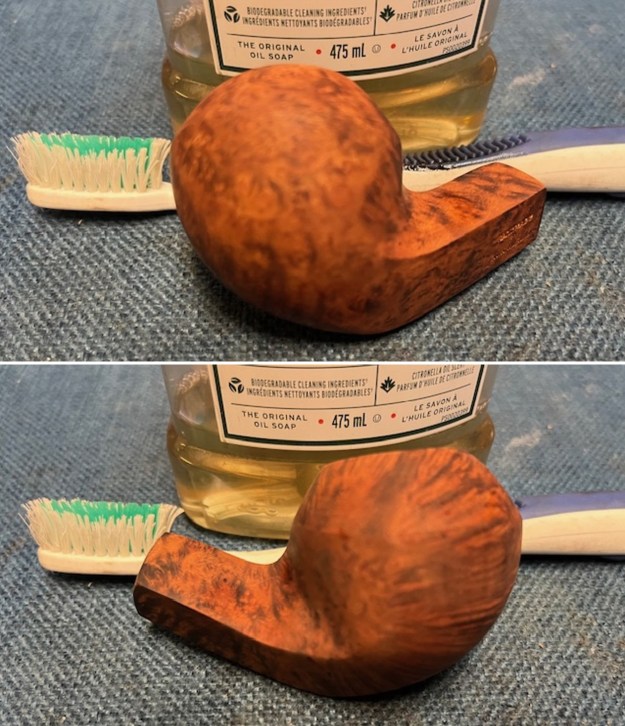
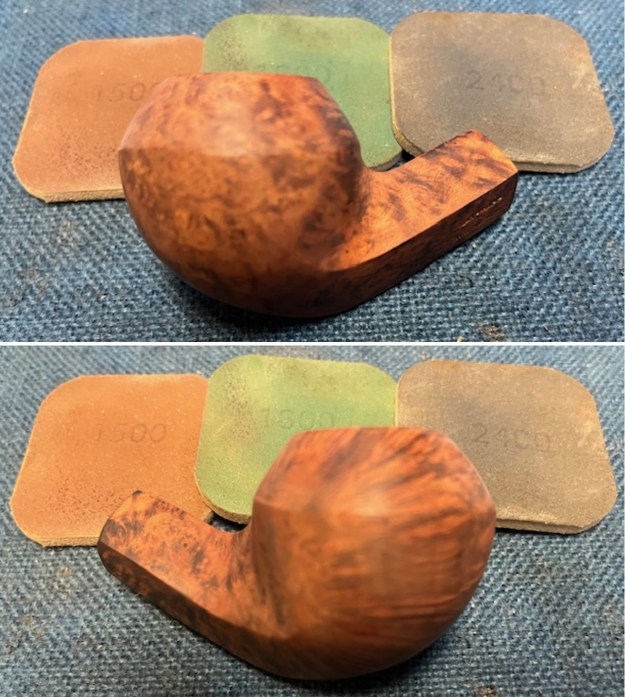
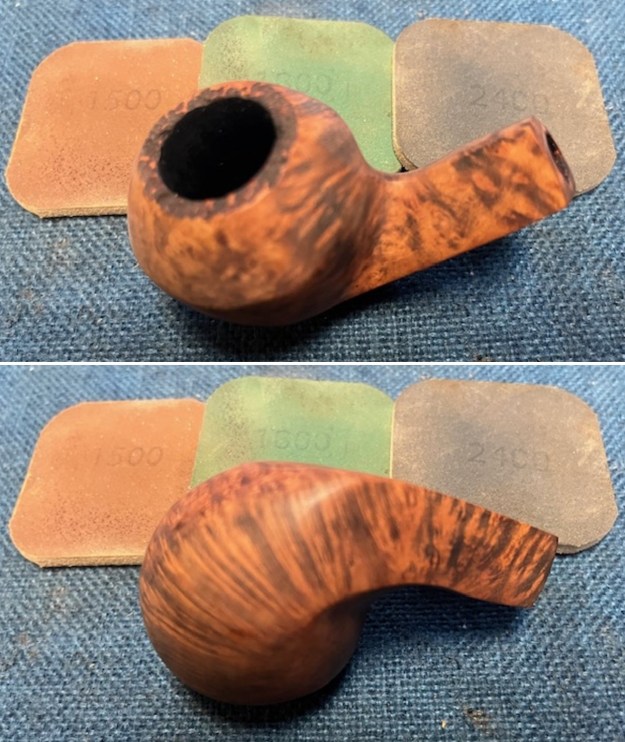
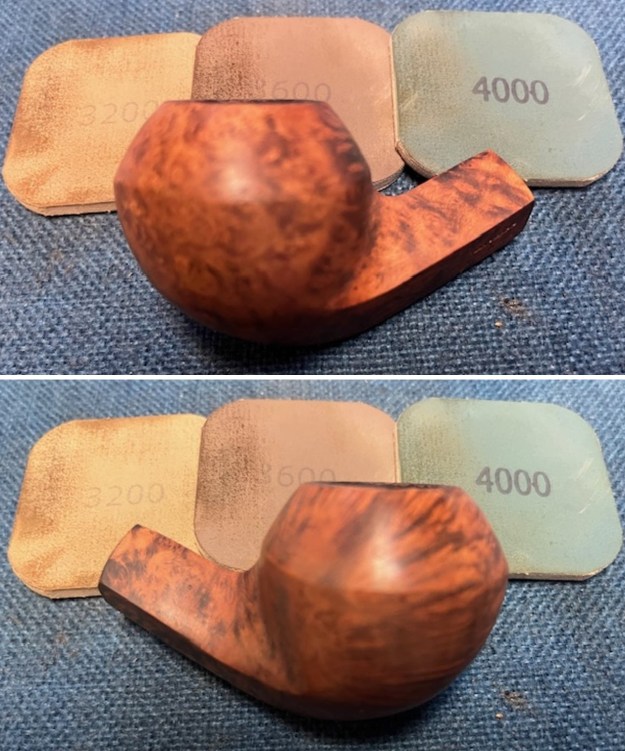
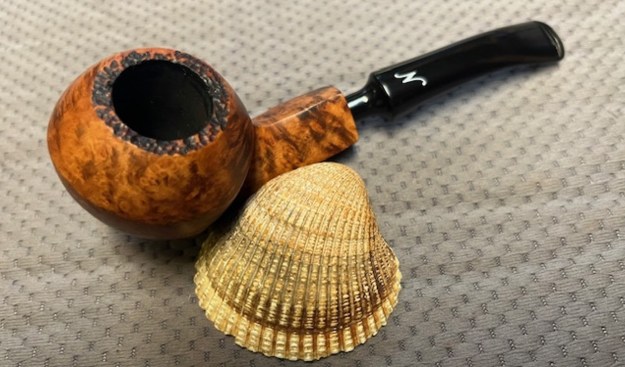
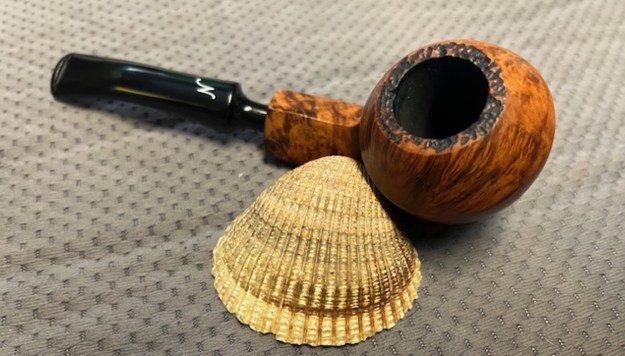
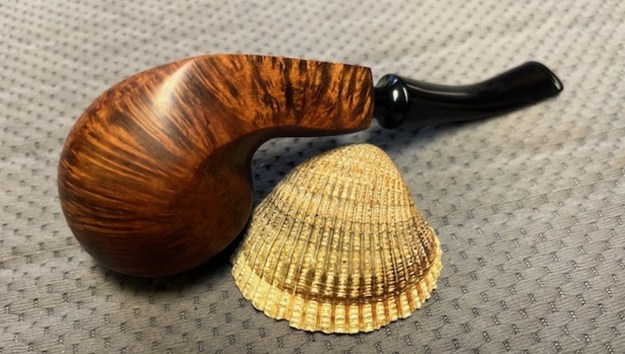
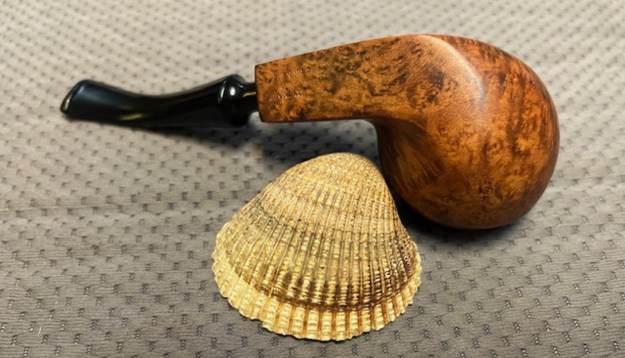
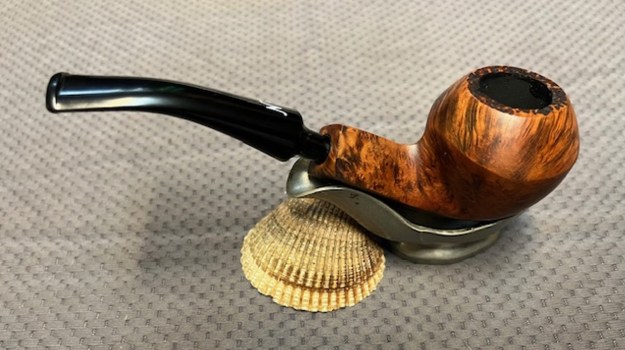
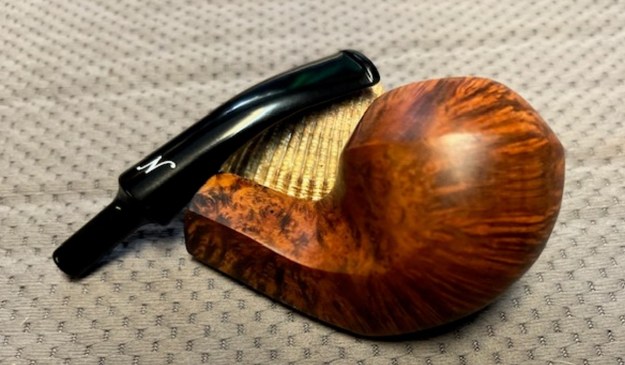
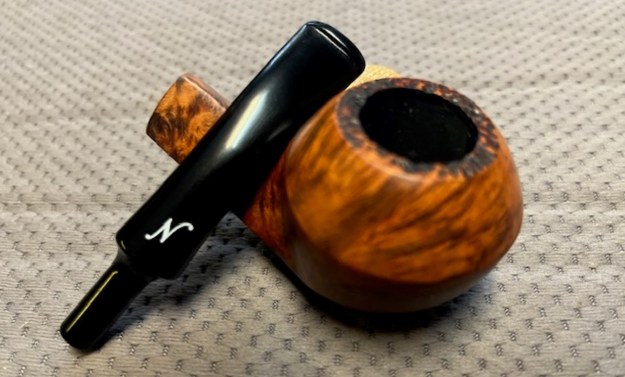
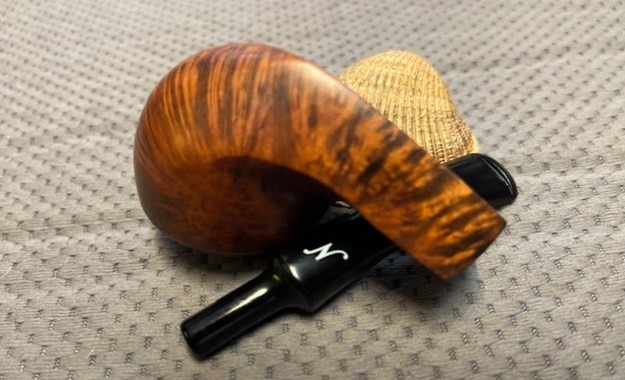
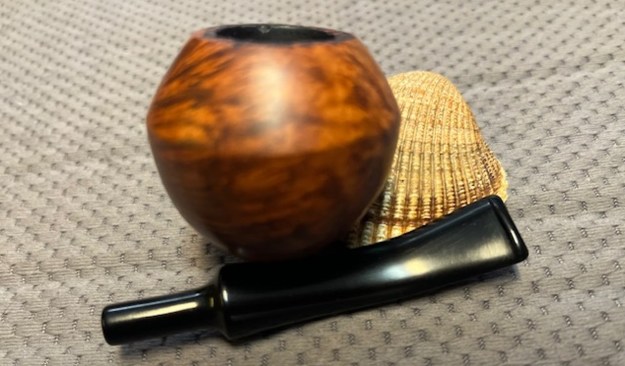
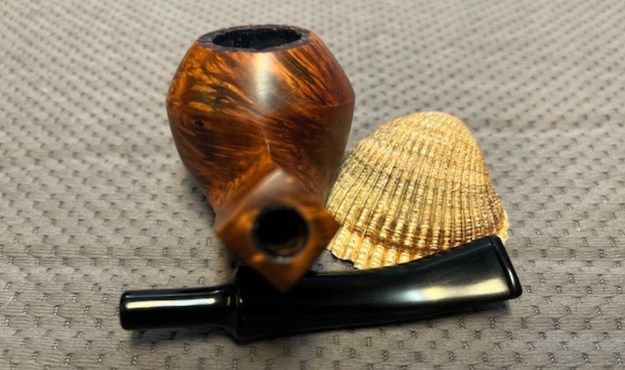
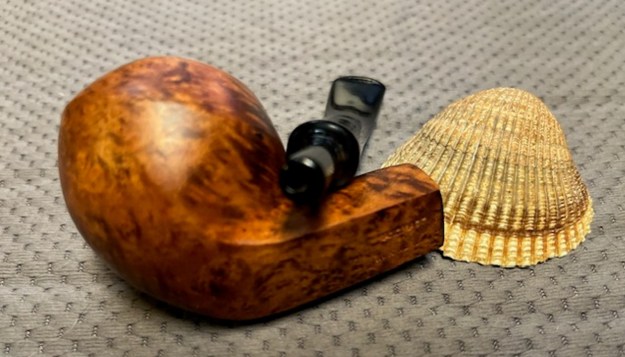
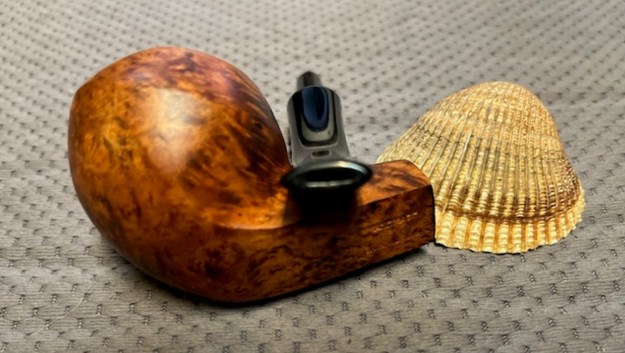
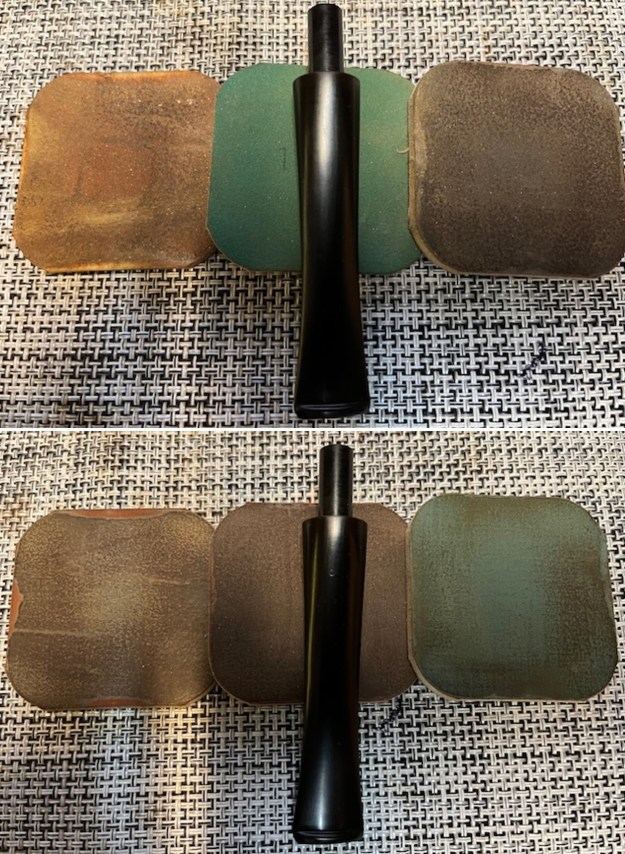
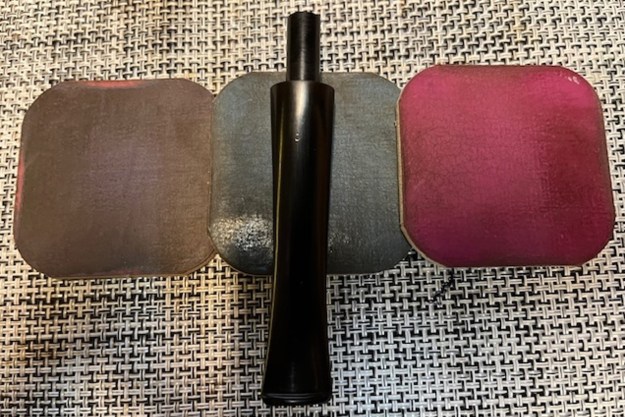
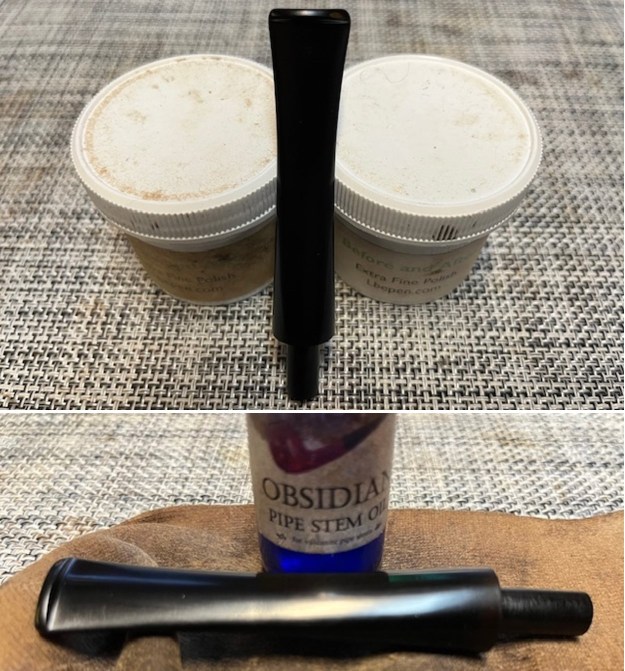
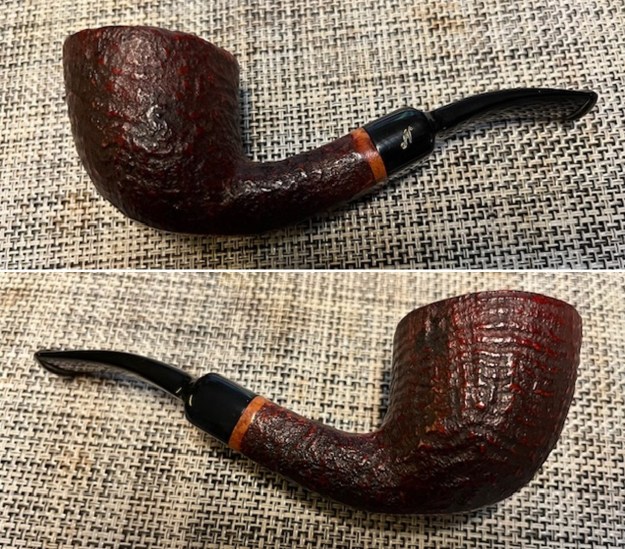
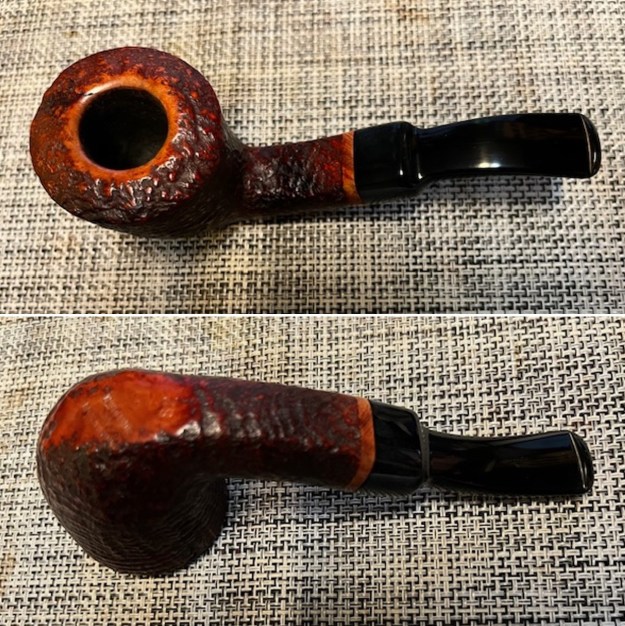
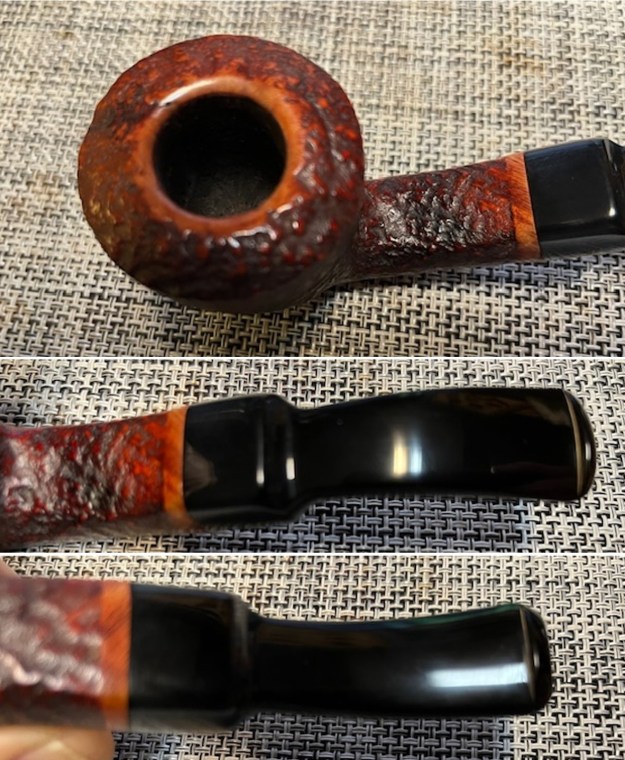
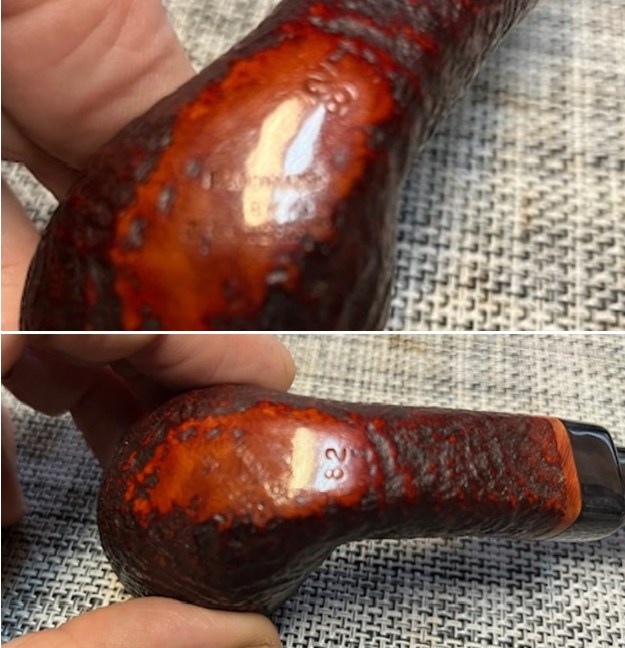
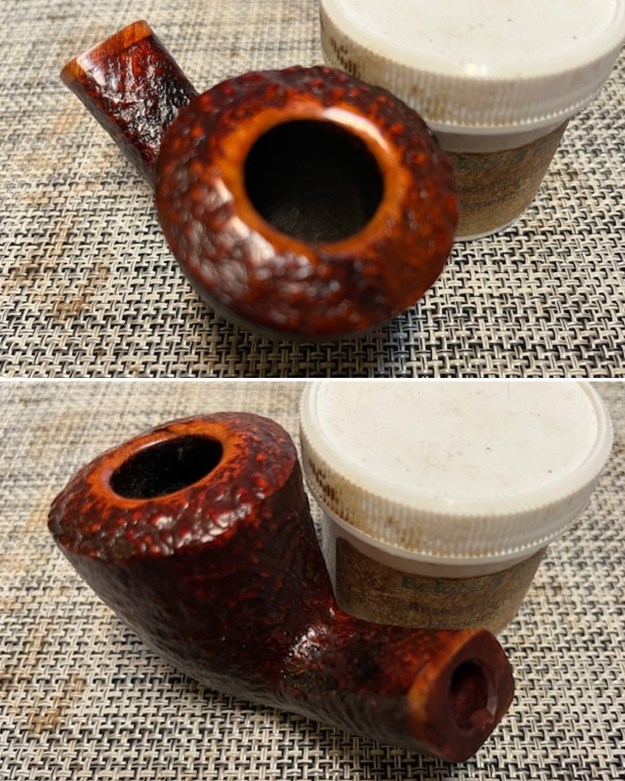
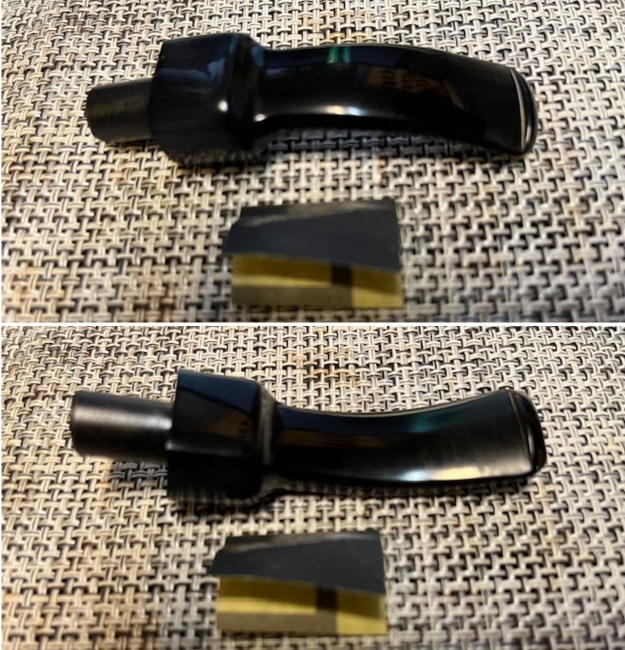
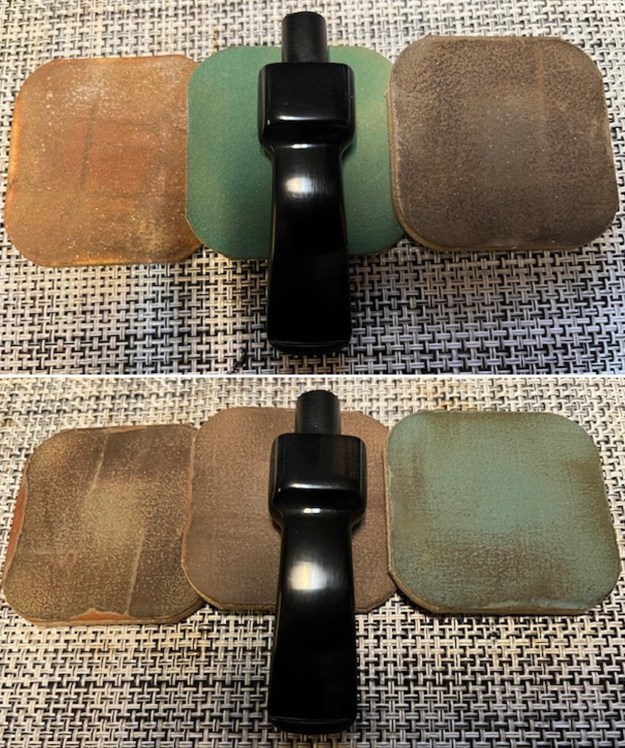
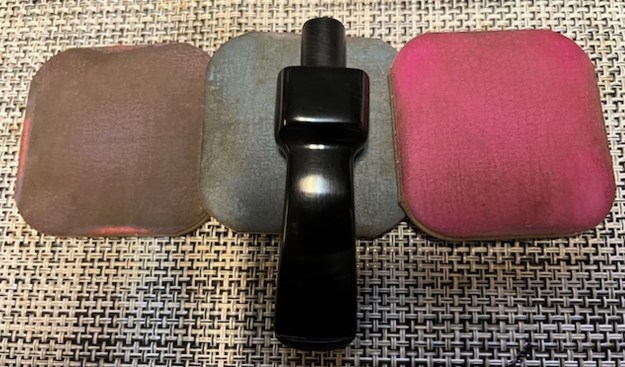
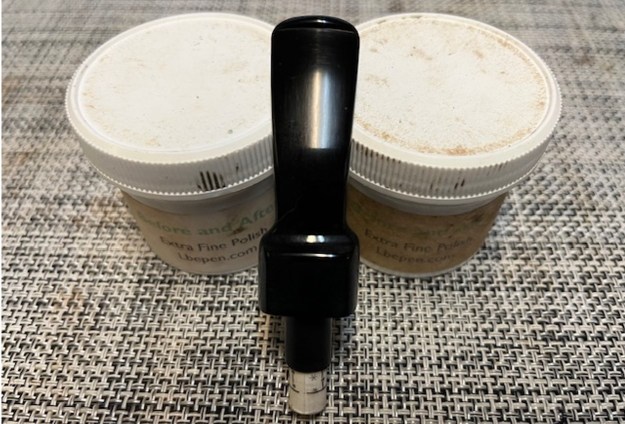
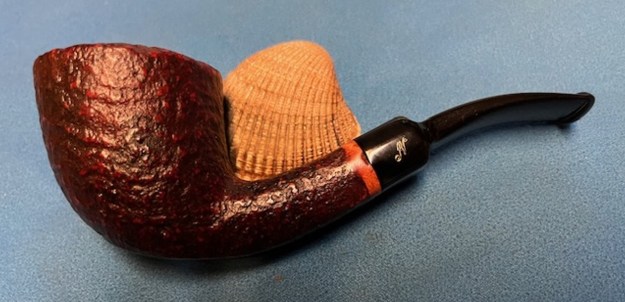
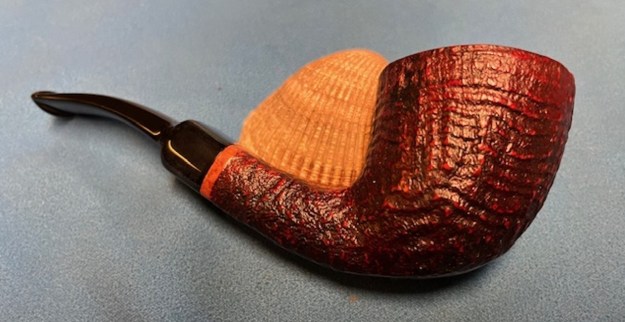
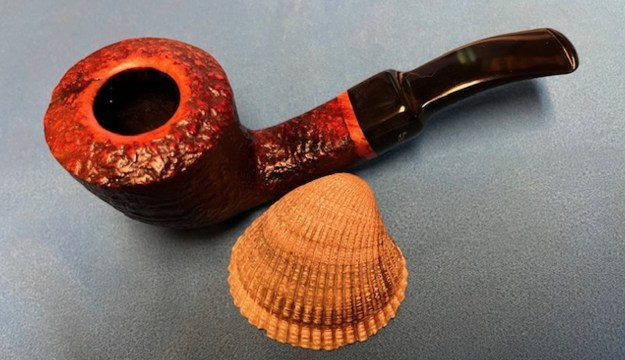
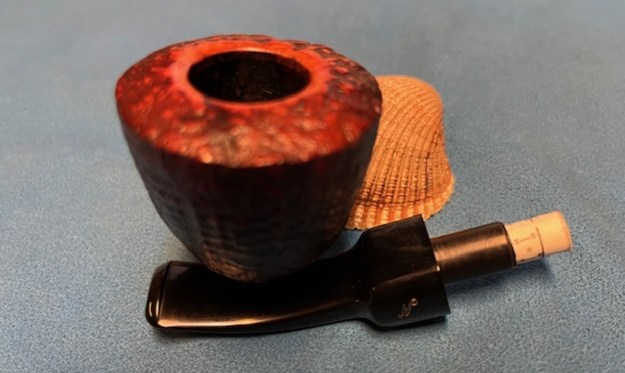
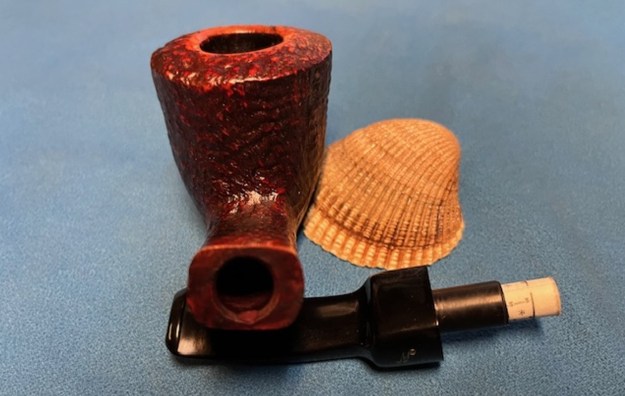
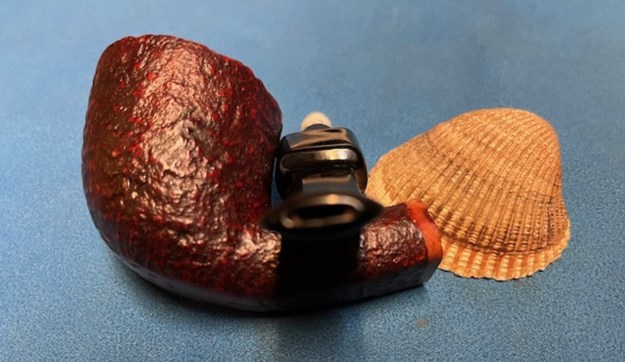
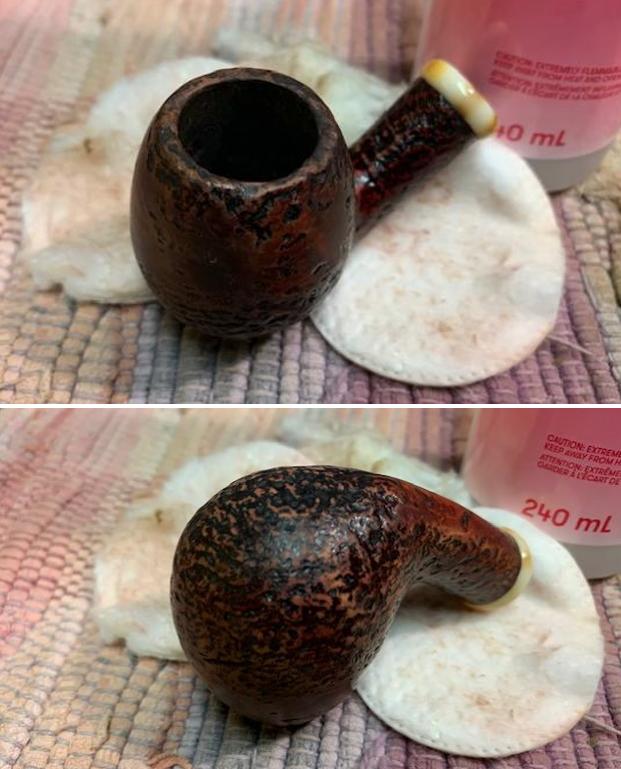
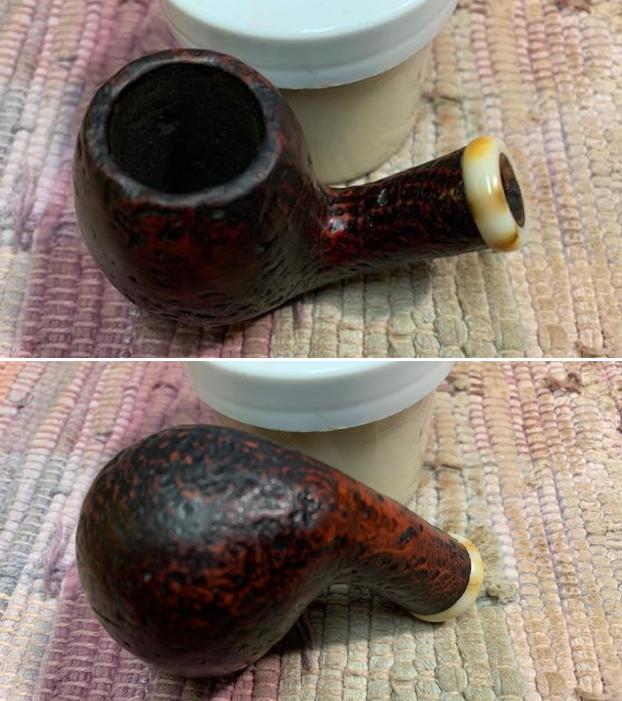
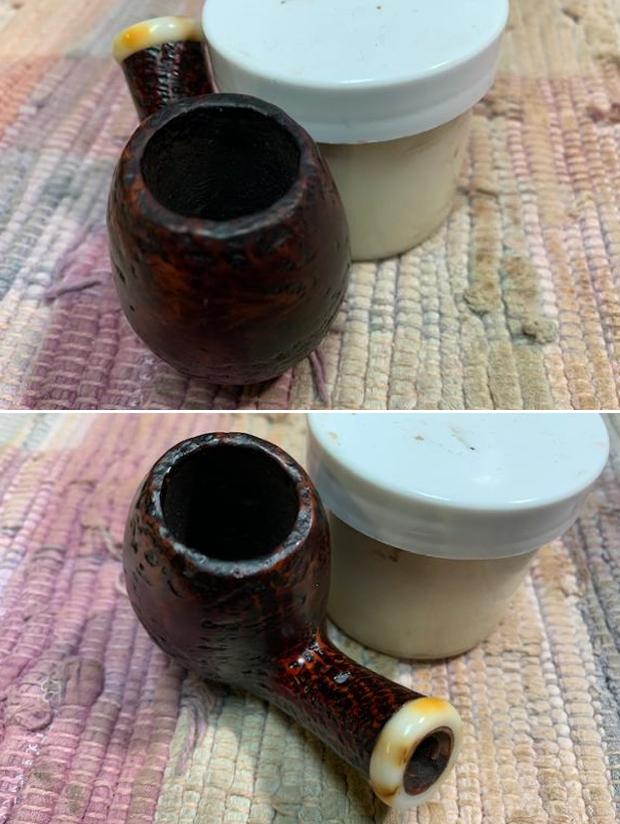
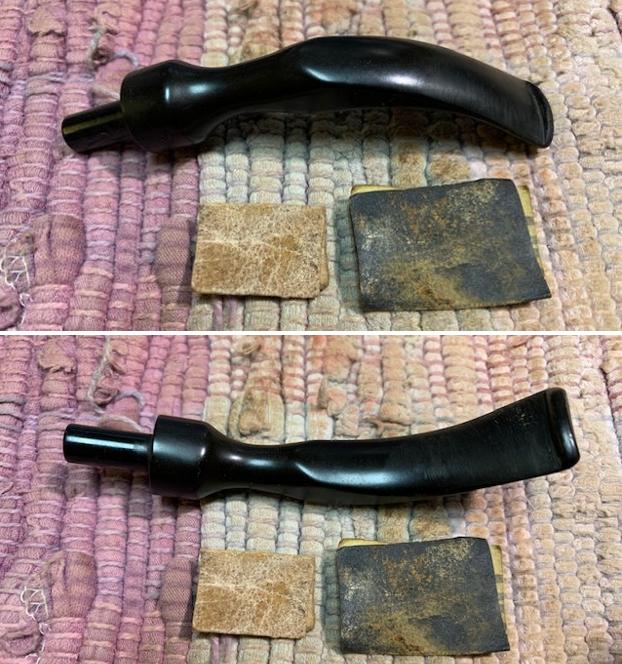
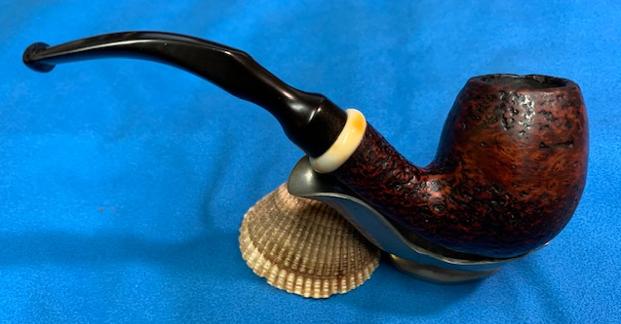
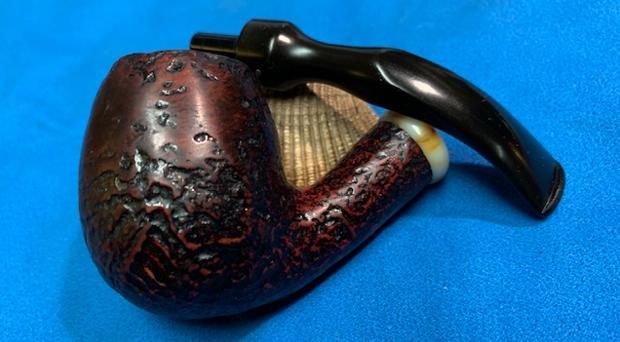
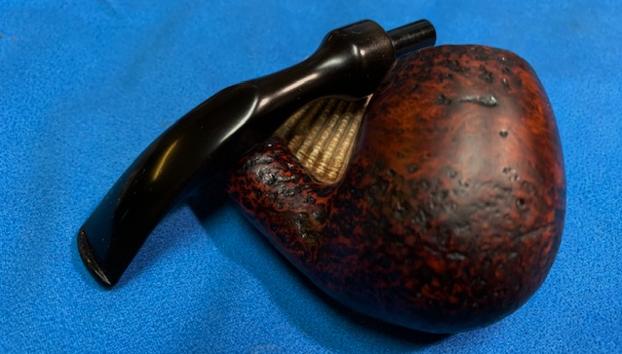
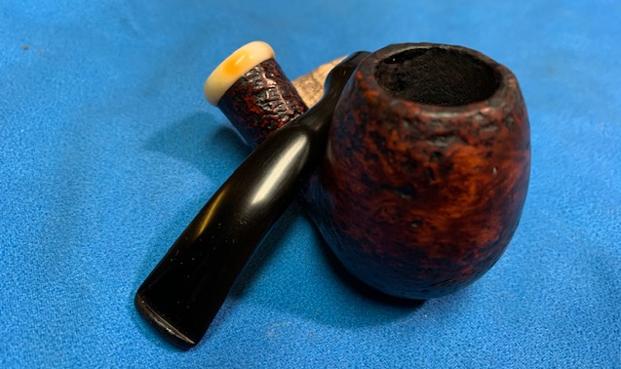
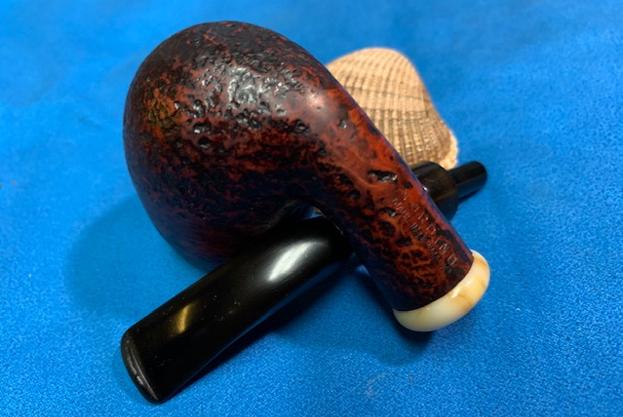
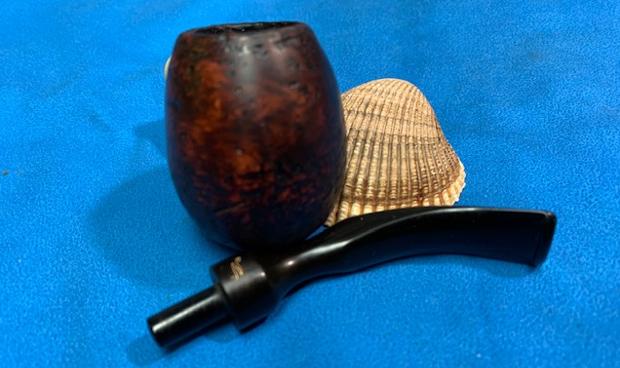
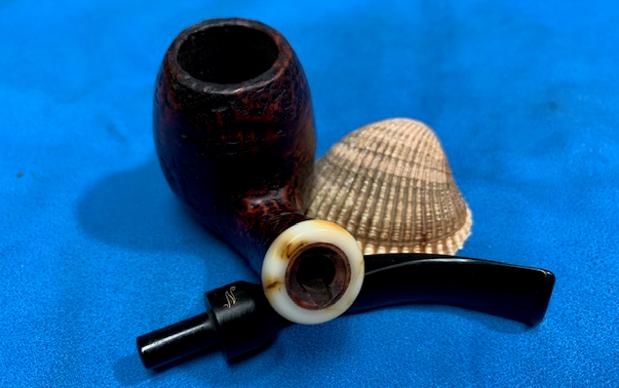
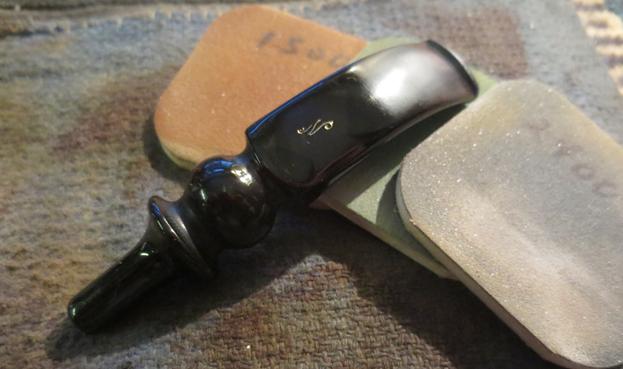
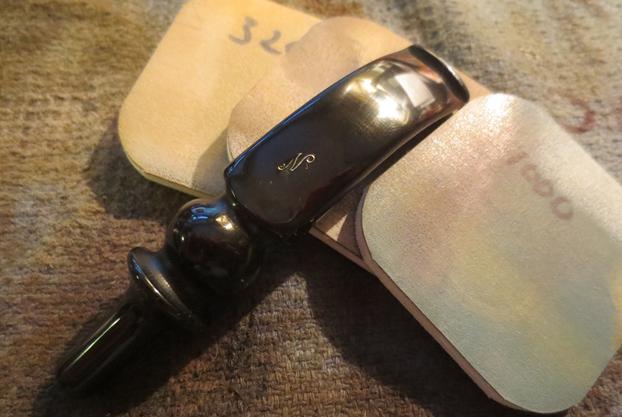
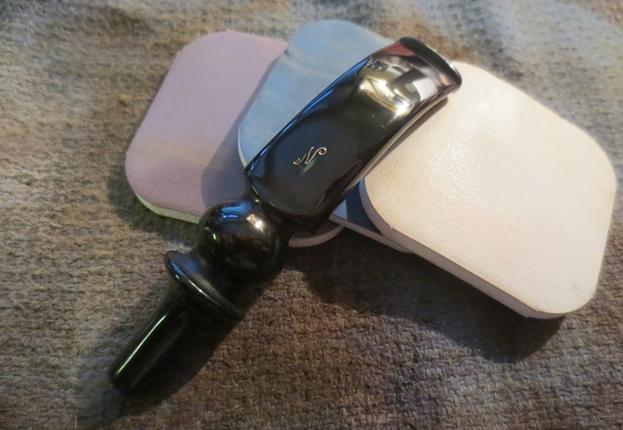
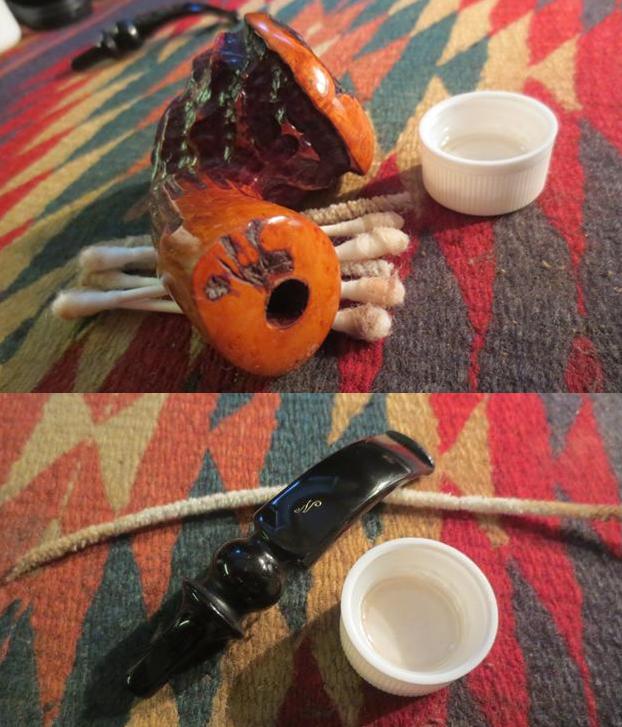
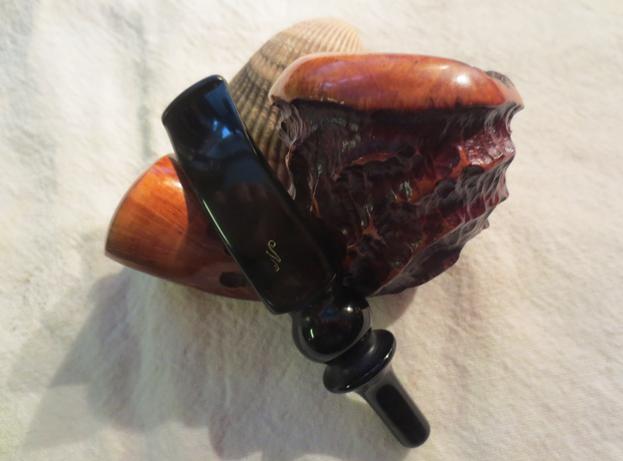
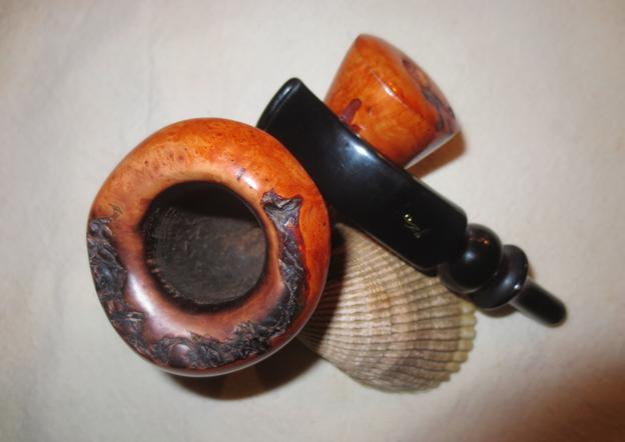
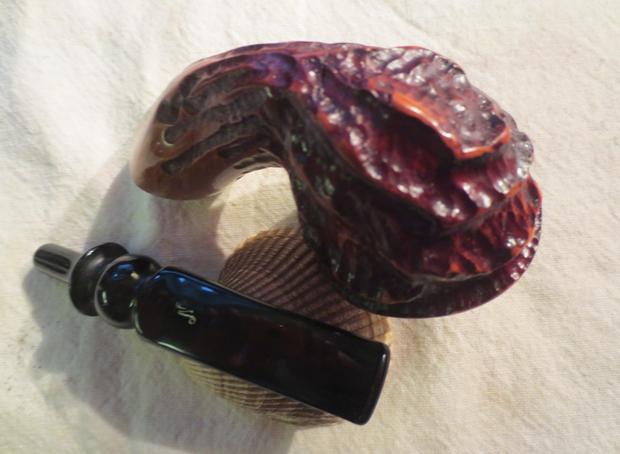
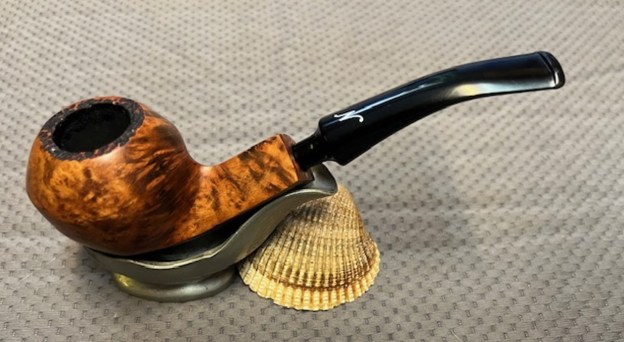
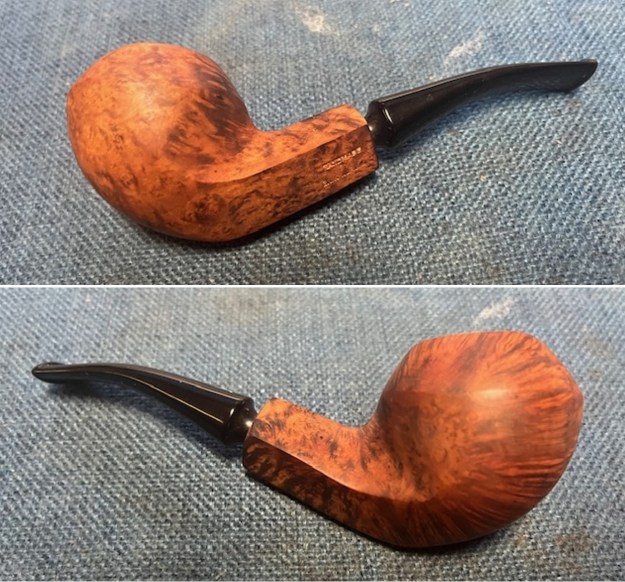
The next pipe on the table is a lightly beauty. It is dusty and dirty from sitting and smells lightly of tobacco.  We purchase it from a seller on Facebook marketplace on 04/30/25 in Portland, Oregon. It is a smooth Bulldog with a diamond shank. The Bullcap top is rusticated to look like plateau. The shank end has a light bevel and the stem is a military style bit. It is stamped on the left underside of the diamond shank and reads Handmade [over] By [over] Erik Nording. There is no shape number stamped on it. There is a light carbon bowl coating and the bowl was clean and had a light smell of tobacco in the bowl which led me to the conclusion that the bowl had been smoked. The rim top and the inner edge of the bowl looked very good. The mortise was also clean with no oils or tars darkening it. The finish on the bowl and shank was dull but otherwise in great condition and the acrylic stem was new looking. There were not any tooth marks or chatter on the top and underside on and near the button. There was a Nording “N” logo stamped on the top side of the stem. I took photos of the pipe before I started my cleanup work. They tell the story and give a glimpse of the promise that we see in this pipe. I took a photo of the rim top and bowl to show the current condition. The rusticated “plateau style” rim top is in perfect condition with no nicks or flaws. The bowl photo shows the light carbon coating on the walls. The walls do not have any tobacco debris or ash on them at all. The stem photos show how clean the stem is other than scratching on the surface.I took photos of the heel of the bowl to capture the stamping. It is faint but readable as noted above but a bit hard to capture in the photos. I removed the stem from the shank and took photos of the overall look of the pipe. It is a beautiful pipe.I turned my attention to the pipe itself. I wiped out the inside of the bowl with a paper towel to lightly remove the dust in bowl coating on the pipe. It looked much better at this point. The bowl still smelled like light tobacco. I am pretty certain the pipe has been lightly smoked. I scraped off the loose coating with a Savinelli Fitsall Pipe Knife. I sanded it smooth with 220 grit sandpaper wrapped around a dowel. The bowl is smooth now but I left a smooth coat on the walls for protection.I cleaned out the shank and airway using alcohol, cotton swabs and pipe cleaners – both bristle and clean ones. The shank was clean though there was some stain from the briar and some light tars and oils that came out of the shank and some bowl coating out of the entry of the airway in the bowl. I cleaned the airway in the stem at the same time and the airway had some tobacco debris and oils that came out.I scrubbed the briar and the inside of the bowl with undiluted Murphy’s Oil Soap and a tooth brush. I rinsed the bowl with warm running water. The bowl was clean and it smelled fresh. I polished the briar with micromesh sanding pads – dry sanding the briar with 1500-12000 grit pads. I wiped the bowl down with a damp cloth to remove the debris left behind by sanding. I worked some Before & After Restoration Balm into the surface of the briar with my fingertips to clean, enliven and protect the briar. I let the balm sit for 15 minutes and then buffed with a cotton cloth to raise the shine. The photos show the bowl at this point in the restoration process. I polished the stem with micromesh sanding pads – dry sanding with 1500-12000 grit sanding pads. I wiped it down after each sanding pad with Obsidian Oil. I finished hand polishing the stem with Before & After Pipe Stem Polish – both Fine and Extra Fine. I wiped it on with my fingers and buffed it off with a soft cloth. The stem really began to have a deep glow. I gave it a final wipe down with Obsidian Oil and set it aside to dry. I am excited to finish this Nording Handmade Smooth Bulldog with a polished military bit style stem. I put the pipe back together and buffed it with Blue Diamond on the buffing wheel. I gave the bowl and the stem multiple coats of carnauba wax. I hand buffed the pipe with a clean buffing pad to raise the shine. It is fun to see what the polished bowl looks like with beautiful grain on the sides of the bowl with the black vulcanite stem. This smooth Nording Handmade Bulldog is great looking and the pipe feels great in my hand. It is light and well balanced. Have a look at it with the photos below. The dimensions are Length: 5 ½ inches, Height: 2 inches, Outside diameter of the bowl: 1 ¼ inches, Chamber diameter: ¾ of an inch. The weight of the pipe is 49 grams/1.73 ounces. It turned out to be a beautiful pipe. I will be putting it on the rebornpipes store in the Danish Pipe Makers section. If you are interested in adding it to your rack let me know by message or by email to slaug@uniserve.com. Thanks for joining me in my work on this pipe.
Cleaning up a Nording Made in Denmark Mixed Finish Bent Billiard


by Steve Laug

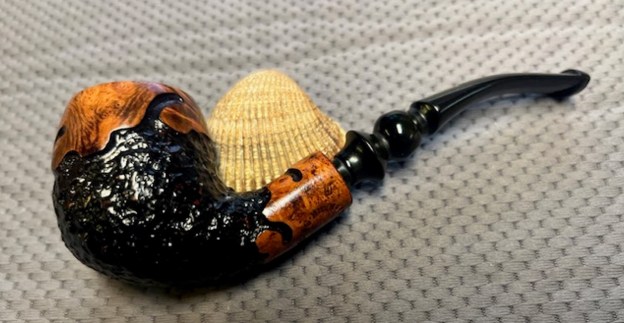
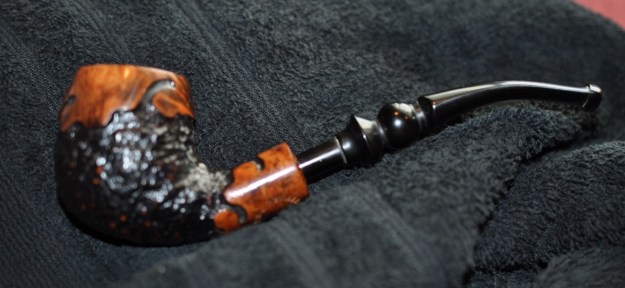
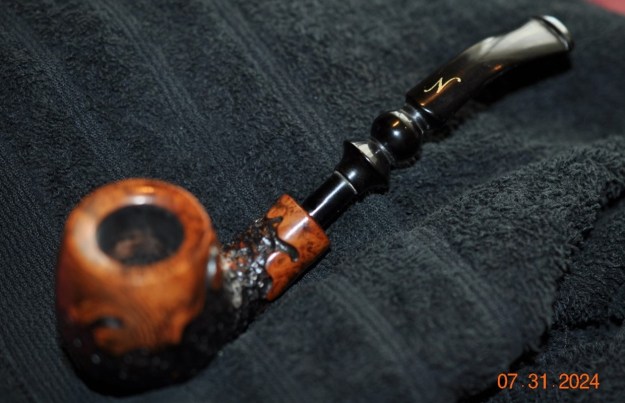
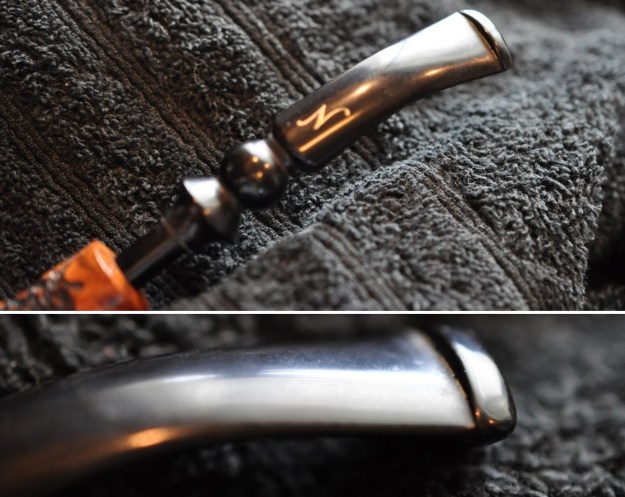
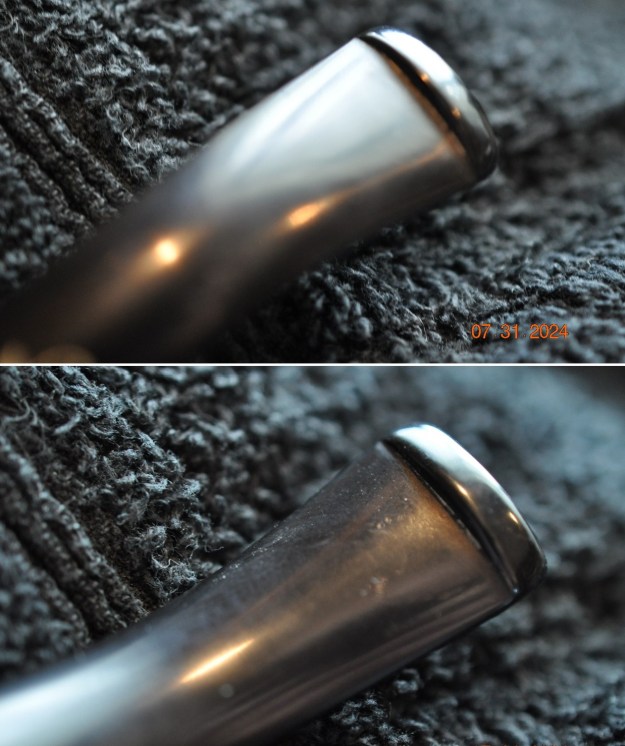
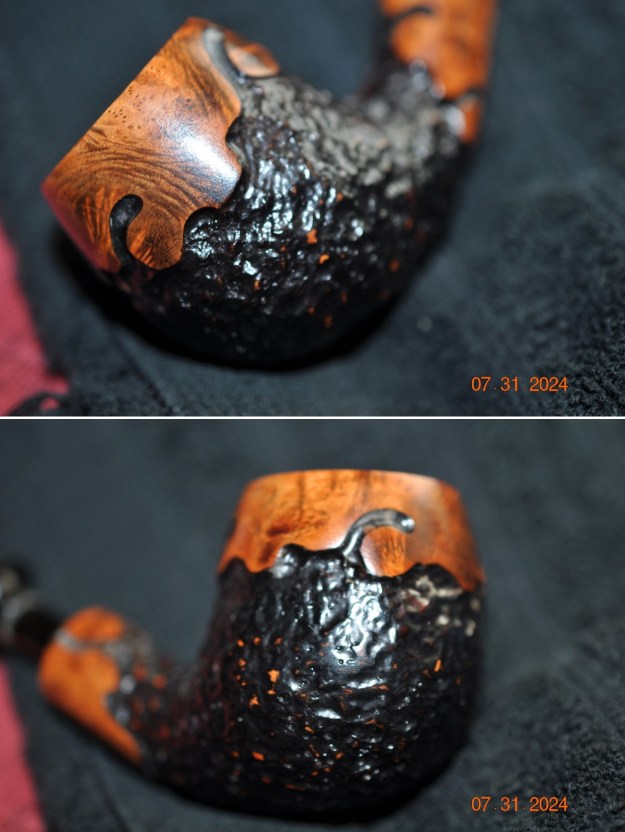
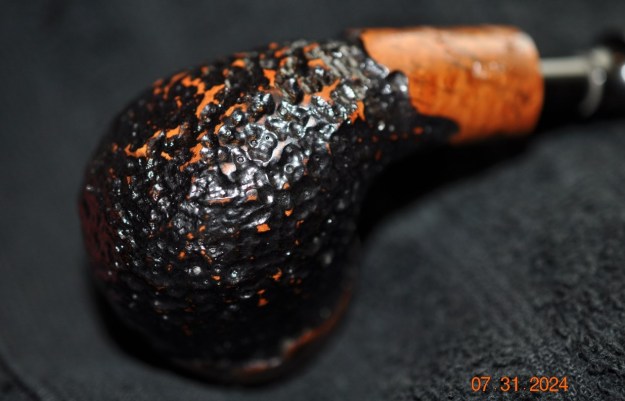
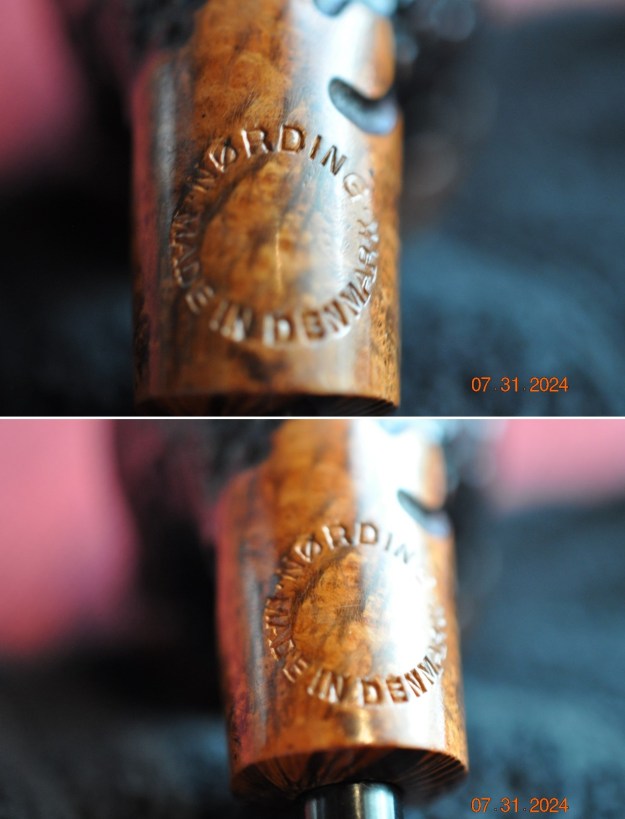
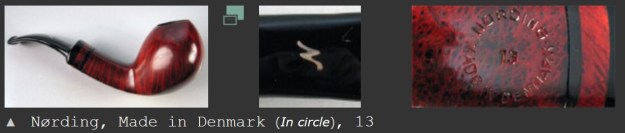
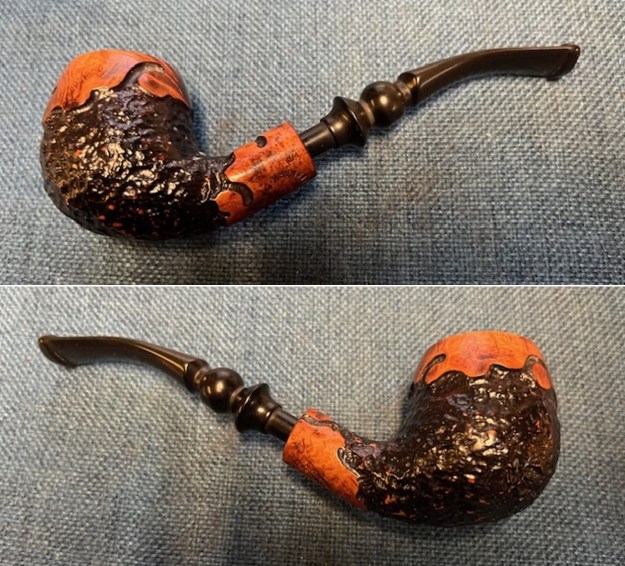
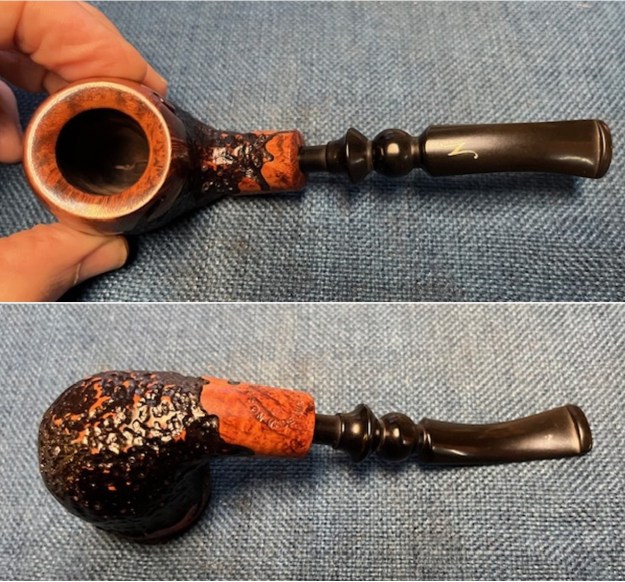
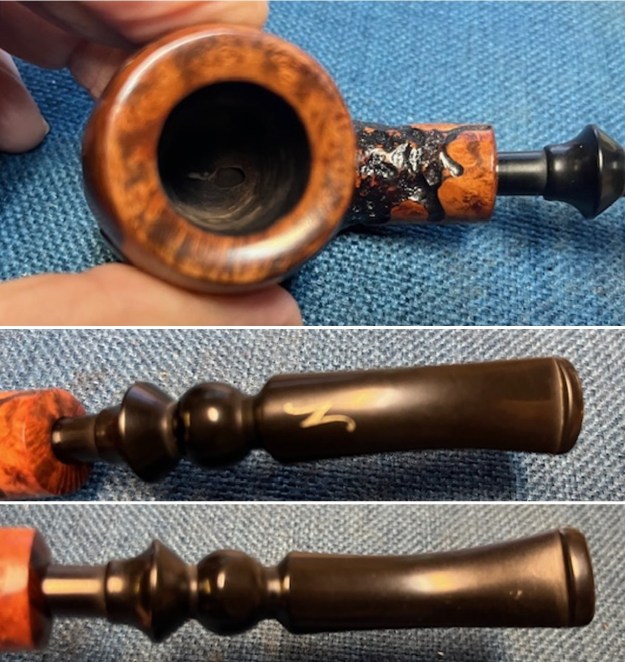
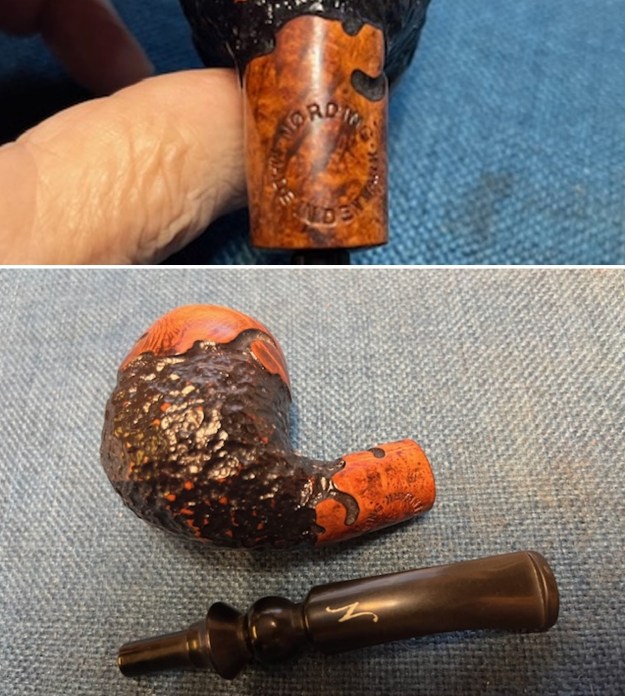
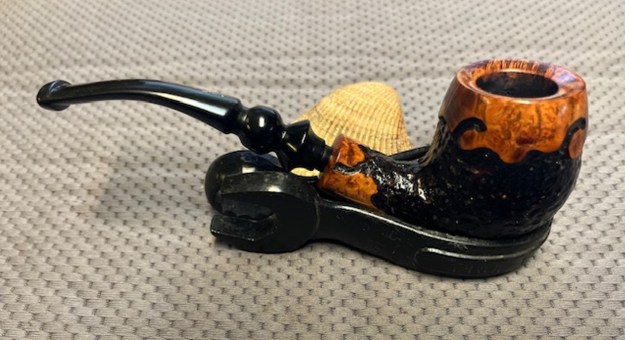
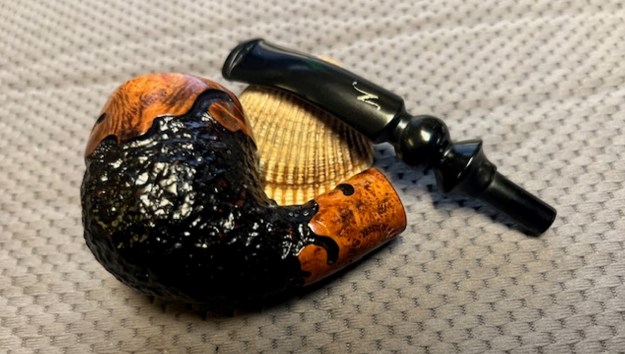
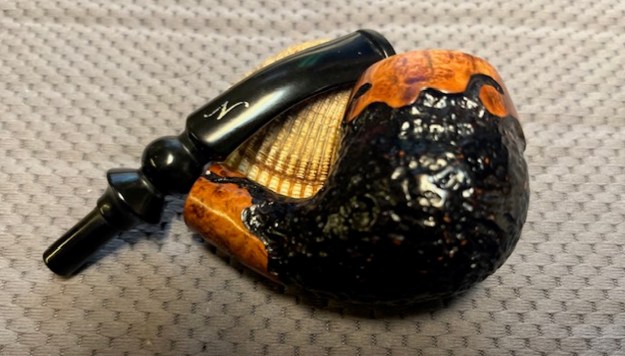
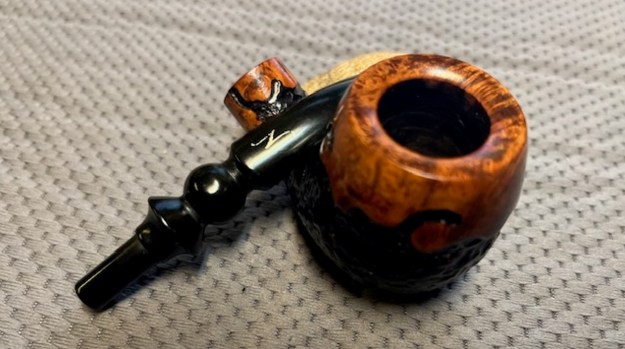
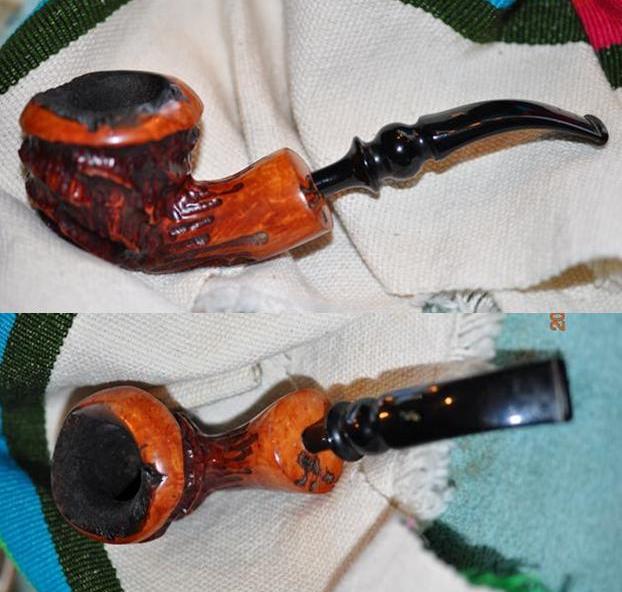
The next pipe on the table is one that Jeff picked up from a pipe lot in Nampa, Idaho, USA in November of 2023 for so it has been sitting here almost a year. It is a Bent Billiard with a mix of rusticated and smooth finishes. The smooth portions are carved like water coming down from the rim top and up from the underside of the shank and shank end. The stem is a fancy saddle that looks very good. The stamping on the underside of the shank is in a circle read Nording Made in Denmark. The stem has a Nording “N” clearly stamped in gold on the top side. There was some dust in the rusticated portions of the finish and general dullness on the smooth portions of the bowl. I am not convinced the pipe has been smoked or if it has been it is very lightly smoked. The bowl coating is still present in a portion of the bowl and the rest is scraped off and bare briar. The fit of the stem in the shank was smooth and flawless. The stem was vulcanite and it was lightly oxidized but there were not tooth marks or chatter on either side of the stem. Jeff took the following photos of the pipe before he did a clean up. Jeff took photos of the bowl and rim top to show the lack of cake in the bowl and the remnants of the bowl coating. The smooth rim top looked very good with no damage or scratching. He took photos of the top and underside of the stem showing the light oxidation and the lack of tooth marks or chatter. It is a pretty clean looking stem. Jeff took photos of the sides and heel of the bowl to show the condition of the finish. You can see the well done shape and the interesting combination of finishes on the bowl and shank. It looked very good. The stamping is clear and readable as noted above. The honey coloured finish and black rustication looks good.I turned first to Pipephil to get a quick review of the brand (http://pipephil.eu/logos/en/logo-n2.html). The pipe was carved by Erik Nording. Nording is a prolific carver who continues to make pipes and sell them globally. The screen capture below shows a Nording with stamping like the one I am working on. The one here is lacking the shape number in the middle of the circle but otherwise it is the same.I then turned to Pipedia to have a look at the history of the Nording brand and see if there were any pipes like the one in hand (https://pipedia.org/wiki/N%C3%B8rding). The history was worth a read, though there were no photos of the pipe that I had.

With the information I learned in the above articles I had the background on the pipe. Now it was time to work on it.

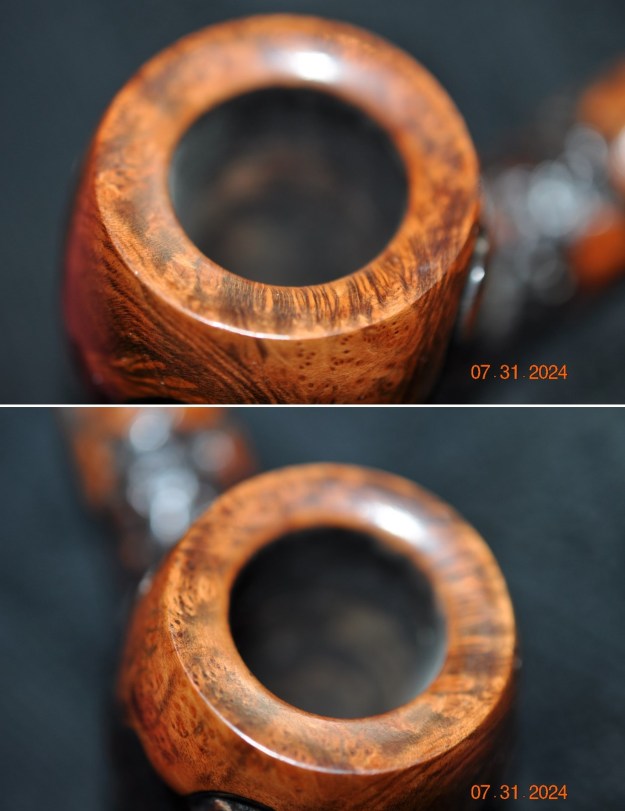
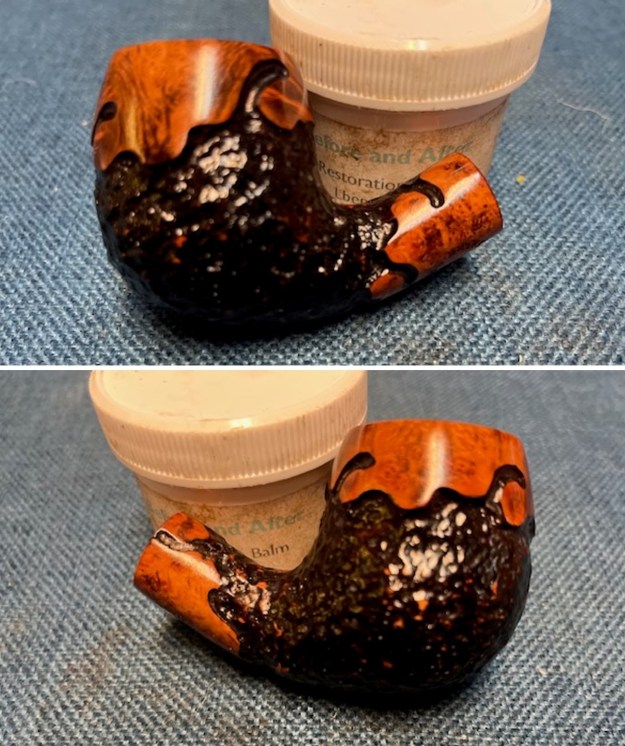
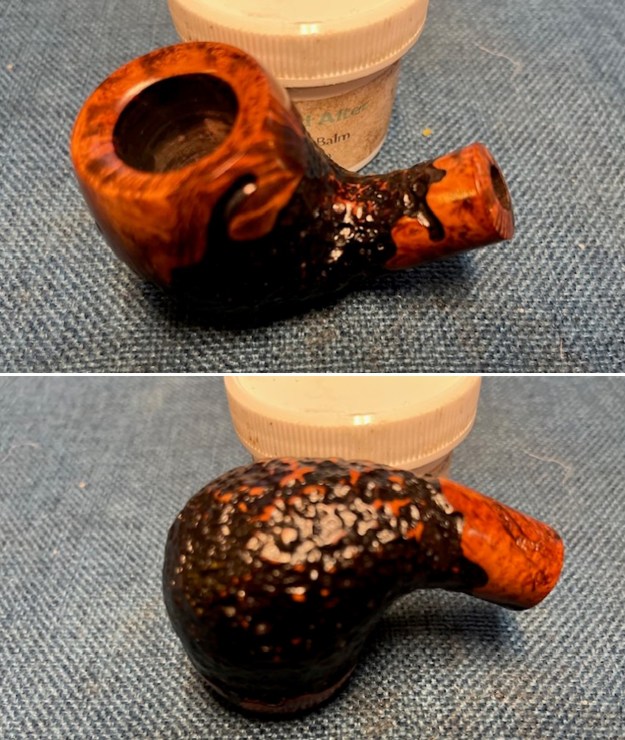
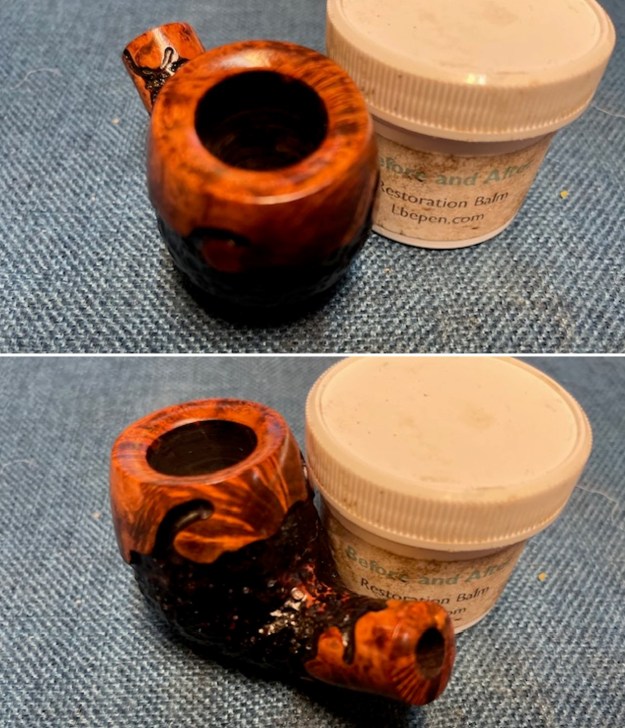
I am really happy to have Jeff’s help on cleaning up the pipes that we pick up along the way. He reamed the bowl with a PipNet pipe reamer and cleaned up the reaming with a Savinelli Fitsall Pipe Knife. He scrubbed out the internals with alcohol, pipe cleaners and cotton swabs until the pipe was clean. He scrubbed the exterior of the bowl with Murphy’s Oil Soap and a tooth brush to remove the grime and grit on the briar and the lava on the rim top. The finish looks much better and the rim top was actually very visible and it looked good. There were also remnants of varnish or shellac on the exterior of the bowl (more on the right than front and left side).  Jeff scrubbed the stem with Soft Scrub All Purpose Cleaner to remove the majority of the grime. When the pipe arrived here in Vancouver it looked very good. I took some close up photos of the rim top and the stem surface. The rim top looked very good and the rustication on the sides was clean. I took close up photos of the stem to show the condition of the surface and button. The stem was very clean on both sides with some light oxidation. I took a photo of the stamping on the underside of the shank You can see that it is stamped as noted above. It is clear and readable.  I took the pipe apart and took a photo of the pipe. It is a good looking pipe and has an interesting finish on the bowl and shank.I worked some Before & After Restoration Balm into the surface of the briar with my fingertips and a horsehair shoe brush to clean, enliven and protect the briar. I let the balm sit for 15 minutes and then buffed with a cotton cloth to raise the shine. The photos show the bowl at this point in the restoration process. I set the bowl aside and I polished the stem with 1500-12000 grit sanding pads. I wiped it down after each sanding pad with Obsidian Oil. I polished it with Before & After Pipe Stem Polish – both Fine and Extra Fine. It is fun to come to end of the restoration of the Nording Mixed Finish Danish Bent Billiard. It turned out to be a nice-looking pipe. The finish came alive with the work I had done on it. I put the pipe back together and buffed it with Blue Diamond on the buffing wheel. I gave the bowl and the stem multiple coats of carnauba wax. I hand buffed the pipe with a clean buffing pad to raise the shine. It is fun to see what the polished bowl looks like with the shiny black vulcanite saddle stem. It really was beautiful. This Nording Bent Billiard is nice looking and the pipe feels great in my hand. It is light and well balanced. Have a look at it with the photos below. The dimensions are Length: 5 ½ inches, Height: 1 ¾ inches, Outside diameter of the bowl: 1 ¼ inches, Chamber diameter: ¾ of an inch. The weight of the pipe is 52grams/1.83ounces. It is a beautiful pipe that I will soon put on the rebornpipes store in the Danish Pipe Makers Section. If you are interested in adding it to your collection let me know. Thanks to each of you who are reading this blog. Remember we are not pipe owners; we are pipe trustees who hold our pipes in trust until they pass on into the trust of the next pipeman or woman.

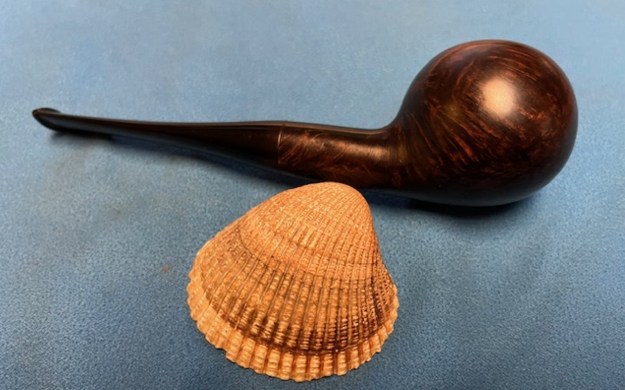
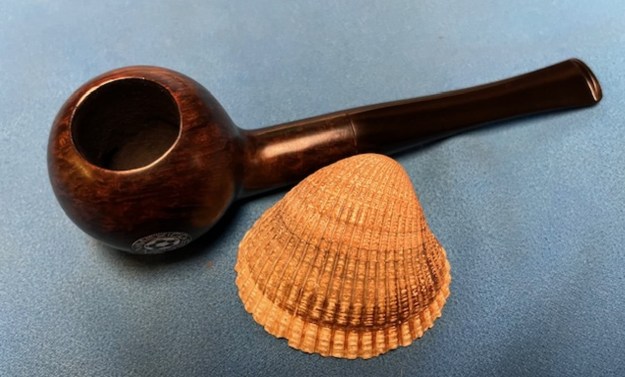
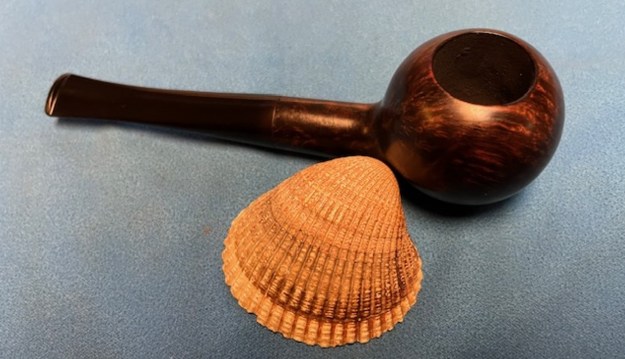
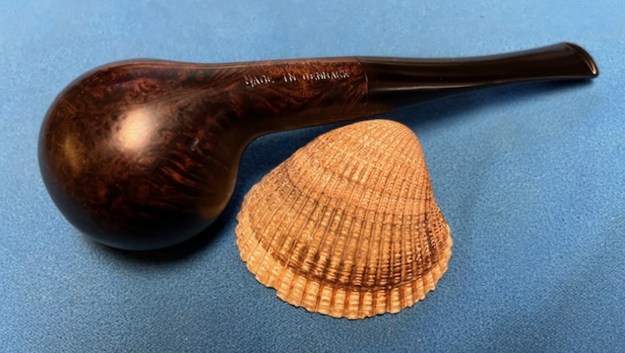
Refreshing a NOS UNSMOKED Nording WM Smooth Ball Pipe (Mexico World Cup 1986)


Blog by Steve Laug

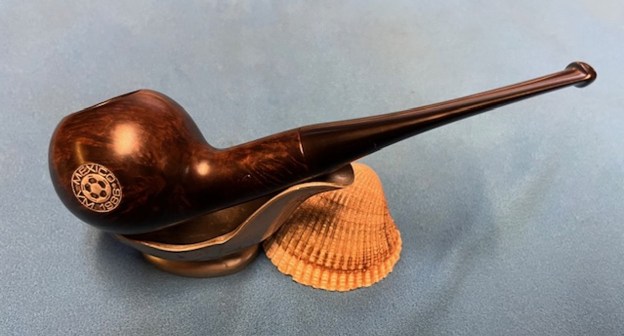
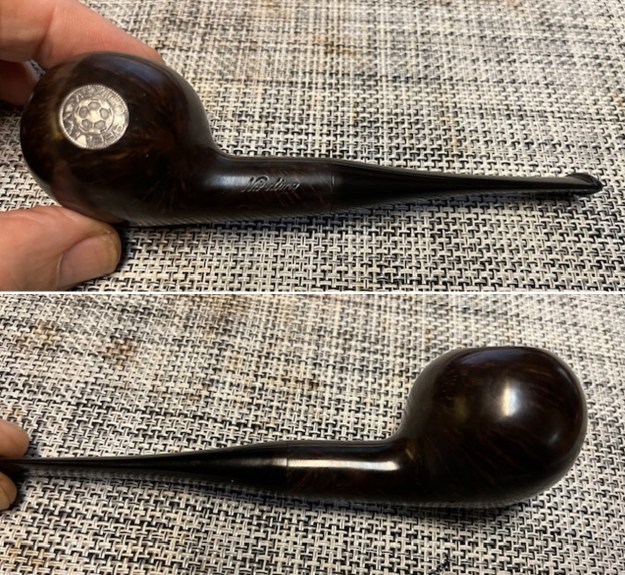
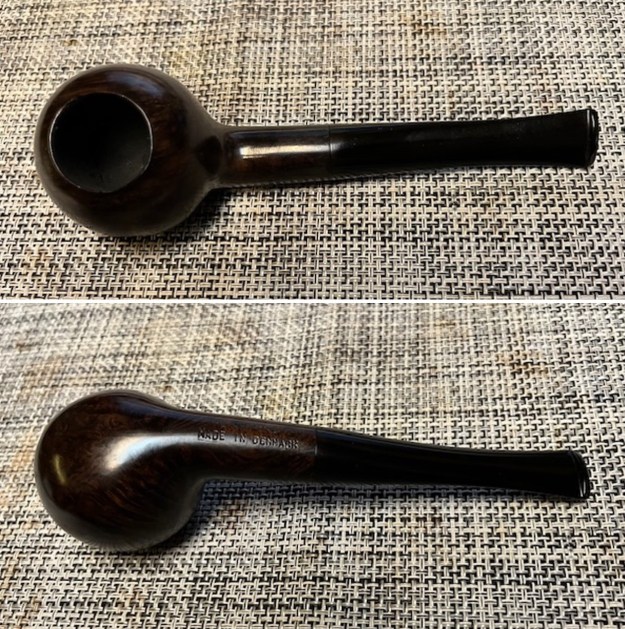
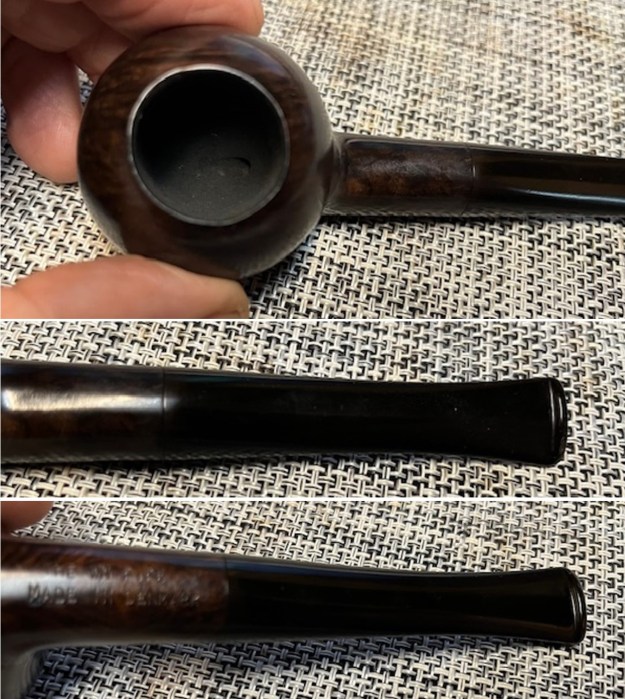
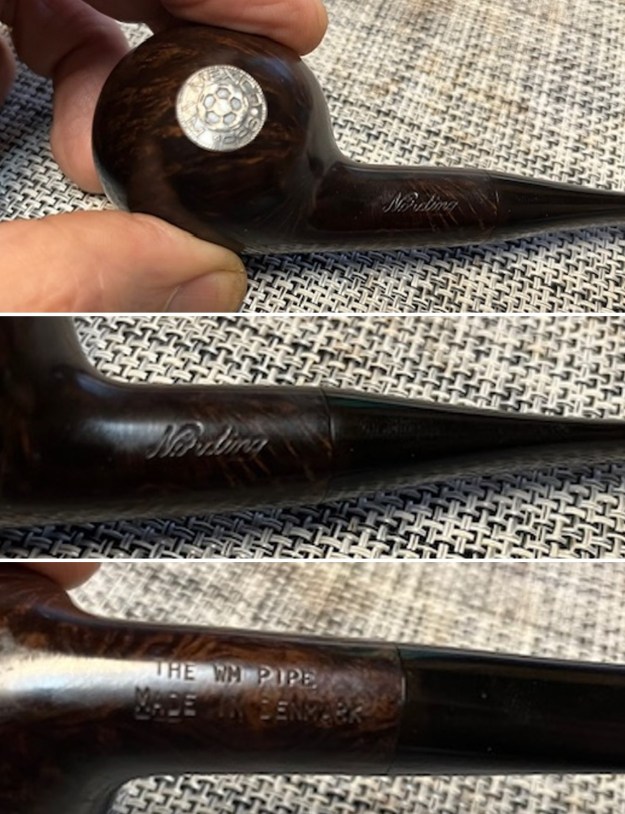
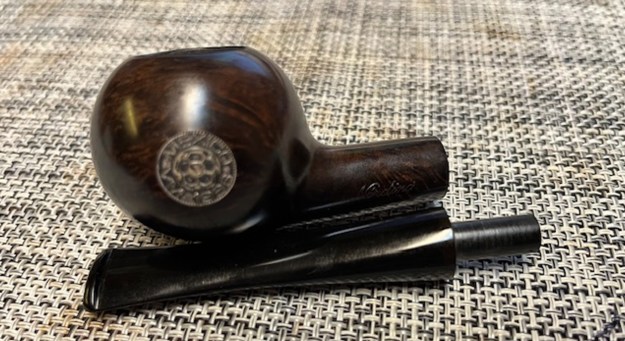
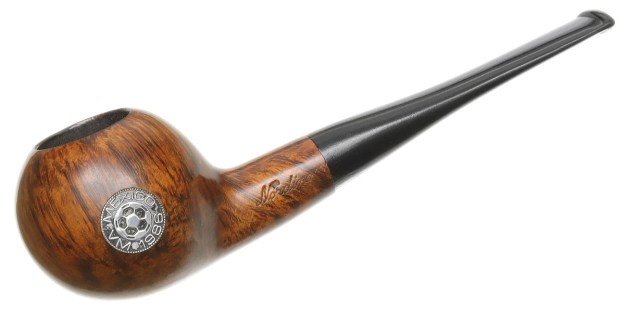
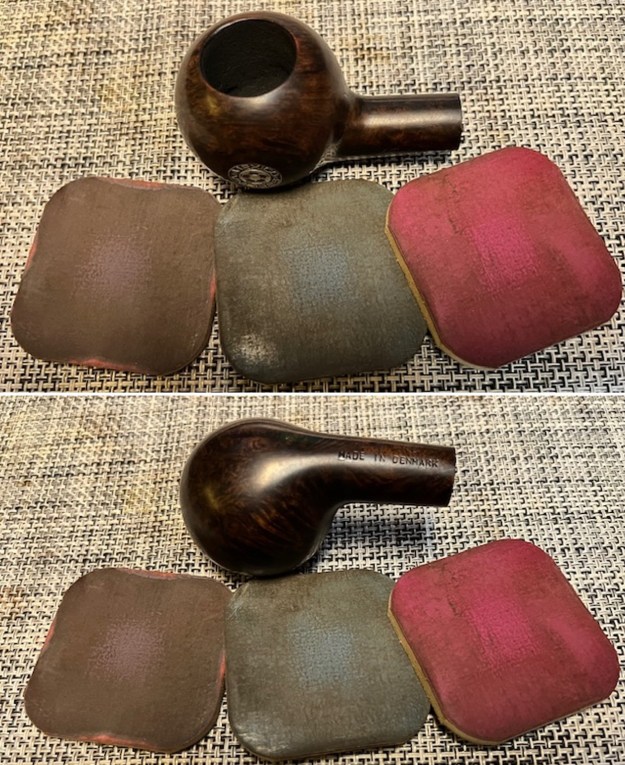
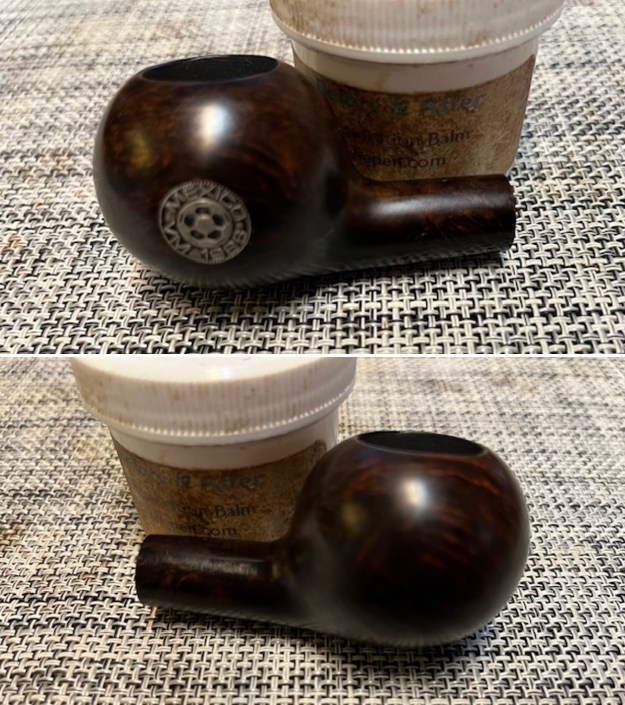
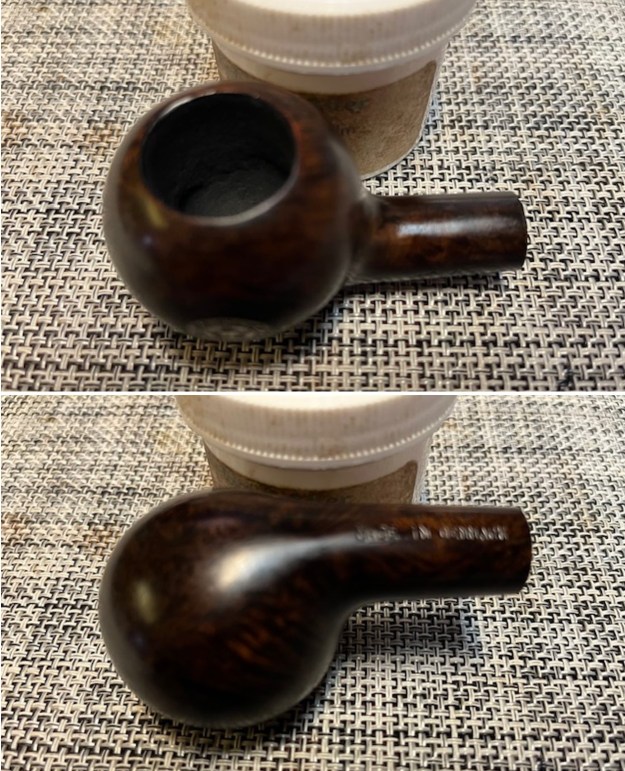
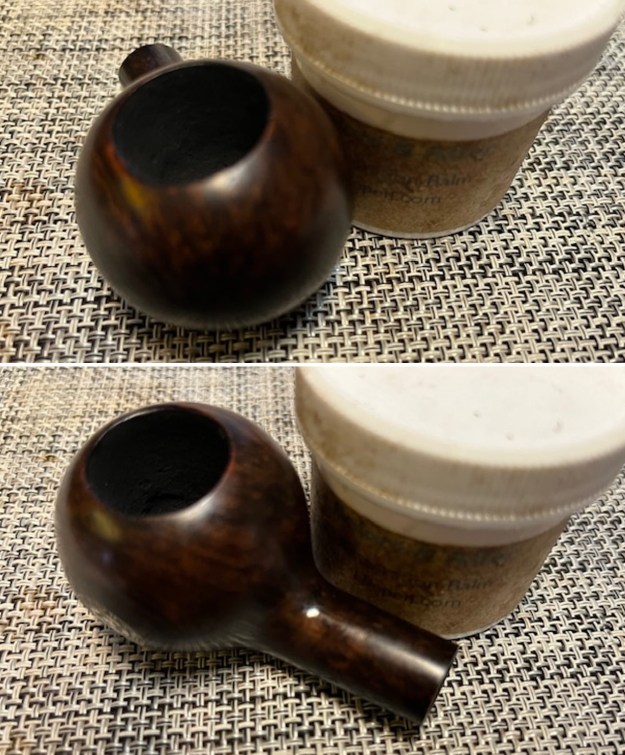
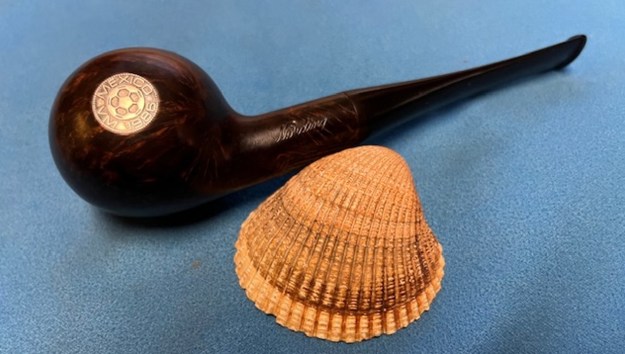
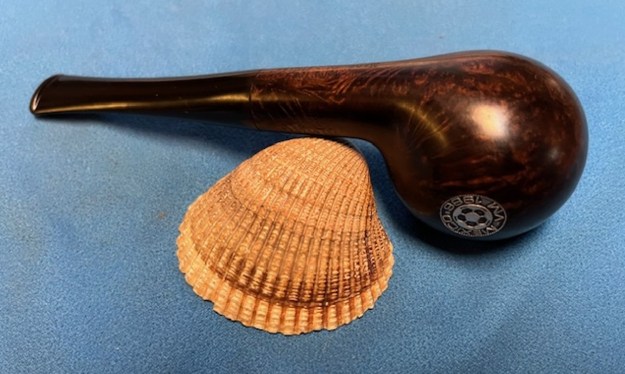
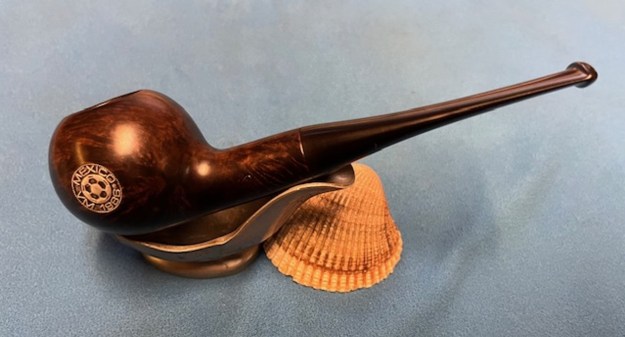
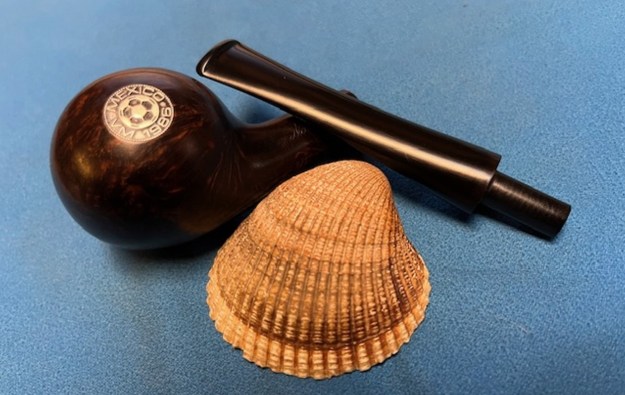
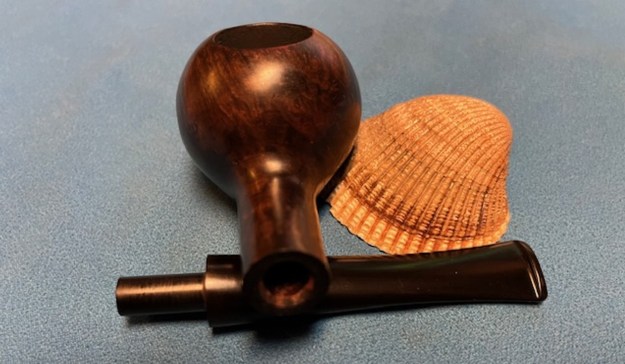
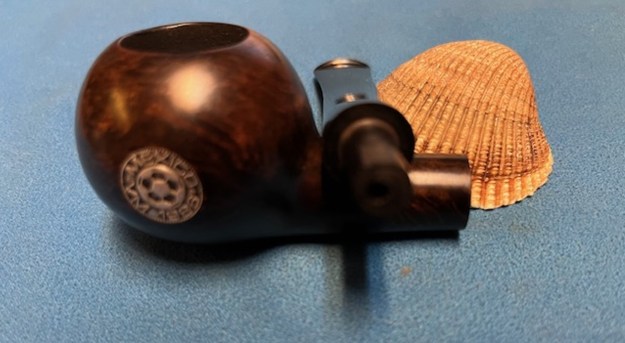
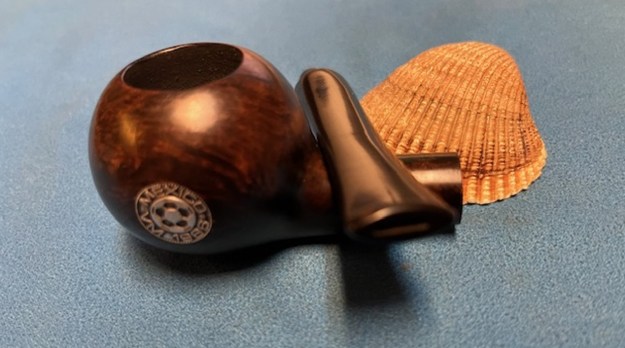
The next pipe on the table is another NOS and UNSMOKED beauty. It is just dusty and dirty from sitting in a display case somewhere. We recently purchased it from an estate in Idaho. It is a smooth, dark stained ball shaped pipe with an inlaid coin on the left side of the bowl. The rim top and the inner edge are in excellent condition. It is stamped on the left side of the shank and reads Nording in script. On the underside of the shank it is stamped THE WM PIPE [over] MADE IN DENMARK. The coin on the side is stamped MEXICO arched over a soccer ball and arched underneath it reads VM 1986. The variation between the WM of the stamping and the VM on the coin are interesting. There is a light carbon bowl coating and the bowl was very clean and it is unsmoked. There is no smell of tobacco in the bowl. The rim top and the inner edge of the bowl looked very good. The mortise was also clean with no oils or tars darkening it. The bowl is stained in a dark walnut coloured stain. The vulcanite taper stem has some dust/dirt against the edge of the button. There were not any tooth marks or chatter on the top and underside on and near the button. There was no logo stamped on the left side of the stem. I took photos of the pipe before I started my cleanup work. They tell the story and give a glimpse of the promise that we see in this pipe.  I took a photo of the rim top and bowl to show the current condition. The rim top is in perfect condition with no nicks or flaws. The photo shows the clean walls on the bowl show the bowl coating and dust. The stem photos show a clean and well fit stem.I took photos of the of the side of the bowl to show the coin inset in the bowl side and the stamping on the left and underside of the shank. It is clear and readable as noted above but a bit hard to capture in the photos. I removed the stem from the shank and took photos of the overall look of the pipe. It is a beautiful pipe. I found a similar pipe on smokingpipes.com with a great description and clear information on it (https://www.smokingpipes.com/pipes/estate/denmark/moreinfo.cfm?product_id=552093). I quote the description and have included a photo below of the pipe. It has a different finish but it is the same pipe.
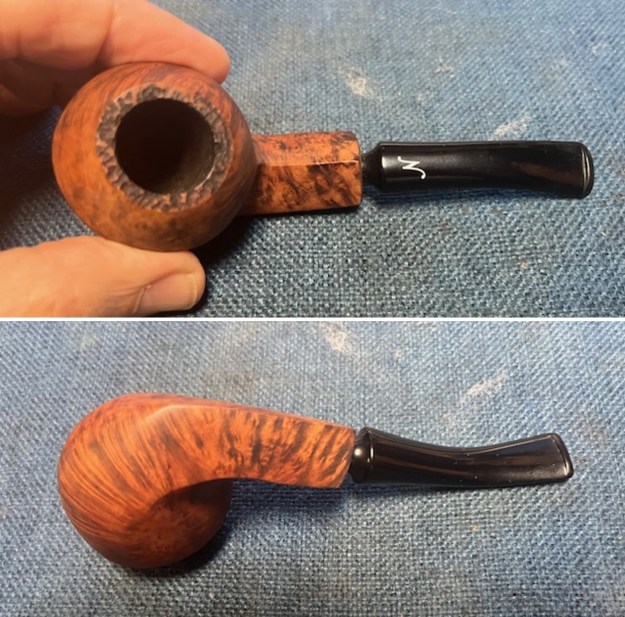
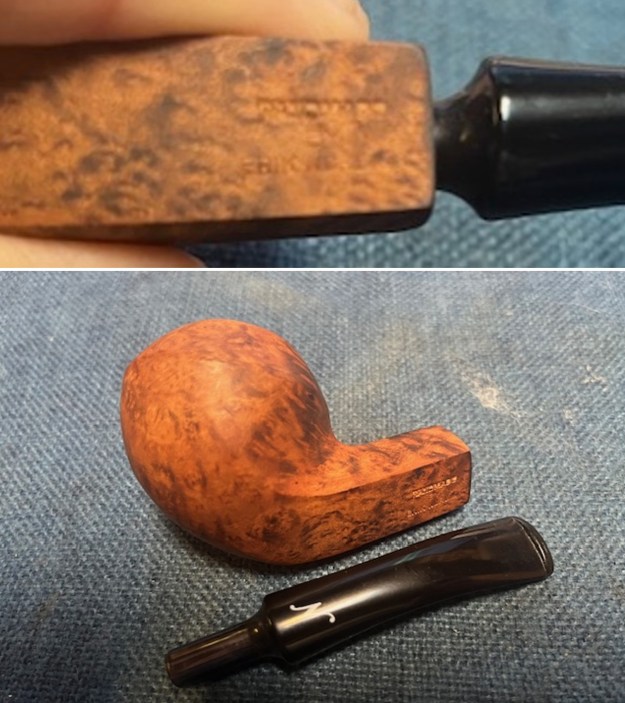
Handcrafting pipes since the 60s, there are few pipe makers more experienced than Erik Nørding. During his long career, Nørding espoused the Danish Fancy style, a maximalist aesthetic that delights in baroque flourishes. This Ball by Erik Nording is a fitting homage for the 1986 Mexico World Cup, which is memorialized by a metal button imprinted onto the left flank…I also found another similar pipe on Worthpoint, an auction site that confirmed the information other than calling it a golf ball pipe (https://www.worthpoint.com/worthopedia/unsmoked-erik-nording-m-pipe-sterling-1915283149).

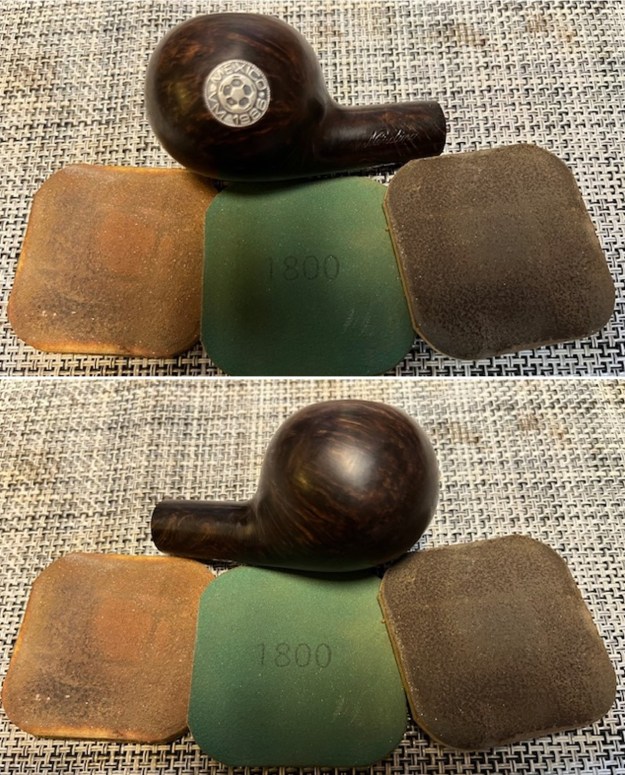
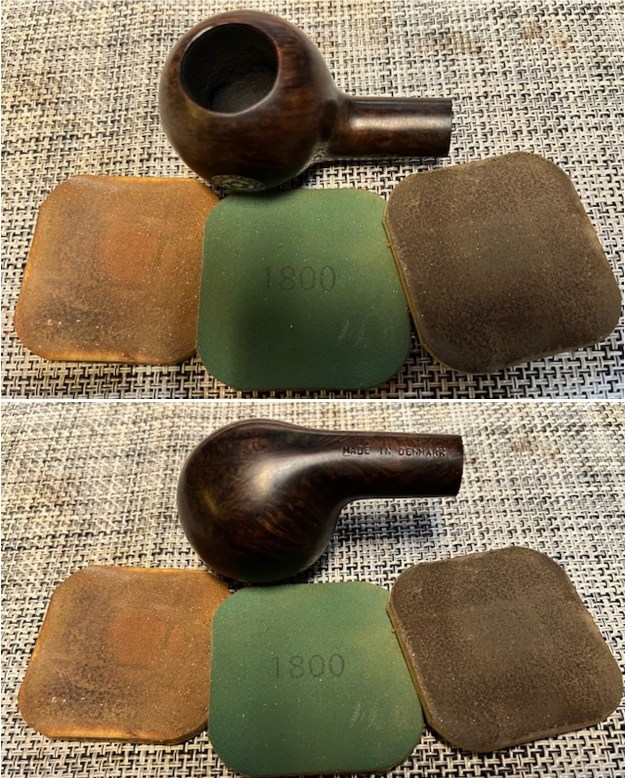
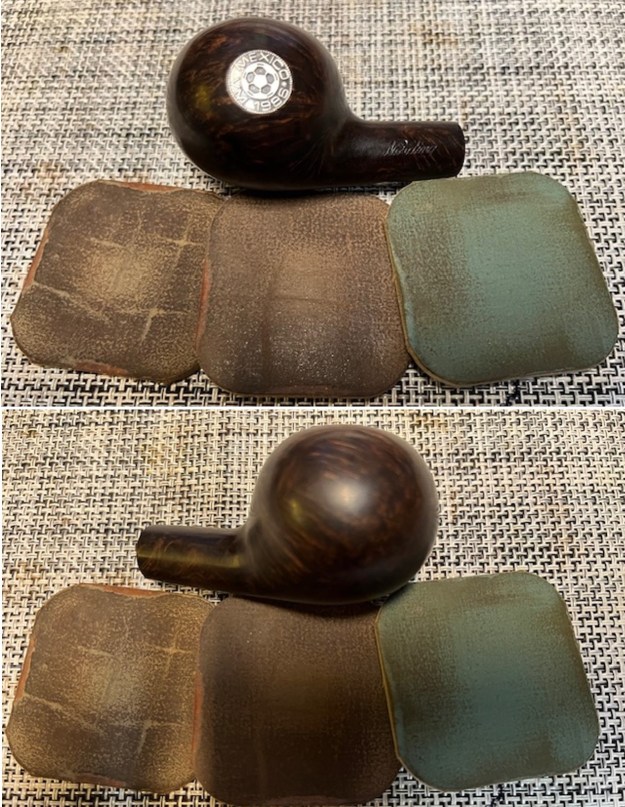
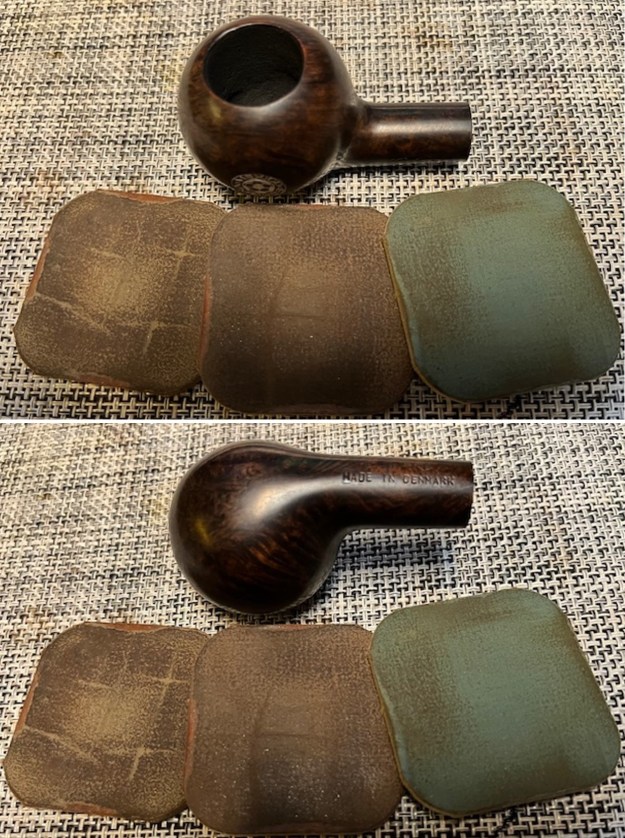
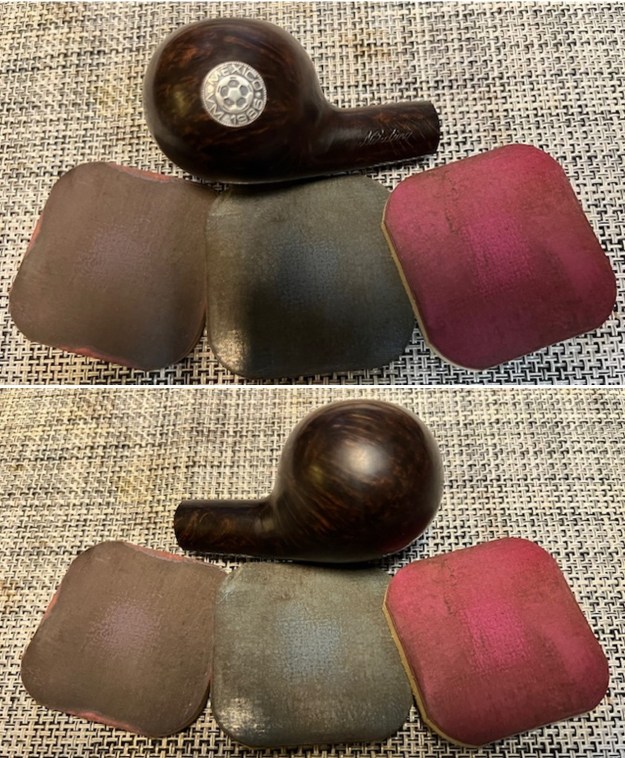
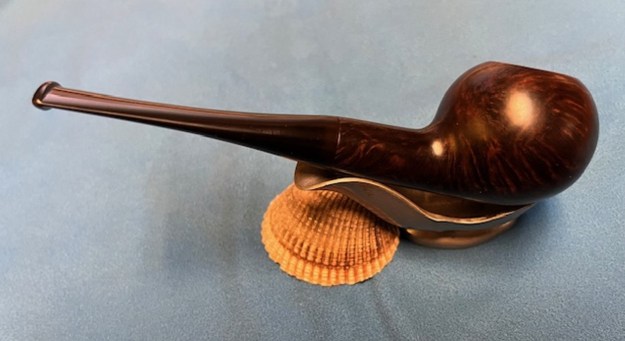
Knowing what I was dealing with I now turned my attention to the pipe itself. I decided to polish the briar with micromesh to see if I could make the opaque stain a little more transparent so that the grain would shine through. I dry sanded it with 1500-12000 grit micromesh sanding pads and wiped the bowl down with a damp cloth after each sanding pad. I worked some Before & After Restoration Balm into the surface of the briar with my fingertips to clean, enliven and protect the briar. I let the balm sit for 15 minutes and then buffed with a cotton cloth to raise the shine. The photos show the bowl at this point in the restoration process. I polished the stem with micromesh sanding pads – dry sanding with 1500-12000 grit sanding pads. I wiped it down after each sanding pad with Obsidian Oil. I finished hand polishing the stem with Before & After Pipe Stem Polish – both Fine and Extra Fine. I wiped it on with my fingers and buffed it off with a soft cloth. The stem really began to have a deep glow. I gave it a final wipe down with Obsidian Oil and set it aside to dry.I am excited to finish this Nording The WM Pipe Made in Denmark with a polished vulcanite stem. It is a great looking pipe made to commemorate the 1986 Mexico World Cup there is a metal medallion/coin inserted in the left side of the bowl.  I put the pipe back together and buffed it with Blue Diamond on the buffing wheel. I gave the bowl and the stem multiple coats of carnauba wax. I hand buffed the pipe with a clean buffing pad to raise the shine. It is fun to see what the polished bowl looks like with beautiful mixed grain around the bowl. The polished coin, rich walnut stain and the black vulcanite stem was beautiful. This smooth Nording The WM (VM) Pipe is great looking and the pipe feels great in my hand. It is light and well balanced. Have a look at it with the photos below. The dimensions are Length: 5 ½ inches, Height: 1 ½ inches, Outside diameter of the bowl: 1 inch, Chamber diameter: ¾ of an inch. The weight of the pipe is 37 grams/1.34 ounces. It turned out to be a beautiful pipe. I will be putting it on the rebornpipes store in the Danish Pipe Makers section. If you are interested in adding it to your rack let me know by message or by email to slaug@uniserve.com. Thanks for your time and as Paresh says each time he writes – Stay Safe.
Refreshing a NOS UNSMOKED Handmade by Erik Nording 82 Sandblast Dublin


Blog by Steve Laug

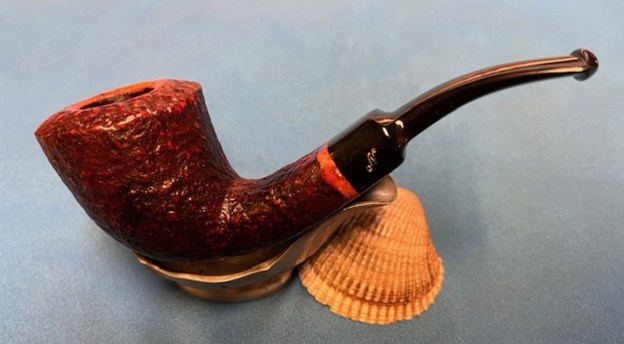
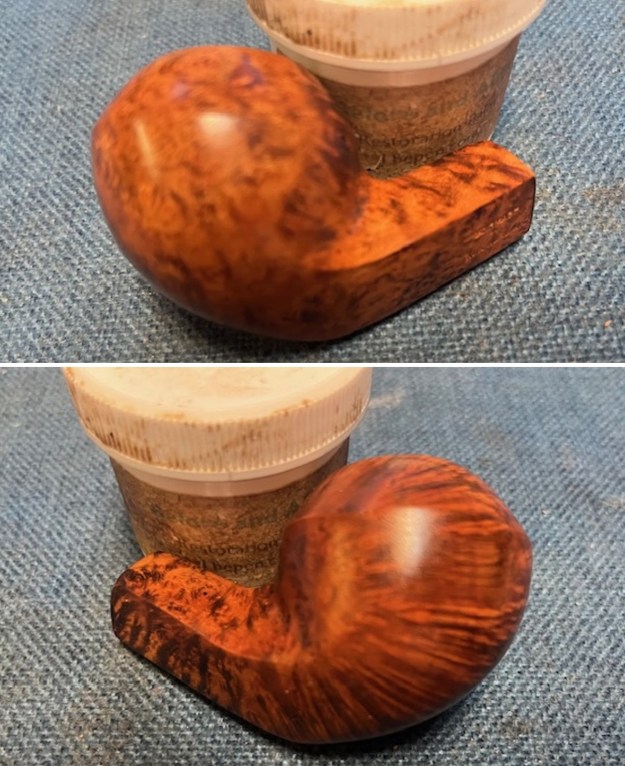
The next pipe on the table is another NOS and UNSMOKED beauty. It is just dusty and dirty from sitting in a display case somewhere. We recently purchased it from an estate in Idaho. It is a sandblast Dublin with a rectangular shank. The crowned rim top also has some sandblast grain that looks a lot like plateau and the inner edge of the rim is smooth and slightly bevelled inward. It is stamped on the heel of the bowl and reads Handmade [over] By [over] Erik Nording at an angle. Next to that it is stamped with the shape number 82. There is a light carbon bowl coating and the bowl was very clean and it is unsmoked. There is no smell of tobacco in the bowl. The rim top and the inner edge of the bowl looked very good. The mortise was also clean with no oils or tars darkening it. There is a 9mm filter in the shank/tenon. There is a light coat of shellac on the bowl that gives it a rich shine. The acrylic filter stem has dust/dirt against the edge of the button. There were not any tooth marks or chatter on the top and underside on and near the button. There was a Nording “N” logo stamped on the left side of the stem. I took photos of the pipe before I started my cleanup work. They tell the story and give a glimpse of the promise that we see in this pipe.  I took a photo of the rim top and bowl to show the current condition. The inwardly bevelled rim top is in perfect condition with no nicks or flaws. The bowl photo shows the clean walls on the bowl show the bowl coating and dust. The stem photos show the dust or grime against the button each side.I took photos of the heel of the bowl to capture the stamping. It is clear and readable as noted above but a bit hard to capture in the photos. I removed the stem from the shank and took photos of the overall look of the pipe. It is a beautiful pipe. I turned my attention to the pipe itself. I wiped out the inside of the bowl with a paper towel to lightly remove the dust in bowl coating on the pipe. It looked much better at this point.I worked some Before & After Restoration Balm into the surface of the briar with my fingertips to clean, enliven and protect the briar. I let the balm sit for 15 minutes and then buffed with a cotton cloth to raise the shine. The photos show the bowl at this point in the restoration process. I set the bowl aside and started working on the stem. I sanded out the “crud” from the button edges with 600 grit wet dry sandpaper.I polished the stem with micromesh sanding pads – dry sanding with 1500-12000 grit sanding pads. I wiped it down after each sanding pad with Obsidian Oil. I finished hand polishing the stem with Before & After Pipe Stem Polish – both Fine and Extra Fine. I wiped it on with my fingers and buffed it off with a soft cloth. The stem really began to have a deep glow. I gave it a final wipe down with Obsidian Oil and set it aside to dry. I am excited to finish this Nording Handmade Sandblast 82 Rectangular Shank Dublin with a polished acrylic saddle stem. I put the pipe back together and buffed it with Blue Diamond on the buffing wheel. I gave the bowl and the stem multiple coats of carnauba wax. I hand buffed the pipe with a clean buffing pad to raise the shine. It is fun to see what the polished bowl looks like with beautiful birdseye and cross grain on the sides of the bowl. Added to that the polished nickel band and the black vulcanite stem was beautiful. This smooth Nording 82 Sandblast Dublin Filter Pipe is great looking and the pipe feels great in my hand. It is light and well balanced. Have a look at it with the photos below. The dimensions are Length: 5 ½ inches, Height: 2 inches, Outside diameter of the bowl: 1 ¾ inches, Chamber diameter: ¾ of an inch. The weight of the pipe is 49 grams/1.76 ounces. It turned out to be a beautiful pipe. I will be putting it on the rebornpipes store in the Danish Pipe Makers section. If you are interested in adding it to your rack let me know by message or by email to slaug@uniserve.com. Thanks for your time and as Paresh says each time he writes – Stay Safe.
Cleaning up a Strange Mixed Finish Nording Bent Billiard


Blog by Steve Laug

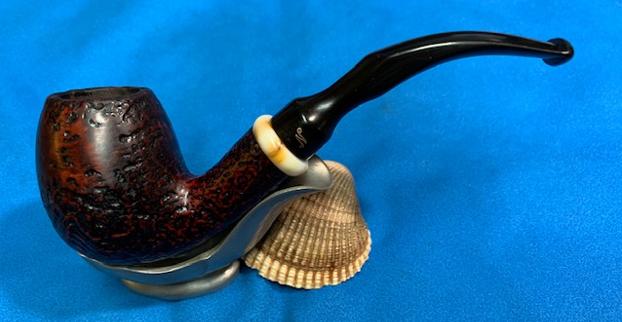
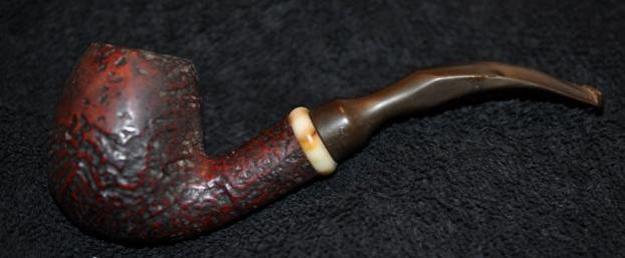
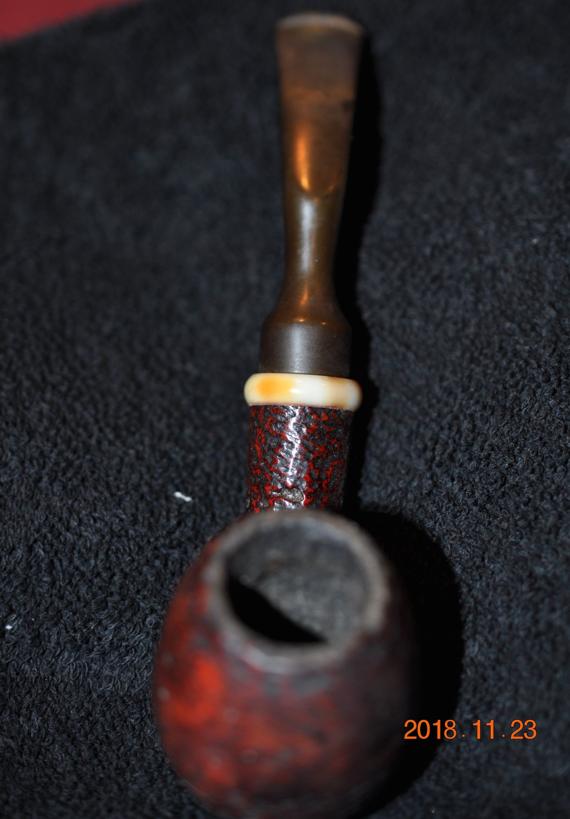
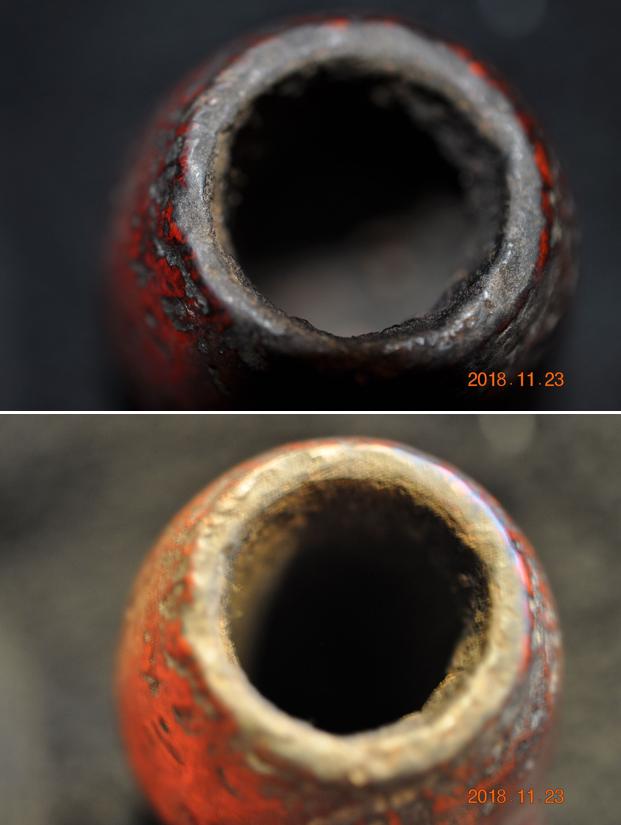
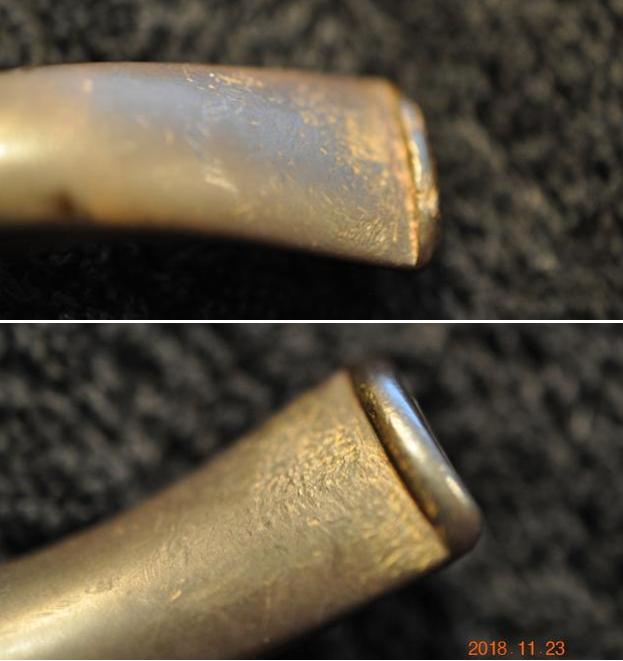
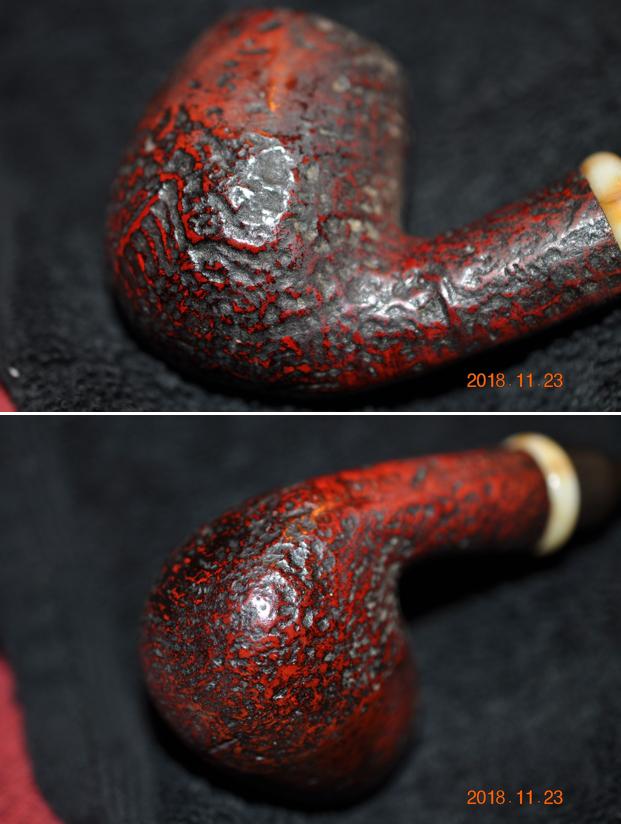
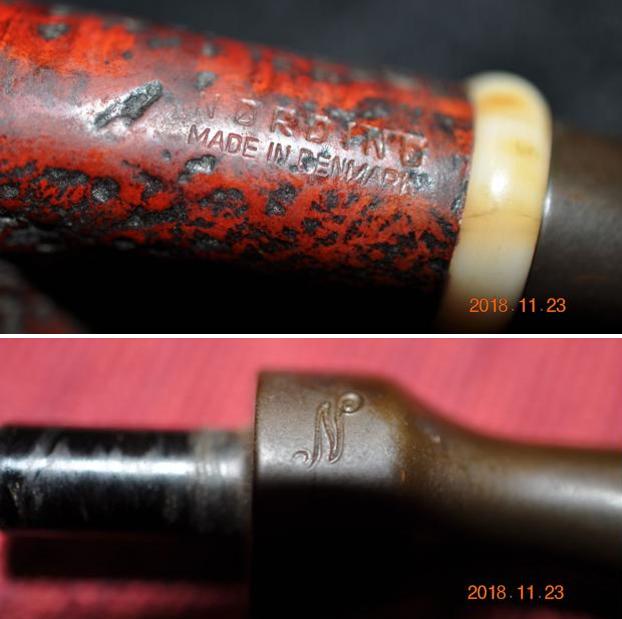
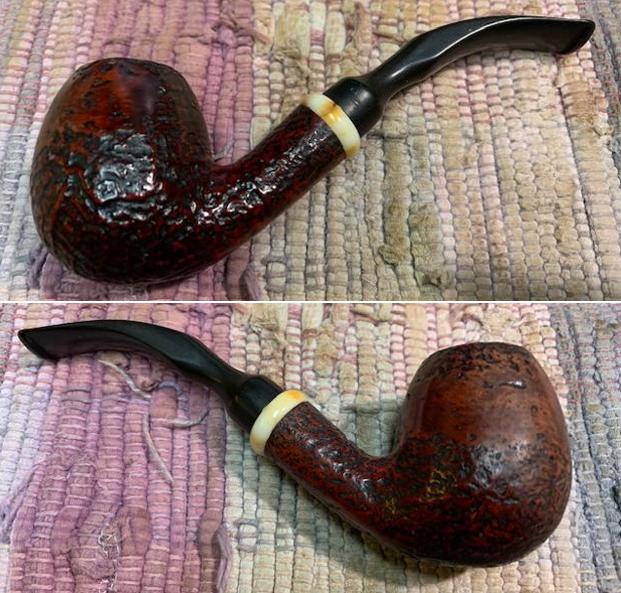
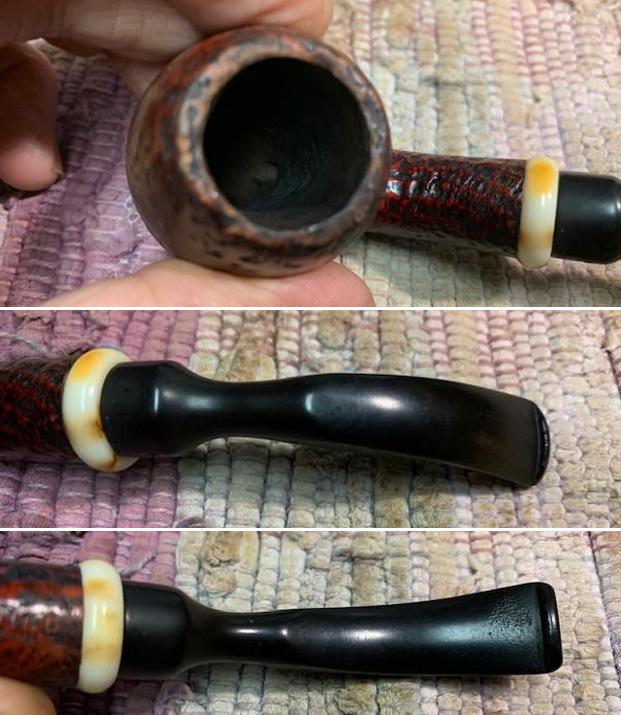
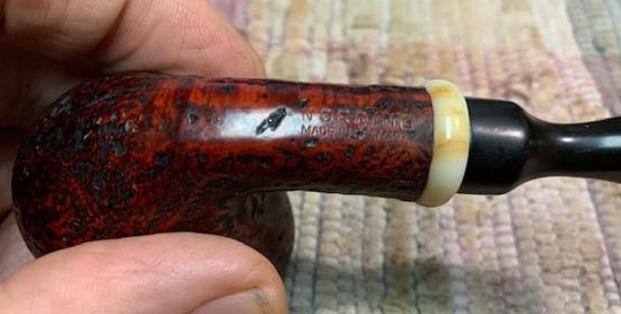
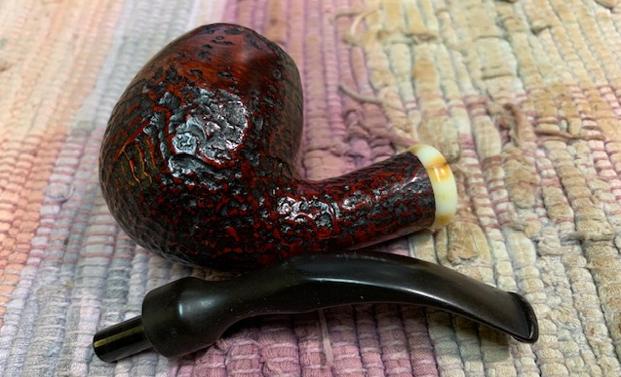
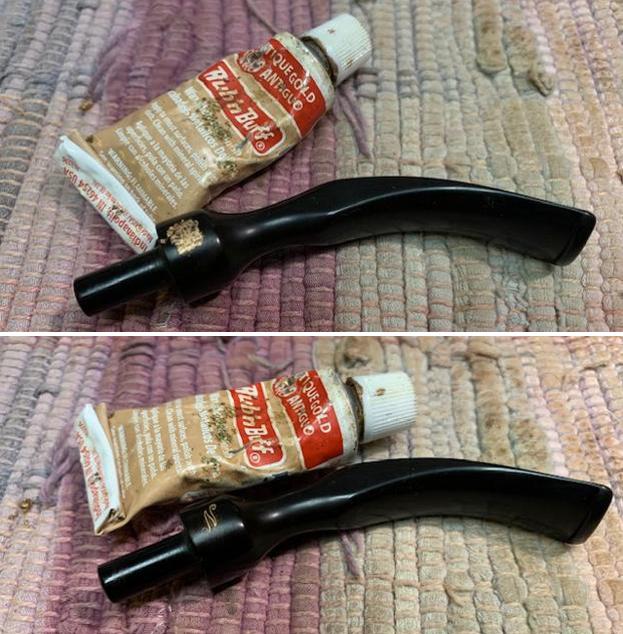
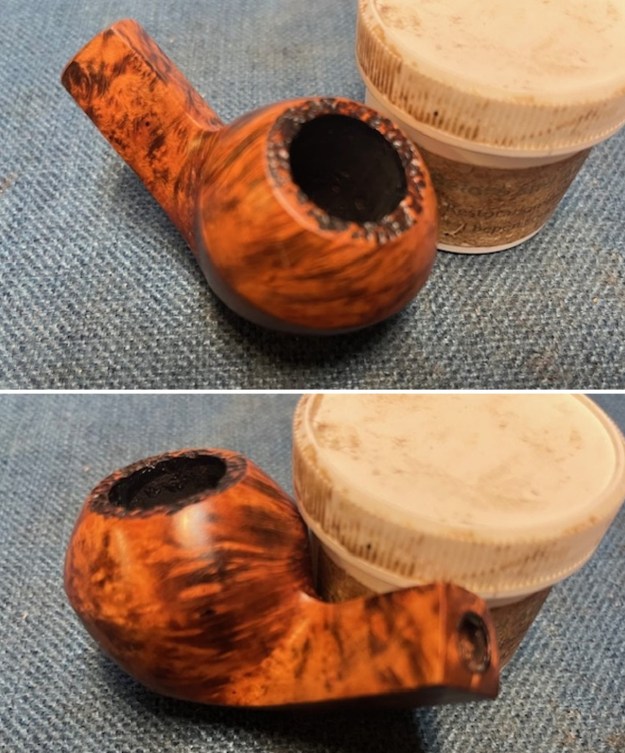
The next pipe on the table is one that Jeff picked up from an auction in Bridgton, Maine, USA in November of 2018 for so it has been sitting here for a long time. It is a very different looking bent Billiard with a faux horn shank ring. The stem is a fancy saddle that looks very good. The stamping on the underside of the shank read Nording [over] Made in Denmark. It was sandblasted on the lower half of the bowl and the entire shank. There is a smooth band around the top half of the bowl on the front and both sides. But it is not totally smooth as it appears that the sandblast was sanded in that area. It is unique for sure and oddly attractive. There was a lot of grime and grit ground into the finish of the bowl. There was a heavy cake in the bowl  and a heavy overflow of lava on the sandblast rim top. The fit of the stem in the shank was smooth and flawless. The faux horn shank ring was quite stunning. On the left side of the saddle the “N” logo had been stamped. It was clear and readable but did not have the white colour in it. The stem was vulcanite and it was oxidized, calcified and had some wear on both sides near the button.  Jeff took photos of the bowl and rim top to show the cake in the bowl. The sandblast rim top showed thick coat of lava that filled in the rim top and hopefully protected the edges from damage. He took photos of the top and underside of the stem showing the tooth chatter, scratching, oxidation and calcification on the stem surface and wear on the edges of the button. Jeff took photos of the sides and heel of the bowl to show the condition of the finish. You can see the well done shape and the interesting grain pattern under the sandblast. Even under the dirt and debris of the years it looked very good.The stamping is clear and readable as noted above. The honey coloured finish even looks good under the grime and the pipe really is a Grand Luxe!I turned first to Pipephil to get a quick review of the brand (http://pipephil.eu/logos/en/logo-n2.html). The pipe was carved by Erik Nording. Nording is a prolific carver who continues to make pipes and sell them globally. The  screen capture below shows a Nording with stamping like the one I am working on.I then turned to Pipedia to have a look at the history of the Nording brand and see if there were any pipes like the one in hand (https://pipedia.org/wiki/N%C3%B8rding). The history was worth a read, though there were no photos of the pipe that I had.

With the information I learned in the above articles I had the background on the pipe. Now it was time to work on it.
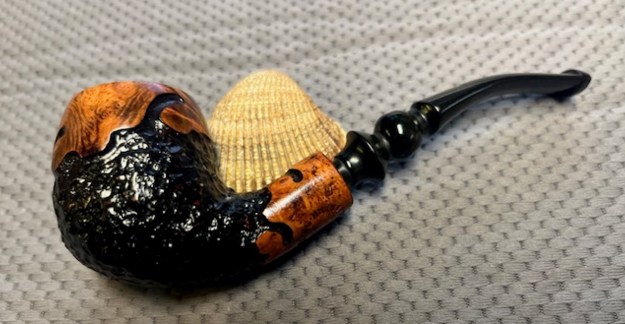
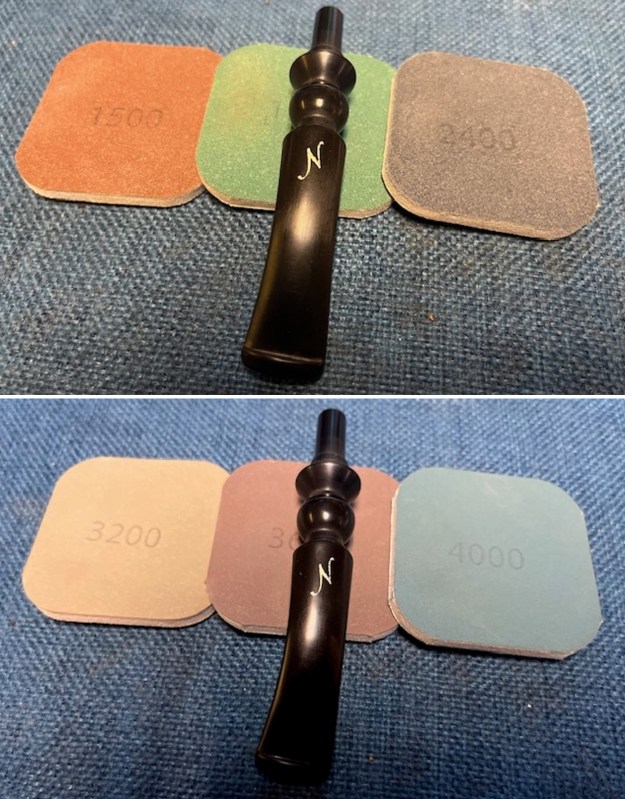
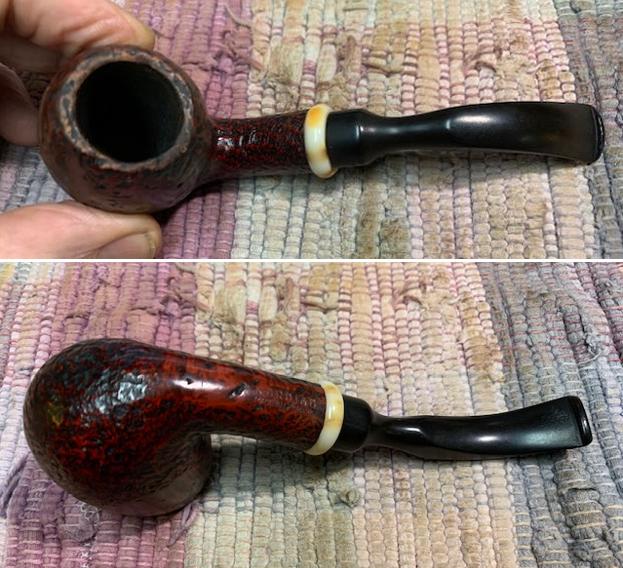
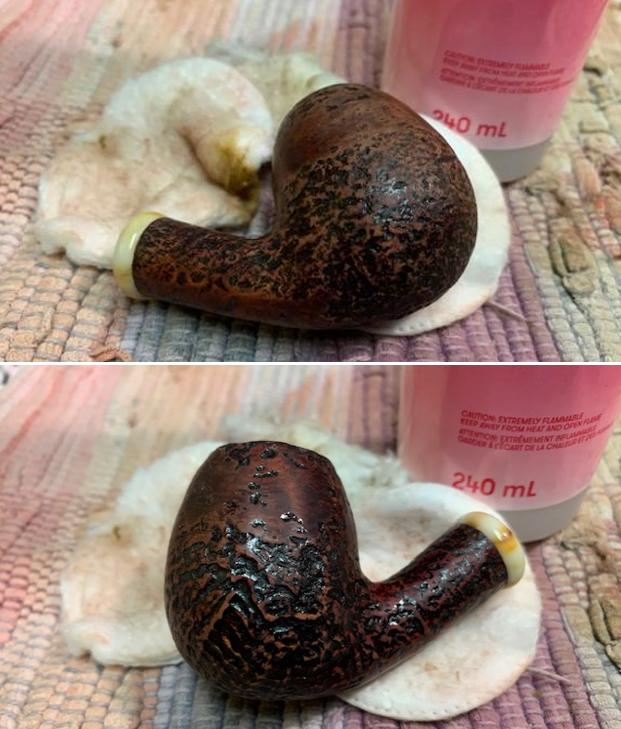
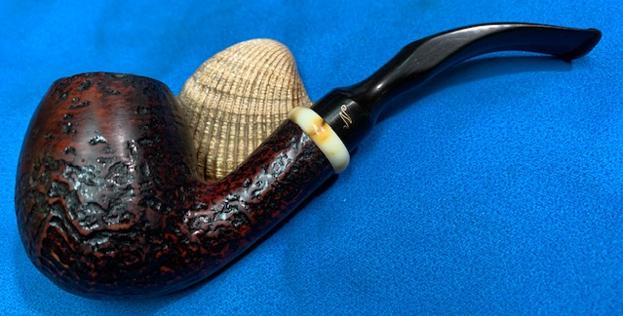
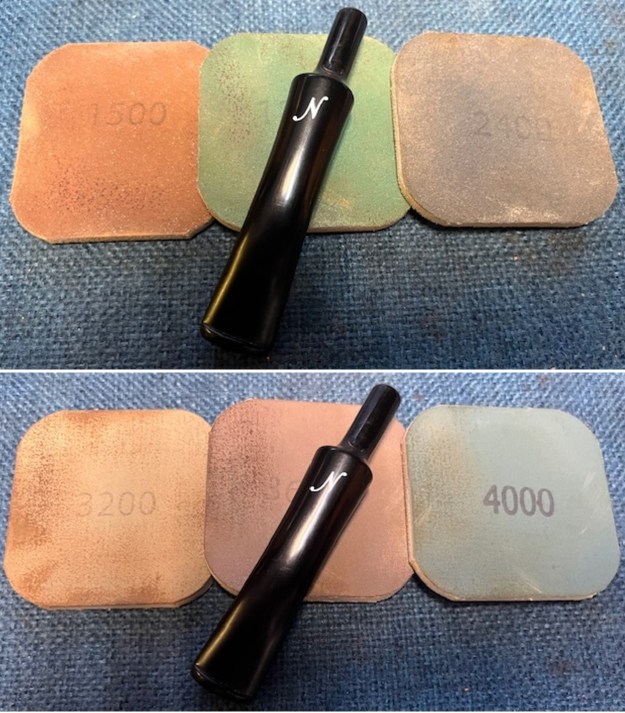
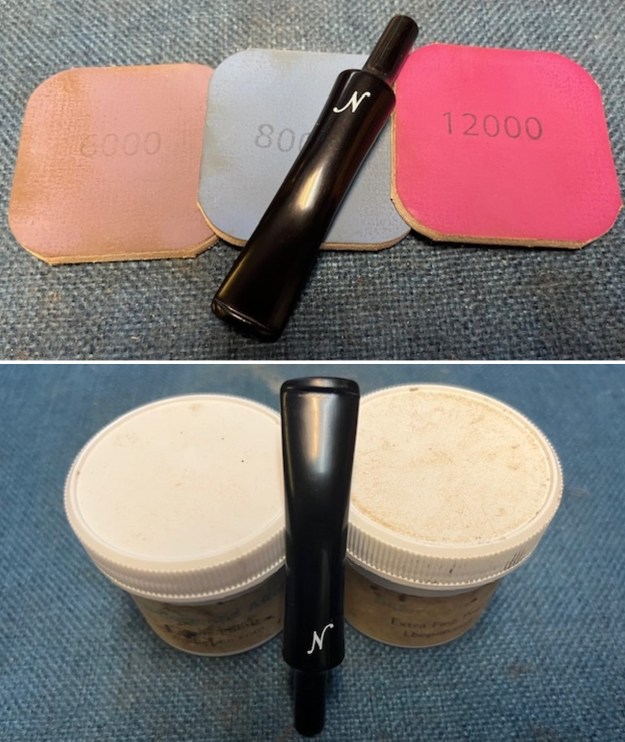
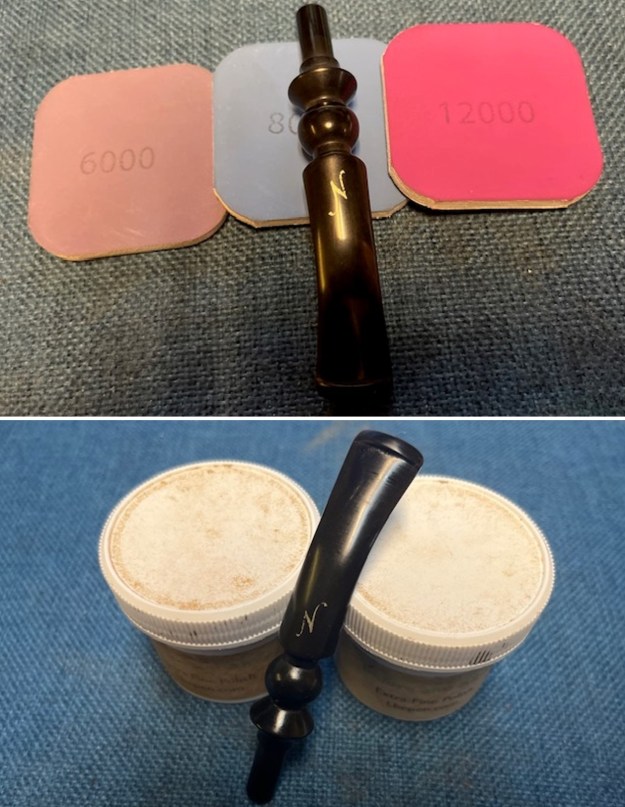
I am really happy to have Jeff’s help on cleaning up the pipes that we pick up along the way. He reamed the bowl with a PipNet pipe reamer and cleaned up the reaming with a Savinelli Fitsall Pipe Knife. He scrubbed out the internals with alcohol, pipe cleaners and cotton swabs until the pipe was clean. He scrubbed the exterior of the bowl with Murphy’s Oil Soap and a tooth brush to remove the grime and grit on the briar and the lava on the rim top. The finish looks much better and the rim top was actually very visible and it looked good. There were also remnants of varnish or shellac on the exterior of the bowl (more on the right than front and left side).  Jeff scrubbed the stem with Soft Scrub All Purpose Cleaner to remove the majority of the grime. When the pipe arrived here in Vancouver it looked very good. I took some close up photos of the rim top and the stem surface. The rim top looked very good and the sandblast on the finish was worn but clean. I took close up photos of the stem to show the condition of the surface and button. The stem was very clean with tooth chatter on both sides near the button. I took a photo of the stamping on the underside of the shank You can see that it is stamped as noted above. It is clear and readable.  I took the pipe apart and took a photo of the pipe. It is a good looking pipe and has some great grain on the bowl and shank. I decided to start my restoration work on this one by working to remove the varnish coat. I rubbed the bowl down with acetone on cotton pads to remove the finish. It did not work very well. So I sanded the finish lightly with 1500 grit micromesh sanding pads to break the shiny top coat on the briar. I then wiped it down again with acetone and was happy with the results. I worked some Before & After Restoration Balm into the surface of the briar with my fingertips and a horsehair shoe brush to clean, enliven and protect the briar. I let the balm sit for 15 minutes and then buffed with a cotton cloth to raise the shine. The photos show the bowl at this point in the restoration process.     With that done the bowl was finished other than the final buffing. I set it aside and turned my attention to the stem. I looked at the worn areas on the stem and decided to sand them out with 220 grit sandpaper and start polishing it with 400 grit wet dry sandpaper. I touched up the N stamp with Rub’n Buff Antique Gold. I rubbed it onto the surface and into the N with a toothpick. I buffed it off with a soft cloth and the look is very good.I polished the stem with 1500-12000 grit sanding pads. I wiped it down after each sanding pad with Obsidian Oil. I polished it with Before & After Pipe Stem Polish – both Fine and Extra Fine. It is fun to come to end of the restoration of the Nording Mixed Finish Danish Bent Billiard. It turned out to be a nice looking pipe. The finish came alive with the work I had done on it. I put the pipe back together and buffed it with Blue Diamond on the buffing wheel. I gave the bowl and the stem multiple coats of carnauba wax. I hand buffed the pipe with a clean buffing pad to raise the shine. It is fun to see what the polished bowl looks like with the polished shank ring and black vulcanite saddle stem. It really was beautiful. This Nording made Bent Billiard is nice looking and the pipe feels great in my hand. It is light and well balanced. Have a look at it with the photos below. The dimensions are Length: 5 ½ inches, Height: 2 inches, Outside diameter of the bowl: 1 inch, Chamber diameter: ¾ of an inch. The weight of the pipe is 52grams/1.83ounces. It is a beautiful pipe that I will soon put on the rebornpipes store in the Danish Pipe Makers section. If you are interested in adding it to your collection let me know. Thanks to each of you who are reading this blog. Remember we are not pipe owners; we are pipemen and women who hold our pipes in trust until they pass on into the trust of the next pipeman or woman.
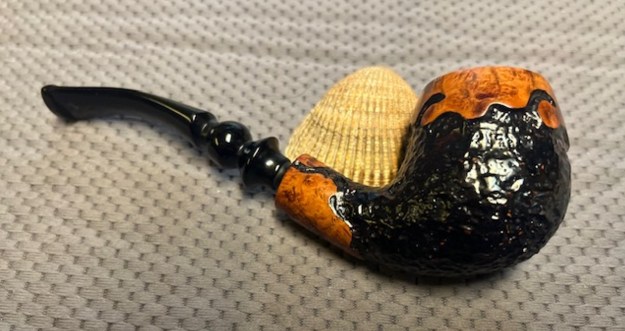
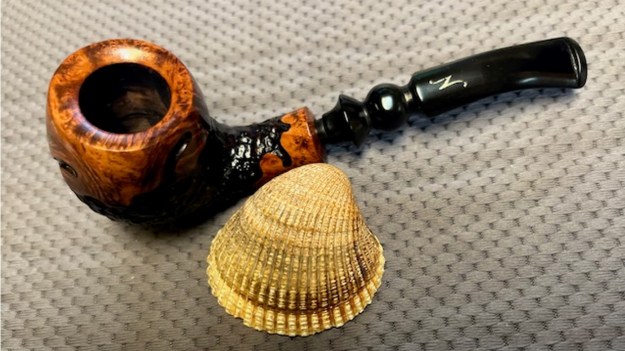
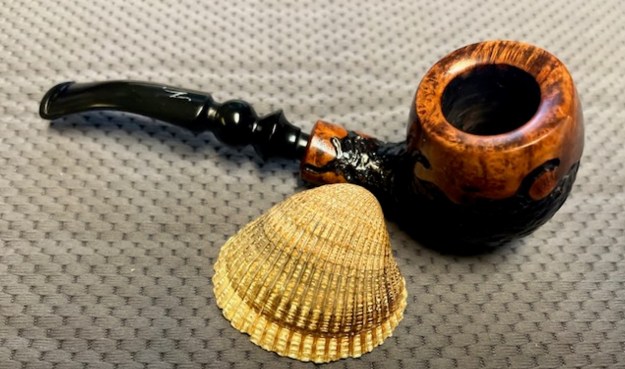
 

Cleaning up an Erik Nording Freehand


Blog by Steve Laug

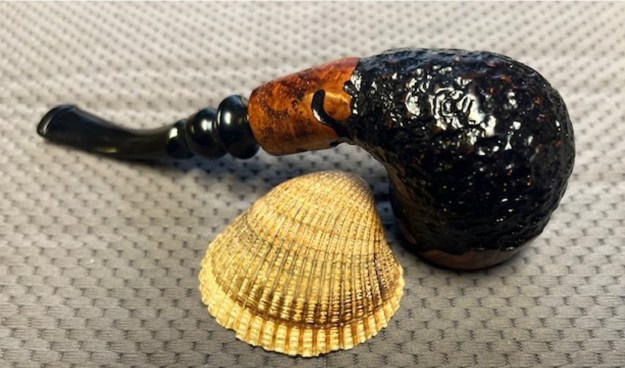
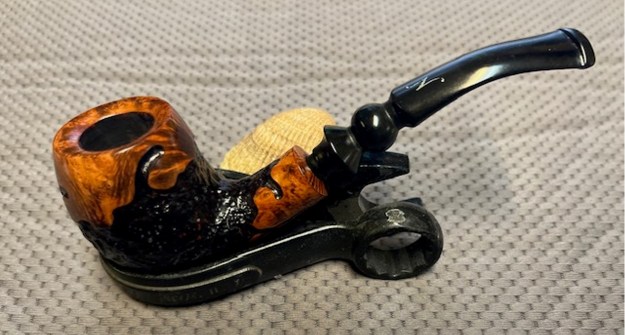
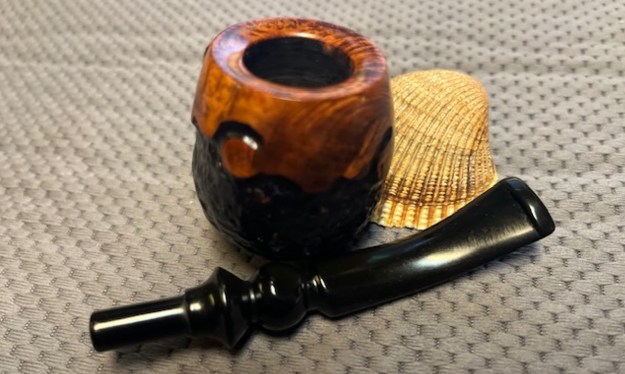
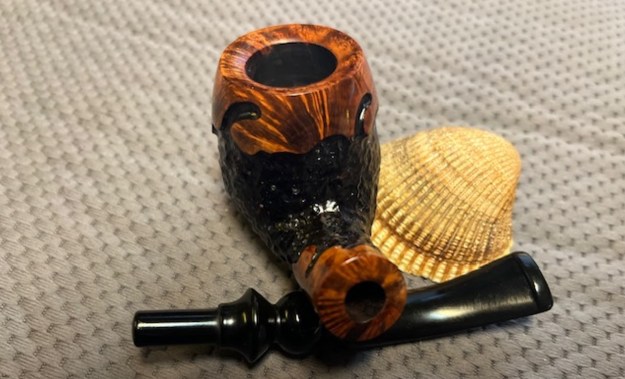
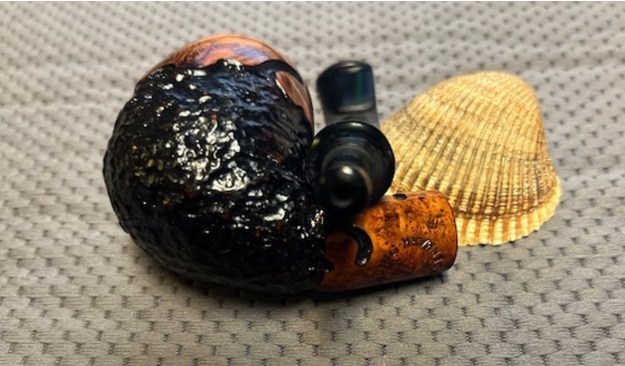
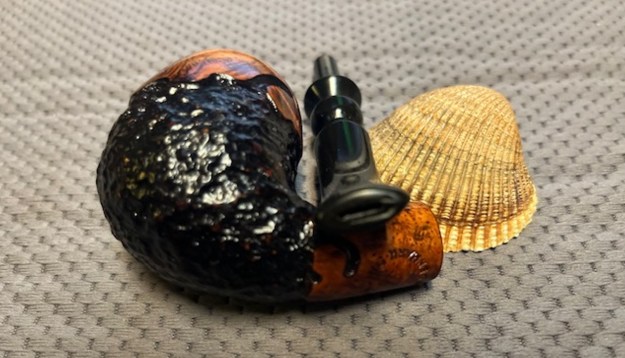
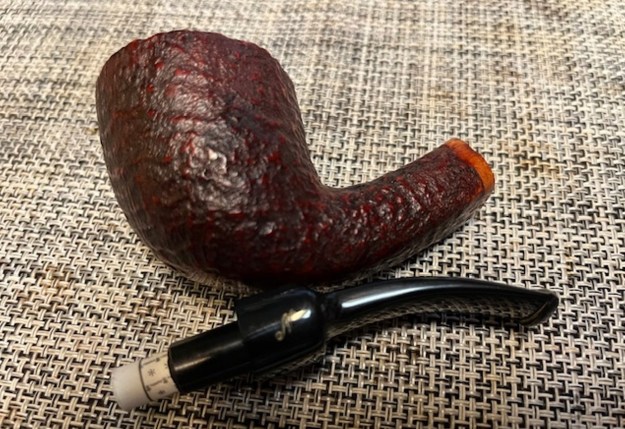
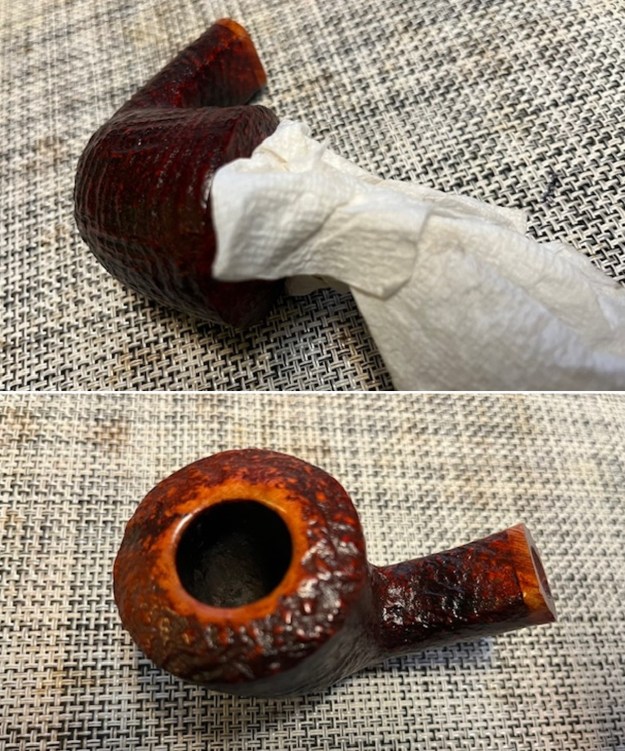
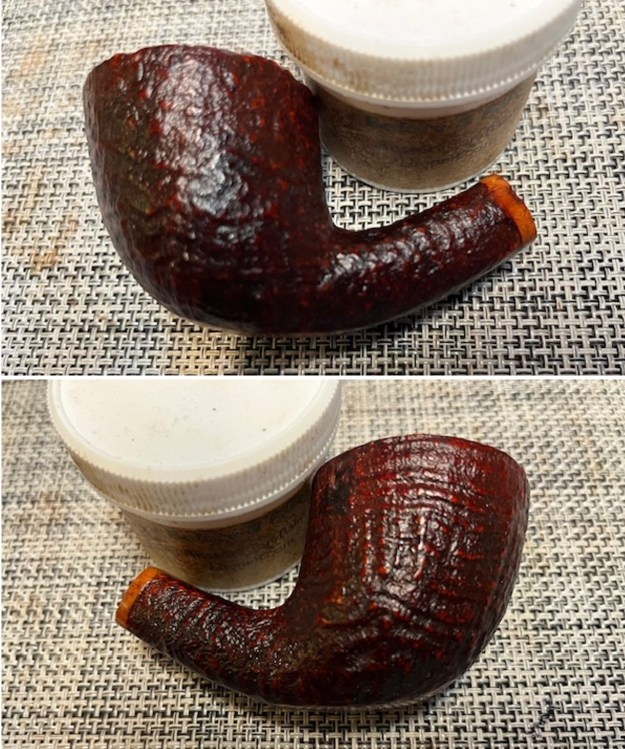
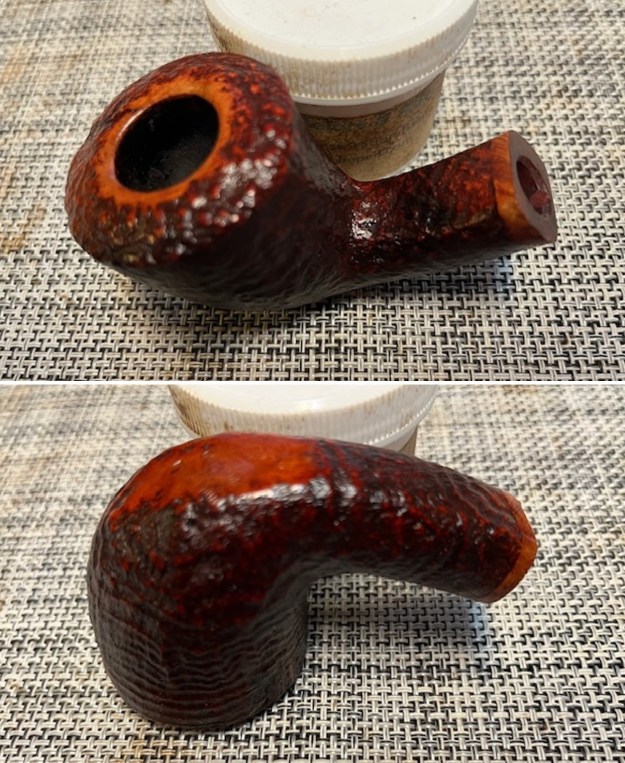
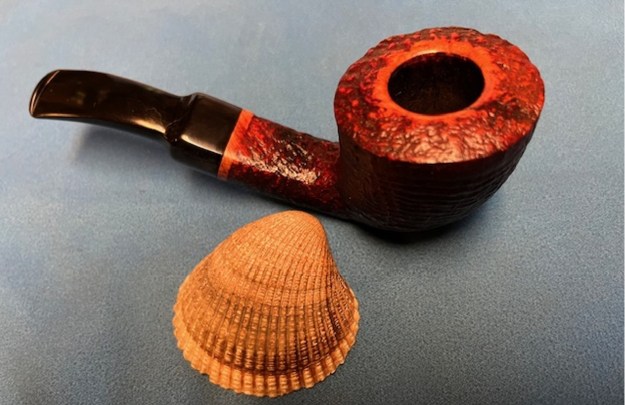
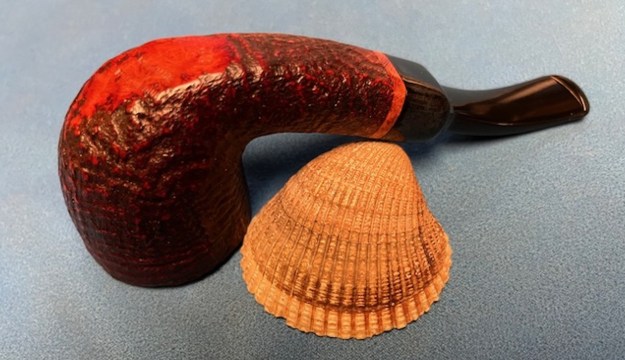
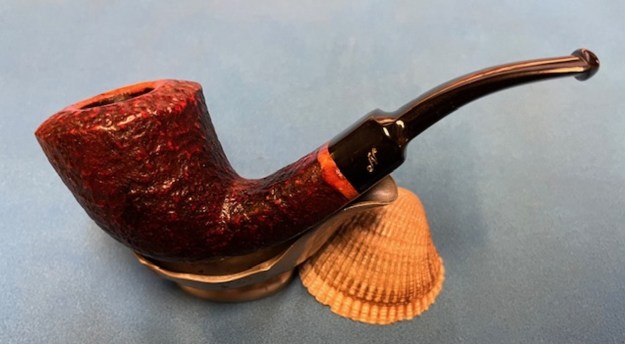
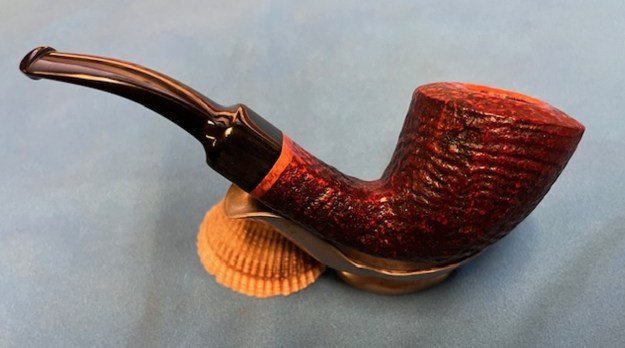
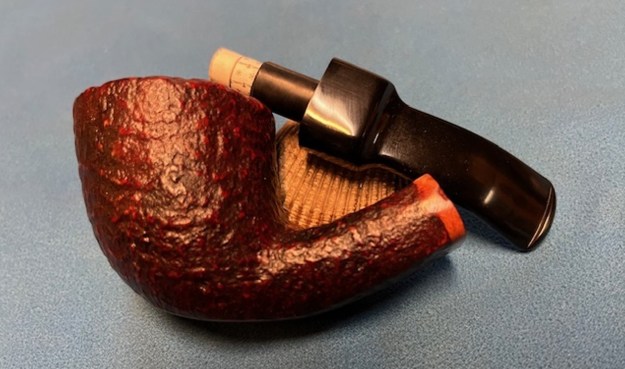
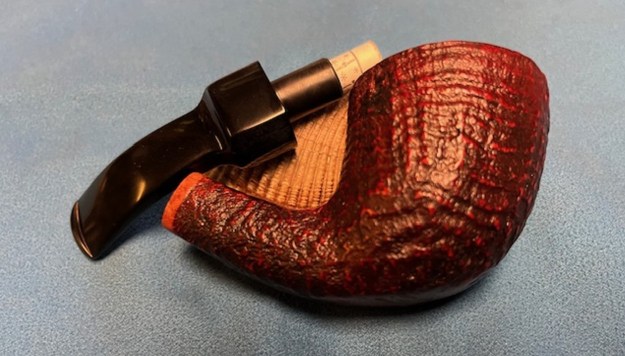
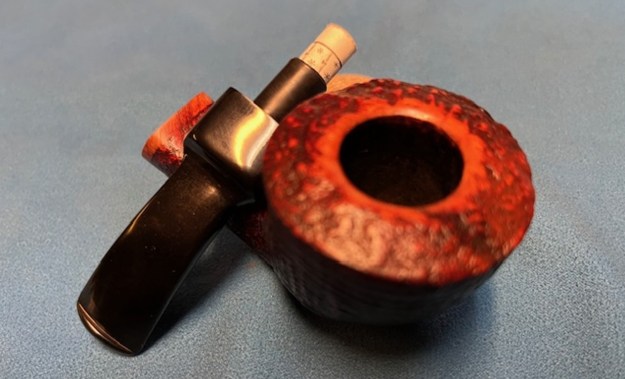
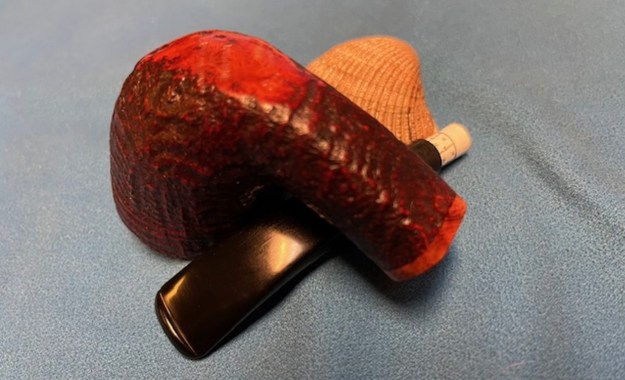
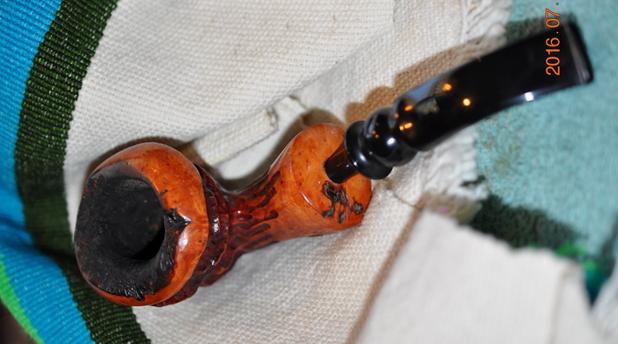
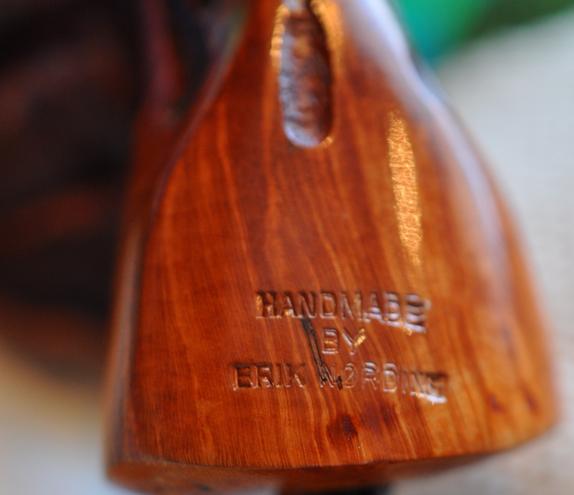
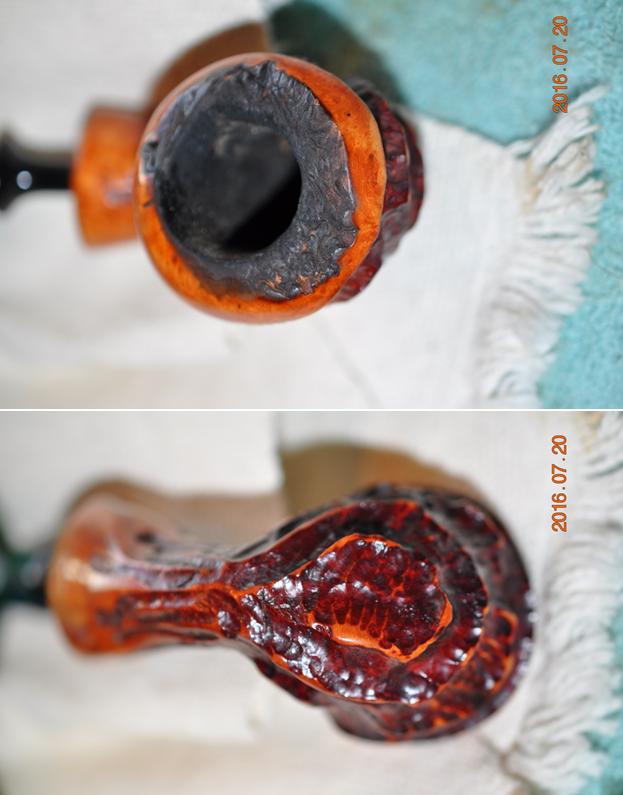
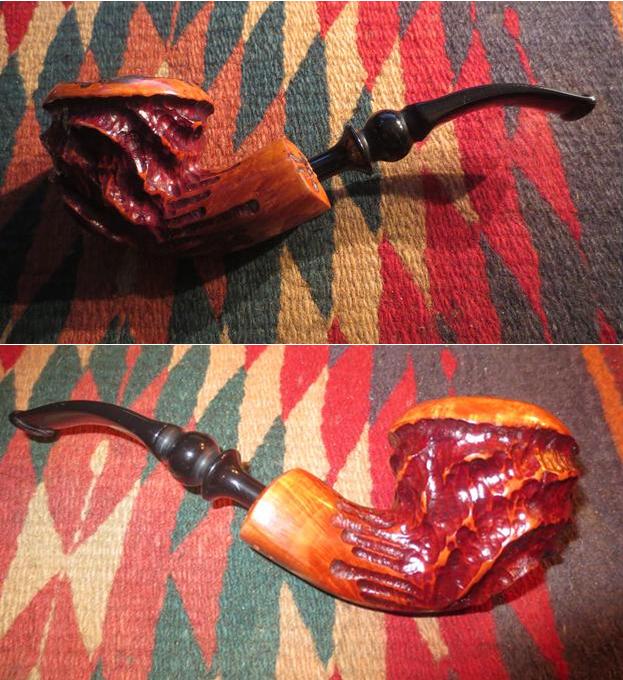
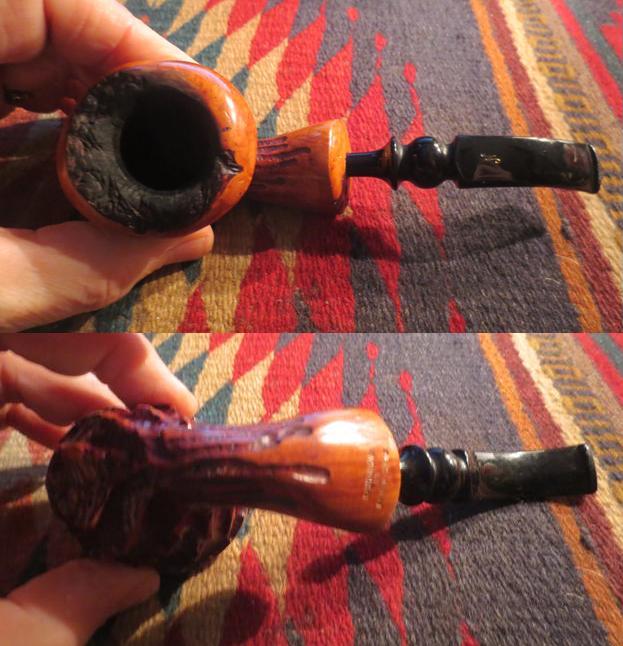
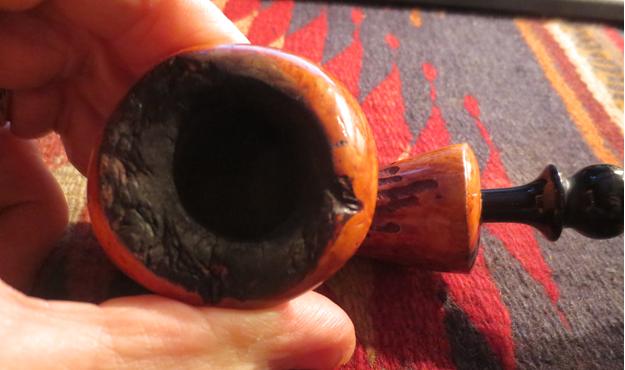
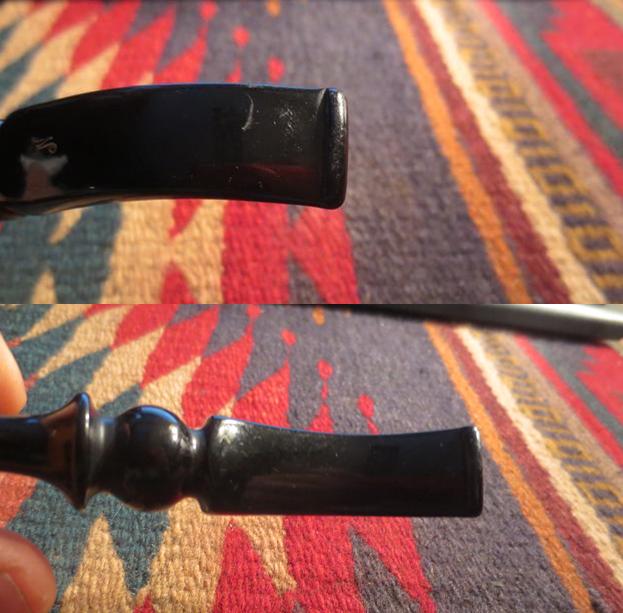
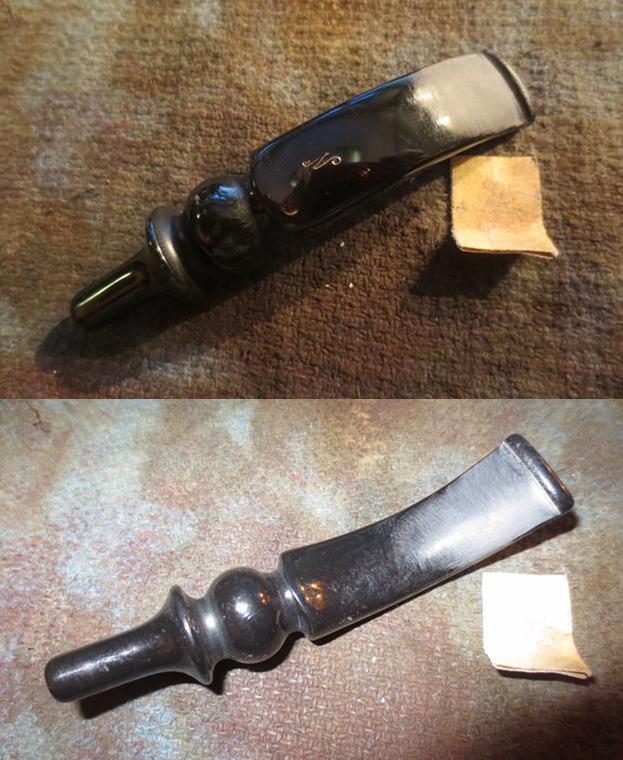
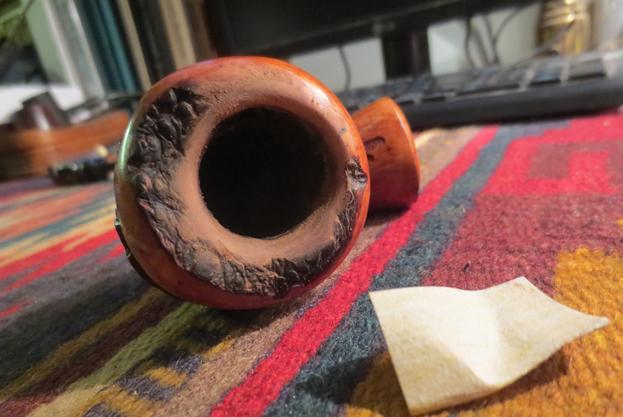
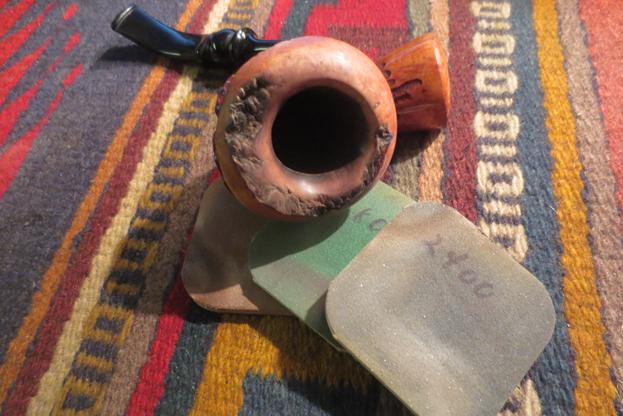
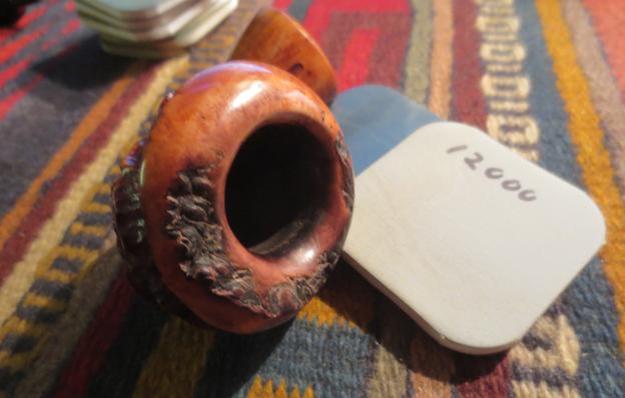
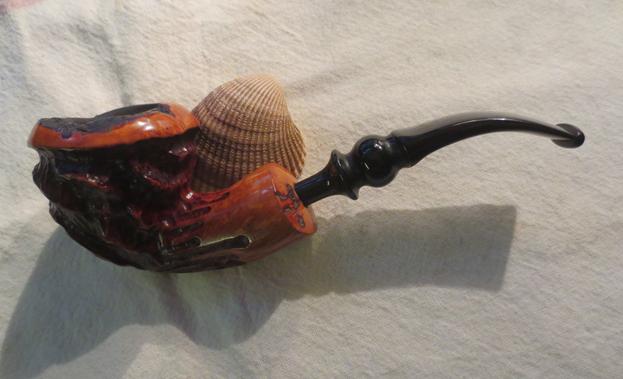
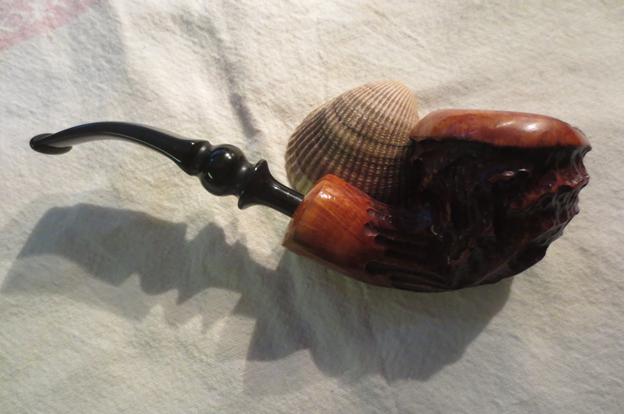
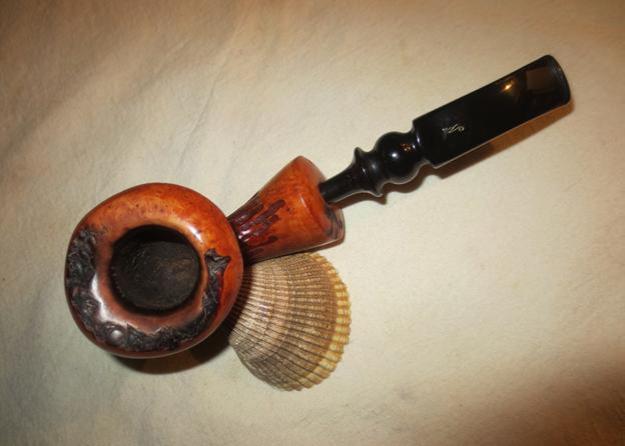
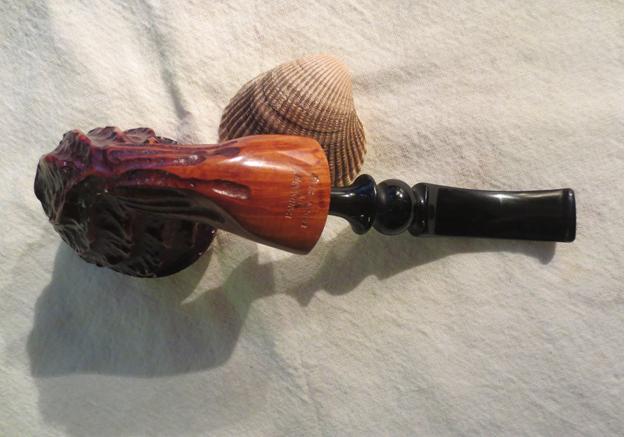
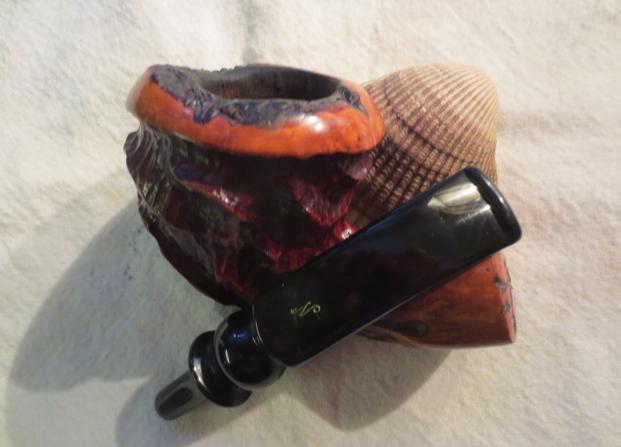
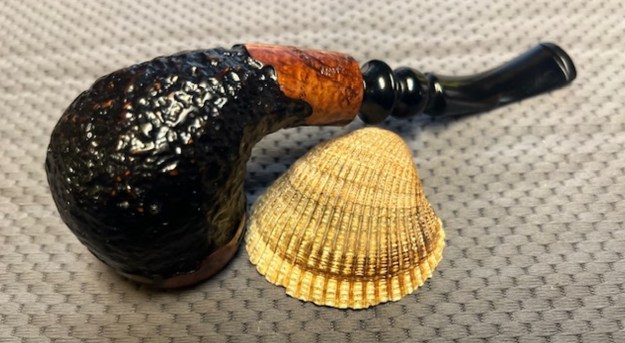
This is yet another interesting pipe from the latest box of pipes that my brother Jeff sent to me. It is a hand carved Erik Nording Freehand. It has a hand rusticated rough finish on the shank and the bowl. In looking at Erik’s website I am pretty sure that the pipe is from the Vahalla series as it has the same rustication. The difference is in the small bit of plateau left behind on the rim and the shank.The rim has some plateau with smooth areas around the edges and top of the bowl. The shank end was also smooth with a tiny spot of plateau there as well. There is a contrast stain on the bowl and shank with dark reddish undertones and a light/medium brown top stain. The stem is turned with a ring and ball after it insert into the shank. There is a cursive N on the stem that is the Nording stamp. erik1 erik2The stamping on the underside of the shank is readable but double stamped on the smooth portion of the flared shank. It reads Handmade by Erik Nording.erik3The rim is quite dirty with tars and oils built up in the plateau. It is heavily clogged with tars and oils and there are some burn marks on the inner edge of the rim top. The inner edge was originally smooth tapering into the bowl and rising to a ring of plateau on the top. The outer edge also flows from the plateau toward the bowl edge and is shaped like a cap. The underside of the bowl and shank shows the rustication pattern. The finish is in very good shape.erik4My brother cleaned the bowl and the internals of the pipe. He scrubbed the finish with Murphy’s Oil Soap and reamed the bowl with a PipNet reamer. He cleaned out the shank and airways with alcohol and pipe cleaners and cotton swabs. I took the next photos when the pipe arrived at my work table.erik5 erik6I took a close up photo of the rim top to show the caking and damage that had filled in the grooves in the plateau and darkened the inner edge of the bowl.erik7I took photos of the stem to show the tooth marks and chatter on both sides of the stem near the button. The stem was otherwise quite clean.erik8I sanded out the tooth marks and chatter with 220 grit sandpaper until they were gone. With the surface of the stem smooth it was ready to polish with the micromesh sanding pads.erik9I wet sanded the stem with 1500-2400 grit pads and dry sanded it with 3200-12000 grit pads. I wiped it down with a damp cloth after sanding it with each pad.erik10 erik11 erik12I did a quick clean on the mortise, airway in the shank and the stem with pipe cleaners, cotton swabs and alcohol. It was pretty clean.erik13The bowl top was actually quite a mess. I used a brass bristle wire brush to clean out the grooves. As I cleaned it I noticed that the inner edge of the rim was originally smooth. I sanded it with 220 grit sandpaper to remove the damaged areas and smooth it out. I worked to blend it into the plateau areas.erik14I polished the rim edge with micromesh sanding pads – wet sanding with 1500-2400 grit pads and dry sanding with 3200-12000 grit pads. I wanted to get the inner edge of the rim smooth and clean. I bleached it using a cotton swab and bleach to remove some of the darkening. I sanded it until it was smooth and polished and looked like it must have when the pipe was new.erik15 erik16 erik17I buffed the pipe and stem with Blue Diamond on the buffing wheel. I gave the bowl and stem multiple coats of carnauba wax. I buffed it with a clean buffing pad to polish it. I hand buffed it with a microfibre cloth. The finished pipe is shown in the photos below. This one will certainly be on the store soon. If you are interested in purchasing it ahead of time send me an email at slaug@uniserve.com or send me a message on Facebook or here. Thanks for looking.erik18 erik19 erik20 erik21 erik22 erik23 erik24 erik25