
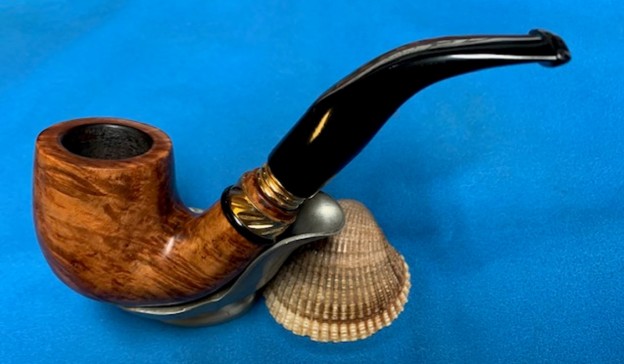
Blog by Steve Laug
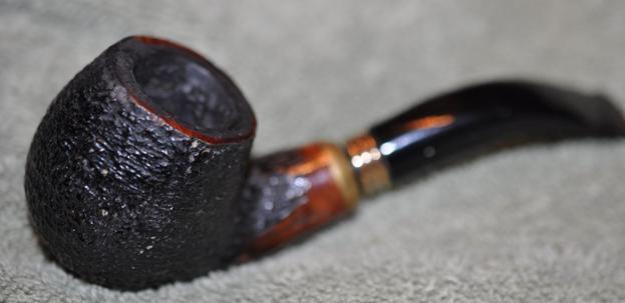
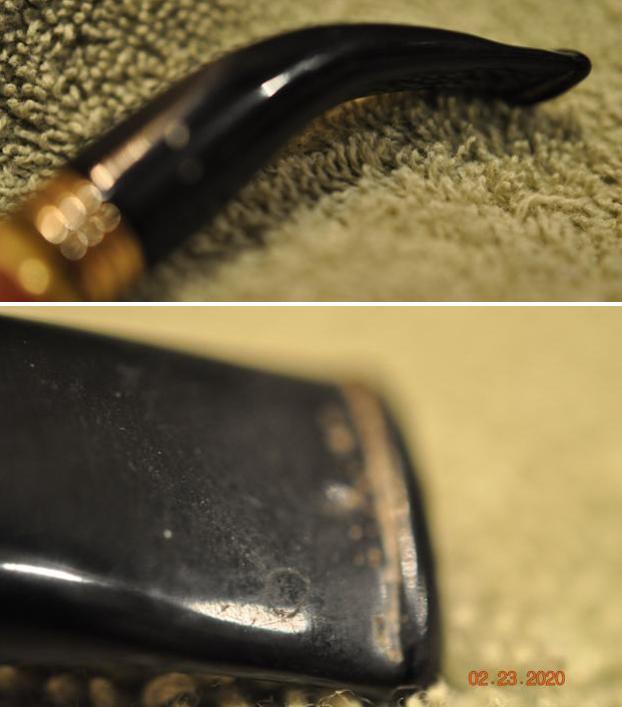
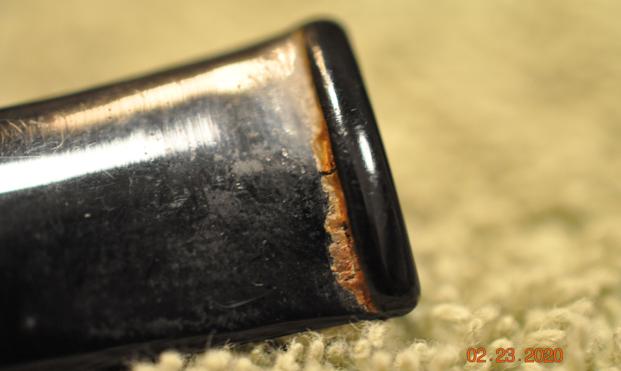
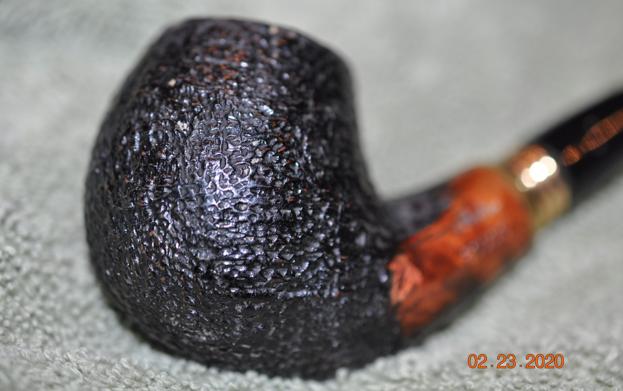
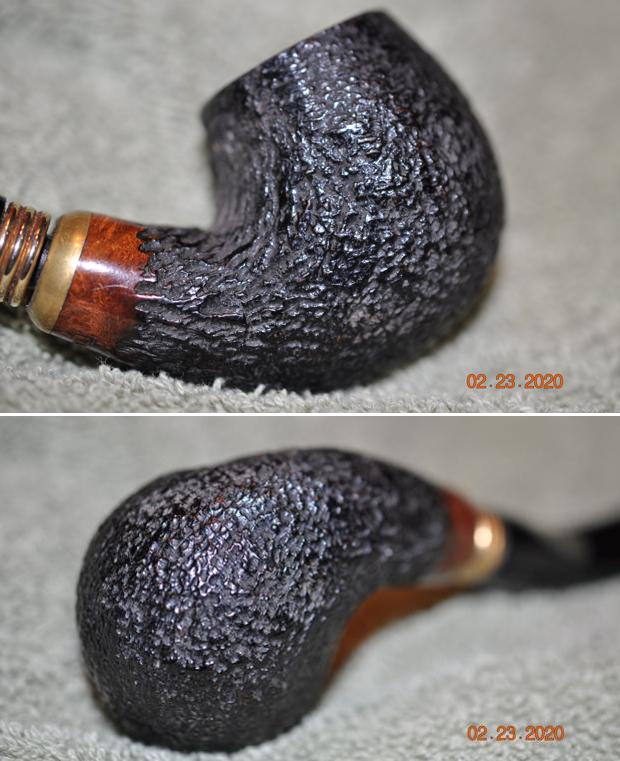
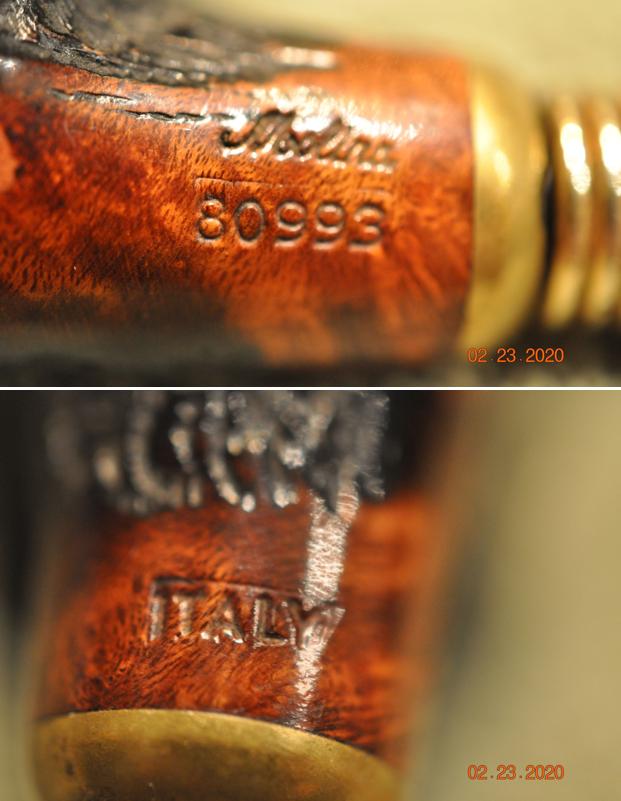
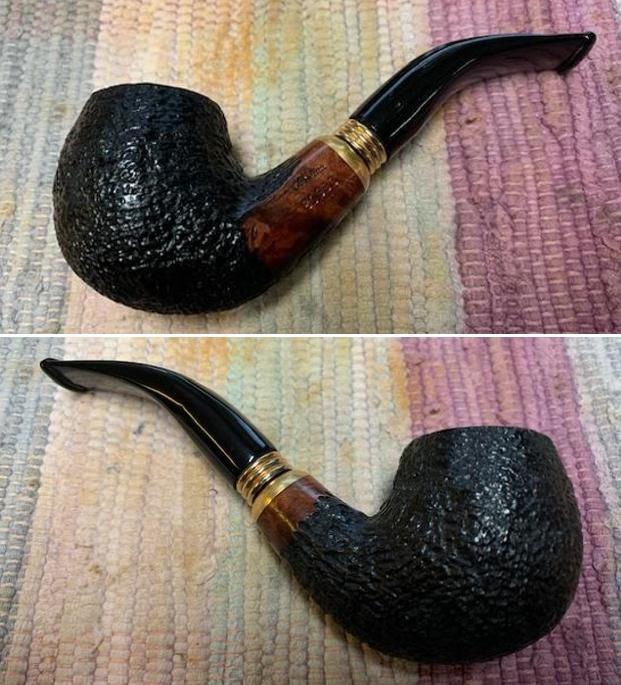
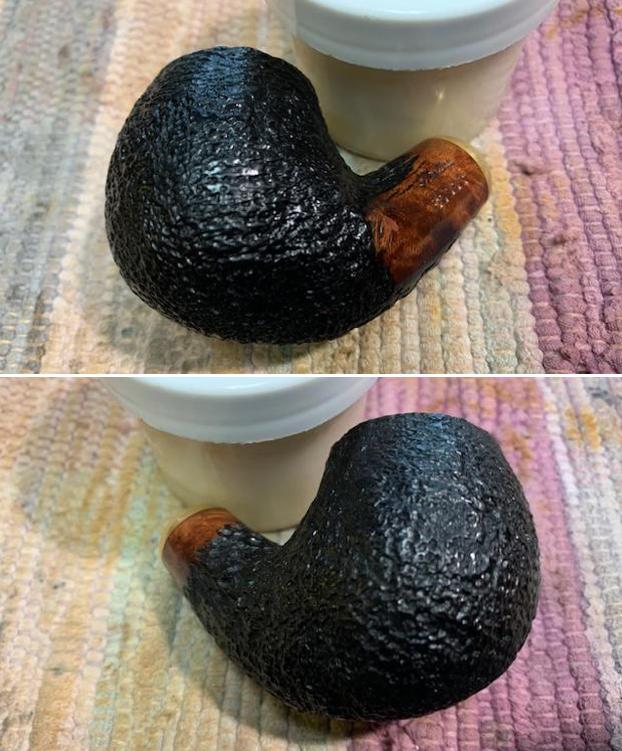
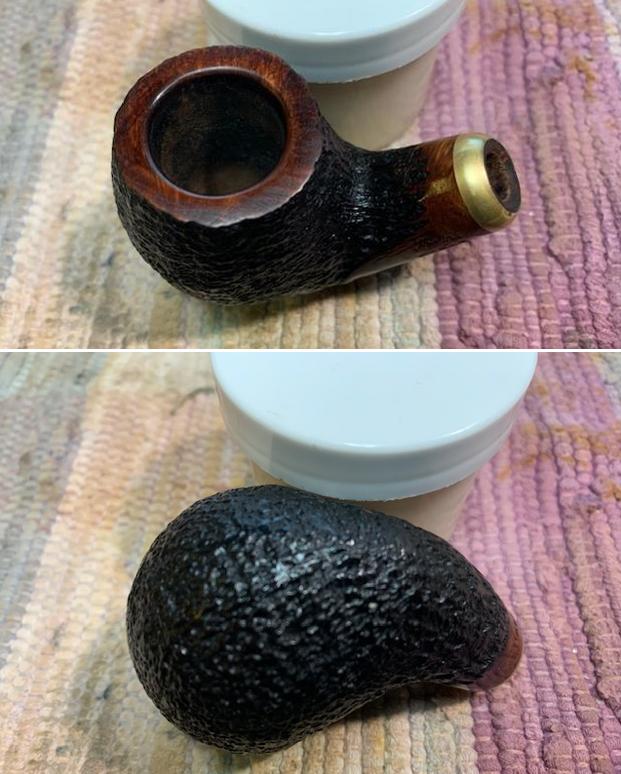
The next pipe on the table was one I found on a recent trip to Alberta. I had a couple of hours to kill so I stopped at an antique mall along the way. I found this interesting Italian made cross grained Bent Billiard and a French Made Bent Billiard. I decided to start on the Italian made pipe first. On the left side of the shank it is stamped Molina in script and on the right side it was stamped with the number 81007. On the underside next to the stem/shank junction it read Italy. The pipe was in dirty condition. The finish on the bowl and shank were coated with a thick coat of shiny varnish. There was grime and oils ground into the surface all around the bowl and shank. The rim top had a thick coat of lava that obscured the inner and outer edges of the bowl. They appeared to be in ok condition but cleaning would tell the story. The stacked bands on the shank were quite nice – there was a black acrylic ring followed by a fancy golden band with grooves cut at angles. The end of the stem also had a matching triple brass ring fitting that sat against the shank end. There was a gap between the shank band and end showing a ring of briar. The black, acrylic stem was dirty and had tooth marks and chatter on both sides ahead of the button. I took photos of the pipe before I started my clean up work on it to give a clear photo of the condition of the pipe before I started my work.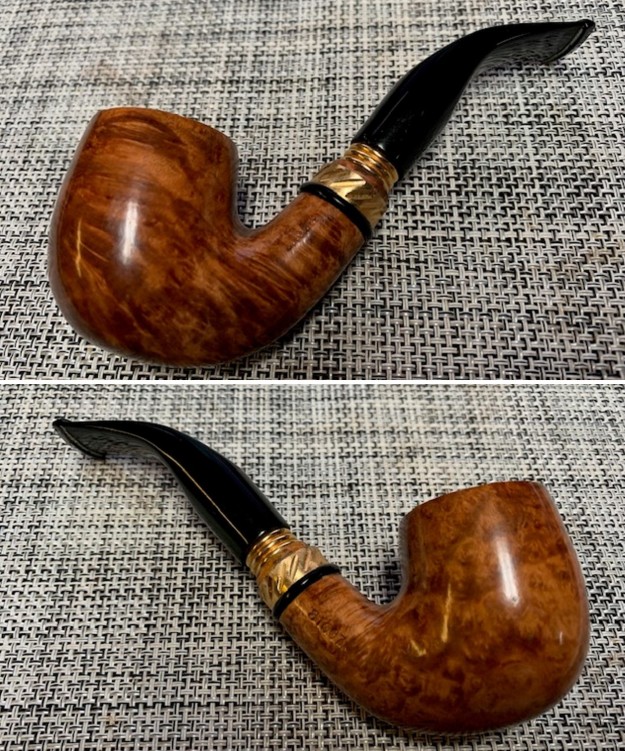
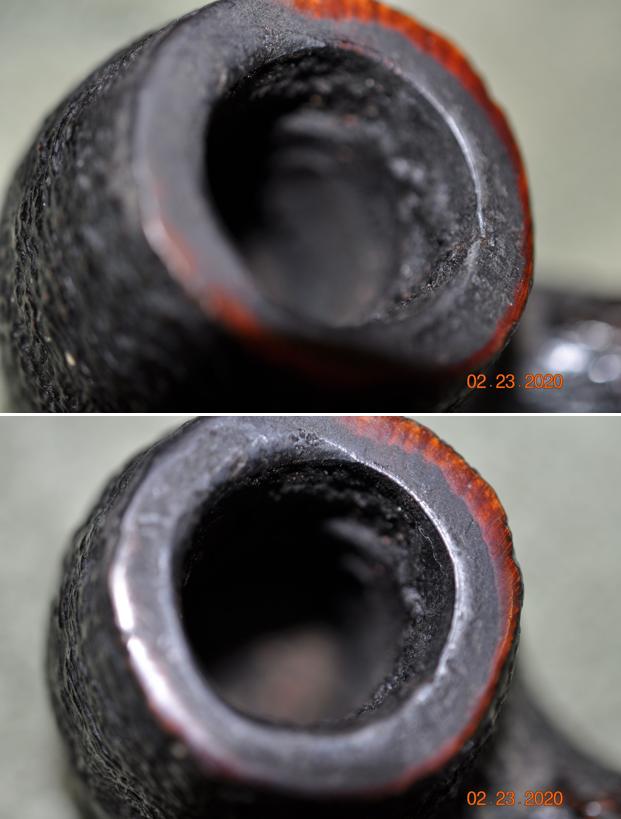
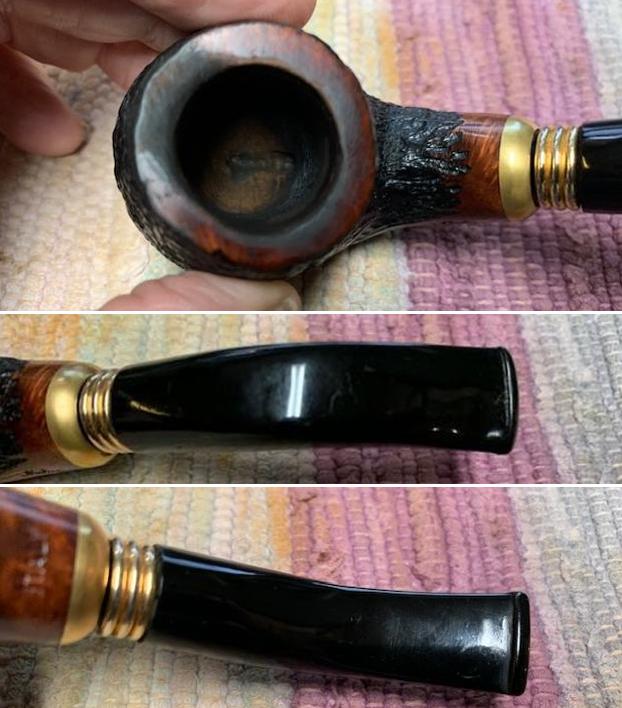
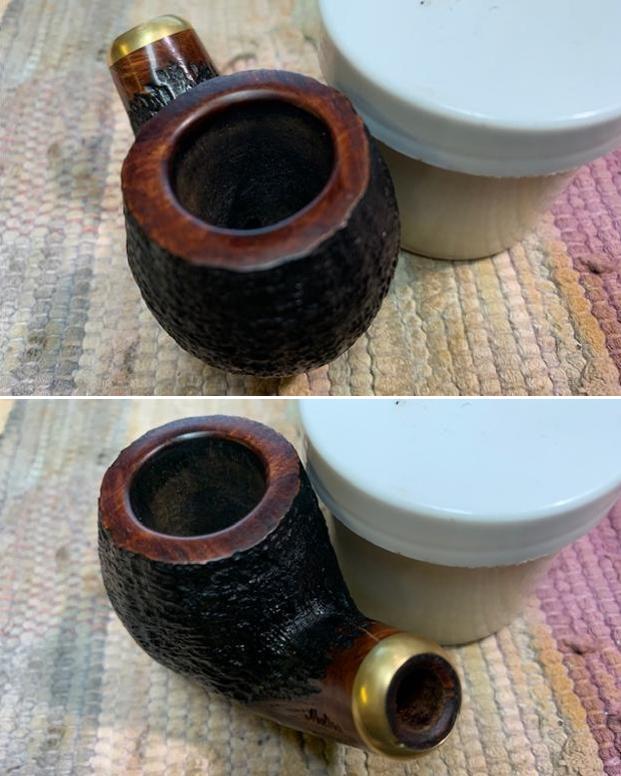
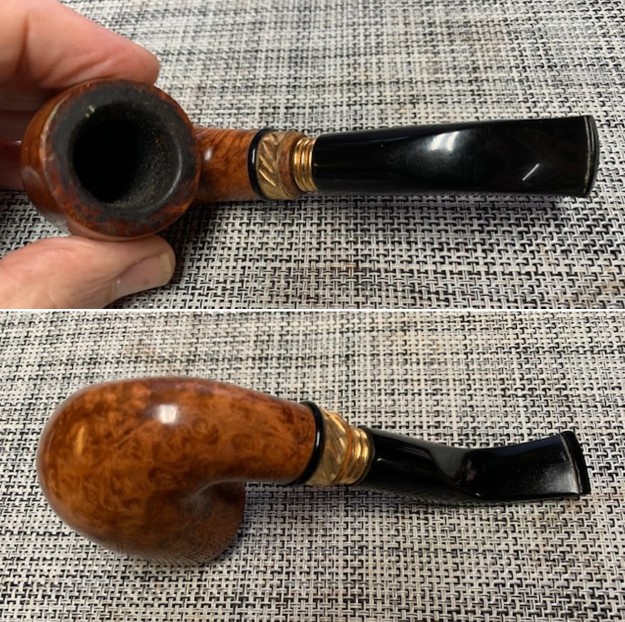 I took a photo of the bowl and the rim top. The bowl had a moderate cake on the bowl walls and bottom. The rim top and the inner edge of the bowl had a thick lava overflow. It was hard to know for sure what was underneath until it was cleaned. The acrylic stem shows light tooth marks and chatter on both sides ahead of the button as mentioned above. It had promise but it was dirty!
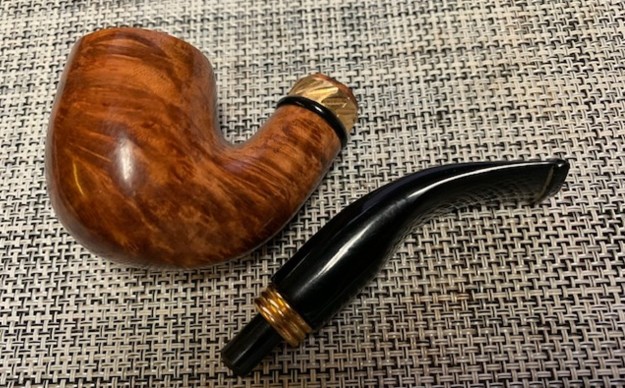
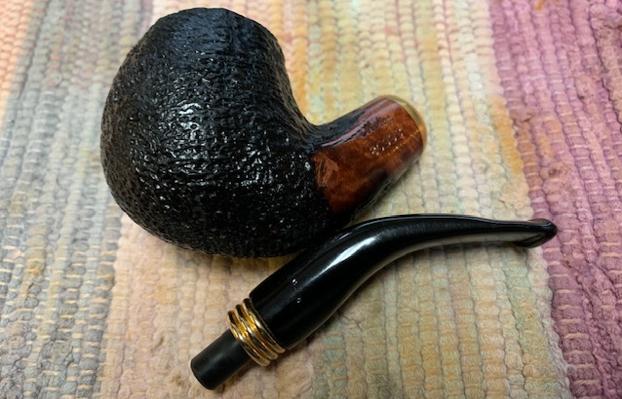
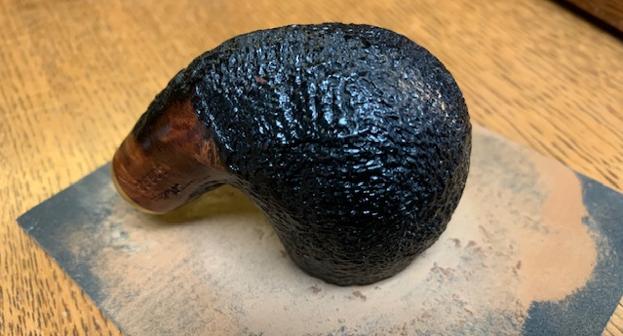
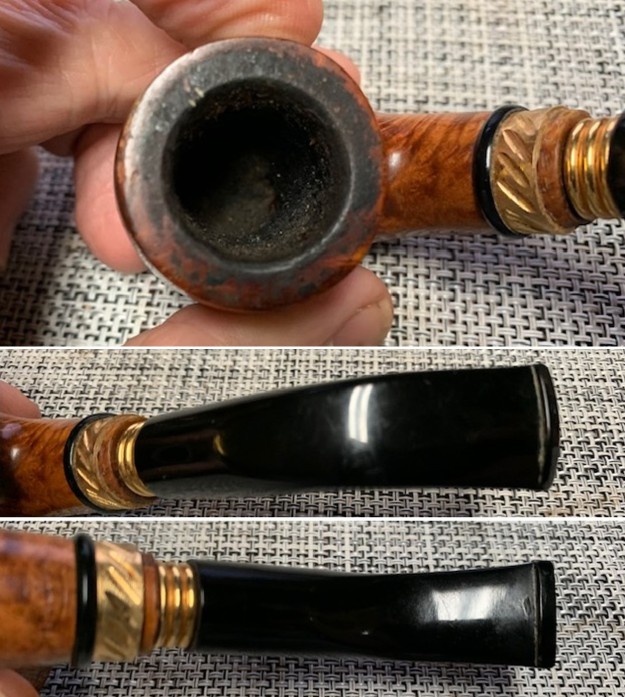 I took photos of the shank sides to try to capture the stamping on the briar. It is clear and readable as noted above. I removed the stem from the shank and took a photo of the parts to give a sense of the pipe’s proportions.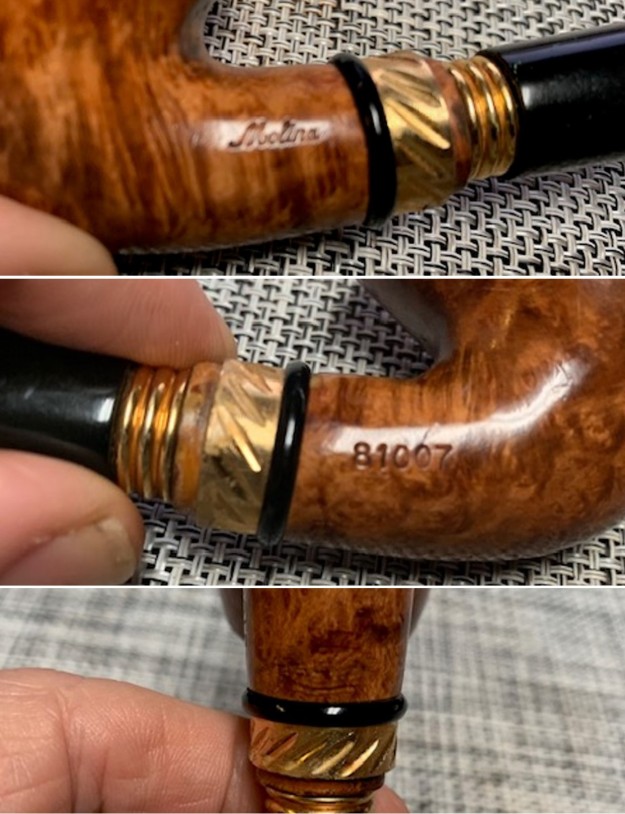
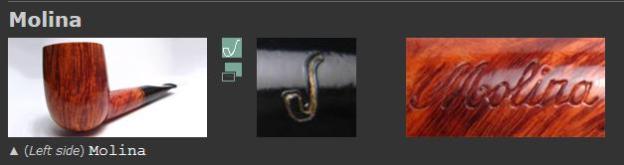
 I turned to Pipephil to renew my memory of the brand (http://www.pipephil.eu/logos/en/logo-m6.html). It gave a brief history of the brand and the changes of owners. I have included a screen capture of the pertinent section and the comments below.
Artisan: Giovanni Carollo, a former employee of the Rossi factory. Machine crafted mass production. Pipes mainly aimed for German and US market. 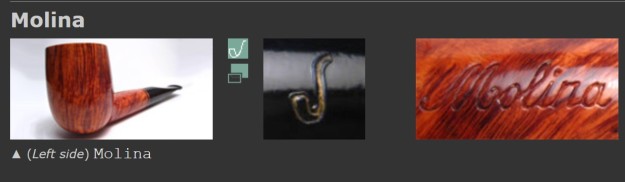 I looked up the brand on Pipedia (https://pipedia.org/wiki/Molina_Pipe). There was very little included in the article. In fact it gave a very brief history and a link to the company website. I quote the article in its entirety below.
Molina pipes has it’s origins in Barasso in Lombardy. It was born from what was left of the old Rossi pipes factory, that started in the early 1900s. Molina’s inheritance from Rossi pipes does not only consist of the factory but also the machinery and methods of production. The name Molina refers to a district where you could find mills powered by water.
I followed the link to the company website (https://www.molinapipe.it/). I have cpied a section on the site about the brand and the Molina pipe. I has some helpful information on the way the company saw the creation of the pipe.
We create pipe from 19th century
Molina pipes has it’s origins in Barasso in Lombardy.it was born from what was left of the once glorious Rossi pipes, an old trade name of an ancient and unquestionable famous international pipe company in the early 1900s. Molina still lies in part on the antique Rossi factory, a peculiar but not a casual circumstance. it represents an excellent example of industrial archeology. its working environment is enriched with the modernised charm of the past.
Molina pipe
Molina still lies in part on the antique Rossi factory, a percular but not a casual circumstance. it represents an excellent example of industrial archeology. its working environment is enriched with the modernised charm of the past.
Molina’s inheritance from Rossi pipes does not only consist of the factory but also of ancient machinery and methods of production, antique ”secretes”, antique receipts and production procedures used over 100 years ago.
The name Molina has even a longer history, it is up to today used to refer to a district where you could find mills powered by a rush of water.
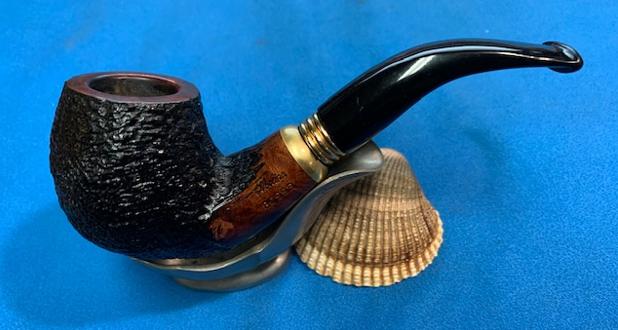
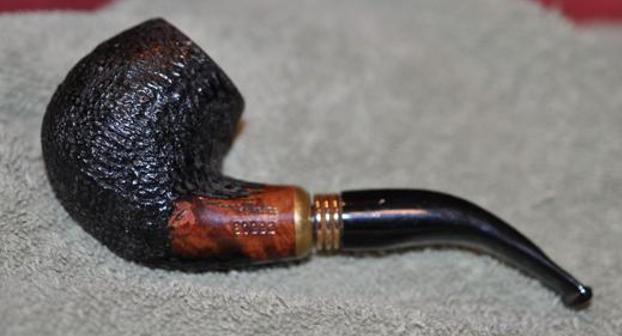
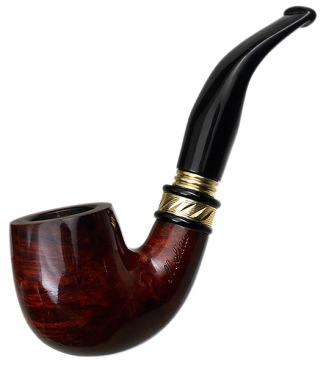 I turned to Google and did a search for a Molina 81007 Bent Billiard. Two of them came up on smokingpipes.com. This the link for the second of the pipes which I am including to show what the pipe looked like when it left the factory (https://www.smokingpipes.com/pipes/estate/italy/moreinfo.cfm?product_id=206723).
Both were very similar to the one that I was working on. The one I have is missing an acrylic band on the shank above the brass middle band. It is good to know that there was one missing as I wondered what would have originally been in place on the shank end. The missing band would have added a great touch to the overall look of the pipe but I do not have one to replace it with so it will go out minus that little black band. I think it actually does not look too bad without it but it always interesting to know what it would have looked like originally.
Given that information it was time to work on the pipe itself.
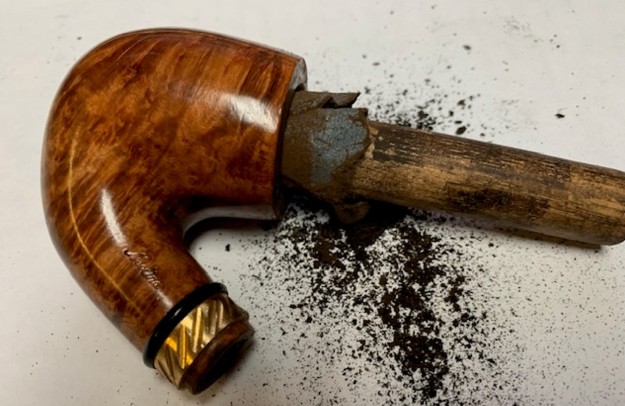
I started my work by reaming the bowl with a PipNet pipe reamer to remove the thick cake on the walls so I could see what they looked like. I used a Savinelli Fitsall Pipe Knife to scrape off the remaining cake on the bowl walls. I followed that by sanding the walls of the bowl until they were smooth with 220 grit sandpaper wrapped around a piece of dowel. The bowl walls showed no checking or cracking which is remarkable.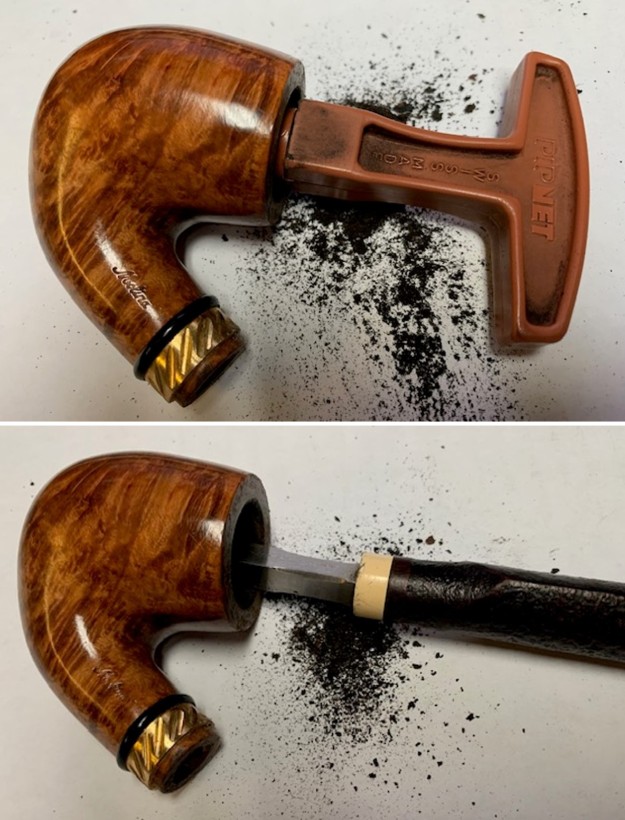
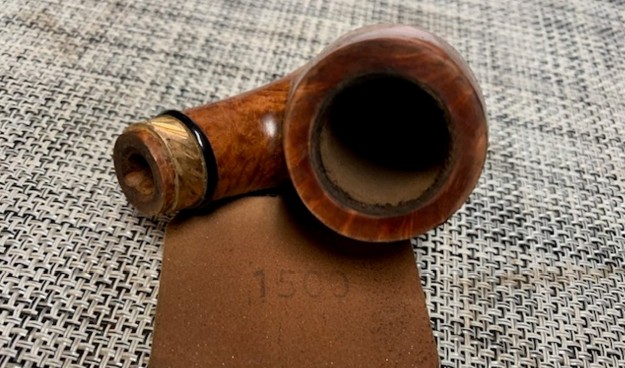
 I cleaned off the rim top carefully, scraping it with a pipe knife. I wet sanded the rim top with a 1500 grit micromesh sanding pad and was able to remove the build up.
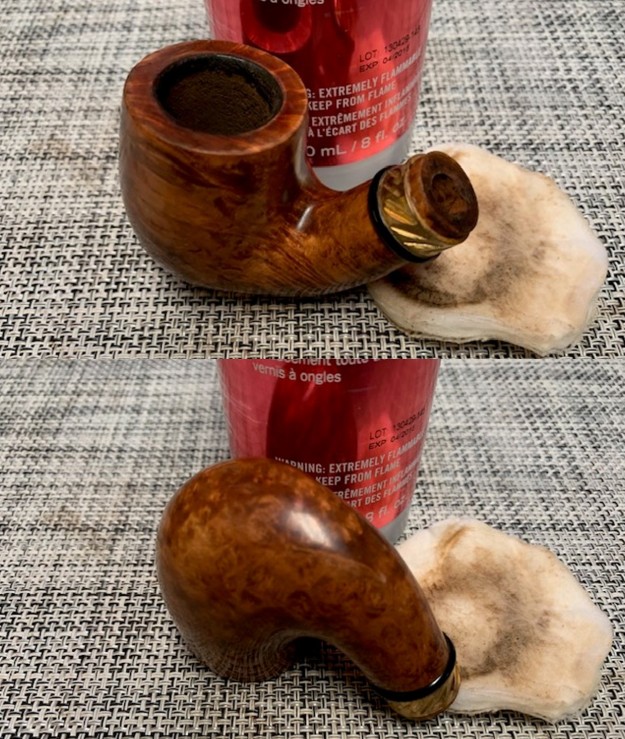
  To break down the shiny coat I wiped the bowl down with acetone on a cotton pad. I was able to remove some of the shininess and dull the coat a bit. Further polishing with micromesh should finish the task.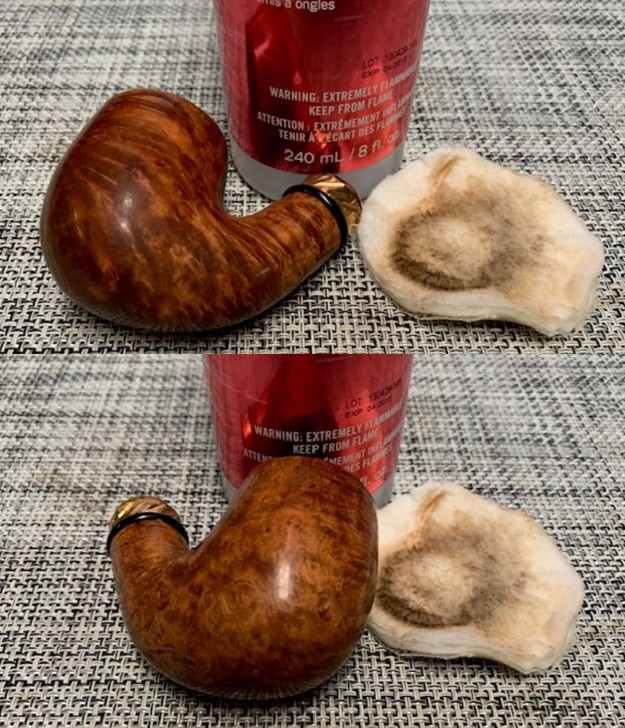
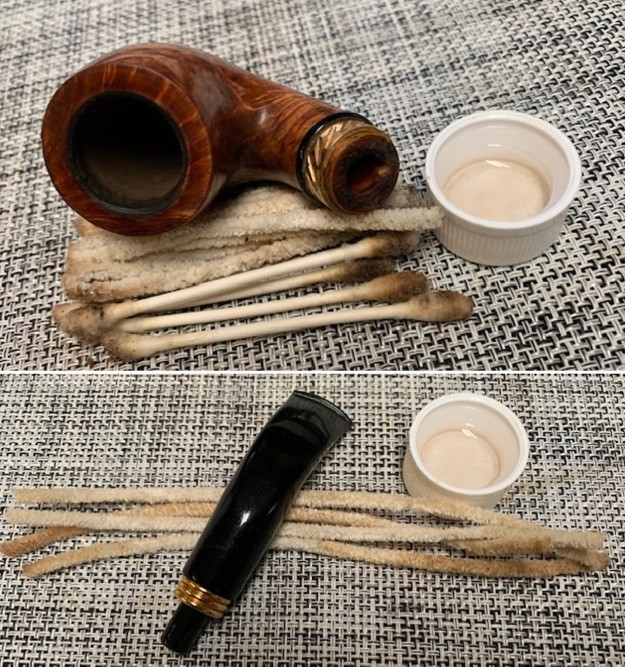
 I cleaned out the airway and mortise in the shank and the airway in the stem. I used 99% isopropyl alcohol, pipe cleaners and cotton swabs to remove the tars and oils. It was extremely dirty and once cleaned smelled and looked better.
 I scrubbed the exterior of the briar with a tooth brush and undiluted Murphy’s Oil Soap to remove the build up on the surface of the briar and clean off the lava on the rim top. I scrubbed it and then carefully rinsed the bowl with warm water. I dried it with a soft cotton cloth. It certainly looked significantly better and the patina remained in the wood.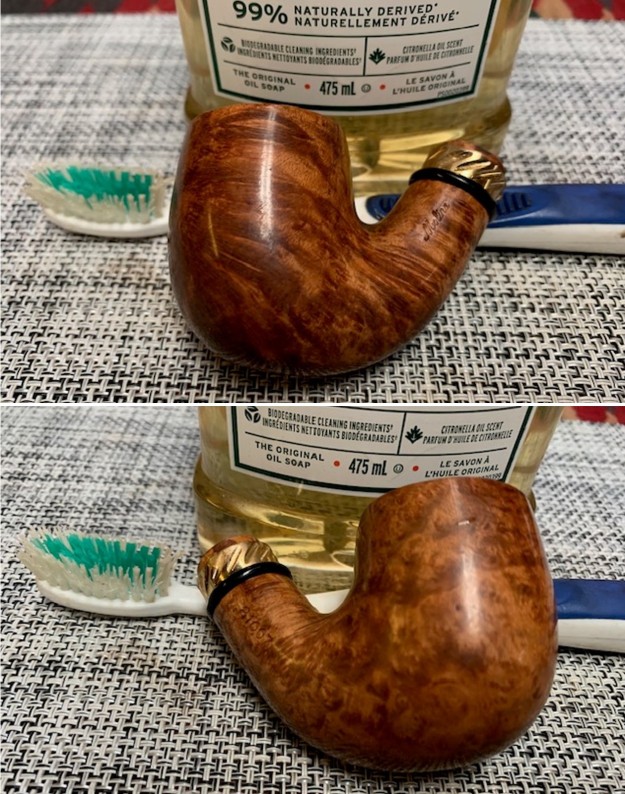
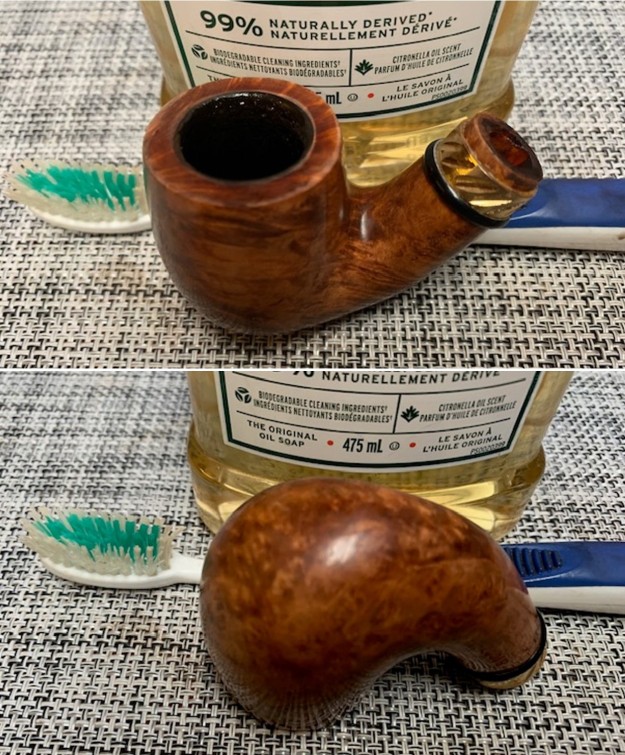 I worked on the finish around the rim top and bowl with micromesh sanding pads – 1500-12000 grit sanding pads to dry sand the briar. I wiped it down after each sanding pad with a damp cloth after each sanding pads.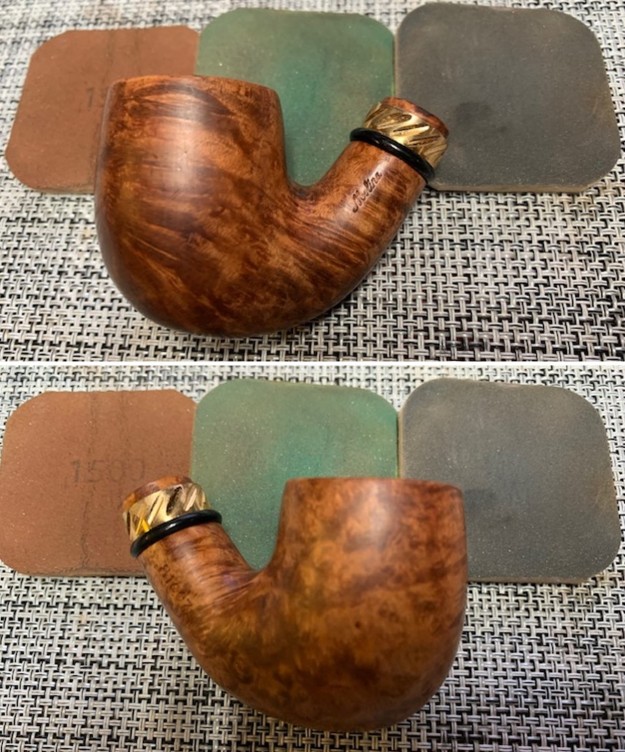
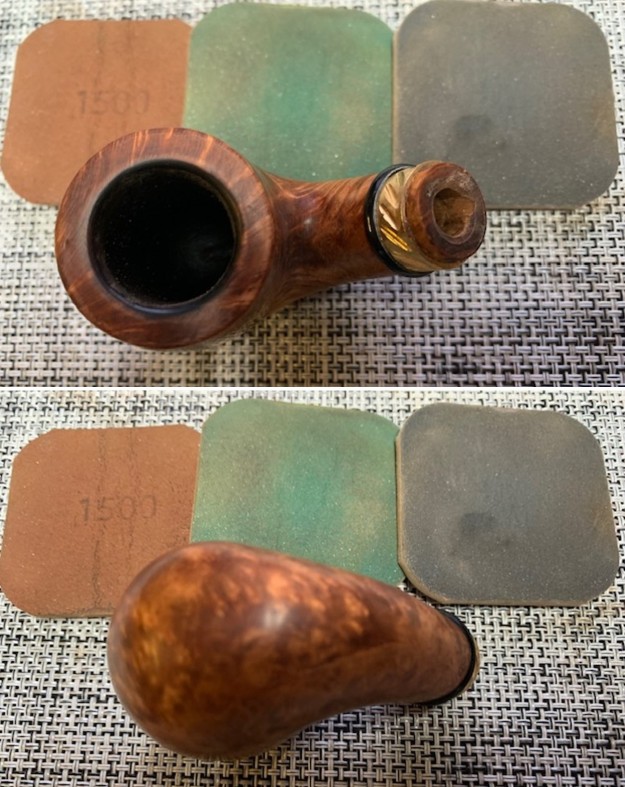
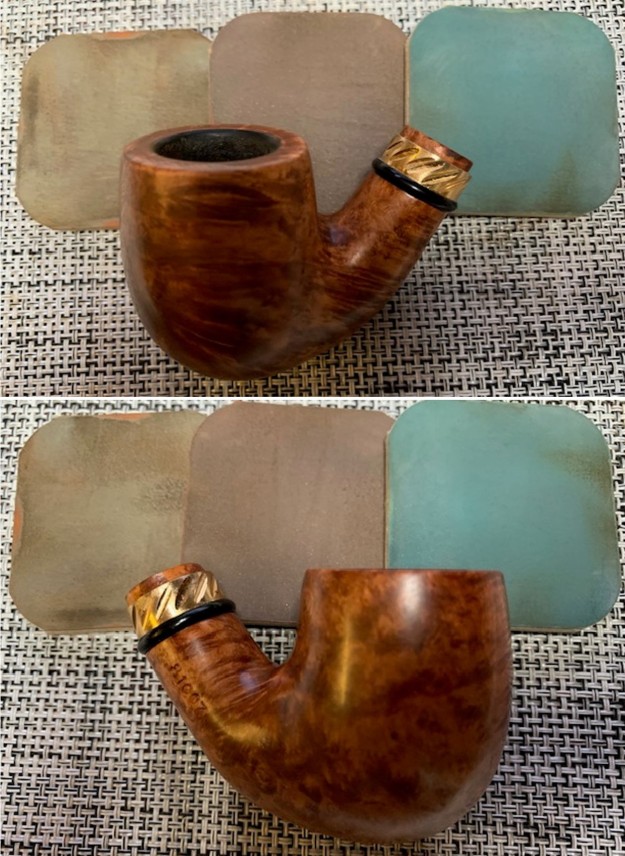
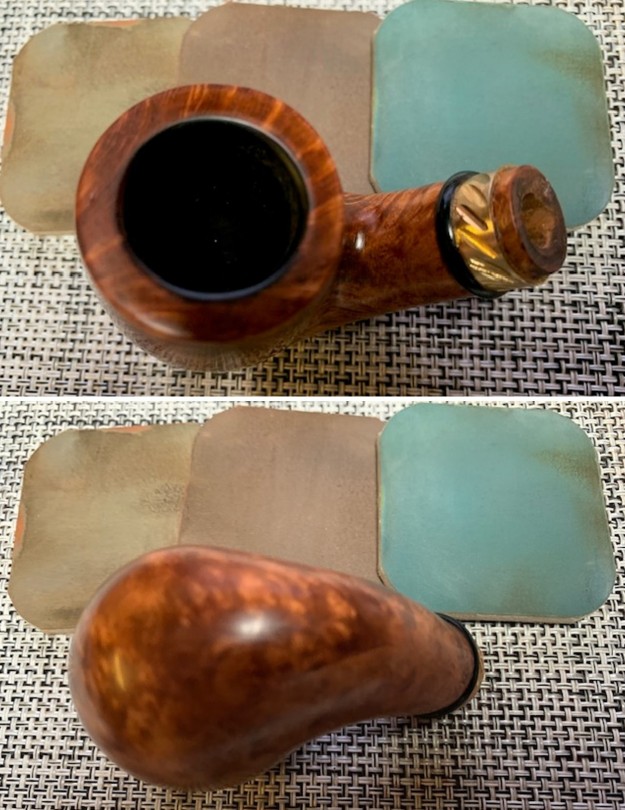
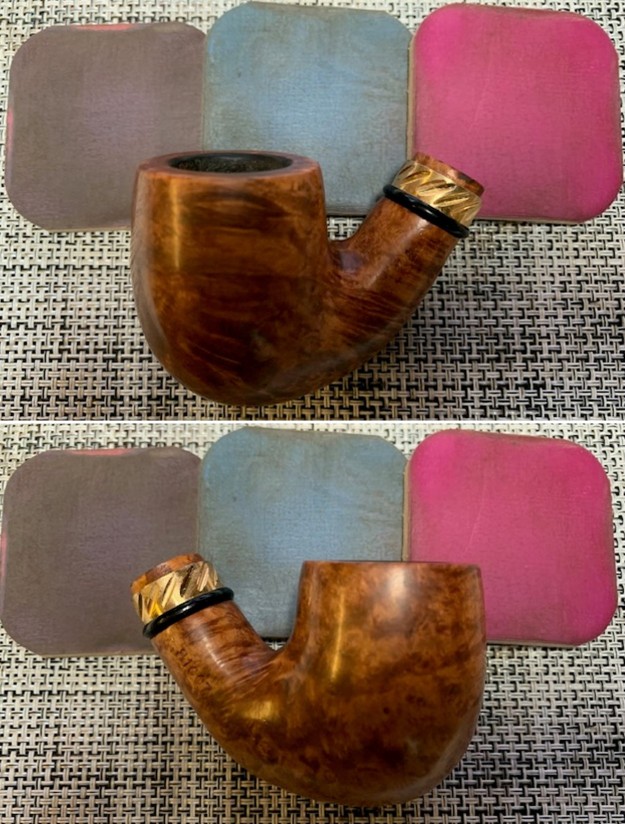
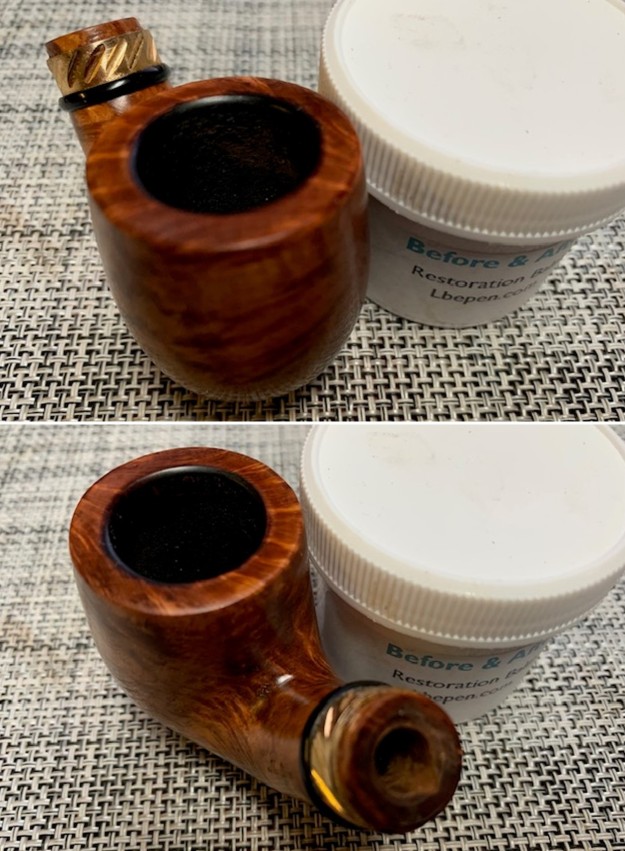
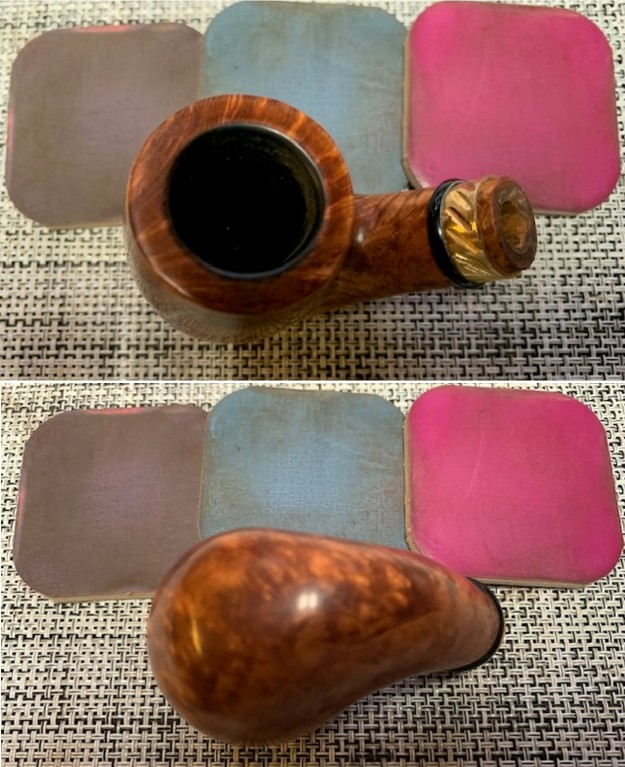 I rubbed the bowl and shank down with Before & After Restoration Balm. I worked it into the surface of the bowl sides and shank with my fingertips and a horsehair shoe brush. The product works to clean, enliven and protect the briar. I let the balm sit for ten minutes and then buffed with a cotton cloth to raise the shine.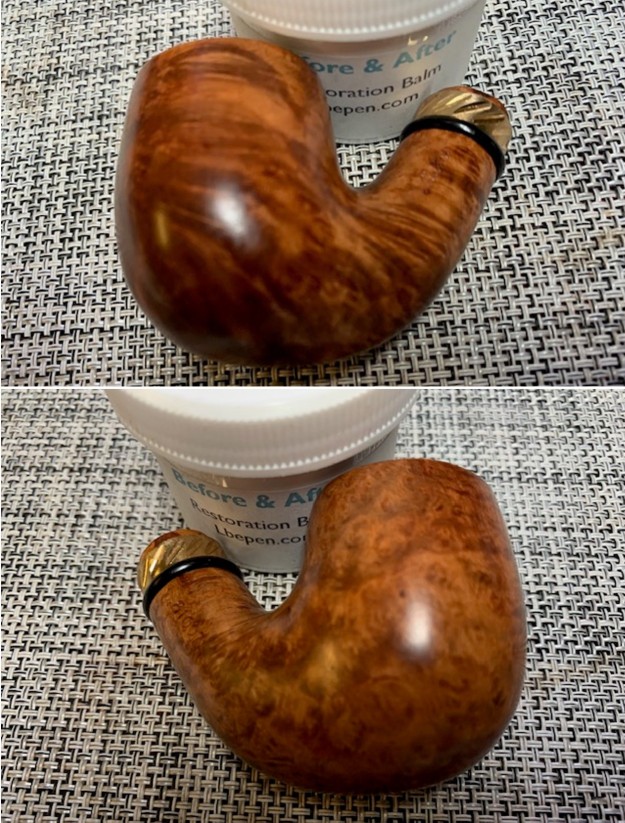
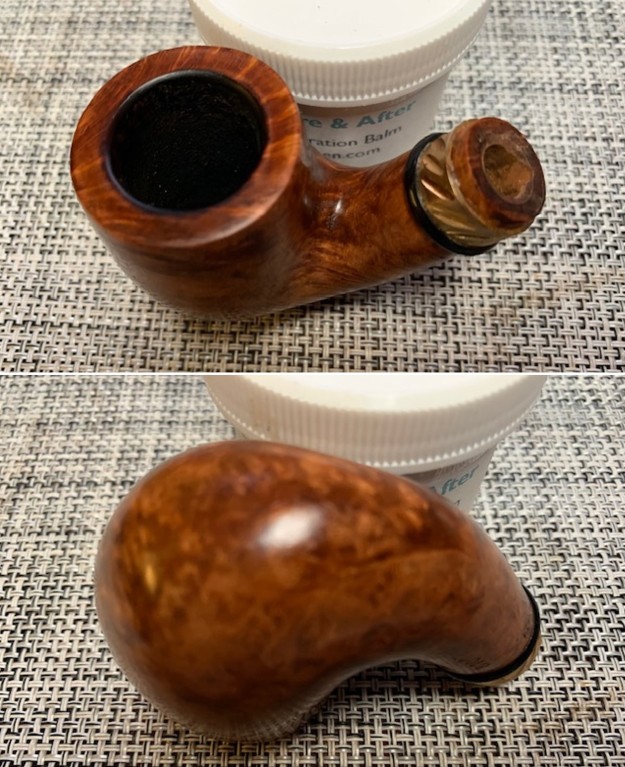
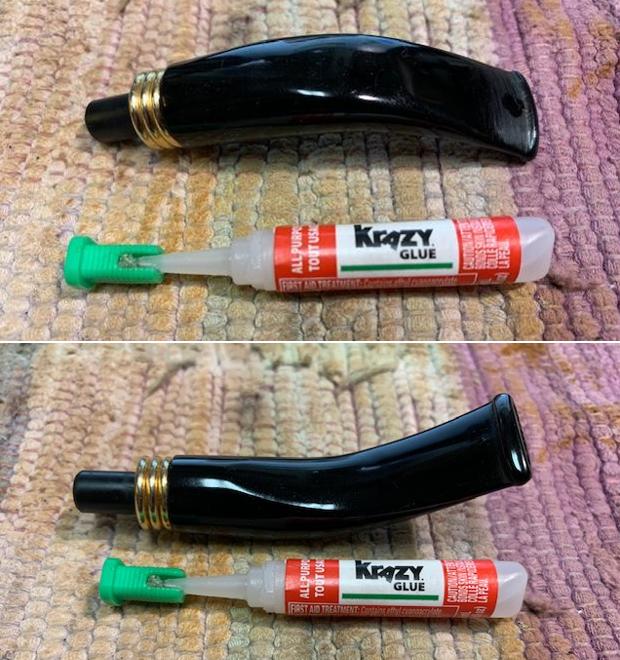
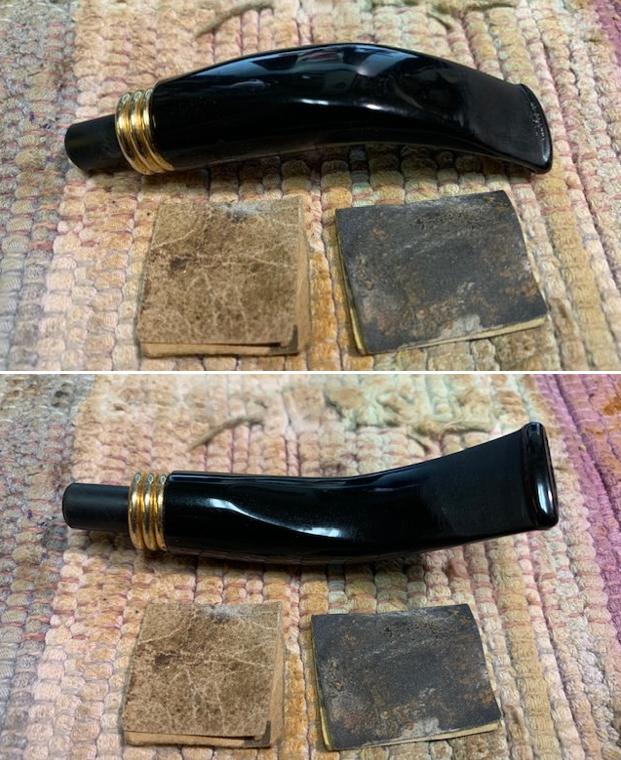
 I set the bowl aside and turned my attention to the stem. There were only deep tooth marks on the underside of the stem next to the button edge. The ones on the topside were light. I filled in the deep mark on the underside with clear CA glue. Once it cured I sanded it smooth with a folded piece of 220 grit sandpaper to blend it into the surface. I also sanded the stem surface with 220 to remove the marks on the top of the stem as well. It looked much better. I started polishing the stem with 600 grit wet dry sandpaper.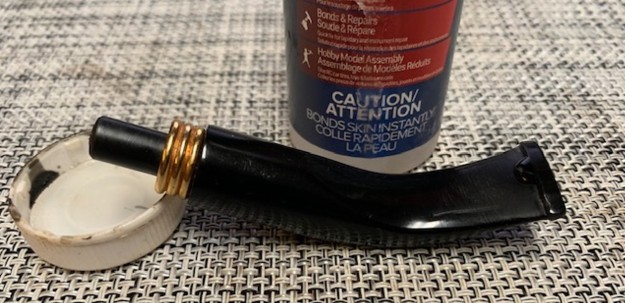
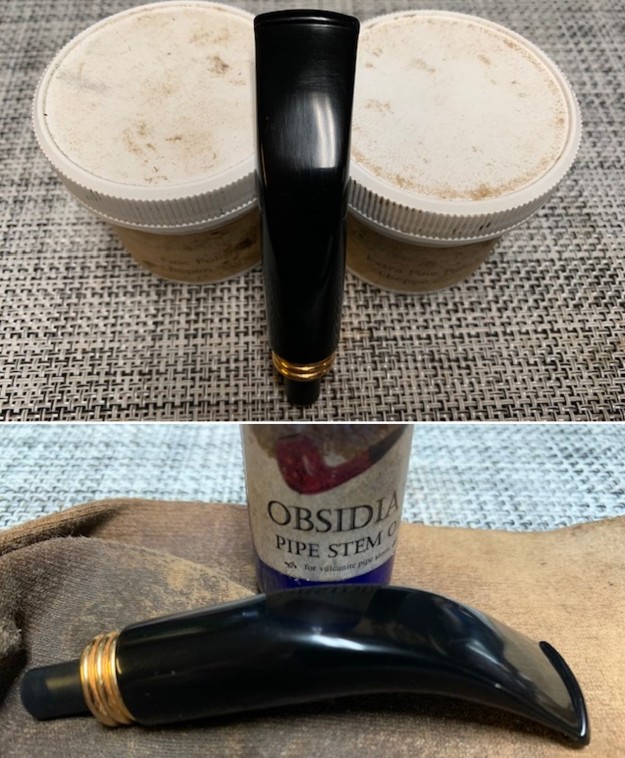
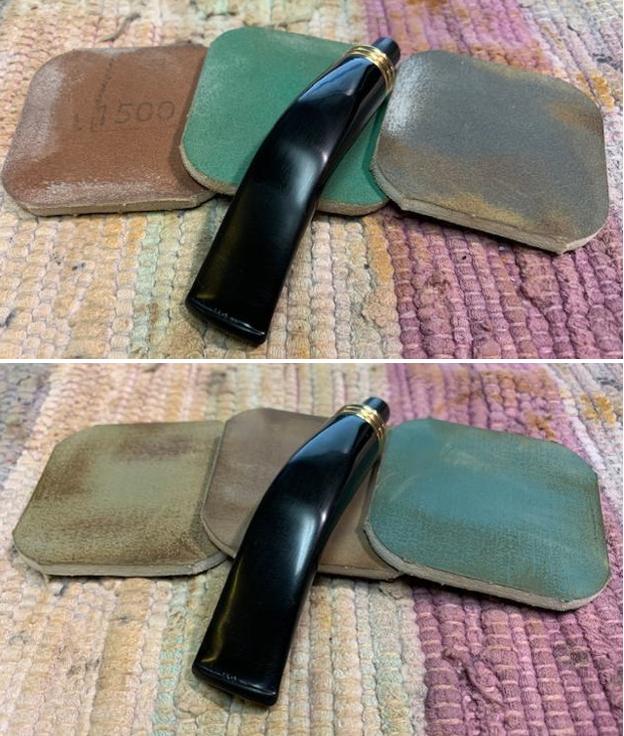
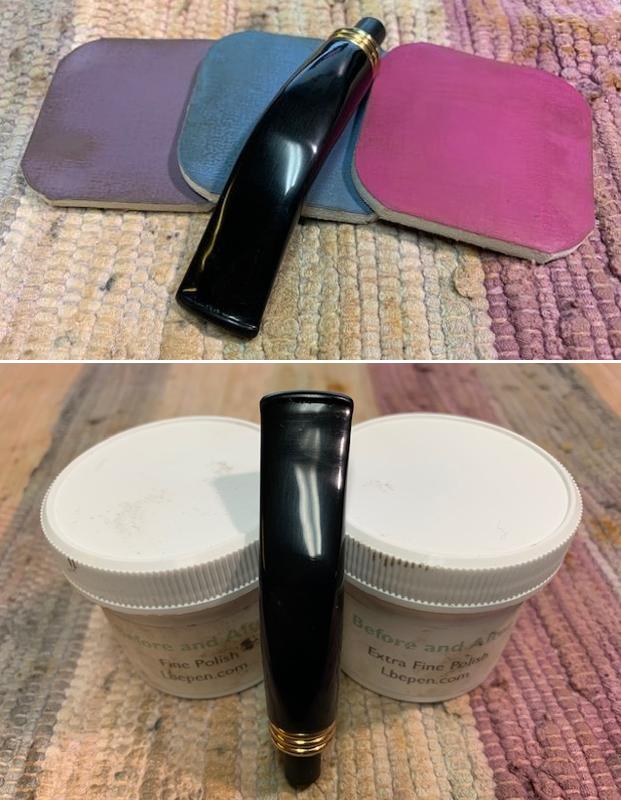
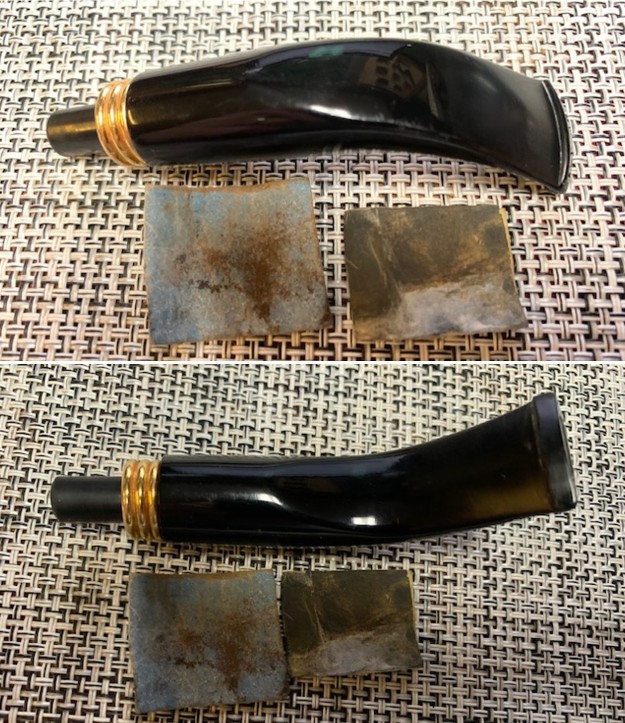 I polished the stem surface with micromesh sanding pads – 1500-12000 grit pads. I wiped it down Obsidian Oil on a cotton cloth. Many say that the Obsidian Oil does nothing on the acrylic but I have found that the product does give some bite to the sanding pads.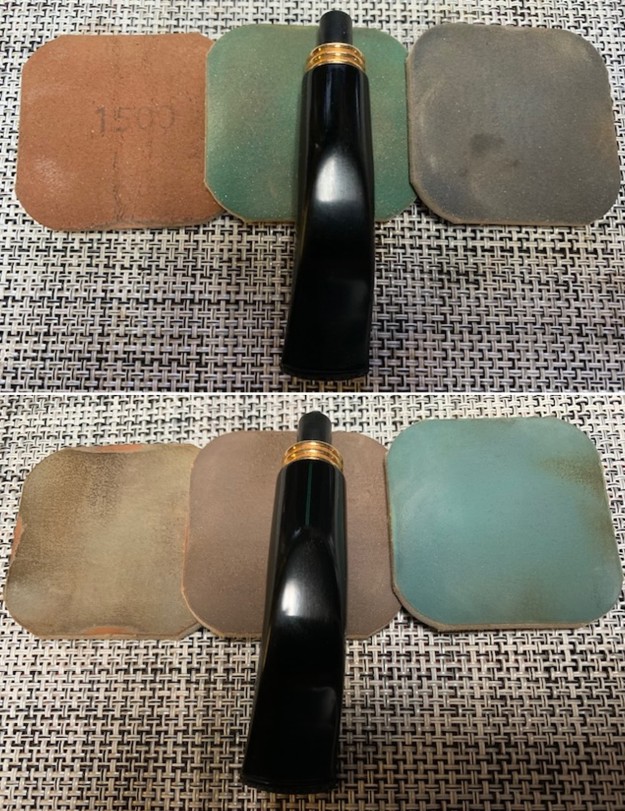
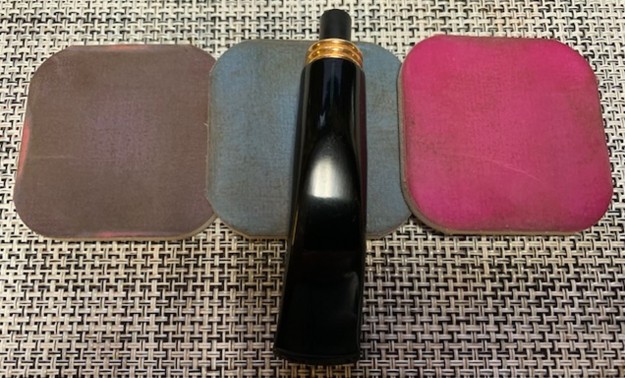 I finished my polishing with Before & After Pipe Stem Polish – both Fine and Extra-Fine polishes. I wiped it down with a final coat of Obsidian Oil and set aside.
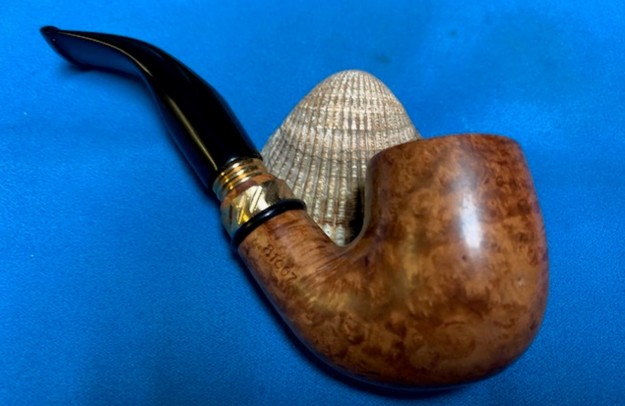
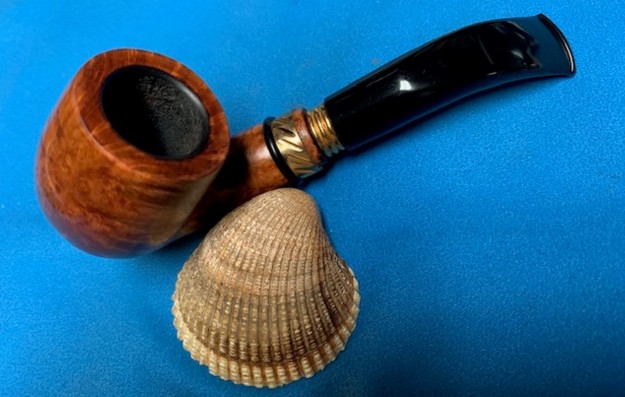
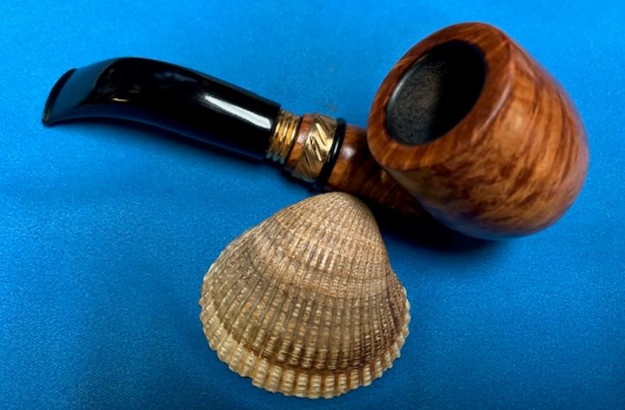
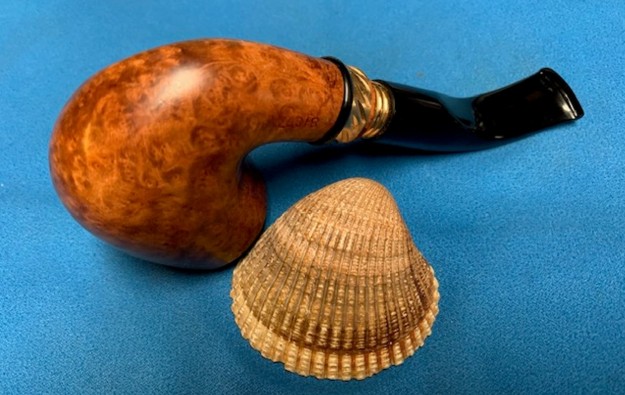
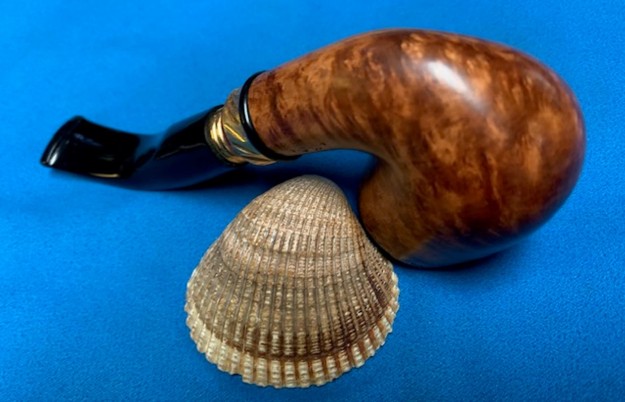
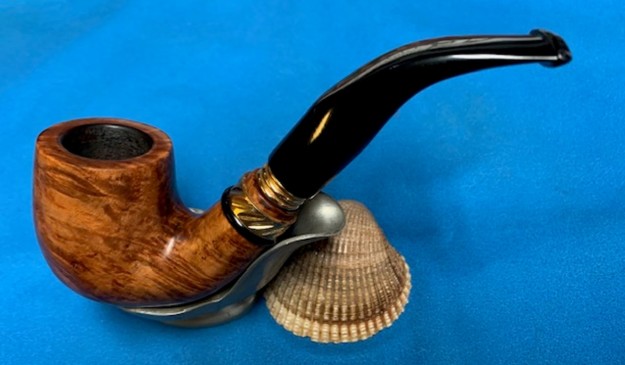
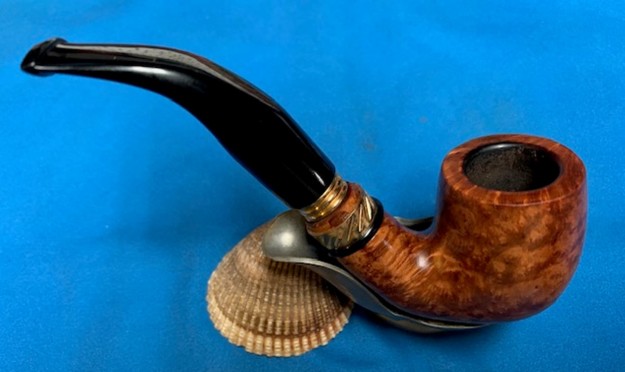
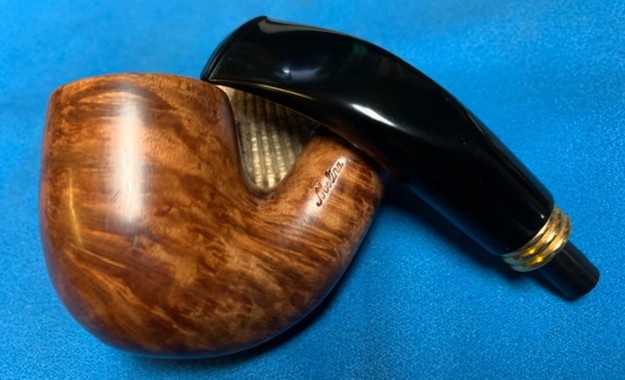
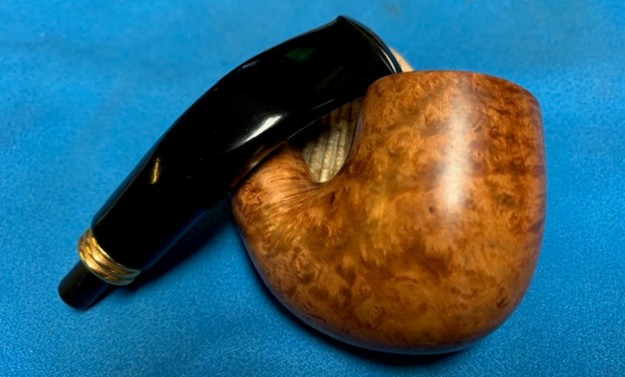
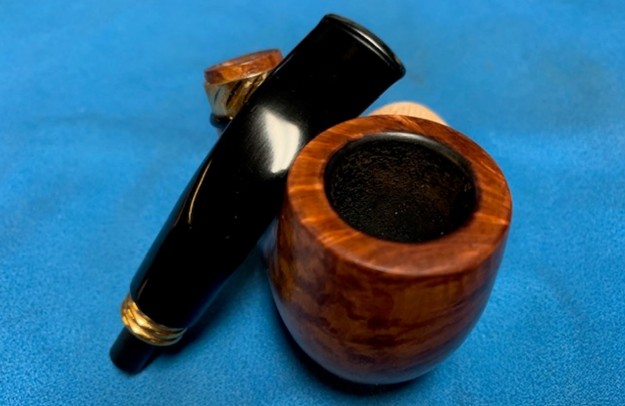
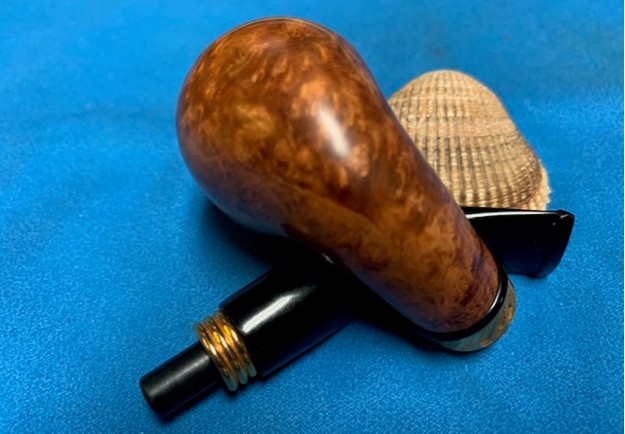
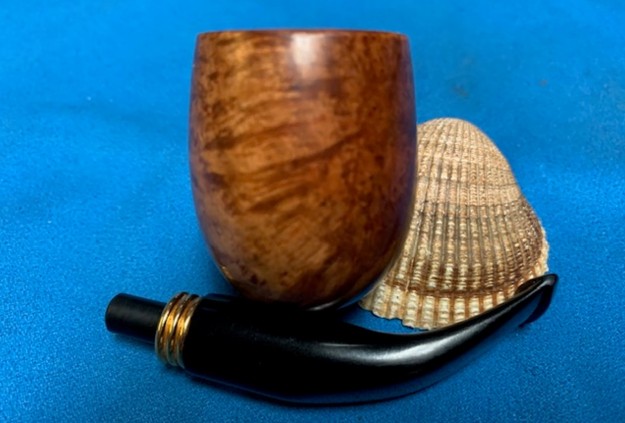
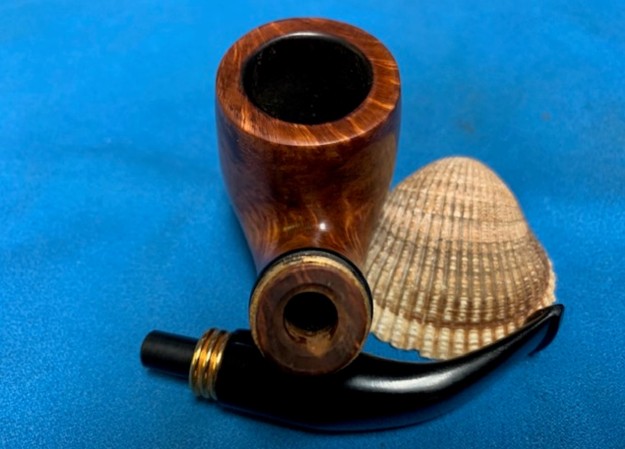
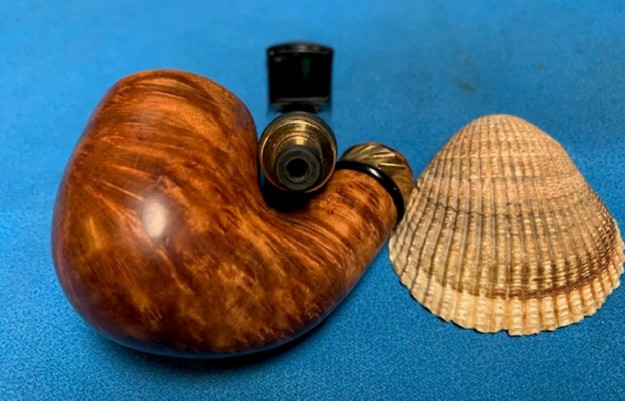
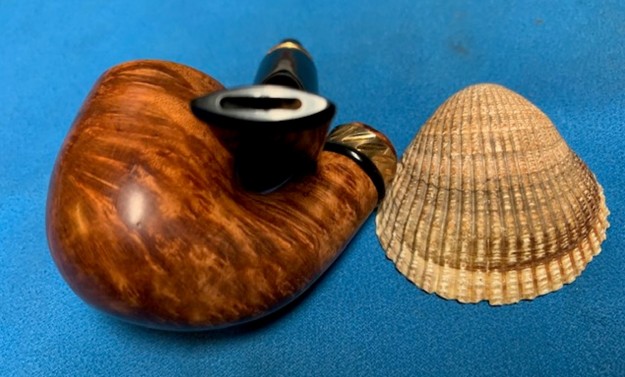
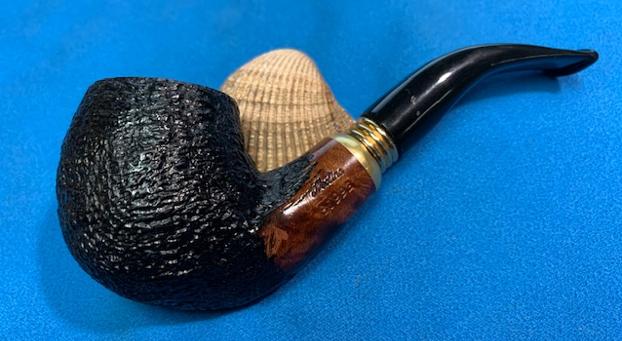
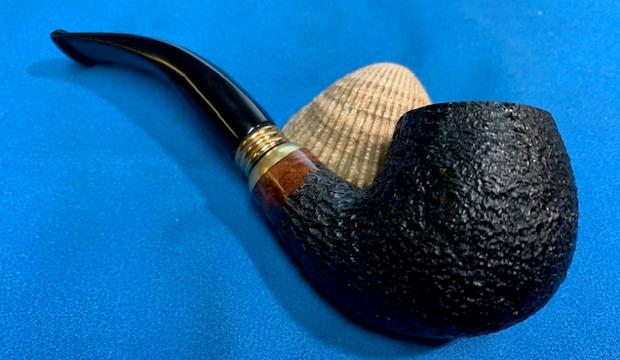
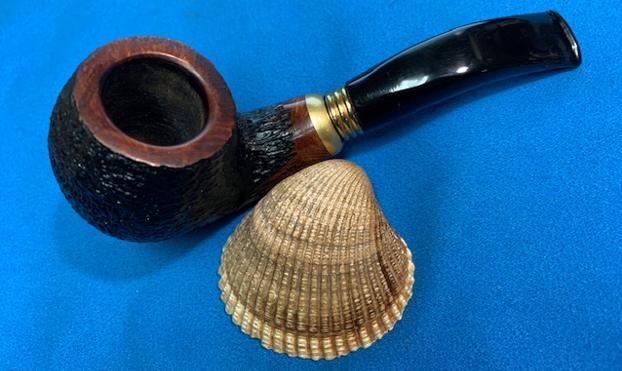
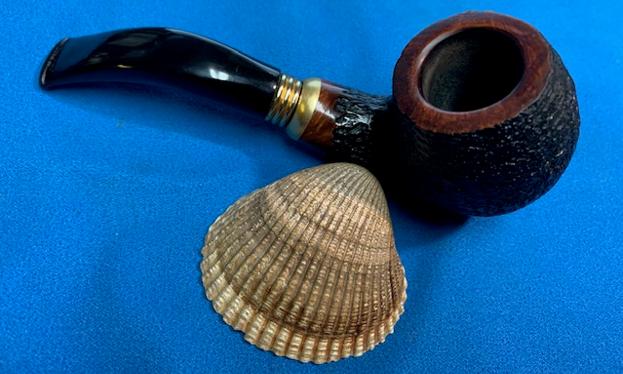
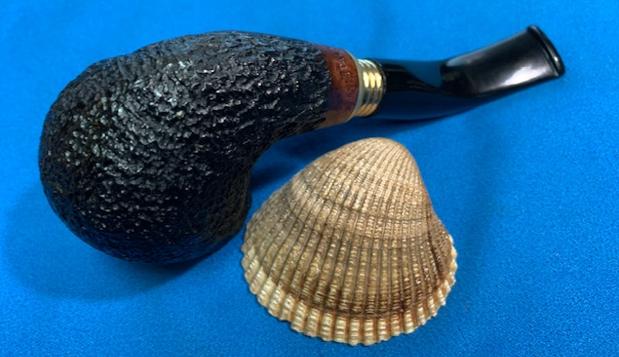
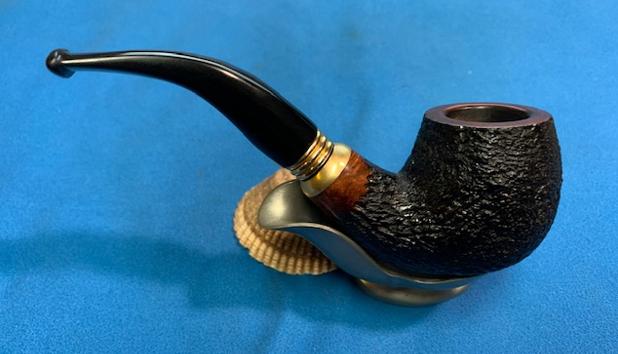
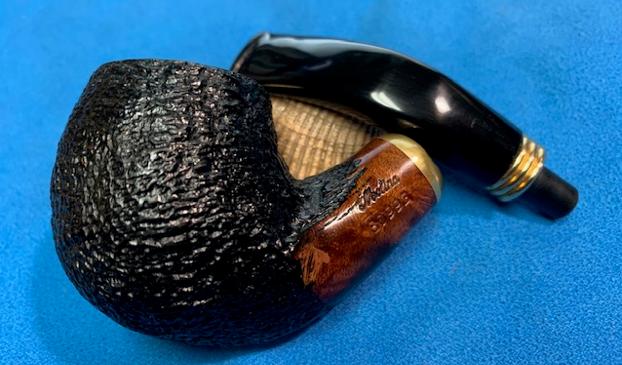
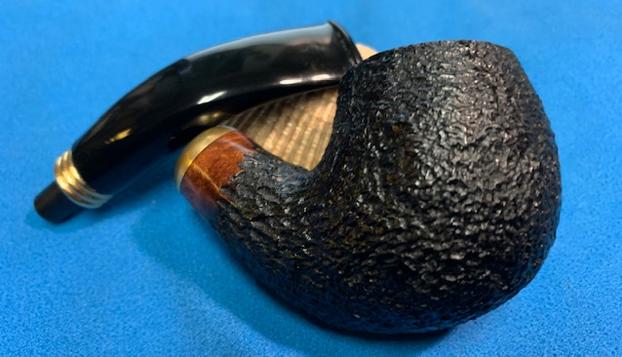
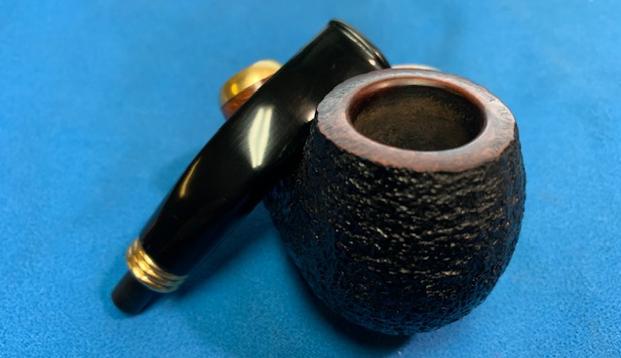
  I am excited to finish restoration of this Molina 81007 Italian Made Bent Billiard. I put the pipe back together and buffed it with Blue Diamond on the buffing wheel. I gave the bowl and the stem multiple coats of carnauba wax. I hand buffed the pipe with a clean buffing pad to raise the shine. It is fun to see what the polished bowl looks like with beautiful mixed grain all around it. I love the look of the polished grain on the pipe with the polished black vulcanite stem. Even with the missing acrylic ring it is a very beautiful looking pipe. This smooth Cross-Grained Molina 81007 Bent Billiard is great looking and the pipe feels great in my hand. It is light and well balanced. Have a look at it with the photos below. The dimensions are Length: 5 ½ inches, Height: 2 inches, Outside diameter of the bowl: 1 ¼ inch, Chamber diameter: 7/8 of an inch. The weight of the pipe is 62 grams/2.19 ounces. It turned out to be a beautiful pipe. I will be putting it on the rebornpipes store in the Italian Pipemakers Section soon. If you are interested in adding it to your collection let me know. Thanks for reading this blog and my reflections on the pipe while I worked on it.
As always, I encourage your questions and comments as you read the blog. Thanks to each of you who are reading this blog. Remember we are not pipe owners; we are pipe men and women who hold our pipes in trust until they pass on into the trust of those who follow us.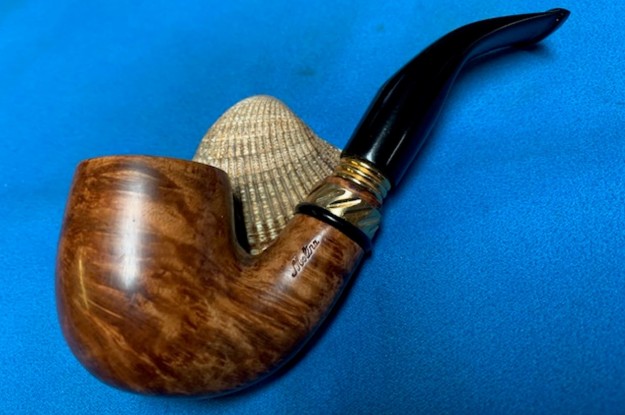



 rebornpipes