Tag Archives: Marxman Jumbo pipes

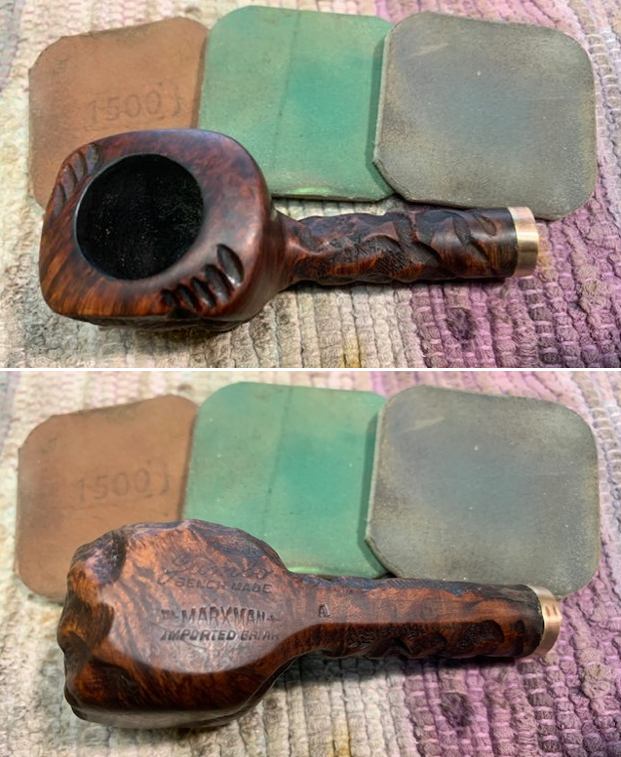
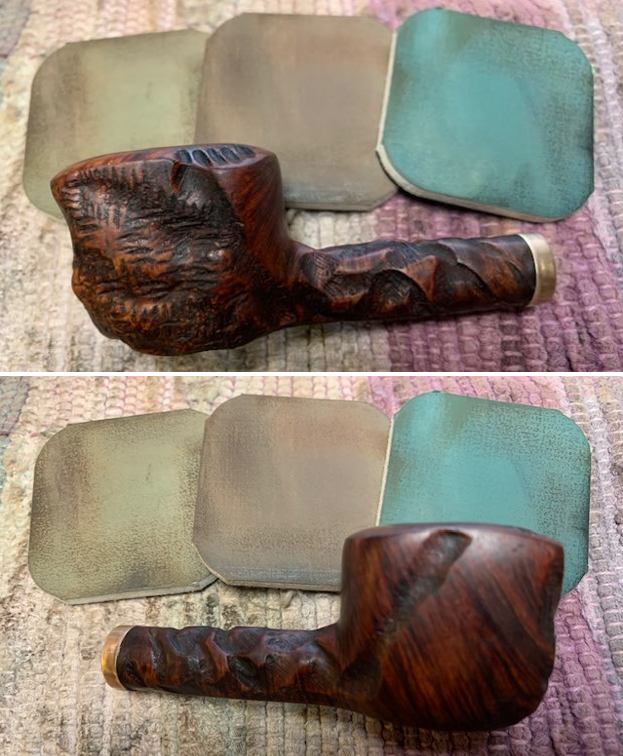
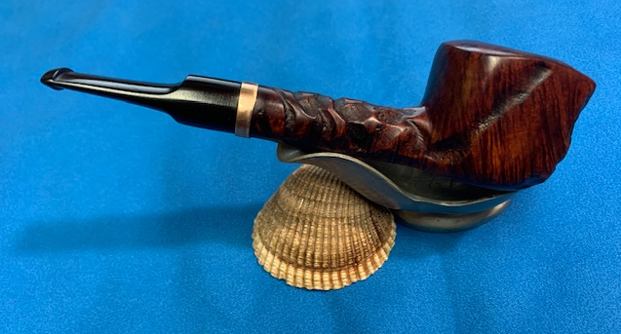
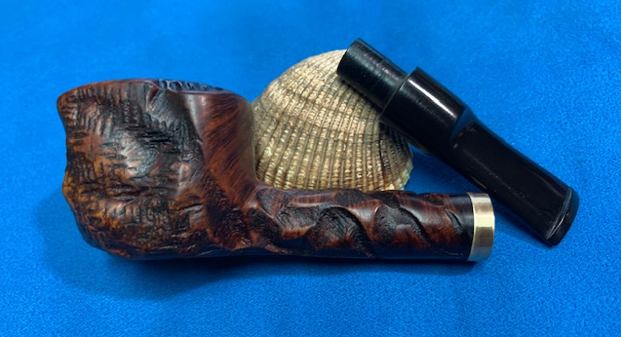
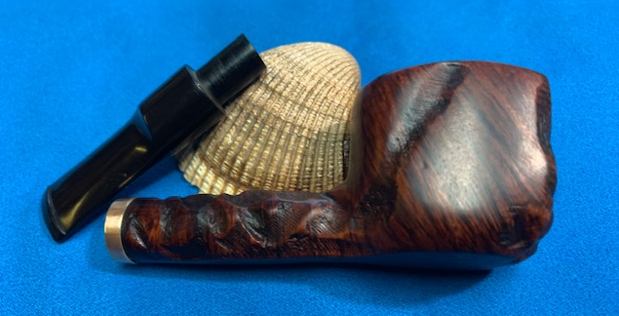
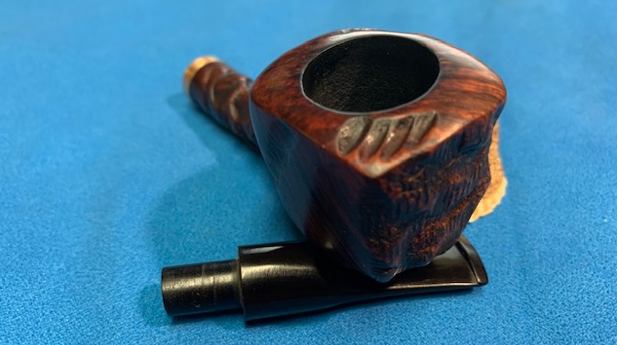
Restoring a Marxman Jumbo C Long Apple that Combines Rustication and Smooth Finishes


by Steve Laug

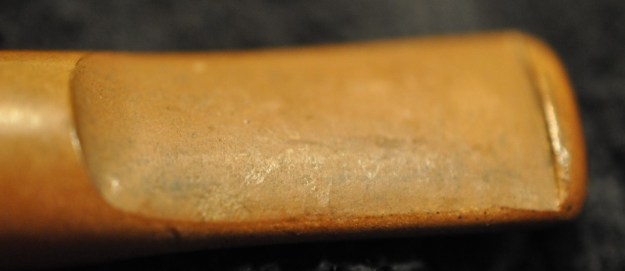
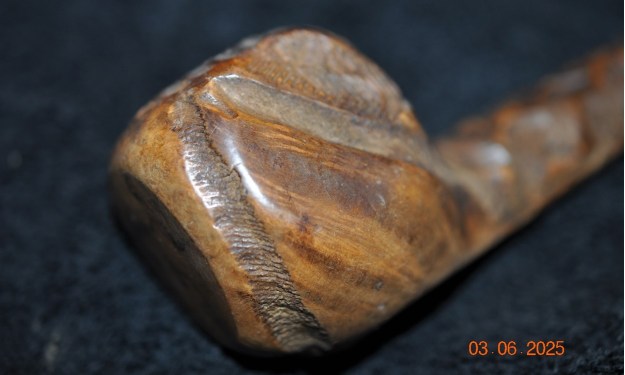
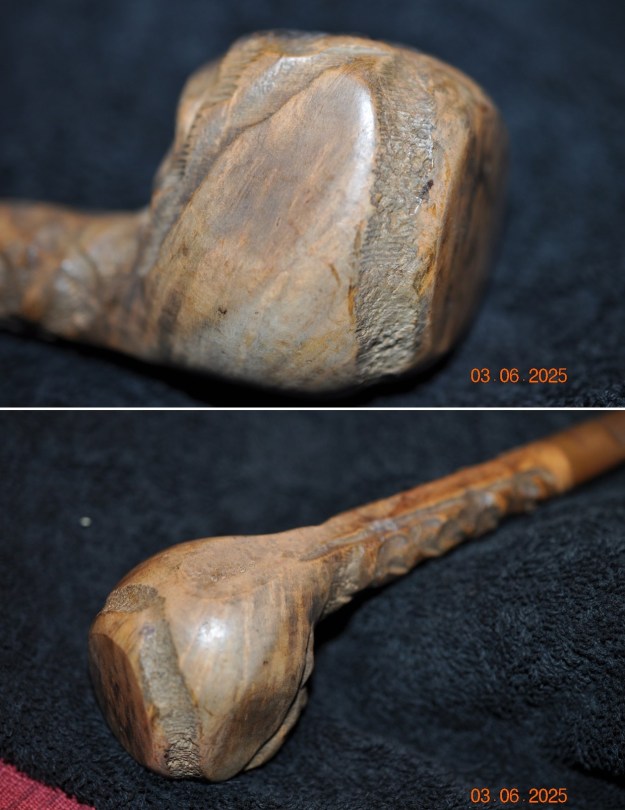
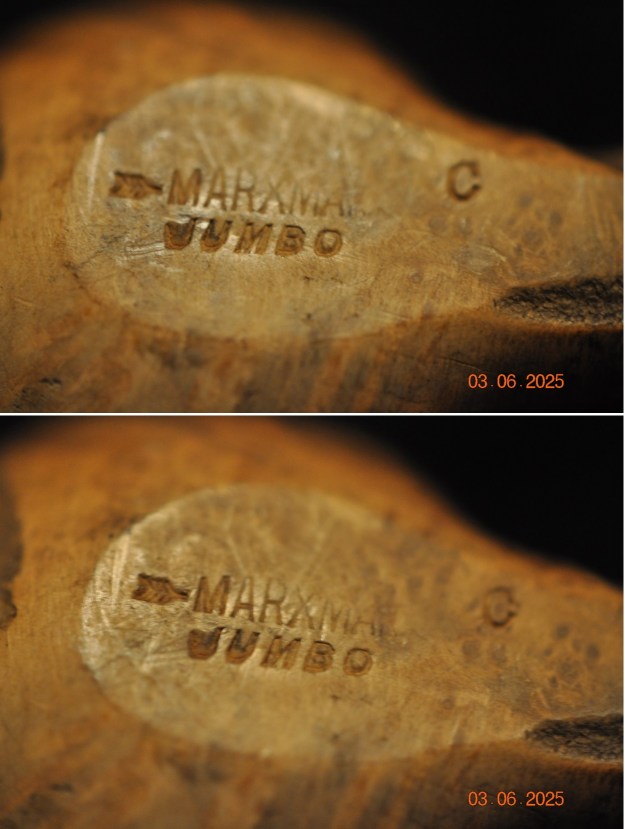
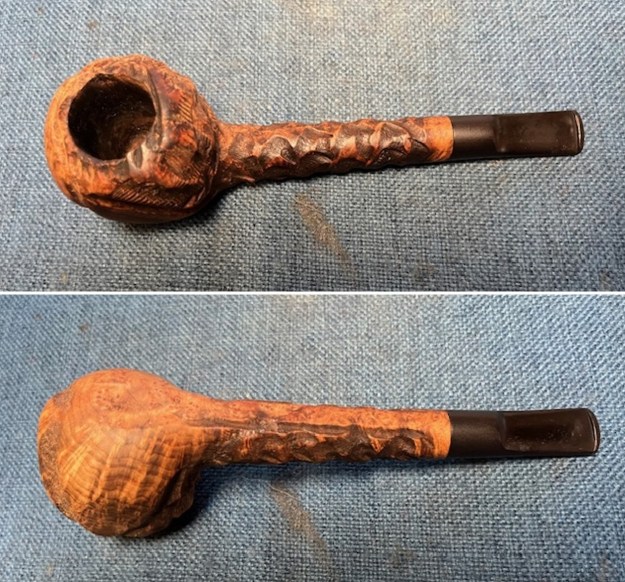
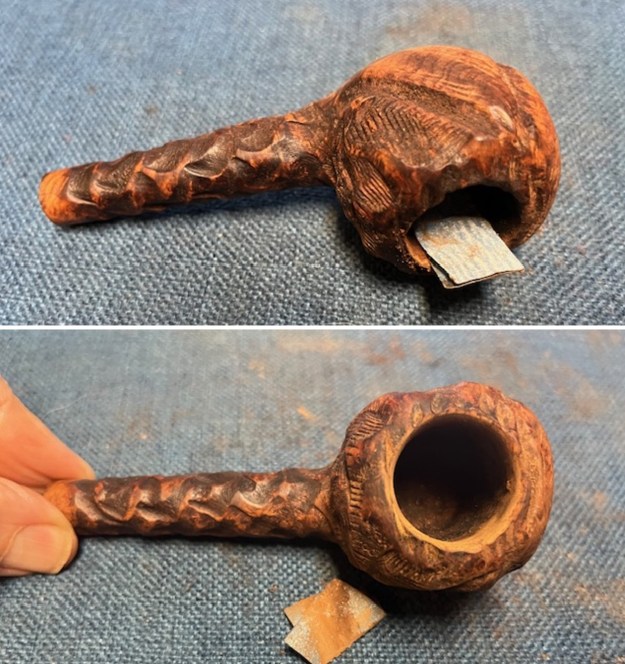
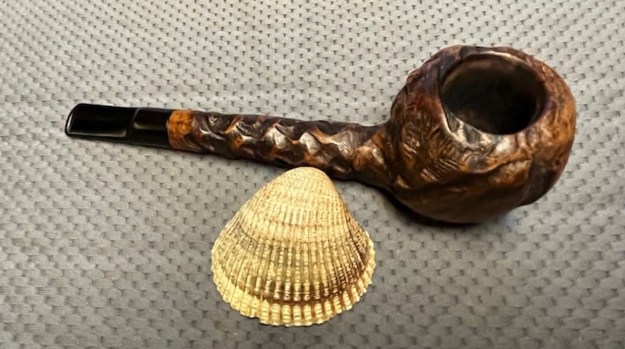
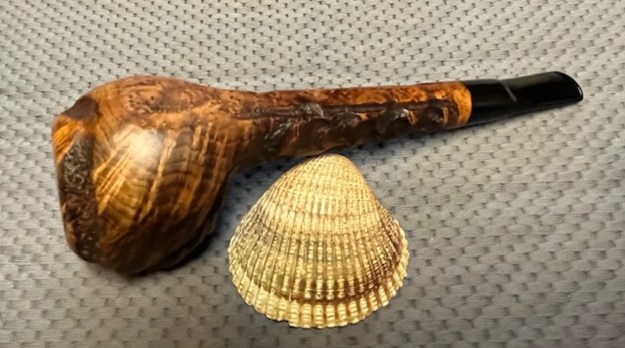
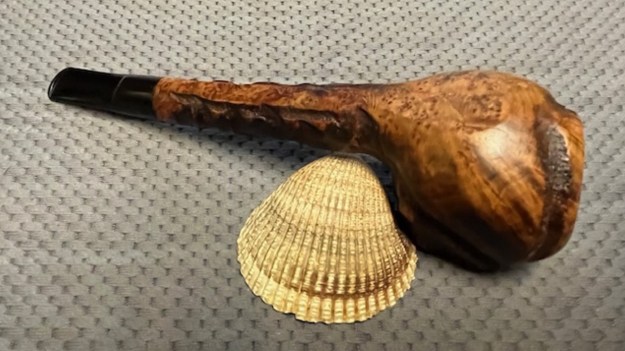
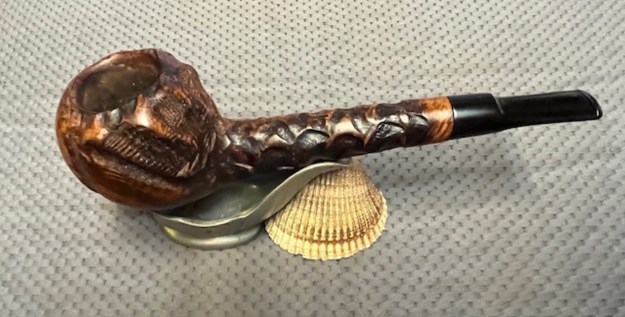
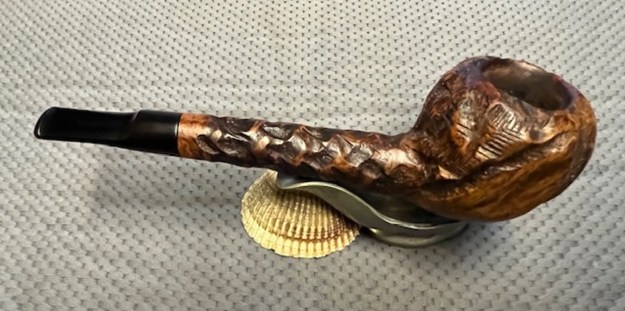
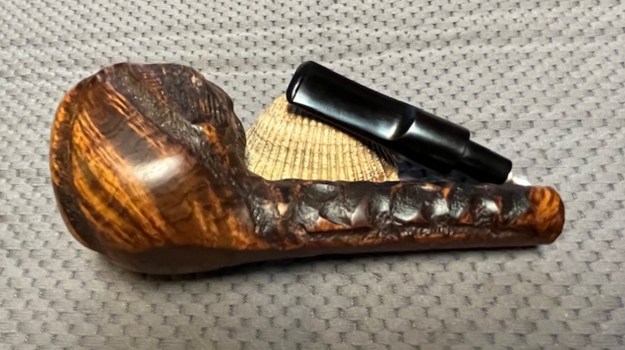
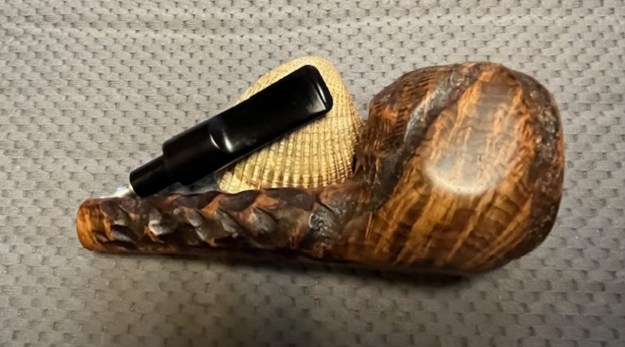
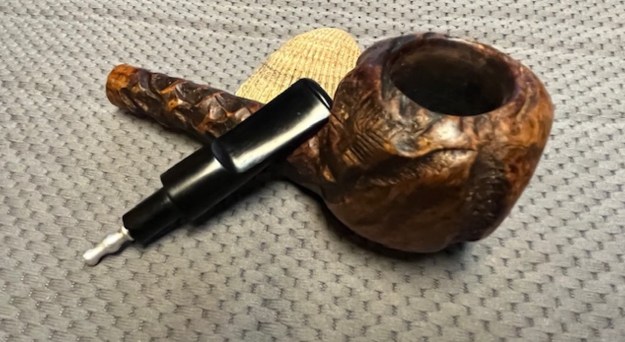
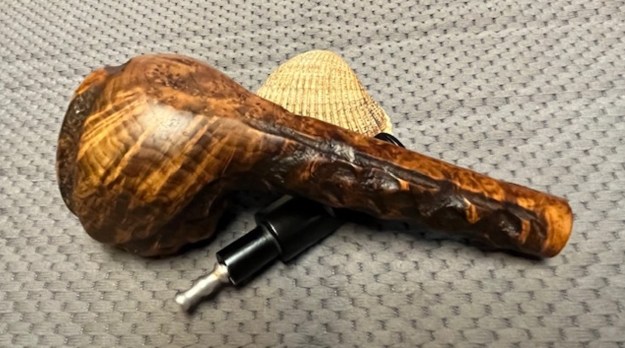
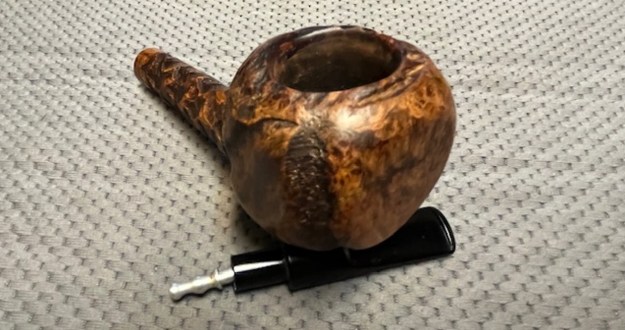
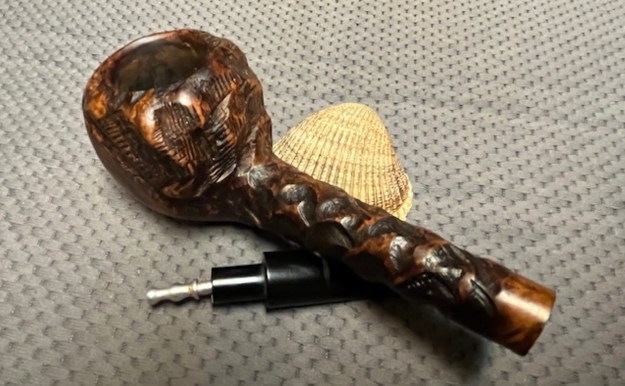
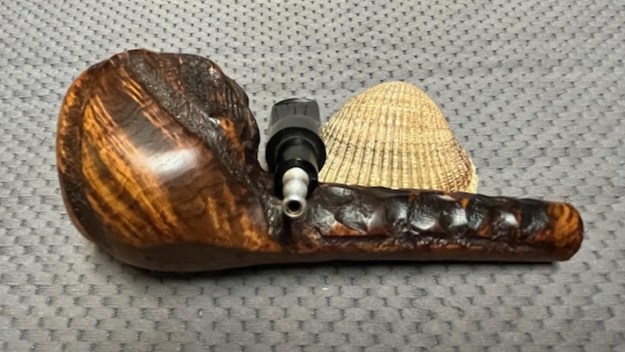
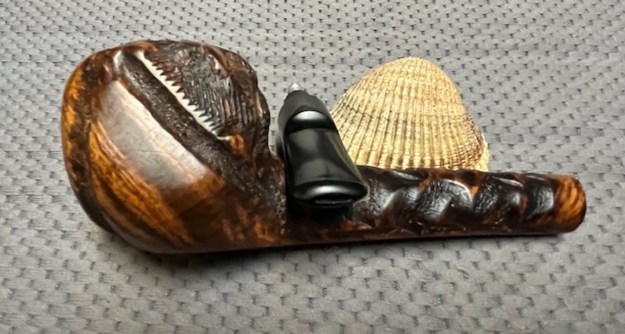
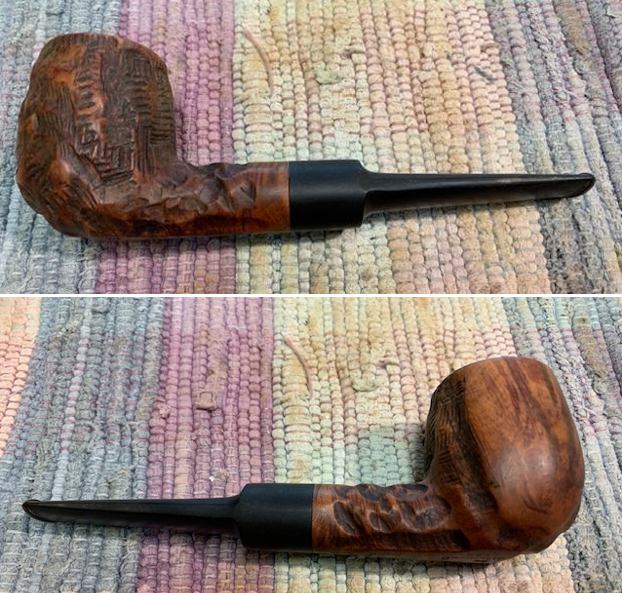
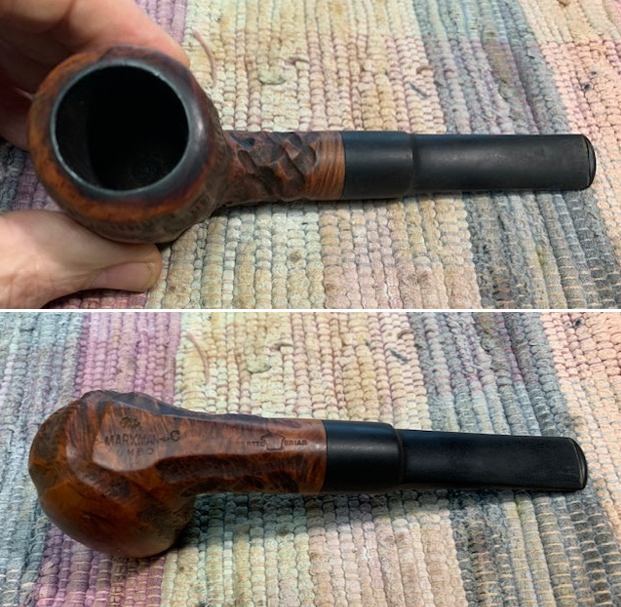
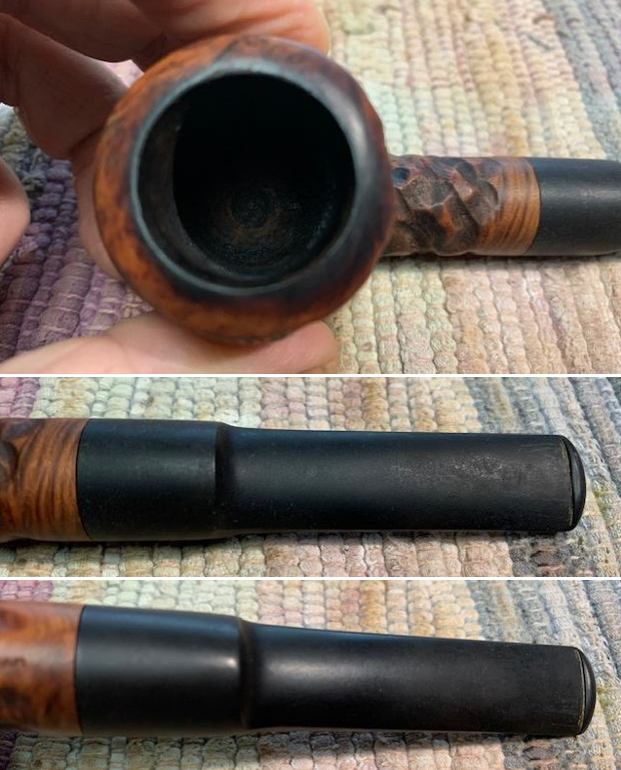
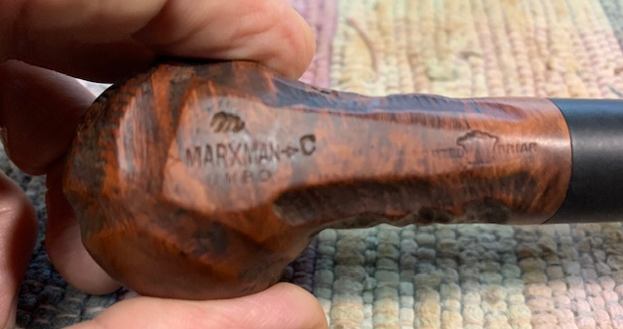
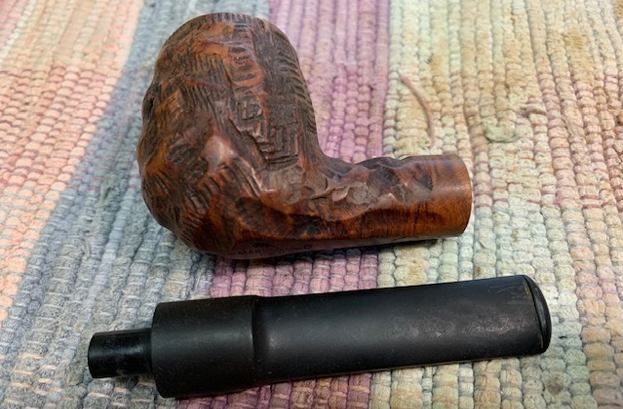
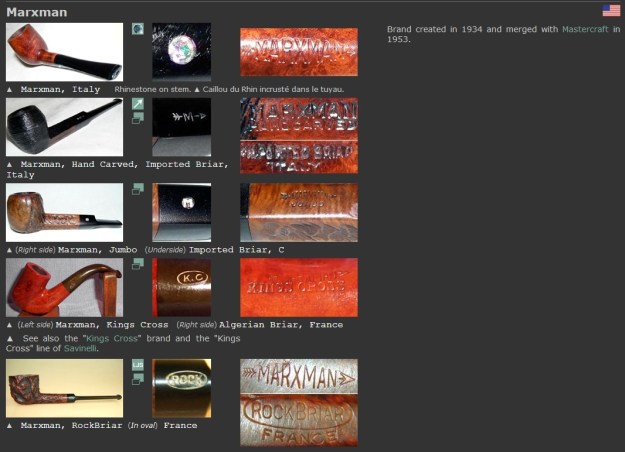
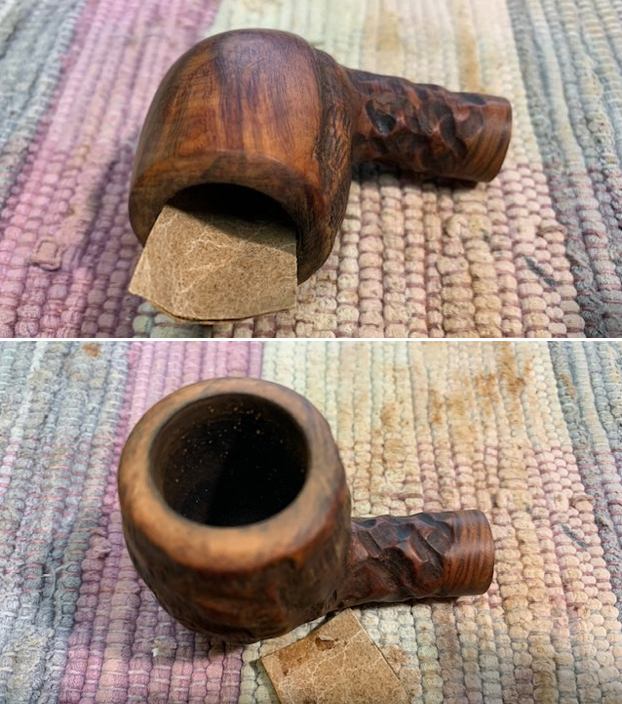
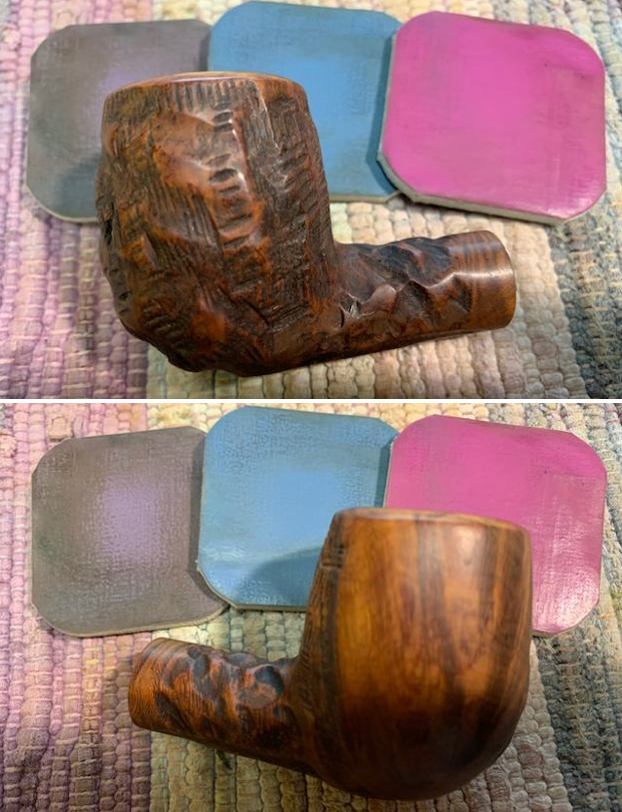
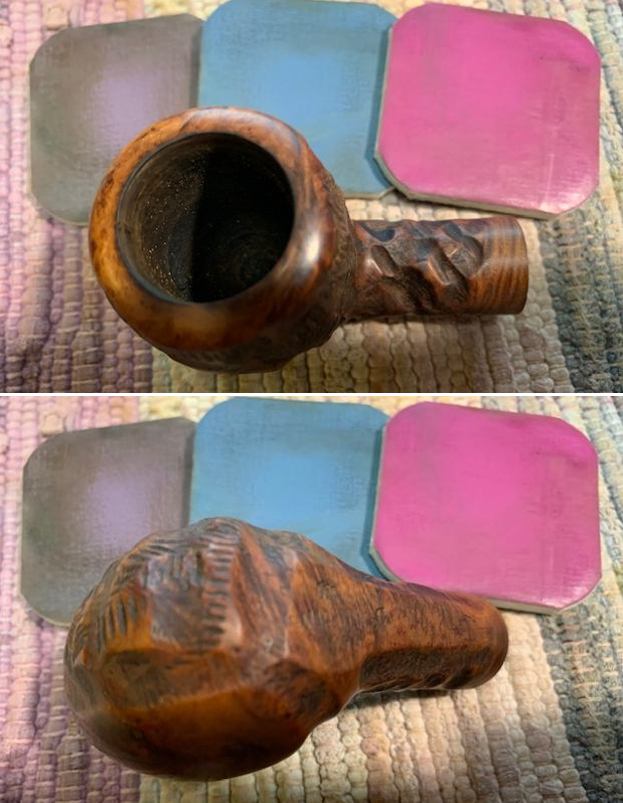
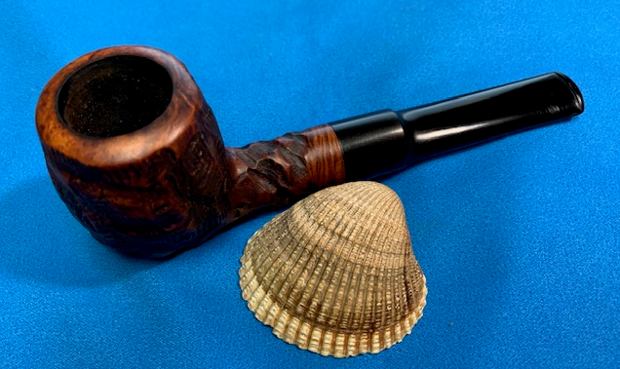
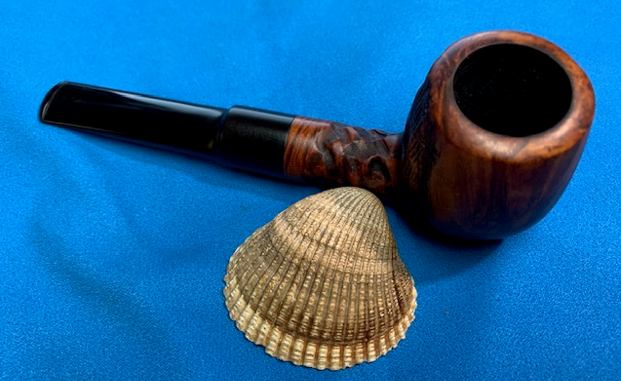
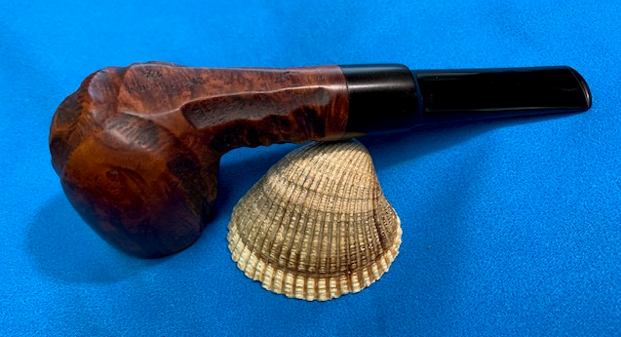
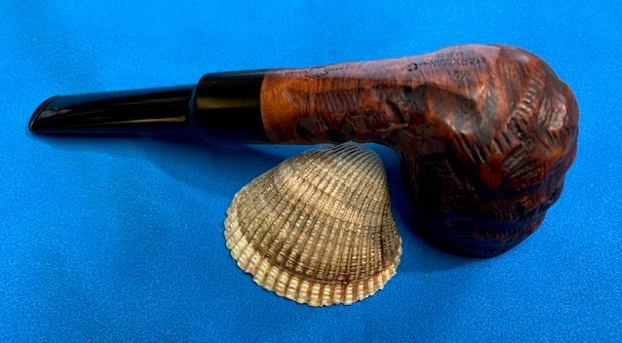
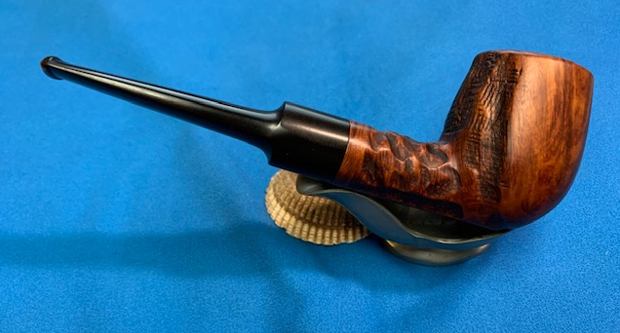
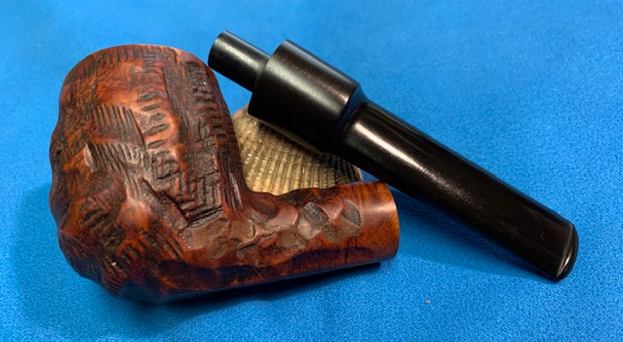
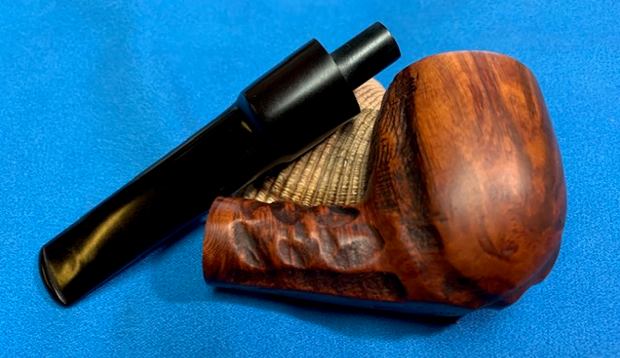
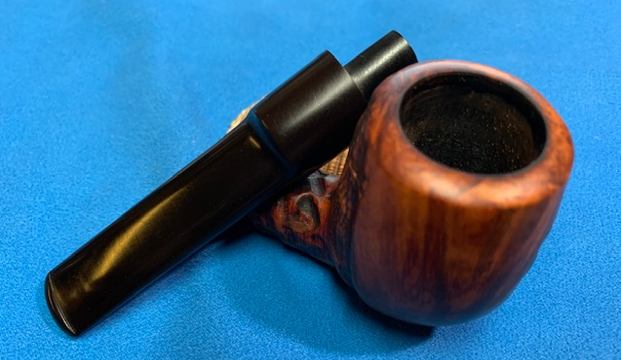
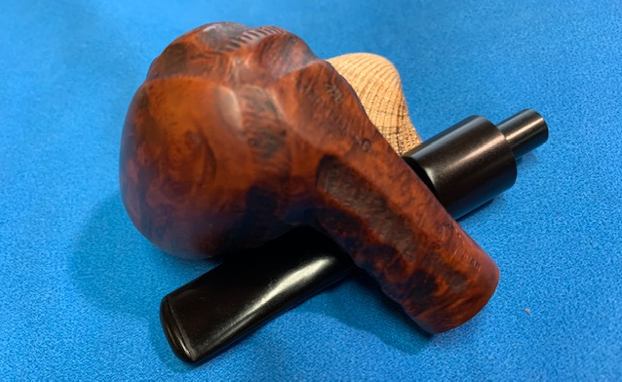
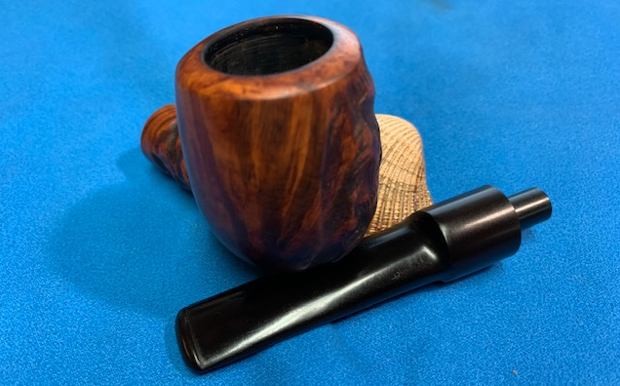
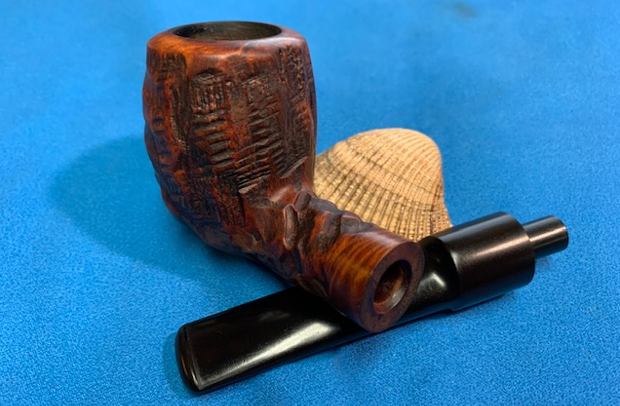
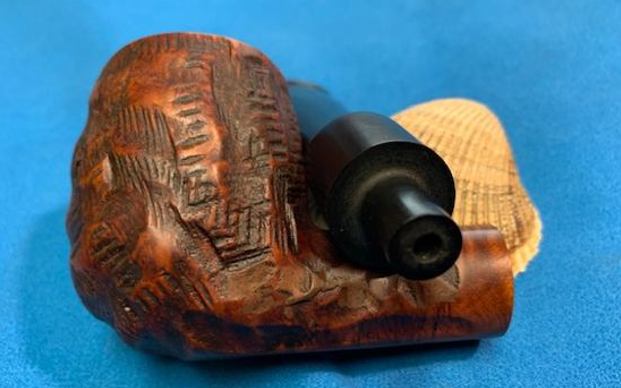
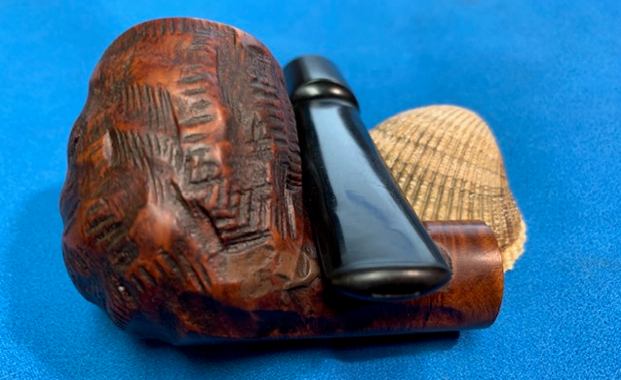
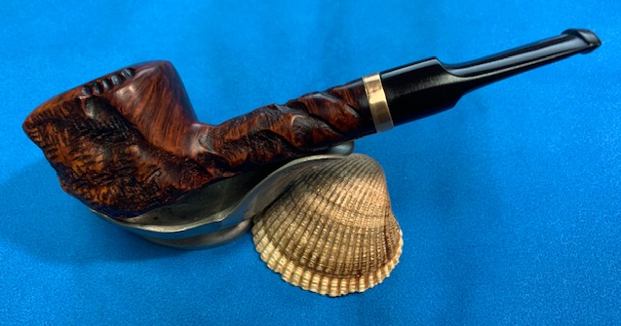
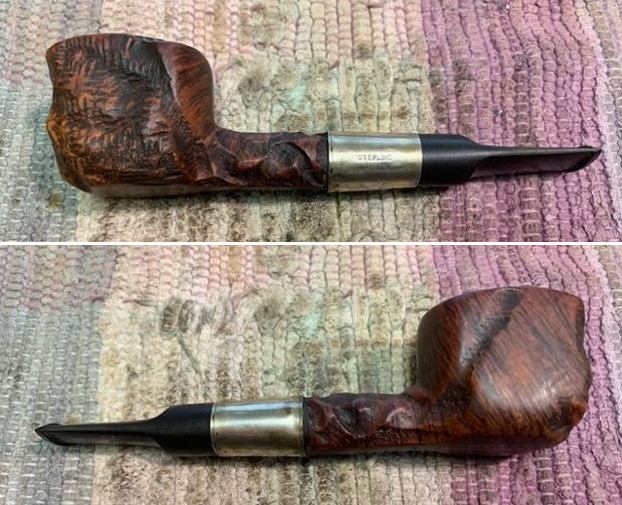
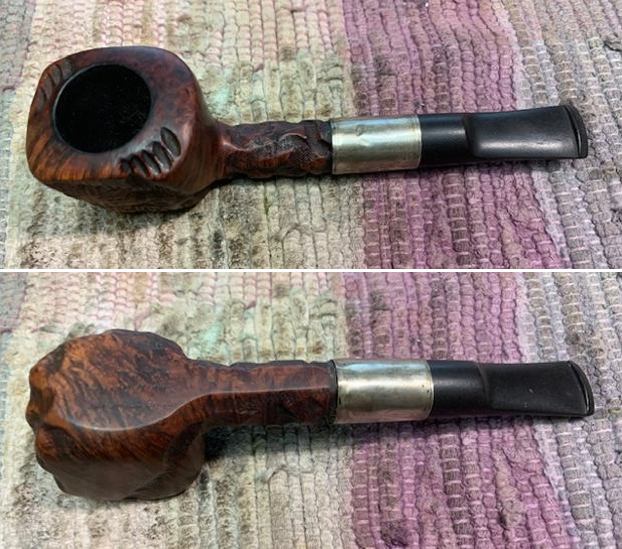
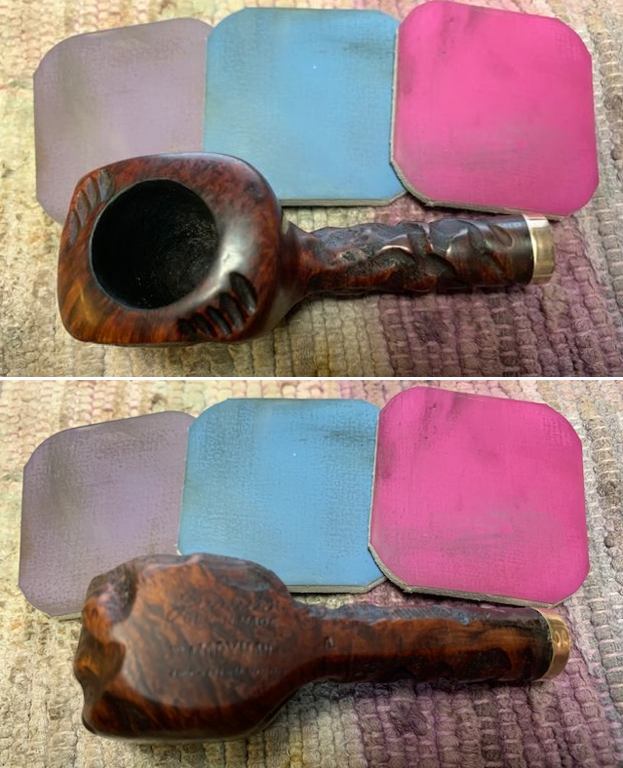
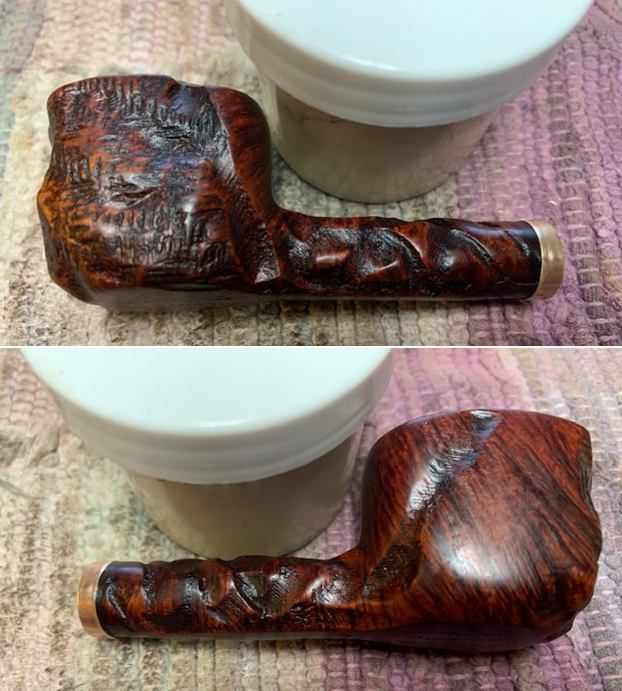
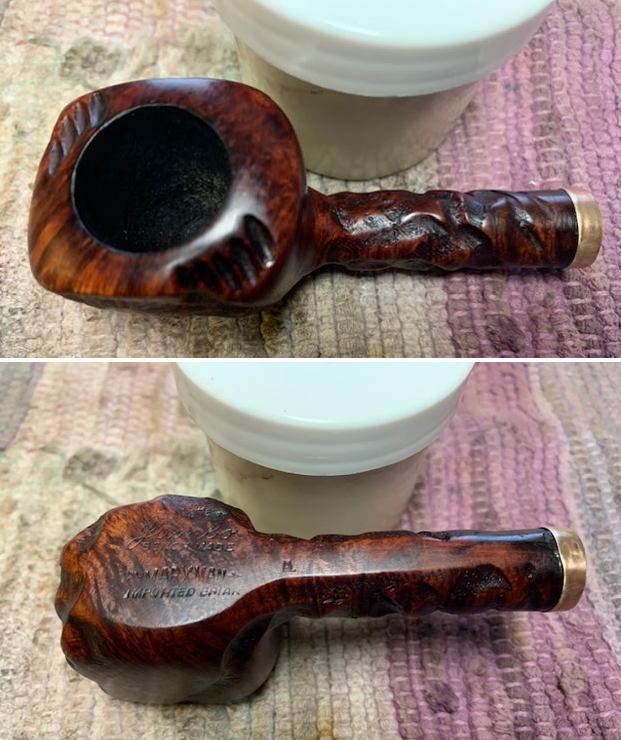
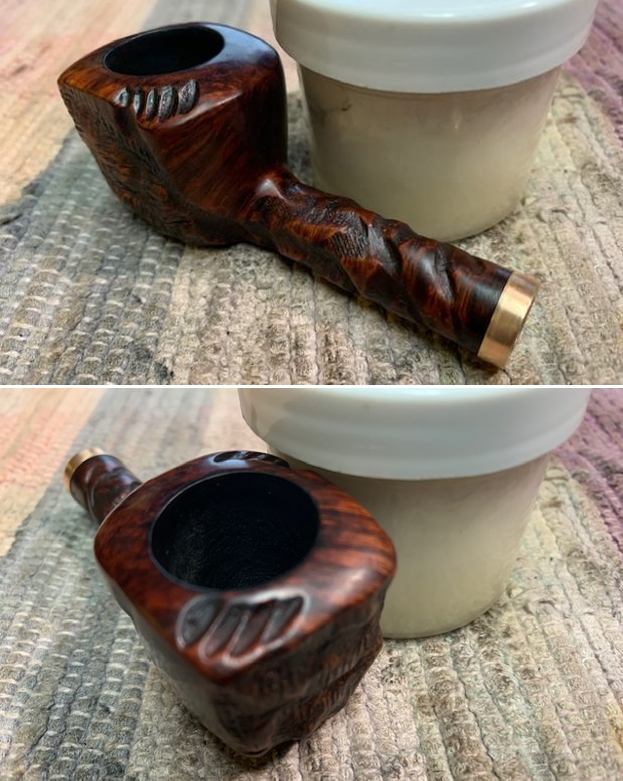
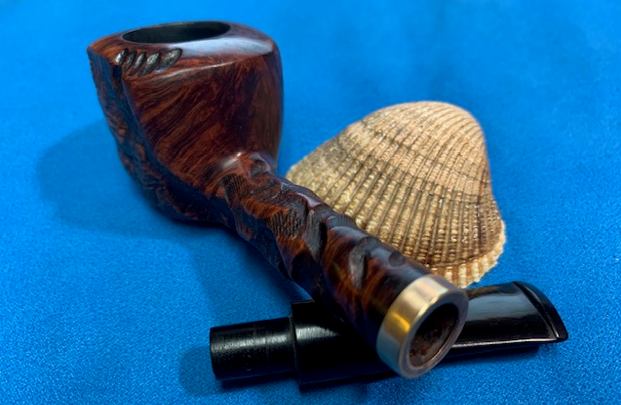
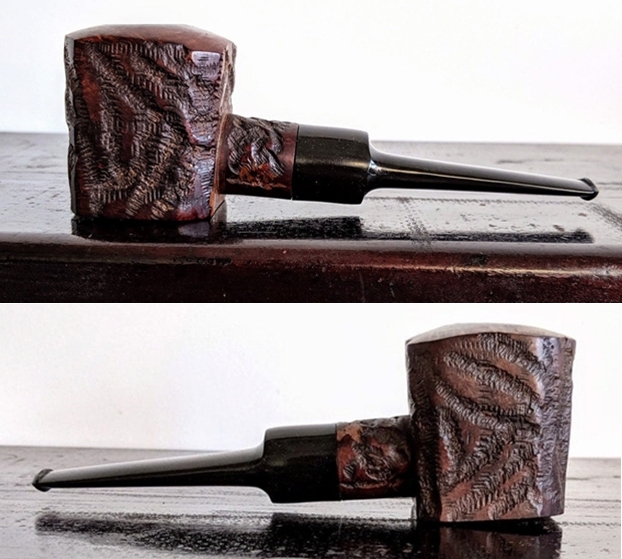
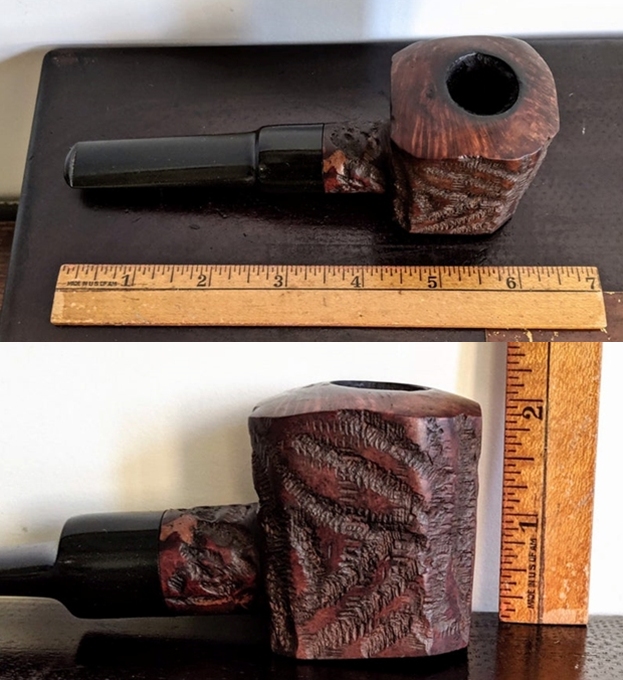
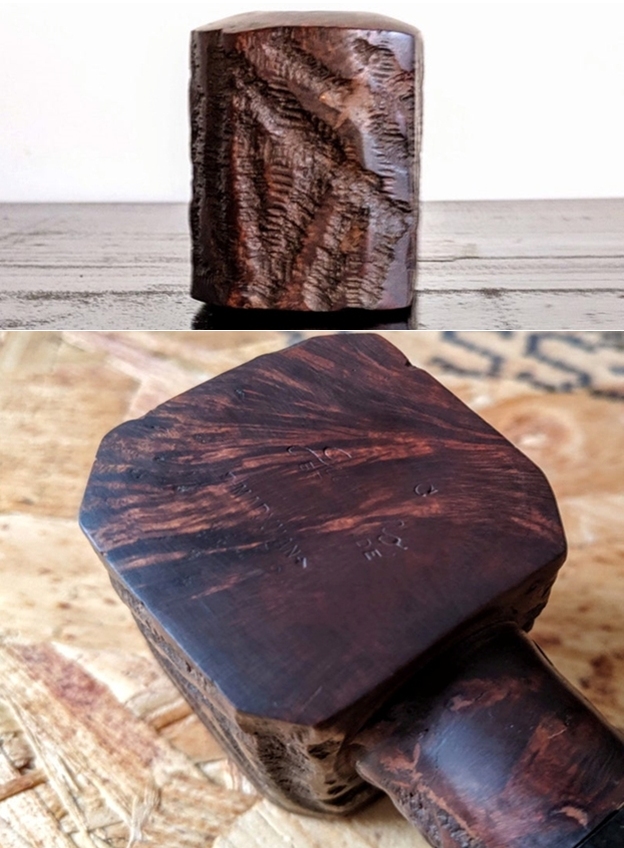
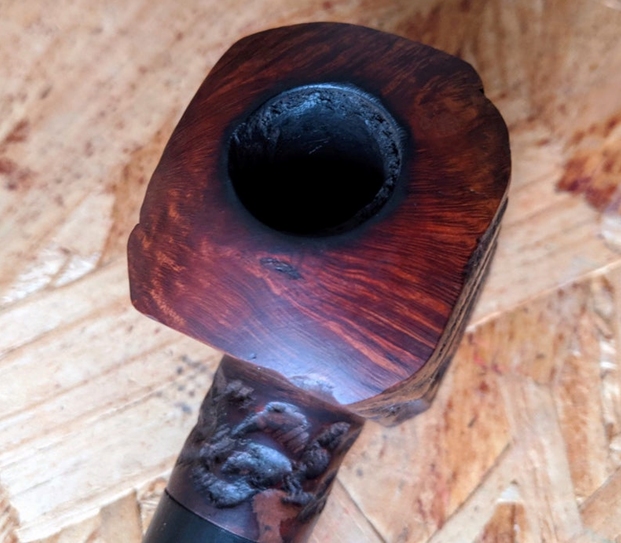
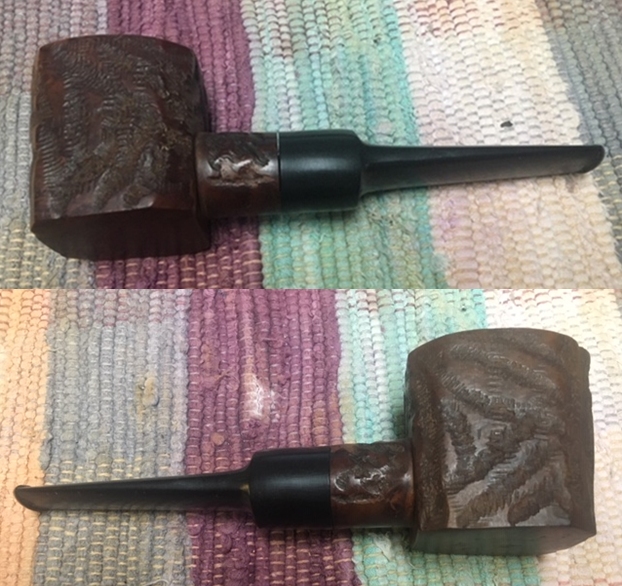
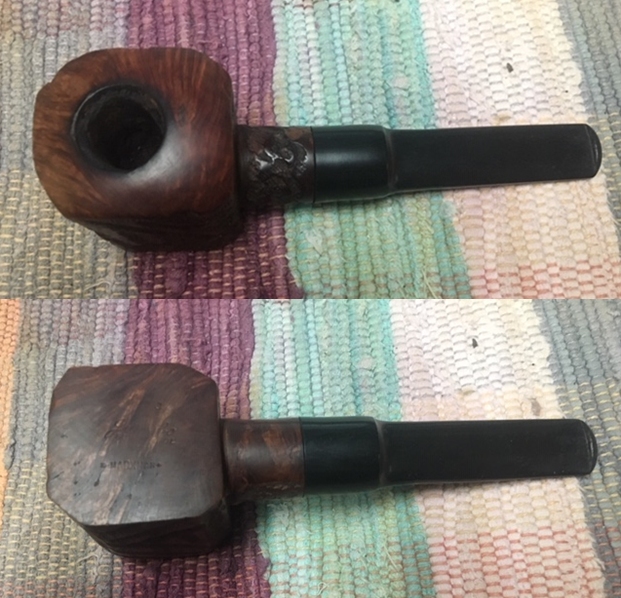
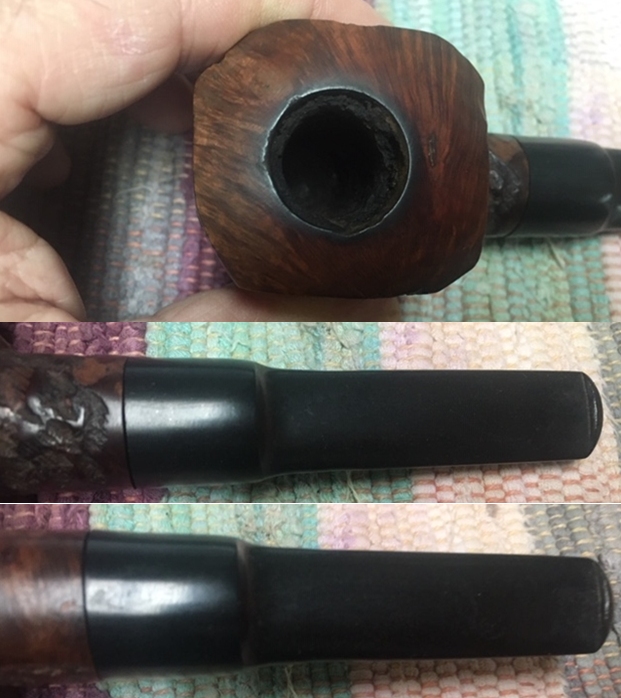
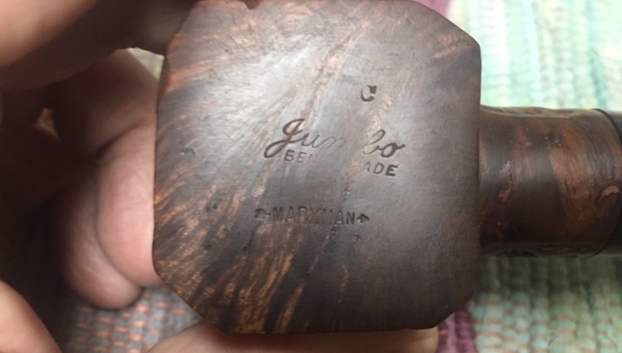
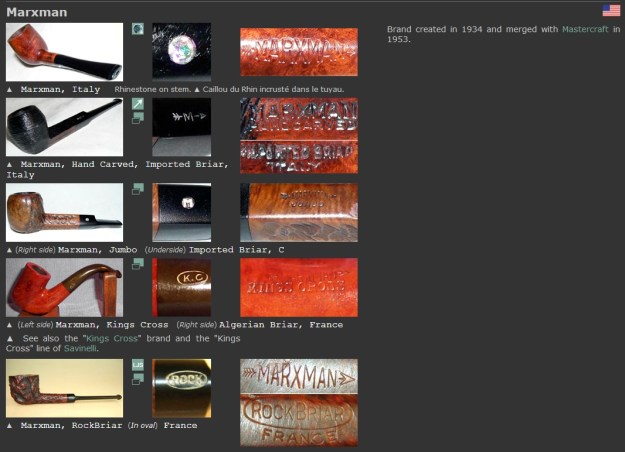
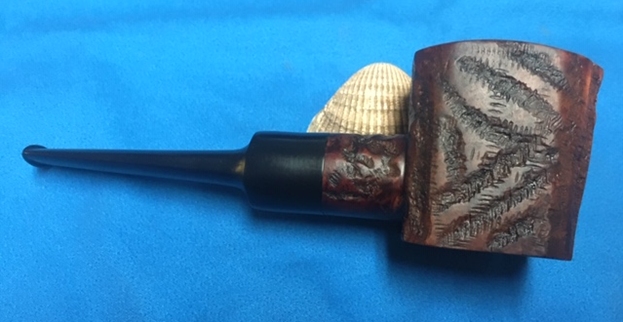
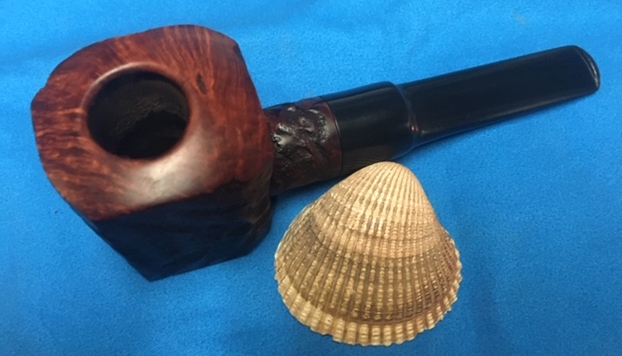
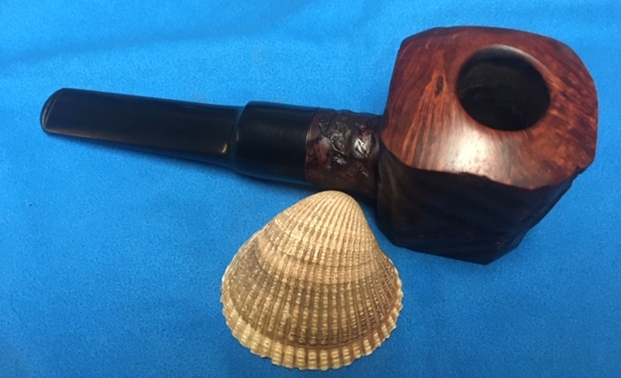
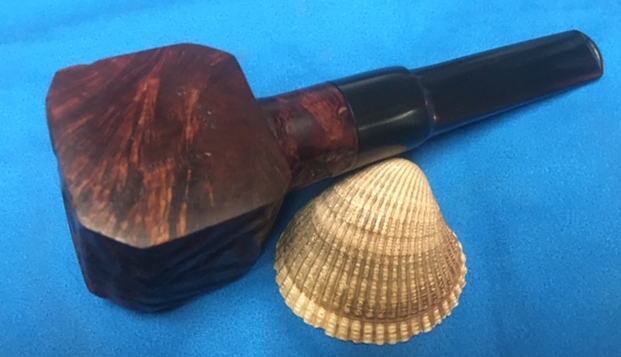
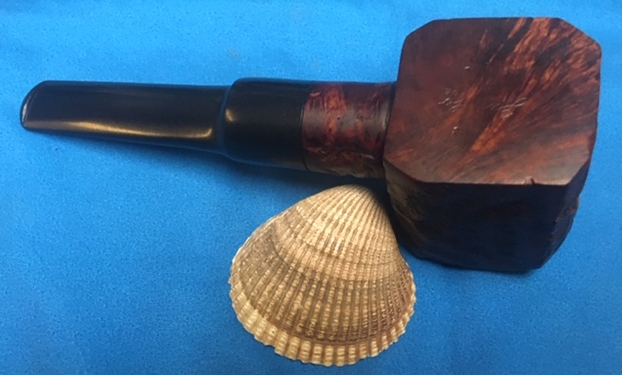
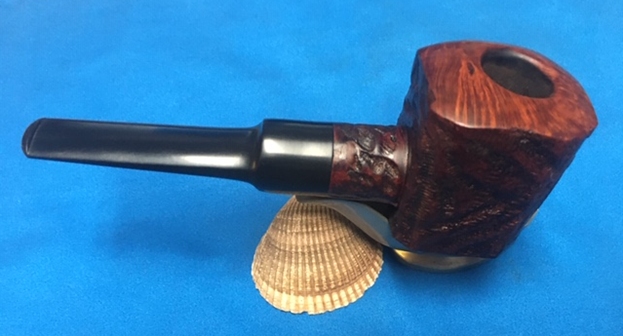
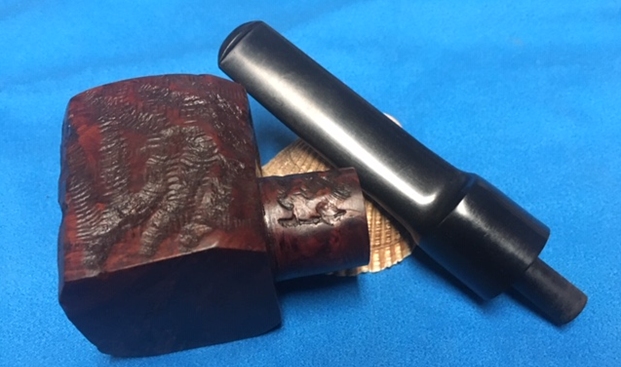
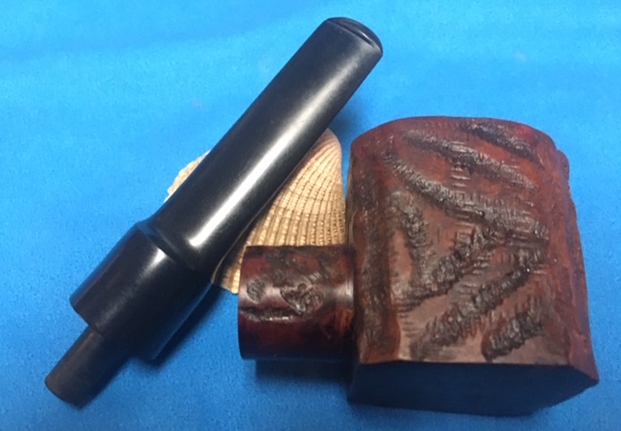
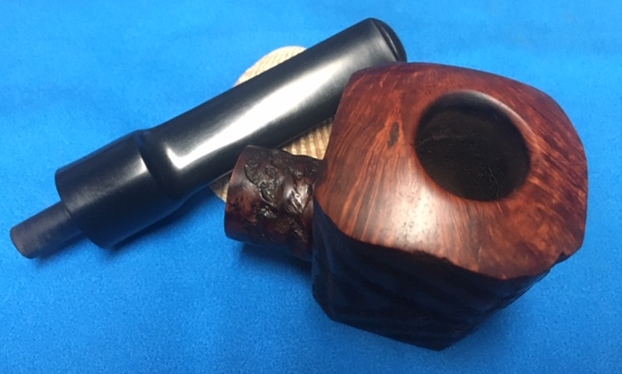
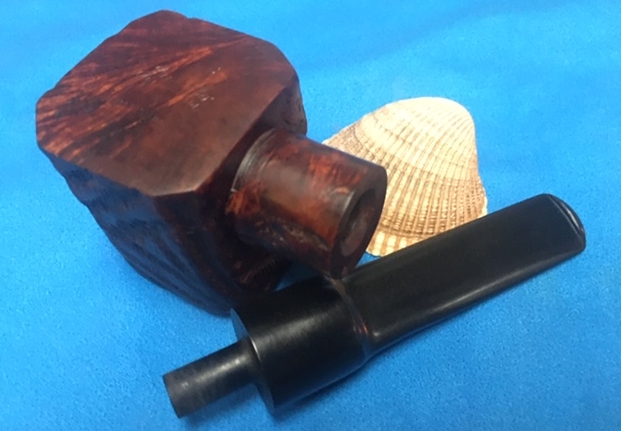
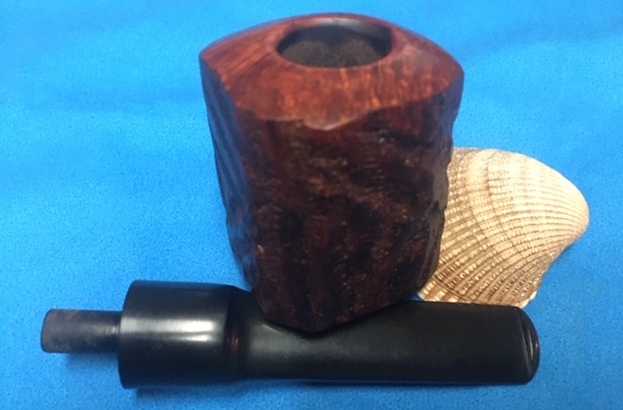
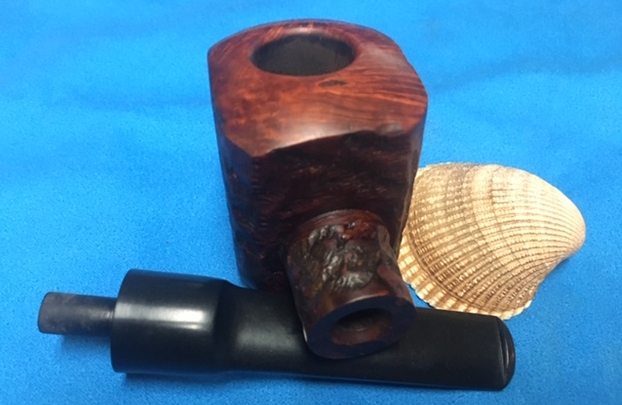
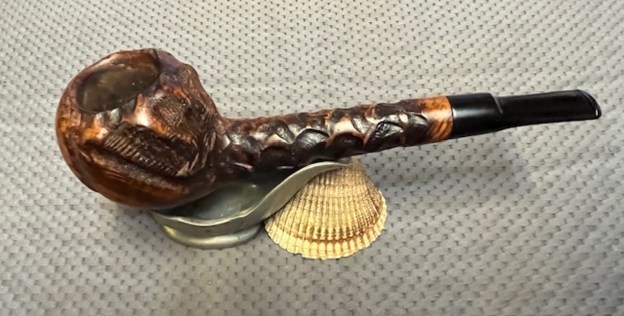
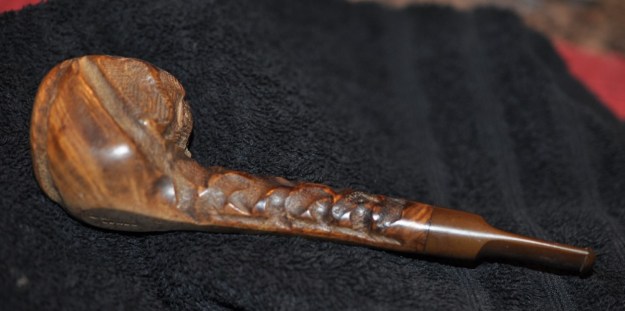
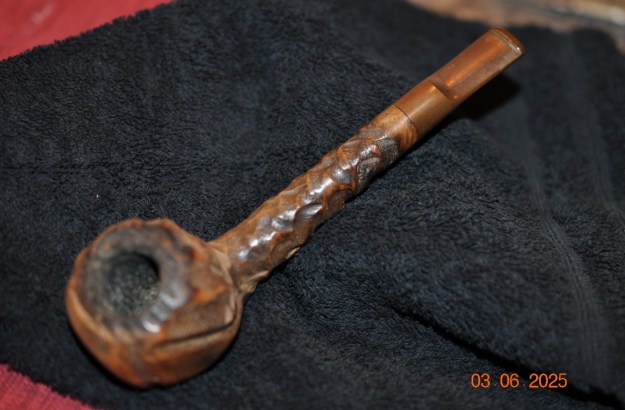
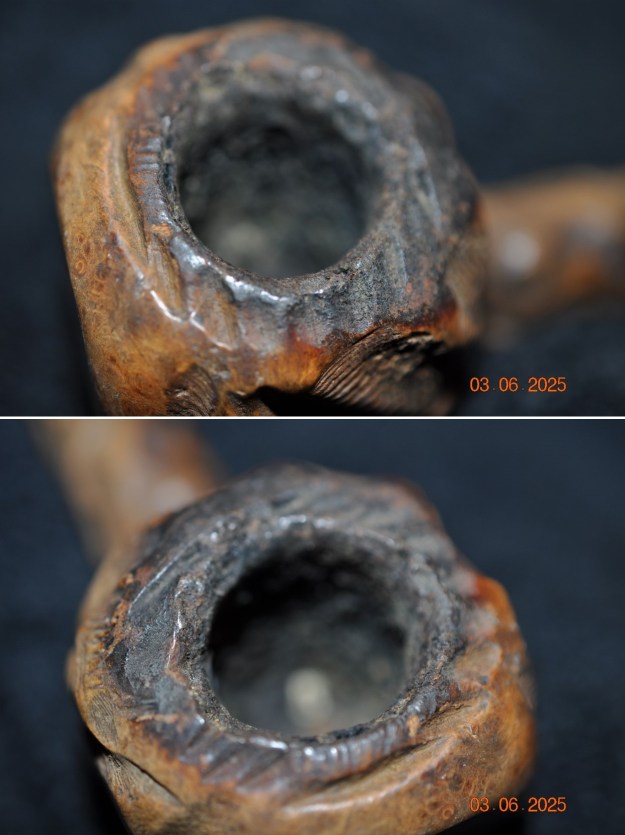
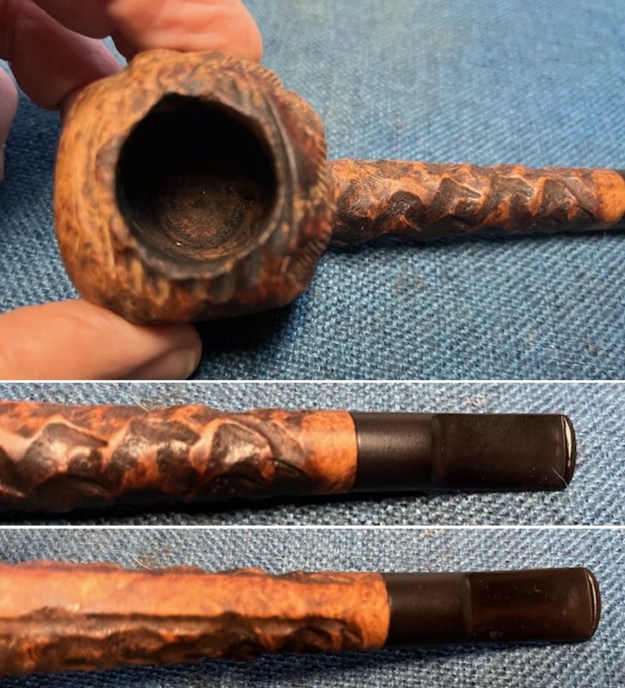
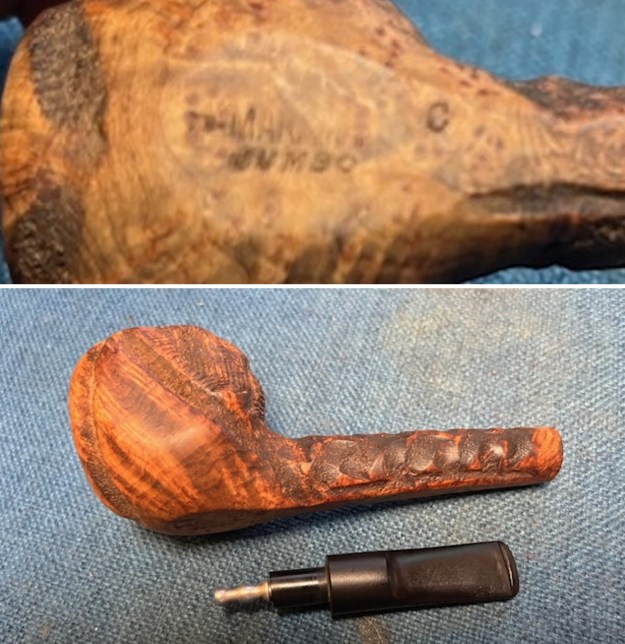
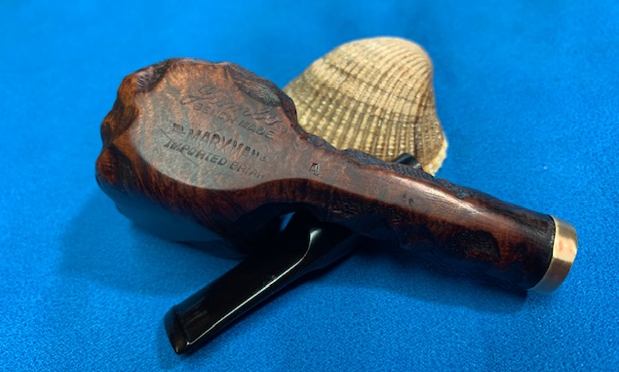
The next pipe I chose to work on was a unique one in many respects. It was a mixed finish – rusticated and smooth long shank Apple with a saddle stem. It was purchased on 09/09/2021 from an auction in East Greenville, Pennsylvania, USA. The pipe was clearly stamped on the heel of the bowl and reads Marxman (a logo stamp with an arrow going through it), followed by a “C” [over] Jumbo. It has a unique style of rustication that I have become accustomed to on Marxman Jumbo pipes. It includes Tracy Mincer style worm trails but in all different directions with a lot of cross hatching inside the trails. On this pipe the rustication is on the back of the bowl, spots around the front and sides and on the shank. It is flat bottomed so that it was a sitter. There was a thick cake in the bowl and an overflow of lava on the rim top. The condition of the inner and outer edges was hard to know with certainty because of the lava and burn marks. It had a vulcanite saddle stem that was oxidized and calcified. It had light tooth marks and chatter on both sides ahead of the button. Jeff took photos of the pipe before he started his clean up work. Jeff took close up photos of the rim top from various angles to show the general condition of the bowl and rim. The first photo shows the thickness of the cake in the bowl and the lava build up on the inner edge. The edges look like they have been protected by the thick cake so they will probably be fine once the bowl is reamed. The stem was oxidized and had light tooth chatter on both sides. Jeff took a photo of the sides and heel of the bowl to give an idea of the beauty of the grain on the smooth portions of the bowl sides and the condition of the bowl. The stamping on the heel of the bowl is clear and readable but faint on the right side. It reads as noted above.I wanted to refresh my memory of the brand so I turned to Pipephil first to get a short summary of the history (http://www.pipephil.eu/logos/en/logo-m2.html). The site had a side note that the brand was created in 1934 and merged with Mastercraft Pipes in 1953.I then turned to Pipedia to find out more information on the brand and the maker of the pipe (https://pipedia.org/wiki/Marxman). The site quote from Pipes, Artisans and Trademarks, by José Manuel Lopes. I include a portion of that information below.
Marxman (Marxman Pipe Company) was created by Robert (Bob) L. Marx in 1934, when he was 29, and after he had worked for the William Demuth Company. His pipes were not outstanding because of the quality of their wood (probably Algerian), but Bob started making unique sculpted pieces, which brought the brand fame in the World of Hollywood cinema. Actors like Zachery Scott, Dennis Morgan, Jack Carson, Alan Hale, Joel McRae, and Ronald Reagan were some of the faces that appeared on the bowls.

Bob knew how to innovate and took full advantage of marketing and press advertising in order to sell the brand–one of his slogans being “Relax with a Marxman”.

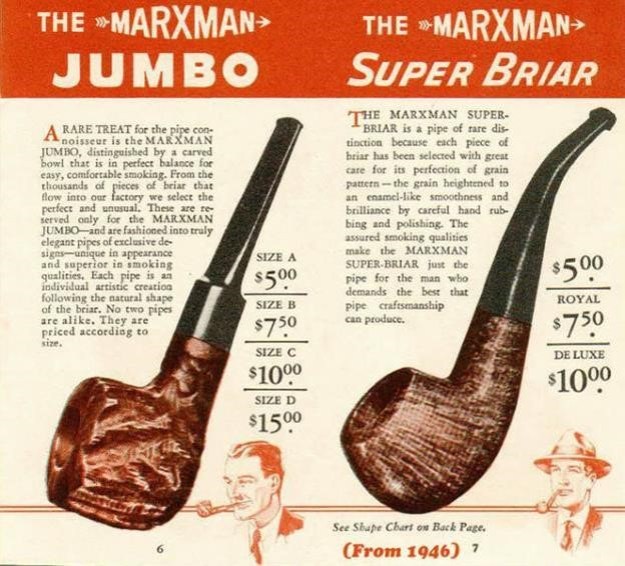
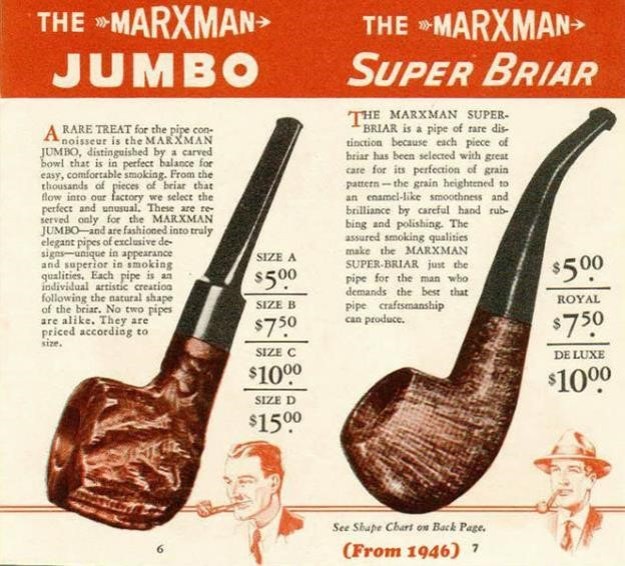
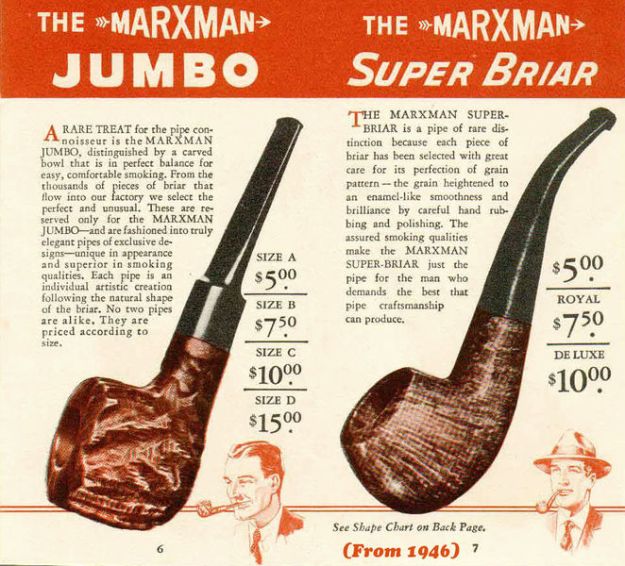
From the information on the two sites I learned that the pipe was made between 1934 when the company started and 1953 when the company was taken over by Mastercraft. I have included an advertisement for the Marxman Jumbo that was included on the article (1946 Ad, Courtesy Doug Valitchka). It includes the following information. “A rare treat for the pipe connoisseur is the Marxman Jumbo, distinguished by a carved bowl that is in perfect balance for easy, comfortable smoking. From the thousands of pieces of briar that flow into our factory we select the perfect and unusual. These are reserved only for the Marxman Jumbo – and are fashioned into truly elegant pipes of exclusive designs – unique in appearance and superior in smoking qualities. Each pipe is an individual artistic creation following the natural shape of the briar. No two pipes are alike. They are priced according to size.”

From the leaflet above I knew that I was working a Size “C” pipe – one of the larger ones. Now it was time to work on the pipe.

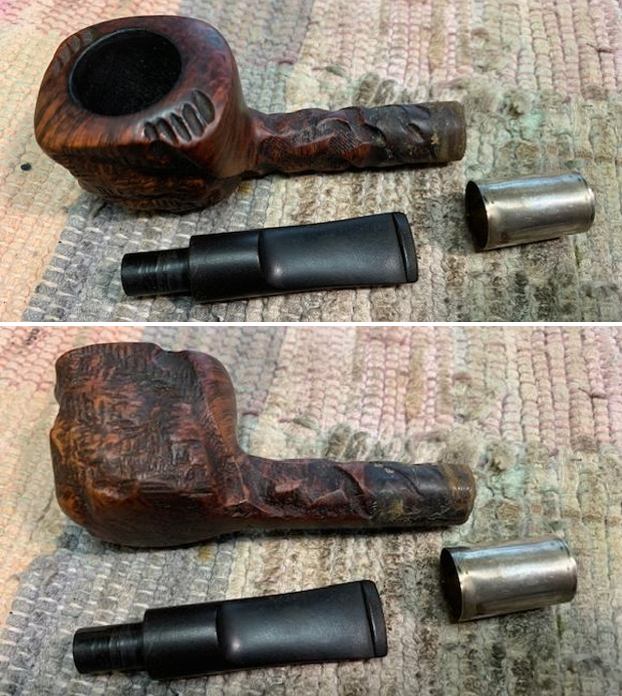
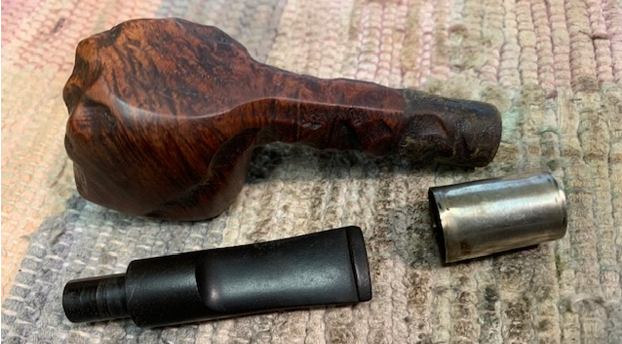
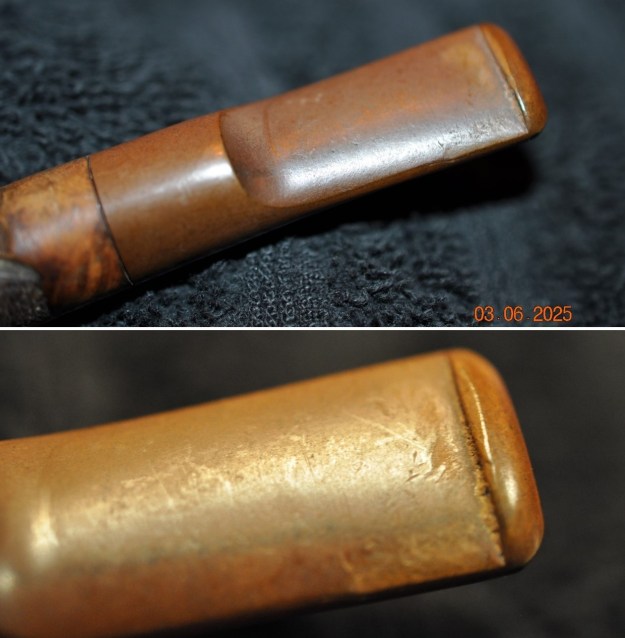
Jeff had done his usual thorough clean up of the pipe. He had reamed it with a PipNet reamer and finished with a Savinelli Fitsall Pipe Knife. He scrubbed the exterior with Murphy’s Oil Soap and the interior with isopropyl alcohol, cotton swabs and pipe cleaners. He worked on the vulcanite stem with Soft Scrub then let it soak in Before & After Pipe Stem Deoxidizer. It has light tooth marks and chatter on both sides. I took photos of the pipe before I started my work. I took some close up photos of the bowl/rim top and the stem to show the condition they were in at this point. The rim top and edges looked good and the bowl was clean. There was some darkening on the top toward the back of the rim and the damage to the inner edges. The stem had light chatter on both sides near the button.I took a photo of the stamping on the heel of the bowl. It is clear and readable as noted above. I removed the stem from the shank to give a sense of the pipe.
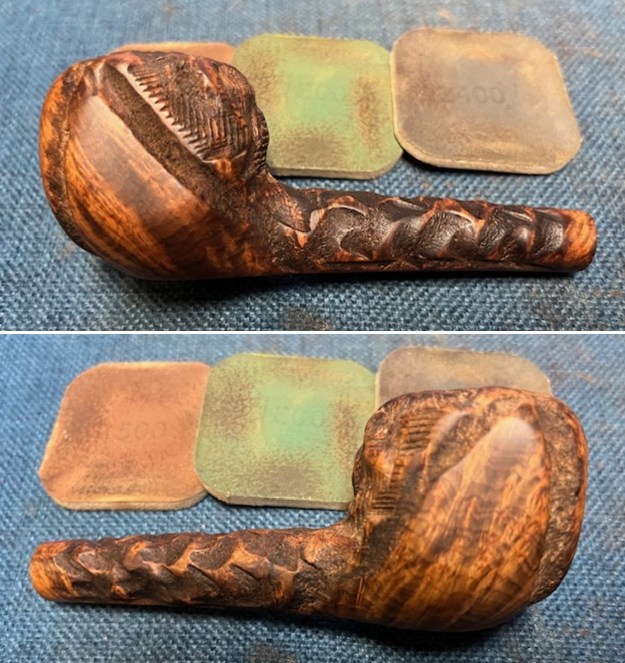
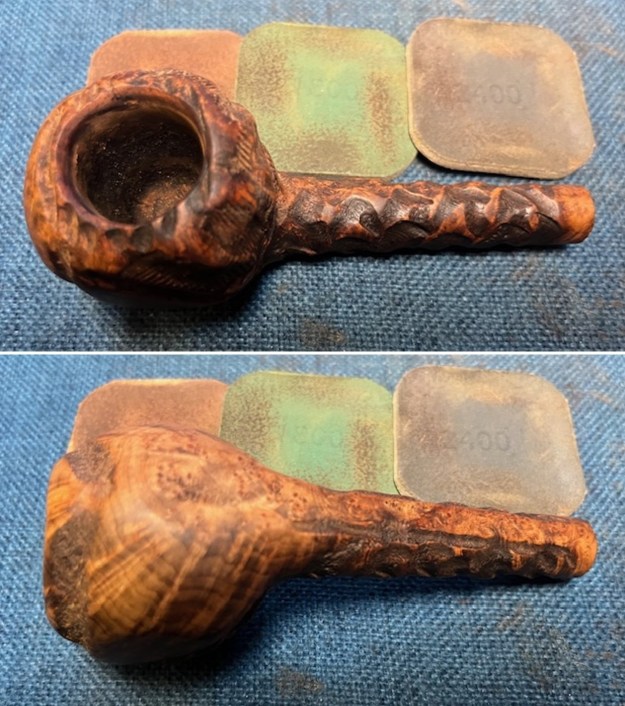
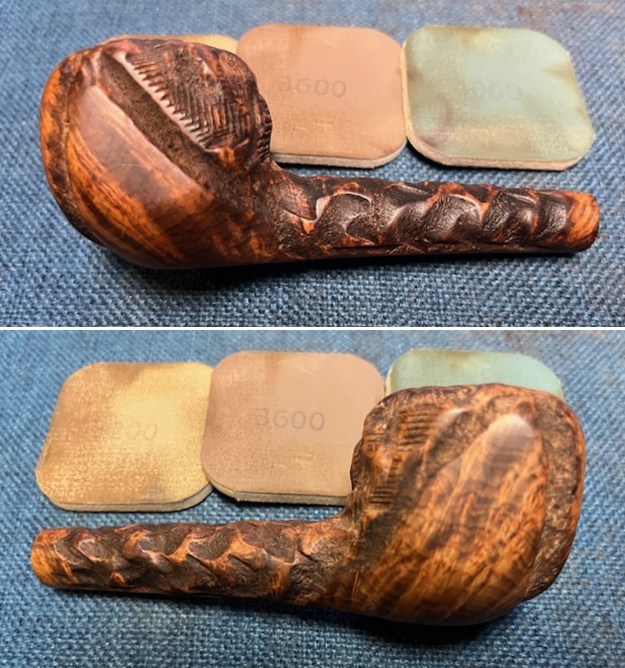
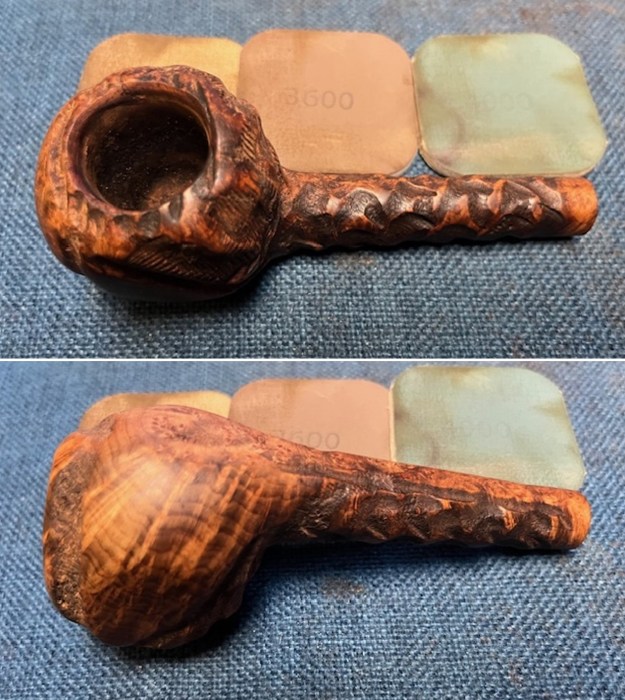
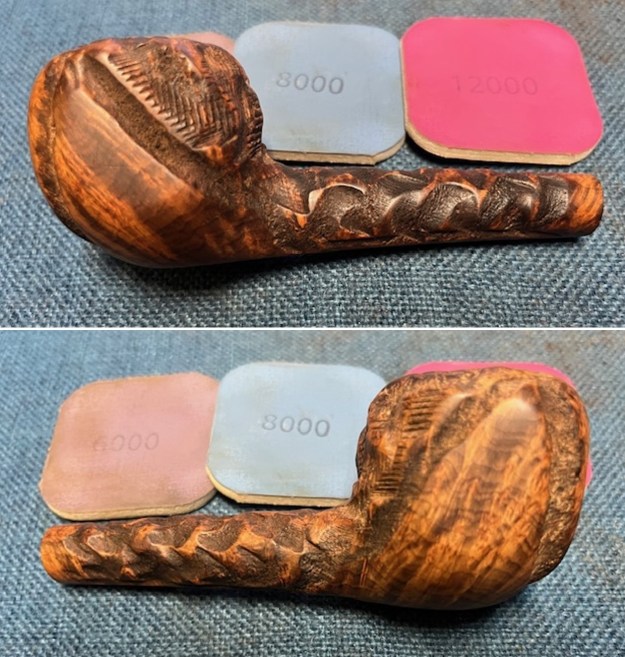
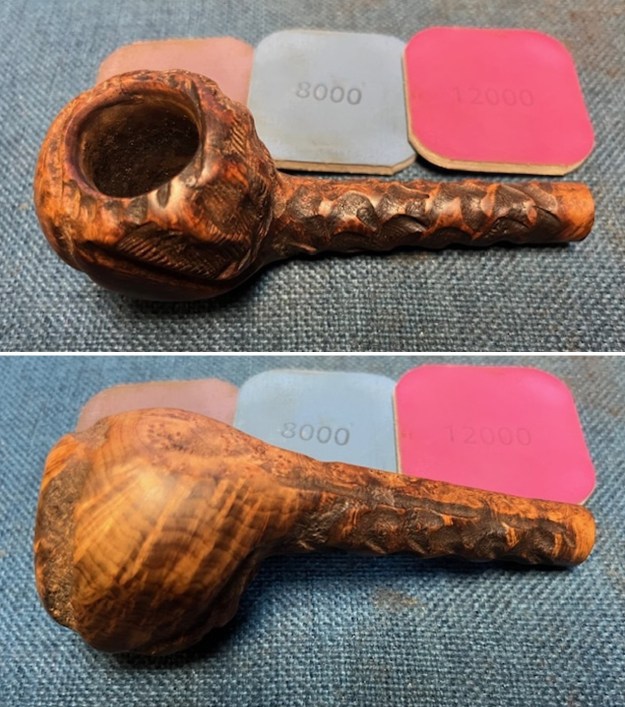
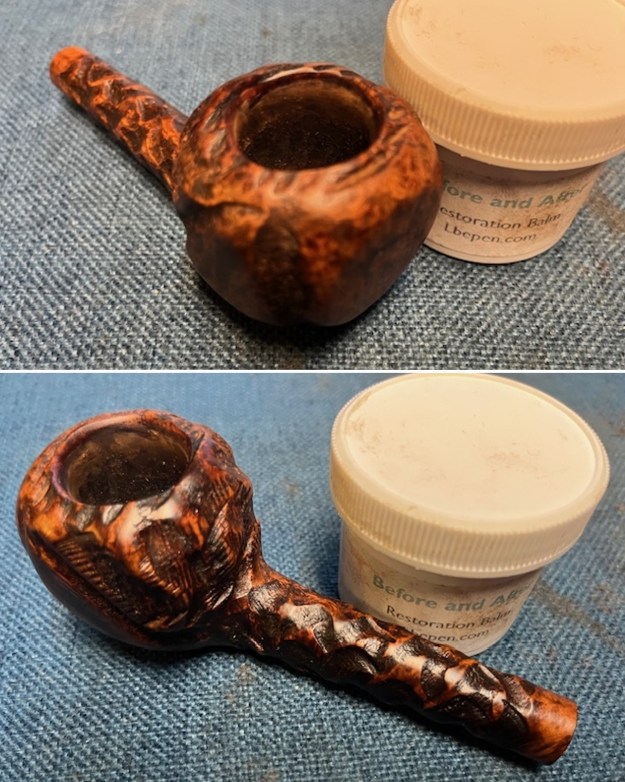
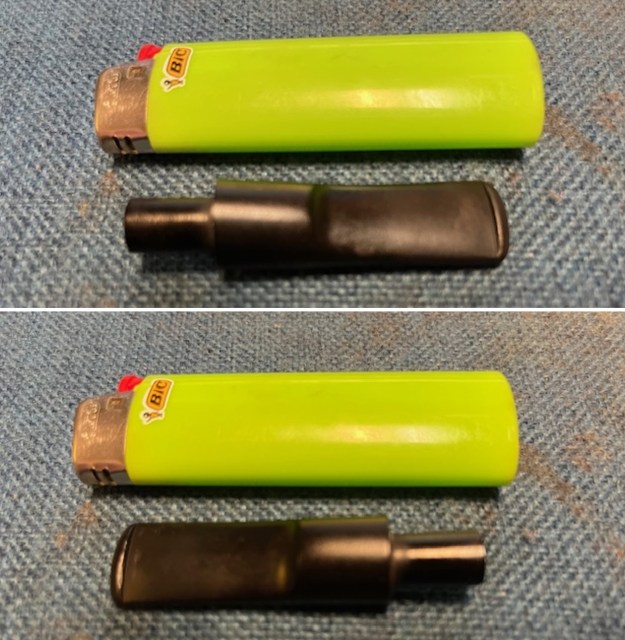
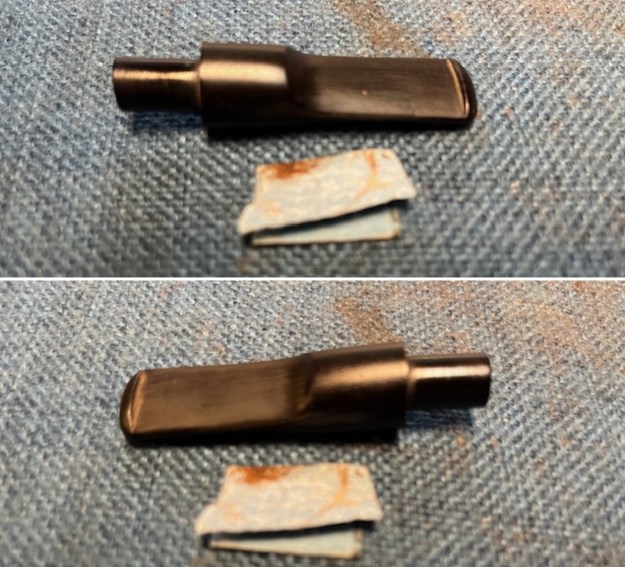
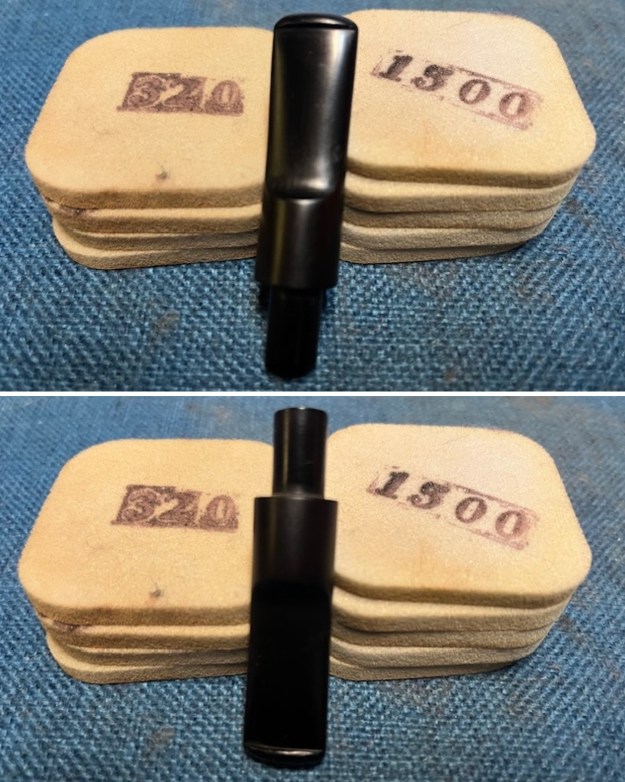
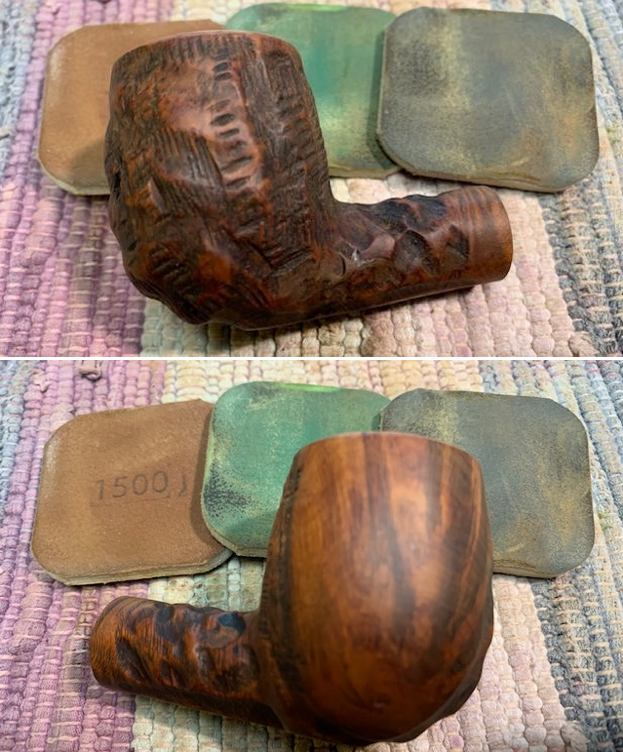
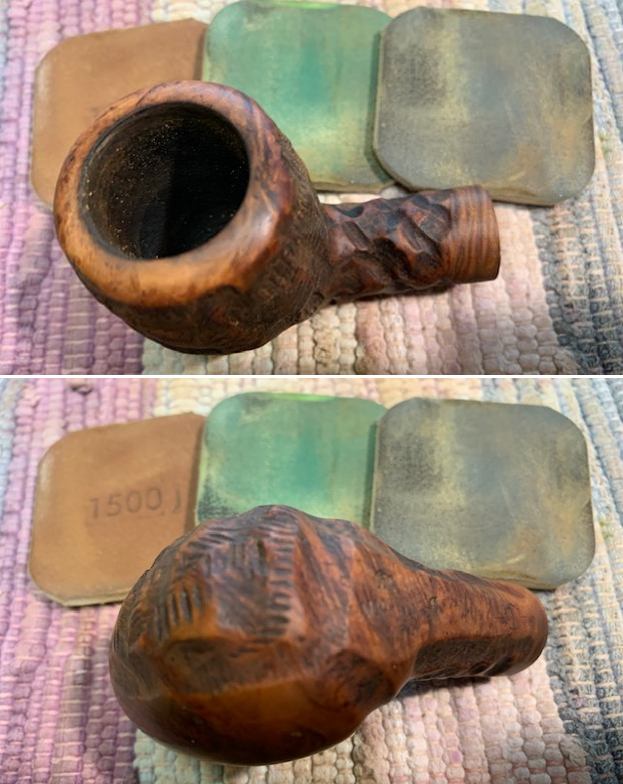
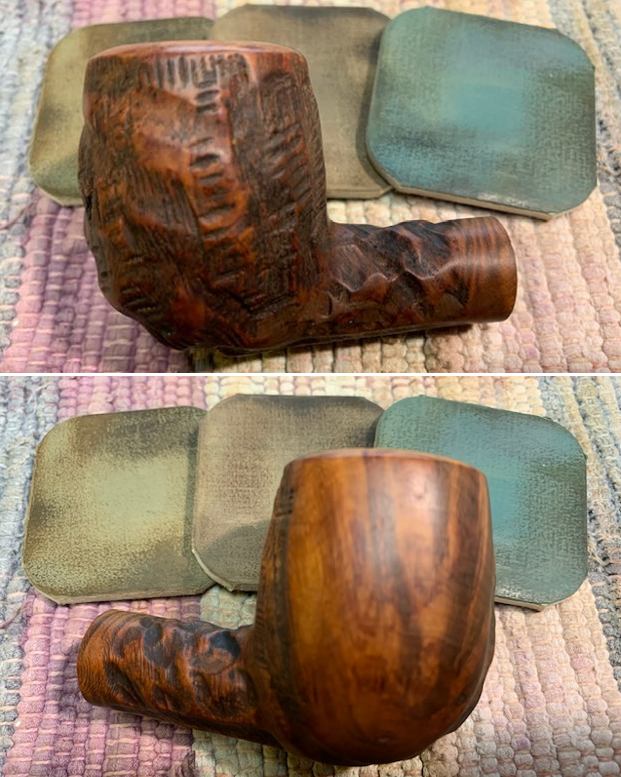
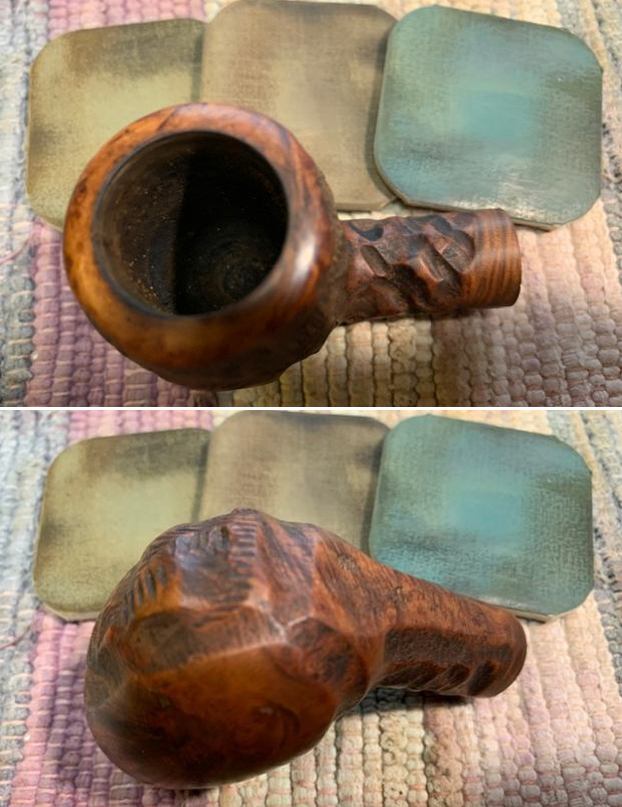
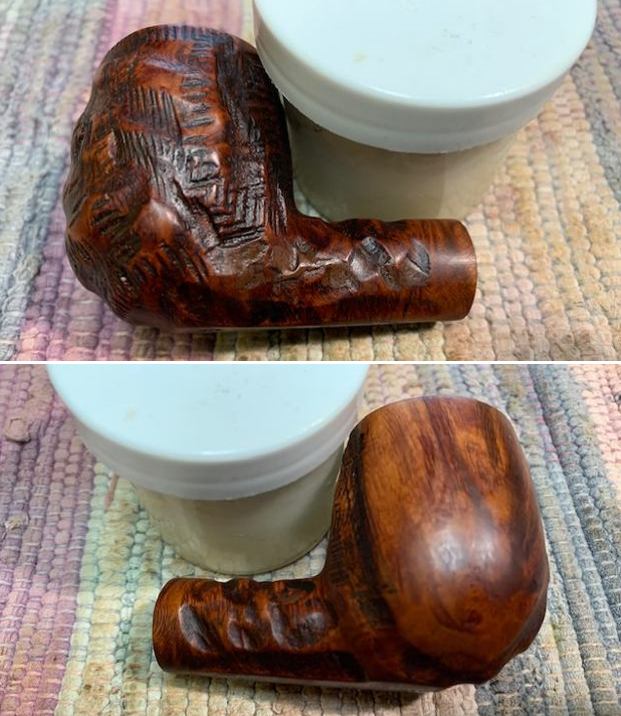
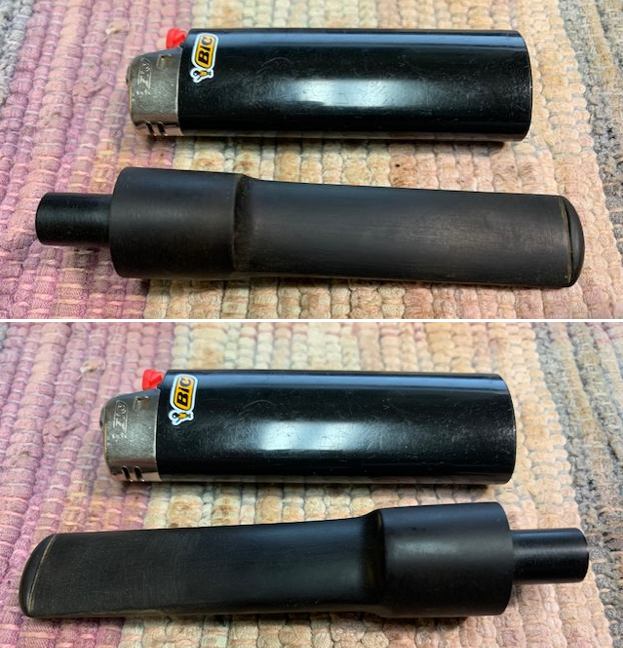
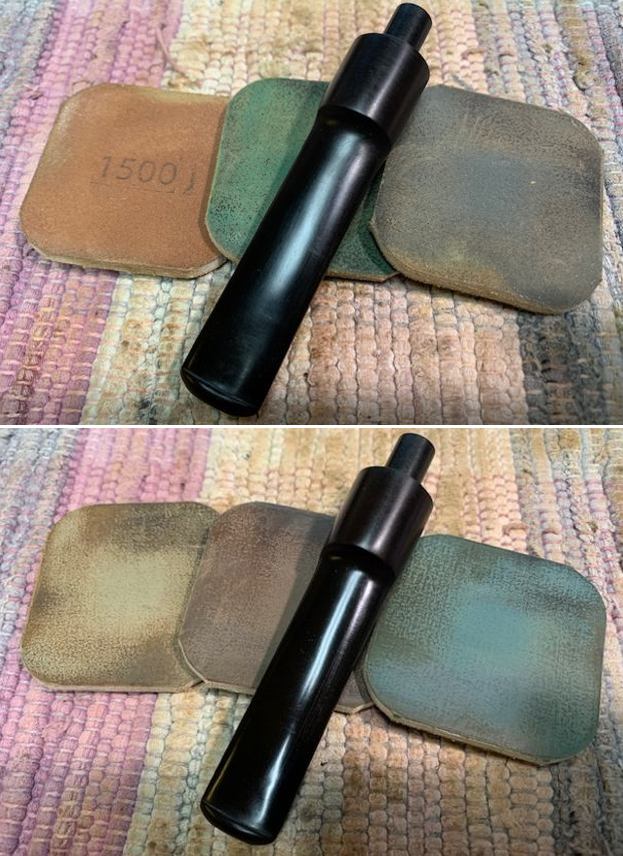
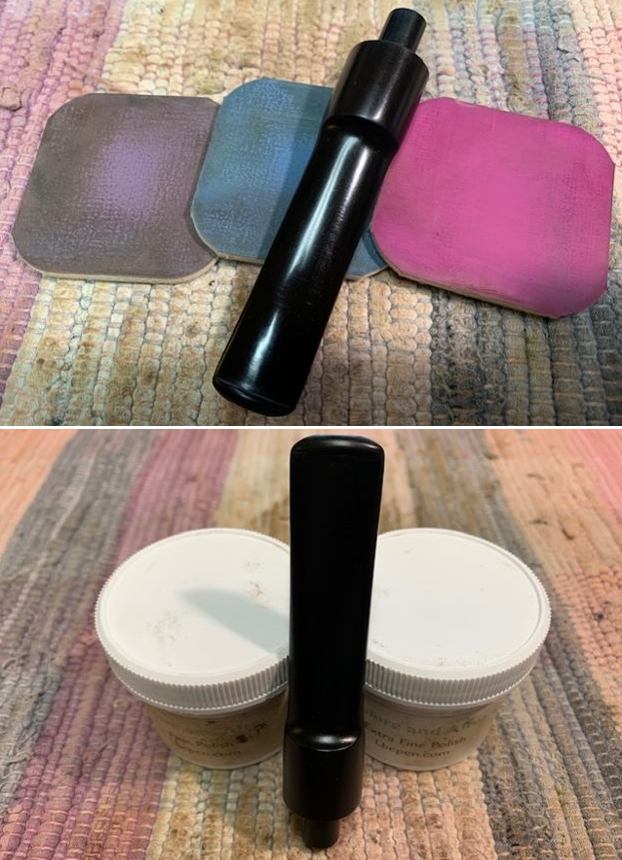
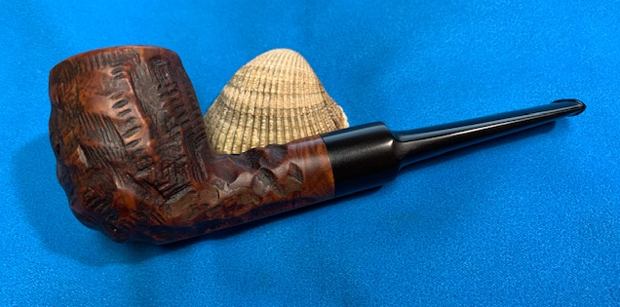
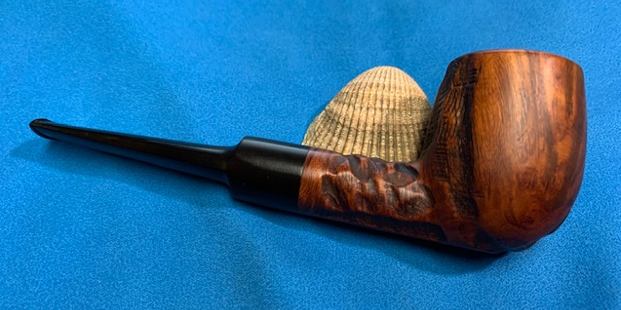
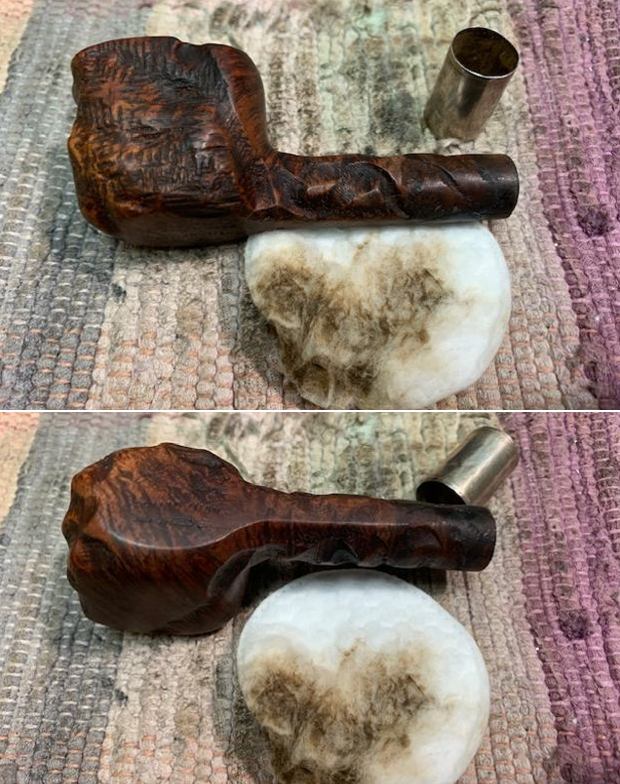
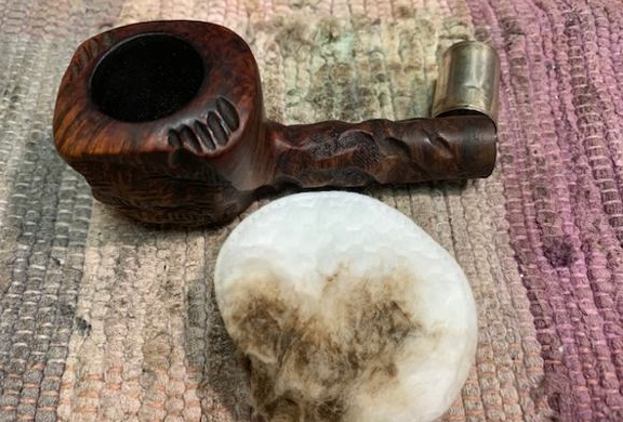
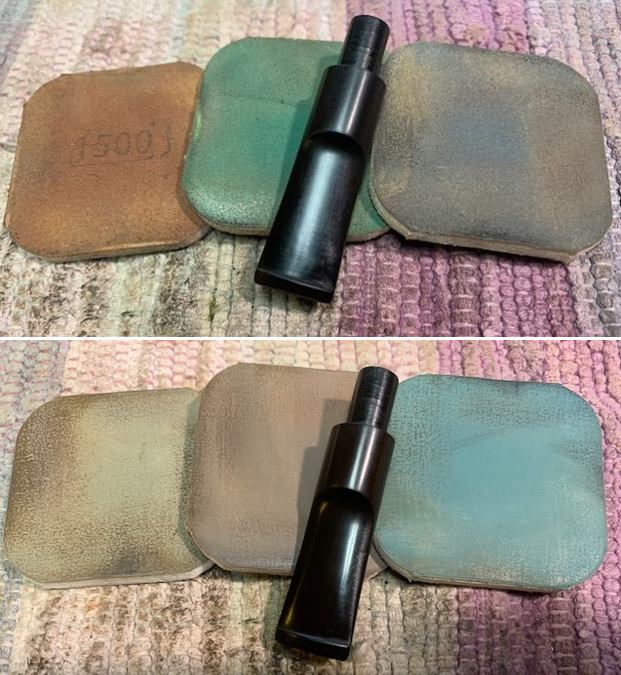
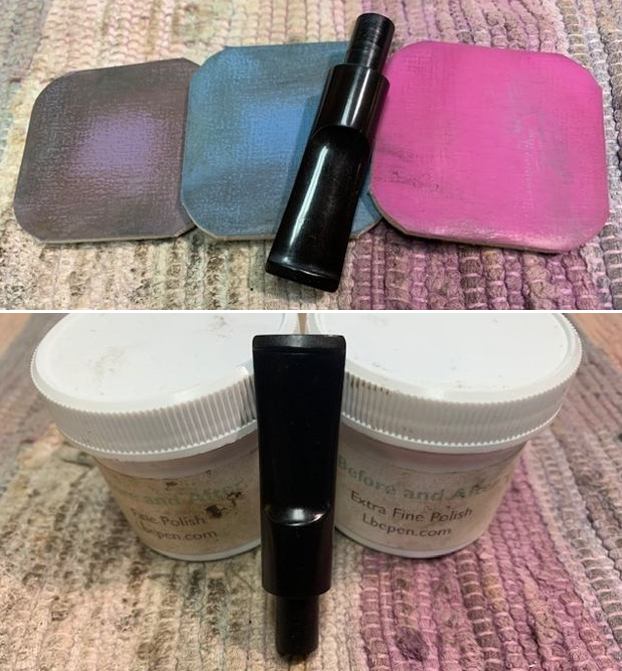
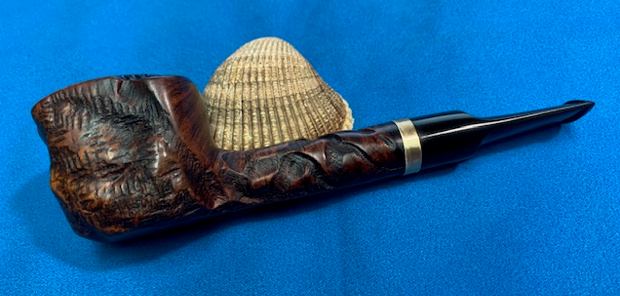
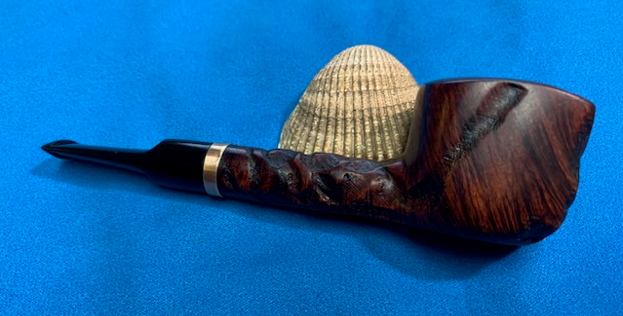
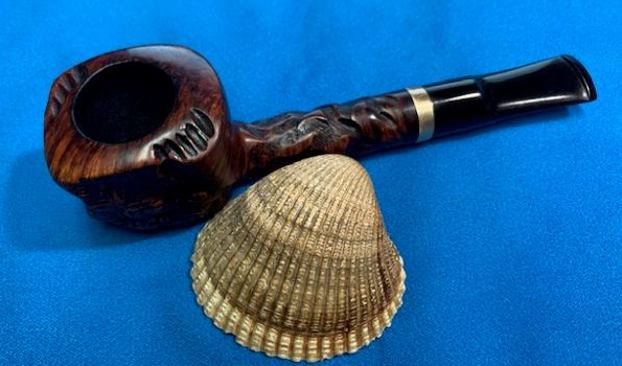
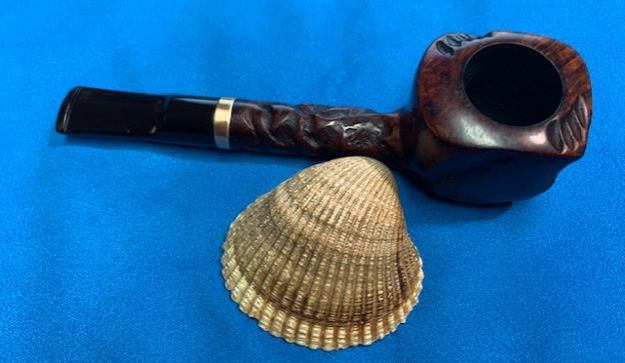
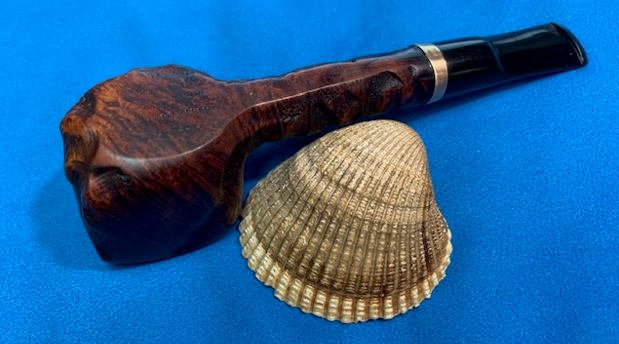
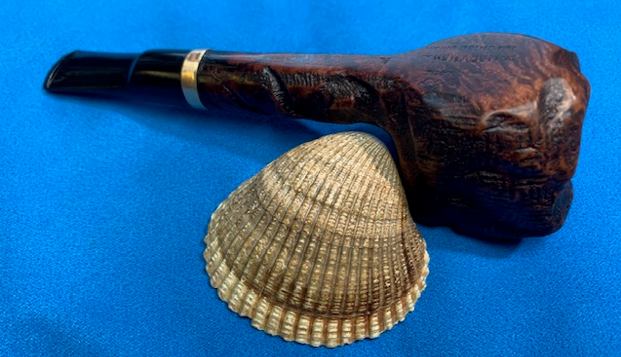
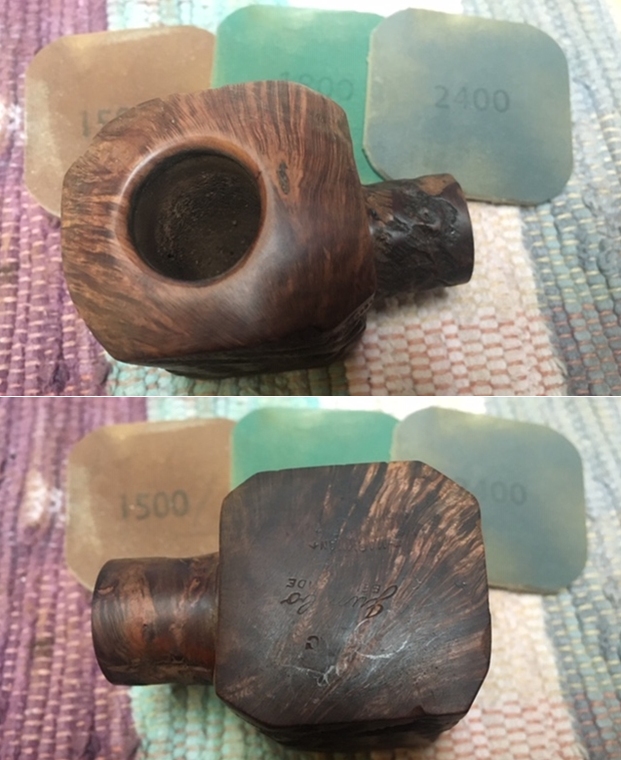
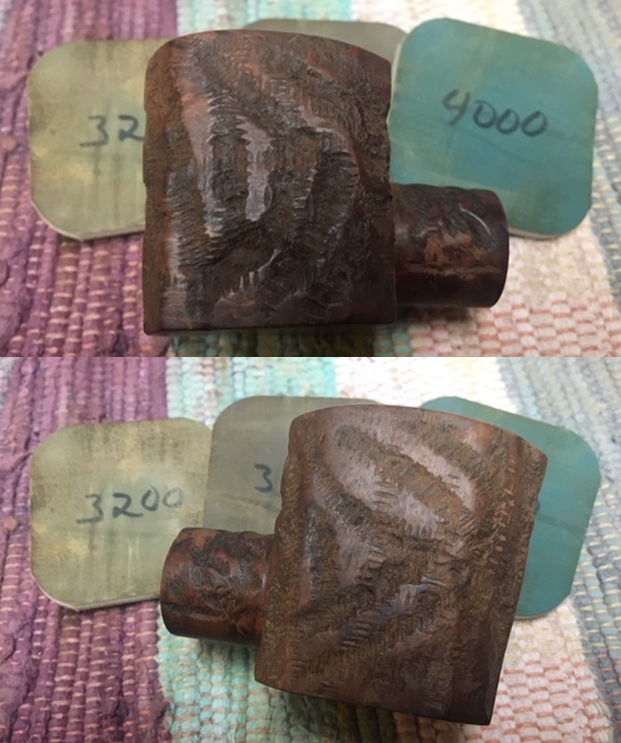
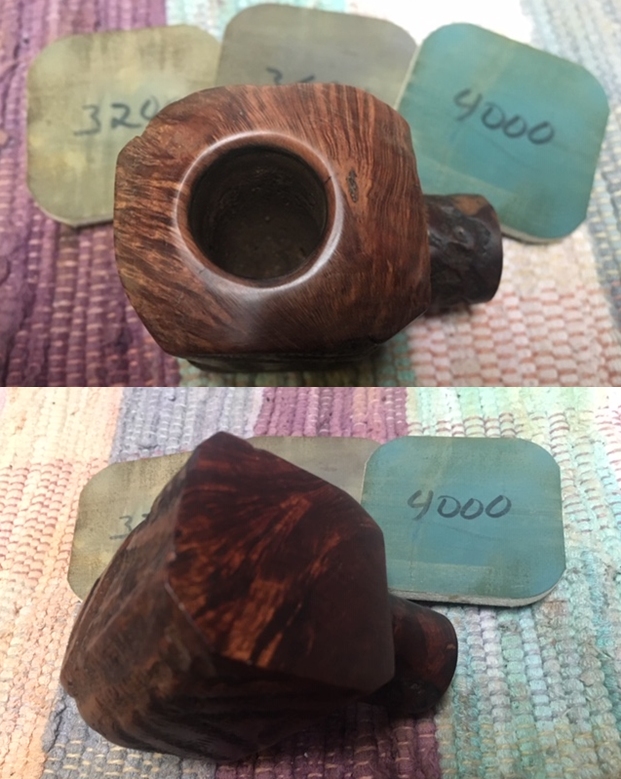
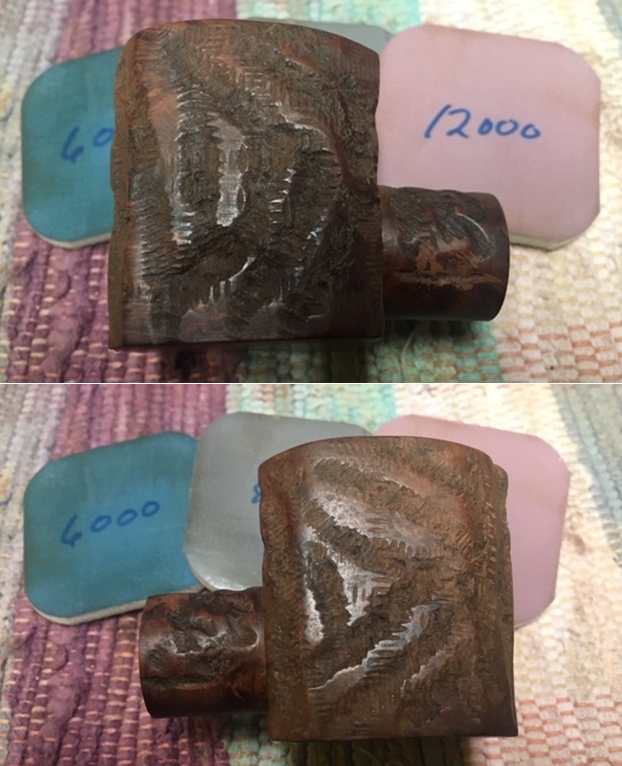
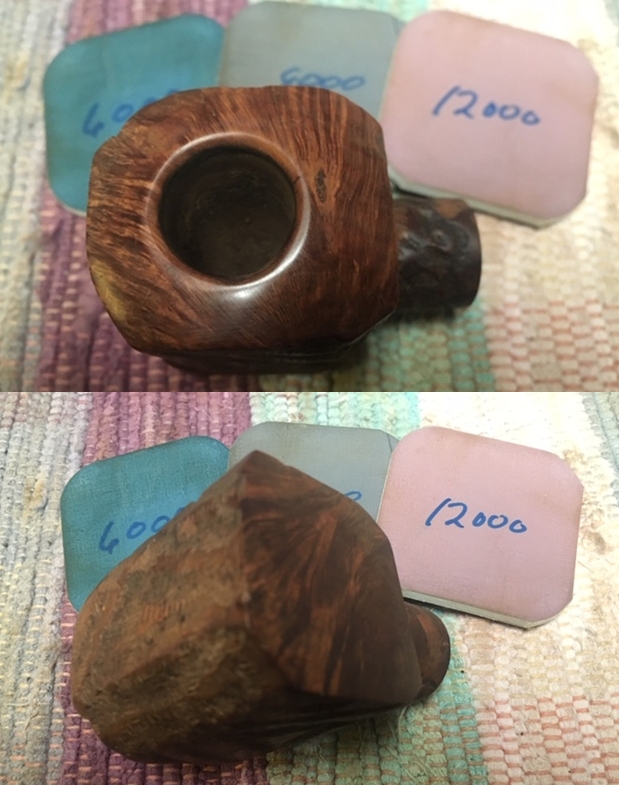
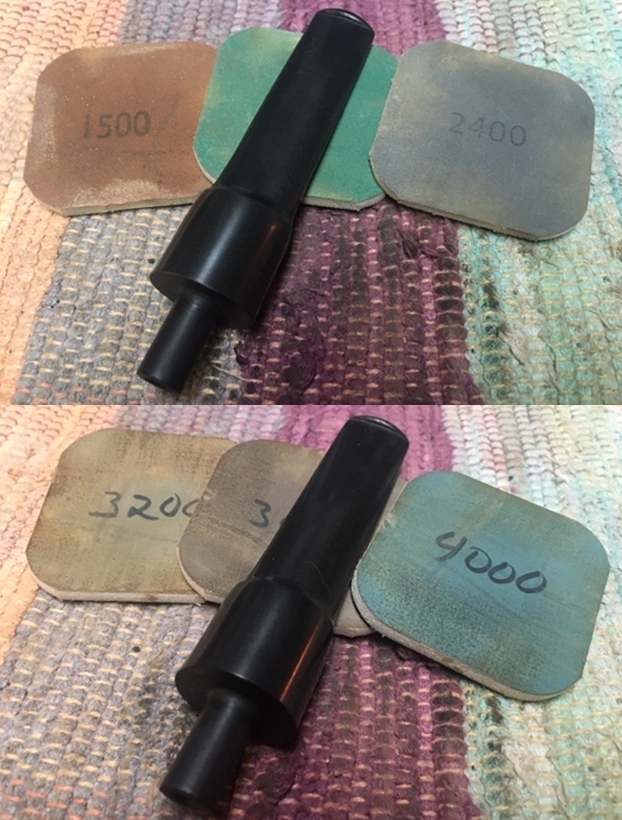
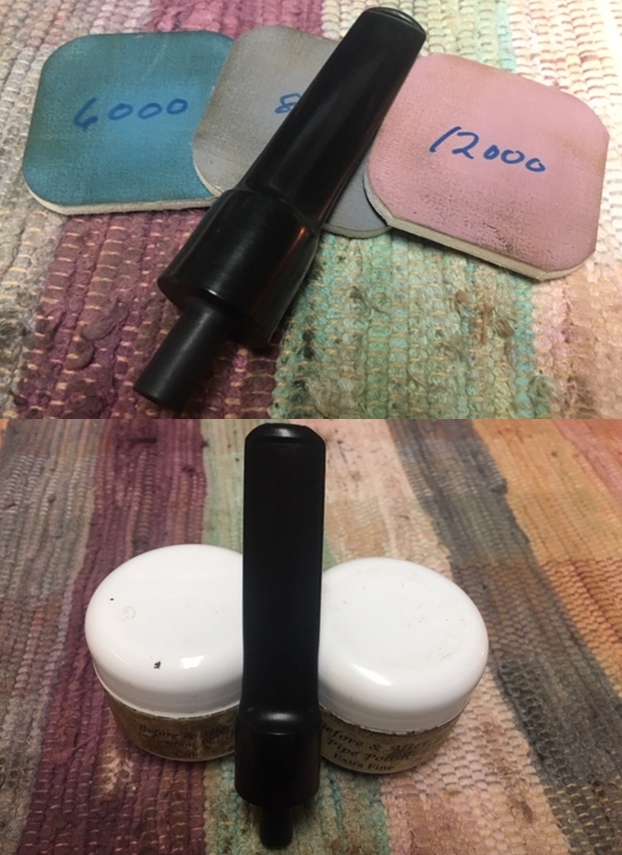
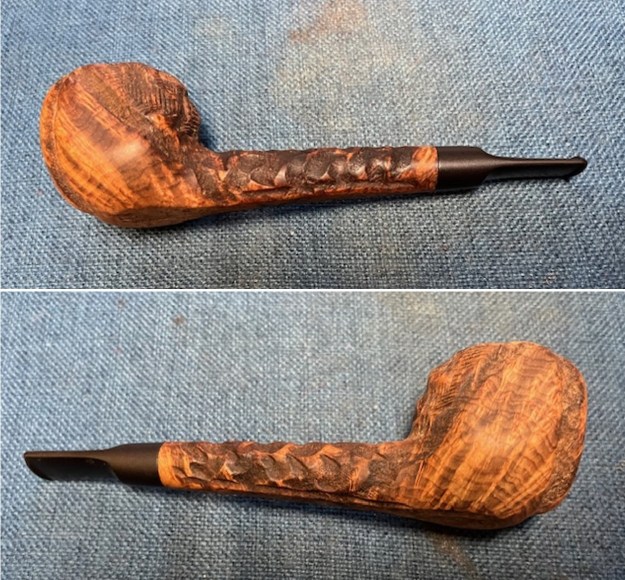
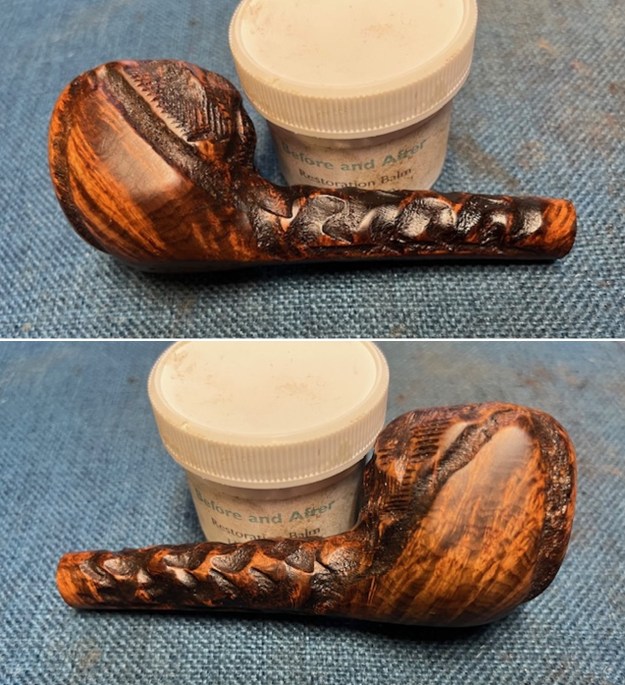
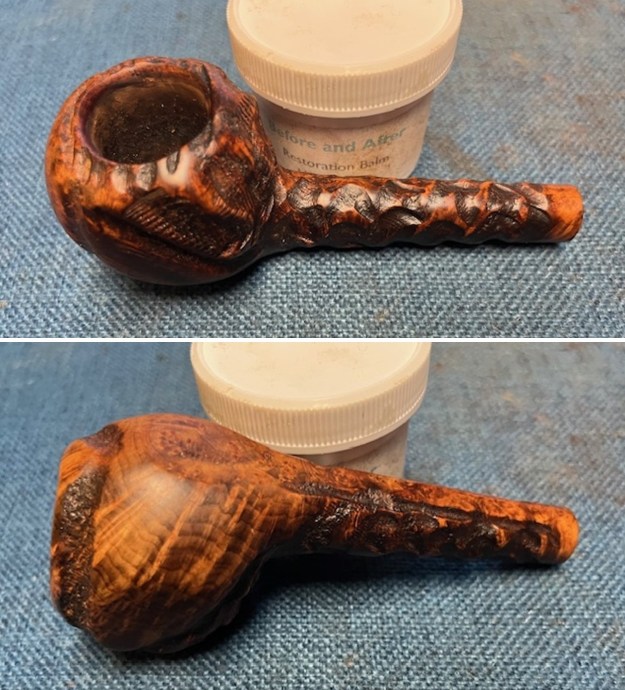
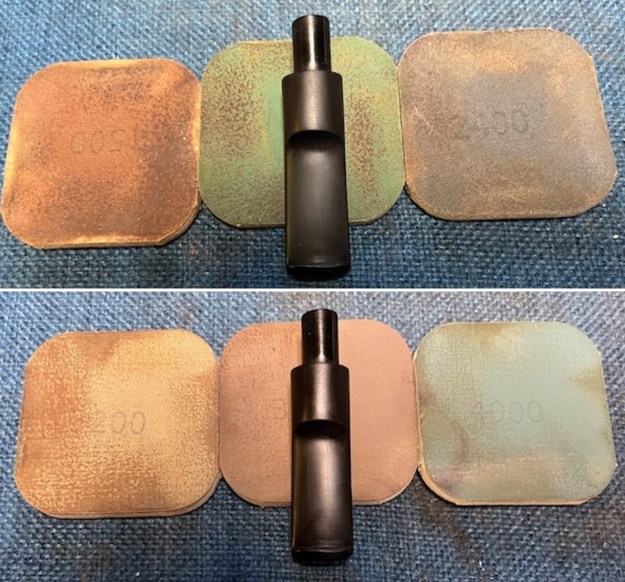
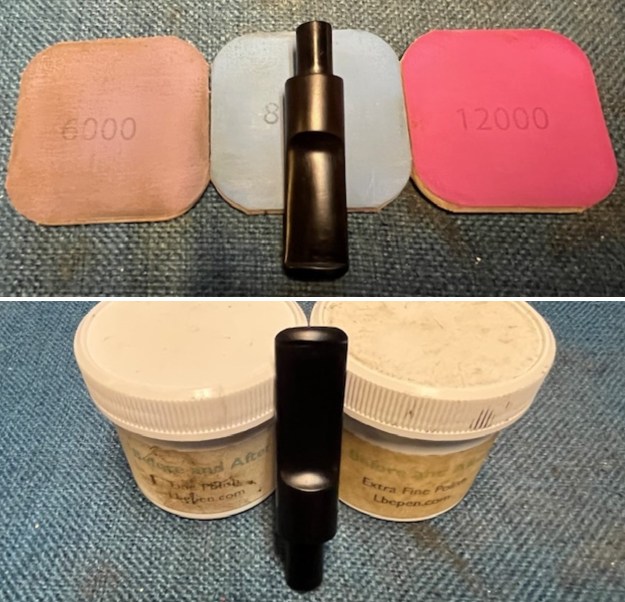
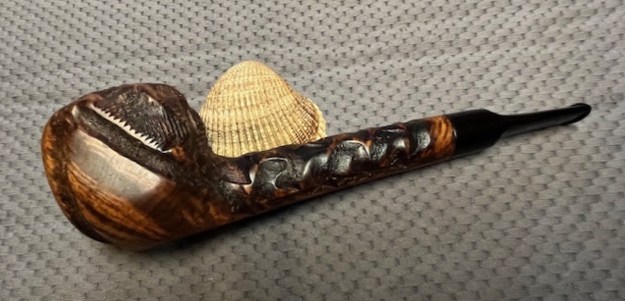
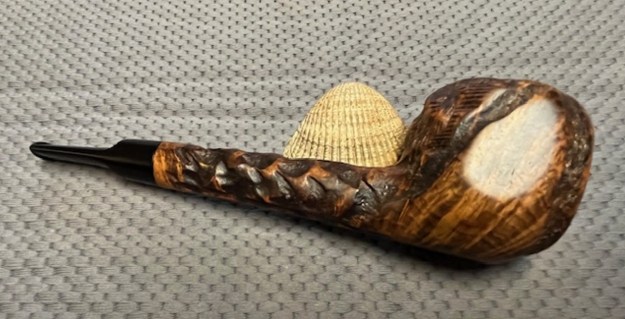
I worked on the darkened rim top and the inner edge of the rim. I used a folded piece of 220 grit sandpaper. After working on it the rim top and bowl edge looked much better.I polished the smooth portions of the briar with micromesh sanding pads – dry sanding it with 1500-12000 grit pads. I wiped the bowl down after each pad with a damp cloth. The finished bowl and shank look very good. I worked some Before & After Restoration Balm into the surface of the briar with my finger tips and a shoe brush to get into the valleys and crevices of the rustication. The product is amazing and works to clean, enliven and protect the briar. I let it sit on the briar for 10 or more minutes and then buff it off with a soft cloth. It really makes the briar come alive and look quite rich. I set the bowl aside and turned my attention to the stem. There were some tooth dents on the topside and underside of the stem surface. I painted them with the flame of a lighter and was able to lift them. I sanded out the remnants and the remaining oxidation with a folded piece of 220 grit sandpaper. I sanded the stem with 320-3500 grit sanding pads. I wiped the surface down after each pad with some Obsidian Oil and it was beginning to look very good.I polished it with micromesh sanding pads – dry sanding with 1500-12000 grit pads. I wiped the stem down after each pad with a cloth and Obsidian Oil. I finished the polishing with Before & After Pipe Stem Polish – both Fine and Extra Fine. I gave it a final coat of Obsidian Oil. I put the Marxman Jumbo Long Shank Apple “C” back together and buffed it on the buffing wheel with Blue Diamond. It raised a shine on the briar and the stem and gave some depth to the look of the carved grooves. I gave both the bowl and the stem multiple coats of carnauba wax on the wheel and buffed the pipe with a clean buffing pad to raise the shine. I hand buffed it with a microfiber cloth to deepen the shine. The pipe turned out to be a unique beauty in its own rugged way. Flat bottom Apple shape make it very different from most of the other Marxman Jumbos I have worked on. I like the look of the rusticated shank and saddle on the stem. The dimensions of the pipe are Length: 6 ½ inches, Height: 1 ¾ inches, Outer diameter of the bowl: 1 ½ inches, Chamber diameter: 1 inch. The weight of the pipe is 1.76 ounces/50 grams. It really is a uniquely beautiful pipe. I will soon be putting it on the rebornpipes store in the American (US) Pipemakers Section. Thanks for walking through the restoration with me. Cheers.

New Life for a Marxman (M, C) Jumbo Imported Briar Apple


Blog by Steve Laug

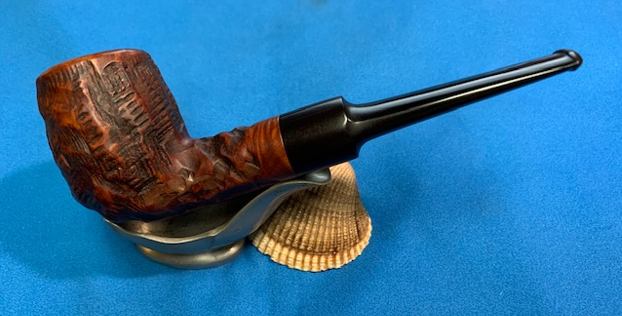
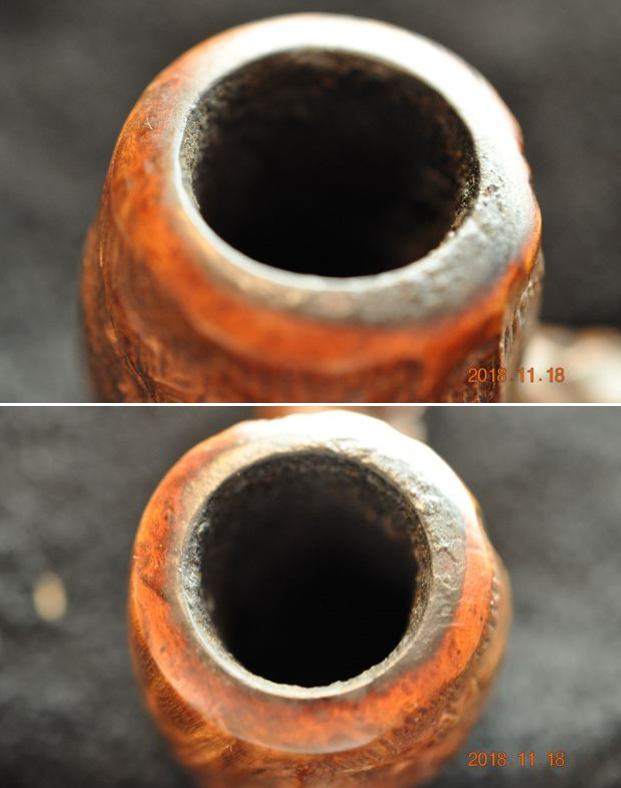
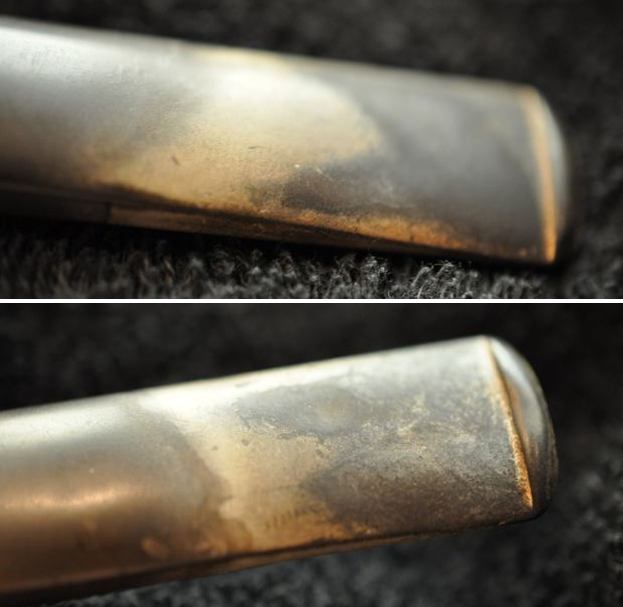
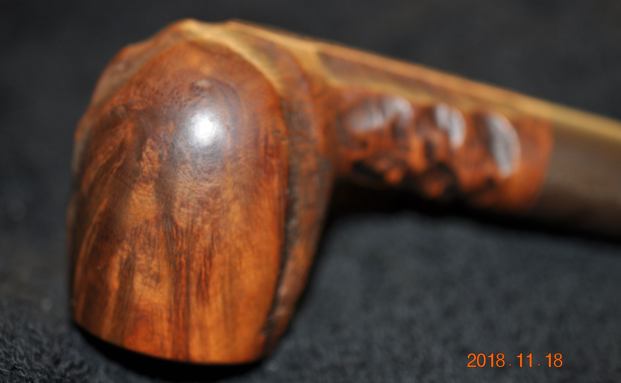
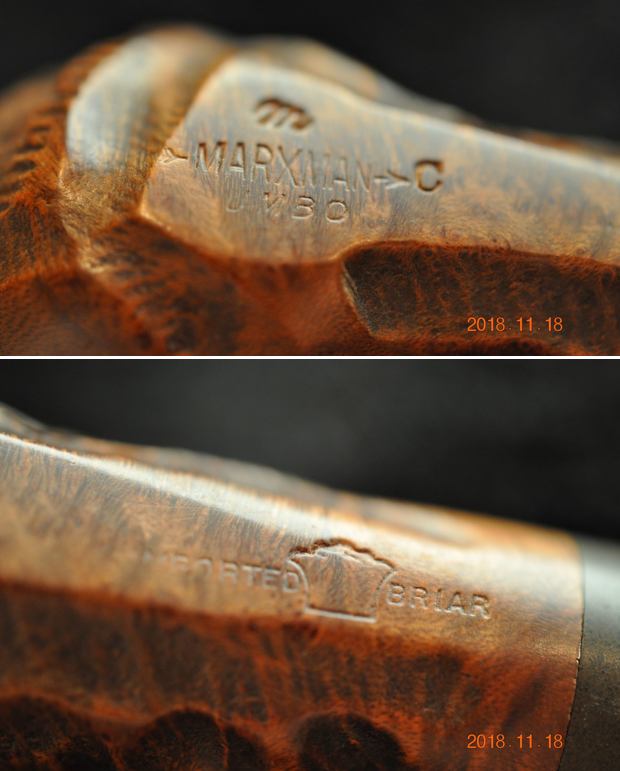
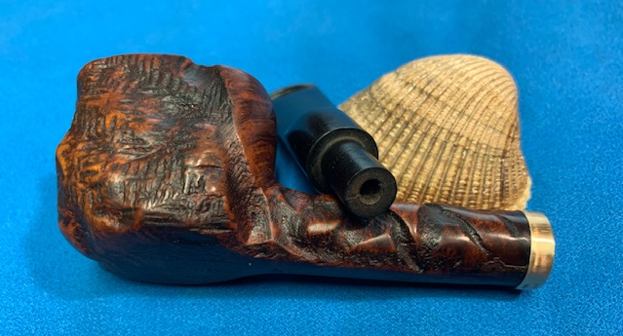
The next pipe I chose to work on was a unique one in many respects. It was a rusticated Apple with a thick shank and saddle stem. It was purchased on 11/09/18 from an auction in Corning, New York, USA. The pipe was clearly stamped on the heel of the bowl and reads “M” in script [over] Marxman (a logo stamp with an arrow going through it), followed by a “C”, followed by Imported Briar with a shield in between the two words. It has a unique style of rustication that I have become accustomed to on Marxman Jumbo pipes. It includes Tracy Mincer style worm trails but in all different directions with a lot of cross hatching inside the trails. On this pipe the rustication is on the shank and on the left and front and back of the bowl with a smooth patch on the right side of the bowl. It is flat bottomed so that it was a sitter. There was a thick cake in the bowl and an overflow of lava on the rim top. The inner and outer edges looked okay but we would know more once it was cleaned up. It had a vulcanite saddle stem that was oxidized and calcified. It had light tooth marks and chatter on both sides ahead of the button. Jeff took  photos of the pipe before he started his clean up work. Jeff took close up photos of the rim top from various angles to show the general condition of the bowl and rim. The first photo shows the thickness of the cake in the bowl and the lava build up on the back inner edge. The edges look like they have been protected by the thick cake so they will probably be fine once the bowl is reamed. The stem was oxidized, calcified and had light tooth chatter on both sides. Jeff took a photo of the sides and heel of the bowl to give an idea of the beauty of the grain on the smooth right side and the condition of the bowl.The stamping on the underside of the shank is clear and readable and reads as noted above.Jeff had done his usual thorough clean up of the pipe. He had reamed it with a PipNet reamer and finished with a Savinelli Fitsall Pipe Knife. He scrubbed the exterior with Murphy’s Oil Soap and the interior with isopropyl alcohol, cotton swabs and pipe cleaners. He worked on the vulcanite stem with Soft Scrub then let it soak in Before & After Pipe Stem Deoxidizer. It has light tooth marks and chatter on both sides. I took photos of the pipe before I started my work. I took some close up photos of the bowl/rim top and the stem to show the condition they were in at this point. The rim top and edges looked good and the bowl was clean. There was some darkening on the top of the rim and the inner edges. The stem had light chatter on both sides near the button.I took a photo of the stamping on the heel of the bowl. It is clear and readable as noted above. I removed the stem from the shank to give a sense of the pipe. You can see that it has a chubby shank and saddle stem. I wanted to refresh my memory of the brand so I turned to Pipephil first to get a short summary of the history (http://www.pipephil.eu/logos/en/logo-m2.html). The site had a side note that the brand was created in 1934 and merged with Mastercraft Pipes in 1953.I then turned to Pipedia to find out more information on the brand and the maker of the pipe (https://pipedia.org/wiki/Marxman). The site quote from Pipes, Artisans and Trademarks, by José Manuel Lopes. I include a portion of that information below.
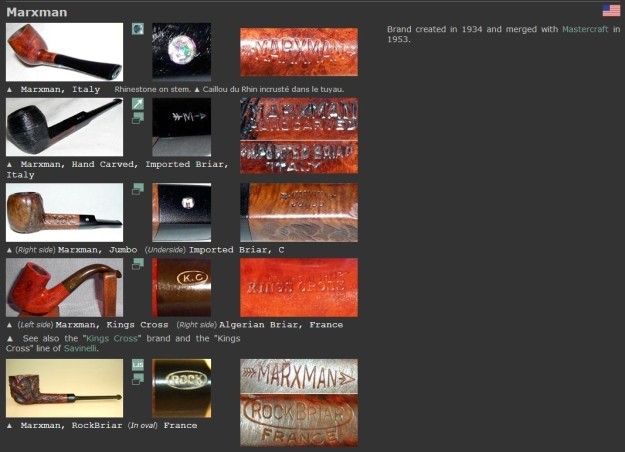
Marxman (Marxman Pipe Company) was created by Robert (Bob) L. Marx in 1934, when he was 29, and after he had worked for the William Demuth Company. His pipes were not outstanding because of the quality of their wood (probably Algerian), but Bob started making unique sculpted pieces, which brought the brand fame in the World of Hollywood cinema. Actors like Zachery Scott, Dennis Morgan, Jack Carson, Alan Hale, Joel McRae, and Ronald Reagan were some of the faces that appeared on the bowls.

Bob knew how to innovate and took full advantage of marketing and press advertising in order to sell the brand–one of his slogans being “Relax with a Marxman”.

From the information on the two sites I learned that the pipe was made between 1934 when the company started and 1953 when the company was taken over by Mastercraft. I have included an advertisement for the Marxman Jumbo that was included on the article (1946 Ad, Courtesy Doug Valitchka). It includes the following information. “A rare treat for the pipe connoisseur is the Marxman Jumbo, distinguished by a carved bowl that is in perfect balance for easy, comfortable smoking. From the thousands of pieces of briar that flow into our factory we select the perfect and unusual. These are reserved only for the Marxman Jumbo – and are fashioned into truly elegant pipes of exclusive designs – unique in appearance and superior in smoking qualities. Each pipe is an individual artistic creation following the natural shape of the briar. No two pipes are alike. They are priced according to size.”
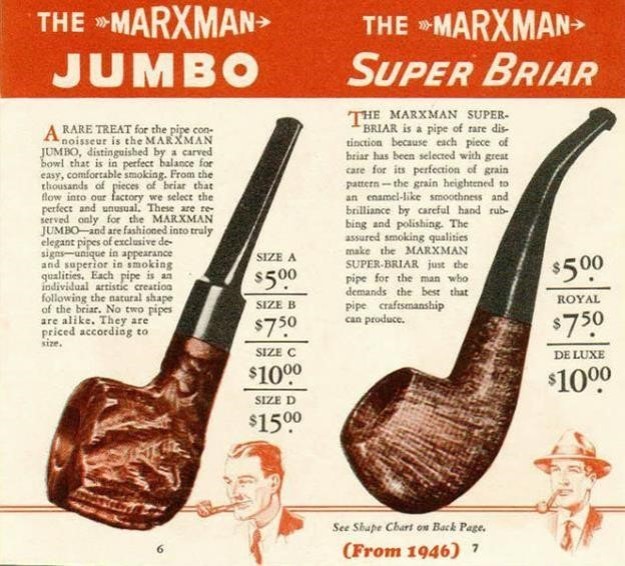
From the leaflet above I knew that I was working a Size “C” pipe – one of the larger ones. Now it was time to work on the pipe. I worked on the darkened rim top and the inner edge of the rim. I used a folded piece of 220 grit sandpaper. After working on it the rim top and bowl edge looked much better.I polished the briar with micromesh sanding pads – dry sanding it with 1500-12000 grit pads. I wiped the bowl down after each pad with a damp cloth. The finish bowl and shank look very good.I worked some Before & After Restoration Balm into the surface of the briar with my finger tips and a shoe brush to get into the valleys and crevices of the rustication. The product is amazing and works to clean, enliven and protect the briar. I let it sit on the briar for 10 or more minutes and then buff it off with a soft cloth. It really makes the briar come alive and look quite rich. I set the bowl aside and turned my attention to the stem. There were some deeper tooth dents on the topside of the stem surface. I painted them with the flame of a lighter and was able to lift them. What remained would smooth out with the micromesh sanding pads.I polished it with micromesh sanding pads – dry sanding with 1500-12000 grit pads. I wiped the stem down after each pad with a cloth and Obsidian Oil. I finished the polishing with Before & After Pipe Stem Polish – both Fine and Extra Fine. I gave it a final coat of Obsidian Oil. I put the “M” Marxman Jumbo Apple “C” back together and buffed it on the buffing wheel with Blue Diamond. It raise a shine on the briar and the stem and gave some depth to the look of the carved grooves. I gave both the bowl and the stem multiple coats of carnauba wax on the wheel and buffed the pipe with a clean buffing pad to raise the shine. I hand buffed it with a microfiber cloth to deepen the shine. The pipe turned out to be a unique beauty in its own rugged way. Flat bottom Apple shape make it very different from most of the other Marxman Jumbos I have worked on. I like the look of the thick shank and saddle on the stem. The dimensions of the pipe are Length: 6 inches, Height: 2 inches, Outer diameter of the bowl: 1 ½ inches, Chamber diameter: 7/8 of an inch. The weight of the pipe is 2.01 ounces/57 grams. It really is a uniquely beautiful pipe. I will soon be putting it on the rebornpipes store in the American (US) Pipemakers Section. Thanks for walking through the restoration with me. Cheers.

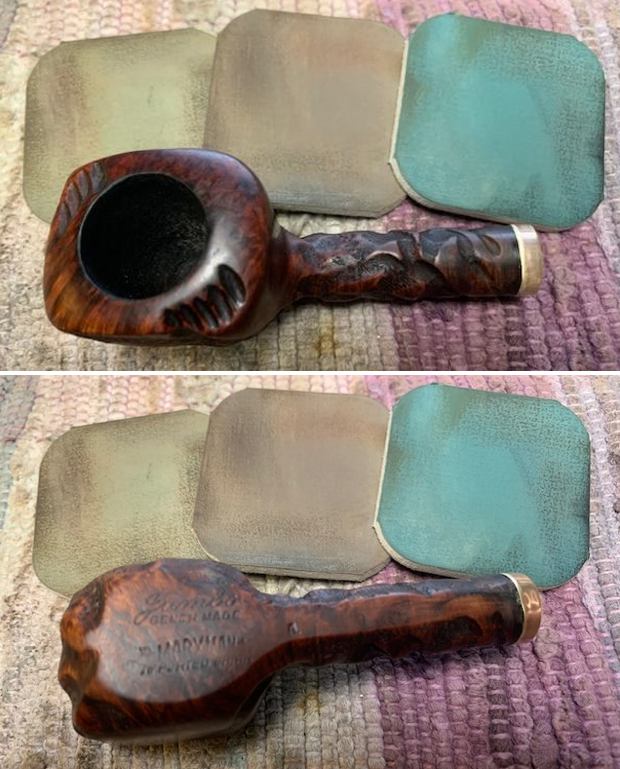
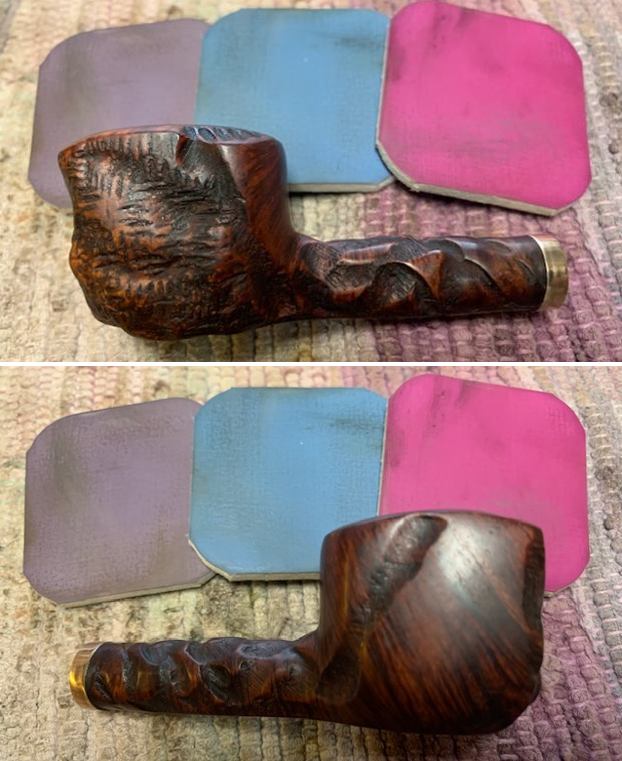
Rebanding and Repairing a Jumbo Bench Made Marxman Panel Lovat


Blog by Steve Laug

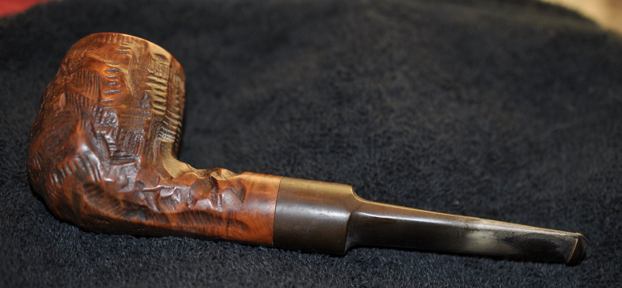
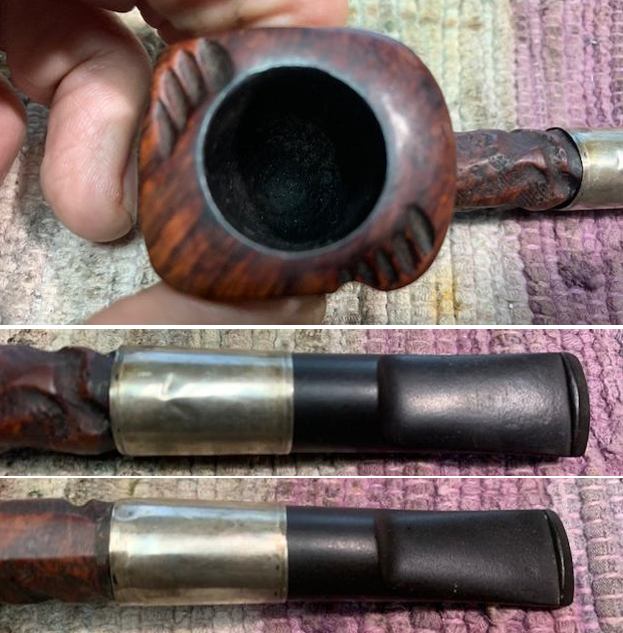
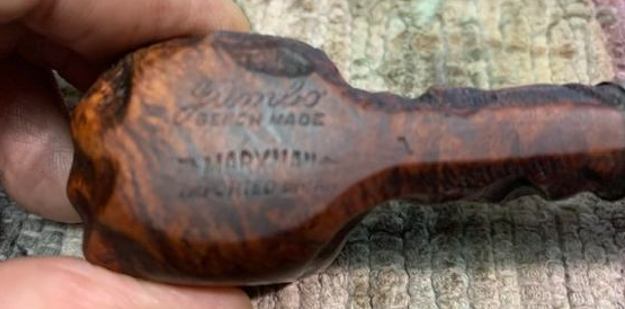
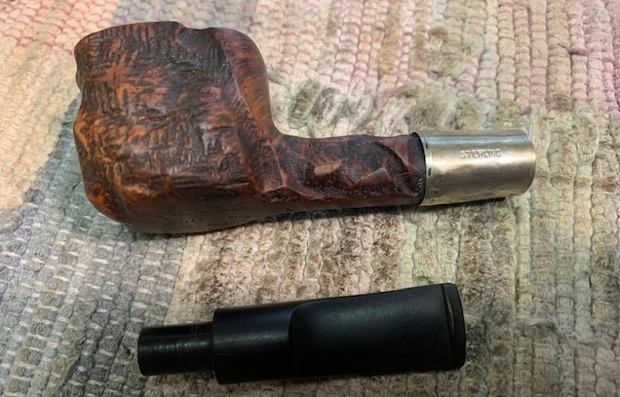
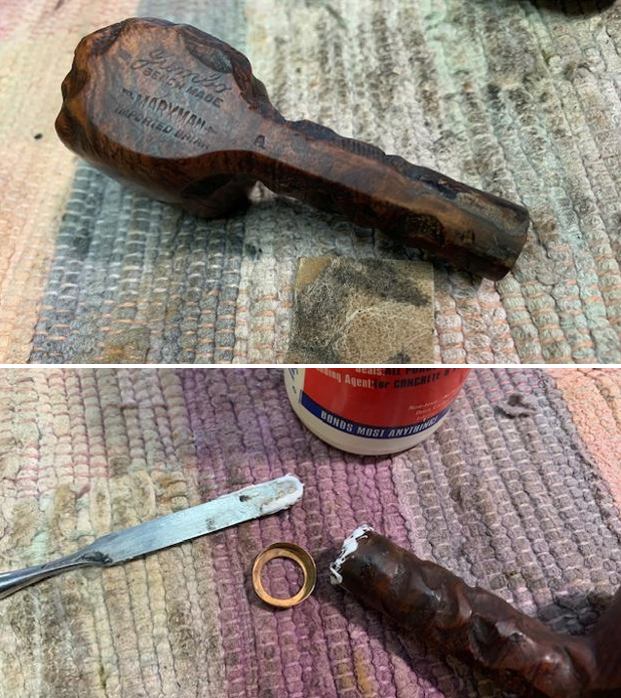
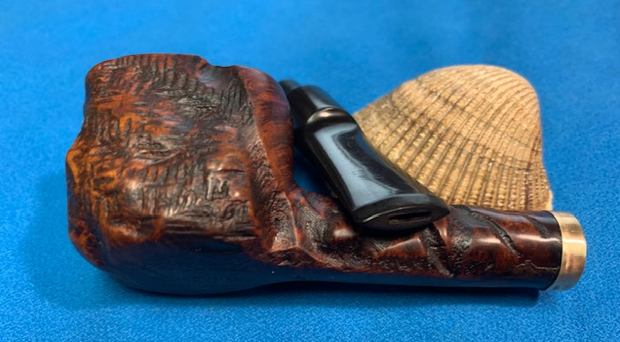
The next pipe I chose to work on was a unique one in many respects. It was a rusticated Panel Lovat that came to us with a very deep silver band. Neither Jeff nor I remember where we got it. But I know it has been here for quite a while. I had no idea what was under the large Sterling silver band but truly expected the worst. The pipe is stamped on the heel of the bowl and reads Jumbo in script [over] Bench Made [over] Marxman (a logo stamp with an arrow going through it), [over] Imported Briar. There was also an upper case “A” stamped at the shank/bowl junction. It has a unique style of rustication that I have become accustomed with on Marxman Jumbo pipe. It includes Tracy Mincer style worm trails but in all different directions with a lot of cross hatching inside the trails. On this pipe the rustication is on the shank and on the left and front of the bowl with smooth portions on the back and right side of the bowl. It is flat bottomed so that it was a sitter. The silver band took away some of the charm of the pipe for me and I was looking forward to removing it and seeing what was underneath.

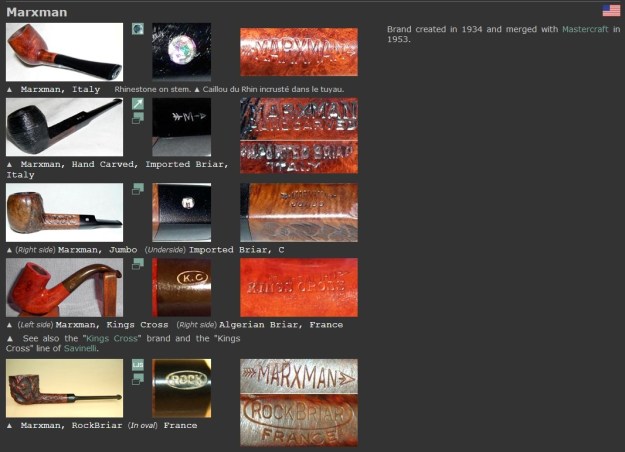
Jeff had done his usual thorough clean up of the pipe. He had reamed it with a PipNet reamer and finished with a Savinelli Fitsall Pipe Knife. He scrubbed the exterior with Murphy’s Oil Soap and the interior with isopropyl alcohol, cotton swabs and pipe cleaners. He worked on the vulcanite stem with Soft Scrub then let it soak in Before & After Pipe Stem Deoxidizer. It has minor tooth marks and chatter on both sides. I took photos of the pipe before I started my work. I took some close up photos of the bowl/rim top and the stem to show the condition they were in at this point. The rim top looked very good and the bowl was clean. The stem had light chatter on both sides near the button.I took a photo of the stamping on the heel of the bowl. It is clear and readable as noted above.I removed the stem from the shank to give a sense of the pipe. You can see that the band on the shank is quite large. It is a bit of a mystery in that I have no idea what is underneath it! Generally with a band this large it covers some serious shank damage.I wanted to refresh my memory of the brand so I turned to Pipephil first to get a short summary of the history (http://www.pipephil.eu/logos/en/logo-m2.html). The site had a side note that the brand was created in 1934 and merged with Mastercraft Pipes in 1953.I then turned to Pipedia to find out more information on the brand and the maker of the pipe (https://pipedia.org/wiki/Marxman). The site quote from Pipes, Artisans and Trademarks, by José Manuel Lopes. I include a portion of that information below.
Marxman (Marxman Pipe Company) was created by Robert (Bob) L. Marx in 1934, when he was 29, and after he had worked for the William Demuth Company. His pipes were not outstanding because of the quality of their wood (probably Algerian), but Bob started making unique sculpted pieces, which brought the brand fame in the World of Hollywood cinema. Actors like Zachery Scott, Dennis Morgan, Jack Carson, Alan Hale, Joel McRae, and Ronald Reagan were some of the faces that appeared on the bowls.

Bob knew how to innovate and took full advantage of marketing and press advertising in order to sell the brand–one of his slogans being “Relax with a Marxman”.

From the information on the two sites I learned that the pipe was made between 1934 when the company started and 1953 when the company was taken over by Mastercraft. I have included an advertisement for the Marxman Jumbo that was included on the article (1946 Ad, Courtesy Doug Valitchka). It includes the following information. “A rare treat for the pipe connoisseur is the Marxman Jumbo, distinguished by a carved bowl that is in perfect balance for easy, comfortable smoking. From the thousands of pieces of briar that flow into our factory we select the perfect and unusual. These are reserved only for the Marxman Jumbo – and are fashioned into truly elegant pipes of exclusive designs – unique in appearance and superior in smoking qualities. Each pipe is an individual artistic creation following the natural shape of the briar. No two pipes are alike. They are priced according to size.”

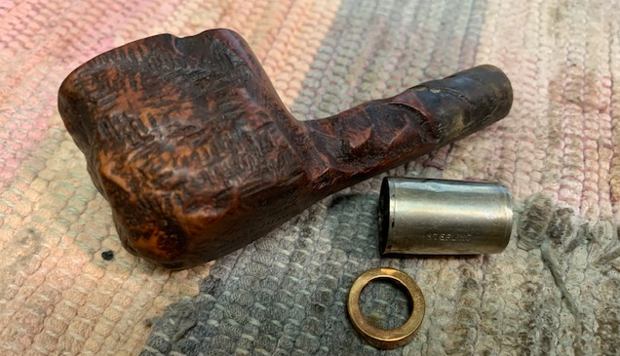
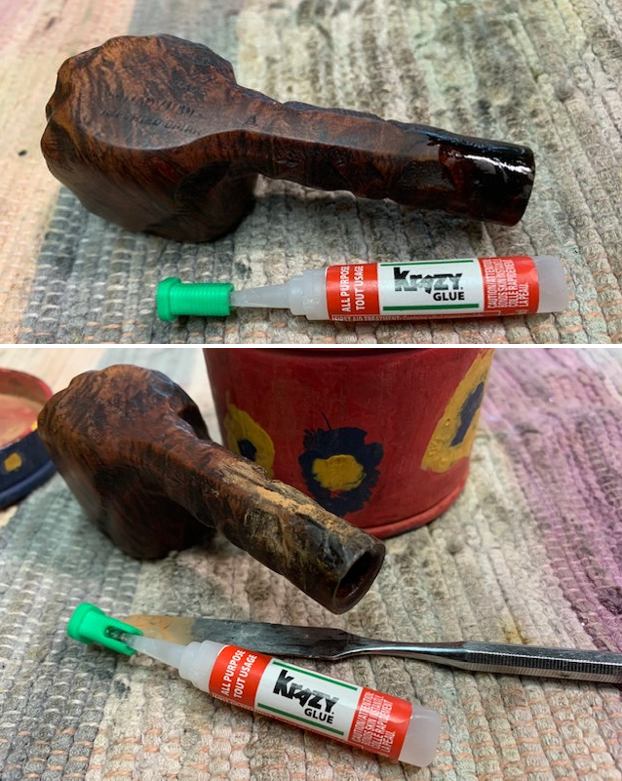
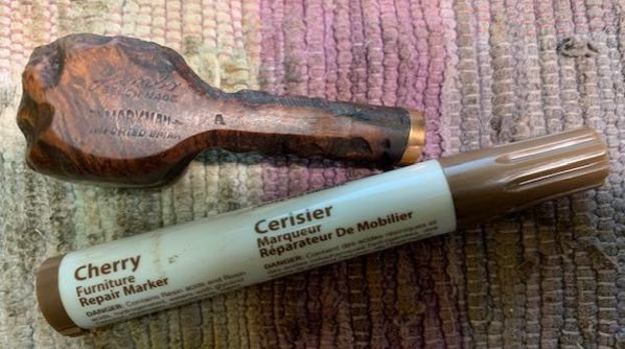
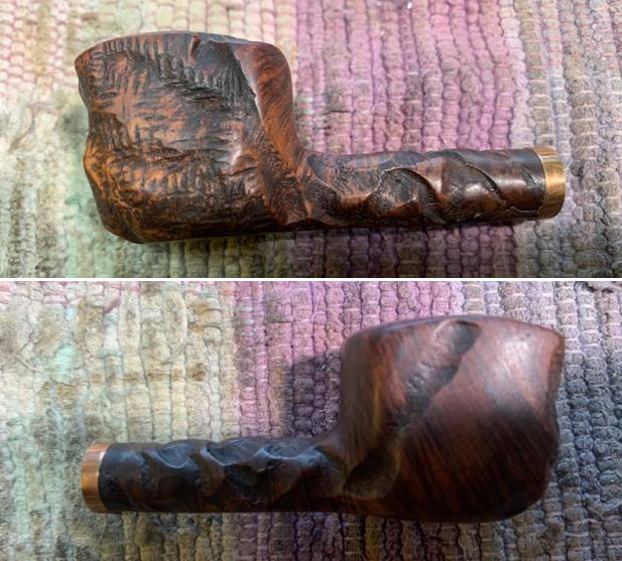
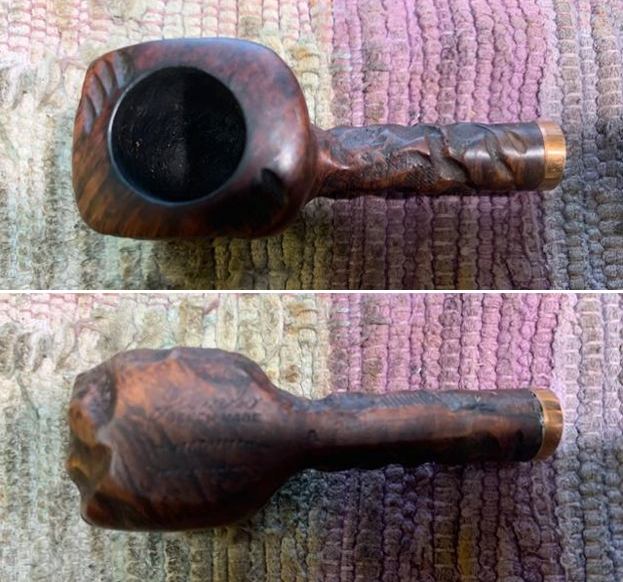
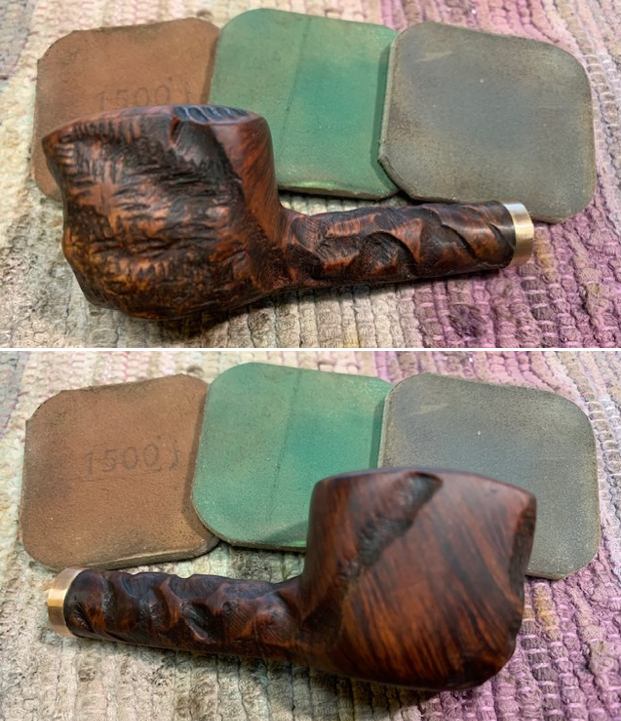
Now it was time to work on the pipe. I decided to try and remove the band from the shank so I could see what was underneath it. To my surprise and joy the glue had dried out on the band and it was quite simple to remove. I checked out the shank and there was a long (approximately 1 inch) crack from the shank end almost straight forward on the underside. At about ½ inch in it split off to the left side of the shank and was about ¼ inch long. It was not wide spread and the repair appears to have been well done under the band. I would know more once I removed the dried glue and debris on the shank surface. I went through my bands and found a nice looking thinner brass band that had an end cap on it that would work well to hold the shank together once I had clean up the repair.I wiped down the shank with acetone on a cotton pad. It worked well to remove the glue and the debris on the shank surface. I was careful around the repair to not get the acetone in the repair itself. The repair itself was lightly pitted but otherwise it looked good. I put a bead of clear CA glue on the crack and the branch crack. I used a dental spatula to fill in the hollow spots with briar dust.I smoothed out the repaired crack with 180 and 220 grit sandpaper. I was able to blend it into the surface of the shank. Once I had it smooth I put some white all purpose glue around the shank end and pressed the band in place on the shank. I wiped off the excess glue and touched up the repaired area with a Cherry Stain Pen. It matched well and the finished shank and band looked good at this point in the process. I took photos of the newly banded shank. I like the thinner depth of this band over the deeper Sterling silver one that had been on the shank previously. The finer band gave the briar a chance to really stand out. I polished the briar and band with micromesh sanding pads – dry sanding it with 1500-12000 grit pads. I wiped the bowl and band down after each pad with a damp cloth. The finish bowl and shank look very good. I worked some Before & After Restoration Balm into the surface of the briar with my finger tips and a shoe brush to get into the valleys and crevices of the rustication. The product is amazing and works to clean, enliven and protect the briar. I let it sit on the briar for 10 or more minutes and then buff it off with a soft cloth. It really makes the briar come alive and look quite rich. I set the bowl aside and turned my attention to the stem. I polished it with micromesh sanding pads – dry sanding with 1500-12000 grit pads. I wiped the stem down after each pad with a cloth and Obsidian Oil. I finished the polishing with Before & After Pipe Stem Polish – both Fine and Extra Fine. I gave it a final coat of Obsidian Oil. I put the Jumbo Bench Made Marxman Panel Lovat back together and buffed it on the buffing wheel with Blue Diamond. It raise a shine on the briar and the stem and gave some depth to the look of the carved grooves. I gave both the bowl and the stem multiple coats of carnauba wax on the wheel and buffed the pipe with a clean buffing pad to raise the shine. I hand buffed it with a microfiber cloth to deepen the shine. The pipe turned out to be a unique beauty in its own rugged way. Flat bottom and the panelled shape make it very different from most of the other Marxman Bench Made Jumbos I have worked on. I like the look of the thinner profile band as it really allows the carving on the shank of this Lovat to show. The dimensions of the pipe are Length:5 ¼ inches, Height: 1 ½ inches, Outer diameter of the bowl: 1 ¼ inches wide x 1 ½ inches long, Chamber diameter: ¾ of an inch. The weight of the pipe is 1.31 ounces/37 grams. It really is a uniquely beautiful pipe. I am not quite certain what I will do with it. I am actually sitting looking at it now as I write this. If I choose to sell it I will put it on the rebornpipes store in the American (US) Pipemakers Section. Thanks for walking through the restoration with me. Cheers.
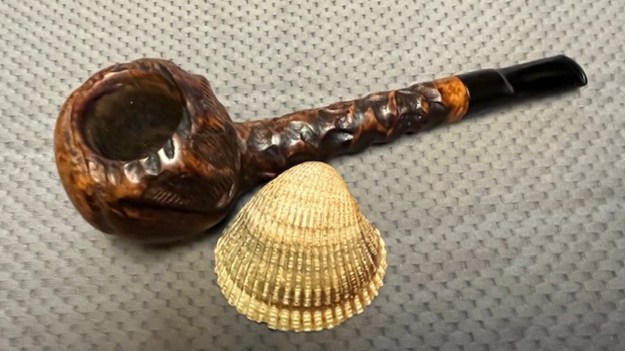
Restoring an Obstinate Marxman Jumbo War Club


Blog by Steve Laug

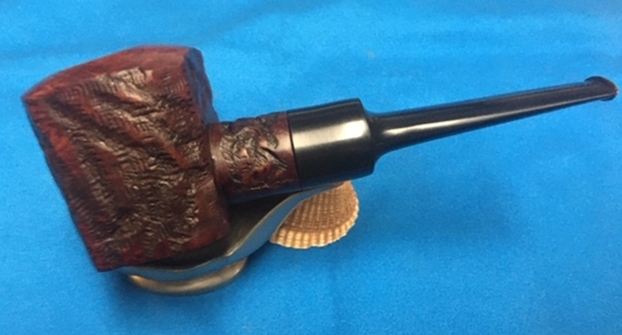
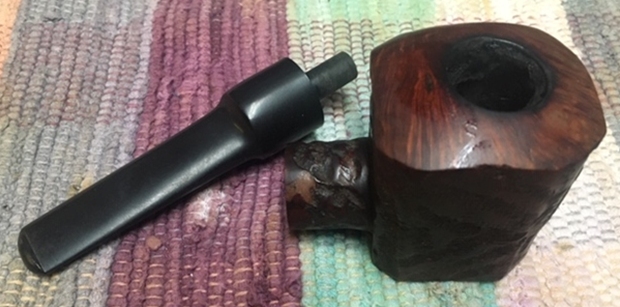
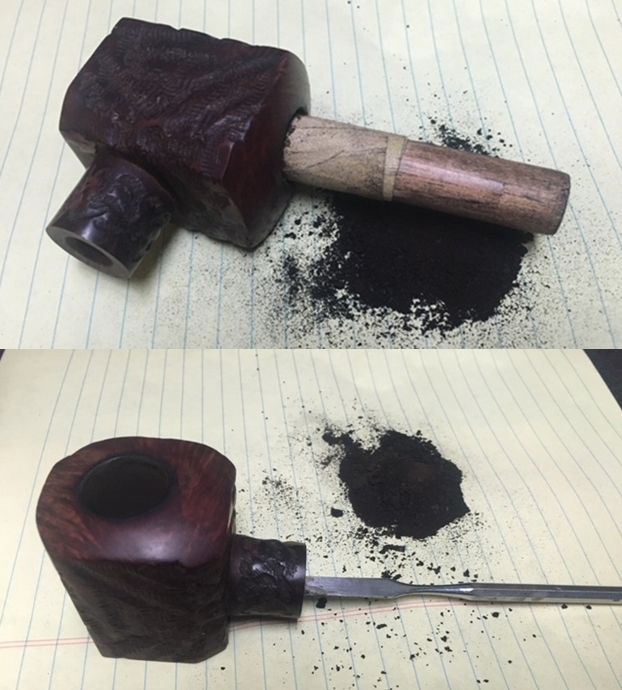
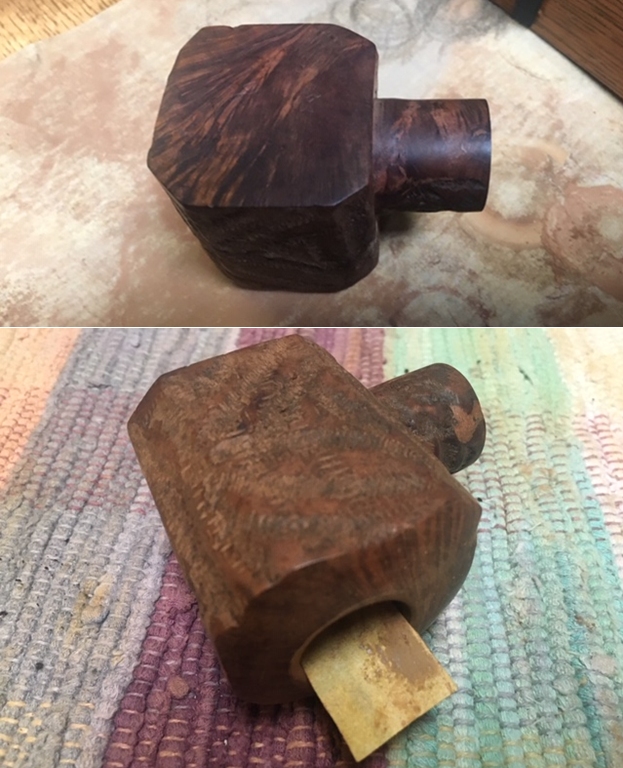
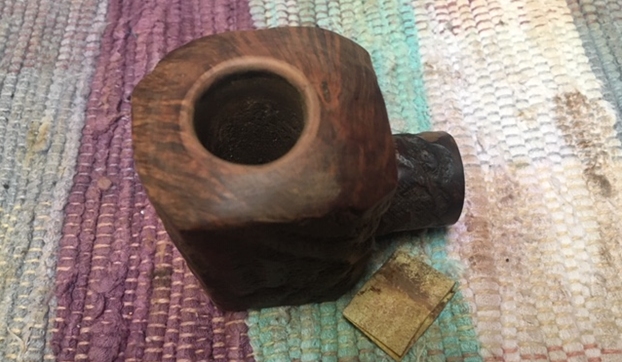
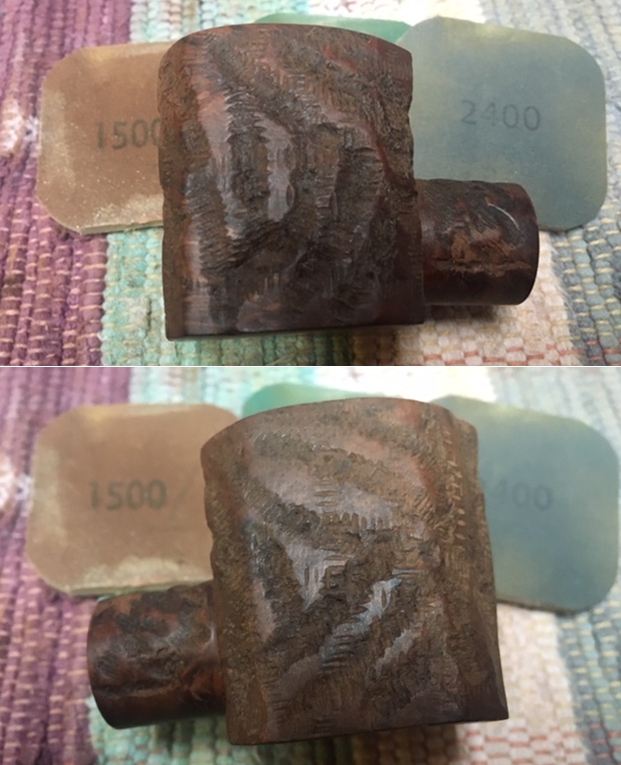
Not long ago I was emailing back and forth with a reader of the blog in Quebec about a pipe that he had purchased online. He said that it was a Marxman Jumbo Bench Made and it was huge. He said the photos of the pipe online were far better than what the pipe looked like when he received it. The pipe was marked on Etsy as follows: 1940s Rustic Tobacco Pipe Jumbo Marxman Carved Briar Root Wood Smoking Pipe OAK Handcarved Vintage Pipe Large Oversize Pipe. You and I know that the pipe was not OAK but Briar. Here are the photos that he sent me the link for. In the photos you can see the unique shape of this War Club/Hammer. It is quite big and I was expecting it to be much bigger than it actually is. The finish looks pretty good in the photos as well. The cake and lava on the rim looks negligible but present. It looks like a great deal but even in these photos you can see the large fills around the shank and bowl. We talked back and forth a bit and finally decided that the pipe should be sent to me in Vancouver. He wrote in the email that he sent before the pipe was mailed: “The stem seems stuck while the cake is relatively thick in the chamber. Also, the finish of the pipe seems stained and uneven. It’s a massive pipe but I’m confident it will look good”. With that I awaited the arrival of the pipe. Canada Post was efficient and it arrived three days after it was shipped. I opened the box and took photos of the pipe as it was when it arrived. He was right in saying it looked very different from the pipe in the Etsy seller’s photos.
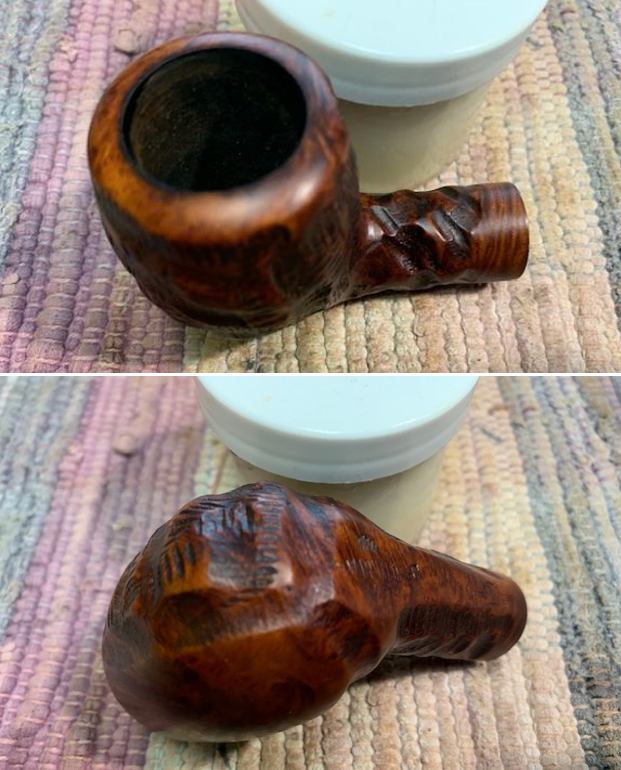
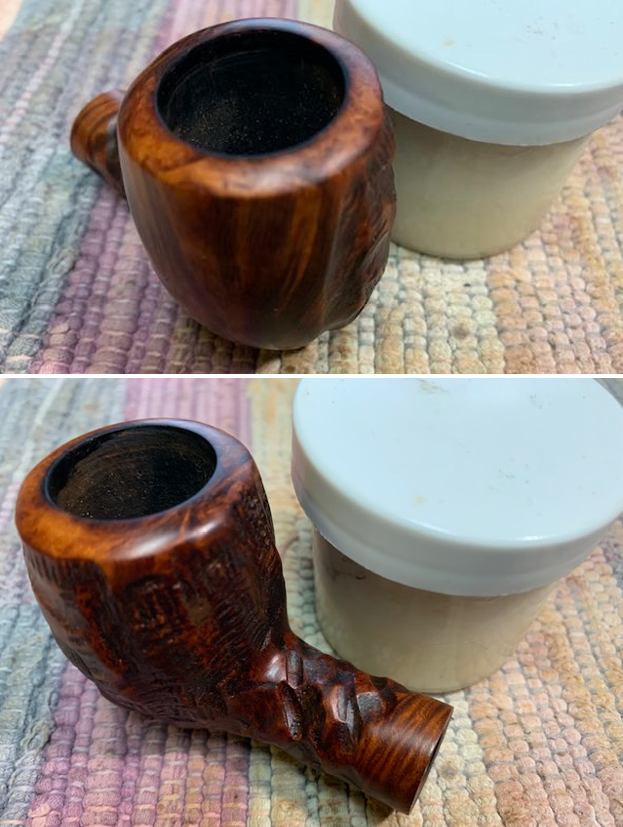
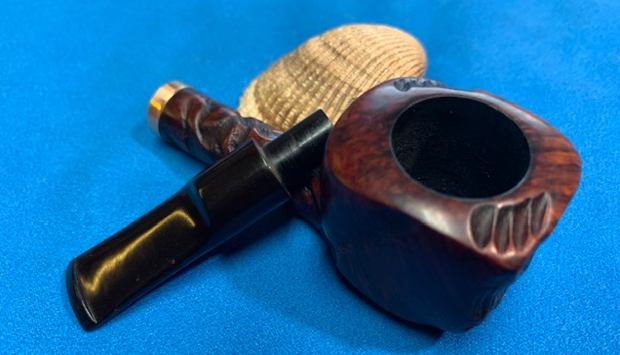
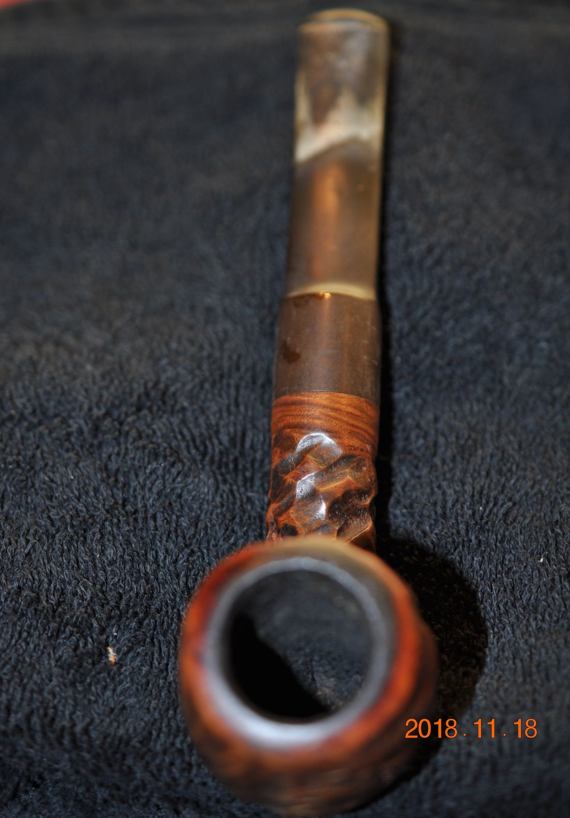
The stem was solidly stuck in the shank and was upside down. The finish was flat and dirty with no life to it. There were large fills on the front and back sides of the bowl and all the way around the shank. The fills were what gave an uneven appearance to the finish on the pipe as they were a light tan/pink. The bowl had a thick, uneven cake and the pipe smelled musty and dank. The rim top had a coat of lava on the top around the bowl and the inner edge of the chamber was out of round and damaged. The stem was high quality vulcanite and had tooth chatter on both sides near the button but there were not any deep tooth marks in the vulcanite. The photos show you what I saw as I examined the pipe. I took close up photos of the rim top and the stem. The photos confirm the condition of the pipe that I described in the paragraphs above. You can see the damage to the inner edge of the rim top. It had been hacked and damaged with what looked like a knife.I took a photo of the stamping on the flat heel of the bowl. It is stamped with a letter C at the top of the heel. Under that is reads Jumbo in script over Bench Made. Underneath at the bottom it is stamped with the Marxman logo inside an arrow.I wanted to refresh my memory of the brand so I turned to Pipephil first to get a short summary of the history (http://www.pipephil.eu/logos/en/logo-m2.html). The site had a side note that the brand was created in 1934 and merged with Mastercraft Pipes in 1953.I then turned to Pipedia to find out a bit more information on the brand and the maker of the pipe (https://pipedia.org/wiki/Marxman). The site quote from Pipes, Artisans and Trademarks, by José Manuel Lopes. I include a portion of that information below.
Marxman (Marxman Pipe Company) was created by Robert (Bob) L. Marx in 1934, when he was 29, and after he had worked for the William Demuth Company. His pipes were not outstanding because of the quality of their wood (probably Algerian), but Bob started making unique sculpted pieces, which brought the brand fame in the World of Hollywood cinema. Actors like Zachery Scott, Dennis Morgan, Jack Carson, Alan Hale, Joel McRae, and Ronald Reagan were some of the faces that appeared on the bowls.

Bob new how to innovate and took full advantage of marketing and press advertising in order to sell the brand–one of his slogans being “Relax with a Marxman”.

From the information on the two sites I learned that the pipe was made between 1934 when the company started and 1953 when the company was taken over by Mastercraft. I have included an advertisement for the Marxman Jumbo that was included on the article (1946 Ad, Courtesy Doug Valitchka).

It includes the following information. “A rare treat for the pipe connoisseur is the Marxman Jumbo, distinguished by a carved bowl that is in perfect balance for easy, comfortable smoking. From the thousands of pieces of briar that flow into our factory we select the perfect and unusual. These are reserved only for the Marxman Jumbo – and are fashioned into truly elegant pipes of exclusive designs – unique in appearance and superior in smoking qualities. Each pipe is an individual artistic creation following the natural shape of the briar. No two pipes are alike. They are priced according to size.” The prices are noted in the ad that I included below.I went on to read the remainder of the article on Pipedia and include the pertinent portion below.

Bob also produced other brands, such as the “Bench Made”. The company lasted until 1953, the year in which it merged with Mastercraft, then the USA’s biggest pipe importer. Marxman Pipes Inc., was located at 27 West 24th St. New York 10, NY.

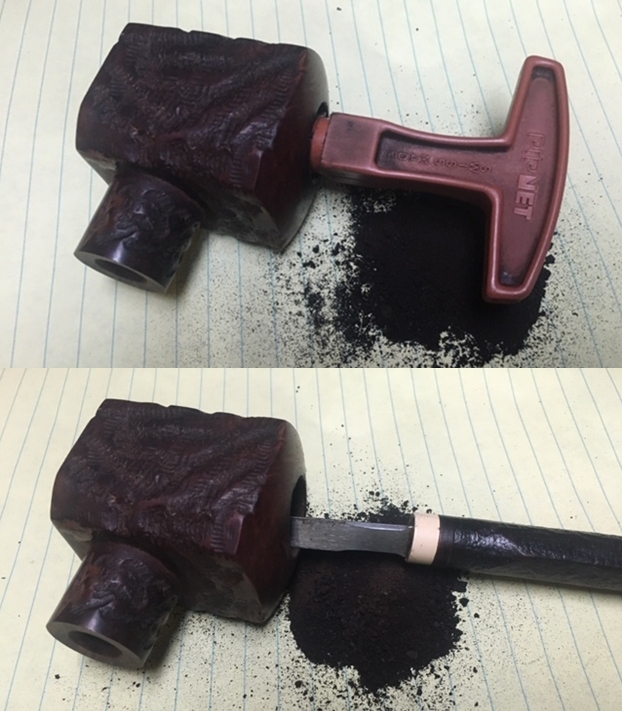
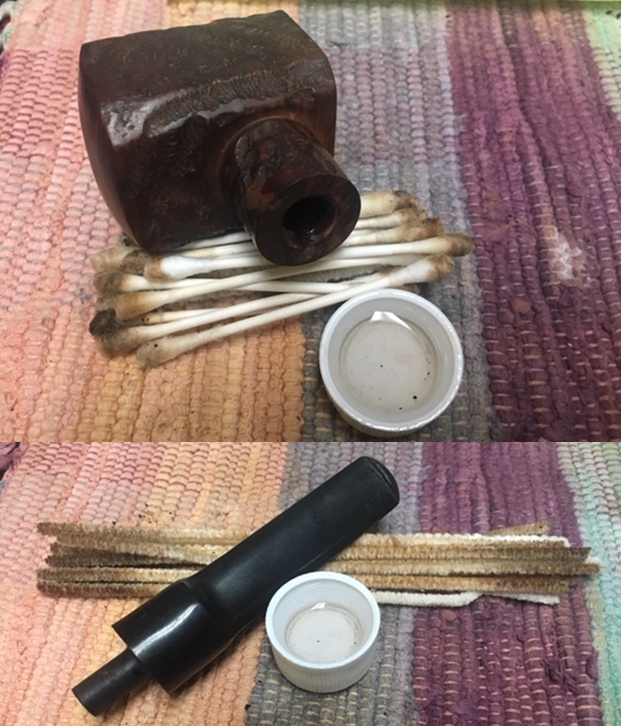
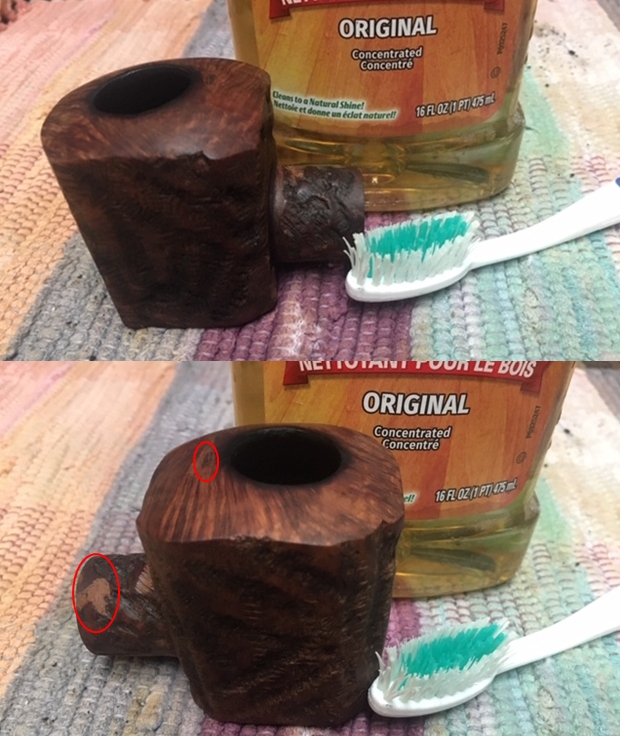
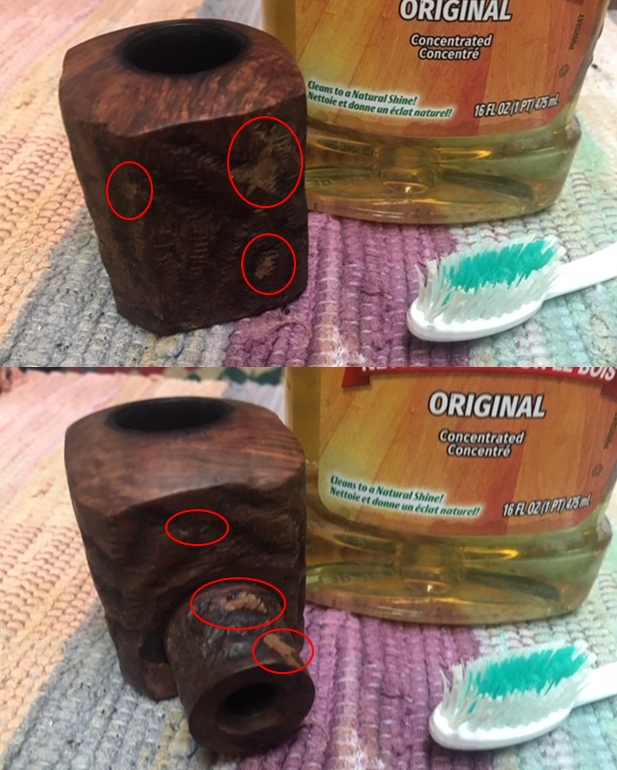
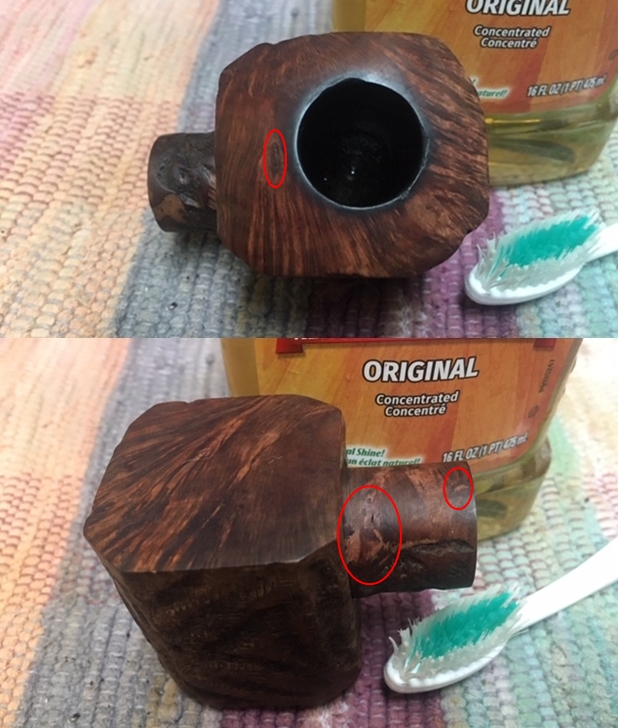
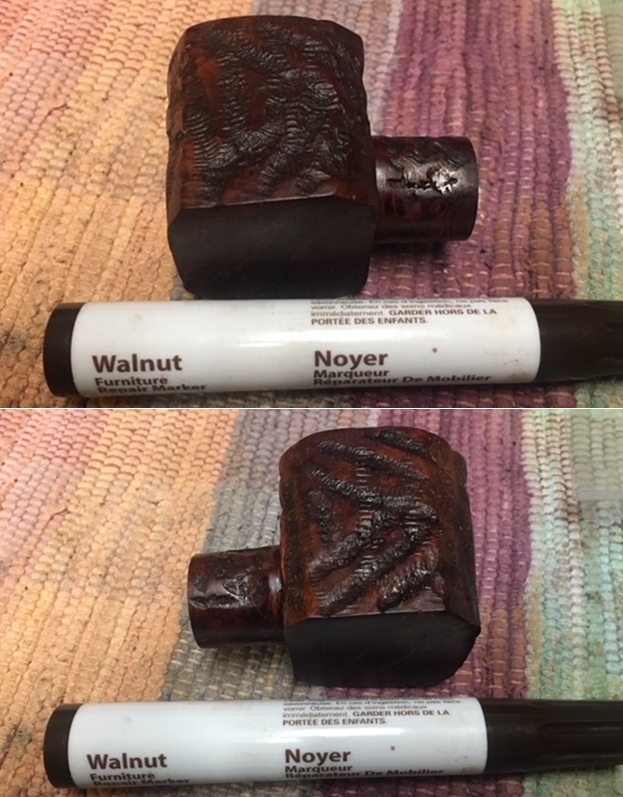
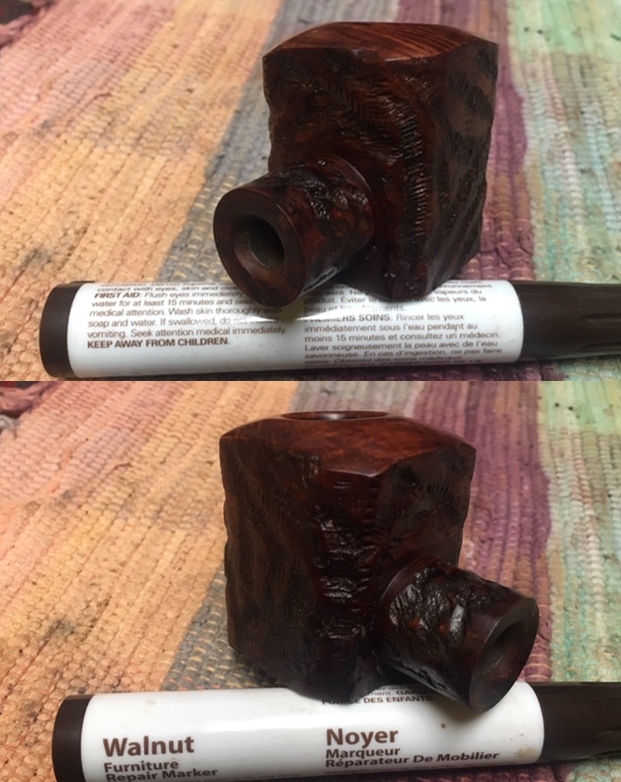
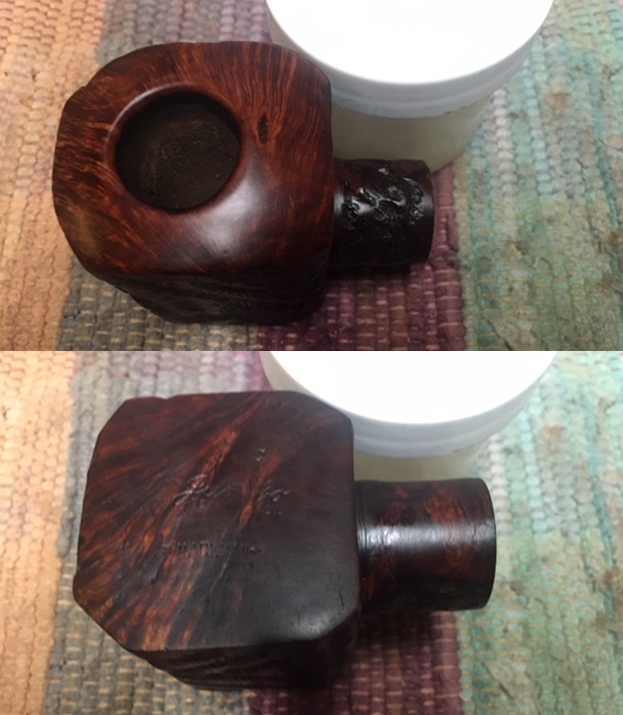
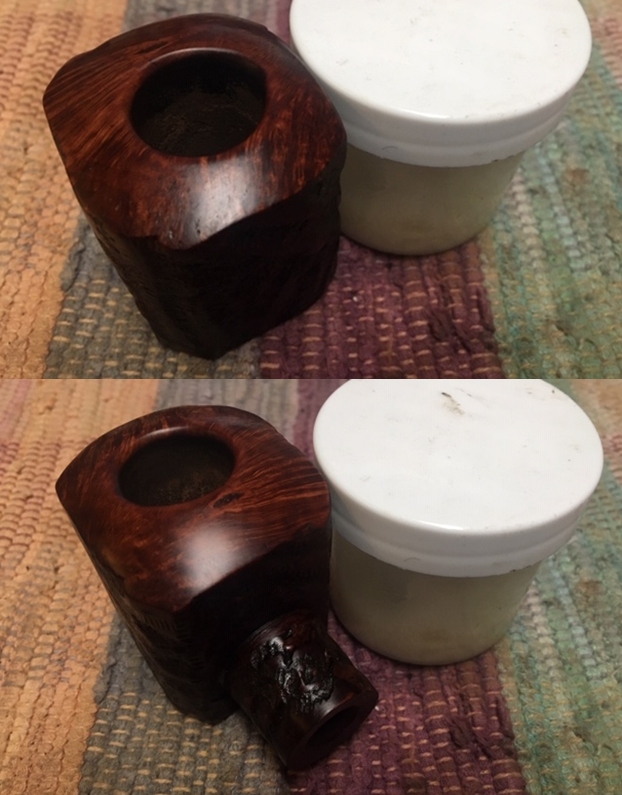
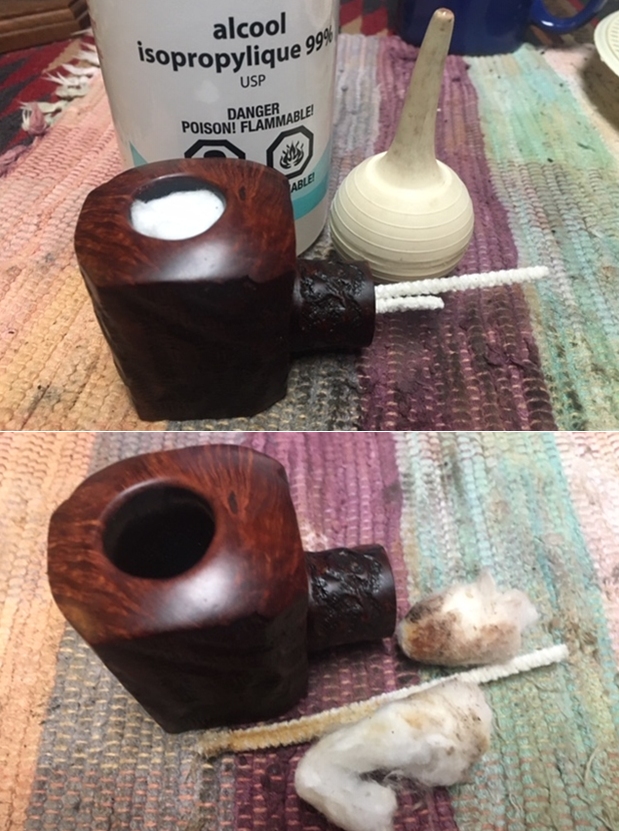
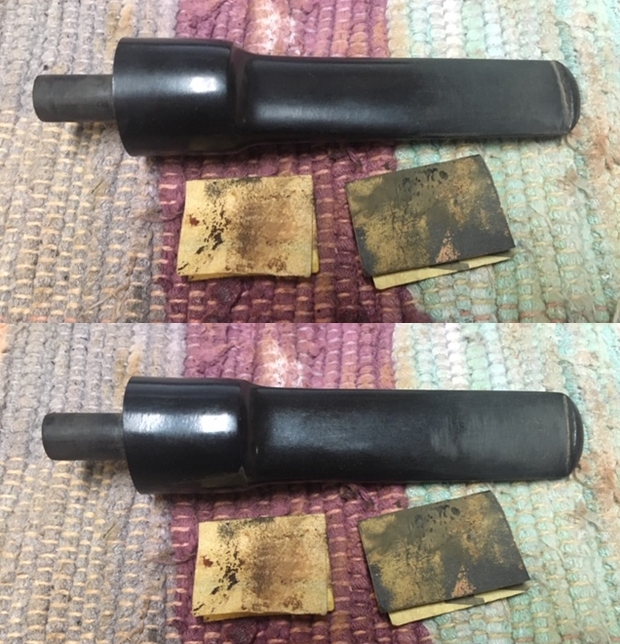
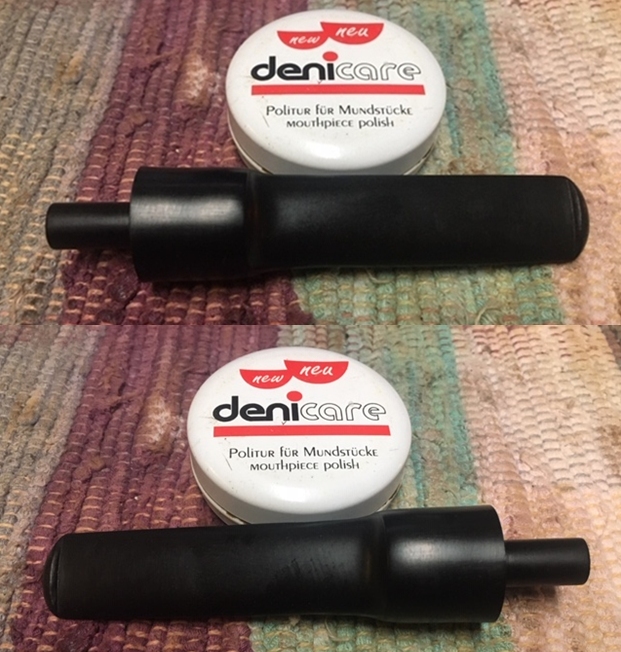
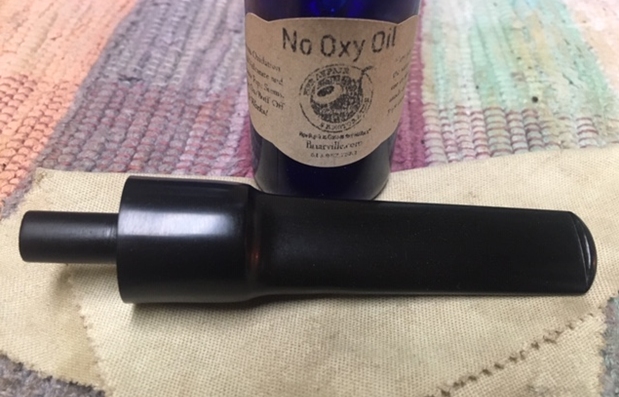
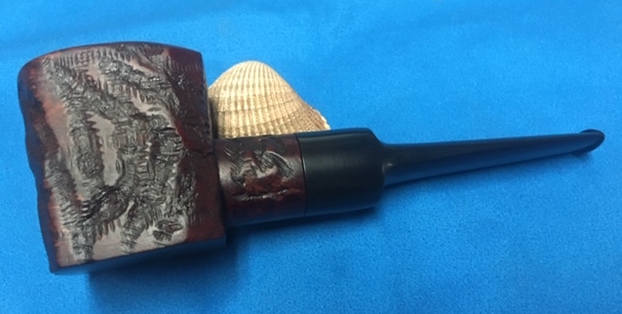
I had put the pipe in the freezer before I went to bed and in the morning I took it out and with a little effort I was able to remove the stem from the shank. It was very tight but it came out with patience.I took the bowl to the work table and reamed it. I used a PipNet pipe reamer with the second cutting head to remove the thick cake in the bowl.  I removed the remnants of the cake with a Savinelli Fitsall Pipe Knife and finished the bowl with a piece of 220 grit sandpaper wrapped around a piece of dowel. I used a dental spatula to scrape out the inside of the mortise and remove the thick lacquer that had built up there from much smoking. I cleaned the interior of the shank/mortise and the airway in the shank and the stem with pipe cleaners, cotton swabs and alcohol. They were very dirty and after I had scoured them the pipe was clean and smelled better. I would still need to do a cotton ball alcohol soak to draw out the rest of the mustiness.I scrubbed the exterior of the bowl and shank with a tooth brush and undiluted Murphy’s Oil Soap. I scrubbed the grooves of the rustication to remove the grime with the tooth brush. I rinsed the pipe off with warm running water and dried it off with a cotton cloth. The finish looked clean but you could see the fills very clearly now. I have circled them in red in the photos below. Now it was time to deal with the out of round bowl edges. I gently topped the bowl. I did not want to flatten the crowned rim just smooth out the top edge of the bowl. I used a folded piece of sandpaper to work a slight bevel to the inner edge to clean up the damaged edge and bring back to round. I also sanded the darkening on the rim edge to remove it as well. With that finished I moved on the polishing the smooth portions of the bowl and the rim top with micromesh sanding pads. I polished it with 1500-12000 grit sanding pads and wiped the bowl down with damp cloth to remove the sanding dust. I used a Walnut stain pen to touch up the fill areas and the lighter areas on the briar bowl. I covered all of them and set the bowl aside to dry. The stain actually hid the fills very well. Once the stain had dried I rubbed the bowl down with Before & After Restoration Balm. I worked it into the grooves of the finish with my fingertips and a horsehair shoe brush. I set it aside to absorb into the briar for ten minutes. Once it had been sitting I polished the bowl surface with a soft cotton cloth. At this point in the process the briar is looking very good. I filled the bowl with cotton balls and used and ear syringe to fill it with alcohol. I fit a folded pipe cleaner in the shank to keep the alcohol in the bowl. I left the alcohol and cotton ball in the bowl while I worked on the stem. It sat for over an hour and then I removed it from the bowl and took the photo of the cleaned pipe. I turned my attention to the stem. I   sanded out the tooth chatter and marks with 220 grit sandpaper and 400 grit wet dry sandpaper.I polished the stem with Denicare Mouthpiece Polish to remove the light scratching and the light oxidation on the stem surface. The product is a red paste that is gritty and when rubbed with a cotton pad it removes many of the scratches and remaining oxidation.I polished the stem with micromesh sanding pads – polishing it with 1500-12000 grit micromesh sanding pads. I wiped it down with cloth between each sanding pad. I polished it with Before & After Pipe Stem Polish – both Fine and Extra Fine. I gave it a rub down with Briarville’s No Oxy Oil to protect the stem from oxidizing. It was looking very good at this point. I was looking forward to this part of the restoration when all the pieces are put back together so I can send a photo back to the fellow in Quebec. I put the pipe back together and buffed it with Blue Diamond on the buffing wheel. I gave the bowl multiple coats of Conservator’s Wax and the stem multiple coats of carnauba wax. I hand buffed the pipe with a clean buffing pad to raise the shine. It is fun to see what the polished bowl looks like with the smooth portion and the rusticated portion contrasting well and added to that the polished black vulcanite stem. This Marxman Bench Made Jumbo looks far better than it did when I started. The fills are present but have blended in very well. The stem fits well in the shank. The pipe is nice looking and feels great in my hand. The pipe is a sitter so that it can be laid down on a desk top while the pipeman is working on something else. Have a look at it with the photos below. The dimensions are Length: 6 inches, Height: 2 1/8 inches, Outside diameter of the bowl: 1 ¾ inches, Chamber diameter: ¾ of an inch. This old Marxman Jumbo is a beauty and I look forward to what the pipeman who sent it thinks of this restoration. Thanks to each of you who are reading this blog. Remember we are not pipe owners; we are pipemen and women who hold our pipes in trust until they pass on into the trust of the next pipeman or woman.