
by Kenneth Lieblich
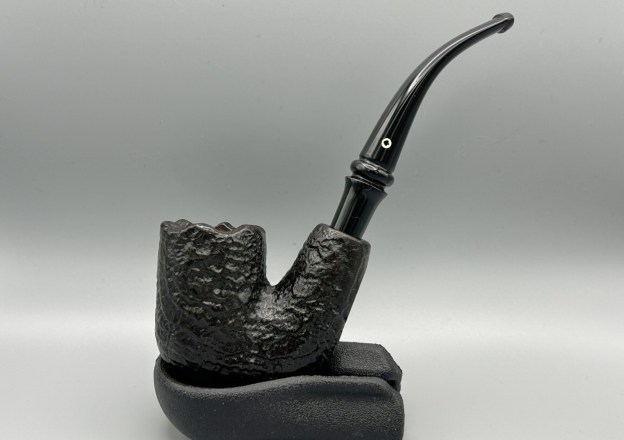
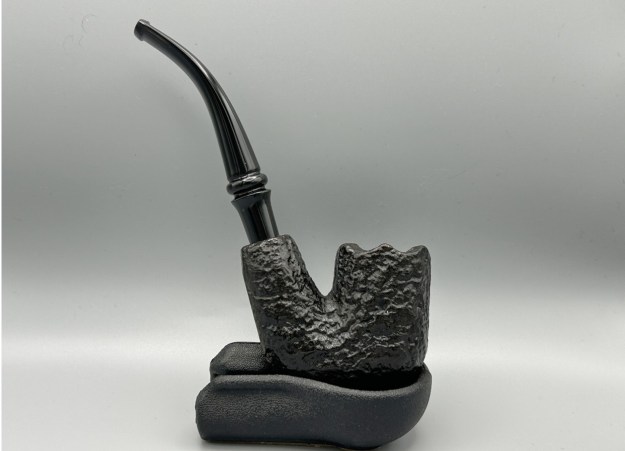
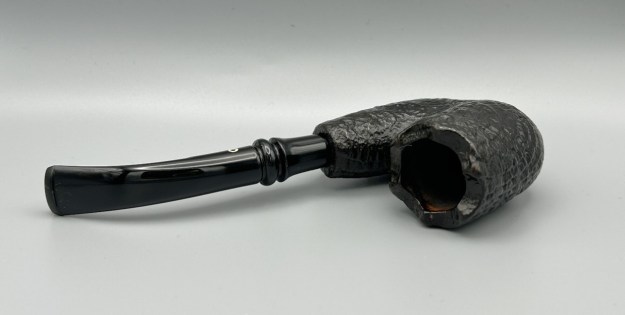
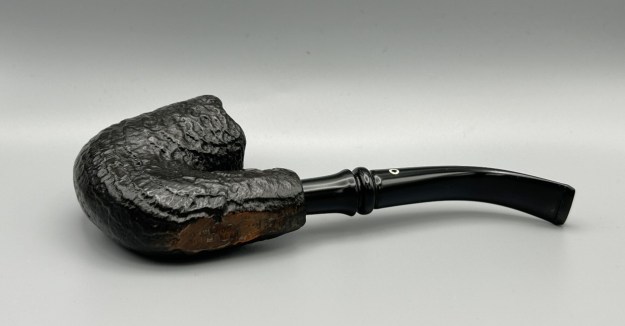
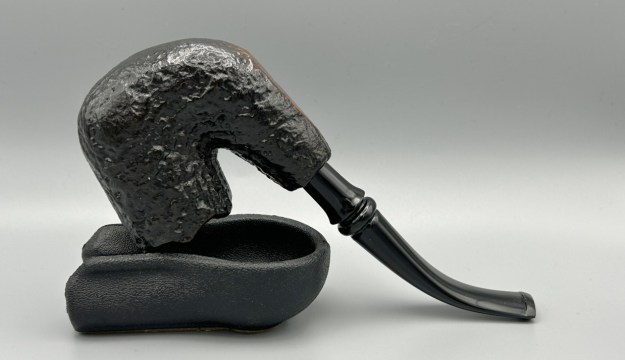
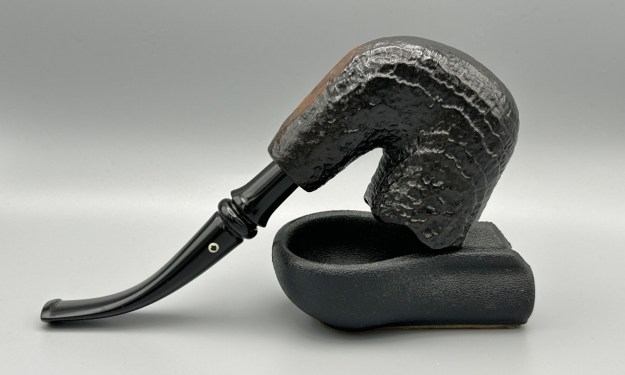
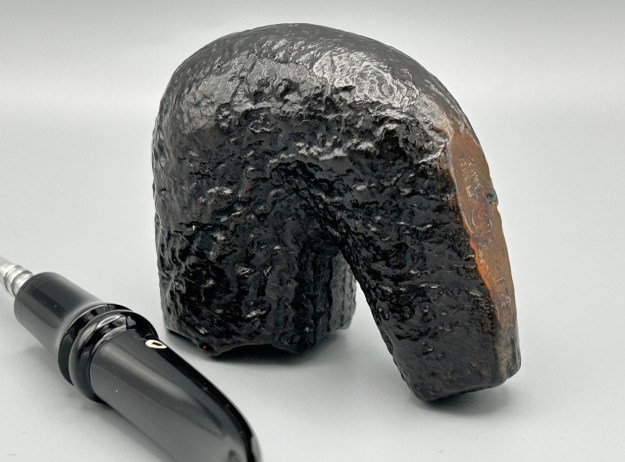
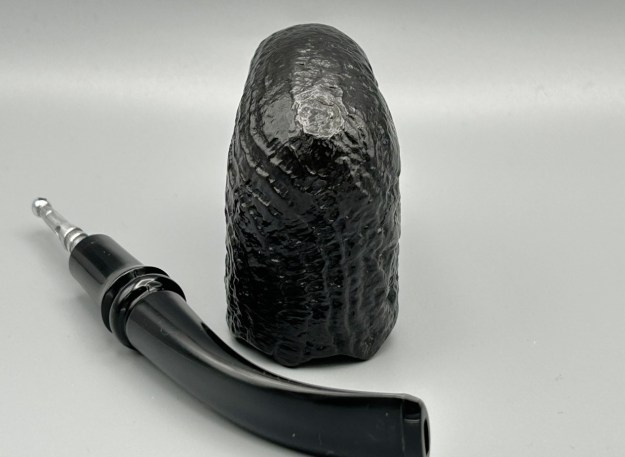
It’s been a while since I worked on a Kaywoodie and the time has come again. This is an interesting pipe and a type that I haven’t seen before. It is a craggy Kaywoodie 179R sandblast and it is a fully-bent billiard, with a crown as a rim. It’s almost an Oom Paul – almost, but not quite. I could only find one other example of this same pipe online, so I suppose it’s a little unusual.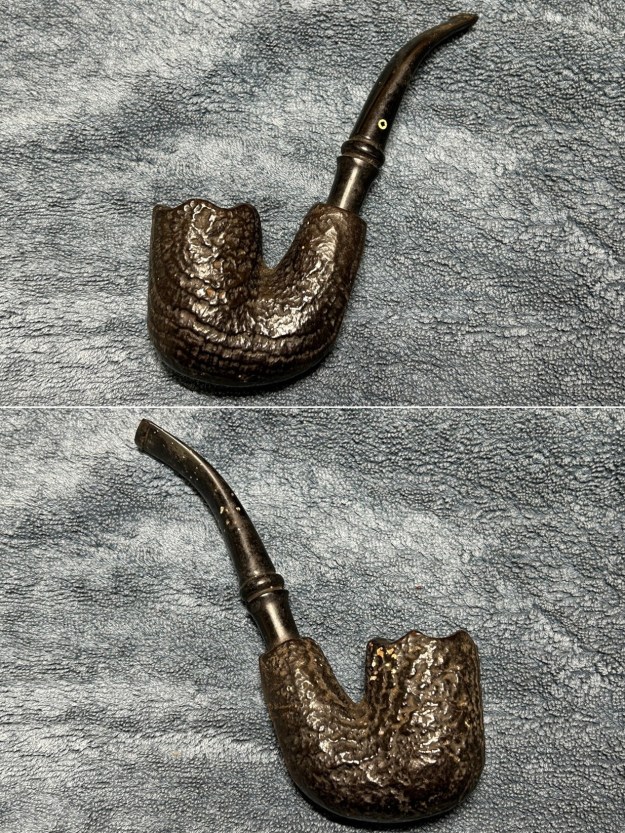
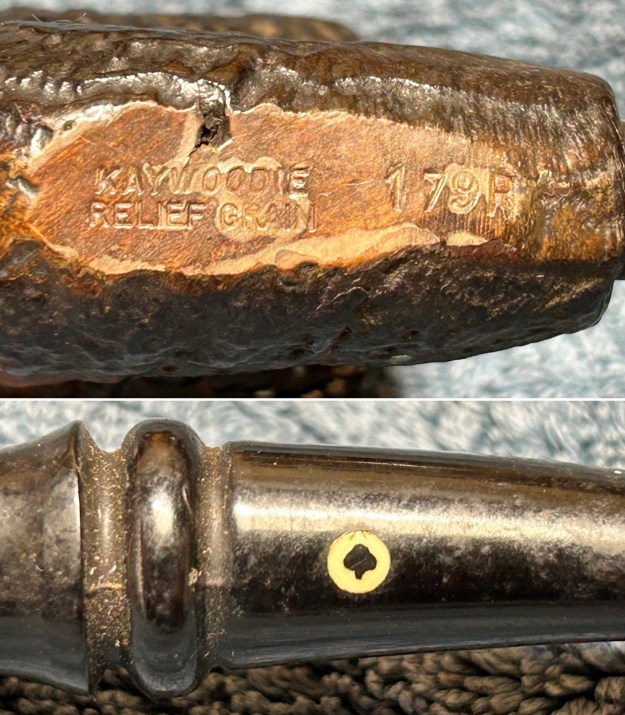
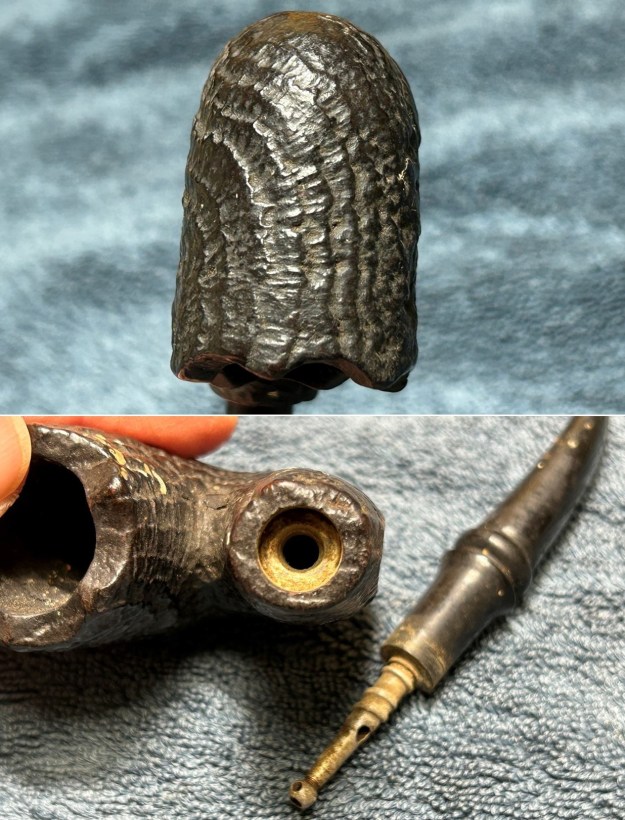
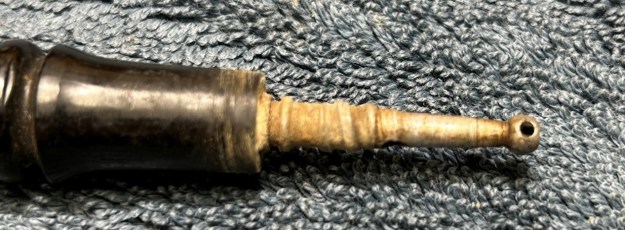
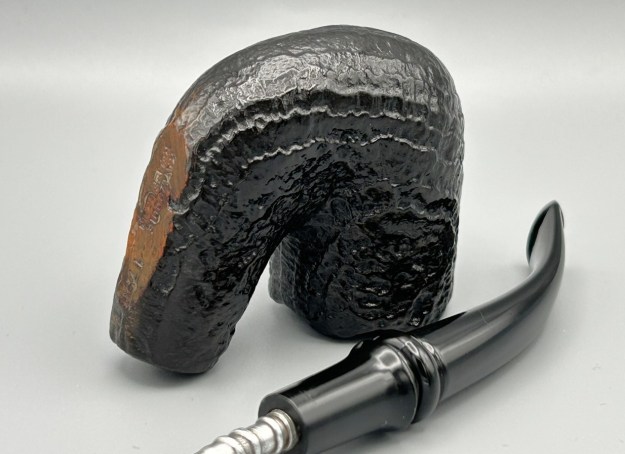
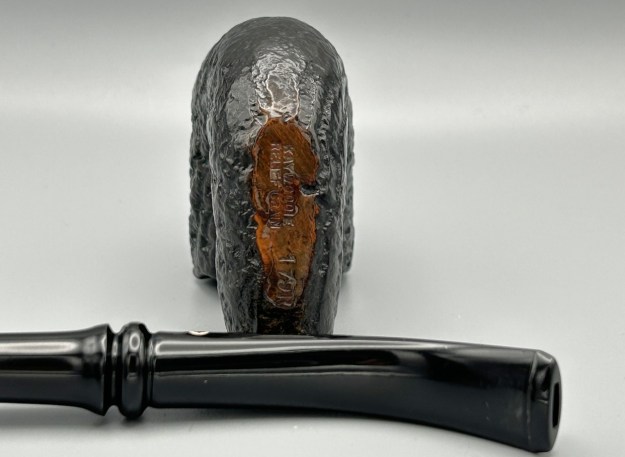
 This pipe’s logo is a black cloverleaf in a white circle. On the underside of the stummel, we can see this pipe’s markings. First, we see Kaywoodie [over] Relief Grain. Then, to the right, is the shape number: 179R. The R, of course, refers to relief grain. Three-digit shape numbers seem to date from the 1970s and 80s, so it’s safe to assume that this pipe is from that time period. It’s also worth noting that the ‘Drinkless Filter’ (i.e. the stinger) on this pipe is fully intact and has three holes (not four).
 Kaywoodie is a venerable institution in the United States, and has a long and interesting history. I encourage you to read the Pipedia article here and the Pipephil article here.
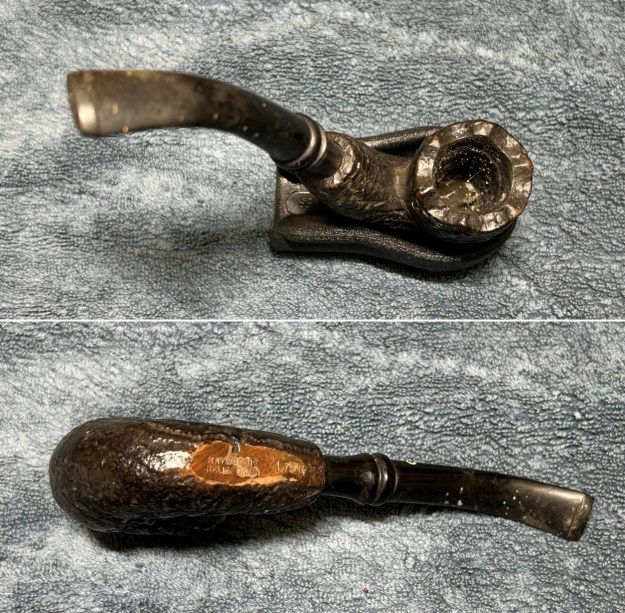
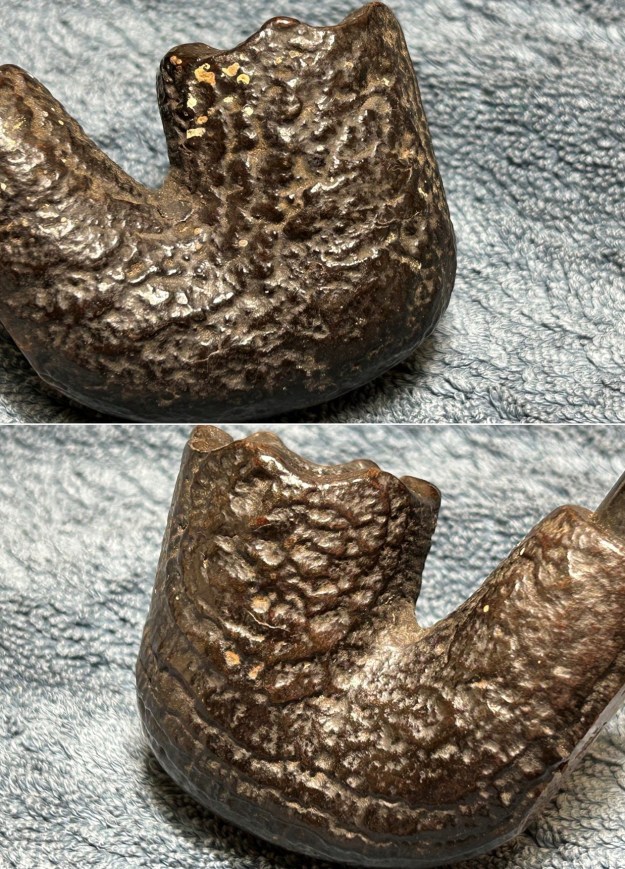
 Let’s look at this particular pipe’s condition. The stem is dirty and quite heavily chewed. It is made from acrylic, so there is no issue with oxidation. The tenon screws into the mortise in the stummel and is also quite dirty. The stummel looks to be in decent shape. It’s been well loved, so it’s quite dirty – inside and outside. The craggy blast on the briar has a few flecks of white paint, but that should be easily removed.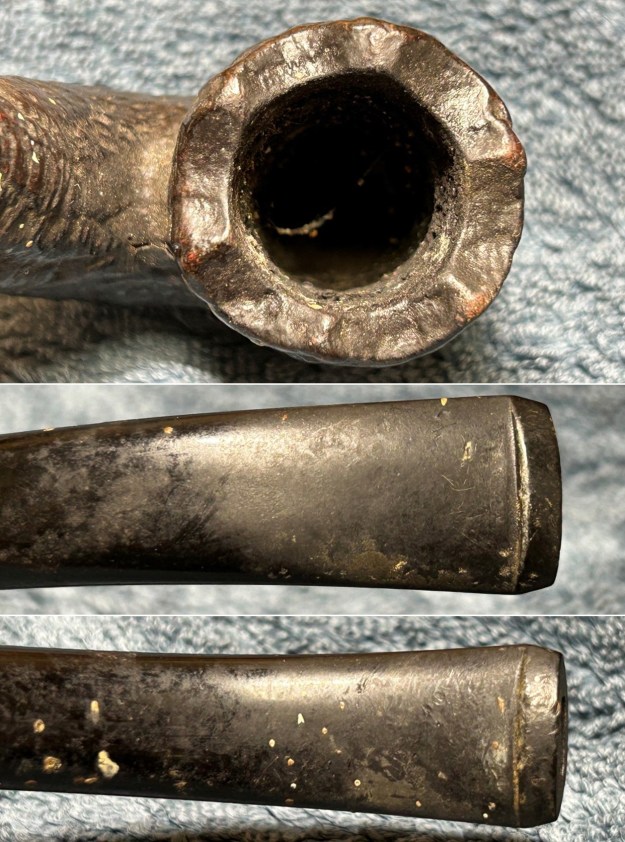
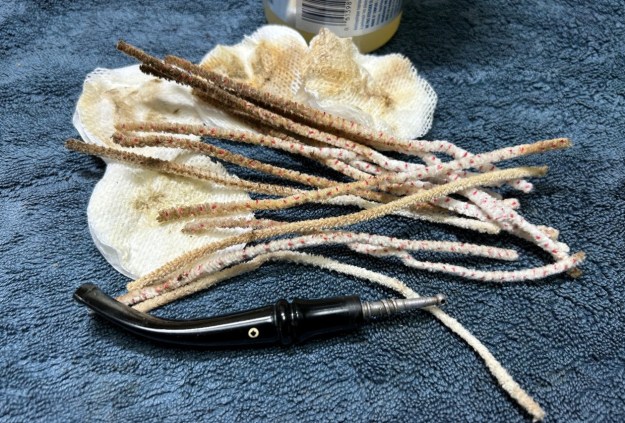
 On with the work! I started by using isopropyl alcohol on a few cotton rounds and wiped down the stem to provide an initial cleaning of filth before moving on to the next steps. The primary cleaning came next. I disinfected the inside of the stem with both pipe cleaners and cotton swabs dipped in lemon-infused 99% isopropyl alcohol. I scrubbed thoroughly to make sure the interior was very clean.
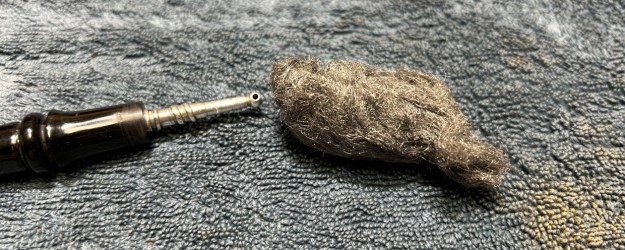
 Even thought the stinger was now clean, it still looked a bit drab. So I sanded it with some 0000-grit steel wool – not to make it shine, but to make it look decent again.
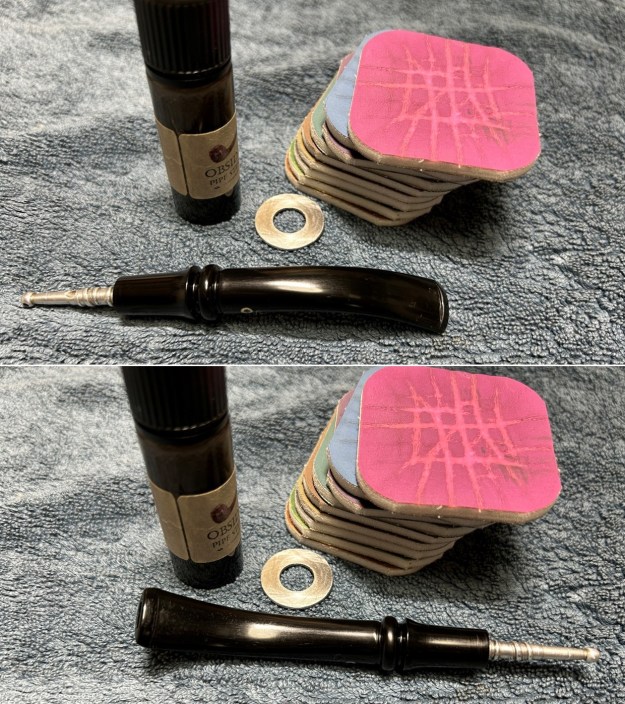
 As the stem was now clean and dry, I set about fixing the marks and dents in the acrylic. This was done by filling those divots with black cyanoacrylate adhesive, impregnated with carbon and rubber. I left this to cure and then sanded. I used all nine of the micromesh sanding pads (1,500 through 12,000 grit) to sand out flaws, even out the acrylic, and provide gentle polishing of the finished surface. I also applied pipe-stem oil while using the last five micromesh pads. There was a wonderful, deep black shine to the stem when I was done.
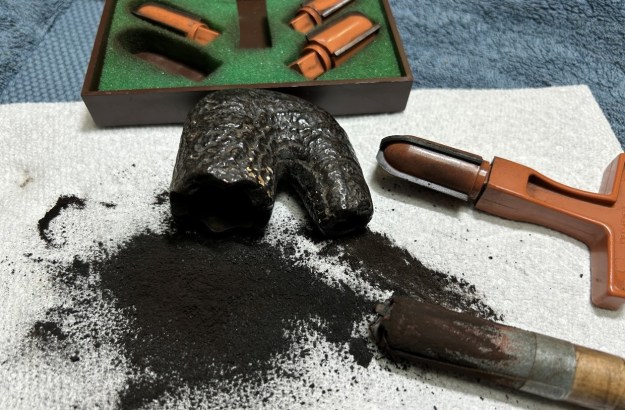
 As the stem was (nearly) complete, I moved on to the stummel. The first step was to ream out the bowl – that is to say, remove all the cake inside the bowl. This accomplished a couple of things. First (and most obviously), it cleaned the bowl and provided a refurbished chamber for future smoking. Second, when the old cake was removed, I could inspect the interior walls of the bowl and determine if there was damage or not. I used a reamer, a pipe knife, and a piece of sandpaper taped to a wooden dowel. Collectively, these ensured that all the debris was removed.
 Similar to the stem, I then cleaned the stummel with both pipe cleaners and cotton swabs dipped in lemon-infused 99% isopropyl alcohol. With a pipe this dirty, it took quite a while and much cotton to clean.
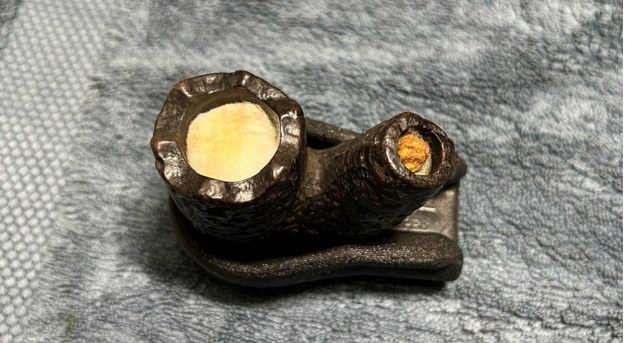
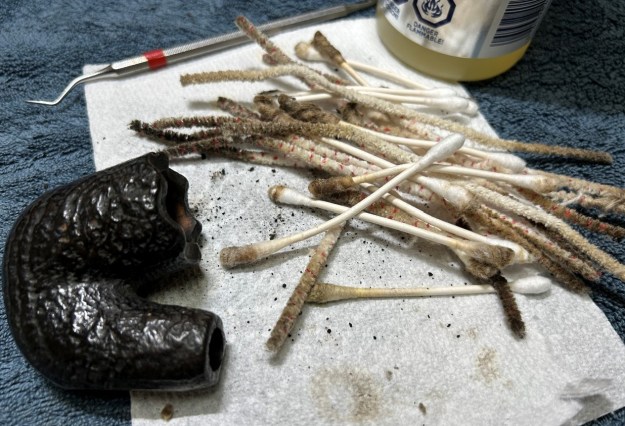 I then decided to ‘de-ghost’ the pipe – that is to say, exorcize the remaining filth from the briar. I filled the bowl and the shank with cotton balls, then saturated them with 99% isopropyl alcohol. I let the stummel sit overnight. This caused the remaining oils, tars and smells to leach out into the cotton.
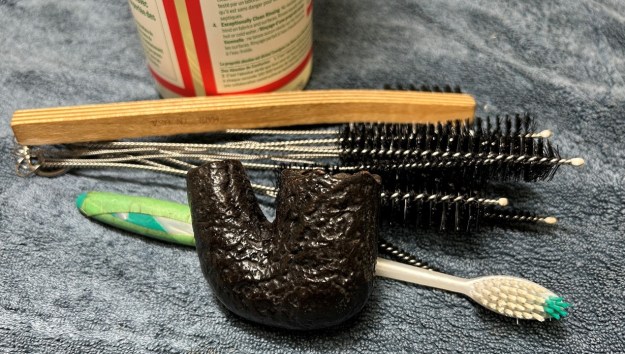
 To tidy up the briar, I wiped down the outside, using a solution of a pH-neutral detergent and some distilled water, with cotton rounds. I also used a toothbrush in the crevices. This did a good job of cleaning any latent dirt on the surface of the briar. The last step of the cleaning process was to scour the inside of the stummel with the same mild detergent and tube brushes. This was the culmination of a lot of hard work in getting the pipe clean.
 I rubbed some LBE Before & After Restoration Balm into the briar and let it sit for 30 minutes or so. The balm moisturizes the wood and gives a beautiful depth to the briar. I then buffed the stummel with a microfibre cloth.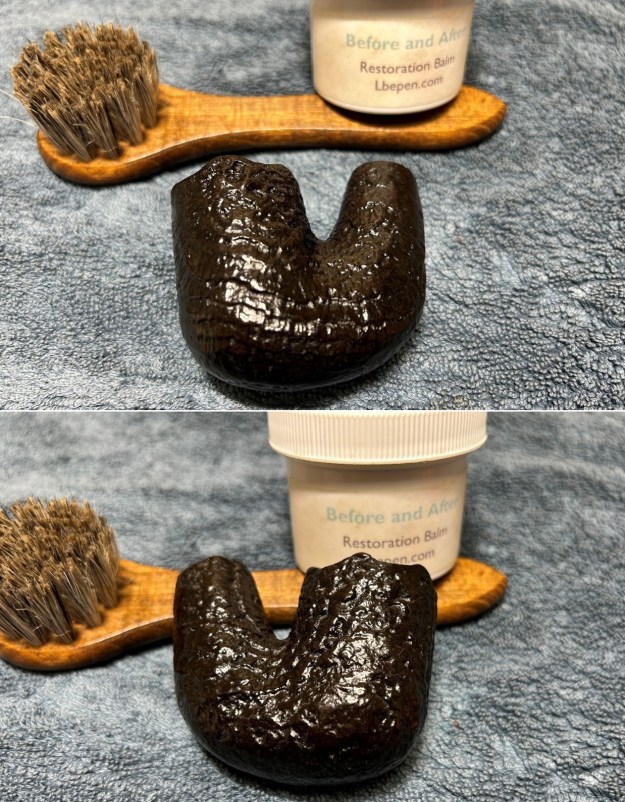
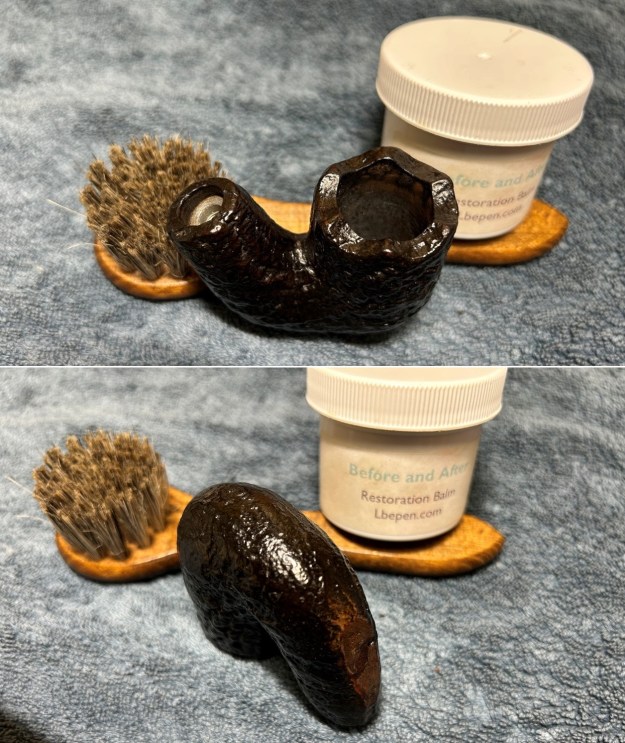 For the final step, I took the pipe to my bench polisher and carefully buffed it – first with a blue diamond compound, then with three coats of carnauba wax. This procedure makes the pipe look its best – the stummel sings and the stem glows.
All done! This handsome Kaywoodie 179R Relief Grain looks fantastic again and is ready to be enjoyed by its next owner. I am pleased to announce that this pipe is for sale! If you are interested in acquiring it for your collection, please have a look in the ‘American’ section of the store here on Steve’s website. You can also email me directly at kenneth@knightsofthepipe.com. The approximate dimensions of the pipe are as follows: length 4¼ in. (108 mm); height 5½ in. (141 mm); bowl diameter 1⅓ in. (34 mm); chamber diameter ⅞ in. (21 mm). The weight of the pipe is 1½ oz. (44 g). I hope you enjoyed reading the story of this pipe’s restoration as much as I enjoyed restoring it. If you are interested in more of my work, please follow me here on Steve’s website or send me an email. Thank you very much for reading and, as always, I welcome and encourage your comments. 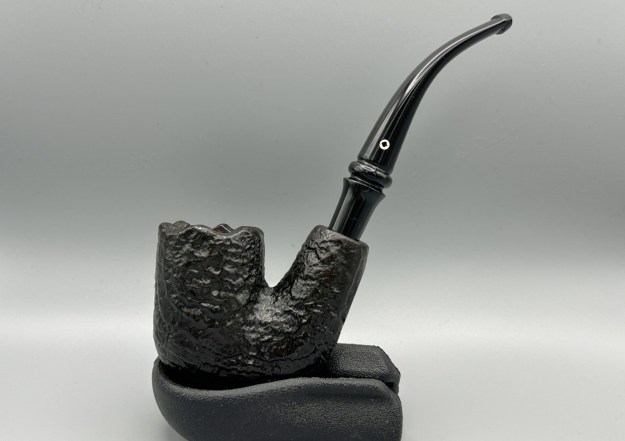
 rebornpipes