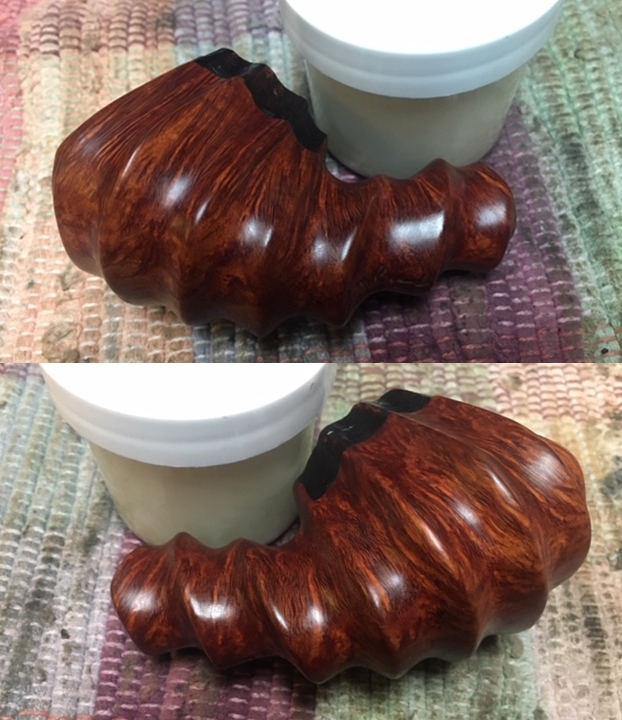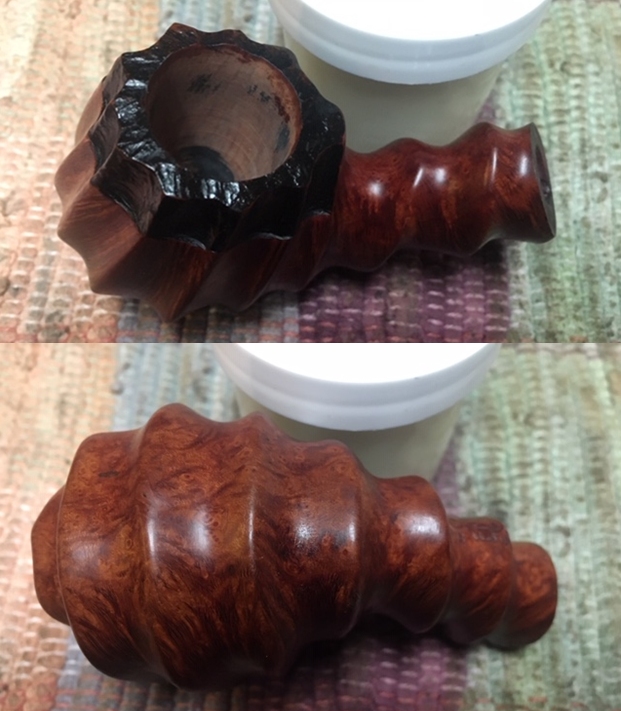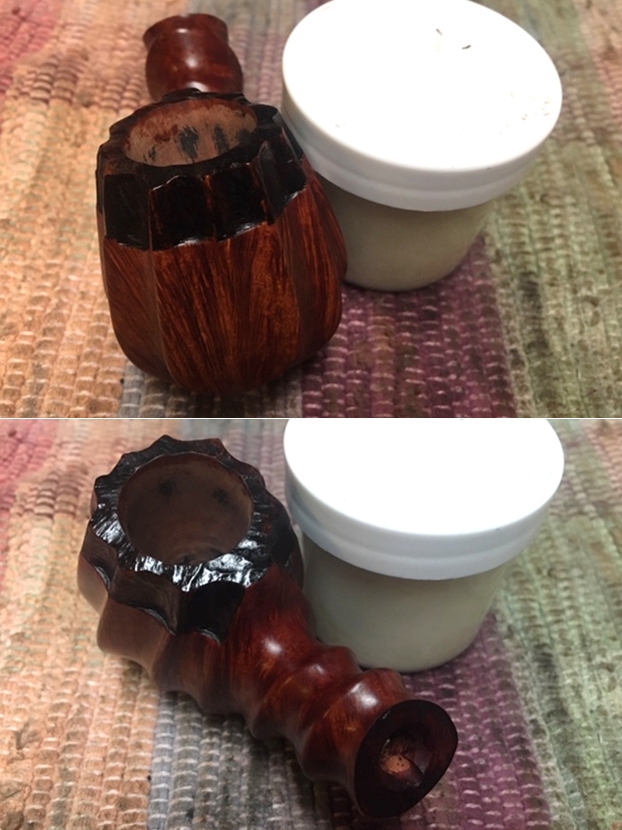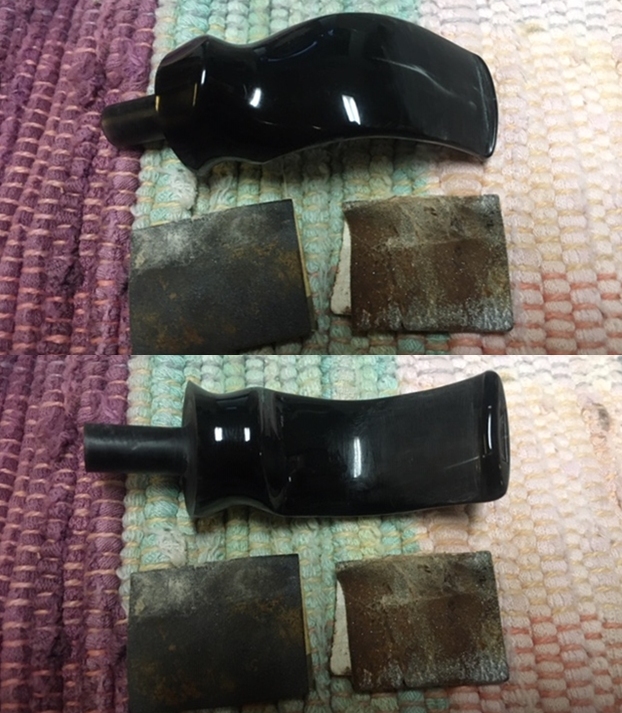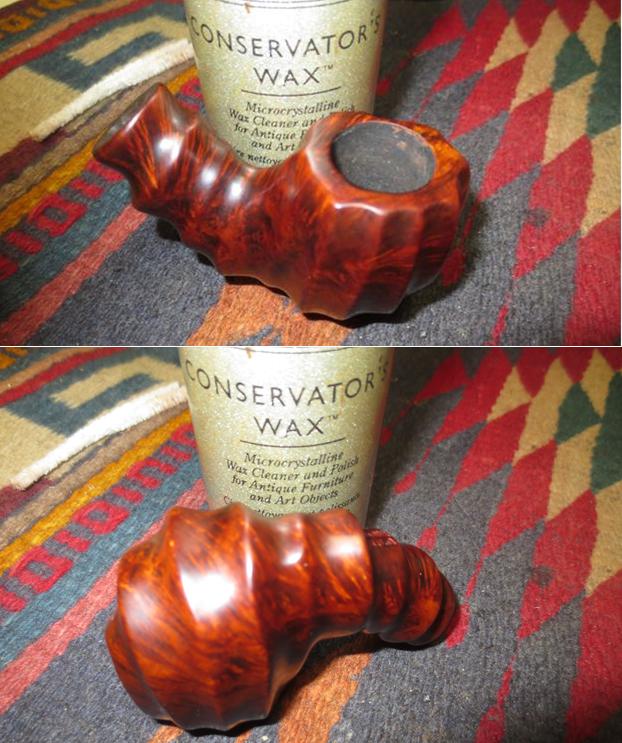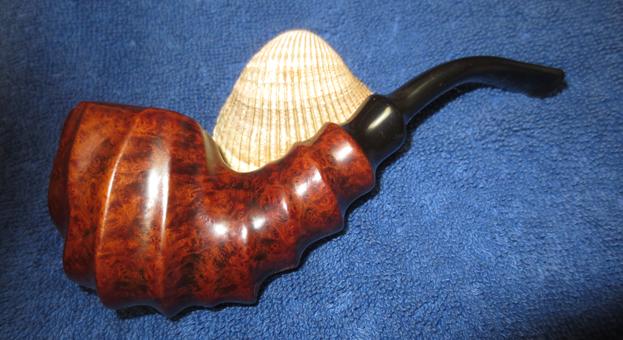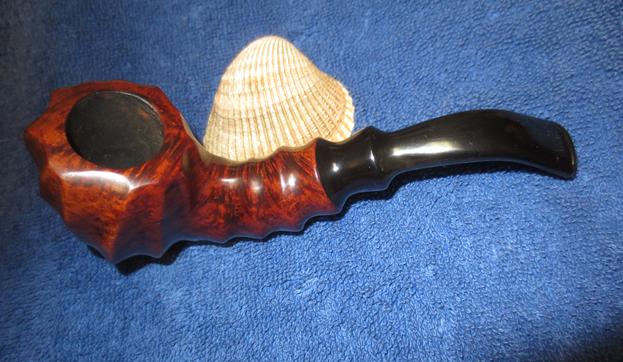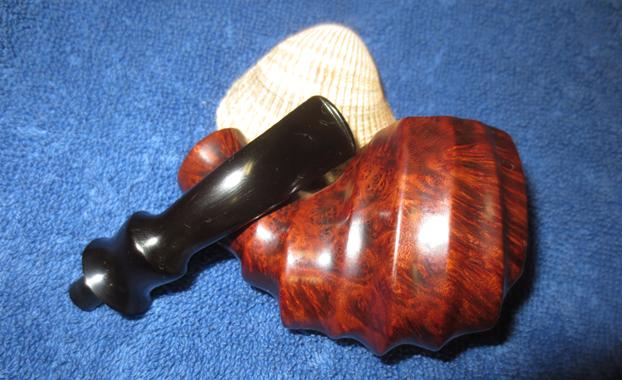
Tag Archives: JM Boswell Pipemakers

Breathing Fresh Life into a JM Boswell 2006 U.S.A Apple


Blog by Steve Laug

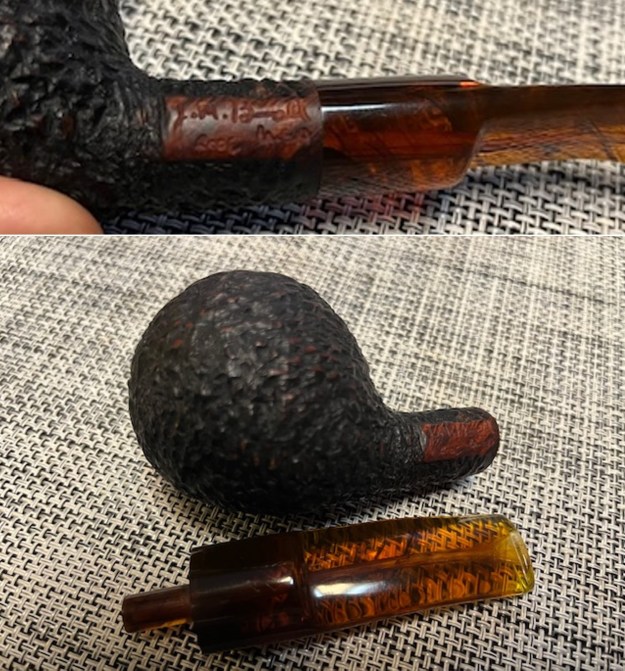
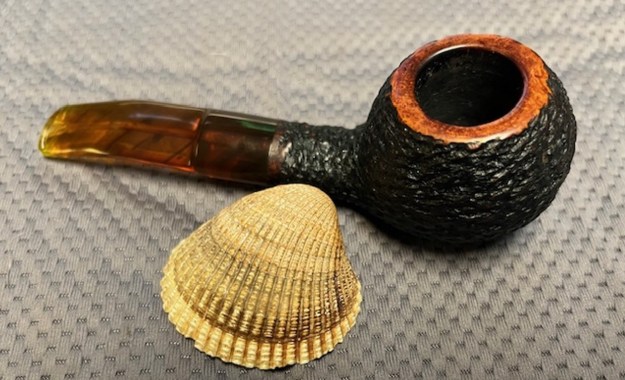
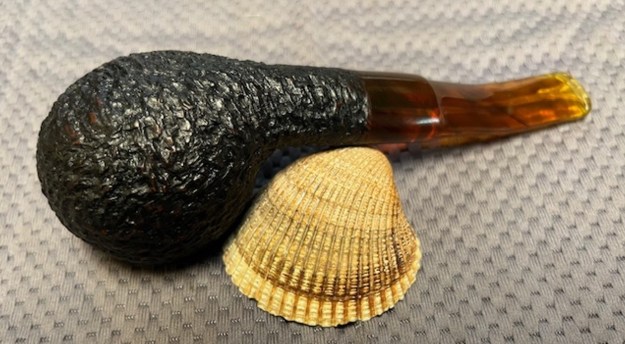
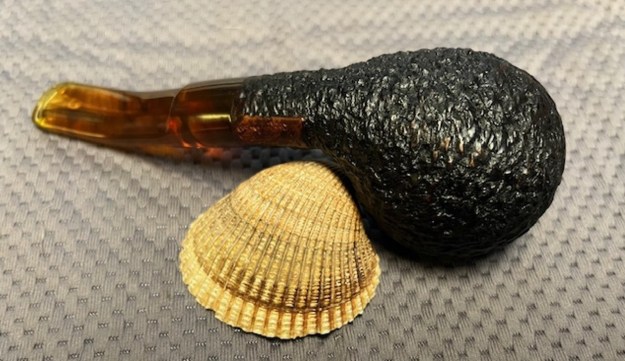
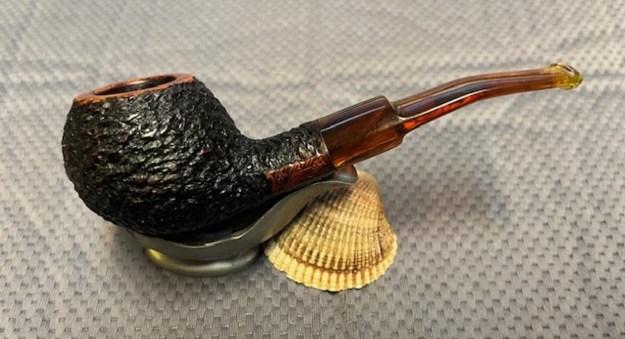
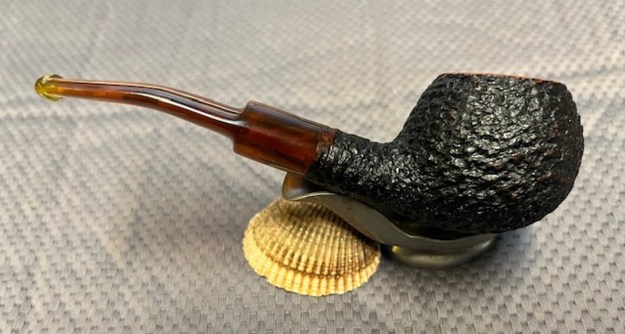
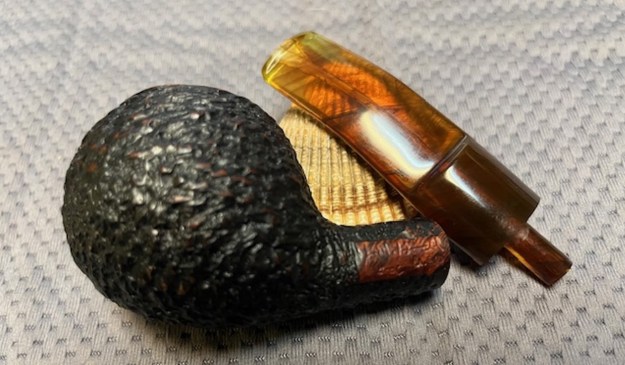
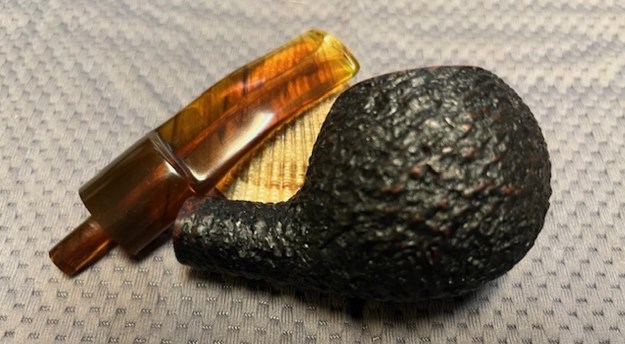
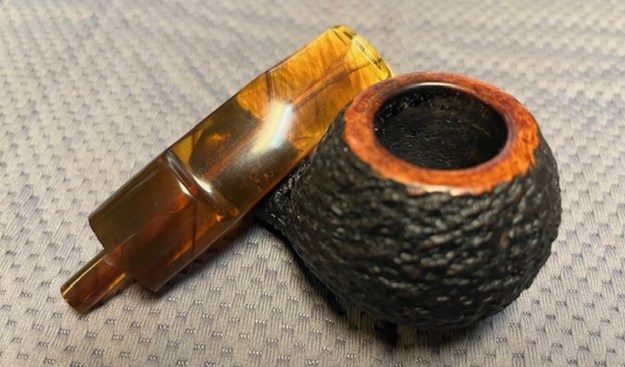
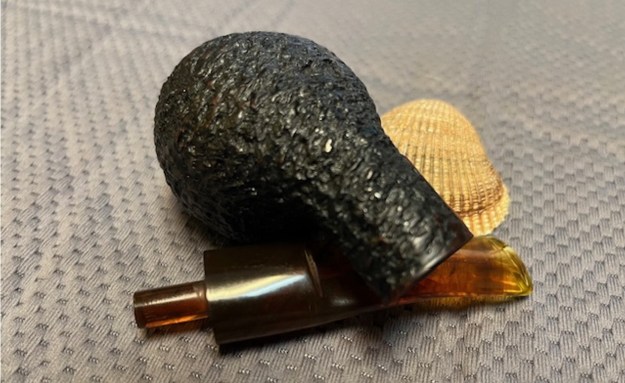
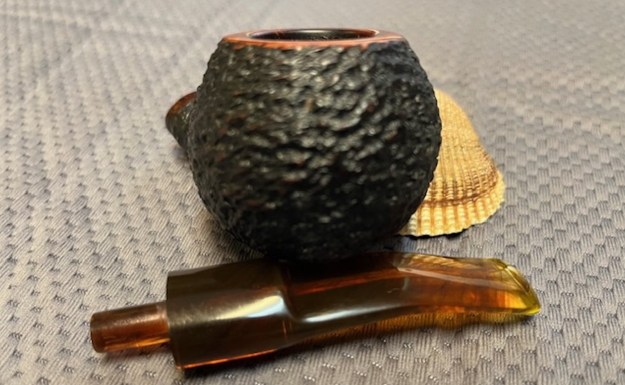
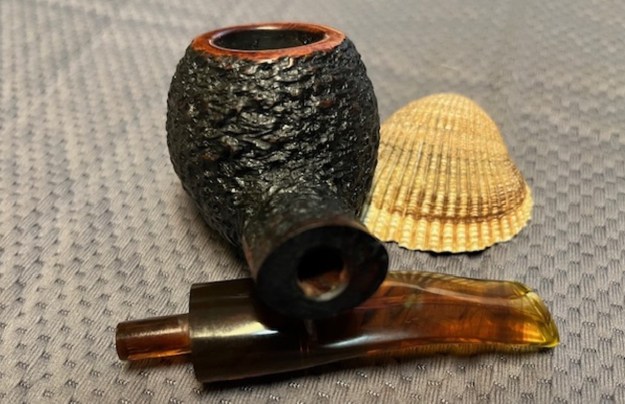
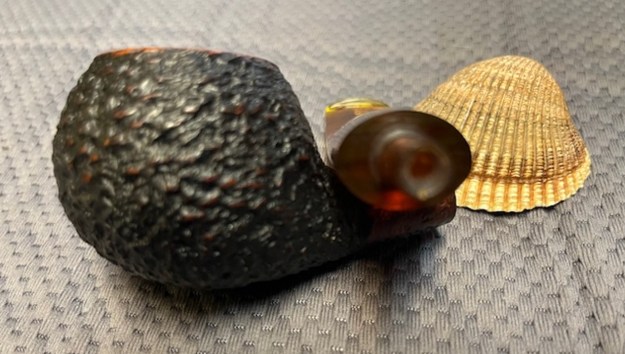
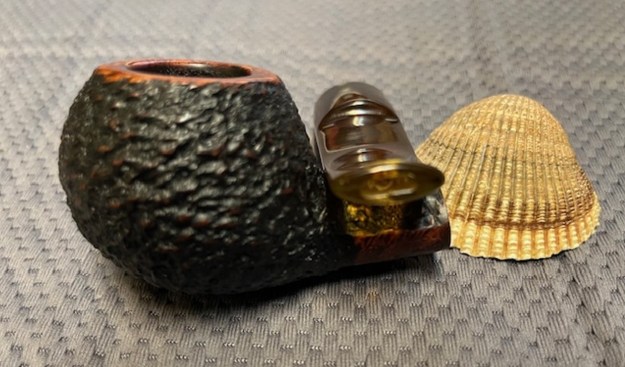
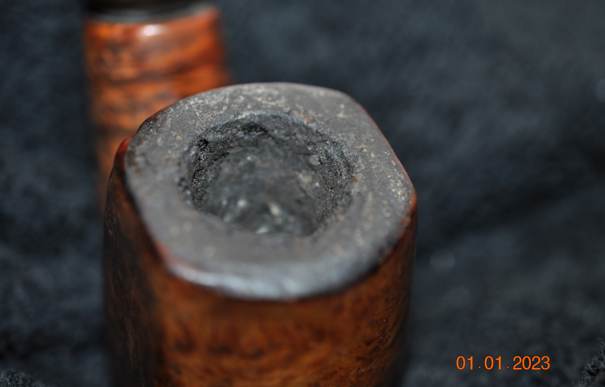
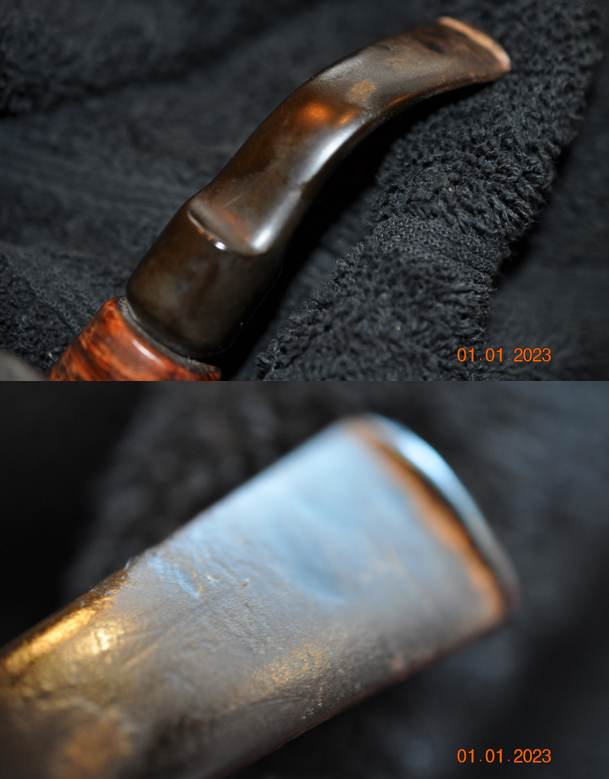
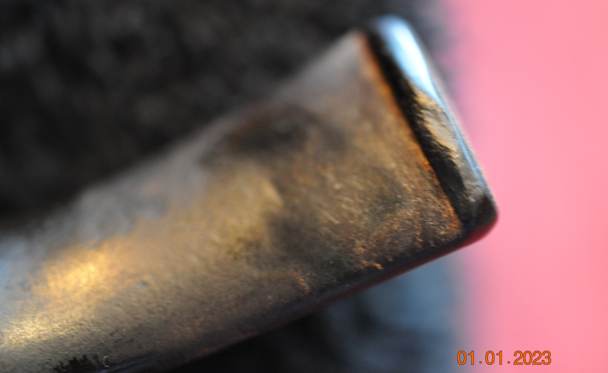
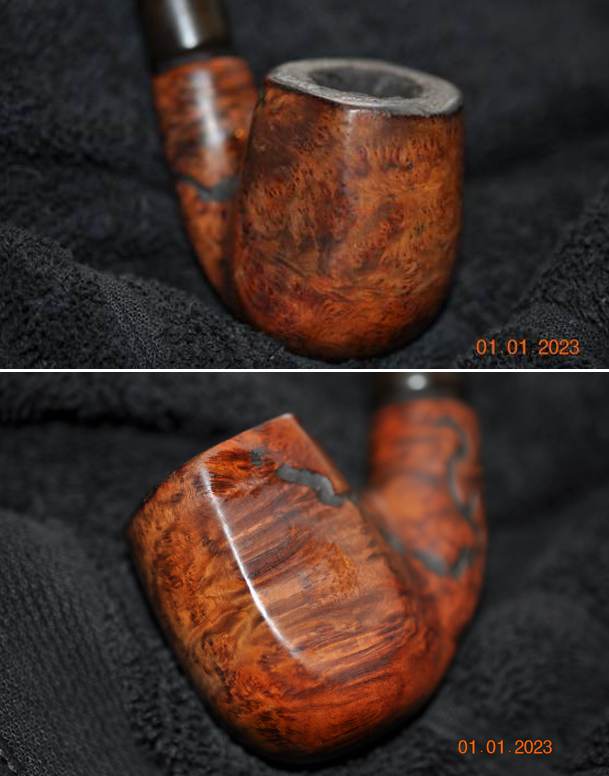
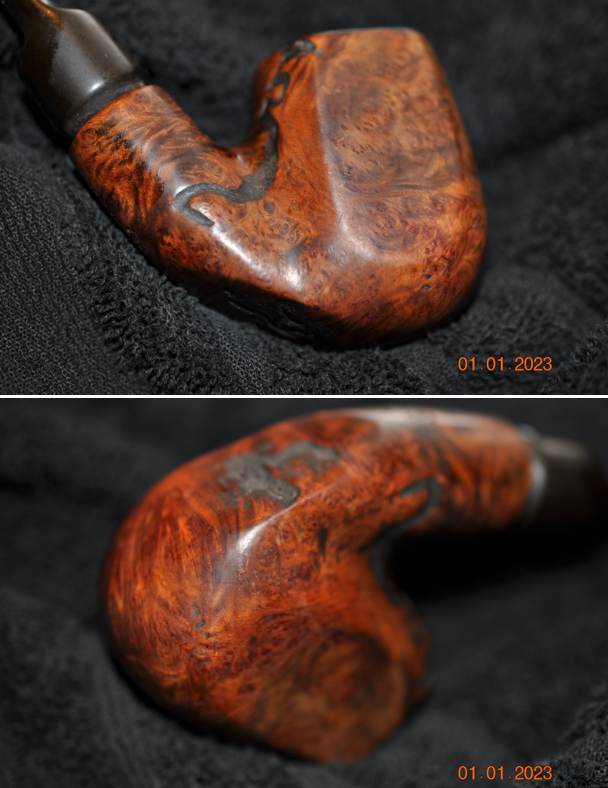
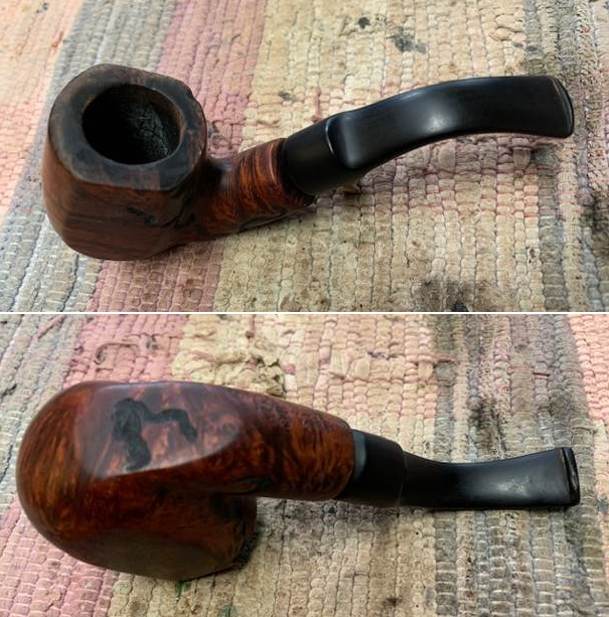
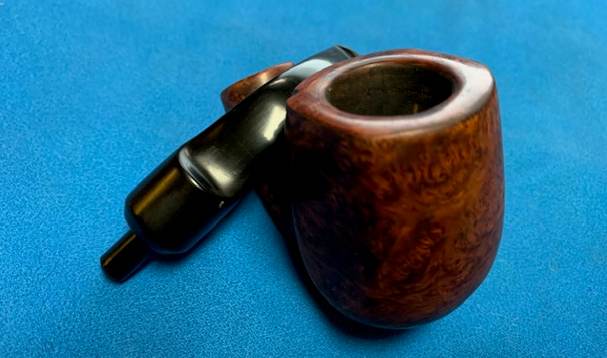
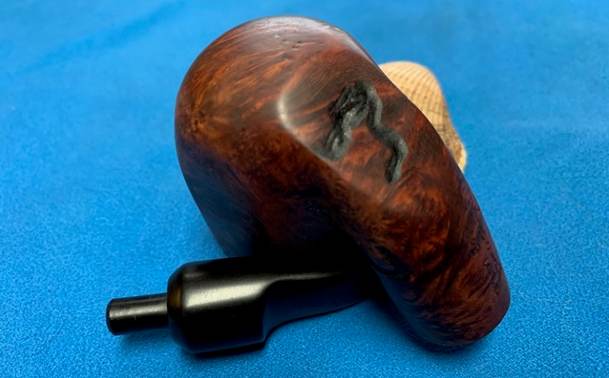
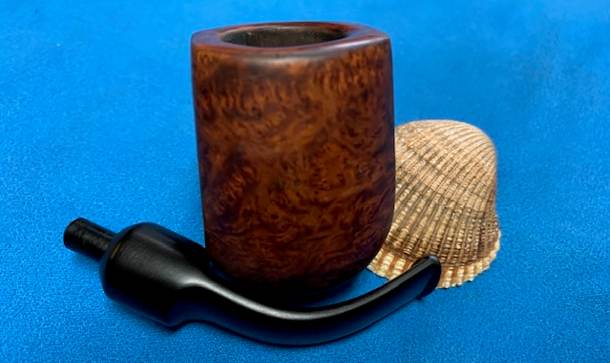
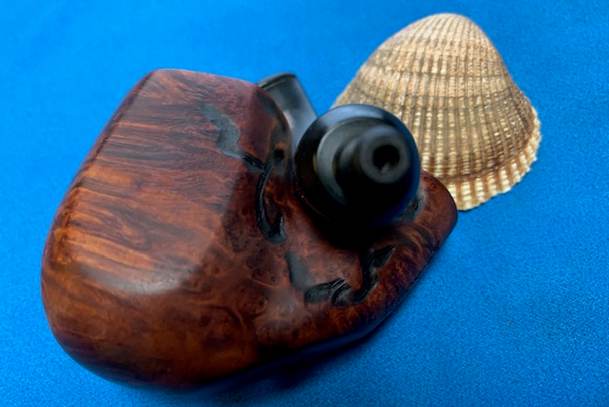
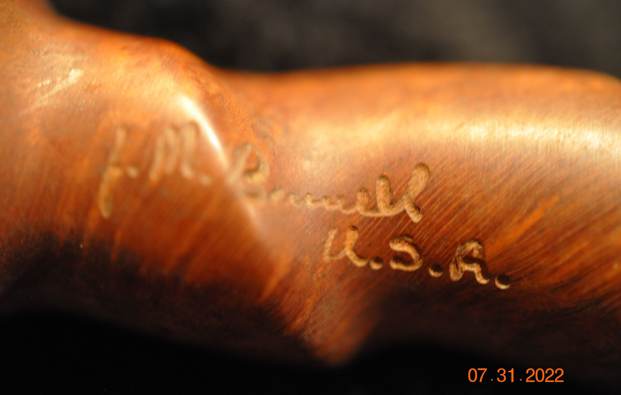
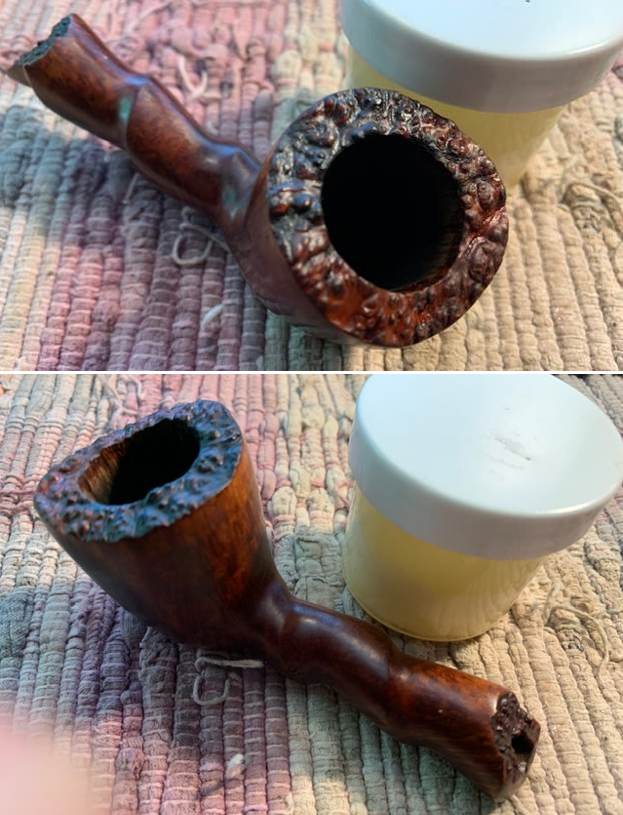
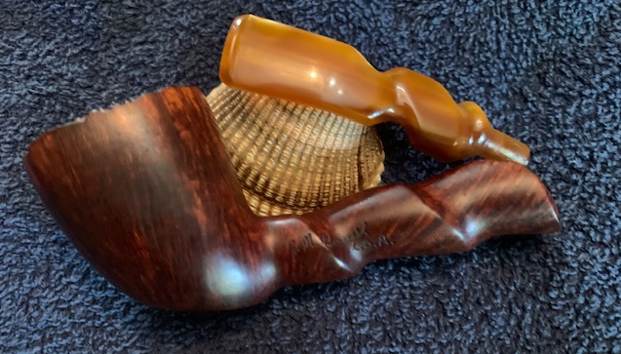
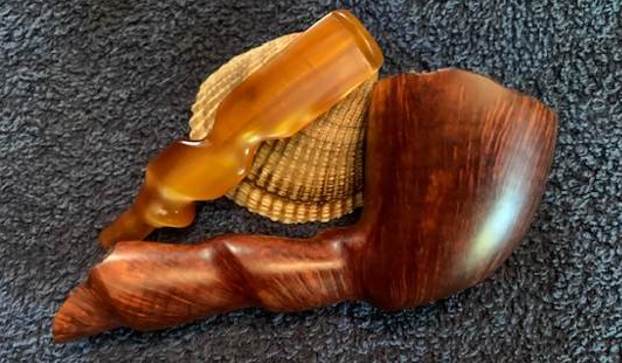
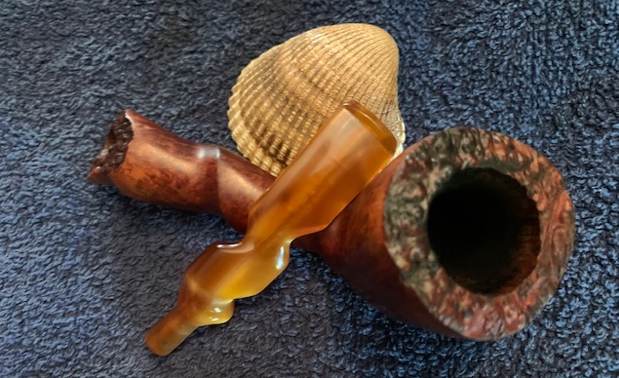
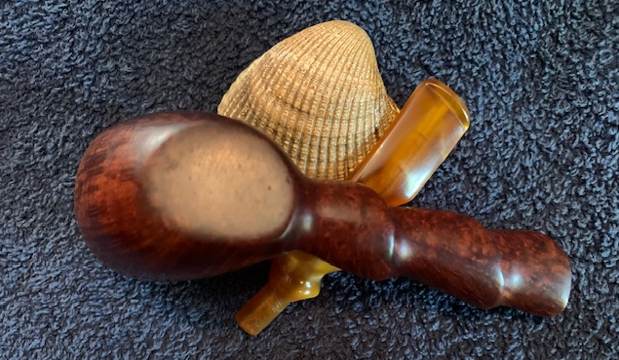
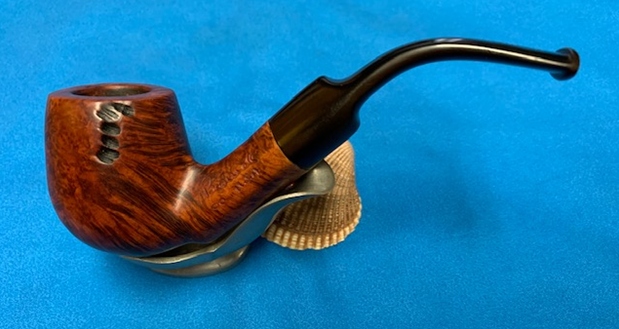
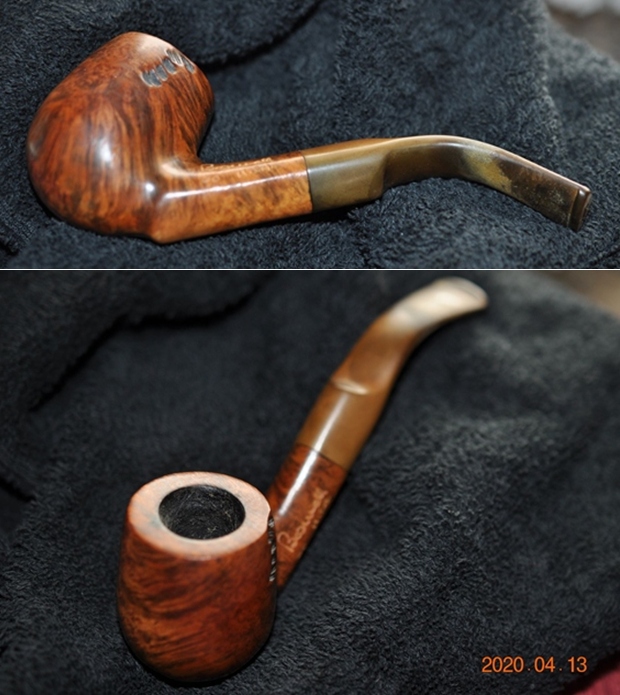
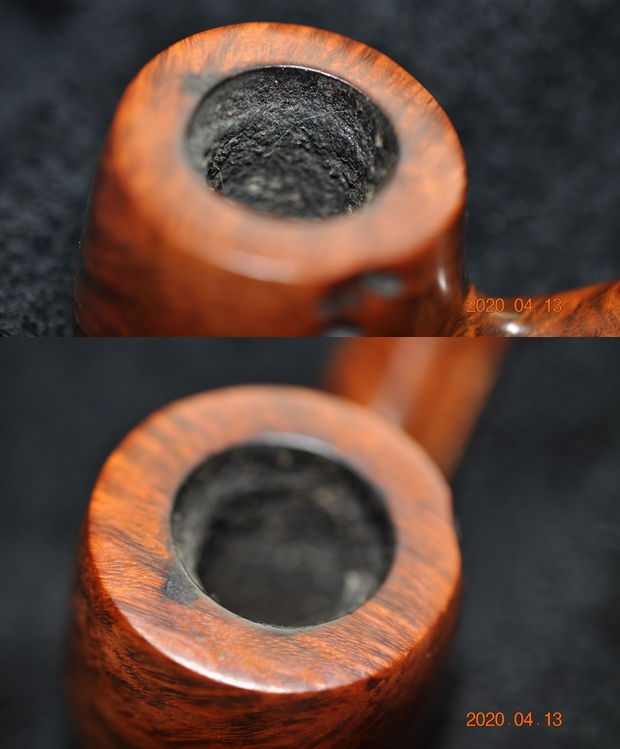
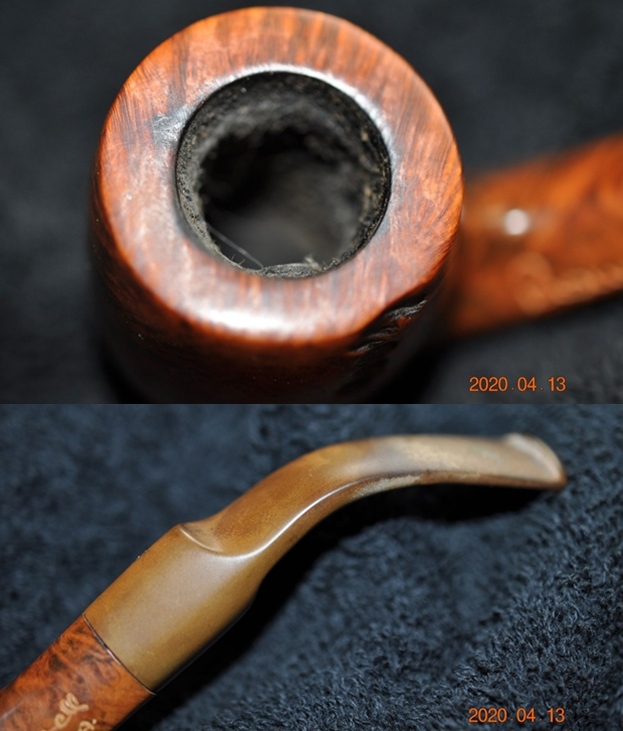
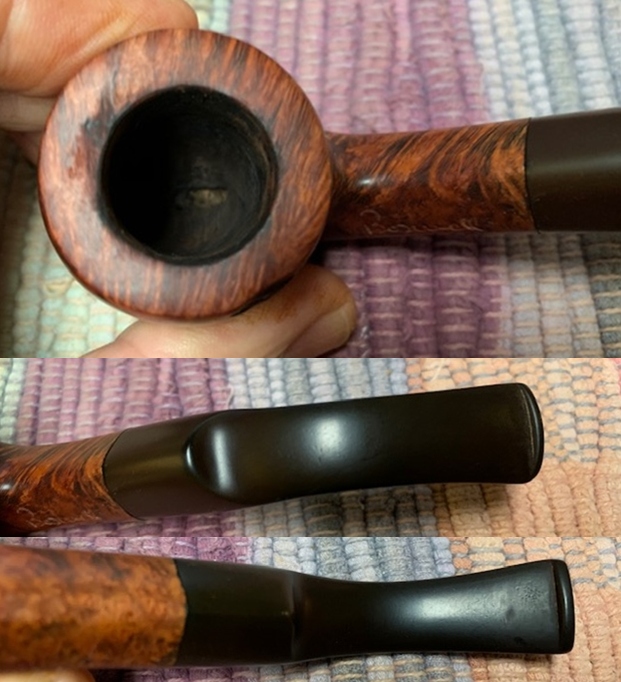
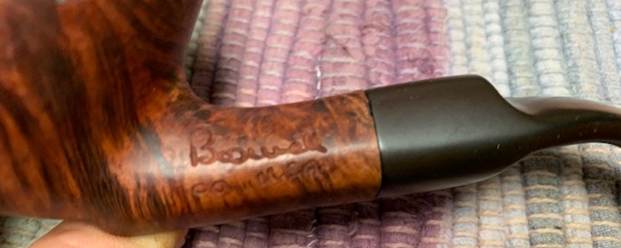
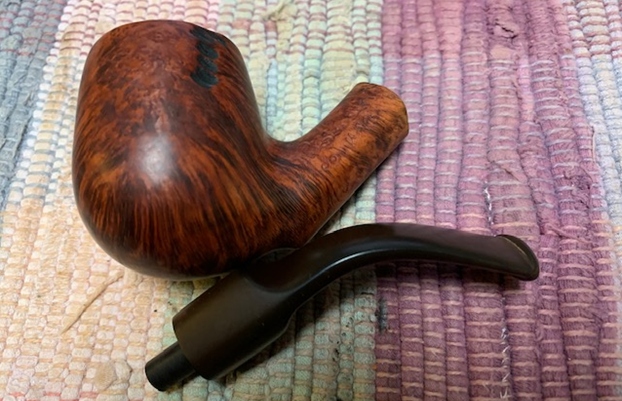
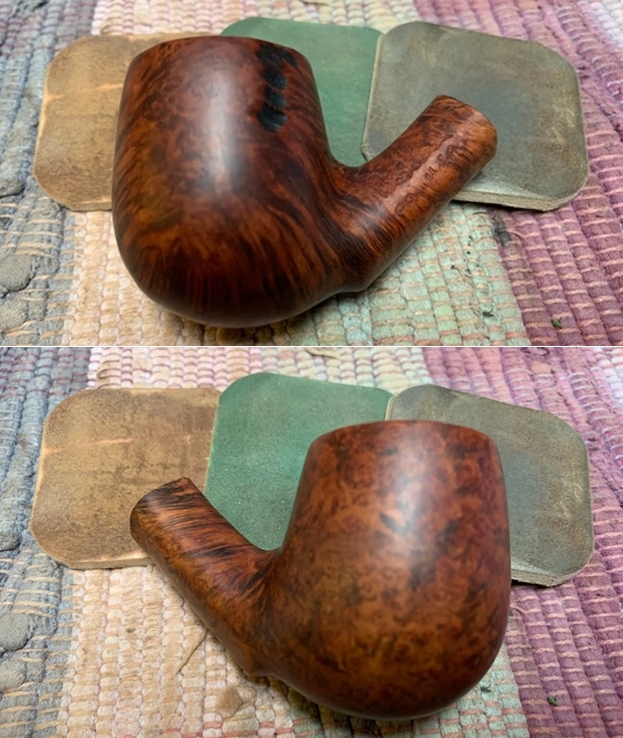
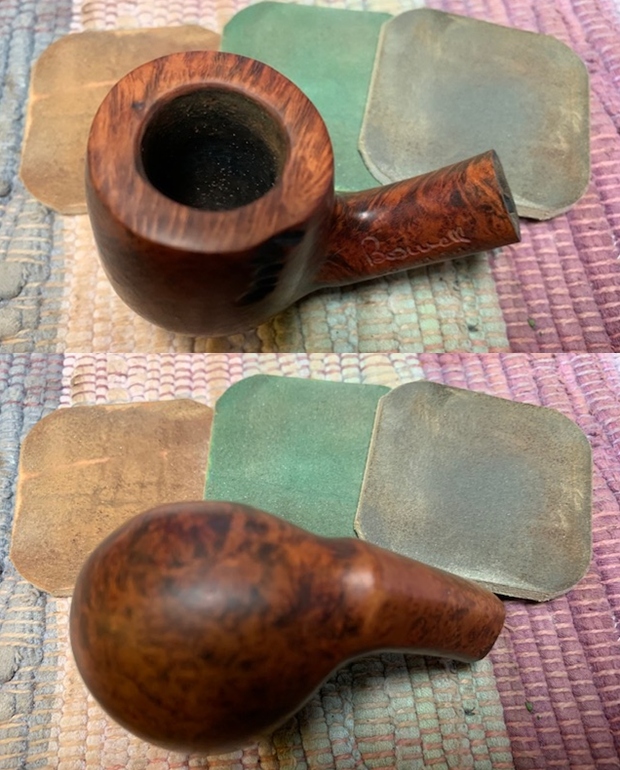
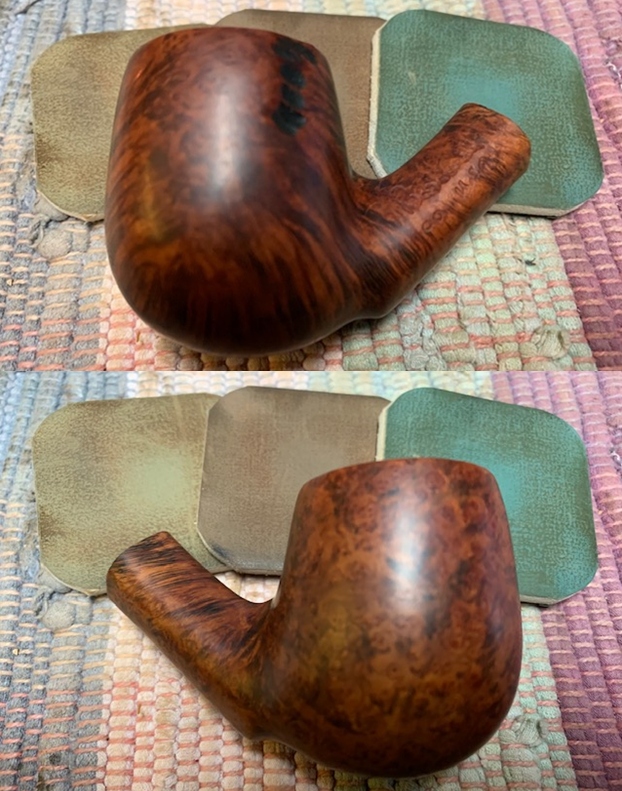
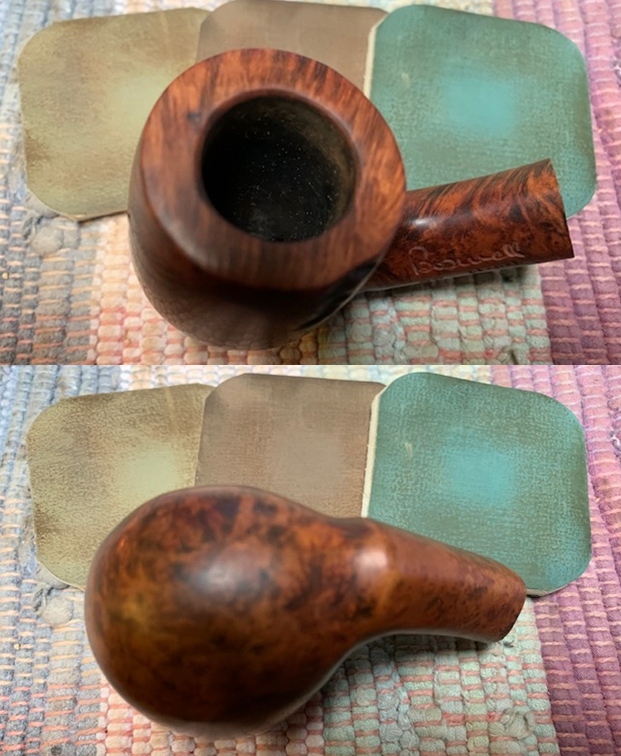
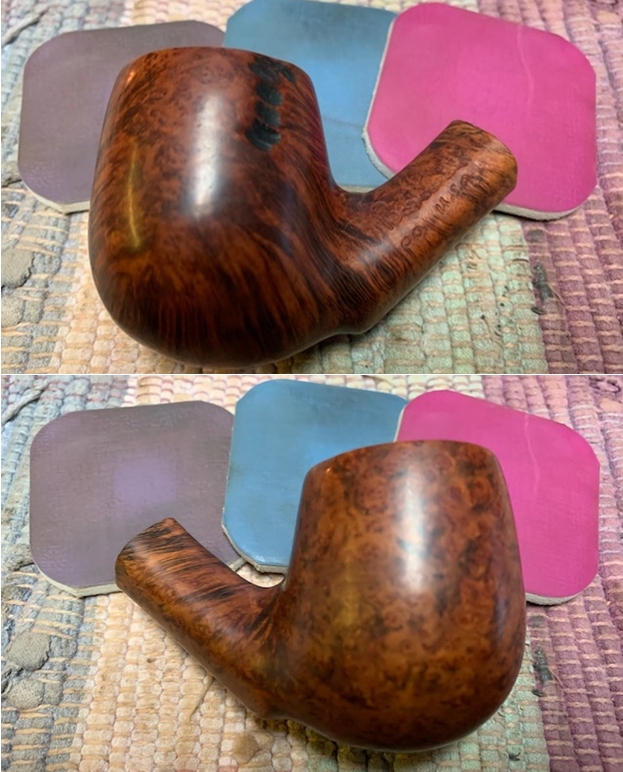
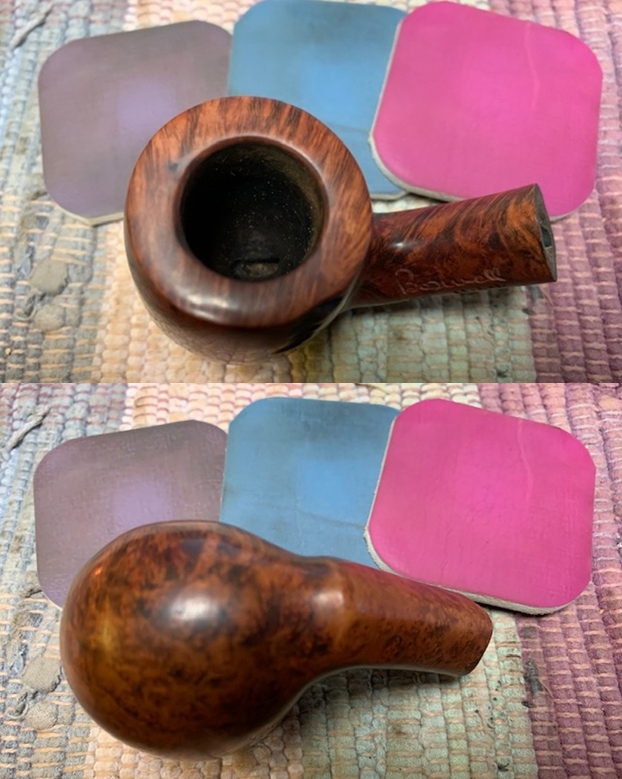
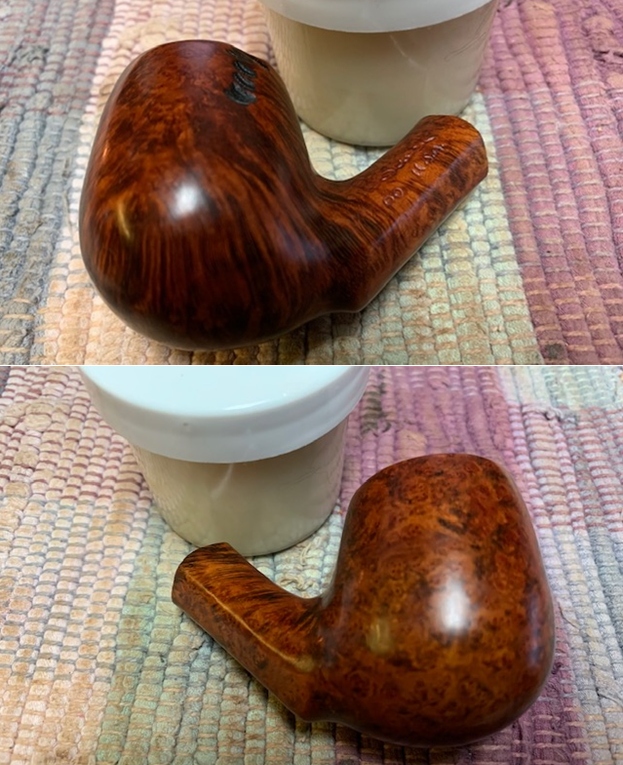
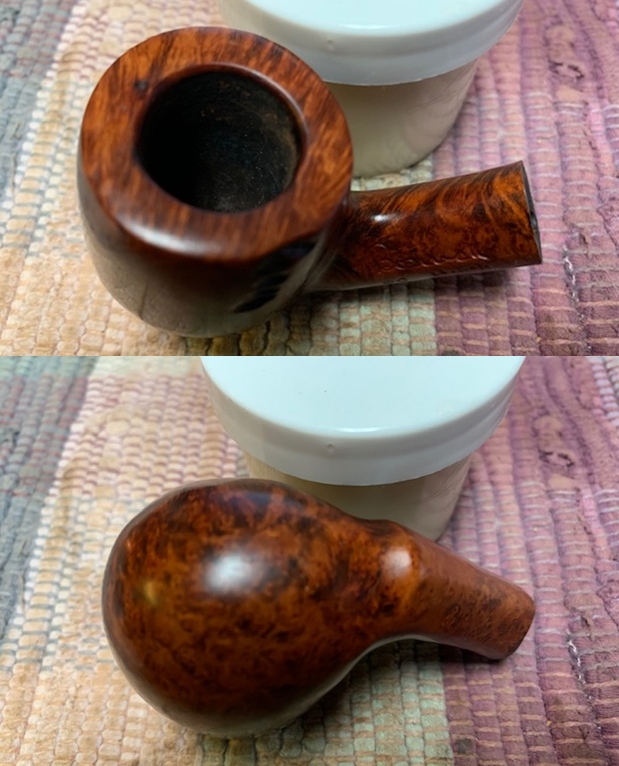
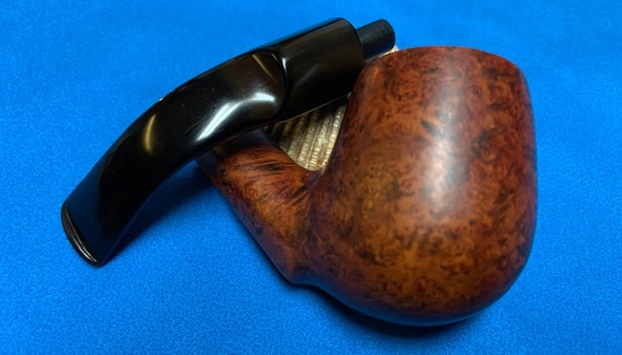
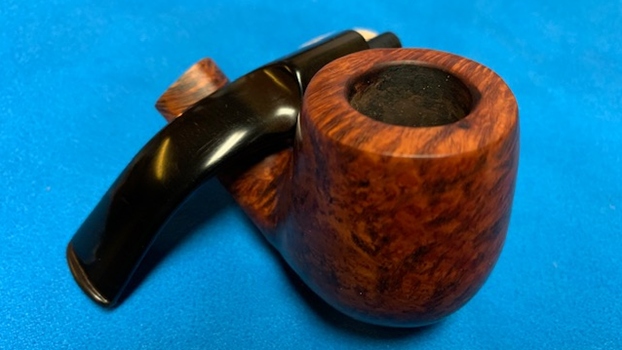
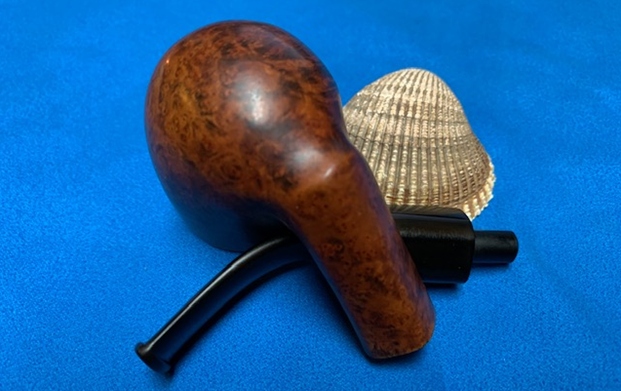
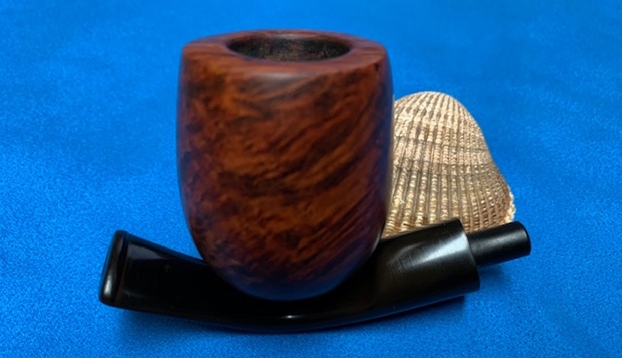
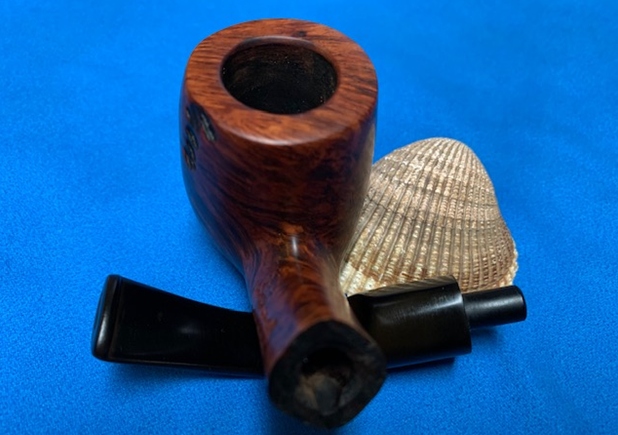
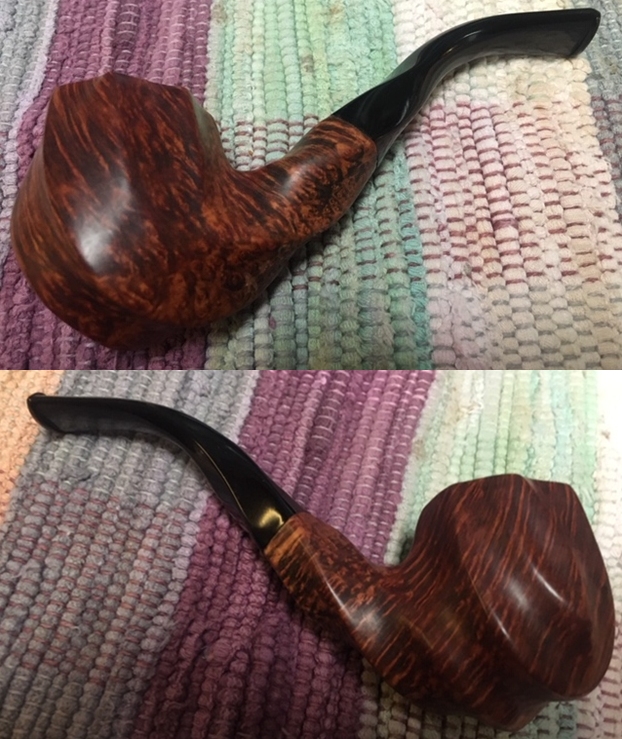
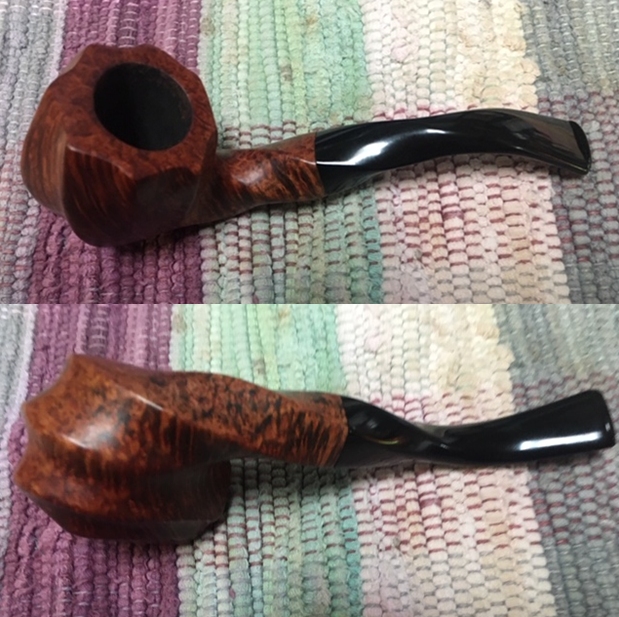
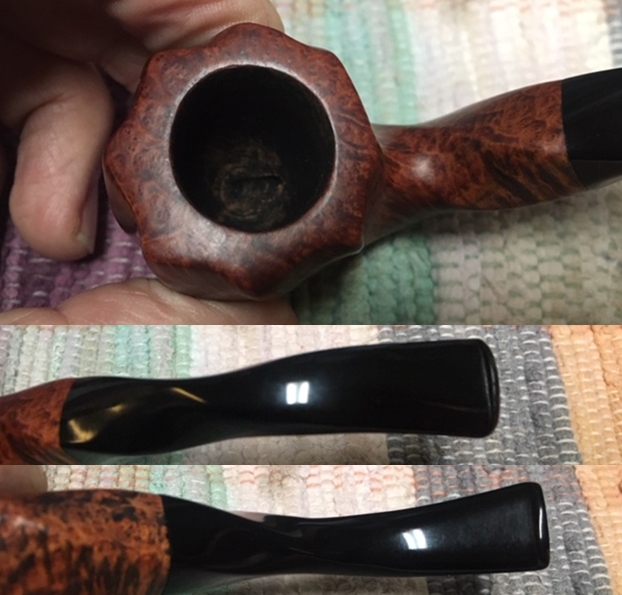
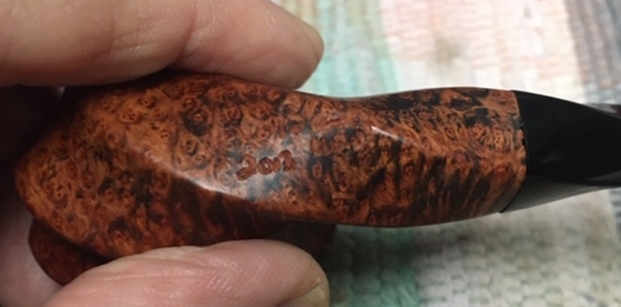
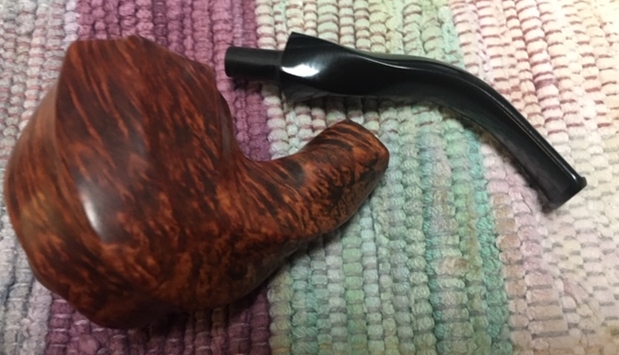
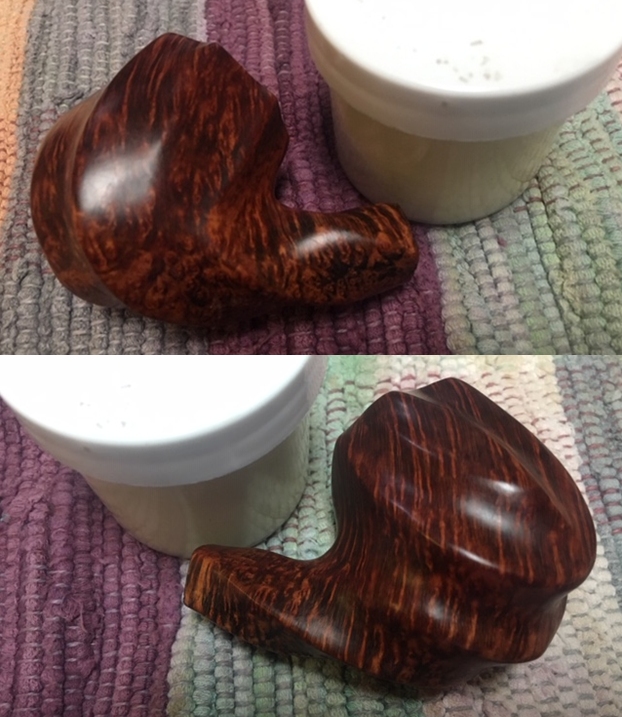
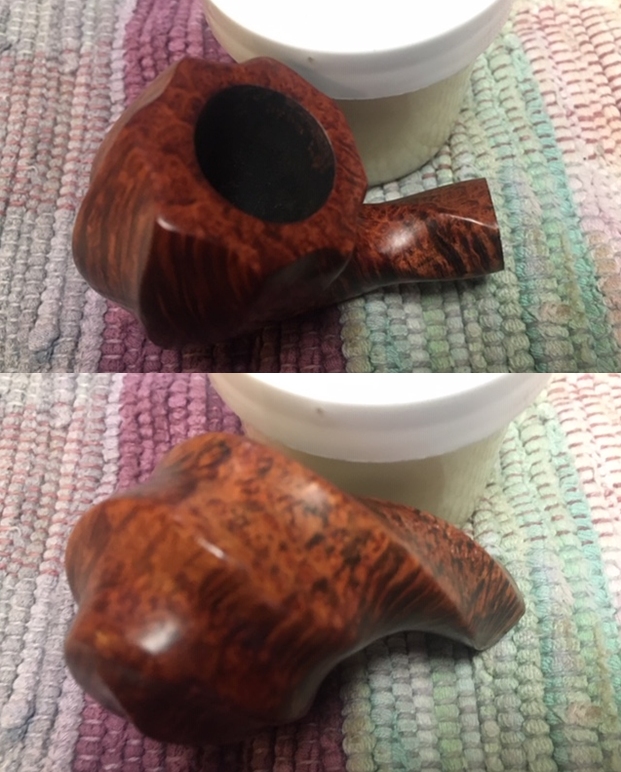
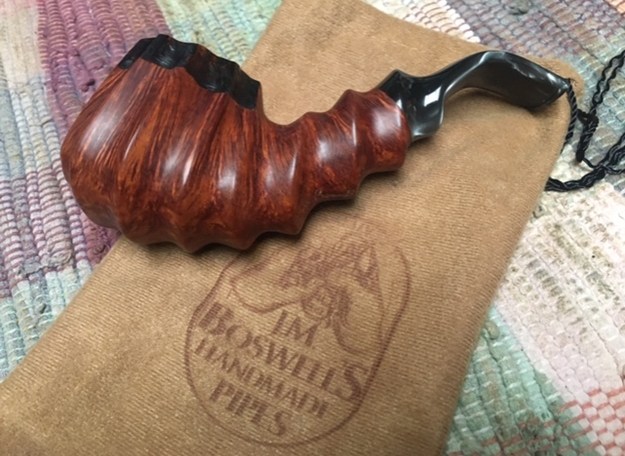
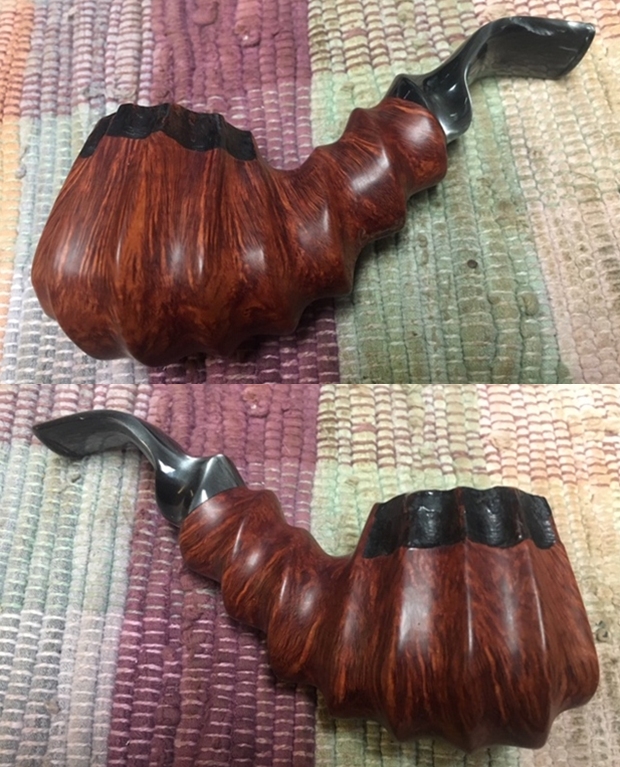
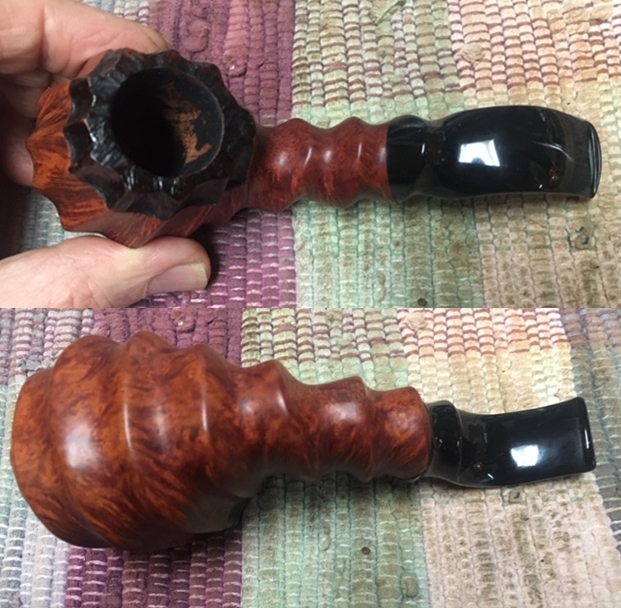
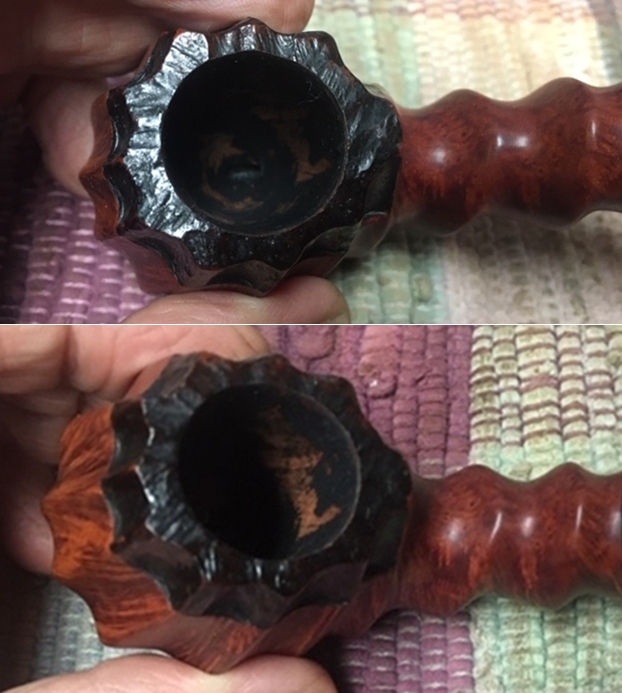
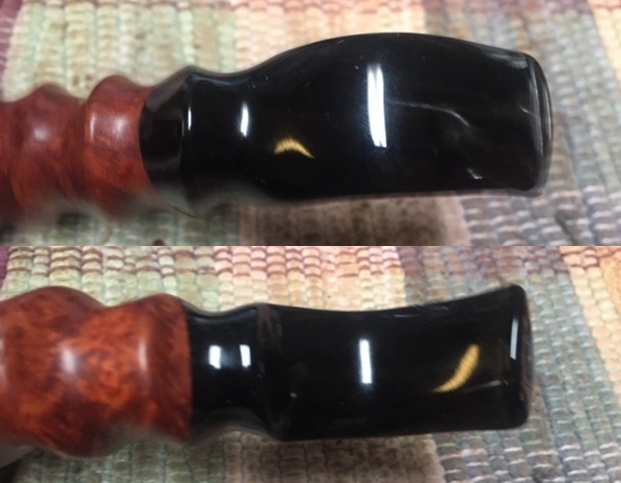
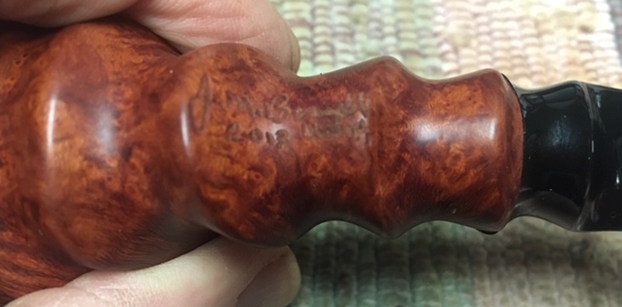
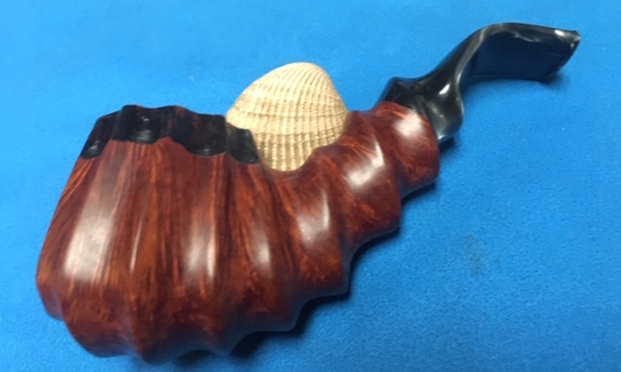
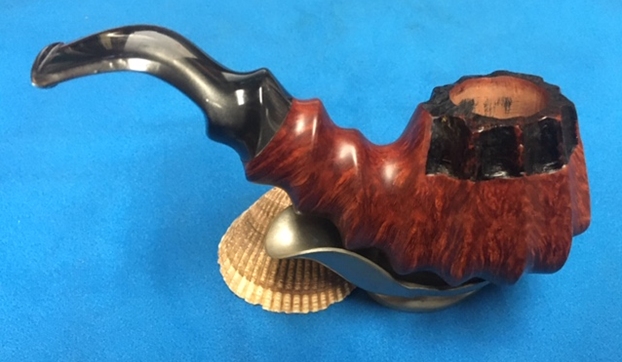
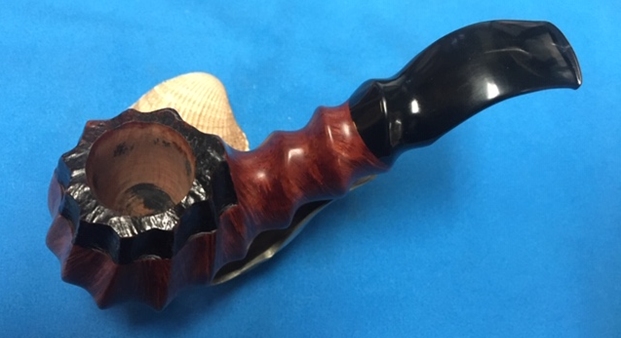
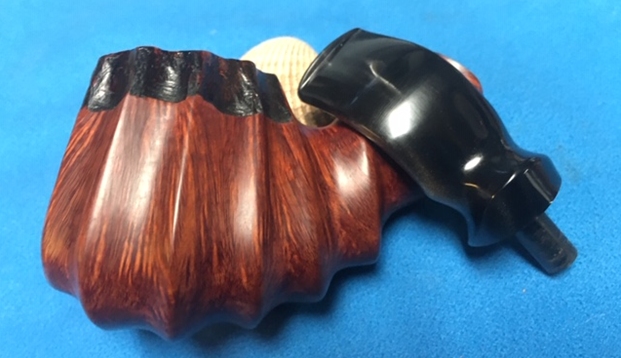
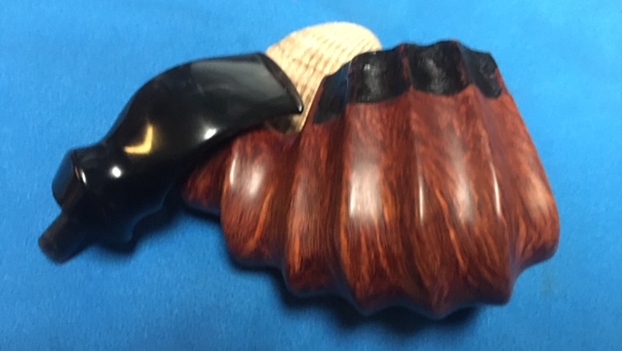
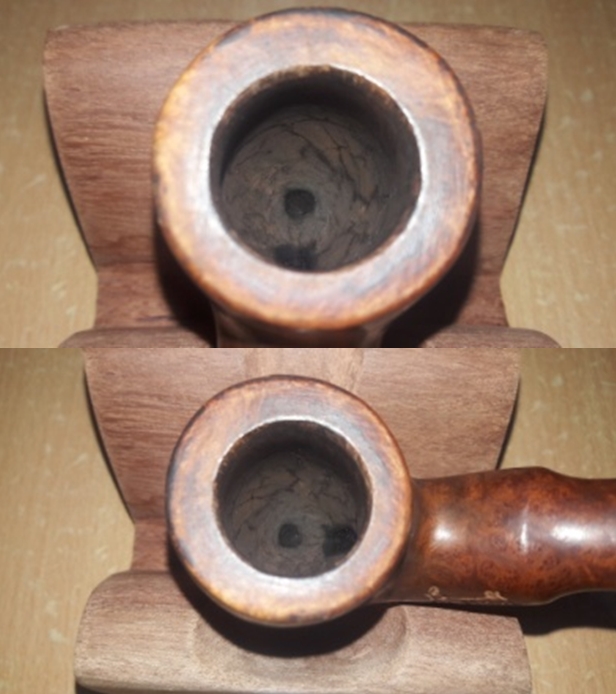
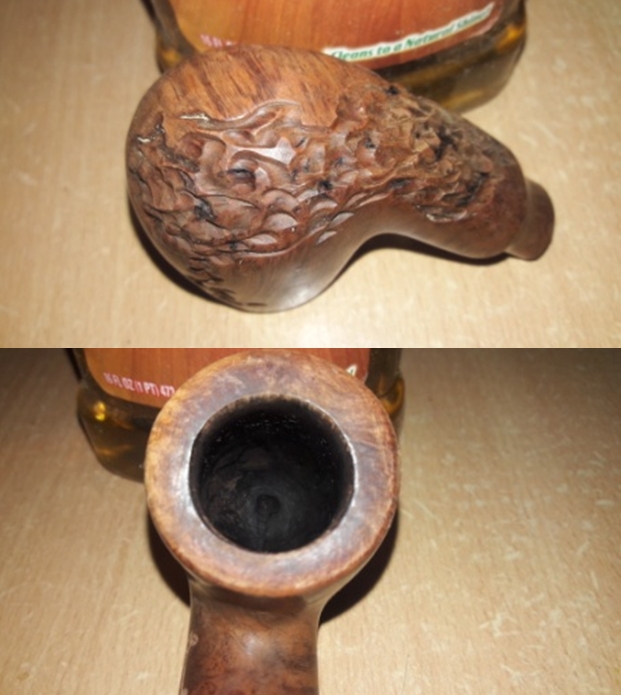
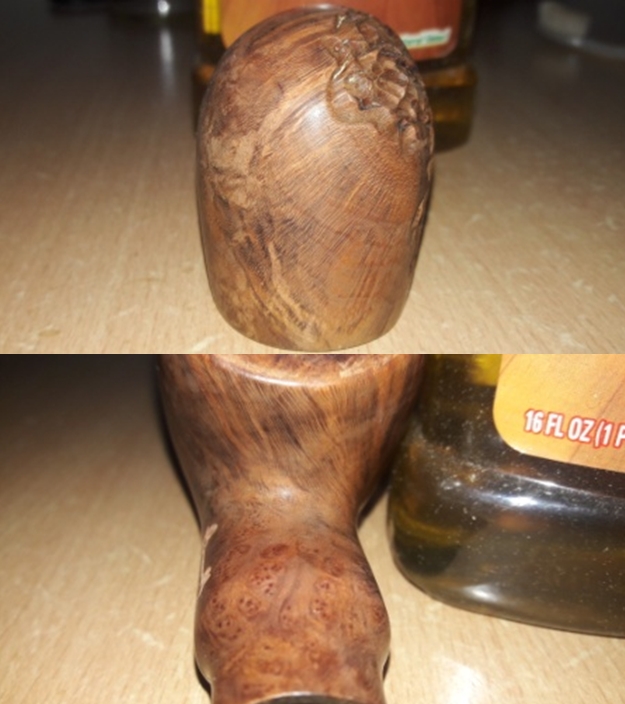
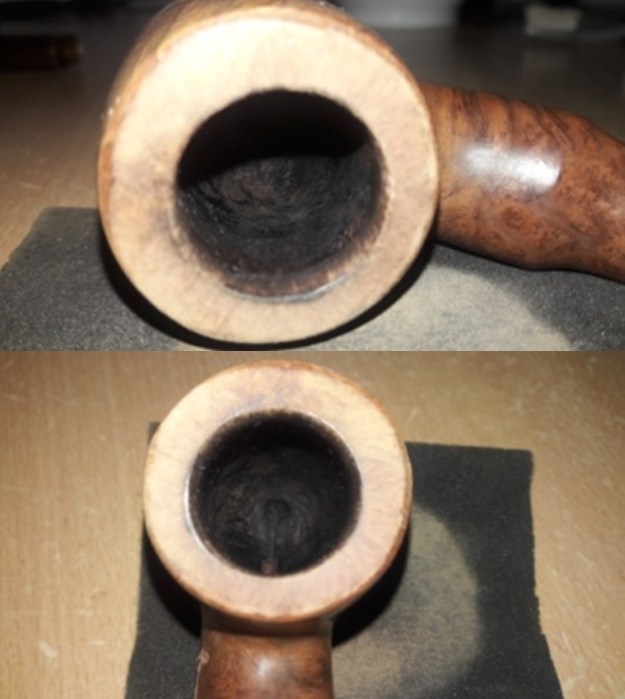
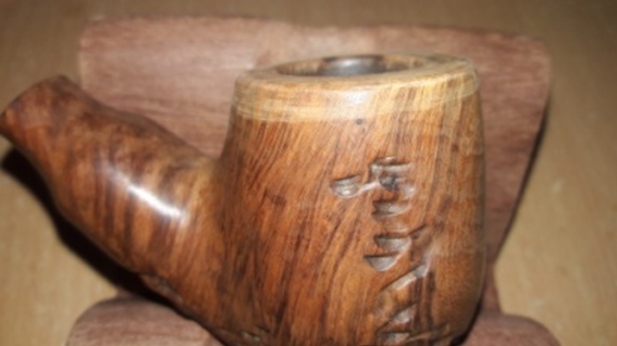
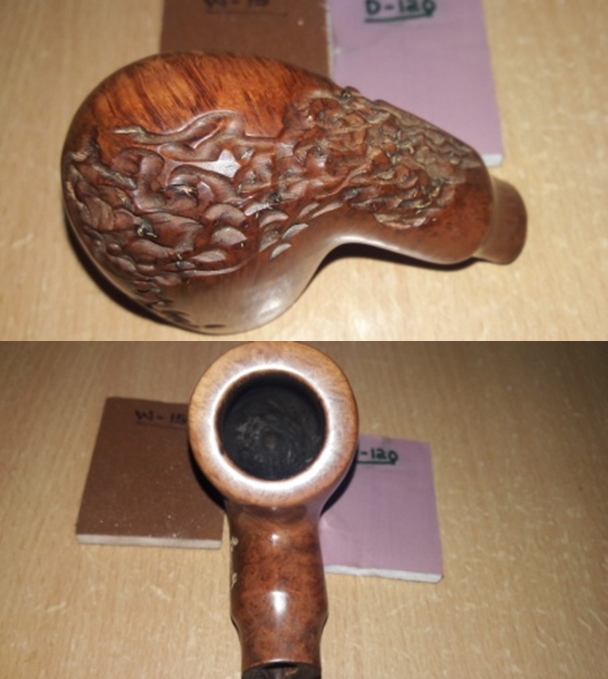
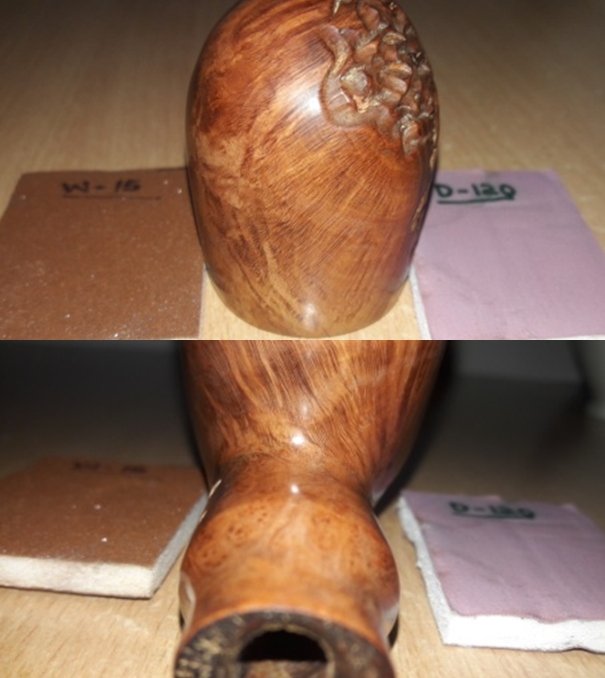
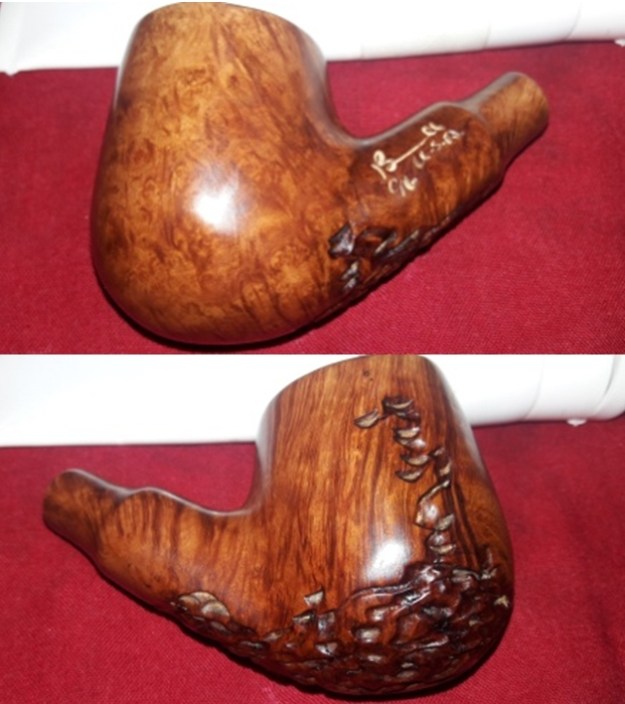
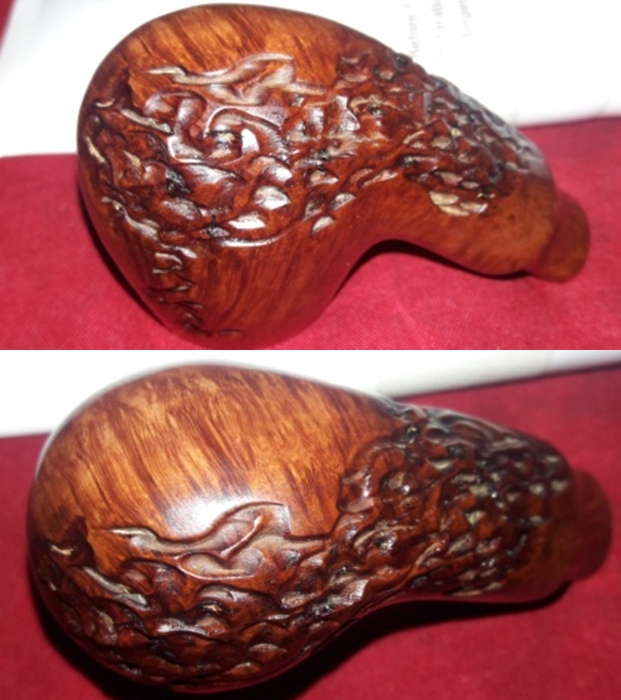
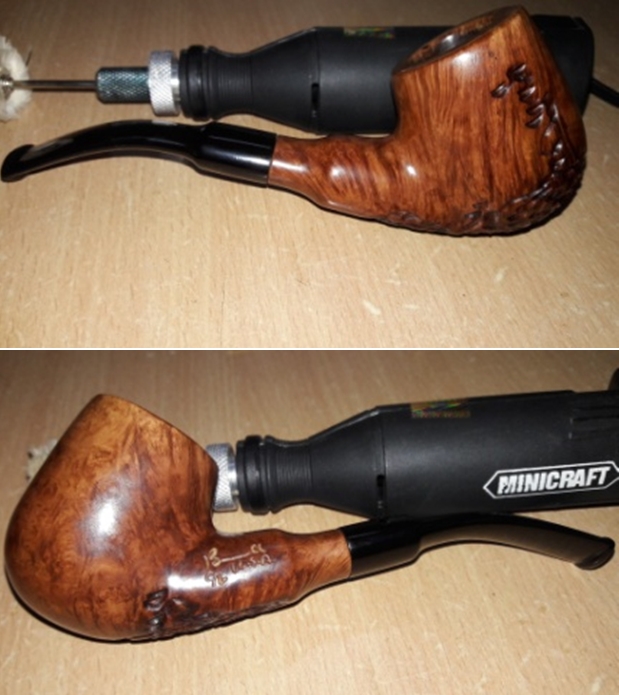
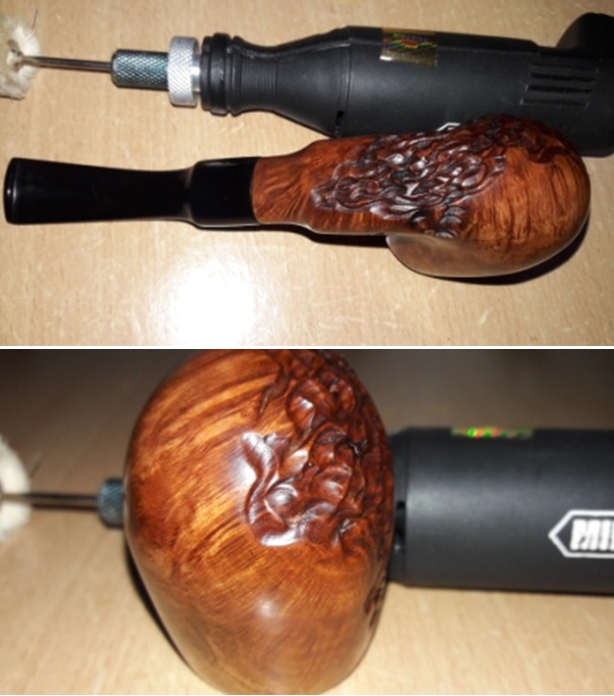
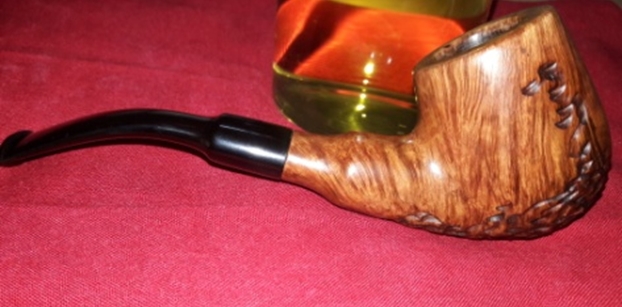
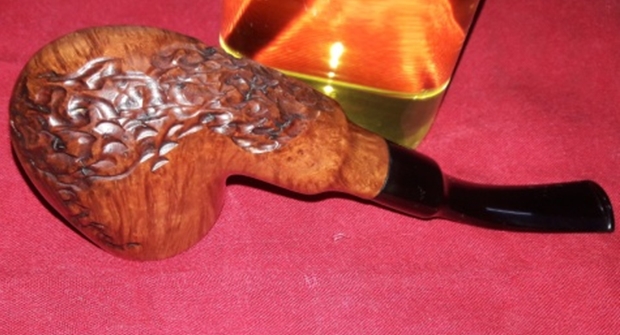
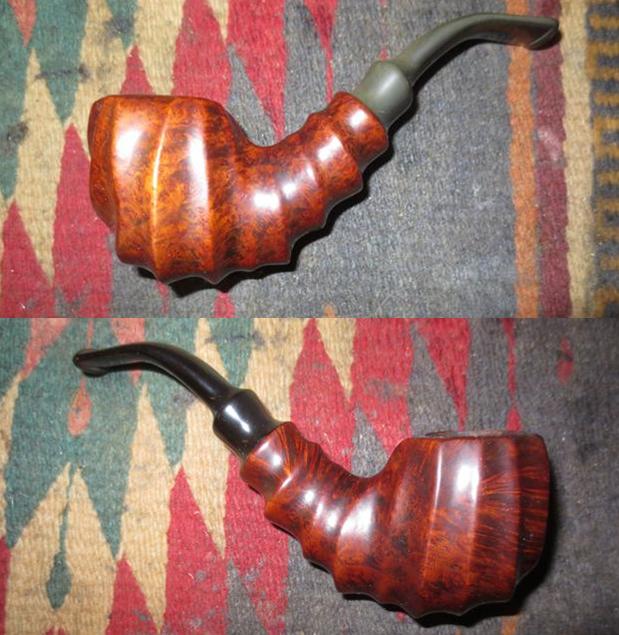
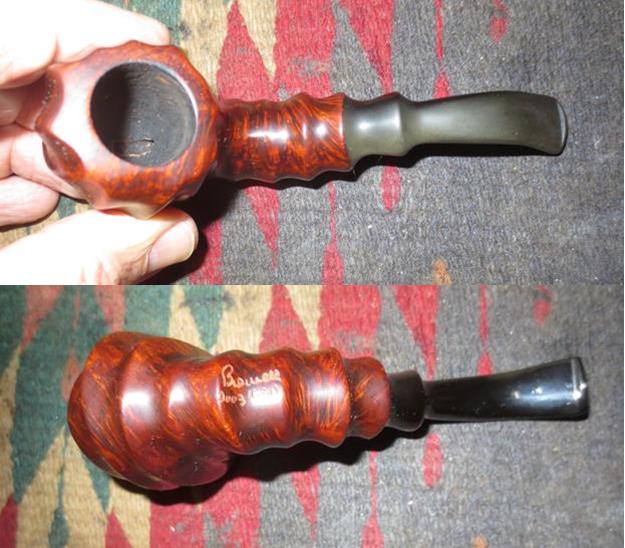
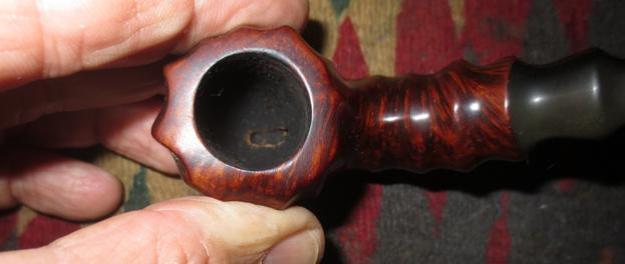
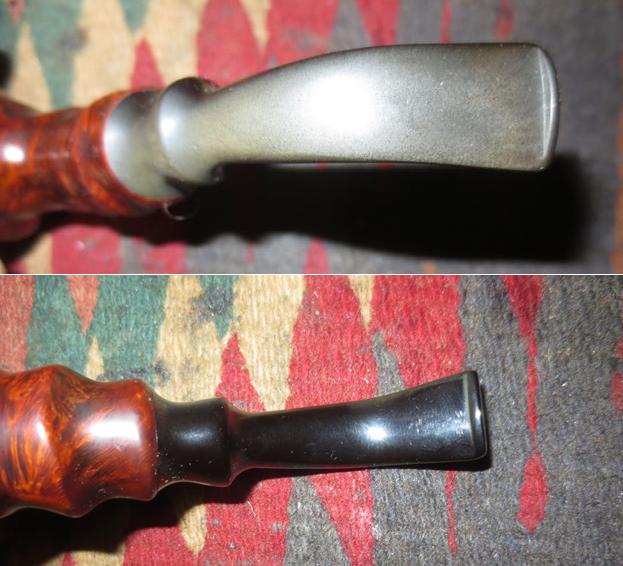
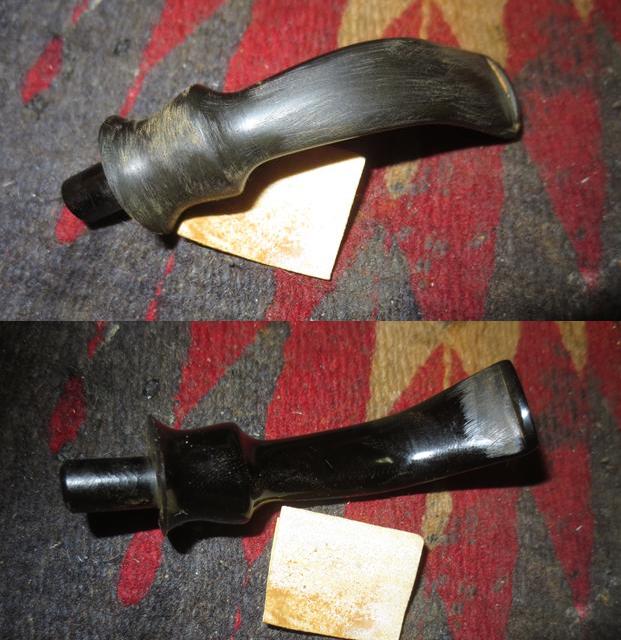
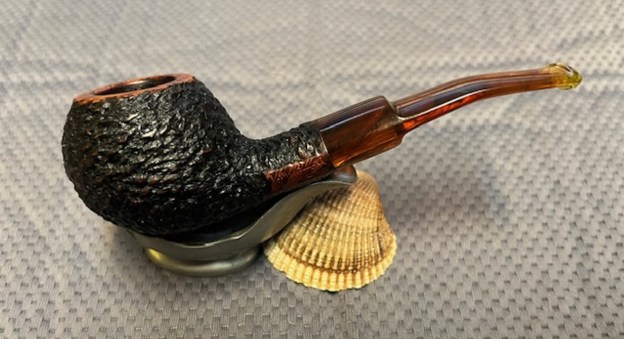
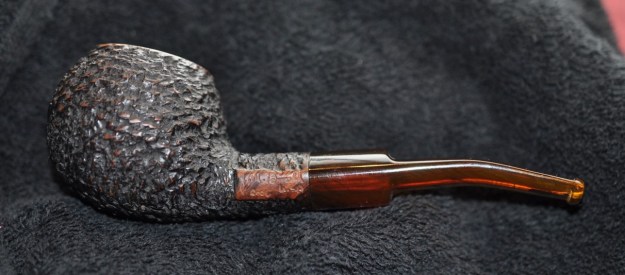
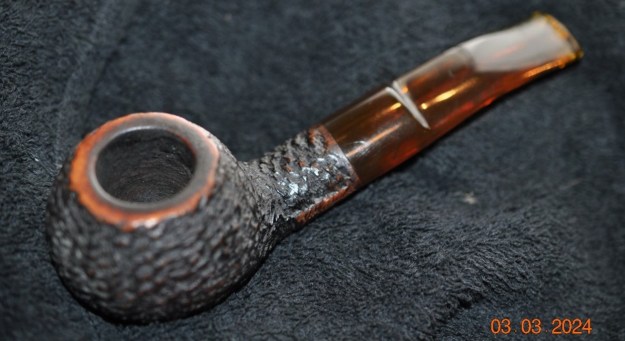
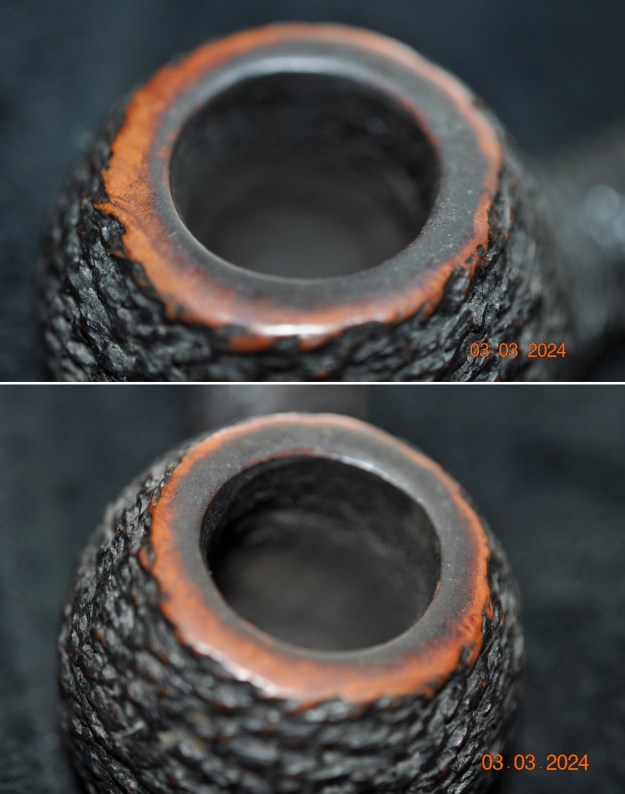
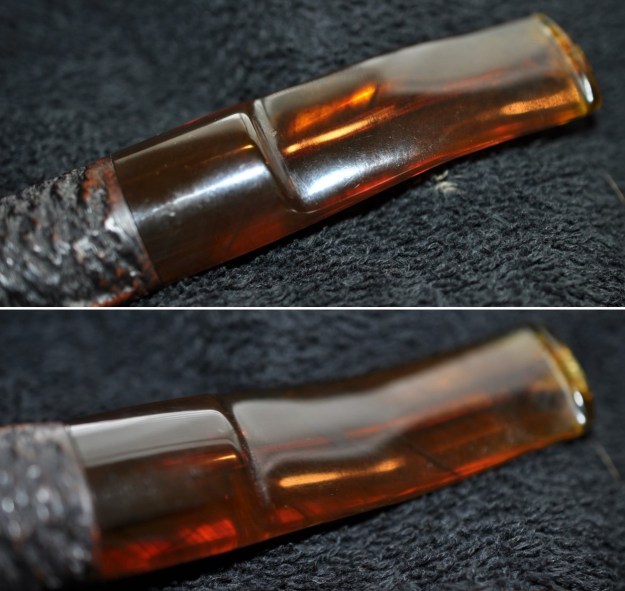
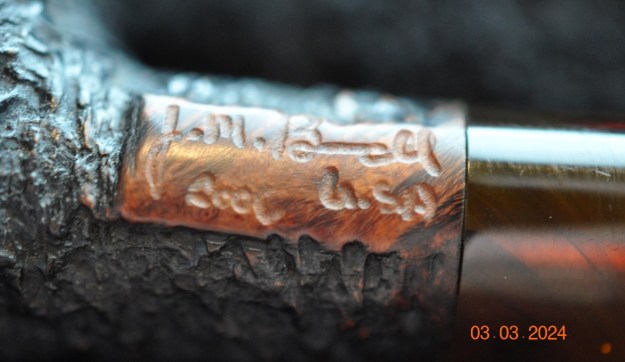
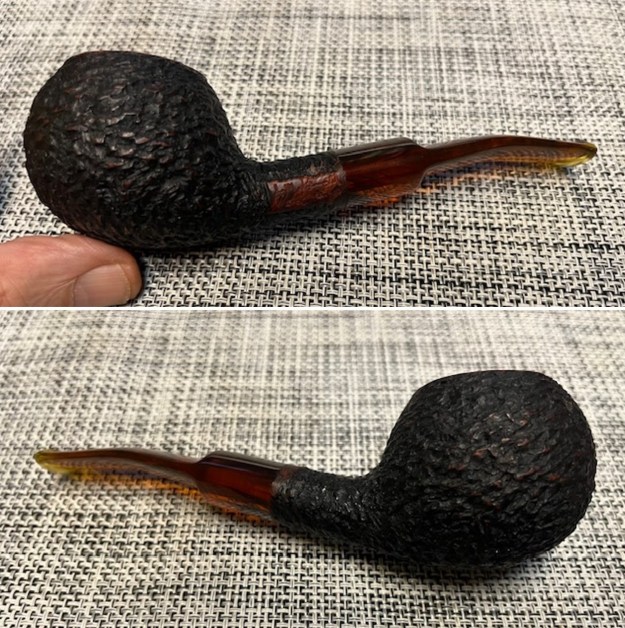
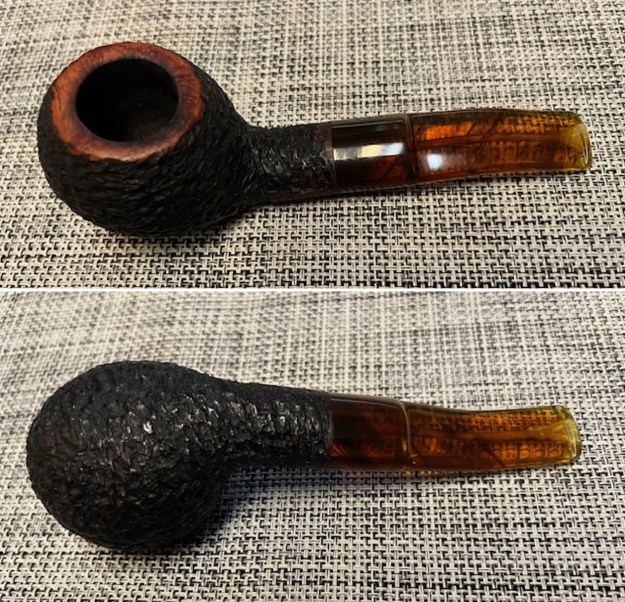
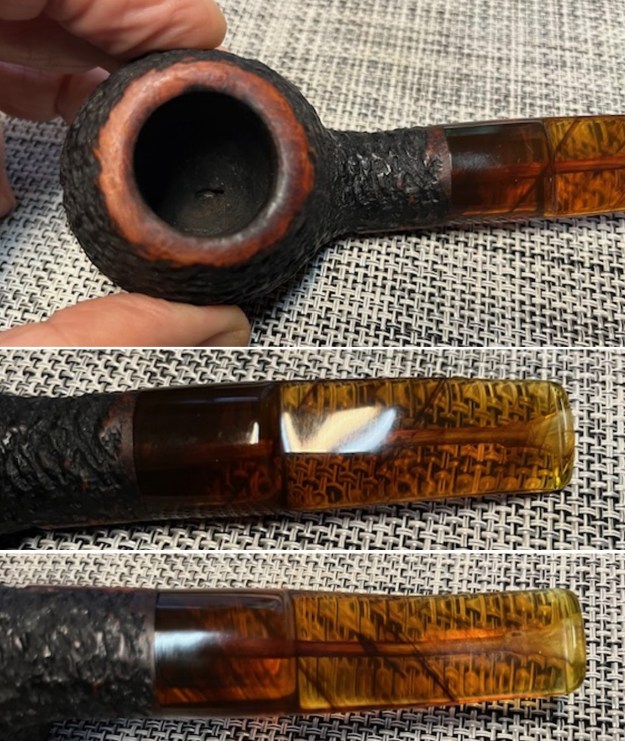
The next pipe on the worktable is an American made pipe from the workshop of J.M. Boswell. It is a rusticated 1/4 bent apple with an amber acrylic saddle stem. The pipe came to us from eBay from a seller in Jordan, Minnesota, USA.  The pipe is very dirty with a thick cake in the bowl and lava on the smooth rim top. The rim edge looks to be okay but it was hard to know what was under the lava coat on the top and edges. It is signed J.M. Boswell [over] 2006 followed by U.S.A. The finish was dusty and there was dust in the rustication and ground into the finish around the sides of the bowl. The amber acrylic saddle stem is dirty and has light tooth marks and chatter on the top and underside near the button. Jeff took some photos of the pipe before he started his cleanup work. He took photos of the bowl and rim top to show their general condition. You can see the lava on the rim top and the thick cake in the bowl. It was hard to know the condition of the bowl edge prior to cleaning. The stem is dirty and there are light tooth marks and chatter on both sides near the button. Jeff took some photos of the sides and heel of the bowl to give an idea of the rustication around the bowl and the shank. It has some great patterns around the bowl sides and bottom – a mix of random patterns with valleys and peaks. I cannot wait to see what it looks like once it is cleaned and polished. He took a photo of the stamping on the left topside of the diamond shank to capture it for me. It is clear and readable. The J.M. Boswell signature with the date it was carved and U.S.A. If you have been following the blog for any length of time you have come to know that when I am working on interesting old pipes (even sometimes those not so interesting) I like to know a bit about the background of the brand. I like to “meet” the carver to get a feel for their work and style.
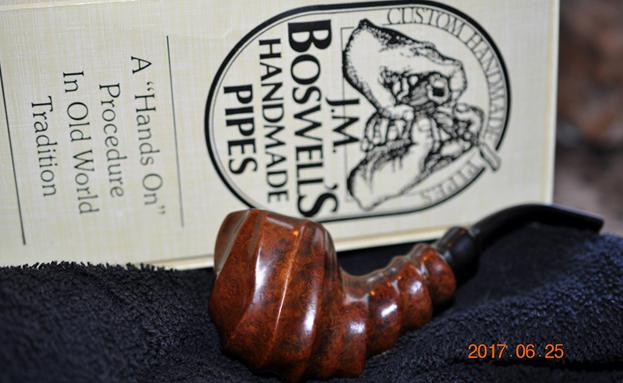
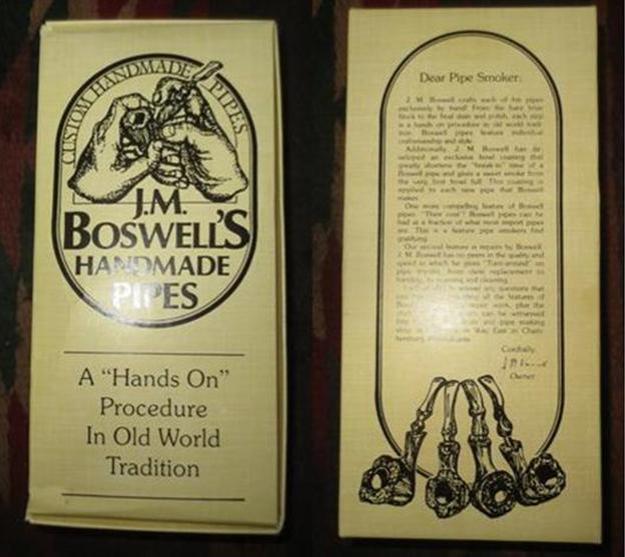
In July, 2017 I restored a Boswell Twist pipe, a 2003 and had done some research into the brand (https://rebornpipes.com/2017/07/19/refurbishing-a-boswell-2003-spiral-twist-bent-billiard/). I turned to that blog and reread the information that I had included there. I took the liberty to include the information that I included from the box that came with that pipe that below.

The backside of the box reads:  Dear Pipe Smoker: J.M. Boswell crafts each of his pipes exclusively by hand! From the bare briar block to the final stain and polish, each step is a hands on procedure in old world tradition. Boswell pipes feature individual craftsmanship and style.

Additionally, J.M. Boswell has developed an exclusive bowl coating that greatly shortens the “break-in” time of a Boswell pipe and gives a sweet smoke from the very first bowl full. This coating is applied to each new pipe that Boswell makes.

One more compelling feature of Boswell pipes: “Their cost”! Boswell pipes can be had at a fraction of what most import pipes are. This is a feature pipe smokers find gratifying.

Our second feature is repairs by Boswell. J.M. Boswell has no peers in the quality and speed in which he gives “Turn-around” on pipe repairs, from stem replacement to banding, to reaming and cleaning.

I will be glad to answer any questions that you have regarding all the features of Boswell’s pipes, my repair work, plus the crafting process which can be witnessed first hand at our store and pipe making shop at 586 Lincoln Way East in Chambersburg, Pennsylvania.

Cordially J.M. Boswell, Owner.

I then turned to the Boswell Pipe and Tobacco Shop site (https://boswellpipes.com/product-category/boswell-pipes/). The description of the pipes in that section of the site parallels what I found above. I quote:

In the creation of these exquisite smoking pipes, we use the finest quality briar – “cream of the crop” is what the proprietor of the mill calls it. Boswell Pipes have their own special bowl coating for easy break-in. J.M. has used his special coating for Boswell Pipes since 1982.  100% natural coating, which will force the briar wood to absorb the moisture and heat.  For the finishing touch, J.M. hand inscribes his signature into the briar.  J.M. dates the year and proudly declares made in the USA “J.M. Boswell 2018 U.S.A.”. 

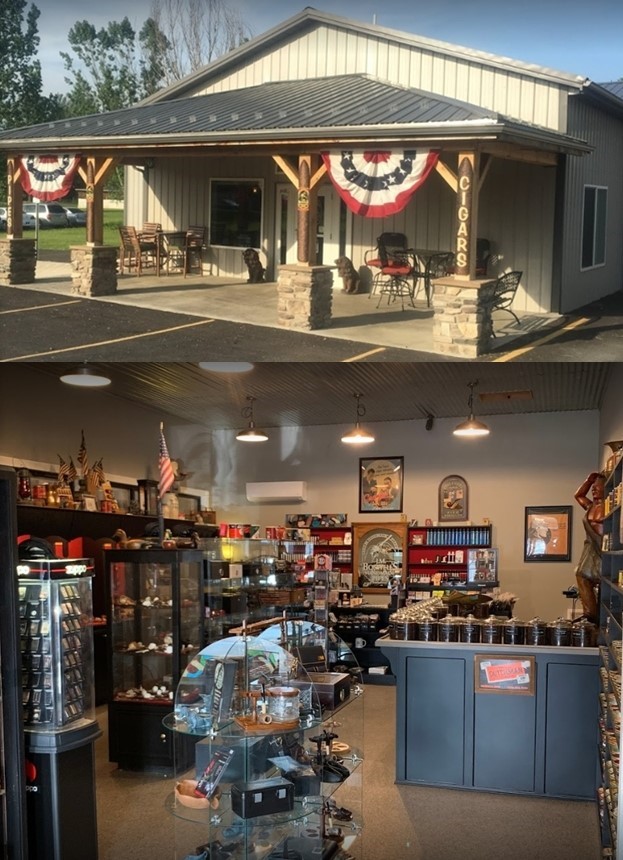
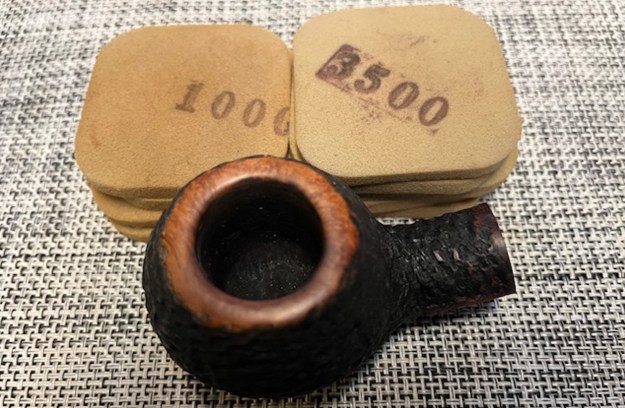
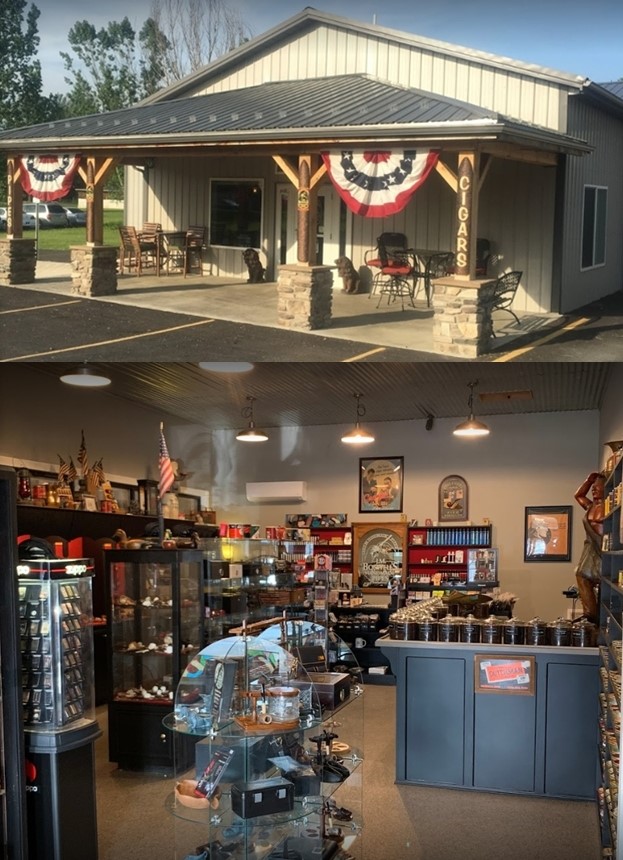
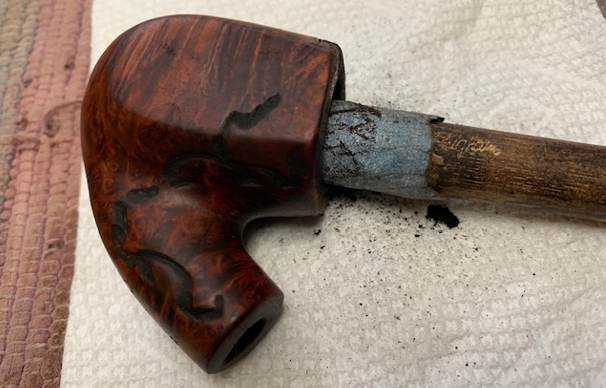
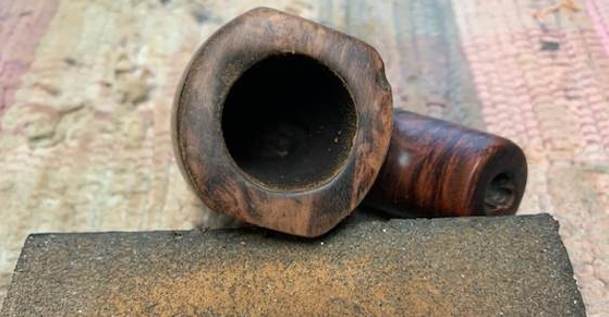
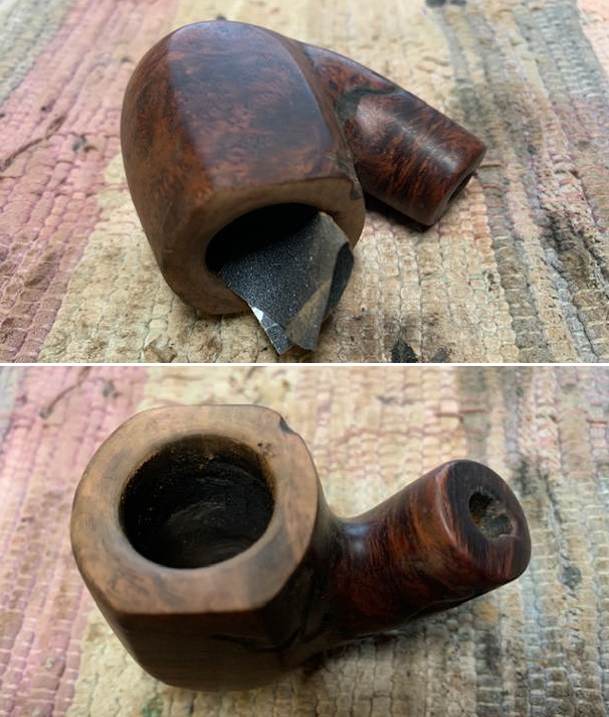
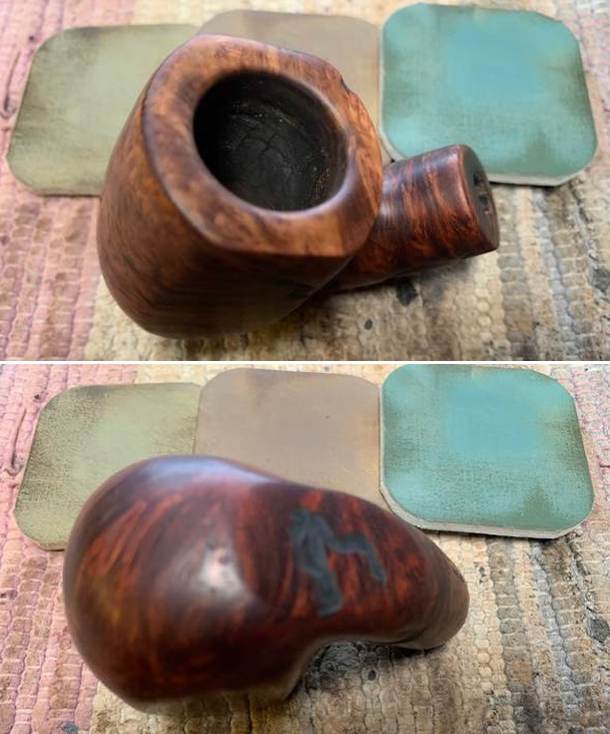
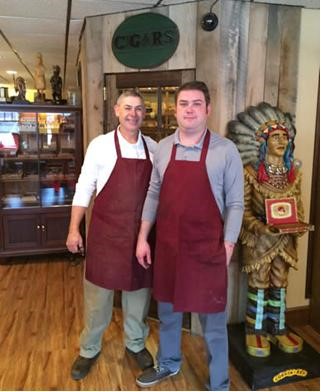
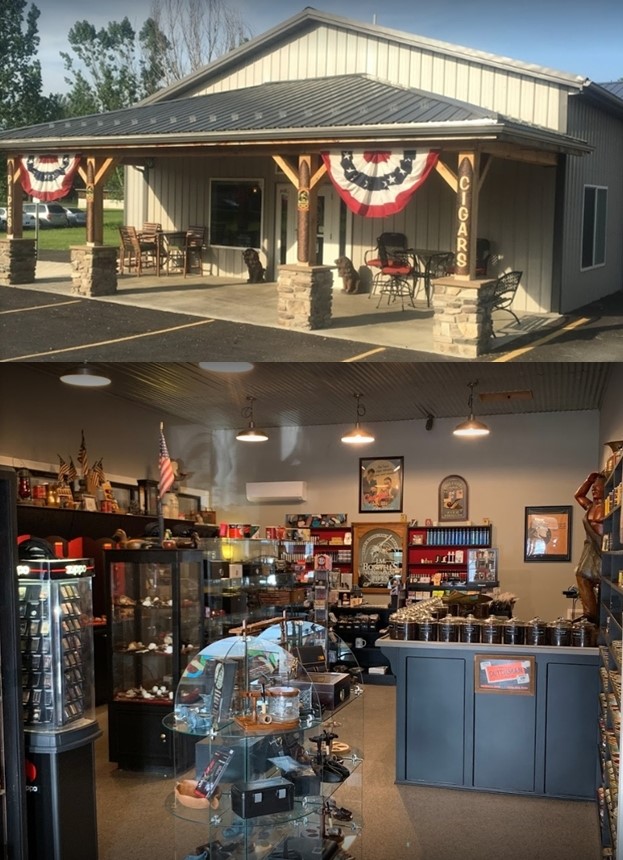
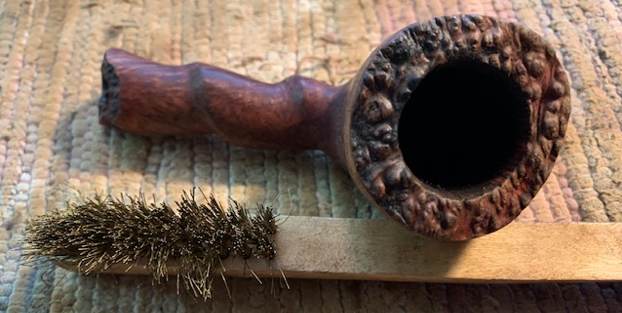
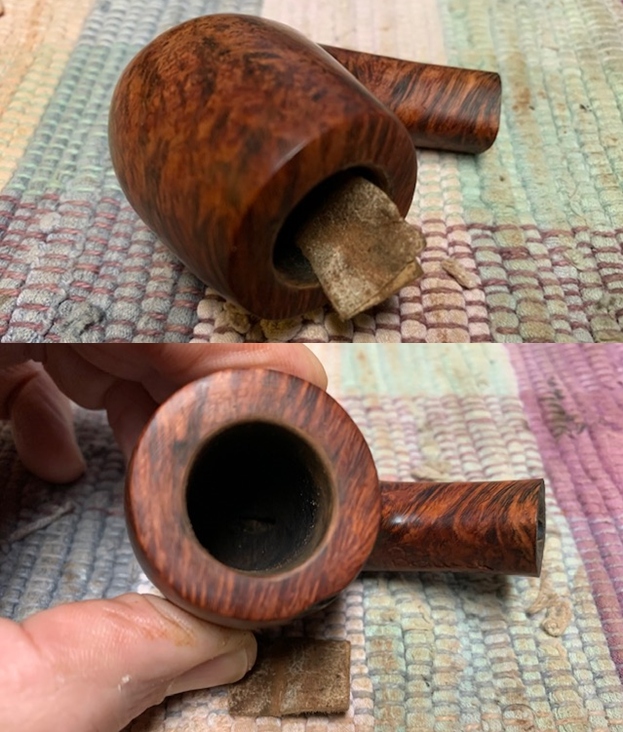
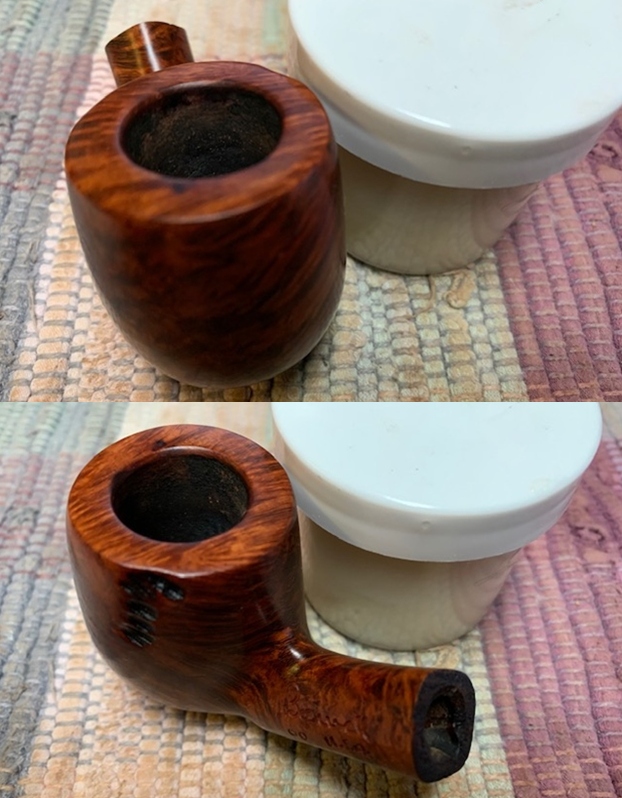
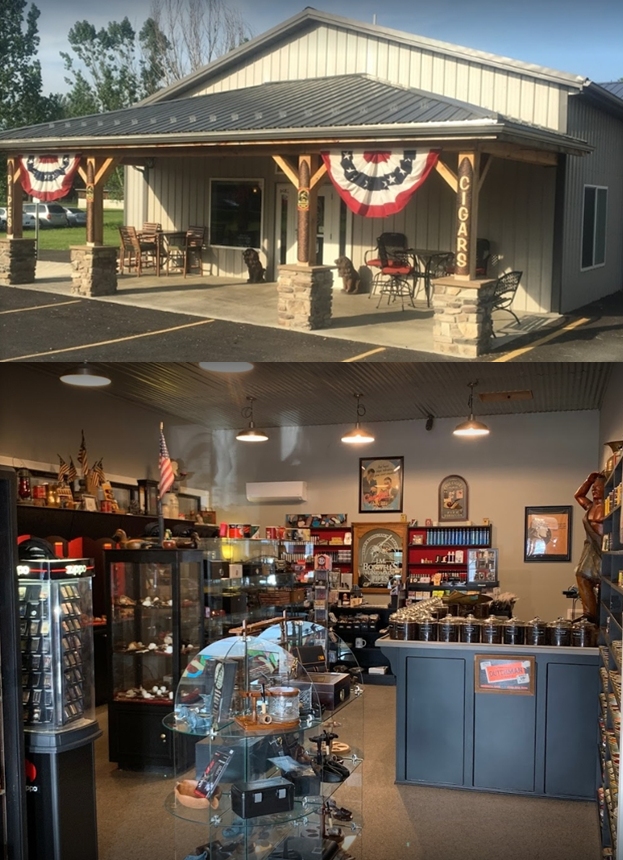
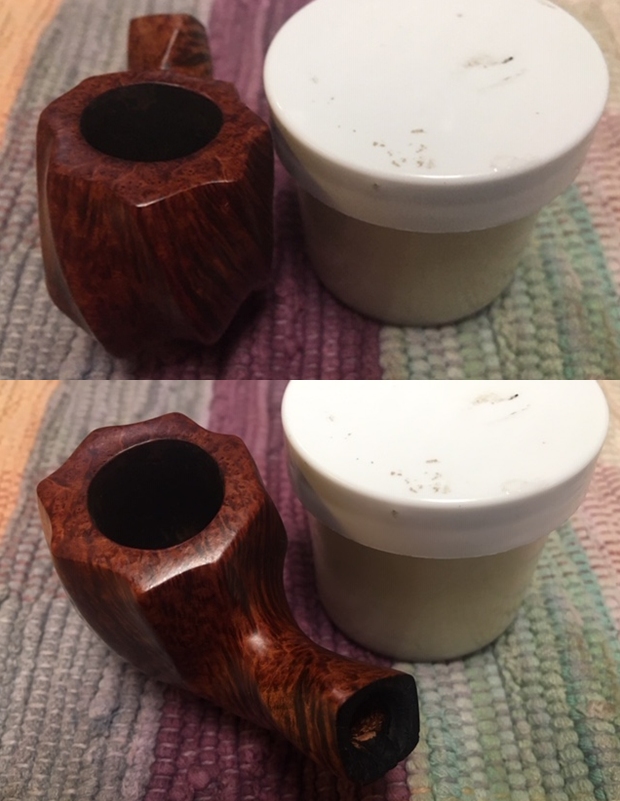
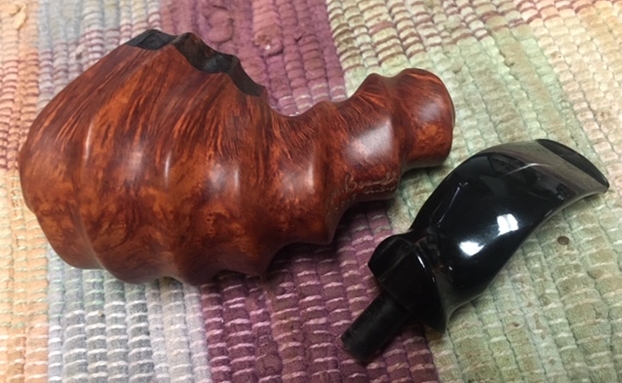
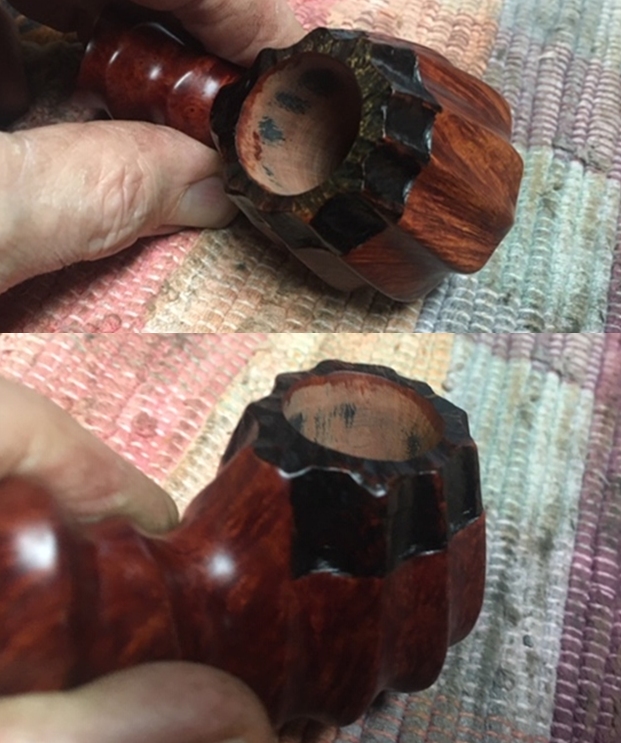
I also found some photos of the shop online that I include as well. I It looks like it would be a great place to visit and spend time enjoying. One day I may get to do that. We shall see! Now I had a pretty good idea of how the pipe was stamped and made. With that information I moved forward to work on the pipe itself and see what I had to do with it. Jeff had done an amazing job in removing all of the cake and the lava on the rim top. He had reamed the bowl with a PipNet Pipe Reamer and cleaned up the remnants with a Savinelli Fitsall Pipe Knife. He took the cake back to bare briar so we could check the walls for damage. They looked to be in good condition. He scrubbed the exterior of the bowl with Murphy’s Oil Soap and a tooth brush to remove the grime on the bowl and rim and was able to remove the lava and dirt. He cleaned out the interior of the bowl and shank with pipe cleaners, cotton swabs and alcohol until they came out clean. He cleaned the stem with Soft Scrub to remove the grime on the exterior and cleaned out the airway with alcohol, cotton swabs and pipe cleaners. He soaked the stem in Before & After Deoxidizer and rinsed if off and recleaned the inside of the stem with alcohol and pipe cleaners. I took photos of the pipe before I started my part of the restoration. I took some photos of the rim top and stem. The rim top and bowl looked very good. The scratching and marks on the rim top are visible in the photo. The close up photos of the stem shows the light tooth marks and chatter on the top and underside of the stem near the button.  I took a photo of the stamping on the underside of the shank to show the condition after the cleanup. This stamping is a signature done with an engraver of some sort. I removed the stem and took a photo of the parts of the pipe. I started my part of the restoration work on this pipe by addressing the damage to the front top and edge of the rim. I used a folded piece of 220 grit sandpaper to remove the damage to the bowl.I started polishing the rim top with 320-3500 grit sanding pads. I wiped down the top after each sanding pad to remove the sanding debris. By the end it looked much better.

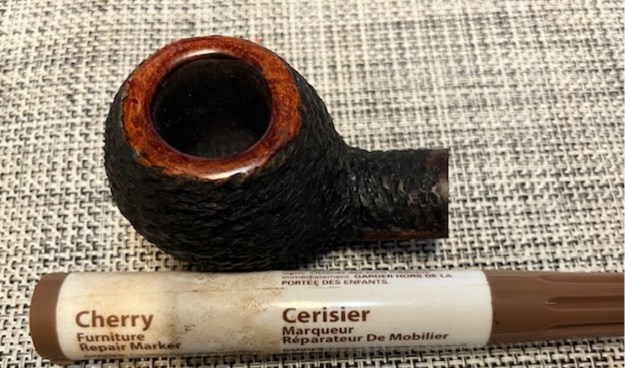
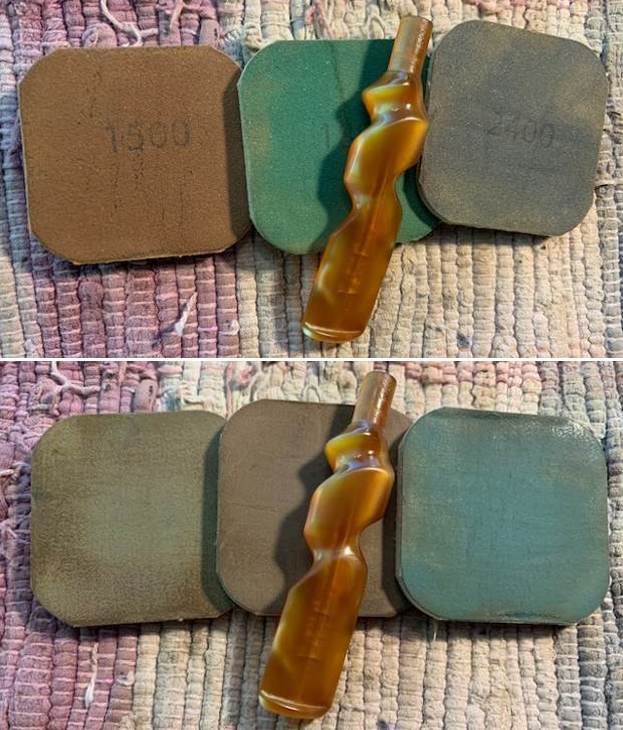
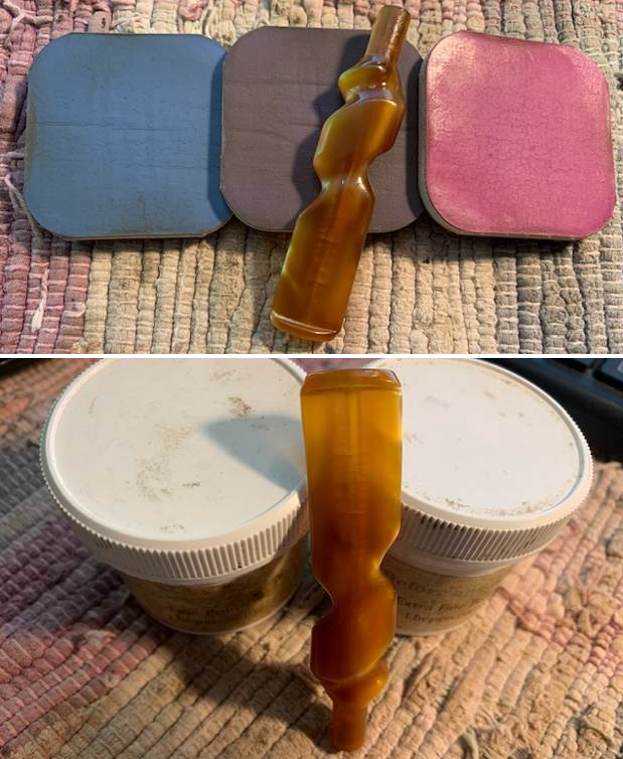
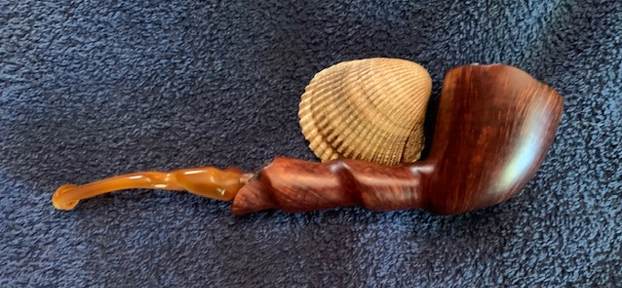
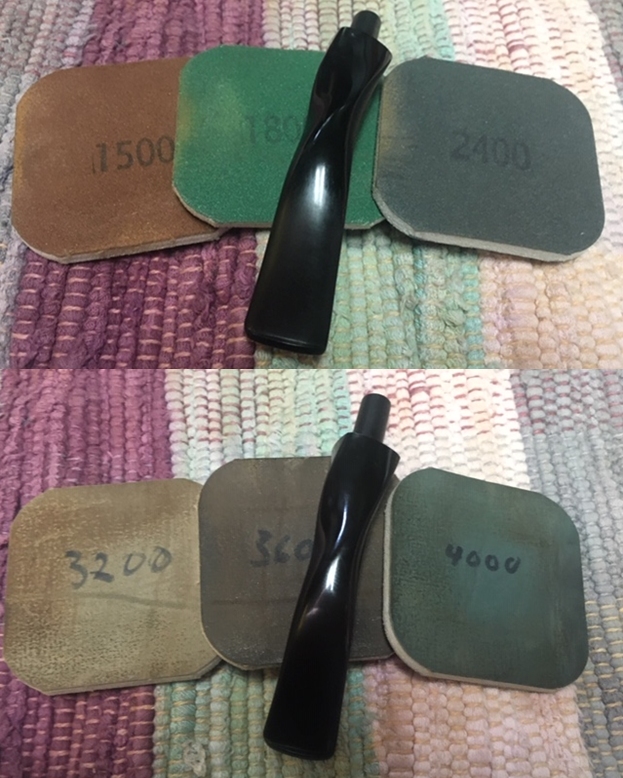
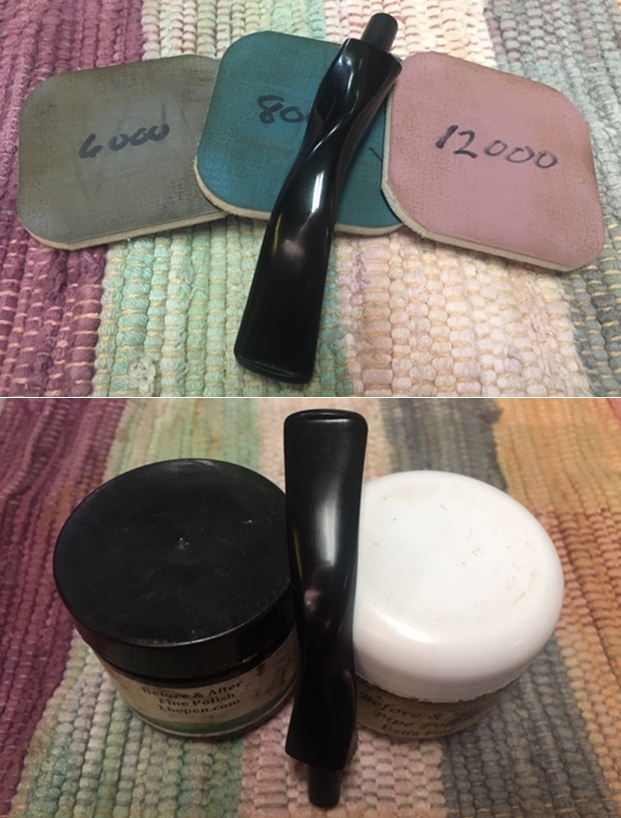
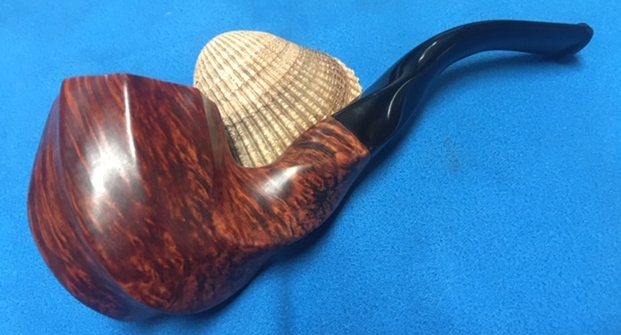
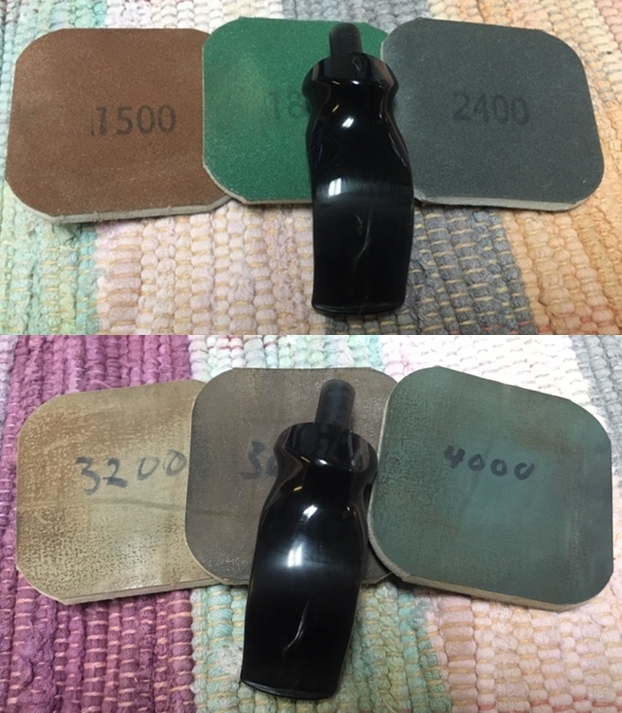
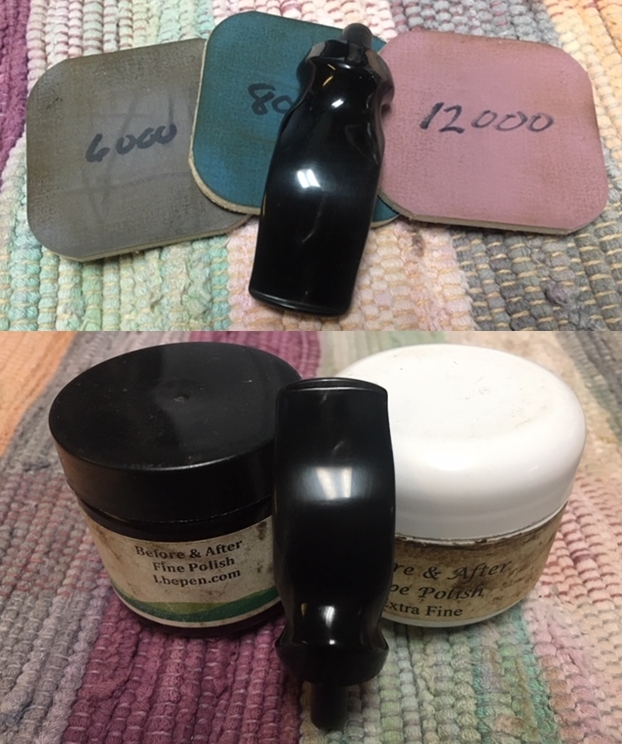
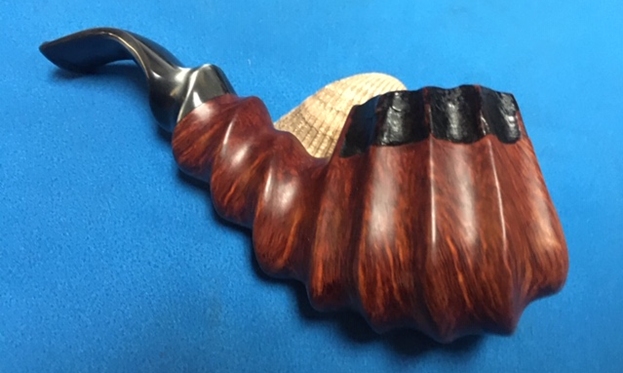
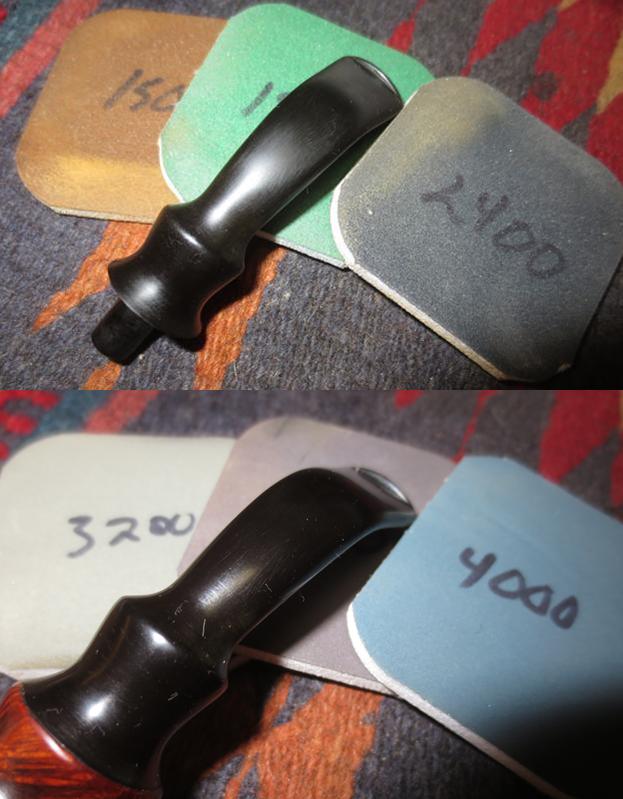
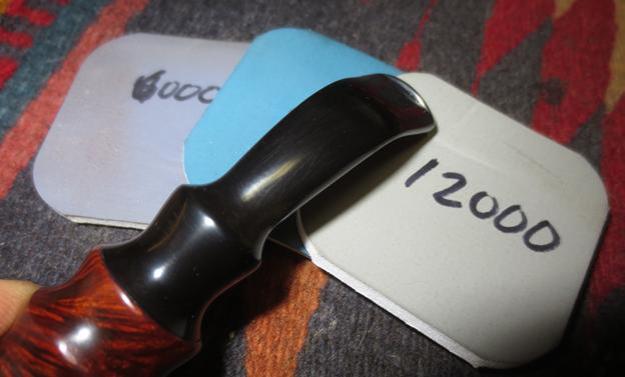
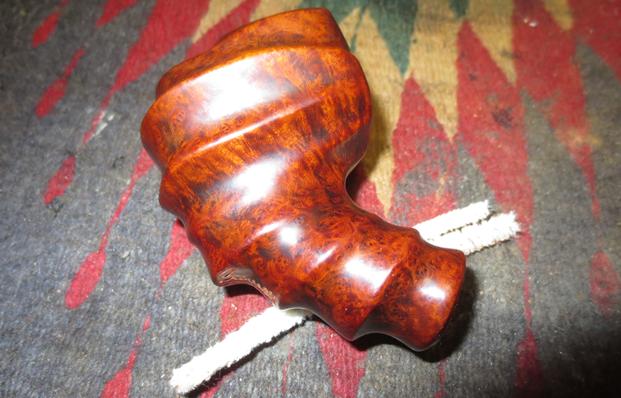
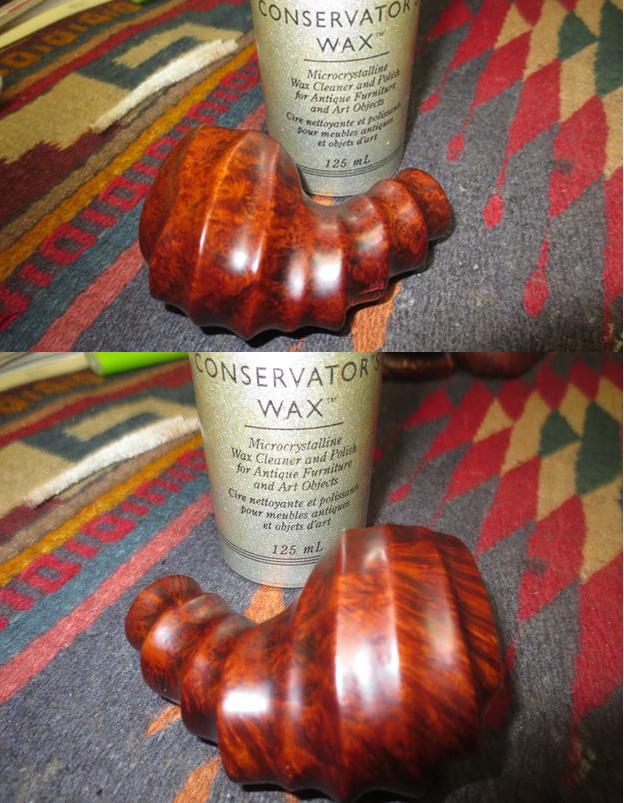
I also sanded it with the micromesh sanding pads – dry sanding with 1500-12000 grit pads. I forgot to take photos of the rim top at that point. I used a Cherry stain pen to restrain the newly sanded rim top. I looked very good with the fresh coat of stain.I worked some Before & After Restoration Balm into the surface of the briar with my fingertips and a horsehair shoe brush to clean, enliven and protect the briar. I let the balm sit for about ten minutes and then buffed with a cotton cloth to raise the shine. The photos show the bowl at this point in the restoration process. I set the bowl aside and polished it with micromesh sanding pads – dry sanding with 1500-12000 grit sanding pads. I wiped it down after each sanding pad with a cloth containing some Obsidian Oil. I finished polishing it with Before & After Pipe Stem Polish – both Fine and Extra Fine and buffed it off with a cotton cloth.  This Boswell USA 2006 1/4 Bent Apple is a nice looking pipe. The finish looks very good and rustication depths and peaks were very well done. I put the stem back on the bowl and buffed the pipe lightly with Blue Diamond on the buffing wheel. I carefully avoided the stamping on the shank sides during the process. I gave the bowl multiple coats of Conservator’s Wax and the stem multiple coats of carnauba wax on the buffing wheel. I followed that by buffing it with a clean buffing pad on the buffer. I hand buffed the pipe with a microfiber cloth to deepen the shine. The finished pipe is a good example of a Boswell Hand Made pipe. The flow of the finish and the way the shape follows it is very well done. Give the finished pipe a look in the photos below. I can only tell you that it is much prettier in person than the photos capture. The dimensions of the pipe are Length: 5 ½ inches, Height: 1 3/4 inches, Outside diameter of the bowl: 1 1/2 inches, Chamber diameter: 1 inch. The weight of the pipe is 2.50 ounces/71 grams. This interesting Boswell Hand Made Rusticated Apple is a great looking pipe. Thanks for walking through the restoration with me as I worked over another beautiful pipe. I will be adding it to the rebornpipes store in the American Pipemakers Section soon. If you want to add it to your collection send me an email or a message! Thanks for your time.

This Boswell Panel Bent Billiard must have been someone’s favourite


Blog by Steve Laug

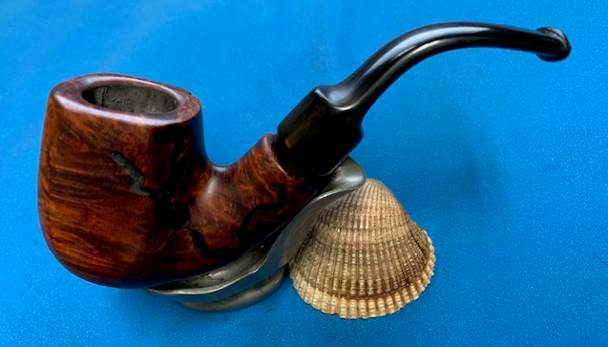
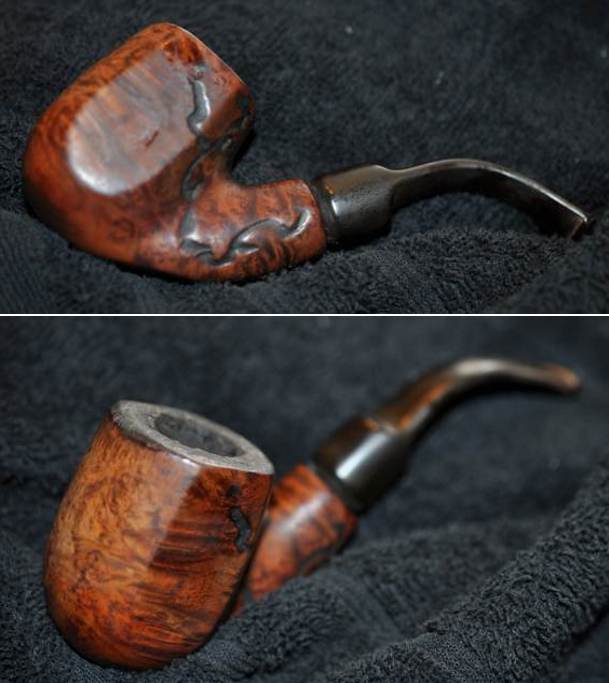
Once again I want to take you through my process of working on each pipe that we purchase. Jeff has set up a spread sheet to track where the pipe came from, the date of purchase and what we paid for it so that we know what we have invested in the pipe before we even work on it. This takes a lot of the guess work out of the process. This particular pipe was purchased on 12/27/2021 from a seller in Pittsburgh, Pennsylvania USA. I also want you to understand why we take the photos we do. If you have followed for a while then you will see the familiar pattern of the photos we include both in the before and midstream process of working on a pipe. It is not accidental or chance as the photos have been taken to help me make an assessment of the pipe Jeff sees before he starts his clean up work. We do this to record the condition that the pipe was in when received it and to assess what kind of work will need to be done on. When I look at these photos this is what I see.

  1. The first thing I see is a pipe that has either been well loved and smoked often or a pipe that has been neglected and abused. I have learned to see them as well loved and obviously someone’s favourite pipe.
  2. The finish is very dirty and there are hand oils on the panel sides of the bowl and there is grime and grit ground into the finish and the worm trail rustication on the sides of the bowl and shank. It is dusty and dull looking but under the grime the pipe looks good.
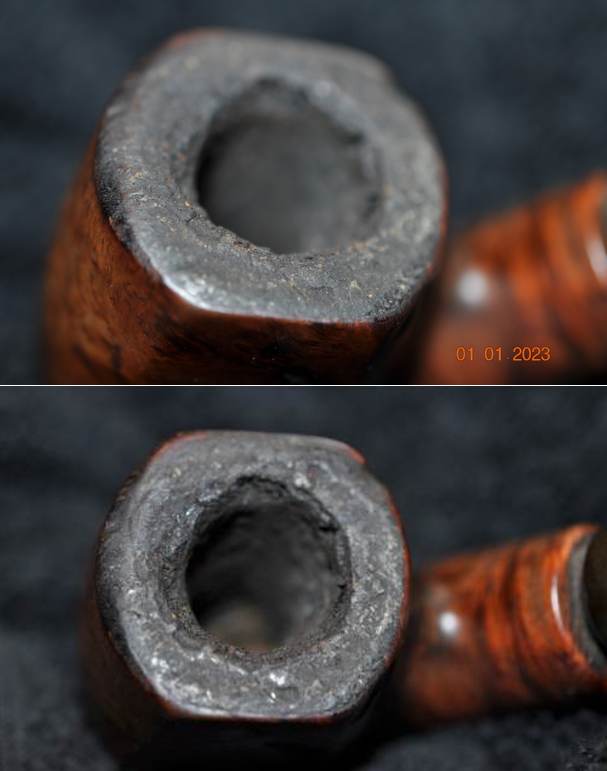
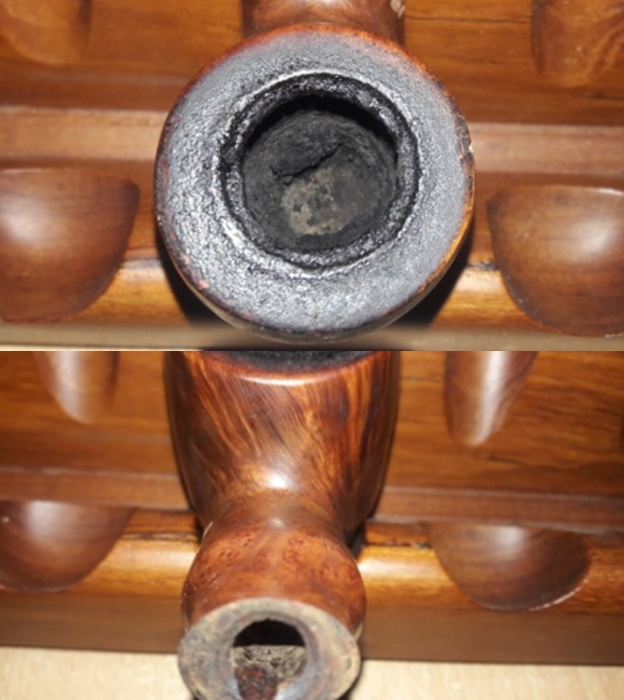
  3. The rim top has a very thick coat of lava and debris on both the top and the edges. There appeared to be damage on the front top and edge of the bowl. It is so dirty but is hard to know if there is damage to the edges or rim top. The bowl is quite large and deep.
  4. The bowl has a thick cake and debris on the walls that hides the walls and the inner and outer edge of the bowl but once it is clean we will know what the bowl and edges really look like. The outer edges look good and there does not appear to be any obvious burn damage to the top or bowl edges.
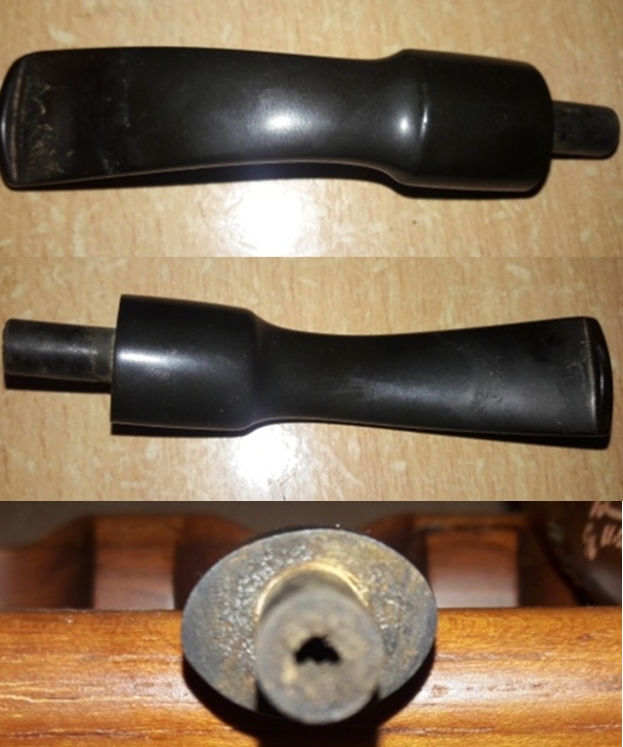
  5. The vulcanite stem is in rough condition – dirty, oxidized and has tooth chatter and marks on both sides ahead of button. There are also scratches in the vulcanite under the debris and calcification on the stem surface.

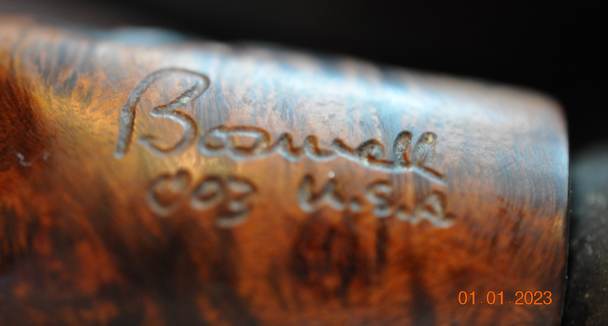
Overall my impressions of this pipe is that it is a unique pipe that once cleaned up will be another pretty Boswell Hand Made. Boswell’s shapes and carving are readily identifiable when you see them so I knew what the pipe was even before looking at it. The photos below confirm the assessment above. Jeff took close up photos so that I could have a clearer picture of the condition of the bowl, rim edges and top. The rim top photos confirm my assessment above. The cake in the bowl is very thick with tobacco debris stuck on the walls. The rim top has thick lava, grime and debris covering it. It is so thick you cannot see the inner or outer edges to assess damage. Even so there appears to be some damage on the front outer edge. This is what I look for when assessing a pipe. It is unclear if there is any burn damage at this point. I look forward to viewing it in person after the clean up work. The photos of the vulcanite stem surface from various angles confirm my assessment of its condition. You can see the dirty/sticky substance on the stem in the first photo below. There are scratches in the stem surface, tooth chatter, and deep marks. The stem is quite dirty and a bit of a mess. The fit of the stem to the shank is good and is a typical Boswell style Freehand. Instead of telling you what I see in the next photos of the sides of the bowl and the heel I want to hear from you. Tell me what you see? What does the finish look like to you? Are there any visible problems or issues that stand out to you? Are the cracks or scratches in the valleys of the rustication or the high spots? Are there visible flaws or fissures in the briar? How random does the deep rustication look? Is there a pattern to it? Any visible issues on the heel of the bowl? These questions should help you to see what I am looking for when I see these photos. He took a photo of the stamping on the underside of the shank. It is signed with an engraving tool and reads Boswell [over] 003 U.S.A. What stands out for you in the photos of the stamping? What do you look for in the stamping? It is dirty but what do you see underneath the grime on the surface of the briar? If you have been following the blog for any length of time you have come to know that when I am working on interesting old pipes (even sometimes those not so interesting) I like to know a bit about the background of the brand. I like to “meet” the carver to get a feel for their work and style.

In July, 2017 I restored a Boswell Twist pipe, a 2003 and had done some research into the brand (https://rebornpipes.com/2017/07/19/refurbishing-a-boswell-2003-spiral-twist-bent-billiard/). I turned to that blog and reread the information that I had included there. I took the liberty to include the information that I included from the box that came with that pipe that below.

The backside of the box reads:  Dear Pipe Smoker: J.M. Boswell crafts each of his pipes exclusively by hand! From the bare briar block to the final stain and polish, each step is a hands on procedure in old world tradition. Boswell pipes feature individual craftsmanship and style.

Additionally, J.M. Boswell has developed an exclusive bowl coating that greatly shortens the “break-in” time of a Boswell pipe and gives a sweet smoke from the very first bowl full. This coating is applied to each new pipe that Boswell makes.

One more compelling feature of Boswell pipes: “Their cost”! Boswell pipes can be had at a fraction of what most import pipes are. This is a feature pipe smokers find gratifying.

Our second feature is repairs by Boswell. J.M. Boswell has no peers in the quality and speed in which he gives “Turn-around” on pipe repairs, from stem replacement to banding, to reaming and cleaning.

I will be glad to answer any questions that you have regarding all the features of Boswell’s pipes, my repair work, plus the crafting process which can be witnessed first hand at our store and pipe making shop at 586 Lincoln Way East in Chambersburg, Pennsylvania.

Cordially J.M. Boswell, Owner.

I then turned to the Boswell Pipe and Tobacco Shop site (https://boswellpipes.com/product-category/boswell-pipes/). The description of the pipes in that section of the site parallels what I found above. I quote:

In the creation of these exquisite smoking pipes, we use the finest quality briar – “cream of the crop” is what the proprietor of the mill calls it. Boswell Pipes have their own special bowl coating for easy break-in. J.M. has used his special coating for Boswell Pipes since 1982.  100% natural coating, which will force the briar wood to absorb the moisture and heat.  For the finishing touch, J.M. hand inscribes his signature into the briar.  J.M. dates the year and proudly declares made in the USA “J.M. Boswell 2018 U.S.A.”. 

I also found some photos of the shop online that I am including here as well. I am also including the address of the shop and the phone number.

J.M. Boswell’s Pipes and Tobacco

6481 William Penn Hwy, Alexandria, PA 16611, United States

+1 814-667-7164

It looks like it would be a great place to visit and spend time enjoying. One day I may get to do that. We shall see!I am sure many of you will shake your head and ask maybe even out loud, “Why is he including this again?” However, please remember that the point of these blogs is not to wow your with the work or make you shake your heads but I want you to know the details of the work we do so you can do your own. Back in 2020 Jeff wrote a blog about his cleaning process. I am including a link to that now so you can see what I mean about his process. Do not skip it! Give it a read (https://rebornpipes.com/2020/01/20/got-a-filthy-estate-pipe-that-you-need-to-clean/). Here is the introduction to that blog and it is very true even to this day.

Several have asked about Jeff’s cleaning regimen as I generally summarize it in the blogs that I post rather than give a detailed procedure. I have had the question asked enough that I asked Jeff to put together this blog so that you can get a clear picture of the process he uses. Like everything else in our hobby, people have different methods they swear by. Some may question the method and that is fine. But it works very well for us and has for many years. Some of his steps may surprise you but I know that when I get the pipes from him for my part of the restoration they are impeccably clean and sanitized. I have come to appreciate the thoroughness of the process he has developed because I really like working on clean pipe!

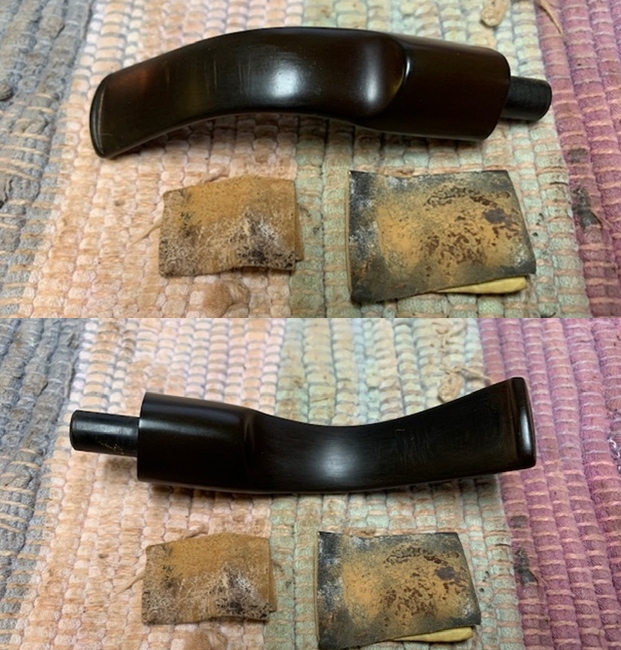
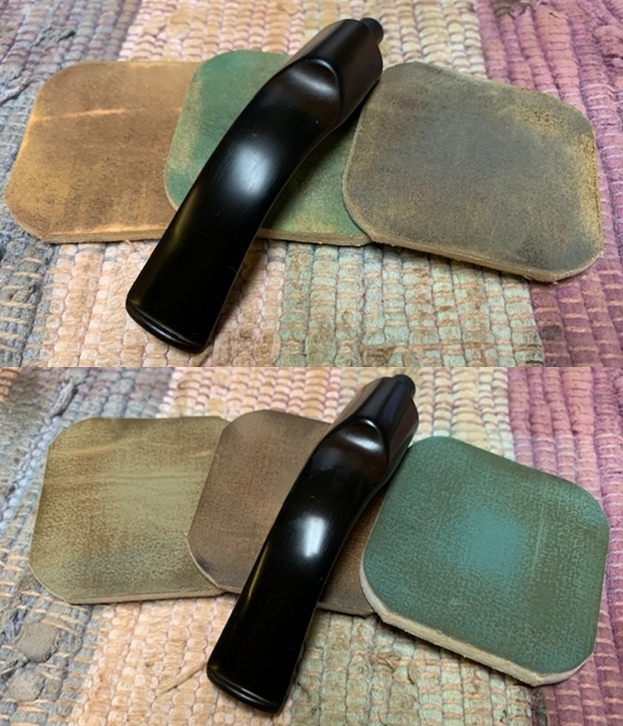
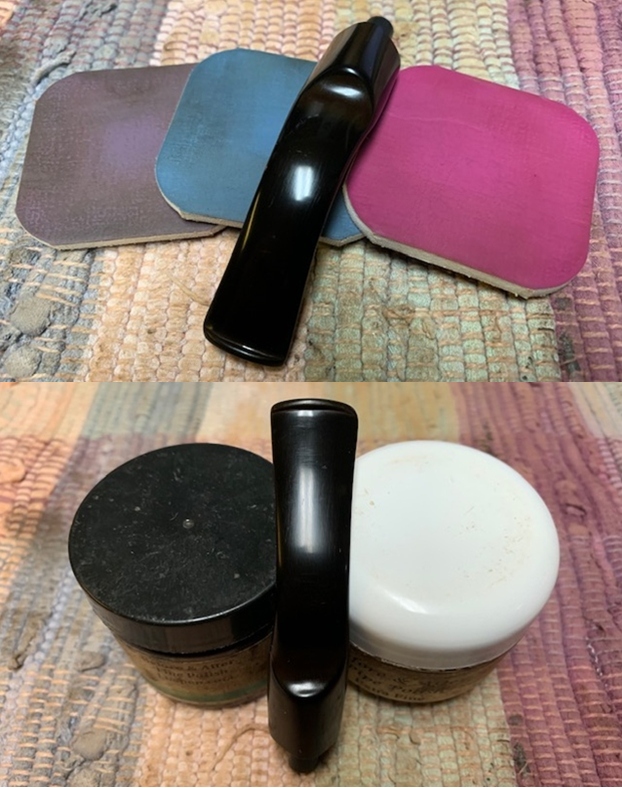
For the benefit of some of you who may be unfamiliar with some of the products he uses I have included photos of three of the items that Jeff mentions in his list. This will make it easier for recognition. These three are definitely North American Products so you will need to find suitable replacements or order these directly on Amazon. The makeup pads are fairly universal as we were able to pick some up in India when we were with Paresh and his family.

In the blog itself he breaks his process down into two parts – cleaning the stem and cleaning the bowl. Each one has a large number of steps that he methodically does every time. I know because I have watched him do the work and I have seen the pipes after his work on them. He followed this process step by step and when the pipe got to me it was spotlessly clean and ready for my work. The inside of the stem, shank and bowl were clean and to me that is an amazing gift as it means that my work on this end is with a clean pipe! I cannot tell you how much difference that makes for my work.

When the pipe arrives here in Vancouver I have a clean pipe and I go over it keeping in mind my assessment shared in the opening paragraph above. Now that I have it in hand I am looking for confirmation of what I saw in the photos as well as any significant structural changes in the bowl and finish as I go over it.

  1. The first thing I see is a pipe that has either been well loved and smoked often or a pipe that has been neglected and abused. I have learned to see them as well loved and obviously someone’s favourite pipe. Even clean that is visible.
  2. The finish is clean and the grime and grit have been removed from the finish on the bowl. The worm trail rustication looks good as well.
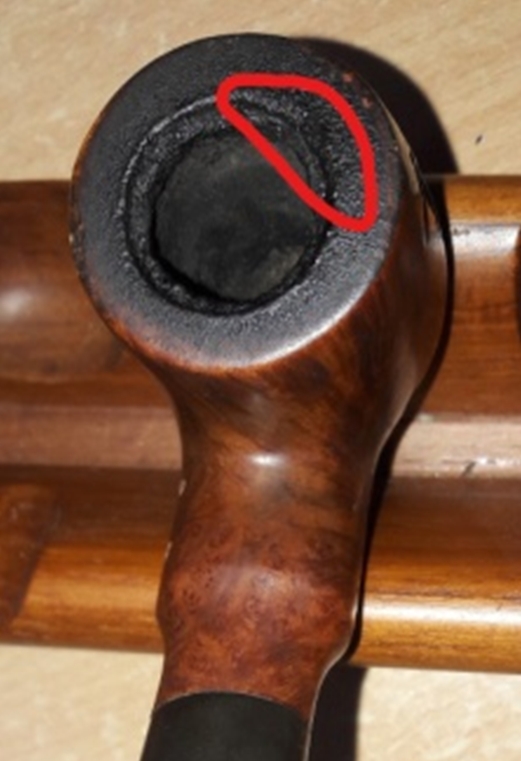
  3. The lava, grime and dust on the rim top has been removed and it has revealed a lot of burn damage on the top and the inner and out walls. There is also significant darkening around the rim top.
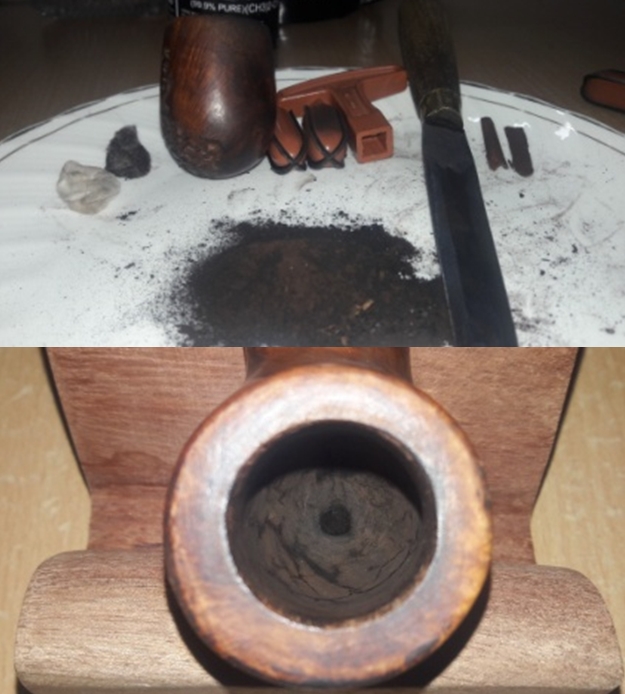
  4. The walls of the bowl are clean and I do see some checking or burn damage on the right side toward the top. It looked like it needed to be reamed closer and sanded. The inner edge of the bowl shows some damage toward the front. The outer edges look good and there does not appear to be any obvious burn damage there.
  5. The vulcanite stem is clean and has scratches, tooth chatter and marks on both sides. The button also shows some damage. The fit to the shank is well done with no damage.

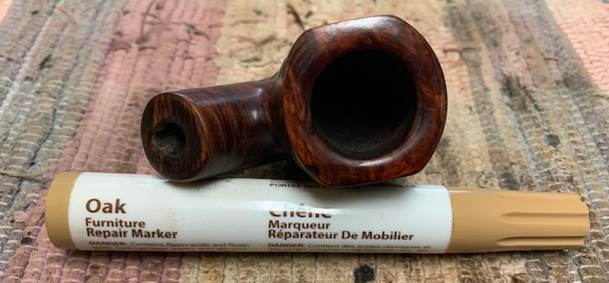
Hopefully the steps above show you both what I look for when I go over the pipe when I bring it to the work table and also what I see when I look at the pipe in my hands. They also clearly spell out a restoration plan in short form. My work is clear and addressing it will be the next steps. I took photos of the whole pipe to give you a picture of what I see when I have it on the table. This is important to me in that it also shows that there was no damage done during the clean up work or the transit of the pipe from Idaho to here in Vancouver. I carefully went over the bowl and rim top to get a sense of what is happening there. In this case once the rim top and edges were cleaned, the burn damage became very apparent. There were burn marks on the top and a deep one on the front right inner edge and top. The inner edges are also damaged by the burn damage. The outer edge is damaged on the front side. I also go over the stem carefully. The stem had some issues as noted. There were some tooth marks and chatter on the surface of the stem and the button. I took photos of the rim top and stem sides to show as best as I can what I see when I look at them. I always check to make sure that the clean up work did not damage the stamping on the shank in any way. It is in excellent condition and is very clear and readable. I love just looking at the lay of the pipe and the proportion of the hand made pipes. I like to remove the stem from the shank to get a sense of what was in the mind of the pipe maker when he crafted the pipe. The photo shows its beauty in flow and shape. Now it was time to start working on the pipe. There appeared to be some checking on the right side toward the top of the bowl. When I examined it, it did not seem to be too deep in the briar. It was left behind by the reaming. I cleaned up that area with a Savinelli Fitsall Pipe Knife to scrape it back to solid walls. I sanded the walls of the bowl with 220 grit sandpaper wrapped around a dowel. It cleaned it up quite well. Once I had cleaned up the rim top and edges the bowl and rim top would look much better. To address the darkening on the rim to pa and edges I started by topping the bowl with 220 grit sandpaper on a topping board. I need to remove the darkening to be able to see the damage. I further topped it with a medium and fine grit sanding sponge. The damage is very evident on the top of the bowl and the inner edge on the right front. To deal with the rim damage on the top and the inner edge I used a wooden ball and a piece of 220 grit sandpaper to give the inner edge a slight bevel and remove the damage. Now I was getting somewhere. Once I had finished wit the ball I used a folded piece of 220 grit sandpaper to fine tune the shape. I am happy with the end result. I polished the briar with micromesh sanding pads. I choose to dry sand the briar rather than wet sand it. Again it is a matter of personal preference. I prefer to use the pads dry and find they work very well on the briar. I sand with each pad (9 in total) and group them by threes for ease of reference. I wipe the bowl down after each pad with a damp cloth to remove the sanding debris and check the briar. I love seeing the developing shine on the briar as I move through the pads which is why I include so many photos of this step. I paused in the polishing and used and oak stain pen to stain the rim top and edges to match the rest of the bowl. It looked very good to me. Once I polished it with the final three micromesh sanding pads it blended very well. I polished it with the last three pads. After polishing it with the micromesh pads I rubbed it down with Before & After Restoration Balm. It is a paste/balm that is rubbed into the surface of the briar and the plateau. The product works to deep clean the nooks and crannies of finish, enliven and protect the briar. I worked it into the briar with my finger tips and into the worm trail rustications with a horse hair shoe brush. I let it sit for 10 minutes then wiped it off with a soft cloth then buffed it with a cotton cloth. The briar really began to have a deep shine in the briar and the grain shone through. The photos I took of the bowl at this point mark the progress in the restoration. It is a gorgeous pipe. The right wall still showed signs of checking as shown in the photos above. I made a mix of pipe mud (fine cigar ash and water) and coated the wall with that to protect it until a new cake was formed. I mix it in a small shot glass and apply it to the walls with a dental spatula. I use and ear syringe to add the water so I can control the thickness of the mud. I set it aside to cure. I set the bowl aside and turn to work on the stem. I decided to work on the unique stem. I used a folded piece of 220 grit sandpaper to do the work. I sanded the tooth marks and chatter on the stem and reshaped the button edge with 220 grit sandpaper. I started the polishing with 600 grit wet dry sandpaper. I continued polishing the stem with micromesh sanding pads – 1500-12000 grit sanding pads and water to wet sand the stem. I wiped it down after each sanding pad with Obsidian Oil on a cotton rag after each sanding pads. But I find it does two things – first it gives some protection to the stem from oxidation and second it give the sanding pads bite in the polishing process.   After finishing with the micromesh pads I rub the stem down with Before & After Fine and Extra Fine stem polish as it seems to really remove the fine scratches in the vulcanite. I rub the Fine Polish on the stem and wipe it off with a paper towel and then repeat the process with the Extra Fine polish. I finish the polishing of the stem down with a final coat of Obsidian Oil and set the stem aside to let the oil absorb. This process gives the stem a shine and also a bit of protection.  The final steps in my process involve using the buffer. I buffed the bowl and stem with Blue Diamond to polish out the light scratches in the briar and the vulcanite. I gave the bowl and the stem multiple coats of carnauba wax. I have found that I can get a deeper shine if I follow up the wax buff with a buff with a clean buffing pad. It works to raise the shine and then I hand buff with a microfiber cloth to deepen the shine. It is always fun for me to see what the polished bowl looks like with the polished stem. It really is a nice pipe. The mix or smooth and rusticated worm trail finishes around the bowl sides and shank looks great with the rich black and brown stains. The Boswell U.S.A. Panel 003 Bent Billiard feels great in my hand. It is a well balanced pipe. Have a look at it with the photos below. The dimensions are Length: 5 ½ inches, Height: 2 inches, Outside diameter of the bowl: 1 ½ inch, Chamber diameter: ¾ of an inch. The weight of the pipe is 2.54 ounces/72 grams. It is a beautiful pocket sized pipe that I will soon be adding to the rebornpipes store in the American (US) Pipemakers section. If you would like to add it to your collection let me know. It should be a great smoking pipe.

Hopefully the style of writing of this blog is helpful to you in some way. In it I wanted to show both what I am looking for and how I move forward in addressing what I see when work on a pipe. Let me know if it is helpful to you. It is probably the most straightforward detailed description of my work process that I have done. As always I encourage your questions and comments as you read the blog. Thanks to each of you who are reading this blog. Remember we are not pipe owners; we are pipe men and women who hold our pipes in trust until they pass on into the trust of those who follow us.

Restoring an Unique Boswell Twisted Long Shank Freehand Sitter


Blog by Steve Laug

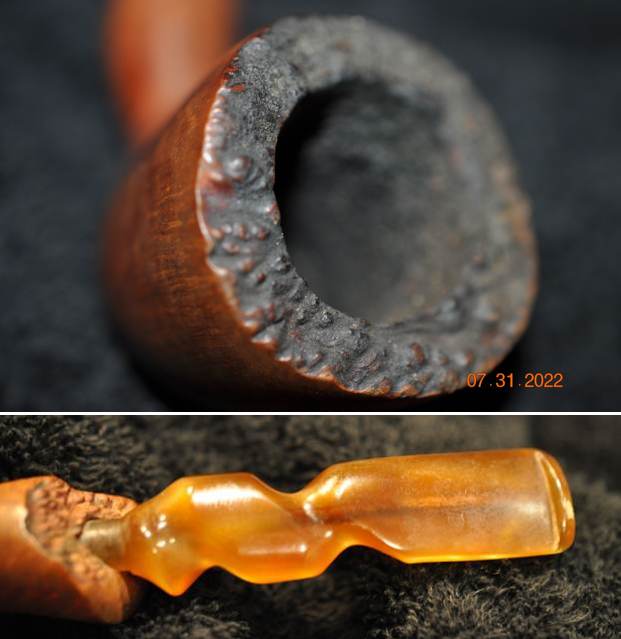
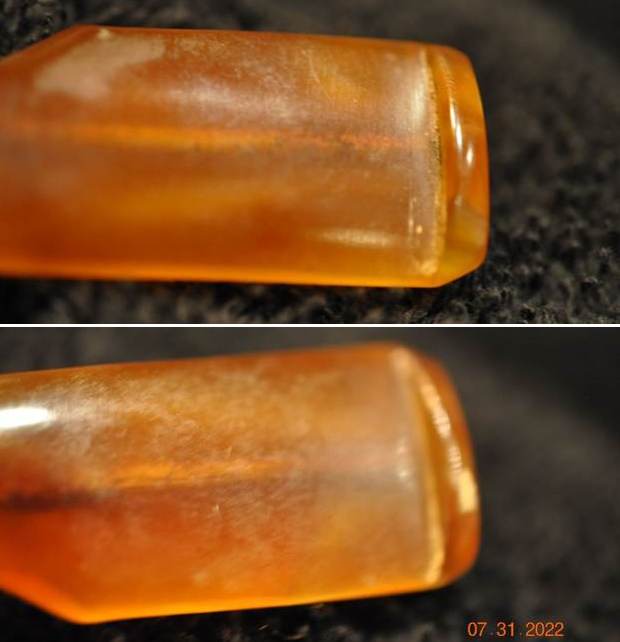
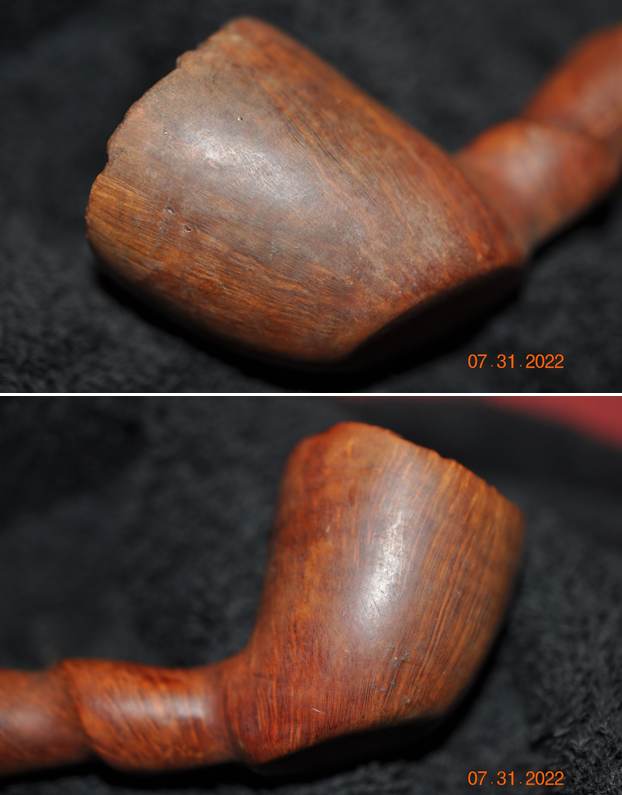
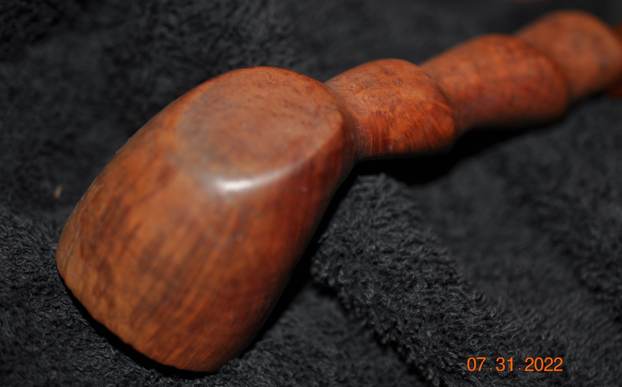
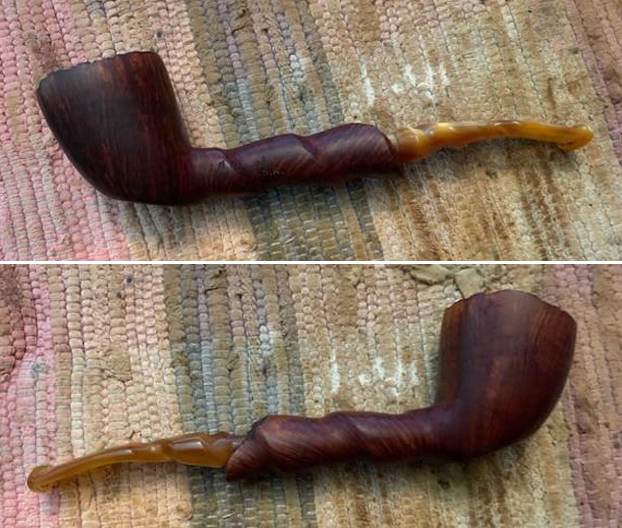
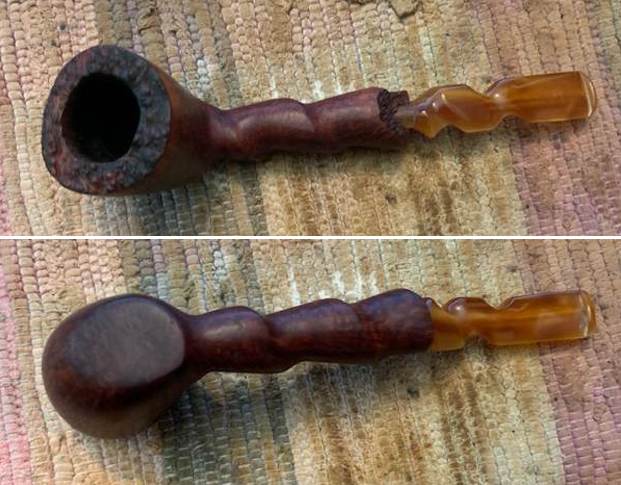
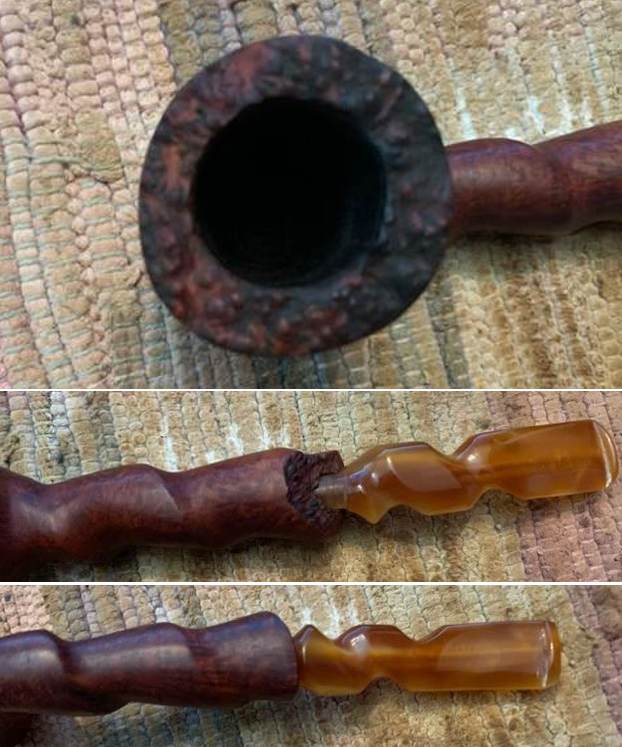
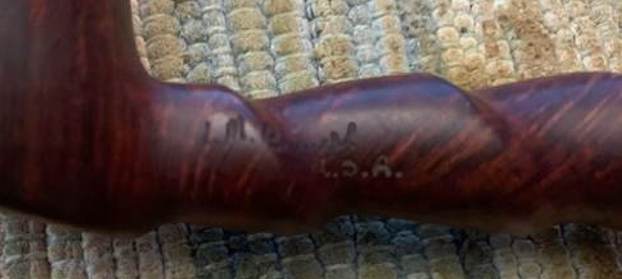
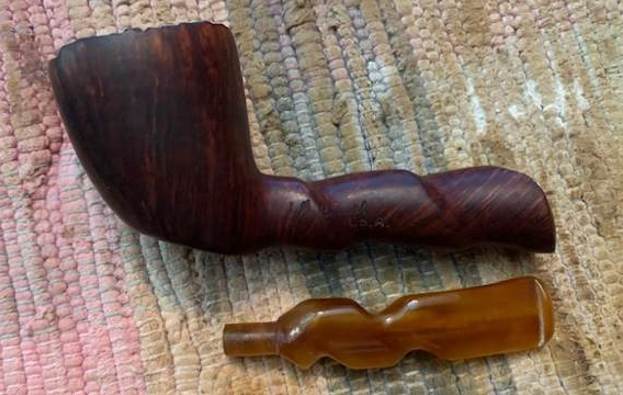
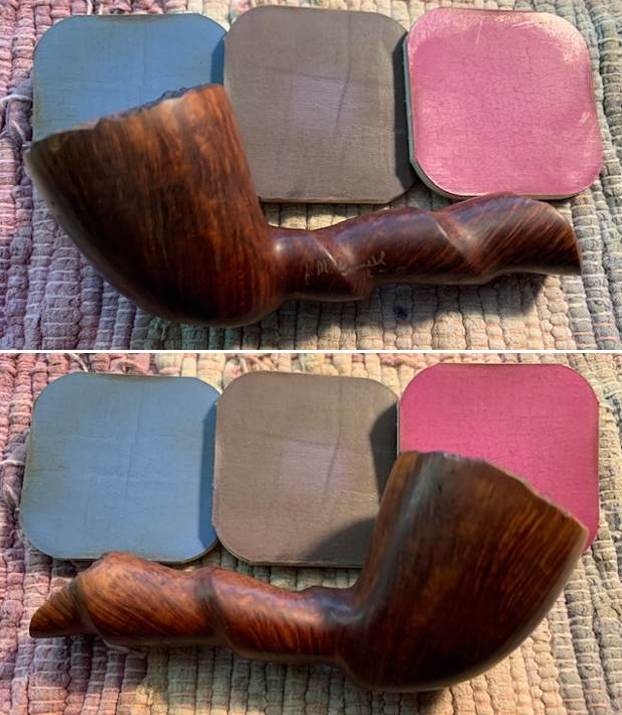
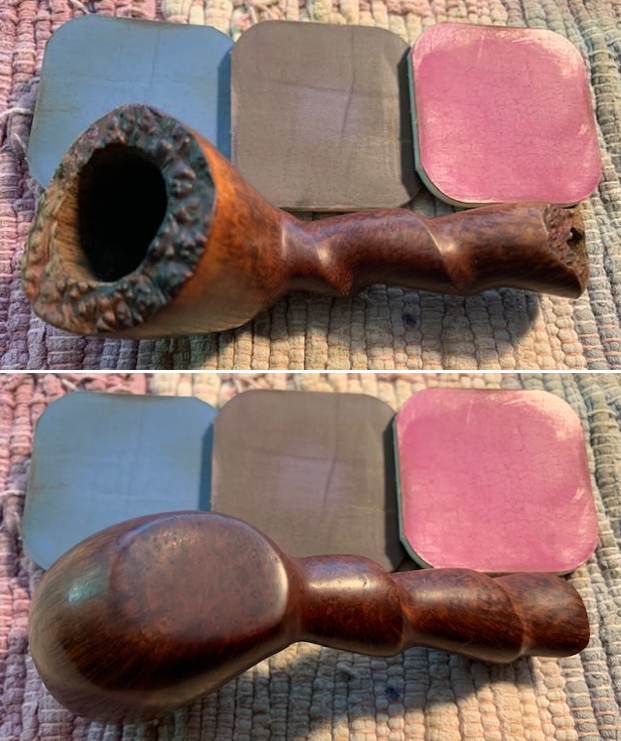
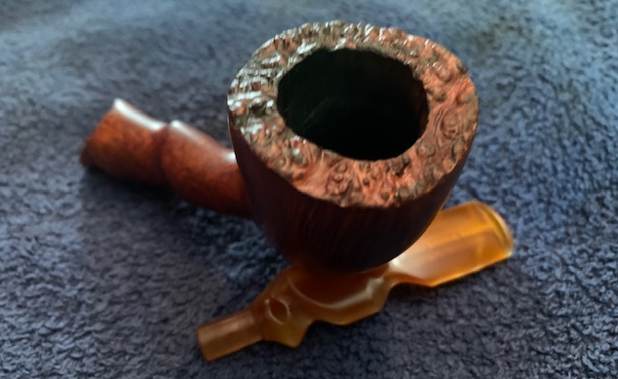
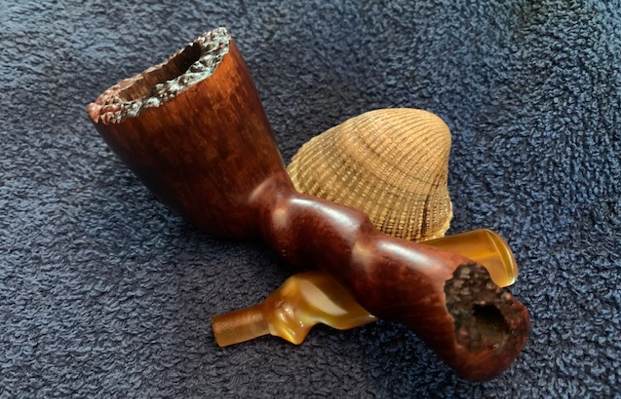
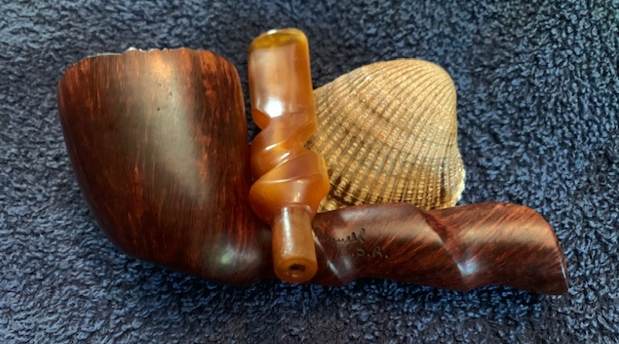
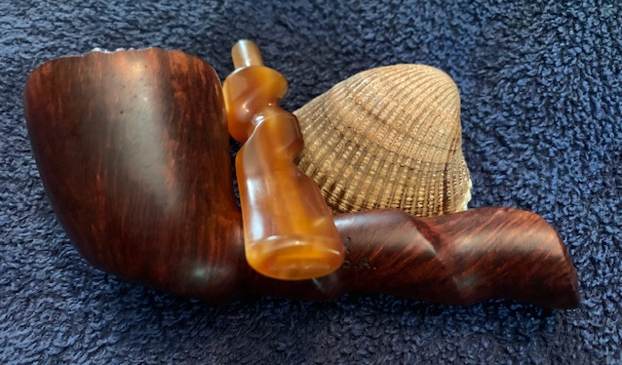
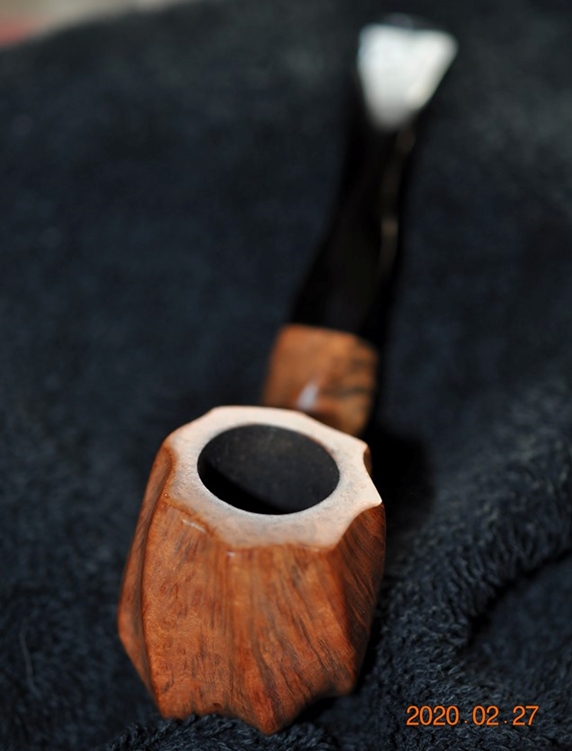
The next pipe that I have chosen to work on is a Freehand pipe with a long twisted shank and plateau on the rim top and the shank end. We purchased it from a seller in Wilkes Barre, Pennsylvania, USA on 06/16/22. It is a Freehand shaped smooth briar with a flat bottom that makes it a sitter. I has a fancy golden amber coloured acrylic twisted stem that carries on the twist of the shank. The pipe was dusty and dull looking but had great grain around the bowl and shank. The plateau rim top had a thick lava overflow from the thickly caked bowl. The inner edge of the rim was so thickly caked that it was hard to assess the condition at this point. This must have been a phenomenal smoker or at least someone’s favourite pipe. The pipe was signed on the left side of the shank with JM Boswell’s signature [over] U.S.A. There was not a date stamp on any other stampings on the pipe. The fancy amber coloured twisted acrylic stem was in good condition with some tooth marks and chatter on both sides near the button. Jeff took the following photos before he started his cleanup work on the pipe. He took close-up photos of the bowl and rim top from various angles to capture the condition of the bowl, rim top and edges of the bowl. The cake was very thick and the bowl overflowed in thick lava on to the rim top filling in much of the plateau. He also captured the condition of the top and underside of the stem. You can see the tooth marks and chatter on both sides ahead of the button. It was a well used, dirty pipe. He took photos of the sides and heel of the bowl to show the condition of the finish and the grain around the bowl. You can see the small minor sandpits on the left side of the bowl but otherwise it a nice piece of briar under the grime and debris of time ground into the finish. Jeff took a photo of the J.M. Boswell signature and U.S.A. on the left side of the twisted shank. It reads as noted above and is clear and readable. It has been a while since I worked on a Boswell pipe so I did some reading to reacquaint myself with them.. I read the Boswell website as well as the entry on Pipedia to refresh my memory (https://pipedia.org/wiki/J.M._Boswell). I find that reading the information on a pipe brand before I work on it gives me a sense of the passion and art of the craftsmen who made the pipe. That was true of this pipe as well. I quote from that entry on Pipedia first to give you a sense of the information that I found on the Boswells and their craftsmanship.
J.M. Boswell is considered to be one of the finest Master pipemakers in the world. His reputation is exemplary, and his craftsmanship is legendary. Working from sun up till the midnight hours, 7 days a week for most of the past 40 years, J.M. has produced thousands of handmade pipes for folks to enjoy. His dream, back in the 70s, was to make the best smoking pipes with the highest quality briar wood at an affordable price. J.M. Boswell has succeeded in doing so.

The Chambersburg store is located on the historic Lincoln Highway (Rt 30), about 20 miles west of Gettysburg.

J.M. became a U.S. importer for Briar wood so that he could supply briar to other pipemakers. By doing this, he was able sell his own pipes at an affordable price. With the finest quality Briar available in the world, years of skill and his pipe master’s hands working to form the most beauty from a block of prime briar, a Boswell pipe is born…

J.M. and his son, Dan take great pride in making high quality handcrafted, American made smoking pipes. Admired for their craftsmanship, their handmade pipes are created for the rigors of everyday use and truly made to last.

Boswell’s is a family – owned business with a family environment. Every family member has a role within the business. J.M.’s wife Gail takes all of the photos – for the website, Instagram, and Pinterest; she also maintains the museum and store. Daughter Rachel manages estate pipes online, while Dan’s wife Julie takes the phone orders, and runs the shipping department.

J.M. and Dan, who work full time, side by side together, have created pipes that range from the smallest to the largest smoking pipes made in the world. Dan has known he wanted to follow in his fathers’ footsteps since he was a young boy, helping J.M. after school and during summer vacation. He has been working for the family business full time since he graduated high school, and plans on continuing the proud family tradition for many years to come.

Gail’s family background has involved pipes since long ago- her Father, Uncles, and Aunt made pipes in the late 1930s for the Weber Pipe factory in Jersey City, New Jersey. Her father’s family lived on Cator Avenue, the same as the factory, and they would walk to work each day. Their family history brings an incredible depth and passion for pipemaking!

“Over 70 years of pipe history in our family, and still continuing.”

Photo courtesy of the Boswell’s Pipes Website

I then turned to the Boswell Pipe and Tobacco Shop site (https://boswellpipes.com/product-category/boswell-pipes/). The description of the pipes in that section of the site parallels what I found above. I quote:

In the creation of these exquisite smoking pipes, we use the finest quality briar – “cream of the crop” is what the proprietor of the mill calls it. Boswell Pipes have their own special bowl coating for easy break-in. J.M. has used his special coating for Boswell Pipes since 1982.  100% natural coating,which will force the briar wood to absorb the moisture and heat.  For the finishing touch, J.M. hand inscribes his signature into the briar.  J.M. dates the year and proudly declares made in the USA  “J.M. Boswell 2018 U.S.A.”

I turned also to the description of the other twisted or as he called them Swirls from the website. I have included that below for your reading as I found it quite interesting (https://boswellpipes.com/product/boswell-pipe-jumbo-freehand-swirls-2020/). I quote:

J.M.’s Signature Swirls, gorgeously grained. Incredible smoking properties of a Boswell pipe, are the thick bowl walls to give you that cool enjoyable smoke. Uniquely sculptured deep Swirls. Old craftsmanship style with thick walls and shank for a cooler smoke. Natural finish with eye-catching dark bold highlights to show off its grain. Incredible cool smoke with an extremely easy draw for some serious smoking.

J.M. Boswell is known worldwide for crafting theses incredible, massive looking, King Size briars for well over 39 years.  Addition to being amazing smokers as well, they are capable of holding a generous supply of your favorite tobacco.

As with each and every Boswell pipe made, the airway is hand bored (not using a lathe).  This is why the air passage way will always provide the smoker with a full draw and allows for a fuller smoother smoke. J.M. finds the old fashion way of doing so completes his pipes.

Wide plateau is displayed along the rim and shank. Accent etching along the shank. Using a high power magnifier there may be a few specks of natural imperfections. Large hand-cut acrylic spiraling mouthpiece with pearlized raspberry red tones. Your new Boswell pipe will come nestled in a protective Jumbo handmade pipe sleeve and placed in a Boswell gift box.  We also include all the essentials for your first smoke. Smoking becomes a Relaxing time with a Boswell.

I also found some photos of the shop online that I am including here as well. I am also including the address of the shop and the phone number.

J.M. Boswell’s Pipes and Tobacco

6481 William Penn Hwy, Alexandria, PA 16611, United States

+1 814-667-7164

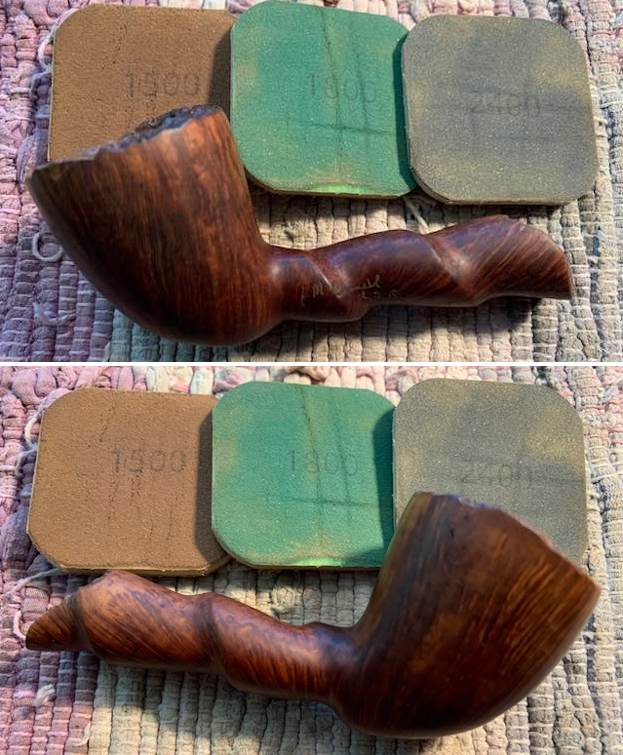
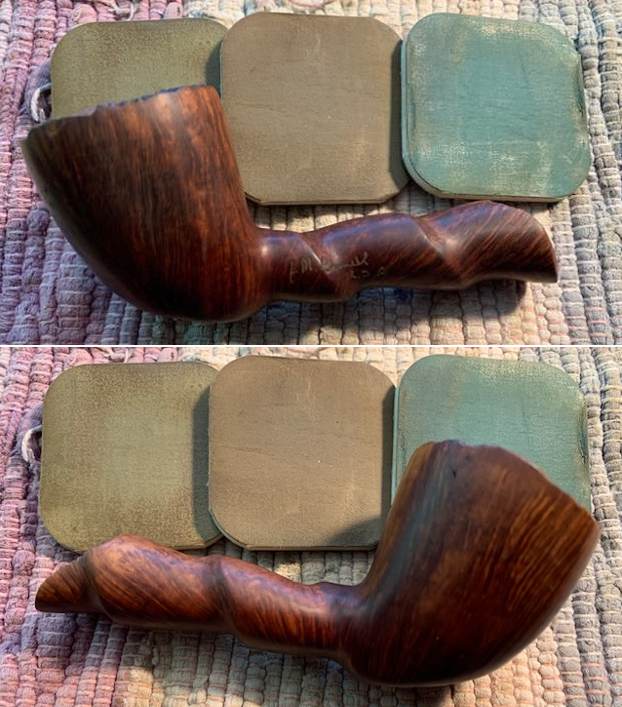
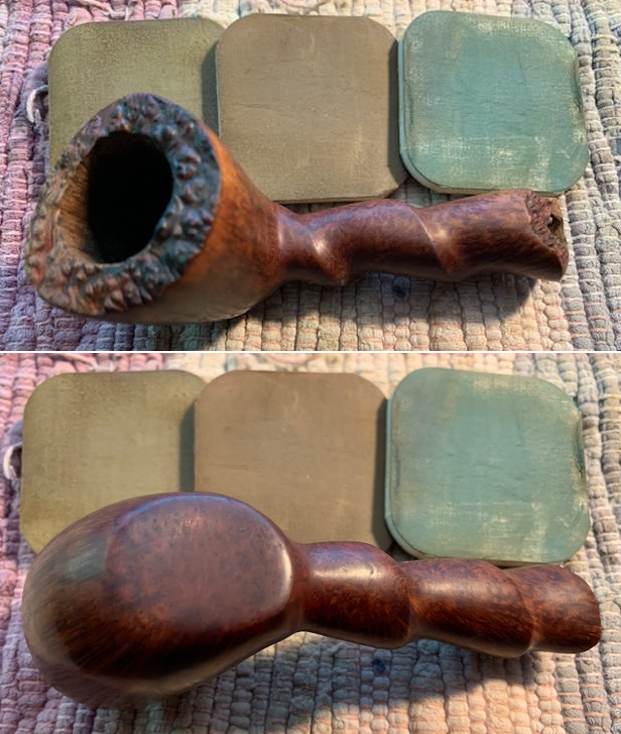
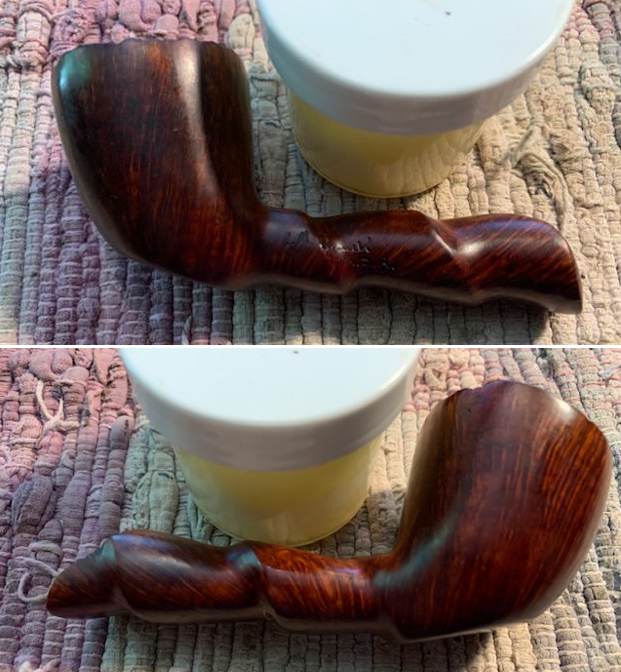
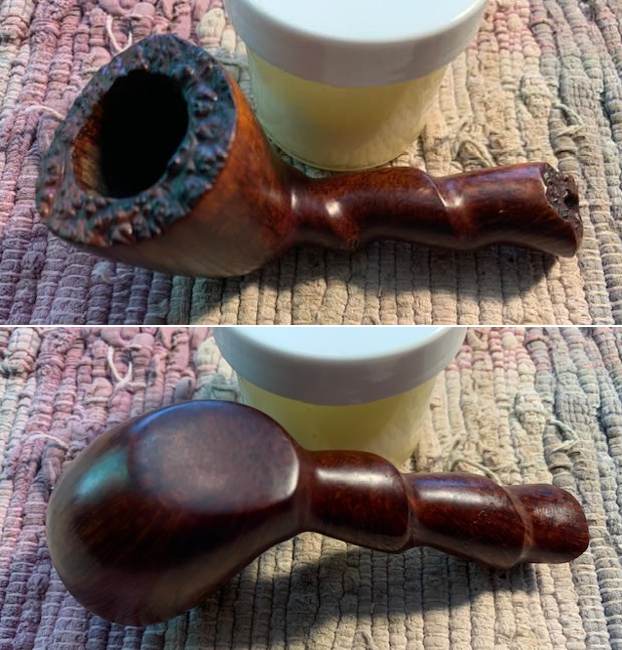
It looks like it would be a great place to visit and spend time enjoying. One day I may get to do that. We shall see!Jeff had reamed the pipe with a PipNet pipe reamer and cleaned up the reaming with a Savinelli Fitsall Pipe Knife. He scrubbed out the internals of the shank and stem with alcohol, pipe cleaners and cotton swabs until the pipe was clean. He scrubbed the exterior of the bowl with Murphy’s Oil Soap and a tooth brush to remove the grime and grit on the briar and the lava on the rim top. The finish looks much better but there is still some darkening on the rim top and inner edge of the bowl. Jeff scrubbed the stem with Soft Scrub to remove the grim in the acrylic stem surface. When the pipe arrived here in Vancouver for the second stop of its restoration tour it looked a lot better. I took photos this morning before I started my part of the work. That is one of the benefits of being an early bird. I took some close up photos of the rim top and the stem surface. I wanted to show the cleaned bowl and rim top. The rim top and the inner and outer edges of the bowl were in good condition. The top of the bowl had some darkening in the grooves of the carved surface of the rim top and the inner edge of the bowl. I also took close up photos of the stem to show the tooth marks on the stem surface. I took a photo of the stamping on the left side of the shank and it is readable as noted above.I removed the stem for the shank and took a photo of the bowl and stem to give a picture of what it looked like. The Signature Swirl carving is unique.I started my work on the pipe by addressing the darkening on the rim top. I scrubbed it with some dish soap and a brass bristle wire brush. It definitely took of more of the darkening on the rim top.I polished the briar with 1500-12000 grit micromesh sanding pads. I wiped the bowl down with a damp cloth after each sanding pad to remove the dust and debris.I rubbed the bowl and shank down with Before & After Restoration Balm to deep clean the finish on the bowl and shank. The product works to clean, enliven and protect the briar. I worked it in with my fingertips into finish on the bowl and shank. I used a shoe brush to get it into the plateau on the rim top and shank end. I let it sit for 10 minutes to let it do its magic. I buffed it with a soft cloth. The briar really began to have a rich shine. I took some photos of the bowl at this point to mark the progress in the restoration.   The bowl was finished so I set it aside and turned my attention to the stem. I polished the stem with micromesh sanding pads – dry sanding with 1500-12000 grit sanding pads and was able to smooth out the marks and chatter. I wiped the stem down after each sanding pad with a cloth containing some Obsidian Oil. I finished polishing it with Before & After Pipe Stem Polish – both Fine and Extra Fine and buffed it off with a cotton cloth. I put the Boswell Spiral/Twisted Long Shank Freehand Sitter back together again and buffed the bowl and the stem with Blue Diamond on the buffing wheel. I gave the bowl and the stem several coats of carnauba wax. I carefully buffed the entire pipe with a clean buffing pad to raise the shine. I finished buffing with a microfiber cloth to deepen the shine. The finished pipe looks very good. The grain is a flame and straight around the sides, with birdseye on the heel and shank top and bottom. Add to that the plateau on the rim top and shank and the pipe is quite beautiful. The pipe feels great in the hand. It is comfortable and light weight for its size. The finished JM Boswell Long Shank Freehand Sitter is shown in the photos below. The dimensions of the pipe are Length: 7 inches, Height: 2 inches, Outside diameter of the bowl: 1 ½ inches, Chamber diameter: 7/8 of an inch. The weight of the pipe is 1.94 ounces/ 55 grams. This great looking Boswell Freehand turned out very well. It should be a great pipe. It will be going on the rebornpipes store in the American Pipemakers Section shortly if you are interested in adding it to your collection. Thanks for reading this blog and my reflections on the pipe while I worked on it.

Restoring an American Made JM Boswell 00 Bent Saddle Stem Billiard


Blog by Steve Laug

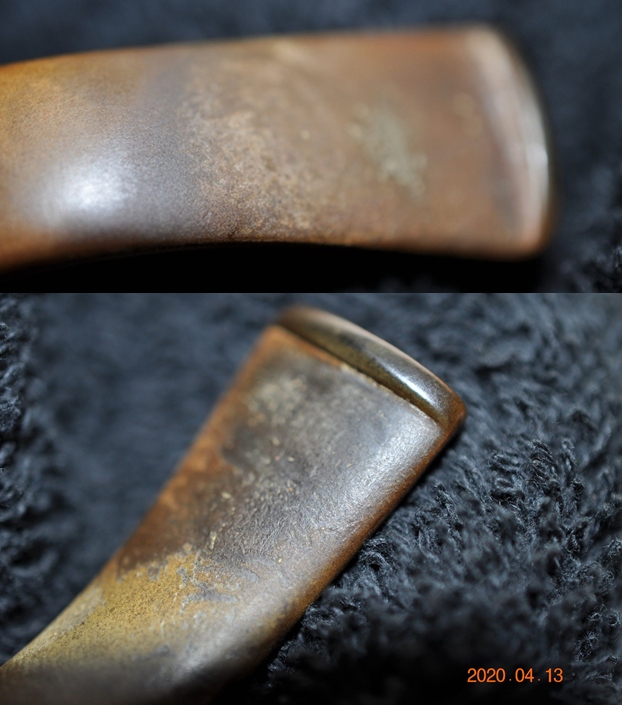
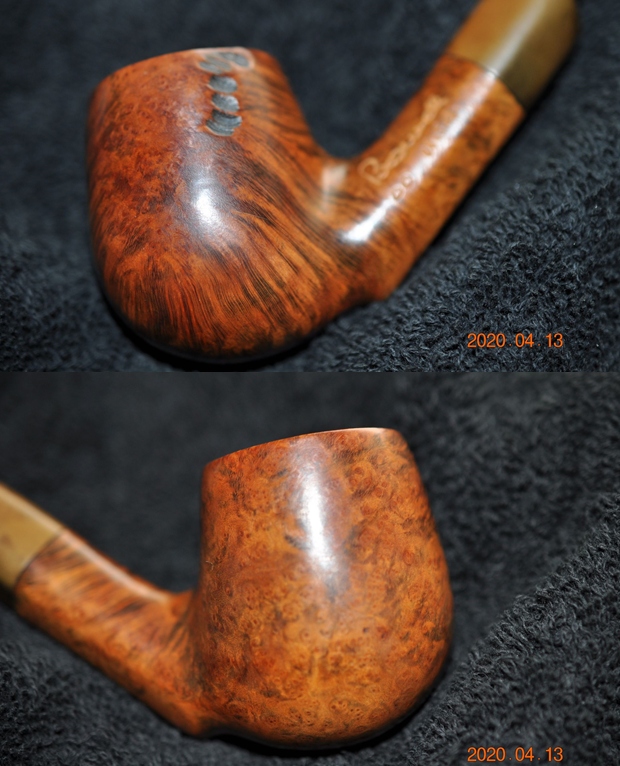
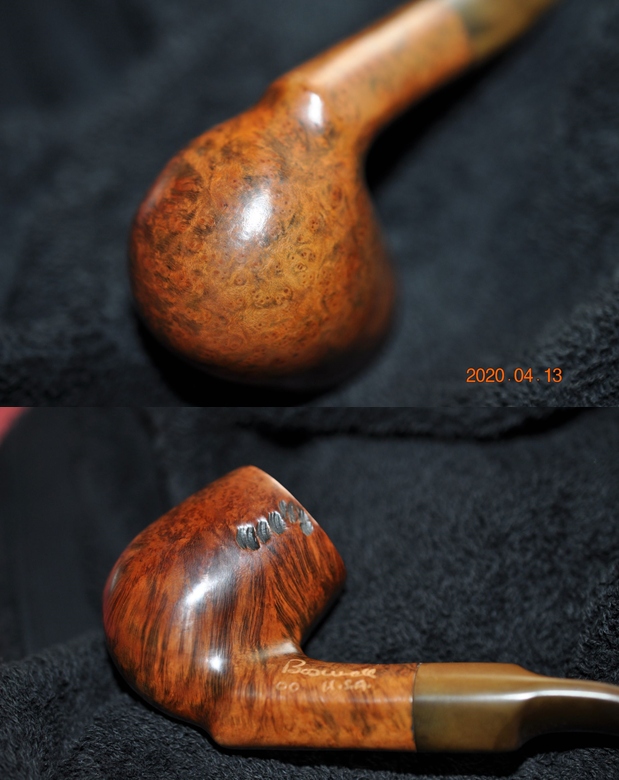
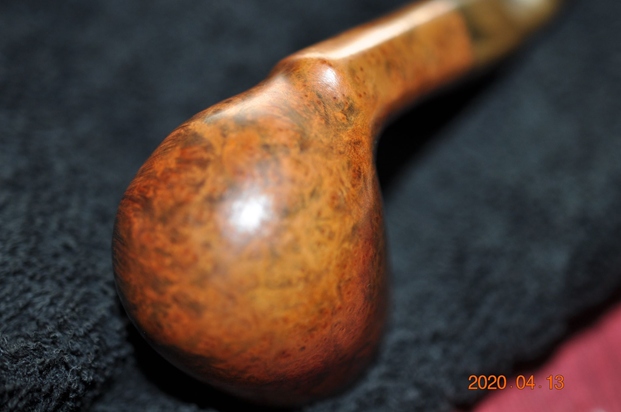
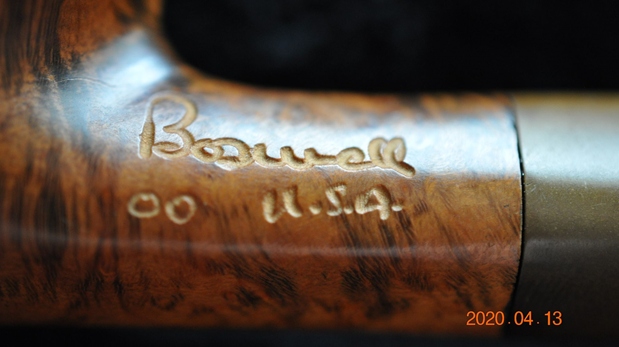
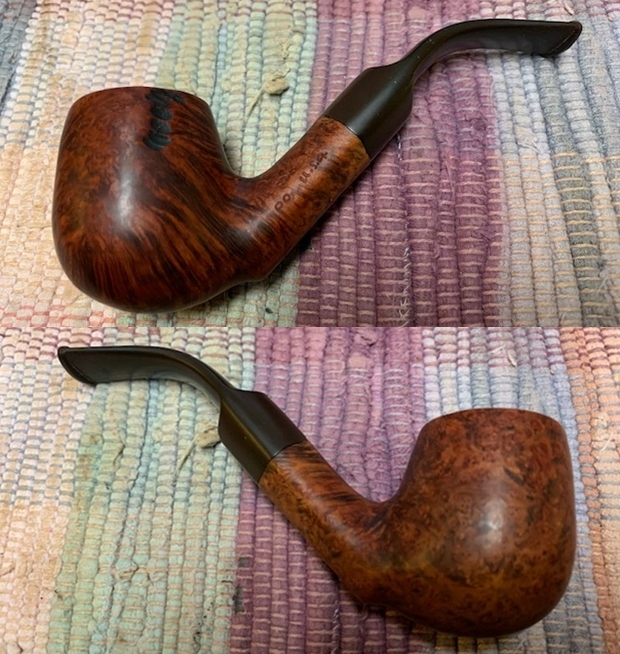
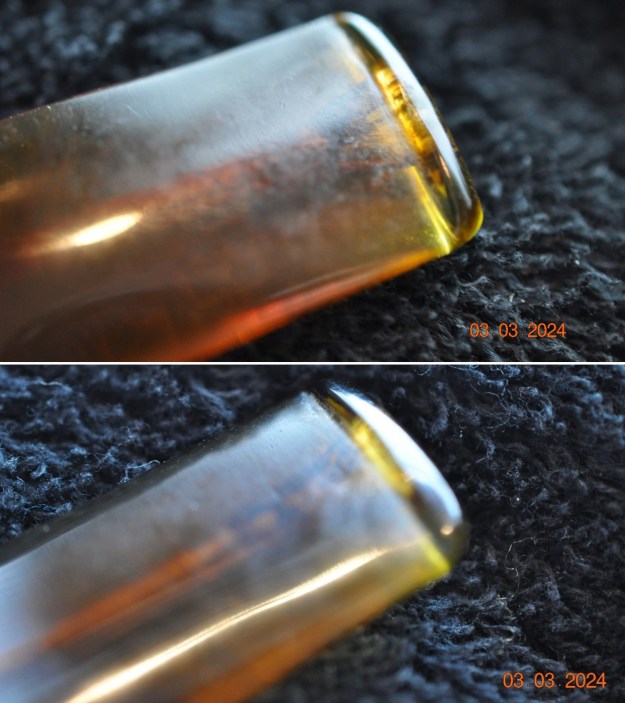
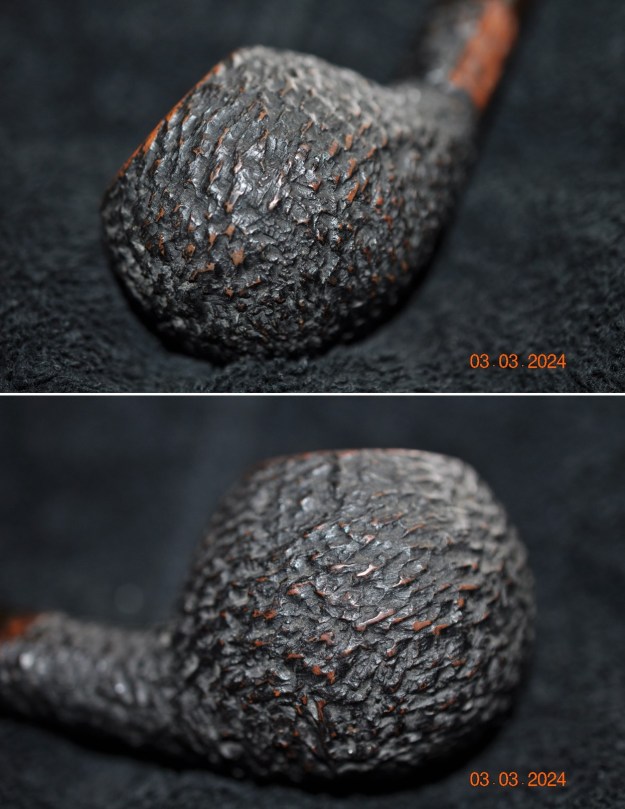
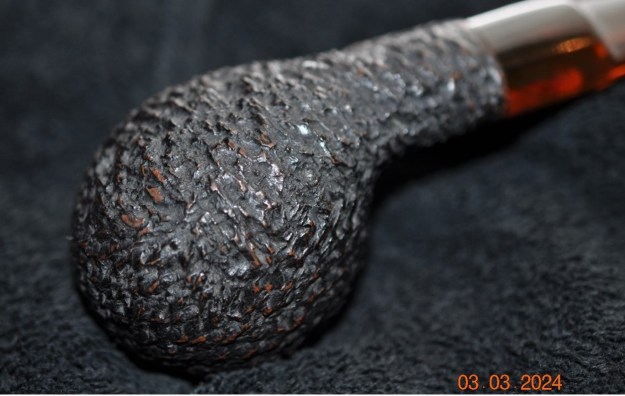
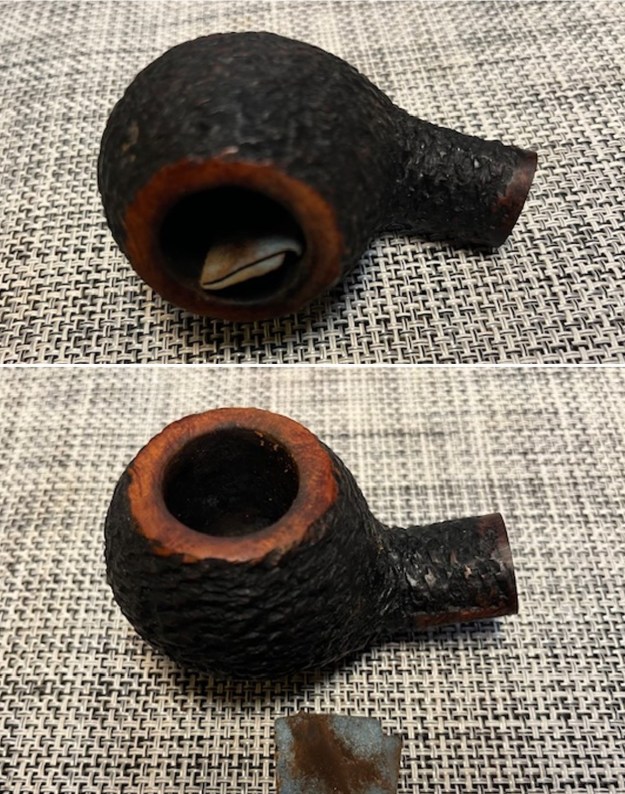
The next pipe on the worktable is an American made pipe from the workshop of J.M. Boswell. It is a bent billiard with rustication on the left top side of the bowl and an underslung shank. The stem is a vulcanite saddle stem. The pipe came to us from an online auction in Sidney, Ohio, USA.  The pipe is very dirty with a thick cake in the bowl and some light lave on the rim top. There appeared to be some burn damage on the front of the bowl. It is signed J.M. Boswell [over] U.S.A. and to the left of that it is stamp 00 on the upper left side of the diamond shank. I am guessing that the 00 is the dating for a pipe made in 2000. The finish was dusty and there was dust in the rustication and ground into the finish around the sides of the bowl. The black vulcanite saddle stem is oxidized, calcified and has tooth marks and chatter on the top and underside near the button. Jeff took some photos of the pipe before he started his cleanup work. He took a photo of the bowl and rim top to show their general condition. You can see the light lava on the rim top and the thick cake in the bowl. There is potential damage on the front inner edge of the bowl. The stem is oxidized, calcified and has light tooth marks and chatter on both sides near the button.    Jeff took some photos of the sides and heel of the bowl to give an idea of the grain around the bowl and the rustication pattern on the top left side of the bowl. You can also see the drop shank on the pipe as well. It has some great grain around the bowl sides and bottom – a mix of birdseye and cross grain. I cannot wait to see what it looks like once it is cleaned and polished.   He took a photo of the stamping on the left topside of the diamond shank to capture it for me. It is clear and readable. The J.M. Boswell signature with the date it was carved and U.S.A. In July, 2017 I restored a Boswell Twist pipe, a 2003 and had done some research into the brand (https://rebornpipes.com/2017/07/19/refurbishing-a-boswell-2003-spiral-twist-bent-billiard/). I turned to that blog and reread the information that I had included there. I took the liberty to include the information that I included from the box that came with that pipe that below.
The backside of the box reads:  Dear Pipe Smoker: J.M. Boswell crafts each of his pipes exclusively by hand! From the bare briar block to the final stain and polish, each step is a hands on procedure in old world tradition. Boswell pipes feature individual craftsmanship and style.

Additionally, J.M. Boswell has developed an exclusive bowl coating that greatly shortens the “break-in” time of a Boswell pipe and gives a sweet smoke from the very first bowl full. This coating is applied to each new pipe that Boswell makes.

One more compelling feature of Boswell pipes: “Their cost”! Boswell pipes can be had at a fraction of what most import pipes are. This is a feature pipe smokers find gratifying.

Our second feature is repairs by Boswell. J.M. Boswell has no peers in the quality and speed in which he gives “Turn-around” on pipe repairs, from stem replacement to banding, to reaming and cleaning.

I will be glad to answer any questions that you have regarding all the features of Boswell’s pipes, my repair work, plus the crafting process which can be witnessed first hand at our store and pipe making shop at 586 Lincoln Way East in Chambersburg, Pennsylvania.

Cordially J.M. Boswell, Owner.

I then turned to the Boswell Pipe and Tobacco Shop site (https://boswellpipes.com/product-category/boswell-pipes/). The description of the pipes in that section of the site parallels what I found above. I quote:

In the creation of these exquisite smoking pipes, we use the finest quality briar – “cream of the crop” is what the proprietor of the mill calls it. Boswell Pipes have their own special bowl coating for easy break-in. J.M. has used his special coating for Boswell Pipes since 1982.  100% natural coating, which will force the briar wood to absorb the moisture and heat.  For the finishing touch, J.M. hand inscribes his signature into the briar.  J.M. dates the year and proudly declares made in the USA “J.M. Boswell 2018 U.S.A.”. 

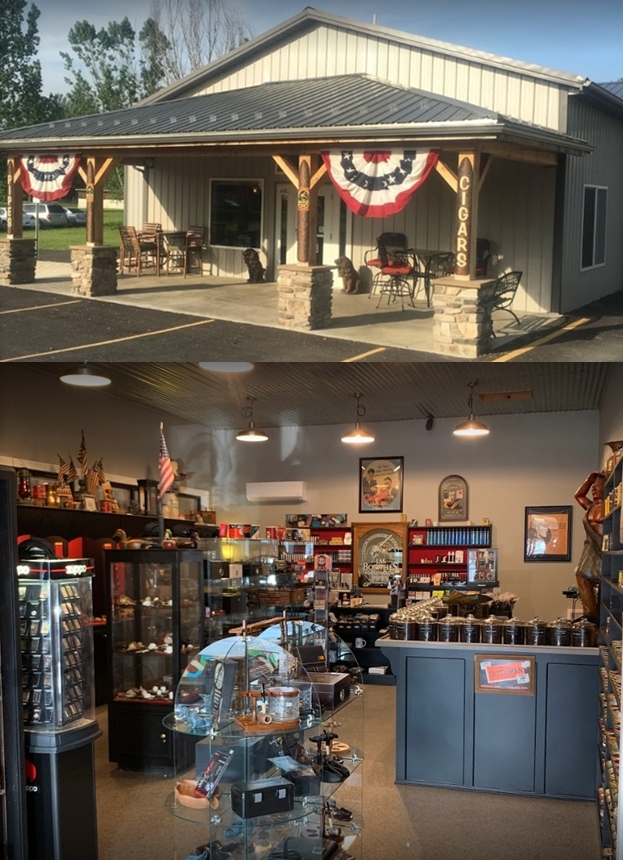
I also found some photos of the shop online that I am including here as well. I am also including the address of the shop and the phone number.

J.M. Boswell’s Pipes and Tobacco

6481 William Penn Hwy, Alexandria, PA 16611, United States

+1 814-667-7164

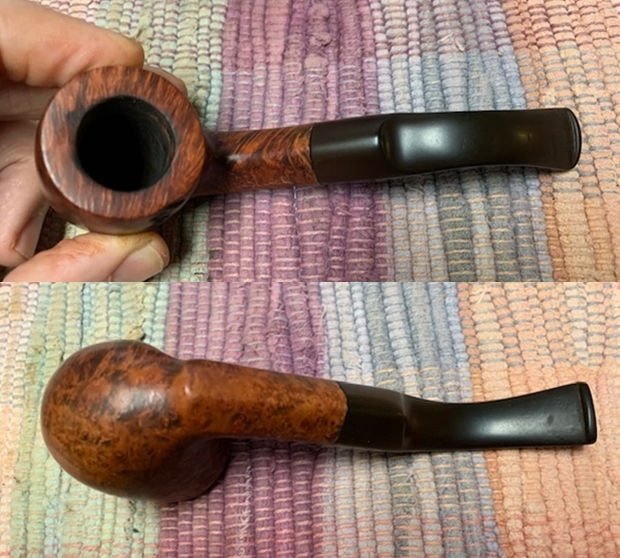
It looks like it would be a great place to visit and spend time enjoying. One day I may get to do that. We shall see!Now I had a pretty good idea of how the pipe was stamped and made. With that information I moved forward to work on the pipe itself and see what I had to do with it. Jeff had done an amazing job in removing all of the cake and the lava on the rim top. He had reamed the bowl with a PipNet Pipe Reamer and cleaned up the remnants with a Savinelli Fitsall Pipe Knife. He took the cake back to bare briar so we could check the walls for damage. He scrubbed the exterior of the bowl with Murphy’s Oil Soap and a tooth brush to remove the grime on the bowl and rim and was able to remove the lava and dirt. He cleaned out the interior of the bowl and shank with pipe cleaners, cotton swabs and alcohol until they came out clean. He cleaned the stem with Soft Scrub to remove the grime on the exterior and cleaned out the airway with alcohol, cotton swabs and pipe cleaners. He soaked the stem in Before & After Deoxidizer and rinsed if off and recleaned the inside of the stem with alcohol and pipe cleaners. I took photos of the pipe before I started my part of the restoration. I took some photos of the rim top and stem. The rim top and bowl looked very good. The damage to the front edge and top of the bowl are visible in the photo. The close up photos of the stem shows the light tooth marks and chatter on the top and underside of the stem near the button.   I took a photo of the stamping on the underside of the shank to show the condition after the cleanup. This stamping is a signature done with an engraver of some sort. It looks good.I removed the stem from the shank and took a photo of the pipe at this point. You can clearly see the condition, size and shape of the pipe.I started my part of the restoration work on this pipe by addressing the damage to the front top and edge of the rim. I used a folded piece of 220 grit sandpaper to remove the damage to the bowl.   I sanded the outside of the briar with micromesh sanding pads to polish the finish. I wet sanded with 1500-12000 grit sanding pads and wiped it down with a damp pad after each pad.  I worked some Before & After Restoration Balm into the surface of the briar with my fingertips to clean, enliven and protect the briar. I let the balm sit for about ten minutes and then buffed with a cotton cloth to raise the shine. The photos show the bowl at this point in the restoration process. I set the bowl aside and turned my attention to the stem. I sanded the stem with 220 grit sandpaper and 400 grit wet dry sandpaper to remove the scratching in the vulcanite.I polished the stem with micromesh sanding pads – dry sanding with 1500-12000 grit sanding pads. I wiped it down after each sanding pad with a cloth containing some Obsidian Oil. I finished polishing it with Before & After Pipe Stem Polish – both Fine and Extra Fine and buffed it off with a cotton cloth.   This Boswell 00 Bent Billiard is a nice looking pipe. The finish looks very good and the grain stands out. I put the stem back on the bowl and buffed the pipe lightly with Blue Diamond on the buffing wheel. I carefully avoided the stamping on the shank sides during the process. I gave the bowl and the stem multiple coats of carnauba wax on the buffing wheel and followed that by buffing it with a clean buffing pad on the buffer. I hand buffed the pipe with a microfiber cloth to deepen the shine. The finished pipe is a good example of a Boswell Hand Made pipe. The flow of the grain and the way the shape follows it is very well done. Give the finished pipe a look in the photos below. I can only tell you that it is much prettier in person than the photos capture. The dimensions of the pipe are Length: 5 ½ inches, Height: 2 inches, Outside diameter of the bowl: 1 ¼ inches, Chamber diameter: ¾ of an inch. This interesting Boswell Hand Made Bent Billiard is a great looking pipe. Thanks for walking through the restoration with me as I worked over another beautiful pipe. I will be adding it to the rebornpipes store soon. If you want to add it to your collection send me an email or a message! Thanks for your time.
Life for another J.M. Boswell 2013 Bent Billiard with a Twist


Blog by Steve Laug

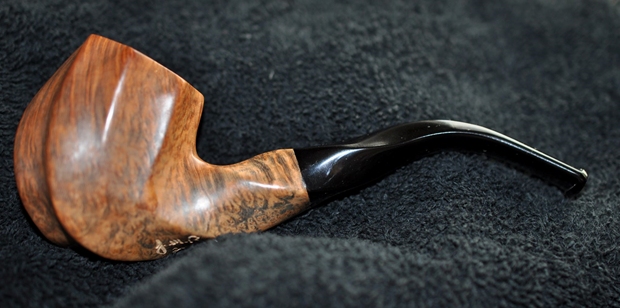
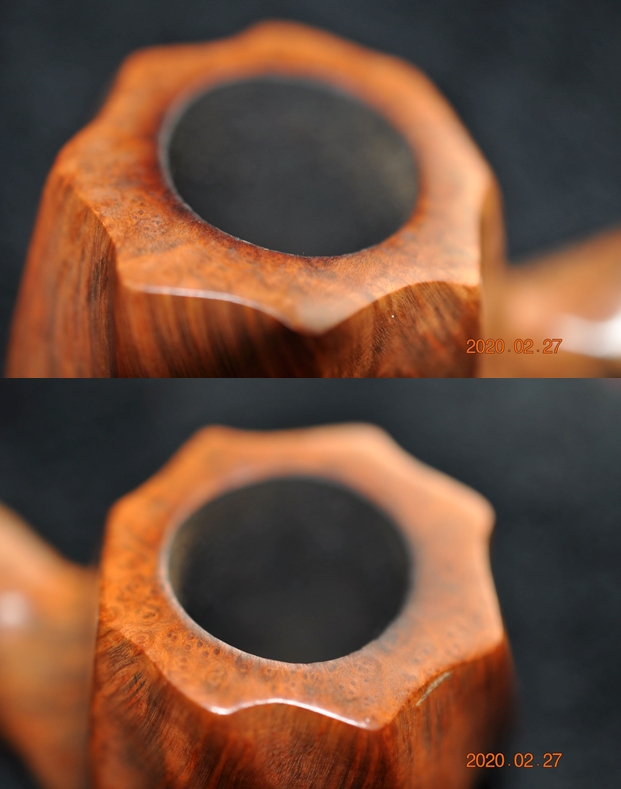
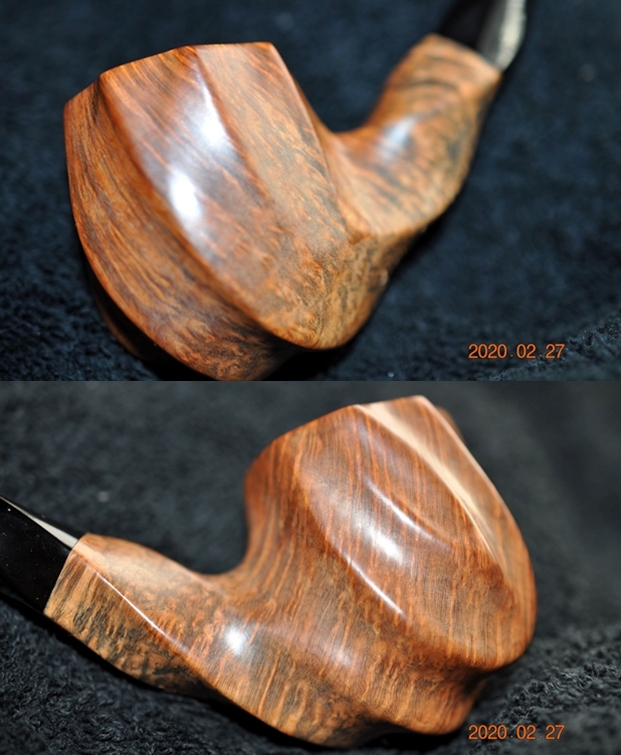
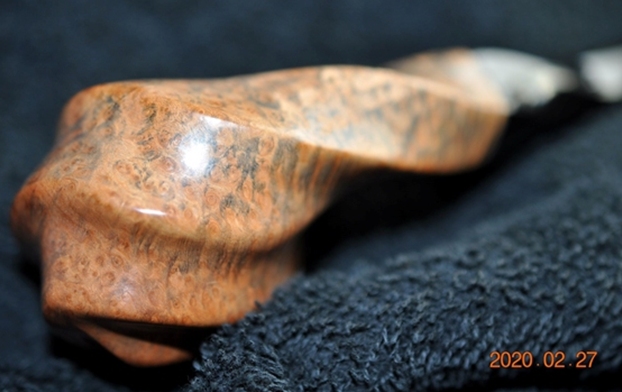
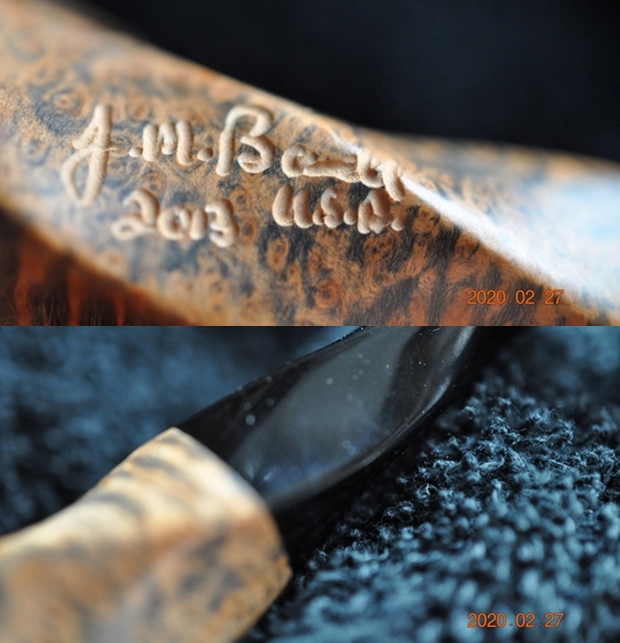
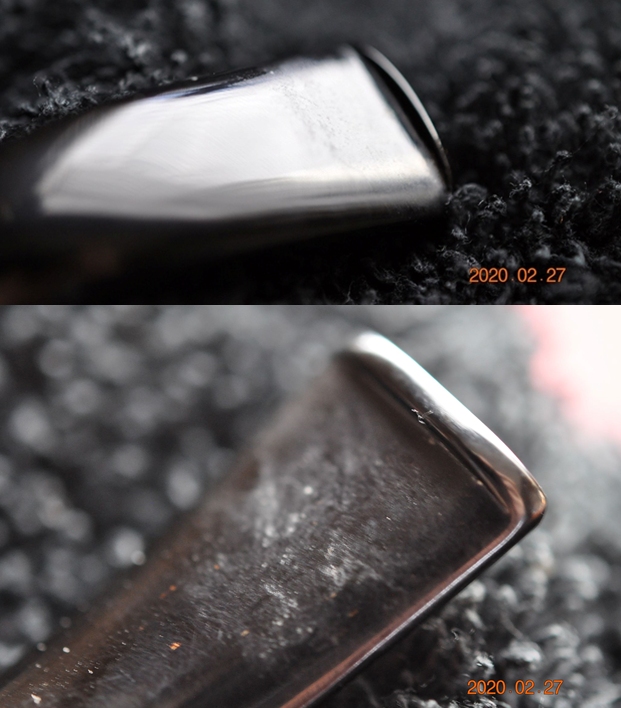
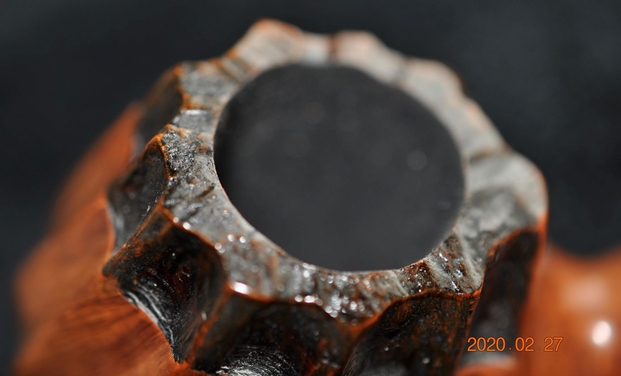
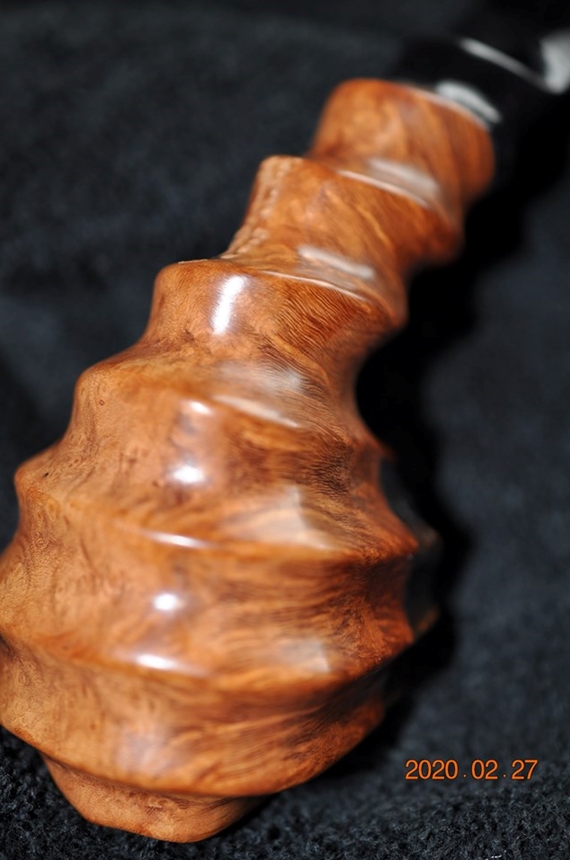
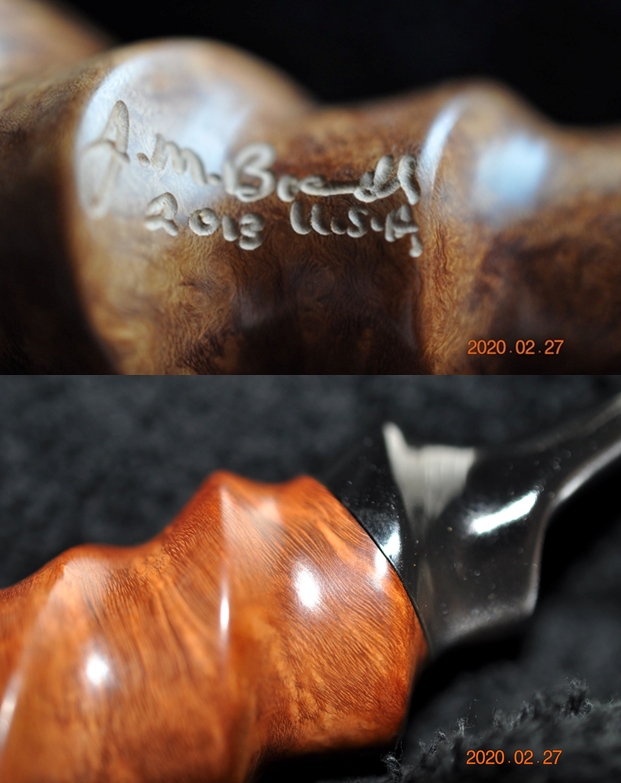
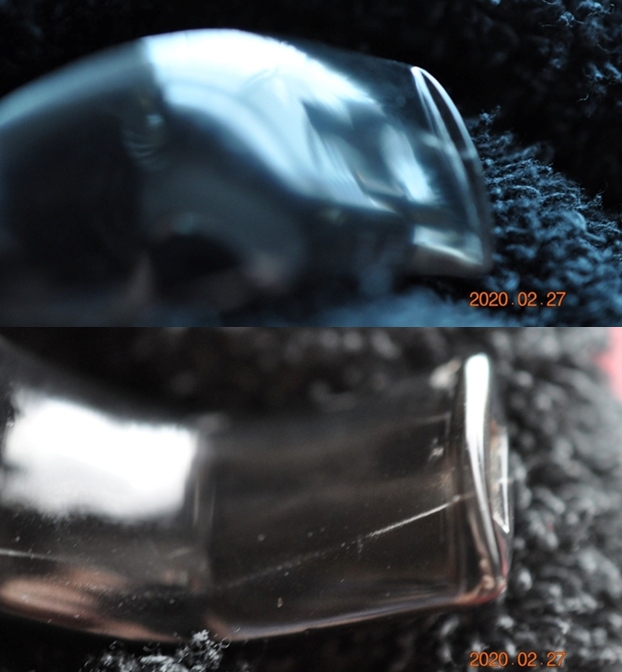
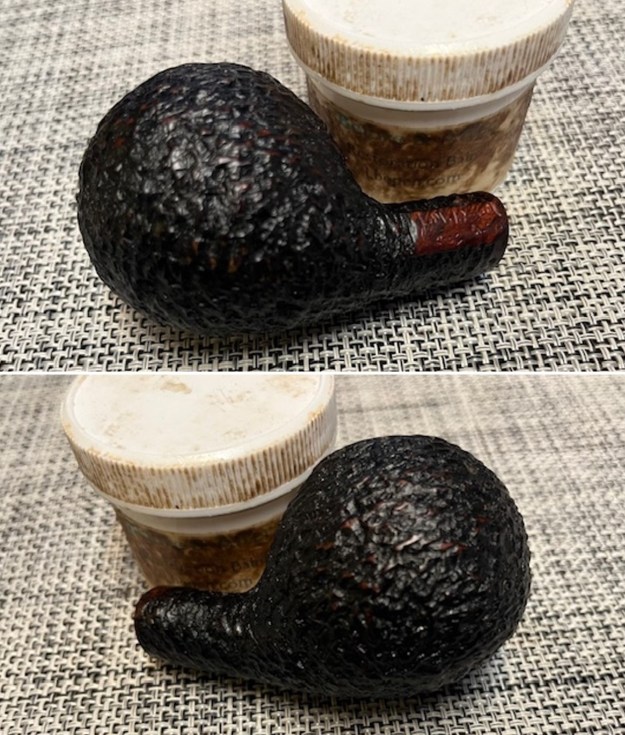
The next pipe on the worktable is another American made pipe from the workshop of J.M. Boswell. It is a bent billiard shaped pipe with swirls or twists around the bowl and featuring a twisted shank and black acrylic stem. The top of the bowl sides are smooth and was stained a rich medium brown. There were not a lot of issues to deal with in the cleanup and restoration. The pipe very lightly smoked and there was a medium cake in the bowl. There was some darkening around the inner edge of the bowl with a bit heavier appearance on the front edge of the rim top. It is signed J.M. Boswell over the date it was made – 2013 followed by U.S.A. The finish was dusty and dirty and somewhat lifeless. There is some fading in the finish toward the bottom of the bowl and shank. The black acrylic taper stem carries on the twist of the shank. The stem looked very good. It is dirty with light tooth chatter on both sides near the button. Jeff took some photos of the pipe before he started his cleanup work. He took a photo of the bowl and rim top to show their general condition. You can see the darkening around the inner edge of the bowl. You can also see the cake in the bowl. The rim top looks very good with no real damage. The smooth fluted carving on the bowl sides all the way to the outer edges and make an interesting pipe.Jeff took some photos of the sides and heel of the bowl to give an idea of the unique twists and fluting pattern around the bowl and continuing on the shank and stem. It is quite stunning with the carvings and the rusticated edge and rim top and the twisted heel of the bowl, shank and stem. You can also see the fading in the finish that has happened as the briar has been used and sitting. I cannot wait to see what it looks like once it is cleaned and polished. He took a photo of the stamping on the underside of the twisted shank to capture it for me. It is clear and readable. The J.M. Boswell signature with the date it was carved and U.S.A. He included a photo of the transition from the twisted shank to the stem.The black acrylic stem is in good condition other than being dirty and having light tooth marks and chatter on the both sides of the stem at the button. The photos below show the condition of the stem.I am including the information on the brand and the shop that I included in the previous blog for ease of reference. Here is a link to that blog (https://rebornpipes.com/2020/04/08/life-for-a-j-m-boswell-2013-bent-volcano-with-a-twist/).

In July, 2017 I restored another Boswell Twist pipe, a 2003 and had done some research into the brand (https://rebornpipes.com/2017/07/19/refurbishing-a-boswell-2003-spiral-twist-bent-billiard/). I turned to that blog and reread the information that I had included there. I took the liberty to include the information that I included from the box that came with that pipe that below.

The backside of the box reads:

Dear Pipe Smoker: J.M. Boswell crafts each of his pipes exclusively by hand! From the bare briar block to the final stain and polish, each step is a hands on procedure in old world tradition. Boswell pipes feature individual craftsmanship and style.

Additionally, J.M. Boswell has developed an exclusive bowl coating that greatly shortens the “break-in” time of a Boswell pipe and gives a sweet smoke from the very first bowl full. This coating is applied to each new pipe that Boswell makes.

One more compelling feature of Boswell pipes: “Their cost”! Boswell pipes can be had at a fraction of what most import pipes are. This is a feature pipe smokers find gratifying.

Our second feature is repairs by Boswell. J.M. Boswell has no peers in the quality and speed in which he gives “Turn-around” on pipe repairs, from stem replacement to banding, to reaming and cleaning.

I will be glad to answer any questions that you have regarding all the features of Boswell’s pipes, my repair work, plus the crafting process which can be witnessed first hand at our store and pipe making shop at 586 Lincoln Way East in Chambersburg, Pennsylvania.

Cordially J.M. Boswell, Owner.

I then turned to the Boswell Pipe and Tobacco Shop site (https://boswellpipes.com/product-category/boswell-pipes/). The description of the pipes in that section of the site parallels what I found above. I quote:

In the creation of these exquisite smoking pipes, we use the finest quality briar – “cream of the crop” is what the proprietor of the mill calls it. Boswell Pipes have their own special bowl coating for easy break-in. J.M. has used his special coating for Boswell Pipes since 1982.  100% natural coating,which will force the briar wood to absorb the moisture and heat.  For the finishing touch, J.M. hand inscribes his signature into the briar.  J.M. dates the year and proudly declares made in the USA “J.M. Boswell 2018 U.S.A.”. 

I also checked out the description of the other twisted or as he called them Swirls and include that below as I found it quite interesting (https://boswellpipes.com/product/boswell-pipe-jumbo-freehand-swirls-2020/).

J.M.’s Signature Swirls, gorgeously grained.

Incredible smoking properties of a Boswell pipe, are the thick bowl walls to give you that cool enjoyable smoke.

Uniquely sculptured deep Swirls.

Old craftsmanship style with thick walls and shank for a cooler smoke.

Natural finish with eye-catching dark bold highlights to show off its grain.

Incredible cool smoke with an extremely easy draw for some serious smoking.

J.M. Boswell is known worldwide for crafting theses incredible, massive looking, King Size briars for well over 39 years.  Addition to being amazing smokers as well, they are capable of holding a generous supply of your favorite tobacco.

As with each and every Boswell pipe made, the airway is hand bored (not using a lathe).  This is why the air passage way will always provide the smoker with a full draw and allows for a fuller smoother smoke. J.M. finds the old fashion way of doing so completes his pipes.

Wide plateaux is displayed along the rim and shank.

Accent etching along the shank.

Using a high power magnifier there may be a few specks of natural imperfections.

Large hand-cut acrylic spiraling mouthpiece with pearlized raspberry red tones.

Your new Boswell pipe will come nestled in a protective Jumbo handmade pipe sleeve and placed in a Boswell gift box.  We also include all the essentials for your first smoke.

Smoking becomes a Relaxing time with a Boswell.

I also found some photos of the shop online that I am including here as well. I am also including the address of the shop and the phone number.

J.M. Boswell’s Pipes and Tobacco

6481 William Penn Hwy, Alexandria, PA 16611, United States

+1 814-667-7164

It looks like it would be a great place to visit and spend time enjoying. One day I may get to do that. We shall see!Now I had a pretty good idea of how the pipe was stamped and made. The one I had did not have a pearlized raspberry stem but the black, one. It also did not have any plateau on the rim or shank end. But otherwise the description fits. With that information I moved forward to work on the pipe itself and see what I had to do with it. The pipe looked amazing. The stem looked like new, with most of the tooth marks and chatter gone. He had done his normal thorough clean up – reaming, scrubbing, soaking and the result was evident in the pipe when I unpacked it. I took photos of the pipe before I started my work on it. The shape and finish on this pipe is quite beautiful! I took some photos of the rim top and stem. The rim top and bowl looked very good. He was able to clean up the rim darkening as well as the cake in the bowl. The bowl and rim top look very good at this point. The close up photos of the stem shows that is it very clean.I took a photo of the stamping on the underside of the shank to show the condition after the cleanup. This stamping is a signature done with an engraver of some sort. It looks good.I removed the stem from the shank and took a photo of the pipe at this point. You can clearly see the condition, size and shape of the pipe.I worked some Before & After Restoration Balm into the surface of the briar with my fingertips. The product works to clean, enliven and protect the briar. I let the balm sit for about ten minutes and then buffed with a cotton cloth to raise the shine. The photos show the bowl at this point in the restoration process. I polished the stem with micromesh sanding pads – dry sanding with 1500-12000 grit sanding pads. I wiped it down after each sanding pad with a cloth containing some Obsidian Oil. I finished polishing it with Before & After Pipe Stem Polish – both Fine and Extra Fine and buffed it off with a cotton cloth. Putting this pipe back together was not as dramatic as it usually is but still it is rewarding nonetheless. I put the stem back on the bowl and buffed the pipe with Blue Diamond on the buffing wheel. I carefully avoided the stamping on the shank sides during the process. I gave the bowl and the stem multiple coats of carnauba wax on the buffing wheel and followed that by buffing it with a clean buffing pad on the buffer. I hand buffed the pipe with a microfiber cloth to deepen the shine. The finished pipe is another good example of a Boswell Swirls pipe. The flow of the grain and the way the shape follows it is very well done. Give the finished pipe a look in the photos below. I can only tell you that it is much prettier in person than the photos capture. The dimensions of the pipe are Length: 5 ½ inches, Height: 2 inches, Outside diameter of the bowl: 1 ¼ inches, Chamber diameter: ¾ of an inch. This interesting Boswell Swirls Hand Made Billiard is a great looking pipe in great condition. Thanks for walking through the restoration with me as I worked over another beautiful pipe. I will be adding it to the rebornpipes store soon. If you want to add it to your collection send me an email or a message! Thanks for your time.
Life for a J.M. Boswell 2013 Bent Volcano with a Twist


Blog by Steve Laug

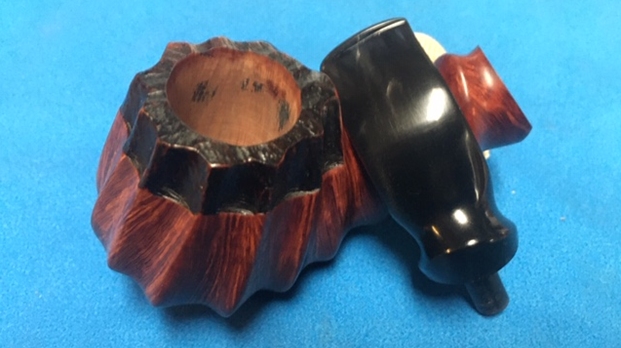
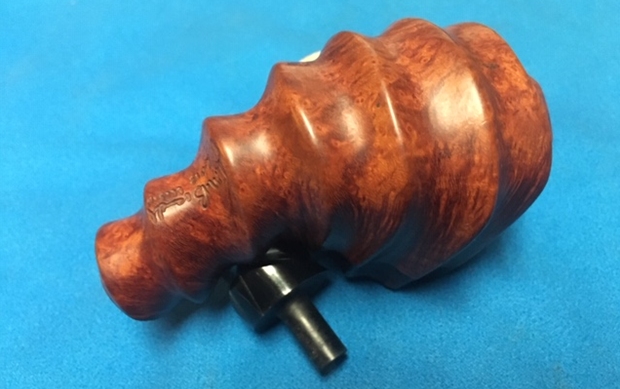
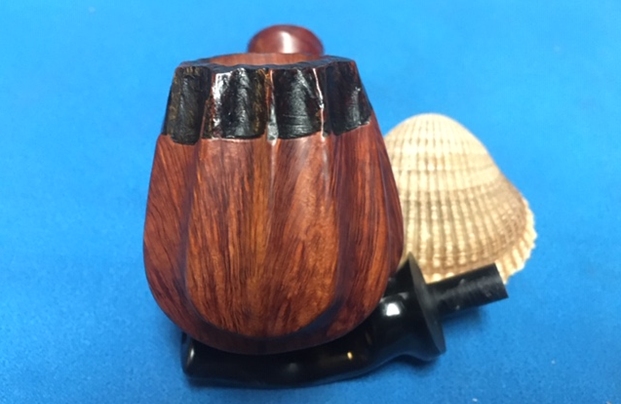
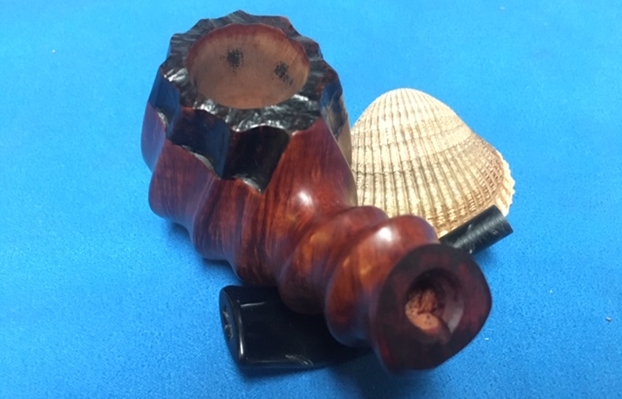
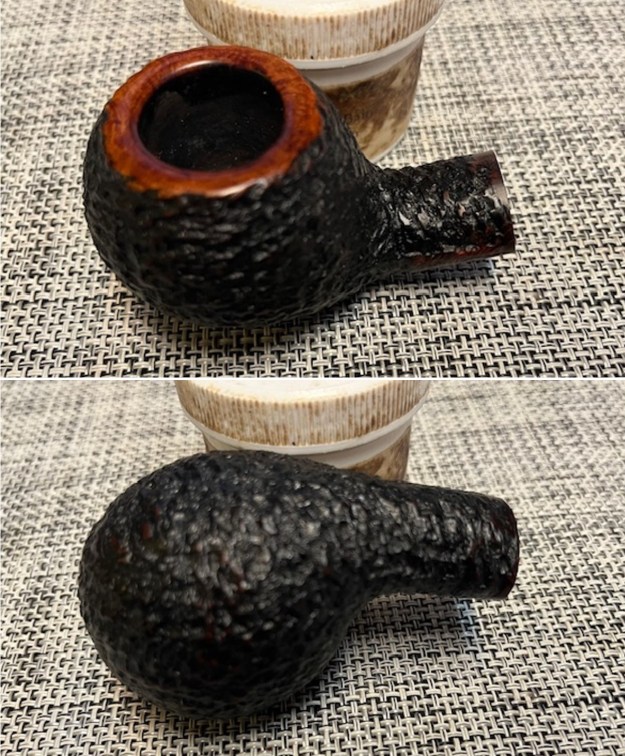
The next pipe on the worktable is an American made pipe from the workshop of J.M. Boswell. It is a large bent volcano shaped pipe fluted around the bowl and featuring a twisted shank and variegated grey/silver/black acrylic stem. The top of the bowl sides and the rim top featured a rustication and was stained dark brown. The pipe came in a tan cloth J.M. Boswell’s Handmade Pipes Bag and when Jeff took it out it was in very good condition. There were not a lot of issues to deal with in the cleanup and restoration. I am not sure it was even smoked as it looks like a bowl coating on the walls – but if it had it was very lightly smoked. It is signed J.M. Boswell over the date it was made – 2013 followed by U.S.A. The finish was dusty and there was dust in the rustication around the bowl and rim top. The variegated grey/silver/black acrylic saddle stem carries on the twist of the shank. The stem looked very good. Jeff took some photos of the pipe before he started his cleanup work. He took a photo of the bowl and rim top to show their general condition. You can see the dust and debris in the rustication on the rim top. The does not appear to be a cake in the bowl. The smooth fluted carving on the bowl sides ending in about ½ an inch of rustication up to the rim top an over the top of the rim top combine to make an interesting pipe.Jeff took some photos of the sides and heel of the bowl to give an idea of the unique fluting pattern on the bowl, the rustication as noted and the twist of the carving on the shank and stem. It is quite stunning with the carvings and the rusticated edge and rim top and the twisted heel of the bowl, shank and stem. I cannot wait to see what it looks like once it is cleaned and polished. He took a photo of the stamping on the left underside of the shank to capture it for me. It is clear and readable. The J.M. Boswell signature with the date it was carved and U.S.A. He included a photo of the transition from the twisted shank to the stem.The variegated black, grey and silver acrylic stem is in good condition other than being dirty and having light tooth marks and chatter on the both sides of the stem at the button. The photos below show the condition of the stem. The first photo caught the reflection of the light in the stem surface. It is a bit blurry but it is still quite unique so I kept it.In July, 2017 I restored another Boswell Twist pipe, a 2003 and had done some research into the brand (https://rebornpipes.com/2017/07/19/refurbishing-a-boswell-2003-spiral-twist-bent-billiard/). I turned to that blog and reread the information that I had included there. I took the liberty to include the information that I included from the box that came with that pipe that below.

The backside of the box reads:

Dear Pipe Smoker: J.M. Boswell crafts each of his pipes exclusively by hand! From the bare briar block to the final stain and polish, each step is a hands on procedure in old world tradition. Boswell pipes feature individual craftsmanship and style.

Additionally, J.M. Boswell has developed an exclusive bowl coating that greatly shortens the “break-in” time of a Boswell pipe and gives a sweet smoke from the very first bowl full. This coating is applied to each new pipe that Boswell makes.

One more compelling feature of Boswell pipes: “Their cost”! Boswell pipes can be had at a fraction of what most import pipes are. This is a feature pipe smokers find gratifying.

Our second feature is repairs by Boswell. J.M. Boswell has no peers in the quality and speed in which he gives “Turn-around” on pipe repairs, from stem replacement to banding, to reaming and cleaning.

I will be glad to answer any questions that you have regarding all the features of Boswell’s pipes, my repair work, plus the crafting process which can be witnessed first hand at our store and pipe making shop at 586 Lincoln Way East in Chambersburg, Pennsylvania.

Cordially J.M. Boswell, Owner.

I then turned to the Boswell Pipe and Tobacco Shop site (https://boswellpipes.com/product-category/boswell-pipes/). The description of the pipes in that section of the site parallels what I found above. I quote:

In the creation of these exquisite smoking pipes, we use the finest quality briar – “cream of the crop” is what the proprietor of the mill calls it. Boswell Pipes have their own special bowl coating for easy break-in. J.M. has used his special coating for Boswell Pipes since 1982.  100% natural coating,which will force the briar wood to absorb the moisture and heat.  For the finishing touch, J.M. hand inscribes his signature into the briar.  J.M. dates the year and proudly declares made in the USA “J.M. Boswell 2018 U.S.A.”. 

I also checked out the description of the other twisted or as he called them Swirls and include that below as I found it quite interesting (https://boswellpipes.com/product/boswell-pipe-jumbo-freehand-swirls-2020/).

J.M.’s Signature Swirls, gorgeously grained.

Incredible smoking properties of a Boswell pipe, are the thick bowl walls to give you that cool enjoyable smoke.

Uniquely sculptured deep Swirls.

Old craftsmanship style with thick walls and shank for a cooler smoke.

Natural finish with eye-catching dark bold highlights to show off its grain.

Incredible cool smoke with an extremely easy draw for some serious smoking. 

J.M. Boswell is known worldwide for crafting theses incredible, massive looking, King Size briars for well over 39 years.  Addition to being amazing smokers as well, they are capable of holding a generous supply of your favorite tobacco.

As with each and every Boswell pipe made, the airway is hand bored (not using a lathe).  This is why the air passage way will always provide the smoker with a full draw and allows for a fuller smoother smoke. J.M. finds the old fashion way of doing so completes his pipes.

Wide plateau is displayed along the rim and shank.

Accent etching along the shank.

Using a high power magnifier there may be a few specks of natural imperfections.

Large hand-cut acrylic spiraling mouthpiece with pearlized raspberry red tones.

Your new Boswell pipe will come nestled in a protective Jumbo handmade pipe sleeve and placed in a Boswell gift box.  We also include all the essentials for your first smoke.

Smoking becomes a Relaxing time with a Boswell.

I also found some photos of the shop online that I am including here as well. I am also including the address of the shop and the phone number.

J.M. Boswell’s Pipes and Tobacco

6481 William Penn Hwy, Alexandria, PA 16611, United States

+1 814-667-7164

It looks like it would be a great place to visit and spend time enjoying. One day I may get to do that. We shall see!Now I had a pretty good idea of how the pipe was stamped and made. The one I had did not have a pearlized raspberry stem but the variegated black, grey and silver one. It also did not have any plateau on the rim or shank end. But otherwise the description fits. With that information I moved forward to work on the pipe itself and see what I had to do with it. The pipe looked amazing. Even the stem looked like new, with most of the tooth marks and chatter gone. Jeff was pretty sure it was unsmoked as well but he had cleaned it to remove the dust and grime. He had done his normal thorough clean up – reaming, scrubbing, soaking and the result was evident in the pipe when I unpacked it. He had also cleaned out the bowl coating as we usually do so we could see what was underneath. I took photos of the pipe before I started my work on it. The shape and finish on this pipe is quite beautiful! I took some photos of the rim top and stem. The rim top and bowl looked very good. When Jeff removed cake from the bowl it revealed some sloppy black stain all over the walls and bottom of the bowl. It is not unlike what I have seen on Peterson’s Pipes. It is good that Jeff removed the coating because stain gives the tobacco a really foul taste – bitter and unpleasant. I will need to sand out the inside of the bowl on this otherwise pristine pipe. The close up photos of the stem shows that is it very clean. I took a photo of the stamping on the underside of the shank to show the condition after the cleanup. This stamping is a signature done with an engraver of some sort. It looks good.I removed the stem from the shank and took a photo of the pipe at this point. You can clearly see the condition, size and shape of the pipe.I started my part of the restoration work on this pipe by removing as much of the stain as I could. I wiped it down with alcohol and sanded out the inside of the bowl with 220 grit sandpaper wrapped around a dowel. Most of it was gone and bowl was smooth. There were dark spots that I could not remove but no amount of work on them removed the stain. The pictures show the issue I am talking about. It was deep in the briar.I worked some Before & After Restoration Balm into the surface of the briar with my fingertips on the smooth portions and a horsehair shoe brush to get in the nooks and crannies of the rustication on the rim top of the bowl. The product works to clean, enliven and protect the briar. I let the balm sit for about ten minutes and then buffed with a cotton cloth to raise the shine. The photos show the bowl at this point in the restoration process. I set the bowl aside and turned my attention to the stem. I sanded the stem with 220 grit sandpaper and 400 grit wet dry sandpaper to remove the scratching in the acrylic of the stem.I polished the stem with micromesh sanding pads – dry sanding with 1500-12000 grit sanding pads. I wiped it down after each sanding pad with a cloth containing some Obsidian Oil. I finished polishing it with Before & After Pipe Stem Polish – both Fine and Extra Fine and buffed it off with a cotton cloth. Putting this pipe back together was not as dramatic as it usually is but still it is rewarding nonetheless. I put the stem back on the bowl and buffed the pipe lightly with Blue Diamond on the buffing wheel. I carefully avoided the stamping on the shank sides during the process. I gave the bowl and the stem multiple coats of carnauba wax on the buffing wheel and followed that by buffing it with a clean buffing pad on the buffer. I hand buffed the pipe with a microfiber cloth to deepen the shine. The finished pipe is a good example of a Boswell Swirls pipe. The flow of the grain and the way the shape follows it is very well done. Give the finished pipe a look in the photos below. I can only tell you that it is much prettier in person than the photos capture. The dimensions of the pipe are Length: 5 ½ inches, Height: 2 inches, Outside diameter of the bowl: 1 ¼ inches wide x 1 ½ inches long, Chamber diameter: ¾ of an inch. This interesting Boswell Swirls Hand Made Volcano is a great looking pipe in unsmoked condition. Thanks for walking through the restoration with me as I worked over another beautiful pipe. I will be adding it to the rebornpipes store soon. If you want to add it to your collection send me an email or a message! Thanks for your time.
Restoring a Pipe Carved by an American Living Legend – “J.M. Boswell”


Blog by Paresh Deshpande

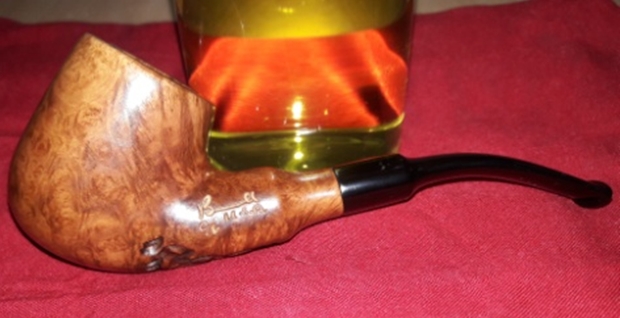
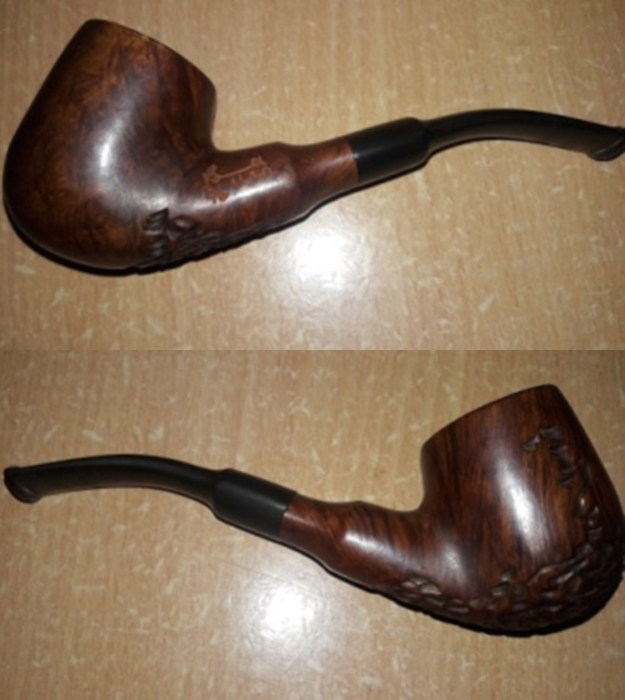
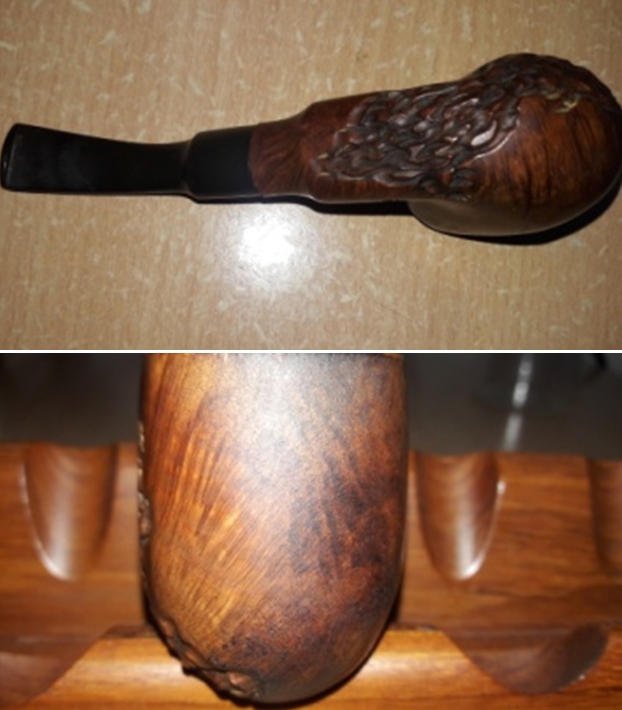
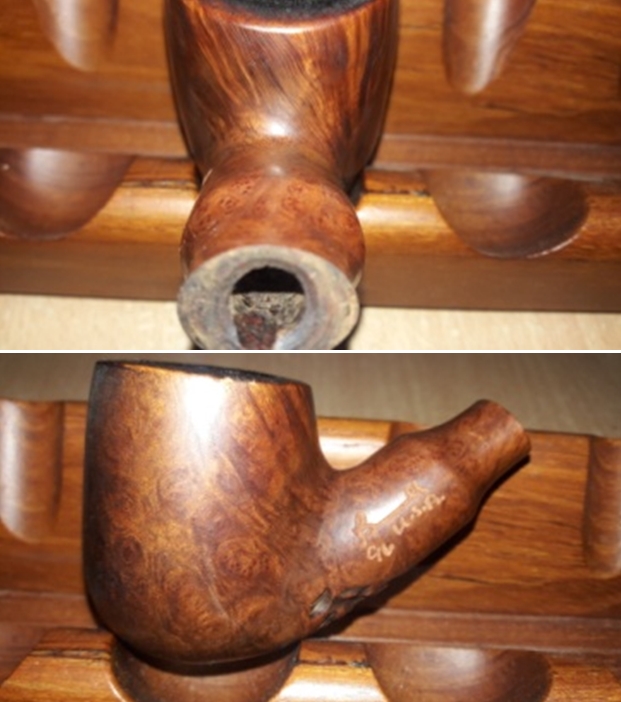
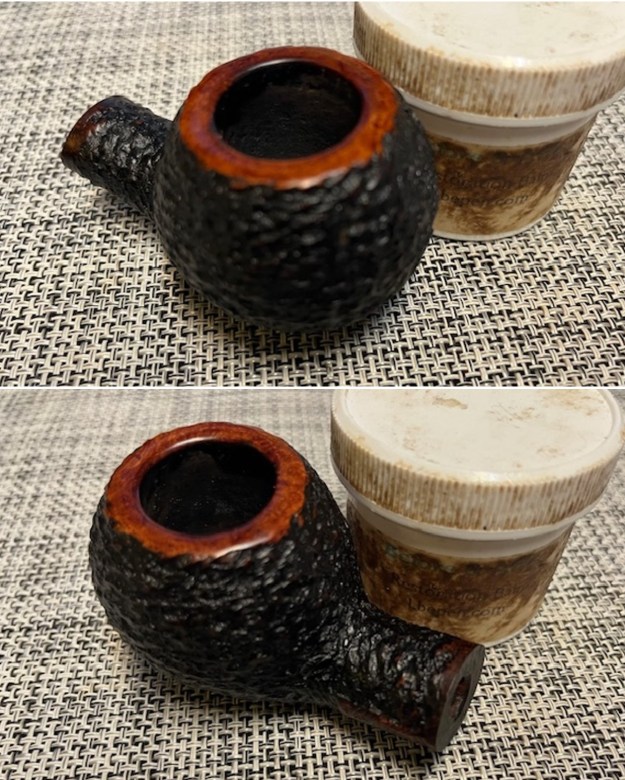
I shall be honest with you; I love vintage English made pipes! I love vintage British bikes and own a couple; I love vintage British fountain pens and have a decent collection of the same. It is something about the simplicity yet unique British craftsmanship, robustness and reliability factor of British made products that I find most appealing. However, after having worked on a number of pipes made by various pipe carvers from USA like Tracy Mincer, Custom-Bilts, Kaywoodies, John Bessai etc, I realize that American pipe carvers are artistic, technologically inventive and the pipes they made are robust, life lasting with a nice feel and heft and of very high quality. Am I gravitating towards American pipes? May be……. The next pipe on my work table is a 22 years old and completely handmade freehand full bent billiard made by an iconic pipe maker from Pennsylvania, USA. Yes, I am working on a pipe made by J M Boswell from the year 1996.

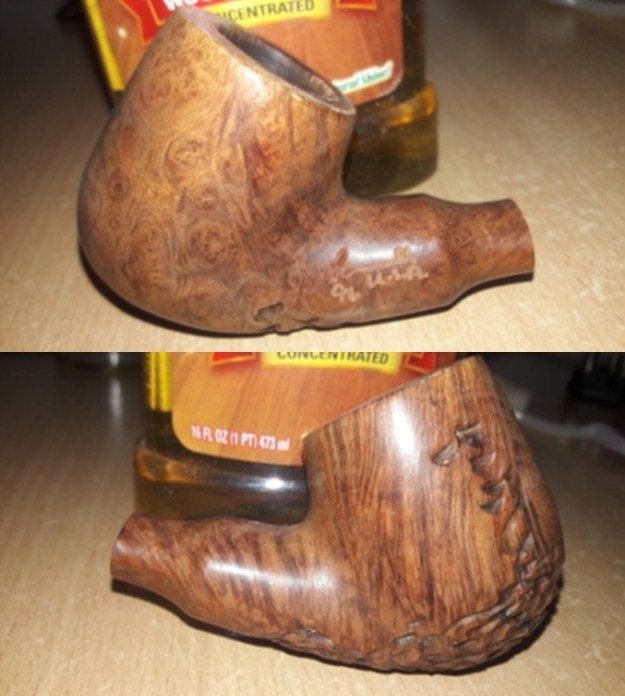
This is a large sized full bent billiard freehand pipe with a nice heft and hand feel. The shape of the pipe is unique in that the proportionate shank has a sudden taper towards the shank end and this size is carried forward on to the saddle of the stem, tapering a bit along the stem before flaring out at the stem end. Wow!!!! That was one hell of a description which has left me exhausted and brain drained!!!! The stamping on the left side of the shank was clear and readable. It read “Boswell” in script signature over “96 USA”. The pipe was made in 1996.The saddle stem bears no stampings.I was keen to know more about J M Boswell the carver, his pipe making techniques and philosophy. I searched rebornpipes.com and sure enough, Mr. Steve has worked on a Boswell before!!! As is his habit, he has thoroughly researched this carver and has included valuable information in his write up. Therefore, instead of reinventing the wheel, here is the link to this write up for detailed information; (https://rebornpipes.com/2017/07/19/refurbishing-a-boswell-2003-spiral-twist-bent-billiard/). Do give it a read.

Is there not a single brand that this gentleman has not worked on before??? Is there never going to be an opportunity for me to research and contribute one pipe make on rebornpipes??? Well, I have just started on my journey as against his decades of dedicated hard work and as Robert Frost wrote in his poem “……..and miles to go before I sleep”. The quest for excellence and contribution continues!

INITIAL VISUAL INSPECTION
The stummel surface boasts of beautiful straight grains on the right side and most of the front while the left side has lovely swirls of grain interspersed with bird’s eye. The bottom of the shank has unique hand carved rustication which taper towards the right side and extends in a thin and straight line towards the rim on the right side. Lovely bird’s eye can be seen on the top of the shank surface with straight grains on either side of the shank.  The stummel is covered in oils, tars and grime from the overflowing lava. The crevices in the rustication are filled with dirt, dust and grime. The briar is dull and lifeless and has taken on a layer of aged patina, through which one can make out the beautiful grains all round. This one should clean up nicely. This pipe has seen heavy use and the chamber has a nice thick consistent layer of cake, about the size of dime, as is recommended. The cake has been regularly reamed to maintain correct thickness. This seems to be a well cared for pipe. The condition of the inner walls of the chamber can be ascertained only after the cake has been removed completely and taken down to bare briar. The bowl feels robust and solid to the touch from the outside. However, the mortise does show signs of accumulated dried oils, tars and remnants of ash, greatly restricting the air flow. This issue should be a breeze to address.The rim top is covered in a thick overflow of lava from the chamber. This is the only part of the stummel which appears to be neglected. The condition of the inner edge and rim top can be commented upon only once the rim has been cleaned. However, I have a feeling from looking at the appearance, that the right side of the inner edge in 3 o’clock direction may be charred from frequent lighting. Well, we’ll see about it later. Thankfully, the outer edge is pristine and shows no signs of damage!!The vulcanite stem is without any bite marks or tooth chatter. The upper and lower lip does show one bite mark each. The stem was apparently used with a rubber bit as can be seen from the calcification marks on the stem (Come on!! One does not have to be a Sherlock Holmes for this deduction!!). The saddle stem is heavily oxidized. The tenon is covered in dried oils and tars and so is the airway. The air flow through the stem is laborious to say the least. The fit of the stem in to the mortise is very loose, which will loosen further after the mortise and tenon have been cleaned. These issues will need to be addressed.THE PROCESS
I started this project by reaming the chamber, starting with size 2 head of PipNet reamer and moving on to size 3 head. I used a 220 grit sand paper, pinched between my thumb and forefinger, to sand the inner walls of the chamber. Once I had reached the bare briar, I wiped the chamber with a cotton pad dipped in isopropyl alcohol. This removed all the residual carbon dust and also rid the chamber of all ghost smells. Using a sharp knife, I gently scraped the rim top to remove the lava overflow. I followed up the reaming by cleaning the mortise and air way using hard bristled and regular pipe cleaners, q-tips dipped in alcohol. The mortise and the draught hole was chock-a- block with all the dried tars, oils and gunk that I had to use my fabricated spatula and the drill bit from the Kleen Reem pipe reamer!!!! I gave a final clean with shank brushes dipped in alcohol and dried the mortise with a rolled paper napkin. The shank internals and the draught hole is now nice and clean with an open and full draw.I cleaned out the internals of the stem using hard bristled and regular pipe cleaners dipped in alcohol. I scraped the dried oils and tars from the tenon with the sharp edge of my fabricated dental spatula.Now, it was the turn of the stummel to get cleaned up. Using a hard bristled tooth brush dipped in undiluted Murphy’s oil soap, I very deliberately scrubbed the stummel, cleaning the surface thoroughly. Special attention was paid to scrub out all the dirt and dust from the crevices in the rustication on the bottom of the shank and right side of the bowl. I cleaned the rim too. The stummel and rim top was dried using paper napkins and soft cotton cloth. I was not happy with the way the rim top had cleaned up. There were darkened areas on the rim top, which kept drawing my attention, as well as very light, almost negligible damage to the outer edge in the form of dents. For the sake of my own satisfaction, I decided to address these blemishes. I topped the rim top on a 220 grit sand paper. I was careful to avoid excessive topping and frequently checked the progress. It was at this stage that I realized that the left inner edge has a slight char in 8 o’clock direction. And all this while I had anticipated this damage to be on the right!! So much for playing Sherlock Holmes!! I address the issues to the inner and outer edge by creating a slight bevel using a 220 grit sand paper pinched between my thumb and forefinger. It’s looking good now, I say, save for a black spot on the left side!!! I wanted to highlight the grains seen and further blend all the repairs carried out to the stummel. To achieve this aim, I sand down the stummel and rim top using micromesh pads, wet sanding with 1500 to 2400 grit pads and dry sanding with 3200 to 12000 grit pads. The stummel now has a deep shine with grains popping out with magnificent contrast. Though this part of restoration is the second most time consuming and laborious, the end results are also the most satisfying. The play of grains, the contrast and the smooth surface are well worth the efforts. I rub a small quantity of “Before and After Restoration Balm” in to briar and let it rest for a few minutes. I took some extra efforts to work the balm in to the hand carved rustications on the bottom of the bowl. The balm almost immediately works its magic and the briar now has a nice vibrant appearance. I further buff it with a horse hair shoe brush. With the stummel nice and clean and attractive, I worked the stem. I sharpened the lip edges using a needle file and sand the entire stem with 220 followed by 400 and 800 grit sand paper. This helps to reduce the sanding marks left behind by the more abrasive 220 grit paper. By mere sanding itself, the minor tooth marks seen on both stem surfaces were addressed completely. To bring a deep shine to the vulcanite stem, I went through the complete set of micromesh pads, wet sanding with 1500 to 2400 grit pads and dry sanding with 3200 to 12000 grit pads. I wiped the stem with alcohol after each pad and rubbed it down with Extra Virgin Olive oil. The internals of the stem was cleaned out using alcohol and pipe cleaners. The pictures of the process and final results are shown below. To finish, I re-attach the stem with the stummel. I mount a cotton cloth buffing wheel on to my local machine which is similar to a Dremel.  I set the speed at about half of the full power and applied White Diamond compound to the entire pipe. I wiped/ buffed the pipe with a soft cotton cloth to clear it of any leftover compound dust. I then mounted another cotton cloth wheel on to the polishing machine and applied several coats of carnauba wax. I finished the restoration by giving the entire pipe a rigorous hand buffing using a microfiber cloth to raise the shine further. The completed pipe, with the dark brown hues of the stummel contrasting with the shiny black stem, looks lovely, fresh and vibrant; the photographs speak for themselves. The beauty, size and shape of this pipe make it one of my favorites and will find a place of pride in my modest collection. If only the pipe could tell the story of its journey till date…………… Cheers!! PS: The last functional aspect which I addressed at this stage was the protection of the walls of the chamber against the possibility of a developing serious heat fissures. I mix activated charcoal and yogurt to a consistency which allows for an easy and even spread and evenly apply it on the inner walls and set it aside to dry out naturally. This coating helps in protecting the wall surface and assists in quicker formation of a cake.

Refurbishing a Boswell 2003 Spiral Twist Bent Billiard


Blog by Steve Laug

Another interesting pipe that Jeff picked up was a Boswell Spiral Twist Bent Billiard made in 2003 by the Boswell father and son team. It was in excellent condition and came in its original packaging. It had some beautiful grain and was well laid out on the piece of briar. The stem was vulcanite and was lightly oxidized on the left side and top. It looked like it had been on display and the sun had oxidized the stem over time. The spiral of the cut in the briar worked itself across the bowl and around the shank. The gracious curves of the pipe are highlighted by the spiral pattern of the carving.My brother took some photos of the pipe to show the condition before he started his clean up work on it. The pipe had been smoked and had a light cake but it had been well cared for by the previous pipe man. There was also some tooth chatter on the stem on the underside near the button though the top side was clean of chatter. The rim top was very clean without any tar or lava overflow from the bowl. The stamping on the underside of the shank was clear and readable. It read Boswell in script over 2003 USA. The pipe was made in 2003.The close up of the shank stem junction shows a clean, tight fit. The close up photos of the stem shows its overall condition. (The oxidation on the top and left side of the stem does not show up well in the stem photos but it is present.) I did some reading to reacquaint myself with Boswell pipes. I read their website and also the entry on Pipedia (https://pipedia.org/wiki/J.M._Boswell). I find that reading the information on a pipe brand before I work on it gives me a sense of the passion and art of the craftsmen who made the pipe. That was true of this pipe as well. I quote from that entry now to give you a sense of the information that I found on the Boswells and their craftsmanship.
Photo courtesy of the Boswell’s Pipes Website

J.M. Boswell is considered to be one of the finest Master pipemakers in the world. His reputation is exemplary, and his craftsmanship is legendary. Working from sun up till the midnight hours, 7 days a week for most of the past 40 years, J.M. has produced thousands of handmade pipes for folks to enjoy. His dream, back in the 70s, was to make the best smoking pipes with the highest quality briar wood at an affordable price. J.M. Boswell has succeeded in doing so.

The Chambersburg store is located on the historic Lincoln Highway (rt 30), about 20 miles west of Gettysburg.

J.M. became a U.S. importer for Briar wood so that he could supply briar to other pipemakers. By doing this, he was able sell his own pipes at an affordable price. With the finest quality Briar available in the world, years of skill and his pipe master’s hands working to form the most beauty from a block of prime briar, a Boswell pipe is born…

J.M. and his son, Dan take great pride in making high quality handcrafted, American made smoking pipes. Admired for their craftsmanship, their handmade pipes are created for the rigors of everyday use and truly made to last.

Boswell’s is a family – owned business with a family environment. Every family member has a role within the business. J.M.’s wife Gail takes all of the photos – for the website, Instagram, and Pinterest; she also maintains the museum and store. Daughter Rachel manages estate pipes online, while Dan’s wife Julie takes the phone orders, and runs the shipping department.

J.M. and Dan, who work full time, side by side together, have created pipes that range from the smallest to the largest smoking pipes made in the world. Dan has known he wanted to follow in his fathers’ footsteps since he was a young boy, helping J.M. after school and during summer vacation. He has been working for the family business full time since he graduated high school, and plans on continuing the proud family tradition for many years to come.
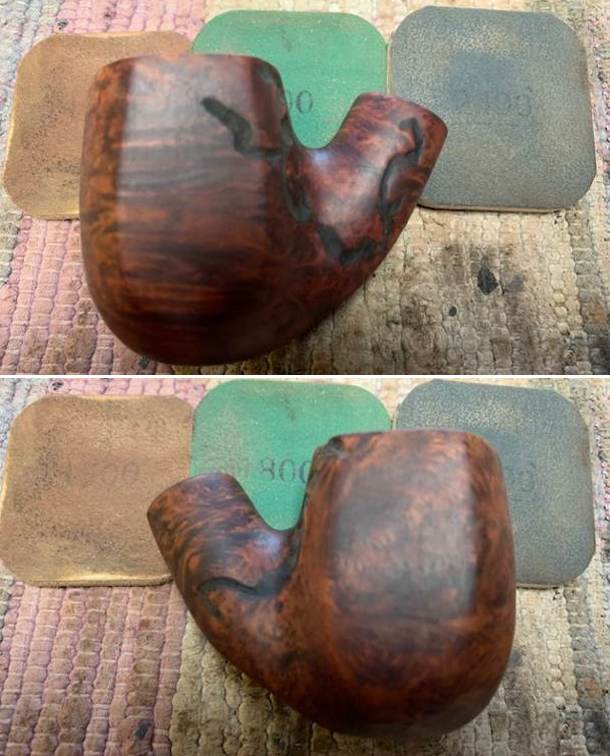
Gail’s family background has involved pipes since long ago- her Father, Uncles, and Aunt made pipes in the late 1930s for the Weber Pipe factory in Jersey City, New Jersey. Her father’s family lived on Cator Avenue, the same as the factory, and they would walk to work each day. Their family history brings an incredible depth and passion for pipemaking!

“Over 70 years of pipe history in our family, and still continuing.”

The pipe arrived in Vancouver after my brother had done a thorough cleaning. He had reamed out the thin cake from the bowl with a Savinelli Fitsall Pipe Knife. He had cleaned out the internals – the mortise and the airways in the shank and the stem. I scrubbed off the grime on the surface of the briar and lightly buffed it with a cloth to dry it. It was ready for a very easy refurbishing. When I brought it to my work table I started by taking a photo of the box.The backside of the box reads:
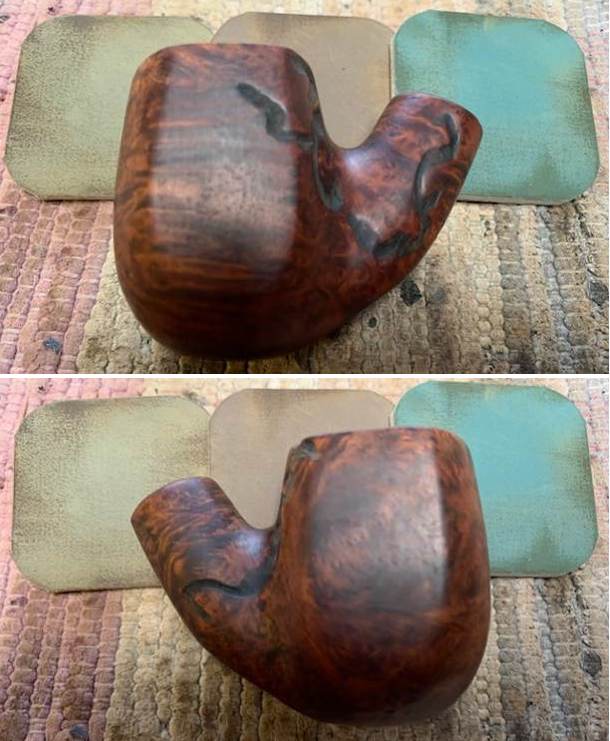
Dear Pipe Smoker: J.M. Boswell crafts each of his pipes exclusively by hand! From the bare briar block to the final stain and polish, each step is a hands on procedure in old world tradition. Boswell pipes feature individual craftsmanship and style.
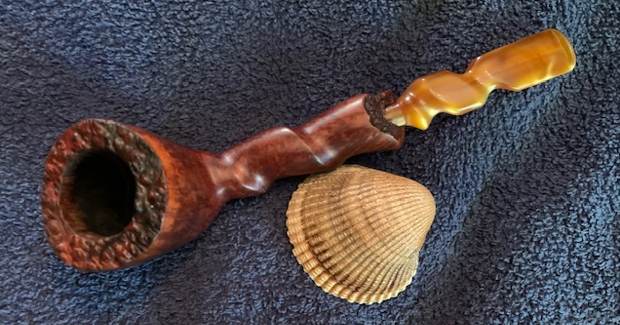
Additionally, J.M. Boswell has developed an exclusive bowl coating that greatly shortens the “break-in” time of a Boswell pipe and gives a sweet smoke from the very first bowl full. This coating is applied to each new pipe that Boswell makes.
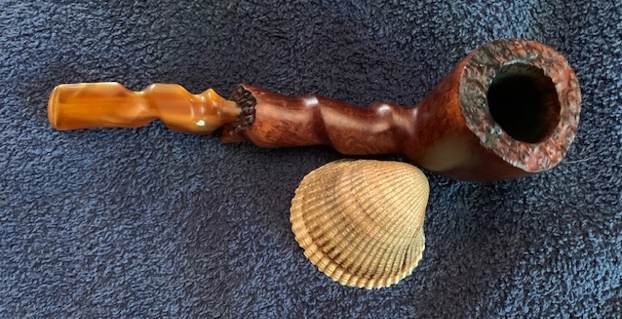
One more compelling feature of Boswell pipes: “Their cost”! Boswell pipes can be had at a fraction of what most import pipes are. This is a feature pipe smokers find gratifying.

Our second feature is repairs by Boswell. J.M. Boswell has no peers in the quality and speed in which he gives “Turn-around” on pipe repairs, from stem replacement to banding, to reaming and cleaning.

I will be glad to answer any questions that you have regarding all the features of Boswell’s pipes, my repair work, plus the crafting process which can be witnessed first hand at our store and pipe making shop at 586 Lincoln Way East in Chambersburg, Pennsylvania.

Cordially J.M. Boswell, Owner.

Here is what the pipe looked like when I opened the box at my work table. The stain and the finish are really well done. The shape is quite compelling and the hand feel is very good. I took a close up photo of the rim and bowl to show the condition. The rim and inner and outer edges are very clean. There are remnants of the Boswell bowl coating mentioned on the box that can be seen in the photo.The next two photos show the oxidation on the topside and the tooth chatter on the underside of the stem.Since the bowl was in such great condition I started with the stem. I sanded out the tooth chatter on the underside of the stem and the oxidation on the top and left side with 220 grit sandpaper being careful not to damage the thin edge of the saddle that sat against the shank. I polished it with micromesh sanding pads – wet sanding with 1500-2400 grit pads and dry sanding with 3200-12000 grit pads. I rubbed it down with Obsidian Oil after each pad and after the final pad I set it aside to dry. I ran a pipe cleaner and alcohol through the mortise and shank to see if there were any issues there. My brother’s cleaning job was excellent so there was only dust from my clean up in the shank and mortise.I decided to give the bowl a coat of Conservator’s Wax to see if there were any spots that needed a bit more attention. I applied the wax, let it dry and buffed the pipe with a microfiber cloth. The next photos tell the story. The pipe was in excellent condition. I put the stem back in place on the shank and buffed the pipe with Blue Diamond polish on the buffing wheel. I gave the bowl and stem multiple coats of carnauba wax and buffed it with a clean buffing pad to raise the shine. I hand buffed it with a microfiber cloth to deepen the shine. The pipe is a beauty and one that is tempting to hold onto for my own collection. The dimensions are Length: 5 ½ inches, Height: 2 inches, Diameter: 1 ½ inches, Chamber diameter: ¾ inches. The finished pipe is shown in the photos below. I will soon be adding it to the rebornpipes store. If you would like to add it to your collection send me an email at slaug@uniserve.com or a private message on Facebook. Thanks for walking through the refurb with me.