Tag Archives: Elliot Nachwalter pipes

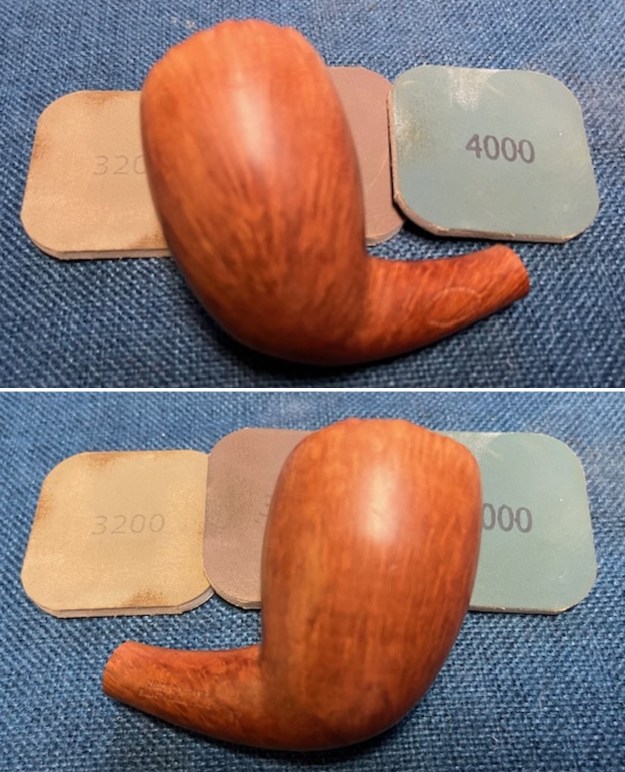
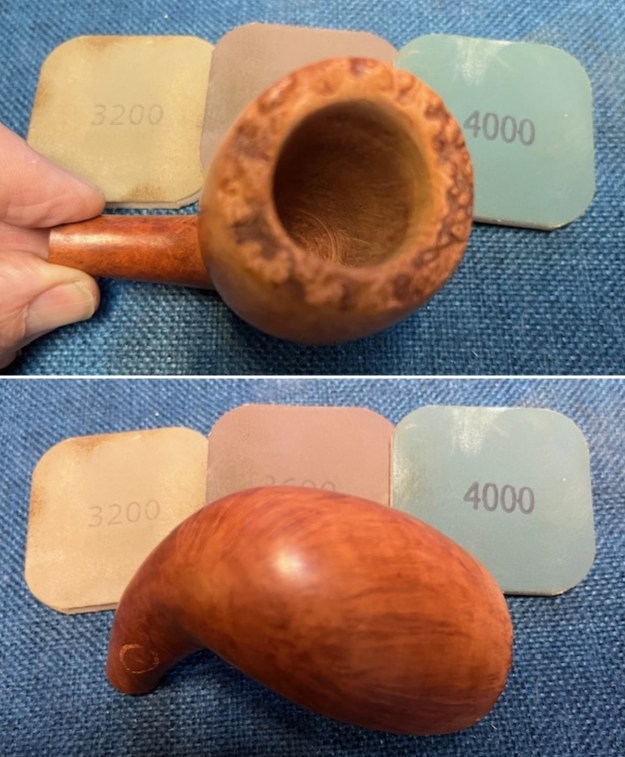
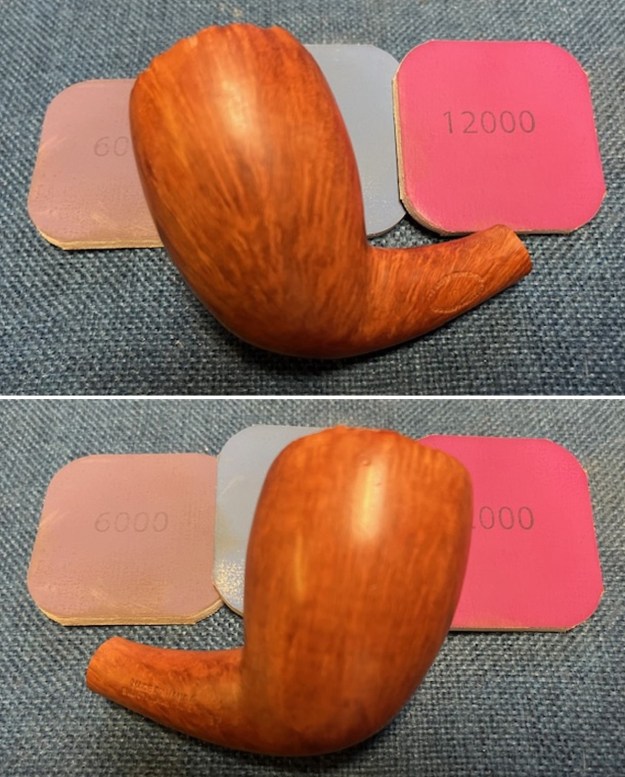
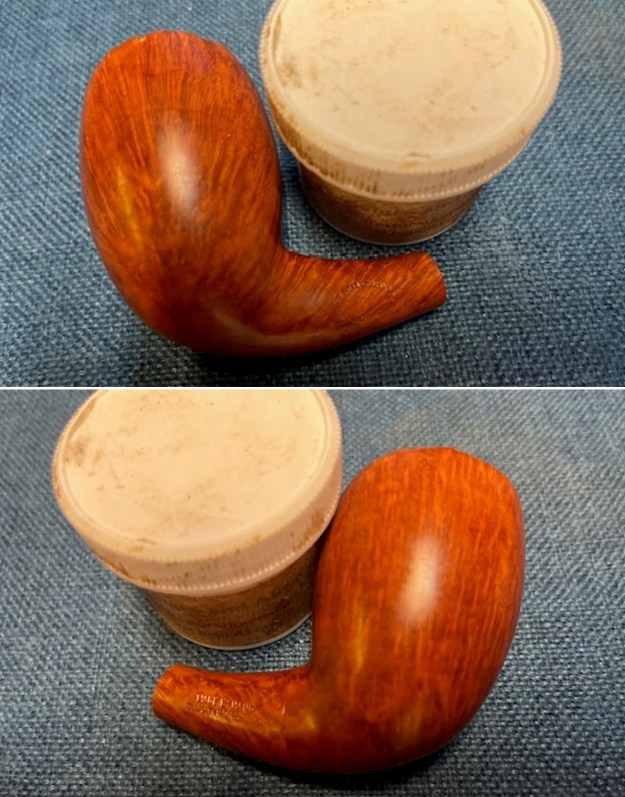
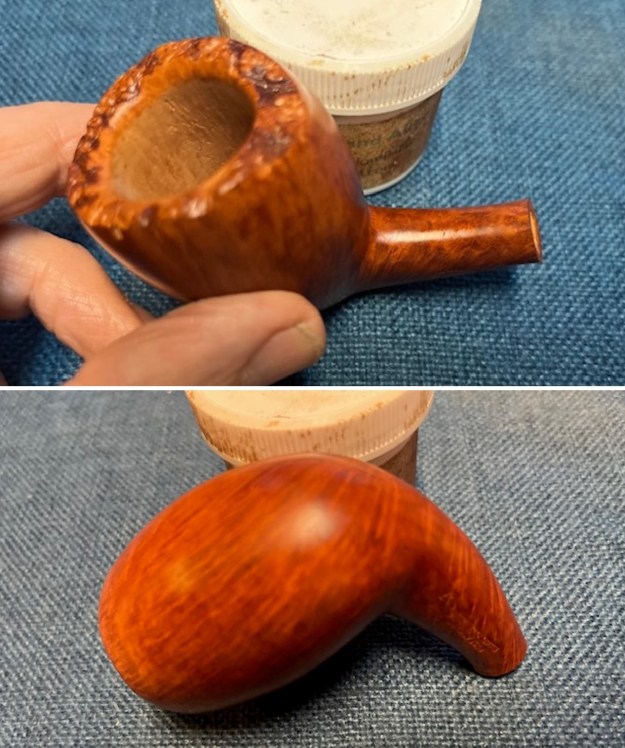
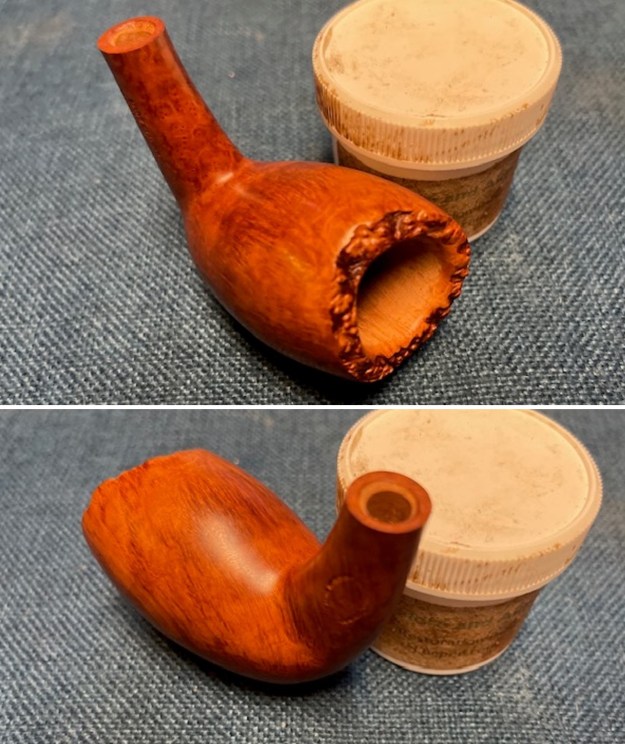
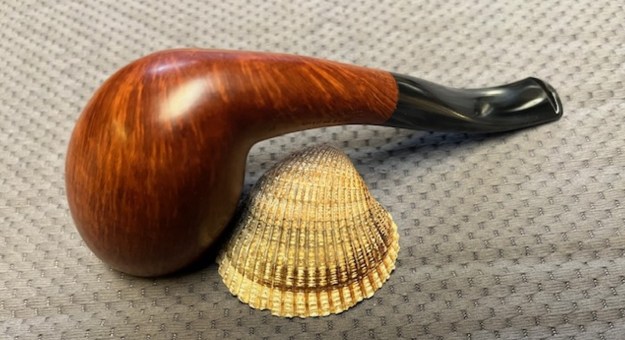
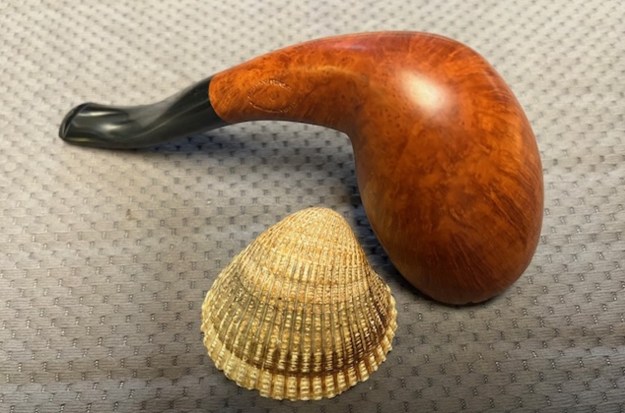
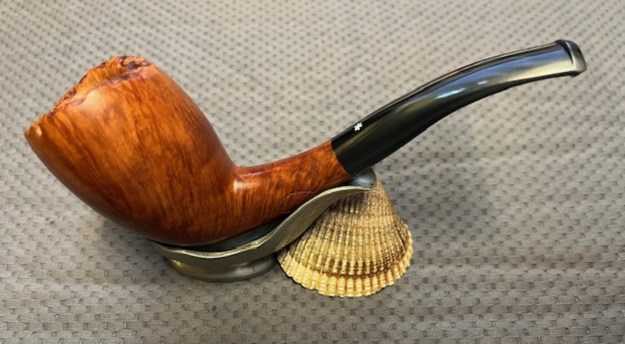
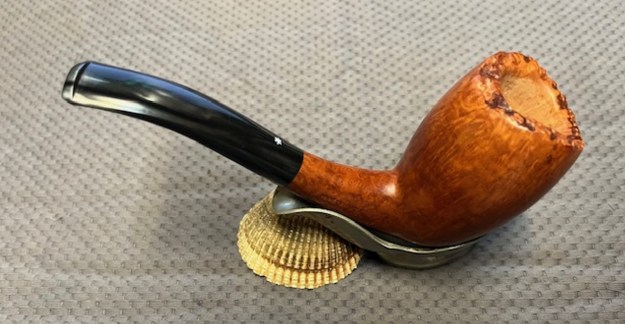
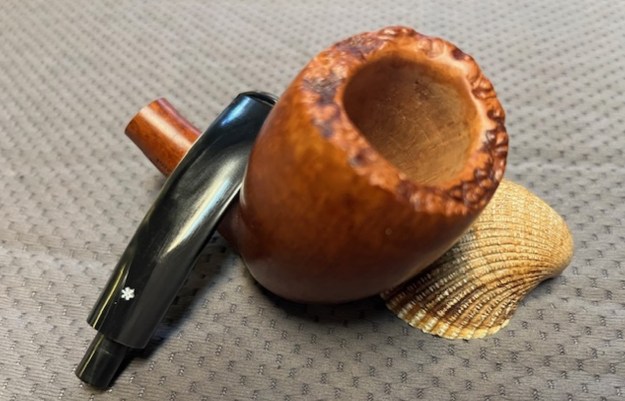
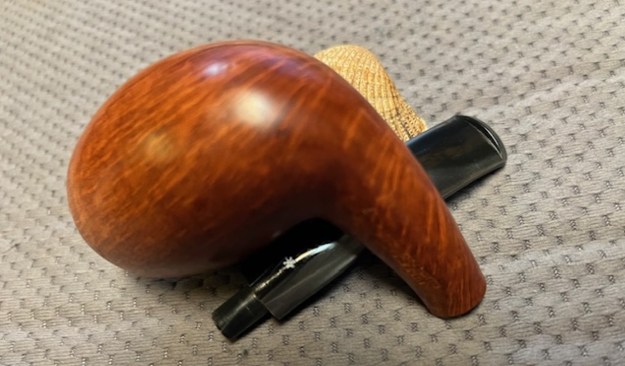
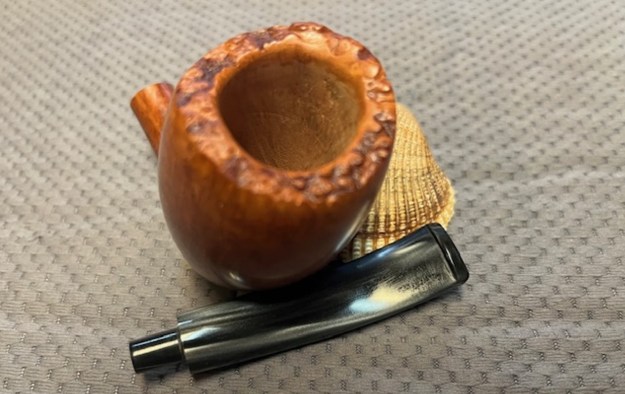
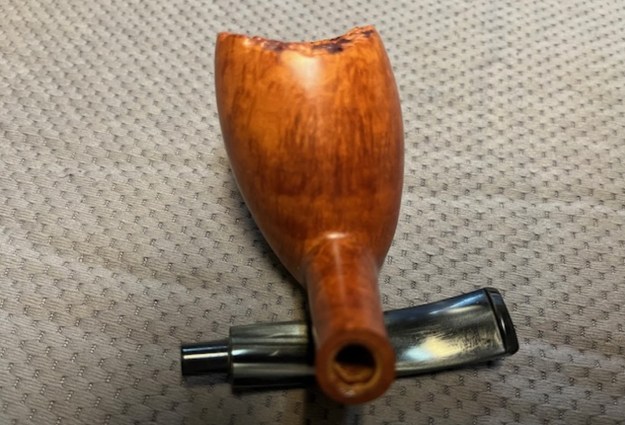
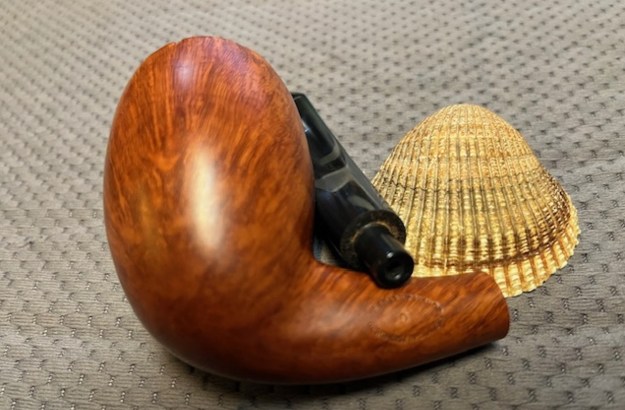
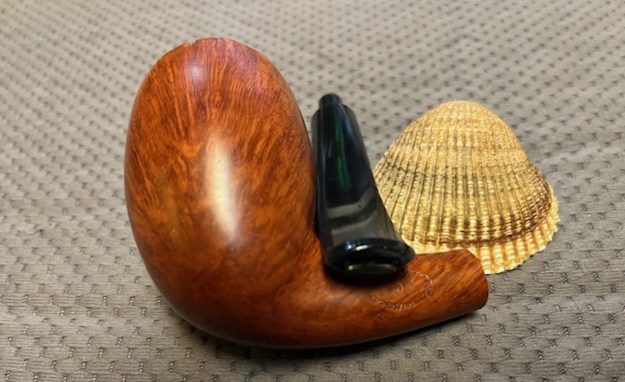
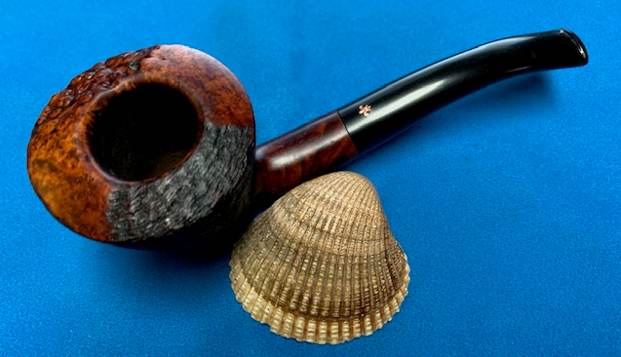
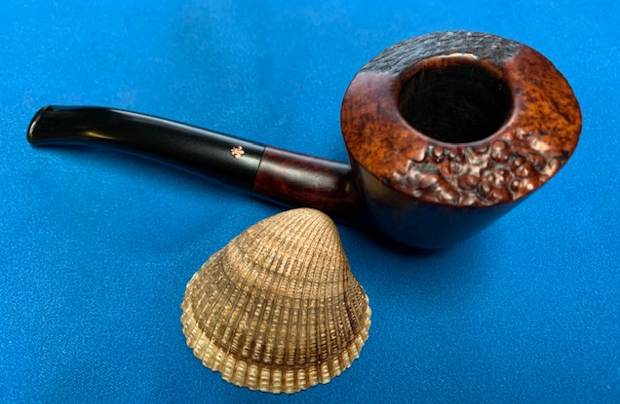
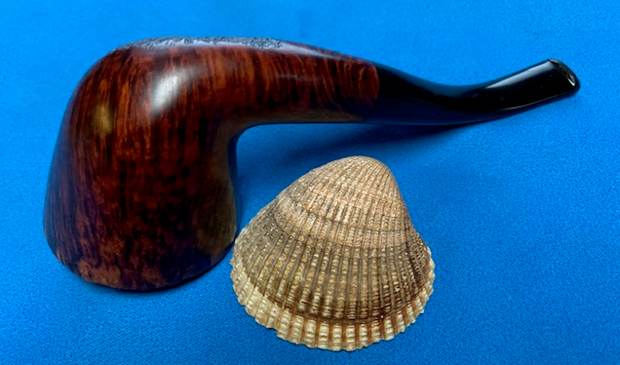
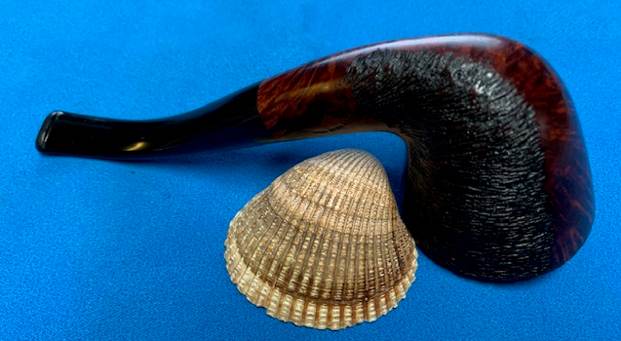
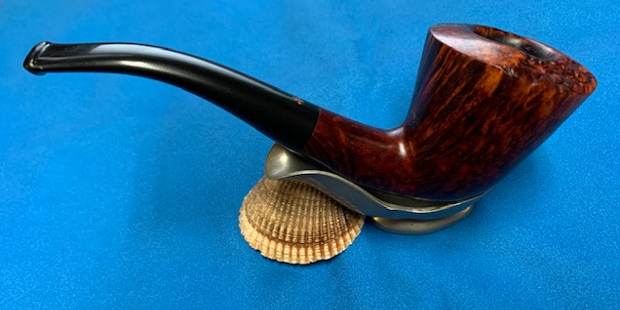
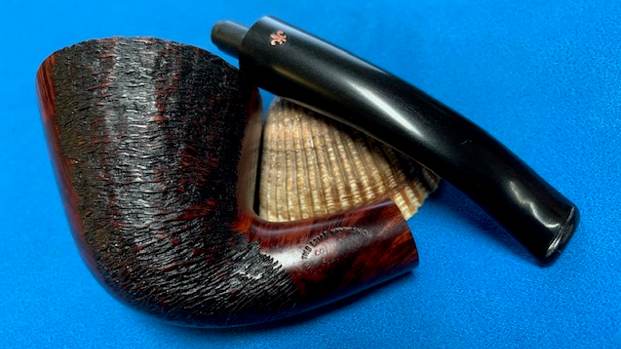
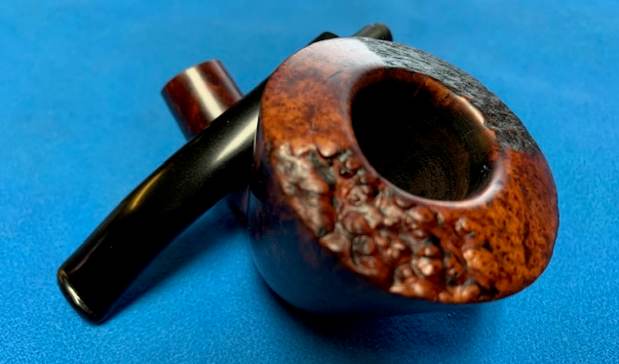
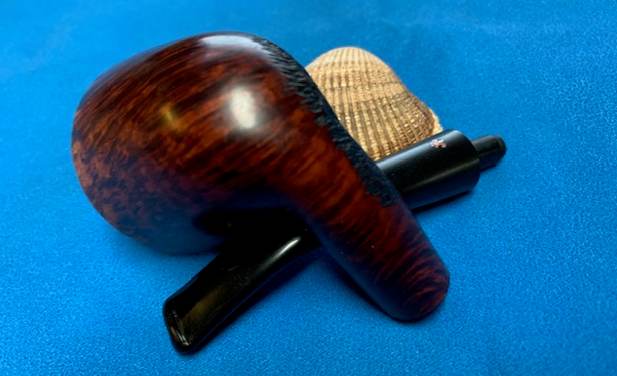
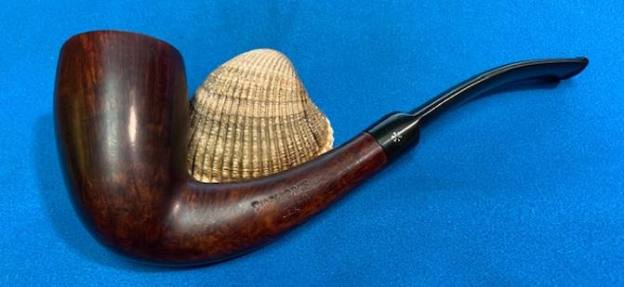
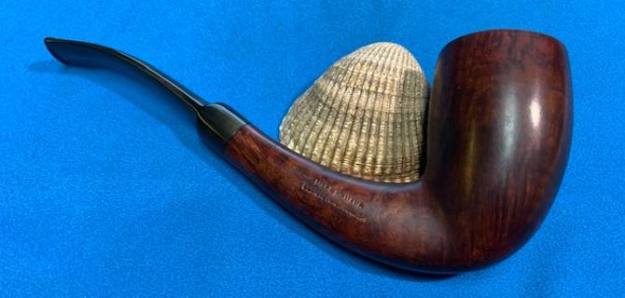
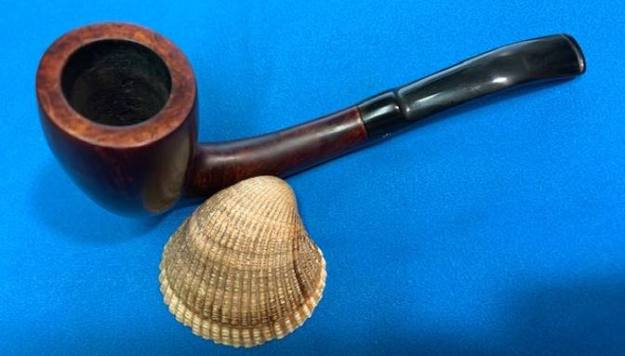
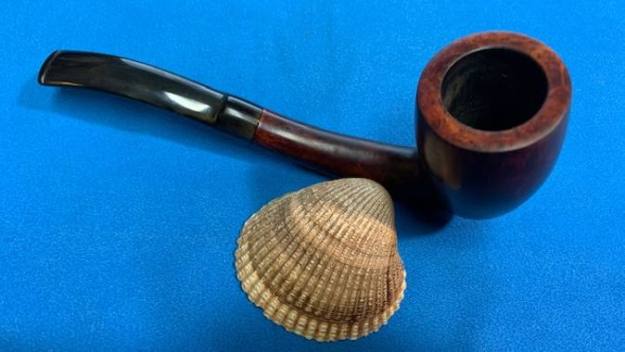
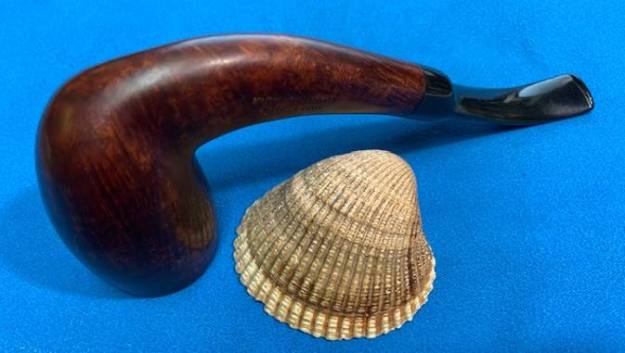
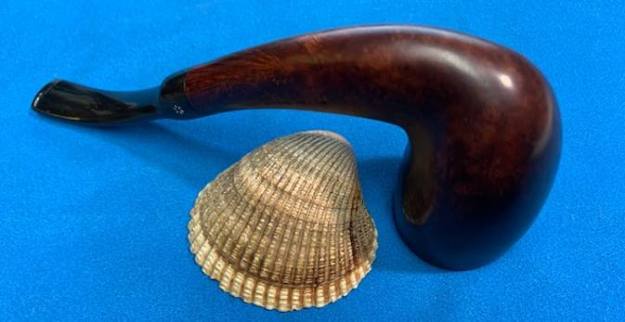
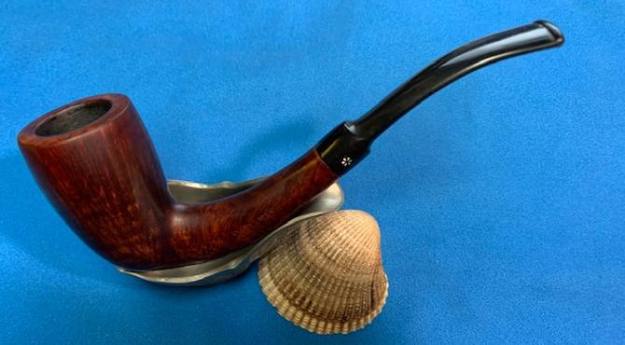
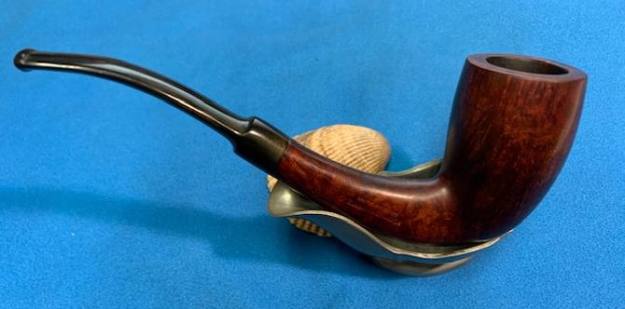
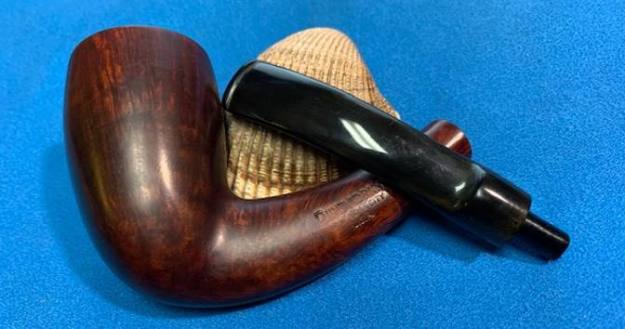
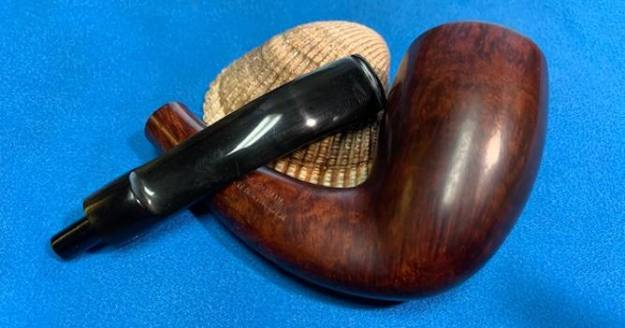
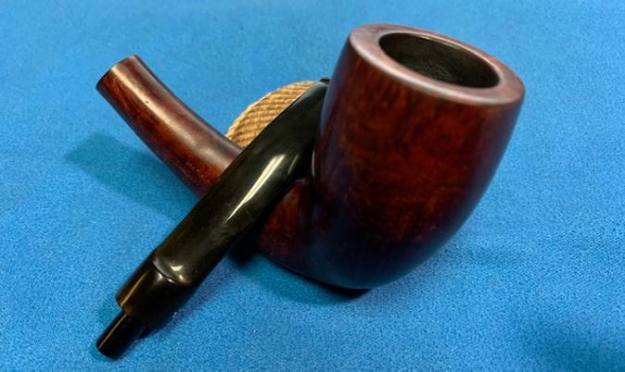
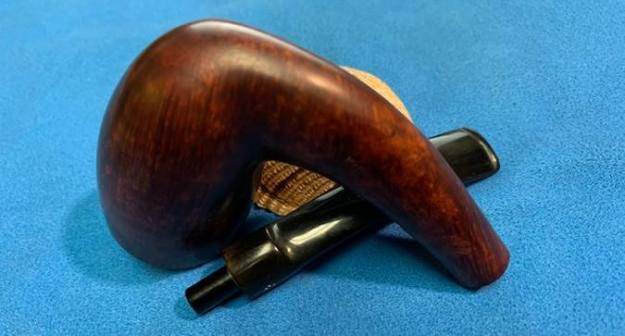
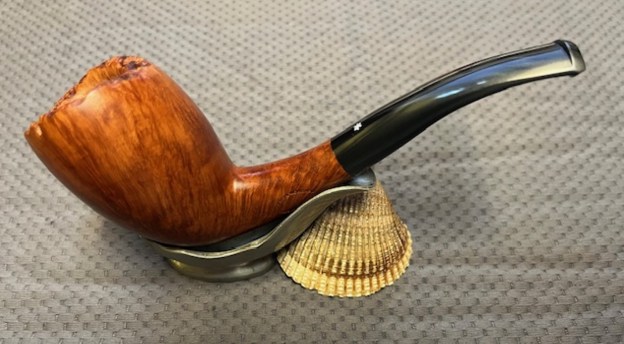
Polishing an unsmoked, NOS Briar Workshop Elliott Nachwalter Freehand with an Grey variegated acrylic stem


By Steve Laug

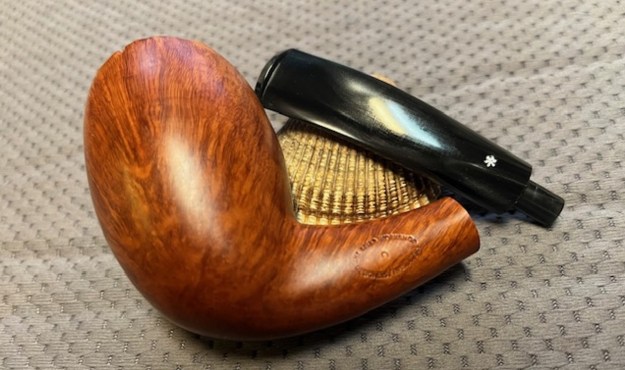
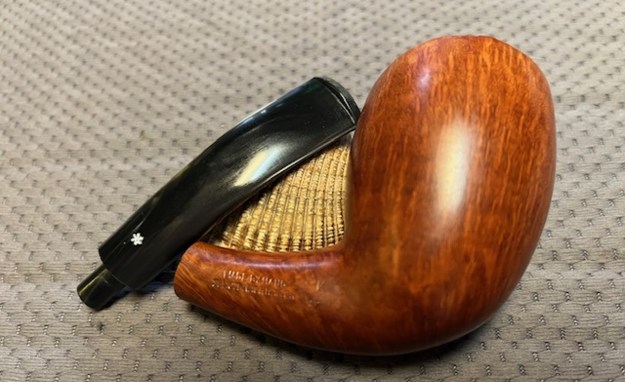
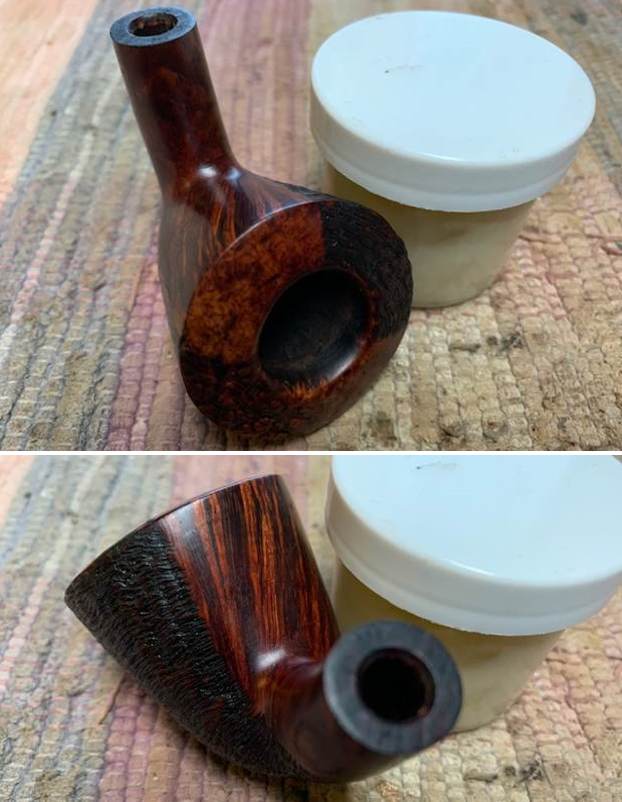
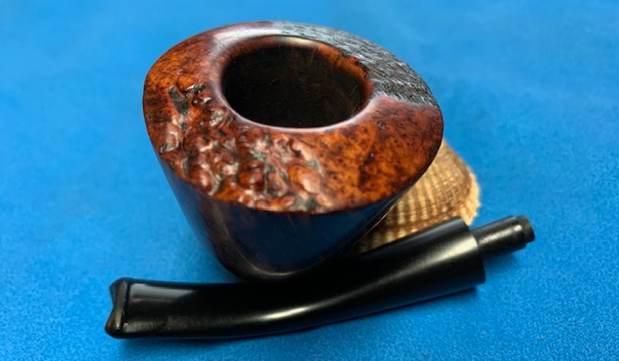
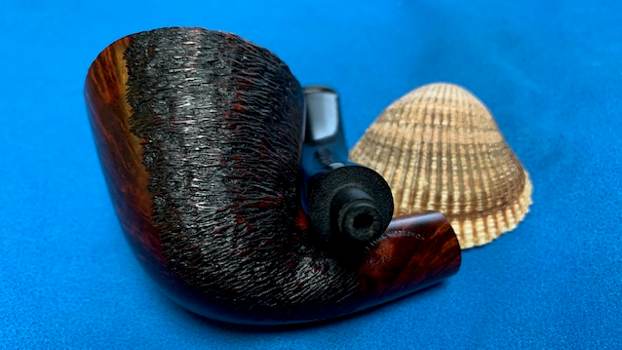
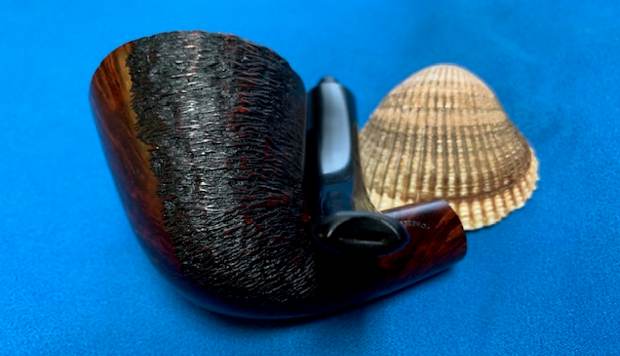
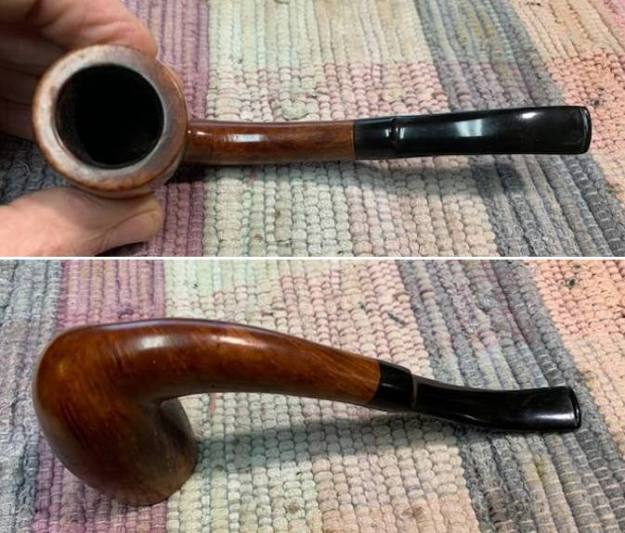
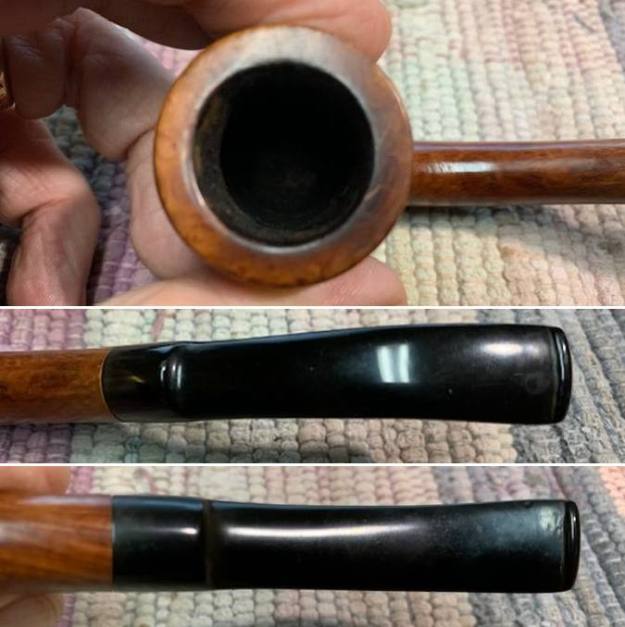
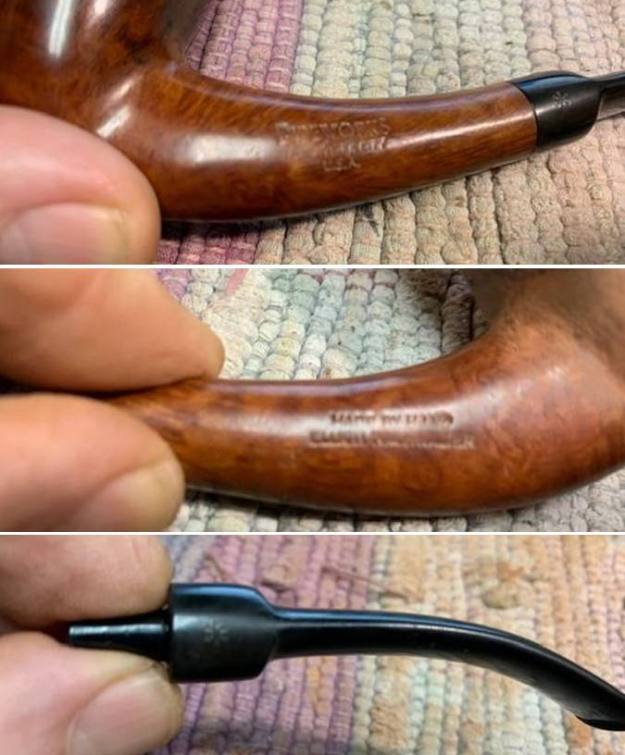
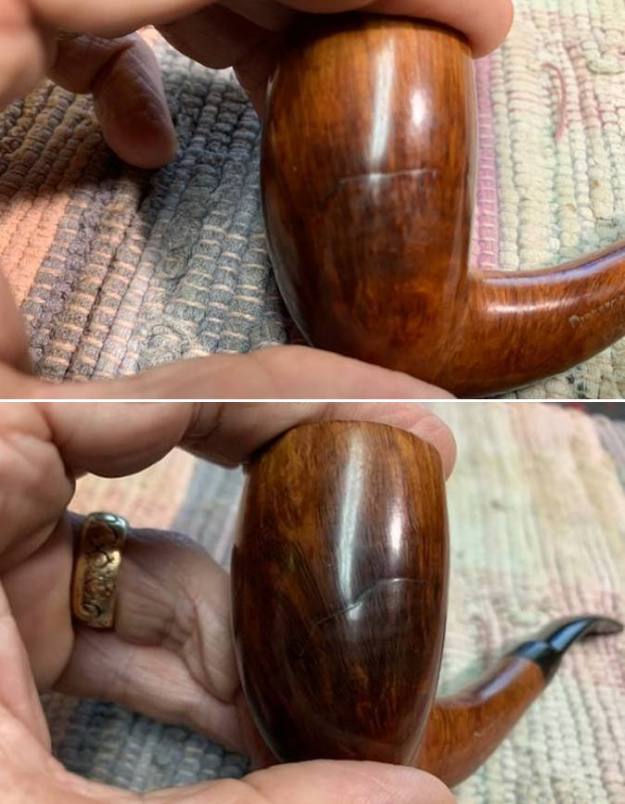
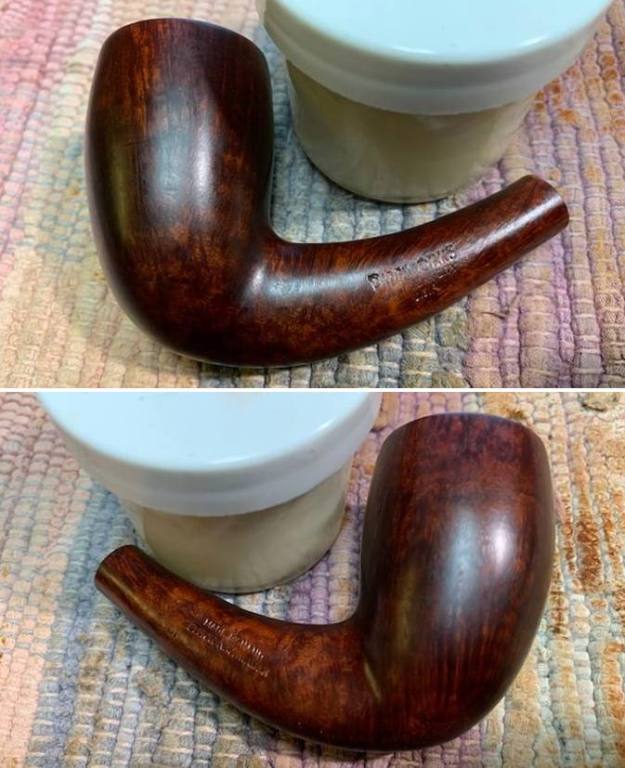
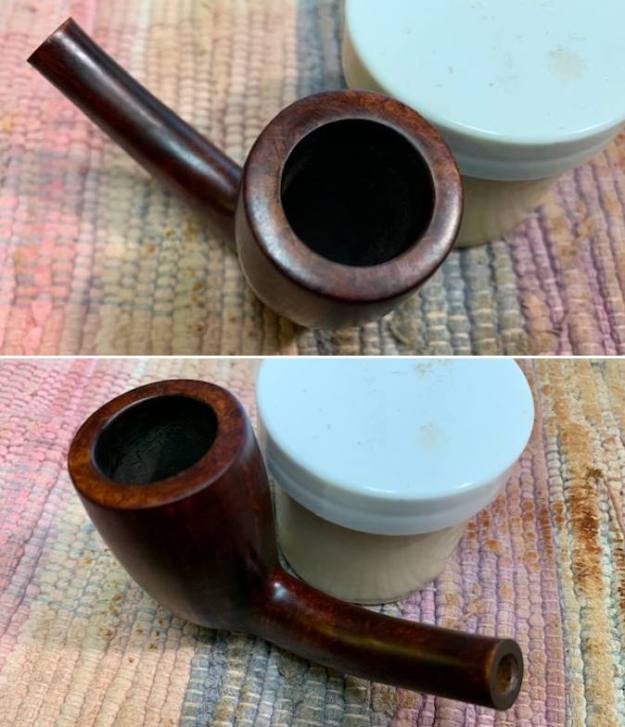
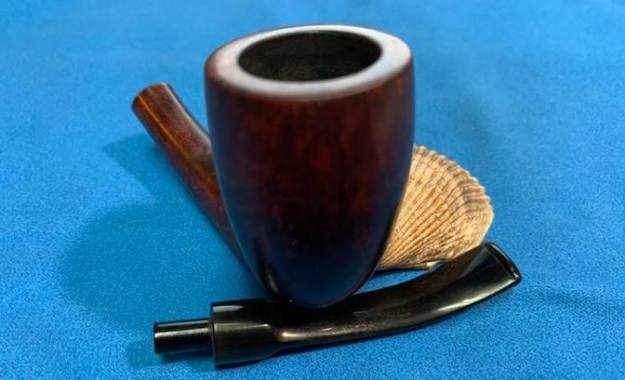
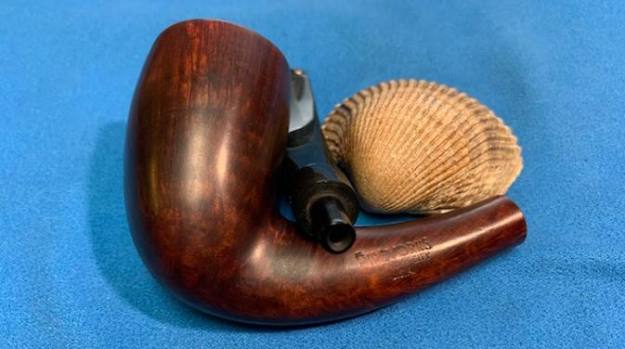
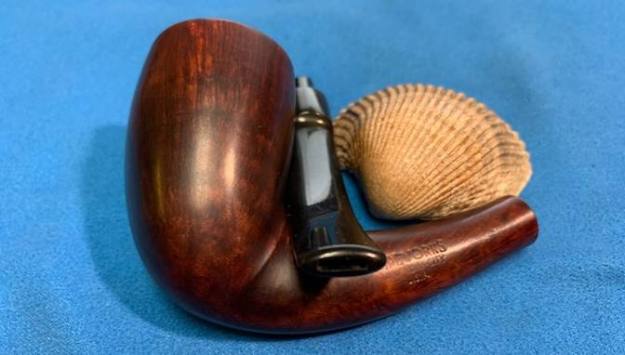
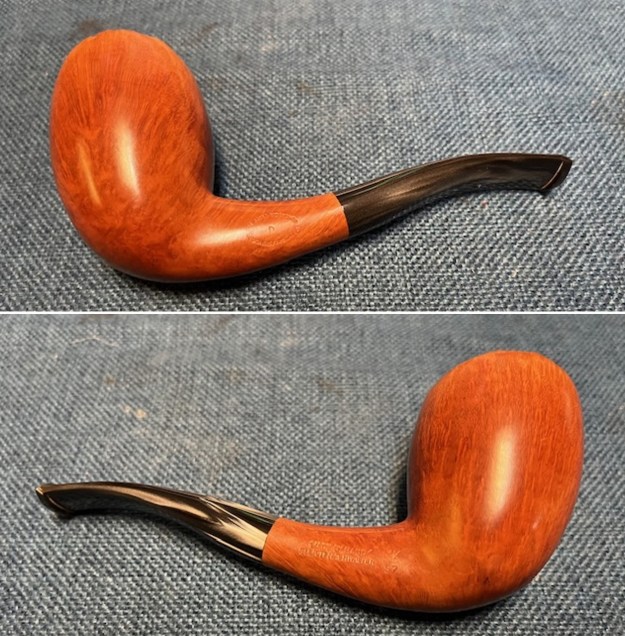
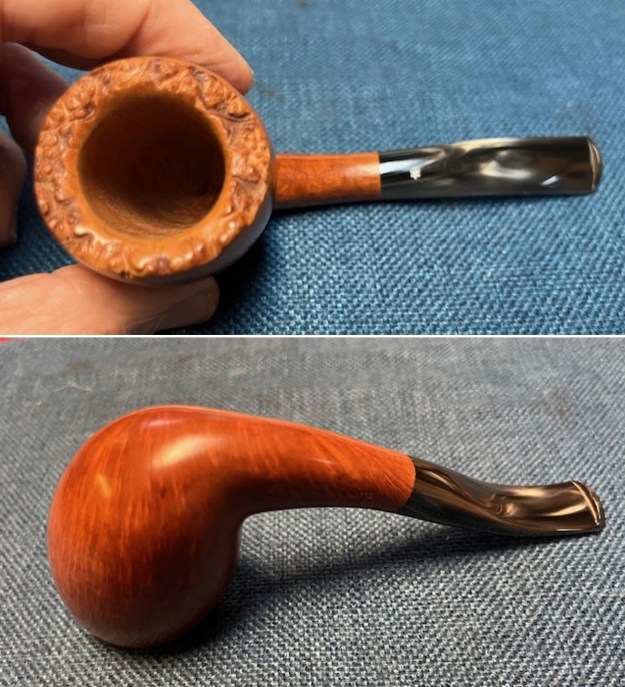
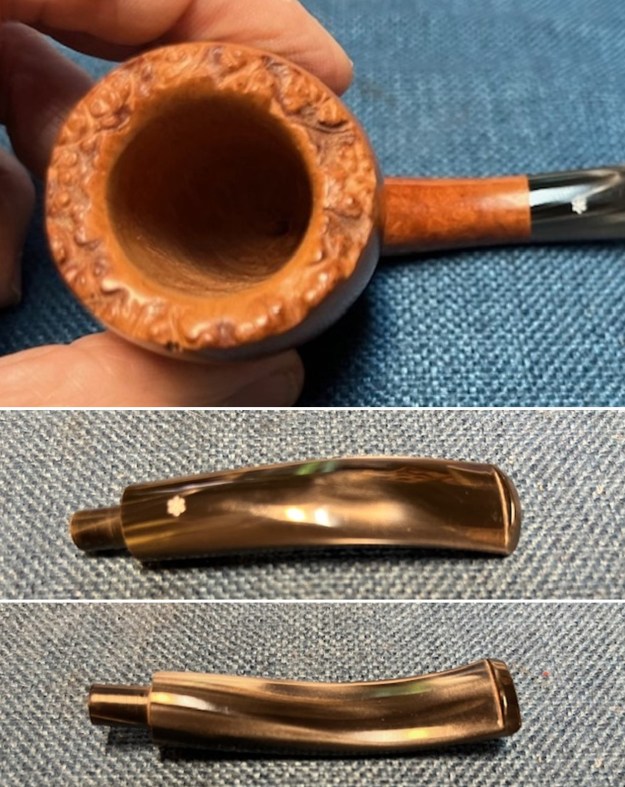
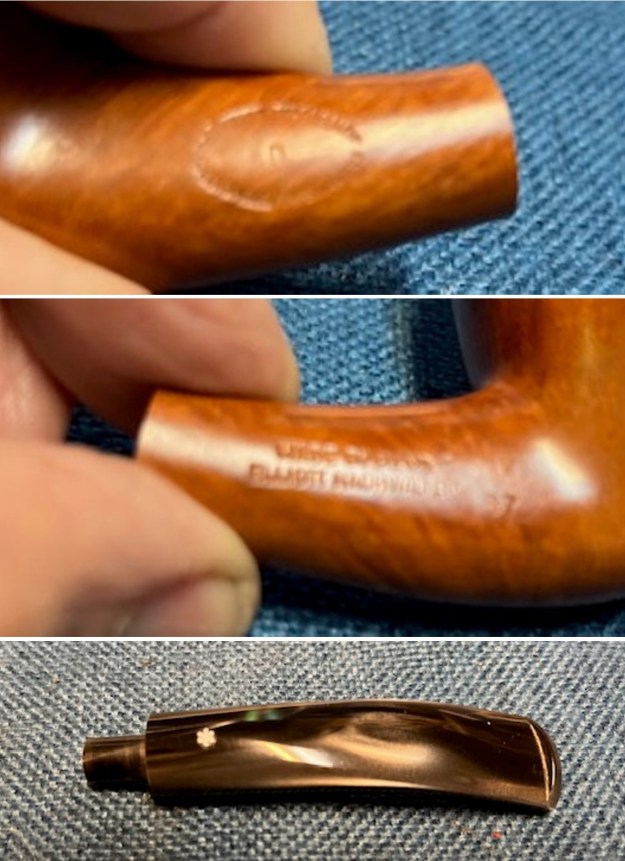
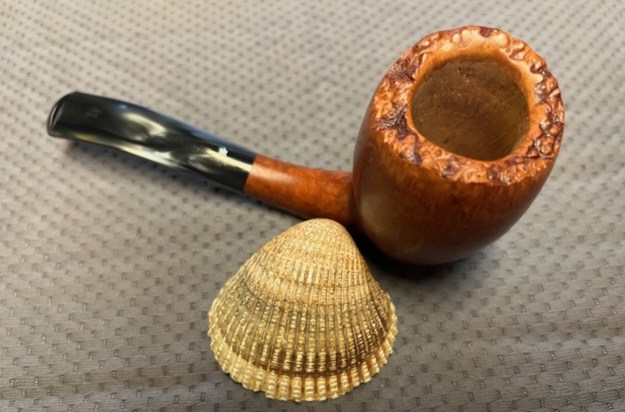
This next pipe was purchased from an online auction on 05/30/25 from a seller in Capac, Michigan, USA. It is an unsmoked, new old stock pipe. It was a beautifully shaped The Briar Workshop Freehand creation, hand made by Elliott Nachwalter. I have come to appreciate pipes made by Elliott and have several nice ones in my collection. They are uniformly great smokers. I have also restored my fair share of them over the years. The stamping on the left side of the shank is in an oval. Arched at the top of the oval it read The Briar Workshop. In the center it is stamped D. On the bottom of the oval it is stamped Designers/Pipe Makers. On the right side it is stamped Made by Hand [over] Elliot Nachwalter. Below that and toward the bowl it is stamped V [over] 87. The pipe has a smooth finish with great grain around the bowl and shank and a plateau rim top. The bowl is very clean and smooth and the finish on the pipe was shiny and quite clean. There is some dust in the plateau and in the finish. The stem is acrylic, variegated grey and has a Nachwalter snowflake logo topside of the tapered stem. I took photos of the pipe before I started to work on it. I took photos of the bowl and rim top to show what they looked like before my sprucing up of the unsmoked pipe. I also took some of the stem to show the condition of both sides. The stamping on the left side the shank is shown in the first photo below. It is clear and readable as noted above. The second photo shows the stamping on the right side of the shank and read as noted. The top of the stem bore a snowflake logo stamped into the surface of the acrylic.I turned to Pipephil’s site to look up information on the brand to identify the period of time when Nachwalter made the pipe. I turned first to the section on Elliot Nachwalter’s name (http://pipephil.eu/logos/en/logo-e2.html#elliotnachwalter) to see what it said. It is interesting in that it does not show a pipe like the one I have that just has a letter D in the oval on the left side. I turned then to the section of the site on Pipeworks as Nachwalter also stamped his pipes with that information (http://pipephil.eu/logos/en/logo-p3.html#pipeworks). Once again it did not have information on a pipe stamped like the one I was working on. From there I turned to Pipedia for a bit more information (https://pipedia.org/wiki/Nachwalter). The site quoted from both Lopes book and from Nachwalter’s website and had a lot of great historical information. I quote portions of it below.
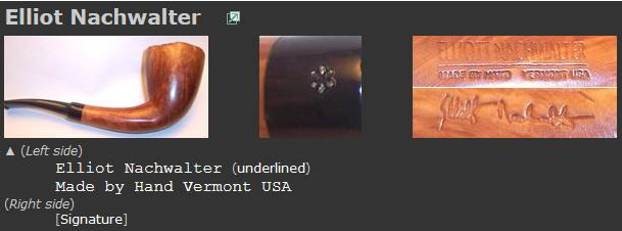
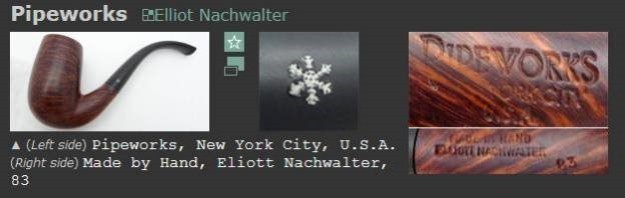
From Pipes, Artisans and Trademarks, by Jose Manuel Lopés’

Elliott Nachwalter studied the History of Art and Photography, but passionate about pipes, decided to go into pipe making. With a few tools and some machinery, he started his workshop some 25 years ago (that would be 35 years ago now, as of 2015), in Stowe, Vermont, where he shared a warehouse with Andrew Marks. He later created Briar Workshop with Jorg Jemelka, and was joined by the Danish designer Finn Meyan Andersen. They also collaborated with various artisans, such as Brad Pohlmann, J.T. Cooke, and Carol Burns.

Between 1980 and 1983, Elliot had a shop in New York where he would make and sell his pipes There then followed an interregnum — “For three years I was away from my craft, not knowing if I would ever make pipes again” –, after which he returned to Vermont and built Pipestudio. Aim: “to create sensual pipes, beautifully grained that are pleasing to the eye” and which would be “the creation of sculpted smoking instruments that are functional pieces of art”.

He uses Briar from Italy and Greece; and vulcanite, acrylic, or Cumberland stems. Symbol: a kind of six-pointed star…

…In 1980 I opened a store in New York City and designed and made pipes in the back of the store for pipe smokers that visited me from around the world. I worked late into the night. There came a time when I felt the need to stop making pipes. For three years I was away from my craft, not knowing if I would ever make pipes again. Something was missing. Perhaps I was missing the struggle of the creative process and the pure joy that one feels when you make something turn out exactly as imagined in your mind’s eye. I suppose I needed to make pipes; I needed to work late into the night.

In the autumn of ’96 as the falling leaves mixed with the early snowfall, I built a small studio overlooking the Battenkill and surrounded by the Taconic and Green mountains.

It is my desire to create sensual pipes, beautifully grained that are pleasing to the eye. I work with only the rarest of briar burls that are seasoned in a manner that allows for a minimal break in period and a very smooth smoking pipe. The briar grows in the wild and there is a remarkable difference in grain between each block. This variance of grain together with the myriad of designs in my mind and the nature of the work, makes for truly one of a kind pipes. The essence of my work is in the creation of sculpted smoking instruments that are functional pieces of art.

I turned to the section on Pipedia on the Briar Workshop to gather more information on this particular pipe (https://pipedia.org/wiki/Briar_Workshop). I quote below:

Elliott Nachwalter started the Briar Workshop in Vermont together with Jorg Jemelka. They were joined by Danish designer pipemaker Finn Meyan Andersen.

Through the years they had several talented crafts people working with them including Brad Pohlmann, Jim Cooke (J.T. Cooke), and Carole Burns. They made many pipes that were sold by fine tobacconists around the country. At some point, the Briar Workshop moved to Florida, and the nature of the work changed, along with the pipe makers involved.

While The Briar Workshop was in Vermont, it acquired turn of the century pipemaking equipment as part of a collaborative arrangement with Ehrlich’s of Boston. Jemelka modified this machinery to enable the production of true copies of handmade pipes. This methodology distinguishes Briar Workshop Florida from Briar Workshop Vermont.

Nachwalter and Brad Pohlmann continued in providing designs for batch production as well as hand-made ‘one-offs’ for sale.

It would seem the Briar Workshop and the pipemakers involved played a significant part in laying the groundwork that launching the American hand made pipe making tradition, which has since exploded.

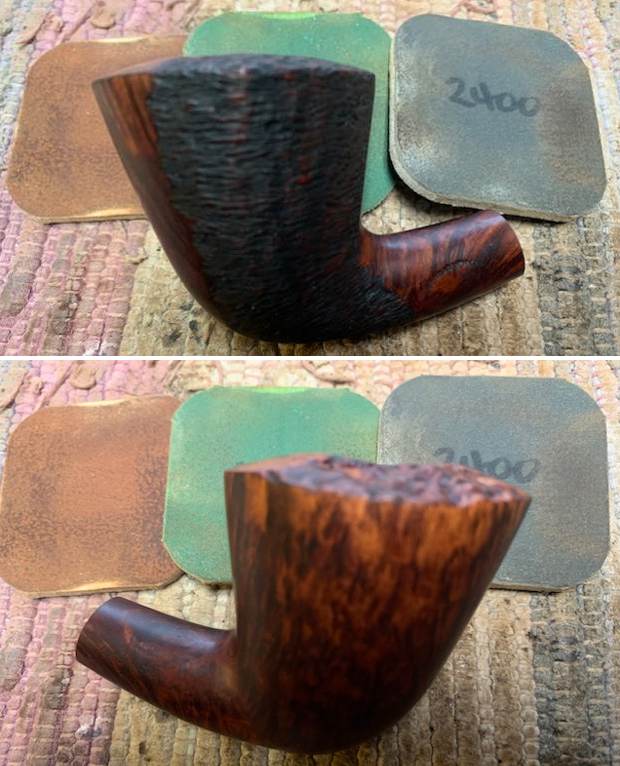
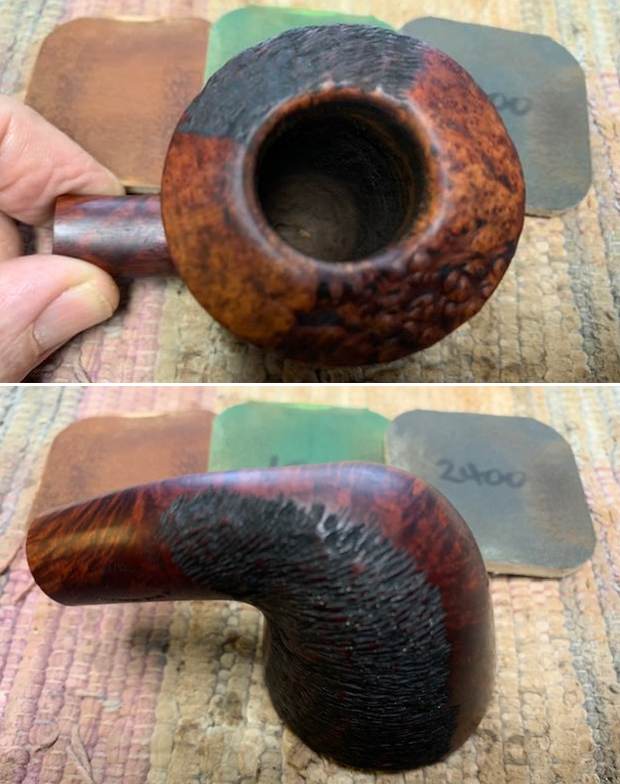
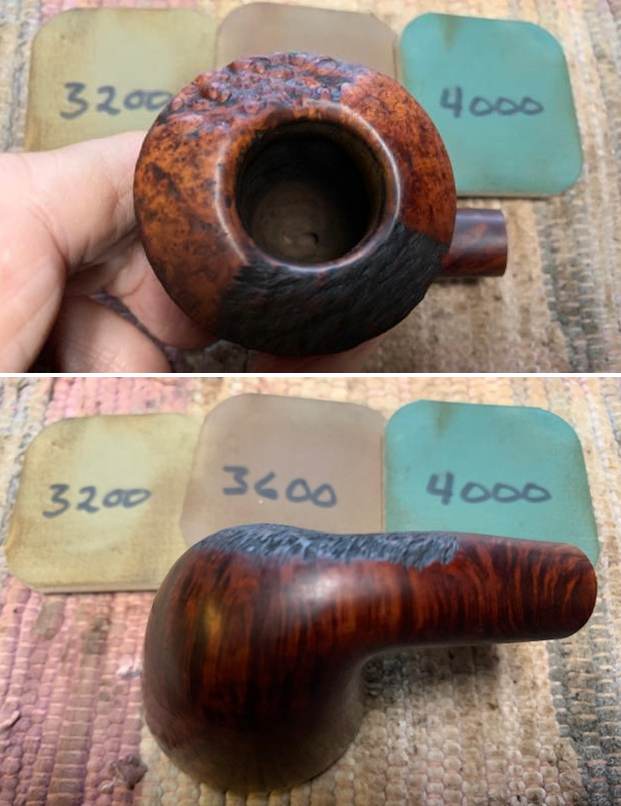
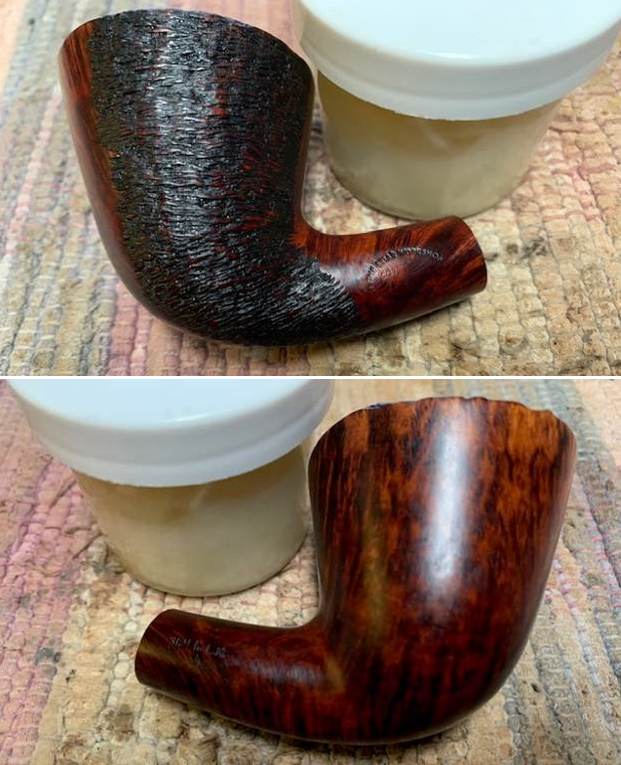
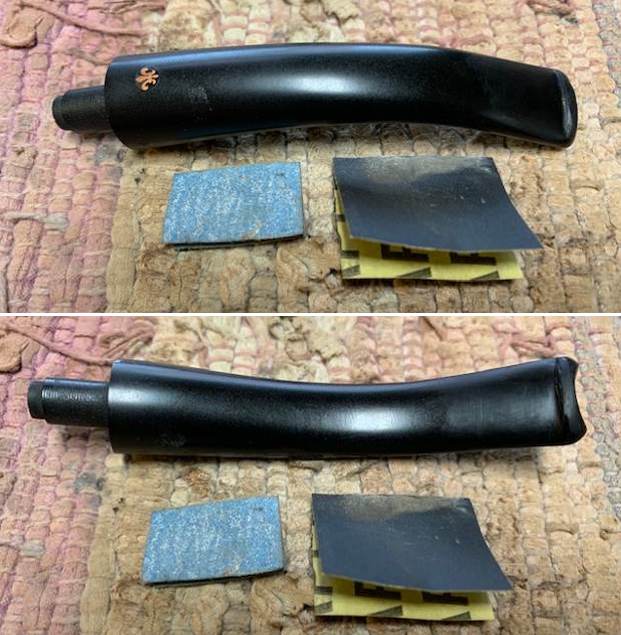
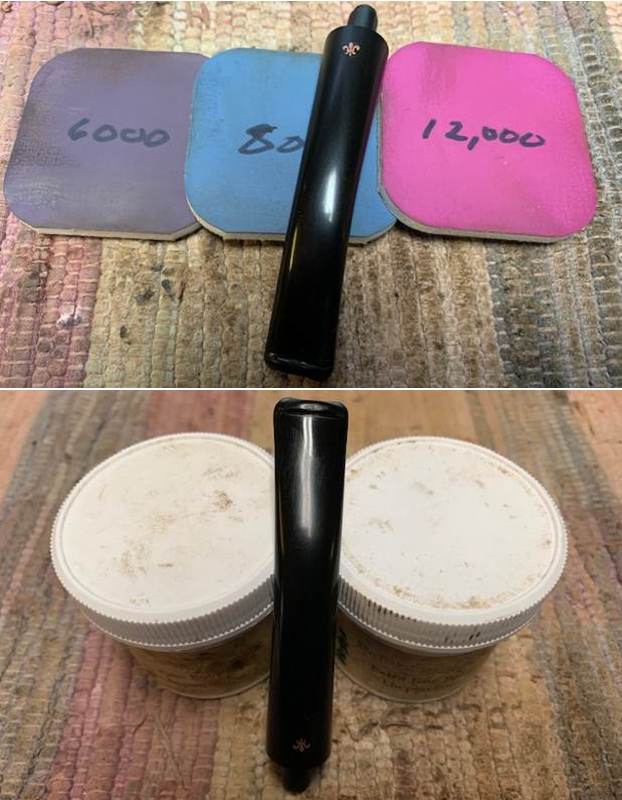
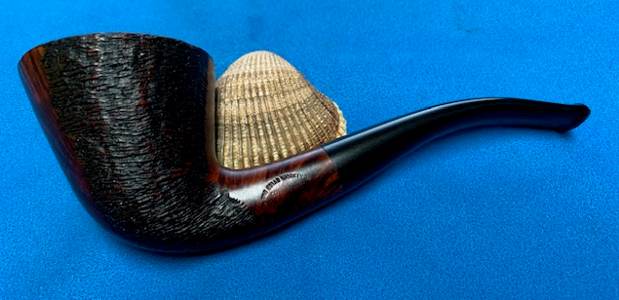
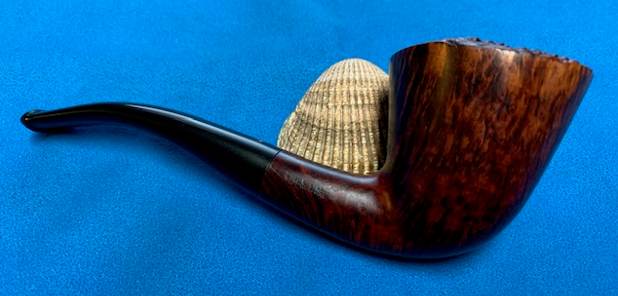
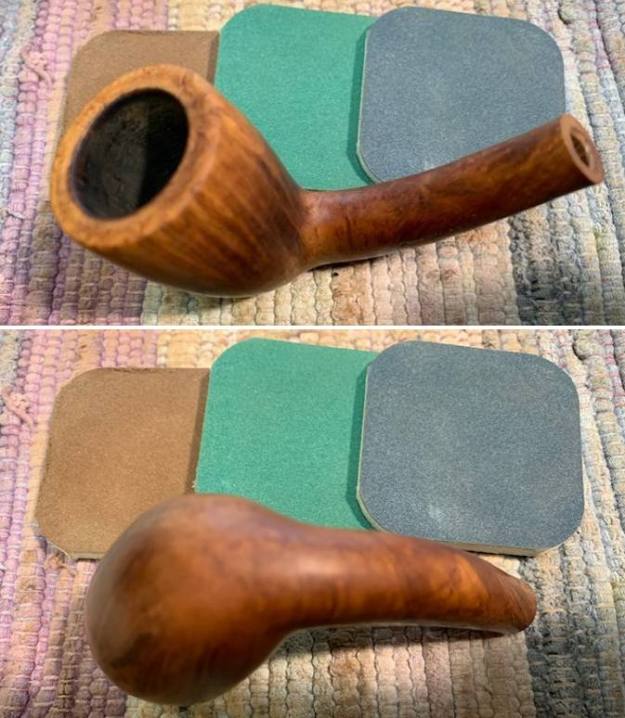
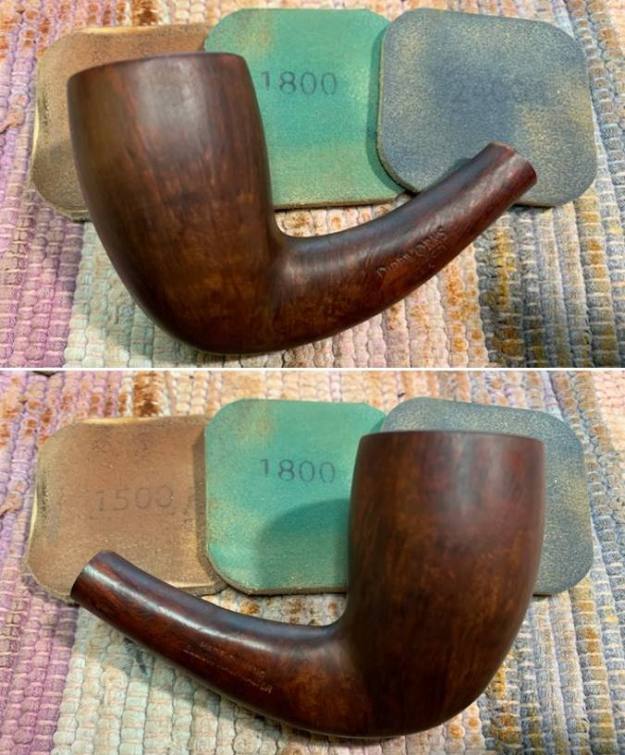
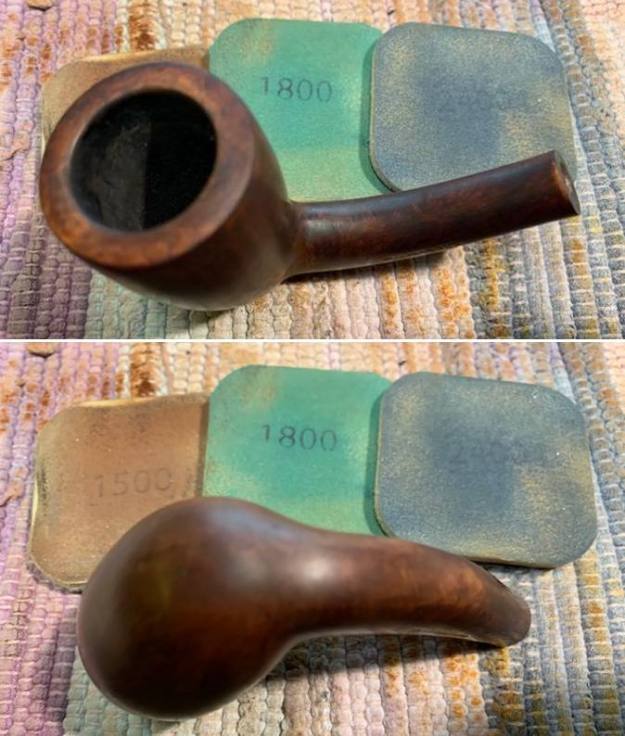
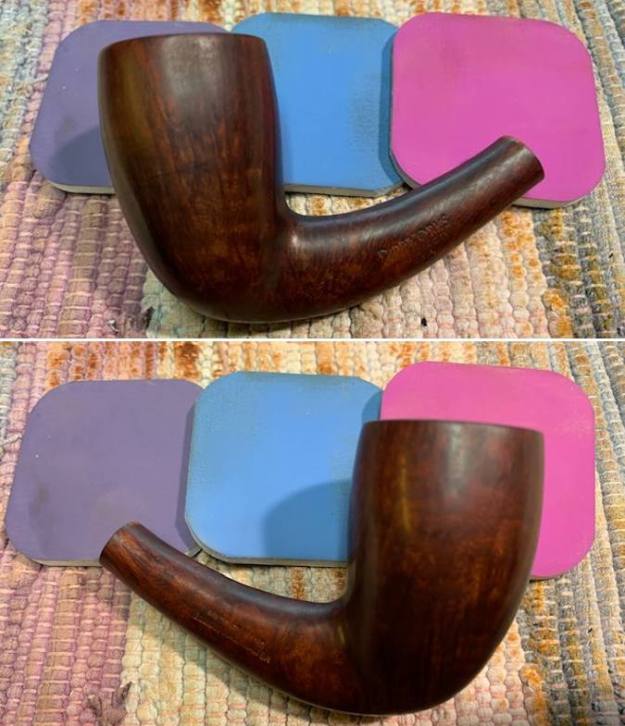
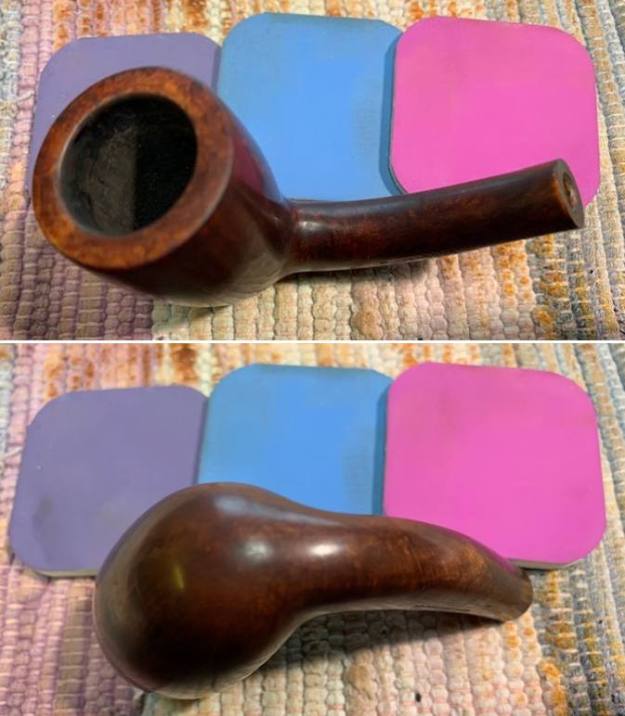
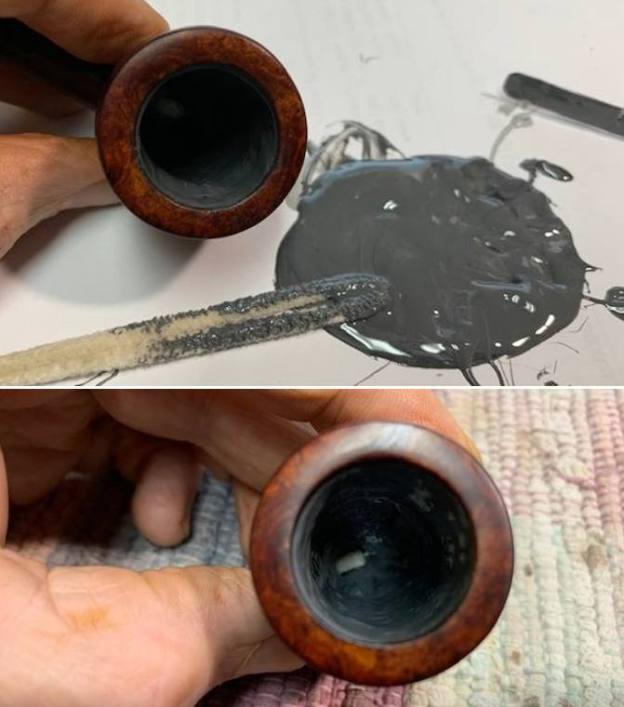
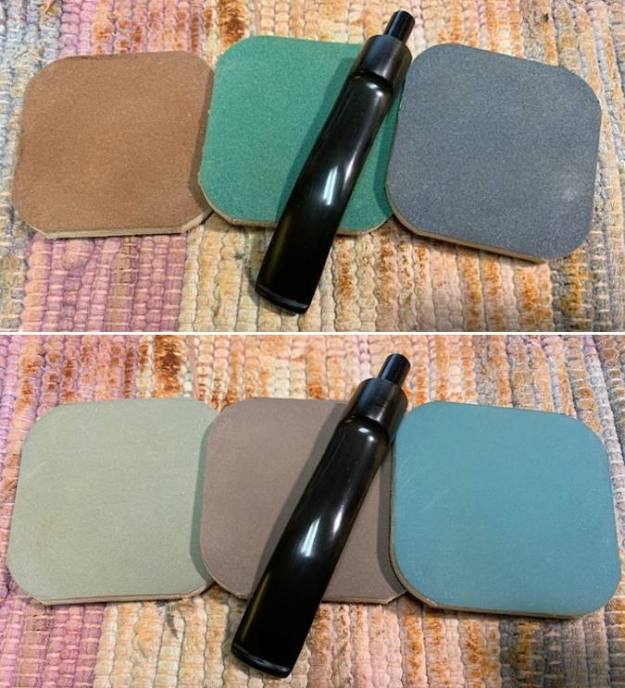
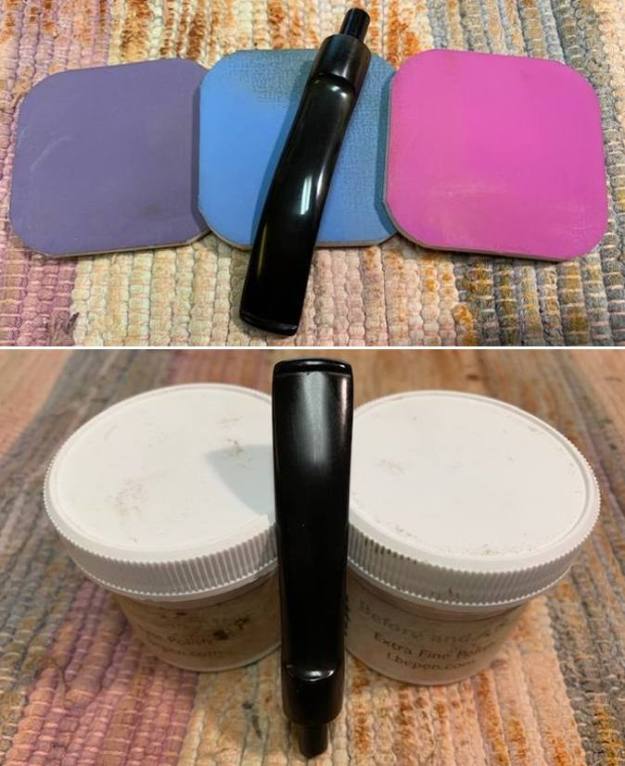
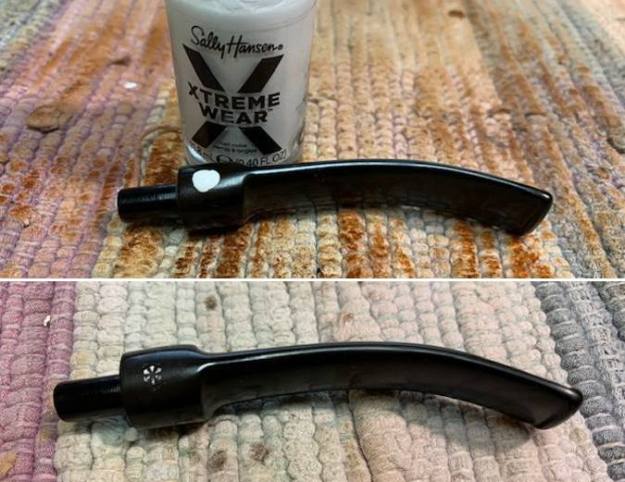
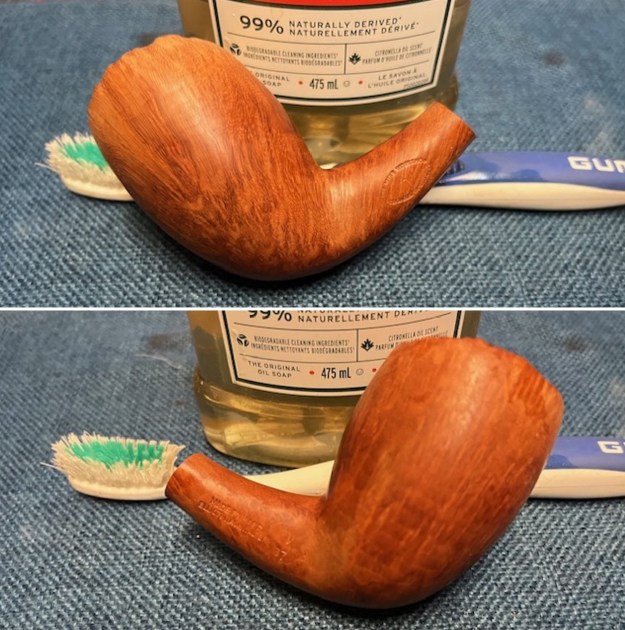
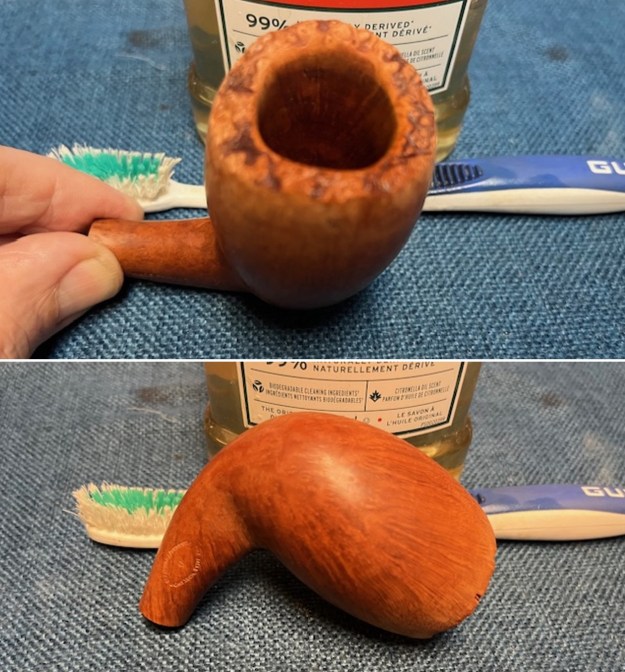
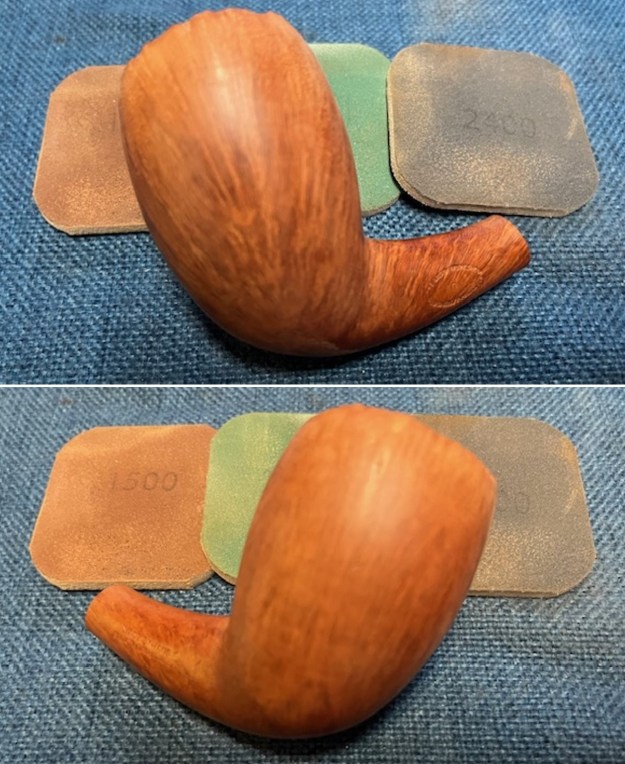
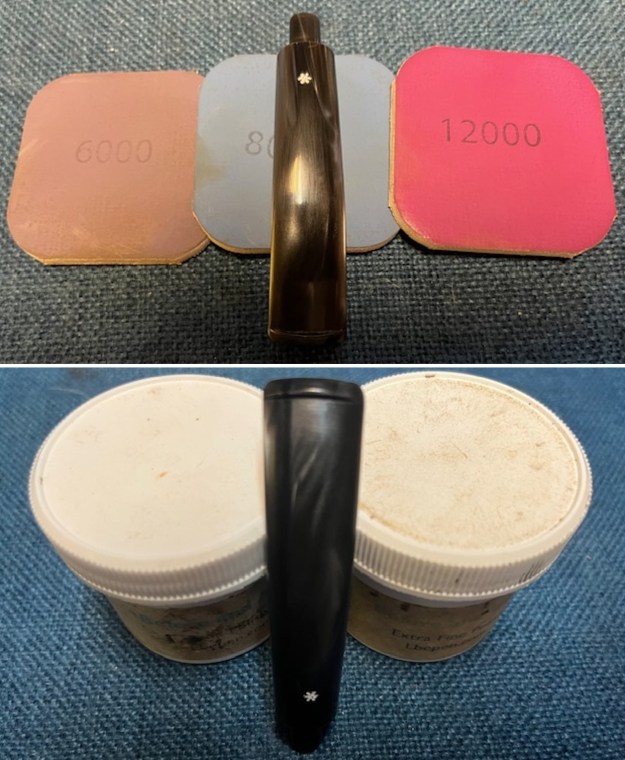
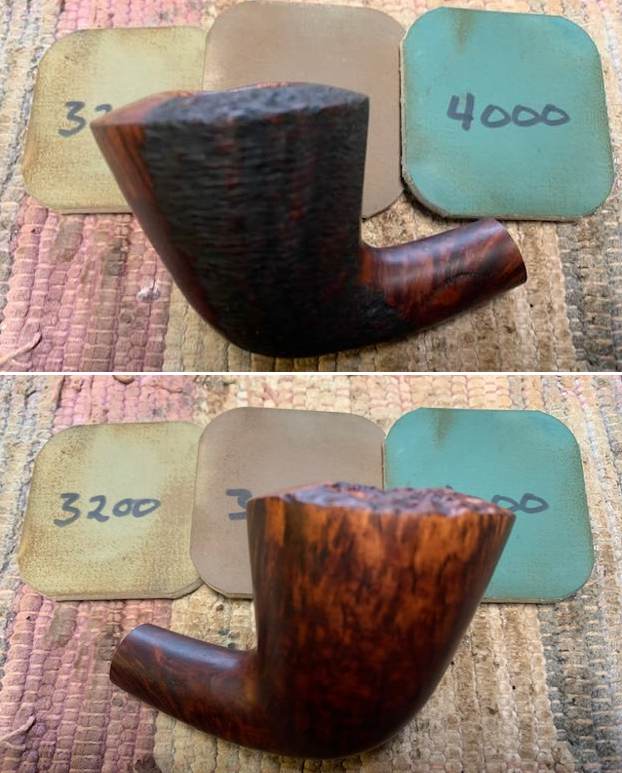
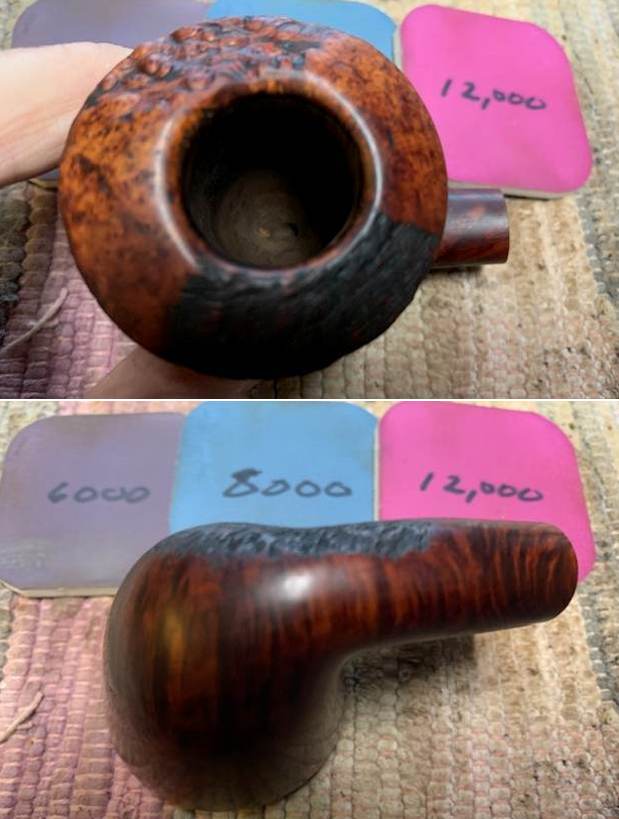
The pipe was in great shape other than the debris of sitting in a display somewhere in its life. The dust and debris in the plateau and the spotty wax shine on the surface needed attention. I scrubbed off the dust and debris on the plateau and in the finish with undiluted Murphy’s Oil Soap and a tooth brush. I rinsed off the debris and soap with warm running water. I dried the pipe off with a soft cloth. I polished the briar with micromesh sanding pads to remove the light scratching in the finish. There were no big spots just normal wear and tear from sitting and being transferred. I dry sanded with 1500-12000 grit pads. I wiped the bowl down after each pad to remove the grit. The bowl began to take on a rich shine. It is a beauty. I rubbed the bowl down with Before & After Restoration Balm. I worked it into the briar with my finger tips. I worked it into the plateau rim top with a shoe brush. I let it sit for 10 minutes and the Balm did its magic. It enlivens, cleans and preserves the briar. It brought this bowl back to life. I buffed it off with a clean cloth and took the following photos. It looks like the unsmoked pipe that it is! I polished the acrylic stem with micromesh sanding pads – 1500-12000 grit pads. The process removed a lot of the scratches in the acrylic. I wiped it down with a damp cloth after each sanding pad. I used Before & After Pipe Polish – both Fine and Extra Fine to further polish the stem. This NOS Briar Workshop Designers and Pipemakers D Elliott Nachwalter Unsmoked Freehand is a great looking pipe after polishing. The beautiful finish really highlights the grain and the polished finish is stunning. I put the stem back on the bowl and carefully buffed the pipe with Blue Diamond on the buffing wheel. I gave the bowl and the stem multiple coats of carnauba wax on the buffing wheel and followed that by buffing the entire pipe with a clean buffing pad. I hand buffed the pipe with a microfiber cloth to deepen the shine. The finished Nachwalter Hand Made Briar Workshop Freehand fits nicely in the hand and feels great. Give the finished pipe a look in the photos below. The dimensions of the pipe are Length: 5 ½ inches, Height: 2 ¾ inches, Outside diameter of the bowl: 1 ½ inches, Chamber diameter: 7/8 of an inch. The weight of the pipe is 52 grams /1.80 ounces. I will be adding the pipe to the American Pipe Makers Section of the rebornpipes store. If you are interested in purchasing this pipe send me a message or an email. Thanks for reading this blog and my reflections on the pipe while I worked on it.
Restoring a Great Looking Briar Workshop Mixed Finish Elliott Nachwalter & Jorge Jemelka 28 Dublin


Blog by Steve Laug

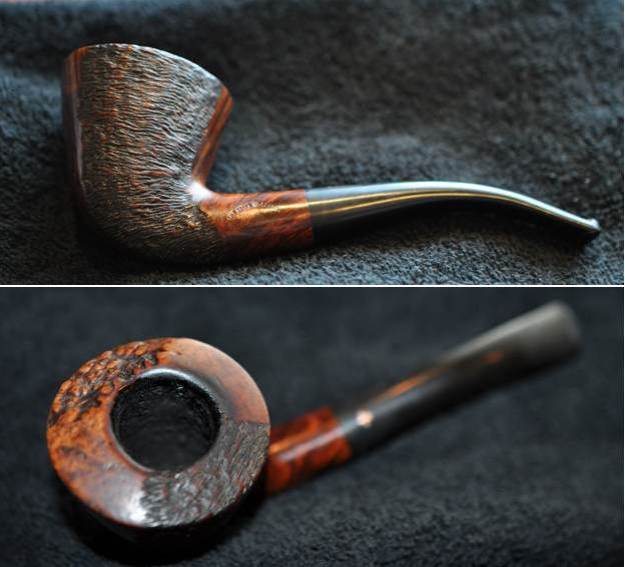
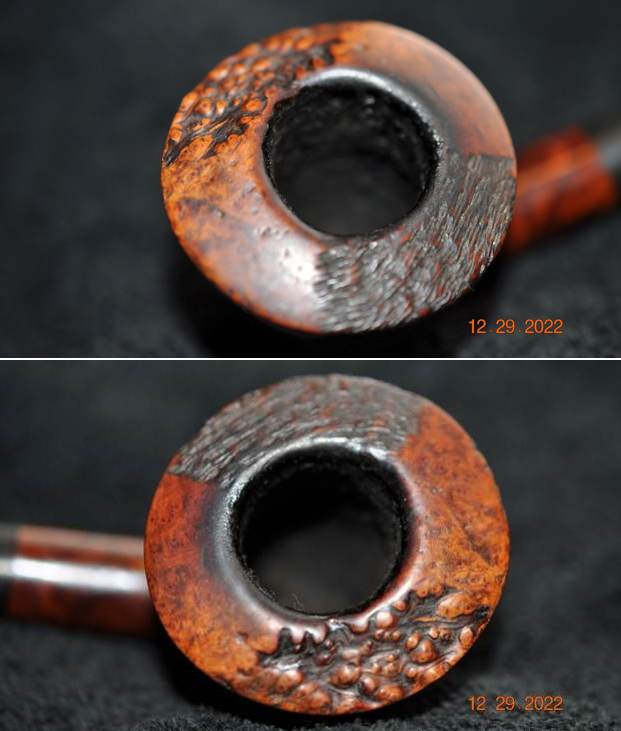
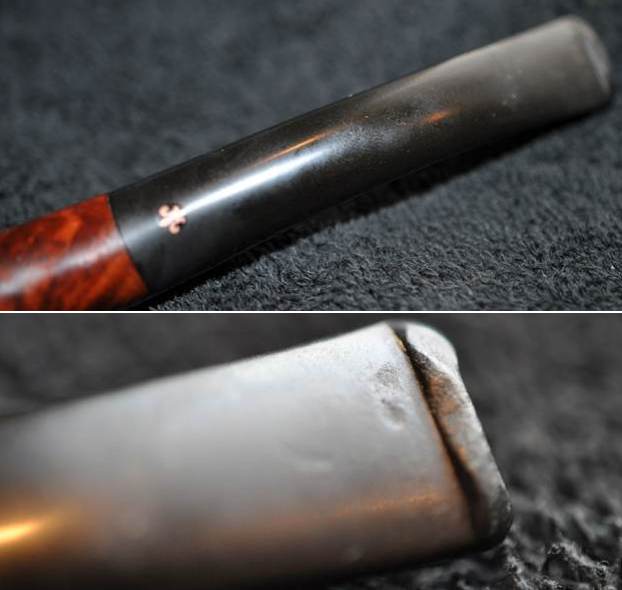
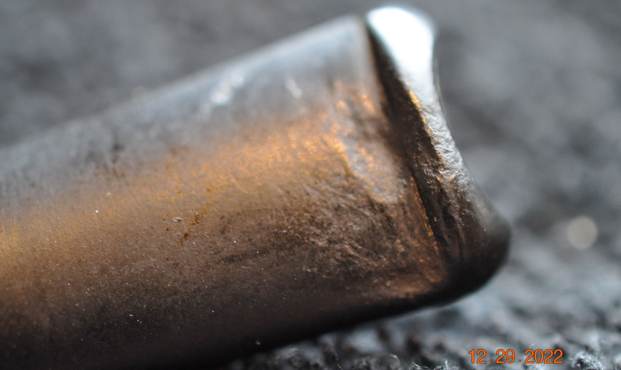
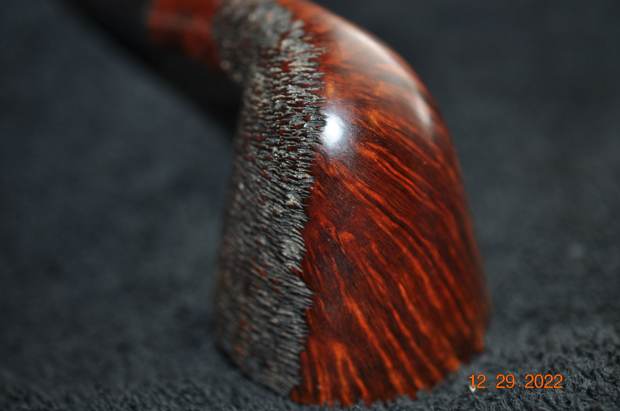
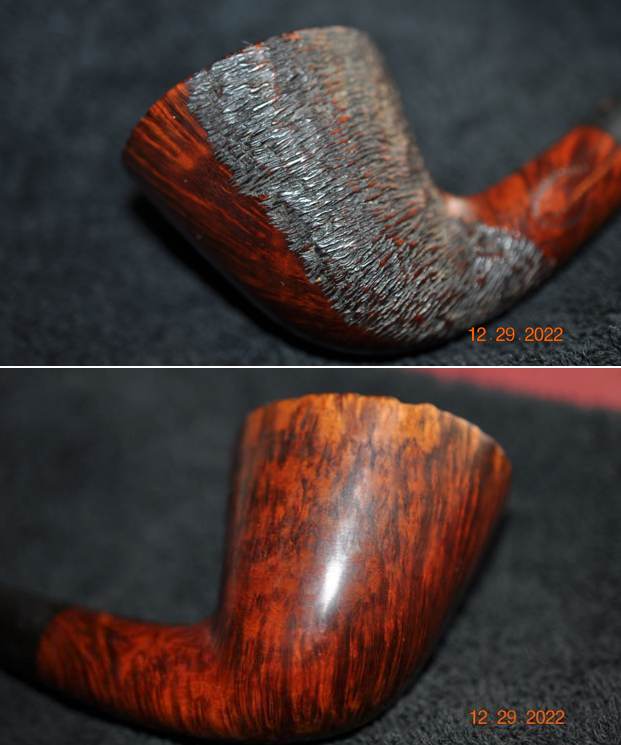
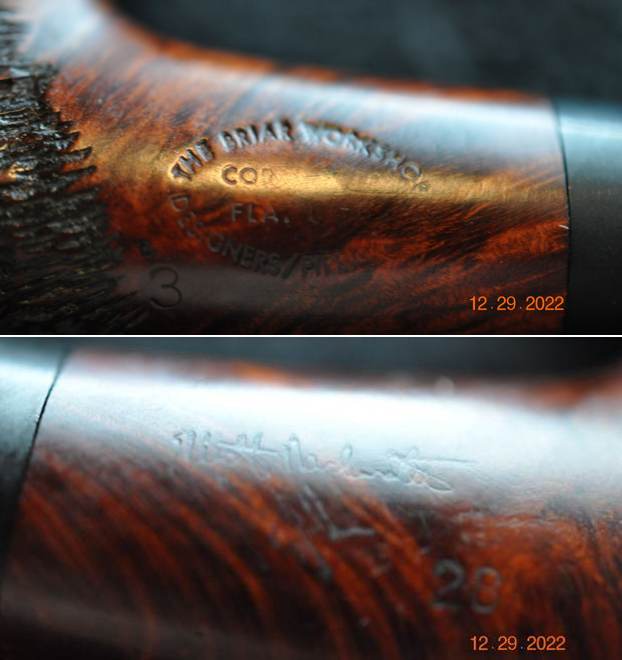
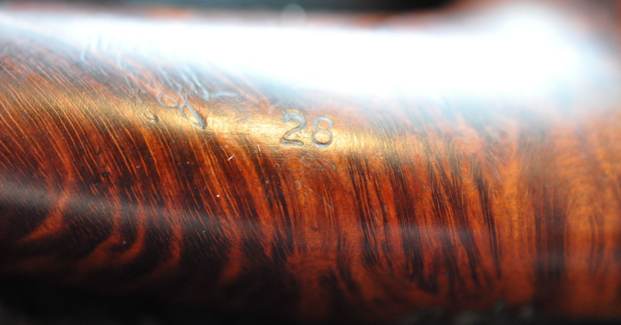
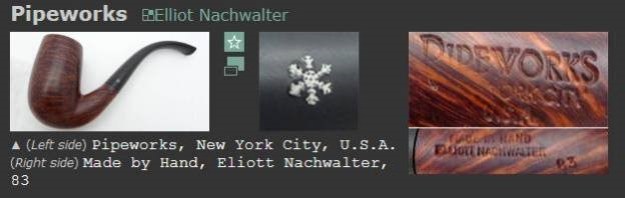
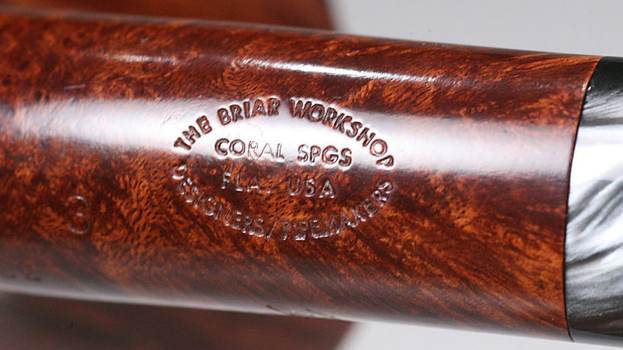
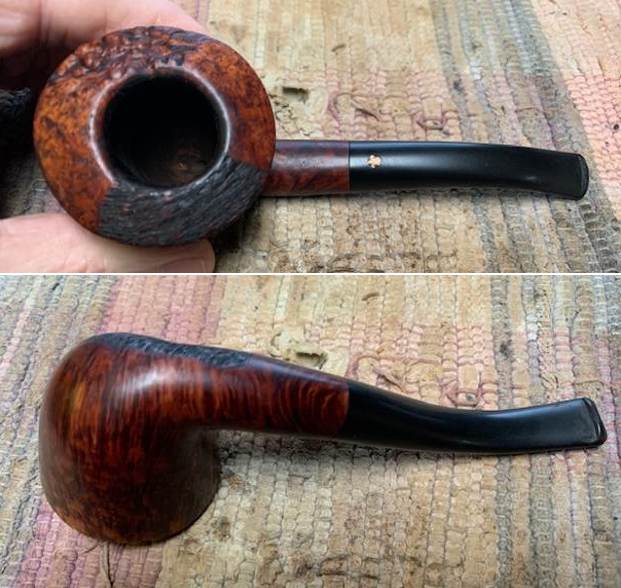
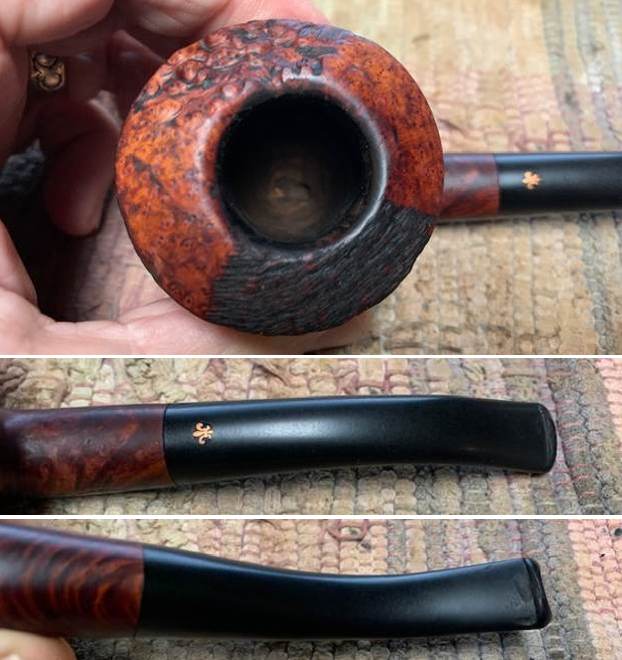
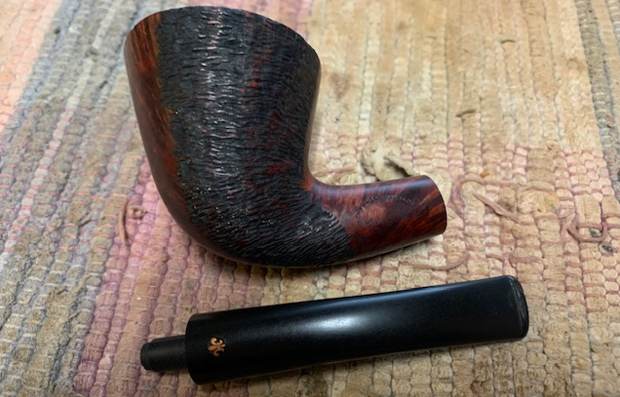
This next pipe was purchased from an online auction on 08/06/22 in Manorville, New York, USA. He sent some photos of the pipe. It was a beautiful shaped The Briar Workshop creation, hand made by Elliott Nachwalter. I have come to appreciated pipes made by Elliott and have several nice ones in my collection. They are uniformly great smokers. I have also restored my fair share of them over the years. The stamping on the left side of the shank is in an oval. Arched at the top of the oval it read The Briar Workshop. In the center it is stamped Coral Spgs[over] FLA. USA. On the bottom of the oval it is stamped Designers/Pipe Makers. Below the left side of the oval it is stamped with a number 3. On the right side it bears Elliot Nachwalter’s signature [over] Jorg Jemelka’s signature. Below that and toward the bowl it is stamped 28. The pipe has an interesting mixture of finishes – on the left side there is a wire like rustication on the rim top, down over the side to the heel and on a portion of the shank. The rest of the finish on the bowl and shank is smooth and has some beautiful grain. On the right side of the rim top was a section of plateau. The bowl had a thick cake in it and the rim top has lava and debris in the plateau, the rustication and on the inner edge of the bowl. The finish on the pipe was dirty with debris ground into the grooves of the rustication and on the smooth finish as well. The stem was oxidized and had some tooth marks on the top and underside just ahead of the button. There was a Fleur-de-lis cut in copper inlaid into the topside of the tapered stem. Jeff took photos of the pipe before he started to work on it.He took photos of the bowl and rim top to show what they looked like before his clean up. He also took some of the stem to show the condition of both sides. The photos of the sides and heel of the bowl show the unique combination of finishes around the bowl and shank. The stains adds depth to the finish and highlights the beautiful grain. Even under the grime it is a real beauty. The stamping on the left side the shank is shown in the first photo below. It is clear and readable as noted above. The second and third photos show the signatures on the right side of the shank and read as noted. I turned to Pipephil’s site to look up information on the brand to identify the period of time when Nachwalter made the pipe. I turned first to the section on Elliot Nachwalter’s name (http://pipephil.eu/logos/en/logo-e2.html#elliotnachwalter) to see what it said. It is interesting in that I shows a pipe made in Vermont whereas the one I have says Coral Springs, Florida USA.I turned then to the section of the site on Pipeworks as that is also stamped on the pipe I am working on (http://pipephil.eu/logos/en/logo-p3.html#pipeworks). Sure enough the site showed a pipe that was stamped the same way as the one I have. It is shown in the screen capture below. The stem logo on the one I am working on is a Fleur-de-Li rather than a snowflake. From there I turned to Pipedia for a bit more information (https://pipedia.org/wiki/Nachwalter). The site quoted from both Lopes book and from Nachwalter’s website and had a lot of great historical information. I quote portions of it below.

From Pipes, Artisans and Trademarks, by Jose Manuel Lopés’

Elliott Nachwalter studied the History of Art and Photography, but passionate about pipes, decided to go into pipe making. With a few tools and some machinery, he started his workshop some 25 years ago (that would be 35 years ago now, as of 2015), in Stowe, Vermont, where he shared a warehouse with Andrew Marks. He later created Briar Workshop with Jorg Jemelka, and was joined by the Danish designer Finn Meyan Andersen. They also collaborated with various artisans, such as Brad Pohlmann, J.T. Cooke, and Carol Burns.

Between 1980 and 1983, Elliot had a shop in New York where he would make and sell his pipes There then followed an interregnum — “For three years I was away from my craft, not knowing if I would ever make pipes again” –, after which he returned to Vermont and built Pipestudio. Aim: “to create sensual pipes, beautifully grained that are pleasing to the eye” and which would be “the creation of sculpted smoking instruments that are functional pieces of art”.

He uses Briar from Italy and Greece; and vulcanite, acrylic, or Cumberland stems. Symbol: a kind of six-pointed star…

…In 1980 I opened a store in New York City and designed and made pipes in the back of the store for pipe smokers that visited me from around the world. I worked late into the night. There came a time when I felt the need to stop making pipes. For three years I was away from my craft, not knowing if I would ever make pipes again. Something was missing. Perhaps I was missing the struggle of the creative process and the pure joy that one feels when you make something turn out exactly as imagined in your mind’s eye. I suppose I needed to make pipes; I needed to work late into the night.

In the autumn of ’96 as the falling leaves mixed with the early snowfall, I built a small studio overlooking the Battenkill and surrounded by the Taconic and Green mountains.

It is my desire to create sensual pipes, beautifully grained that are pleasing to the eye. I work with only the rarest of briar burls that are seasoned in a manner that allows for a minimal break in period and a very smooth smoking pipe. The briar grows in the wild and there is a remarkable difference in grain between each block . This variance of grain together with the myriad of designs in my mind and the nature of the work, makes for truly one of a kind pipes. The essence of my work is in the creation of sculpted smoking instruments that are functional pieces of art.

I turned to the section on Pipedia on the Briar Workshop to gather more information on this particular pipe (https://pipedia.org/wiki/Briar_Workshop). I quote below:

Elliott Nachwalter started the Briar Workshop in Vermont together with Jorg Jemelka. They were joined by Danish designer pipemaker Finn Meyan Andersen.

Through the years they had several talented crafts people working with them including Brad Pohlmann, Jim Cooke (J.T. Cooke), and Carole Burns. They made many pipes that were sold by fine tobacconists around the country. At some point, the Briar Workshop moved to Florida, and the nature of the work changed, along with the pipe makers involved.

While The Briar Workshop was in Vermont, it acquired turn of the century pipemaking equipment as part of a collaborative arrangement with Ehrlich’s of Boston. Jemelka modified this machinery to enable the production of true copies of handmade pipes. This methodology distinguishes Briar Workshop Florida from Briar Workshop Vermont.

Nachwalter and Brad Pohlmann continued in providing designs for batch production as well as hand-made ‘one-offs’ for sale.

It would seem the Briar Workshop and the pipemakers involved played a significant part in laying the groundwork that launching the American hand made pipe making tradition, which has since exploded.

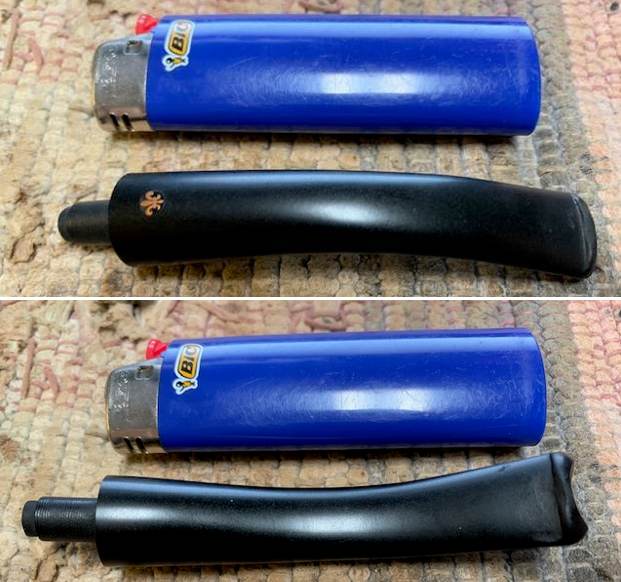
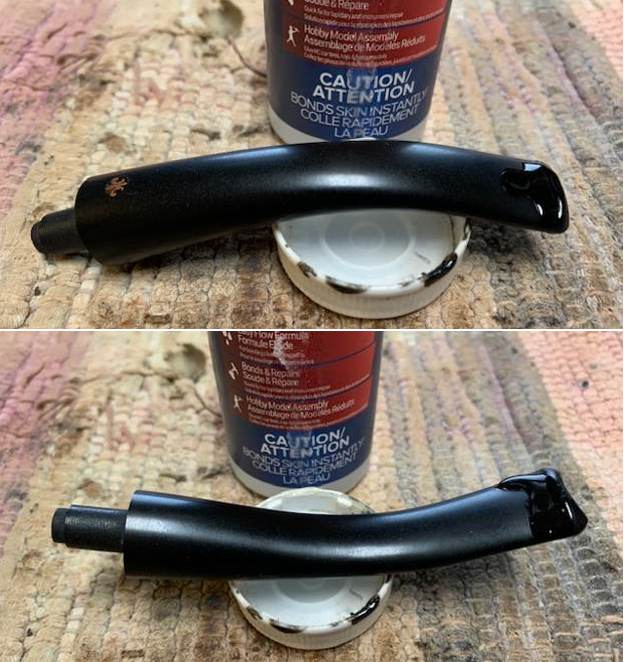
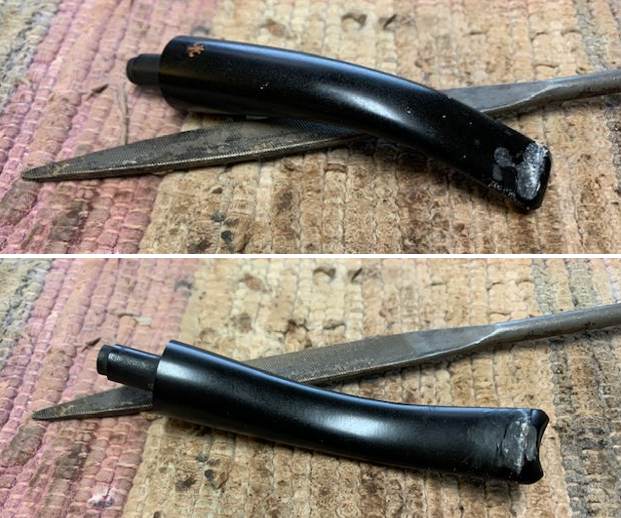
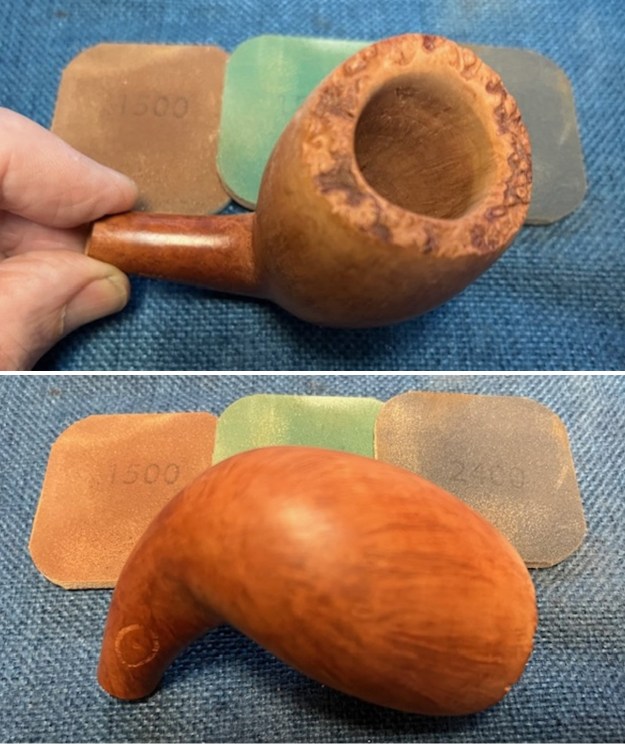
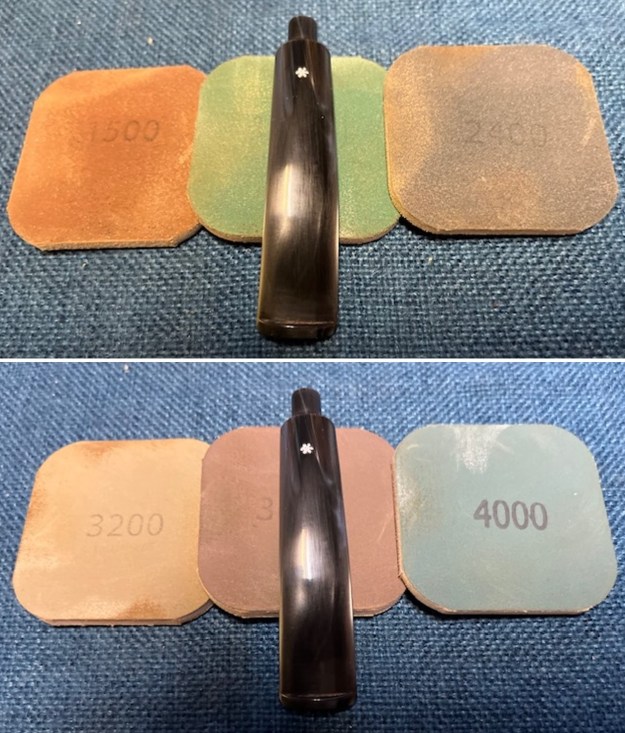
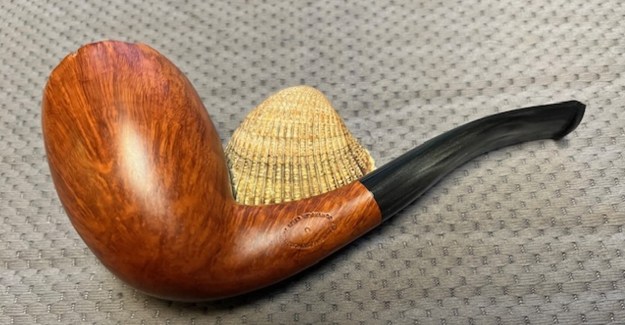
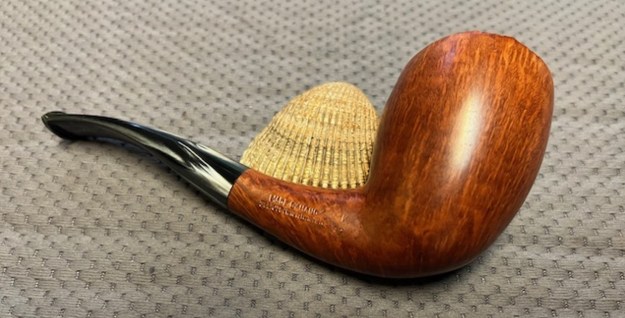
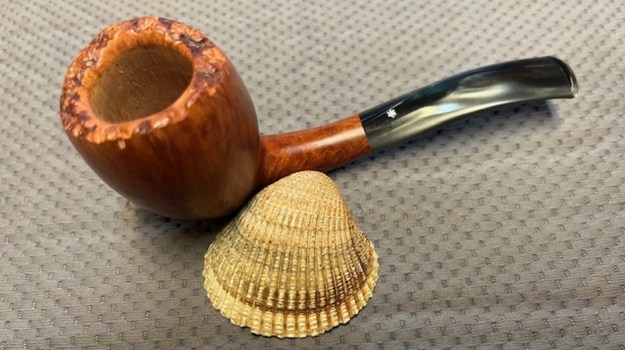
The site also had a photo of the stamp on the left side of the shank that is identical to the one I am working on.Jeff had thoroughly cleaned up the pipe. He reamed the pipe with a PipNet Pipe Reamer and cleaned up the remnants with a Savinelli Fitsall Pipe Knife. He scrubbed the bowl with undiluted Murphy’s Oil Soap with a tooth brush. He rinsed it under running warm water to remove the soap and grime. He cleaned out the inside of the sump in the shank and the airway in the stem with alcohol, cotton swabs and pipe cleaners. He scrubbed the exterior of the stem with Soft Scrub to remove as much of the oxidation and calcification as possible. He soaked the stem in Before & After Deoxidizer and rinsed it off with warm water. I took close up photos of the bowl, rim and the stem. You can see how clean the bowl and rim top and edges are. The stem is in good condition with deep tooth marks and some chatter as noted above.I took photos of the stamping on the sides of the shank. All are clear and readable as noted above. I removed the stem from the shank and took a photo to give a sense of the proportions of the pipe.I started my work on the pipe by cleaning up the inner edge of the bowl with a folded piece of 20 grit sandpaper to minimize and remove as much damage as possible.I polished the briar with micromesh sanding pads – dry sanding with 1500-12000 grit pads. I wiped the bowl down after each  pad to remove the grit. The bowl began to take on a rich shine. It is a beauty.   I rubbed the bowl down with Before & After Restoration Balm. I worked it into the briar with my finger tips. I worked it into the rustication and the plateau rim top with a shoe brush. I let it sit for 10 minutes and the Balm did its magic. It enlivens, cleans and preserves the briar. It brought this bowl back to life. I buffed it off with a clean cloth and took the following photos. I set the bowl aside and turned to work on the stem. I “painted” the stem surface with the flame of a lighter to lift the tooth marks. They came up considerably but not enough. I filled in the marks that remained with clear CA glue and set it aside to cure. Once cured I used a small file to recut the button and flatten out the repairs. I sanded them with 220 grit sandpaper and started the polishing process with 600 grit wet dry sandpaper. I was able to polish out the tooth marks and chatter with micromesh sanding pads – 1500-12000 grit pads. I wiped it down with a damp cloth after each sanding pad. I used Before & After Pipe Polish – both Fine and Extra Fine to further polish the stem. This Briar Workshop Coral Springs, Florida Mixed Finish Elliott Nachwalter & Jorge Jemelka Dublin is a great looking pipe now that it has been restored. The beautiful finish really highlights the grain and the polished finish is stunning. I put the stem back on the bowl and carefully buffed the pipe with Blue Diamond on the buffing wheel. I gave the bowl and the stem multiple coats of carnauba wax on the buffing wheel and followed that by buffing the entire pipe with a clean buffing pad. I hand buffed the pipe with a microfiber cloth to deepen the shine. The finished Nachwalter Briar Workshop Dublin fits nicely in the hand and feels great. Give the finished pipe a look in the photos below. The dimensions of the pipe are Length: 6 inches, Height: 2 inches, Outside diameter of the bowl: 1 ¾ inches, Chamber diameter: 7/8 of an inch. The weight of the pipe is 59 grams / 2.08 ounces. I will be adding the pipe to the American Pipe Makers Section of the rebornpipes store. If you are interested in purchasing this pipe send me a message or an email. Thanks for reading this blog and my reflections on the pipe while I worked on it.
What a Challenge – A Once Beautiful Pipeworks Unique by Elliot Nachwalter


Blog by Steve Laug

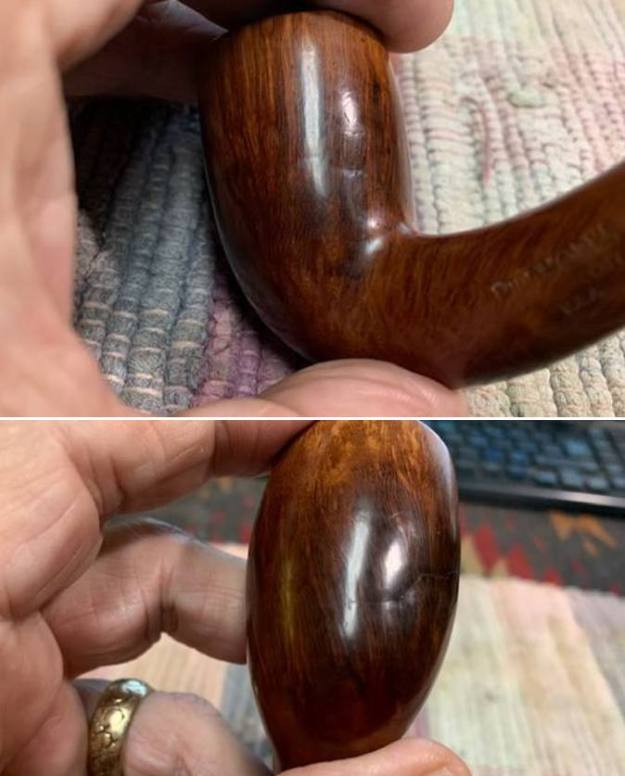
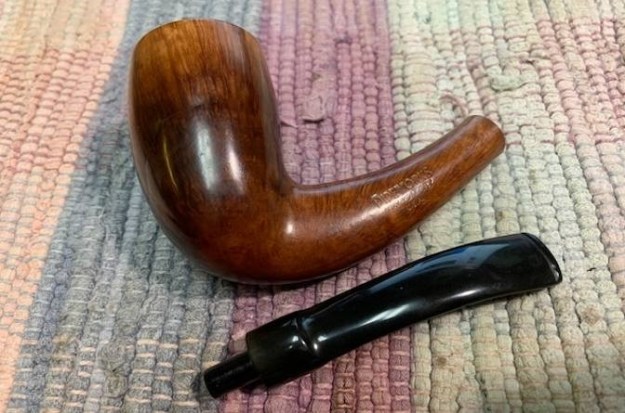
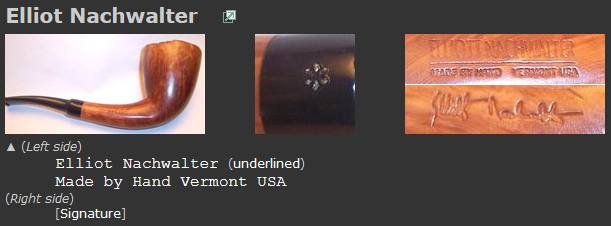
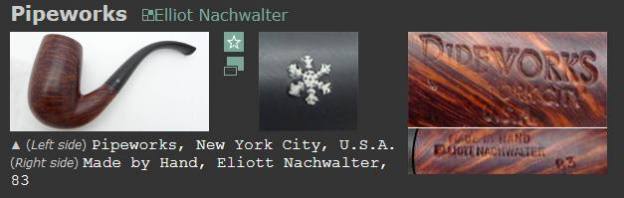
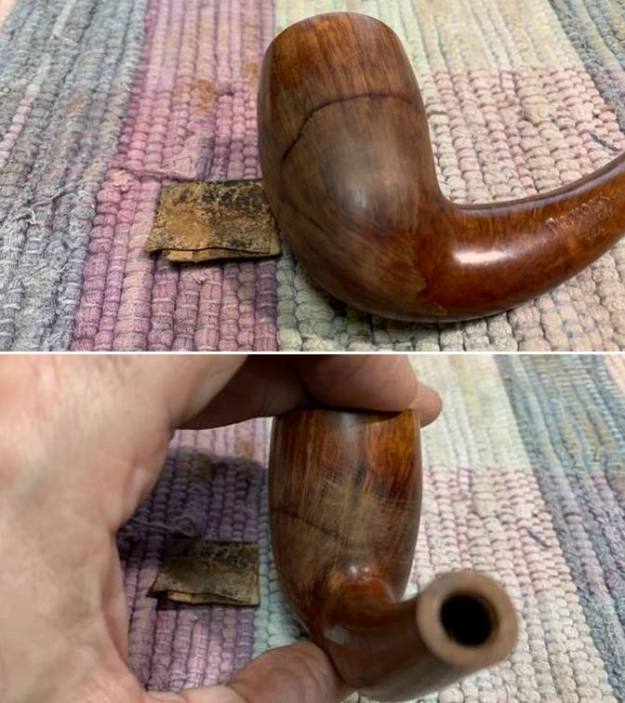
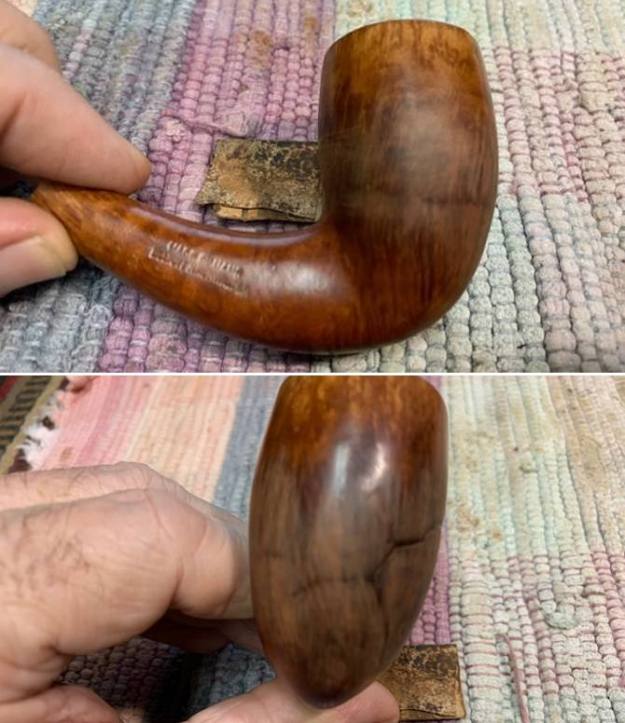
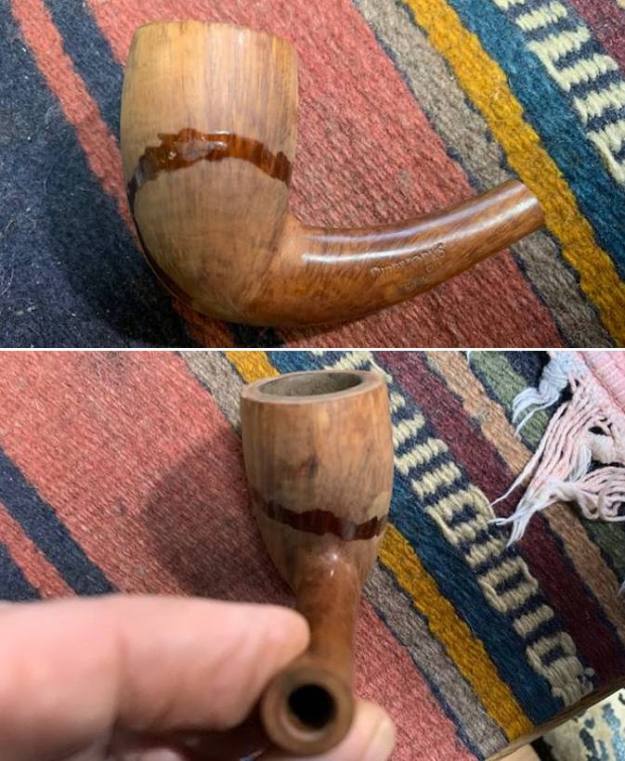
This next pipe was a gift from a friend. He contacted me about a  pipe he wanted to give me. He sent some photos of the pipe. It was a beautiful shaped Pipeworks creation, hand made by Elliot Nachwalter. The stamping on the left side of the shank read Pipeworks [over] New York City [over] USA. On the right side of the shank it read Made by Hand [over] Elliot Nachwalter. Near the stem is stamped a number that I assume is the date/shape stamp. It reads 6 81 which could easily be 6th pipe of 1981 or a pipe made in June of 1981. The pipe has some issues that really don’t show up to well except in the second photo below. There were really just a few of them but they were big ones. The pipe had what looked to be a trough like groove with a crack in the bottom around at least the left side and front of the bowl judging from his photos. It was probably even worse in person than it appeared in the photos. I thought it would be a challenge for me to deal with during some time off over Christmas so he put it in the mail for me. He told me that he had originally purchased it to restore but when it arrived he figured it was beyond his capabilities. That always scares me a bit when someone says that as I am not sure I am all that capable either sometimes. Once it arrives I will know more for sure.The next photo shows some of the crack/trough mid bowl extending from the back of the bowl across the side and around to the front. All around the damaged area the briar had darkened as well. It is a shame as it is a really beautiful pipe. I am guessing that it was smoked very hot but I would have a better idea once I had in hand and cleaned out the bowl.The rim top and edges looked very good and the stem was surprisingly in good shape. There were some light tooth marks next to the button that really were not an issue.Yesterday when I came home from work the pipe was waiting for me. I was excited to see it in person so I took it to the basement worktable and opened the box. I took photos of the pipe as I examined the crack/trough and was not surprised to see that they went all the way around the bowl – left, right, front and rear of the bowl. Other than that the finish looked good. The rim top was in good condition. The bowl had a thin cake that would need to go so I could check out the inner walls to see if the cracks had come through. The stem looked good and sure enough there were some tooth marks and chatter on the stem as noted above – a little heavier on the underside than the topside. This would be a fun challenge as it was a beautiful pipe and one made by a favourite pipe maker of mine – Elliot Nachwalter. I took a close up photo of the rim top and bowl so you can see how they look. I captured the stem as well to try to show the tooth marks and chatter near the button.I took photos of the stamping on both sides of the shank. It was clear and readable as noted above (They are far more readable than can be seen in the photos below). There was also the classic Nachwalter snowflake (star) logo on the left side of the saddle stem.I took a series of photos of the trough around the bowl sides. It was a complete loop that had one small trail splitting off down the left front side of the bowl. There was a hairline crack in bottom of the groove that would need to be dealt with. I removed the stem from the shank to give a sense of the unique elegance of the shape of the pipe. I really like the look of it.I turned to Pipephil’s site to look up information on the brand to identify the period of time when Nachwalter made the pipe. I turned first to the section on Elliot Nachwalter’s name (http://pipephil.eu/logos/en/logo-e2.html#elliotnachwalter) to see what it said. It is interesting in that I shows a pipe made in Vermont whereas the one I have says New York City USA.I turned then to the section of the site on Pipeworks as that is also stamped on the pipe I am working on (http://pipephil.eu/logos/en/logo-p3.html#pipeworks). Sure enough the site showed a pipe that was stamped the same way as the one I have. It is shown in the screen capture below. The stem logo looks more like the pipe above than the one below.I also learned that the pipe was crafted during the period (1980-1995) when Elliot Nachwalter and his ex-wife Carol Burns owned the Wilke Pipeshop in NYC. So now I had a time period for the pipe. I wonder if the stamping on my pipe 6 81 helps to date it to 1981?

From there I turned to Pipedia for a bit more information (https://pipedia.org/wiki/Nachwalter). The site quoted from both Lopes book and from Nachwalter’s website and had a lot of great historical information. I quote portions of it below.

From Pipes, Artisans and Trademarks, by Jose Manuel Lopés’

Elliott Nachwalter studied the History of Art and Photography, but passionate about pipes, decided to go into pipe making. With a few tools and some machinery, he started his workshop some 25 years ago (that would be 35 years ago now, as of 2015), in Stowe, Vermont, where he shared a warehouse with Andrew Marks. He later created Briar Workshop with Jorg Jemelka, and was joined by the Danish designer Finn Meyan Andersen. They also collaborated with various artisans, such as Brad Pohlmann, J.T. Cooke, and Carol Burns.

Between 1980 and 1983, Elliot had a shop in New York where he would make and sell his pipes There then followed an interregnum — “For three years I was away from my craft, not knowing if I would ever make pipes again” –, after which he returned to Vermont and built Pipestudio. Aim: “to create sensual pipes, beautifully grained that are pleasing to the eye” and which would be “the creation of sculpted smoking instruments that are functional pieces of art”.

He uses Briar from Italy and Greece; and vulcanite, acrylic, or Cumberland stems. Symbol: a kind of six-pointed star…

…In 1980 I opened a store in New York City and designed and made pipes in the back of the store for pipe smokers that visited me from around the world. I worked late into the night. There came a time when I felt the need to stop making pipes. For three years I was away from my craft, not knowing if I would ever make pipes again. Something was missing. Perhaps I was missing the struggle of the creative process and the pure joy that one feels when you make something turn out exactly as imagined in your mind’s eye. I suppose I needed to make pipes; I needed to work late into the night.

In the autumn of ’96 as the falling leaves mixed with the early snowfall, I built a small studio overlooking the Battenkill and surrounded by the Taconic and Green mountains.

It is my desire to create sensual pipes, beautifully grained that are pleasing to the eye. I work with only the rarest of briar burls that are seasoned in a manner that allows for a minimal break in period and a very smooth smoking pipe. The briar grows in the wild and there is a remarkable difference in grain between each block . This variance of grain together with the myriad of designs in my mind and the nature of the work, makes for truly one of a kind pipes. The essence of my work is in the creation of sculpted smoking instruments that are functional pieces of art.

So once again the time period for the pipe that I have was confirmed as being made between 1980 when Elliot was in New York City and 1996 when he left to build a workshop in Vermont. I love it when the information comes together.

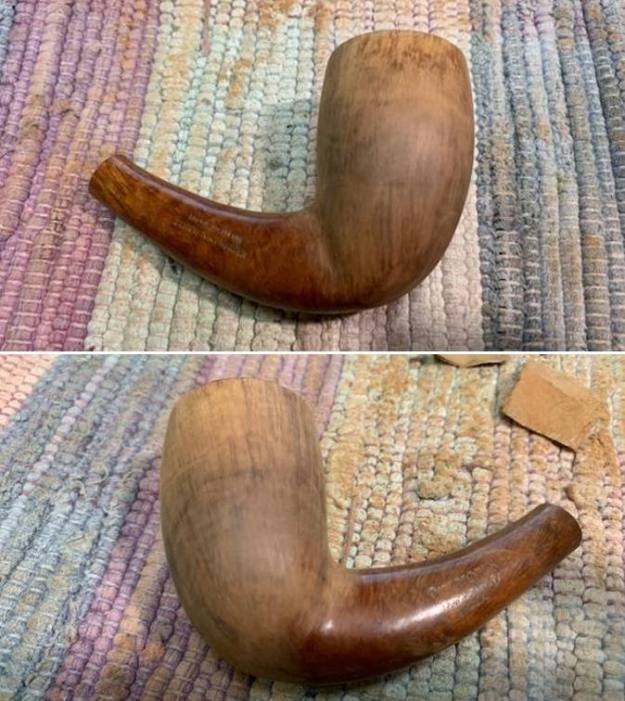
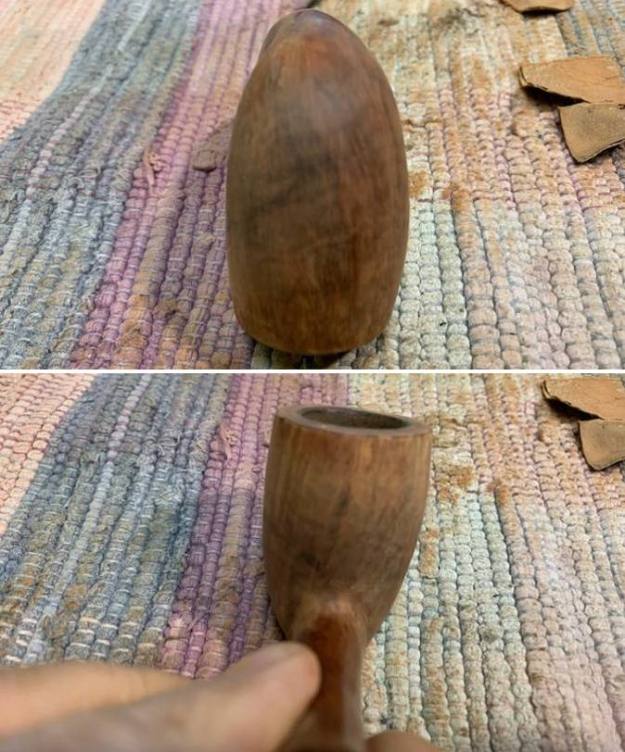
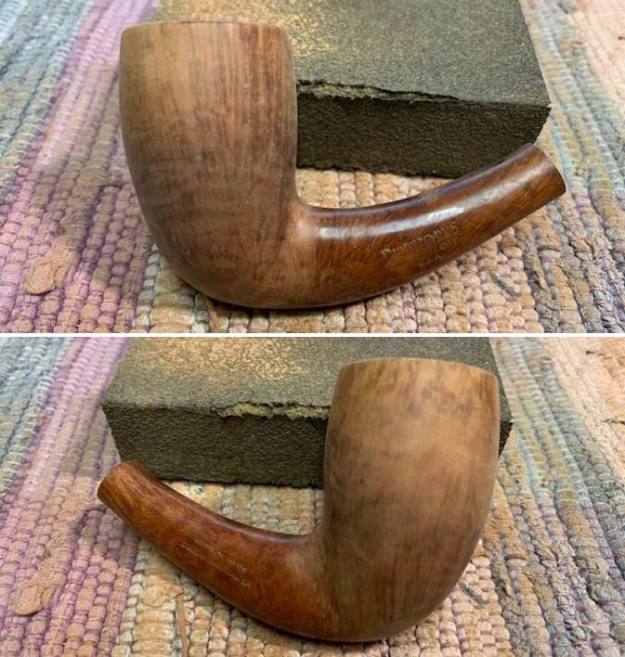
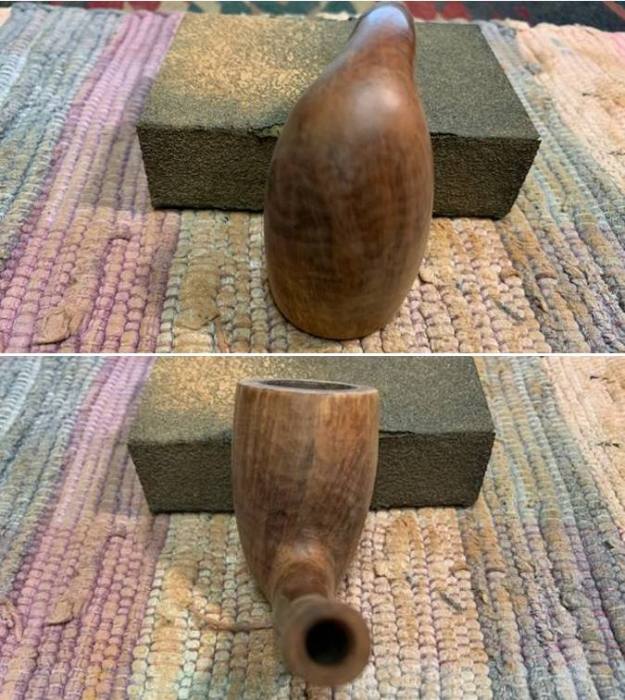
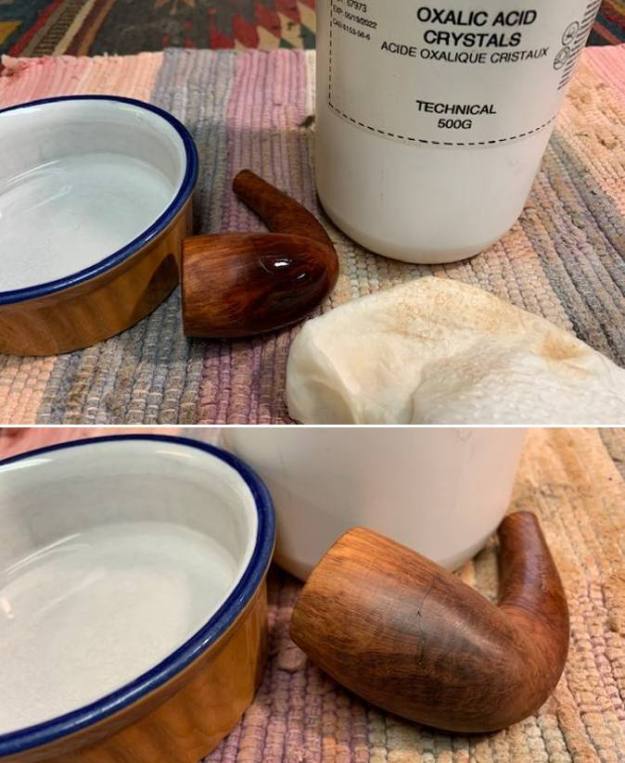
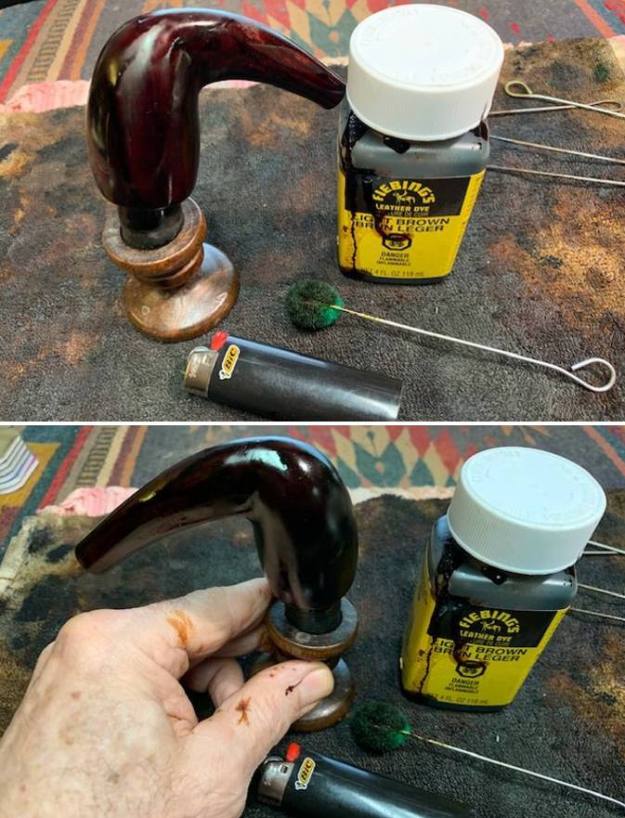
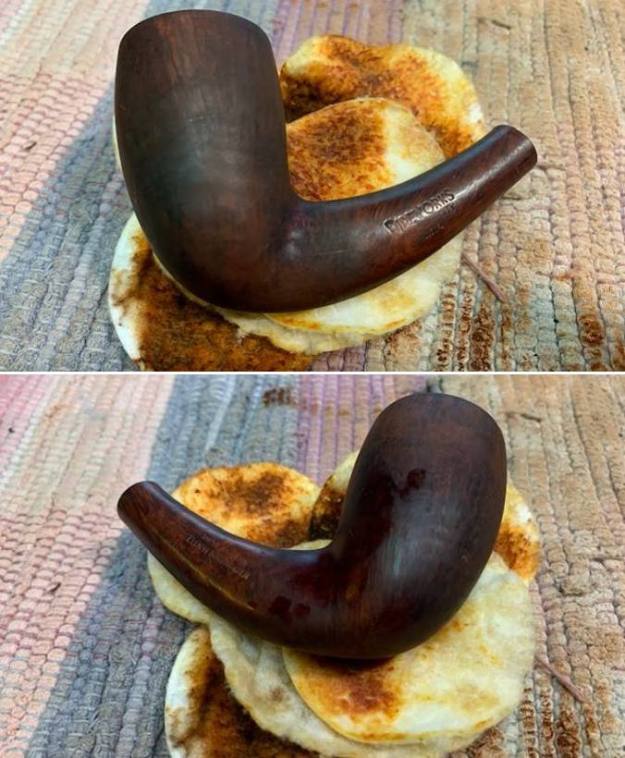
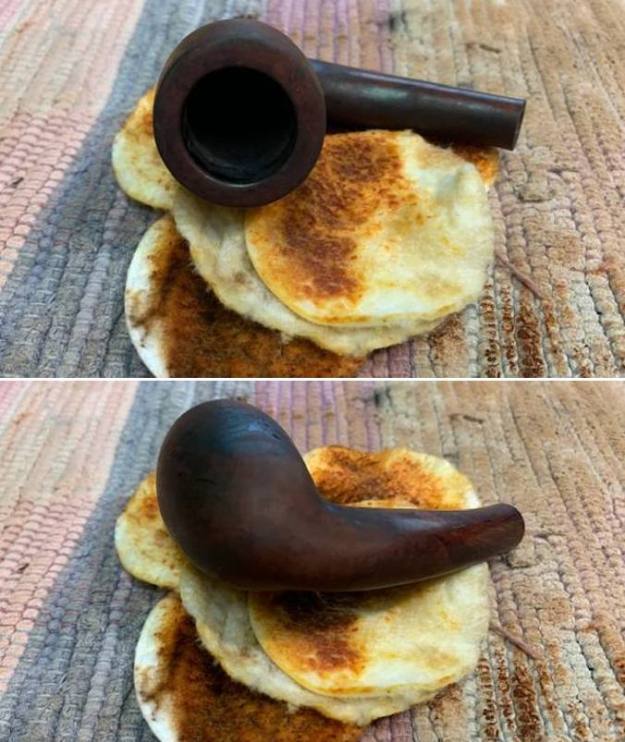
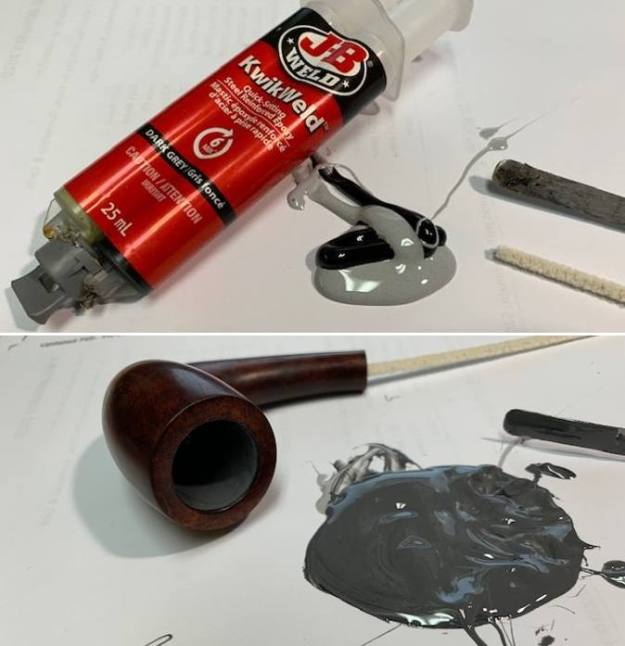
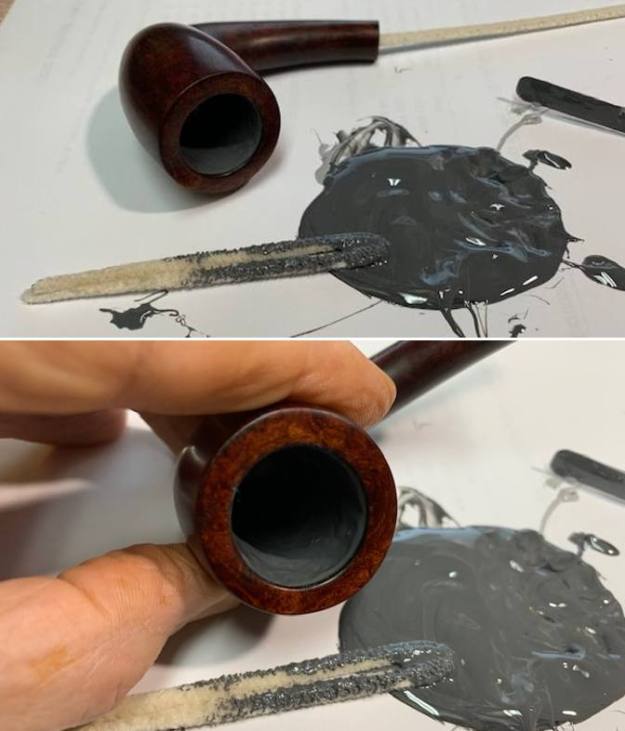
Now it was time to work on this old timer. I started my work by highlighting the crack and groove around the bowl sides. I sanded the entire groove all around the bowl with a folded piece of 220 grit sandpaper. In the photos that follow you can see the cracked area very clearly. I left the sanding dust in place on the bowl and filled in the crack with clear CA glue. I was not too concerned with further cracking around the bowl as it was complete circle – the ends of the crack were joined. I was more concerned with heat from smoking forcing the cracking deeper into the interior of the bowl. The photos tell the story of the repair. Once the glue cured I sanded it smooth to blend it into the surrounding briar. I refilled any spots that still showed damage with more CA glue. I sanded them smooth as well. The bowl was starting to look quite good. I sanded it further with a medium and fine grit sanding sponge to blend the repairs into the surrounding briar. The grain really began to stand out. With that done I called it a night and when I woke early this morning I made a mixture of Oxalic Acid and water. I wiped down the darkened areas on the sides of the bowl to lighten them as much as possible. The mixture worked wonders and the pipe looked much better. There was one small spot on the crack shown in the second photo that I needed to touch up with the CA glue.With the externals repaired I turned my attention to the bowl. I reamed it with a PipNet reamer and took the cake back to bare briar. I cleaned that up with a Savinelli Fitsall Pipe Knife. I wanted the cake removed so I could check out the inside walls. I finished reaming process by sanding the bowl with 220 grit sandpaper wrapped around a dowel. I cleaned out the airway in the stem and shank with alcohol, cotton swabs and pipe cleaners. I scrubbed the walls of the bowl with alcohol at the same time. I examined the walls and bottom of the bowl with a bright light. There were not cracks on the internal walls that matched those around the bowl sides and front. There was however some checking on the back wall directly behind the cracks on the back of the bowl. I cleaned those carefully to remove all the debris. I am pretty certain that the heat followed the checking out to the exterior and during repeated hot smoking followed the path of least resistance all the way around the bowl. I think I found the internal source. I would need to do an internal repair to the bowl to stop further cracking from the inside.I polished the bowl and the rim top, sides and shank with micromesh sanding pads – dry sanding with 1500-2400 grit pads in preparation for staining the pipe. I stained the bowl with a light brown aniline stain. I applied it with a dauber and then flamed it with a lighter to set it in the grain. I repeated the process until I was happy with the coverage.I went upstairs and had lunch with my wife. The stain cured for an hour while I dined. I wiped the bowl down with cotton pads and isopropyl alcohol to make the finish more transparent and show the grain around the bowl and shank. I was liking the colour and the coverage at this point. I then polished the bowl and the rim top, sides and shank with micromesh sanding pads once again this time to make it even more transparent – dry sanding with 1500-12000 grit pads and wiping it down after each pad with a damp cloth. The grain stood out nicely and the repairs were well hidden at this point! It was looking very good. I rubbed the bowl and shank down with Before & After Restoration Balm. I worked it into the surface of the bowl sides and shank with my fingertips to clean, enliven and protect the briar. I let the balm sit for a little while and then buffed with a cotton cloth to raise the shine. I really like what I was seeing!I mixed a batch of JB Weld to line the interior of the bowl. I blended the two parts of the product together with a dental spatula and applied it to the walls of the bowl with a folded pipe cleaner. Before I started that though I inserted a pipe cleaner in the shank to keep the airway open in the bottom of the bowl. JB Weld cures neutral and does not gas off when heated. Once it cures I sand it smooth leaving it in the checking and cracks of the bowl walls. I give it a bowl coating of sour cream and activated charcoal powder to further protect the walls until a cake is formed. I set the bowl aside to let the wall repairs cure overnight. I turned my attention to the stem. I removed the tooth chatter and marks with the polishing process with the micromesh sanding pads – 1500-12000 grit pads. I wiped it down with a cloth impregnated with Obsidian Oil after each sanding pad. I used Before & After Pipe Polish – both Fine and Extra Fine to further polish the stem. I gave it a final coat of Obsidian Oil and let it dry. I touched up the stamping on the side of the saddle stem with acrylic fingernail polish. I let it dry and scraped off the excess. The snowflake (or star?) is quite visible and looks good.This Pipeworks NYC Elliot Nachwalter Hand Made with a vulcanite saddle stem is really an elegant looking pipe. It was a lot of work to bring it back but I think it was worth the effort. I put the stem back on the bowl and carefully buffed the pipe with Blue Diamond on the buffing wheel. I gave the bowl and the stem multiple coats of carnauba wax on the buffing wheel and followed that by buffing the entire pipe with a clean buffing pad. I hand buffed the pipe with a microfiber cloth to deepen the shine. The finished Nachwalter feels as great in the hand as it looks to the eye. Give the finished pipe a look in the photos below. The dimensions of the pipe are Length: 5 ¾ inches, Height: 2 ¼ inches, Outside diameter of the bowl: 1 ¼ inches, Chamber diameter: ¾ of an inch. The weight of this pipe is 35 grams/1.23 ounces. I will keep the pipe (for a while anyway) and enjoy it with a favourite tobacco. Thanks for reading this blog and my reflections on the pipe while I worked on it.
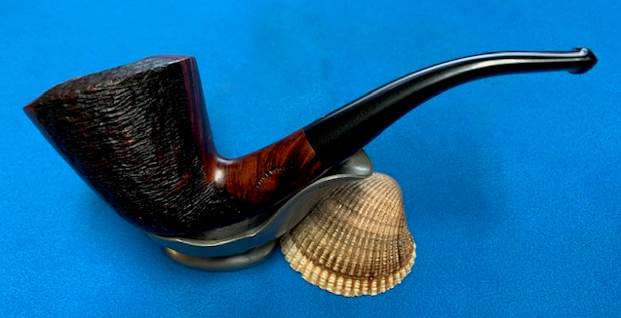
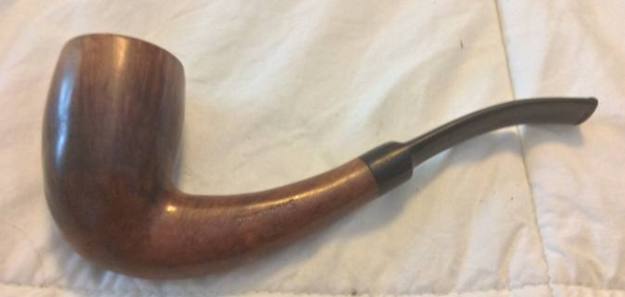
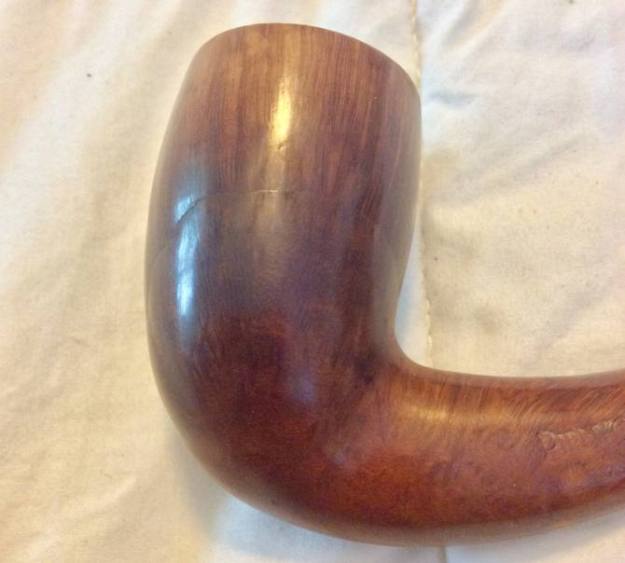
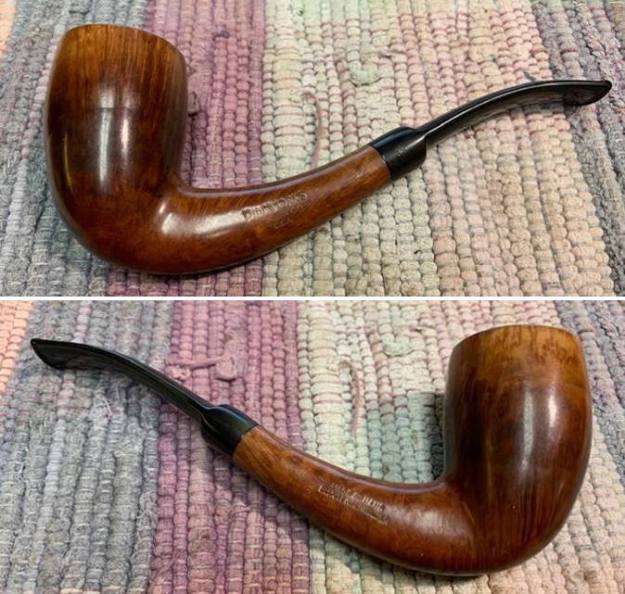
Review of a Nachwalter Dublin


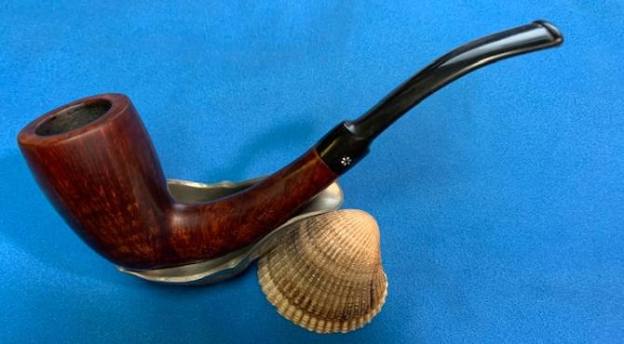
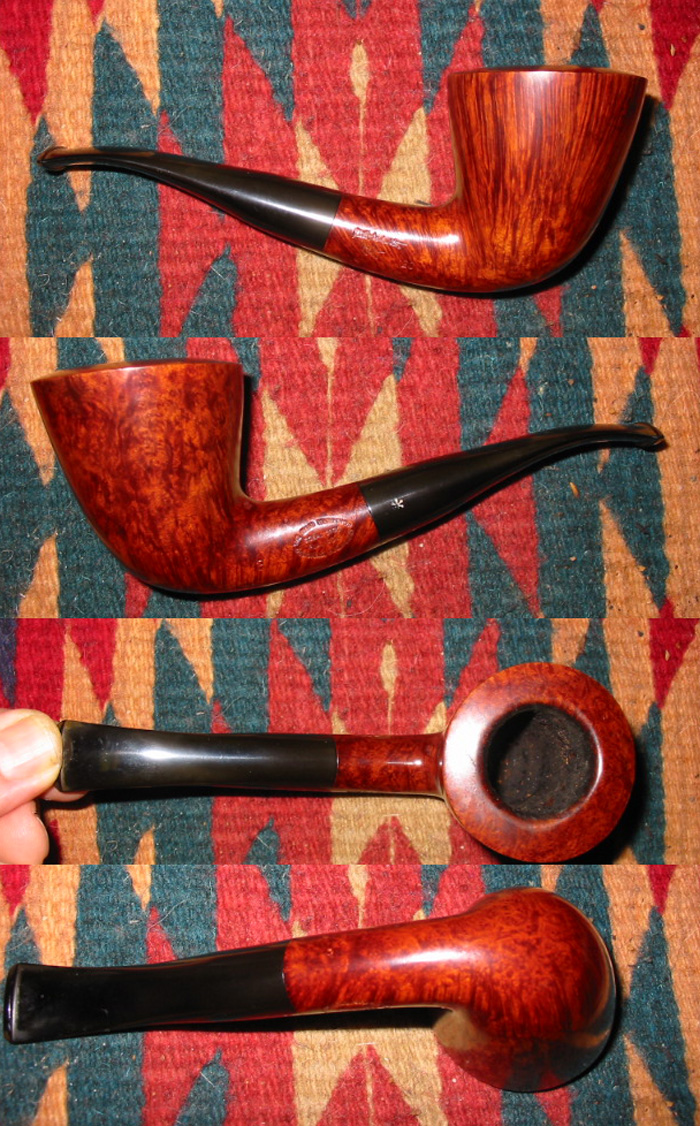
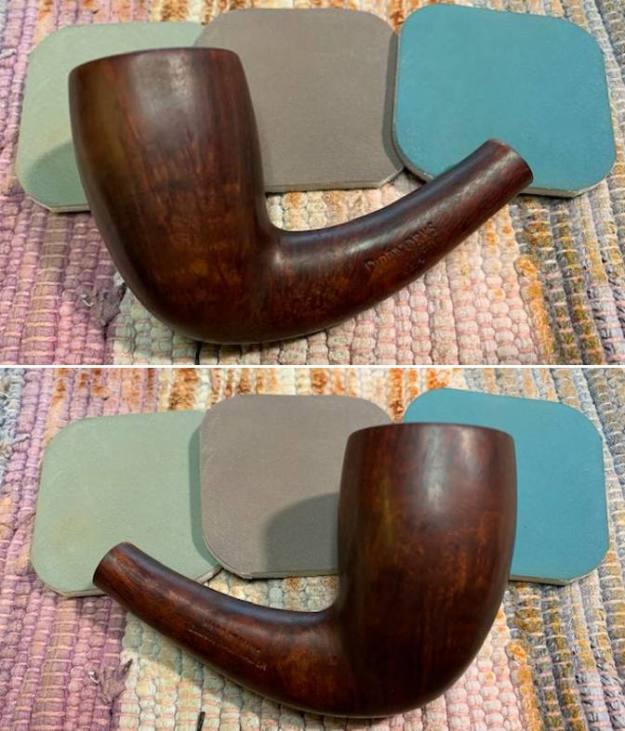
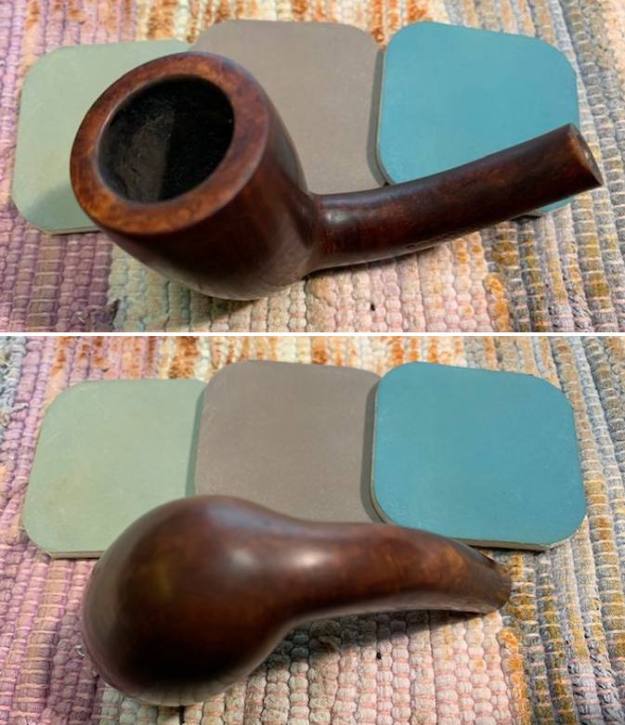
I picked this Nachwalter pipe up for a good price from Mike at Briar Blues many years ago now. It seems that the older I get the faster time seems to spin. It is a nicely shaped Dublin. The pipe came with a cloth pipe sock in black velevet. (I am not sure this was one Mike threw in or whether it came that way from Nachwalter). The workmanship on this pipe is very nice. I have smoked it quite a bit over the years since I got it. It has been through at least two moves during that time and has survived both of them with a time of storage between them both. This is a third review I am writing today since I had the day off. The length of the pipe is 5 3/4 inches and the bowl height is 2 ¼ inches. The outer diameter of the bowl is 1 ¾ inches. The chamber diameter is 1 inch and depth is 1 1/2 inches. It is a large bowled pipe and is light for its size. It sits well in the nook of the hand formed by the thumb and index finger on either hand. The stamping is on both sides of the shank. It is stamped on the left side in an oval. The outer ring of the oval is stamped THE BRIAR WORKSHOP on the top of the oval and DESIGNERS/PIPEMAKERS on the bottom side of the oval. In the centre of the oval it is stamped CORAL SPGS over FLA. USA. On the other side of the shank it is stamped in script Elliot Nachwalter and under that is stamped his signature.
Image

The pipe has a smooth finish and the staining choice highlights the great grain. The bowl is surrounded by flame grain/straight grain. The top of the bowl cap and the bottom of the bowl and shank has some beautiful birdseye grain. This pipe is larger than it looks and with the 1 inch diameter bowl, holds a lot of tobacco. Regardless of the size it fits well against the thumb and rests comfortably in hand. The stain appears to be made up of several coats. There seems to be a dark understain that makes the grain stand out. Over this is a coat of reddish brown, it is not an oxblood but more of a mahogany looking stain. The rim is crowned, almost a reversed chamfer. The inner edge is beveled into the bowl and the out edge is sharp to the sides. The crowned top gives the pipe slightly curved top look from the side.
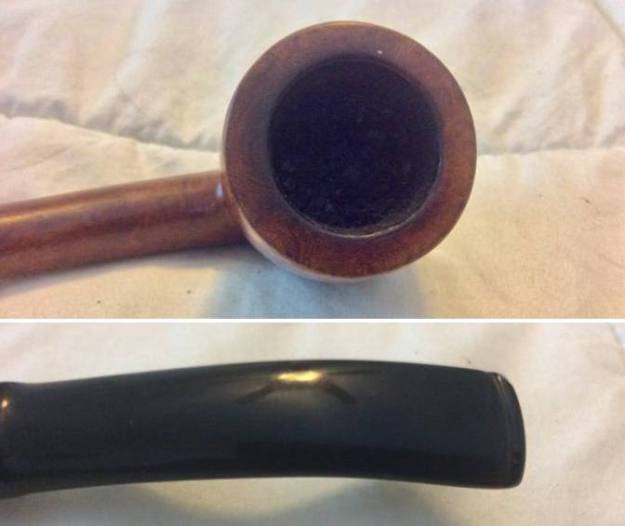
The stem is a well-made taper crafted from ebonite or vulcanite. It is a softer feel in the mouth and on the teeth than acrylic. The stem tapers gradually back to the button and is just the right thickness at the portion that rides in the mouth – not too thick or too thin. It is also durable and is made of quality material as it has not oxidized in the years I have had it and appears to have remained black for the previous owner as well. The snowflake logo that is on Nachwalter pipes is faded slightly but the impression is still visible on the left side of the stem. The tenon is an integral part of the stem and is chamfered/ countersunk and well-polished. The button is well shaped – thin at the edges with a very slight rise to the centre top and bottom, forming an eye shaped end view. The lip on the button is very slight but still fits well behind the teeth for a comfortable feel. The draught hole in the end of the button is also funneled to deliver a mouthpiece that has the same diameter from start to finish. Comfortable and well executed. A pipe cleaner passes easily through the pipe with no obstruction.

Internally, the pipes made by the Briar Workshop that I have had over the years, have all had exceptional mechanics. The bowl chamber on this one is large – drilled to a 1 inch diameter. The inner edge of the bowl us beveled to the rim. The outer edge is sharp and clean. The outer edges are slightly sanded so that the edges where the top and sides meet are not sharp but gently rounded. This pipe was purchased as an estate but I don’t believe that the bowl was coated with any bowl coating. When I bought the pipe it was still barely smoked and the walls on the lower part of the bowl were still clean briar. The cake built up on the bowl very easily. The draught hole is centered at the bottom of the bowl and seems to have a slight funnel leading into the shank and stem. There is a very easy and open draw to the pipe. The fit of the stem to the shank is excellent – smooth and tight with no light showing at the joint. The tenon fits well in the mortise and seems to sit deep in the mortise against the bottom. The airway is in the centre of the mortise and aligns with the airway in the tenon. The edges of the tenon have been polished and rounded and the airhole countersunk so that it meets the airway in the mortise. The pipe does not whistle or gurgle when smoked. Looking at the airways with a flashlight it is clear to see that they are smooth and polished with no rough edges.
I have smoked this pipe many times since I received it from Mike at Briar Blues. Because of the large bowl I do not reach for it as often as I used to because I tend to favour smaller bowls at present. I have found that it is a good flake pipe. It is one I used when I folded and stuffed flakes. It smokes cool and easily and delivers good flavor with the Virginias that I choose to smoke in it.