
Blog by Steve Laug
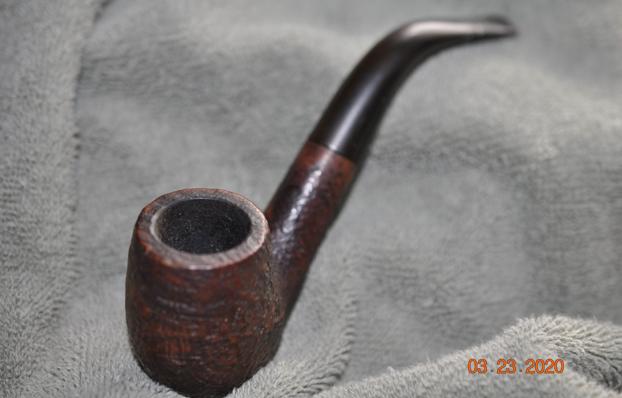
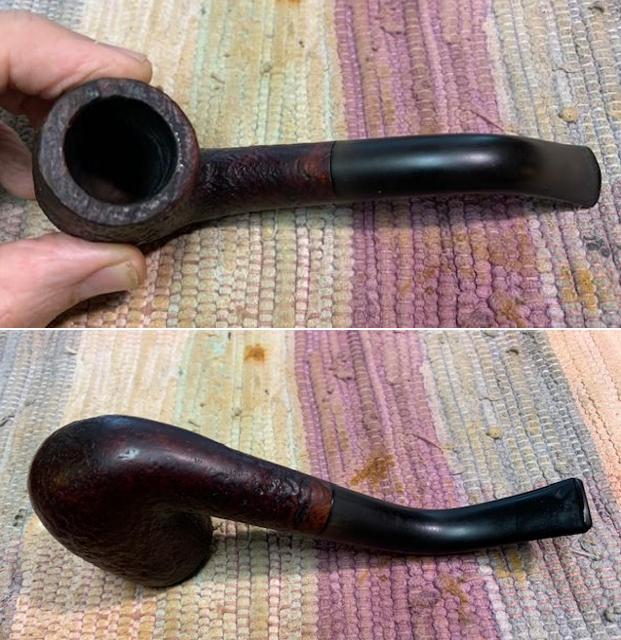
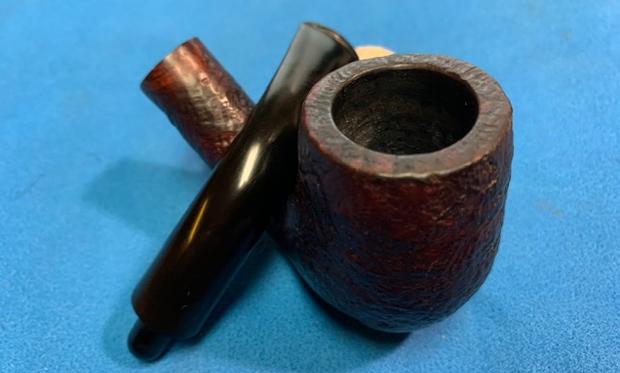
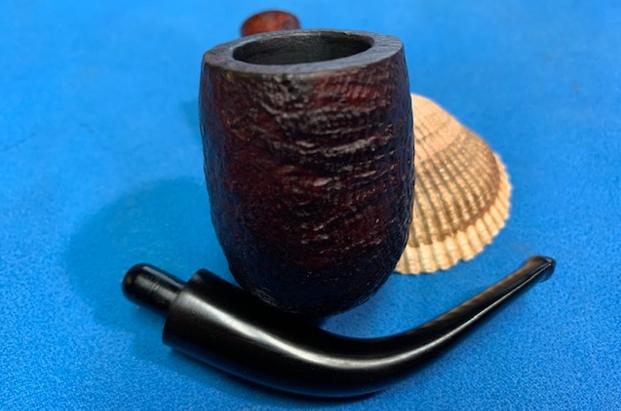
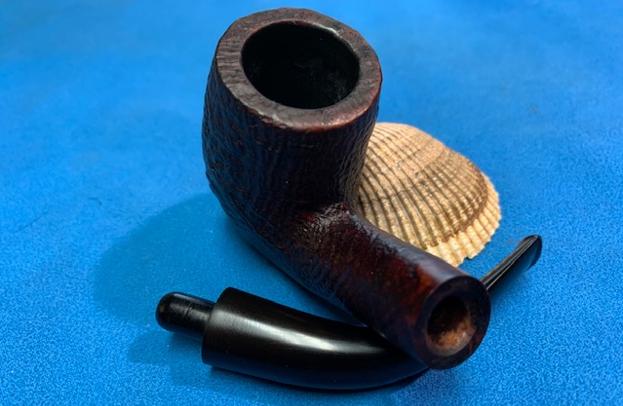
The next pipe on the work table came to us from a fellow in Brazil, Indiana, USA in March of 2020. The pipe is a classic looking Bent Billiard that has a deep and rugged sandblast. The pipe is stamped on the underside of the shank and reads Comoy’s [over] Sandblast followed by Made in London [over] England followed by the shape number 43. The stain is a mix of browns that contrasts well with the black of the hard rubber stem. The finish was very dirty with grime ground into the finish making it hard to see beyond that to the grain underneath. There was a thick cake in the bowl and it had overflowed with lava onto the rim top and edges. It was hard to know at this point the condition of the rim edges. The stem was made of hard rubber which pointed to an earlier date for the making of the stem. The stem had no stamping or identifying marks on it. Jeff took photos of the pipe before he started working on it. I include those below. 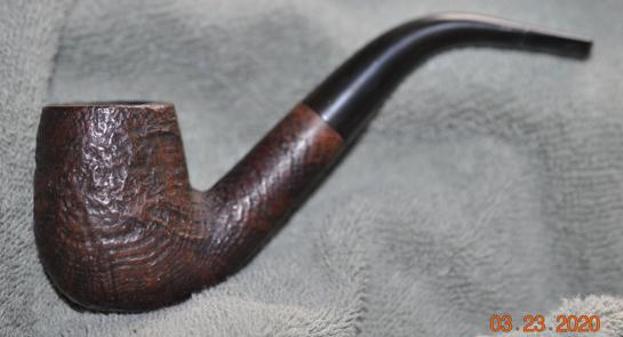
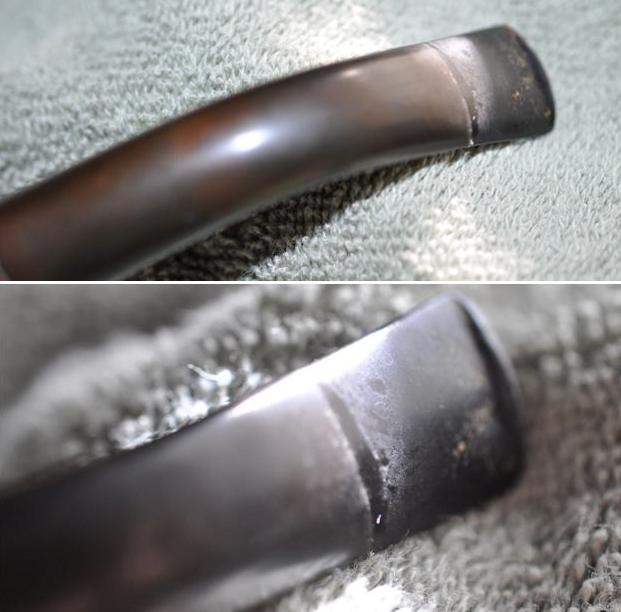
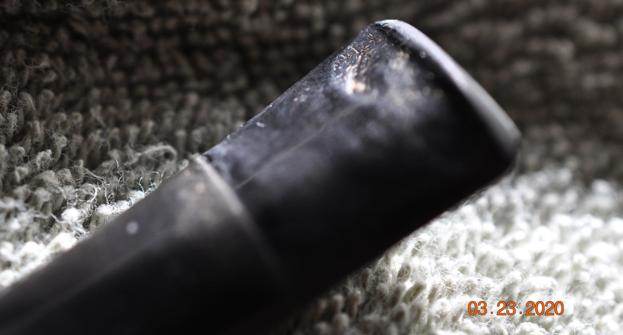
 He took photos of the rim top to show the thick cake and the thick lava coat on the edge and onto the top. It is hard to know what the condition of the rim top and edges is like under that thick lava. It is an incredibly dirty pipe but obviously one that was a great smoker. The stem has tooth marks and chatter on both sides ahead of the button. It also has some residue left behind by a rubber Softee Bit.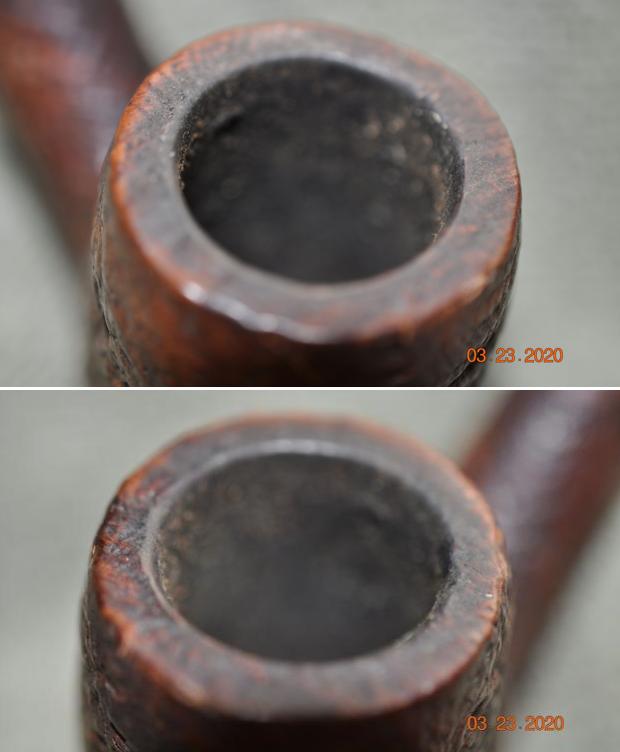
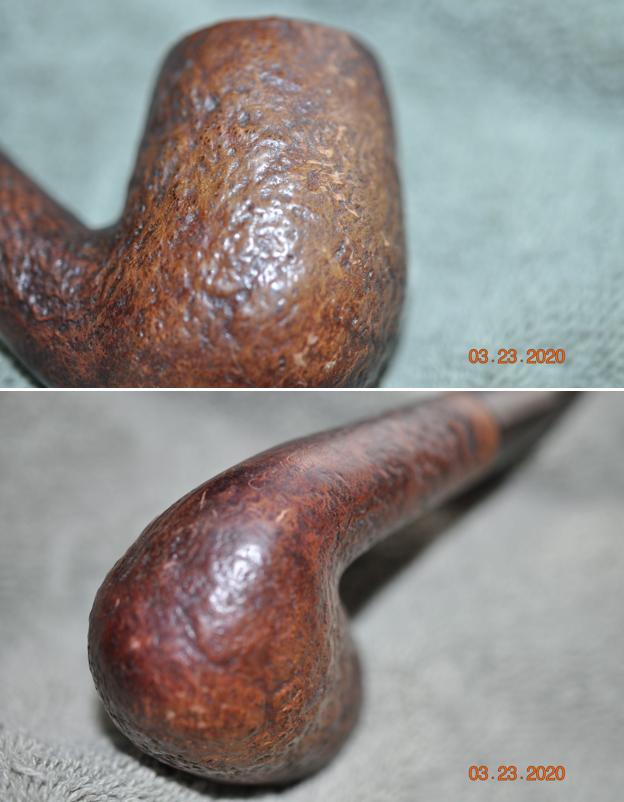
 He took photos of the sides and heel of the bowl to show the beautiful sandblasted grain around the bowl and the condition of the pipe. You can see the grime ground into the surface of the briar.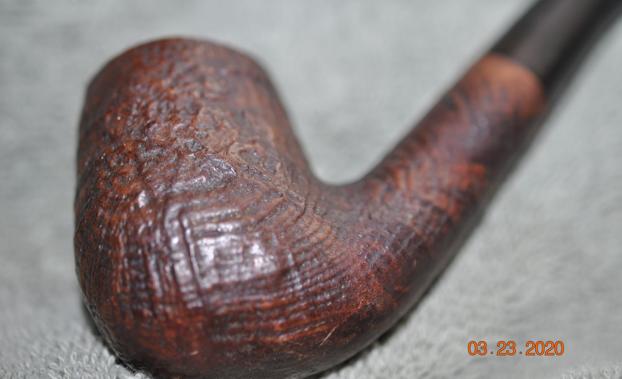
 He took photos of the stamping on the underside of the shank. It is clear and readable as noted above.
 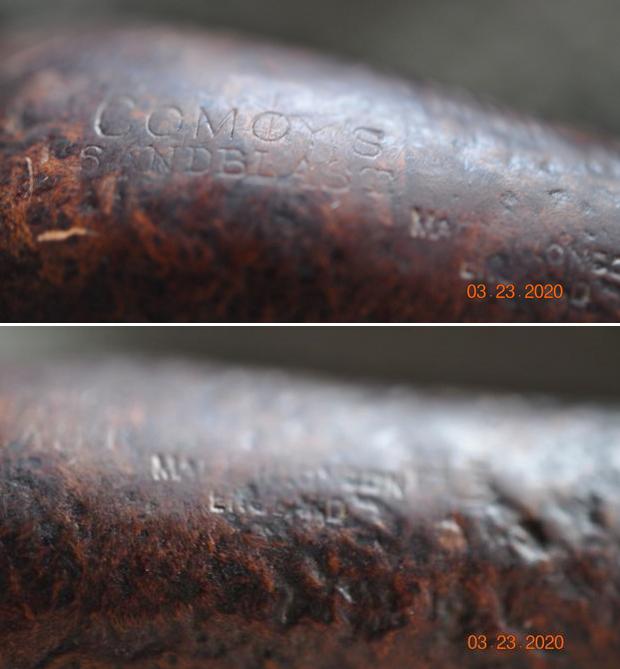 Jeff took a photo of the underside of the shank showing a shrunken fill with a crack in it. Fortunately it was not in the briar but in the fill itself.
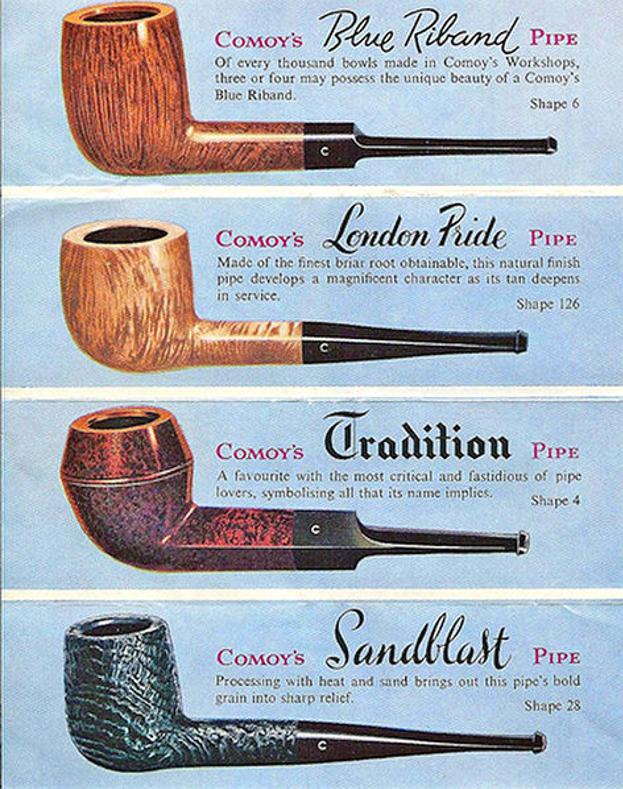
  I turned to Pipedia (https://pipedia.org/wiki/Comoy%27s) and reread the great history of the brand and found an advertizement for the Sandblast line. I include that advert below.
 I turned to the listing on the site that gave shape numbers and a description of the various shapes in chart form (https://pipedia.org/index.php?title=Comoy%27s_Shape_Number_Chart). I found the shape number 43 which was on this pipe. It is described in the chart below as a ½ Bent Billiard in a large size. That is a perfect description of the pipe I am working on.
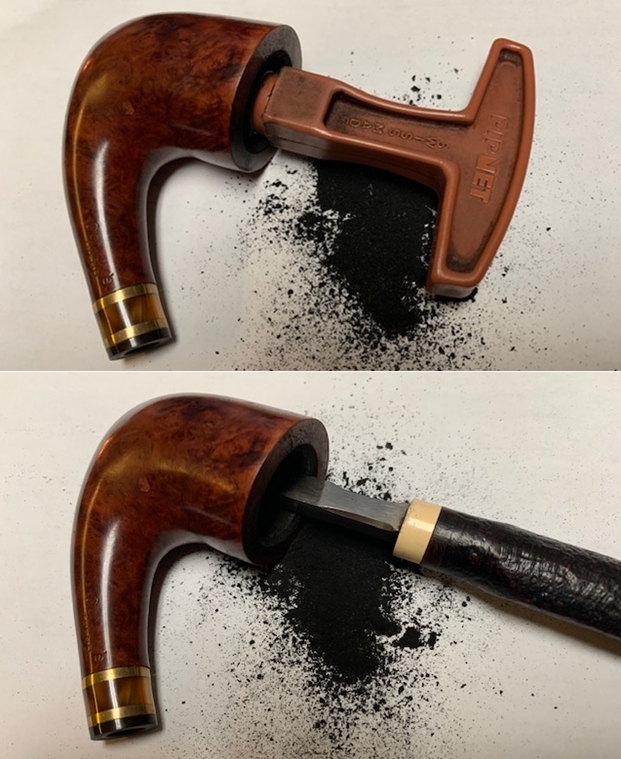
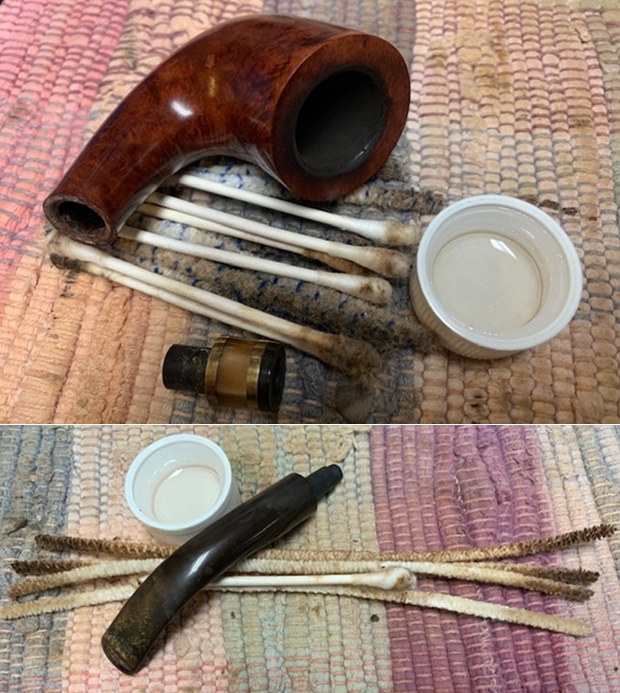
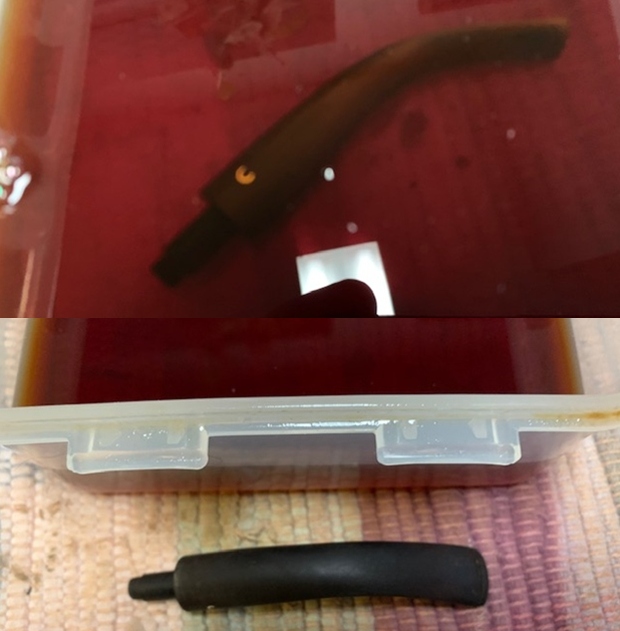
 It was time to work on the pipe. As usual Jeff had done a thorough cleanup on the pipe. He reamed the bowl with a PipNet pipe reamer and followed up with a Savinelli Fitsall pipe knife to remove the cake. He scrubbed out the mortise and the airway in the shank and the stem with alcohol, cotton swabs and pipe cleaners. He scrubbed the exterior of the bowl, rim, shank and stem with a tooth brush and Murphy’s Oil Soap to remove the oils and tars on the rim and the grime on the finish of the bowl. He rinsed it under running water. He dried it off with a soft cloth. He cleaned the internals and externals of the stem with alcohol, pipe cleaners and cotton swabs. He soaked the stem in Briarville’s Pipe Stem Deoxidizer and rinsed it off with warm water and cleaned out the airway in the stem with alcohol. This Bent Billiard pipe actually was quite stunning!
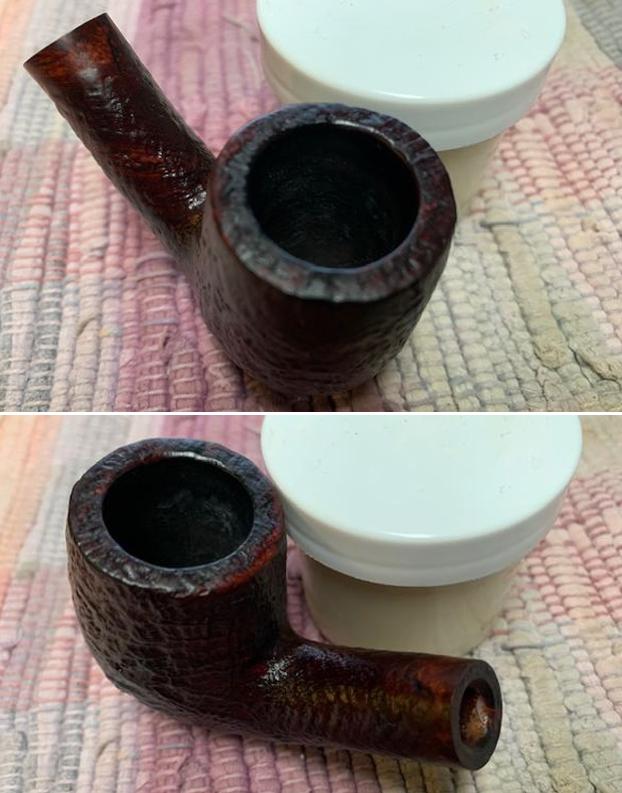
 I took a photo of the rim top and stem to show the condition. The rim top and edges looked very good. The hard rubber stem had tooth chatter and marks on both sides ahead of the button and on the button edges. There was one deeper large one on the underside of the stem.
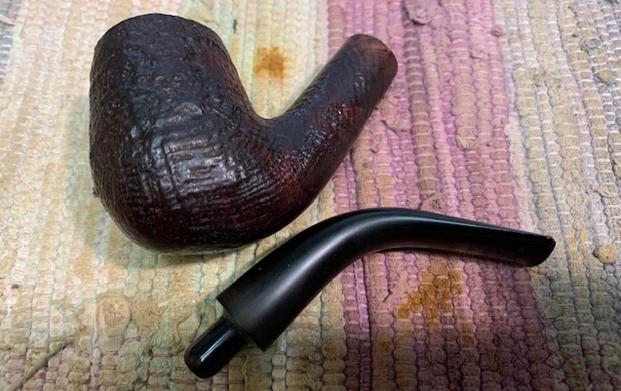
 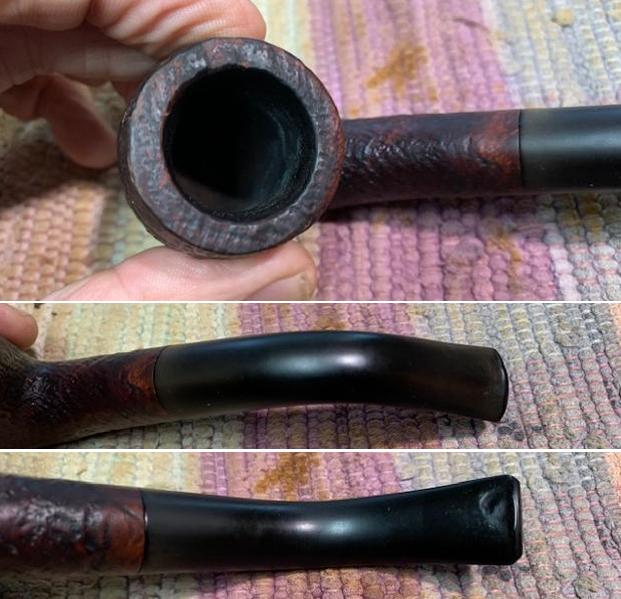 I removed the stem and took a photo of the pipe to give a sense of the whole. It is a nice looking pipe that should clean up very well.
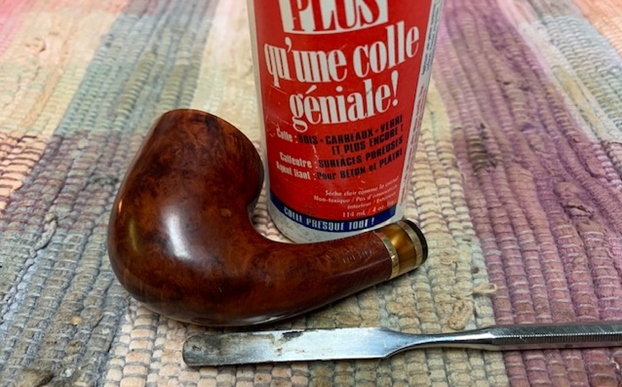
  I decided to address the crack in the fill on the underside of the shank first. I filled it in with clear CA glue and once it cured I smooth out the repair with 1500-2400 micromesh sanding pads. It looked much better once it was finished.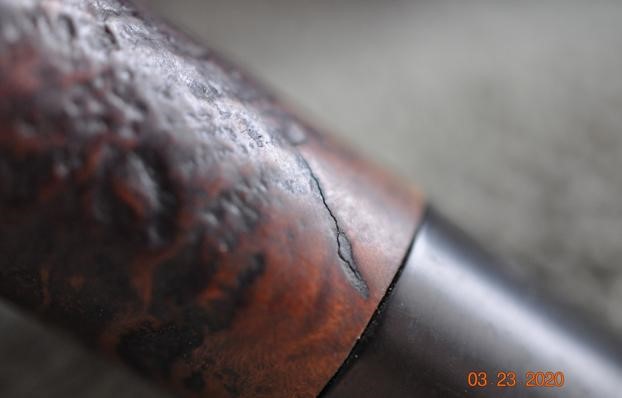
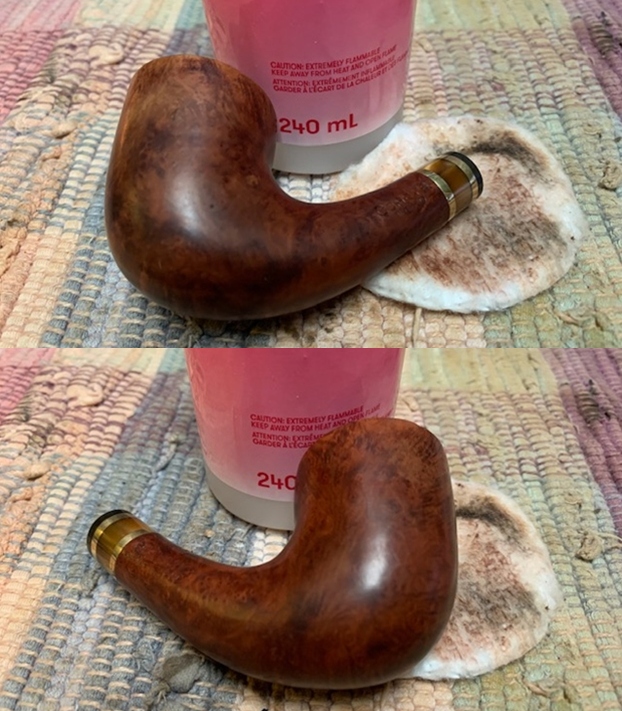
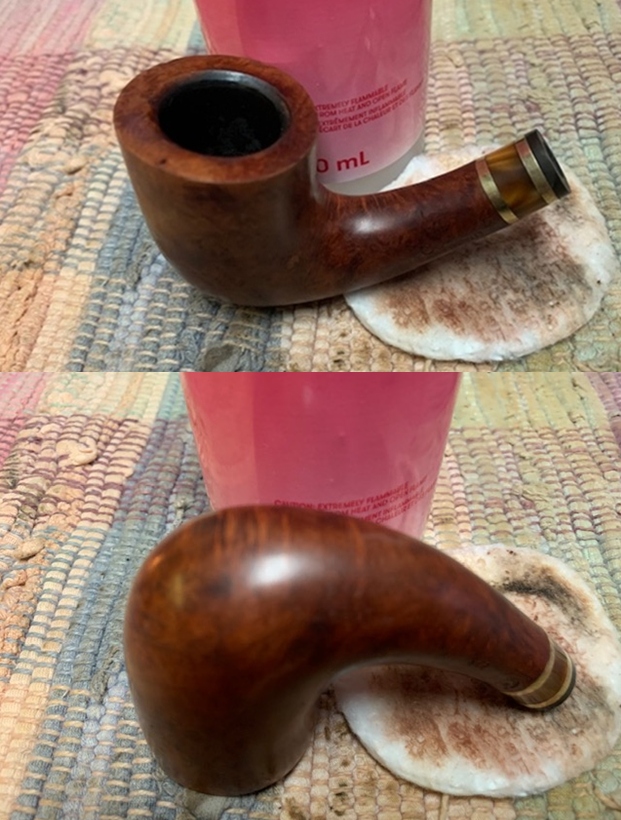
 I rubbed the bowl and shank down with Before & After Restoration Balm. I worked it into the surface of the bowl sides and shank with my fingertips to clean, enliven and protect the briar. I let the balm sit for a little while and then buffed with a cotton cloth to raise the shine. The Balm did its magic and the grain stood out.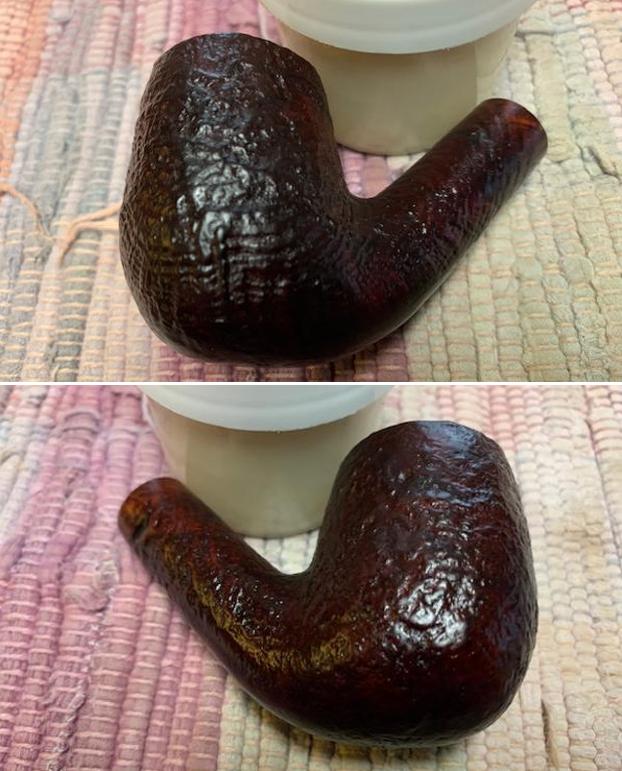
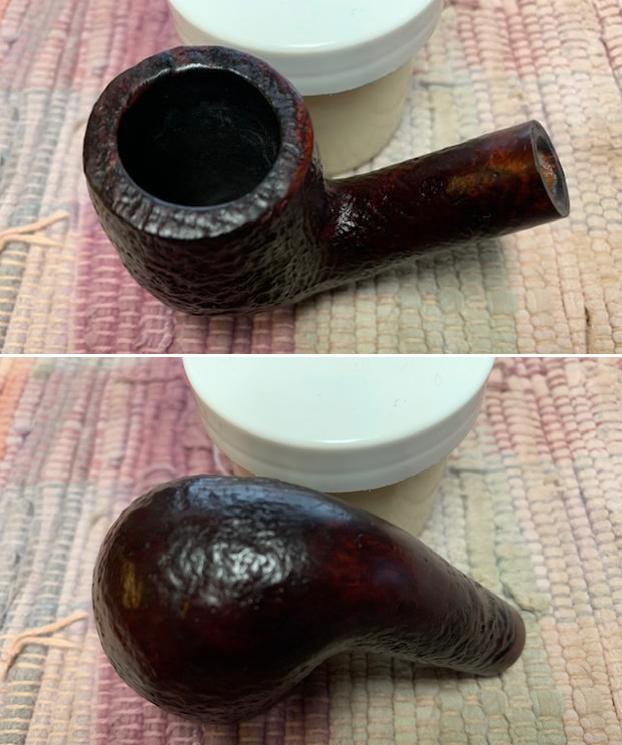
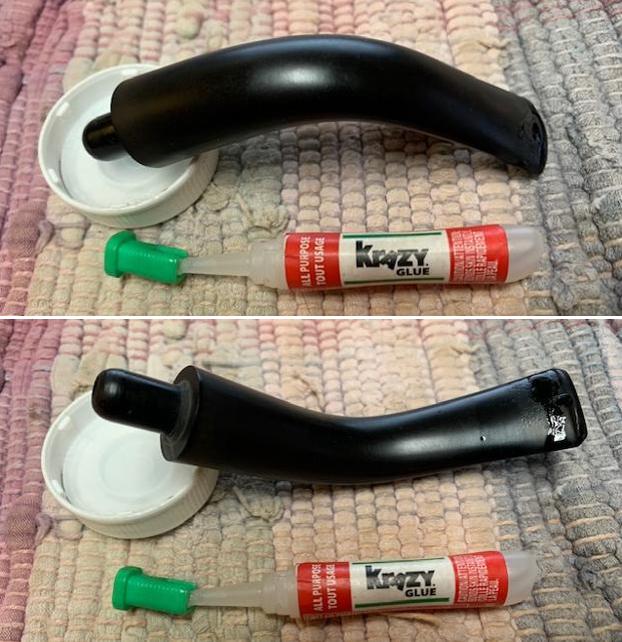
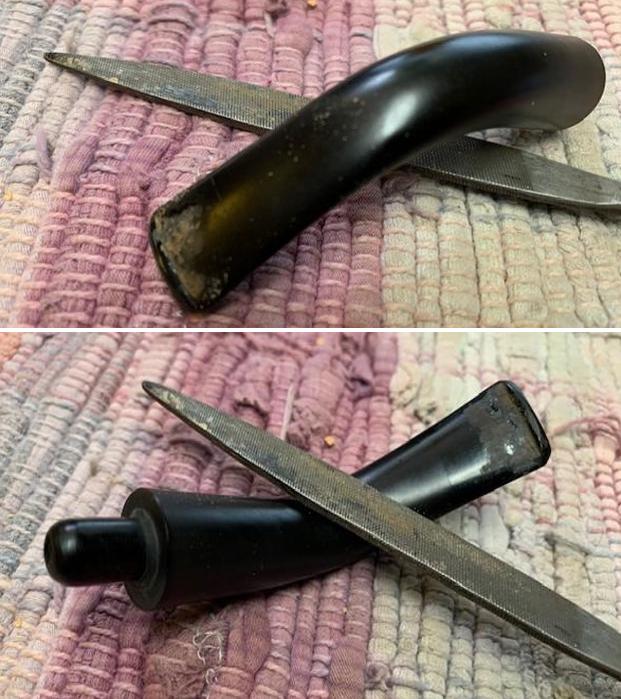
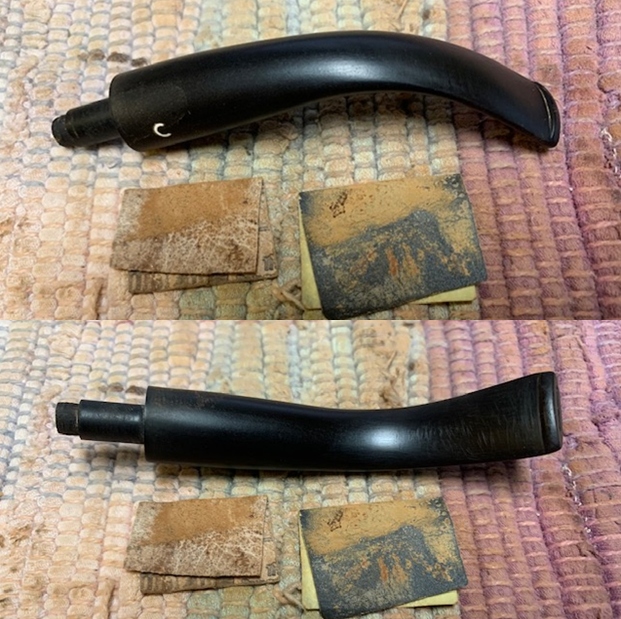
 I set the bowl aside and turned my attention to the stem. I “painted” the tooth marks on the stem with the flame of a lighter to raise them. I filled in the remaining tooth marks with clear CA glue and set it aside until the repairs cured. I used a small file to flatten the repair and recut the edge of the button. I sanded the repaired areas with 220 grit sandpaper to blend them into the stem surface and also worked on the remaining oxidation at the shank junction. I started the polishing process with 400 grit wet dry sandpaper.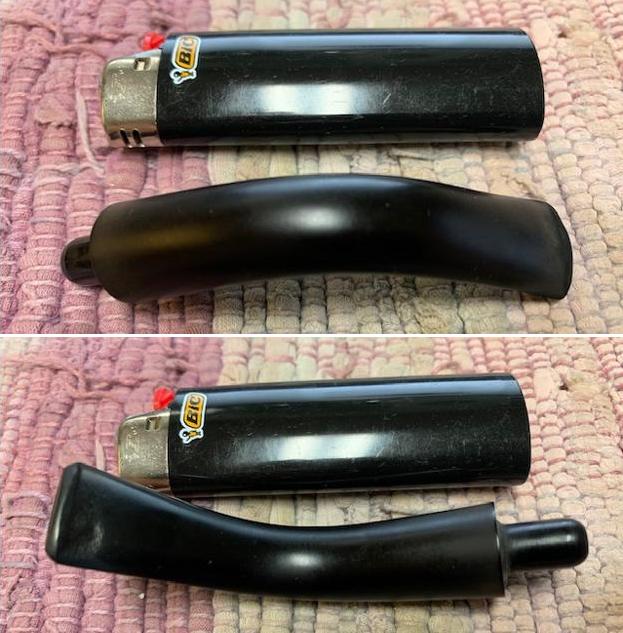
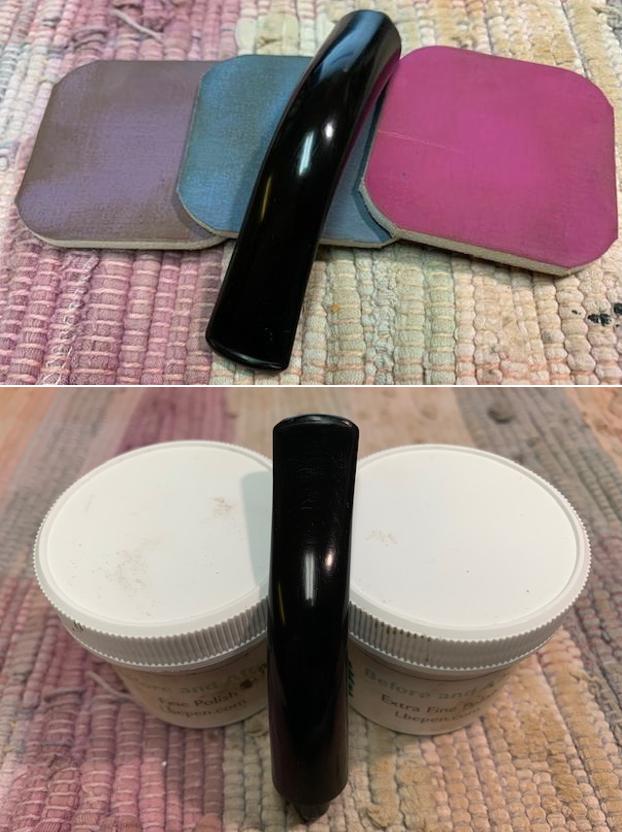
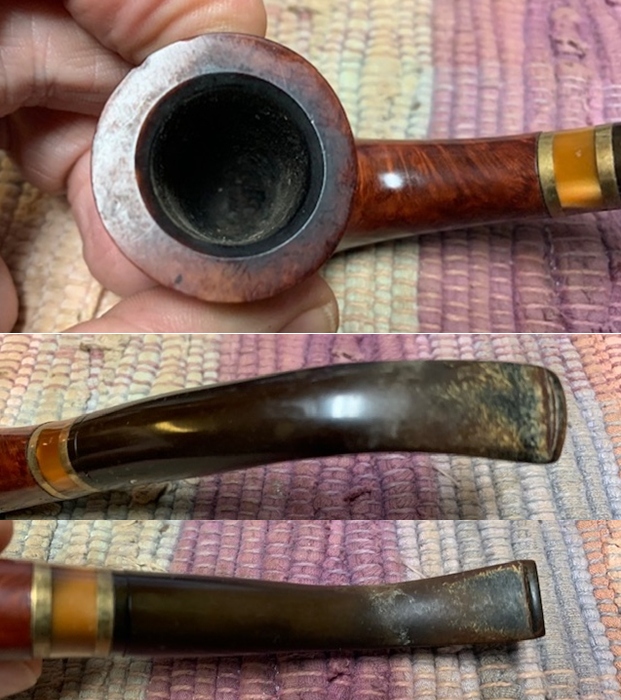
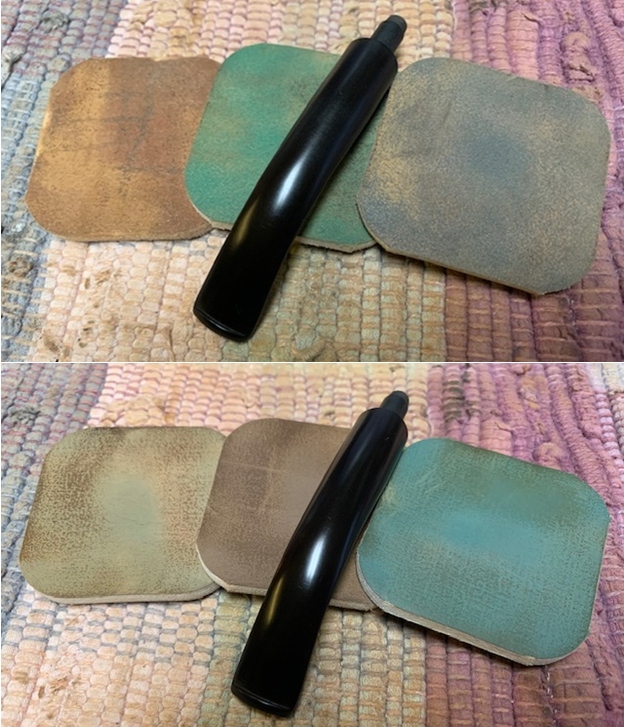
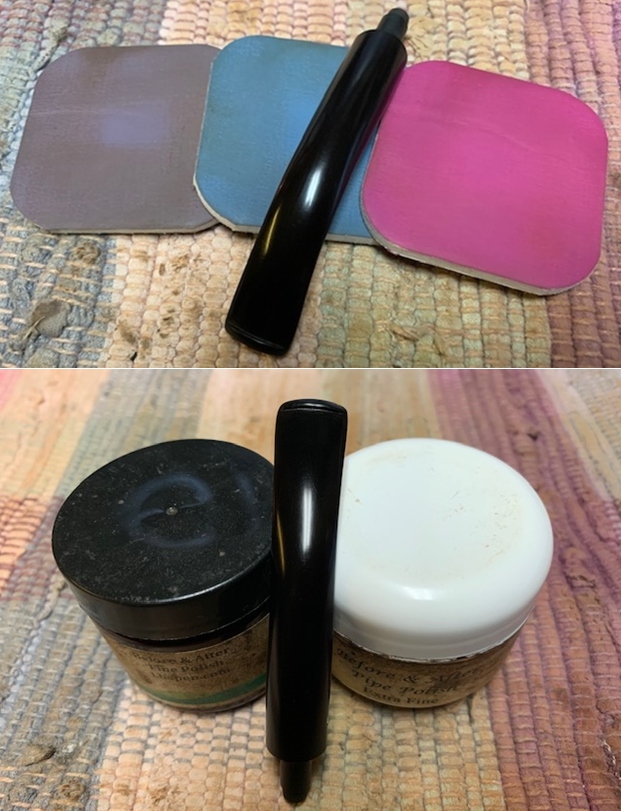
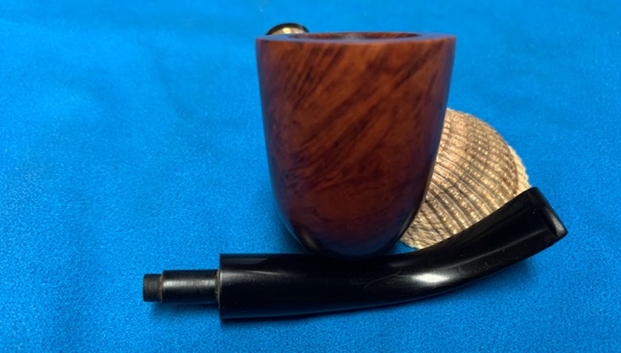
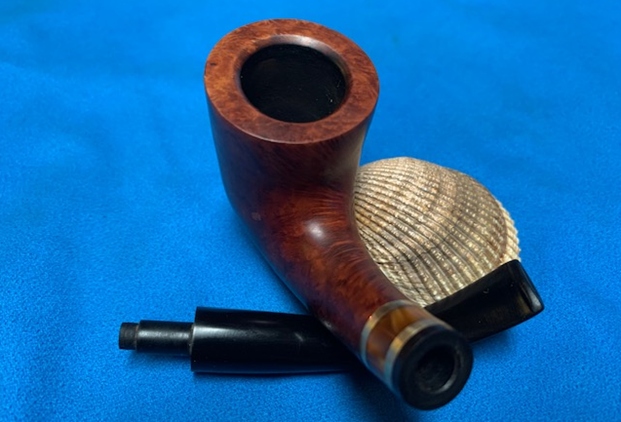
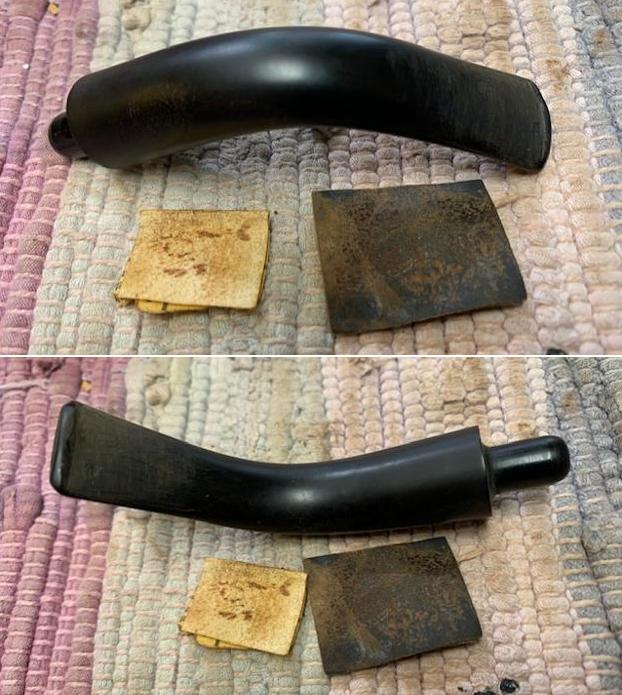 I polished the hard rubber stem with micromesh sanding pads – 1500-12000 grit pads. I wiped it down with Obsidian Oil after each sanding pad. I used Before & After Pipe Polish – both Fine and Extra Fine to further polish the stem. The photo below shows the polished stem.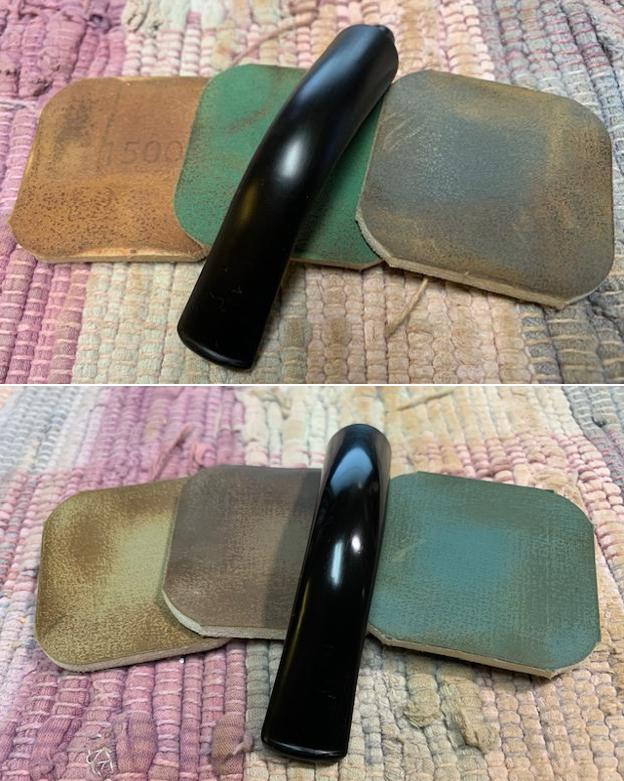
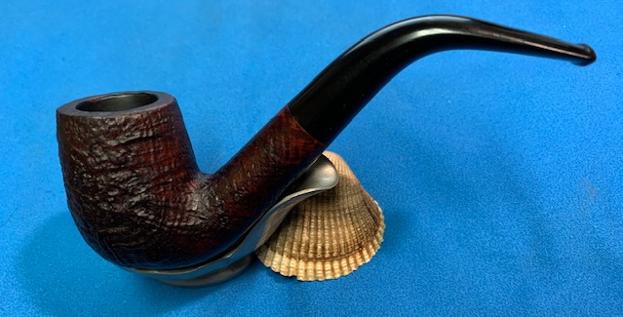
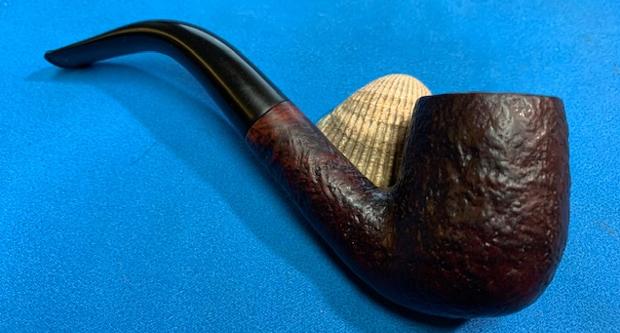
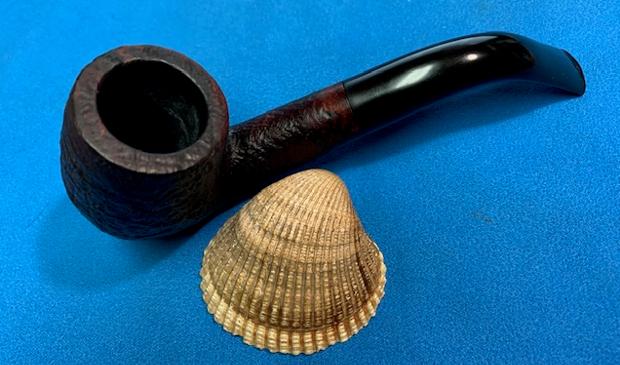
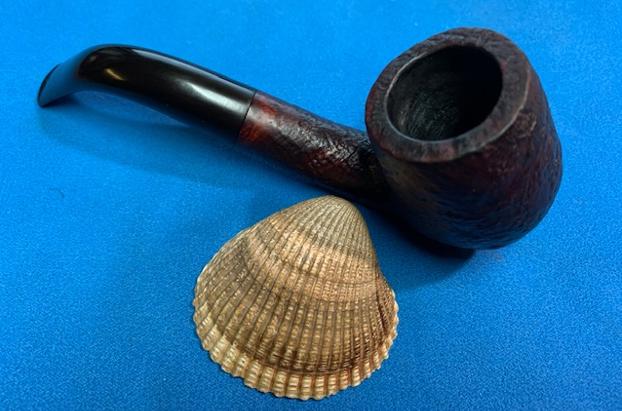
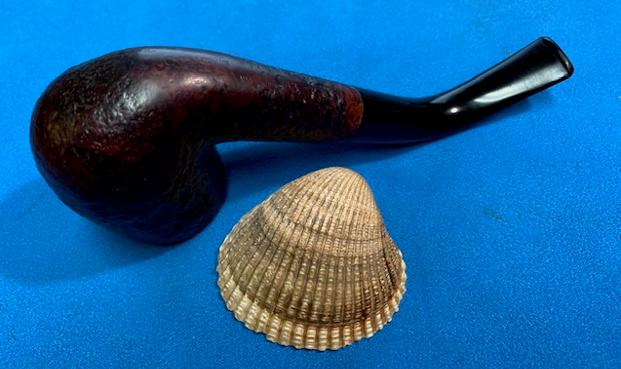
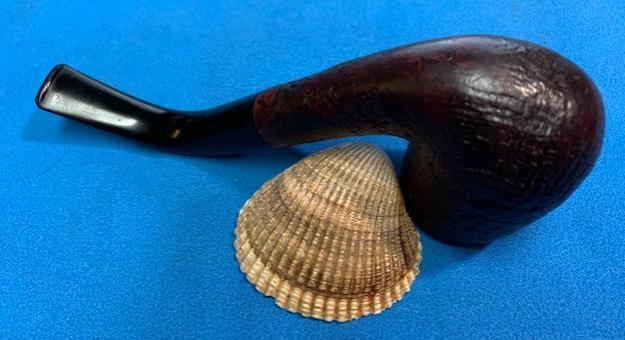
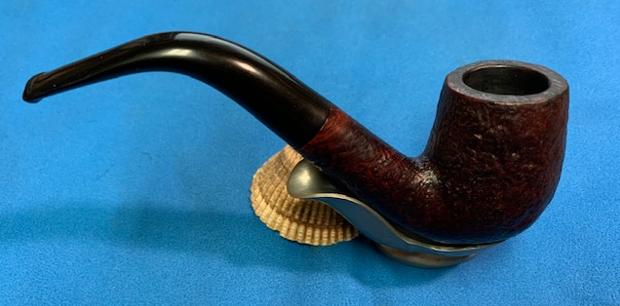
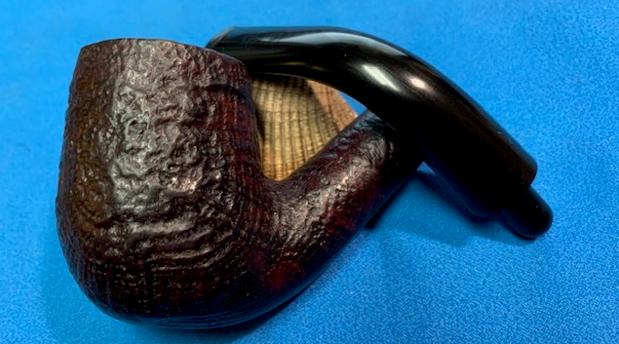
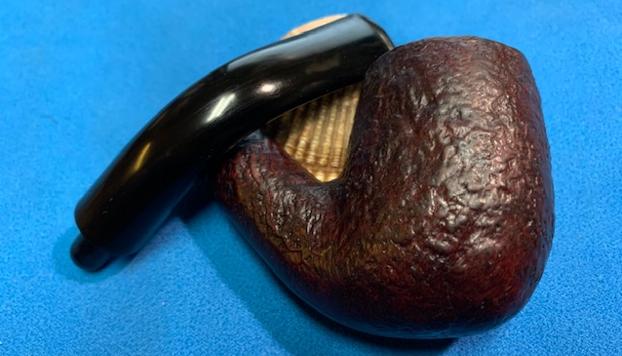
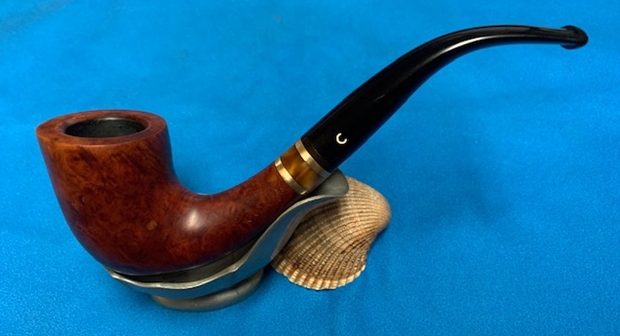
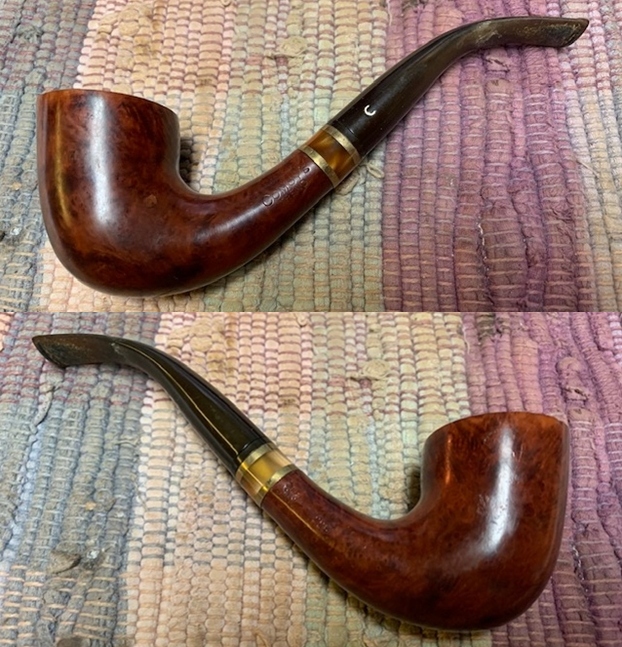
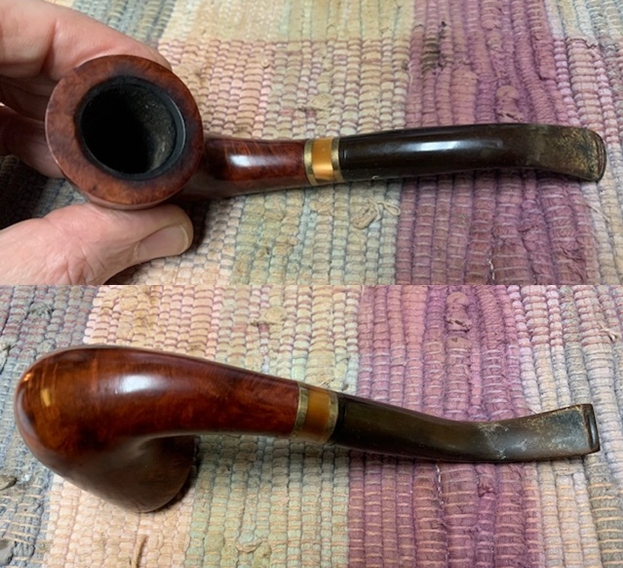
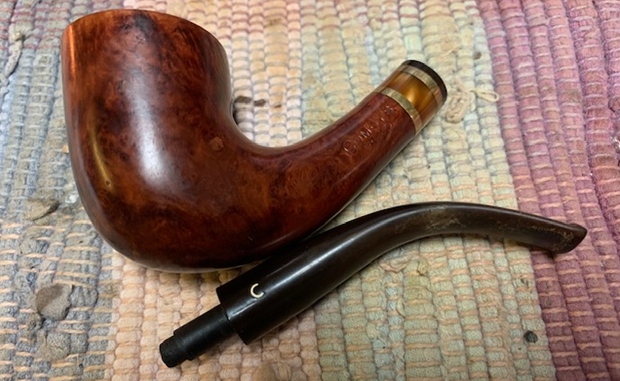
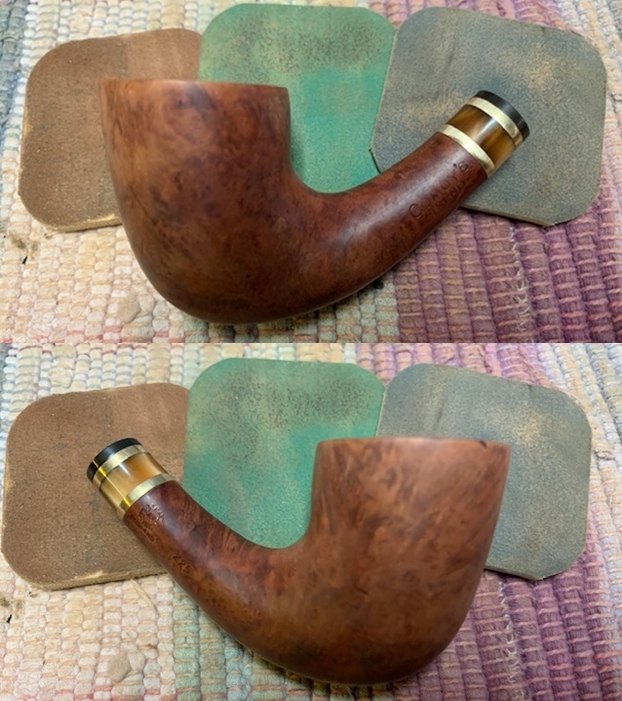
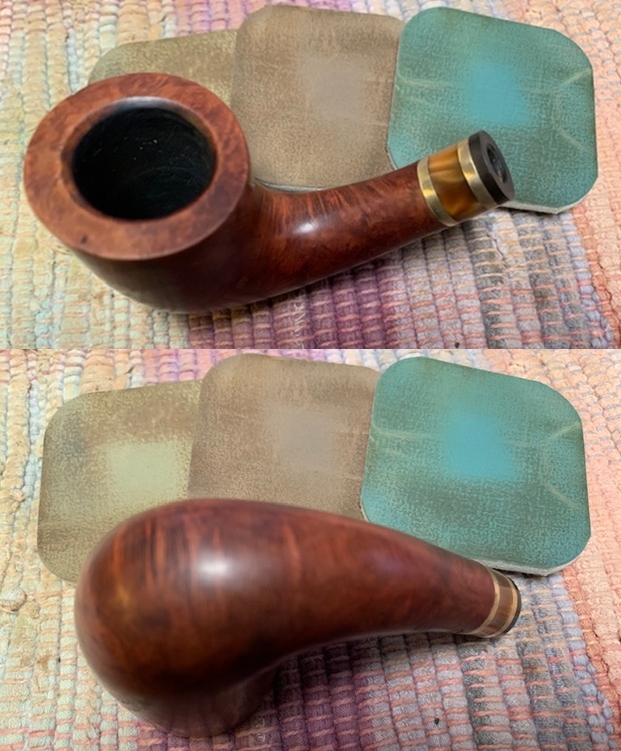
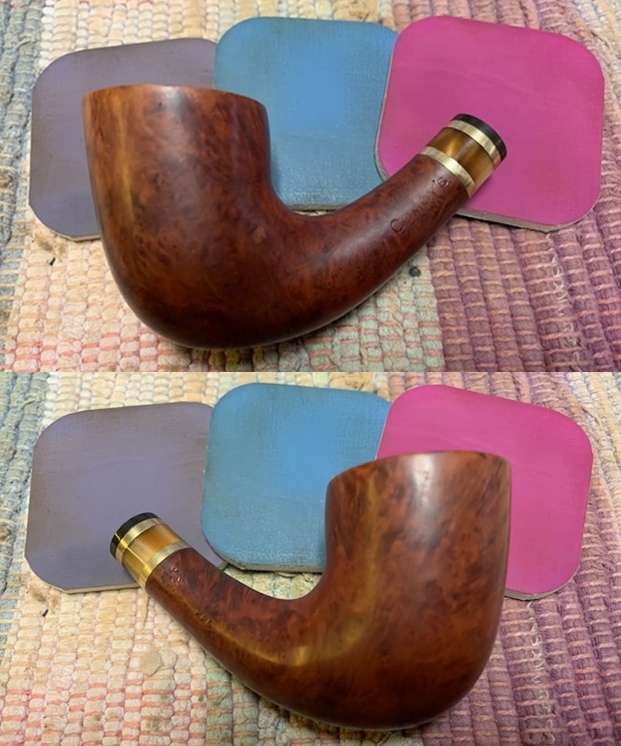
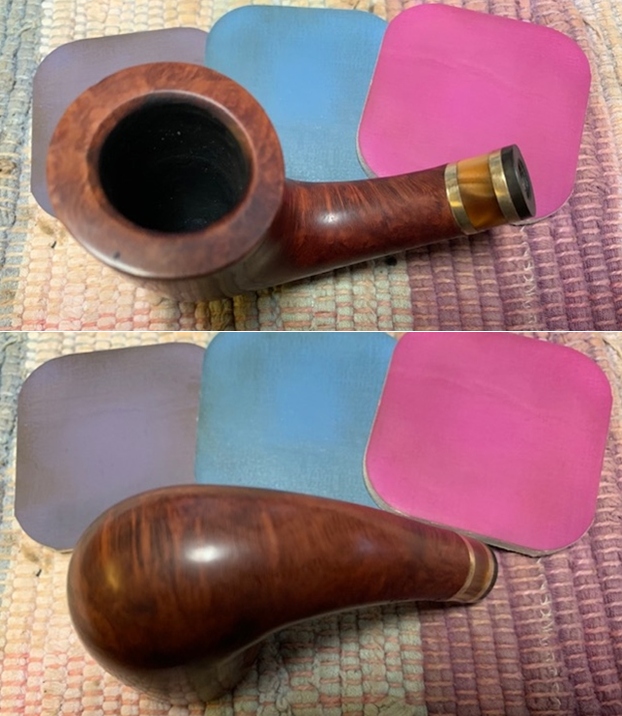
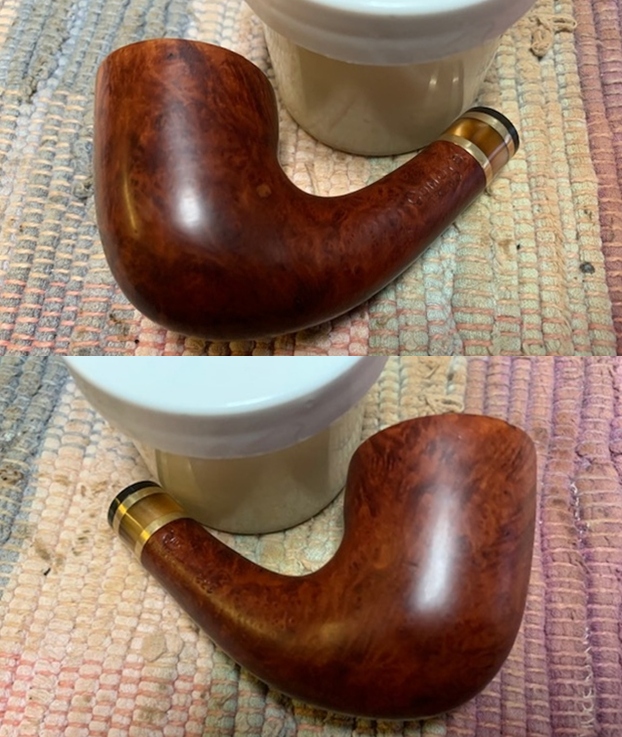
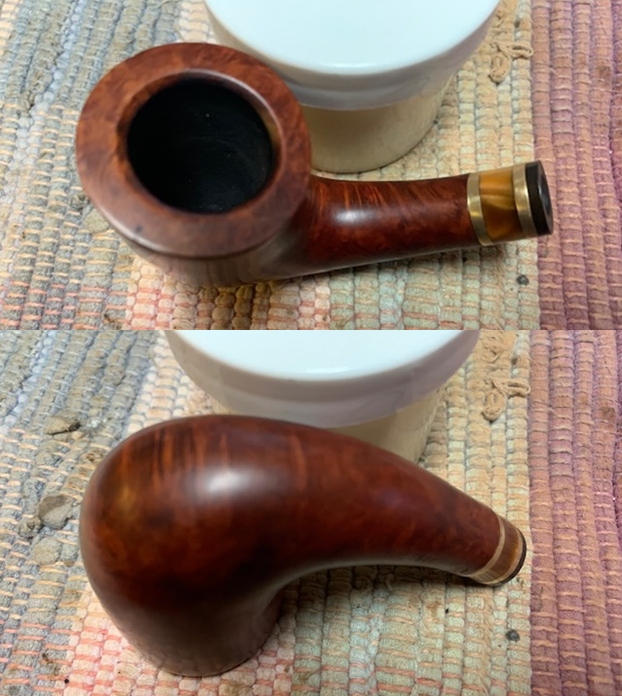
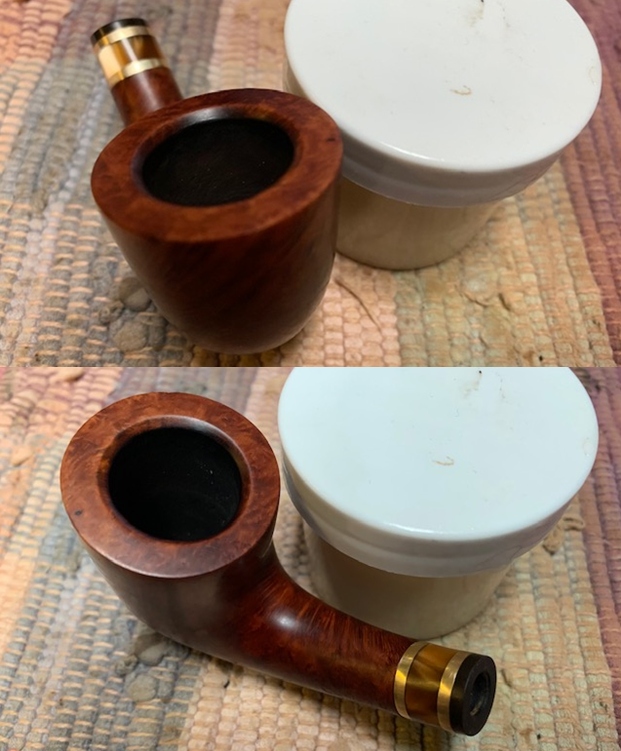
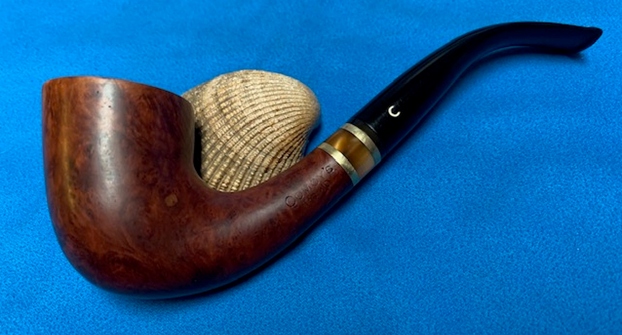
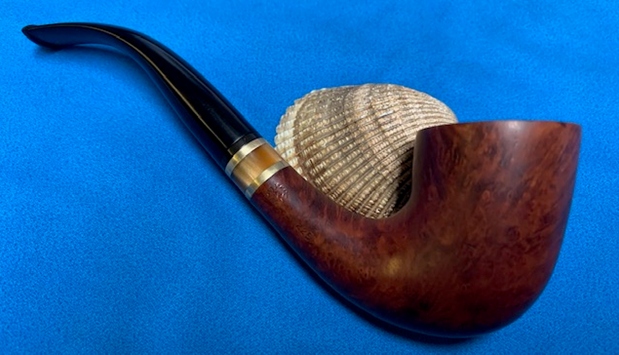
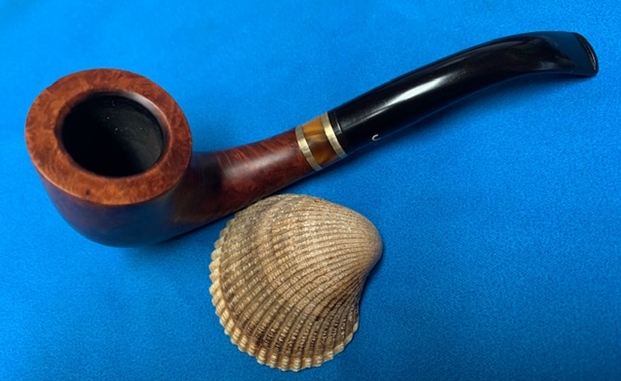
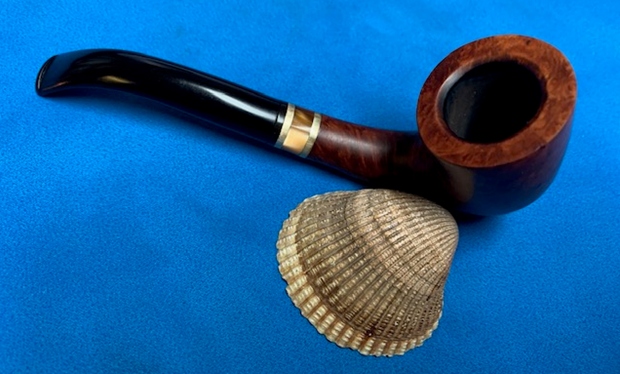
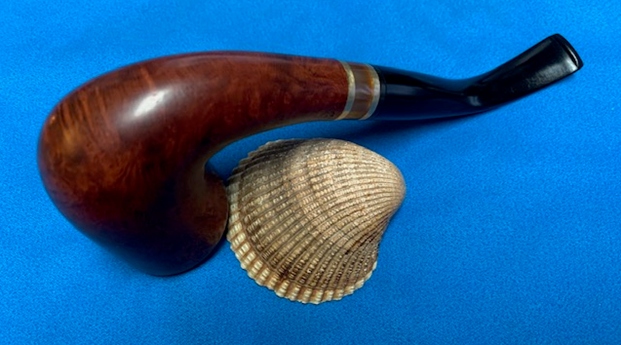
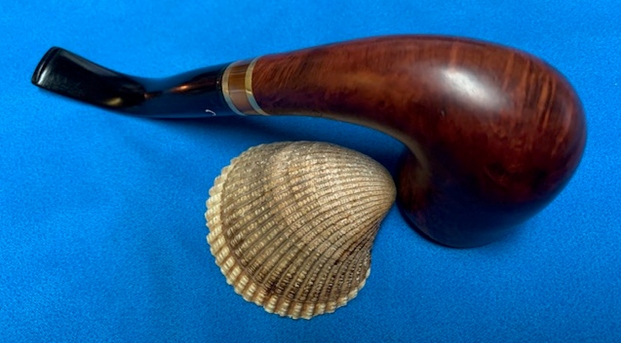
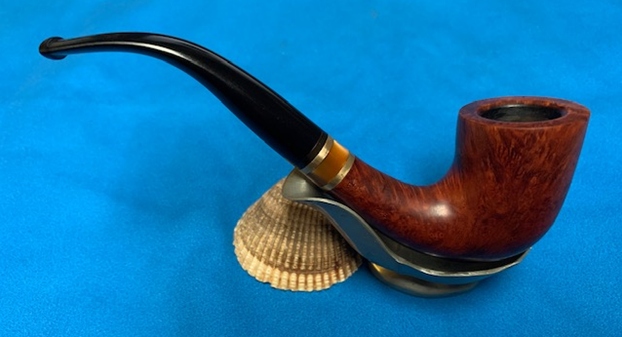
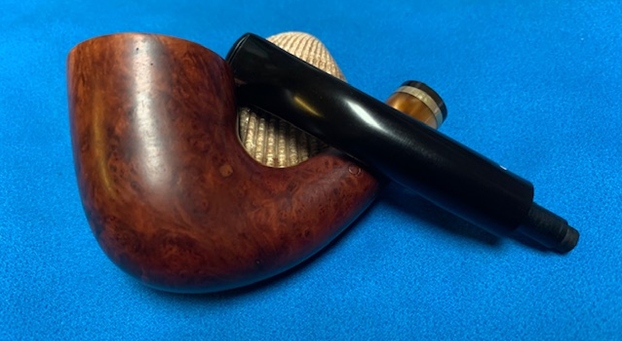
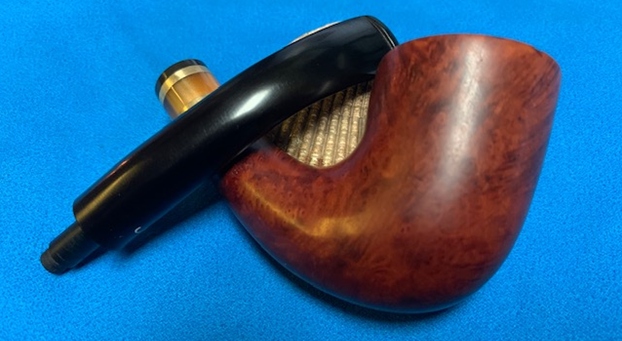
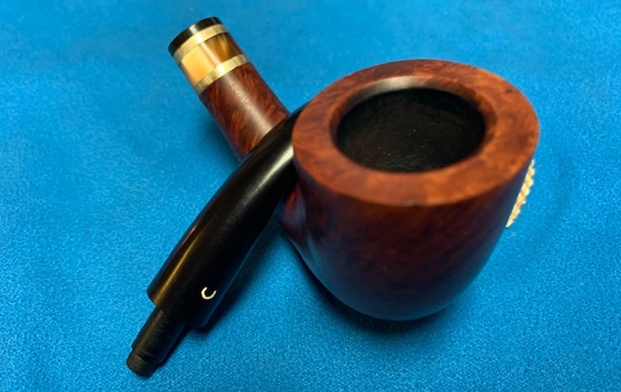
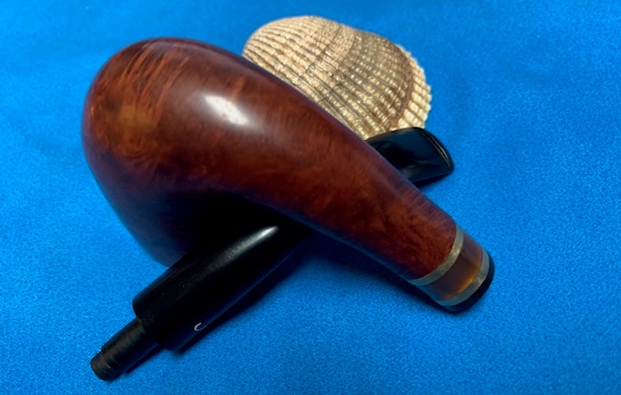
 This nice looking older Comoy’s Sandblast 43 Bent Billiard with a hard rubber taper stem is a great looking pipe now that it has been restored. The briar is clean and the blast really came alive. The rich brown and black stains gave the blast a sense of depth with the polishing and waxing. The grain really popped. I put the hard rubber stem back on the bowl and carefully buffed the pipe with Blue Diamond on the buffing wheel using a light touch on the briar. I gave the bowl multiple coats of Conservator’s Wax and the stem multiple coats of carnauba wax on the buffing wheel. I buffed the pipe with a clean buffing pad to raise the shine. I hand buffed the pipe with a microfiber cloth to deepen the shine. The finished Comoy’s Sandblast Bent Billiard really is a beauty and feels great in the hand and looks very good. Give the finished pipe a look in the photos below. The dimensions of the pipe are Length: 5 ½ inches, Height: 2 inches, Outside diameter of the bowl: 1 ¼ inches, Chamber diameter: 7/8 of an inch. The weight of the pipe is 54 grams/1.90 oz. The pipe will be going on the rebornpipes store soon. It will be in the section on British Pipe Makes if you would like to add it to your collection.Thanks for reading this blog and my reflections on the pipe while I worked on it. There are many more to come!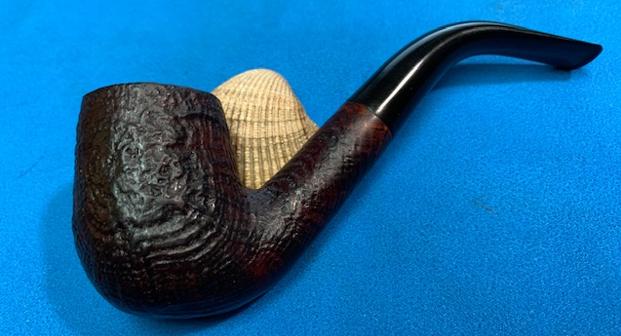





 rebornpipes