by Steve Laug
Early February I received an email from Blake regarding two pipes he wanted me to have a look at. I have included that email below
Hello, I have two pipes that are in need of restoration. I was just curious if you take on projects from others. One is a Charatan Perfection Dublin, the other is a Dunhill 710 Group 4 Root Briar Billiard. Both pipes need the standard ream/clean/deoxidize, however they also have small cracks. The Charatan has two cracks in the bowl, which I do not believe go all the way through (also the previous owner tried to put wood glue over them). The Dunhill has a crack in the shank, however it has been banded so I do not know if it needs any additional work on it. Any help you could provide would be greatly appreciated. Thank you so much.
Sincerely, Blake
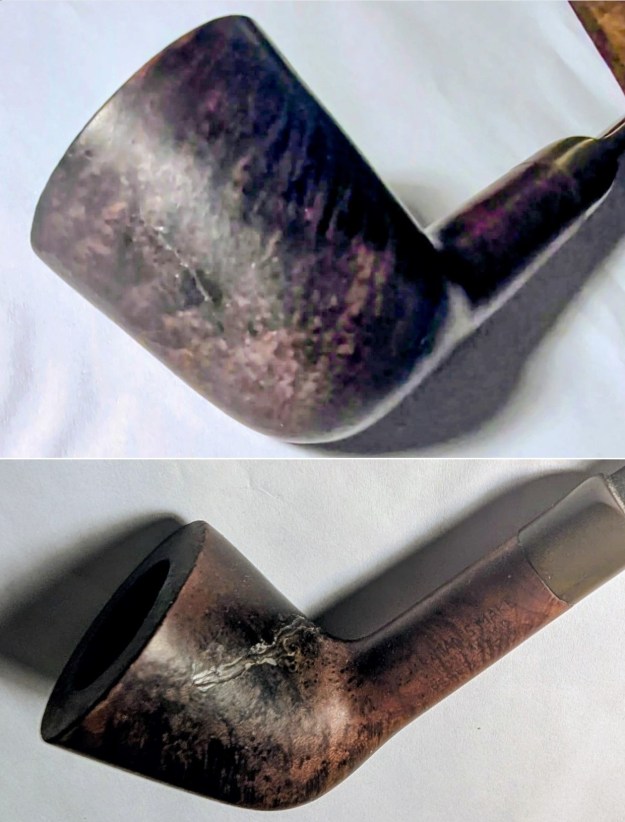
As I usually do, I wrote him back and asked for photos of the pipes. He sent a few photos of them both. I have inserted the photos below of the Charatan he sent. The bowl was typical of older pipe finds, thick cake, lots of grime in the finish, oxidized stem. The difference were the two repaired cracks in the bowl on the back and the front that had been repaired with glue. They were quite ugly but also looked to be solid. To me it was worth a restoration to see what was happening internally and externally under the grime of the years. 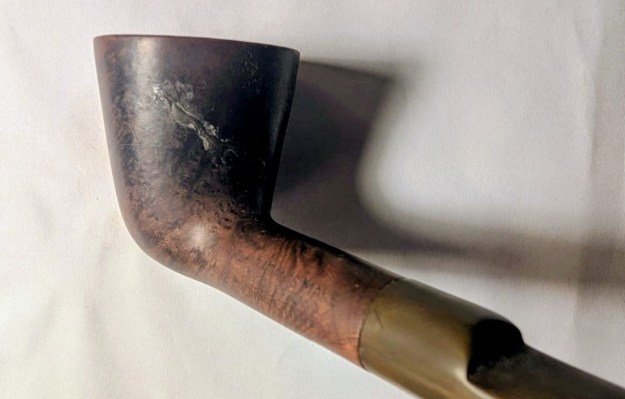
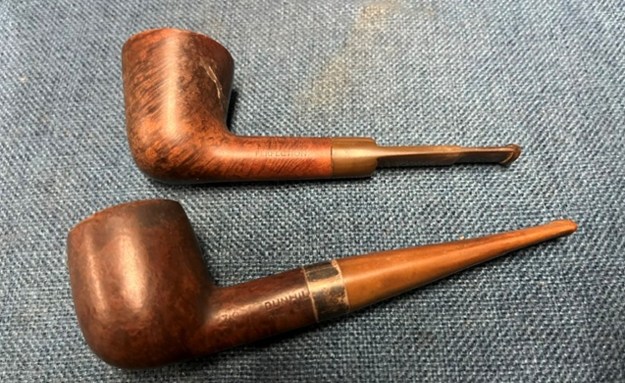
 I wrote and told him to send them to me. It took a while but they arrived yesterday afternoon. I unpacked them and took a photo of the pair to show what they looked like when they arrived. I would take more photos of each pipe as I worked on it but this one gives you a sense of what I saw as I took them out.
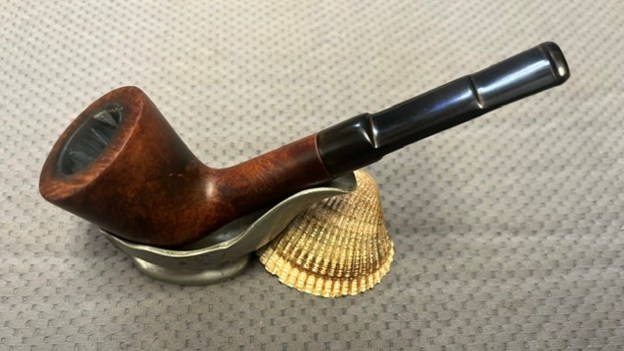
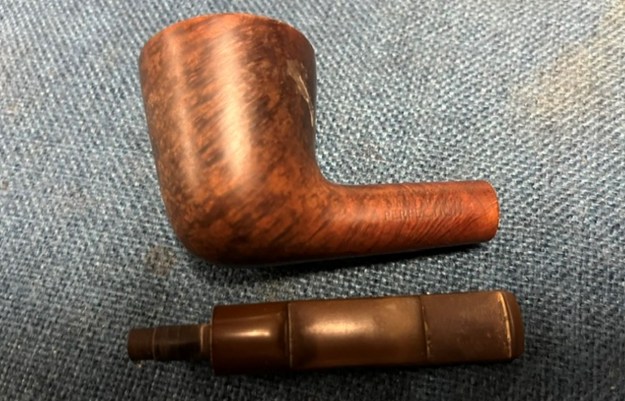
 I chose to work on the Charatan’s Make first. It is a Medium sized Charatan’s Dublin with a vulcanite “Double Comfort” (DC) saddle stem. It is in dirty condition and has some repaired cracks on the front and back of the bowl exterior. It is stamped on the left side of the shank and reads Charatan’s Make [over] London, England [over] Perfection. On the right side of the shank it bears the shape number 232 DC. The pipe was dusty, scratched and dirty with grime ground into the finish. The bowl had a spotty cake, heavier mid bowl and at the top than the bottom. The rim top had a lava coat on the rim top and inner edge. There was some damage on the inner edge of the rim and some spotty lava on the smooth rim top. The original DC saddle stem with the Charatan’s “CP” logo worn and virtually invisible on the left side. It is dirty and oxidized with light tooth marks and chatter on both sides. I took photos of the pipe to show what it looked like before I started working on it.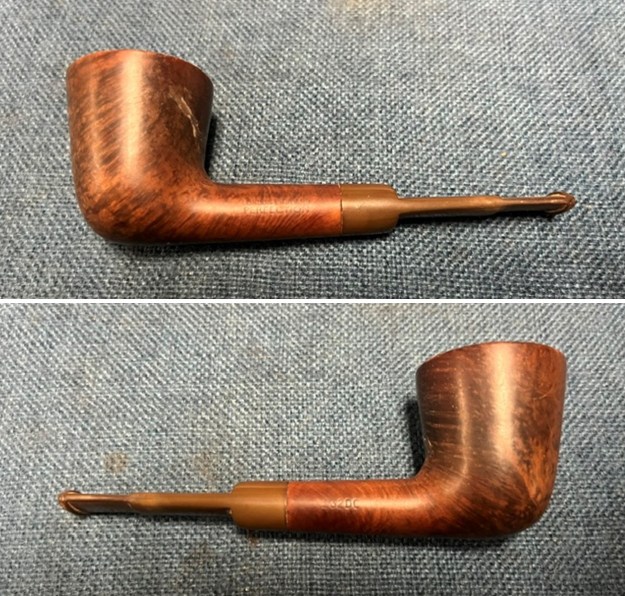
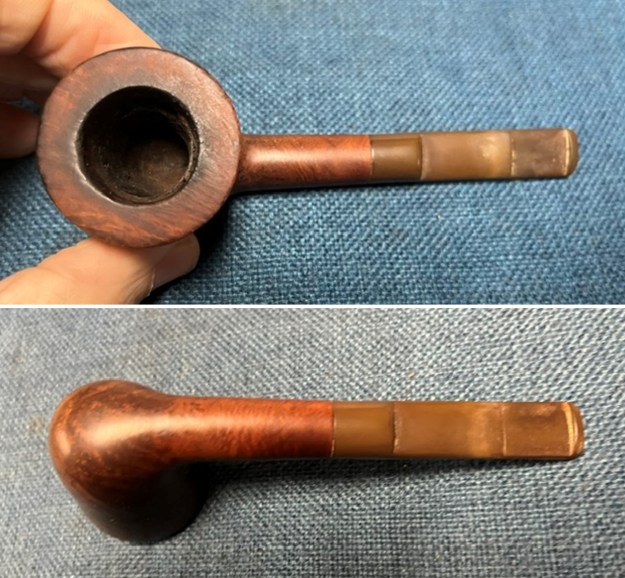 I took a photo of the bowl and rim top to show the thickness of the cake and the condition of the rim top. You can see the band of hard cake mid bowl. The stem photos show the condition of the saddle stem ahead of the button.
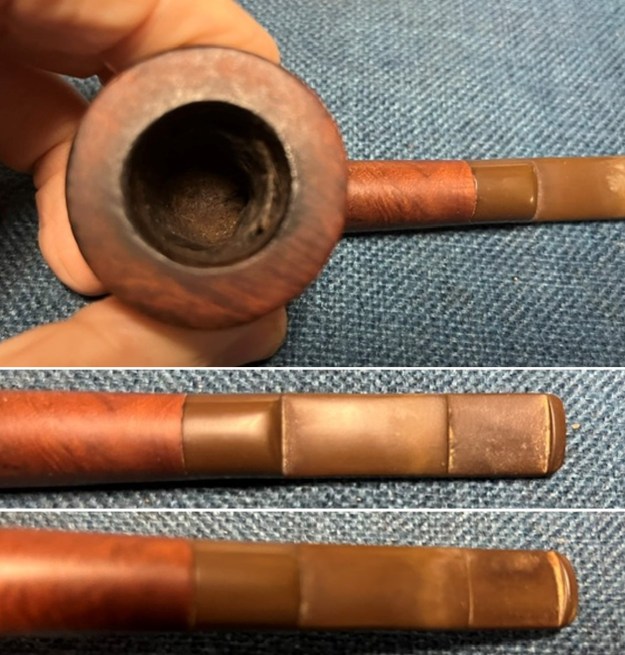 The stamping on the sides of the shank is faint in spots. Overall it is clear and readable as noted above. I took a photo of the pipe with the stem removed to give a sense of the proportions of the pipe. Under the grime it is a real beauty.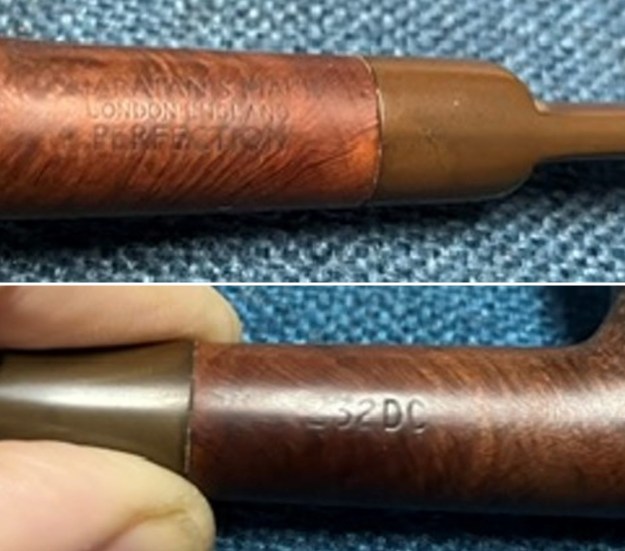
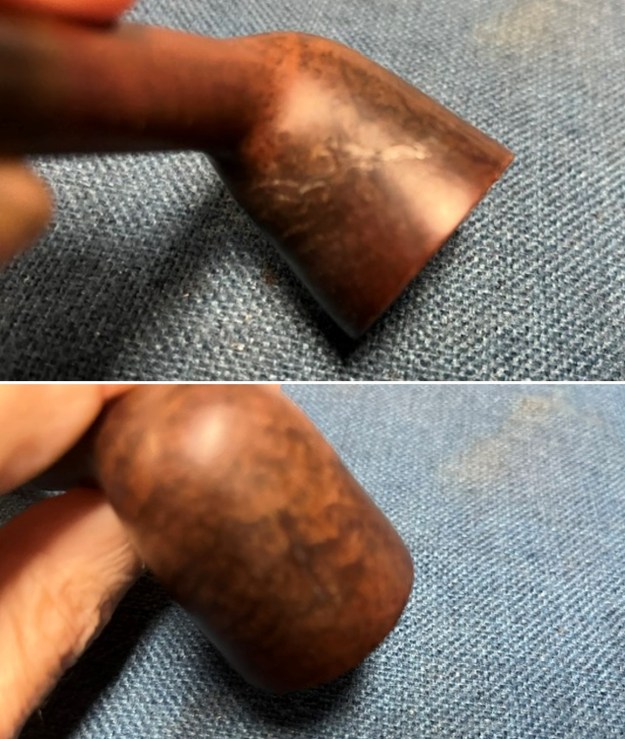
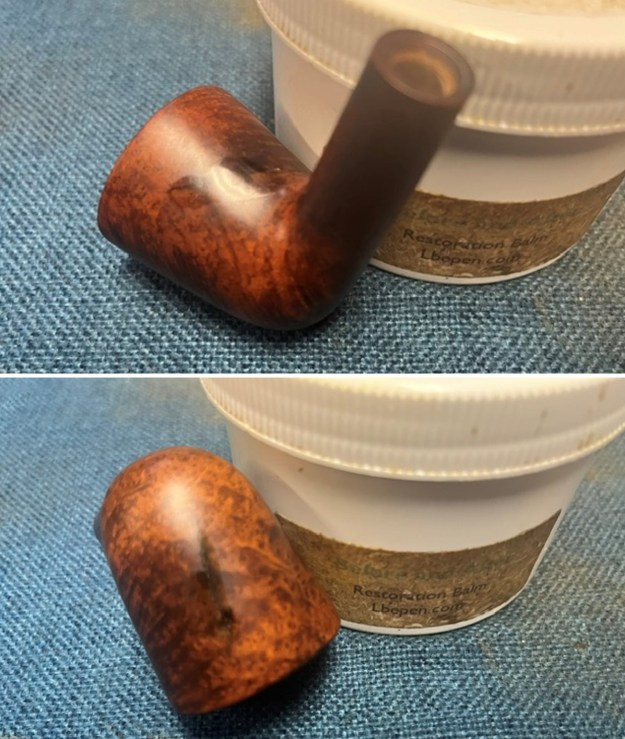
 I took some photos of the repaired cracks on the front and back of the bowl. They have been repaired sometime along the way and Blake felt like it was a wood glue. I will know more once I have cleaned up the surrounding area.
  An added part of pipe restoration for me is to try to gather as much background on a brand and maker as I can find. With Charatan that is an enjoyable web to untangle. There is a lot of information and it can lead to understanding what era a pipe was made in. To try to figure out the era of the Charatan’s pipe I was working on I turned to the Pipephil website, Logos and Stampings (http://www.pipephil.eu/logos/en/logo-charatan.html). There is some really helpful information on each of the lines of Charatan’s Make pipes that entered the market. There was not a Perfection on the site. The site did give a short history of the brand that I quote below.
The brand was founded in 1863 by Frederik Charatan. When his father retired in 1910, Reuben Charatan took over the family business. All the pipes were handmade until 1973. The brand name has been overtaken by Dunhill in 1978 and sold in 1988 to James B. Russell Inc. (NJ, USA). During the period 1988-2002 Charatans were crafted by Butz Choquin in St Claude (France). Dunhill re-purchased Charatan brand name in 2002 and Colin Fromm (Invicta Briars, Castleford) followed up on freehand production.
Next, I turned to Pipedia to see if I could find more information on the brand and a link to a smooth saddle stem Billiard marked Charatan’s Make Special (https://pipedia.org/wiki/Charatan) but once again in the general article it was not listed. It did give a little more historical information. I quote the pertinent parts that give information on this particular pipe.
In 1950 Herman G. Lane, striving to expand his business in Great Britain, made contacts with the Charatan family. Apparently, Lane got a certain influence soon, but it was not until 1955 that Lane Ltd. became the sole distributor for Charatan’s in the United States superseding Wally Frank. This can be documented in a “biography” written for Herman G. Lane titled “Leaves from a Tobaccoman’s Log”.
Thanks to Herman G. Lane’s dedicated labor Charatan became hugely popular in the States. As reported by Ken Barnes in an interview with Rick Newcombe, Reuben Charatan passed away in 1962, and his widow sold the firm to Herman Lane 1 or 2 years after his death.[1] In the early 1960s Charatan pipes were the first to overstep the $100 Dollar line in US pipe sales. In 1978 Lane’s heirs sold the Charatan company to Dunhill. The Prescot Street factory was closed in March 1982. Thereafter the fame and quality of the make declined.
The pre-Lane period (prior to 1955) and the Lane era pipes (1955 to until sometime between 1979 – 1984) are of primary interest the collector. The Lane era is often quoted as beginning about 1950.
Charatan records are almost non-existent before Lane due to a factory fire, making it difficult to date pre-Lane pipes. Charatan used 4 basic grades prior to 1950: Supreme, Selected, Executive, and Belvedere. After 1950 Herman Lane’s influence began, and the grades started to expand. In 1955 Lane took over sole distributorship of Charatan in the US. In 1957 he introduced the Supreme S. Most of his other introductions were from the 1960s and early 1970s.
From this I am fairly certain I am dealing with a Lane pipe made after 1955. There is no circle L script mark that is a Lane stamping on the pipe. However, I know that Charatan records indicate the DC (Double Comfort) bit was introduced in the 1950s, but some report seeing them in earlier production. Still others indicate they were introduced by Lane in 1960. Regardless, the DC bit is not an accurate way to date a pipe because many Charatan’s were made with regular and saddle type bits throughout the “Lane Era”.
I continued digging further into the dating of the pipe, but what I had found above was a good start for me. If some of you would like to try your hand at dating it more accurately as to the time period it came out you might want to check out the article on Pipedia on Dating Charatans (https://pipedia.org/wiki/Dating_of_Charatans).
I also reread the article on Pipedia by the Italian fellow who contributed some really helpful information on the brand (https://pipedia.org/wiki/Charatan_-_Milan_2014). I quote the section on the Second period: Reuben Charatan 1910 – c. 1962. I have highlighted a portion of the section on the shank in red to point out some more helpful dating information.
– In 1962 Herman Lane took over the business from the Charatan family, although he had already influenced production from the 1950s.
– The pipes were mostly larger than the previous ones and corresponded in size to Dunhill group 5. These are slightly less rare, but still difficult to find.
– Stem: Usually in ebonite, saddle shaped or tapered, bearing a fine “CP” stamp, underbore system (see below) used when necessary.
– Shank: The shape code is stamped on it together with the nomenclature “CHARATAN’S MAKE LONDON ENGLAND” arranged in two lines. From 1955 onward on the models marketed for the USA there is also a serif and circled capital “L” (but not all models bear this) which resembles the pound sterling symbol. The “L” is for Lane, the importer.
From 1958, Lane changed the nomenclature for models marketed for the US to clarify the message: “MADE BY HAND”. In this period the underbore was introduced. Its manufacturing period ranged between 1920 and c.1930. This model was equipped with a duralumin plunger trap fitted in the stem, which served to clean the residue more easily. This particular model bore a special stamp on the stem, and also had its own catalogue…
QUALITY GRADES…The stem did not only display the stamps mentioned above. Another stamp that can help dating is the one referring to the quality of the pipe. Until Herman Lane arrived on the scene there were four quality grades. Starting with the lowest: Belvedere, Executive, Selected, and Supreme. Lane went on to add higher grades from time to time: Supreme S, Supreme S100, S150, S200, S250, S300, Coronation, Royal Achievement, Crown Achievement, and Summa Cum Laude; these last three are extremely rare and almost impossible to find. He also invented other, different grades, even changing the previous pipe classification standards. We will not go into detail here, but it means that if we find an S100 or Coronation the pipe was manufactured following Herman Lane’s acquisition. In particular, the FH mark, or Freehand pipe was commissioned to the famous Danish craftsman, Preben Holm.
Nomenclature – The Lane Trademark serif and circled L indicates the pipe is from the “Lane Era” (approx. 1955 to 1979 -1984?), however it appears that both the English factory or Lane themselves sometimes, or perhaps even often forget to stamp the L on a pipe. The Charatan factory was known for inconsistencies, especially in stampings. Therefore, although an L on the pipe definitely defines it as a Lane Era pipe, the lack of it could simply mean the pipe missed receiving the stamp from the factory. The lack of the trademark could also mean the pipe was destined for the European market.
Charatan pipes were not well distributed prior to the Lane Era, so very few pre-Lane pipes exist today. Herman Lane greatly grew the brand in the U.S., which caused corresponding growth in Europe.
Generally, when the pipe is stamped with the BLOCK letters “MADE BY HAND” it means the pipe was probably made between 1958 and 1965”
Generally, block letters “MADE BY HAND” and some of the other nomenclature in script (i.e. City of London or Extra Large next to the MADE BY HAND) means the pipe was made sometime between 1965 and the mid 1970s. The total script nomenclature “Made by Hand in City of London” evolved over this period of time, so many pipes had variants, such as Made By Hand in block letters and City of London in script, or some other variation of the terms or stampings.
It is believed the FH was used on Charatan pipes between 1957 and 1967-68. Three different sizes were used. The Charatan Logo (CP) on the pipe bit was changed over the year
Now I knew I was working on Lane pipe which actually means it was between 1955 and 1988 as shown by the stamping.
Armed with that information I turned to work on the pipe itself. I reamed the bowl with a PipNet pipe reamer using the cutting heads 2 and 3. I finished the reaming with a Savinelli Fitsall Pipe Knife. I sanded the walls of the bowl with 220 grit sandpaper wrapped around a piece of dowel.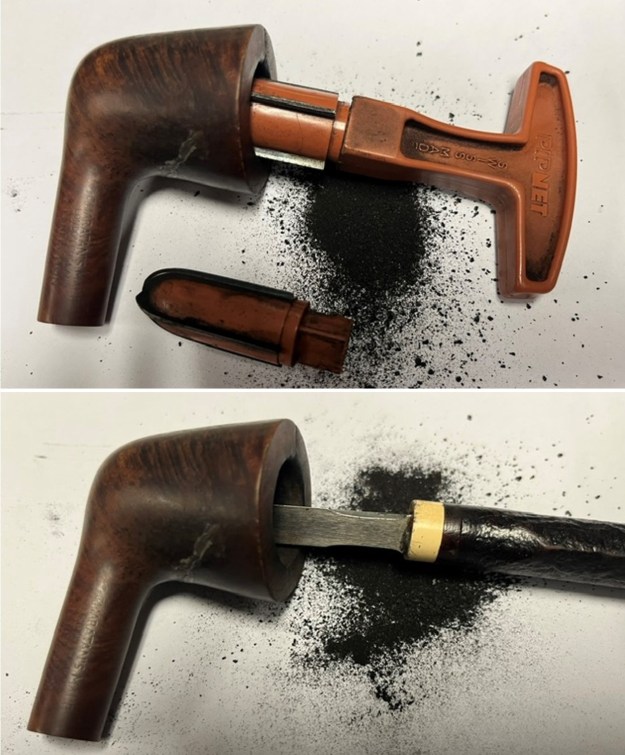
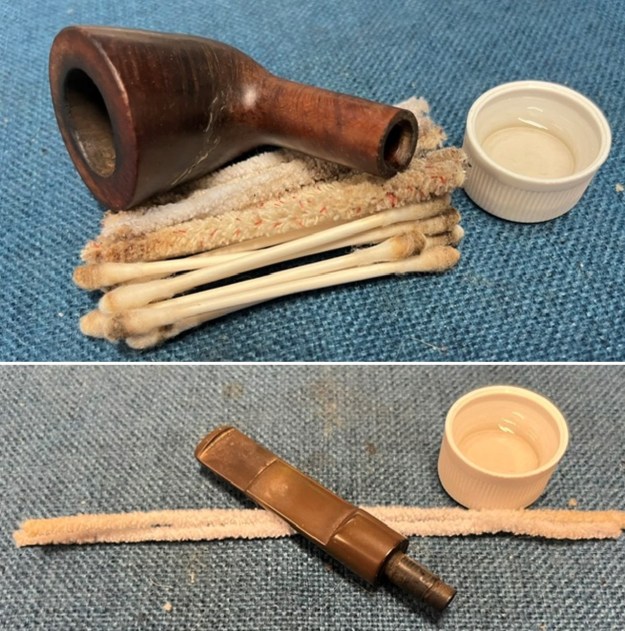
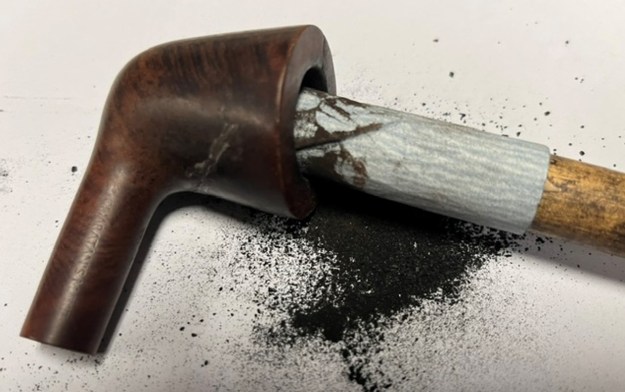 I cleaned out the inside of the shank and the airway in the stem with alcohol, cotton swabs and both bristle and regular pipe cleaners.
  I scrubbed the bowl and shank with a tooth brush and some undiluted Murphy’s Oil Soap. I rinsed it off with warm water to remove the dust and soap from the finish. I dried it off with a soft cloth and it looked better. The repaired areas are very visible in the photos below.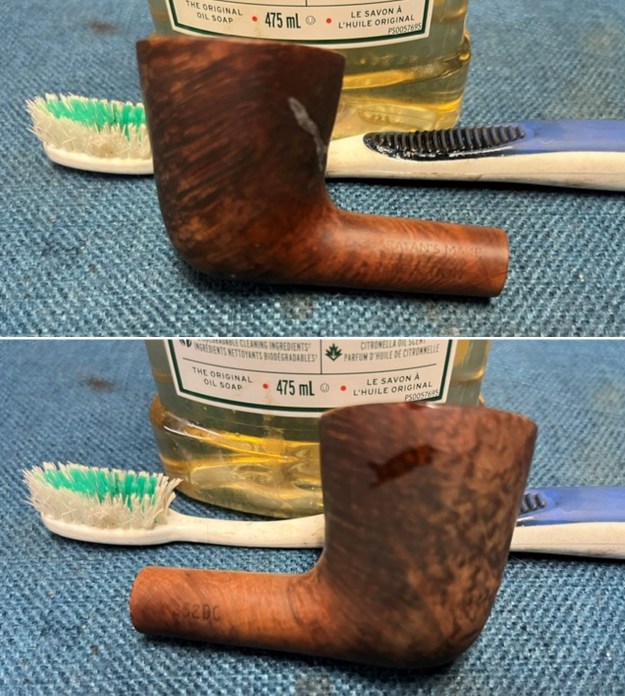
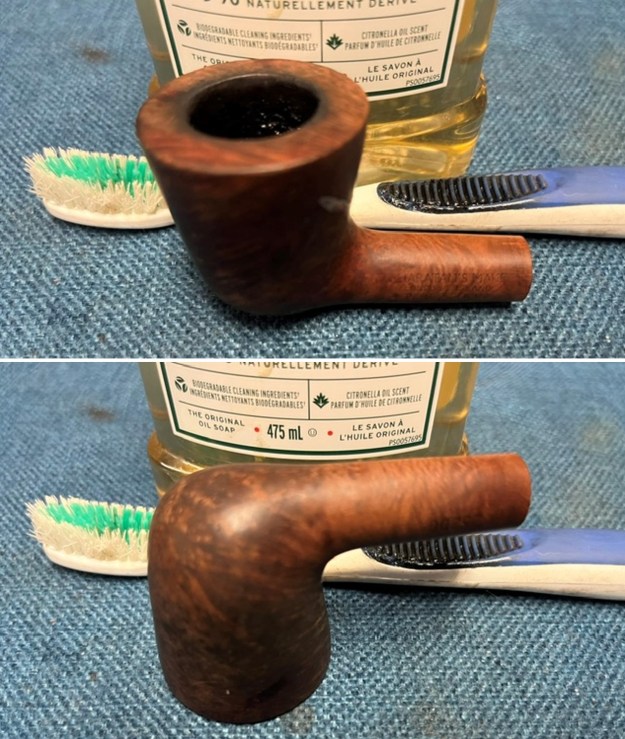
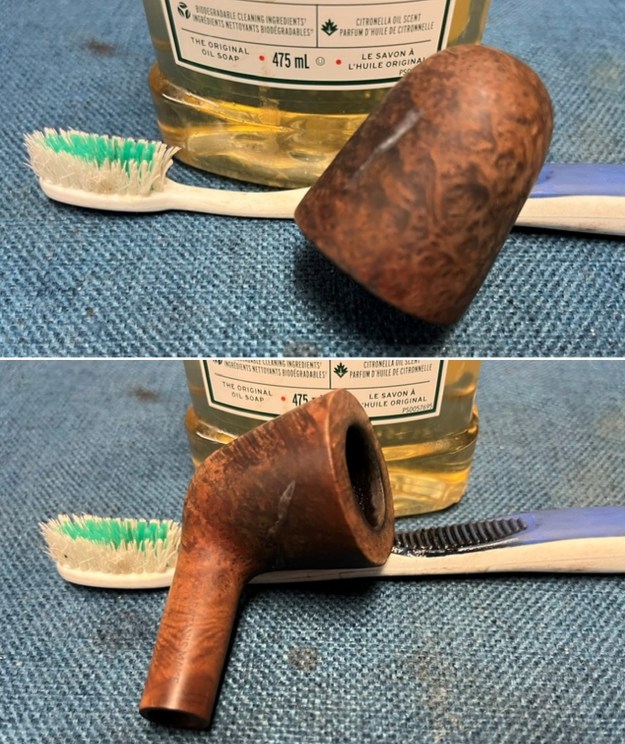 I started my work on the previous repairs by sanding them smooth with a folded piece of 220 grit sandpaper. The surface of the briar was rough on the repairs. It seemed like it was solid. However, the scrubbing of the bowl revealed a seepage of water in several spots on the repair. Once it was smoothed out I filled in the spots where it had leaked and the low spots on the repair with clear CA glue and briar dust. I pressed them into the briar with a dental spatula. Once the repair hardened I sanded it smooth with the sandpaper.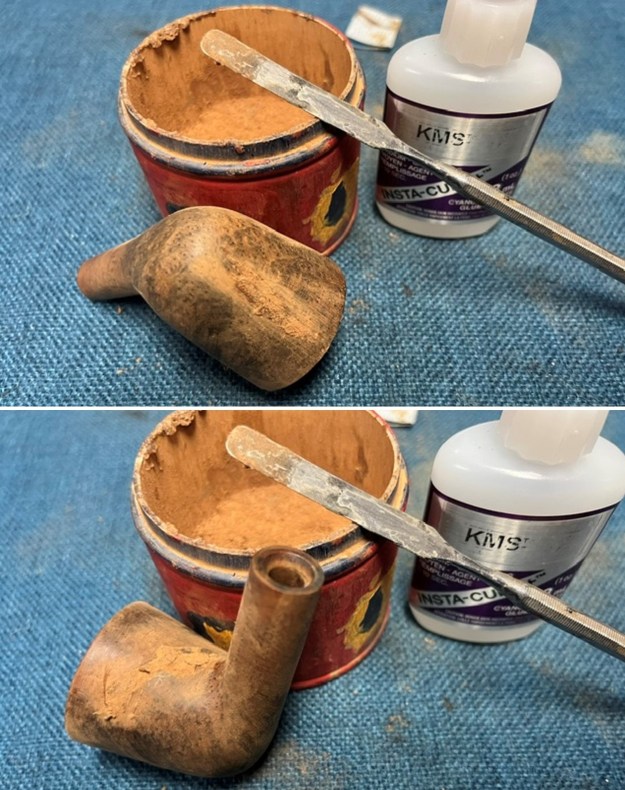
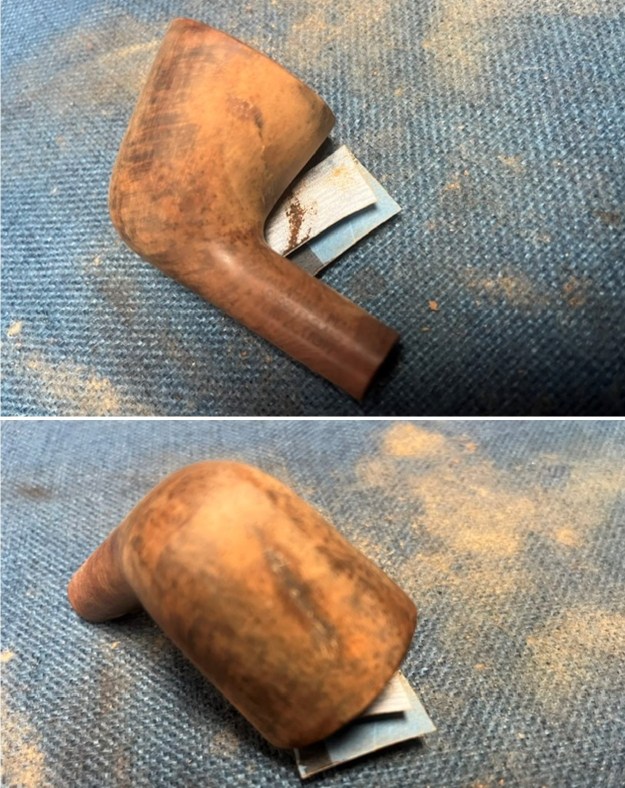 I sanded the exterior of the bowl with 320-3500 grit 2×2 inch sanding pads to smooth out the repairs on the finish and to blend them in better. I wiped the bowl down with a damp cloth after each sanding pad. It really began to look much better.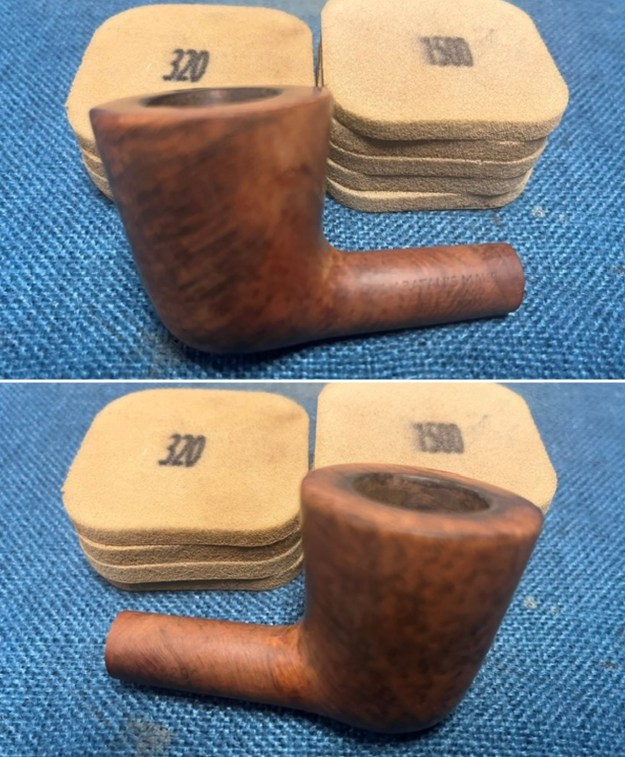
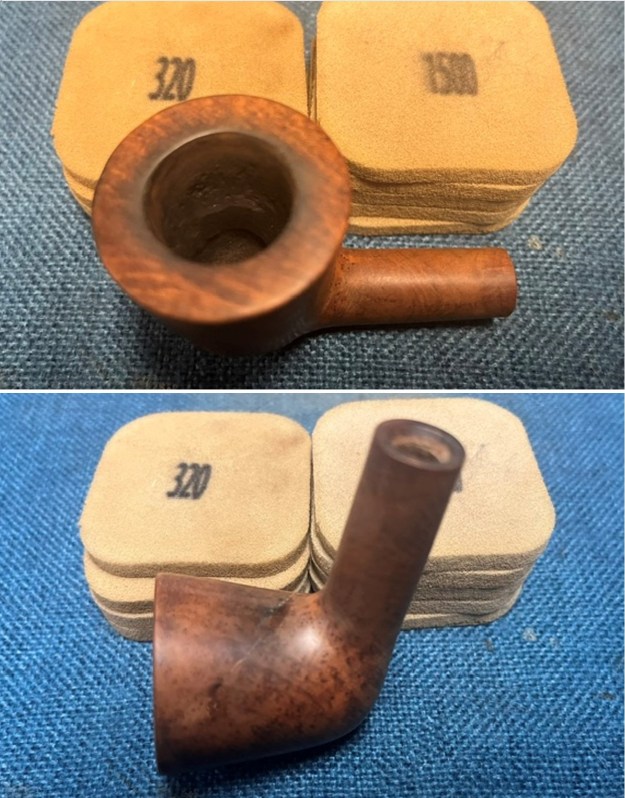 I restained the bowl with a brown aniline stain. I applied it with a wool dauber and lit it on fire with a Bic lighter flame. The flame sets the stain deep in the grain. Polishing it would bring the colour back to the original and also work to blend in the repairs to some degree.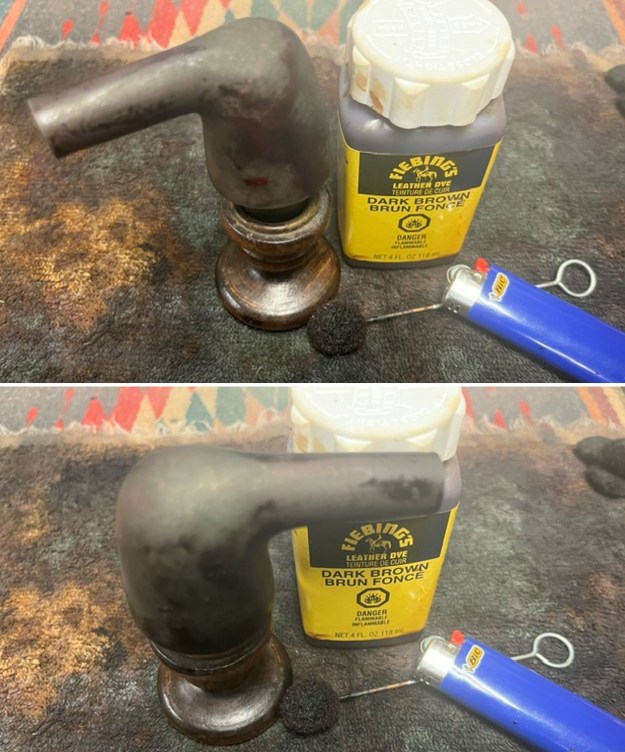
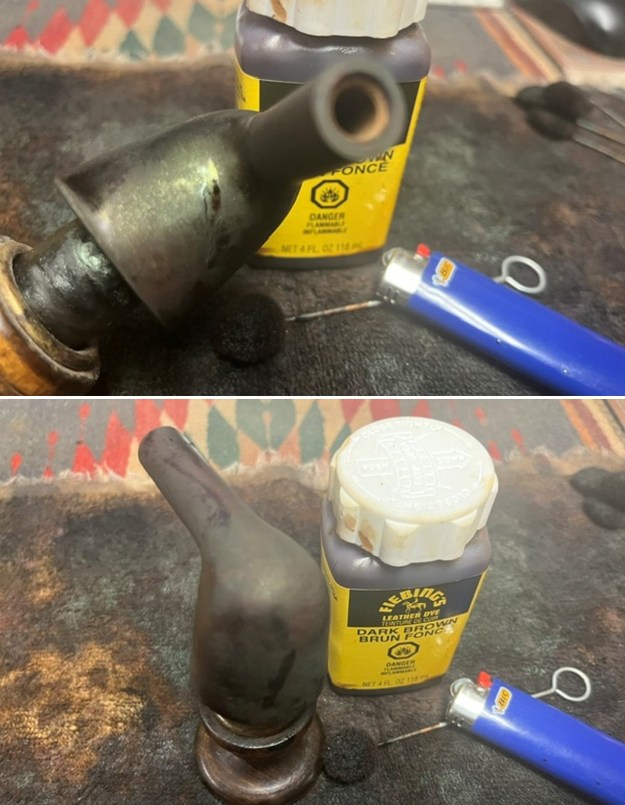 Once the stain cured I wiped the bowl and shank down with 99% isopropyl alcohol on a cloth to make it more transparent. It was beginning to look much better.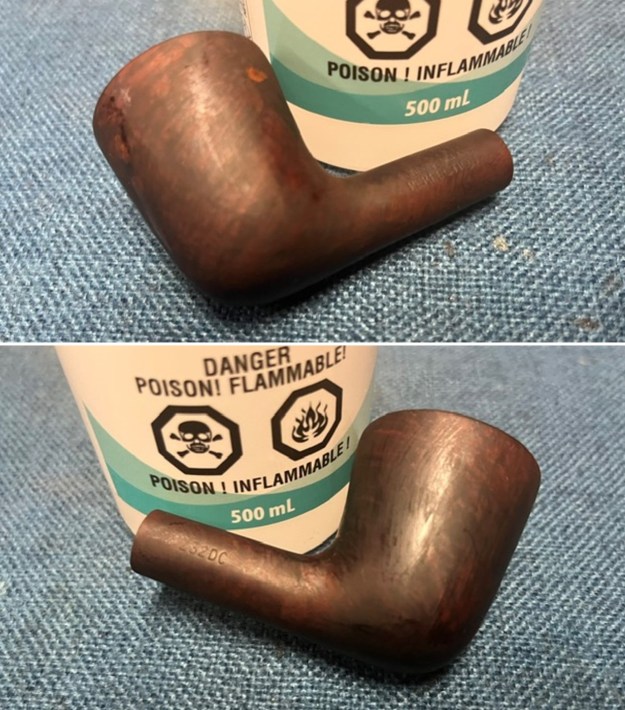
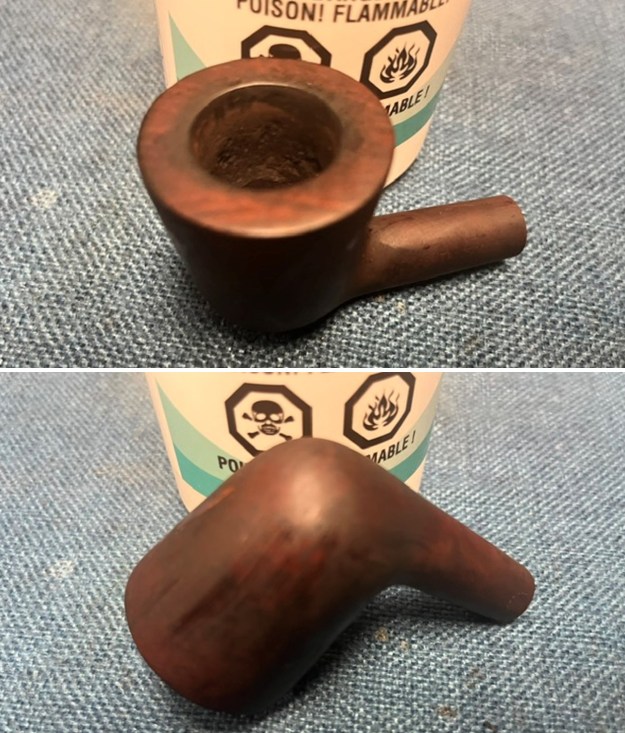
 I polished the briar with 1500-12000 grit micromesh sanding pads to develop the shine. It began to look very good. It had a rich shine in the finish.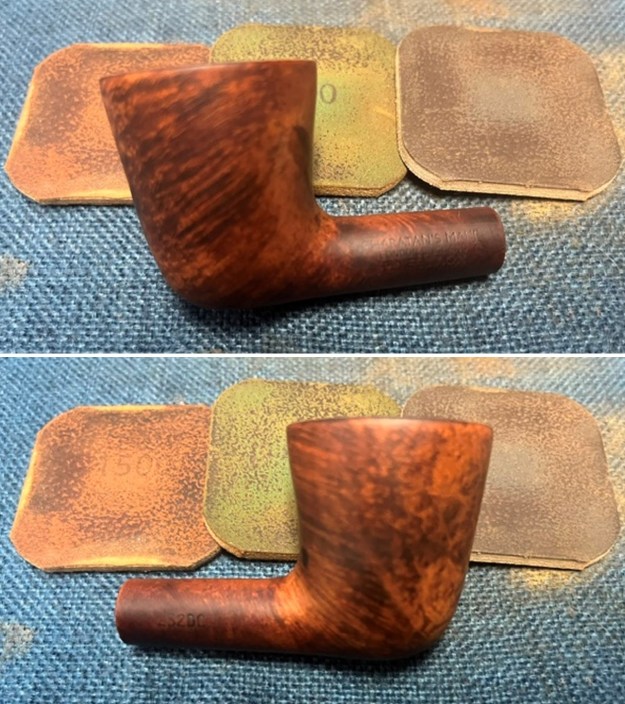
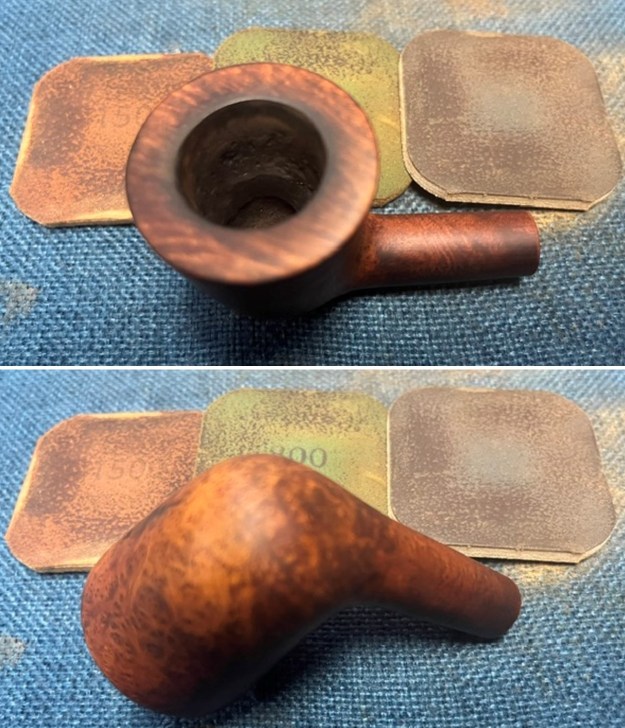
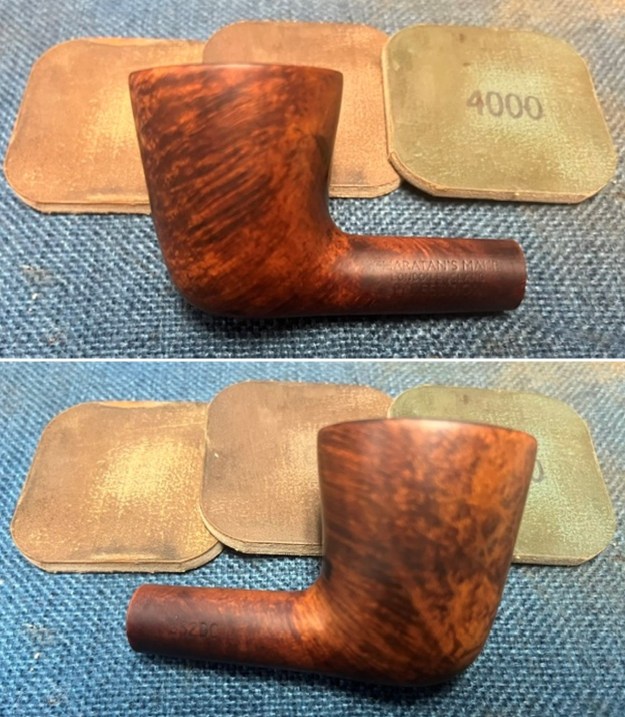
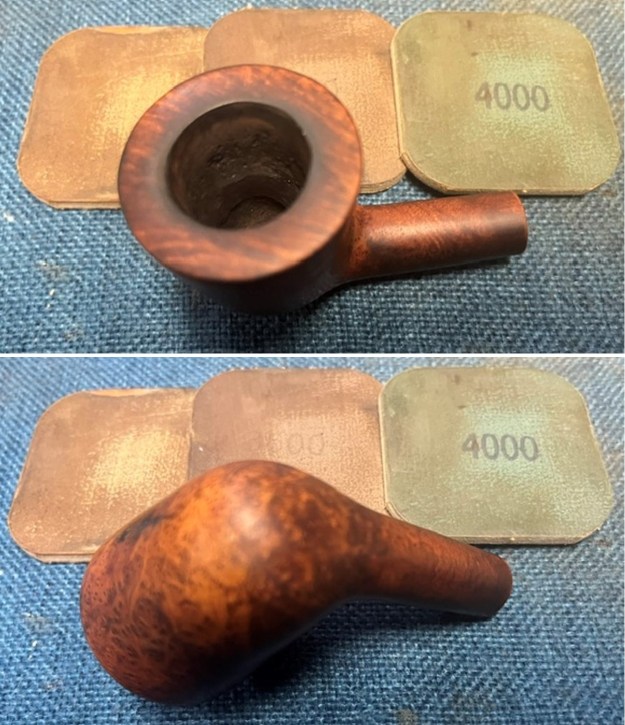
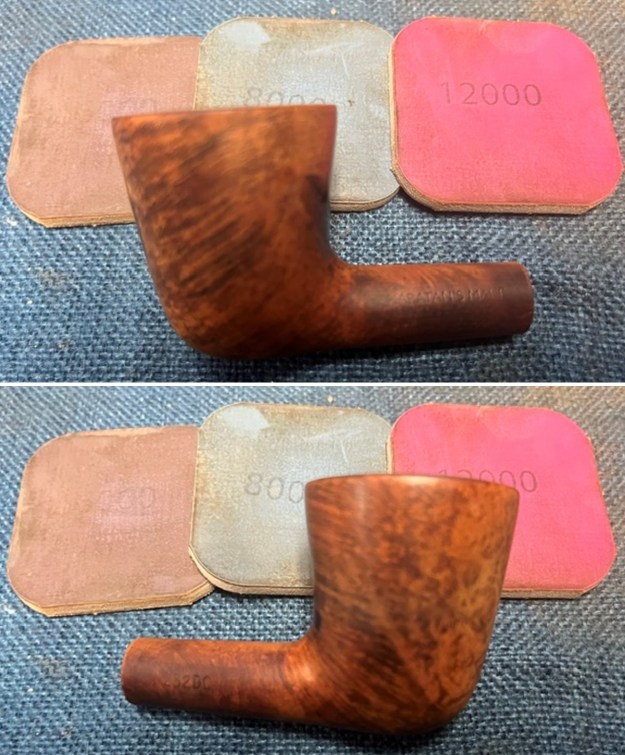
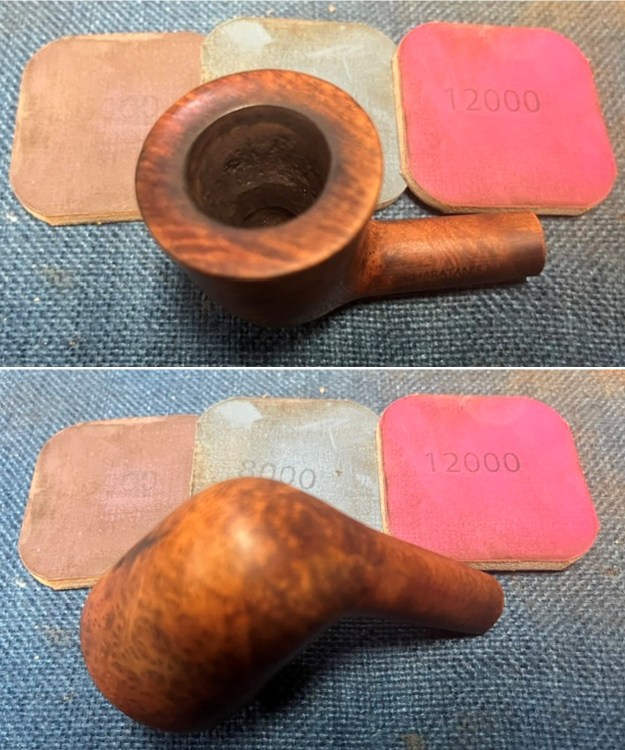 I rubbed the briar down with Before & After Restoration Balm. I worked it into the briar with my fingertips to work it into the finish. The product works to clean, enliven and preserve the briar. I let it sit for 10 minutes then I buffed it with a cotton cloth to deepen the shine. The briar really comes alive with the balm.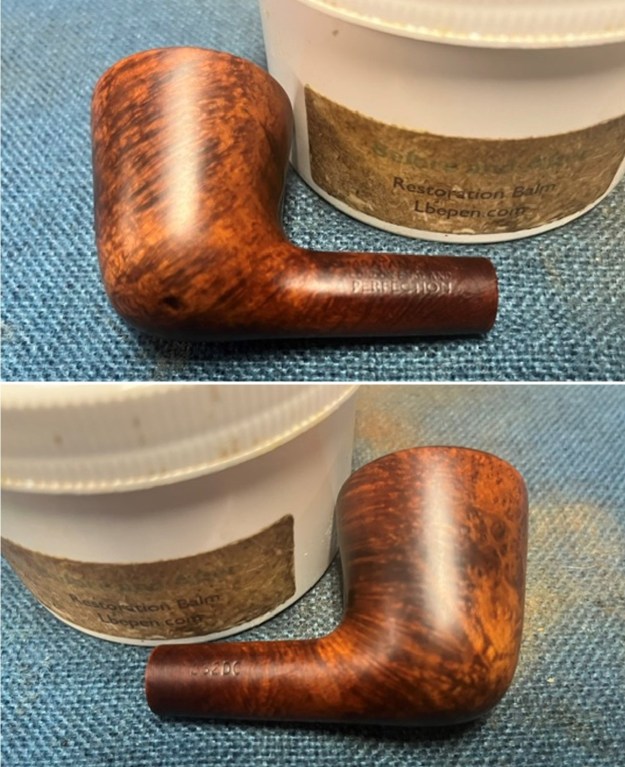
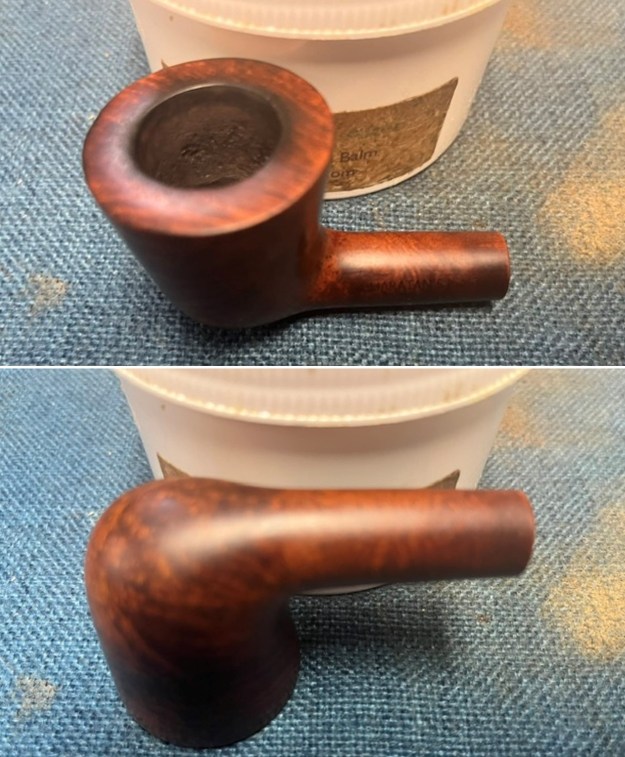
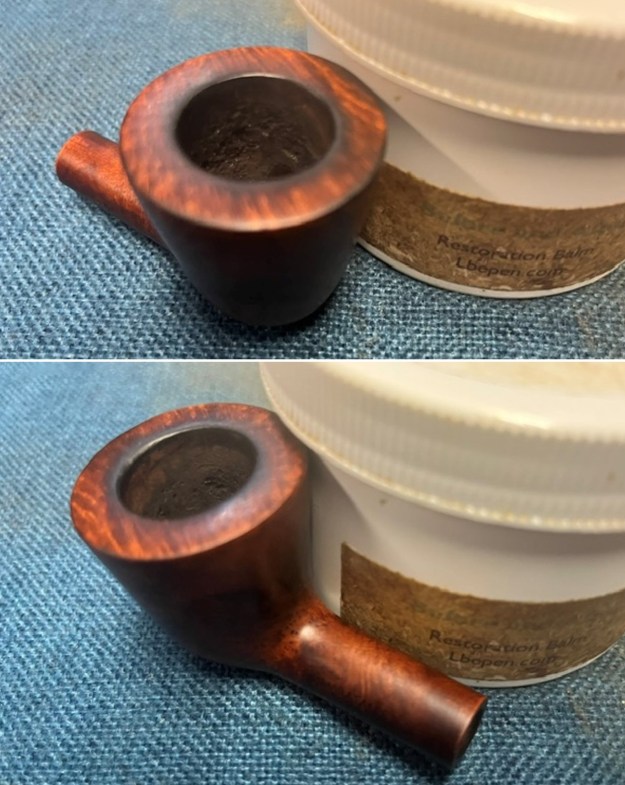
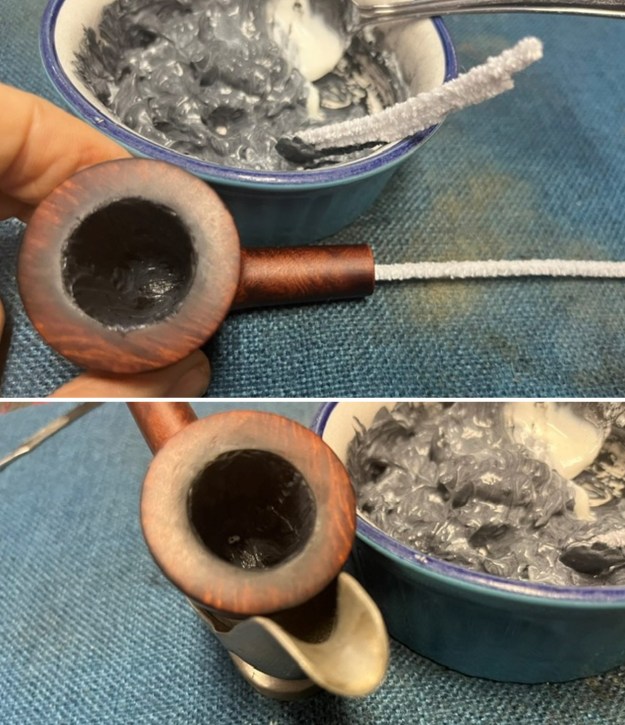
 I mixed a batch of JB Weld and applied it to the inside of the bowl on the back side to rebuild the damaged repair that was already present. Once it cured I sanded the inside of the bowl with 220 grit sandpaper wrapped around a piece of dowel.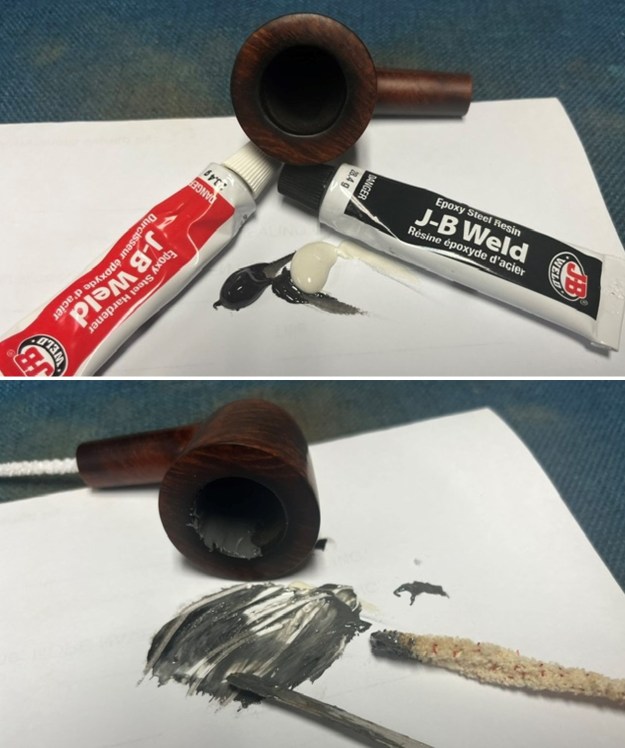
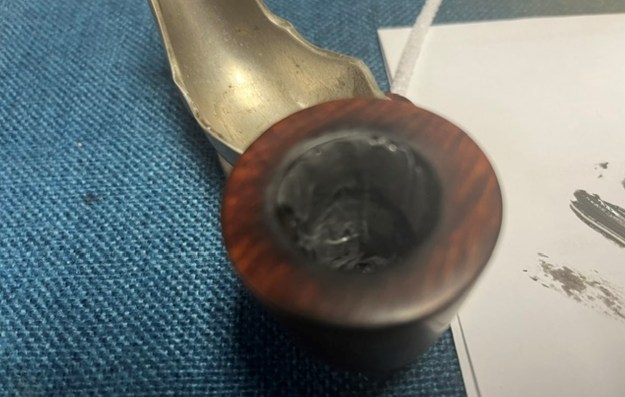 Once the JB Weld cured I sanded the repaired walls with a piece of 220 grit sandpaper wrapped around a dowel. I flattened the repairs and smoothed them out to match the bowl walls.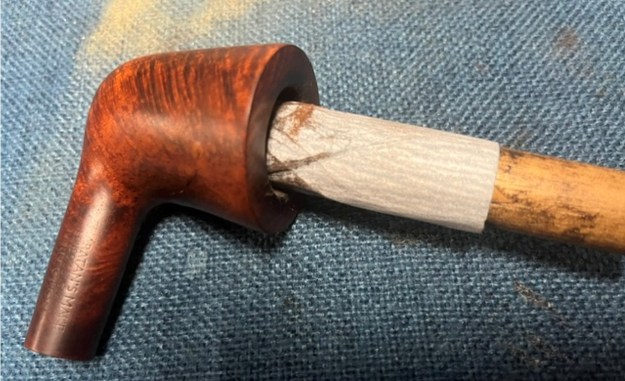
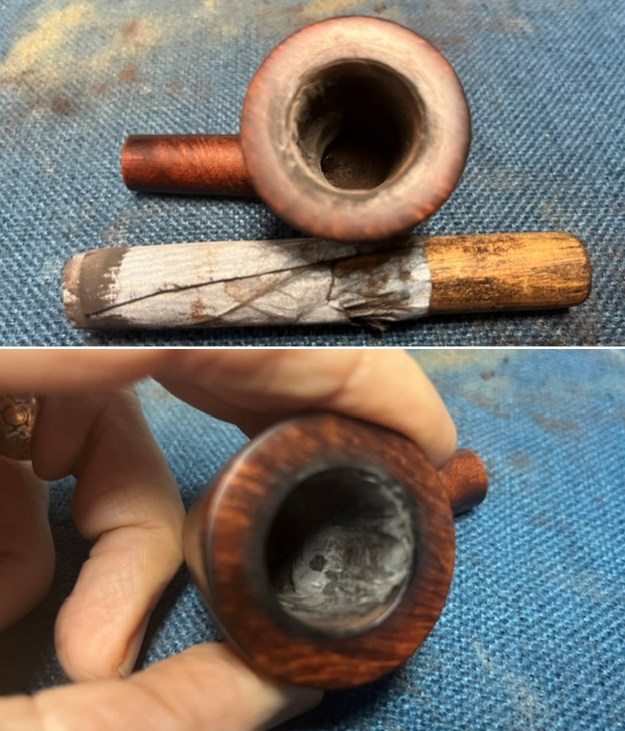 I mixed a batch of bowl coating – sour cream and charcoal powder and coated the inside of the bowl so that it provided a base for the newly forming cake.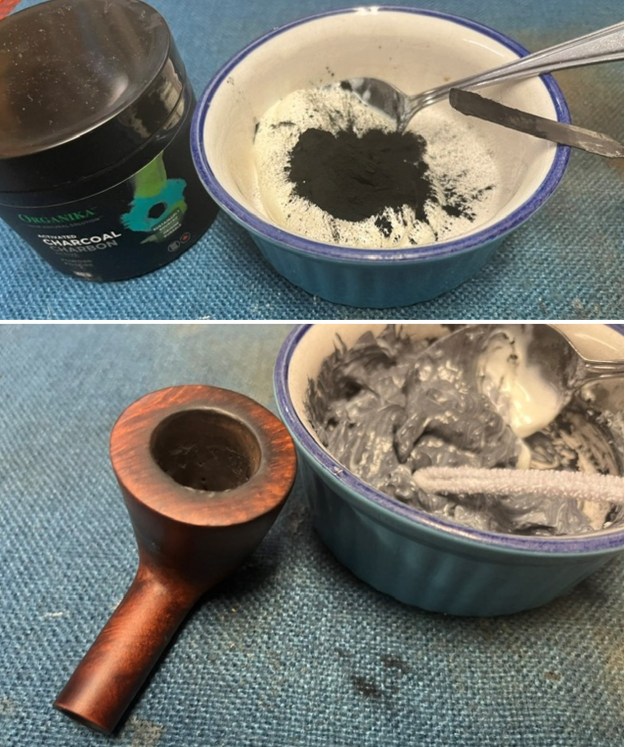
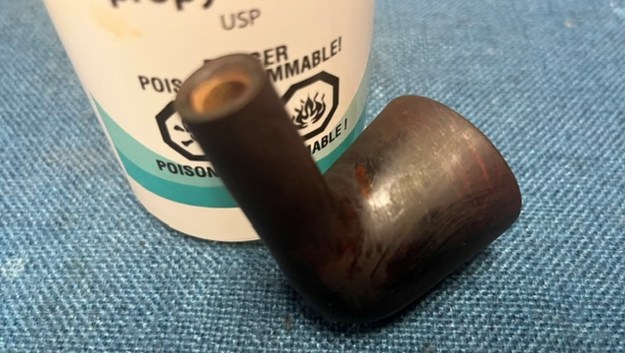
 Once finished I set the bowl aside and worked on the stem. I scrubbed the stem down with Soft Scrub cleanser to attack the oxidation and clean up the surface of the stem. I put it into a bath of Briarville’s Pipe Stem Deoxidizer and let it soak overnight. I wiped off the remaining fluid when I removed it from the bath. It definitely looked better but there was still a lot of work to do.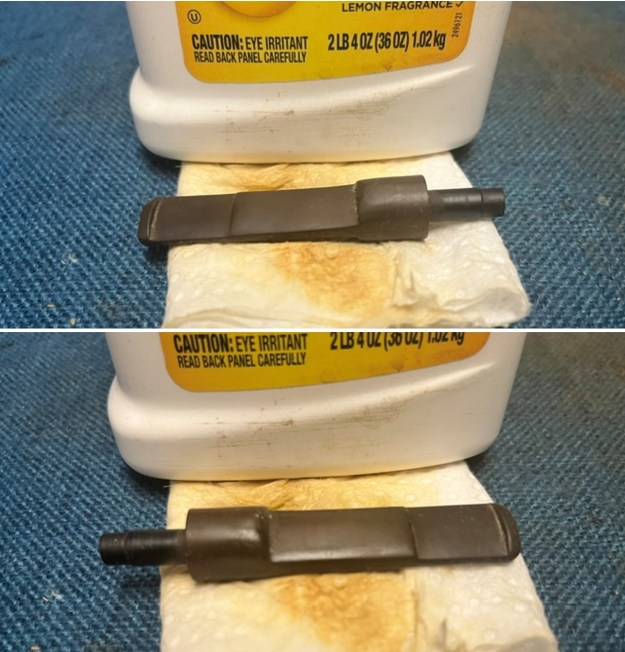
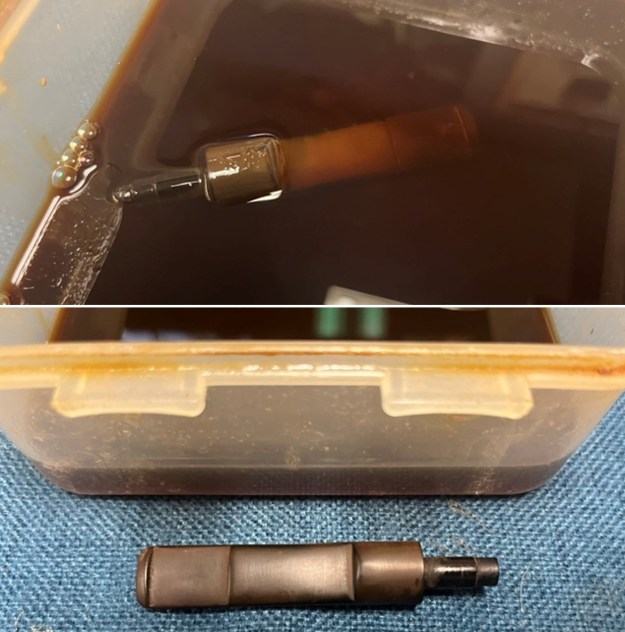
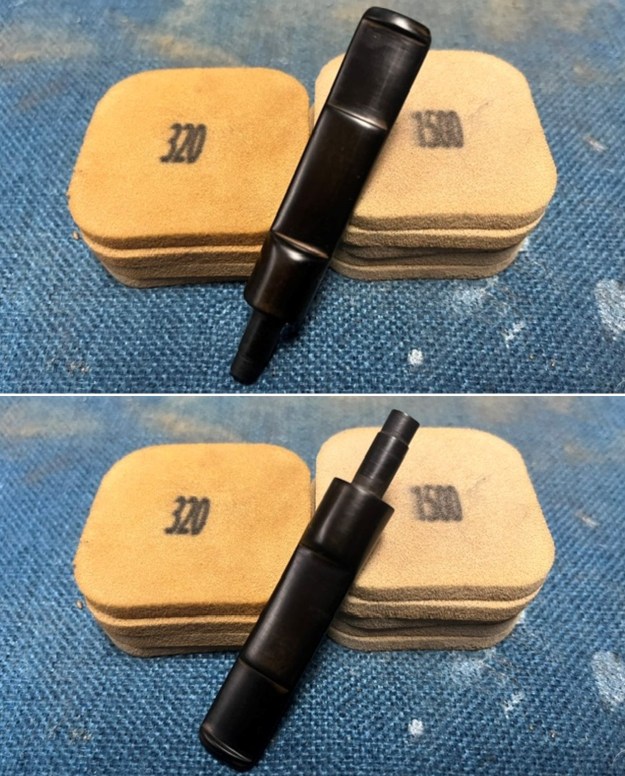
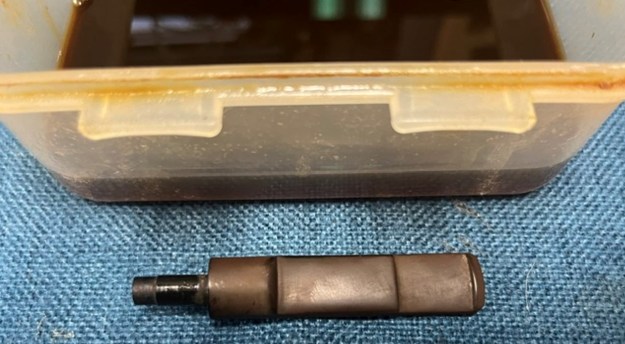 I sanded the stem with 320-3500 grit 2×2 inch pads. I wiped the stem down with an Obsidian Oil cloth after each sanding pad.
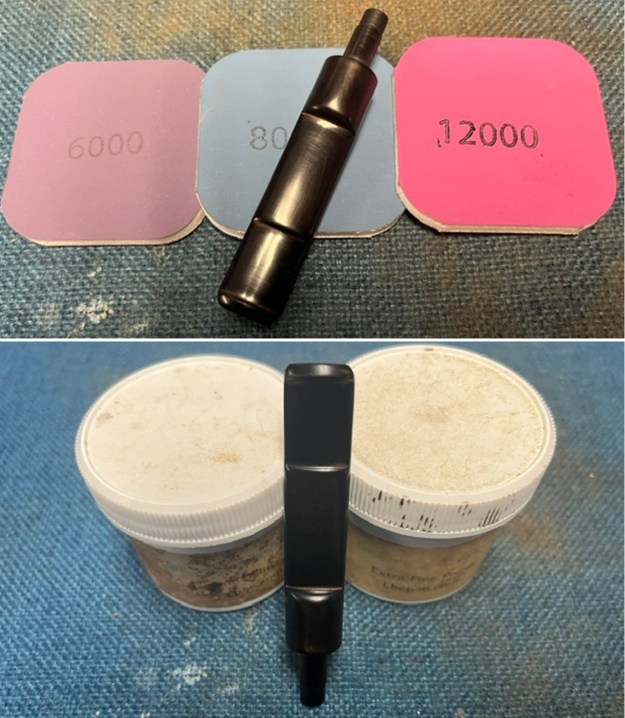
 I polished the vulcanite with micromesh sanding pads – 1500-12000 grit pads. I wiped it down with Obsidian Oil after each sanding pad. I used Before & After Pipe Polish – both Fine and Extra Fine to further polish the stem.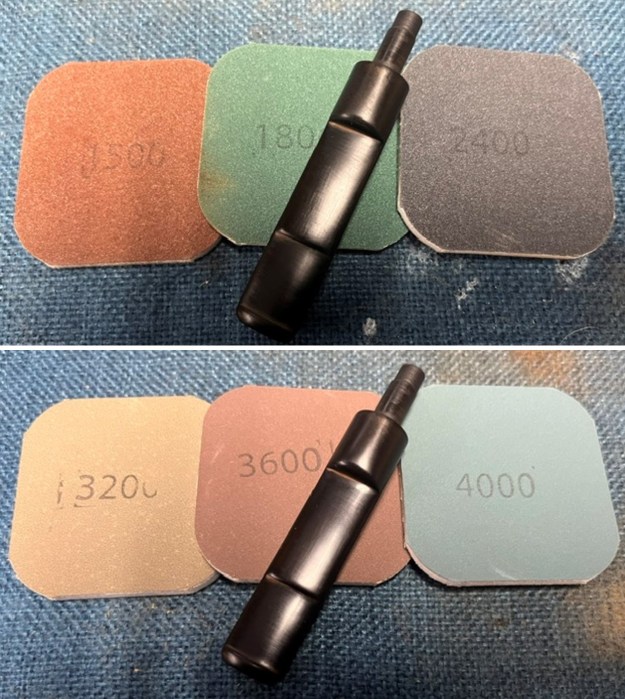
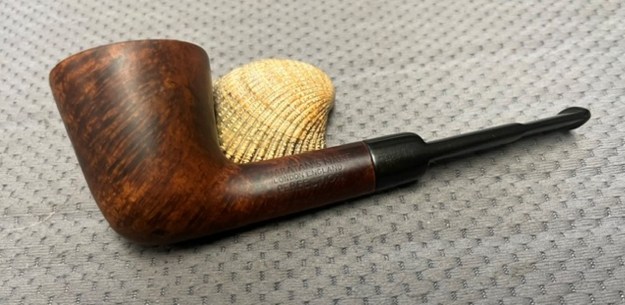
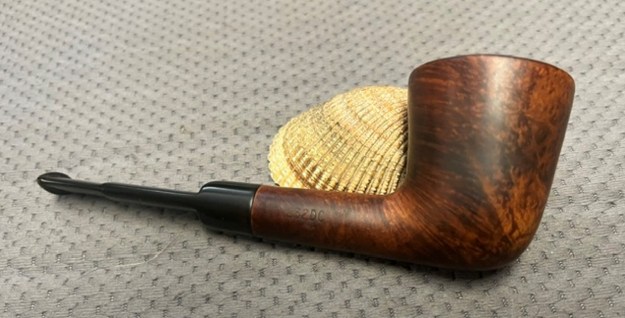
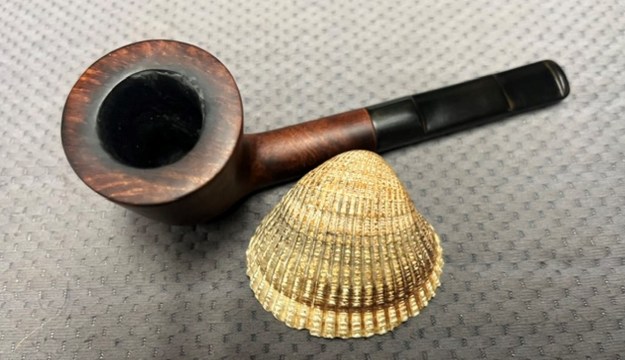
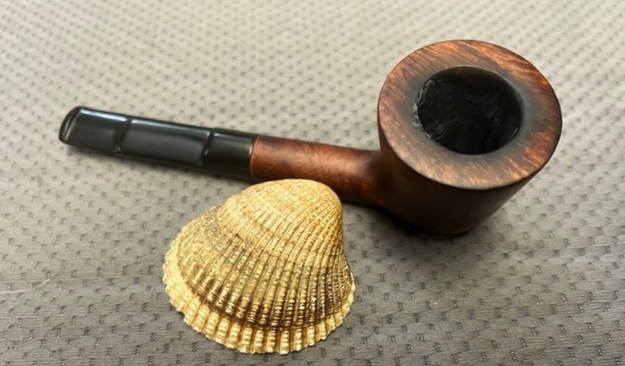
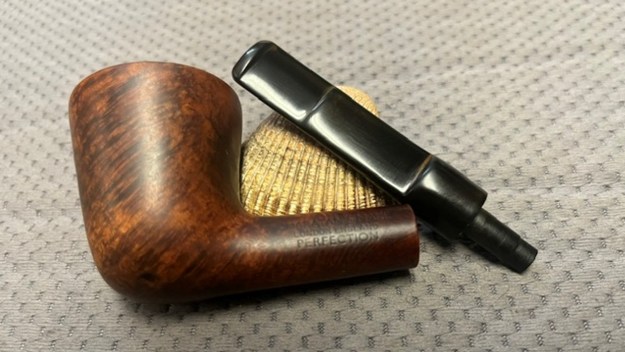
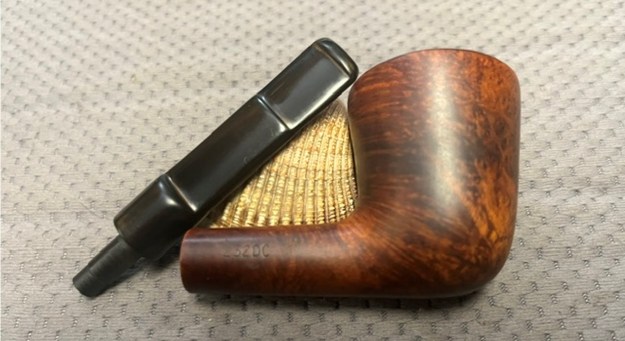
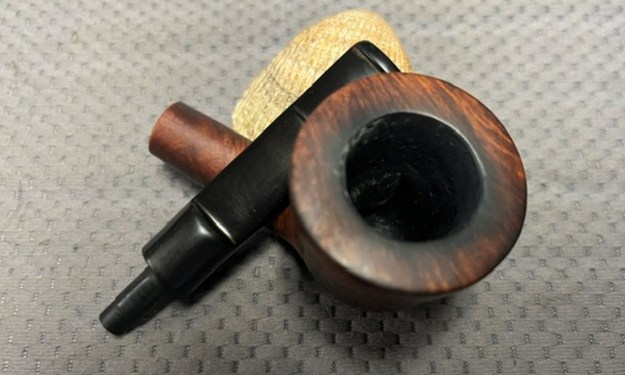
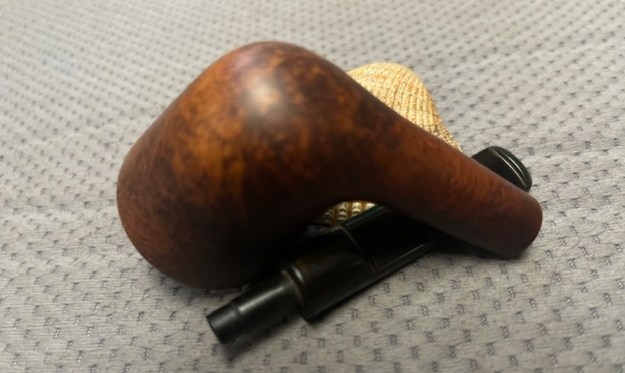
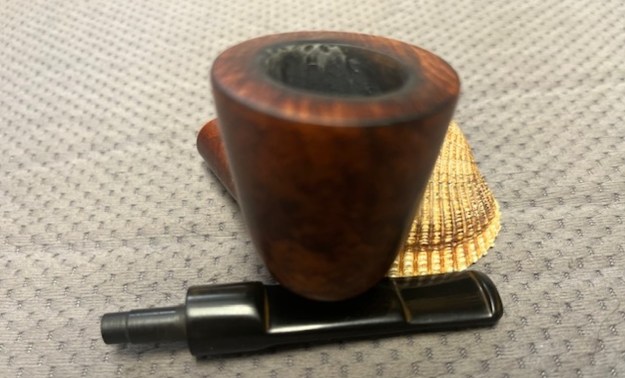
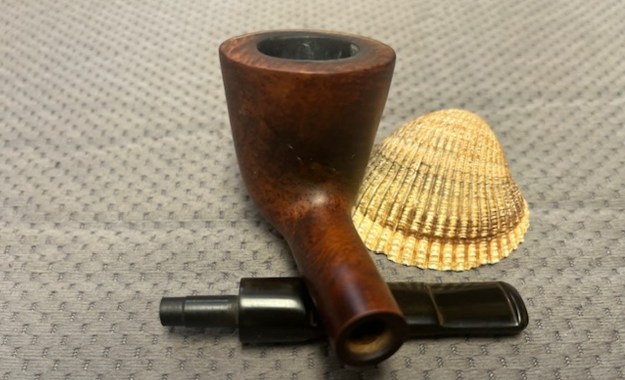
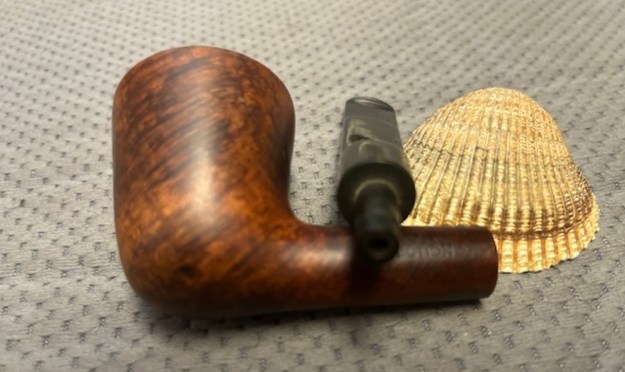
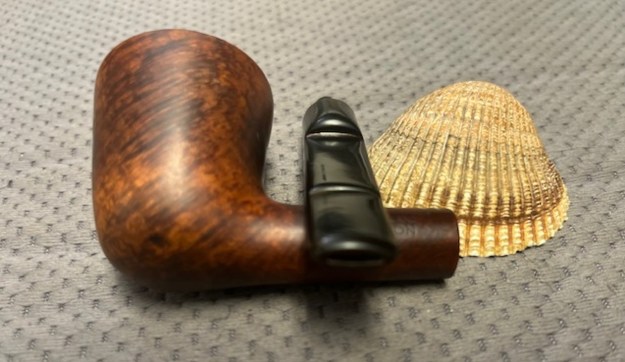
 It was great to finish this Charatan’s Make Perfection 232DC Saddle Stem Billiard. I put the pipe back together and buffed it with Blue Diamond on the buffing wheel. I gave the bowl multiple coats of carnauba wax. I buffed the pipe with a clean buffing pad to raise the shine. I hand buffed the pipe with a microfiber cloth to deepen the shine. It is fun to see what the polished bowl looks like with deep sandblast all around it. Added to that the polished black, vulcanite, saddle stem was beautiful. This Charatan’s Make Perfection 232DC Saddle Stem Billiard is great looking and the pipe feels great in my hand. It is light and well balanced. Have a look at it with the photos below. The dimensions are Length: 6 inches, Height: 2 inches, Outside diameter of the bowl: 1 ½ inches, Chamber diameter: 7/8 of an inch. The weight of the pipe is 67 grams/2.36 ounces. It is a beautiful pipe and one that will soon be heading back to Blake once I finish the Dunhill he also sent. Thanks for walking through the restoration with me as I worked over this pipe.
As always, I encourage your questions and comments as you read the blog. Thanks to each of you who are reading this blog. Remember we are not pipe owners; we are pipe men and women who hold our pipes in trust until they pass on into the trust of those who follow us.