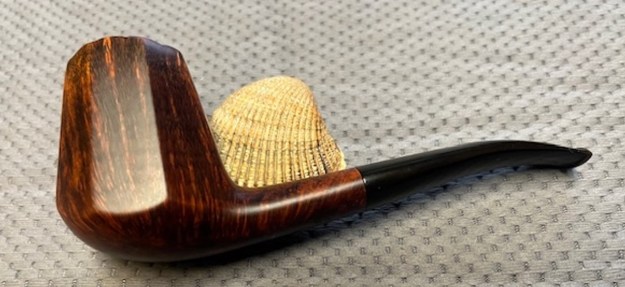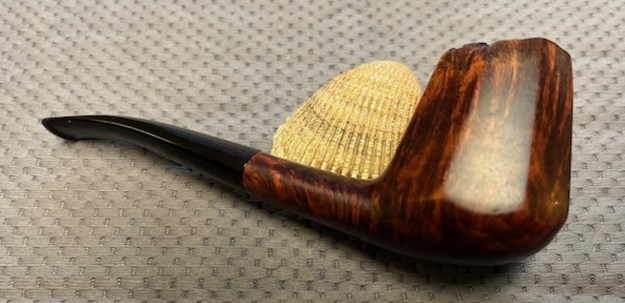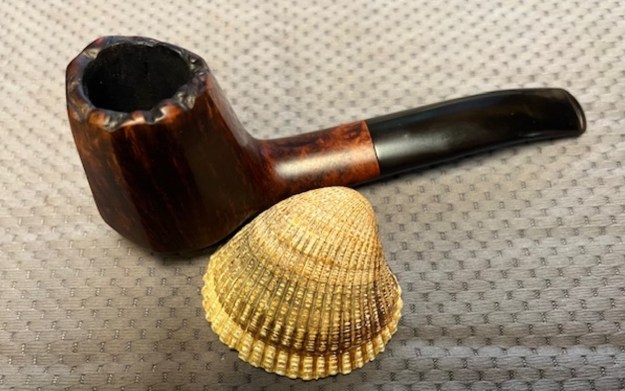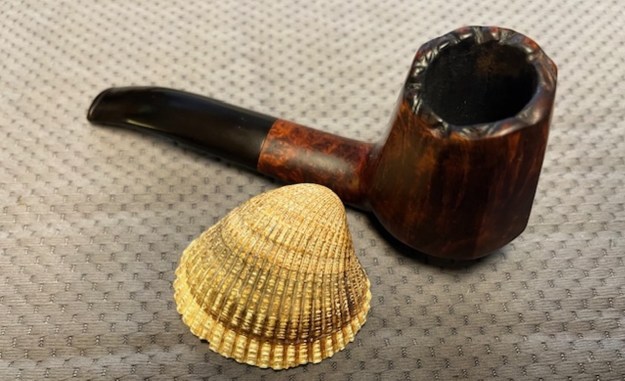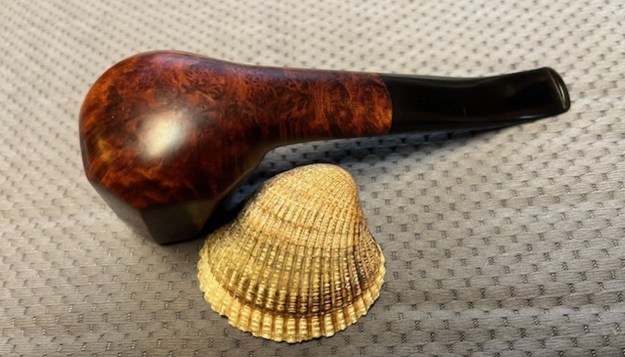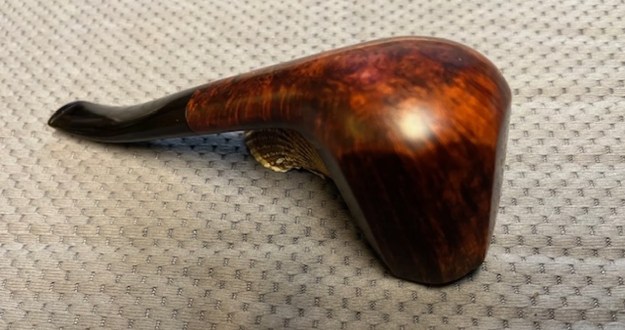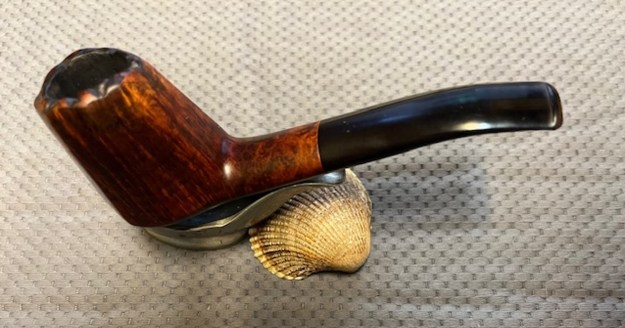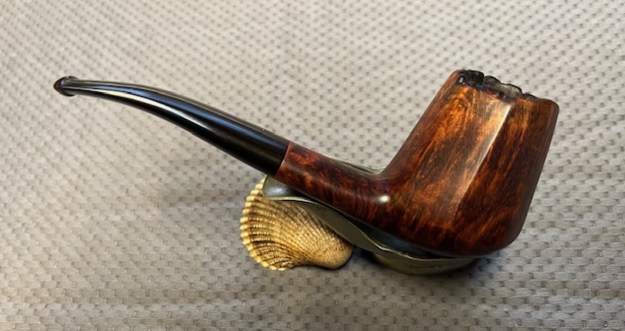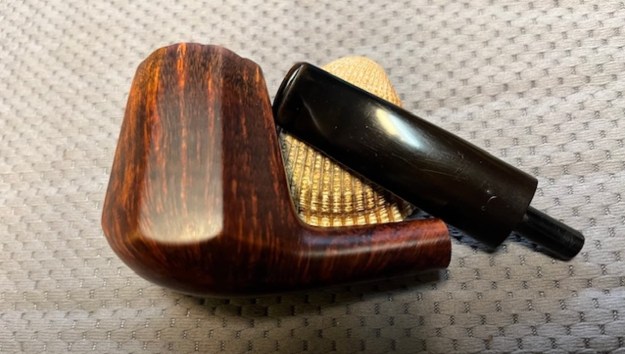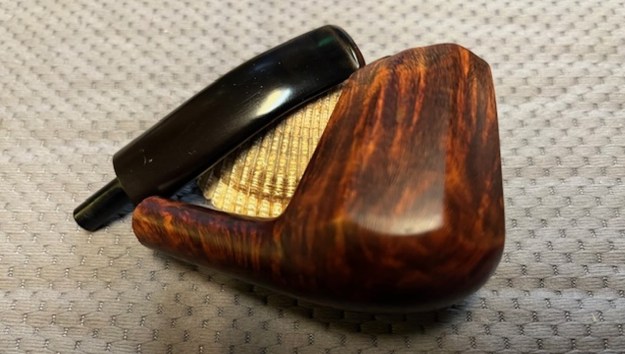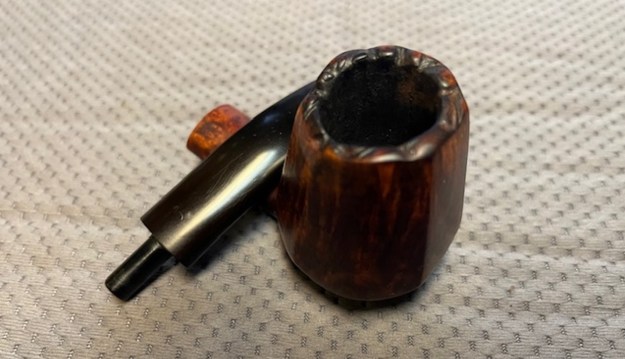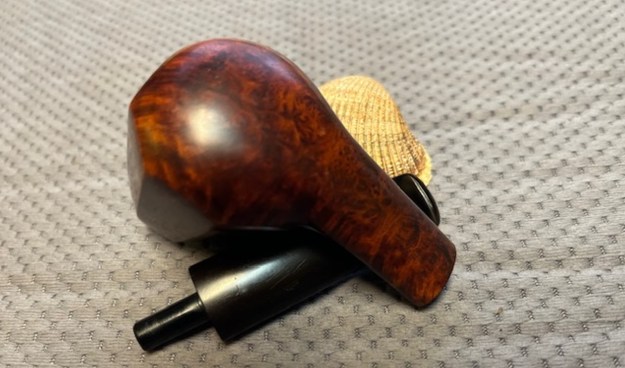
Tag Archives: Bjarne Hand Made Pipes

Restoring a Bjarne Handmade in Denmark War Club Billiard


by Steve Laug

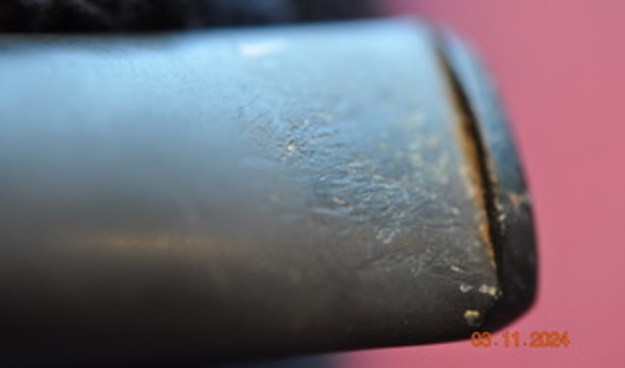
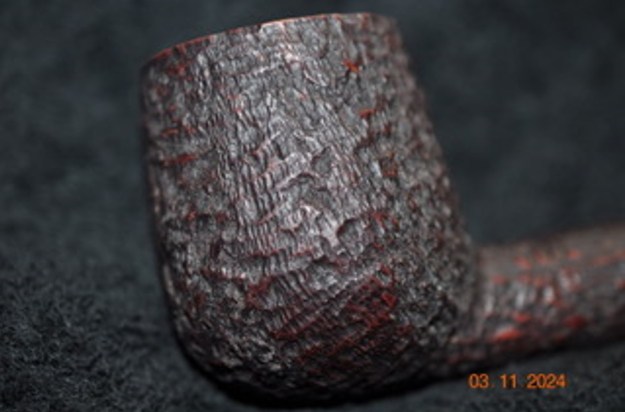
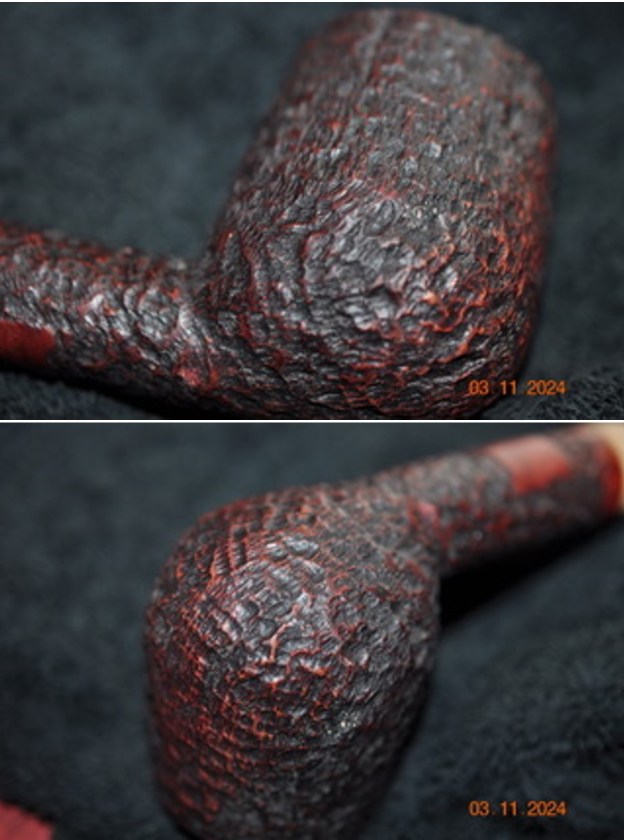
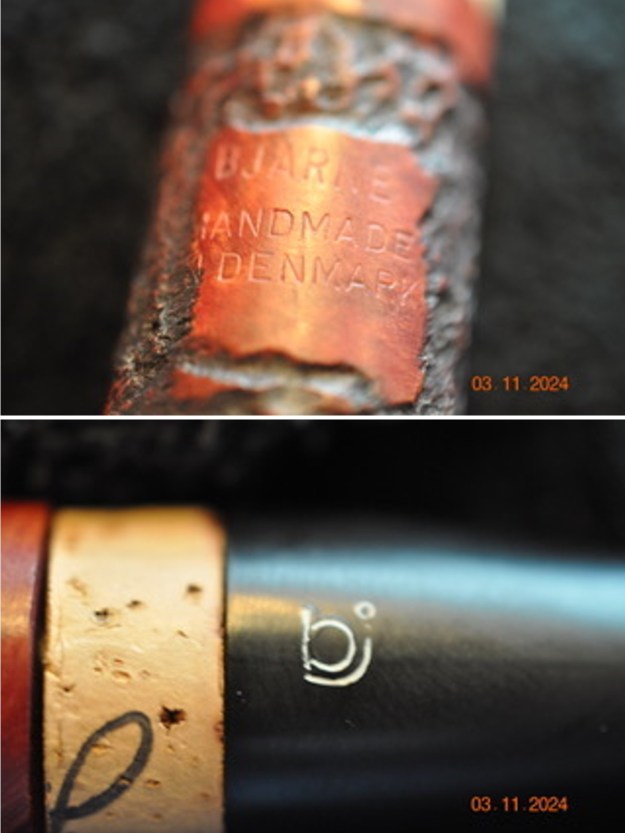
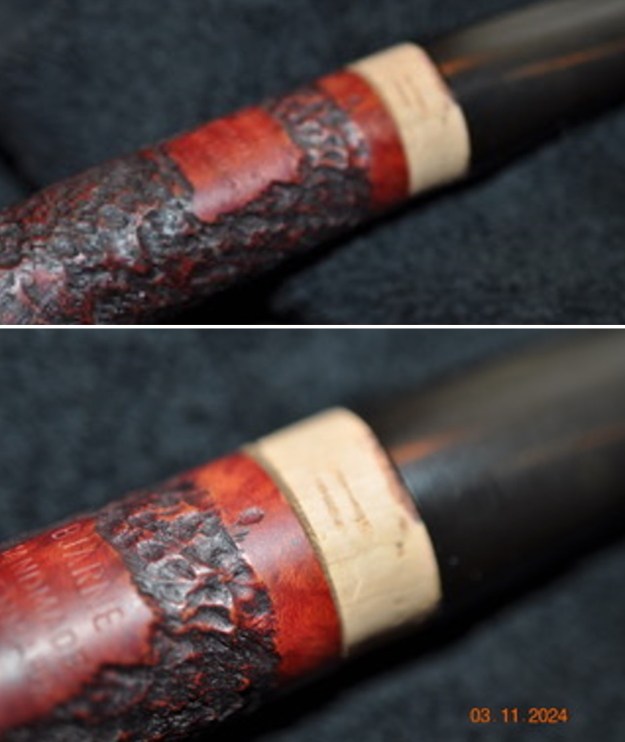
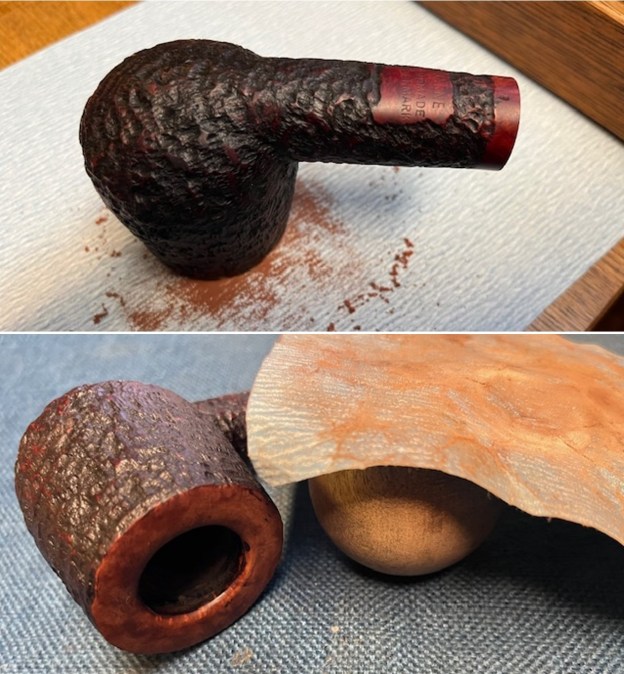
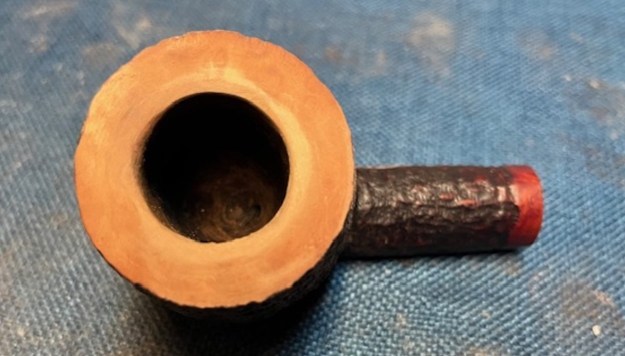
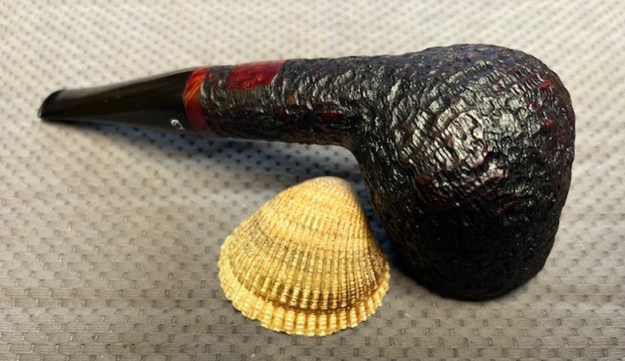
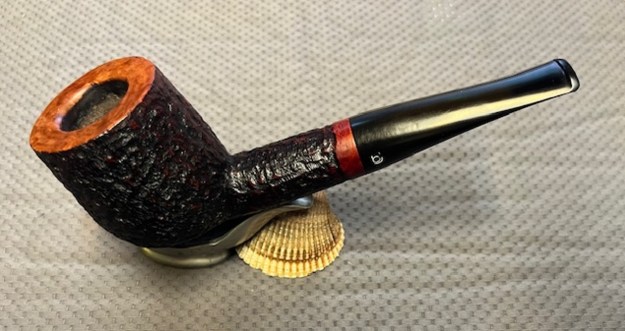
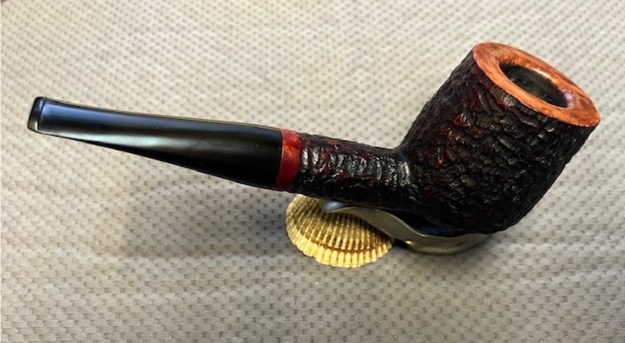
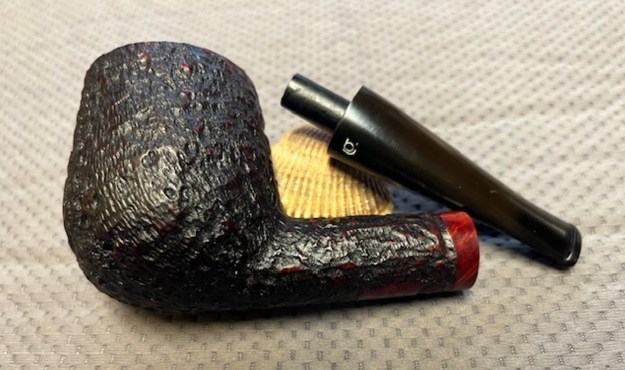
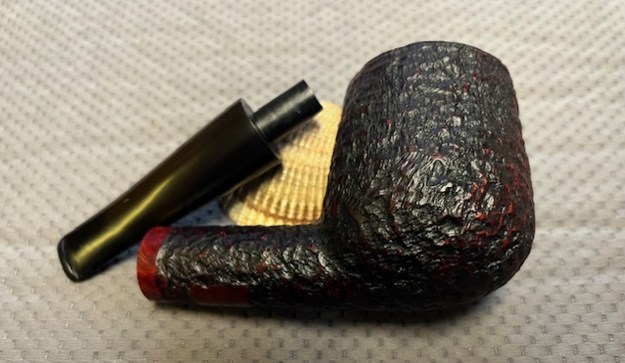
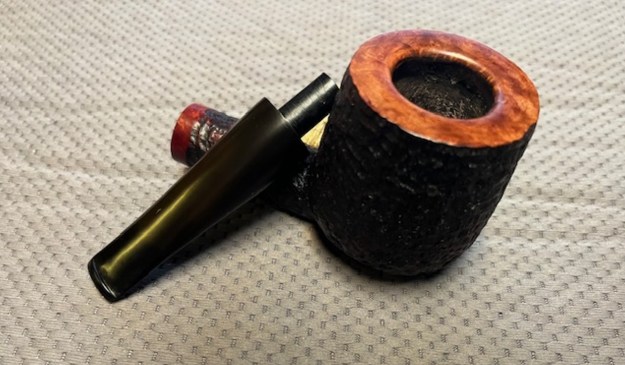
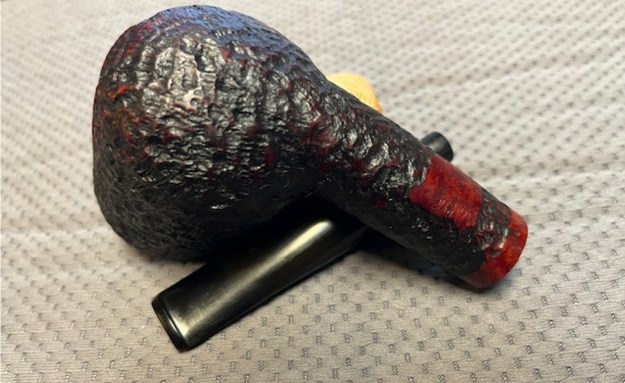
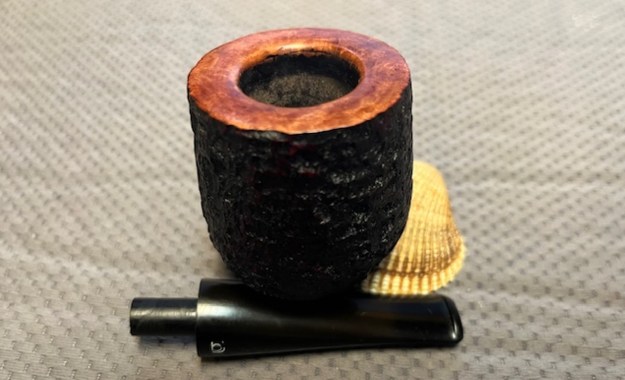
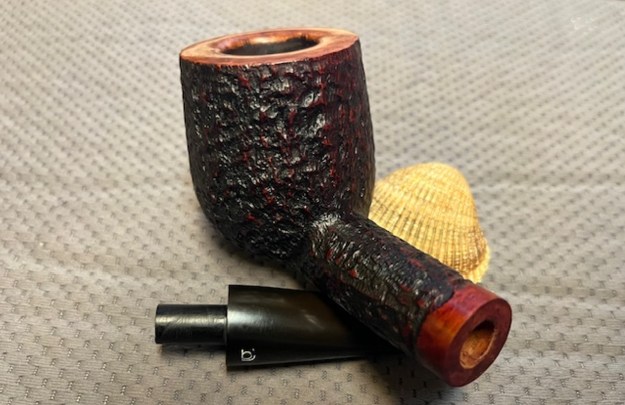
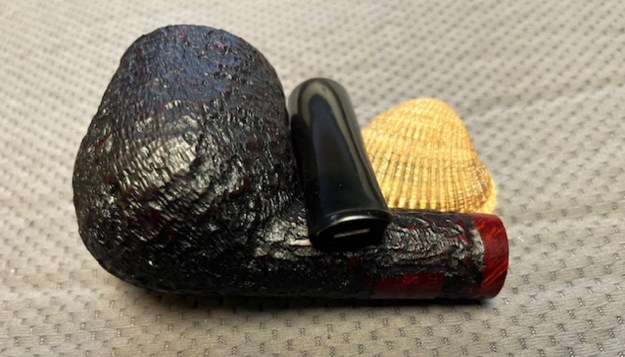
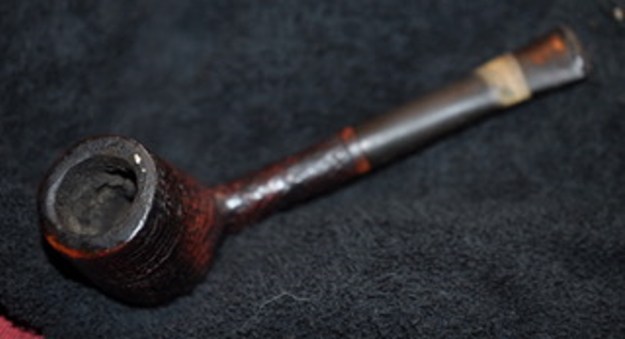
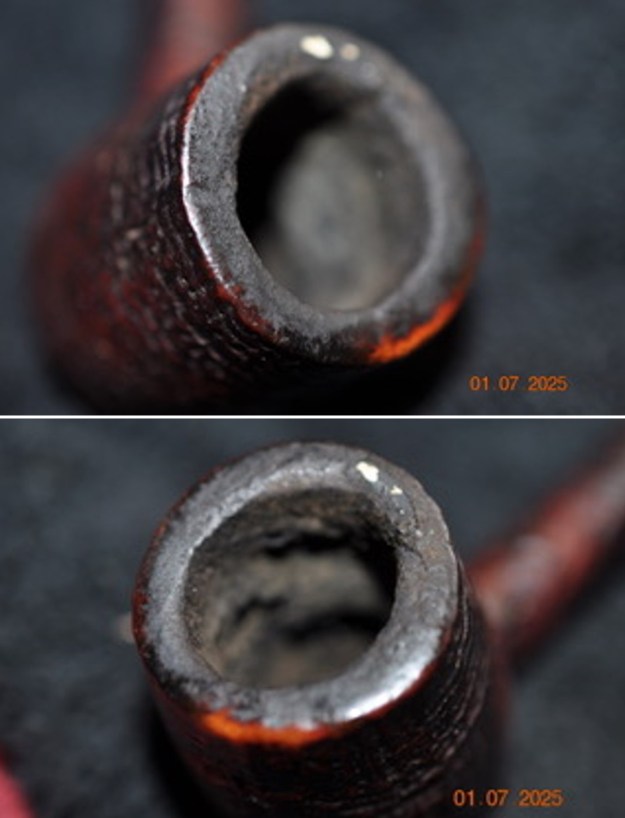
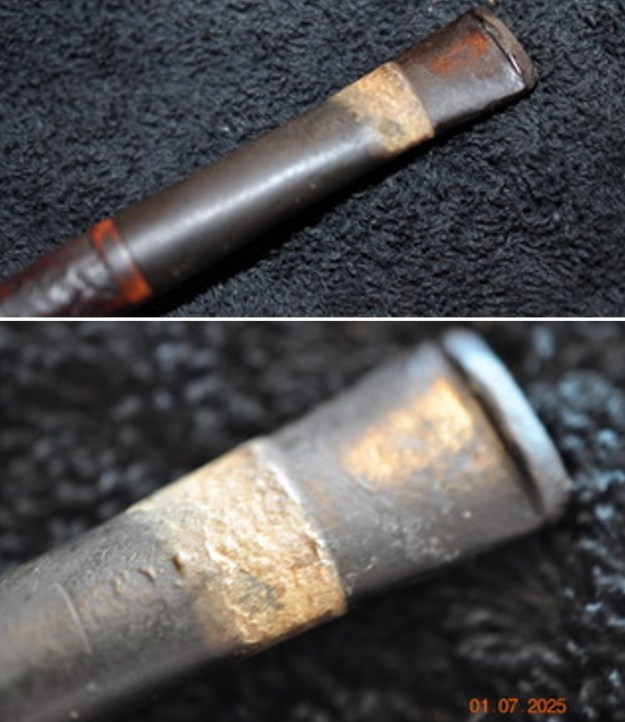
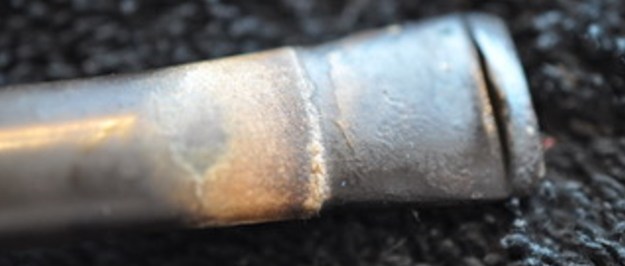
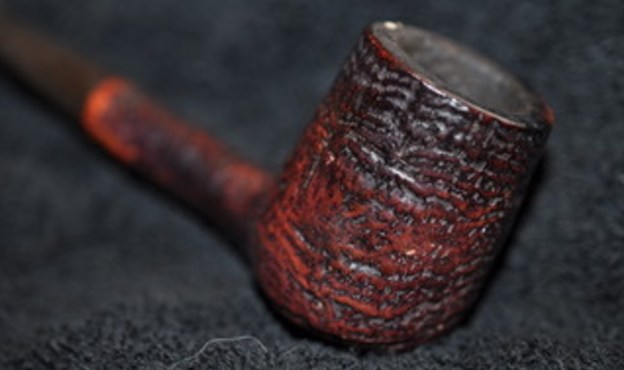
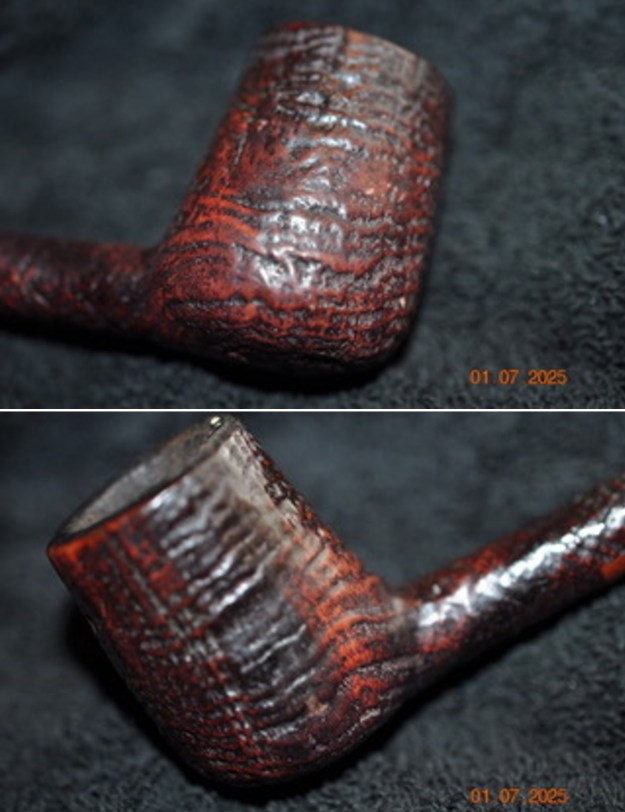
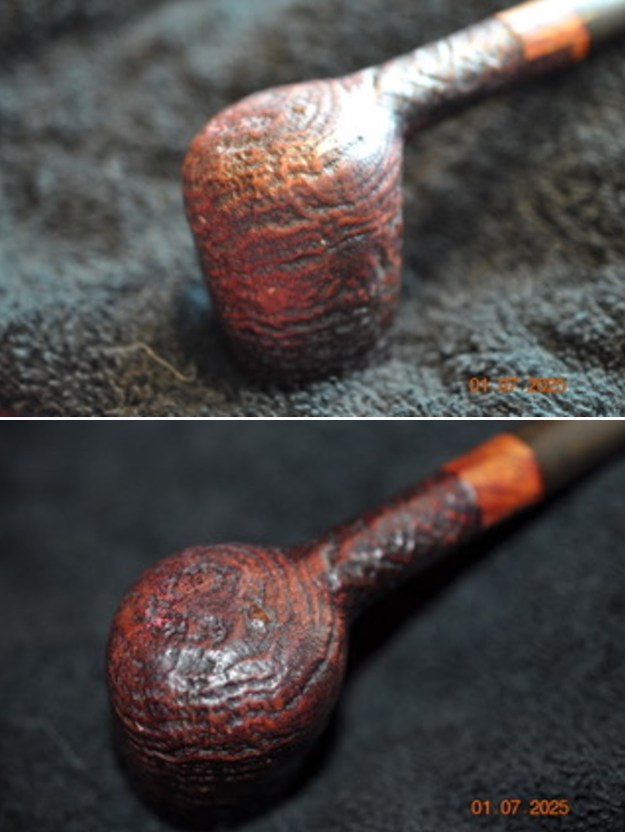
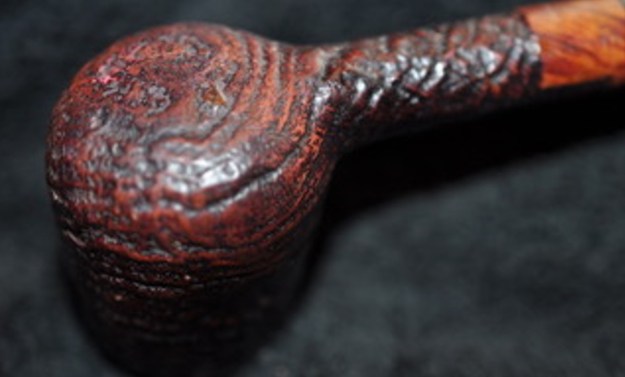
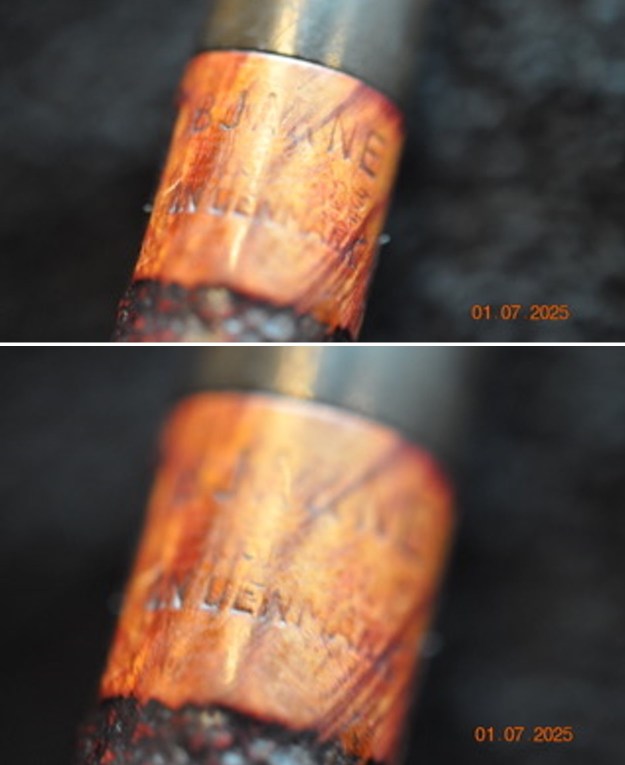
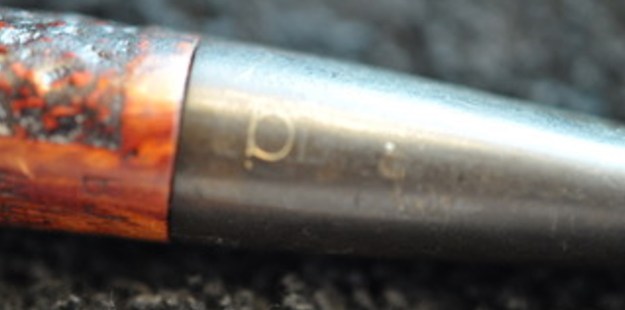
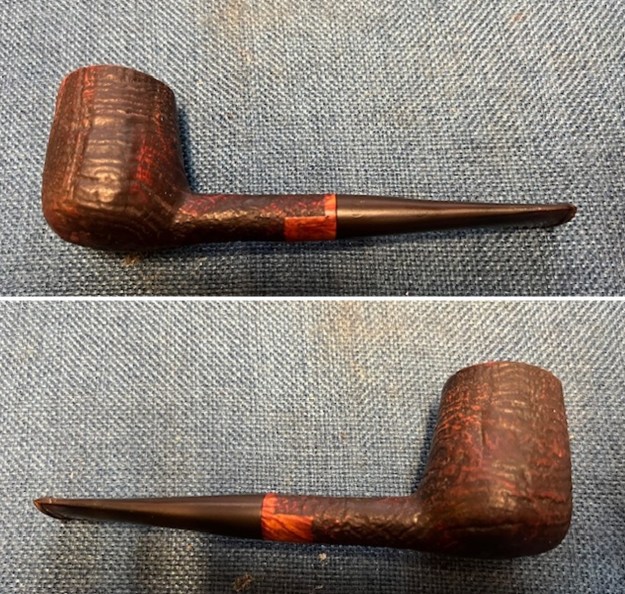
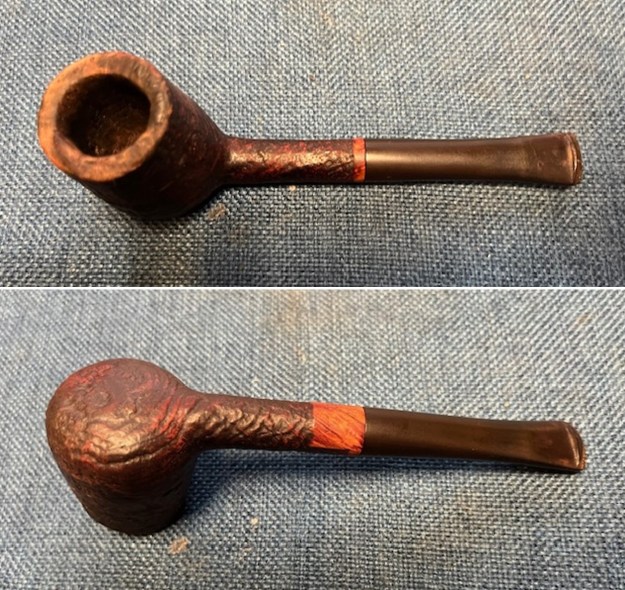
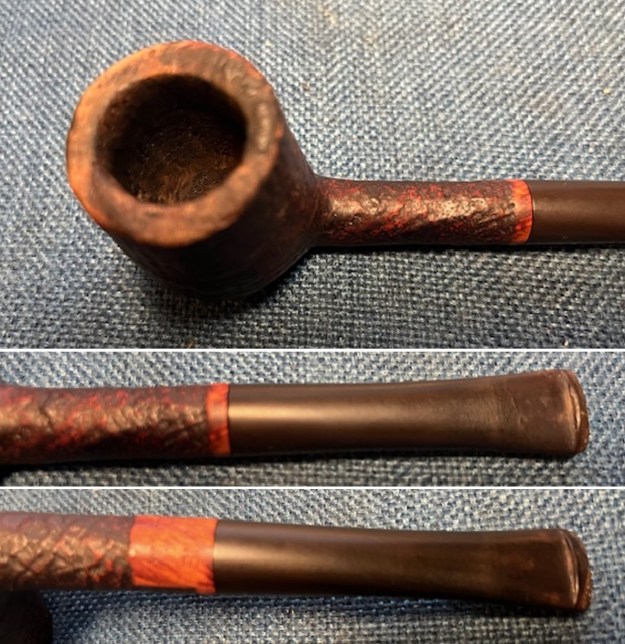
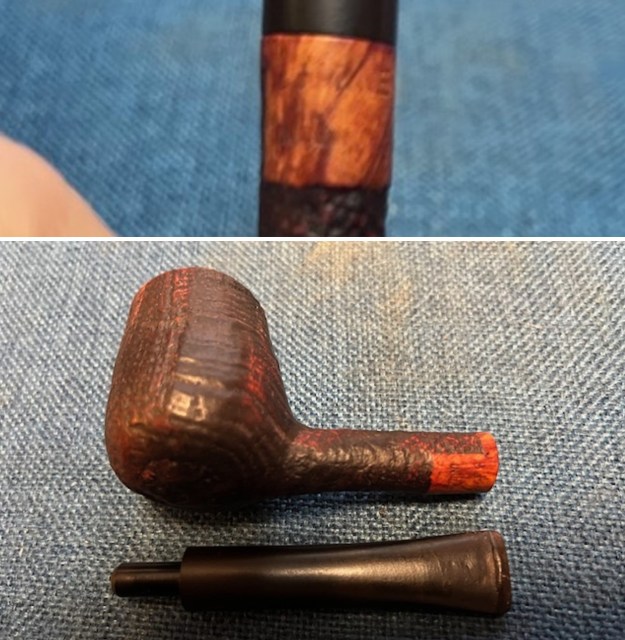
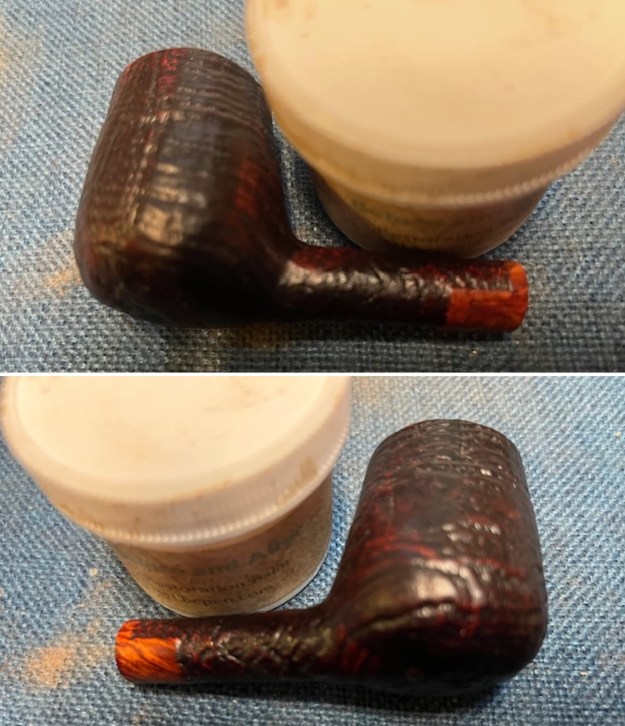
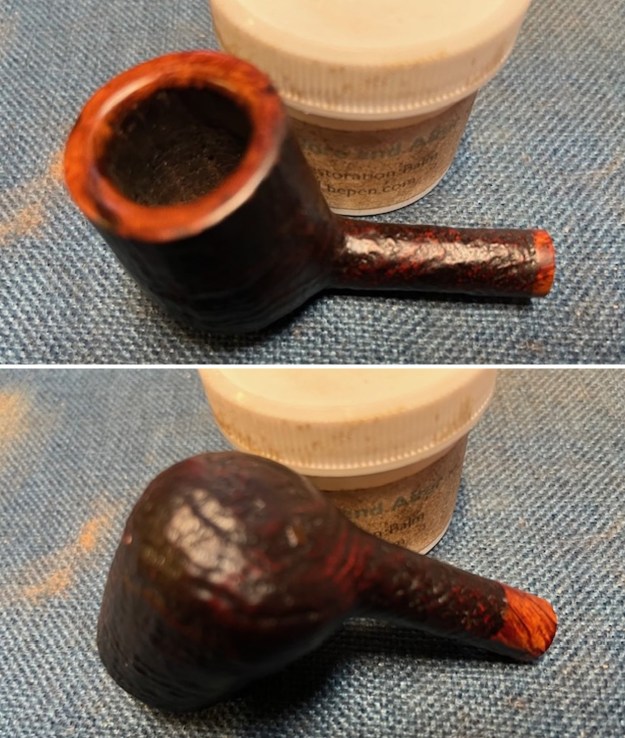
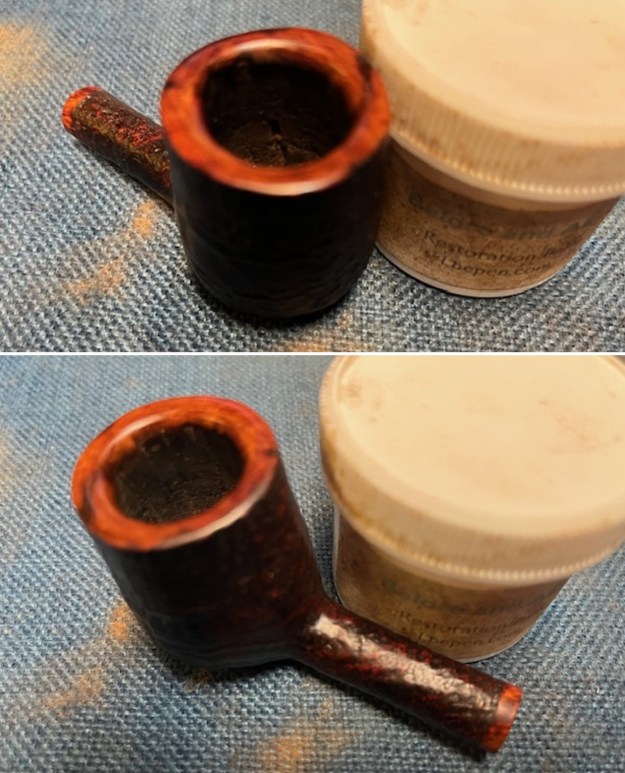
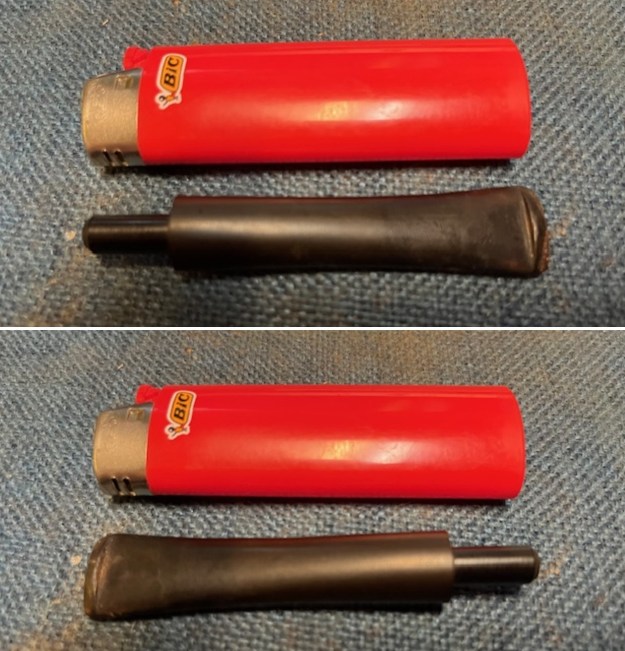
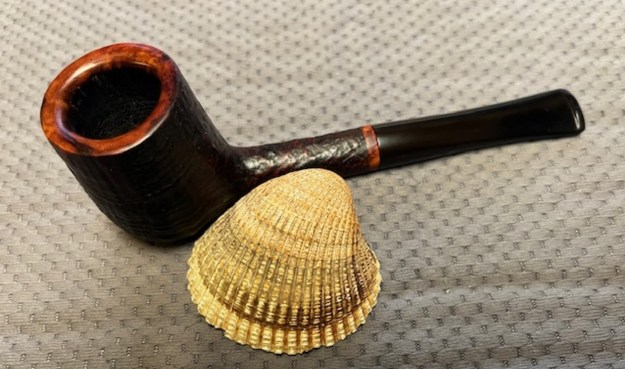
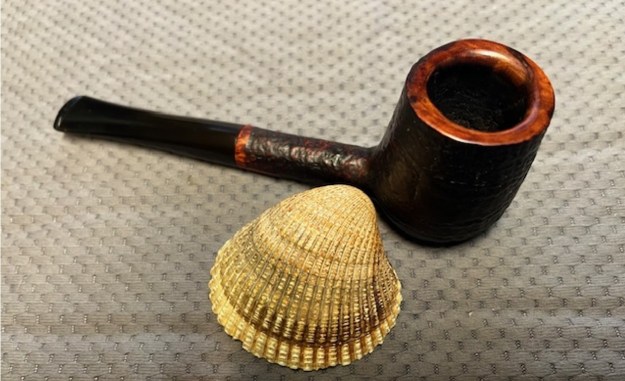
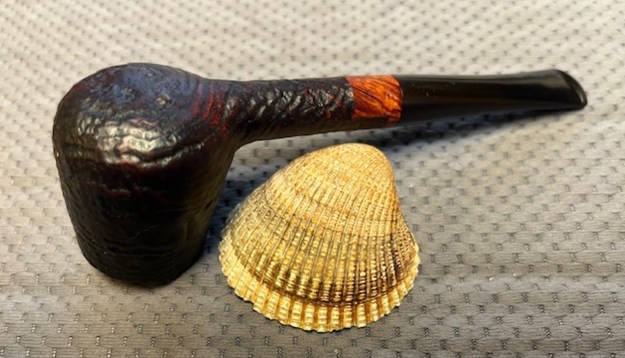
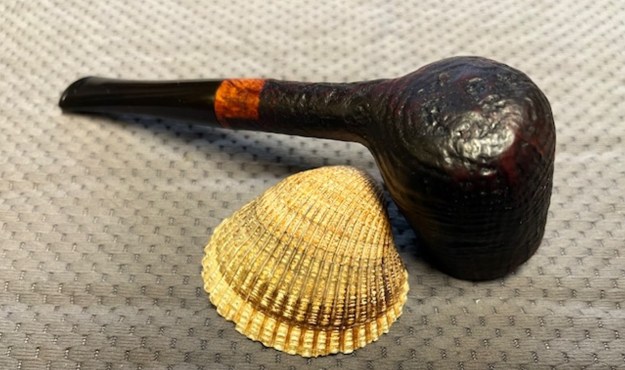
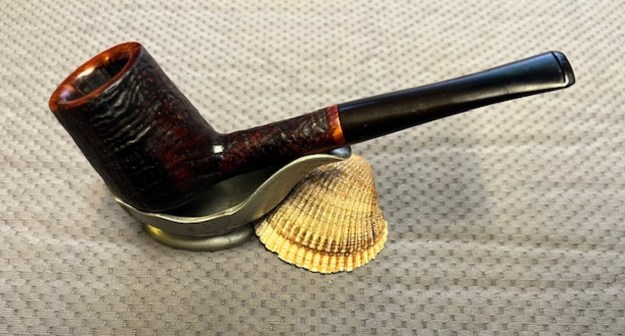
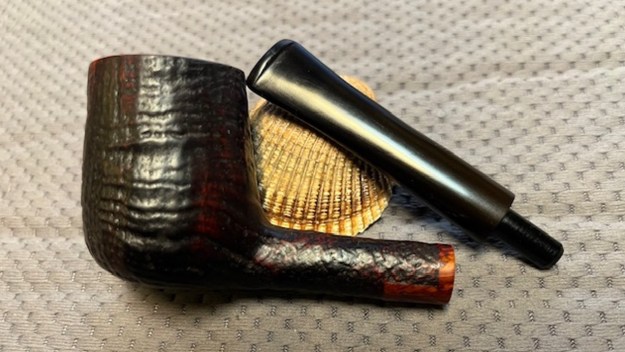
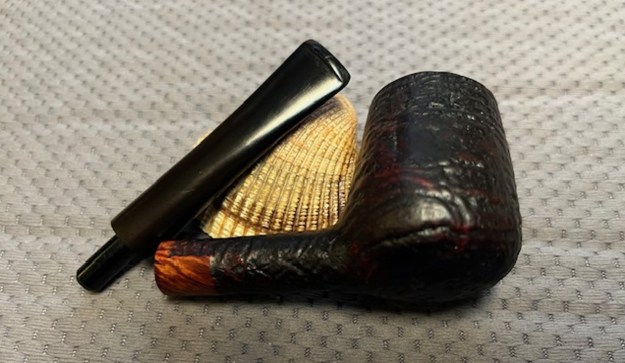
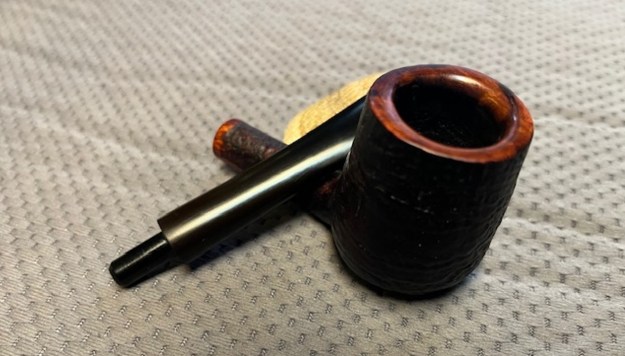
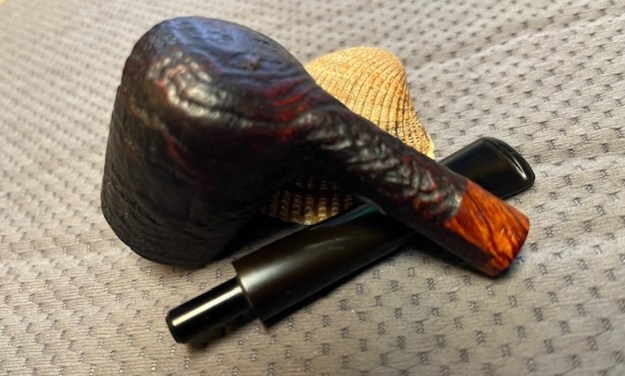
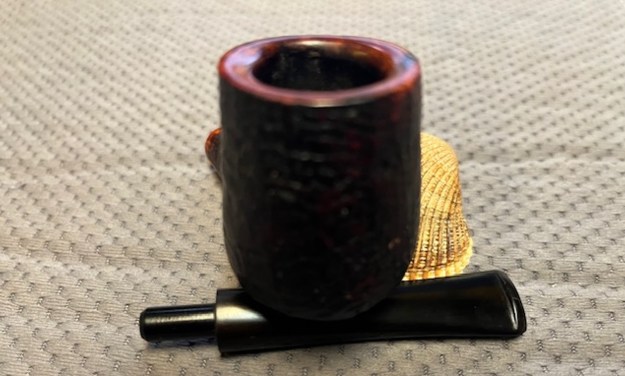
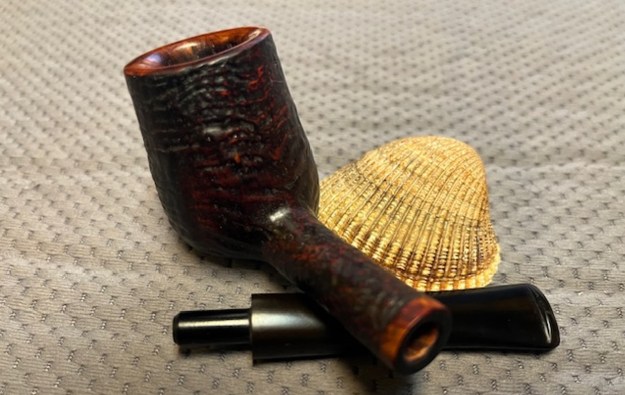
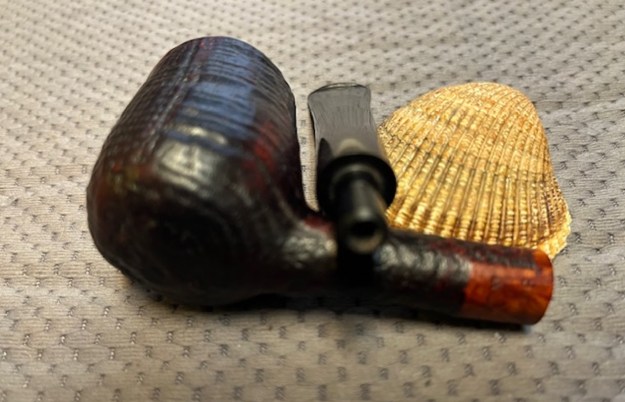
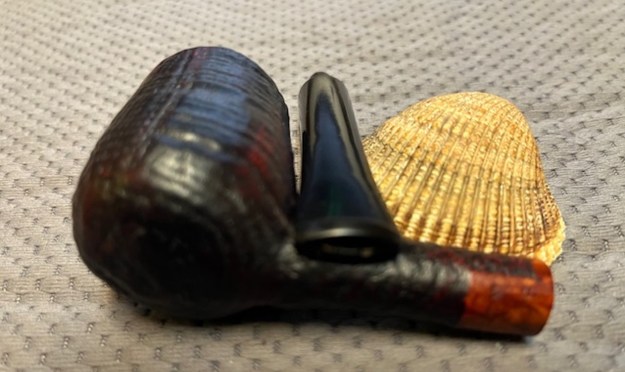
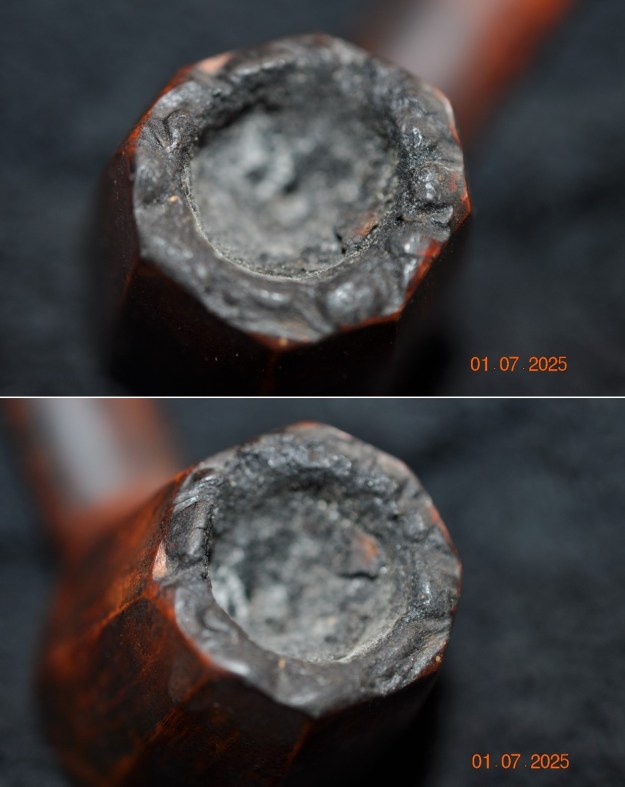
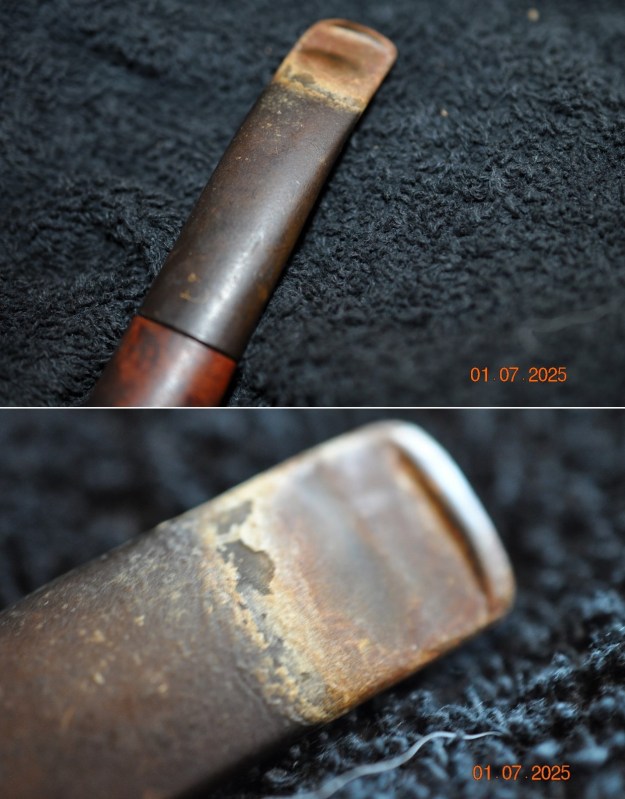
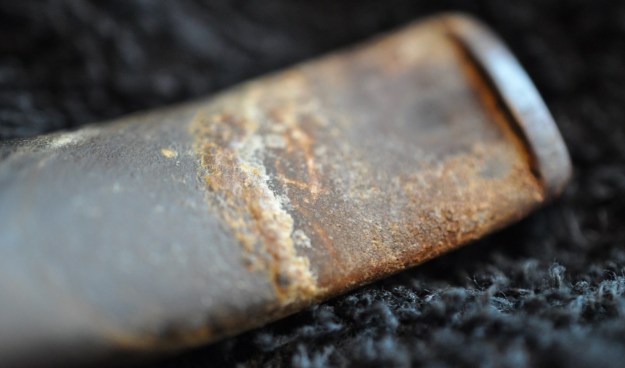
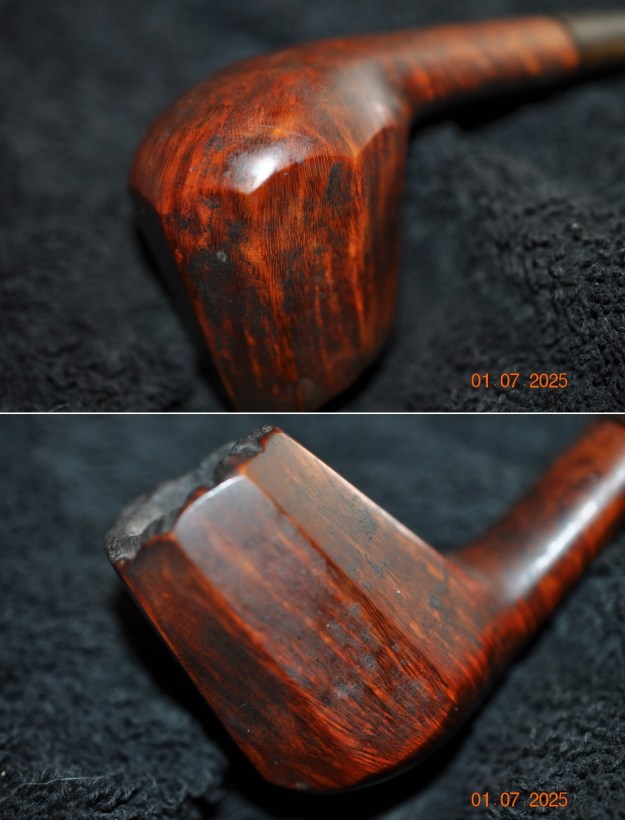
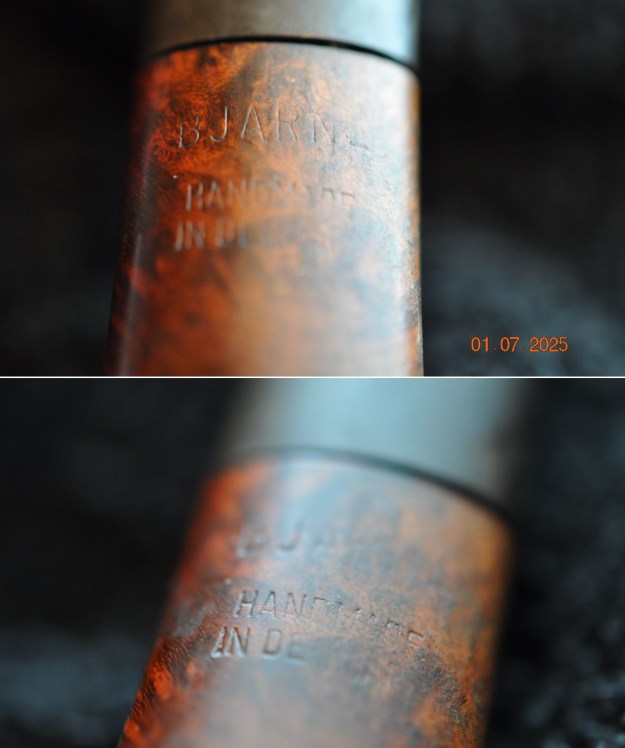
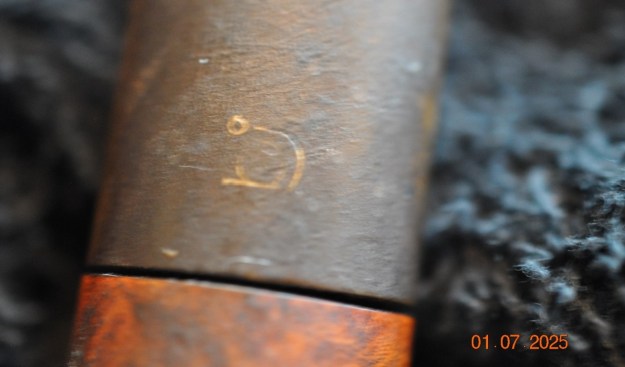
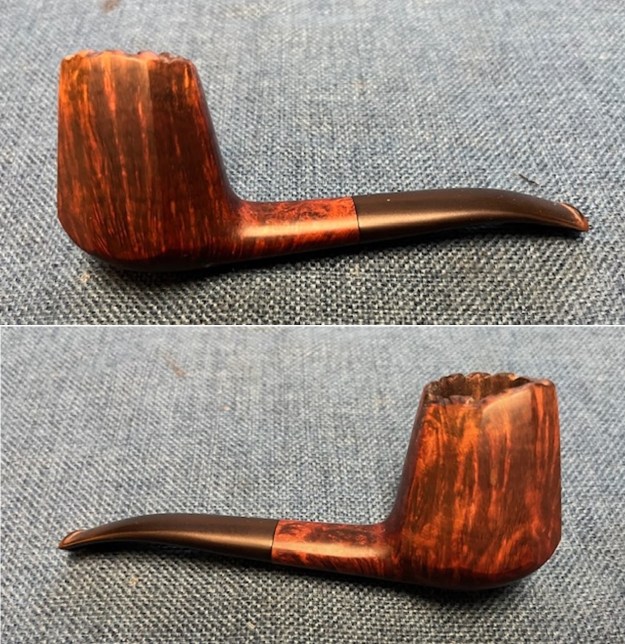
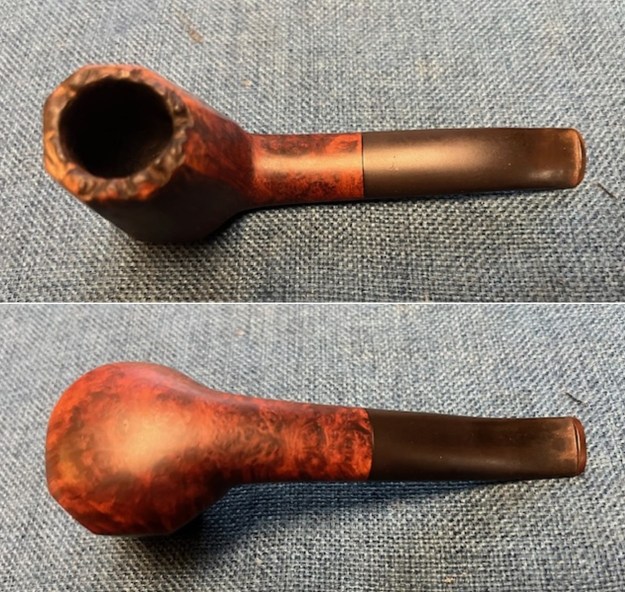
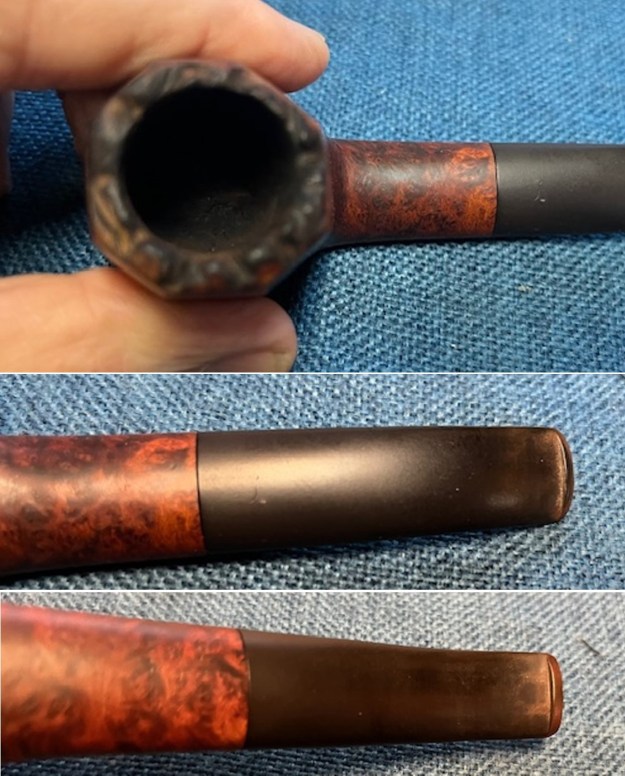
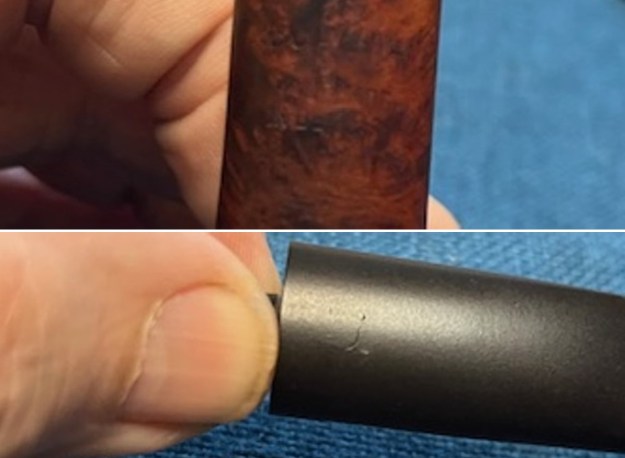
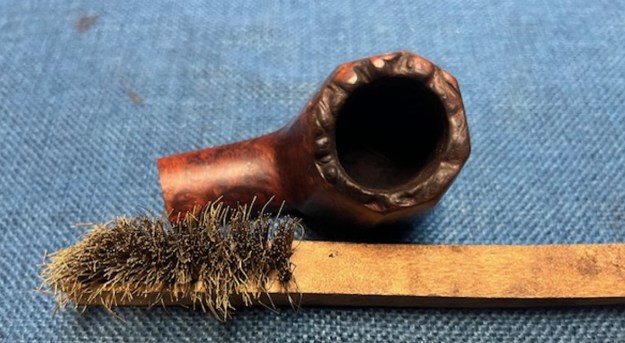
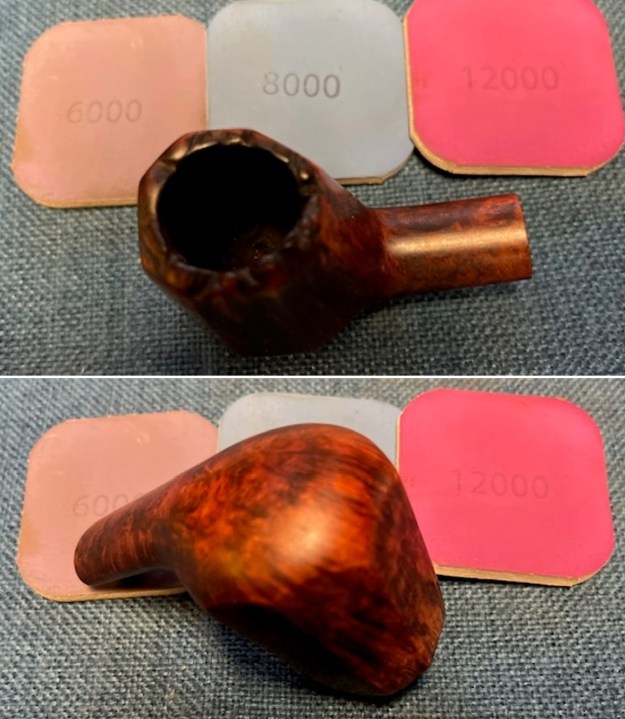
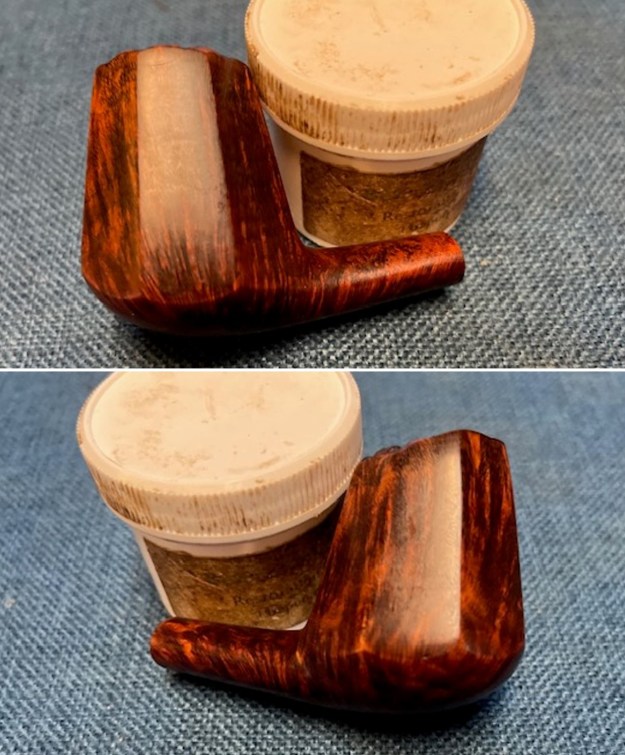
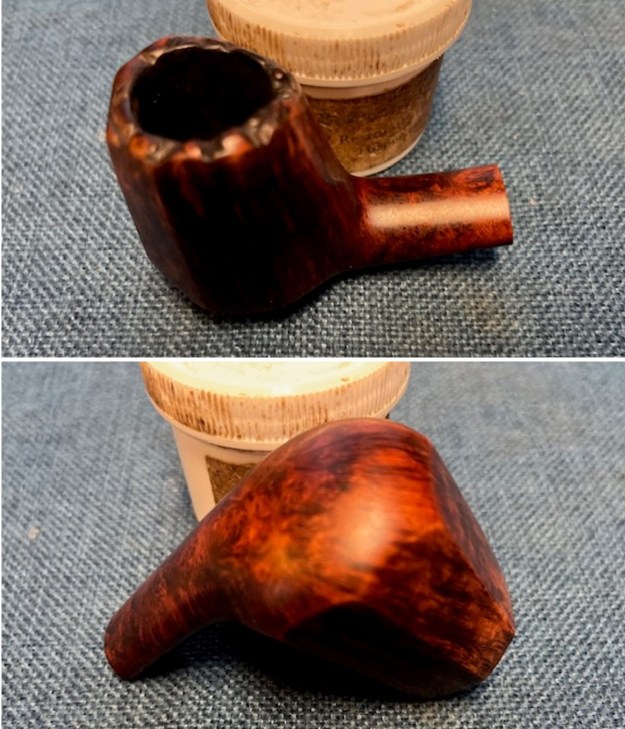
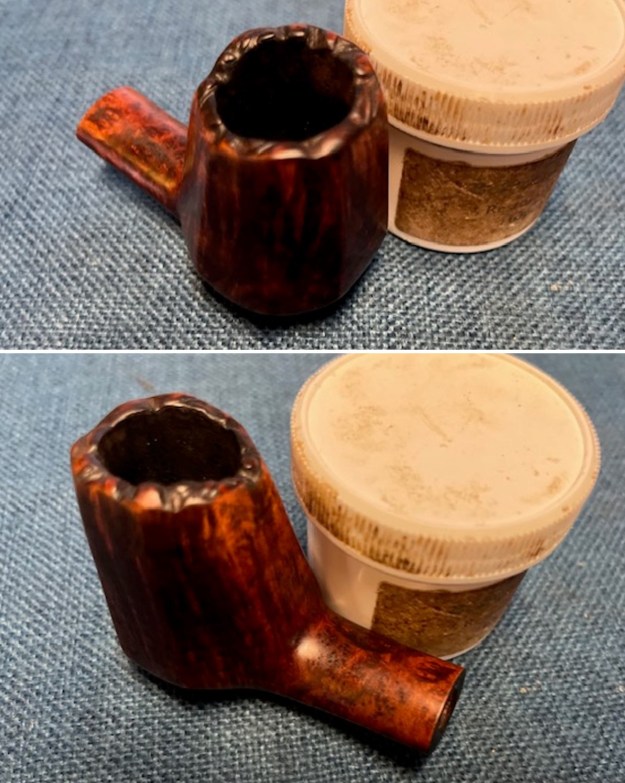
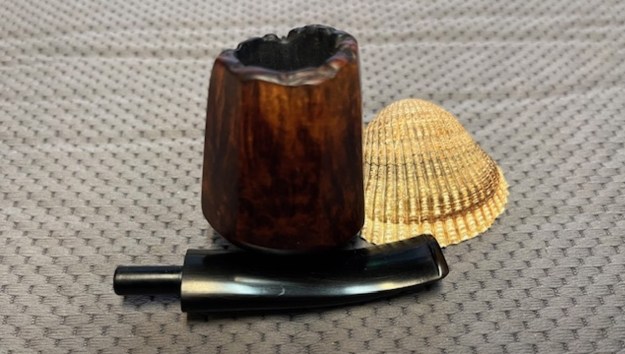
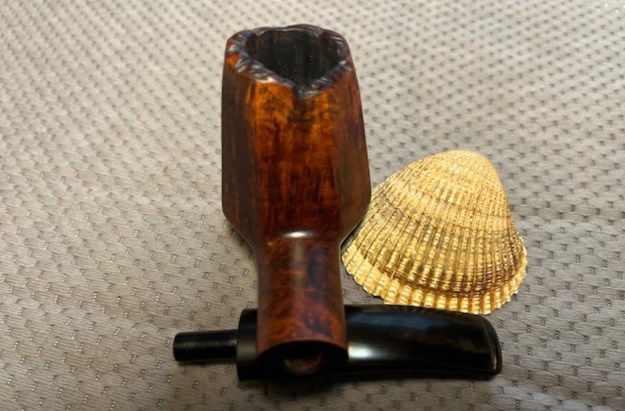
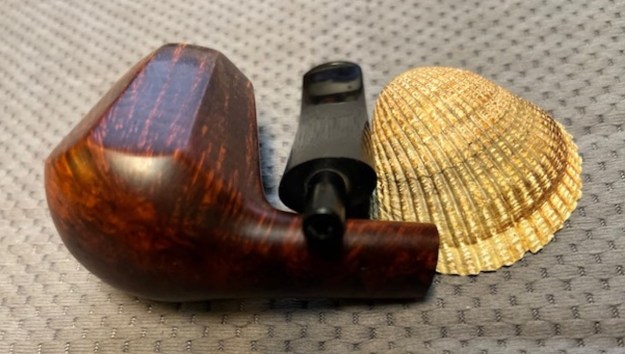
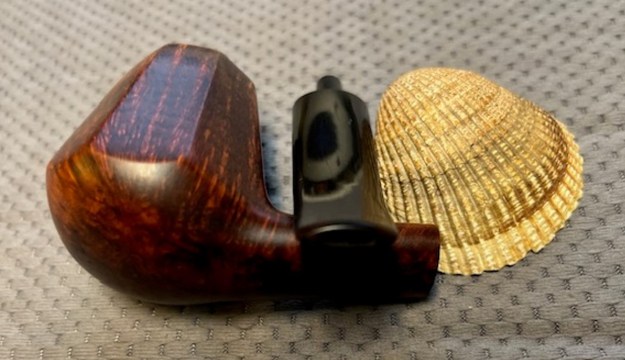
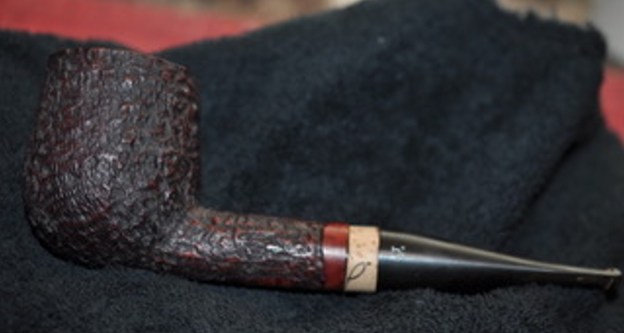
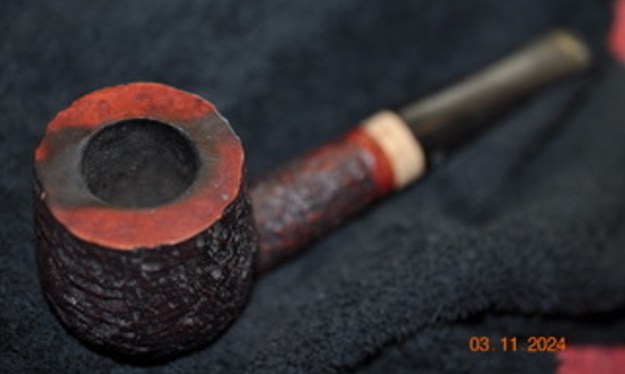
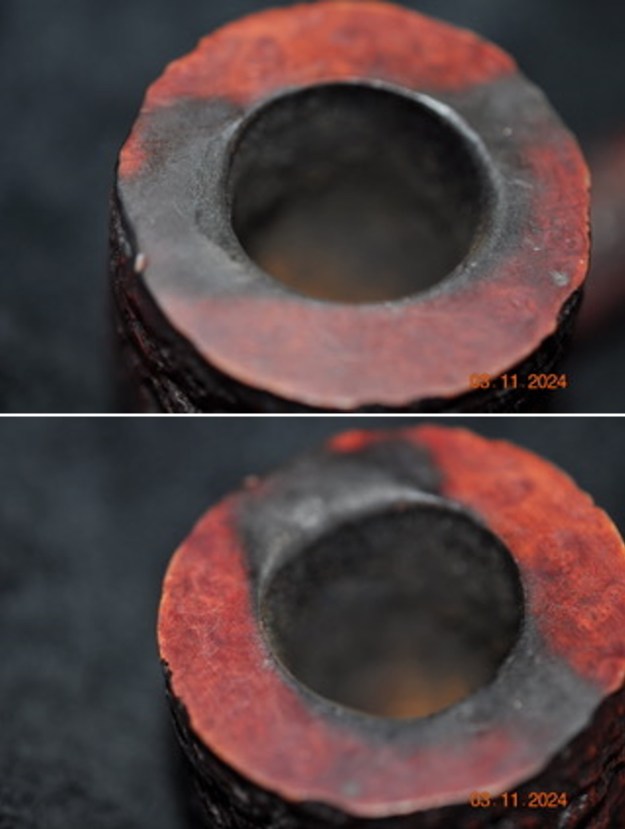
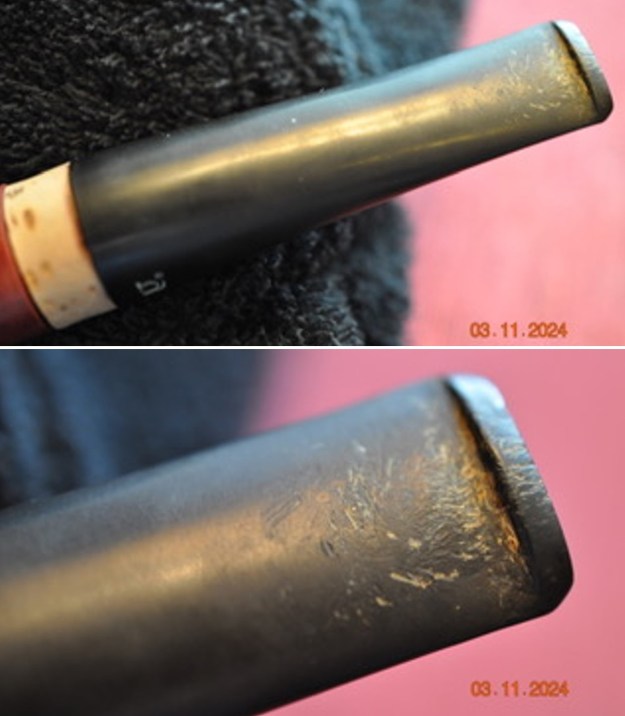
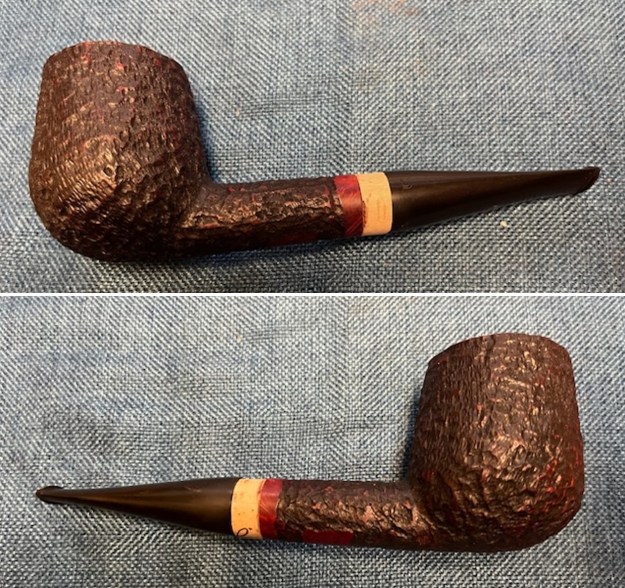
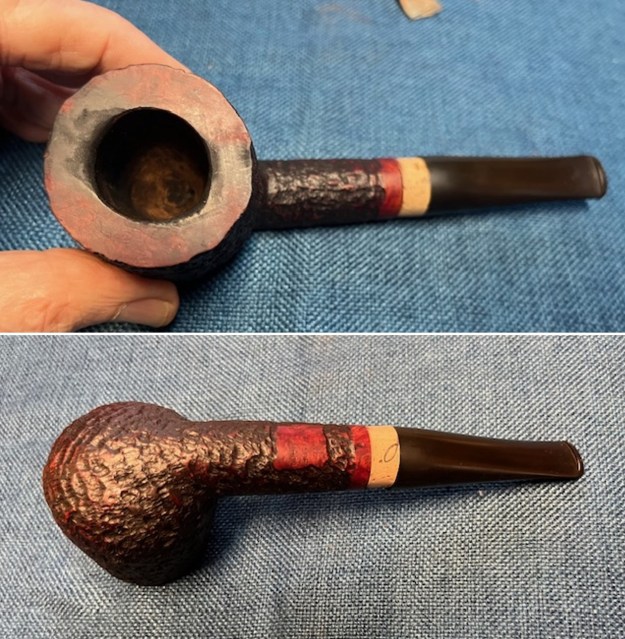
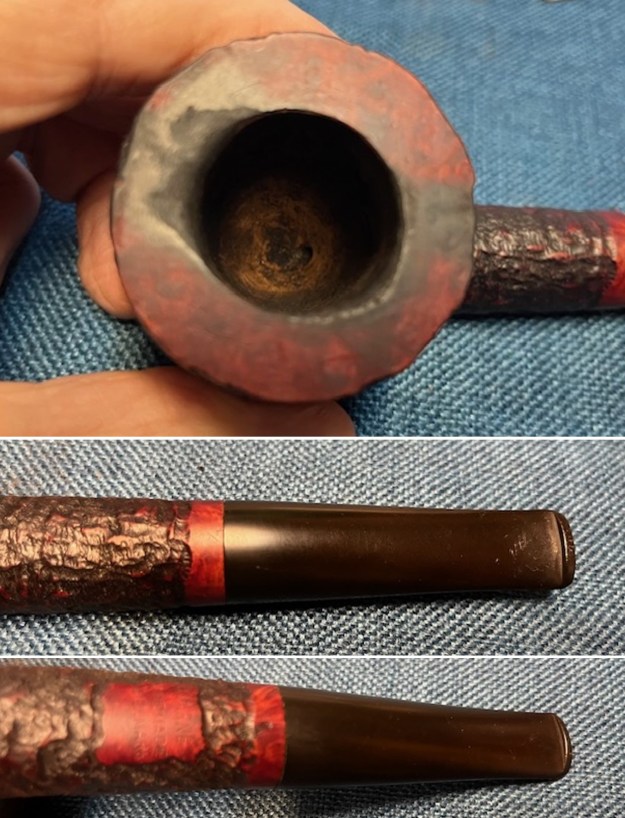
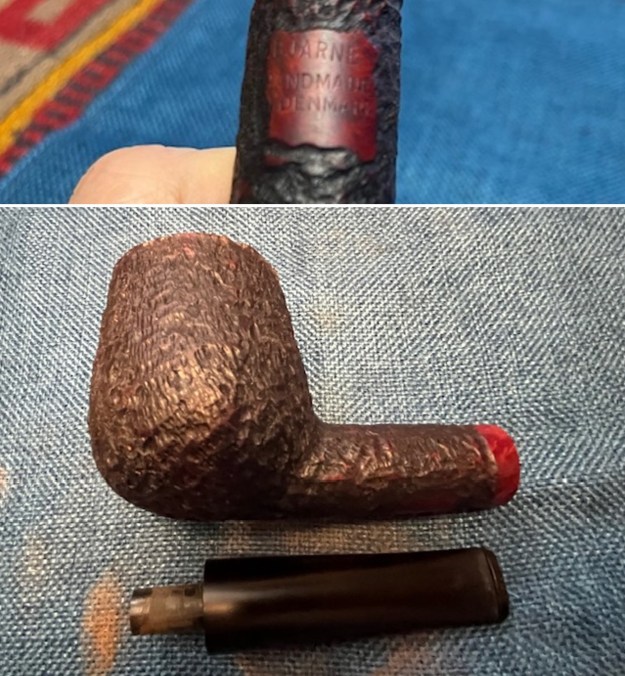
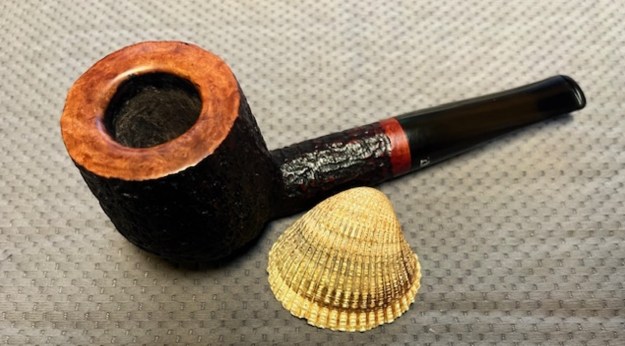
This large rusticated bowl, smooth rimtop briar pipe was purchased from an eBay seller on 08/27/2-24 from Memphis, Tennesse, USA. It is stamped on the underside of the shank and clearly reads Bjarne [over] Handmade [over] In Denmark. The bowl had a thick cake on the walls and a heavy overflow of lava onto the rim top and edges. The smooth rim top and inner edges also had burn damage leaving the bowl out of round. It obviously had been lit repeatedly with a torch lighter and the damage told the story. The rusticated finish is very tactile but dirty with debris and oils. The previous pipeman had cut a piece of wine cork to make a cork spacer on the stem. It still had the makers marks on the cork. His drilling to fit the tenon was off and not centred. It was not the same thickness from the outside to the center drilling. With it in place the tenon was quite short. The vulcanite taper stem has a bj stamped on the left side of the taper. The stem was lightly oxidized, calcified and had light tooth marks and chatter on both sides ahead of the button. I really like the rustication on the bowl and shank even through the grime in the finish. Jeff took photos of the pipe before he started cleaning it up. Have a look. Jeff took close up photos of the bowl and rim top to show the condition of the bowl and the rim top. You can also see the lava on the rim top, inner edge and the cake in the bowl. The burn damage on the top is very visible and has left the bowl is out of round. He also took close up photos of the stem to show its condition as mentioned above. He also took photos of the tooth marks and chatter on both sides of the stem. He took photos of the bowl sides and heel to show the details of the rustication around the bowl. The rustication is deep and has interesting characteristics that show up in the photos around the bowl and shank. He took a photo of the stamping on the underside of the shank. It is clear and readable as noted above. There is a bj logo on the left side of the stem that looks deeper enough to touch up. You can also see the wine cork and some of the writing on it in the second photo. It is also poorly cut. The next two photos show the look of the cork spacer on the stem. It is an obvious home made addition and one that I plan on removing. I have had many Bjarne pipes cross my work table over the years but all had been stamped only Bjarne or Bjarne Handmade. None of them had his full name stamped on it and none had a letter stamp which I assumed indicated the grade of the pipe. I did some research on Pipedia.com and found some helpful information on both the stamping of my pipe and the history of Bjarne Nielsen himself. I am including the link to the full article on Pipedia and also some pertinent sections of the article that I have edited for quick reference. https://pipedia.org/wiki/Bjarne
From the early 1990s Bjarne had seven pipemakers employed and the pipes were sold in no fewer than 32 countries. For more than six months each year, Bjarne traveled around the world to promote his pipes by meeting with dealers and customers. But sadly, it all ended in February 2008 when Bjarne, then 66 years old suffered a fatal heart attack. An unexpected blow first of all to his family, but also to the pipemakers who had been working for him, and to all lovers of his pipes from around the world. And as no one was willing to take over, the Bjarne pipe died together with its creator.

Among the pipemakers that worked for Bjarne were Johs (for the lower priced high volume pieces), and makers like Ph. Vigen, Ole Bandholm and Tonni Nielsen for high grade pieces. The cheaper line was stamped “Bjarne” while the highest grades were stamped “Bjarne Nielsen” (never with the pipemakers’ name) and graded, from highest to lowest, by the letters: AX, A, B, C, D, E, F, G, H, I, and J.

Now I knew that the pipe I had was made before 2008 and was one of his cheaper line stamped Bjarne.

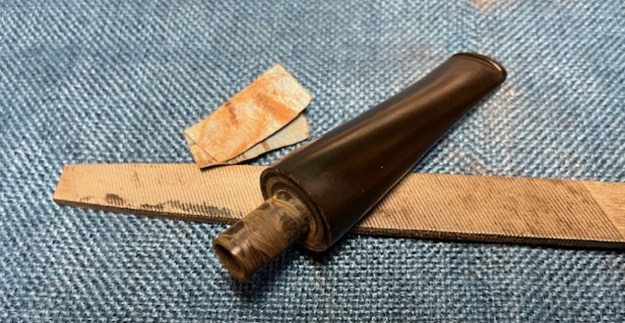
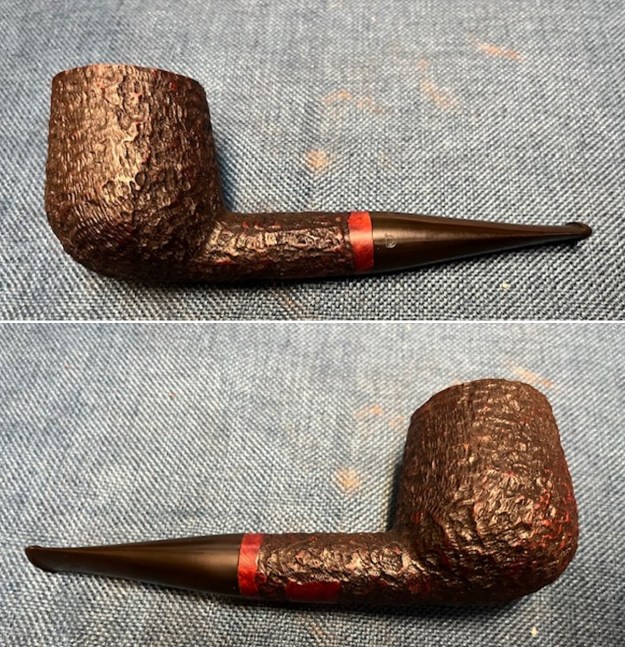
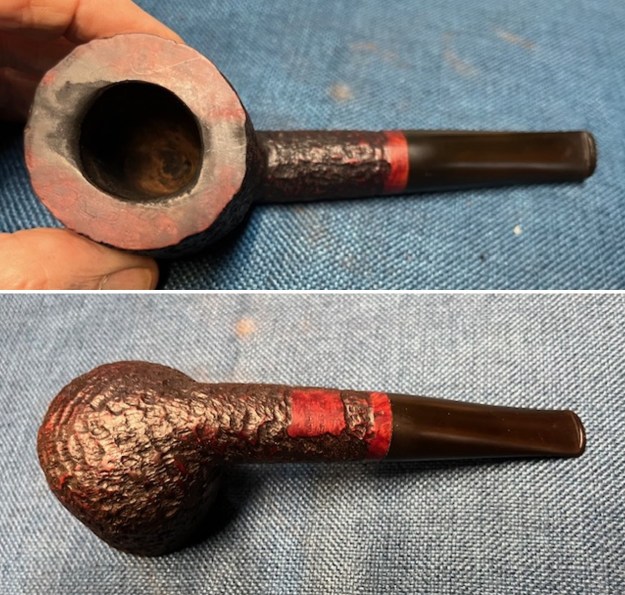
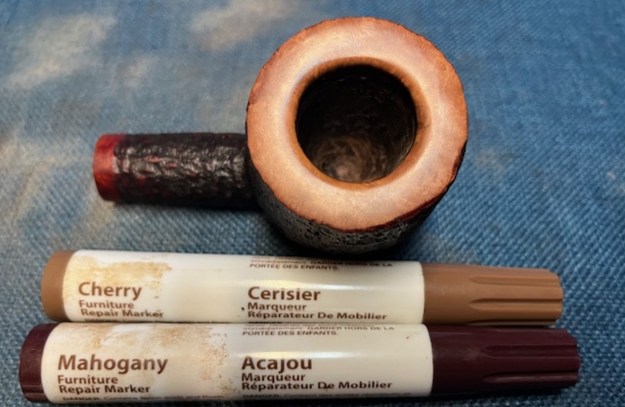
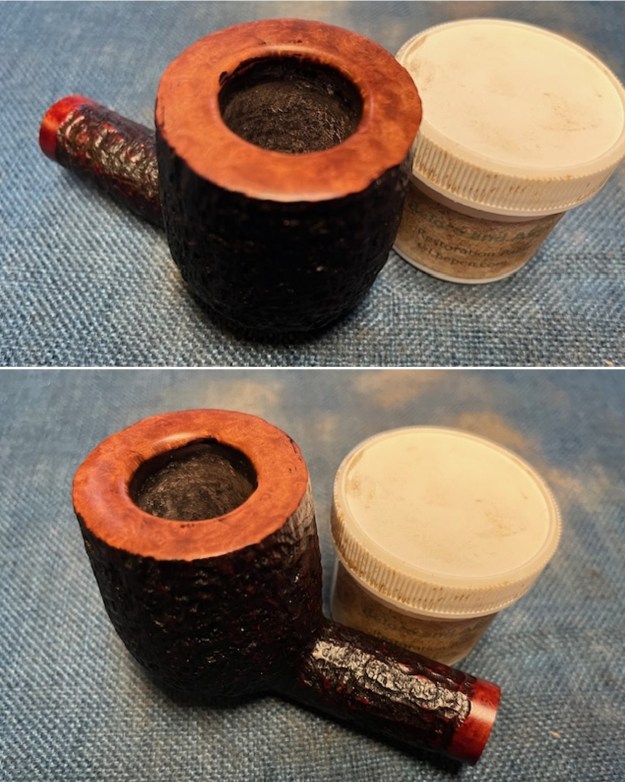
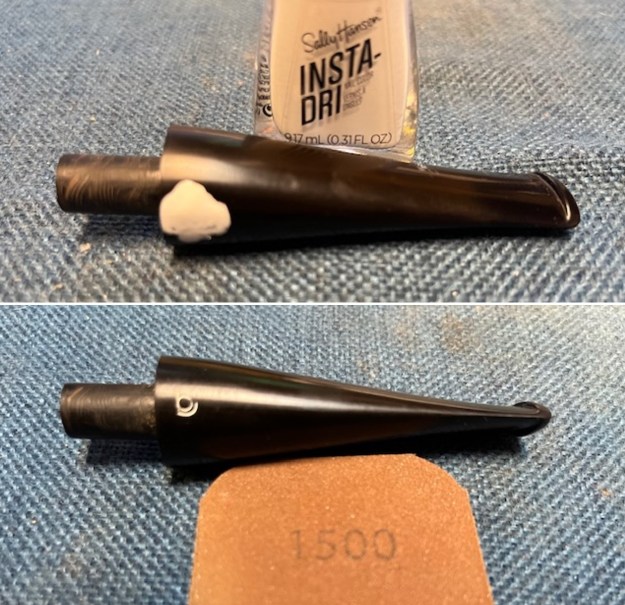
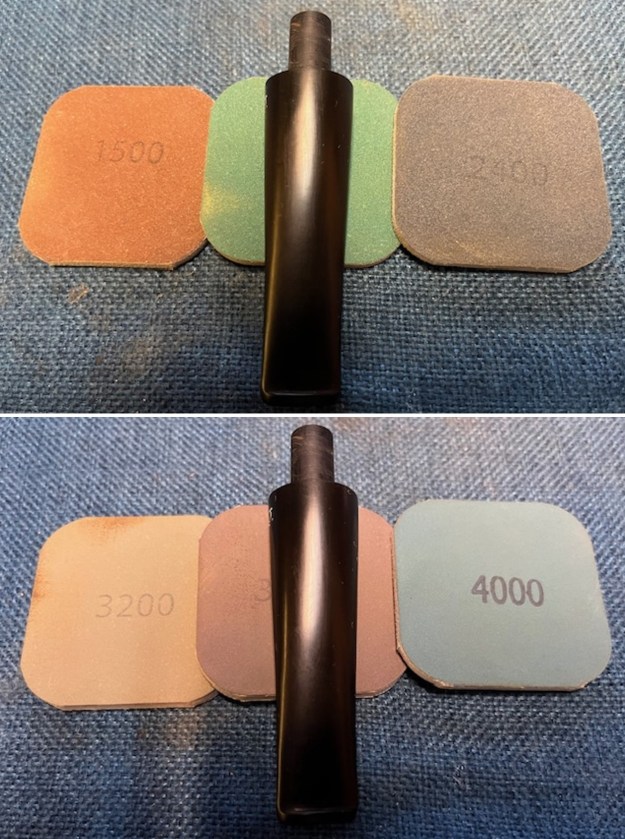
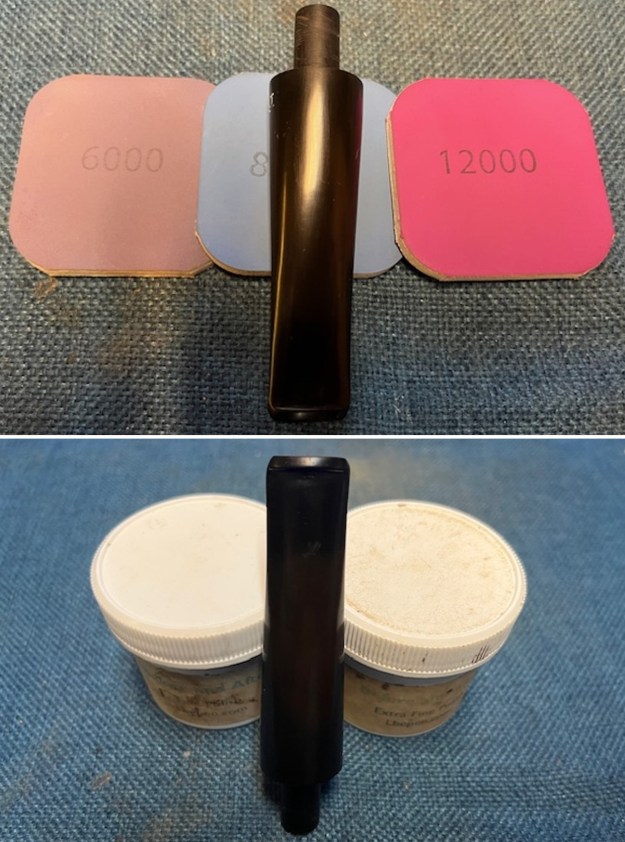
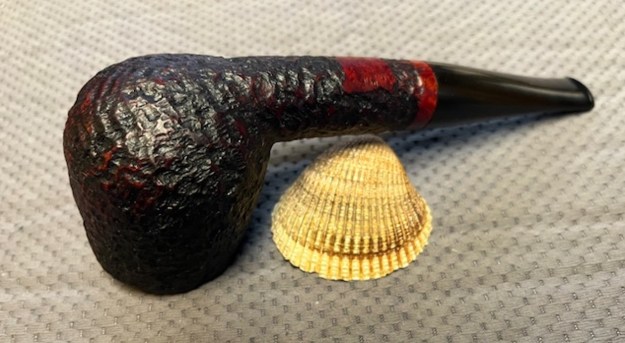
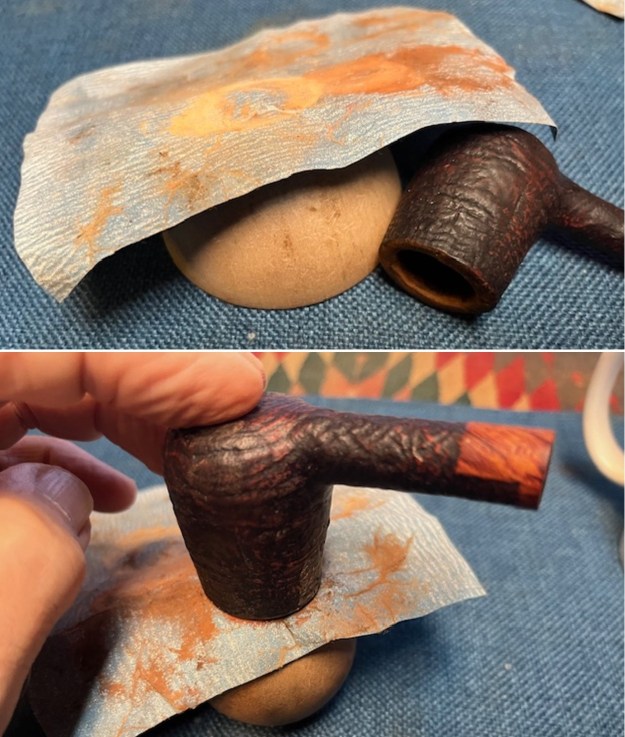
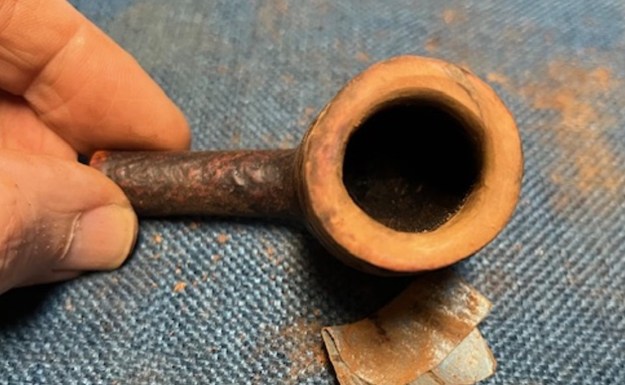
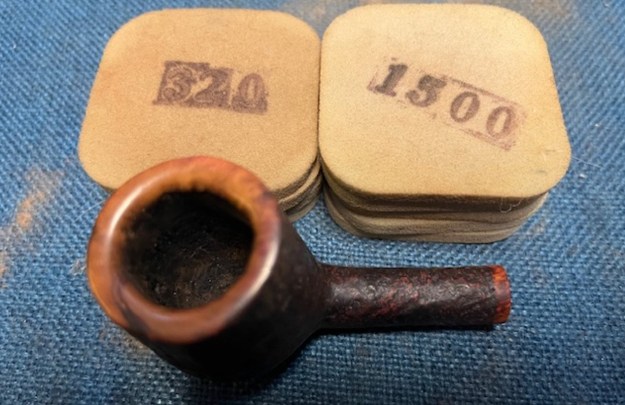
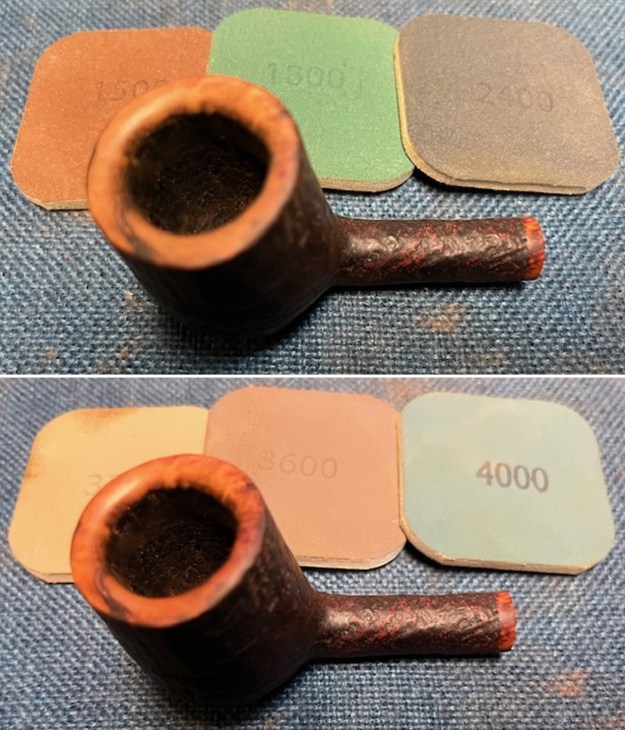
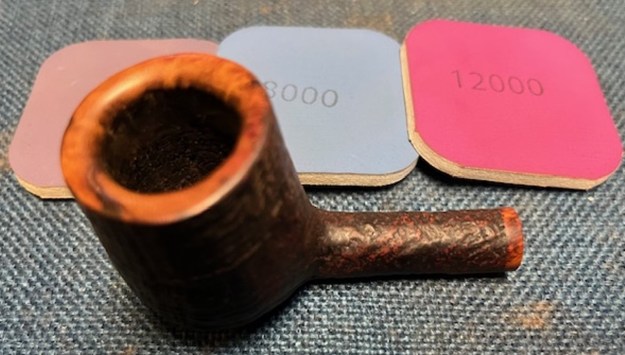
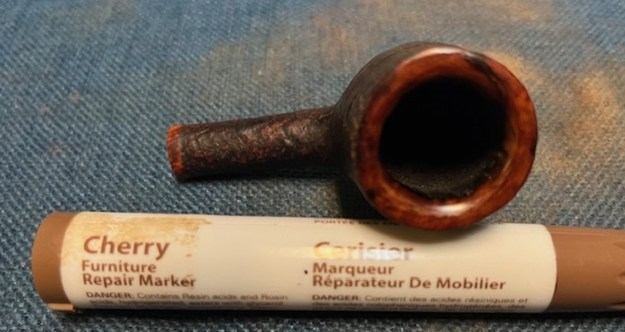
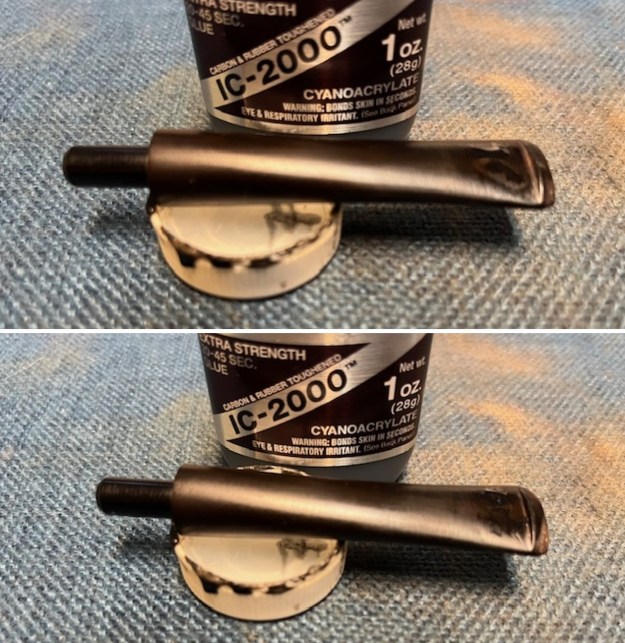
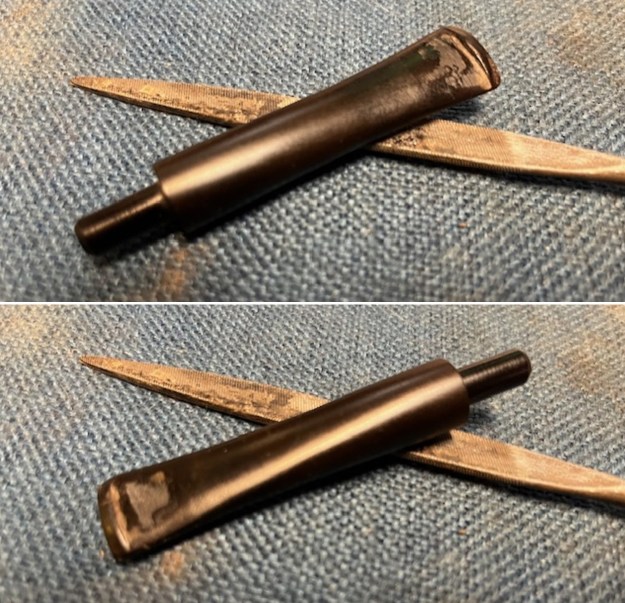
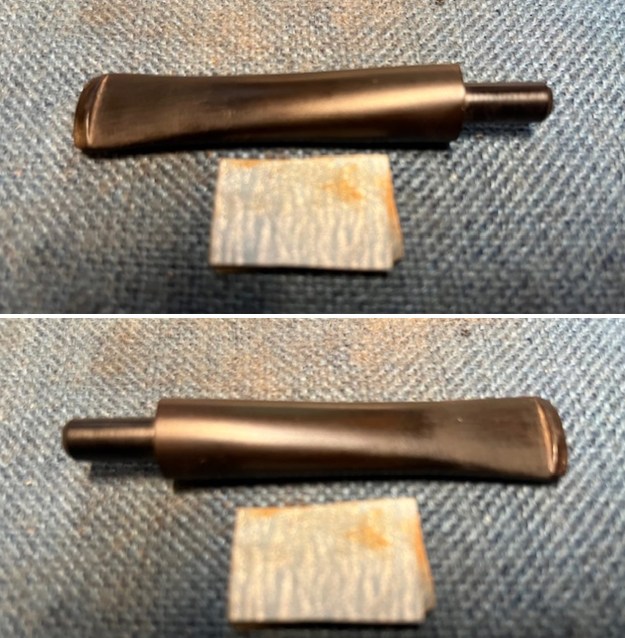
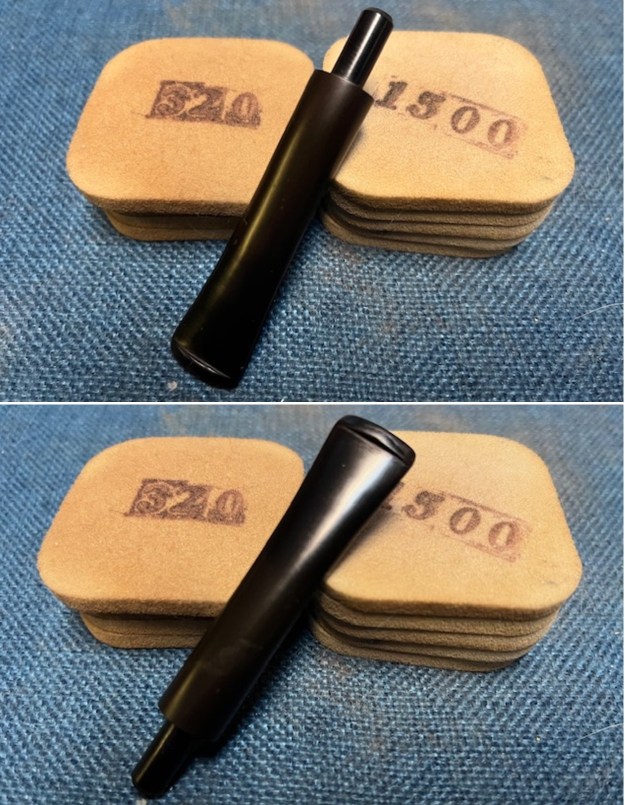
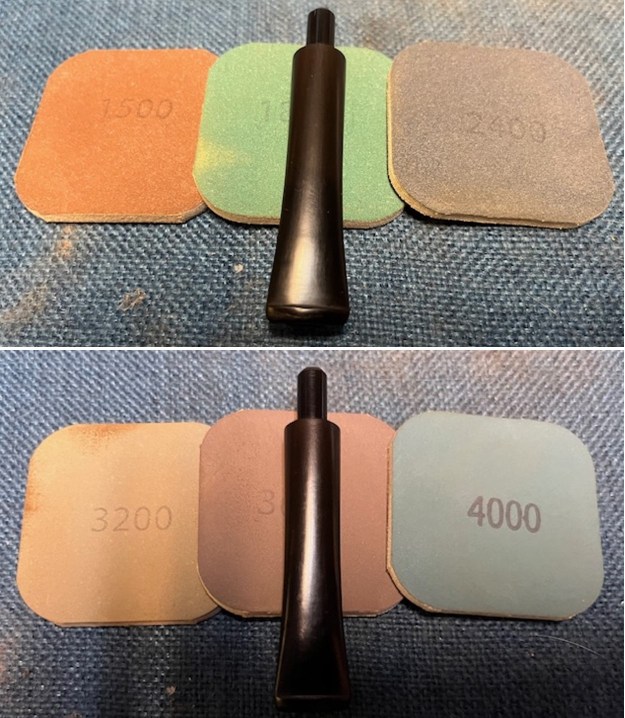
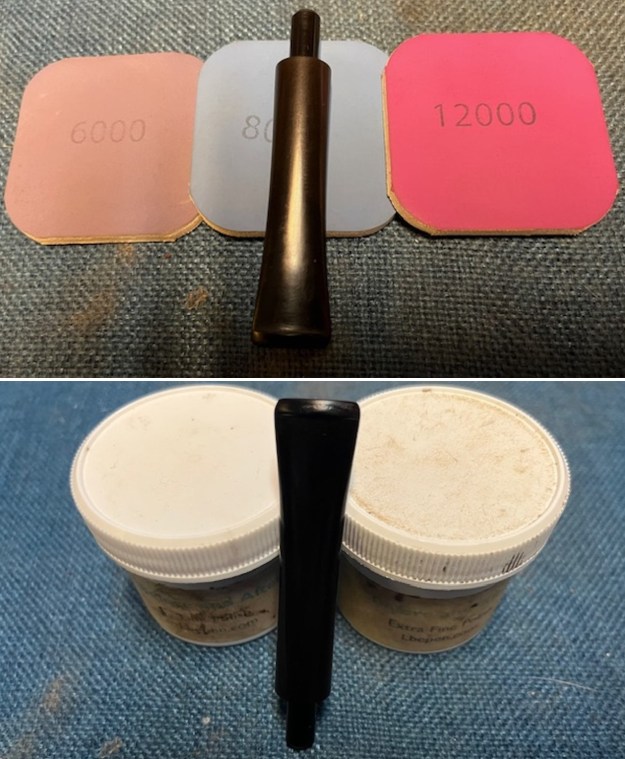
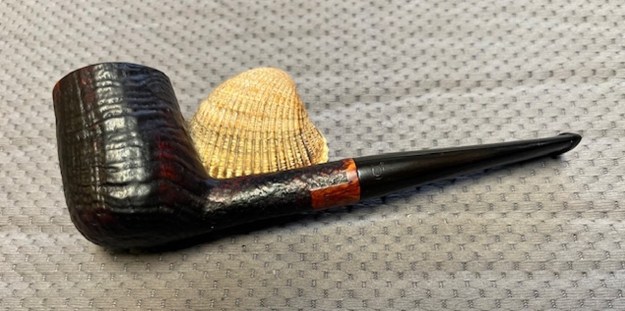
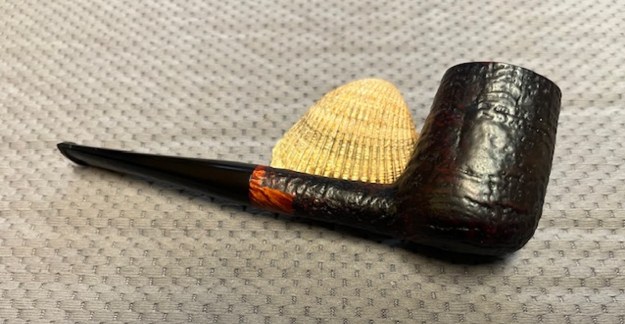
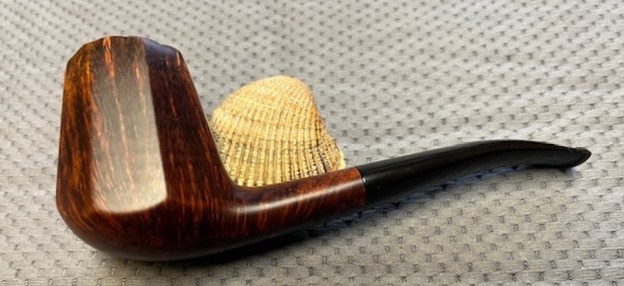
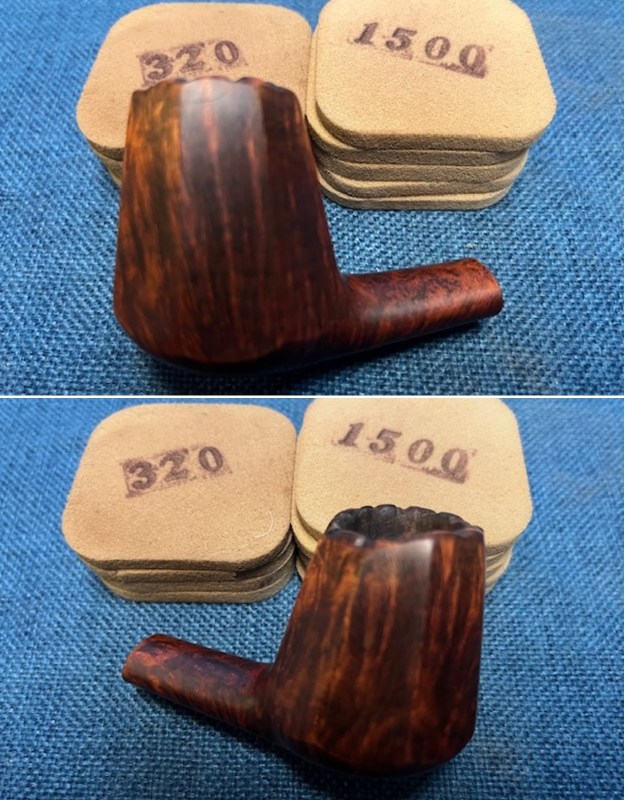
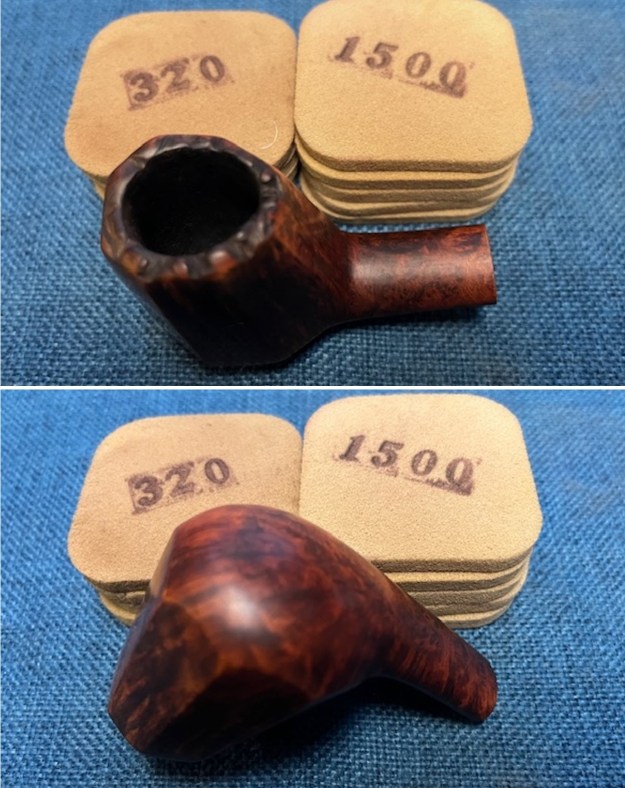
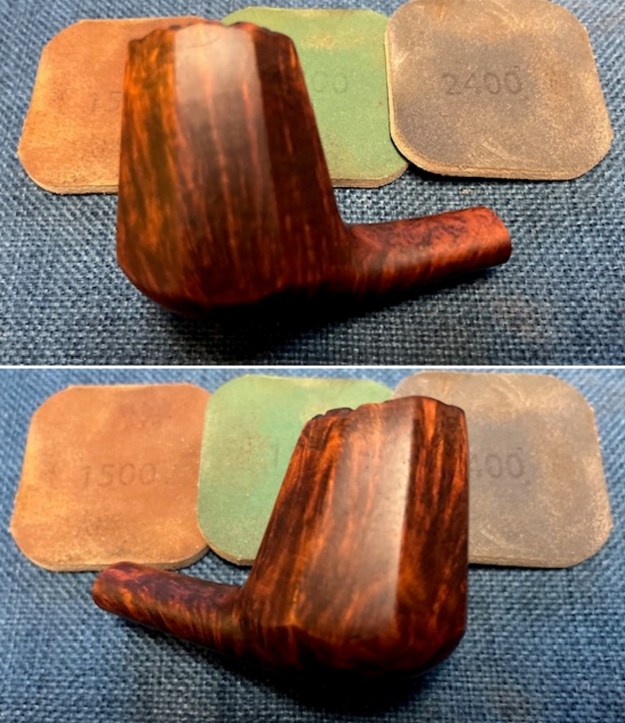
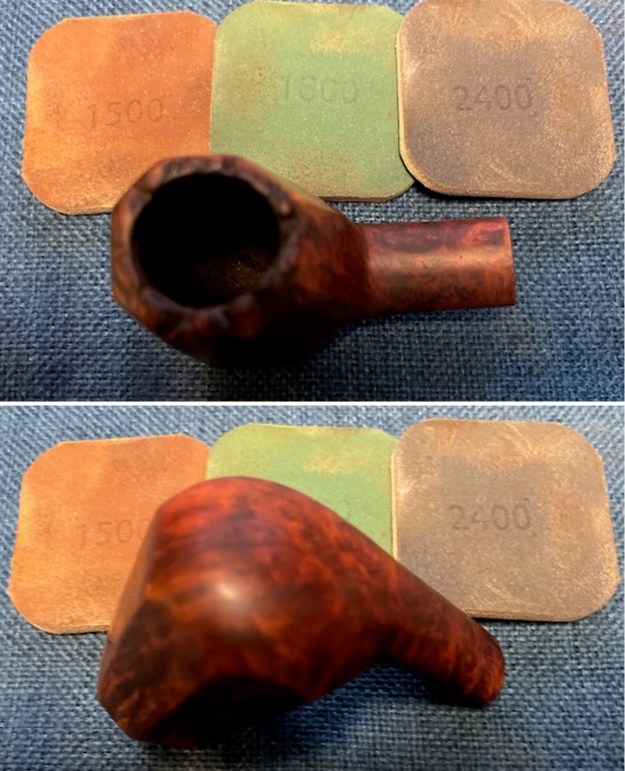
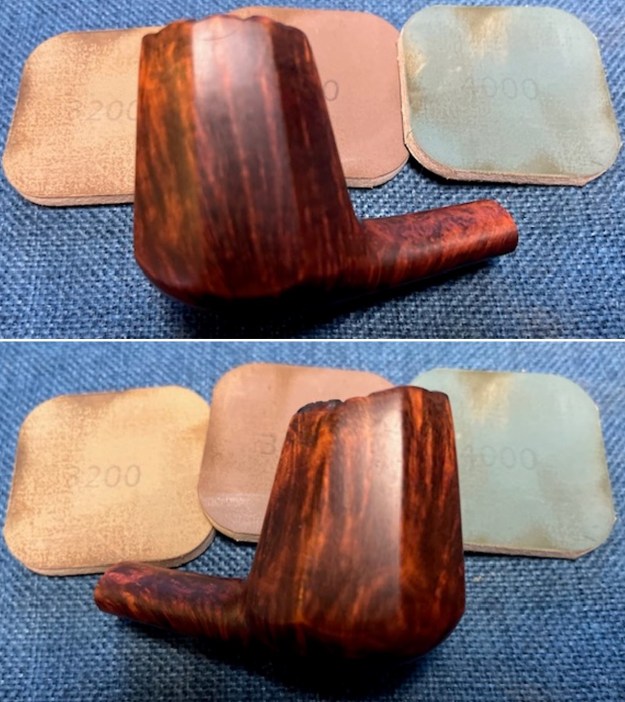
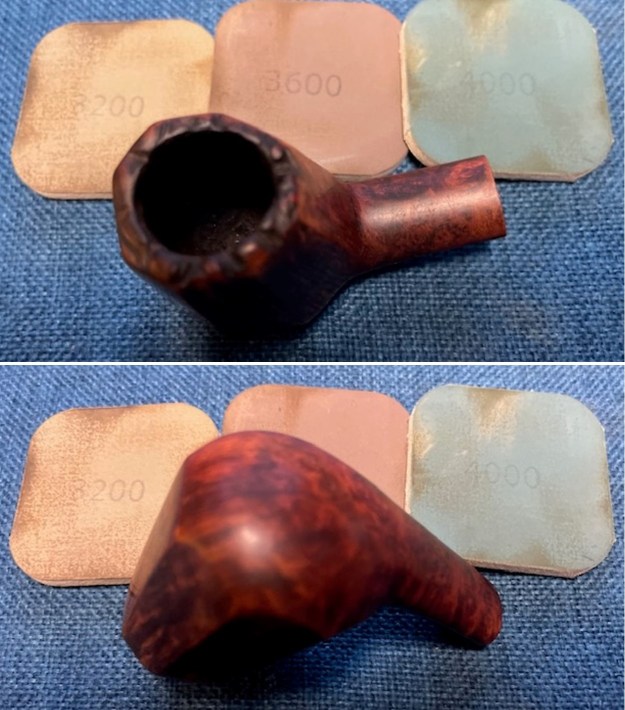
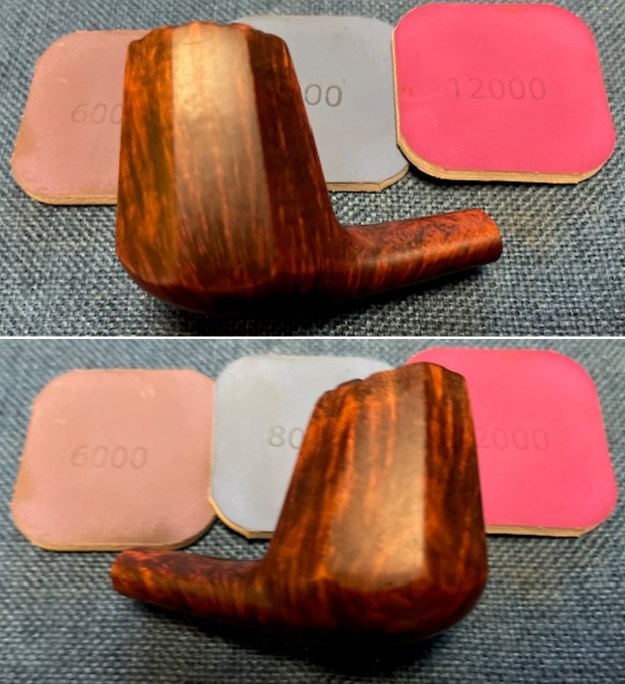
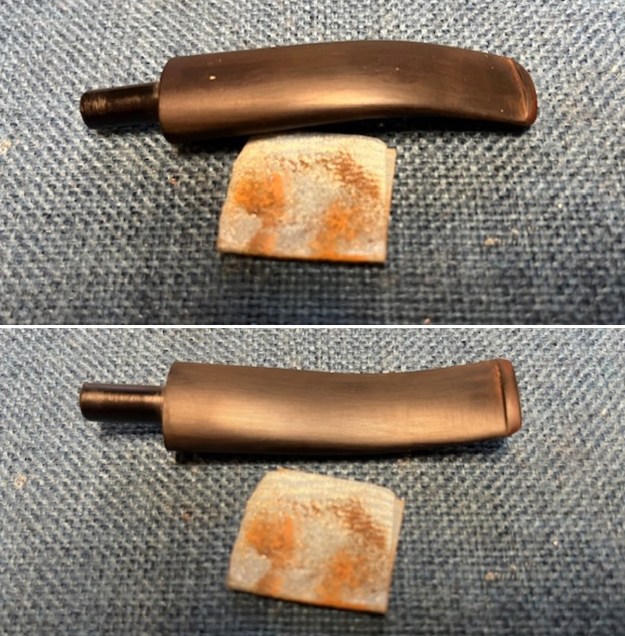
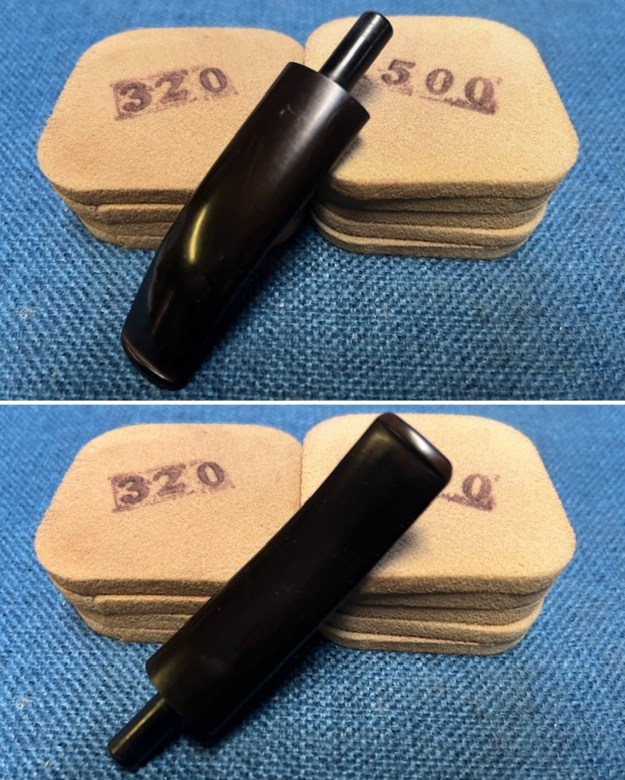
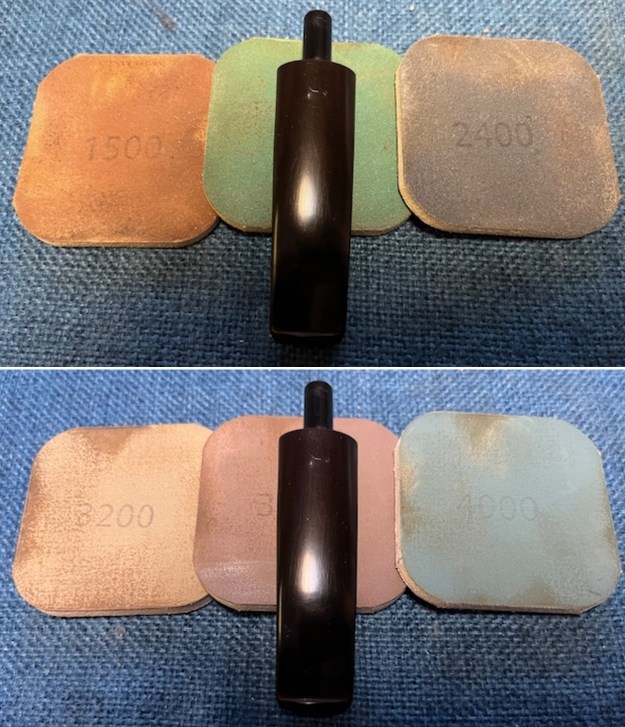
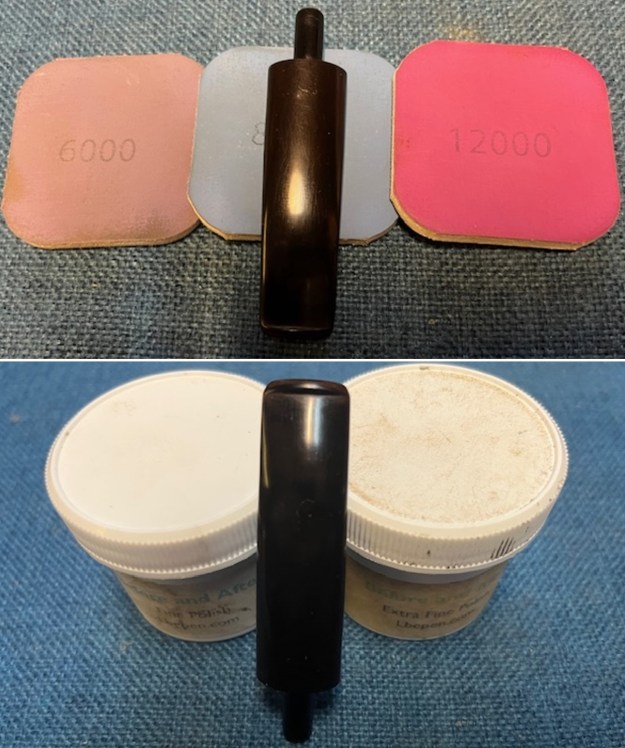
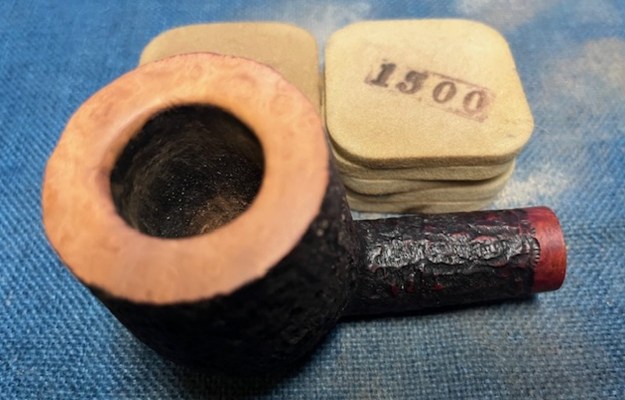
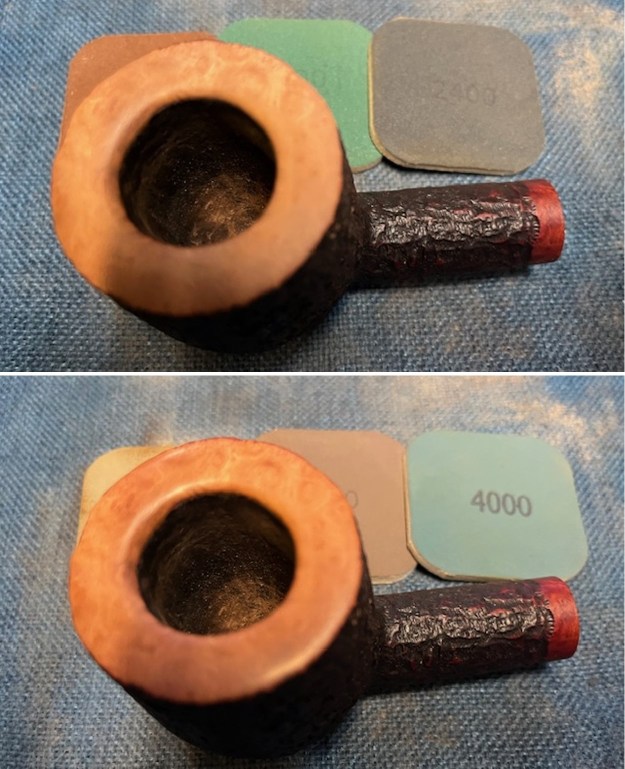
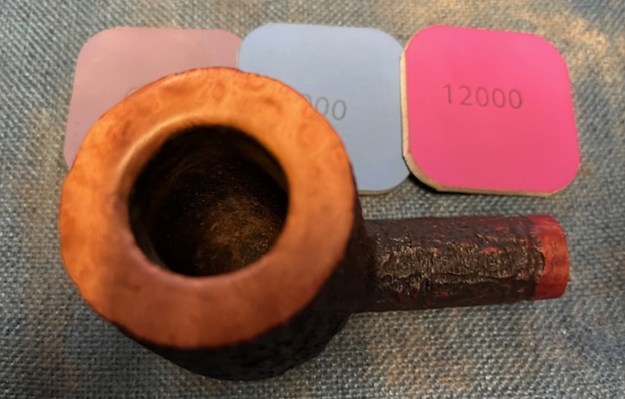
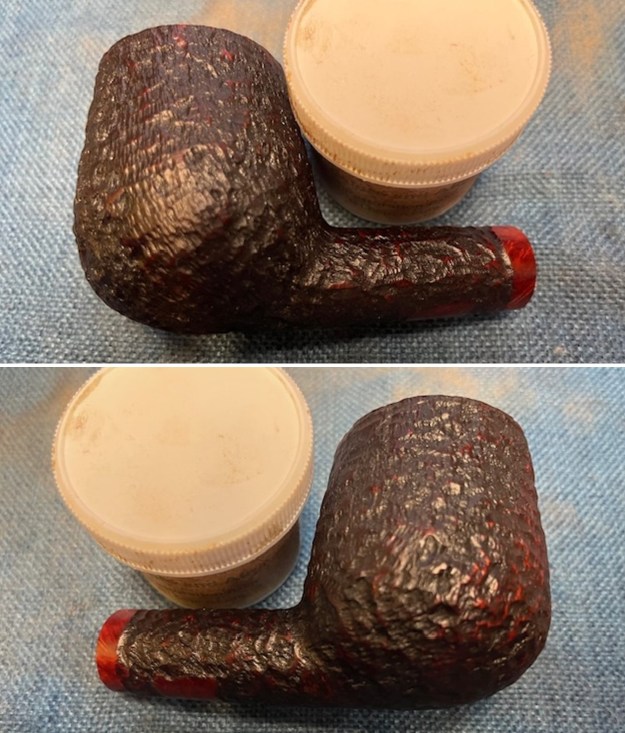
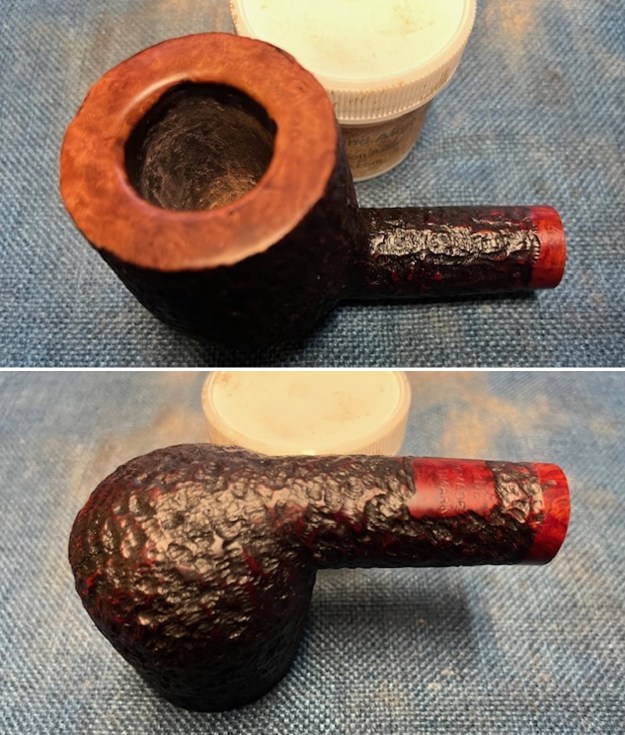
Armed with the information above, I turned my attention to the pipe itself. Jeff had cleaned the pipe with his usual penchant for thoroughness that I really appreciate. He reamed it with a PipNet pipe reamer and cleaned up the reaming with a Savinelli Fitsall Pipe Knife. He scrubbed out the internals with alcohol, pipe cleaners, shank brushes and cotton swabs until the pipe was clean. He scrubbed the exterior of the bowl with Murphy’s Oil Soap and a tooth brush to remove the grime and grit on the briar and the lava on the rim top. The finish looks very good with good looking grain around the bowl and shank. Jeff soaked the stem in Before & After Deoxidizer to remove the oxidation on the rubber. When the pipe arrived here in Vancouver for the second stop of its restoration tour it looked very good. I took photos before I started my part of the work. While I appreciated and understood the idea behind the cork spacer it bothered me. I looked at the tenon and could see that the length was the same as the depth of the mortise in the shank. I also noticed that there was hard glue on the stem that formed a ridge that held the cork in place. I used a flat file and a folded piece of 220 grit sandpaper to get rid of the glue and smooth out the surface of the tenon. It still needed to be polished but I wanted to see if it would fit. I turned it into the mortise and took photos of the look of the pipe without the cork. It was back to what it must have looked like when it left the factory. I like it and would proceed sans cork space. Have a look at the pipe without the cork spacer. What do you think? I took close up photos of the bowl, rim top and stem to show how clean the pipe was. The bowl was clean and the rim top and the inner edge had significant burn damage and was slightly out of round. The stem was clean and showed light tooth marks and chatter.I took a photo of the stamping on the underside of the shank. It is readable and read as noted above. I also removed the stem from the shank and took photos of the pipe to show the look of the parts.The rim top and inner edge of the bowl was in rough condition. I flattened out the damaged rim top by lightly topping it on a topping board with a new piece of 220 grit sandpaper. Once it was flat again I used a wooded sphere and half sphere to work over the inner edge of the bowl and give it a slight bevel to try and bring the bowl back to round. (NOTE: the second photo is staged as I had already put a coat of stain on the polished rim top before realizing I forgot this photo.) The third photo shows the rim top and edges after the sanding process. The burn marks are gone and it looks well. I sanded the rim top with 320-3500 grit sanding pads. I wiped the top down with a damp cloth after each sanding pad and by the end the rim top had a shine and definitely looked better.I polished the rim top with micromesh sanding pads – dry sanding with 1500-12000 grit sanding pads. I wiped it down after each pad with the cloth. The bowl continued to develop a deeper shine. I restained the rim top with a Cherry and Mahogany stain pen to match the shank end and panel on the underside of the shank. It would matched well once waxed and buffed.I worked some Before & After Restoration Balm into the briar with my finger tips and a shoe brush to get into the nooks and crannies. I let it sit on the bowl for 10 minutes and then buffed it off with a paper towel and soft cloth. The product is a great addition to the restoration work. It enlivens, enriches and protects the briar while giving it a deep glow. It is a product I use on every pipe I restore. I set the bowl aside and turned my attention to the stem. I “painted” the surface of the stem with the flame of a lighter to lift the tooth marks and had success. I sanded the light marks that remained with 220 grit sandpaper. It looked better. Polishing would finish the work. I continued the sanding process with 320-3500 grit sanding pads. After each pad I wiped the stem down with some Obsidian Oil to clearly show me the scratches and areas that still needed work. It was really looking good.I touched up the bj logo on the left side of the taper stem with white acrylic nail polish. Once it cured I scraped off the excess and used a 1500 grit micromesh pad to clean it up further.I polished the stem with micromesh sanding pads – dry sanding with 1500-12000 grit pads. Once again, I wiped it down between each pad with Obsidian Oil. I further polished it with Before and After Stem Polish – both Fine and Extra Fine. I gave it a final coat of Obsidian Oil. It looked very good. I am really happy with the way that rim top and edge reworking turned out on this Bjarne Hand Made Large Rusticated Billiard turned out. It really is a beautiful looking pipe with a unique shape and combining a sandblast bowl with a smooth rim and shank end. The vulcanite taper stem is really nice. The briar really came alive with the buffing. The rich brown and black stains of the finish gave the pipe a sense of depth with the polishing and waxing. I carefully buffed the pipe with Blue Diamond on the buffing wheel using a light touch on the briar. I gave the bowl and the stem multiple coats of carnauba wax on the buffing wheel. I buffed the pipe with a clean buffing pad to raise the shine. I hand buffed the pipe with a microfiber cloth to deepen the shine. The finished Bjarne Rusticated War Club Billiard really is a beauty and feels great in the hand and looks very good. Give the finished pipe a look in the photos below. The dimensions of the pipe are Length: 7 inches, Height: 2 ½ inches, Outside diameter of the bowl: 2 inches, Chamber diameter: 1 inch. The weight of the pipe is 102 grams/3.63 ounces. The pipe will be going on the rebornpipes store in the Danish Pipe Makers Section if you would like to add it to your collection. Thanks for reading this blog and my reflections on the pipe while I worked on it. It was a fun one to work on!

Restoring a Weary, Worn Bjarne Hand Made in Denmark Sandblast Brandy


by Steve Laug

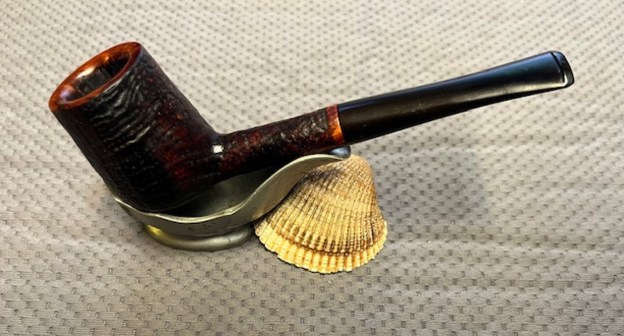
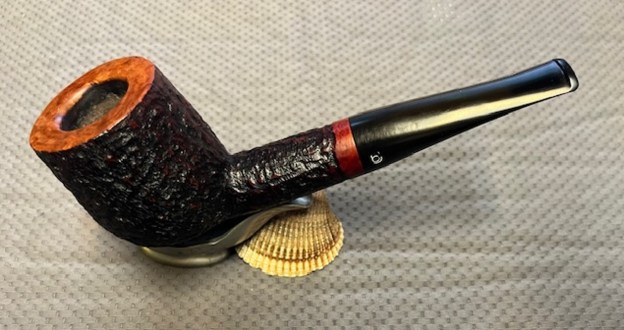
This well-proportioned, well used and worn sandblast briar pipe was purchased on 05/21/2021 from an antique shop in Astoria, Oregon, USA. It was obviously the previous pipeman’s favourite. It is stamped on the underside of the shank and clearly reads Bjarne [over] Hand Made [over] In Denmark. The bowl had a thick cake on the walls and a heavy overflow of lava onto the rim top and edges. The top of the bowl seems to be smooth matching the shank end and smooth band for the stamping. It is hard to know for sure because of the thick lava but it seems highly likely. The rim edge appears to be possibly worn and slightly out of round. The sandblast finish is dirty with debris and oils. The vulcanite taper stem has a faint Bj stamped on the left side of the taper. It looks like it had a Softee Bit on the stem and it was oxidized, calcified and has light tooth marks and chatter on both sides ahead of the button. It was a beautiful sandblast pipe even through the grime in the finish. Jeff took photos of the pipe before he started cleaning it up. Have a look. Jeff took close up photos of the bowl and rim top to show the condition of the bowl and the rim top. You can also see the lava on the rim top, inner edge and the cake in the bowl. It appears that there is some burn damage and the bowl is out of round. He also took close up photos of the stem to show its condition as mentioned above. He also took photos of the tooth marks and chatter on both sides of the stem. He took photos of the bowl sides and heel to show the sandblast grain around the bowl. The blast has some deep grooves around the bowl and shank. He took photos of the stamping. It is faint but still readable as noted above. The stamp on the looks better than it is. The stamping is almost smooth so I doubt it will survive the clean up.
I have had many Bjarne pipes cross my work table over the years but all had been stamped only Bjarne or Bjarne Handmade. None of them had his full name stamped on it and none had a letter stamp which I assumed indicated the grade of the pipe. I did some research on Pipedia.com and found some helpful information on both the stamping of my pipe and the history of Bjarne Nielsen himself. I am including the link to the full article on Pipedia and also some pertinent sections of the article that I have edited for quick reference. https://pipedia.org/wiki/Bjarne

From the early 1990s Bjarne had seven pipemakers employed and the pipes were sold in no fewer than 32 countries. For more than six months each year, Bjarne traveled around the world to promote his pipes by meeting with dealers and customers. But sadly, it all ended in February 2008 when Bjarne, then 66 years old suffered a fatal heart attack. An unexpected blow first of all to his family, but also to the pipemakers who had been working for him, and to all lovers of his pipes from around the world. And as no one was willing to take over, the Bjarne pipe died together with its creator.

Among the pipemakers that worked for Bjarne were Johs (for the lower priced high volume pieces), and makers like Ph. Vigen, Ole Bandholm and Tonni Nielsen for high grade pieces. The cheaper line was stamped “Bjarne” while the highest grades were stamped “Bjarne Nielsen” (never with the pipemakers’ name) and graded, from highest to lowest, by the letters: AX, A, B, C, D, E, F, G, H, I, and J.

Now I knew that the pipe I had was made before 2008 and was one of his cheaper line stamped Bjarne.

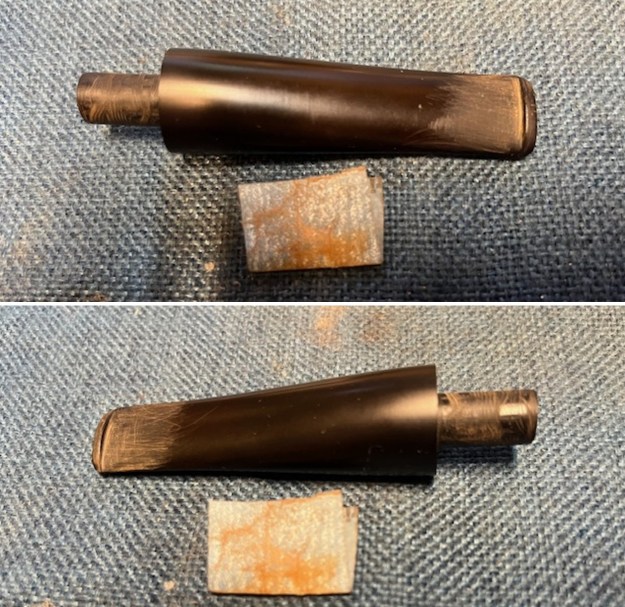
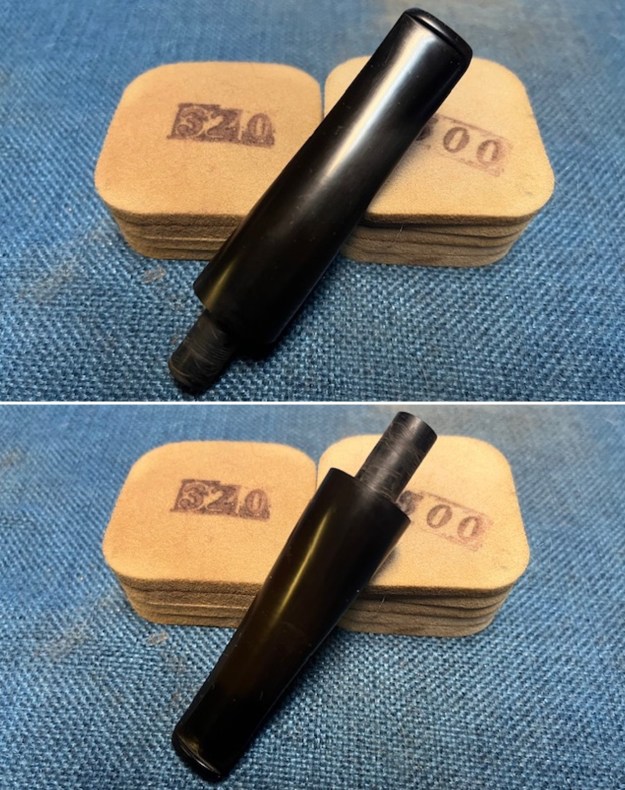
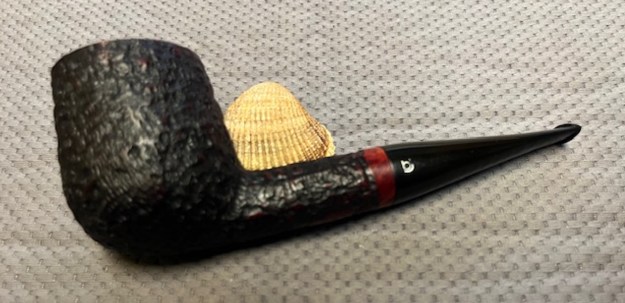
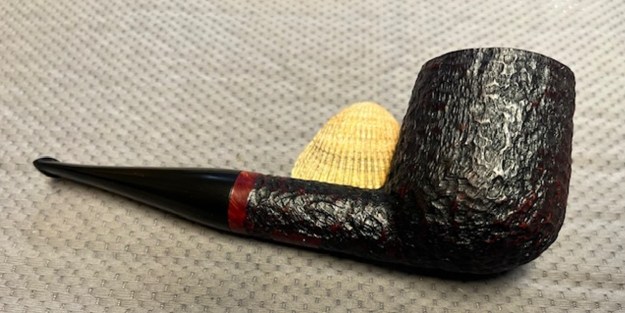
Armed with the information above, I turned my attention to the pipe itself. Jeff had cleaned the pipe with his usual penchant for thoroughness that I really appreciate. He reamed it with a PipNet pipe reamer and cleaned up the reaming with a Savinelli Fitsall Pipe Knife. He scrubbed out the internals with alcohol, pipe cleaners, shank brushes and cotton swabs until the pipe was clean. He scrubbed the exterior of the bowl with Murphy’s Oil Soap and a tooth brush to remove the grime and grit on the briar and the lava on the rim top. The finish looks very good with good looking grain around the bowl and shank. Jeff soaked the stem in Before & After Deoxidizer to remove the oxidation on the rubber. When the pipe arrived here in Vancouver for the second stop of its restoration tour it looked very good. I took photos before I started my part of the work. I took close up photos of the bowl, rim top and stem to show how clean the pipe was. The bowl was clean and the rim top and the inner edge were worn and slightly out of round. It does indeed appear to be a smooth rim top. The stem was clean and showed light tooth marks and chatter.I took a phots of the stamping on the underside of the shank. It is faint but readable and read as noted above. I also removed the stem from the shank and took photos of the pipe to show the look of the parts.The rim top and inner edge of the bowl was in rough condition. There were spots that seemed like the rim top was smooth matching the shank end and other spots looked rough and made me wonder if it had not been sandblast. Because of the condition I went with the smooth top as I have worked on several like that. I used a wooded sphere and half sphere to work over the inner edge of the bowl and give it a slight bevel to try and bring the bowl back to round. By the end the inner edge looked much better and also reveal that outside of the bowl was also not made round. Ah well, I work with what I have and it is definite improvement. I sanded the rim top with 320-3500 grit sanding pads. I wiped the top down with a damp cloth after each sanding pad and by the end the rim top had a shine and definitely looked better.I polished the rim top with micromesh sanding pads – dry sanding with 1500-12000 grit sanding pads. I wiped it down after each pad with the cloth. The bowl continued to develop a deeper shine. I restained the rim top with a Cherry stain pen to match the shank end and panel on the underside of the shank. It matched very well.I worked some Before & After Restoration Balm into the briar with my finger tips and a shoe brush to get into the nooks and crannies. I let it sit on the bowl for 10 minutes and then buffed it off with a paper towel and soft cloth. The product is a great addition to the restoration work. It enlivens, enriches and protects the briar while giving it a deep glow. It is a product I use on every pipe I restore. I set the bowl aside and turned my attention to the stem. I “painted” the surface of the stem with the flame of a lighter to lift the tooth marks and had mixed success. Many lifted and the remaining ones I filled with some rubberized black CA glue. Once the repairs cured I used a flat file to blend them into the surface and followed that with some 220 grit sandpaper. It looked better. Polishing would finish the work. I continued the sanding process with 320-3500 grit sanding pads. After each pad I wiped the stem down with some Obsidian Oil to clearly show me the scratches and areas that still needed work. It was really looking good.I polished the stem with micromesh sanding pads – dry sanding with 1500-12000 grit pads. Once again, I wiped it down between each pad with Obsidian Oil. I further polished it with Before and After Stem Polish – both Fine and Extra Fine. It looked very good. I am really happy with the way that this Bjarne Hand Made Sandblast Brandy turned out. It really is a beautiful looking pipe with a unique shape and combining a sandblast bowl with a smooth rim and shank end. The vulcanite taper stem is really nice. The briar really came alive with the buffing. The rich brown and black stains of the finish gave the pipe a sense of depth with the polishing and waxing. I carefully buffed the pipe with Blue Diamond on the buffing wheel using a light touch on the briar. I gave the bowl and the stem multiple coats of carnauba wax on the buffing wheel. I buffed the pipe with a clean buffing pad to raise the shine. I hand buffed the pipe with a microfiber cloth to deepen the shine. The finished Bjarne Brandy Sandblast really is a beauty and feels great in the hand and looks very good. Give the finished pipe a look in the photos below. The dimensions of the pipe are Length: 5 ½ inches, Height: 1 ¾ inches, Outside diameter of the bowl: 1 ¼ inches, Chamber diameter: ¾ of an inch. The weight of the pipe is 36 grams/1.27 ounces. The pipe will be going on the rebornpipes store in the Danish Pipe Makers Section if you would like to add it to your collection. Thanks for reading this blog and my reflections on the pipe while I worked on it. It was a fun one to work on!
Restoring a Beautiful Panel Bjarne


by Steve Laug

The next pipe I chose to work on was one that we purchased on 10/20/2022 from and Antique Store in Vancouver, Washington, USA. This one is stamped Bjarne [over] Handmade [over] In Denmark. I have worked on quite a few Bjarne pipes over the years and found them to be well made pipes following the grain on the smooth and unique sandblast on the others. So, when I saw this one I was excited to work on it. The pipe is kind of a shape I would call a combination of a Freehand and a Panel Brandy. The briar bowl and shank were smooth and well grained. The rim top had a plateau finish. The exterior of the pipe is dirty from use with oils and grime on the bowl sides. It has a thick cake in the bowl and an overflow of lava on the plateau rim top and inner edge of the bowl. The stem is a oval taper stem that is comfortable. It is oxidized but free of tooth marks and chatter on the surface. Jeff took photos of the rim top and stem to show the general condition of the pipe. The bowl is thickly caked and seems to have a thick dottle in the bottom of the bowl. There was some thick lava on the rim top and inner edge. I am hoping that once the lava is removed the edge will be okay. The stem looked surprisingly good under the dirt and grime. There was oxidation, calcification on the surface of the vulcanite. It looked like it had a rubber Softee Bit on the stem. There did not appear to be any tooth marks or chatter. It should cleanup very well.Jeff took photos of the bowl sides and heel to show the beautiful grain that was around this bowl event though it was lost in the grime the finish. The pipe had obviously been well loved and enjoyed by the previous pipeman. He took a photo of the underside of the shank to show the stamping. The stamping is clear and readable in the photos below as noted above. The stem had a faint Bjarne logo on the topside. In a previous blog I had researched the brand quite a bit. I have included it in full below for information on this pipe (https://rebornpipes.com/2020/03/07/another-pipe-from-the-eastern-canada-lot-a-hand-carved-bjarne-freehand/). I quote:

I turned my favourite go to sites on background of brands. The first is Pipephil’s site (http://www.pipephil.eu/logos/en/logo-b5.html). There I looked up the Bjarne brand. I have copied the pertinent information below.

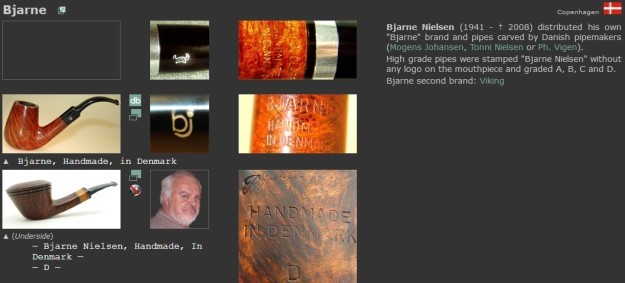
Bjarne Nielsen (1941 – † 2008) distributed his own “Bjarne” brand and pipes carved by Danish pipemakers (Mogens Johansen, Tonni Nielsen or Ph. Vigen). High grade pipes were stamped “Bjarne Nielsen” without any logo on the mouthpiece and graded A, B, C and D. Bjarne second brand: Viking.

I have included a screen capture of the section on the brand below.I turned to Pipedia and looked up the brand for a bit more information on the pipes that were stamped like the one that I am working on (https://pipedia.org/wiki/Bjarne). Toward the end of the article I found what I was looking for. I quote:

Among the pipemakers that worked for Bjarne were Johs (for the lower priced high volume pieces), and makers like Ph. Vigen, Ole Bandholm and Tonni Nielsen for high grade pieces. The cheaper line was stamped “Bjarne” while the highest grades were stamped “Bjarne Nielsen” (never with the pipemakers’ name) and graded, from highest to lowest, by the letters: AX, A, B, C, D, E, F, G, H, I, and J.

Now I knew that I was dealing with the cheaper line of pipe made by the company. It was stamped Bjarne while the higher grade pipes were stamped Bjarne Nielsen with a grade stamp.

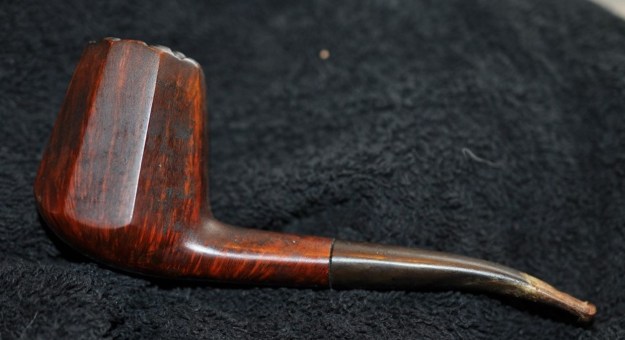
Jeff did a great job cleaning off the debris and grime on this old. He reamed it with a PipNet reamer and smoothed the walls of the bowl with a Savinelli Fitsall pipe knife. He scrubbed out the mortise and the airway in the shank and the stem with alcohol, cotton swabs and pipe cleaners. He scrubbed the exterior of the bowl, rim and shank with a tooth brush and Murphy’s Oil Soap to the oils and tars on the bowl, rim and shank. He rinsed it under running water. He dried it off with a soft cloth. Once the grime was removed the finish underneath was in stellar condition. The rich patina of the older briar was a variegated finish of smooth and sandblast looked great. He scrubbed the exterior of the stem with Soft Scrub then soaked it in a bath of Briarville’s Pipe Stem Deoxidizer. He rinsed off the deoxidizer with warm water and wiped the bowl and stem down with a light coat of olive oil to rehydrate both. The pipe really was quite stunning. I took photos of the pipe to show its condition before I started my work on it. I took a close up photo of the rim top and edges to show how well it had cleaned up and the edges around the bowl. I also took close up photos of the stem to show the light tooth chatter on the surface ahead of the button on both sides.I took a photo of the stamping on the underside of the shank. It is faint but readable as noted above. I removed the stem and took a photo of the faint stamping on the top of the stem – BJ. There is not enough depth in the stamp to recolour it.I started my work on the pipe by going over the rim top with a wire brush to remove the remnants of debris and lava on the plateau of the rim top. I sanded the bowl with 320-3500 grit sanding pads to remove the scratches and marks on the sides of the bowl and heel. I wiped the bowl down with a damp cloth after each sanding pad to remove the sanding debris. It began to really take on a shine.I polished the briar with micromesh sanding pads – dry sanding with 1500-12000 grit sanding pads. I wiped the bowl down with a damp cloth after each sanding pad. The grain really began to sing. I worked some Before & After Restoration Balm into the surface of the briar with my fingertips to clean, enliven and protect the briar. I used a shoe brush to work the balm into the plateau on the rim top. I let the balm sit for 15 minutes and then buffed with a cotton cloth to raise the shine. The photos show the bowl at this point in the restoration process. I set the bowl aside and turned my attention to the stem. I sanded out the tooth marks and dents in the vulcanite with 220 grit sandpaper until it was smooth.  I sanded the stem with 320-3500 grit sanding pads to remove the remnants of oxidation and the sanding marks in the vulcanite. I wiped the stem down after each sanding pad with a damp cloth to remove the sanding debris.I polished the stem with micromesh sanding pads – dry sanding with 1500-12000 grit sanding pads. I wiped it down after each sanding pad with Obsidian Oil. I polished it with Before & After Pipe Stem Polish – both Fine and Extra Fine. I gave it another coat of Obsidian Oil. I am really happy with the way that this Bjarne Hand Made Freehand Brandy Panel turned out. It really is a beautiful looking pipe with a unique shape and smooth and plateau finishes. The vulcanite oval taper stem is really nice. The briar really came alive with the buffing. The rich brown and black stains of the finish gave the pipe a sense of depth with the polishing and waxing. I put the stem back on the bowl and carefully buffed the pipe with Blue Diamond on the buffing wheel using a light touch on the briar. I gave the bowl and the stem multiple coats of carnauba wax on the buffing wheel. I buffed the pipe with a clean buffing pad to raise the shine. I hand buffed the pipe with a microfiber cloth to deepen the shine. The finished Bjarne Brandy Panel Freehand really is a beauty and feels great in the hand and looks very good. Give the finished pipe a look in the photos below. The dimensions of the pipe are Length: 5 ½ inches, Height: 2 inches, Outside diameter of the bowl: 1 ¼ inches, Chamber diameter: ¾ of an inch. The weight of the pipe is 50 grams/1.66 ounces. The pipe will be going on the rebornpipes store in the Danish Pipe Makers Section if you would like to add it to your collection. Thanks for reading this blog and my reflections on the pipe while I worked on it. It was a fun one to work on!
An Exceptional Bjarne Hand Made Freehand


Blog by Robert M. Boughton

Copyright © Reborn Pipes and the Author except as cited

He could have been an ambassador for his country, but instead he became an ambassador for Danish pipes.

— Jan Anderson, author of Scandinavian Pipemakers (2012)

INTRODUCTION

Jan Anderson was speaking of Bjarne Nielsen, the great Danish pipe maker, who finished his studies at the University of Copenhagen with an MBA in the early 1960s and went to work for the Ministry of Foreign Affairs, in the export division.  Nielsen made his first pipes when he was 16 and gave them to friends then and later at the university, and of course he continued making pipes as a hobby.  Whether he knew it or not, he was bitten by the bug.  Call it Pipe Makers Disorder (PMD), if you like.  Bjarne was considered a likely candidate for appointment as ambassador to a foreign country, but he gave it all up to pursue his real ambition, which will come as no surprise to anyone with creative leanings was to form his own business.

Bjarne may never even have imagined turning his pastime into a career, but fate, if there is such a thing, is powerful.  The freehand pipe movement was first building speed when Bjarne was at the Ministry, and he was often asked to help find foreign buyers for the style of pipe that was more popular abroad than in Denmark, where it started.  Many older smokers, deeply rooted in the English tradition of the classic Dunhill style, considered the new direction outlandish, crazy and worst of all, ugly.  And every source Bjarne knew had orders for such pipes up the wazoo.  I’m sure he used more diplomatic words.

Then, out of the blue, again if there is such a phenomenon, Bjarne had the idea to send photos of some of his pipes to a few of those same foreign distributors.  I’m sure he put it out of his mind and wasn’t watching the pot until it started to boil over with so many positive responses he had to decide whether to stay with the Ministry or pursue his innate talent.  Not being the average man, fearful of taking such a huge risk – or, rather, being the typical young man he was, still full of dreams – Bjarne embarked on the journey that would make him a legend, meaning most of the world has never heard of him.

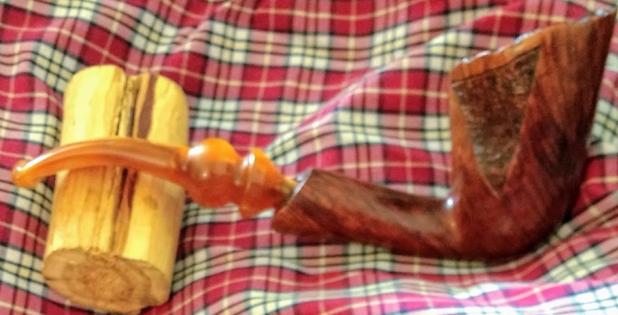
The hand-made Danish freehand in this blog has three lines of clear block nomenclature on the bottom of the shank, below the stem: BJARNE/HANDMADE/ IN DENMARK.  The stem also bears a mark – a lower-case b sitting in the curl of a lower-case j.

Courtesy Pipephil

This means Bjarne did not make the pipe himself, but instead delegated the job to one of three master carvers who were and are in business for themselves and did special work for him.  They are Mogens “Johs” Johansen, Jes Phillip Vigen Jertsen (Ph. Vigen) and Tonni Nielsen.  These pipes were sold by Bjarne as lower-grade pieces than those he carved and on which he ascribed his full name, in cursive script, above HANDMADE/IN DENMARK.  The pipes Bjarne carved himself also bore a grade of AX or A-J.  The man’s self-appraising standards were refined to the extreme.  They bear no mark on the stems.

Bjarne Nielsen Bulldog Grade O, photos, courtesy abel2antique on eBay

I didn’t mind that my new Bjarne, whichever of the fine craftsmen above made it, came with a box and sock as well.

RESTORATION Three long years ago, before I learned lessons beyond count and, more than anything else, that the process never ends, I wrote a blog here called “Ben Wade and the Chamber of Horrors,” in which I recounted the restoration of a huge BW poker with cake so gnarly it took me hours to repair.  As I can think of no better words to describe the terrors of uncovering layer after layer of hardened old carbon, only to reach a patch of almost perfect smoothness and then reaching spiraling new veins and lumps, I’ll give a brief quote from the BW blog.

“The ongoing task of removing all of the cake, every time I thought I achieved smoothness all around, only uncovered still more hidden holes, like microcosmic pits and craters on the moon, only black…the evil chamber walls in spots felt like the bowels of a volcano.”

But this pipe was so much worse, it took me days of concerted effort to get to the bottom of the years of iron-like cake.  I am certain that had this pipe come my way three years ago, I would have been forced to set it aside in the to-do pile.

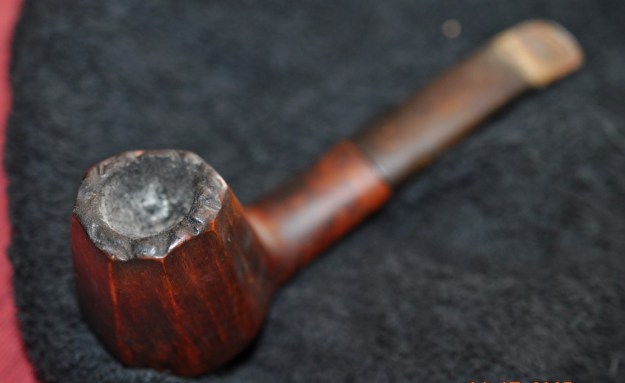
I started with my Junior Reamer, which, due perhaps to the curve of the freehand chamber, made almost not even a dent. The coarsest sandpaper I had was a small old finger-length strip of 180-grit that has stood by me for years and is most often the roughest I need to get with a chamber’s walls.  A half-hour or so of that left my hand aching, my fingers burning and one of them torn open, as was the case to a much more serious degree with the BW chamber of horrors.  I put the chamber ordeal on pause and decided to see how awful the shank’s airway might be.  I admit my attitude sucked by then, but also that I was pleased with the relative ease of clearing the shank of grime with alcohol-dipped regular pipe cleaners.  The first one took some finagling to break on through to the other side, but only four cleaners were needed for the preliminary cleaning. I girded for another go at the chamber with the following armaments.I hoped I would not have to resort to either (and certainly not both) blades, but I was going to be prepared for anything.  As it turned out, the Dremel I used in the BW chamber of horrors case would have come in handy, but I had to borrow it and didn’t want to take the time.  The task was longer and more arduous than I can detail in photos, but here are some time lapses – during the first day.  I hope they show the bulges and veins that appeared hither and thither with each new attack.  Indeed, both the pen and utility knives were needed throughout the three-day process of perfecting the chamber. Another problem I’m sure has not gone unnoticed was the rim burn that was fairly bad, but on the plateau area of a freehand presented greater than average problems.  I did not want to use sand paper or even spot-soak the rim in alcohol, if black stain was under the char.  After debating the options available to me with my resources at hand, I opted for an approach that may seem unusual but I knew from experience would leave any black paint intact.  I submerged the entire stummel in alcohol for several minutes at most, and when I removed it I thought I had the desired result of eliminating the old stain and excess char. Scrutiny of the outer wood showed a perfect piece of briar, free of any blemishes or even a single scratch.  The only other such experience I recall after alcohol-stripping a stummel was with my previous blog about a Capitello Jonico Dublin.  I tried to tell myself the remaining blackness on the rim was natural or maybe left-over stain.

Other than the final sanding, which tore through the final layer of uneven cake, the time for micro-meshing had arrived.  Giving the stummel a final inspection, I overrode my misgivings about the dull murkiness that pervaded most of the rim, with random rays of nice red wood making it through the gloom. I remembered a Ben Wade by Preben Holm I restored and had to re-stain the rim black, and I’ve never quite been happy with it.  The whole approach to this project was to restore the freehand to a better look than it may ever have had, if I may be excused the apparent impertinence.  Still, I proceeded with the micro-mesh, which only confirmed my gut instinct. Before I return to the rim, there are a few minor wrap-ups to make.  First, look at the discoloration of the wood at the top of the front view above.  I figured Super Fine 0000 steel wool should do the trick, and it did.Then there were the stains on the tip of the Lucite tenon and inside the button of the stem.  I scraped out the difficult to reach crud from the button with a mashed end of a pipe cleaner dipped in alcohol and sanded clean the open end of the tenon with my trusty 180-grit fragment of paper.The retort went well, requiring only three Pyrex test tubes of alcohol – the first that was sucked up into the cotton stuffed in the chamber, the second coming out moderately dirty, and the third, after boiling through the pipe four times, was clear.The last step I imagined before the final wheel buffing – there would be no stain – was to fill in the congruent bj etching on the stem that had not been worn away.Unfortunately, the curl of the b is completely faded away.

I just could not see proceeding with either of the courses that presented themselves, leaving the dull, scorched earth look of the rim as it was and trying to make it shine or buying more black stain and hiding the beautiful wood I was sure was hidden.  And so, I gave the rim a spot-soak in alcohol to see what lay beneath.The result was a very pale rim, but I knew that would change with another, focused full course of the micro-mesh pads.  The semi-final result as I headed for the buffers was just what I wanted.  I buffed the stummel with brown Tripoli and a heavy coat of Carnauba, and the stem with Carnauba.

CONCLUSION

This restore was one of the biggest surprises I’ve had in the few years I’ve been learning a few of the myriad techniques and resources available.  Thinking at first it would be done overnight, three days later I knew never to underestimate the opponent each new pipe presents as.  I struggled with the question of to sell or not to sell, and gave in to my P.A.D.  All I have to say is, I’m glad I did, because, as the title says, this is one extraordinary freehand.

SOURCES

https://pipedia.org/wiki/Bjarne
http://www.pipephil.eu/logos/en/logo-b5.html