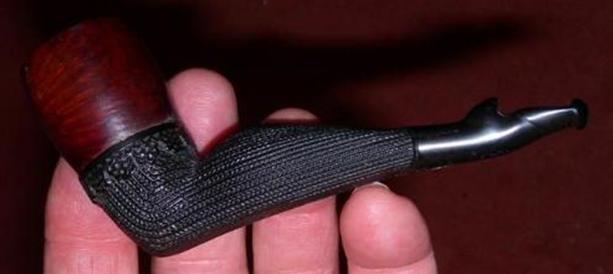
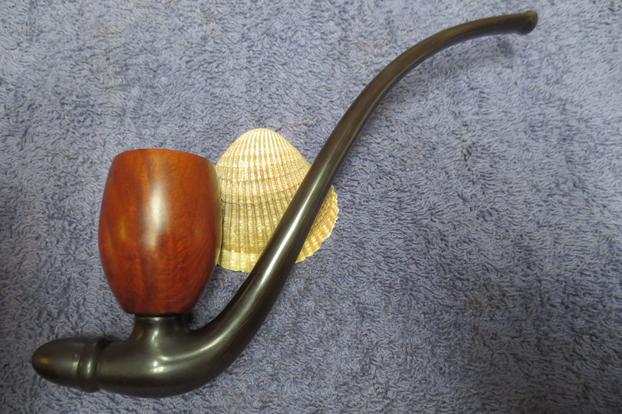
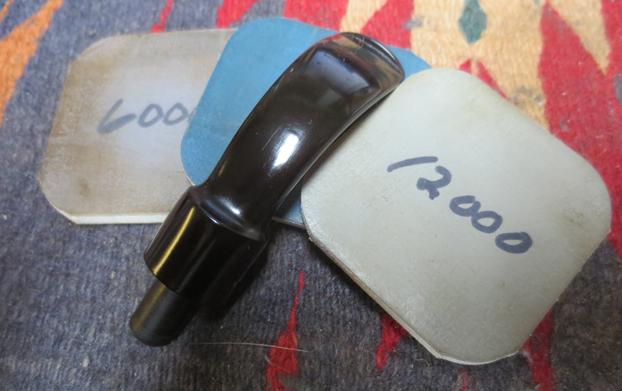
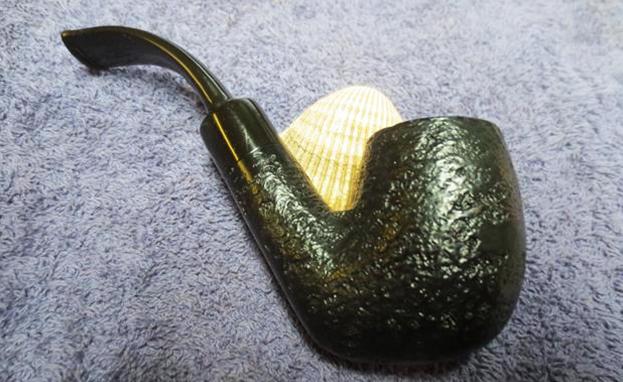
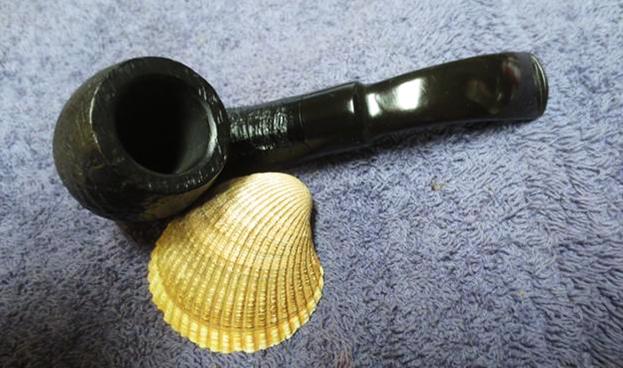
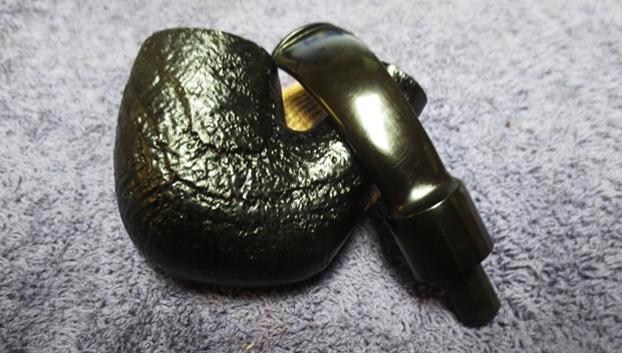
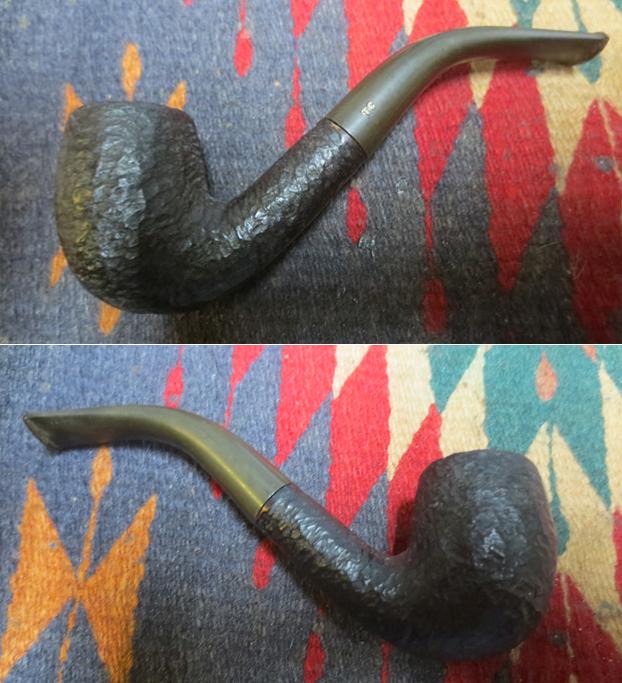
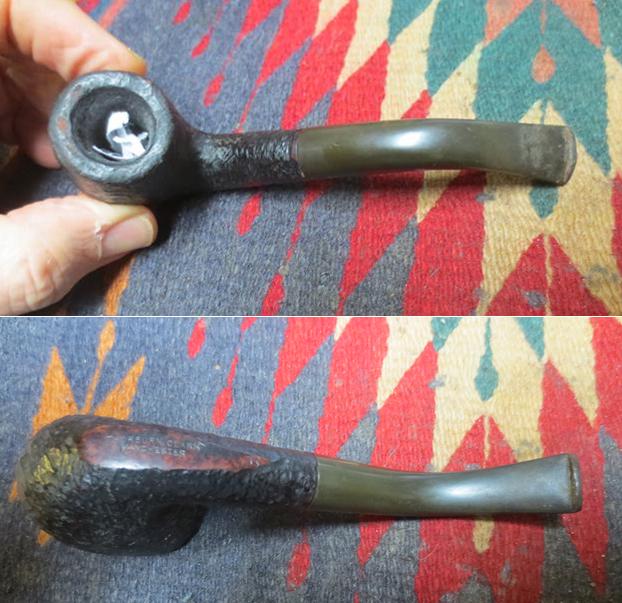
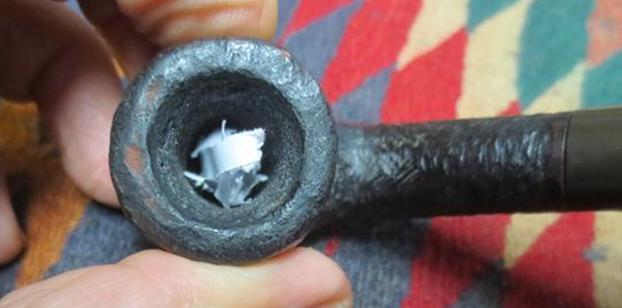
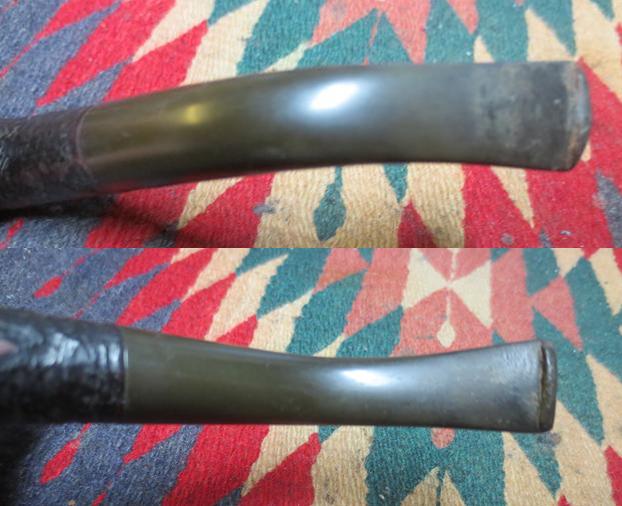
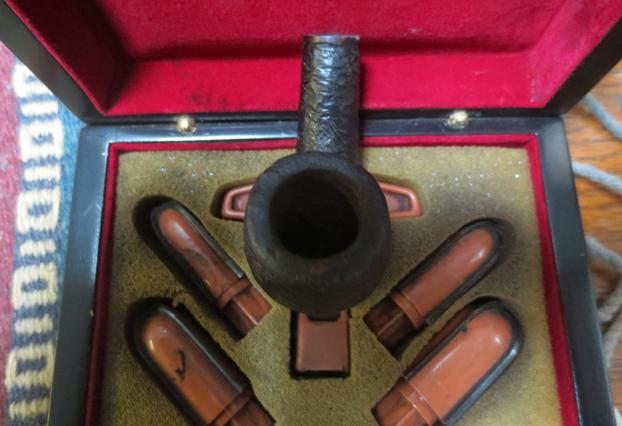
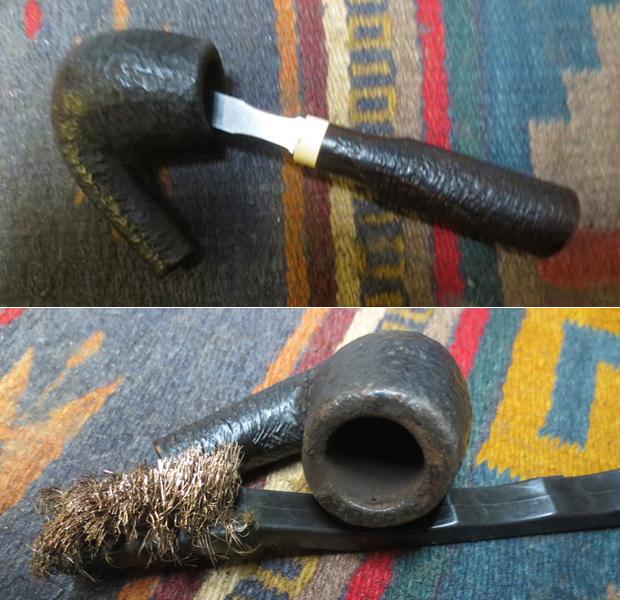
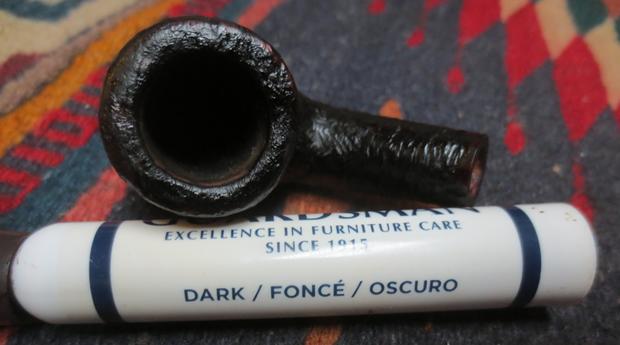
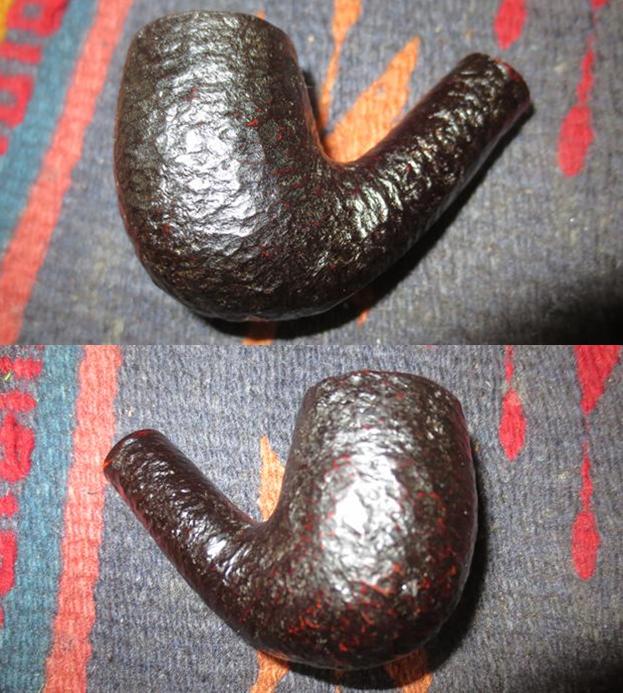
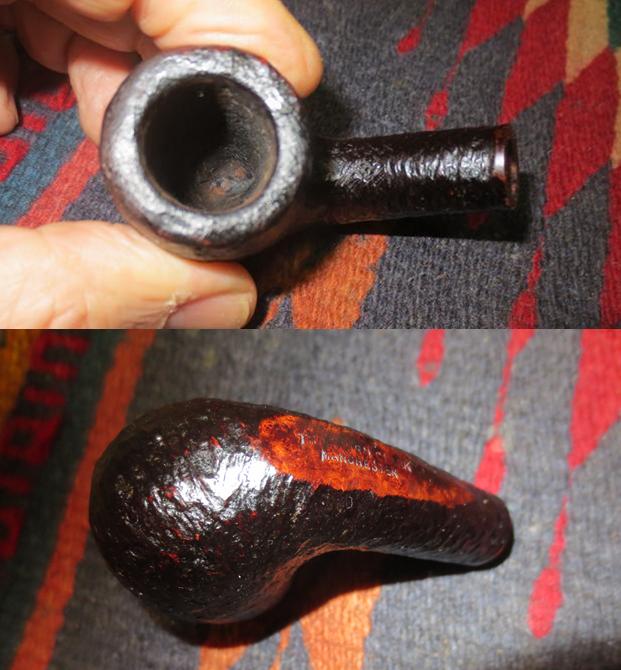
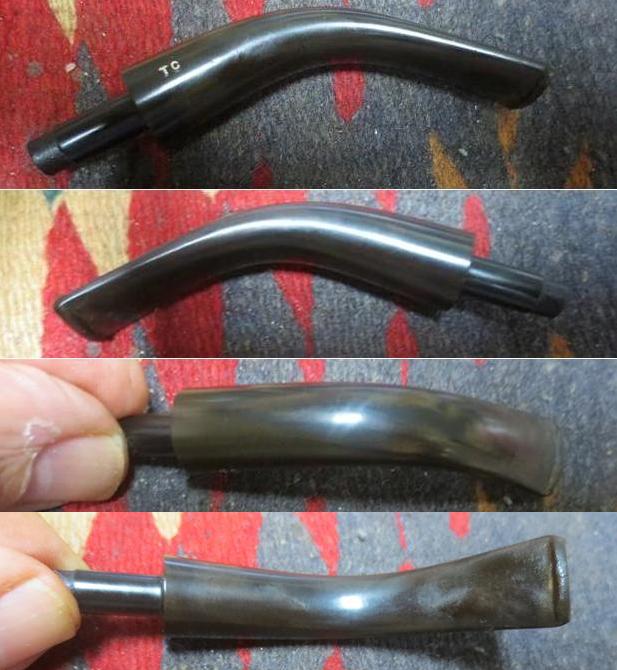
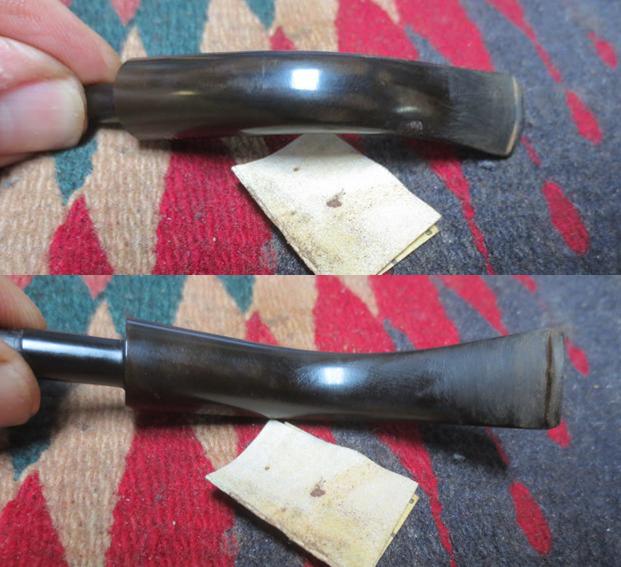
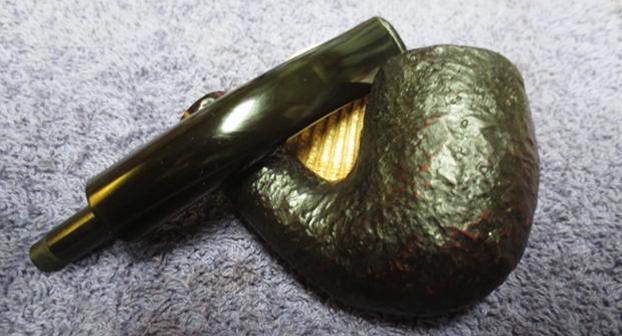
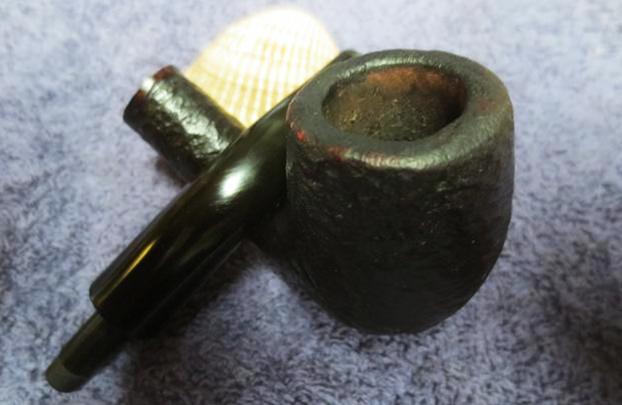
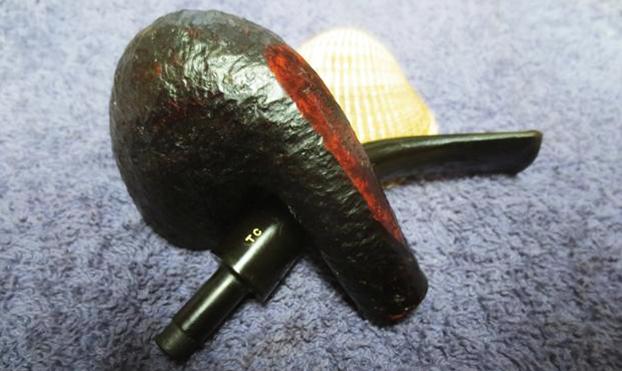
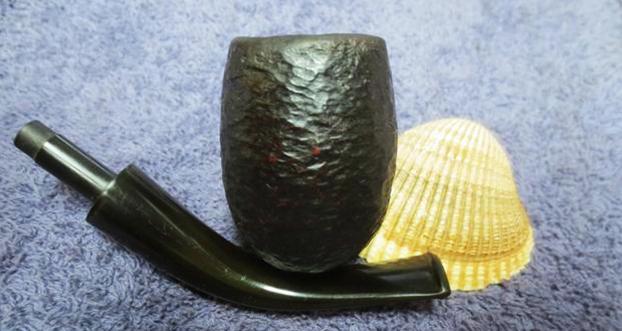
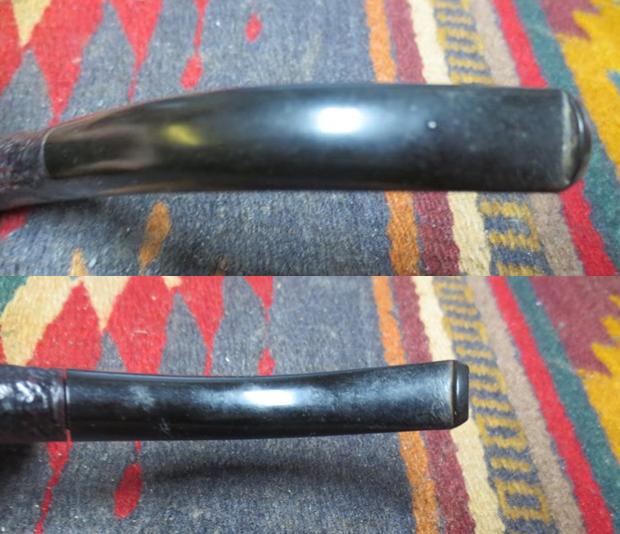
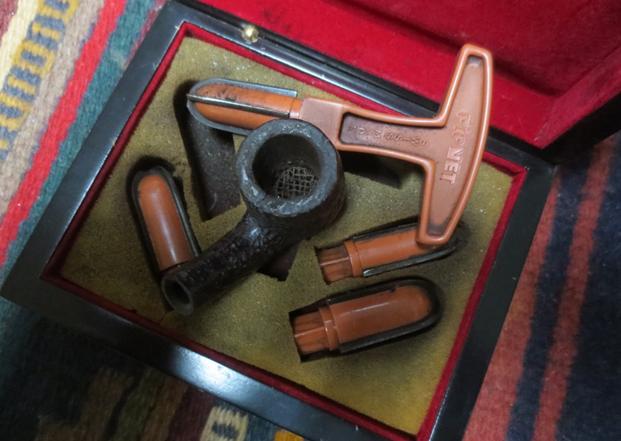
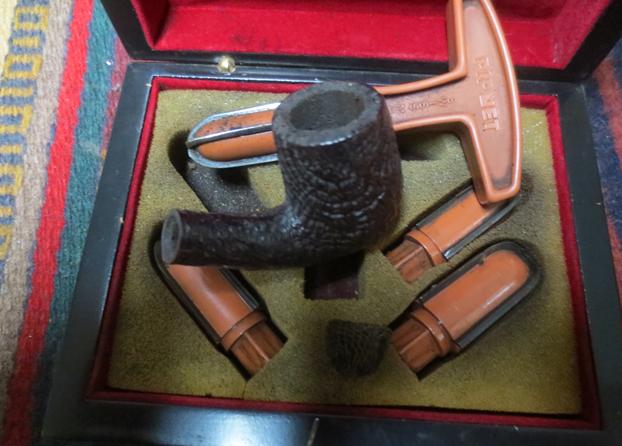
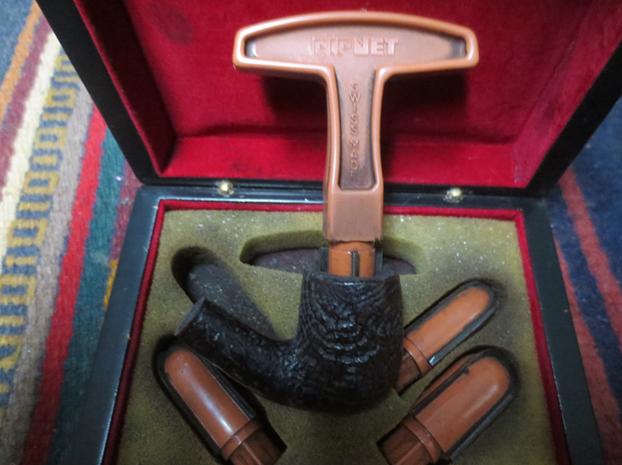
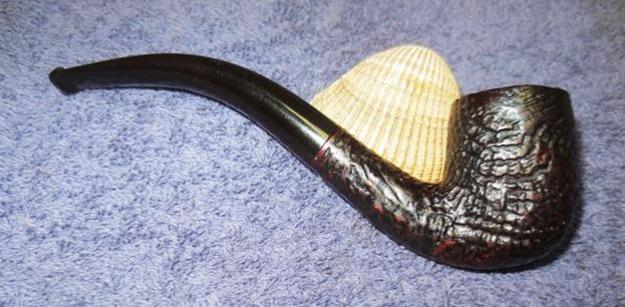
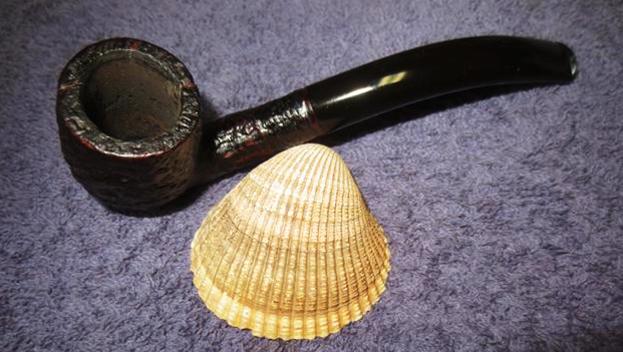
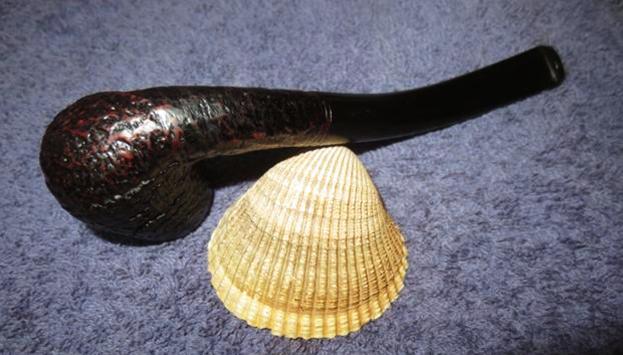
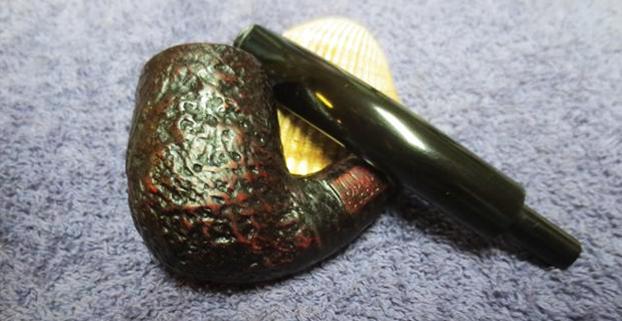
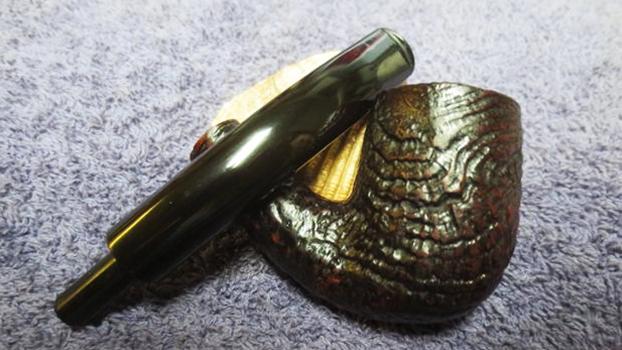
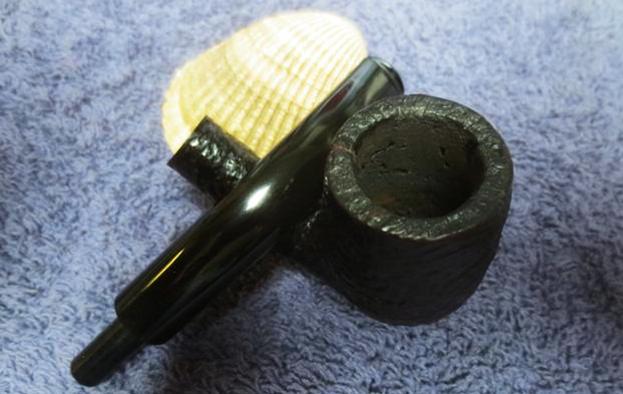
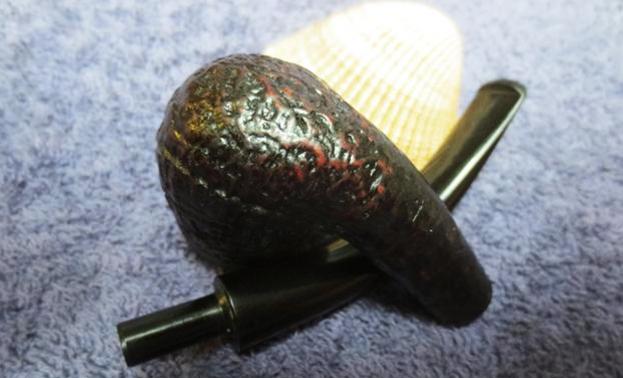
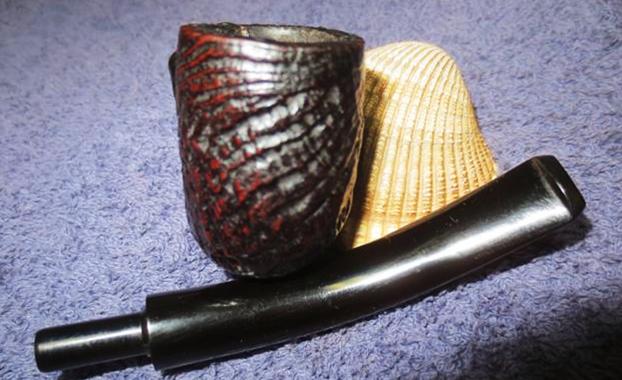
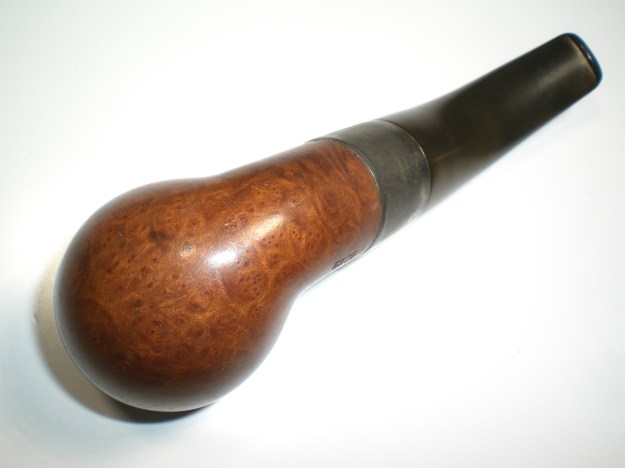
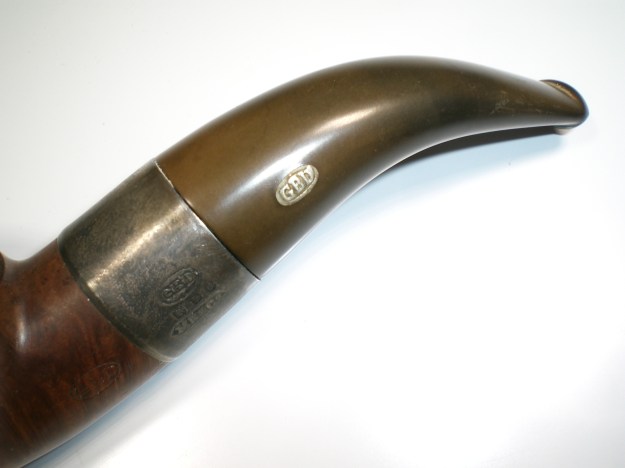
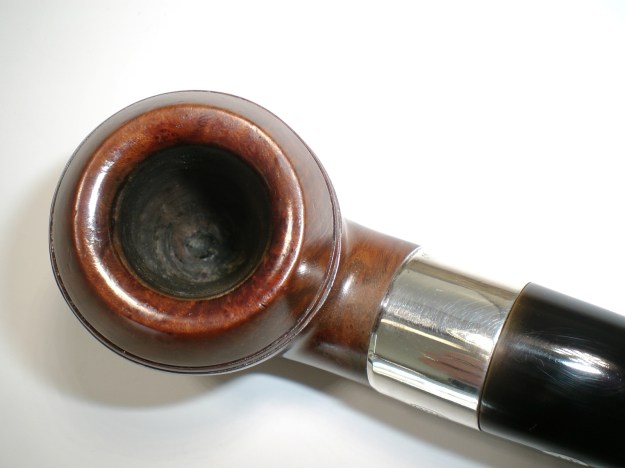
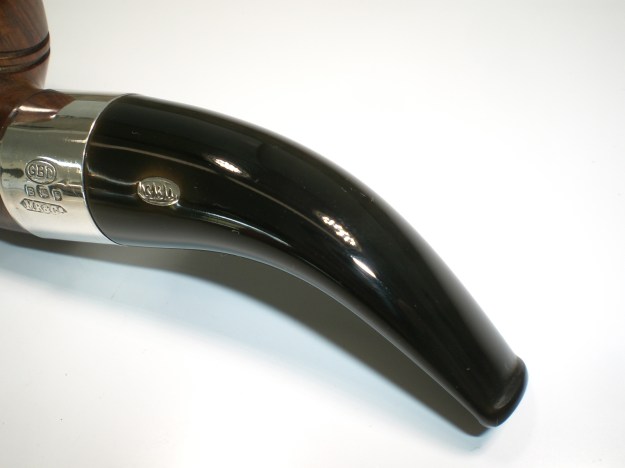
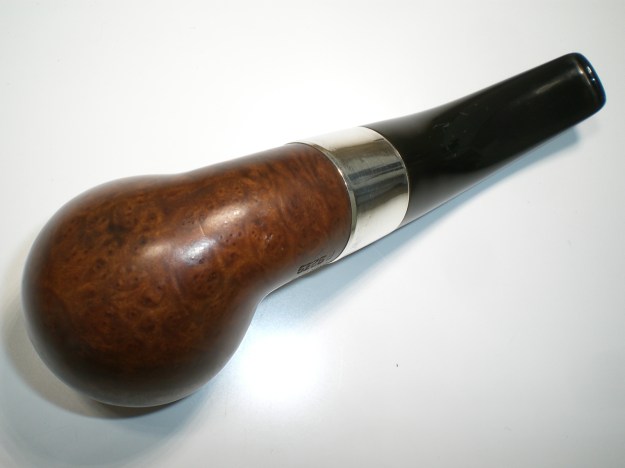
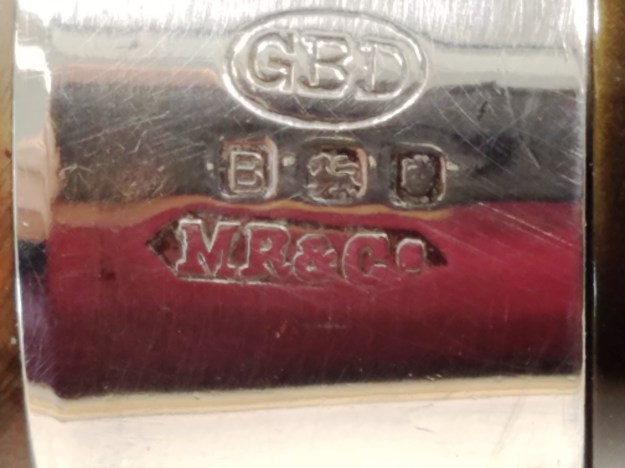
A Tricky Shank Repair on a Design Berlin Shirwitz Volcano Churchwarden


Creative solution to a knotty problem on this cracked shank that was plateau briar. Well done Charles

Charles Lemon's avatar

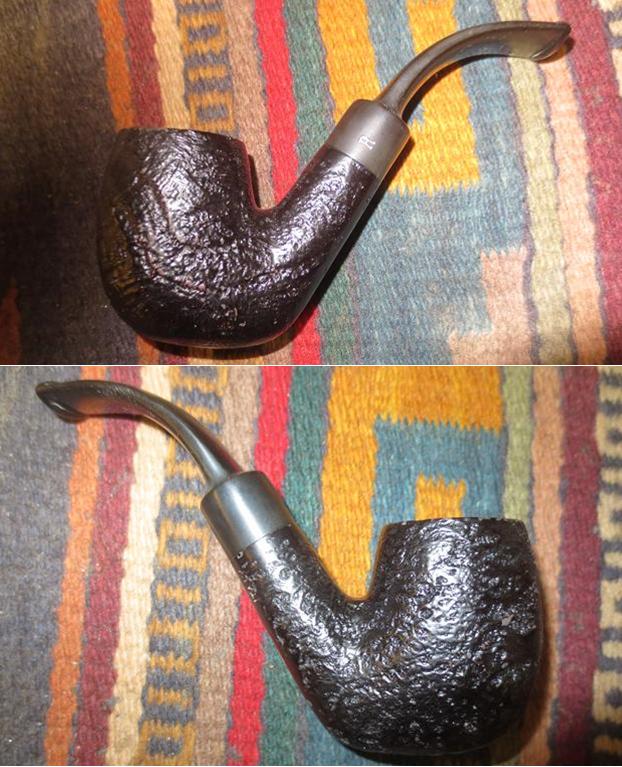
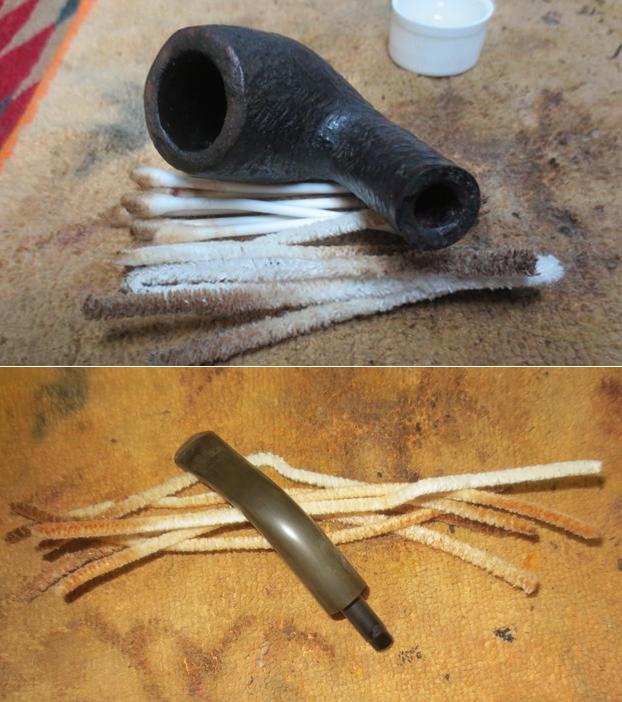
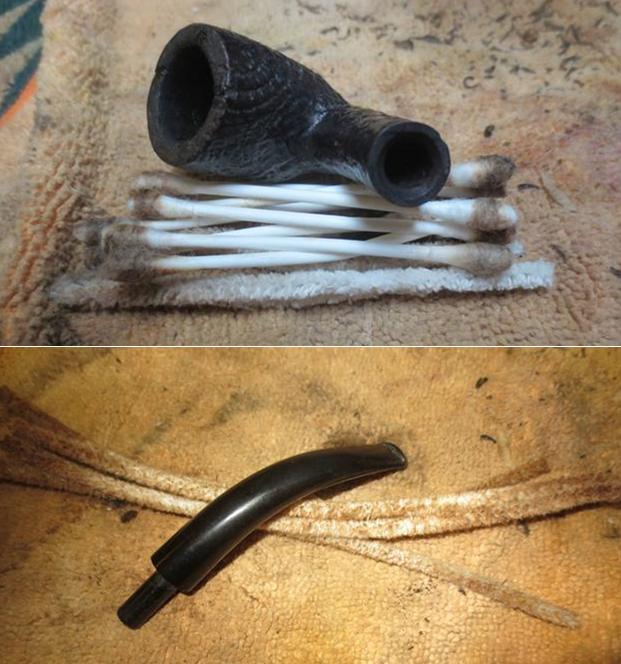
I was contacted recently by a DadsPipes reader with a request to look at his favourite pipe and determine what could be done to repair a crack running up the shank. I’ve repaired quite a few cracked shanks, but this pipe would prove to be a unique challenge.

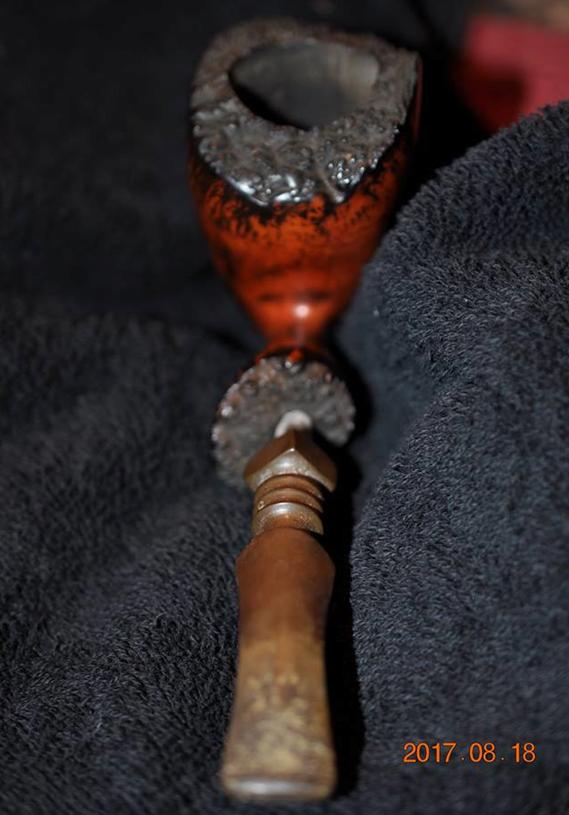
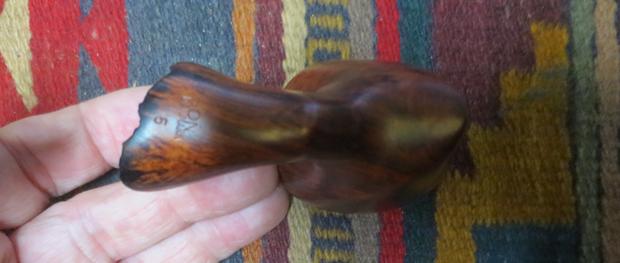
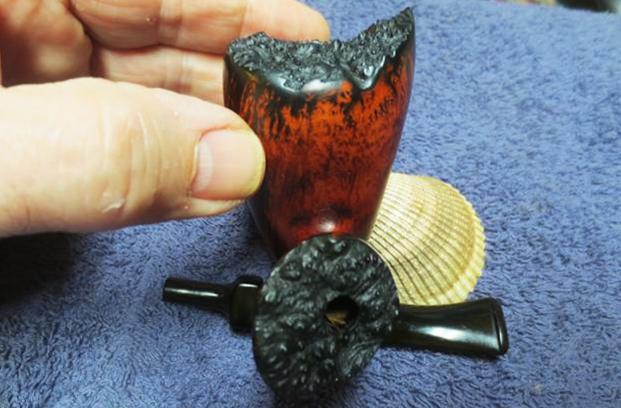
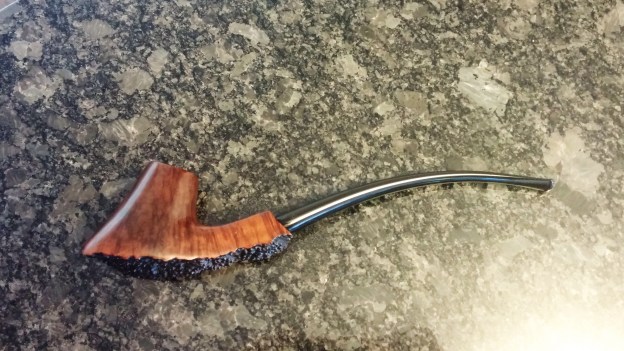
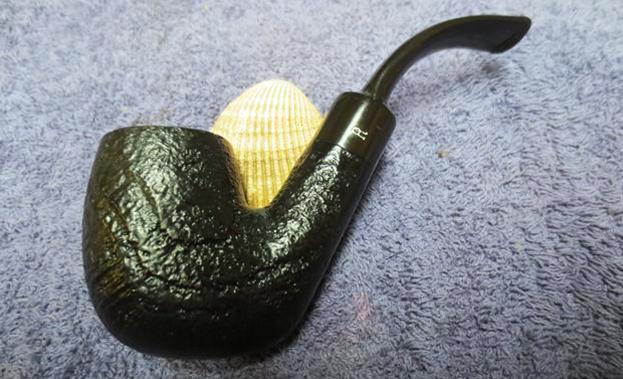
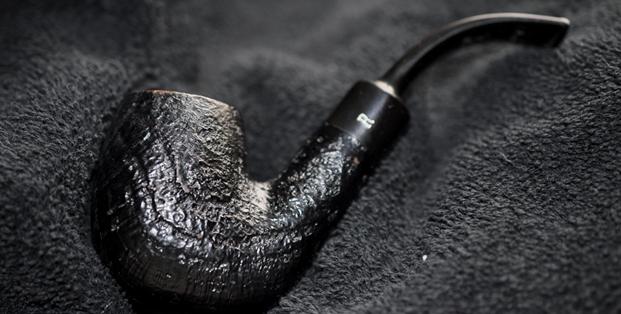
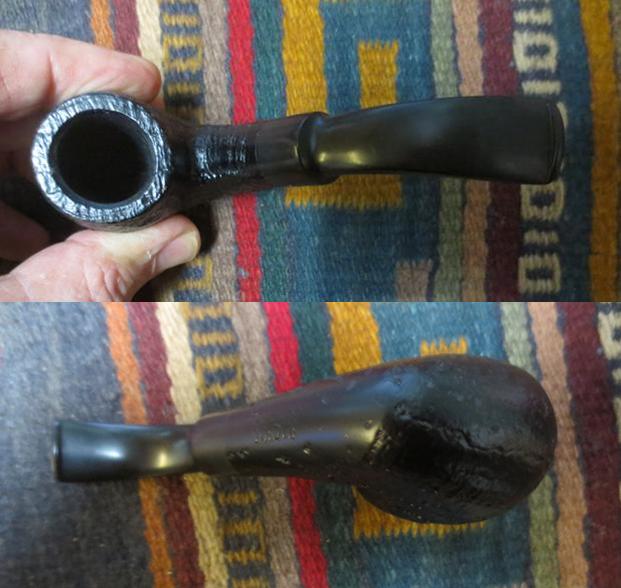
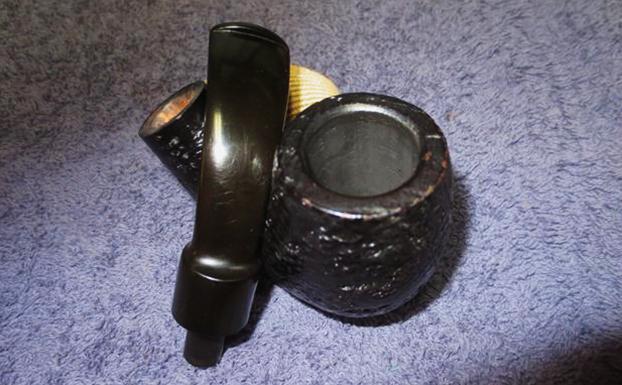
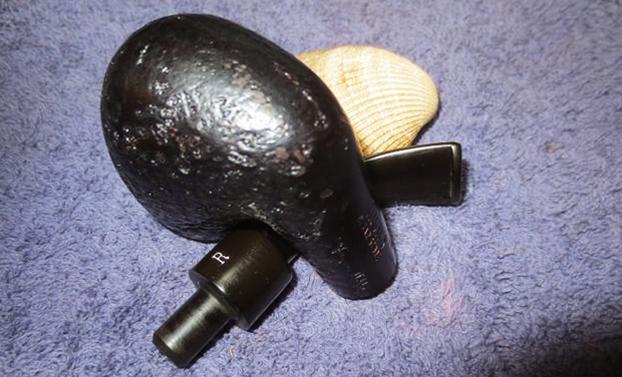
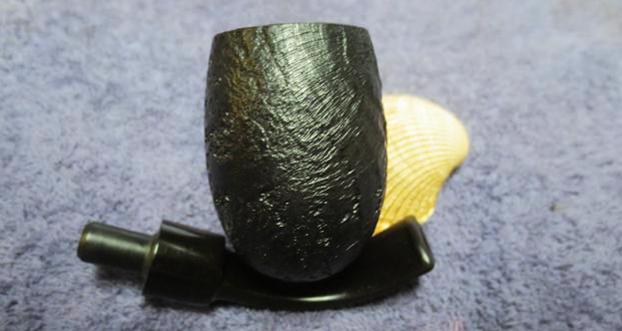
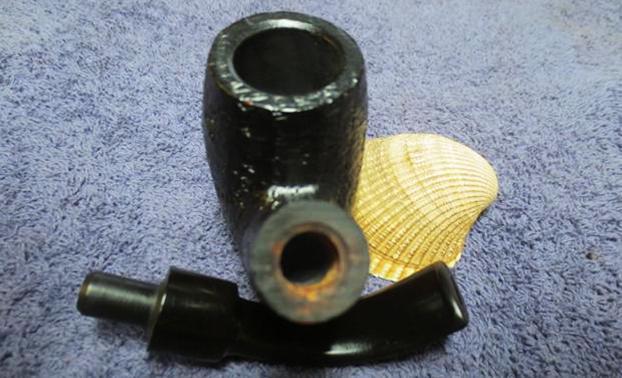
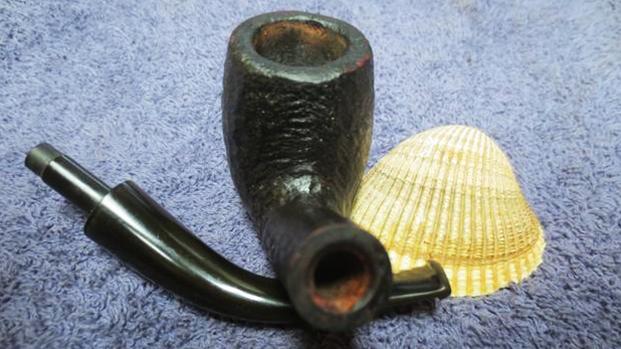
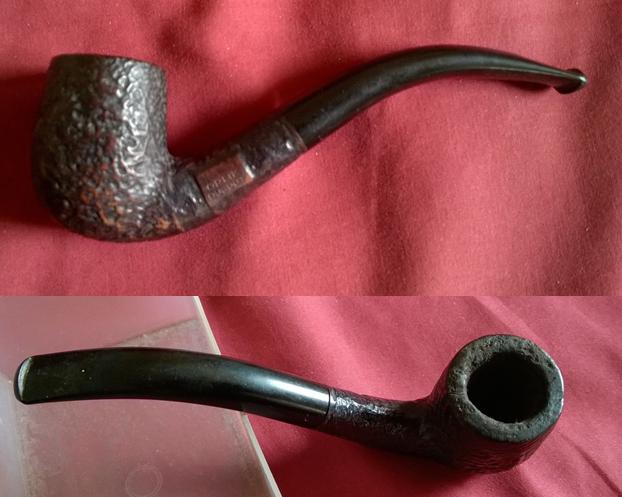
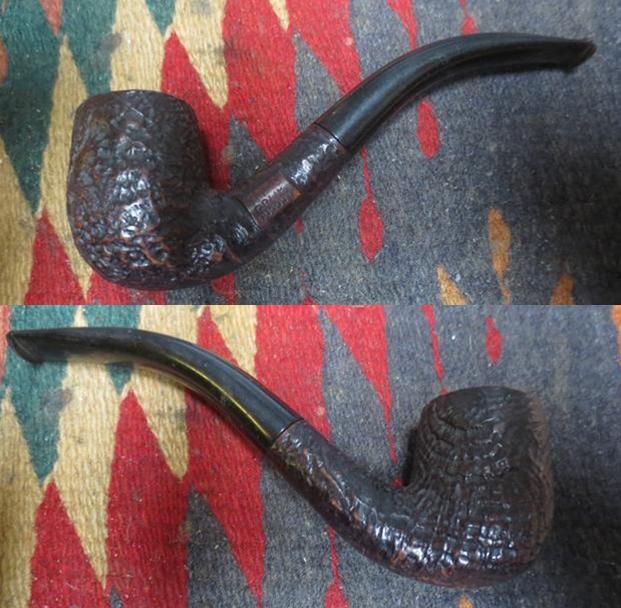
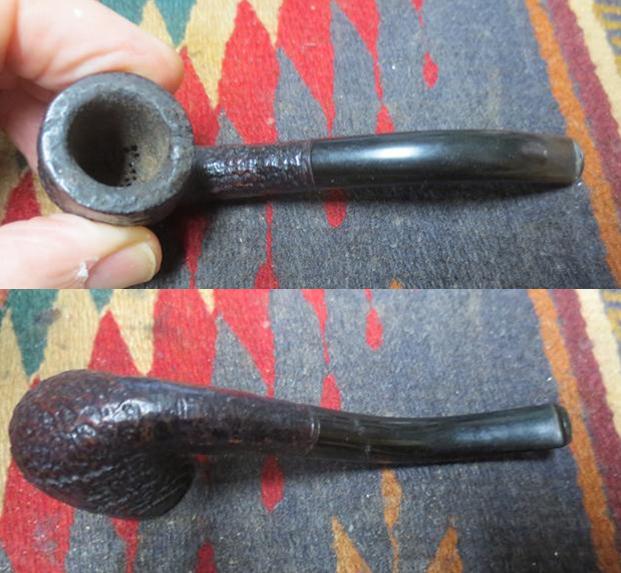
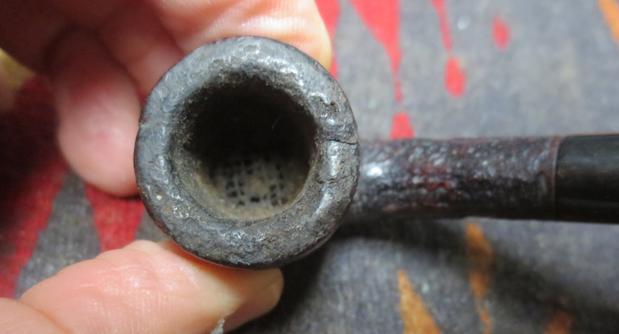
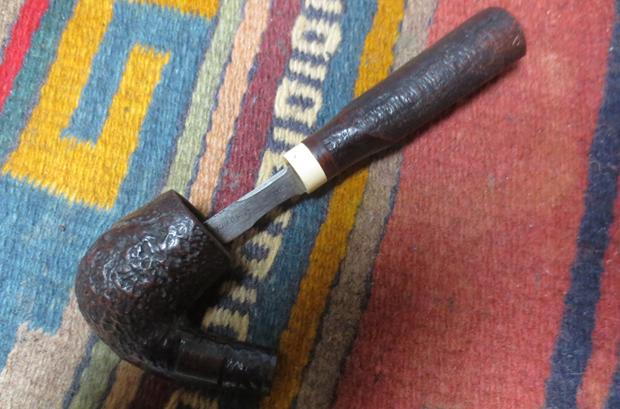
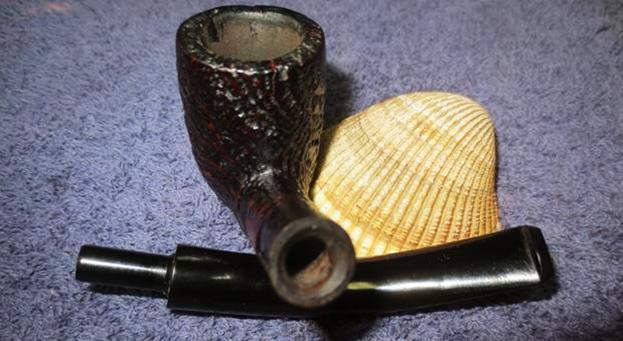
As you can see in the pics below, this is not your ordinary churchwarden pipe. This Design Berlin Shirwitz Volcano has the characteristic long stem of the genre, but there would be no fitting a standard shank band to this beautiful piece of briar.

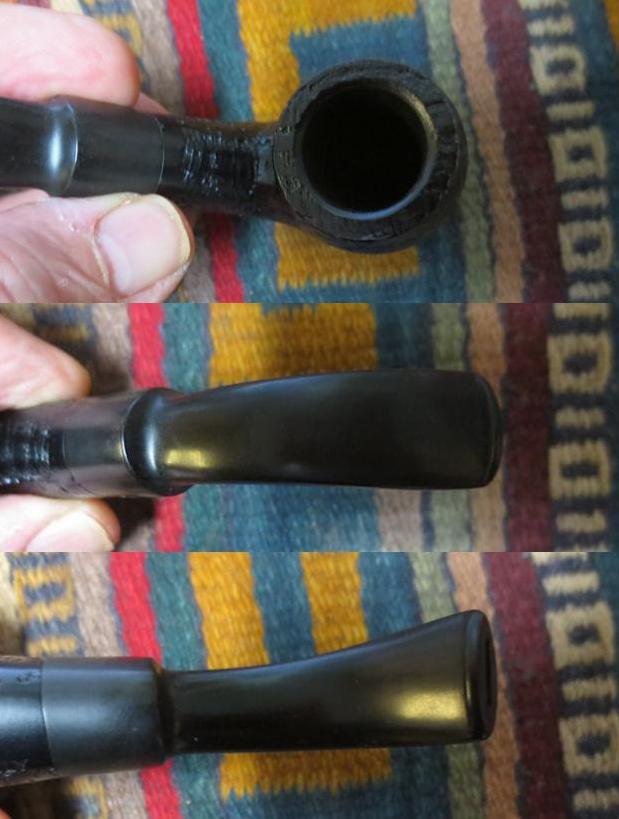
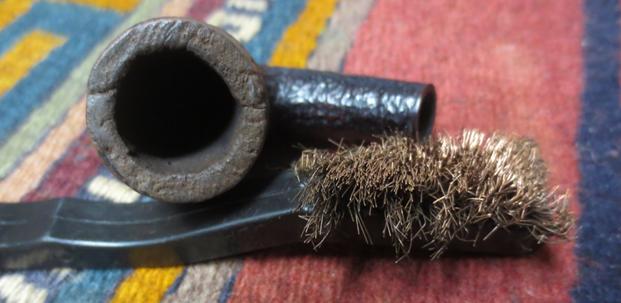
The pipe arrived on my worktable in good, but a little grimy, condition. It is a beautiful piece, with a graceful organic flow and lovely straight grain underneath the grease. The stem was oxidized with a bit of tooth chatter and calcium buildup, but should clean up just fine.

The rim of the volcano shaped bowl, ironically, was…

View original post 1,411 more words

What is the unique material that forms a Gutta Percha Pipe


Blog by Steve Laug

A friend on Facebook contacted me about an older Cavalier pipe I worked on recently with a suggestion that it might be made out of Gutta Percha rather than Bakelite as I suggested in the restoration blog. It was a pipe with a stem and base unit made out of a dark hard material and a pressure fit wooden bowl. The stem and end cap were all a single unit. Nothing, other than the bowl was removable. When I first picked it up to work on it, I assumed it was vulcanite and soaked it in a deoxidizer bath. The colour was constant. I took it out, dried it off and tried sanding what I thought was oxidation from the base. Nothing happened other than adding many scratches to the material. The more I worked with the material the more I realized that it was not vulcanite but was something else. From my experience cleaning up many older pipes, I assumed that it was Bakelite. But even then I was not sure about my assessment. When I received the message about it potentially being Gutta Percha I had to go and look at what that was. I had no memory of that material (or so I thought). After reading as much about the material as I could find, I think he is correct – Gutta Percha it is. Here is a link to the blog on the restoration of the pipe. https://rebornpipes.com/2017/11/13/restoring-an-interesting-old-bakelite-cavalier/. I am including some of the material I read for your reference. Certainly, I am not the only person who knows next to nothing about Gutta Percha. My friends suggestion left me flummoxed as to what that was. I went through the old memory bank to see if I could recall anything about the material. Surprisingly one memory came back. The only Gutta Percha I recall was the hard core in older golf balls. As a kid, I remember taking balls apart getting to the hard core but I cannot recall what the material looked like. I do remember it being hard and that it bounced. I remember my Dad (or someone) saying that it was Gutta Percha. That was the extent of my memory. But I don’t recall ever hearing about the material being used on pipes and I still really had no idea what it was.

That led me to do some research on the web to see what I could find out about the material. (Honestly, I don’t know what I would do without Google. I don’t know how I survived college and graduate school without it.) The first link I found and turned to was on Wikipedia (https://en.wikipedia.org/wiki/Gutta-percha). I quote large portions of that article below to set the base for understanding the material’s composition and origin.

Scientifically classified in 1843, it was found to be a useful natural thermoplastic. In 1851, 30,000 long cwt (1,500,000 kg) of gutta-percha was imported into Britain.

During the second half of the 19th century, gutta-percha was used for myriad domestic and industrial purposes, and it became a household word (emphasis mine). In particular, it was needed as insulation for underwater telegraph cables, which, according to author John Tully, led to unsustainable harvesting and a collapse of the supply.

According to Harvey Wickes Felter and John Uri Lloyd’s Endodontology: “Even long before Gutta-percha was introduced into the western world, it was used in a less processed form by the natives of the Malaysian archipelago for making knife handles, walking sticks and other purposes. The first European to discover this material was John Tradescant, who collected it in the Far East in 1656. He named this material “Mazer wood”. Dr. William Montgomerie, a medical officer in Indian service, introduced gutta-percha into practical use in the West. He was the first to appreciate the potential of this material in medicine, and he was awarded the gold medal by the Royal Society of Arts, London in 1843.”

…In the mid-19th century, gutta-percha was also used to make furniture, notably by the Gutta-Percha Company (established in 1847). Several of these ornate, revival-style pieces were shown at the 1851 Great Exhibition in Hyde Park, London. When hot it could be moulded into furniture, decorations or utensils (emphasis mine).

It was also used to make “mourning” jewelry, because it was dark in color and could be easily molded into beads or other shapes (emphasis mine). Pistol hand grips and rifle shoulder pads were also made from gutta-percha, since it was hard and durable, though it fell into disuse when plastics such as Bakelite became available (emphasis mine). Gutta-percha found use in canes and walking sticks, as well.

The material was adopted for other applications. The “guttie” golf ball (which had a solid gutta-percha core) revolutionized the game. Gutta-percha remained an industrial staple well into the 20th Century, when it was gradually replaced with superior (generally synthetic) materials, though a similar and cheaper natural material called balatá is often used in gutta-percha’s place. The two materials are almost identical, and balatá is often called gutta-balatá.

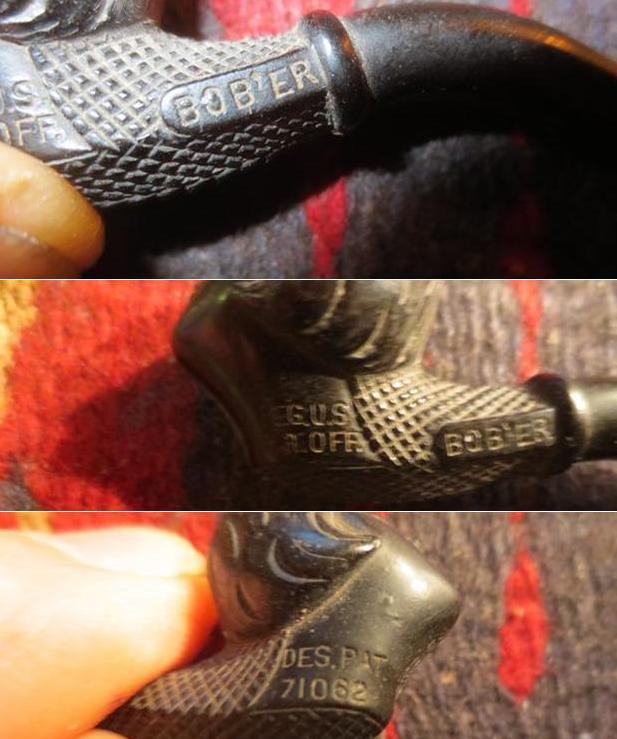
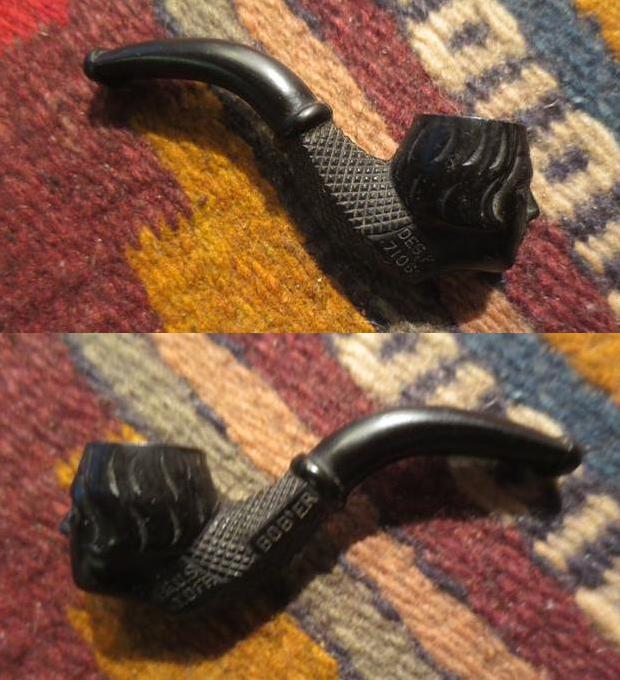
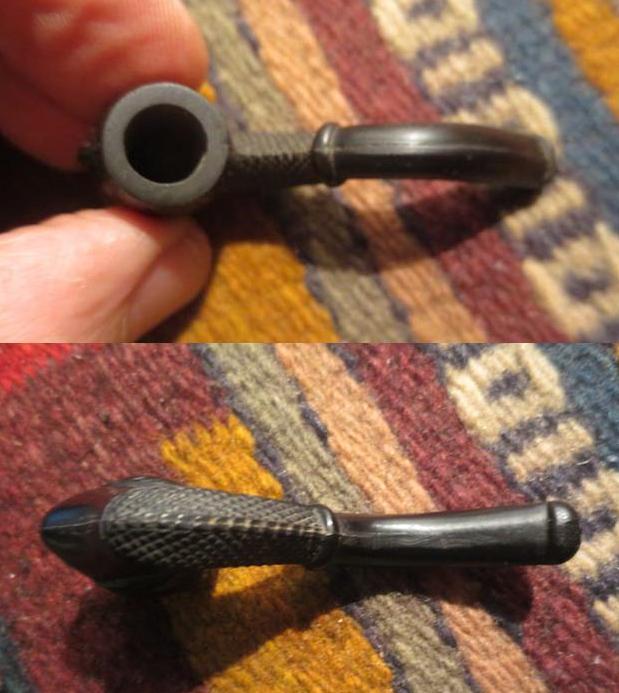
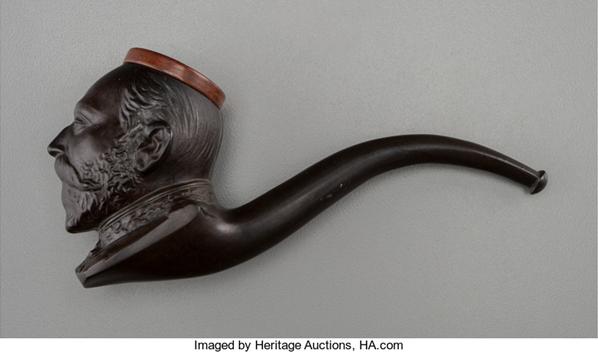
It seems that I have unwittingly worked on several pipes made of this material over the years and had no clue what they were made of. I figured that they were all made of some form of Bakelite, which is actually a far newer product than Gutta Percha. One of those pipes that stands out to me was a tiny salesman’s pipe that was a carved figural pipe. Even though it was very small, the features and hair on the head were well defined. The close up photos below show the stamping on the pipe. The first photo shows the stamp on the left side of the shank reading Bob’er. The second photo shows the stamping on the left side of the neck and chin of the figure reading Reg. US.Pat.Off. The final photo shows the stamping on the right side neck and chin reading Des.Pat. 71062. When I researched the number online, I was unable to find any pertinent information on the patent. Following the close up photos, I have included photos of the pipe from a variety of angles. Perhaps some of you who are reading this can give me some information.I decided to search for other examples of pipes made of Gutta Percha. I found a surprising number of shapes and sizes that were available during that time. I have included some of them below to give a general idea of what they were like and the wide variety of shapes manufactured. I am sure that many of you can add other examples to this blog.

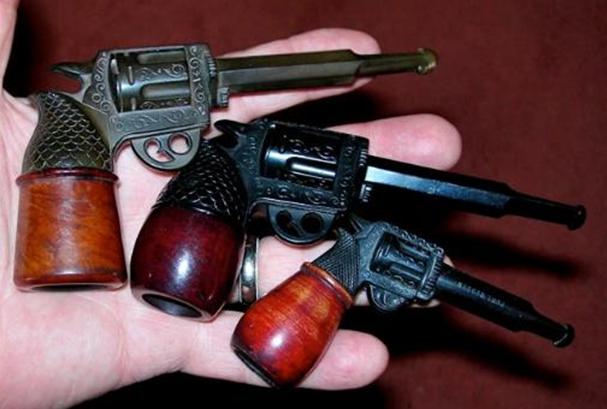
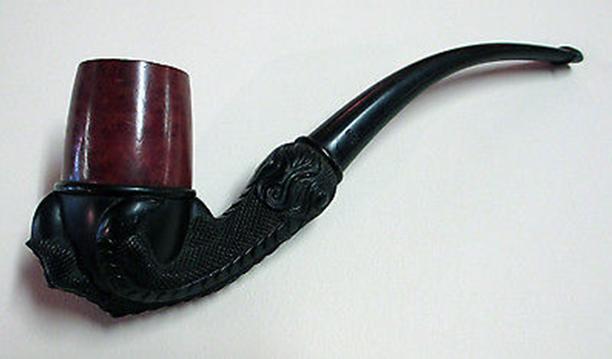
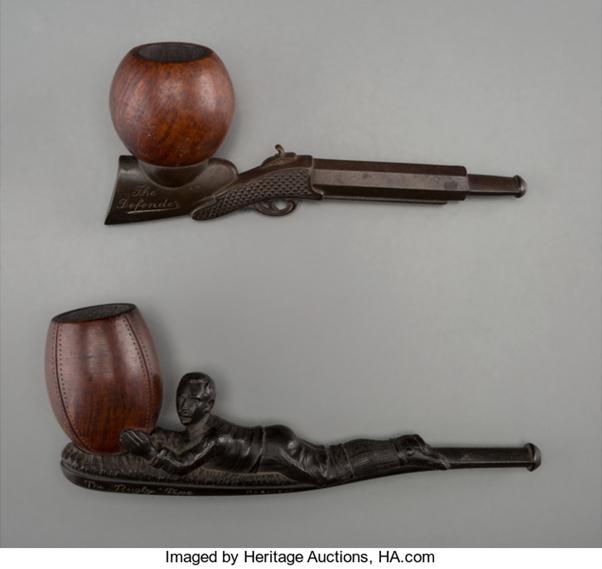
The first of these is a photo of revolver pipes – a Gutta Percha base and stem unit with a wooden/briar bowl. The examples in this photo show the variety of even this pipe shape.The second photo shows another figural. It is far more detailed and refined than the Bob’er that I included above. The bowl is wooden/briar cup insert. It is taken from an auction site.The third is a decorative Eagle claw with a wooden/briar bowl. The hatch marks on it are very similar to that on the Bob’er.The fourth is a risqué, decorative woman’s leg pipe. The bowl is briar/wood that fits into the Gutta Percha leg. The top of the base is a garter that holds the stocking on the leg that is below. The base ends with a shoe that forms the mouthpiece for the pipe.The final two examples are also from an auction house. I am including them here because of their uniqueness and the details of each pipe. The first is a detailed rifle stamped Defender with a wooden/briar bowl. The second is a footballer (American style) grabbing onto a ball as he slides on the ground.The fact that Gutta Percha could be molded and cast easily, made many variations possible for pipe makers. You can see from the photos I picked from the net, that the detail and shaping can be very meticulous. The only limitations seem to be the talent of the mold or pattern maker. I am amazed at the variations that artisans came up with for the pipe bases in the mid-19th century. The variety of the pipes also extends to the size of the pipe. I have held miniature cast face pipes and I have seen larger pipes similar to the Cavalier pictured at the beginning of this blog. I raise my pipe to the pipemen and makers who put these pipes on the market. I enjoy both the process of smoking them and looking at them again and again. Thanks for humoring this pipeman in reading this blog. Cheers.

Breathing new life into a SON Freehand – an early pipe by Eric Nording


Blog by Steve Laug

When my brother Jeff saw this pipe he went for it. I am not sure if he bought it on one of his travels or on EBay but it is the kind of pipe that catches his attention. The grain on the bowl is a mix of flame, straight and swirled patterns. The stain on the bowl is dark from the top of the bowl down about ½ inch all around the bowl. It similar to other pipes from the 60s that had a bit of a flume finish on the top edges of the bowl. The plateau on the top of the rim and the end of the shank are blackened and the dark rough plateau in those spots works well with the reddish brown stain on the bowl. The pipe was dirty with a thick cake in the bowl and an overflow of lava on the rim top filling in much of the plateau top. The stem was dirty with some built up calcification on the tenon and around the rings on part way up the stem. This is visible in the photo below. The stem was heavily oxidized and was a brownish green colour. There was tooth chatter and tooth marks on both sides of the stem near the button. Jeff took some photos of the pipe before he did his cleanup. The next photo shows the rim top. You can see the cake in the bowl and the overflow of lava and grime that filled in some of the ridges and grooves in the plateau.The grain on the bowl though dirty, showed promising patterns – straight grains and flame. There were also some swirls in the grain. The photos below show what the finish looked like and under the grime it looked good. There was a flaw in the grain on the right side of the bowl (shown in the second photo below). I have circled it in red. The stamping on the underside of the shank is very readable. It reads SON over DANMARK over the number 5. At this point I had no idea who the maker of the SON brand was. I would need to do a bit of research to figure out who the maker was. The style though was very 1960s era but I had no proof of that at the moment.Jeff took some photos of the insert stem showing the calcification on the tenon and in some of the rings on the vulcanite stem. The oxidation is also very visible in the vulcanite. You can also see the grime in the grooves of the plateau on the end of the shank.The photos of the stem show a lot of tooth chatter on both sides of the stems. There are also some tooth marks on the button top and bottom.I decided to do a bit of research on the brand to see who made the SON brand. I looked first on Pipephil’s site http://www.pipephil.eu/logos/en/logo-s10.html. I quote from a note on the site next to photos of the stamping on the pipes of that brand.

“The brand’s name stems from a partnership between Soren Skovbo and Erik Nording. It lasted for two years in the mid-1960s before the partnership ended and the brand ceased. That dates this pipe to the 1960s.”

I looked on Pipedia for further information: https://pipedia.org/wiki/N%C3%B8rding. In the listing of pipemakers by country the entry for SON linked back to Nording pipes. I went to that page and read the following information. I have included a portion of that article below that gives the pertinent connections.

Long before he graduated from engineering school at age 25 he was a more experienced pipe smoker than most men his age. He frequented a pipe shop in Copenhagen and often had his pipes repaired there. “The guy who did the repairs in that shop” says Nording. “could see that it was a good business, and he wanted to start his own pipe making shop.” That repairman’s name was Skovbo. One day he approached the young Erik Nording with a proposition. “You are a blacksmith and an engineer,” Skovbo said to Nording. “You must know a lot about machinery. Can you make me some pipe making machinery?”

“I told him I could make anything he wanted,” says Nording. “But I didn’t have any money. So I borrowed S200 to buy some bearings, and I scoured junkyards for old broken machinery. I bought inexpensive housings and put in new bearings and new shafts.” It was Nording’s first contract and he wanted to get a good start, so he took great care in making the best possible tools for the pipe maker. “I made him a little polishing machine, and a lathe, and a sander for shaping pipes.” When he had everything put together and running perfectly, he called Skovbo and told him his machinery was finished.

“He came out and looked it over,” says Nording. “He turned on the electricity and watched everything run. He had some blocks of wood with him, and he tried everything out. Finally he looked at me and said, ‘It’s exactly as I wanted. Perfect. How much do I owe you?’ I told him the price—I don’t remember how much it was, but it was very inexpensive.”

Skovbo thought the price was very good. “That’s fantastic,” he said. “The price is right. Now I’ll start out for myself, make some pipes and when I earn some money I’ll pay you.”

It must have been a terrifically discouraging moment for a young man who had just completed what he thought was his first paying job in a new career. As Erik Nording now remembers that moment, sitting in a beautiful home that contains a pipe making shop large enough for 20 workers making tens of thousands of world-famous pipes, his face exhibits amusement at that memory. But back then, as a youngster trying to get a foothold in the world, his expression must have been more akin to horror.

“I told him that was not good enough,” says Nording. “I told him I was a poor man, I didn’t have any money, I needed to be paid for my work.” But Skovbo told Nording that he couldn’t pay him.

“Then I will keep the machinery,” said Nording. “I’ll make pipes myself.”

“You don’t know how to use this machinery,” said Skovbo. “You know nothing of pipe making.”

“Well, you’re not getting it. You should have told me before I did all this work that you didn’t have the money to pay for it.”

Skovbo thought it over. “Why don’t we start together?” he said.

That’s how Erik Nording became a pipe maker.

There are still a few of those early pipes around. “I saw some at a shop I visited a while back,” says Nording. “The shop owner offered to give them to me as mementos but I refused. They may be worth quite a bit of money to collectors. You never know”…

Those first pipes carried the name SON”, which was an acronym for the combination of the names Skovbo and Nording. Each of the partners borrowed $5,500 to get the business going, to rent a space and get the electricity turned on and to buy two bags of briar. Skovbo taught Nording how to make pipes, “but I didn’t have much time because I was still studying,” says Nording. “And I never got the chance to learn much from him, because shortly after we started he said that I would never be a pipe maker, he said that my hands had no skill for the craft, that I could never learn. I never understood how he could make such a judgment, but he did.”

To his credit, Nording shows no sign of triumph in the fact that he has proved Skovbo wrong by becoming one of the best-known pipe makers in the world. “He said that he would continue with SON pipes alone, that he no longer needed me,” says Nording. However, the partners had a legal agreement that whoever wished to dissolve the partnership first would leave the company to the remaining partner and be paid off without interest over five years. So Nording became the one to keep the company…

…Nording continued with SON pipes for only a year or two before changing the company name to Nording in the mid-’60s. “I figured nobody could ever take that name away from me,” he says. Nording’s were exclusively freehand shapes, graded from A, B, C, D, up to its highest grade, extra. Later an “F” grade was added—less expensive than the “A.”

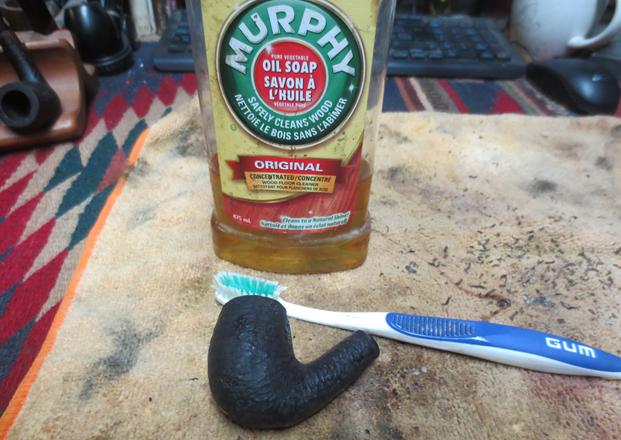
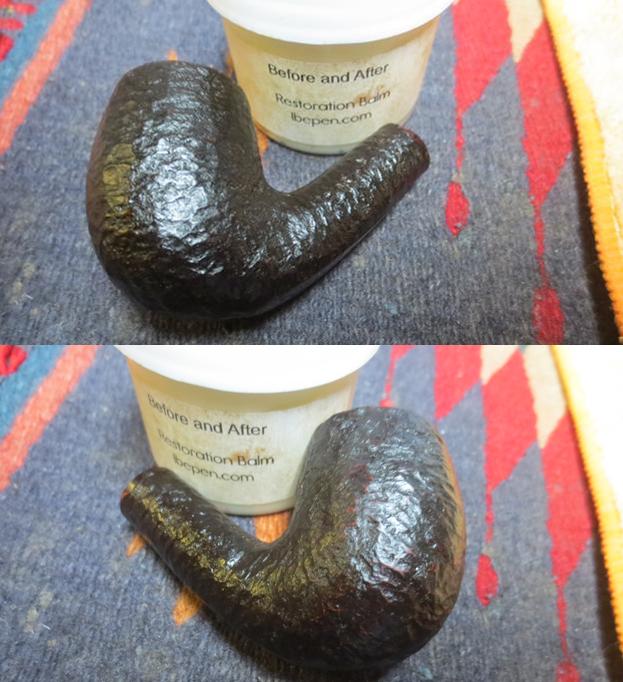
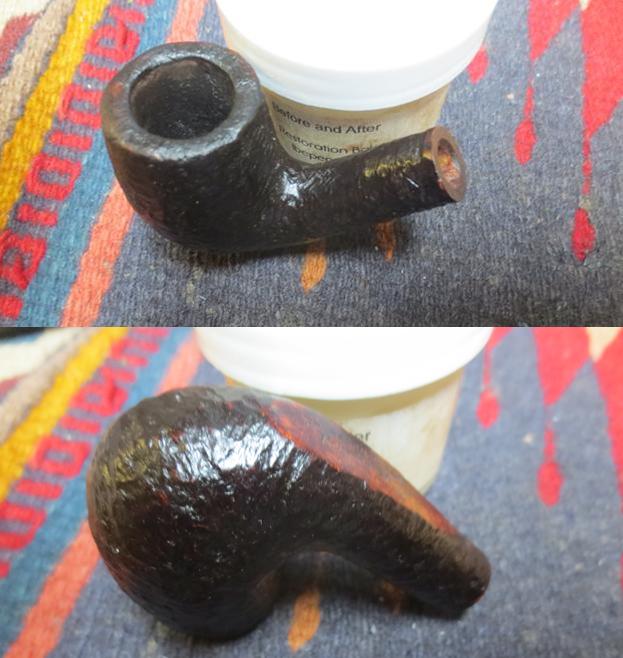
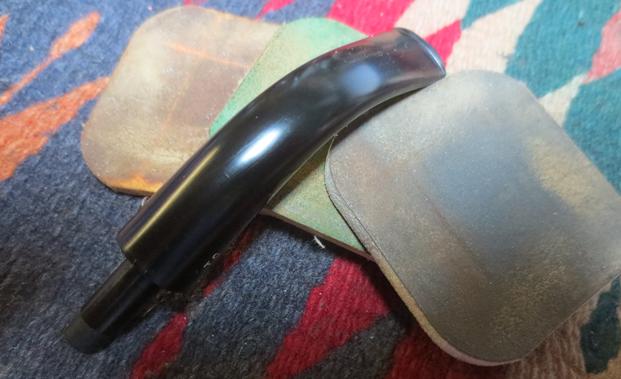
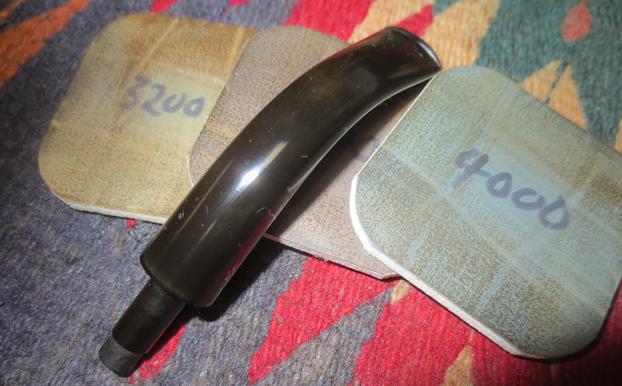
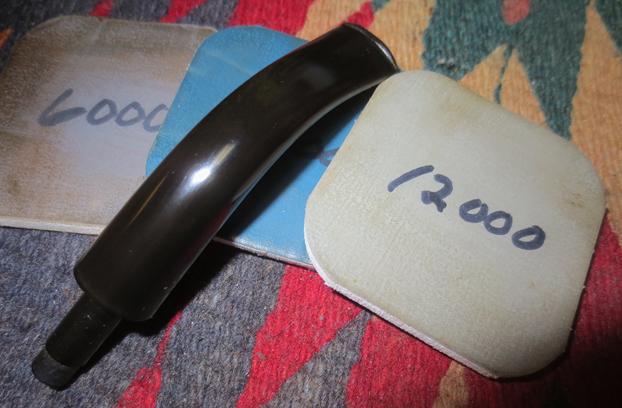
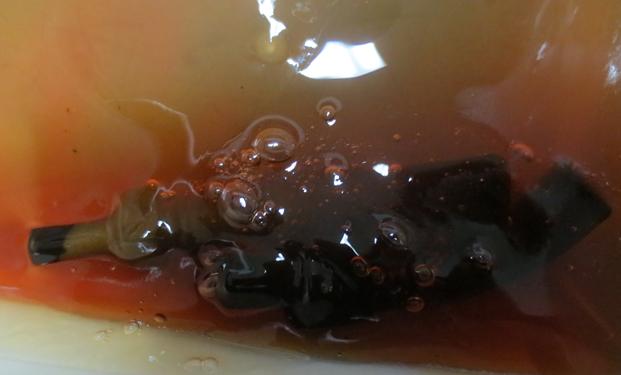
Jeff worked his magic in cleaning up this pipe. He reamed it with a PipNet reamer and smoothed the walls of the bowl with a Savinelli Fitsall pipe knife. He scrubbed out the mortise and the airway in the shank and the stem with alcohol, cotton swabs and pipe cleaners. He scrubbed the exterior of the bowl, rim and shank with a tooth brush and Murphy’s Oil Soap to the oils and tars on the bowl, rim and shank. He rinsed it under running water. He dried it off with a soft cloth. The cleaning of the stem raised more oxidation in the vulcanite. The tooth marks and chatter was clean but visible. I took the stem off and put it in a bath of Before & After Stem Deoxidizer and totally forgot to take pictures of the pipe before I started.I did however; remember to take photos of the bowl to show its condition before I started my work on it. While the stem sat in the deoxidizer bath I worked on the bowl. I decided to start by addressing the flaw and the nick in the briar on the right side of the bowl. I wiped down the area around the damaged and flawed spot with cotton pad and alcohol. I filled in the flaw with clear super glue. Once it had cured I sanded the filled in area with a piece of 220 grit sandpaper to smooth out the repair and blend it into the rest of the briar. I decided to scrub the briar with Before & After Restoration Balm. I rubbed it into the briar with my finger working it into the plateau on the rim top and shank end. The product worked to lift the grime and debris out of the grooves of the briar. I rubbed it down and scrubbed it deeper into the grooves of the briar with a shoe brush. I polished the briar with a soft cloth to remove the balm from the briar. The photos below show what the pipe looked like after scrubbing the briar with the product. The balm helped to blend in the repaired area with the surrounding briar. The briar had a new life and the plateau on the rim top and shank end also looked alive. I set the bowl aside and turned back to the stem. I removed it from the soak in the Before & After Deoxidizer and wiped it down. I cleaned out the inside of the airway with alcohol to remove the product from the stem. I polished the stem with a soft cloth to remove all of the deoxidizer and give it a bit of a shine. It had removed much of the light oxidation though there were remnants in the rings and grooves above the tenon. There were still some spots of oxidation that needed to be addressed and the button needed to be reshaped on both sides to remove the tooth marks and chatter. The photos below show what it looked like at this point.I used a folded piece of 220 grit sandpaper to work on the tooth chatter and to reshape the edges and surface of the button.  I worked over the spots of oxidation on the flat portions and on the rings and grooves in the turned stem with the sandpaper at the same time to remove it from the surface of the hard rubber stem.I polished out the sanding scratches and marks in the vulcanite with micromesh sanding pads – wet sanding it with 1500-2400 grit pads and dry sanding it with 3200-4000 grit pads. I wiped the stem down with Obsidian Oil after each sanding pad. I buffed the stem with Blue Diamond on the buffing wheel. I brought it back to the table and sanded it with the final three 6000-12000 grit pads. After the final pad I gave it a final coat of oil and set it aside to dry. I put the stem back on the bowl and worked the pipe over on the buffing wheel using Blue Diamond to polish the bowl and shank. I used a gentle touch on the briar when I was buffing it so that the grooves of the rustication would not be filled in and make more work for me. I buffed the stem with a harder touch to raise the gloss on the rubber. I gave the bowl multiple coats of Conservator’s Wax and gave the stem multiple coats of carnauba wax. I buffed the pipe with a clean buffing pad to raise the shine. I hand buffed it with a microfiber cloth to deepen the shine. The finished pipe is shown in the photos below. It looks better than it did in the beginning. It is a beautiful pipe. The dimensions of the pipe are: Length: 7 inches, Height: 3 1/4 inches, Diameter of the bowl: 2 inches, Diameter of the tapered chamber at the top of the bowl: 1 1/4 inches. I will be adding this one to the rebornpipes store shortly if you are interested in adding it to your collection. It will make a fine addition to the rack. If you are interested email me at slaug@uniserve.com or send me a message on Facebook. Thanks for looking.


A Simple Restore – A Rich’s Cigar Store Italian Made Oom Paul


Blog by Steve Laug

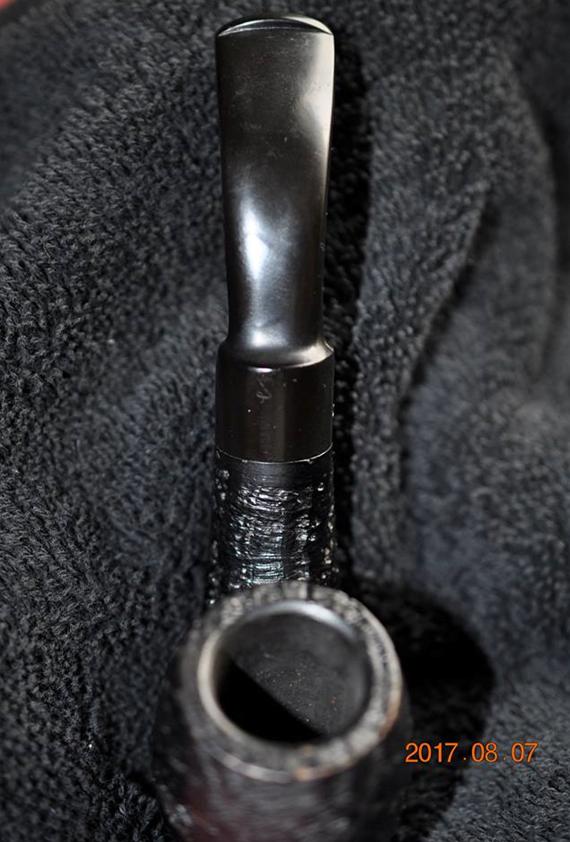
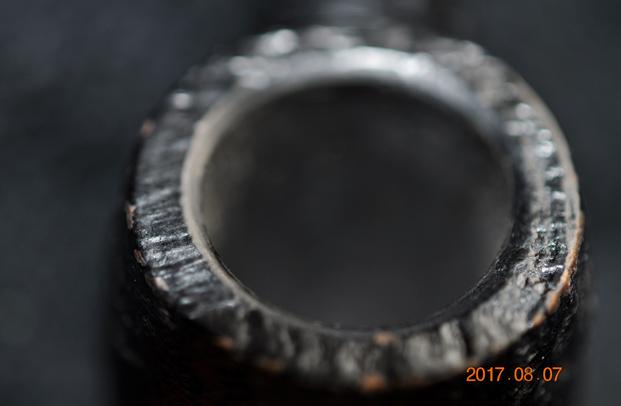
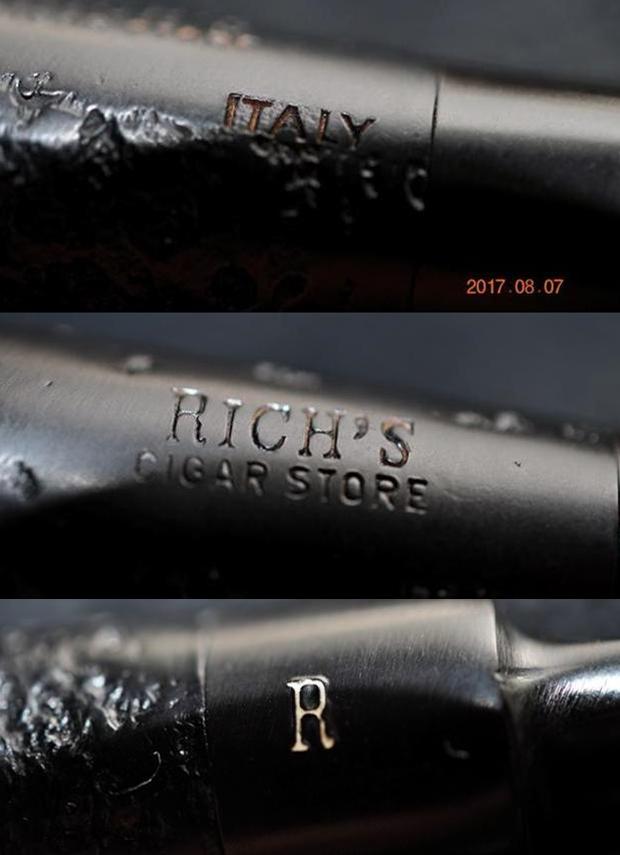
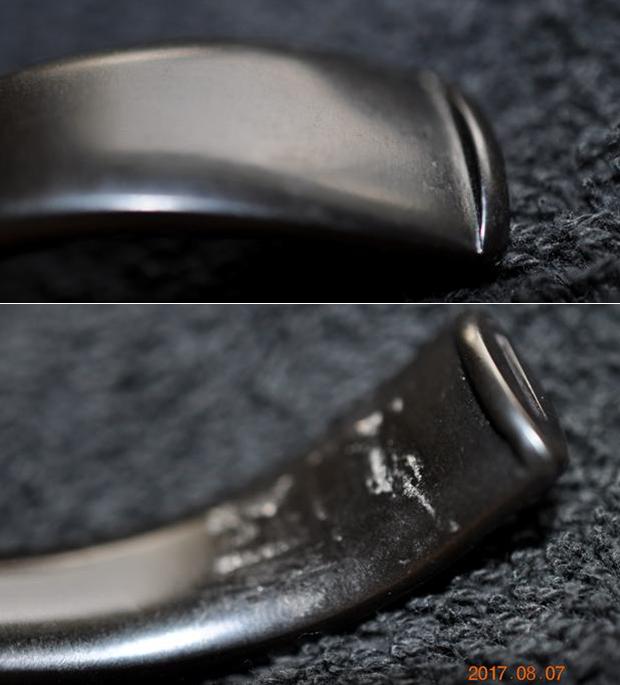
The next pipe on my work table is a nice looking Oom Paul sandblast that is stamped Rich’s Cigar Store on the underside of the shank and Italy below that next to the stem shank union. The pipe was in decent shape with some minor nicks on the outer edge of the bowl and some darkening in the bowl. I am not sure whether the bowl was even smoked at all as the darkening could well be a bowl coating. Either way it is either NOS (New Old Stock) or lightly smoked. The stem was lightly oxidized and had some price sticker residue on the underside near the button. The R stamp on the right side of the saddle stem is clean and undamaged. It would be an easy cleanup for Jeff and me when it finally arrived in Vancouver.

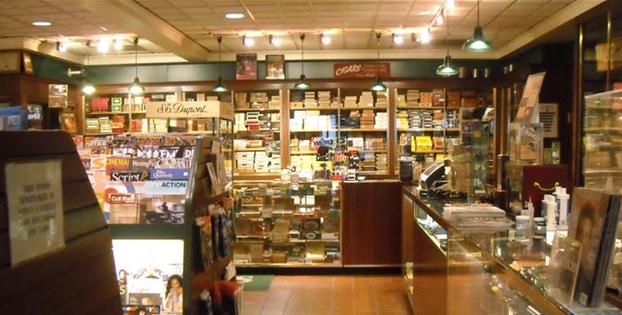
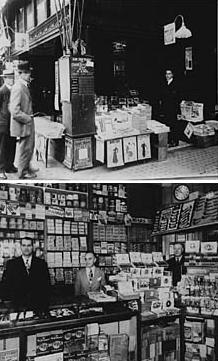
I did a bit of quick research and found that Rich’s Cigar Store is a Cigar and Magazine shop in Portland, Oregon. It is located at 820 SW Alder Street – Portland OR and can be reached by phone at 503.228.1700 or 800.669.1527. I looked up the website and scrolled through the various pages on the site (https://www.richscigarstore.com/).As I scrolled through the website I spent time on their history page. I read through the background material to the shop. I enjoyed reading about the company and how it came to be and what it looks like now. They call themselves, “Portland’s Mecca for smokers…”. They have existed for over 100 years. I quote in full from the History section of their website and have included a few photos as well. It is fascinating that the page does not give much history but more of a full blown advertisement for the shop.

“In our store located at 820 S.W. Alder St. in the heart of Downtown Portland, we have expanded our extensive inventory of over 2500 periodicals, 1500 facings of cigars, hundreds of pipes, and over 200 blends of Tobacco on display. Our increased humidor storage areas allow us to keep thousands of boxes of cigars on hand for immediate in-store purchases.

An essential element for pipe smoking is the right tobacco blend. With this in mind we have brought in a master tobacco blender with over 30 years experience. Has your favorite Tobacco become increasingly difficult to find? Then put him in use to create a new blend to suit your needs. He has already created a new blend to fill the void of a popular Balkan blend, and we age all blends so that their full richness and taste come through each time you light up a bowl. Click here to see our extensive custom tobacco blends.

Please call us at 800.699.1527 for further information on availability and prices, or e-mail us at info@richscigarstore.com. Our sales staff is happy to assist with recommendations, product information and alternatives to guide you with your purchases. They are not merely order takers, so please put them to use. This could be the most important service we offer.”

Jeff took some photos of the pipe when it arrived in Idaho before he cleaned it up. It was a beautiful full bent pipe with a nice tactile finish. The seller’s photos were very accurate and the wear on the pipe was visible around the out edge of the bowl. The fit of the stem to the pipe is very well done. It fit snug in the shank and tight against the shank end. The next photo shows the bowl and the inner and outer edge. The outer edge had some worn spots along the edges. The finish was worn but the briar was undamaged. The inner beveled edge is clean and undamaged.The next two photos show the stamping on the smooth underside of the shank. It is deeply stamped and very readable. The third photo shows that stamped R on the left side of the saddle stem is in excellent condition.The stem was lightly oxidized as mentioned above. There was some residue on the underside of the stem near the button. It was the rubberized glue from a price tag. When the tag was peeled from the stem it left behind the residue. I wonder if it was not from the price tag that was put on at Rich’s Cigar Shop in Portland when the pipe was first sold. This would also lend to the theory that the pipe was NOS. I would be able to prove that it was unsmoked more adequately once the pipe arrived in Vancouver and I had a chance to look at it. Jeff cleaned of the dust by a quick scrub with Murphy’s Oil Soap and a tooth brush. He was able to get all of the grime off the sandblast finish – even in the nooks and crannies the dust came off. He rinsed the pipe in running water to remove the soap and dried the pipe off with a soft cloth. He soaked the stem in Oxyclean to raise the oxidation to the surface of the rubber. The bowl was clean inside as was the shank. The pipe was indeed unsmoked. It still had the original bowl coating intact and it was unblemished. I took photos of the pipe before I did the finishing touches on it. It had a great sandblast and the finish was very nice. What had appeared to be wear on the outer edge of the rim must have been dust in the grooves of the finish. When Jeff scrubbed the pipe the marks disappeared and the rim looked very good. Other than the stem oxidation the pipe looked new. The close up photo shows the rim and bowl. I also included photos of the stem to show its condition as well – no tooth chatter or marks. All that was present was light oxidation of the rubber.I put the stem in a bath of Before & After Stem Deoxidizer to soak while I worked on the bowl. I figured it would not take to long as it was not badly oxidized. I also put a second more oxidized stem in at the same time.I turned my attention back to the bowl or stummel to finish it while the stem soaked. I scrubbed the briar with Before & After Restoration Balm to enliven and deep clean the sandblast finish. I worked it into the grain with my finger and a tooth brush. I rubbed it in and then buffed it with a horsehair bristle shoe brush. I put aside the bowl and turned back to the stem. I removed it from the deoxidizer soak and dried it off with a cloth. I rubbed off the remaining oxidation and then cleaned out the airway with alcohol and pipe cleaners. The stem looked really good at this point. It would not take too much work to bring it back to a rich shine. I polished the vulcanite with micromesh sanding pads – wet sanding it with 1500-2400 grit pads and dry sanding it with 3200-4000 grit pads. I wiped the stem down with Obsidian Oil after each sanding pad. I buffed the stem with Blue Diamond on the buffing wheel. I brought it back to the table and sanded it with the final three 6000-12000 grit pads. After the final pad I gave it a final coat of oil and set it aside to dry. I put the stem back on the bowl and worked the pipe over on the buffing wheel using Blue Diamond to polish the bowl and shank. I used a gentle touch on the briar when I was buffing it so that the nooks and crannies of the sandblast finish would not be filled in and make more work for me. I buffed the stem with a harder touch to raise the gloss on the rubber. I gave the bowl multiple coats of Conservator’s Wax and gave the stem multiple coats of carnauba wax. I buffed the pipe with a clean buffing pad to raise the shine. I hand buffed it with a microfiber cloth to deepen the shine. The finished pipe is shown in the photos below. The oxidation and dust from sitting on a shelf somewhere was gone and the pipe looks like new again – very fitting for a unsmoked, NOS pipe. It is truly a beautiful pipe. The dimensions of the pipe are: Length: 5 inches, Height: 2 inches, Diameter of the bowl: 1 ¼ inch, Diameter of the chamber: 3/4 inches. I will be adding this one to the rebornpipes store shortly if you are interested in adding this NOS, unsmoked pipe to your collection. It will make a fine addition to the rack. If you are interested email me at slaug@uniserve.com or send me a message on Facebook. Thanks for looking.


Refreshing a Damaged CAO Lattice Meerschaum Pipe


Blog by Steve Laug

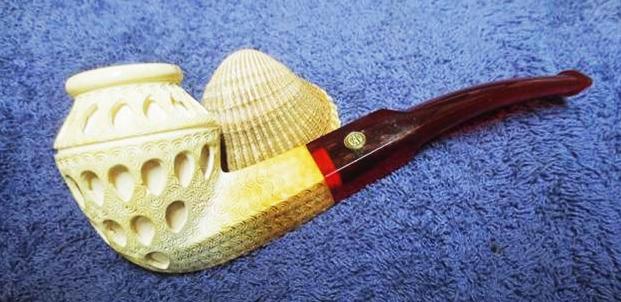
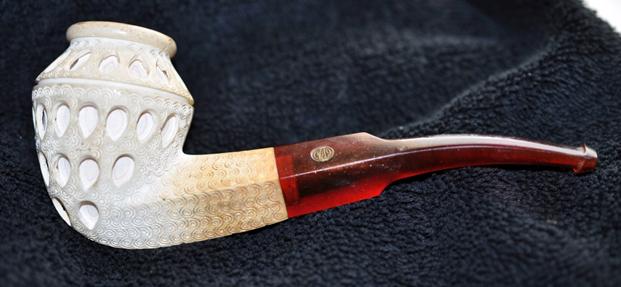
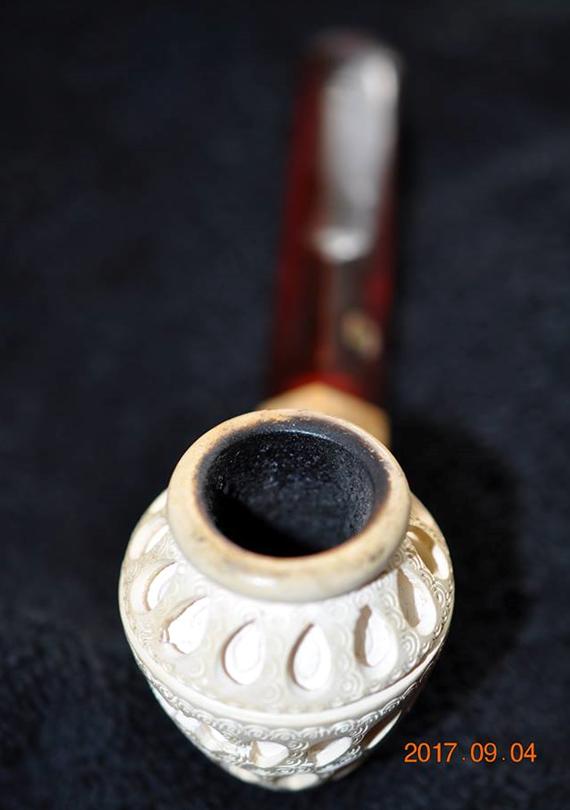
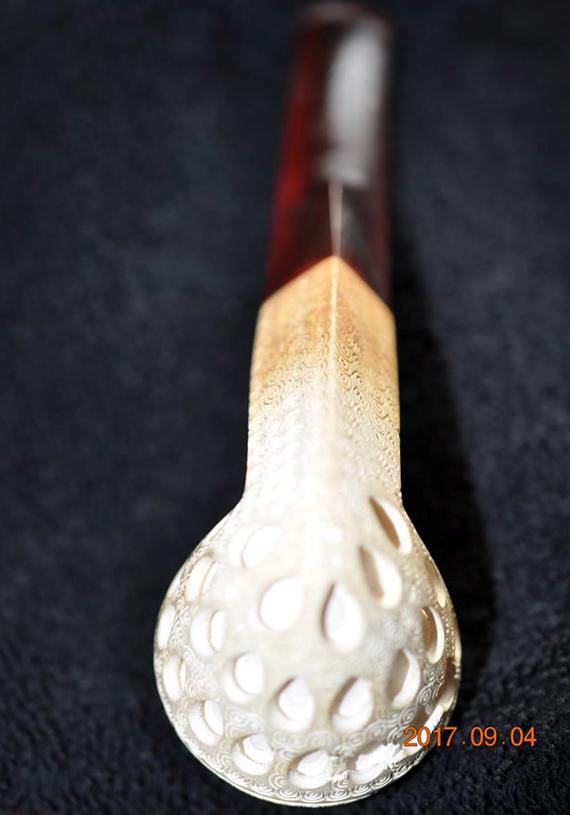
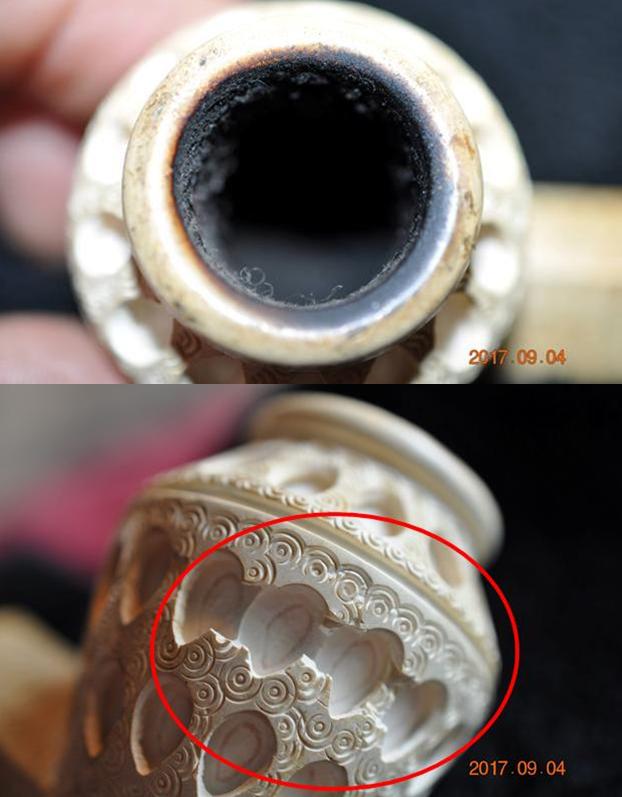
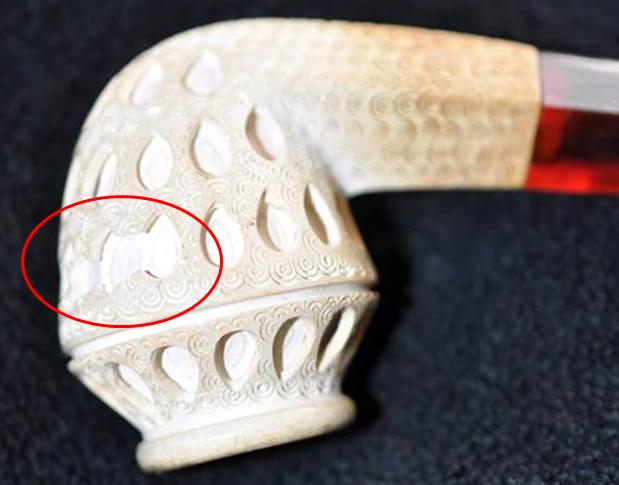
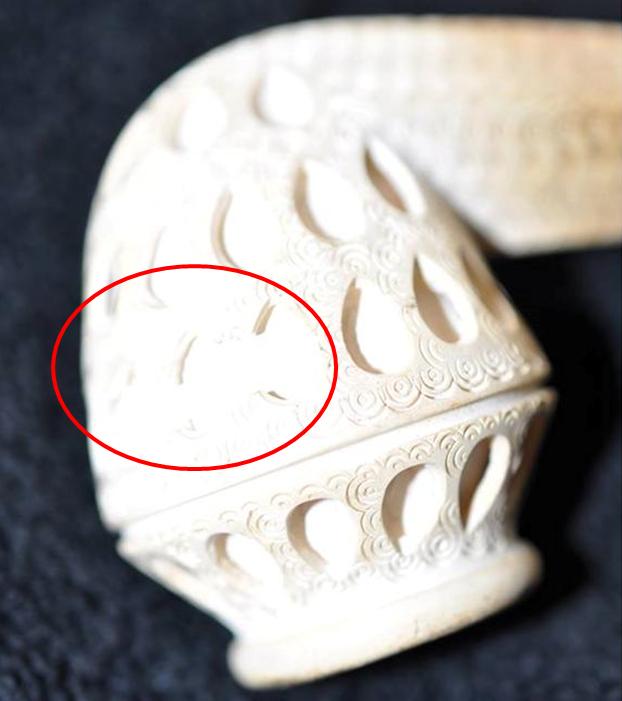
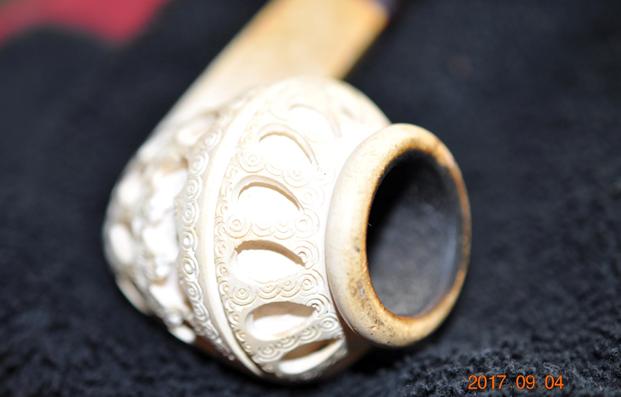
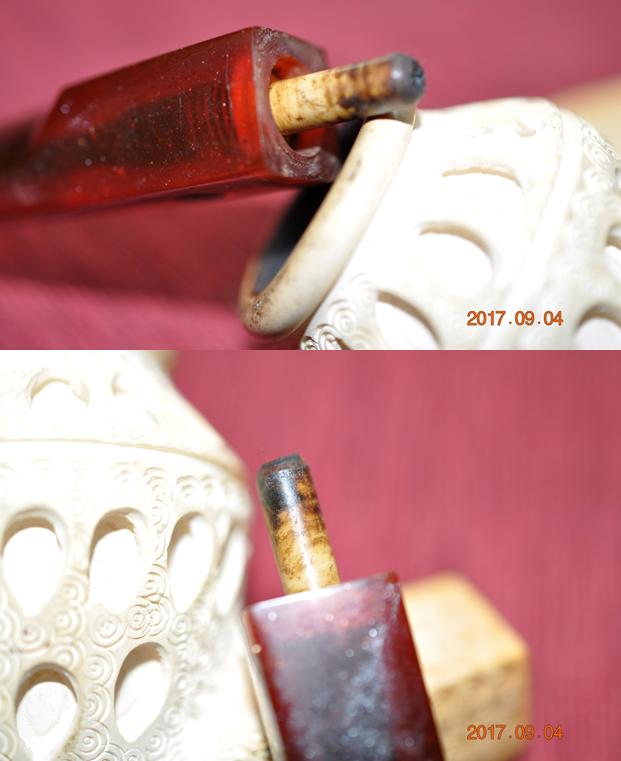
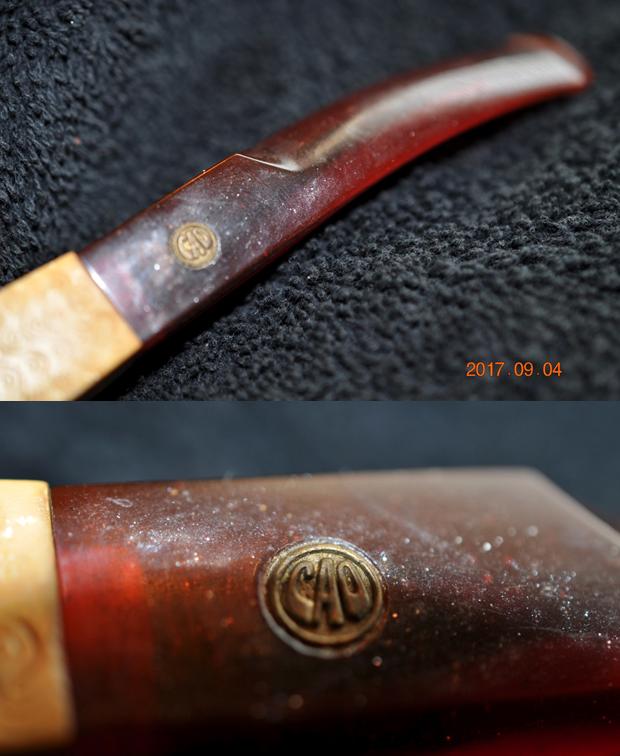
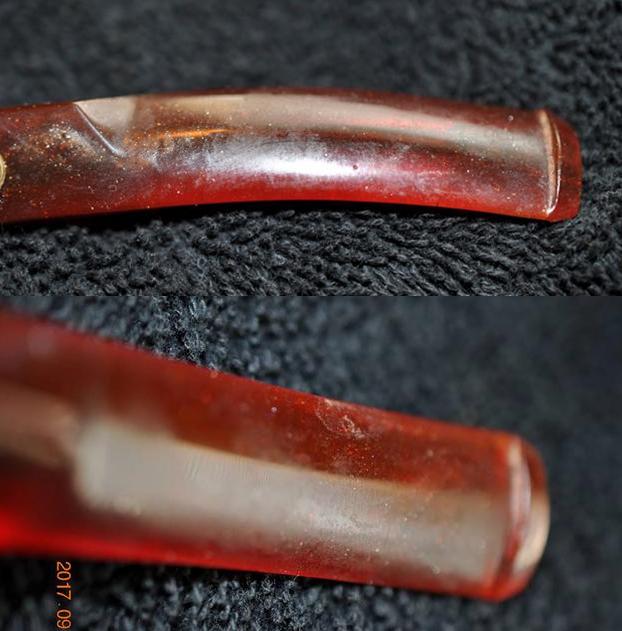
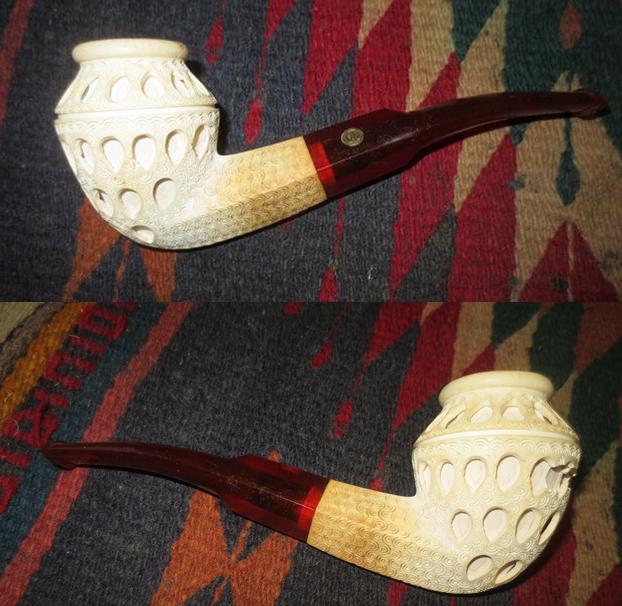
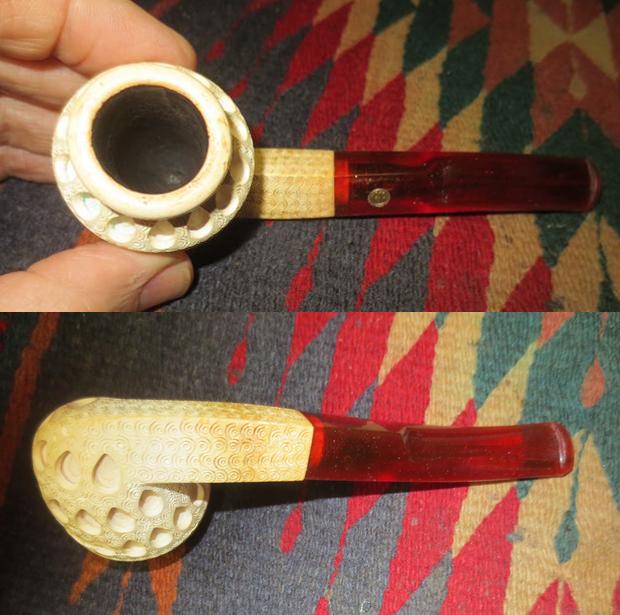
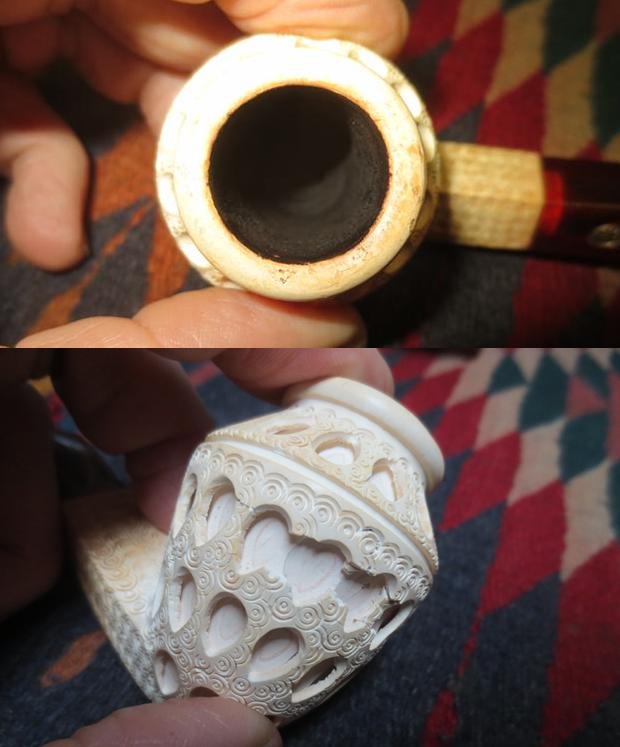
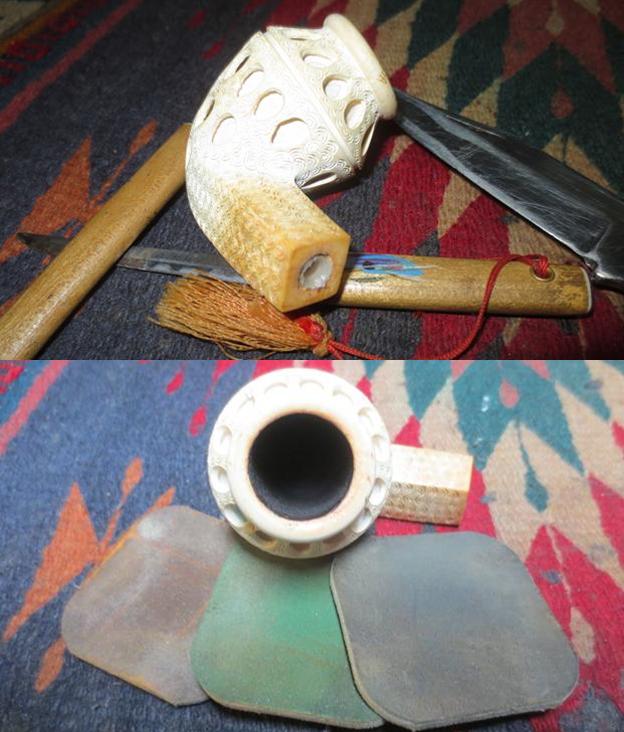
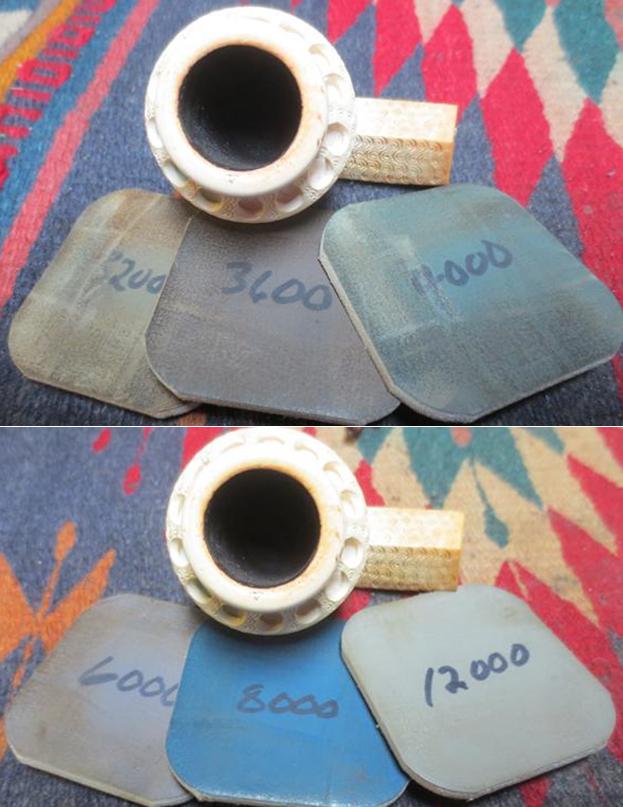
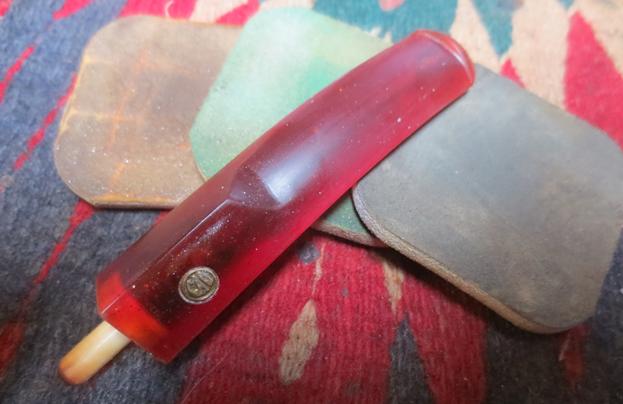
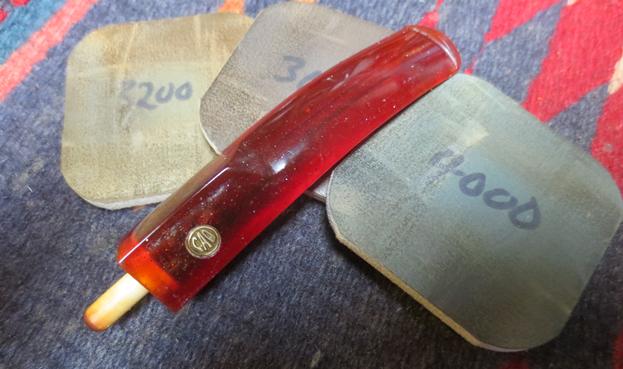
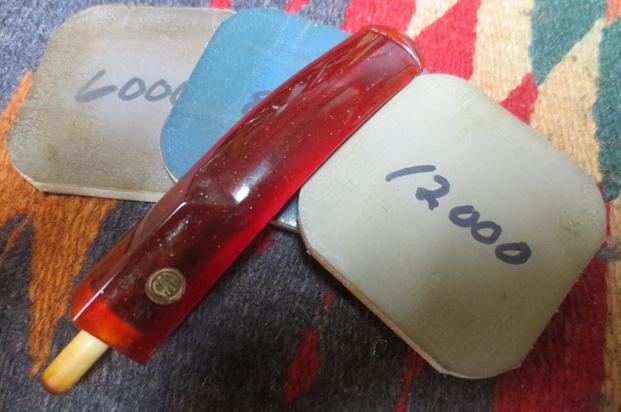
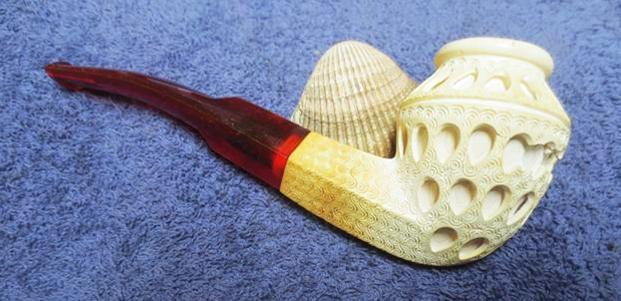
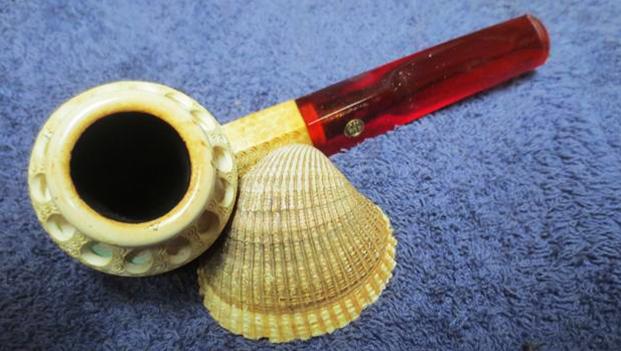
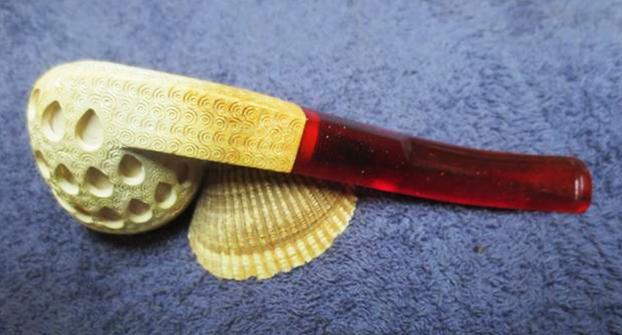
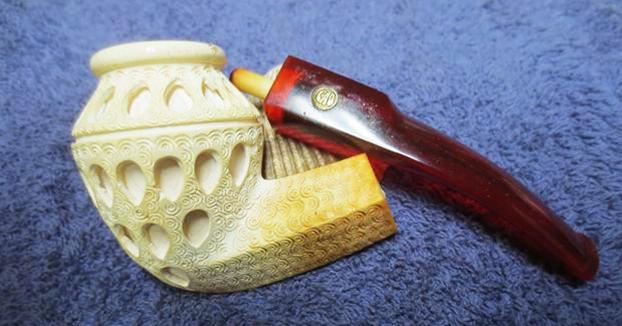
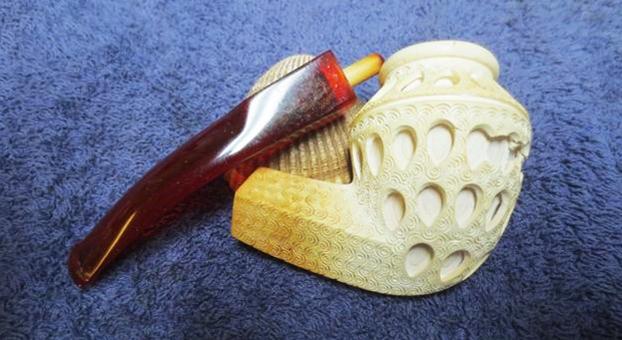
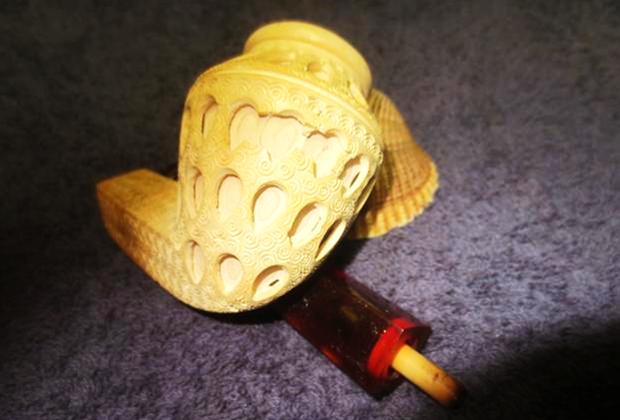
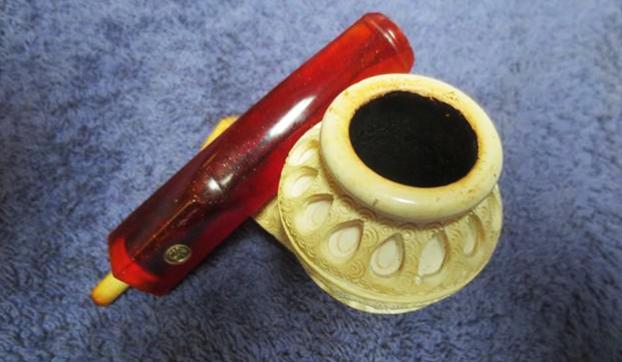
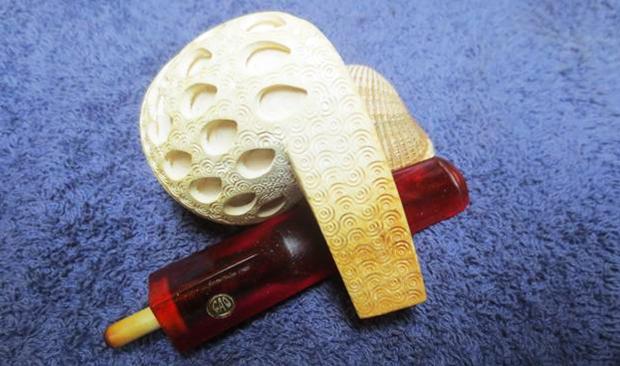
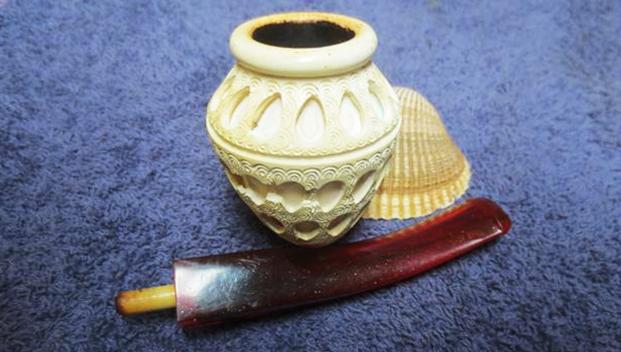
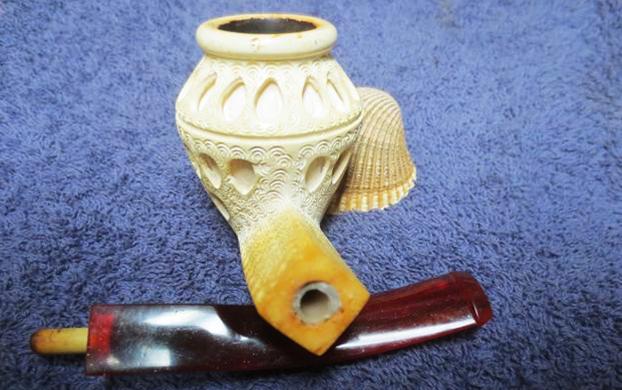
We probably paid too much for this beautiful meerschaum pipe but the shape and the carving are so unique that we had to buy it. It is made by CAO and is a shape I would call a Grecian urn. It has lattice carving around the bowl side and the rim is smooth. The shank has a pattern that looks a lot like scales and swirls. There was some very nice colouring happening on the shank and lightly on the bowl sides and rim. There was a cake in the bowl and some lava overflow on the rim top. There were some missing separators between two of the lattice windows but otherwise the bowl was undamaged. The stem was Lucite and had a round brass CAO logo on the top left side of the saddle. The stem had metallic gold flecks mixed in with the Lucite so that it had a natural sparkle to the reddish amberlike stem. There were not any tooth marks or dents on the stem surface but there were small scratches in the Lucite. There was also some wear and tear to the sharp edge of the button that would need to be cleaned up. Jeff took some photos of the pipe before he started the cleanup. The next series of close up photos show the condition of the bowl and rim and the overall condition of the bowl sides. You can see the bowl and cake with the overflow of lava on the rim top. There is also some fuzz that has attached to the cake. It was a dirty bowl. The sides of the bowl look very good other than the damage to the separators between three of the tear drops in the lattice work on the front of the bowl. The second, third and fourth photos below show the damaged portion circled in red. Other than that damage to the front of the bowl the rest of the carving is in excellent condition. The pipe, though imperfect will nonetheless be a beautiful addition to someone’s collection. They will just have to overlook the damaged area and enjoy the pipe.The connector between the shank and stem is a push tenon. There is a Delrin insert in the shank of the pipe and a Delrin tenon threaded into the end of the stem. It is dirty and stained but is undamaged.The round brass logo is dirty but it is undamaged. It is inset into the left topside of the saddle stem. The surrounding stem is quite dirty but there is no damage.The next two photos show the condition of the top and underside of the stem. You can see the metallic sparkles in the saddle portion and the scratches in the Lucite.Jeff carefully reamed out the bowl with a Savinelli Fitsall Pipe Knife and took it back to the bare meerschaum walls. He scrubbed the rim top and scraped off the lava on the surface with a knife. He carefully cleaned the exterior of the bowl with a damp cloth to avoid further damage to the front of the bowl. He cleaned out the shank and airway in the bowl and stem with alcohol and pipe cleaners. He cleaned out the recessed area around the inset tenon in the stem with alcohol and cotton swabs. He washed the exterior of the stem with clean water. I took photos of the pipe when I brought it to my work table to show the condition of the pipe after Jeff’s work and before I polished it. I took a photo of the rim top to show how well it cleaned up. Jeff did a great job getting rid of the lava overflow. I also took a photo of the cleaned up damaged area of the bowl.The stem cleaned up really nicely. The gold flecks in the Lucite really stand out now and the gold/brass logo inset looks really good now. The stem should polish up nicely.The mortise insert in the shank had a ragged edge to it. I used a sharp knife and a pen knife to clean up the ragged end. I wanted a smooth fit in the shank. Once I had finished that part of the shank and sanded it down I worked on polishing the rim and ring on the top of the bowl. I polished it with micromesh sanding pads – wet sanding with 1500-2400 grit pads and dry sanding with 3200-12000 grit pads. I wiped the rim down after each pad with a damp cotton pad. I polished out the scratches and marks in the metallic Lucite stem with micromesh sanding pads – wet sanding it with 1500-2400 grit pads and dry sanding it with 3200-12000 grit pads. I wiped the stem down with a damp cotton pad after each sanding pad. I lightly buffed the stem with Blue Diamond on the buffing wheel. After the final pad I wiped it down with a damp pad and rubbed it down with a final coat of oil and set it aside to dry. I put the stem back on the bowl and carefully worked the pipe on the buffing wheel with a clean pad. I used a gentle touch on both the meerschaum and the Lucite stem so as not to damage either of them. I gave the meerschaum bowl multiple coats of Conservator’s Wax and hand buffed it with a shoe brush and a microfiber cloth to deepen the shine. The finished pipe is shown in the photos below. Even with the damaged area on the front of the bowl it still looks better than it did in the beginning. The unique shape and lattice work carving work together to make this a beautiful pipe. The dimensions of the pipe are: Length: 6 inches, Height: 2 ½ inches, Diameter of the bowl: 1 1/8 inch, Diameter of the chamber: 3/4 inches. I will be adding this one to the rebornpipes store shortly if you are interested in adding it to your collection. It will make a fine addition to the rack. If you are interested email me at slaug@uniserve.com or send me a message on Facebook. Thanks for looking.

Restoring a Thorburn Clark Rusticated Bent Billiard


Blog by Steve Laug

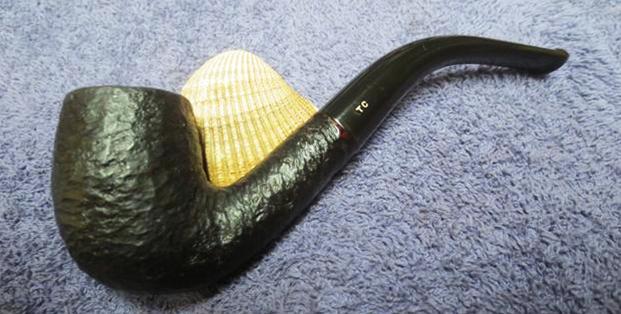
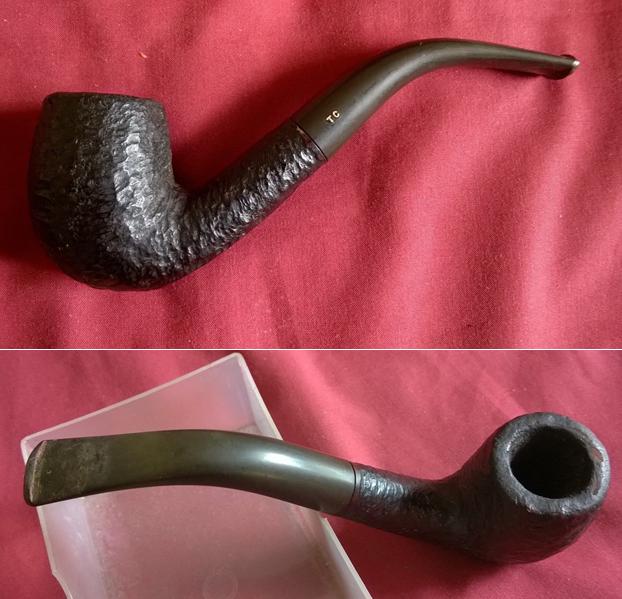
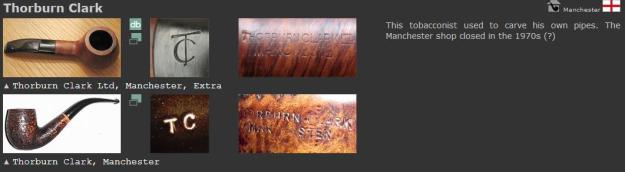
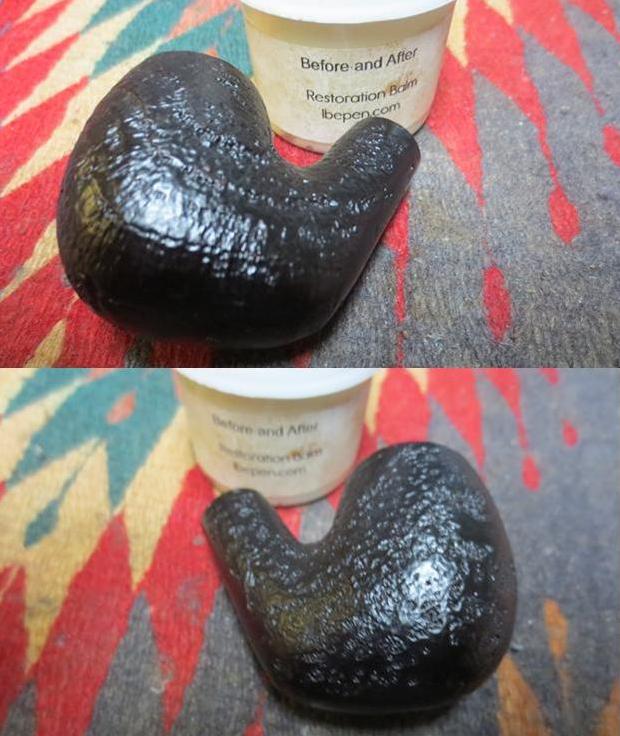
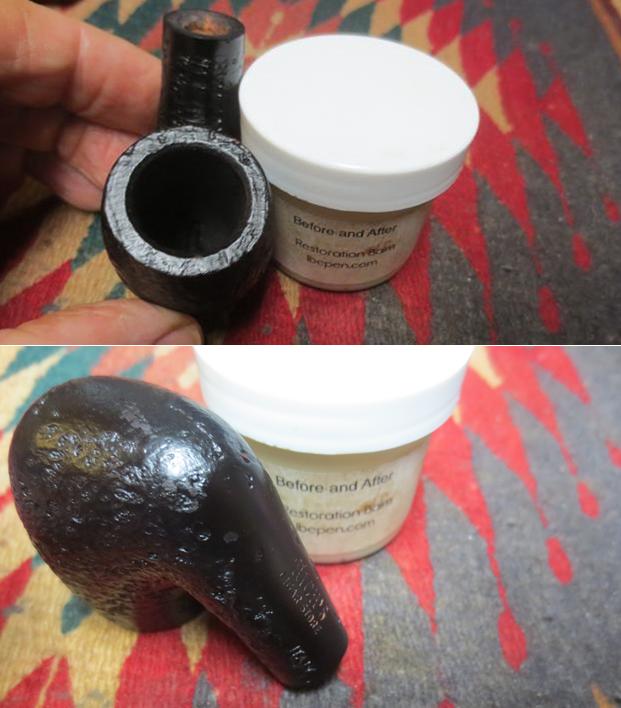
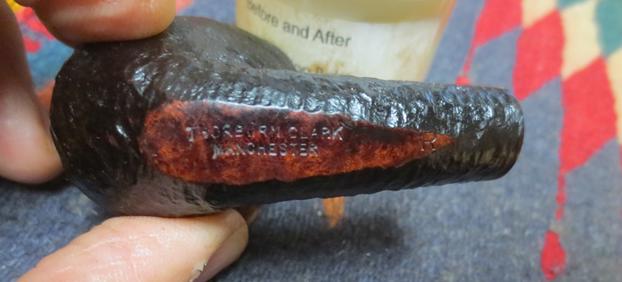
This is another pipe from one of the eBay sellers that I follow and check out their shops regularly. Yet again this favourite seller in England put up a pipe that I really like. I don’t have any idea how many of them I have purchased from him but this one caught my eye. This one is a small rusticated bent billiard that is another featherweight. Its diminutive size and delicate shape are a lot like the Orlik Dugout I bought from him as well. The rusticated finish has a textured and almost sandblast look to it. The contrast of dark and medium brown stains really worked well with the shape of the pipe. The pipe was stamped in a smooth box on the underside of the shank and reads THORBURN CLARK over MANCHESTER with the letter R at the shank end of the smooth portion. The photos below are the seller’s photos. They show the overall condition of the pipe and what it was that caught my eye. I looked up the brand on Pipephil’s site – http://www.pipephil.eu/logos/en/logo-t5.html. I found out that the brand was carved by a tobacconist in Manchester, England. The owner of the shop used to carve his own pipes. The shop closed in the 1970s. I clipped the pertinent section from the site and included it below. The stamping on the stem of the one I have is the same as the pipe in the second photo below.I did some more digging into the brand to see what I could find out and found a link to a blog about the brand. I quote in part from the blog: https://pipesmokersjournal.wordpress.com/tag/thorburn-clark/

“This is an intriguing pipe, and a little piece of obscure British pipe making history. Thorburn Clark was, from what I can deduce, from my extensive online Sherlocking, Manchester-based tobacconists from the 1920s until the 1980s/90s. Behind their shop was a small pipe workshop, where a tiny workforce of craftsmen toiled to create a range of beautiful handmade pipes, each stamped upon the stem with their distinctive logo of an intertwining T and C.”

Another link brought a bit more information and some confirmation to the puzzle http://pipesmokerunlimited.com/archive/index.php/t-3749.html

“Thorburn Clark was a tobacconist based in Bridge Street, Manchester, a side street off Deansgate for those who know the area. Unlike most outlets of its kind, which shipped in pipes from outside makers and then branded them with the shop name, it seems that they had a small workshop attached to the premises where they crafted their own pipes.”

It was interesting to know that the pipe I had in hand was a pipe shop made pipe that came from Manchester. It was made in the small workshop in the back of the shop. I had learned that there were several carvers that worked there so I would not be able to know who made it. The pipe was obviously carved between the 1920s and the time the shop closed in the 1970s. Judging from the shape of the pipe and stem and the fact that it came with the Orlik made me put its date in the late 20s to early 30s.

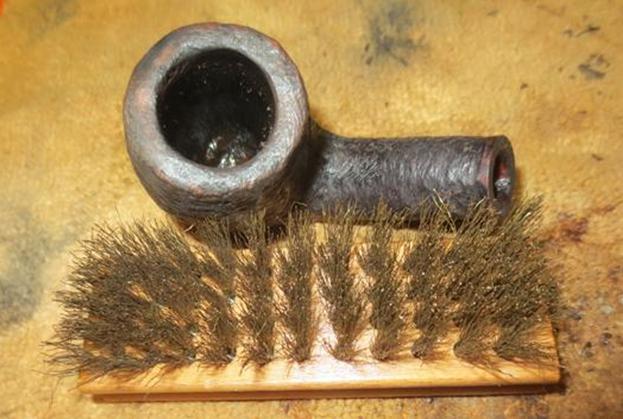
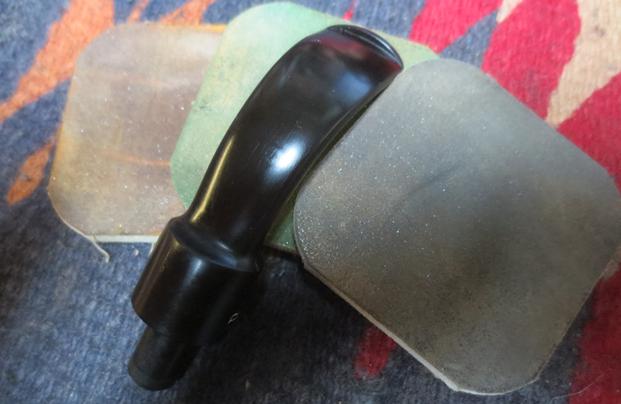
I had the seller ship this pipe with the Orlik Dugout. When the pipes arrived I brought them to my worktable. I completed work on the Dugout then turned my attention to this pipe. I took photos of it to show its condition before I began to work on it. The finish looked to be in good repair under the grime and dust that was in the grooves of the rustication. The rim top was covered with lava that had overflowed from the cake in the bowl. The cake was quite thick and the bowl choked with carbon. The packing material from the shipping box was jammed into the bowl. The stem was lightly oxidized and it still bore the TC stamp on the left side. The fit of the stem to the shank was tight and it did not sit against the shank end. That told me that the interior of the shank must be quite dirty with tars and oils. I wonder if both of these pipes came from the same pipeman. I took a close up photo of the rim top to show the thickness of the cake in the bowl and overflow of lava on the rim. There were some worn spots on the rim where the finish was damaged. It looked like the inner and outer edges of the bowl were undamaged but I would know for sure once I had reamed it.While the stem was lightly oxidized the only damage to it was on the top and underside edge of the button and some light tooth chatter on both sides. The TC stamp was readable and the stamping was deep enough to be cleaned without damage.I reamed the bowl with the smallest cutting head on the PipNet pipe reamer. I took the cake slowly back to the bare briar. I wanted to see if there was cracking in the inside of the bowl. The cake was thick and hard so it took some steady and careful work to cut the cake back. I touched up the reaming of the bowl with t a Savinelli Fitsall Pipe Reaming Knife. I took what remained of the cake back to smooth, bare walls. I used a brass bristle wire brush to loosen the debris from the rim top. It was thick enough that it would take some work to get it off and clean out the grooves of the rustication.I scrubbed the briar with a tooth brush and Murphy’s Oil Soap to remove the dust and grime on the surface of the bowl and the grit that I had loosened on the rim top. I rinsed the bowl under warm water to remove the dust and scrubbed it with the brush under water. The results are shown in the photo below.I used a finer bristle brass brush to work over the grooves on the rim top. This extra step took more of the grime off the surface and left the rim top very clean.I cleaned out the inside of the shank with cotton swabs, pipe cleaners and alcohol to remove all of the tars and oils on the inside walls of the mortise. I cleaned out the airways in the shank and in the stem with pipe cleaners and alcohol.I put the stem in a soak of Before & After Pipe Stem Deoxidizer. I left it to soak for several hours while I worked on the bowl.I turned my attention back to the bowl. I rubbed the bowl down with Before & After Restoration Balm. The product worked to lift the grime and debris out of the grooves of the briar. I rubbed it down and scrubbed it deeper into the grooves of the briar with a shoe brush. I polished the briar with a soft cloth to remove the balm from the briar. I took a photo of the stamping on the shank because it was so clear and with the balm really stood out.I touched up the worn spots on the rim top and edge with a dark brown stain pen. I buffed the rim top with a soft cloth to even out the stain coverage.I rubbed the bowl down with several coats of Conservator’s Wax and buffed it with a shoe brush. The briar began to take on rich warmth. The feel of the bowl in the hand was comfortable and tactile. I think this would be a good smoking pipe. I set the bowl aside and turned back to the stem. I removed it from the soak in the Before & After Deoxidizer and wiped it down. I cleaned out the inside of the airway with alcohol to remove the product from the stem. I polished the stem with a soft cloth to remove all of the deoxidizer and give it a bit of a shine. It had removed much of the light oxidation and left the stamping intact on the stem side. There was still some spots of oxidation that needed to be addressed and the button needed to be reshaped on both sides. The photos below show what it looked like at this point.I used a folded piece of 220 grit sandpaper to work on the tooth chatter and to reshape the edge and surface of the button.  I worked over the spots of oxidation with the sandpaper at the same time to remove it from the surface of the hard rubber stem.I polished out the sanding scratches and marks in the vulcanite with micromesh sanding pads – wet sanding it with 1500-2400 grit pads and dry sanding it with 3200-4000 grit pads. I wiped the stem down with Obsidian Oil after each sanding pad. I buffed the stem with Blue Diamond on the buffing wheel. I brought it back to the table and sanded it with the final three 6000-12000 grit pads. After the final pad I gave it a final coat of oil and set it aside to dry. I put the stem back on the bowl and worked the pipe over on the buffing wheel using Blue Diamond to polish the bowl and shank. I used a gentle touch on the briar when I was buffing it so that the grooves of the rustication would not be filled in and make more work for me. I buffed the stem with a harder touch to raise the gloss on the rubber. I gave the bowl multiple coats of Conservator’s Wax and gave the stem multiple coats of carnauba wax. I buffed the pipe with a clean buffing pad to raise the shine. I hand buffed it with a microfiber cloth to deepen the shine. The finished pipe is shown in the photos below. It looks better than it did in the beginning. It is a beautiful pipe. The dimensions of the pipe are: Length: 5 ½ inches, Height: 2 inches, Diameter of the bowl: 1 inch, Diameter of the chamber: 5/8 inches. I will be adding this one to the rebornpipes store shortly if you are interested in adding it to your collection. It will make a fine addition to the rack. If you are interested email me at slaug@uniserve.com or send me a message on Facebook. Thanks for looking.

Sasieni Four Dot Danzey XS Restoration.


By Al Jones

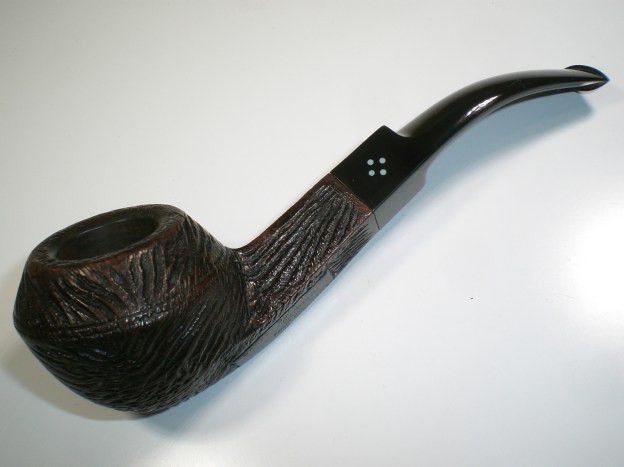
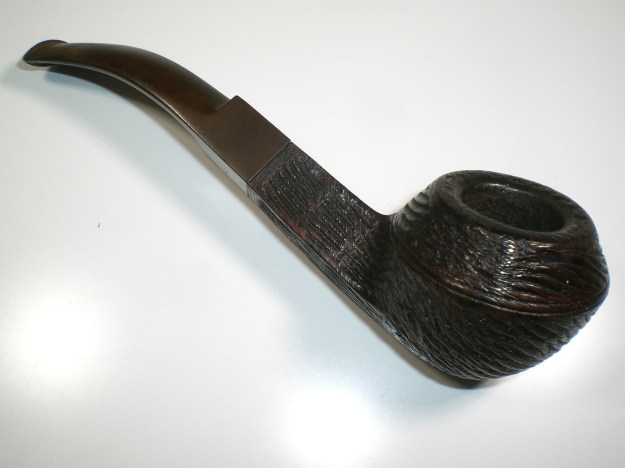
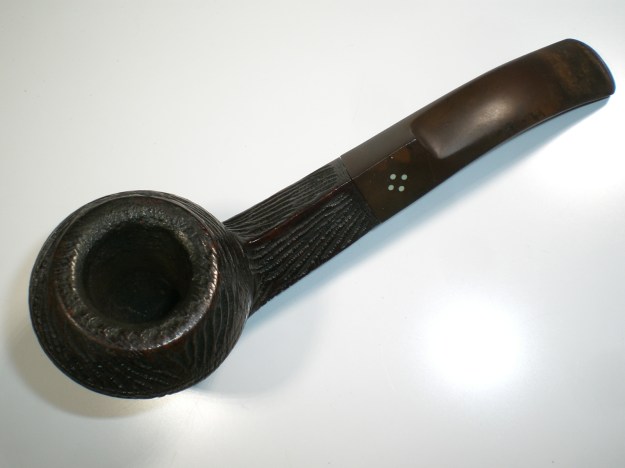
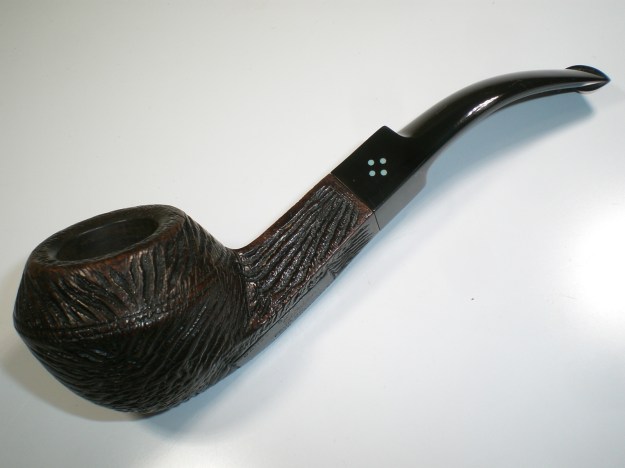
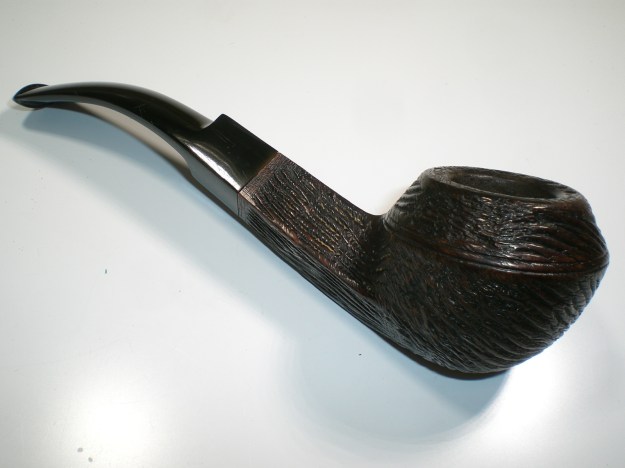
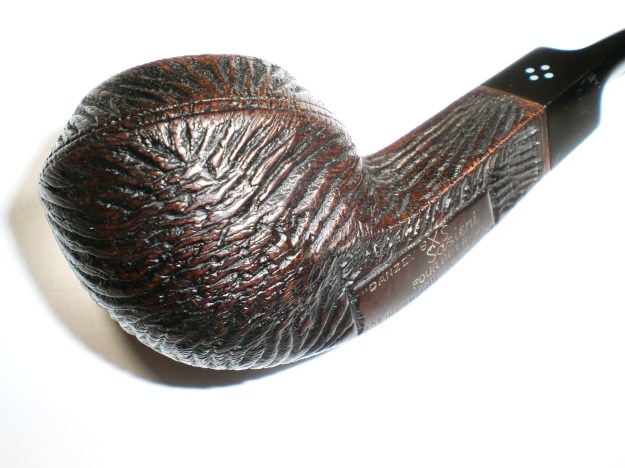
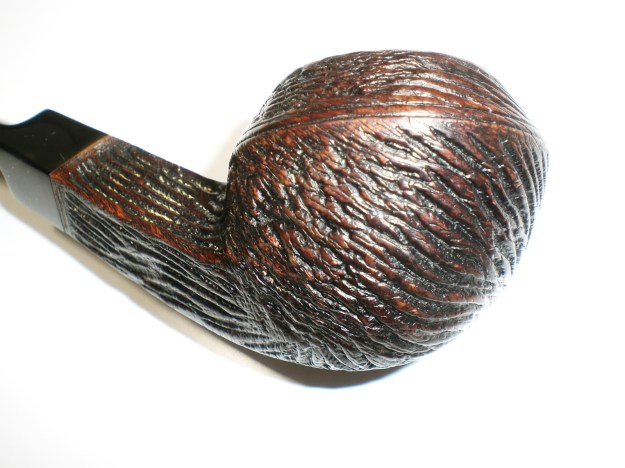
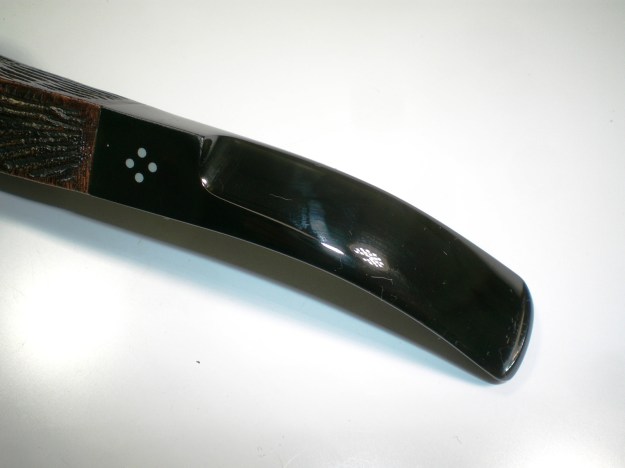
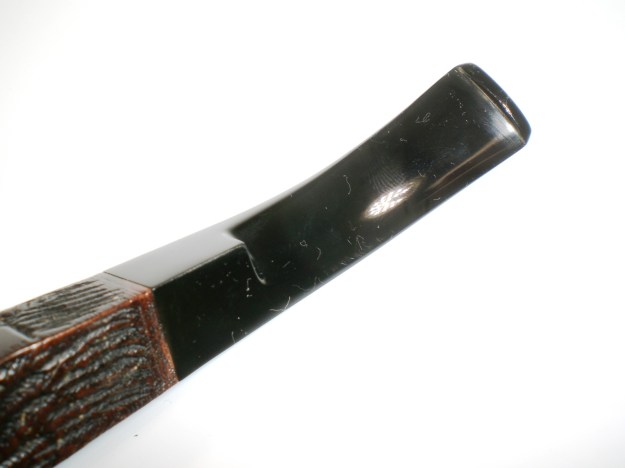
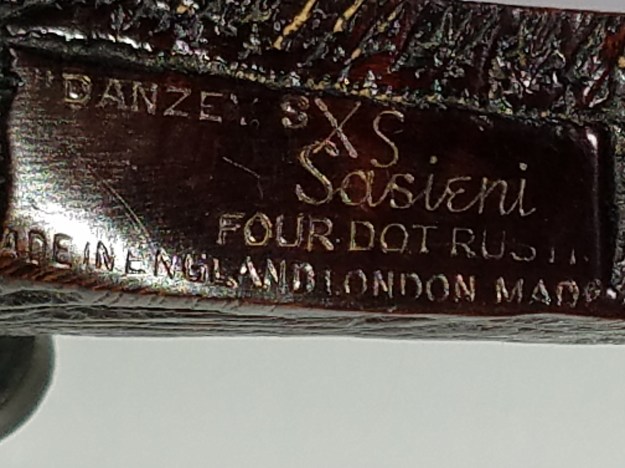
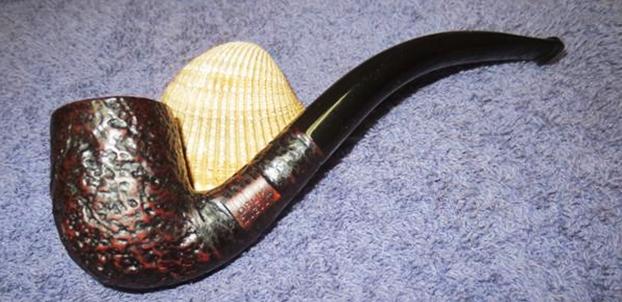
My buddy Dave made a smart grab with this Sasieni Danzey XS. The Danzey is one of several Sasieni bulldog shapes. He has been looking for this shape for a while so I was glad he finally located a fine example. The pipe was in great shape and I knew it would be an easy restoration. Tnis one sports the “Rustic” finish which is hand carved and follows the grain. The Rustic finish is my personal favorite offered by Sasieni.

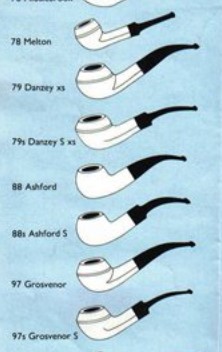
The Danzey is also known as the Shape 79. This one has the S for the saddle stem. All Danzey’s have the XS stamp which Pipephil says stands for a premium priced pipe. Below is the chart showing the Sasieni bulldog shapes. The Sasieni logo dates this one from 1946 to 1979.

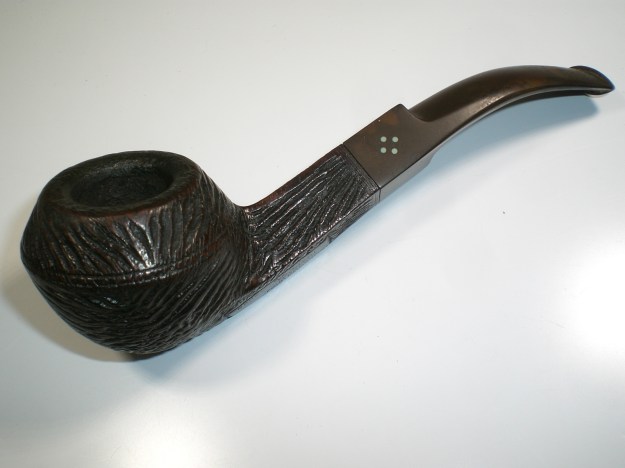
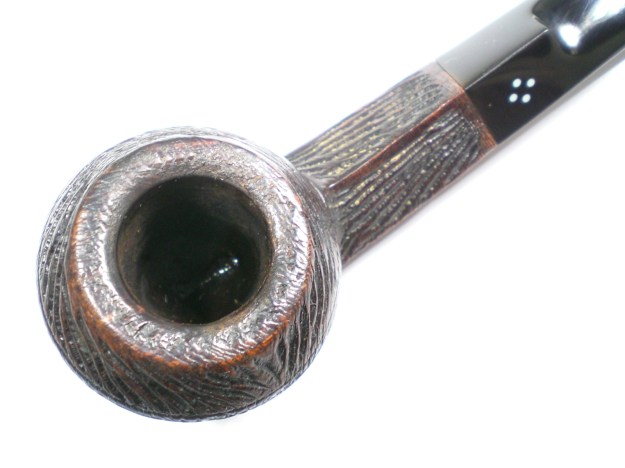
Below is the pipe as it was received, the stem was oxidized but free of any teeth marks. There was a very mild cake and little build-up on the bowl top. Even in unrestored condition, you can see that this pipe has the beautiful pale blue dots. My cheap point and shoot digital camera don’t capture this well.

I used a worn piece of scotch brite to remove the bowl top build-up then the cake was removed. The bowl was in terrific shape. The stem was soaked in a mil Oxy-Clean solution. Following the soaks, the stem was mounted and oxidation removed first with 800 grit paper, than 1,500 and 2,000 grades. Next up was 8,000 and 12,000 micromesh sheets. The stem was buffed with White Diamond and Meguiars plastic polish. I hand waxed the briar with Halycon wax.

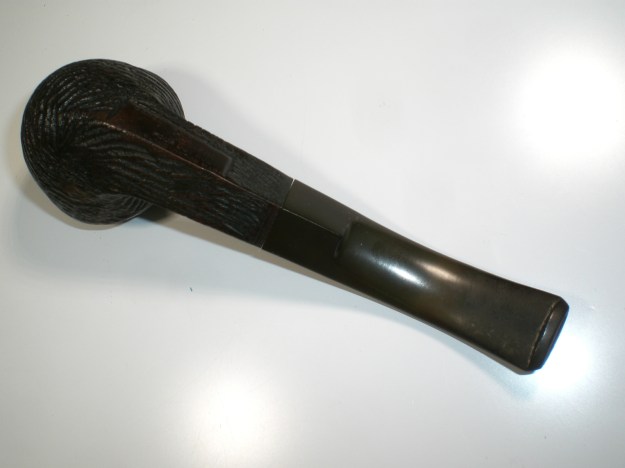
The one challenging aspect of the pipe was that it had an aluminum stinger tube (slip-fit). You can just see it the bowl top photo below. Dave said it was stubborn and he wasn’t kidding. Typically, a soak in alcohol frees these pieces. But, after a soak, this one still wouldn’t budge. I used a pair of pliars to try and twist it out, which of course only collapsed the tube and then it tore. Note for next time: Insert a tooth pick or similar in the tube to give it some support! With a ragged piece of aluminum sticking out of the tenon, I pondered just filing it smooth. I decided to try some drill bits from my index box. Two of my smaller bits looked to be the right size. I mounted the larger of the two bits in my bench top vise and screwed tenon onto the bit. The aluminum twisted right out in two strips. This left a very thin piece of aluminum further into the tenon. The next larger bit worked out the remaining piece. I worked very carefully as I obviously didn’t want to break the tenon on my friends pipe. The draw on the stem without the tube is much improved, so I think it was worth the risk and effort.

Below is the finished pipe, soon to be heading back to Dave.

Restoring an older Orlik Dugout Bent Billiard


Blog by Steve Laug

There are a few eBay sellers that I follow and check out their shops regularly. One of my favourite sellers in England seems to regularly put up pipes that I really like. I don’t have any idea how many of them I have purchased from him but this one caught my eye. It is a small Orlik that I would have called a featherweight. Its diminutive size and delicate shape with a thin pencil shank and well-formed bowl caught my eye. The sandblast finish was rugged and the contrast of dark and medium brown stains really worked well with the shape of the pipe. The pipe was stamped in a smooth box on the left side of the shank and read ORLIK over DUGOUT. There was no other stamping on the shank but I was familiar with the brand as I have another DUGOUT that I have written about previously. The pipe is definitely older and a good companion to this pipe (https://rebornpipes.com/2015/03/28/a-restored-orlik-dugout-billiard/). The photos below are the seller’s photos. They show the overall condition of the pipe and what it was that caught my eye. When the pipe arrived and I brought it to my worktable I took photos of it to show its condition before I began to work on it. The finish looked to be in good repair under the grime and dust that was in the grooves of the sandblast. The rim top was covered in a lava that had overflowed from the cake in the bowl. The cake was quite thick and there appeared to be something in the bottom of the bowl because I could see many small perforations on the bowl bottom (seen in the third photo below). The stem was in good condition and there was very little oxidation. There were a few nicks and scratches in the vulcanite. The fit of the stem to the shank was tight and it did not sit against the shank end. That told me that the interior of the shank must be quite dirty with tars and oils. I took a close up photo of the rim top to show the thick cake in the bowl and the heavy overflow of lava on the rim itself. There appears to be some small cracks on the back right side of the rim but I will not be able to tell for sure until the rim is clean and the bowl is reamed. The perforations at the bottom of the bowl look like a screen. I wonder if there is a screen ball that was placed in the bottom of the bowl in order to deal with moisture during the smoke. Cleaning it will reveal what is there.The stem seemed to have been made out of very high quality vulcanite or hard rubber. It did not show oxidation and the marks and scratches on the surface seemed very minor.I reamed the bowl with the smallest cutting head on the PipNet pipe reamer. I took the cake slowly back to the bare briar. I wanted to see if there was cracking in the inside of the bowl. I was also interested in figuring out what was in the bottom of the bowl. After I reamed the bowl I used a dental pick to pick out the screen ball in the bottom of the bowl. It was dirty and there were some worn areas on the screen. It obviously was not original to the pipe but was added by the pipeman the pipe had belonged to in ages past.With the screen removed I finished reaming the bowl with the PipNet reamer and cleaned up the remaining cake with a Savinelli Fitsall Pipe Reaming Knife. I took the cake back to smooth, bare walls. I scoured the rim top with a brass bristle brush to clean off the lava buildup. I wanted to get it all off and be able to see the condition of the rim top. I wanted to know if there were indeed some cracks in the rim top that did not show.I scrubbed the briar with a tooth brush and Murphy’s Oil Soap to remove the dust and grime on the surface of the bowl and the grit that I had loosened on the rim top. I rinsed the bowl under warm water to remove the dust and scrubbed it with the brush under water. The results are shown in the photo below.There were indeed some small surface cracks in the rim top that followed the flow of the sandblast. They did not seem to go down the outside of the bowl though it appeared that they may well extend slightly into the interior of the bowl. I dried off the surface of the briar and used some minute drops of clear super glue to fill in the cracks along the rim top and the small, short hairline cracks along the first 1/8 inch of the inside of the bowl.I cleaned out the inside of the shank with cotton swabs, pipe cleaners and alcohol to remove all of the tars and oils on the inside walls of the mortise. I cleaned out the airways in the shank and in the stem with pipe cleaners and alcohol.I polished out the scratches and marks in the vulcanite with micromesh sanding pads – wet sanding it with 1500-2400 grit pads and dry sanding it with 3200-4000 grit pads. I wiped the stem down with Obsidian Oil after each sanding pad. I buffed the stem with Blue Diamond on the buffing wheel. I brought it back to the table and sanded it with the final three 6000-12000 grit pads. After the final pad I gave it a final coat of oil and set it aside to dry. I put the stem back on the bowl and worked the pipe over on the buffing wheel using Blue Diamond to polish the bowl and shank. I used a gentle touch on the briar when I was buffing it so that the grooves of the sandblast would not be filled in. I buffed the stem with a harder touch to raise the gloss of the rubber. I gave the bowl multiple coats of Conservator’s Wax and gave the stem multiple coats of carnauba wax. I buffed the pipe with a clean buffing pad to raise the shine. I hand buffed it with a microfiber cloth to deepen the shine. The finished pipe is shown in the photos below. It looks better than it did in the beginning. It is a beautiful pipe. The dimensions of the pipe are: Length: 5 inches, Height: 1 1/2 inches, Diameter of the bowl: 1 inch, Diameter of the chamber: 5/8 inches. Thanks for looking.
 

A Surprise awaited when I visited Smitty’s Cigar & Tobacco in Gainesville, Georgia


Blog by Steve Laug

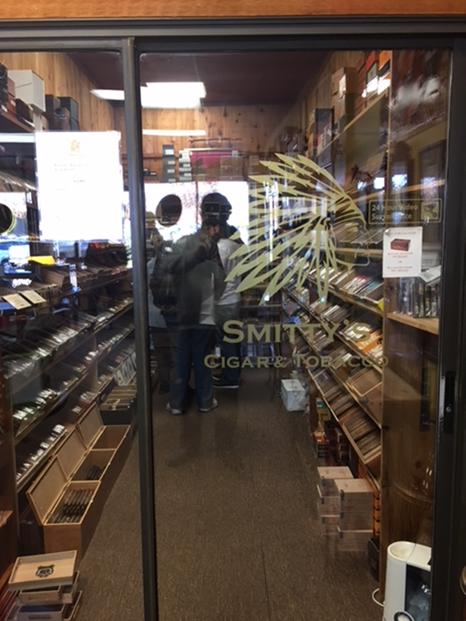
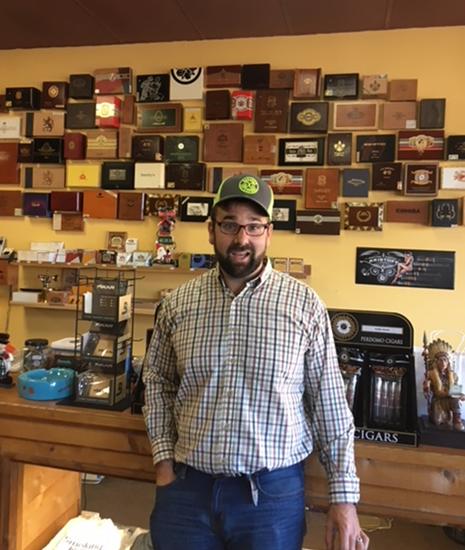
This past weekend I was in Gainesville, Georgia, near Atlanta for work. It was a long weekend and we put in a lot of hours doing an assessment for a new project. We arrived on Friday, worked all day Saturday, Sunday and Monday. Then on Tuesday we took the day off to kind of catch up on rest and also check out some of the places in the area on my list. We went to a couple of antique malls looking for pipes – I found a few. But I also had it on my list visit a local pipe shop. On a previous trip my friend had taken me to visit Smitty’s Cigar and Tobacco, located at 975 Dawsonville Hwy. I really wanted to go back and pick up some tobacco for a friend and add a few tins to my own cellar. Since they are open from 10am-8pm Monday through Saturday I was hoping to find some additions.

I was a bit worried about the shop still being there. The last time I was in town I visited the shop and met with Smitty. He had been proudly open for more than 20 years – serving the local people of Gainesville, Georgia, and those passing through. We had a great visit and chatted for over an hour as the shop was empty. We enjoyed a great visit and talked about the past age of pipe glory, the great time we had at pipe shows and all of the common friends we have had and still have in the hobby, both dead and living. He showed me photos with quite a few of the noteworthy pipe makers – Eric Nording, Jess Chonowitsch and others who he had hosted in his shop over the years. He showed me some of his Chonowitch pipes and a few of his others from his collection that he was selling. Looking around that day I honestly thought that the shop would be closed the next time I visited. The shop was worn and tired looking, the stock was dwindling, the tobacco options were low and the cigar market was no longer sustaining the shop. It had the look of a place heading toward closure in the very near future. I purchased several pouches of Smitty’s own blends – a Virginia/Cavendish and his own English tobacco. I enjoyed them throughout the past year and was hoping to replace them on this visit – if the shop still was open.
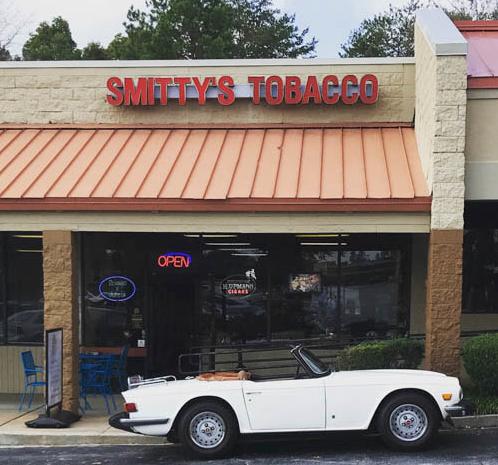
Can you imagine my surprise when we pulled into the parking lot on Tuesday afternoon? I sure did not know what to expect when we drove up. I am a bit of a pessimist so I was prepared to find the place either empty, a new business in the building or a For Lease sign in the window. What I was not prepared for was what sat in the strip mall parking lot. We drove into the McEver Shopping Plaza past Kohl’s and Bed Bath & Beyond and were greeted with the sight shown in the photo to the left. There were some blue tables and chairs on the patio outside the shop providing a spot for smokers to relax and enjoy a bowl or cigar. There were lights on in the shop, an open door and lots of folks visiting and staff serving them. The place was a living and thriving entity.

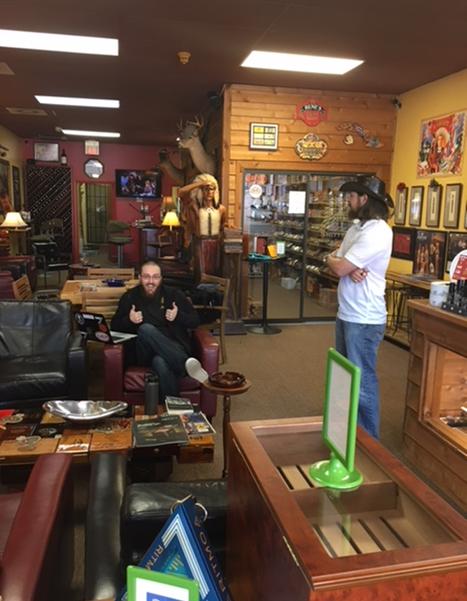
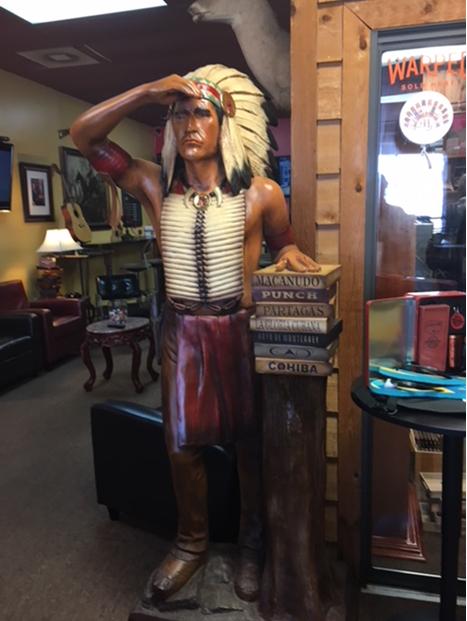
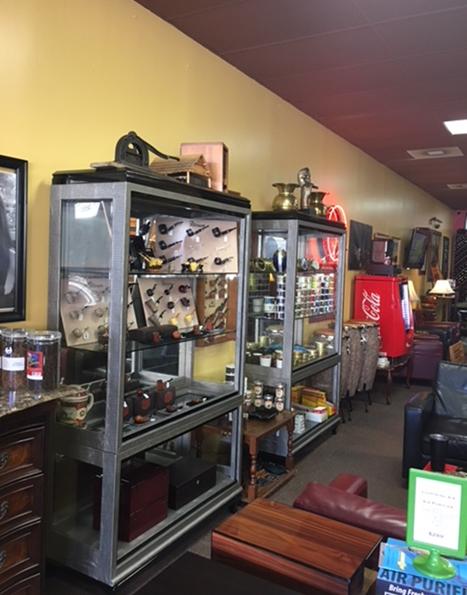
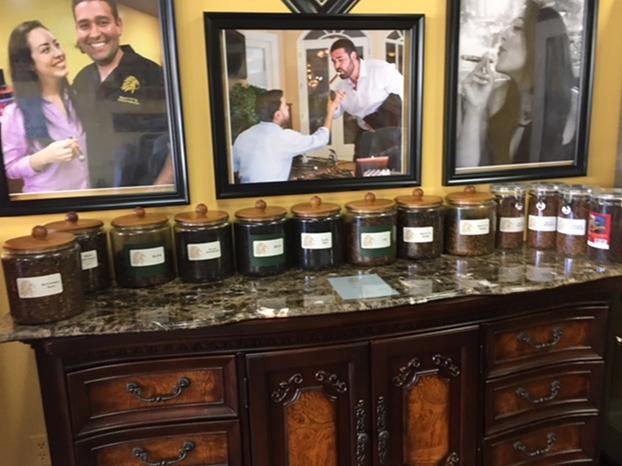
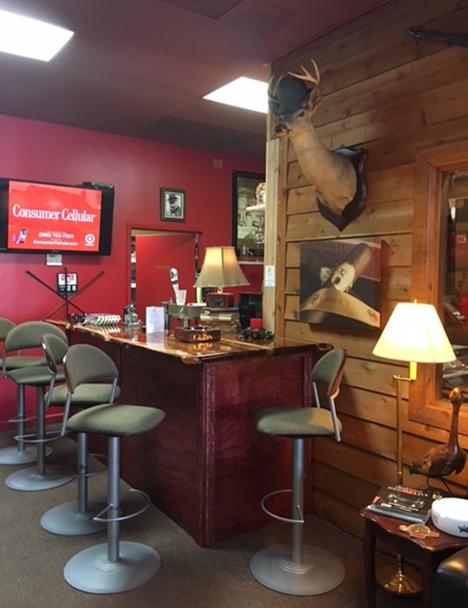
We went through the open door into the shop and were immediately greeted by the staff and the customers. The interior had been redecorated and it had a warm inviting look. My friend commented that he loved the smell of the shop. The folks smoking cigars laughed and blew some smoke towards him. They were standing, or sitting in the comfortable chairs along the window. We walked in on some story telling of some sort that always fills the air of pipe shops no matter where they are. The staff and guests welcomed us and continued to smoke their cigars and visiting.In the centre of the shop they had some soft leather chairs and tables for smokers to sit comfortably and enjoy a pipe or cigar. There was an old cigar store Indian standing next to the humidor on the right side of the shop. He had his hand on various boxes of cigars and was a great reminder of days long gone when these figures stood outside the shops welcoming guests into the respite of the tobacco shop. In today’s anti-tobacco/anti-smoking climate walking into the shop was like stepping back into time. Folks were sitting comfortably in chairs smoking cigars and the aromas of the smoke filled the place. My friend commented that the shop smelled good.  To me the smells and the sight of the place reminded me of how much we have lost in our anti culture. These old time tobacco shops are becoming things of history. On the right as you walked past some of the chairs there was a counter with a variety of cigar cutters, pipe racks and humidors. There were magazines and of course the cash register. Just past that was the humidor – it was a large room lined with a wide range of cigars. I am not much of a cigar guy but from what I could see there was a large variety of top cigar brands that included Davidoff, Arturo Fuente, Opus X, Tatuaje, Illusione, La Flor Dominicana, Aging Room, Casa Magna Domus Magnus Montecristo, Royal Butera Vintage, Padron, Griffin, Ashton, and Diamond Crown. Across from the humidor, on the left wall were the display cases of pipes and tobaccos. In terms of pipes they carried both lower end shop pipes and a full range of Peterson pipes. They no longer had the estate pipes that were present the last time I visited the shop. There were some other brands but I did not pay a lot of attention to them as I was looking for tobacco this time around.I looked through the bulk tobaccos on the sideboard to the left of the door and made my way to the jars and tins. They had a full range of Briarworks tobaccos in the small 2 ounce canning jars. They had an assortment of McClelland Virginias – numbers 22-27 and Frog Morton blends. They had a lot of Gregory Pease’ tobaccos and some Dunhill and C&D blends. The prices on the tins averaged around $15-17 dollars which is still cheaper than what I pay in Canada. The clerk and I laughed over the taxes in Georgia on tobacco as compared with those in Vancouver.In the back of the shop along the right wall they had added a bar with wine and craft beers as well as soft drinks to accompany the smoke and add to the experience. I made my way to the back of the shop to have a look at it. They had done a great job on it. The top of the bar was made of a slab of polished and sealed wood. The wall behind was lined with the options that were available for libations and there was a stock cooler filled with craft beers.

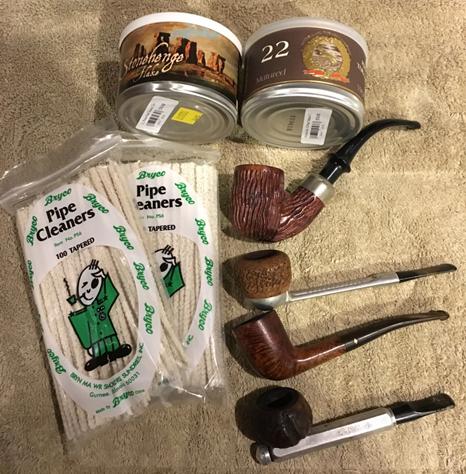
I went to use the washroom in the back and on the way saw a rack of the clerk’s pipes, some of the tobaccos that he was smoking and a full buffing kit with buffers, polishes and wax. It seemed that they did some pipe polishing. I did not see any restoration tools so I am guessing they send that out. I went back to the front part of the shop and visited with two of the younger staff that day and we talked a lot about the various tobaccos they carried. One of the guys smoked a pipe and had some recommendations on the tobaccos they carried. I revisited the jarred and tinned tobacco and went through the various shop blends they had available to see what I would take home. The limitations on my purchase were two fold – dollars and the amount of tobacco I was allowed to carry back to Canada with me. I sorted through some of the tins and asked questions of the young pipeman who was sitting in the chair next to the tobacco. I picked the tobaccos I wanted to purchase as well as pipe cleaners took them to the counter on the front right side of the shop.I stood and talked a bit with one of the customers who was enjoying a nice Cuban Cohiba cigar. He was a friendly guy who helped give the shop a welcoming air.I took a photo of my purchases – they were put in a nice cord handled shopping bag and the clerk threw in a few pens, a sticker and a business card. I bought two bags of pipe cleaners, a tin of Pease Stonehenge Flake and a tin of McClellands Virginia No. 22. The photo also shows the pipes I picked up earlier that day at the antique malls. It was a great day of pipe hunting and the shop visit was a bonus. We ended our day with a great meal at Ted’s for Bison burgers, meatloaf and drinks. All in all it was a great end to our trip to Gainesville.When I got home I read through their website (http://www.smittyscigars.com/) and enjoyed the way it was set up and the photos. The site gives a great view of the shop and I can only say that it truly represents what is there. I also found this short video and have included it here as it introduces the new owner and gives a good idea of what the shop looked like the day I visited. Have a look.
As I close this shop visit blog I want to encourage you to visit this great tobacco shop that will bring back memories of an old time tobacconist you won’t want to miss this place. If you are too young to remember the old time tobacco shops then a visit here is even more important. Shops like this are becoming a thing of the past as time goes on. If you are in the Gainesville area for a visit or live nearby be sure to check them out. Plan on sitting and enjoying a cigar or a pipe, sip your favourite libation and jaw a while with the guests and staff. It is a great place.

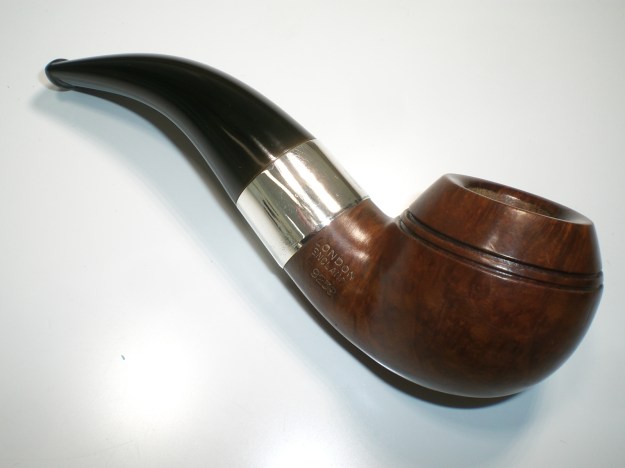
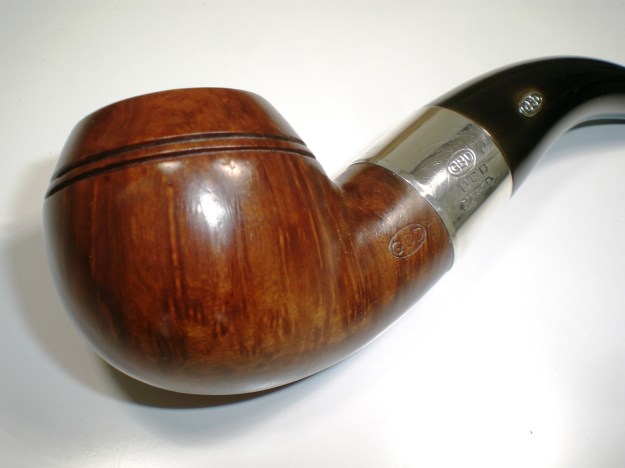
1937 GBD Chubby Rhodesian (R9239) Restored


By Al Jones

I’ve had a great year for acquiring GBD pipes. I started the year in January by finding a 9242 Sandblast at the NYC Pipe Show.  And later, another 9242 New Standard. I can’t think of a better way to cap off 2017 than with this hallmarked R9239.

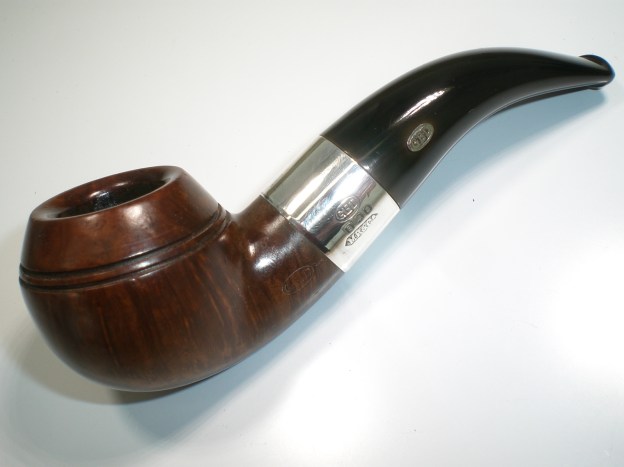
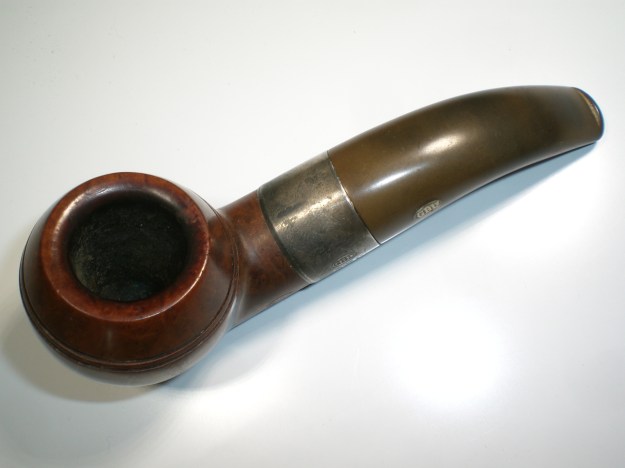
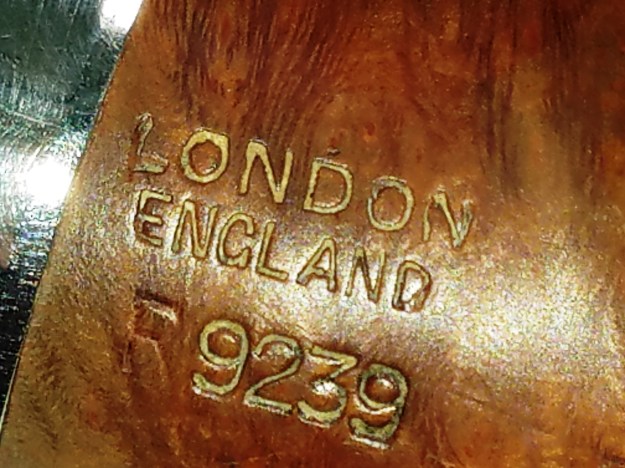
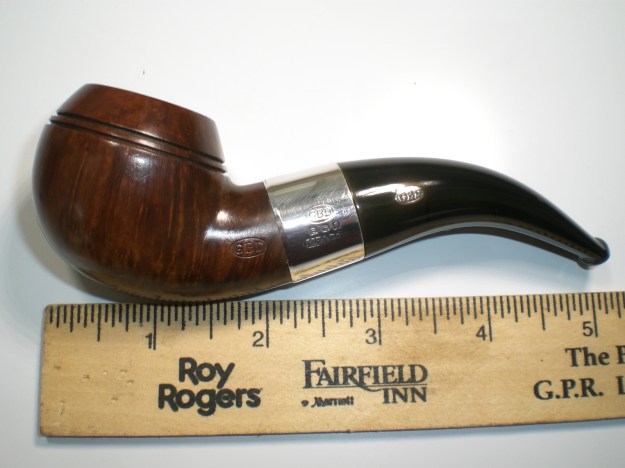
This shape is a bit of a GBD mystery. In the past six years, I’ve seen three of these come up on Ebay (one was unsmoked!). All of them have the R9239 designation, with a London hallmarked band that dates to 1937 (B date code). I have two other hallmarked 1930’s era GBD’s and each has the R code in front of the four digit shape number. The 9239 is referenced no where else in any GBD catalogs or literature that I’ve encountered. I speculate that the R must have signified a silver hallmarked band, but unfortunately that detail is lost to time.

Winning this auction was a battle with 12 other bidders and I eked out a victory by a few dollars. I studied the sellers photos carefully before bidding and I had plenty of apprehension until it was delivered. As you can see below, the photos were either altered digitally or the flash made some odd patterns on the briar. The rest of the pipe looked solid enough to allow me to bid. On delivery, all of my fears disappeared. The briar and vulcanite were in terrific condition. The stem fitment was snug with zero bite marks on the oxidized stem. The odd shadow was just that, a flash mark or other.

Below are my photos of the pipe as it was received. The stem was mildly oxidized and there were several handling marks on the bowl. The bead lines were mint and the bowl and shank interior showed little use.

I reamed the very slight cake from the bowl and soaked it with alcohol and sea salt. After the soak, I used a silver polish to remove the tarnish on the silver band, which was a bit stubborn. I mounted the stem with a plastic collar and removed the first layer with 400 grit, then 800 grit wet paper. This was followed by 1,500 and 2,000 grade paper, then 8,000 and 12,000 micromesh sheets. The stem was then buffed with White Diamond and Meguiars Plastic Polish.

I was able to remove several of the handling marks on the bowl with an electric iron and a wet cloth. The bowl was then buffed with White Diamond and several coats of Carnuba wax.

Below is the finished pipe.

?

?