Category Archives: Pipe Related Essays

Short and not so short essays on pipes and tobacciana

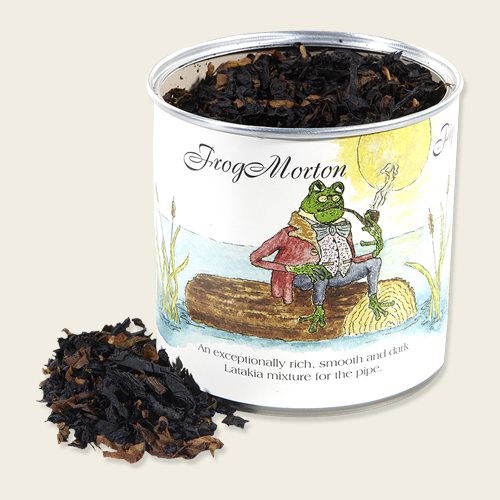
The Resurrection of Frog Morton


Blog by Kenneth Lieblich

Beside all the venerable gentlemen in the long history of pipe smoking, I am a but newborn infant. I have only immersed myself in this wonderful hobby in the last few years, and one of things that especially rankles my ever-ravenous brain is learning about wonderful tobacco companies that no longer exist and no longer produce the tobaccos that become semi-mythic to those of us who have never tried them.

McClelland Tobacco Company is a perfect example of the sort of company that no longer exists – but I wish did. I am mildly obsessed with tobaccos from McClelland and I have only tried a couple of their blends — thanks to the kindness of fellow pipe smokers, particularly Steve. My opportunities to try these old tobaccos have been exceptionally few and far between. The one that always springs to mind for me was trying McClelland’s Anniversary blend (from 2002), some twenty years after its release. That was a magnificent experience.I recently came across a post about recreating their legendary Frog Morton tobacco. I wish I could find the post (but can’t), but I will do my best to do it justice here. I’ve never had the chance to try any of the original Frog Morton tobaccos – and there is no question of me affording the prices to buy old, original tins on the secondary market – so this is the best I can do.

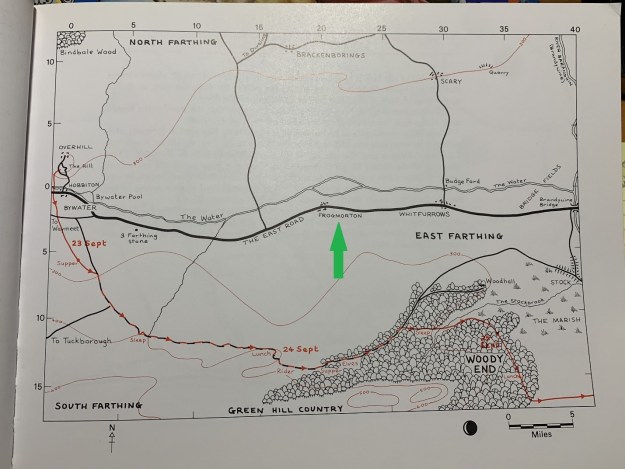
This recreation is whimsically called “Ghost of Frog Morton” by its originator, and I was keen to blend it myself to see the results. Allow me, for a moment, to go off on a brief tangent about the name of McClelland’s original Frog Morton. As many of you will already know, Frogmorton (as one word) is the name of a village on the Great Road in J.R.R. Tolkien’s Middle-Earth. It is in Eastfarthing and is not a town of any great significance, but reference is made to it twice in the Lord of the Rings: once in The Fellowship of the Ring, at the end of the Prologue, when it is displayed on a map of the Shire; and later in The Return of the King, when Tolkien writes:

“As evening fell they were drawing near to Frogmorton, a village right on the Road, about twenty-two miles from the [Brandywine] Bridge. There they meant to stay the night; The Floating Log at Frogmorton was a good inn. But as they came to the east end of the village they met a barrier with a large board saying NO ROAD; and behind it stood a large band of Shirriffs with staves in their hands and feathers in their caps, looking both important and rather scared.”Many books about Middle-Earth include minor references to Frogmorton, including Day’s A Tolkien Bestiary, Fonstad’s The Atlas of Middle-Earth, Foster’s The Complete Guide to Middle-Earth, Hammond and Scull’s The Lord of the Rings: A Reader’s Companion, Strachey’s Journey’s of Frodo, and Tyler’s The Tolkien Companion – among others.

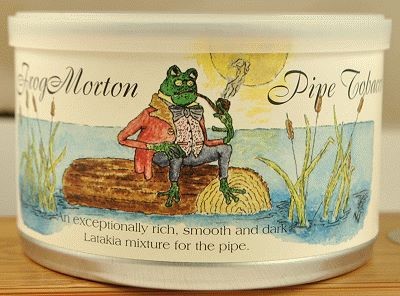
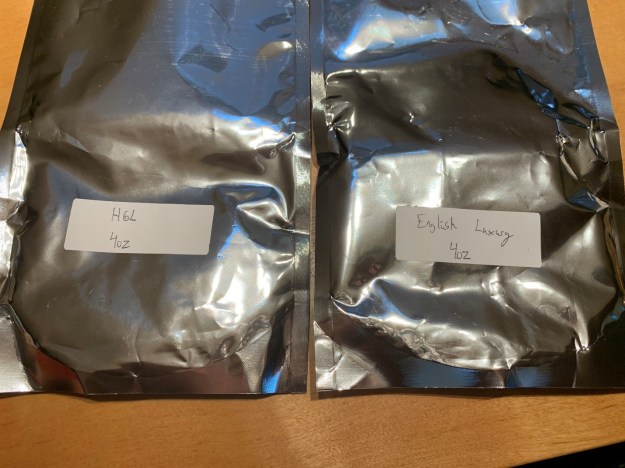
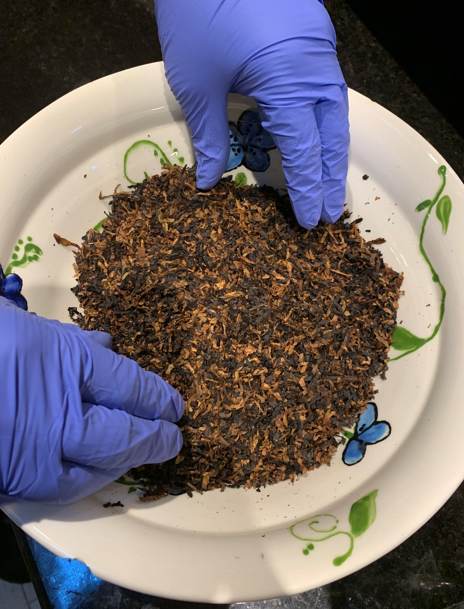
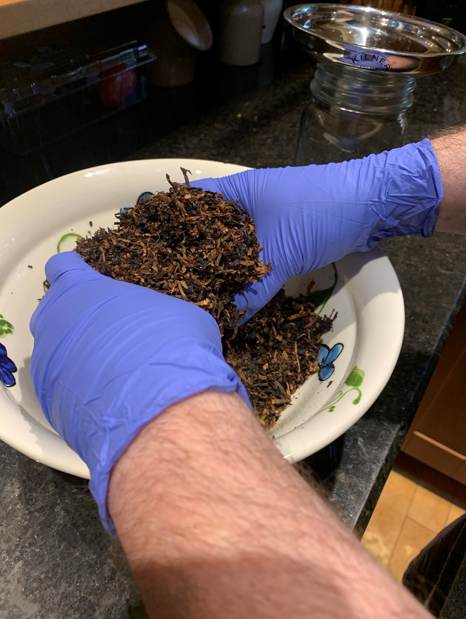
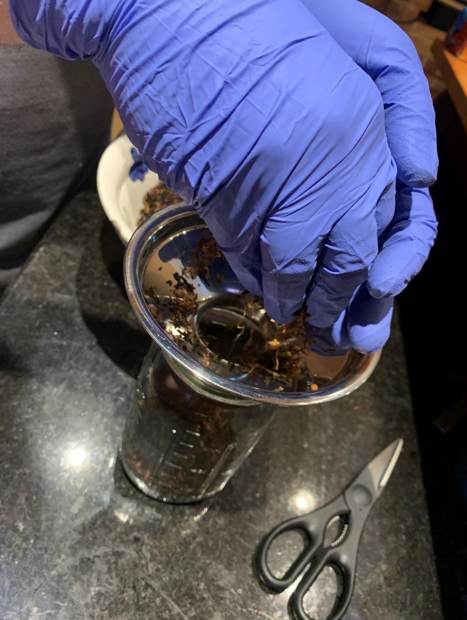
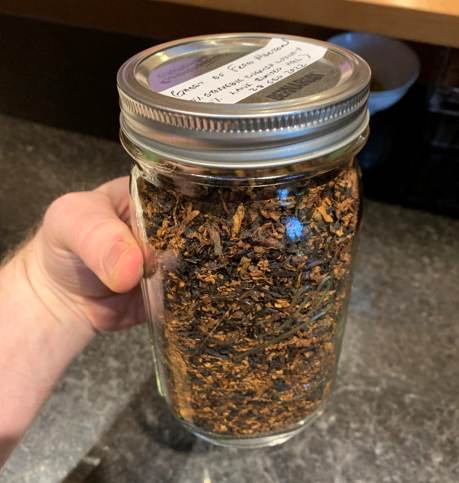
Back to the tobacco: it is a Virginia-Latakia mix. On the original tins, Frog Morton is described as “An exceptionally rich, smooth and dark Latakia mixture for the pipe”. Well, I love Latakia and Virginia, so this resurrected “Ghost of Frog Morton” should be a winner for me.The procedure to make it couldn’t be easier, and it is certainly worth a try. To begin, I ordered the ingredients from my preferred tobacco merchant. The two components of this blend are Peter Stokkebye English Luxury PS 17 and Lane Limited HGL. I ordered four ounces of each, figuring that half-a-pound would be good enough to start with and share with friends.I emptied the contents of the two tobacco bags into a large, glass salad bowl – incurring raised eyebrows from my beloved wife. I took several minutes to thoroughly mix the tobaccos together. I did not want hidden chunks of one tobacco or another persisting in this blend. With gloved hands, I mixed and separated and tossed and blended and turned over all eight ounces. I hummed and hawed for some time about how to store it. Normally, I cellar tobaccos in Mason jars in two-ounce increments. However, I wanted to keep this batch all together, so I used a canning funnel and put it all in one large Mason jar.Voilà – my first quasi-blending! I obviously don’t have the real Frog Morton to compare it too, but reports suggest that it is a very good imitation of the original. I’m going to let it sit for a while and I’ll get back to you all once I’ve tried it.I hope you enjoyed reading this brief tale of bringing a classic tobacco back to life. If you are interested in my work, please follow me here on Steve’s website or email me directly at kenneth@knightsofthepipe.com. Thank you very much for reading and, as always, I welcome and encourage your comments.


A Pair of Gift Antique Pipe Reamers From Kenneth to add to my collection


Blog by Steve Laug

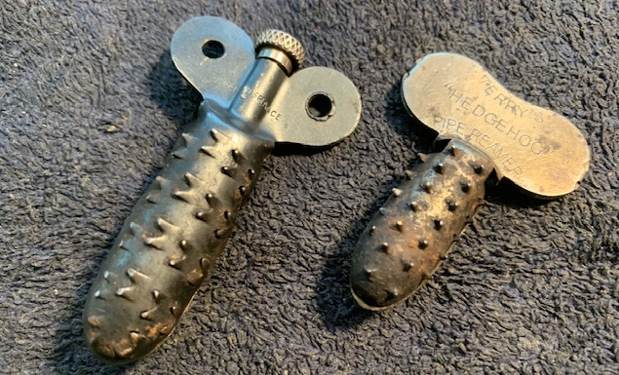
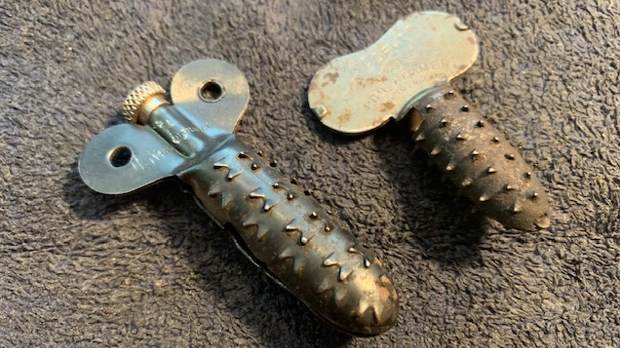
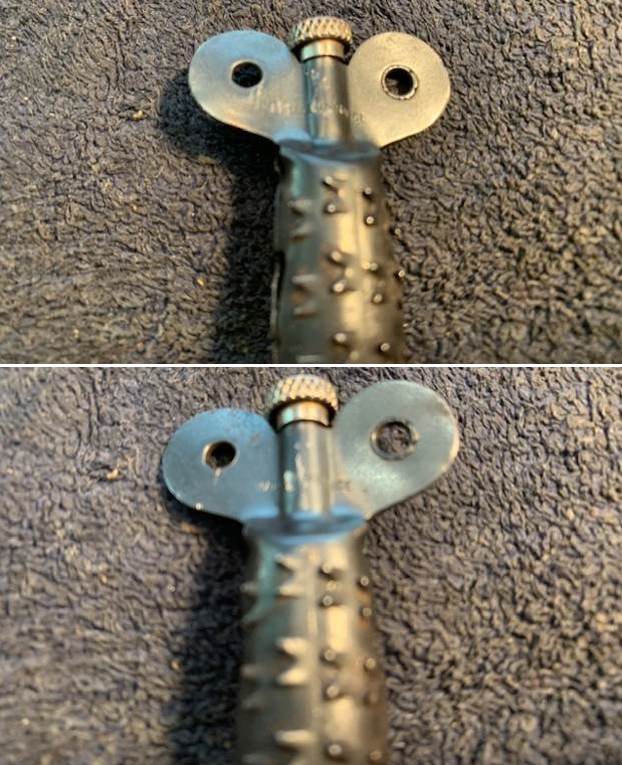
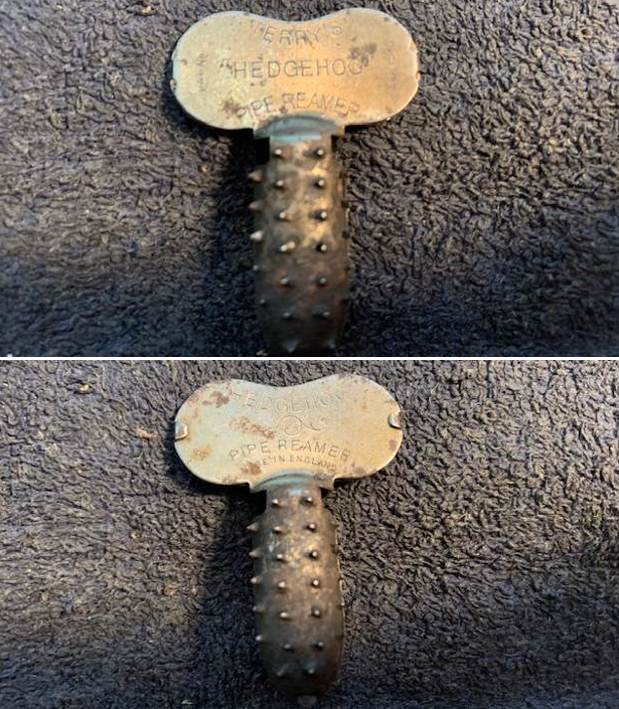
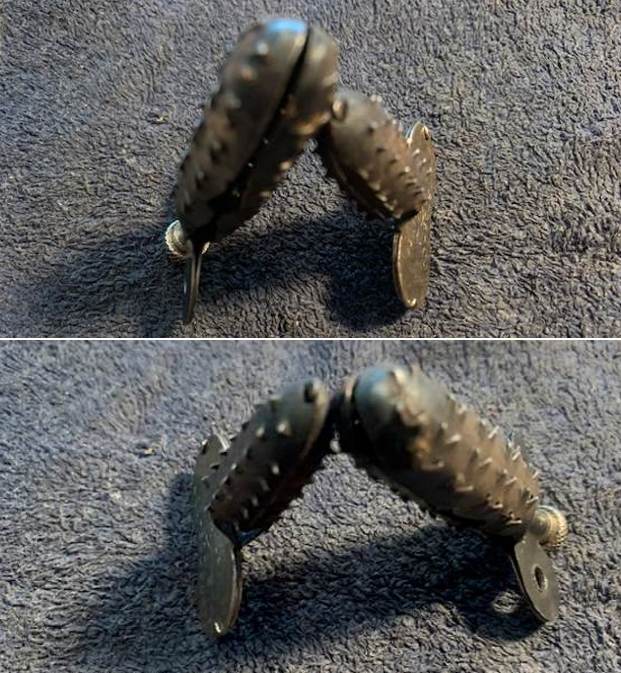
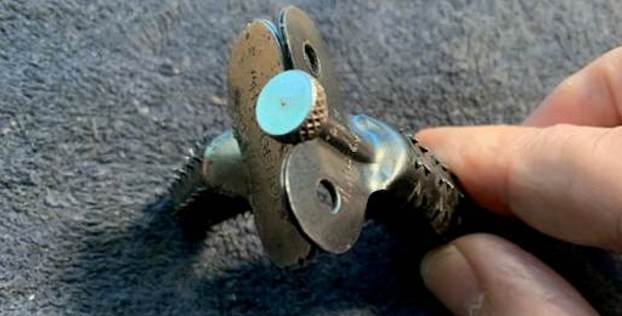
Yesterday I had a great visit with Kenneth Lieblich on my front porch. We enjoyed some Seattle Pipe Club Tobaccos – Potlatch (his) and Deception Pass (mine) while looking at some of his latest acquisitions. He had picked up some very nice pipes in the last little while from sellers here in the Vancouver area. He also pulled out two interesting old pipe reamers from his bag that he had brought for me to add to my collection. The one on the left is stamped MADE IN FRANCE on both sides of the handle. There was also an adjustable screw on the top that expanded and contracted the reaming head to fit a variety of bowls. The one on the right side is stamped PERRY’S [over] HEDGEHOG [over] PIPE REAMER on one side and on the other is it stamped HEDGEHOG [over] a filigree [over] PIPE REAMER [over] MADE IN ENGLAND. The second one is not adjustable as the first one is. Both have the look of Medieval Instruments of torture rather than simple reamer to remove the cake. The first reamer (the one on the left above), the French Made one is significantly smoother than the Hedgehog. It is made by perforating the metal around the head. The perforations were lifted slightly and would work to scrape off the cake on the sides of the bowl. Interestingly the head is not sharp on the fingers of my hand when I held it. It was made in such a way that once inserted it was turned clockwise it would remove the cake in the bowl. The adjustment screw on the top adjusted the diameter of the head to match the walls of the chamber and the depth to which it would remove the cake in the bowl. The second reamer (the one on the right above), the Terry’s Hedgehog Made in England is quite a bit rougher than the French one. The cutting head is made by perforating the metal around the head. The perforations were lifted higher than the French one and would work to scrape off the cake on the sides of the bowl. Interestingly the head is very sharp when held in the fingers of my hand. It was made in such a way that once inserted it was turned either direction in the bowl it would remove the cake in the bowl. The cutter could not be adjusted to the diameter of the bowl and it was quite rough in it stripping back of the cake. It is not one that I would use very often on any of my pipes without damaging the walls of the bowl.  You can see from the photo that it is wider at the bottom the reamer than at the top.I leaned the two reamers together to capture a photo of the end of the reamer. The larger of the two is the French Made one. You can see from the photo that it is split in the middle and when the screw is adjusted it expands. The head of the Hedgehog has the two sides tightly closed and it is not adjustable. I also took photos of the two from the top to show the butterfly handles. These two will join my box of pipe reamers and reaming tools once I have it back when our basement is fully restored and returned to normal. These are two nice additions. Thank you Kenneth for the gift.
Restoring a Tom Howard Saddle Stem Rhodesian Scoop


Blog by Steve Laug

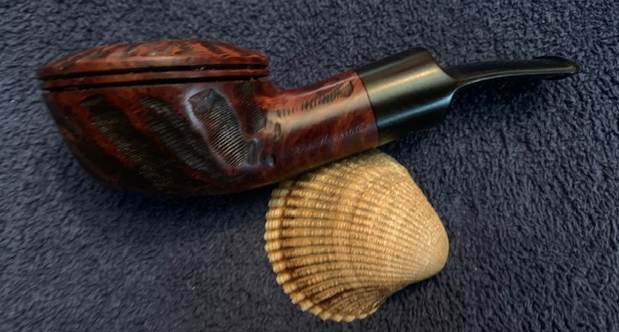
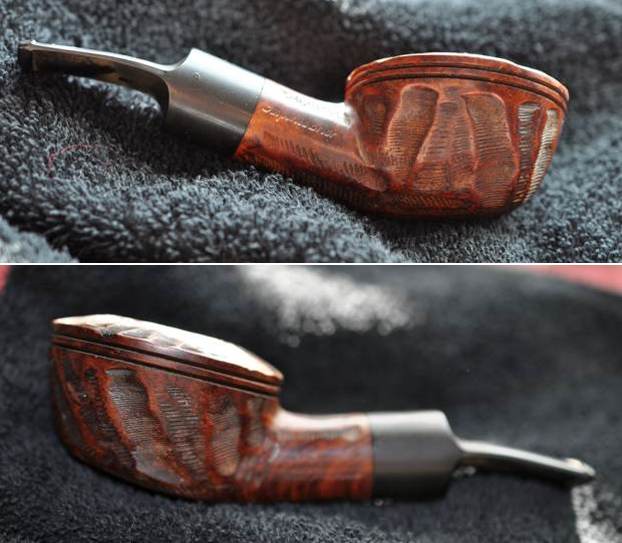
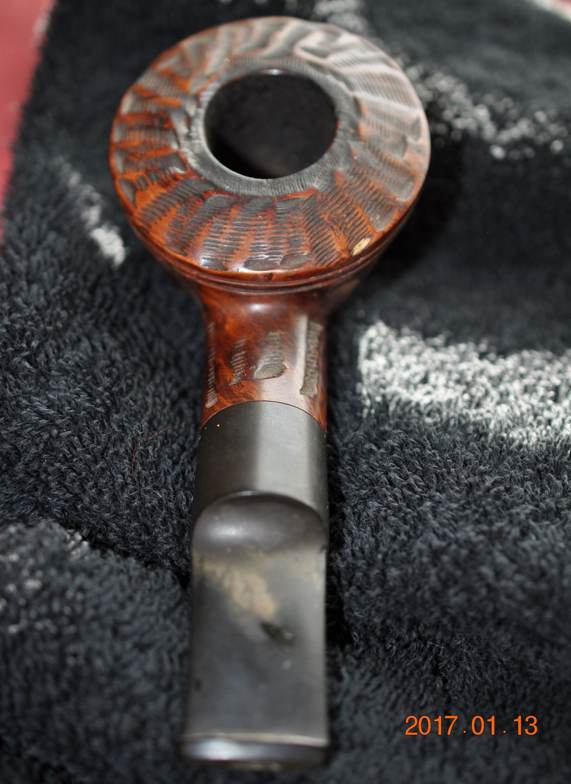
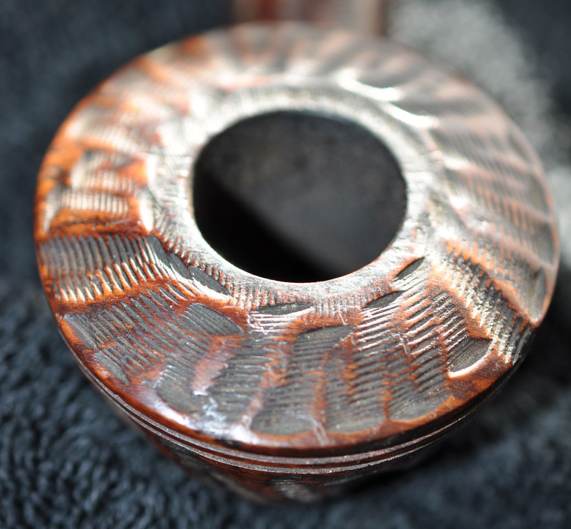
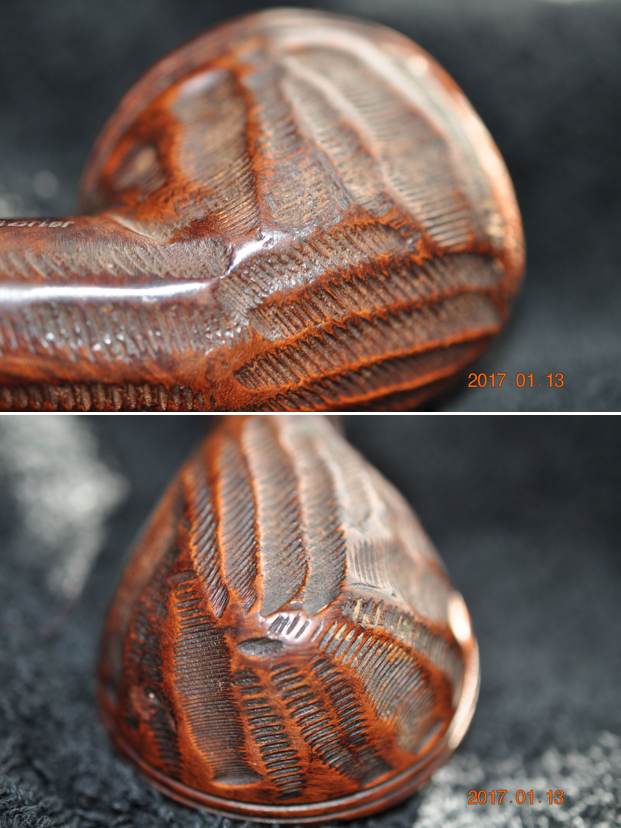
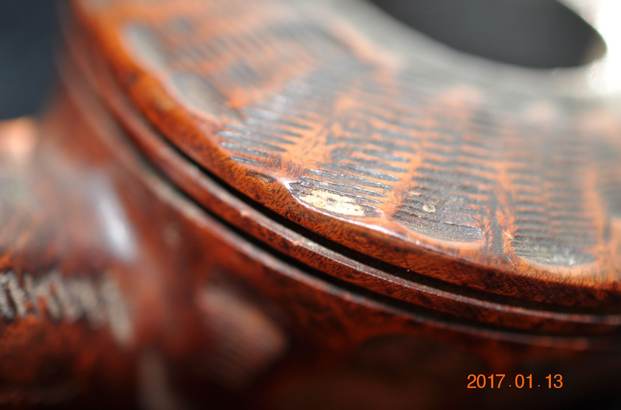
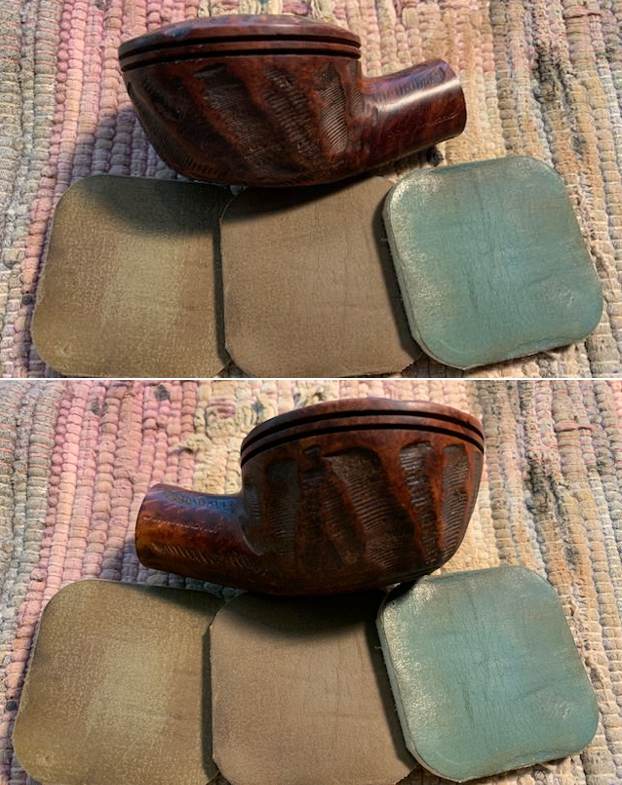
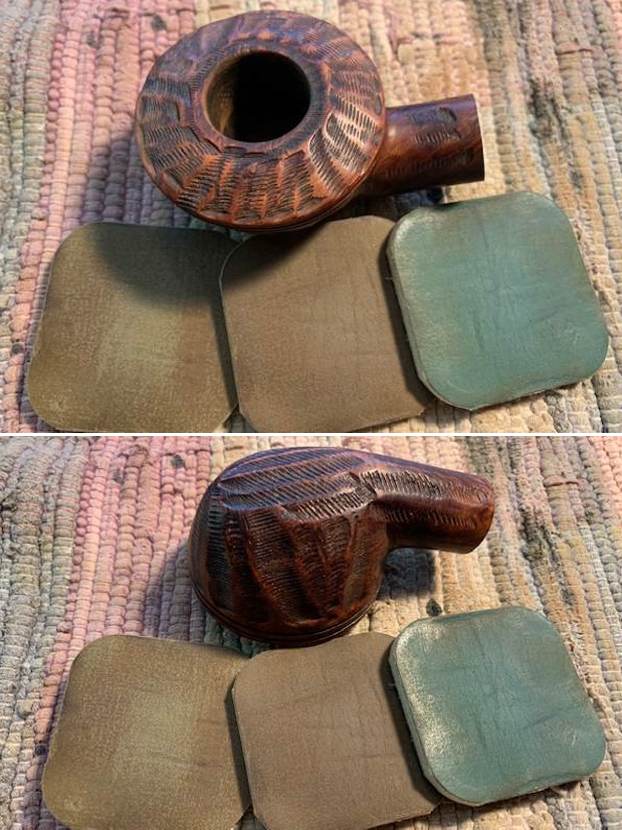
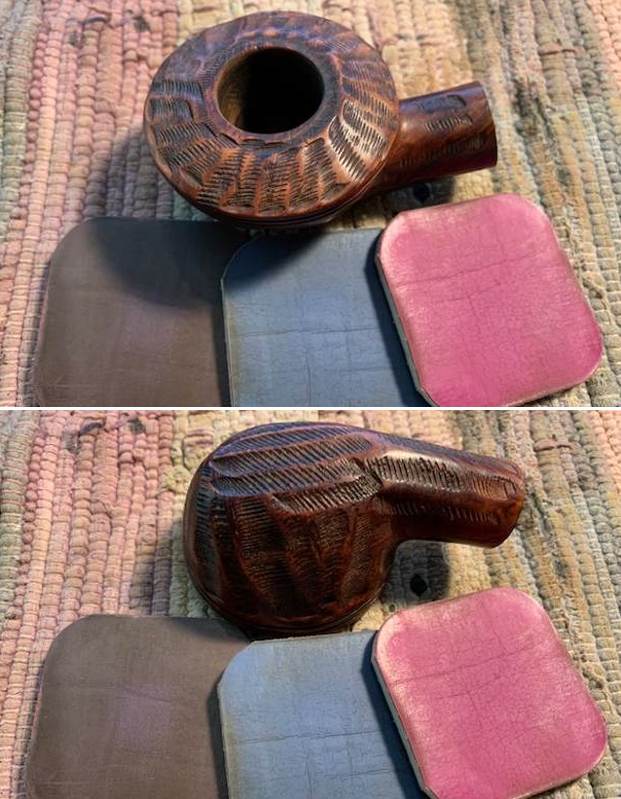
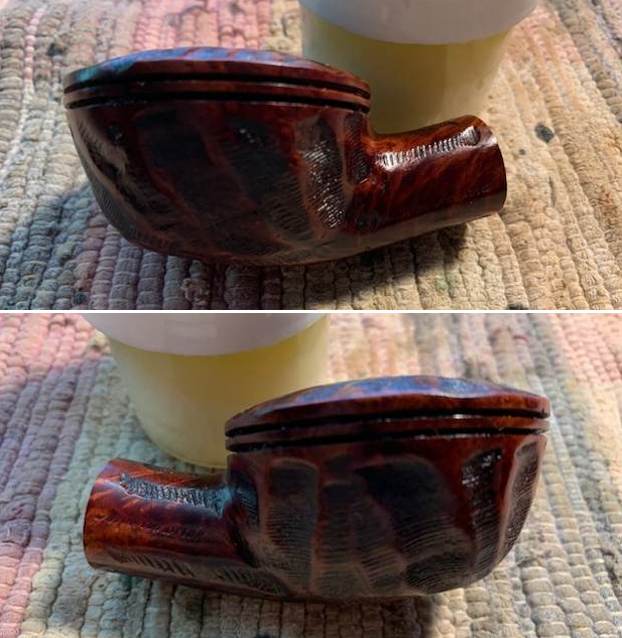
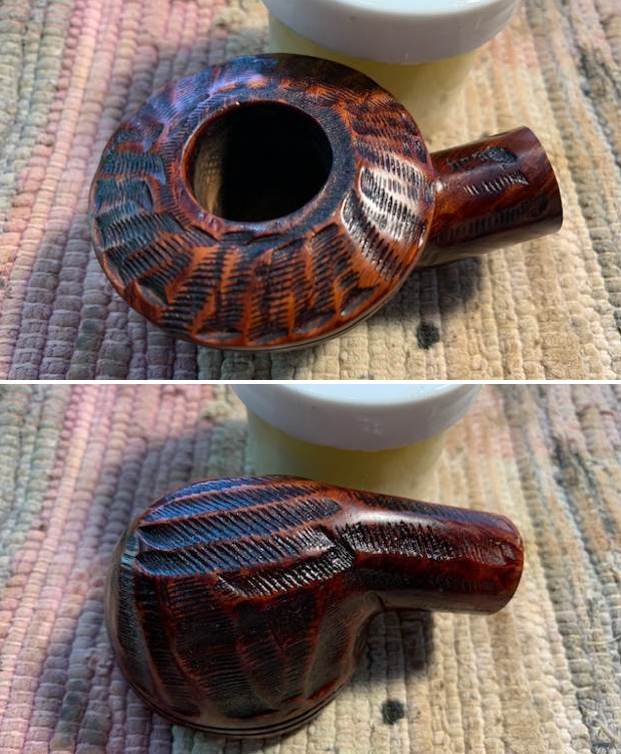
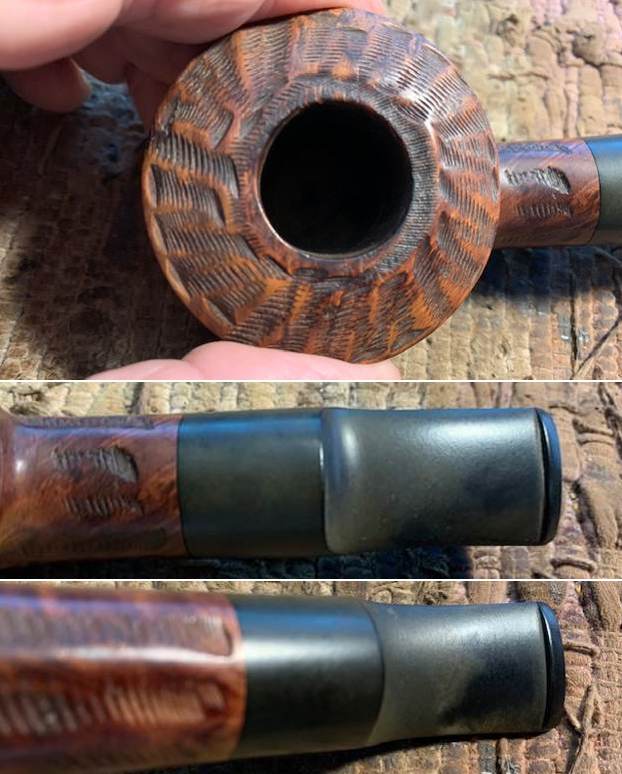
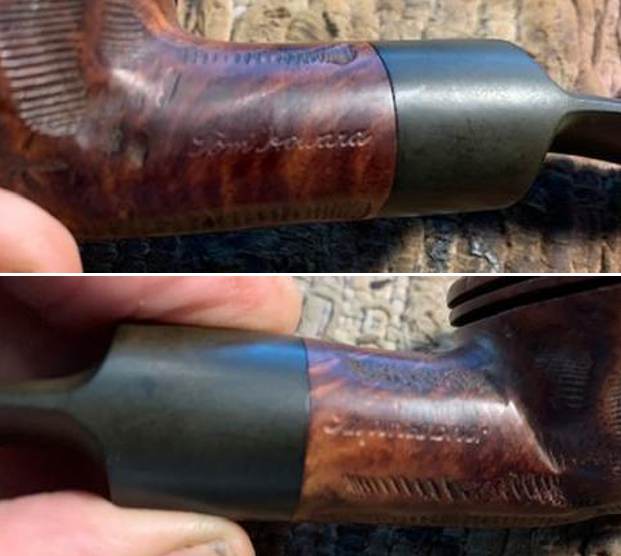
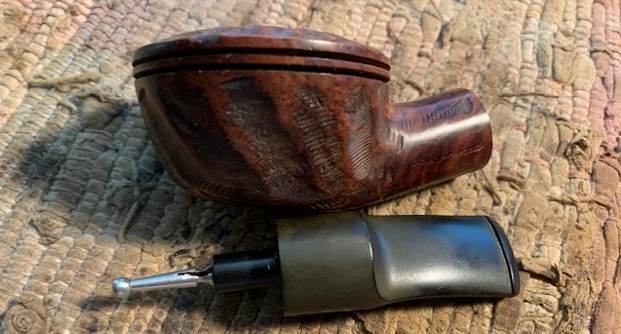
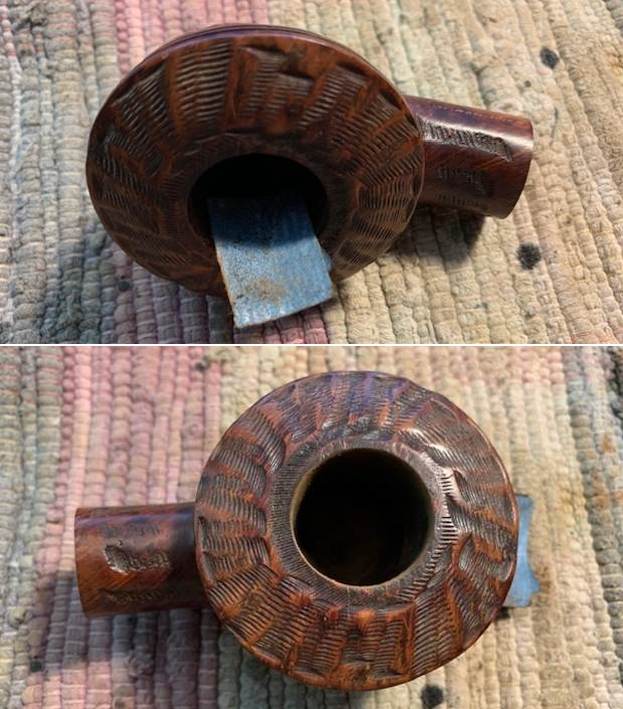
The next pipe on the table was purchased on eBay on 01/04/17 from Portland, Maine, USA. It is a rusticated squat Rhodesian that is in good condition. It is stamped on the sides of the shank. On the left side it is stamped Tom Howard. On the right side it is stamped Imported Briar. The stamping is clear and readable. I have worked on quite a few of Tom Howard’s pipes in the past and later in the blog will give a bit of the history (thanks to Dal or Pipesteward.com). At this point I have to say that the pipe is well made and actually has a similar rugged beauty and finesse to a Tracy Mincer Custom-Bilt in my opinion. The age of the pipe and the oils in the finish has given the pipe a rich reddish brown finish. There is also some nice grain that the shape follows well. The finish was dirty with dust around the nooks and crannies of the worm trail rustication. There were some spots of what looked like cream coloured paint right outer edge of the rim cap. There was a thick cake in the bowl and the rim top showed darkening and some lava. The inner edge appeared to be in good condition. The vulcanite saddle stem was oxidized, calcified and had tooth marks and chatter ahead of the button on both sides.  Jeff took photos of the pipe to show what it looked like before he started working on it. He took photos of the bowl and rim top to show the thickness of the cake and the darkening and lava overflow on the rim top. The photos of the stem show the oxidation, calcification and tooth marks and chatter on the surface and on the button on both sides. The photo of the side and heel of the bowl shows the carved worm trail rustication and the grain on the smooth portions of the pipe. It looks quite nice under the grime and dust.    The stamping on the sides of the shank is shown in the photos below. It looks very good and readable. It reads as noted and explained above.   Before I started my work on the pipe I wanted to refresh my memory of the brand. I remembered that Tom Howard was a notable figure beyond pipe making. I also remembered that Dal Stanton had worked on one and done a great job ferreting out the history of the brand and the maker. I turned to his blog on the brand and read what he had written during his restoration of one of the Howard pipes (https://rebornpipes.com/2018/09/16/the-vintage-notoriety-of-tom-howard-and-his-jumbo-squat-rustified-tomato/). I have included the portion of the blog on the history below for ease of reference. (Thanks Dal!)
I had never heard of a Tom Howard stamp on a pipe and after I put the name in search tool on Pipedia I was surprised to find what I found.  Tom Howard was a vintage celebrity in America during the 1940s and 50s.  Here’s what Pipedia said about Tom Howard the man:

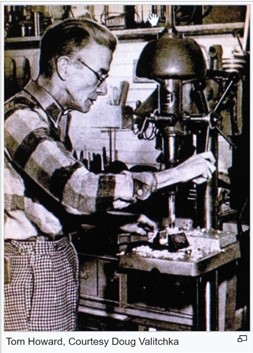
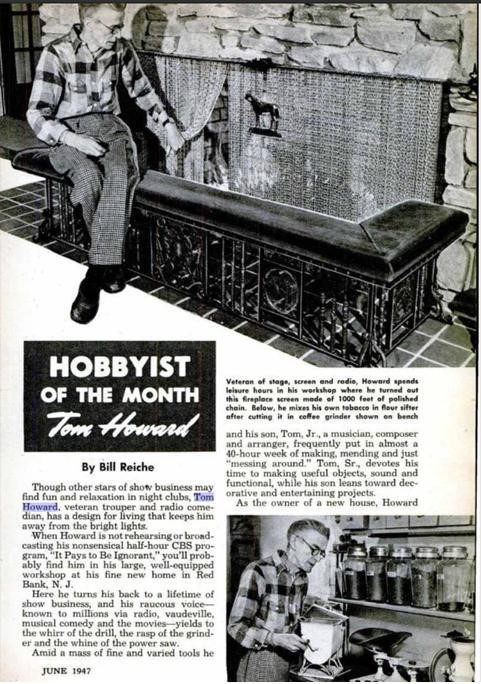
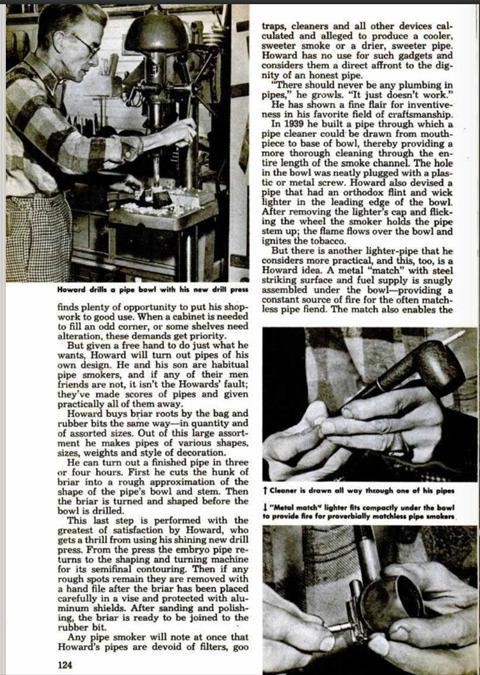
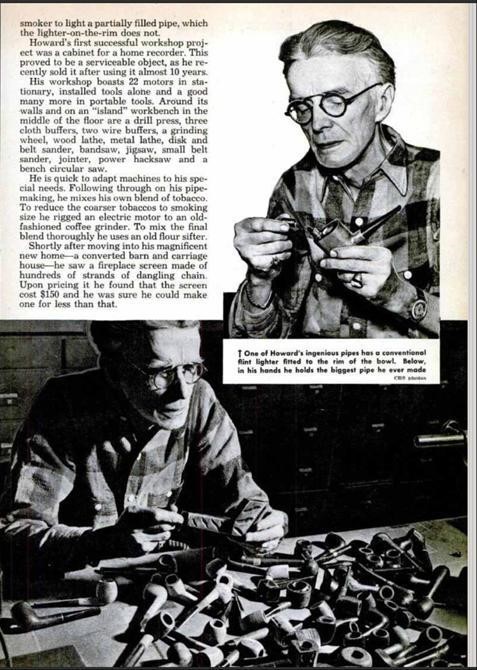
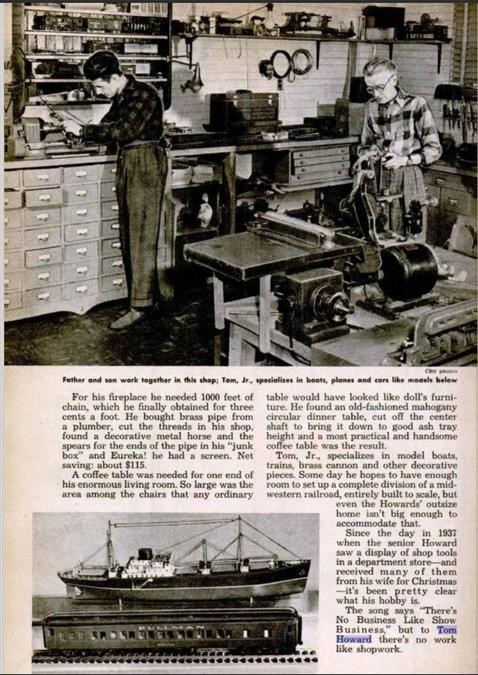
Tom Howard was a popular comedian and personality in the 1940s/50s, known for vaudeville stage and radio work. But he also was a skilled pipe maker. In a Popular Mechanic article from 1947 he is written up as the “Hobbyist of the Month, Tom Howard.” He made pipes in his workshop outside his home in Red Bank, NJ. Starting about 1939 and looks like into the late 1940’s or later. He purchased briar blocks by the bag as well as stem blanks, and in his well-equipped shop he handcrafted his pipes, in about three hours on average. He was a true craftsman, also specializing is intricate model boats, trains and brass canons, all built to scale.
I was intrigued – this vaudeville and stage comedian made pipes and this pipe came from his workshop made by his hands.  How cool is that?  Desiring to find out more about Tom Howard the man, I searched Wikipedia and found a fun and informative article about his professional life and how he hosted a I was intrigued – this vaudeville and stage comedian made pipes and this pipe came from his workshop made by his hands.  How cool is that?  Desiring to find out more about Tom Howard the man, I searched Wikipedia and found a fun and informative article about his professional life and how he hosted a zany Q&A game show that was spoofing the ‘serious’ Q&A game shows.  It was called “It Pays to Be Ignorant”.   Here is what the Wikipedia article said:

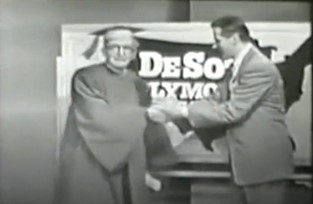
It Pays to Be Ignorant was a radio comedy show which maintained its popularity during a nine-year run on three networks for such sponsors as Philip Morris, Chrysler, and  DeSoto. The series was a spoof on the authoritative, academic discourse evident on such authoritative panel series as Quiz Kids and Information Please, while the beginning of the program parodied the popular quiz show, Doctor I.Q. With announcers Ken Roberts and Dick Stark, the program was broadcast on Mutual from June 25, 1942 to February 28, 1944, on CBS from February 25, 1944 to September 27, 1950 and finally on NBC from July 4, 1951 to September 26, 1951. The series typically aired as a summer replacement.

Snooping a bit more, I found an online site that had the July 5, 1951 episode of ‘It pays to Be Ignorant’ available for viewing.  I watched it and it was like I was in a time machine!  The video also included period advertising for cars and tobacco and Tom Howard in form, dawning a professorial gown and a gravelly 1950s vaudeville tin can voice.  It’s great! I clipped a picture of the episode.  If you want to see it yourself, here’s the link:  The Internet Archive.
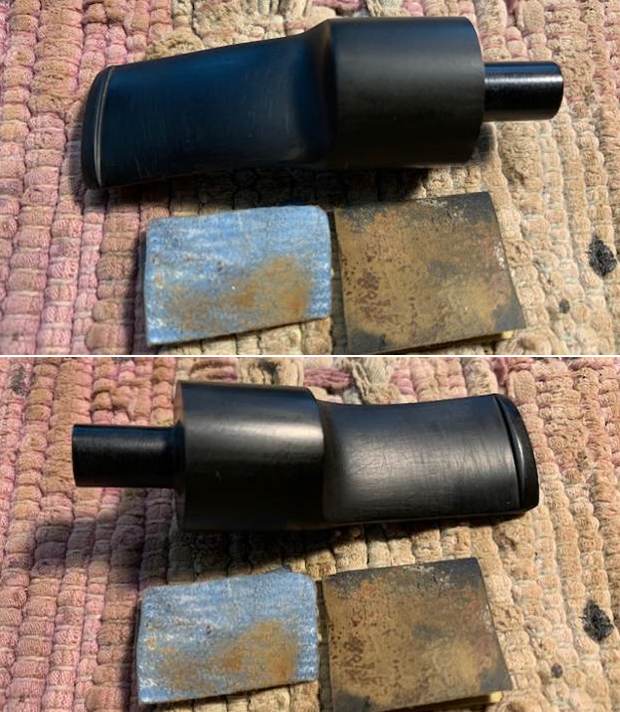
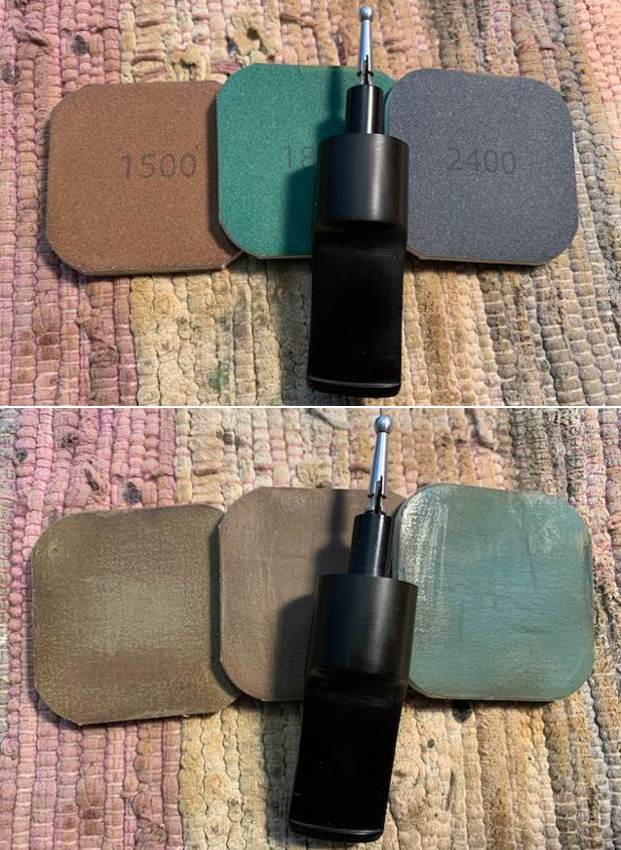
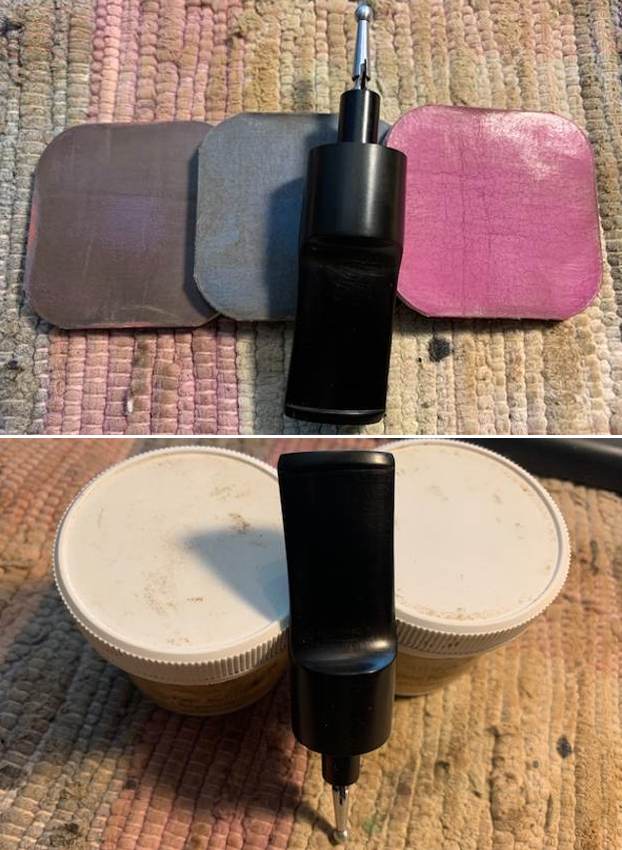
The Pipedia article I included above, referenced one more source to learn a bit more about Tom Howard.  In a 1947 Popular Mechanics edition he was named ‘Hobbyist of the Month’ – but it didn’t say which month!  With a little bit of help from Google, I found Archive.org that housed old editions of many periodicals including Popular Mechanics.  I started in January and started searching – thankfully they had a search tool I utilized for each month.  Finally, I found the article in the Popular Mechanic 1947 June’s edition.   For the absolute nostalgia of it, and for the interesting information it adds about Tom Howard and especially his pipe production, I’m including the pages here for you to read – including the cover page!  I couldn’t pass it up!  Armed with the great information Dal had provided it was time to work on the pipe. Jeff had carried out his thorough cleanup of the pipe. He had reamed it with a PipNet reamer to remove the cake and cleaned the reaming up with a Savinelli Fitsall Pipe Knife. He scrubbed the internals of the bowl and stem with alcohol, cotton swabs and pipe cleaners. He scrubbed the externals with undiluted Murphy’s Oil Soap and rinsed the bowl off with running water. He soaked the stem in Before & After Deoxidizer and once it had soaked rinsed it off with warm water to remove the residual solution. He dried it off and rubbed it down to remove any oxidation that was still on the stem. The pipe looked much better when I received it. I took a photo of the rim top to show the condition. You can see the darkening and the damage to the inner edge of the rim on the back right. It is roughened and chipped and out of round. The taper stem came out looking quite good. There are tooth marks and chatter on both sides near the button and some damage to the button surface itself.     I took photos of the sides of the shank to show the stamping. It is clear and readable as noted above. I removed the stem from the shank and took a photo of the pipe to show what I was working on. The stem also shows a small aluminum stinger in the tenon.I decided to start the restoration on this one by working on the damage and darkening on the right rear of the rim top. I sanded the rim top with 220 grit sandpaper and gave the inner edge of the bowl a slight bevel to remove the damage and blend it into the rest of the rim edge.   I polished the smooth parts of the briar with micromesh sanding pads – dry sanding with 1500-12000 grit pads. I wiped the bowl down with a damp cloth after each sanding pad.  With the repair completed I rubbed the briar down with Before & After Restoration Balm. I worked it into the briar with my fingertips and a horsehair shoe brush to work it into the nooks and crannies of the rusticated finish. The product works to clean, enliven and preserve the briar. I let it sit for 10 minutes while I worked on the stem. After the time passed I buffed it with a cotton cloth to deepen the shine. The briar really comes alive with the balm. I set the bowl aside and turned my attention to the stem. I sanded it with 220 grit sandpaper to smooth it out the marks and tooth chatter on the surface. I started the polishing with a piece of 400 grit wet dry sandpaper. I polished the vulcanite with micromesh sanding pads – 1500-12000 grit pads. I wiped it down with Obsidian Oil after each sanding pad. I used Before & After Pipe Polish – both Fine and Extra Fine to further polish the stem.  This Tom Howard Rhodesian/Scoop turned out to be a nice looking pipe. The rusticated finish looks quite good while not obscuring the grain around the bowl. The stain used on the bowl served to highlight the grain on the bowl. The polished black vulcanite saddle stem adds to the mix. With the dust gone from the finish and the bowl it was a beauty and is eye-catching. I put the stem back on the bowl and buffed the pipe with Blue Diamond on the buffing wheel being careful to not buff the stamping. I gave the bowl and the stem multiple coats of carnauba wax on the buffing wheel and followed that by buffing it with a clean buffing pad. I hand buffed the pipe with a microfiber cloth to deepen the shine. The finished Tom Howard Rhodesian is a large pipe and feels great in the hand. Give the finished pipe a look in the photos below. I can only tell you that like the other pipes I am working that it is much prettier in person than the photos capture. The dimensions of the pipe are Length: 5 ½ inches, Height: 1 ½ inches, Outside diameter of the bowl: 2 ¼ inches, Chamber diameter: 7/8 of an inch. The weight of the pipe is 70grams/2.47oz. I will be adding it to the American Pipe Makers Section soon if you would like to add it to your collection. Thanks for walking through the restoration with me as I worked over another beautiful pipe. Remember we are not pipe owners; we are pipemen and women who hold our pipes in trust until they pass on into the trust of the next generation.

I Finally Took the Plunge and Bought a Jose Rubio Pipe


Blog by Steve Laug

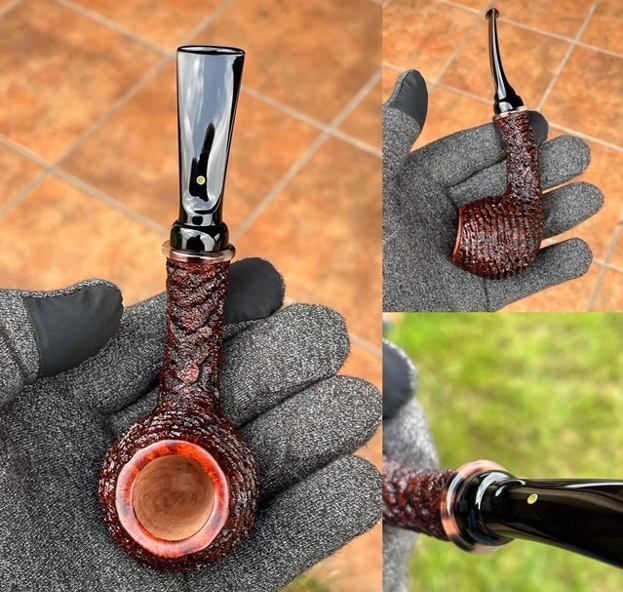
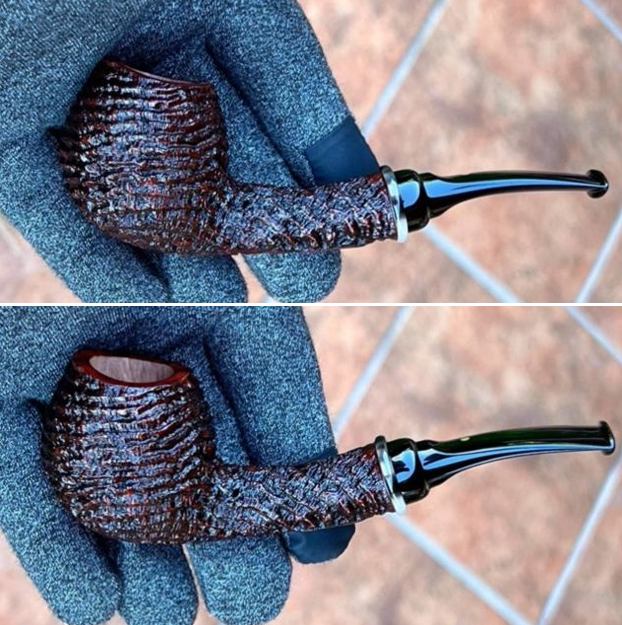
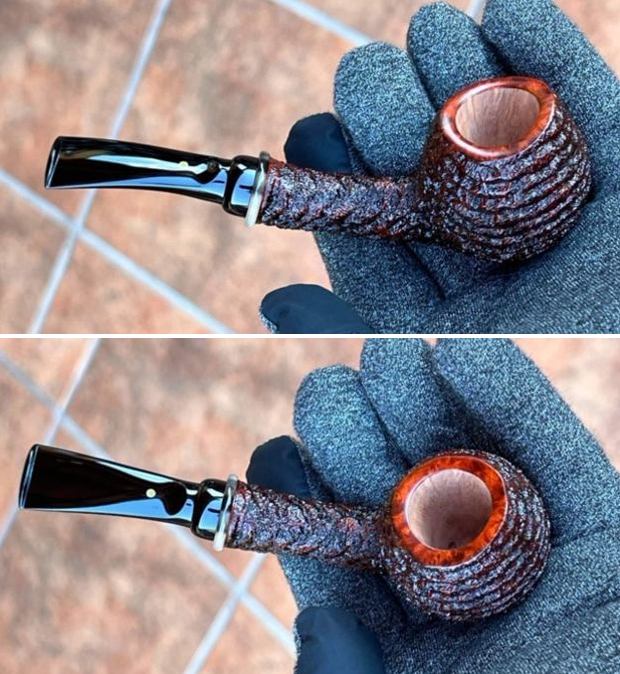
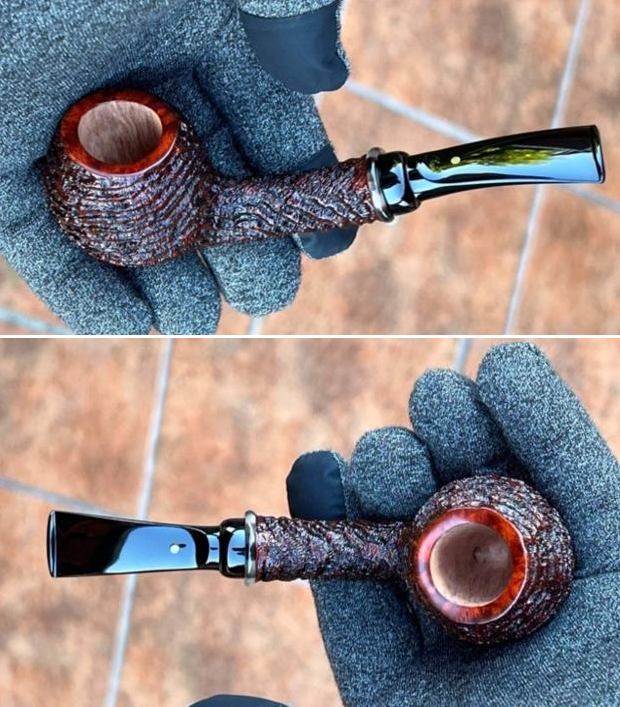
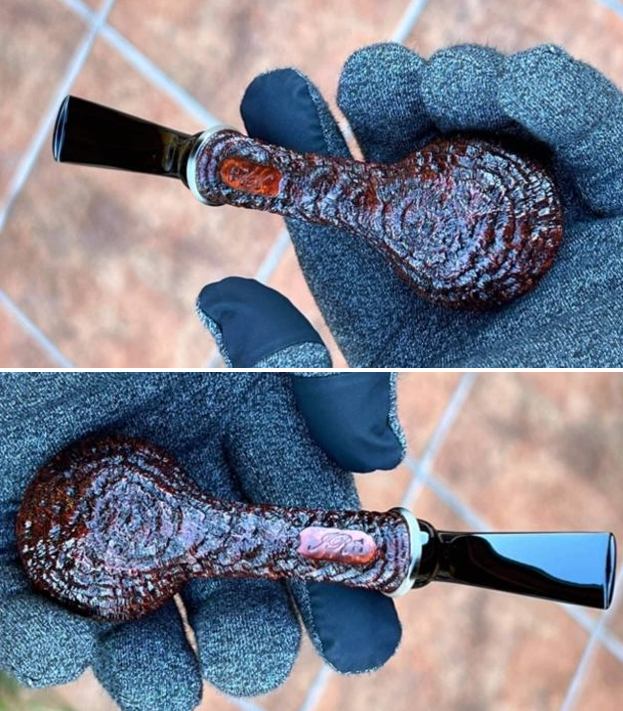
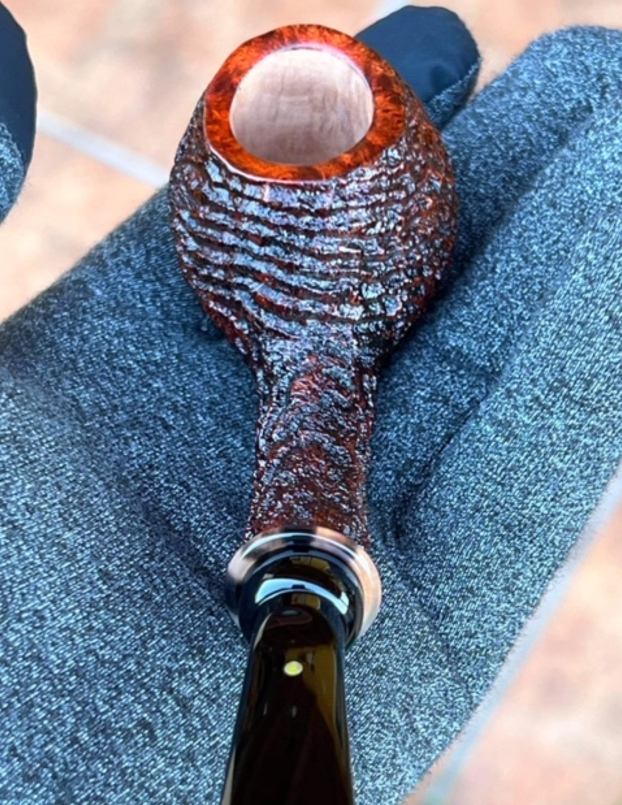
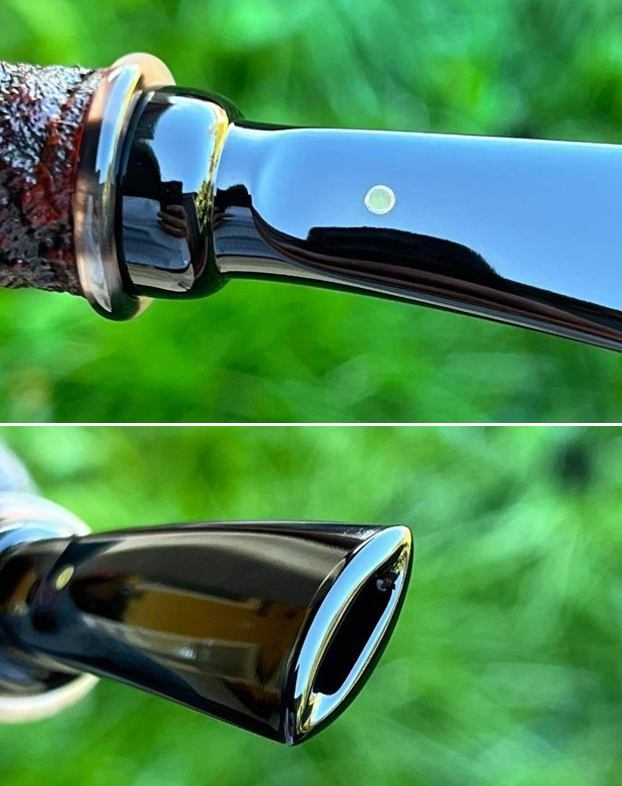
I have been following Jose Rubio on Facebook for a long time and reading his page that showed his work. I really like the looks of the deep sandblast finish that he has worked out. It really does show the cross grain and ring grains very well and his finish really makes them stand out. I also like his smooth finished and the shank adornments that he uses. His stem work really looks well done and very comfortable. Each time he posted a picture or a series of pictures of his current work I paused and spent time looking at the pipe. Several weeks ago he posted a pipe that really got my attention. It was one of those moments when PAD (pipe acquisition disorder) reared up in my and I wanted this pipe. I included the photos of the pipe below that he originally posted.I put the desire for the pipe on hold for a bit and did some research on Jose Rubio. I wanted to understand what drove him and his passion. I turned first to one of the sellers that I follow here in Canada – Maxim W. Engel (who lives in Toronto). Maxim has been selling and following Jose. He has done a great job summarizing his work (https://pipes2smoke.com/collections/jose-rubio). I quote from that below as he captures my feelings about what I have seen very well.

Jose Rubio has been repairing and making pipes for over 35 years. His goal was to create a superb looking pipe that was also a superb smoker. He takes great pride in hand selecting only the best blocks. All his pipes have a slight V shaped interior as he feels this is the best shape for the largest variety of tobacco types…

He is almost fanatical about his stems, made from Grade “A” German Vulcanite and  that all stems be between 4-4.2 millimeters thick and hand sands the sides edges. His stems are amongst the best I have ever seen.

His sandblast almost always have deep ring grain which he achieves by only using smooth straight grains and a 5 part blasting process that takes him 10-12 hours per pipe. He is absolutely convinced that his deep blasting, by creating a greater surface area, delivers a cooler smoke. He has recently cut back his production to 90 50 pipes a year. Jose Rubio’s sandblast are among the best there is. — Maxim

I turned then to Pipedia and was surprised to find that Maxim had written that article as well. It is slightly different from his words on his Pipes2smoke site (https://pipedia.org/wiki/Jose_Rubio). I quote that below.

Jose Rubio started at first as a collector then later as a pipe repairman. After a few years he started to make pipes within his goal being not only to create a superb looking pipe but a superb smoking pipe. He takes great pride in hand selecting only the best blocks. All his pipes have a slight V shaped interior as he feels this is the best shape for the largest variety of tobacco types to deliver of their best.

He is almost fanatical about his stems and insists that all stems be between 4-4.2 millimeters thickness and the sides edges be smooth, which he hand sands. All are made from Grade A German Vulcanite. His stems are amongst the best I have seen. His sandblast almost always have ring grain which he achieves by only using straight grins and a 5 part blasting process. It takes him up to 12 hours to sandblast a pipe. He is absolutely convinced that his deep blasting by creating a greater surface are delivers a fresh and cool smoke. His pipes are individually crafted to the highest engineering tolerances to deliver the best smoking characteristics. He makes a maximum of 110 pipes a year.

Information and pipe photos, courtesy pipes2smoke.com

Facebook: https://www.facebook.com/Pipesmaker

Facebook: https://www.facebook.com/joserubiopipes/

City: Oviedo, Asturias, Spain

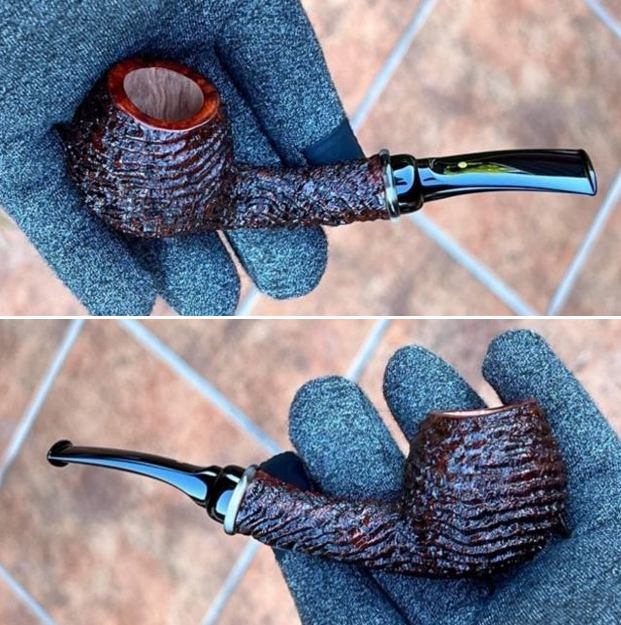
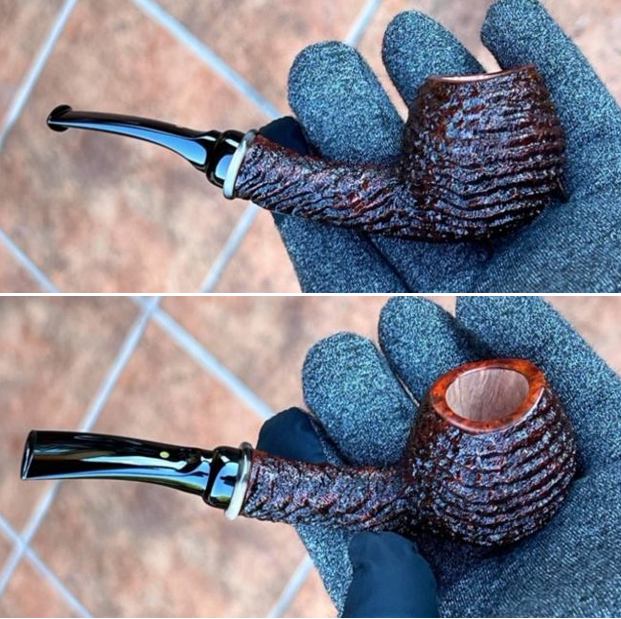
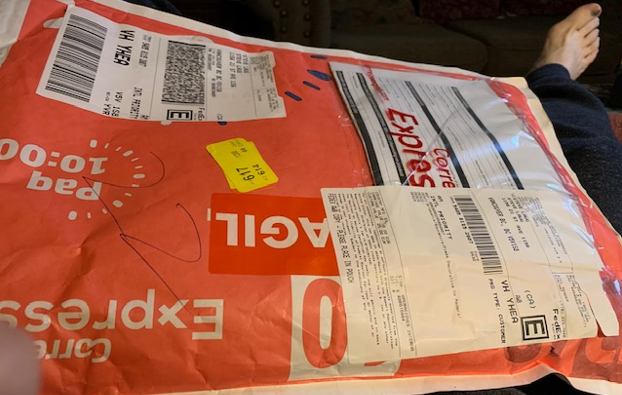
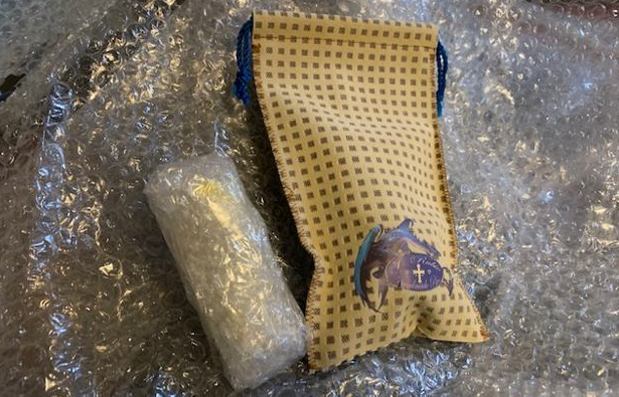
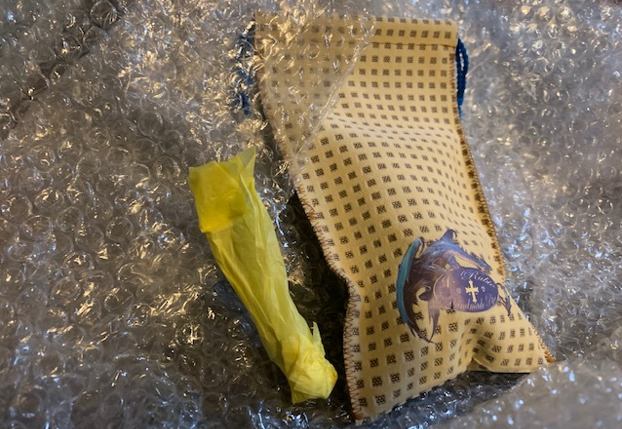
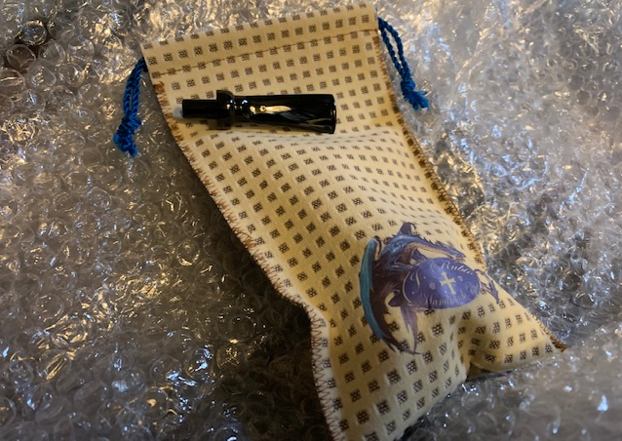
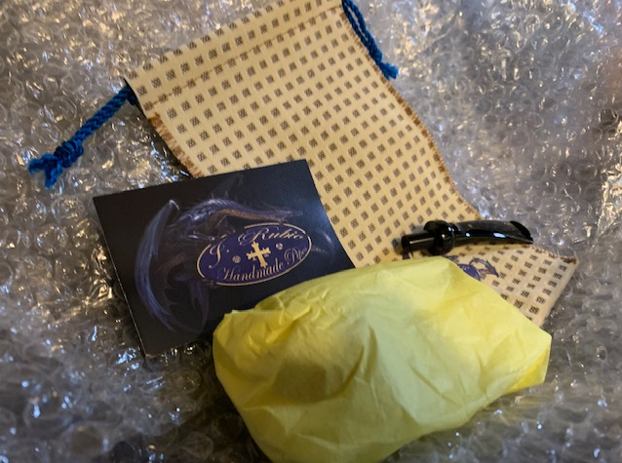
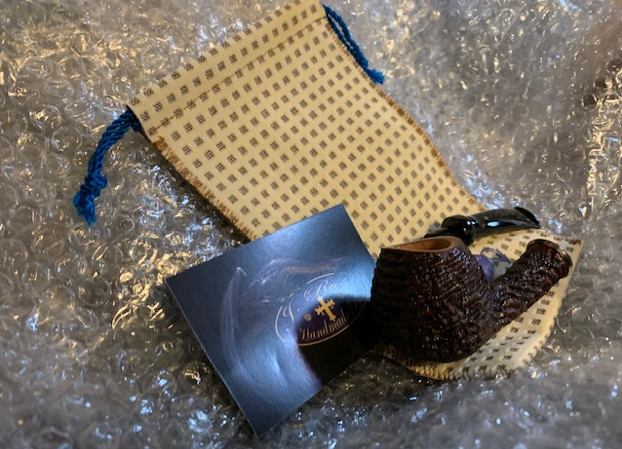
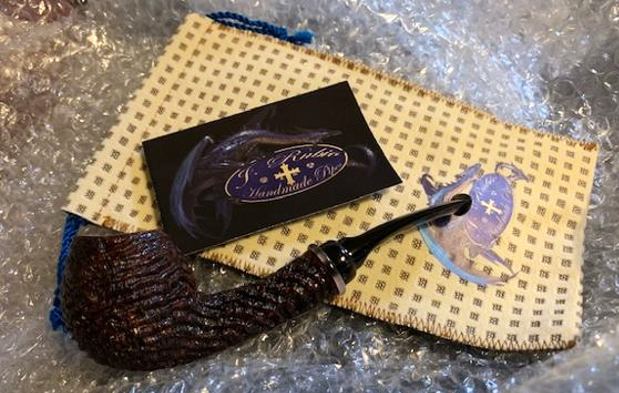
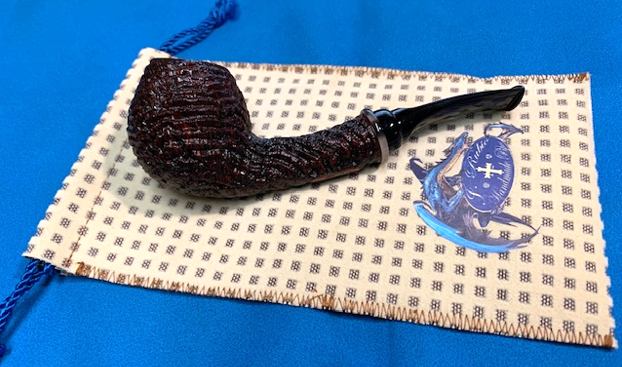
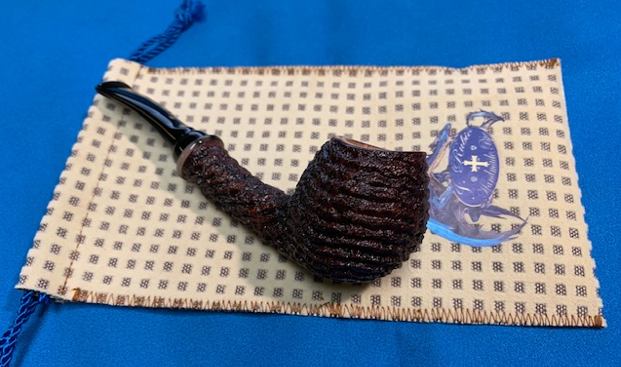
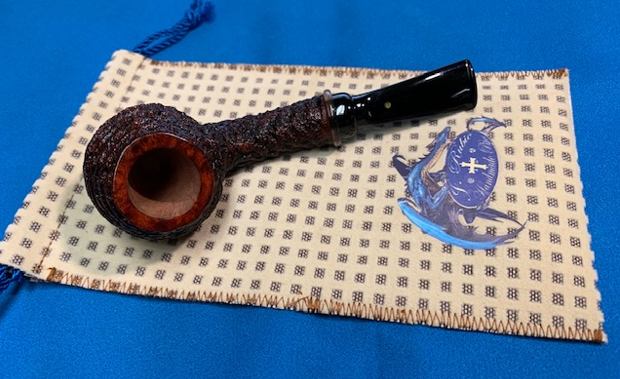
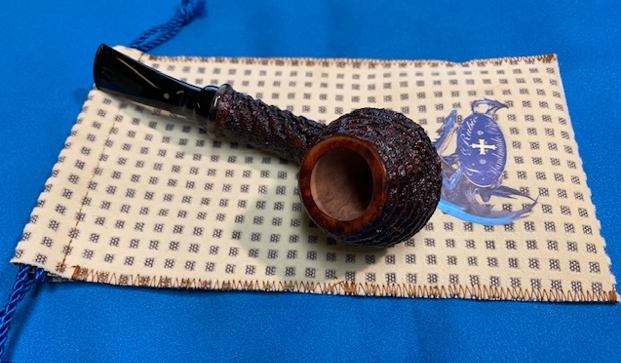
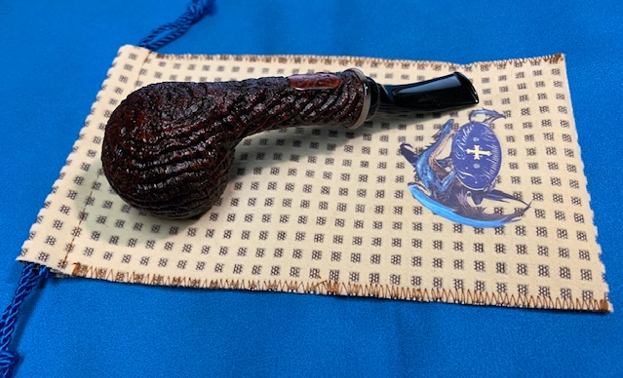
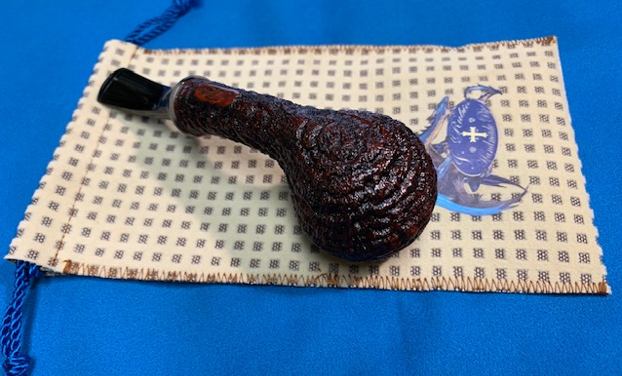
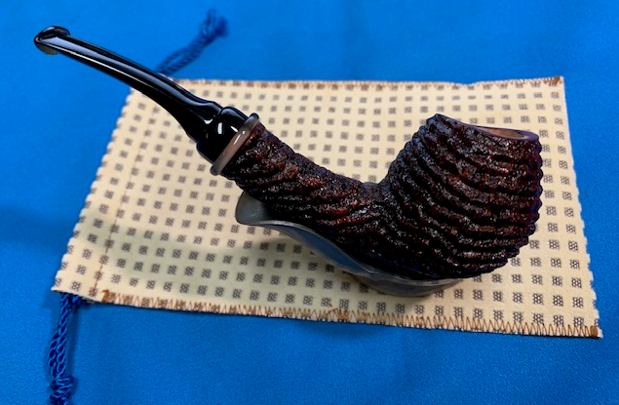
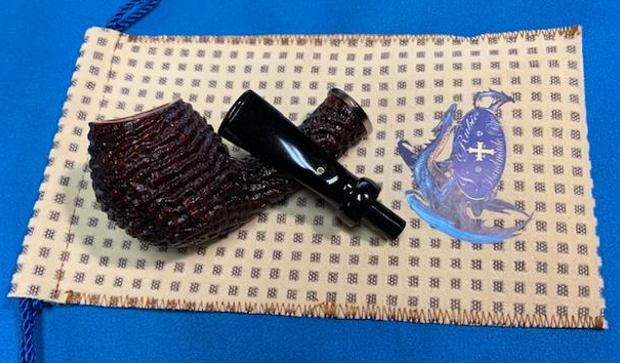
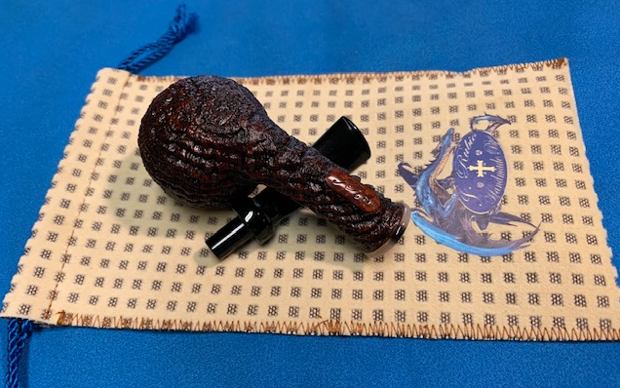
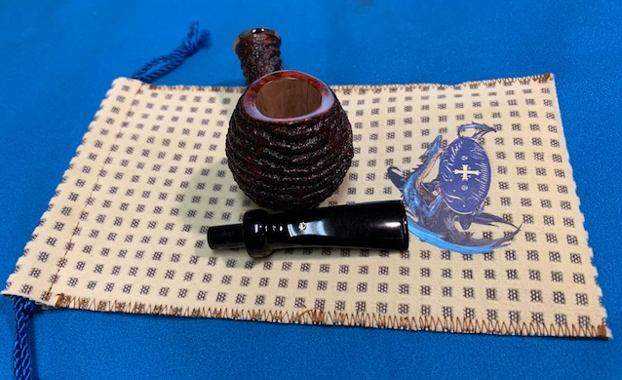
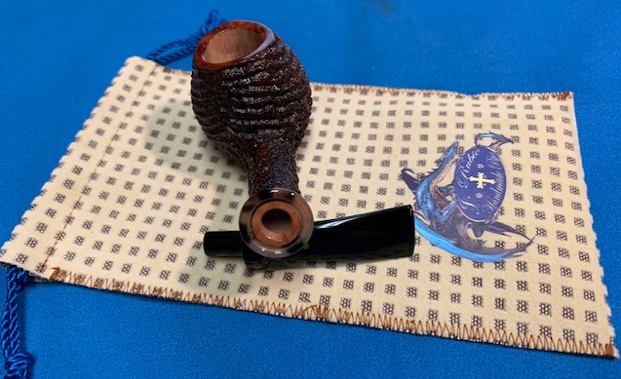
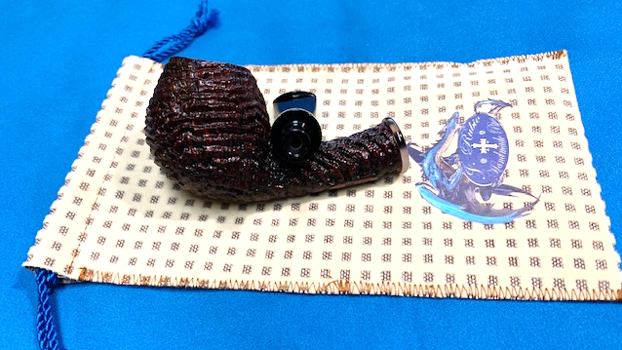
I was excited to read that Jose Rubio had been a pipe repair person. Since I am one as well this intrigued me to see how he applied what he had learned and seen in that work to move ahead as a pipe maker. I decided it was time to contact him and see what he had in mind with the pipe. We fired messages back and forth and he sent me a lot of photos of the pipe to guide me in my decision making process. I am sharing some of those photos below. The deal was sealed once I saw the pipe. I wrote Jose and closed the sale. I paid him through his PayPal account and he said it would go out on Monday morning. He sent me the tracking number and on Friday afternoon the pipe arrived in Canada from Spain. It took just five days to come from him to me. I was astonished when my wife brought it in and handed it to me. I sat for a bit in my chair with the bag on my lap contemplating opening it and having a look. I got up from my contemplation and took the package into the kitchen to open it. I cut the mailing package and found a small bubble wrapped package inside. I removed the tape holding the wrap in place and found a second smaller bubble wrapped package and nicely made pipe pouch with Jose’s logo on the front and royal blue draw strings.I unwrapped the second package and found a small parcel wrapped in yellow tissue paper. At this point I knew I was dealing with the stem but I had not even looked at the bowl. I unwrapped the tissue and a most beautiful and well made stem was in my hands. The button and slot were perfect to my liking. The tenon was flawless. It was a very nice looking piece. With that I opened the pouch and removed a beautiful business card and another tissue wrapped parcel. I am very impressed with the care that Jose took with the packing and the classy looking pouch, cards and personal thank you. Wow. Well done. I unwrapped the bowl and took my time looking at it. It was stunning. I slowly, carefully inserted the stem in the shank. What a beautiful looking pipe! The dimensions of the pipe are quite diminutive but were exactly what I expected – Length: 13cm/ 5.11 inches, Height: 3.81cm/ 1 ½ inches, Tobacco chamber height: 3.7 cm/ 2 ¾ inches, Tobacco chamber diameter: 19 mm/ ¾ of an inch, Weight: 44 grams/ 1 ½ ounces. It really is a beautiful pipe and the workmanship is flawless. I love the combination of the stains chosen, the smooth rim top and the brilliant sandblast. The acrylic shank ring is beautiful and the stem work is magnificent. The bowl is conical (Maxim calls it V shaped) as Jose believes that is the best bowl shape for smoking. The inside of the bowl is sanded smooth and looks almost too good to smoke! The fit of the tenon in the mortise is perfect and the chamfered/funneled end of the tenon is another fine touch making for a better smoke. I took some photos of the pipe once I removed it from the pouch. I will fire the pipe up this weekend. But just on craftsmanship alone and design I highly recommend considering Jose Rubio if you are in the market for a beautiful, craftsman Hand made pipe. I do not think you will be disappointed. Thank you Jose.

Reflections on the breadth of reach of rebornpipes


Blog by Steve Laug

On my recent trip to Milan, Italy I was struck by the reach and the breadth of connections of rebornpipes. I visited the Al Pascia Shop in the city and was known. I had given my rebornpipes business card to the proprietor when I arrived and once he looked at it he said he knew me. It turned out he was a long-time reader/follower of rebornpipes. I was known in a city I had never visited in a shop that I had never been to before. It was because of rebornpipes.

During the trip I was speaking with Paresh in India and told him of the experience and he shared that he had a similar one. He spoke of a pipe that he purchased from a seller in Turkey who upon hearing his name immediately felt connected because he had read Paresh’s work on rebornpipes. Once again it was because of rebornpipes.

I have had that experience repeated numerous times in a variety of pipe shops around the world wherever I have visited them. As with these times the link is always rebornpipes. The connection is very real and the reach is quite wide. I never cease to be amazed.

This gave me pause to reflect on what is happening now that rebornpipes is close to 10 years old (May 1, 2022). There are many writers/contributors from around the world who have shared their restoration and refurbishing work on the blog. None of us are paid for our contributions. We are merely doing it for the desire to pass on what we are learning and to encourage others to step out and give refurbishing a try. For every one of those readers who write and tell us of our influence there are many who never have written but when we meet them in person they speak out like they know us very well.

It is these silent ones that I continue to run into around the world who somehow feel connected to us because of a common love of all things pipe related. When I began rebornpipes many years ago I had hoped to provide a place for this to happen. I wanted it to became a community of restorers and refurbishers who shared their work, techniques and the learning curve with each other and any one interested enough to follow us and read.

In many ways that continues to happen quite remarkably. Many have joined the community and shared their experiences and work with the larger community. A side result that has happened, that I never imagined, is that an ever growing number of folks have created their own refurbishing blogs and Pipe Related blogs and have broadened and enriched the hobby. Examples of these blogs include Charles Lemon’s DadsPipes, Mark Irwin’s Peterson Pipe Notes, Dal Stanton’s The Pipe Steward, Ryan Thibodeau’s Lunting Bear Pipe Restoration and a host of others.

The beauty of this of course is the expansion of the hobby through the reach of each of these blogs as well as through the ongoing contributors to rebornpipes. People such as early contributors – Al Jones, Fred Bass, Gan Barber, Chuck Richards, Kirk Fitzgerald, Piet Binsbergen, James Gilliam, Al Shinogle, Greg Wolford, Robert Boughton, Brian Devlin, Bas Stevens, Mark Domingues, Eric Boehm, Les Sechler, Martin Farrent, Mike Leverette, Alan Chestnut, AJ Verstraten, Josiah Ruotsinoga, Cody Huey, Chiz Szymanski, Jace Rochacki, Joey Bruce, John Williams,  Joyal Taylor, Bill Tonge, Pat Russell, Andrew Selking, Anthony Cook, Aaron Henson, Troy Wilburn, Dave Gossett, Dutch Holland, Bill Hein and Joe Gibson had all contributed articles throughout the early days of the blog.

That does not take into account the current contributors – Al Jones (continues to faithfully post), Dal Stanton, Paresh Deshpande, Kenneth Lieblich, Mike Belarde, Bri Hill, Ryan Thibodeau, Jeff Laug, Alex Heidenreich, Viktor Naddeo. Like any time you make a list of contributores I am sure there are others that I have missed both past and present.

The lists above give you an idea of the breadth of the contributors and the amazing thing is that they are from many countries. They include men and women and people from a wide range of ages and walks of life. This alone is remarkable but the level of craftsmanship and ingenuity demonstrated by these folks is even more so. Rebornpipes has truly gathered a company of fine folks who contribute much to the hobby we love and serve.

This is all behind the scenes and many readers do not see the many names of those who have written or are writing for rebornpipes. It is gratifying to me to think about when you consider the humble beginning we had in 2012. I had put many articles on the blog and few people actually bothered to stop by and read it. Then one day Neill Archer Roan published a post on his own widely read blog encouraging people to check out rebornpipes. I am forever grateful to him for his vote of confidence.

To get a feel for the growth lets look as some numbers. In 2012 there were 39,646 views and 2,316 visitors. This year (up to October 8) there have been 340,700 views and over 166,800 visitors. The blog has had visitors from every continent and from over 200 different countries around the world. I am astonished at the growth. I want to take this time to thank all of you for your contributions and patronage over the years.

I sit quietly now as I finish my reflections on this post. I have to confess that never in my wildest dreams did I think that this would happen. Never did I imagine walking into a shop in another country to look at a pipe and tobacco and have the folks in the shop say that they know me. Those are things that are beyond my comprehension. I am just thankful to have been able to put together a blog that obviously meets a need and has created its own niche not only here in Canada but around the world. Thank you all for you help in making this a reality.

Adding An Italian Made Baldelli Ceramic Tobacco Humidor to the collection


Blog by Steve Laug

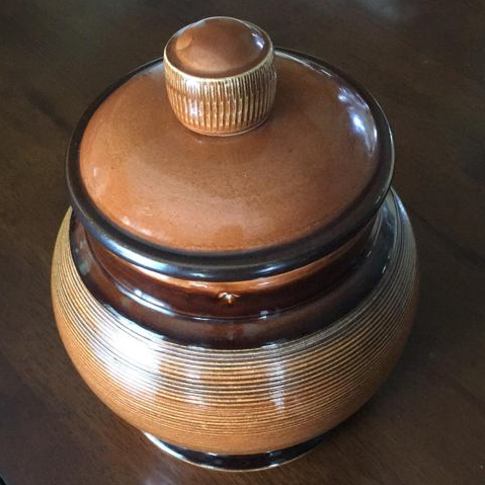
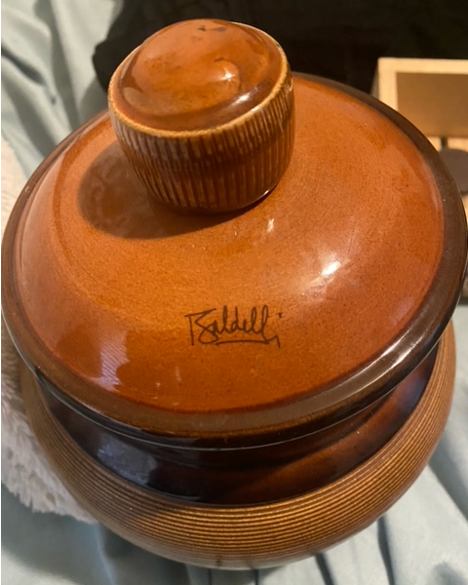
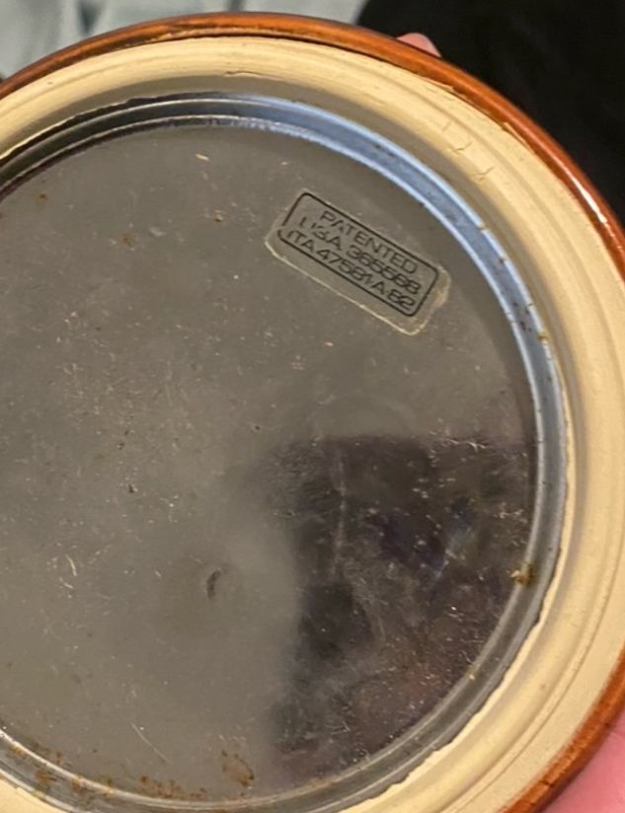
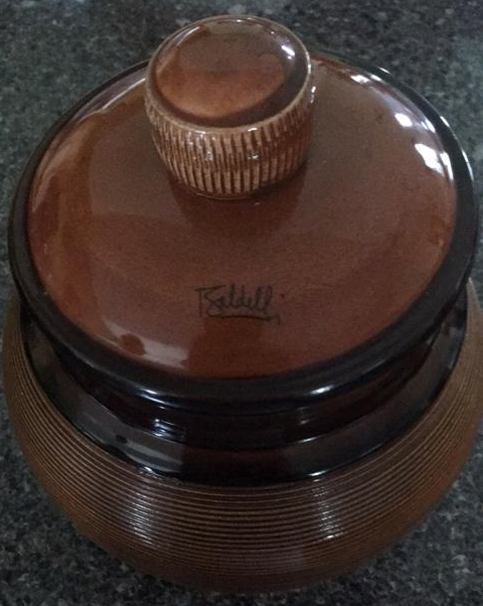
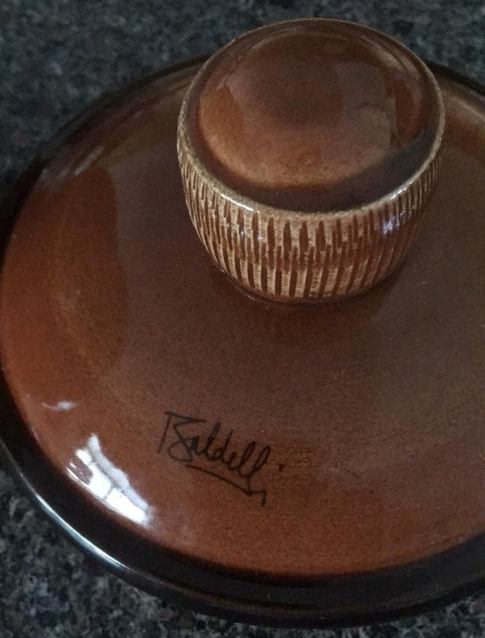
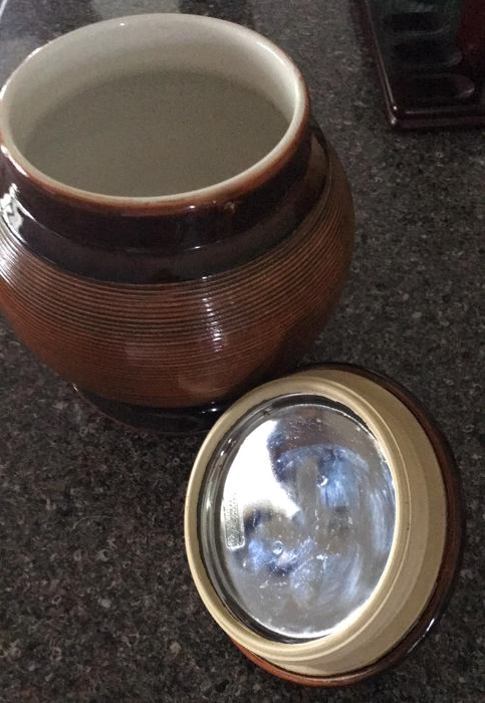
Jeff and I were contacted by a seller in California about some pipes she was selling and this ceramic tobacco humidor. She sent photos of the pipes and two photos of the humidor to me so that I could have a look at it. The first photos shows that it was marked Baldelli in script on the top of the humidor lid. The name did not mean anything to me. I know nothing about ceramics and humidor makers as I only have a few older no name ones and nothing like this one. It was made of ceramic and the round shape reminded me of an old cookie jar that I grew up with. It was a humidor that I wanted for my own collection. The second photo shows the seal on the inside of the lid along with a patent number from both the USA and Italy. The US Patent Number is 365568 and the Italian Patent Number is 47581A82. I looked under both numbers and could find nothing define what the patent applies to. My guess would be that it applies to the sealing mechanism on the lid of the jar.I did a quick Google search on the Baldelli Ceramics name to see what I could  learn on the net. I found a link on Wikipedia (https://en.wikipedia.org/wiki/Baldelli_ceramics). It gave a brief article on the brand and the family that made the ceramics. I quote it in full below.

Baldelli ceramics have been made by Ceramiche Baldelli in Città di Castello, near Perugia, Italy, since 1943.

The Baldelli family have been making ceramics for four generations. Ceramist Dante Baldelli (1904-1953), a ceramist working since the 1920s, who became the director of Ceramica Rometti di Umbertide,[1] opened his own workshop in 1943, in piazza Gioberti, Città di Castello, accompanied by his brother Angelo and gradually assisted by his oldest son Massimo, who was eight at the time[2] but who took over the business at the unexpected death of his father in 1953, aged eighteen; under his leadership production was being sold in US department stores from the 1970s.

During the 1980s, Massimo Baldelli’s daughter Simona and her husband Lorenzo Colacicchi joined the family business.[3]

In the early 1990s the Baldelli studio resited to the country outside Città di Castello.

When it arrived Jeff took photos and sent them to me. We debated putting it on the rebornpipes store but the more I looked at the photos the more I wanted to reserve it for myself. That may change once I have it in hand but for now I am looking forward to having a look at it once we can cross the US border again and spend some time with them.

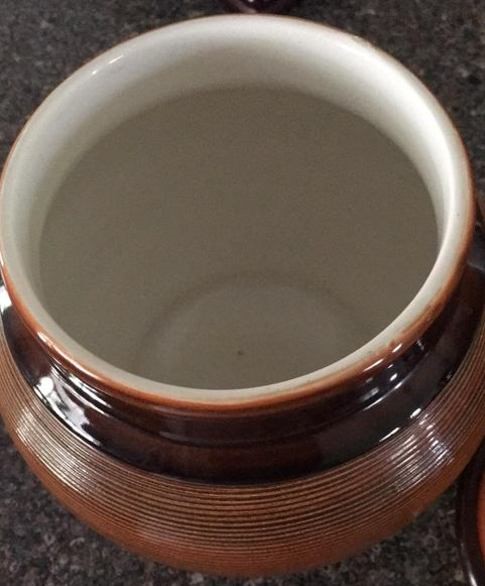
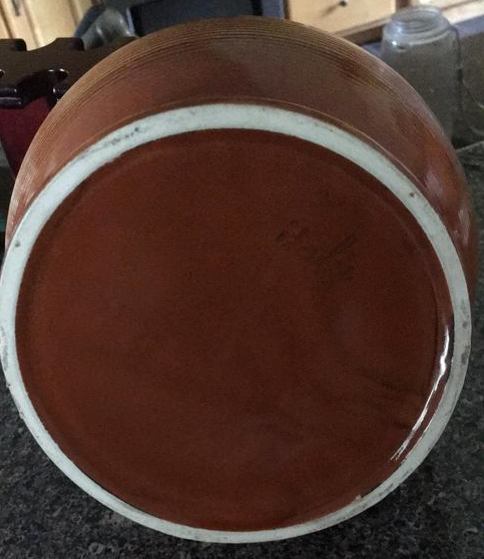
Oh… and just for those who are curious here are the dimensions of the humidor: the diameter of the bottom of the humidor is 5 ½ inches and the height is 8 inches. It is a good sized humidor and the internal seal really is fascinating to me. Here are those other photos.

It turned out to be an Epic Pipe Hunt


Blog by Steve Laug

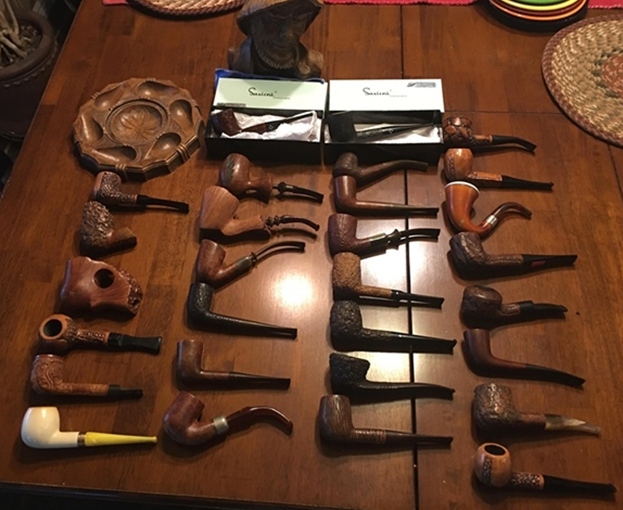
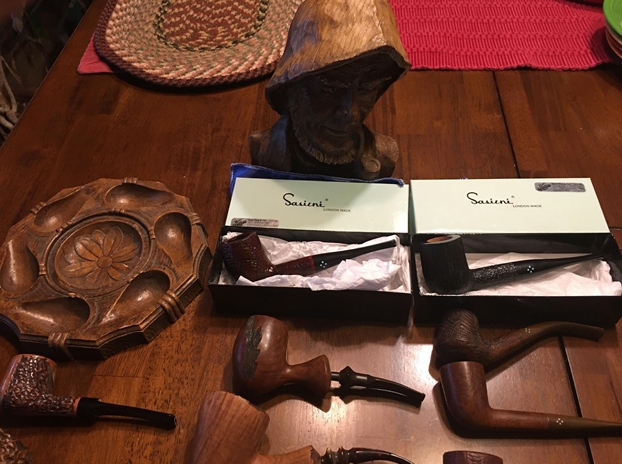
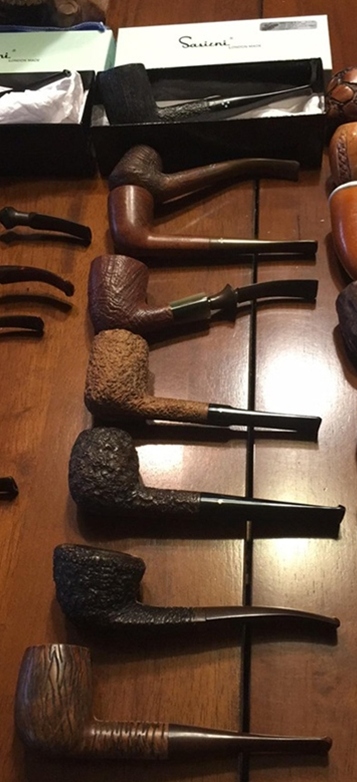
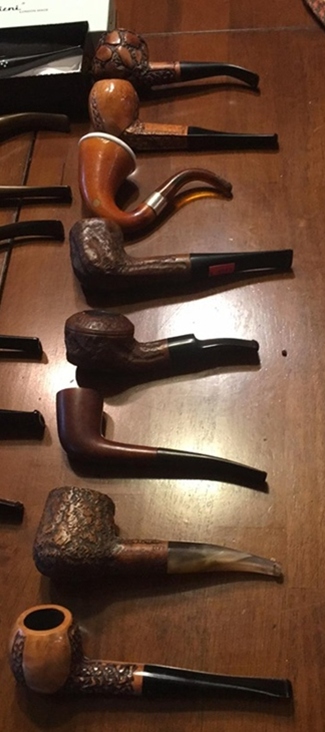
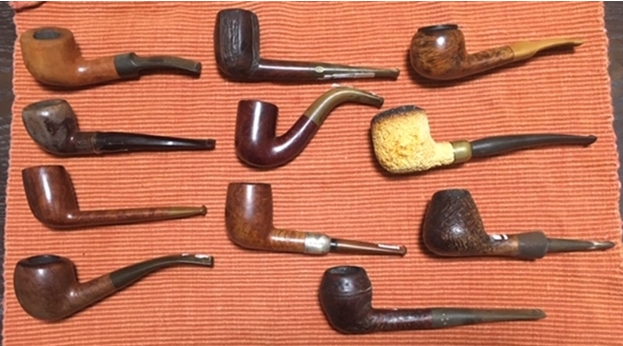
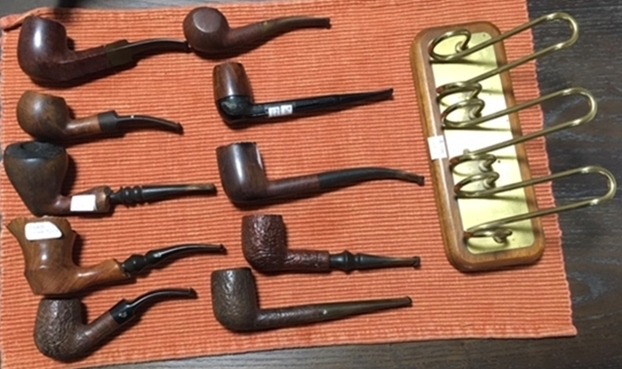
Jeff and his wife Sherry went on an overnight trip to Utah and did a bit of pipe hunting along with other things on their agenda. Throughout the day Jeff would either Facetime or send me a message with photos of what he was running into.  As I watched from a distance it seemed to me that he was having an epic pipe hunting trip. Each place he went whether new places that we have not been to before or places that the two of have hunted in the past yielded some great finds. I progressively wished that the border between Canada and the US was open so that Irene and I could take a trip down and join them on their journey. The first picture below is the one that he sent me when he got home – he gathered everything together and took the photo. He found the six pipe rest to the top left of the photo and the carved fisherman at the top center. Both were very interesting pieces to me. The find included a lot of different brand pipes and two of them freehand bowls without stems. There were quite a number of unsmoked pipes in the lot as well. A list of the pipes he found will be shown below with a closer look at that portion of the main picture. The first picture gives you a good feel for what he found this hunt. The second picture gives a closer look at the carved fisherman and the pipe rest. Pipe hunting over Facetime is not as good as being there but it allows me to experience some of the joys of the hunt. Thanks Jeff.

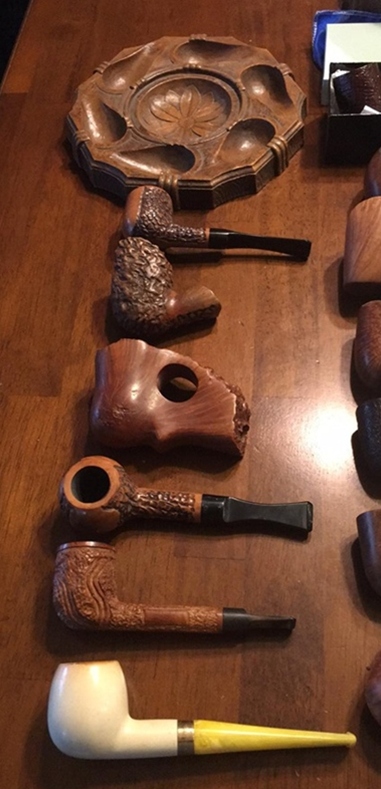
Jeff made a list of the pipes by column so that I could have a good feel for his finds.

The first column on the left has the following pipes from top to bottom:

  1. The 6 pipe rest
  2. Cowan’s Handmade Custom Unsmoked Pot
  3. Cartigiano Italy – freehand bowl sans stem
  4. Israeli Made Bridge Freehand – bowls sans stem
  5. Cowan’s Handmade Custom Unsmoked Squat Apple
  6. Genuine Meerschaum Imported Lovat (meerschaum lined??)
  7. Meerschaum Apple with acrylic stem and gold plated band


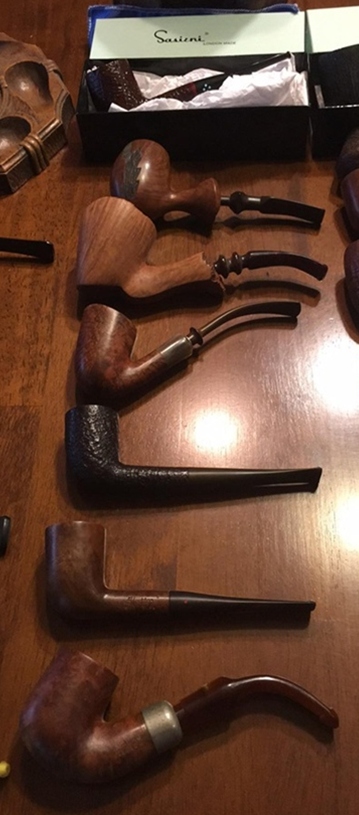
The second column from the left top to bottom has these pipes.

  1. Sasieni Four Dot Ruff Root Bark Billiard – Unsmoked with box and sock
  2. Scandanavian Freehand with plateau and rustication
  3. Preben Holm Regal Freehand
  4. W.O. Larsen Copenhagen Freehand with horn shank extension
  5. Dunhill Shell Briar Billiard 1969
  6. Blatter Montreal Billiard – red dot
  7. Mauro Series 2 Italy – Bent Billiard


The third column from the left top to bottom has these pipes.

  1. Sasieni Four Dot Rustic Billiard – Unsmoked with box and sock
  2. Sasieni Four Dot Ruff Root Bent Volcano
  3. Sasieni Four Dot Walnut Billiard
  4. Savinelli Non Pariel 9412 Bent Dublin
  5. Castello Natural Virgin Saddle Stem Billiard
  6. Castello Sea Rock Briar Apple
  7. Savinelli Capri Root Briar Dublin
  8. Comoy’s Blazon Rusticated Billiard


The fourth column from the left  top to bottom has these pipes

  1. Cowan Handmade Custom Bent Bullmoose
  2. Cowan Handmade Custom Bulldog – unsmoked
  3. Gourd Calabash (small) with an amber stem
  4. Custom Bilt Taper Billiard
  5. Custom Bilt Scoop
  6. BBB Natural Grain Zulu
  7. Caminetto Business Pot
  8. Cowan Handmade Custom Apple – unsmoked


This truly was an epic pipe hunt when you look at the brands of pipes he found and how many of them were unsmoked. The Dunhill, Sasieni, Preben Holm, Castello, Caminetto, Custom Bilt and BBB are well known brands and those alone were great finds. Added to that some of the others such as the odd Comoy’s Blazon, the older Gourd Calabash and the Savinelli Non Pariel give depth to the find. The unsmoked Cowan Handmade Custom pipes are a new brand to me and one that should be fun to search out. I would say that Jeff had a great pipe hunt and from the list of pipes I would say and epic one.  I only wish I could have been present as there is nothing quite like walking into an antique shop and finding a bonanza of pipes that have not been picked through. Thanks Jeff for sharing the trip.

Pipe Hunting with my brother in Alberta


Blog by Steve Laug

Over a period of 11 days this month I was traveling for work in Alberta. My brother Jeff and his wife Sherry joined me in Southern Alberta so they could go with me on the trip visiting donors – both individuals and corporates that support the Foundation that I work for. Between our various appointments we visited local antique malls and shops from Lethbridge to Edmonton and in many small communities in between. We were on a personal mission to hunt down estate pipes in as many of the antique malls and shops as we could visit. We had a great time on the trip visiting people and in our off time hunting and finding some great pipes.

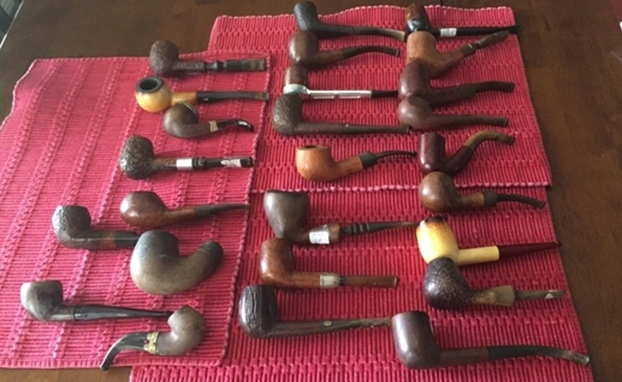
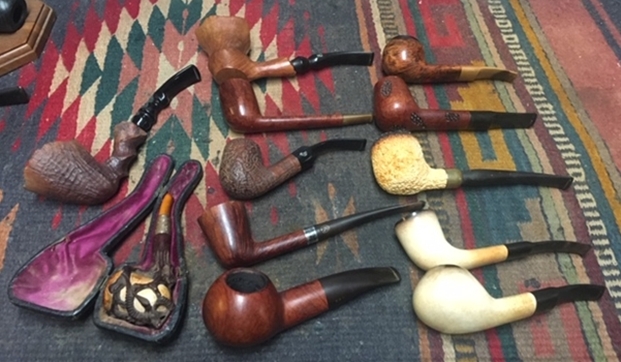
The first stop on our way south to Lethbridge was in a small community called Nanton. There are 5 or 6 antique shops and malls in the small town that advertises itself as an Antique stroll. Walking through the shops we found some interesting additions as shown in the photo below. The piece on the left is a porcelain/china Carlton Ware – Vert Royale combination rest and ash tray. The pipes from top to bottom are a Savinelli 320KS pipe stamped Knudson’s Pipe Dream, a C.P.F. Junior Twin Stem, a WDC Redmanol stem bent triangle shank billiard and a large Peterson style or WDC Wellington style pipe that is missing the ferrule and the stem. These first pipe finds set the stage for the rest of the trip.We continued the trip south. The next stop was an Antique shop in Lethbridge. I have stopped by that shop a lot of times over the years and other than one or two pipes now and then I had not found much worth picking up. This time it was a real surprise – there were a lot of estate pipes that were in racks on shelves on the walls and on shelves around the centre of the store. The left column from top to bottom includes an Amphora Sandblast Bulldog, a James Upshall P Grade Dublin with a Sterling Silver Band and a long straight stem, an Isle of Man Rusticated Bent billiard with a Peterson style system pipe, a Kiko Meerschaum Prince made of African Meer. The right hand column from top to bottom includes a Great Britain Block Meerschaum Author with a flumed top and an oval stem, a second Great Britain Block Meerschaum Zulu with a flumed top and an oval stem and an interesting looking Morel author in much the same style as the first block meerschaum mentioned above. Once again these were some great finds.After being house bound an extra day due to record snows for the area we headed north. I had appointments in communities between Calgary and Edmonton. The first stop on the northern trip was in Airdrie. There is a large antique mall there that had always provided me with some good estate pipes. We found five pipes during our walk through the shop – four briar ones and one meerschaum. Starting in the left column from the top down is a Leonard Payne Classic billiard that is a bit like Keyser Hygienic pipes out of South Africa, a Ben Wade Spiral sandblast with a twist in the shank and the stem, a sandblast Parker Zulu, a Butz Choqin stamped Optimal (des J Colombo) and a Redmanol stemmed Meerschaum billiard with a flumed bowl top.We also made a stop at an antique shop in Innisfail and found a very interesting old pipe that was in a case. It was not like any other old cased pipes that I have worked on. It combined a lace briar carved bowl with a meerschaum insert inside. There was a broken amber stem and a filigreed brass coloured cone shaped band. There was no tenon on the stem piece or in the shank. The oval stem chunk was fitted in the band was held in place against the shank with the band. The pipe was a beauty sporting carving in the briar that was a mix of vines around the bowl sides and bottom with a carved goat’s head on the front of the bowl.We spent the night in Red Deer and met with contacts that I had in the area. We also visited a pipe shop while were there. We picked up a patent applied for Kool Smoke Metal pipe that is shown in the group photos below.  The next stop on our way north was Lacombe. We had a lunch meeting with one of my contacts and his wife. While we were waiting we visited a local antique mall. We found the first two pipes shown in the left column of the photo below. The top one is stamped Made in Greece and is barely smoked. The second pipe is a unique system pipe from the 30-40s stamped Ken’s Patent Pending. The rest of the pipes came from two different Antique Malls in Edmonton. The third pipe in the first column is a nice little Canadian with a short stem. It has no stamping on the shank but the stem has an orific slot. The fourth pipe is a Charatan’s Make Special. The second column from top to bottom includes a GBD Pierrot 110 or 440, Lords London Made on the left side and Mike’s Edmonton 4811 on the right side, and an MRC military bit billiard. The third column (one on the right from top to bottom) includes an English Made Kaywoodie Airway pipe with a push stem with a stinger without holes and an integrated wind cap, an Eric Nording Meerschaum Pot with a Military bit and a Svendborg Sand blast Brandy with a vulcanite shank extension and a Military Bit stem. The pipe at the bottom between the two columns is a Canadian made Brigham 4 dot Rhodesian. We continued our meetings and pipe hunting through several other Antique Malls in Edmonton and an Antique Show at a local hotel. The pipes found are shown in the photo below. These include from the left column top to bottom a diamond shank bent billiard stamped Bruyere Garantie, a smooth finished Big Ben Crosley apple, a Nording Denmark Freehand with a turned fancy stem, a Canadian Made Freehand by the Paradis Brothers stamped SC, and a second Big Ben Crosley – a sandblast apple. The second column from top to bottom includes a Jeantet Bent Panel Rhodesian, a Bromma Swedish Gutta Percha pipe with a tall wood bowl, a Stanwell Hand Made Bark Billiard with the wrong stem, a Capri Italian Made Sandblast Billiard and Big Ben Sand Grain Billiard. The last item in the photo on the right side of the photo is a metal pipe rest that is quite interesting.At the end of the ten days, Jeff and Sherry were packed and ready to drive back to Idaho. I had a couple more days to go before I left. While they packed we divided the spoils and Jeff took 26 of the pipes home to work on with his cleanup process. I took 14 of the pipes that I had already cleaned up or were in relatively good condition. The first photo shows the pipes that Jeff brought home. Included in the lot was a metal KoolSmoke with a Patent applied for number on the base (it is the third pipe down in the middle column of the first photo below) that we found during our hunt in the Antique Malls in Red Deer. The second and third photos show the pipes that I brought home. Included in the second photo is a pipe stamped Moonshine Spanish Brandy with an oval shank that Jeff had picked up in Great Falls, Montana on his way north to Alberta (it is pictured in the second photo, the second pipe down in the far right column). It is lightly smoked and in excellent condition. From the collection of pipes shown in the above photos you can see that it was a great pipe hunt. We could have hunted for a few more days but ran out of time. We agreed that we would need to do it again and pick up where we had left off. Keep an eye out as the pipes are restored and begin to show up on the rebornpipes online store. Thanks for giving the blog a read. Good hunting to all who read this blog.

A long awaited pipe hunt in Salt Lake City & Surrounding Communities


Blog by Steve Laug

In May, in talking with my wife, Irene it was decided that I would travel to Idaho Falls from Vancouver Canada for my Father’s 91st Birthday at the end of June. I began to search for flights that were both affordable and would not require a lot of transfers to other airports and planes to get to Idaho. The prices were crazy and all included significant layovers on the way there and back. I talked with Irene and pretty much decided this trip was not going to happen this year. I was a bit sad as every visit could well be the last one with age and distance. I went to bed and woke up with a plan. I decided to check on the cost of a flight to Salt Lake City, Utah (about a 3 hour drive from Idaho Falls). The price was literally a third of the cost of everything else I had checked. I called my brother Jeff to see if he would be willing to drive there and pick me up. As we talked we decided to take some time include a pipe hunt! I booked the earliest flight I could which gave me a whole day in Salt Lake and another day to drive through the neighbouring communities back to Idaho Falls – all the while stopping by antique shops and malls scavenging for pipes. We hung up and I booked the ticket. It was set for June 28th which was perfect all the way around. The wait for the date to arrive seemed to take forever.

The morning of the flight arrived and I was on the way! The flight was a short 1 hour and 40 minutes and I was on the ground. Jeff picked me up and he had a plan of attack for the pipe hunt. We decided to visit Jeanie’s Smoke Shop first as it was close to the airport. From there were would visit the antique shops in Salt Lake City and Ogden that day. The following day we would visit Brigham City and Logan. We also would visit small communities between the major stops noted above. We were off on the hunt. I have written about Jeanie’s in a previous blog (include the link here). So I will focus only on the antique shops. We found the Salt Lake shops empty of any pipes that caught our interest and manned by sales staff that had no desire to help us out in our hunt. In fact they were almost offended that we would expect them to have such “filthy” items as estate tobacco pipes. It was like they were saying, “You are in Utah after all and we don’t do such things.” What is funny is that in all the shops we visited we came away from SLC with just one pipe – little Dublin with a red, white and blue band and stamped St Claude, France. We laughed and continued our hunt.

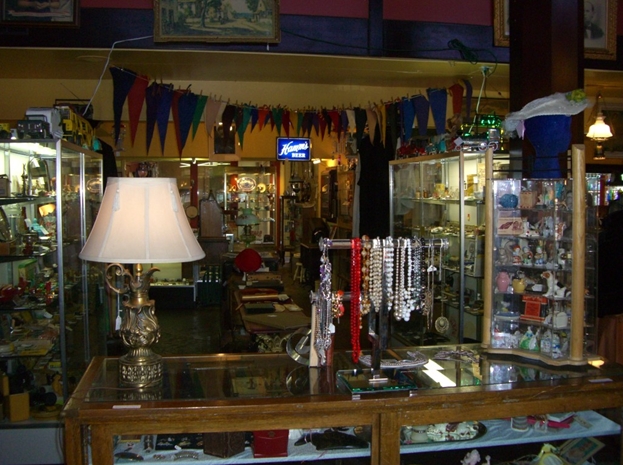
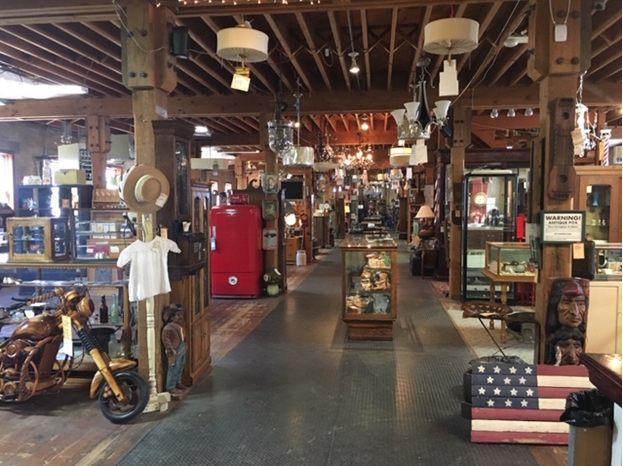
We finished the last of the shops and malls in Salt Lake and headed to Ogden. There was a great shop there that Jeff had previously found some great pipes at. So we set off to see if there were more. The shop was called “The Estate Sale Antiques” and it advertises itself as Ogden’s best antique mall. The Estate Sale Antique Mall was nearly 6,000 square feet in size filled with some of the finest and most unusual antique and collectible items anywhere. The owners Lance and Becky are both life long collectors with a wide variety of knowledge including advertising items, coins, bottles, country store antiques, toys, western memorabilia and jewelry.Lance greeted Jeff like a long lost friend and we were made to feel very welcome in the store. In Googling the shop here is what I found and I have to concur with the description: “Estate Sale Antiques brings together a fantastic group of antique vendors under one roof in the heart of Ogden. With convenient accessibility and plenty of parking, The Estate Sale is a must-see stop on any antique shopping quest in Ogden or even from Salt Lake City!”  The next photos are from theire website and give a pretty good idea of the size and diverse contents of the shop. It was a great place to visit and contained two floors of treasures. Jeff lead me to a corner near the cash register and not far from the front door where he knew there were pipes (It is shown in the second photo above). In fact not only were there ones that he had looked over previously but there were also new pipes as well. We found 8 pipes that we wanted including some real beauties and some old timers. We also found a walnut pipe rest made specifically for holding a gourd calabash pipe and a PipNet pipe reaming set.

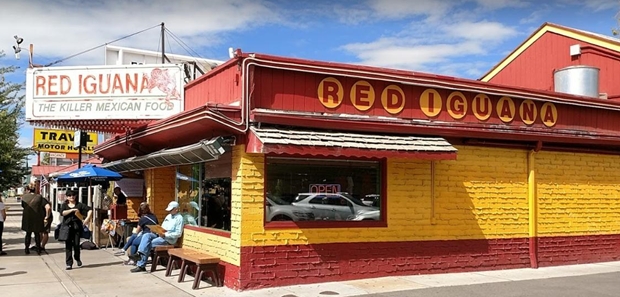
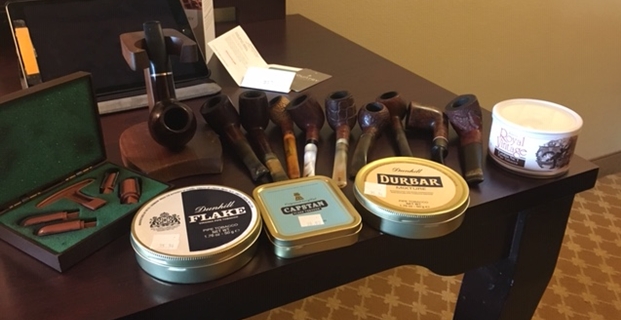
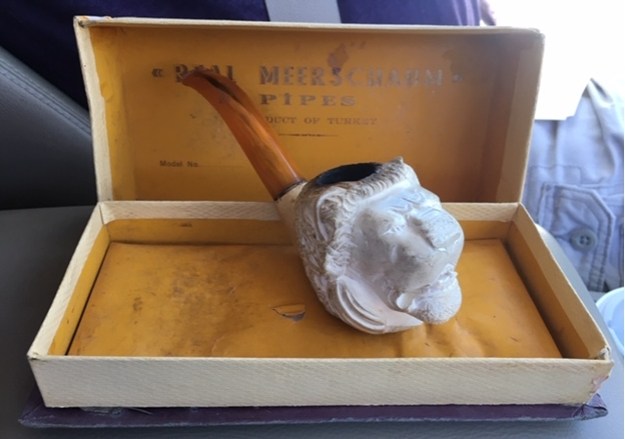
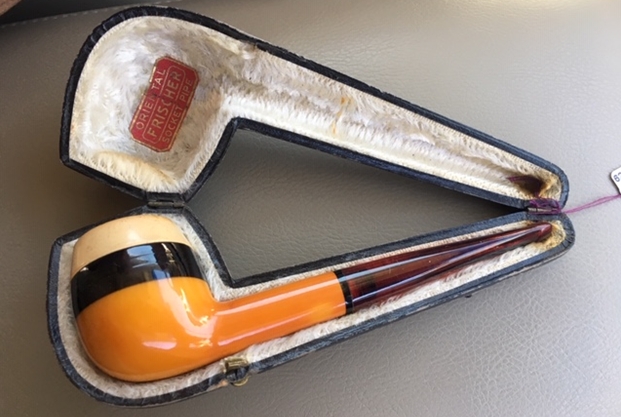
We settled out bill and went for a visit to the town of Layton where we found one more pipe. It was an interesting Italian made pipe with a rusticated finish that had been sandblasted over the rustication. It had an oval shank and an unusual shape. The shop was managed by a group of very friendly seniors (meaning a bit older than my 65 years). We enjoyed the stop even if all we took away was one pipe. There were lots of others there but nothing that caught our collective eyes and called out for restoration. We called it a day and headed back to Salt Lake City for dinner at the Red Iguana – a restaurant that is famous for its Mole dishes.We had a great meal and waddled to our hotel. I spread out the haul on the desk top and took some photos. It was a good day pipe hunting. I included the day’s haul along with the tins of tobacco I had picked up at Jeanie’s Smoke Shop for the photo. These included a tin of Dunhill Flake, Capstan Blue, Dunhill Durbar and a tin of Royal Vintage Latakia No. 1 made by Mclellands. The pipes included from left to right – a Rossi Rubino, Schoenleber billiard, Irwin by GBD Canadian, a no name Meerschaum Apple, 2 Duncan Aerosphere Billiards with pearlized stems, a Kaywoodie Relief Grain 18S, an Ansells of Washington DC Prince, a St Claude Americana Dublin, and an Italian Made unique.Not a bad haul for the day.The next morning we got up early and after a good breakfast at the hotel continued the pipe hunt. We drove to Brigham City and went to several shops. There was an interesting mall in an old Residential School that was well laid out. Despite the horrendous history of the treatment of aboriginal peoples the place had been cleaned up and redeemed. There were aboriginals working in the shop and it seemed to be a great place to work. We found one pipe in the cabinet toward the front of the shop. The first photo shows the layout of the shop. Jeff found the meerschaum in the display case in the centre of the photo. The second photo shows the pipe that Jeff picked up – a nicely carved lion’s head meerschaum that was in the original box and in pretty decent condition. We left the shop with pipe, put it in our bag of finds and headed to our next stop in Logan, Utah. Logan is a nice looking town with wide boulevards and several antique shops. Other than finding an old Medico Brylon pipe we almost came away empty handed. However we went into a large Antique Mall on the main street and talked with the seated clerk. He did not seem interested in helping much until we got talking about pipes and I gave him a source for tobacco. He said they did no have any pipes in the shop and then I happened to see a pipe case over his shoulder. I asked about it and he said he thought it was empty. I reached for it and low and behold it was not empty after all. Inside was strange looking pipe like nothing I had ever seen before. The inside of the cover had a sticker that read Oriental Frischen Socket Pipe. I turned it over in my hands and found that the pipe had a screw in meerschaum bowl that was threaded into the base. The base appeared to be made of Bakelite and the stem seemed to be cast into the shank of the pipe. We made and offer and added one last pipe to our collection.We went back to the car and headed to a final shop that had no pipes. We were a bit hungry so we decided to visit a cheese factory nearby. We bought some cheese curds to snack on and something to drink. The pipe hunt came to an end and we headed for Idaho Falls. It was a great time pipe hunting with my brother. It has been a long time since I took a trip for the sole purpose of stopping at every antique shop on the journey and sleuthing through their stock for the hidden or not so hidden pipe treasure. I thank my brother for taking time out of his “busy” retirement to come and pick me up and take me to some of his favourite hunting spots. We had a ball. Thanks for giving this a read.


What Is It About A Preben?


Blog by Norman Skiba

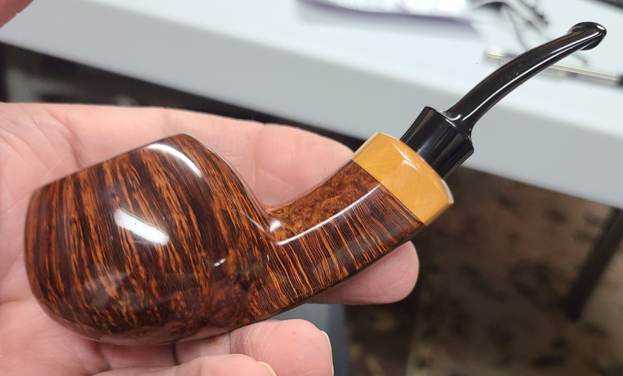
For 50 years now I have been enjoying and observing that there is something special and magical about Preben Holm pipes. I have always loved his pipes.  Looking back, I can say that I have owned more Preben Holm pipes than any other pipe maker – period.  Overall, they are unique; some wild and some are quite tame and reserved, by his standards.

To me – there is something that I have struggled, and still fail, to describe regarding the overall smoking experience of a Preben Holm pipe.  I have mostly had fine to superb smoking Preben’s, and I have had a few that were ok, and also a few rare ones that just had issues: predominantly a bad gurgling.  Yet even the few bad or not-so-good ones all had this Quality and taste and smoking experience across the board with the best of them.  There is a consistency there that I struggle to explain.  This character/taste/sensory experience that makes it a Preben.  After a week of straight meerschaum smoking I had a bowl this morning in a Preben and it was marvelous.  I look forward to another bowl out of the Preben tomorrow before I head out to the top vineyard to get my nets on.  (I did the side vineyard after the bowl this morning.)  So, again, these experiences make me wonder and question just what it is that makes the Preben’s so unique?  What is it about the nature of the briar he uses that are so different and special unlike any other pipe maker.   And no, I am not just talking about Danish pipe makers.  I mean all others that I have ever smoked or owned.  There is something about his pipes that make me still love the pipe and pipe smoking (with my favorite tobacco as a partner in all of this), and briar.  After all of these years I still cannot put my finger on that special dynamic.  Yet I am in awe when I light up one of his pipes.  They are not only beautiful in so many ways; but they smoke so sweetly and with a subtlety to them.  So, what is it about a Preben?