Category Archives: Pipe and Tobacco Historical Documents

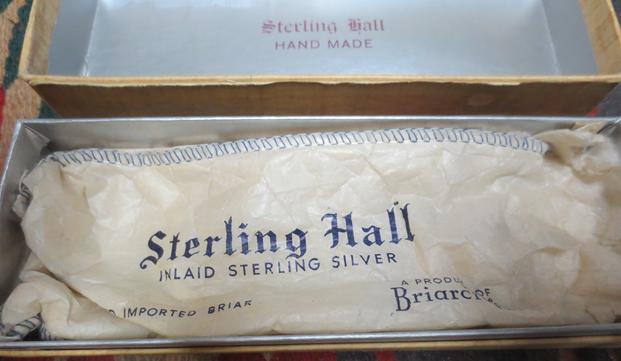
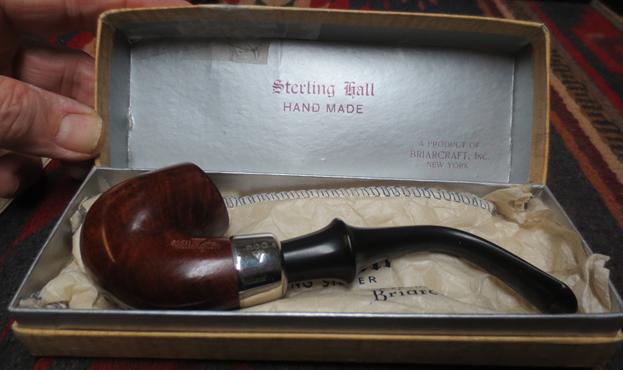
When he opened the Sterling Hall Hand Made Pipe box I did not see what I expected


Blog by Steve Laug

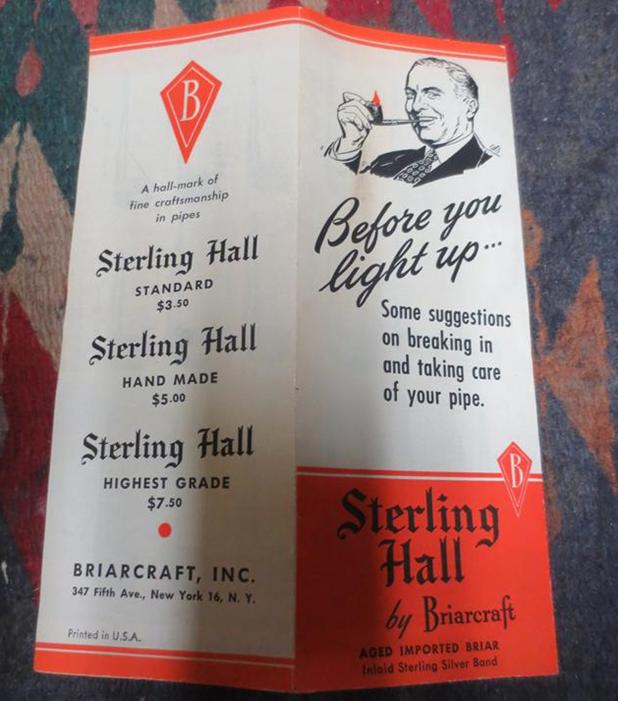
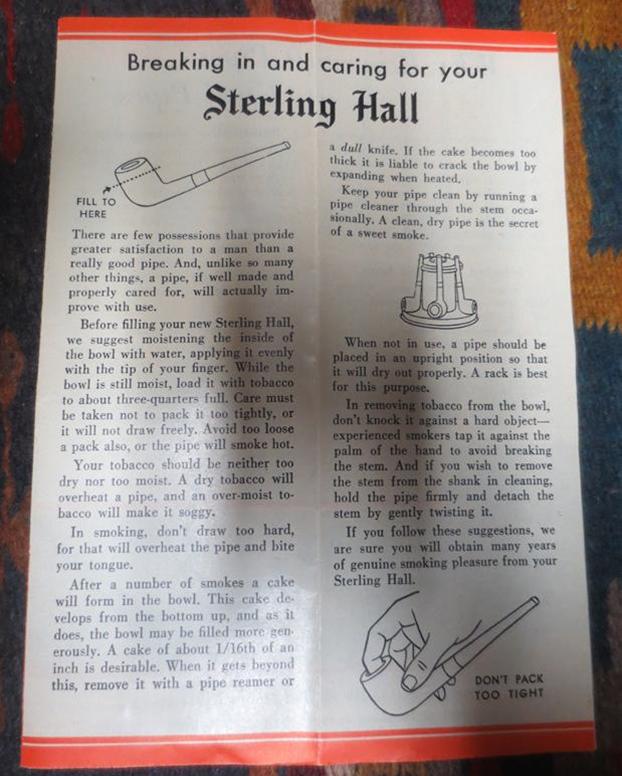
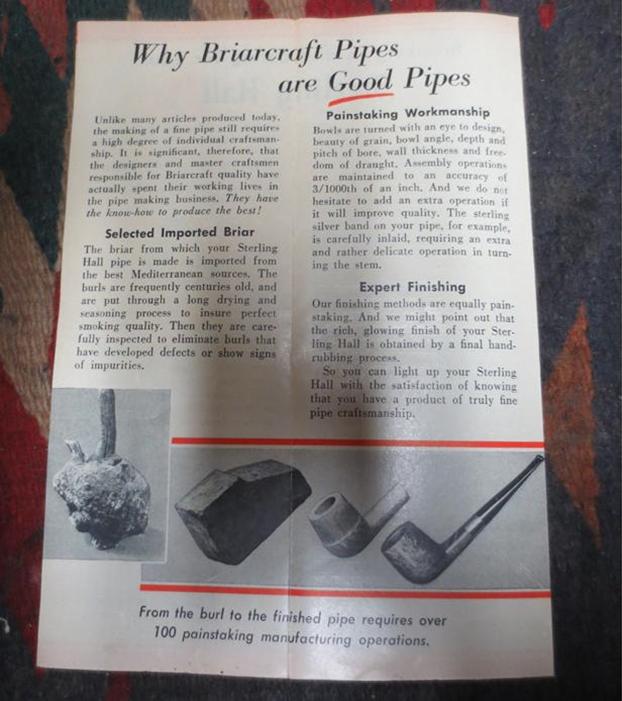
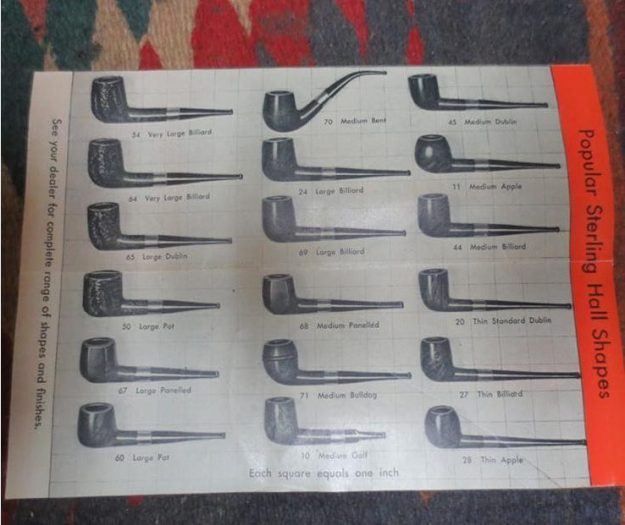
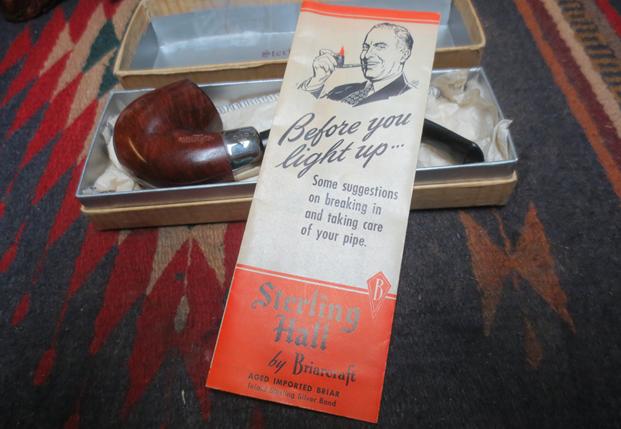
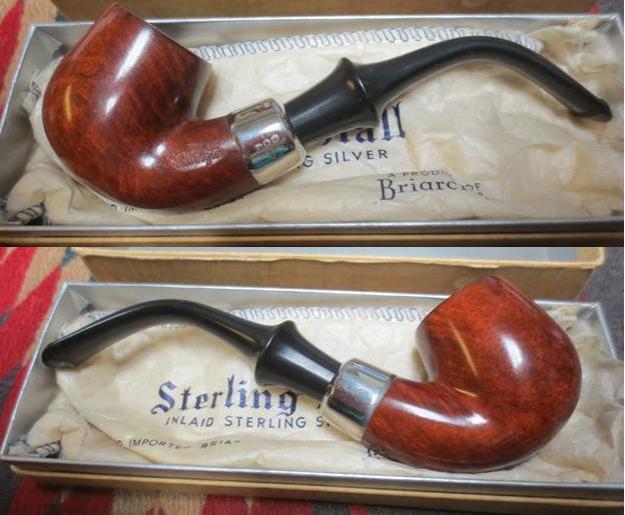
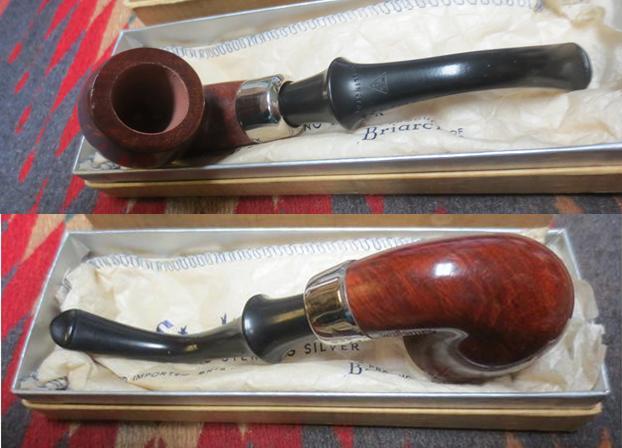
Sometimes you are hunting for pipes in antique shops, antique malls or even thrift shops when you come on a box like the one below. I don’t know about you but my first reaction when I see a box like this one is to walk away. I have found that they are often empty or at best holding worn out pipe that is cracked, chewed or both and certainly one I don’t want. Well I have tried to instill that habit in my brother but he is a better hunter than me! He opens the boxes to see what is in them. Now, understand, I used to do that but I have gotten jaded over the years of finding next to nothing or worse in these old pipe boxes. He opened this one and found something he was not expecting. When he showed me the box on Facetime I fully expected it to be useless even though he assured me I would be surprised.sh1He opened the box and showed me what was inside – well it was not a Sterling Hall Hand Made nor was it a useless worn out pipe. Instead it was a WDC Wellington that through the camera looked remarkably good. The finish looked good, the stem looked good, the nickel ferrule looked good. I was hooked. Okay so it is a Wellington I said – we have cleaned up quite a few of these system style pipes so I was still not that impressed. It so far appeared to be a nice looking old pipe in the wrong box. Heck, there was even a Sterling Hall pipe sock in the box along with the pamphlet included with every Sterling Hall pipe.sh2 sh3 sh4He just laughed and held the pipe up to the camera and rotated it from side to side so I could see the grain and the stem. It looked really good. The grain on both sides was nice and from the front and the back it also looked good. The stem was shiny black and bore the WDC in a triangle under the Wellington logo on the topside. In fact it appeared to be almost flawless but I still felt that there was something that he was not telling me. What was it with this Wellington pipe he had found in the Sterling Hall box?sh5Finally he turned the pipe bowl toward me. The bowl was unsmoked! It was unsmoked and clean! It was not worn or damaged or…. You know that feeling when you are looking at a New Old Stock (NOS) pipe? Yes he had found a new unsmoked old stock WDC Wellington in flawless condition. The fact that it had been kept in the wrong box had probably preserved it. There was no oxidation on the stem and it was like the day it had left the WDC factory.sh6I honestly could not believe my eyes. I don’t think I have ever seen a unsmoked new Wellington in my life. It was a first for me and I have to guess that it will probably be the only one that I ever see. He shipped it to me in the last shipment of pipes and I took the pictures above to let you see what I saw when it arrived. I have also included photos of the brochure that was in the Sterling Hall box for your reading enjoyment. Look at the prices of the pipes and quaint descriptions of how to break in and care for a pipe. Look also at the variety of shapes that were available in the Sterling Hall line. These pipes were made by Briarcraft in New York and were one of their higher grade lines. Enjoy the read and thanks for walking with me in the unveiling of this pipe hunt find!sh7 sh8 sh9 sh10

An Aristocob Brochure


Blog by Steve Laug

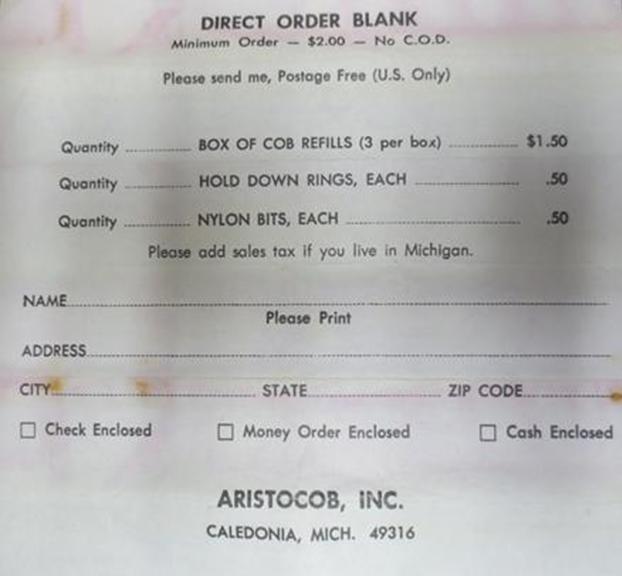
In the recent Aristocob restoration I finished I showed some pictures of the brochure that was included in the box. I wanted to post it here and give all of you a chance to read it. The description is on one side and the catalogue list on the other side of the brochure. Enjoy your read.cob13 cob14

I have always wanted to see one up close – an Aristocob


Blog by Steve Laug

Over the years I have spent quite a bit of quiet time scanning through the smokingmetal.co.uk website reading over all of the various metal pipes that have been made. I love reading and looking at the inventive creations made to capture that illusive grand smoke. One of the pipes that stood out to me on the site was the Aristocob metal bowl that came with two corn cobs that fit inside the bowl, held in place by the screw on metal cap. I wanted to see one of those but somehow always missed them on eBay at the last minute or at an antique shop by a matter of minutes. I included two of the photos from the website. The first one showed a plastic box with a form fitted purple velvet nest for the pipe and the pair of cob inserts that came with it. The pipe had a black nylon stem that held a Medico paper filter in place in the metal shank of the pipe. cobaThe second photo showed the pipe taken apart with a pretty good descriptive view of the metal bowl and cap, the cob insert, the filter and the stem with an O-ring on the tenon to keep it in the metal shank.cobbI remember first reading this description years ago when I looked up the pipe on the site. I was struck then as I am now that I could not have described it any better. I have included it here in full with a link for you to look it up should you desire to do so:
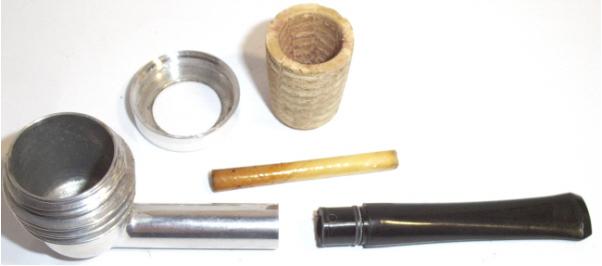
The ARISTOCOB is an American made system pipe with corn cob bowl inserts. Originally the AL-COB CORPORATION out of Grand Haven, Michigan, which later became ARISTOCOB INCORPORATED from Caledonia, Michigan. Later still they were bought out by Missouri Meerschaum Company

Apparently available in the first place in a plastic case containing one pipe, 2 replacement corn cob bowl inserts and instructions for use. The cob inserts were made for some time by The Missouri Meerschaum Company, manufacturer of corn cob pipes in Washington, MO. The box shown is their box. They made the inserts from the early 1970’s until 1983. They are no longer available from that source but do appear on eBay at times

The top of the vaned outer bowl unscrews to enable easy replacement of the bowl insert. An inline filter can be used in the stem. The mouthpiece has been seen in two version, with and without an ‘O’ ring. The patent was filed on 20 Dec 1966 with the US patent # 3,292,639. The inventor was Joesph W. Zarikta of Grand Haven, Michigan USA – the assignor was the Al Cobb Corp. (http://smokingmetal.co.uk/pipe.php?page=56).

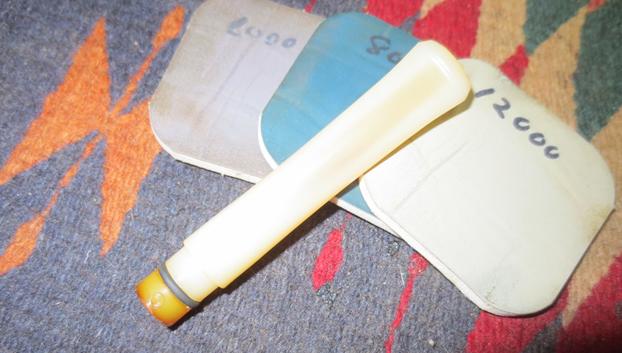
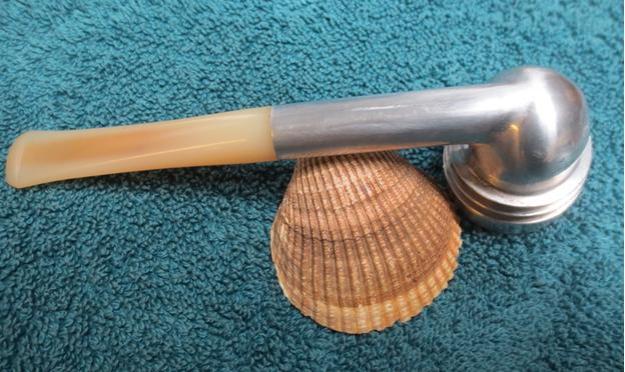
I mentioned to my brother to keep an eye open for one of these never expecting him to find what he did. I have not seen a cased version of the pipe in my hunts but have only found the pipe with the inserted cob bowl if I was lucky. He happened to find a boxed set and bought it. He sent me the following photos of the pipe. The next set of photos are the ones that the seller posted on the eBay sale.cob1 cob2 cob3 cob4When the pipe arrived in Idaho my brother took some photos before he cleaned it up. I have included a few of those photos next. The pipe was quite dirty. The rim cap had a buildup of tars and oils on the top. The cob insert was dirty and crumbling on the top edge. The aluminum pipe body was oxidized and dirty as well.cob5When he took it apart, the inside of the aluminum body had also built up tars in the bottom and on the inside walls.cob6The inner edge of the insert was in rough condition. The rest of the bowl appears to be solid. The aluminum disk on the bottom of the bowl was dirty but undamaged.cob7The stem was darkened on the tenon end. The O-ring was still in good condition. The paper Medico Filter in the tenon was dirty and would need to be replaced. The top and undersides of the nylon stem had some tooth chatter on the surface near the button. The inside of the shank was dirty and there was some tarry buildup on the walls of the aluminum.cob8 cob9My brother cleaned up the cap and the interior of the aluminum bowl holder and shank. He cleaned the aluminum with Murphy’s Oil Soap inside and out. He scrubbed out the airway in the shank and stem. He cleaned up the damaged edge of the cob insert. When it arrived in Vancouver, I brought it to the work table and took some photos of the condition it was in before I started.cob10 cob11Inside the plastic box there was a pamphlet that explained the function of the pipe and all of its parts. The description of the pipe and how to use it was a marketing document that sold the pipe and all of its design as the best smoking pipe available.cob13 cob14I polished the aluminum with micromesh sanding pads. I started polishing with 1500-2400 grit pads and wiped it down with a damp cotton pad. I continued to polish it with 3200-12000 pads and the finish began to shine.cob15 cob16I sanded the stem to remove the tooth marks and chatter from the top and bottom sides of the stem. I ran a pair of bristle pipe cleaners and alcohol through the airway in the stem to remove the residue that still remained in the stem.cob17 cob18I polished the stem with micromesh sanding pads – wet sanding with 1500-2400 grit pads and dry sanding with 3200-12000 grit pads. I wiped it down with a damp cotton pad after each set of three pads.cob19 cob20 cob21Because the stem was nylon I decided not to use the buffing wheel. I gave it several coats of Conservator’s Wax and hand buffed it with a microfibre cloth. I lightly buffed the aluminum on the Blue Diamond wheel and then with a clean buffing pad to raise the shine. The finished pipe is shown in the photos below. It makes a great piece of pipe history in the ongoing search for the illusive perfect smoke. It will hold a place in my collection of tobacciana. Thanks for walking through this restoration with me.cob22 cob23 cob24 cob25 cob26 cob27 cob28 cob29
The Havana Cigar Booklet


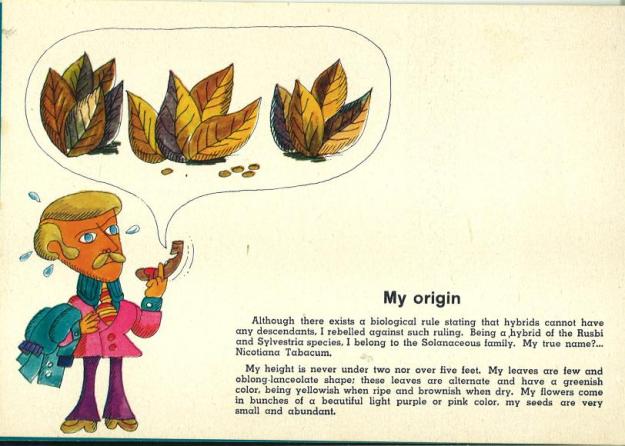
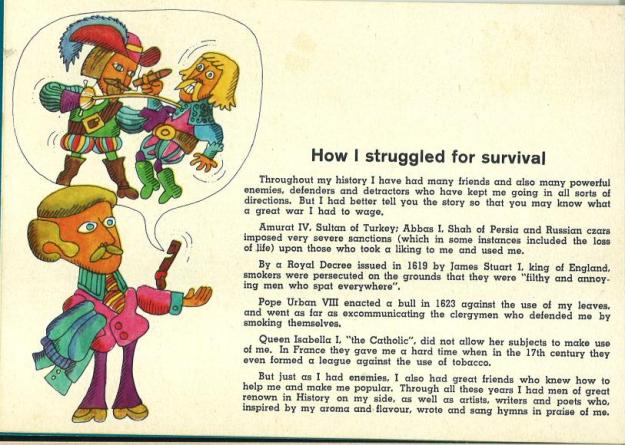
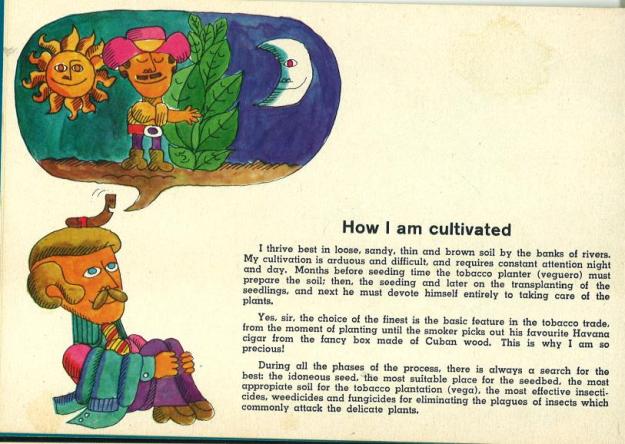
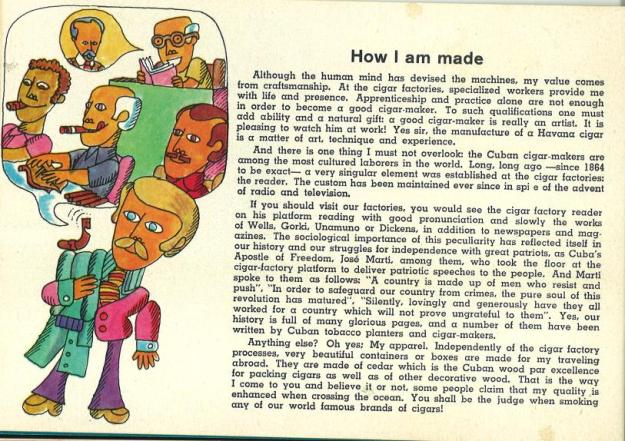
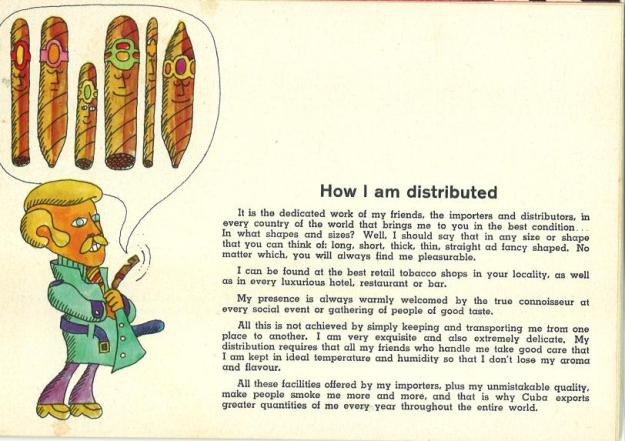
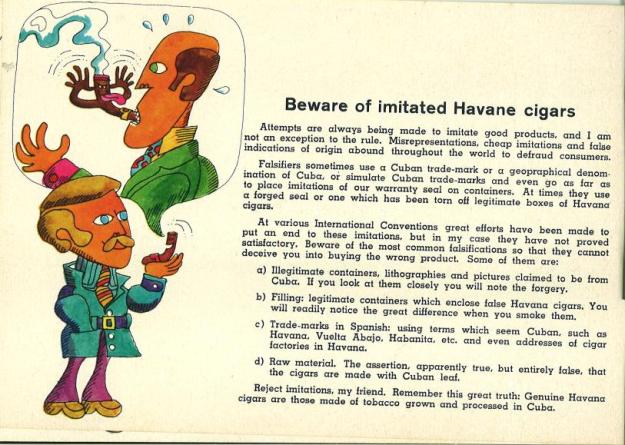
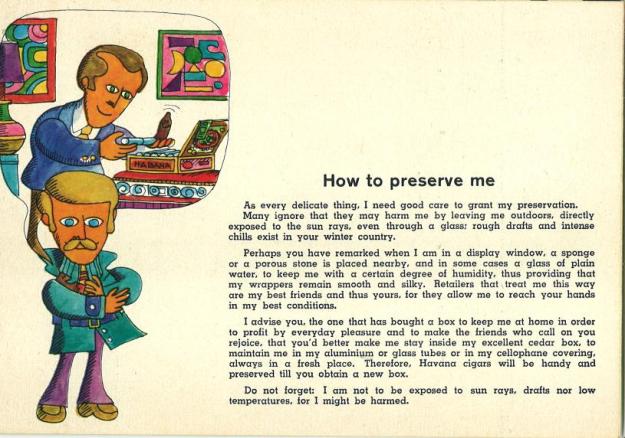
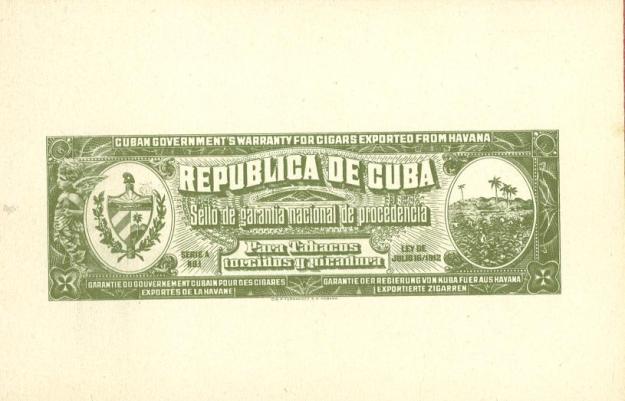
This little informative booklet was put out by Cubatabaco who sells Havana Cigars what they call – “the Best in the World”. This fun to read booklet is illustrated and told from the perspective of the cigar itself. A great read and some very 70s illustrations. It is a quick read. Enjoy.havana1 havana2 havana3 havana4 havana5 havana6 havana7 havana8 havana9 havana10 havana11havan12havana13havana14havana14ahavana14bhavana15


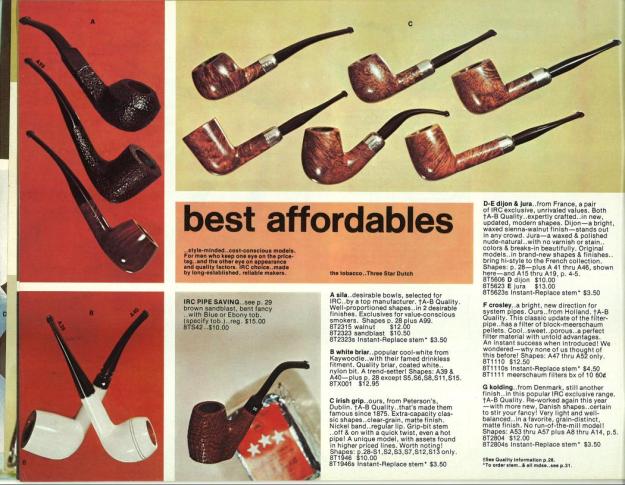
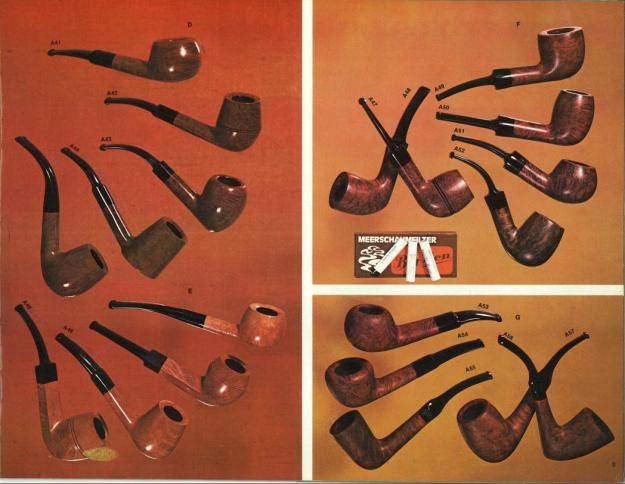
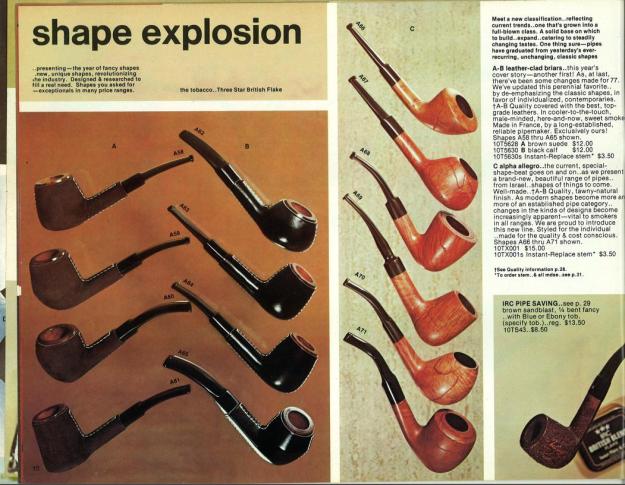
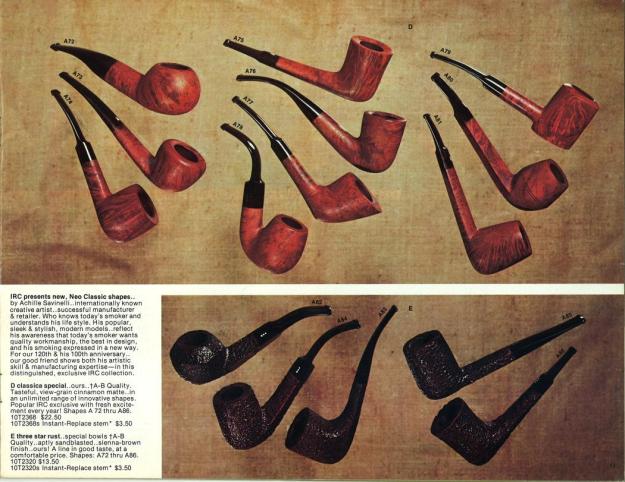
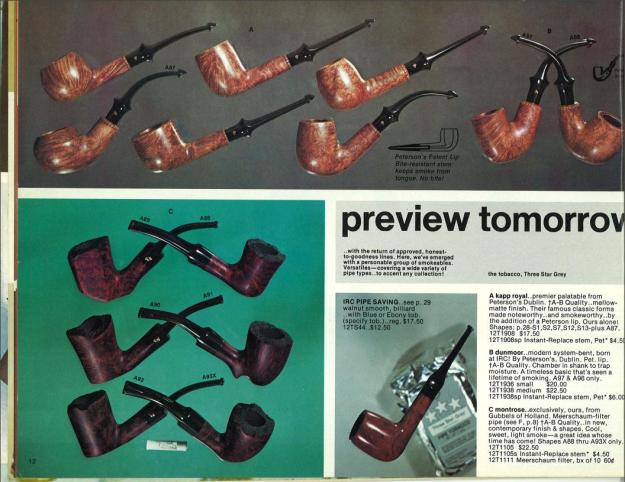
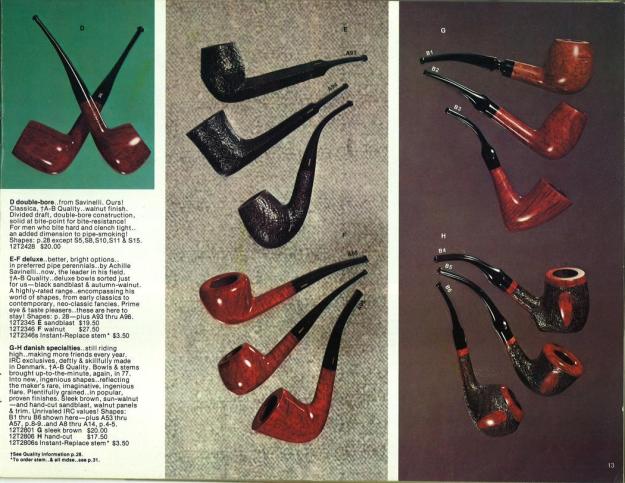
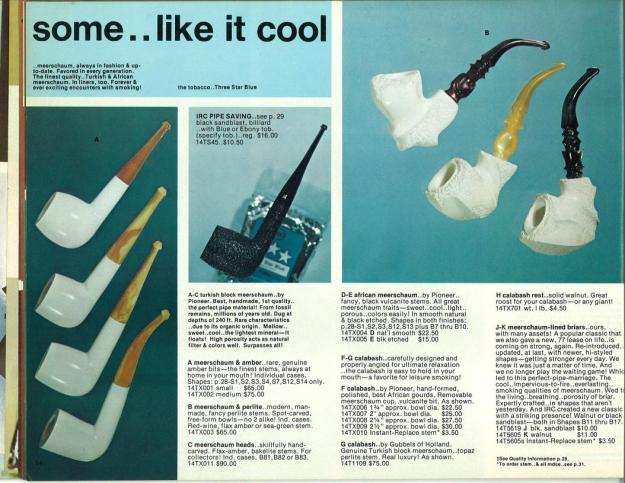
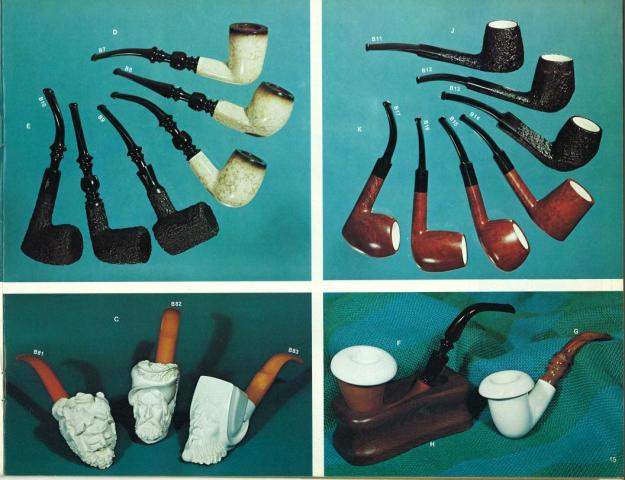
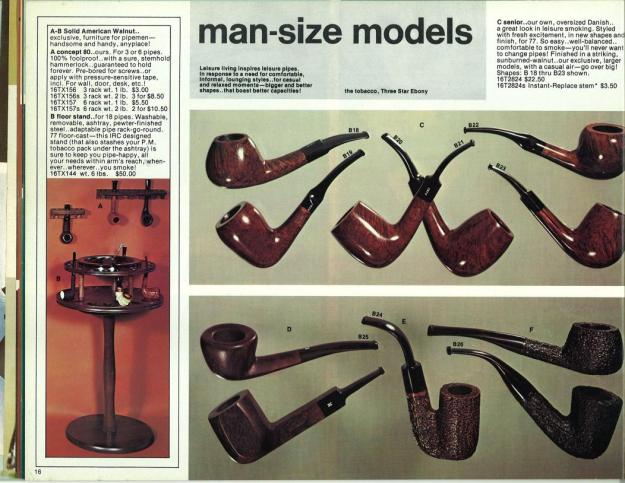
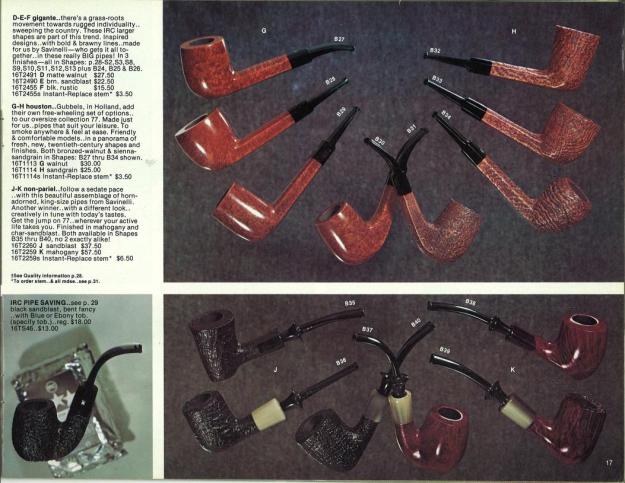
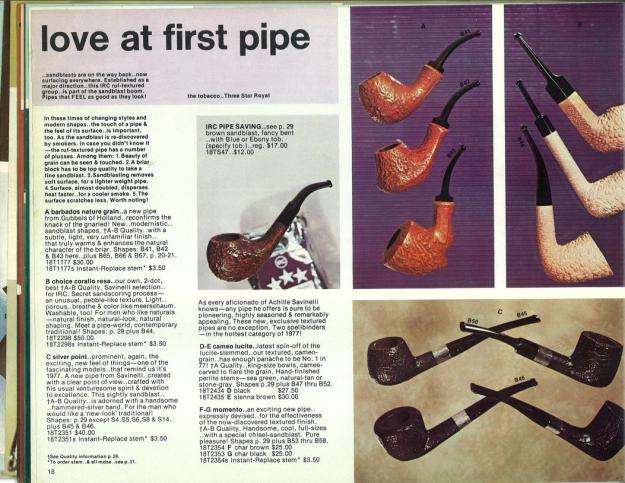
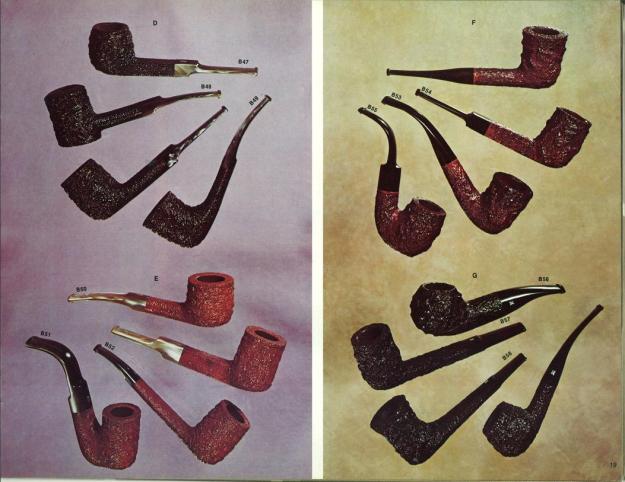
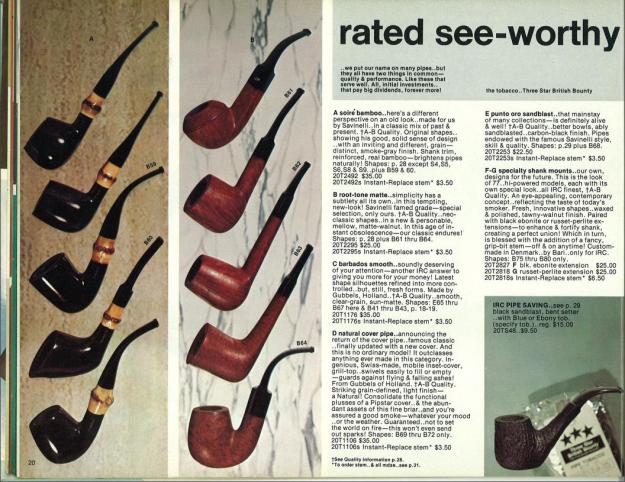
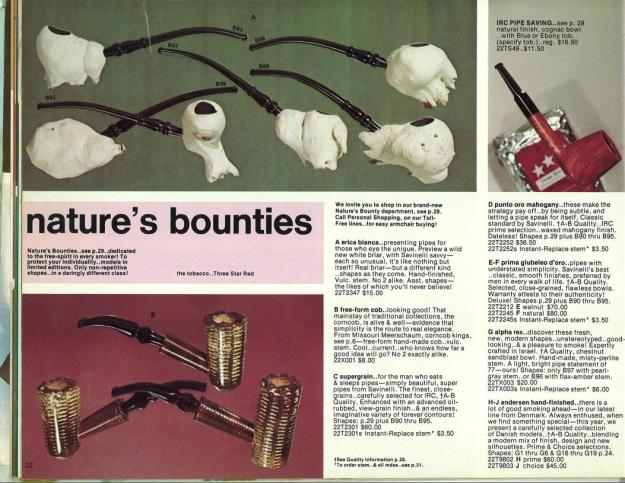
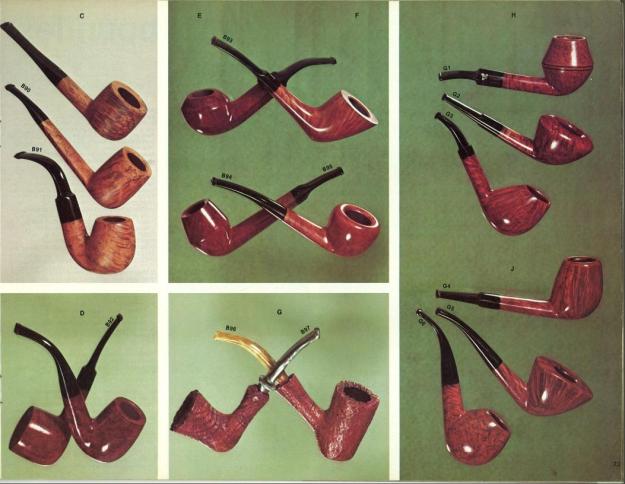
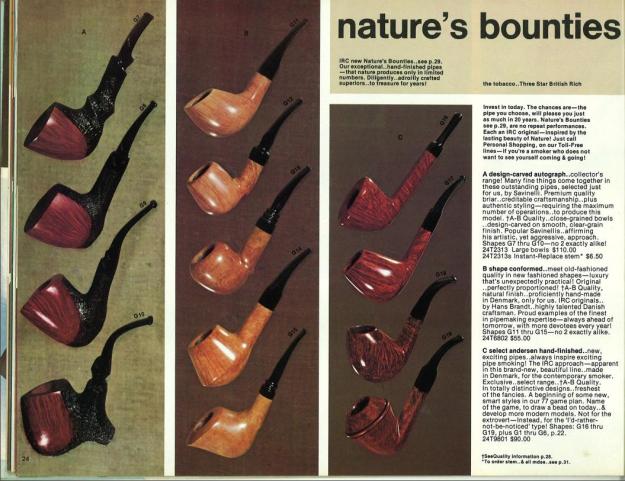
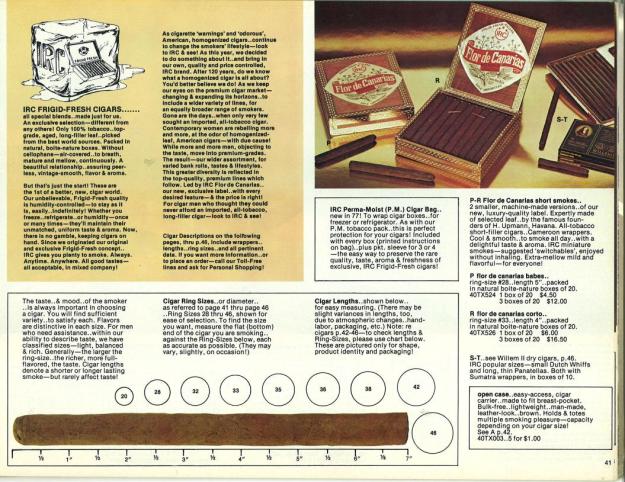
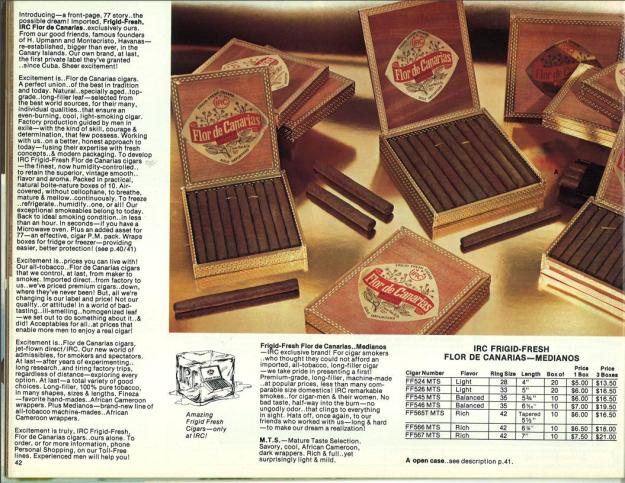
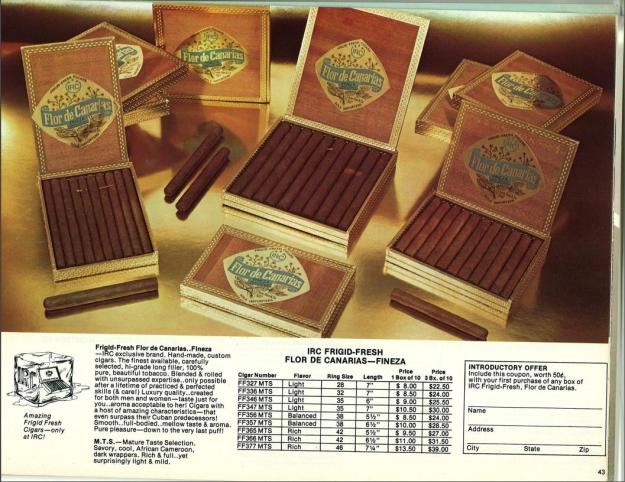
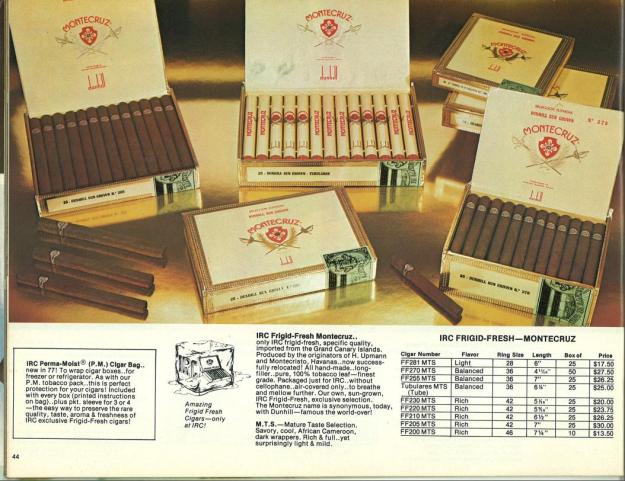
A 1977 Iwan Ries & Co. (IRC) Catalogue


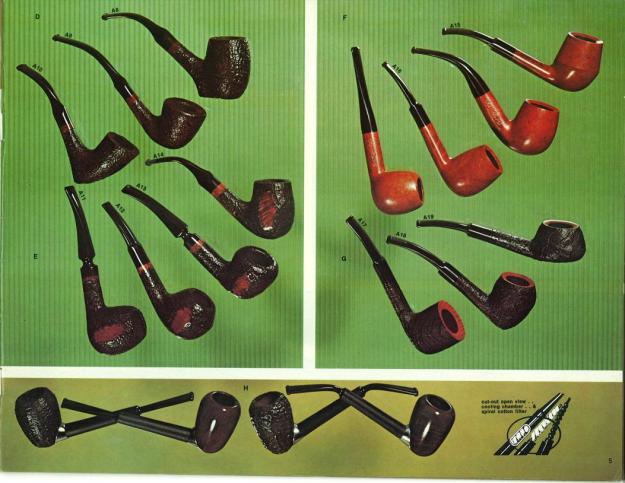
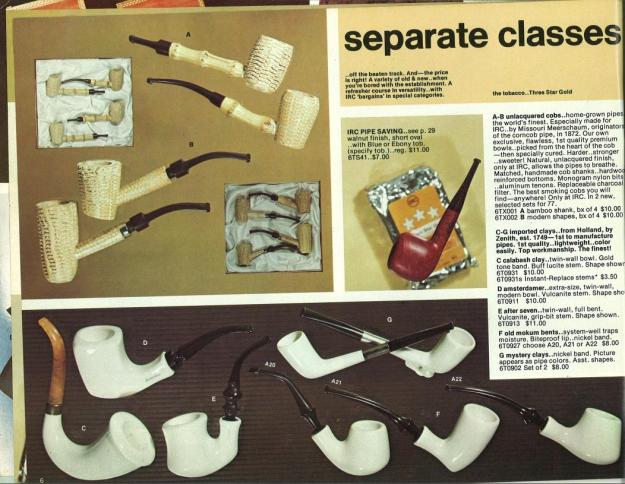
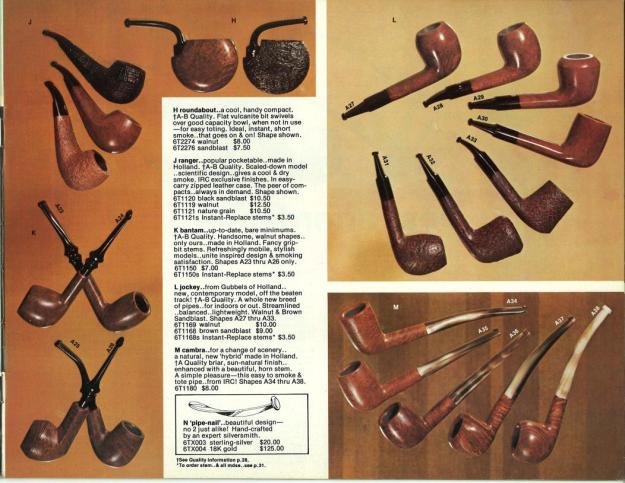
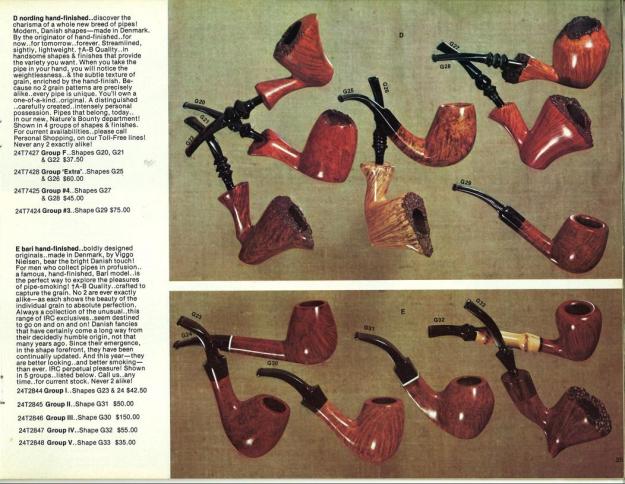
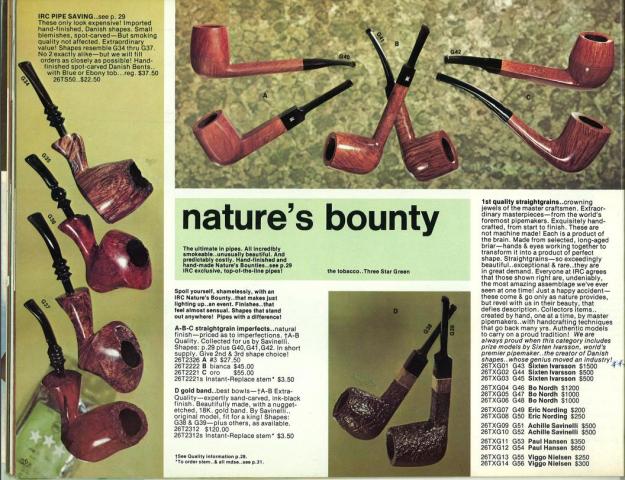
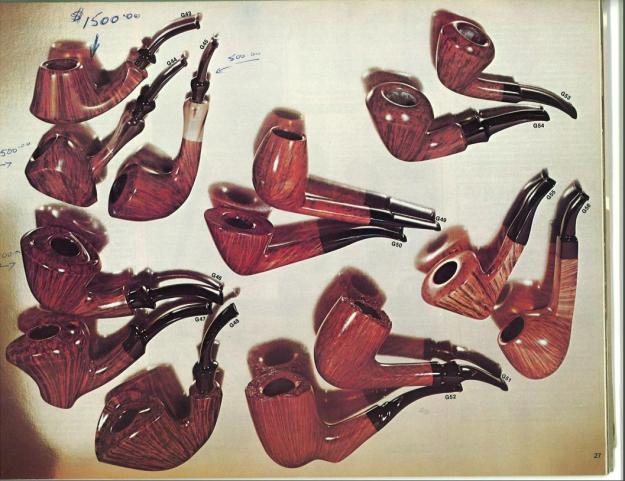
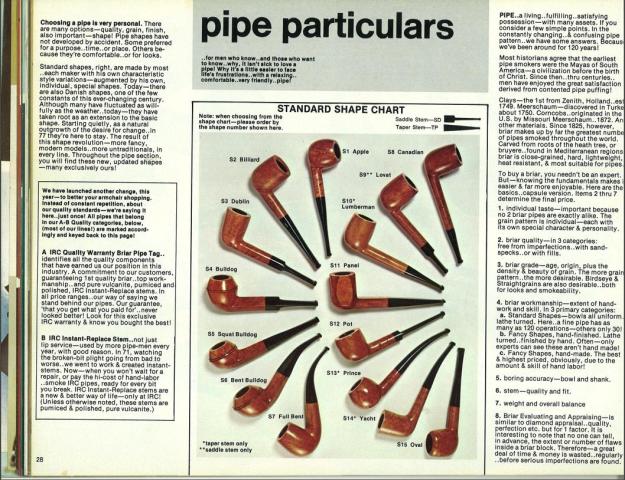
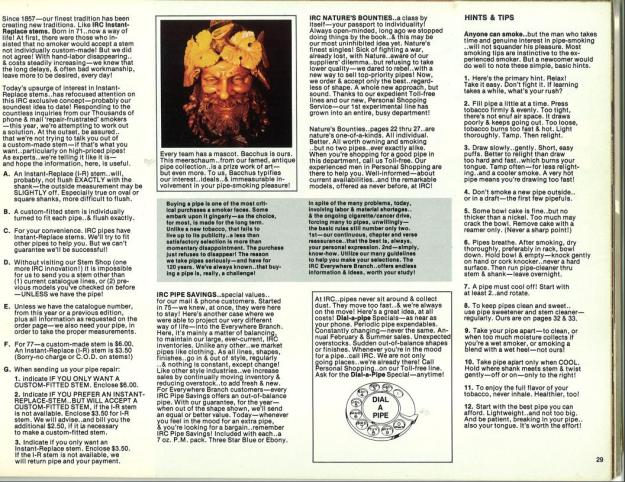
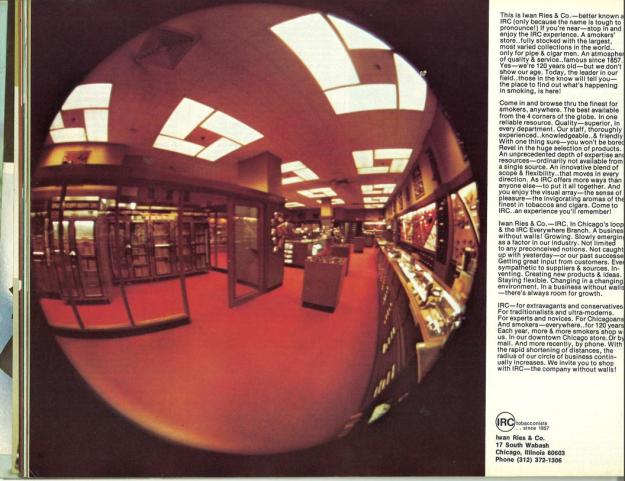
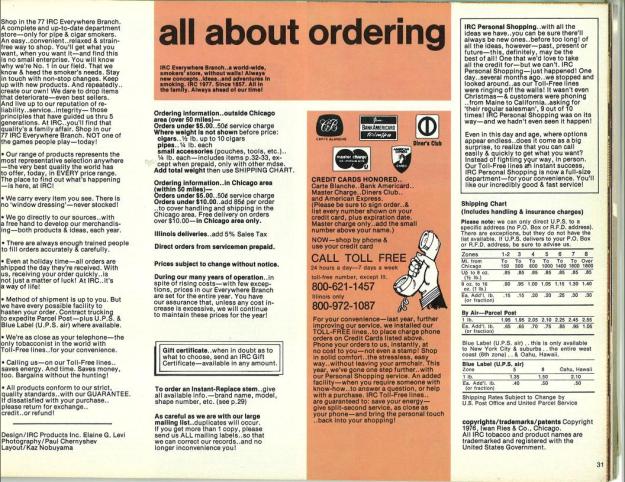
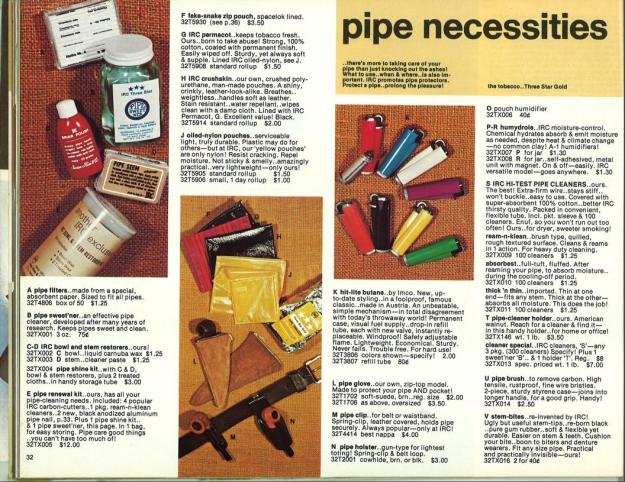
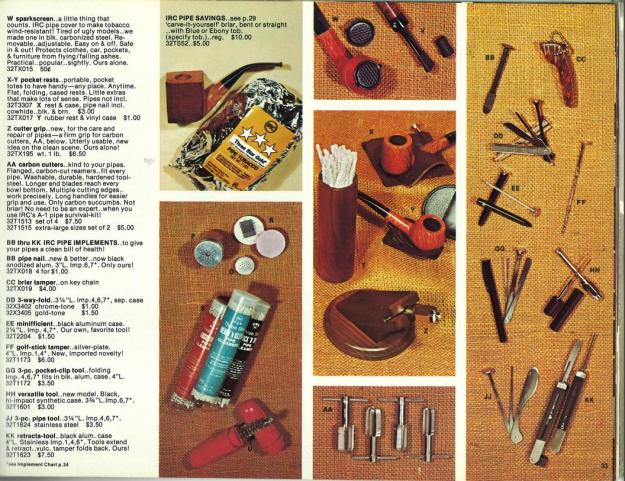
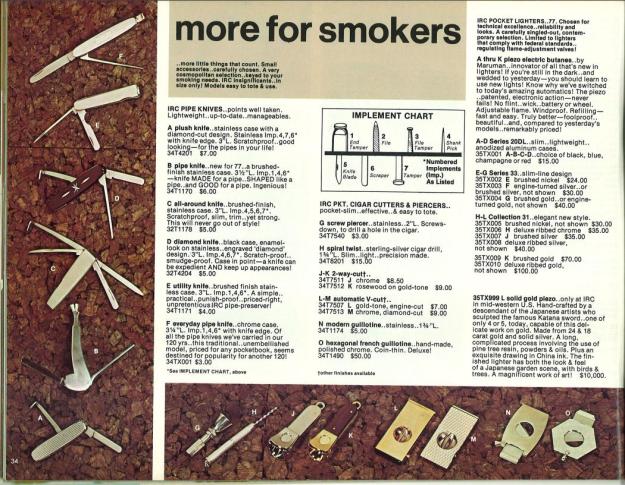
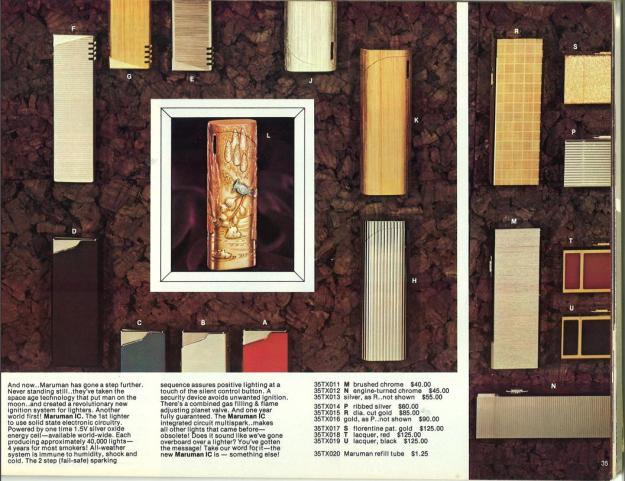
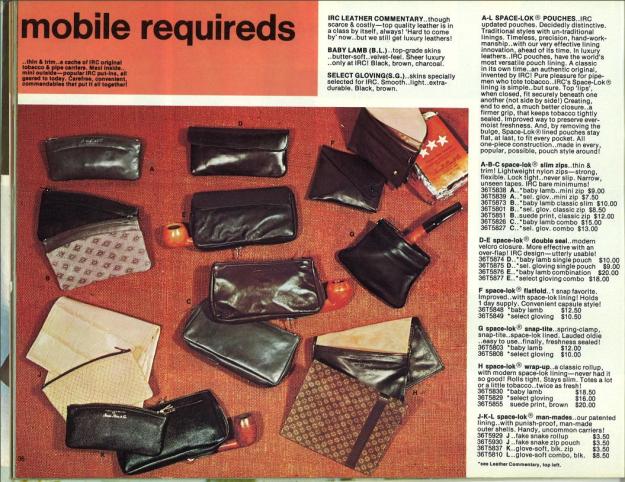
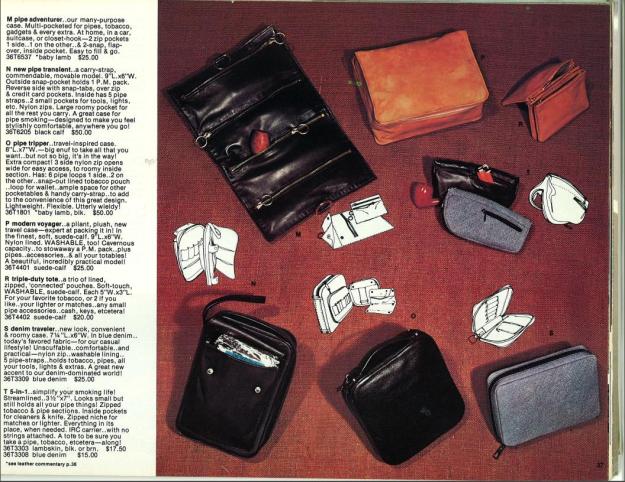
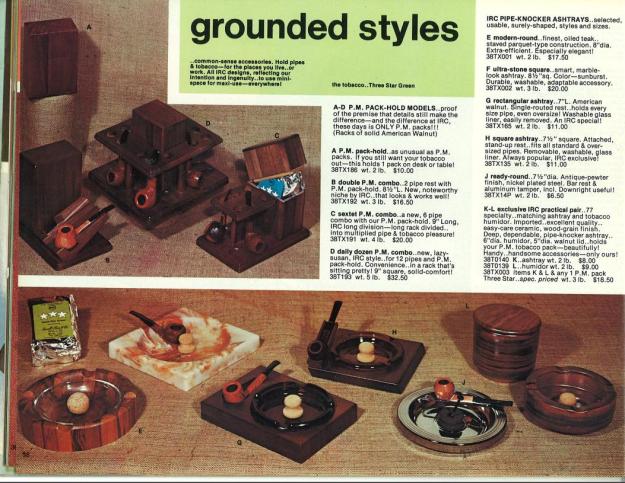
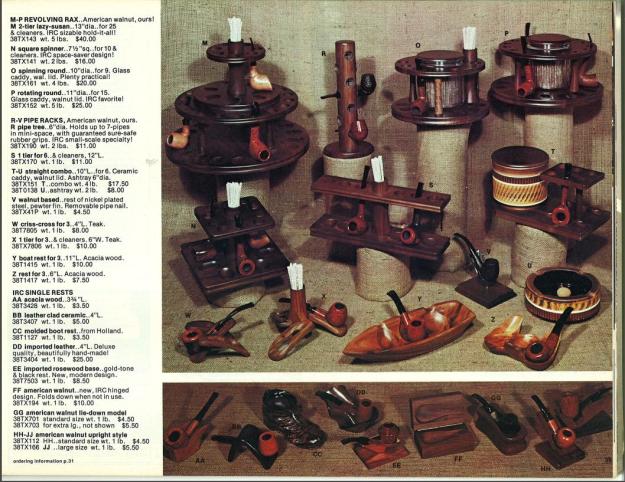
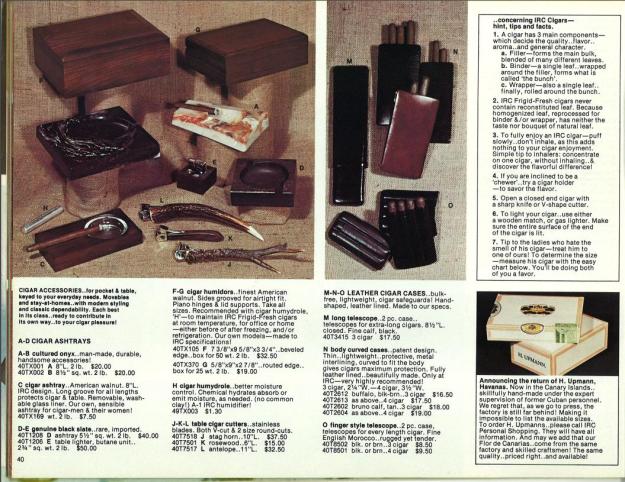
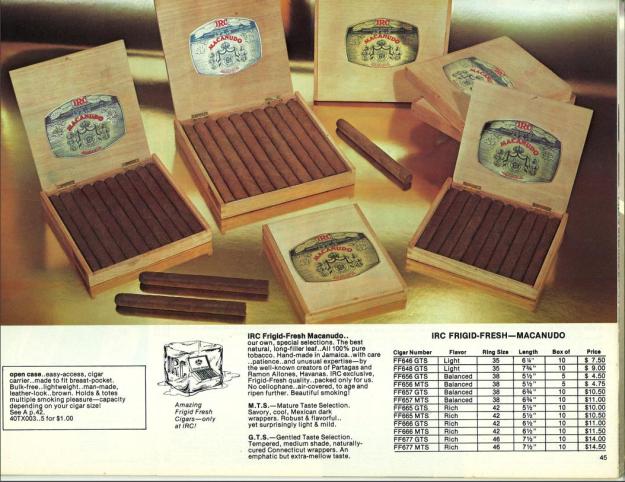
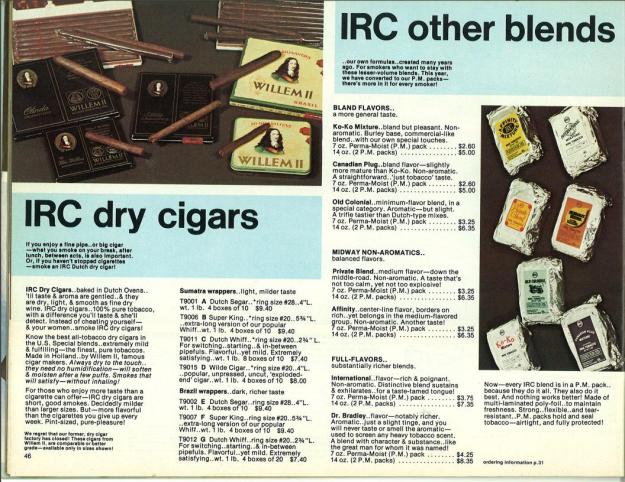
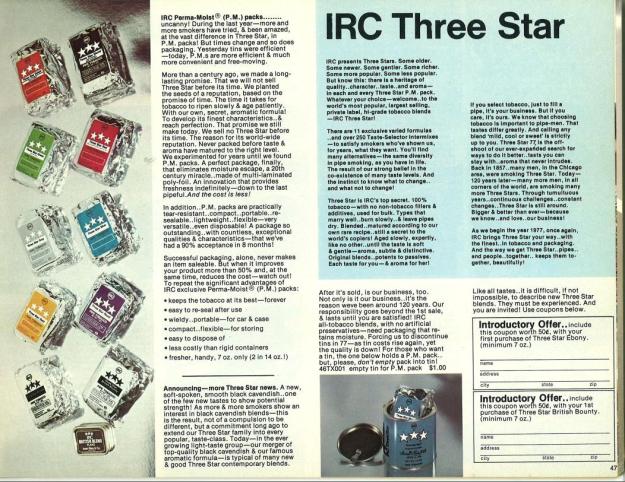
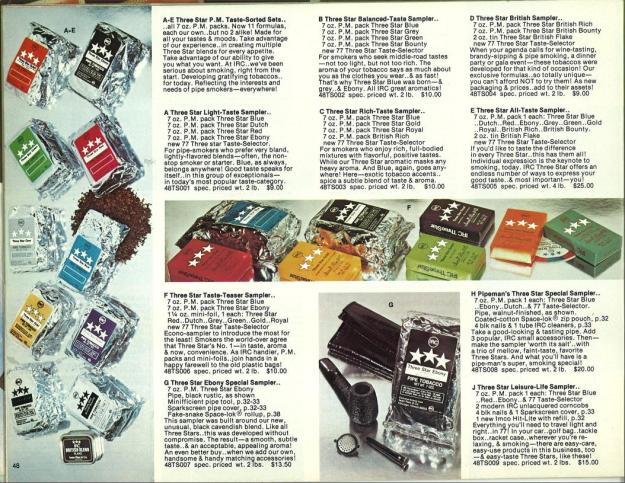
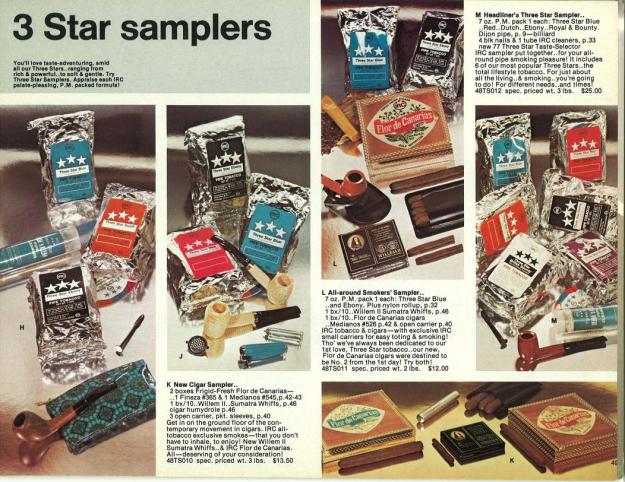
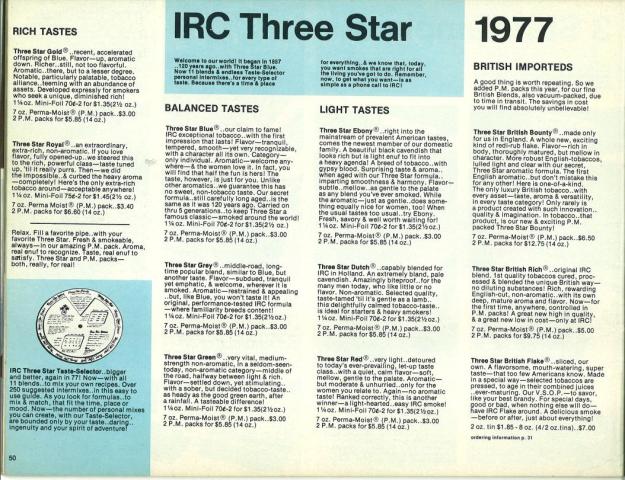
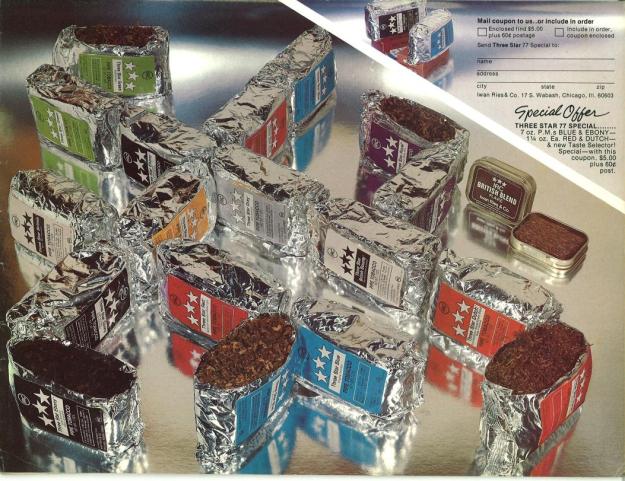
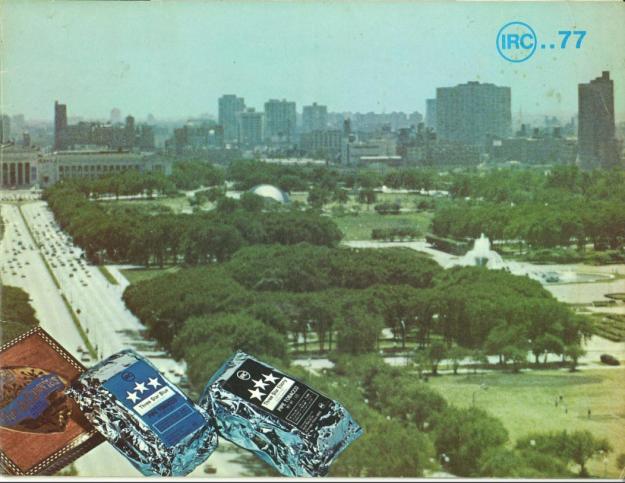
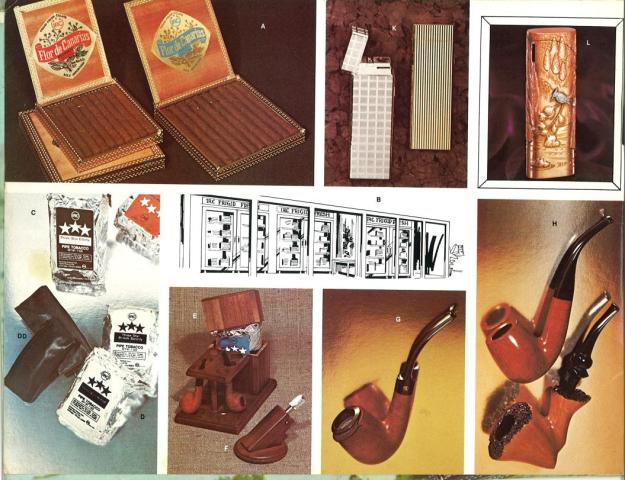
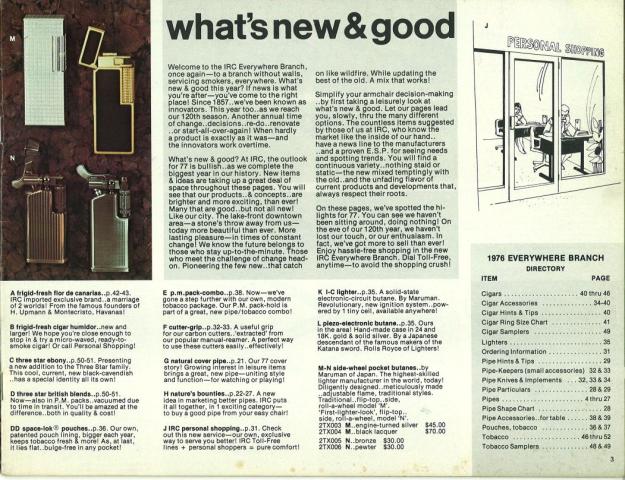
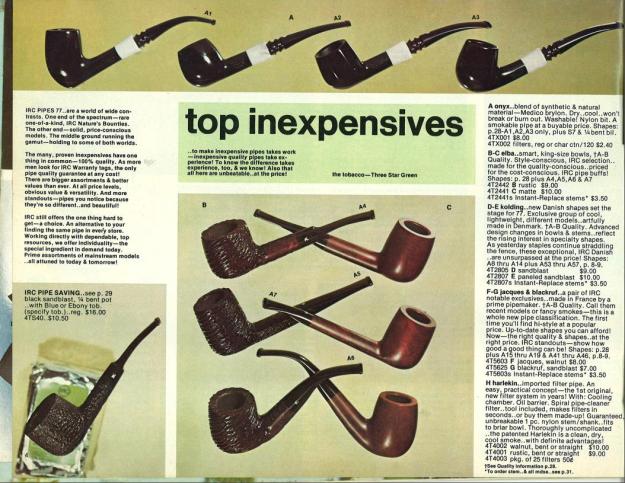
I have put many of the catalogues I was given on the blog for you to enjoy over the recent months. Last evening I was going through the remaining pieces in the envelope and found that there was also this 1977 IRC booklet from Iwan Ries & Co. of Chicago, Illinois. It was really fun to read through last evening so today i scanned it so I could share it with all of you. I find it an enjoyable read to go through the pipes and tobaccos that are listed from the time when I was in university. Sometimes I wish there was a way to go back and pick up some of these amazing pipes and tobaccos.

irc1 irc2 irc3 irc4 irc5 irc6 irc7 irc8 irc9 irc10 irc11 irc12 irc13 irc14 irc15 irc16 irc17 irc18 irc19 irc20 irc21 irc22 irc23 irc24 irc25 irc26 irc27 irc28 irc29 irc30 irc31 irc32 irc33 irc34 irc35 irc36 irc37 irc38 irc39 irc40 irc41 irc42 irc43 irc44 irc45 irc46 irc47 irc48 irc49 irc50 irc51 irc52

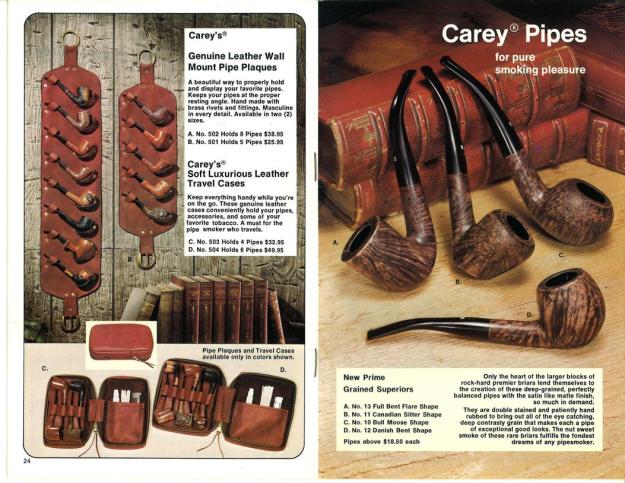
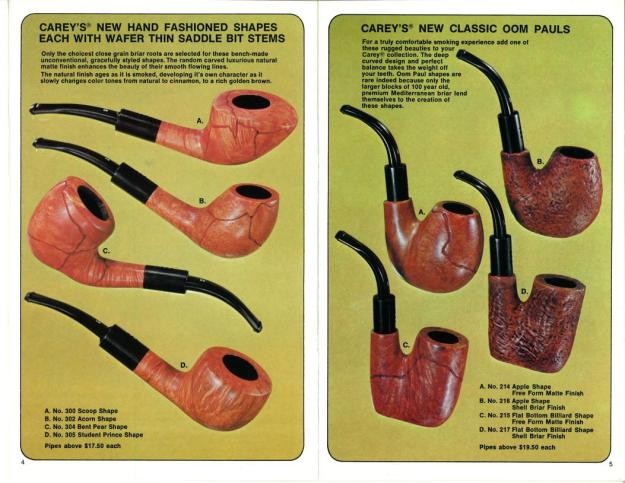
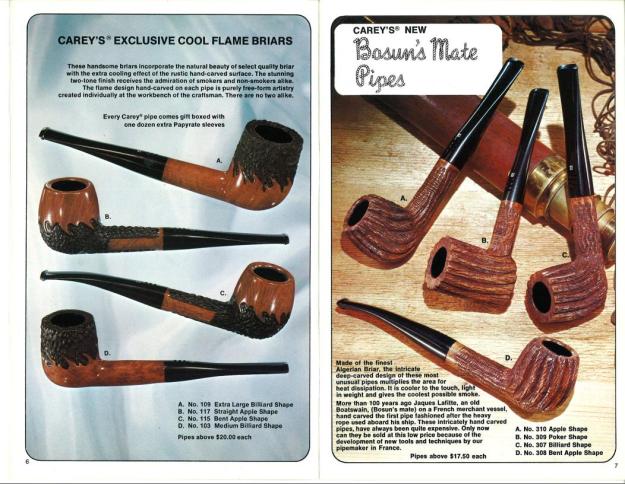
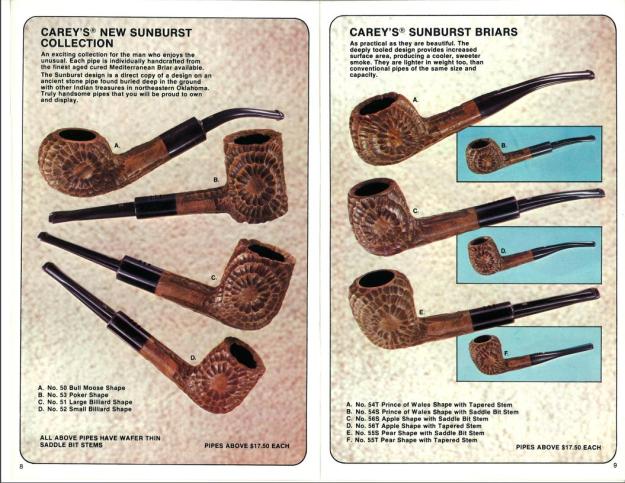
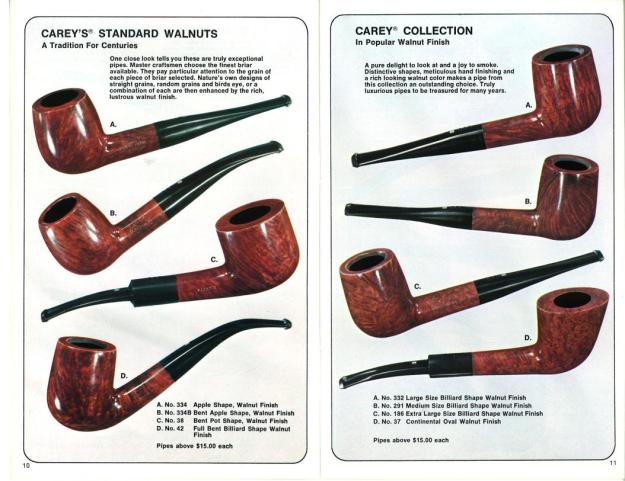
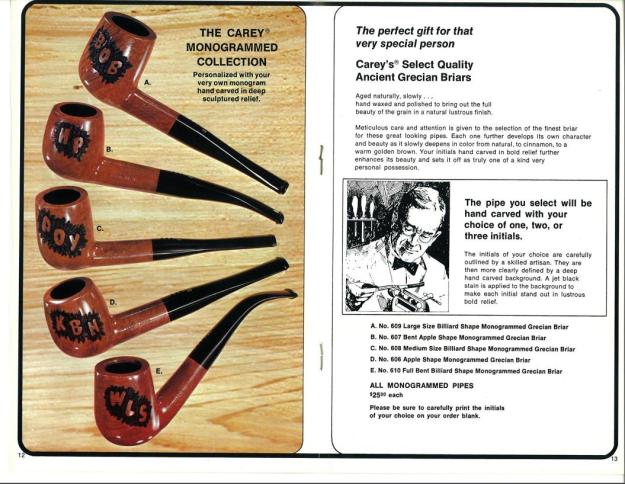
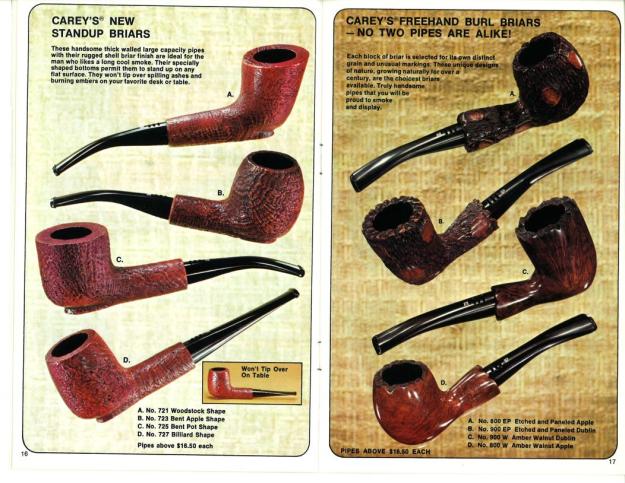
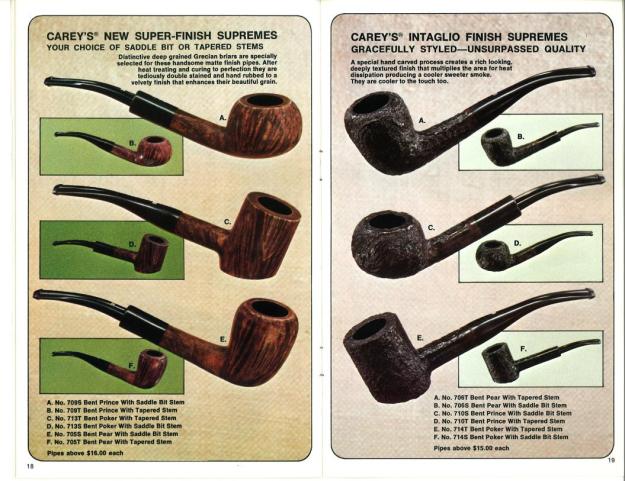
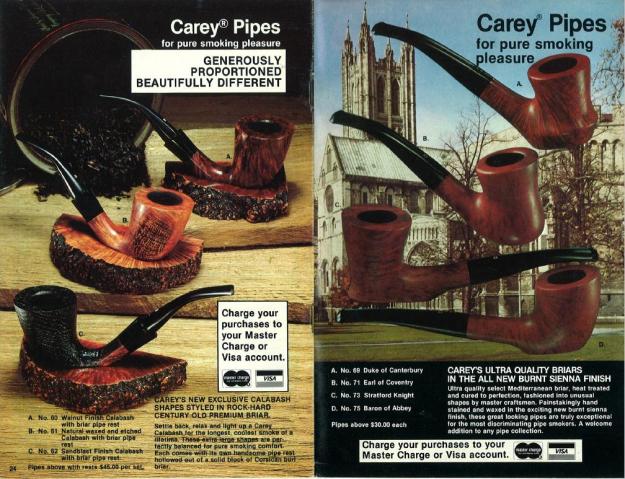
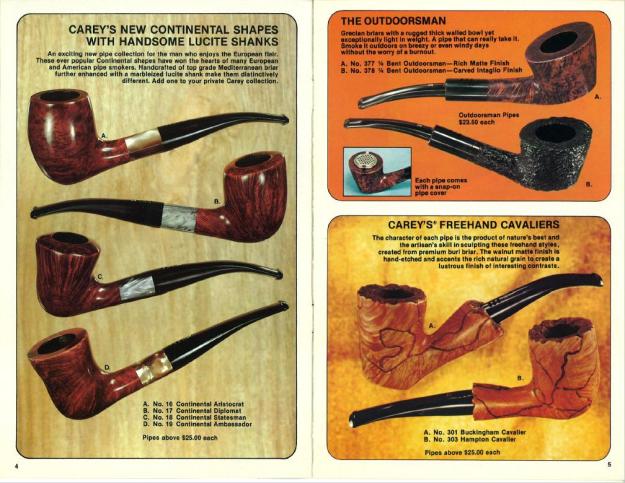
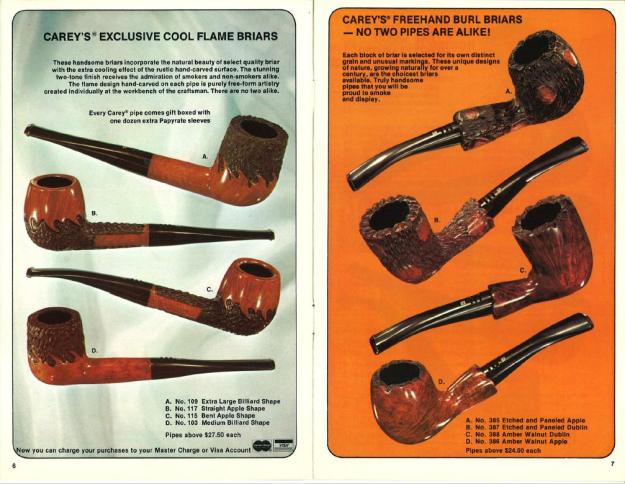
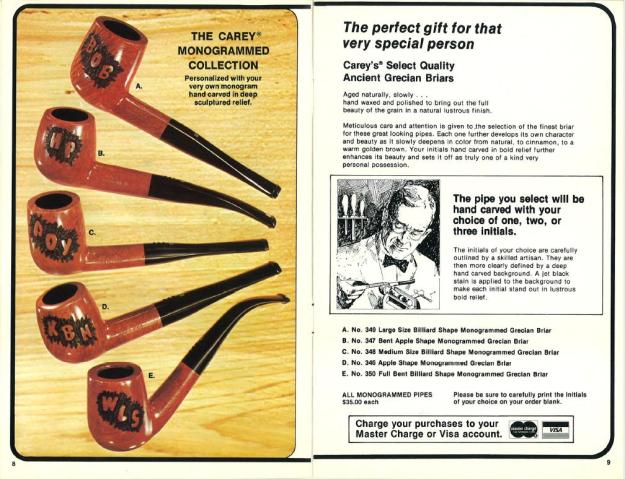
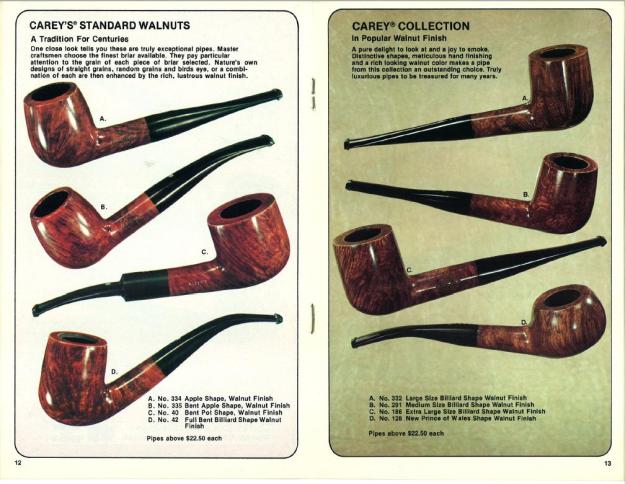
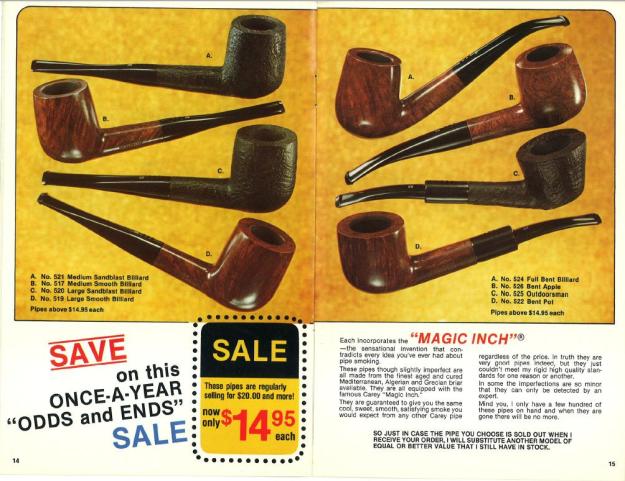
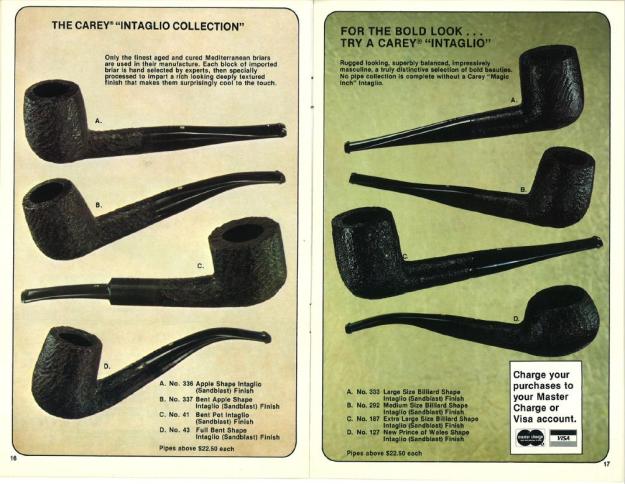
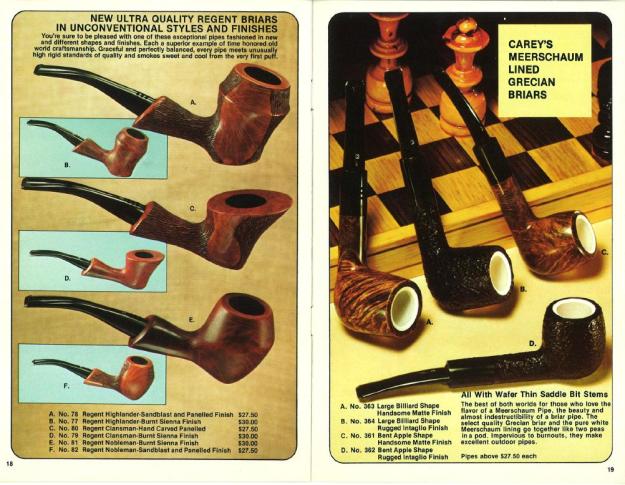
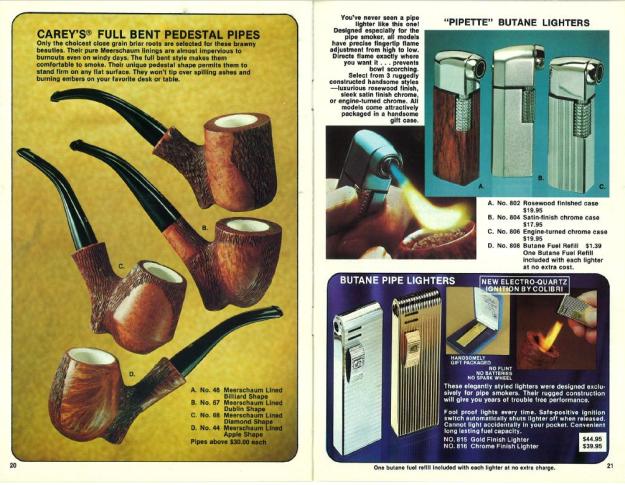
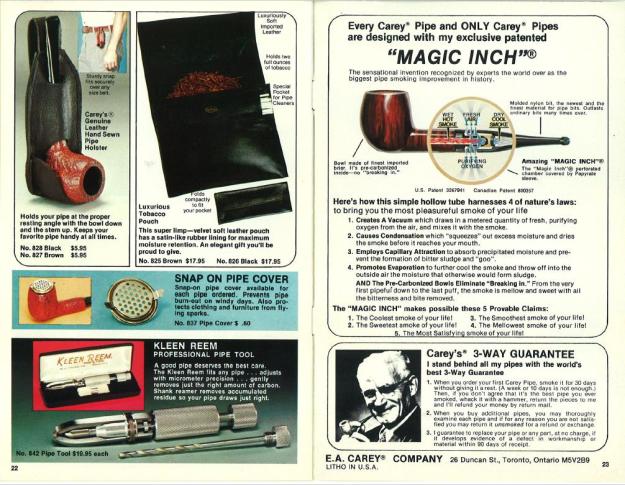
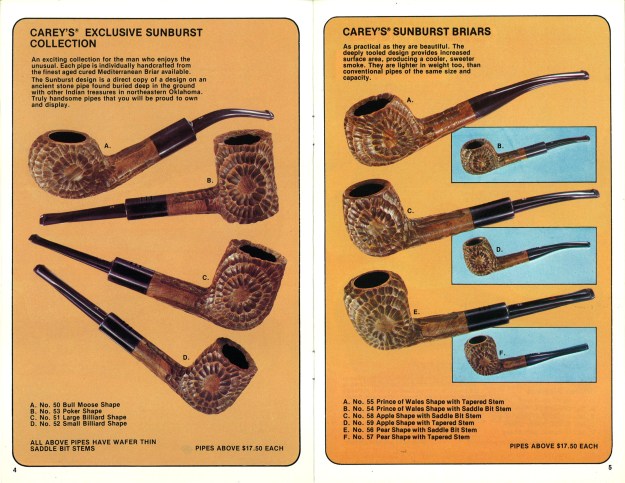
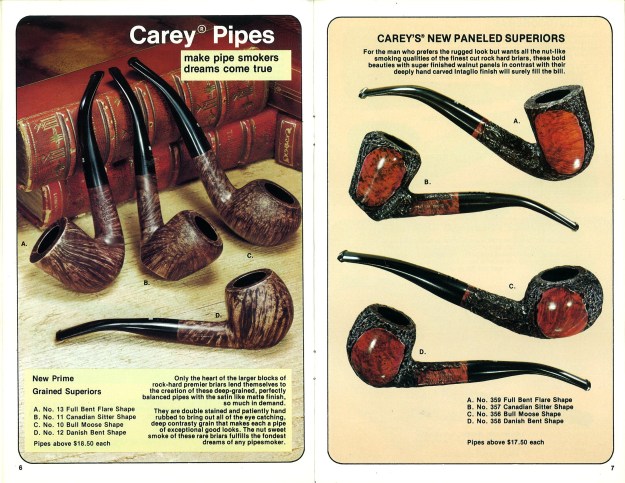
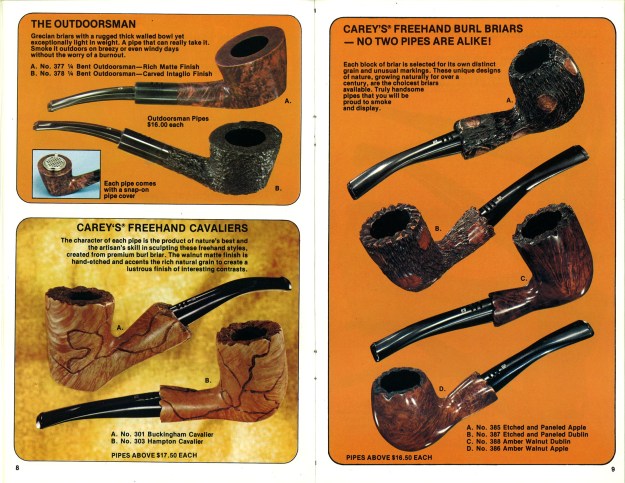
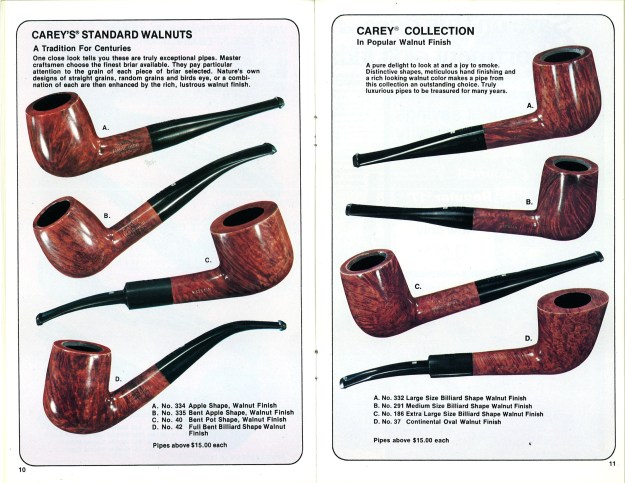
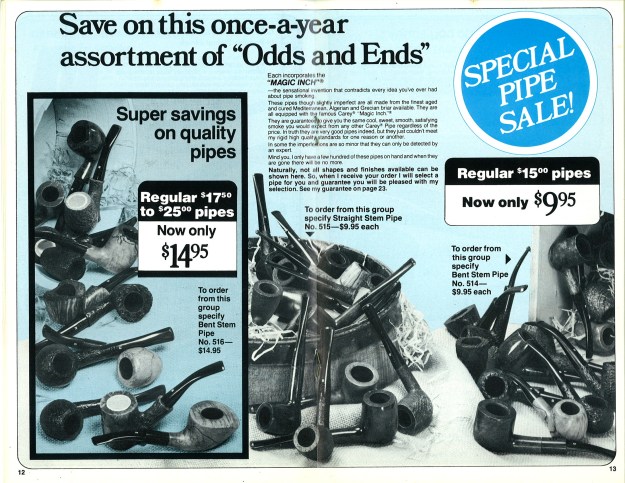
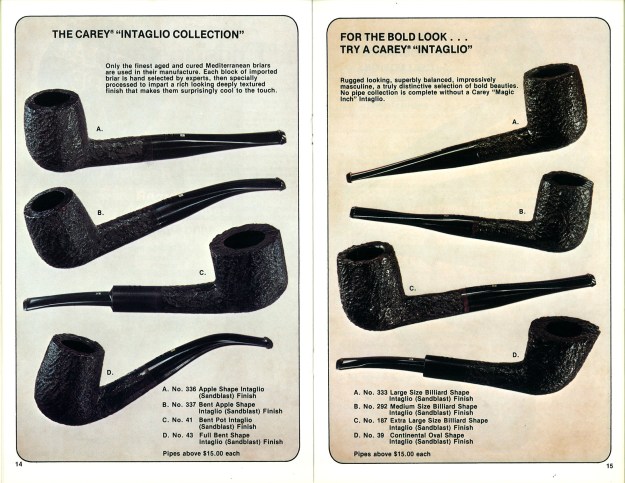
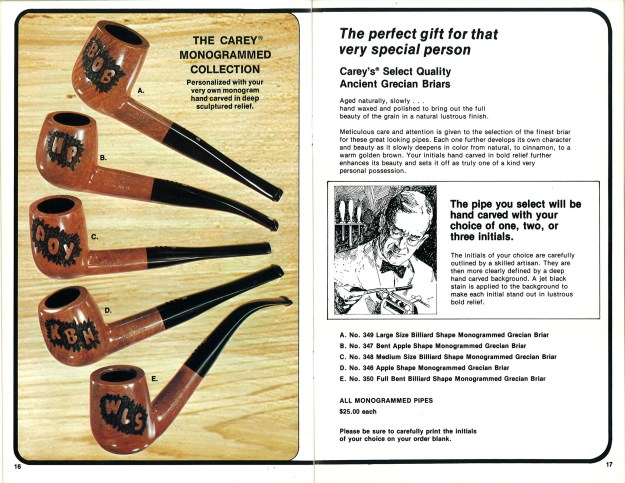
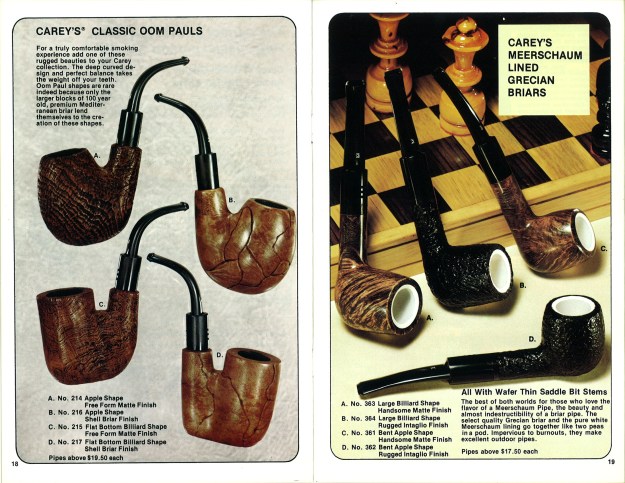
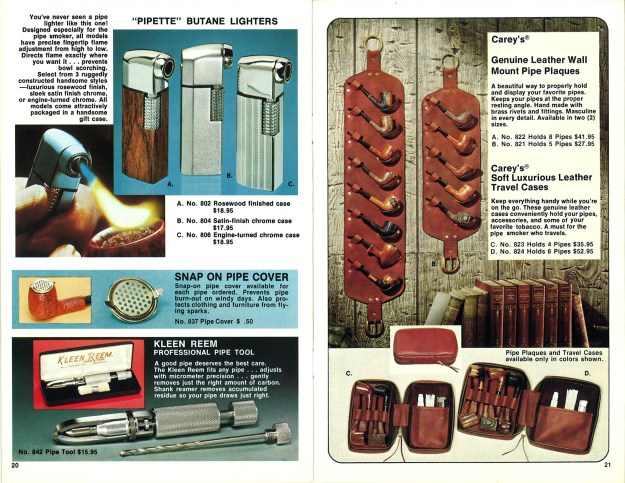
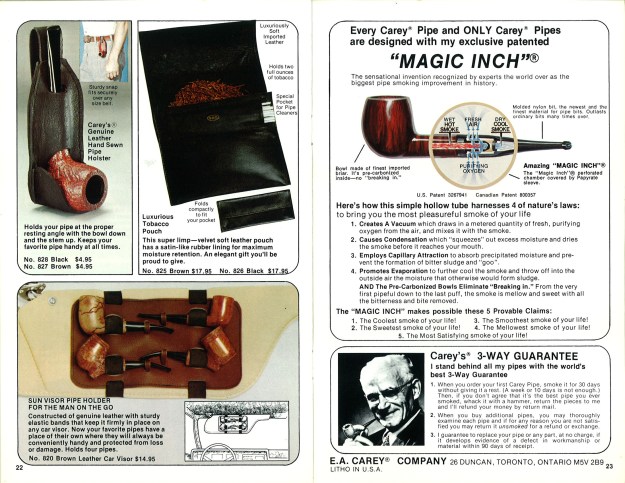
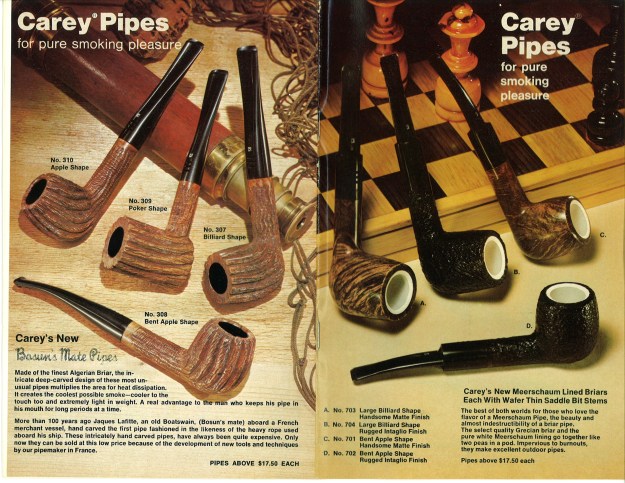
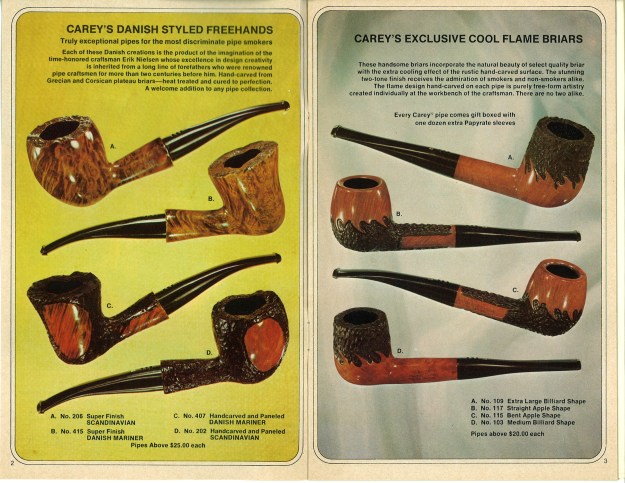
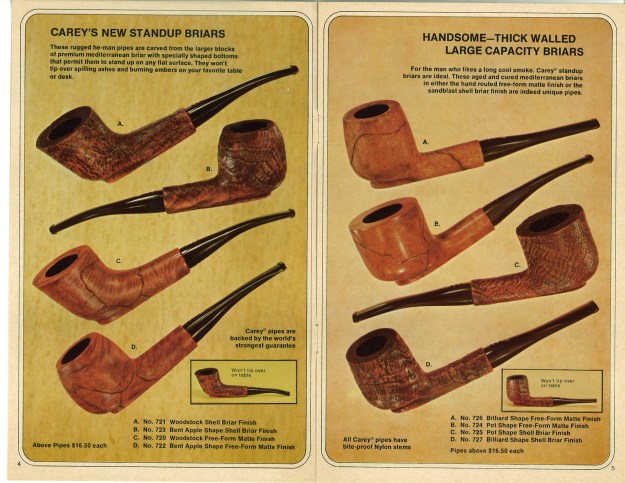
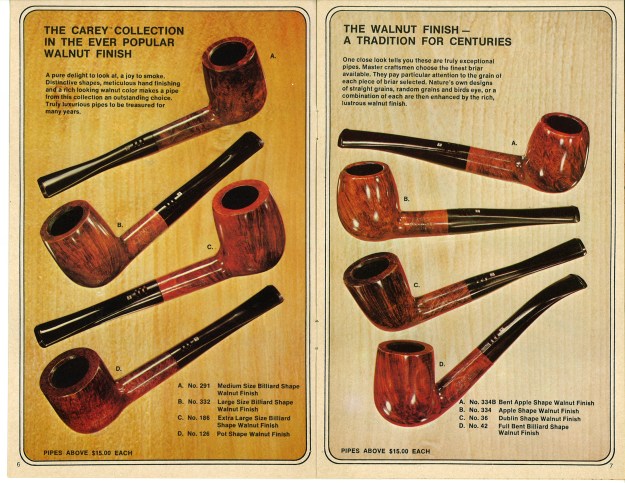
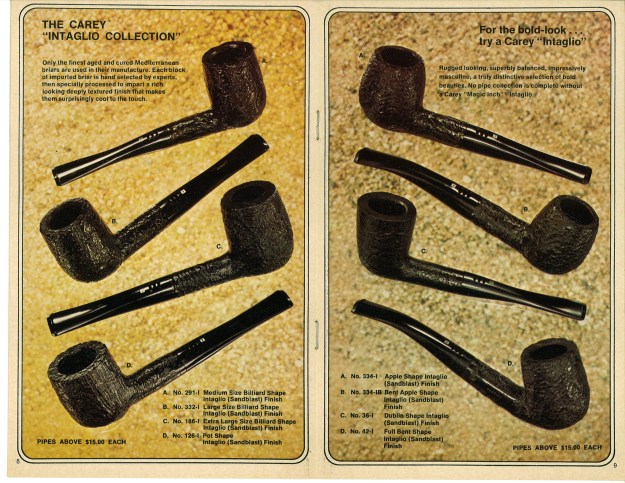
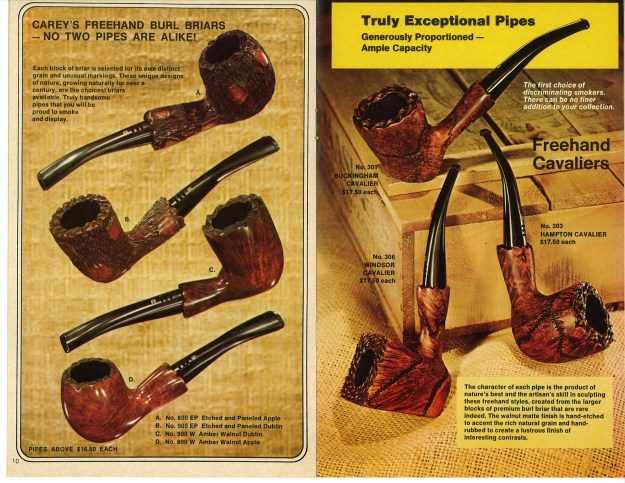
My Last Carey Canada Catalogue from the 70s


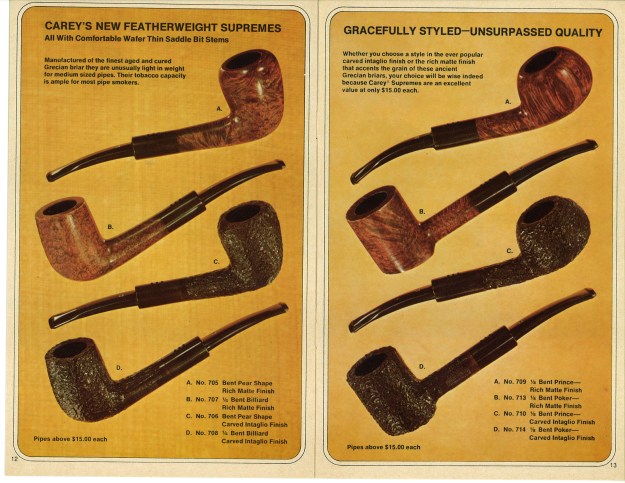
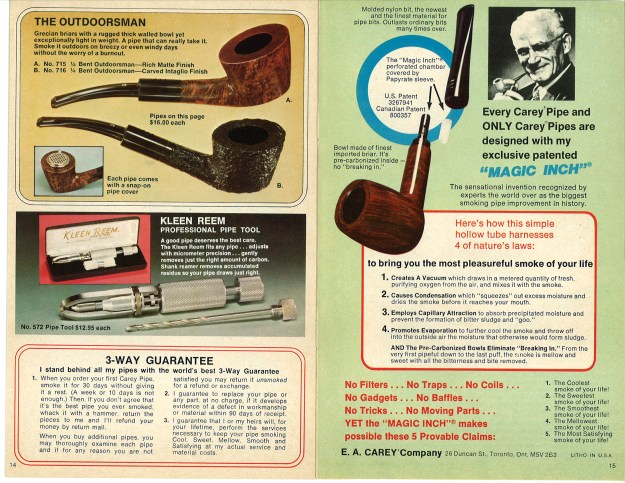
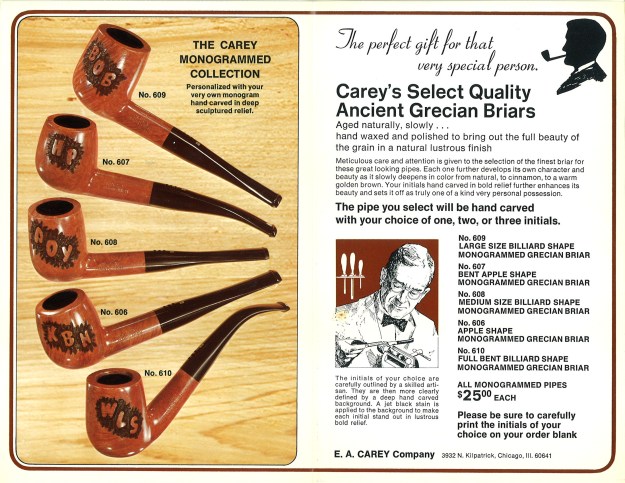
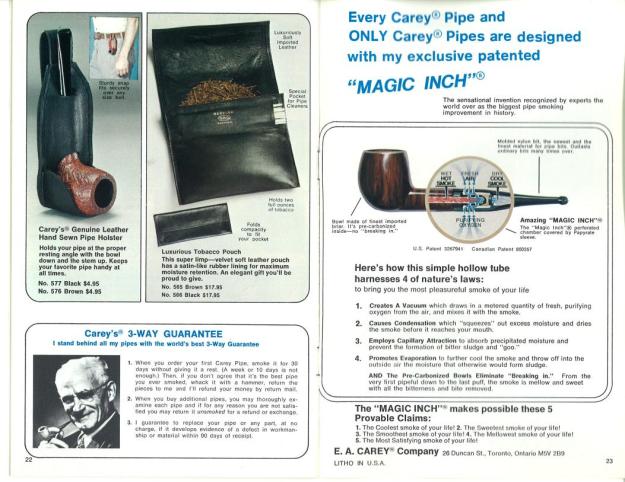
I finally got around to scanning the last Carey Canada Catalogue that I have in my newly added collection of catalogues. There are some similar pipes to the other catalogues but there are also some different ones so I thought it was worth sharing this one with you all.carey1 carey2 carey3 carey4 carey5 carey6 carey7 carey8 carey9 carey10 carey11 carey12

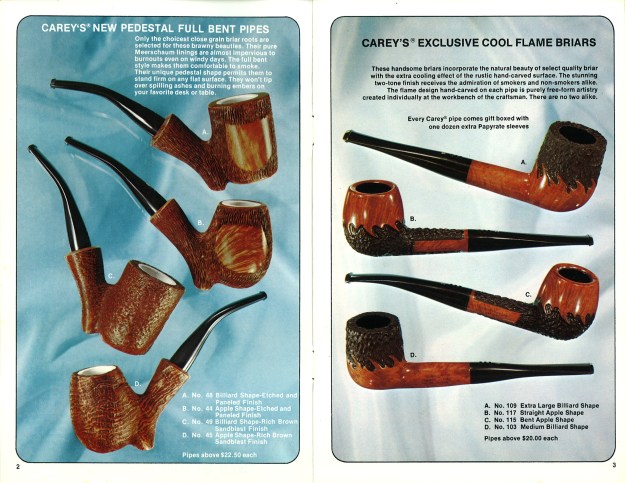
Carey Pipes for Pure Smoking Pleasure – Catalogue


Blog by Steve Laug

I have yet another Carey Pipe Catalogue from Toronto. It has some different shaped pipes than the previous catalogue. Some of the shapes and finishes are really well done. Yet another blast from the past in terms of prices. Enjoy

carey1 carey2 carey3 carey4 carey5 carey6 carey7 carey8 carey9 carey10 carey11 carey12

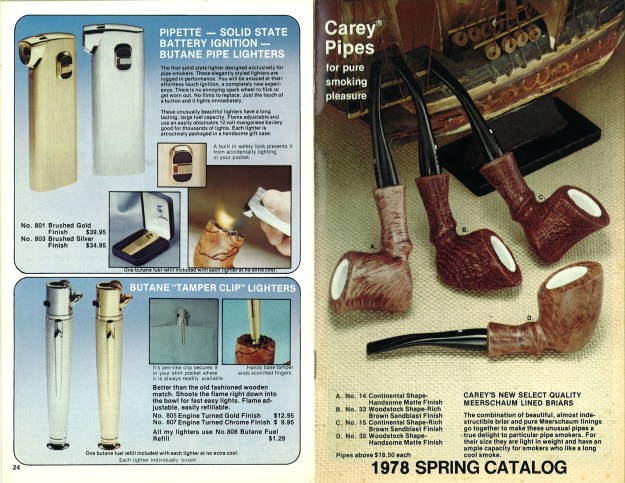
Another EA Carey Catalogue – Spring 1978


Blog by Steve Laug

This is the second EA Carey Catalogue that I am posting from the lot I was given a while ago. This one is from Spring 1978. I always enjoy looking over the offerings and prices from days past. Have a look at the wide range of shapes.1090_001 1090_002 1090_003 1090_004 1090_005 1090_006 1090_007 1090_008 1090_009 1090_0101090_011 1090_012

Carey Pipe Catalogue from the 70’s


Blog by Steve Laug

In the recent package of pipe brochures and catalogues there was an envelope of EA Cary Pipes from Toronto, Ontario. These brochures also included letters between the old pipeman and the company.

1092_001 1092_002 1092_003 1092_004 1092_005 1092_006 1092_007 1092_008 1092_009

A Concise History of the Gubbels Pipe Business from Arno van Goor, the Dutch Pipe Smoker


Steve, here is the Arno van Goor blog that describes so well the evolution of the great Dutch pipe family business known today as E. Gubbels B.V. in the Netherlands.  Dhr. van Goor’s sources are friends of his who know the Gubbels family and business, members of the Gubbels family itself, including Elbert Jr., as well as employees.  The information in the following blog, therefore, is culled from direct interviews and other contacts.  There is also the fact that Arno is Dutch and therefore closer to the action, as it were!  He was gracious enough to provide permission to re-publish the fascinating living history in this forum, although at first I thought it would be excerpts from another, longer blog that had the same basic info.  I have been careful to copy and paste the material as close as possible to the format set out by Arno in the original on his website, The Dutch Pipesmoker, at https://dutchpipesmoker.wordpress.com/.  However, most of the hyperlinks have been removed, and also the photos below were consistently wrapped in the original text paragraphs alternating from the left to right sides.  Perhaps you can fix that!  I want to take this opportunity to express my extreme gratitude to Arno for his invaluable wellspring of data on the Gubbels family and business.  It gives the most illuminating picture I have found.

— Robert M. Boughton

The following is © 2015 by Arno van Goor.  Used by permission.

2015 PRF-pipe made by Big Ben
by arno665

Dre unveiling the new forum year-pipe

Dre unveiling the new forum year-pipe

In my Hospitable Heukelum 2014 blogpost I revealed that the 2015 PRF forum year-pipe was going to be made by Dutch pipe-brand Big Ben.  Like I told before, normally Shaun arranges the whole project but sadly he had been very ill this year.  Despite his sickness he managed to reach out for help and Dre answered his call.  Dre (Andre) has very good connections with the Gubbels family from the Big Ben and Hilson pipe factory and regularly visits the place.  So he asked if they could mean anything for the PRF [the Dutch/Belgian Pipe Smokers Forum, abbreviated PRF from the Dutch Pijprokers Forum] pipe project.  Unfortunately Big Ben only fire up their machines for a minimum of 500 pipes and the forum can never reach that number.  BUT they had an alternative solution.

2015 PRF forum year-pipes

2015 PRF forum year-pipes

Throughout the years Gubbels kept pipe-bowls from their Barbados range behind with an exceptional grain and we could have those! Plus they added a metal ring on top of the bowl which made the pipe look even better. Then there was another problem, one can’t buy directly from the Gubbels factory. Luckily Primera Wouters in Weert were prepared to distribute the pipes. When Shaun and Dre told this and showed the pipe they got a very well deserved applause. Just over 60 pipes were available and when forum-members could order them they all were gone in no time! To be perfectly honest, I did not apply for one. I simply did not like the shape, but came to regret it later.

My first proper pipe: a Hilson Event

My first proper pipe: a Hilson Event

When I wanted to begin with pipe-smoking I knew nothing except that a Big Ben was a good pipe to start with. However, I preferred a model that was made by Hilson, a Hilson Event. The store owner explained to me that Hilson was made in the same factory as Big Ben. “Ok, I’ll take it!” I said and bought my first pipe. Later I bought a Big Ben which roughly had the same model as the Hilson Event because I simply liked that shape back then. Both pipes I do not have any more, I gave them away when my tastes began to develop and change.

Johannes Henricus Gubbels & Anna Maria Gubbels

Johannes Henricus Gubbels & Anna Maria Gubbels

The histories from Big Ben and Hilson have a lot of similarities and from a point in time even intertwine. It all started for the Gubbels family in 1873 with the shop of Johannes Henricus Gubbels in the Dutch city of Roermond. There he sold things like newspapers, walking sticks, umbrellas, toys and last but not least, smoking accessories. One of the suppliers of those was a German man called Jean Knödgen who had started to make clay pipes in 1846 in the Belgian city of Bree. For a long time Johannes ran his business together with his wife, Dijmphna Hubertina. After her death in 1896 he got married again to Anna Maria in 1899. She bore him two children and when Johannes died in 1911 she continued the business. In 1924 her 2 children, Antonia and Elbert Gubbels, established the “A & H Gubbels” company which specialized in the wholesale trading of smoking accessories.

ben5Meanwhile in Belgium the Bree pipe factory had a new owner. Jean Hillen, the son-in-law of Knödgen, had bought the company at the end of the 19th century. He had also made contact with French pipe-makers in the area of Saint-Claude who supplied him with briar wood and Jean would finish them off. Thus, alongside the traditional clay pipes, he was able to offer more modern pipes. Around 1924 Hillen was perfectly capable of creating briar pipes on his own.

Elbert Gubbels Sr.

Elbert Gubbels Sr.

Up to WWII Elbert Gubbels extended his business, mainly getting his supplies from France and England. Unfortunately The Netherlands were invaded by German troops in 1940 so the family fled north where they tried to make a living by buying and selling what little there was available. In 1945 at the end of the war they returned home to continue the business. A difficult task as material was lacking and importing stuff was almost impossible. In that period Elbert Gubbels, now the sole owner of the business, decided to follow in Jean Hillen’s footsteps. He became totally independent and produced everything himself. The factory began with 2 machines and 3 French artisans in a small workshop.  In Bree a factory already existed and the sons of Hillen also worked there. Jos was in charge of sales and Albert production. The brand name of the pipes that were sold abroad was simple: Hilson, to be precise, Hillen and Sons.

ben7Gubbels had no brand name yet, he just had the name “EGRO” which stood for “Elbert Gubbels Roermond”. The number of machines, personnel, working space and quality of product were increased which resulted in a higher output. That made it necessary to expand the market experience and the wholesale network were no longer sufficient. A brand name was needed in order to increase sales, especially abroad. At that time another Dutch company, “De Rijk & Zonen” from Amsterdam, was doing badly. It was not a large company and to be honest, not so interesting. But it did sell British-made pipes with a sought-after, glamorous brand name well-known in many countries: Big Ben. So in 1956 Gubbels bought the whole De Rijk company. As a result exports soared in Europe, the USA, Canada and many other countries.

Big Ben Pipo

Big Ben Pipo

Meanwhile the business Hilson was flourishing, producing a wide range of well-crafted and creative pipes. These were selling well in Europe and elsewhere thanks to their excellent reputation and good value for money. On the other hand the production of Gubbels was more traditional in style: natural or black briar models, straight or bent, just classic pipe design. Well, one exception. In that period the Pipo pipe appeared, a very small “nose-burner” designed by Alfons Gubbels, the son of Elbert, who had by that time joined the business together with his brother Jos. Alfons was in charge of production and Jos sales. The unorthodox Pipo pipe was highly successful, selling world-wide, including the USA. At the end of 1972 the company moved into a bigger factory. Also the much coveted title “Royal”, in the name of Queen Juliana, was granted. Thus the company name became “Elbert Gubbels en Zonen – Koninklijke Fabriek van Tabakspijpen” (“Elbert Gubbels and Sons – Royal Dutch Pipe Factory”).

ben9At the end of the 1970’s there were only two pipe factories left in the Benelux countries, those of Gubbels and Hillen. Two different but also complementary enterprises. Gubbels sold well in America with their Big Ben pipes while Hilson was a popular pipe-brand on the German market. However, both companies produced high-quality workmanship. So in 1980 Gubbels bought Hillen, who sadly was experiencing serious financial difficulties. It was decided that all machines, material and experts were to be moved to the Gubbels factory.

Alfons Sr. and Elbert Jr.

Alfons Sr. and Elbert Jr.

At first the two brands had some difficulty in co-existing. For example, some Big Ben pipes of that period could be confused with Hilsons and vice-versa. All by all that period of adjustment was positive, characterized by a high output. However, something was changing in the world of pipes and the market crisis meant that quite a few things had to be re-considered. It was not enough to increase quality in order to compensate for the drop in quantity. Greater investments had to match high-performance products. In 1989 Alfons (Fons) junior (technical production and design) and Elbert junior (sales) took over from their father Alfons senior and uncle Jos and the family tradition was carried on.

ben11Since then the company has striven for excellence in every aspect of their production and above all in their mission: offering an increasingly discerning clientèle unique pipes. So since 2008 Rainer Barbi, the late famous German pipe maker, has been contributing to production and had the task of remodeling the Hilson brand until his unfortunate death. Also another great pipe maker, Former, has recently decided to offer Gubbels his creative sensitivity, art and some of his time. Besides manufacturing Big Ben, Hilson and other more minor brands Gubbels has also worked in partnership with other companies to create or refine unique models, such as Porsche Design (from 2005 to 2013) and currently Bentley. Unfortunately the financial crisis hit Gubbels in 2012 and the banks no longer wanted to finance the company. Who smokes these days?? So bankruptcy was a logical consequence, an unpleasant period. But the Gubbels family pulled through with capital of their own and had a new start. There was a change of direction with 20 instead of 28 employees and despite the difficult market the export is growing. The Gubbels company is on the rise once again.

ben12Back to the forum-pipe, I really wanted to see the process in the factory so with thanks to Dre and Fred I could phone Elbert Jr. for an appointment. He already knew my name, I could pay a visit, see the process, take pictures, ask questions, no problem at all. I knew a bit what to expect because I had been before at the new factory with a group of the PRF-forum just before the financial crisis hit Gubbels back in 2011. So on a morning I drove to Herten (municipality of Roermond) dressed to impress because eeyz, you can’t arrive in jeans and a sweater at the only pipe-factory left in The Netherlands right? Because of the crisis the Gubbels offices had moved in the big building used by several companies so I happily announced myself at the wrong desk. Luckily the friendly secretary of the neighbouring enterprise pointed me in the correct direction. After a good ring at the doorbell of Gubbels one of the employees let me in, guided me to the visitor room and went to get Elbert Jr. Before he walked in I was able to quickly snap some pictures of the displayed pipes.

Assembly hall

Assembly hall

Just like on the phone Elbert jr. is a very nice man to talk to, clearly someone with a passion for his company and the products made there. We chatted away for a while until he got a call from his brother that he was ready for me. Elbert Jr. guided me to the big assembly hall where all pipes are made and Fons Jr. was waiting for my arrival. For the outside world Elbert Jr. is the face of Gubbels but inside the factory Fons Jr. reigns supreme. At this moment he is the only one there who knows and is able to perform all the necessary steps in the creation of a pipe. The other employees just know a few steps of the process. Which worries him sometimes, I mean, what if he becomes ill? But they are working on that.
Fons Jr. and a colleague had prepared (as far as they could) the steps in the finishing of the forum-pipe so I could take pictures of it. Remember, all the bowls and mouthpieces were already roughly made. Below you can see all 10 steps of the process:

1. Mounting the mouthpiece.
2. Sanding the pipe from coarse to fine with different sizes of sanding discs.
3. Staining the pipe (3 layers of stain are applied in total) where the first layer of stain is set aflame to fixate it.
4. Removing excess stain.
5. Sanding off more of the stain to make the grain better visible.
6. Milling out space for the metal top-ring.
7. Spraying a lacquer finish on the pipe.
8. Buffing the pipe to make it extra shiny.
9. Putting on the metal top-ring.
10. Tadaaa!! The finished product.

[GO TO THE ORIGINAL BLOG AT https://dutchpipesmoker.wordpress.com/2014/12/16/2015-prf-pipe-made-by-big-ben/ TO VIEW THE PHOTO COLLAGES AND VIDEOS THAT BEGIN AT THIS POINT.]

Fons Jr. adjusting the Lamberthod machine

Fons Jr. adjusting the Lamberthod machine

After explaining all the steps of the process Fons jr. guided me further around the factory. In the back there was a smaller hall with a big basket stacked full with briar and equipment to shape the bowls including a big modernized version of the Lamberthod machine. Of course the precise operation of everything was demonstrated. Seeing the immense Lamberthod device in action was very impressive, especially because Fons Jr. had left the hood open so I could make some pictures. Afterwards he had to laugh when he looked at me, because my classy black suit was totally covered in the sawdust that came out of the machine. “You will still find it in your clothes when you go to sleep tonight” he said with a big grin.

Warehouse

Warehouse

I also was led through the immense warehouse where you can find lots of pipes, pipes and ehrr. Pipes! Uncountable boxes, drawers and crates stacked on to each other filled with unfinished pipe bowls, stems in all shapes and colours, (metal) rings etc. An impressive sight! There was only a small pallet with ebonite mouthpieces, Gubbels does not really use them because acrylic is more durable. Last but not least we went to a part of the warehouse where a couple of friendly ladies were packing orders.

ben16When the tour was finished Fons jr. and I sat together so he could explain the forum-pipe process to me once more and I could write down the steps. We talked a bit more and then it was time for me to leave and for him to go back to the assembly hall. I must say, my respect for Gubbels and especially for Fons jr. had really grown. If you just look at the new Bentley pipes and know how much difficult handwork is needed for the creation of those.

OLYMPUS DIGITAL CAMERAAnyway, I wish all people who have ordered the 2015 PRF forum year-pipe lots of smoking pleasure with it! It is an extraordinary pipe with stunning grain for a very, very good price and I really regret I did not order one now. Thanks go out to Dre, Shaun, Fred, Elbert Jr., Fons Jr., Fons Sr. and the employees at Gubbels for making the forum pipe and this blogpost possible!

[GO TO THE ORIGINAL BLOG AT https://dutchpipesmoker.wordpress.com/2014/12/16/2015-prf-pipe-made-by-big-ben/ TO VIEW THE PHOTO COLLAGES AND VIDEOS THAT BEGIN AT THIS POINT.]