Category Archives: Pipe and Tobacco Historical Documents

Restoring a Dr. Grabow Viscount 39 Continental


Blog by Steve Laug

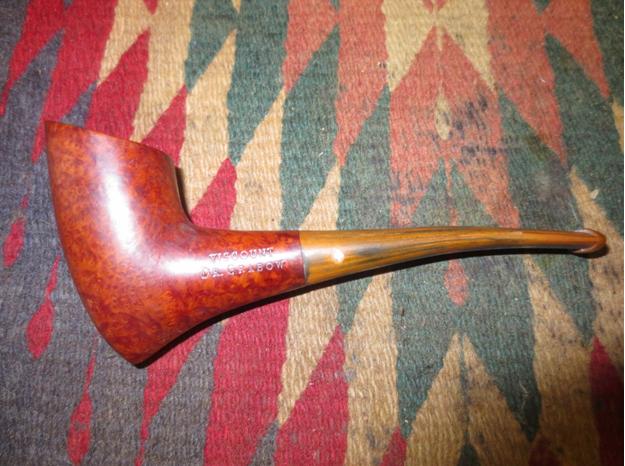
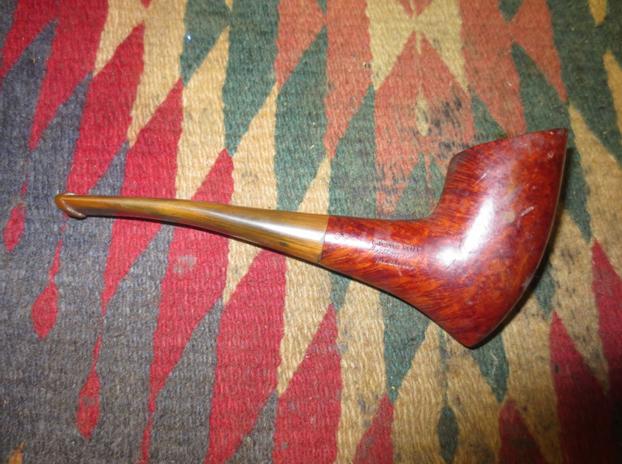
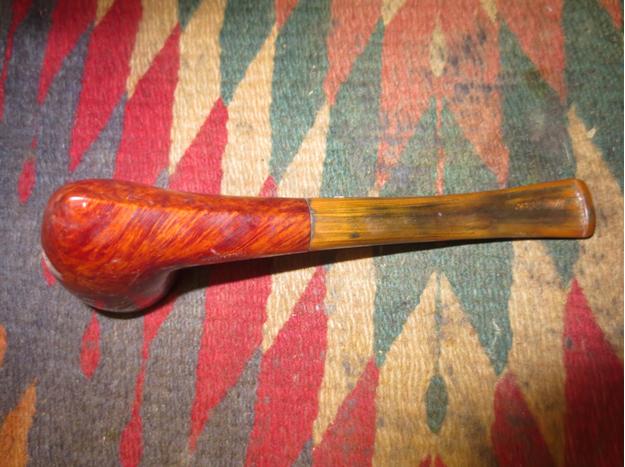
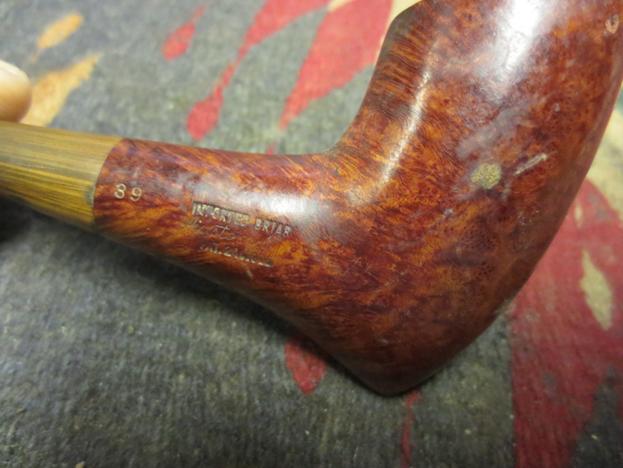
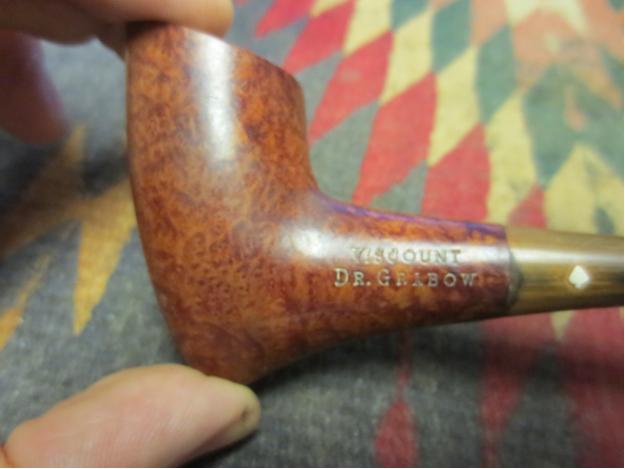
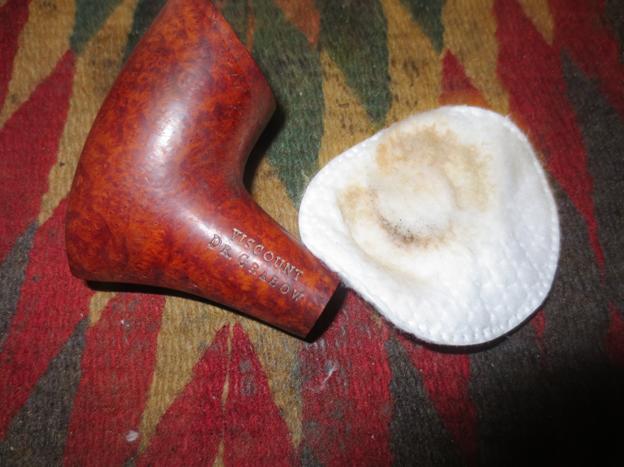
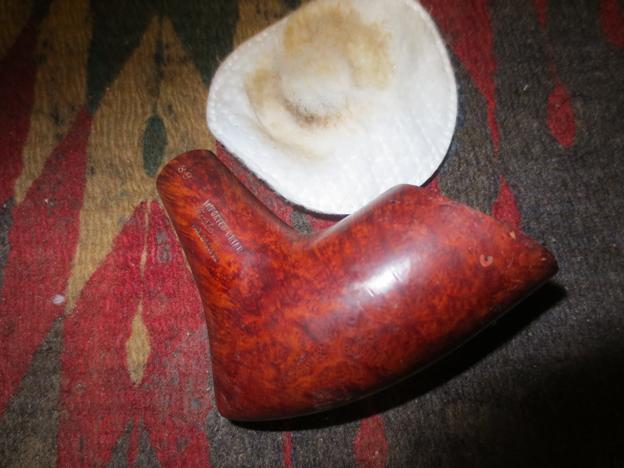
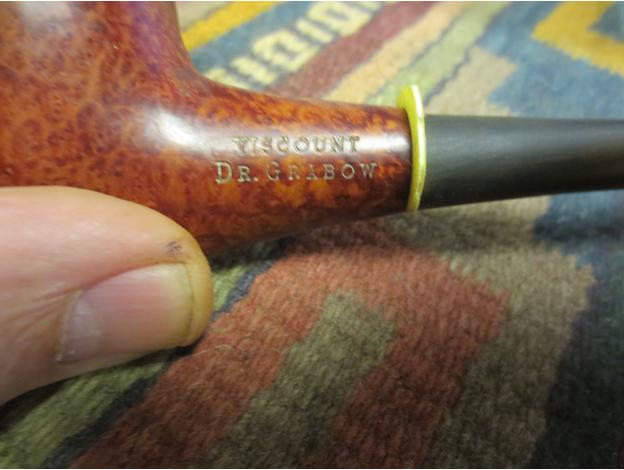
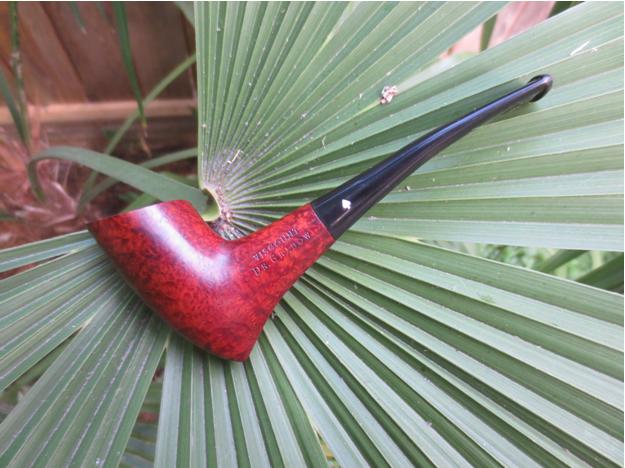
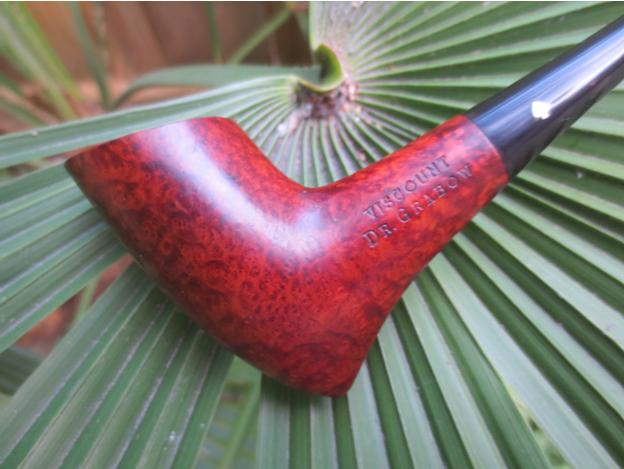
I was gifted this beautifully grained Grabow Viscount Shape 39 in a box of pipes that needed to be reconditioned and repaired. It was a shape that I had seen pictures of but I had never seen one in person. Holding it in hand led me to have a few questions regarding it. It is stamped on the left side of the shank Viscount over Dr. Grabow and on the right side 39 near the shank and then Imported Briar over Adjustomatic over Pat.2461905. I posted the questions and some photos of the pipe on the Dr. Grabow Collectors Forum as I have found the folks there to be extremely helpful and knowledgeable about all things Grabow.

Here are the questions:
1. Any idea on the dates of this one.
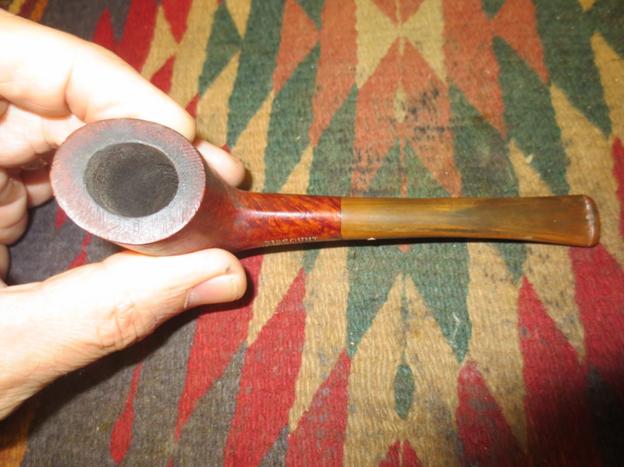
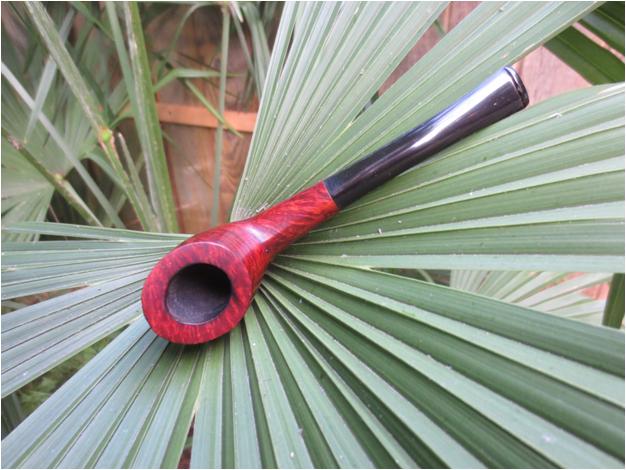
2. The rim top has ridges but I am not sure if they are scratches or original. They are in no particular pattern and the rest of the bowl is smooth. Did this shape have a rusticated rim?
3. Did it have the Grabow scoop stinger as it is missing in this one?
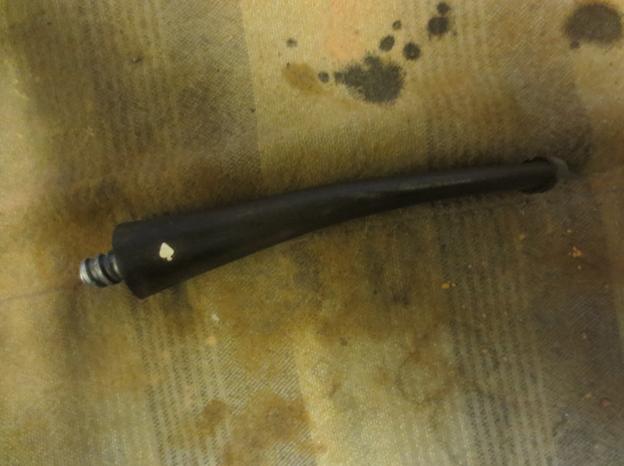
4. The Grabow spade on the stem is raised above the surface. Was this normal? I have not seen it before.

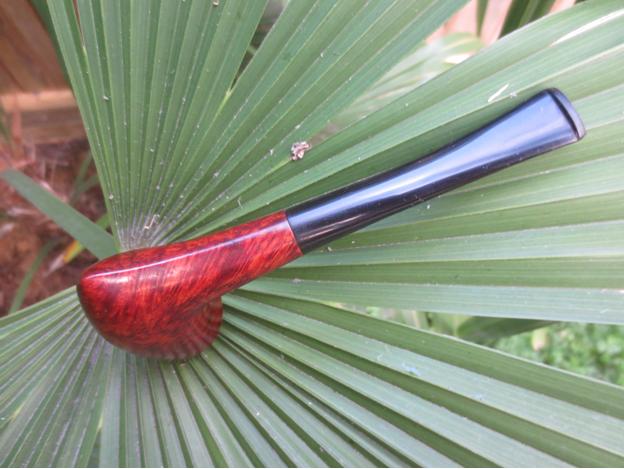
I concluded my questions with a short comment on the pipe. The briar is amazing – birdseye on the sides and cross grain on the front and back of the bowl.

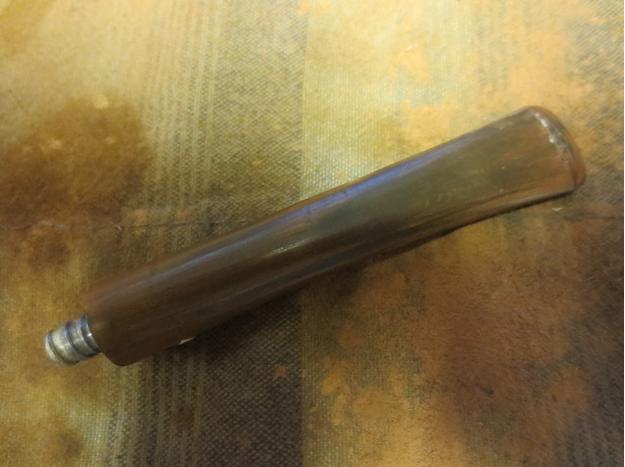
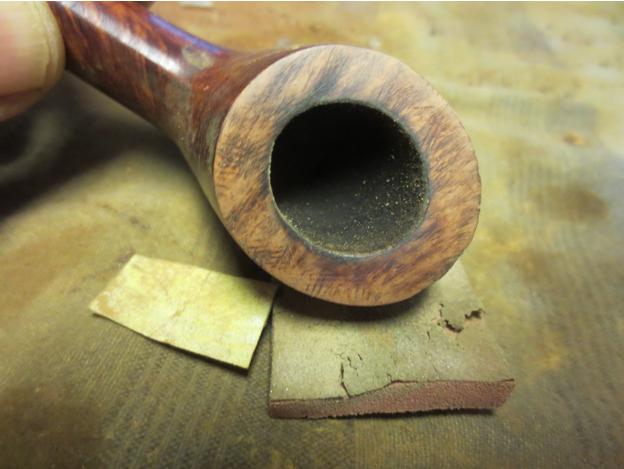
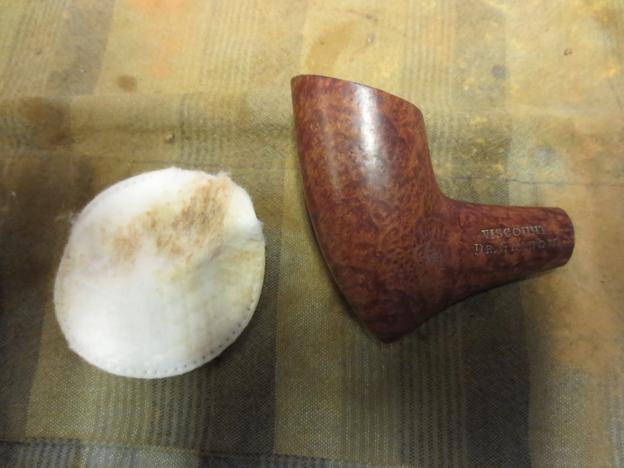
The pipe needed some work as can be seen from the above questions. The stem was rough. It was oxidized and had been scraped clean with a knife or other tool and left ridges and scratches all over the stem. It gave it a striped look. The rim had a hatched rustic pattern on it and had probably fallen prey to the same knife wielding owner. The finish was actually quite good underneath the dirt and sticky spots that may have come from price tags on the bowl or labels. I was surprised that it did not have any lacquer or varnish coat over the briar. It was just stained briar and would be quite easy to clean up.Cont1

Cont2

Cont3

Cont4 It was not long before I got a reply from Ted over on the Dr. Grabow Collectors Forum. He answered all of the questions that I had regarding this particular pipe and did them in reverse order. Here is his reply.

Yes, The grain is great. A fine example.

4) Spade on the stem has raised over time. It was flush when it left the factory. Even if it comes out (unlikely) it is a relatively easy fix. Joe and Ed have bunches of spades that they picked up off the factory floor.

3) It had the scoop (72B) cleaner. Unfortunately I don’t have any left. Someone will get you one.

2) Rim scratches weren’t there when it left the factory. Someone cleaned the top a little too vigorously.

1) This is fun…… The Continentals started in 1959/60 and their heyday was 1964-1966. Almost none were produced after 1967 because the sales just weren’t there. Shape stamped with a vulcanite stem makes me believe it was made in 66/67. I can’t speculate as to when it was sold… just made.

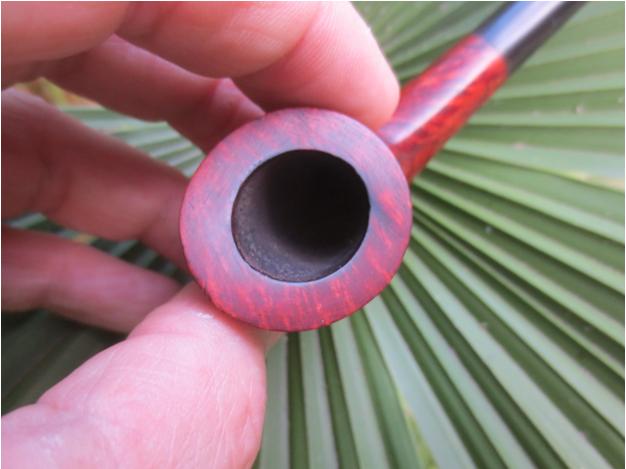
Here are some close up photos of the rim and the grain on this beautiful little pipe.Cont5

Cont6

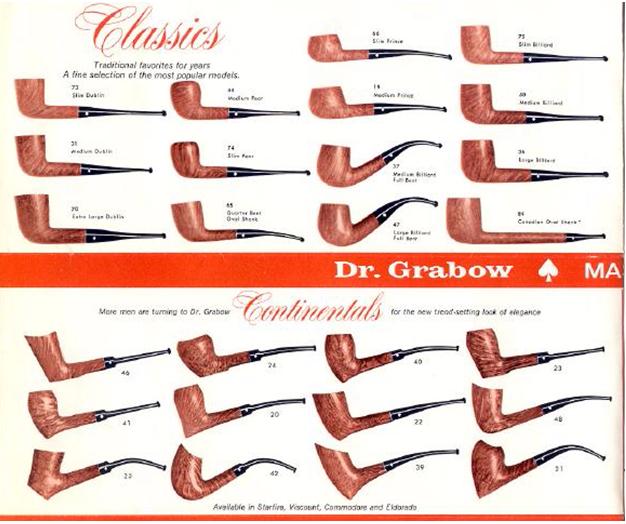
Cont7 Troy Wilburn sent me some catalogue photos of the Continental Line. There are some unique and interesting shapes. I thought you might enjoy seeing the photos.Cont8

Cont9

Cont10

Cont11 I did a light reaming of the bowl with a sharp pen knife being careful to keep it vertical and not damage the inner edge of the rim.Cont12 I scrubbed the bowl, shank and stem airway with pipe cleaners, cotton swabs and alcohol. These metal mortise inserts collect a lot of “gunk” behind them and it takes some work to remove all of the debris and oils from the shank.Cont13 I scrubbed down the exterior of the briar with isopropyl alcohol to remove the sticky areas and also the general grime that was built up on the bowl and shank.Cont14

Cont15

Cont16 I lightly sanded the stem with 220 grit sandpaper and also a medium and fine grit sanding sponge to loosen the oxidation. Then I dropped it in a bath of warm Oxy Clean to soften and bring the oxidation to the surface.Cont17

Cont18

Cont19 While the stem soaked I worked on the scratches and hatch work on the rim surface. It was not only dirty but it looked like someone had scraped off the tars with a knife and left a rough hatch pattern all over the surface of the rim. I sanded it with 220 grit sandpaper to remove the scratches and smooth it out once again. I then sanded it with a medium and a fine grit sanding sponge to reduce the scratches left behind by the sandpaper.Cont20

Cont21 I sanded the rim down with micromesh pads, wet sanding with 1500-2400 grit pads and then dry sanding with 3200-4000 grit pads. I wiped the bowl down with alcohol once more to remove the dust and sanding grit.Cont22

Cont23

Cont24

Cont25 Troy mentioned that these older Continentals were not stained but general just had a light oil coat on the natural briar. It appeared that this was true on this old pipe but the patina that had developed over the years since 1966-67 had darkened the briar. I used a medium brown stain pen to touch up the rim as it matched the patina exactly.Cont26 I took the stem out of the bath and dried it off with a coarse cotton cloth. The oxidation was greatly reduced and the stem was ready to work on.Cont27

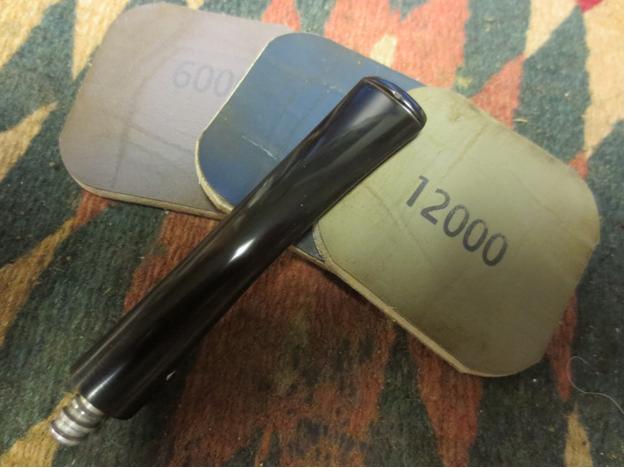
Cont28 I put a plastic washer between the stem and the shank and sanded the stem with 220 grit sandpaper and the sanding sponges to remove the hard to get oxidation at that point.Cont29 I took the stem off again and finished sanding with the sandpaper and sanding sponges.Cont30 Then it was time to work on the polish of the stem. I wet sanded with 1500-2400 grit micromesh sanding pads and then rubbed the stem down with Obsidian Oil. I dry sanded with 3200-4000 grit pads and repeated the oil. I finished with 6000-12000 grit pads, gave the stem a final coat of oil and when it dried buffed the stem with Blue Diamond on the wheel.Cont31

Cont32

Cont33 I gave the entire pipe a light buff with Blue Diamond and then gave it multiple coats of carnauba wax. I buffed it with a clean flannel buff to raise the shine. I took it back to the work table and hand buffed it with a microfibre cloth to bring out a deeper shine. The finished pipe is shown in the photos below. It turned out to be a beautiful piece of briar and a unique looking pipe. The old briar is rich with colour and warmth.

I want to thank the Dr. Grabow Collectors Forum and Ted of that Forum for their help on this pipe. I also want to thank Troy for the catalogue pages and for sending me the spoon stinger to insert to completely finish the restoration of the Continental. Thanks for looking.Cont34

Cont35

Cont36

Cont37

Cont38

Cont39

Cont40

Bullets, Sawdust, and Rhododendrons: The Story of the D&P Spartan


Blog by Anthony Cook

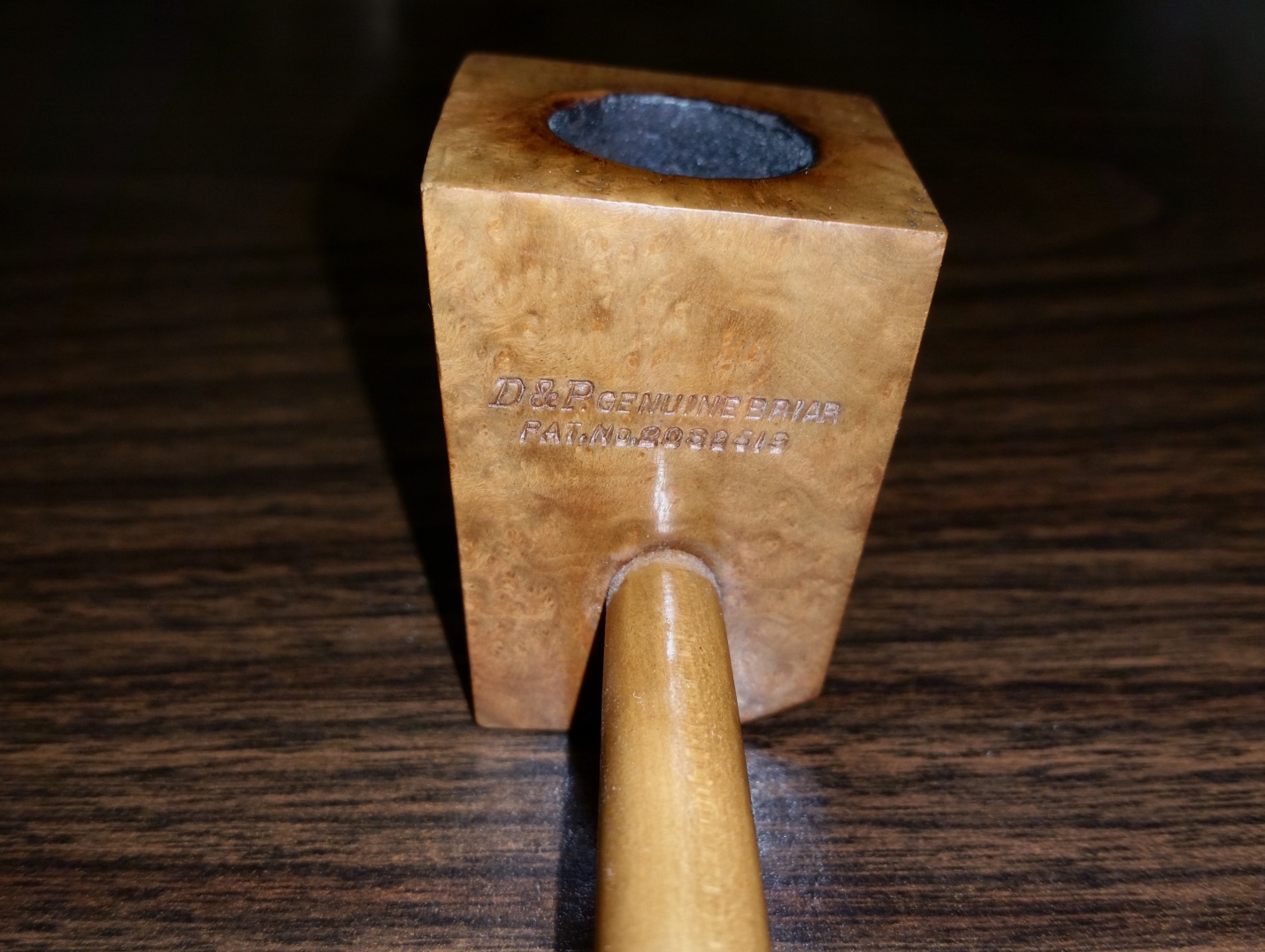
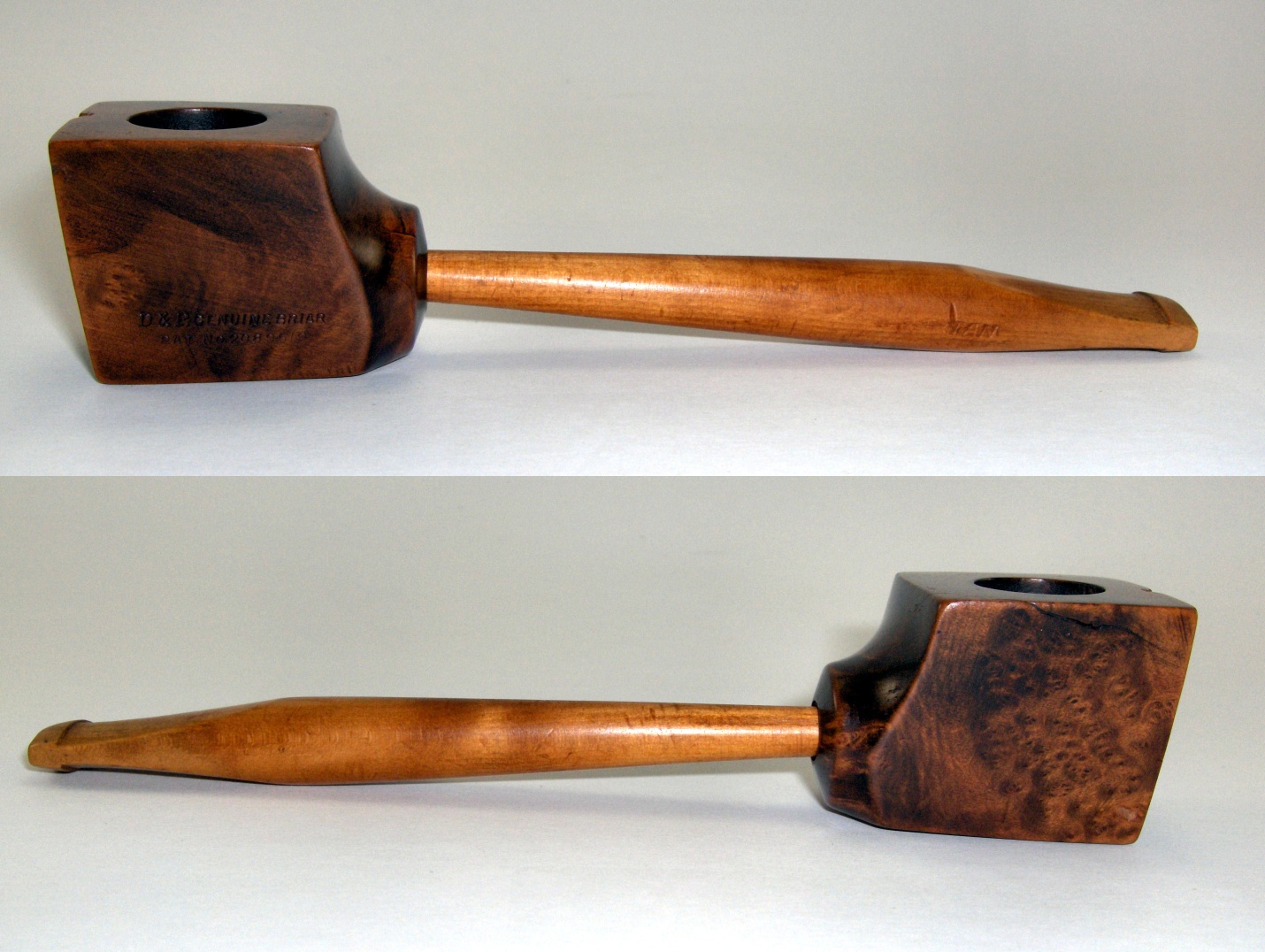
I love old pipes with stories to tell and I recently acquired a couple of very unique, American-made pipes that appear to fit that bill nicely. For those of you unfamiliar with the brand and the pipes (and I’m betting that’s the most of you), let me make the introduction. Meet the D&P Spartan… Spartan1 Spartans were made from 1942 until at least 1945. The majority of them were produced for distribution to U.S. troops overseas during WWII, but some were available domestically as well. The pipe pictured above is one that I acquired and it was probably made in mid-to-late ’43. The stem is made from maple, and although the bowl is stamped “GENUINE BRIAR”, that’s not really true. It’s most likely mountain laurel and possibly even rhododendron (they made do with what they had on hand when briar was tough to get during the war). The stamped patent number (2089519) on the side of the bowl refers to a method of curing wood with boric acid for better heat resistance.

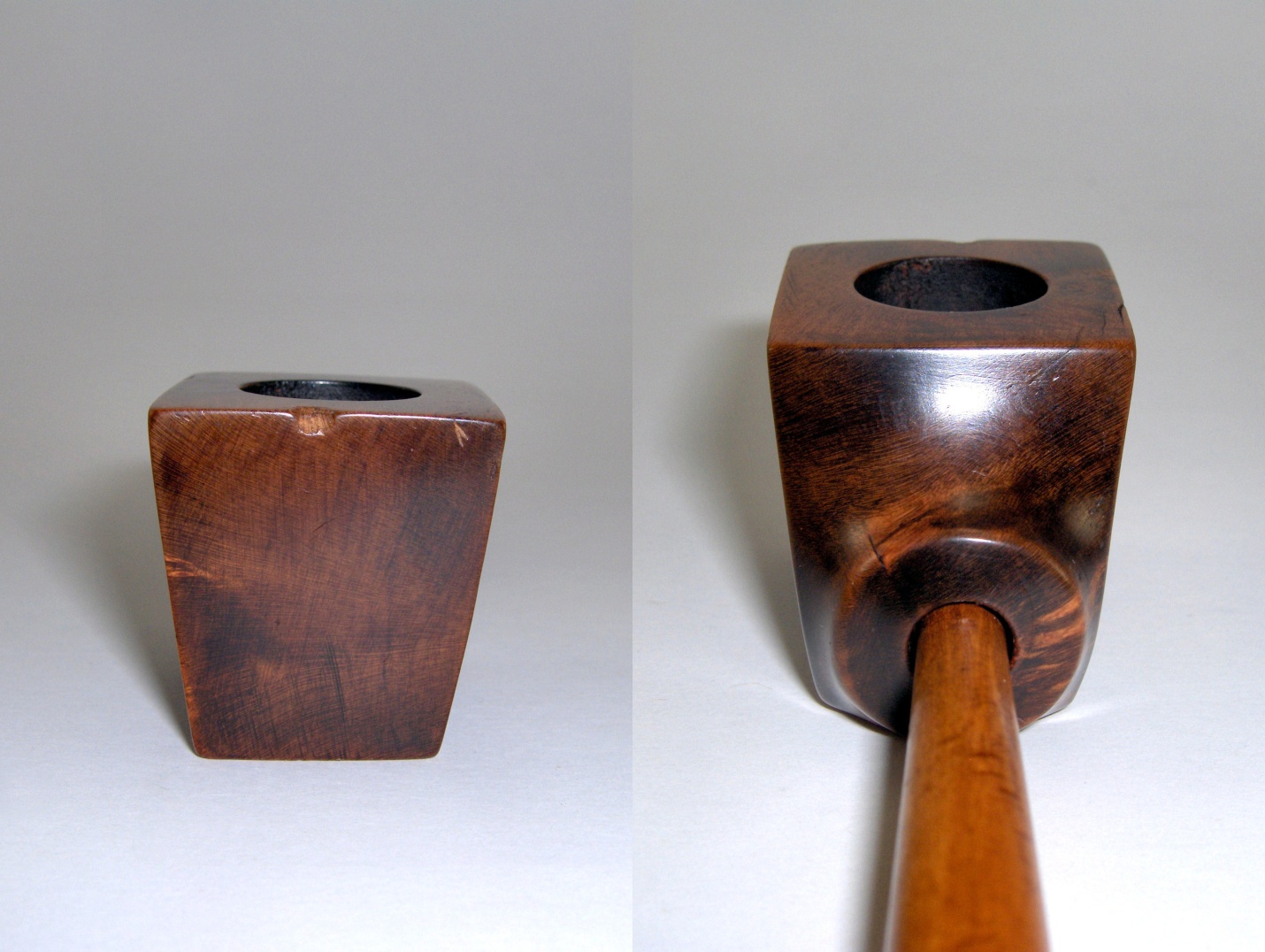
The shape of the Spartans evolved during the course of production. The earliest were simply a wood block with a hole drilled for the tobacco chamber and another on the backside that the stem fit into. It’s very similar to the design of a cob pipe. Those were made from 1942 to mid-1943. I don’t have one of this design on hand, but Tim (oldredbeard) from the Dr. Grabow Collector’s Forum, graciously sent me a couple of photos of one that is in his collection.Spartan2

Spartan3 Notice that Tim’s pipe has the same patent stamp on the bowl as the one pictured above it. The patent was issued in March of 1943. So, this pipe is probably from one of the last production runs for this design.

Sometime around mid-1943 the design of the Spartan was changed. The new version was slightly less utilitarian and added a few aesthetic curves to the back of the bowl. It also grew a nub of a shank and utilized a patented (1888462) pressure fit for the stem. My mid-to-late ’43 Spartan is an example of this design.Spartan4

Spartan5

Spartan6 The design was again changed near the end of the war. I suppose the idea was to give it more appeal as D&P began to rely more on the domestic market. The new look was more traditional, but still rather roughly shaped. The paneled bowl received a few more angles, the shank was further extended, and the maple stem was replaced with one of vulcanite. The second Spartan that I picked up is an example of this design. It would have probably been made somewhere around late-’44 to ’45. I’m not aware of any further changes to the design, and in fact, I don’t believe that D&P continued to produce Spartans for very long after the end of the war.Spartan7

Spartan8

Spartan9

Spartan10 D&P was created in 1942 by David and Paul Lavietes. They were, respectively, the brother and father of Henry Lavietes who was part owner of the better known HLT located in Ozone Park, New York (Henry was the “H”). David Lavietes was also the inventor of the “Ajustomatic” stem fitting.

From the December, 1945 issue of Popular Mechanics

From the December, 1945 issue of Popular Mechanics

Originally, D&P was a sawmill and basically a supplier for HLT. They were located in Boone, North Carolina and purchased mountain laurel locally, which they then cut into blocks to be shipped to Ozone Park to be made into HLT pipes. I’m not sure, but I don’t believe that the D&P stamped pipes were ever sent to HLT. I think that they were carved in North Carolina. In 1944, D&P relocated the sawmill to Sparta, North Carolina and HLT relocated there soon after. In the early ‘50s, D&P became known as the Briarshop. They continued to carve blocks for HLT, although they were located in a different building and still regarded as a separate company. I’ve found no evidence that they ever again marketed pipes under the either the D&P or Briarshop names.

In 1953, HLT acquired the name and assets of the Dr. Grabow Pipe Company. The Briarshop ceased to be a separate company somewhere within the same timeframe and was rolled into HLT. The operation still produced stummels, but now they were doing it for both the HLT and Dr. Grabow brands. HLT has since ceased to exist, but Dr. Grabow pipes are still being made to this day in Sparta, North Carolina.

So, there you go. A couple of old pipes with stories worth telling. To me it doesn’t get much better than that.

I’d like to give special thanks to Dave Whitney and Tom Douglas for helping me put all of these pieces together. Sometimes, things get a little muddy out there in Sparta. Also, thanks to Tim for providing me with photos of a 1st-gen Spartan. You know where to reach me when you’re ready to let it go, Tim.

Late Breaking News Update!

Okay, not so late breaking, since the news is more than 70 years old, but here it is anyway…

Tom contacted me shortly after the write up was posted and told me that Appalachian State University has a yearbook titled, aptly enough, “The Rhododendron.” The 1942 and 1945 editions have D&P advertisements in them. Both of the yearbooks are available for viewing online here: http://bit.ly/asuyearbooks . I’ve cropped out the D&P ads and you can see them here:

1942: https://lh3.googleusercontent.com/-VqKwuNNXRjo/VZ7dMvMyeVI/AAAAAAAABic/386oDL1_swE/s800-Ic42/asuyb1942-p133.jpg

1945: https://lh3.googleusercontent.com/-7PyicjIL6nQ/VZ7dMzP2UqI/AAAAAAAABig/bM3Xw9a0poM/s800-Ic42/asuyb1945-p101.jpg

You’ll notice that the ’42 and ’45 ads refer to both Boone and Sparta. This leads me to believe that the Sparta location was part of the D&P operation from the beginning. When D&P relocated in ’44 it must have been a headquarters move only. The Boone location appears to have remained in operation after the move, but I have no idea for how long. I’m going to do some more digging around Boone and see what turns up.

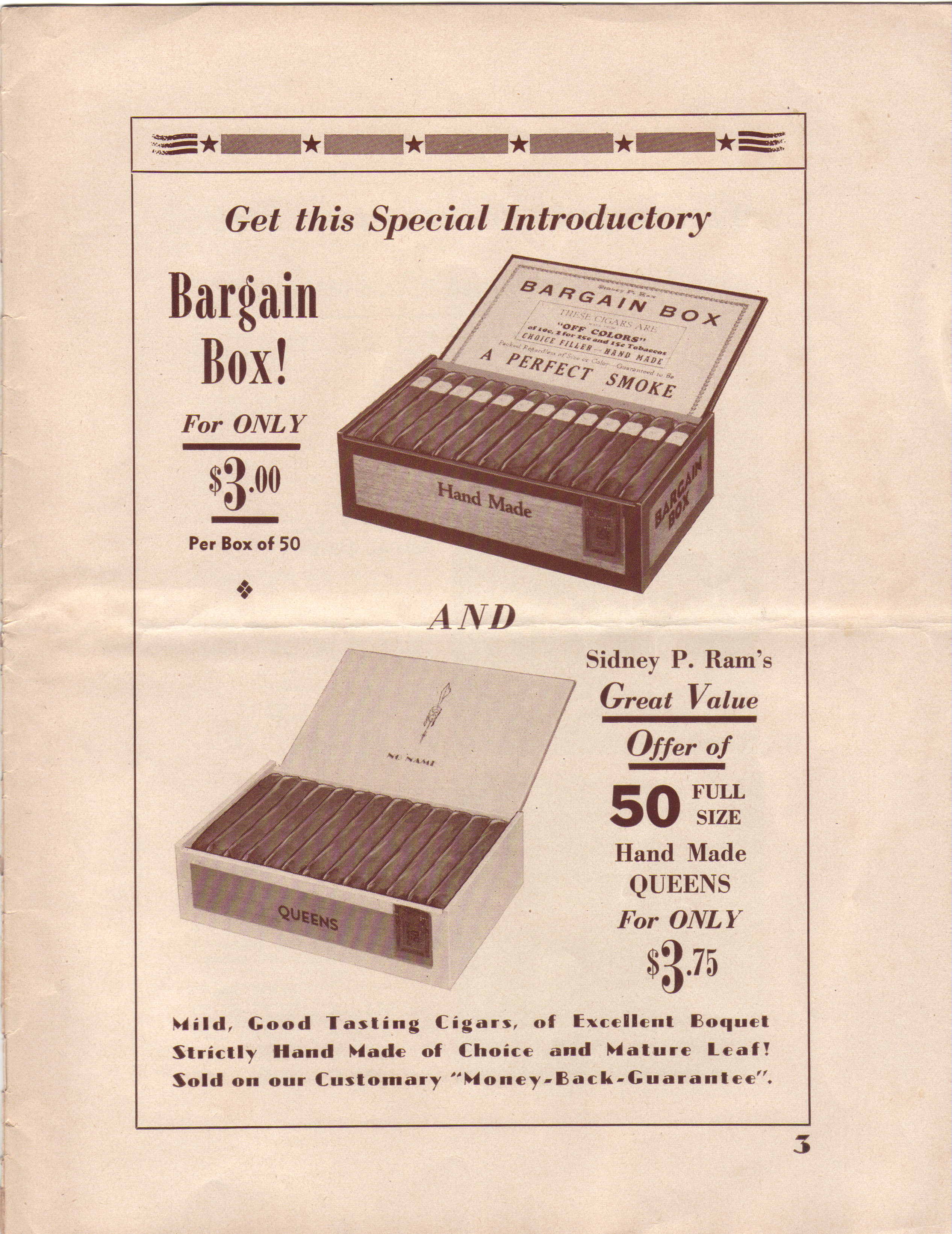
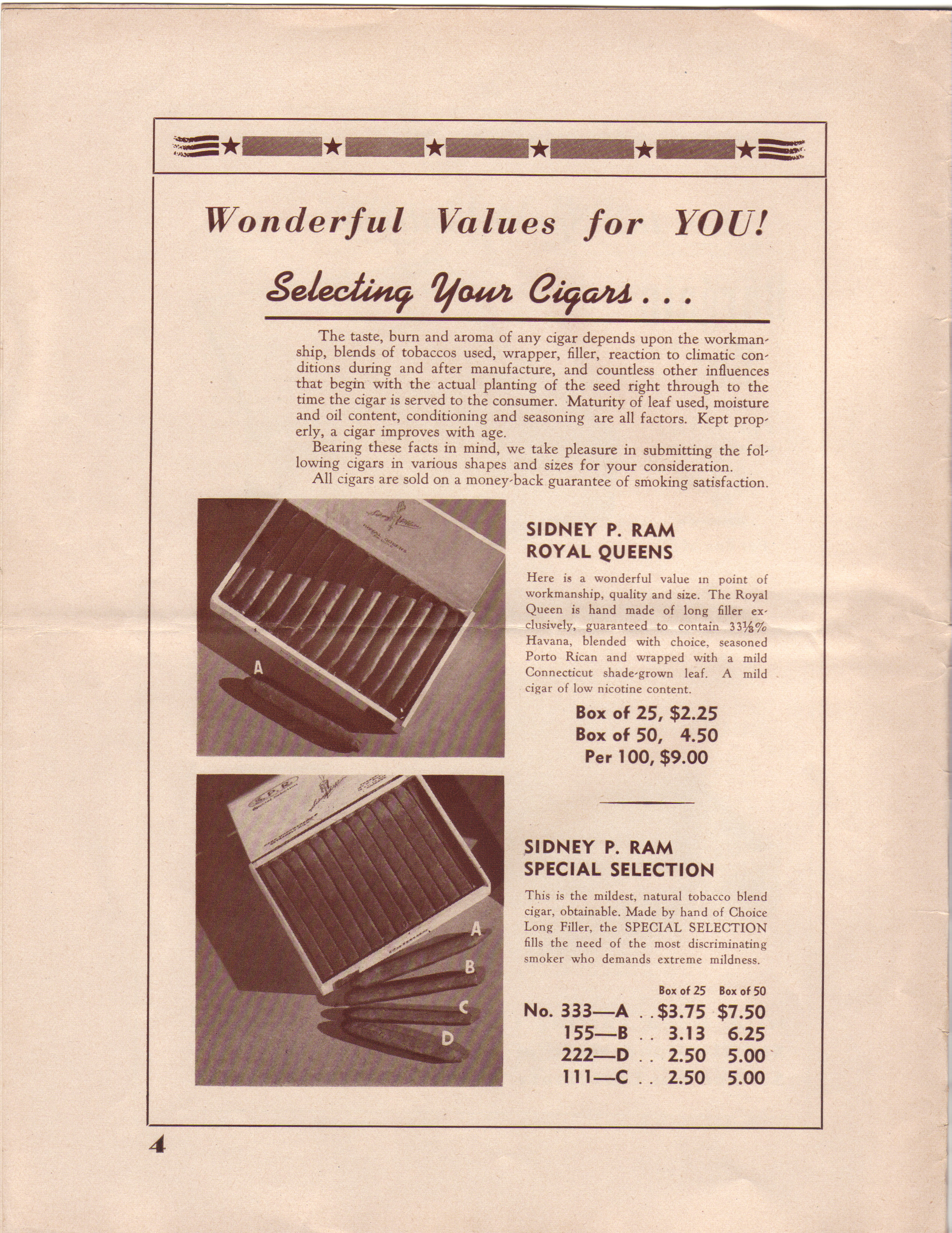
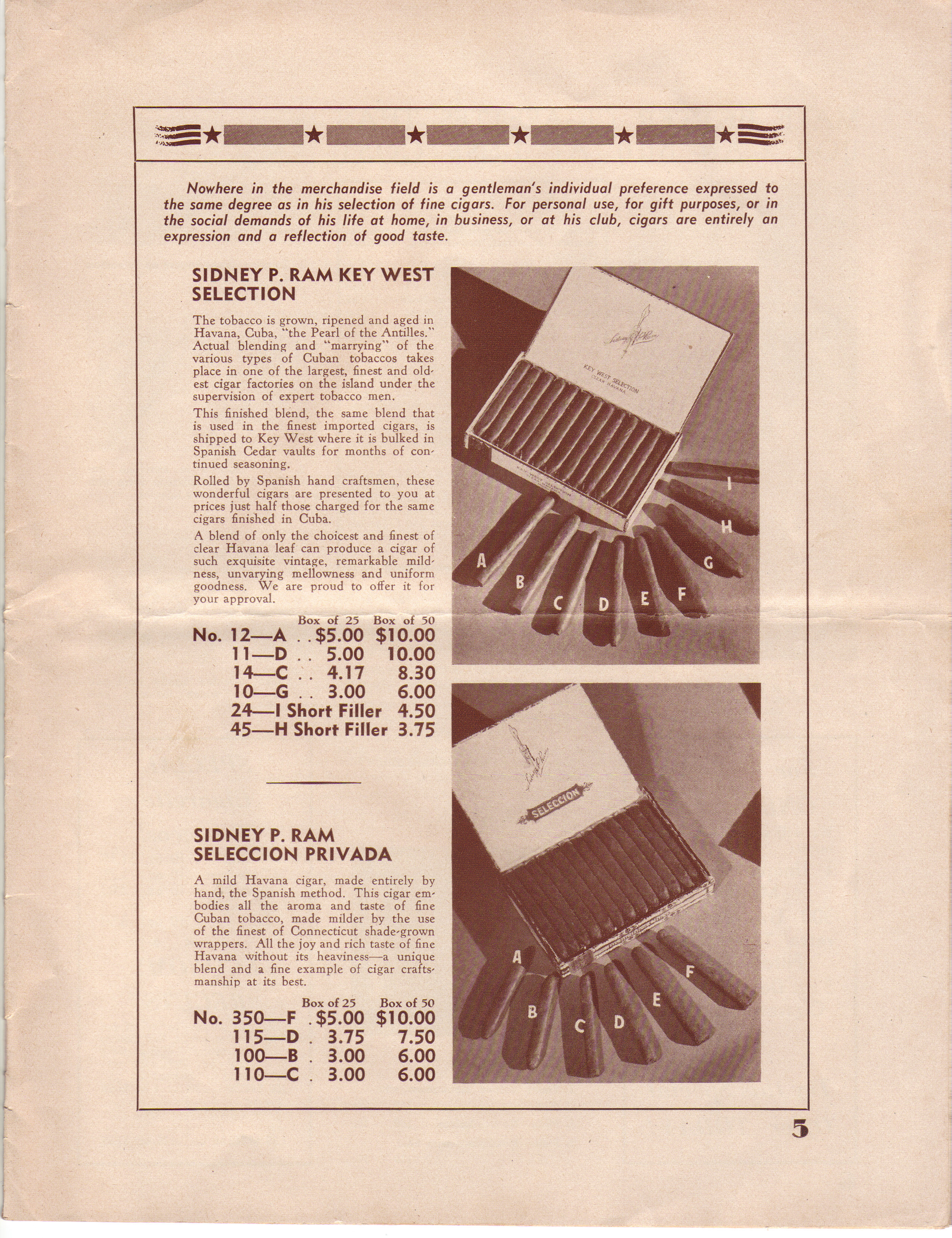
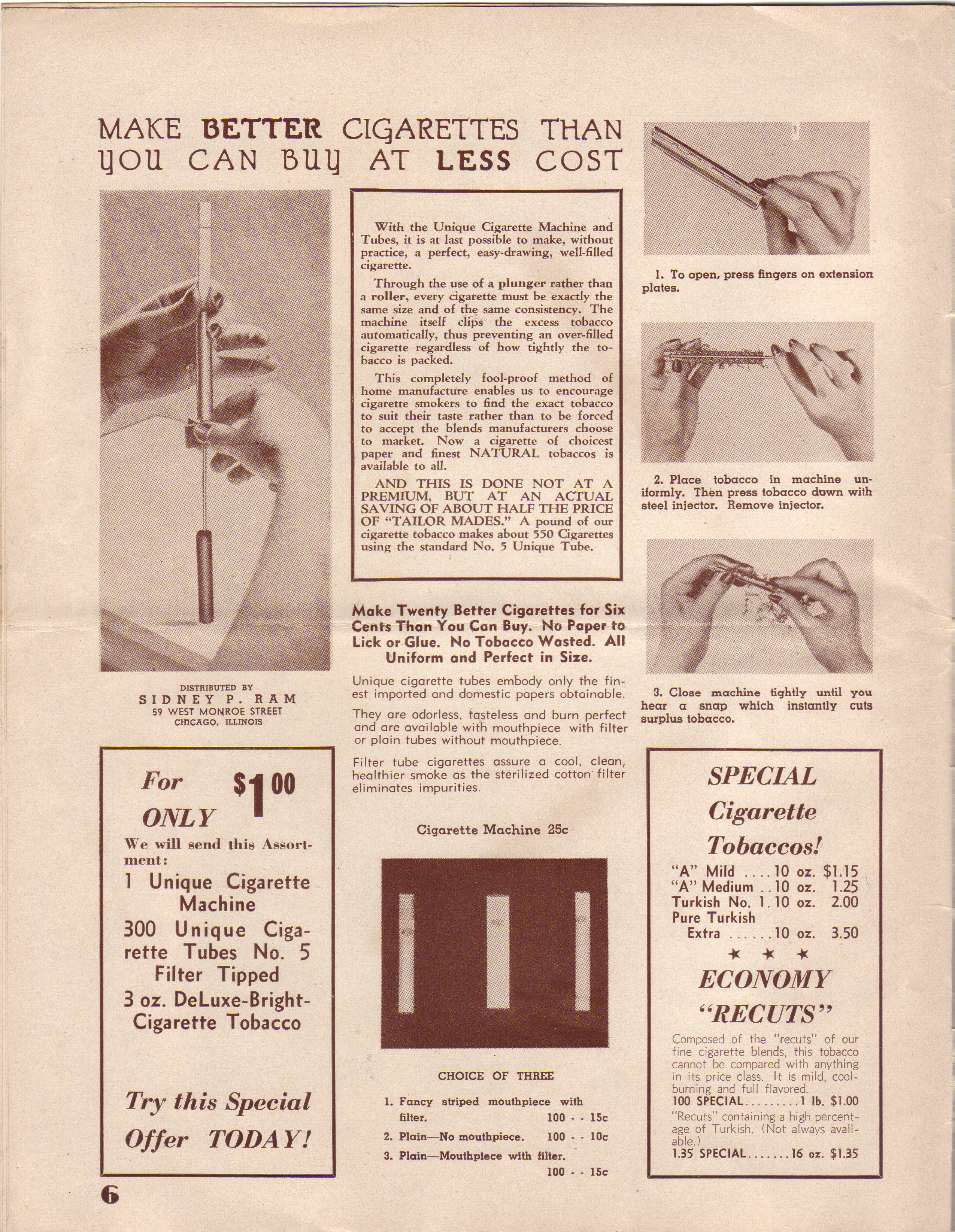
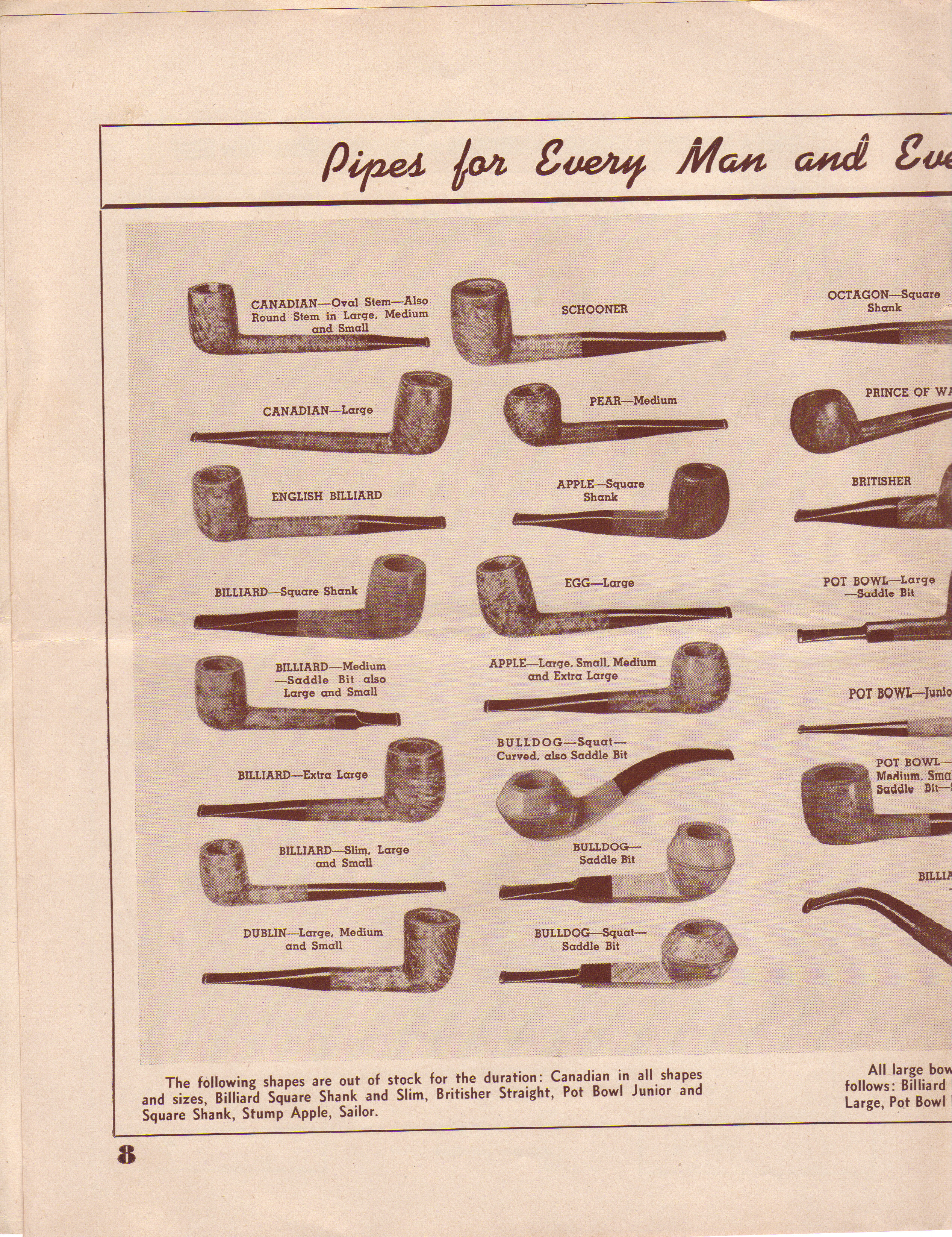
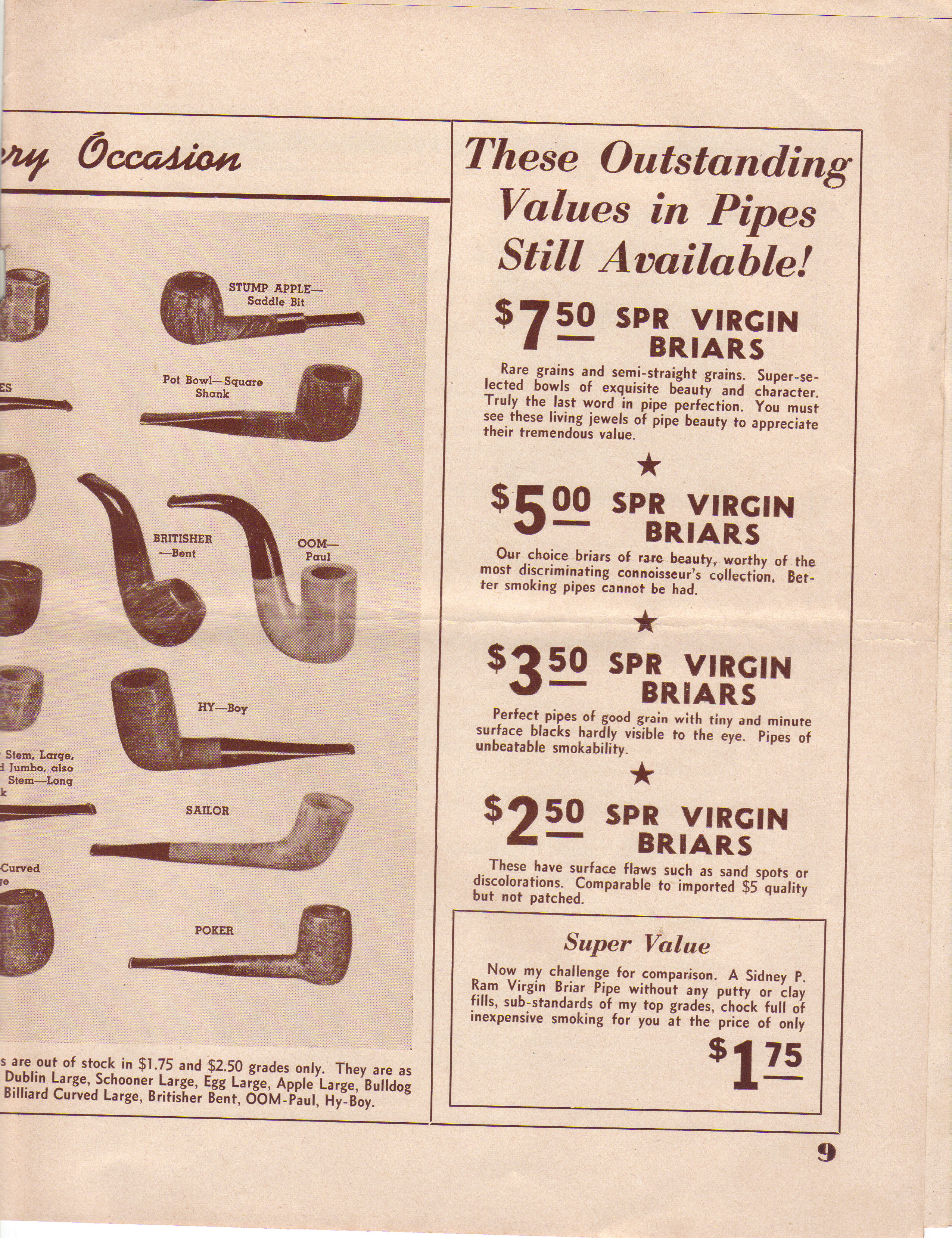
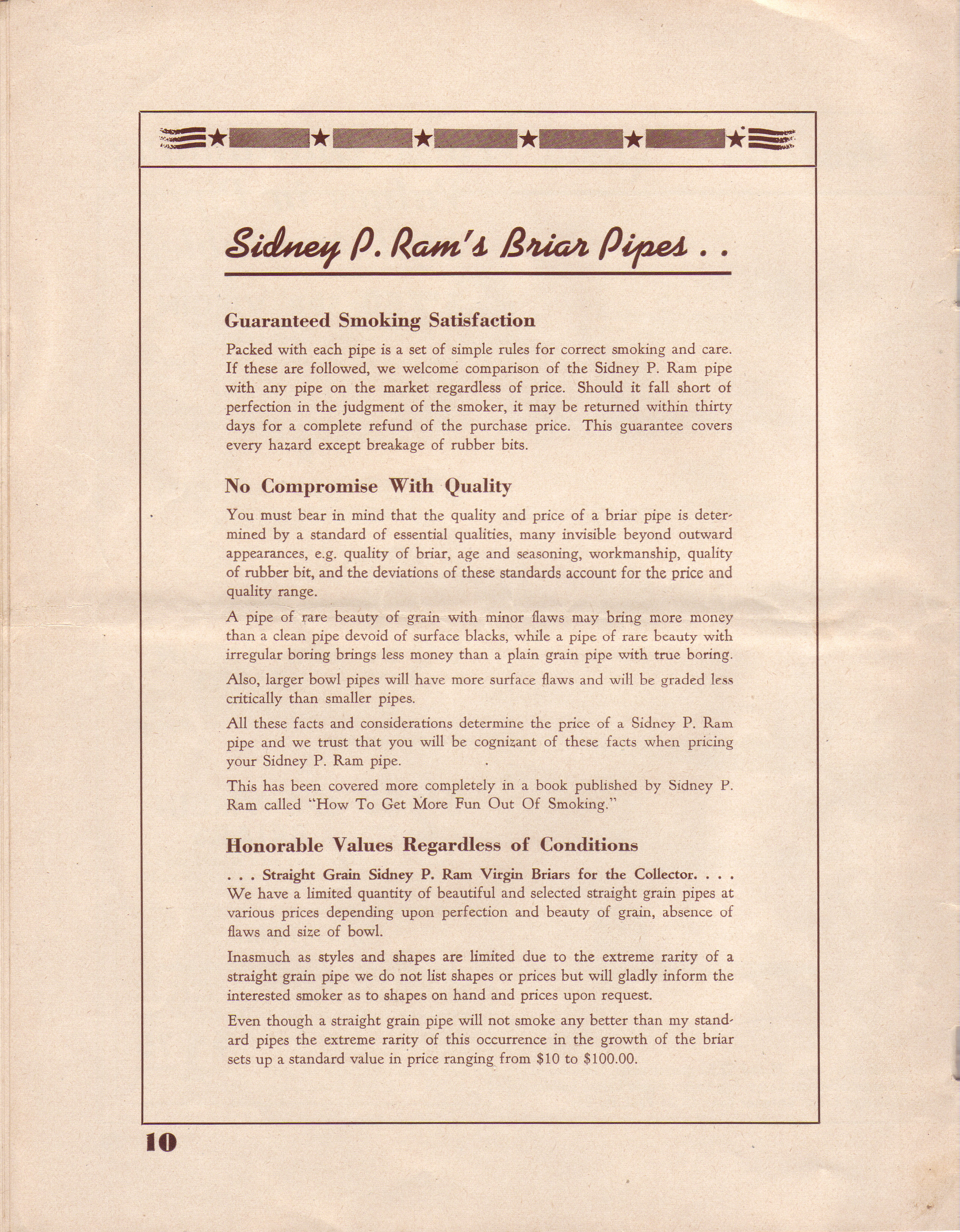
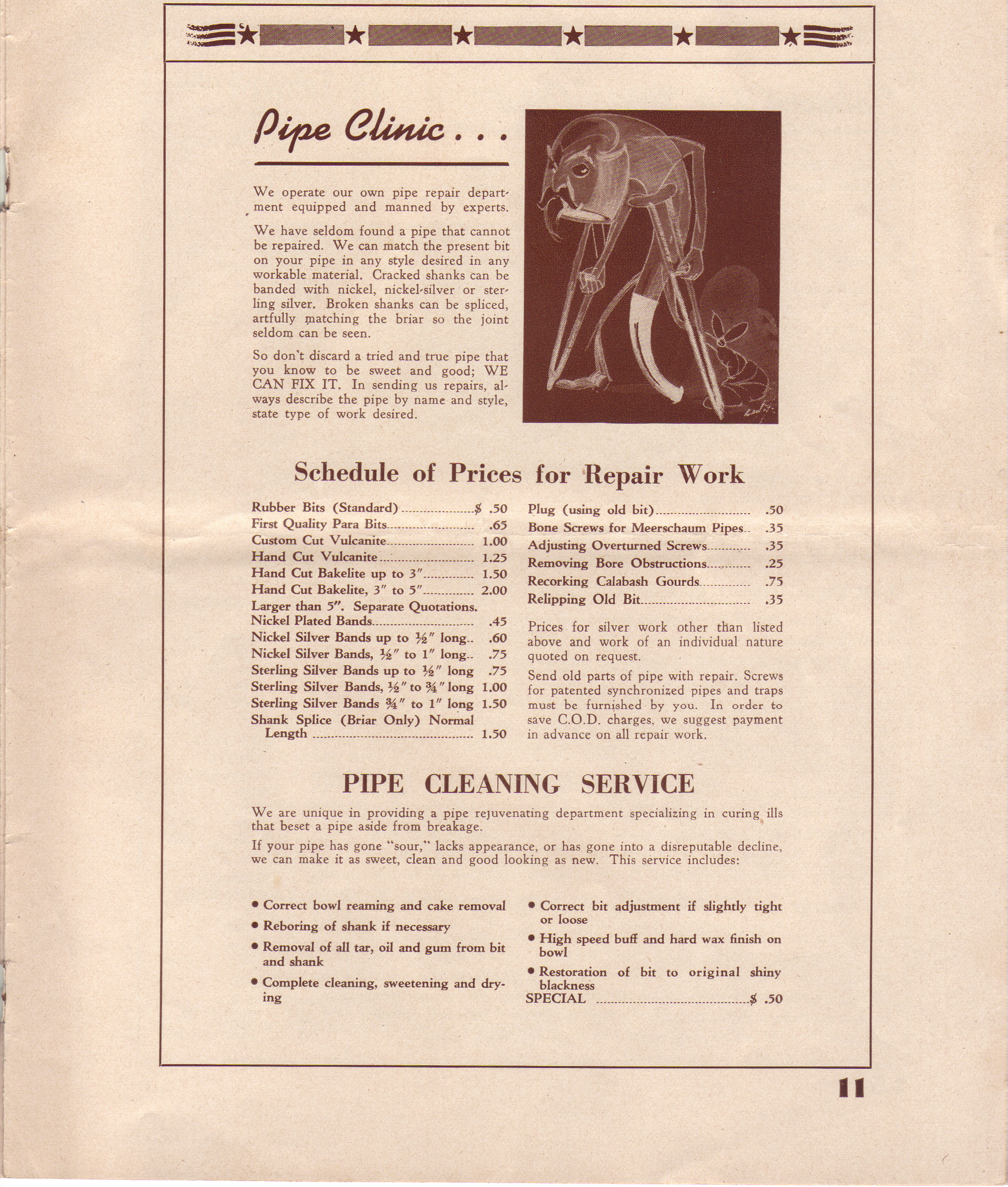
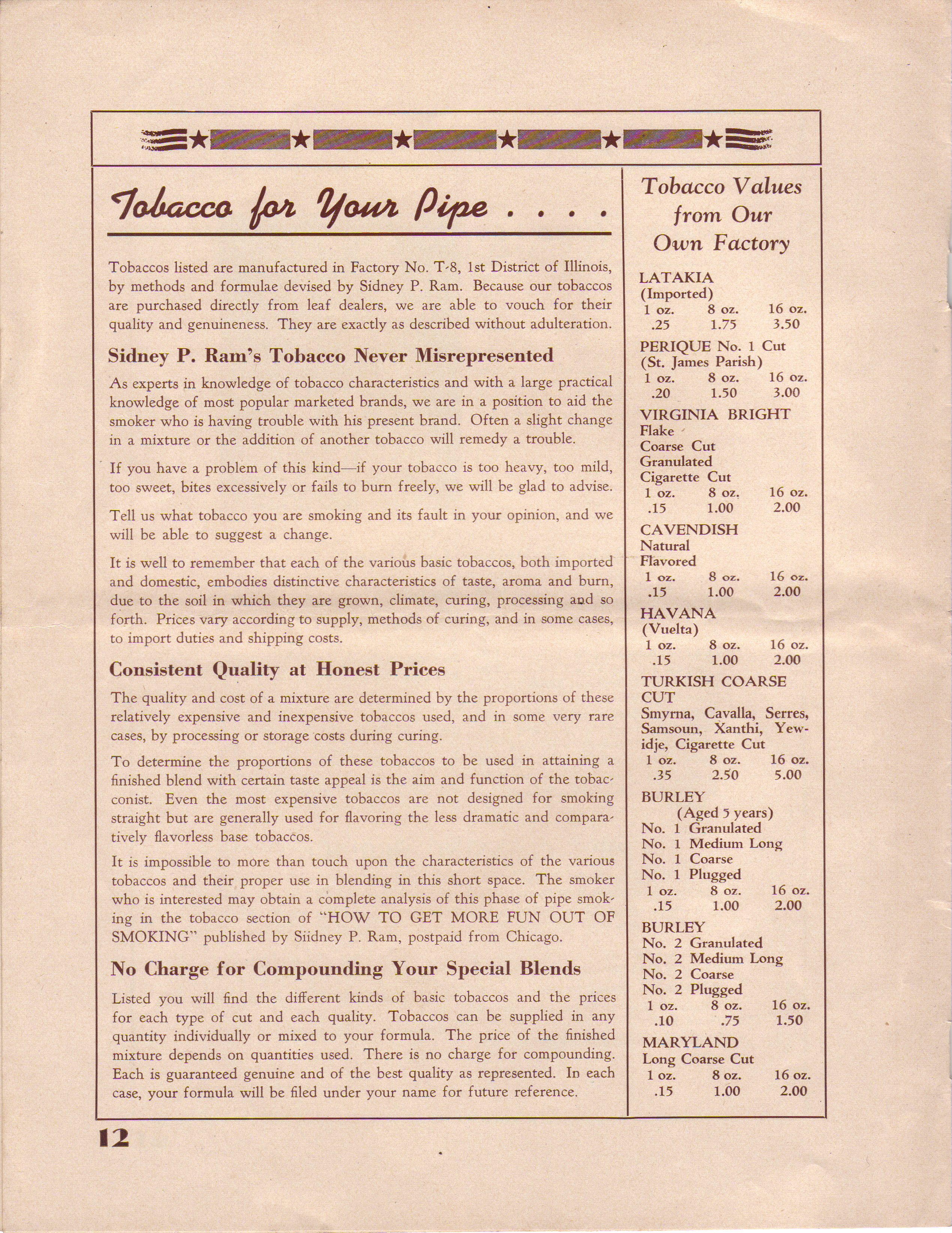
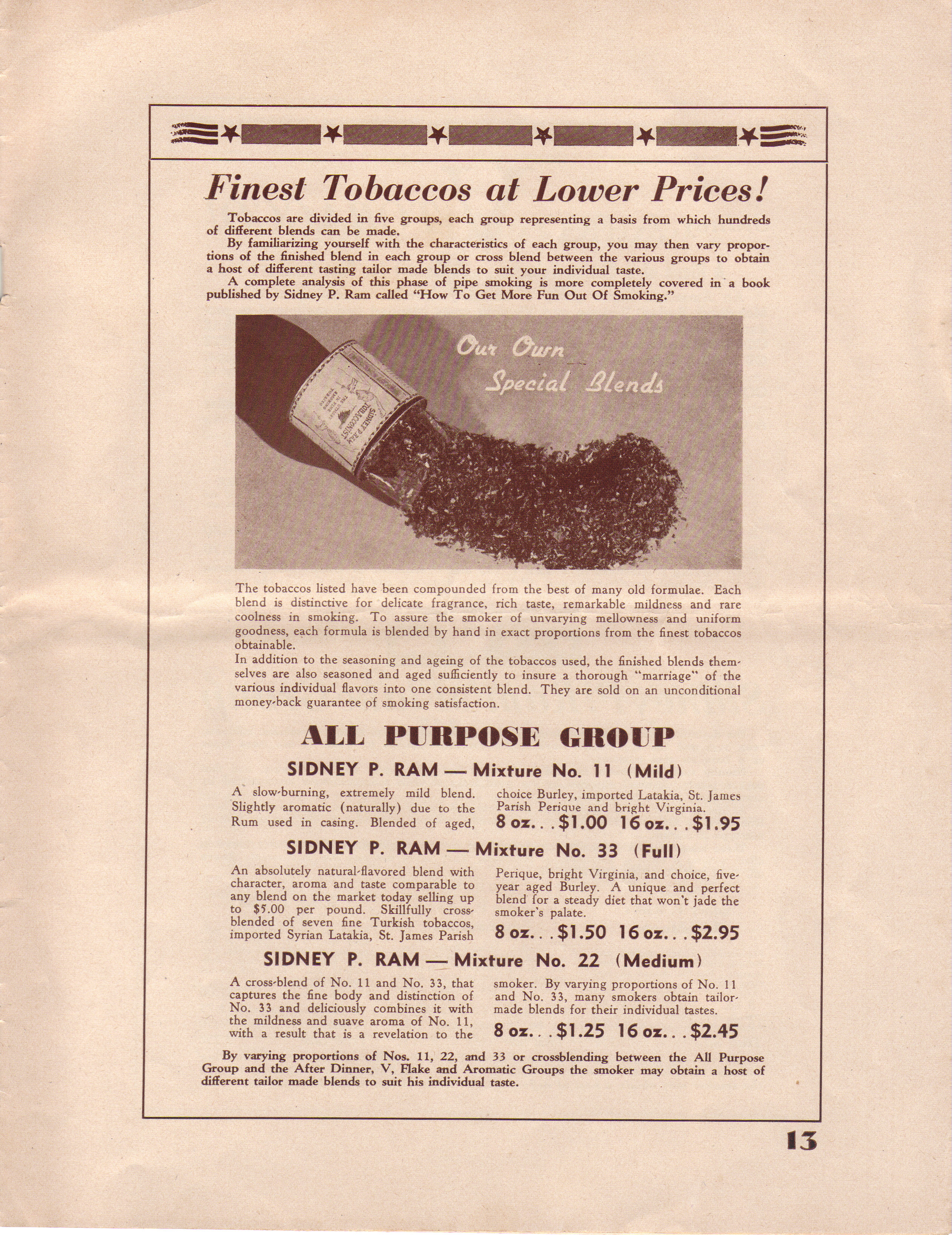
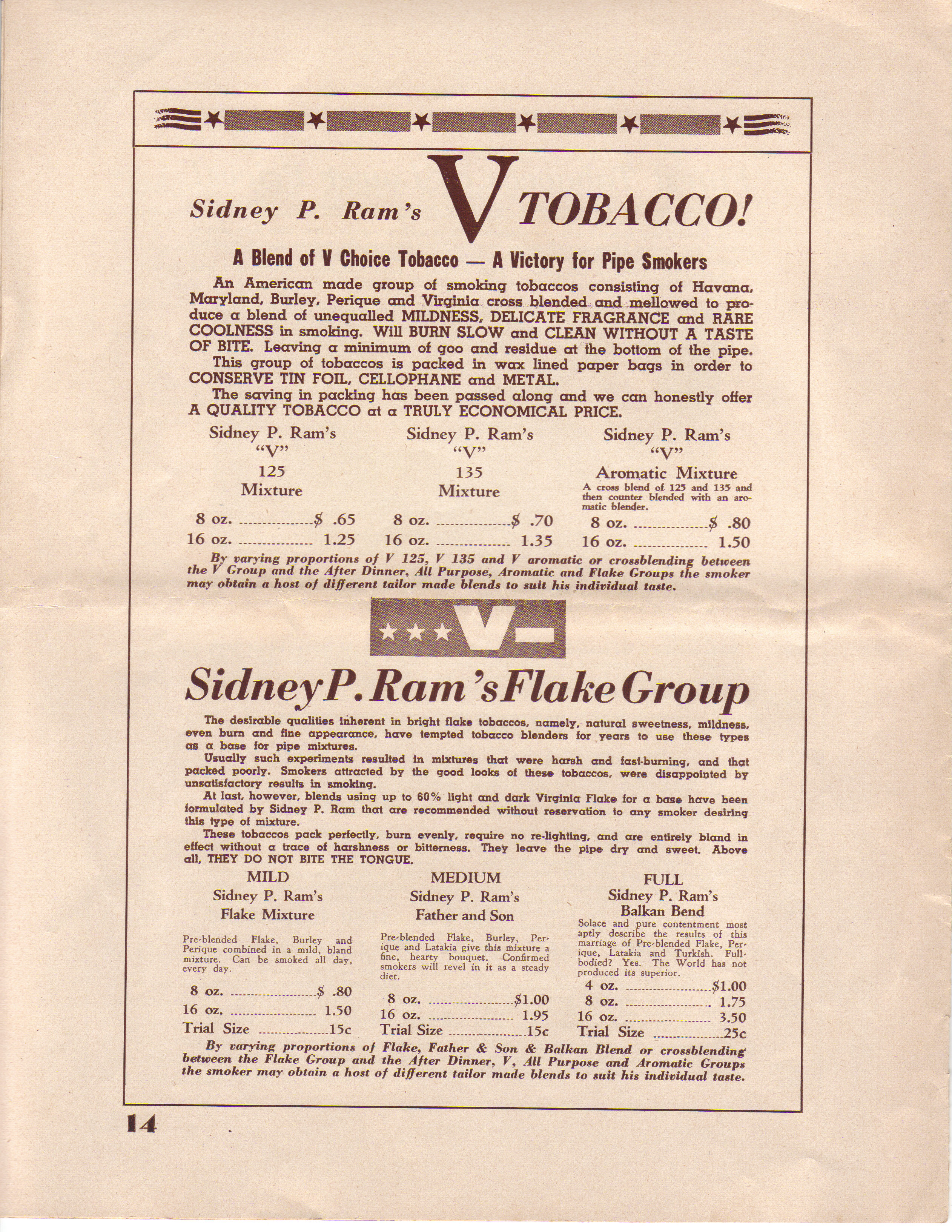
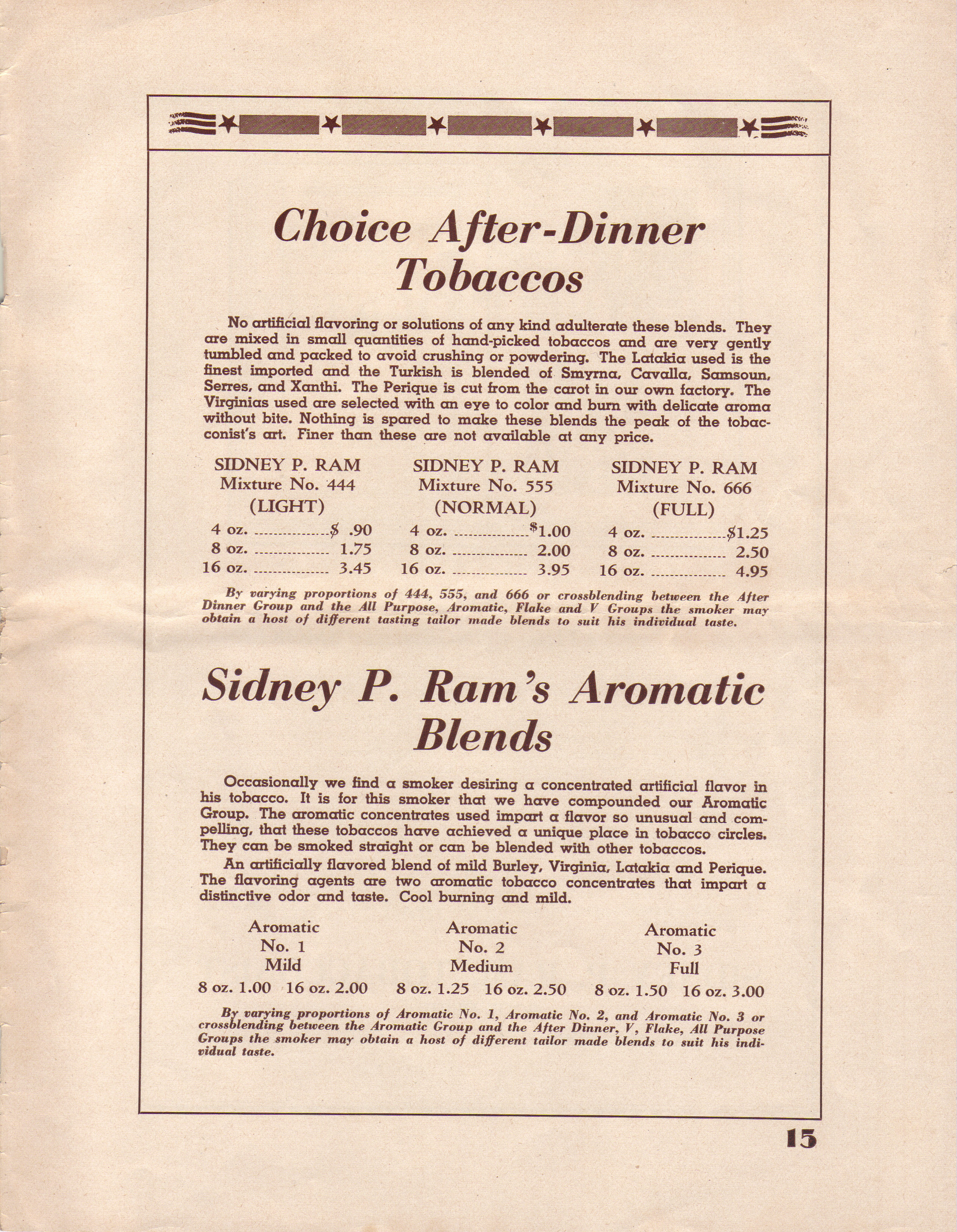
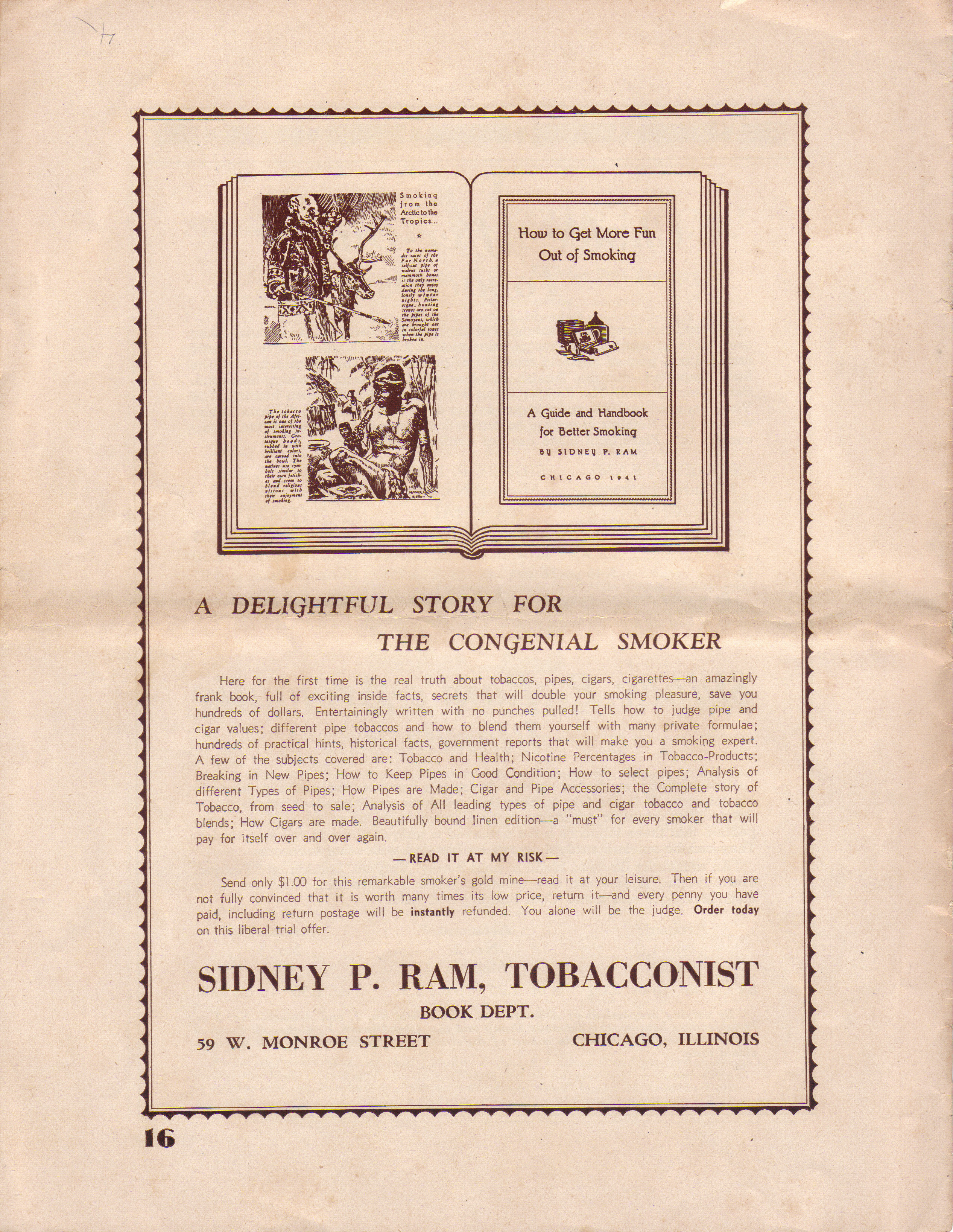
Are You Getting the Most Out of Your Smoking?…a pipe catalogue from the Sydney P. Ram Pipe Shop


I am currently refurbishing an older 30-40s era Oom Paul that bears the stamping Sydney P. Ram. I had heard of the brand but knew next to nothing about it so I went on my normal sites and found a public domain catalogue for the shop that gave a lot of history. I thought I would share the catalogue with all of you. For me these old catalogues from an earlier time always are delightful to read and remind me of some of old pipe shops that I have enjoyed throughout my life.

Cover

Pg 2

Pg 3

Pg 4

Pg 5

Pg 6

Pg 7

Pg 8

Pg 9

Pg 10

Pg 11

Pg 12

Pg 13

Pg 14

Pg 15

Pg 16

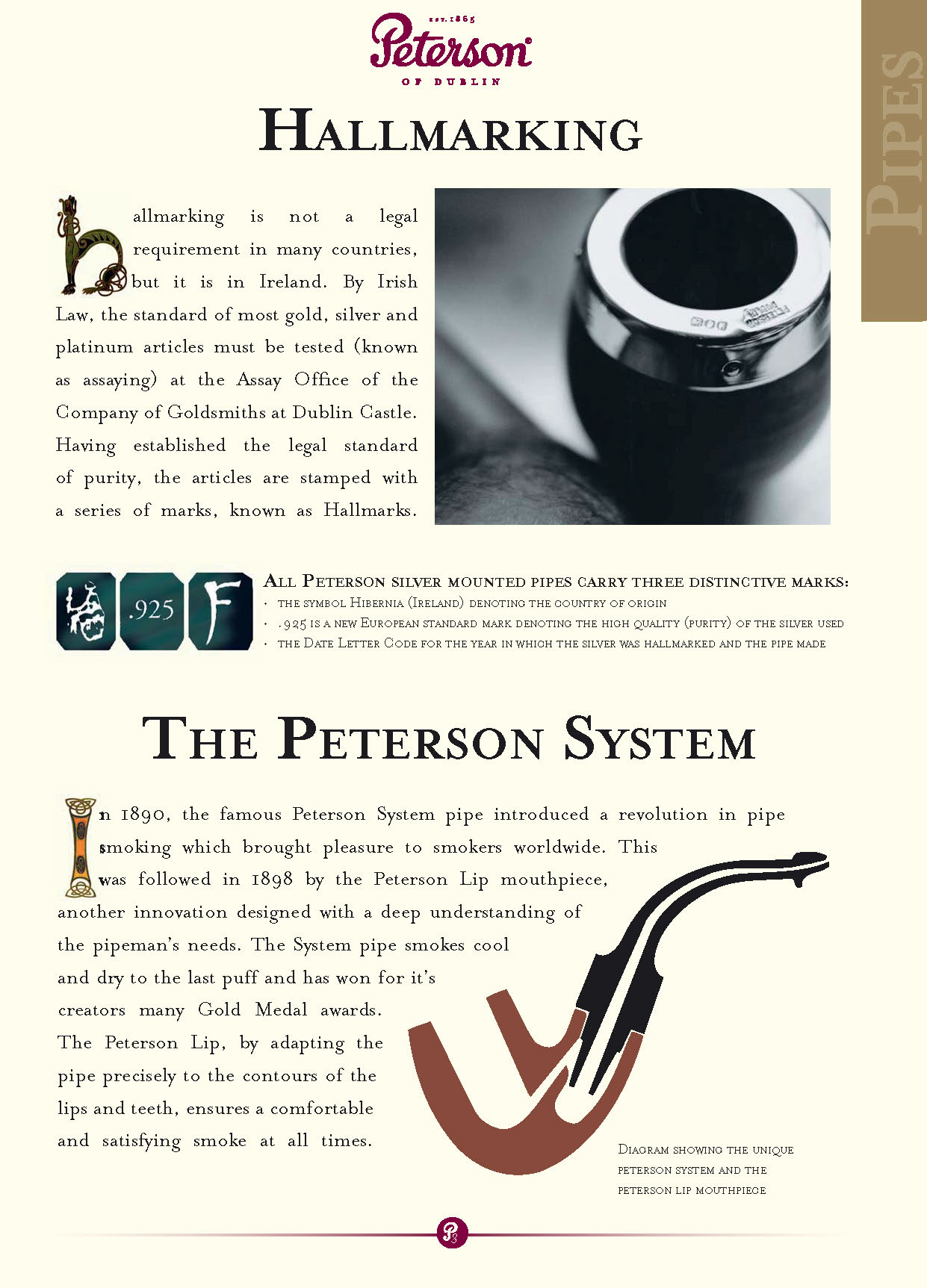
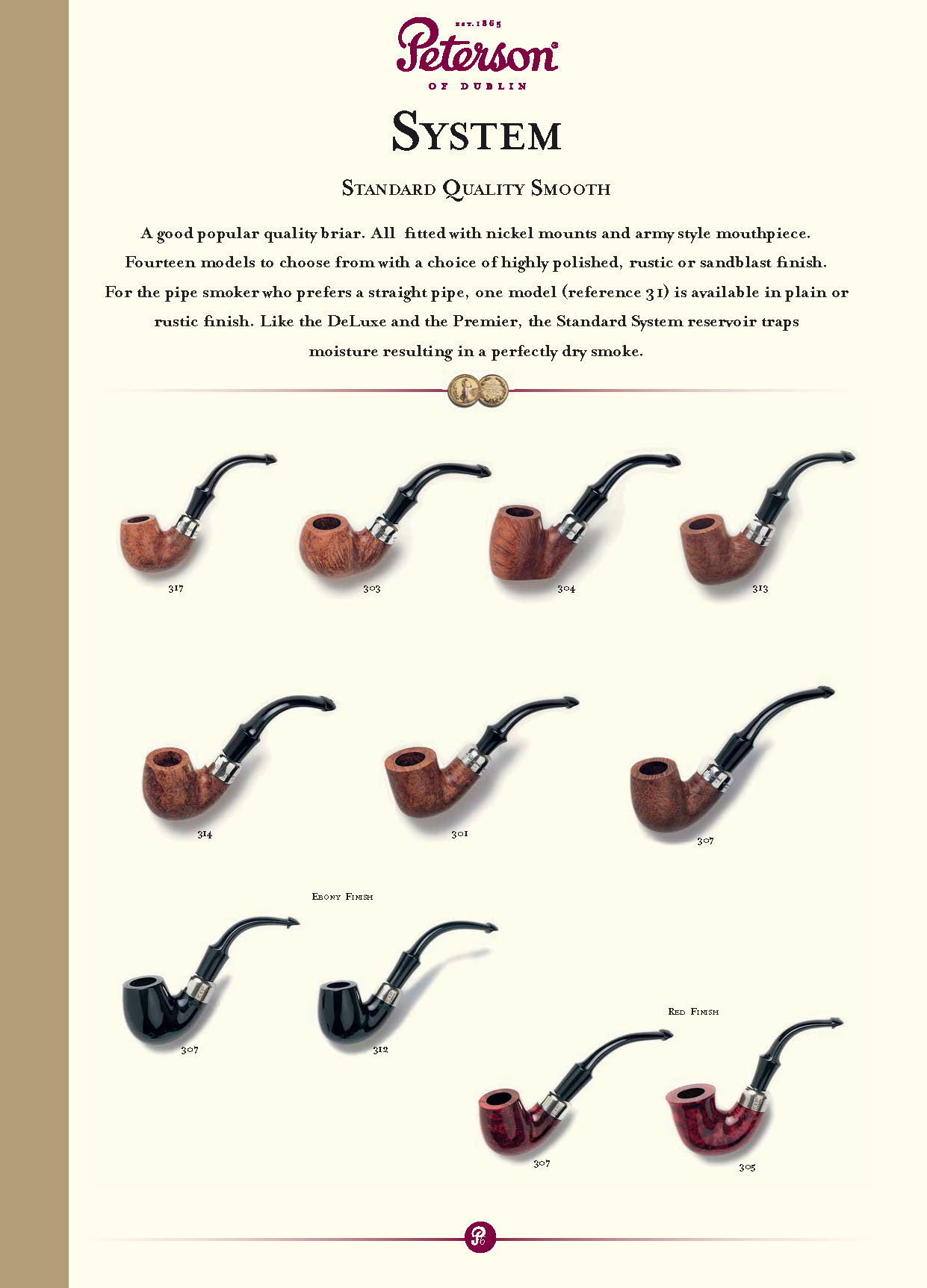
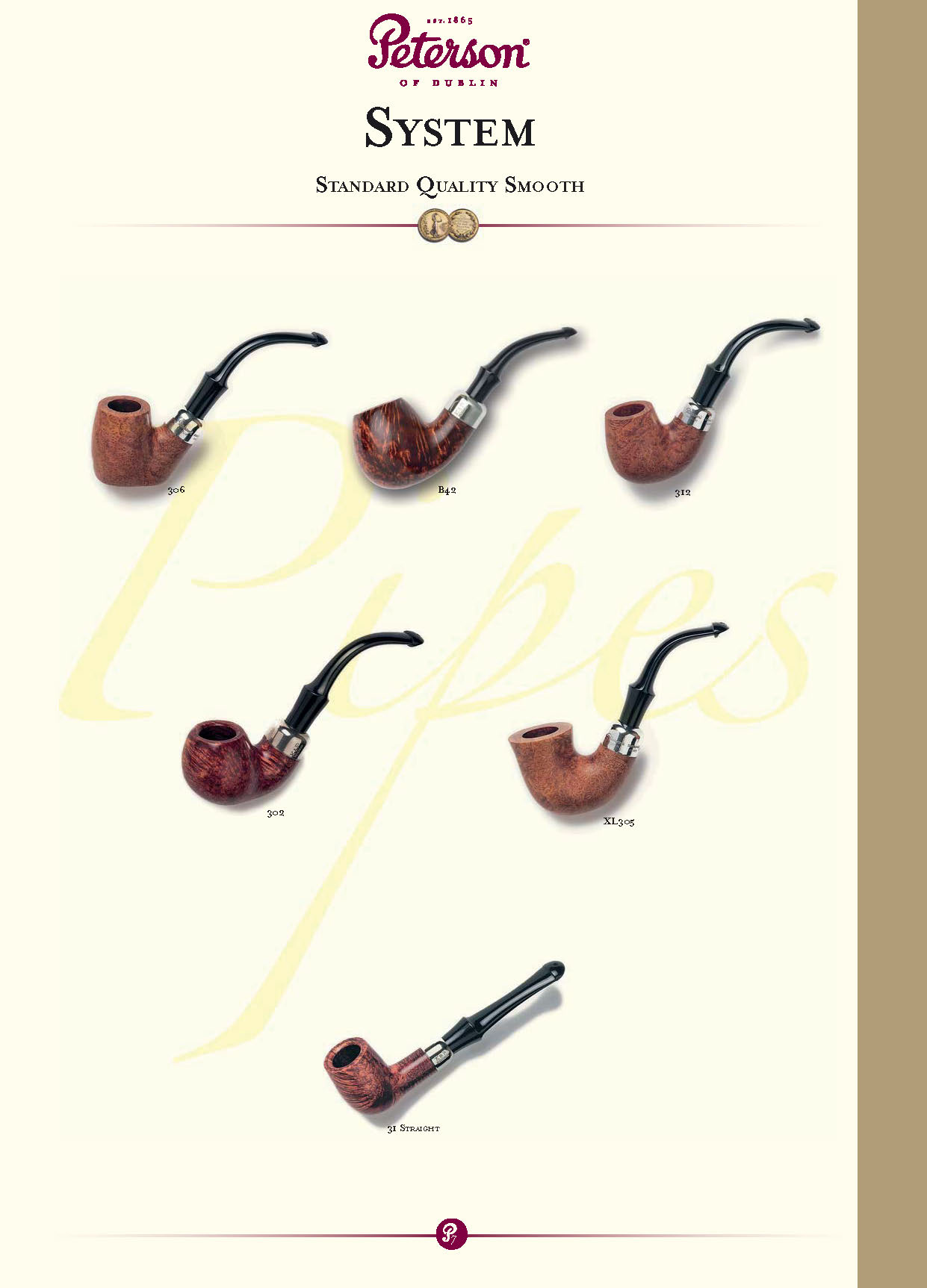
A Beautiful Peterson Of Dublin Pipe Catalogue


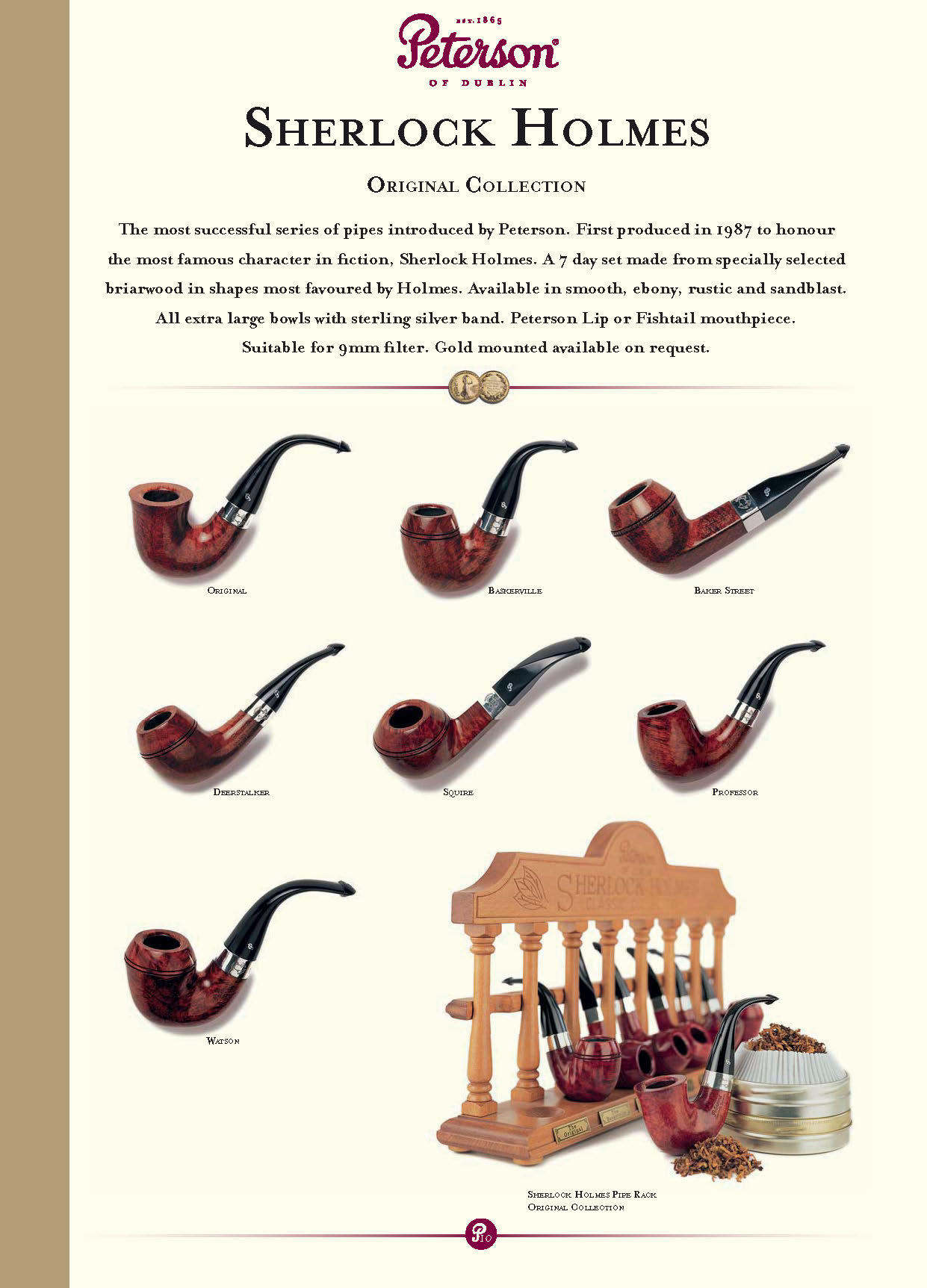
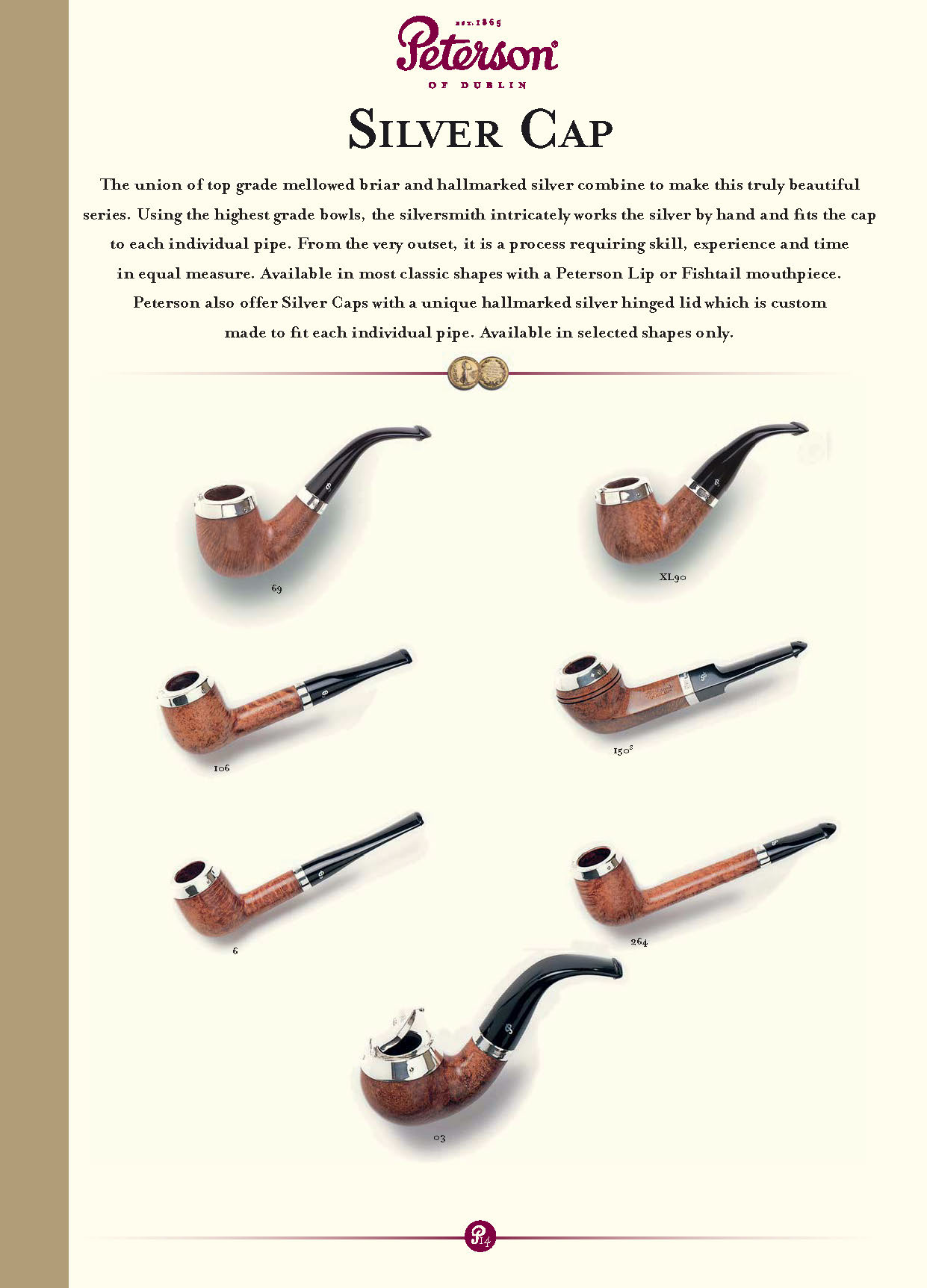
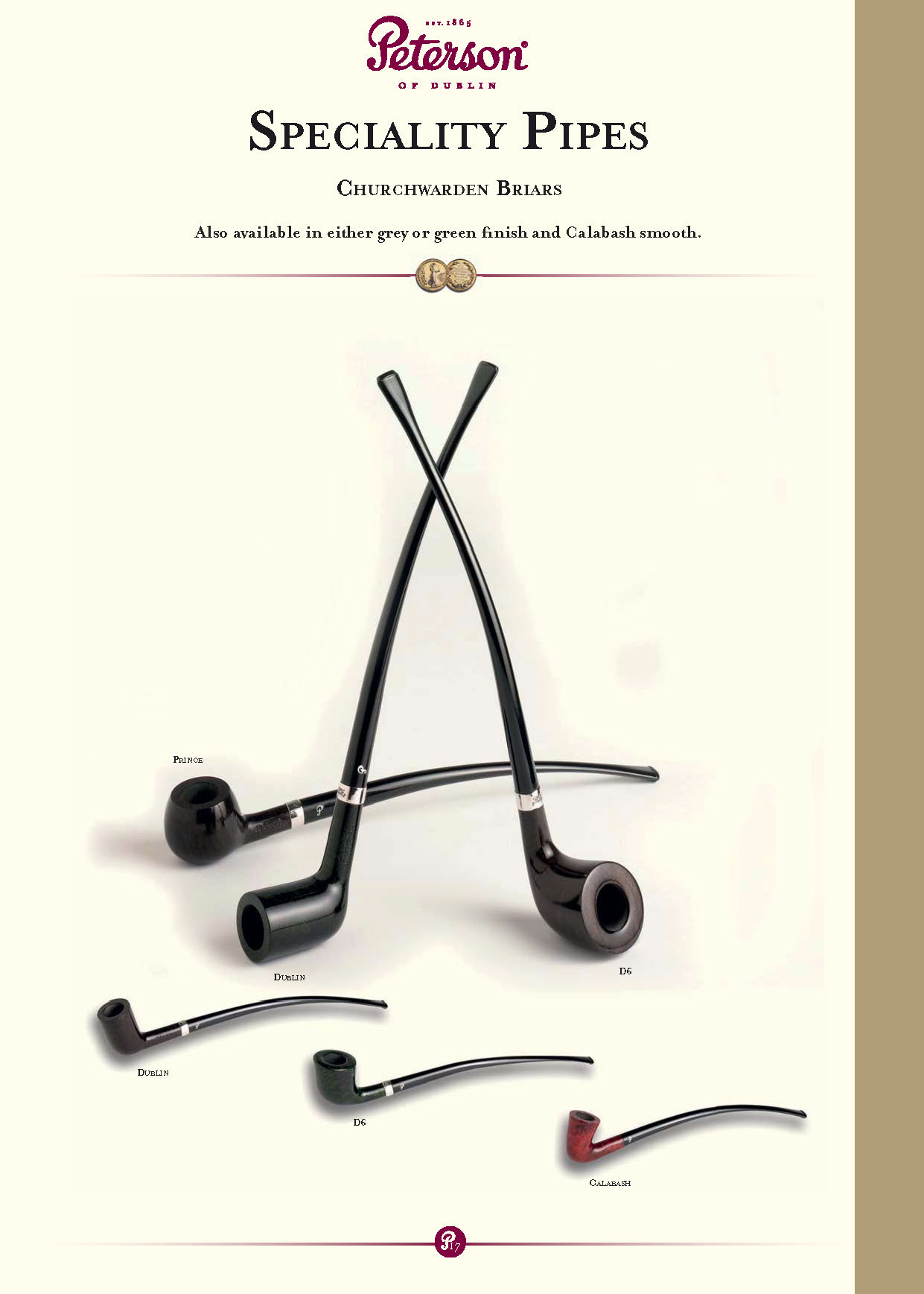
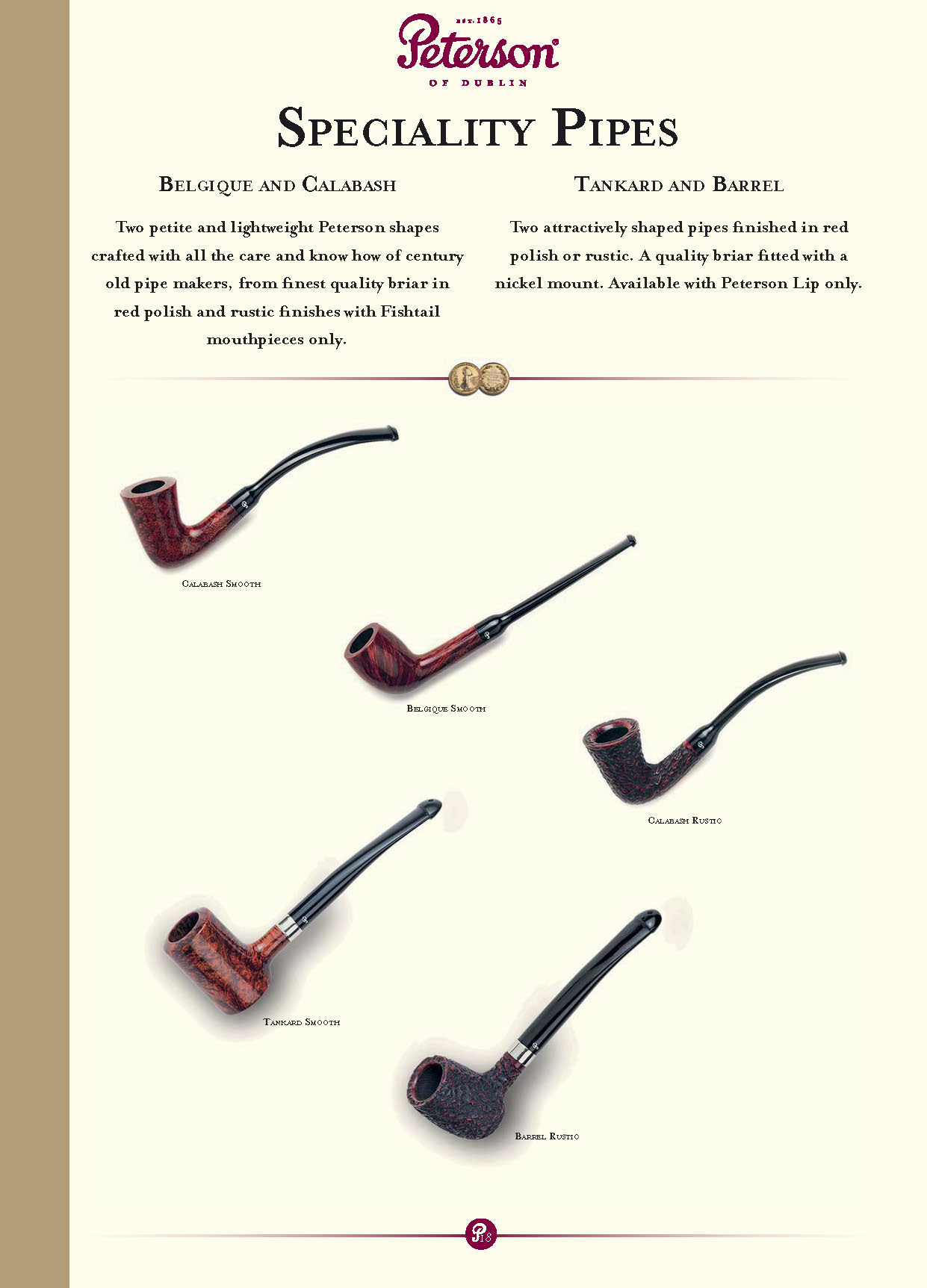
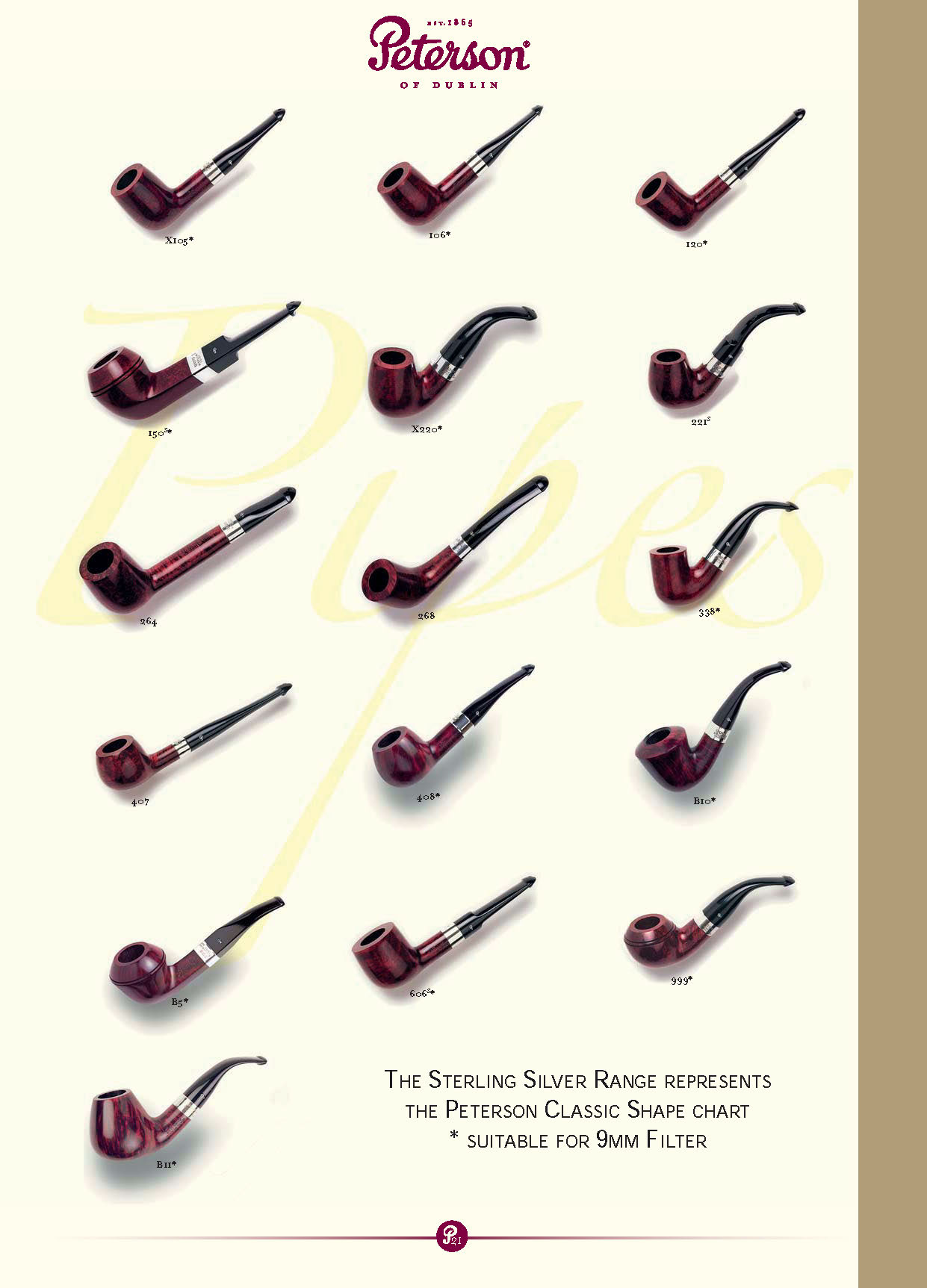
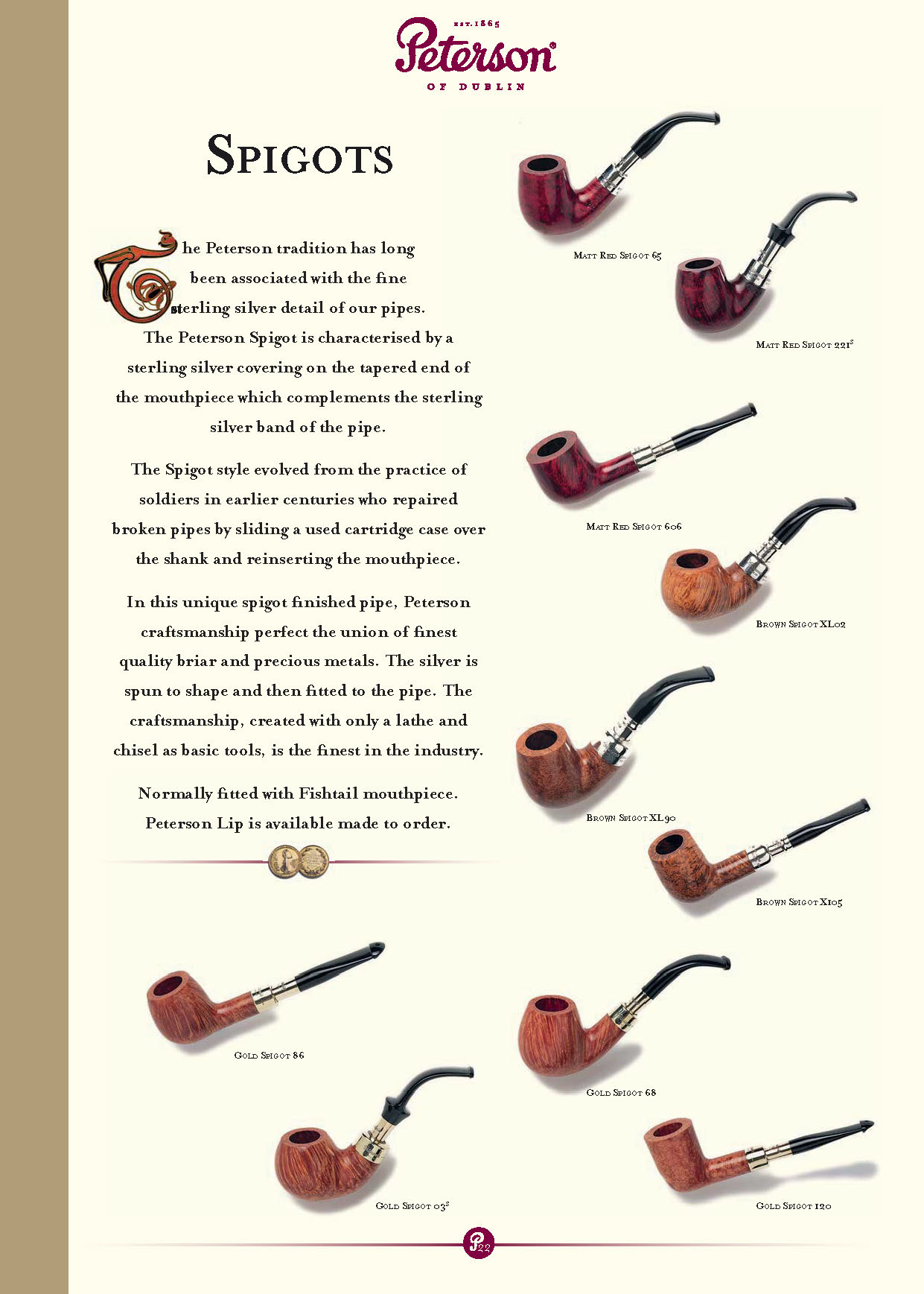
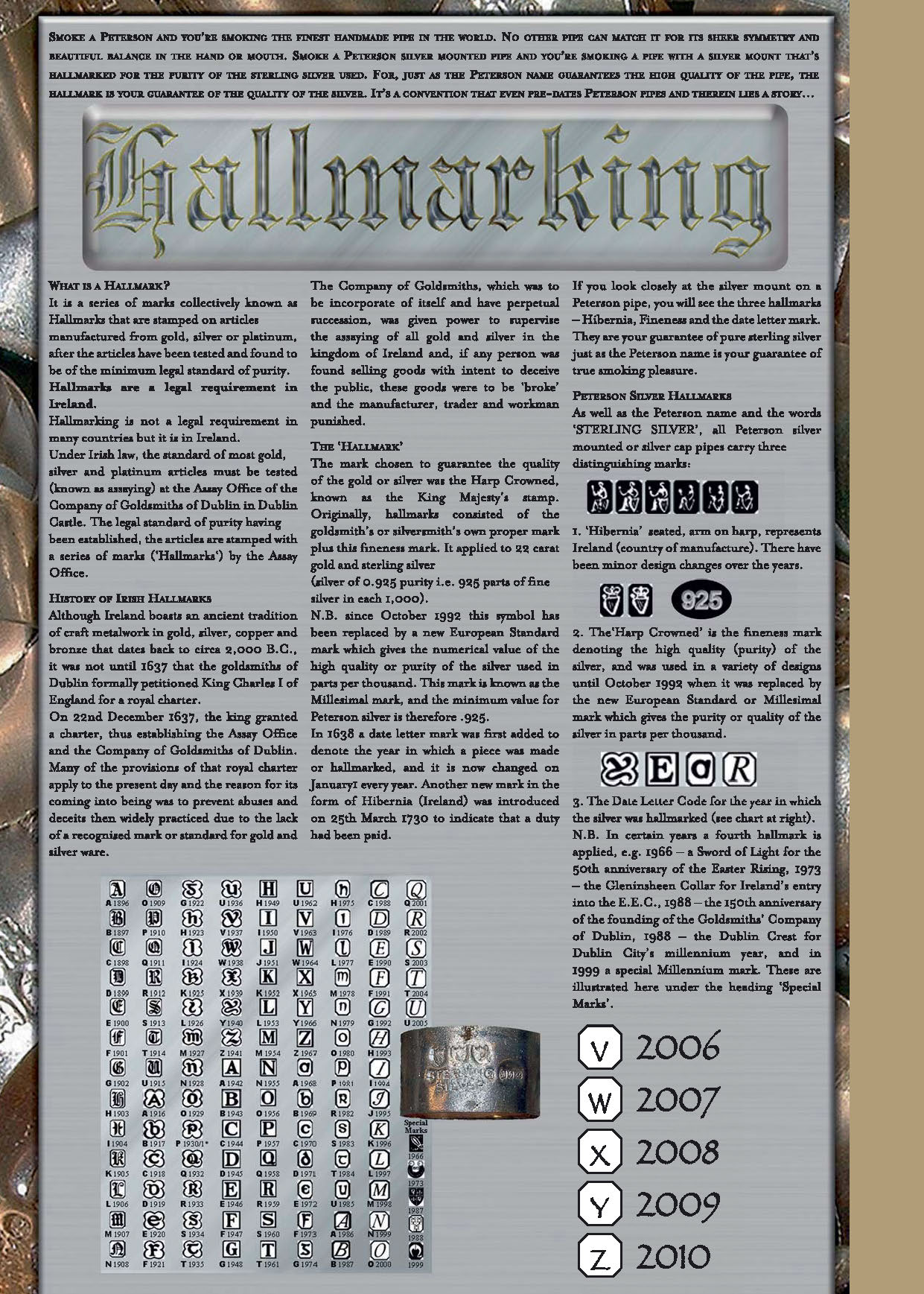
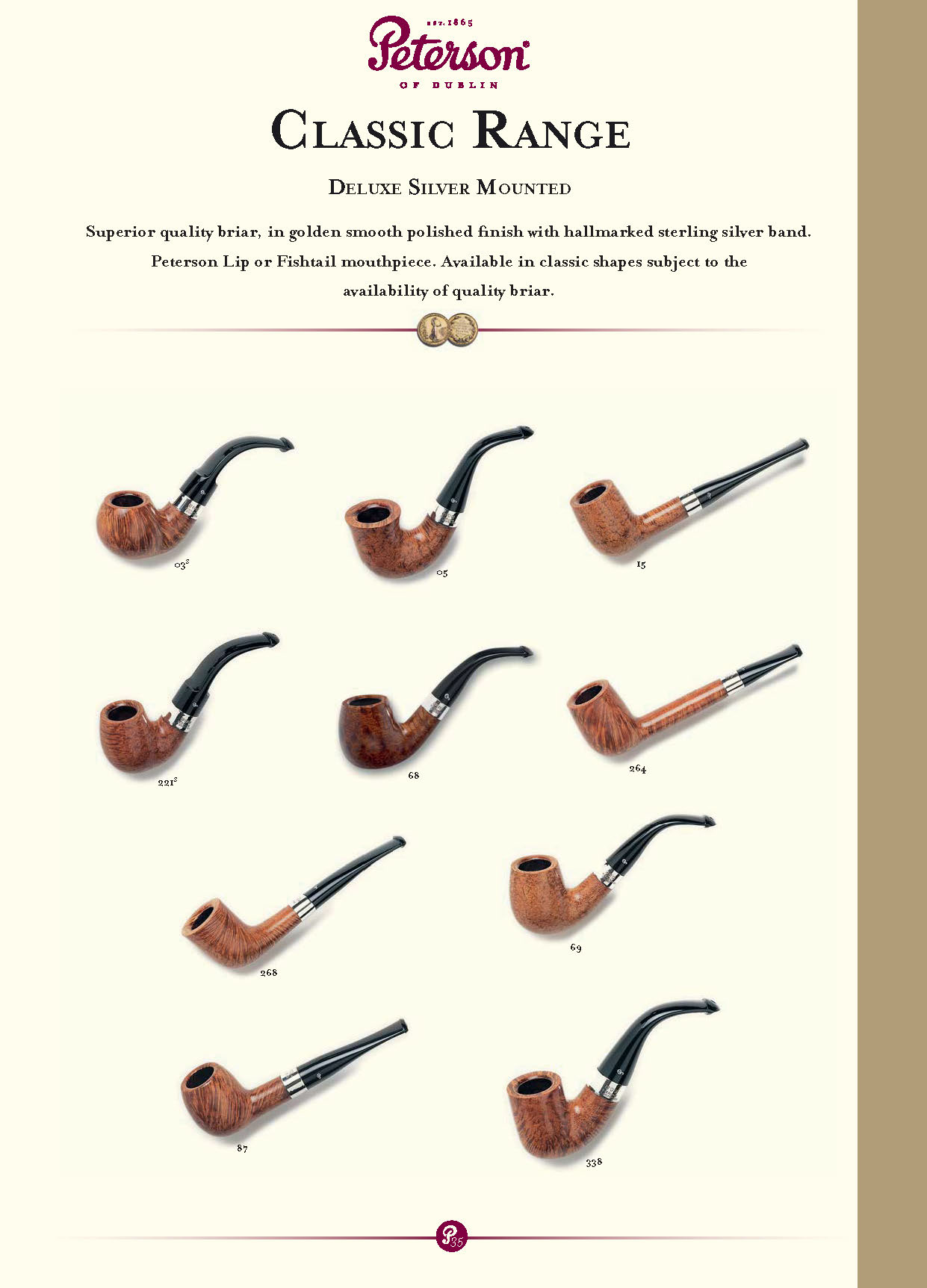
I can’t remember when I picked up a PDF of the Peterson of Dublin Pipe Catalogue or even where I got it. It has been on this computer since early in 2012. I am thinking it is a 2010 Catalogue because that is where the hallmarks end. I thought I would upload a copy of it to the blog in case something happens to the hard drive and also so others can enjoy the beauty of the book.Peterson CatalogueCOMP_Page_01 Peterson CatalogueCOMP_Page_02 Peterson CatalogueCOMP_Page_03 Peterson CatalogueCOMP_Page_04 Peterson CatalogueCOMP_Page_05 Peterson CatalogueCOMP_Page_06 Peterson CatalogueCOMP_Page_07 Peterson CatalogueCOMP_Page_08 Peterson CatalogueCOMP_Page_09 Peterson CatalogueCOMP_Page_10 Peterson CatalogueCOMP_Page_11 Peterson CatalogueCOMP_Page_12 Peterson CatalogueCOMP_Page_13 Peterson CatalogueCOMP_Page_14 Peterson CatalogueCOMP_Page_15 Peterson CatalogueCOMP_Page_16 Peterson CatalogueCOMP_Page_17 Peterson CatalogueCOMP_Page_18 Peterson CatalogueCOMP_Page_19 Peterson CatalogueCOMP_Page_20 Peterson CatalogueCOMP_Page_21 Peterson CatalogueCOMP_Page_22 Peterson CatalogueCOMP_Page_23 Peterson CatalogueCOMP_Page_24 Peterson CatalogueCOMP_Page_25 Peterson CatalogueCOMP_Page_26 Peterson CatalogueCOMP_Page_27 Peterson CatalogueCOMP_Page_28 Peterson CatalogueCOMP_Page_29 Peterson CatalogueCOMP_Page_30 Peterson CatalogueCOMP_Page_31 Peterson CatalogueCOMP_Page_32 Peterson CatalogueCOMP_Page_33 Peterson CatalogueCOMP_Page_34 Peterson CatalogueCOMP_Page_35 Peterson CatalogueCOMP_Page_36 Peterson CatalogueCOMP_Page_37 Peterson CatalogueCOMP_Page_38 Peterson CatalogueCOMP_Page_39 Peterson CatalogueCOMP_Page_40 Peterson CatalogueCOMP_Page_41 Peterson CatalogueCOMP_Page_42 Peterson CatalogueCOMP_Page_43 Peterson CatalogueCOMP_Page_44 Peterson CatalogueCOMP_Page_45 Peterson CatalogueCOMP_Page_46 Peterson CatalogueCOMP_Page_47 Peterson CatalogueCOMP_Page_48 Peterson CatalogueCOMP_Page_49 Peterson CatalogueCOMP_Page_50 Peterson CatalogueCOMP_Page_51 Peterson CatalogueCOMP_Page_52 Peterson CatalogueCOMP_Page_53 Peterson CatalogueCOMP_Page_54 Peterson CatalogueCOMP_Page_55 Peterson CatalogueCOMP_Page_56 Peterson CatalogueCOMP_Page_57 Peterson CatalogueCOMP_Page_58 Peterson CatalogueCOMP_Page_59 Peterson CatalogueCOMP_Page_60 Peterson CatalogueCOMP_Page_61 Peterson CatalogueCOMP_Page_62 Peterson CatalogueCOMP_Page_63 Peterson CatalogueCOMP_Page_64 Peterson CatalogueCOMP_Page_65 Peterson CatalogueCOMP_Page_66 Peterson CatalogueCOMP_Page_67

Restoring an odd Trom-bone Pipe


Blog by Troy Wilburn

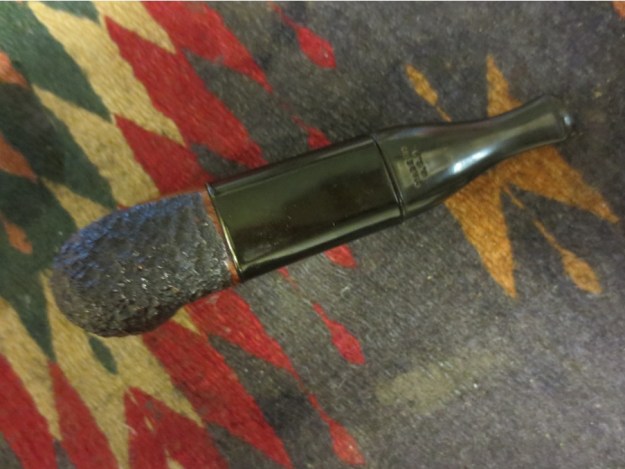
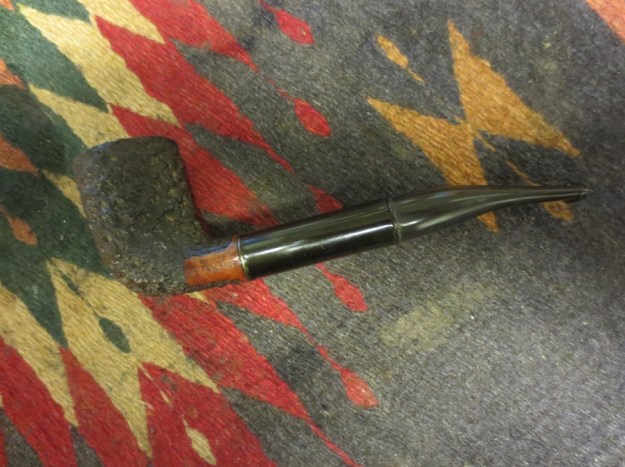
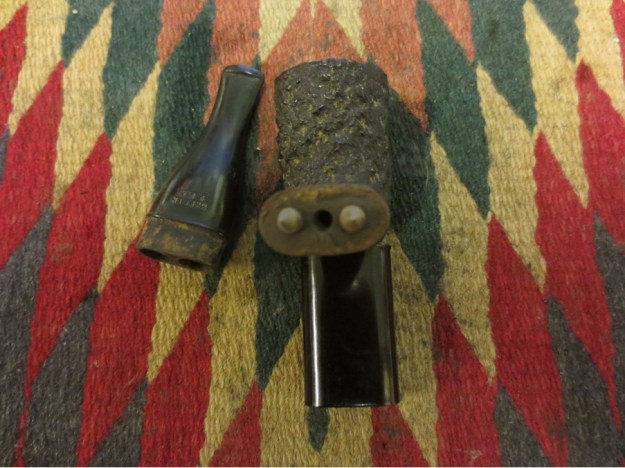
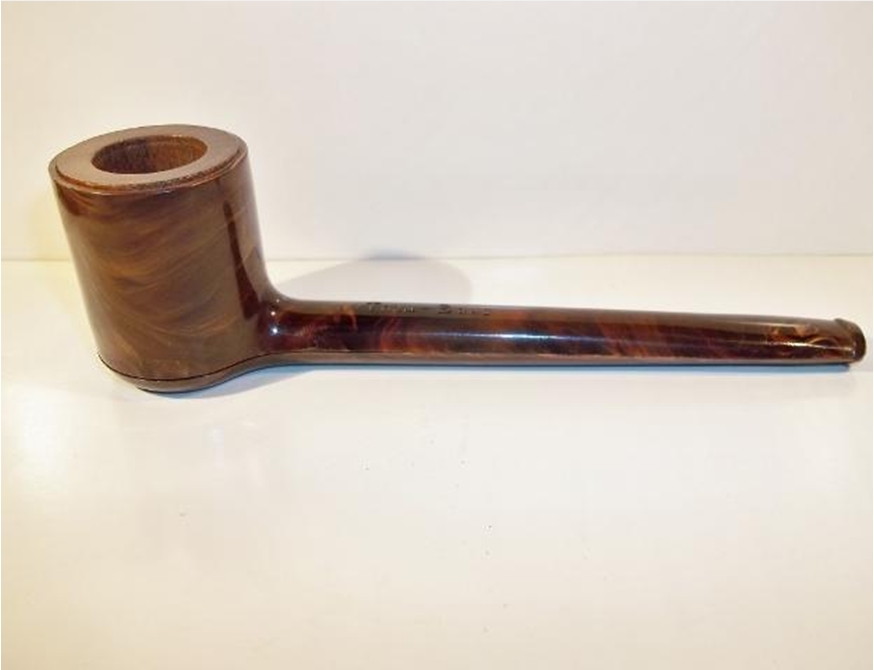
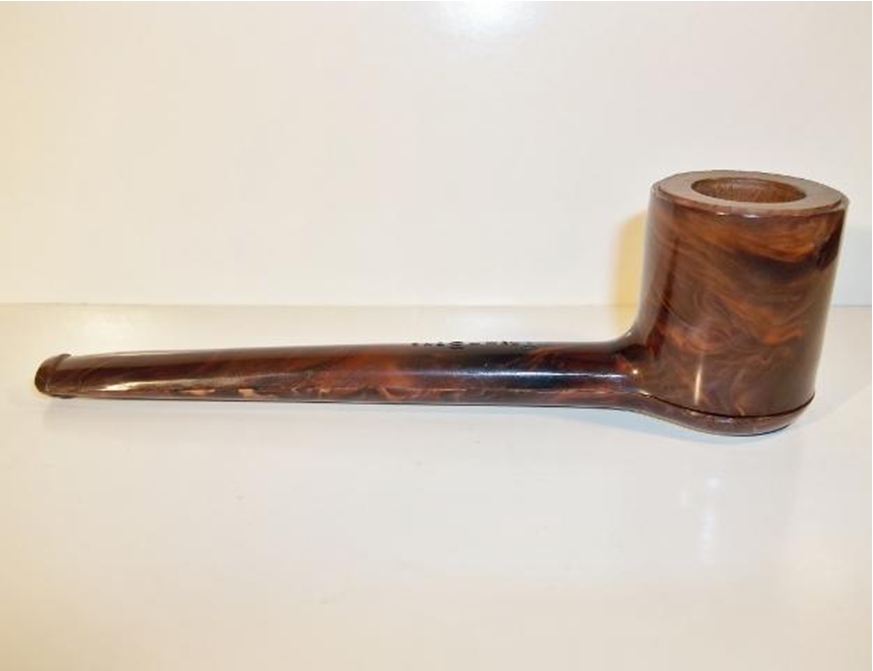
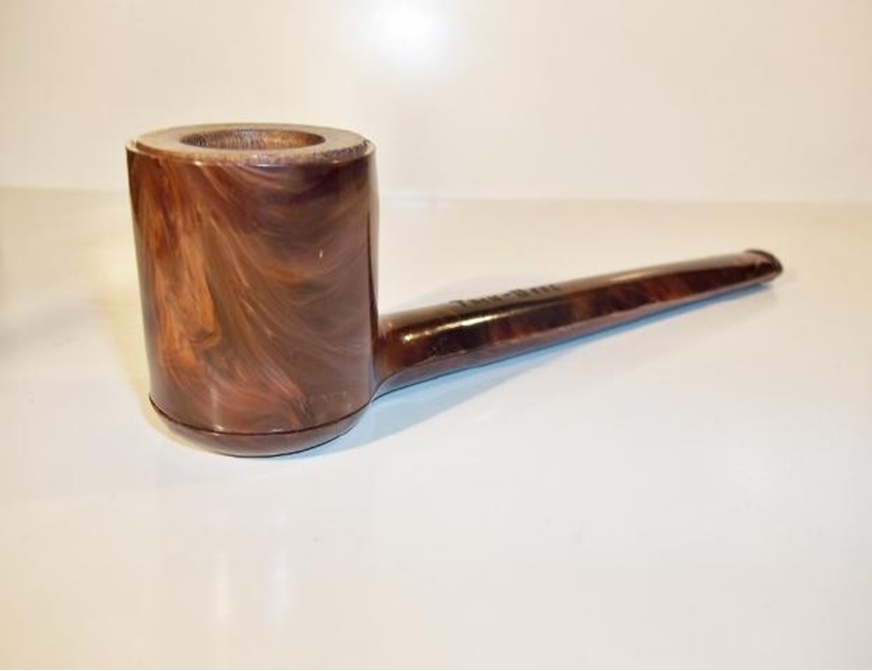
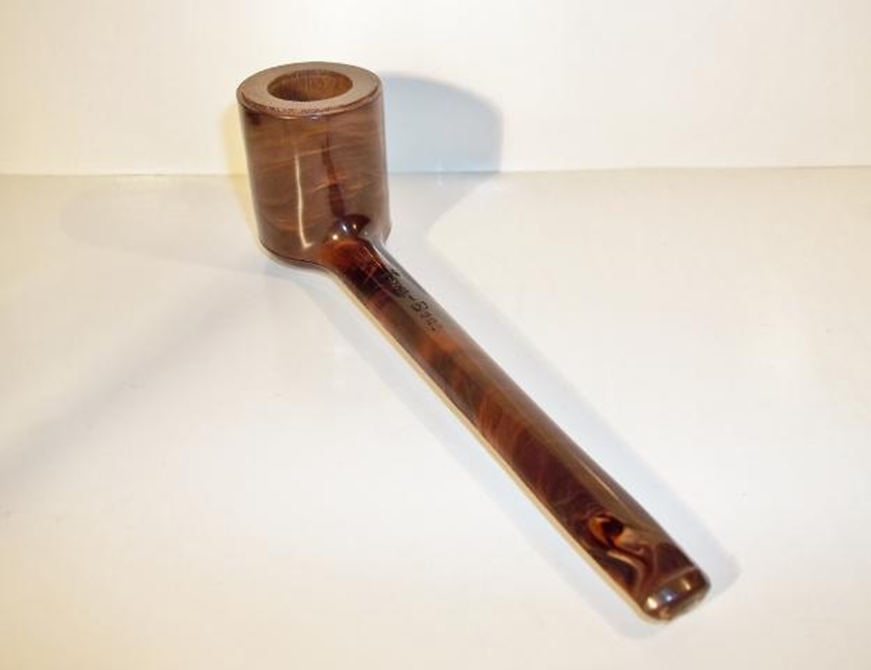
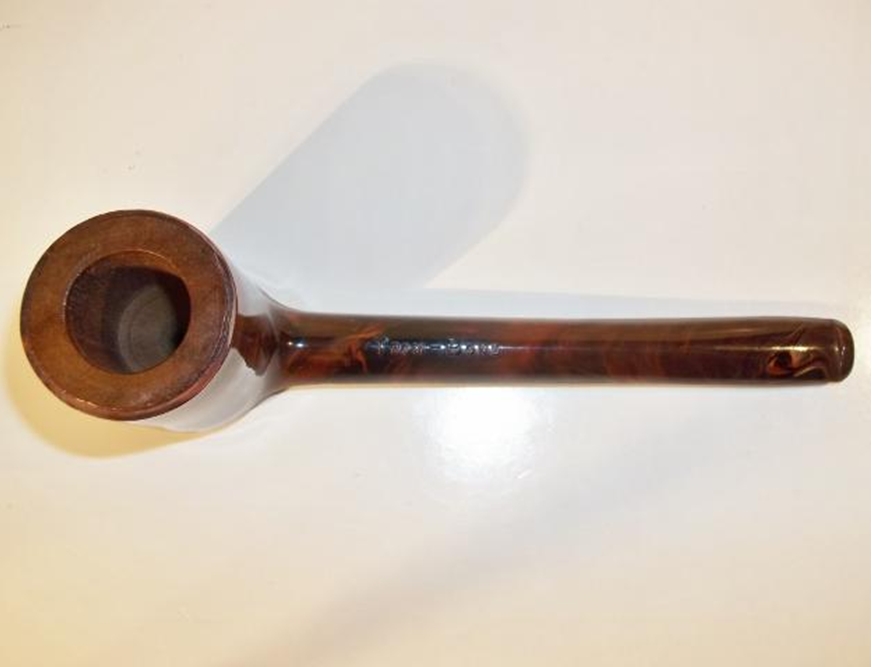
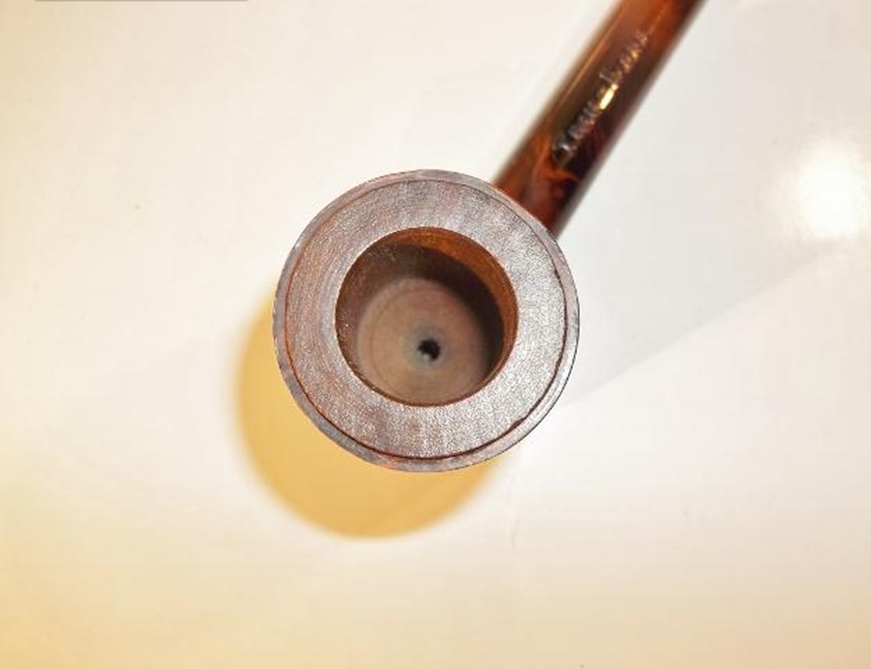
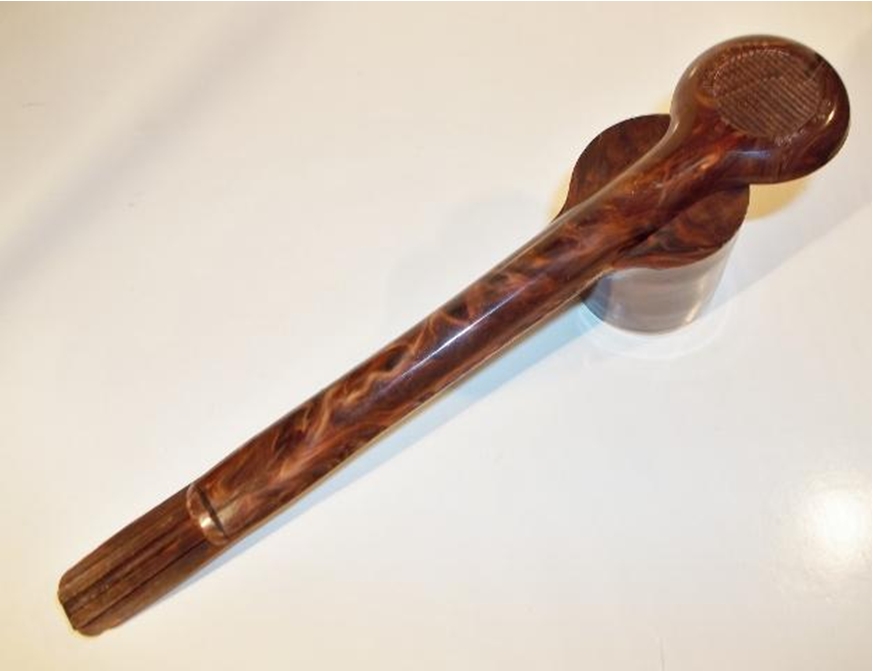
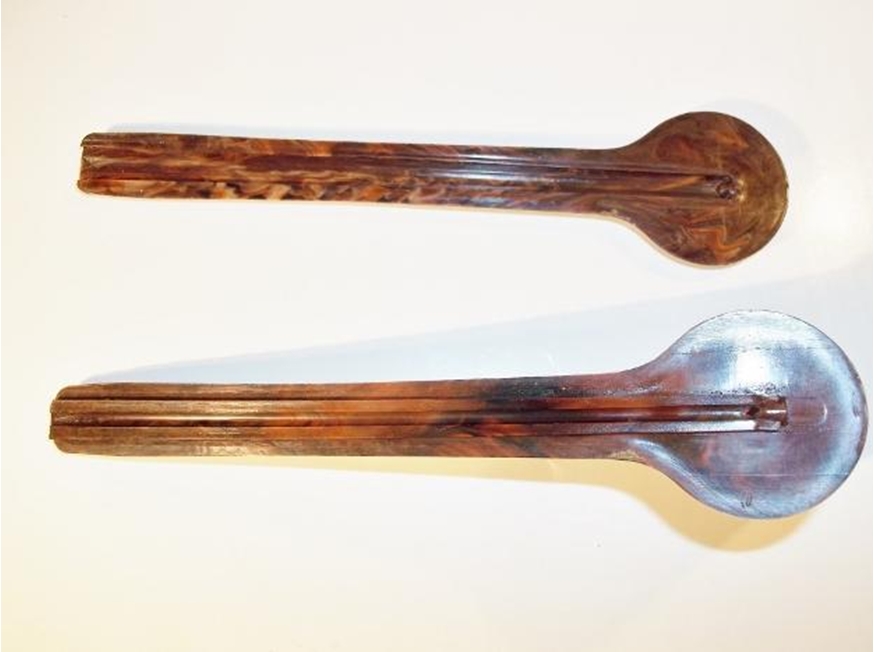
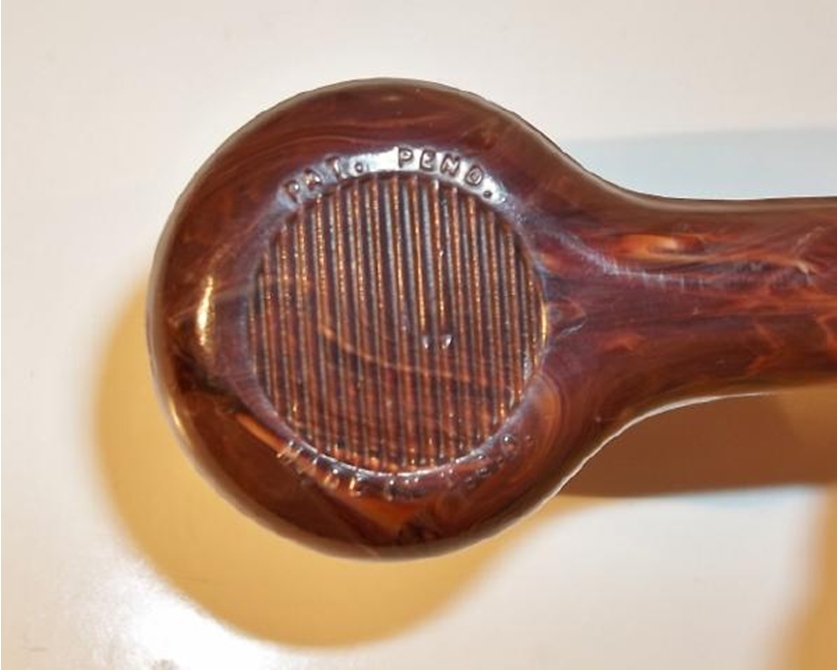
I got this off eBay because it was an American made pipe and it was a poker. It came unsmoked. It gets its name from the unique way you slide the pipe apart to clean it. I thought it would be an interesting addition to my poker collection.

I don’t know much about the pipe other than that they were made in California. This seems to be one of those “let’s build a better mousetrap” ideas when there is nothing wrong with the old mousetrap. Like I always say, some things are rare for a reason.

The pipe is a Bakelite type of plastic with a briar insert. I don’t know if I will smoke it or not as I am not sure how the plastic can take the heat coming from the bottom of the bowl.

So here is the pipe in all of her weird glory after I did a little buffing. Trombone1

Trombone2

Trombone3

Trombone4

Trombone5

Trombone6

Trombone7

Trombone8

Trombone9

Trombone10

Trombone11

Trombone12 I really didn’t think that this pipe would be that air tight and that it would have a lot of leaks. It doesn’t though. I can cap the bowl with my hand and blow and not hear or feel any air leaks.

A Unique Piece of Pipe History – A Zeus System Filter Pipe


Blog by Steve Laug

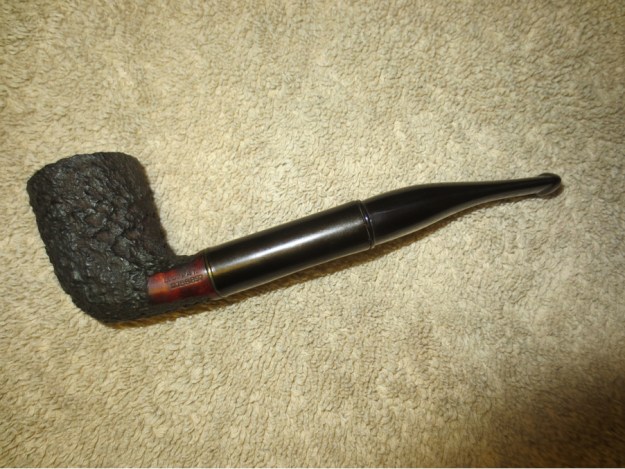
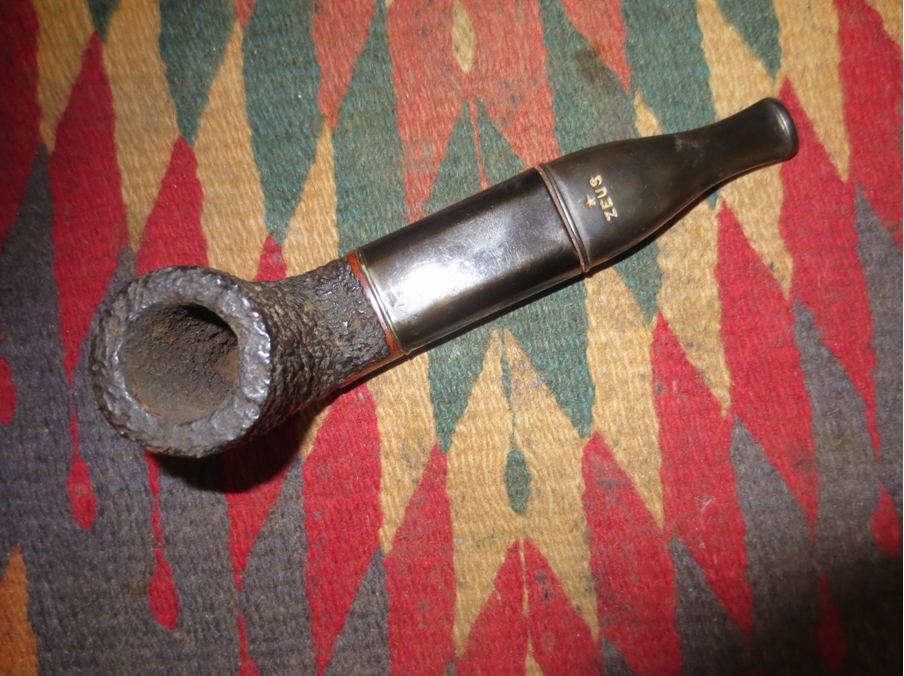
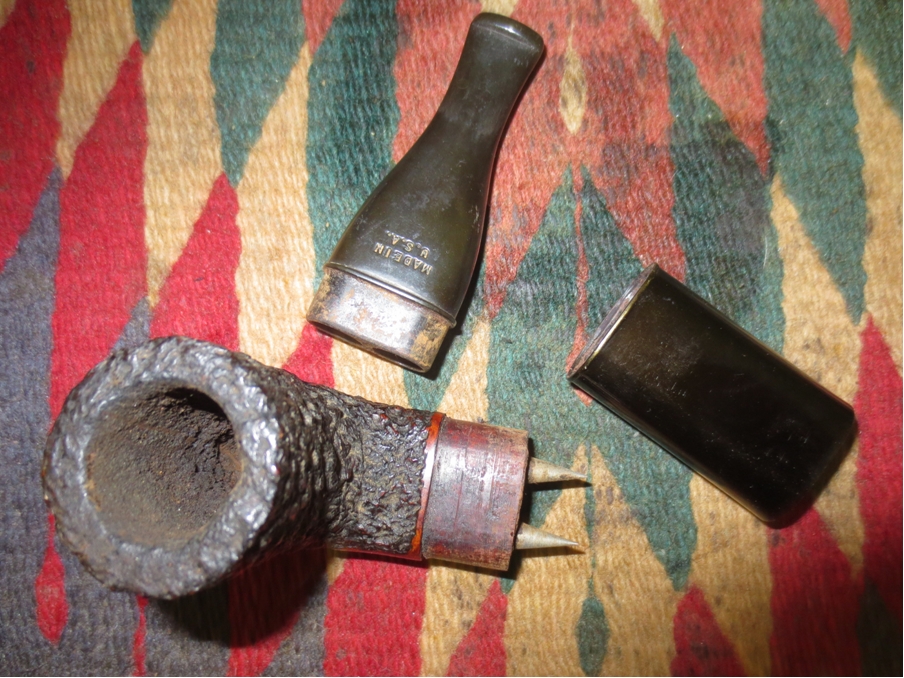
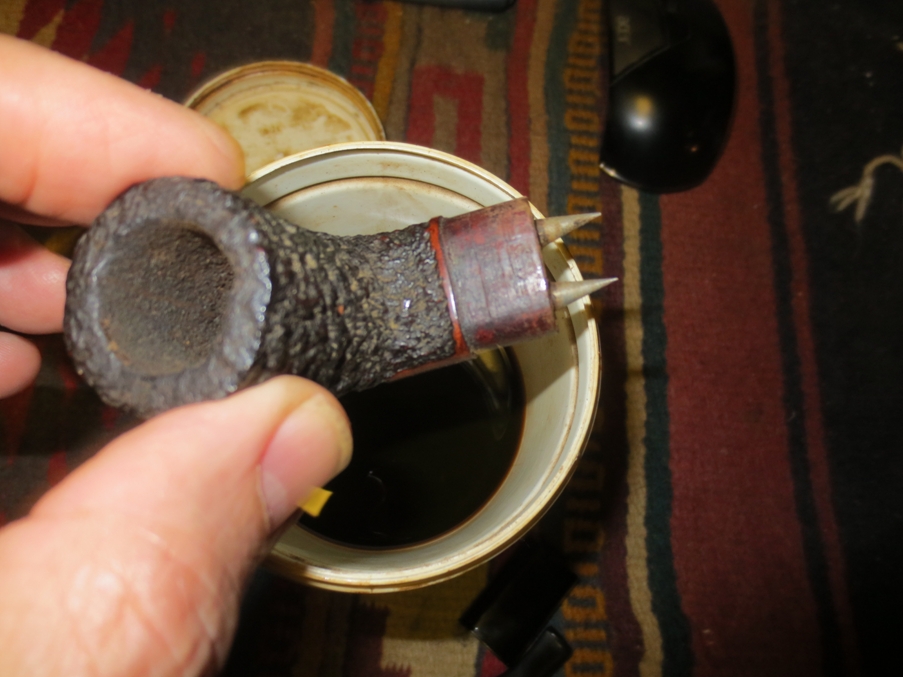
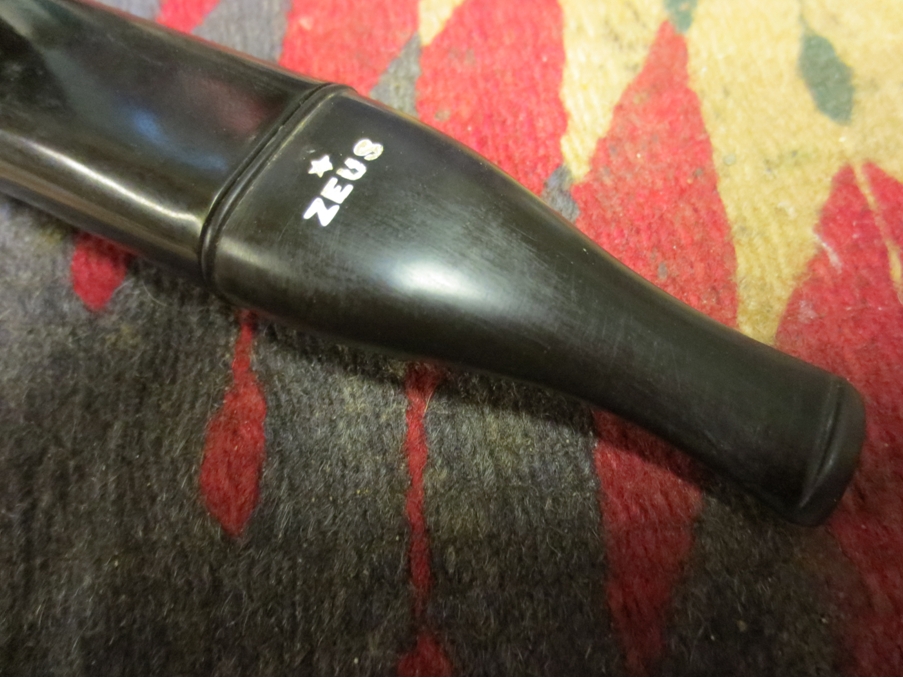
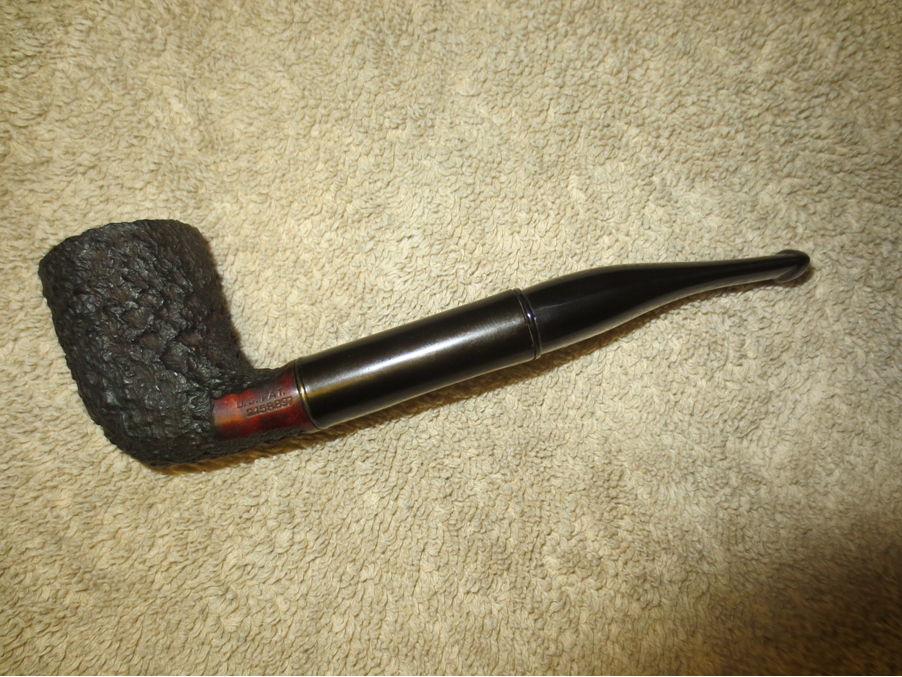
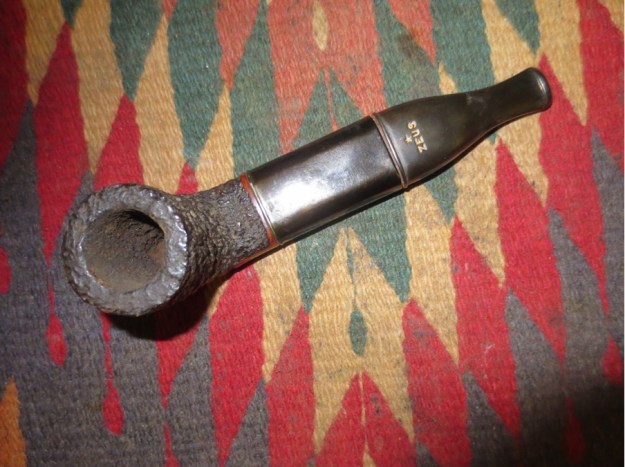
The morning of May 9th started as any other one does for me – a coffee and a plan. I got up early and roused the troops. We loaded the car and headed to the US to get to the border crossing before the long lines began. We were at our destination in Bellingham, Washington by a little after 8:00 AM. We had breakfast with the ladies in my family, dropped them off for a few hours of shopping and then did a few errands before heading to the “Junque” shops when they opened at 10:00 AM. I walked through the first shop and found a small no name pipe that was in very rough shape and decided to leave it behind. I went to the second shop and went through all of the cabinets and finally came to the one belonging to a seller that usually had something interesting in her cabinet. That is where I saw the oddly shaped rusticated briar pipe that was stamped ZEUS on the stem. The seller unlocked the cabinet and I took the pipe in hand and examined it. The stem came out easily and I could see the odd spikes at the end of the metal shank. It was an oddity that I had not seen before so I had to have it. I know it sound lame, but this find made my morning. I had found an unknown to me, odd-shaped system pipe and the pipe hunt had been successful.

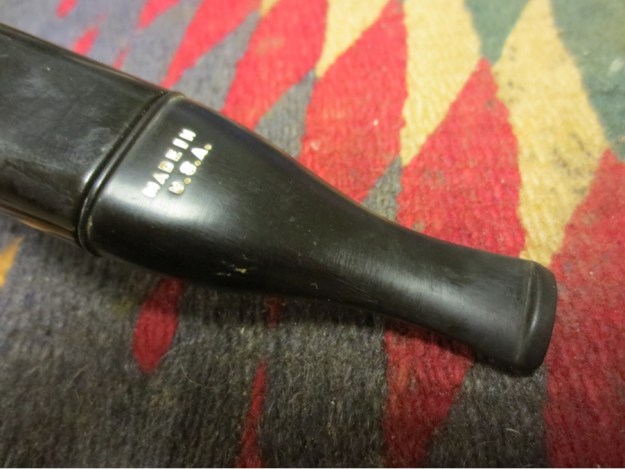
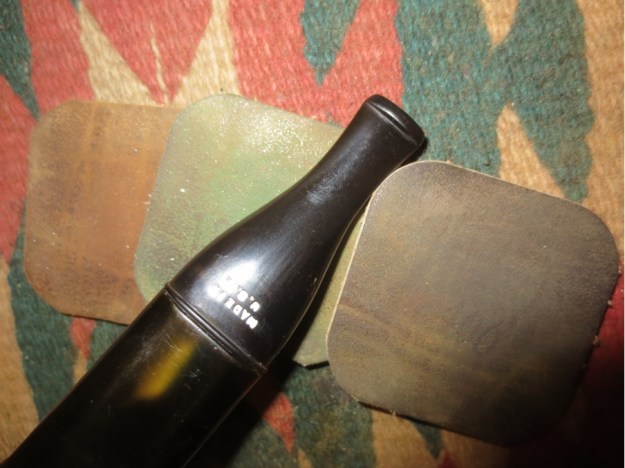
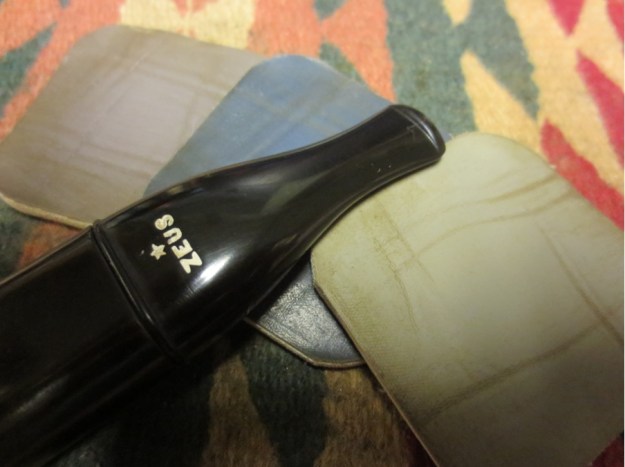
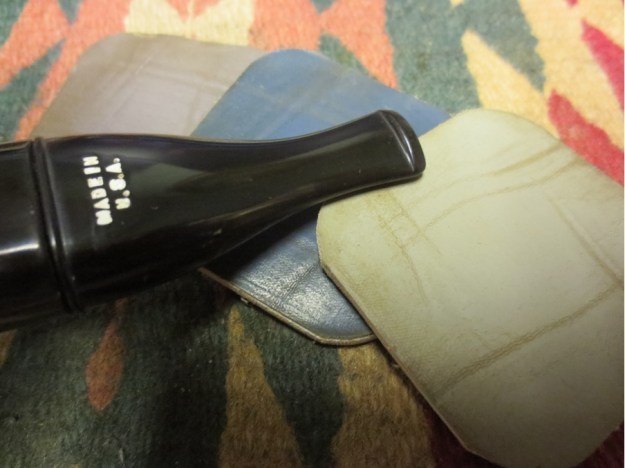
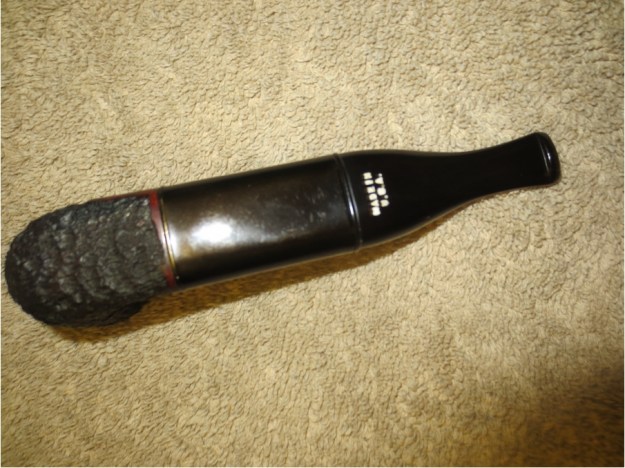
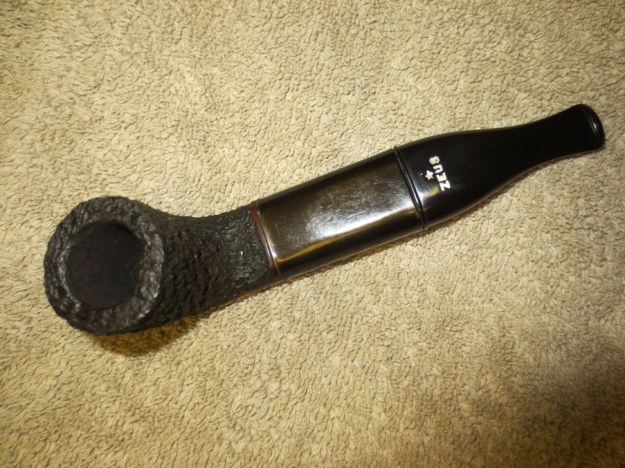
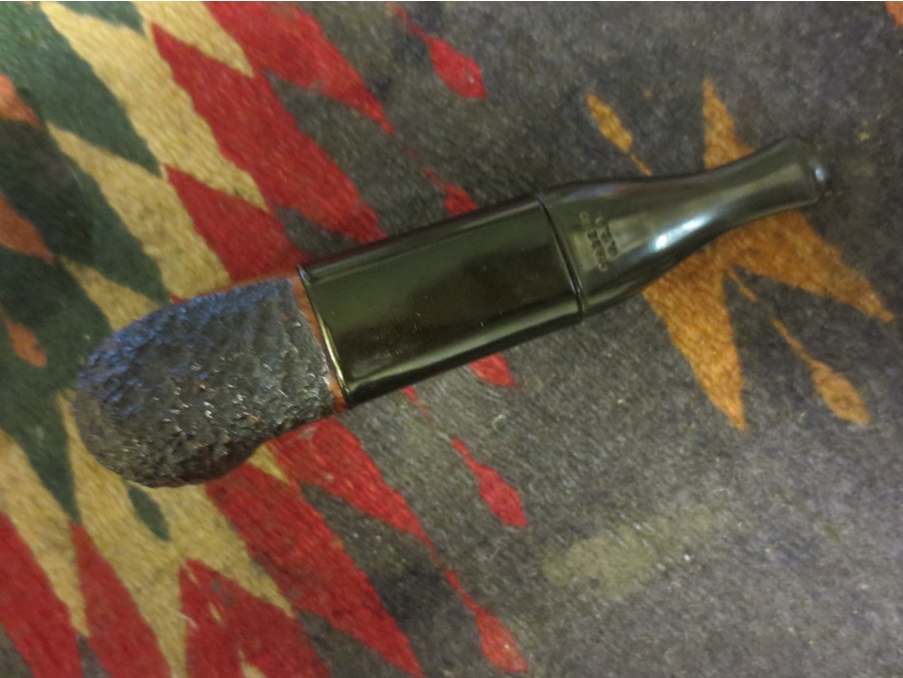
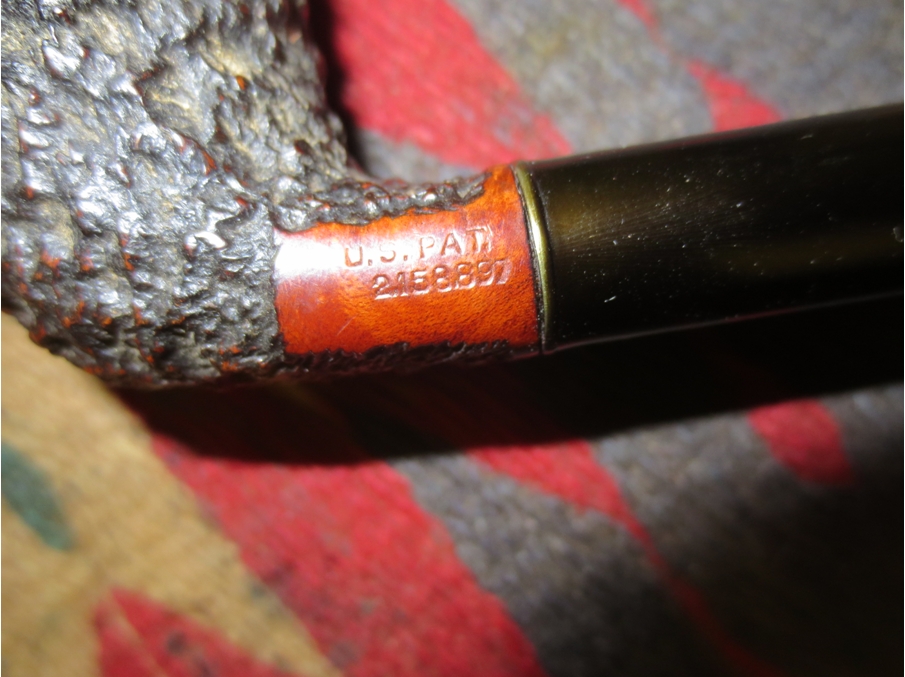
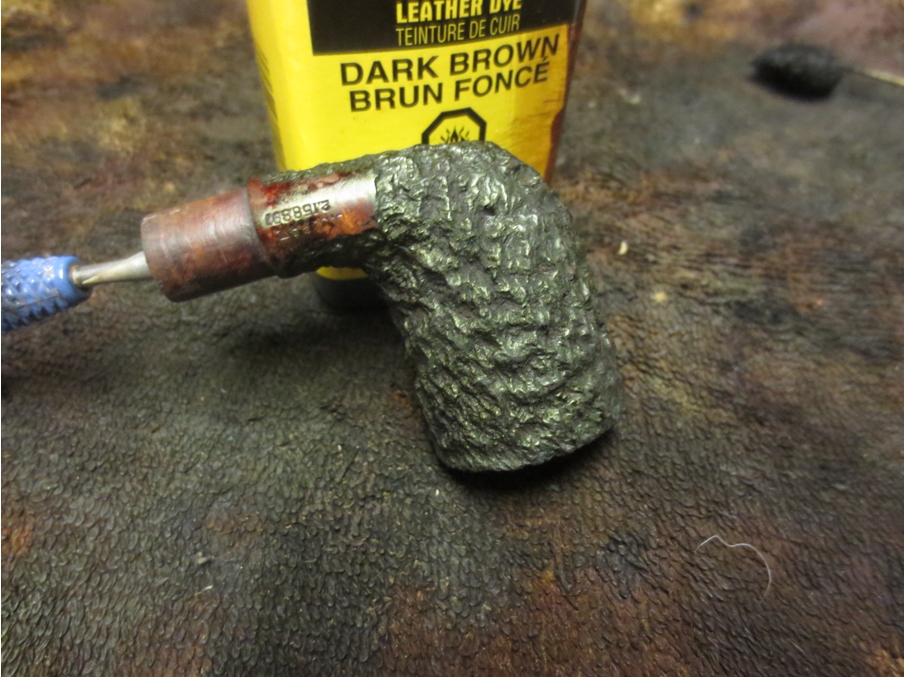
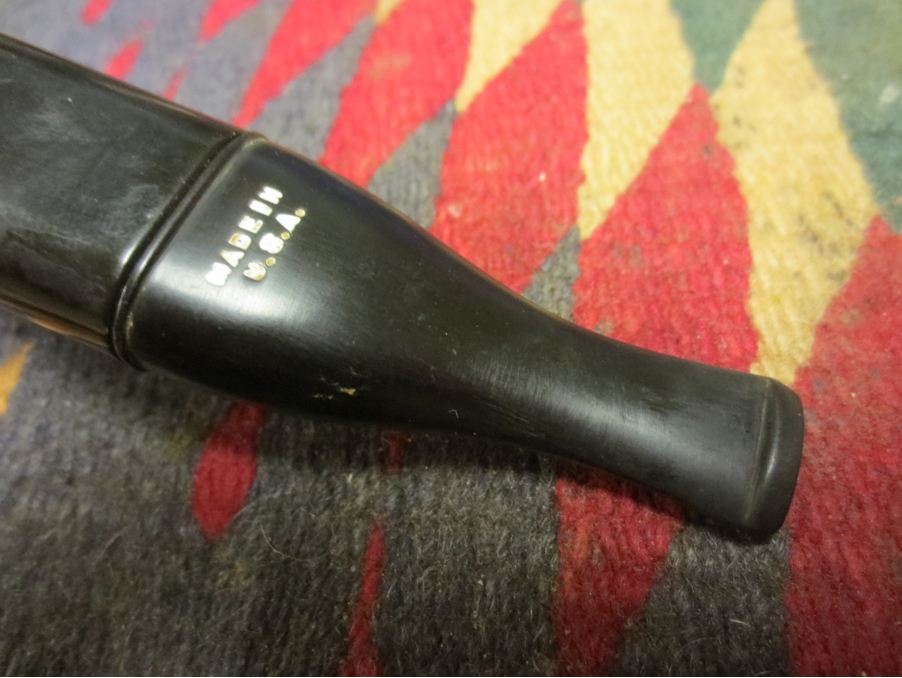
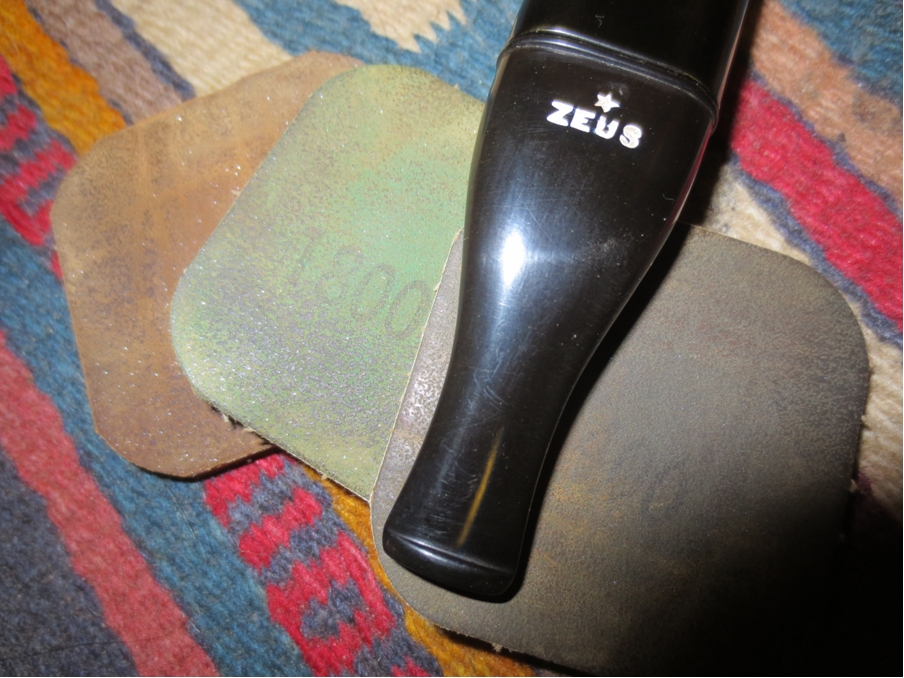
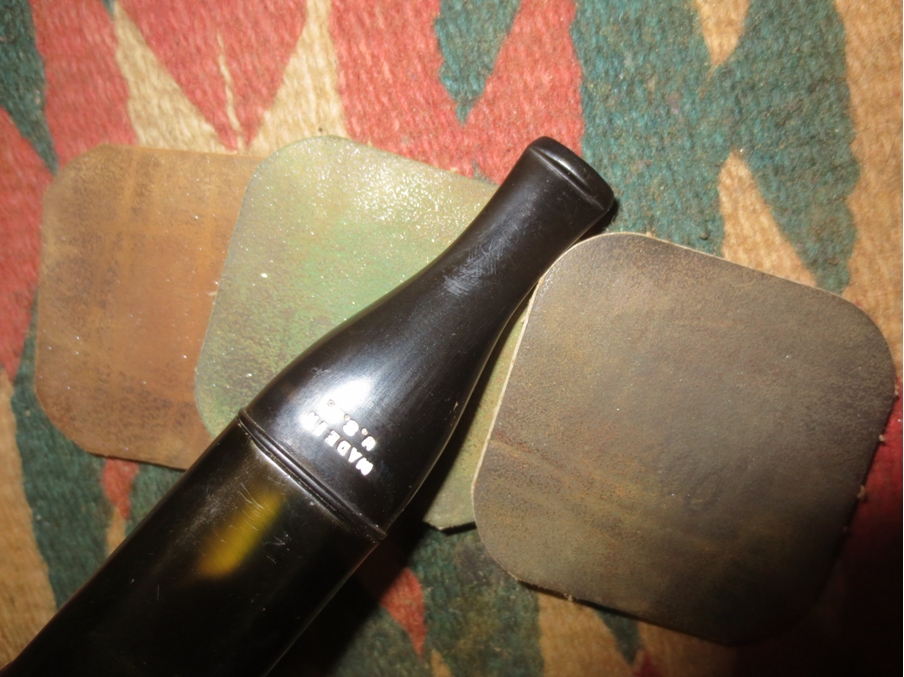
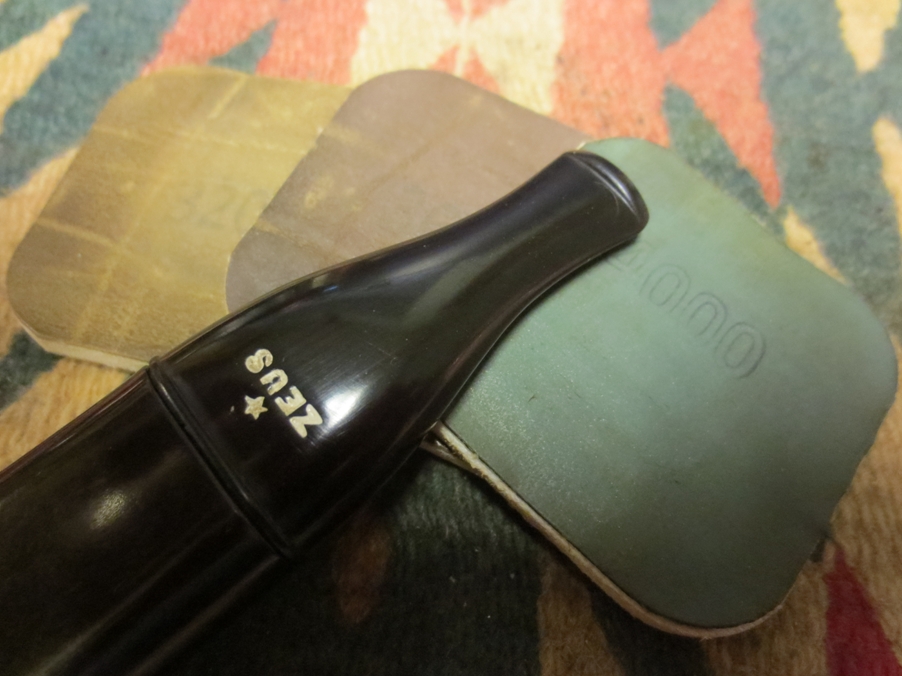
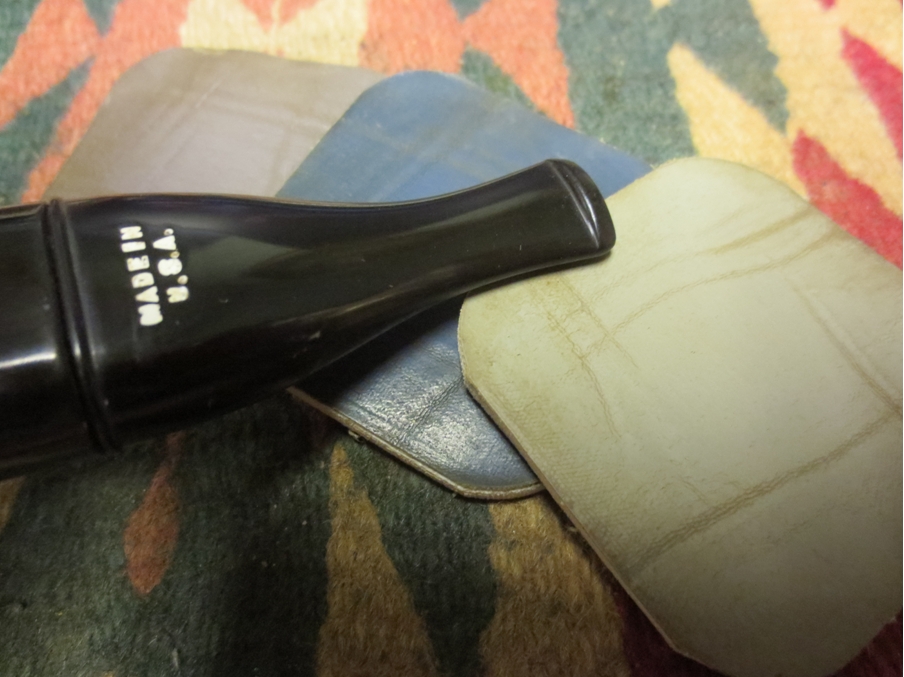
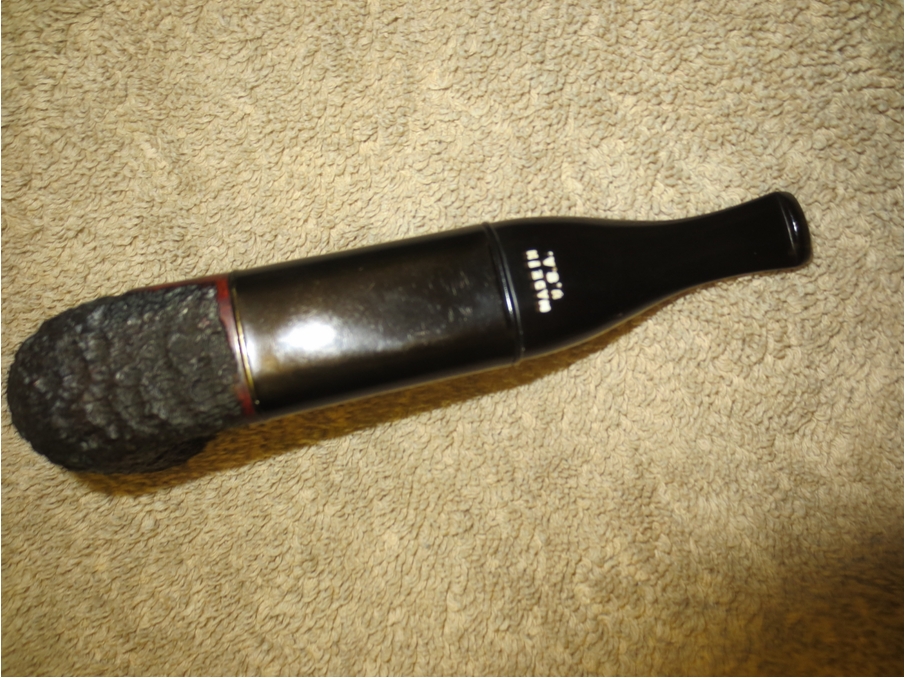
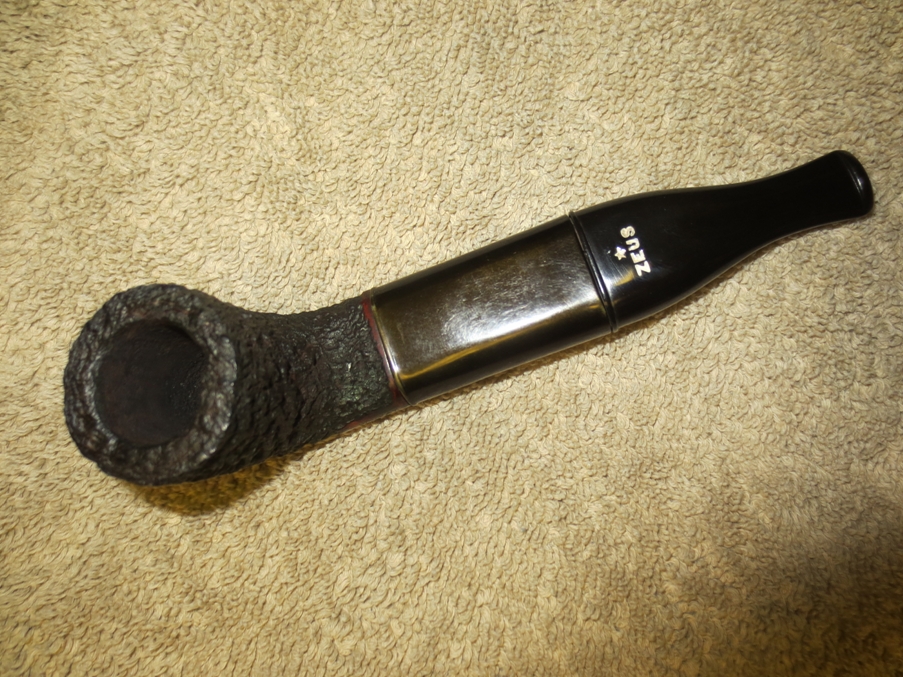
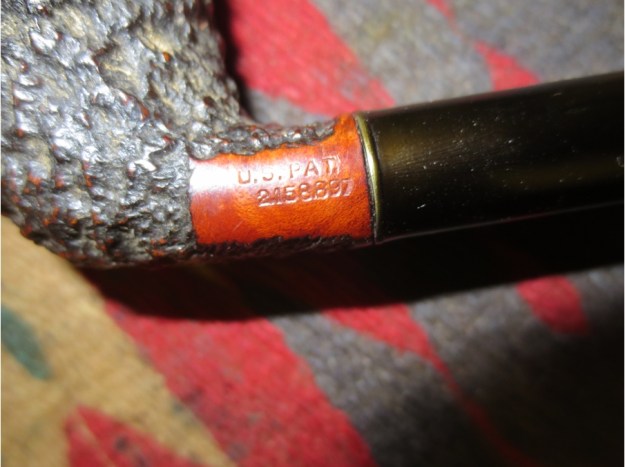
The pipe is not large. The bowl is about a group 3 size and has a very wide shank. It extends for about an inch before it is joined by a metal oval tube. The tube was in great shape with no scratches and only minimal dents. An oddly shaped stem fit in the end of the metal tube. The stem bore a star with the words ZEUS stamped under it on top of the stem. On the underside it was stamped Made in U.S.A. There is a patent stamp on the short briar shank in a smooth patch on the left side. It reads U.S. Patent over 2,158,897. When I returned home I took it to the work table and took these photos.

The pipe appears to be in great shape. There is minor oxidation on the stem but no tooth marks. The metal tube had sticky glue areas that seemed to come from a label that had been stuck to the metal. I sure wish that they would not use these labels to mark pipes. The briar bowl exterior is very dirty with dust and grime pressed deeply into the rustication. There was a thick build up of tars and oils in the rustication of the rim. There was a crumbling thick cake in the bowl with the cake on the bottom portion of the bowl being much thicker. The airway was dirty as well and I had trouble getting a pipe cleaner through from the stem. It would be interesting to take this old timer apart.Zeus6
Zeus7

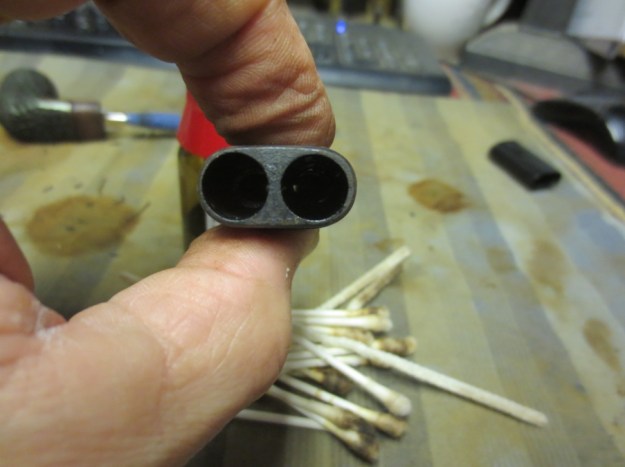
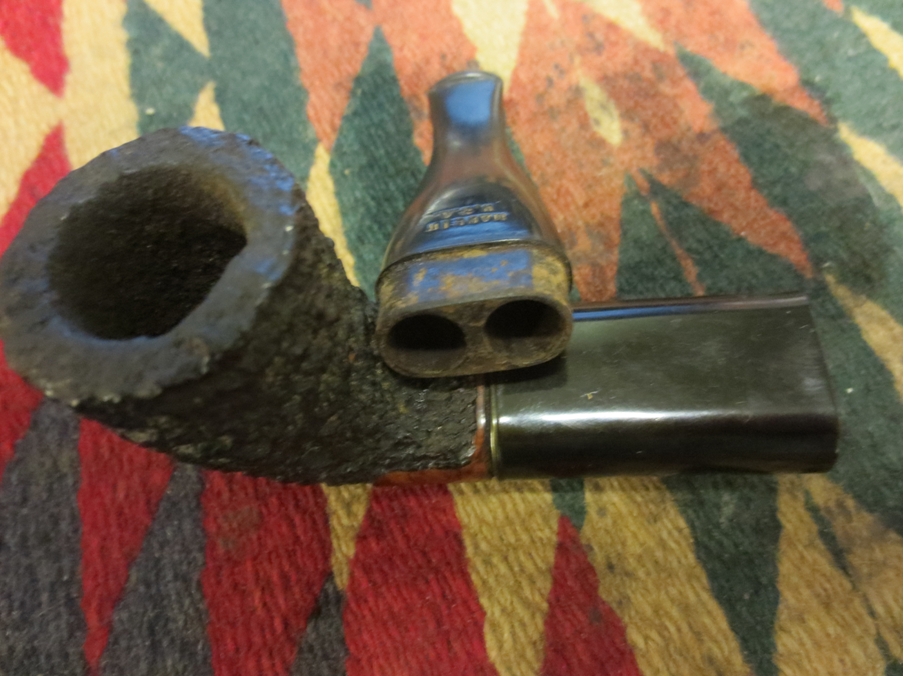
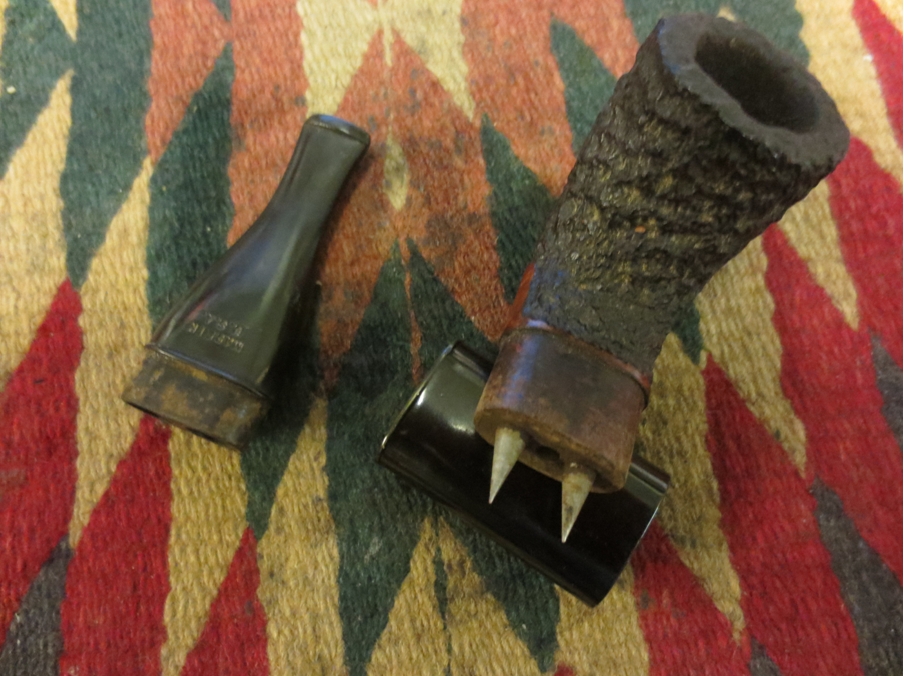
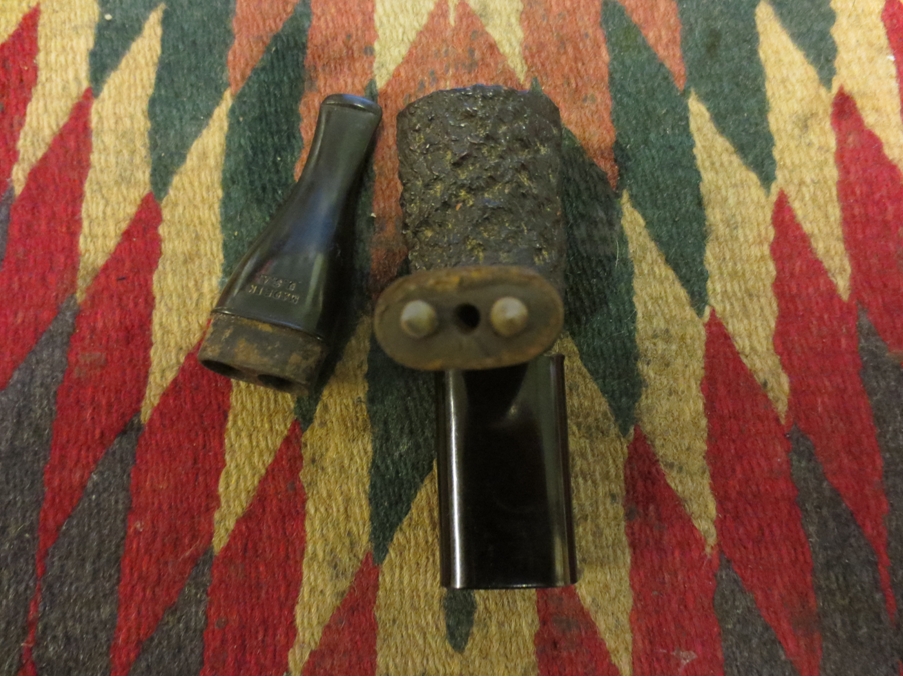
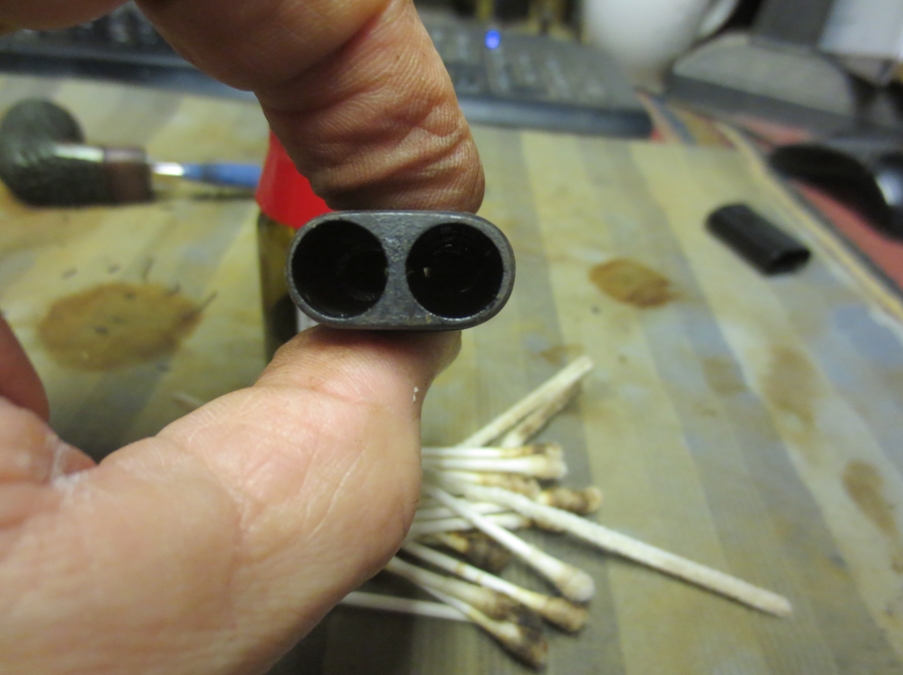
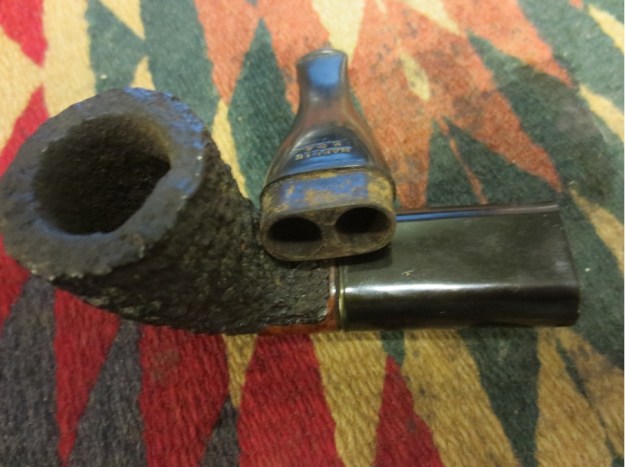
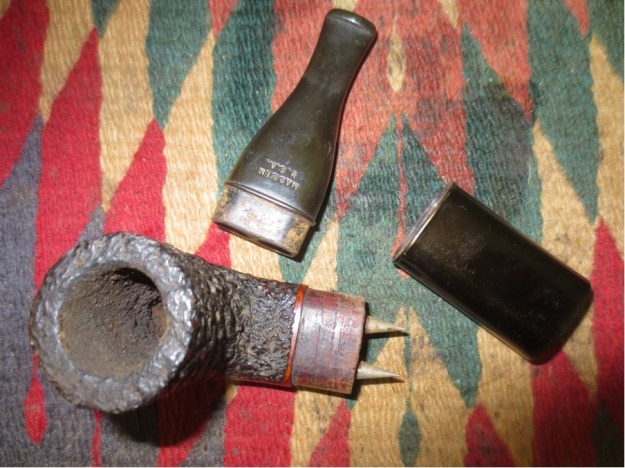
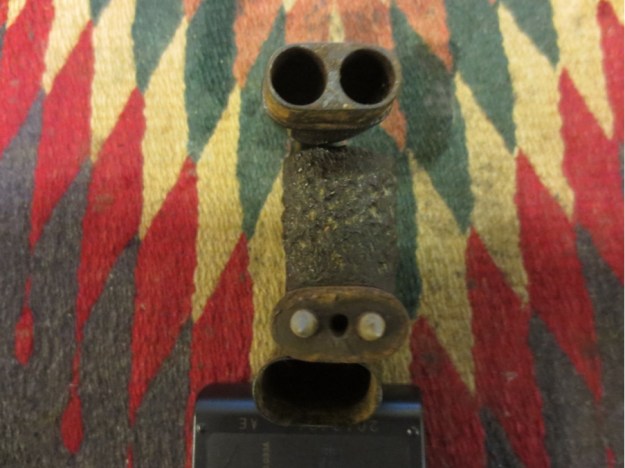
Zeus8 I removed the stem from the shank and took the following photo. It was a twin bore stem that moved toward a single airway in the thinner portion. It formed a Y. The twin bores were quite large as can be seen in the photo. It made me wonder what I was dealing with.Zeus10 The metal tube portion of the shank was also removable and only took a little finagling to get it to come free. It was pressed into place and formed a fairly tight seal. Once it was free the end of the briar shank was visible. It had two imposing metal spikes and an airway entering from the bowl in the middle between them.Zeus11
Zeus12

Zeus13 I took another photo of the three parts standing on end. You can see that the metal tube forms a chamber for the smoke and serves as the mortise area for the twin bore stem. The mystery to me at this point was the purpose of the spikes. It seemed likely to me that some sort of filter system was spiked on the points and extended from them into the twin holes in the stem. They would lie parallel to each other in the metal shank and the smoke would swirl around them in the chamber. I began to wonder if I was missing some key parts of this pipe. Were those parts lost somewhere along the way and what must they have looked like? Those were some of the questions that went through my mind at this point.Zeus15 I knew that the patent number on the shank would give me some help with this. I could search the US Patent site and possibly find the drawings and original proposal for the pipe that the inventor submitted for patent. But before I did that I did a quick search on Google for the ZEUS pipe. Of course the PipePhil site came up and there I found the following information. There were two photos of the pipe – one disassembled and one assembled. The stamping was identical to the one I had as was the patent number on both shanks.Zeus4 There was also a short line to the right of the photo that gave me the quick answer to what I had assumed about the pipe. The spikes and the chamber as well as the twin bore had a clear purpose and I was not missing any parts. The ZEUS pipe was designed to hold 2 halves of a cigarette to act as filters. The spike held them in place and the twin cigarettes extended into the mouth piece. The smoke would swirl around them and the tars and moisture would be absorbed in the cigarettes.
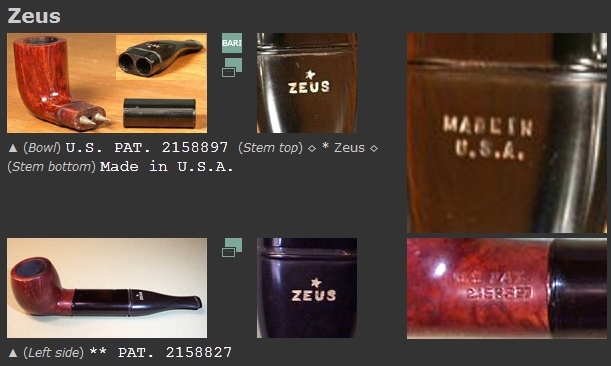
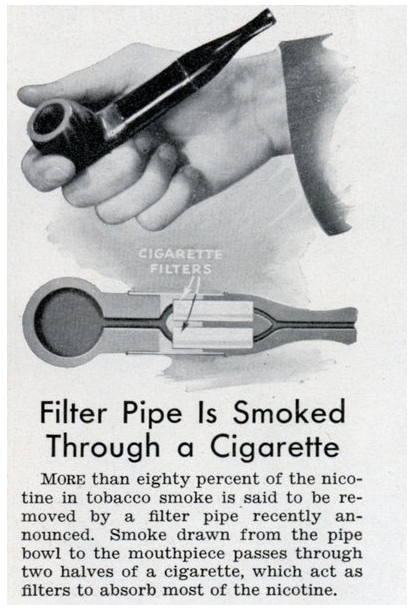
There was also a link to MODERN MECHANIX Magazine dated November, 1939 that was an advertisement for the pipe and gave a simple diagram of the interior of the pipe with the cigarettes in place. The advertisement text is interesting in spelling out the pipe designer’s intention for the design of the pipe. It claims that 80% of the nicotine is removed by this new pipe design. The ad says that smoke drawn from the pipe passes through the two cigarettes which act as filters to absorb the nicotine.
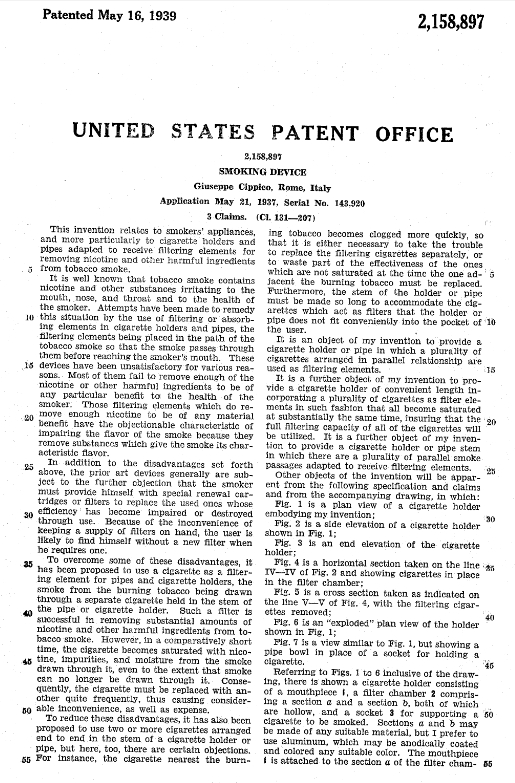
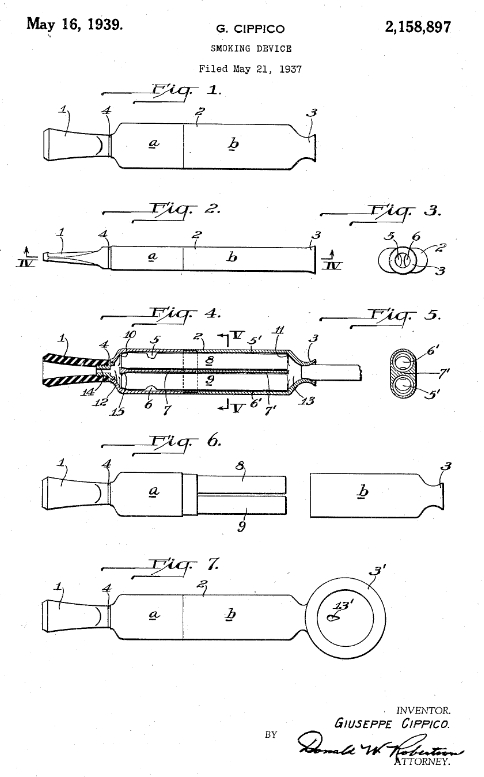
I love finding these old inventive pipes that were designed to deliver what at the time was a smoother, cooler, healthier smoke. This was one of the most unique designs that I have seen.Zeus5 From there I turned to the patent number on the side of the shank. I went to the US Patent website and did a numerical search for the patent number. Here is the link to the number search portion of the patent website: http://patft.uspto.gov/netahtml/PTO/srchnum.htm Zeus9 I entered the patent number 2,158,897 and was immediately given a three page scan of the documents on the site for that number. I have included all three pages below. The first page is a series of conceptual drawings of the device. The second and third pages are the details linked to the Figure numbers in the drawings. It was filed May 21, 1937 by a G. Cippico in the category of Smoking Device. G. Cippico is later shown to be Giuseppe Cippico, Inventor from Rome, Italy. The patent was granted on May 16, 1939 almost two years later. These old Patent details are always an interesting read to me. The theory of how the pipe would work is spelled out and the rationale for it being a new and better pipe is detailed.Zeus1
Zeus2

Zeus3 I put this information on two of the pipe forums that I frequent to see if I could garner any further information. I was particularly looking for the US manufacturer of the pipe. On Smokers Forum I received a response from Chris Chopin (flatticus). He included another advertisement from Life Magazine that he found.Zeus16 The advertisement is for a ZEUS Cigarrete holder that claims to absorb over 70% of the nicotine and tars. It also says in small print at the bottom of the ad under the $1 Ladies Zeus with choice of amberlike colored bits that there are also ZEUS pipes. The ad says that ZEUS is made by L. & H. Stern, Inc., 57 Pearl Street, Brooklyn, N.Y. With that it appears that the pipes were made in the US by LH Stern Inc.

Chris also writes; “There are ads from Stern for the Zeus filter in 1938 in Life Magazine (several times that year), Collier’s Illustrated Weekly, and Time. They start in March and April of 1938 with the filter noted as “A New Way to Smoke”. Then nothing for 8 full years. Not a single ad or mention of any kind I can find past December of 1938 except for a mention in the Rocky Mountain Medical Journal that may not be an ad.”

“Then, in 1946, ads show up in Popular Science, Popular Mechanics, The Rotarian, Newsweek, all over the place, advertising that the Zeus Filter Holder is back, now in aluminum. All but one of the 1938 ads say “Also Zeus Pipes” and not a single one of the 1946 ads does.”

“It’s an assumption, of course, but this makes me think that for some reason the Zeus pipes had a very short life, and you may have one of very few they made.”

Thanks for the advertisement and information Chris. Your post gave me some needed information on the brand and confirmed what I had already found from my own digging. It appears I found a bit of a rarity in this old pipe.

Armed with these details and a bit of historical background it was time to clean up the pipe and bring it back to pristine condition.

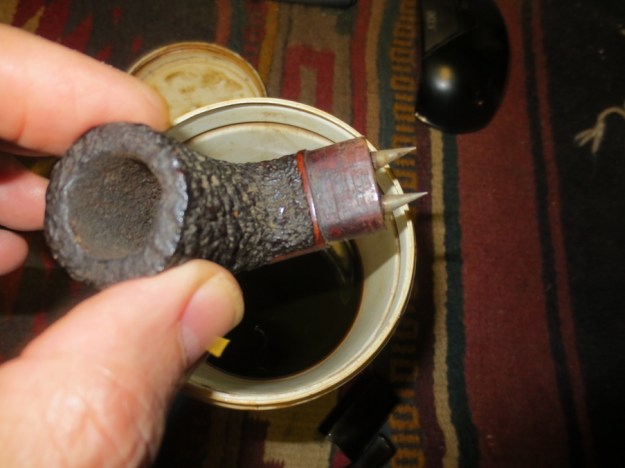
I took the pipe apart and put the bowl into an alcohol bath to soak and soften the cake before I ream and clean it. I put the stem and barrel in an Oxyclean bath to soak and raise the oxidation and start the sanitizing process.Zeus17
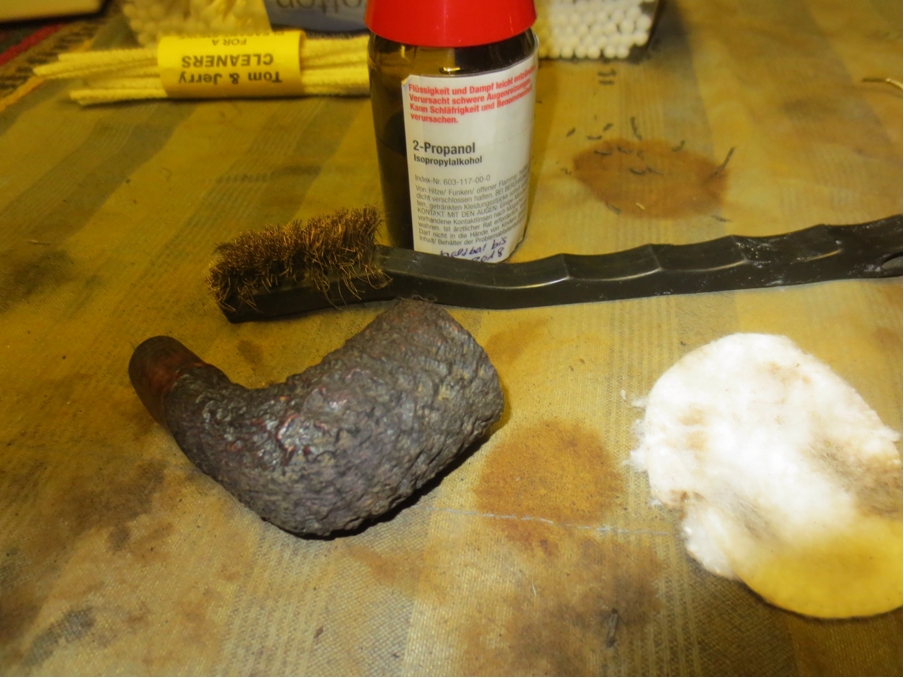
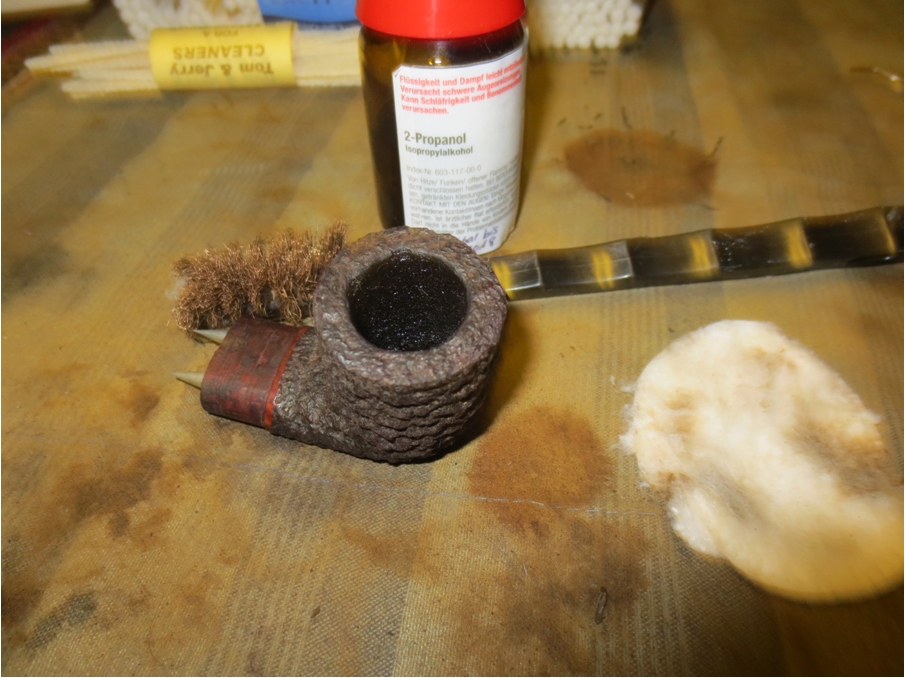
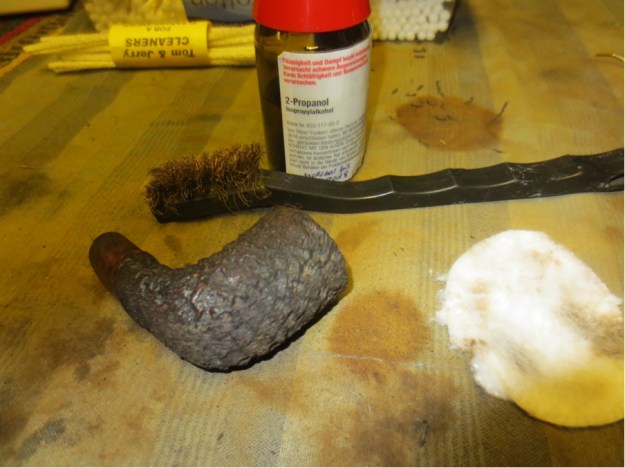
Zeus18 When I took the stummel out of the alcohol bath after it has soaked for three hours I scrubbed it with a soft bristle brass tire brush to clean out the debris from the rustication. I scrubbed the top of the rim to remove the tarry buildup from that surface. I wiped the surface down with isopropyl alcohol on a cotton pad to remove the dust on the finish.Zeus19
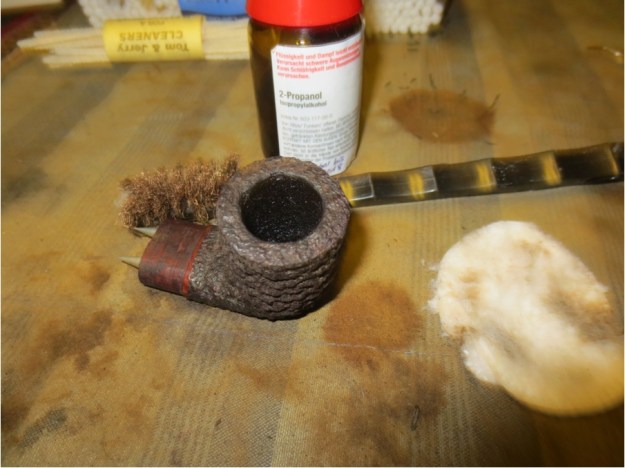
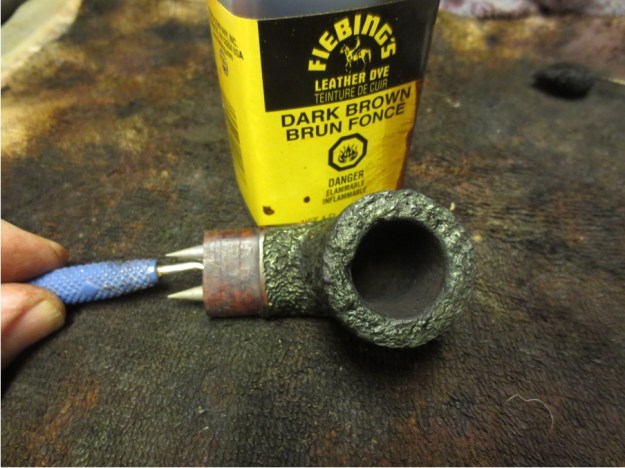
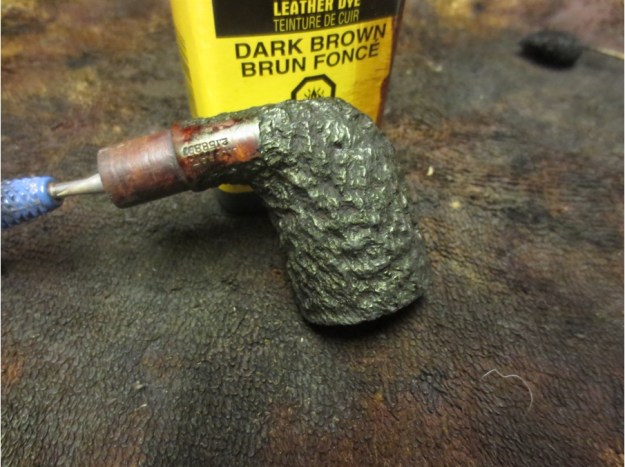
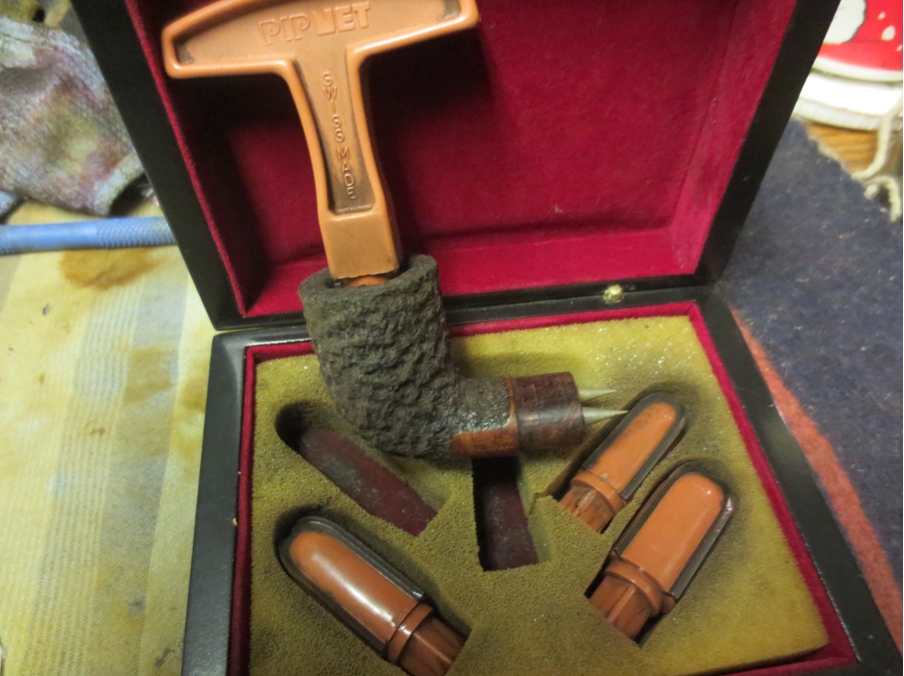
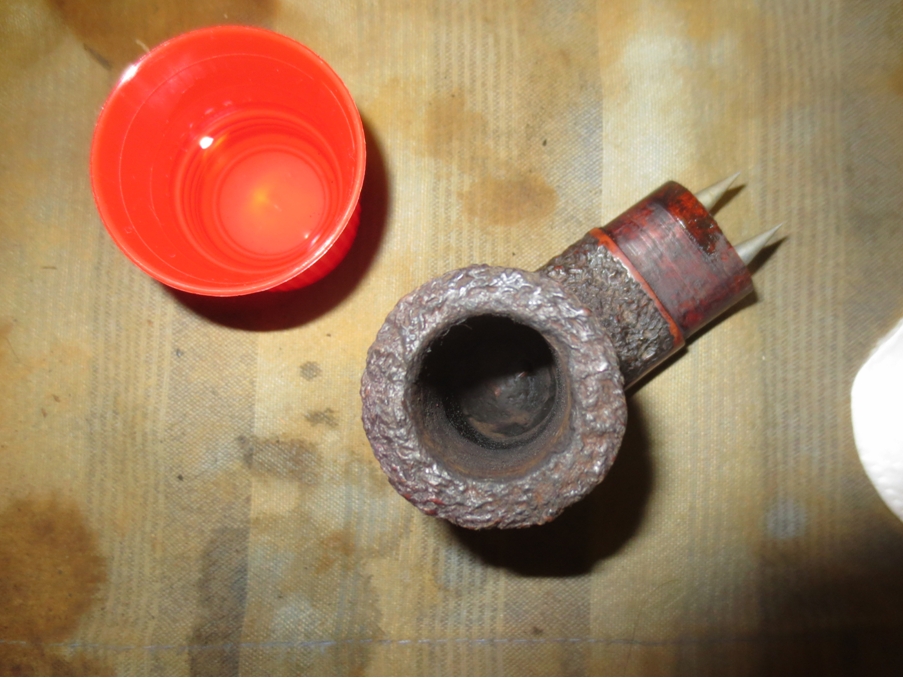
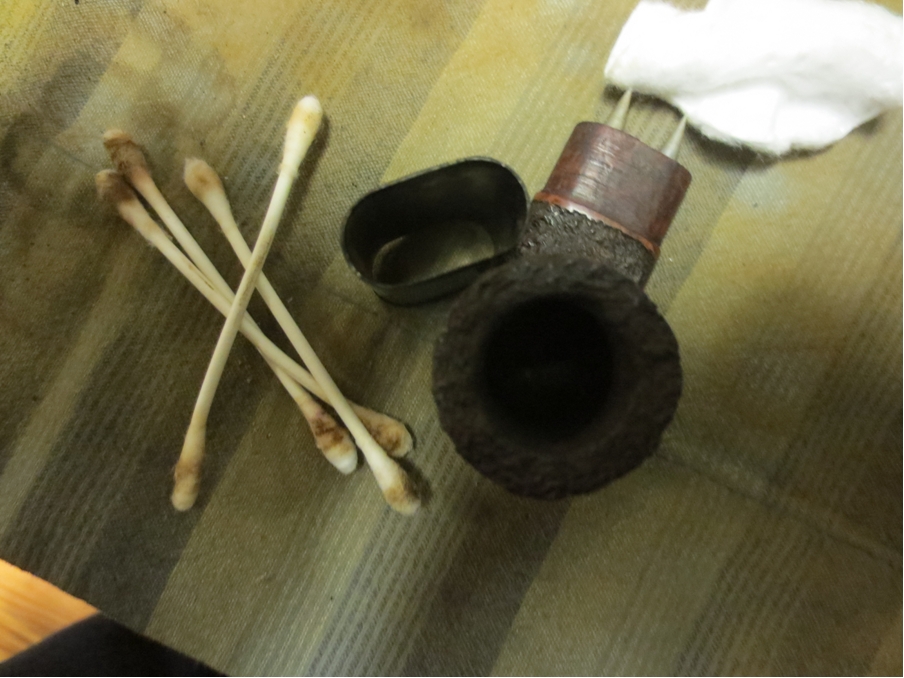
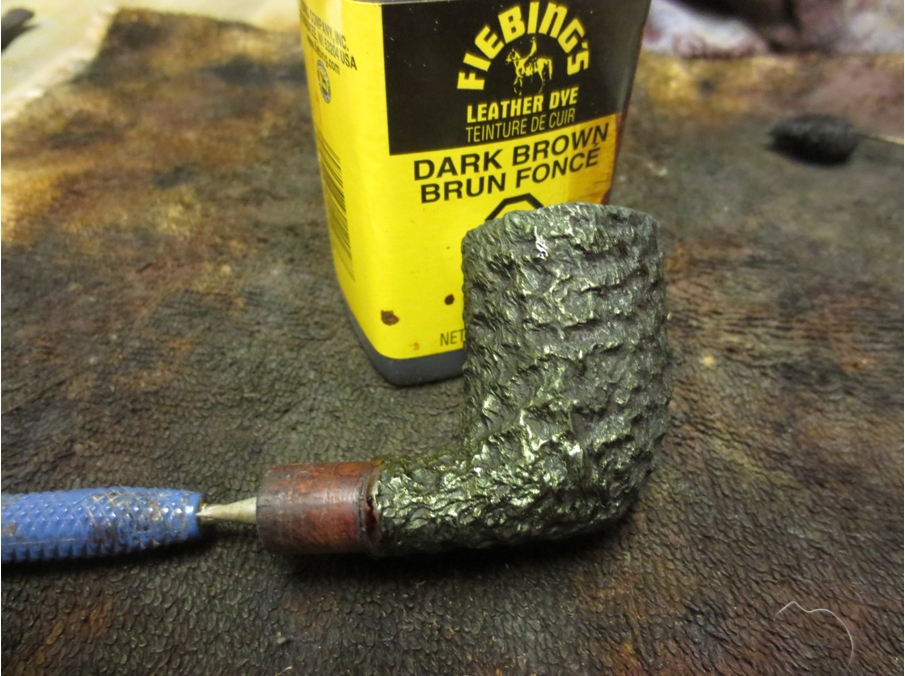
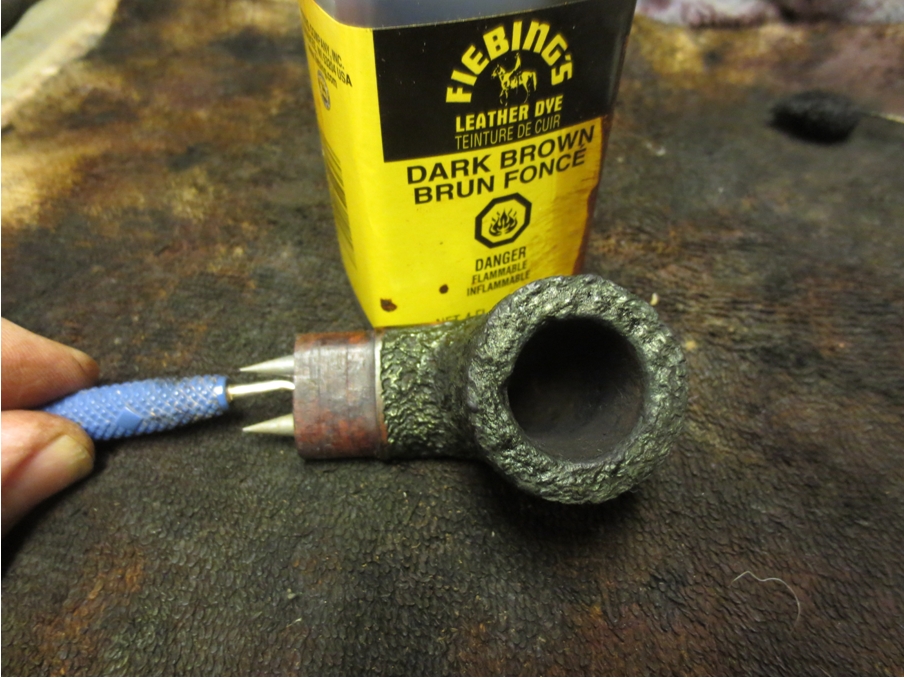
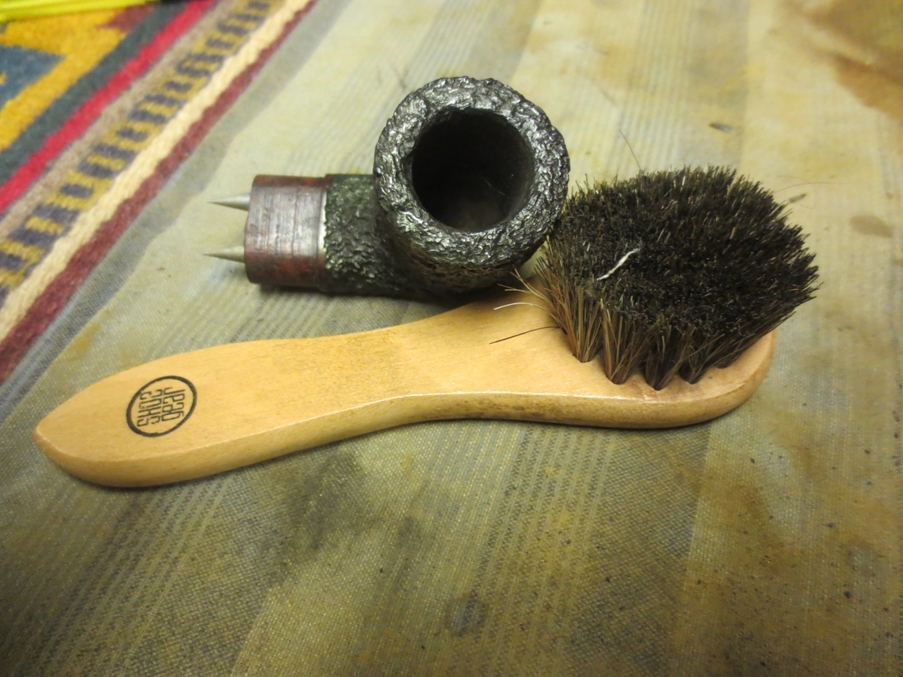
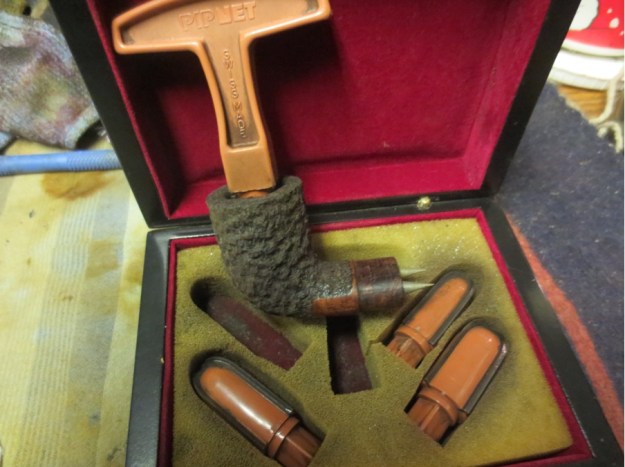
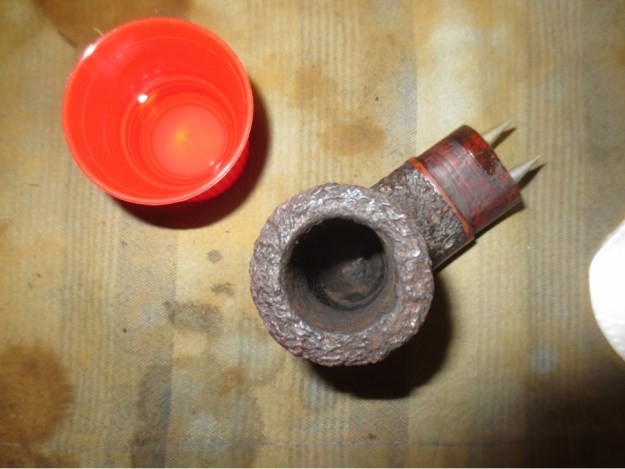
Zeus20 I reamed the bowl with a PipNet Reamer using the smallest cutting head. It was still slightly too big to get to the bottom of the bowl. I used a small sharp pen knife to work on the cake on the bowl bottom and sides.Zeus21 I wiped out the bowl with isopropyl alcohol on cotton swabs to remove the carbon that the knife and reamer let behind. The reamed bowl is shown in the photo below.Zeus22 I used the cotton swabs and alcohol to clean out the airway in the shank and to clean up the two points of metal on each side. I scrubbed down the briar surface that the metal tube slid over. I also scrubbed the metal tube out on the inside with alcohol. I used the sharp pen knife to scrape the inside of the tube and then rinsed it with alcohol.Zeus23 I inserted the dental pick in the airway to use as a handle and restained the stummel with a dark brown aniline stain. I flamed it and repeated the process until the coverage was even.Zeus24
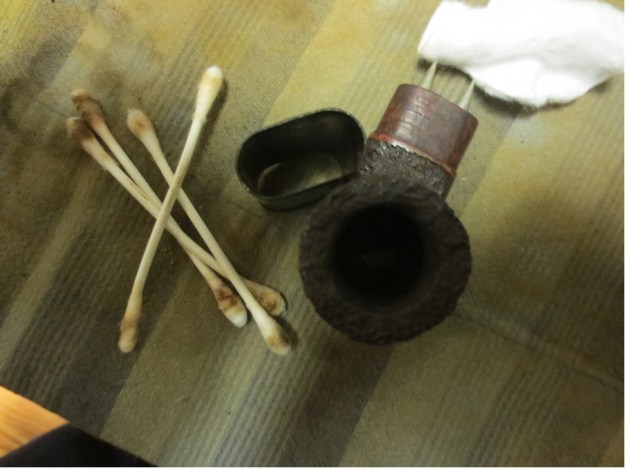
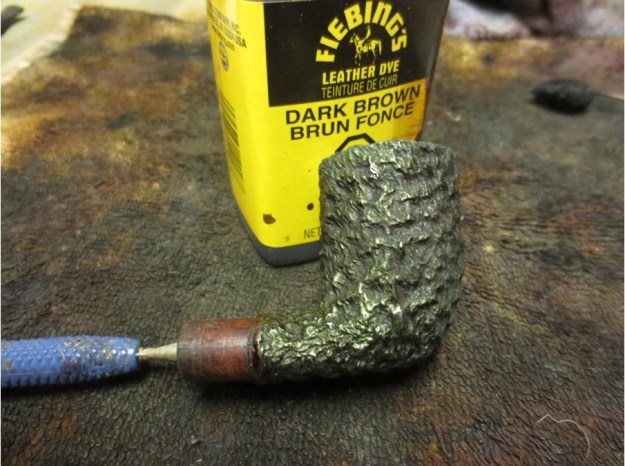
Zeus25

Zeus26 I set the bowl aside to dry and worked on the stem. I had dried it off when I removed it and the tube from the Oxyclean bath but still needed to do some work to clean out the airways. I used pipe cleaners, cotton swabs and isopropyl alcohol to clean out the stem airways.Zeus27
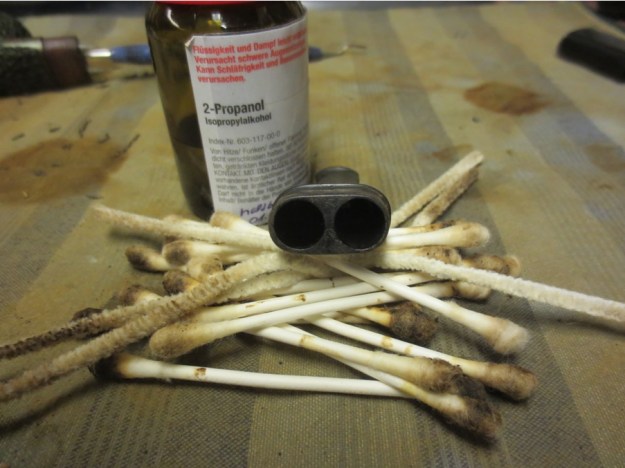
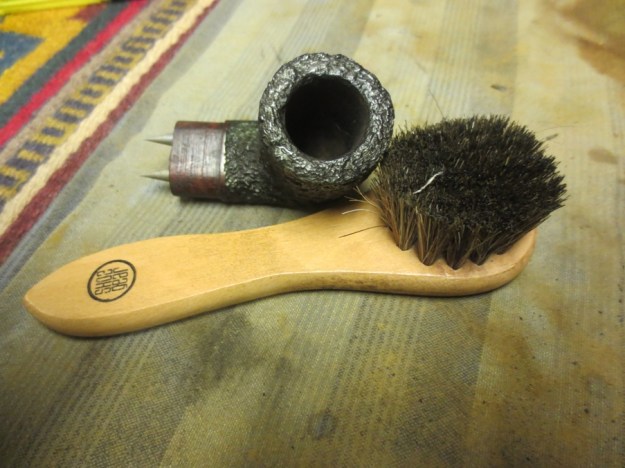
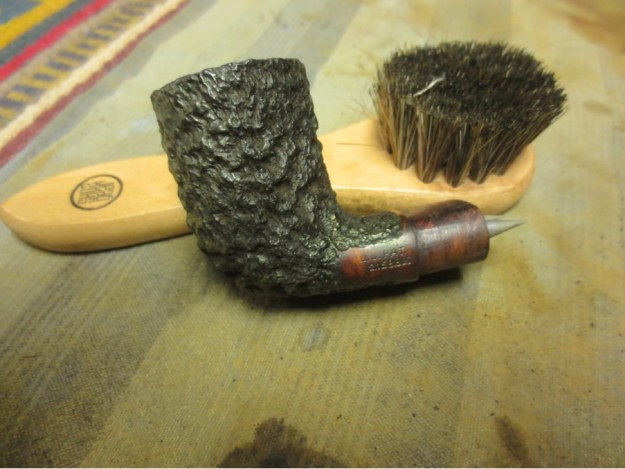
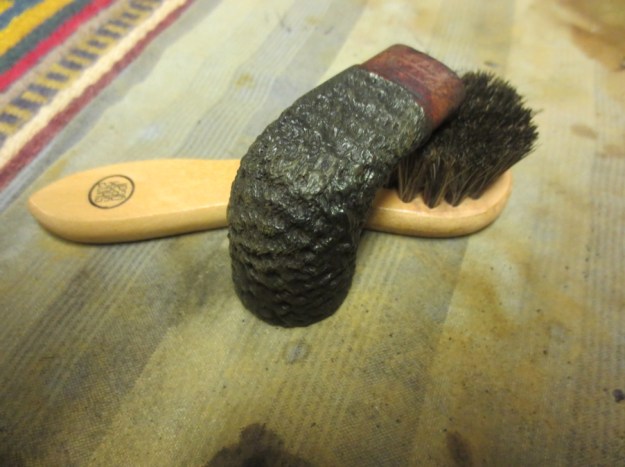
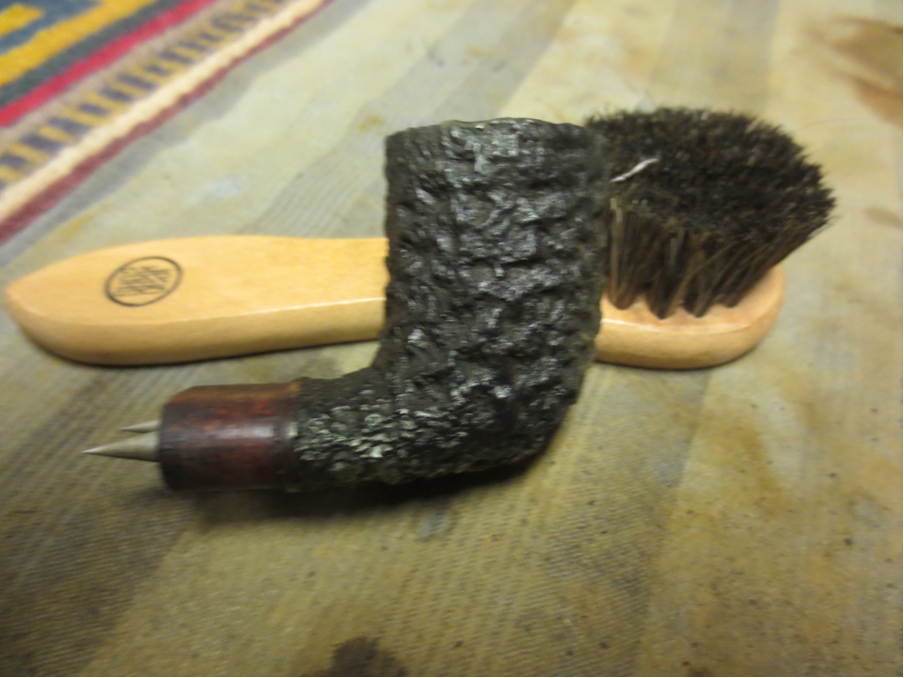
Zeus28 I hand buffed the bowl with a shoe brush to smooth out the stain and to raise a shine on the briar.Zeus29
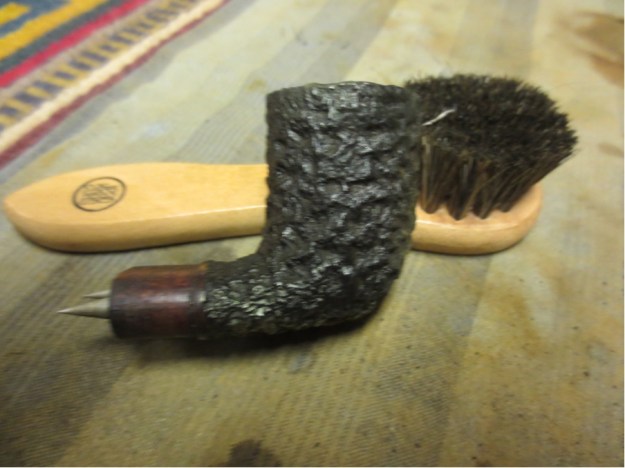
Zeus30

Zeus31

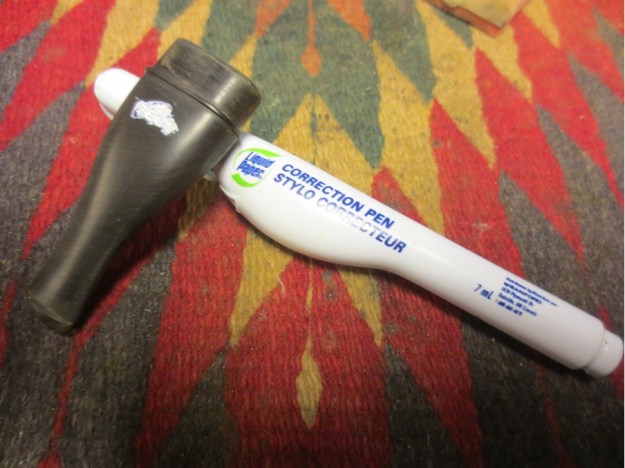
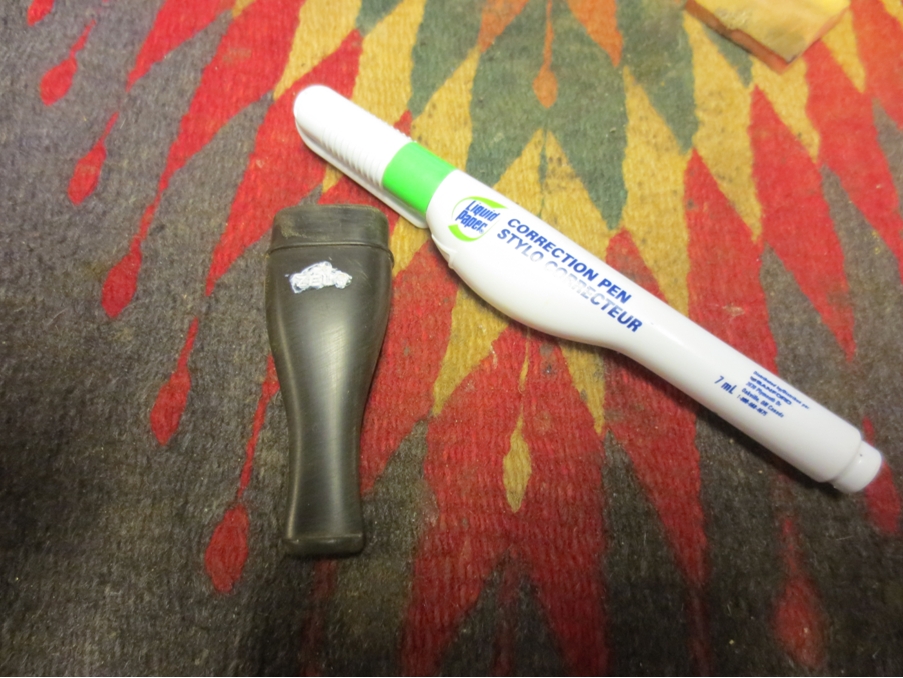
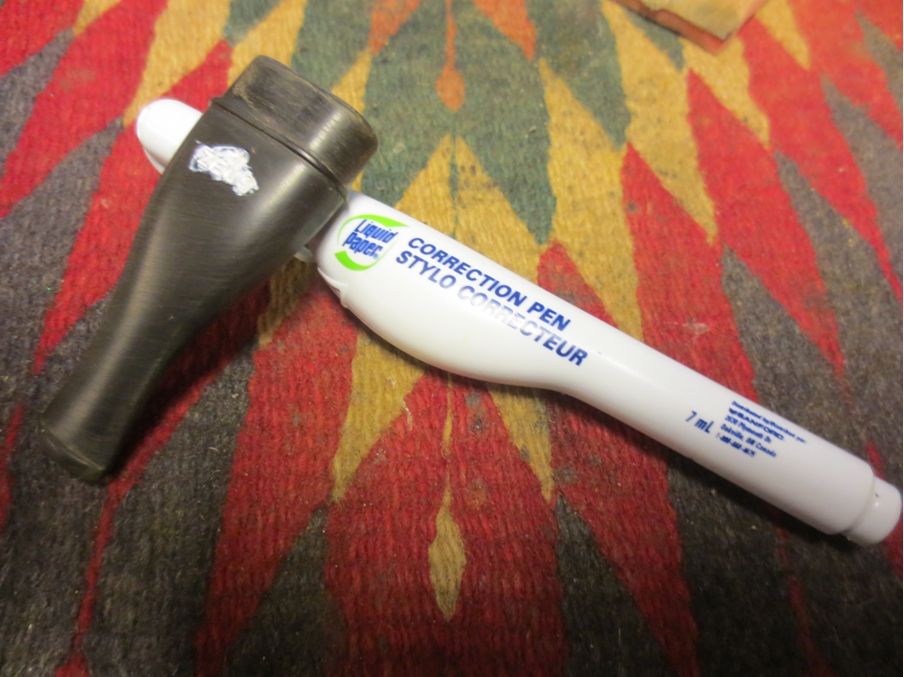
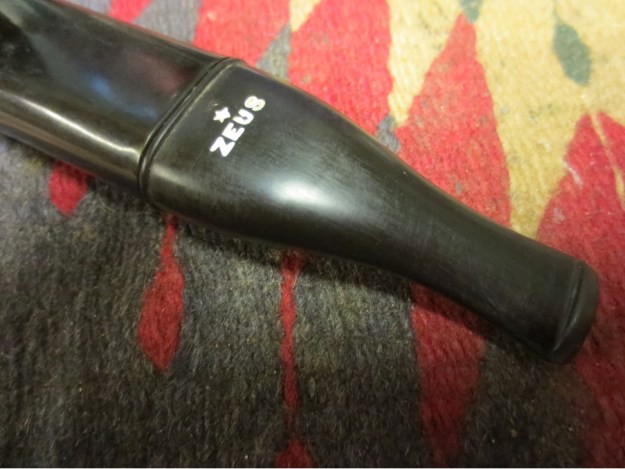
Zeus32 The Oxyclean had removed some of the white in the stamping on both sides of the stem so I cleaned off the surface of the stem and then used a correction pen to reapply the white to the stamping on both sides of the stem.Zeus33
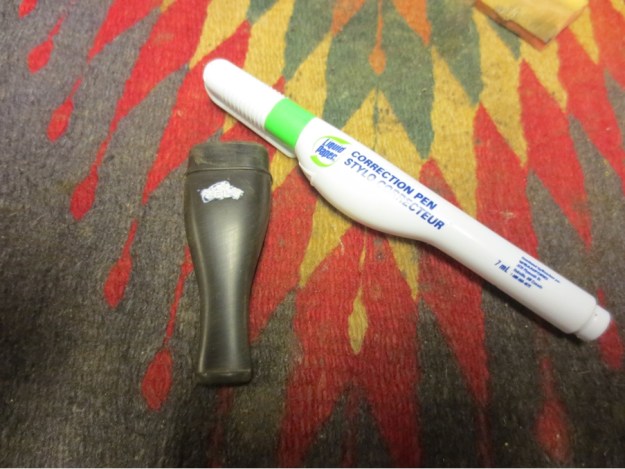
Zeus34 When it was dry I sanded it with a fine grit sanding sponge to remove the excess white material and to polish the stem.Zeus35
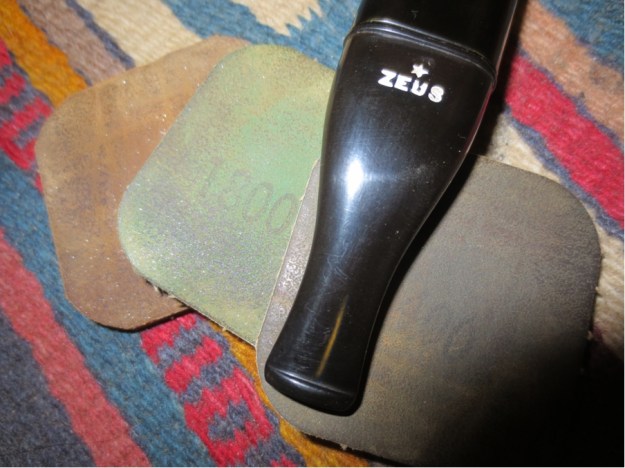
Zeus36 With the stamping repaired I worked on the stem with micromesh sanding pads. I wet sanded with 1500-2400 grit pads and dry sanded with 3200-12,000 grit pads. I buffed the stem after the wet sanding with red Tripoli and then rubbed it down with Obsidian Oil before going on to the higher grit pads.Zeus37
Zeus38

Zeus39

Zeus40

Zeus41

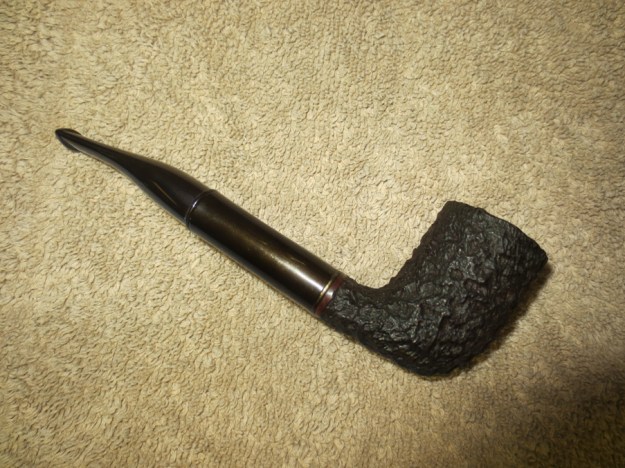
Zeus42 When I had finished with the micromesh pads I buffed the stem with Blue Diamond Plastic polish on the buffing wheel and then gave the stem several coats of carnauba wax. I buffed the stem and bowl with a clean flannel buff to give a clean shine and finish the pipe. The completed pipe is shown in the photos below. It turned out really well and it will go in my display cupboard. I think one day I will have to light it up and see how it smokes but to do that I will need to find a couple of cigarettes to use as filters.Zeus43
Zeus44

Zeus45

Zeus46 Thanks for looking at this unusual piece of tobacciana. It will join other odd pipes that I have found over the years that bear witness to the ongoing and ever-present search for the perfect smoke.

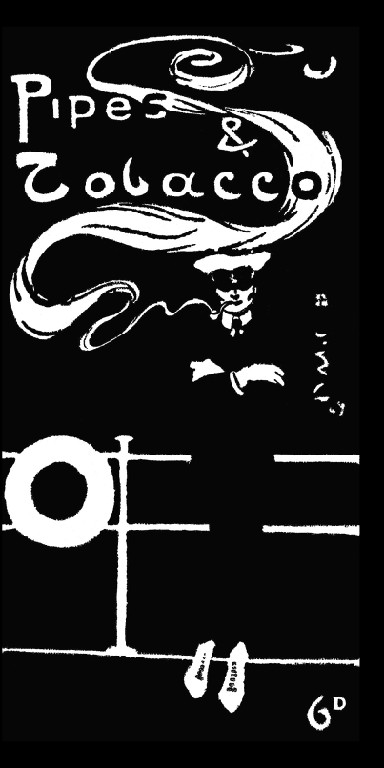
A Book Review – Pipes & Tobacco. A Bright and Interesting Discourse on Smokers by J. W. Cundall


Pipes and Tobacco CoverWhat attracted me to this book when I saw it on Briar Books Press was the press release that Gary Schrier posted on his website. It is a rather long opening to this review but I find that it is a great piece of writing and a simple summary of the book itself. There he wrote the following:

“What they were saying in 1901 about “Pipes and Tobacco. A Bright and Interesting Discourse on Smokers” by J. W. Cundall.Long 8vo. Cloth, 6d.”

“To-day. – Mr. J. W. Cundall has written a little volume which all lovers of the fragrant weed will read with interest and amusement. In addition to an account of the history of tobacco, and the science of it growing and blending, many entertaining anecdotes are related of famous smokers, and a large amount of odd information of use to smokers imparted. For a modest outlay of sixpence, at which price it is published, no devotee of ‘My Lady Nicotine’ need lack this latest appreciation of his goddess.”

“My how times have changed! That’s inflation for you. No longer sixpence, but then who other than Briar Books Press discovers such unusual, worthwhile, and most importantly, such entertaining literature for the pipe-smoking man. Hidden for over a century, this delightful gem is a look into our collective past for all the reasons smoking is such good medicine for the soul. Historical yet in many ways contemporary, Pipes and Tobacco is the smoking man’s guide to everything which is important to him. Author Cundall spins an entertaining read for the Englishman on so many of the topics of interest to him at the turn of the last century. From tobacco as a luxury and aid to meditation, to social smoking and as a medicinal aid, to soldiers and smoking, to poetry, to juvenile and royal smokers and smoking in parliament, to Smokiana and the Brotherhood of Smokedom, Cundall covers the subject concisely yet comprehensively. Peppered with quaint tobacco and briar-pipe advertisements, Pipes and Tobacco includes a never-before-divulged statement attesting to the origin of J. M. Barrie’s secret Arcadia mixture as written in his 1890’s novel My Lady Nicotine. A delightful and informative read that will leave you wanting for more.”

Who could resist that press bite and all for only $20USD. I ordered my copy and when it arrived sat down and read the short 103 pages with great interest.
As I often do with these reproductions of older books I turned through the pages to enjoy the layout and design before giving it a read. In this case the book is filled with lots of period advertisements for books and all assortments of items from that time. It also has great illustrations that are well worth the price of purchase in my mind. I am including a copy of the Table of Contents as I also read through that before proceeding with a general read of the book. I have grouped the topics of the chapters into related sections even though the author did not. Even before reading through a book in total I try to organize the flow of the book with a quick scan of the chapters. I look for the logic of the book and then section of the book to get an idea of the author’s direction and intent for his book. Below is a chart showing my grouping of chapters.Chapters The style of this book is very readable and timeless. Cundall’s use of language is clean and forthright and simple to read. It has some of the marks of its age such as punctuation and long sentences but the content flows very well. The design as a pocket-book full of advertisements from the time it was written give it a flavour of nostalgia that for me is refreshing and speaks to a time when things moved more slowly. I can easily see this book carried in a pipeman’s pocket and read on the train or in the evening over a pipe and drink in front of the fire. Schrier has done a great job in reprinting this old classic of pipedom.
I thought it would be helpful to a potential reader to give a quick summary of the sections that I noted above. I don’t do this to spoil the read as much as to give an idea of what you can look forward to when you pick up the book and read it for yourself.

FIRST SECTION (noted in red in the chart)

The author starts as many pipe books before and after him have started. He gives a quick overview of the history, cultivation and how the harvested tobacco is processed and delivered to smokers for use. There is nothing truly new or unique to this section but the style of writing makes it a quick overview or refresher for those who want to jog their memories of the early years and development of tobacco.

SECTION TWO (noted in green in the chart)

Cundall takes a slightly different tack than other writers on the subject have done. He acknowledges that tobacco is a luxury but one that is well worth spending your hard-earned money to procure. It provides enjoyment and community in a way that is out of proportion to its expense. To load a bowl of tobacco and enjoy a smoke enables one to be meditative and contemplative on the one hand but also invites the smoker into a society of smokers that is convivial and erudite. I include two quotes below that give an idea of his style of writing.

“All tobacco is good, only be careful to have only the best.” Page 44

“The pipe draws wisdom from the lips of the philosopher and shuts up the mouth of the foolish. It generates a style of conversation – contemplative, thoughtful, benevolent and unaffected.” Page 53

SECTION THREE (noted in black in the chart)

Cundall begins with the fact that there will always be opponents to pipes and tobacco. While it is vocal and comes from a broad spectrum of society it is contrary to the facts. While abuse and overuse of tobacco can cause physical ailments the facts are there that moderate tobacco use is beneficial. I find that this chapter sets the stage for the further sections of his book. It provides the justification of the remaining sections where he explores the use of tobacco within many settings by many different kinds of people. The quotes from medical and scientific authorities provides the rational base for his advocacy of moderate enjoyment of the pipe.

SECTION FOUR (noted in blue in the chart)

This section explores the spectrum of pipe smoking in the world of Cundall’s day. It could easily be developed by someone to include the use of the pipe in the world of our day. It covers the use of tobacco among the military, authors and poets, the politicians and royalty of his day. One of the charming features is his inclusion of a description of the Smoking Room in the House of Commons in Britain. He includes a chapter which advocates for withholding tobacco from youth until they come of age (when that is does not appear clear to me). However, it is an interesting read nonetheless. The section closes with a collection of quote regarding smoking from clergy, academics, doctors, scientists, politicians and writers that is intriguing. Each quote is singularly worth reading and reflecting on. He entitles it Smokiana – a phrase that he seems to have coined for his use.

CONCLUSION (noted in brown in the chart)

The chapter is entitled “The Brotherhood of Smokedom” and to me serves as the conclusion of the entire book. It is a concise statement of the pipe as an equalizer. Regardless of status or strata of society the pipe takes the smoker to the same place of enjoyment and satisfaction. It provides uncensored enjoyment to all who lift the bowl and sip the smoke. The quote below captures the focus of the chapter.

“When contented are not all men equal, and who can be other than contented with his pipe between his teeth and the tobacco glowing redly in the, whither it be Bird’s-eye or Returns, Shag of the mixture of Arcady.” Page 97

If you enjoy reading about your pipe and tobacco and the relaxation and pleasure that it gives then this is a book you should purchase. It is not a long book but it is one that can be best savoured with a pipe in hand, a favourite drink at your side. Sip the pipe and drink and savour the well written prose of this little book in the quiet of the zone that the pipe opens to you. I recommend that you contact Briar Books Press and order a copy for your own reading as soon as you are able. Who knows when it will once again be out of print.

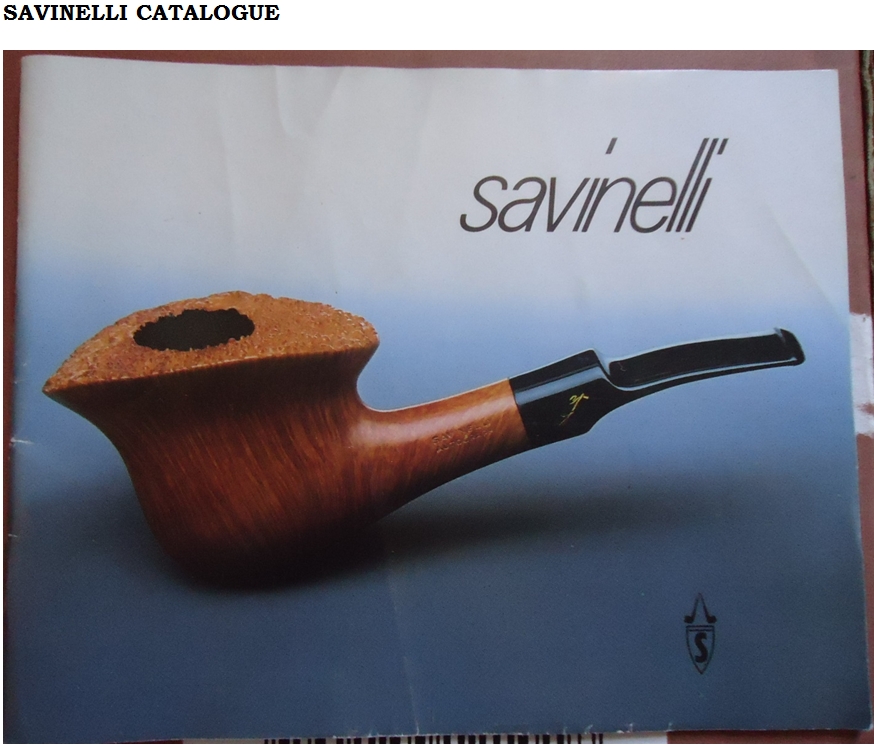
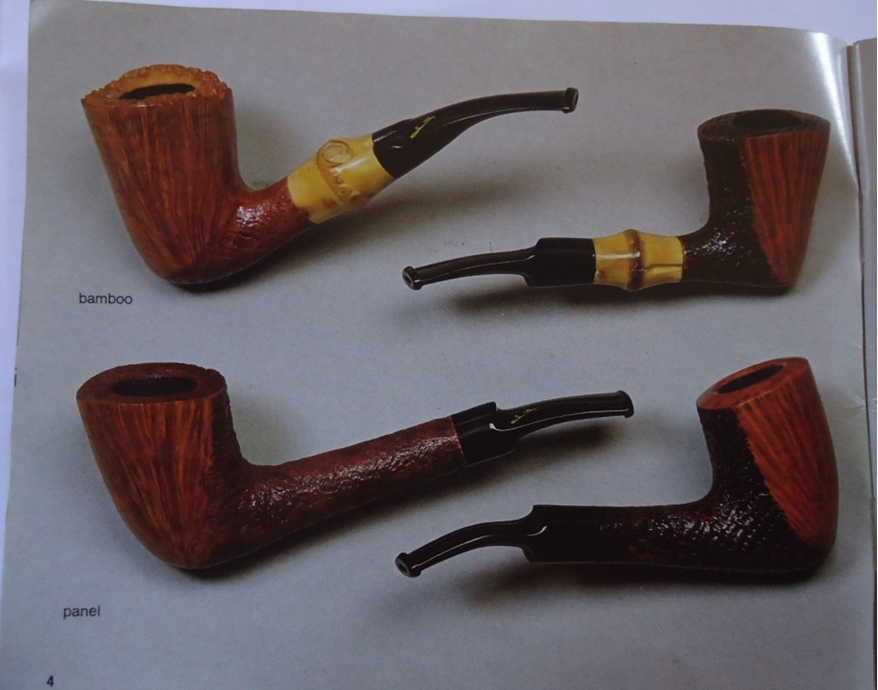
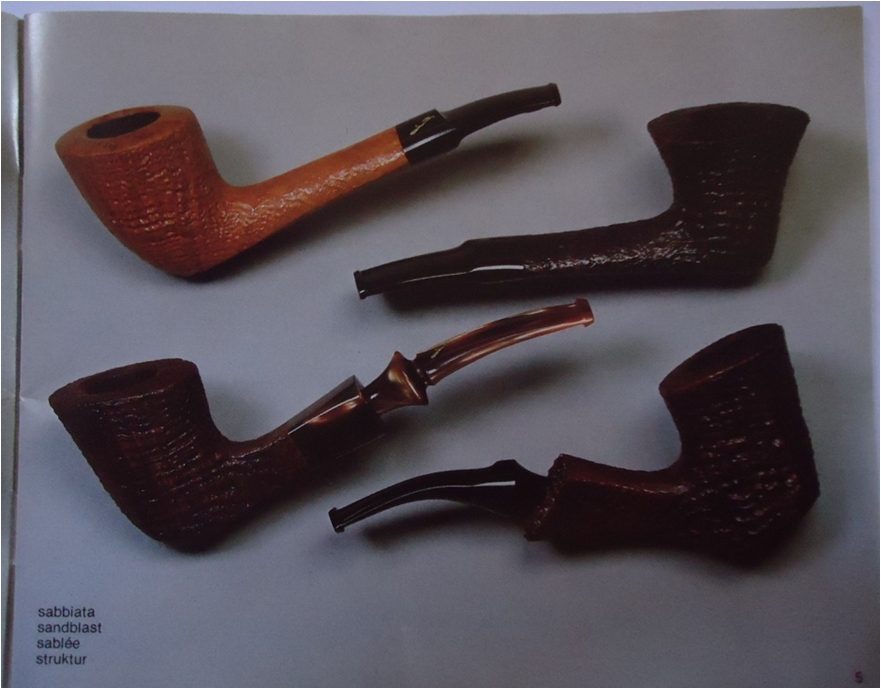
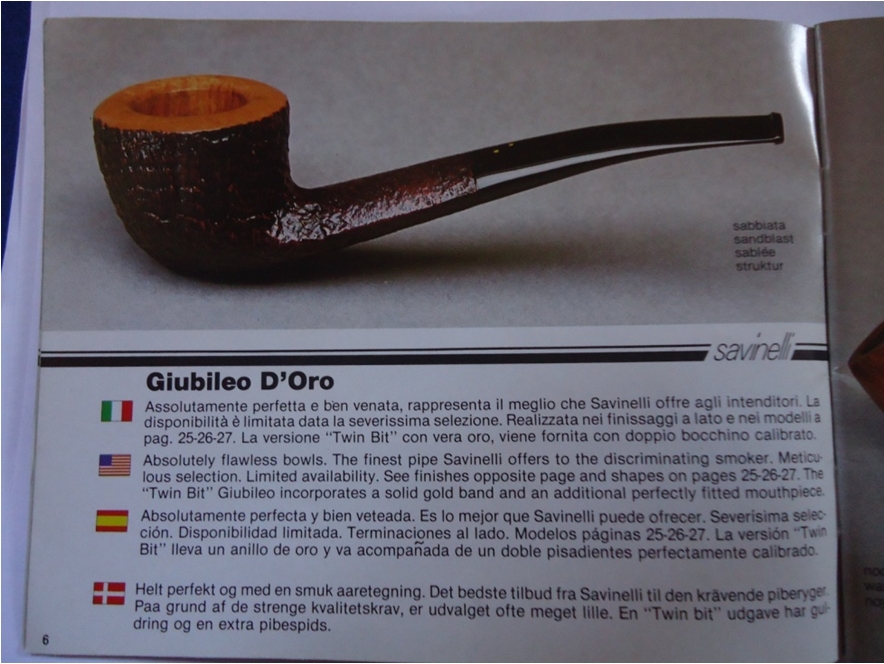
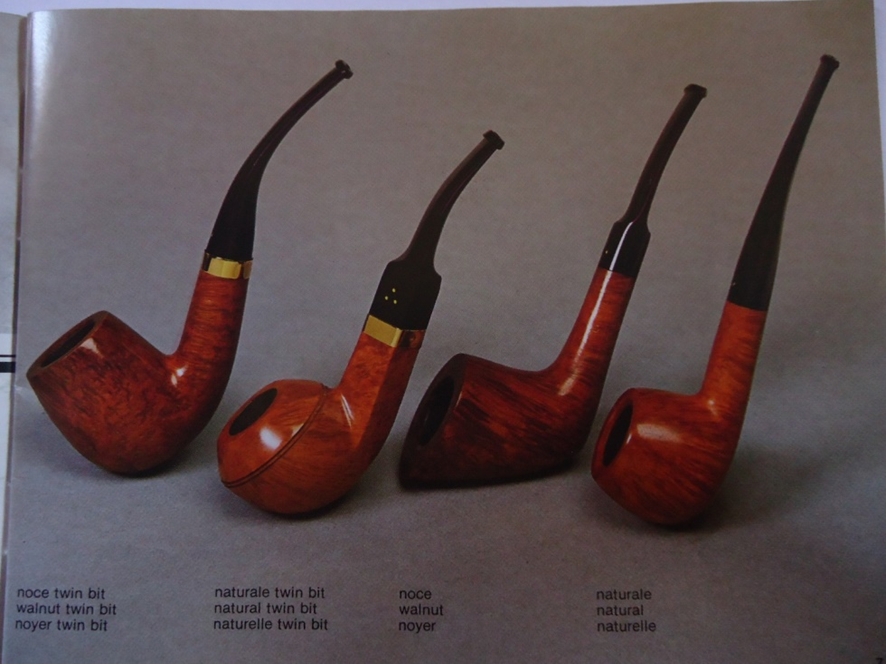
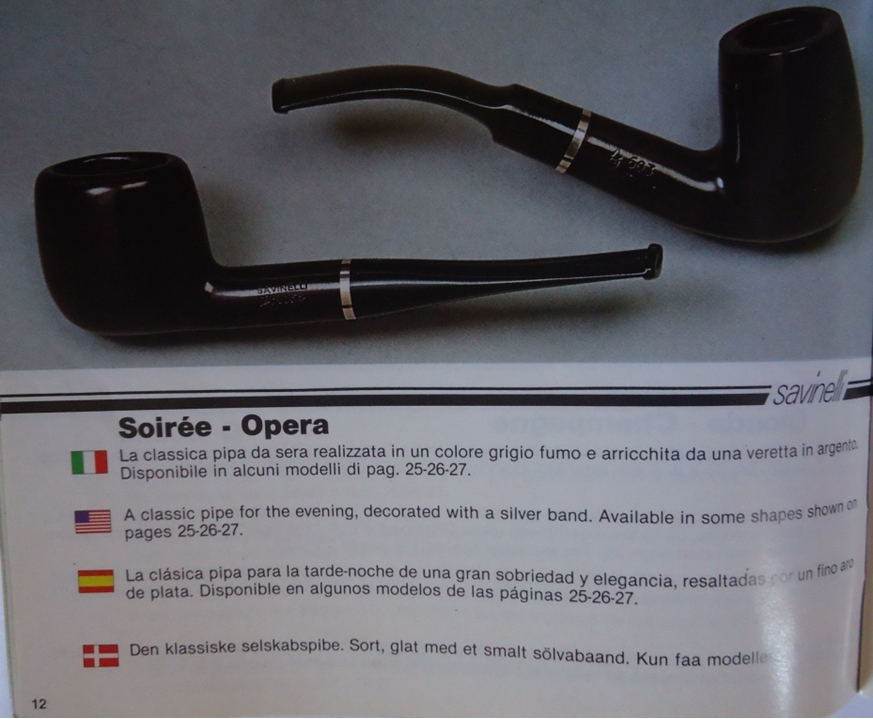
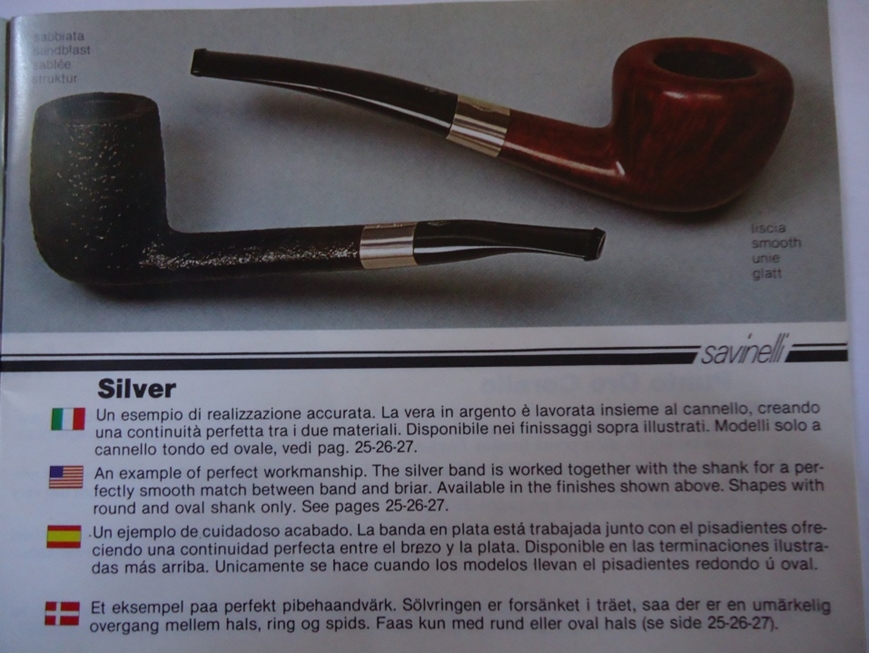
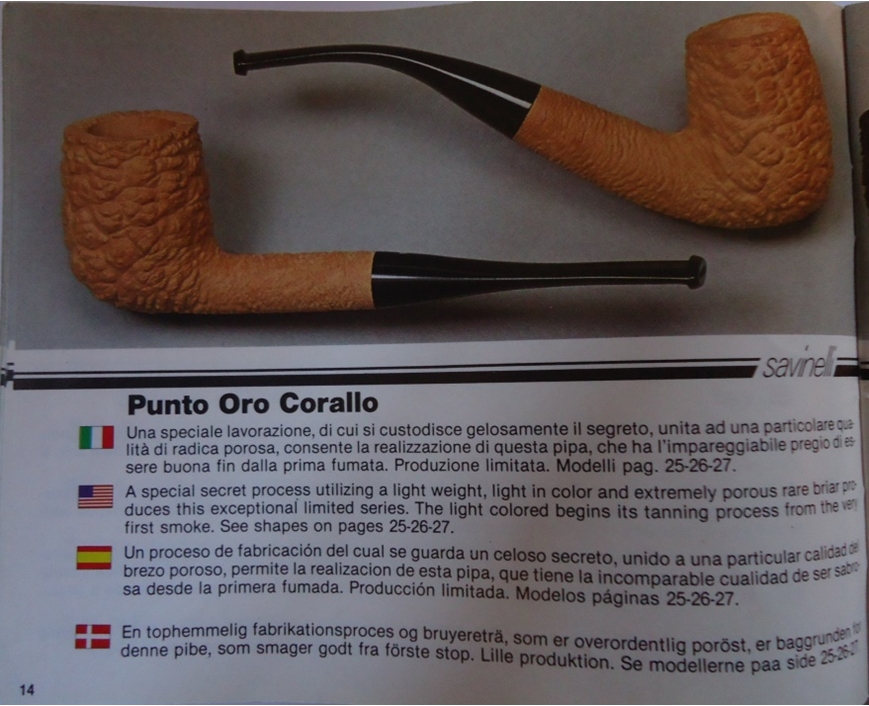
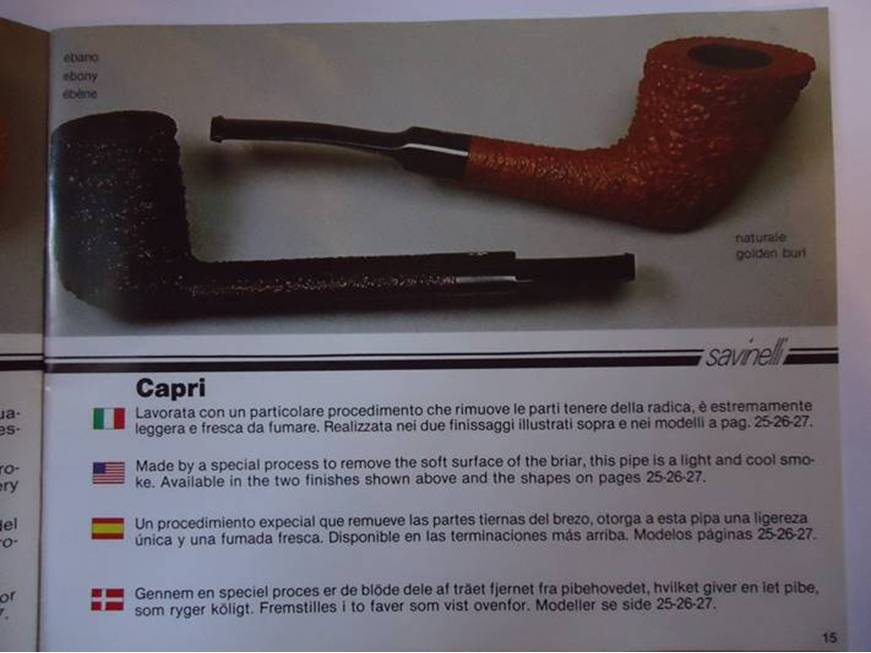
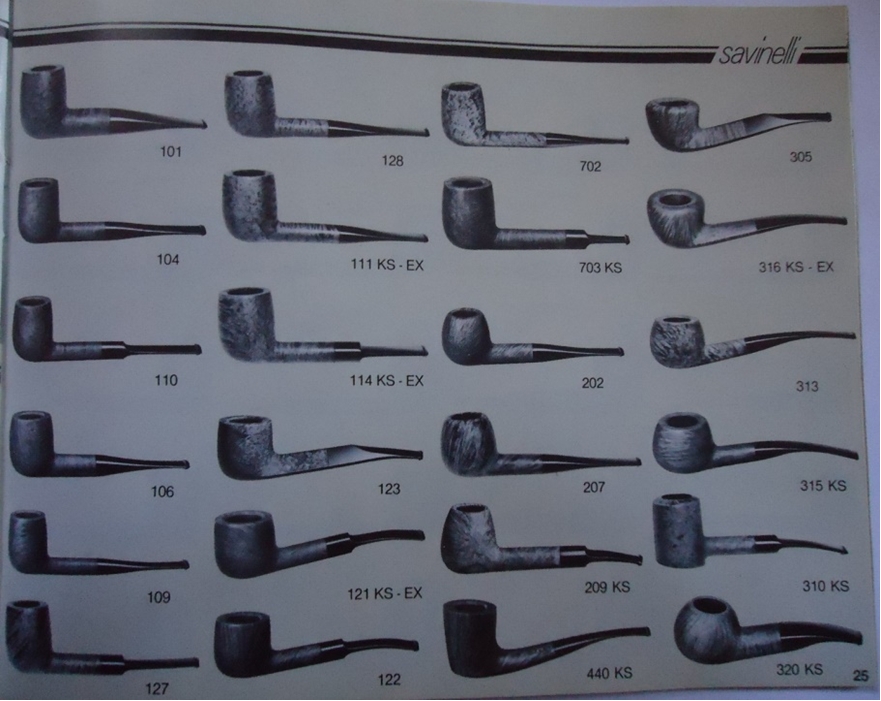
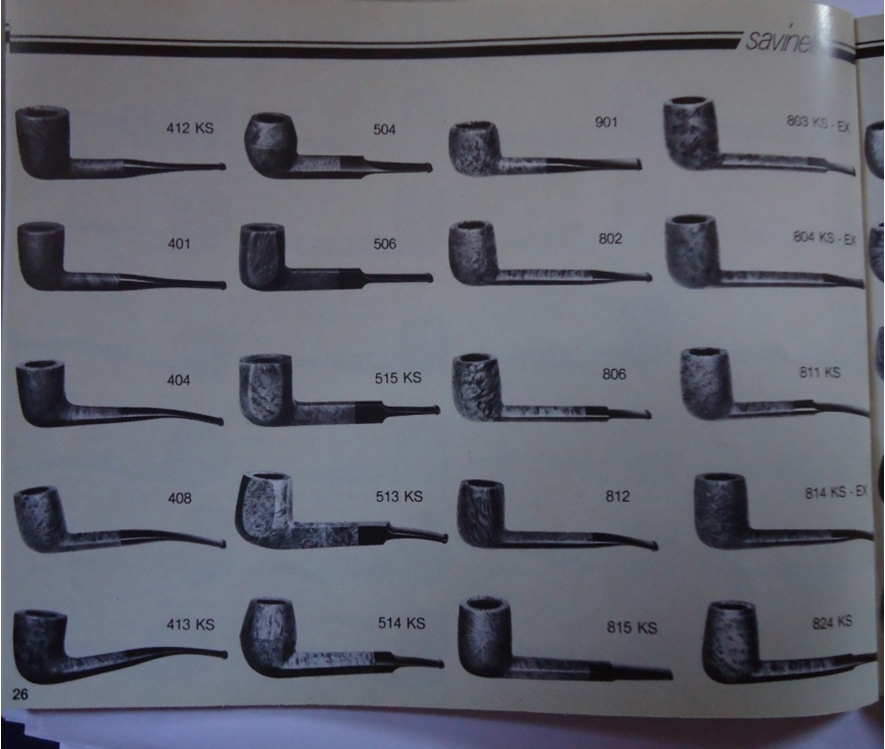
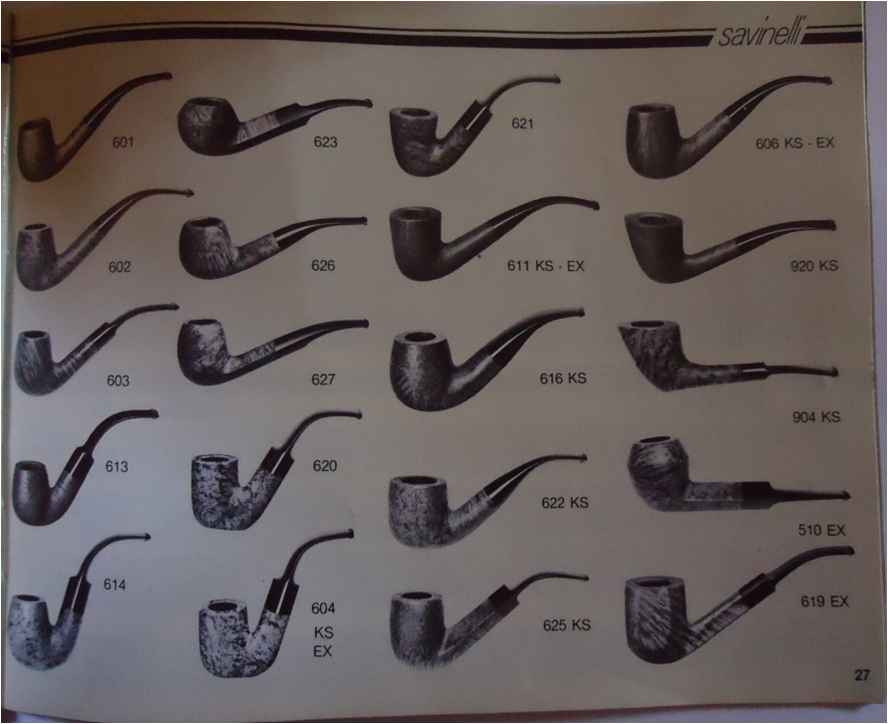
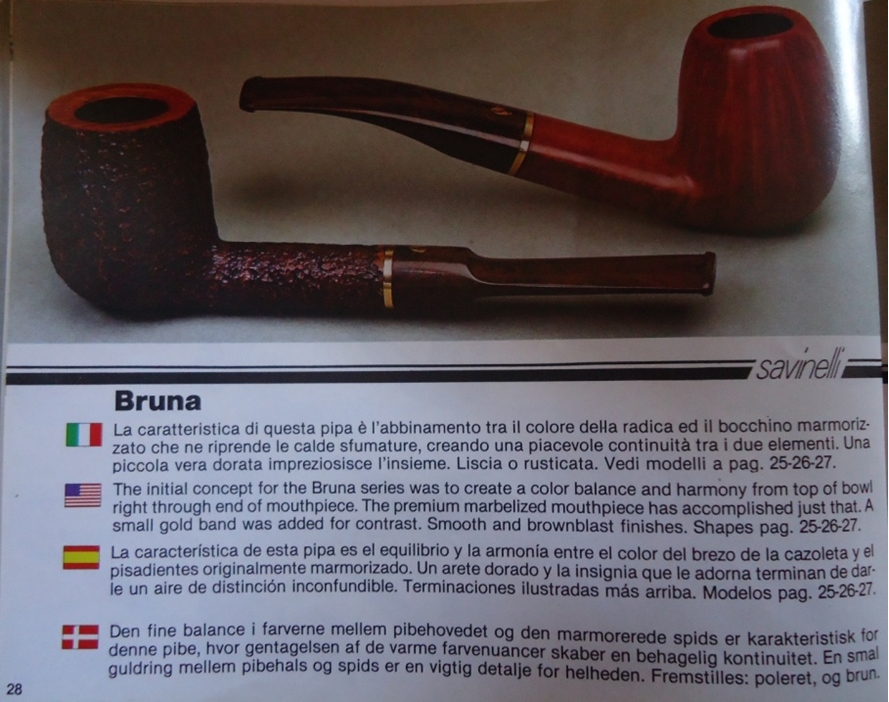
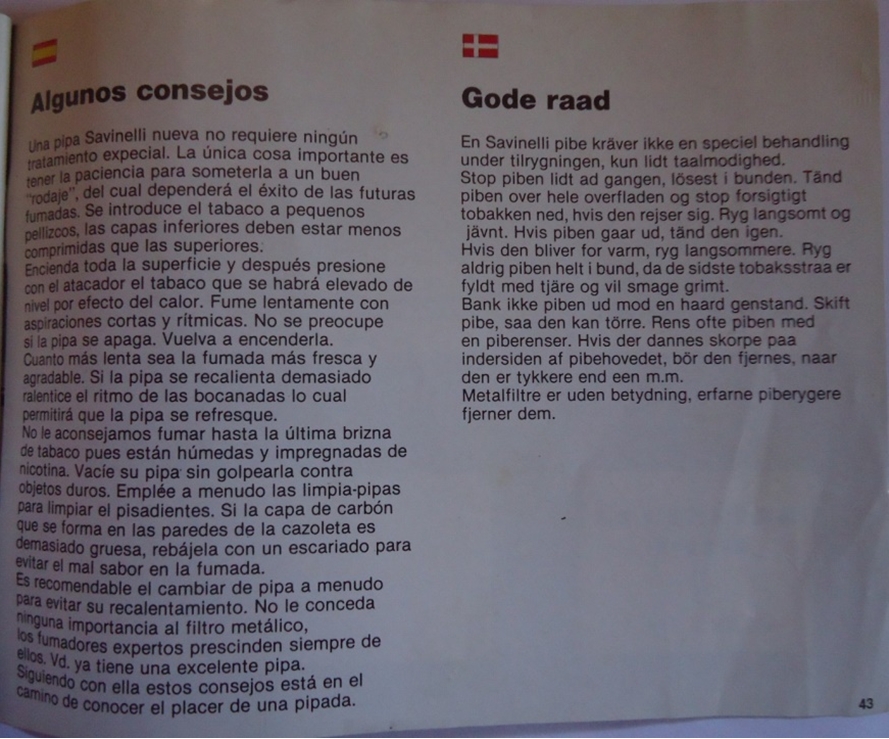
A Savinelli Catalogue Smuggled from Argentina by a Pipe Patriot


Guest Blog by Robert M. Boughton
Member, North American Society of Pipe Collectors
http://www.naspc.org
http://www.roadrunnerpipes.com
http://about.me/boughtonrobert
Photos Provided by Gustavo Capozzi

“The original is unfaithful to the translation.” ― Jorge Francisco Isidoro Luis Borges, KBE(1889-1986), Argentine short story writer, essayist, poet, translator and Knight of the British Empire, regarding Henley’s translation of Beckford’s “Vathek” [1943]

I noticed fairly frequent comments from a certain Argentine member of the Smokers Forums on various threads of mine as well as others, but his note on my most recent post about the restoration of a Savinelli Panama Bent Bulldog #111 KS was – in particular because of the broken English that seemed to me even more apropos to his meaning – eloquent and moving. The member, whose real name I now know is Gustavo Capozzi, referred to a comment I made, that I never bought a Savinelli I didn’t like, when he wrote:

“Robert I agree with you. When I´m a young boy, looked through the window the Savinelli pipes, and as people with money buy.In my student days had only national pipes and an Albanian as ‘imported’.I have a catalog Savinelli of that time where I enjoyed. Even today I could not get some. Congratulations!”

Concluding from the message that he has never owned a Savinelli, I experienced a series of vivid mental images of the young Gustavo growing into manhood, saving the cherished Savinelli catalogue and never being able to afford one or, now, to find the fine Italian brand anywhere in his native country because of governmental commercial import regulations. To be open to the point of risking sounding mushy, I was very touched. And the final word of congratulations to my good fortune added a sense of downright guilt.

In a private message to him on the Forums, I suggested that our host, Steve, would likely be quite interested in the catalogue, which Sr. Capozzi agreed to photograph and email. In fact, he replied that he had already done so, with such speed that I was further struck by his deep love of Savinellis. However, in a case of miscommunication, I believed he had sent the photos to Steve. Eager to know that they were received, Sr. Capozzi wrote to me again, and I contacted Steve, who responded that he had no such email. When I relayed this news to him, he dashed back the frantic note, “emails were sent to you!!!!!!”

With a rising sickness in my stomach, I searched my email, not finding anything. Then I found all but the first batch in the WRONG Junk Mail folder (only with MS Office, I know) and hastened to alleviate Sr. Capozzi’s clear agitation. He shot back the first eight photos.

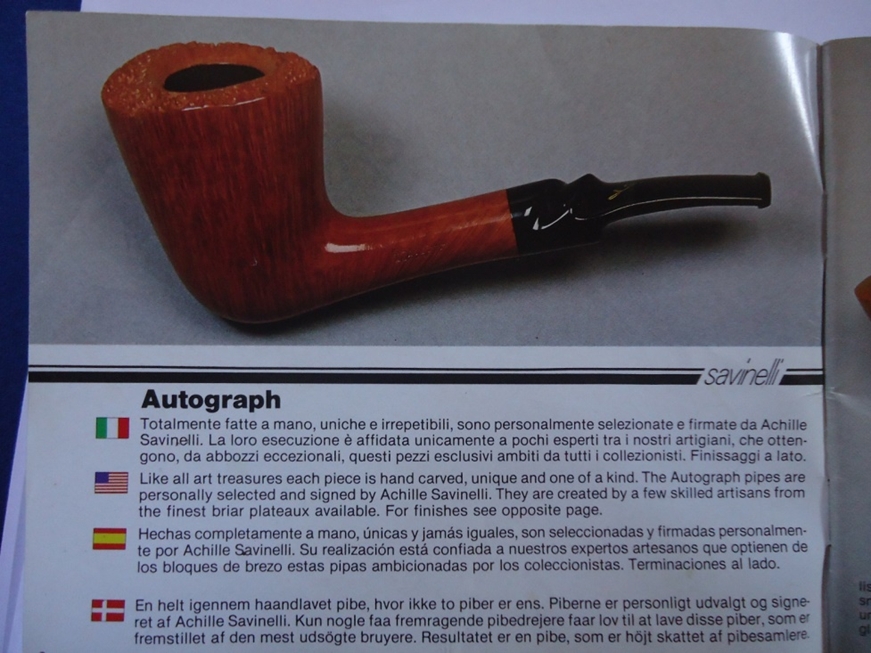
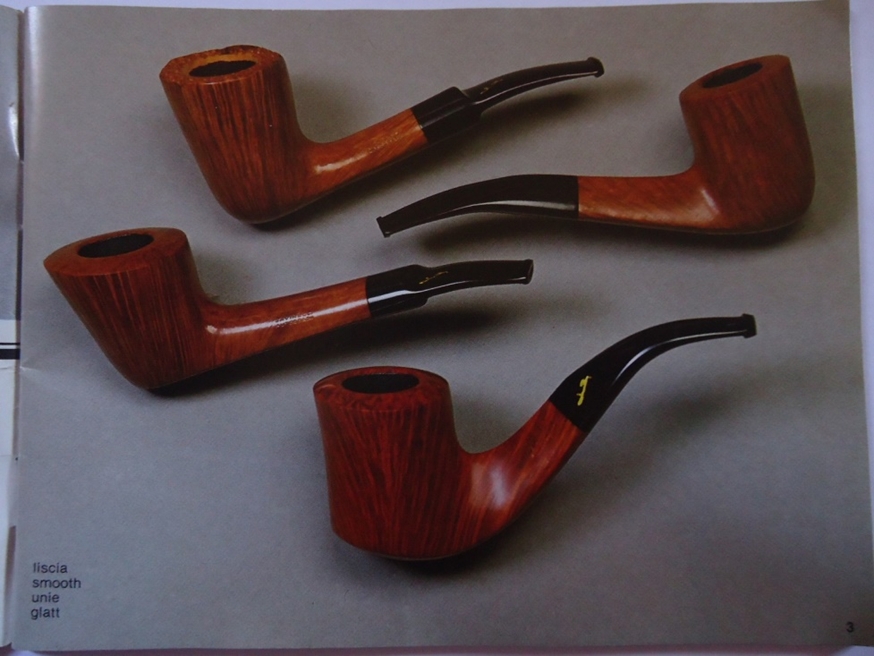
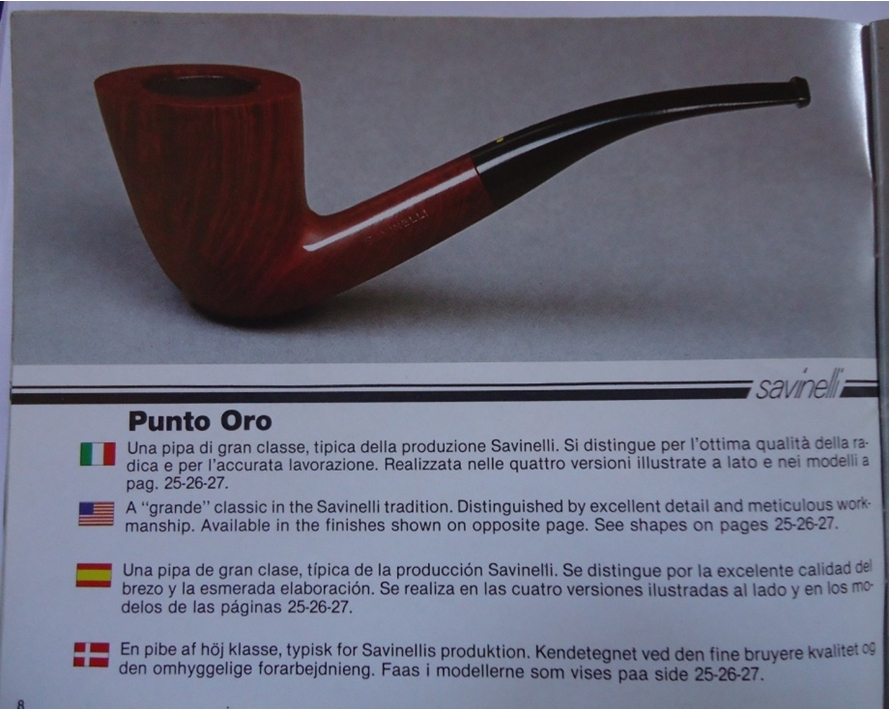
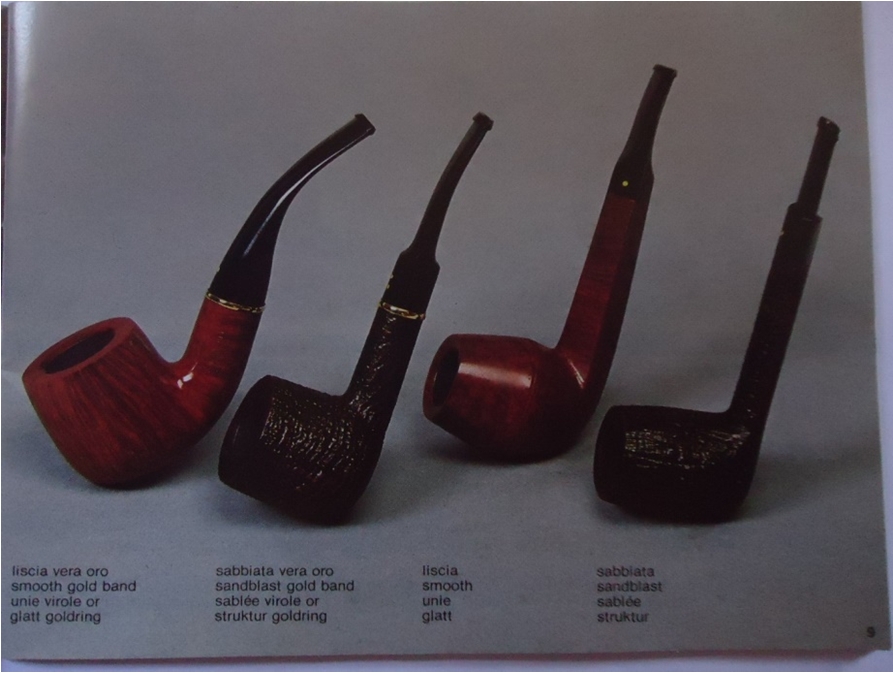
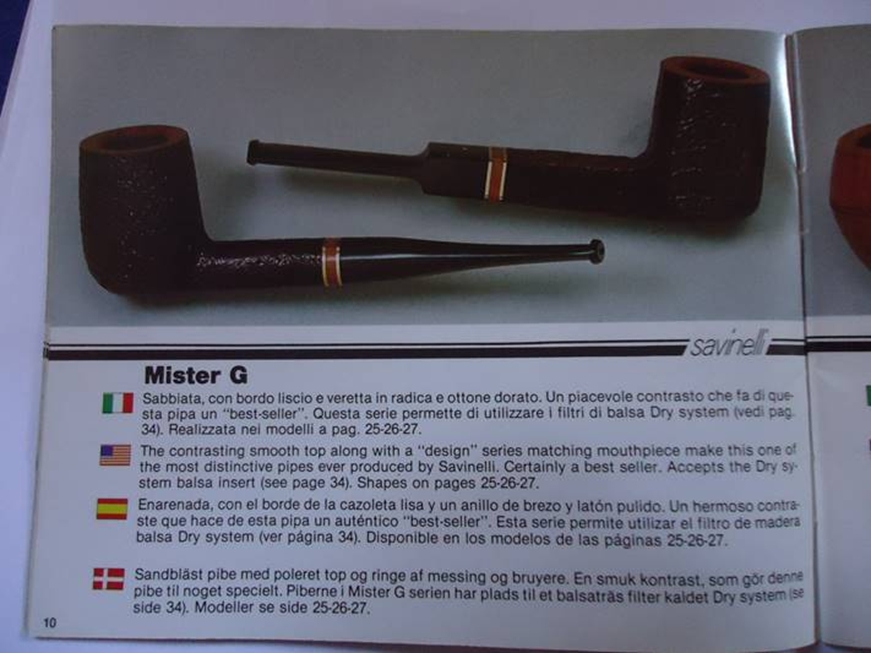
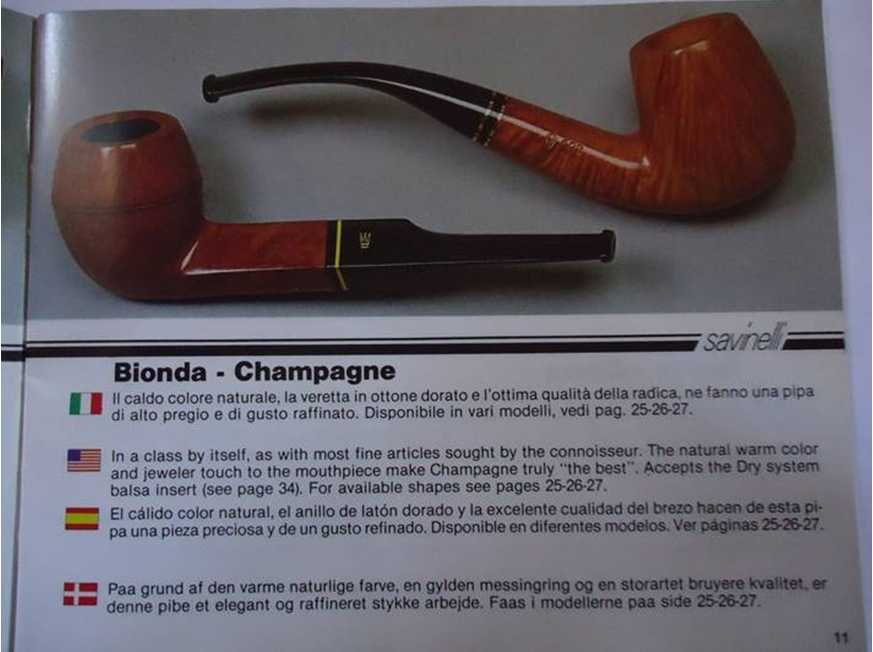
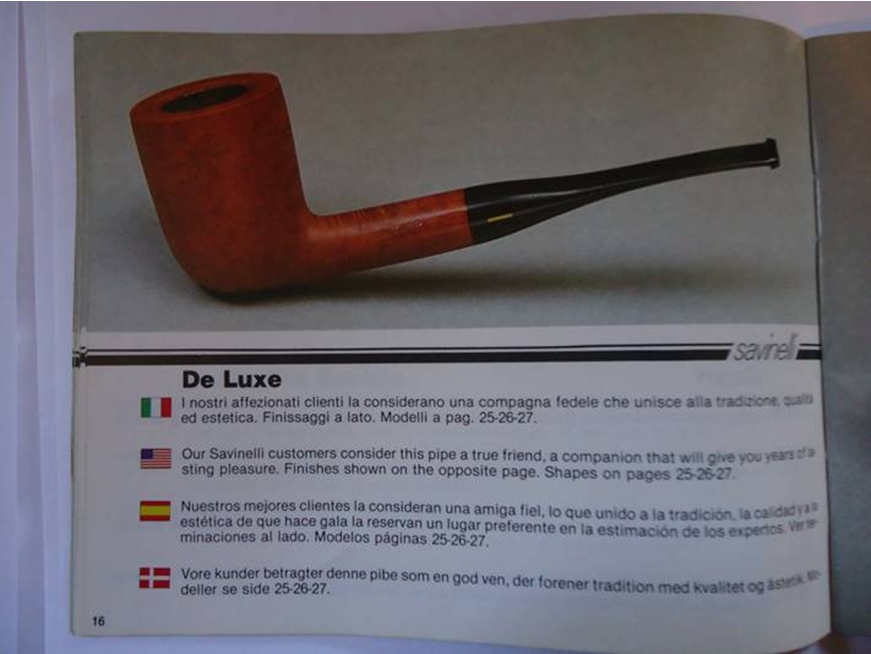
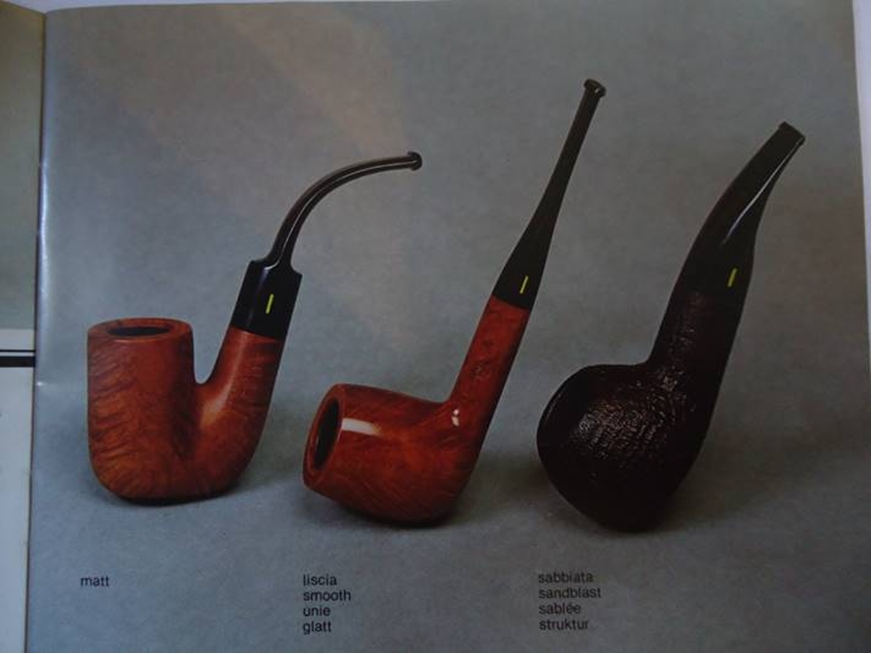
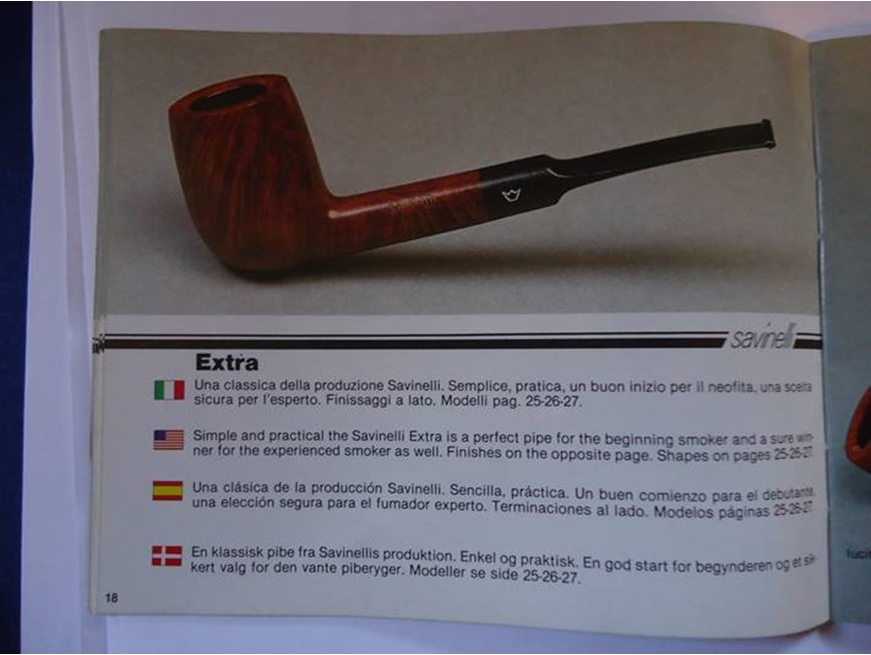
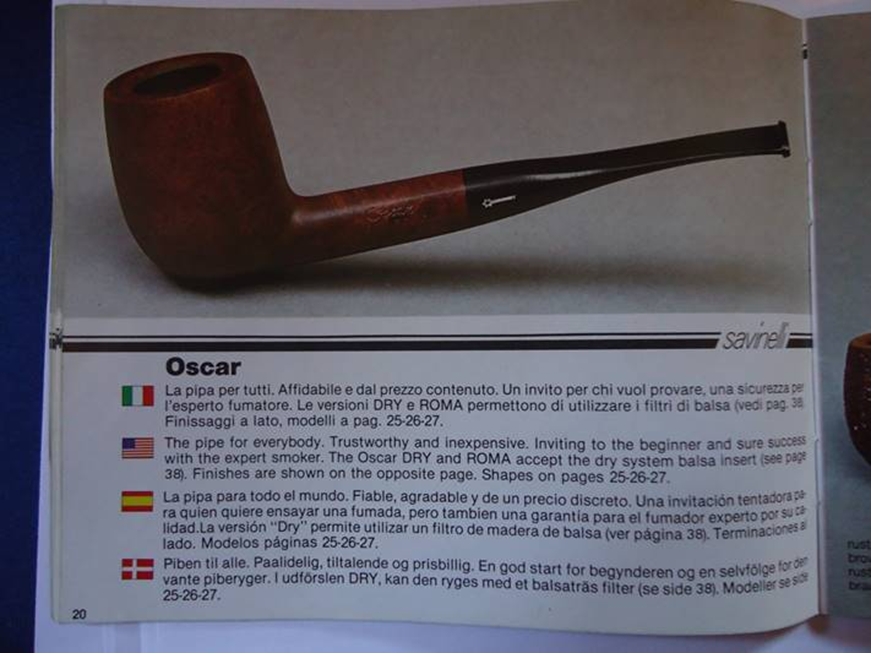
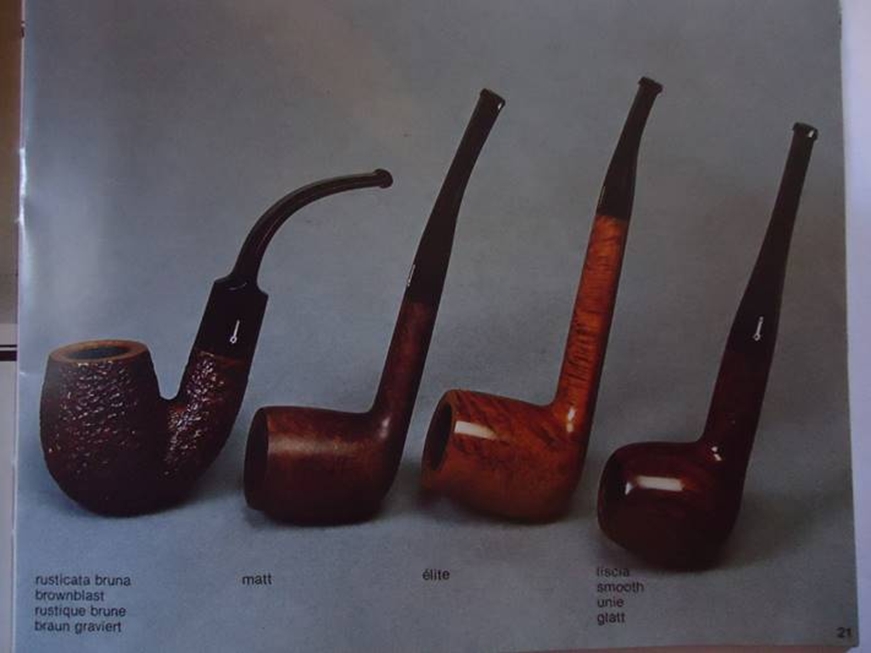
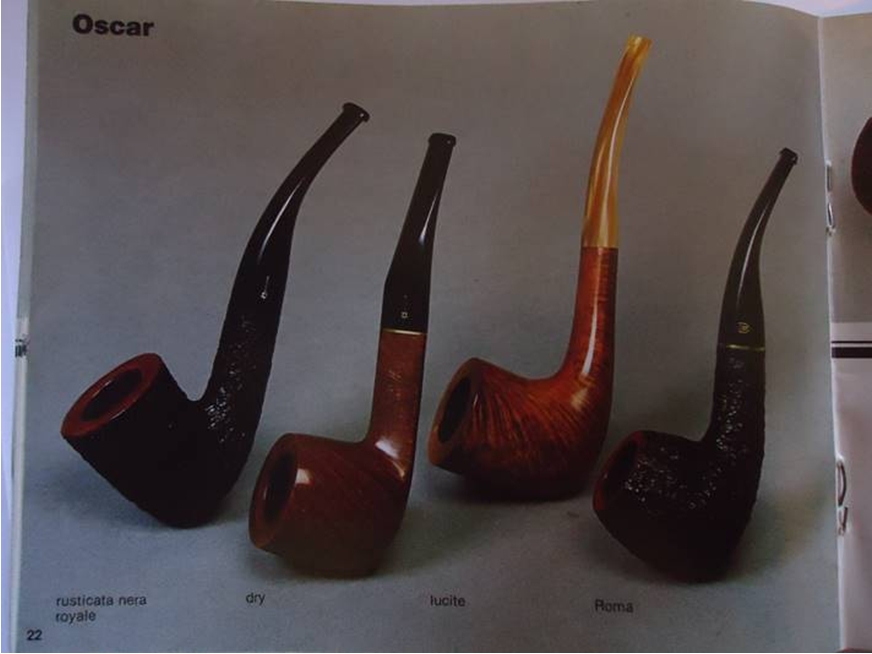
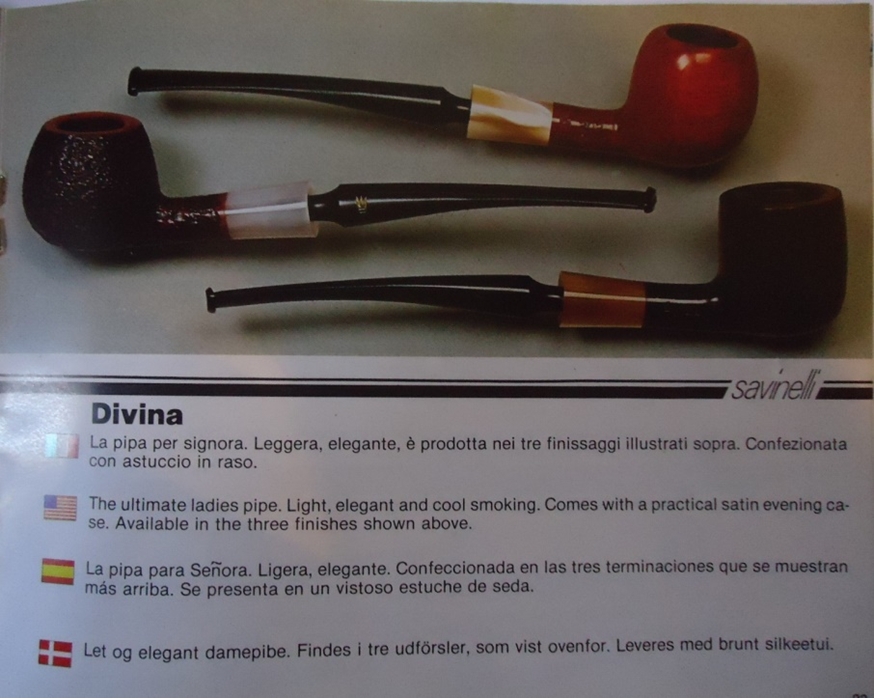
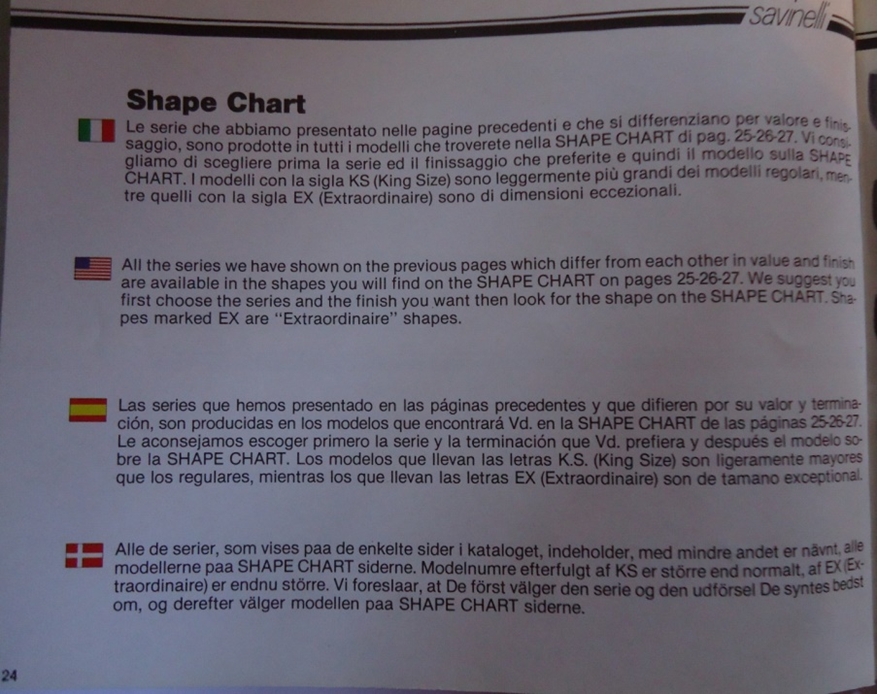
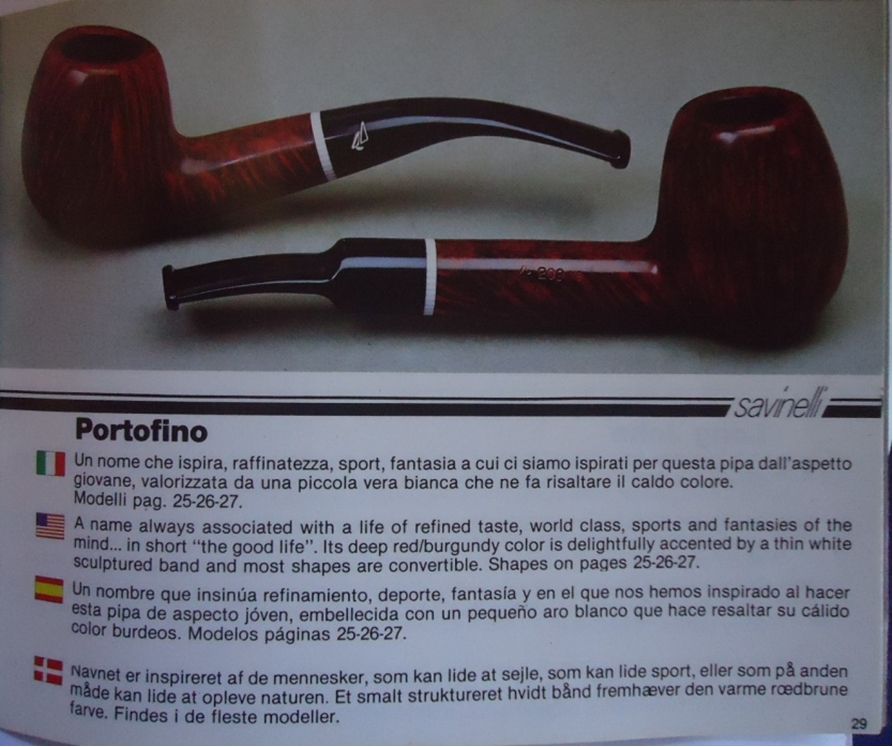
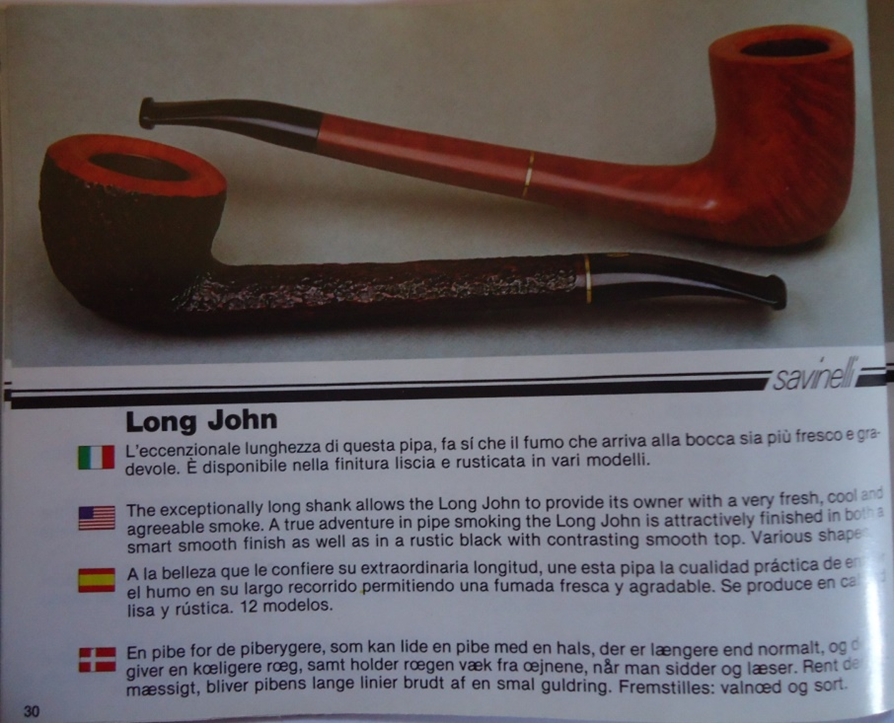
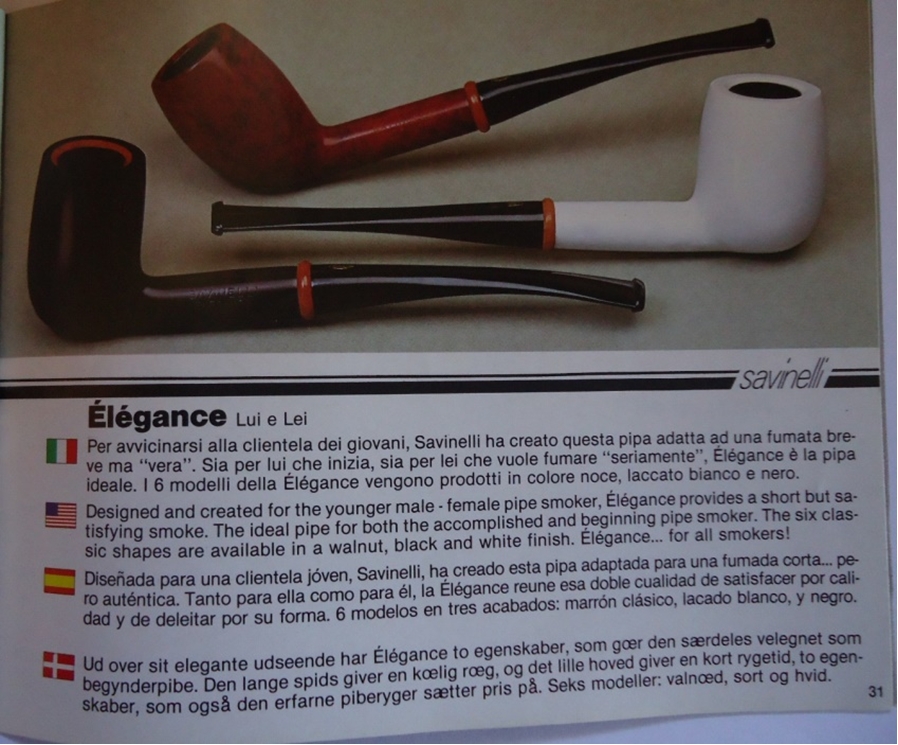
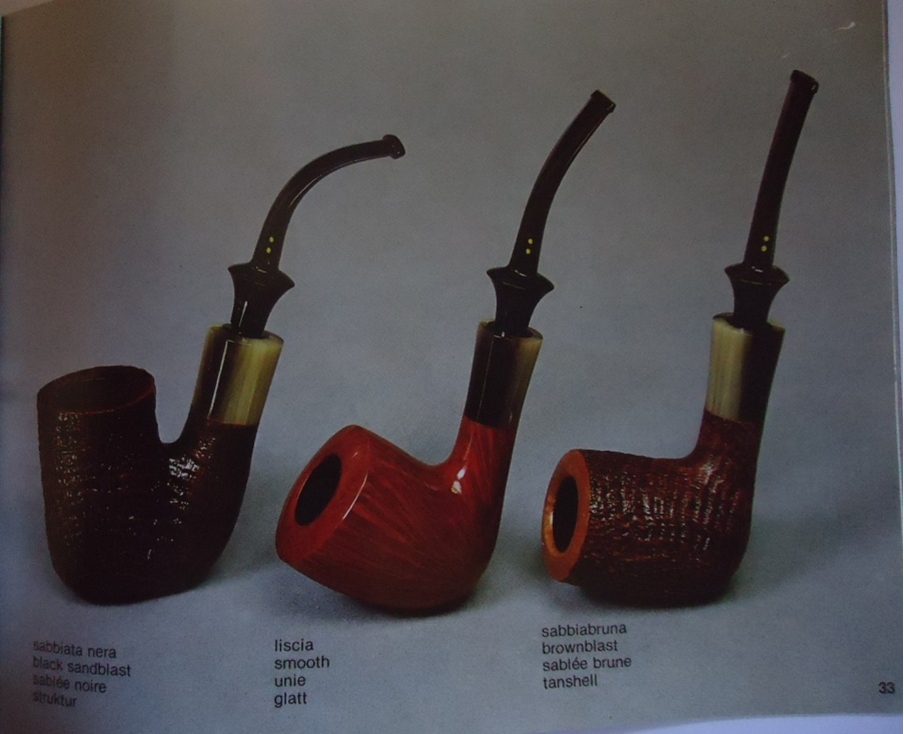
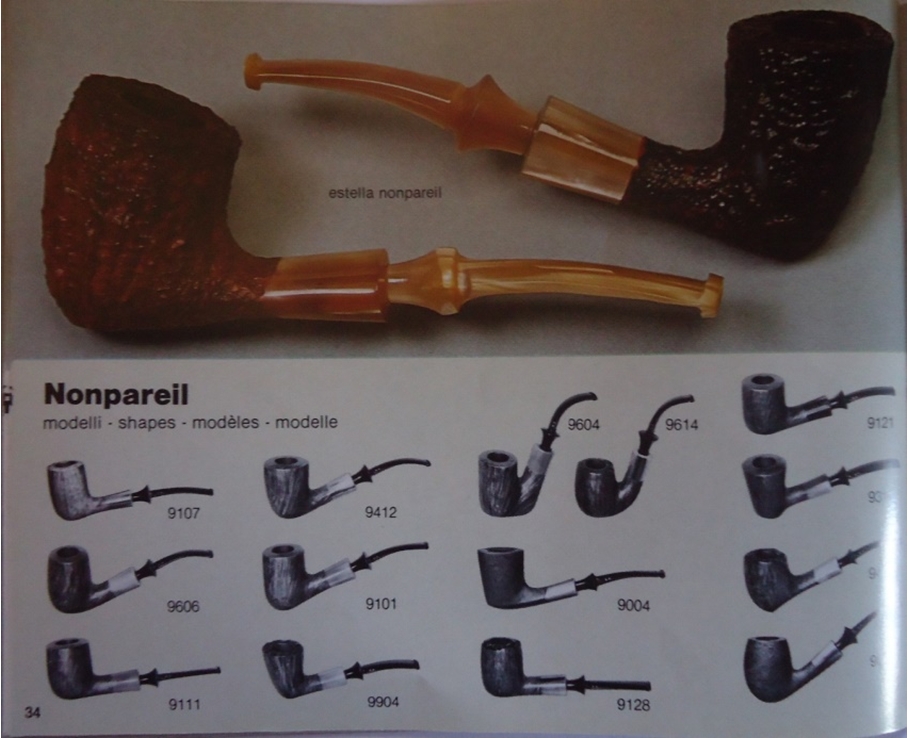
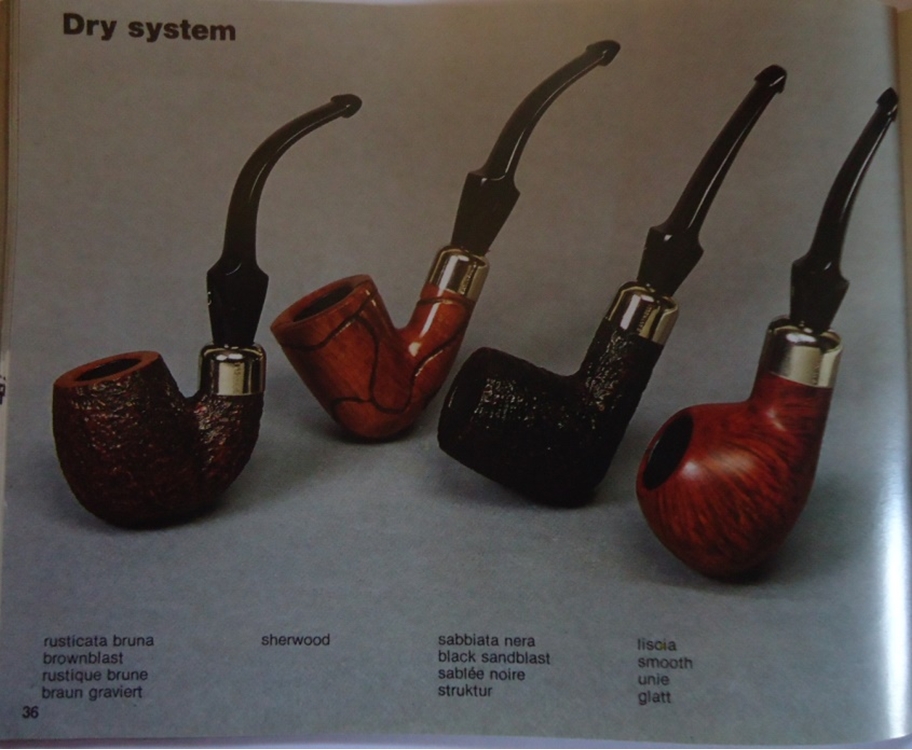
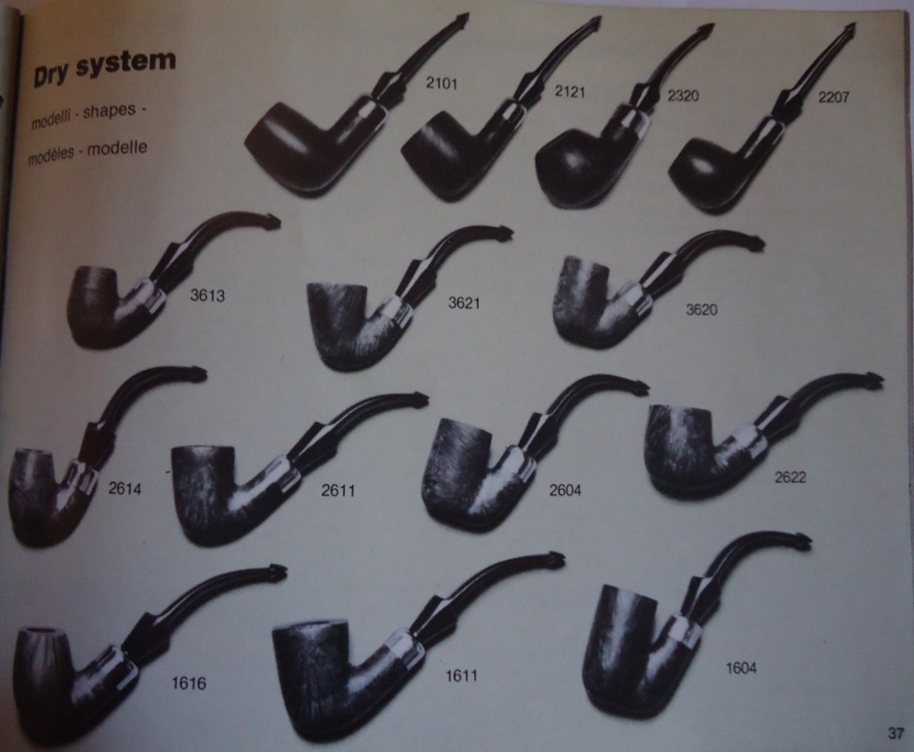
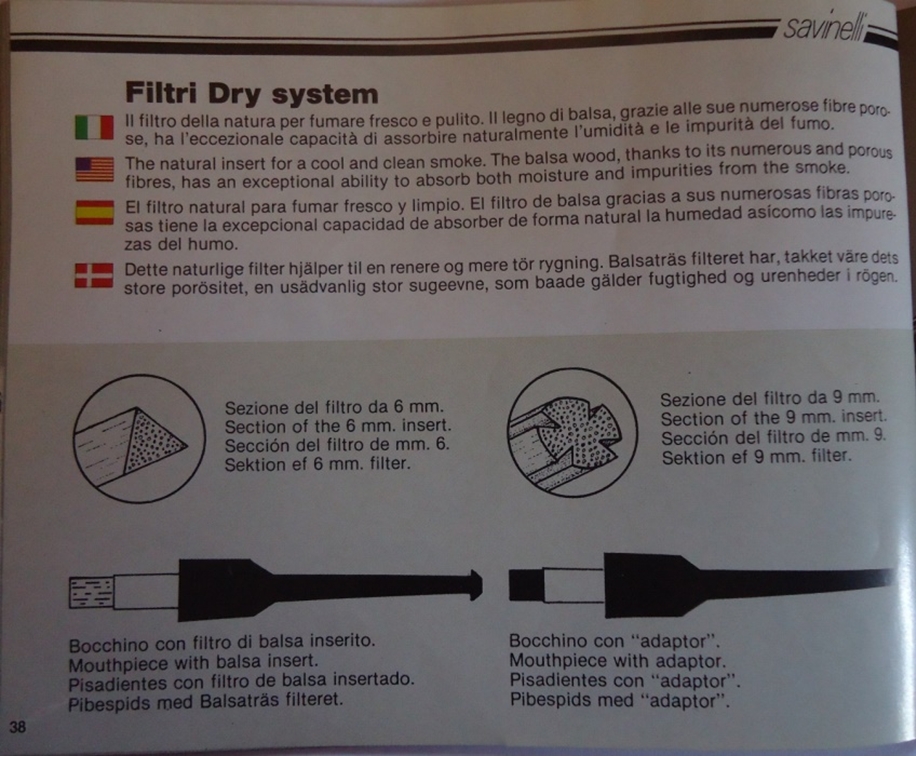
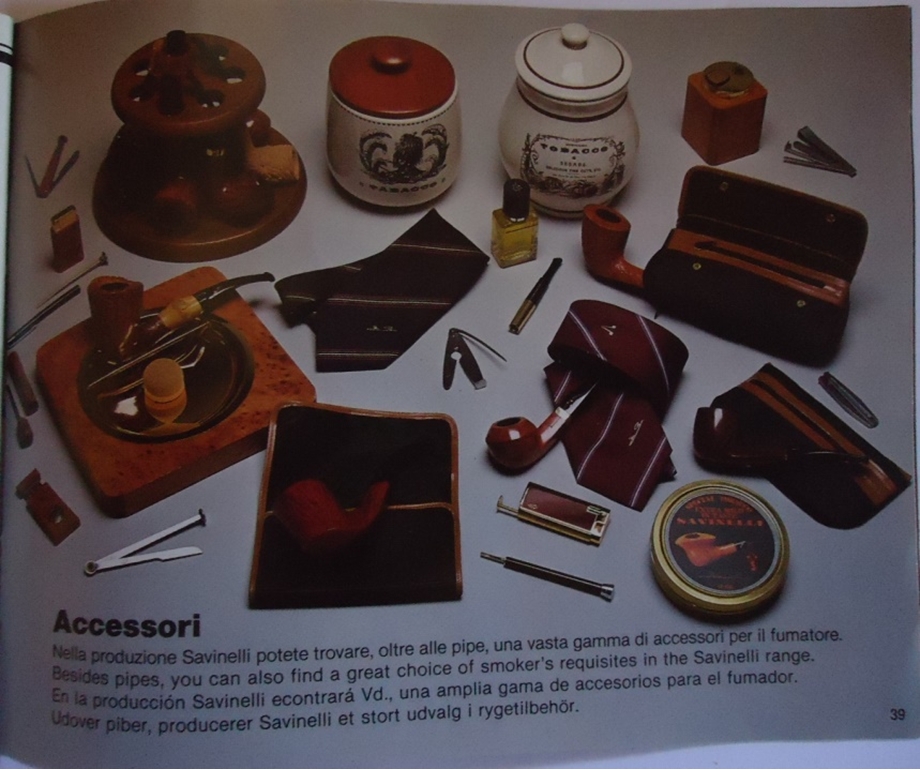
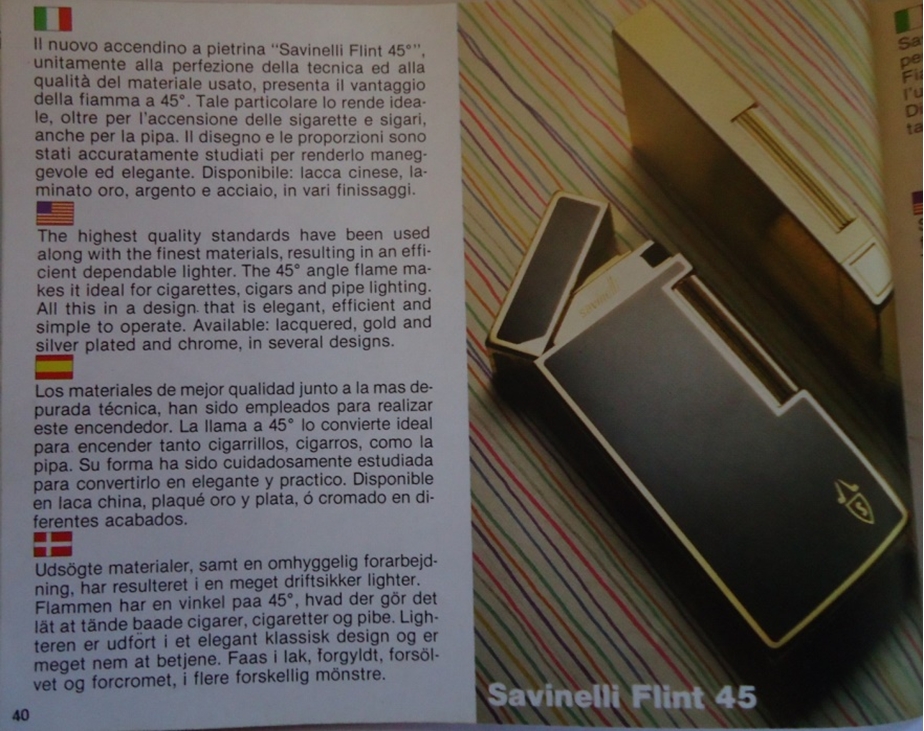
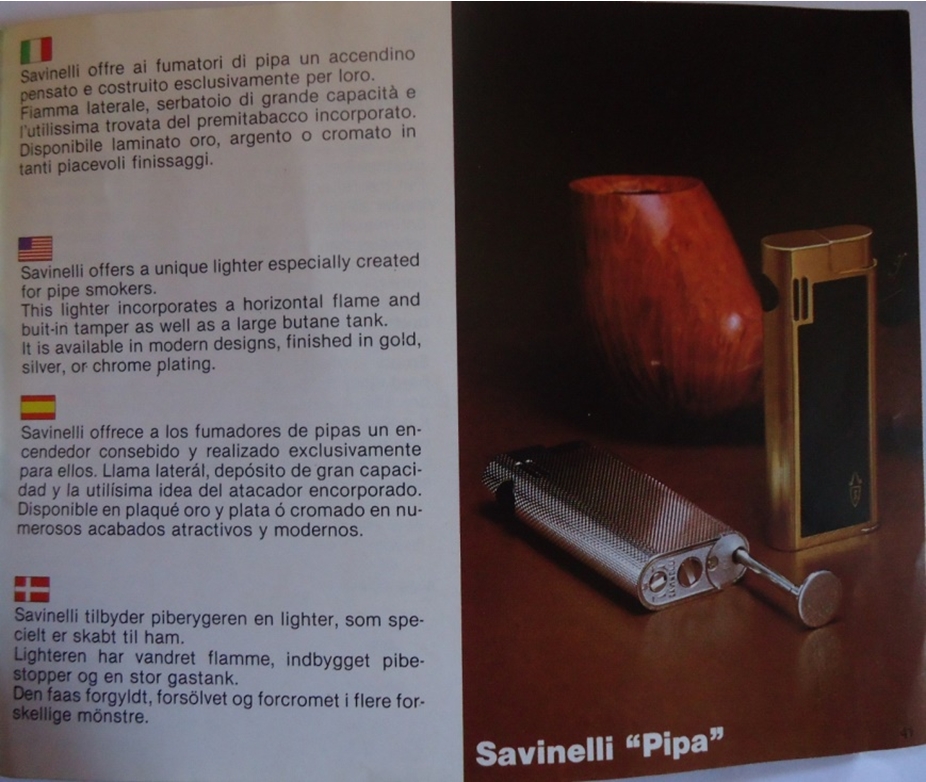
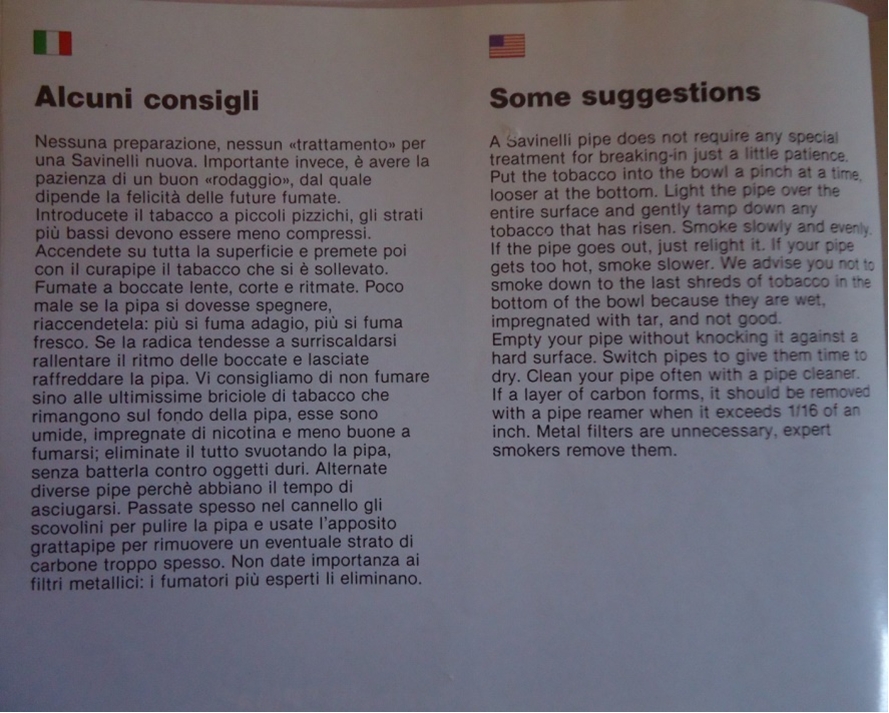
As a final note before posting the catalogue, I will just add that Sr. Capozzi and I turned out to be mutual fans of the great Argentine writer Jorge Luis Borges, whose quote above seemed fitting to the means of my new friend’s photo translation of the catalogue for our enjoyment and learning…and how much there is to learn from this marvelous catalogue is astonishing: pipe lines, shape charts, dry system pipes, filter dry systems, accessories and even “suggestions.”Sav1 Sav2 Sav3 Sav4 Sav5 Sav6 Sav7 Sav8 Sav9 Sav10 Sav11 Sav12 Sav13 Sav14 Sav15 Sav16 Sav17 Sav18 Sav19 Sav20 Sav21 Sav22 Sav23 Sav24 Sav25 Sav26 Sav27 Sav28 Sav29 Sav30 Sav31 Sav32 Sav33 Sav34 Sav35 Sav36 Sav37 Sav38 Sav39 Sav40 Sav41 Sav42 Sav43 Sav44 There happens to be one particular Savinelli in my possession that I have good reason to suspect would make an excellent first for him, if I can find a way to clear Argentina’s red tape. And, of course, provided Sr. Capozzi will give me his address.

One of my John Calich Pipes – A Calich EE Billiard


Blog by Steve Laug

I have liked John Calich’s pipes for a long time now. I have hunted for them and am lucky enough to have found three of them. I have done quite a bit of reading on the web and even had conversations with John before he died. From my research and conversations I learned that John’s pipes were graded 3E – 8E. The retail prices for them ranged from $145.00 to $500.00. Each pipe was stamped “CALICH” and given an E grade. His earlier pipes were graded from 3-14 and had a single, tiny silver dot applied to the top of the stem. More information can be found at the Pipedia website by clicking on this link. http://pipedia.org/wiki/Calich

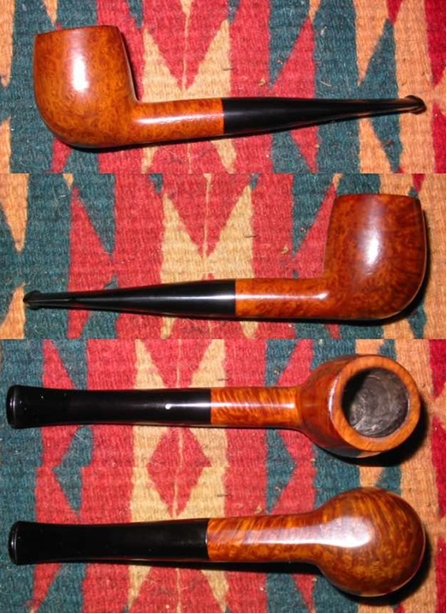
I found this particular Calich pipe on Ebay. I bought it in the fall of 2005. It was still a time when you could pick up good deals on relatively unknown pipe makers on Ebay. This pipe was a nice billiard that obviously had seen some use and had a replacement stem. The fit of the stem was poor and the gap and space between stem and shank was large. The scratches in the vulcanite made the stem a real mess. I wanted the pipe but also wanted to be rid of the stem. The pipe had beautiful grain under the grime and was stamped CALICH EE over Hand Made. I bid on it and won. The EE stamping did not fit the grading information that I had found on the internet.

I wondered if John would be willing to restem the bowl for me. I figured the easiest way to work this was to have the Ebay seller send the pipe directly to John for a new stem. This added a bit of hurry into the equation if it was to happen. I hunted down John’s phone number so I could call him and ask if he would be willing to make a replacement stem for this pipe. I called and we had a great conversation on the phone. We talked about all things pipe and pipe making. It was delightful to talk together and we did so for quite a while before I got around to asking him if he would make a stem for the old billiard. He was willing and would let me know when the pipe arrived and what he would charge for it. He said to go ahead and have the pipe sent to him and he would make a new stem for it. I emailed the Ebay seller and asked him to send it directly to John Calich in Mississauga, Ontario. He gladly did so and the pipe was on its way to John.

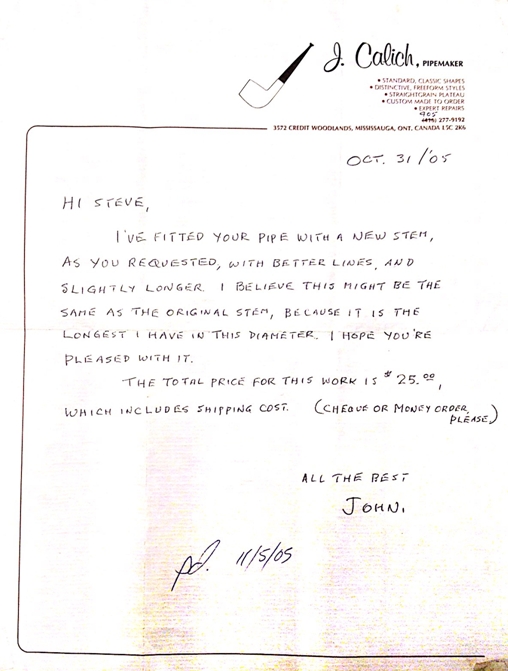
I figured I might get a phone call letting me know. But no call came instead I received the letter that I have attached below. The letter was quite straight forward and let me know tha the had already fitted the pipe with a new stem with “better lines and slightly longer”. He states that he believes that it “might be the same as the original stem, because it is the longest stem I have in this diameter”. He goes on to say he hopes that I am pleased with his work. For a hand made stem, custom fitted to the old bowl and shipped to me across Canada John charged me only $25. I immediately sent him a cheque for the cost. I kept this letter and found it the other day as I was going through my files. I thought I would post it here with a picture of the pipe.new doc 4_1 I still remember the conversation. He asked about the stamping on the pipe and within a short few moments he told me when he had carved the pipe. For the life of me I wish I had written it down because today I cannot remember what he said. It was not too long before John called me and told me the pipe was finished. He packed it up and sent it to me. I was excited because I had not even seen the pipe in person yet. I had no idea about the real size of the pipe or the actual condition though it looked a bit rough in the photos. I couldn’t wait to see it. When it arrived in the mail I opened the package and unwrapped the pipe. John had not only restemmed the billiard but he had cleaned it up and polished it so that it shone like new. It did not even look like the same pipe. It was a cross cut piece of briar with stunning birdseye on the sides of the bowl and shank with cross grain on the front and the back of the bowl.Calich1 I did a bit more digging on the internet to find out some information on the dating of Calich pipes as the information on Pipedia was not complete. What I found was very helpful. His early pipes were graded with numbers from 3 – 14. By the late 1980’s Calich introduced 15, 16, and even one 17. In the mid-90’s the grade system changed employing a number of E’s. The more EE’s the higher the grade. This helped me understand the stamping on the billiard. Thus the pipe was a double EE grade and was made in the mid-90’s.

The last gradings that were used on the pipes were a number and an E. For example the stamping went 3E – 7E (10E was the top level but levels exceeding 7E or 8E seemed never to have been used). This information came from http://www.pipephil.eu/logos/en/logo-c1.html and has been edited for my use.

Every man has a right to a Mastercraft Pipe – A Mastercraft Pipe Catalogue


I recently posted a blog about cleaning up a Mastercraft De Luxe billiard and received an email from Andrew Selking telling me that he had a Mastercraft catalogue from the 1930’s and he sent it to me as an attachment. We both thought it would be great to post it here for the ongoing information of refurbishers who like to know a bit of the history of the pipes they are working on. Here is the brochure for your enjoyment. Thanks Andrew.MC 2 (4)

MC 2 (1)

MC 3 (2)

MC 3 (3)