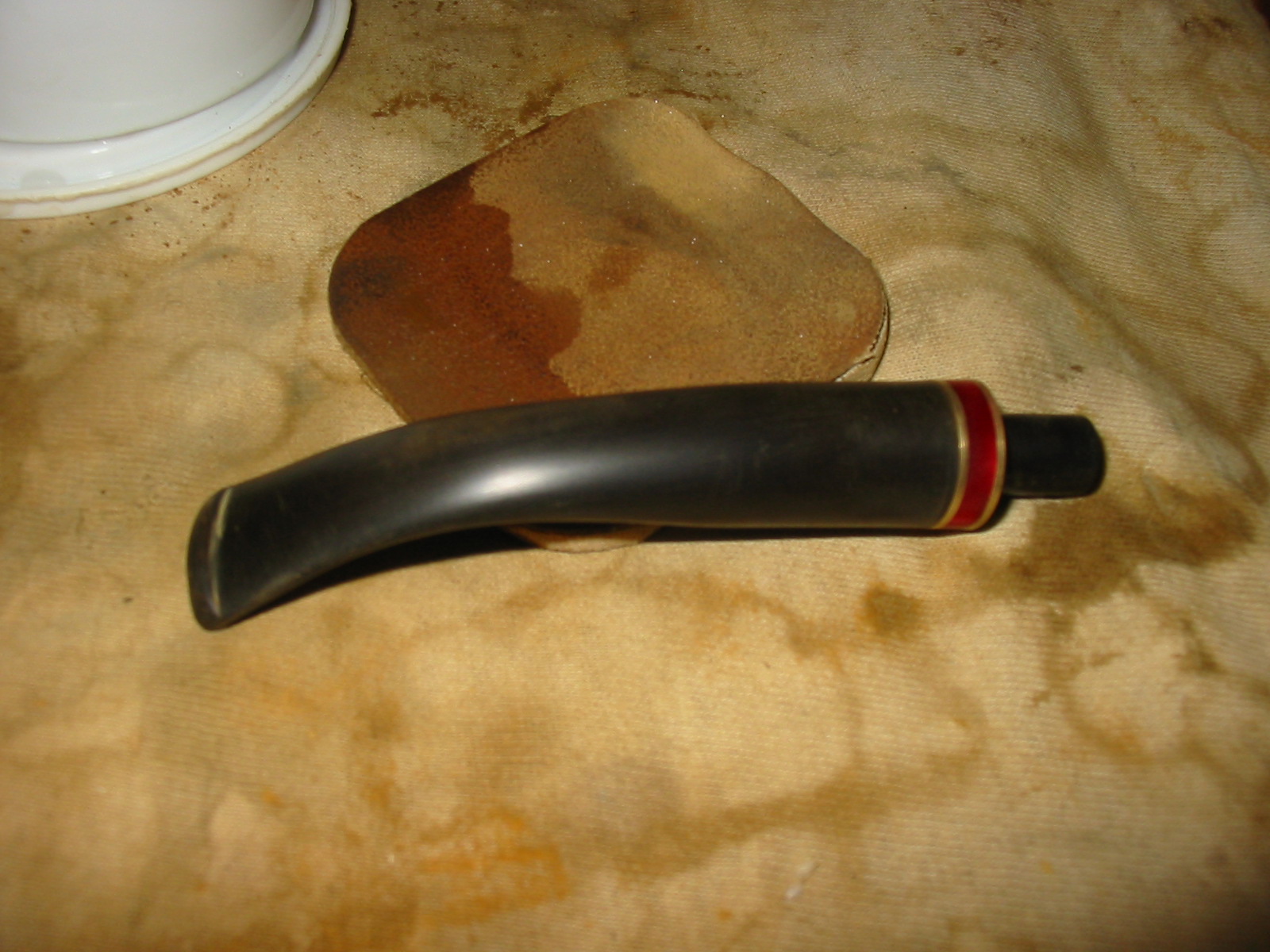
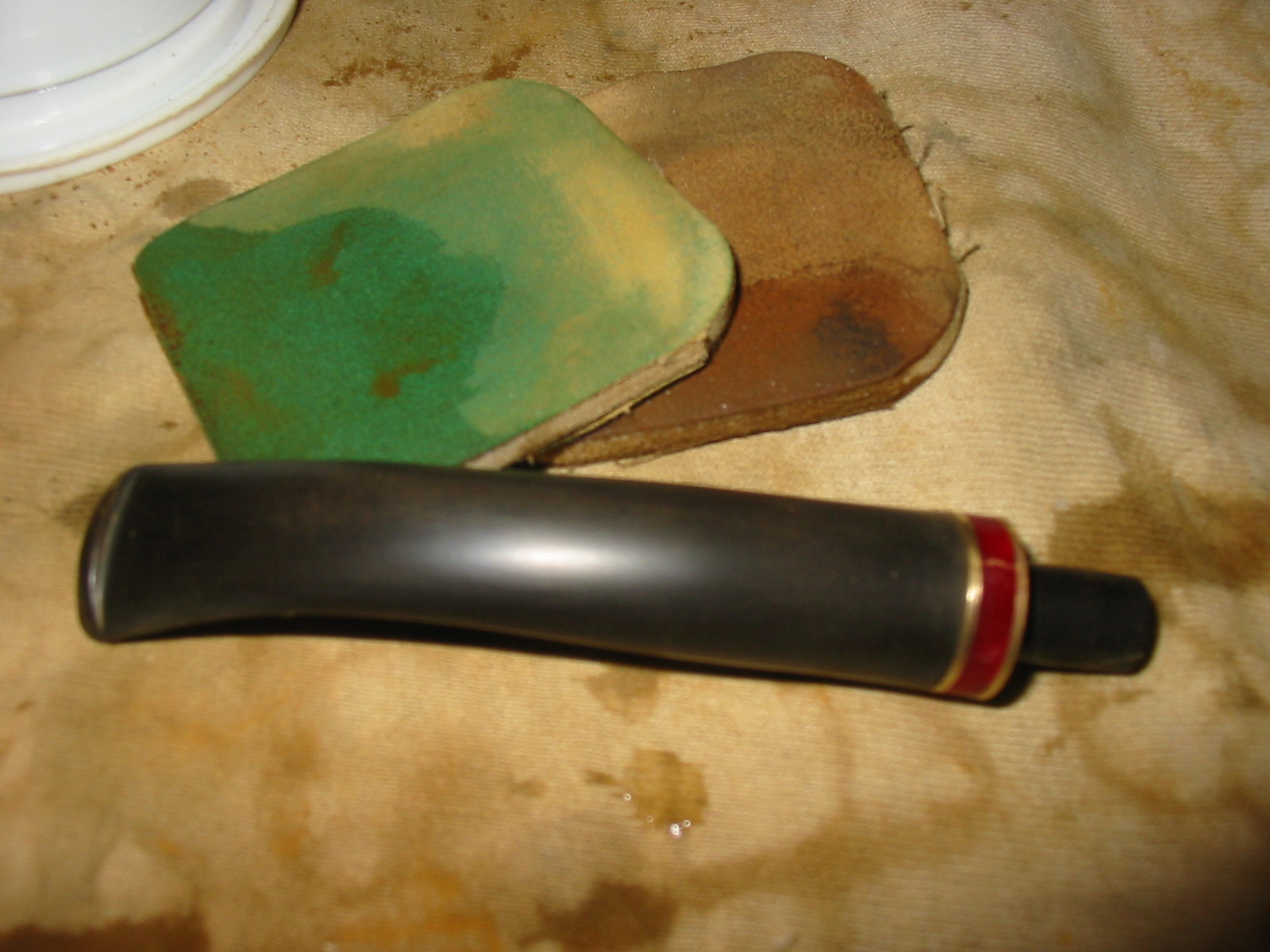
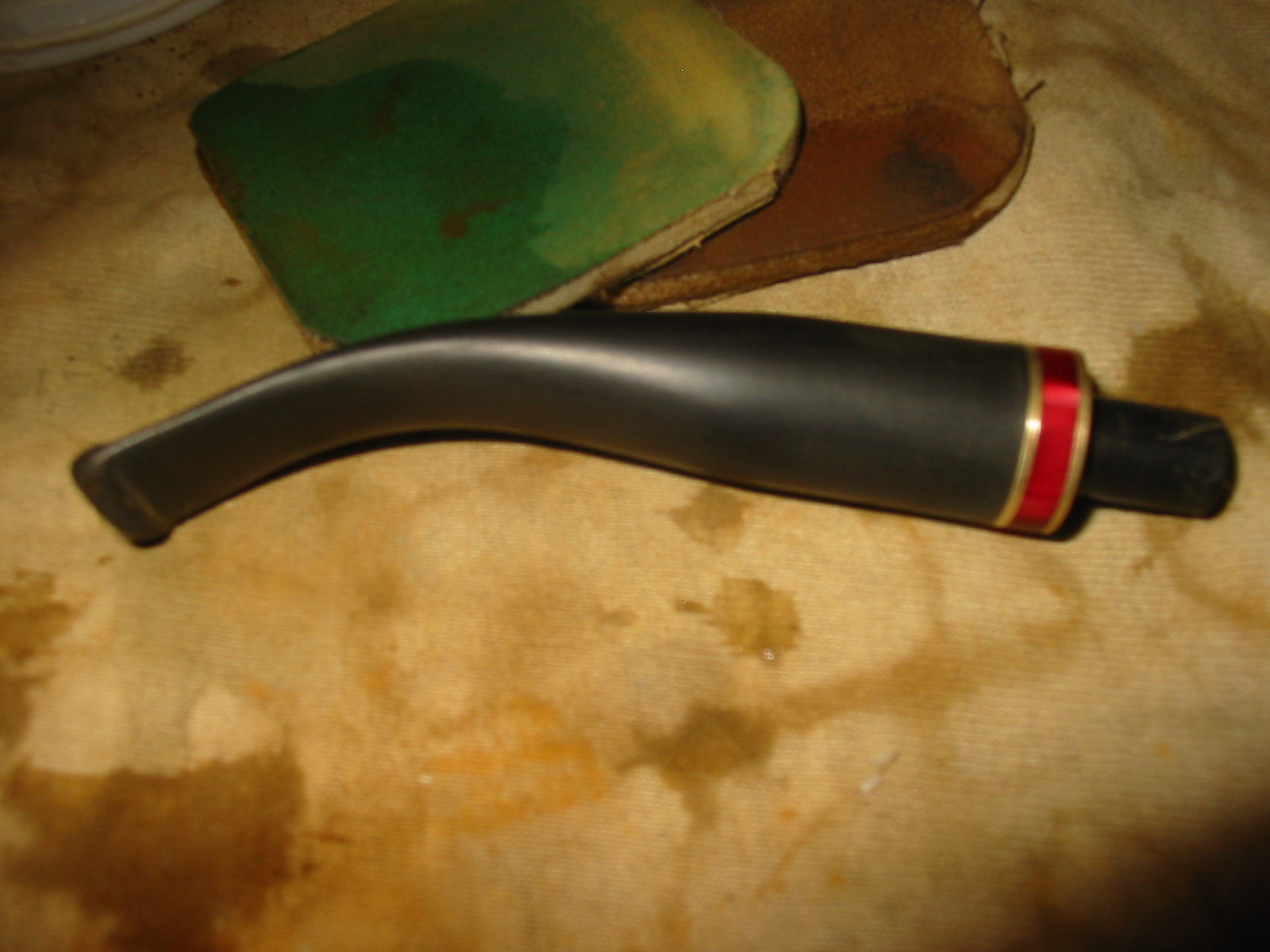
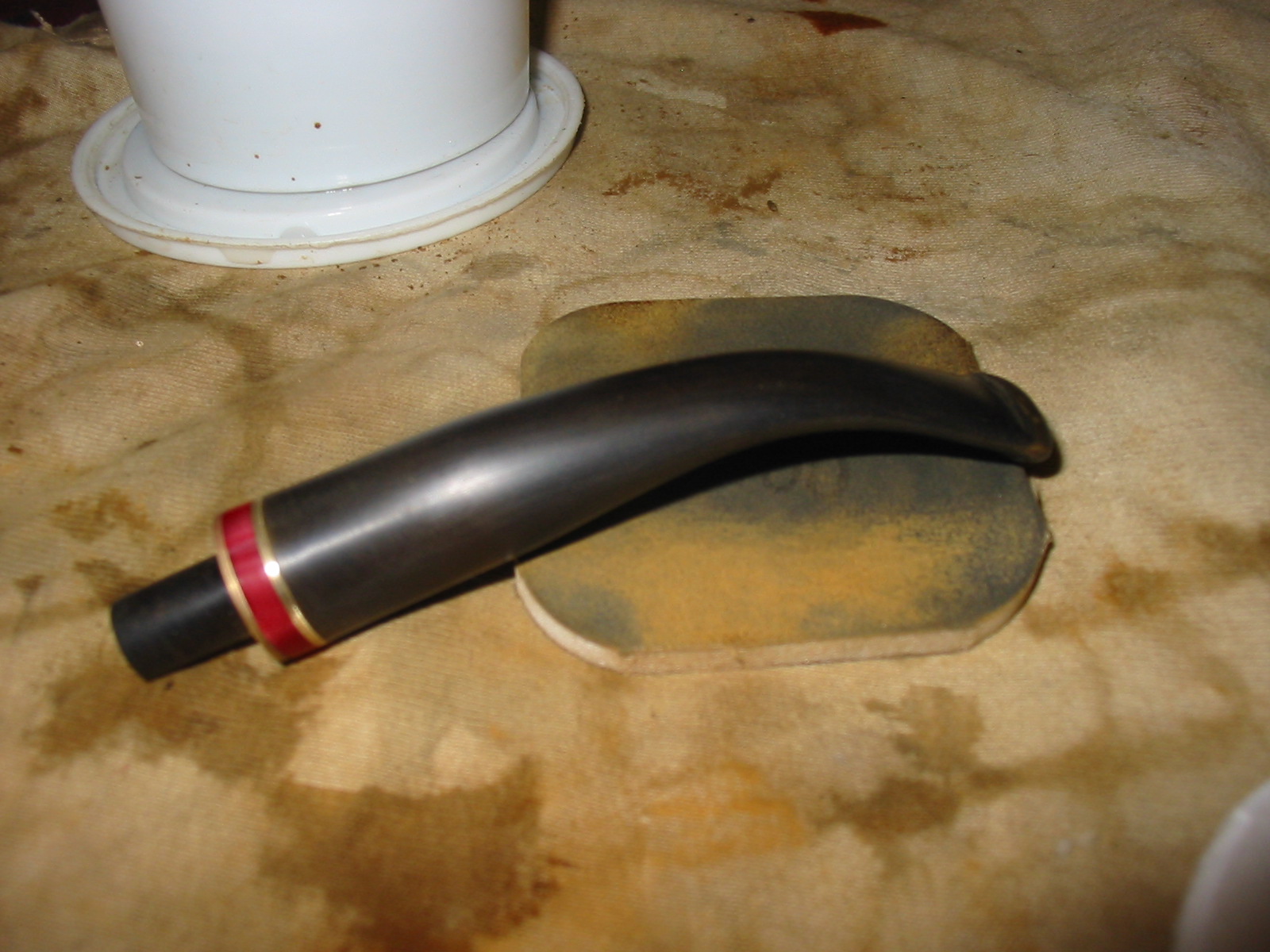
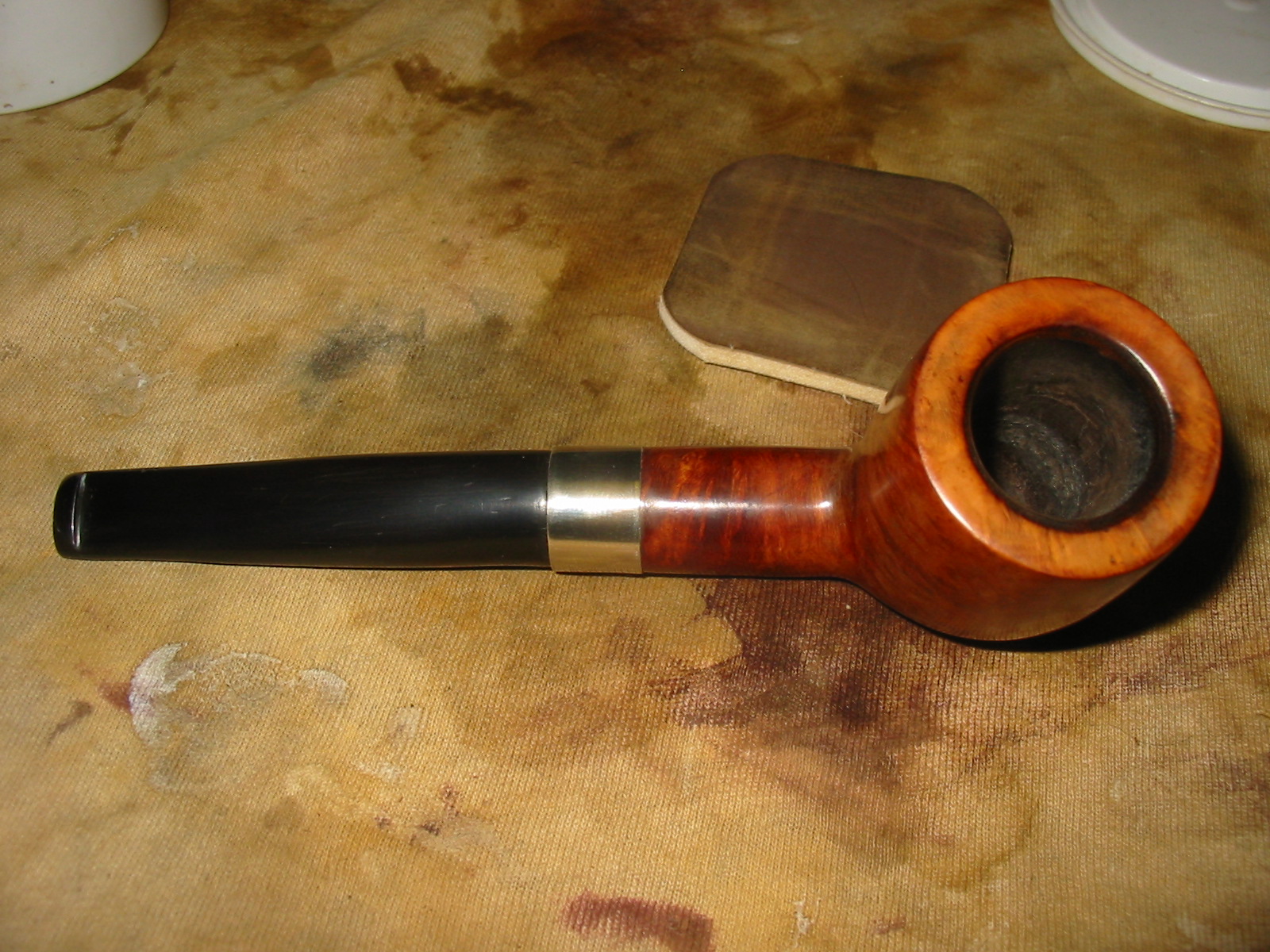
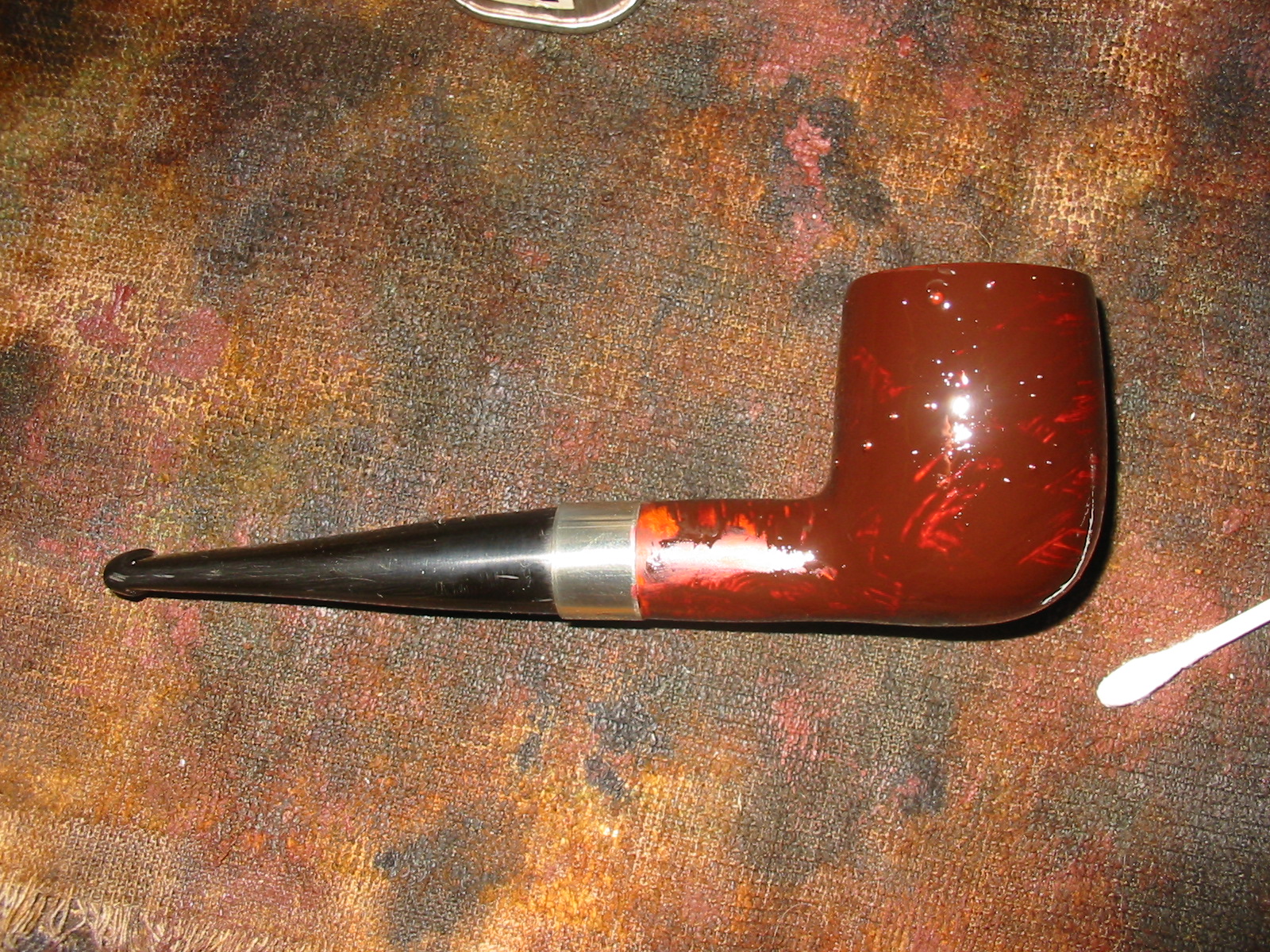
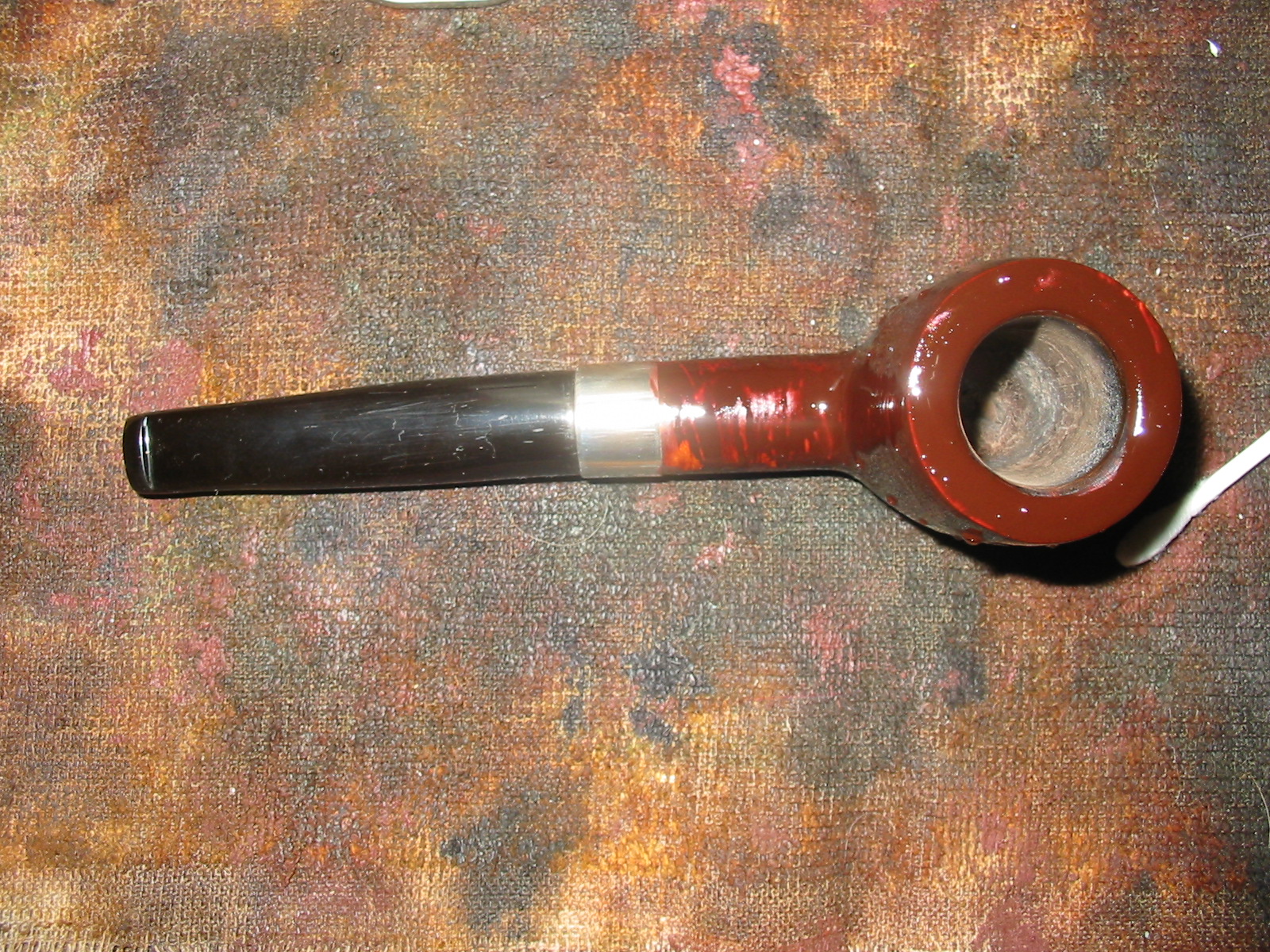
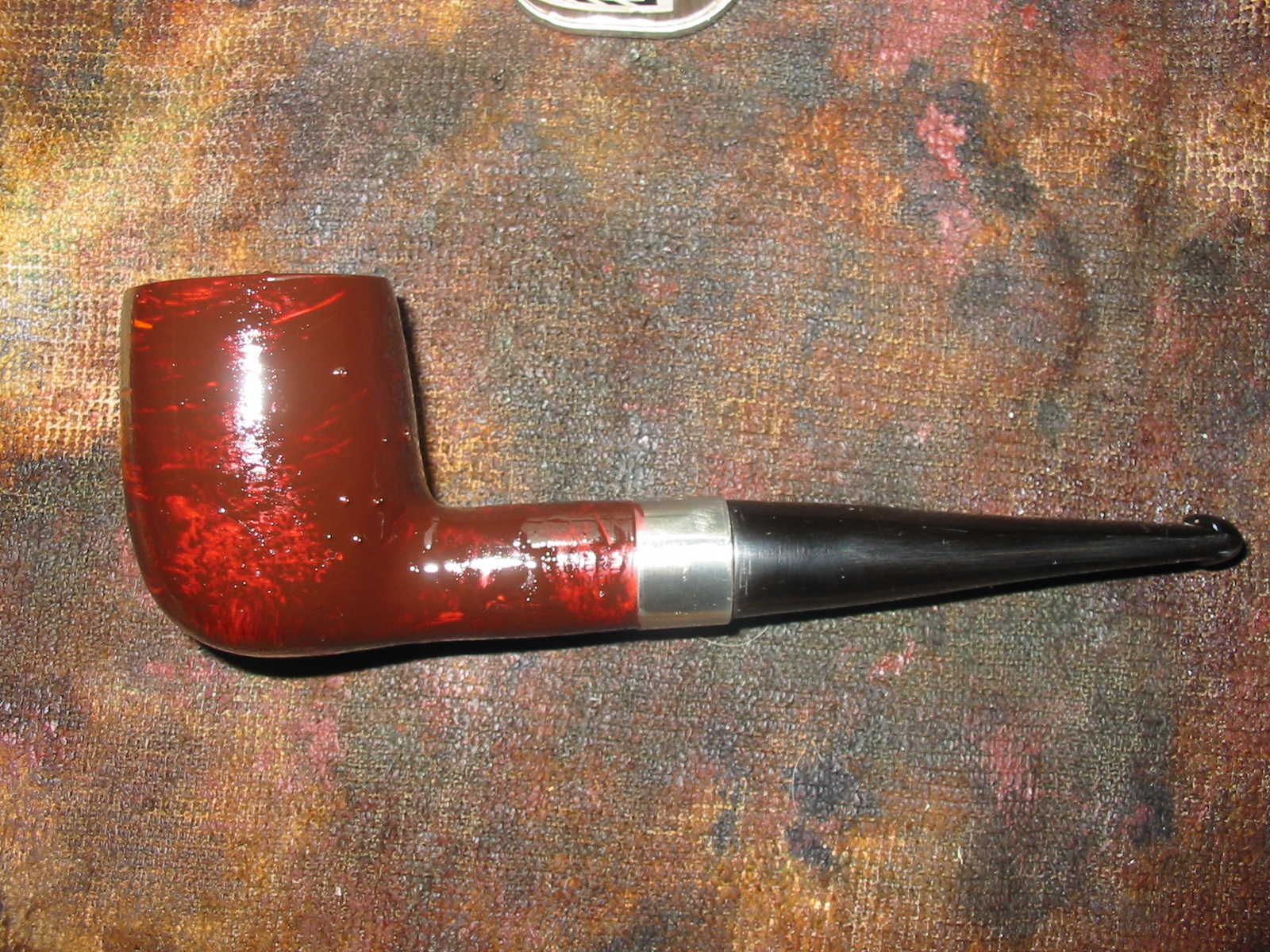
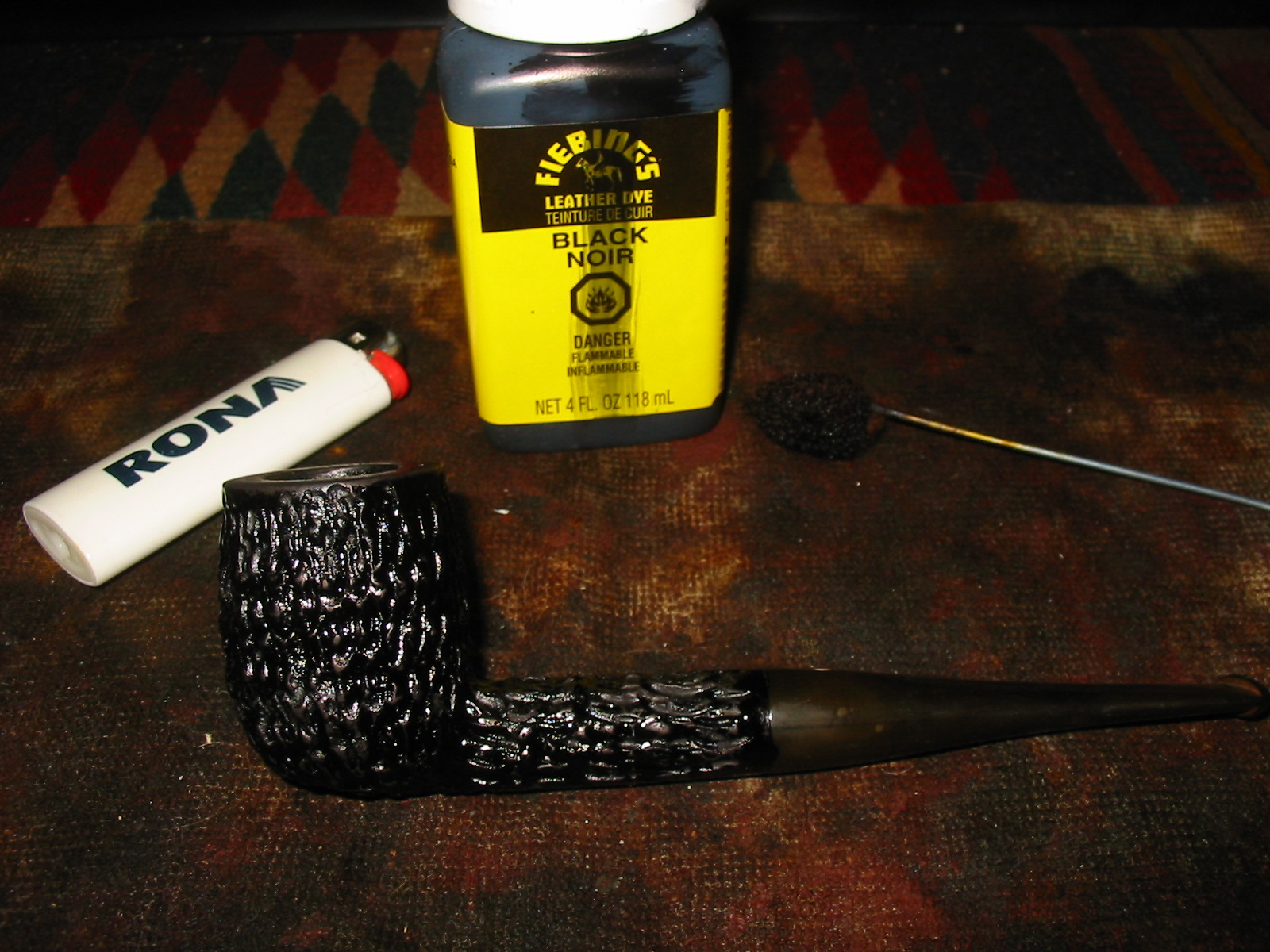
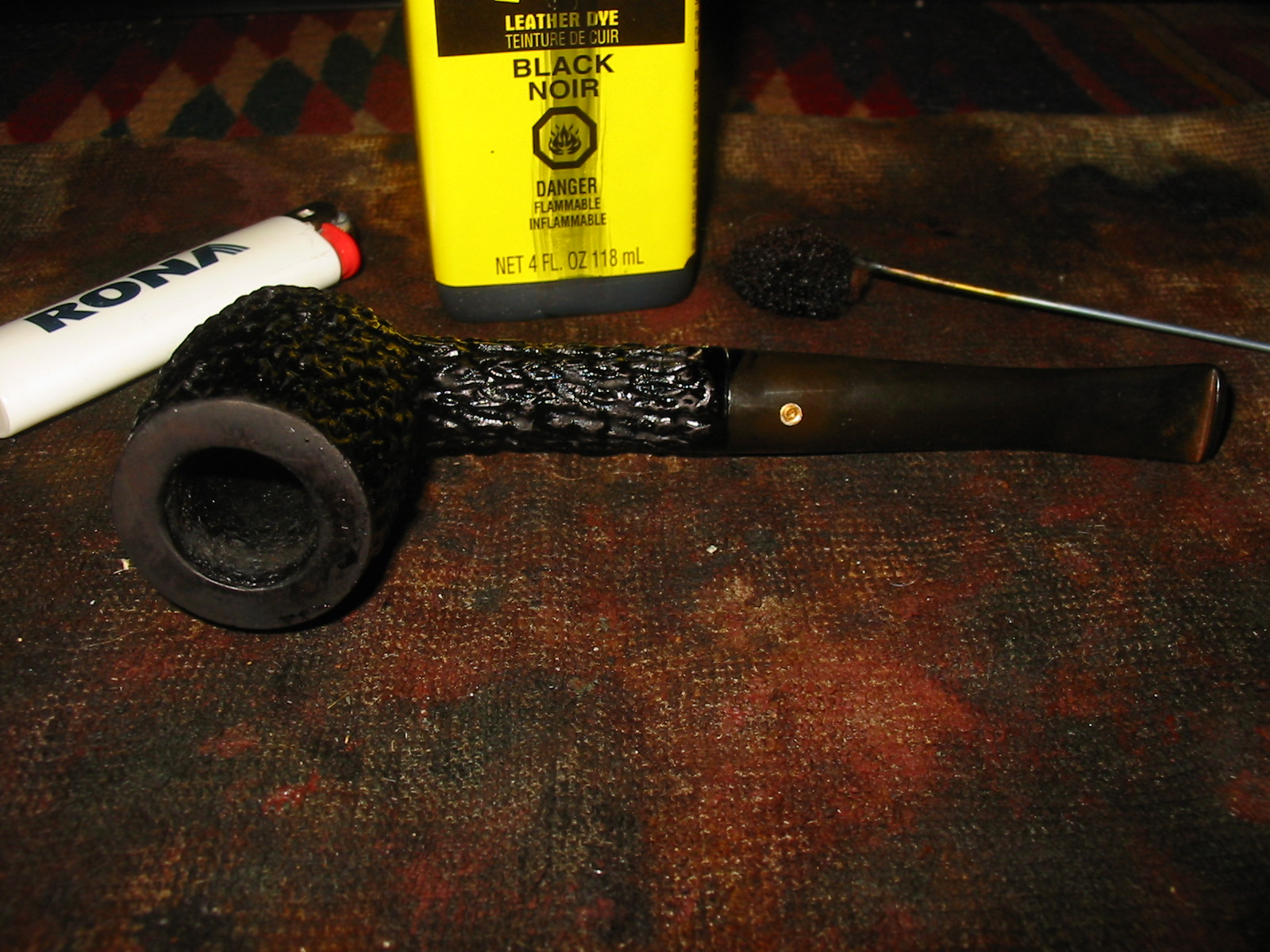
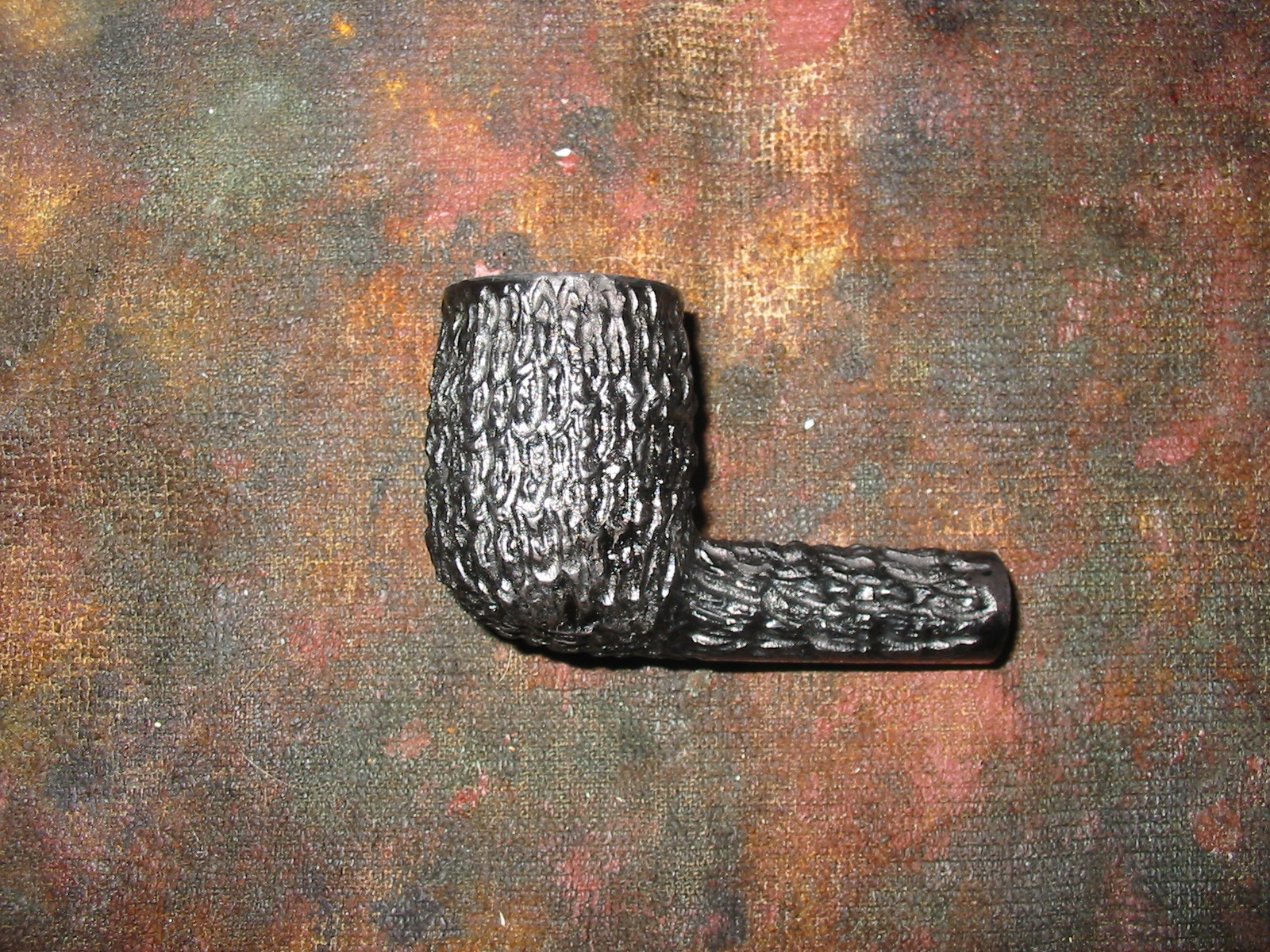
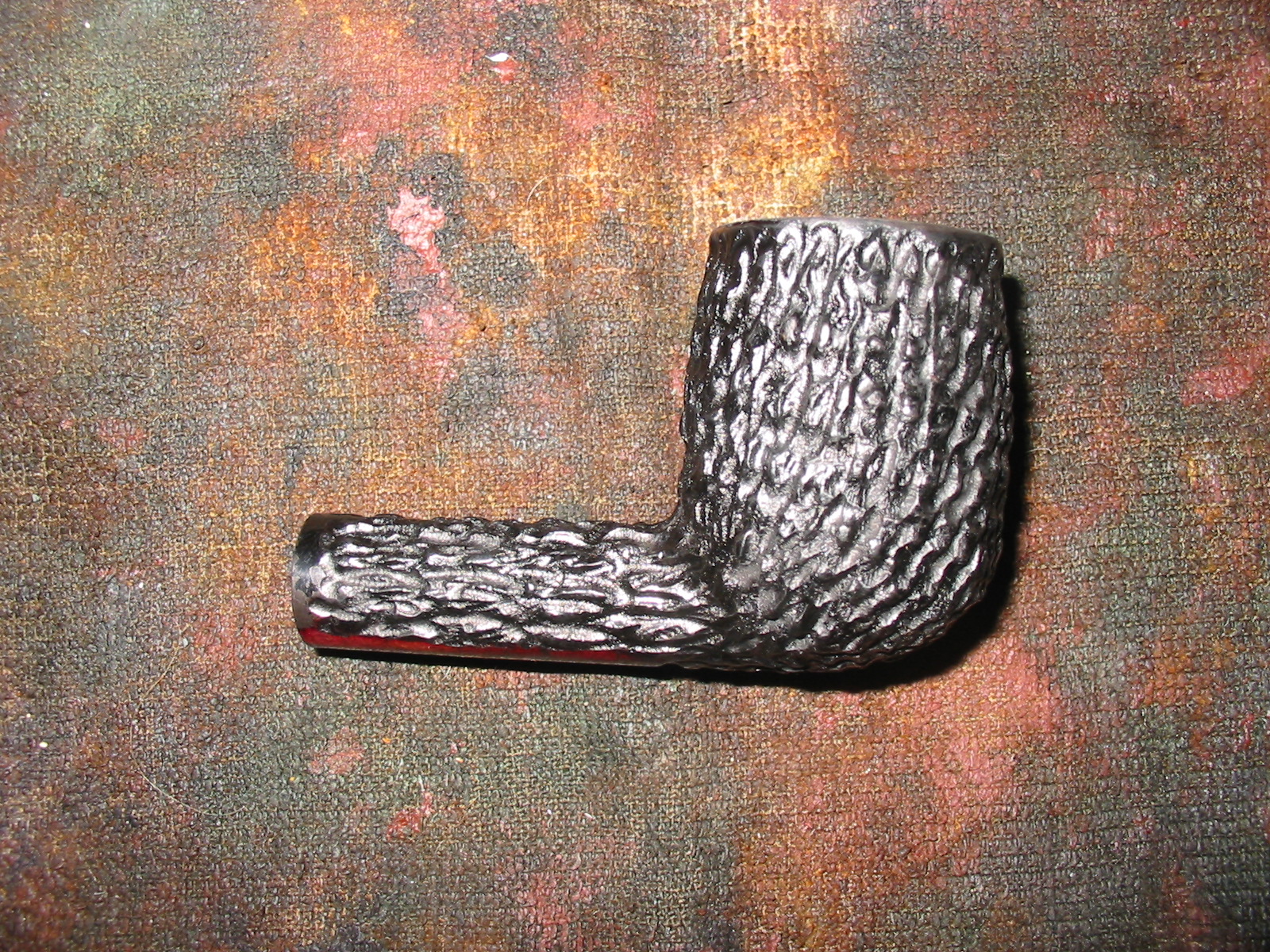
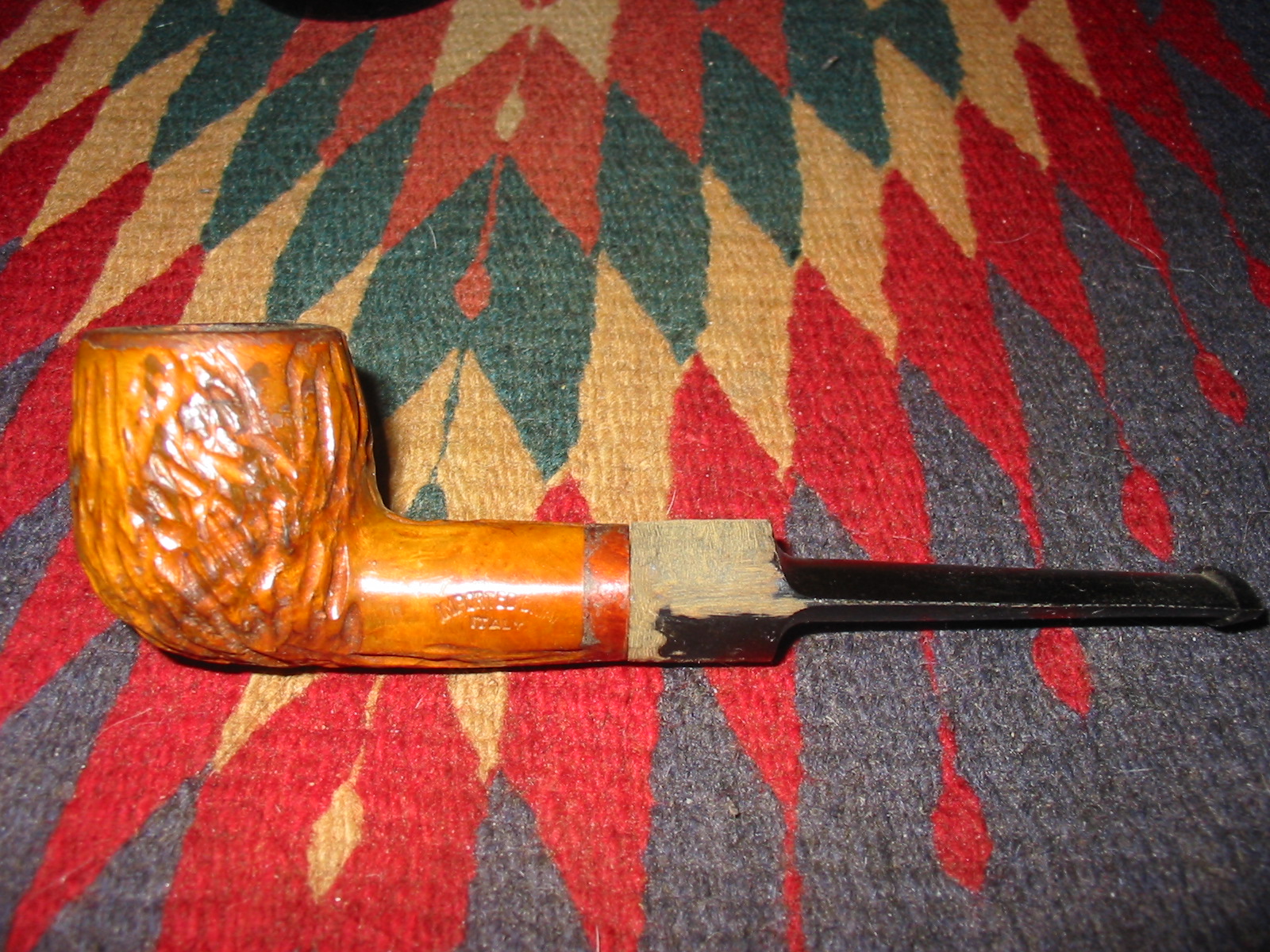
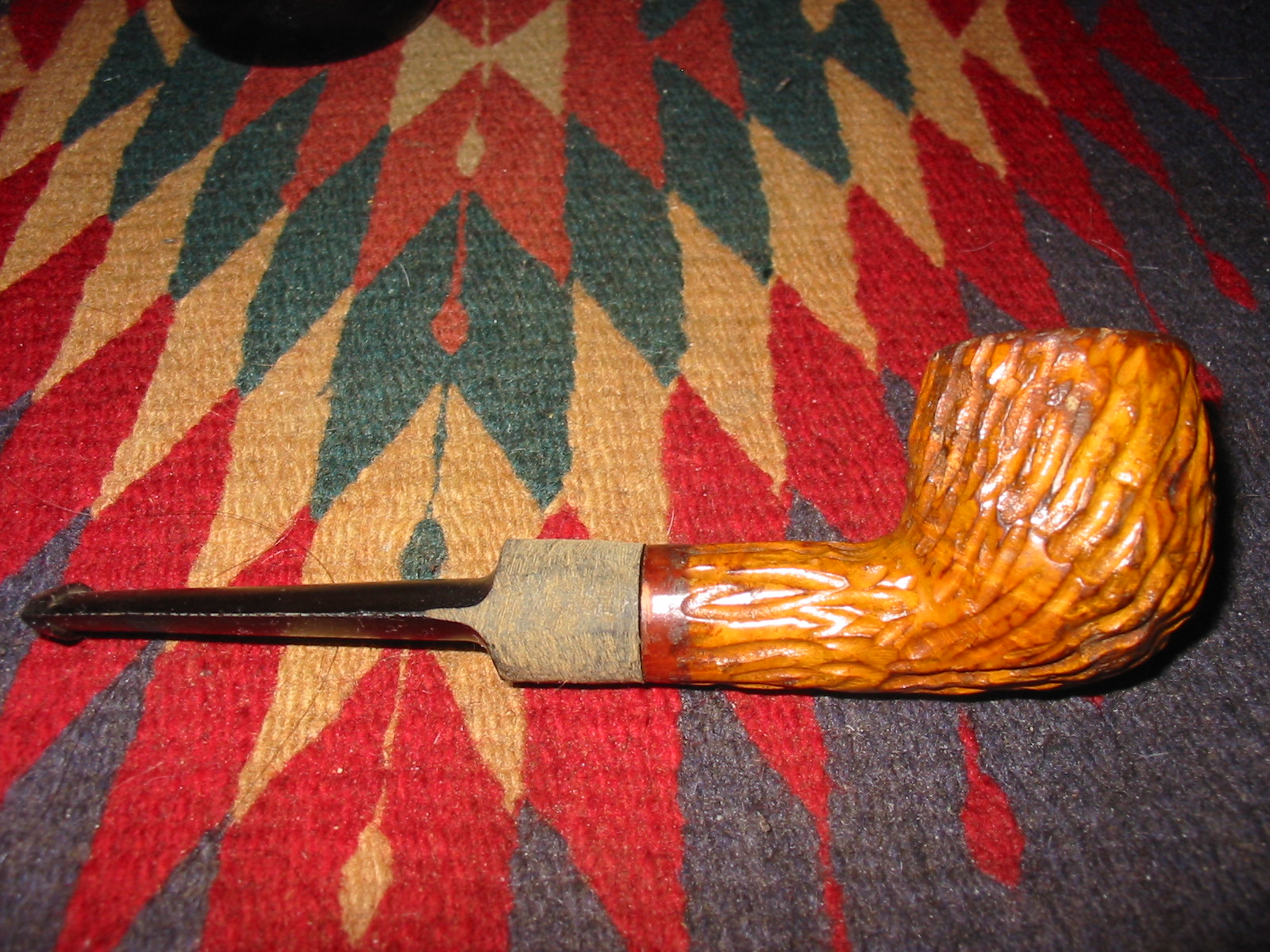
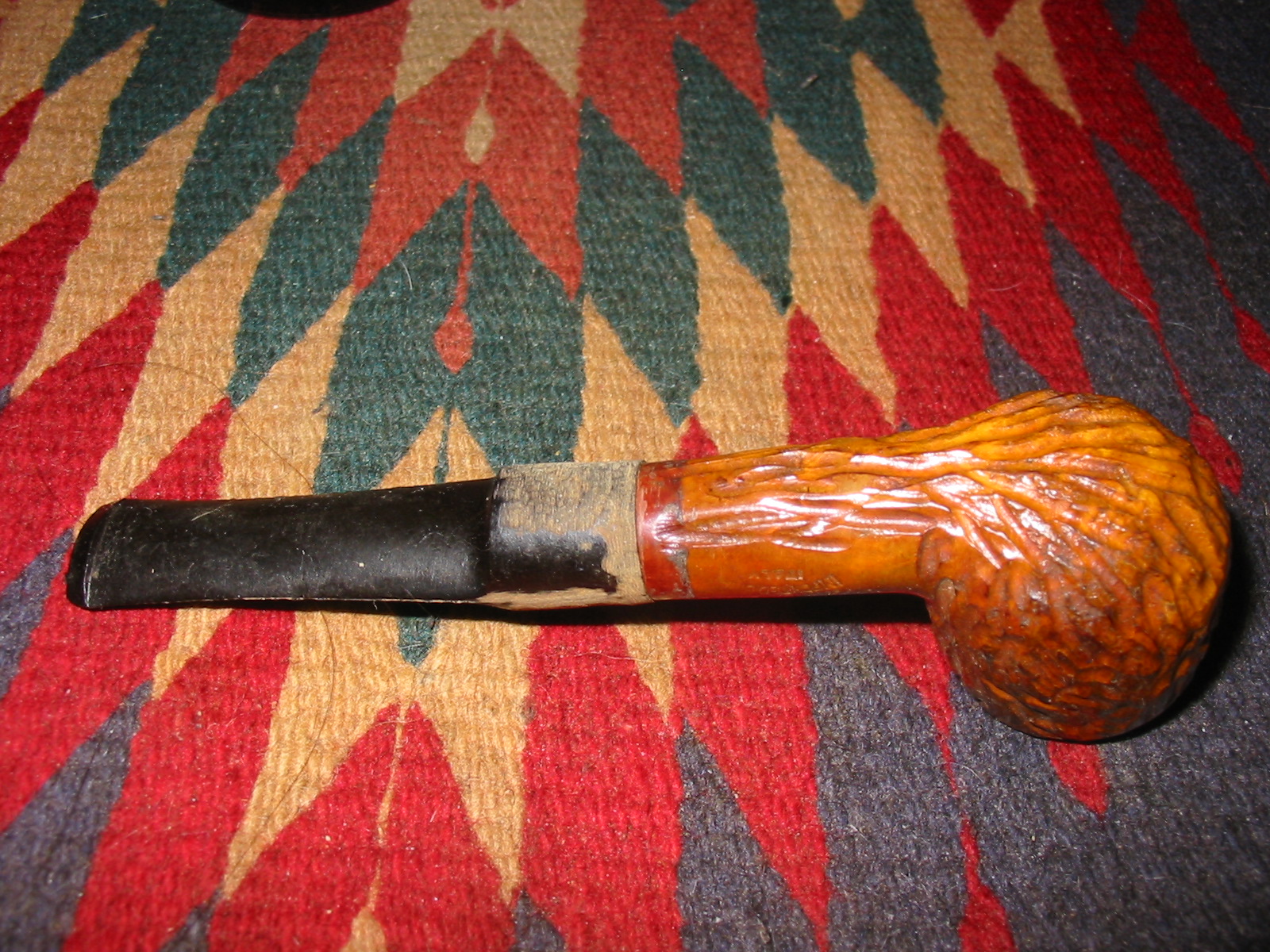
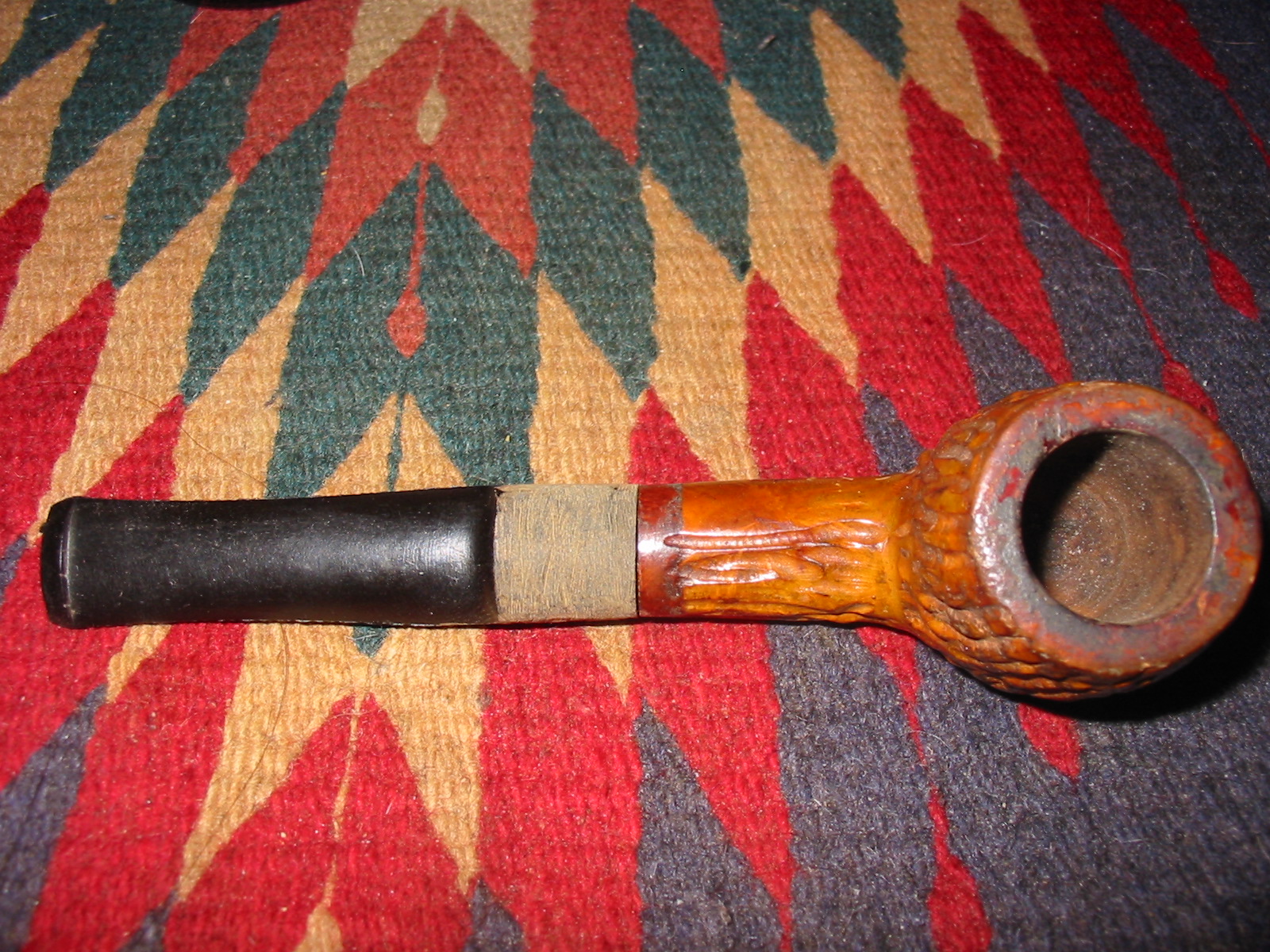
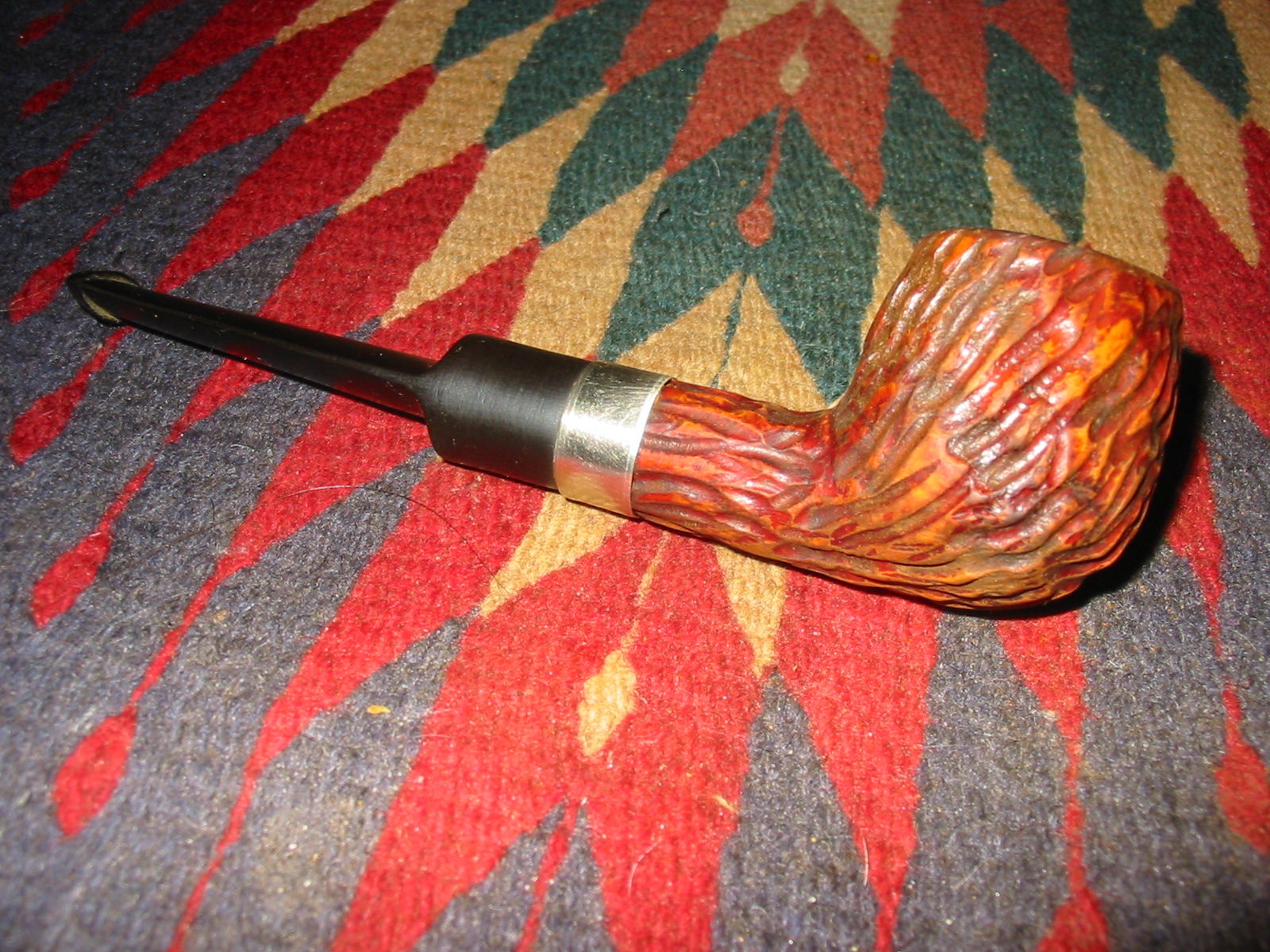
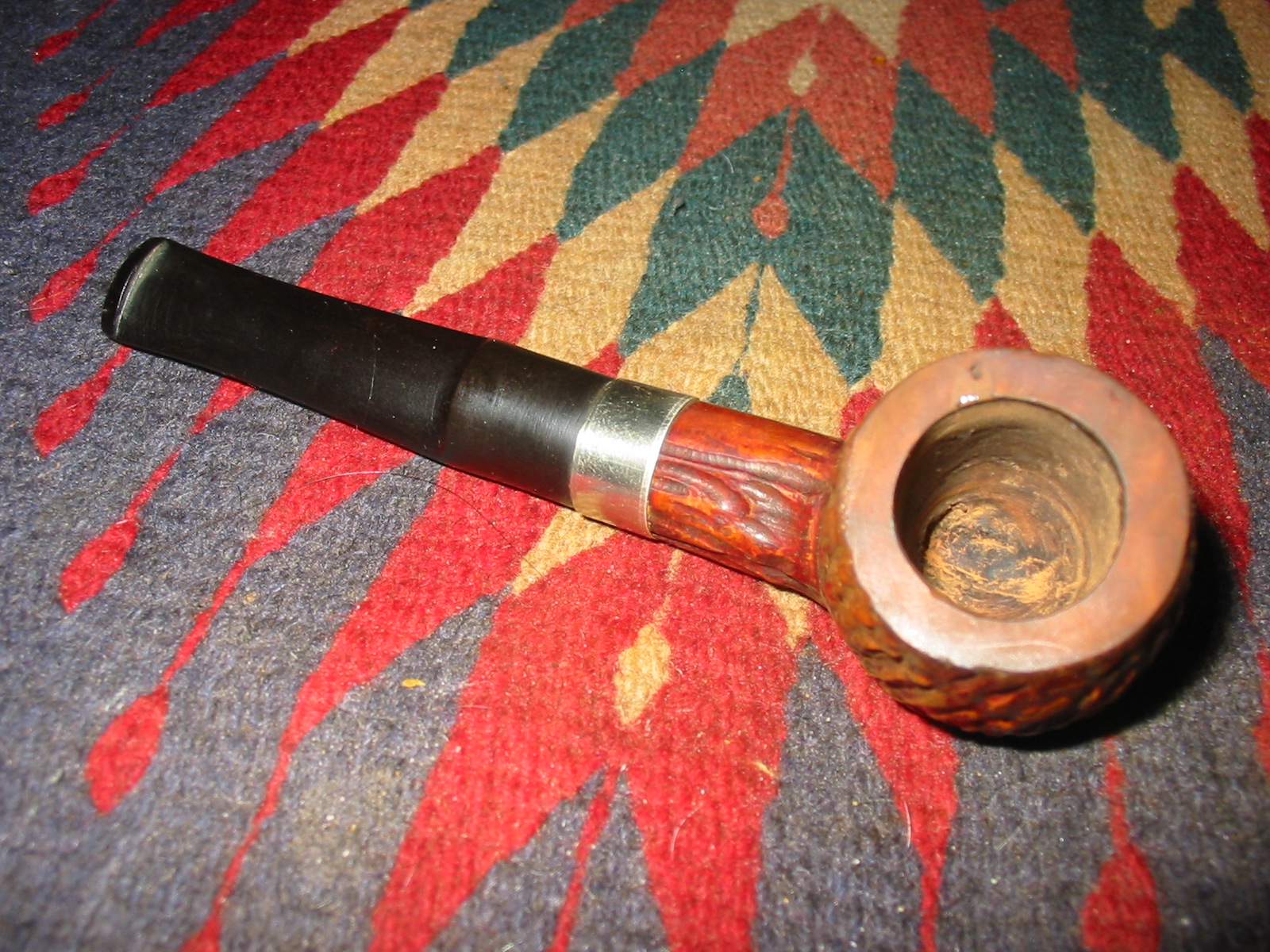
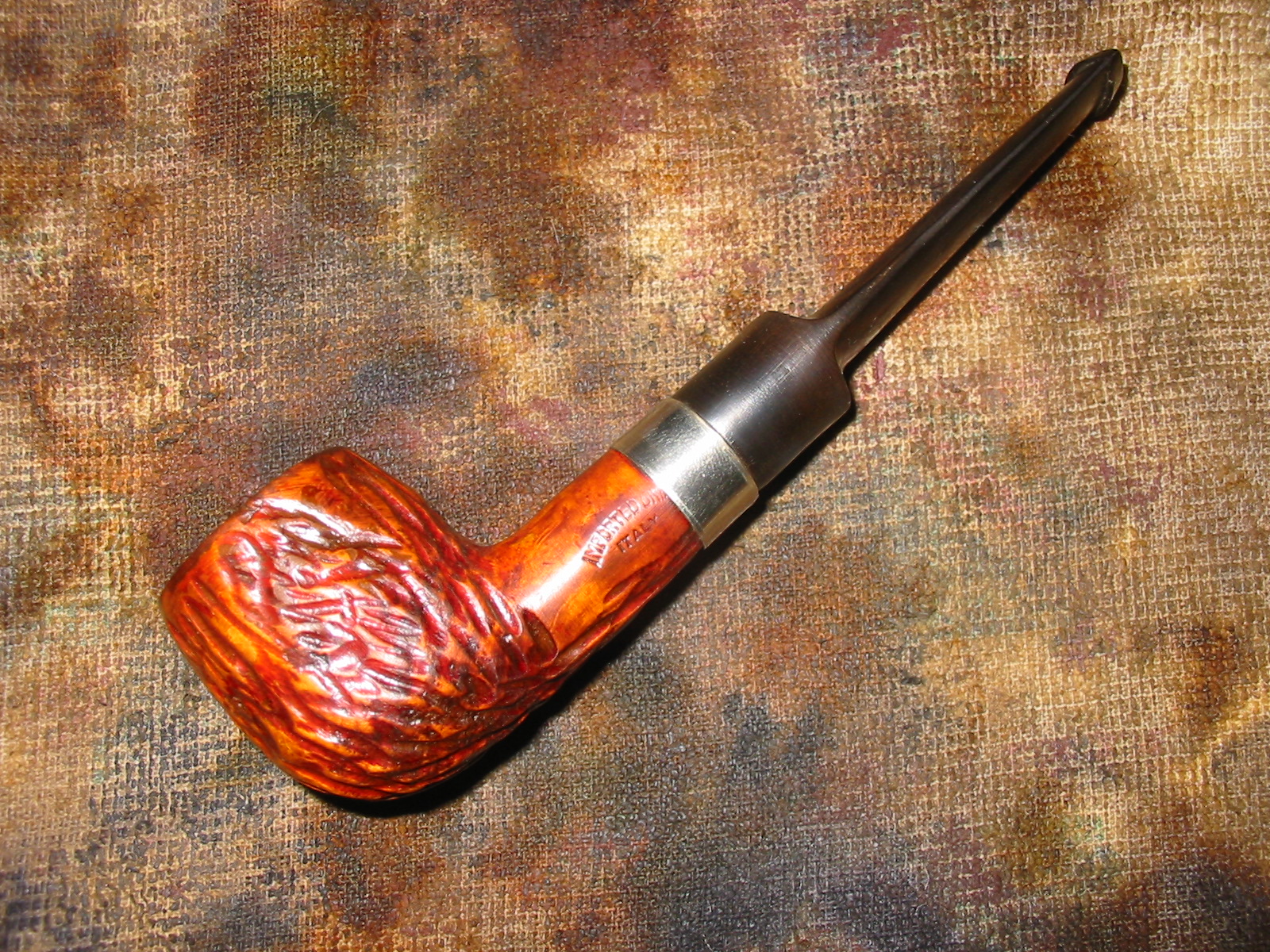
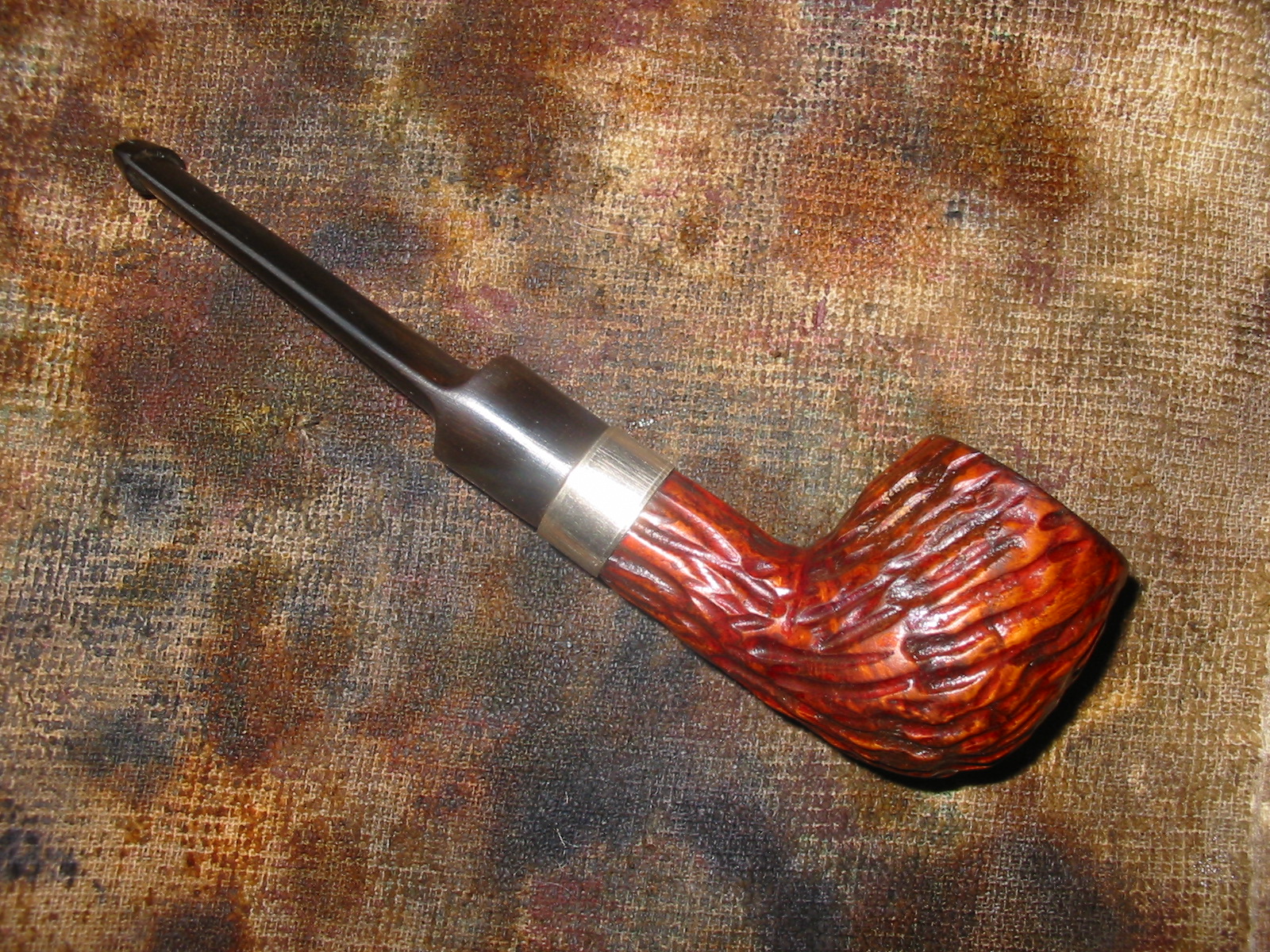
Author Archives: rebornpipes

An Odd Pipe Restored – Richmond London Made


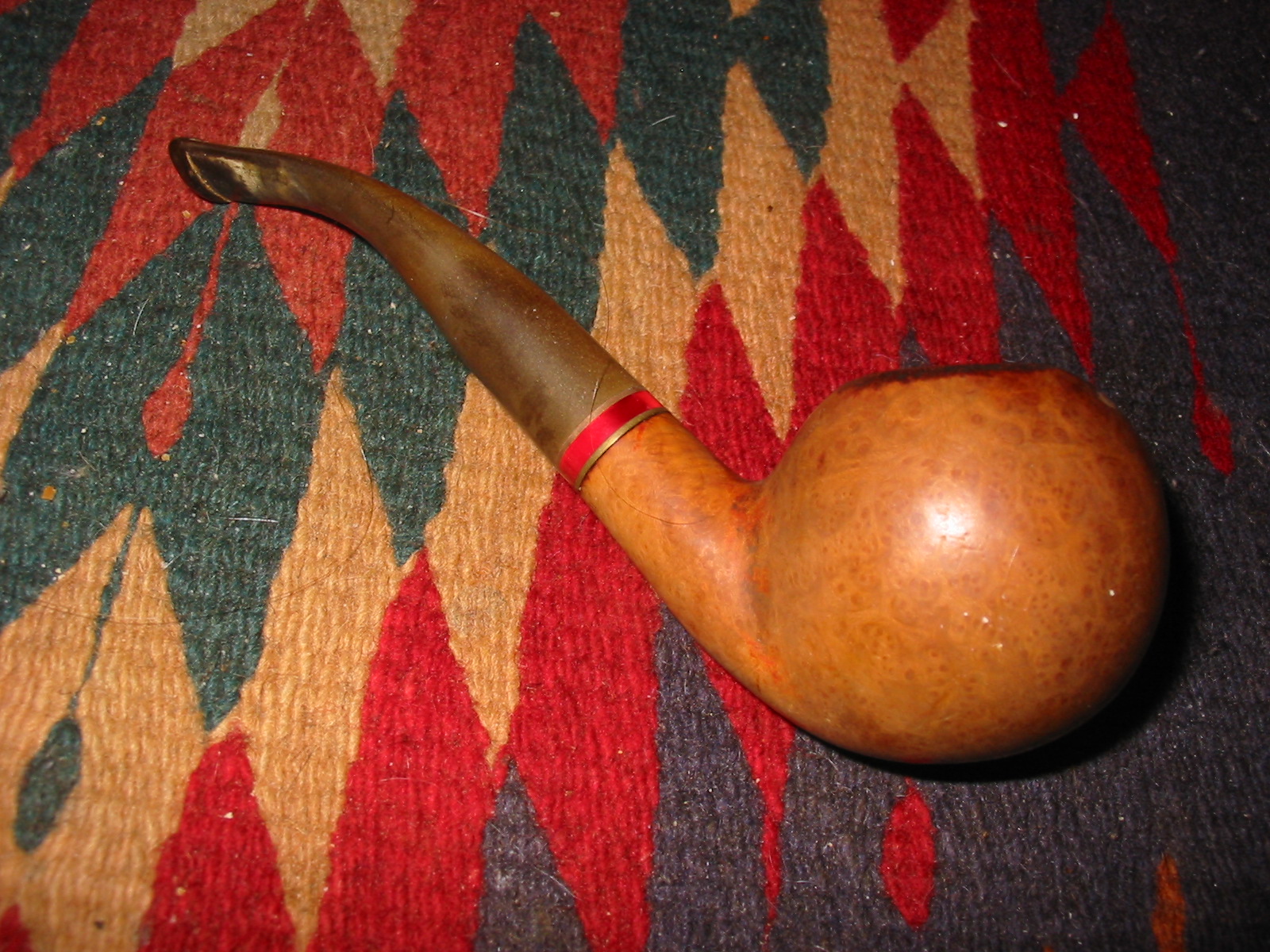
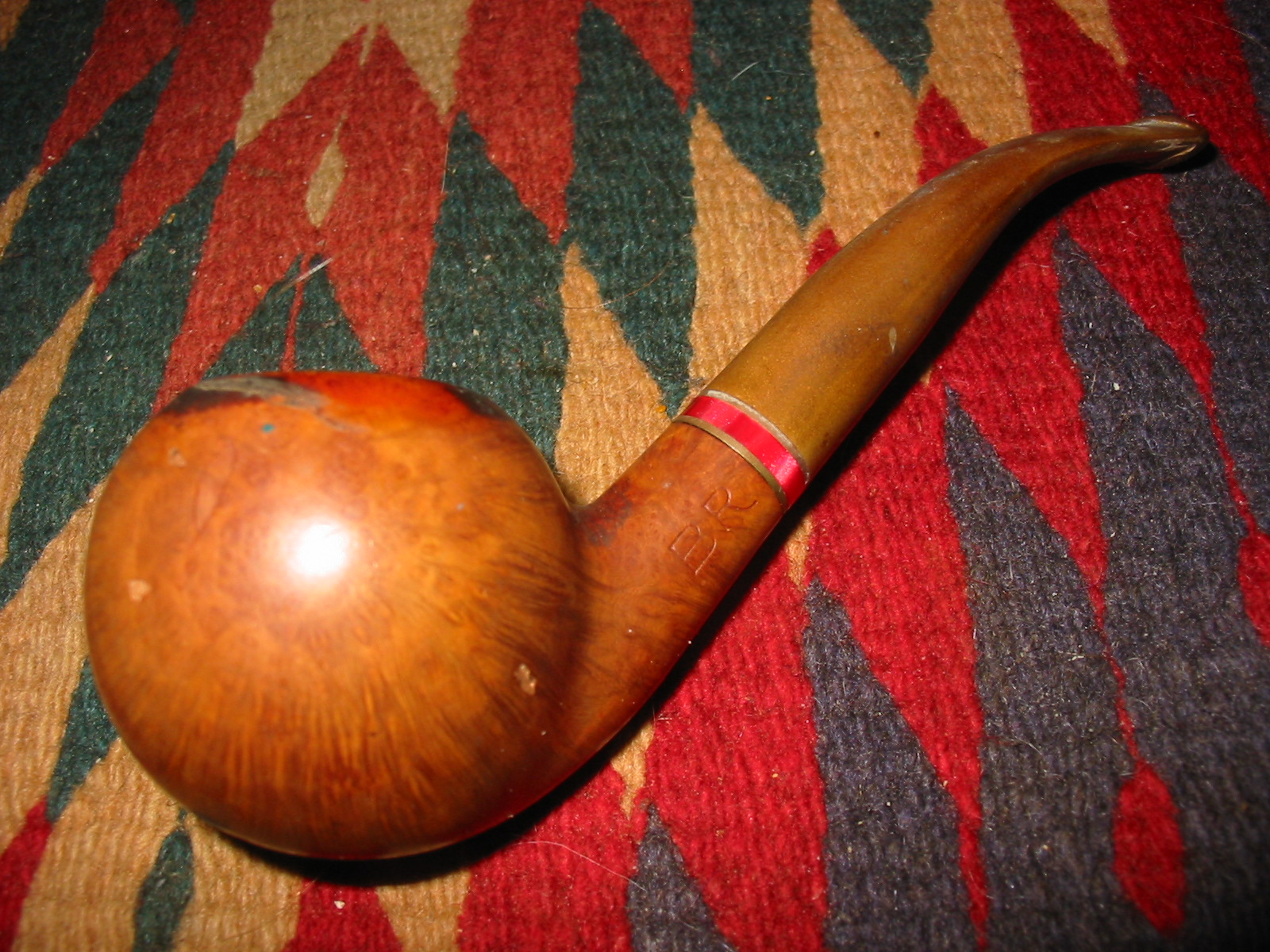
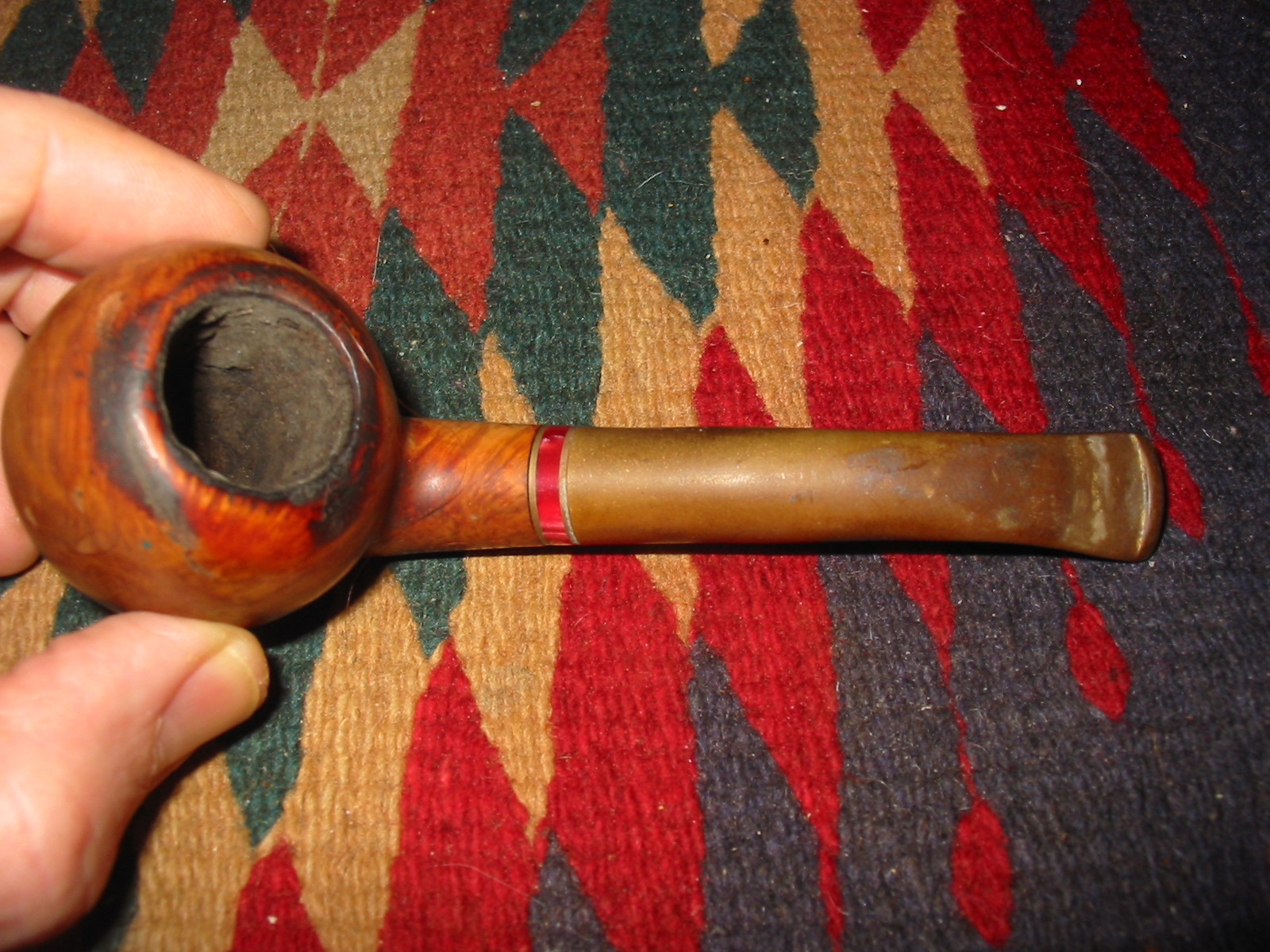
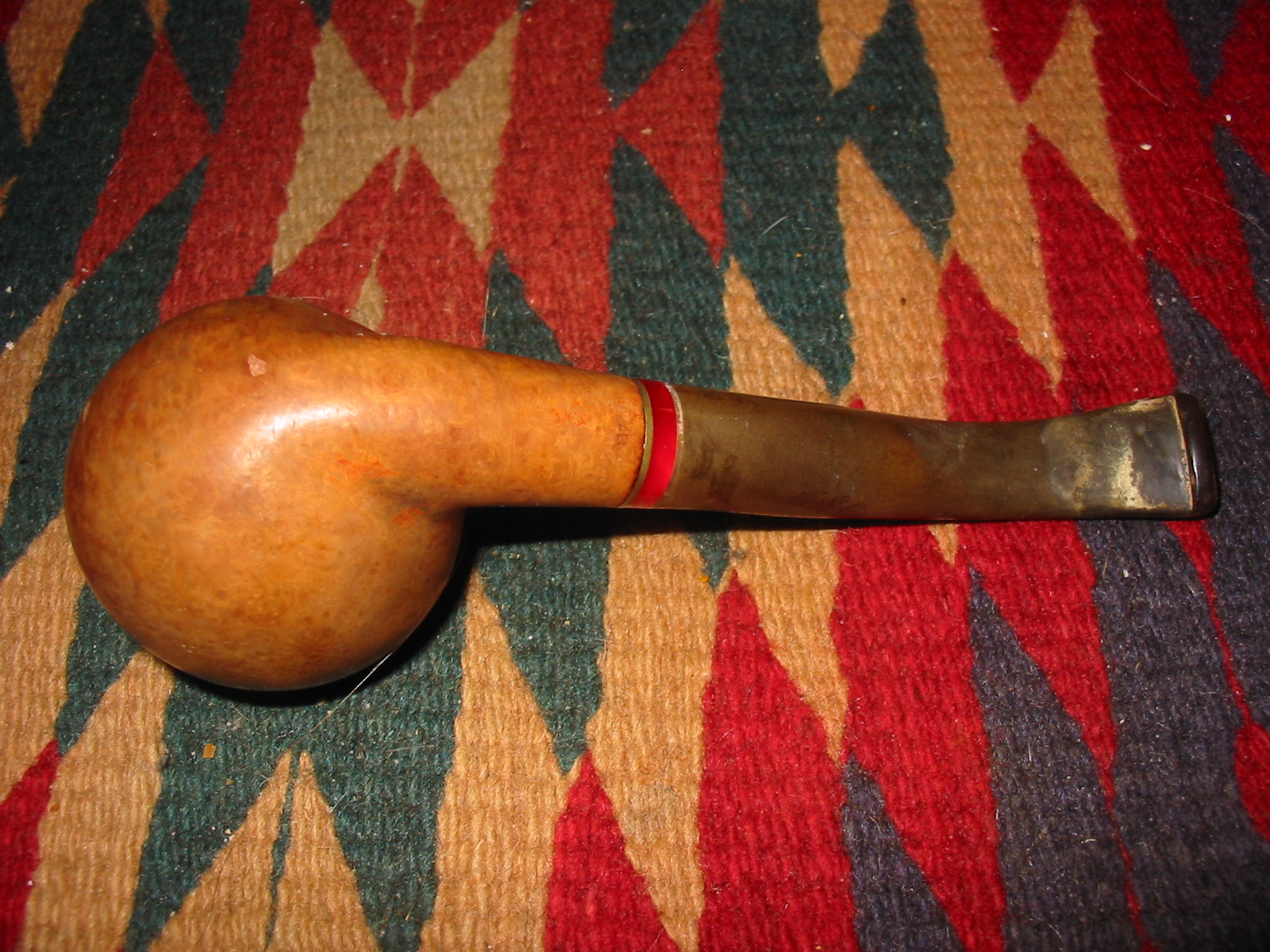
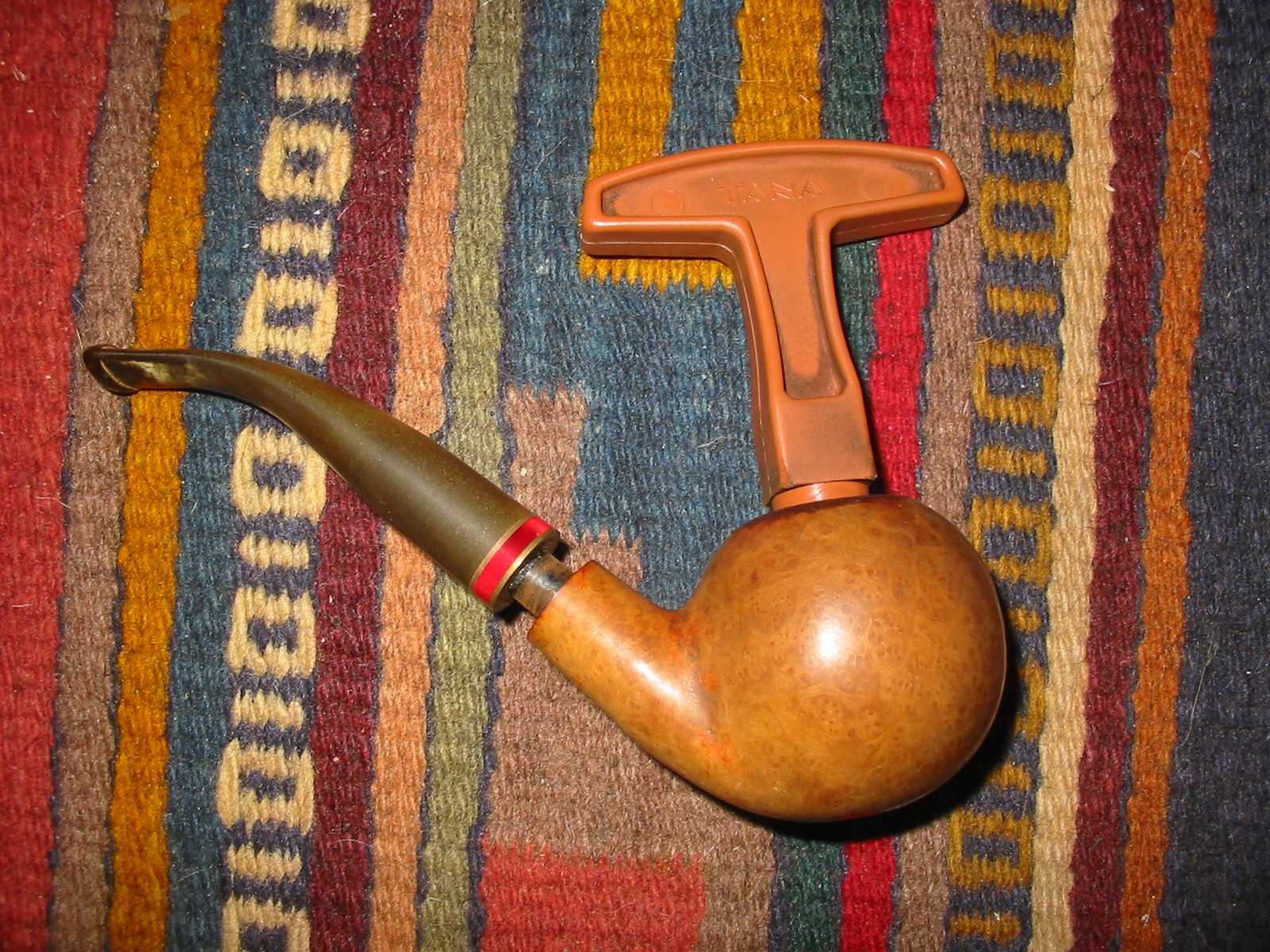
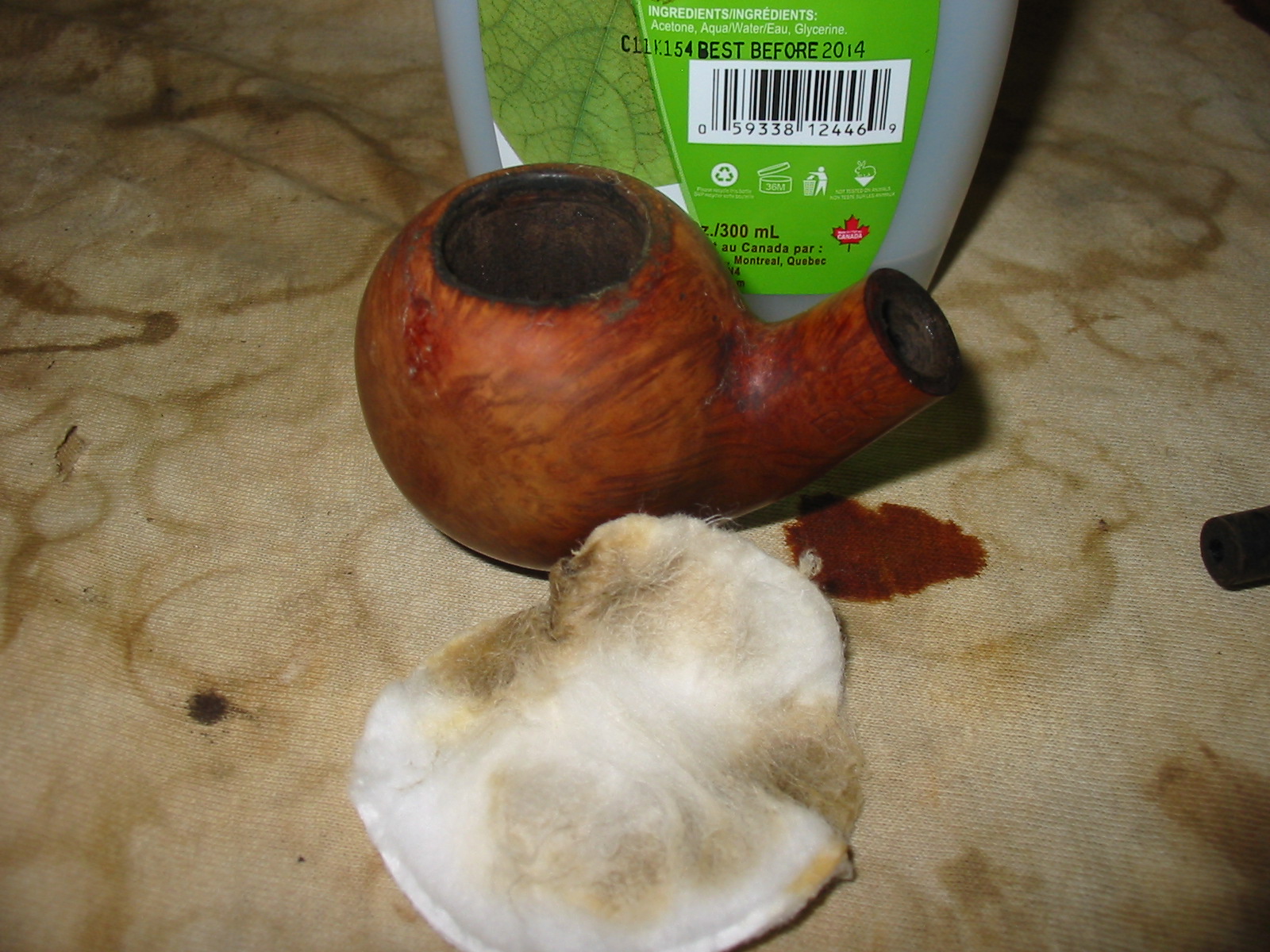
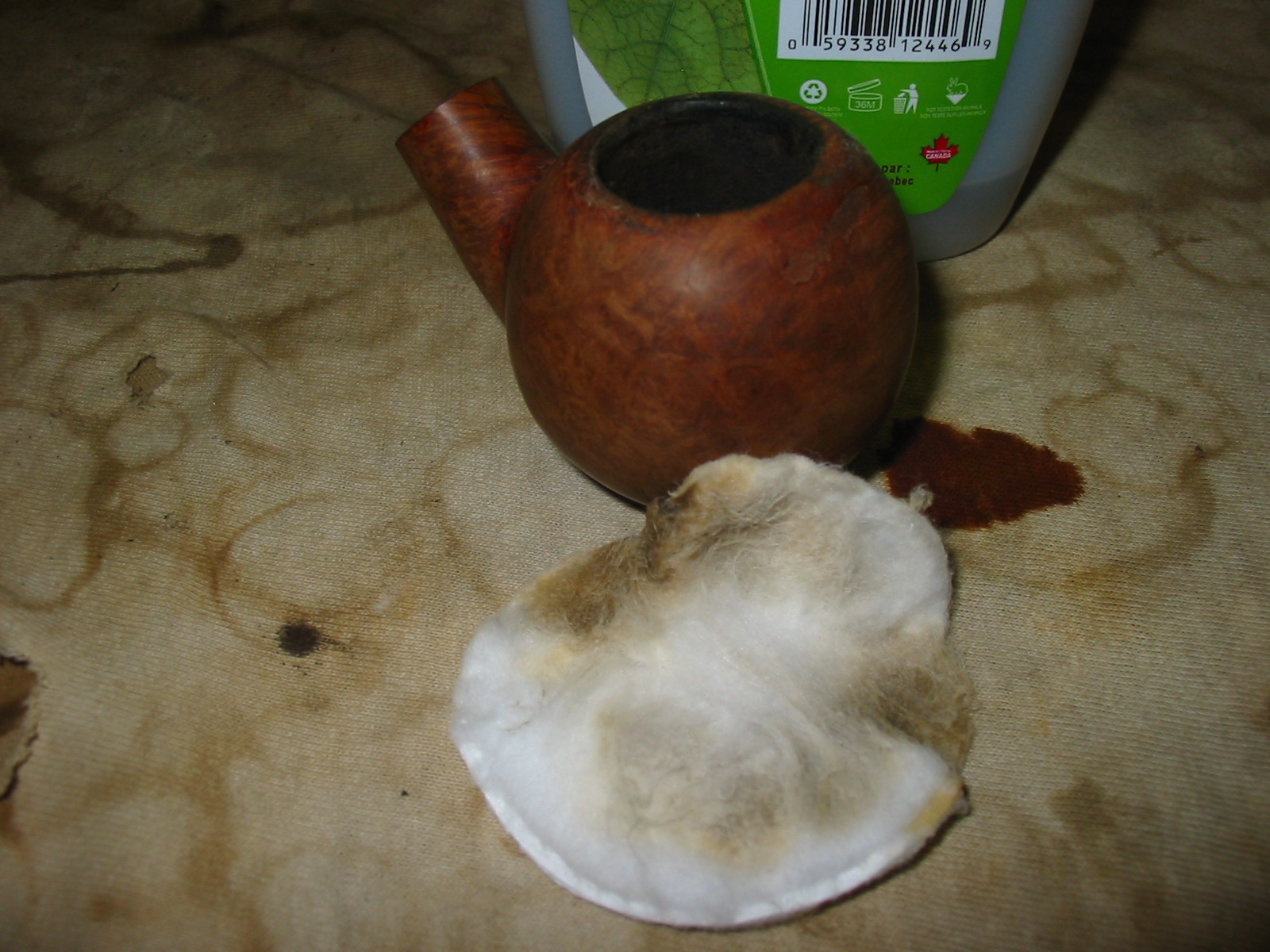
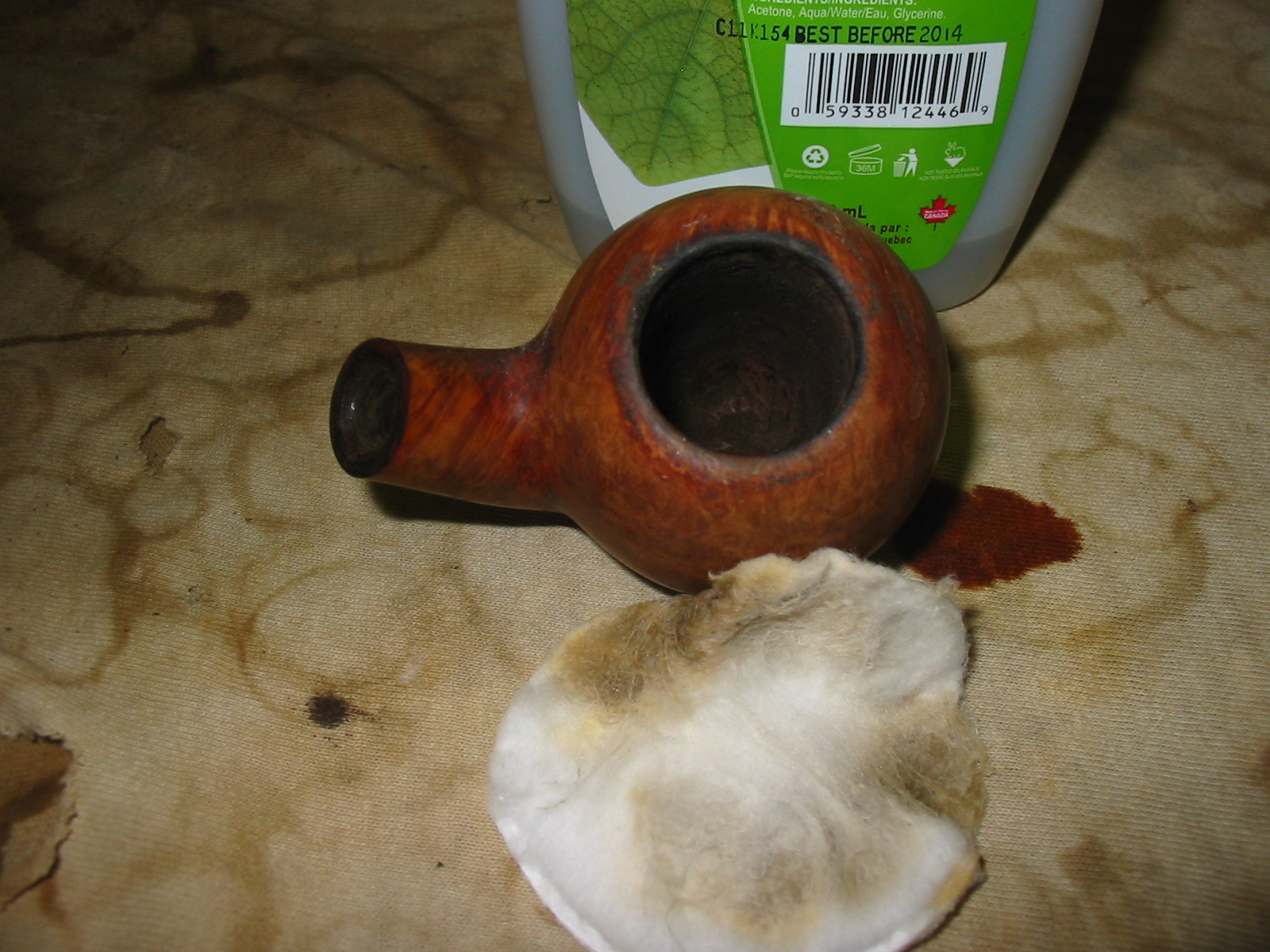
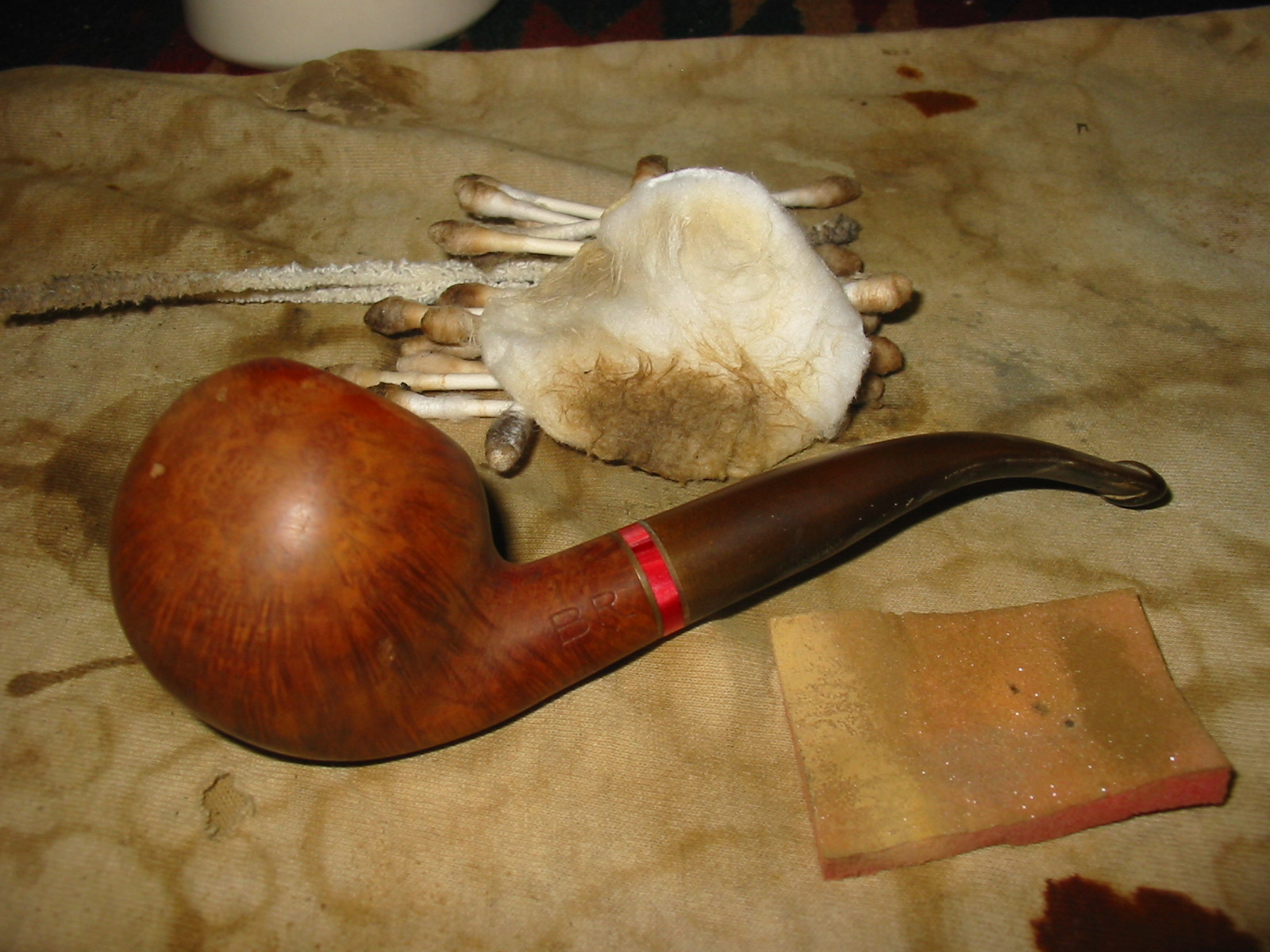
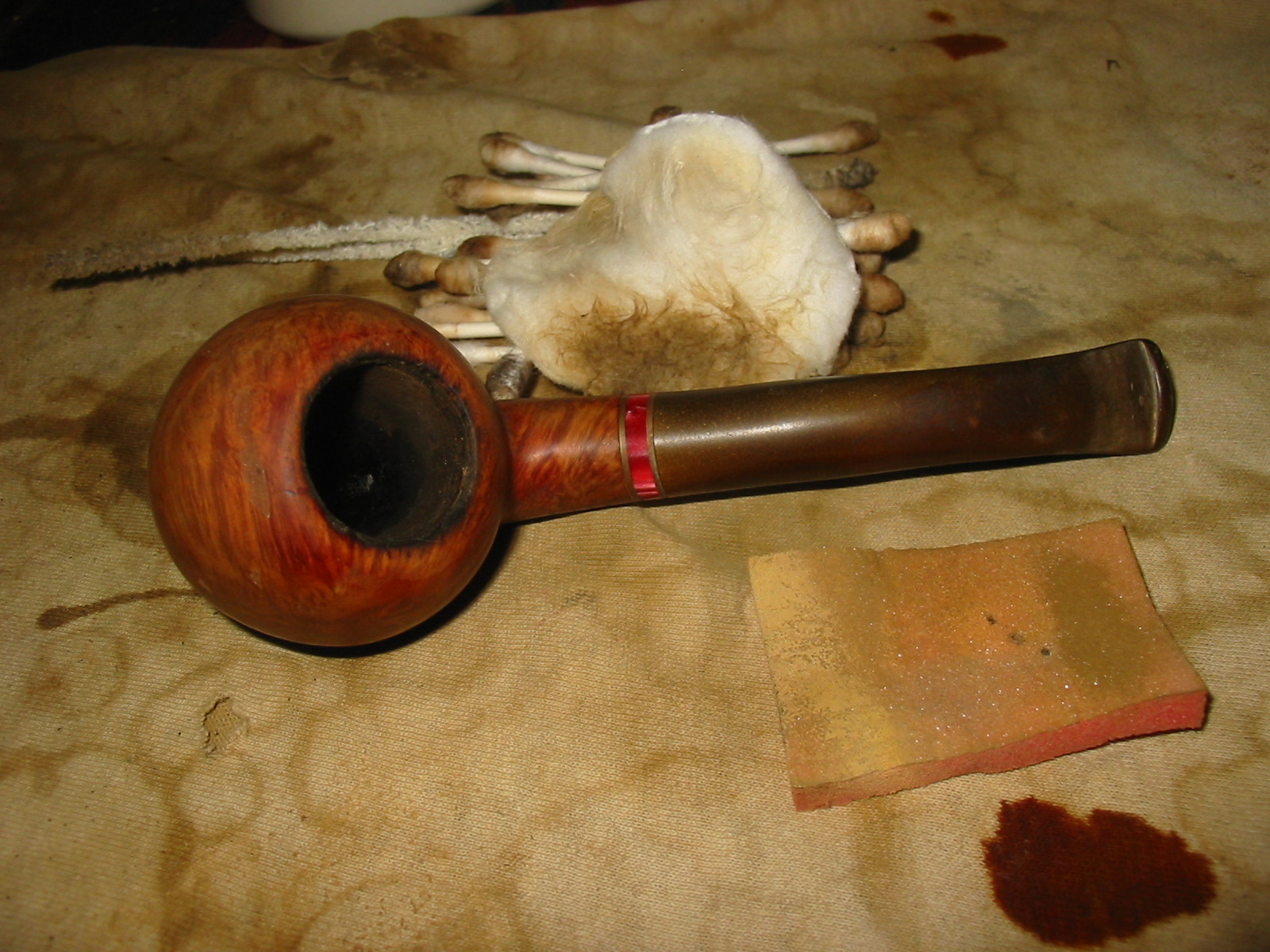
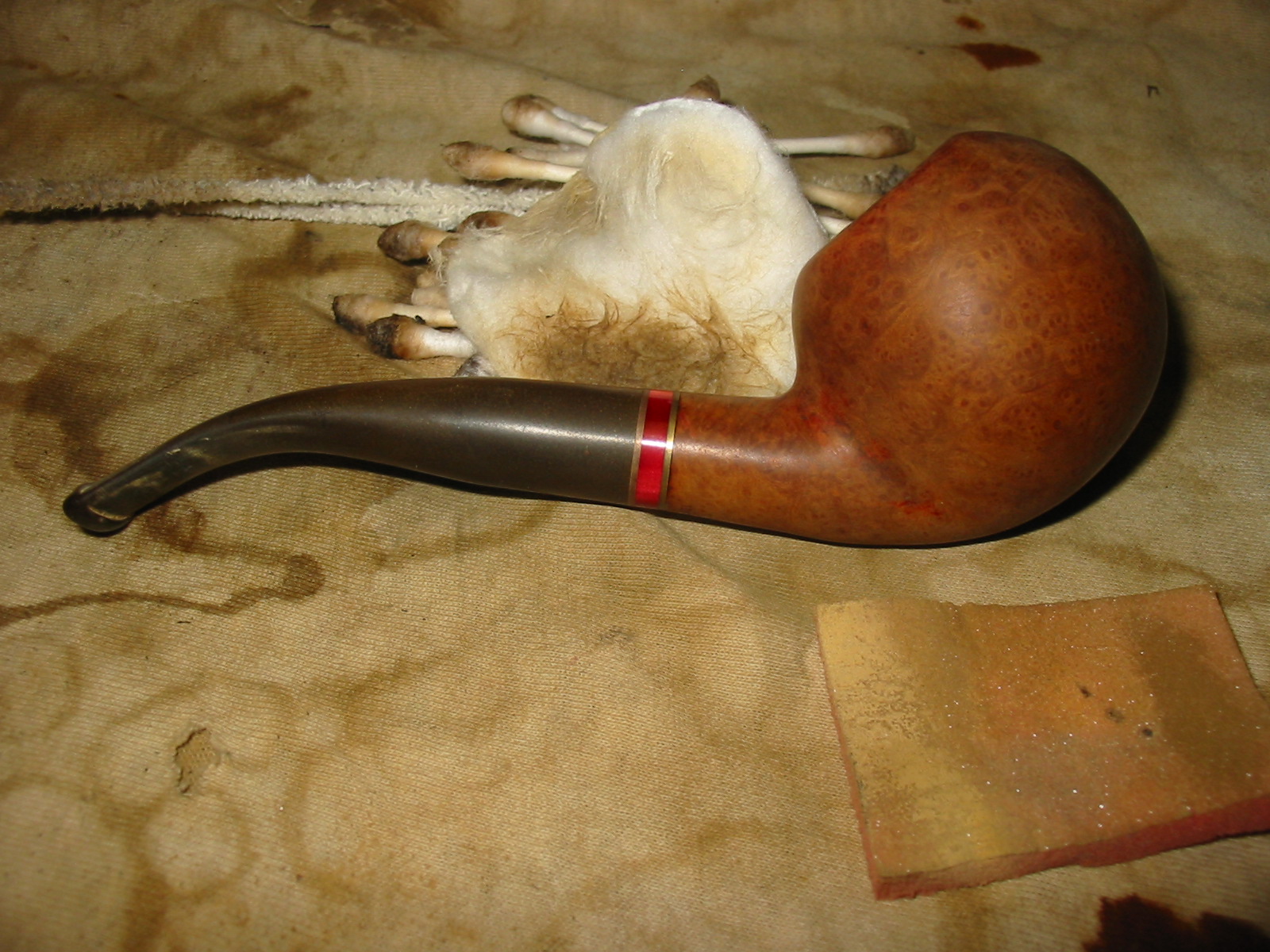
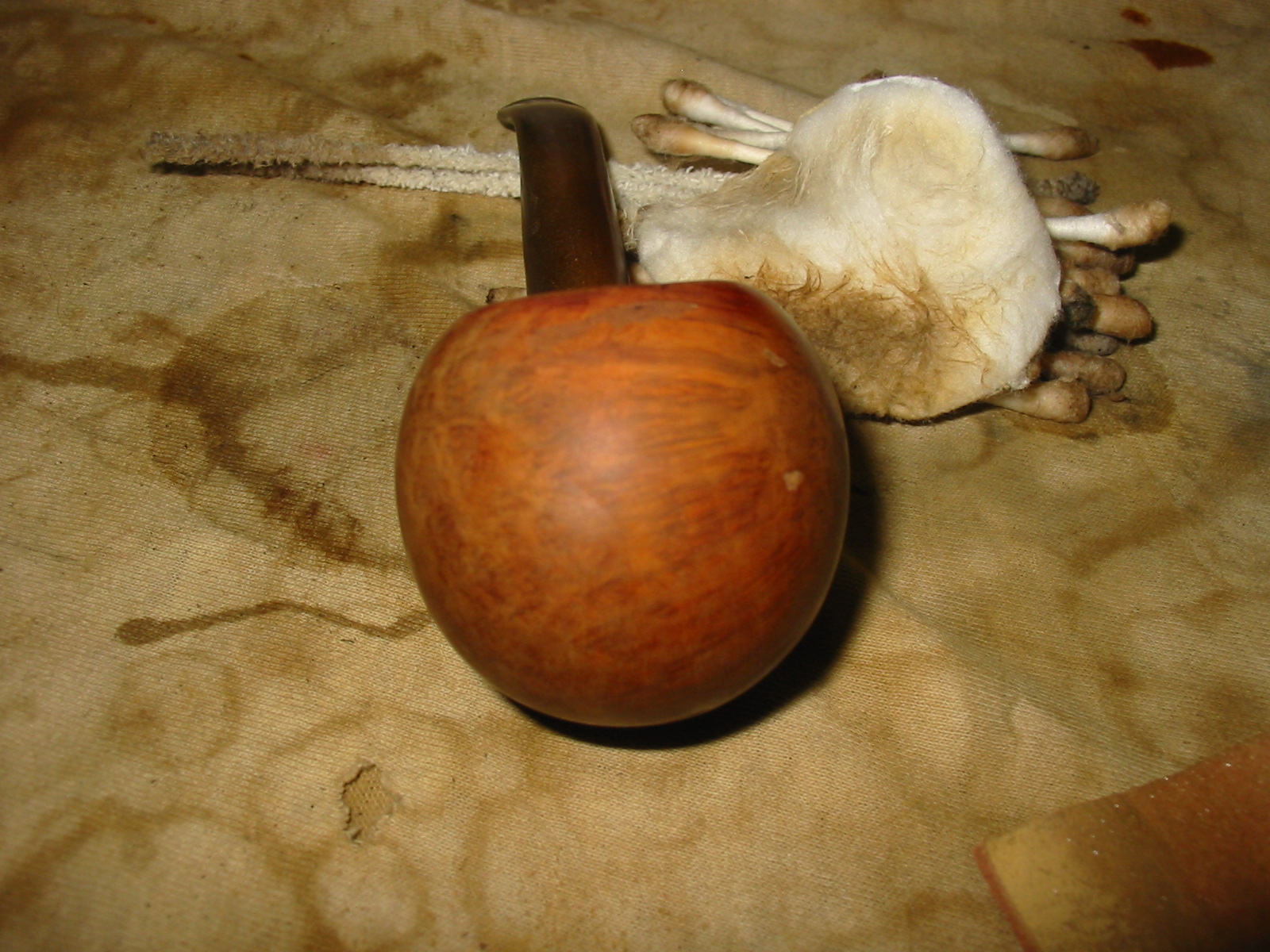
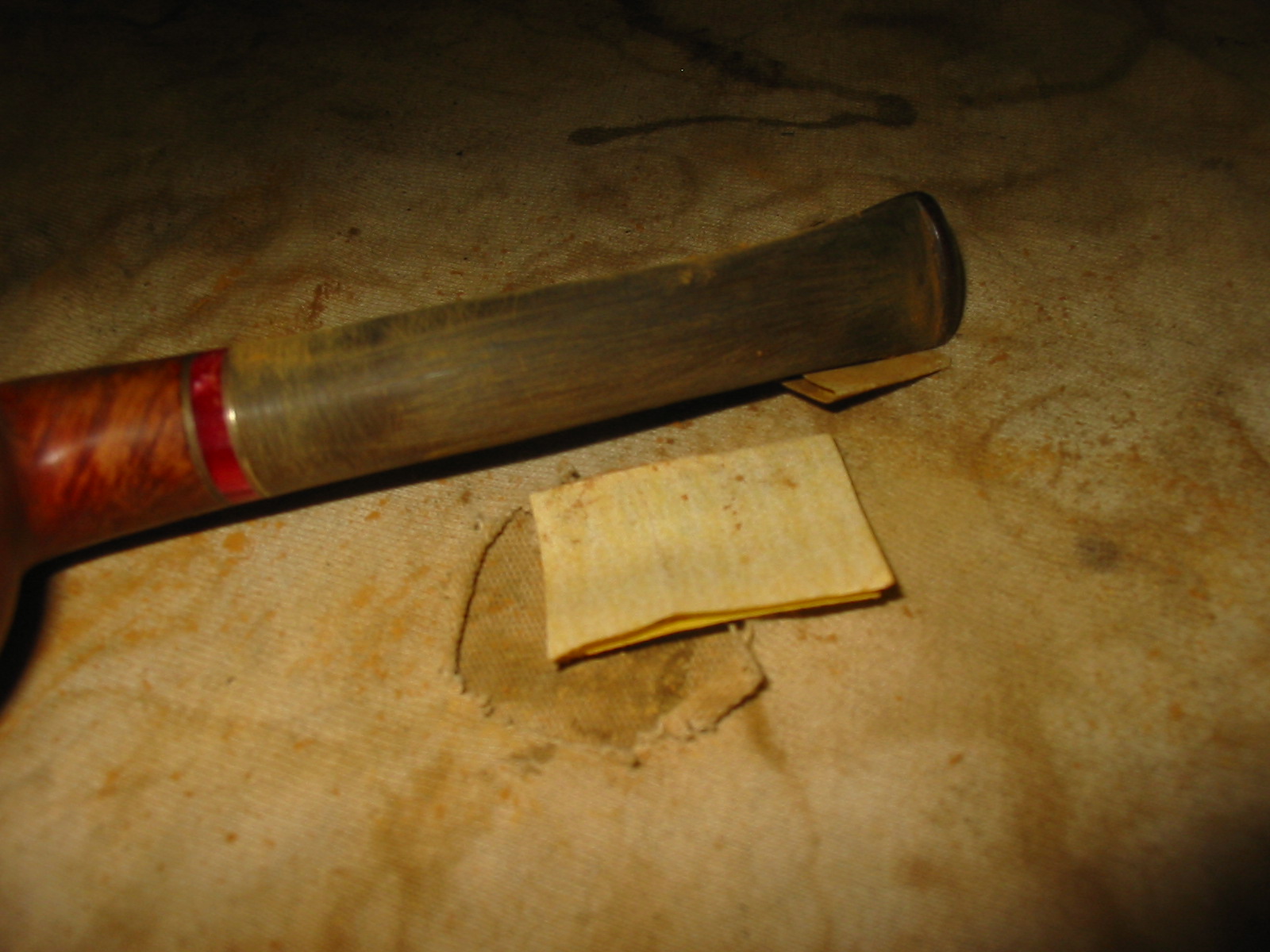
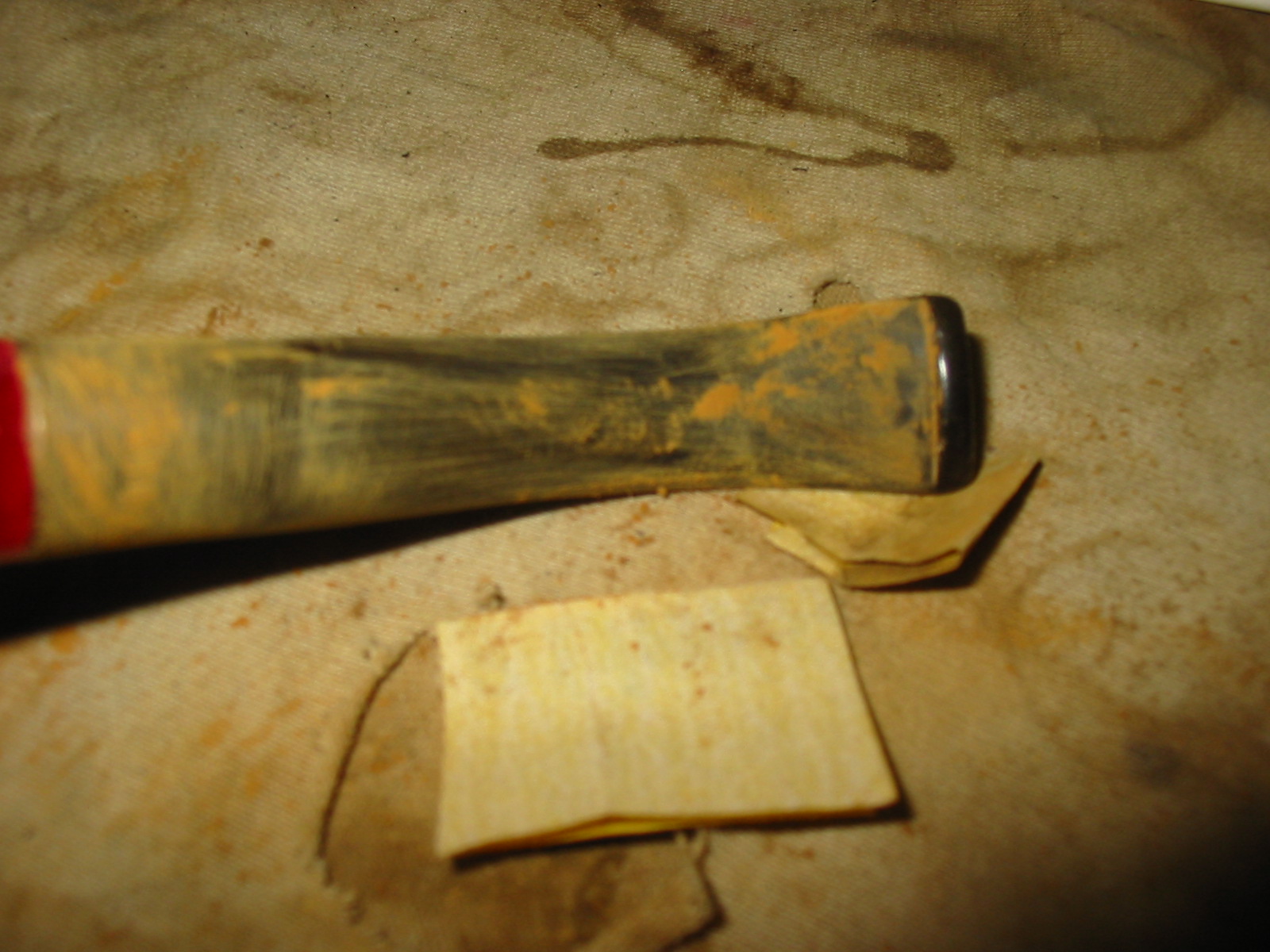
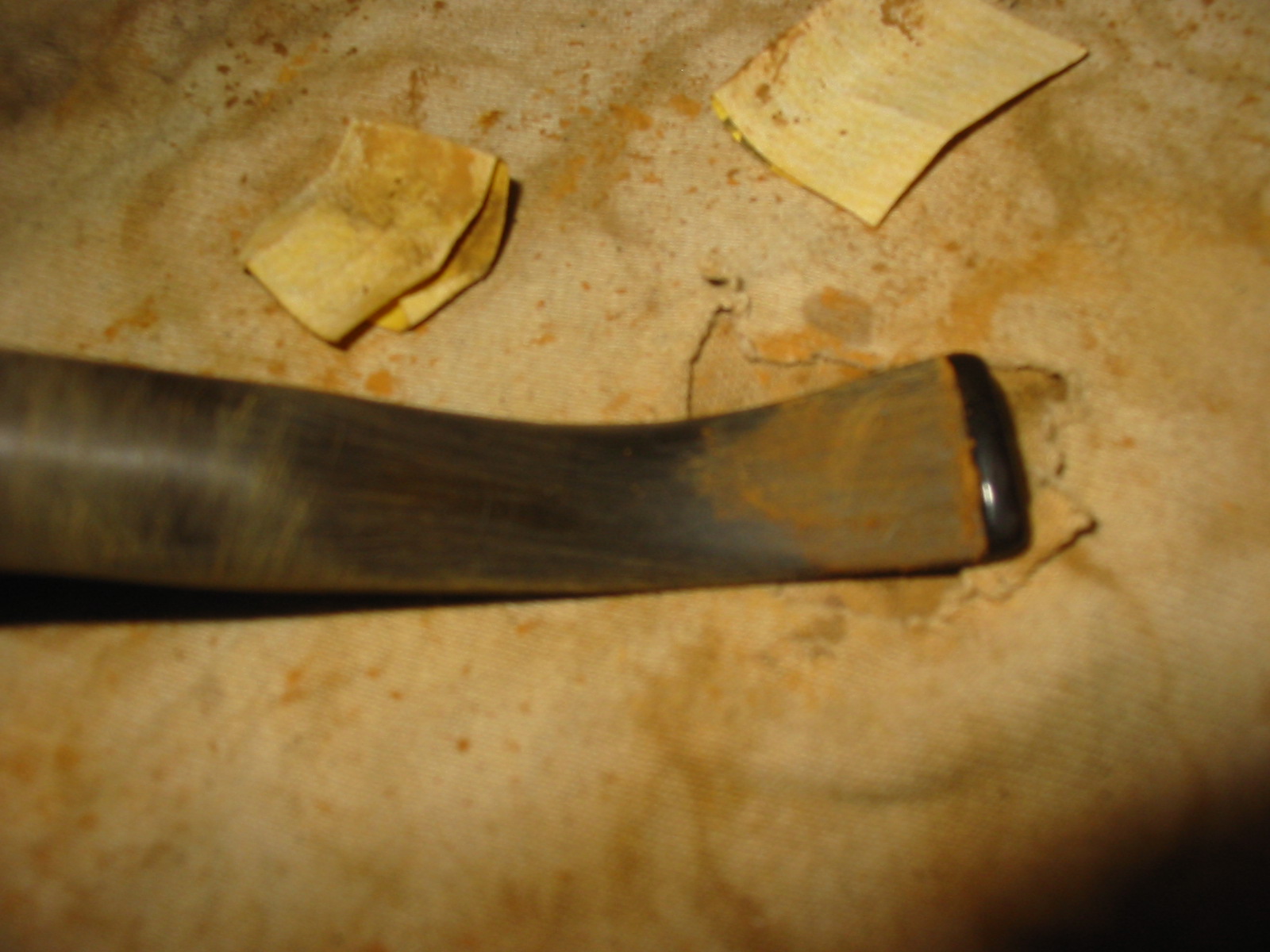
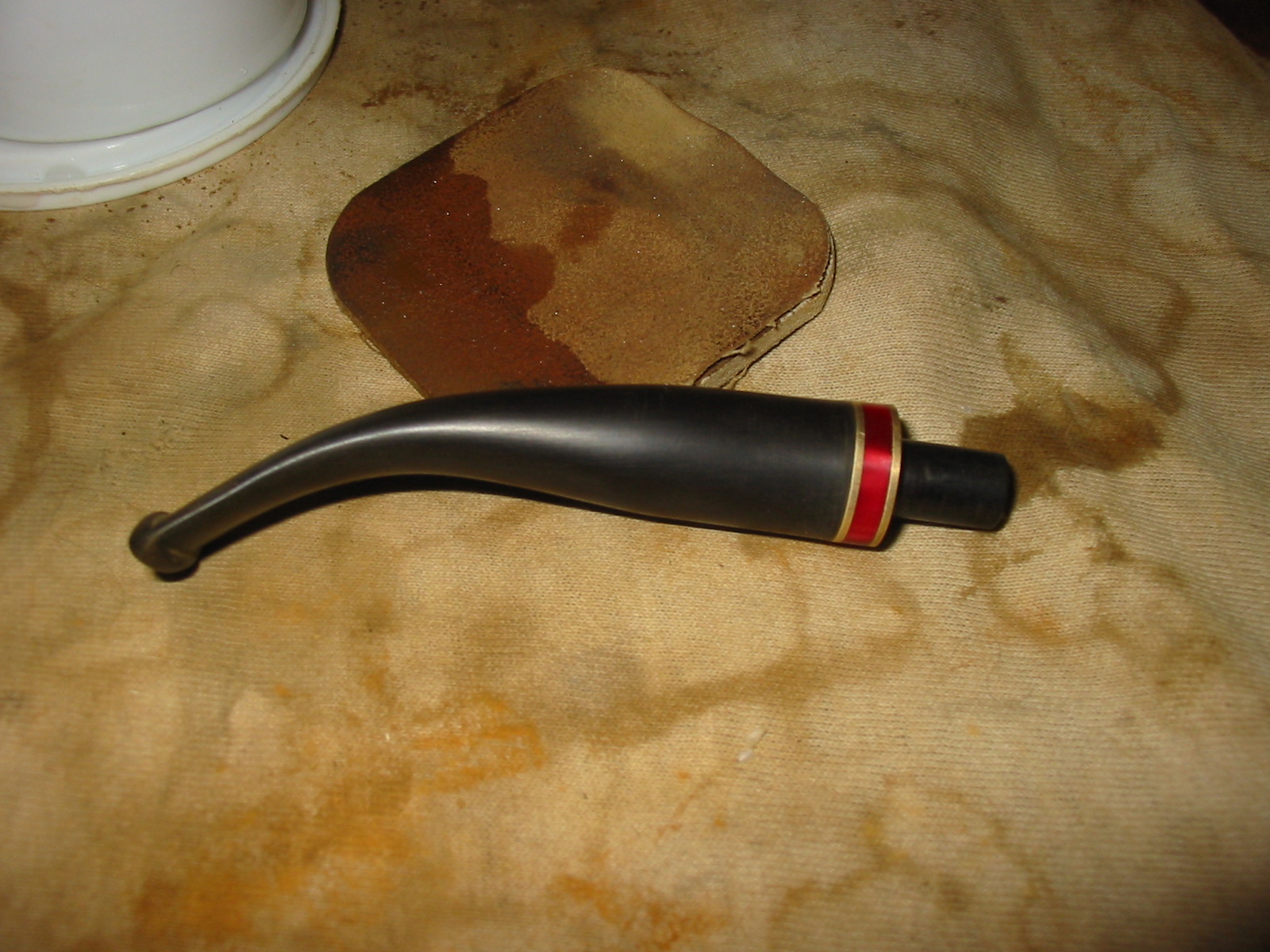
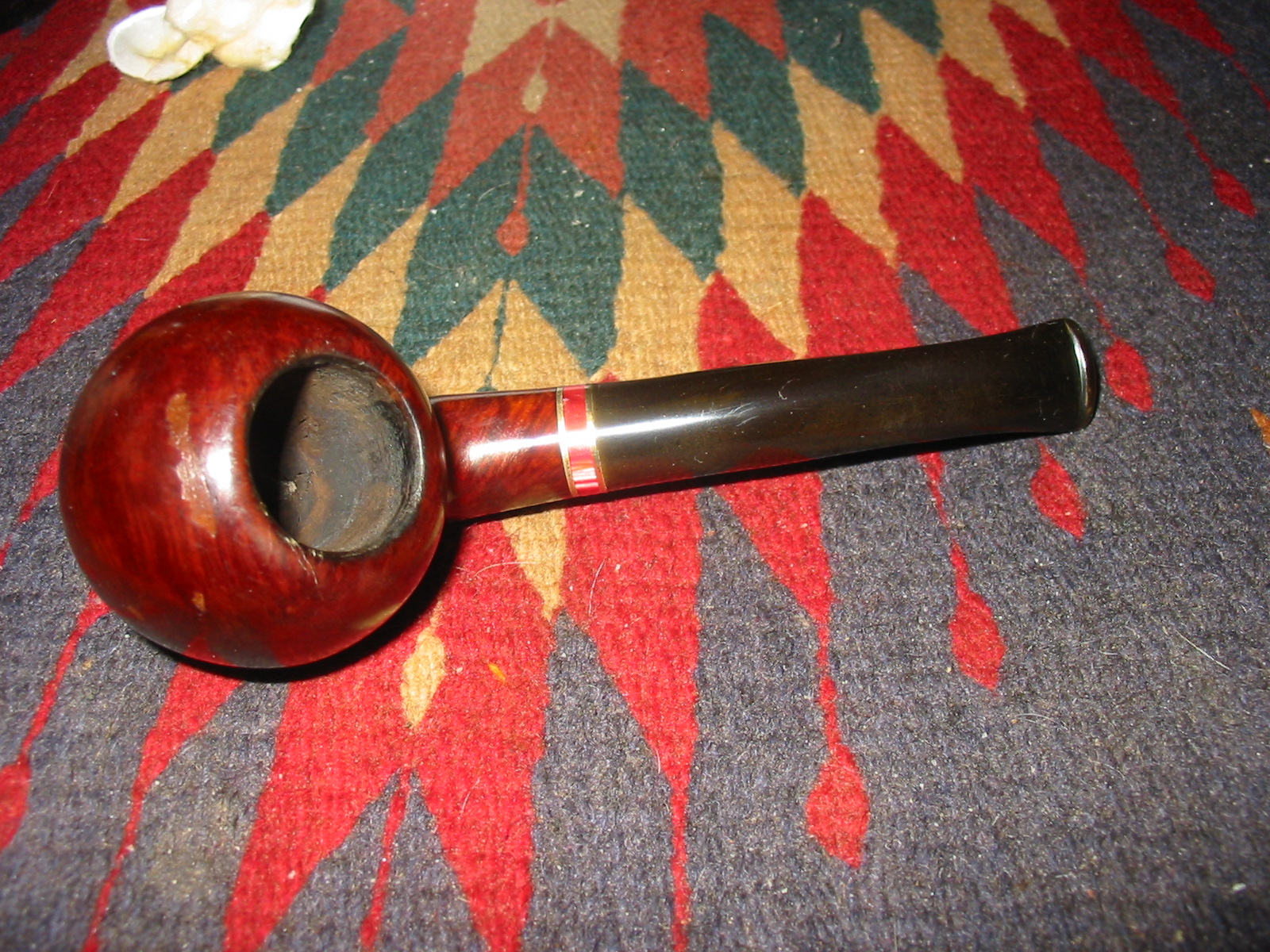
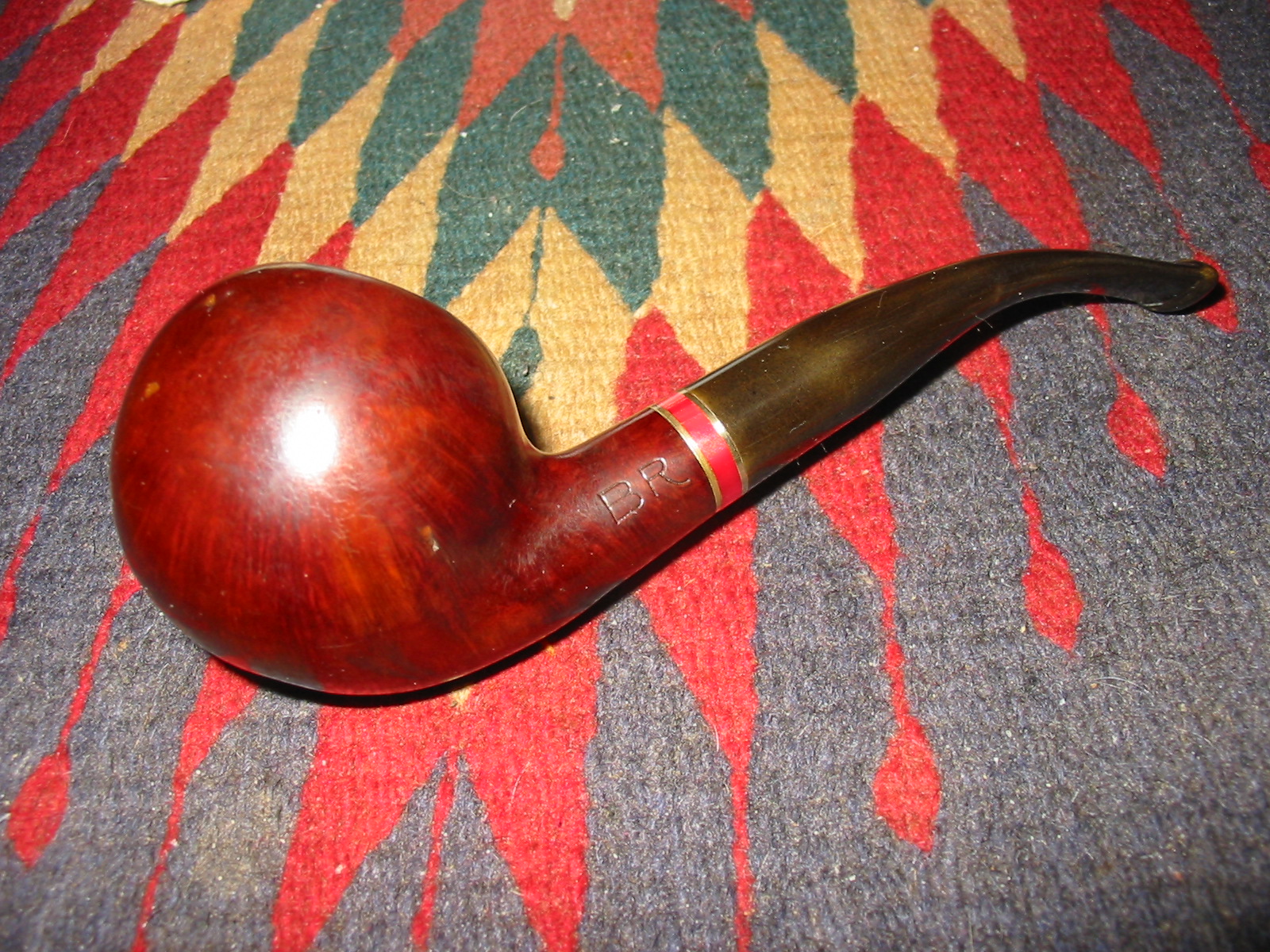
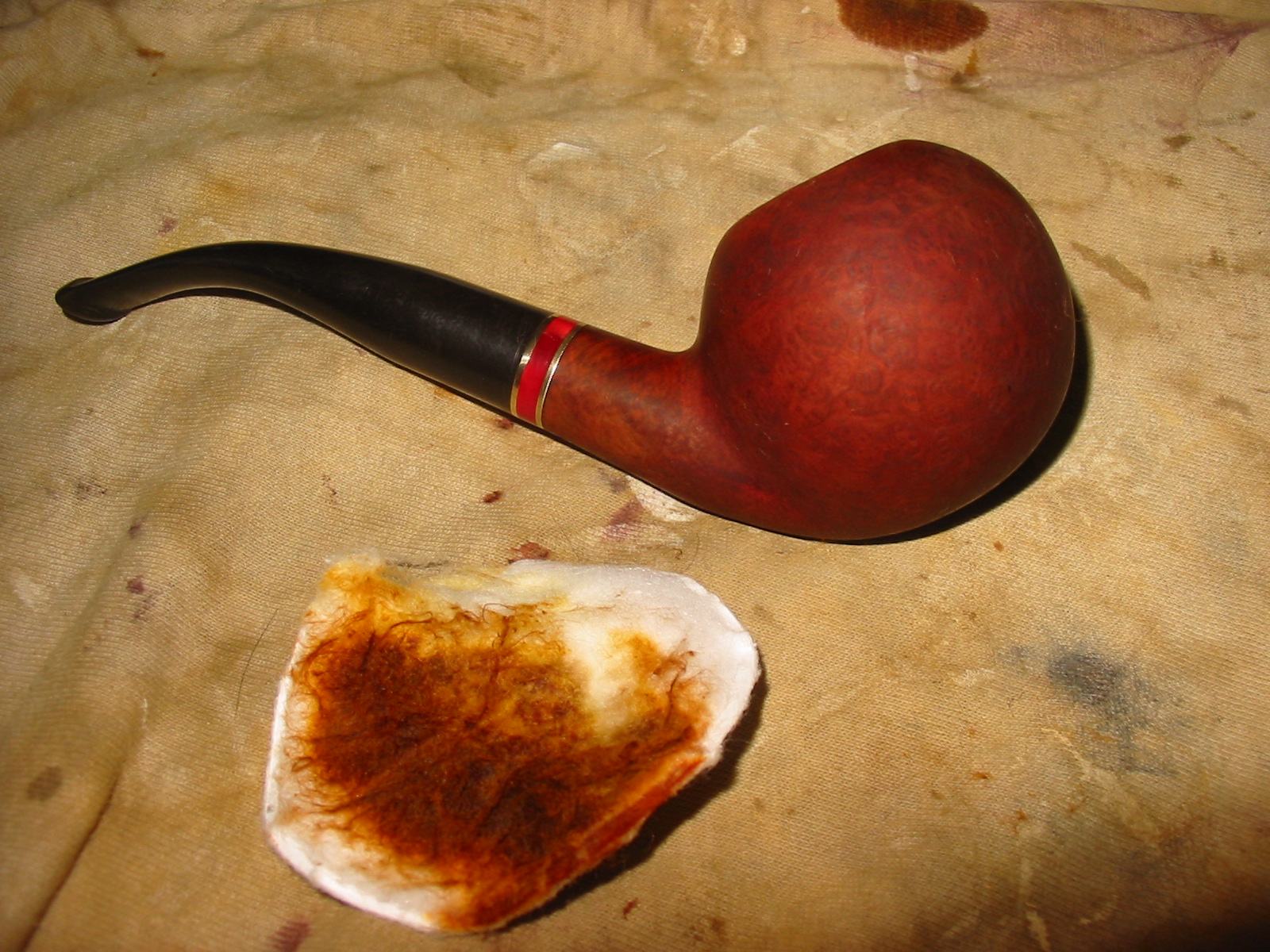
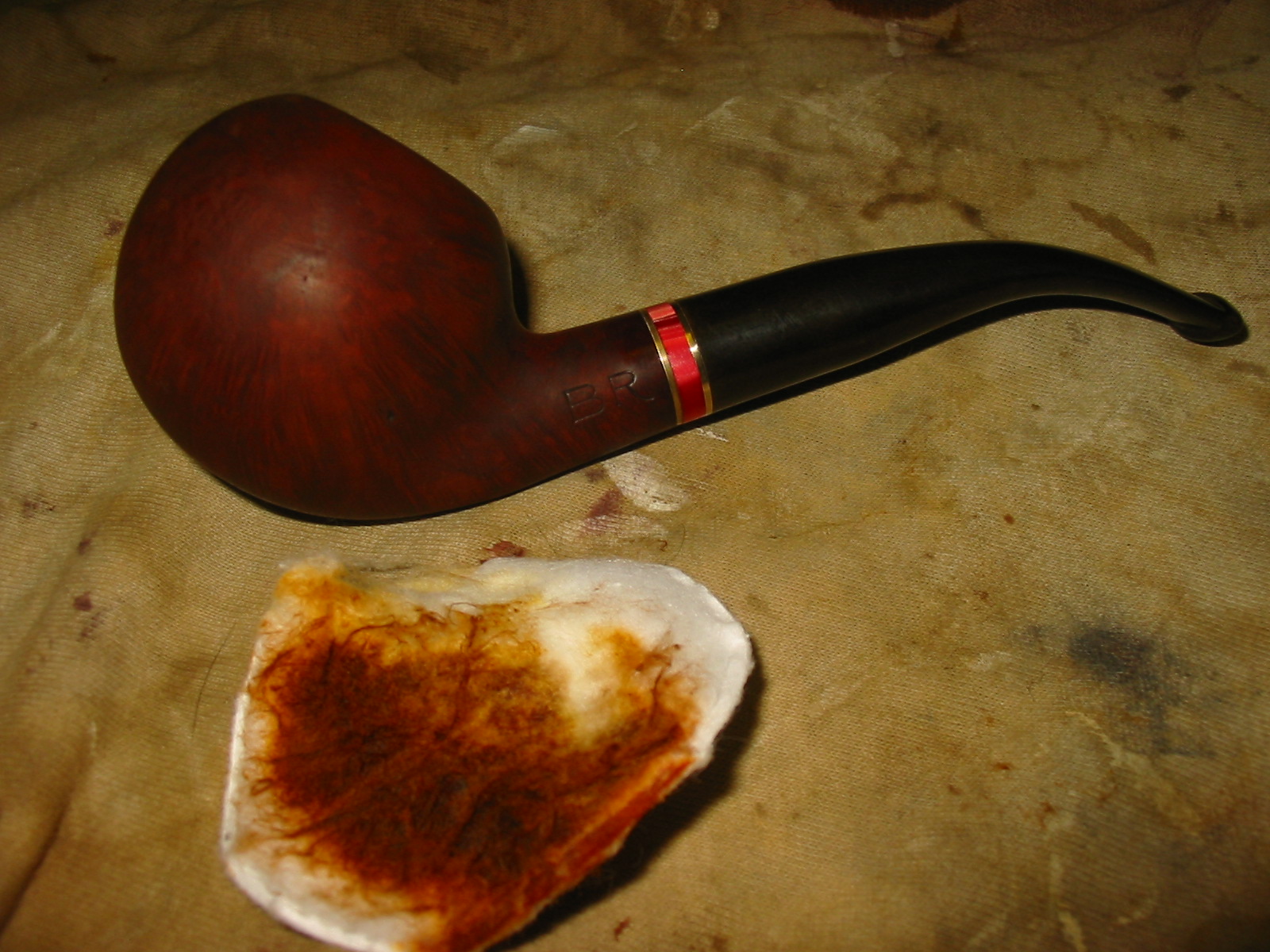
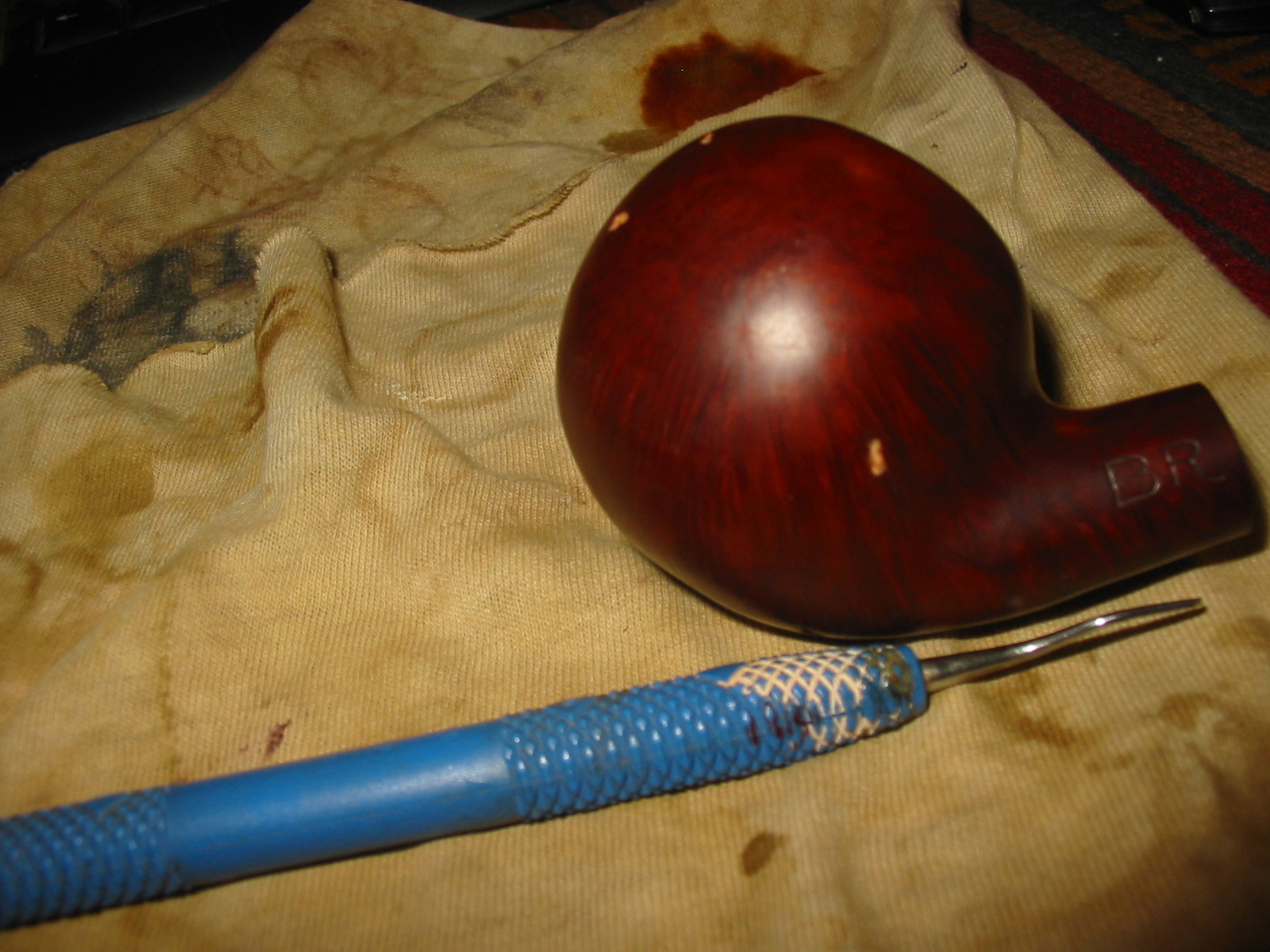
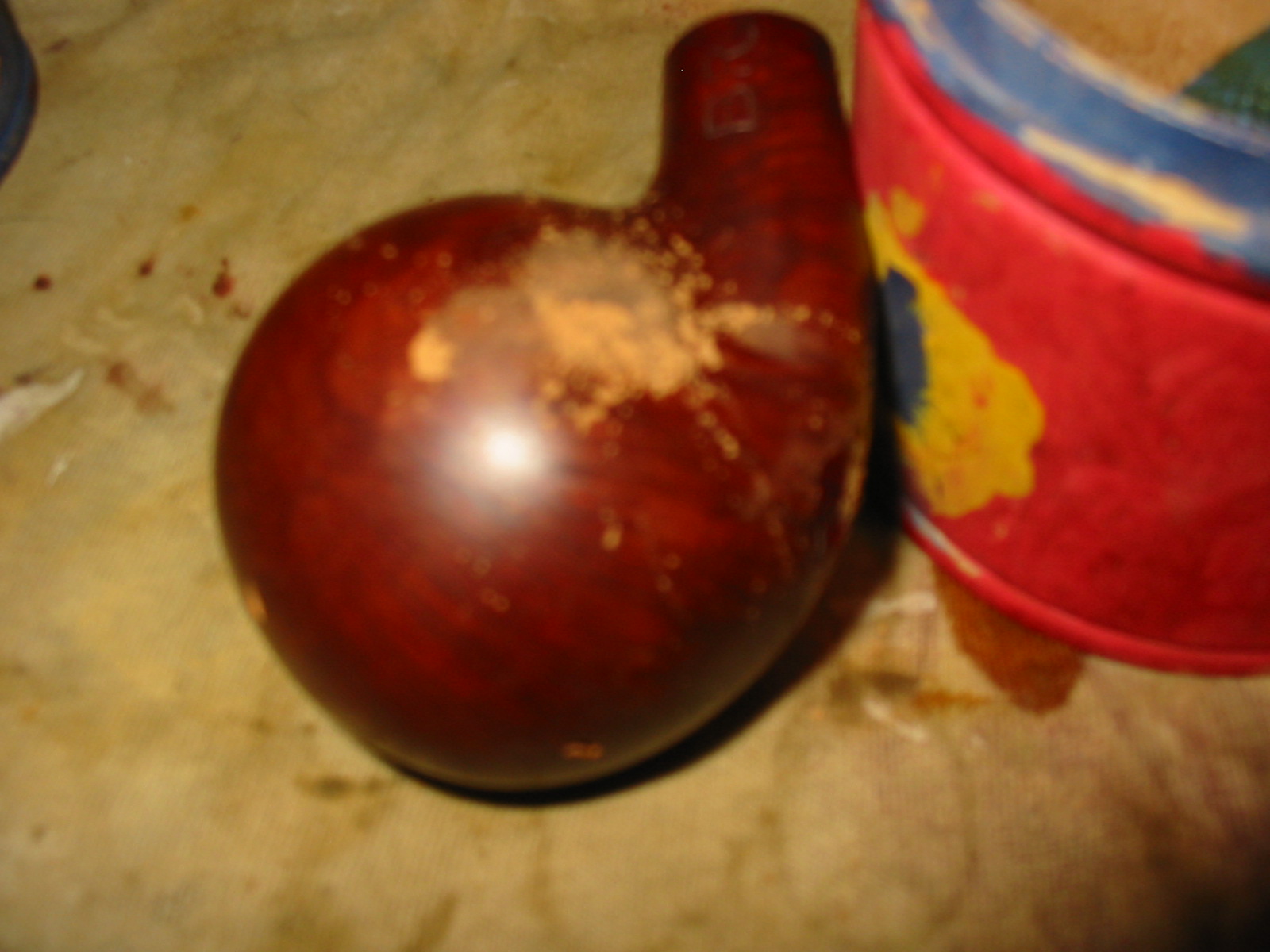
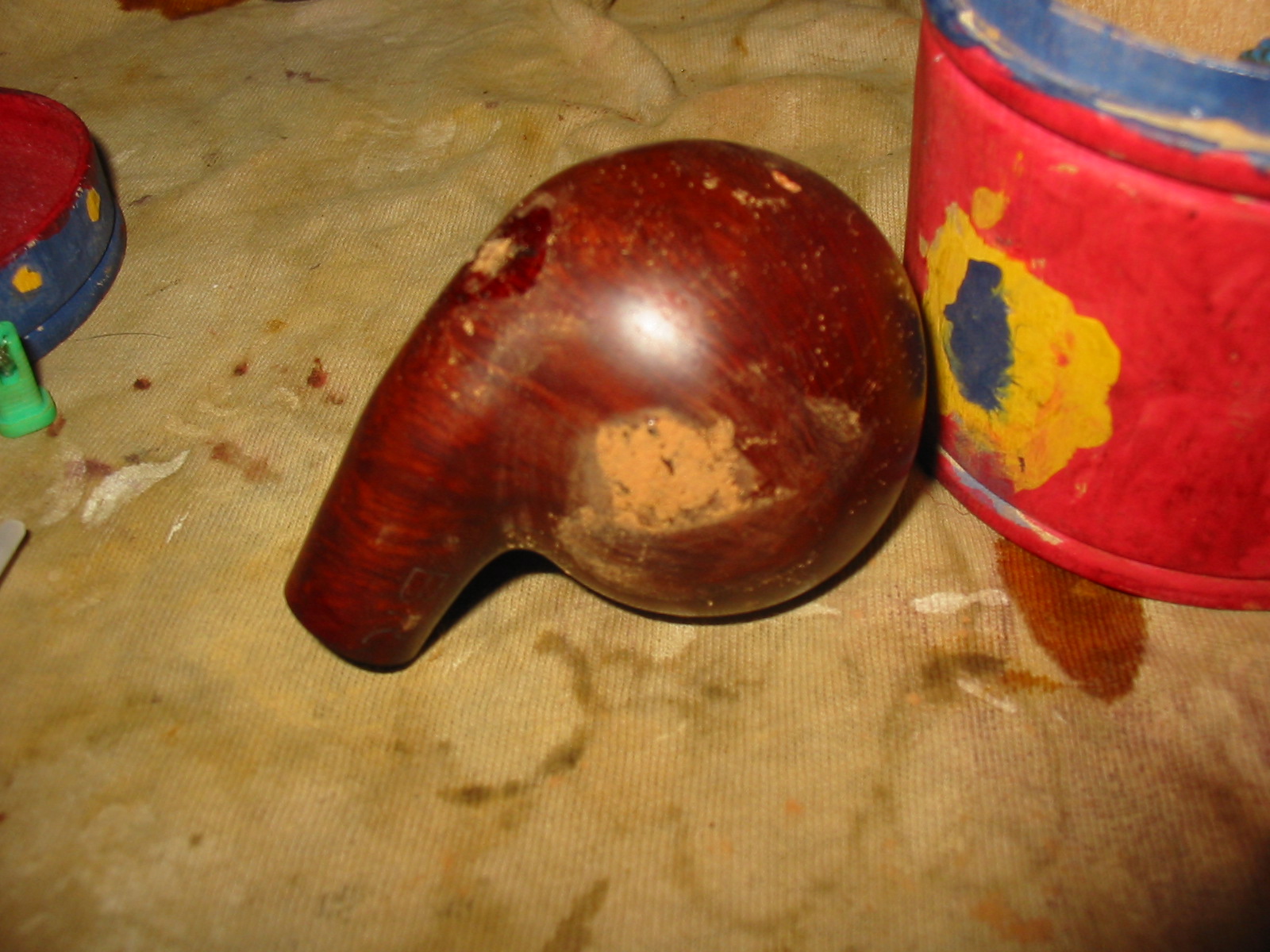
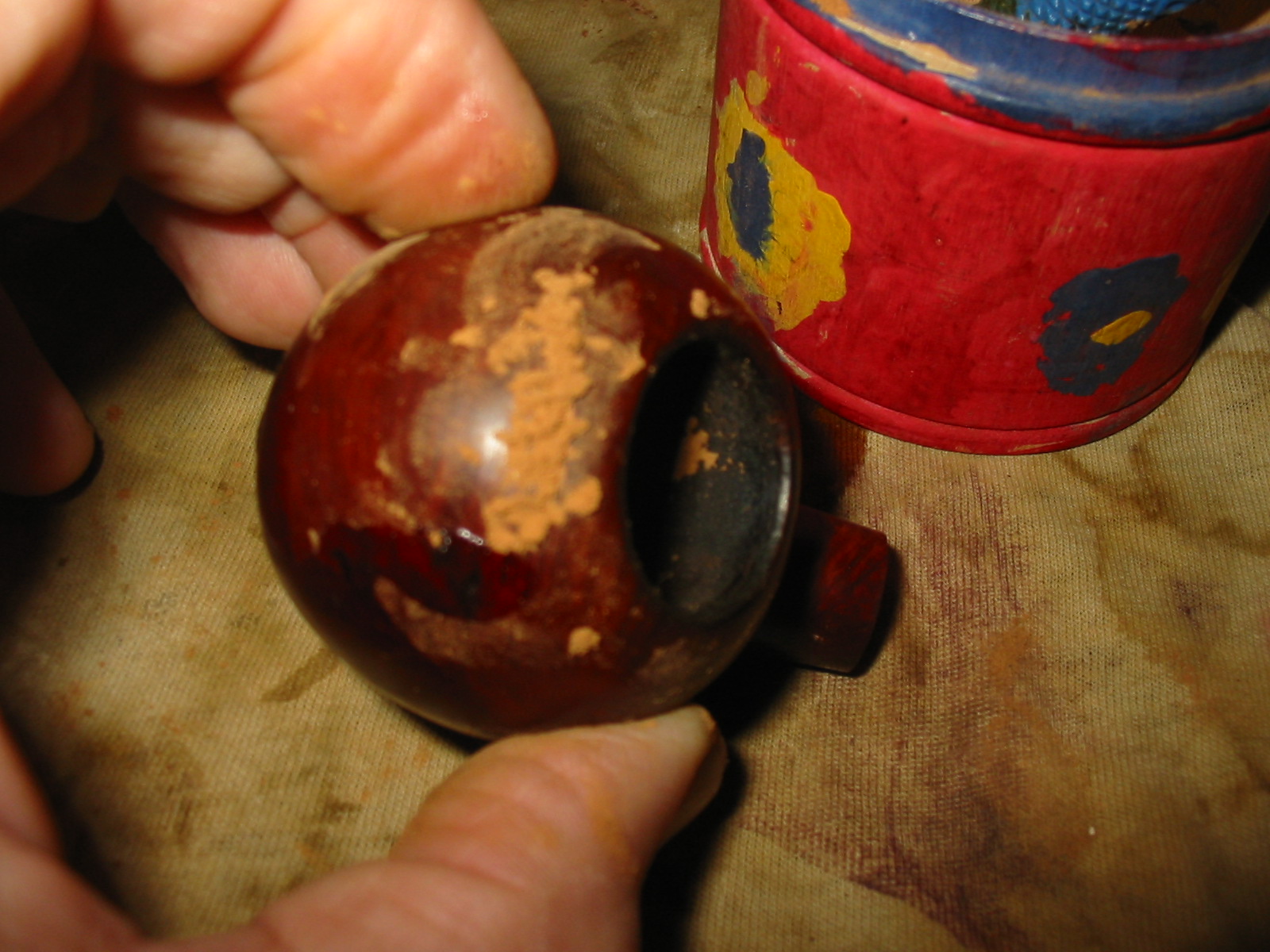
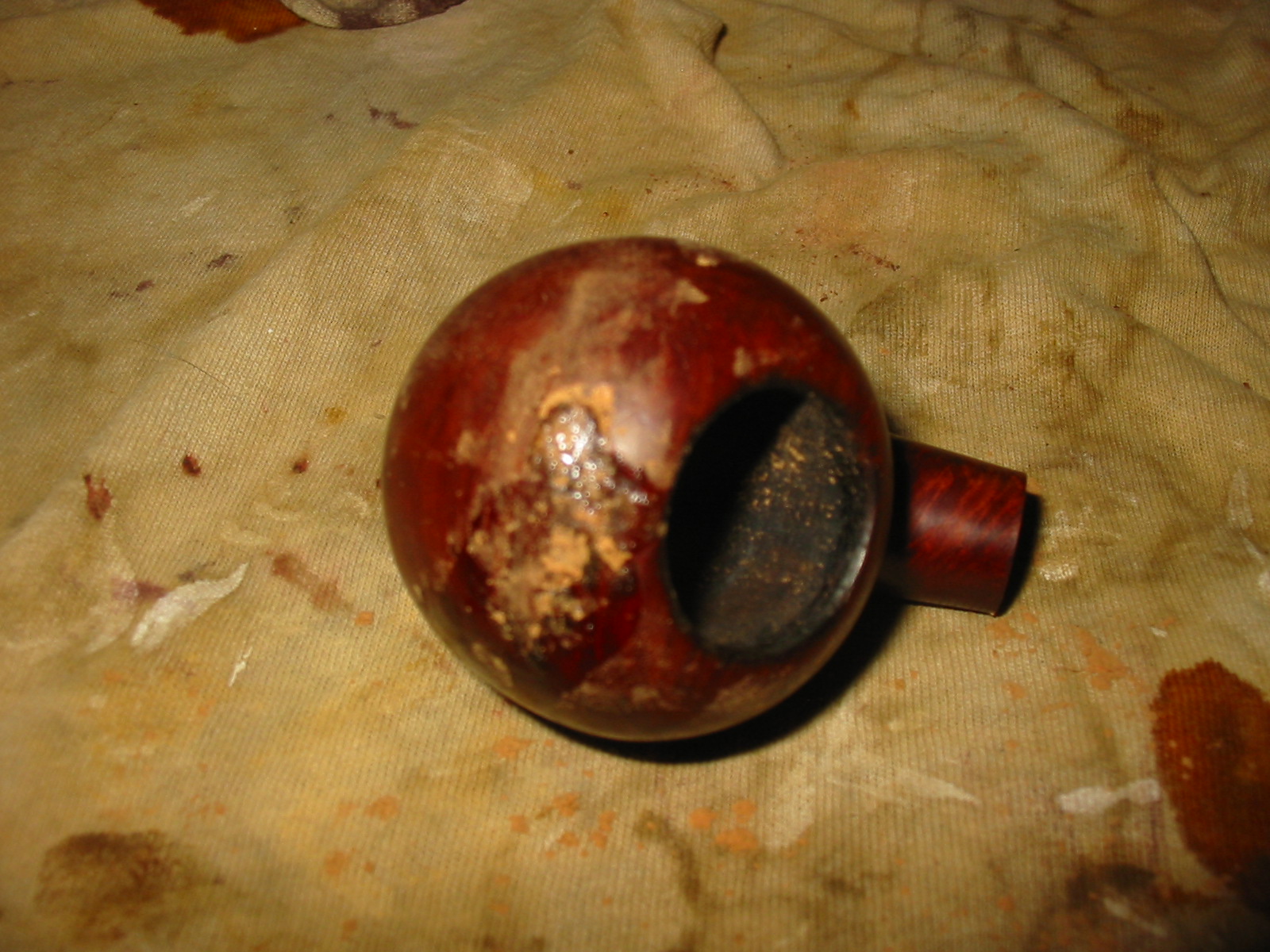
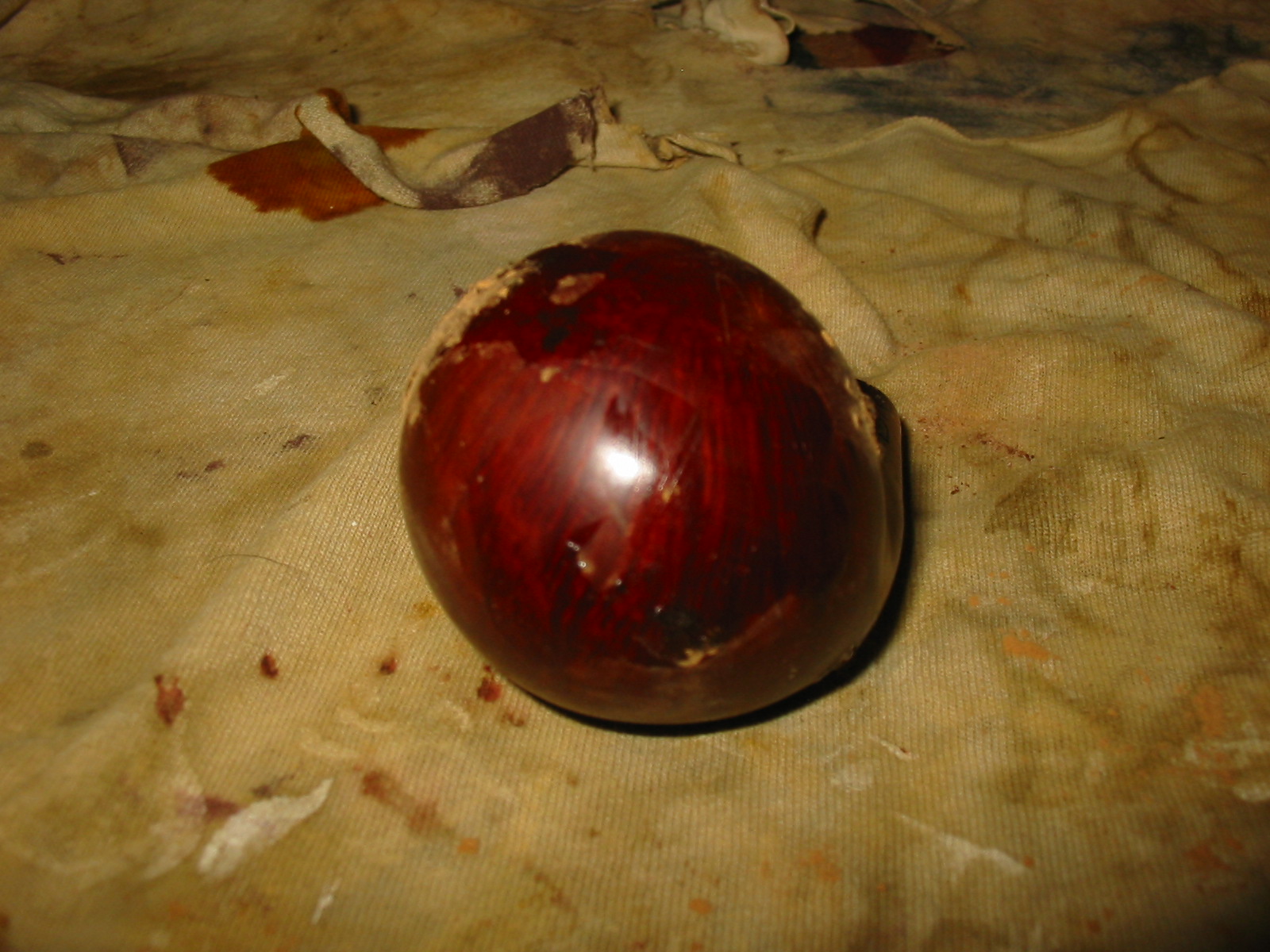
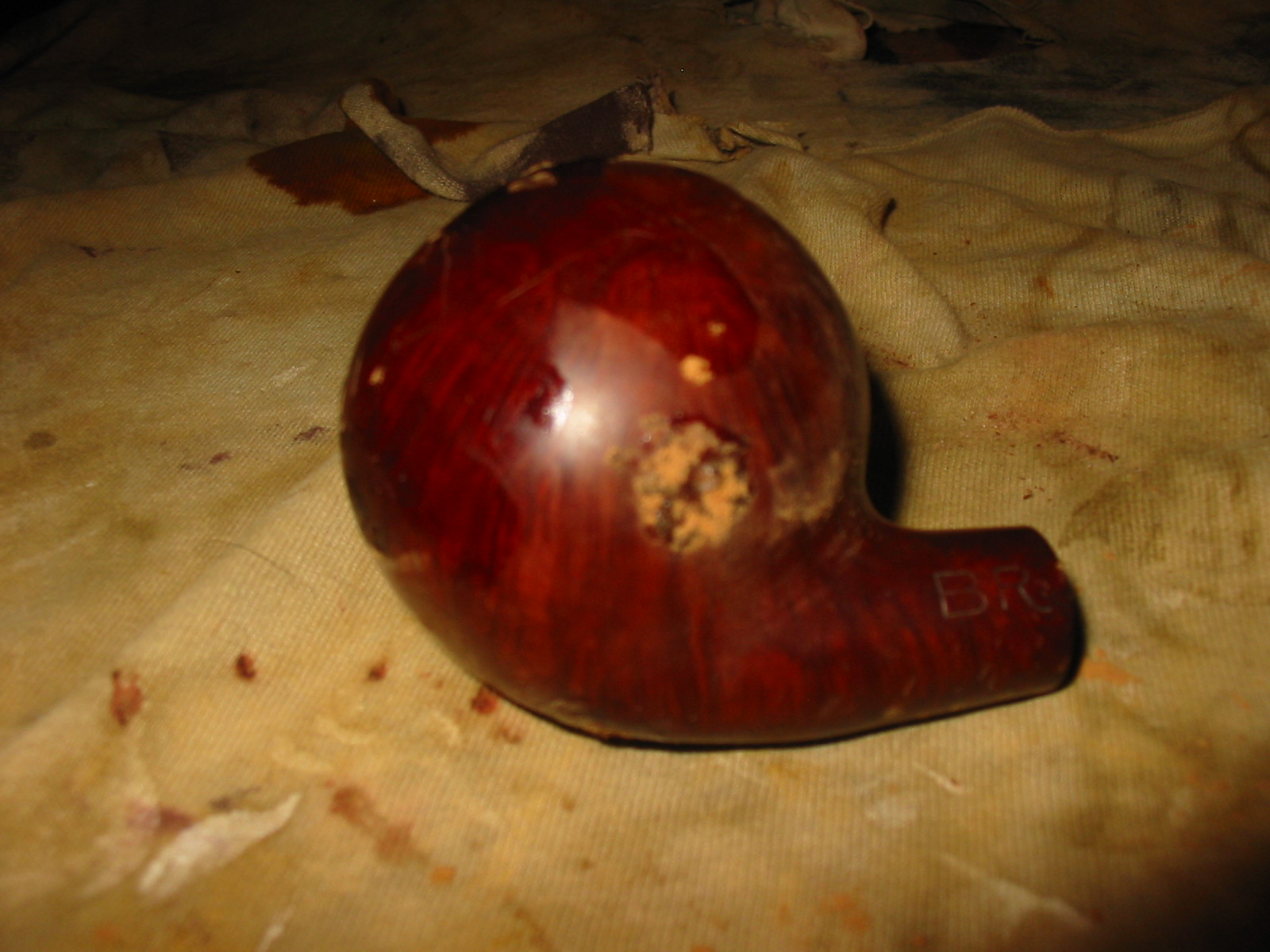
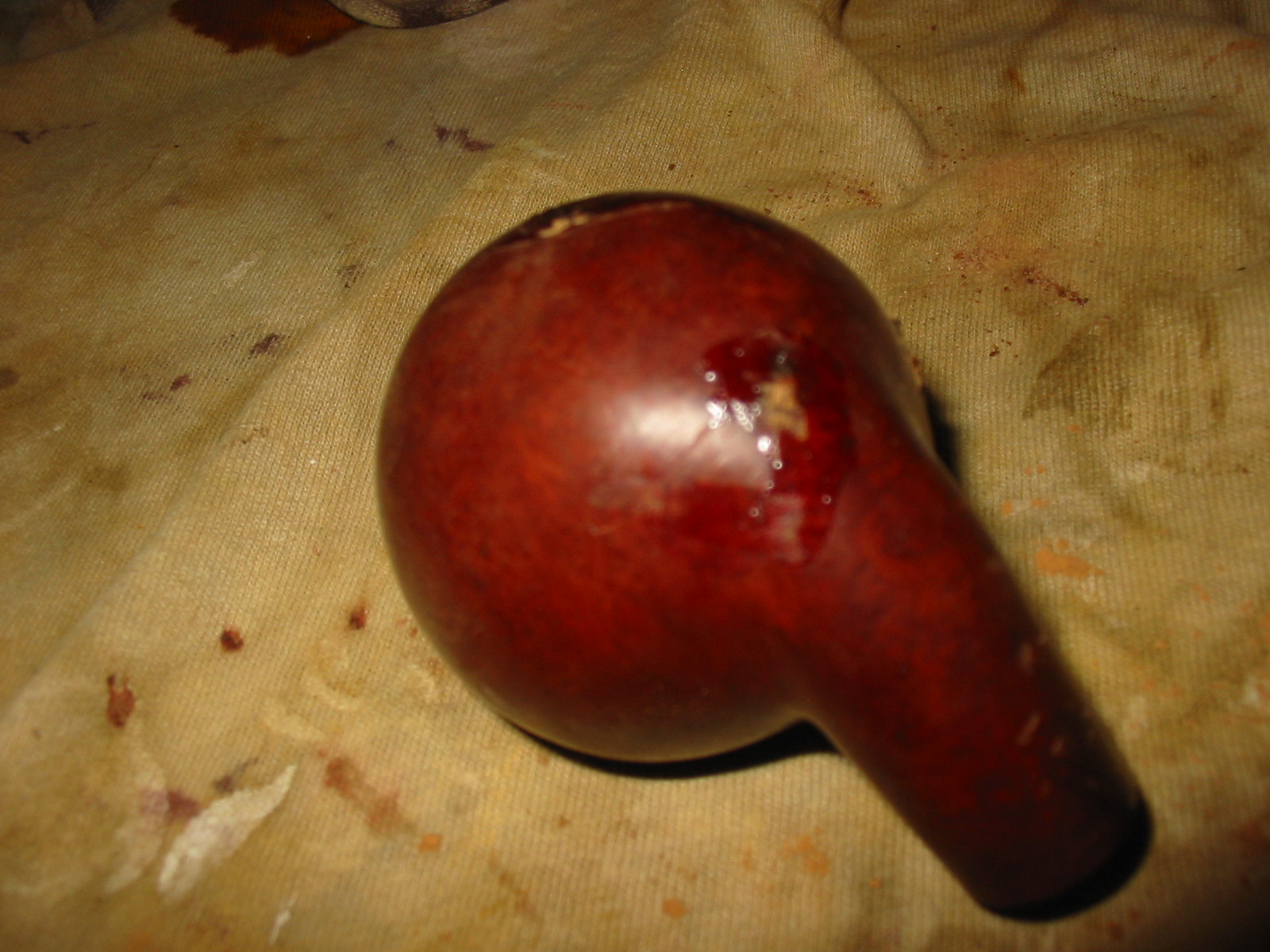
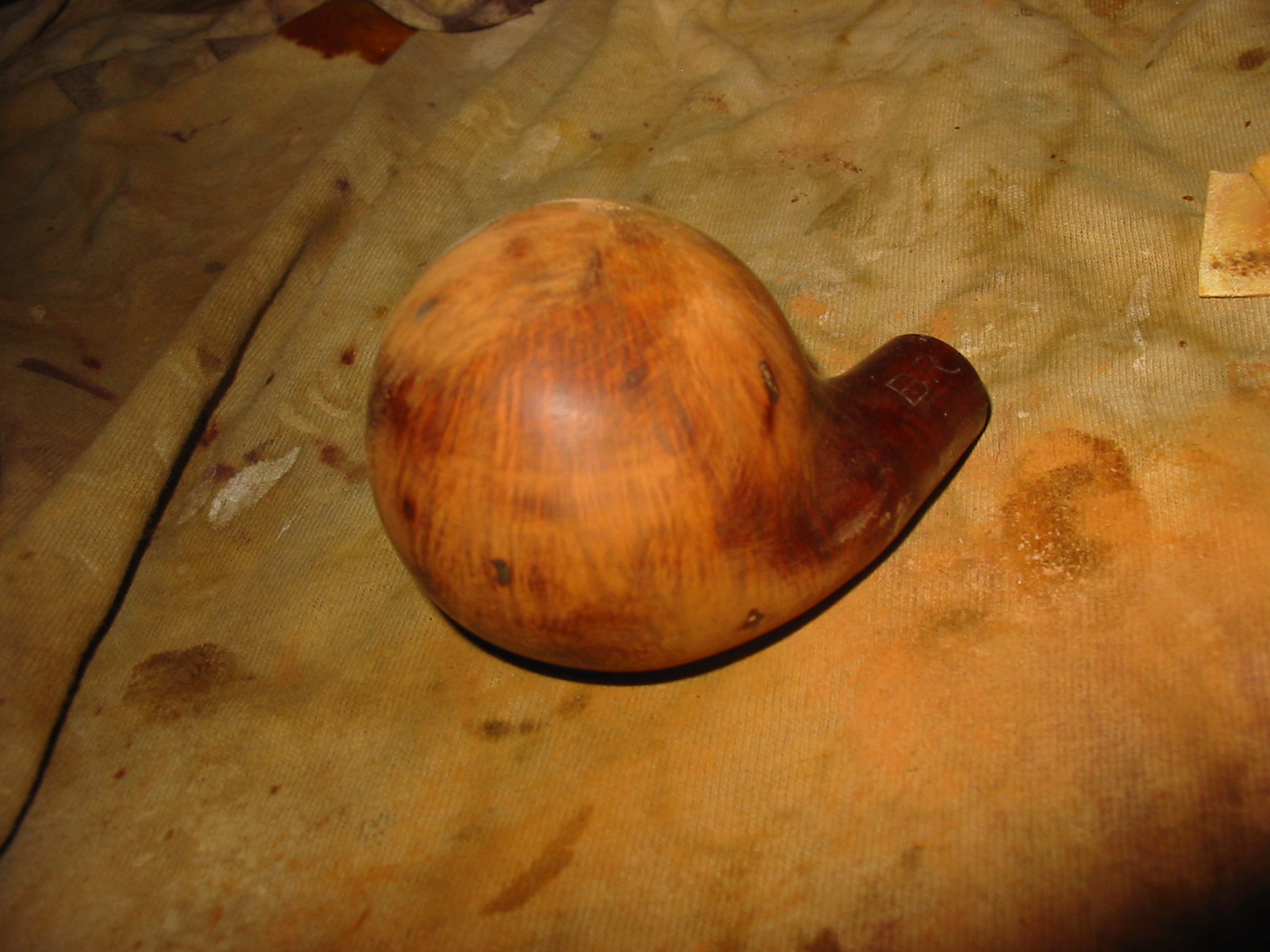
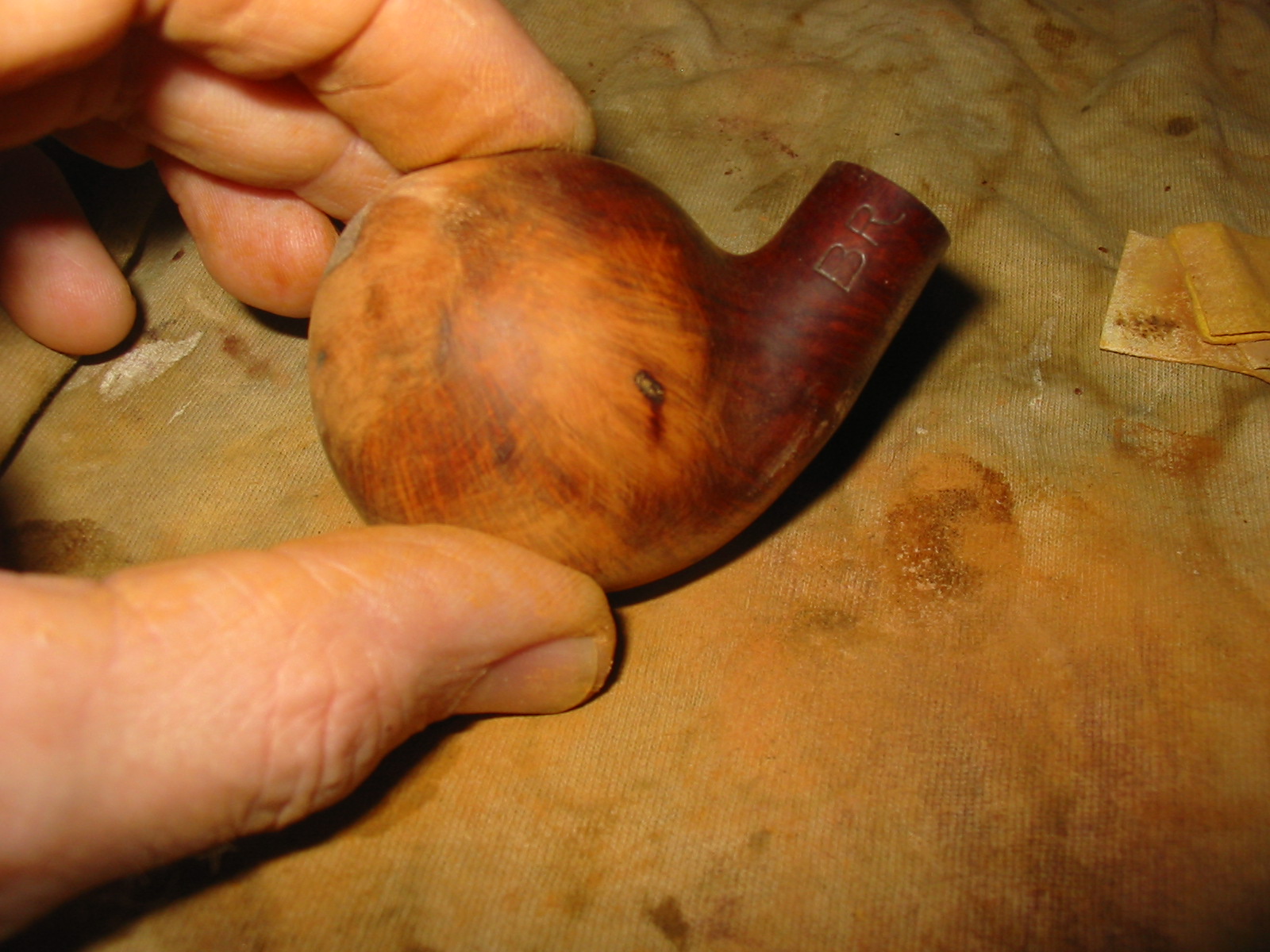
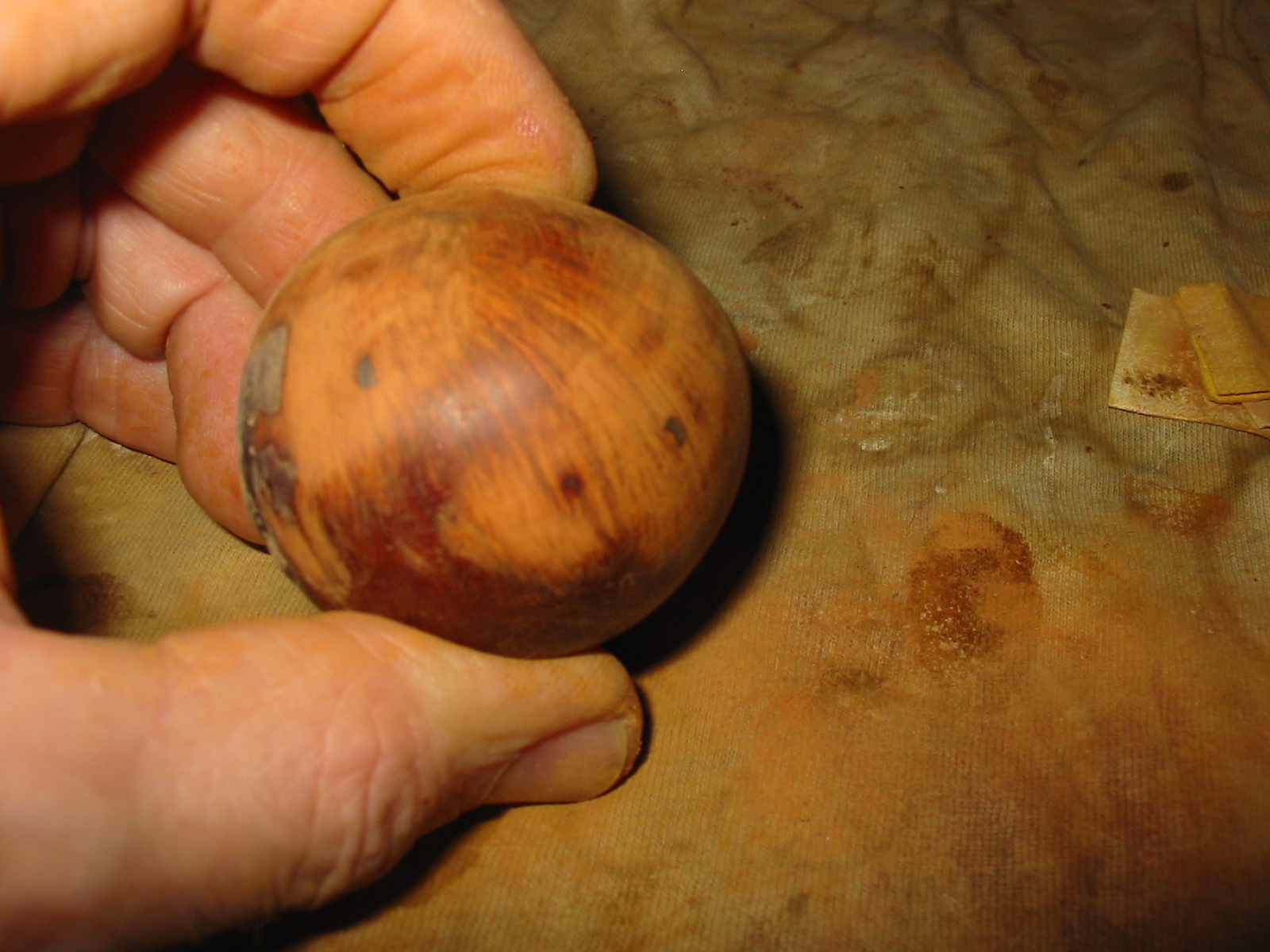
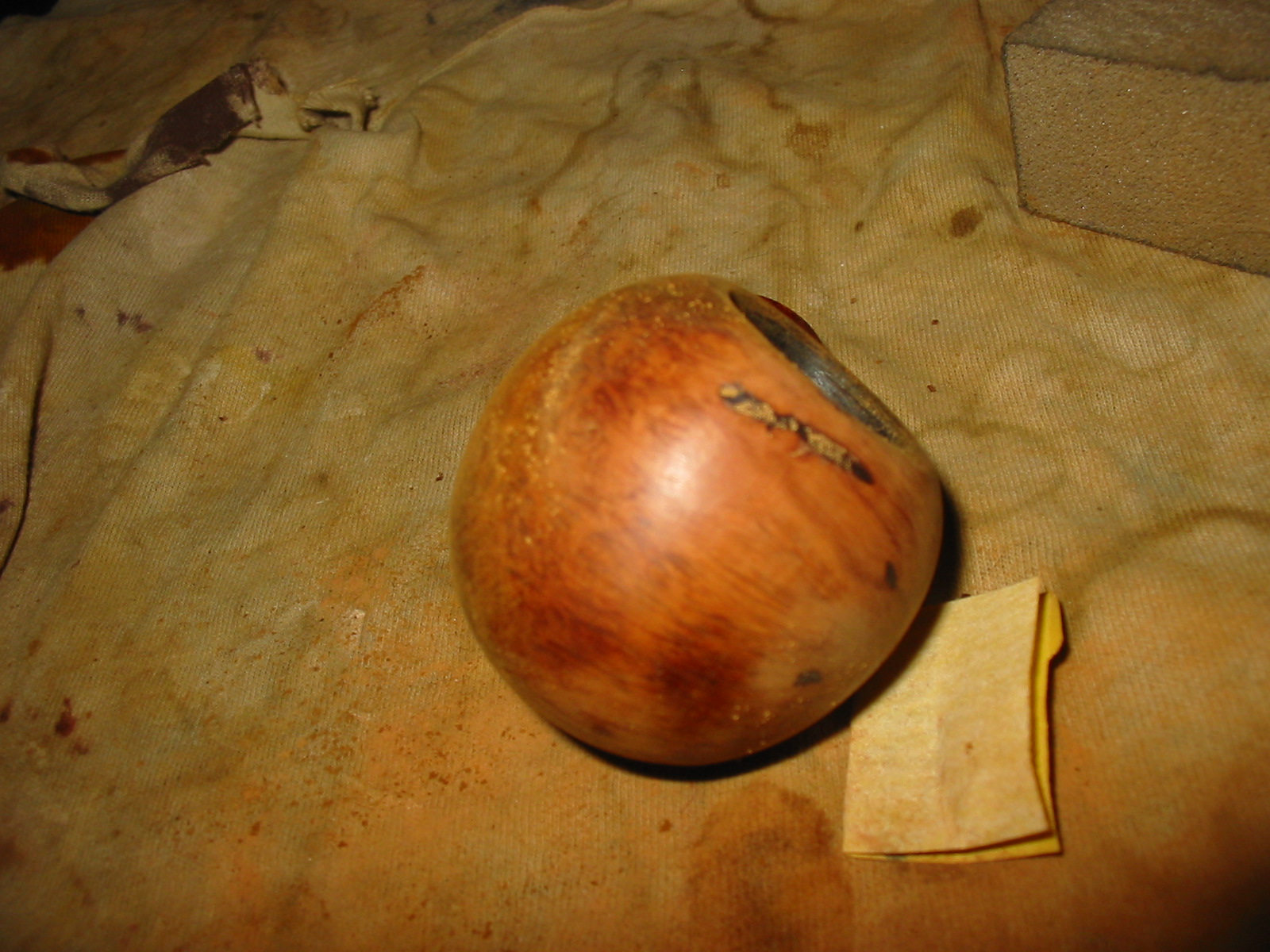
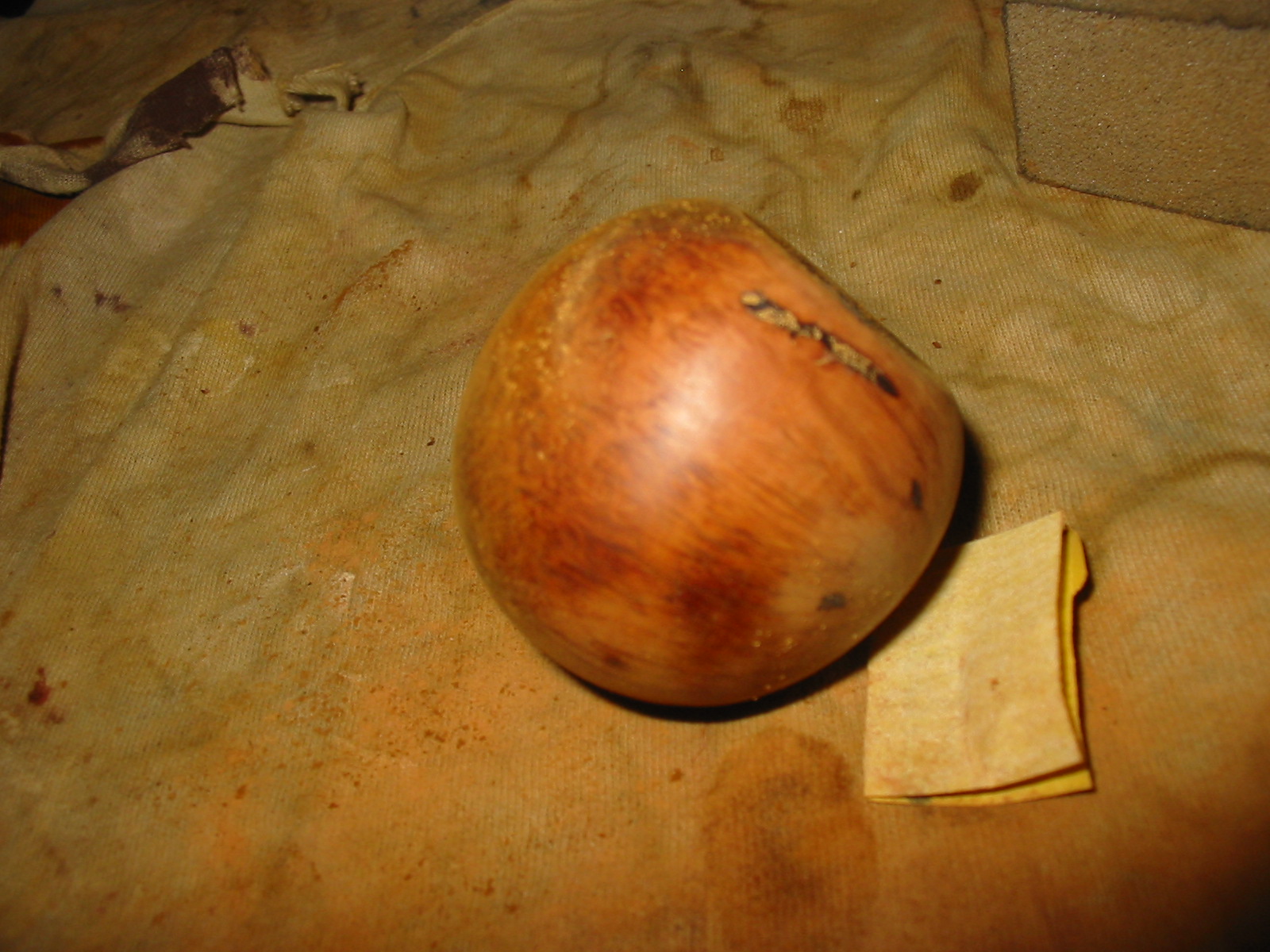
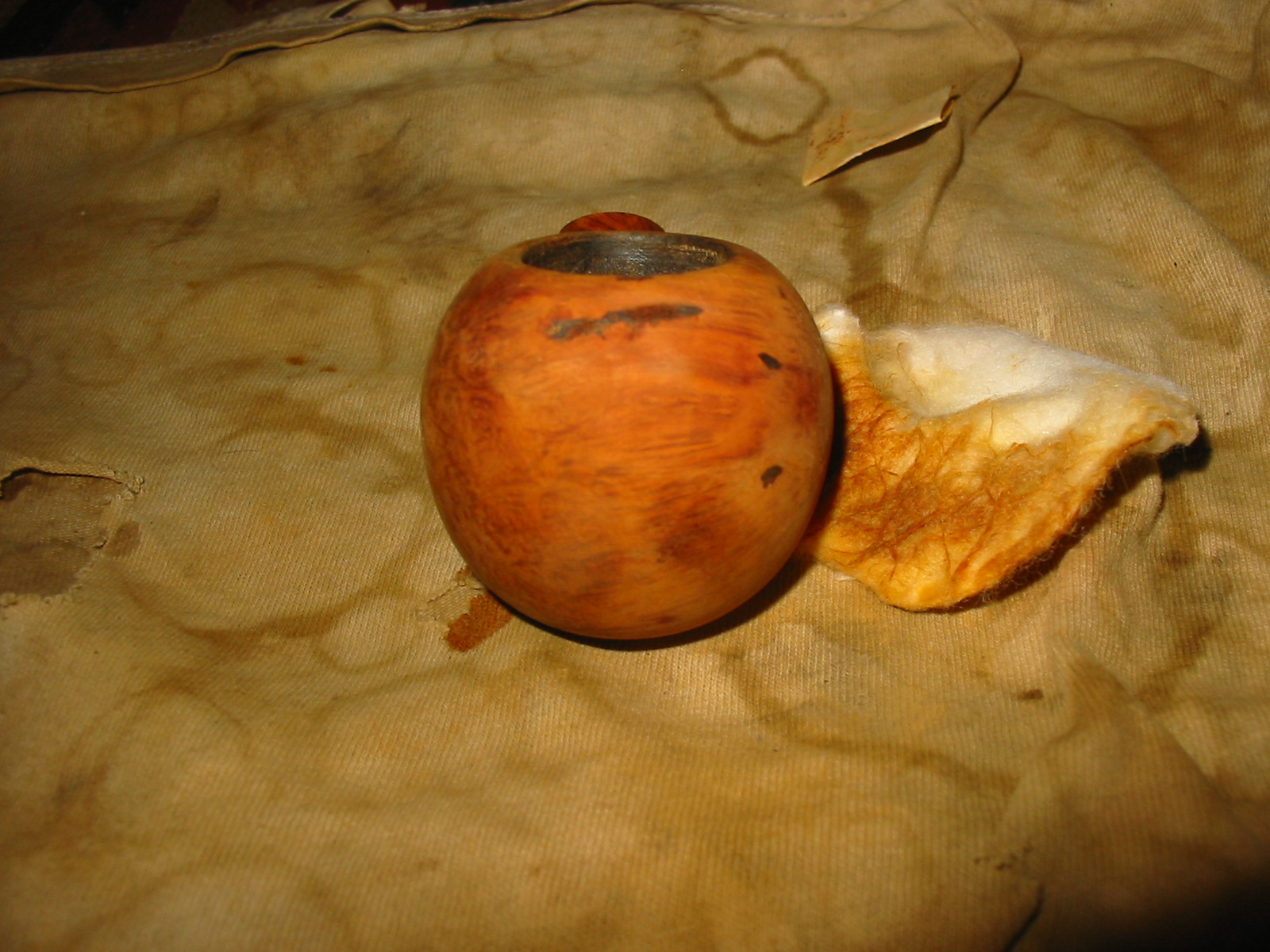
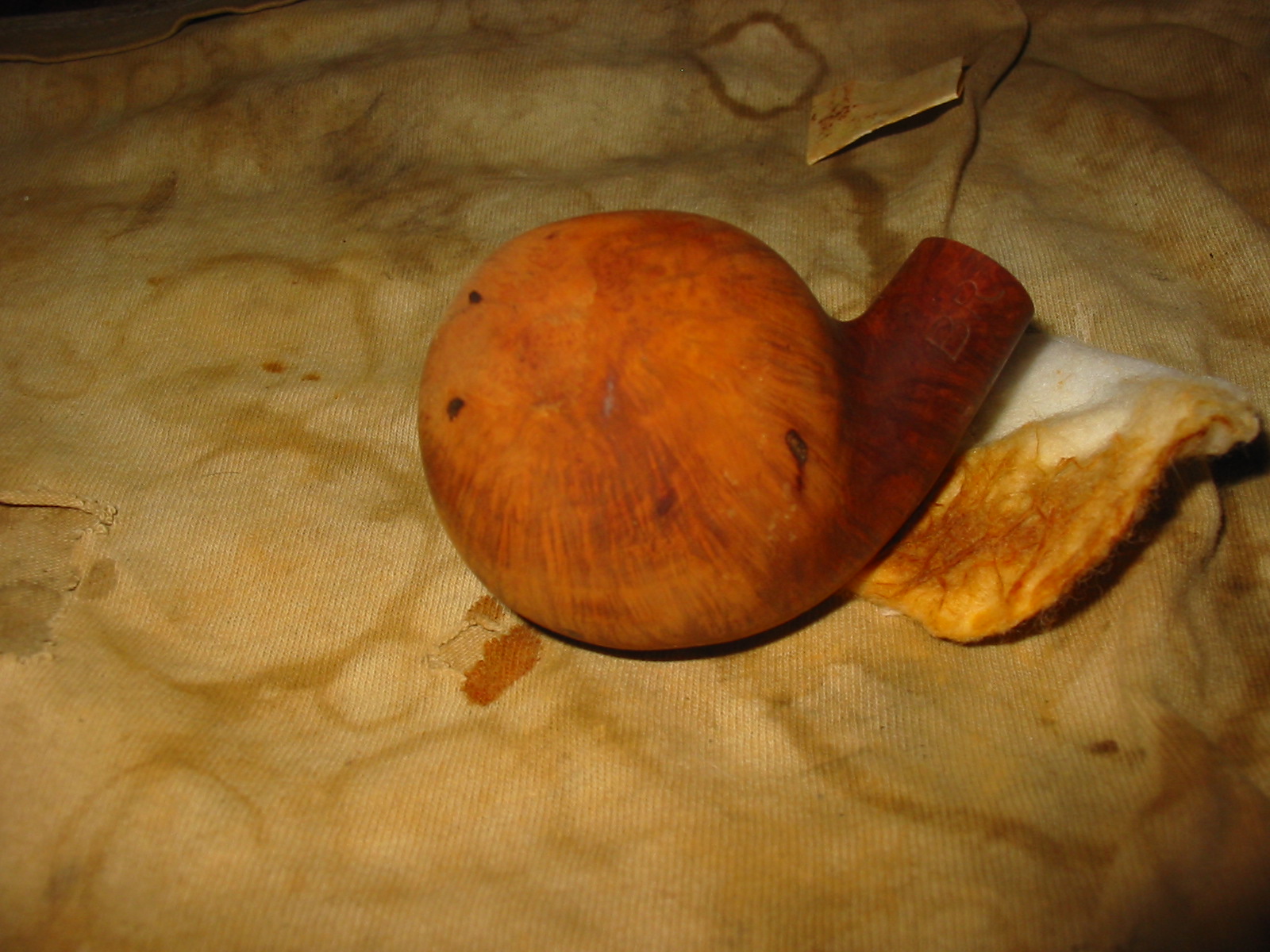
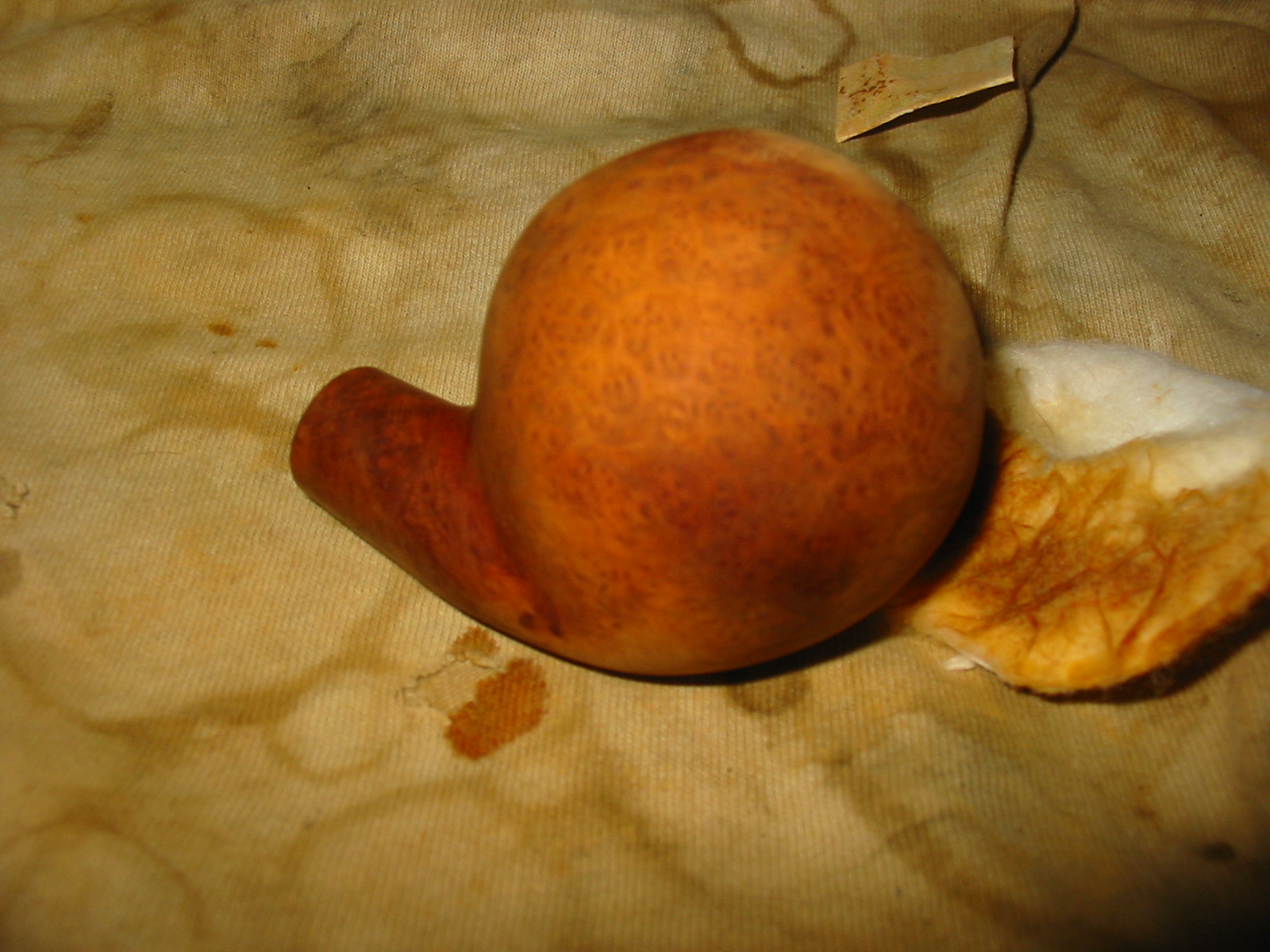
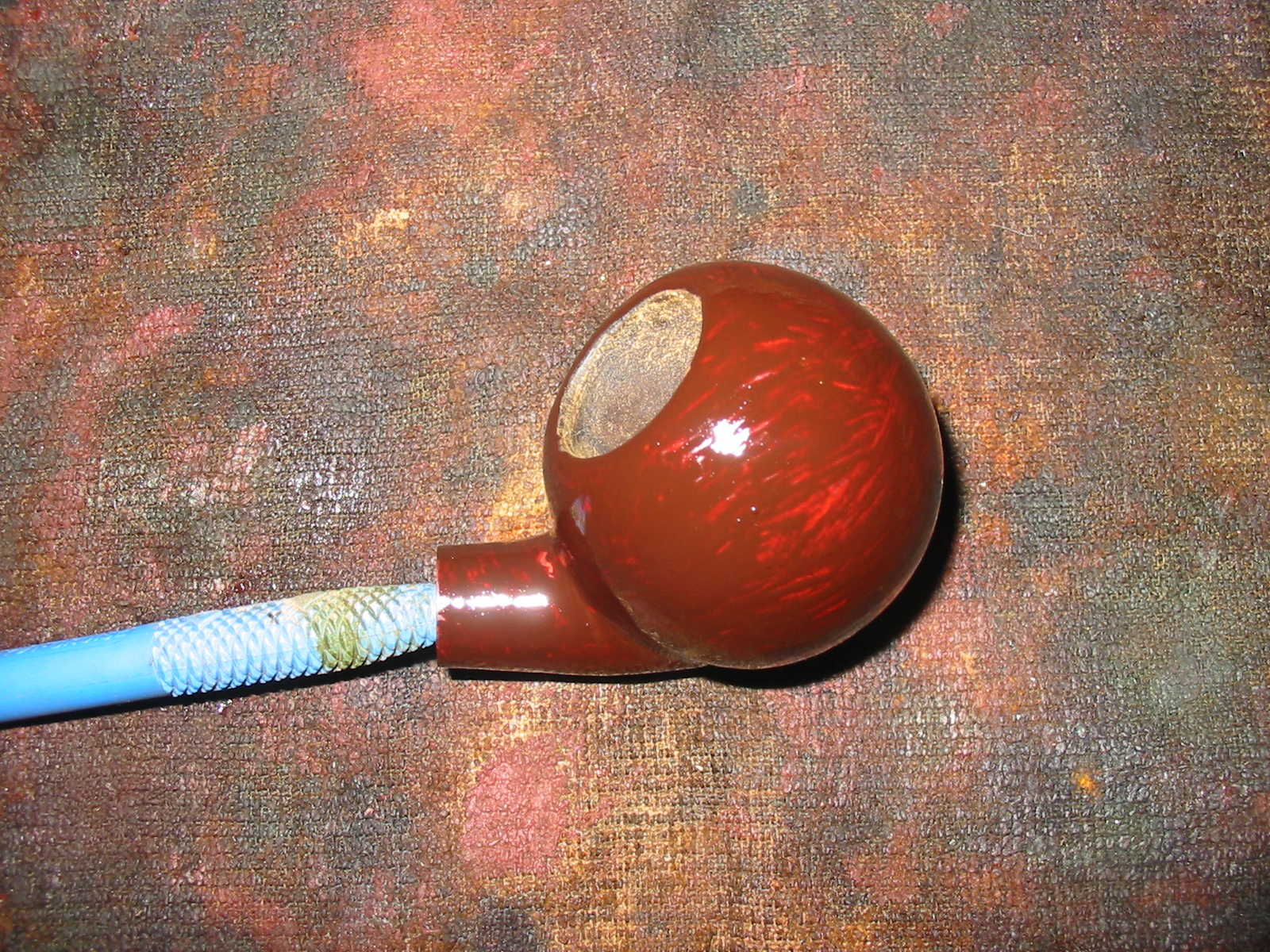
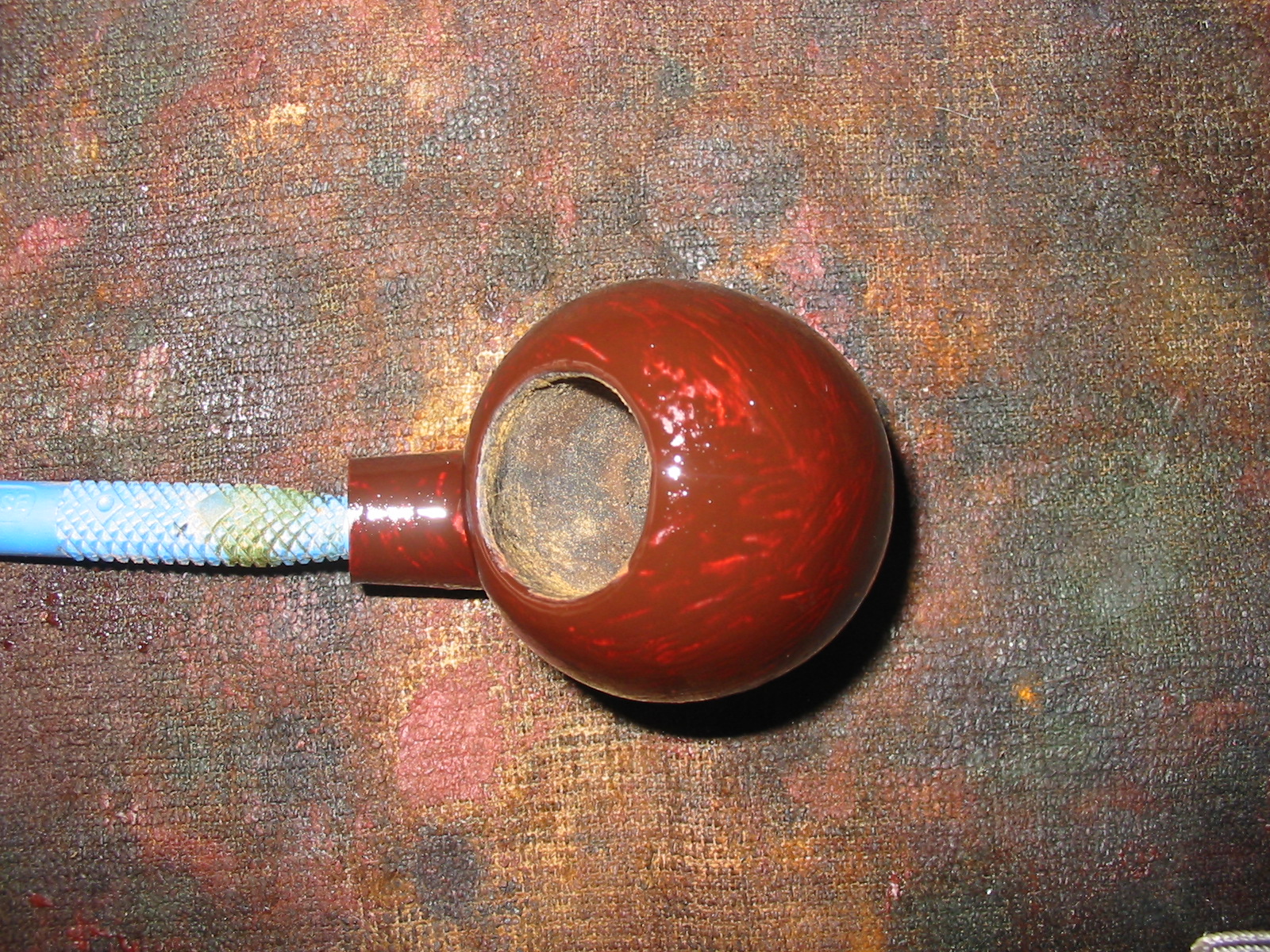
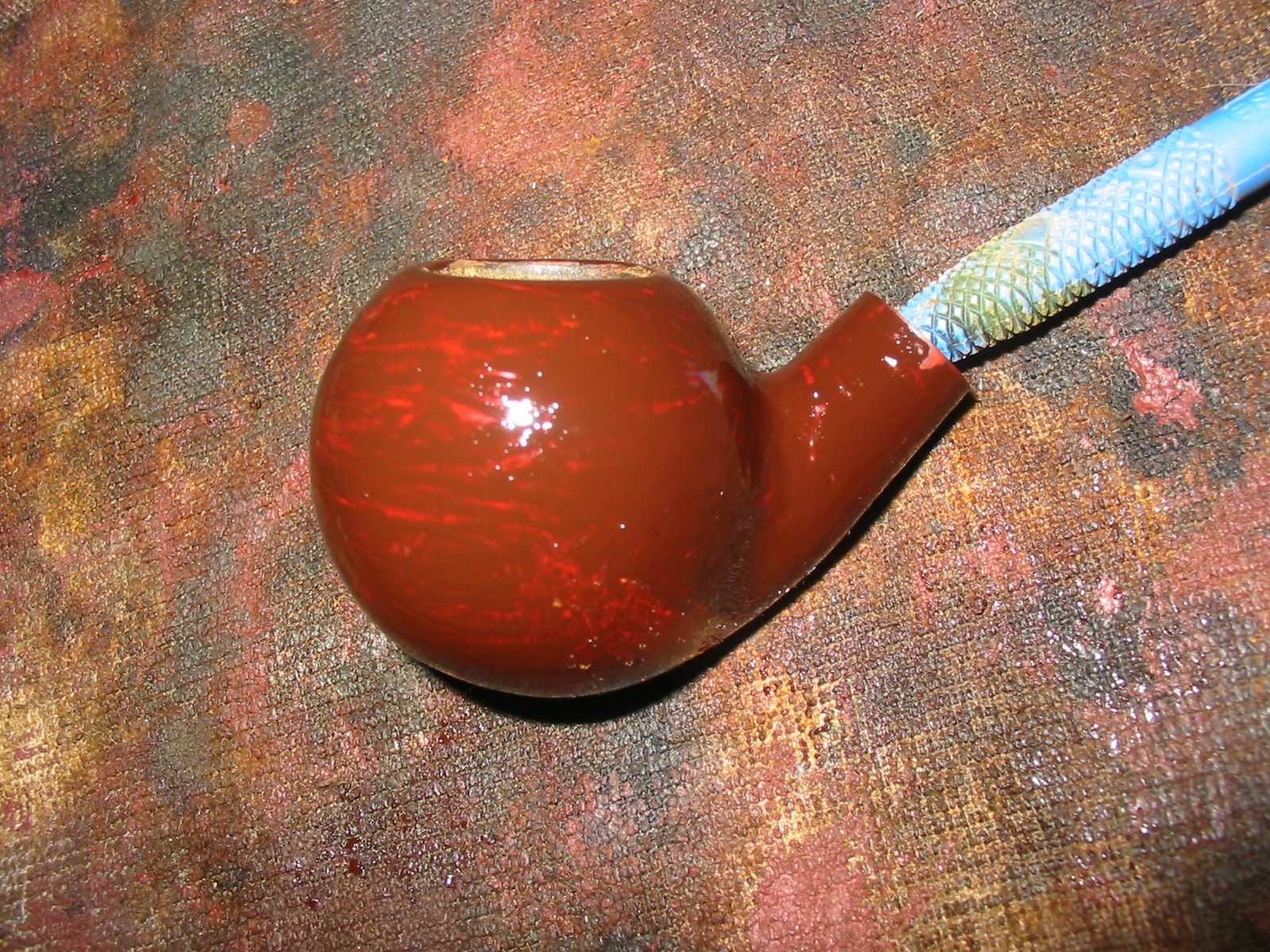
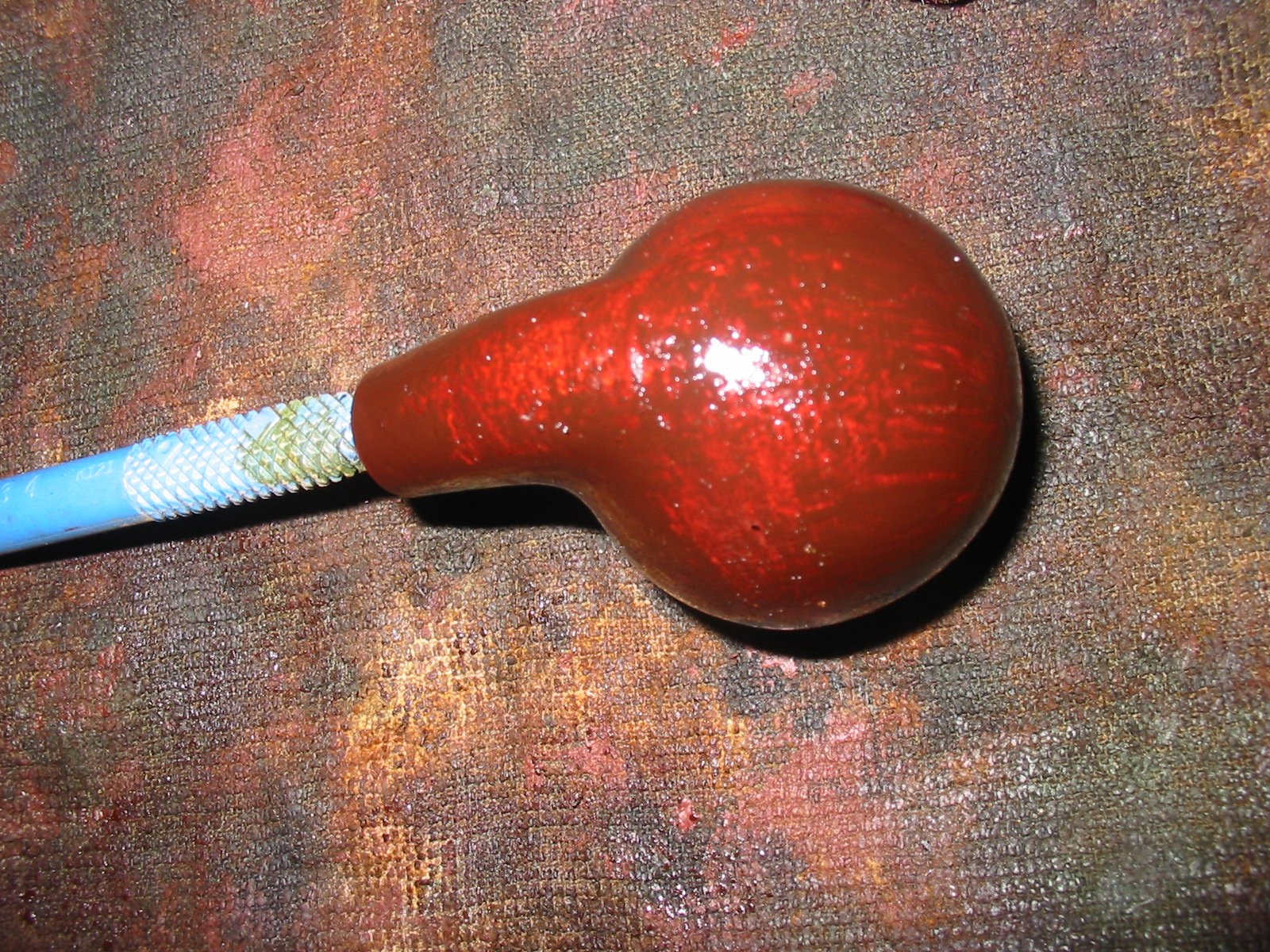
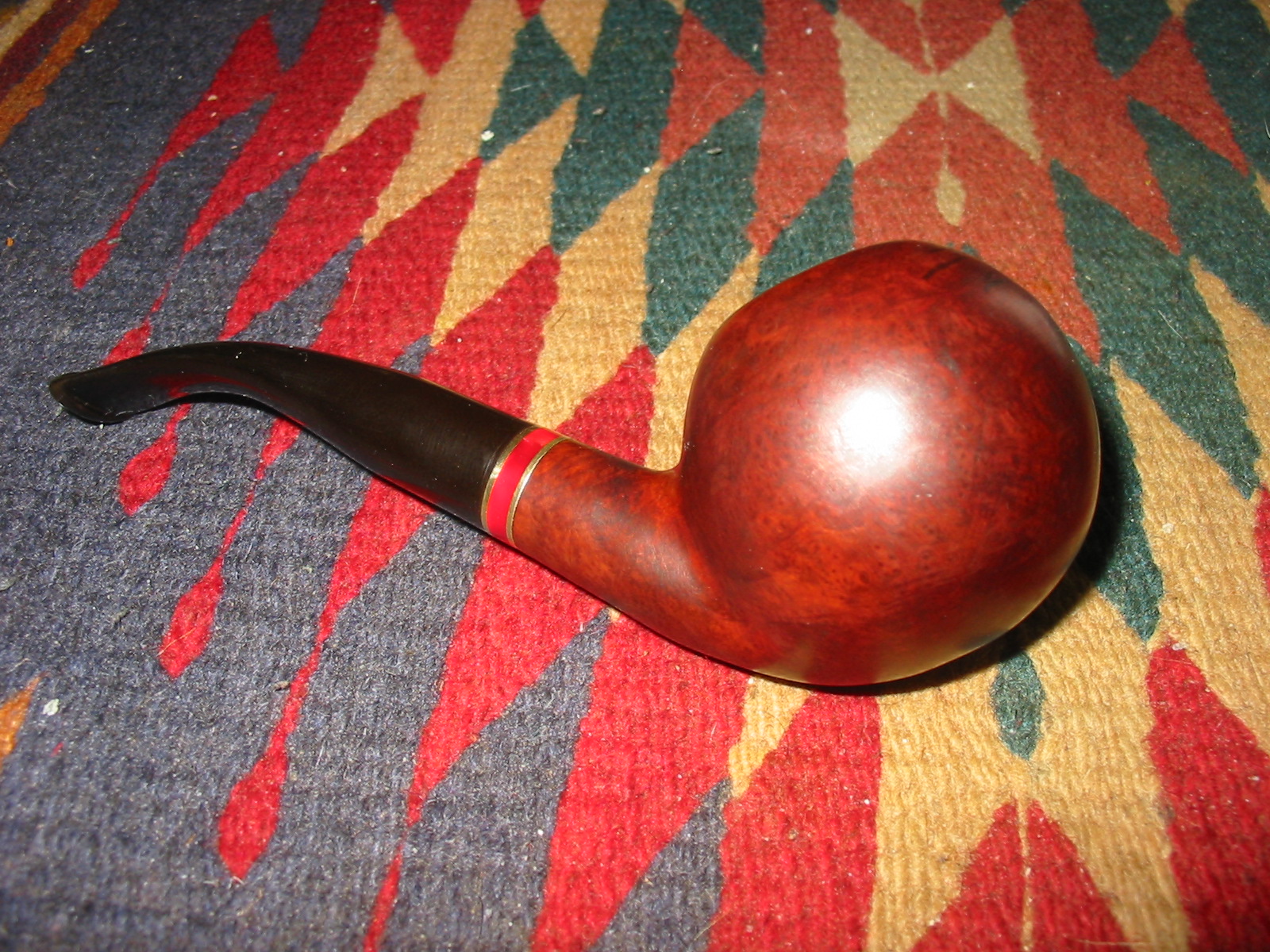
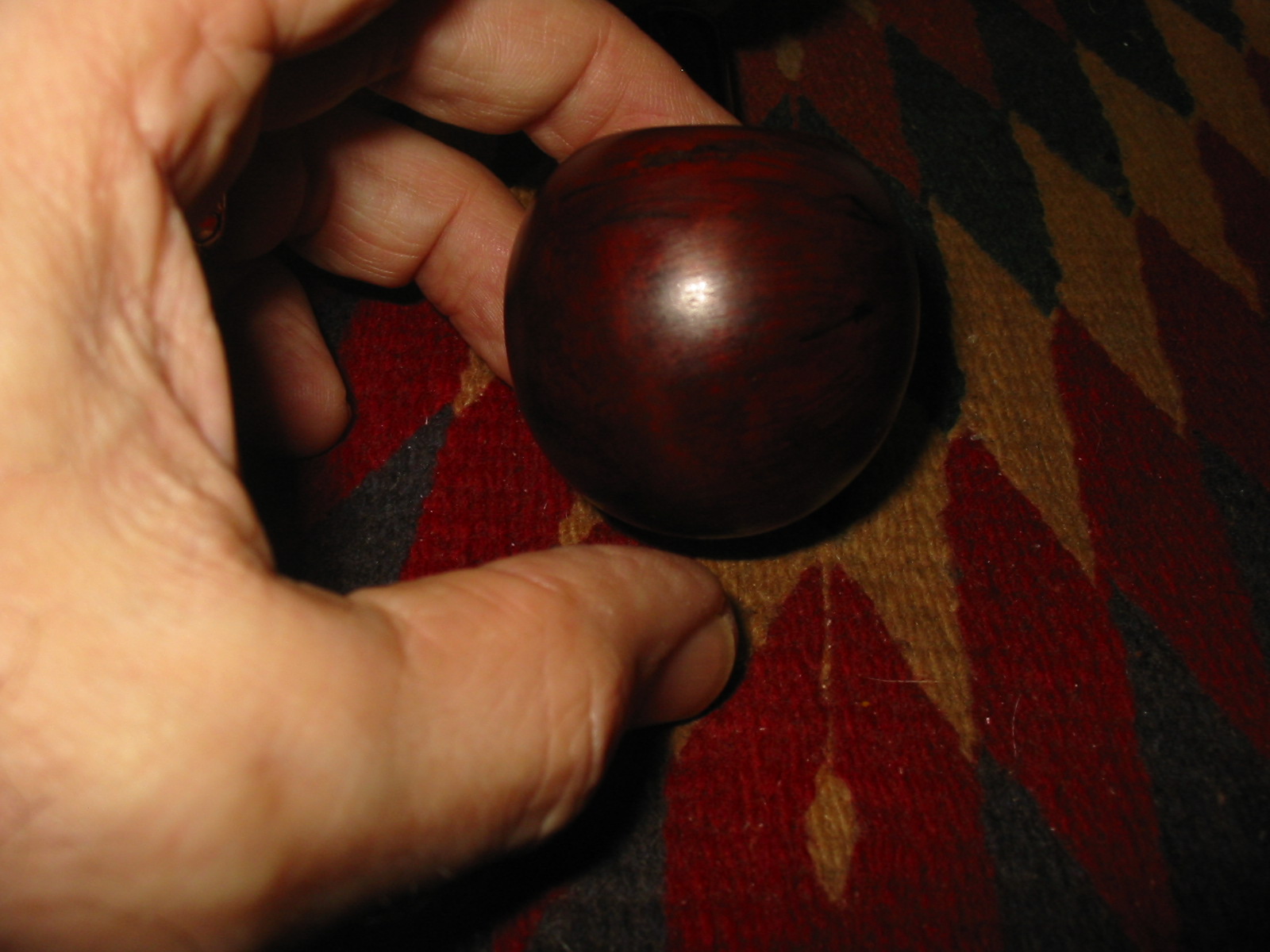
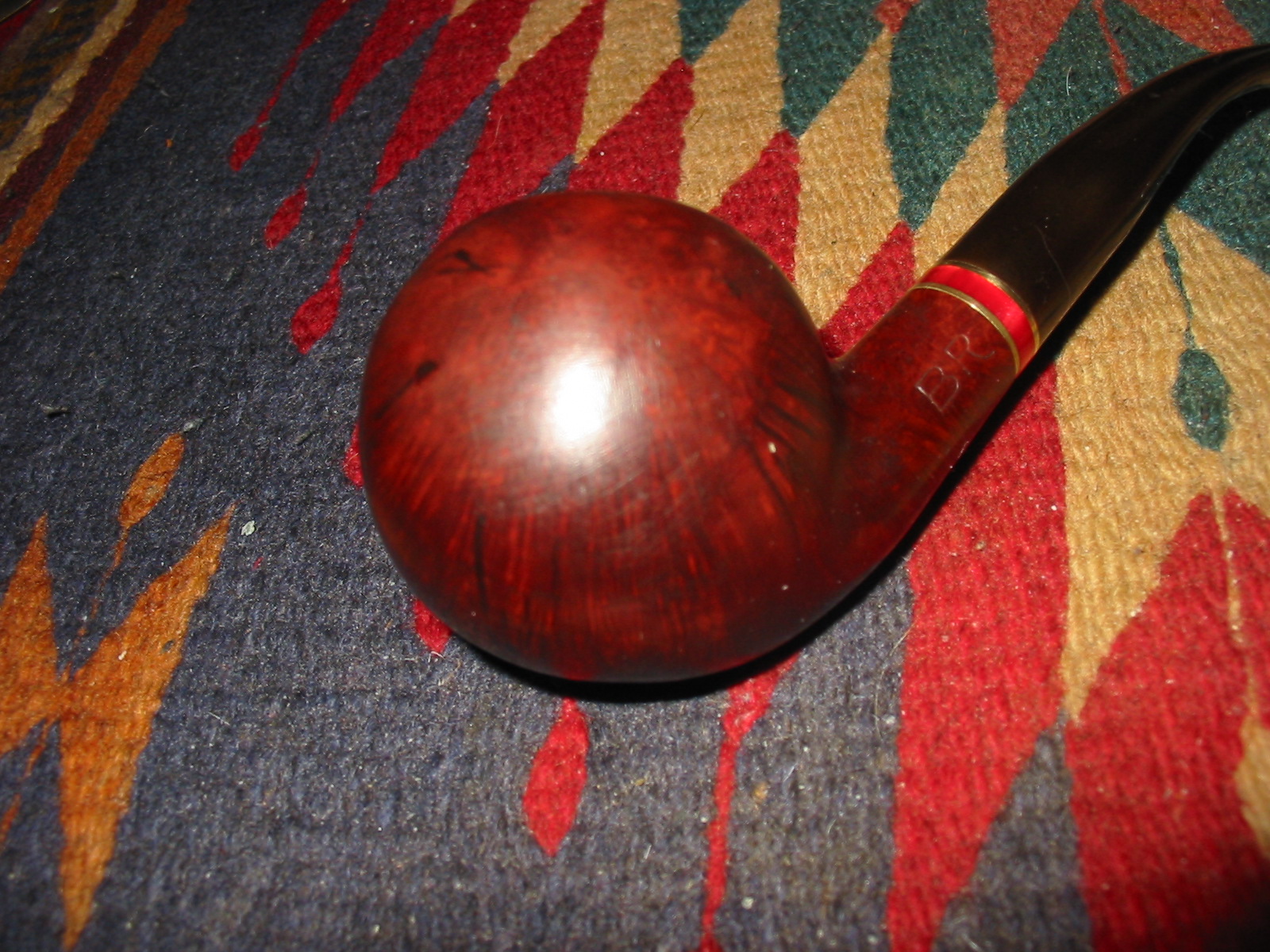
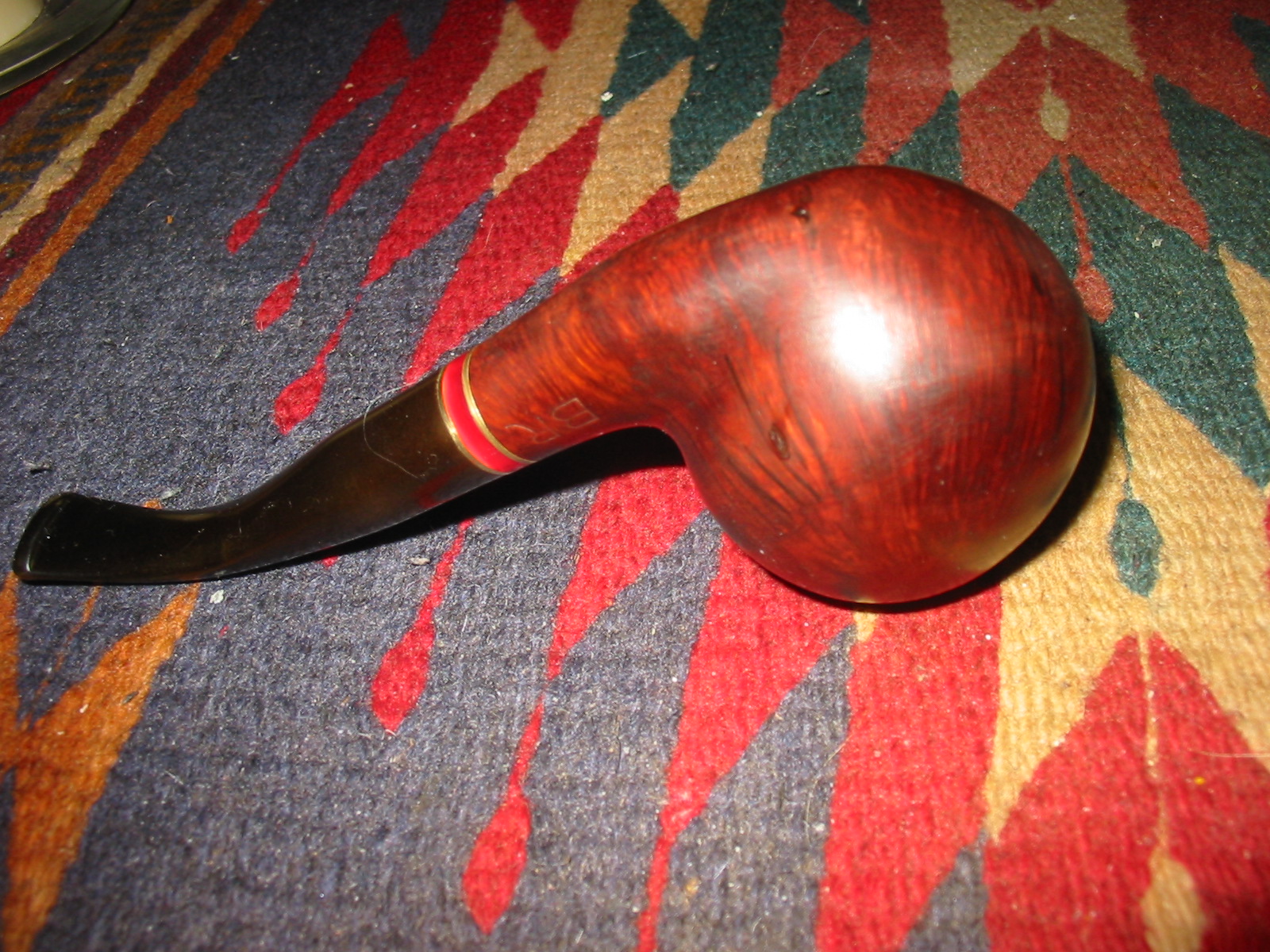
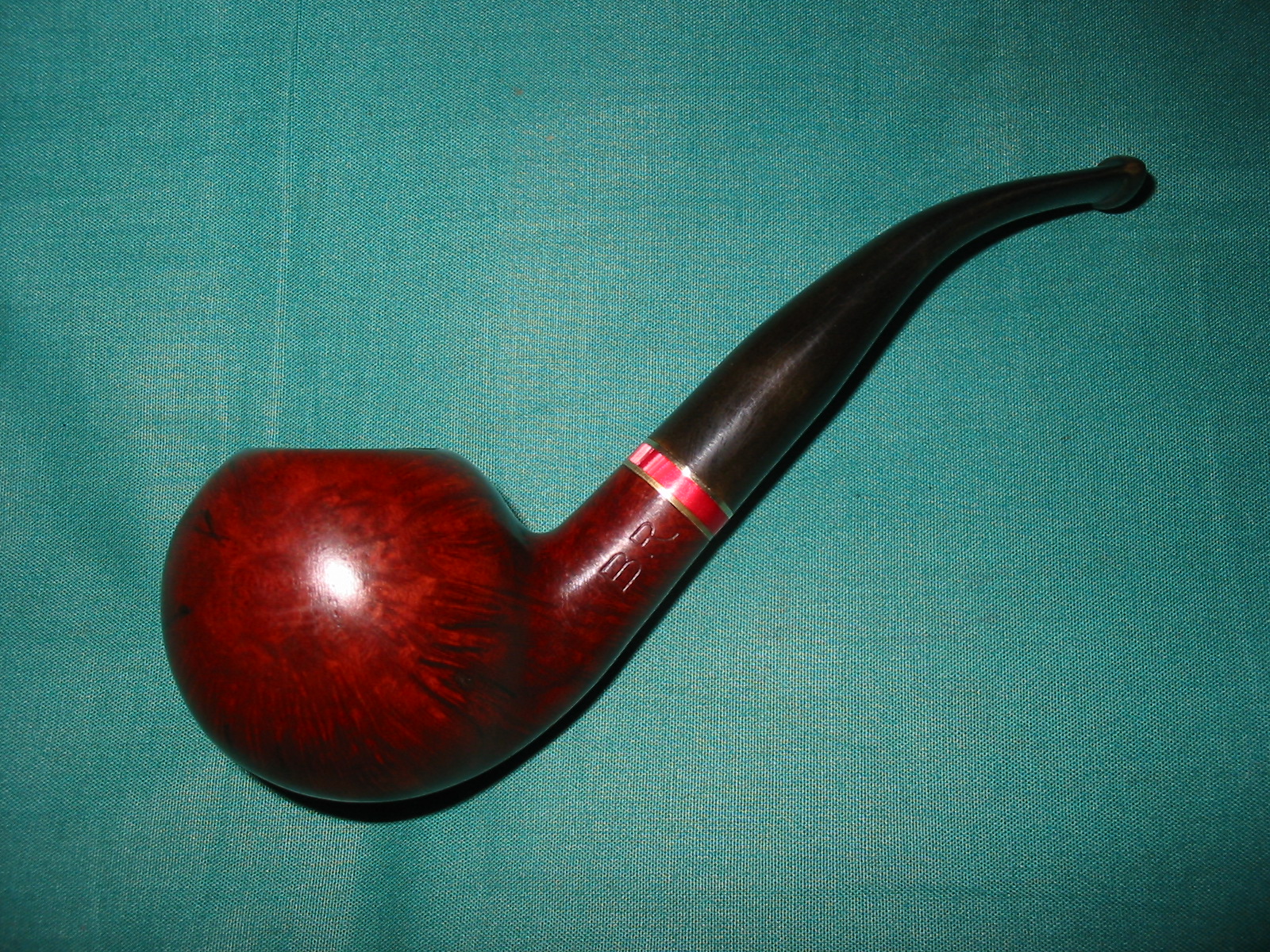
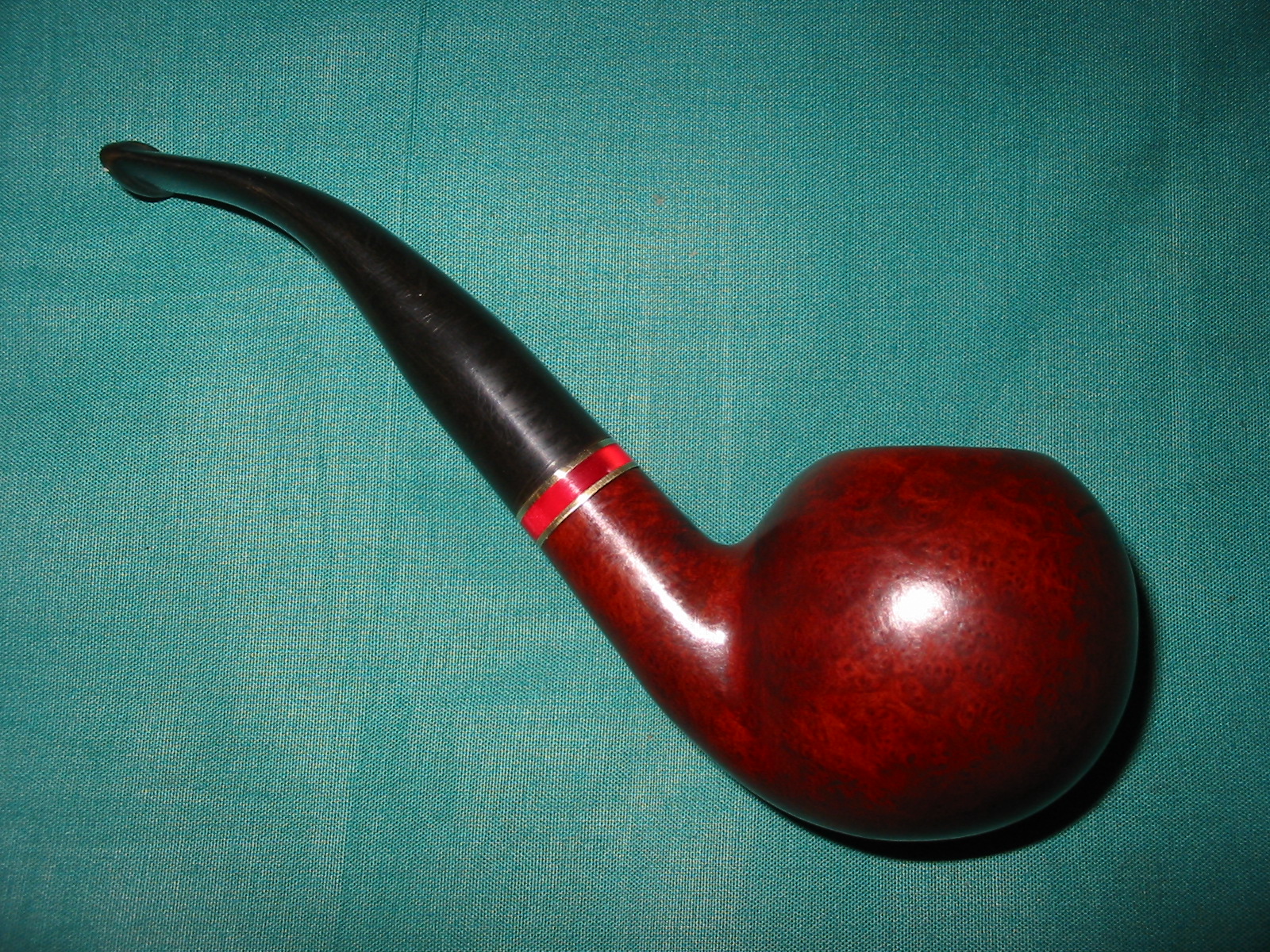
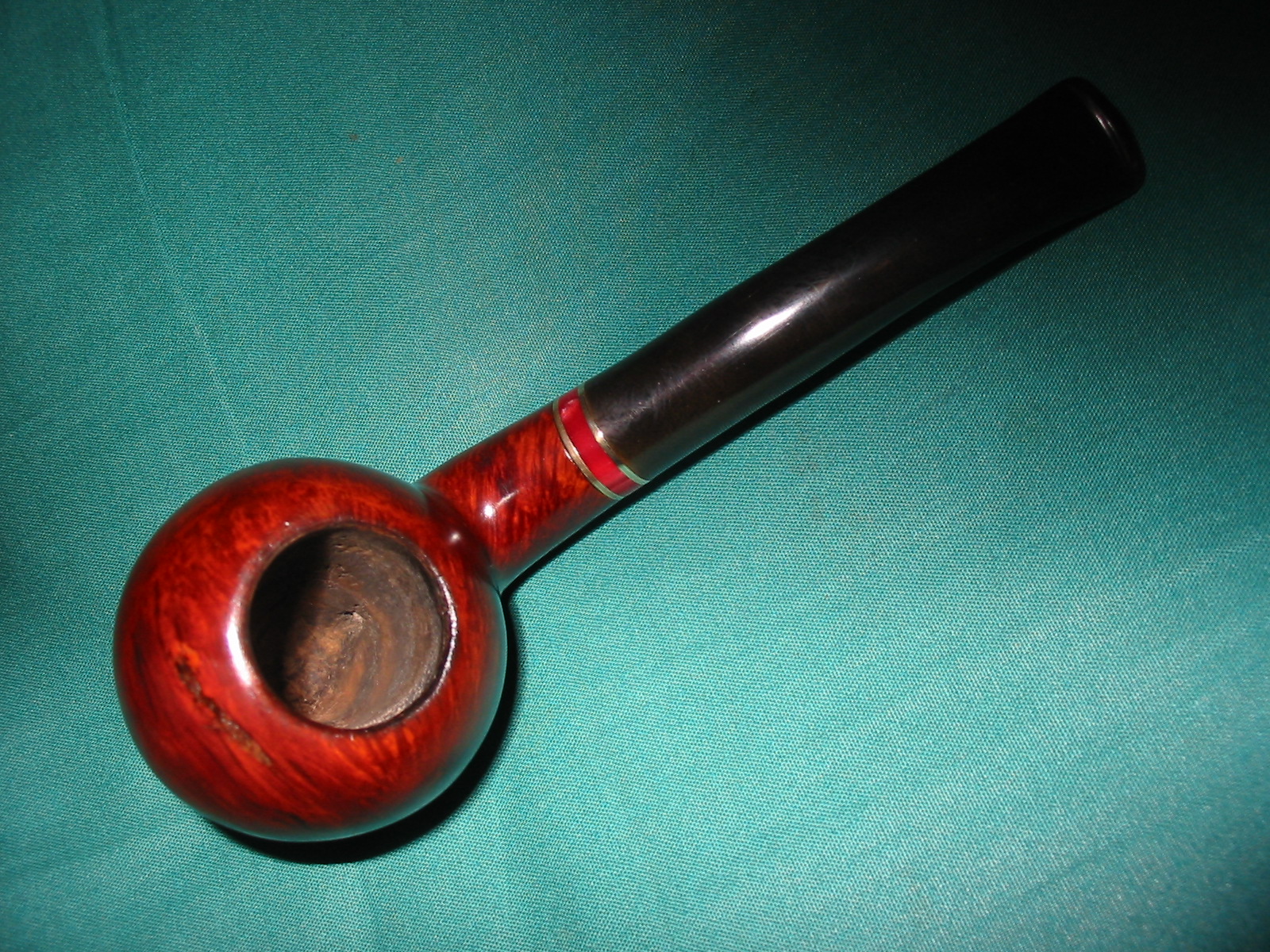
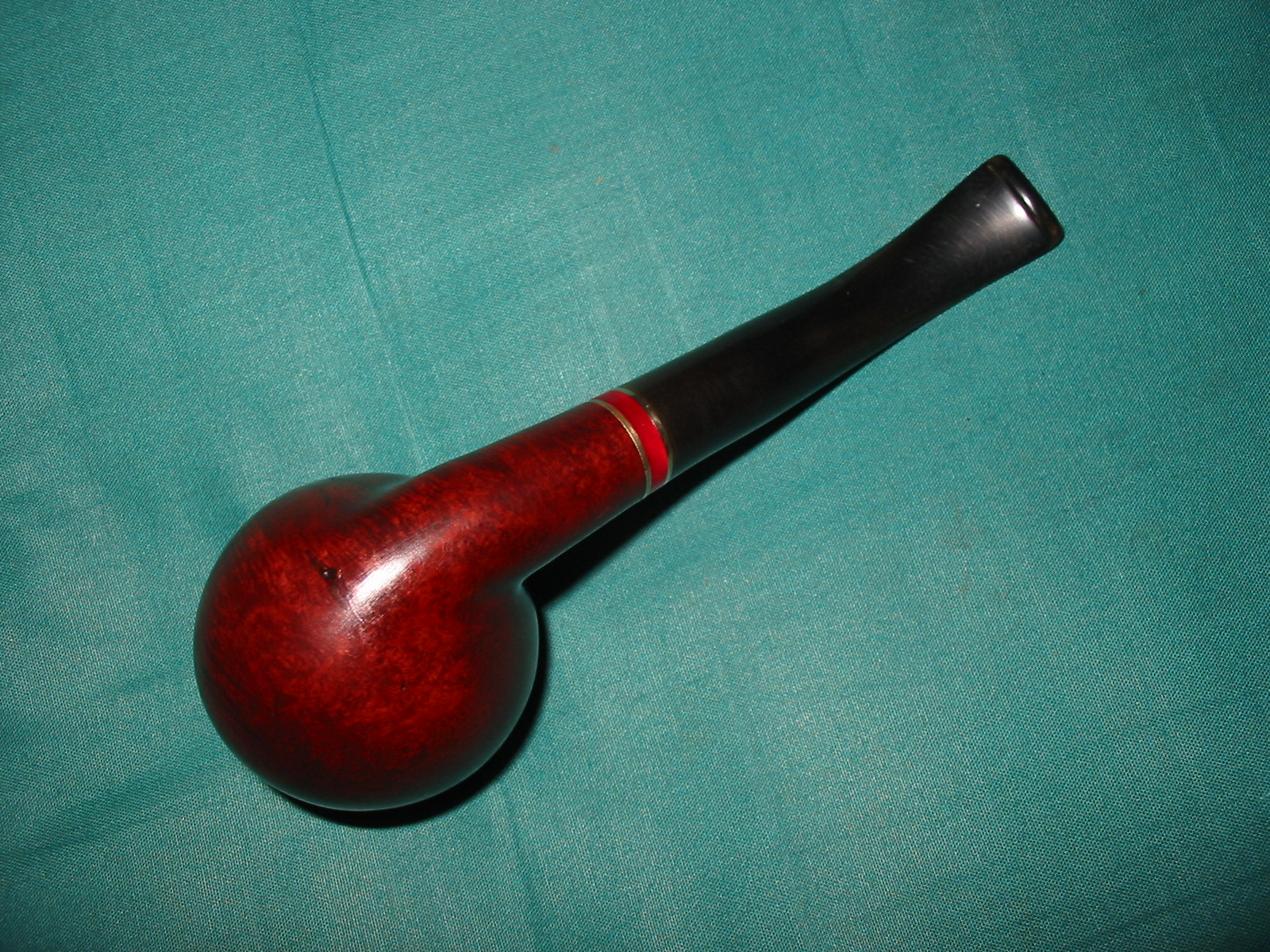
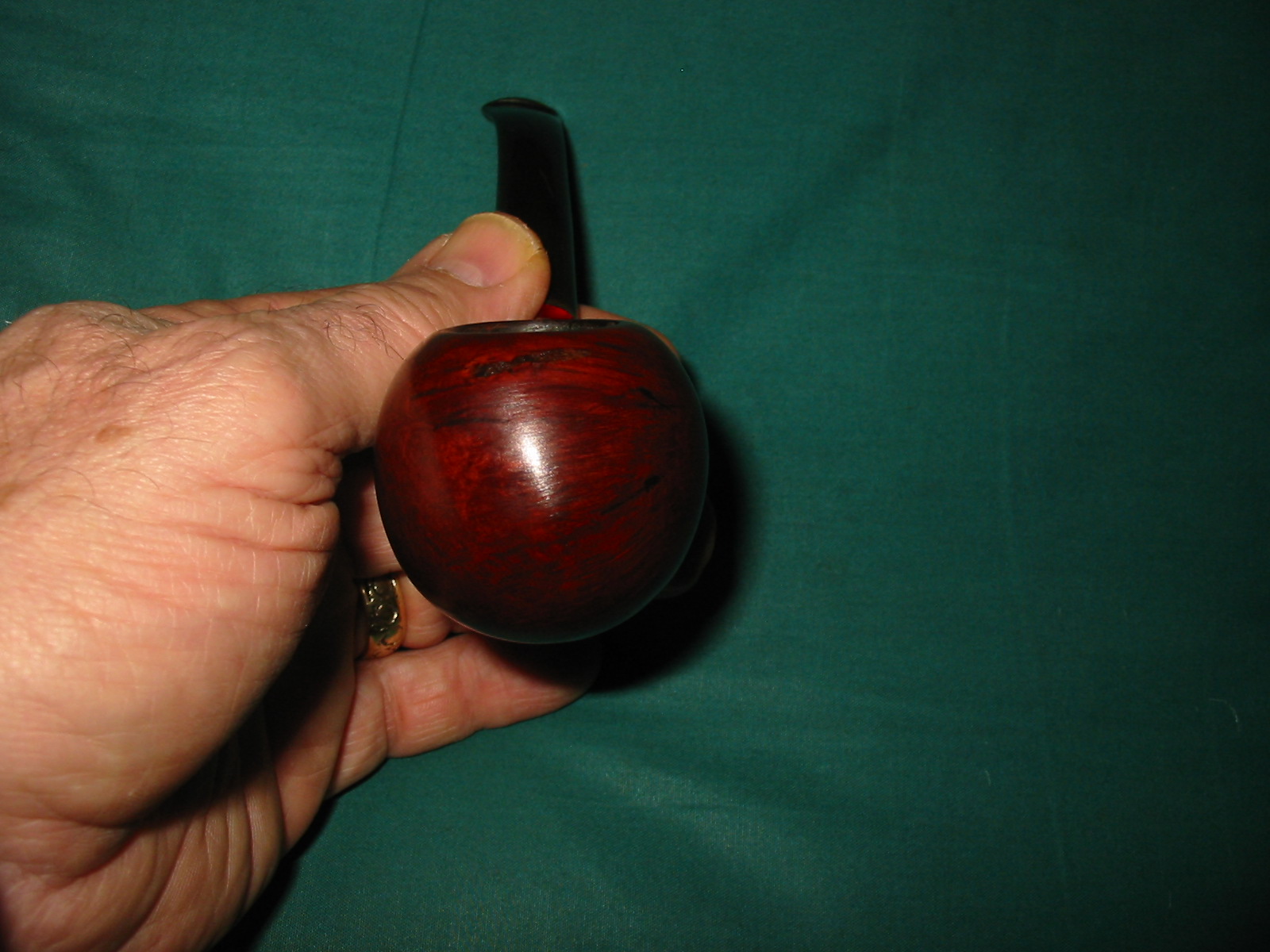
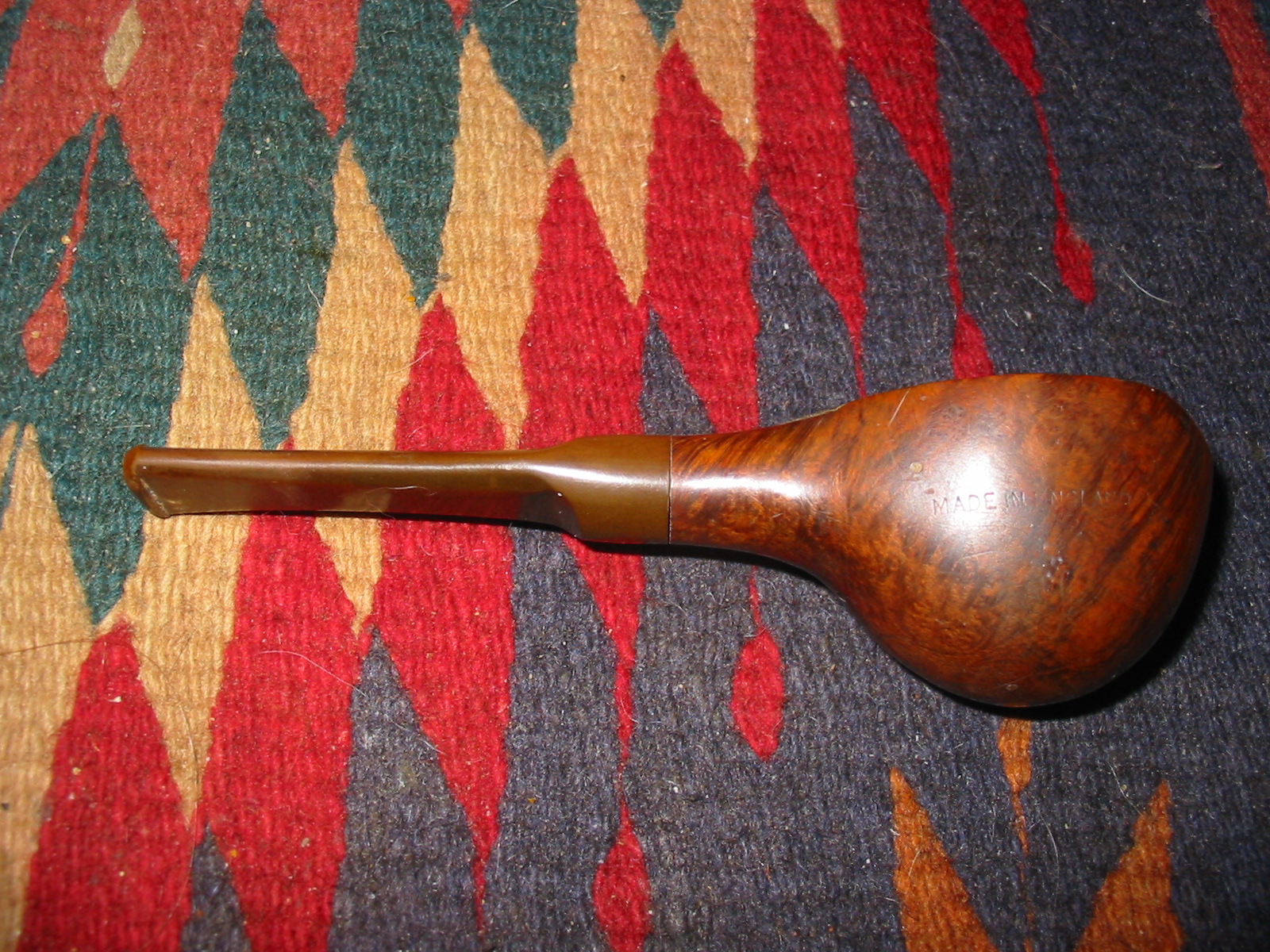
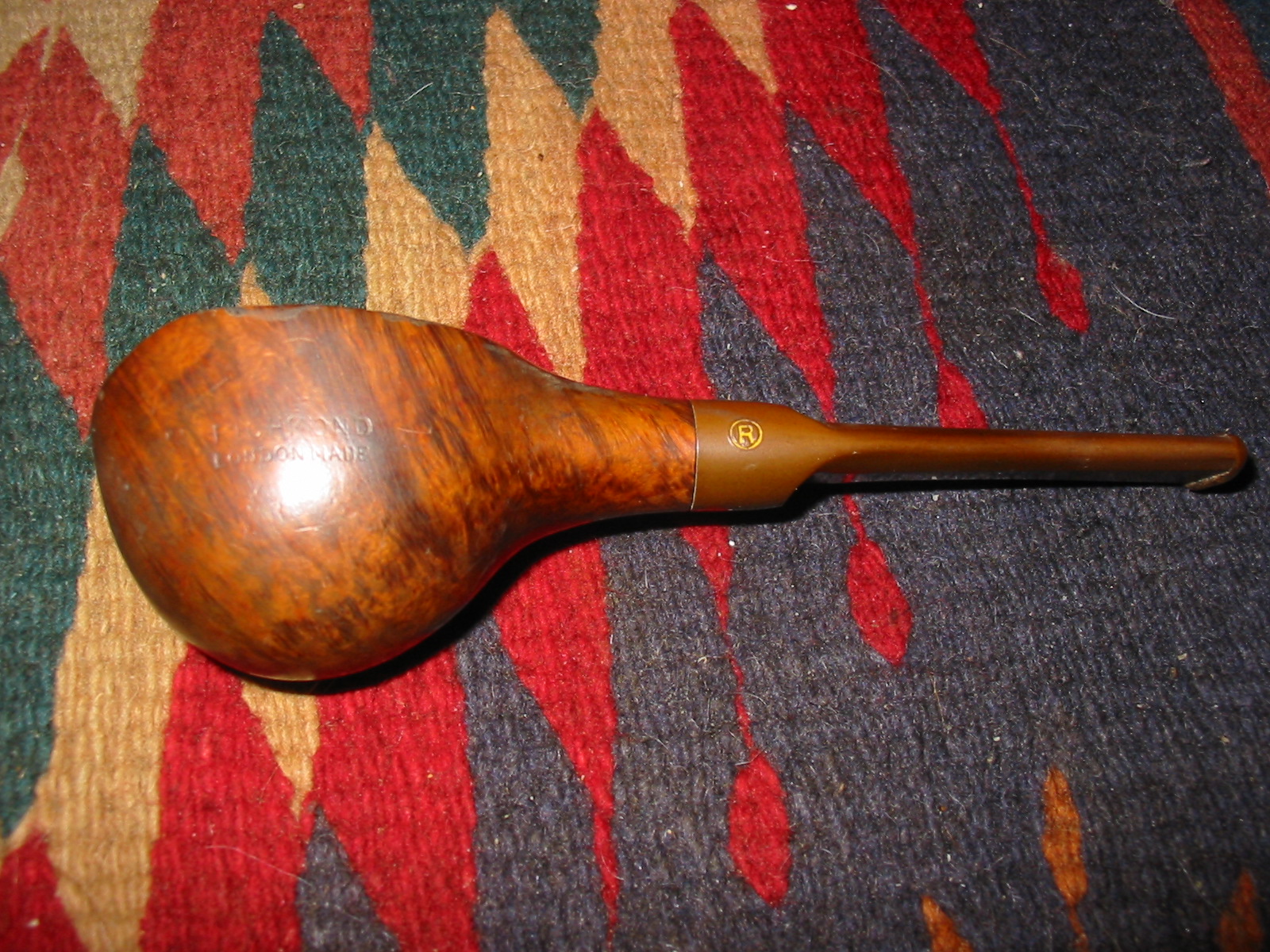
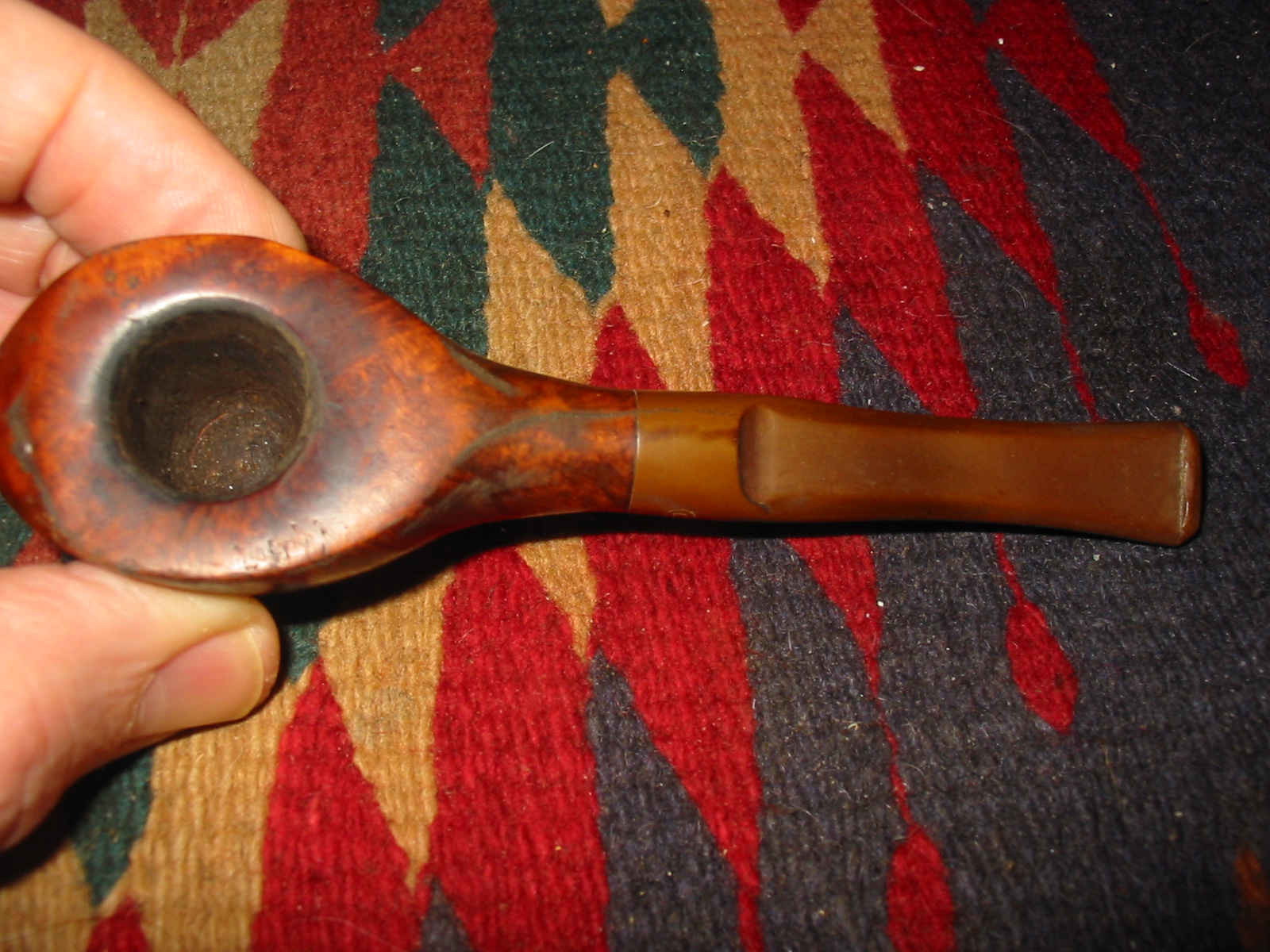
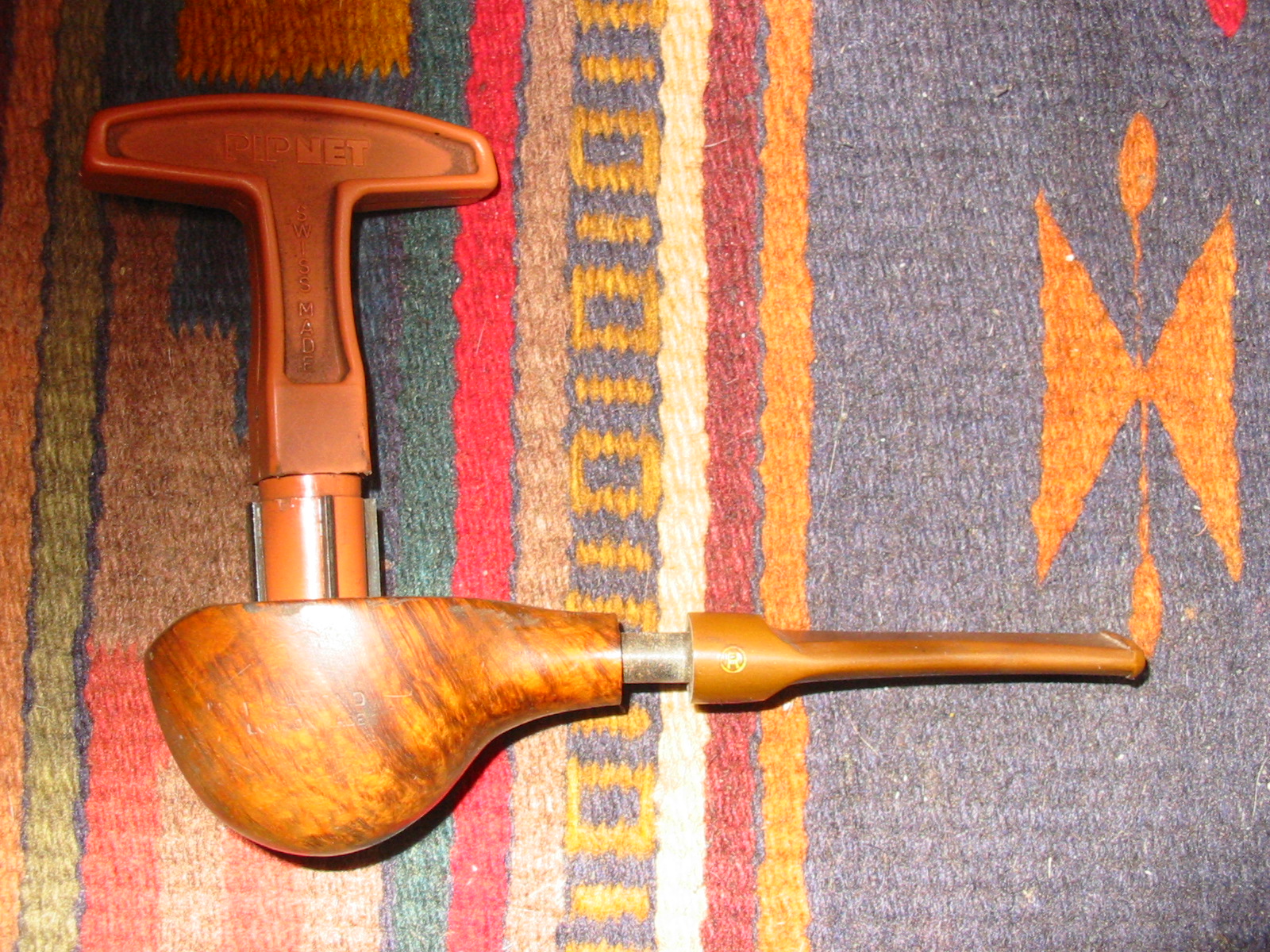
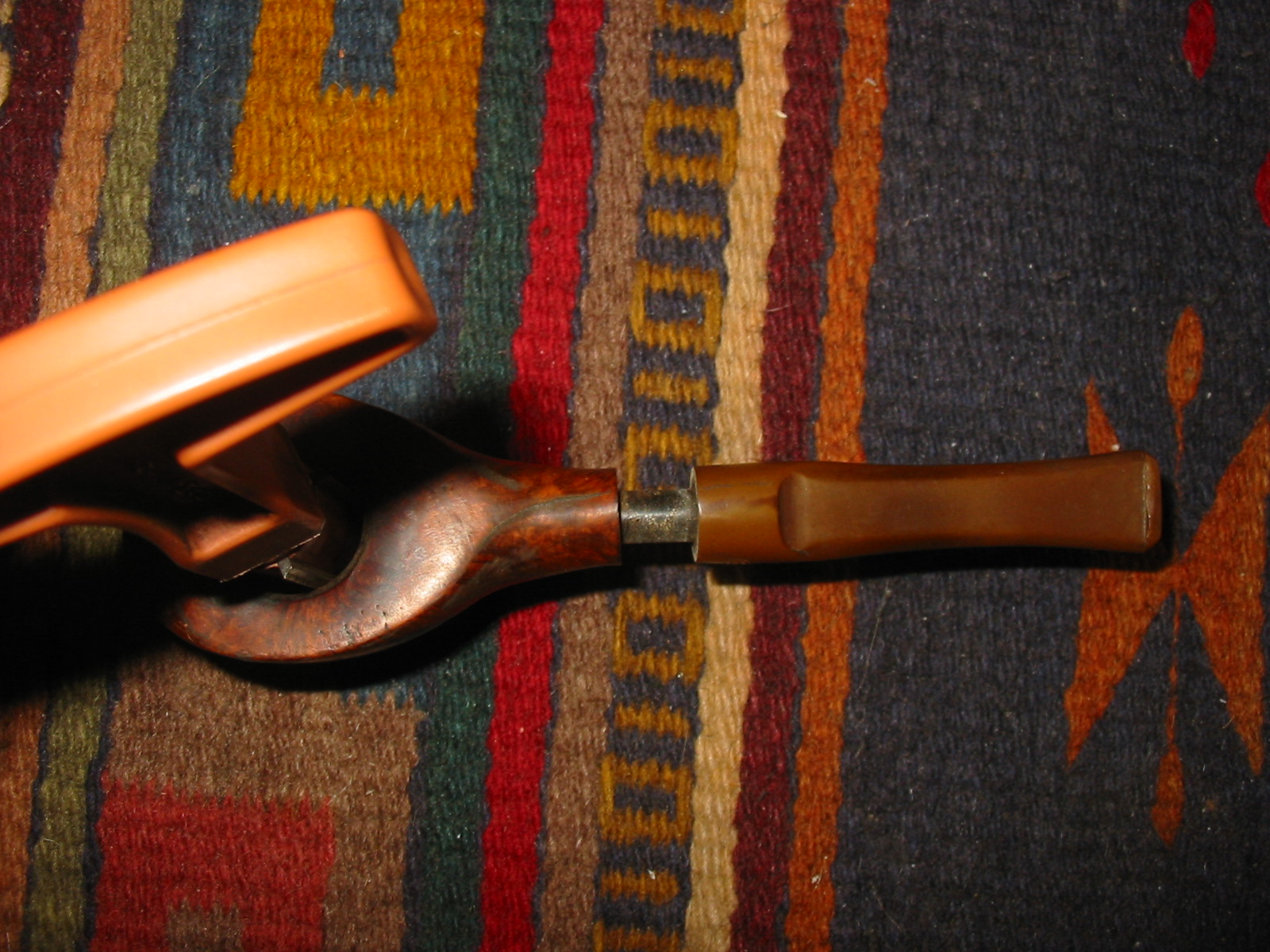
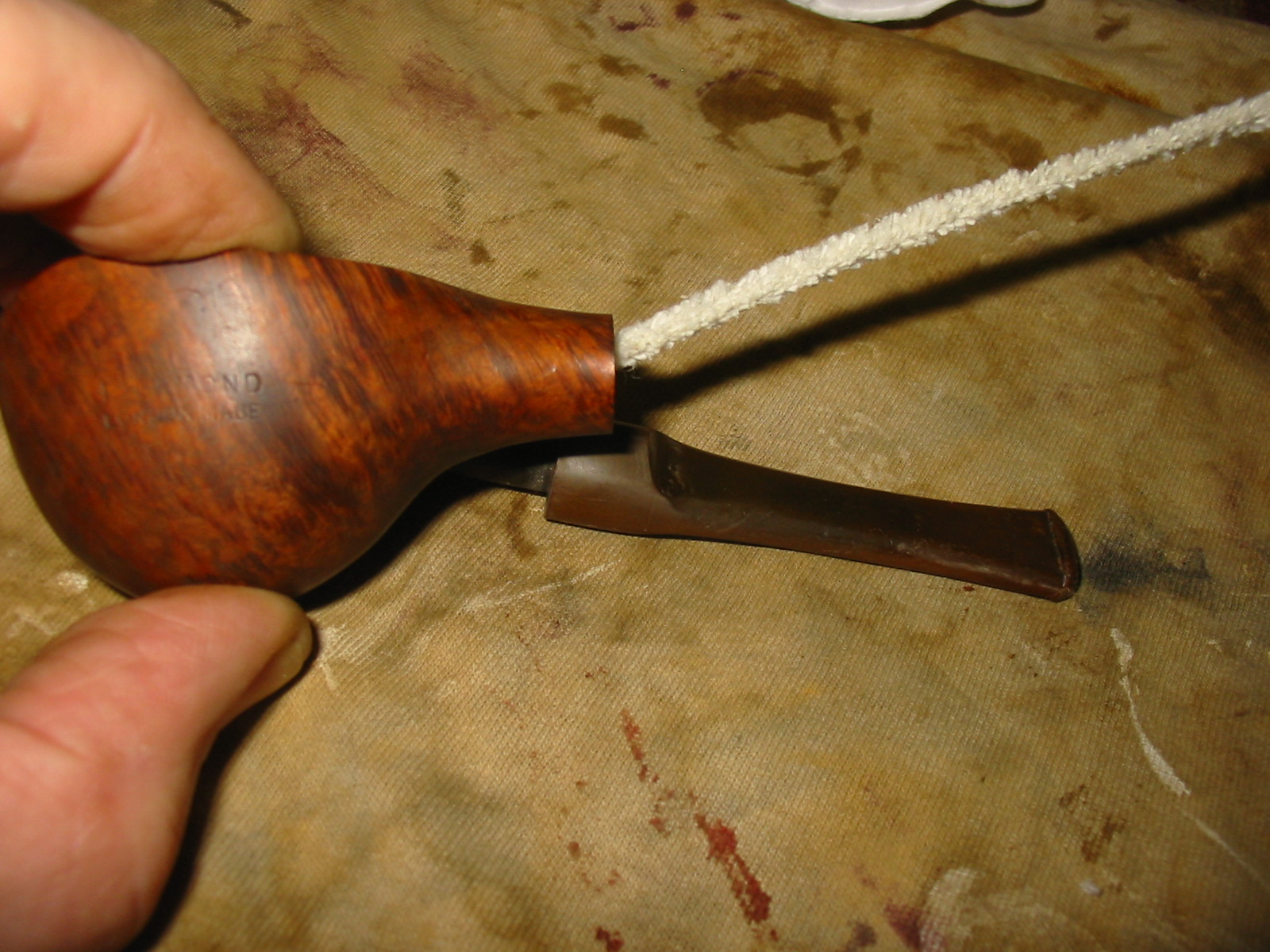
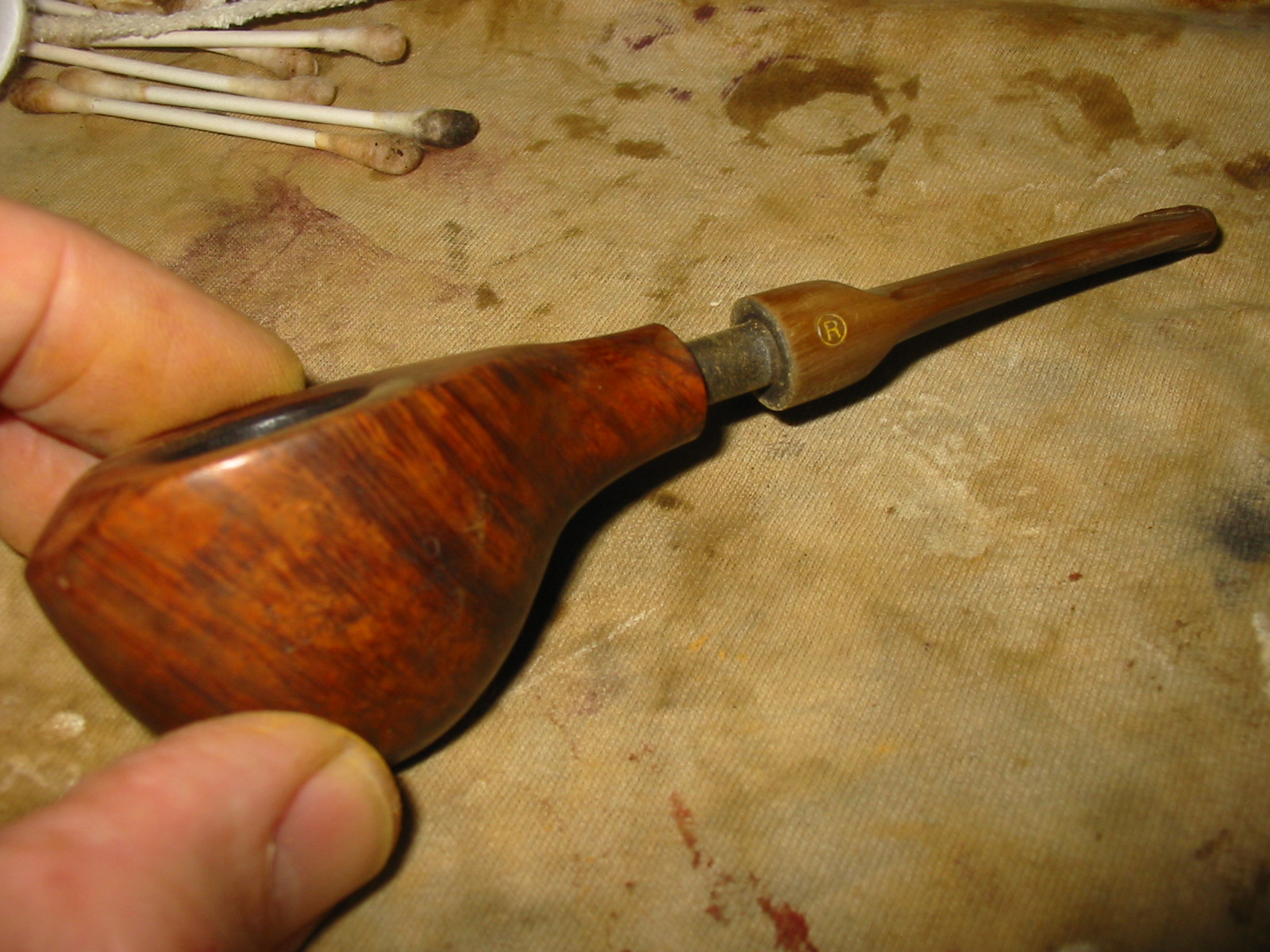
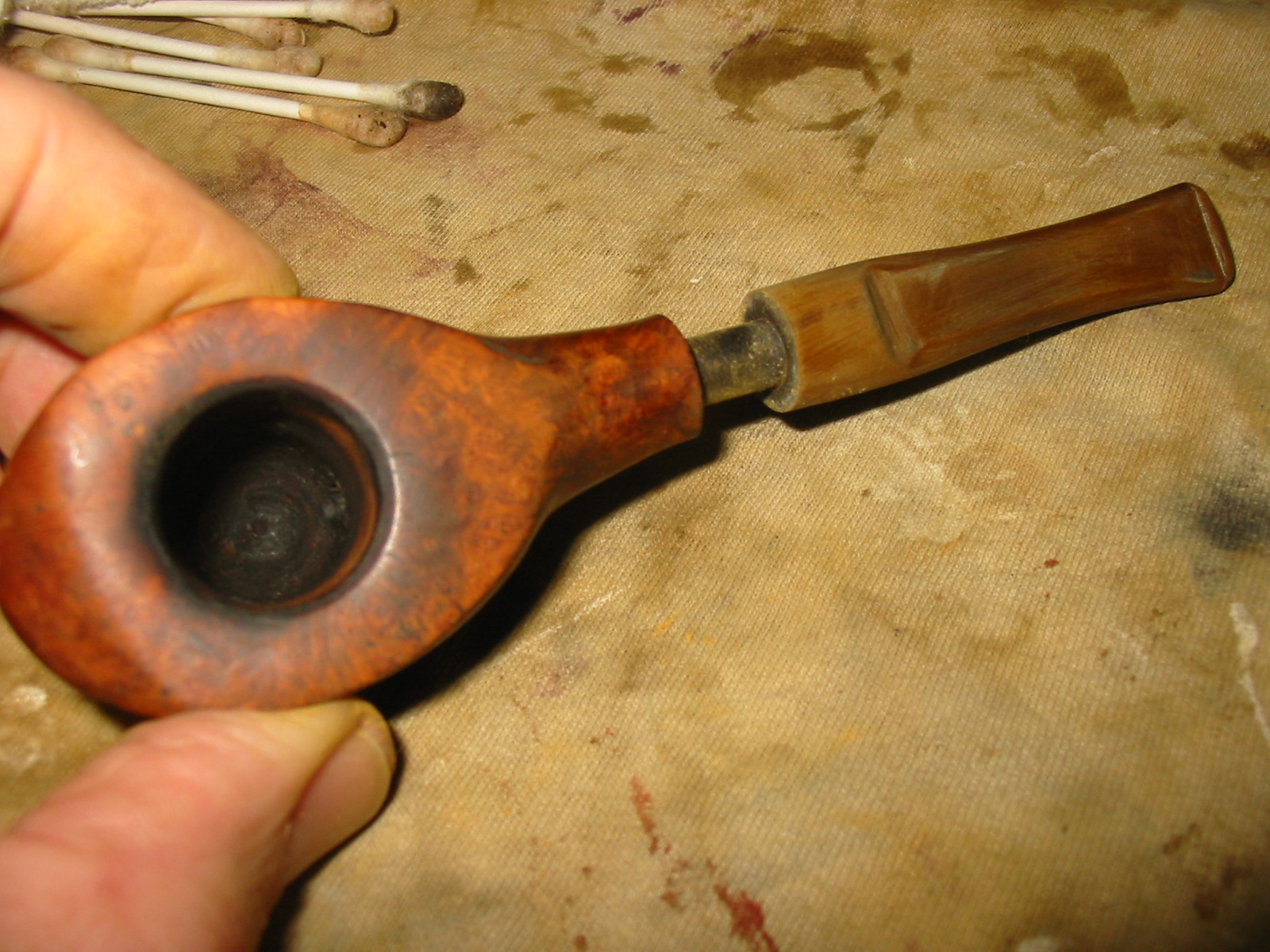
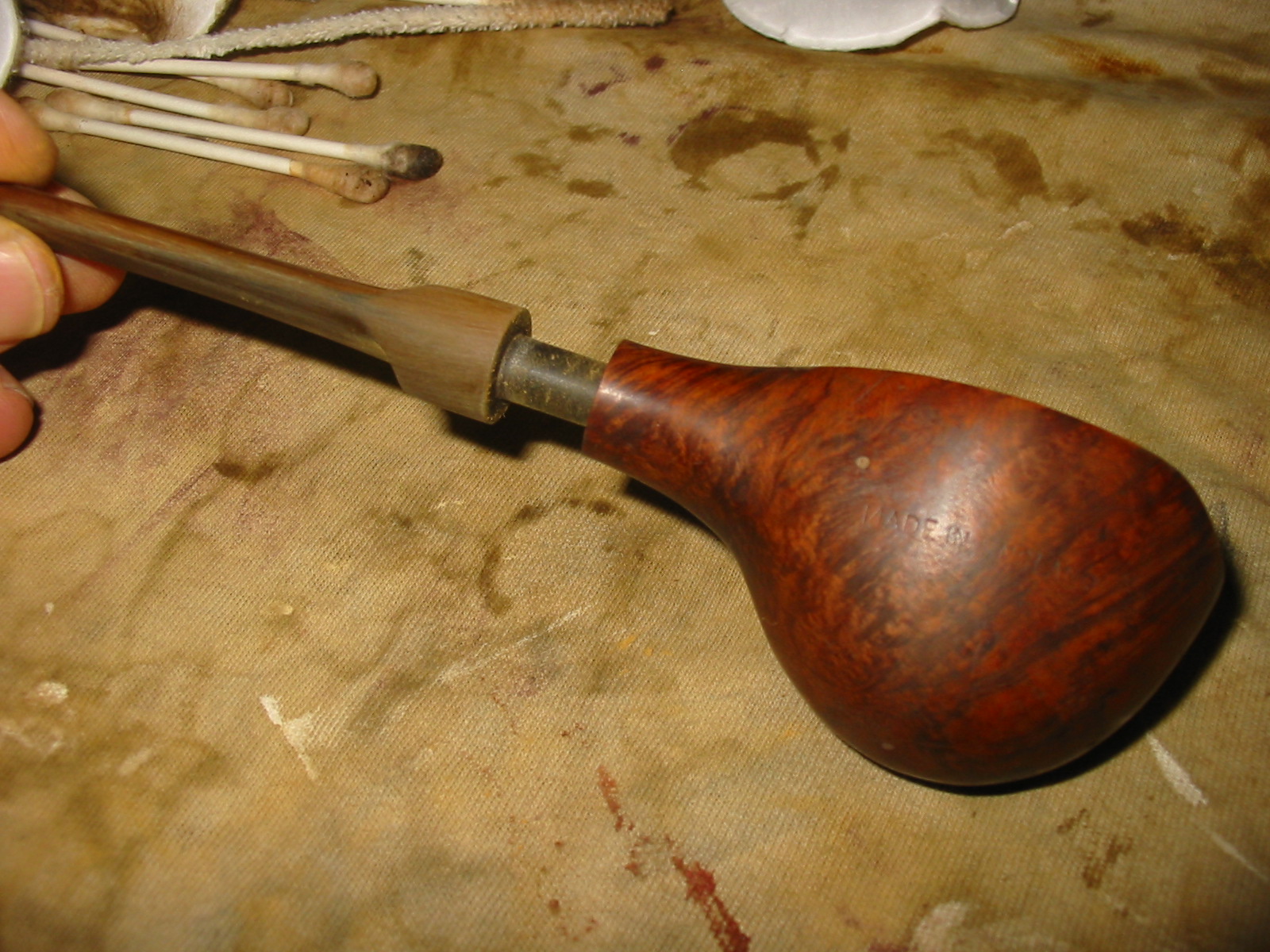
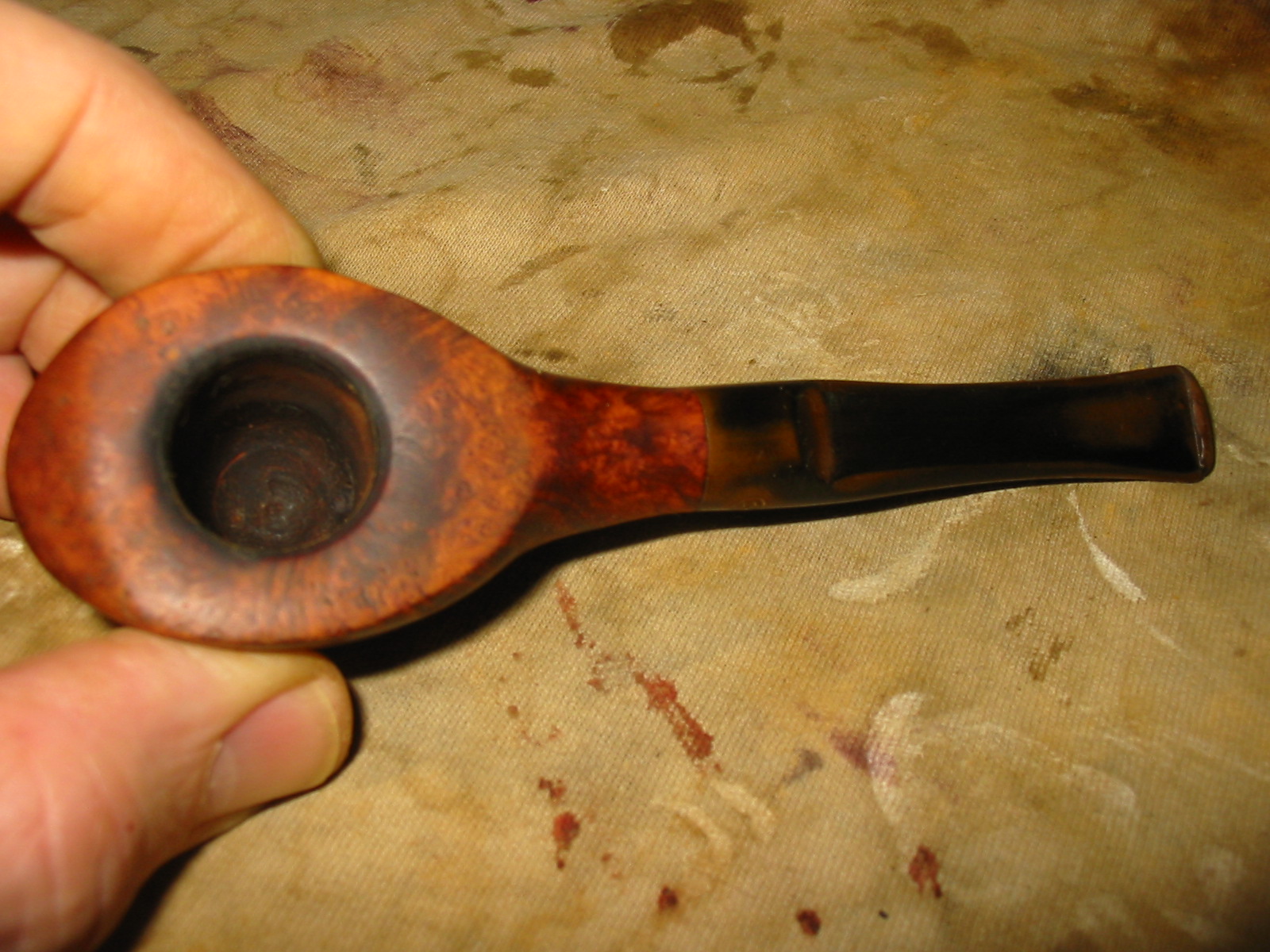
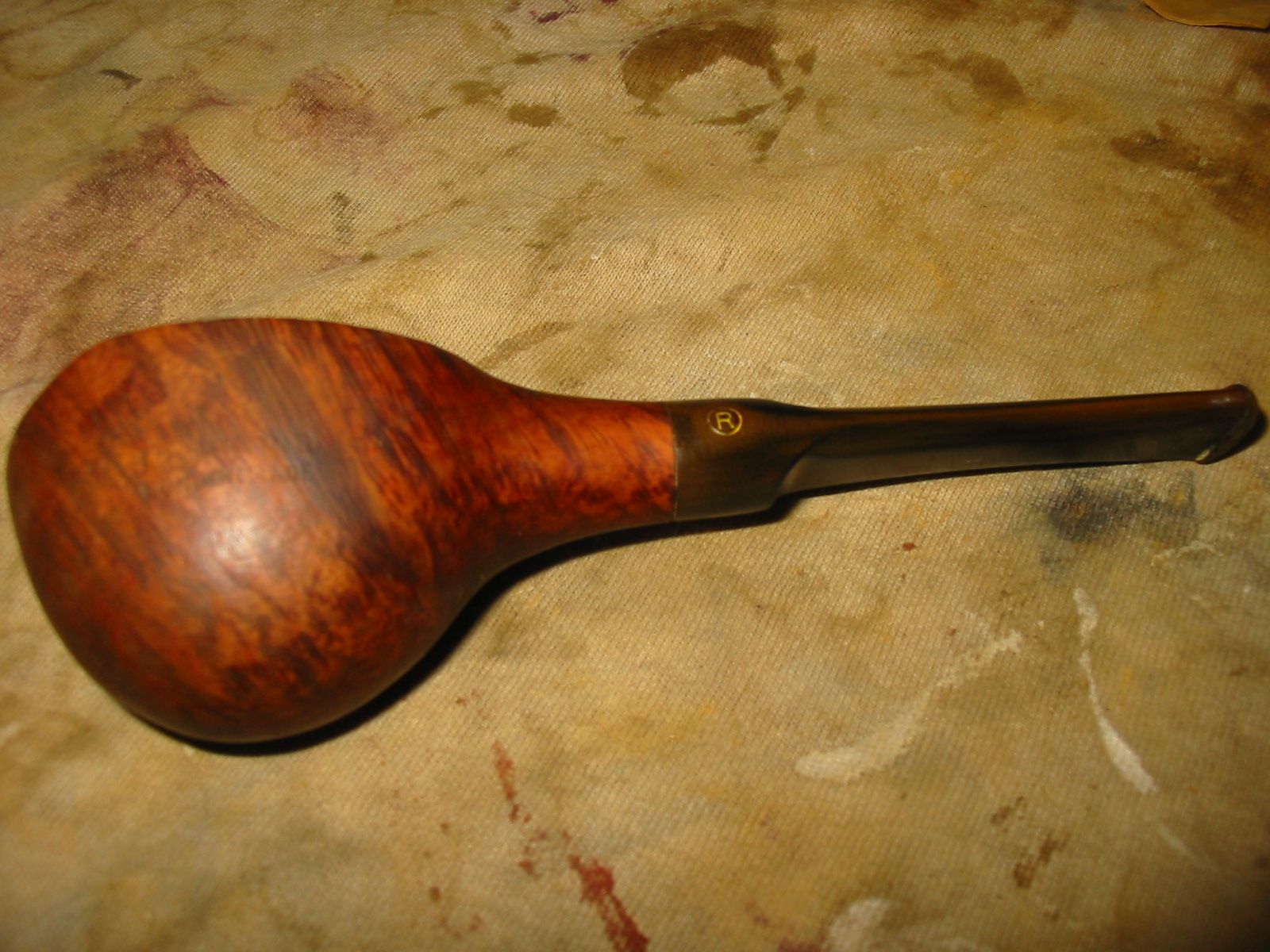
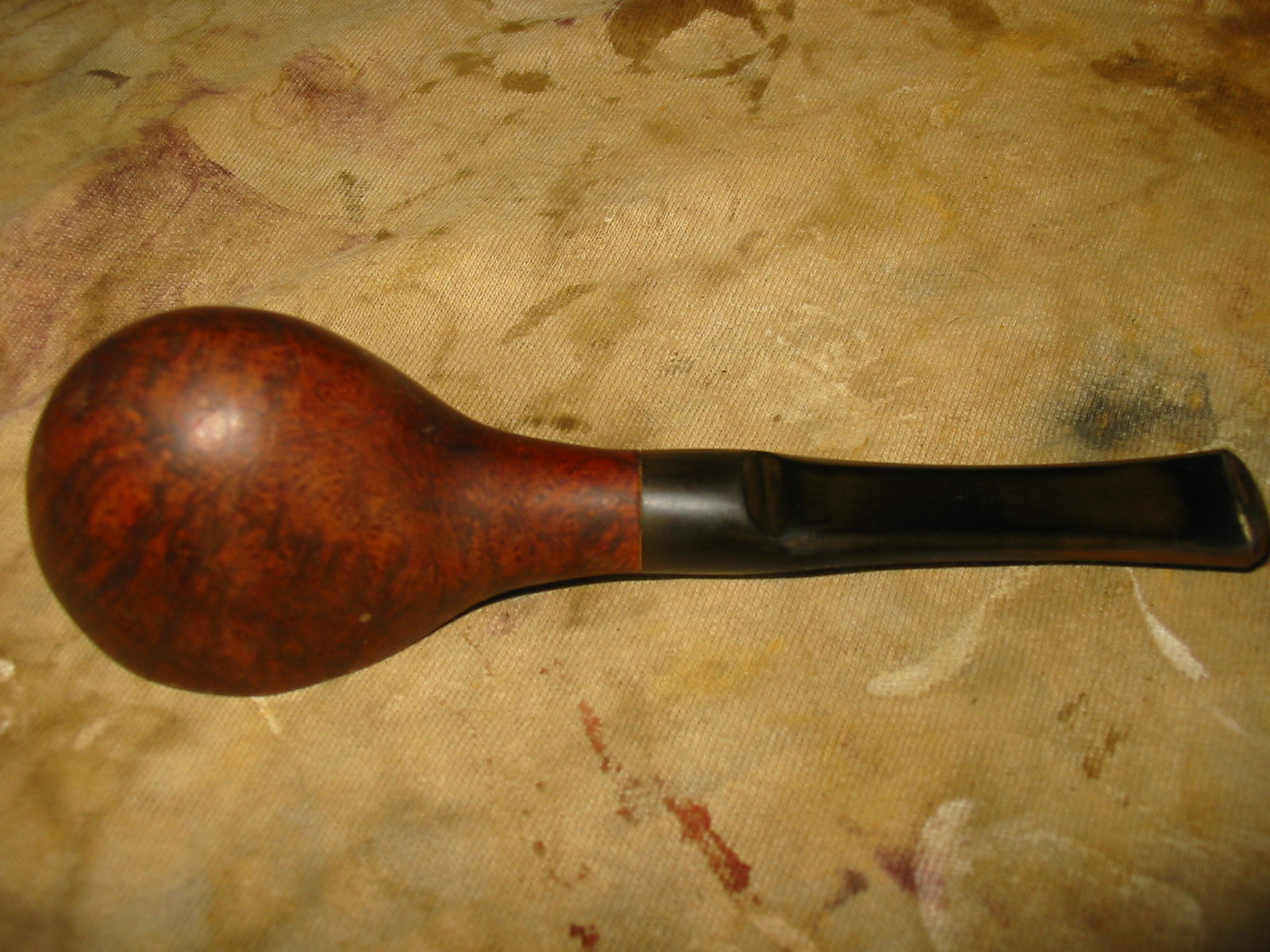
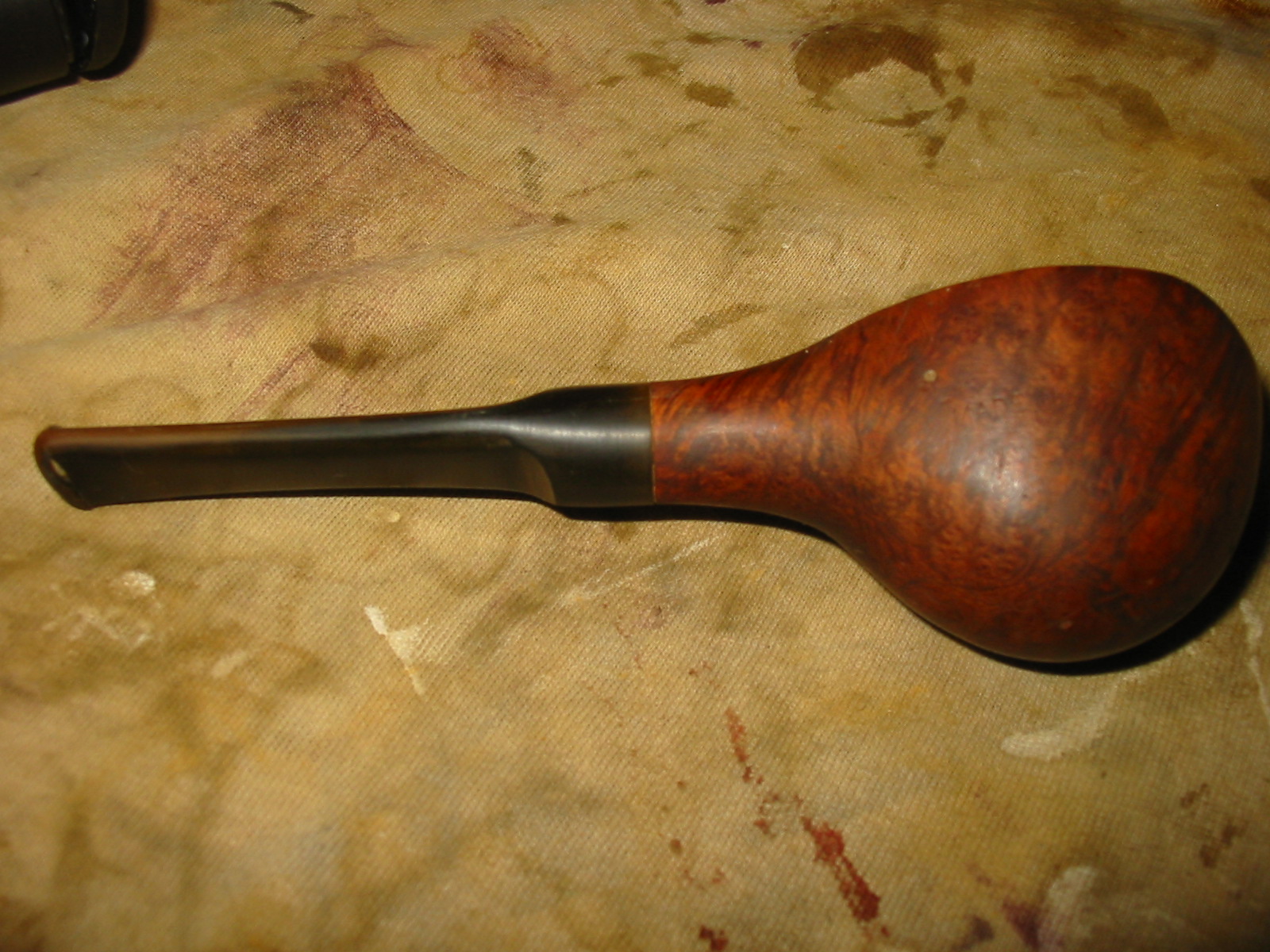
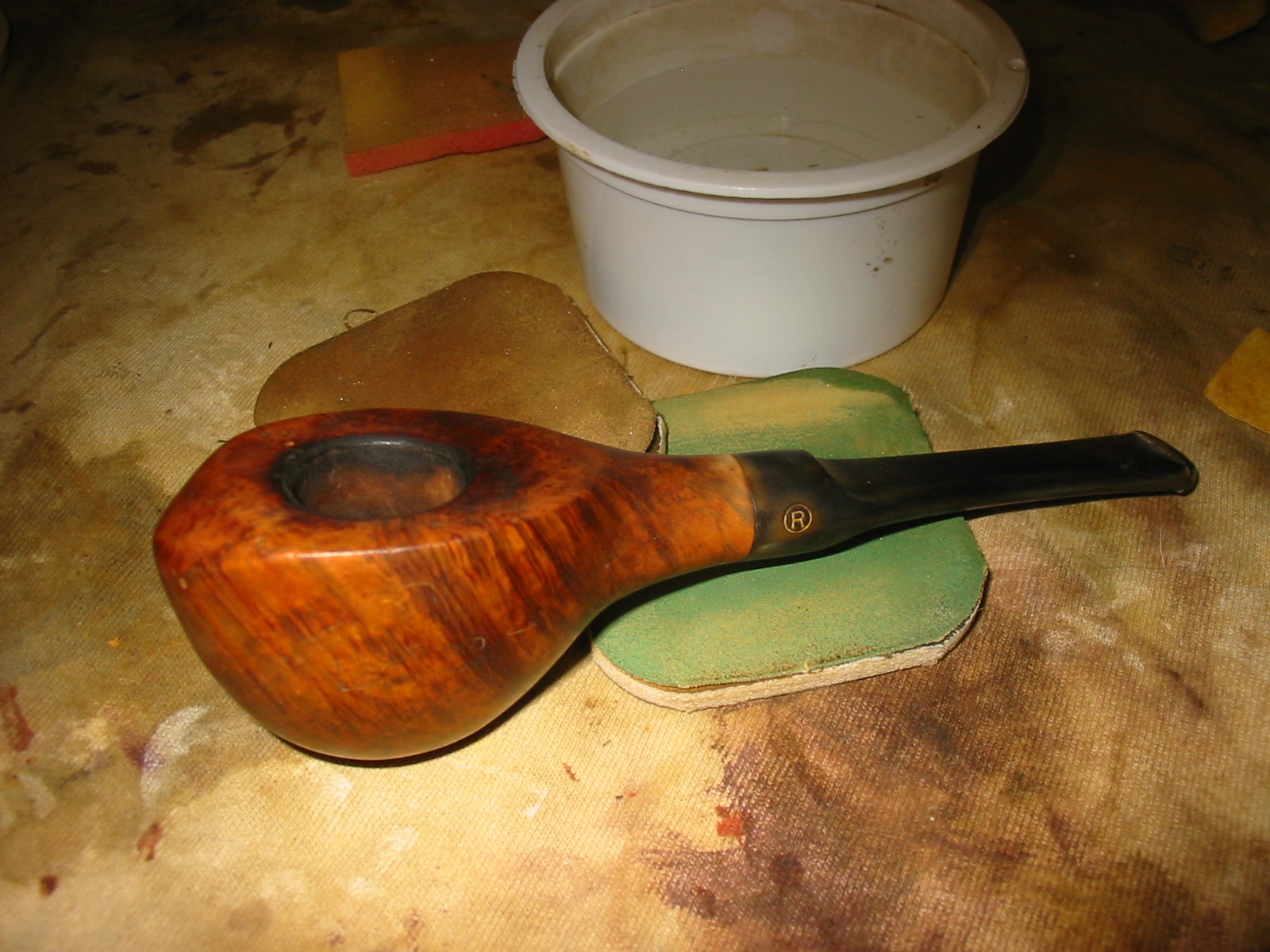
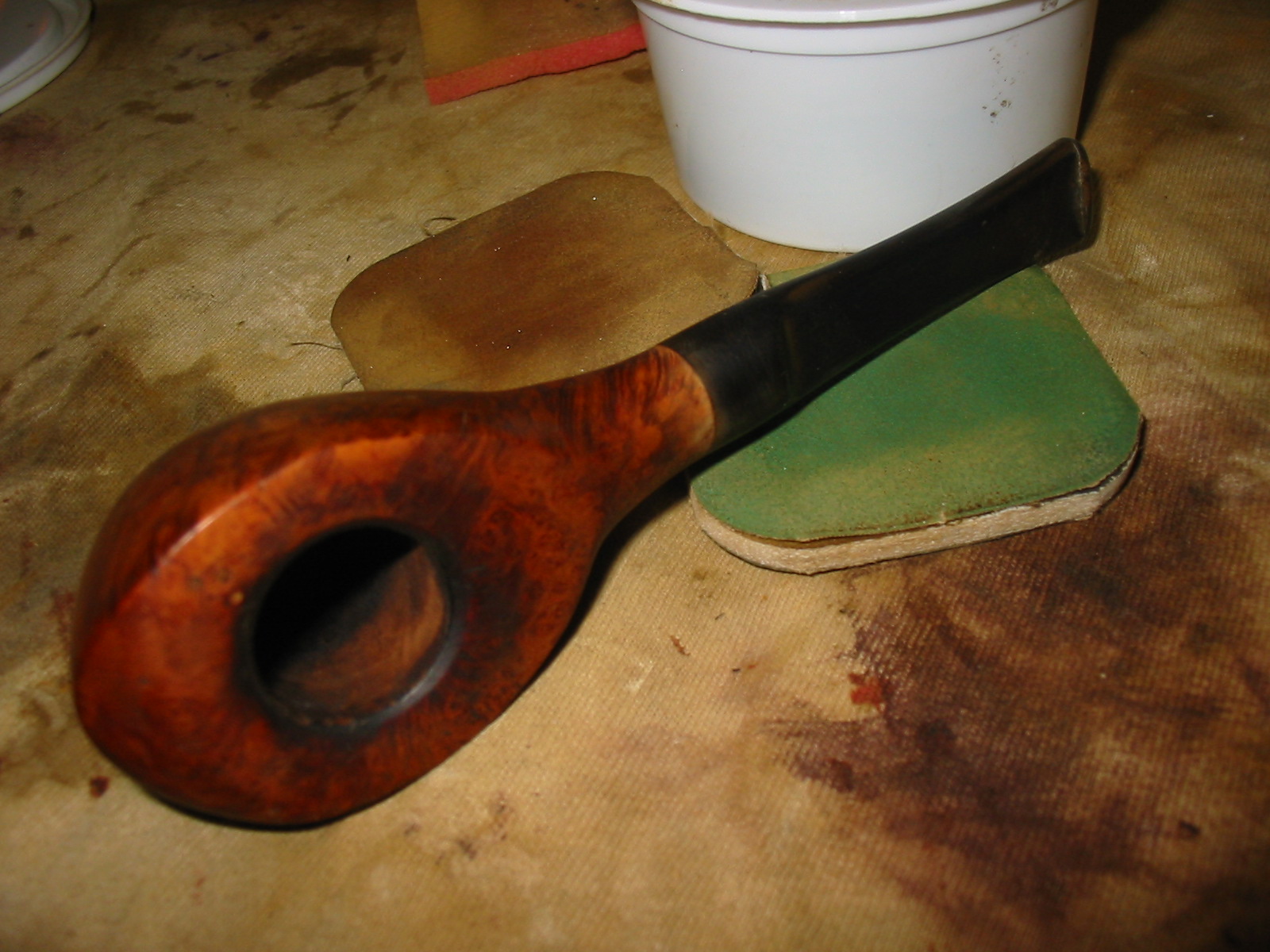
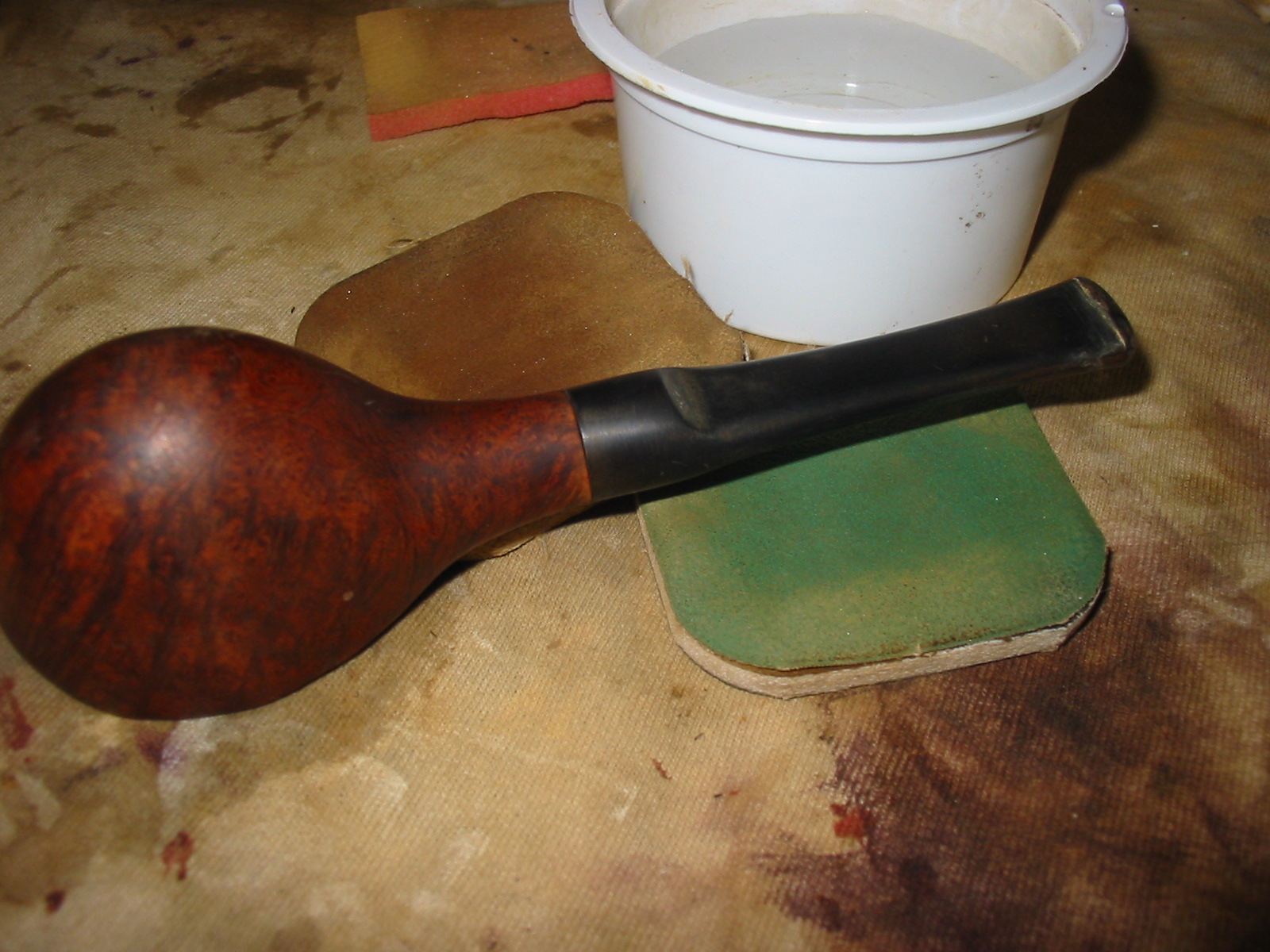
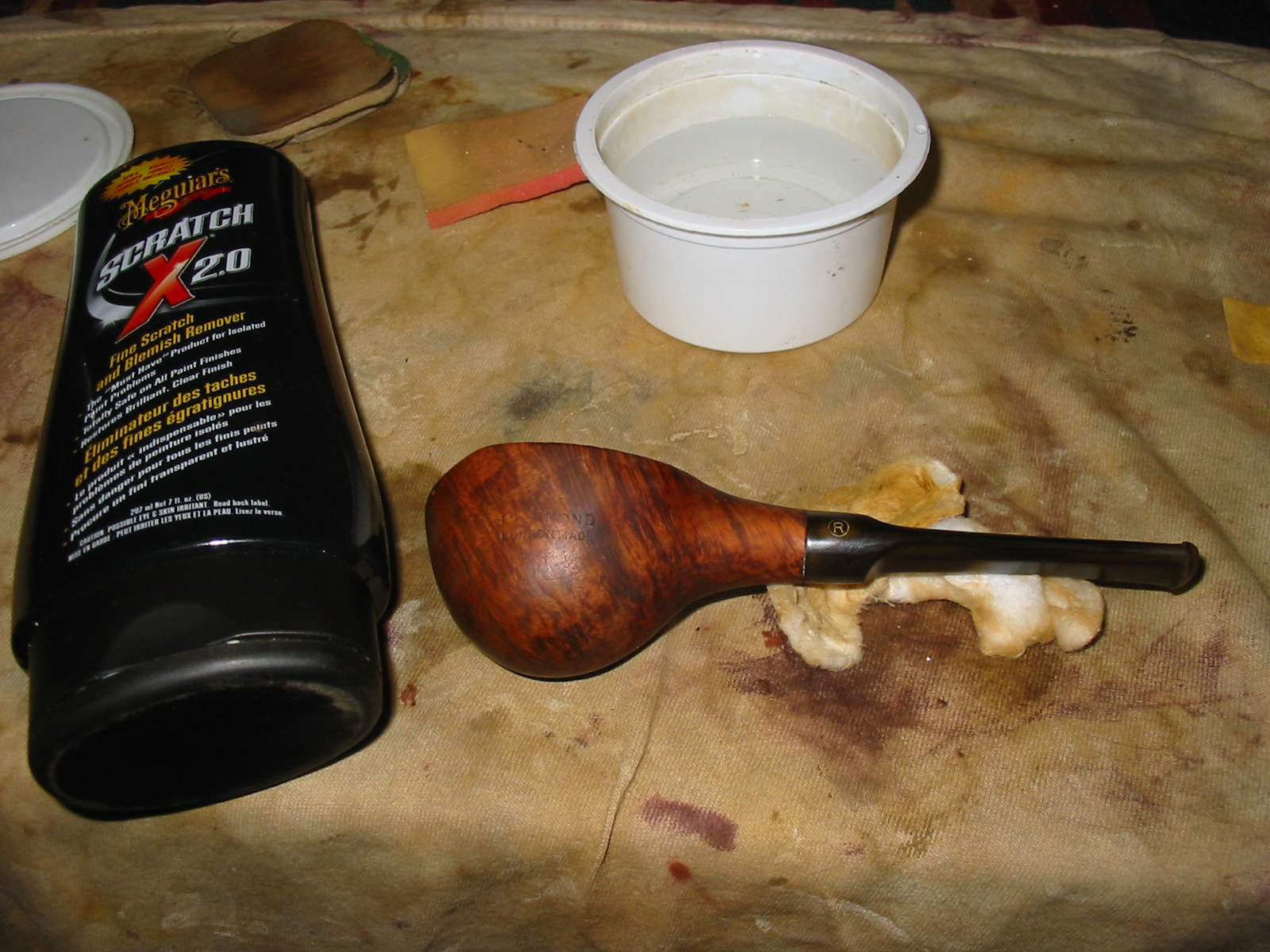
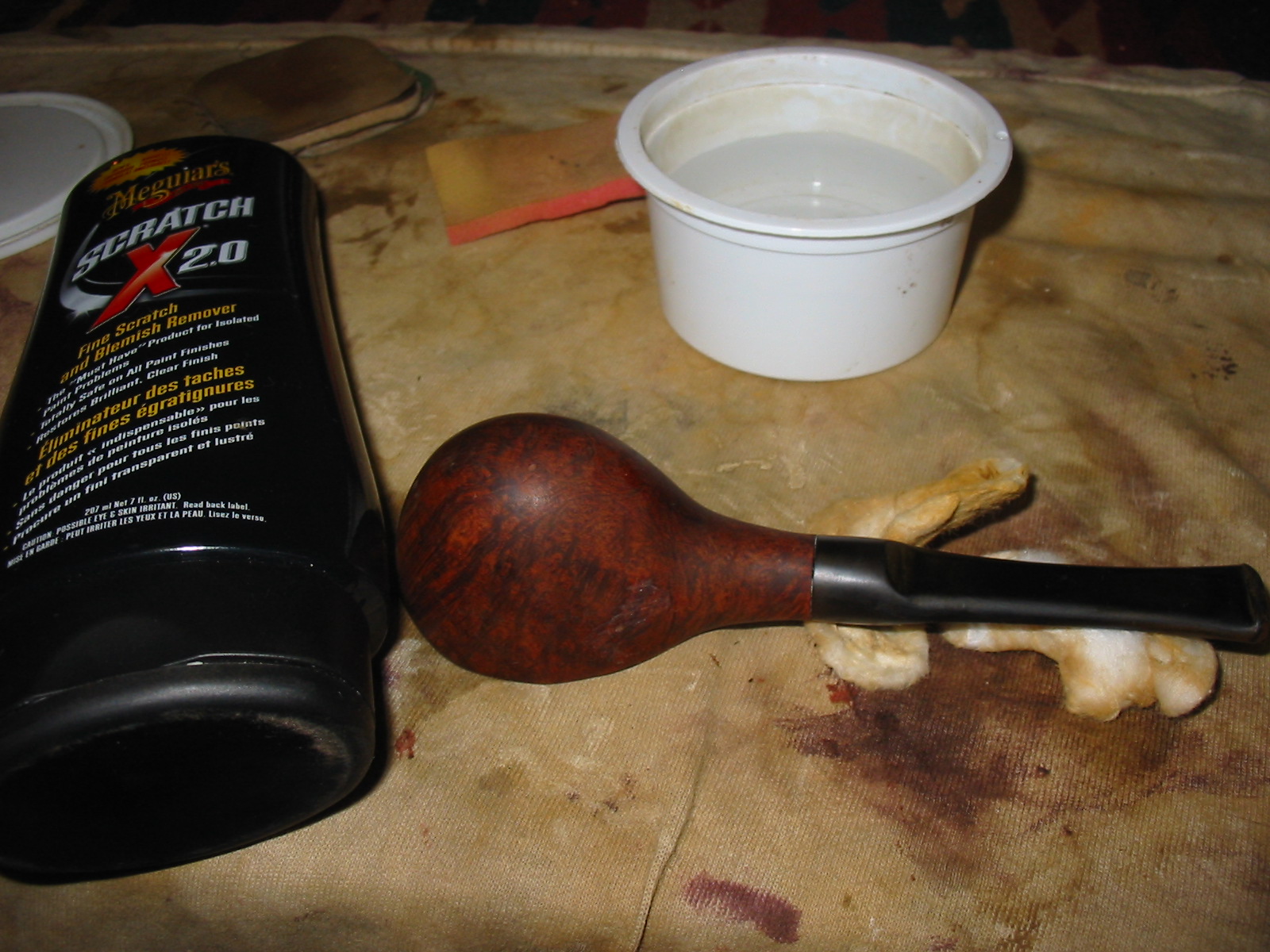
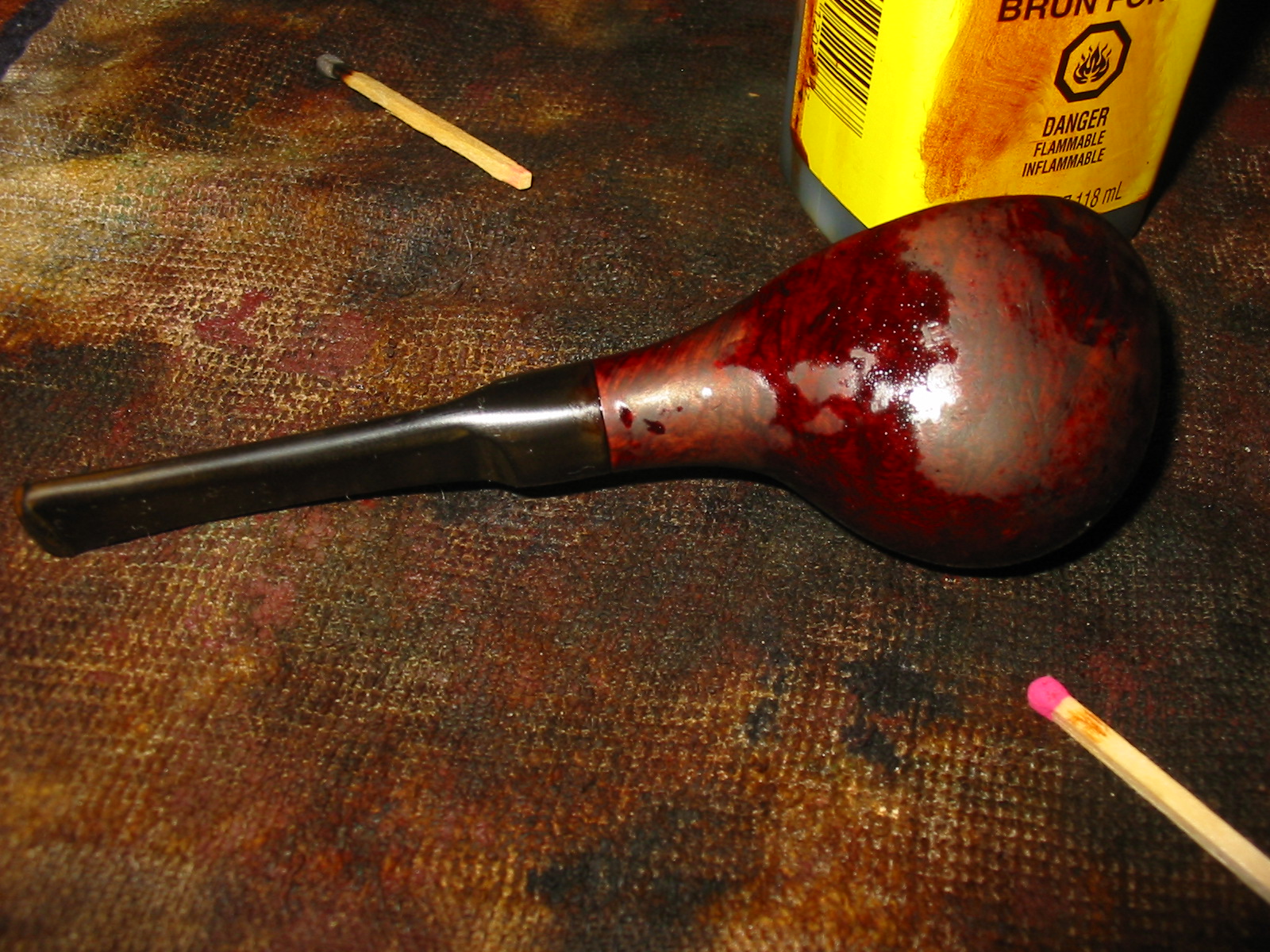
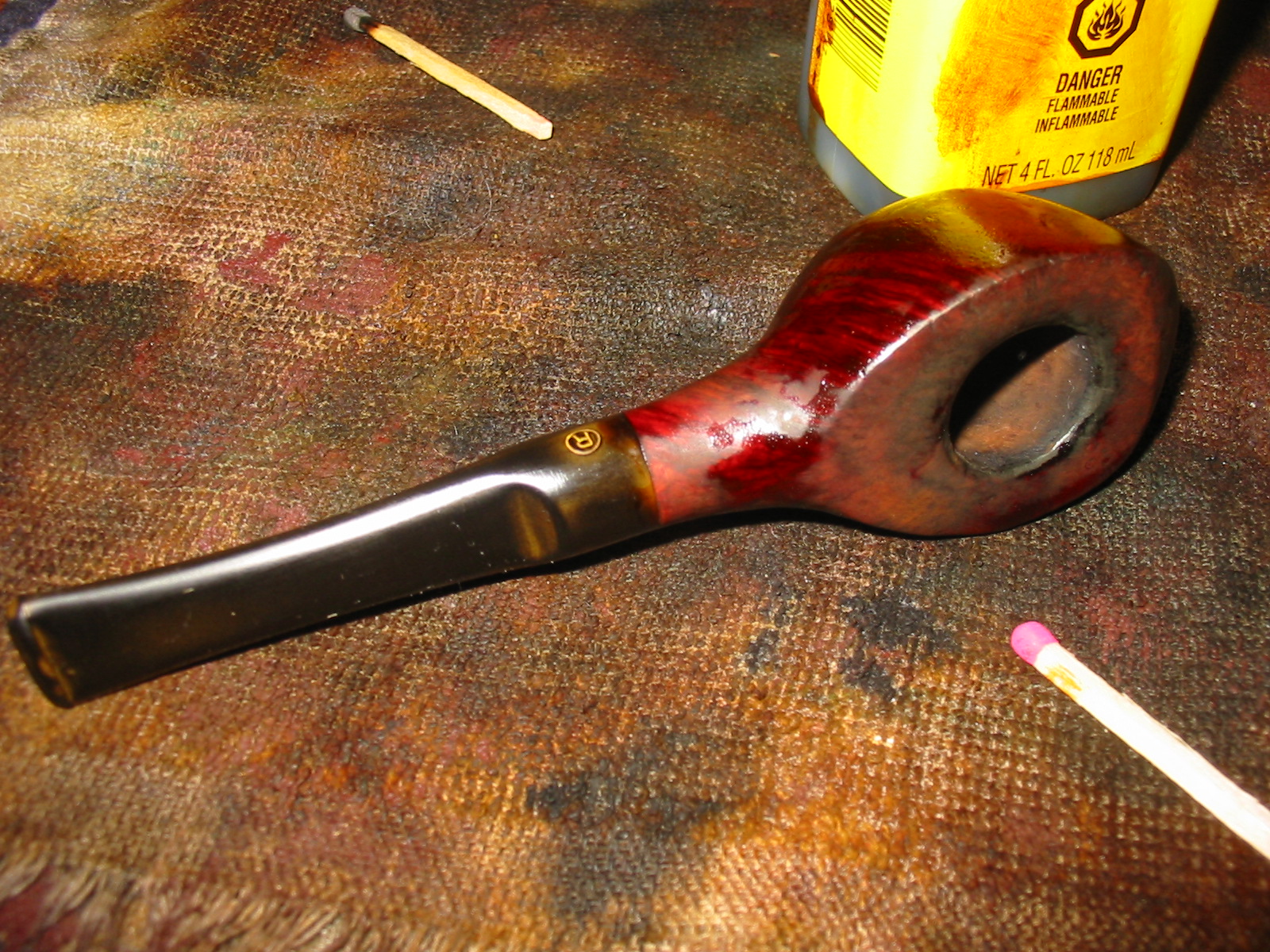
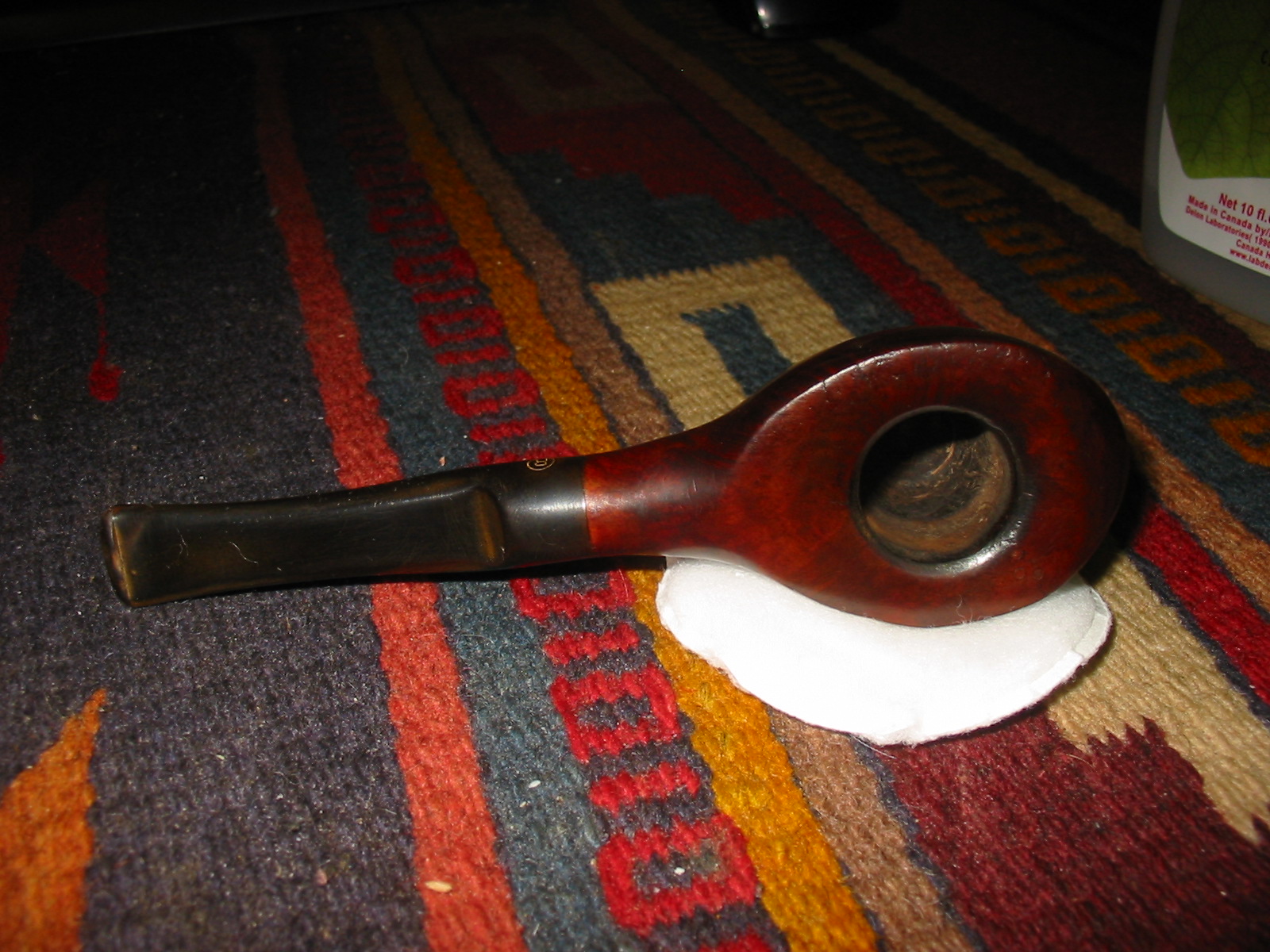
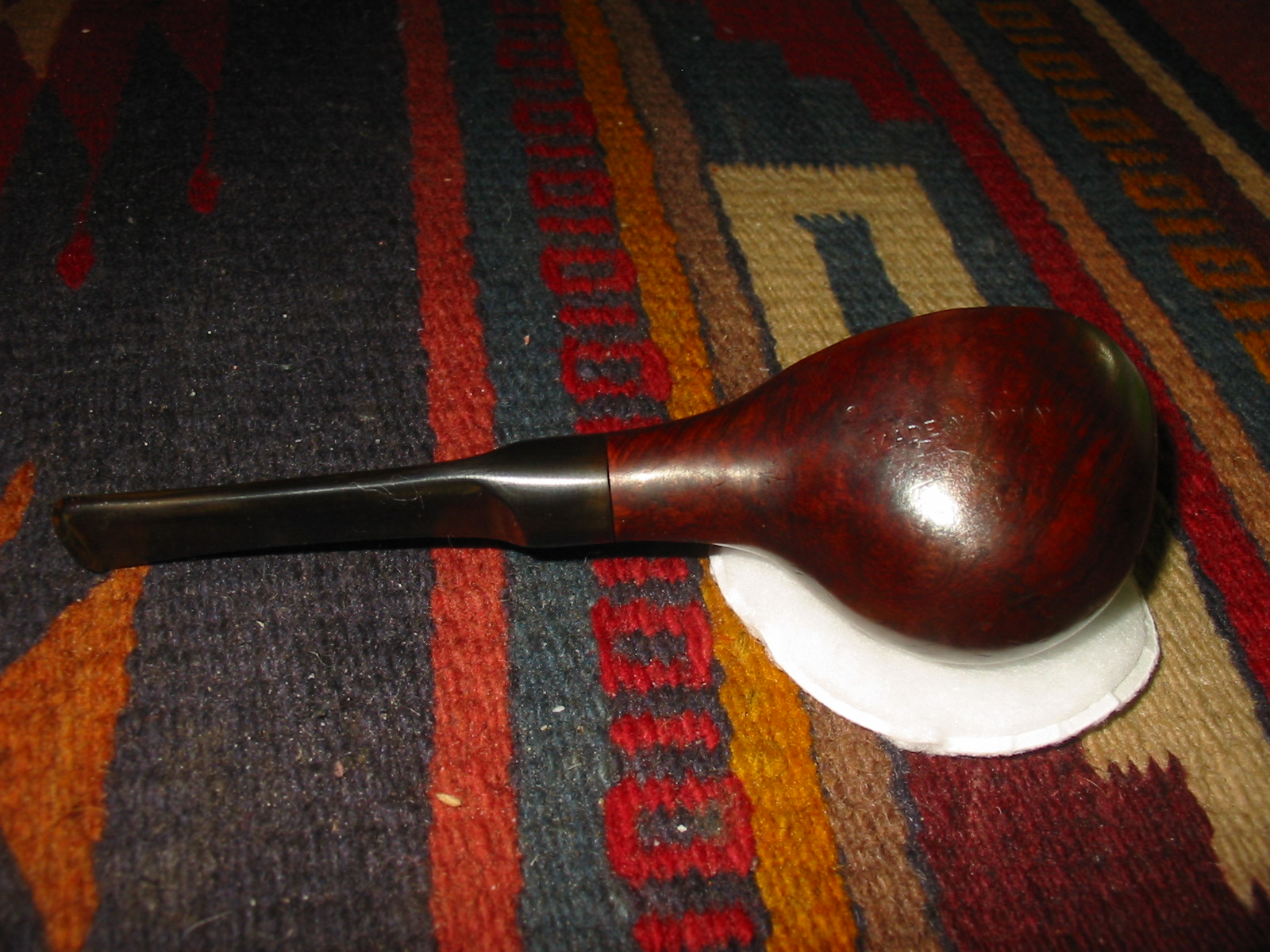
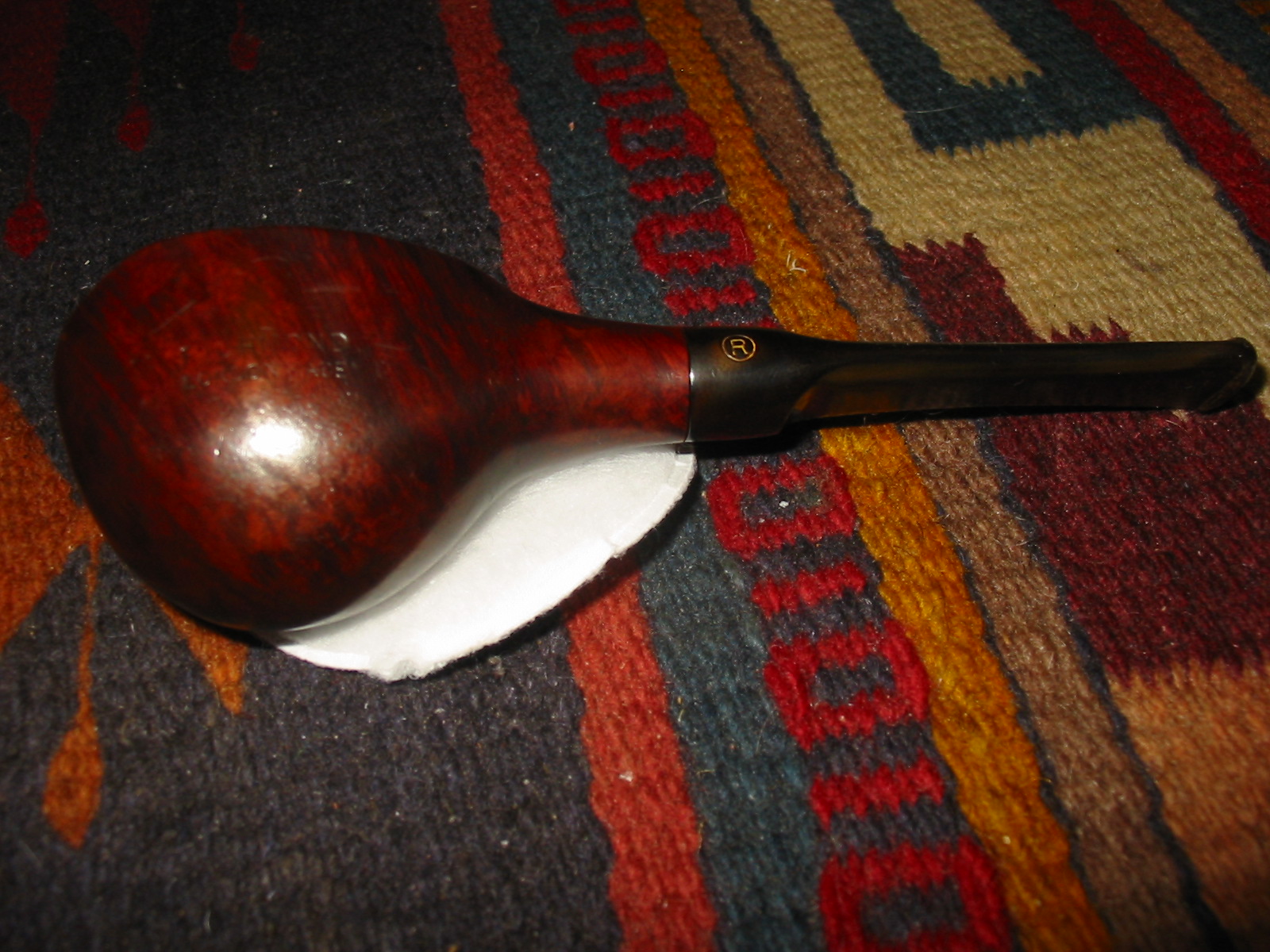
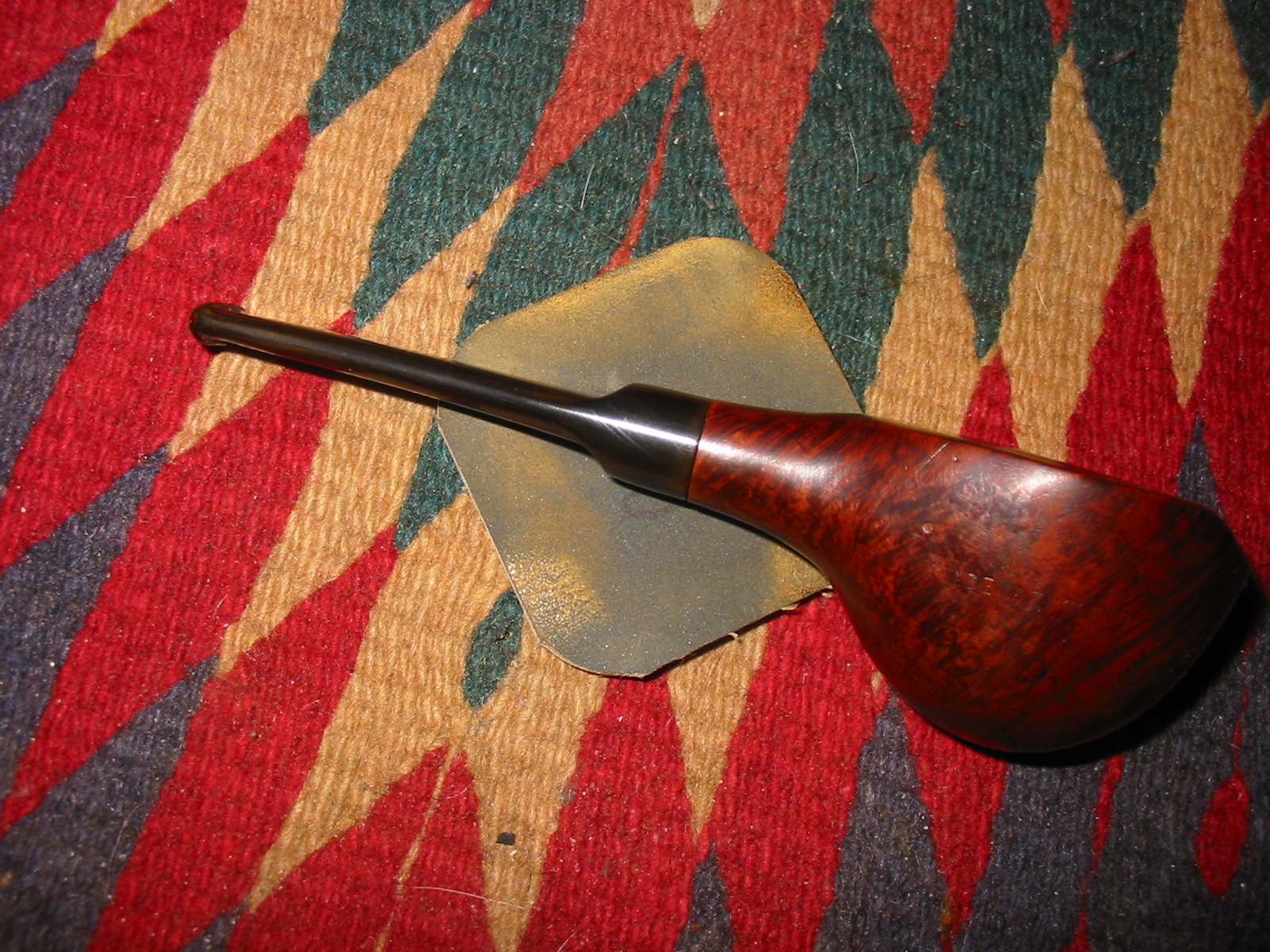
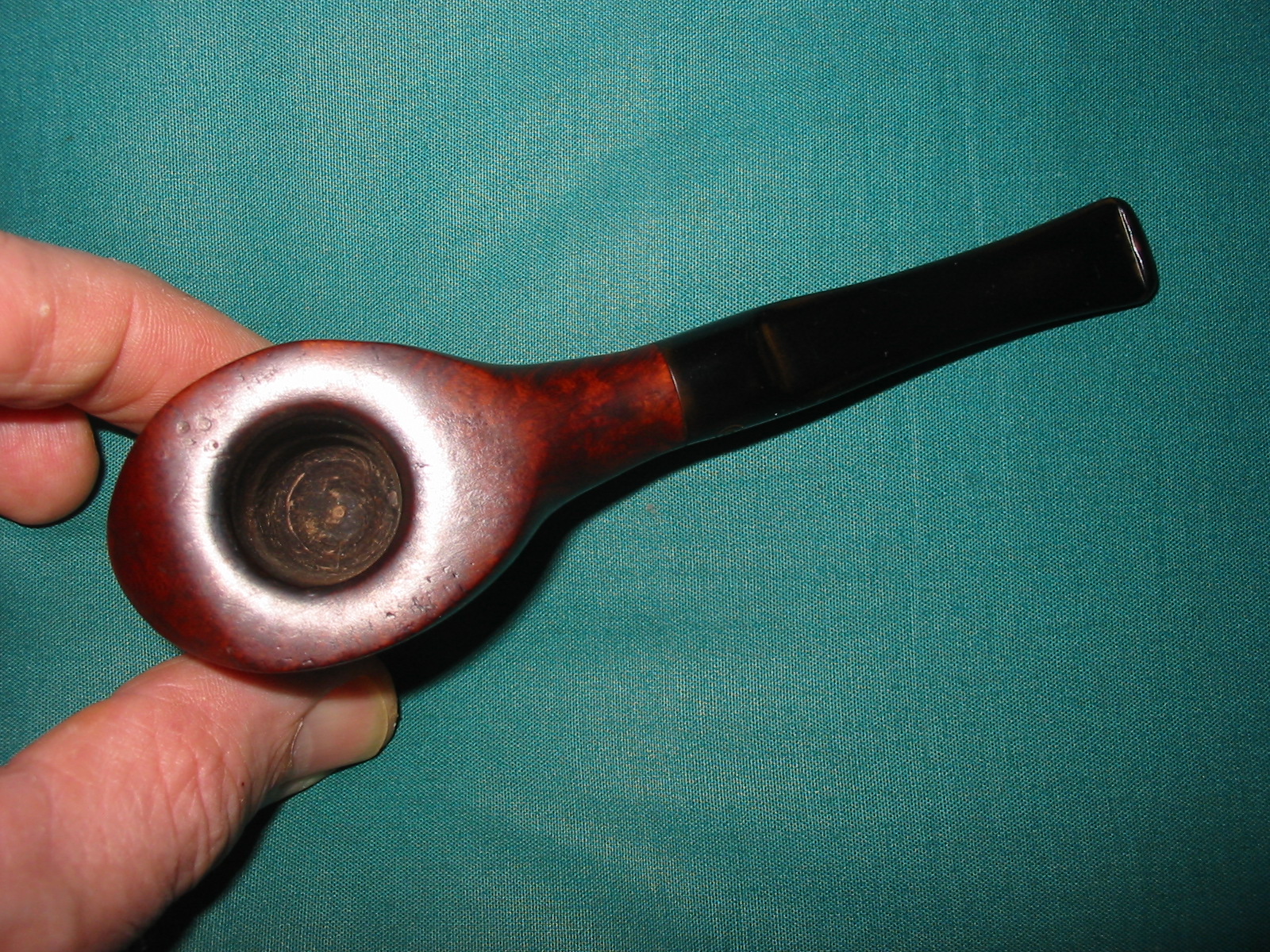
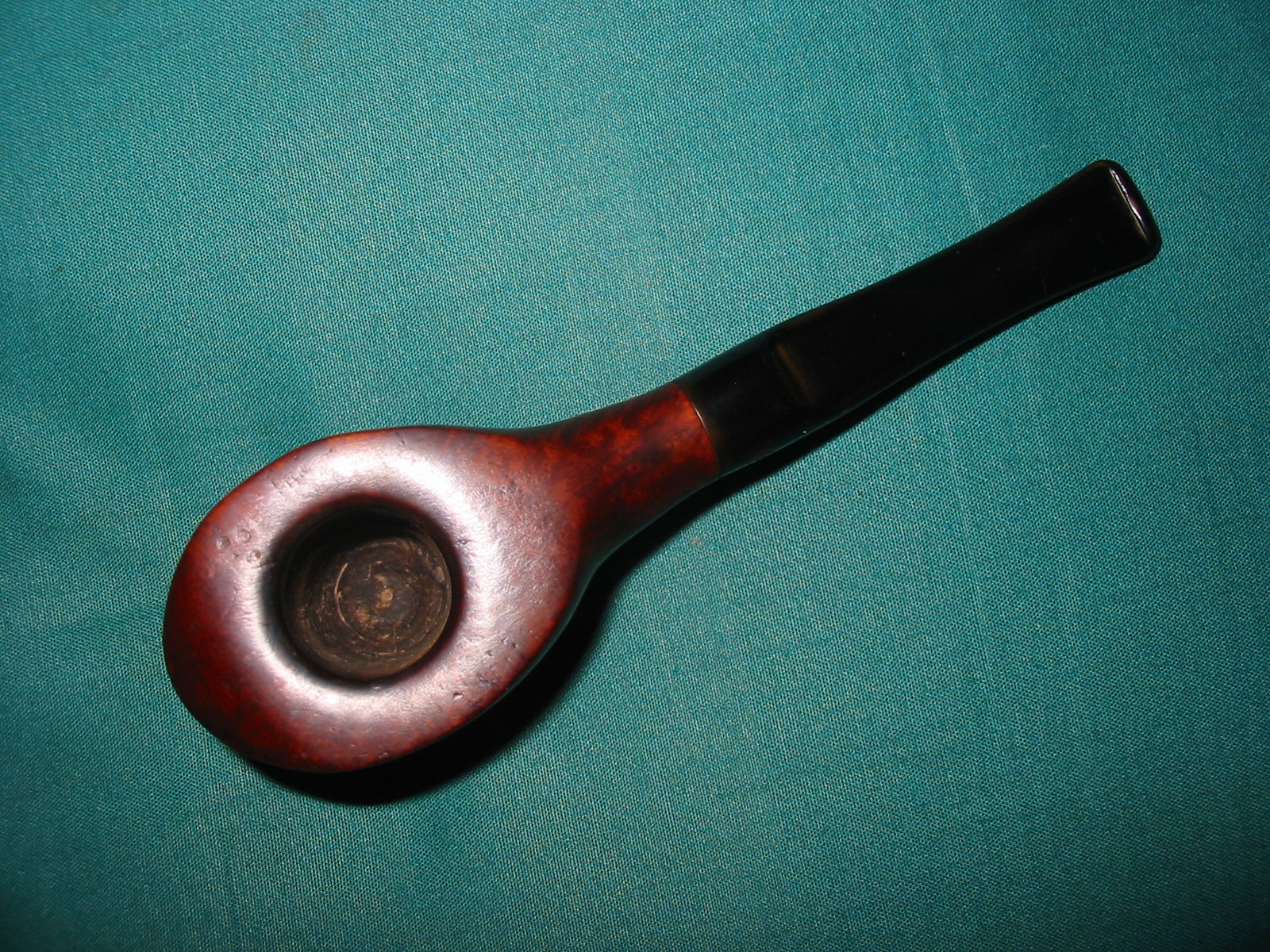
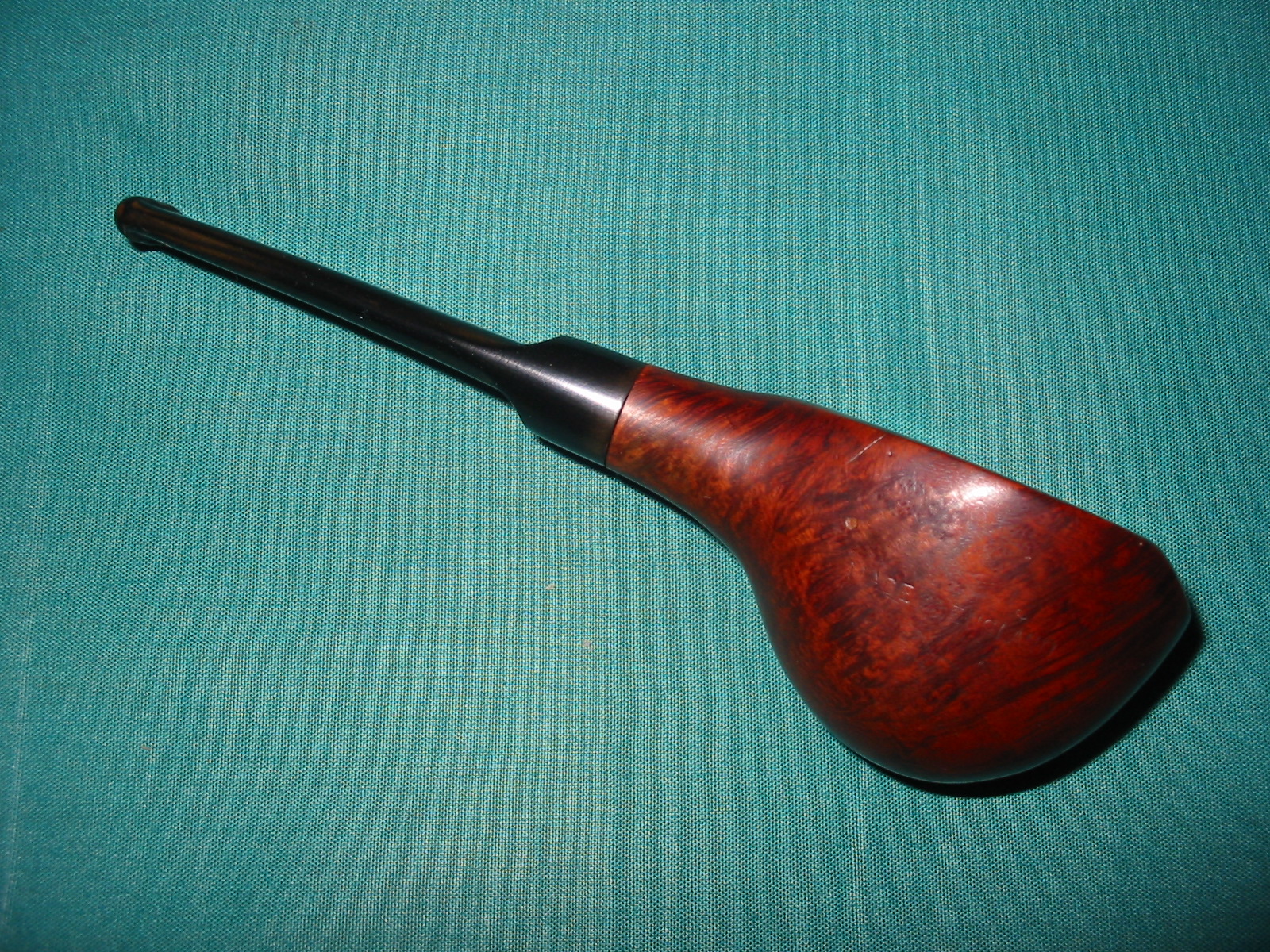
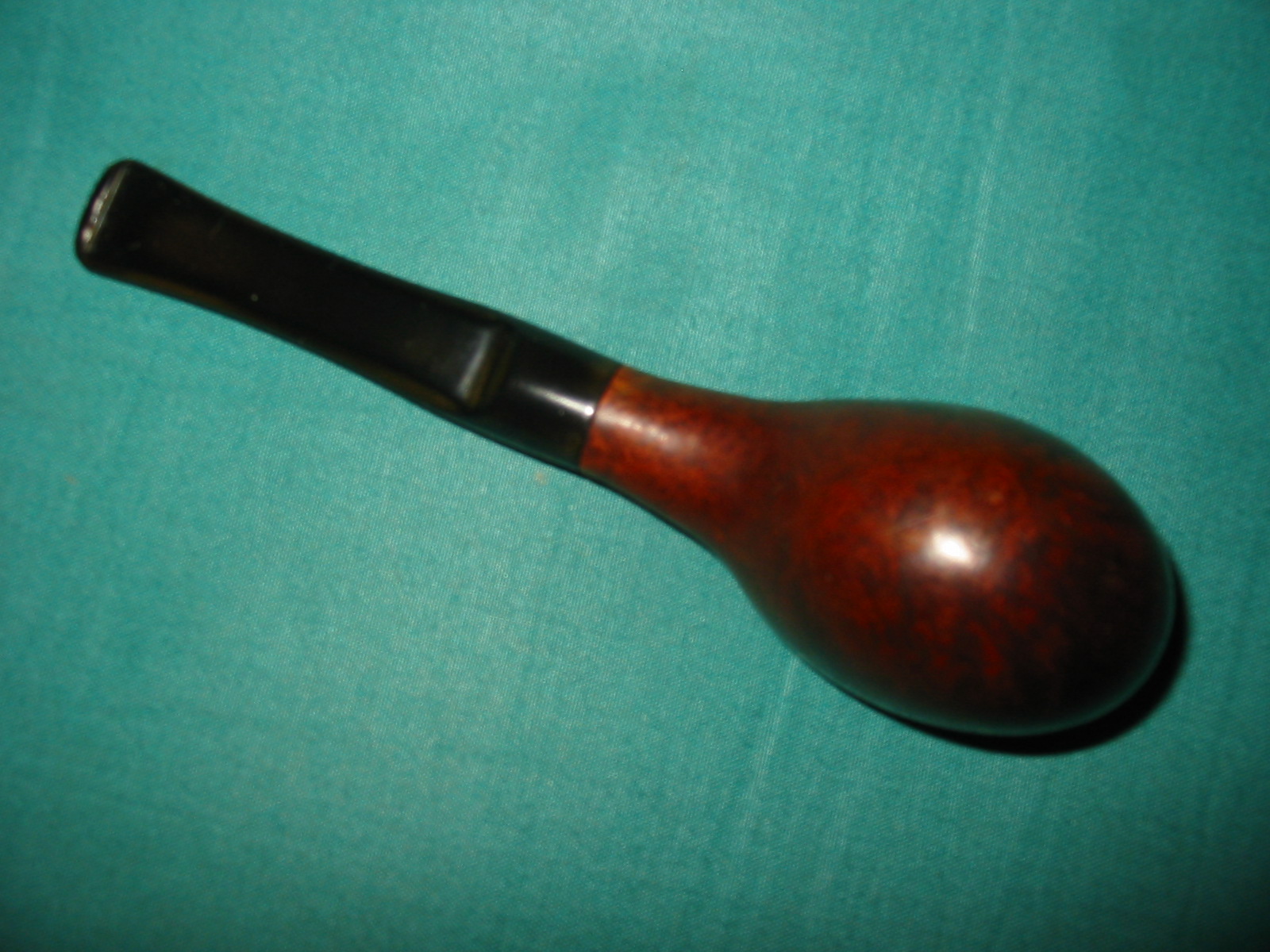
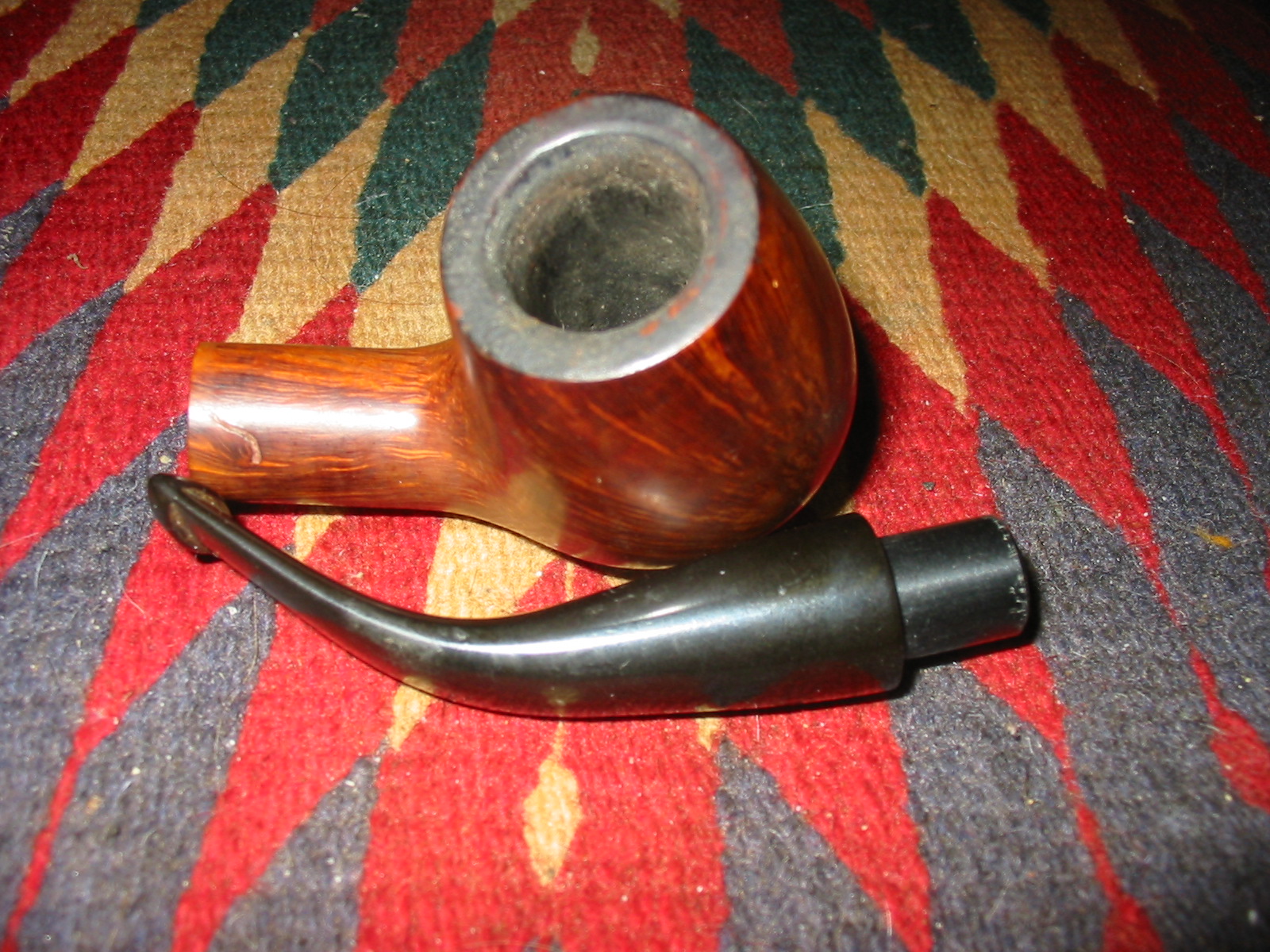
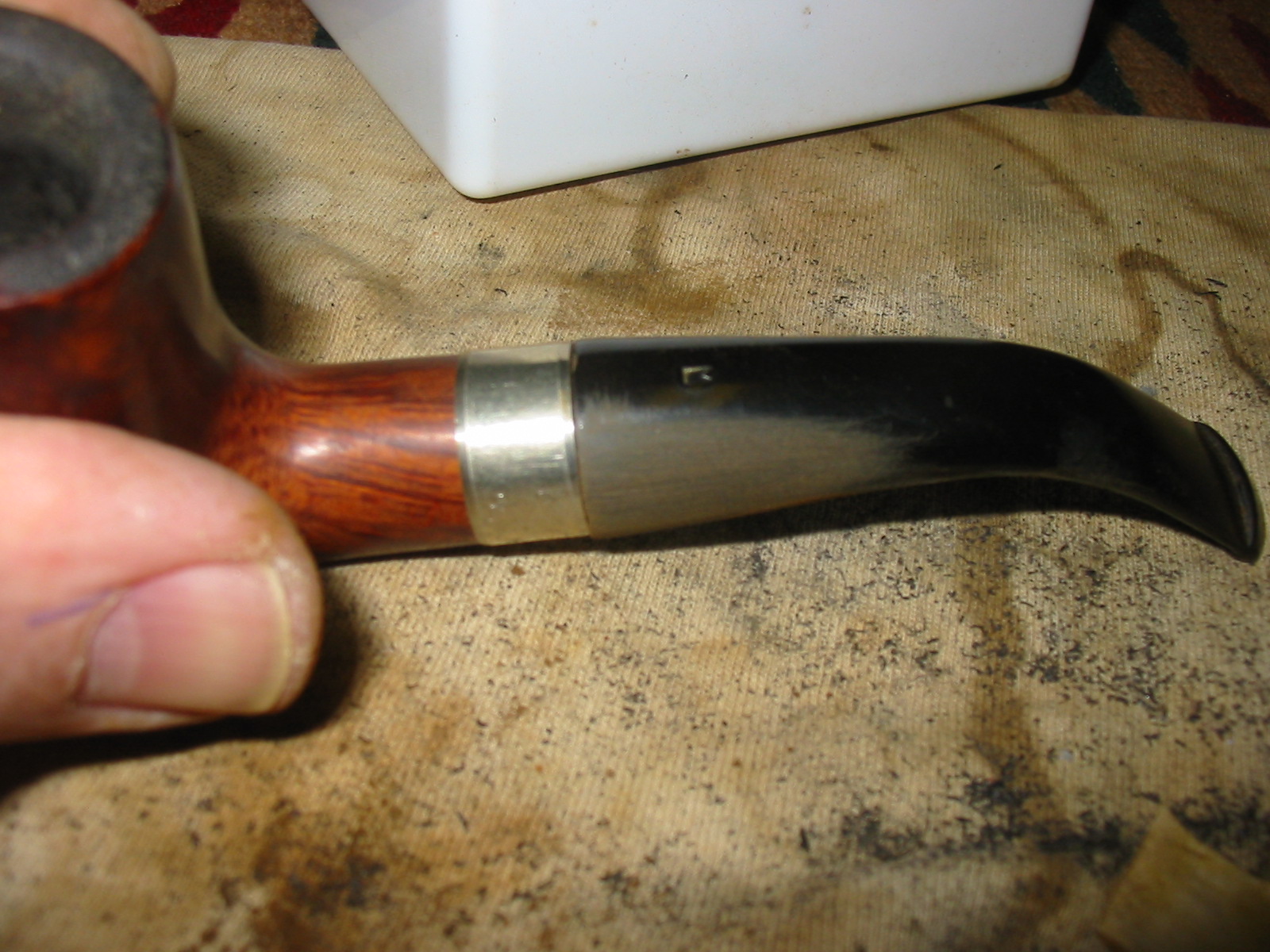
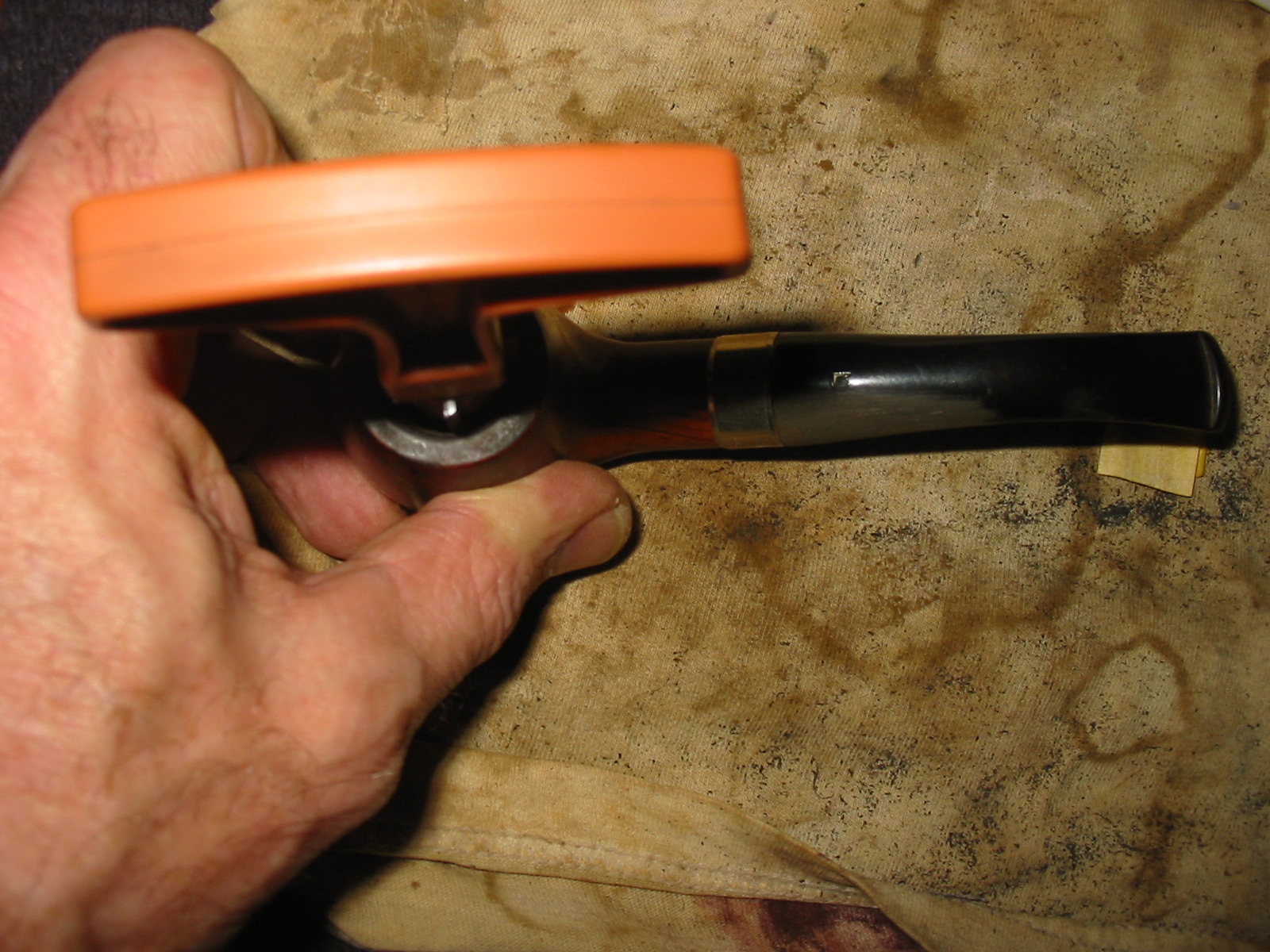
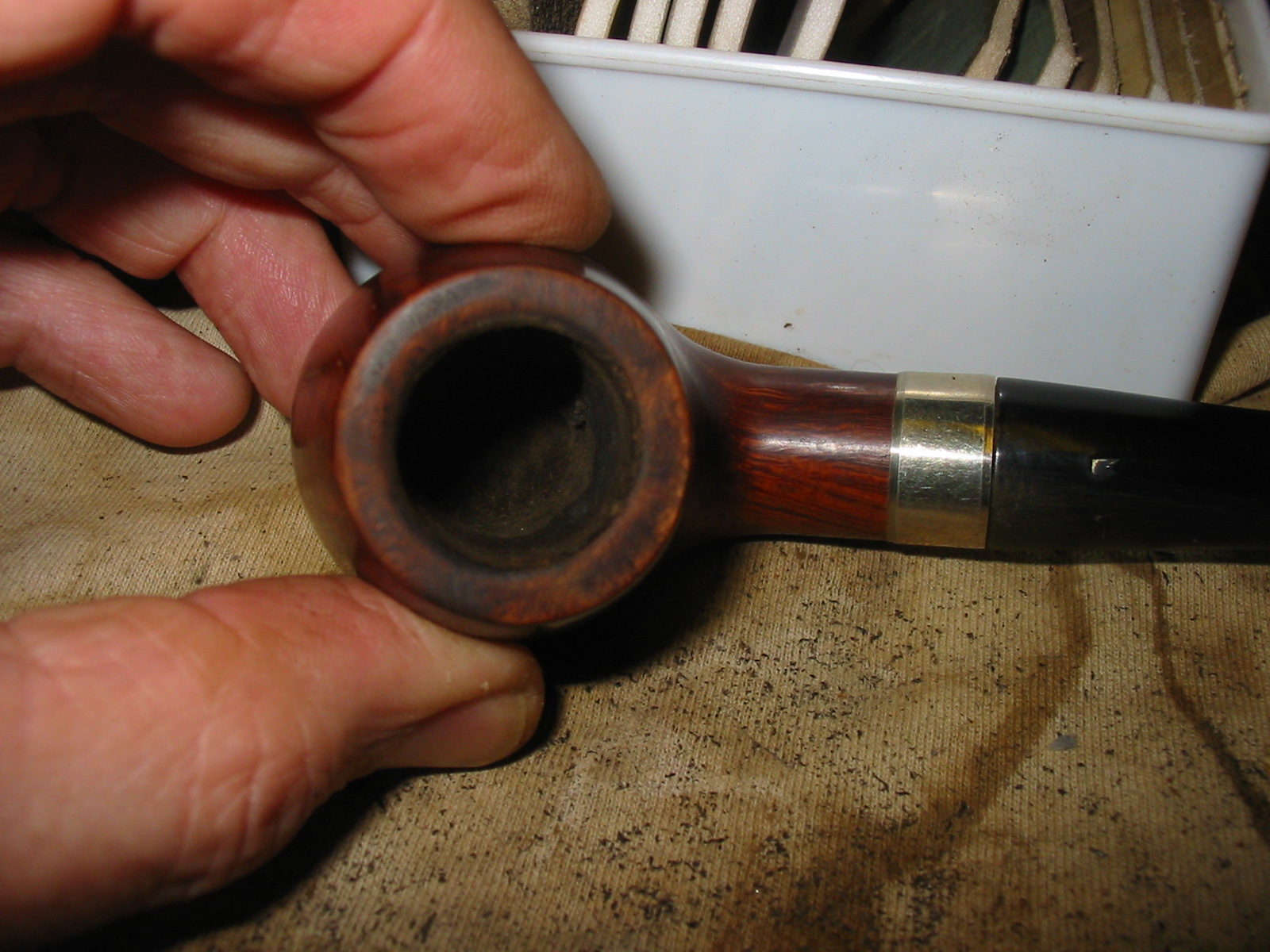
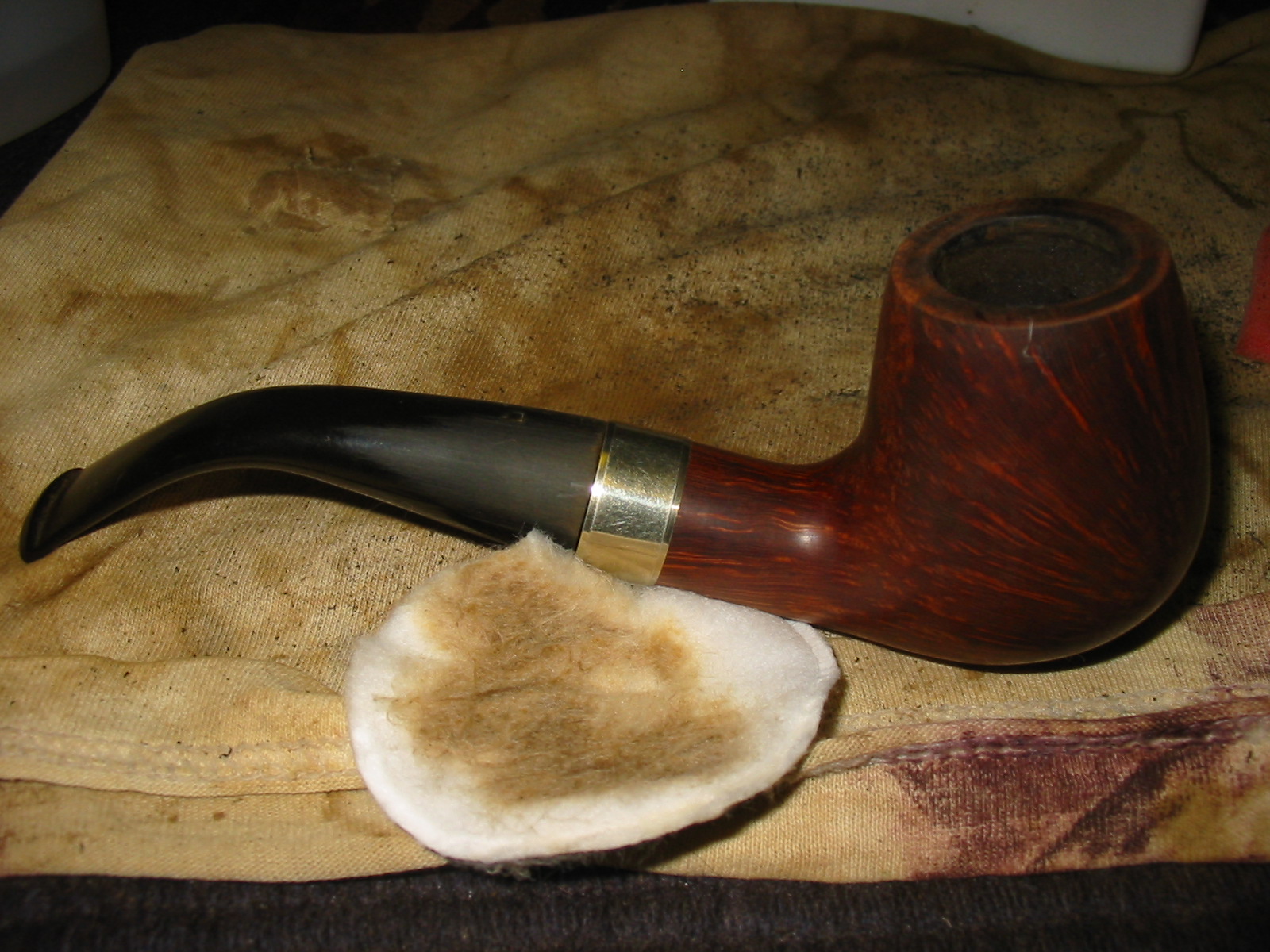
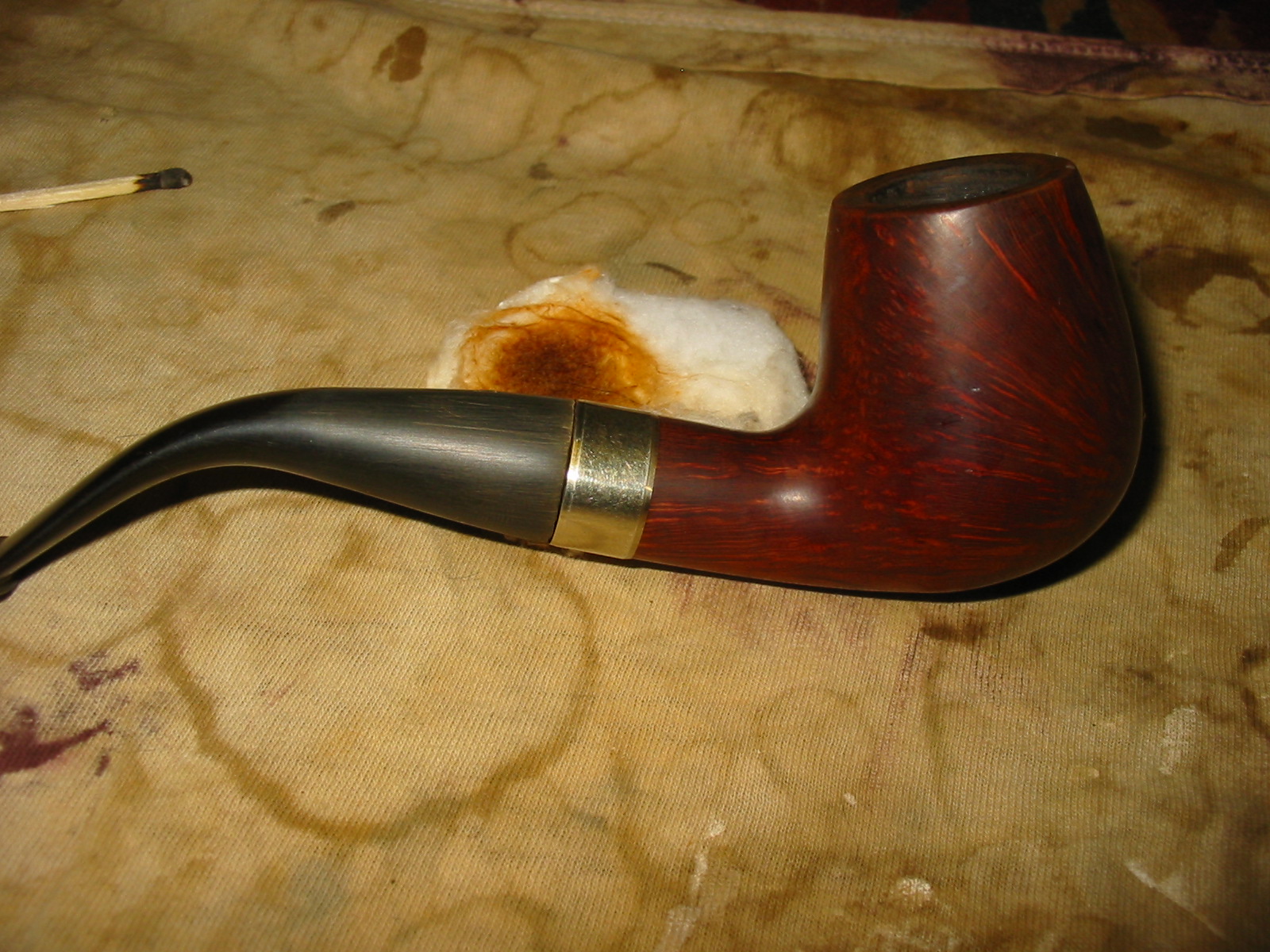
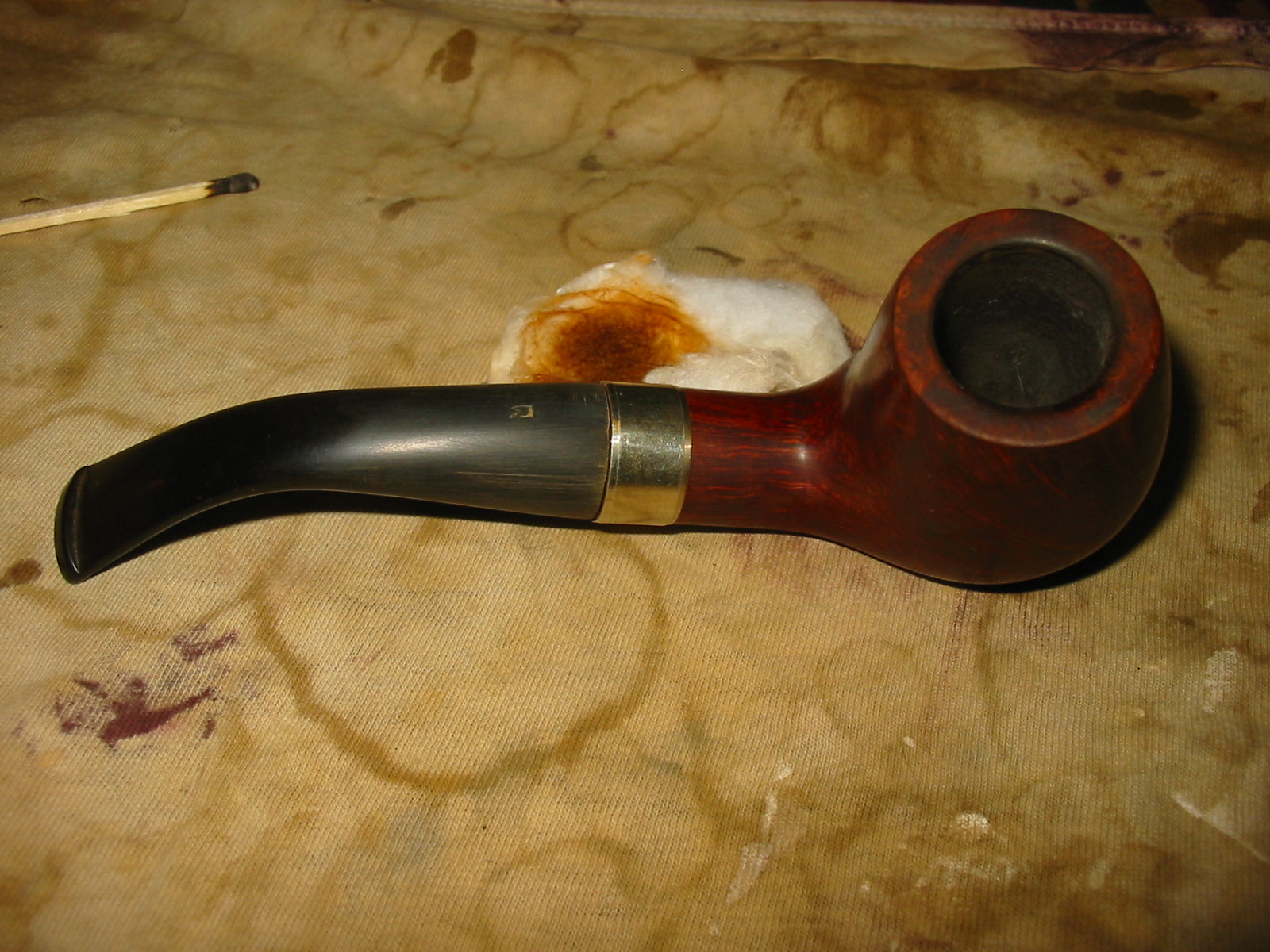
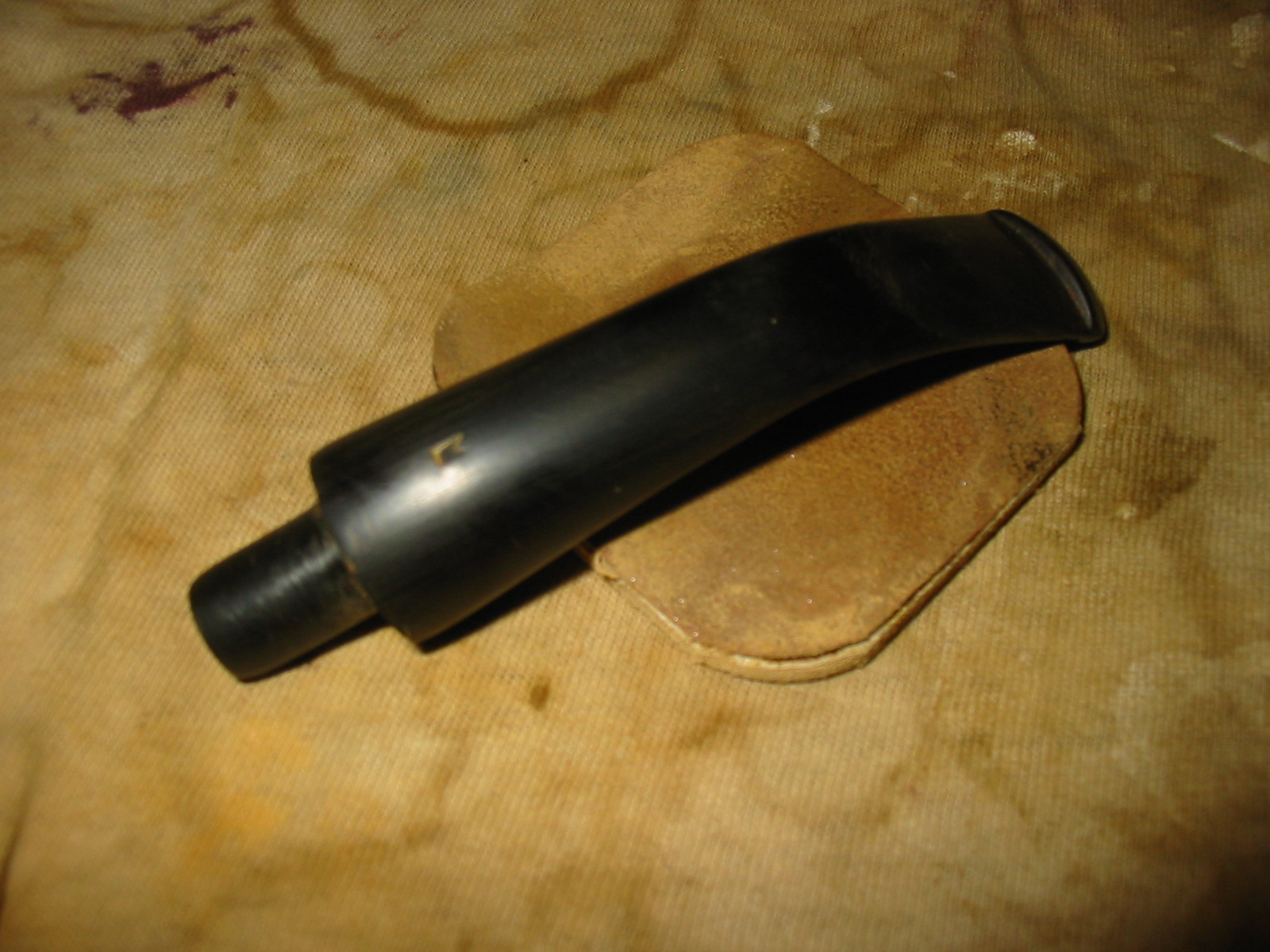
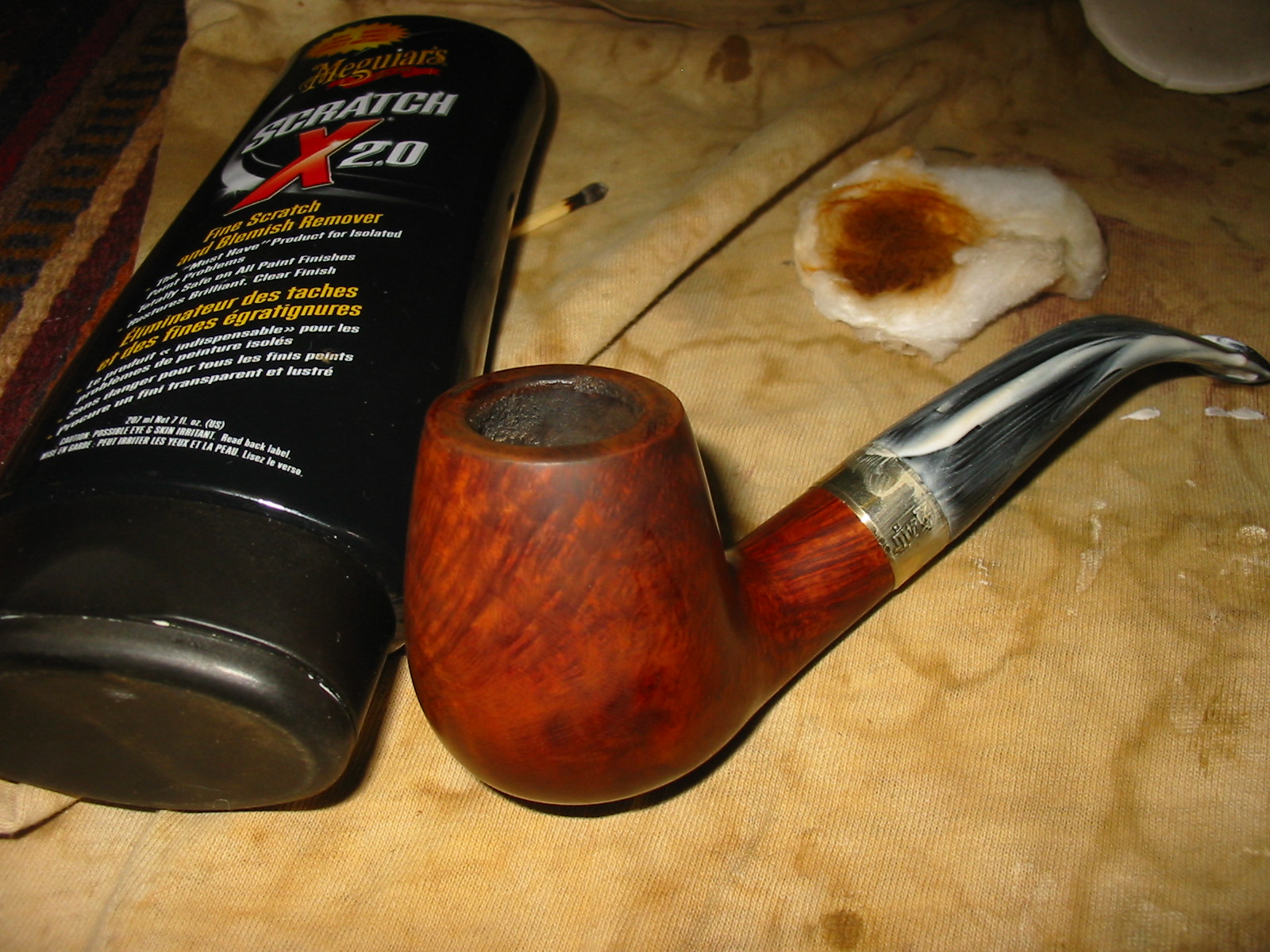
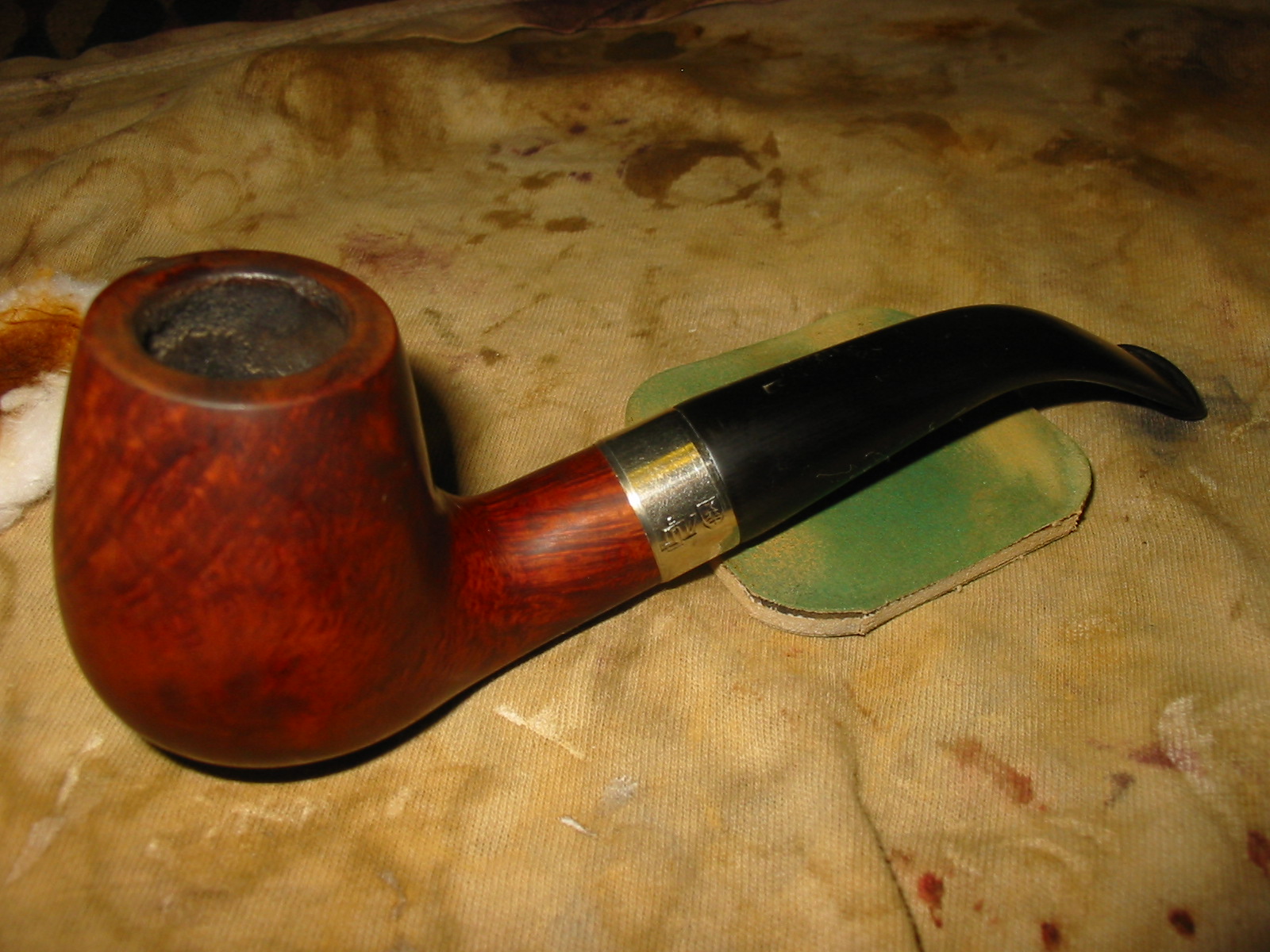
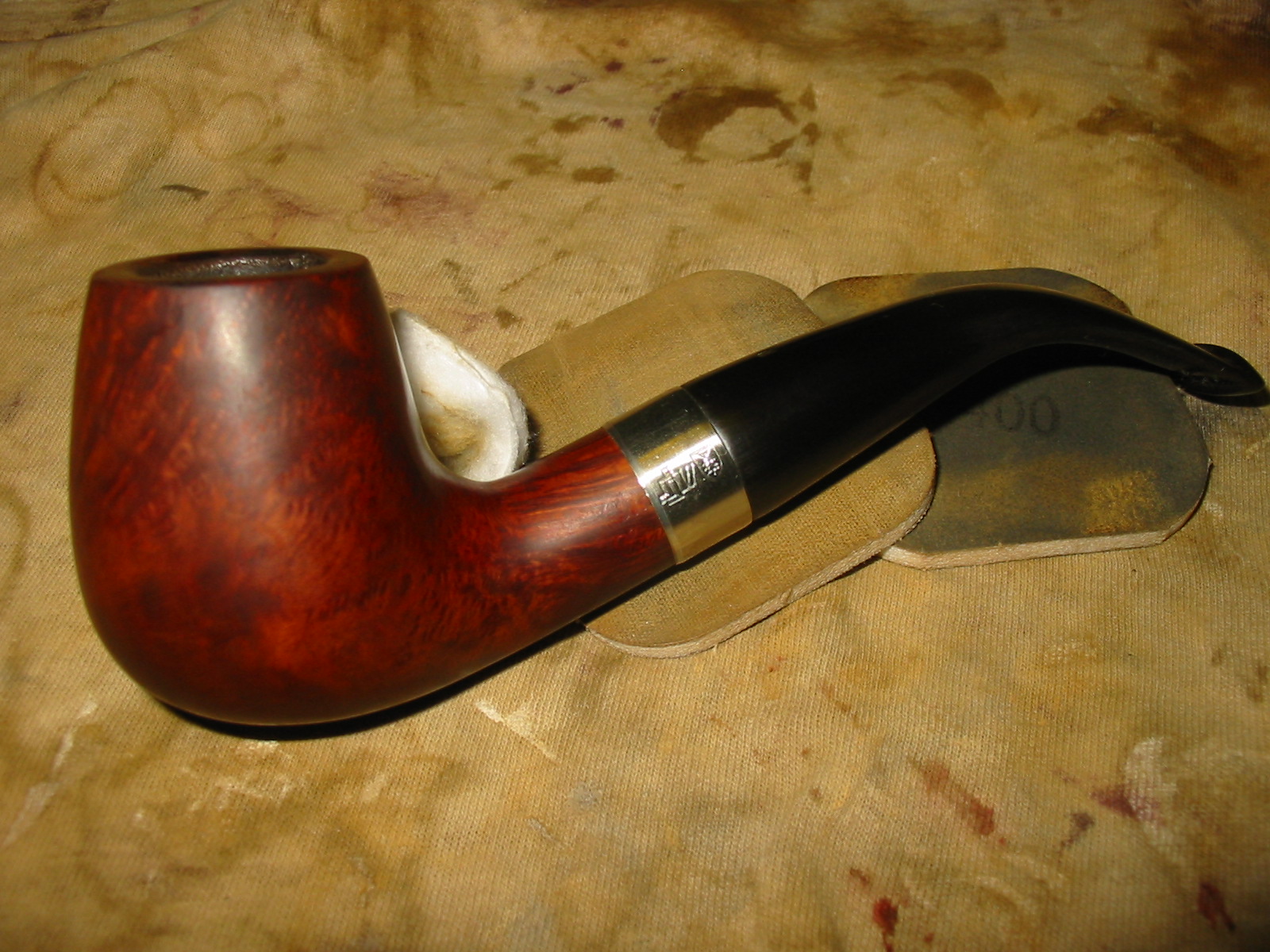
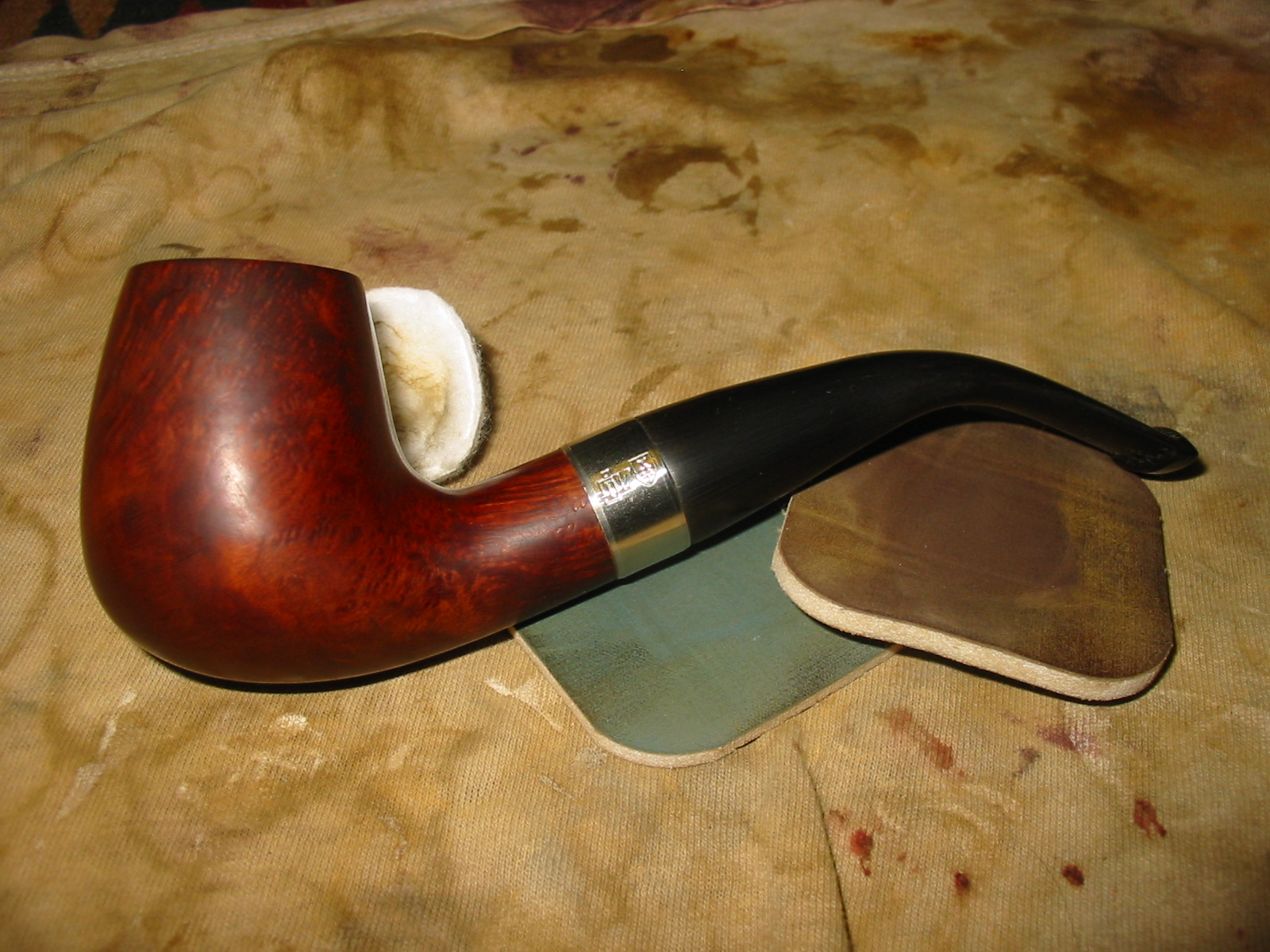
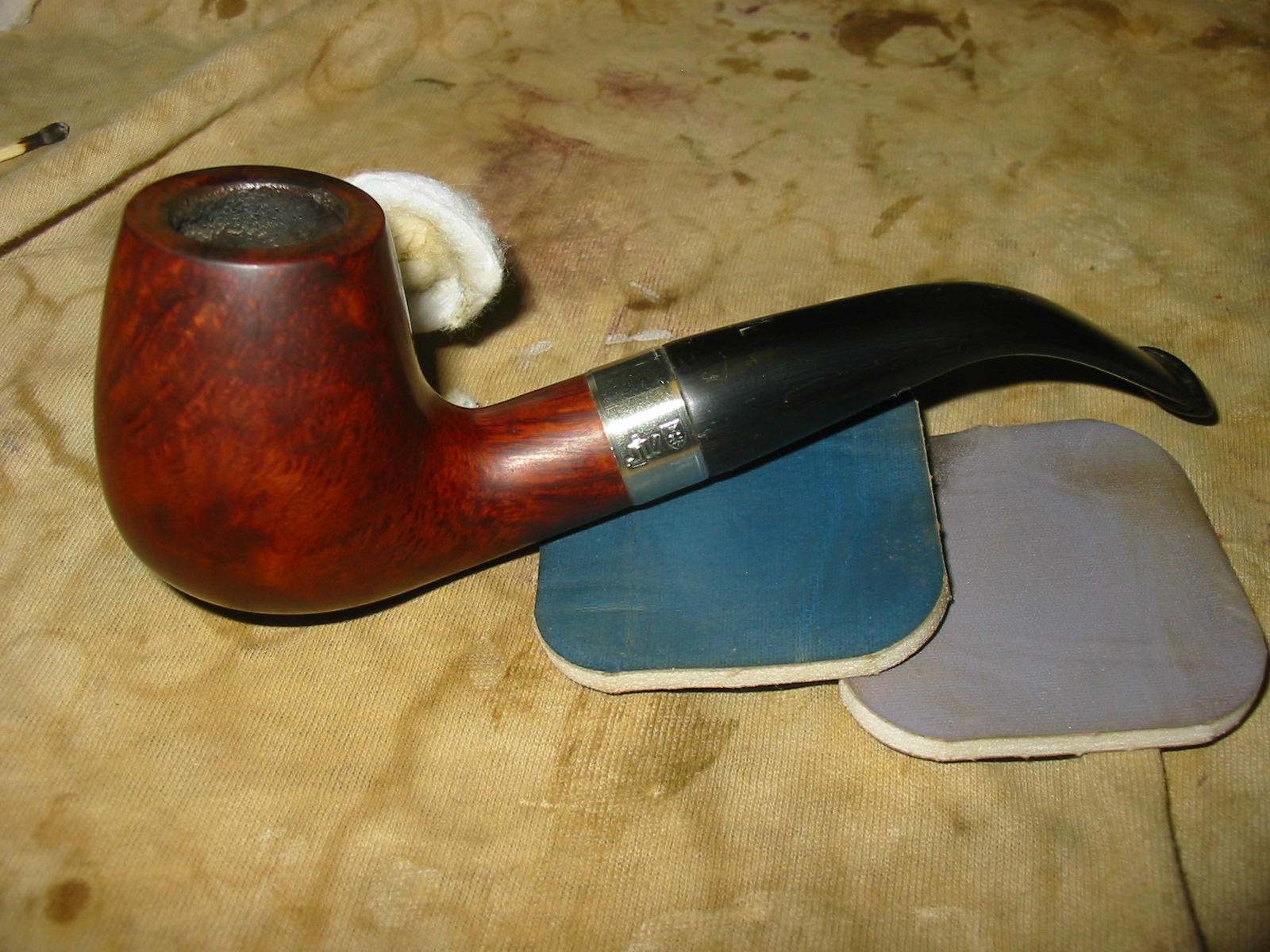
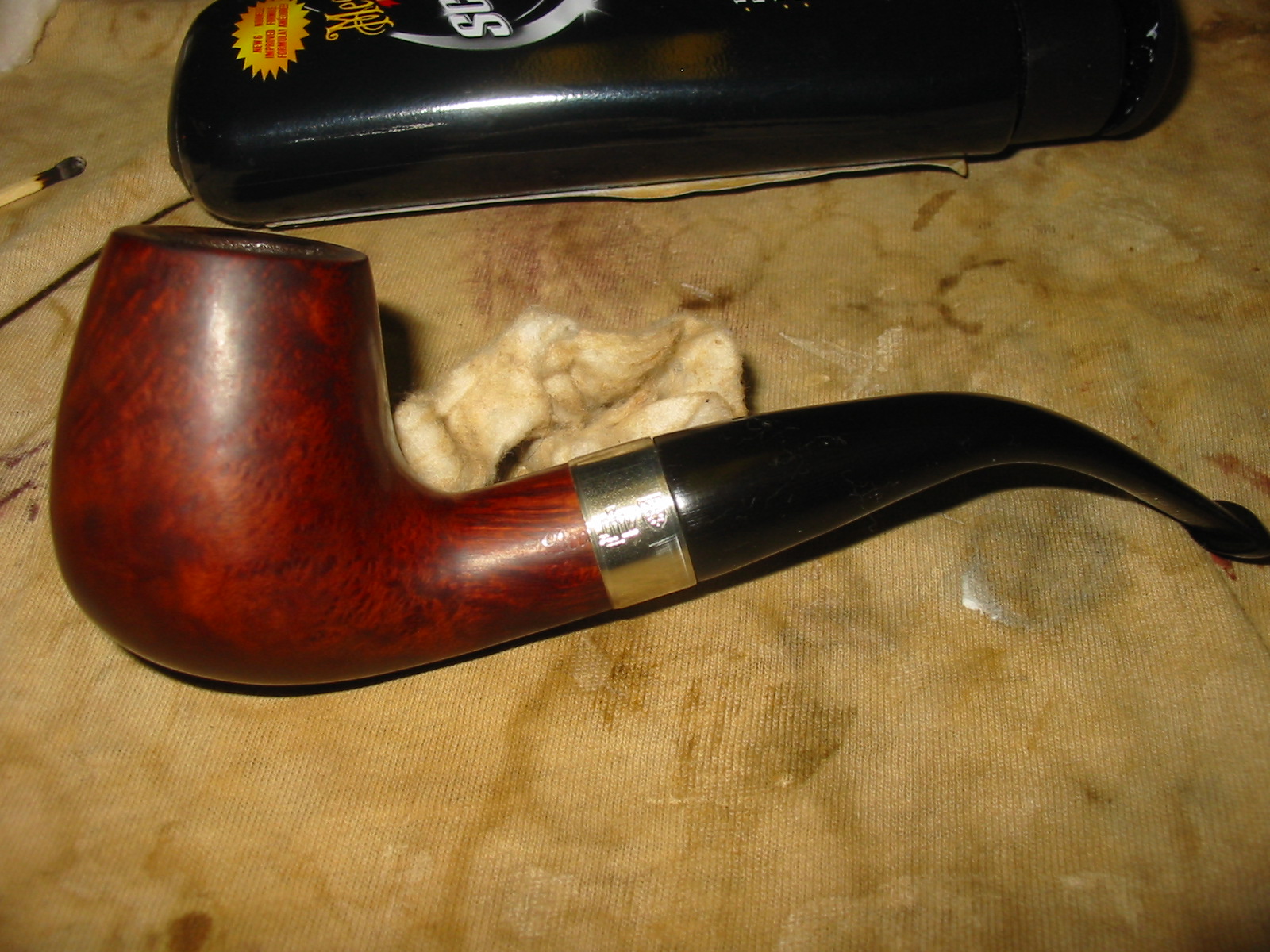
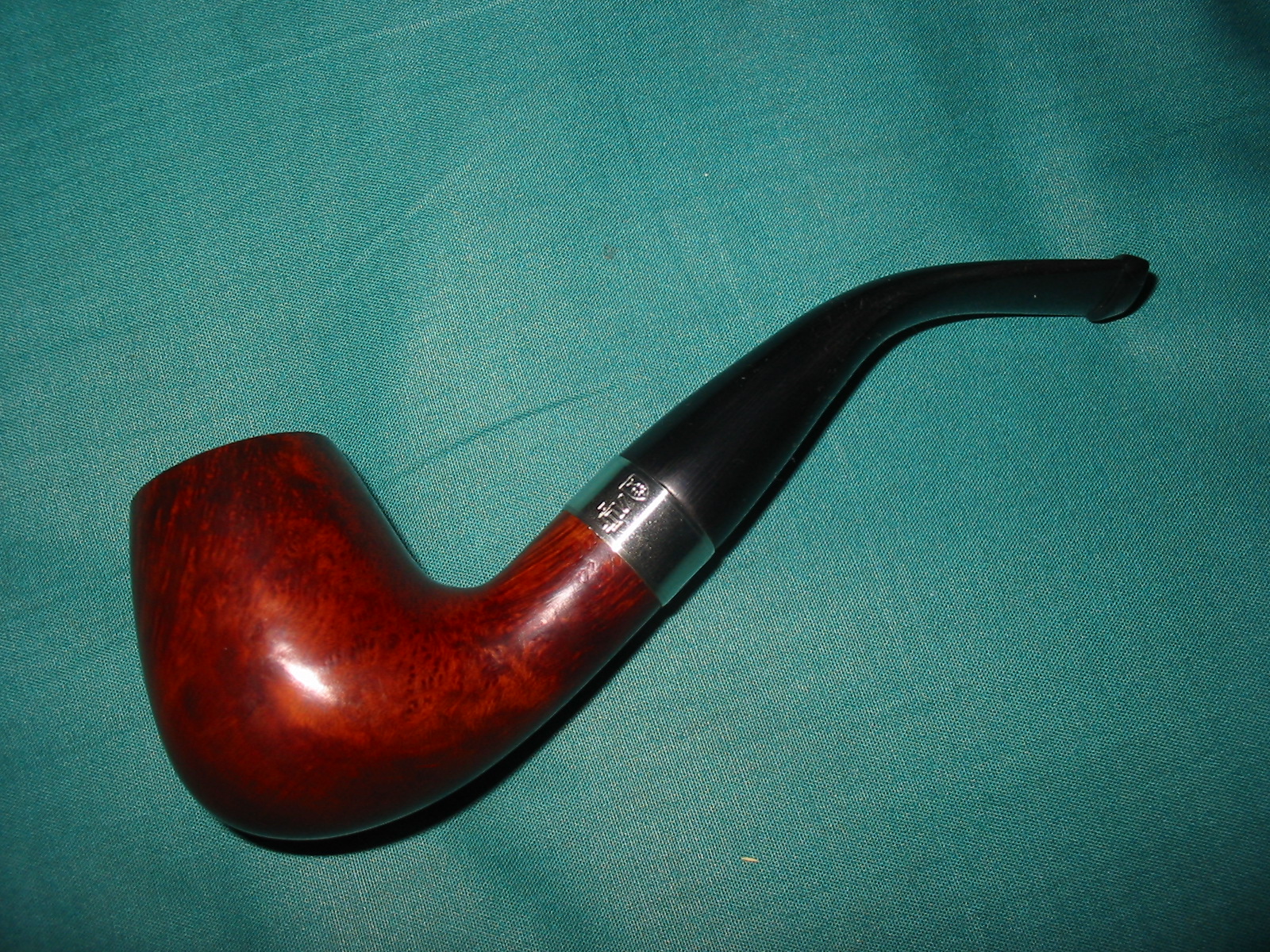
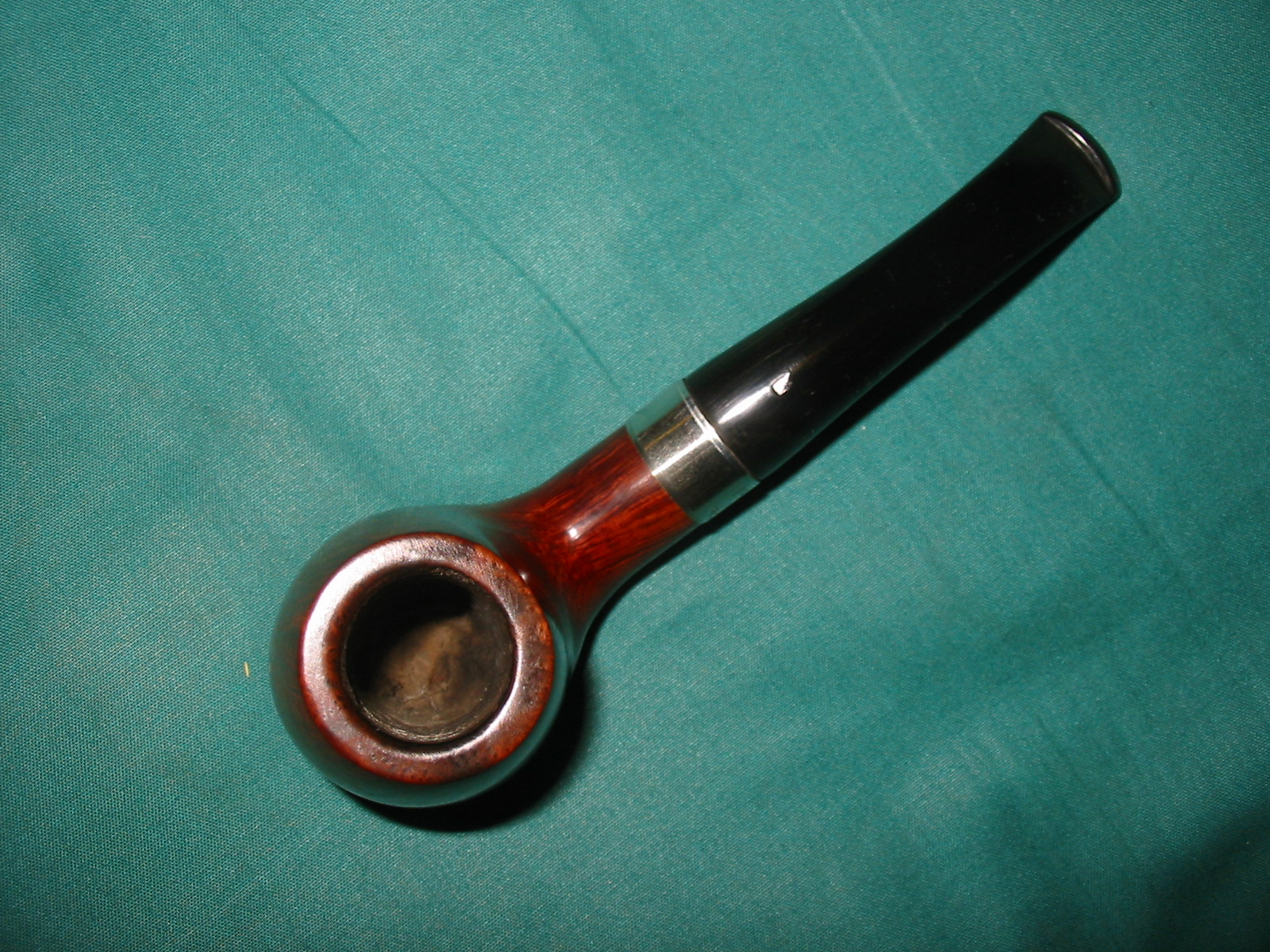
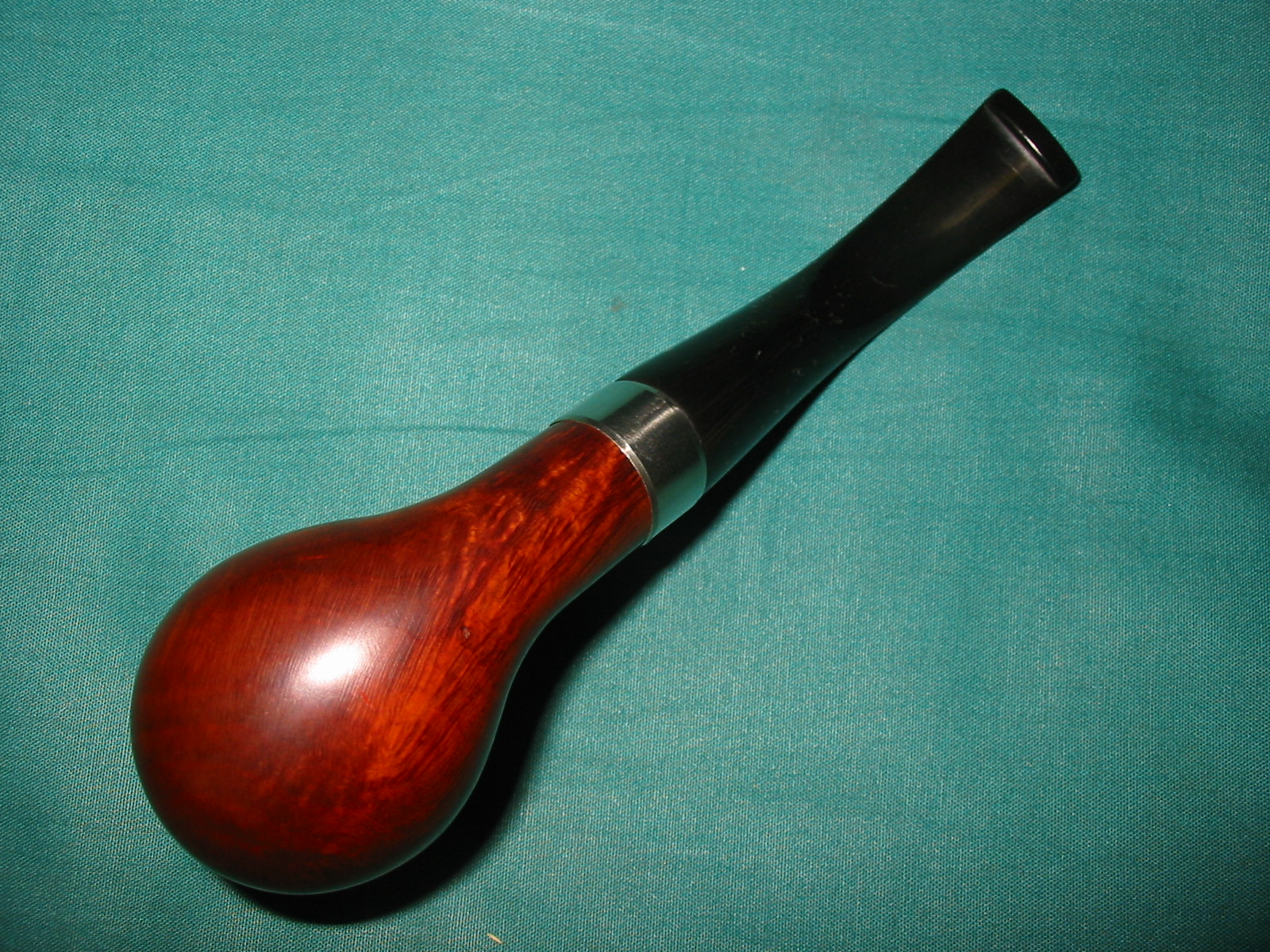
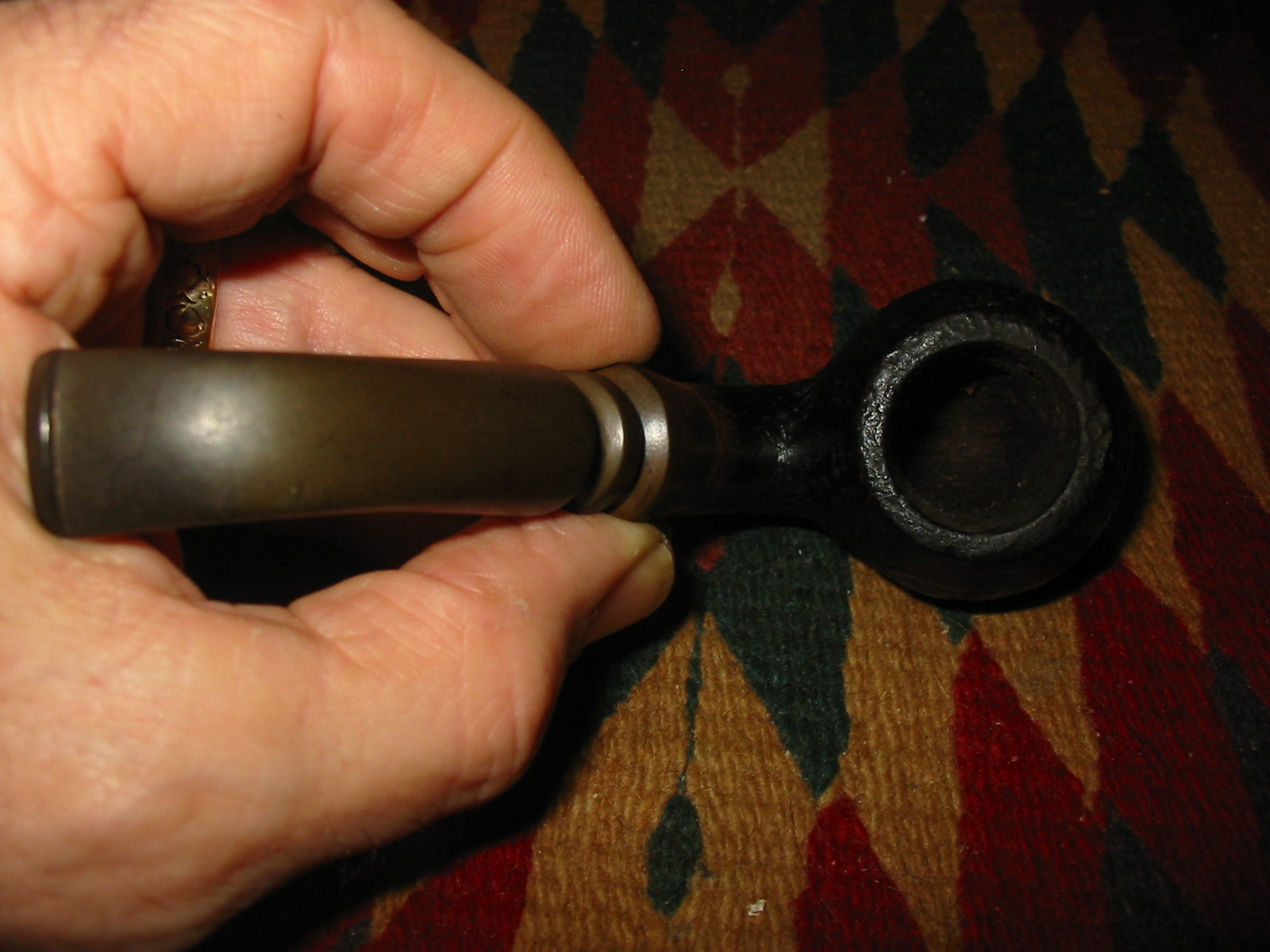
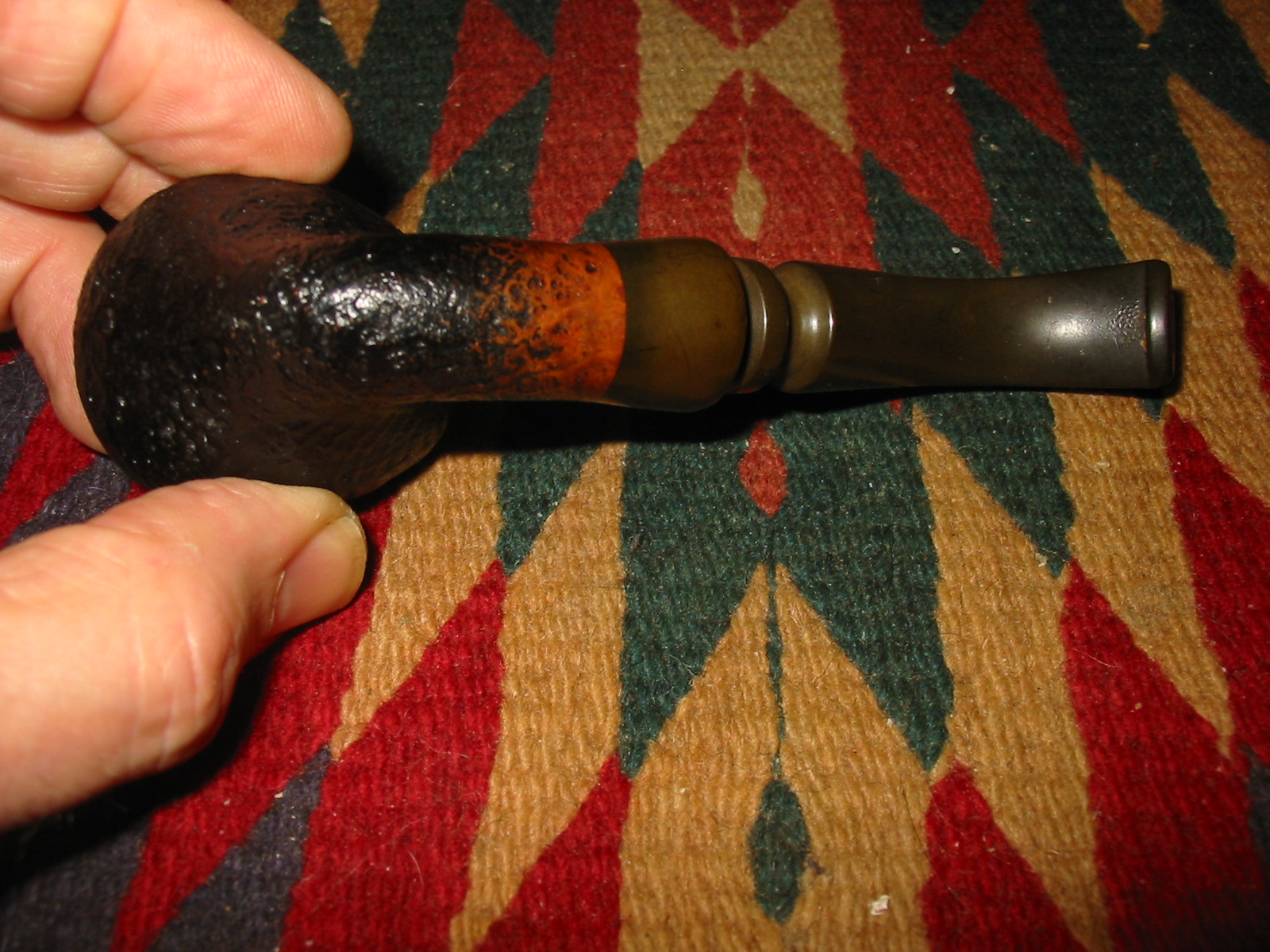
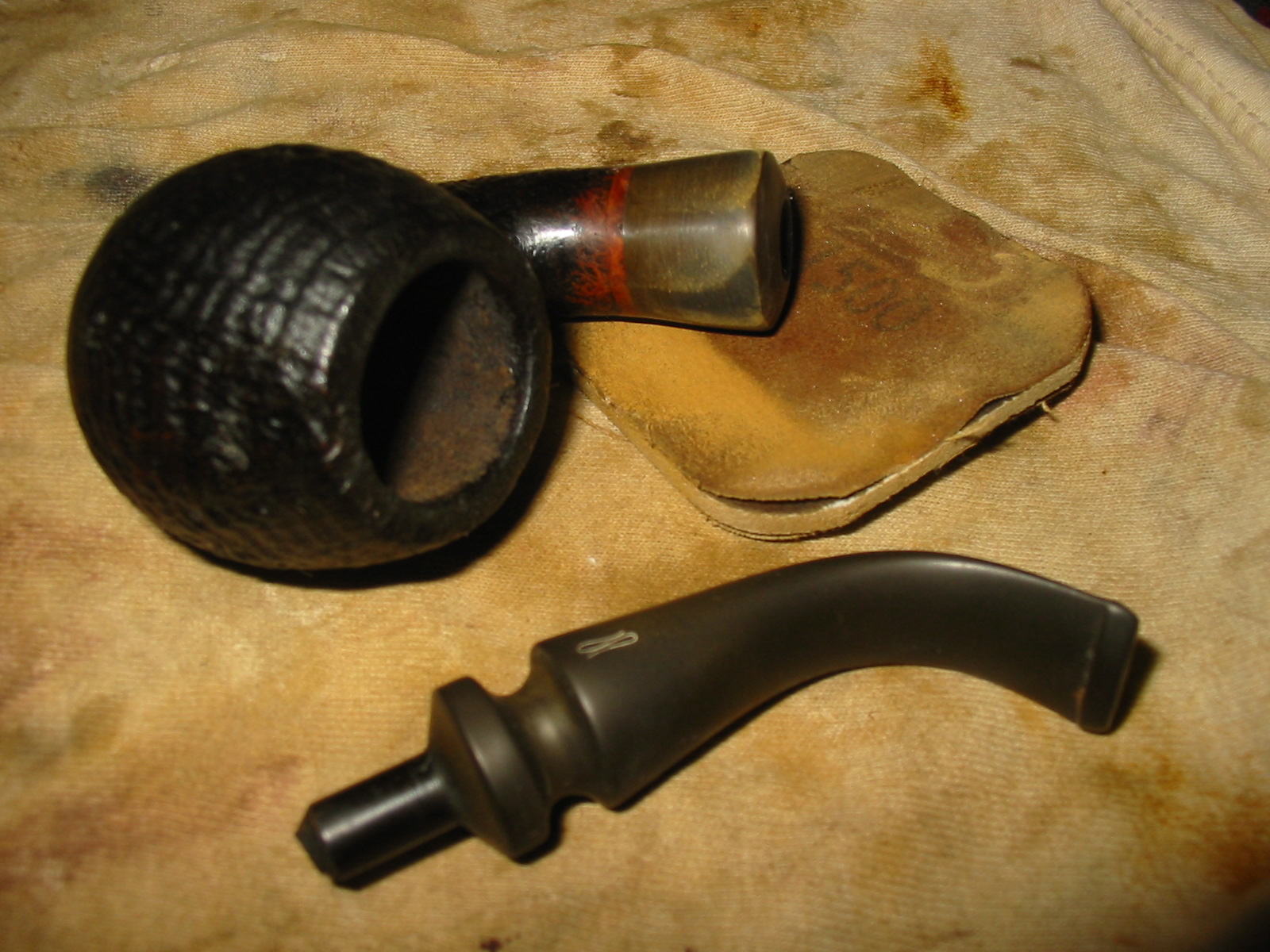
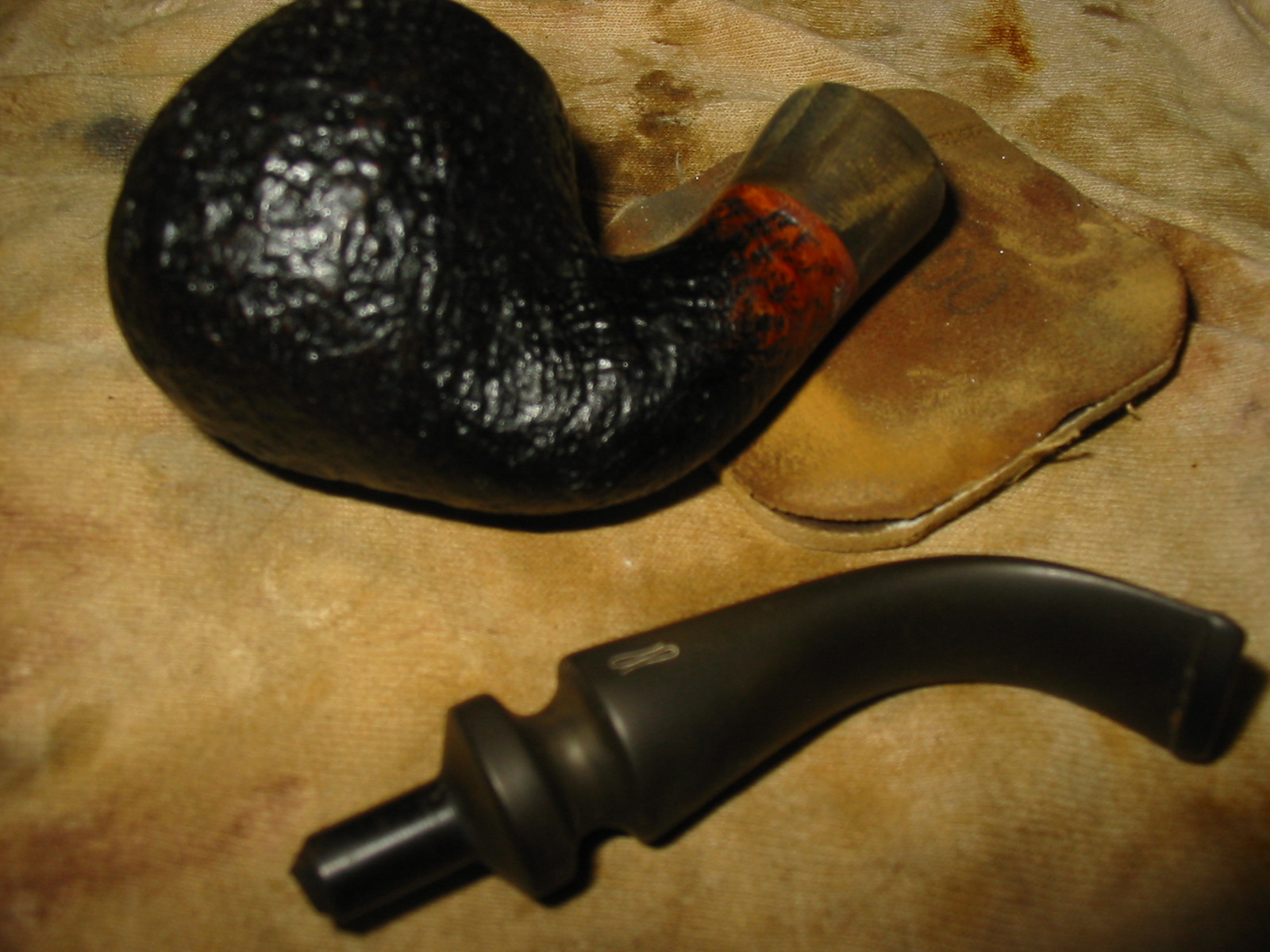
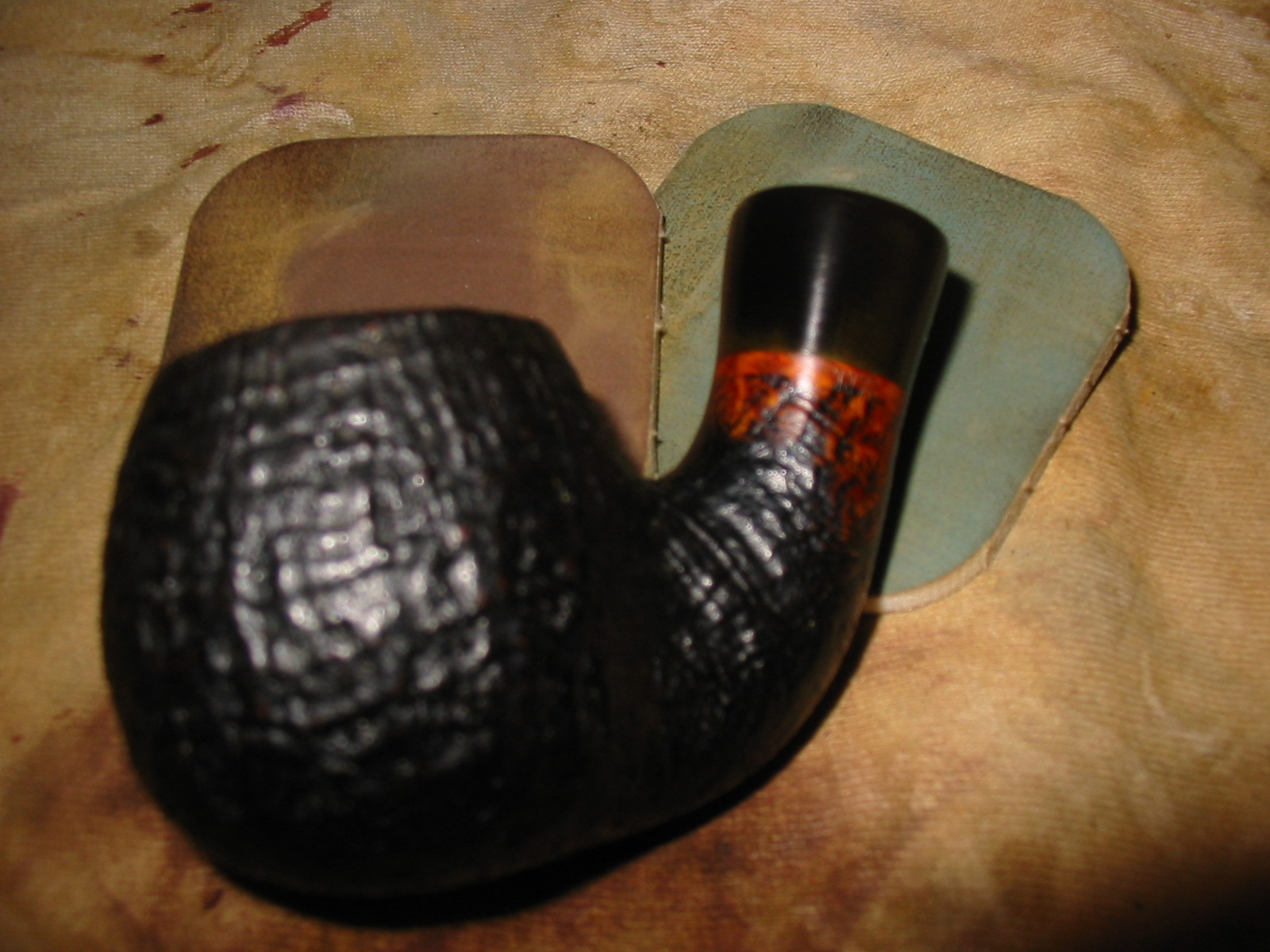
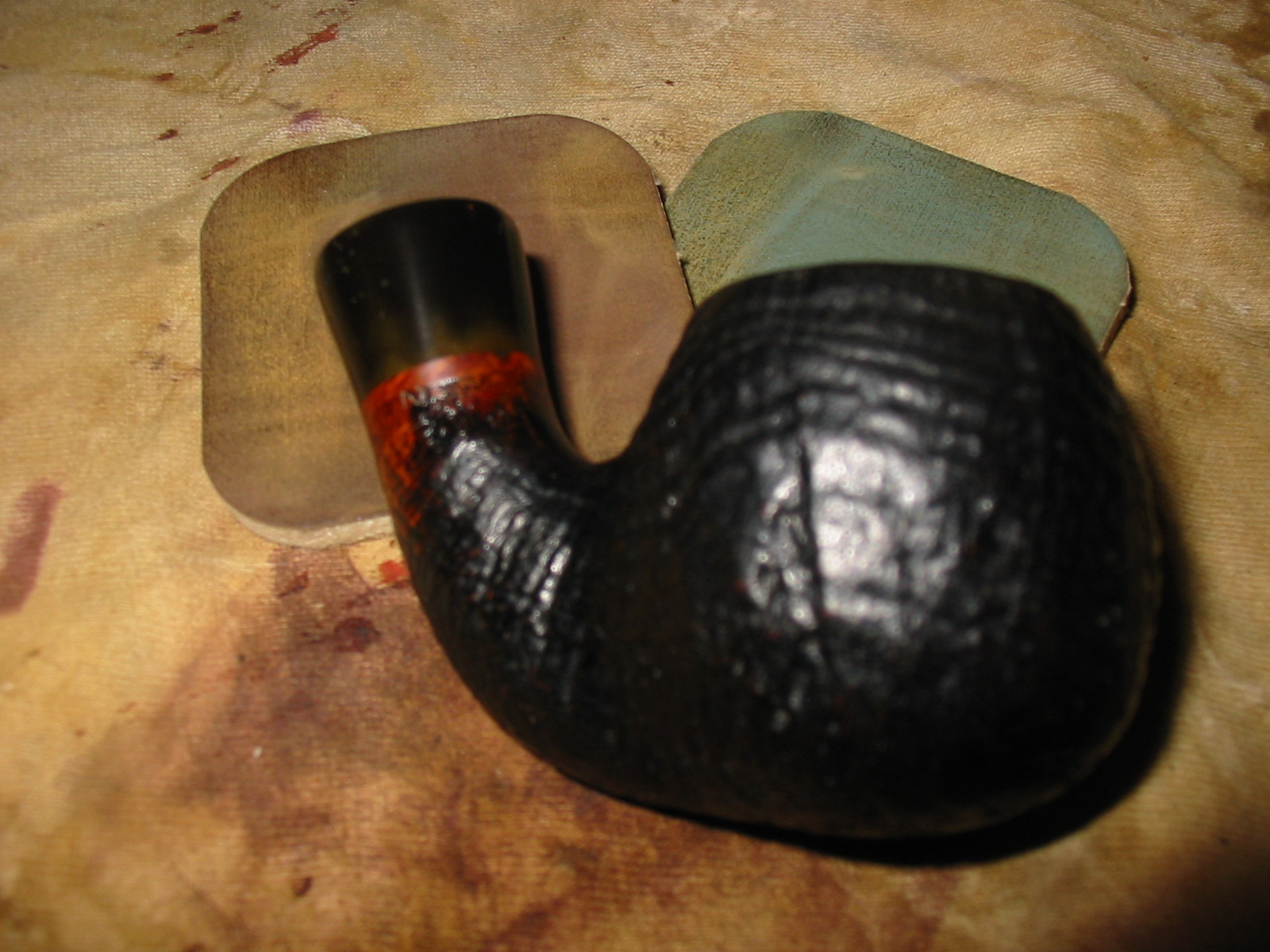
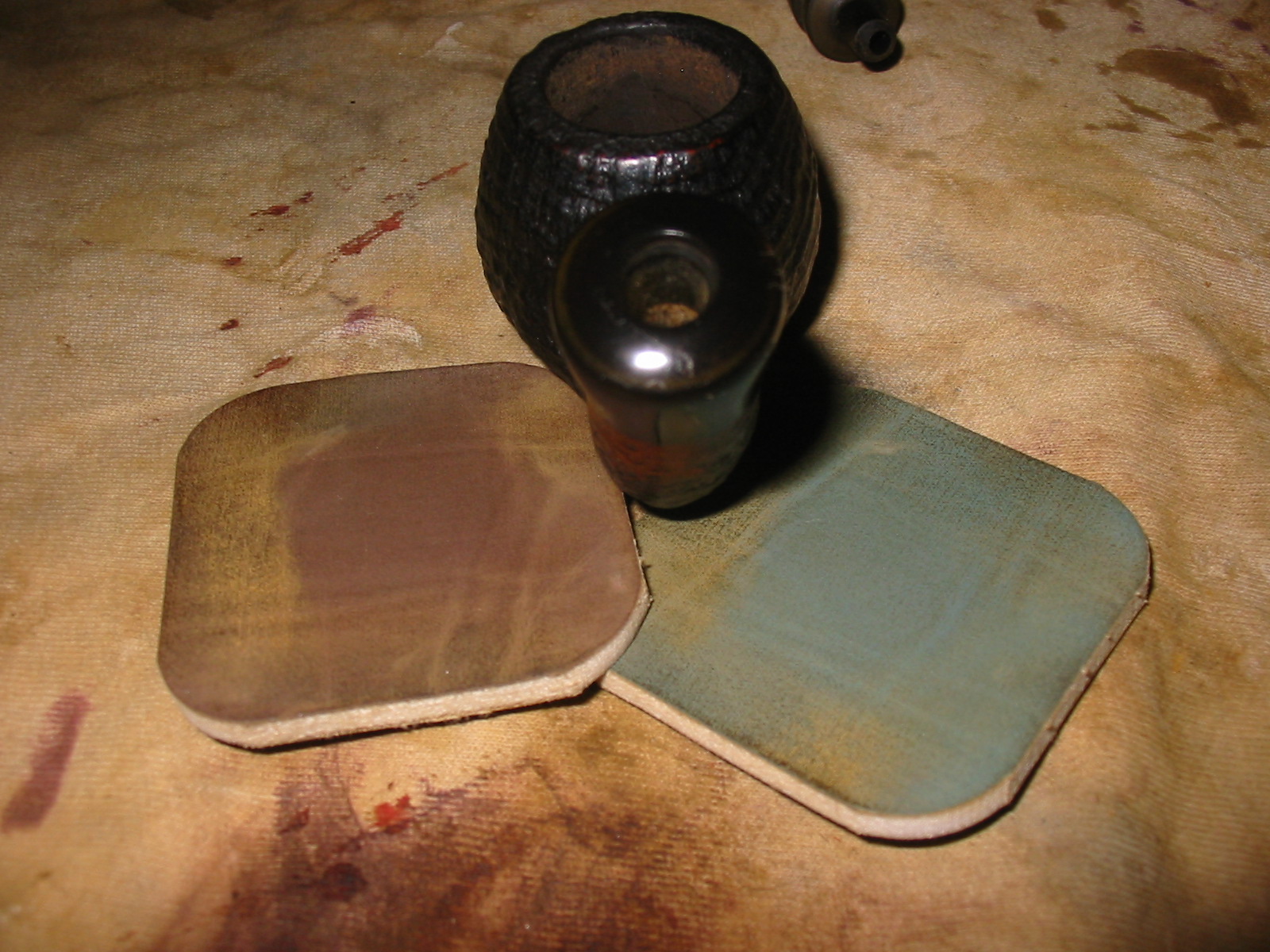
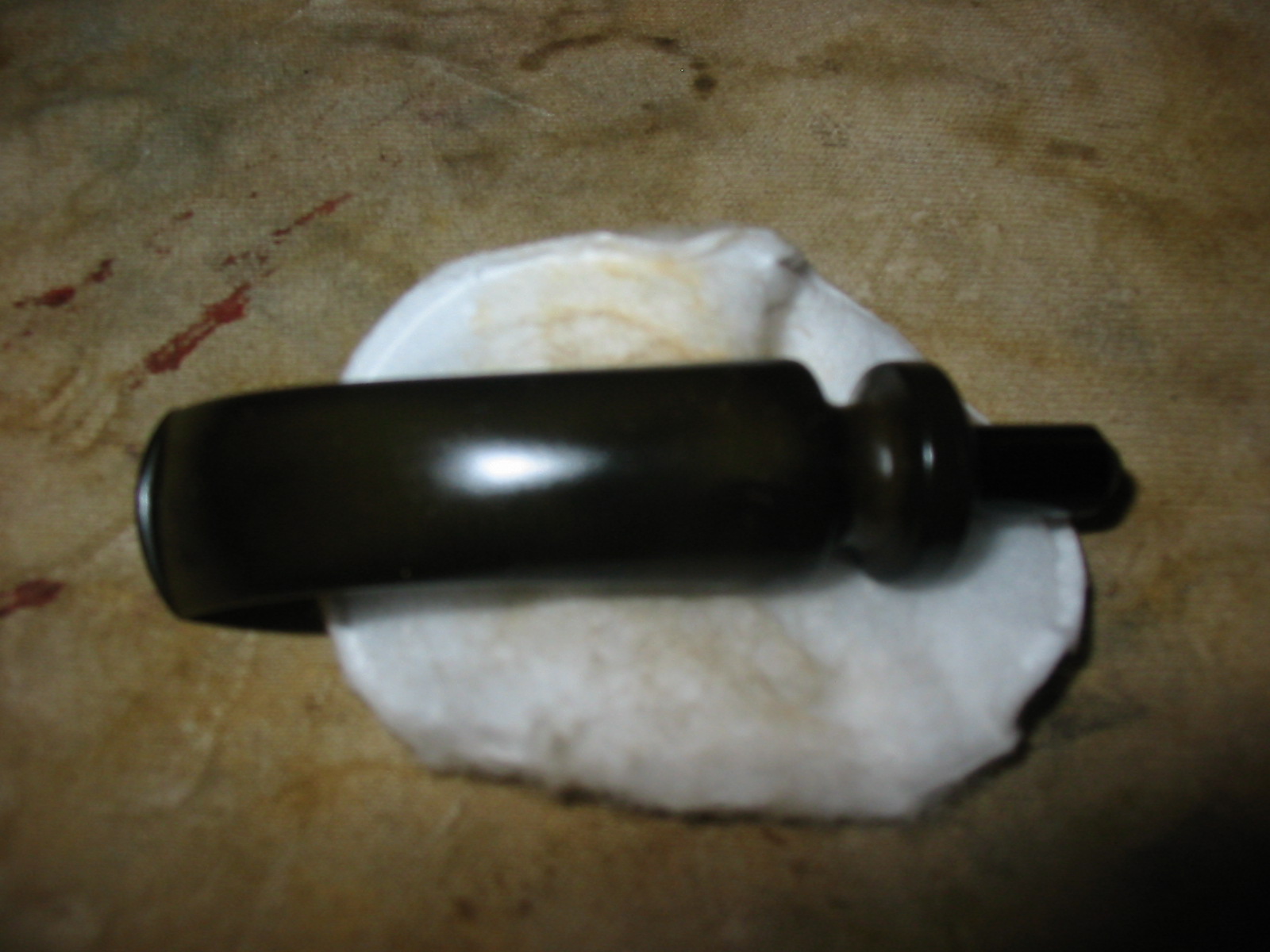
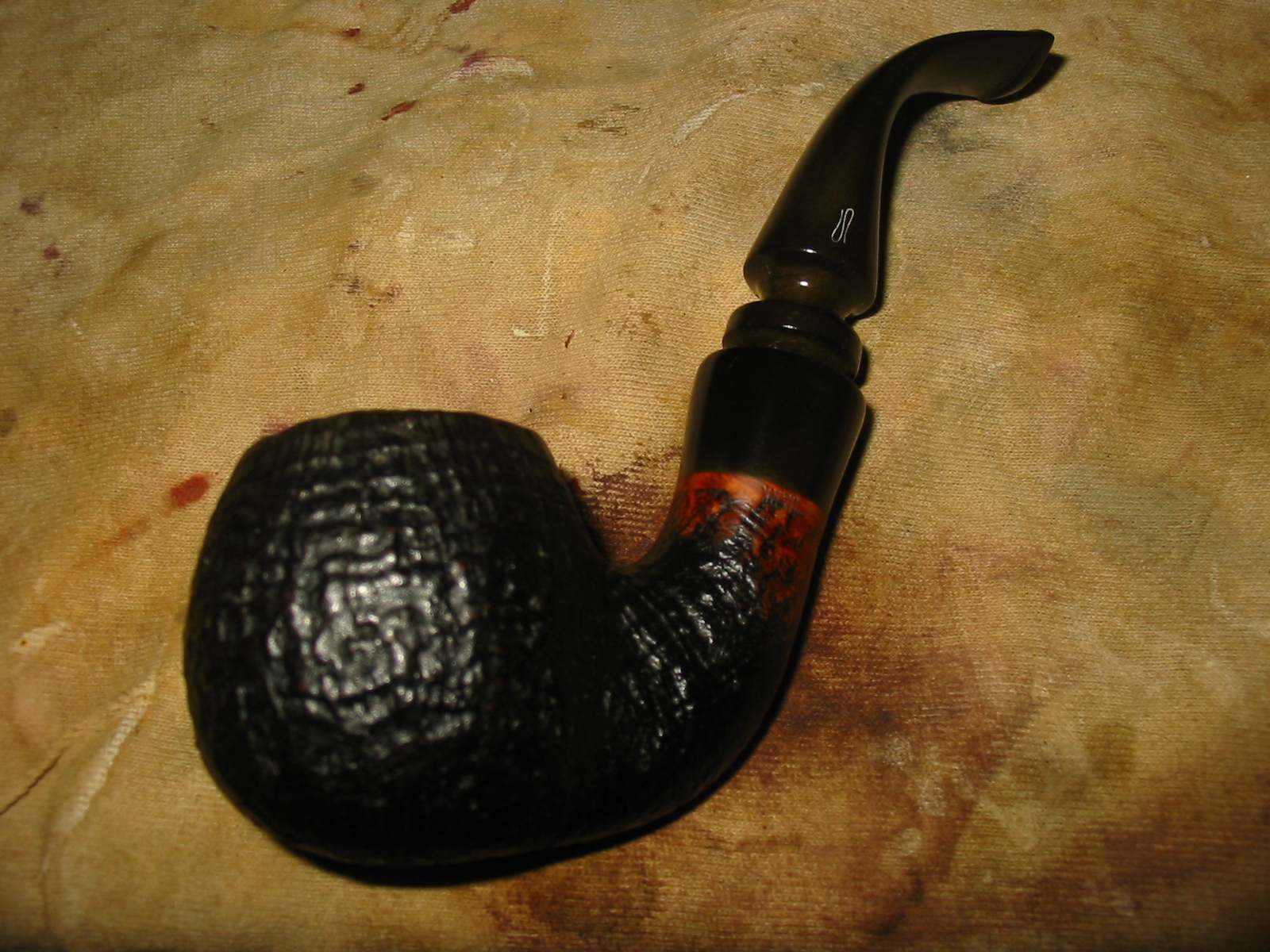
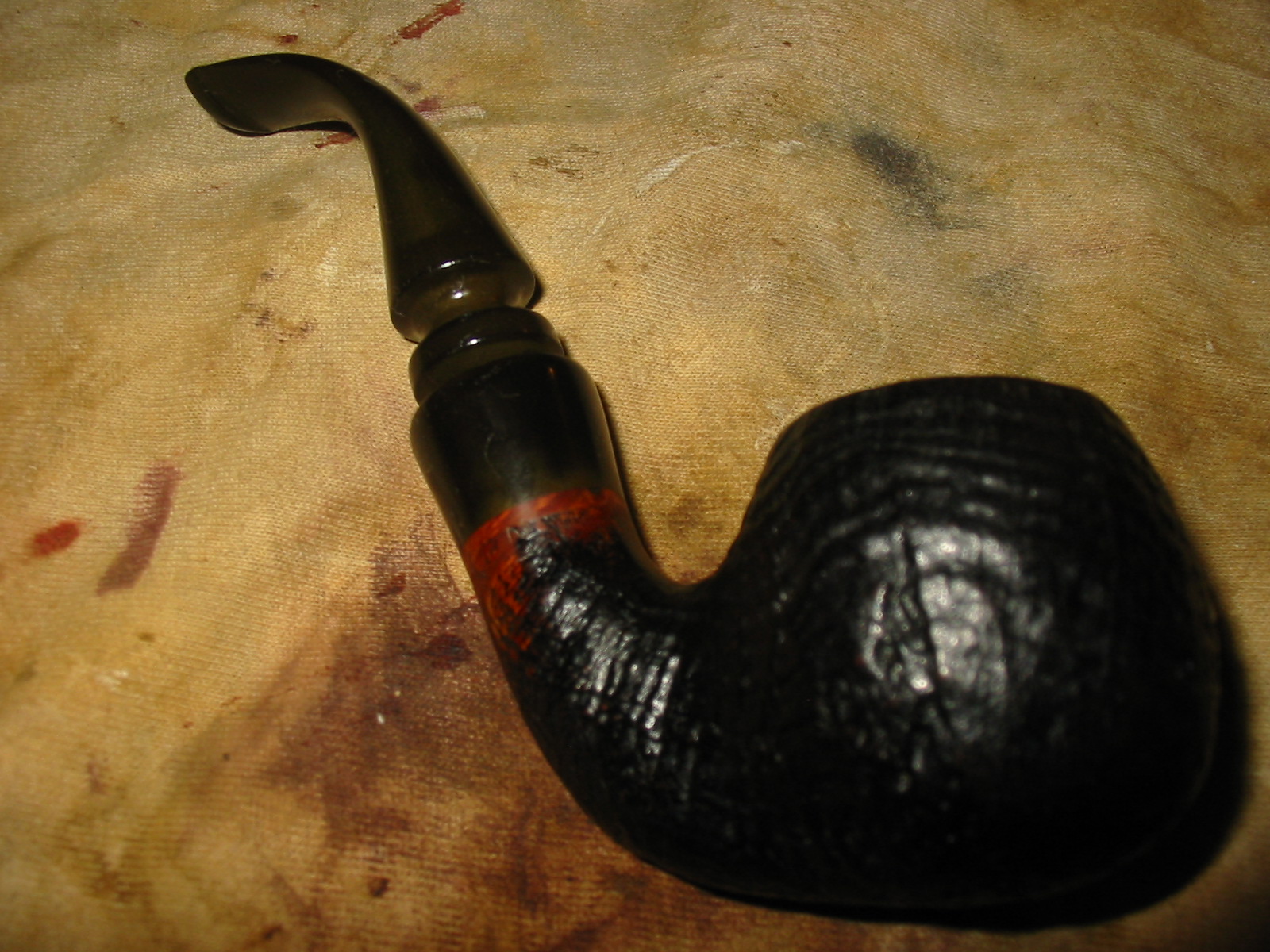
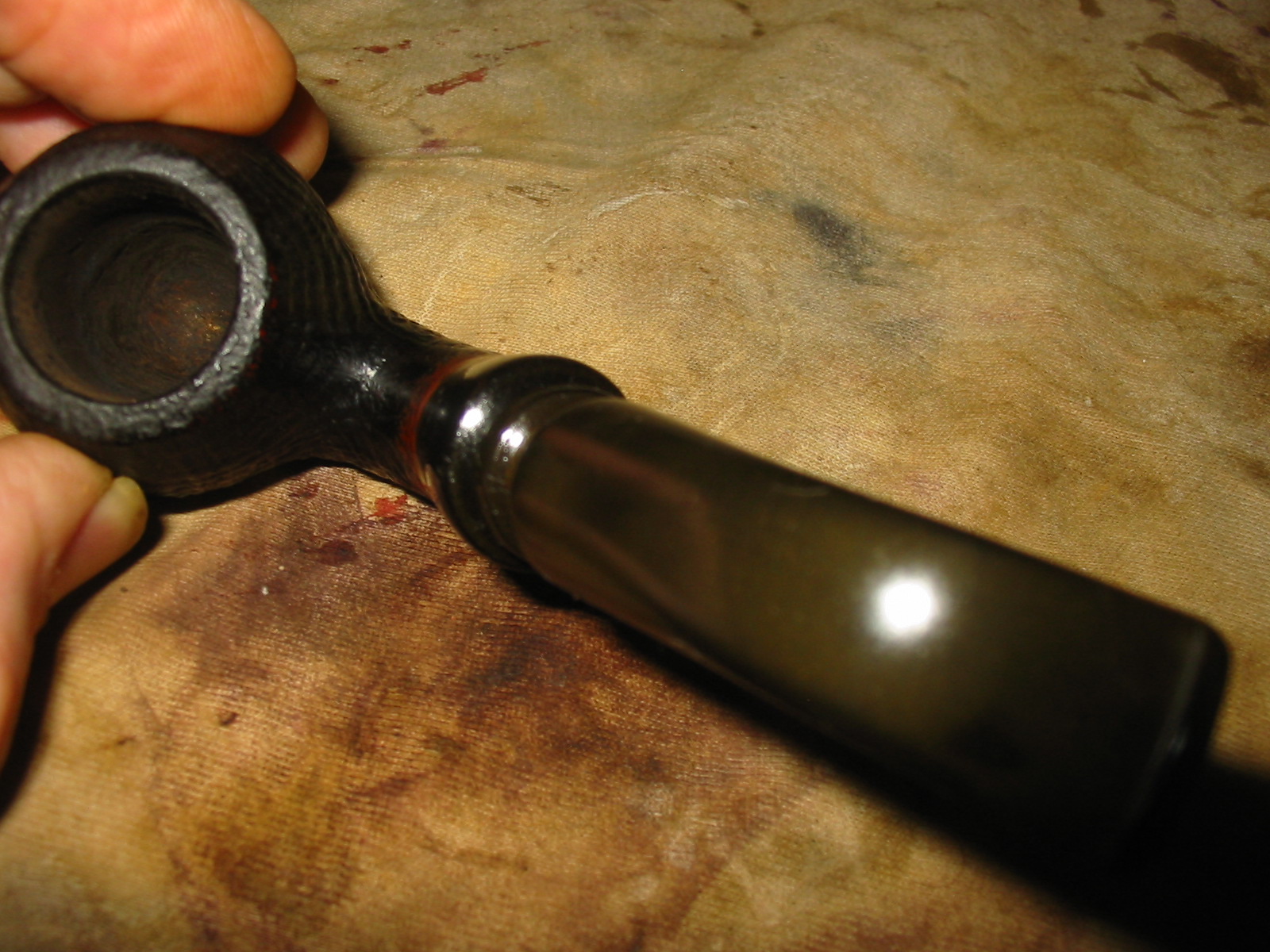
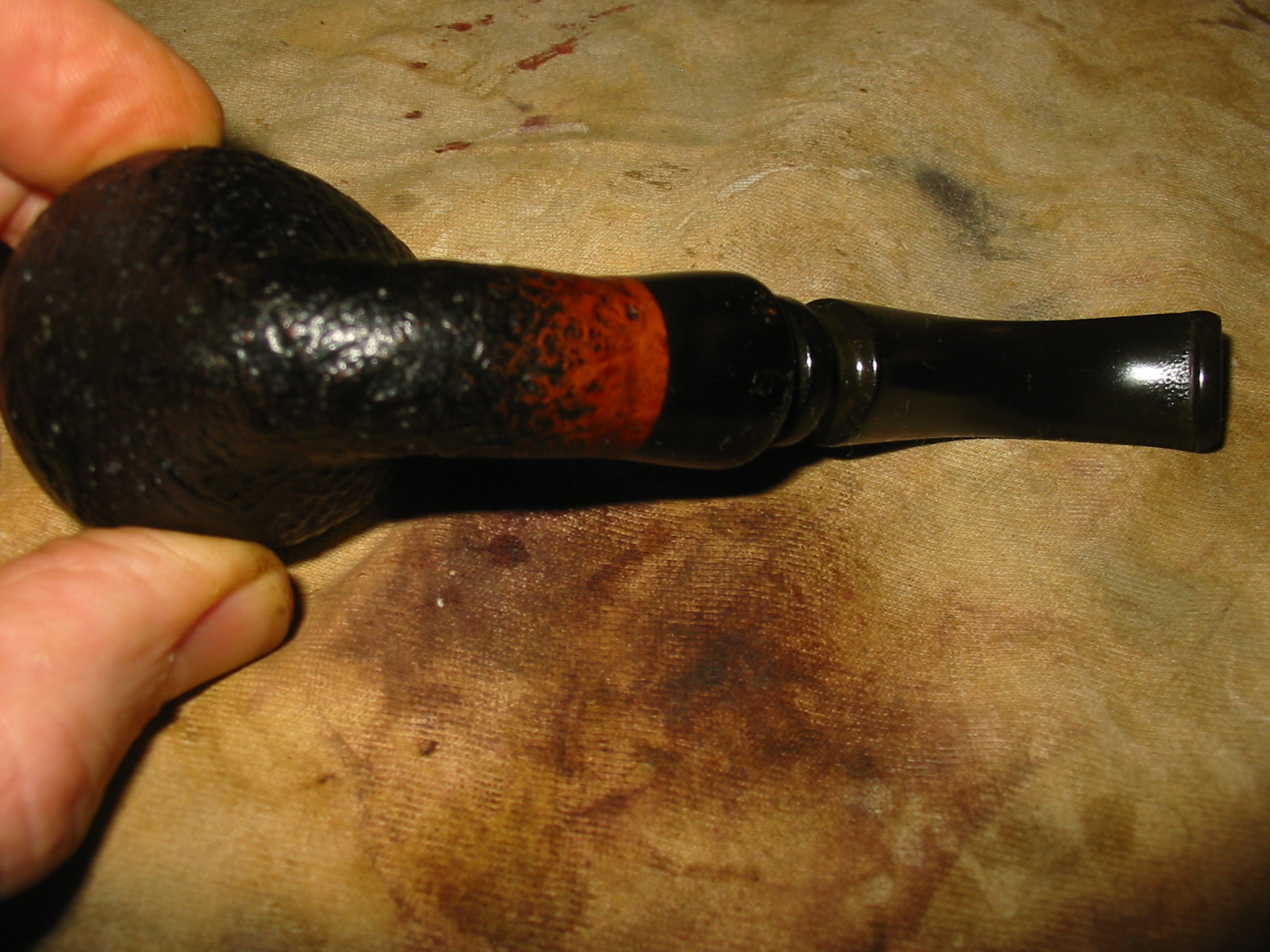
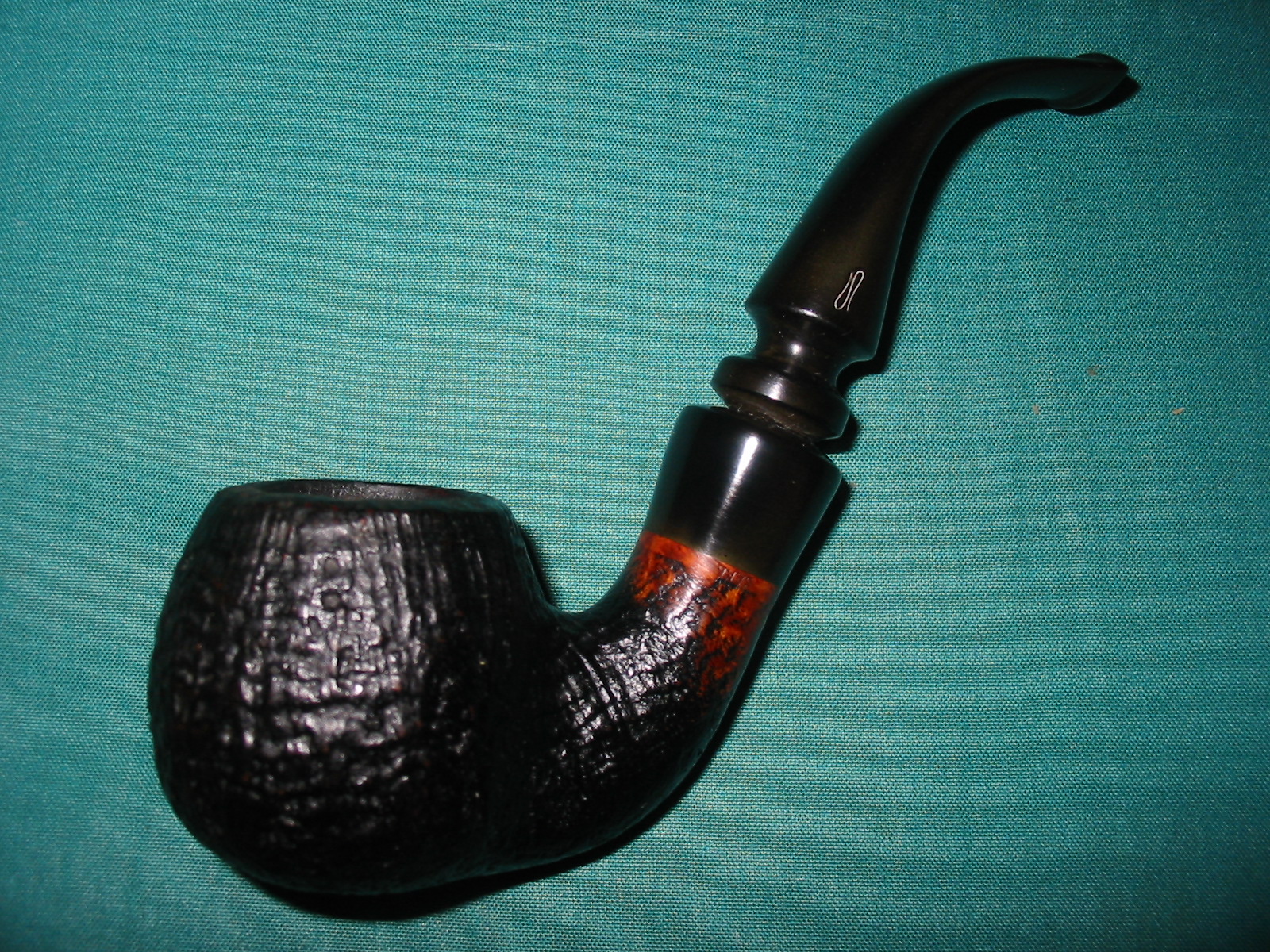
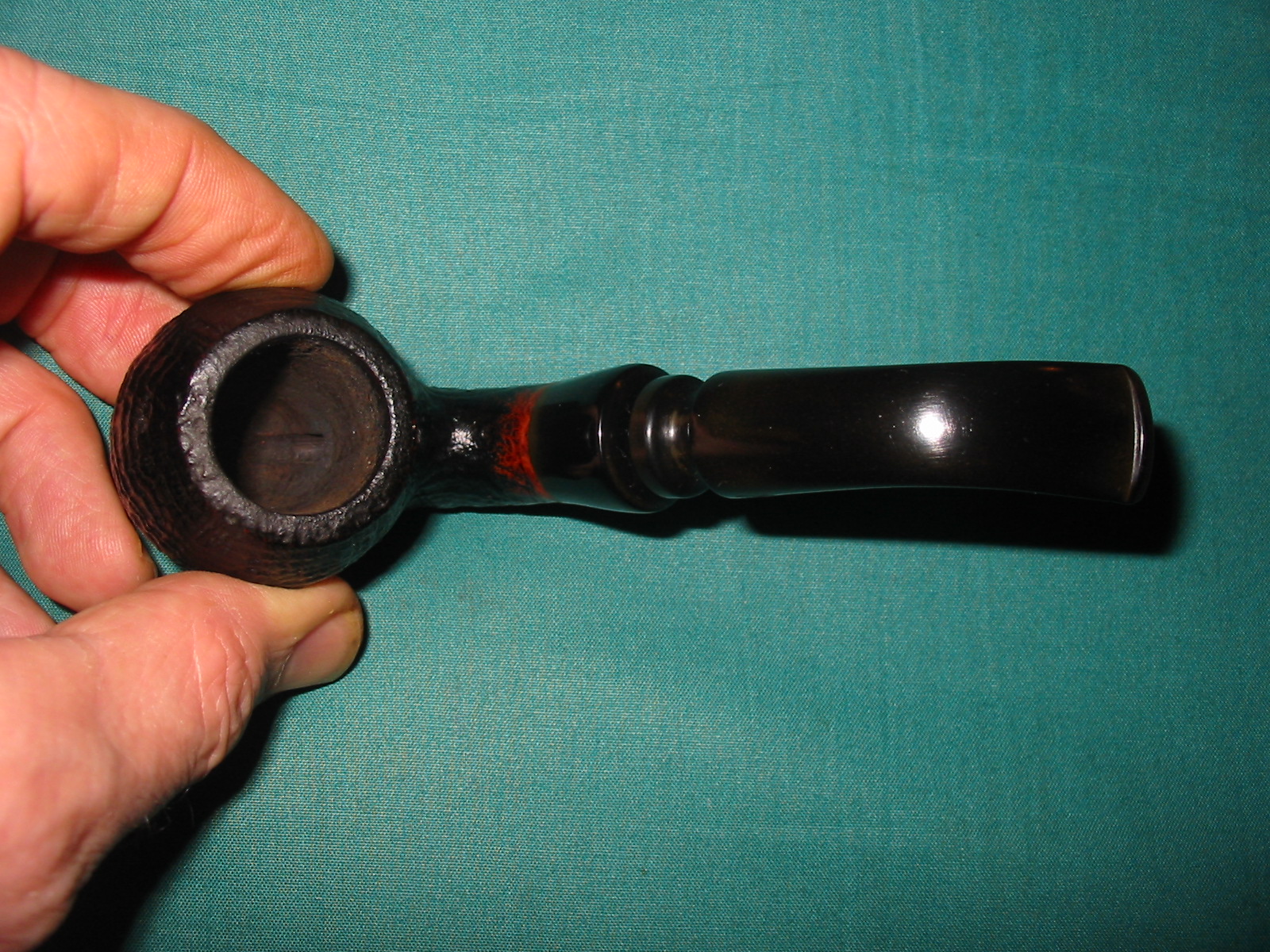
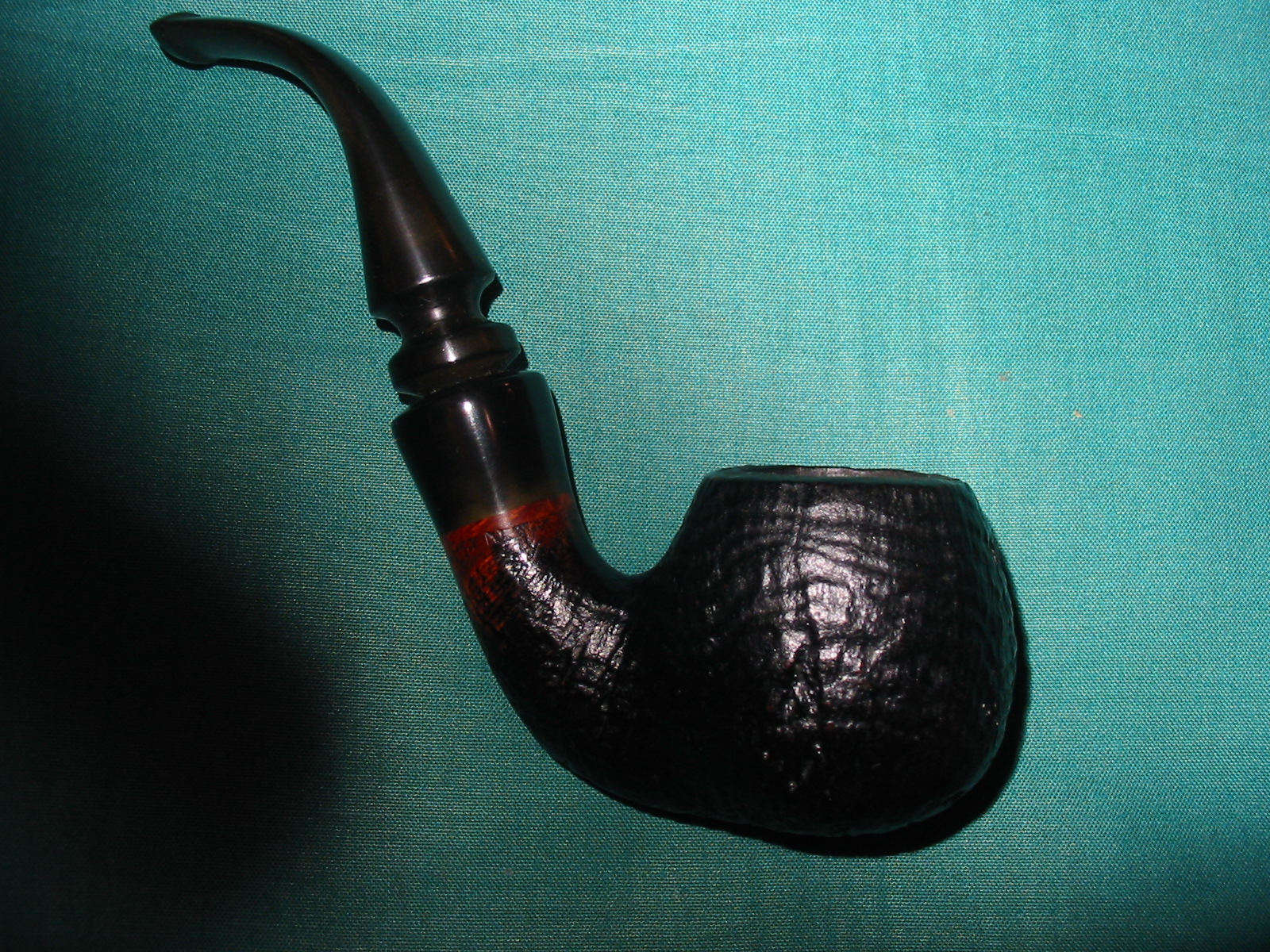
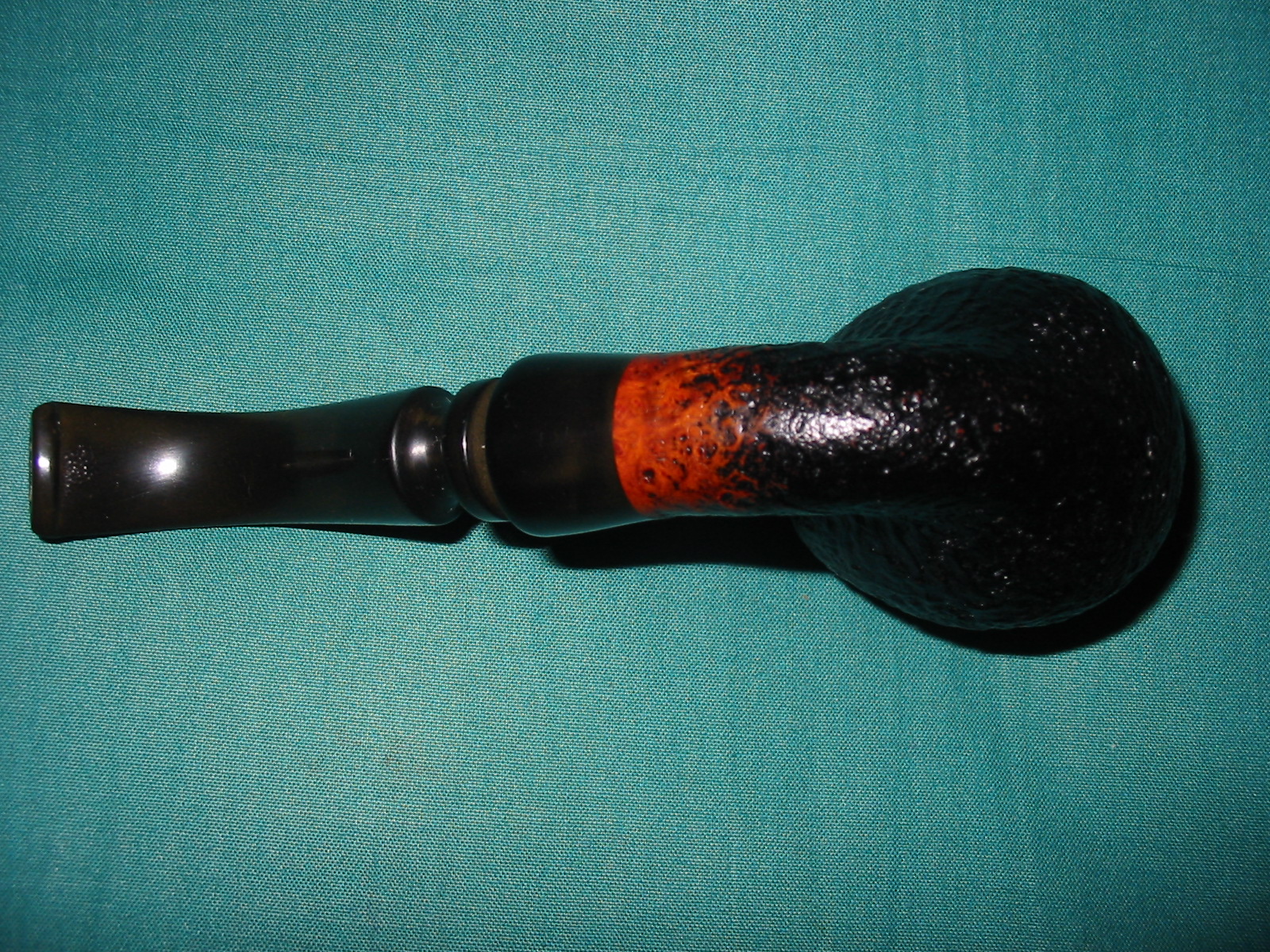
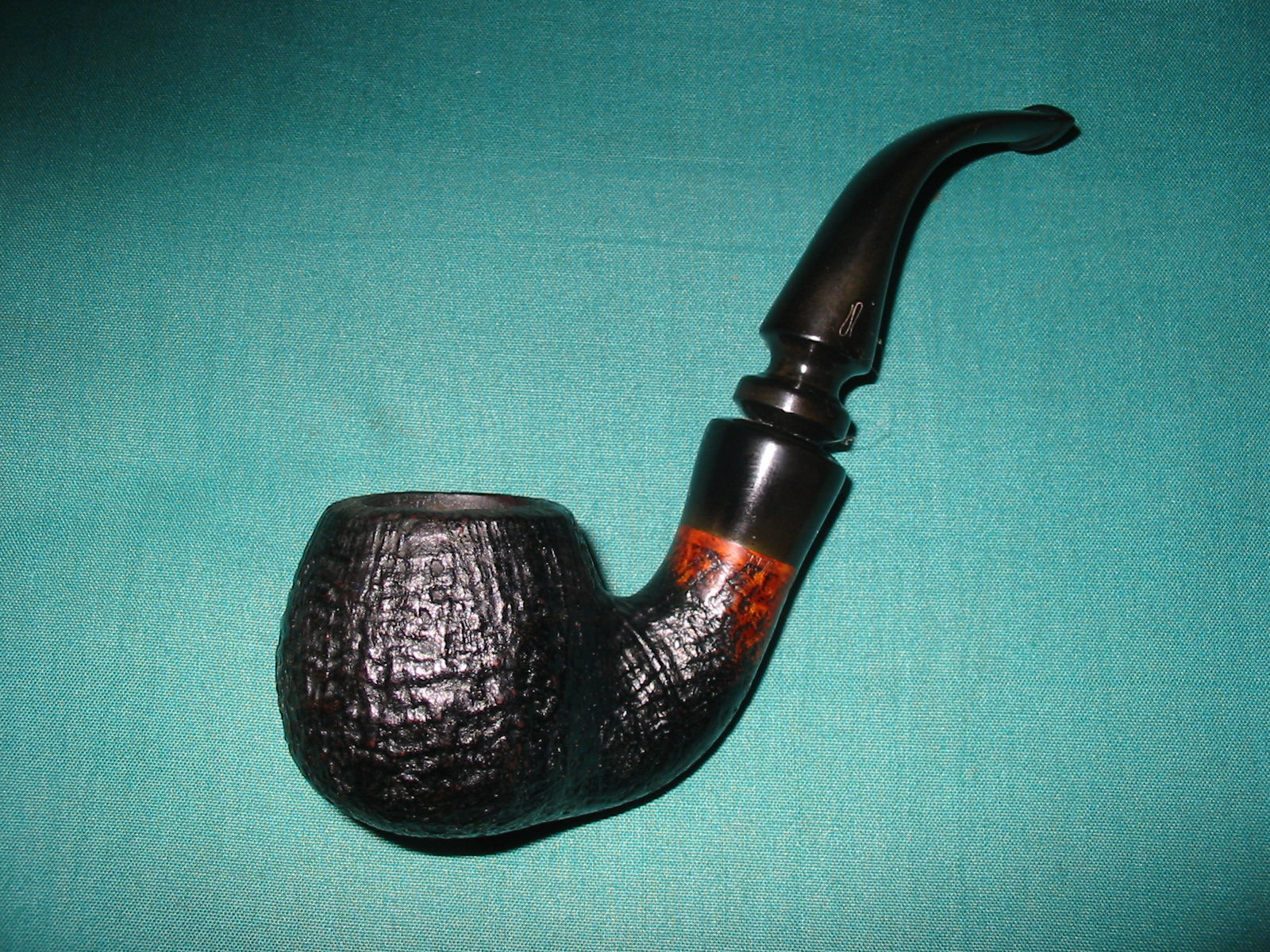
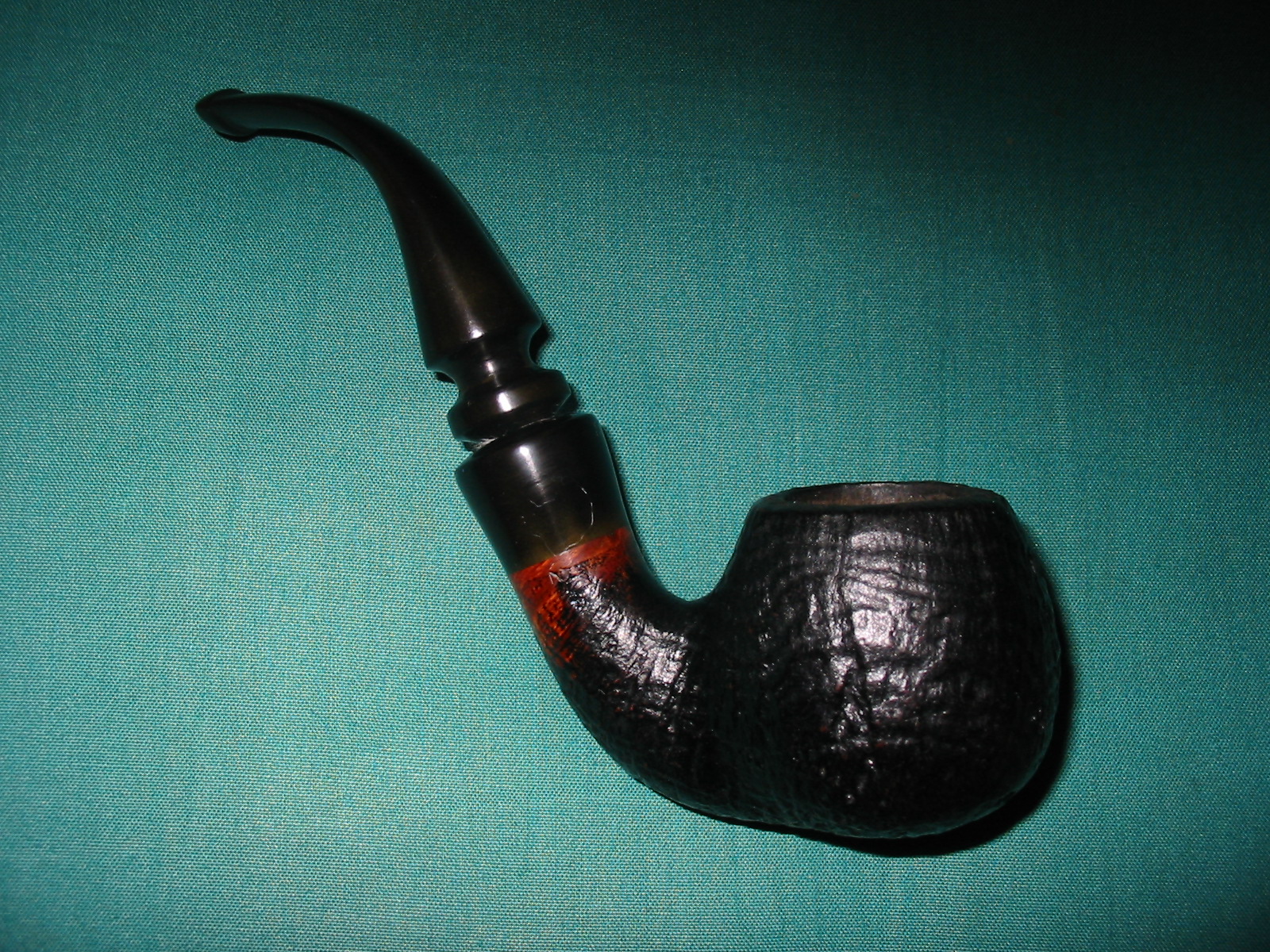
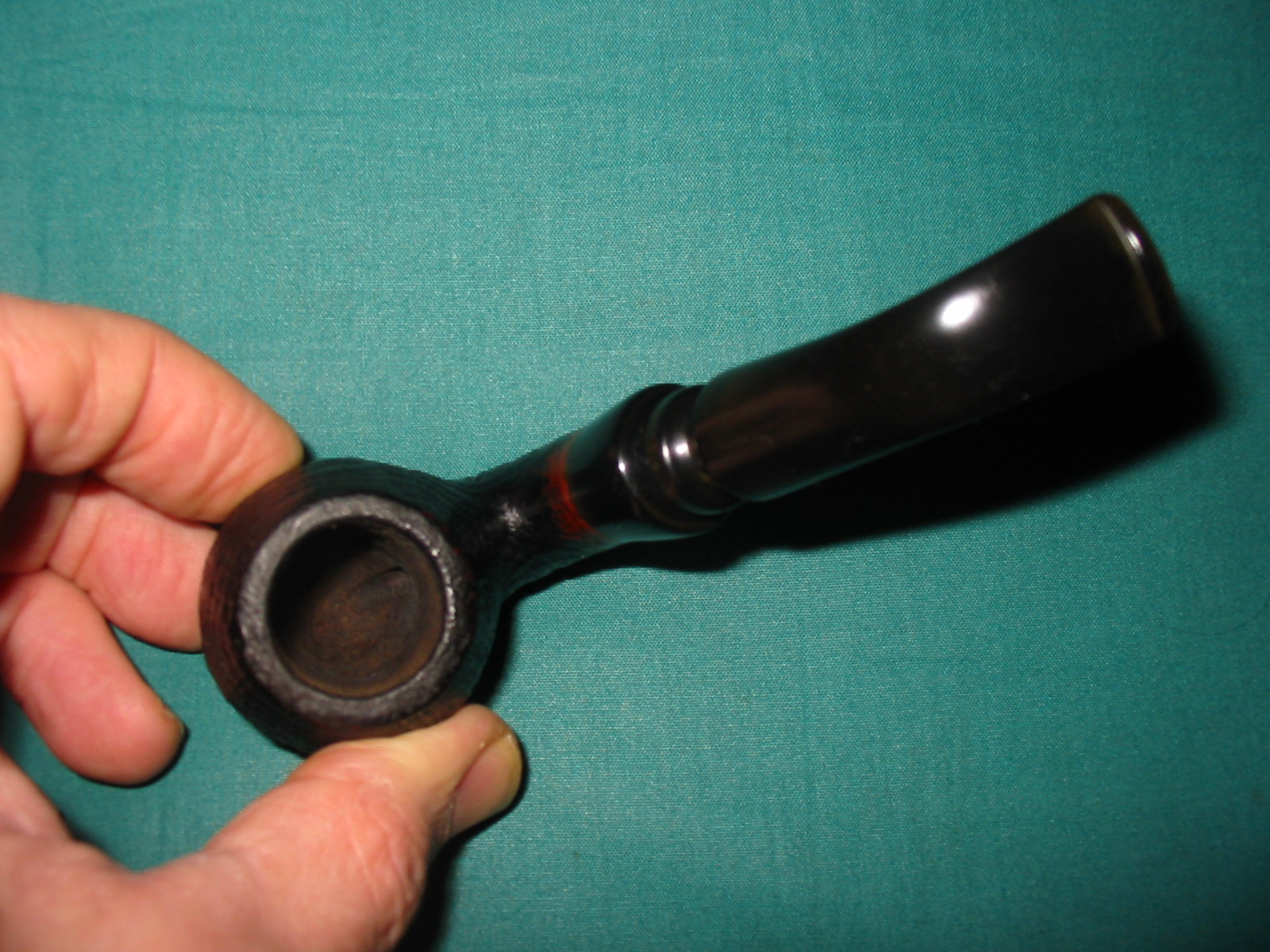
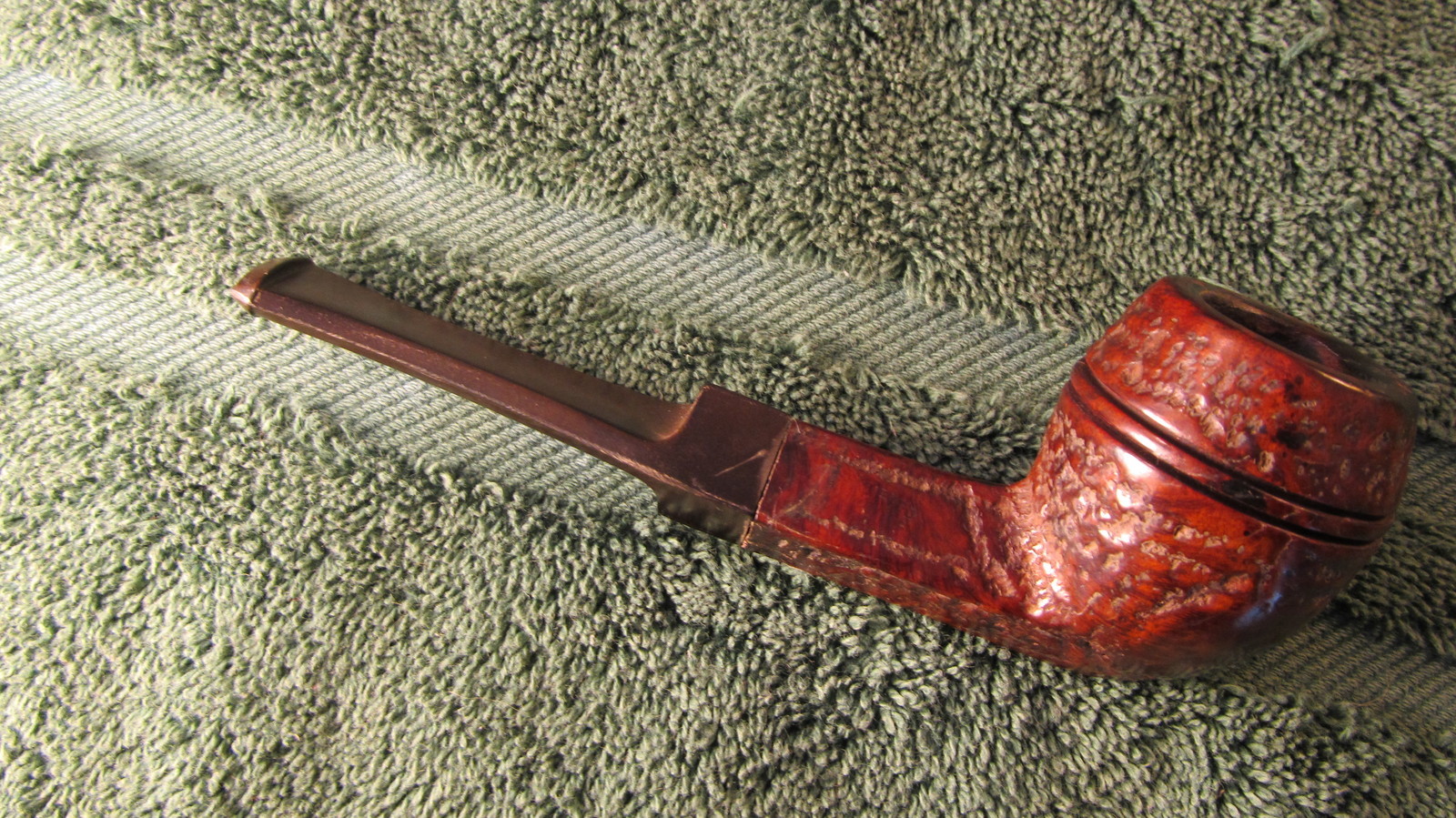
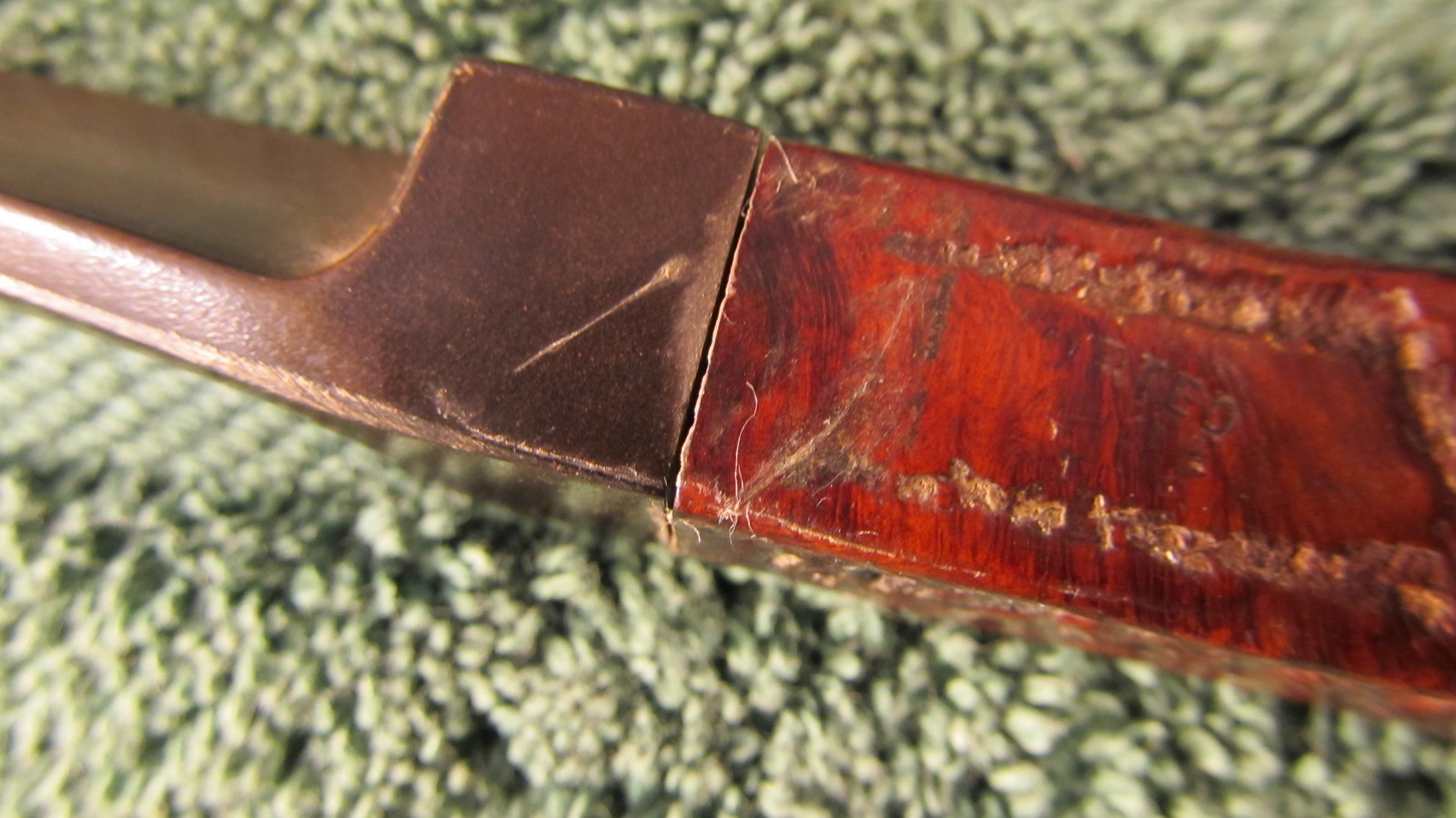
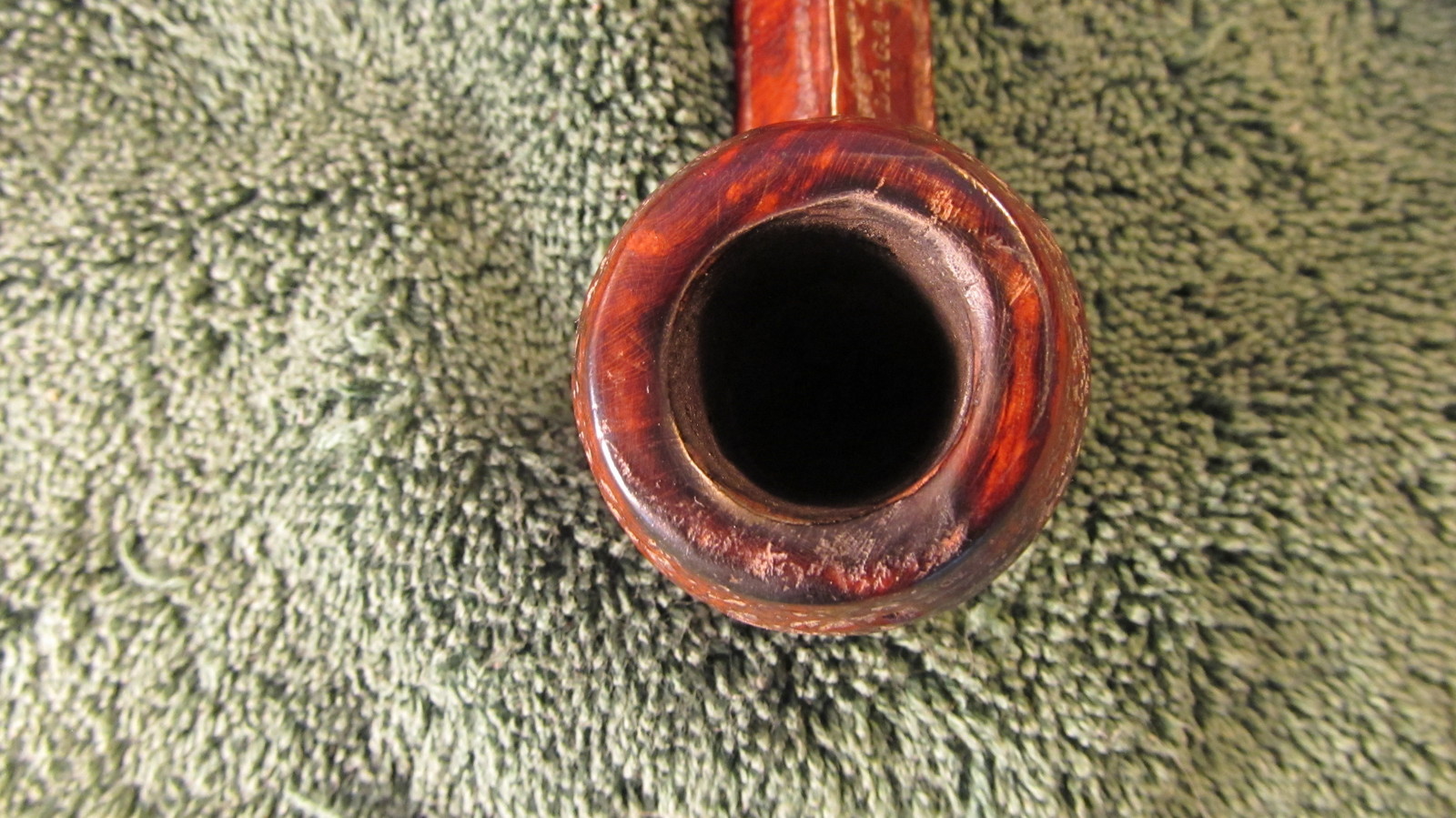
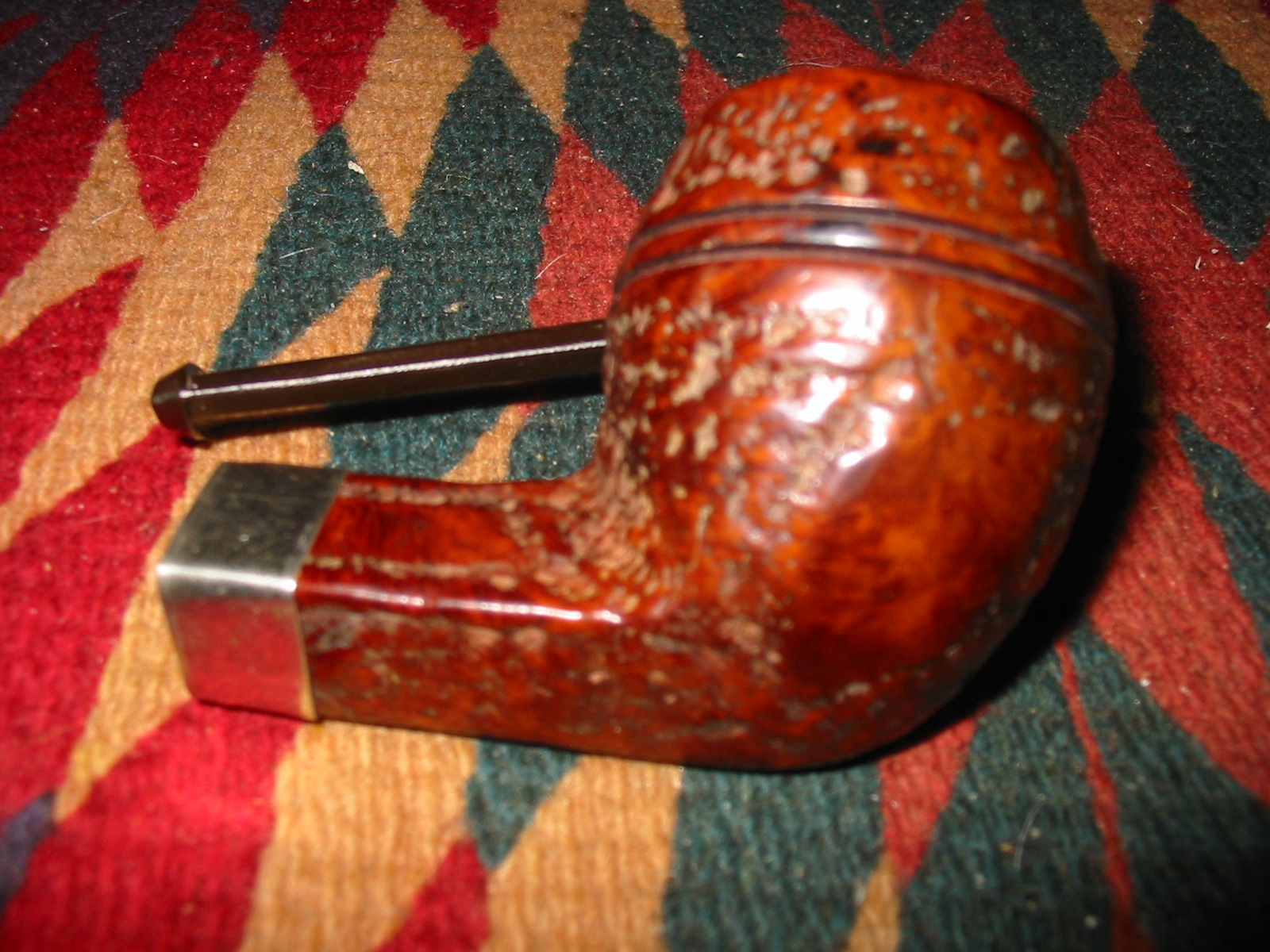
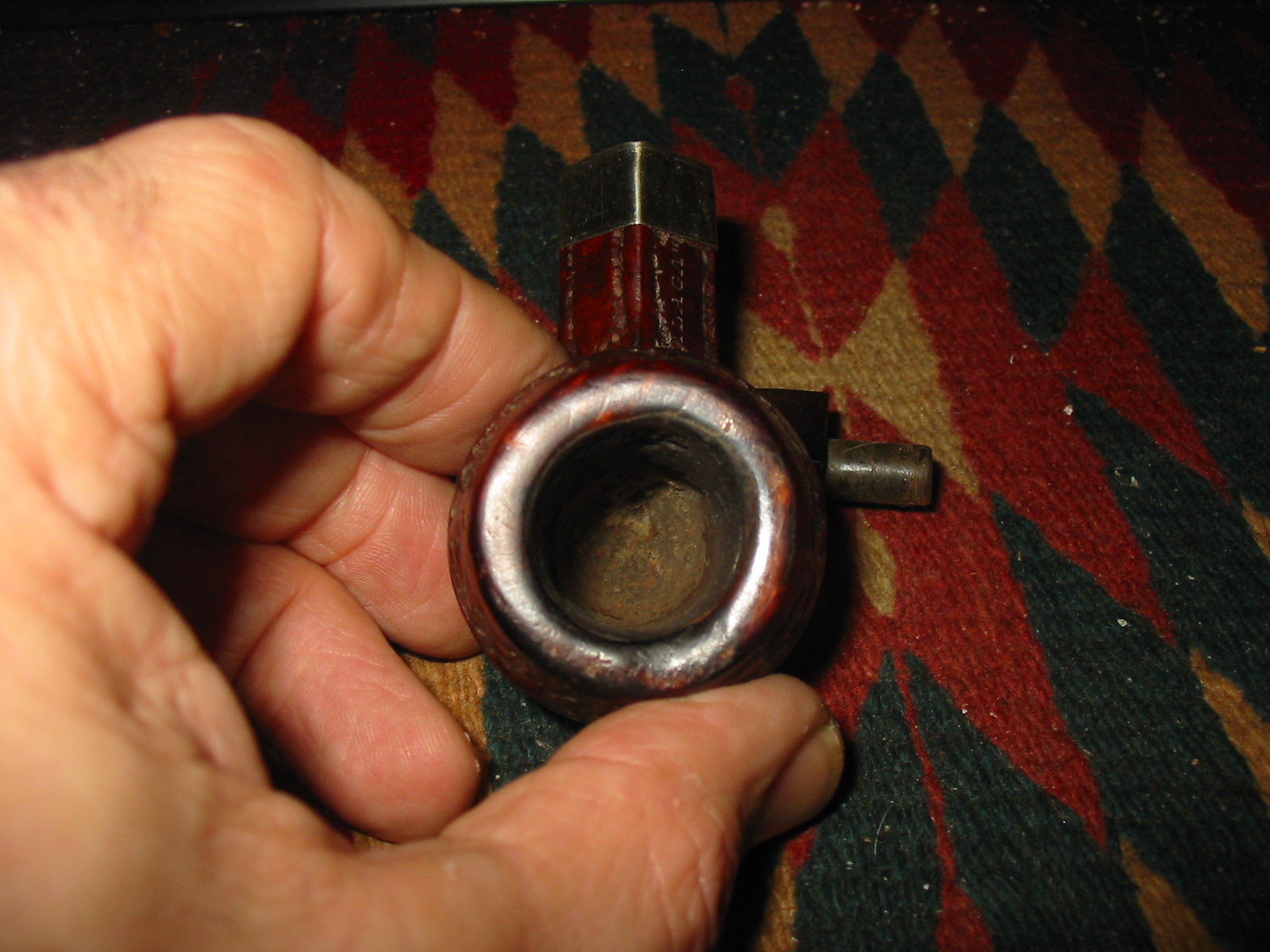
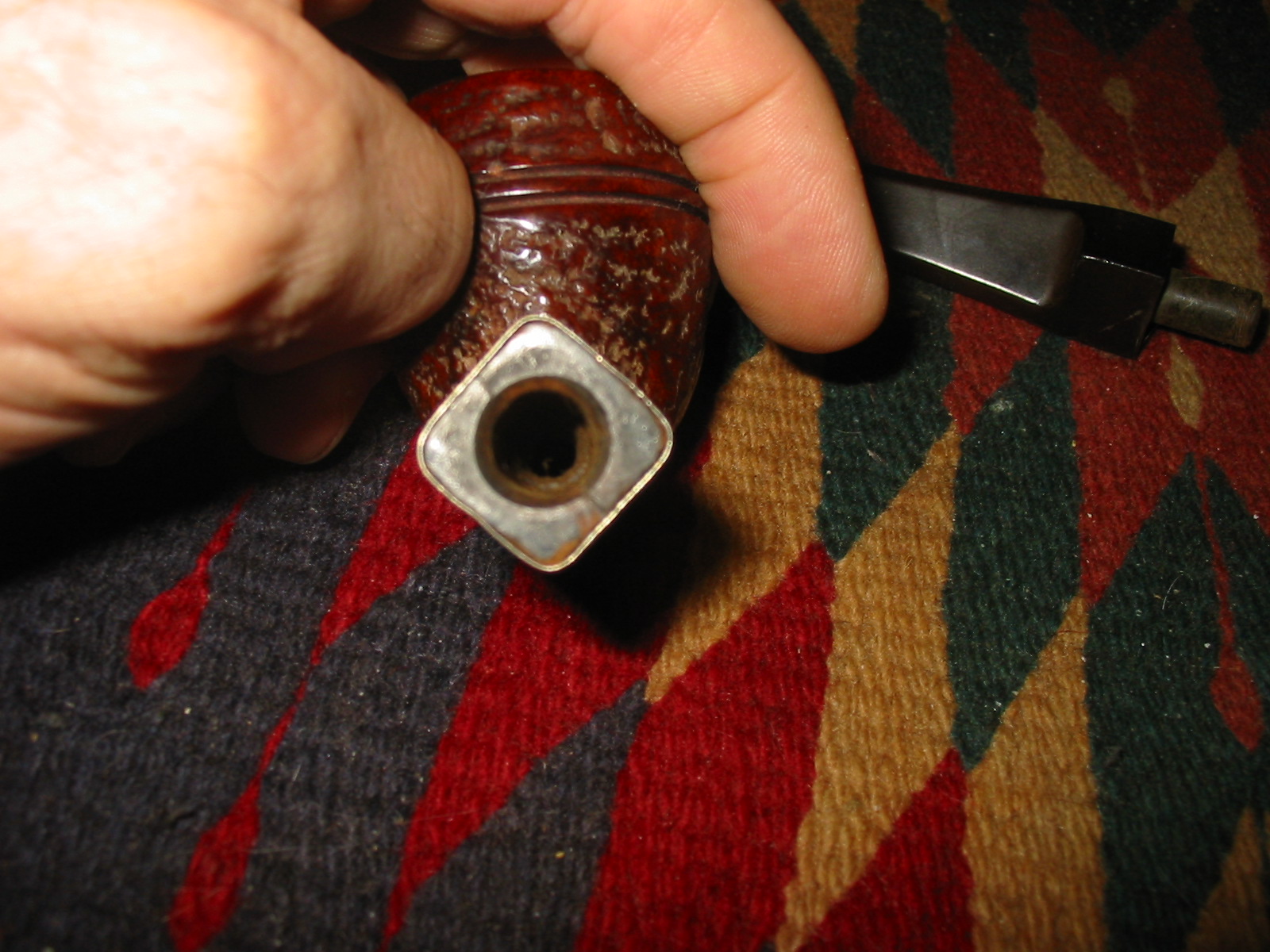
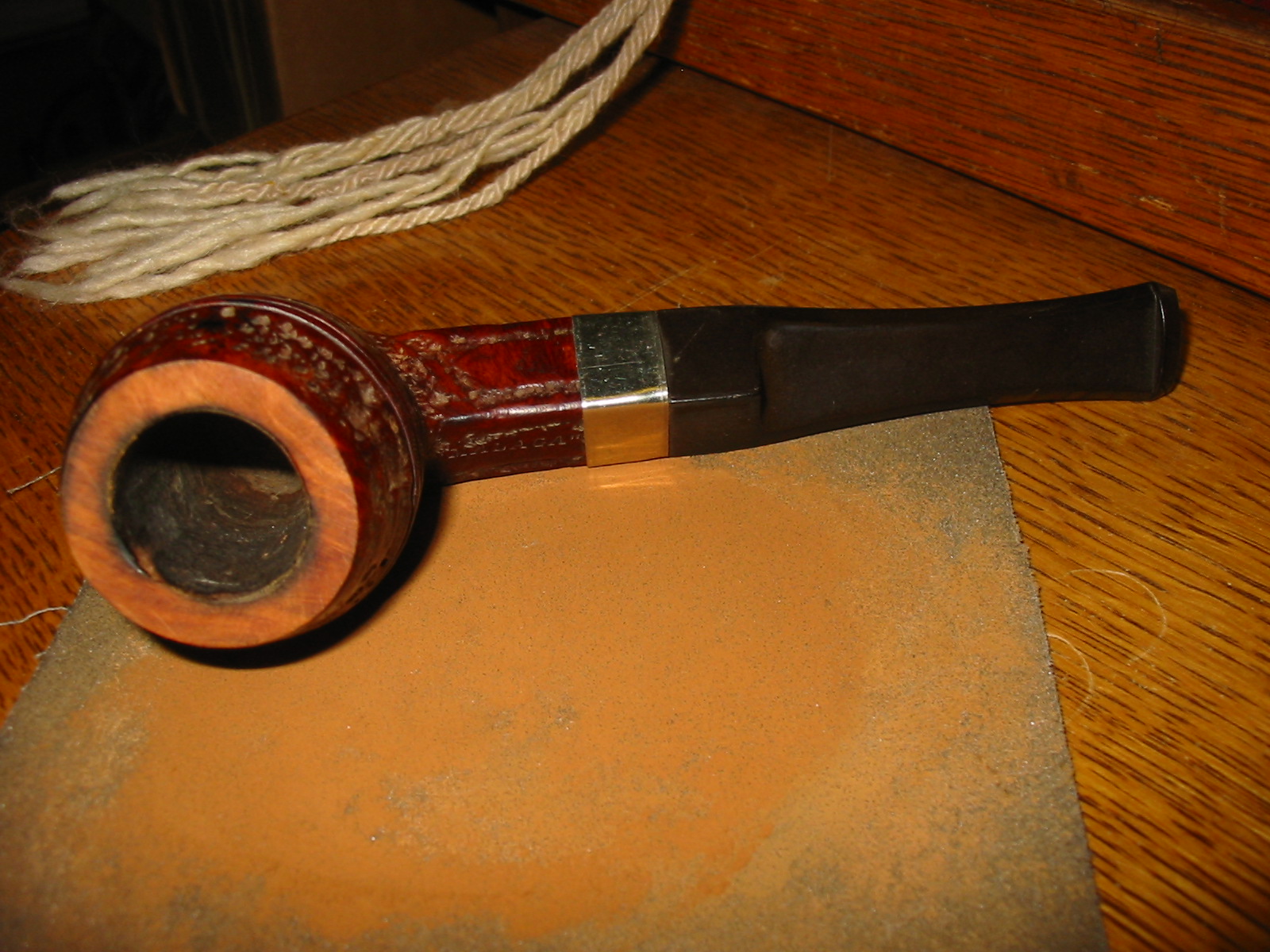
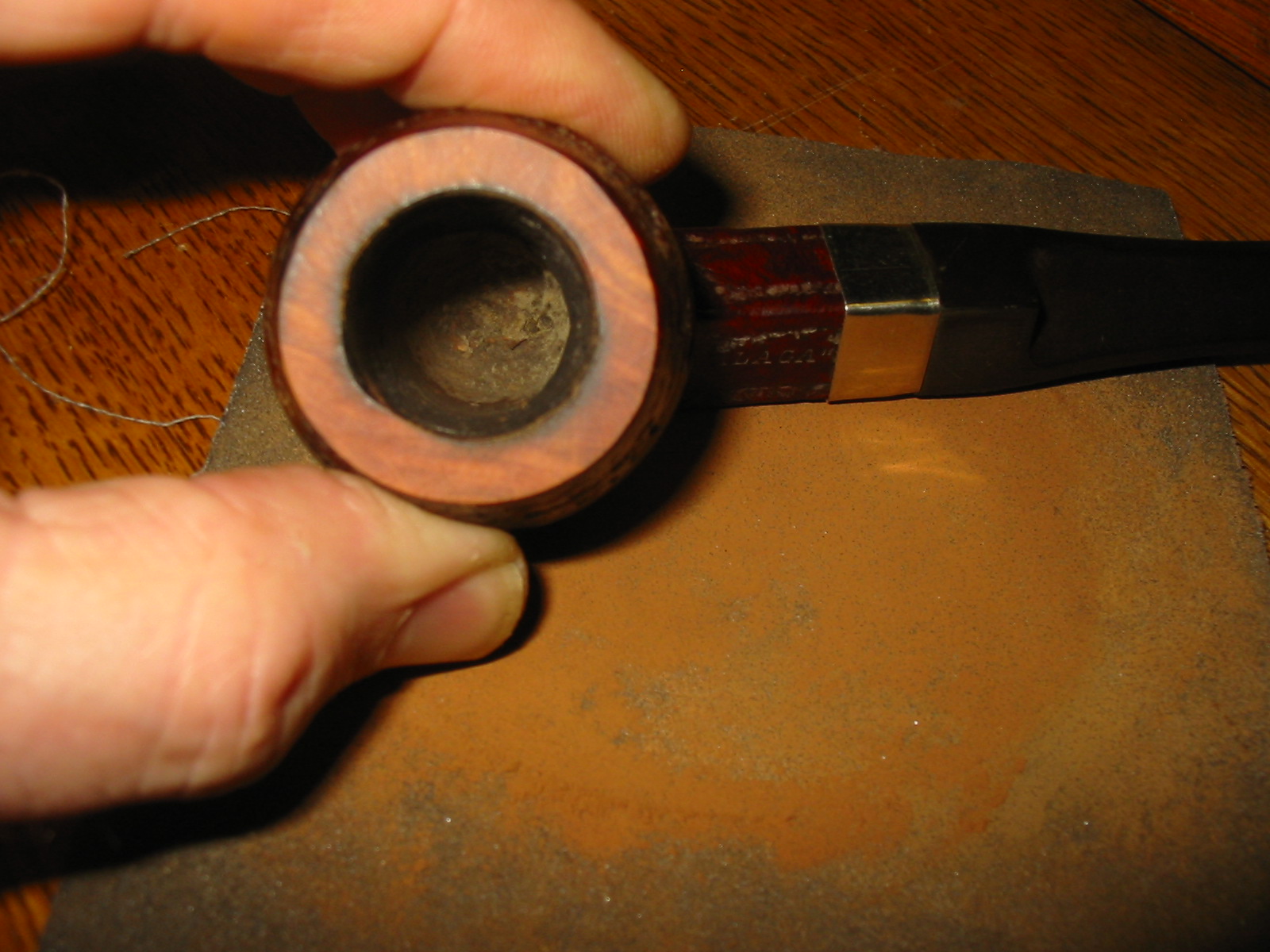
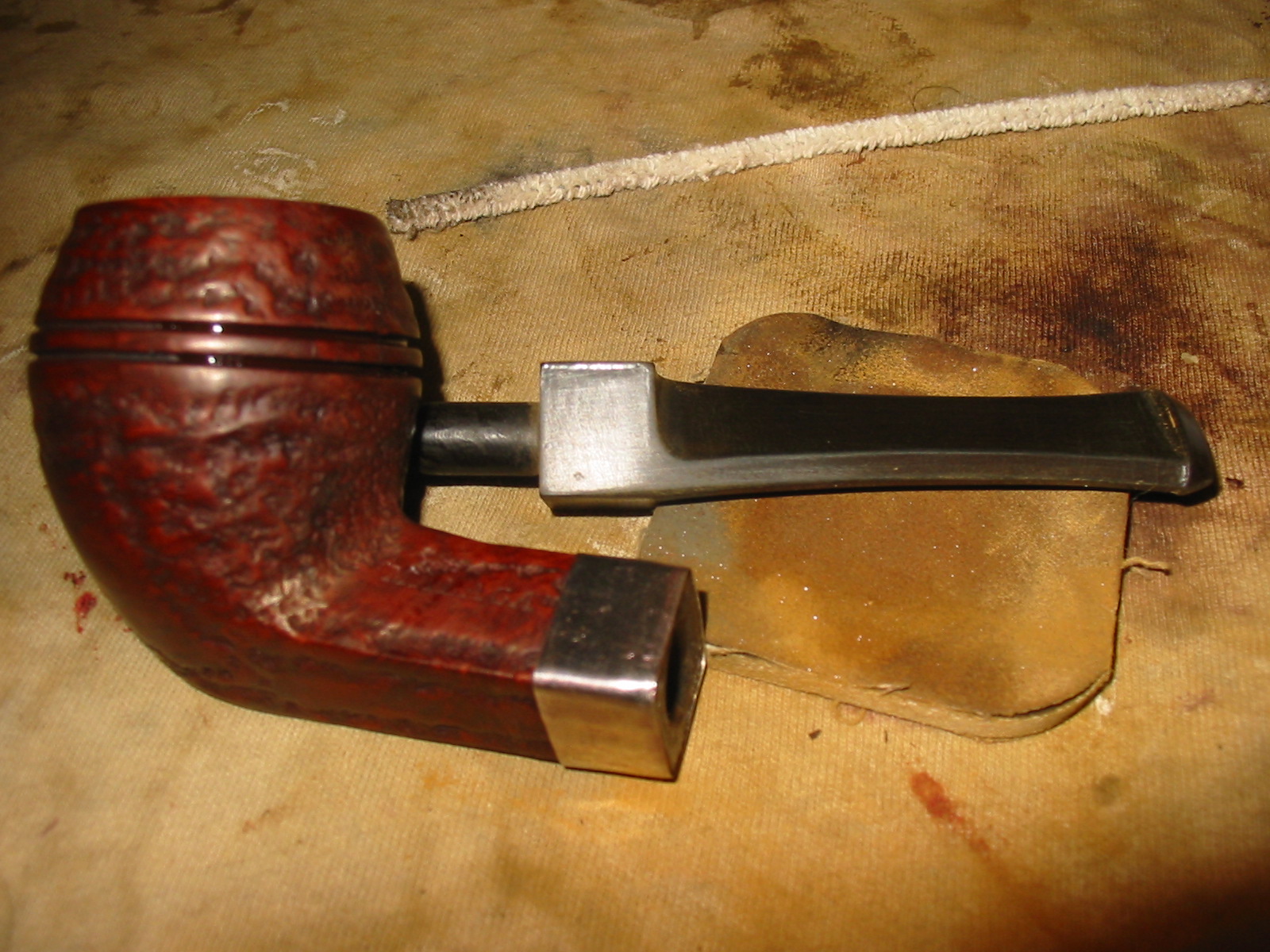
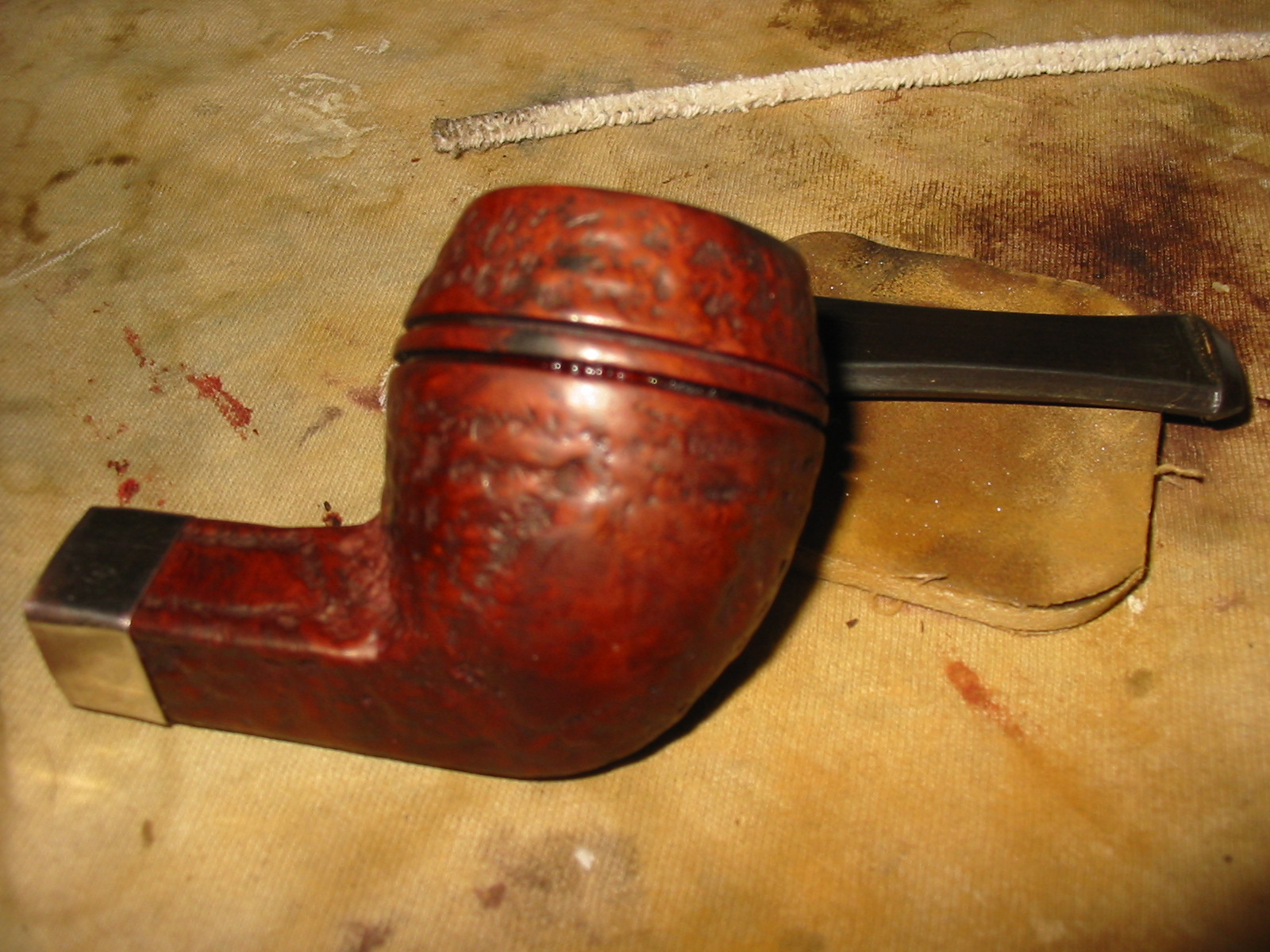
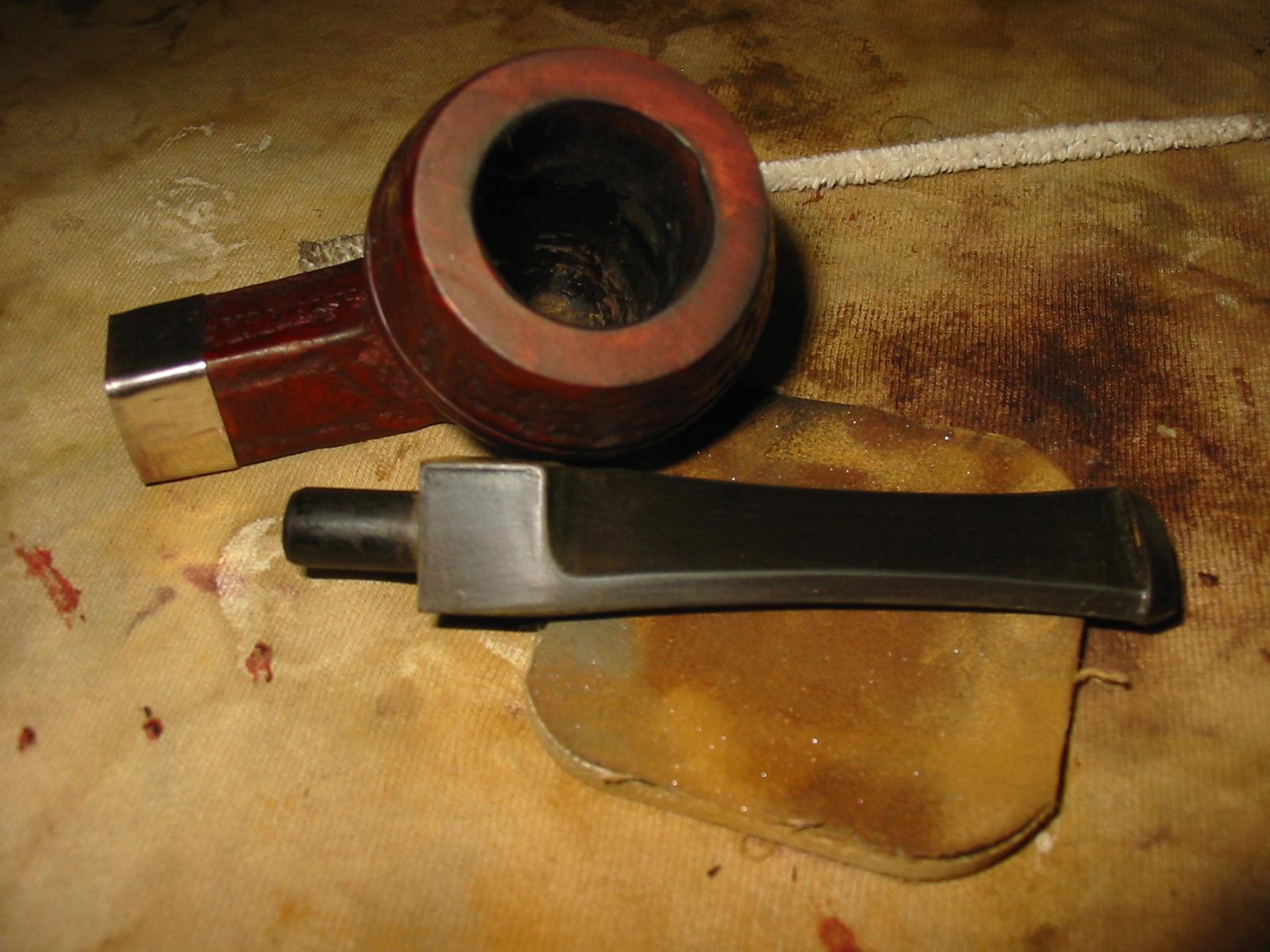
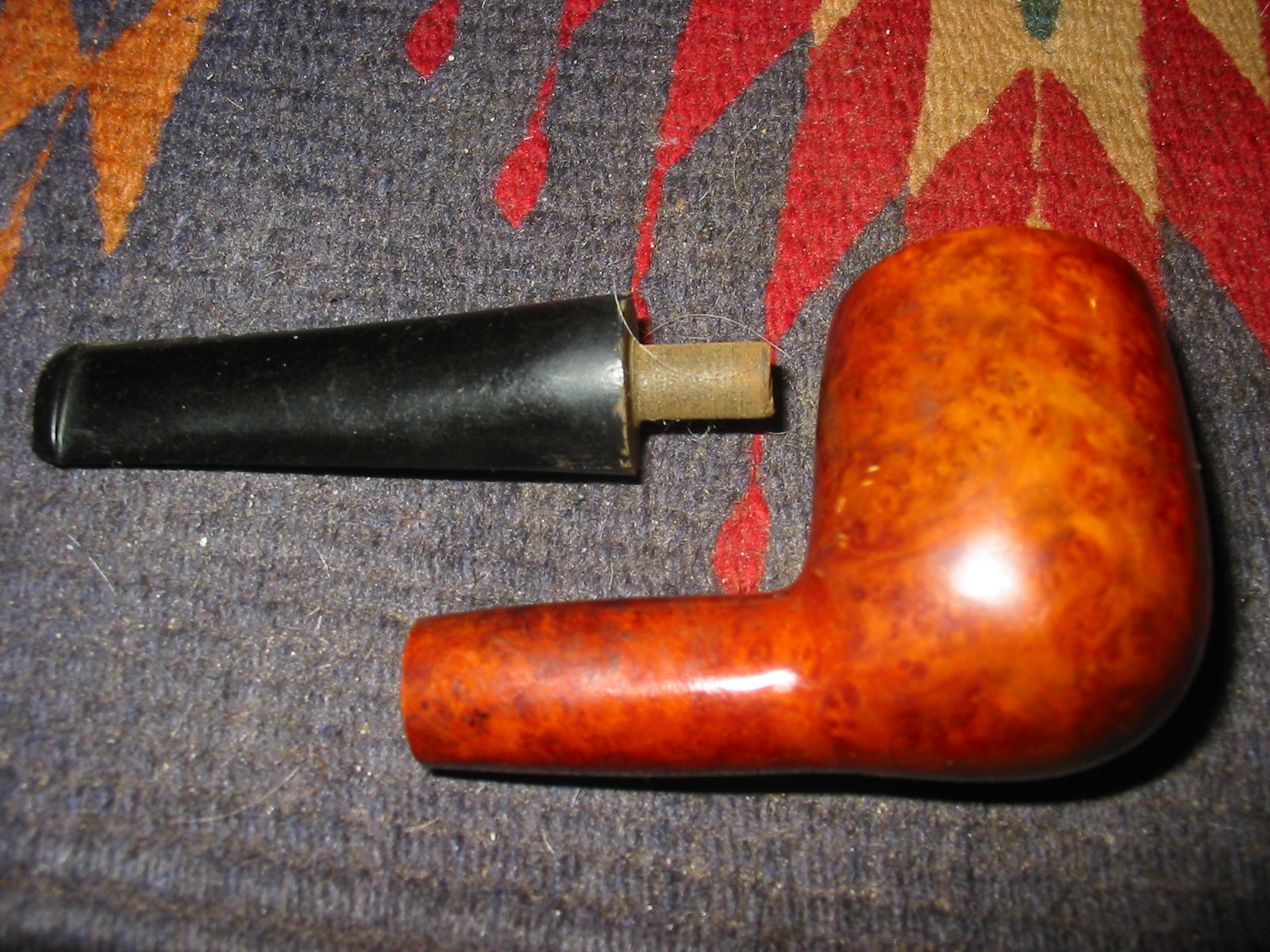
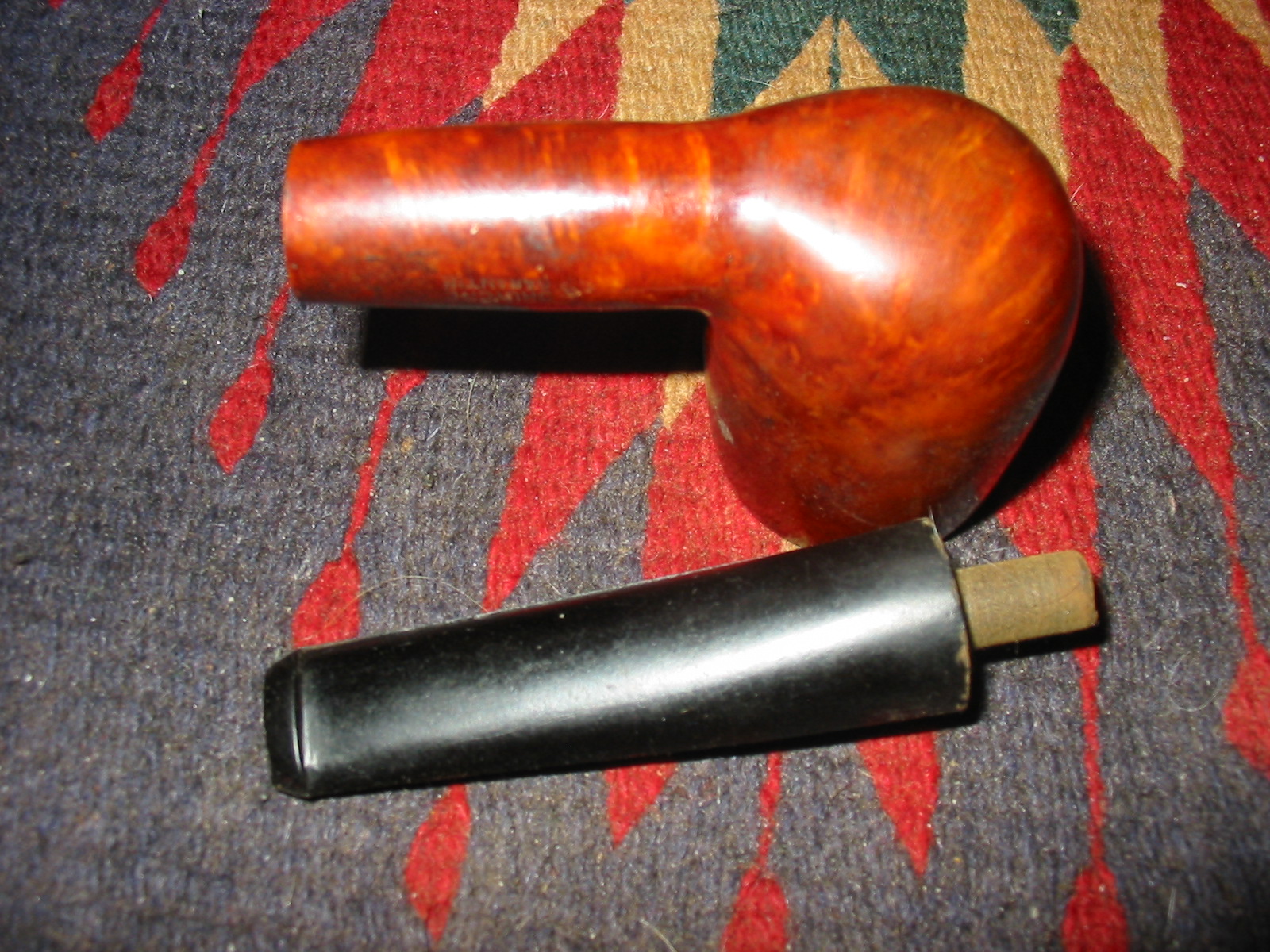
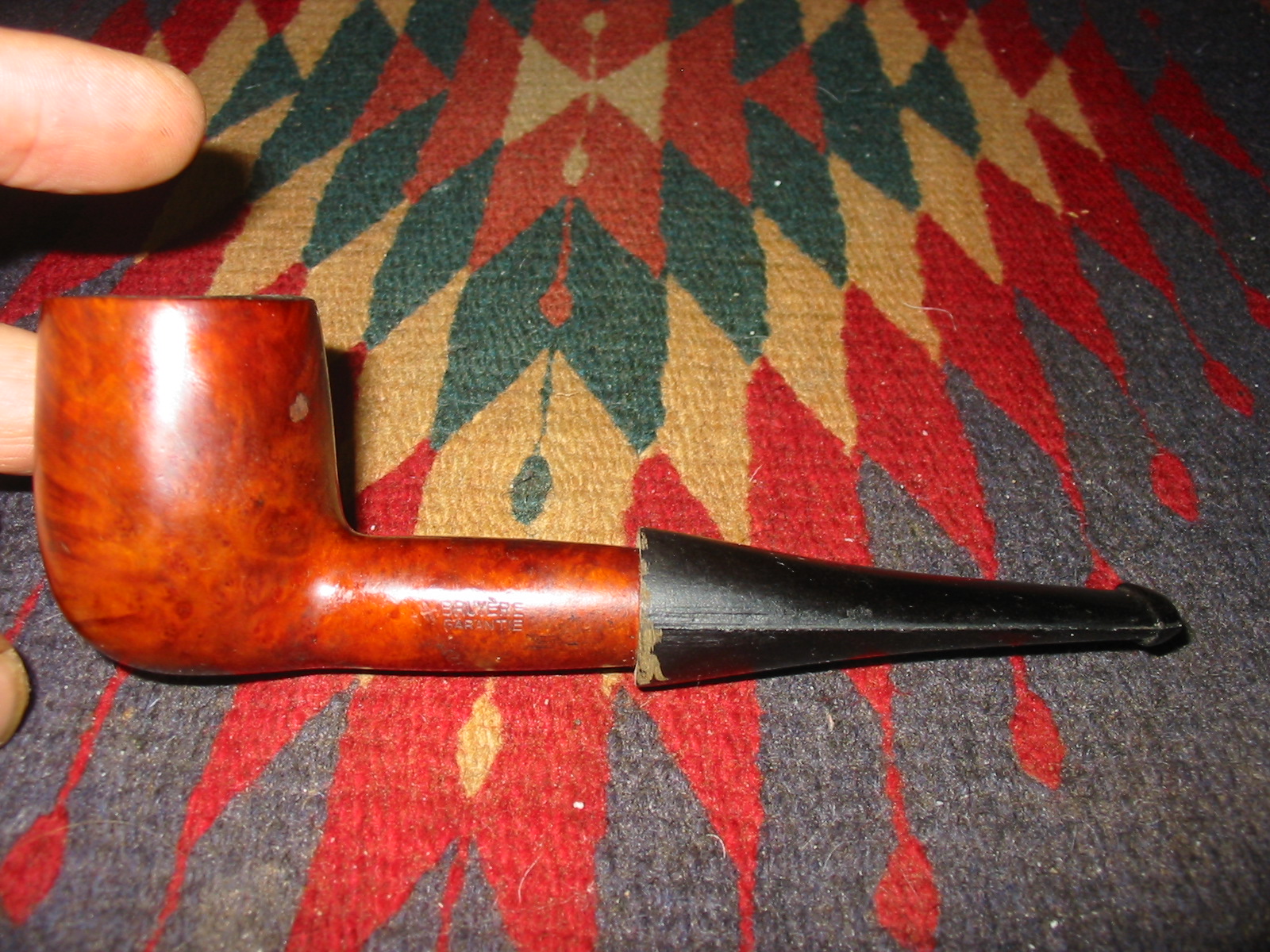
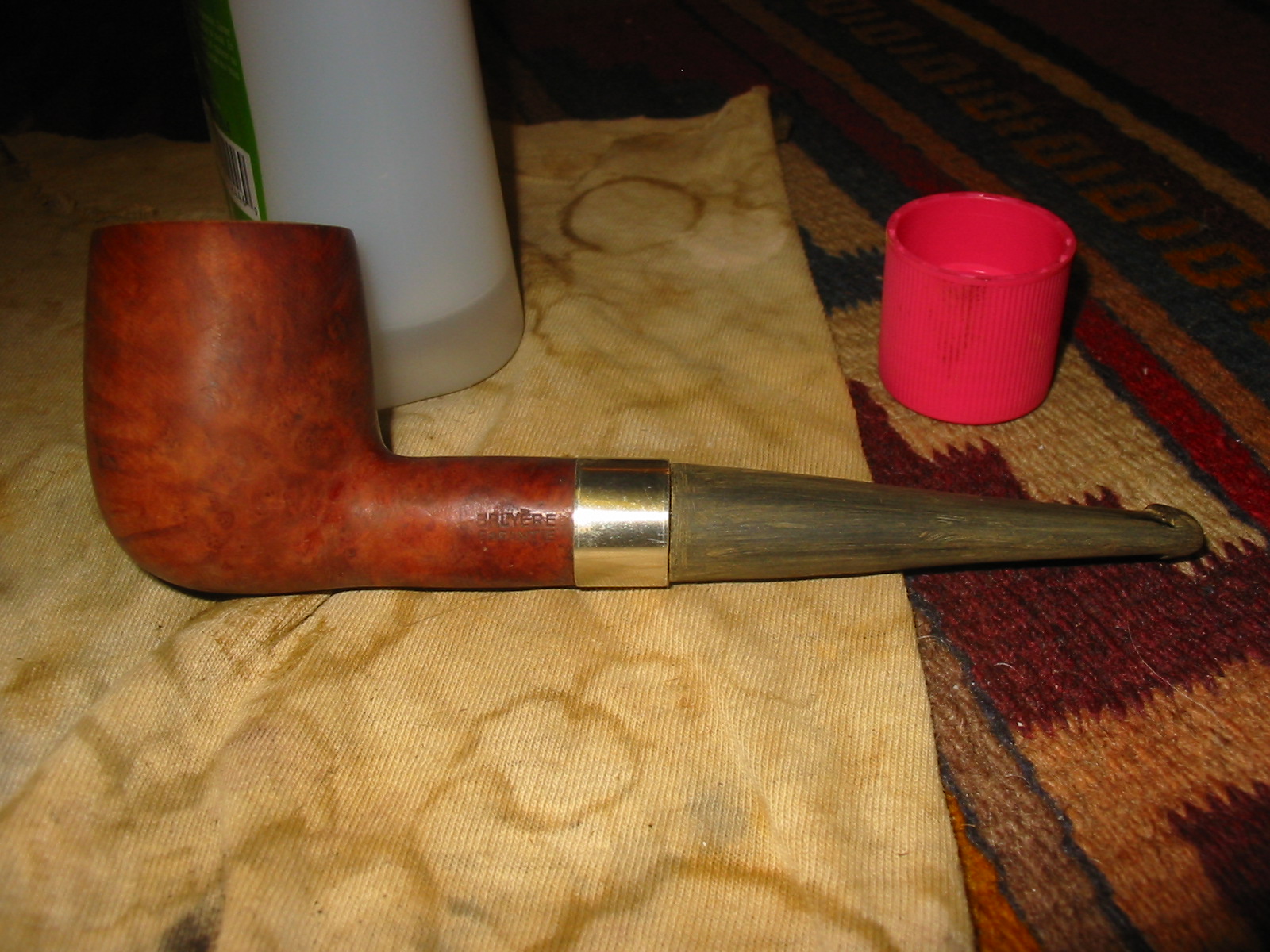
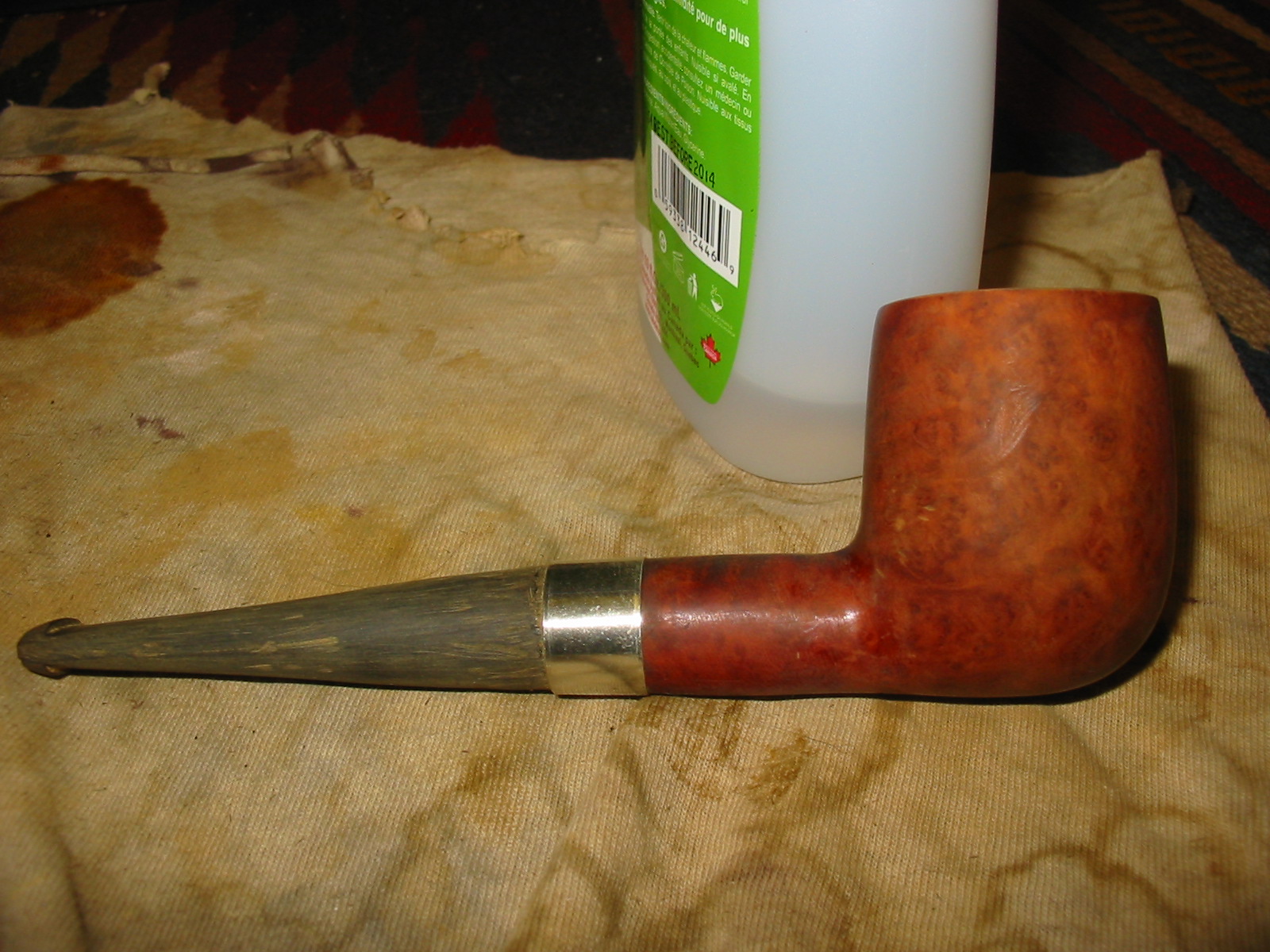
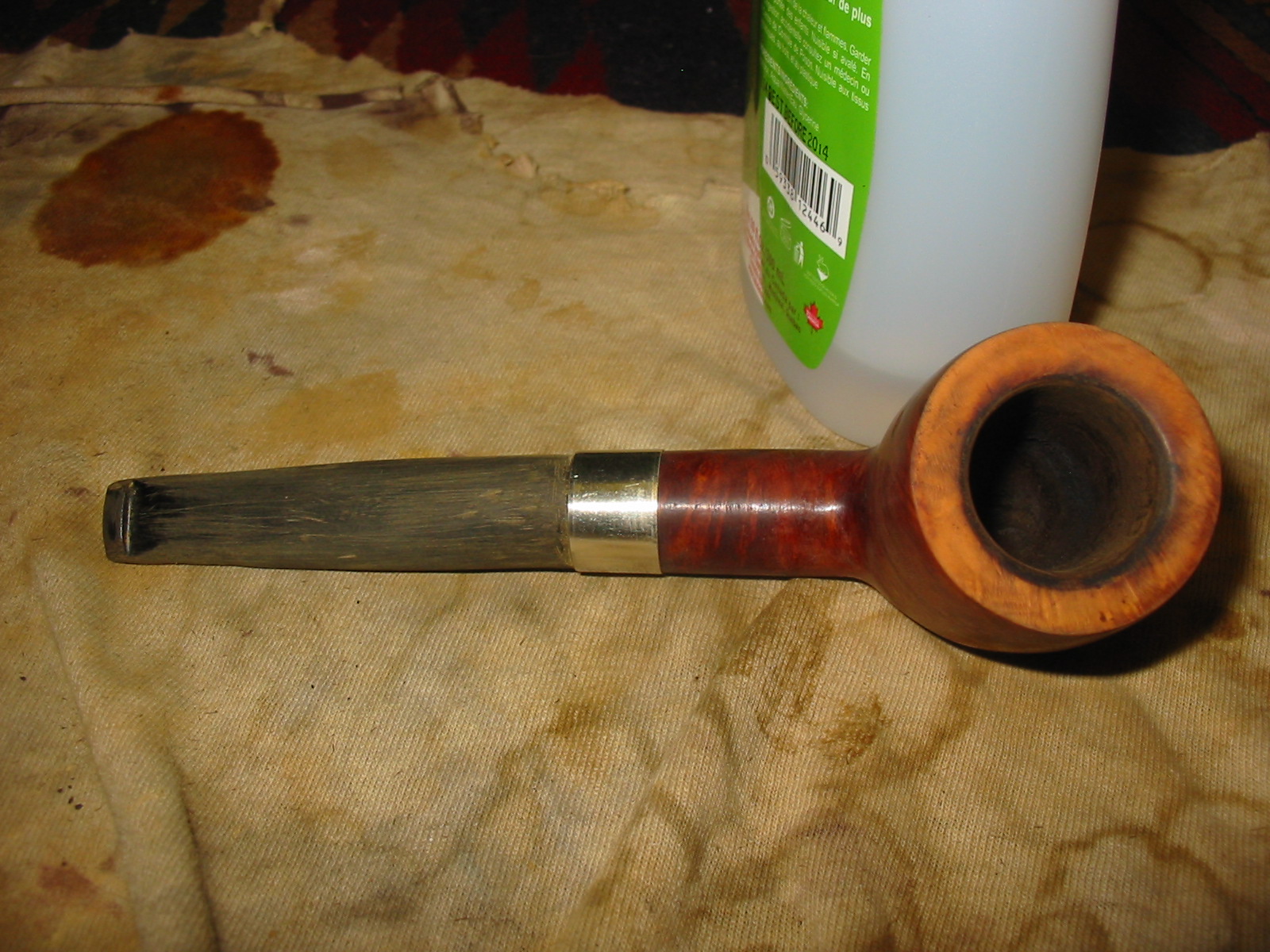
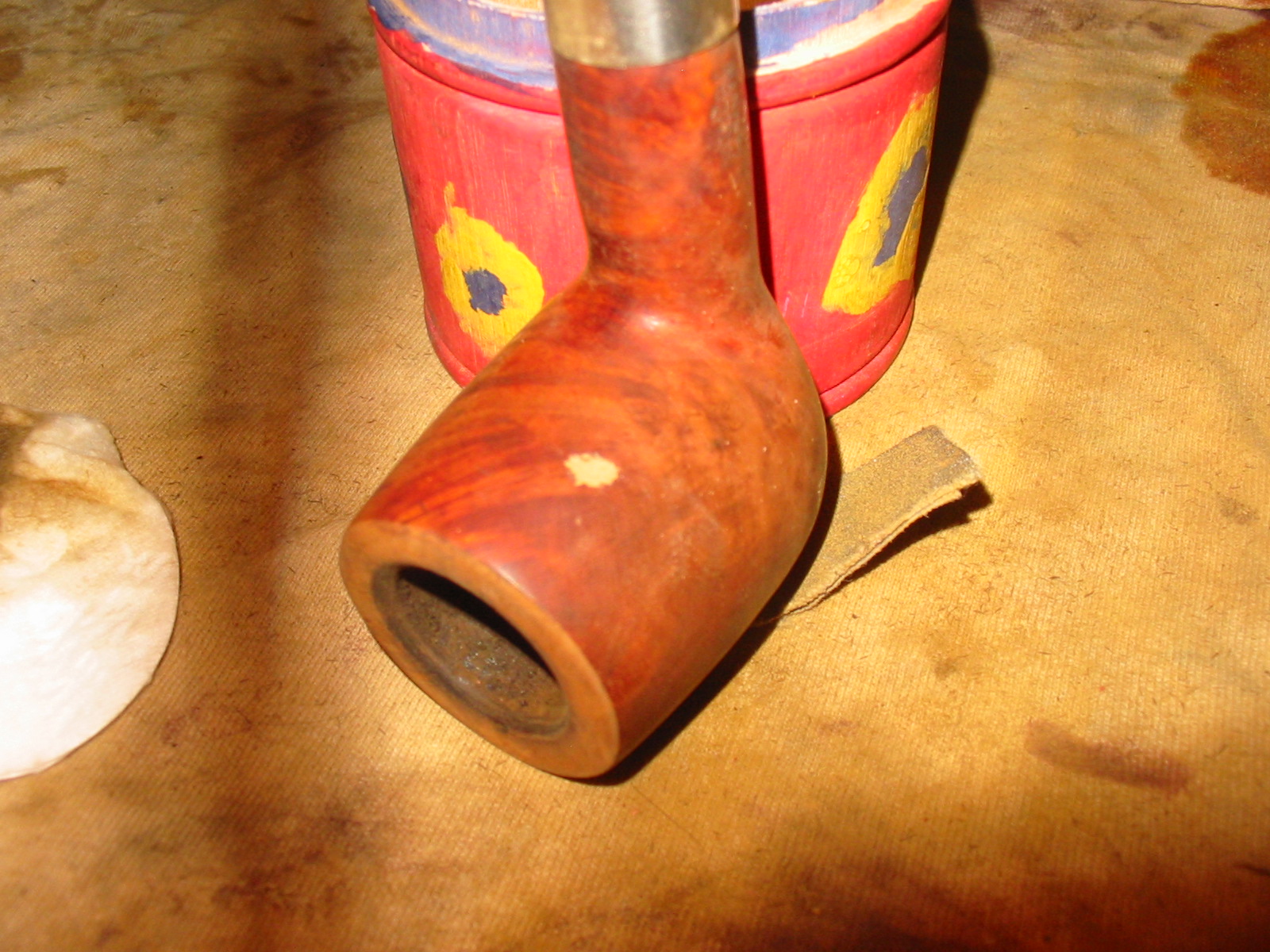
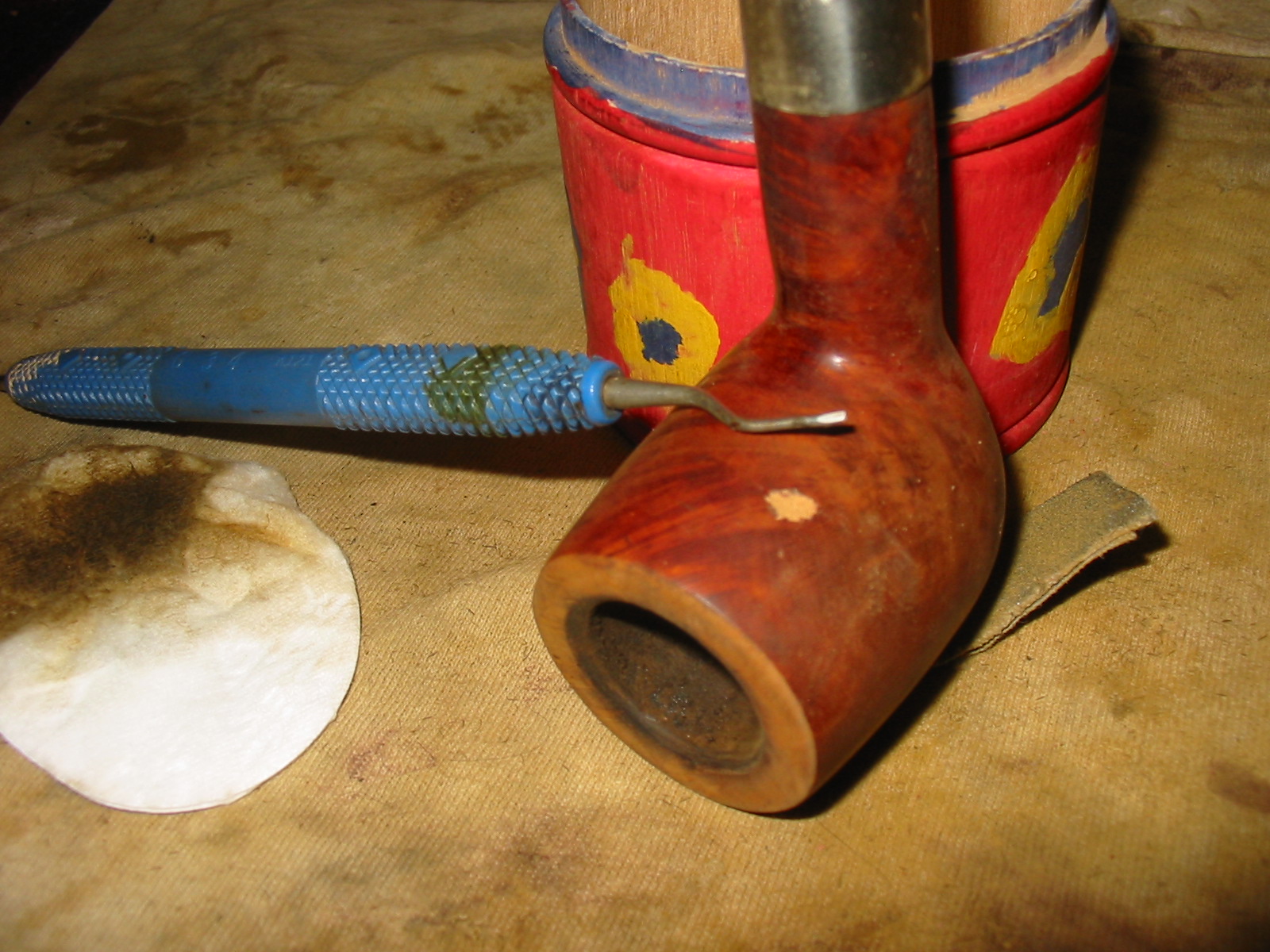
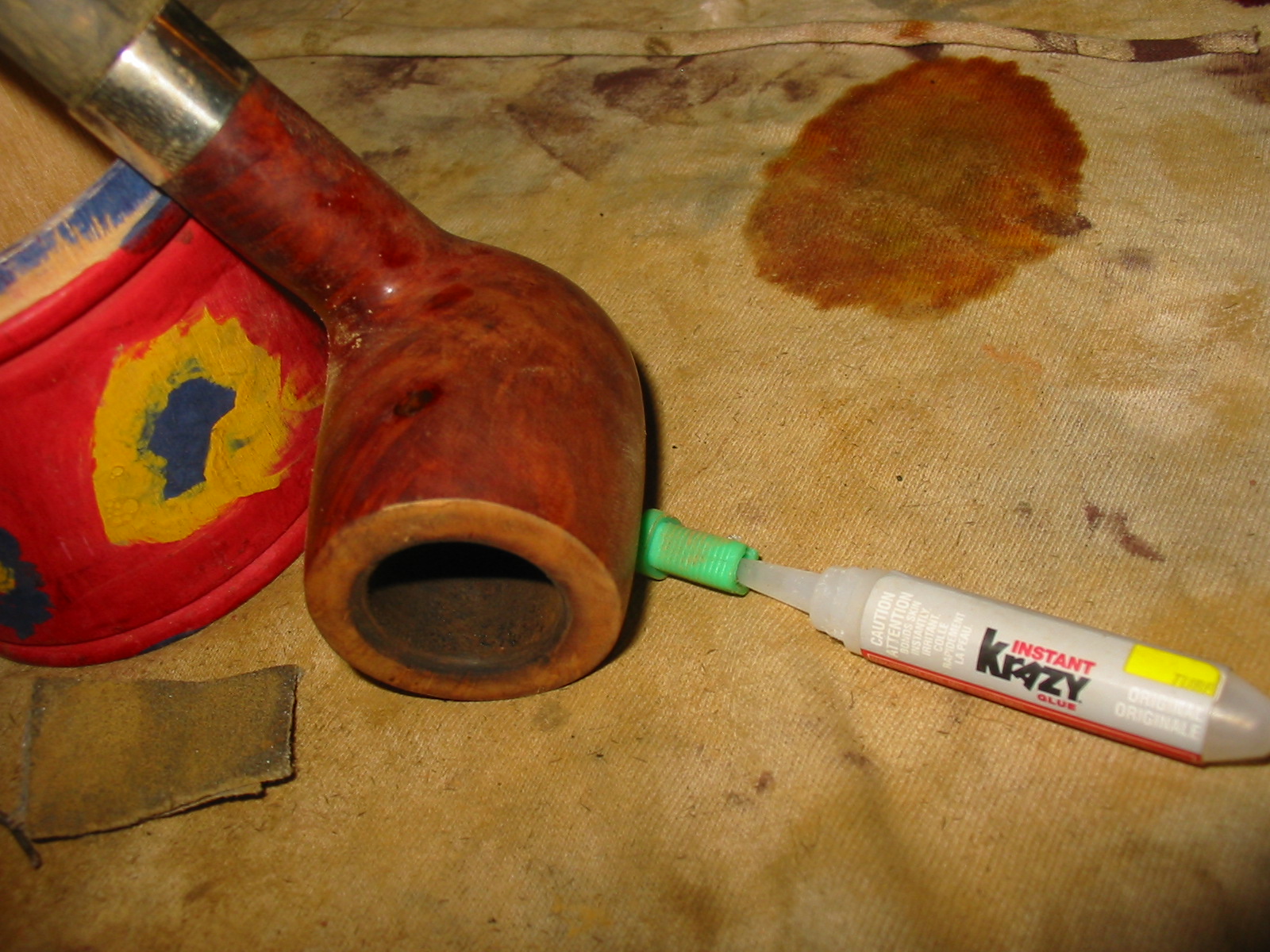
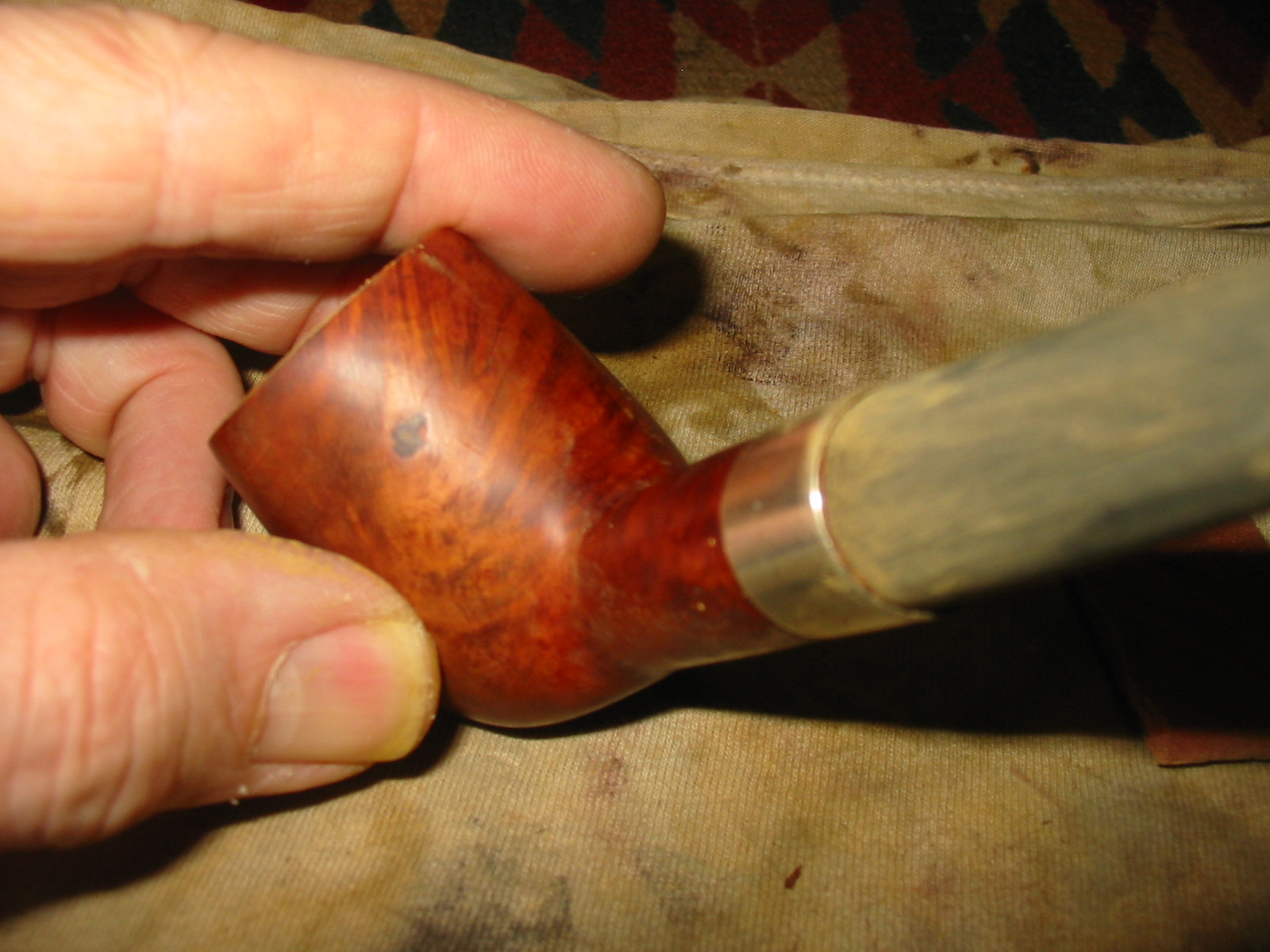
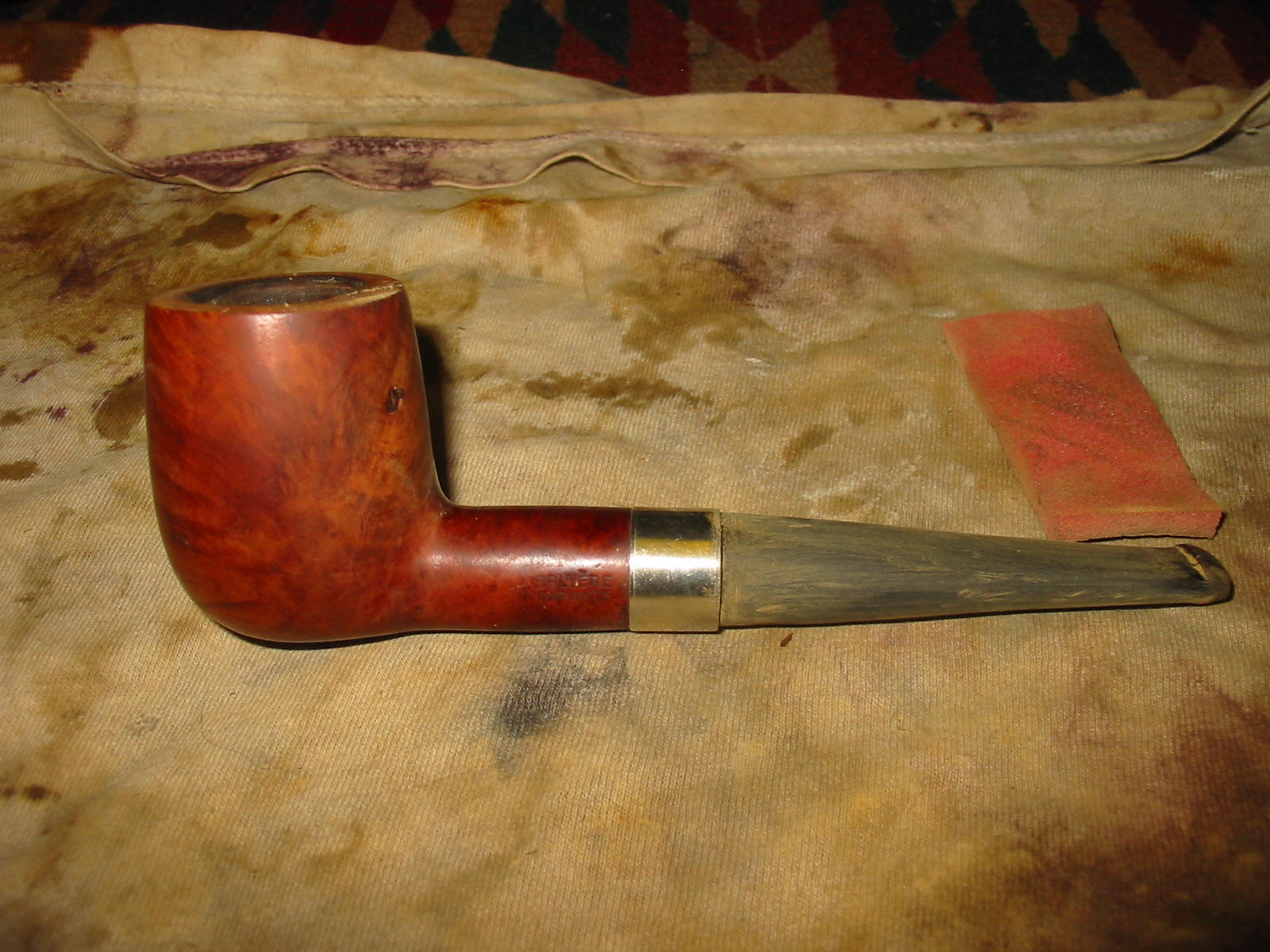
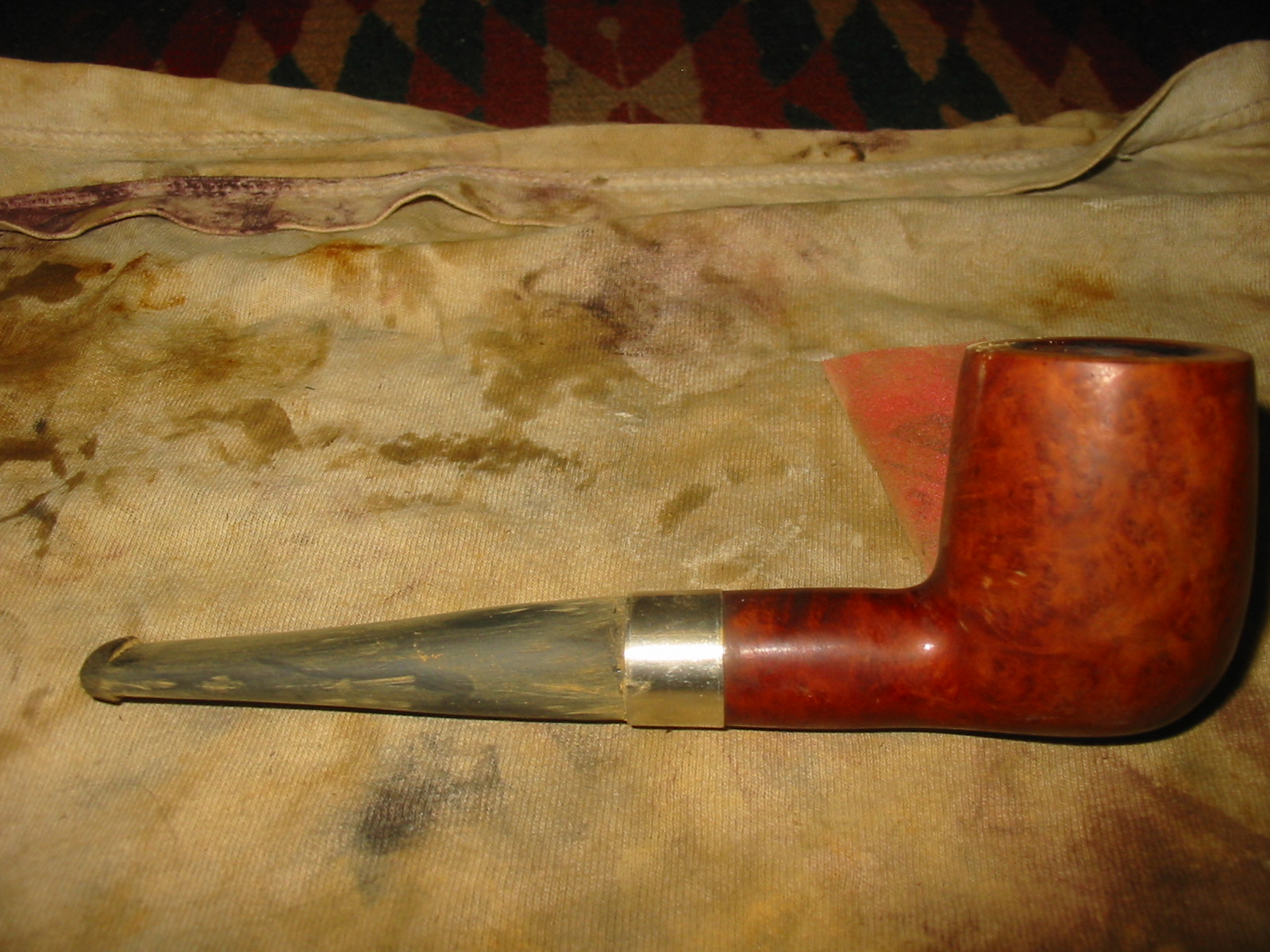
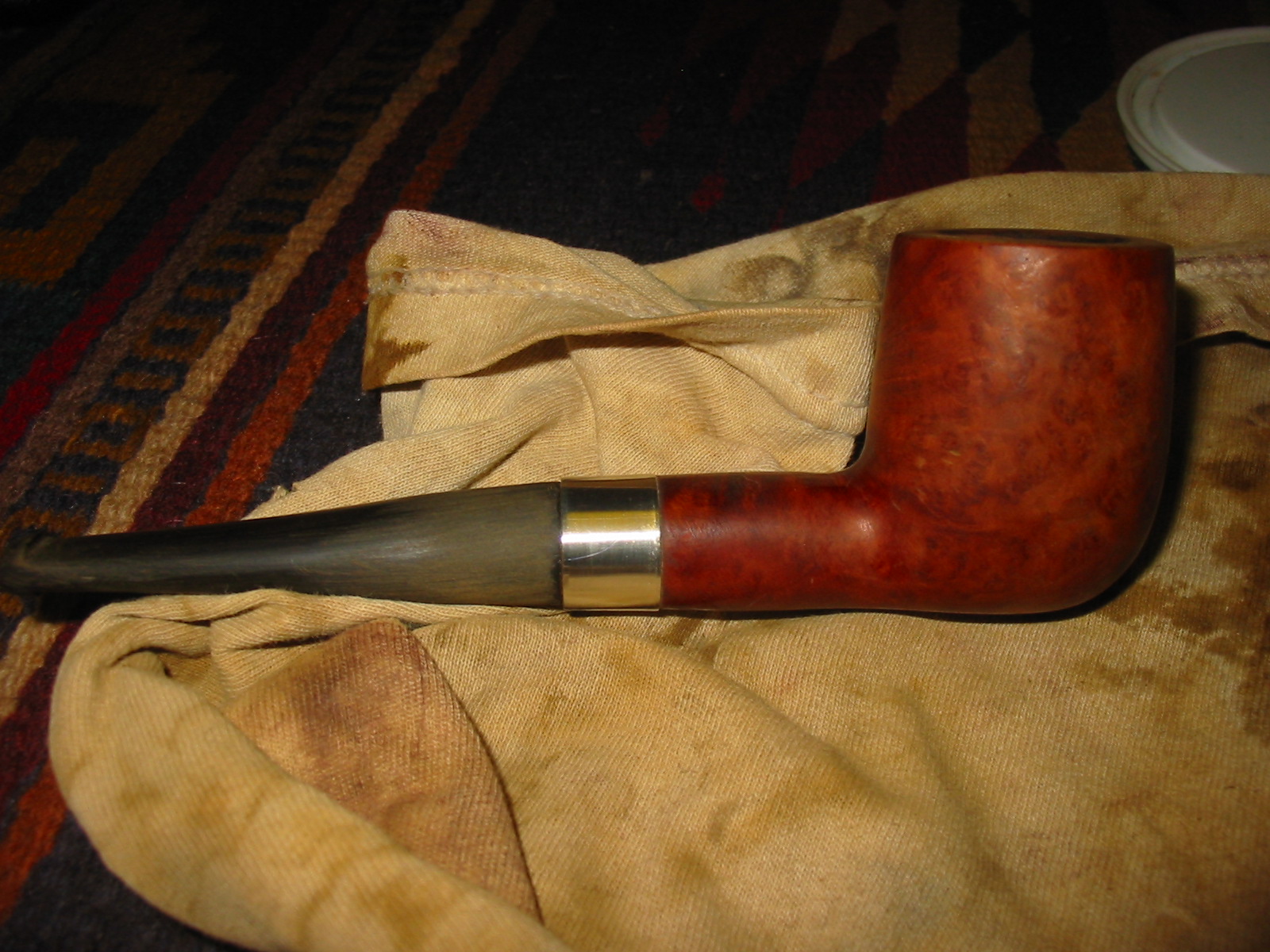
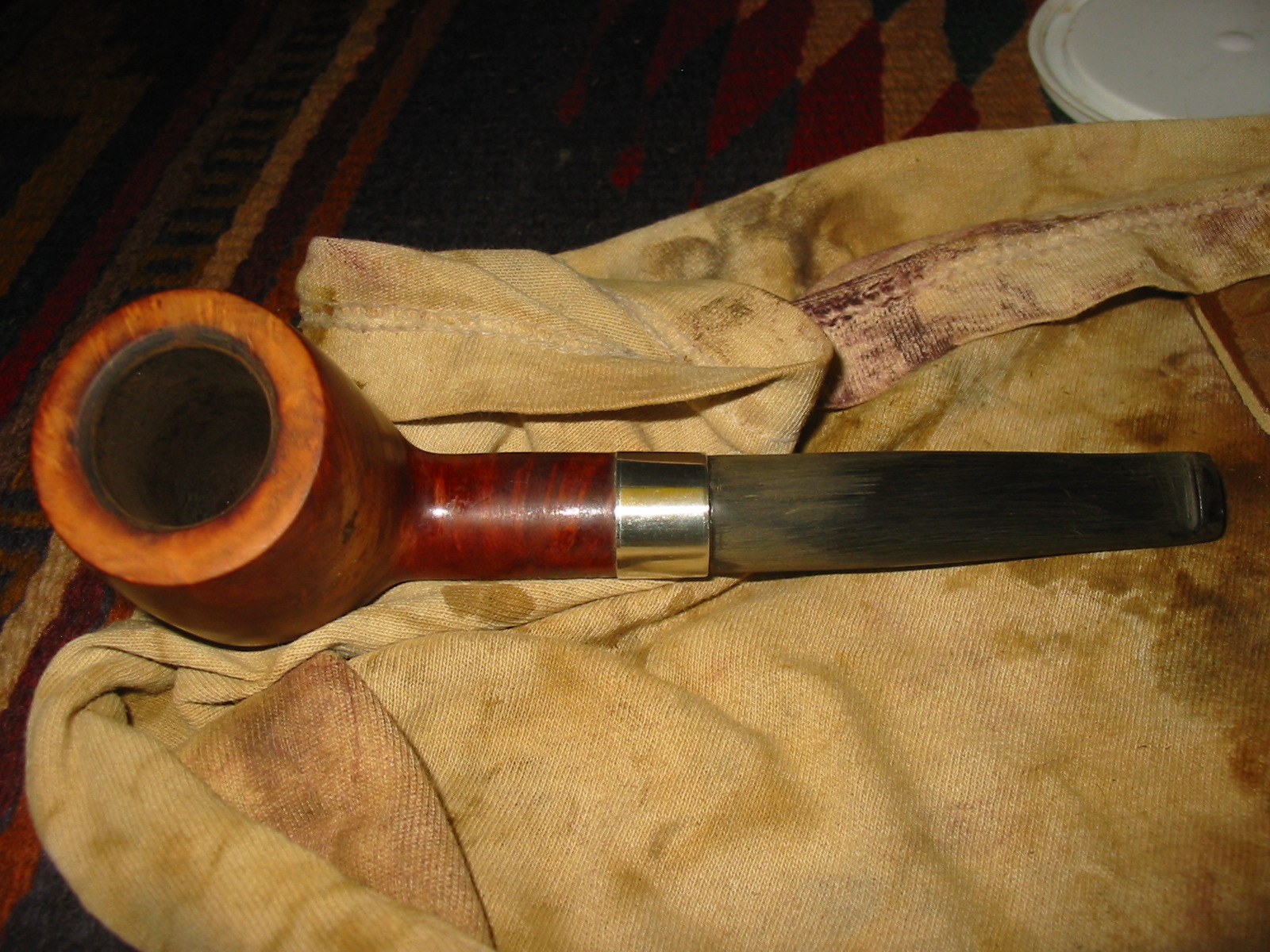
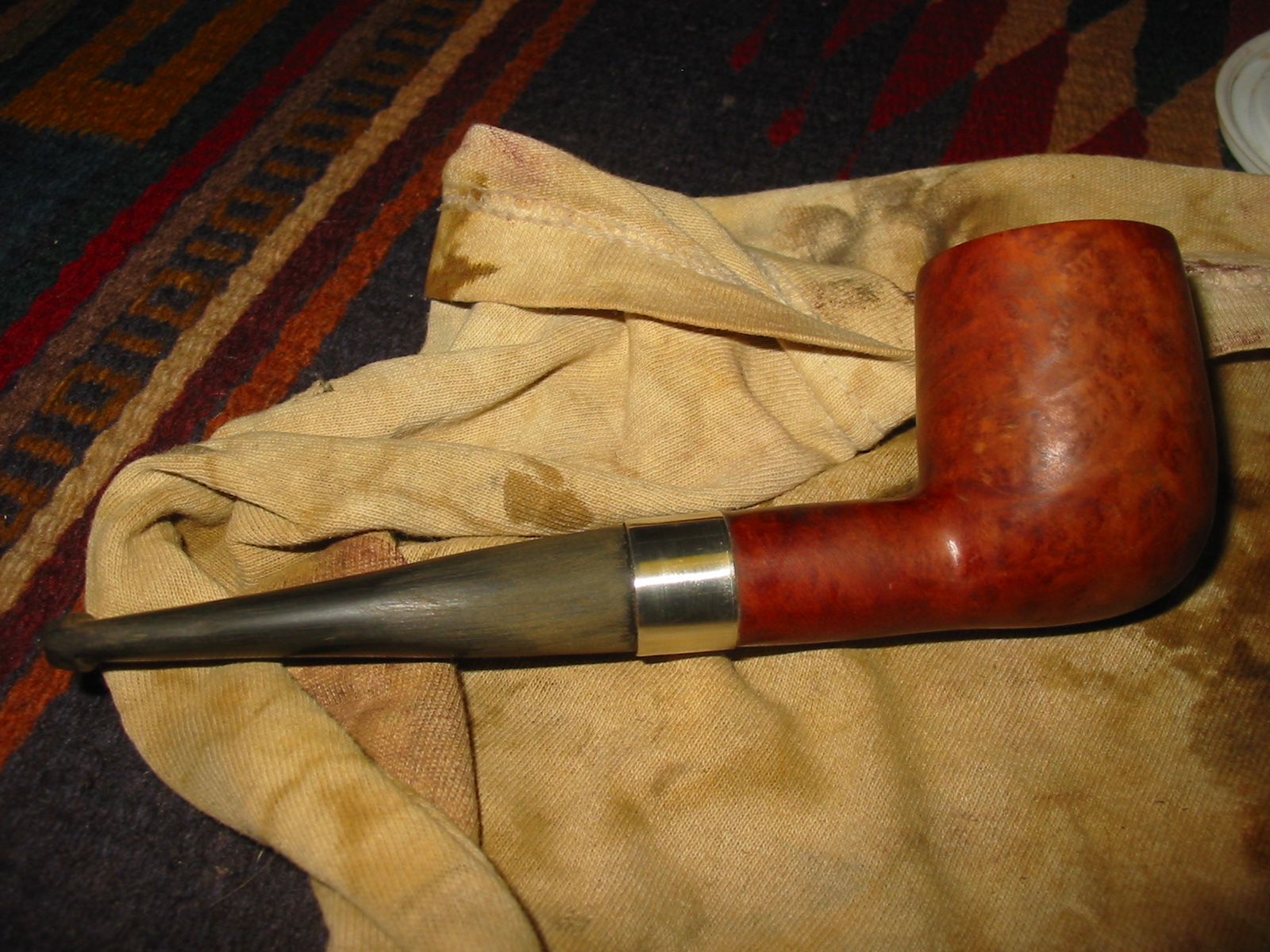
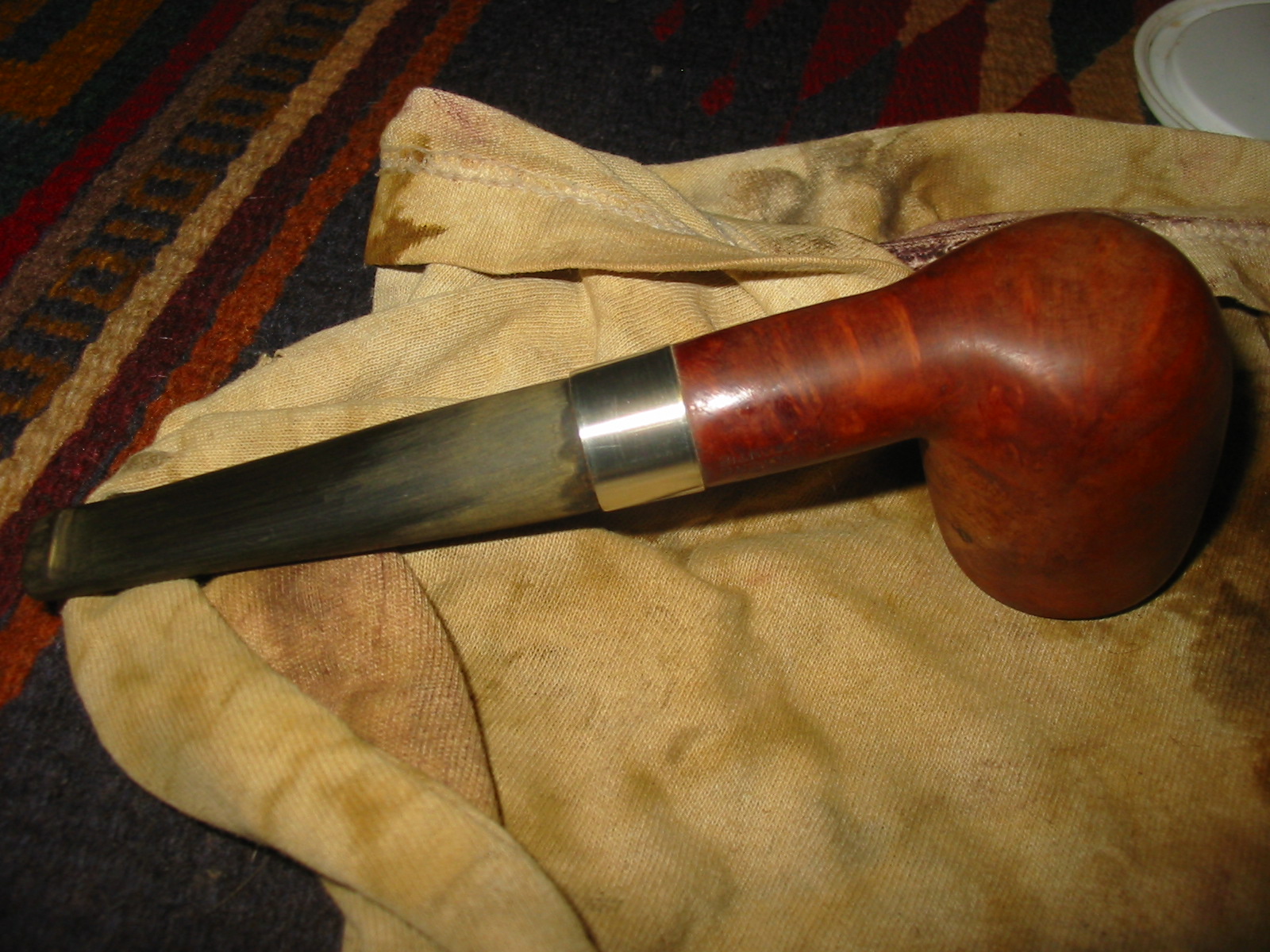
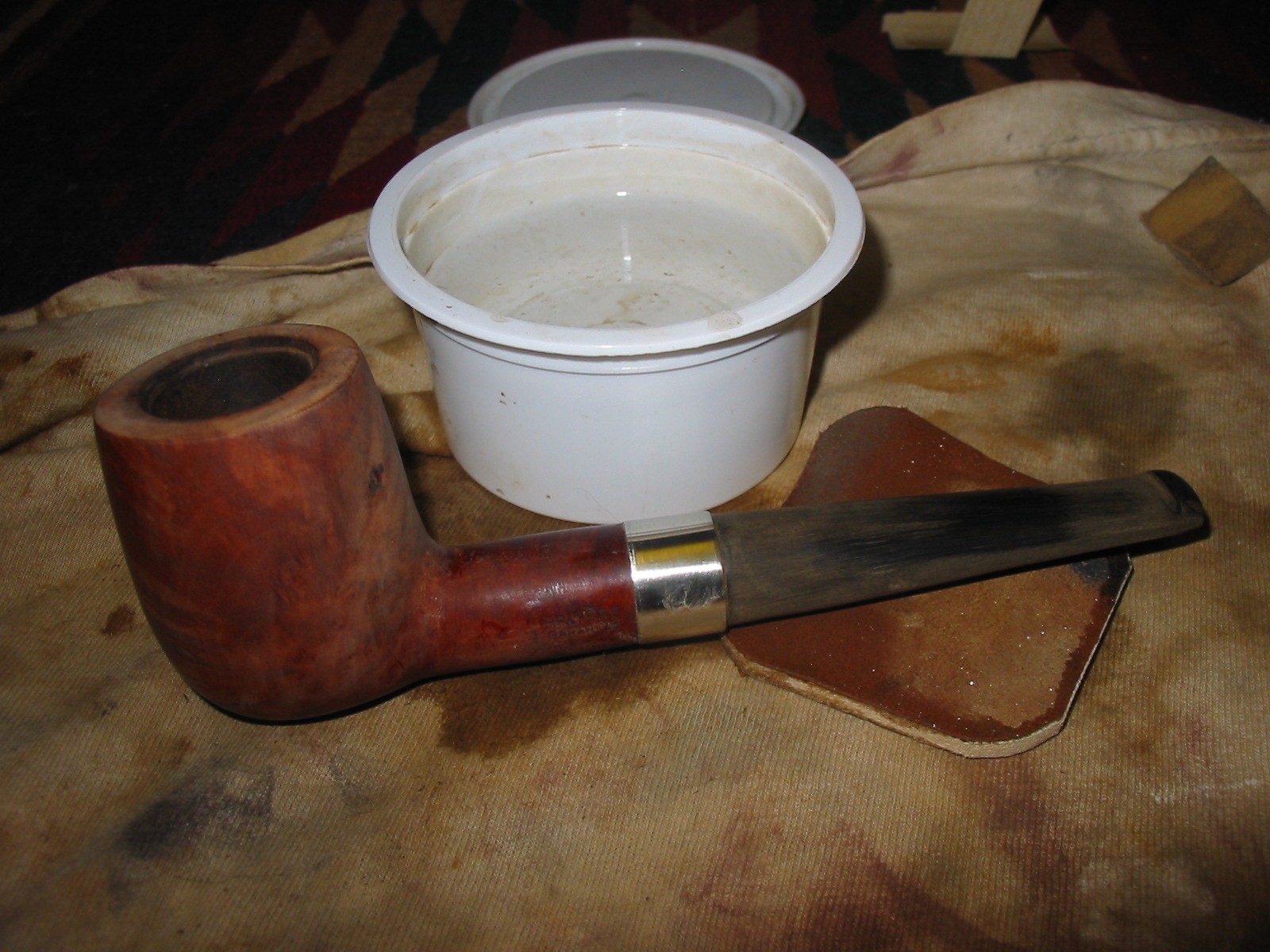
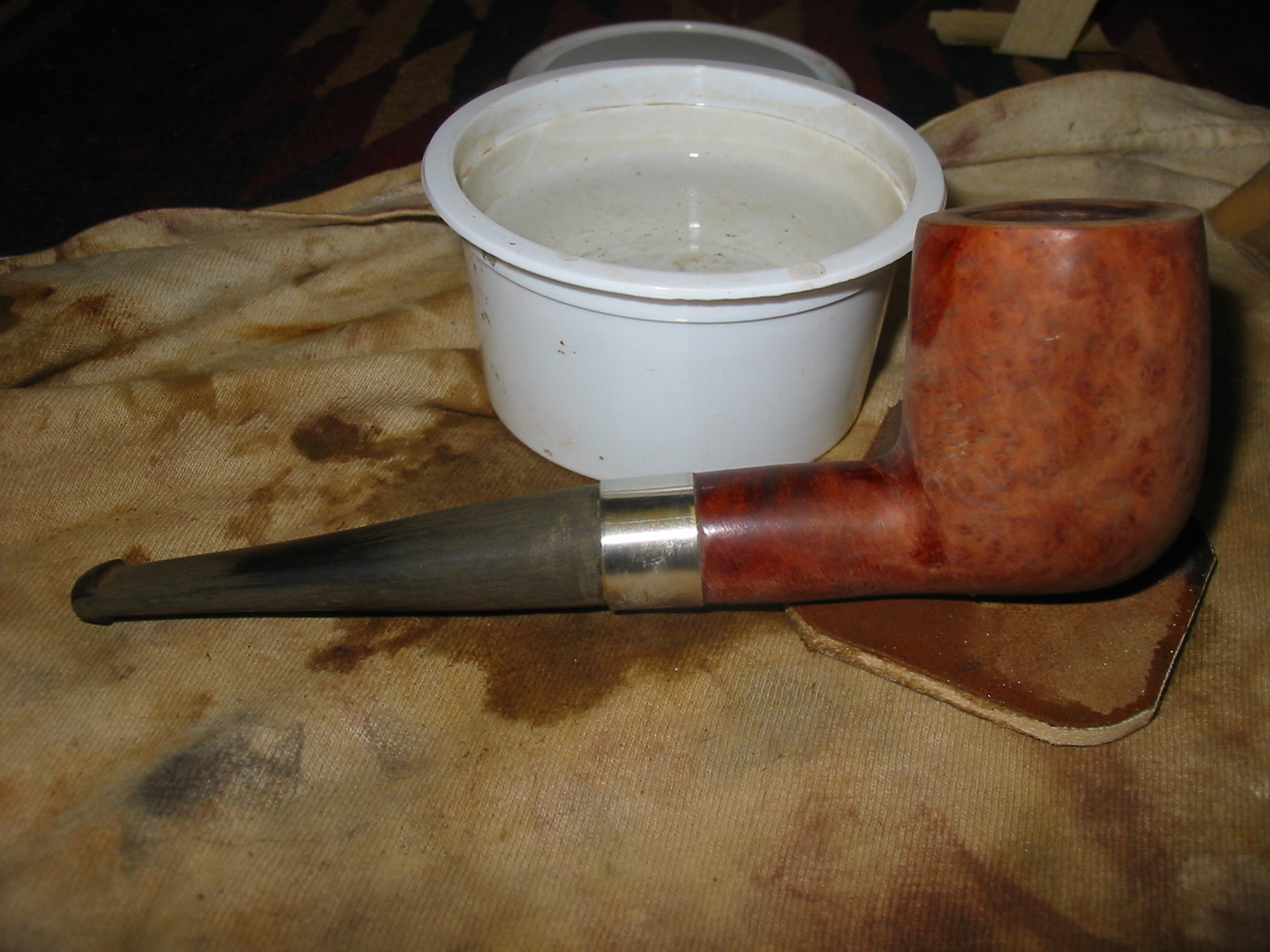
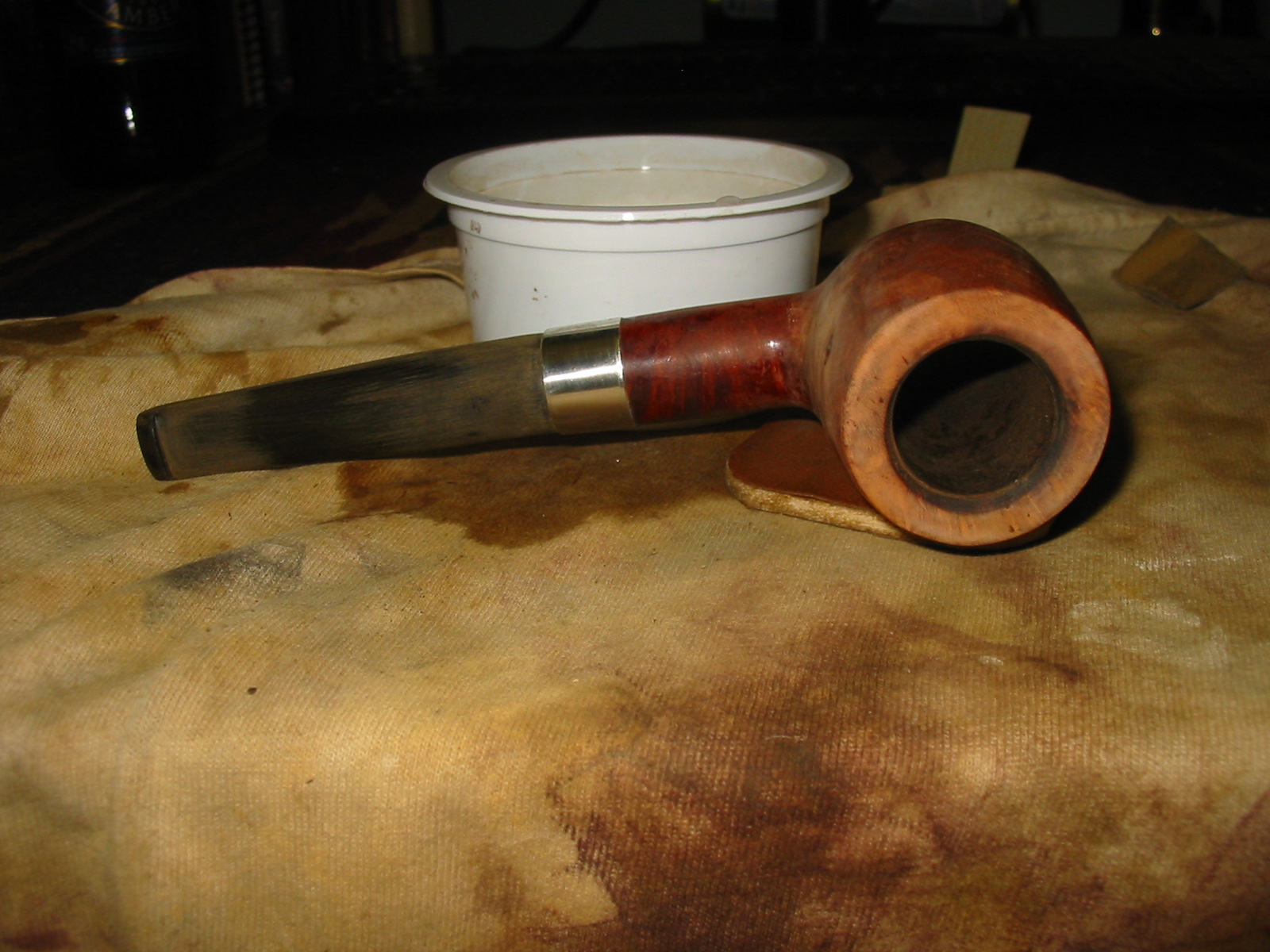
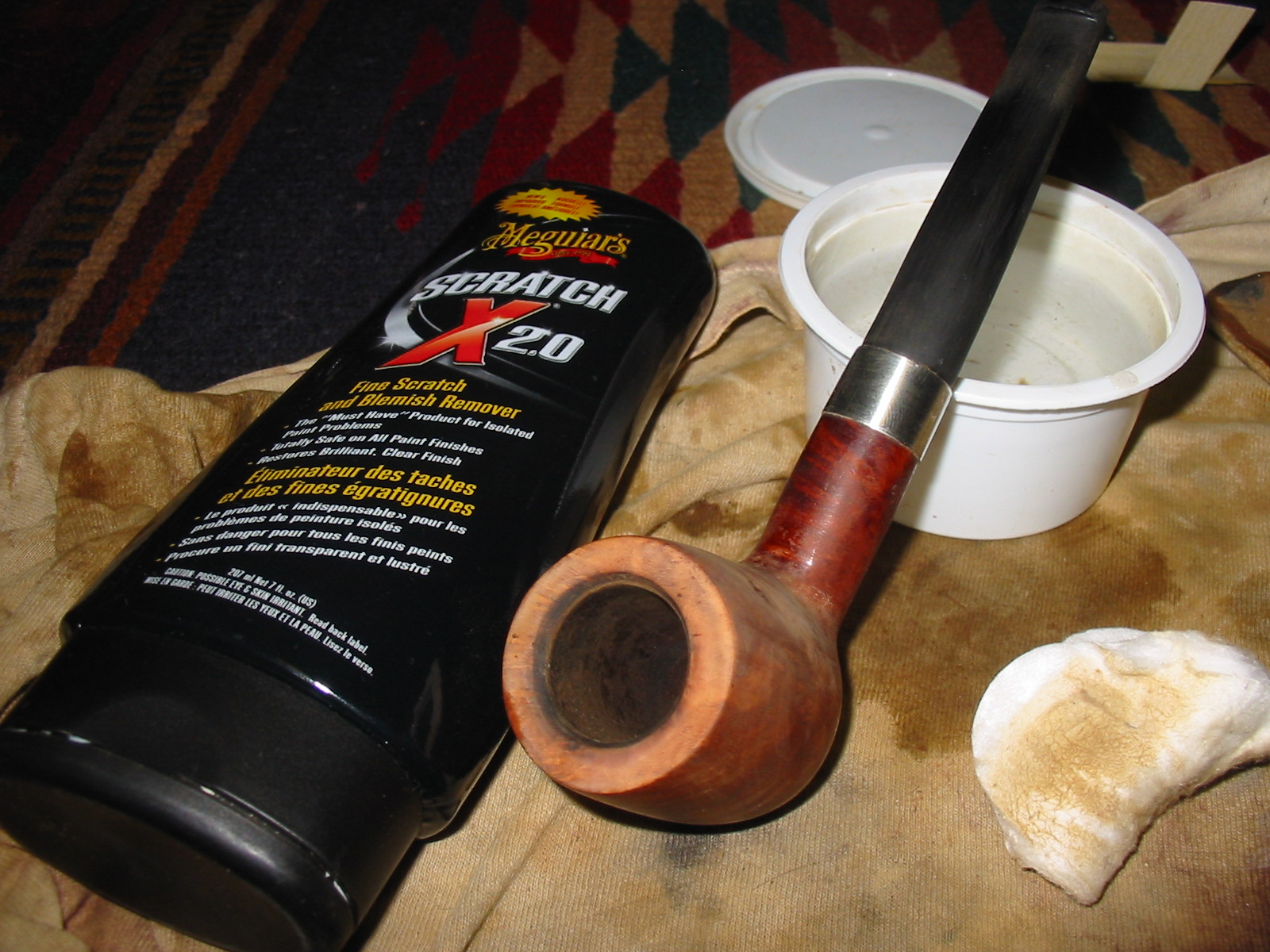
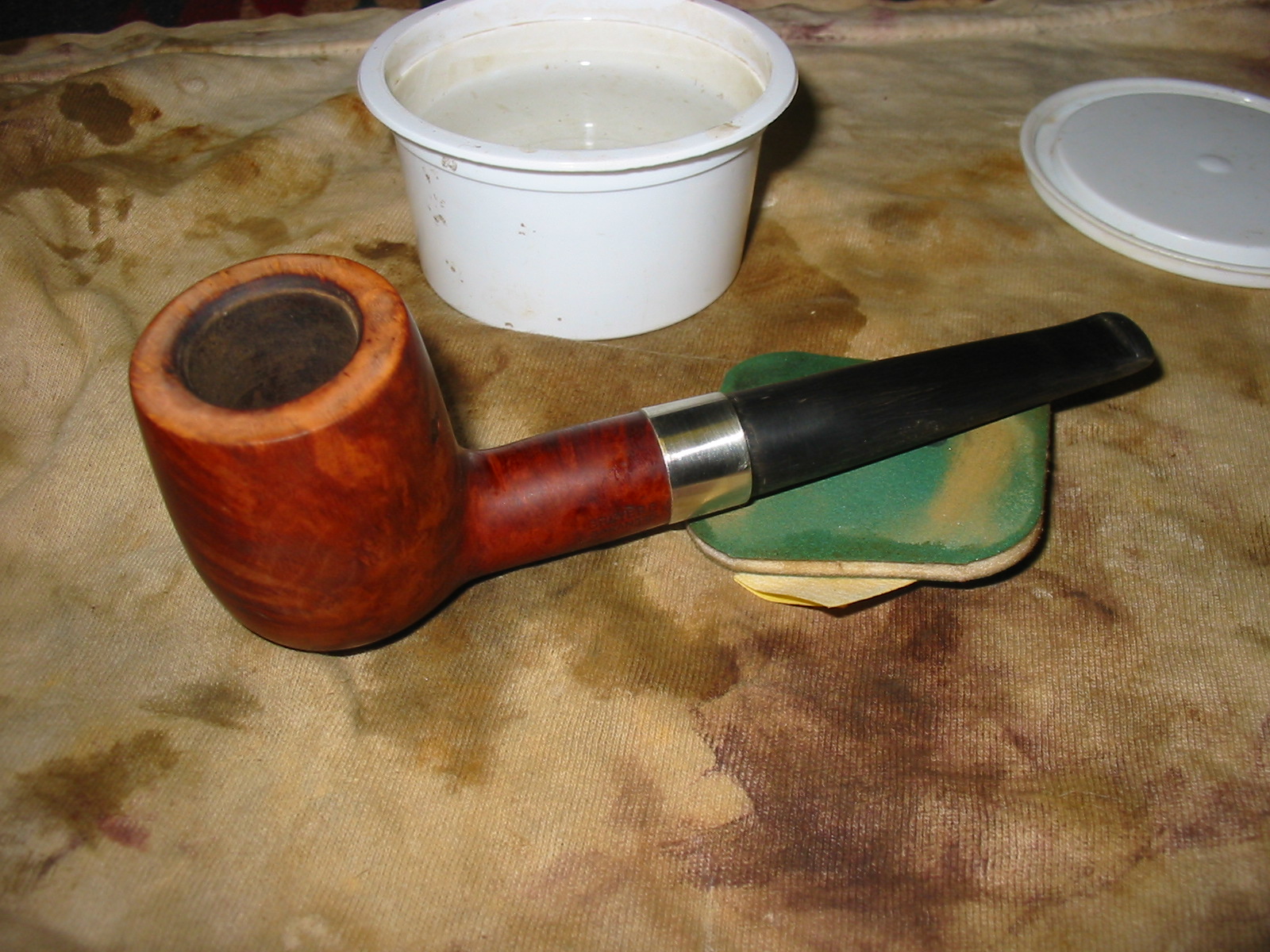
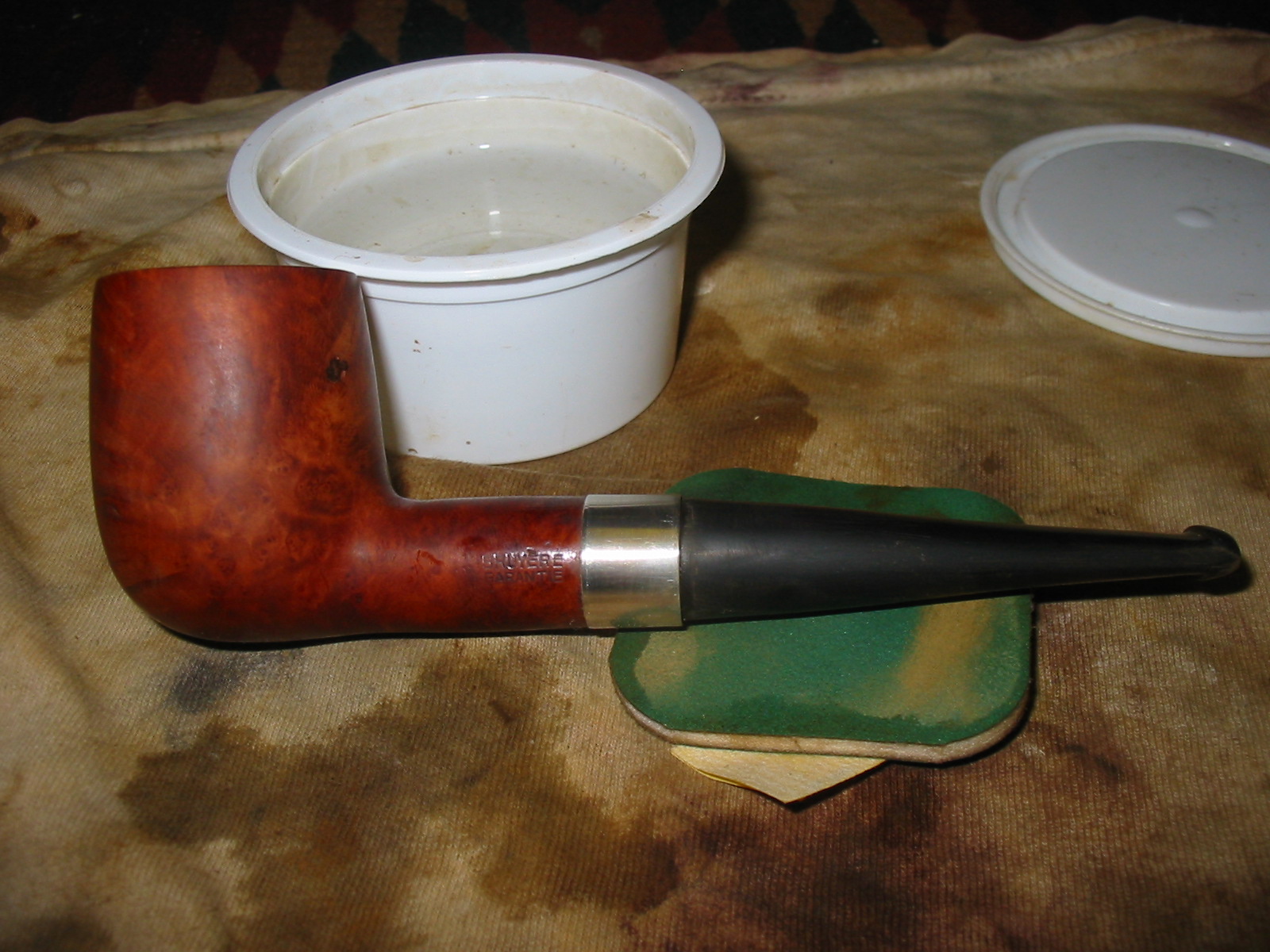
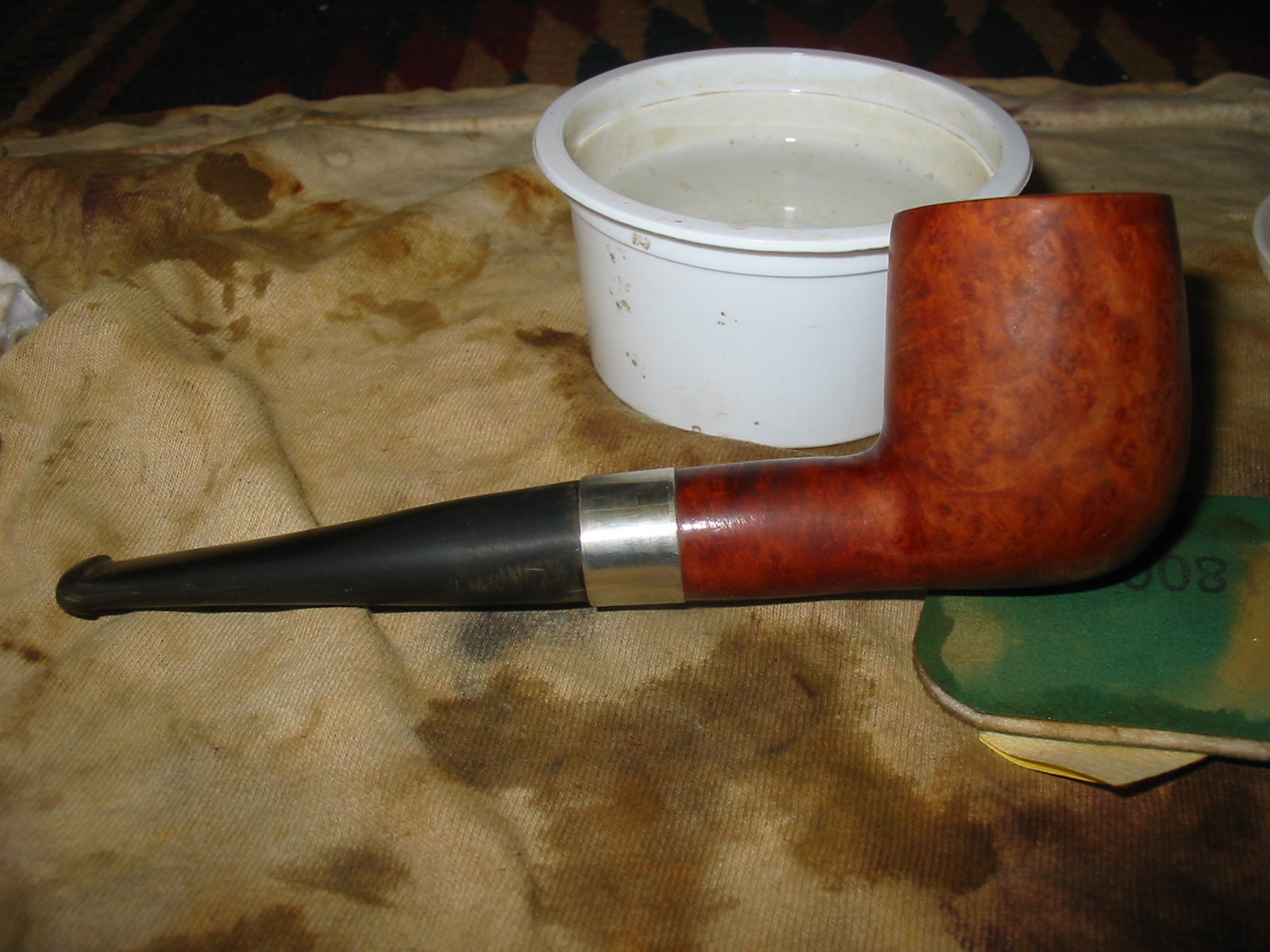
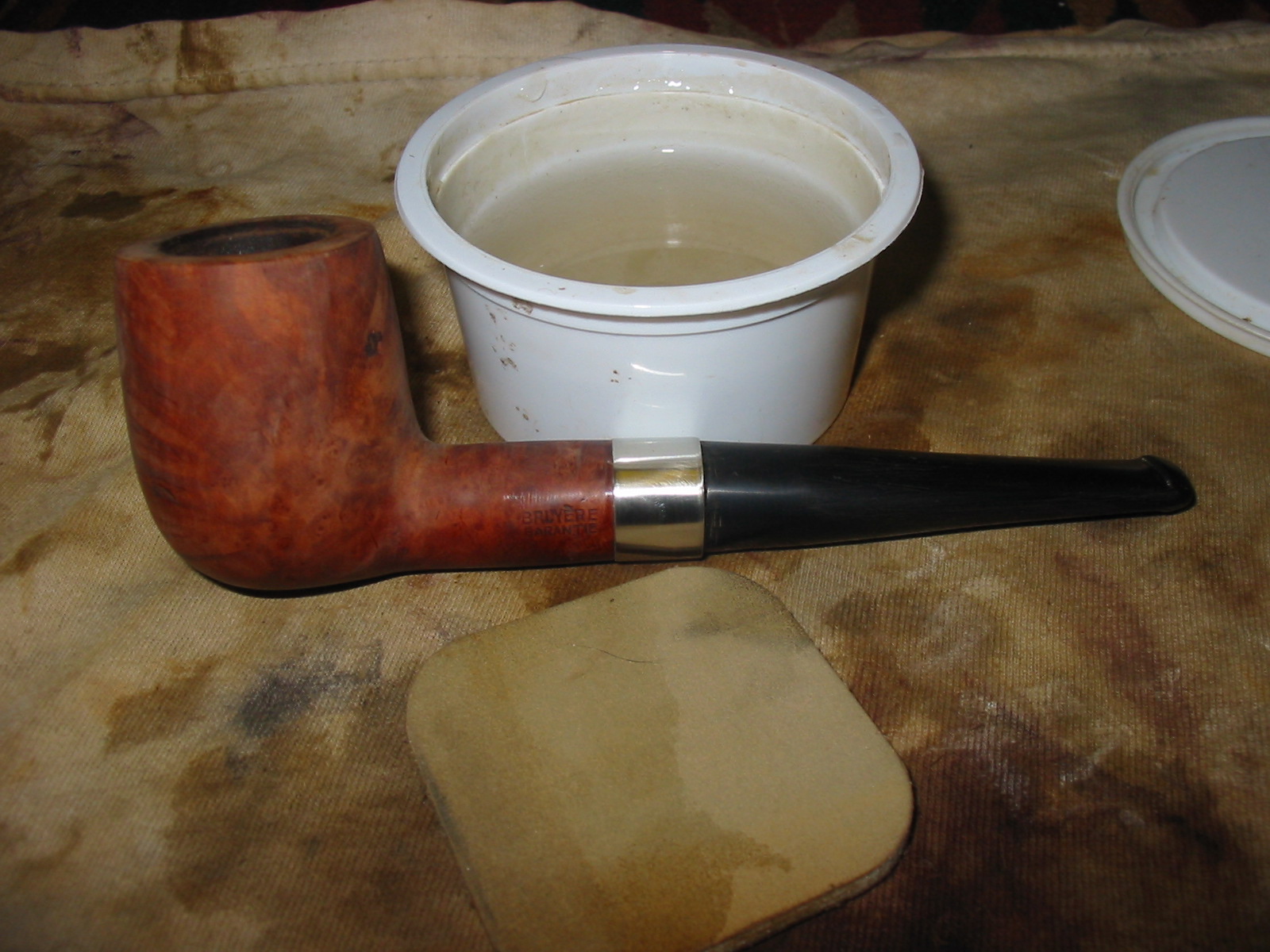
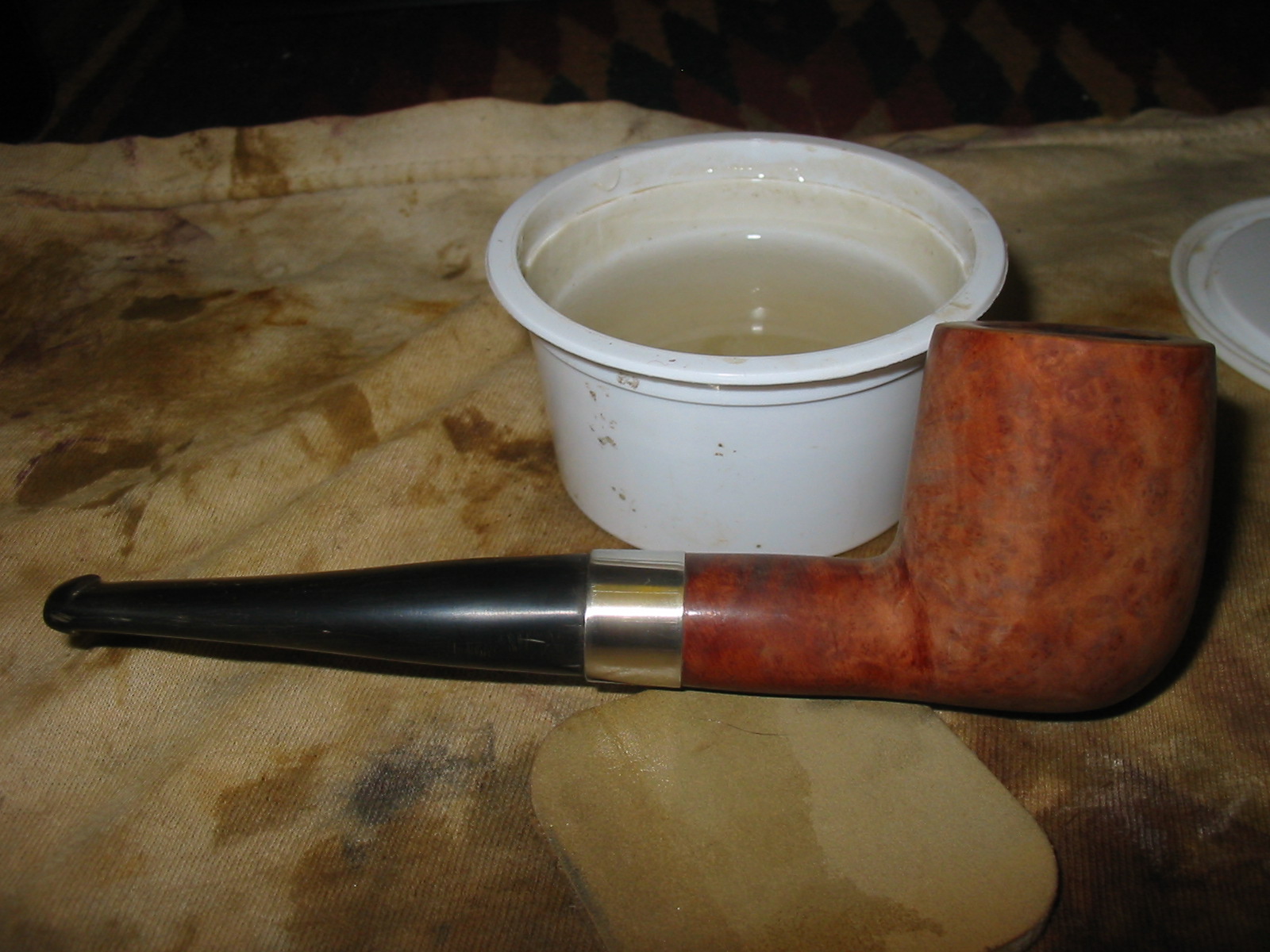
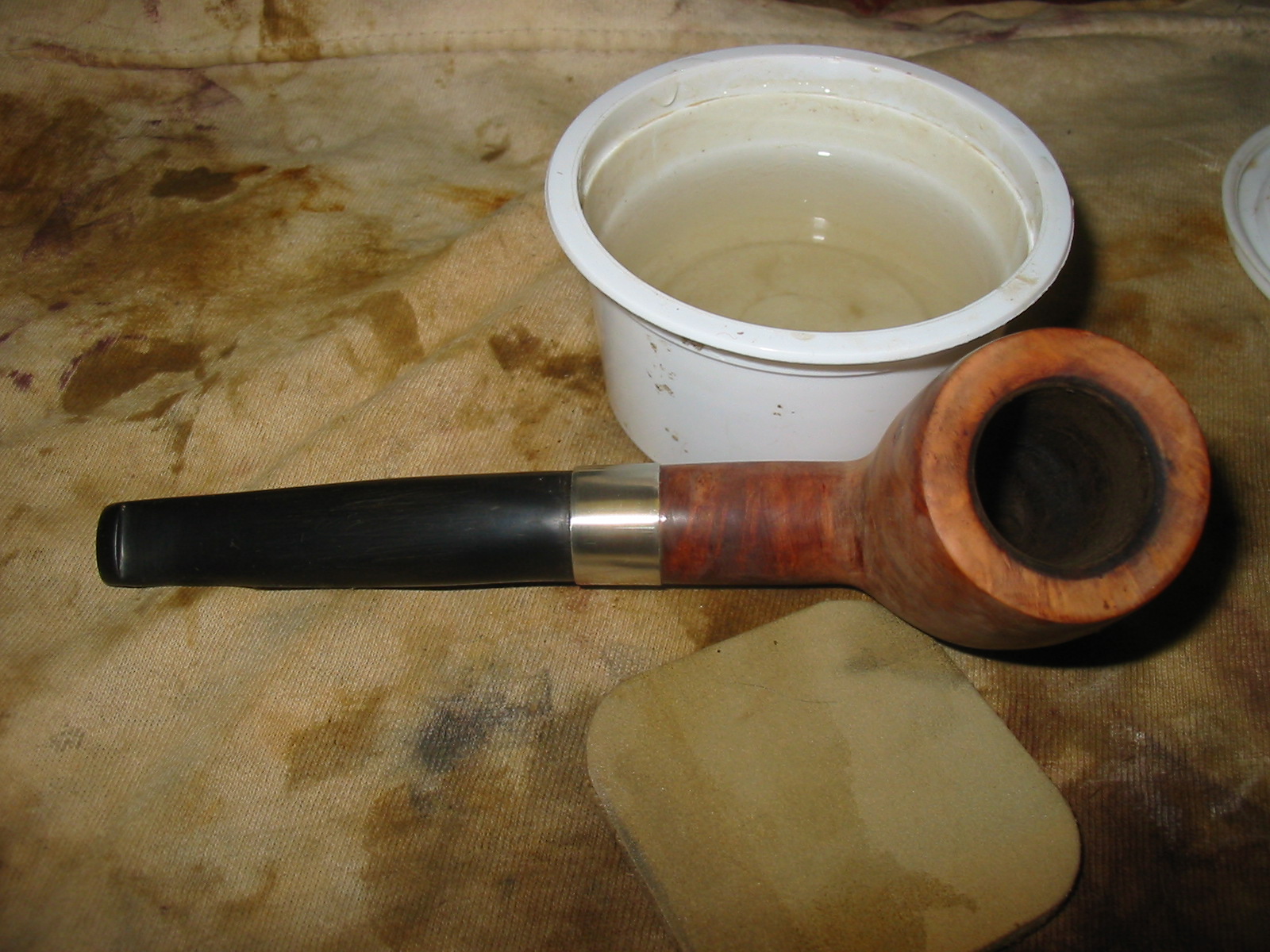
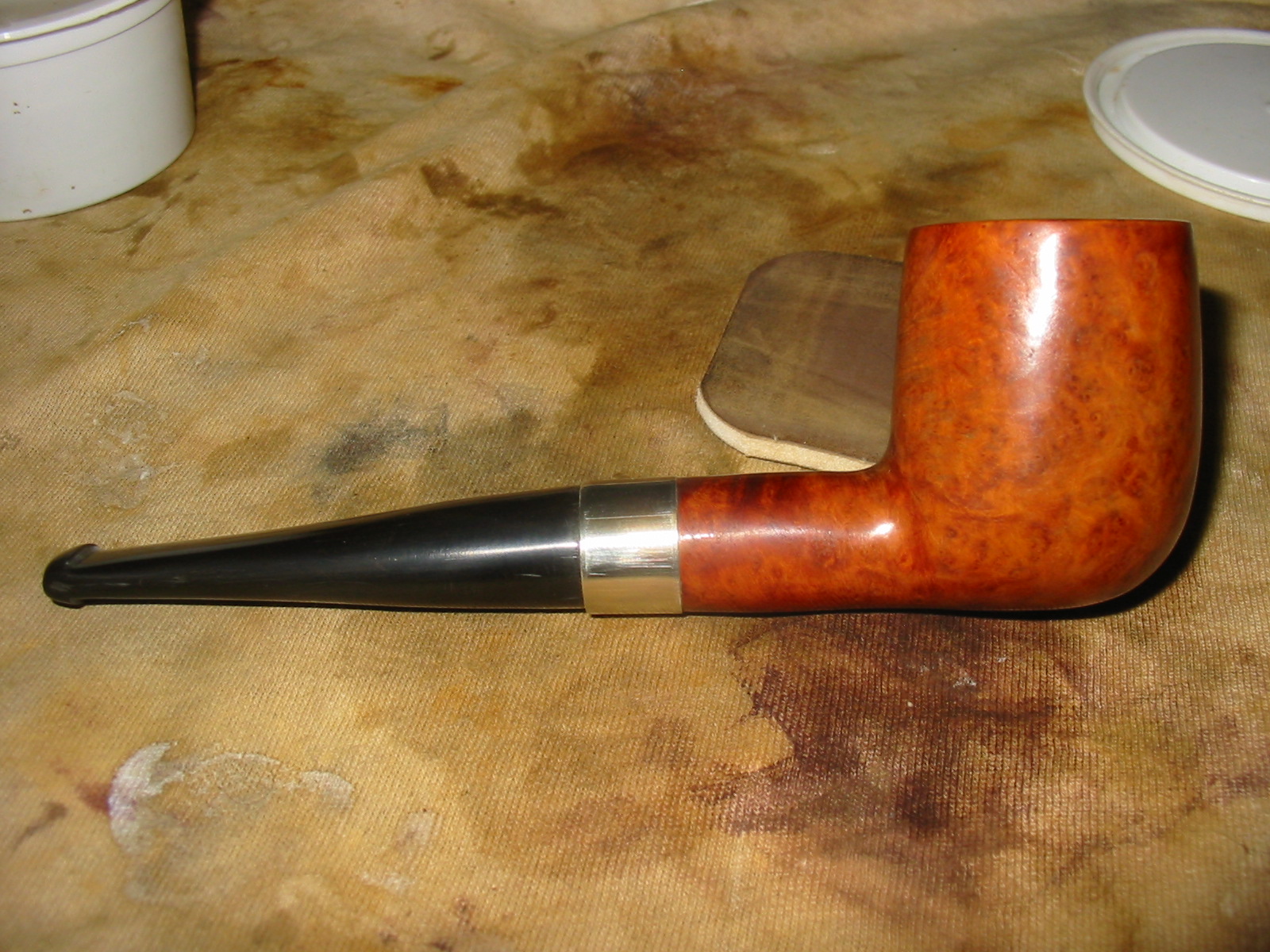
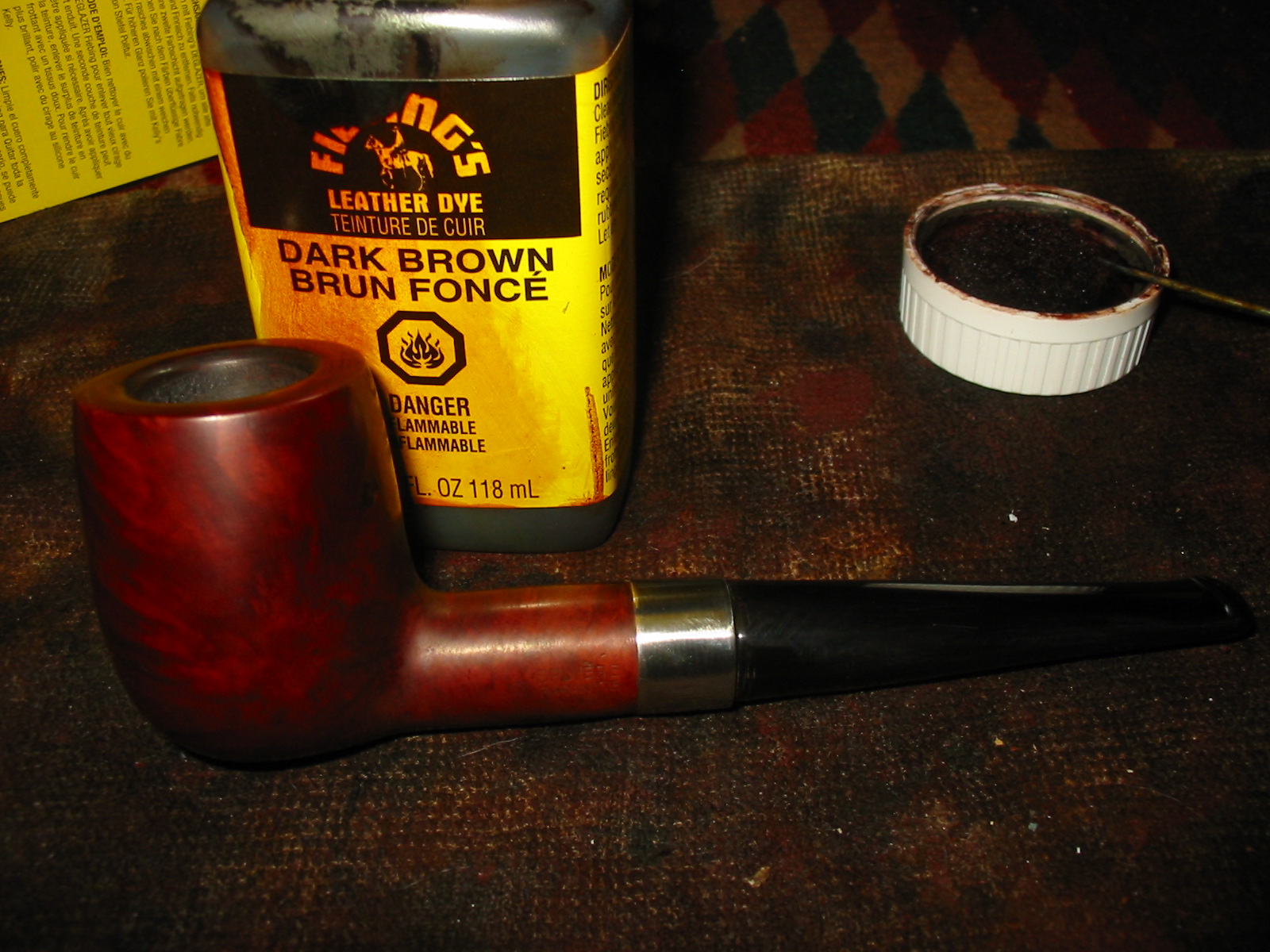
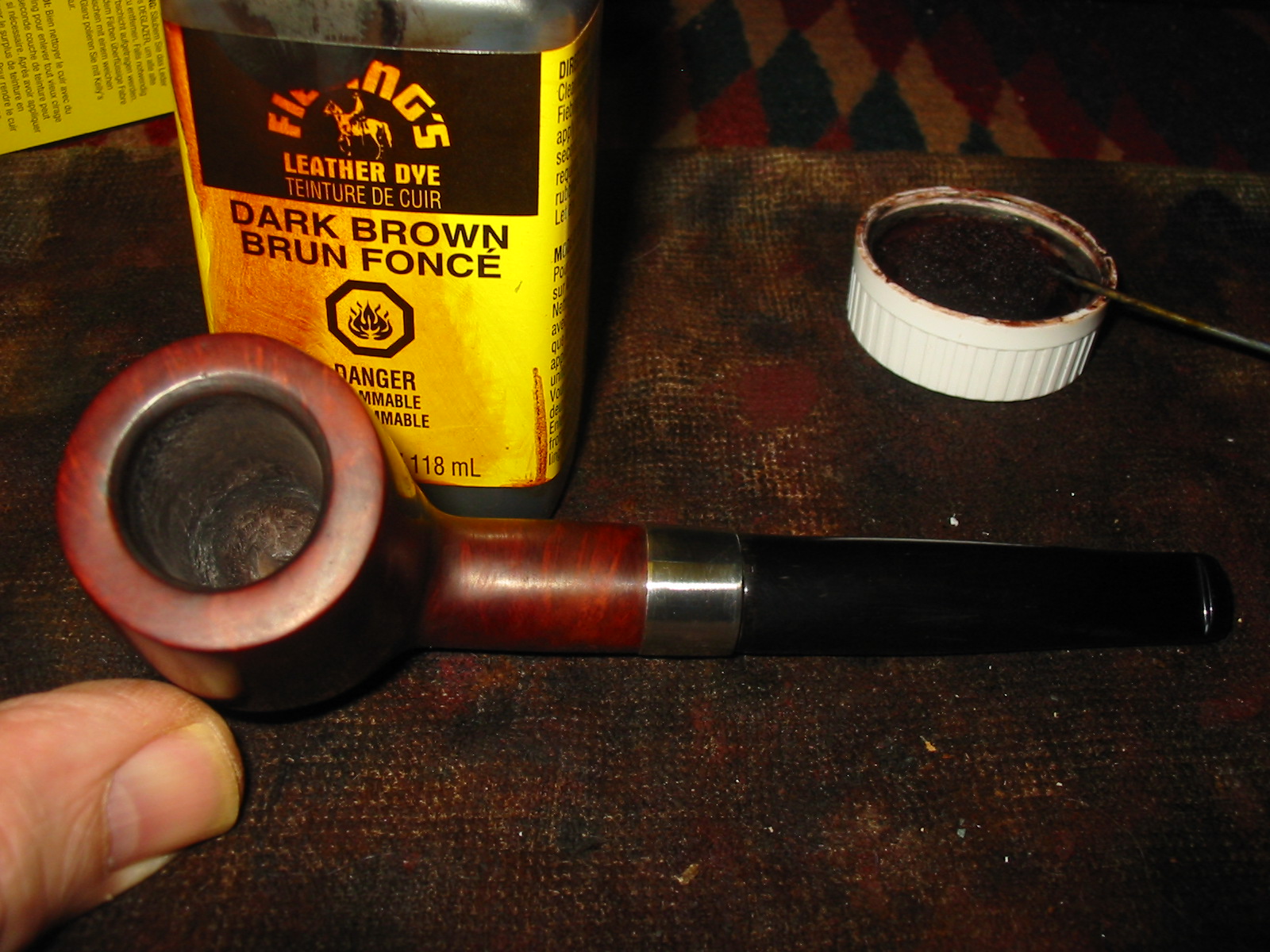
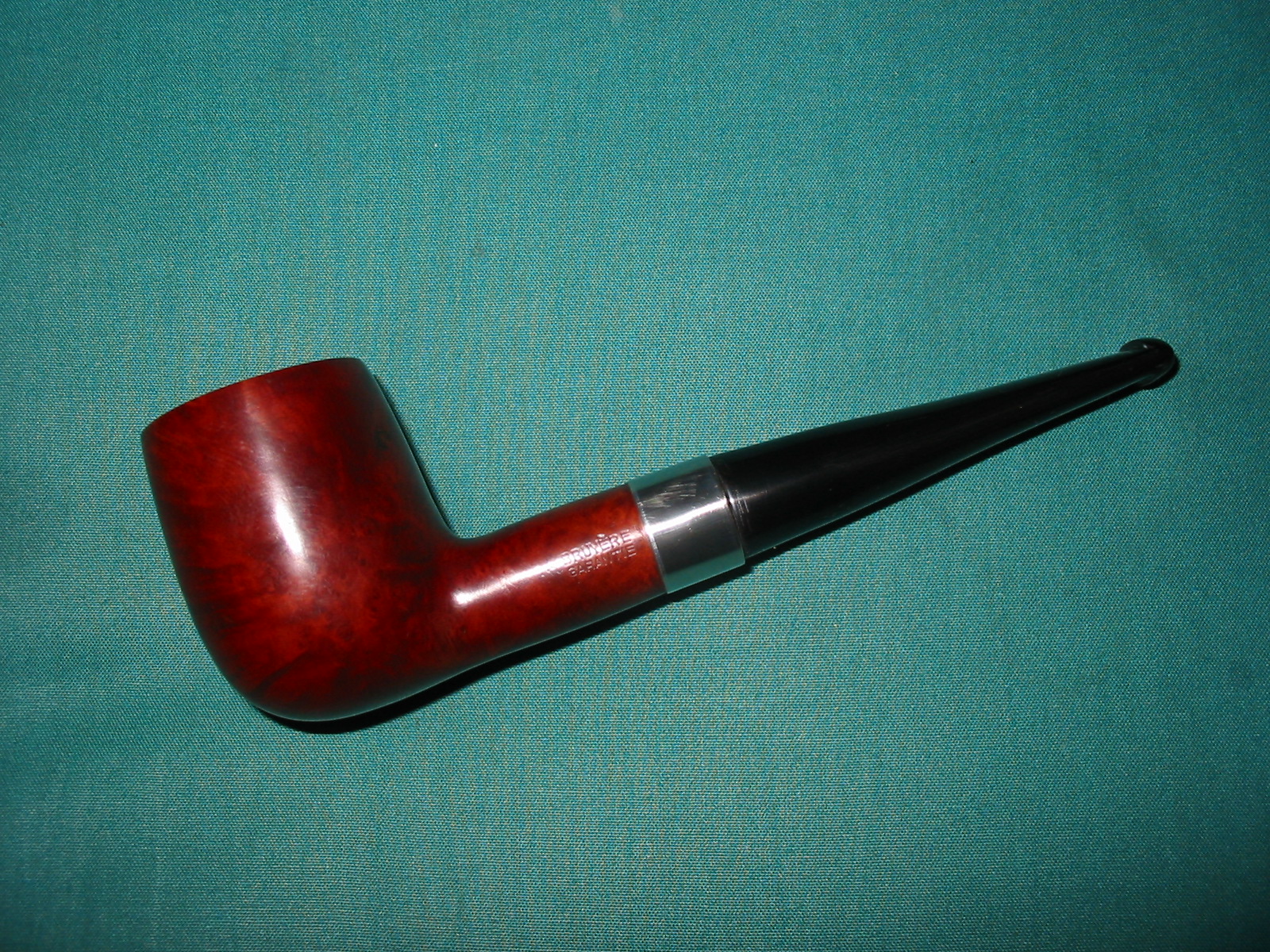
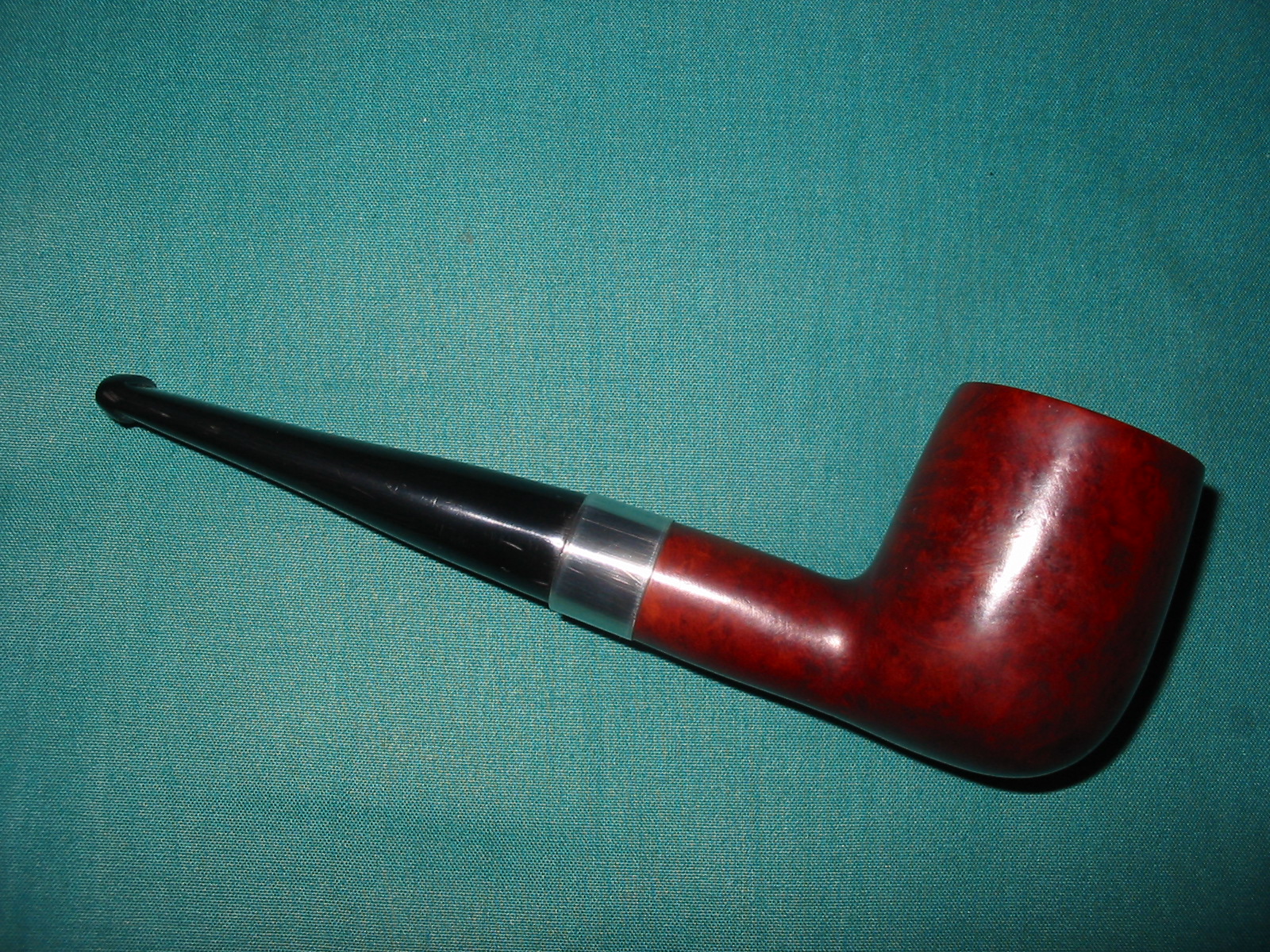
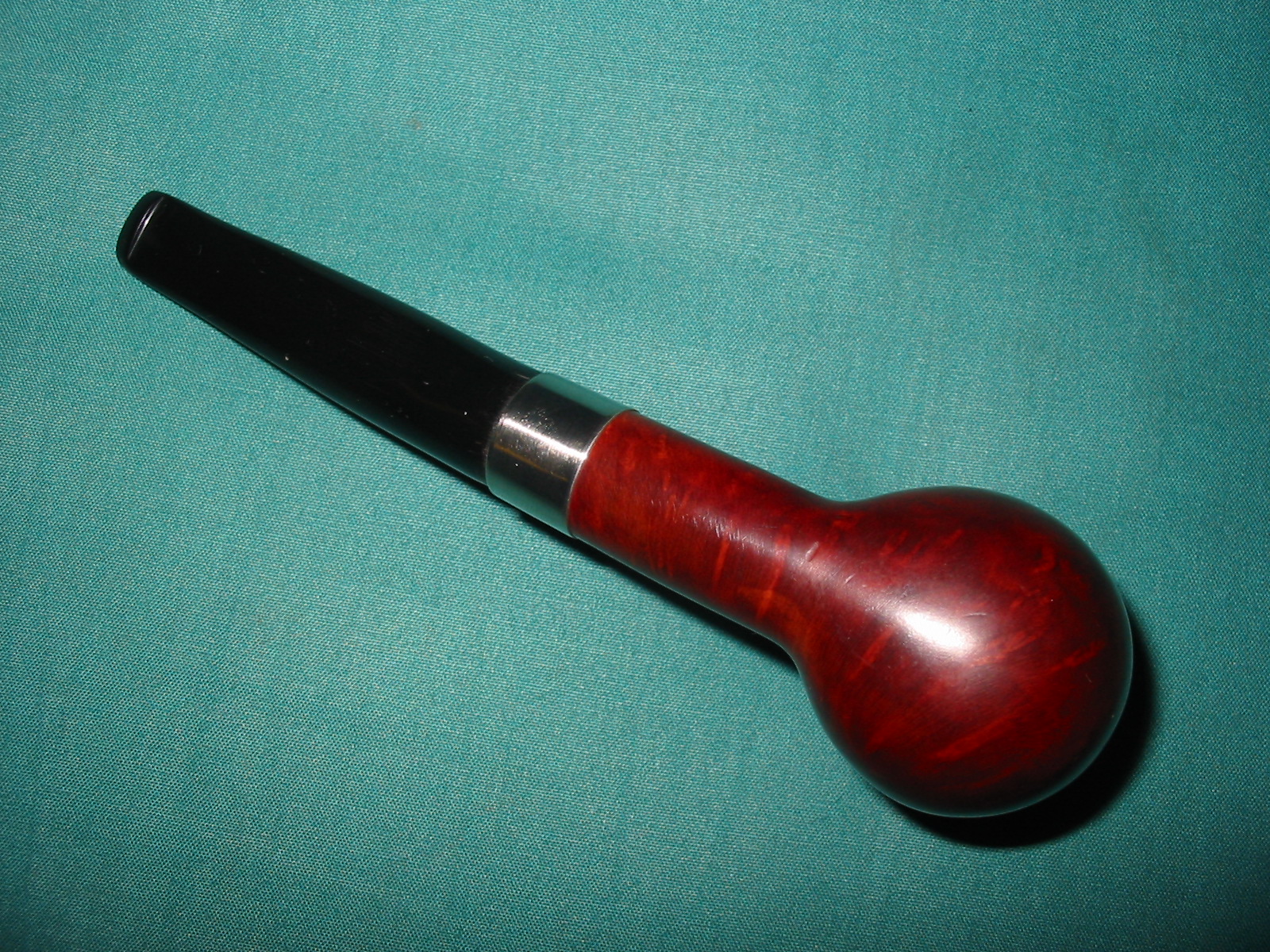
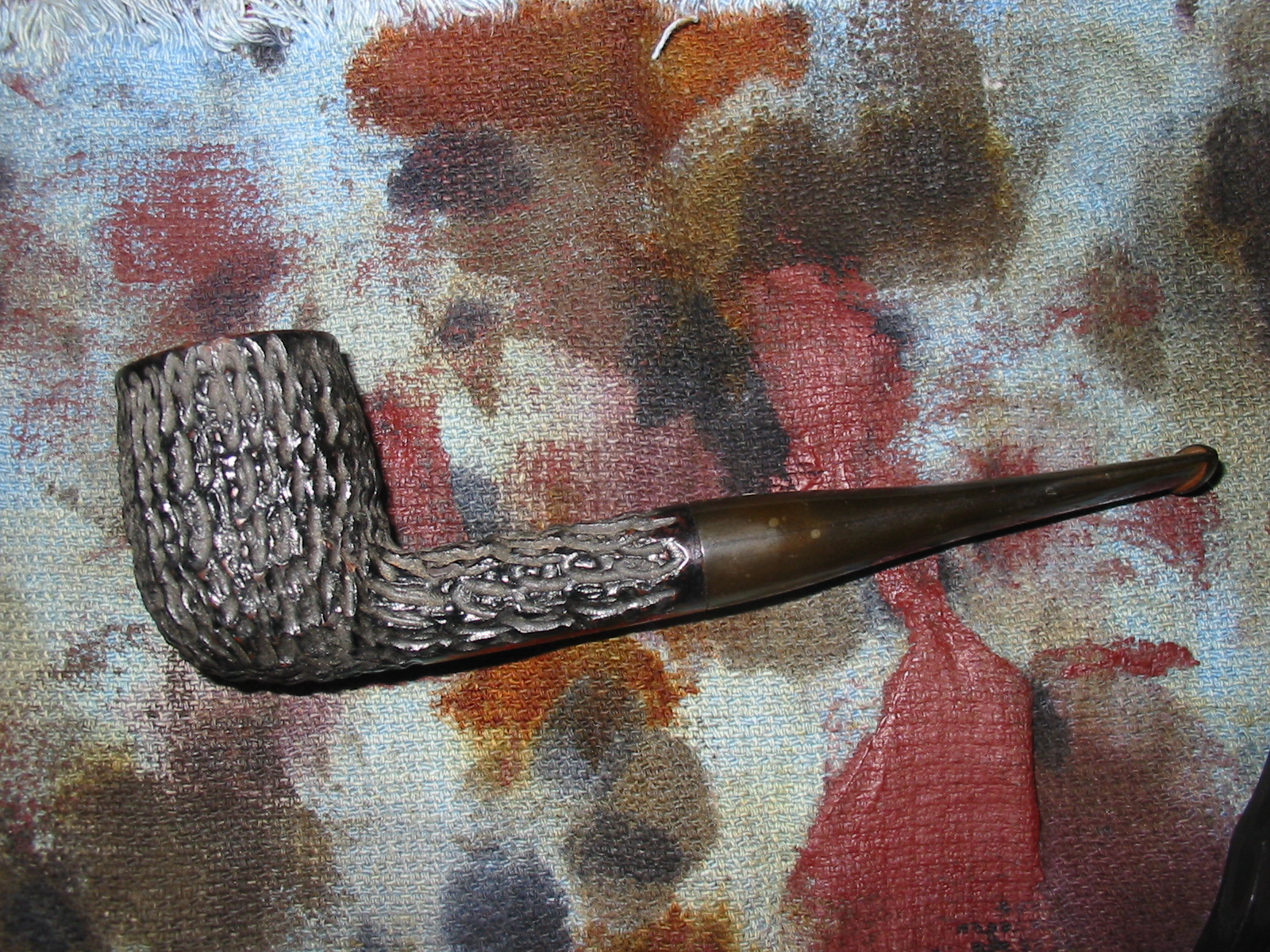
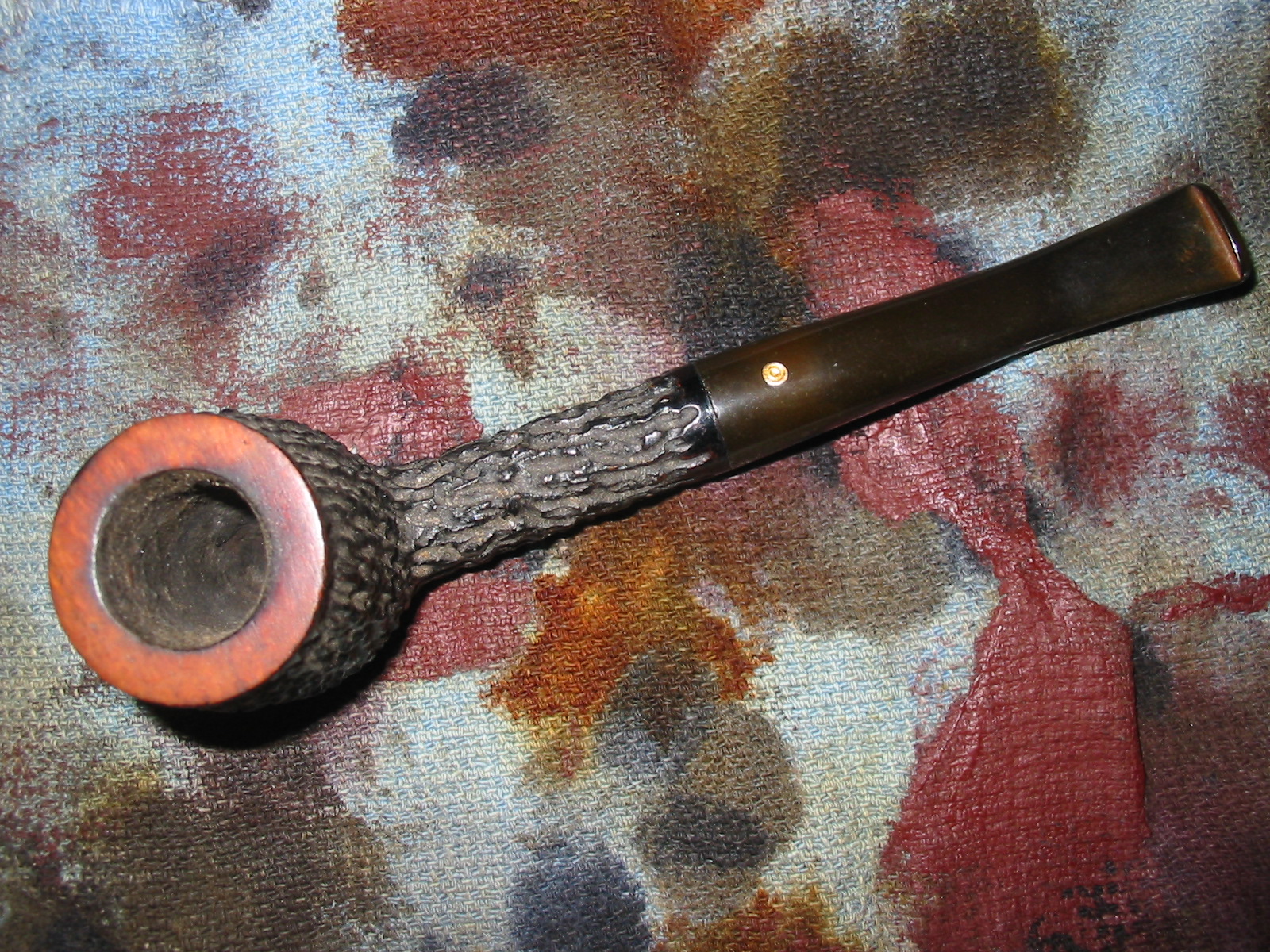
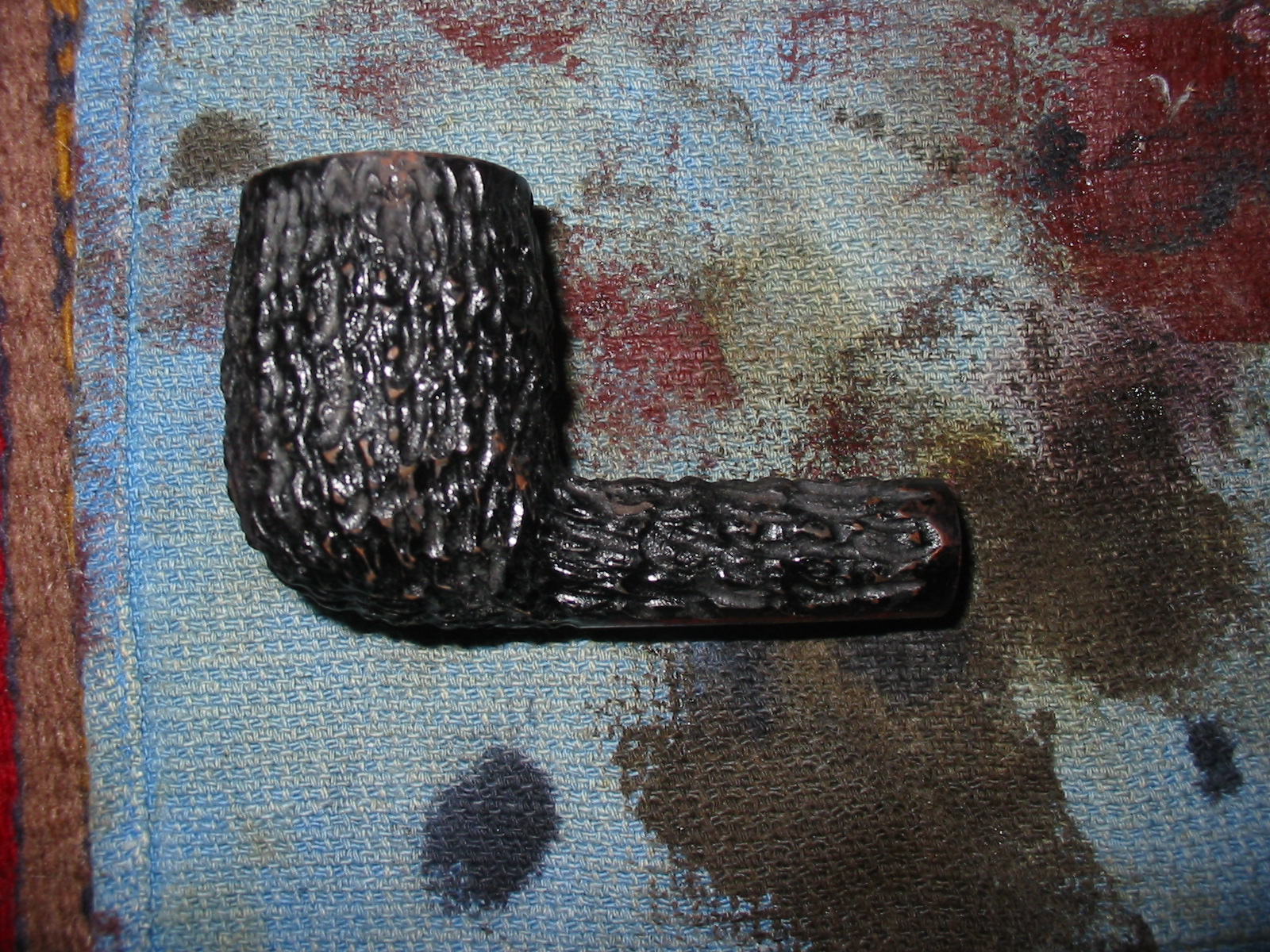
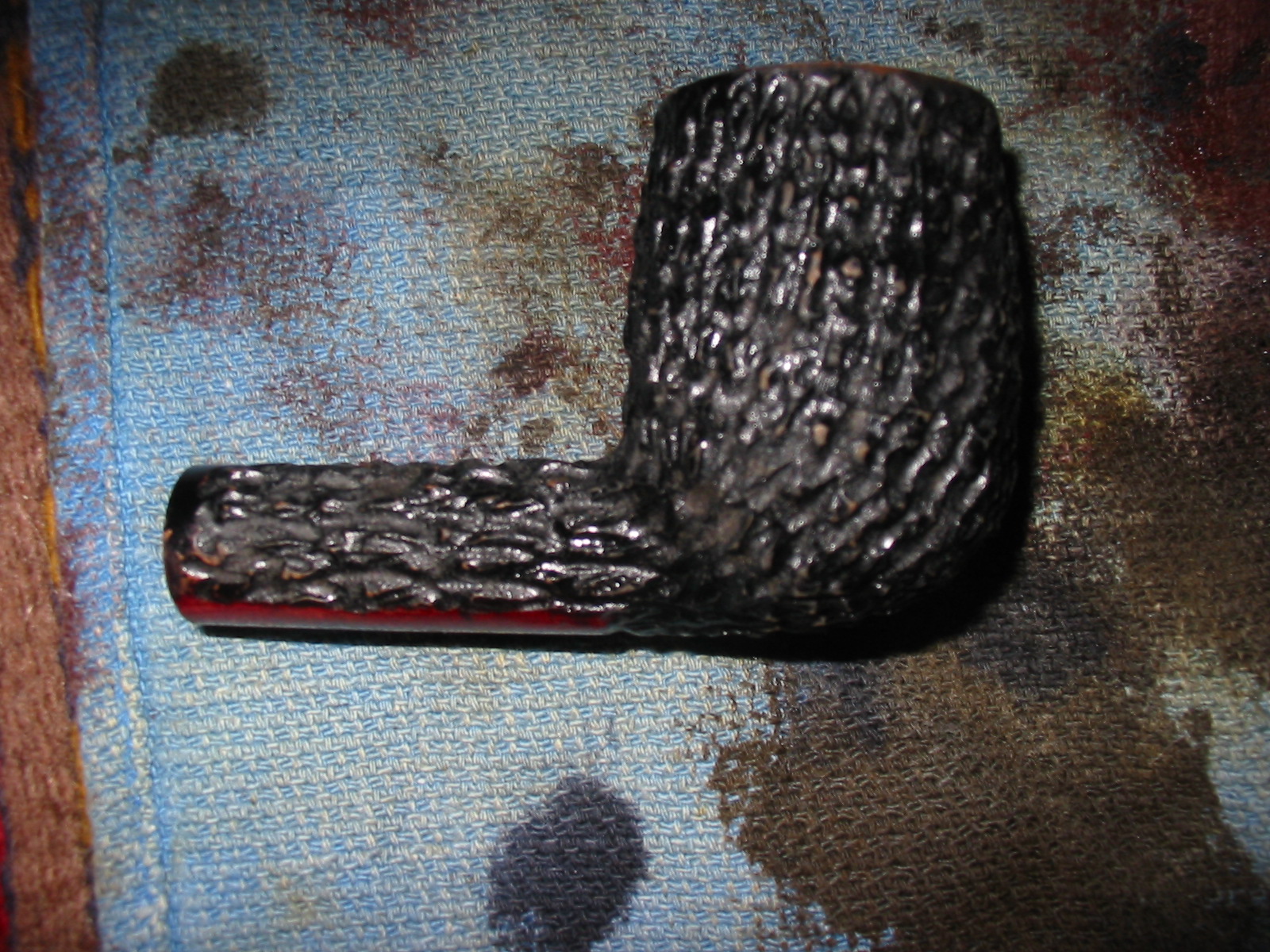
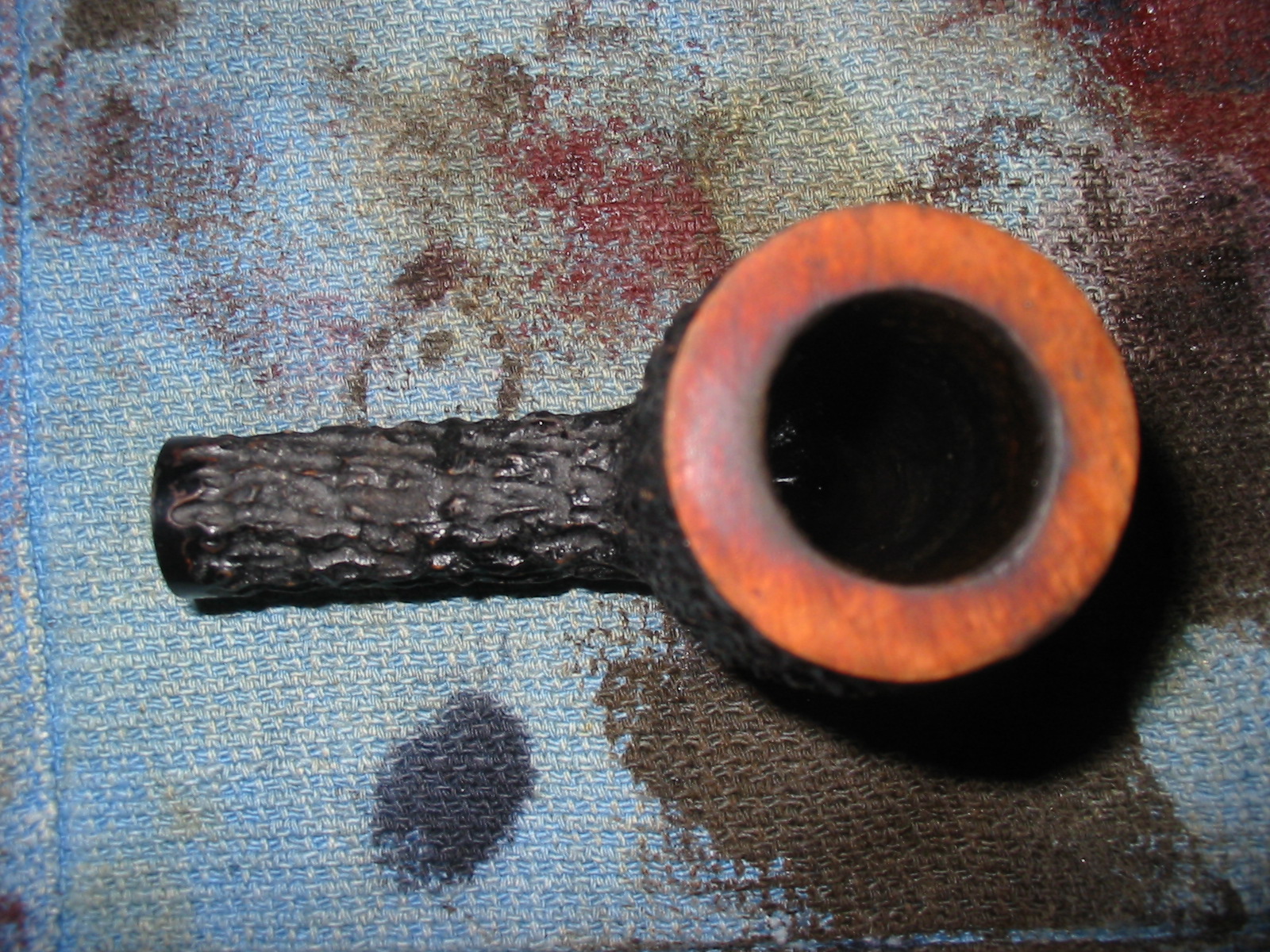
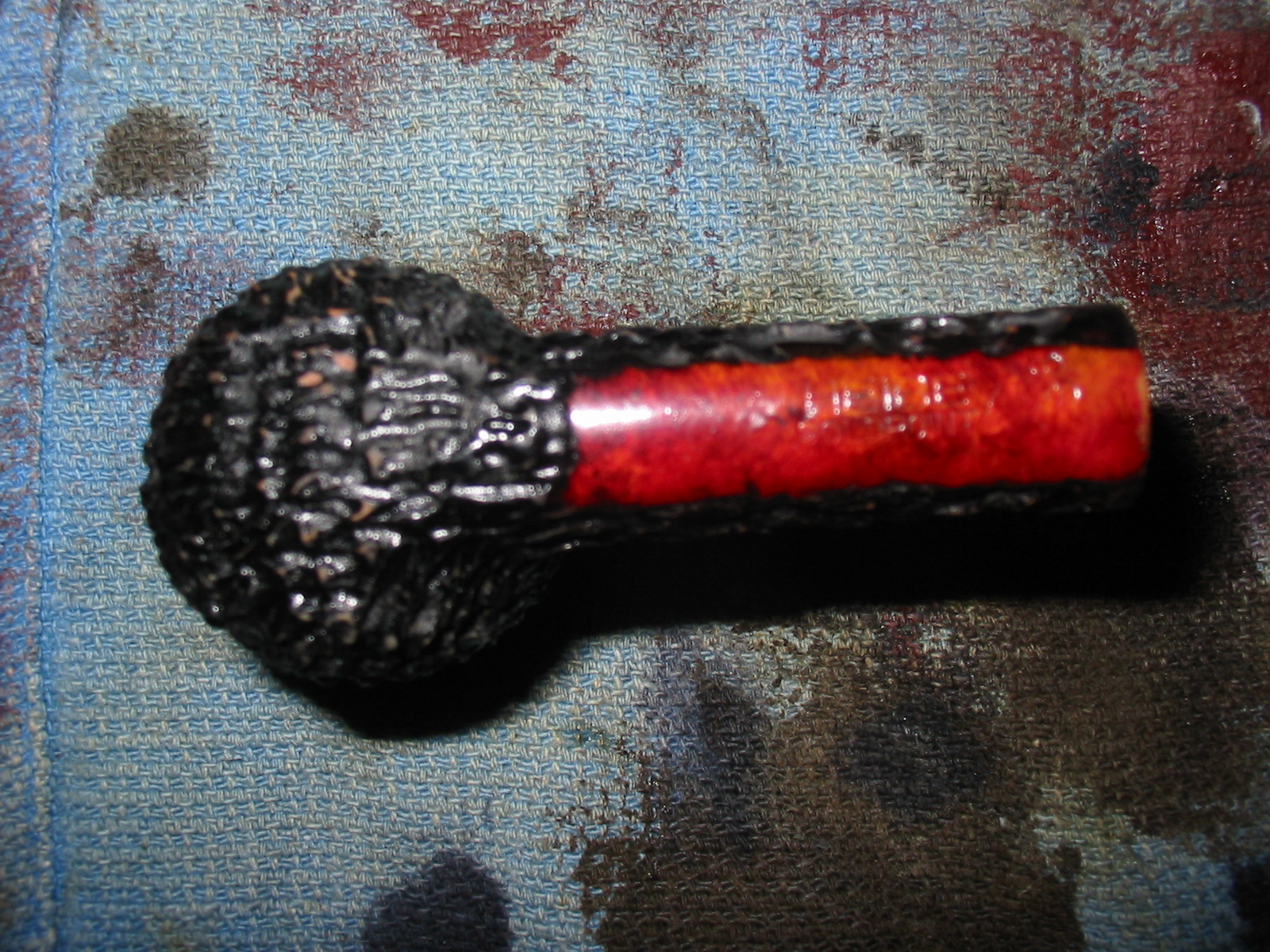
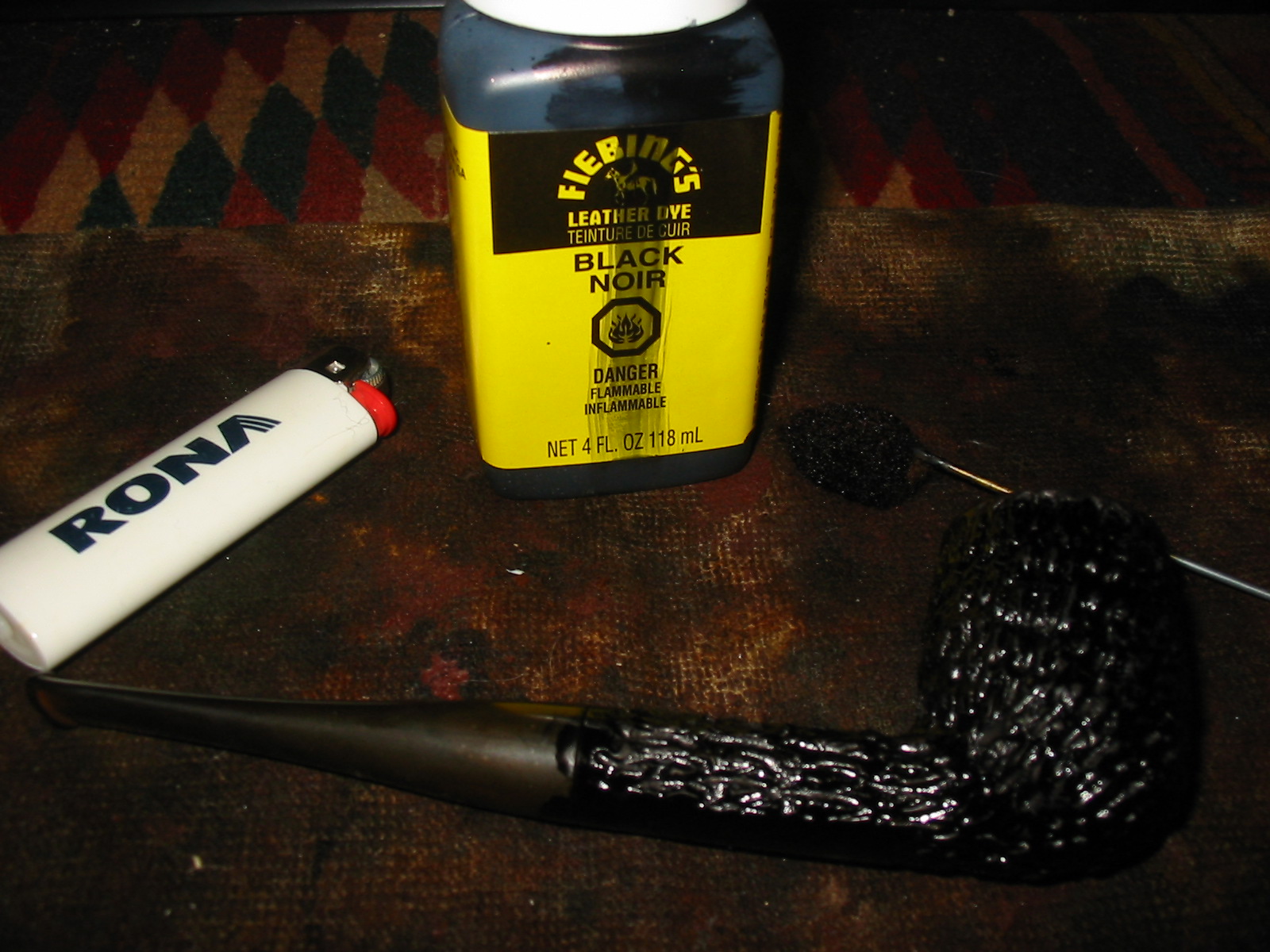
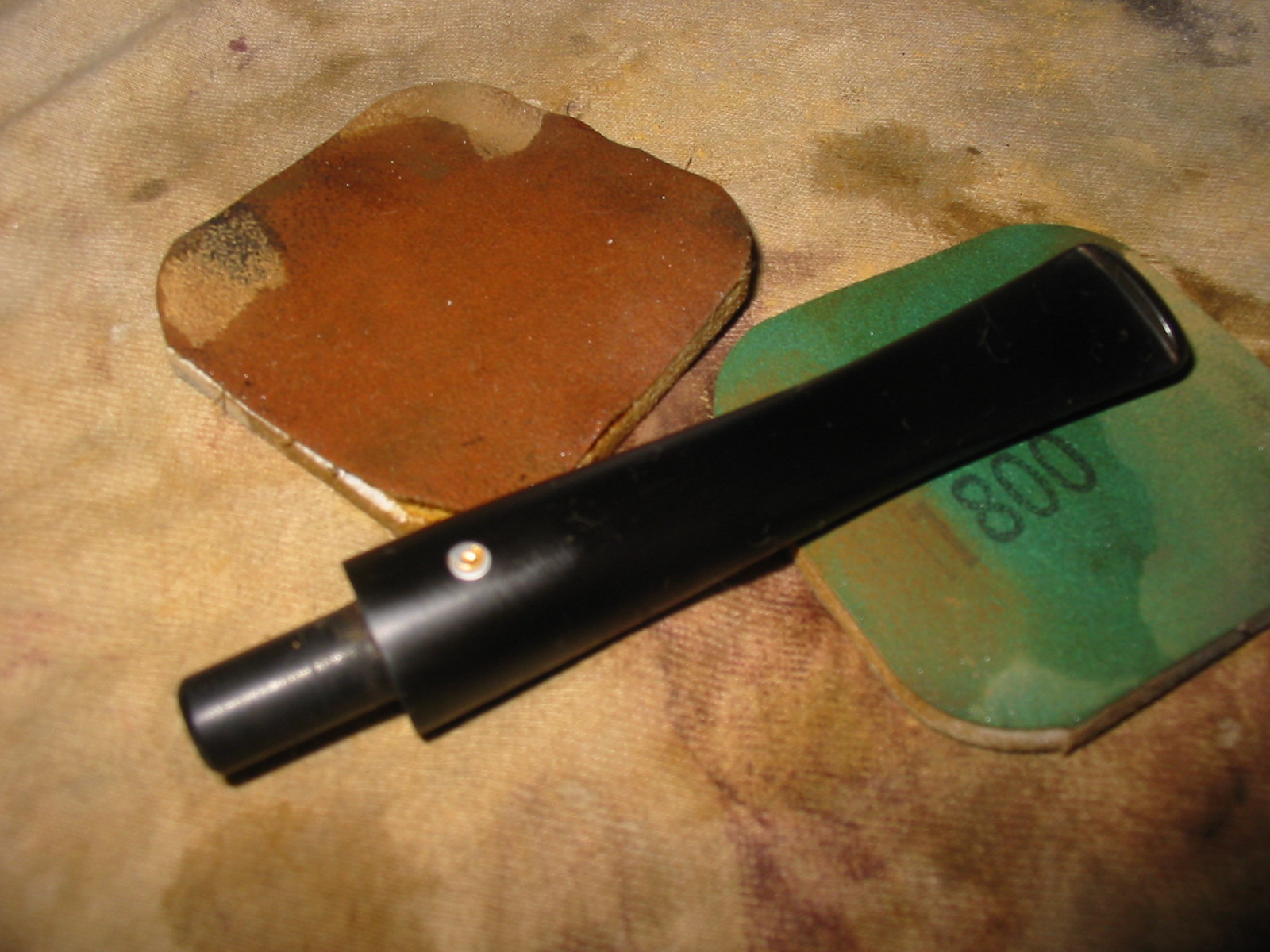
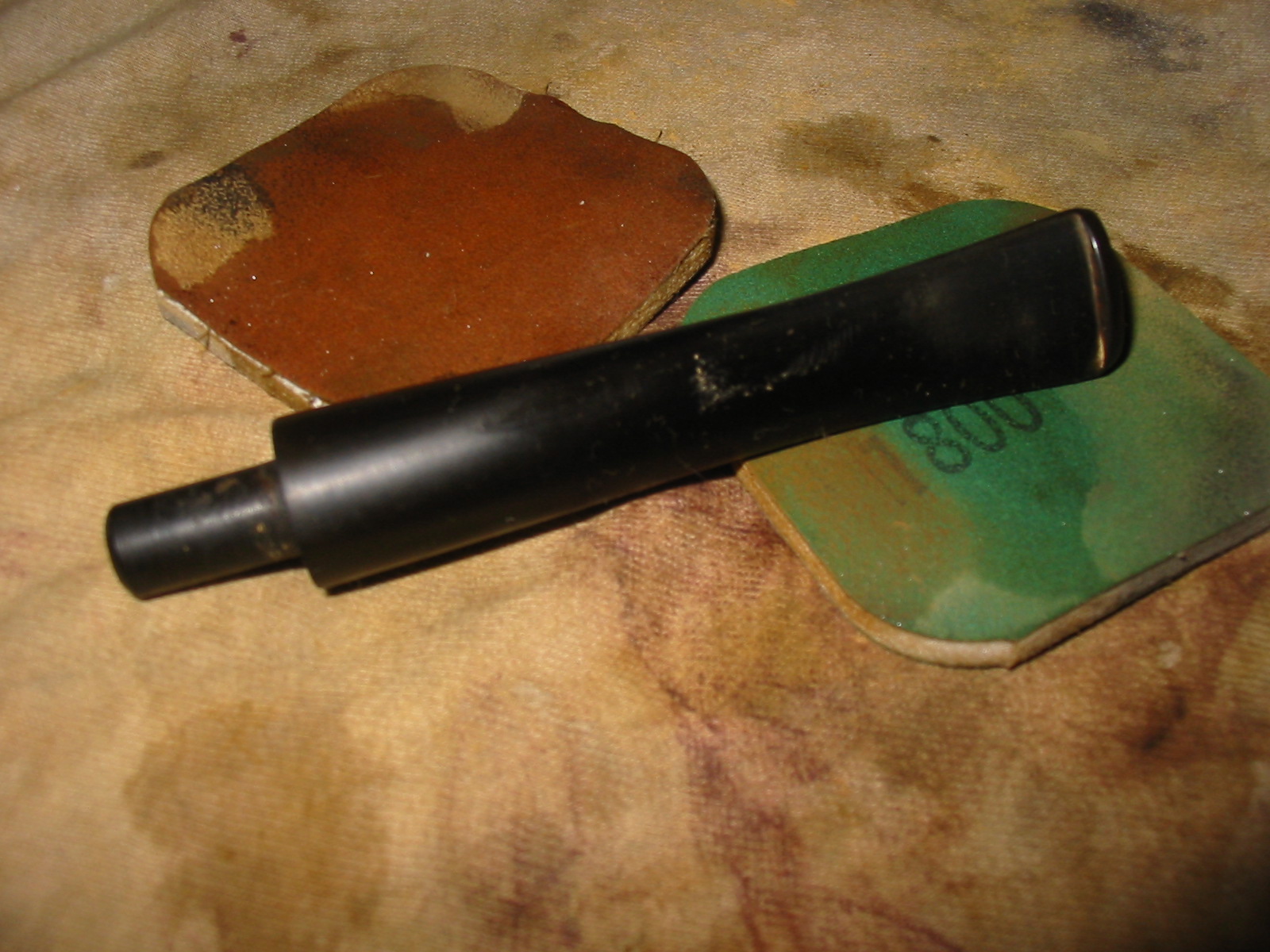
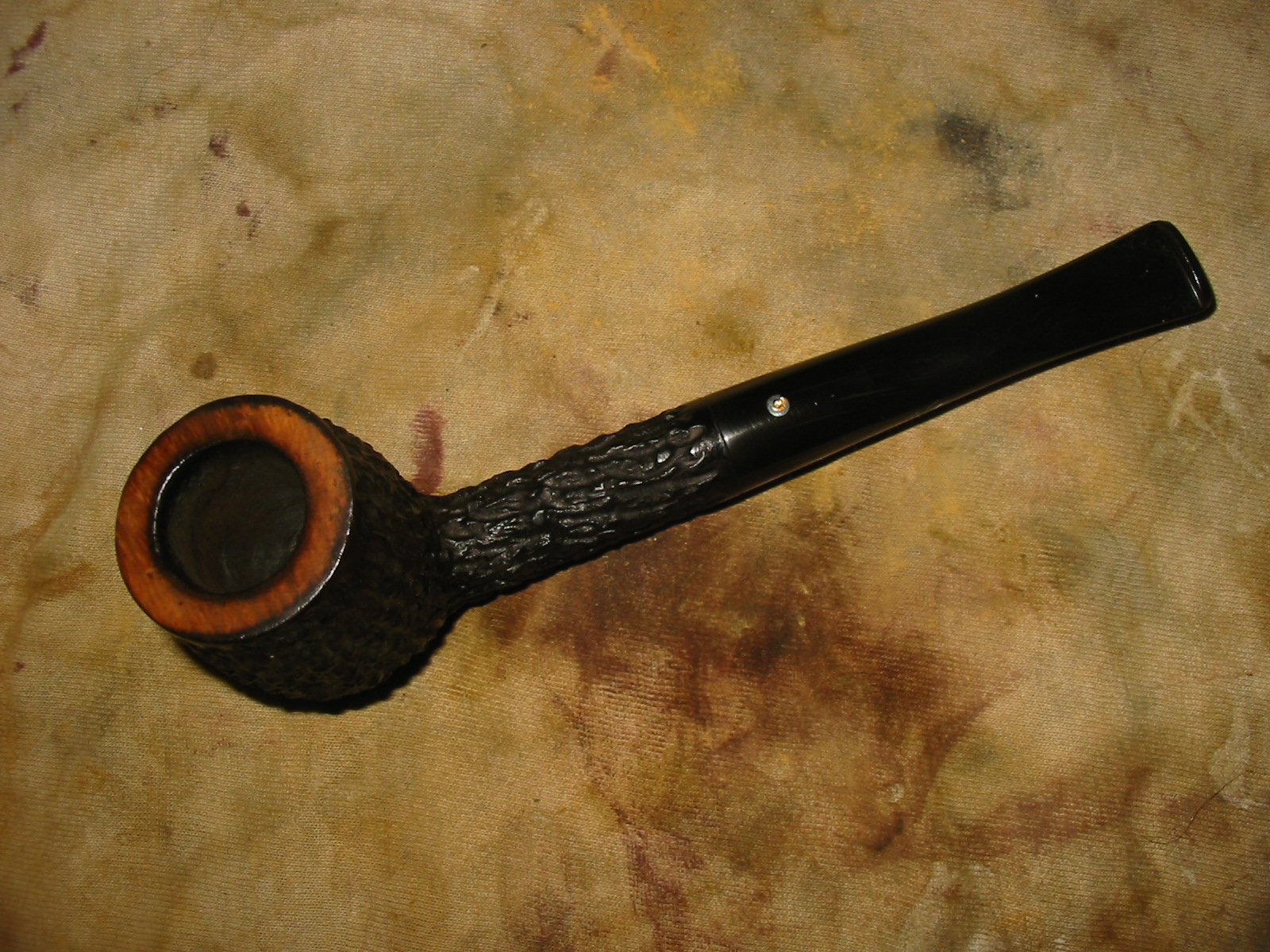
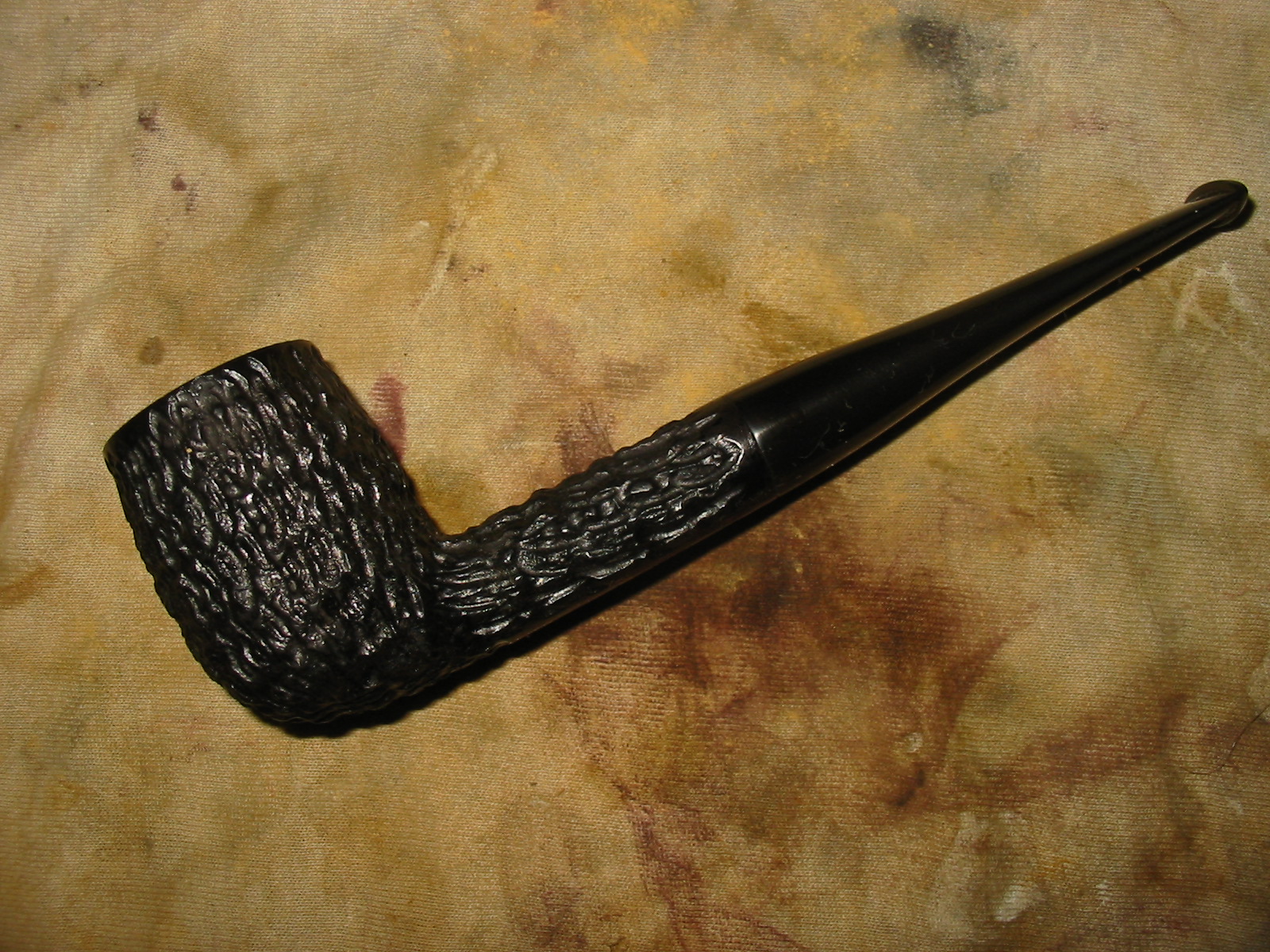
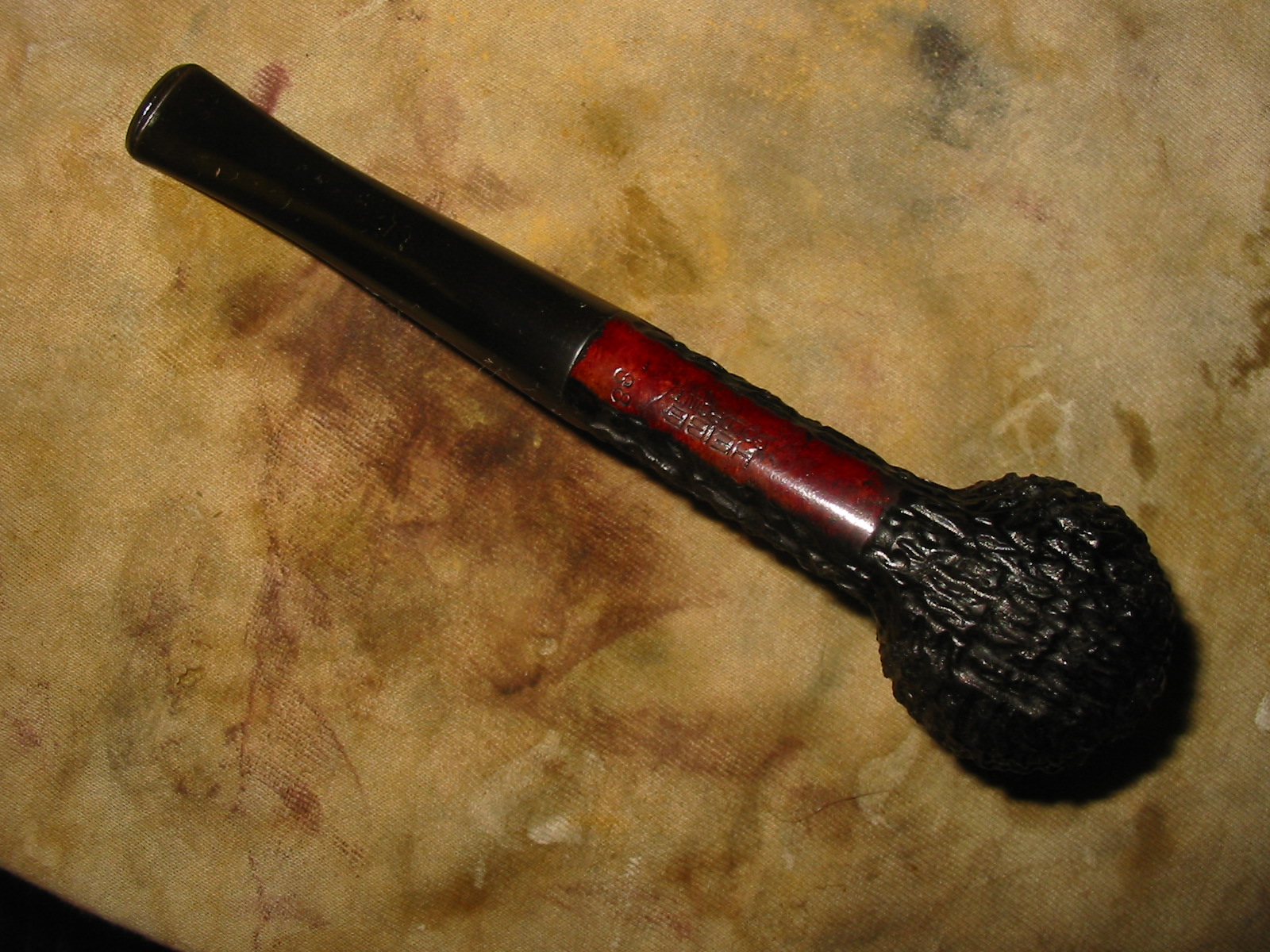
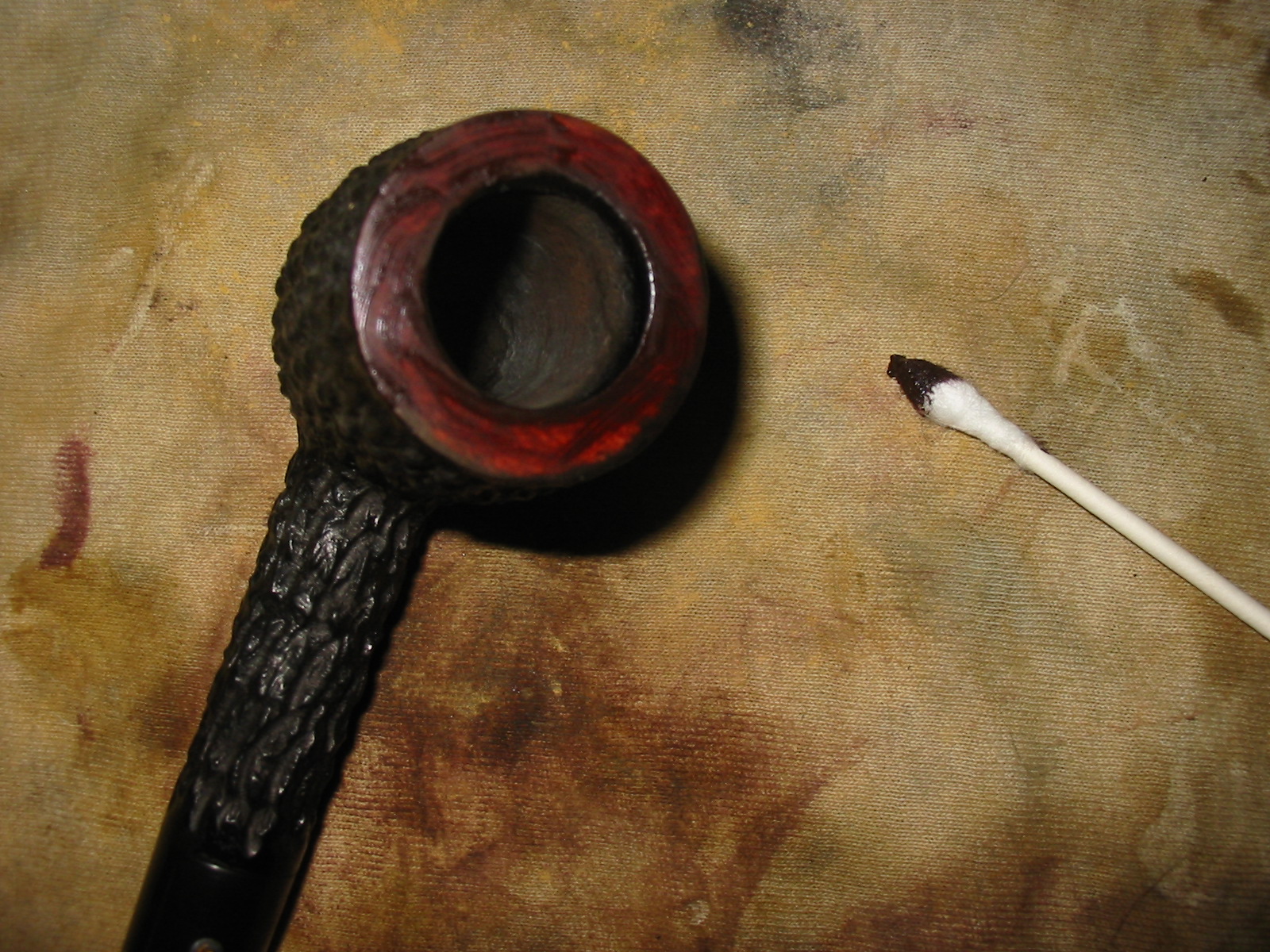
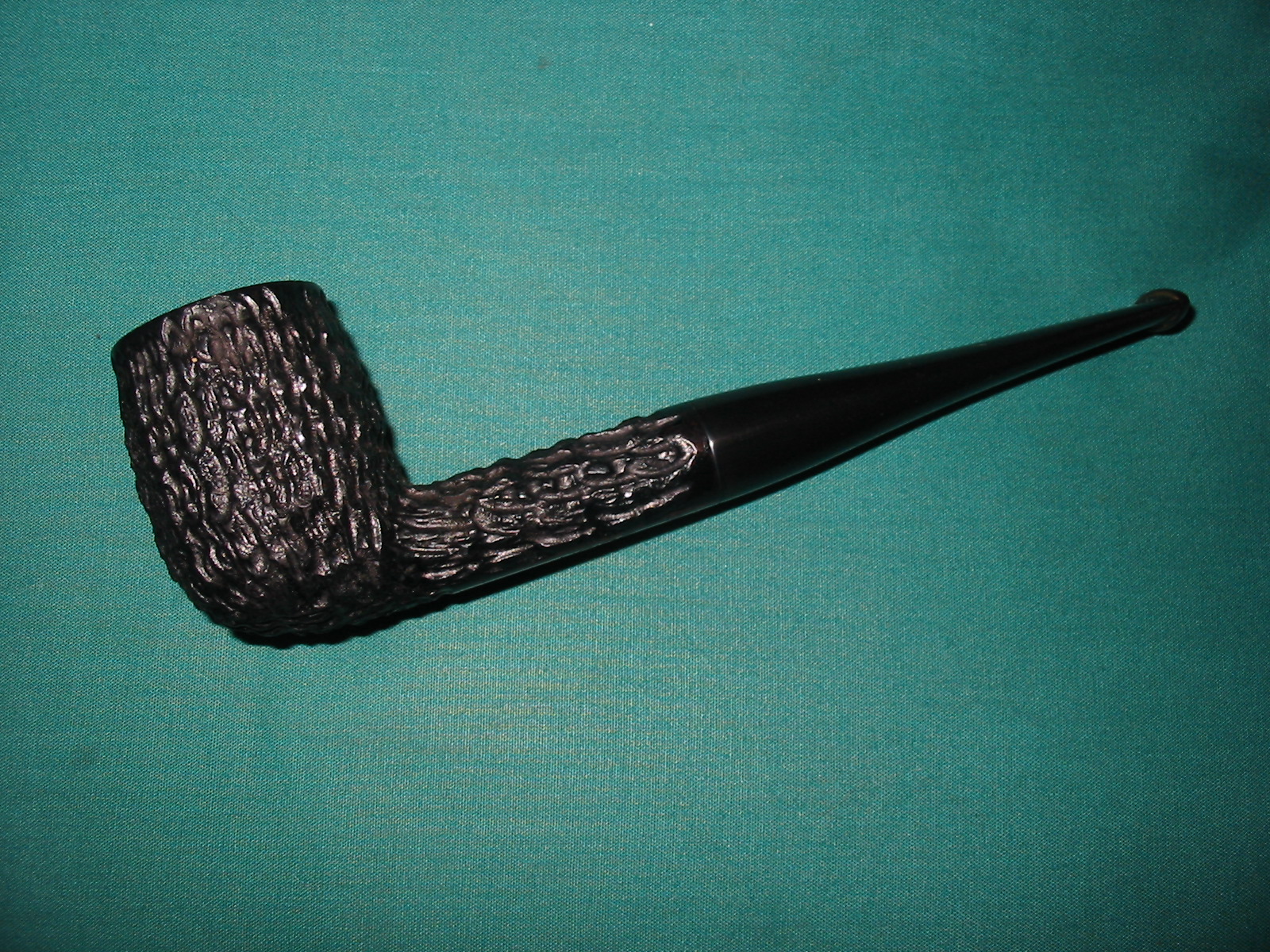
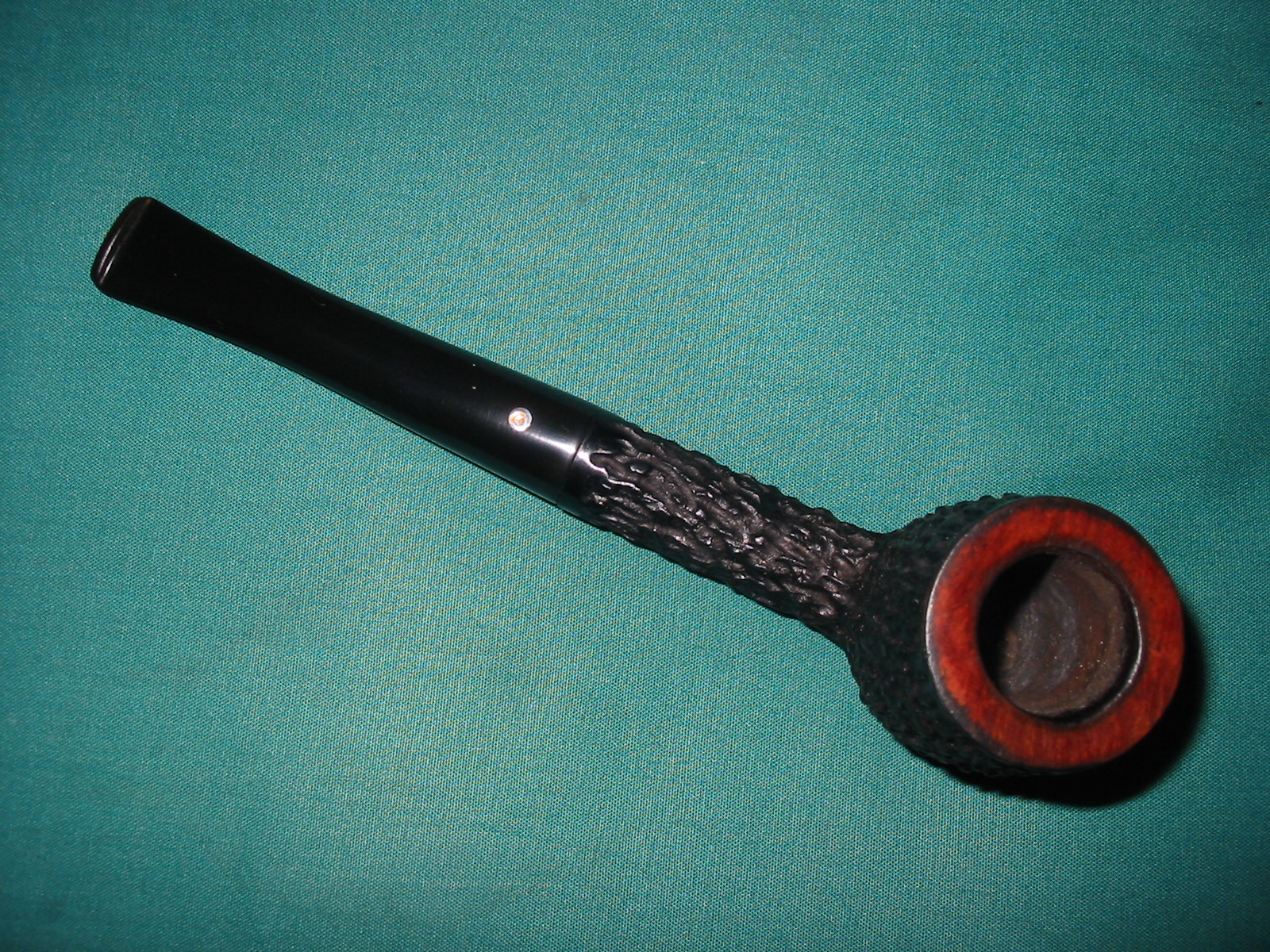
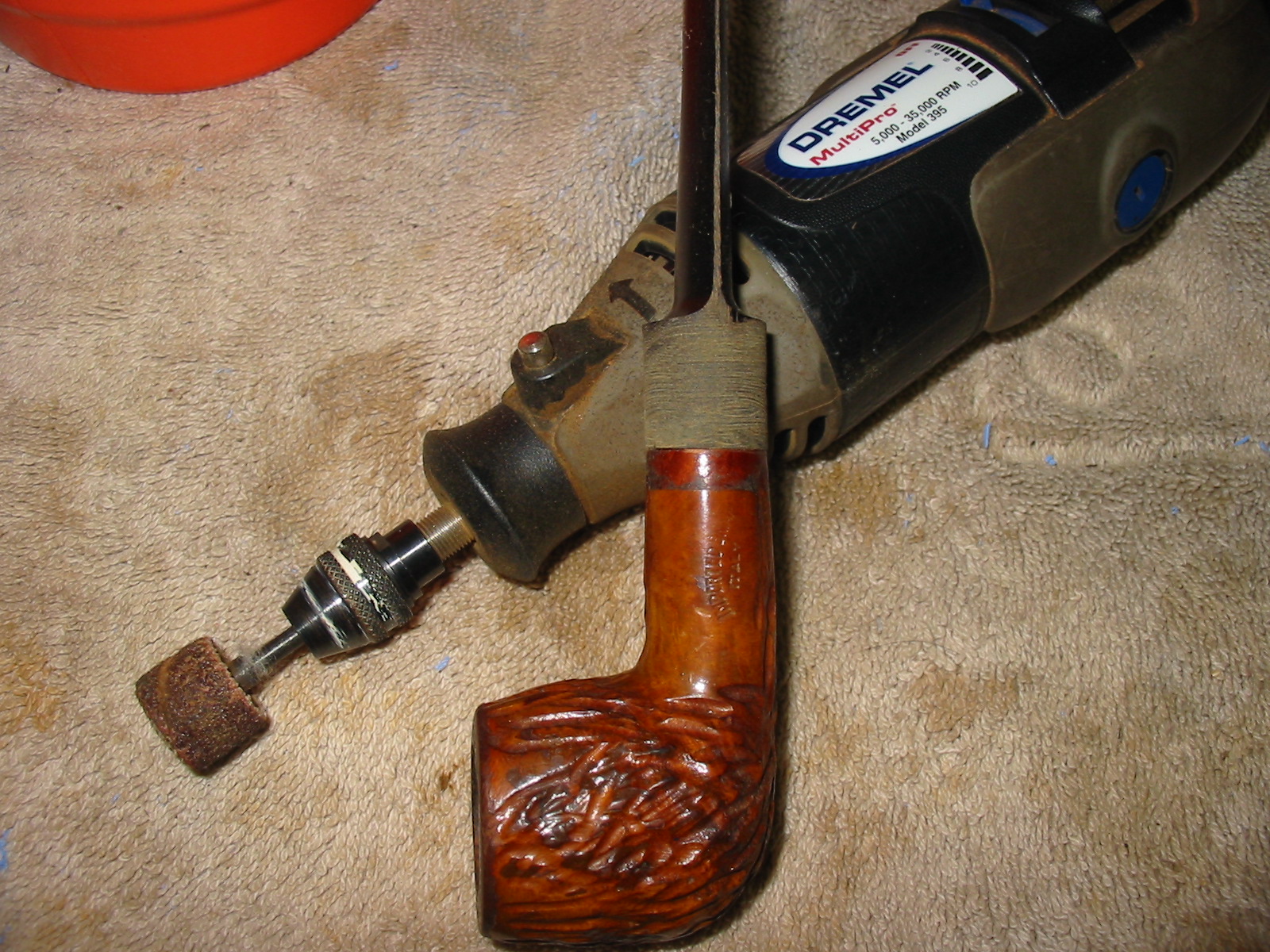
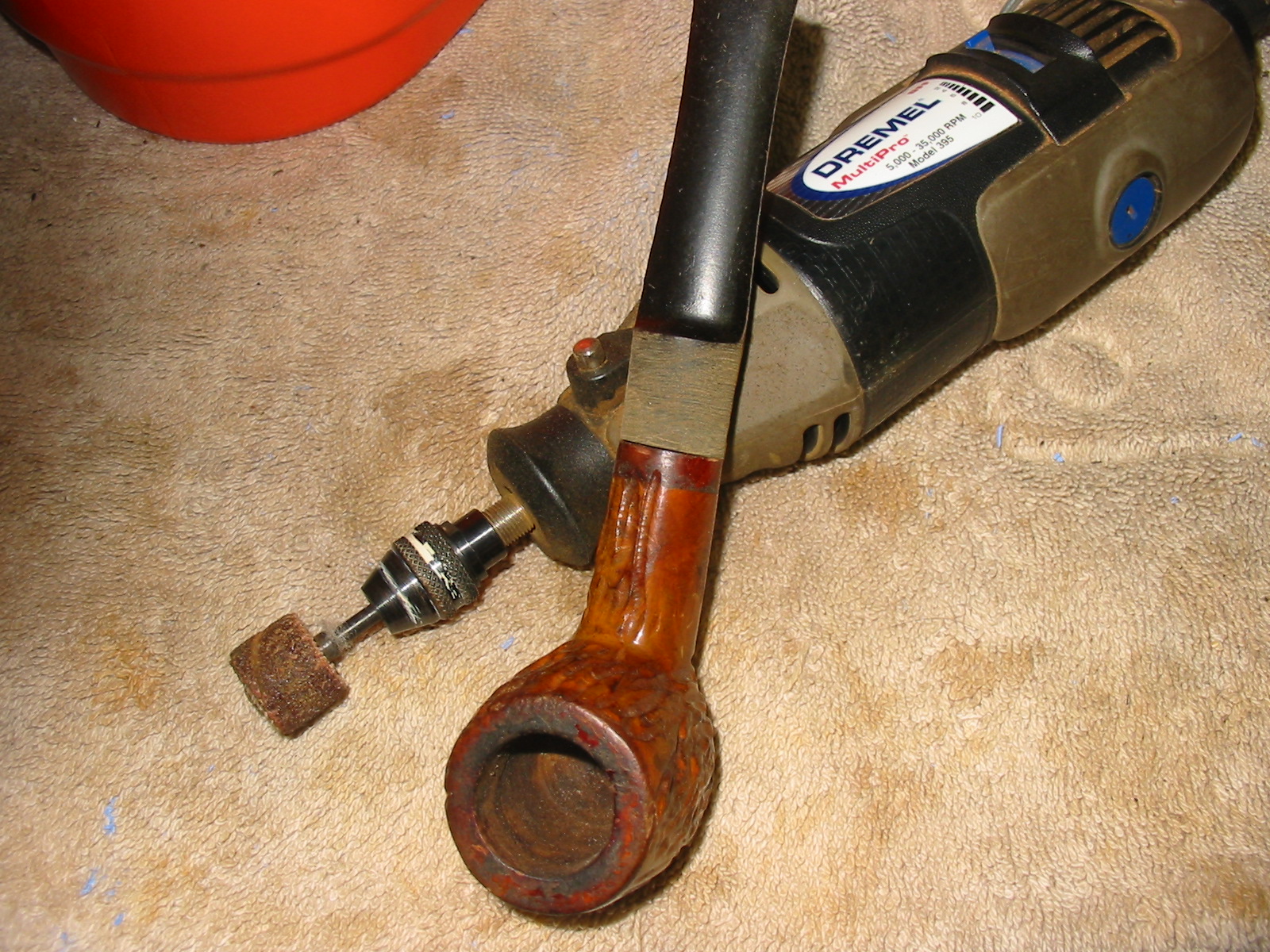
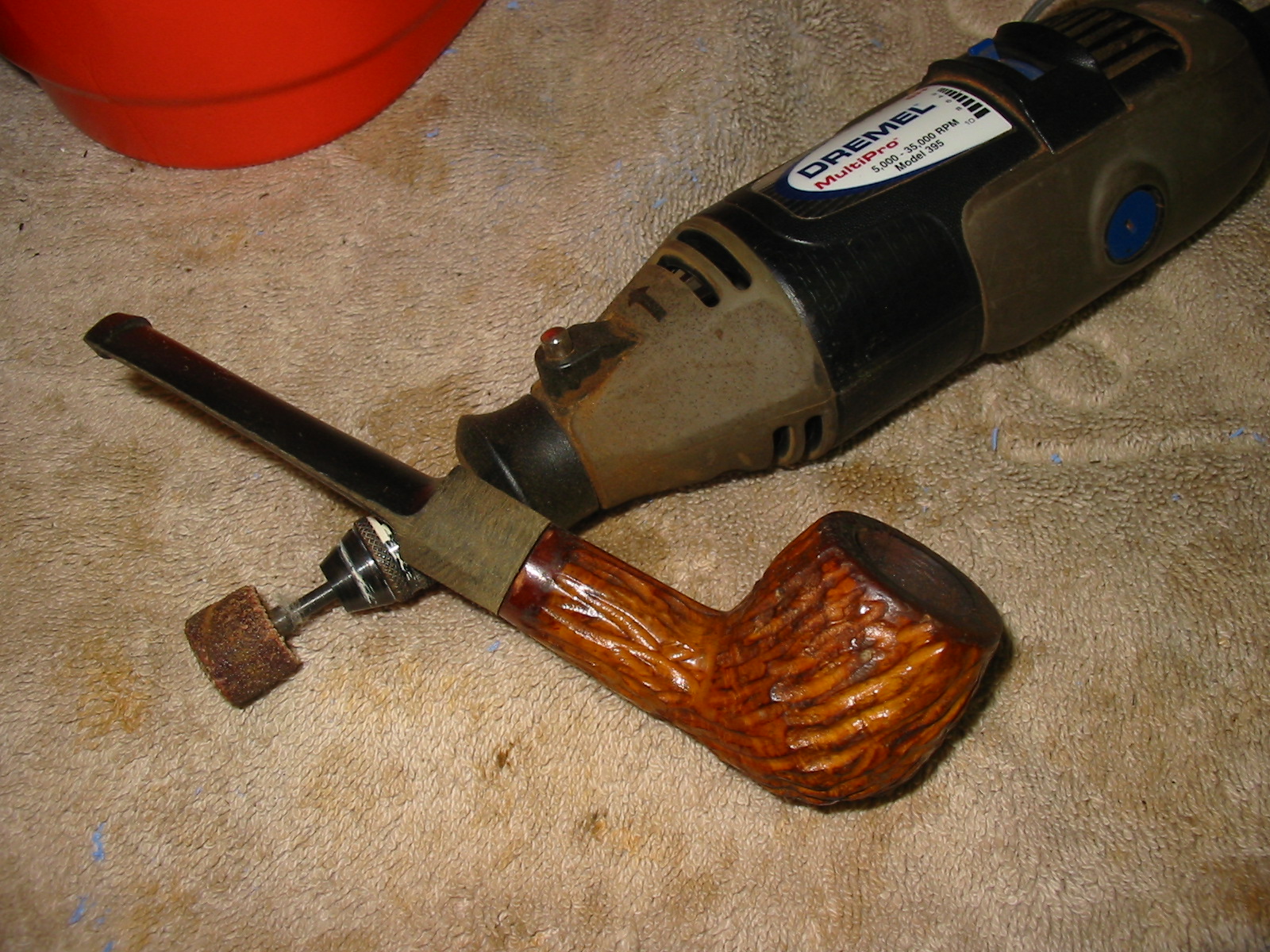
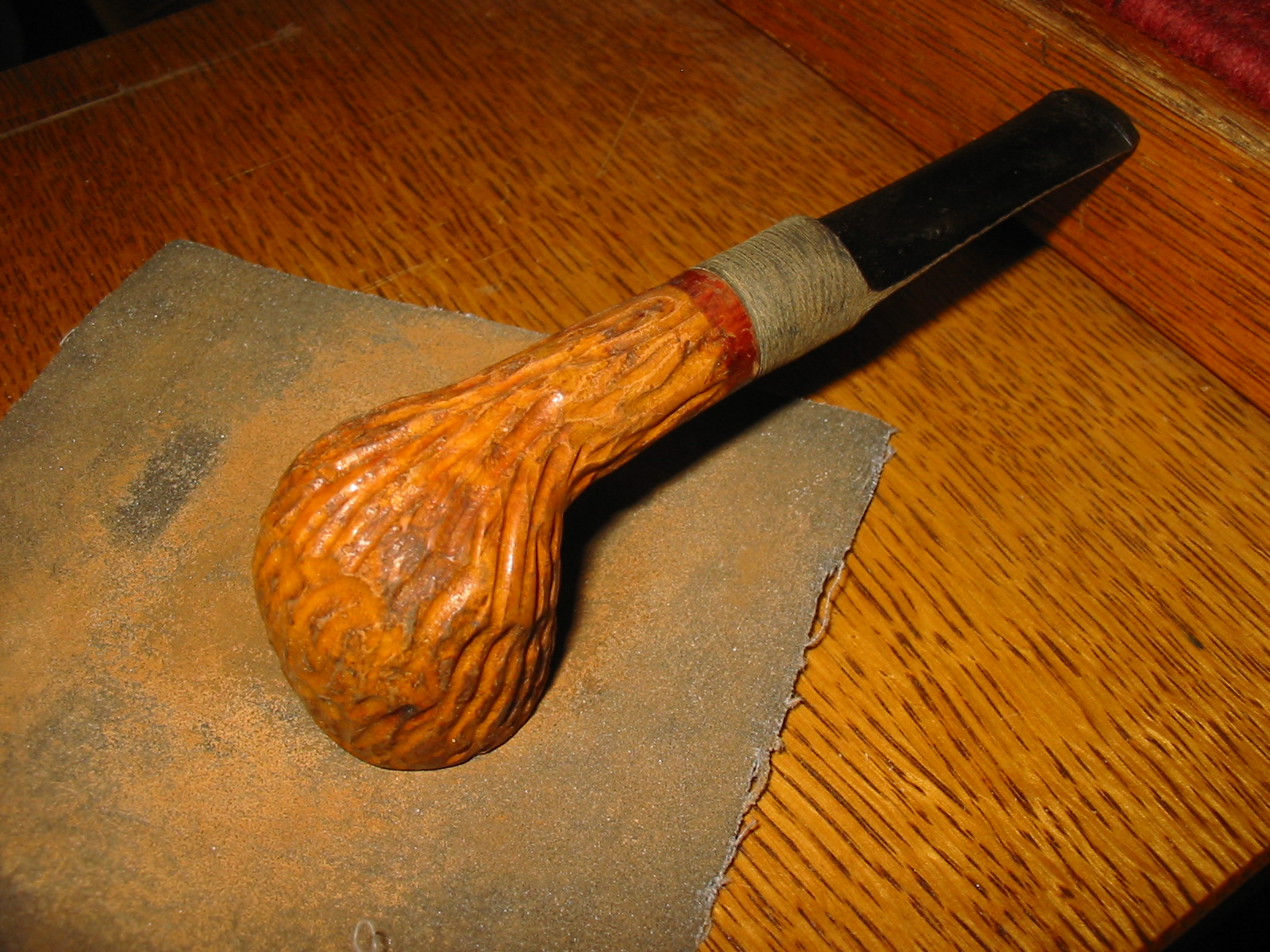
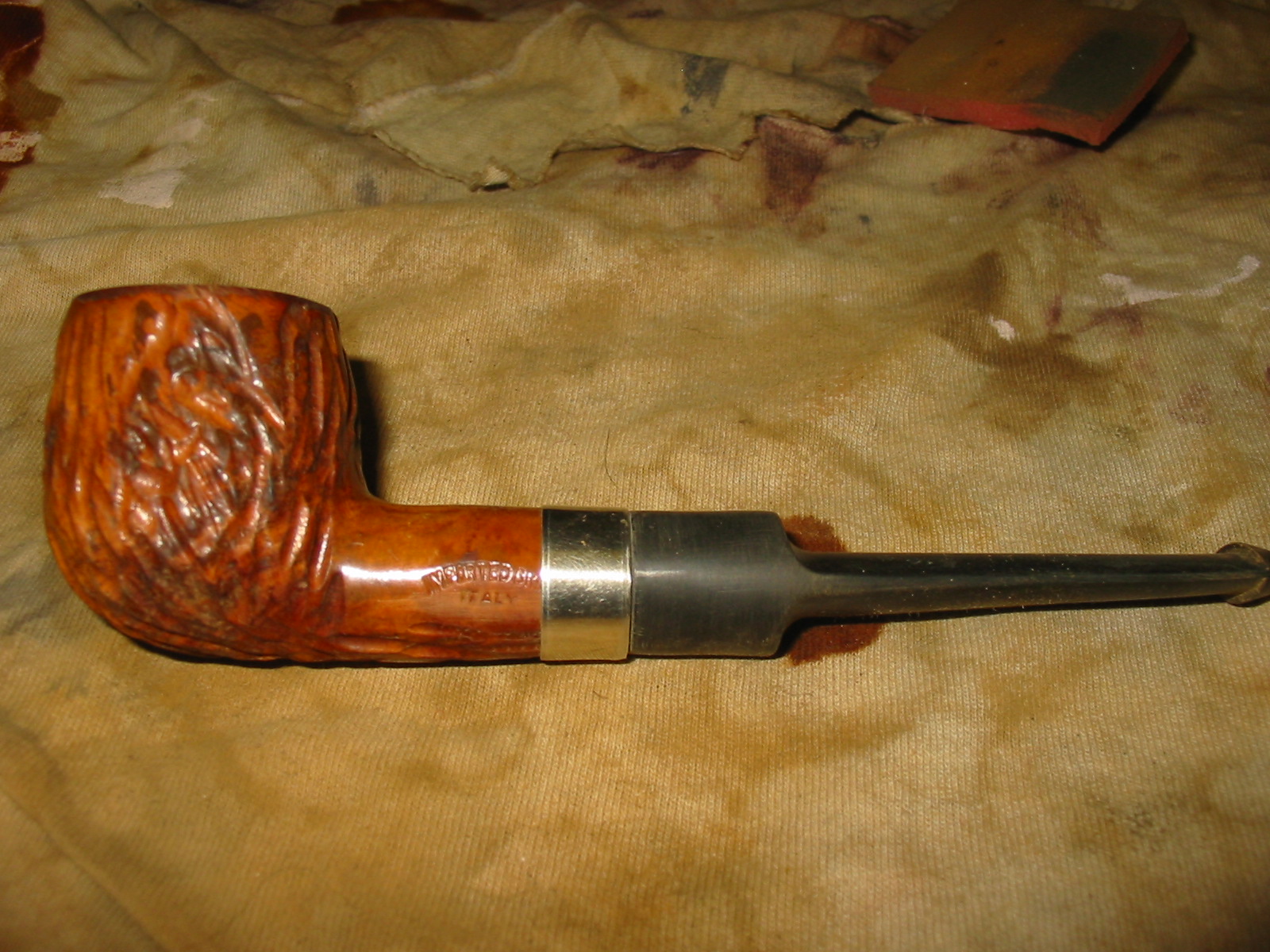
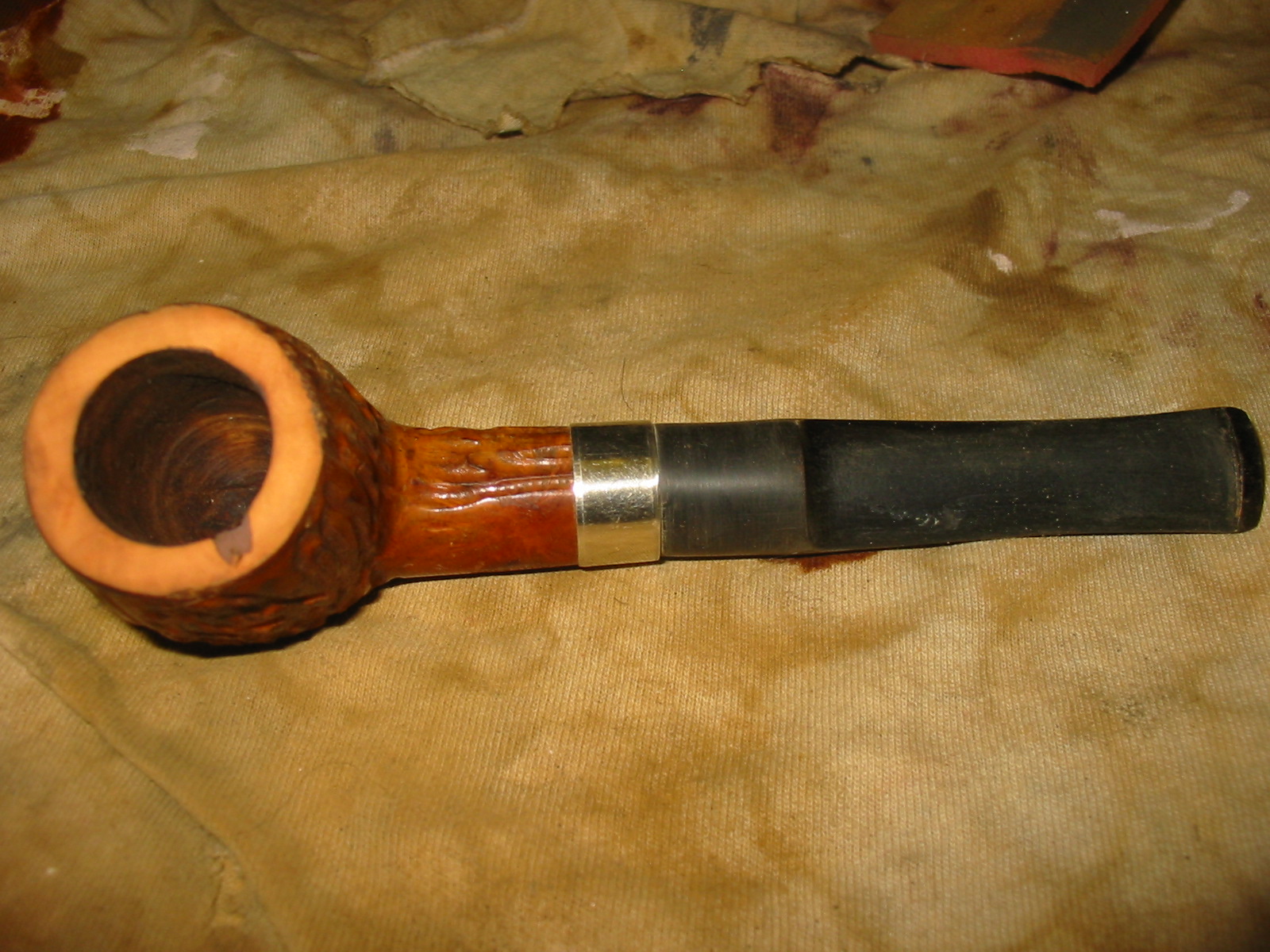
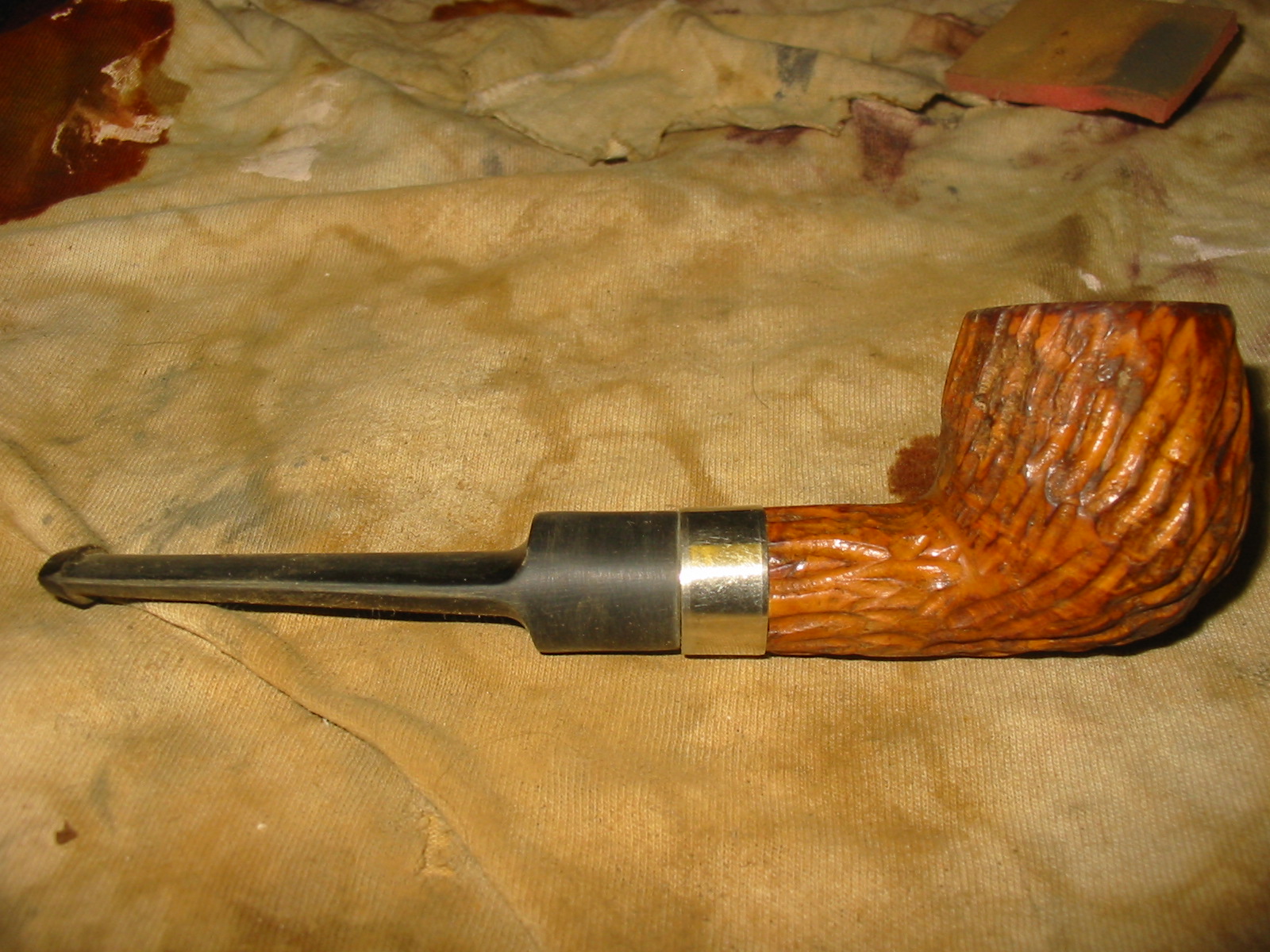
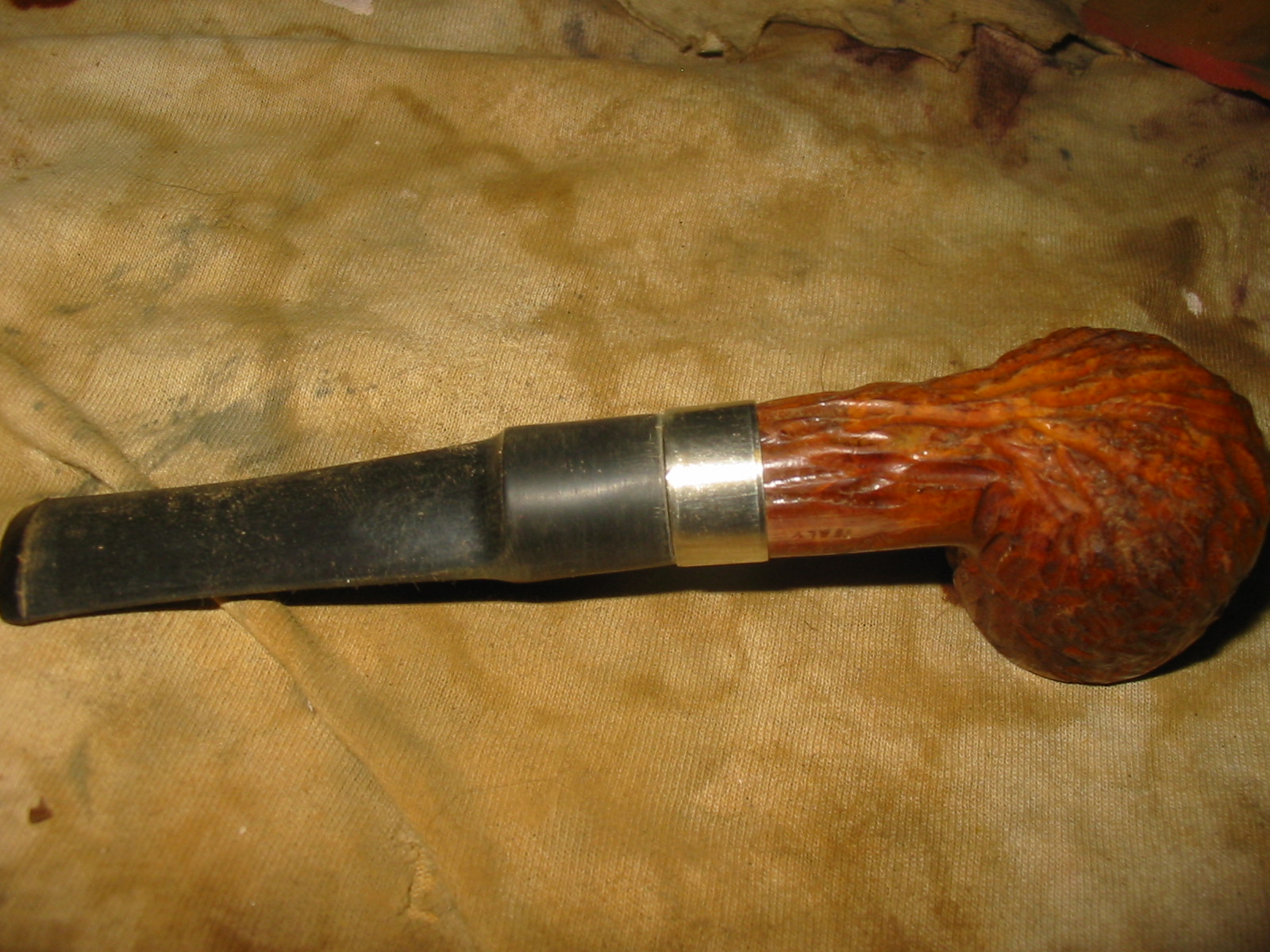
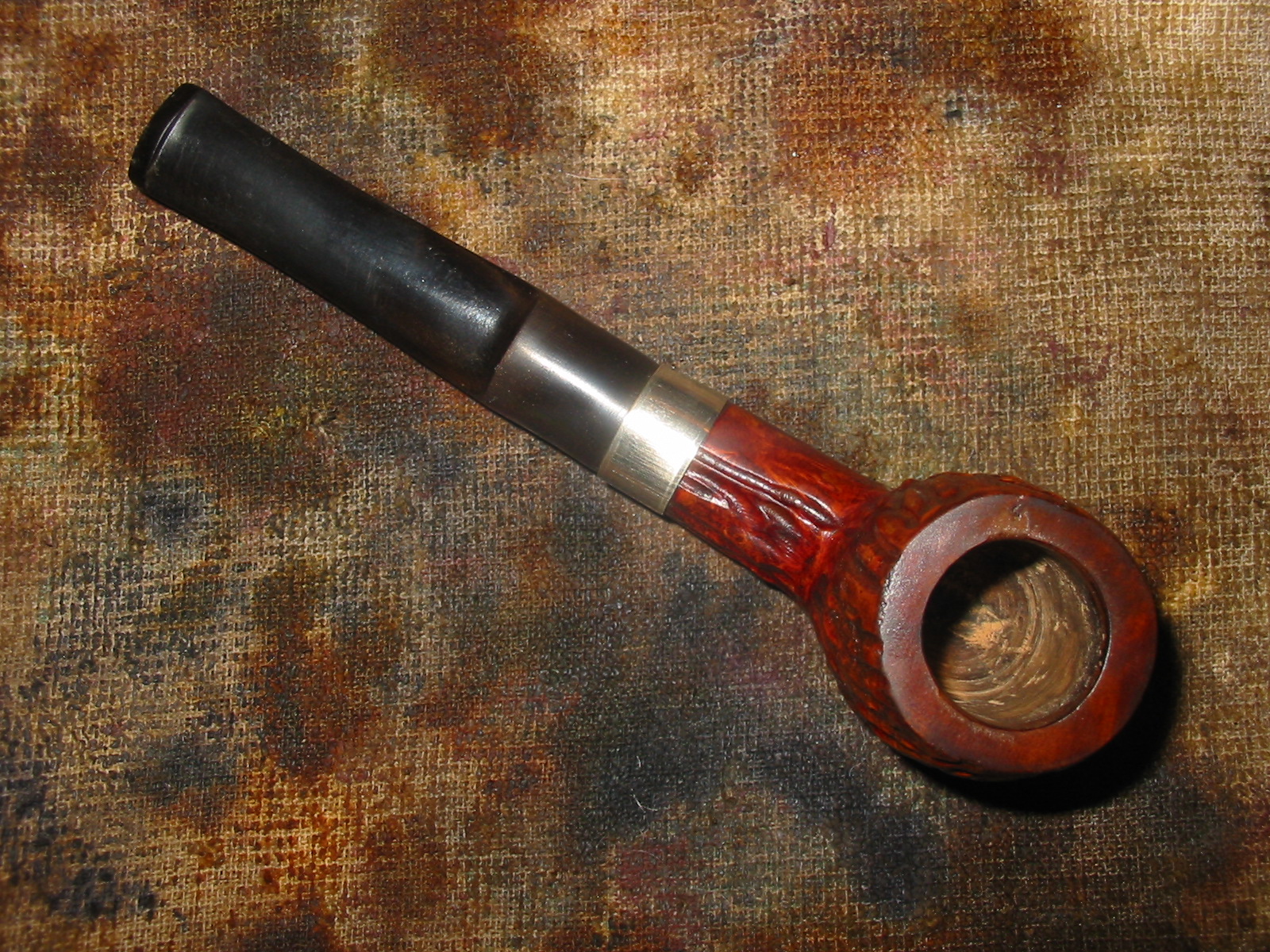
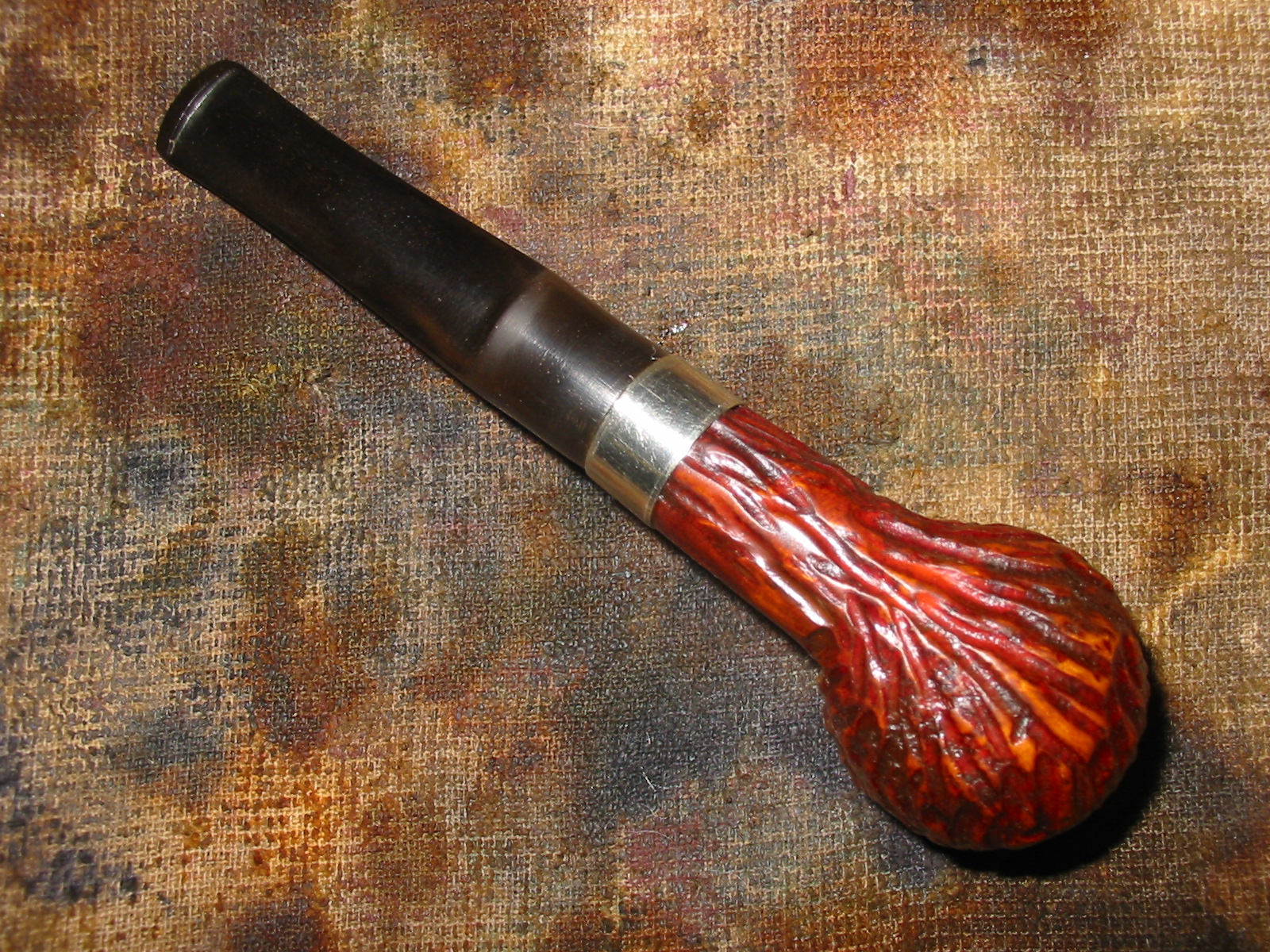
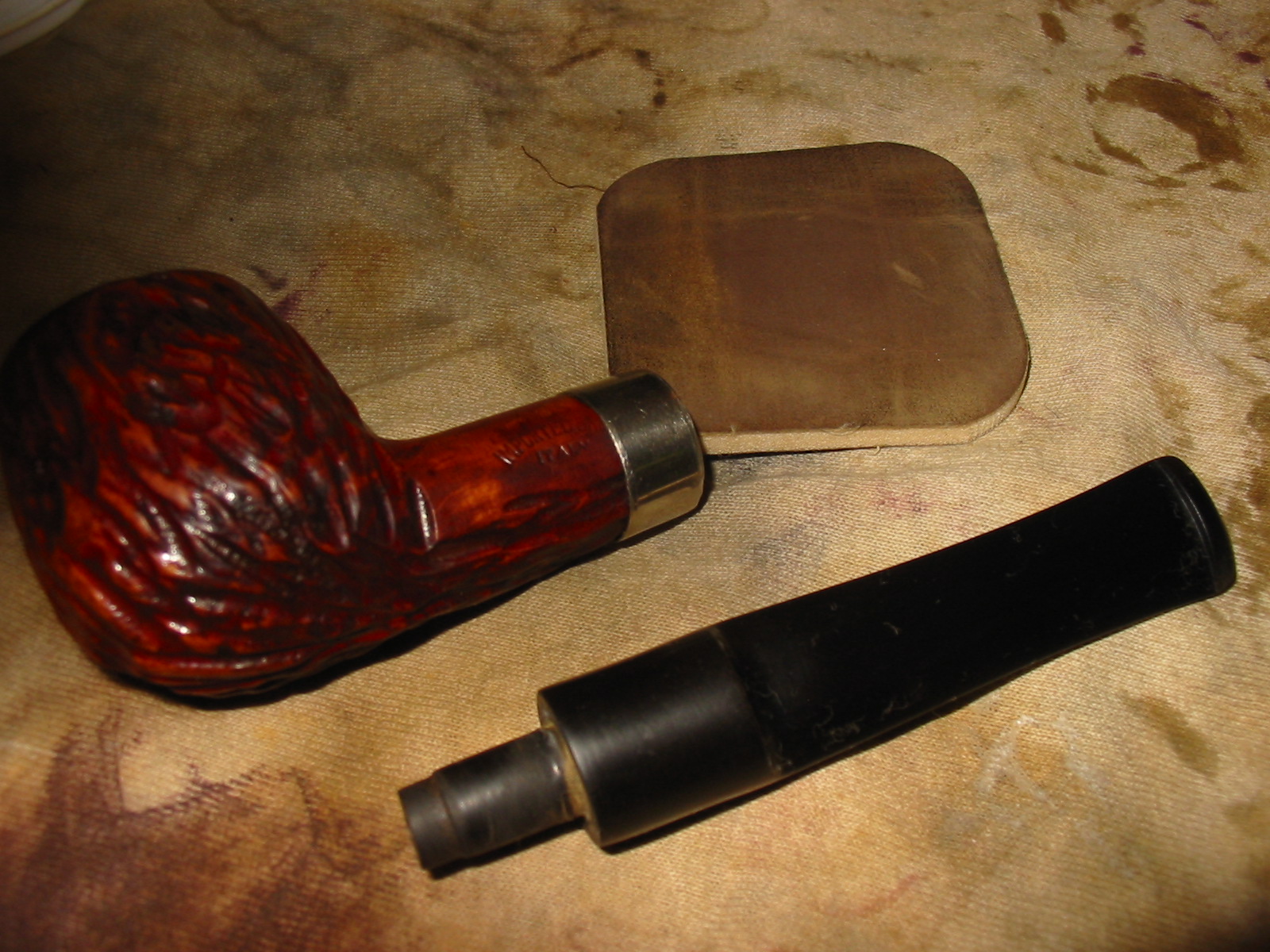
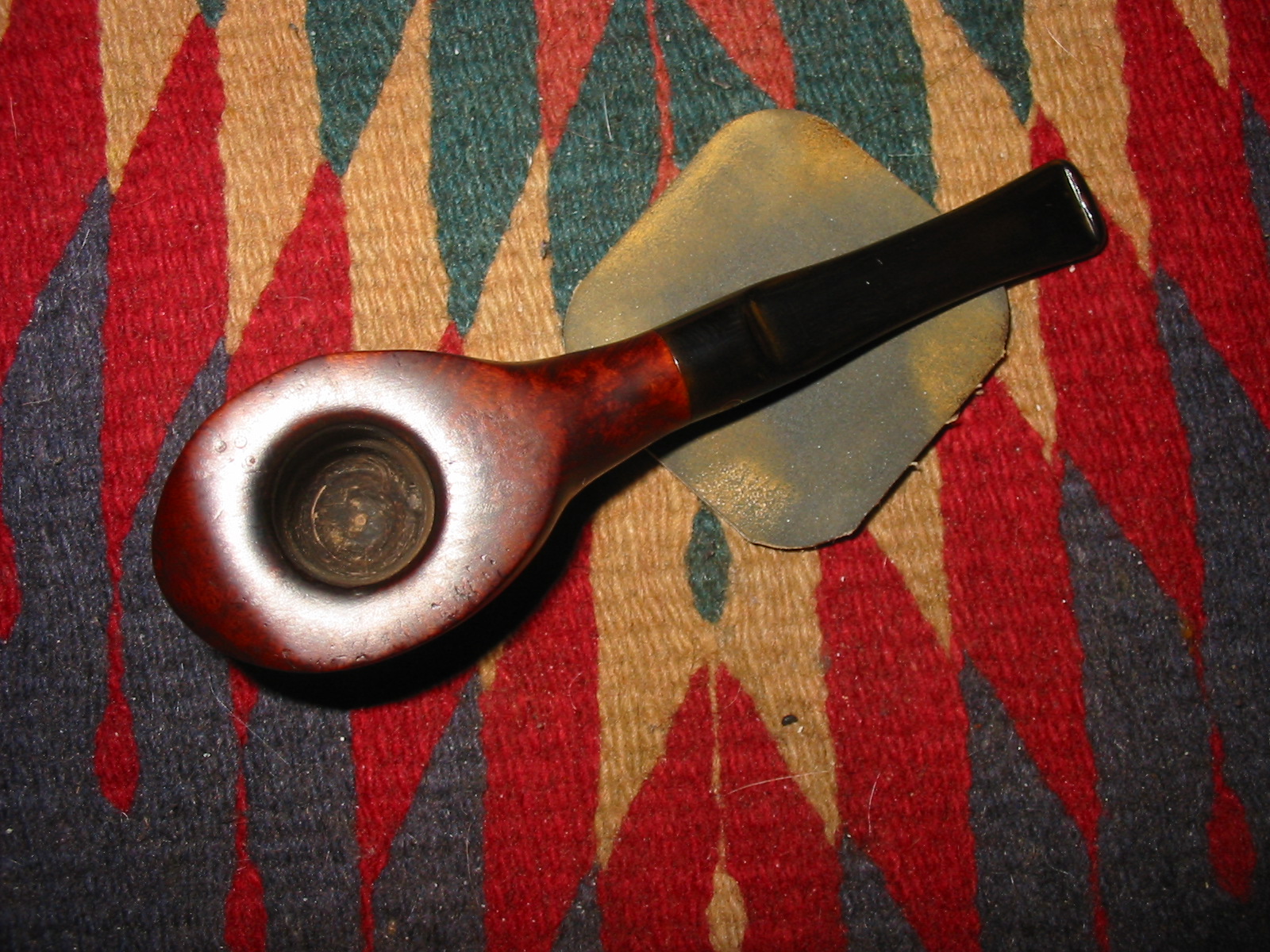
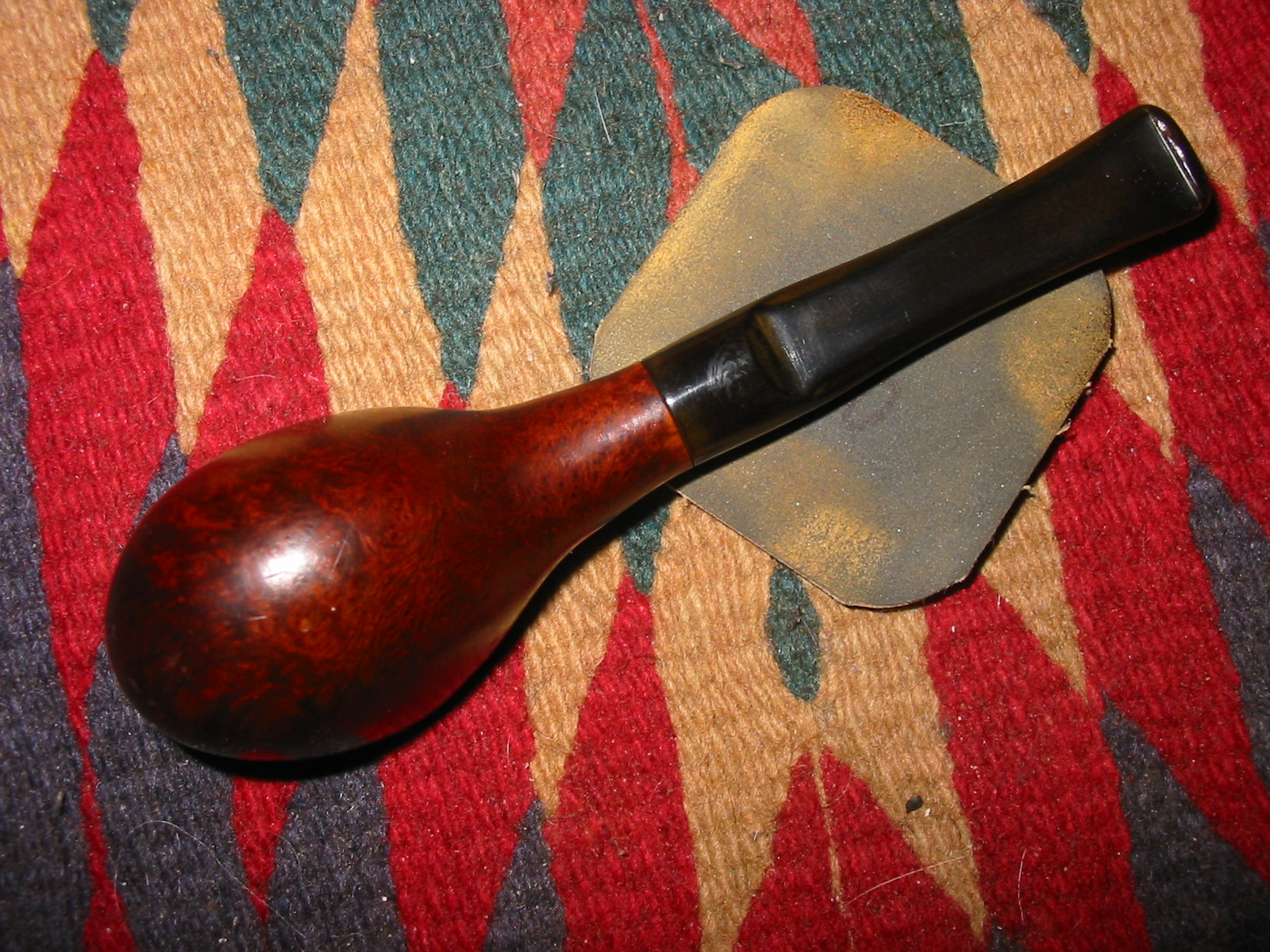
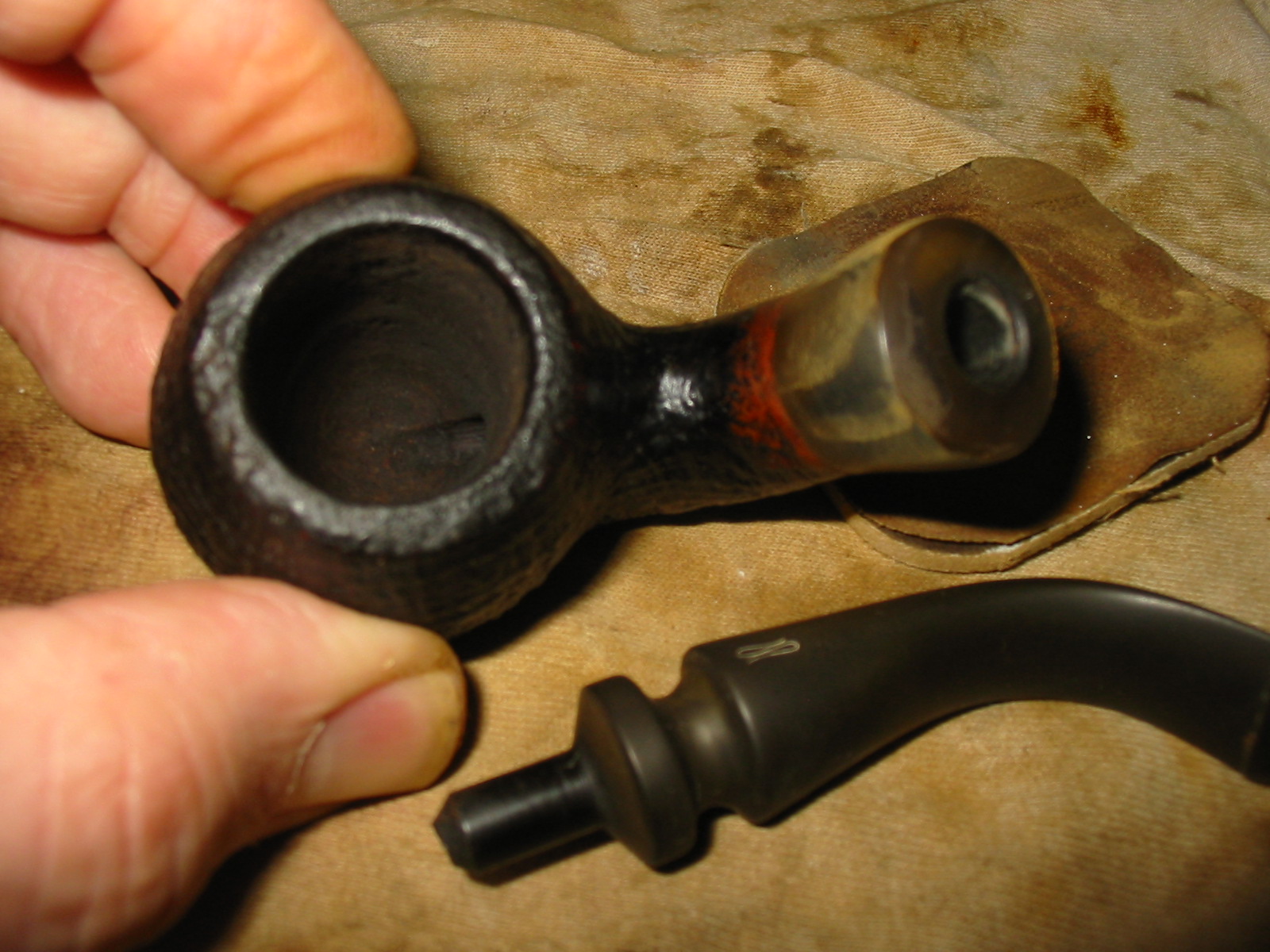
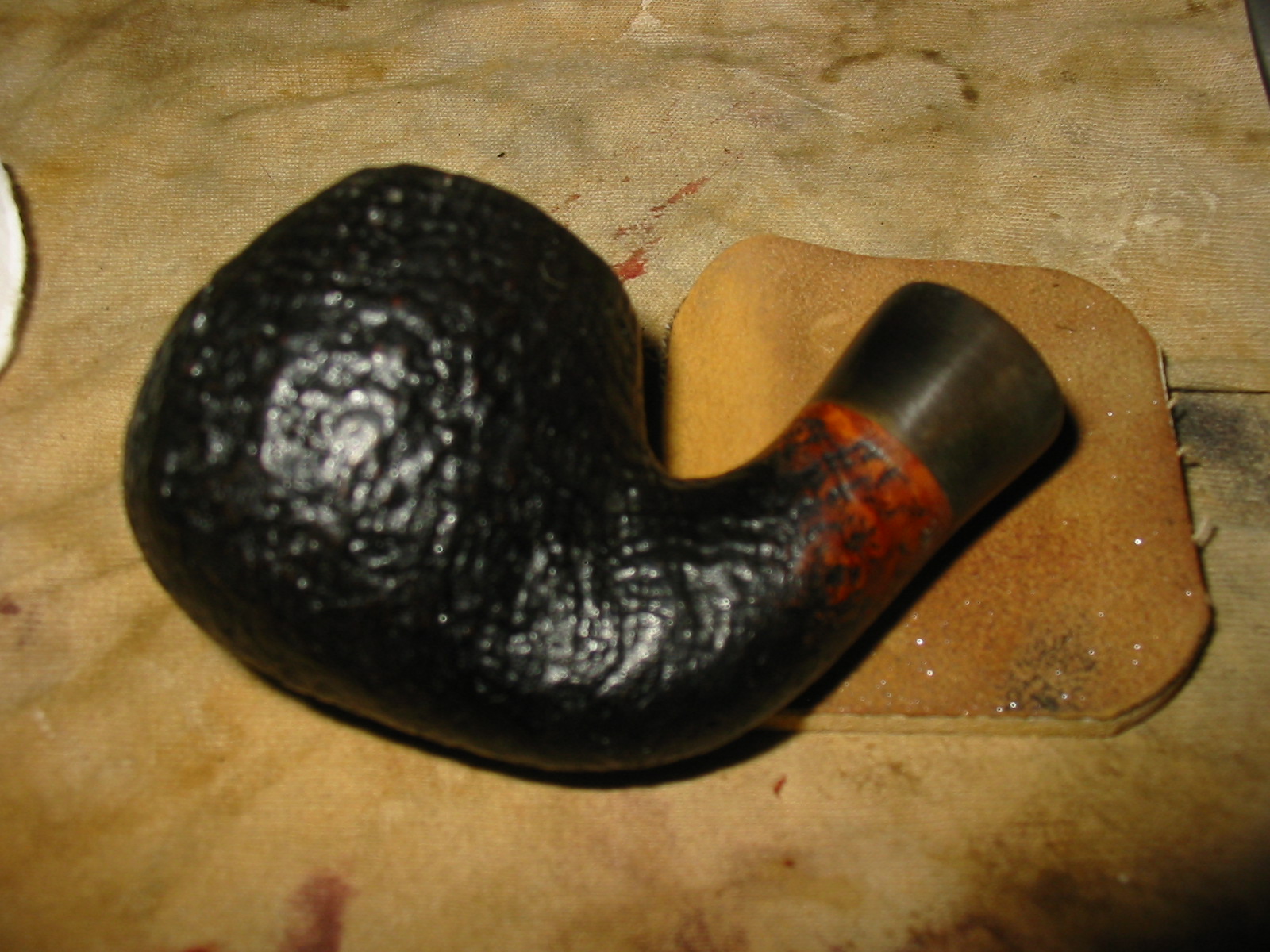
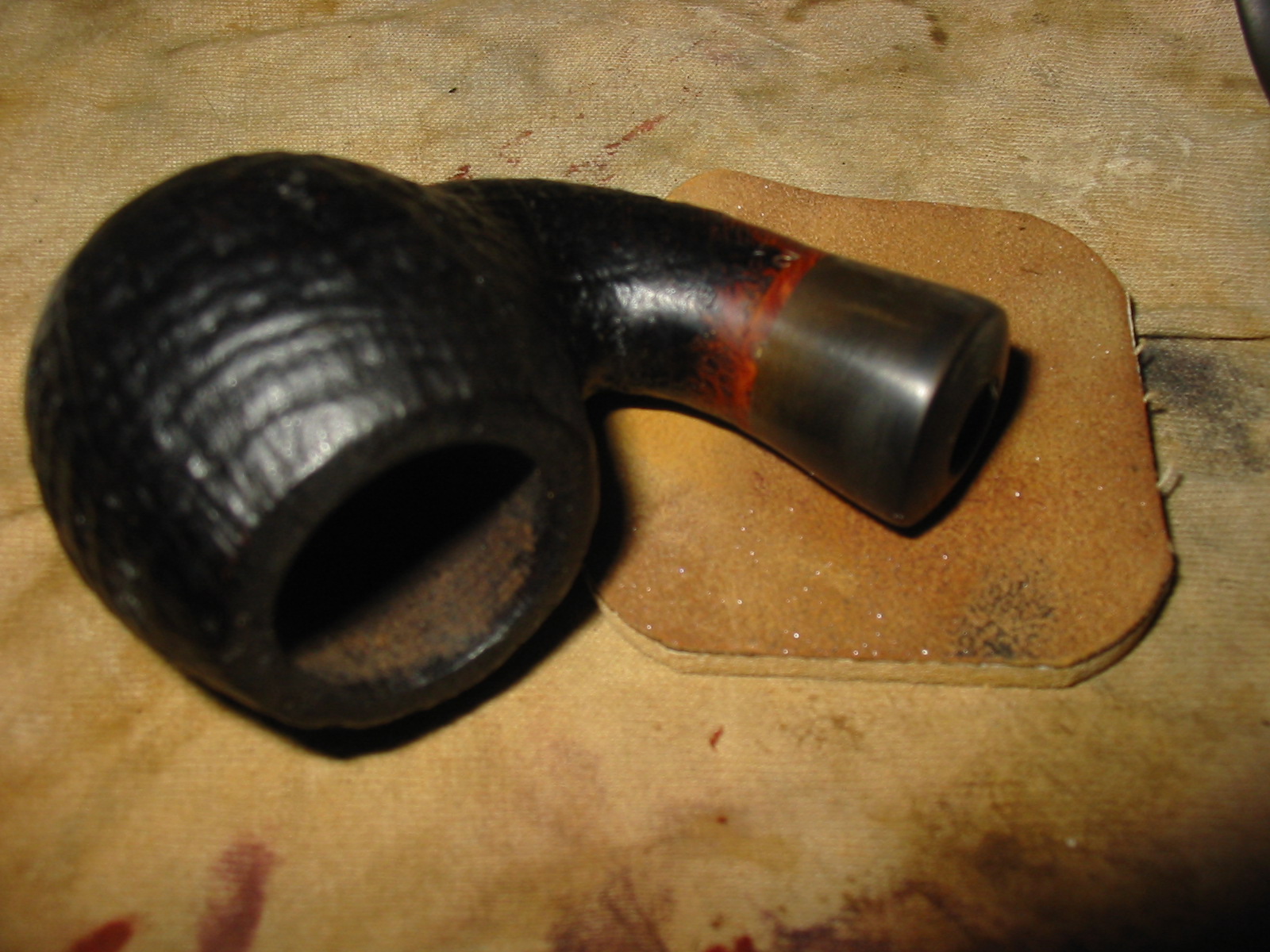
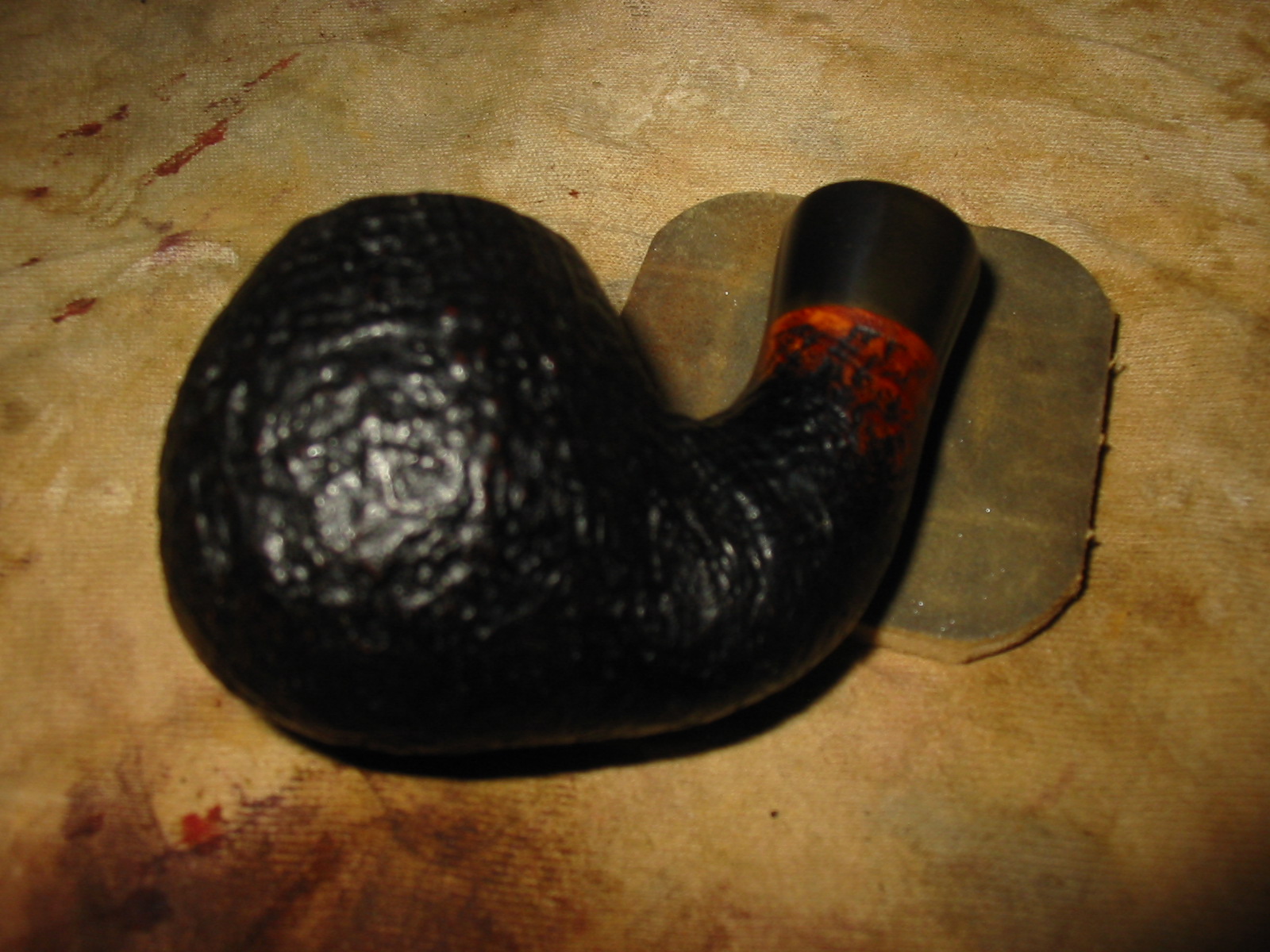
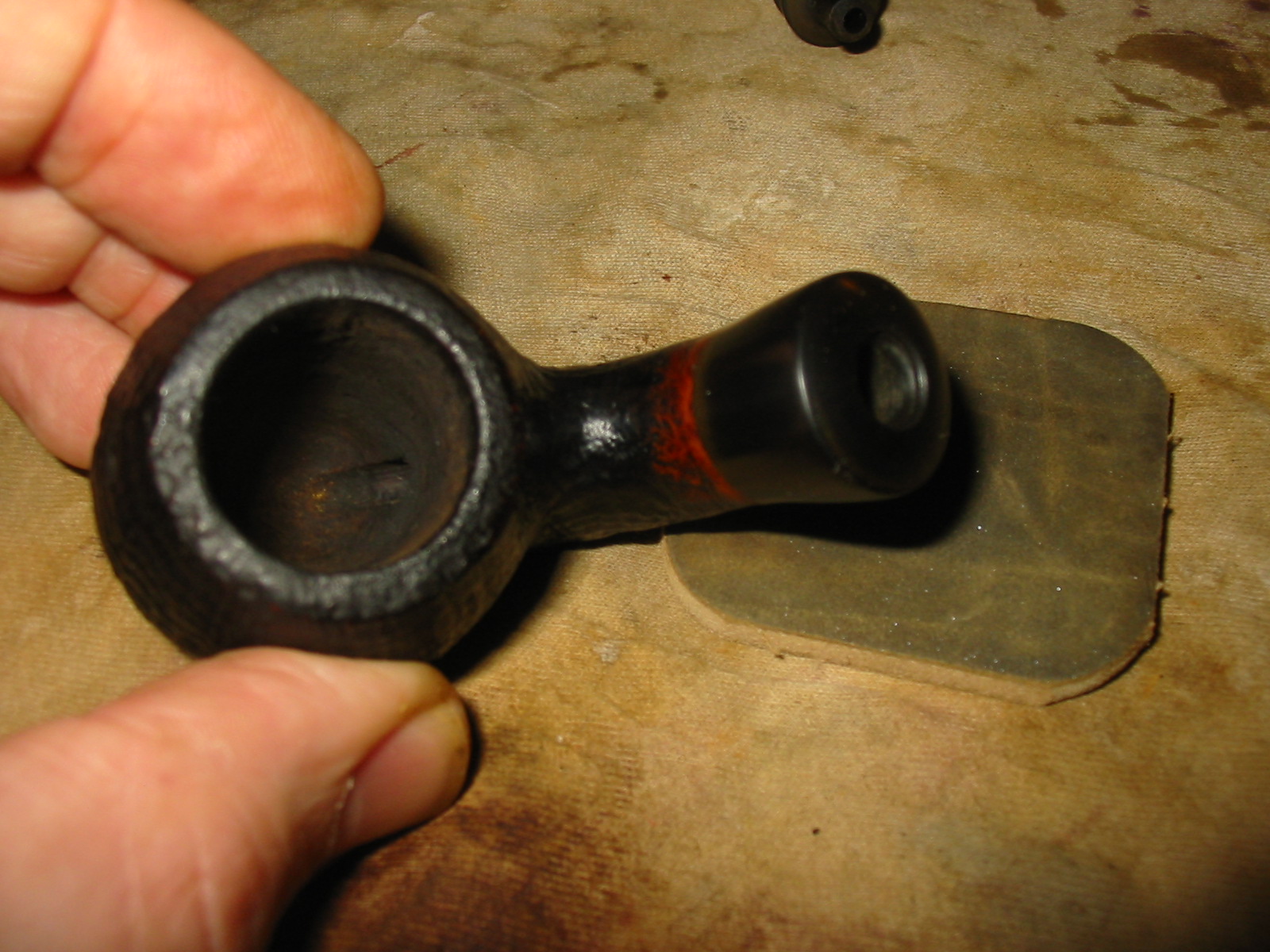
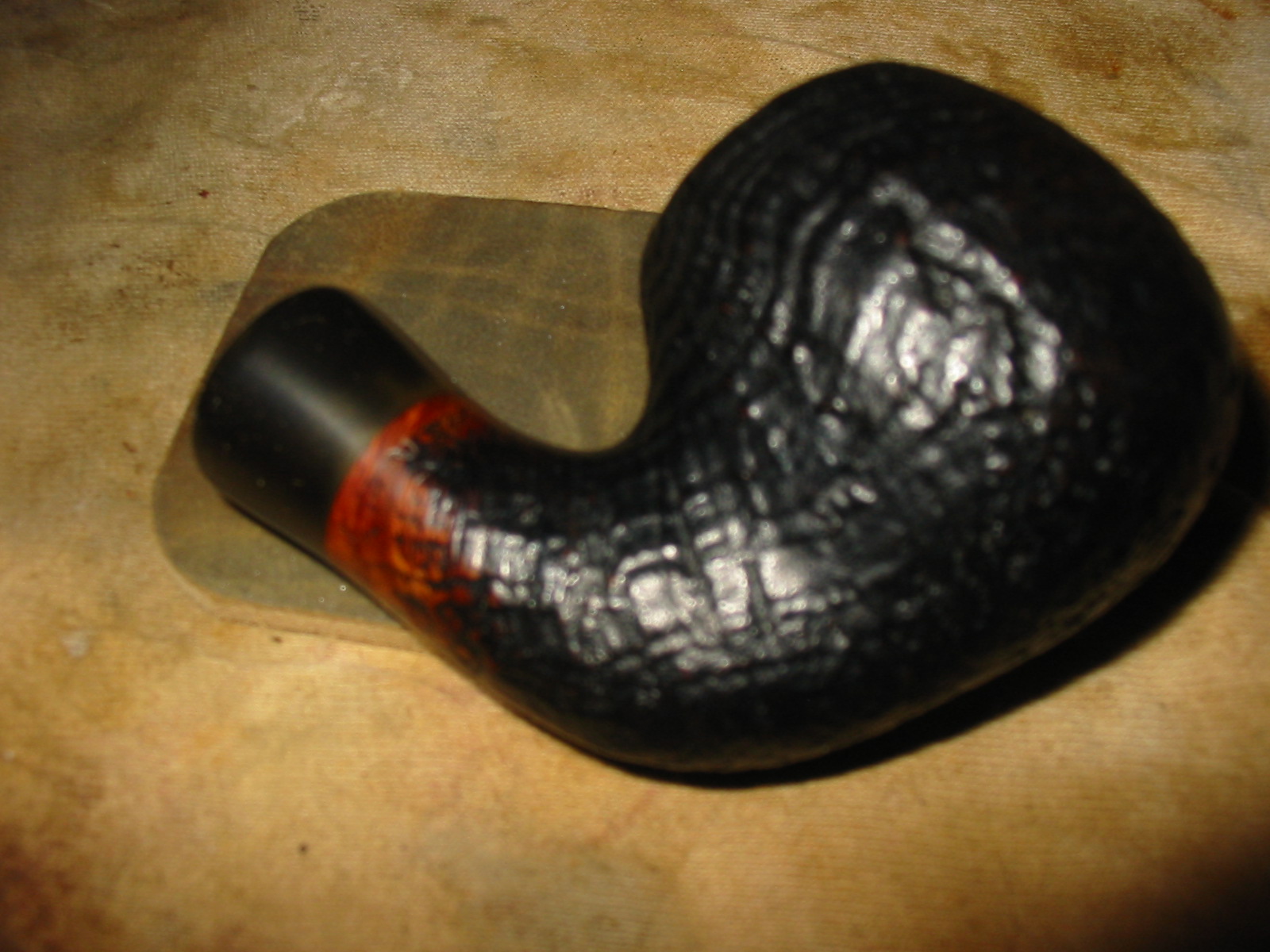
This old timer is an odd shaped pipe with the bowl hanging below the height of the shank. The line from the rim to the stem is straight and the bowl hangs below that. It is stamped Richmond over London Made on the left side of the bowl and on the right it is stamped Made in England. From the information that I can find the pipe was made by either Saseini or Comoys. Both stamped pipes with the Richmond label. The first series of four photos show the pipe as it was when it arrived here at my workbench.

ImageImageImageImage

I cleaned the bowl and shank with Isopropyl alcohol. I reamed out the cake in the bowl. I use a Pipnet T handle reamer. In this case I started with the smallest blade set and worked up to the one that is pictured below in the next two photos.

ImageImage

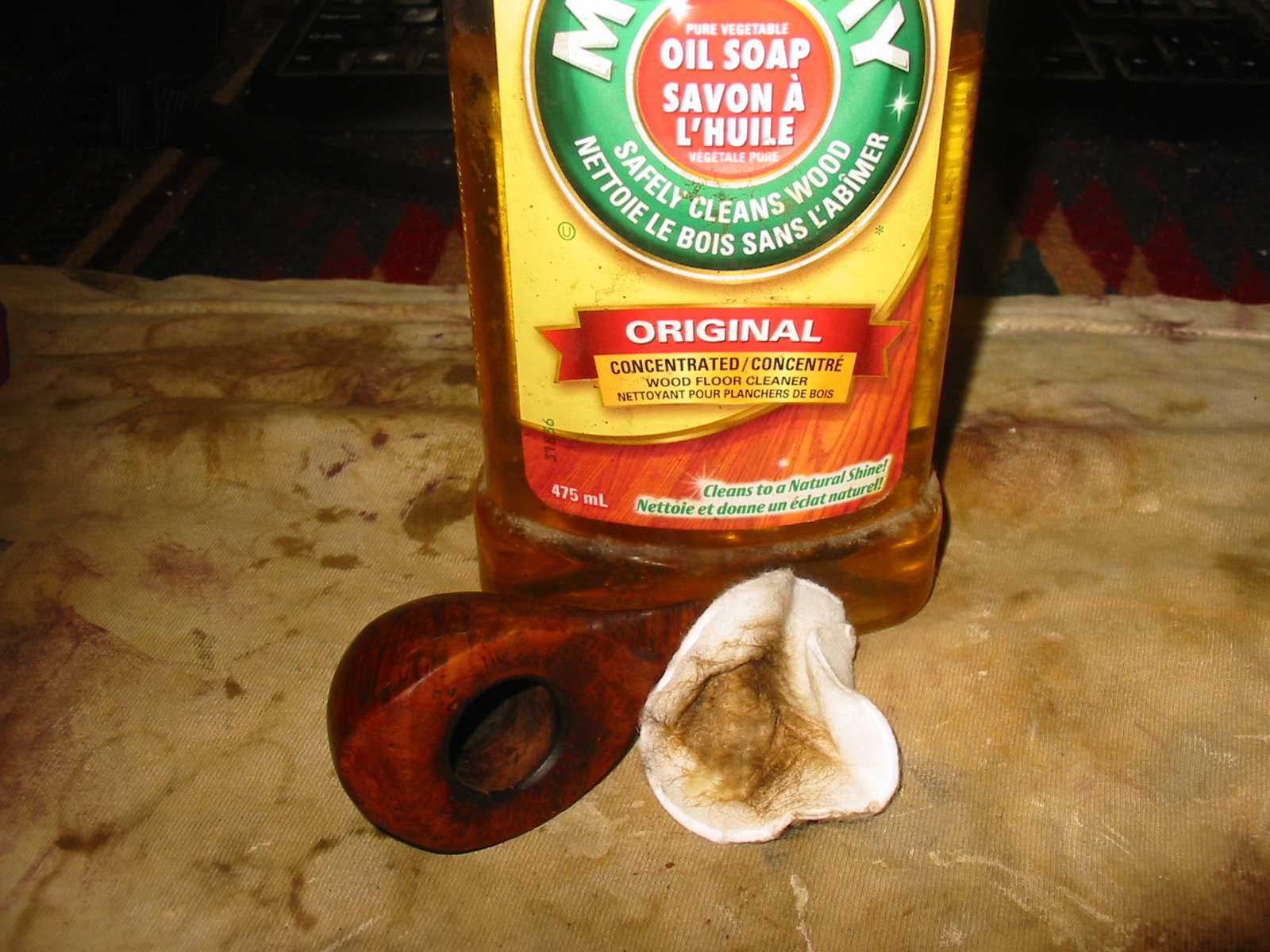
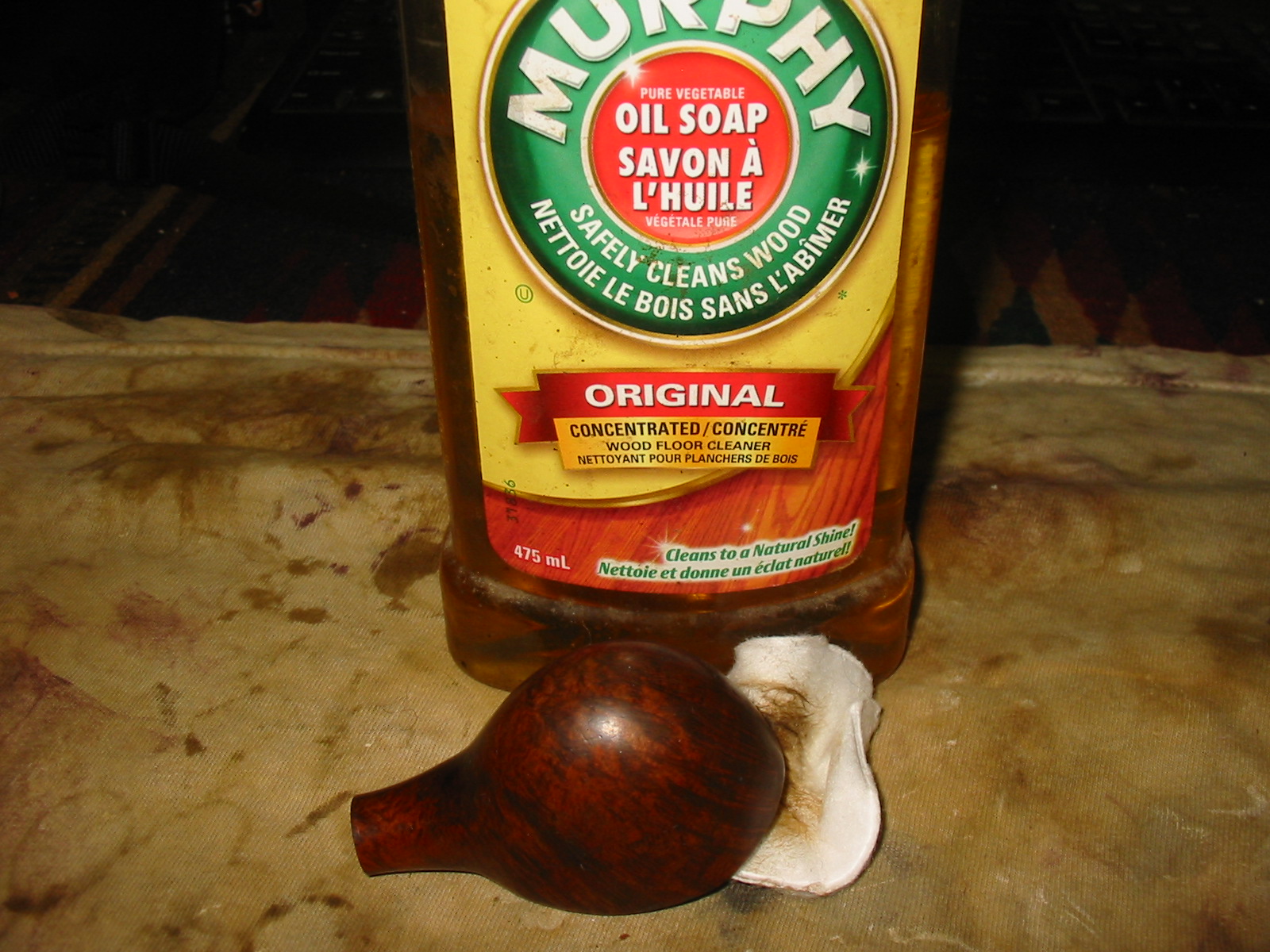
After reaming the bowl I scrubbed the outside of the bowl with Murphy’s Oil Soap on a cotton pad. I wanted to remove as much of the old waxes and grime that was on the surface of the bowl and the rim.

ImageImage

After the scrubbing I worked on the inside of the shank. I scrubbed it out with alcohol on pipe cleaners and then scrubbed the mortise with cotton swabs dipped in isopropyl alcohol. The two photos below show the angle of the drilling from the shank to the bottom of the bowl. The drilling started at the bottom edge of the mortise and came out at the centre of the bottom edge of the bowl. It is a well drilled pipe.ImageImage

The next three photos show the bowl after I had scrubbed it. I also used the Murphy’s on the stem to remove some of the surface oxidation. I wanted to preserve the Circle R stamping on the stem so I carefully worked around that area.

ImageImageImage

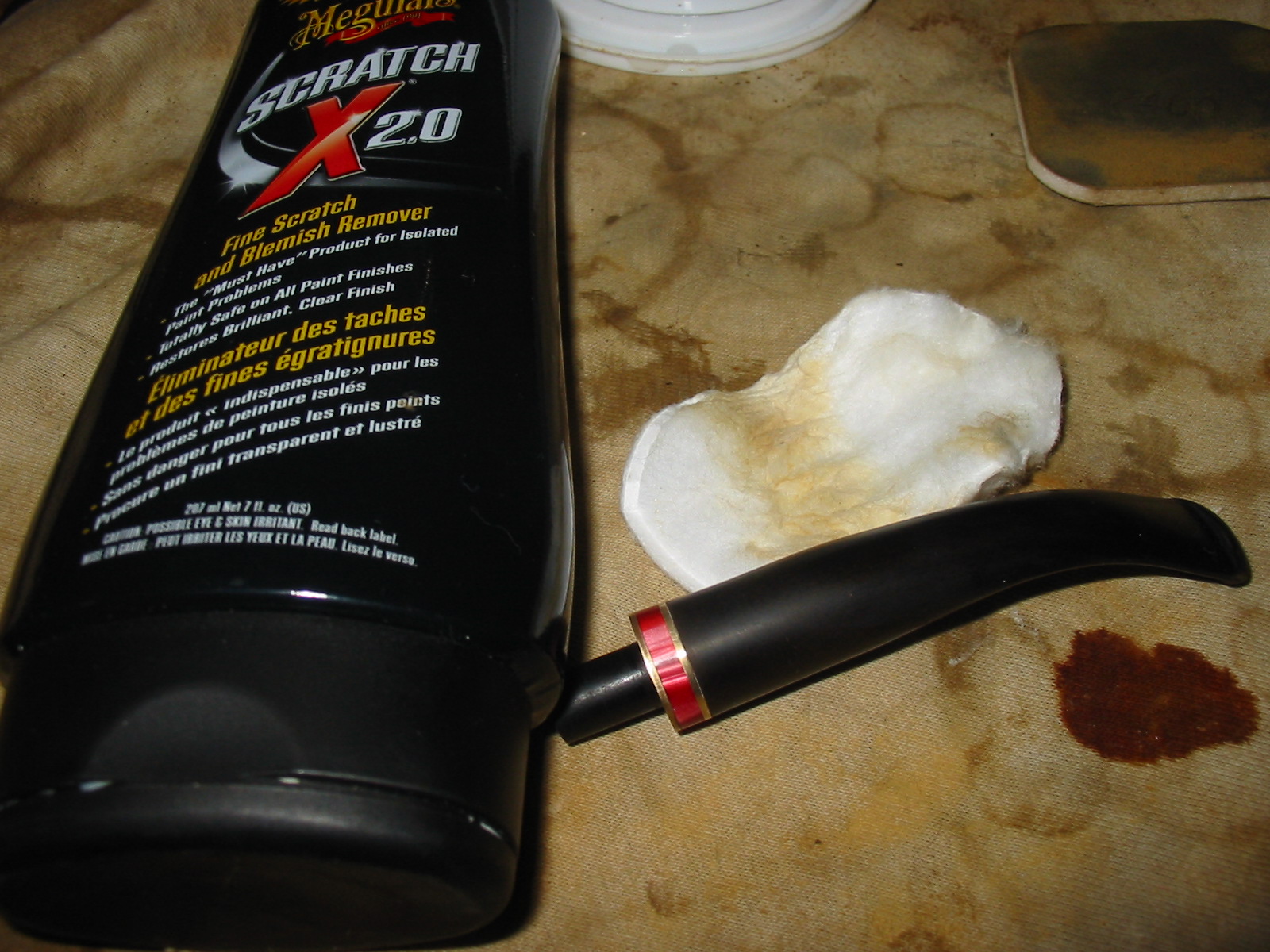
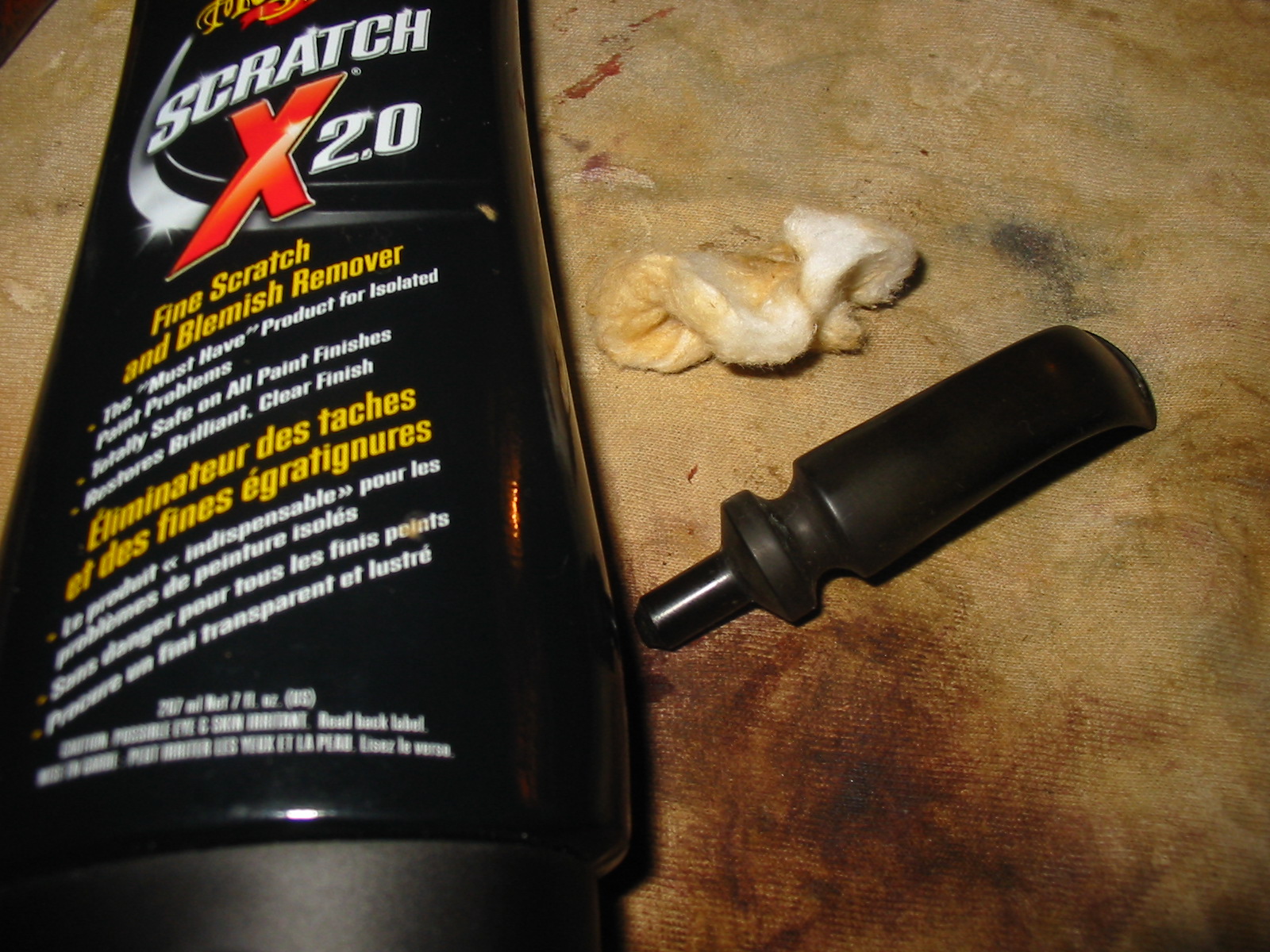
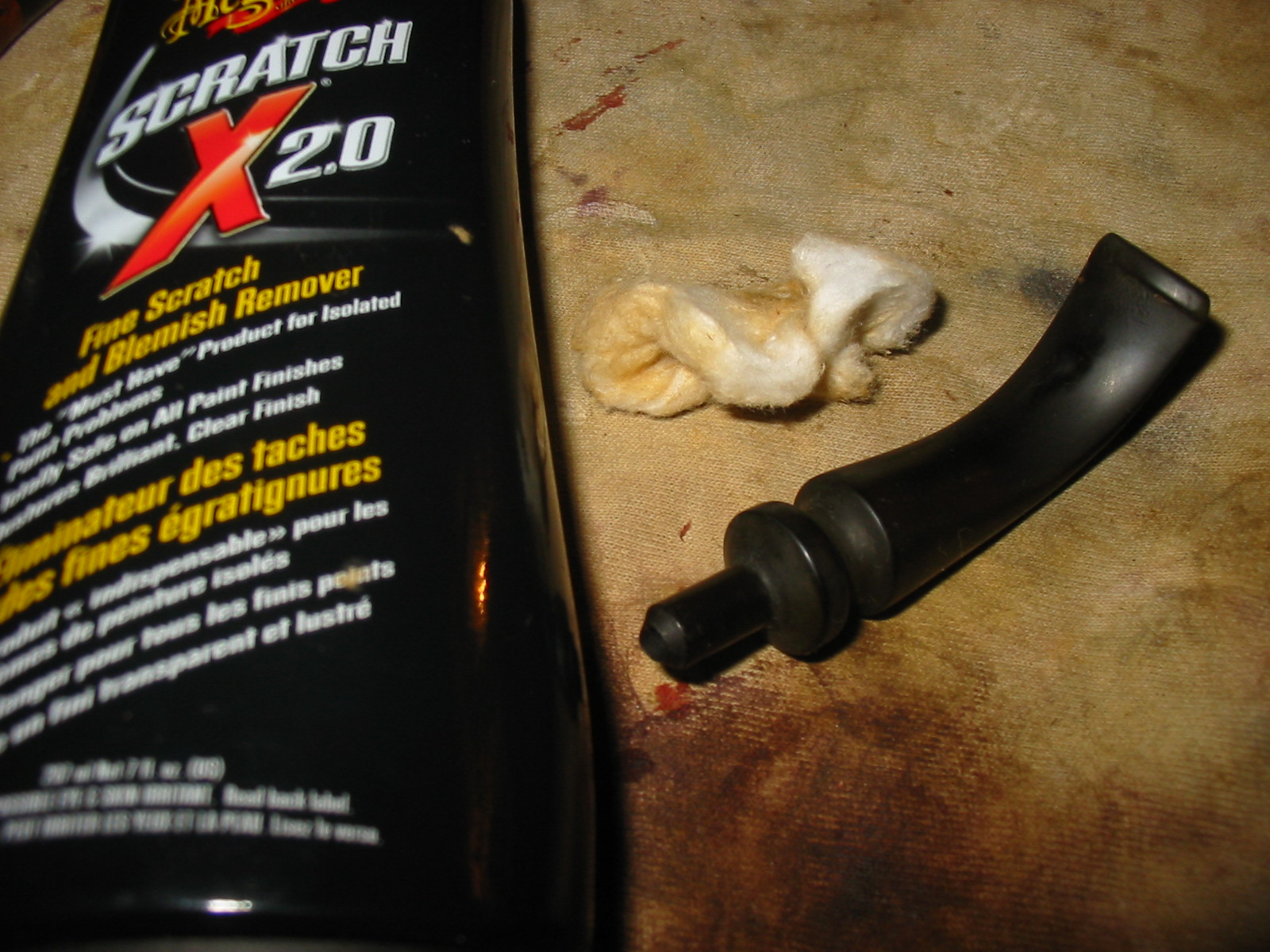
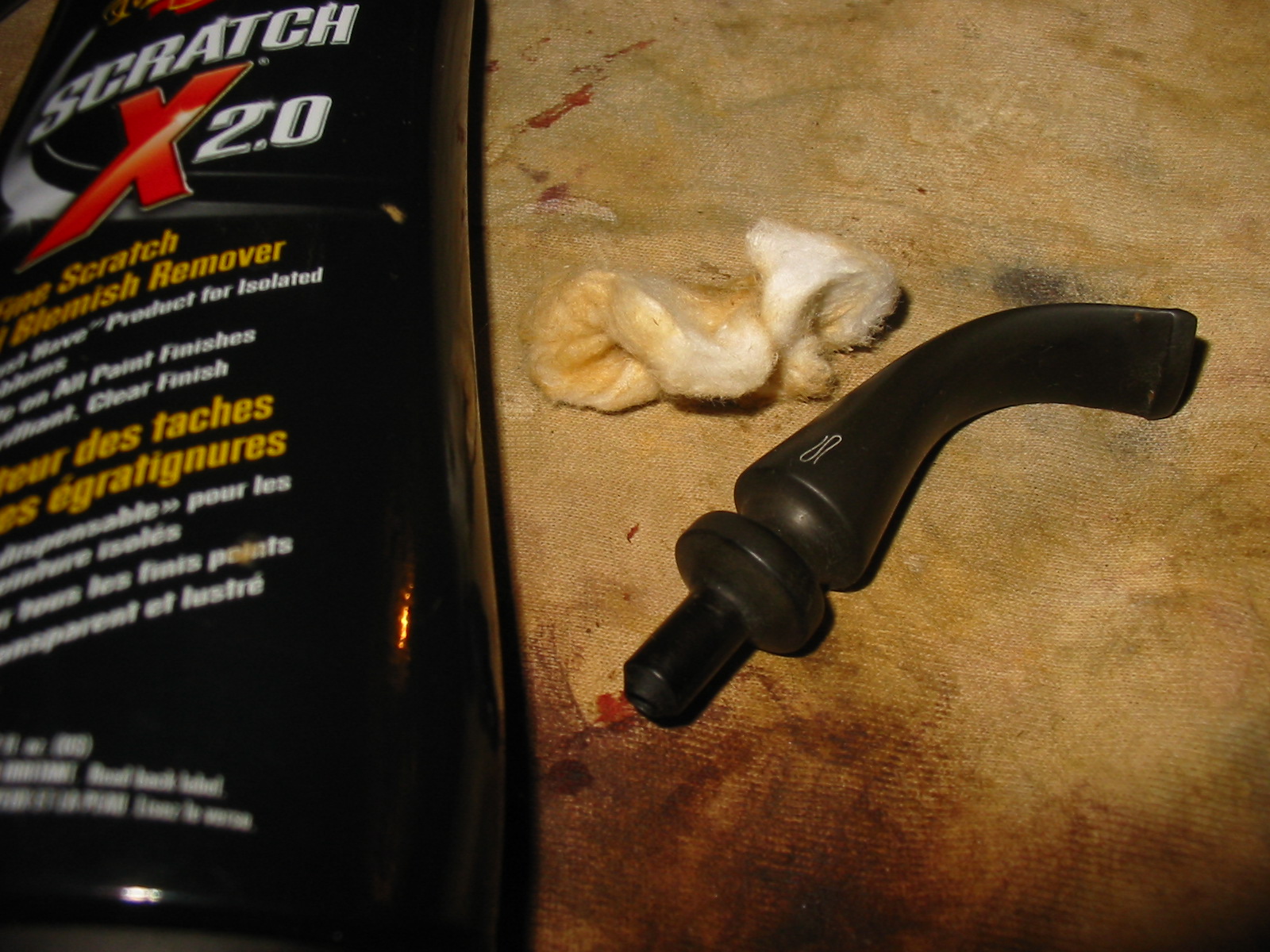
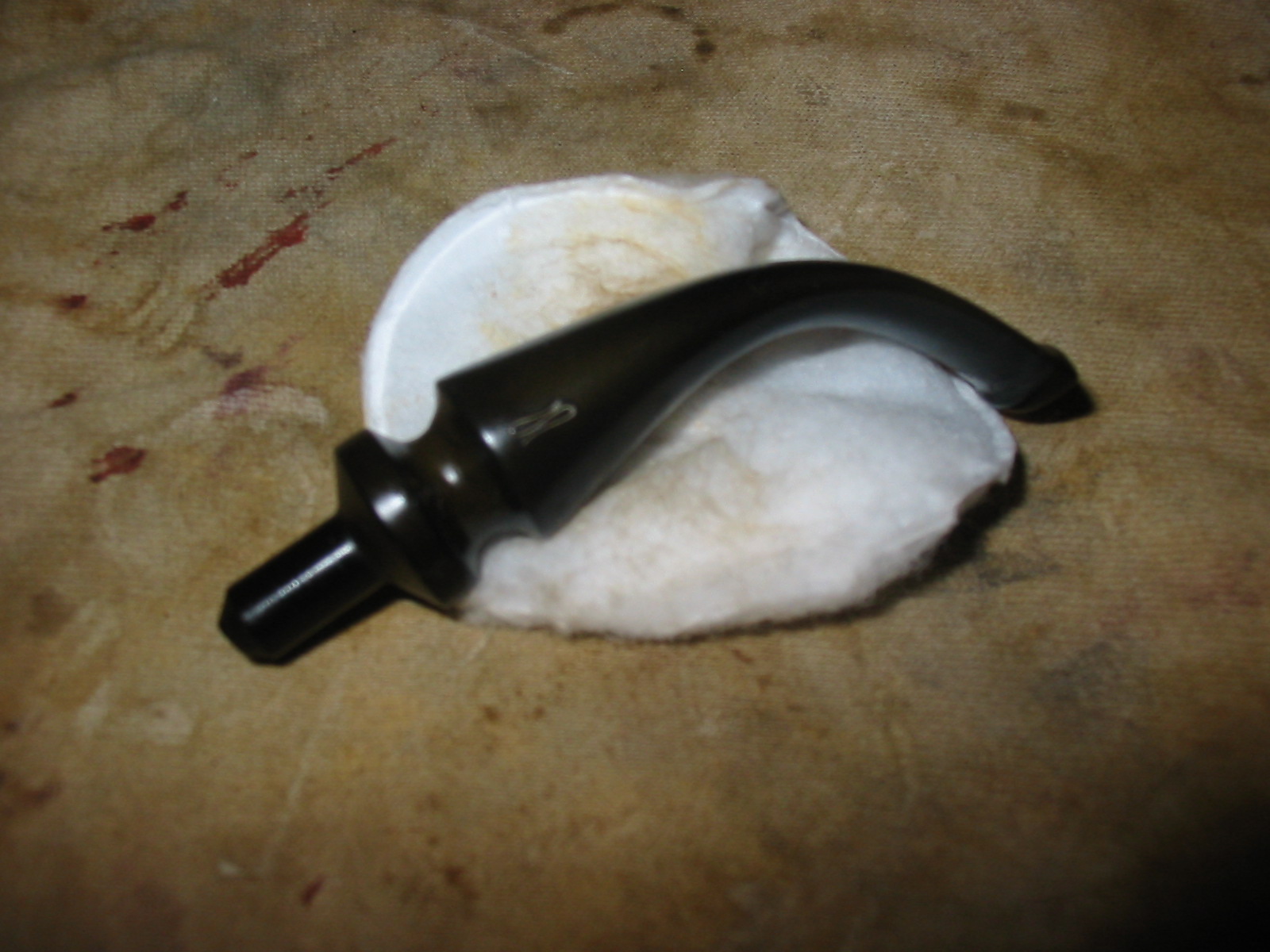
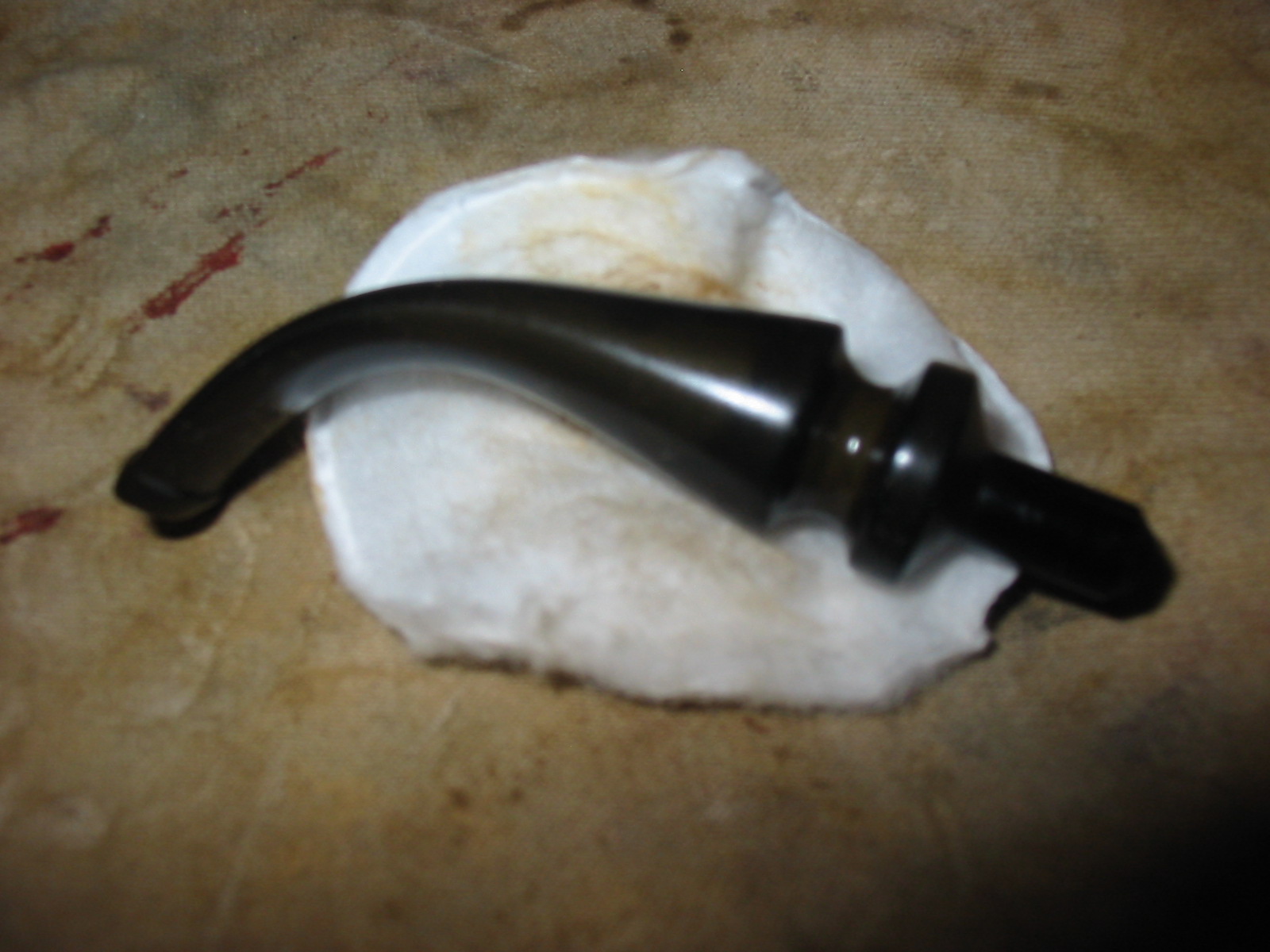
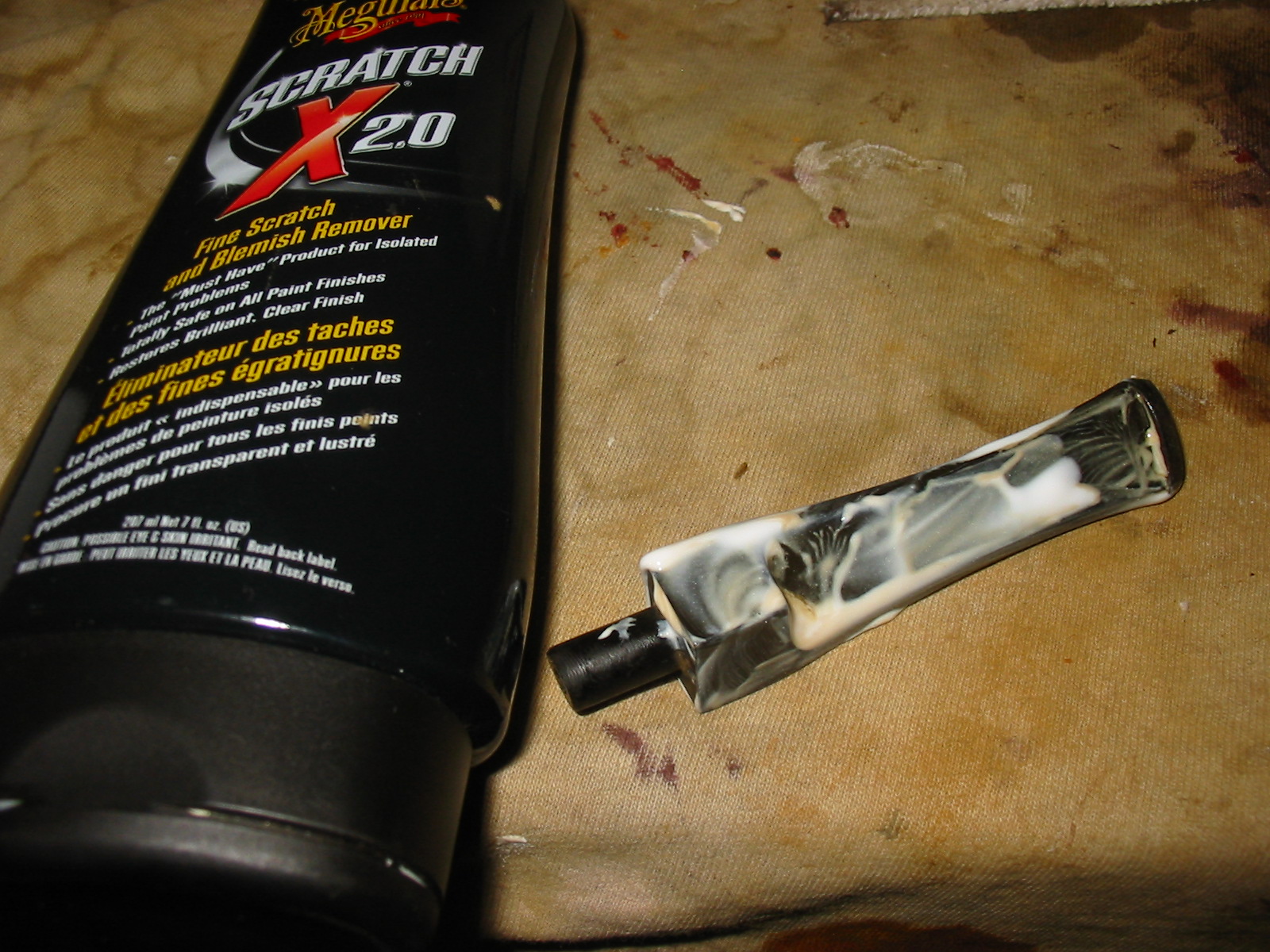
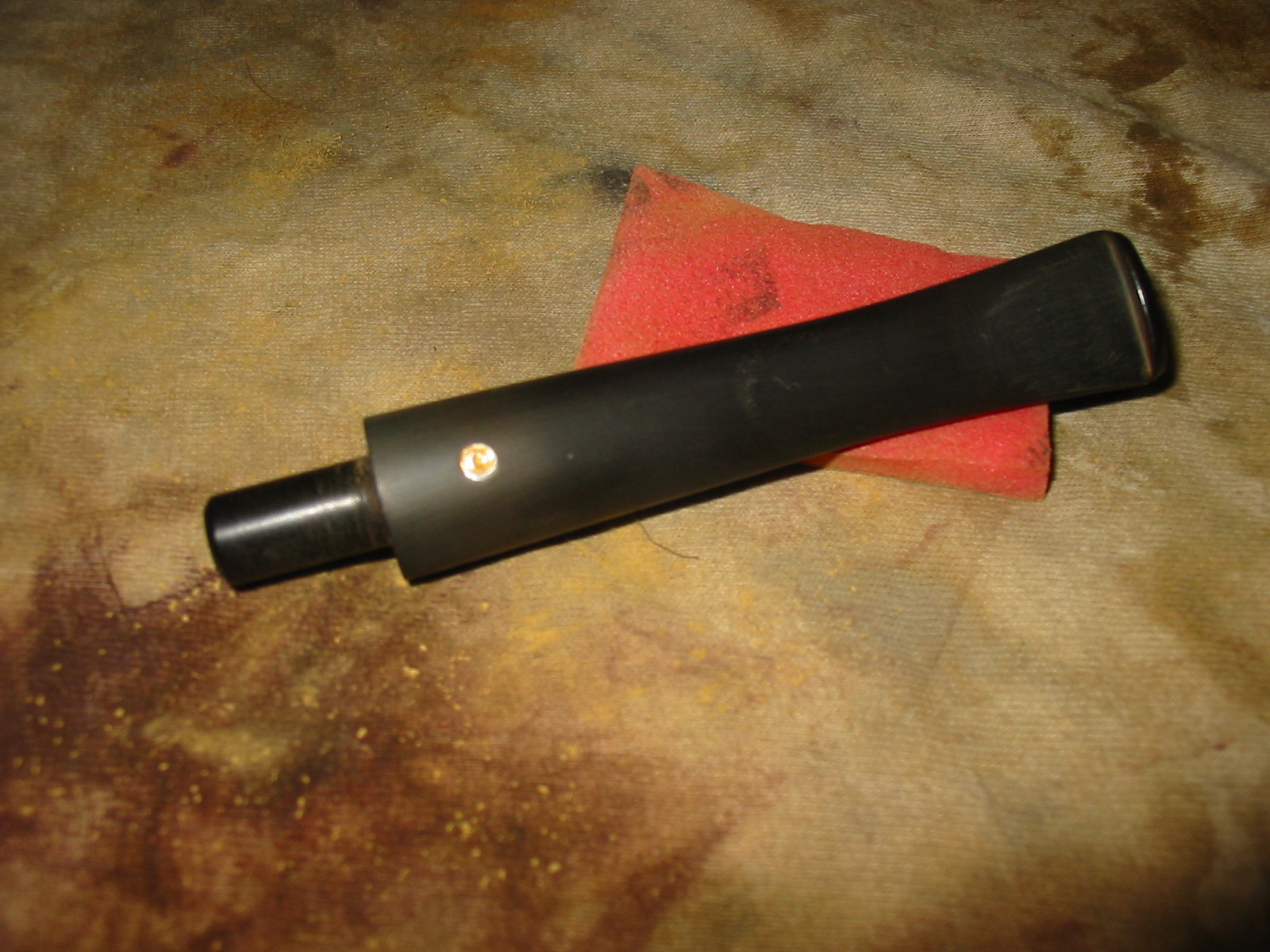
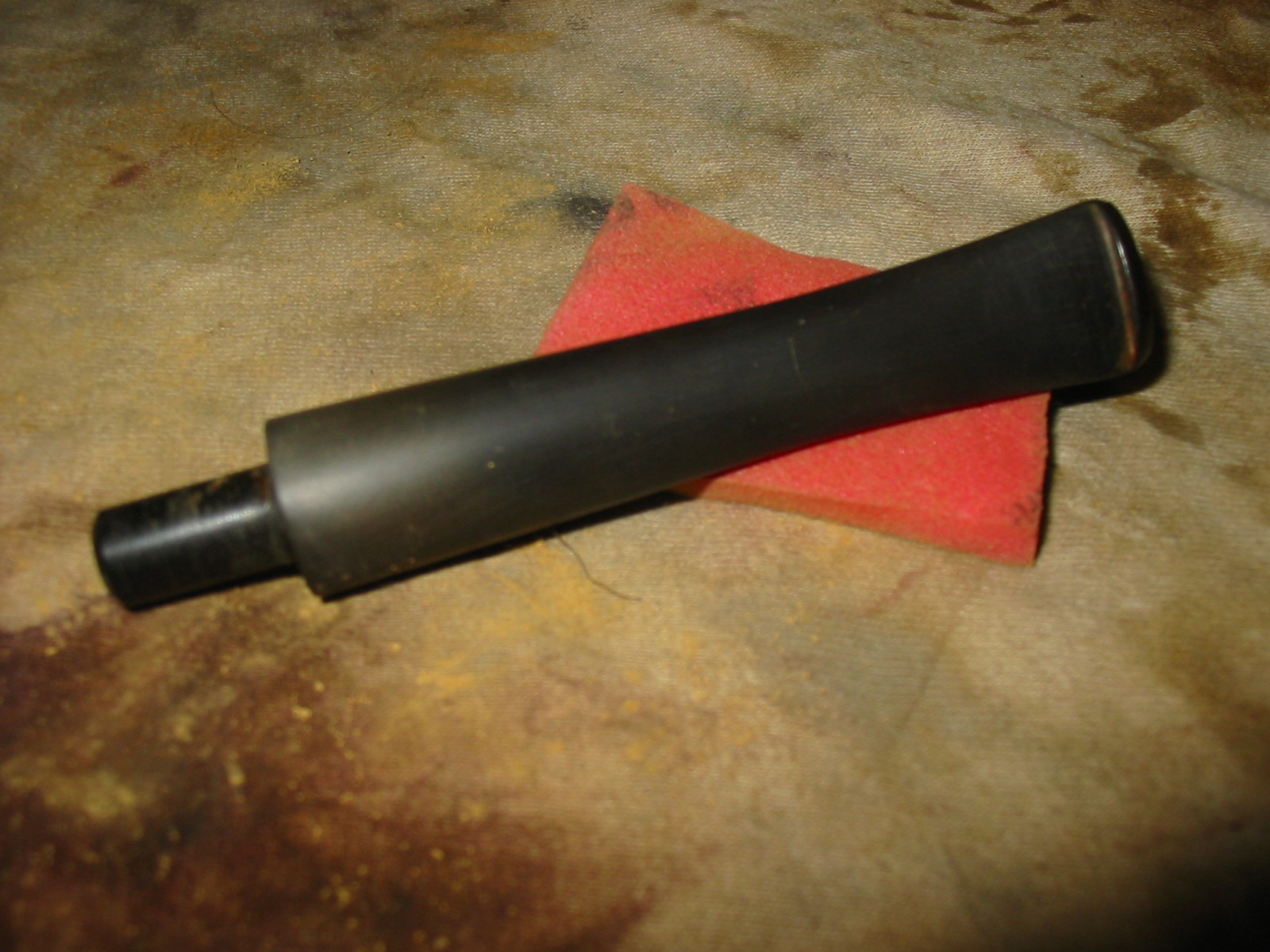
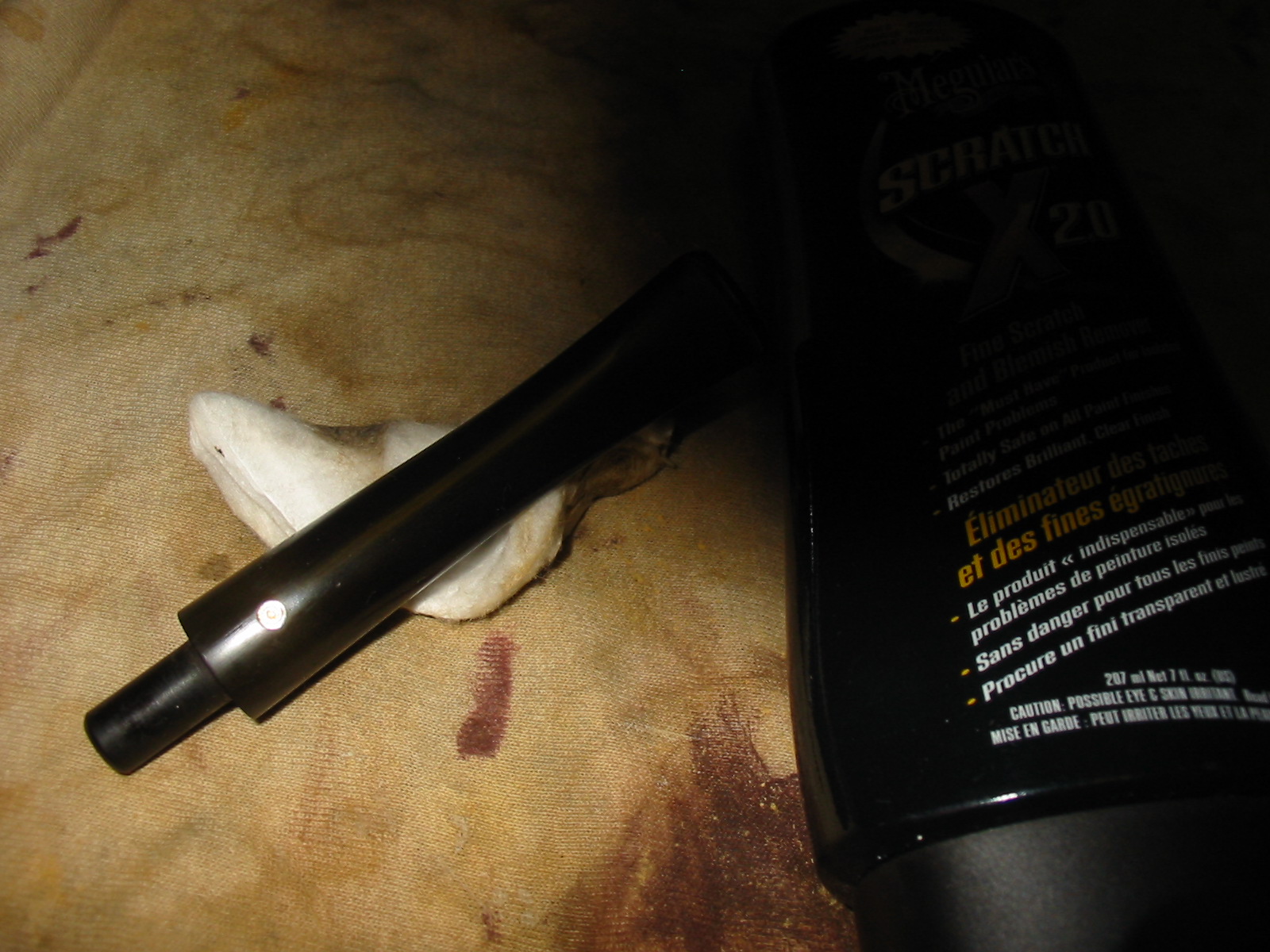
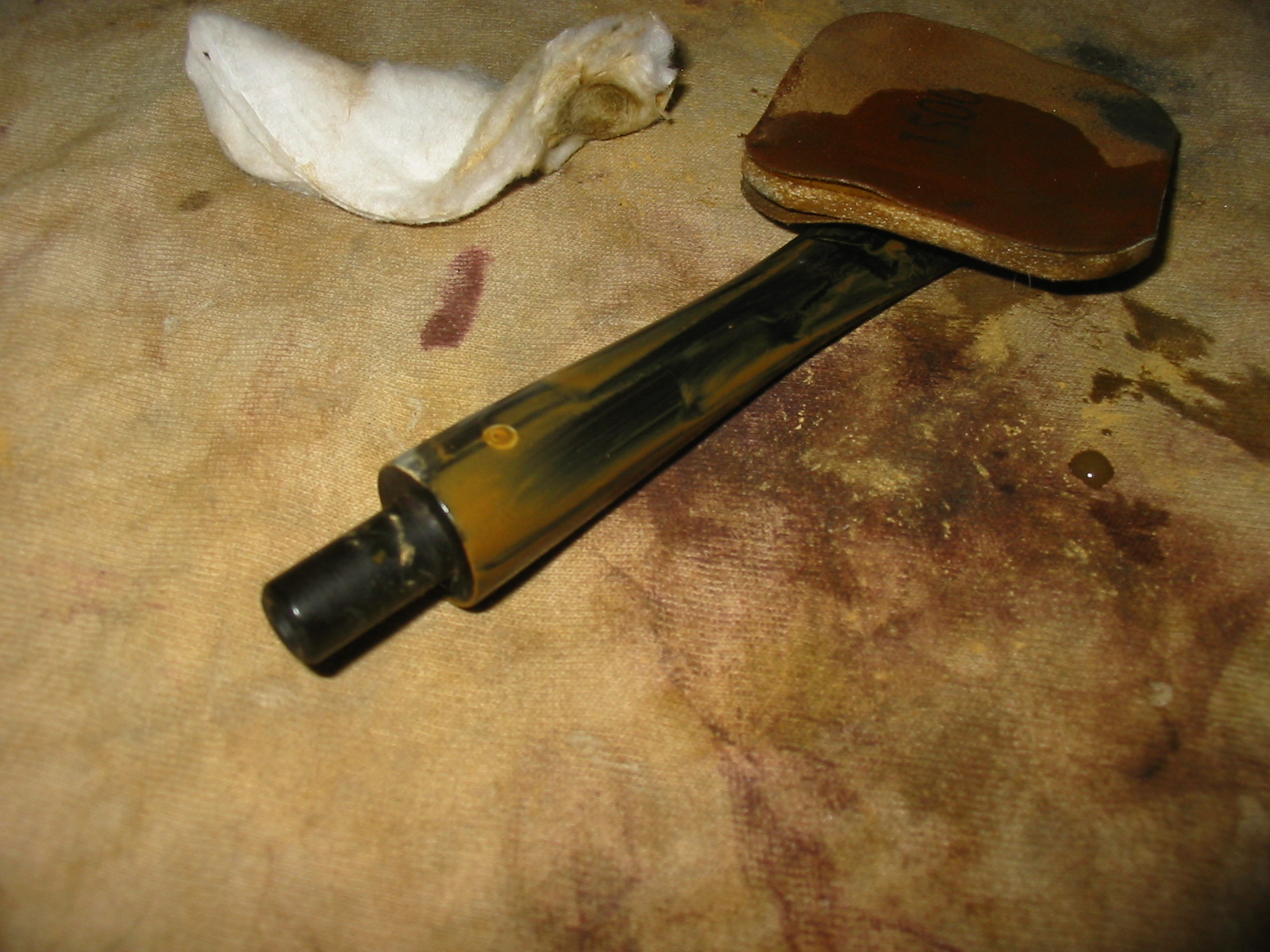
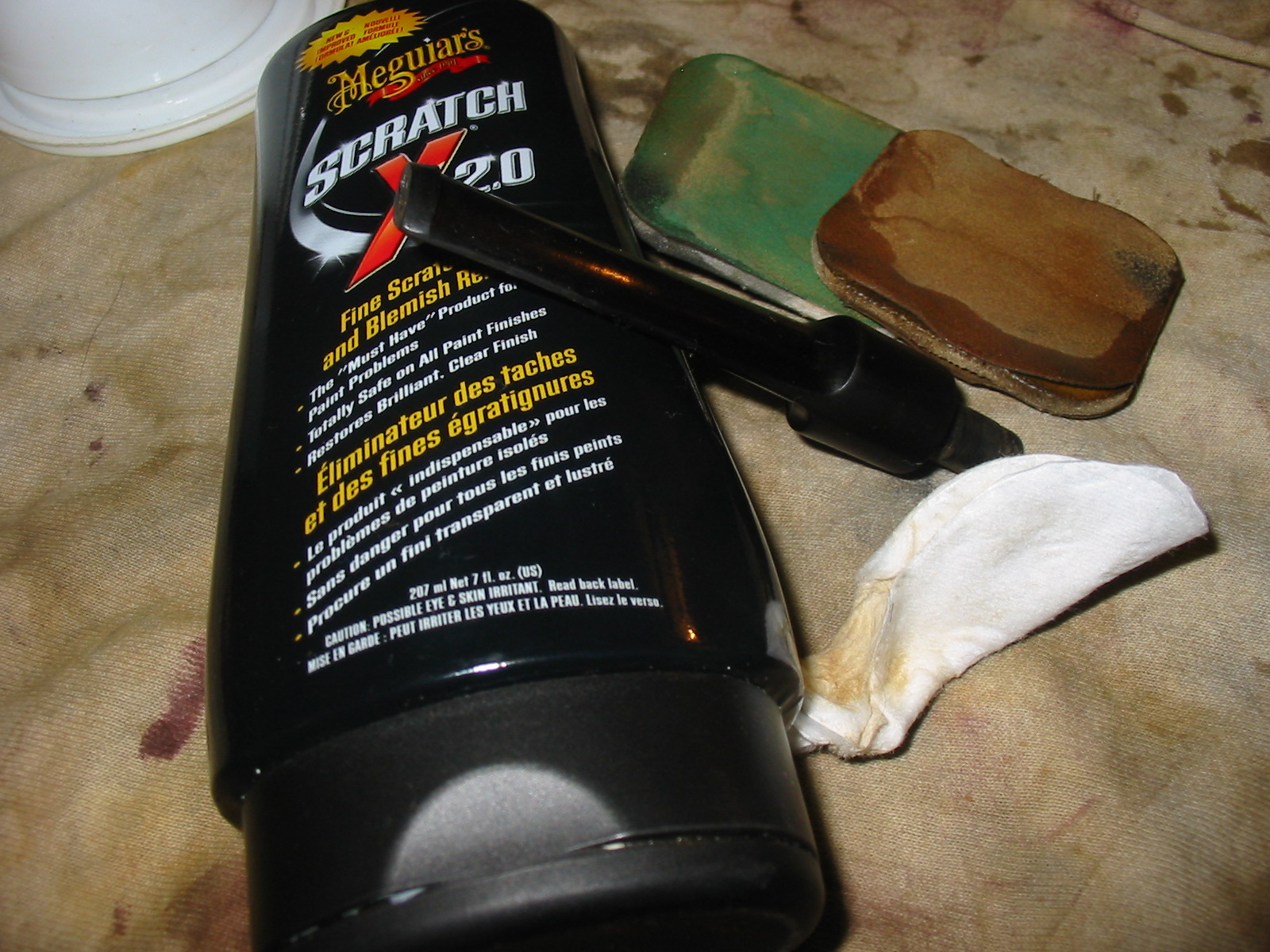
The next four photos show the stem after I had scrubbed it with the oil soap and then polished it with the Maguiar’s Scratch X2.0. The majority of the surface oxidation came off. What remained was deeply embedded in the stem and would require more work.

ImageImageImageImage

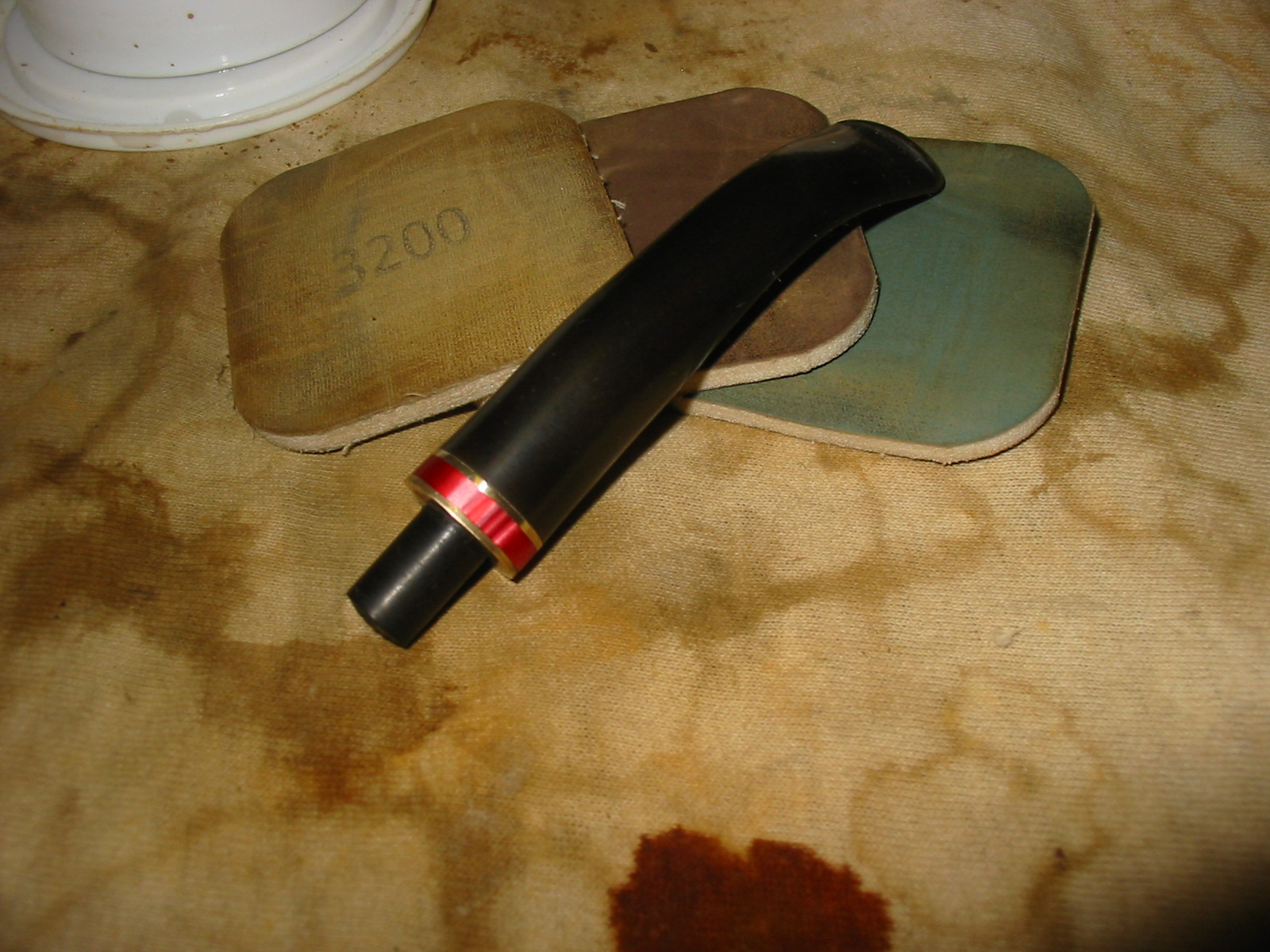
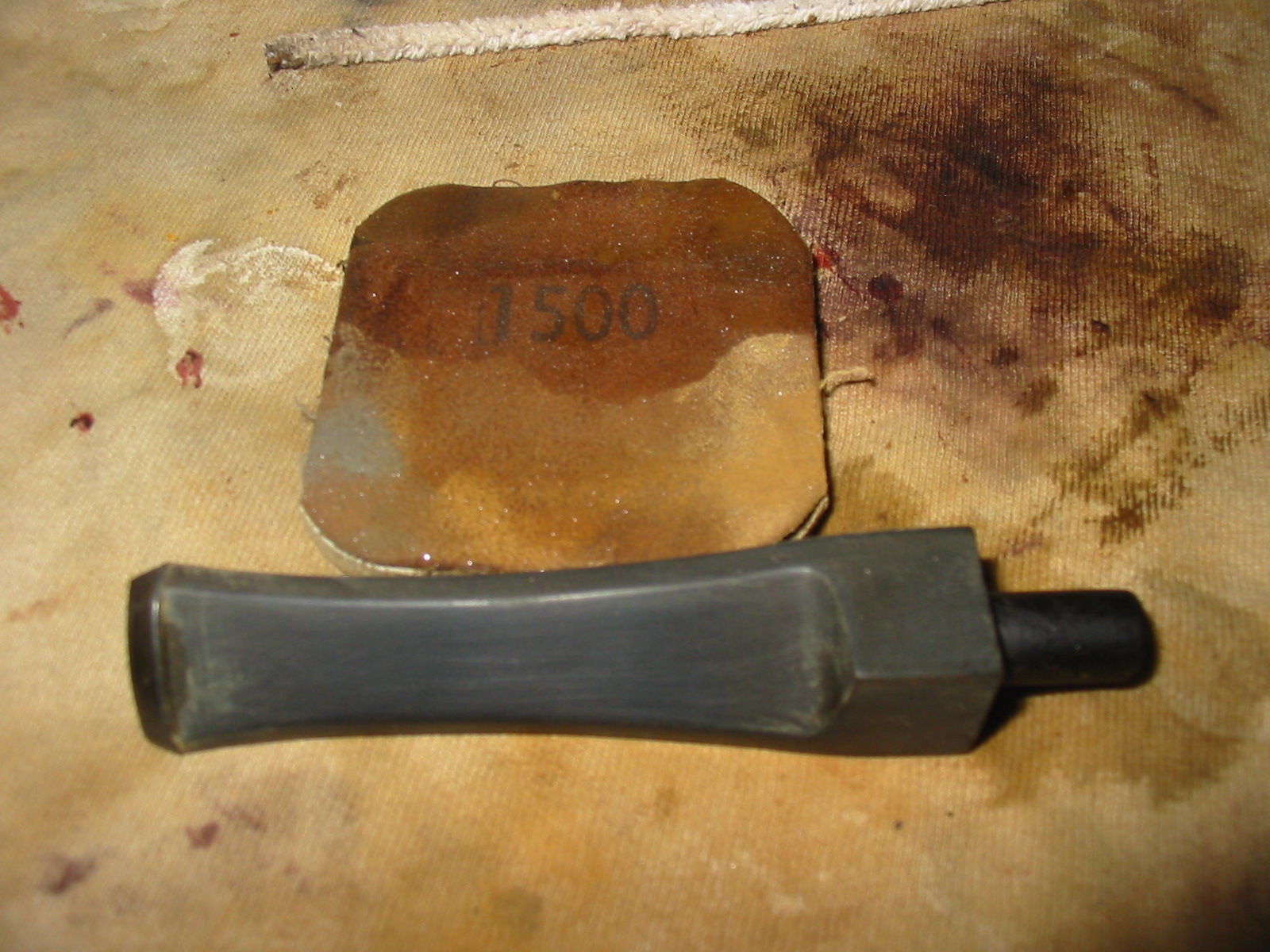
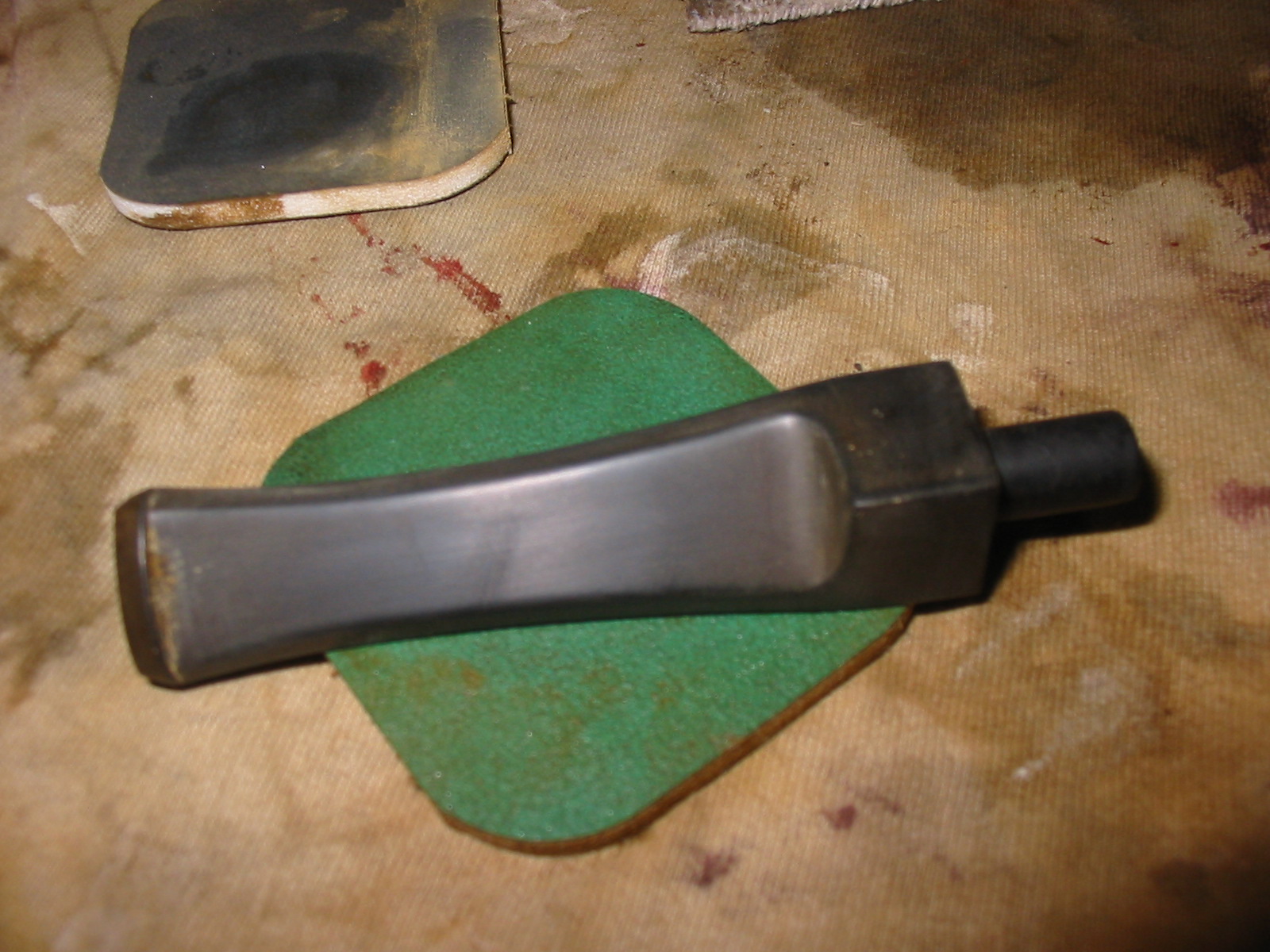
At this point I worked on the remaining oxidation on the stem using the micromesh sanding pads. The next series of six photos show the process. I wet sanded with 1500 and 1800 grit micromesh and then polished the stem with Maguiar’s Scratch X2.0 polish.

ImageImageImageImageImageImage

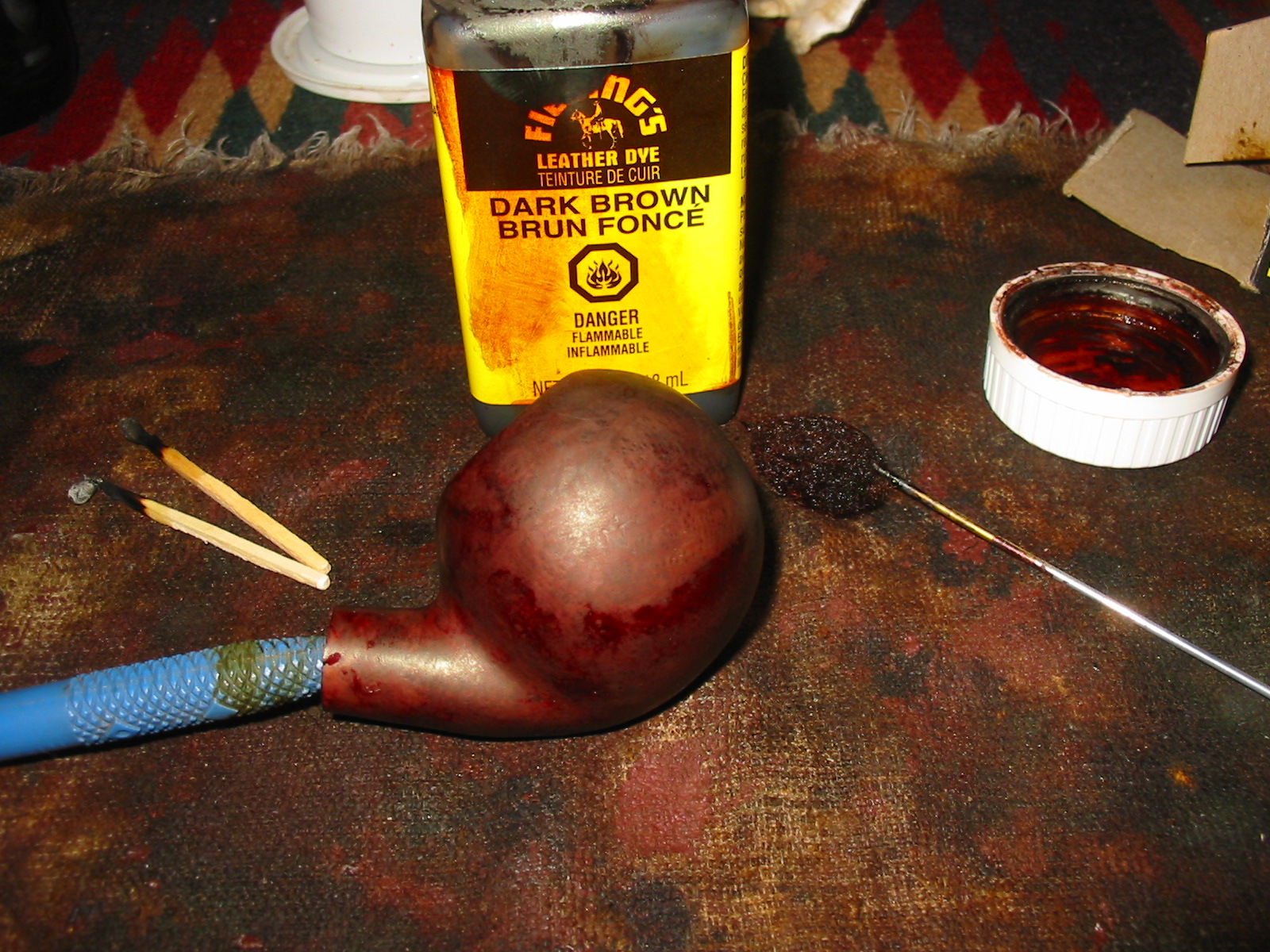
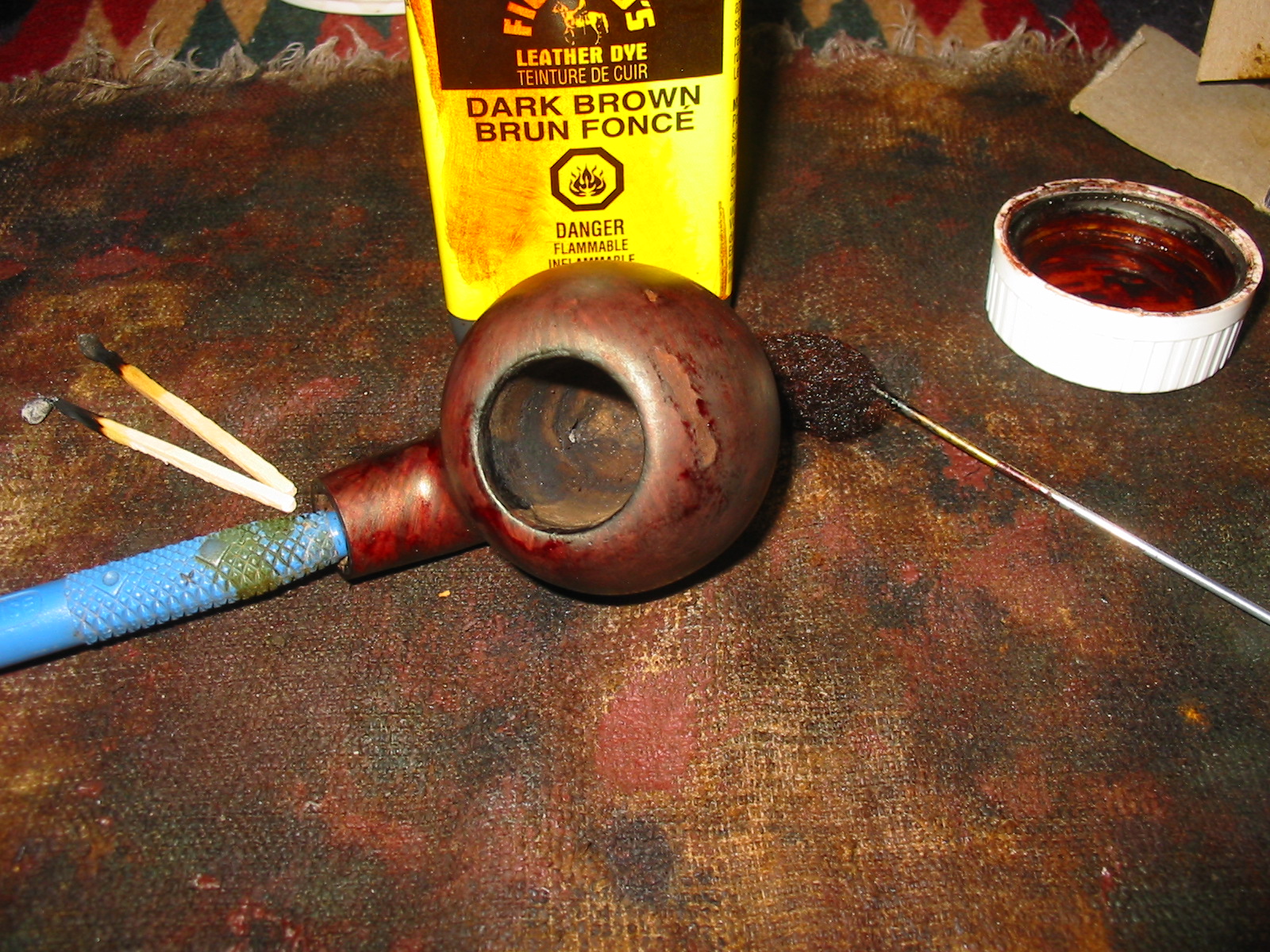
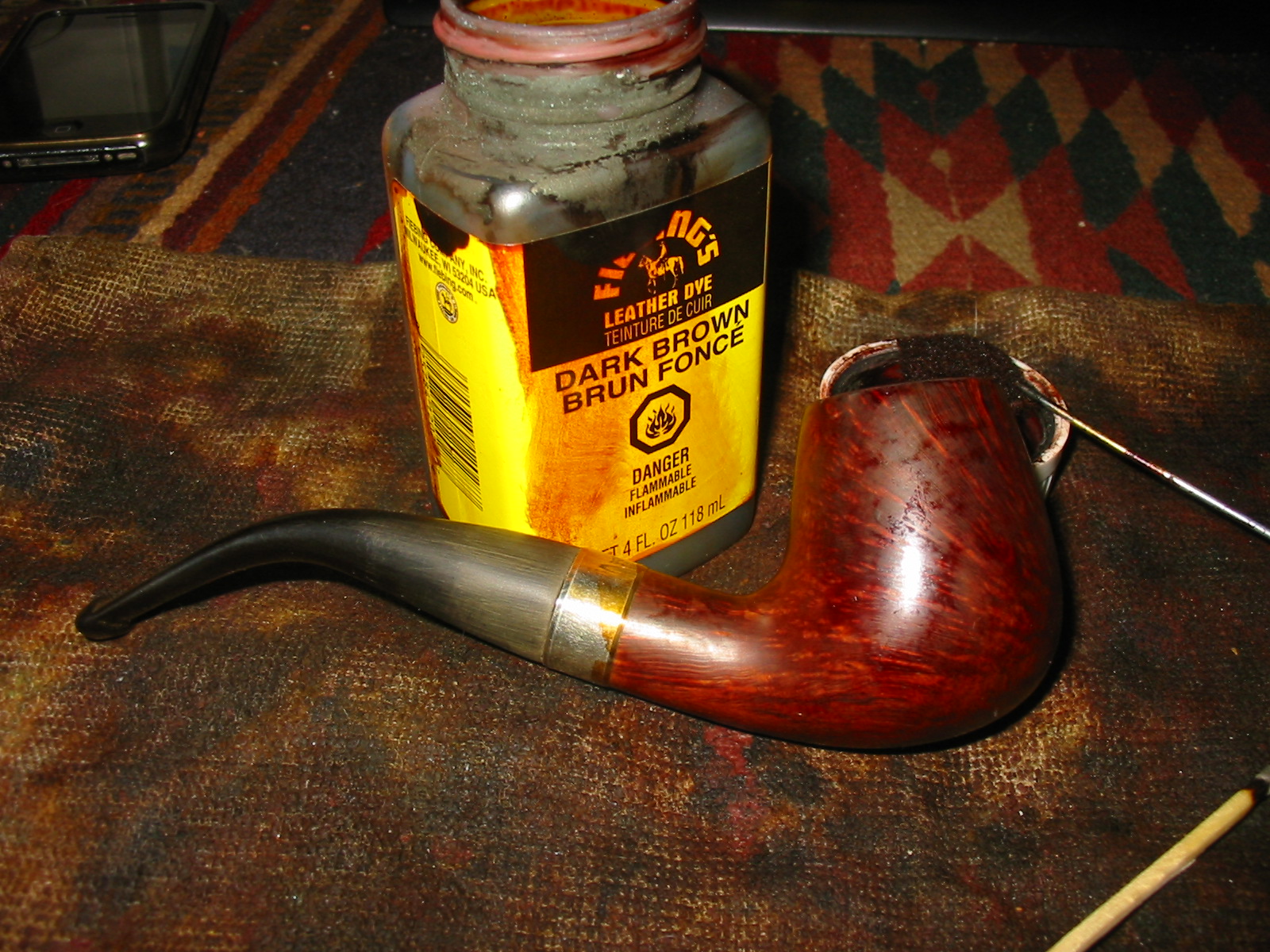
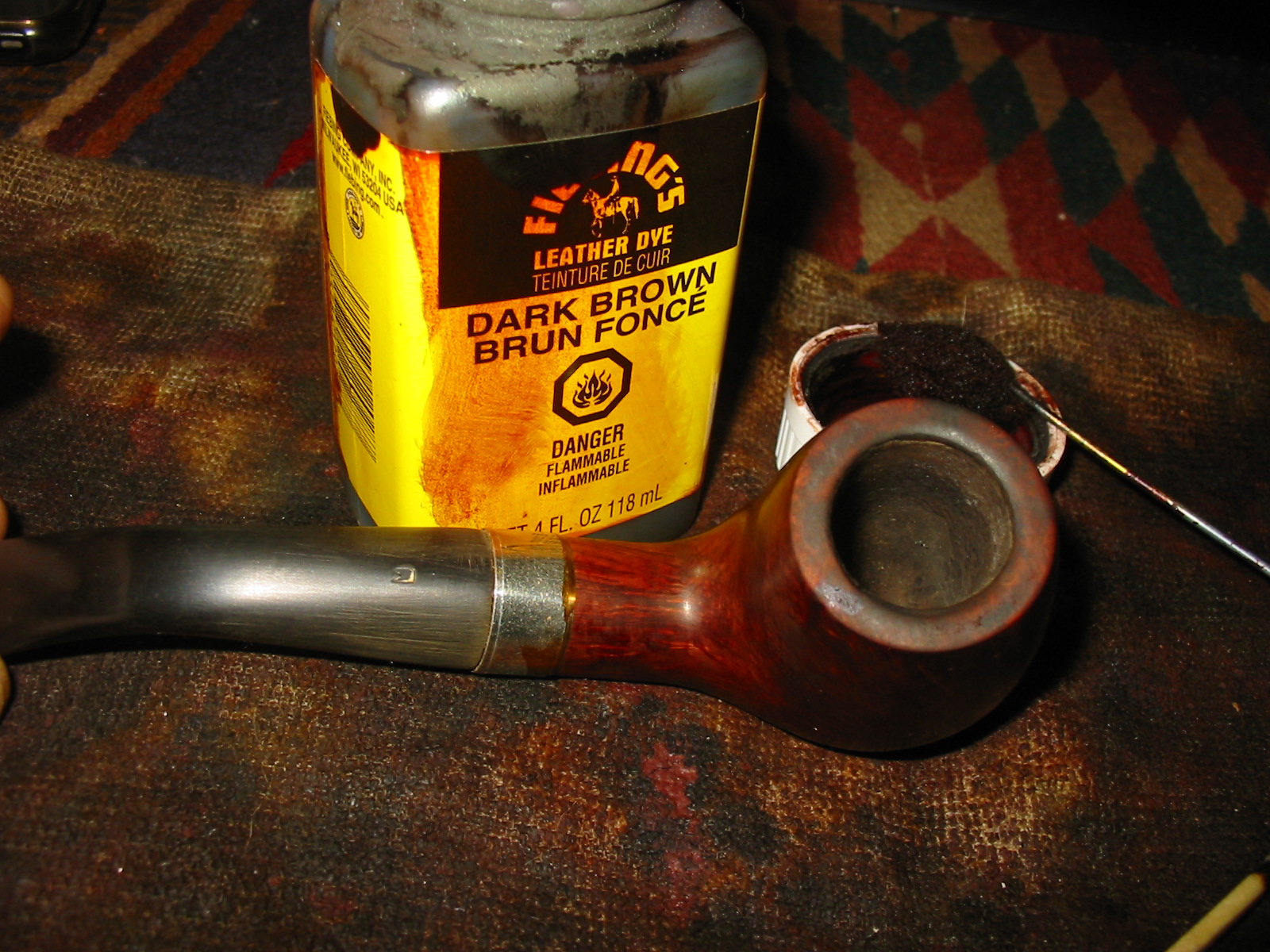
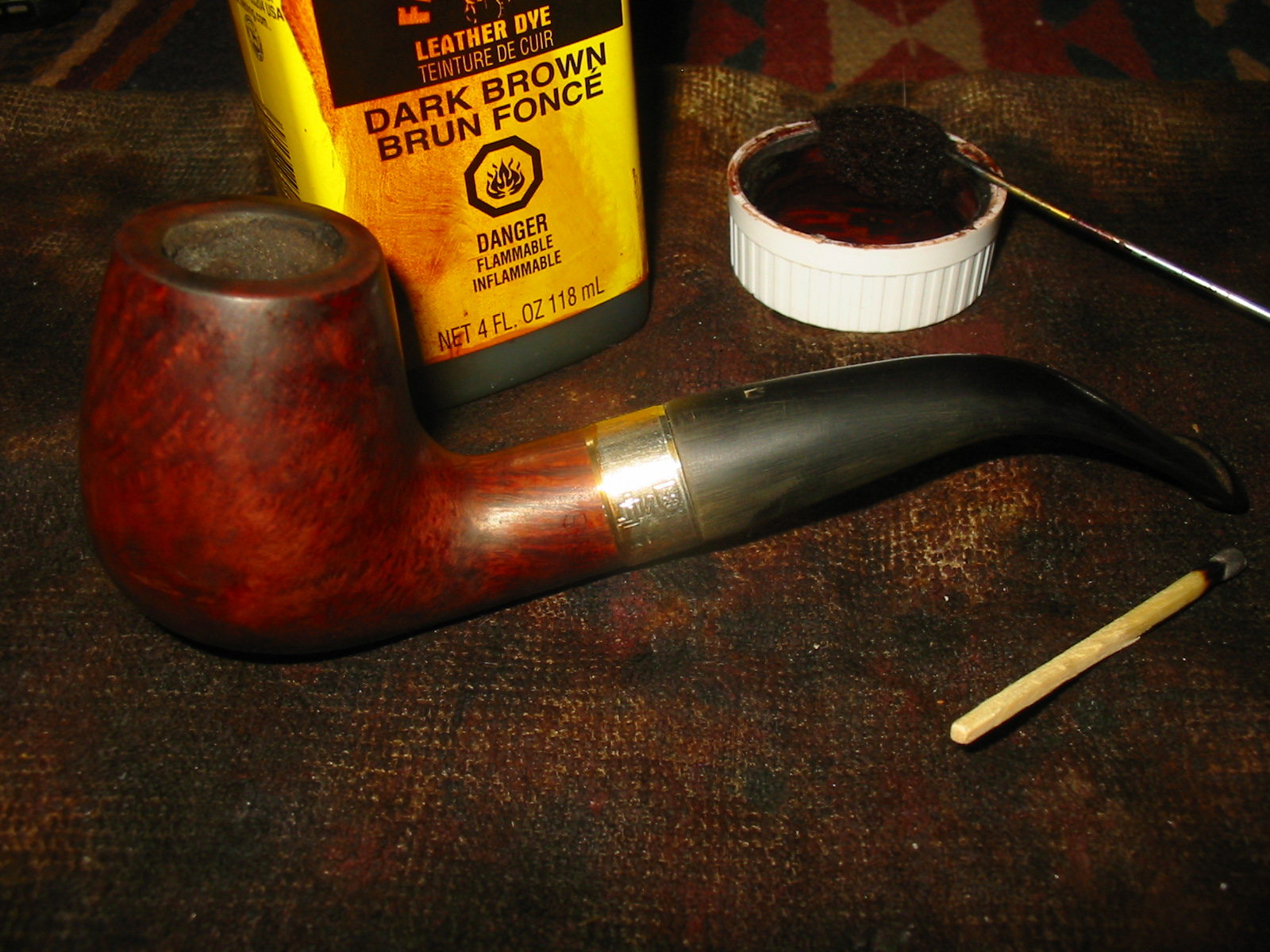
After polishing I stained the bowl with a dark brown aniline stain mixed 2:1 with isopropyl alcohol to restore the finish to the bowl. I stained it, flamed it, restained and reflamed it to set the finish coat. The first two photos below show that process. I took it to my buffer and gave it a buff with White Diamond. The next three photos show the pipe after I had buffed it.

ImageImageImageImageImage

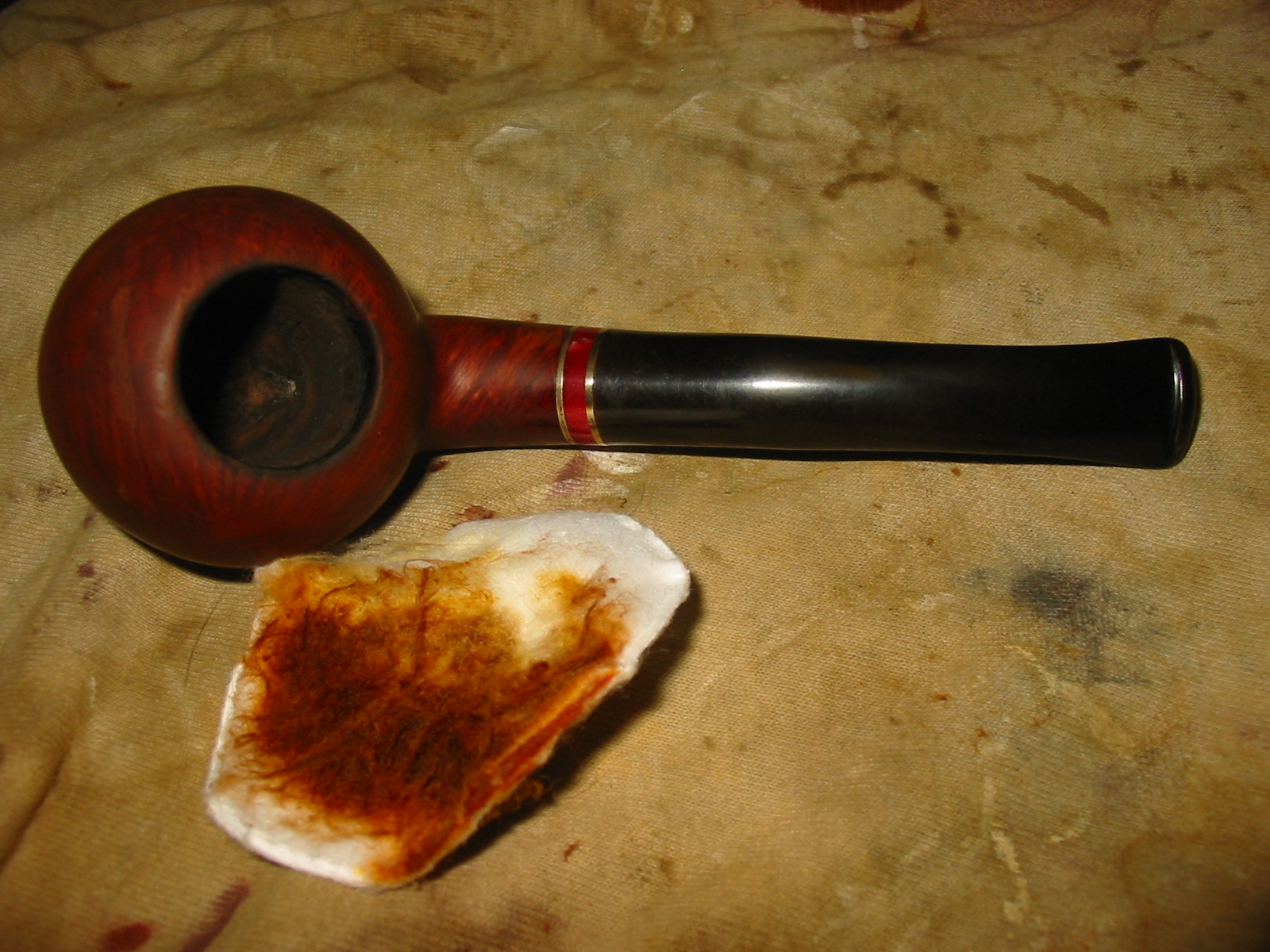
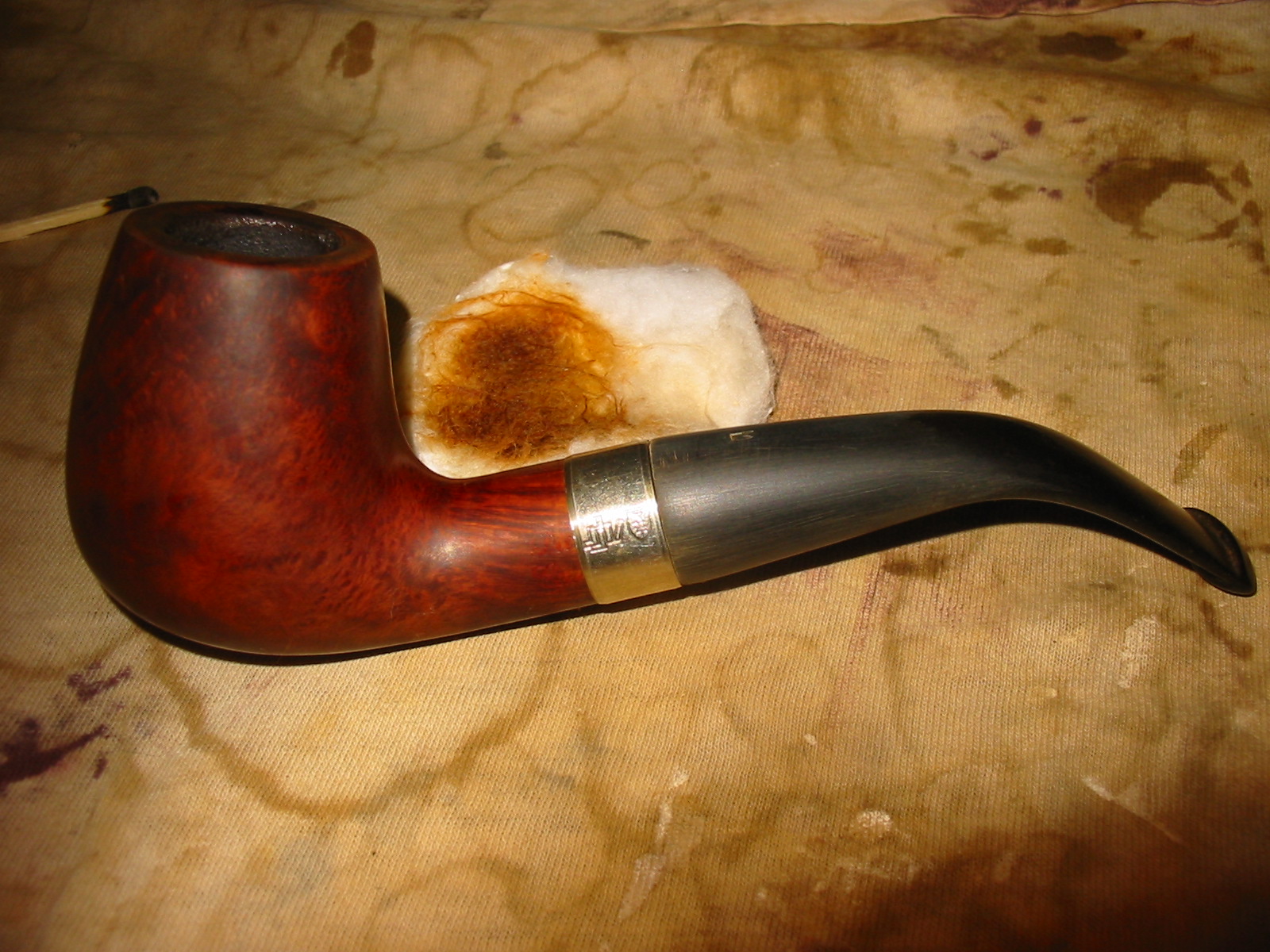
The finished colour was too dark to my liking and obscured the grain rather than highlighting it so I used acetone on cotton pads to reduce the intensity of the colour. The next series of three photos show the new look to the colour after wiping it down with acetone. Note the stain on the cotton pads in the photos.

ImageImageImage

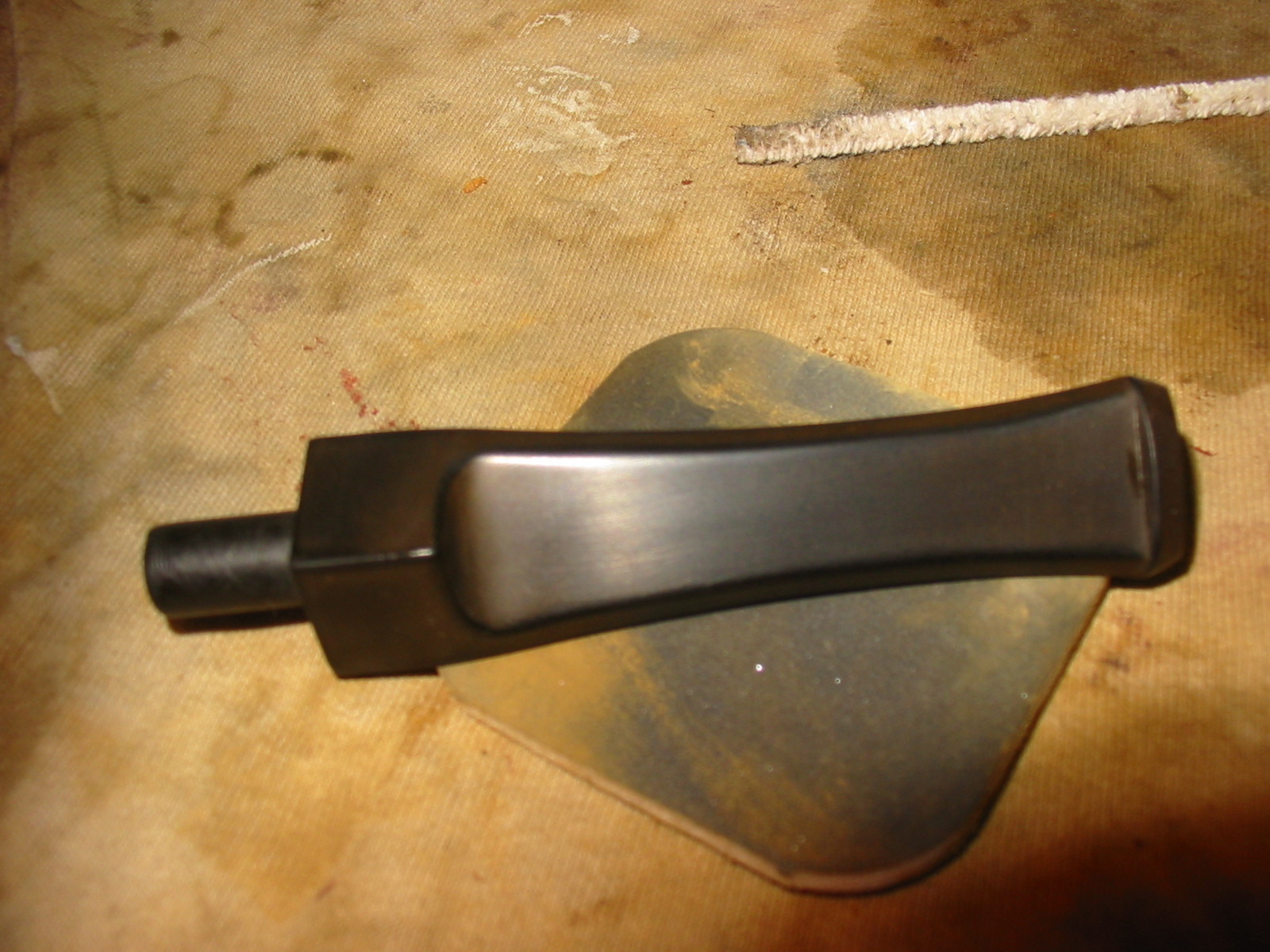
I took the pipe to the buffer again and buffed it with White Diamond. The next series of photos show the finished look of the stain at this point. They also show the ongoing work on the oxidation on the stem using the further grits of micromesh. I dry sanded with 2400-12,000 grit micromesh to finish polishing the stem. After I had finished with the micromesh I used the Maguiar’s again to do a final hand polish. I rubbed the stem down with some Obsidian Oil.

ImageImageImageImage

The next five photos show the finished pipe. I took it to the buffer a last time and buffed the stem using White Diamond. I also lightly buffed the bowl. I gave the stem and bowl several coats of carnauba wax and buffed it lightly with a soft flannel buff to bring up the shine. You will note a little oxidation remaining around the logo on the stem. I decided to leave that and not damage the stamping on the stem.

ImageImageImageImageImage

Restemmed and Refurbish Savinelli Duca Carlo


Blog by Steve Laug

I picked up a Duca Carlo in utter ignorance on EBay the other day. I was not familiar with the brand and only later found out it was a Savinelli. The seller’s photograph are worse than mine so I was not sure what I was getting but decided to take a chance on it. I picked it up for very little so I figured I had nothing to lose. The first series of out of focus photos show the pipe as it appeared in the seller’s advert on EBay. The grain looked like it had potential to me and the rest of the pipe appeared to be in workable shape. Once it got here I would have a better idea of what work would need to be done.

ImageImageImage

The first photo below shows the pipe after I took it out of the box it came in and put it on my work table. It was definitely in need of a ream and clean. The bottom of the bowl was dusty but had no cake on it. The upper portion of the bowl had an uneven cake. The rim was tarred and oily but there were no dents in the rim or on the rest of the bowl for that matter. The shank had a small hairline crack on the right side. It is next to the fill on the shank that is visible in the photo below. Fortunately this was the only fill I found in the bowl. It was not a bad piece of briar. There are a few bald spots on the bottom of the bowl but there is also some nice grain both birdseye and flame on the sides, front and back of the bowl and also on the shank. The shank and the bottom of the bowl had some cobwebs in it like it had been sitting in storage for a while. I blew out the dust bunnies and then pulled out a stem from my box of stems. It did not have a tenon so I screwed in a delrin tenon into the drilled out hole in the stem. The shank of the Duca Carlo was also drilled for a filter but I decided since I was restemming it and putting a new tenon on the stem I would make it fit without a filter.

Image

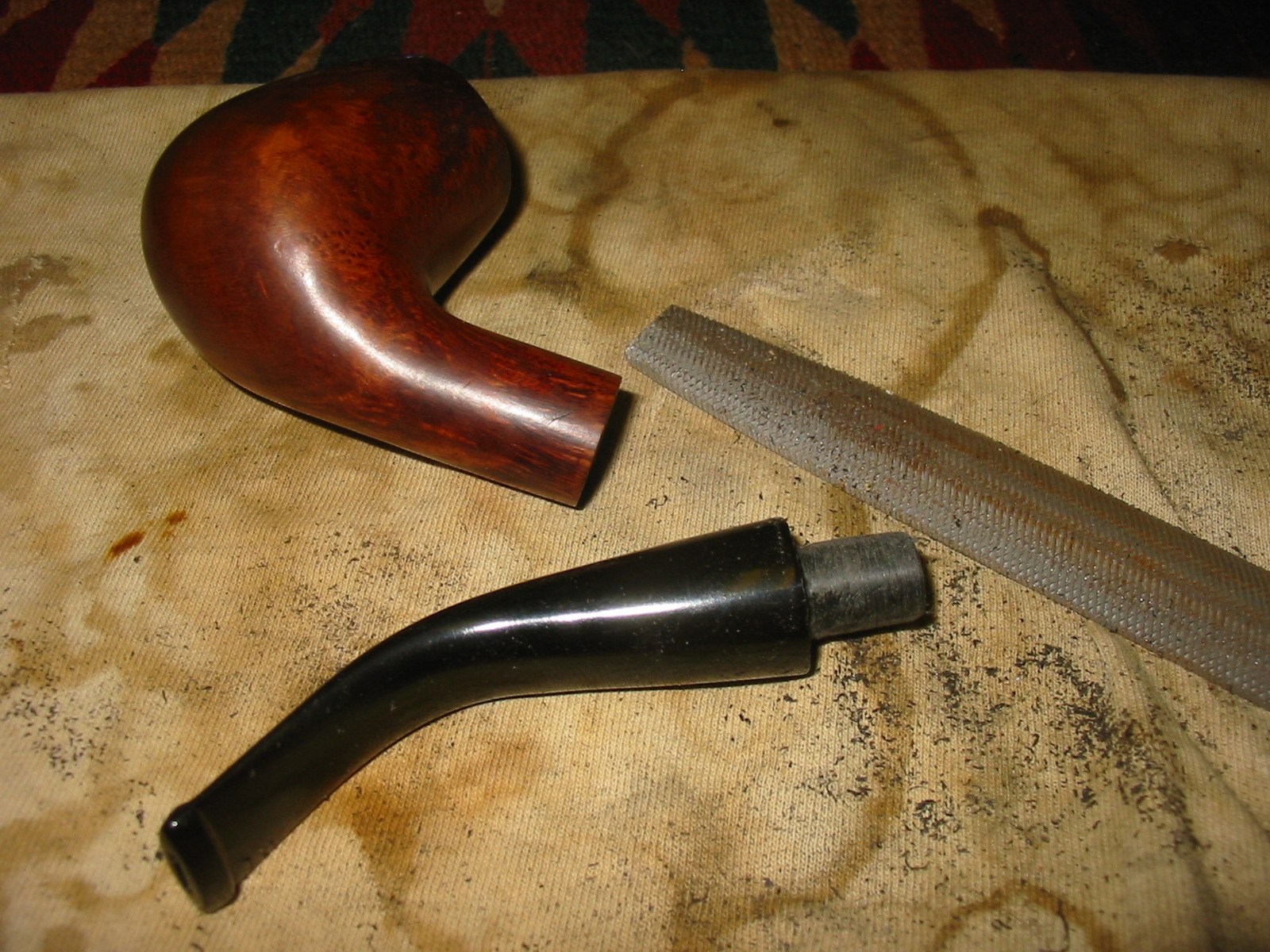
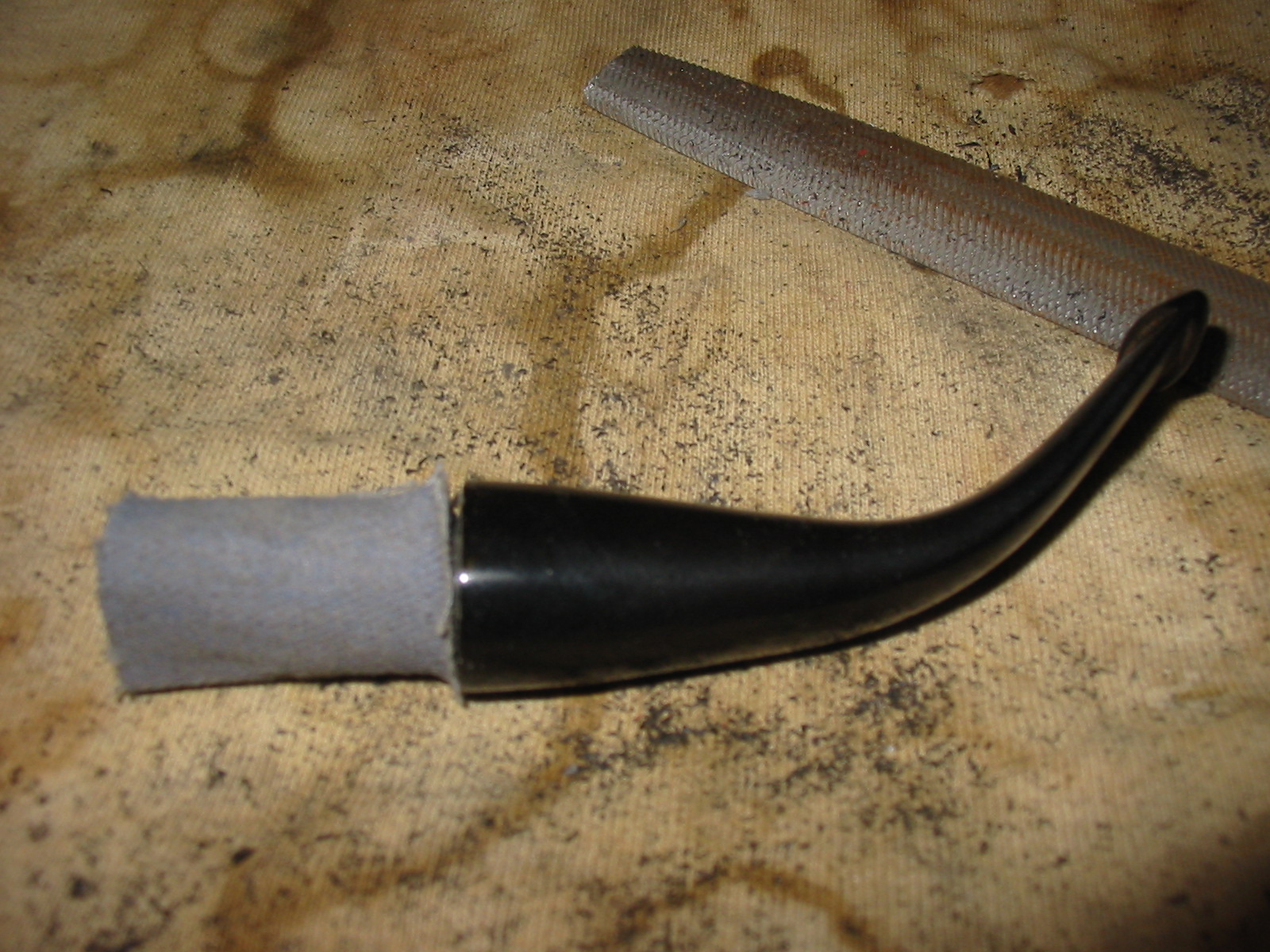
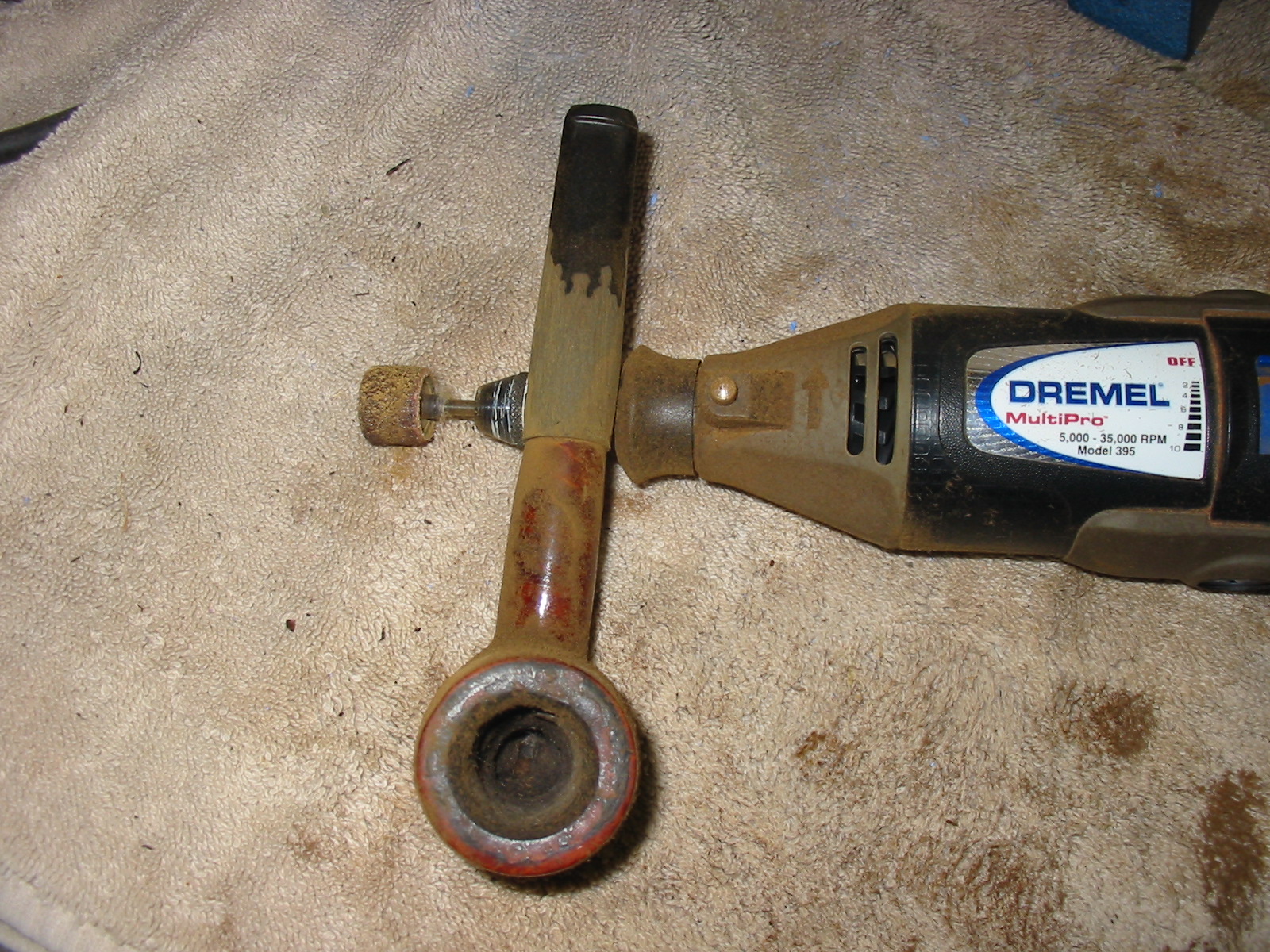
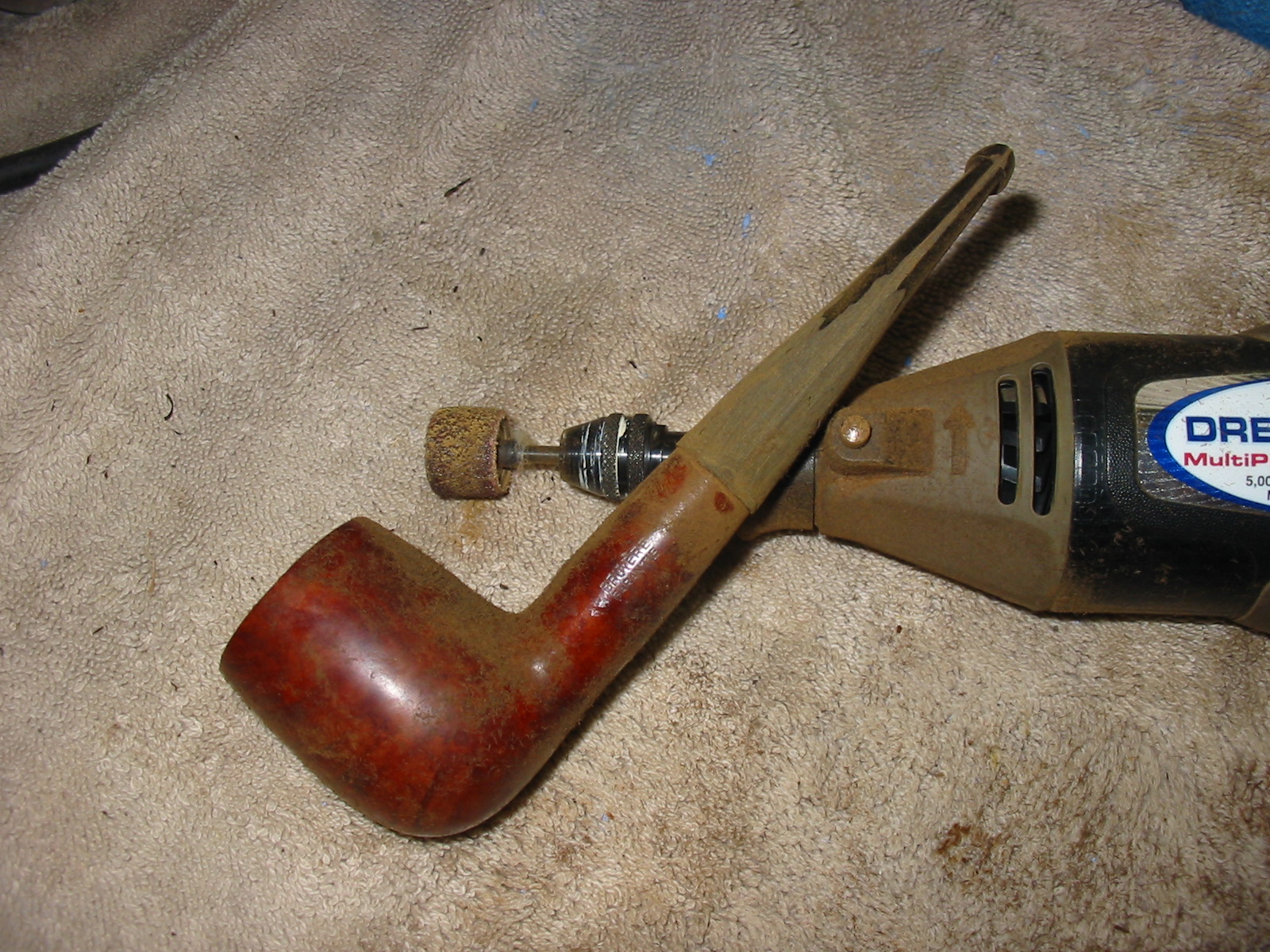
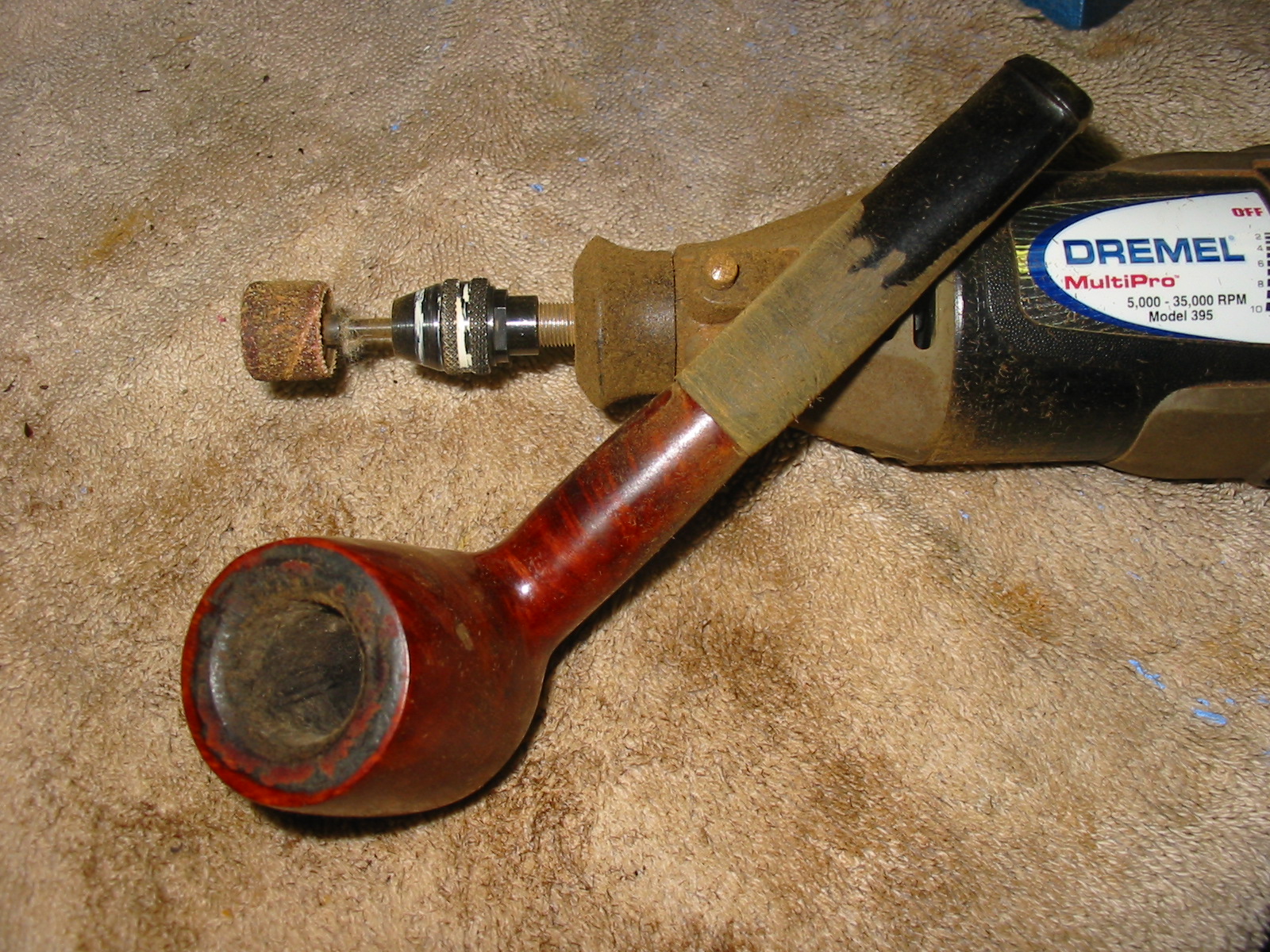
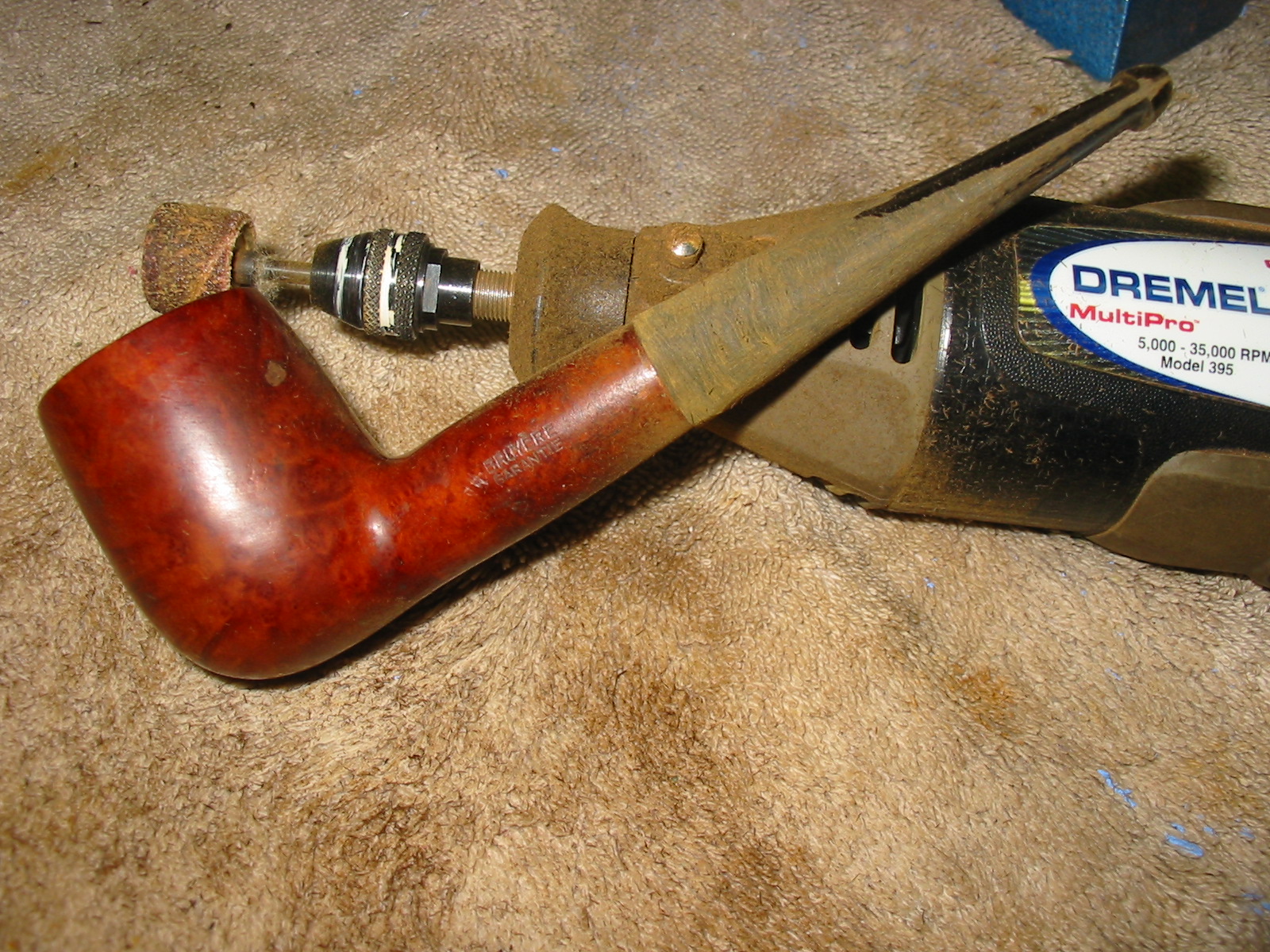
I needed to remove a lot of the delrin from the diameter of the tenon to get a proper fit. The tenon was too large for my Pimo Tenon Turner so I had to do the shaping by hand with files and my Dremel. The next two photos show the shaping process of the tenon. I used a rasp to take of as much of the material as I thought practical. I then used the sanding drum on the Dremel to smooth out the tooth marks from the rasp. I finally used medium grit Emery paper to take down the remainder of the tenon.

ImageImage

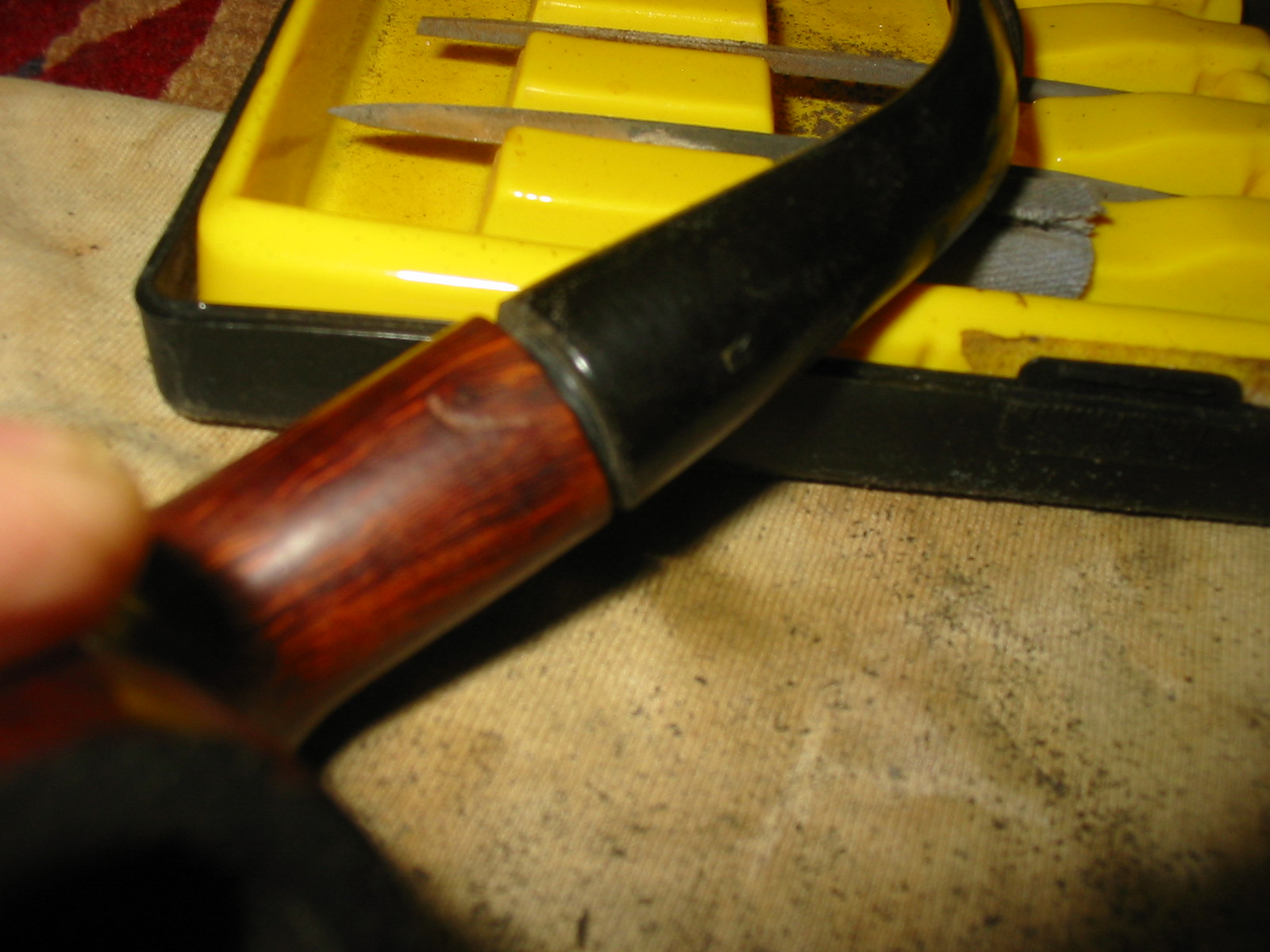
Once I had it sanded to fit I inserted it in the mortise to check the hairline crack. In the photo below I have it partially inserted and the crack is visible next to the fill on the shank. It was not a large or serious crack but in inspecting it I found one on the underside of the shank as well on the opposite edge. This made it necessary for me to band the shank to maintain the integrity of the pipe.

Image

I sorted through my box of bands and found one that would give a good tight fit to the shank. It is a nickel band and once heated and pressure fit on the shank it would give the strength to the shank. The next three photos show the banding process from choosing the band to pressure fitting it on the shank.

ImageImageImage

After banding the shank I inserted the stem in the shank and it fit well. It was snug and fit against the end of the shank cleanly. It was a bit larger in diameter than the shank so I sanded it with the emery paper to remove the excess material on the stem. The next three photos show the progress of fitting the stem against the shank.

ImageImageImage

I reamed the bowl with my T handle Pipnet reamer and blade heads. It was an easy ream as the bottom half of the bowl was clear briar. The Pipnet reamer must be carefully inserted and turned so as not to make the bowl out of round or damage the bowl.

ImageImage

After reaming I decided to clean off the tars and oils on the rim. I used a fine grit sanding sponge to remove the grime as seen in the first picture below. I then wiped down the bowl and rim with acetone on a cotton pad as can be seen in the second and third photo below. I found that cleaning off the grime and the dark parts of the bowl revealed some really nice grain on the pipe.

ImageImageImage

The next three photos show the bowl after the wipe down with acetone and the stem after sanding with the medium grit sanding sponge. The fit is getting very close to being what I was looking for. I am still not sure about the bend in the stem. It fits well in the mouth but I may heat and rebend it. I will see once I am finished with the pipe.

ImageImageImage

I restained the bowl and rim with dark brown aniline stain. I applied it with the dauber and then flamed it with a match, restained and reflamed it. The next three photos show the freshly stained bowl after I flamed it. Once it was dry I took it to my buffer and buffed the bowl with Tripoli to polish and remove the excess stain.

ImageImageImage

Even after buffing the stain was too dark for me. I wiped the bowl down with acetone on a cotton pad to lighten the stain. The next series of three photos show the bowl after I had wiped it down with the acetone. The colour was what I wanted. It would polish up very well.

ImageImageImage

I set the bowl aside after this and went to work on the stem with the micromesh sanding pads. The next nine photos show the polishing process with the micromesh pads and the Maguiar’s Scratch X 2.0. I began dry sanding the stem with 1500 grit micromesh sanding pads. After that I polished the stem with the Maguiar’s before working through the rest of the micromesh grits 1800-12,000. After the final sanding I polished it a second time with the Maguiar’s and then gave it a buff with White Diamond. I brought it back to the work table and wiped it down with Obsidian Oil and then coated it with some carnauba wax. For much of the final sanding I worked with the stem on the shank so as not to round the shoulders of the stem.

ImageImageImageImageImageImageImageImageImage


When I had the scratches worked out of the stem I buffed the entire pipe with White Diamond and then several coats of carnauba wax. The finished pipe can be seen in the photos below. I decided not to rebend the stem but to leave it for now and see how it feels when smoking it. I can rebend it at any time should I choose. The final four photos show the finished pipe. This was a pretty straightforward refurb, it took me about three hours to restem and refinish the pipe.

ImageImageImageImage


What to refurbish next?


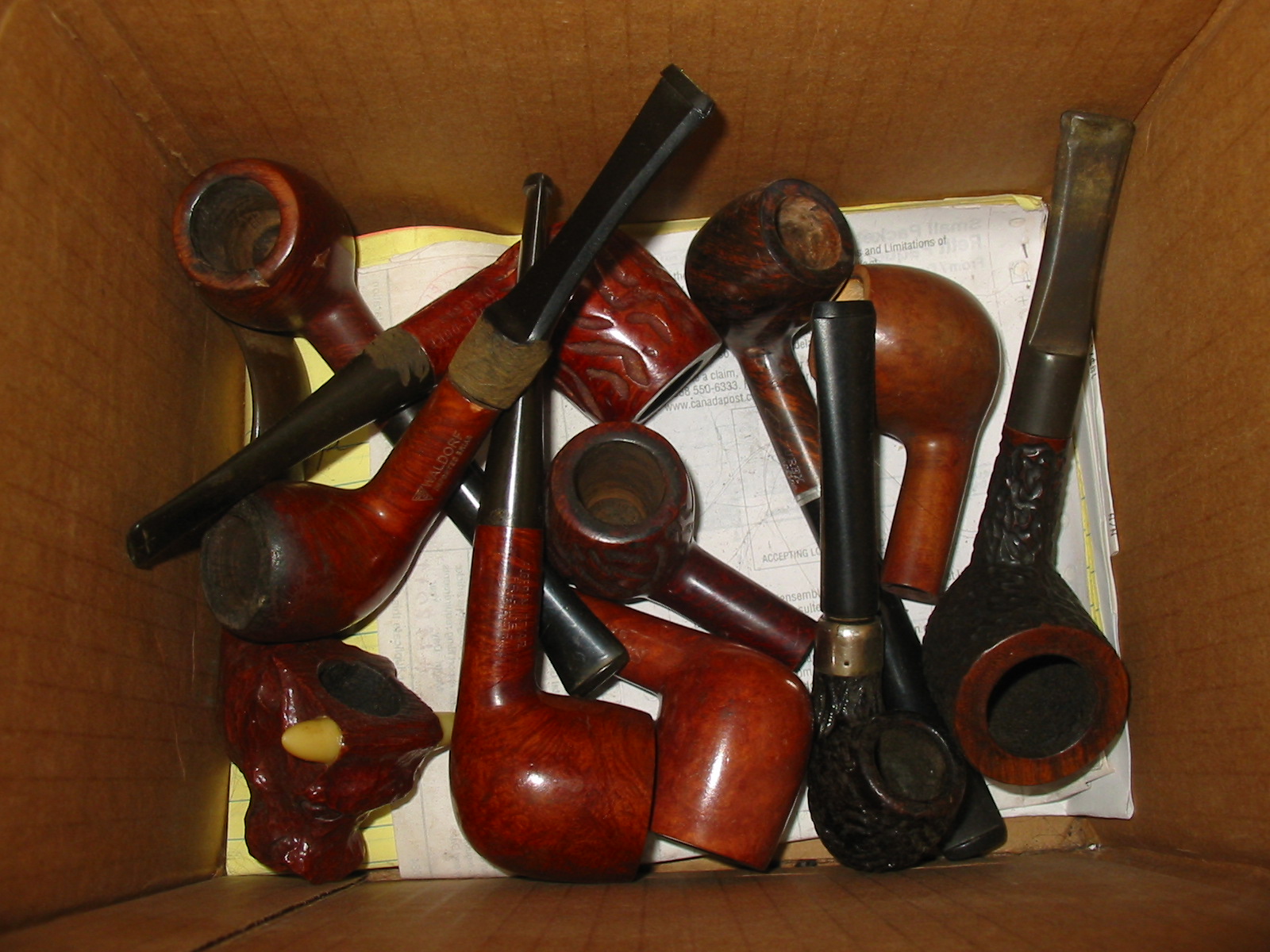
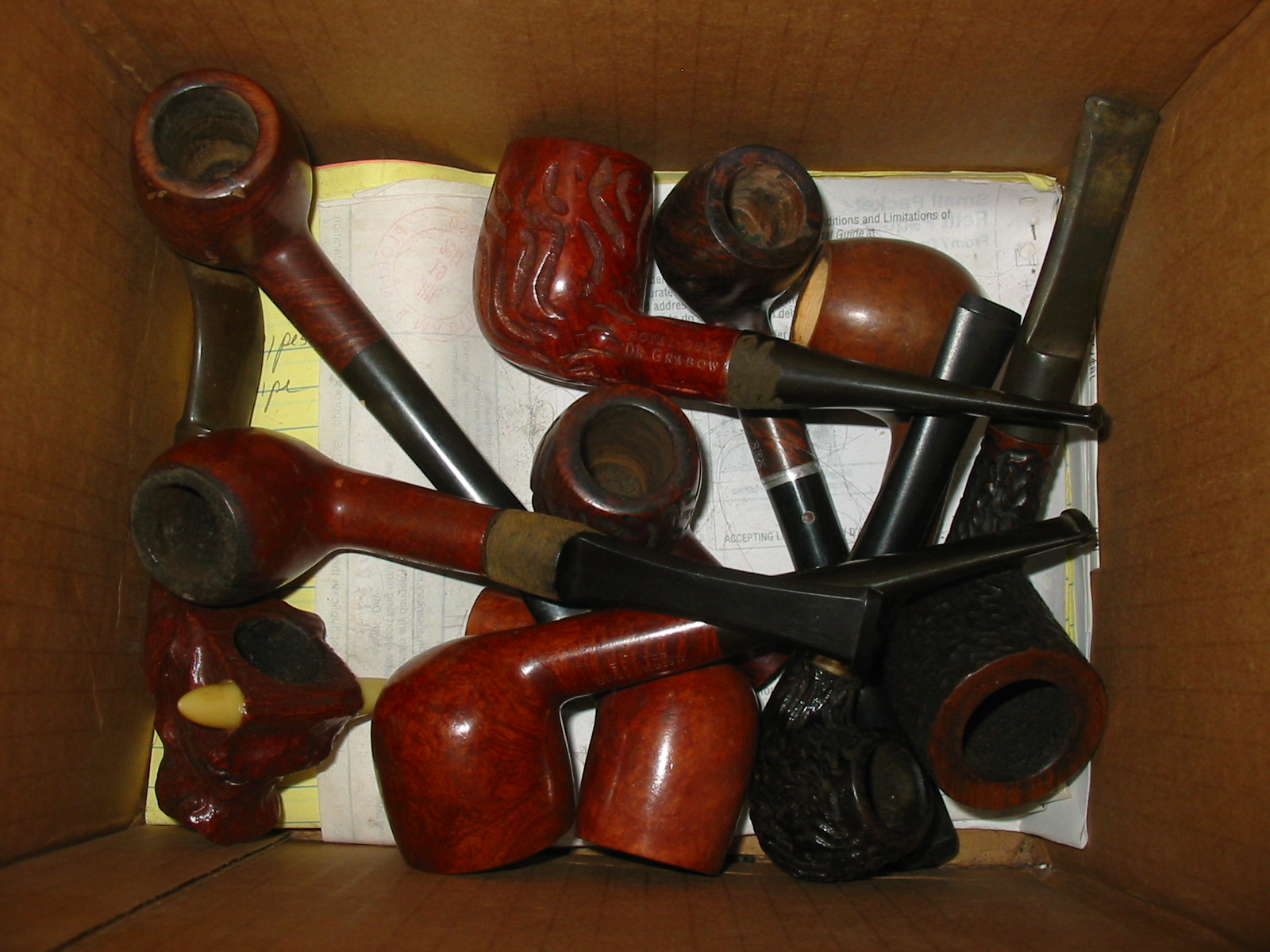
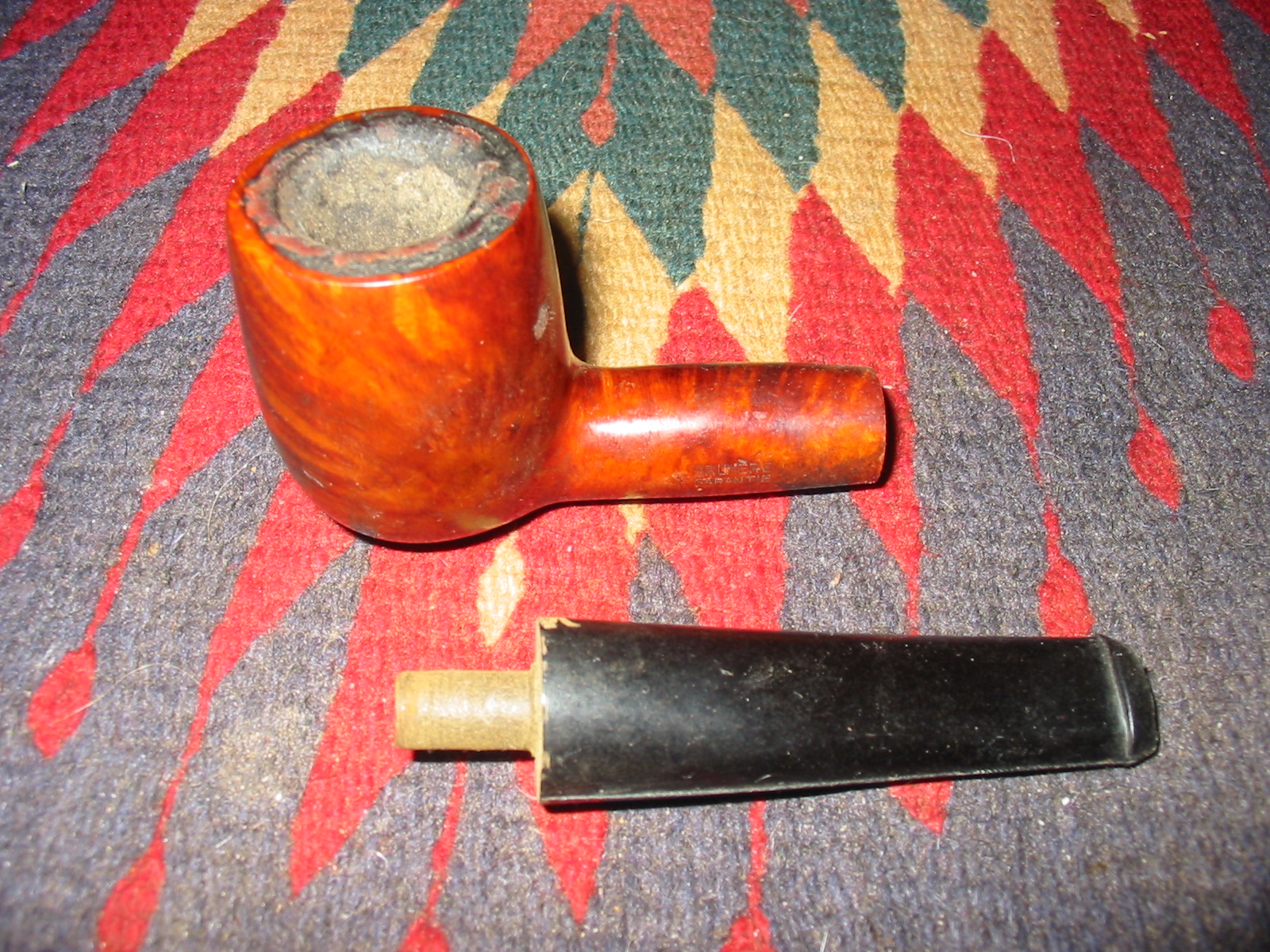
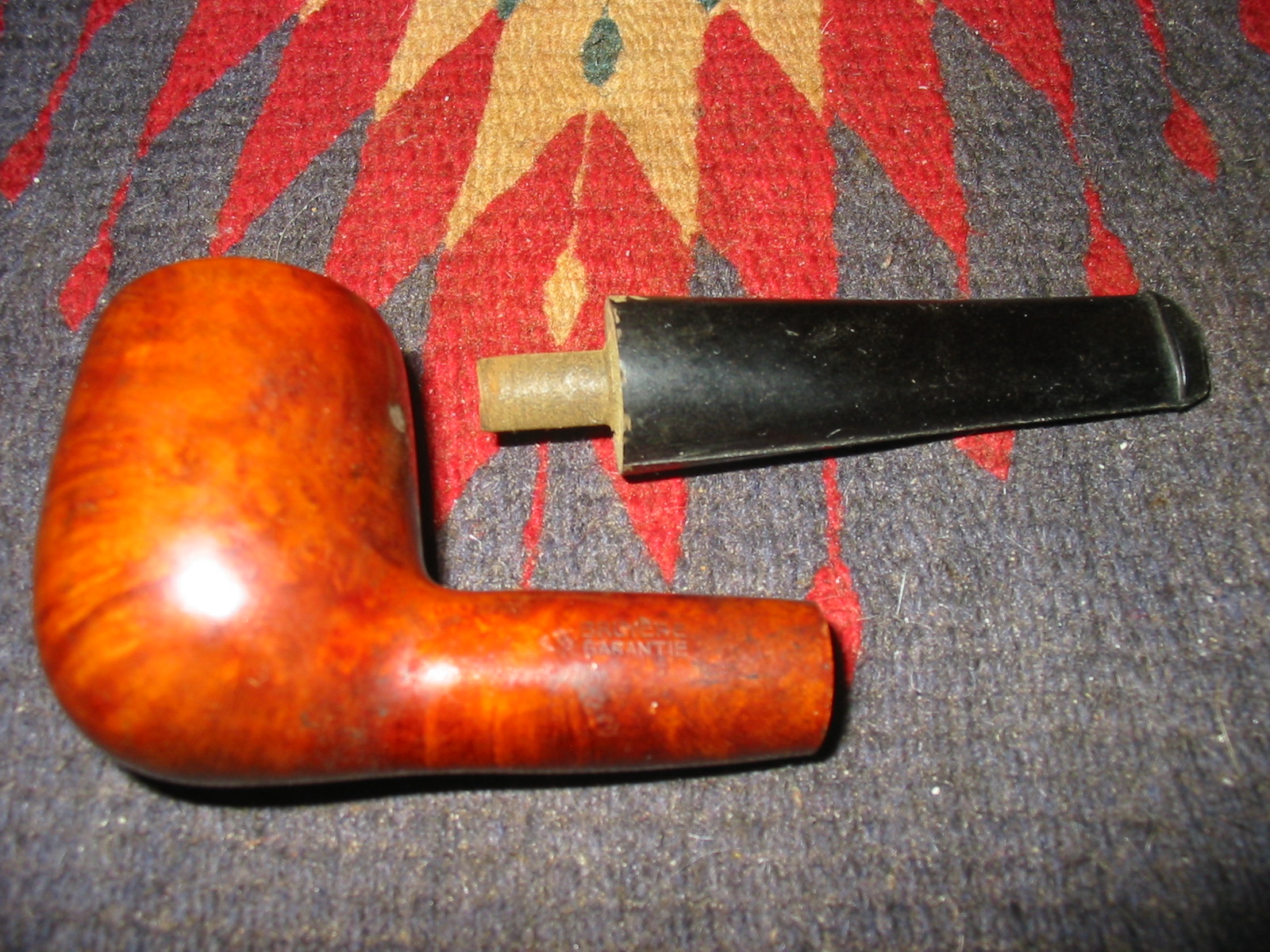
Generally, I never have to give much thought to which pipe I will refurbish next as I pick up only pipes that I like. I have an old box in my laundry room where I keep pipes that need to be refurbished. At times this box has had over three hundred pipes in it but has recently diminished to eleven. These are the tag end of a lot of pipes that I have had over the past years. Sometimes I buy a batch of pipes on eBay that will have many I don’t want for one or two that I am hunting for. Sometimes these unchosen ones end up in the bottom of the box. Other times friends will give me garage sale finds or flea market or auction finds – sometimes nice and sometimes junk to be honest with you. When I go to refurbish a pipe I pick through the box and select the ones that strike my interest and leave behind for later all the ones that for one reason or another just did not catch my attention. They can accumulate and I gradually chip away at them. I have now worked through even that leftover lot – the ones that did not catch my eye and am left with 11 more pipes that just don’t do anything for me. All of them need to be restemmed and refinished. All of them are in rough shape. They no name pipes stamped with such markings as Bruyere Garantie, Imported Briar, Real Briar and Genuine Briar. Not even their names are interesting because I can ferret out no history or brand to link them to. So you see these pipes are not worth much. They will probably end up being give away pipes for me but I am guessing that with a little work they can be made into great smoking pipes. I am sure they will be great pipes for someone just starting out or someone who needs a yard pipe. The interesting thing is that the drilling/mechanics on all of them are well done. The finish on all of them is pretty rough – either flaking, peeling, or chipped and there are huge fills in some of them and many little fills in others. They are truly utility pipes but they are the ones I am left with. So I am left to decide which one I will work on next. The photos below show the lot. Maybe one interests you.

Image

So which one do I pick up first to work on? Should I cut the tenons for the three bowls that don’t have stems so that all have stems? Do I pick one and work the stem to a fit and sheen? Do I refinish a bowl? Do I really want to do anything with the lot at all? Inevitably I will pick up each on and fix it. Each of the 11 pipes will be a teacher of method and practice for me. Each one will give me the opportunity to hone a skill – staining, finishing, stem shaping, button opening, airway opening, topping, rusticating and the list can go on and on. I used to just give away the stummels to folks who wanted to learn to fit stems. I even sold a few by the dozen to thin down the lot but these remain – for better or worse. It is for the training value, the practise of the art of refurbishing alone, that I continue to tackle these pipes sitting at the bottom of the box. Each one gives me a valuable chance to learn something new or hone a skill to better use. It is from working on pipes like these that I have developed several rustication patterns, the patience and persistence in shaping stems and turning tenons. I have learned to apply contrast stains and practiced bending and straightening stems. I know that I can afford to mess things up on these without feeling any loss or disappointment. If I had not picked them up to work on they were destined for the firebox. So with that in my mind I will reach for another pipe from the box.

Image

I tend to work on things systematically and so about a month ago I had an afternoon free so I restemmed 9 of them. I turned the tenons and stuck the new stems on the pipes. Some of them are reclaimed stems from my stem box and some of them are stem blanks that will take some work to finish. I have not worked on any of the stem fittings or squared them up to the shank at all. I have not worked on the diameter or taper of the stem as it meets the shank. I have not smoothed out the casting ridges or shaped the buttons or slots. I just turned the tenons and put the stems on the pipes and put them back in the box. That leaves three more to fit stems on and then the 12 of them to be customized and polished.

I heard footsteps on the front porch by the mail box. I figured one of my daughters was home from work or my wife so I just kept looking at the pipes to make a choice. What was that? Oh, the doorbell rang… The door opened and closed. My daughter just opened the door to the basement workshop and called     down to tell me that I have a package. Maybe it is some of my EBay wins that have arrived. Ah, I can still postpone picking up one of the restems or turning the remaining three tenons. Good, they can wait for a little longer while I work on the new arrivals. After all they are ones that I chose to restore… so I close up my box and head upstairs to retrieve my package. I think I may as well have a bowl while I am upstairs…

My Methodology for a Pipe Hunt


The many comments about how lucky I am to find old estate pipes in the variety of places that I do has led me to write this piece. I am convinced that by and large, it is not a matter of luck but rather a matter of a well-defined strategy of the hunt. Over the years I have developed a pattern in my pipe hunt that I rarely vary when I am out looking for pipes. That pattern has served me well and I have come home with some nice pipes that need varying degrees of work. Whether the shop I enter is an antique shop, antique mall, flea market, garage sale, thrift shop, rummage shop the pattern remains the same.

For me the hunt begins before I walk in the door. I am not looking for yuppified businesses that have a strident non-smoking policy and seem to carry that over to the items sold in their shops. I am looking for a slightly chaotic shop or mall, where there are lots of places that pipes and such can disappear into the raft of stuff for sale. I also eye the sales people to see if they are smokers (often standing outside here in Vancouver having a smoke). If so that is a good sign. I also find that one of the telltale signs of this kind of shop is overcrowded windows and stuff for sale on the sidewalk. When I see all those things I almost always find a pipe or two in the shop. I may not buy any as I am getting picky these days but I will find pipes there.

When I get in the door I am on the alert for all the spots that I have found pipes in shops like this – in boxes, cans, tobacco tins, cigar boxes, jars, pitchers, behind humidors, inside humidors. You get the picture. They are not always obvious to a cursory look so as I do a quick walk through the shop noting where the pipes may be I look literally in and behind many items. I look through locked cases, on the bottom shelves of display cases, behind crammed shelving in cabinets. Many times even these items are relegated to either the top shelf or the bottom shelf throughout the store. At this point in the hunt I usually do not pick up anything as I don’t want to carry it with me through the shop. I merely note the places I see the pipes; I quickly look through them to see if there are any worth more attention and keep moving. I also keep an eye out for tobacciana – tins, reamers, racks, tampers, etc. The idea for me is to get an overview of the shop and its pipe and tobacco contents.

After the quick walk through I will make a second pass through the store if the first walk turns up anything of interest. If not I will often check a few spots in the store that have been fruitful to me in the past. If I have seen things that interest me I will start the second walk through. It is a more slowly paced walk through specifically looking through the pipes that I found on the first pass. What always amazes me is that no matter how well I look on that first walk about it is this second that seems to turn up pipes that have appeared after I walked through the first time. The idea on this walk is to take time to pick up the pipes and examine them carefully. The first walk takes me very little time, but the second one is longer by virtue of the objective.

On this walk remember to look behind items on the shelves, move things to see what you can find. To me this is the fun of the hunt. I think it is also what drives my wife nuts about our stops at shops, antique malls, flea markets and the like. I walk through the shop at least twice. I go back to the places/stalls where I had noted the pipes that I wanted to take a bit more time looking at. I pick each one up and assess its condition. I look at the stampings, the stem fit, the rim and the finish, the stem condition (bite marks, etc.) and try to estimate the amount of work it will take to bring it back to life. I then look at the price and estimate the value when I add the cost of my work on the pipe to see if it is one that can be sold to recoup the cost. Often, even if the pipe is a wreck, there is something in the look of the pipe that grabs my attention. That “call of the pipe” seems to be something that is inexplicable to me. It takes no regard of the stamping, brand or condition, but it calls me to make this pipe my own. Sometimes I think it is the story that seems to come through in the condition of the briar, or the tobacco that is still in the bowl. Whatever it is it is a part of at least some of the pipes that make their way back to the sales counter.

If the display cases are locked, I note the number on the case and enlist the help of the sales staff to open the cases for me. I get them to walk with me through the various locked cases that I found. I take advantage of having them with me on this part of the walk and while I have their attention I ask about other pipes that may be in the back room, in boxes at home or just somewhere in the shop that I have not seen. Often they will tell me about the same ones that I have seen already, but it has happened often enough that I have missed something so I ask every time. When I find a pipe in one of the cases that I want to buy I give it to the sales person and have them carry it to the front for me. Once I have finished with them I continue looking at the other areas that I had noted at first. I have found quite a few full tins of tobacco – ranging from Dobie’s Four Square to Prince Albert. The tobaccos in the tins are often well preserved and ready for smoking. Some of them need to be rehydrated, but even those smoke well for me. I have also picked up pipe rests, tampers and reamers in the process of the hunt.

Once I have finished looking through the store I take my haul to the cashier. Usually there is a counter that I can lay the pipes on to go through them all again to make sure that I have not missed anything. I do this because in the past I have gotten home and taken the pipes out of the bag only to find some surprises, cracks or damage that I had not paid attention to in the store. I sort them into two piles – the “have to have pile” and the “want to have pile”. This takes a bit of time but I have found that it is worth the effort as it keeps me from buying things on impulse. I check out the nomenclature of the pipes and if they are screw mount stems I check out the threads and the stinger apparatus. I look more closely for cracks in the bowl, shank or stem. Shank cracks and stem cracks don’t disqualify a pipe for me, though a cracked bowl does. These go into the “want to have pile”. When I finish the sorting I always ask the sales clerk if there are any other pipes that I may have missed. I learned to do this because often they have some under the counter or in the back that may have been overlooked. I add those to the piles and then make a final decision as to what I am taking home with me.

Before I leave I usually give them my phone number and ask them to call me if they find any pipes at home or if someone brings some in. Not everyone will call, but many will. I also make sure to pick up a business card and add it to my business card file. I make it a habit to call the productive shops and malls regularly and ask if they have any pipes that have come in. Doing this makes it more likely that they will call me when some come in. I have had them call and have called myself as an estate has come in. Because I have taken the time to call and build a bit of a relationship with the staff I have picked up some nice older pipes. Sometimes in doing this I find that it is necessary to take the whole lot even if there are some useless pipes there. I do not want to jeopardize the connection as it is those calls that have brought me some of the best pipes I have found.

My hunting has turned up some beautiful older estates for me to work on. I have found Kaywoodies, Yello Boles, Lees, Stanwells, Brighams, Loewes, Bertrams, Dunhills, Larsens, Kriswell, Savinellis, Bewlays, Comoys, Barlings, GBDs and others that escape my memory. For example I have found 12 or more Dunhills over the years – the best one being an unsmoked 1962 Tan Blast Billiard and the oldest being a 1932 Shell Bent Billiard. I have cleaned up and sold many of the pipes I have found and still have over a hundred that I need to sell. I have added many to my own collection as well. The hunt goes on and will continue as long as I have breath. The joy of the hunt and the amazing finds keep me looking.

Refurbished Svendborg Full Bent Apple


Blog by Steve Laug

From http://www.pipephil.eu/logos/en/logo-s8.html I learned the following information: The Svendborg brand founded in 1970s by Henrik Jørgensen, Poul Ilsted and Tao Nielsen. They bought an old factory (Nordisc Pibefabriker) in Svendborg on Funen Island. Poul and Tao gradually bowed out from machine manufactured pipes (1982) and Henrik Jørgensen managed the brand until it was taken over by Design Berlin (D) in the late 90’s. Kaj C. Rasmussen joined the firm for several years. 17 employees worked for this brand under Henrik Jørgensen direction. I was given this pipe by a good friend last weekend when I visited him on Vancouver Island. The bowl was in great shape and the stem merely oxidized. There were no bite marks and some minimal tooth chatter on the underside of the stem near the button. The pipe is stamped on the underside Svendborg over Danish over Hand Made and on the left side of the shank is stamped Bark. The stem has the squashed S logo on the left side. The stem is a chairleg type saddle near the shank. The shank has a vulcanite shank extension. (I apologize for the blurry quality of several of the before cleanup pics I am adjusting to a new camera.)

ImageImageImageImage

I reamed the pipe and cleaned the rim with a soft bristle tooth brush and Murphy’s Oil Soap. It quickly removed the buildup on the rim. I wiped down the outside of the bowl with a soft cloth and a light dampening with Murphy’s Oil Soap. The blast cleaned up very nicely. The sand blast on the bowl is well done with blast in the birdseye on the rim and the bottom of the bowl. The sides have ring blast that looks great. There is a smooth patch on the underside that has the stamping present in it and there is a smooth band around the shank at the shank extension junction. I sanded the shank extension with 1500 grit micromesh sanding pads. I chose to sand this section dry as I did not want to risk loosening the joint of the extension. The next five photos show the sanded extension during and after I finished with this grit.

ImageImageImageImageImage

The next three photos show the extension after I sanded it with 1800 and 2400 grit micromesh sanding pads. The oxidation is beginning to disappear as I work on it.

ImageImageImage

I then sanded it with the 3200, 3600, and 4000 grit micromesh pads. I wiped the extension down between the various grits of micromesh. I then polished the extension with Maguiar’s and rubbed it into the vulcanite and then wiped it off with the cotton pads. I finished sanding with the remaining grits of micromesh from 6000-12,000. Then polished it again with Maguiar’s before taking it to the buffer and buffing with White Diamond.

ImageImageImage

The next six photos show the process and progress of polishing the stem with Maguiar’s. I wanted to preserve the stamping on the stem so I was careful around that. I rubbed the polish into the stem, wiped it off and reapplied and rewiped until I had removed most of the oxidation.

ImageImageImageImageImageImage

The next series of four photos shows the progress on the stem. I reinserted it in the bowl and shank to give me a clear picture of the progress in removing the oxidation. The shank extension was a bright black and the stem still needed some work to remove the oxidation. The chairleg portion of the stem was the hardest to work on, that and around the stamping on the stem.

ImageImageImageImage

I worked on the stem with 320 grit sandpaper to remove the tooth chatter that is visible in the photo above. I also used the micromesh pads to address the oxidation on the top and underside of the stem. I restarted with 1500 grit micromesh and worked through the rest all the way to 12,000. The next series of four photos show the stem at the finish of much sanding. The oxidation was beginning to disappear even in the chairleg part of the stem. You can still see the tooth chatter in the photos and the oxidation. More work needed to be done on the stem to remove it all.

ImageImageImageImage

I reworked the stem with 320 grit sandpaper and micromesh sanding pads to remove the tooth chatter and to address the remaining oxidation. I polished it again with the Maguiar’s polish and then buffed it with White Diamond. The finished pipe is pictured below. It is ready to load up and enjoy today while I am at work.

ImageImageImageImage

Renewed Malaga Bulldog


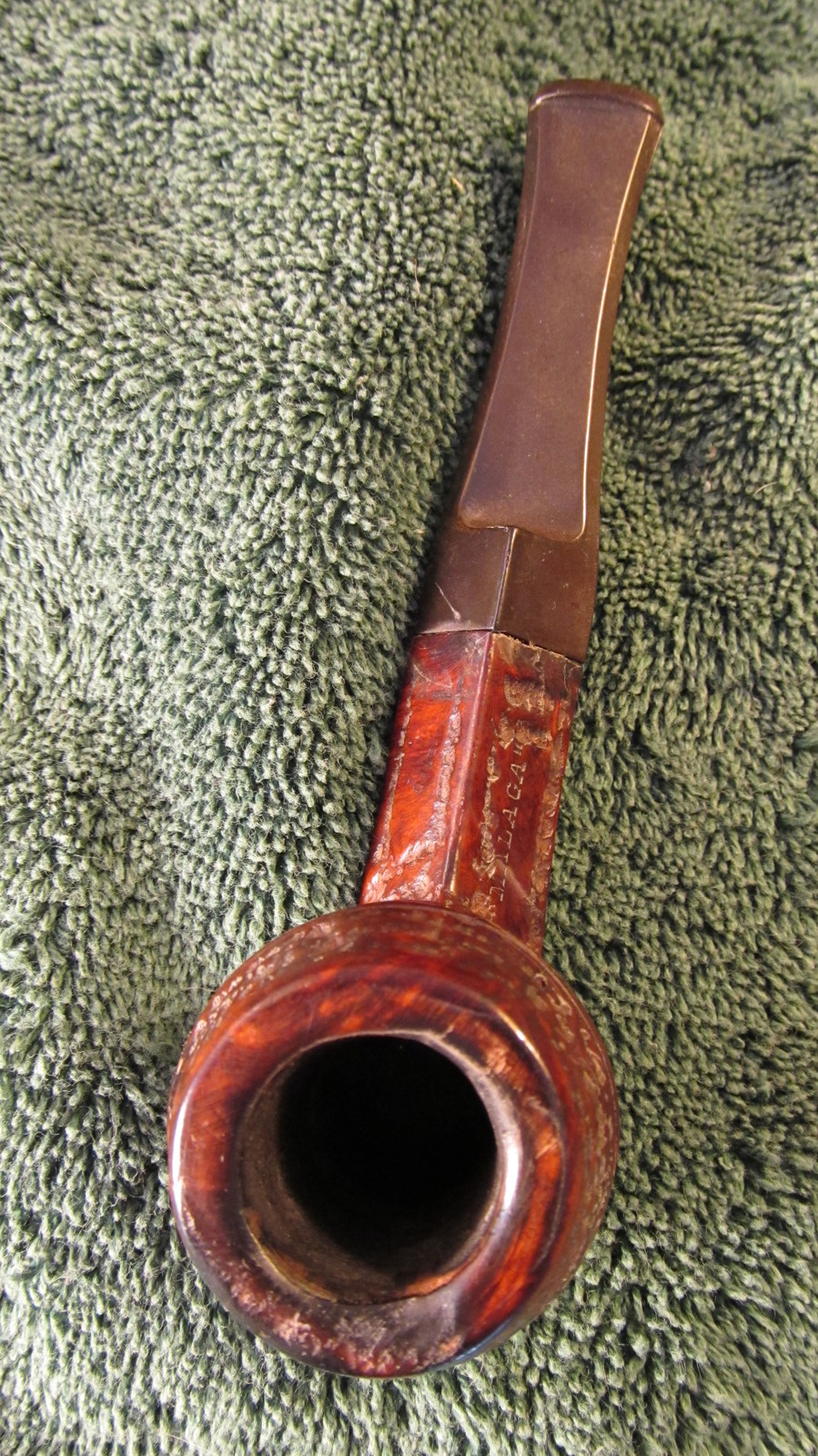
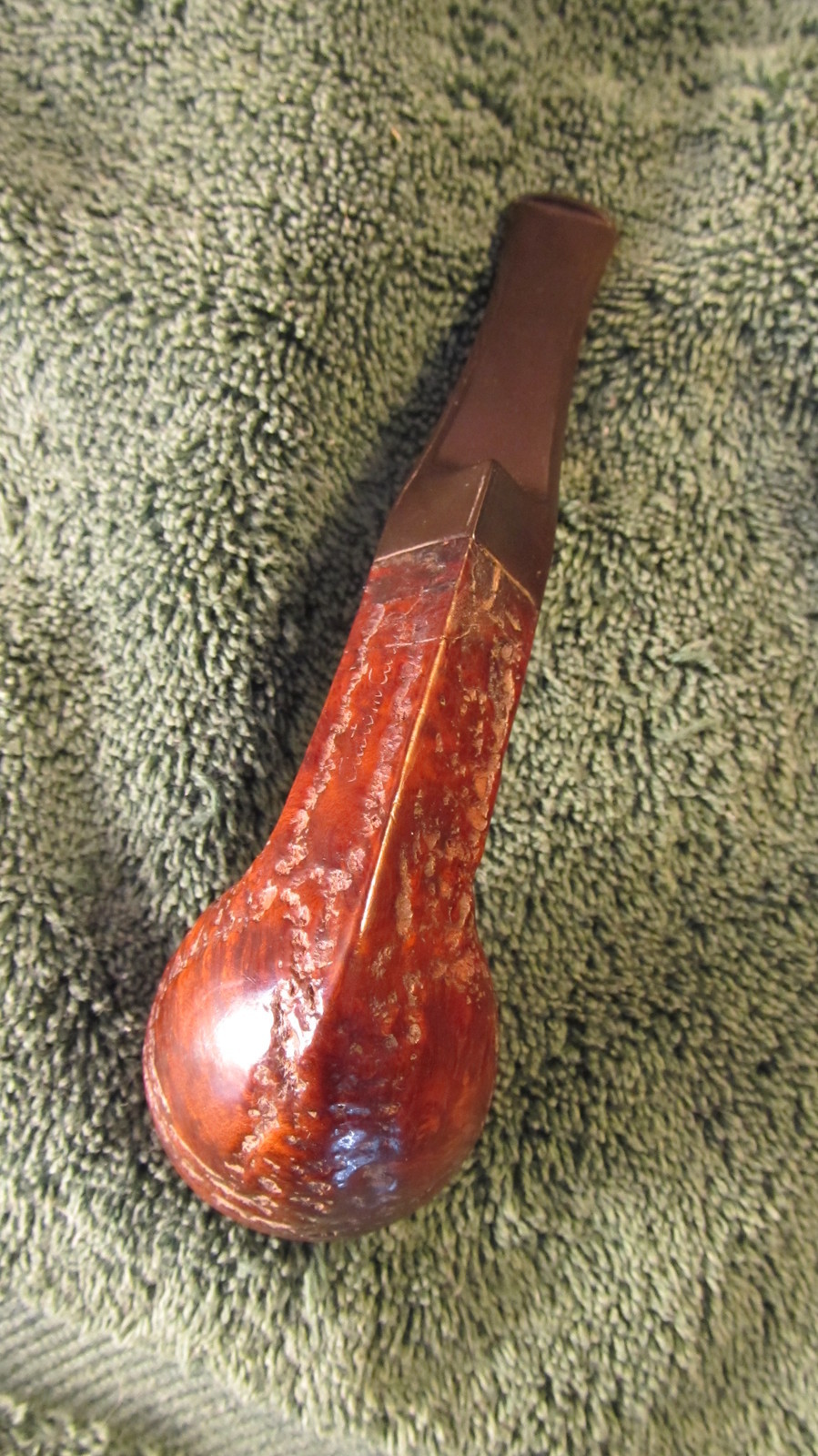
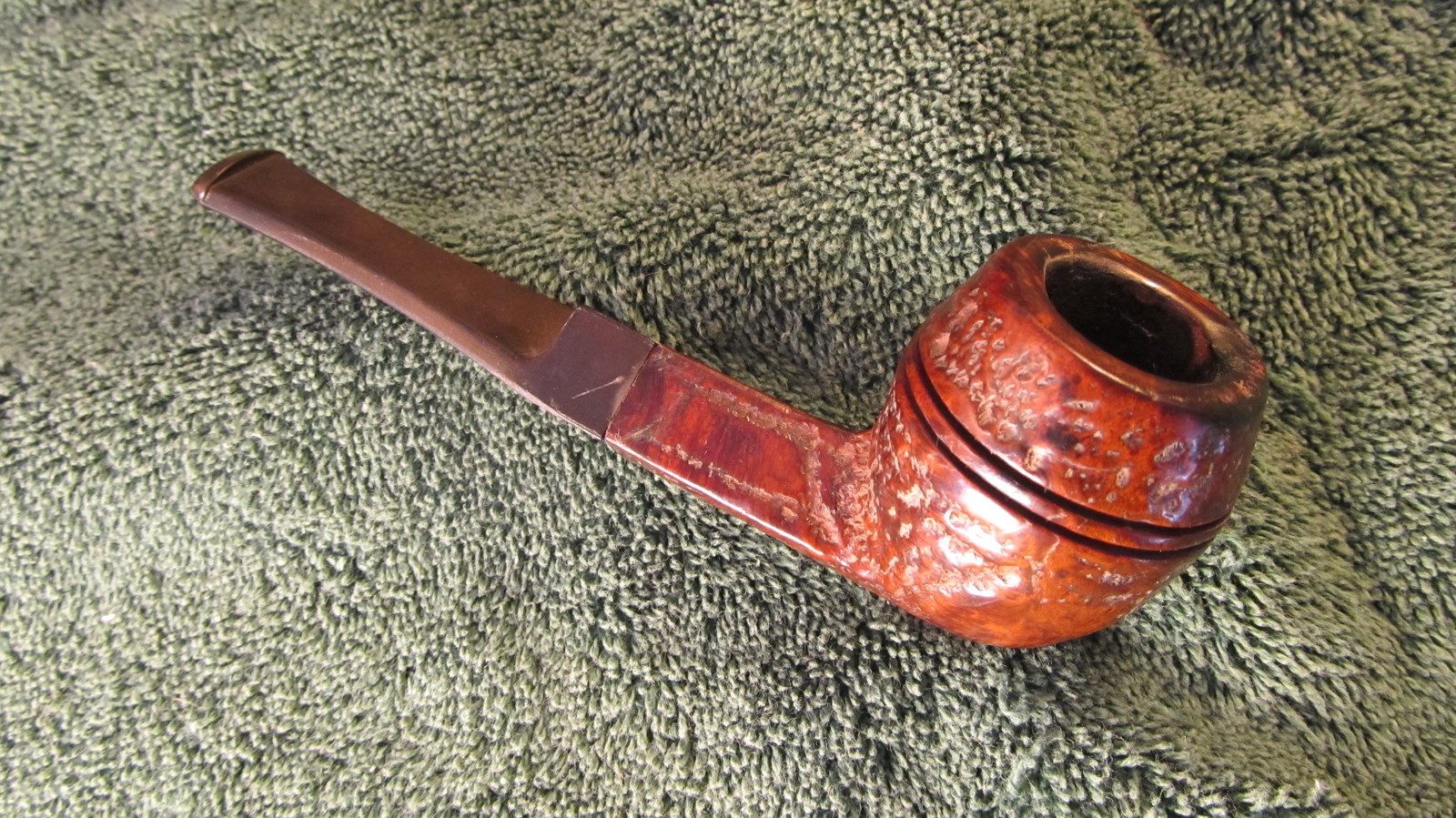
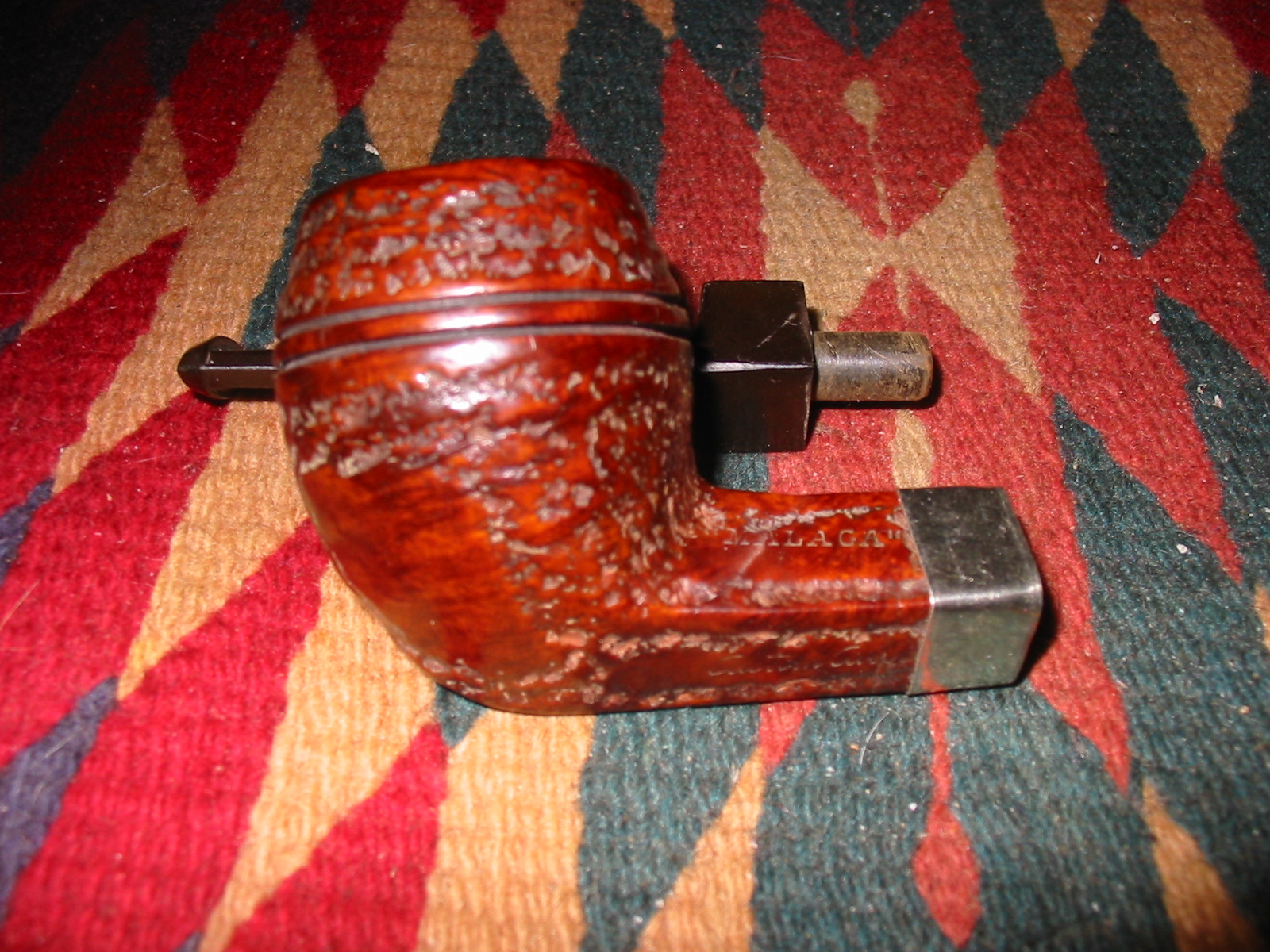
In an earlier post on Malaga pipes and their maker George Khoubesser, https://rebornpipes.wordpress.com/2013/02/09/george-khoubesser-and-malaga-pipes/, I mentioned that I wanted to hunt down a pipe. Not long after that post I was able to pick up this bulldog. It is a rusticated pipe with some smooth patches like those done by GBD on some of their pipes. This one is stamped Malaga in quote on the upper left side of the shank and Custom Carved on the lower left side of the shank. The pipe was in fair shape. The bowl needed to be reamed as the little cake that was present was in the top half of the bowl. The bottom of the bowl had cobwebs in it. The shank inside was very clean. The stem had some oxidation and a small amount of tooth chatter but was in good shape. The rim had a burned area on the front right and it had created a small dip in the rim. The shank was cracked in multiple places near the stem. It looked like it had been repaired and there was some darkening around the place where the shank met the stem that seemed to indicate that a band that no longer was present had once been in place. The first series of eight photos show the items that I mention above. Looking closely at the photos you can see the cracks in the shank and the burn on the rim. All of the other items come through in the photos as well.

ImageImageImageImageImageImageImageImage

I began the process by reaming out the bowl and then shaping a nickel band into a diamond and pressure fitting it on to the shank. I also then used a small hammer to tap the band into shape around the shank and square off the edges. The next four pictures show the band after it has been shaped and pressure fit into place. The final picture of the four shows the end view of the shank with the band in place.

ImageImageImageImage

I decided to top the bowl to remove the damage of the burn and smooth out the rim edge. The burn was not very deep but it was a small trough in the rim that went from edge to edge. The inner edge of the bowl was also damaged by burning. I use a piece of medium grit emery cloth to begin with. I put it on a flat board on my work table and then sand the bowl rim in a clockwise circle until I have removed all of the damage. I follow up the emery cloth with 320 grit sandpaper used in the same manner. I finish the rim with a fine grit sanding sponge. The next four photos show the process and the progress of the topping procedure. In the second photo you can clearly see the damage from the burn. The third and fourth photos show the rim after it is smoothed out and the burn damage is minimized. I did not take pictures of the sanding process with the 3230 grit and sanding sponge as they followed the same format as that of the emery cloth.

ImageImageImageImage

After topping the bowl and finishing the rim sanding with micromesh sanding pads in 1500-3200 grit I stained the bowl with an oxblood stain. I restained the entire bowl in order to get a match between the bowl and the rim. The next photos show the stained bowl. At this point in the process I still needed to buff the bowl but I decided to set it aside to dry while I worked on the stem to remove the oxidation and tooth chatter. I began by wet sanding the stem with a 1500 grit micromesh sanding pad. I keep a bowl of water at hand so that I can dip the sanding pad in the water and also clean it between sandings. The next four photos show the stem after sanding it with the 1500 grit pads.

ImageImageImageImage

I polished the stem with Maguiar’s Scratch X2.0 after the 1500 grit sanding. I then wet sanded the stem with 1800 and 2400 grit micromesh sanding pads. The next three photos picture that process and the progress on the stem.

ImageImageImage

I continued sanding with the micromesh pads. I dry sanded with 3200, 3600 and 4000 grit pads. I worked on the inside of the saddle with a folded pad to get the angles correct and clean up that area. I also scrubbed around the button and the edges of the button, working to keep the edges sharp and defined. The next three photos show that progress.

ImageImageImage

I scrubbed the stem once again with the Maguiar’s and wiped it off repeatedly with a cotton pad. I continued to dry sand the stem with 6000, 8000, 12,000 grit micromesh. Once I had finished the sanding I buffed the stem and pipe with White Diamond on my buffer to shine both. I took the pipe back to my bench and gave the stem a coat of Obsidian Oil. I rubbed it into the stem and then gave the bowl a coat of Halcyon II wax and hand buffed it with a cotton cloth and then gave the rim and stem several coats of carnauba wax. Once I was finished I took it to the buffer once again and gave it a buff with a clean flannel buffing pad. The finished pipe can be seen in the photos below.

ImageImageImageImage


Restemming an Old Bruyere Garantie Billiard


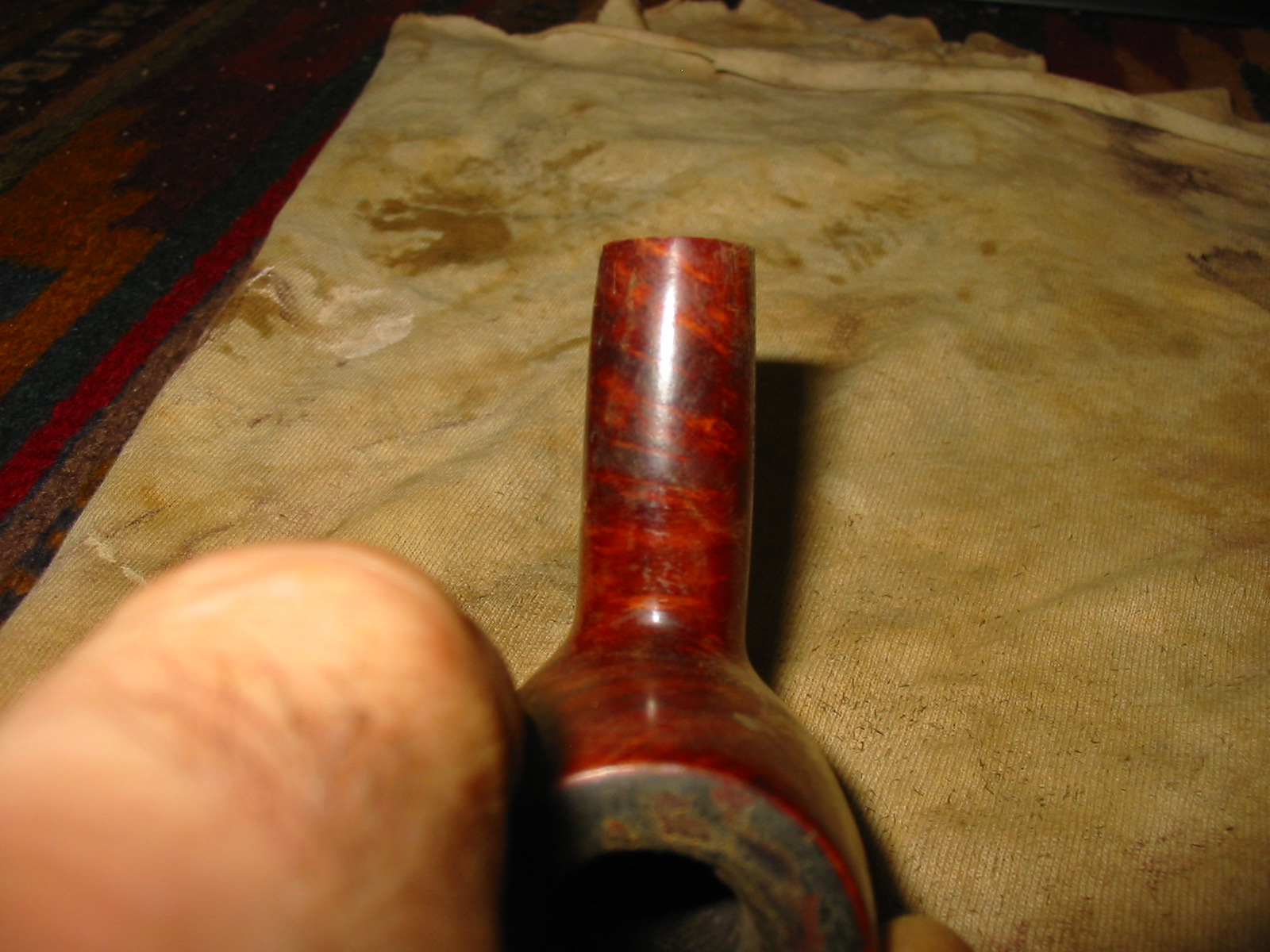
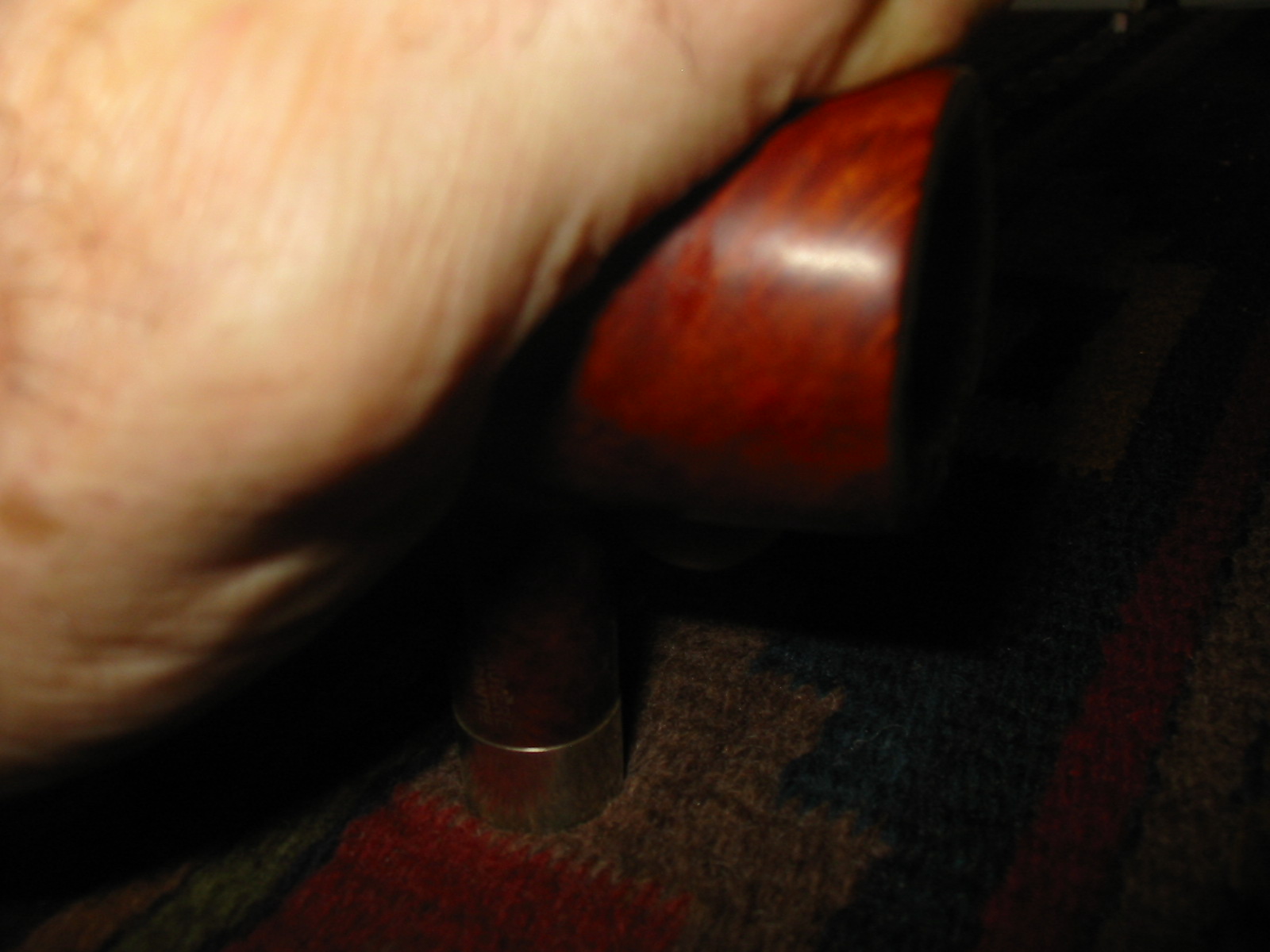
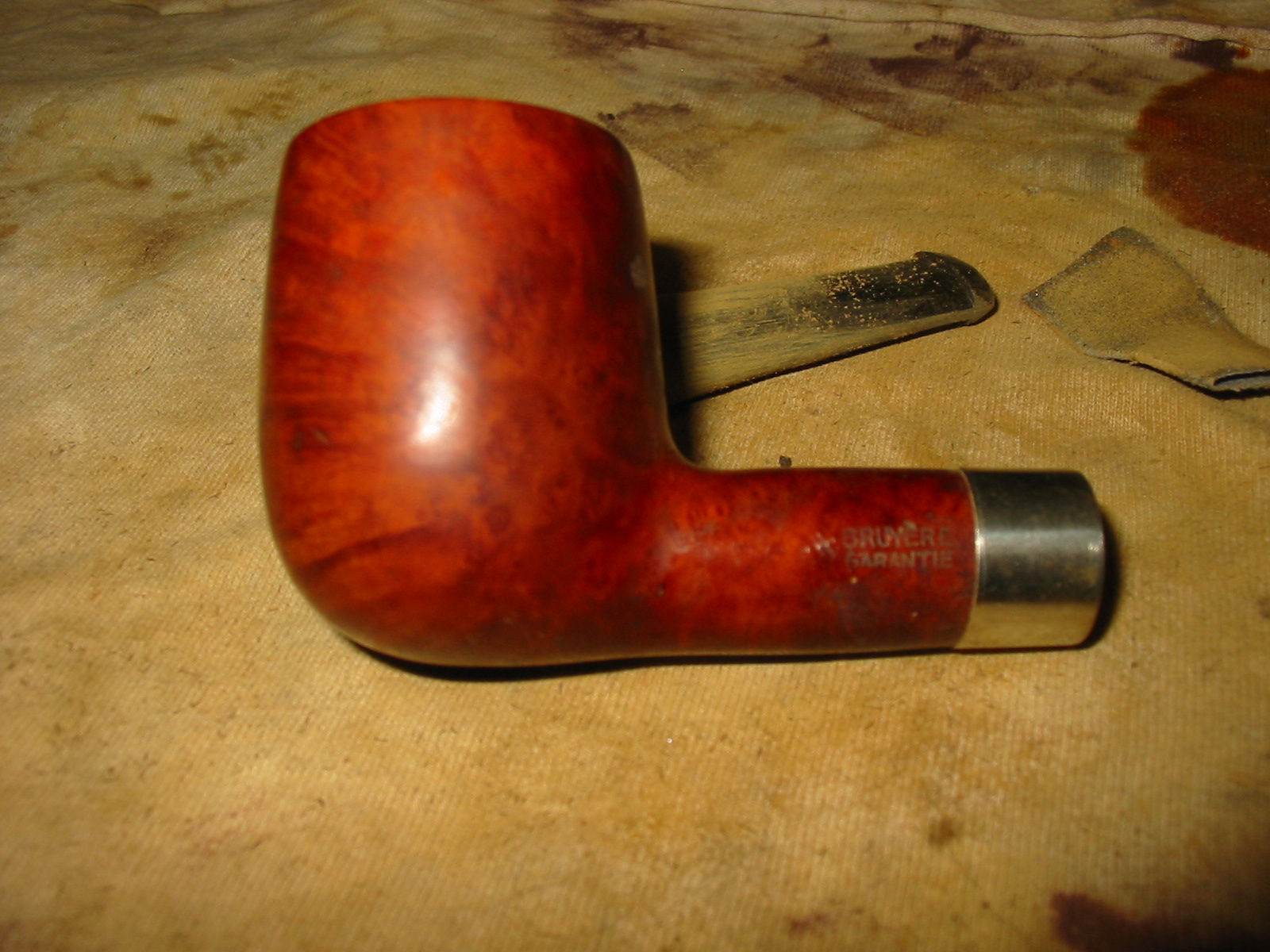
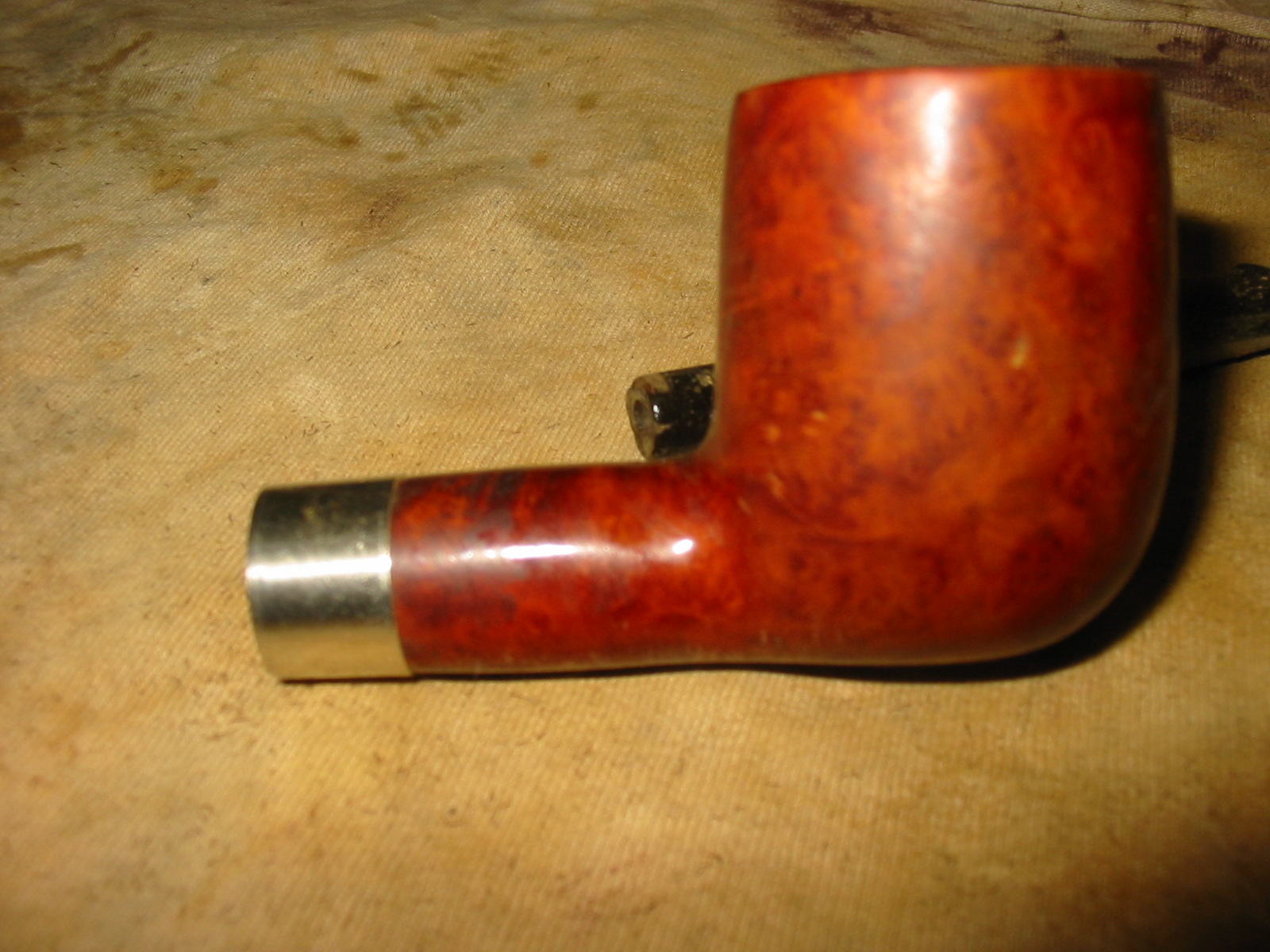
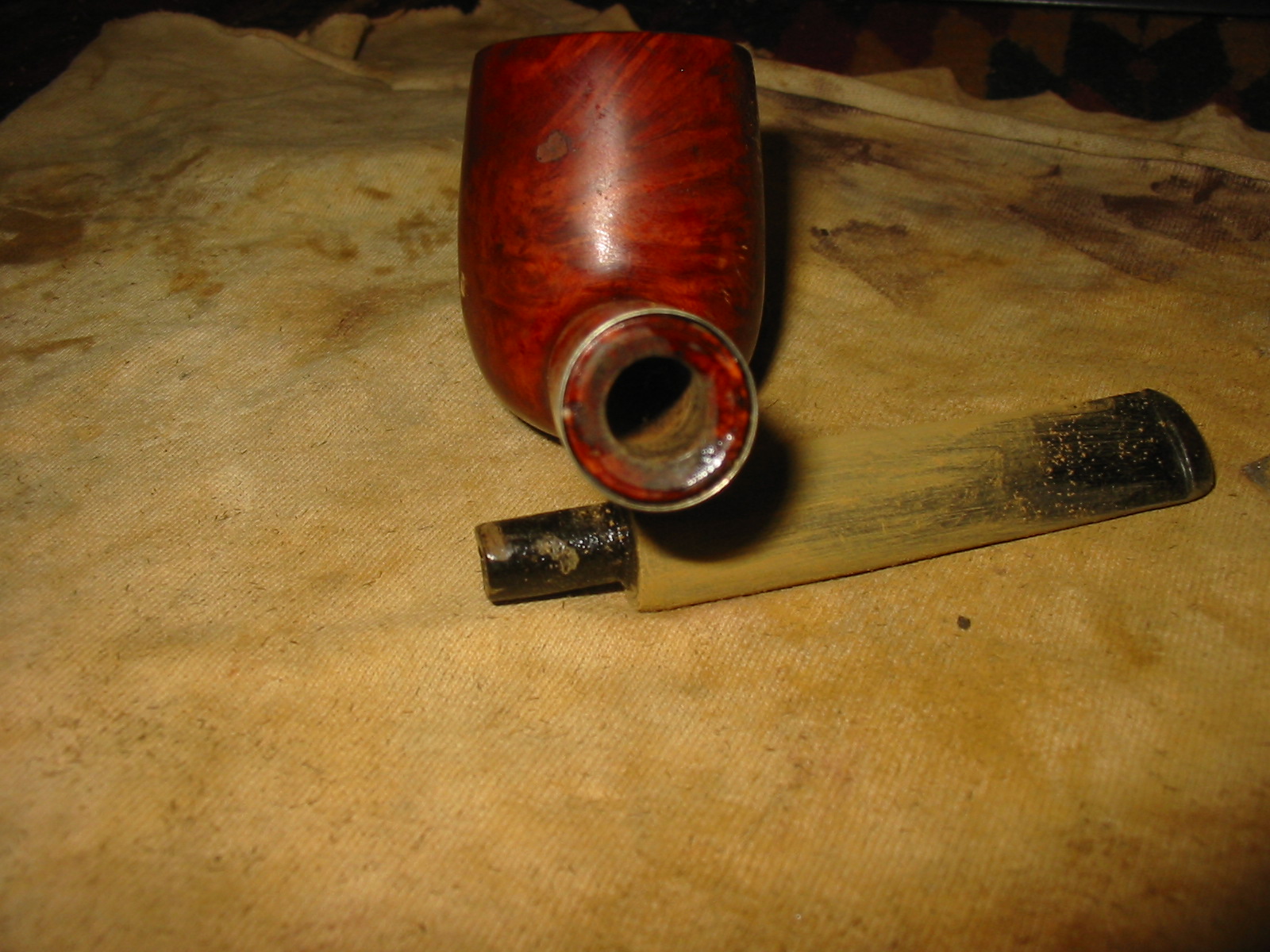
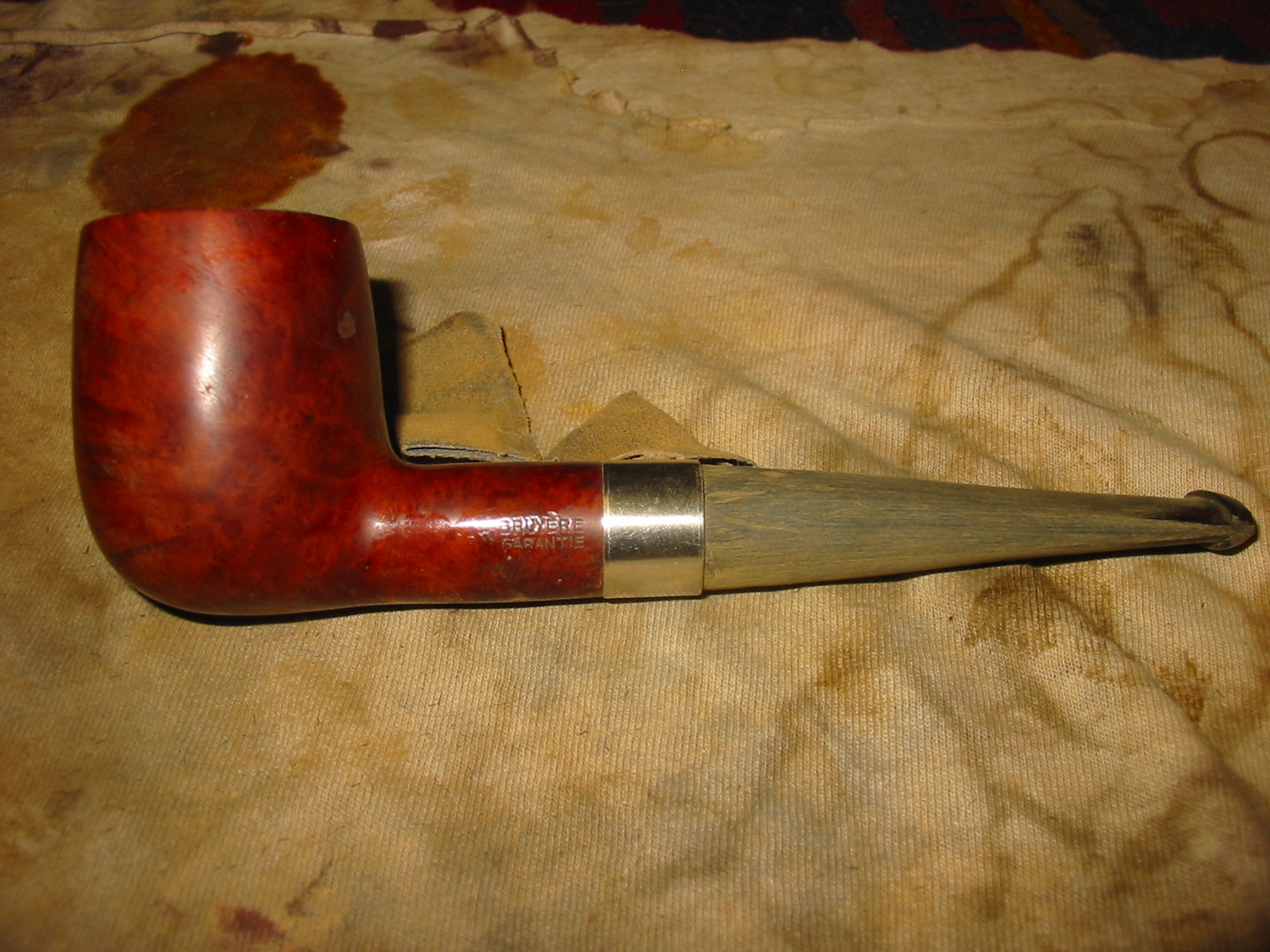
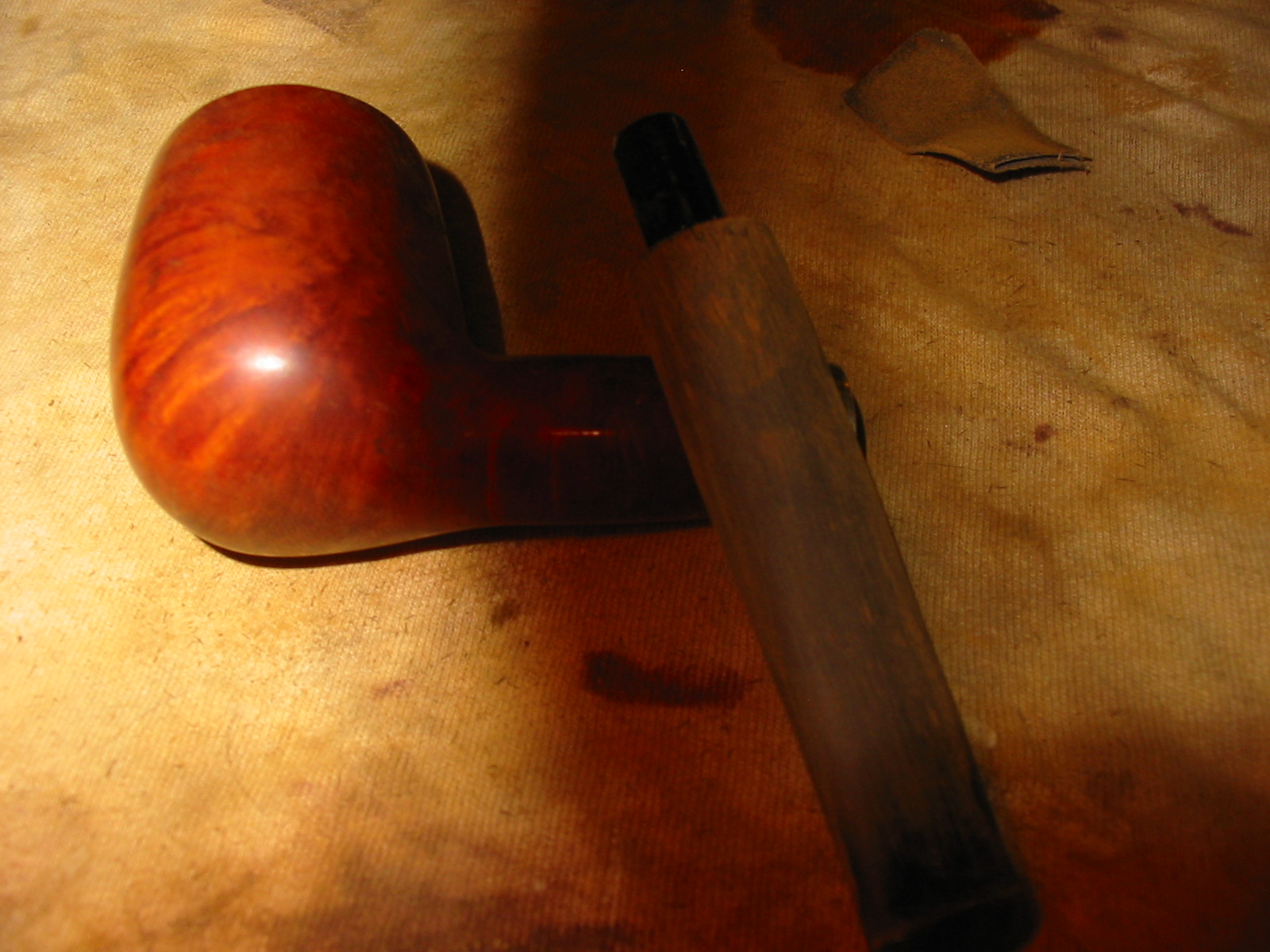
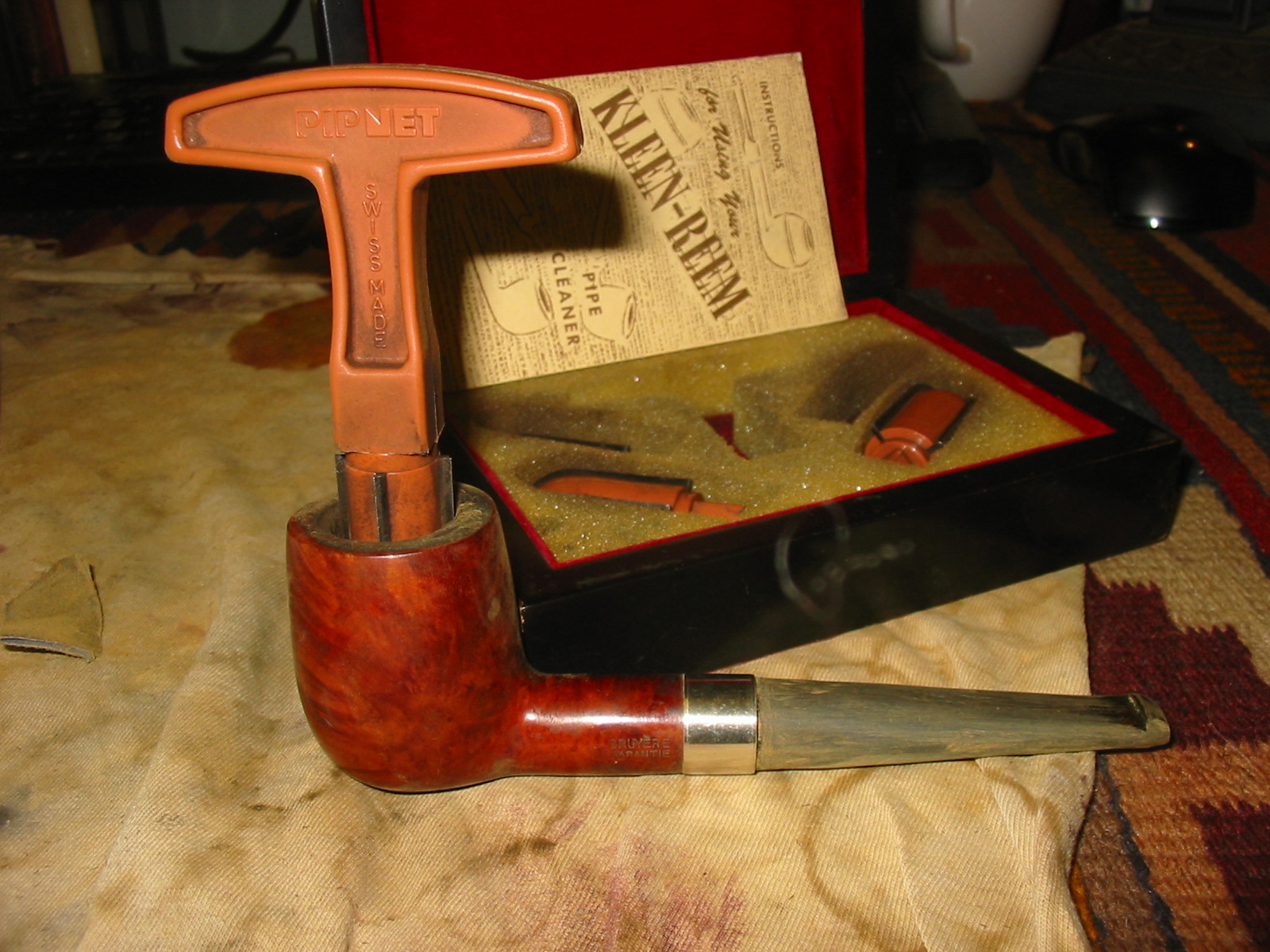
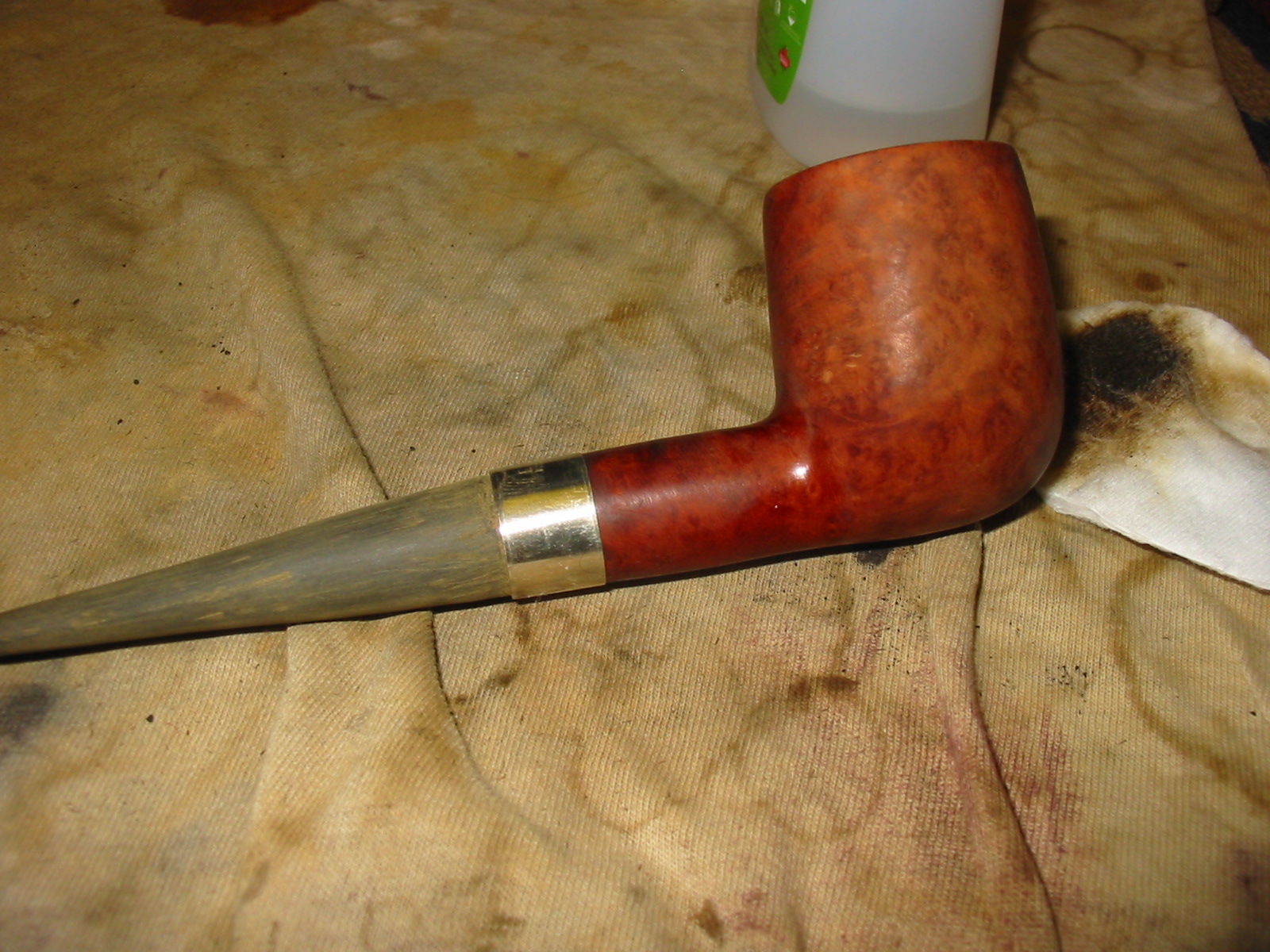
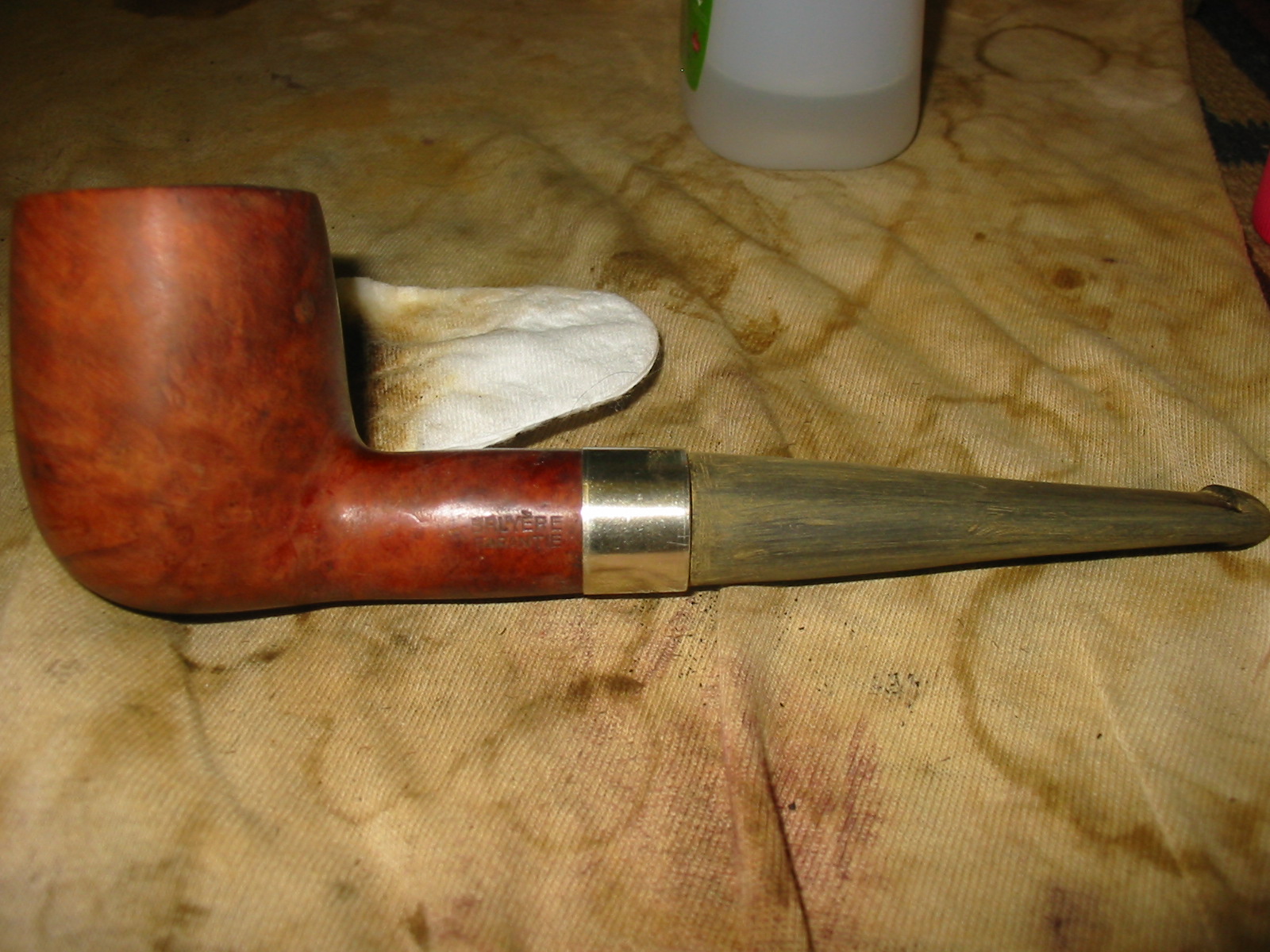
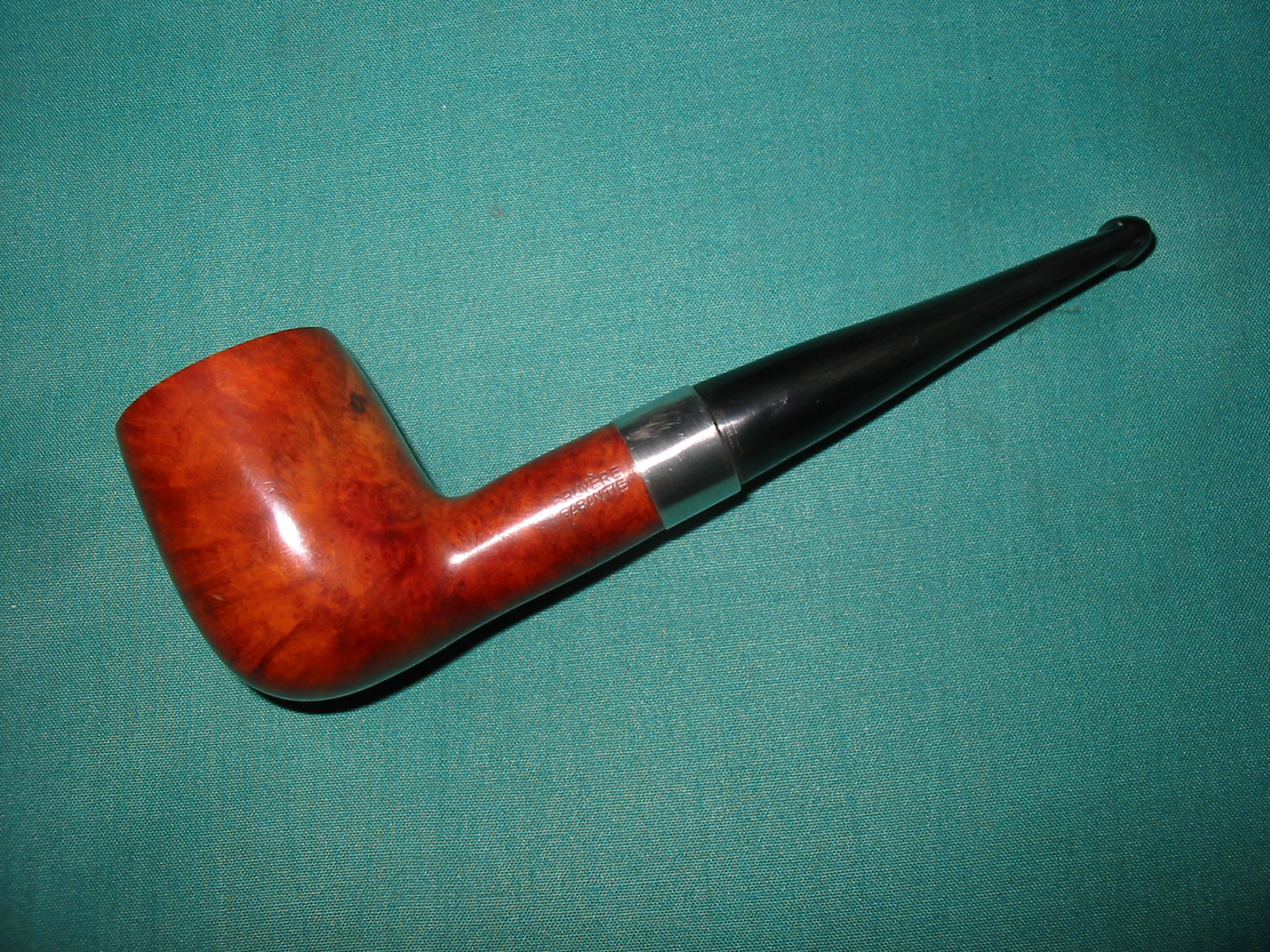
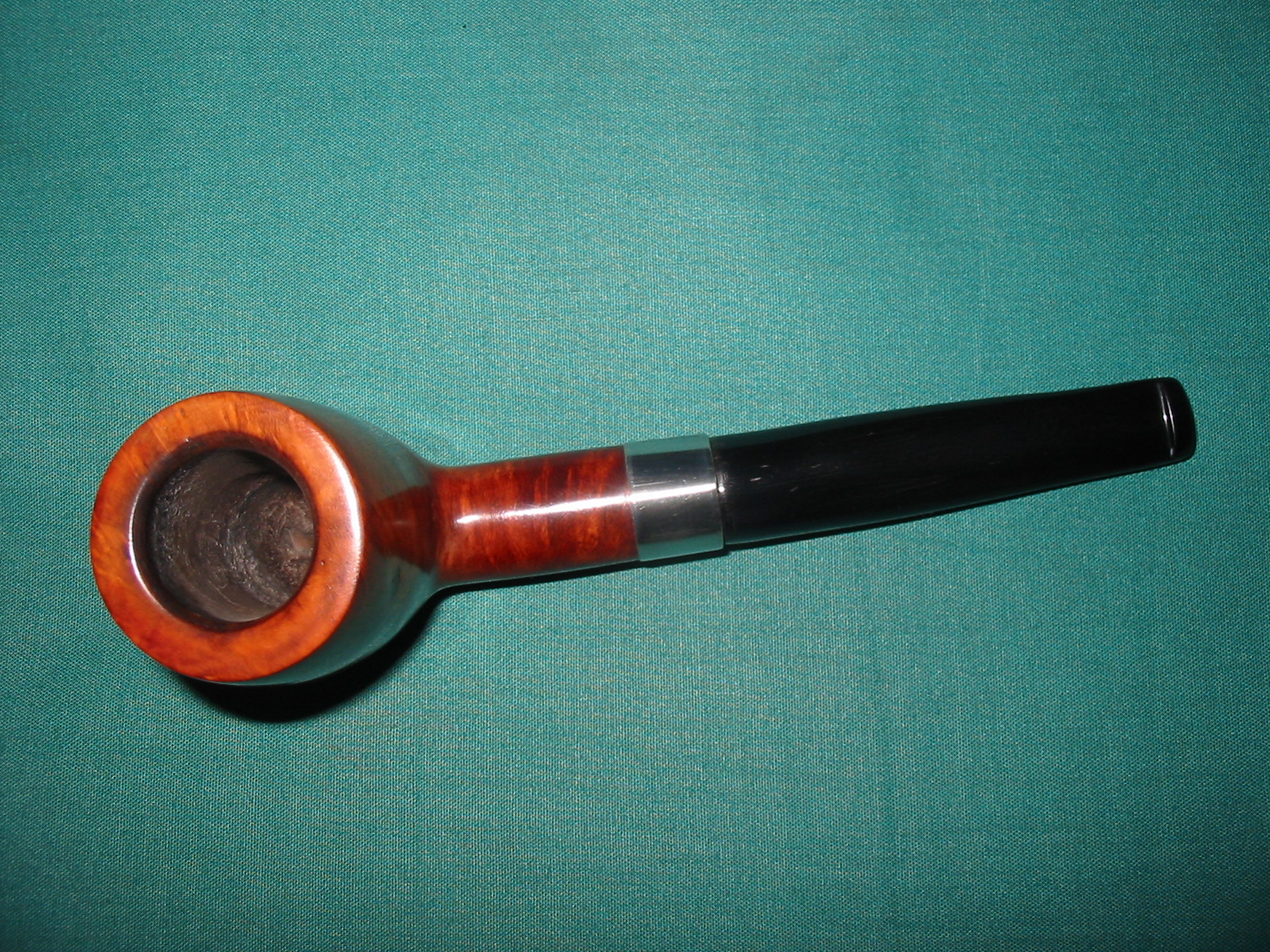
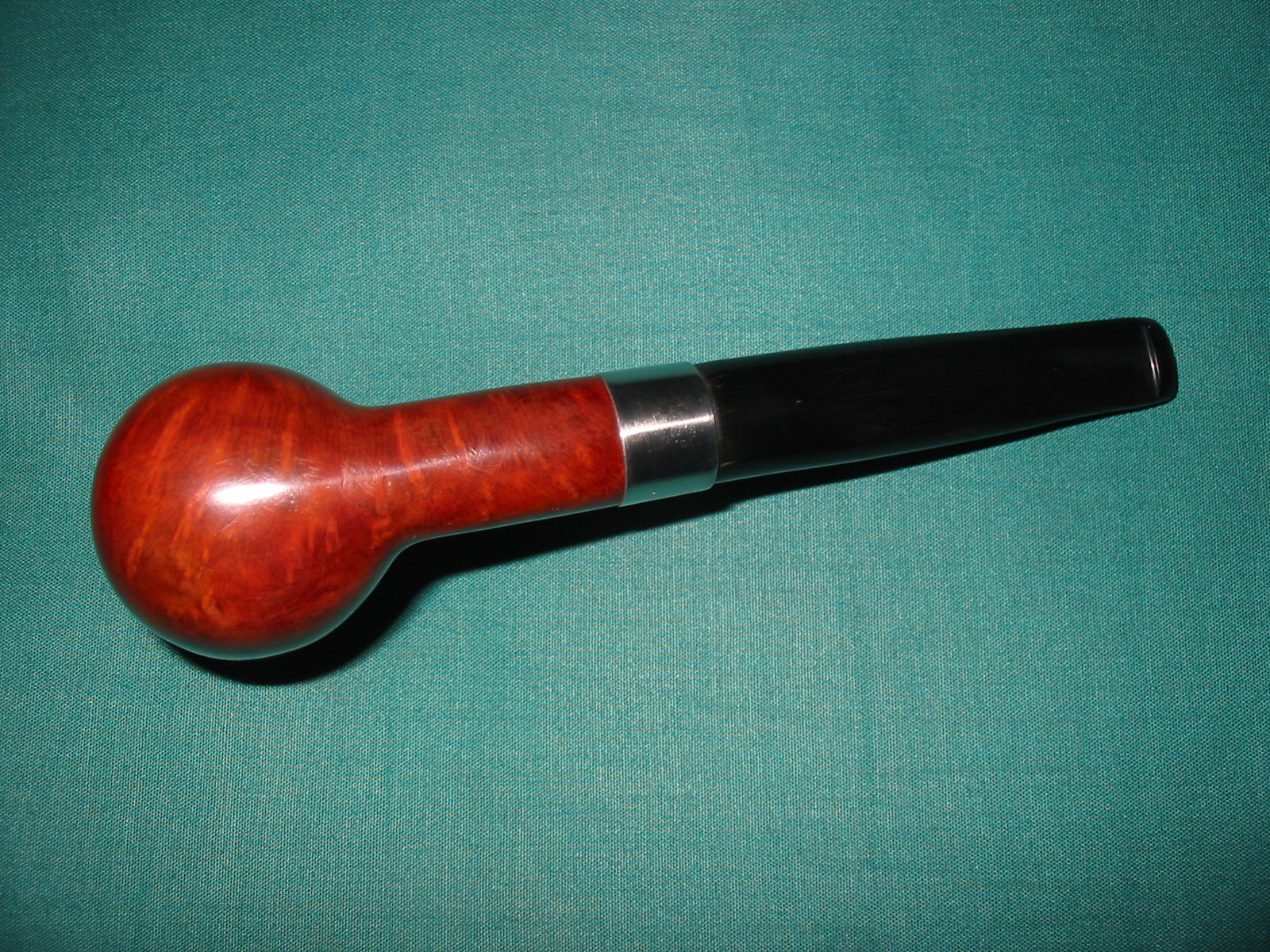
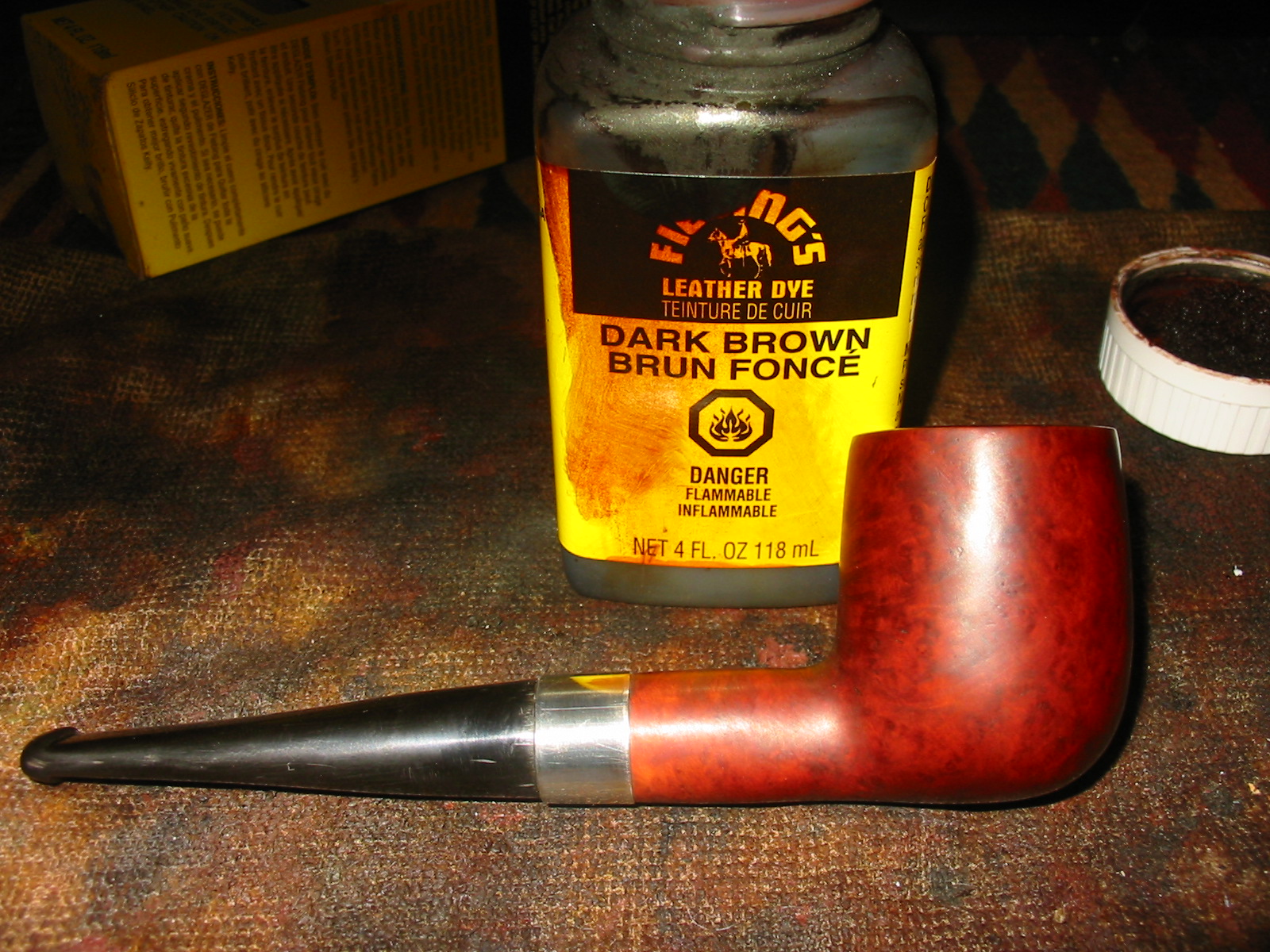
This is yet another of the bowls that was in my box of stummels. It is stamped Bruyere over Garantie on the left side of the shank with no other stamping. The bowl was badly caked with an crumbling, uneven cake. The cake was thicker at the top of the bowl than in the bottom of the bowl. The rim was also caked with oils and hardened tars. It was also dented and had a slight burn mark at about 12 o’clock on the front of the bowl. The shank was misshapen and out of round where it met the stem. It was almost as if someone had sanded the previous shank to meet the stem. There was a large fill on the back side of the bowl near the shank bowl junction. The finish had a coat of lacquer or varnish on it. I fit a tenon to the shank and worked on the stem to be a good tight fit to the bowl. The next series of four photos show the newly turned tenon and the shape of the shank at the shank stem junction.

ImageImageImageImage

Once I had the tenon cut and sanded to a good snug fit I inserted it in the shank. The first two photos below show the fit of the stem to the shank. You can also see the taper on the on the shank that shows the misshaped nature of the shank. The stem fit very well but was much larger in diameter than the shank. I used my Dremel with a sanding drum to remove the excess diameter of the stem. The next series of six photos show the progress of removing the excess vulcanite with the sanding drum. The final photo of the six shows the newly formed fit of the stem to the shank. The taper on the shank is bothersome so that I wanted to have to address that issue before I finished the final fitting of the stem.

ImageImageImageImageImageImageImageImage

Once I had the stem fitting well I decided to band the shank to even out the flow and roundness of the shank. A wide nickel band would fit the shank well and flatten out the shank taper. I wanted an even flow from the shank bowl junction to the stem. The look of the taper on the shank was something that bothered me and that I decided to minimize with the band. The next five photos show the process and results of banding. I heated the band and then pressure fit it onto the shank. I then used some superglue to fill in the vacant areas in the inner diameter of the band.  The final photo in the series shows an end view of the band on the shank.

ImageImageImageImageImage

The next three photos show the fit of the new stem to the shank. The band sets off the stem shank junction well. The taper of the stem works very well in my opinion. More sanding needed to be done in making the fit smooth and the taper correct.

ImageImageImage

I worked on the stem with medium grit emery cloth to remove the scratches and to even out the taper on the stem and the flow of the sides of the stem from the shank to the button. The next two photos show the stem after sanding the stem.

ImageImage

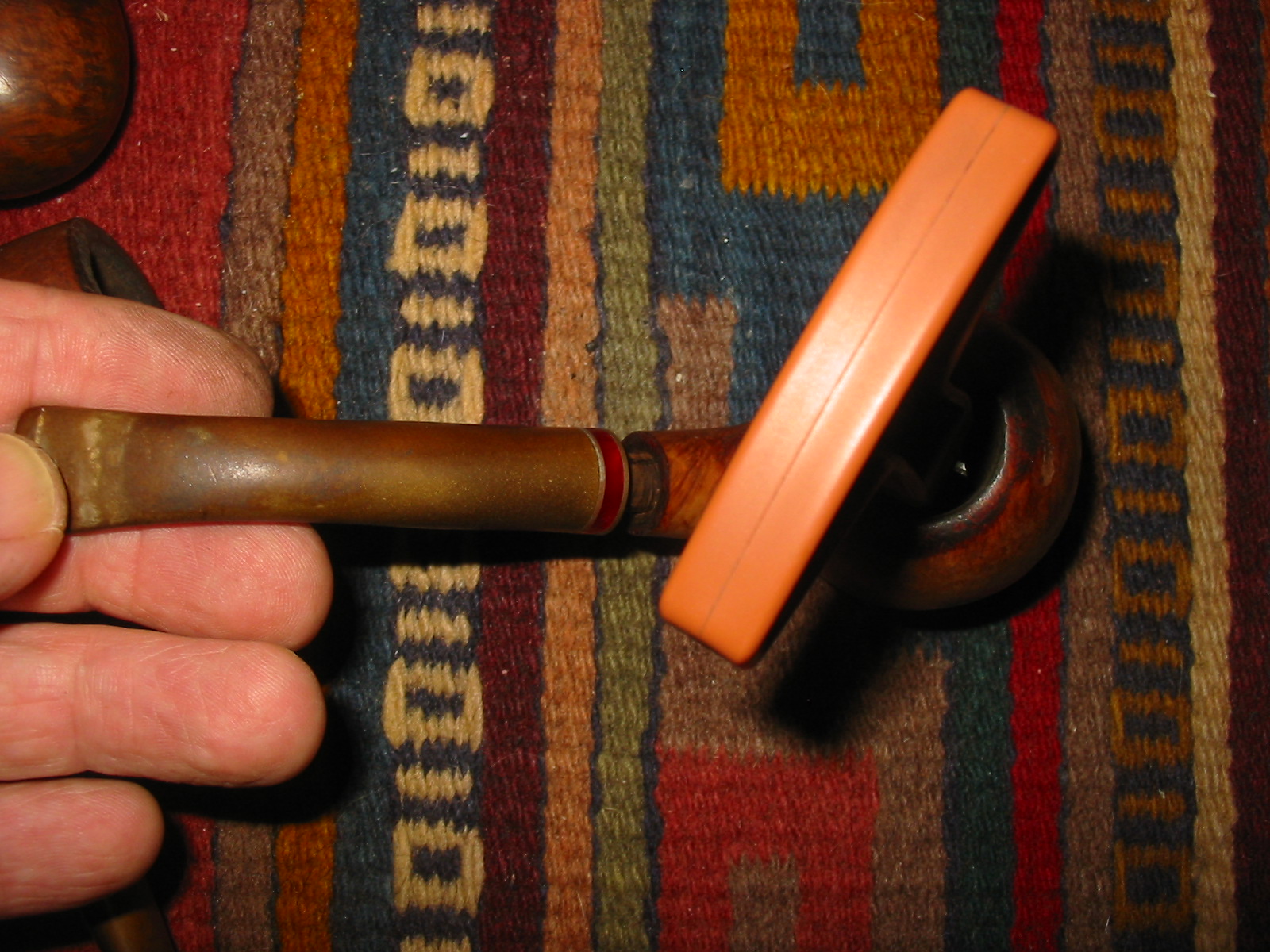
At this point in the process of fitting the stem I decided to set it aside and work on the bowl of the pipe. I reamed it out using several different bits on the t handle of the Pipnet pipe reamer. I reamed the bowl back to bare wood so that I could rebuild the cake more evenly. The next two photos show the reaming process.
ImageImage

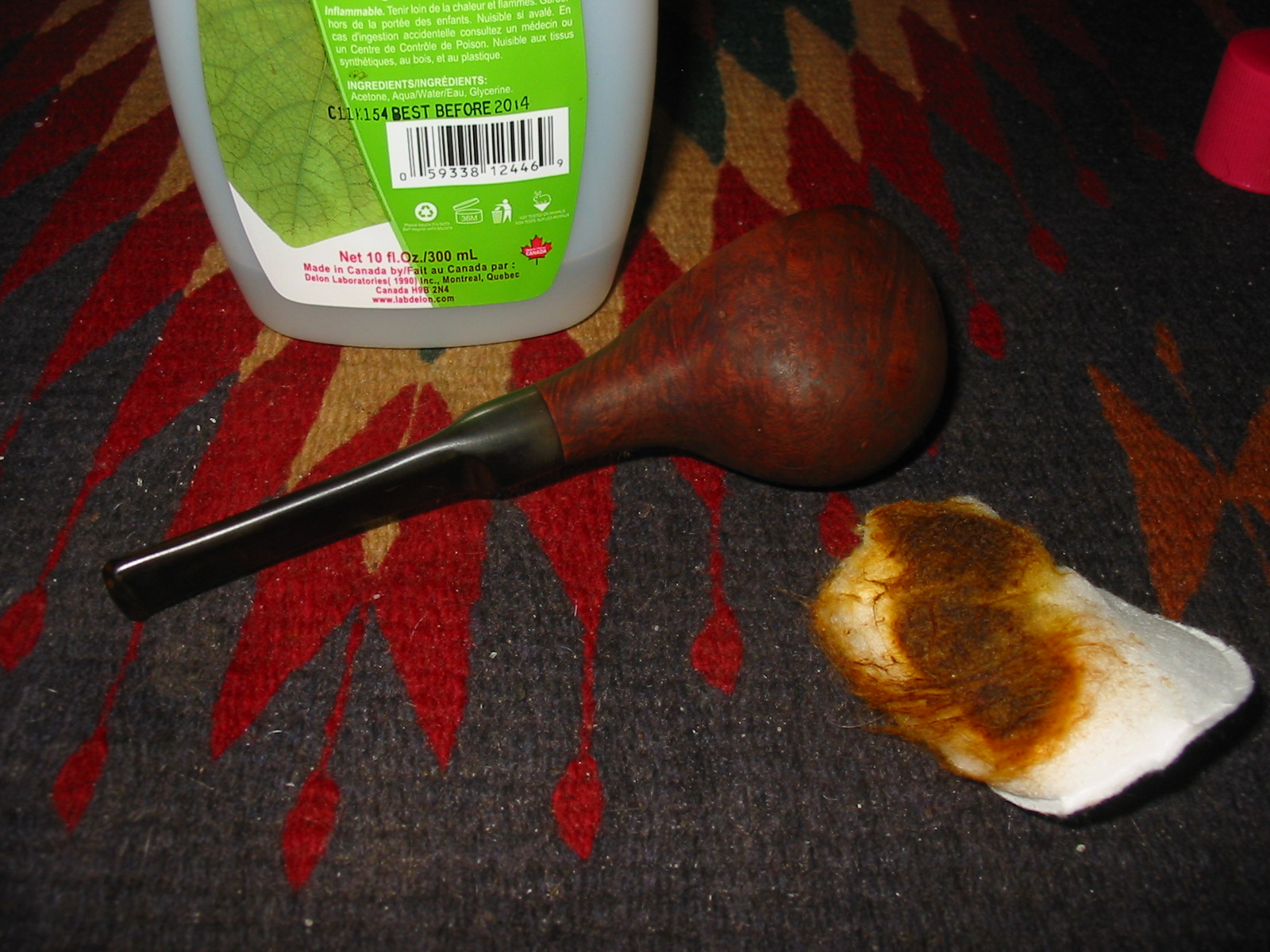
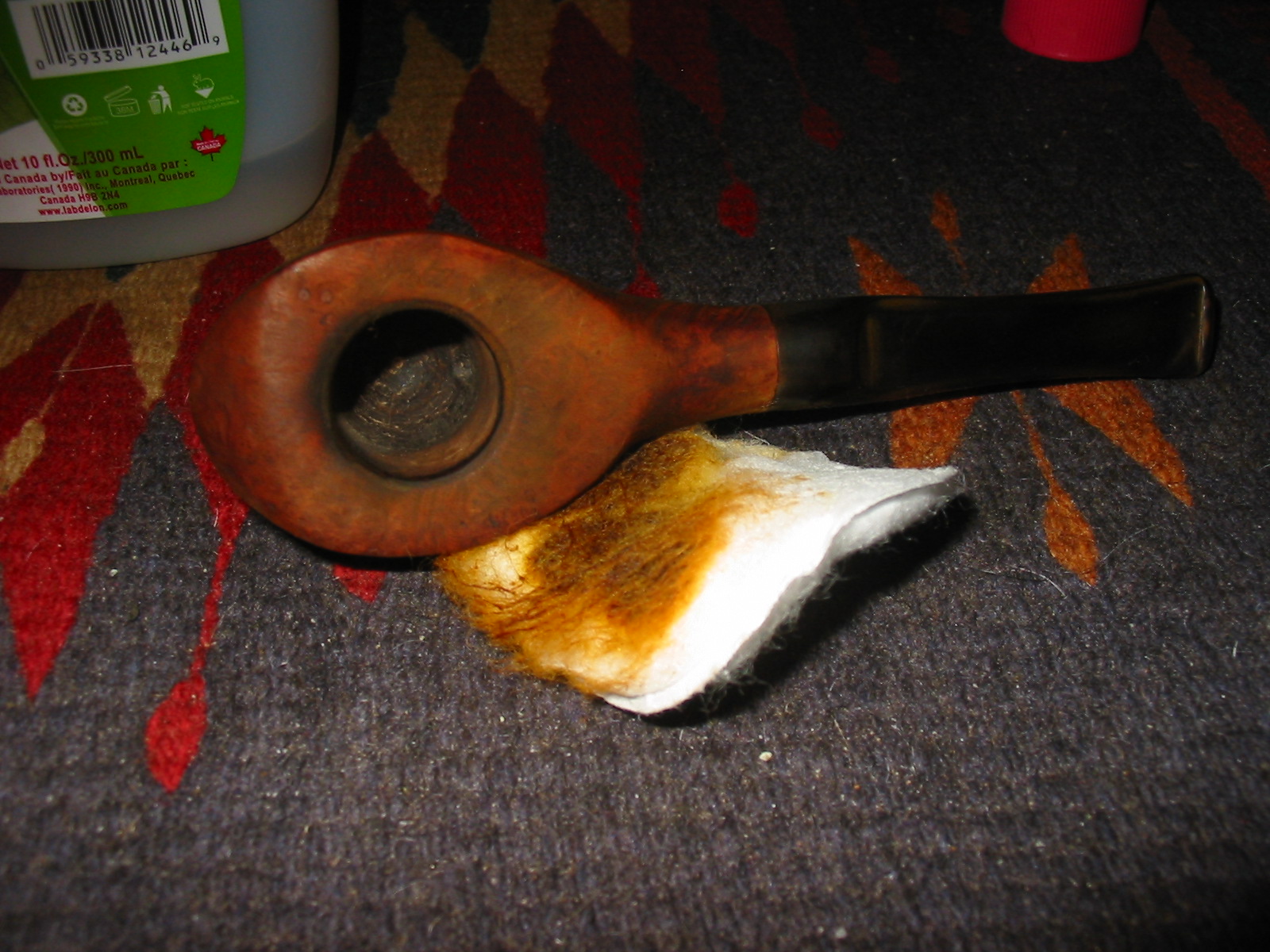
After reaming the bowl I decided to wipe the outside of the bowl down with acetone. I wet a cotton pad with the acetone and scrubbed the outside of the bowl. I also wiped down the rim to soften the tars and build up on the top. The next four photos show the bowl after I had wiped it down multiple times. I wanted to cut through the varnish or topcoat on the bowl so that I could restain it.

ImageImageImageImage

The next photo shows the bowl after I had topped it on the board and sandpaper. I was able to remove the damage of the dents and roughness with a minor topping on the sandpaper.Image

I also decided to remove the putty fill on the back side of the bowl. I picked out the putty with a dental pick. I wiped the bowl down after I had removed the fill to clean out the sandpit. I then picked it clean a second time and wiped it down again as well. Once it was clean I used the dental pick to pack the sandpit with briar dust that I had saved for this purpose. I packed it in and then tamped it down with the end of a pipe nail. I refilled the sandpit until the briar dust bulged slightly above the surface of the bowl. At this point I dripped superglue into the briar dust to anchor it in the hole. I repacked the dust and dripped in glue a second time. The first two photos below show the packed briar dust. The next two photos show the sandpit after the superglue has been dripped into the dust and dried. It blackens nicely with the superglue and instead of a pink fill the fill is now a black briar dust and superglue. I have found that the patch is much easier to blend in with stain than the putty fills.

ImageImageImageImage

The photo below shows the newly filled patch after I have sanded it. I sanded off the excess with a folded piece of fine grit emery cloth and then used a fine grit sanding sponge to smooth out the surface of the new fill to match the surface of the bowl.

Image

At this point in the process I decided to continue working on the stem of the pipe. I sanded it with the sanding sponge. I worked on the fit of the stem to the band. My ideal was to have the stem sit evenly within the band so that the gap was even all the way around the band and the stem was centered in the mortise. The next five photos show the sanding process to this point. Remember the issue at stake was to work on the fit of the stem to the band and to remove the deeper scratches in the surface of the stem. I also used the sanding drum on the Dremel to taper the stem a bit more at the button. I wanted the button end to be narrow and give the pipe and older feel and look. The top view photo below shows the shape of the stem at this point in the process.
ImageImageImageImageImage

I then wet sanded the bowl and the stem with 1500 grit micromesh sanding pads and water. This process removed many of the remaining scratches in the surface of the stem and also removed the remaining finish on the pipe bowl and rim. I wanted the bowl to be cleaned of the varnish finish and as much of the stain colour as possible so that I could more easily blend the rim and the bowl colour. The next three photos show the pipe and the stem after wet sanding. The stem fit is working well at this point and the angles and flow of the taper on the stem is looking more and more finished.

ImageImageImage

I wiped down the stem with some of the water and then used the Maguiar’s Scratch X2.0 polish on the stem to get a clear view of the remaining areas that needed more work with 320 grit sandpaper before I moved on to the higher grits of micromesh.

Image

I continued to wet sand the bowl and stem with 1800 grit micromesh sanding pads. The next three photos show the progress that was made on the smoothing and polishing of both the stem and the bowl. I continued to wet sand with the 1800 grit until the surface was smooth and matte finished.

ImageImageImage

I continued wet sanding with 2400 and 3200 grit micromesh pads. The next three photos show the progress of the sanding on the bowl and the stem at this point in the process. I also decided to sand the band with these two grits to polish the nickel.

ImageImageImage

At this point in the sanding process I switched to dry sanding the bowl and the stem with the 3600 grit micromesh sanding pad. I sanded the bowl, band and stem with this sanding pad to bring out the growing shine in both. I wiped down the bowl and the stem with a damp cloth to remove the sanding dust and to prepare the bowl for staining.

ImageImageImage

For stain on this pipe I ended up using a two step process. I began with an oxblood stain as an undercoat. I applied it with cotton swabs and also a dauber. I rubbed it into the bowl and shank and flamed it and buffed it off.  The next three photos show the application of the stain.

ImageImageImage

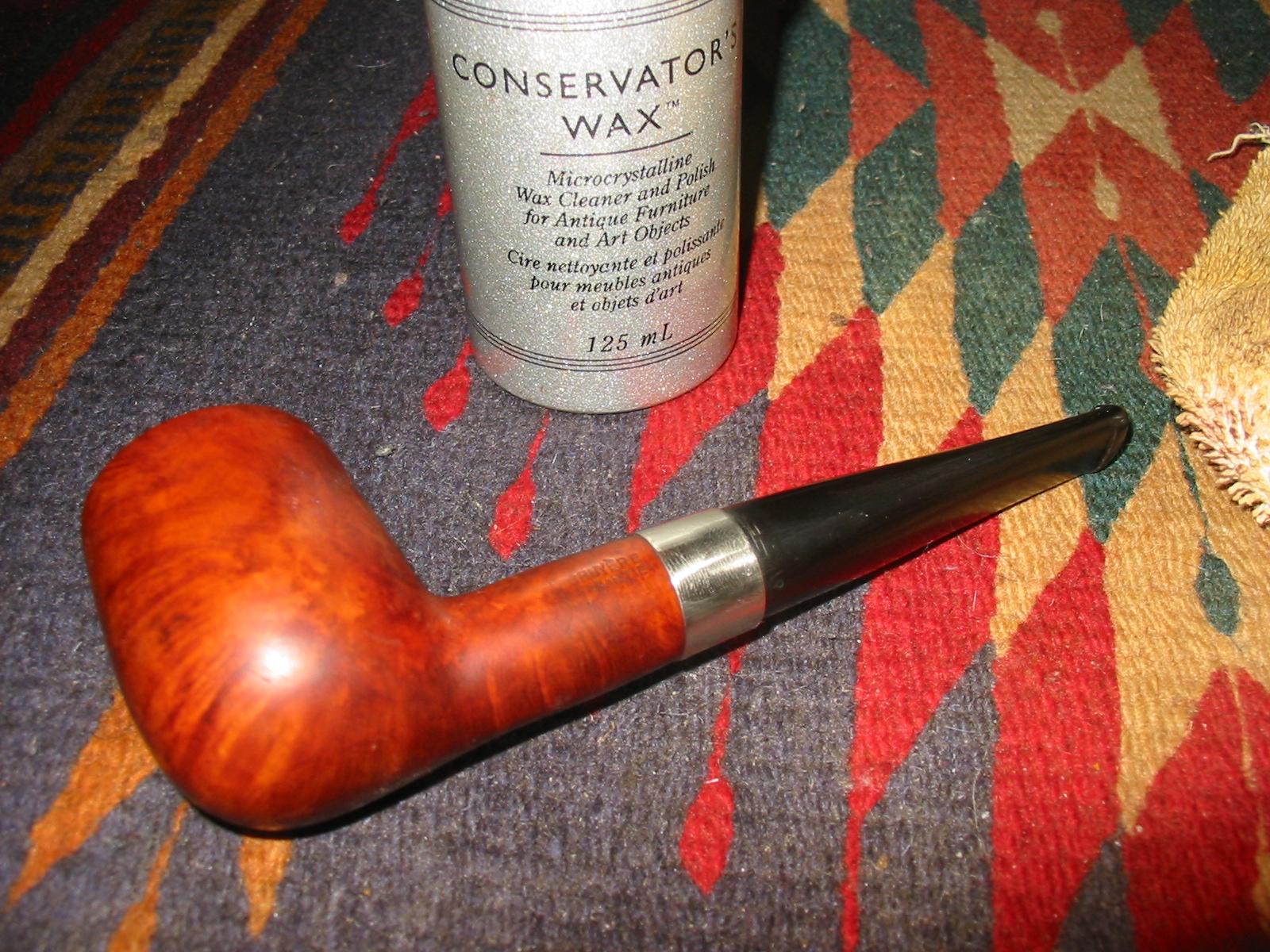
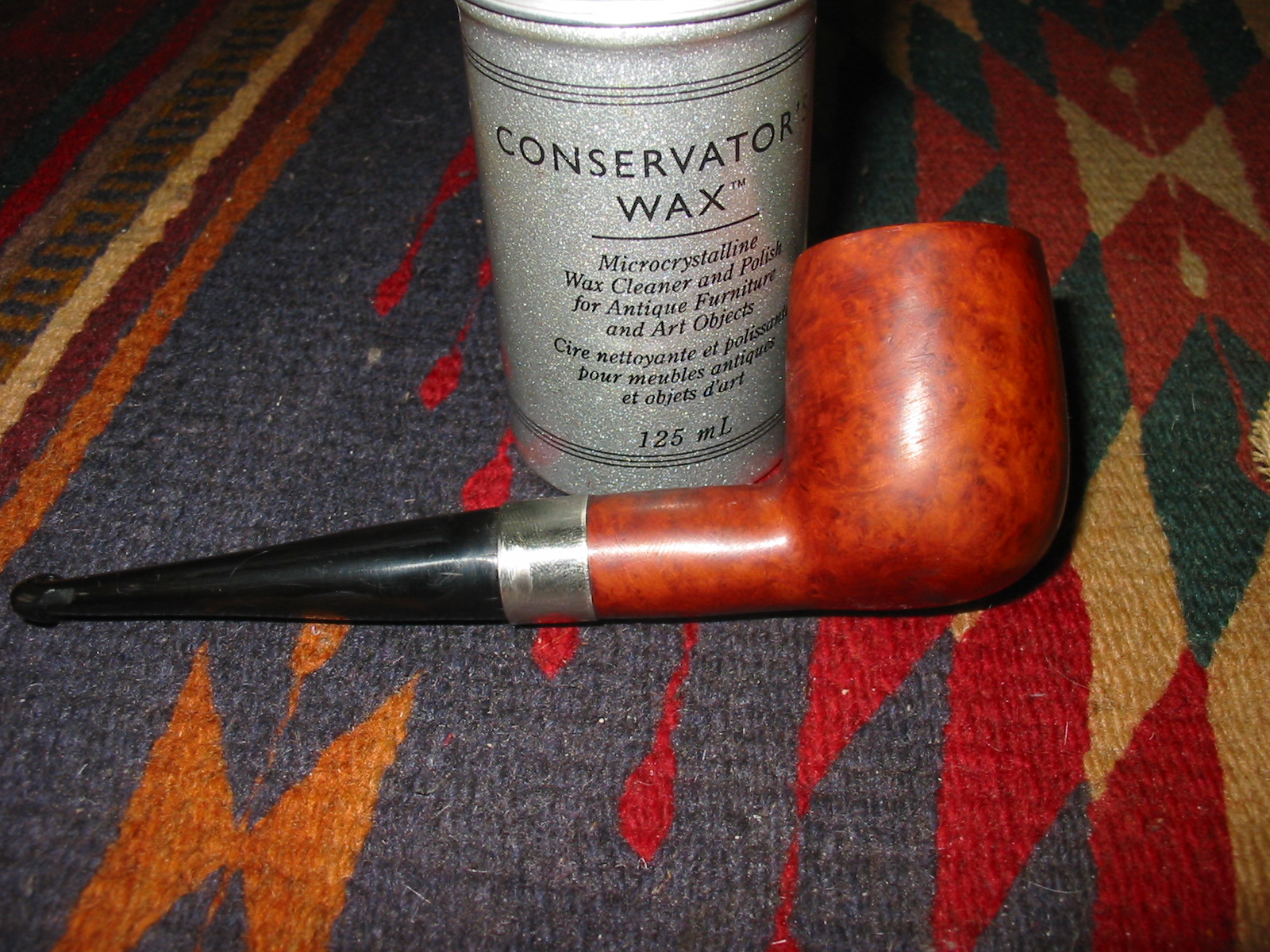
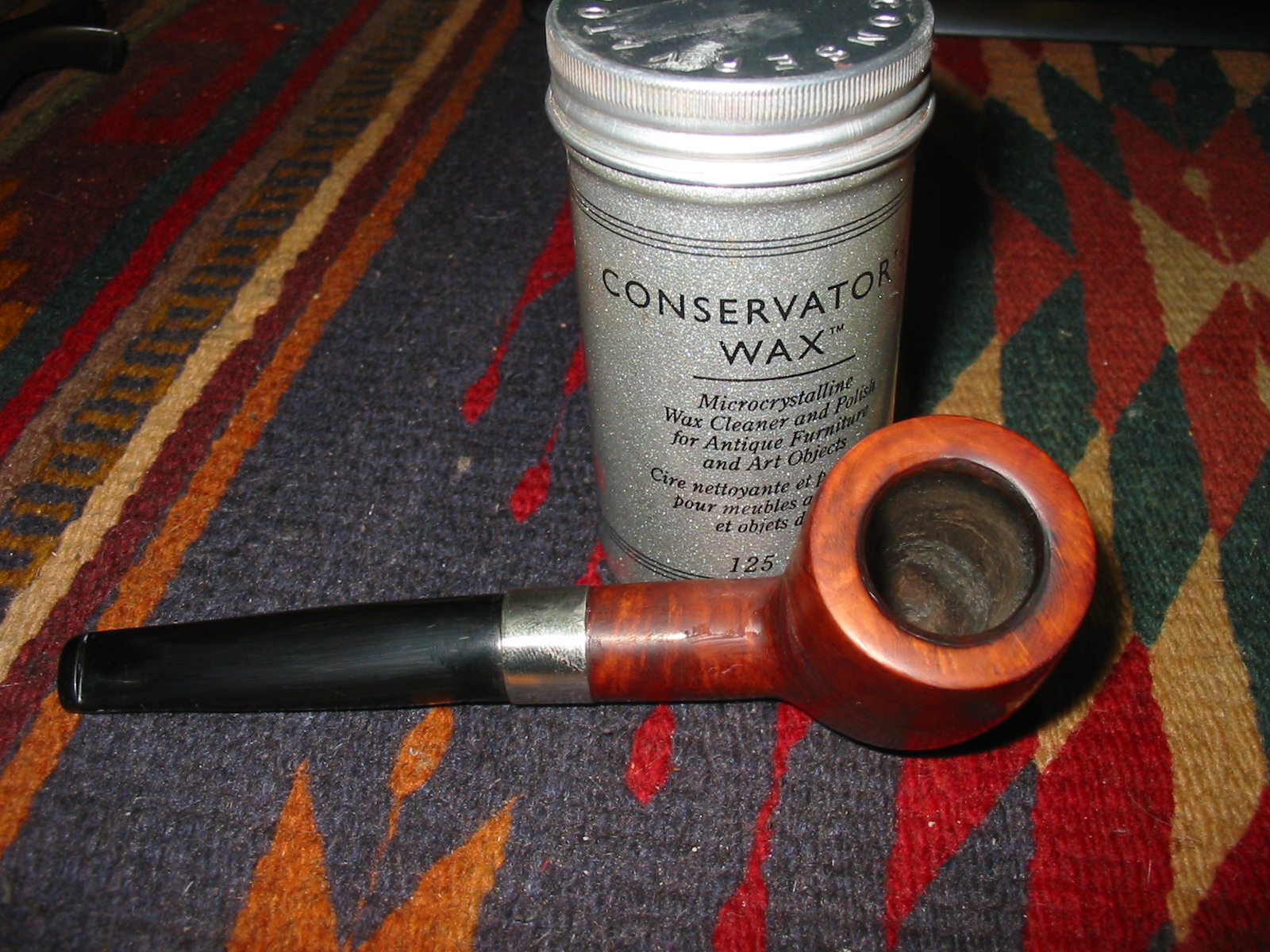
I liked the look of the oxblood stain so I wanted to see what it looked like with a light coat of wax on it. I rubbed on some conservator’s wax and then buffed it off by hand. The next series of photos shows the bowl after a light coat of wax. I was not overly happy with the overall coverage of the stain and the fill still was highly visible on the bowl. It did not blend well. I buffed the pipe with White Diamond on my buffer to see if I could even out the coverage a bit. The fourth through seventh photos below show the pipe after buffing. The coverage was not acceptable to me so I decided to go on and give the pipe a second stain coat of dark brown aniline. I wiped the bowl off with a soft cloth pad dampened with alcohol to cut the wax coat and take the bowl back to the briar before staining it with the second colour.

ImageImageImageImageImageImageImage

The next series of three photos shows the pipe after the application and flaming of the dark brown aniline stain. It was mixed 2:1 with isopropyl alcohol to get the colour that I wanted to use as the top coat. I applied the stain with the dauber and flamed it with my Bic lighter. I reapplied the stain two other times and reflamed it each time. I wanted a rich brown top coat that would give depth to the finish.

ImageImageImage

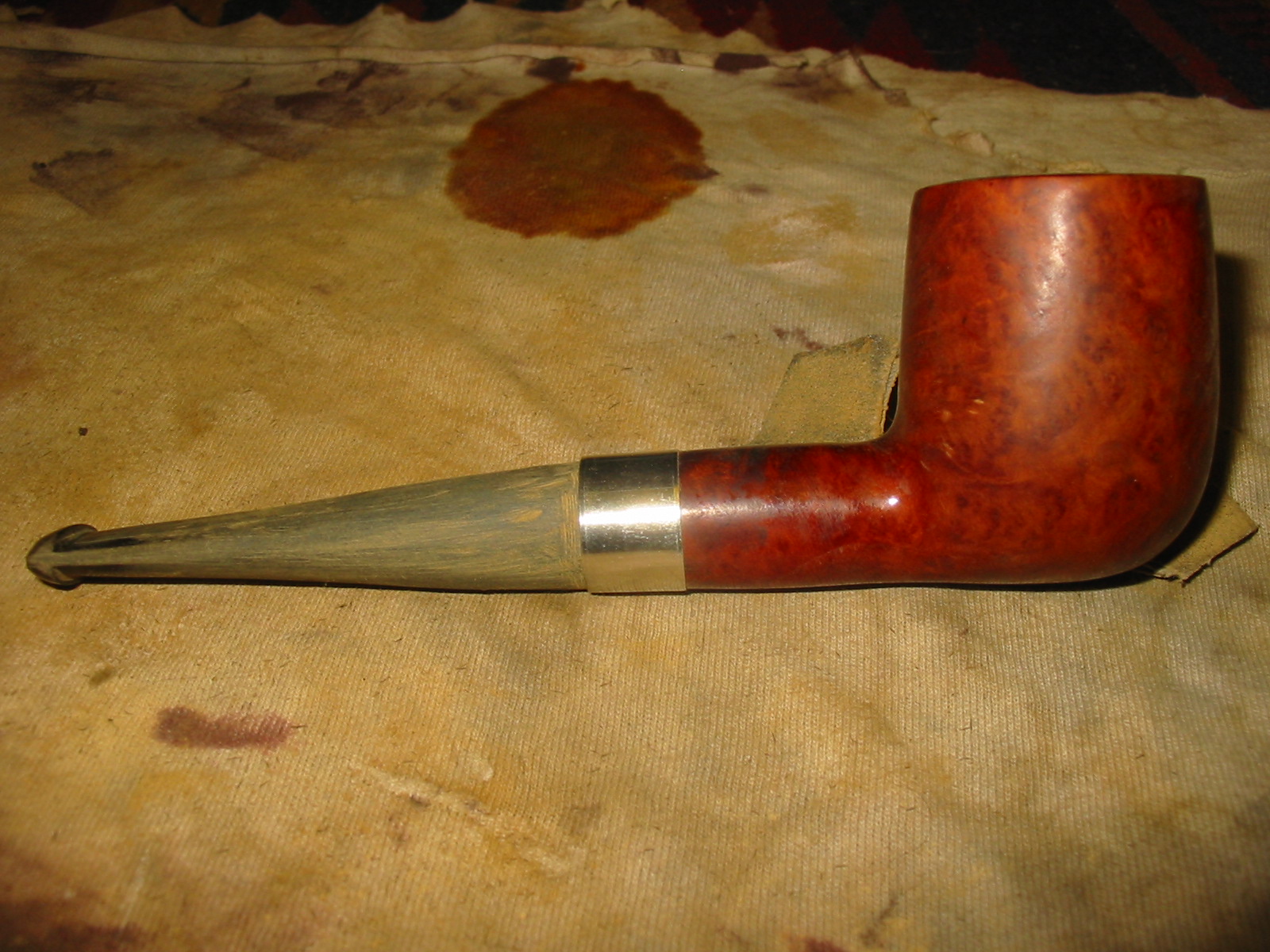
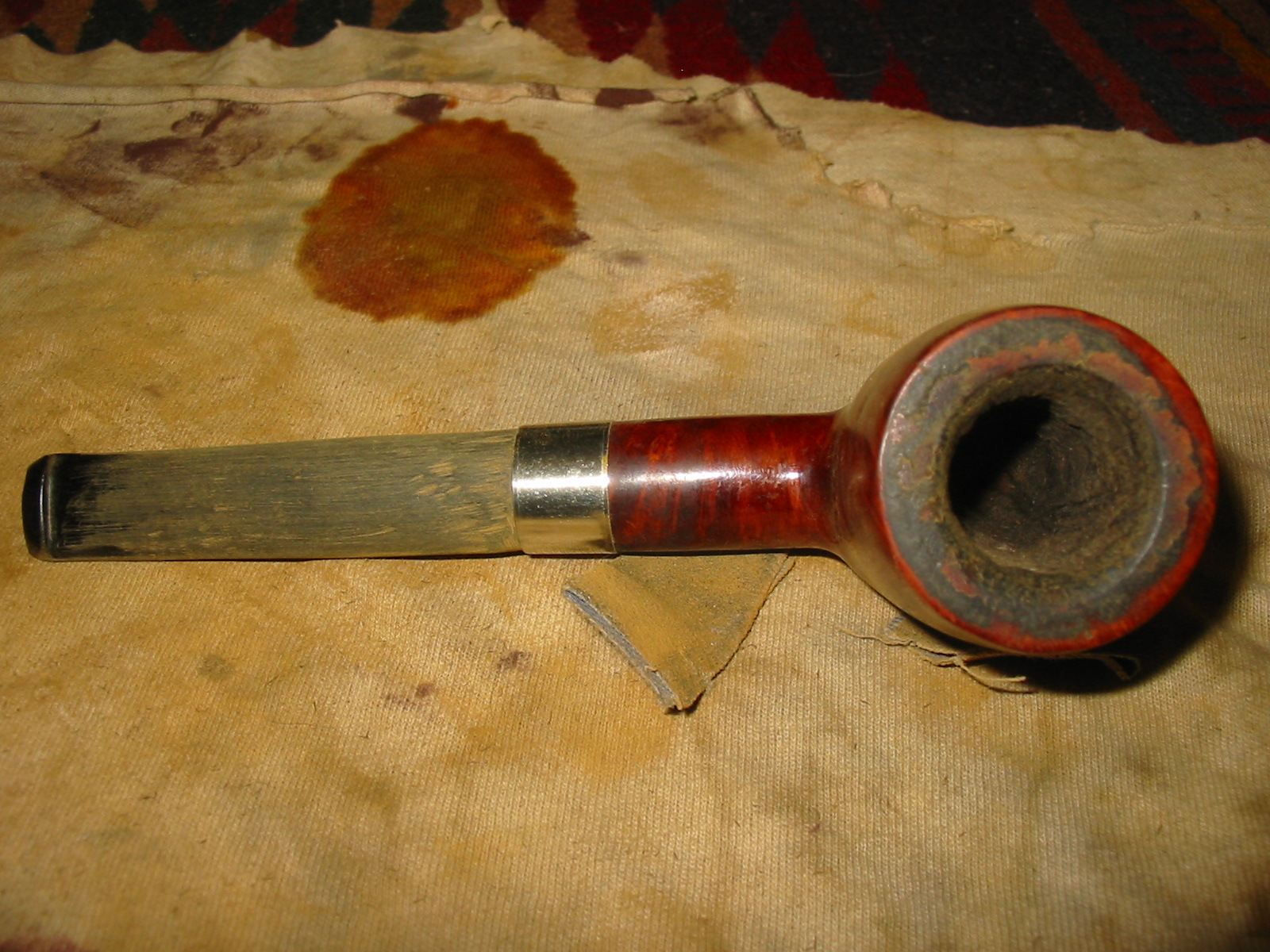
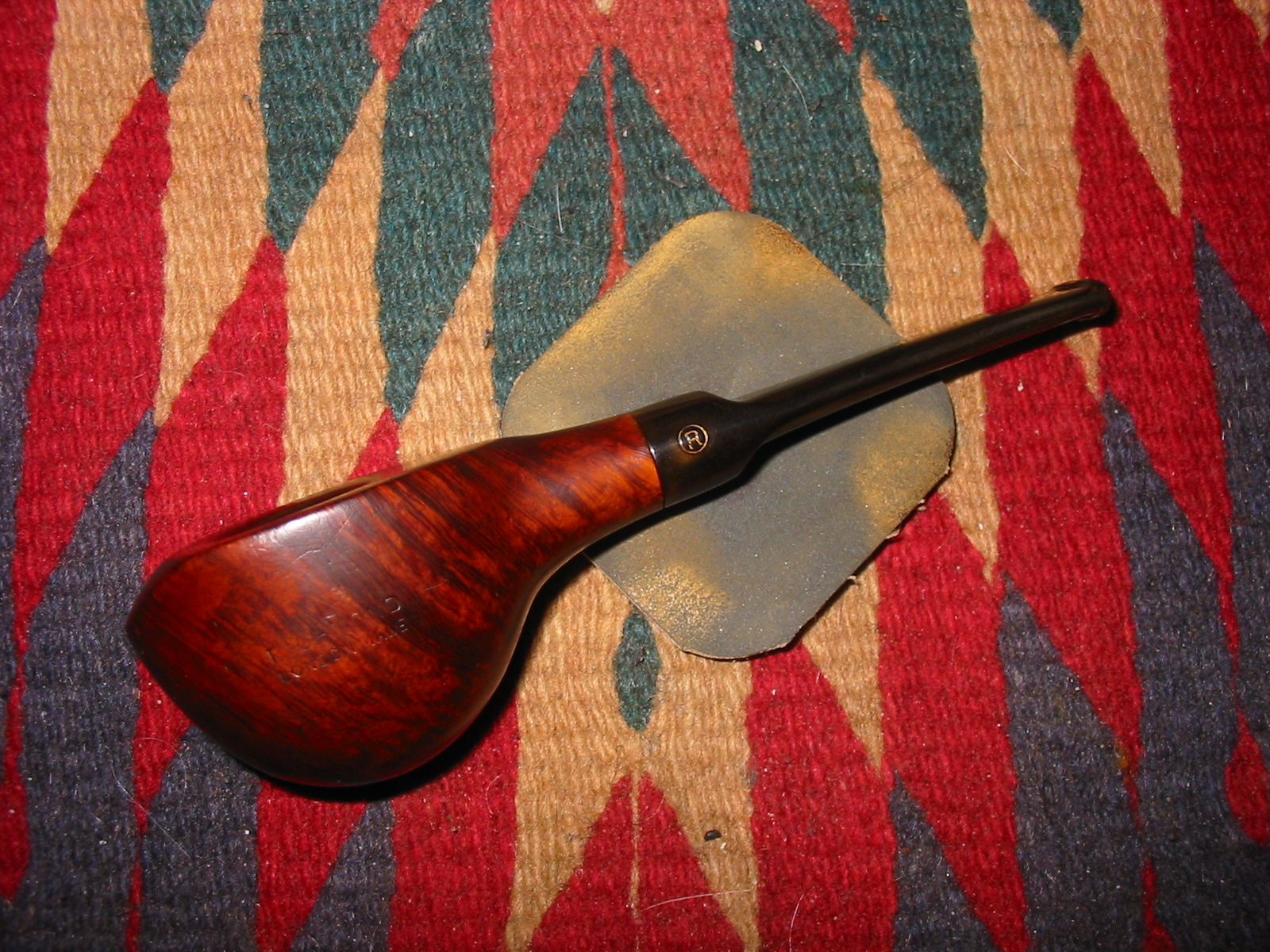
The final series of four photos show the finished pipe. After the stain dried I buffed it with White Diamond and then applied several coats of carnauba wax. I also gave the stem a coat of Obsidian Oil and rubbed it into the stem. Once the stem dried I buffed it with White Diamond for a final time and then wax it as well. The finished pipe has a great looking stain now and the shape of the stem lends an air of antique to the pipe.
ImageImageImageImage


Rejuvenating a Heibe Goldpoint Billiard


Blog by Steve Laug

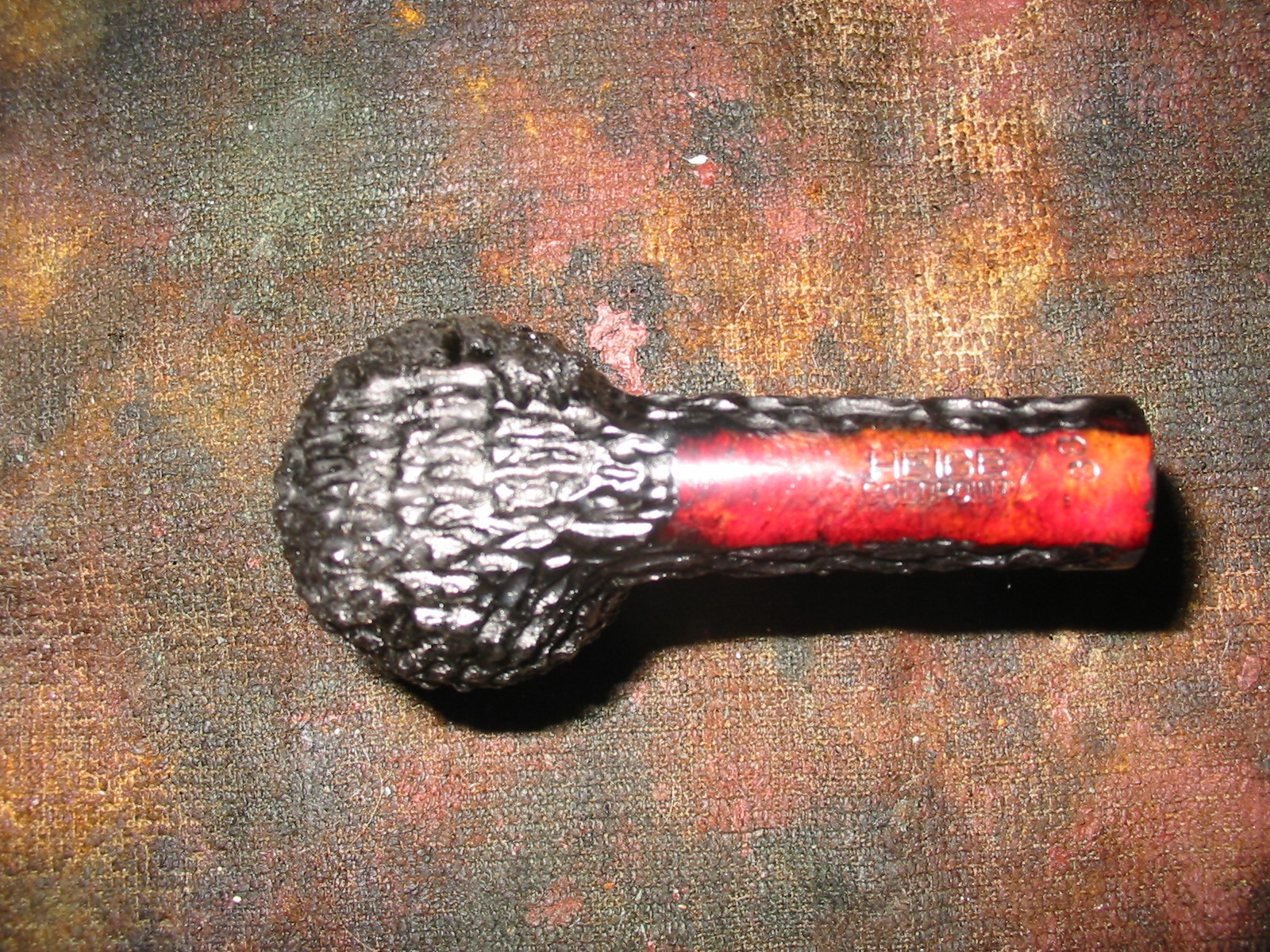
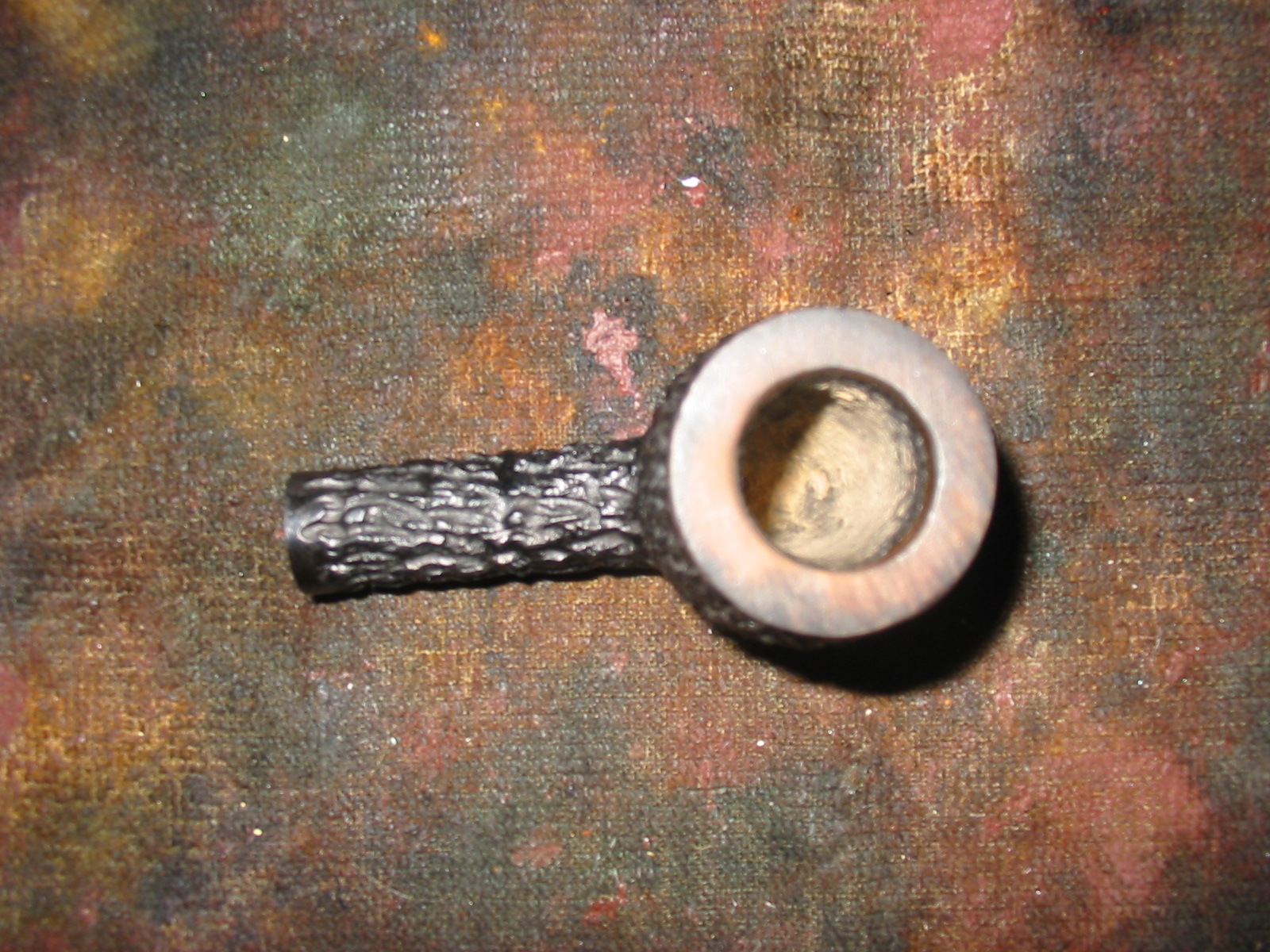
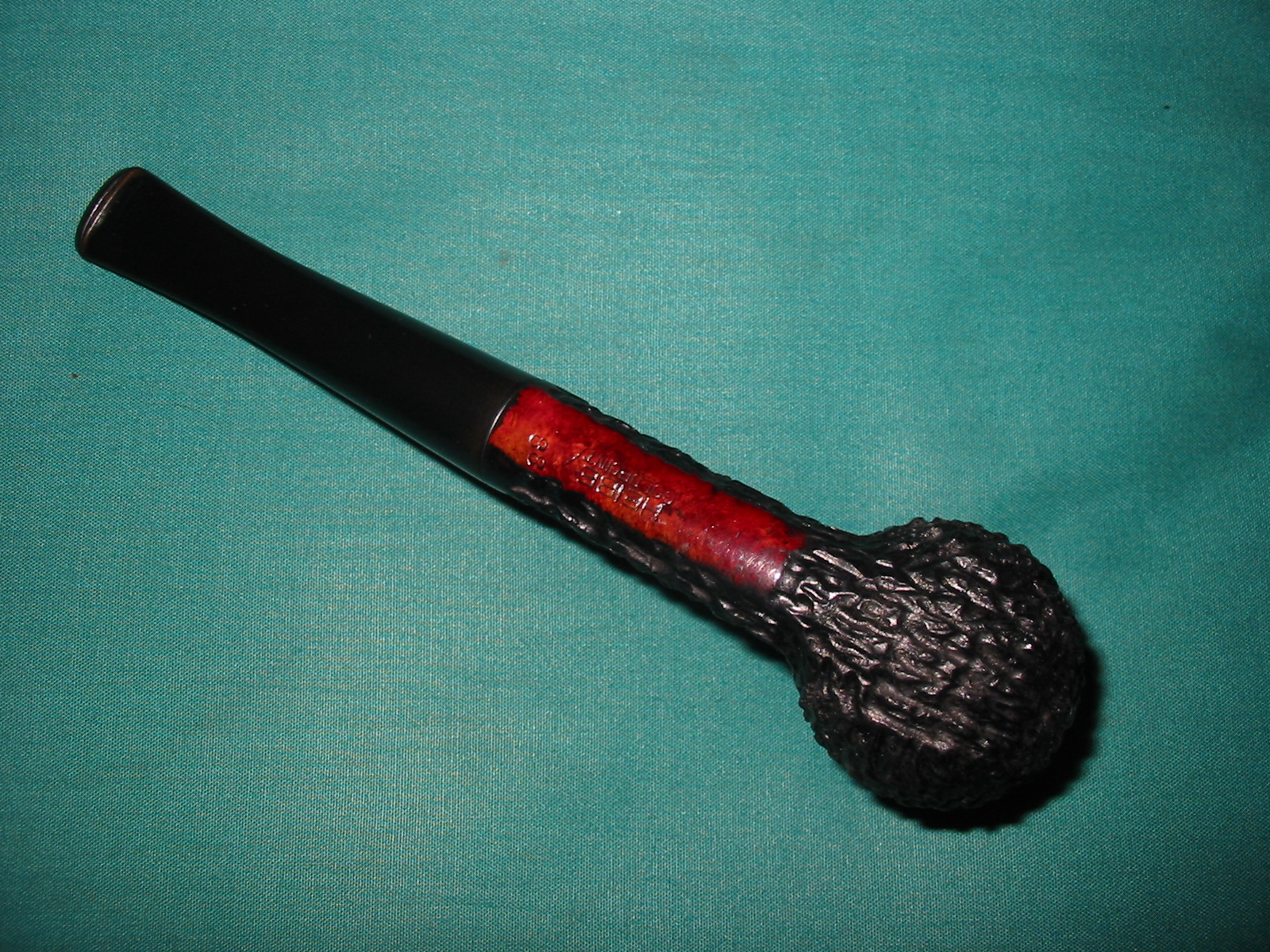
Heibe is a German brand of pipe made by pipe maker Erich Heikaus; Bergneustadt, Germany in the 1970’s. The stamping is on the smooth bottom of the shank and it reads HEIBE over Gold Point and to the right of that stamping is stamped 88. I am guessing that is the shape number. It has an ebonite stem with a gold point in the top of it. The point swirls and gives an attractive look to the stem. The stem was oxidized and had some tooth chatter and a tooth mark on the top and underside of the stem. The stem was also loose fitting. The bowl was caked but not evenly and the cake seemed to be very soft. The rim was a bit darkened but no burn marks and the inner rim was still round. The bowl finish is rusticated with a tree bark like rustication and the stain was black. The rim and the smooth spot on the underside of the shank were stained oxblood. The finish was dirty and in spots the stain was missing and the briar was showing through – particularly on the edges of the rim and on the shank near the stem. Some of the high points on the bark rustication were also showing briar through the stain. The original stain was black. The next series of four photos shows the state of the pipe when I started working on it this morning.

ImageImageImageImage

I decided to begin by scrubbing the bowl with Murphy’s Oil Soap and a soft bristle tooth brush that I have used for a long time to scrub deeply into the rustication patterns. Once I scrubbed it thoroughly I rinsed it off under warm water in the sink. I do not leave it under the water long, just enough to scrub off the soap and get it cleaned. I then dry it off with a soft cotton cloth and wipe out any water than got in the bowl with a cotton swab. The first picture below shows the pipe scrubbed and covered with the oil soap. The tooth brush in the photos is the one I use to scrub the bowl. The next four photos show the bowl after I have rinsed it with warm water and dried it off. You can see where removing the grime and dirt from the bowl left the spots very visible that needed to be restained. The rim also cleaned up nicely.

ImageImageImageImageImage

After I thoroughly dried it off it was time to stain the bowl. I did a bit of research and found some estate Heibe pipes on a German estate pipe selling site. The finish on this one was normal for Heibe’s rustications and it states that it was stained black. With that information I decided to restain it with some black aniline stain. I used the dauber that came with the stain and applied it heavily to the rim and the bowl making sure that it went deeply into the crevices of the bowl and the shank. I would clean off the rim and the shank later and worry about staining them afterwards. I stained the bowl and flamed it with a Bic lighter, then restained and reflamed the bowl. The next series of three photos show the newly stained pipe.
ImageImageImage

Once it was dry I rubbed the stain off the rim and also off the shank smooth portion with a soft cloth and then with some alcohol on a cotton pad. I also buffed the bowl with White Diamond on the buffing wheel. The smooth portion on the shank cleaned up nicely and the finish of the oxblood stained came through well. The rim (fourth photo below) did not fare as well. I wiped it down with acetone and also more isopropyl but in the end I would need to use a soft sanding sponge to remove the black from the edges of the rim.

ImageImageImageImage

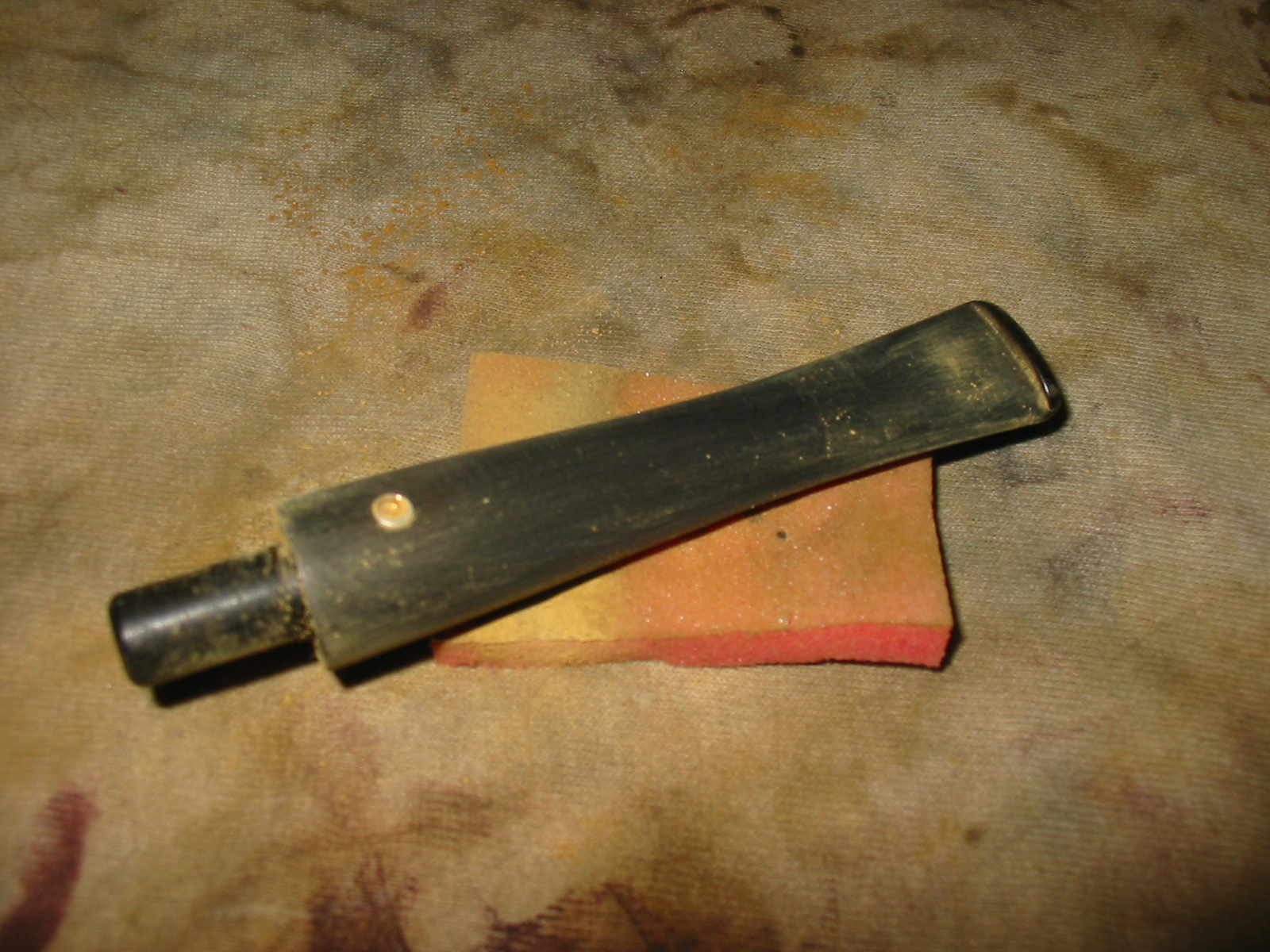
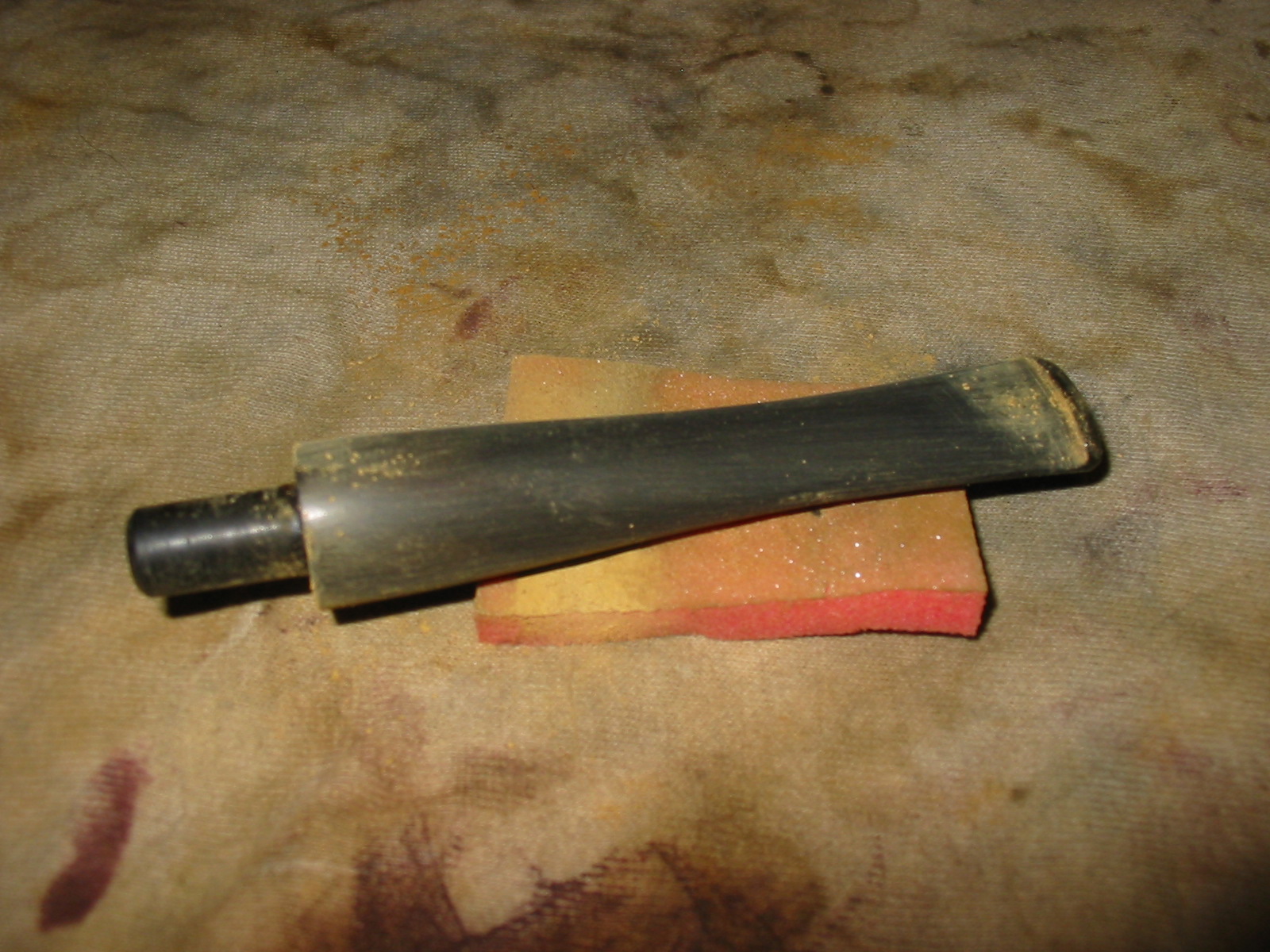
I set the bowl aside to let it dry thoroughly while I worked on the stem. I began by sanding out the tooth marks and the tooth chatter with 320 grit sandpaper until they no longer showed. I then used my medium grit sanding sponge to sand the entire stem and work on removing the oxidation. The first two photos below show the sanding sponge and the work that it did in removing the oxidation. The next two photos below show the stem after I wiped it down from the sanding with the sanding sponge.
ImageImageImageImage

I then used some Maguiar’s Scratch X2.0 and scrubbed the stem with my finger as I applied it and then rubbed it off with a cotton pad. The point was that I wanted to remove more of the scratches and also polish off some of the oxidation. The next two photos show the stem after polishing (forgive the first photo – somehow it blackened on the right edge but you can still see the polish that is happening around the logo).
ImageImage

After polishing with the Maguiar’s you can see the oxidation on the stem particularly on the tenon end. It extends about an inch back toward the button and was also in the crease of the button. It was time to sand the stem with the micromesh sanding pads. I wet sanded the stem with 1500 and 1800 grit micromesh pads. The next three photos show the stem in process and after the sanding. I finished wet sanding and then wiped the stem down. I then dry sanded the stem with the remaining micromesh pads from 2400-12,000 grit. I used the Maguiar’s a third time to polish the stem and then buffed it with White Diamond on the buffer. Once I had finished buffing I wipe the stem down with Obsidian Oil and set it aside to dry.

ImageImageImage

The next series of four photos show the finished stem. I reinserted it in the bowl. The tenon fit was loose so I dripped superglue on the tenon and then sanded it back until the fit was snug. I gave the bowl and stem another buff with White Diamond. I coated the stem with carnauba wax and buffed it with a flannel buff. In the first photo below you can see that the rim needed some work. The stain just did not come back after the cleaning. I sanded it with the micromesh 3200 grit pad and then it was ready to be stained. The fifth picture below shows the restaining of the rim with a cotton swab and oxblood stain. I applied the stain with a cotton swab and then flamed it. I hand buffed it with a terry cloth towel I use for hand buffing and applied carnauba wax to the rim.

ImageImageImageImageImage

The final series of four photos show the finished pipe. The stain contrast came out very well. The black and the oxblood highlights look great. The stem shined up exceptionally well. It is a group four sized pipe and should smoke very well. It has a nice open draw. I know that some of the Heibe pipes were made for filters but this one is not fit for filters. It is just a normal push tenon. All in all it is a beautiful pipe.
ImageImageImageImage

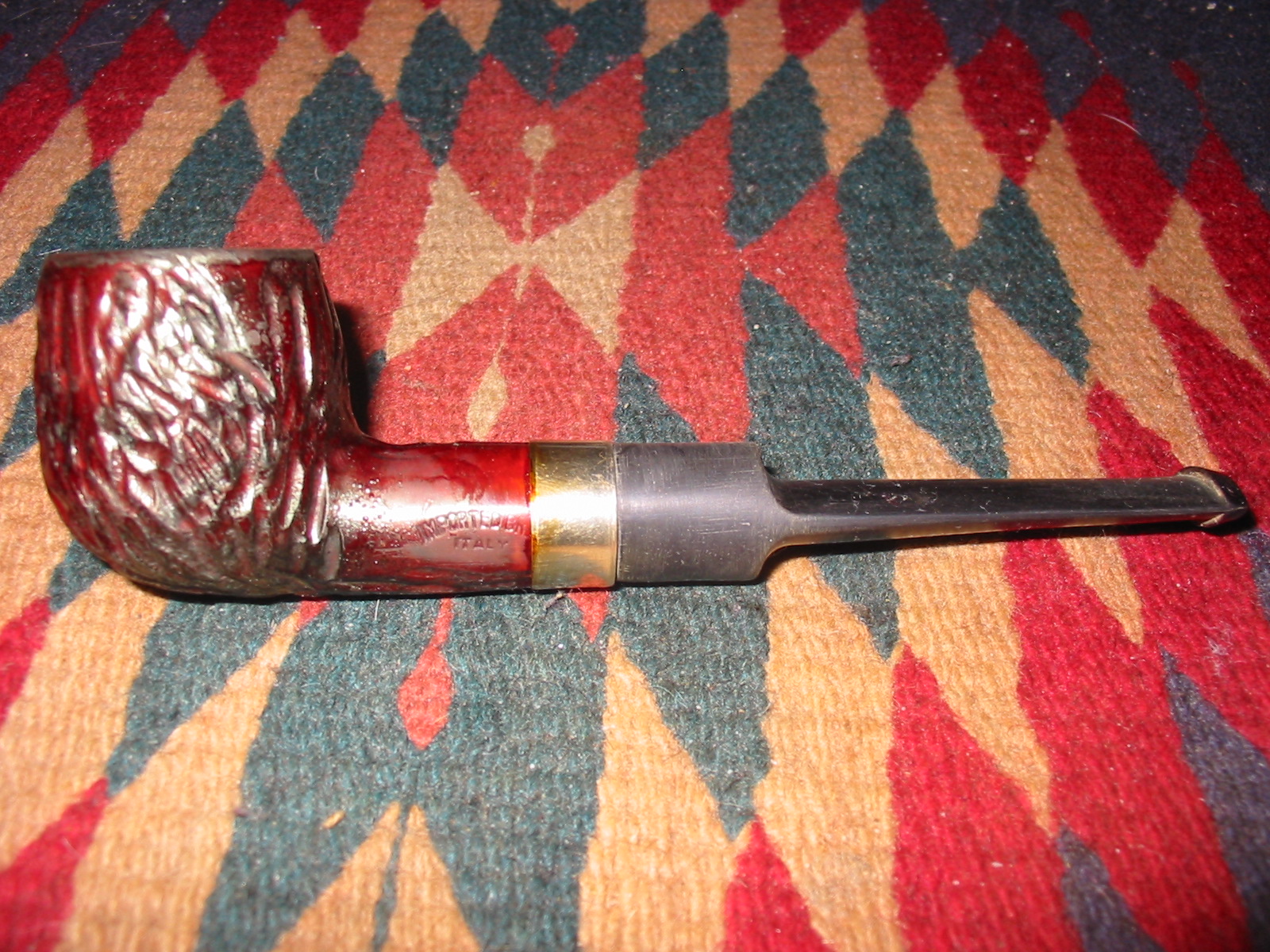
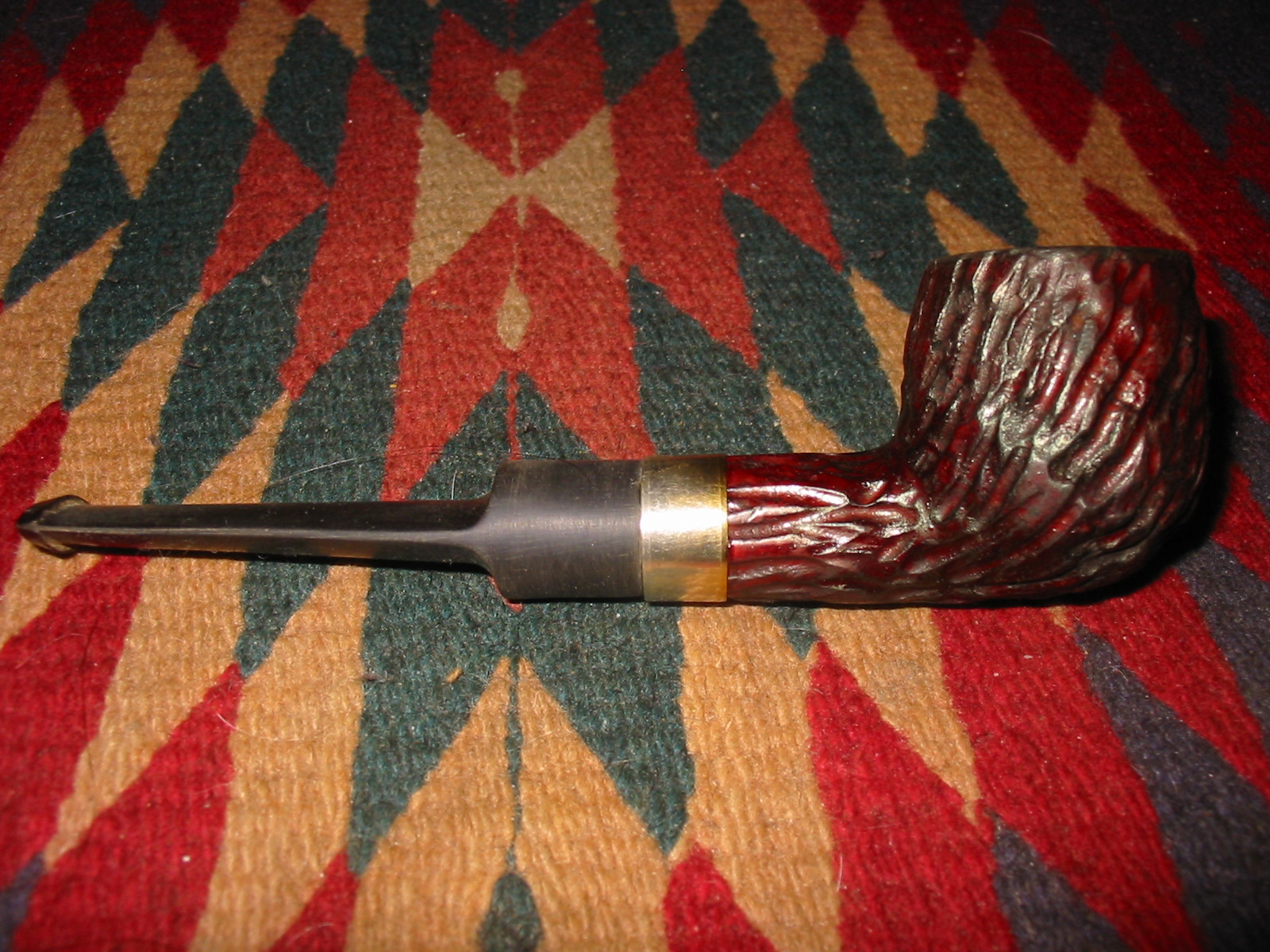
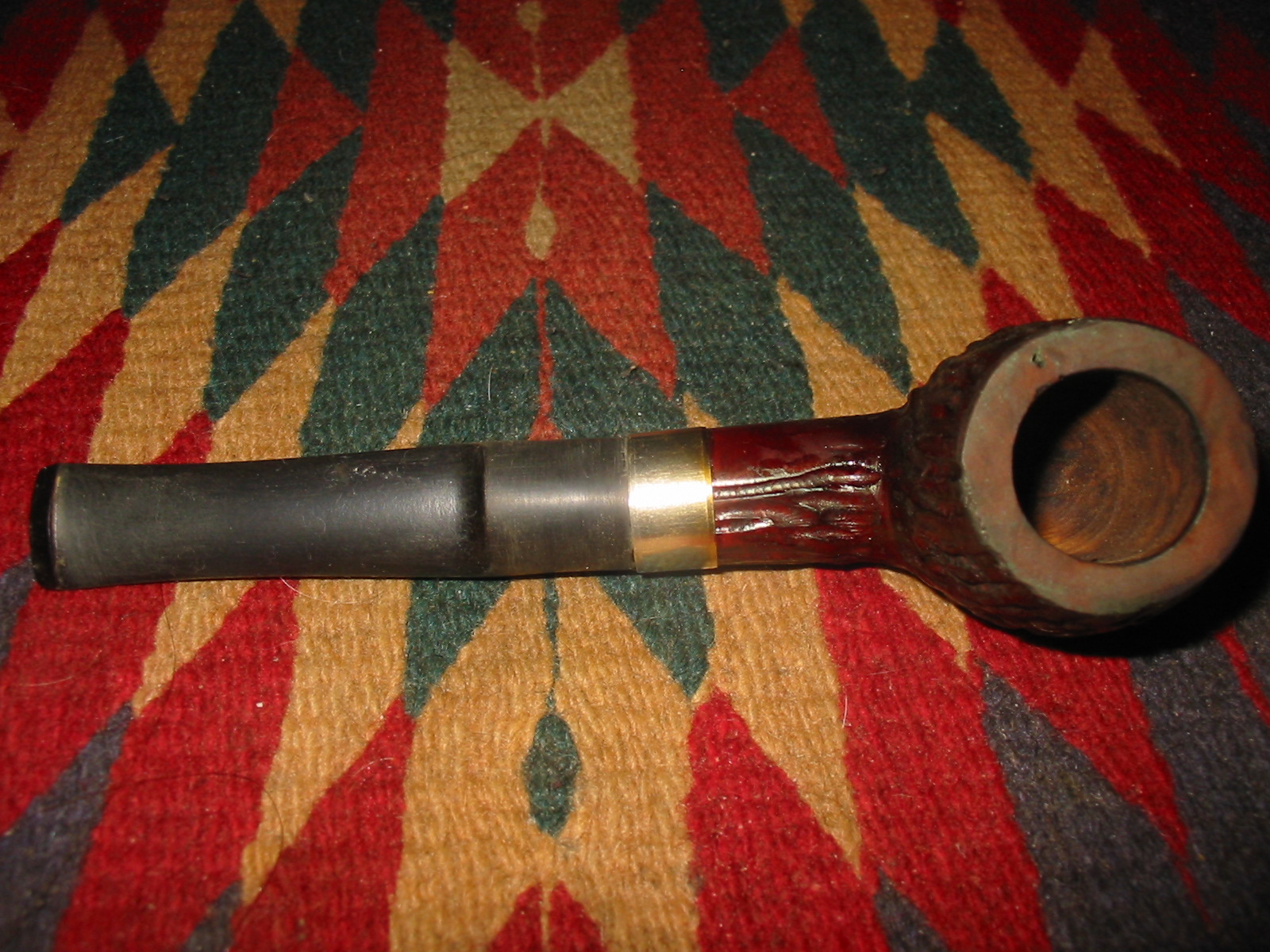
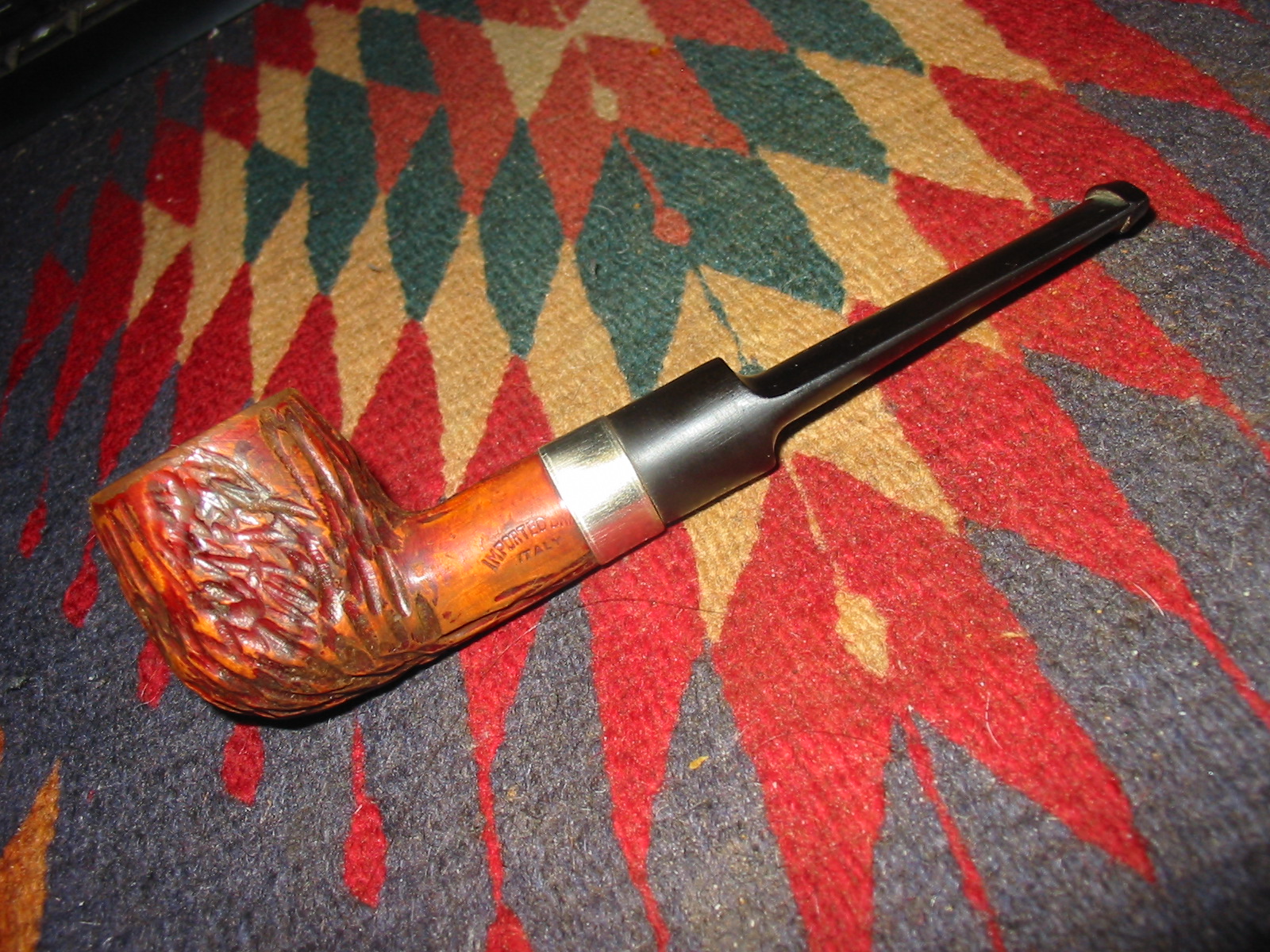
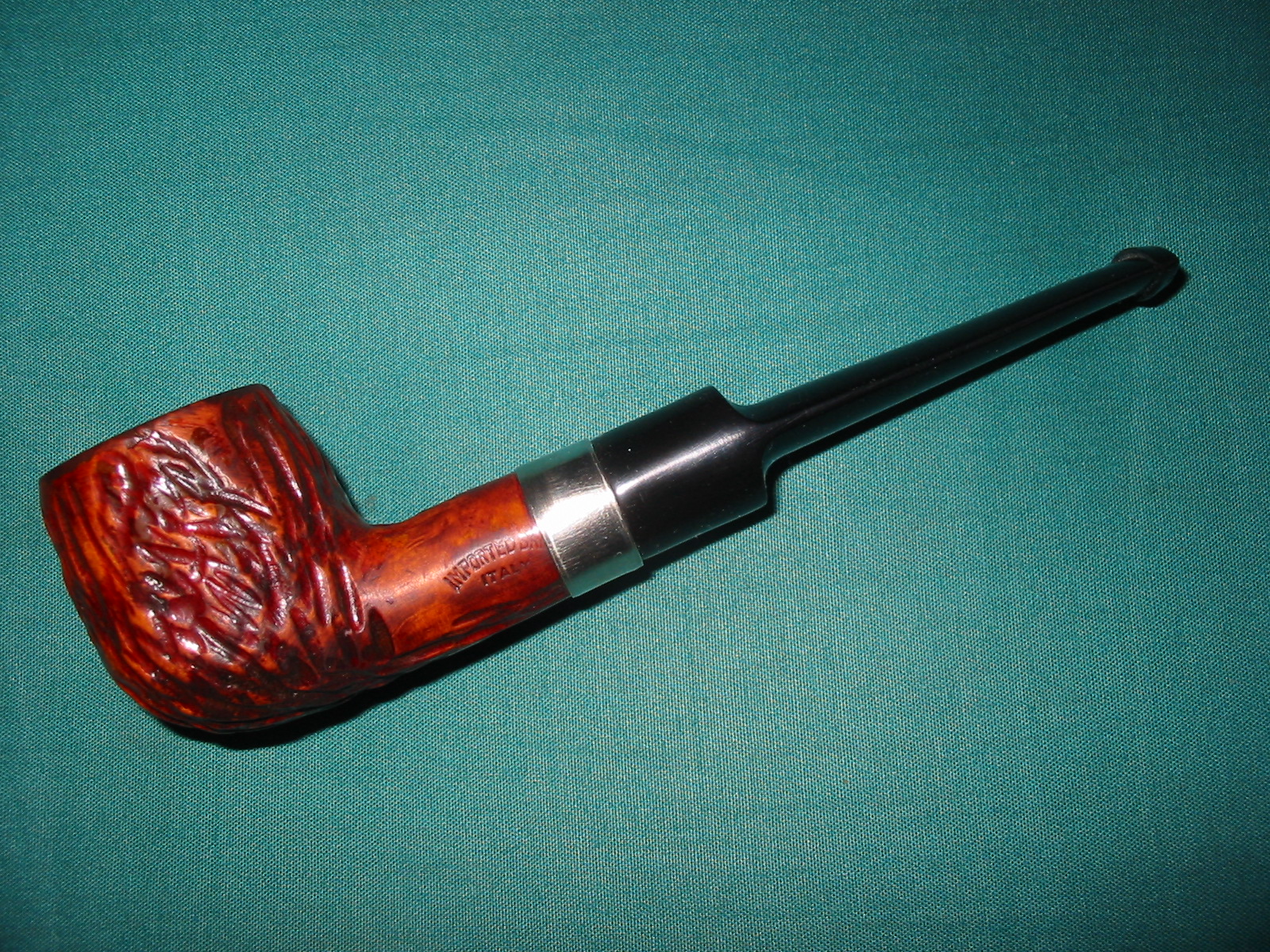
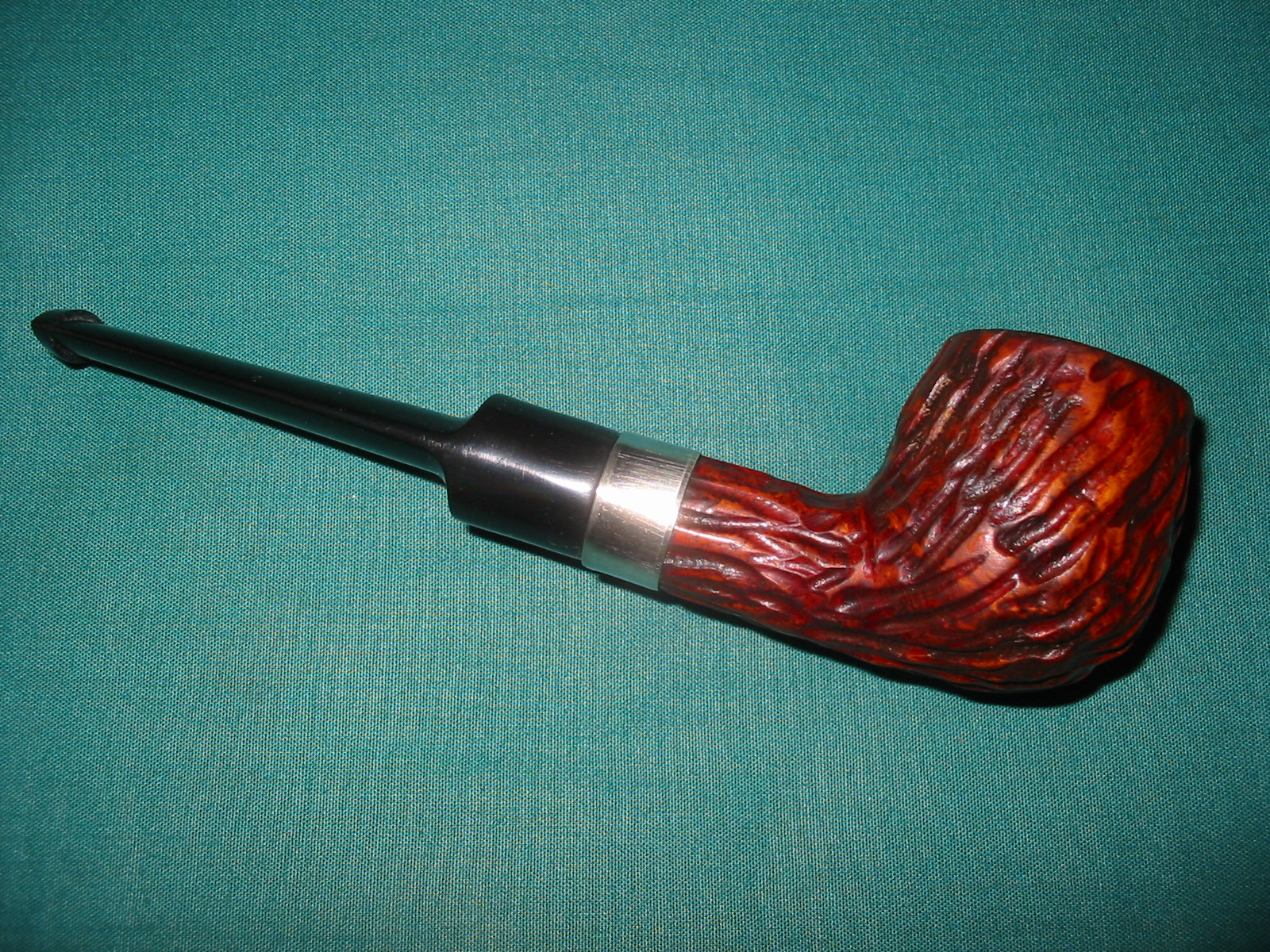
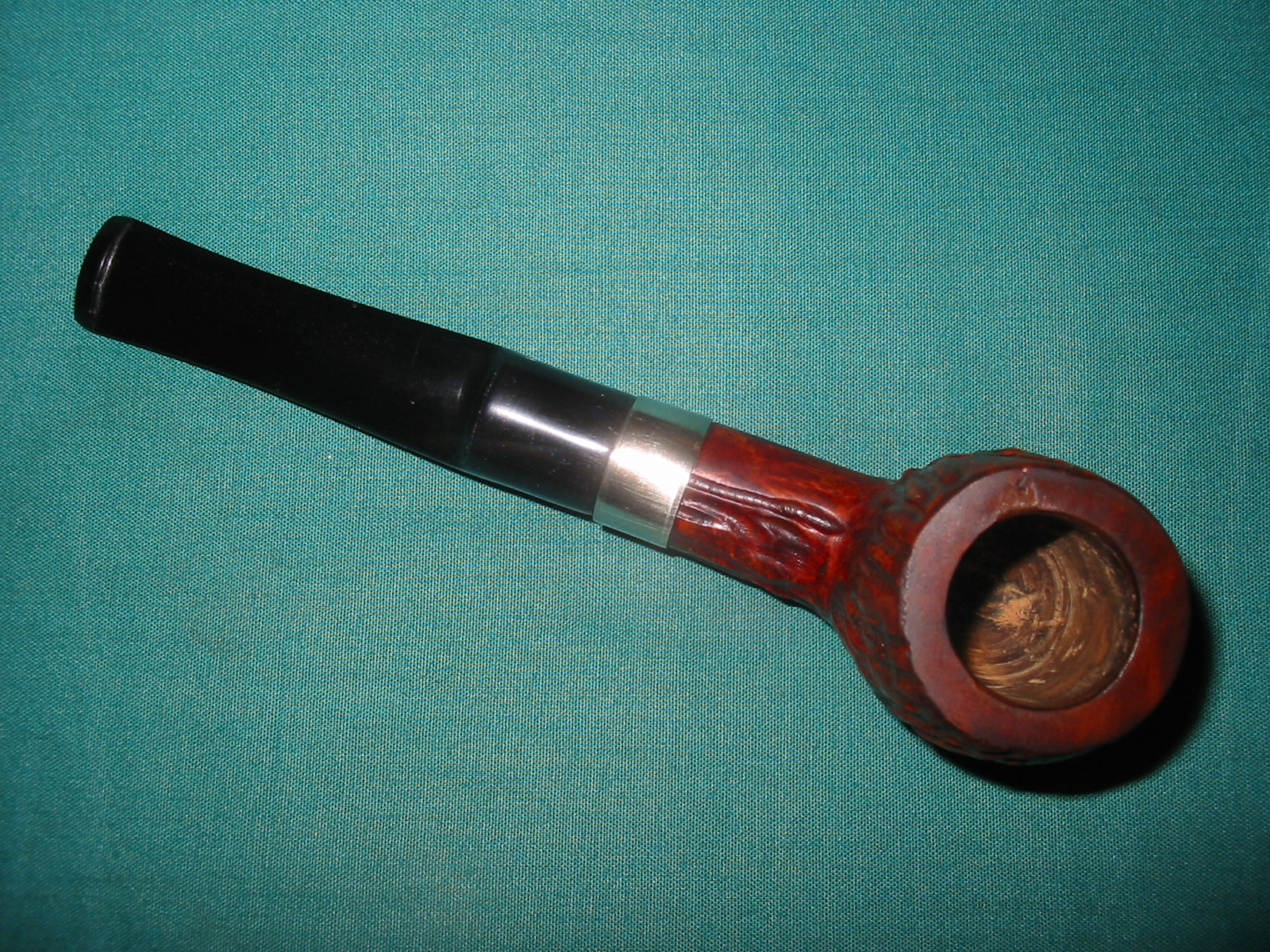
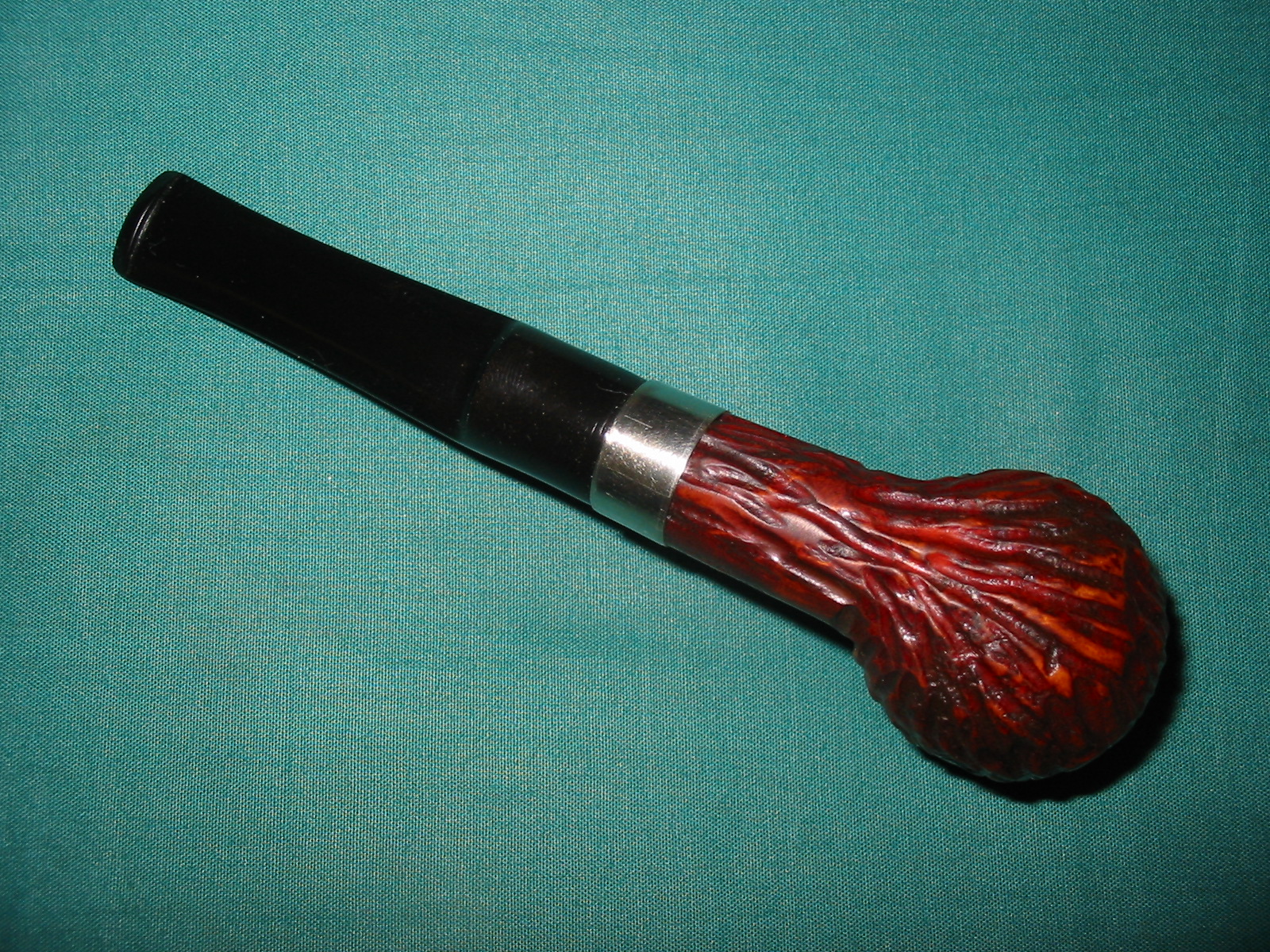
Restemming and Refinishing an Imported Briar Italian Billiard


Today I took another bowl out of my box of pipes to restem. I had previously turned the tenons with a Pimo tenon turner and fit it to the bowl and shank. I had not fit the stem when I started. The diameter of the stem was larger than the bowl. This bowl was a real mess. It is stamped Imported Briar in an arch over Italy on the smooth left shank of the pipe. It had originally had a band but that was no longer present with the bowl. The finish on the pipe was in bad shape. It was almost a yellow varnish that was chipping and peeling away. The rustication was filled with grit and grime and the colour of the bowl was an ugly yellow colour under the varnish. The bowl was still round and the reaming had already been done and it was pretty clean. The rim had some build up of tars and oils and a few dents. Looking it over I decided I would have to top it to clean it up.
ImageImageImage

The tenon was a good tight fit. I stepped down the end of it to sit in the stepped mortise in the shank. I needed to remove a good deal of vulcanite from the saddle portion of the stem to bring it to the same diameter as the shank. I used my Dremel to do that work. The next series of four photos show the process of removing the material from the stem. I use a Dremel with a sanding drum to do the work. I run it at a medium speed that allows me to float it over the stem without digging to deeply into the vulcanite. I find that a slower speed gives a very rough finish and a faster speed is harder to control the work.
ImageImageImageImage

The next series of three photos shows the finished fit of the stem. I have finished sanding it with the Dremel. The photos show that it is relatively smooth with no deep gouges or scratches in the surface of the saddle. I also used the Dremel to sand down the castings on the button and on the sides of the stem. You can also see the place on the shank where the band was previously.

ImageImageImage

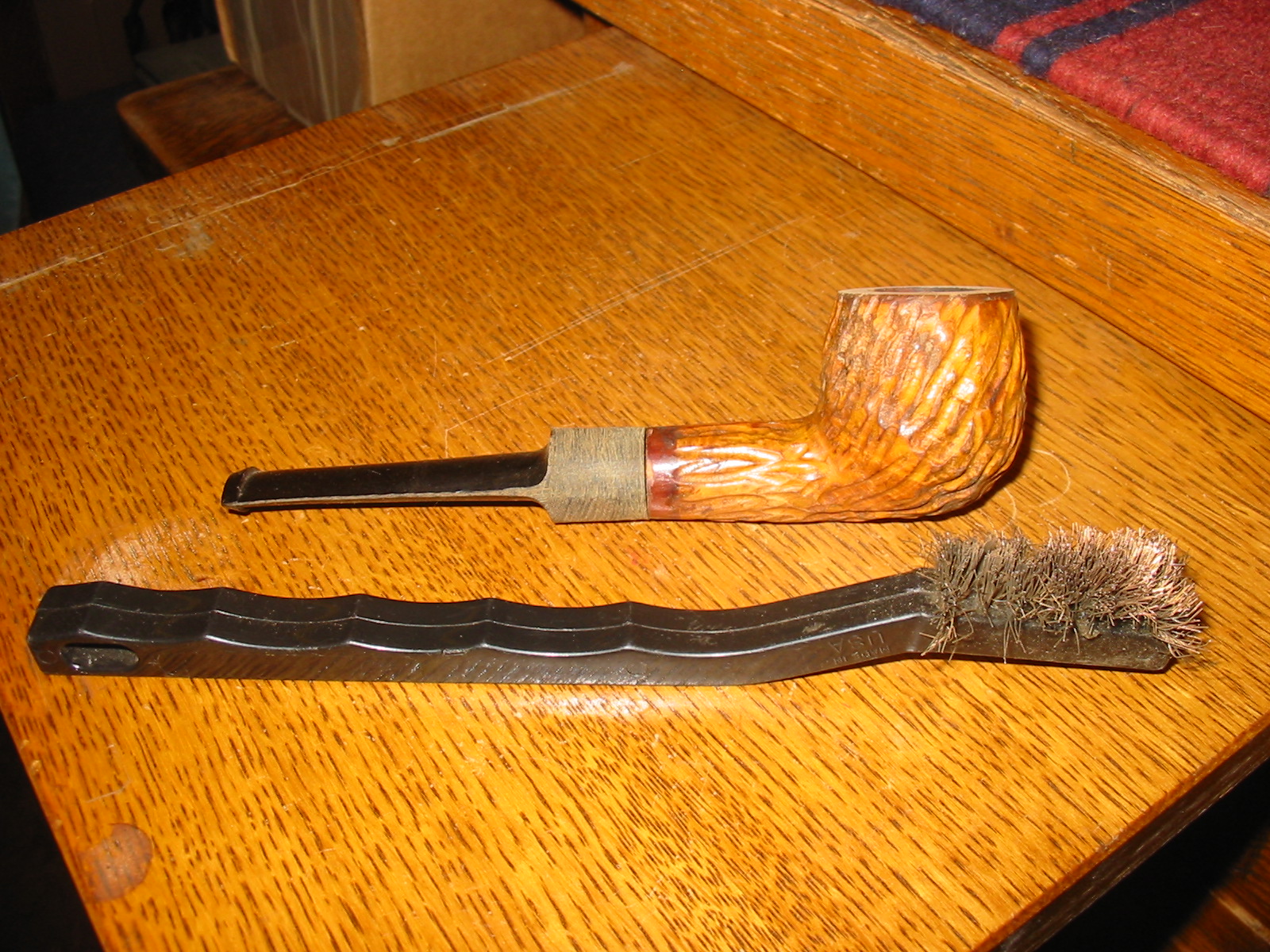
One the stem fit well against the shank I decided to top the bowl. I set up my sanding board with the piece of sandpaper I use. I hold the paper on the board (it is a fine grit emery paper). Then I place the pipe on the paper and sand it by working it clockwise against the sandpaper. The next two photos show the bowl against the paper and the finished topping of the bowl. The final photo in this threesome is one of the brass bristled tire brush that I use to clean rusticated bowls. This one was quite easy to work as I could work it along the grooves of the rustication and work it until the bowl was clean.

ImageImageImage

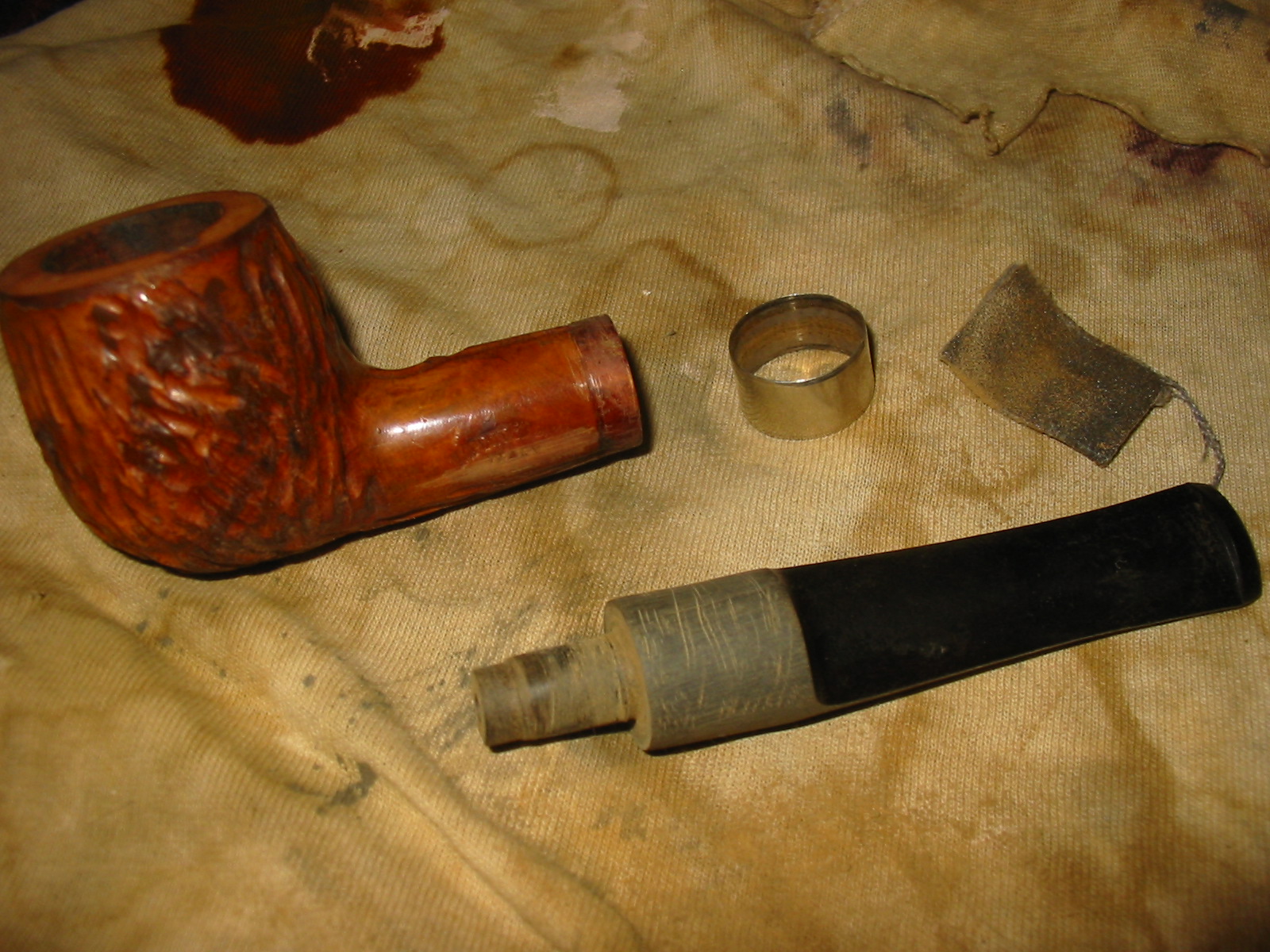
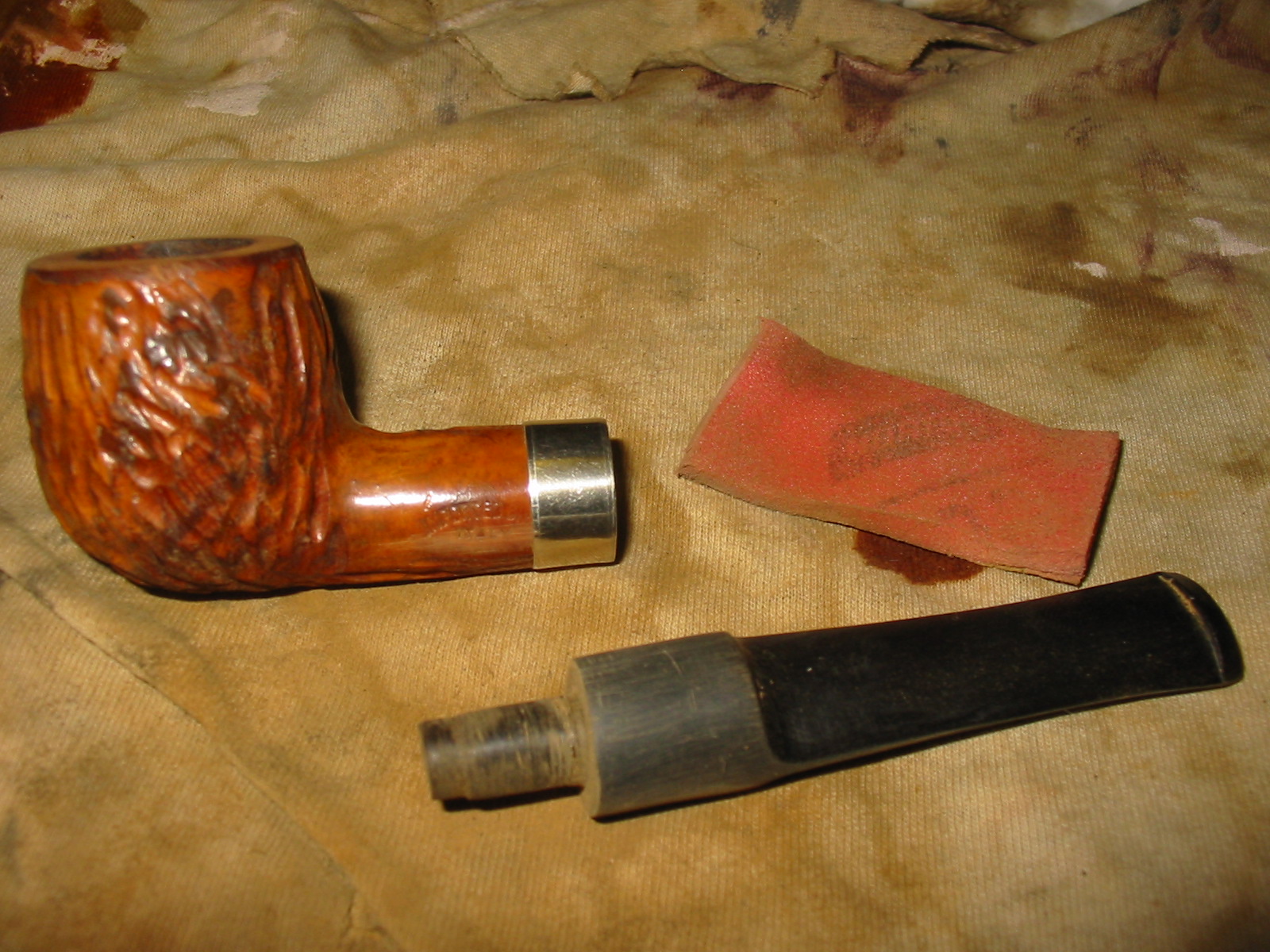
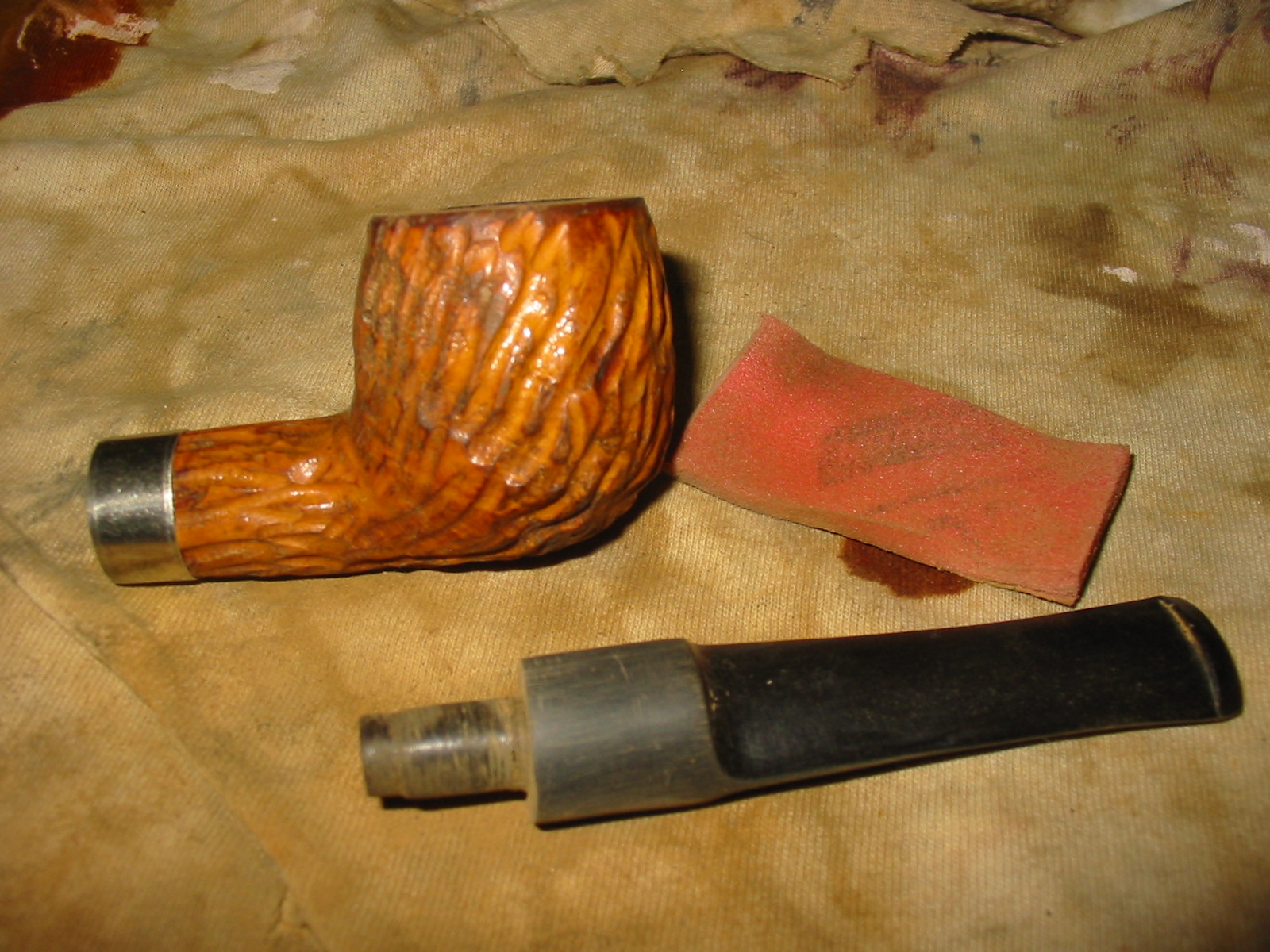
After scrubbing the pipe with the brass brush and some alcohol it was ready for a new band. I sorted through my bands and found one that fit the shank well. The next three photos show the shank before banding and then after I pressure fit the band to the shank. The emery paper and the fine grit sanding sponge in the pictures was used to sand the stem and begin removing the scratches and make a good fit against the band.

ImageImageImage

The next series of four photos show the fit of the stem against the banded shank. More work needed to be done on the stem to remove the scratches and refine the fit against the shank. Once the scratches were removed from the stem then I would work on the fit. I wiped down the bowl with acetone on cotton pads to remove the finish. I scrubbed it with the wire brush a second time and then wiped it with acetone again. I also sanded the bowl surface with the sanding sponge to remove the finish from the shank and the high points on the rustication.

ImageImageImageImage

At this point in the restoration I decided to restain the pipe with a dark brown aniline stain mixed 2:1 with isopropyl alcohol. I applied it and flamed it, reapplied and reflamed it. I gave the rim two extra coats of the stain to match the colour of the bowl. The next series of three photos show the stained bowl. It was darker than I wanted for the end product so I decided to lighten it.

ImageImageImage

I wiped the bowl down with isopropyl alcohol on a cotton pad to lighten the stain. I wanted to see if I could clear it off the high points while still allowing it to remain in the grooves for contrast. The next three photos show the pipe after I had wiped it down.

ImageImageImage

When I had finished wiping it down I took the pipe to the buffer and buffed the bowl with Tripoli to remove some of the dark stain. I wanted to remove it from the high surfaces of the bowl while leaving the dark stain in the grooves of the rustication. The next four photos show the pipe after I buffed it with the Tripoli. I also buffed the stem with Tripoli and White Diamond to give it a bit of polish and see what I needed to do with the sandpaper.

ImageImageImageImage

I then removed the stem and wet sanded it with the micromesh sanding pads in 1500 and 1800 grits. I use fresh warm water and dip the sanding pad in the water and then sand the stem. I also used the Maguiar’s Scratch X2.0 after sanding. The next photo shows the stem after sanding and polishing.

Image

I then dry sanded the stem with the remaining grits of micromesh 2400-12,000 and then gave it a final polish with the Maguiar’s. The photo below shows the stem after sanding with the 3600 grit sanding pad. The shine is beginning to rise on the surface of the stem. I rubbed it down with Obsidian Oil and let it dry. The final four photos show the finished pipe. I buffed the stem with White Diamond and then polished the bowl and the stem with carnauba wax to get the shine.

ImageImageImageImageImage

The pipe has come a long way from the stummel that was sitting in my repair box. I am happy with the finished pipe and the contrast stain. It feels great in the hand and will make a great smoking pipe for someone.

What Is The Amber Used in Pipe Stems and How Do You Bent It?


Blog by Steve Laug

Over the past years I have learned about and written a variety of blog posts on bending both acrylic and vulcanite pipe stems. I have used a variety of methods to heat the stems – from using a candle, an alcohol lamp, a heat gun to placing them on a cookie sheet in the oven and bending multiple stems at  the same time. But over the years I have always wanted to know how to bend amber – or even it was possible. I had looked on line for information on bending amber and even posted on several of the forums to see if anyone had experience with it or had information on how to bend it. No answers were forthcoming.

Then one day I decided to contact Fred Bass, who is the moderator on the All Things Meerschaum Forum on Smokers Forums http://www.smokersforums.co.uk/. We have been emailing and sending pms back and forth on Smokers Forums for a long time. We have read each other’s writing and done editing work. Fred has become not only a good friend to me but also a go to source for information on all things pertaining to smoking and repairing Meers. Whenever I have questions about cleaning up or refinishing a meer, I write Fred and he has inevitably had the solution on the tip of his tongue. So I asked Fred about this topic. He sent me an email with information that he came across on amber stems while reading a reprint of a 1906 Scientific American article, entitled Meerschaum and It’s Manufacture into Pipes. In the article was a paragraph on preparing and bending amber stems for meerschaum pipes. He sent it on to me and I have had it saved on the hard drive so that one day I could post it on the blog. I have incorporated this paragraph and some of my own research into this article in order to get a deeper understanding of amber and how to work with it. It is my hope that in putting this online that others who have experience with amber stems might fill in the gaps and share their knowledge with us so that we can be more informed about this stem material.

What is Amber?

Amber is found in many parts of Europe and America, but in largest quantities along the coast of Germany. Amber is the fossilized tree resin (not sap) of now-extinct coniferous trees which grew millions of years ago. Sap is primarilycomposed of water and sugars within the heartwood which nourish the tree. Resin is a fragrant substance composed of acids and terpenes which flows just under the bark and is released to protect and seal wounds when branches are broken or pests bore into or damage bark. These resins were released from trees in response to disease and physical attack, and over millions of years have hardened into a solid substance which, unlike traditional mineralized fossils, still remains an organic substance instead of having been mineralized. For this reason, amber is classified as an ‘organic gem,’ along with pearls, coral, ivory and jet. It is not a mineral. Amber occurs as irregular masses, nodules, or drops that are transparent to translucent and have a yellow color, sometimes tinted red, orange, or brown. It may be clouded by innumerable minuscule air bubbles or contain fossilized insects or plants. It is relatively soft (2-3 on the Mohs scale), lustre resinous, and its specific gravity is 1.05-1.09 g/cm³.

Image

Because it is soft it can be easily scratched. By the same token it polishes easily. If dropped on a concrete or ceramic tile floor it may break, chip or shatter. A drop on a wooden or asphalt tile floor should not result in any damage. It is at least partially soluble in many chemicals – alcohols, chloroform, acetone and others. It has also been known to reduce to powder over time if exposed to ultraviolet light. There are often fossilized materials in the gum itself. I have seen ants and other insects as well as plant matter inside amber.

Colours of Amber

All amber falls within the color spectrum of yellow-orange-red with pale yellow to yellow orange being the most common, orange tinged or cognac amber being more valuable and rarer, and true cherry red amber being the rarest and thus most highly valued. There is also a buttery white to pale yellow opaque amber that occurs in the Baltic region, and there are ‘black’ ambers caused by heavy inclusion of organic materials. There are no solid colored ambers outside of this color range that occur naturally. Cherry red material is the result of formation near the surface of the Earth, with iron salts leeching into the outer crust of the amber forming a thin (1-4mm on average) layer of true red material. Rarely does this coloration continue through the piece unless it is very small. Cabochons can be cut from this material but solid red amber plugs are not physically possible.

Image

ImageImage

Amber softens at about 150° C, and melts at 250 – 350° C. It is mined extensively from tertiary glauconite sands that are from 40 million to 60 million years old. The components of amber in approximate values are: carbon (80%), hydrogen (10%), oxygen (10%), and small quantities of sulphur. It is refined by heating. The refined amber is classified into two qualities based on refined appearance: the first is transparent amber and the second is opaque or cloudy amber. I would expect that the transparent was the more sought after amber and would be prized for its clarity. Contrary to what I assumed the opaque/cloudy amber is much tougher and, therefore, more serviceable than the transparent amber. It is thus much more useable in crafting pipe stems.

Ambers Healing Properties

Throughout history, people have believed that amber has actual healing characteristics. Also today some anti-rheumatic ointments are supplemented with amber. A piece of raw amber looks like a stone, but when held gives a deep feeling of warmth. When heated, amber will emit a gentle resin scent, and it cleans the environment in which it rests. These sensations make people feel better and believe in the healing power of amber. For centuries amber was used to massage sore muscles, and in powdered form, it was mixed with honey, oil and alcohol into ointments good for almost every illness. Every European pharmacy store in the 19th century offered mystical amber mixtures. Now, of course, they are replaced by sophisticated pharmaceutical products, but many people still believe that an amber bracelet will ease rheumatic pain, and amber coral beads supposedly help in cases of thyroid illnesses. There are other healing effects described in articles dealing with natural medicine: amber helps to cure a sore throat, especially during teething in babies, and if it is kept in water or wine for 1-14 days, the liquid can be used for stomach ache, asthma and as a styptic medication. No one knows how much it truly heals, but it certainly does no harm. Anyhow, it is believed that wearing amber contributes to a purification of the human mind, body, and spirit. It is also believed to activate unconditional love in mankind, stimulate the intellect, and open the crown chakra. Amber is widely used today in traditional Oriental, Arabic and Persian medicine. Astrologically, amber is a stone of the Zodiac sign of the Twins.

Image

Image

Bending and shaping Amber Stems

Once the amber was refined it was ready to be used in different products – fountain pens, pipe stems and other ornamental uses. It needed to be shaped and formed to meet the need of the artist.

For pipe stems the amber is hand tooled to the shape that is required by the Imagecarver. The planes and angles are cut and the surfaces are smoothed and prepared. The stem is drilled to receive the tenon. Then the stems are bent to the required shape. To bend the stems, they are first immersed in oil and heated until they lose much of their brittleness. Then they are held over an alcohol flame and bent as desired. The threaded tenon ends of the stem are protected while bending by an arbour screwed therein. In repairing them I have found that I can sand them quite easily with various grits of sandpaper to remove the bit marks and tooth marks. Care must be taken when using files or knives on the amber as it easily chips, it is better to scrape the amber than to cut it with a file or knife. It polishes nicely with the sandpapers and micromesh sanding pads.

Fred wrote that he found the Scientific American article interesting for both the brief discussion of amber and the knowledge that many of the connectors for these bits were bone screws during this time period.

ImageRemaining questions that I have regarding the process of bending amber

I have yet to try the method recommended so I can speak of it from an experimental point of view. I am on the prowl for some older amber stems that I can try it with before I can say unequivocally that it works. In principle I cannot see any problem with the material.

A few questions that come to mind for me in terms of the process are as follows:

  1. How hot does the oil need to be in the initial immersion and heating?
  2. How long does it take in the immersion for the amber to lose its brittleness?
  3. How can you tell if it has lost its brittleness? Does the appearance or feel change?
  4. How close to the flame do you hold the amber to heat it for bending? Will a heat gun work and how close does it need to be held?
  5. Is there a process to cool the amber once the bend is in place? If it is not cooled will it return to the original straight shape? If it is cooled to quickly will it shatter or break?
  6. What kind of arbour was used to protect the bone or metal tenons? Were they removed for the heating or were they kept in place?

If any of you have practiced bending amber I would love to hear about it. It would be great if someone could write up their experience and post it here so that the rest of us can learn from your expertise.

Web References read and used in writing this post

http://www.ambericawest.com/working.html

http://www.ehow.com/how_5057841_polish-baltic-amber.html

http://www.ganoksin.com/orchid/archive/200505/msg00812.htm

http://www.knivesby.com/amber.html

https://www.onetribe.nu/workshop/amber

http://baltic_amber.tripod.com/

http://www.natural-baltic-amber.com/genuine-amber/