Author Archives: rebornpipes

Refurbishing a Petite Savinelli de Luxe Milano 701 Lovat


Blog by Steve Laug

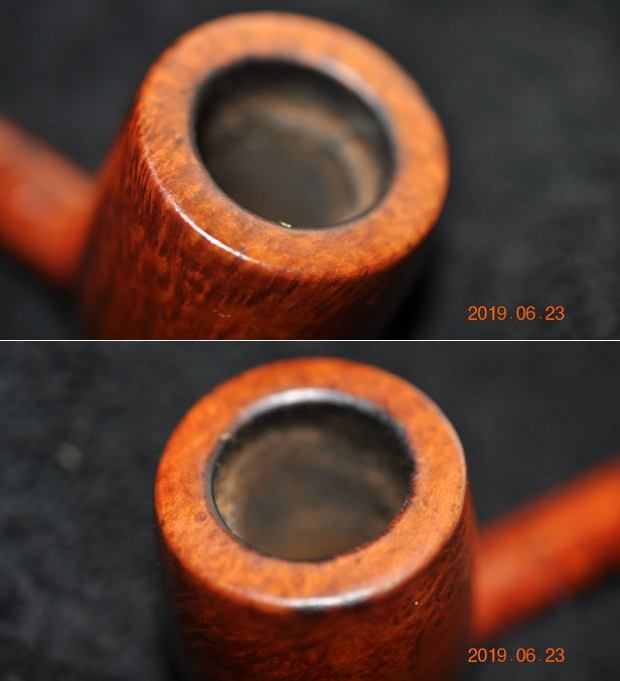
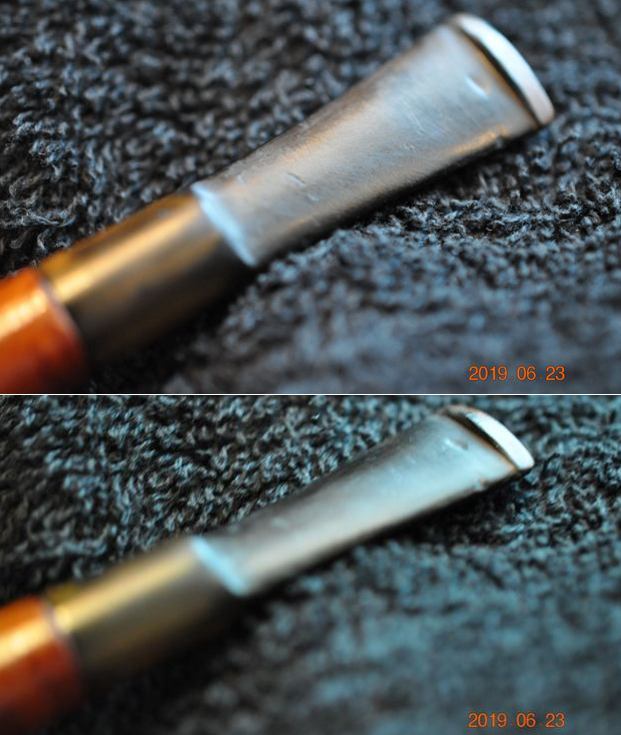
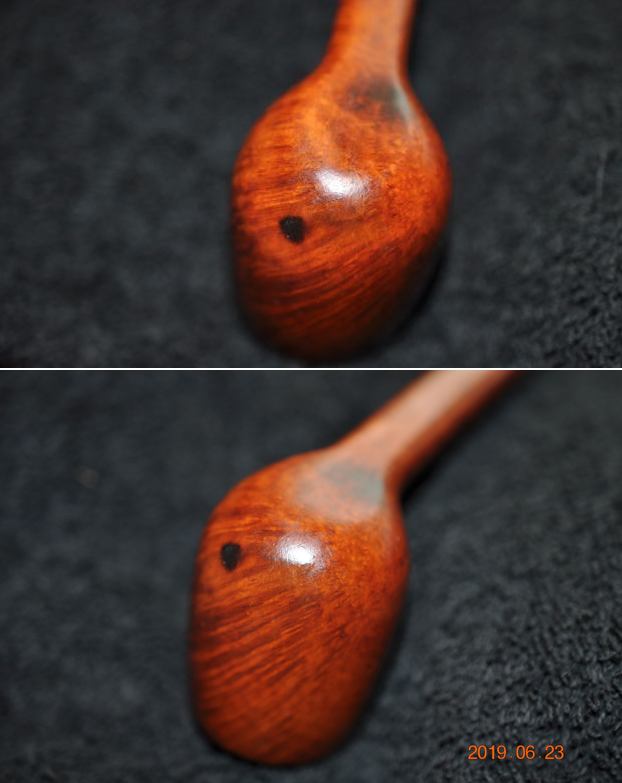
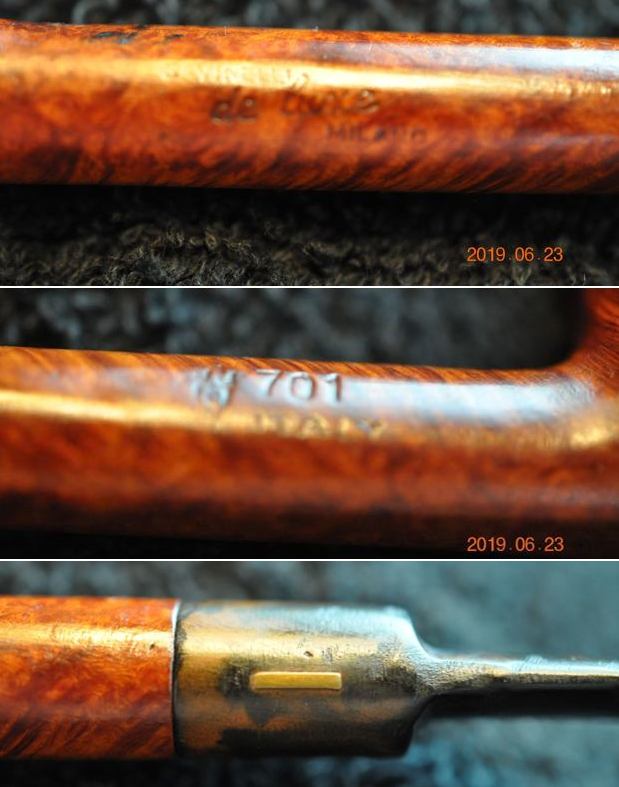
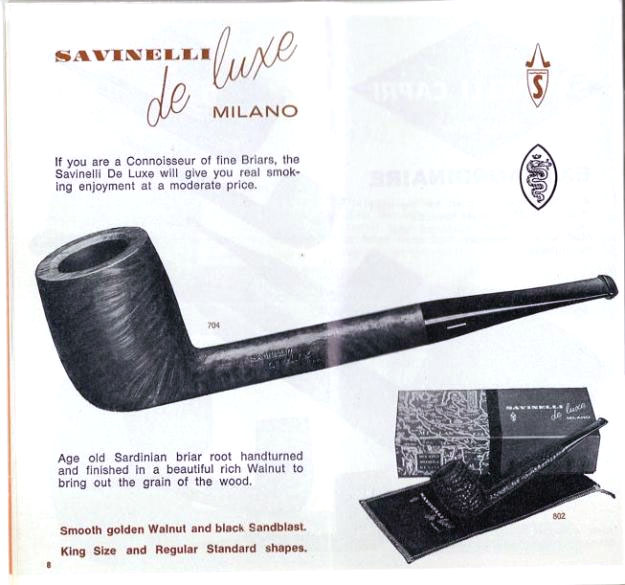
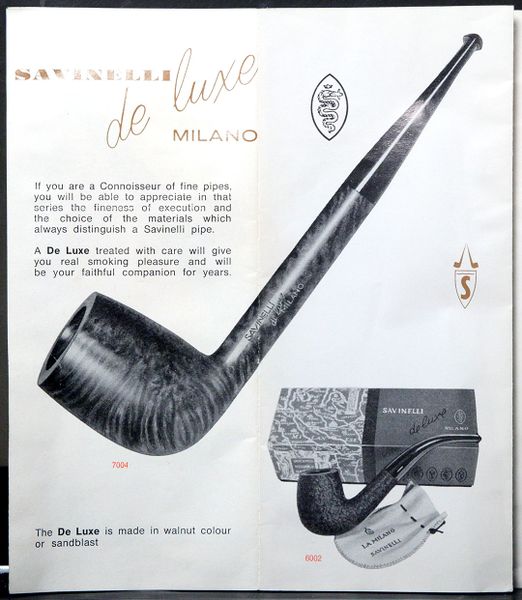
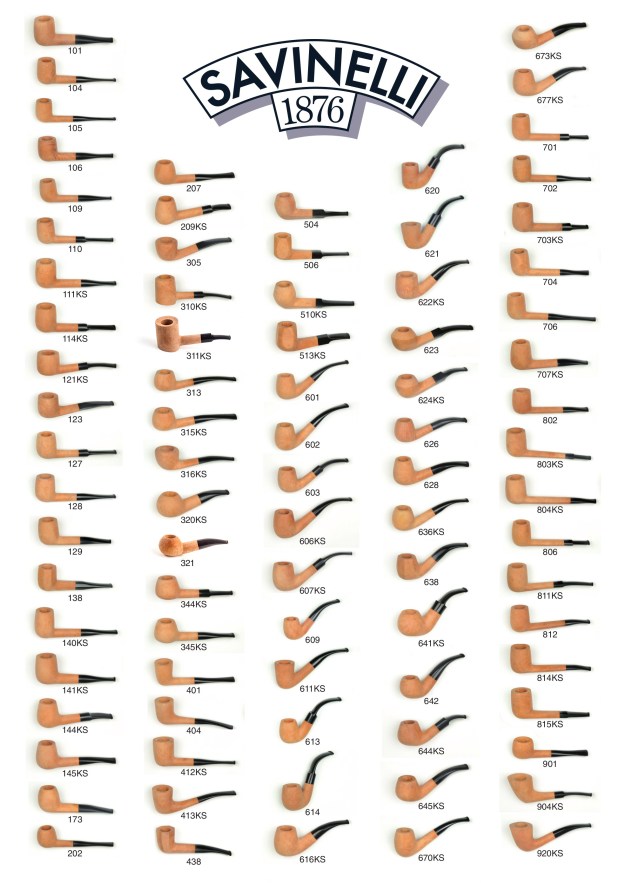
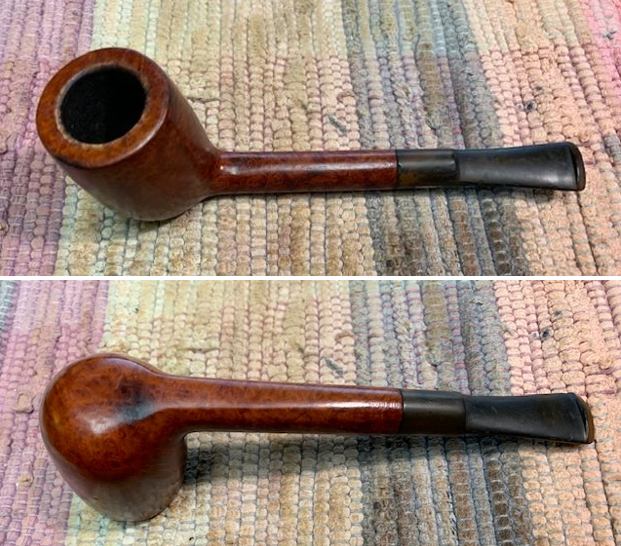
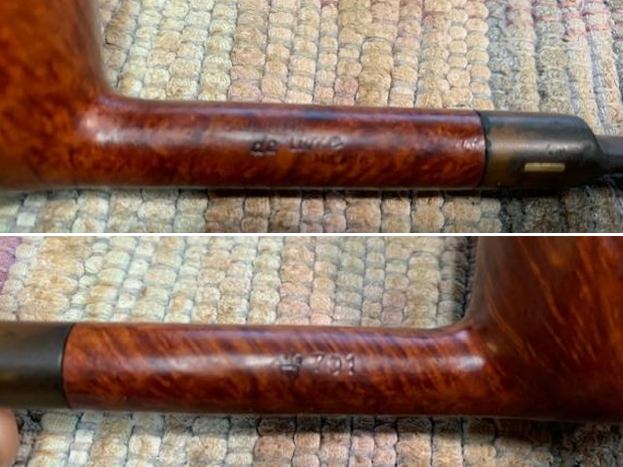
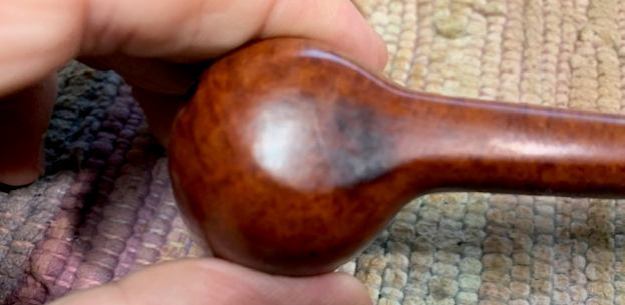
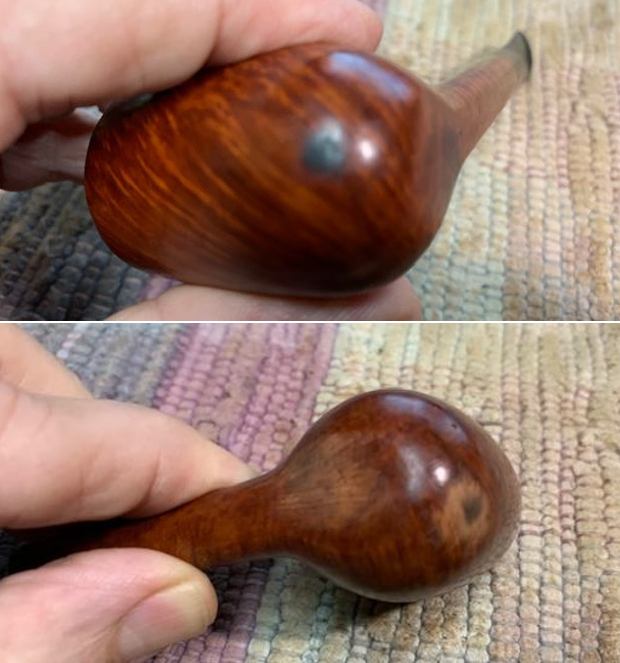
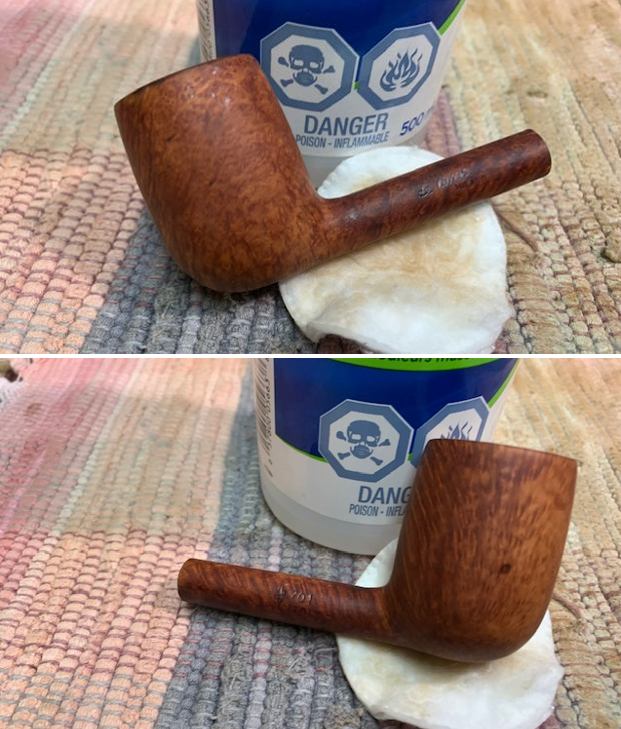
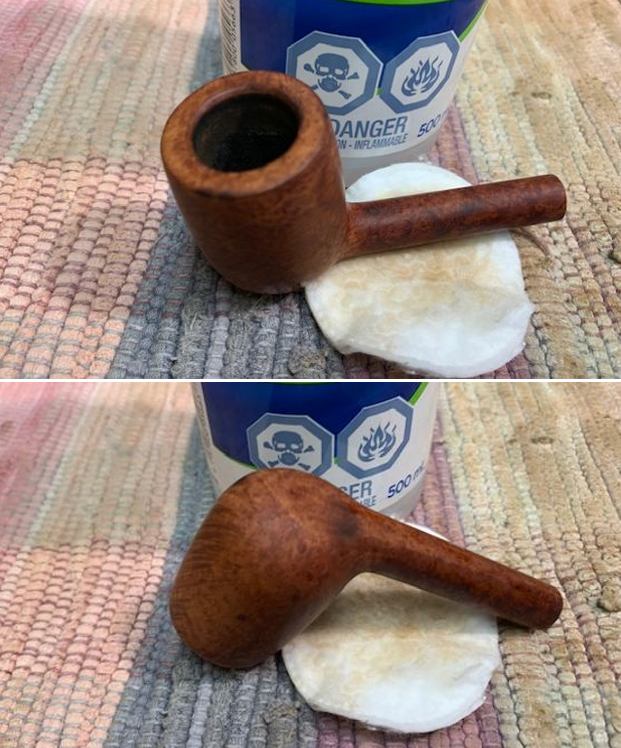
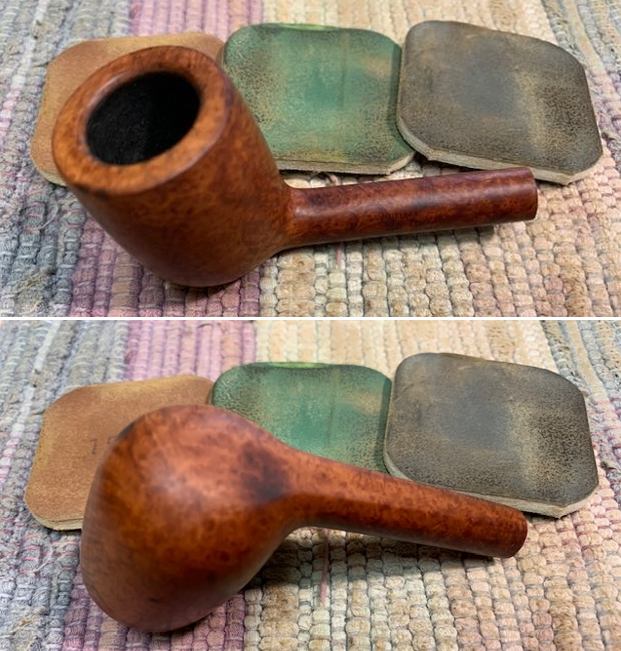
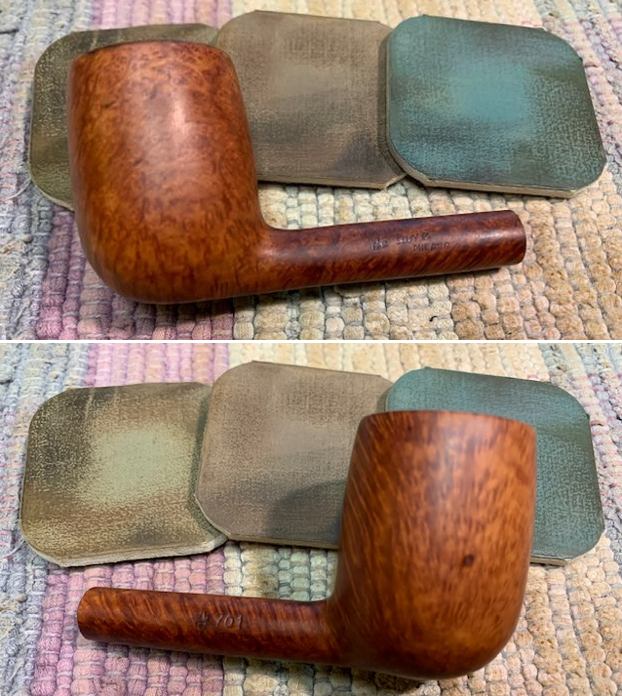
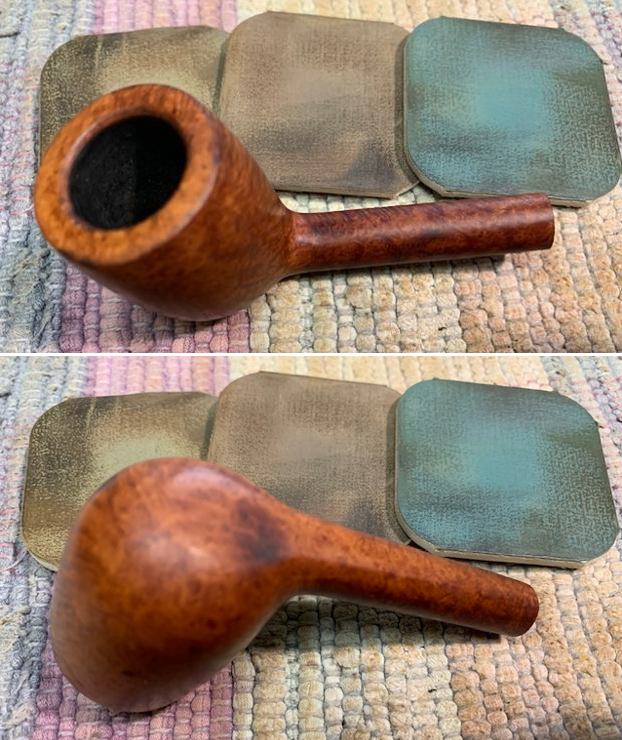
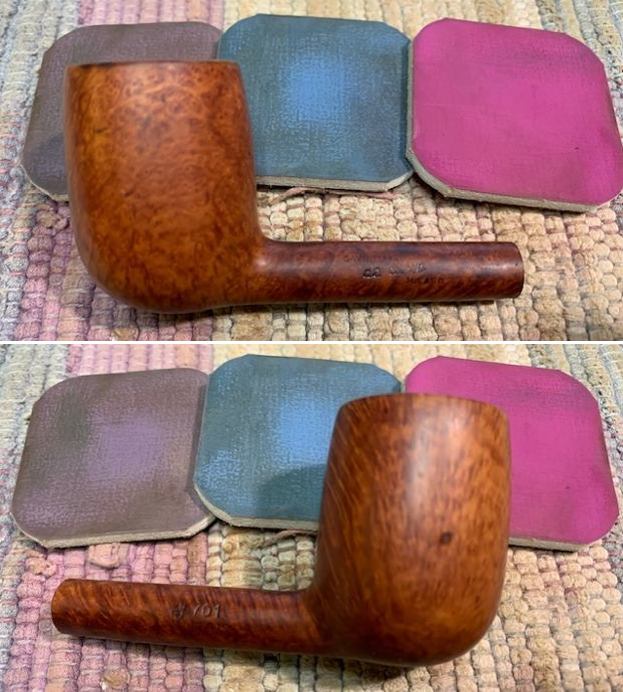
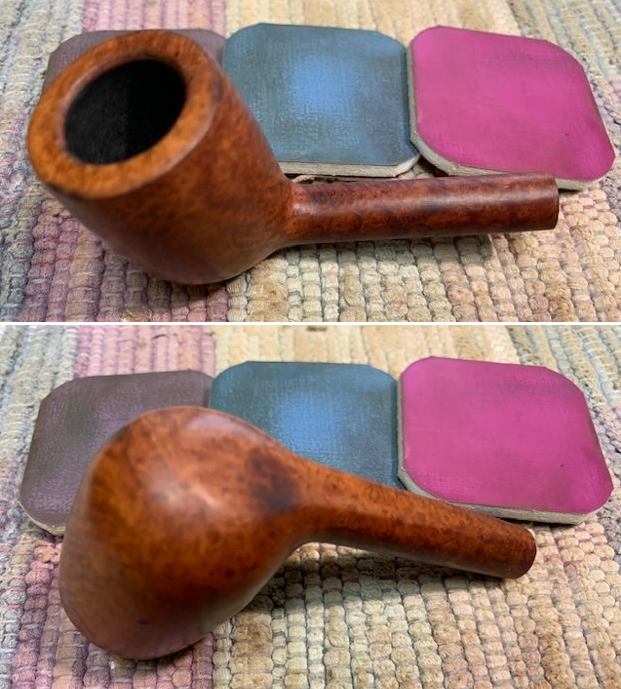
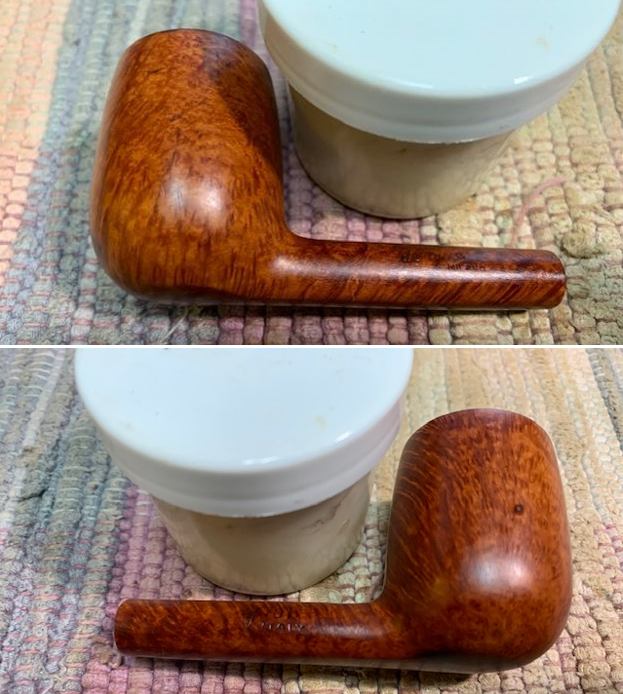
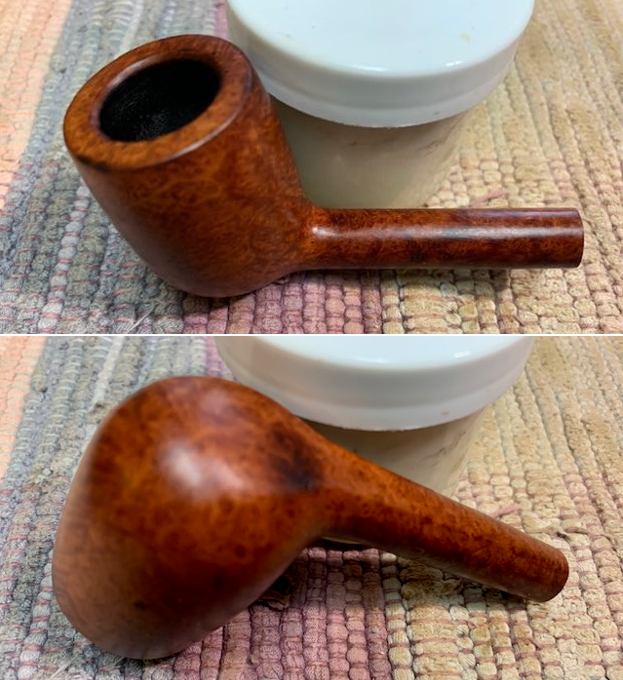
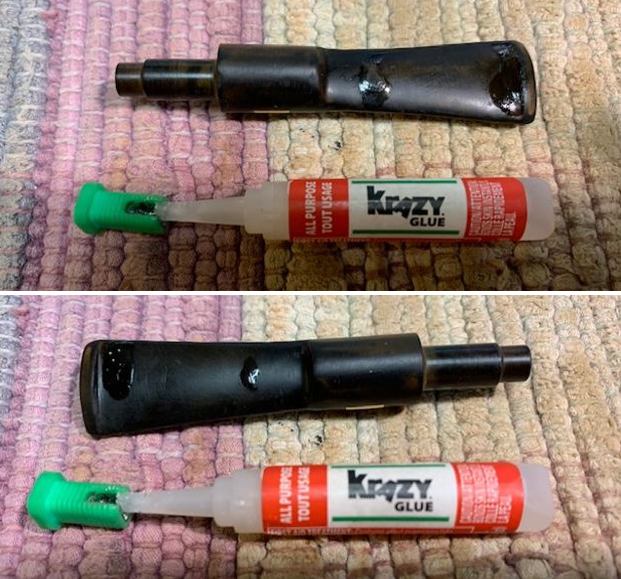
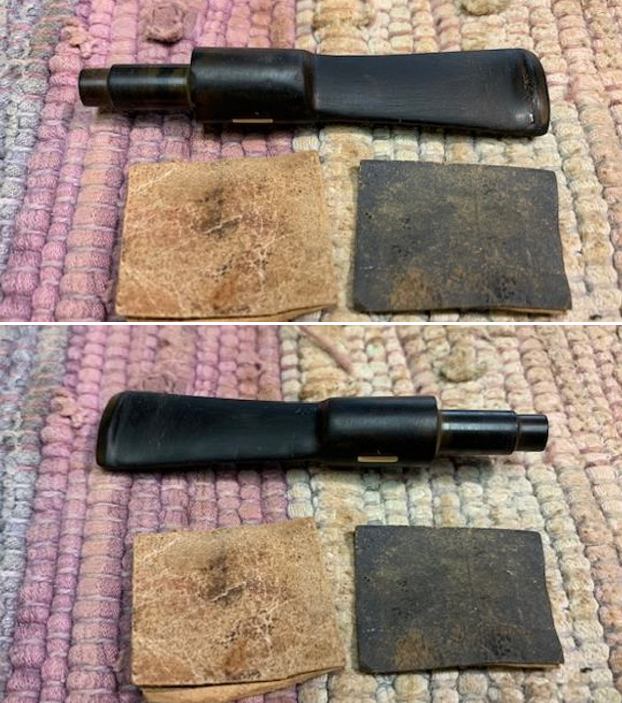
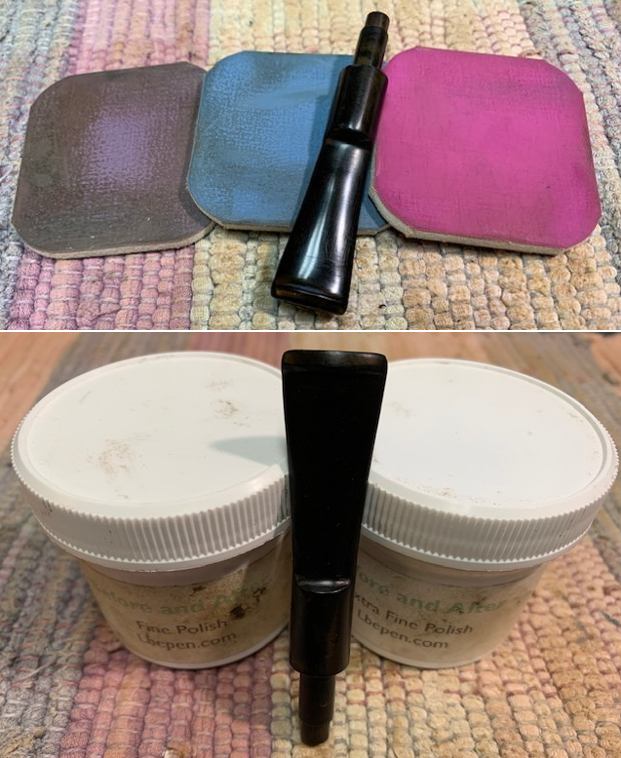
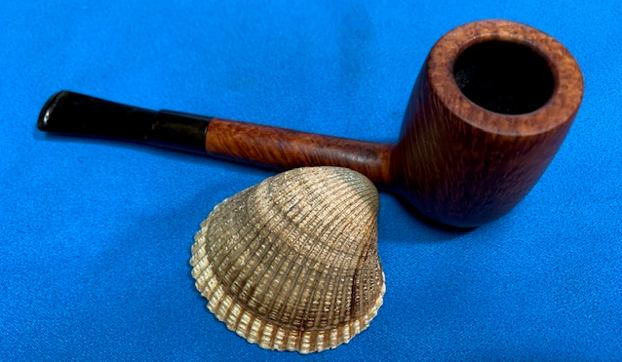
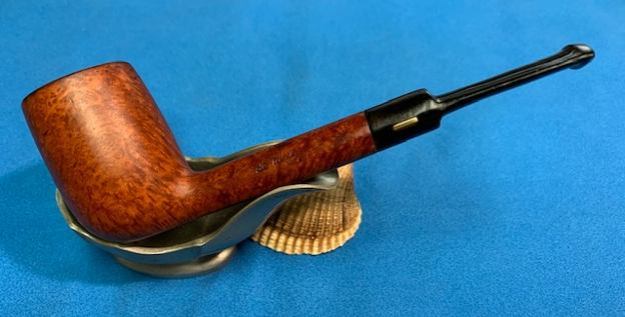
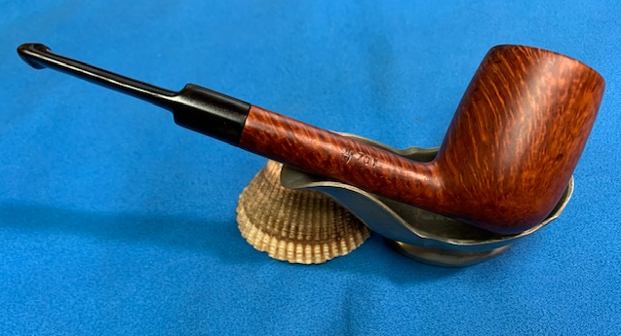
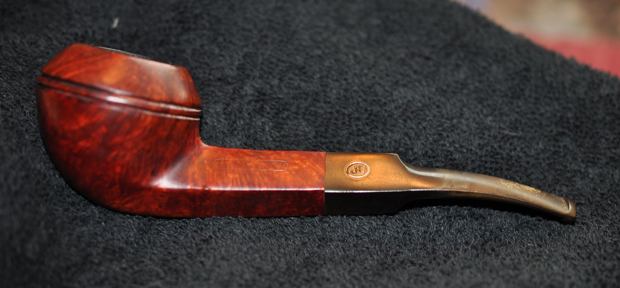
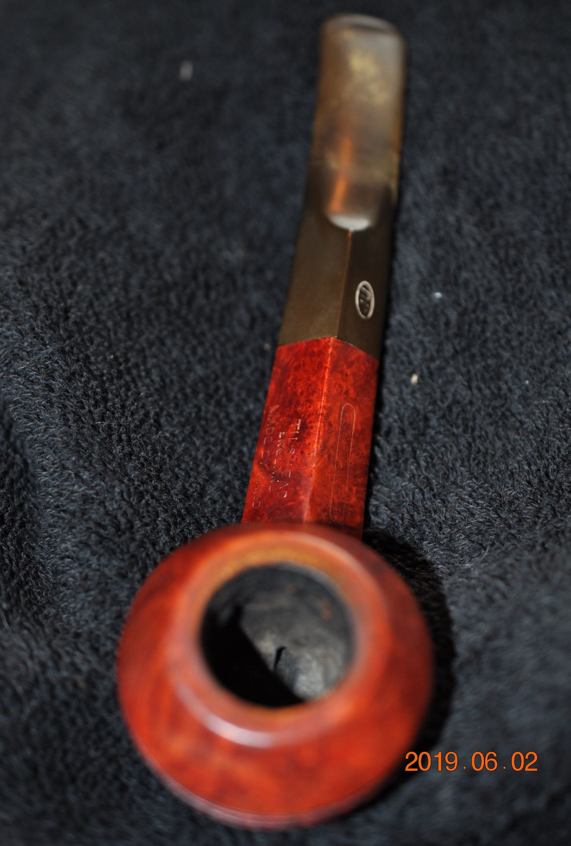
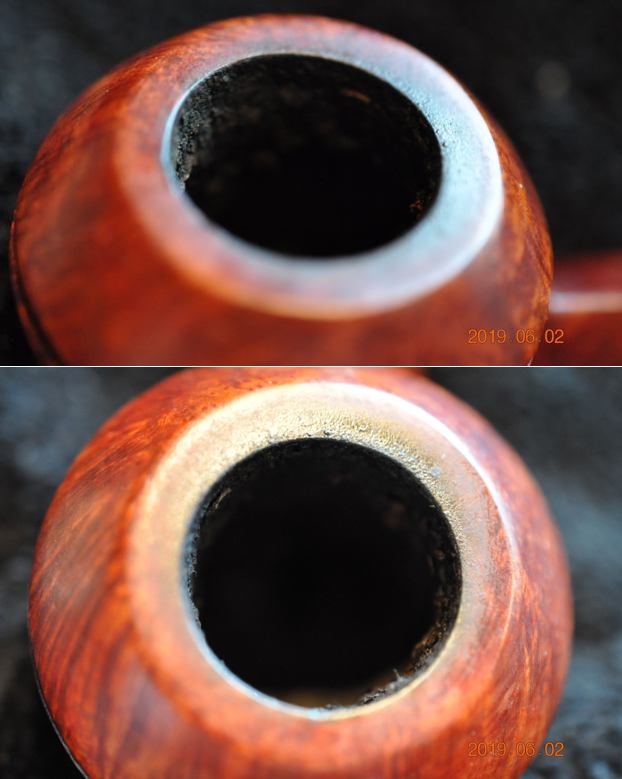
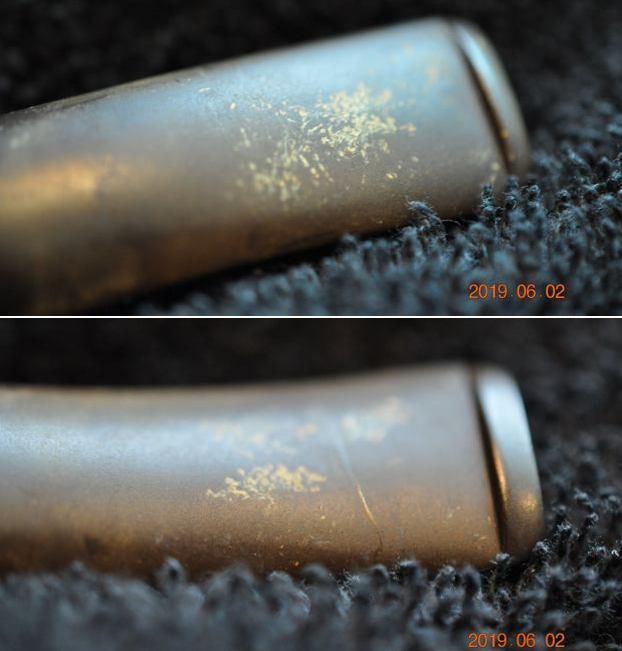
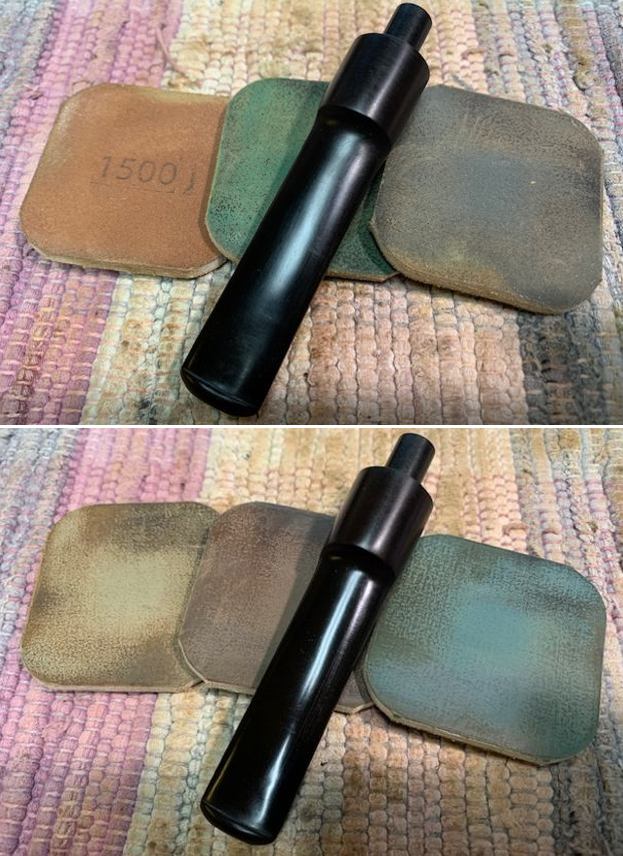
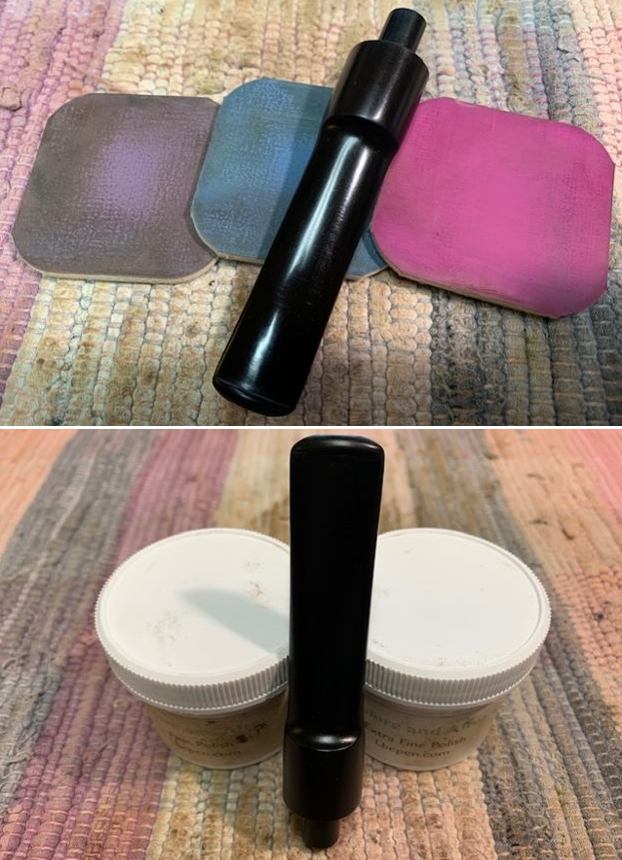
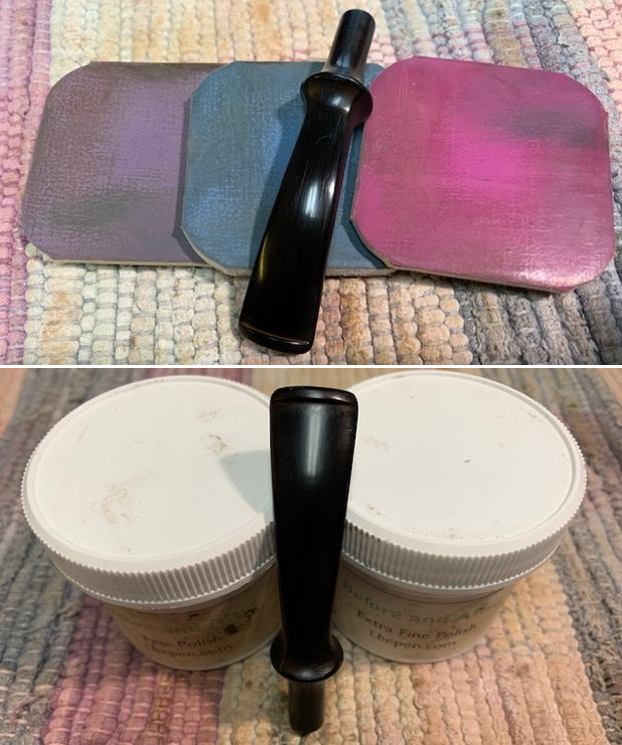
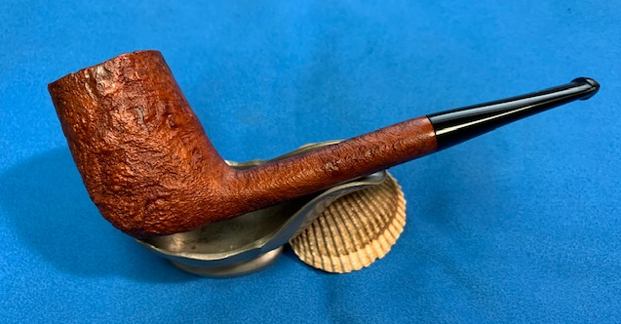
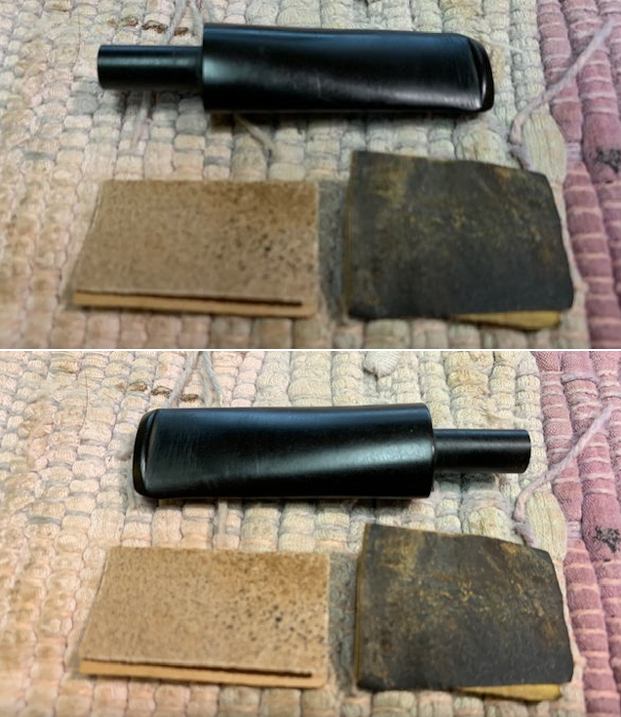
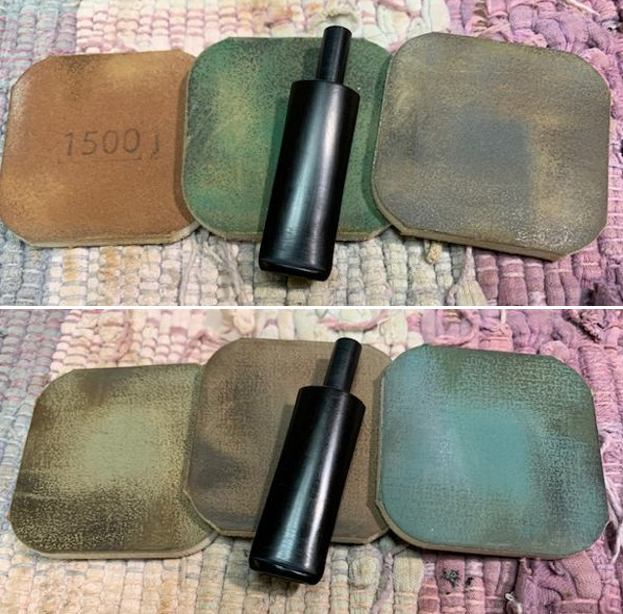
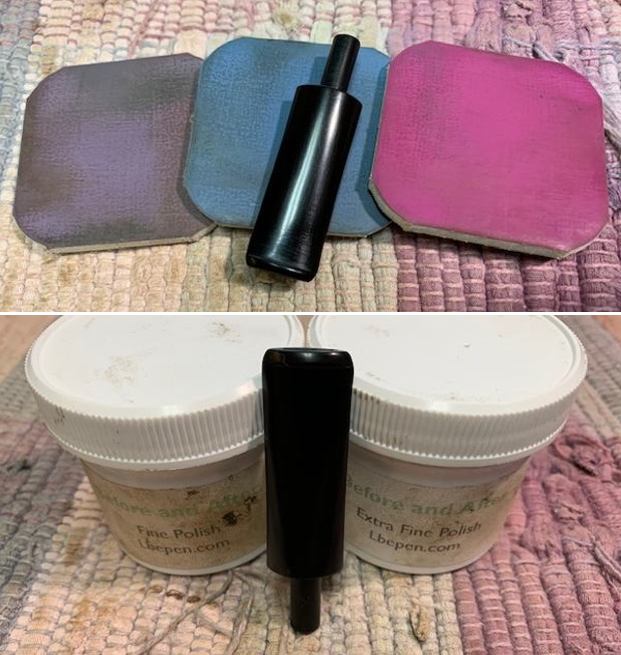
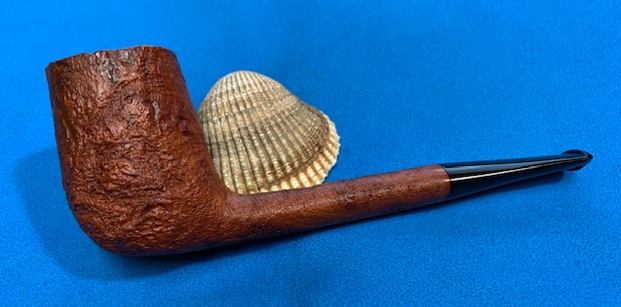
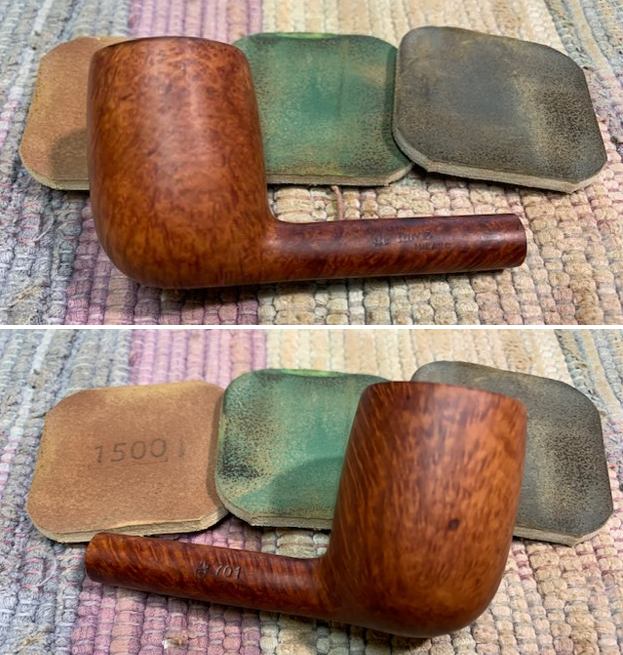
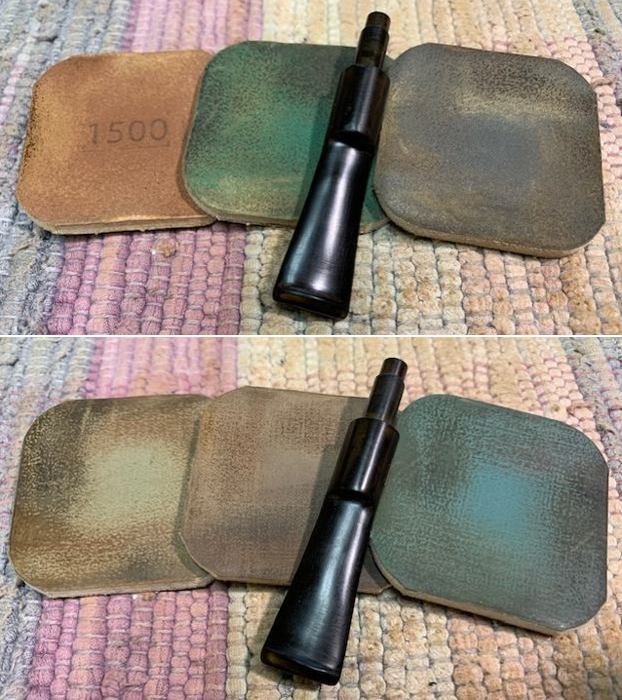
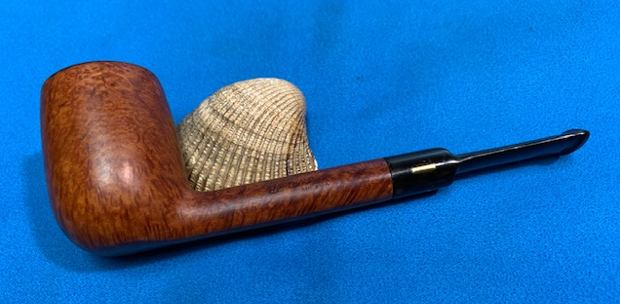
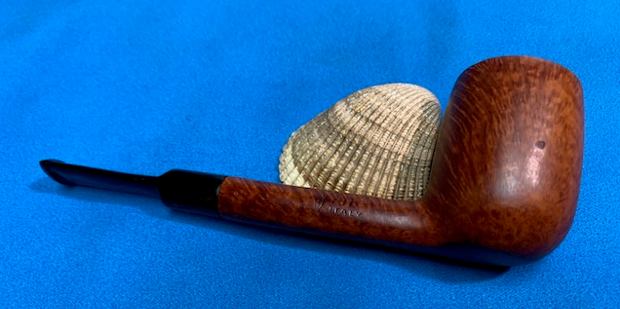
The next pipe I have chosen to work on was purchased from an online auction on 03/21/19 in Wilkes Barre, Pennsylvania, USA. The shape and design caught my eye as I was going through the pipes in the queue. The shape is what I would call a Lovat but it has a thin pencil shank and saddle stem that makes it delicate looking. It is stamped on the left side of the shank and reads Savinelli [over] de Luxe [over] Milano. On the right side it is stamped with the Savenilli Shield S logo followed by the shape number 701 [over] Italy. The finish is very dirty with dust and grime. There were nicks around and scratches around the sides. There were two burn marks – one on the front of the heel of the bowl and one on back of the heel going onto the shank. They appeared to be burns from an ashtray. They were dark but not charred. The bowl had been reamed and was quite clean. The inner and out edge of the bowl had some dark spots on them. The rim top was quite clean. The stem is oxidized, calcified and has light tooth chatter and marks on both sides near the button. The surface of the button looks very good on both sides. Jeff took photos of the pipe before he started his cleanup work. The conditions noted above are evident in the photos. Jeff took close up photos of the rim top from various angles to show the general condition of the bowl and rim. The first photo shows the clean bowl and light cake and the clean rim top. The edges look good. There appears to be a little darkening on the inner edge and a few burn marks on the outer edge on the left side. The stem has light oxidation and quite a few dents and tooth marks on both sides. Jeff took photos of the sides and heel of the bowl to give an idea of the beauty of the grain and the condition of the bowl.   The pipe is stamped on both sides of the shank and reads as noted above. The stem has a single brass bar inlaid in the left side of the saddle.  I turned to Pipedia to have a look as I knew there were some advertising flyers on the de luxe Milano (https://pipedia.org/wiki/Savinelli). I love the older Ads descriptions of the pipes. Give a careful read of the descriptions on these pipes as once I read them I want one! The pipe I am working on is described by the ads as a smooth Golden Walnut. The site also has a shape chart of the lines of Savinelli. The pipe I am working on is a 701 and the one pictured in the chart below is exactly like this one.Armed with that information I turned my attention to the pipe itself. Jeff had cleaned the pipe with his usual thoroughness that I really appreciate. He had reamed it with a PipNet pipe reamer and cleaned up the reaming with a Savinelli Fitsall Pipe Knife. He scrubbed out the internals with alcohol, pipe cleaners and cotton swabs until the pipe was clean. He scrubbed the exterior of the bowl with Murphy’s Oil Soap and a tooth brush to remove the grime and grit on the briar. The finish looks very good with good looking grain around the bowl and shank. The burn marks were present but not deep. Jeff soaked the stem in Before & After Deoxidizer to remove the oxidation on the rubber. When the pipe arrived here in Vancouver for the second stop of its restoration tour it looked very good. I took photos before I started my part of the work. I took some close up photos of the rim top and also of the stem surface. The bowl and the rim top look good. The inner edge of the rim was rough and there were some nicks in the edge. I also took close up photos of the stem to show how clean the stem was. Once it was cleaned up there were no tooth marks or chatter on either side of the stem.    I took photos of the stamping on the shank. It is very readable but faint in some spots on the sides. I took the stem off the shank and took a photo of the look of the pipe. It is really a great looking pipe that really follows the briar. I decided to start my work on the pipe by addressing the burn marks on the bowl heel and bottom and the inner and outer edge of the bowl. I sanded the burned areas with 220 grit sandpaper to try to minimize them and smooth them out. Though still present they look better.  I worked on the inner edge of the rim and the spots on the outer edge with 220 grit sandpaper.I filled in the deep nick/goudge in the right side of the bowl with clear super glue. I sanded it smooth and blended it into the surrounding briar with 220 grit sandpaper and smoothed it with 400 grit sandpaper.  I wiped the bowl down with 99% Isopropyl Alcohol and a cotton pad to remove the remnants of varnish and top coat on the bowl. I dry sanded the briar with micromesh sanding pads – 1500-12000 grit sanding pads. I wiped the bowl surface down with a damp cloth after each sanding pad to remove the sanding dust. Once I finished the exterior of the briar was clean and the grain really stood out.  I rubbed the bowl down with Before & After Restoration Balm. I worked it into the surface of the briar with my fingertips to clean, enliven and protect it. I let the balm sit for 10 minutes then buffed the pipe with a cotton cloth to raise the shine. Mark Hoover’s Balm is a product that I have come to appreciate and one I use on every pipe I have been working on.   I set the bowl aside and turned my attention to the stem. I “painted” the surface of the vulcanite with the flame of a Bic lighter to lift the tooth marks. I was able to lift many of them. I filled in the remaining marks with clear super glue. Once it cured I sanded it smooth with 220 grit sandpaper and started polishing it with 400 grit sandpaper. I polished the stem with micromesh sanding pads – wet sanding with 1500-12000 grit pads. I wiped the stem down after each sanding pad with Obsidian Oil. I polished it with Before & After Pipe Stem Polish – both Fine and Extra Fine. Once I had finished the polishing I gave it final coat of oil and set it aside to dry.    I am excited to be on the homestretch with beautiful petite Savinelli de luxe Milano 701 Lovat. This is the part I look forward to when it all comes back together, polished and waxed. I put the bowl and stem back together. I polished the bowl and stem with Blue Diamond to polish out the scratches in the briar and the vulcanite. I gave the bowl and the stem multiple coats of carnauba wax. I buffed the pipe with a clean buffing pad to raise the shine. I hand buffed it with a microfiber cloth to deepen the shine. The pipe polished up pretty nicely. The beautifully grained finish looks really good with the interesting grain patterns standing out on the shape. The grain and the polished black vulcanite went really well together. This de luxe Milano Lovat was another fun pipe to work on even with the burn marks. Pipedia describes the classically shaped Savinelli pipes as having an English look that catches the eye. That certainly is true of this one. It is a comfortable pipe to hold in the hand. Even with the burn marks the pipe is still a beauty. The finished pipe is shown in the photos below. The dimensions of the pipe are Length: 5 ½ inches, Height: 1 ¾ inches, Outside diameter of the bowl: 1 1/8 inches, Chamber diameter: ¾ of an inch. The weight of the pipe is 31 grams/ 1.09 ounces. If you are interested in adding this pipe to your rack it will be on the rebornpipes store in the Italian Pipe Makers Section soon. Thanks for reading this blog and my reflections on the pipe while I worked on it.
Resurrecting And Re-Stemming A Vintage Churchwarden Cutty With Reed Shank


Blog by Paresh Deshpande

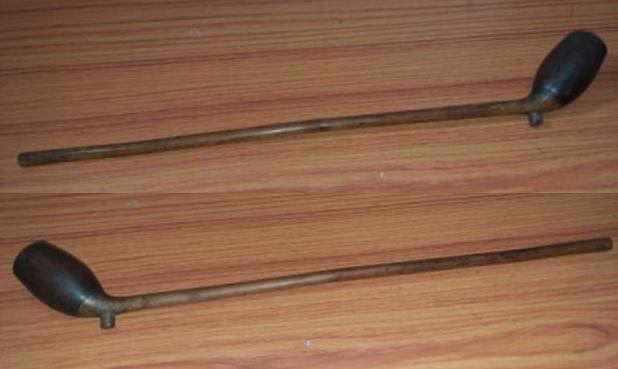
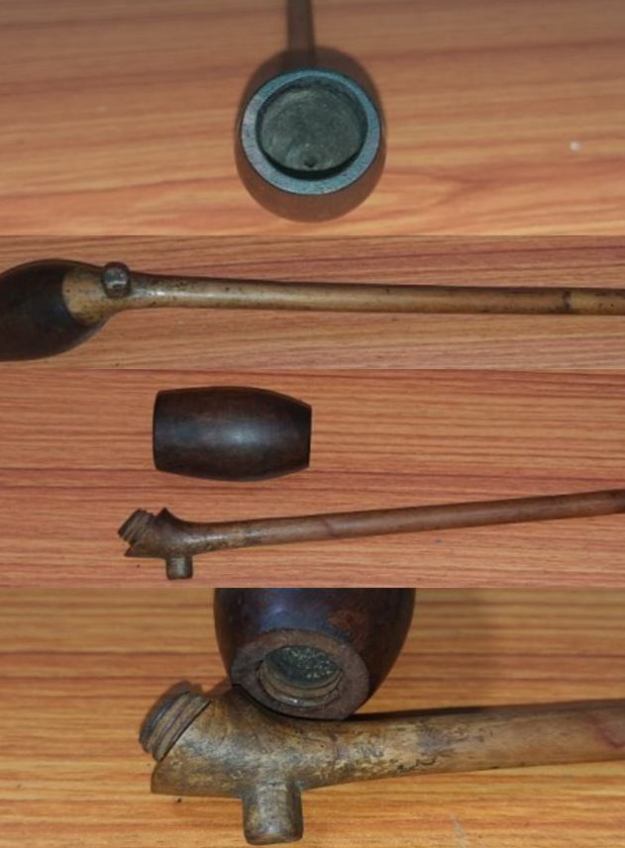
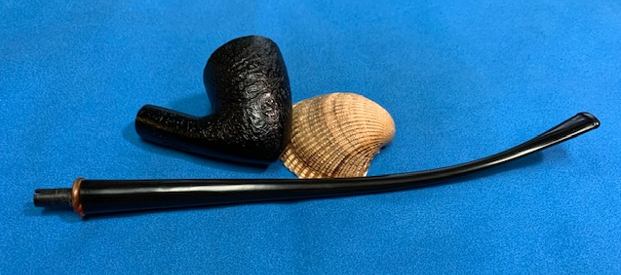
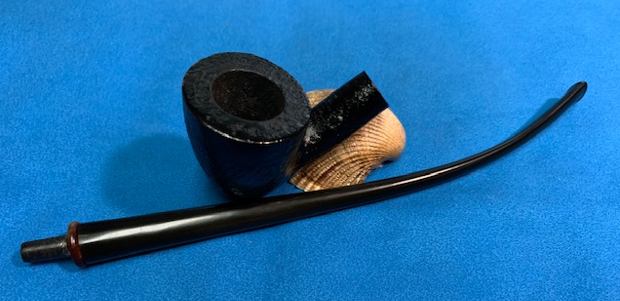
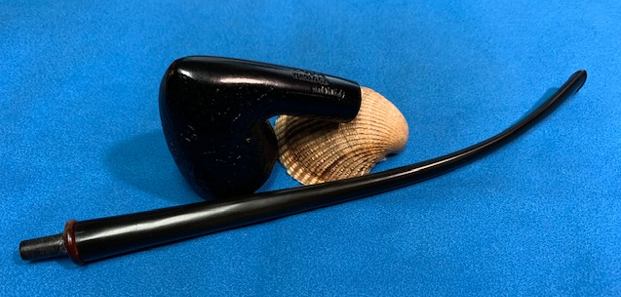
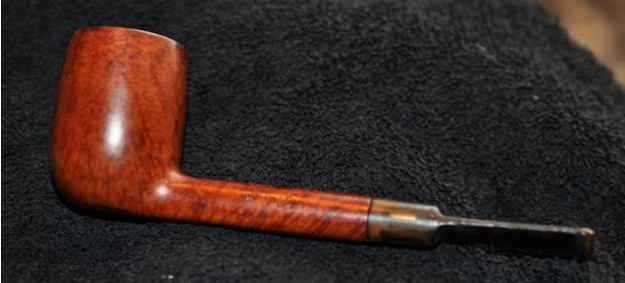
The next pipe that I selected to work on is an old, rustic no name Cutty shaped pipe with a long thin Reed shank that ended in a round orifice when I saw it for the first time. Closer examination confirmed that the round orifice was threaded implying that the stem was MIA. This pipe came to us in 2019 while Abha was in Pune and I was away at my place of work, as a part of estate sale by a French gentleman on Etsy which I am yet to chronicle. There are some really good, interesting and collectible pipes in this lot that I am looking forward to work on in coming days.

This no name Cutty shaped pipe has a steep forward cant to the stummel. This forward rake appears more pronounced as the stummel itself tapers upwards towards the rim. The stummel is as delicately and beautifully shaped as a Tulip. Here are a few pictures of the pipe as it sits on my worktable.  The complete lack of stampings of any kind on the pipe means that the provenance of the pipe cannot be ascertained with documented evidence. However, given the shape, construction, condition and the materials used in making this pipe makes me believe that this was a locally made pipe from the early 20th century. I may be wrong in my appreciation (primarily dictated by inert desire/wish for this pipe to be an old timer!) as I am vastly inexperienced as compared to many of the esteemed readers of rebornpipes and would be glad to learn more about such pipes from them.

Having placed my request, I now move on to the initial visual inspection.

Initial Visual Inspection
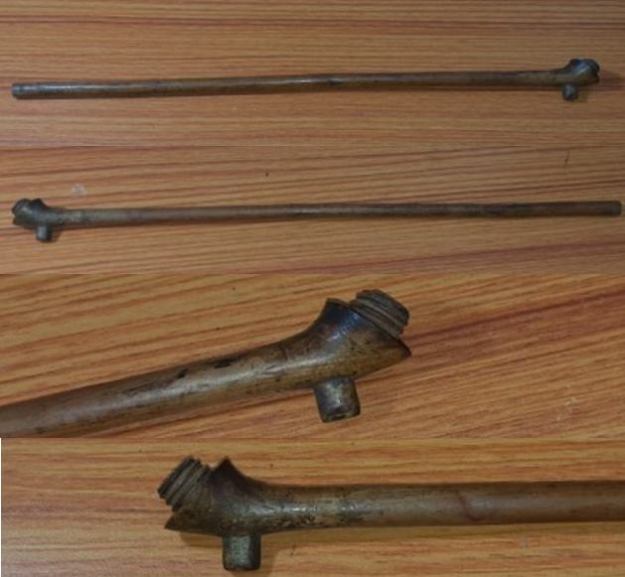
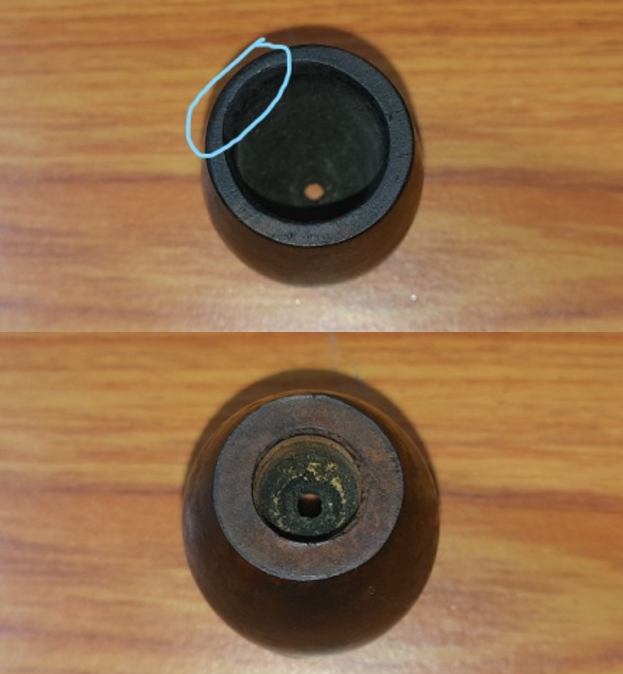
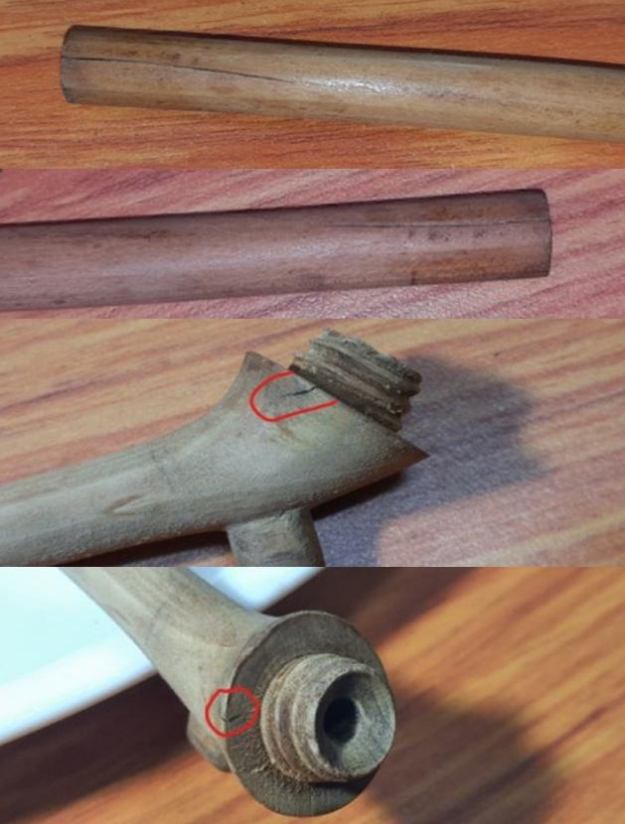
As noted at the start of this write up, this pipe came with a threaded reed shank end that is now missing the stem that would have come with a threaded tenon to seat in to the shank. Given the retro and vintage look of the pipe, I think the stem would have been a bone/ horn or Amber with a bone tenon. So the first step in this restoration would have to be selecting a suitable bone stem with threaded tenon. The shank end face shows two cracks on opposite sides of the shank (encircled in yellow) which would need to be addressed. The stummel end of the reed is upturned, flared and hollowed with threads to seat the stummel and at the bottom of which is the short foot. The threaded surface is covered in dried oils and gunk causing the draught hole to clog. This would have to be cleaned and opened. The entire length of the shank is covered in dirt and grime giving it a dull and dirty appearance. The chamber has a decent layer of cake that is even from top to the bottom of the bowl. The rim top is covered in overflow of lava and hides any dents or chips on the smooth surface. The rim is significantly dark and thin on one side and is encircled in pastel blue. This makes the chamber out of round and gives a lopsided appearance to the top view of the stummel. The bottom of the stummel is threaded and seats atop the threaded reed shank. The threaded area shows heavy accumulation of oils, ash and gunk all around and even within the threads. Cleaning this area would ensure a flush and snug seating of the bowl over the shank.The briar has taken on a nice dark brown patina over a long period of time and prolonged use which when polished and cleaned, should contrast beautifully with the light hues of the long reed shank. There are a few dents and fills (marked in yellow circle) over the entire stummel surface that is visible through the dirt and grime that covers the surface. Truth be told, the stummel does not boast of complete flamboyant straight or bird’s eye or flame grains over the surface, but a mixed pattern of swirls and flame grains that is attractive enough to hold your attention. Preserving the deep brown aged patina will be the primary concern in this bowl refurbishing. The Process
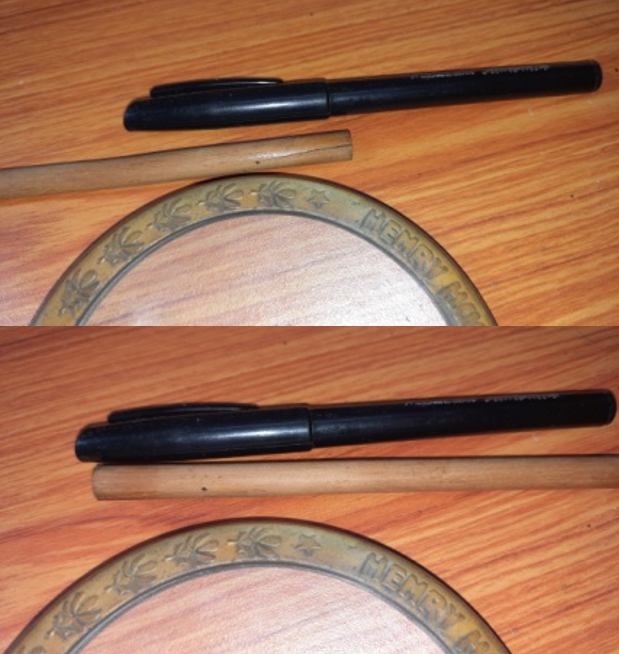
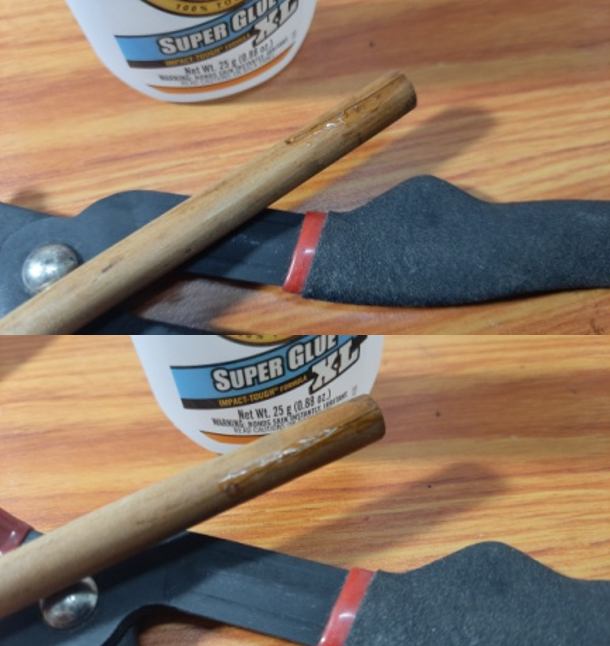
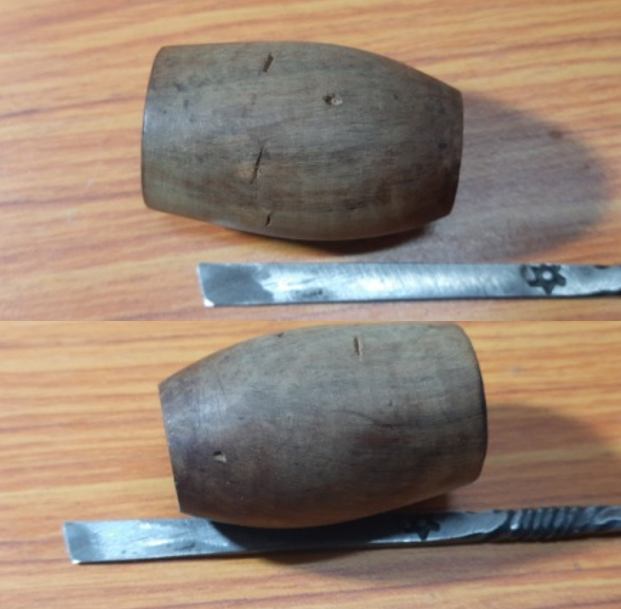
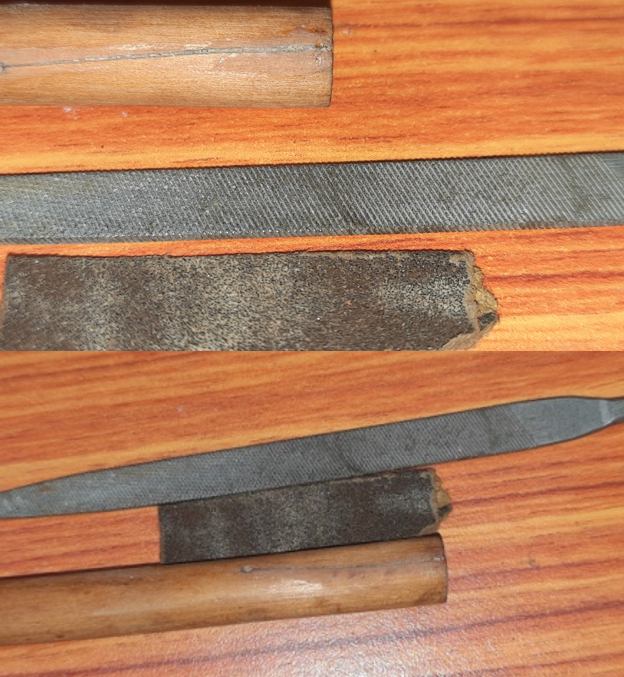
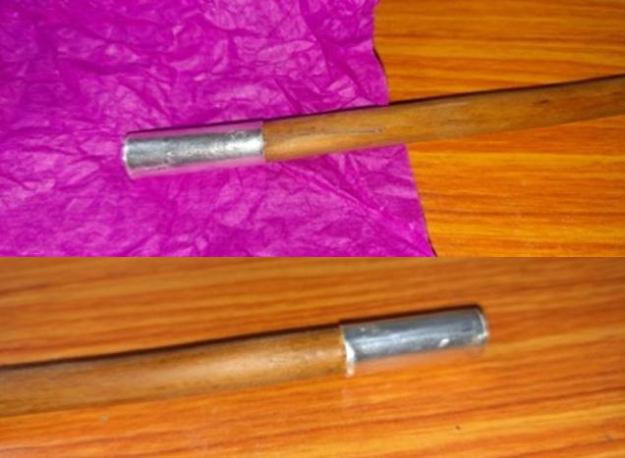
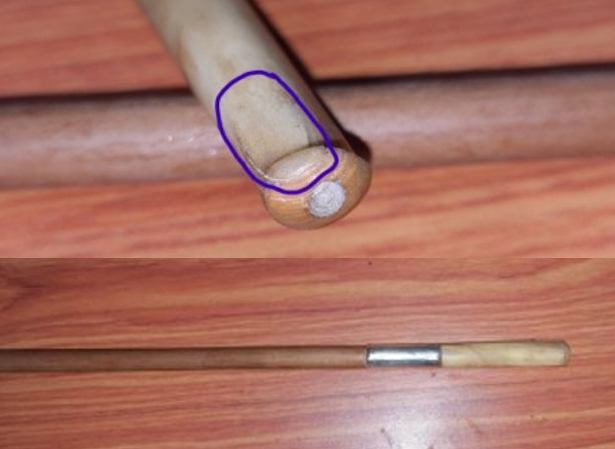
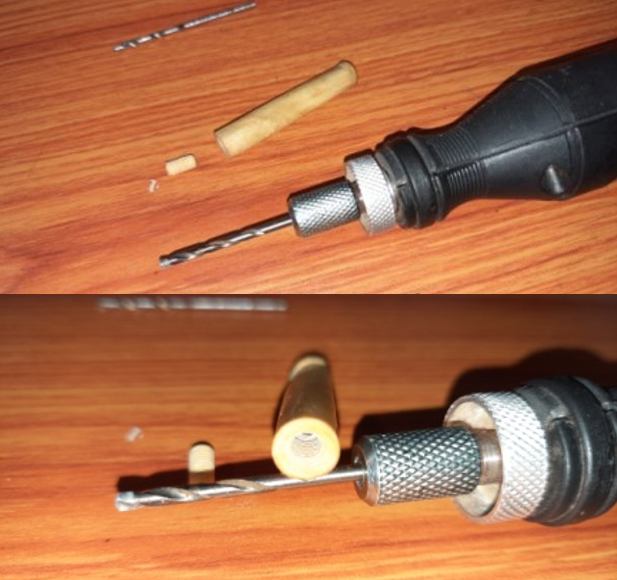
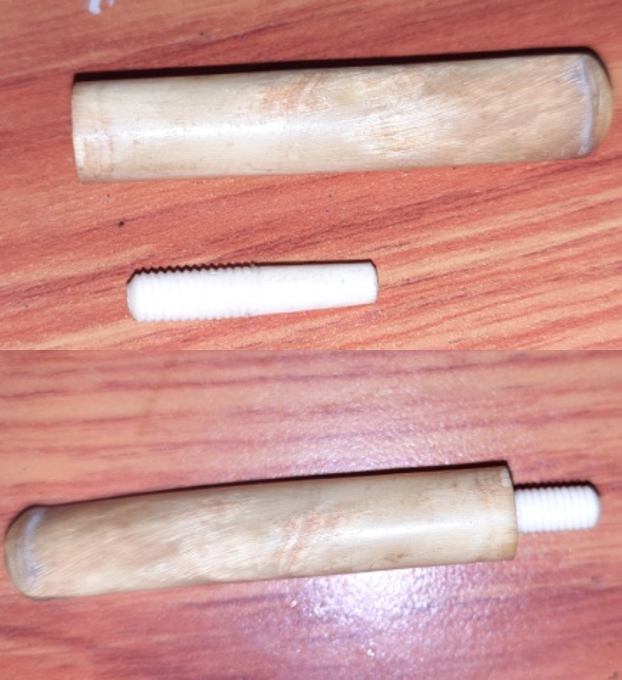
I started the restoration of this pipe with the removal of the carbon cake from the walls of the chamber. Using my fabricated knife, I carefully removed the cake from the chamber to expose the chamber walls. It was heartening to note that there are no heat related issues in the surface of the walls. I smoothed out the surface by sanding the walls with a folded piece of 220 grit sand paper. To remove the last traces of residual carbon dust, I wiped the chamber with a cotton swab wetted with 99.9% pure alcohol. I further cleaned the draught hole at the bottom center of the bowl with a pointed dental tool. The hardened cake had greatly reduced the diameter of the draught hole and ran a pipe cleaner dipped in alcohol to clean it further.Next, I cleaned the threaded bottom of the stummel that seats atop the long reed shank with a dental tool. I scraped out the entire dried gunk that had accumulated in the hollow space as well as from in between the threads. I further cleaned the bottom of the stummel with q-tips and alcohol.With the preliminary cleaning of the internals of the stummel completed, I turned to cleaning the internals of the long reed shank. With my fabricated pointed tool and round needle file, the dried oils and tars that had formed a block at the neck of the shank and stummel junction was removed and cleaned. I scraped out all the dried debris from the surface of the shank end with a sharp dental tool. I ran a few long pipe cleaners dipped in alcohol through the airway of the stem till the pipe cleaners emerged white.I cleaned the exteriors of the stummel and the reed shank with Murphy’s Oil soap and a tooth brush. I ensured that all the tars and grime was cleaned from both the surfaces. This cleaning has revealed the exact extent of damage to the rim top surface. The area where the rim has thinned out also shows signs of charring which would need to be addressed. I dried the shank surface with a soft paper towel and ran a fluffy pipe cleaner through the shank airway to dry it out. Now that the stem surface is rid of the dirt and grime, the cracks at the shank end are clearly discernible and so is the surprise revelation of a crack at the base of the threaded portion of the shank (encircled in red).I marked the end points of the shank end cracks and that at the stummel end with marker pen under magnifying glass. I shall drill counter holes at the marked end of each of the crack to prevent the further spread of these cracks. I used a 1 mm drill bit mounted on my hand held rotary tool to drill the counter holes… …and filled these and the cracks with clear CA superglue. I set the reed shank aside for the superglue to cure. The external cleaning had not only exposed an additional crack at the stummel end of the shank, it had also exposed all the fills and dings over the stummel surface. With a thin sharp knife, I gouged out all the old fills from the surface and cleaned the area with isopropyl alcohol in preparation of filling these gouged out surfaces with a mix of briar dust and CA superglue. I use the layering method to fill these pits in the briar. After all the fills were repaired, I set the stummel aside for the fills to harden and cure completely.The shank repairs had cured by the following noon when I got back from work. Using a flat needle file, I evened out the fills to roughly match the rest of the shank surface. I fine tuned the match by sanding the fills with a folded piece of 320 grit sand paper. Did I mention having customized a sterling silver band for providing additional support against the crack’s lateral expansion? I guess not. Here in India, our local Silversmiths are very skilled in turning jewelry and at repairs right in front of their customers at very affordable rates. Steve and Jeff are witnesses to such craftsmanship when they had visited us in India. Long and short of the story is that I got a 1.5 inch long silver band customized for this shank and fixed it over the shank end with superglue. That crack isn’t going any further now.Now that the cracks have been repaired and stabilized, the next goal was to find the right stem to go with the overall profile of the pipe. I selected a couple of suitable bone stems from my stash of spares and asked for Abha’s opinion. She selected a horn stem that was perfectly matched in size and shape with the shank. However, the stem came with its own set of challenges. First, the tenon was broken with half of it sticking inside the stem and secondly, the top section of the stem surface was partially sliced (encircled in blue), but remained firmly attached. Notwithstanding these issues, the stem matched the profile of the pipe to the T and looks amazing. The first issue with the stem that I dealt with was removal of the broken half of the tenon. I mounted a drill bit slightly larger than the tenon opening on to my hand held rotary tool and carefully drilled it inside the tenon. Once the drill bit had a firm grip on the tenon, I turned the motor counter clockwise and dislodged the tenon remnants from the stem revealing a threaded stem end.I would need to identify a threaded bone tenon that would match the shank and stem threads for a perfectly aligned seating. I rummaged through my spare parts box and came up with a bone tenon that was threaded at one end and smooth conical shaped at the other end. The seating of the smooth side of the tenon into the stem was perfect and so was the threaded end into the shank end snug and aligned. The Pipe Gods are especially favoring me it seems. A perfectly matching, period correct horn stem and a perfectly matching bone tenon are nothing short of a miracle.Before fixing the tenon, I cleaned out the stem internals using anti-oil dish washing soap and thin shank brushes. I scrubbed the external surface with soap and Scotch Brite pad. Using paper towels and pipe cleaners, I dried the stem externals and airway respectively. I inserted a petroleum jelly (Vaseline) coated tapered pipe cleaner through the tenon and stem airway and out through the round orifice opening at the slot end. This serves two purposes, firstly, perfect alignment of the tenon and stem airway is ensured and secondly, the petroleum jelly prevents the superglue from seeping into the airway and clogging it shut once the glue has dried. I roughed out the smooth surface of the tenon with a needle file to provide better bonding surface and applied superglue over the smooth surface of the tenon and over the threads in the stem and inserted the tenon into the stem. I wiped the excess glue from the surface and held the two together for the glue to harden a bit and then set it aside for the superglue to harden completely. While the stem was set aside for the glue to cure, I sanded the stummel fills with a flat needle file. To further even out the filled areas and address the minor dents and dings over the stummel surface, I sanded it with a worn out piece of 220 grit sand paper till smooth.Next I addressed the issue of the charred and out of round chamber. I began with topping the rim over a 220 grit sand paper, frequently checking for the progress being made. I stopped once the charred surface was reduced to an acceptable- to- me level and the thickness of the rim top was close to even all round. To get the chamber back to round, I created a bevel over the inner and outer edge with a folded piece of 180 grit sand paper. I am pretty pleased with the progress being made thus far.While I had been working on the stummel, the tenon fix to the stem had set solid. I checked the seating of the tenon in to the shank end and it was snug and perfectly aligned.There was this issue of sliced top surface on the stem which I addressed next. I applied clear CA superglue over and under the sliced surface and set the stem aside to cure. I sprayed an accelerator over the superglue to hasten the process of curing. Once the stem repairs were set, with a needle file, I sanded the fill to achieve a rough match with the stem surface. I further fine tuned the match by sanding the entire stem surface with a folded piece of 220 grit sandpaper. I applied a little EVO (Extra Virgin Olive Oil) to the reed shank and stem and set it aside to be absorbed into the surface. While the shank and stem were set aside to absorb the EVO, I dry sanded and polished the stummel surface with 1500 to 12000 grit micromesh pads. Dry sanding with micromesh pads helps to preserve the patina of the old briar and is a trick I use when restoring all my vintage pipes. I rubbed a small quantity of “Before and After Restoration” balm which moisturizes and enlivens the briar. I let the stummel absorb the balm for 15- 20 minutes and then gave the stummel a rigorous hand buff with a micromesh cloth. The transformation in the appearance of the stummel is phenomenal and immediate. With the stummel now refurbished and rejuvenated, I turned my attention back to the shank and horn stem. I polished the shank and stem by wet sanding using 1500 to 12000 grit micromesh pads. I rubbed a little “Before and After” balm in to the reed shank and a little EVO in to the stem. All that remained was a polish with Blue Diamond compound and final wax coating using Carnauba Wax. I mounted a cotton buffing wheel earmarked for Blue Diamond compound on to my hand held rotary tool and applied a coat of the compound over the stummel surface to polish out the minor scratches. With a cotton buffing wheel that I use for carnauba wax, I applied a coat of carnauba wax to the stummel and stem and continued to work on it till the complete coat of wax had been polished out. I mounted a clean cotton cloth buffing wheel and gave the entire pipe a once over buff. I finished the restoration by giving the entire pipe a rigorous hand buffing using a microfiber cloth to deepen the shine further. The finished pipe is shown below. This pipe shall find its way to my collection based purely on its delicate stunning looks and uniqueness of the shape. P.S. The Pipe God was definitely smiling down upon me as I worked this pipe. Rarely does it happen that the replacement stem is a perfect size match and the new tenon is period correct and fits in the shank like a glove.

The most difficult part of this restoration for me was…can you guess? Please let me know your guess in the comments below and a big thank you for your valuable time in reading the write up.

Praying for you and yours… Be safe and stay safe.

Refurbishing a James Upshall Bent Bulldog


Blog by Steve Laug

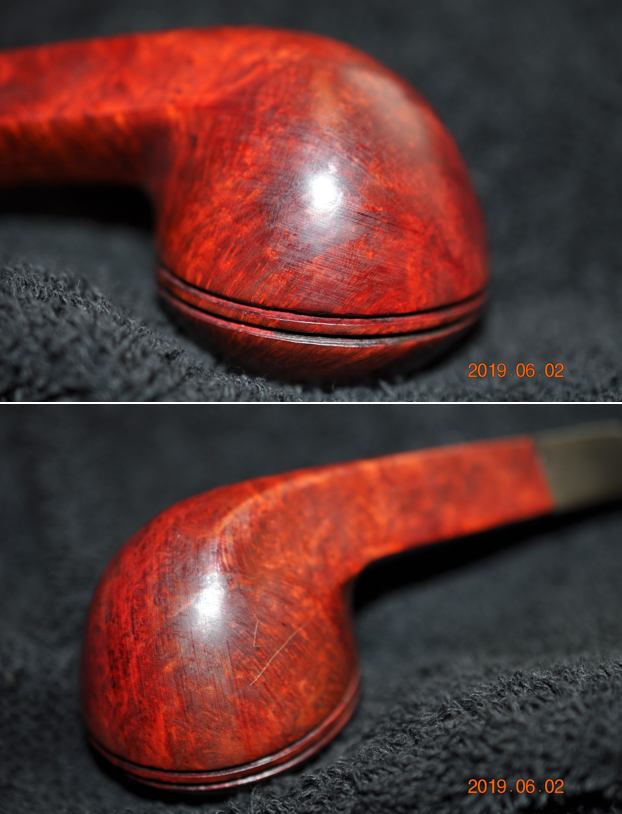
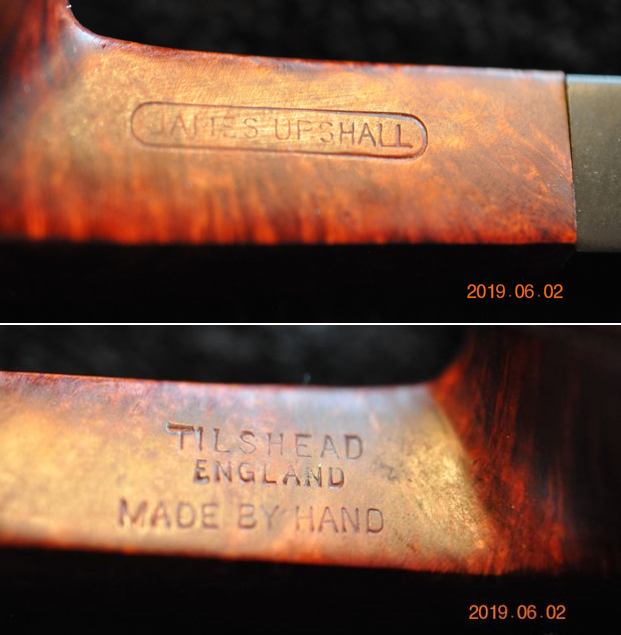
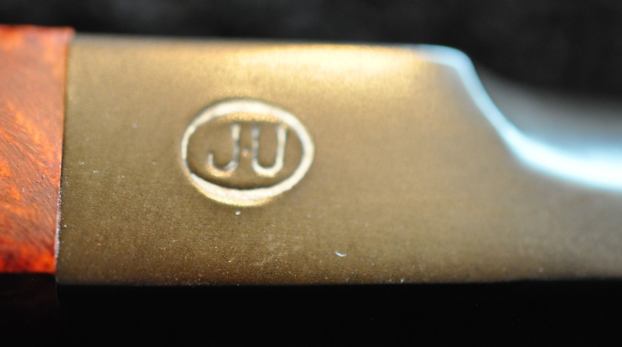
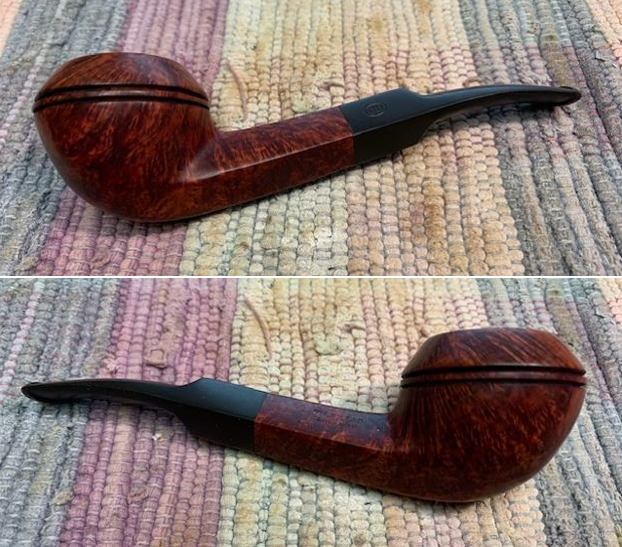
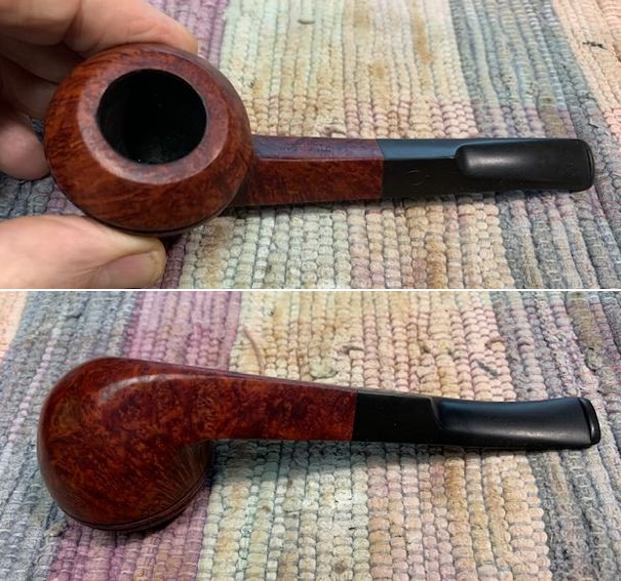
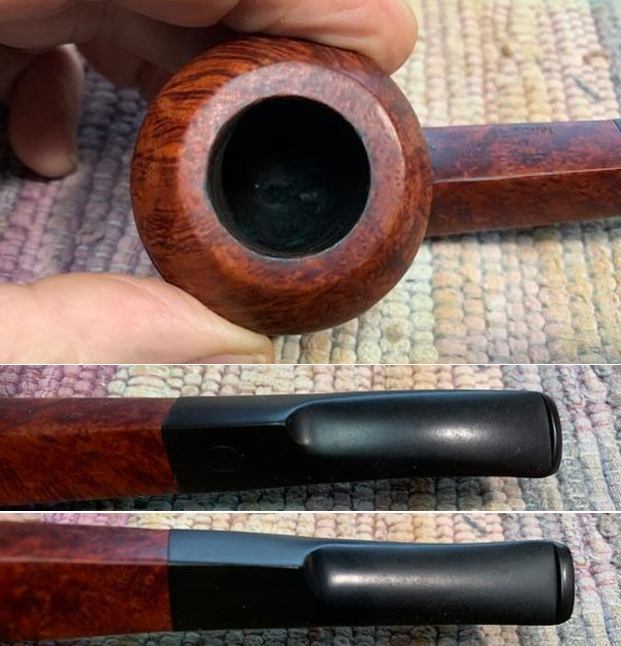
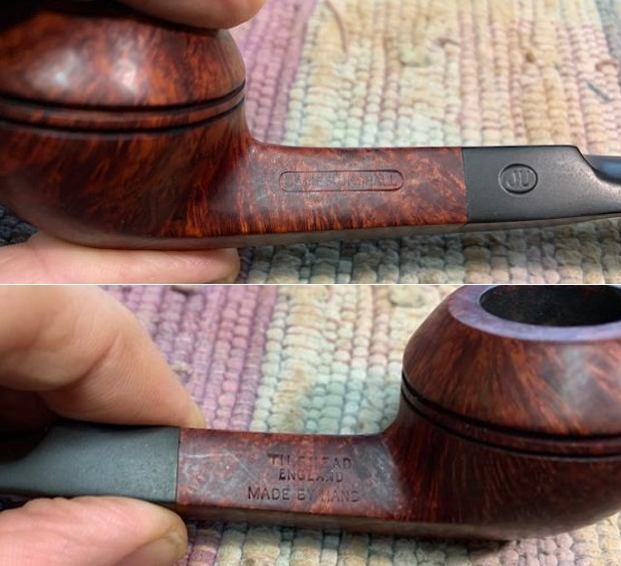
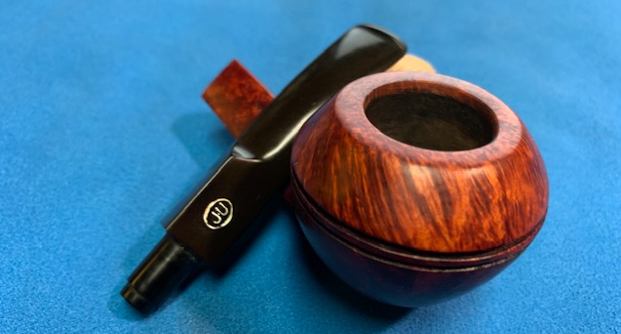
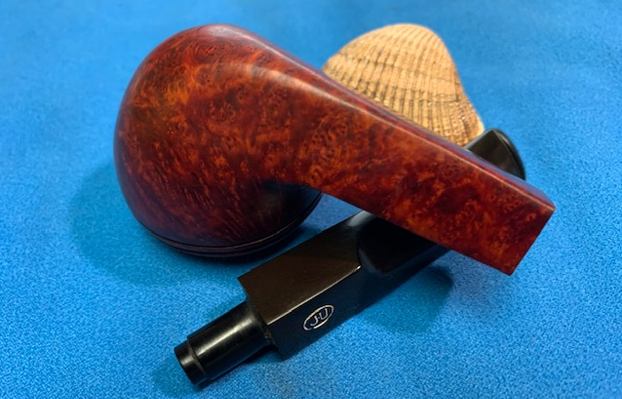
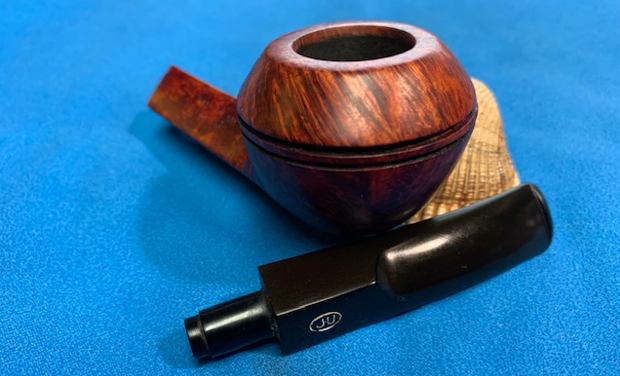
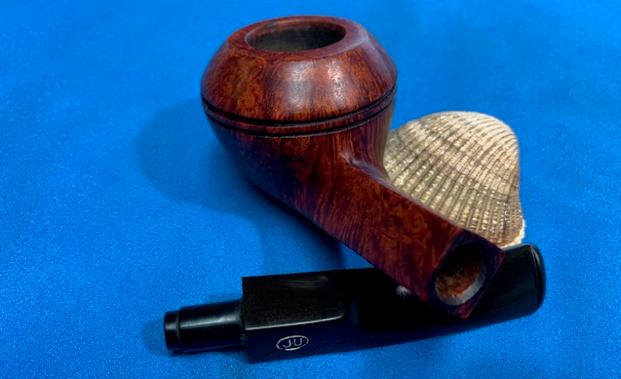
This past May, 2019 I received an email from John in Iowa City, Iowa inquiring whether I would be interested in purchasing four Upshall pipes that he was selling. He sent photos and we chatted back and forth via email and a deal was struck. I had him ship the pipes to Jeff’s place in Idaho. They were generally well cared for pipes but they were dirty. This is another pipe from that foursome that I have chosen to work on. The shape and design caught my eye as I was going through the pipes in the queue. The shape is what I would call a Bent Bulldog. There is not a Grade stamp that I can see but it is a smooth, Mahogany Red finished pipe. The finish is very dirty with dust and grime. The bowl has a thick cake but the rim top is quite clean. The rim top has some darkening and perhaps some damage around the inner edge. The inner edge appears to be slightly out of round toward the front. The stem is oxidized, calcified and has light tooth chatter and marks on both sides near the button. The surface of the button looks very good on both sides. Jeff took photos of the pipe before he started his cleanup work. The conditions noted above are evident in the photos. Jeff took close up photos of the rim top from various angles to show the general condition of the bowl and rim. The first photo shows the thickness of the cake in the bowl and the lava build up on the back inner edge. The edges look like they have been protected by the thick cake so they will probably be fine once the bowl is reamed. There appears to be a little damage on the front inner edge. The photos give a clear picture of the bowl sides and rim edges. Jeff took photos of the sides and heel of the bowl to give an idea of the beauty of the grain and the condition of the bowl. The left side of the shank is stamped James Upshall in an oval logo stamp. The stamping on the right side of the shank reads Tilshead over England over Made by Hand. It is very readable. The JU stamp on the left side of the stem is clear as well.  I looked up the Upshall listing in Pipedia to remind myself of the background on the brand (https://pipedia.org/wiki/James_Upshall). I read through the article and found the section on Grading & Sizing Information really helpful. I have included that below. I have highlighted the pertinent text in red below.
James Upshall pipes are graded by various finishes, i.e. bark, sandblast, black dress and smooth etc. Then by cross grain, flame grain, straight grain and, last but not least, the perfect high grade, which consists of dense straight grain to the bowl and shank. The latter being extremely rare. In addition, the price varies according to group size, i.e. from 3-4-5-6 cm high approximately Extra Large. We also have the Empire Series which are basically the giant size, individually hand crafted pipes which come in all finishes and categories of grain. All our pipes are individually hand carved from the highest quality, naturally dried Greek briar. In order to simplify our grading system, let me divide our pipes into 4 basic categories.

  1. It begins with the Tilshead pipe, which smokes every bit as good as the James Upshall but has a slight imperfection in the briar. In the same category price wise you will find the James Upshall Bark and Sandblast finish pipes, which fill and smoke as well as the high grades.
  2. In this category we have the best “root quality” which means that the grain is either cross, flame or straight, which is very much apparent through the transparent differing color finishes. This group will qualify as the “S”- Mahogany Red, “A” – Chestnut Tan and “P” – Walnut. The latter having the straighter grain.
  3. Here you have only straight grain, high grade pipes, which run from the “B”, “G”, “E”, “X” and “XX”. The latter will be the supreme high grade. Considering the straightness of the grain the latter category is also the rarest. Usually no more than 1% of the production will qualify.
  4. Lastly, we have the Empire Series. These are basically Limited Edition gigantic individually hand crafted pieces, which again are extremely rare due to the scarcity of large, superior briar blocks.

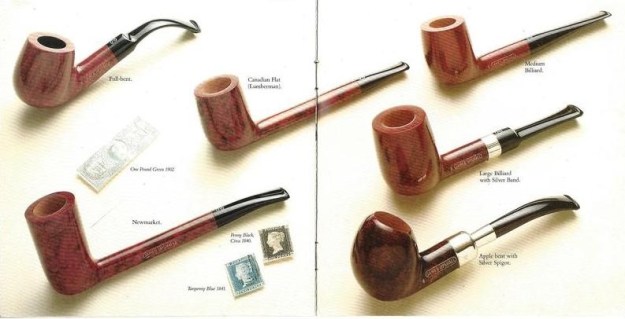
I have marked #2 above noting that the pipe I am working on probably a S Grade Mahogany Red. At the bottom of the Pipedia article there was a copy of a catalogue. Pages 5 and 6 have this information on the S Grade pipe. I believe that I am working on a S Grade Bulldog.

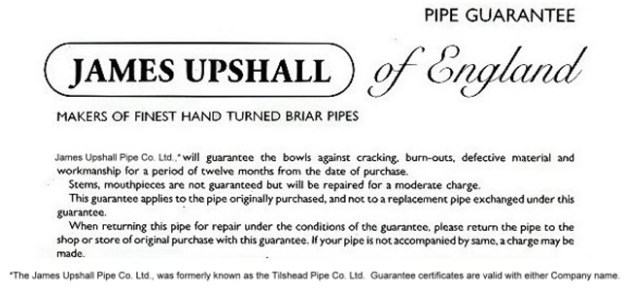
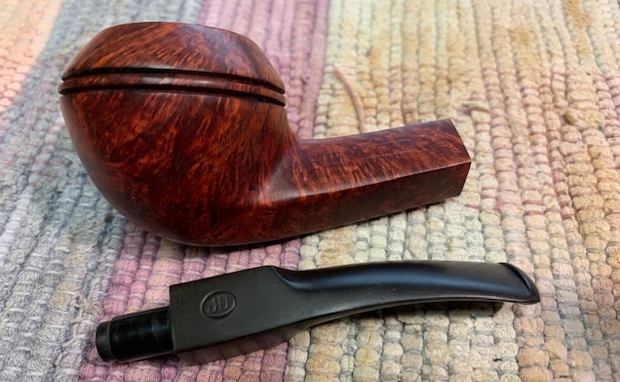
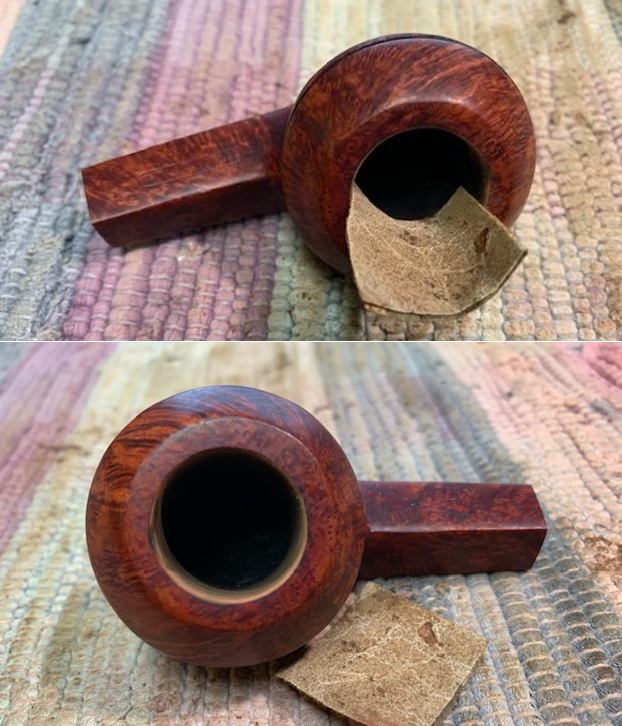
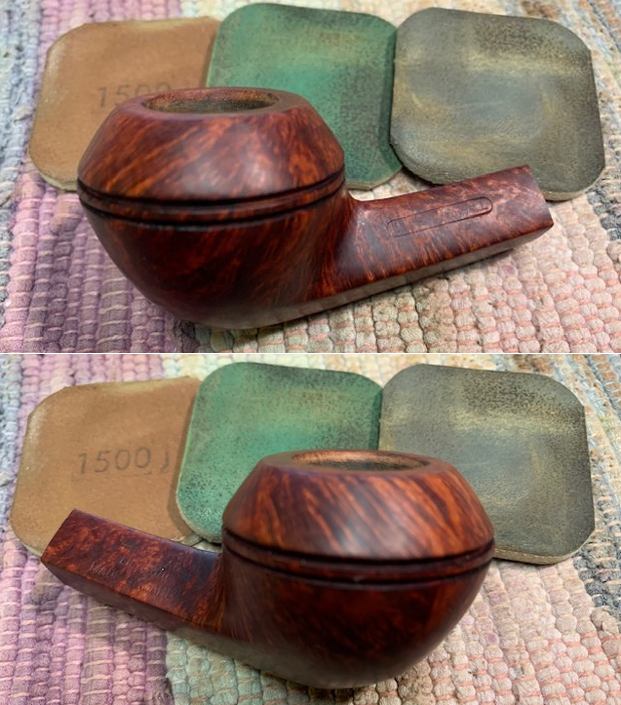
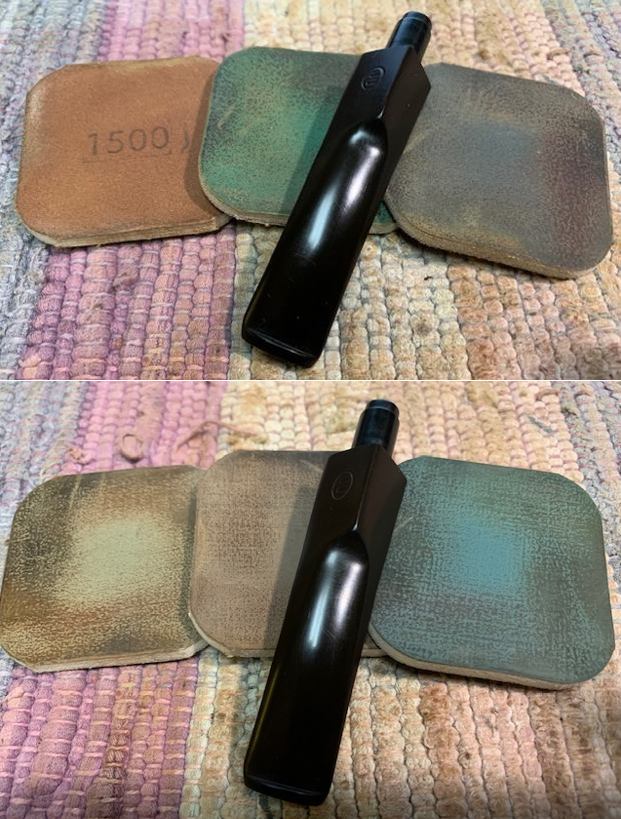
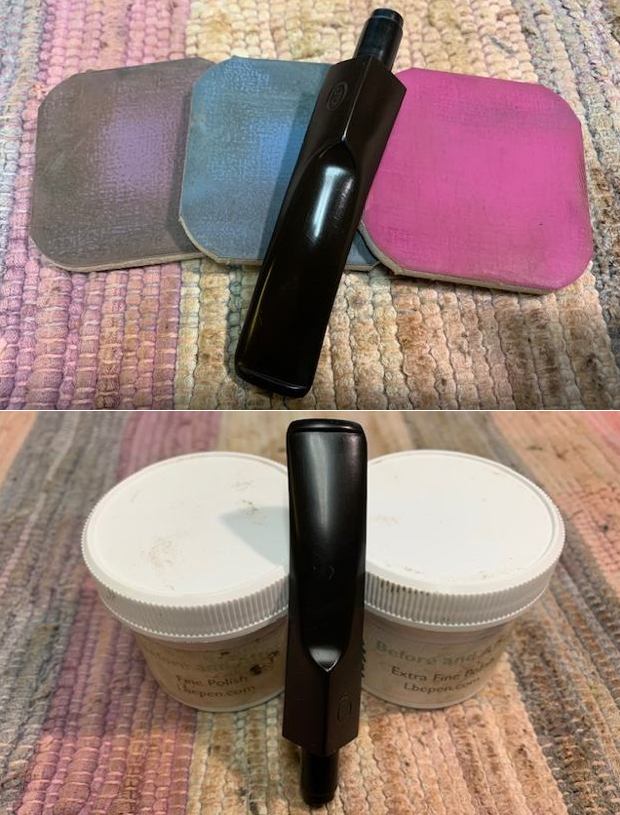
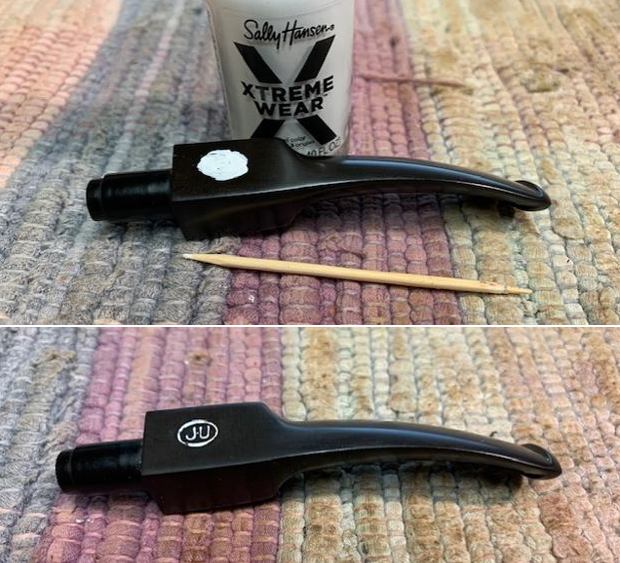
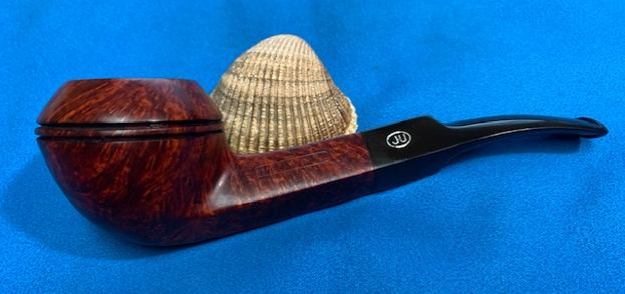
Appears to be mostly S Grade pipes, including one silver spigot and one silver band. I’ve only seen S grade pipes with red stain, that must have come later.I turned to the James Upshall of England website and looked up the guarantee on their pipes. I have included it below because of the commitment to quality that is spoken of in the description (http://www.upshallusa.com/products.htm). Armed with that information I turned my attention to the pipe itself. Jeff had cleaned the pipe with his usual thoroughness that I really appreciate. He reamed it with a PipNet pipe reamer and cleaned up the reaming with a Savinelli Fitsall Pipe Knife. He scrubbed out the internals with alcohol, pipe cleaners and cotton swabs until the pipe was clean. He scrubbed the exterior of the bowl with Murphy’s Oil Soap and a tooth brush to remove the grime and grit on the briar and the lava on the rim top. The finish looks very good with good looking grain around the bowl and shank. Jeff soaked the stem in Before & After Deoxidizer to remove the oxidation on the rubber. When the pipe arrived here in Vancouver for the second stop of its restoration tour it looked very good. I took photos before I started my part of the work. I took some close up photos of the rim top and also of the stem surface. The bowl and the rim top look good. The inner edge of the rim was slightly out of round on the front side. There were some nicks in the edge. I also took close up photos of the stem to show how clean the stem was. Once it was cleaned up there were no tooth marks or chatter on either side of the stem. I took photos of the stamping on the shank. On the left side of the shank it reads James Upshall in an oval. There is a JU logo on the left side of the stem. The stamping was very clear. The right side of the shank was stamped Tilshead over England over Made by Hand. The grain on this pipe was highlighted by the shaping of the pipe.I took the stem off the shank and took a photo of the look of the pipe. It is really a great looking pipe that really follows the briar. I decided to clean up the inner edge of the bowl and straighten out the damage to the rim edge with a folded piece of 220 grit sandpaper and polished it with 400 grit sandpaper. It did not take too much to give the edge a light bevel and remove the damage.I dry sanded the briar with micromesh sanding pads – 1500-12000 grit sanding pads. I wiped the bowl surface down with a damp cloth after each sanding pad to remove the sanding dust. Once I finished the exterior of the briar was clean and the grain really stood out. I rubbed the bowl down with Before & After Restoration Balm. I worked it into the surface of the briar with my fingertips to clean, enliven and protect it. I worked it into the twin rings on the cap with a horsehair shoe brush. I let the balm sit for 10 minutes and then buffed the pipe with a cotton cloth to raise the shine. Mark Hoover’s Balm is a product that I have come to appreciate and one I use on every pipe I have been working on.I polished the stem with micromesh sanding pads – wet sanding with 1500-12000 grit pads. I wiped the stem down after each sanding pad with Obsidian Oil. I polished it with Before & After Pipe Stem Polish – both Fine and Extra Fine. Once I had finished the polishing I gave it final coat of oil and set it aside to dry. I touched up the JU stamp on the stem with a white acrylic finger nail polish. I painted it on the stem and worked it into the stamp with a tooth pick. Once it had cured I used a 1500 grit micromesh pad to remove the excess material. I am excited to be on the homestretch with beautiful James Upshall Grade S Bulldog. This is the part I look forward to when it all comes back together, polished and waxed. I put the bowl and stem back together. I polished the bowl and stem with Blue Diamond to polish out the scratches in the briar and the vulcanite. I gave the bowl and the stem multiple coats of carnauba wax. I buffed the pipe with a clean buffing pad to raise the shine. I hand buffed it with a microfiber cloth to deepen the shine. The pipe polished up pretty nicely. The beautifully grained finish looks really good with the interesting grain patterns standing out on the shape. The grain and the polished black vulcanite went really well together. This James Upshall Bulldog was another fun pipe to work on thanks to Jeff’s cleanup work. It really has that classic English look that catches the eye. The Red Mahogany stain really makes the pipe look attractive. It is another comfortable pipe to hold in the hand. The finished pipe is shown in the photos below. The dimensions of the pipe are Length: 6 inches, Height: 1 ¾ inches, Outside diameter of the bowl: 1 ¾ inches, Chamber diameter: ¾ of an inch. The weight of the pipe is 49 grams/1.73 ounces. This is an Upshall that catches my eye. Thanks for reading this blog and my reflections on the pipe while I worked on it. This is an interesting estate to bring back to life.
House of Robertson Pipes – Boise Pipe Carver Thayne Robertson


Blog by Bob Hartman

I have restored quite a few pipes by Thayne Robertson (https://rebornpipes.com/tag/house-of-robertson-pipes/), Jeff and I were drawn to them as we grew up in Idaho and spent time in Boise for school and family fun. I have been looking for information on the carver, Thayne Robertson since I started restoring his pipes and was surprised to see this article show up on a FaceBook Group on Boise History that I follow. It was written in December 29, 2019 by Bob Hartman who is an Admin for the group. Here is a link to the article and the comments on it. (https://www.facebook.com/groups/114625865783301/permalink/549658705613346/?comment_id=549887142257169)

I wrote Bob a message and he responded. I have included that interchange below as it is quite interesting.

Hi Bob. I have a pipe refurbishing blog called rebornpipes. I have restored quite a few of Thayne Robertson’s pipes. I came across the article on the Boise History Page and would love to post it on the rebornpipes blog. Is that allowable?

Bob replied

Feel Free.

I wrote him and asked if he wrote it as it was very good. Here is what he sent me.

Yes, I did. I grew up always seeing Thayne’s pipe shop downtown Boise, and like many I remember the wonderful smell. A couple of years ago I aquired a photo of him and one of his large carvings, and it intrigued me enough too take a closer look at Mr. Robertson. His son Jon who also worked in the shop is still living in Boise, but I have not been able to contact him.

Without further ado I invite you to read about Thayne Robertson, a Boise, Idaho pipe maker. Thanks Bob for permission to repost this on rebornpipes. Enjoy.

The pipes Thayne Roberson started carving as a hobby in college became so popular that in 1940-41 he opened the Ye Olde Pipe Shop in the Egyptian Theater building. A year later he moved his shop to 203 N. 9th. By 1948 he needed more room and moved his shop next door to 205 N. 9th, and renamed his business House Of Robertson. In 1951 he moved the shop once again. This time to 105 S. 9th, on the other side of Main Street from his old shop. He stayed there until 1956.

In April of 1956 Thayne announced that he was closing shop and leaving Boise, but it appears that there was a change in plans. In November of the same year he reopened the business out of his home shop on Clark Street, then in 1964 Thayne announced that he was once again opening a new pipe store downtown, at 216 N. 9th. This would be his final location. The store most of us probably remember.

Robertson pipes were, in fact, world renown. Pipes being produced at the time were holdovers from the previous century. Thayne’s new free form designs turned the pipe world on its ear. Few crafts have been infuenced more by one artist than pipe making was by Thayne. Other makers scrambled to get his latest catalog to copy his work. Thayne mastered mail order sales early on, and had by 1948 mailed pipes to sixteen foreign countries and all 48 states. When Britian’s Ambassador Lord Invechapel came through Boise he stopped and picked up a couple of pipes from Thayne. One Mr. E. Housinkveld from the Netherland’s ordered a Calabash, a style unavailable in Holland. Thayne also carried a patent on a model he called the “Stoker”, which operated on the same principle as an old coal stoker, the bowl being fed through an auger system. . . . but wait a sec.

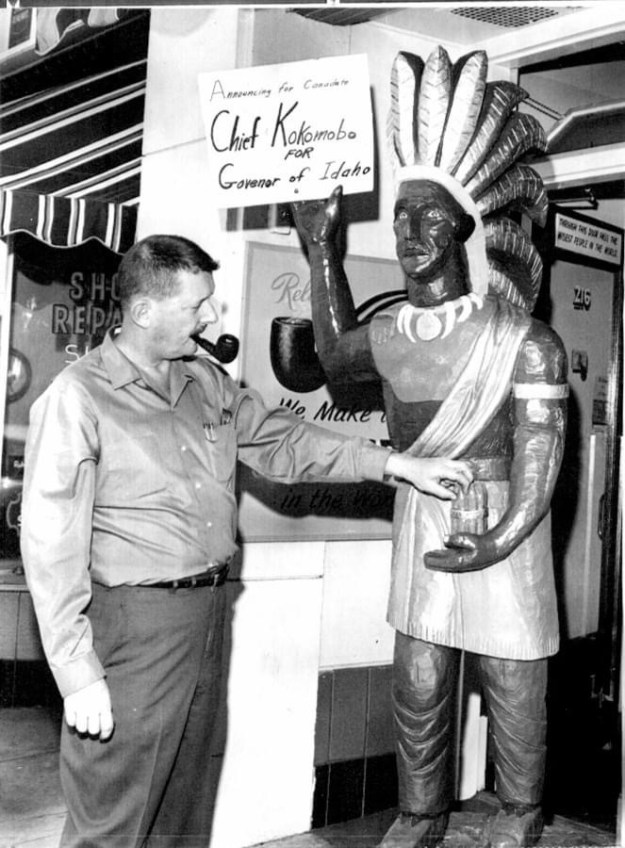
Actually Thayne’s pipes are not what I meant to talk about. We need to back up to 1934. Back when Thayne made his living as a journeyman pressman for The Capital News, and carved as a hobby. It was in 1934 that Thayne heard that a wooden Indian was needed for a Hollywood movie, and decided to give it a shot. After dragging home a tree that he had cut down in the Boise mountains, he spent around 100 hours chopping out a figure of Sacajawea, complete with papoose. Hollywood wasn’t interested, but he found a private collector who was.
Encouraged by the sale, Thayne continued carving wooden Indians, but was discouraged in the amount people were willing to pay for them. As he figured that he was pulling in about 25 cents an hour carving, he kept his day job.

Around 1944 several night clubs had opened in the area and several of them wanted a wooden Indian as advertising. They commissioned Thayne to produce the life size figures, which he sold for $400 each. It wasn’t long before Thayne could quit his day job, and moved his Indian carving into his shop on 9th street.

By 1954 Thayne was producing as many as 25 Indians in a good year, and a career total of about 70. He carved them for many different types of businesses, except for one. He never sold a wooden Indian to a cigar store. The only tobacco store to receive a wooden Indian was when he carved one for his own. One time a Midwestern tourist trap commissioned him to carve life size figures of Jesse James, Wild Bill Hickok, Billy the Kid, Sitting Bull, Belle Star, Johnny Ringo, Bill Dalton, and Chief Big Foot, which was over 7 feet tall. Now that is a tall order! (Sorry about that)

He appeared on two national television shows, “What’s My Line” in 1953, and “To Tell the Truth” in 1966, as a carver of wooden Indians.

Thayne’s obituary states that he “invented literally thousands of original pipe designs, and is regarded by knowledgeable pipe experts as America’s pre-eminent 20th century pipe craftsman and designer.” As a carver of pipes and Indians “He may very well have been the most prominent folk artist in the history of Idaho, and it is hoped that someday he may be accorded the recognition that he deserved.”

Thayne Robertson died January 24, 1987 at 72 years old.

New Life for a Marxman (M, C) Jumbo Imported Briar Apple


Blog by Steve Laug

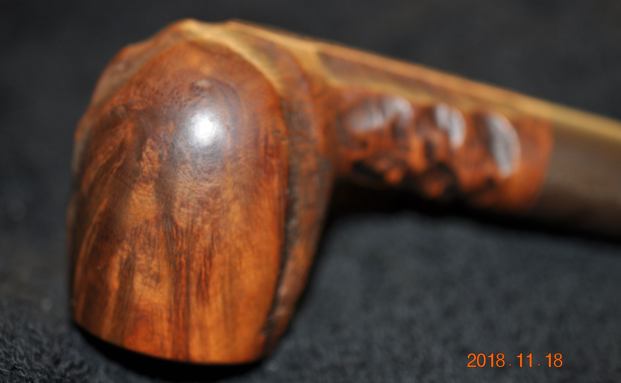
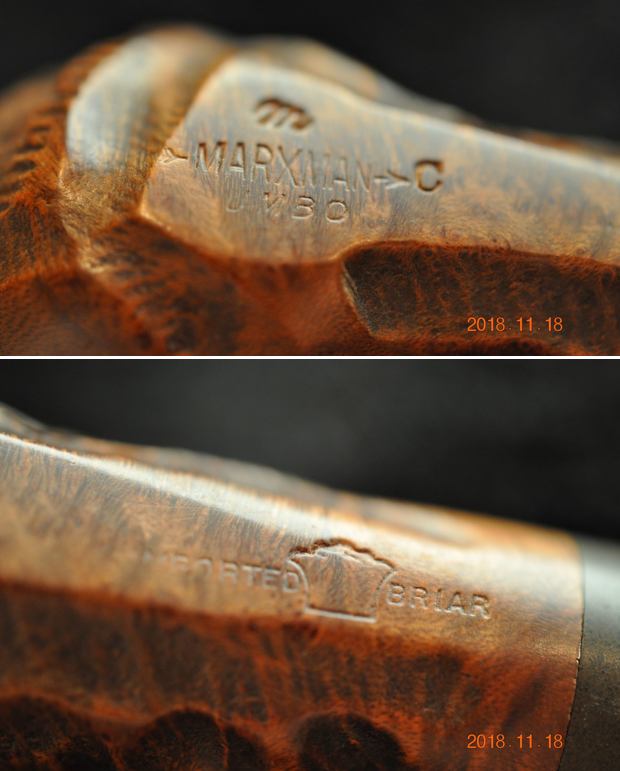
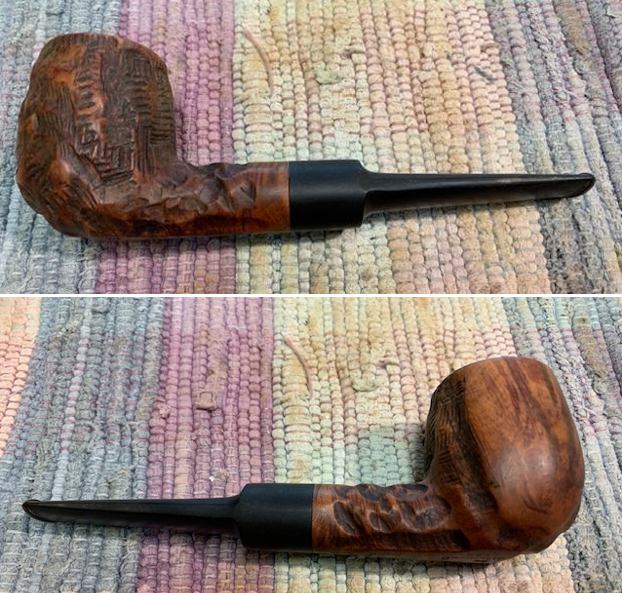
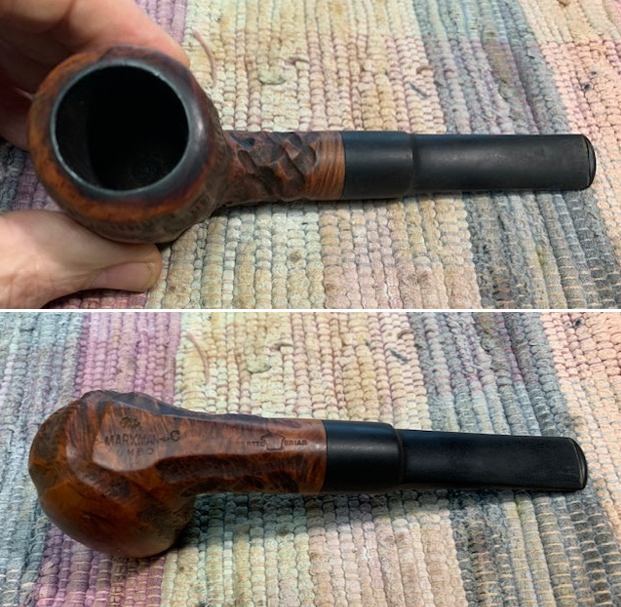
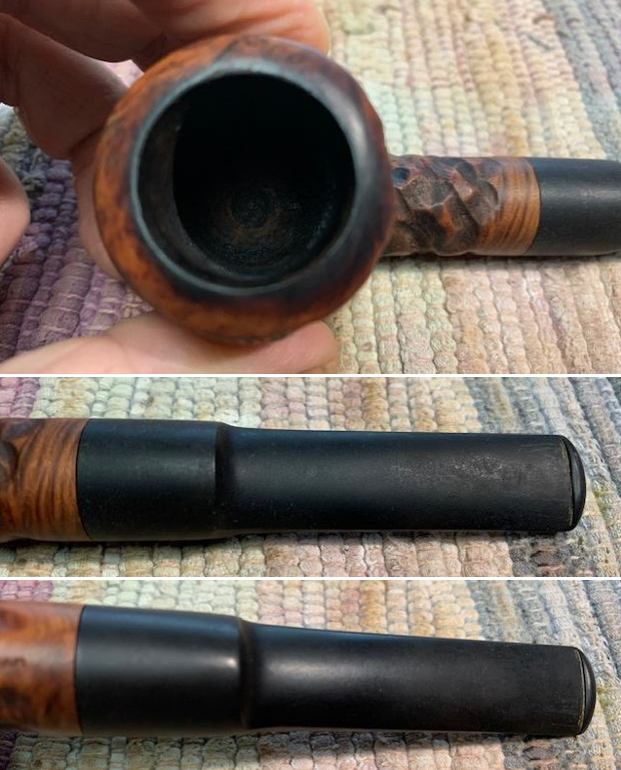
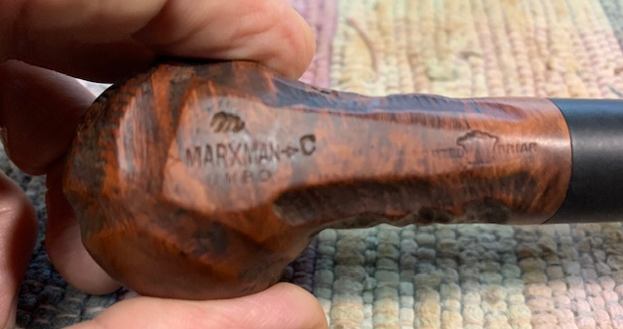
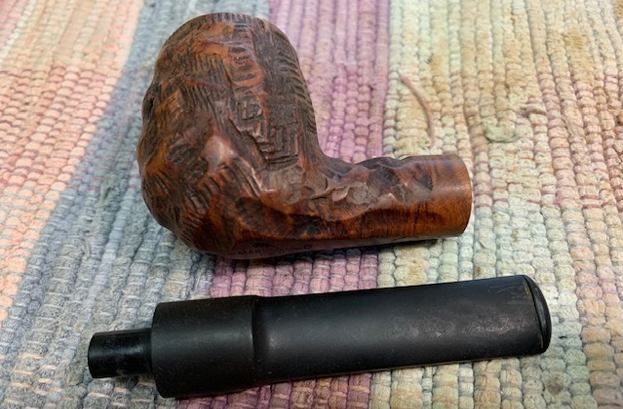
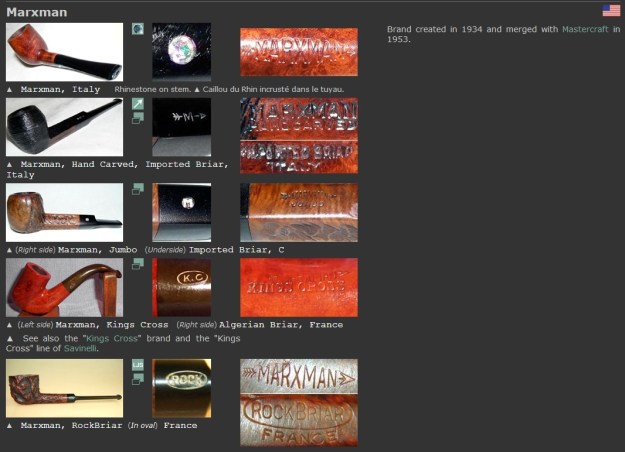
The next pipe I chose to work on was a unique one in many respects. It was a rusticated Apple with a thick shank and saddle stem. It was purchased on 11/09/18 from an auction in Corning, New York, USA. The pipe was clearly stamped on the heel of the bowl and reads “M” in script [over] Marxman (a logo stamp with an arrow going through it), followed by a “C”, followed by Imported Briar with a shield in between the two words. It has a unique style of rustication that I have become accustomed to on Marxman Jumbo pipes. It includes Tracy Mincer style worm trails but in all different directions with a lot of cross hatching inside the trails. On this pipe the rustication is on the shank and on the left and front and back of the bowl with a smooth patch on the right side of the bowl. It is flat bottomed so that it was a sitter. There was a thick cake in the bowl and an overflow of lava on the rim top. The inner and outer edges looked okay but we would know more once it was cleaned up. It had a vulcanite saddle stem that was oxidized and calcified. It had light tooth marks and chatter on both sides ahead of the button. Jeff took  photos of the pipe before he started his clean up work. Jeff took close up photos of the rim top from various angles to show the general condition of the bowl and rim. The first photo shows the thickness of the cake in the bowl and the lava build up on the back inner edge. The edges look like they have been protected by the thick cake so they will probably be fine once the bowl is reamed. The stem was oxidized, calcified and had light tooth chatter on both sides. Jeff took a photo of the sides and heel of the bowl to give an idea of the beauty of the grain on the smooth right side and the condition of the bowl.The stamping on the underside of the shank is clear and readable and reads as noted above.Jeff had done his usual thorough clean up of the pipe. He had reamed it with a PipNet reamer and finished with a Savinelli Fitsall Pipe Knife. He scrubbed the exterior with Murphy’s Oil Soap and the interior with isopropyl alcohol, cotton swabs and pipe cleaners. He worked on the vulcanite stem with Soft Scrub then let it soak in Before & After Pipe Stem Deoxidizer. It has light tooth marks and chatter on both sides. I took photos of the pipe before I started my work. I took some close up photos of the bowl/rim top and the stem to show the condition they were in at this point. The rim top and edges looked good and the bowl was clean. There was some darkening on the top of the rim and the inner edges. The stem had light chatter on both sides near the button.I took a photo of the stamping on the heel of the bowl. It is clear and readable as noted above. I removed the stem from the shank to give a sense of the pipe. You can see that it has a chubby shank and saddle stem. I wanted to refresh my memory of the brand so I turned to Pipephil first to get a short summary of the history (http://www.pipephil.eu/logos/en/logo-m2.html). The site had a side note that the brand was created in 1934 and merged with Mastercraft Pipes in 1953.I then turned to Pipedia to find out more information on the brand and the maker of the pipe (https://pipedia.org/wiki/Marxman). The site quote from Pipes, Artisans and Trademarks, by José Manuel Lopes. I include a portion of that information below.

Marxman (Marxman Pipe Company) was created by Robert (Bob) L. Marx in 1934, when he was 29, and after he had worked for the William Demuth Company. His pipes were not outstanding because of the quality of their wood (probably Algerian), but Bob started making unique sculpted pieces, which brought the brand fame in the World of Hollywood cinema. Actors like Zachery Scott, Dennis Morgan, Jack Carson, Alan Hale, Joel McRae, and Ronald Reagan were some of the faces that appeared on the bowls.

Bob knew how to innovate and took full advantage of marketing and press advertising in order to sell the brand–one of his slogans being “Relax with a Marxman”.

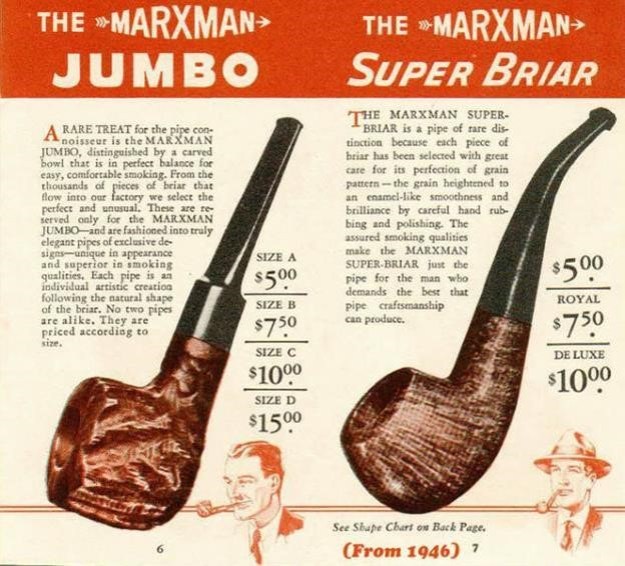
From the information on the two sites I learned that the pipe was made between 1934 when the company started and 1953 when the company was taken over by Mastercraft. I have included an advertisement for the Marxman Jumbo that was included on the article (1946 Ad, Courtesy Doug Valitchka). It includes the following information. “A rare treat for the pipe connoisseur is the Marxman Jumbo, distinguished by a carved bowl that is in perfect balance for easy, comfortable smoking. From the thousands of pieces of briar that flow into our factory we select the perfect and unusual. These are reserved only for the Marxman Jumbo – and are fashioned into truly elegant pipes of exclusive designs – unique in appearance and superior in smoking qualities. Each pipe is an individual artistic creation following the natural shape of the briar. No two pipes are alike. They are priced according to size.”

From the leaflet above I knew that I was working a Size “C” pipe – one of the larger ones. Now it was time to work on the pipe. I worked on the darkened rim top and the inner edge of the rim. I used a folded piece of 220 grit sandpaper. After working on it the rim top and bowl edge looked much better.I polished the briar with micromesh sanding pads – dry sanding it with 1500-12000 grit pads. I wiped the bowl down after each pad with a damp cloth. The finish bowl and shank look very good.I worked some Before & After Restoration Balm into the surface of the briar with my finger tips and a shoe brush to get into the valleys and crevices of the rustication. The product is amazing and works to clean, enliven and protect the briar. I let it sit on the briar for 10 or more minutes and then buff it off with a soft cloth. It really makes the briar come alive and look quite rich. I set the bowl aside and turned my attention to the stem. There were some deeper tooth dents on the topside of the stem surface. I painted them with the flame of a lighter and was able to lift them. What remained would smooth out with the micromesh sanding pads.I polished it with micromesh sanding pads – dry sanding with 1500-12000 grit pads. I wiped the stem down after each pad with a cloth and Obsidian Oil. I finished the polishing with Before & After Pipe Stem Polish – both Fine and Extra Fine. I gave it a final coat of Obsidian Oil. I put the “M” Marxman Jumbo Apple “C” back together and buffed it on the buffing wheel with Blue Diamond. It raise a shine on the briar and the stem and gave some depth to the look of the carved grooves. I gave both the bowl and the stem multiple coats of carnauba wax on the wheel and buffed the pipe with a clean buffing pad to raise the shine. I hand buffed it with a microfiber cloth to deepen the shine. The pipe turned out to be a unique beauty in its own rugged way. Flat bottom Apple shape make it very different from most of the other Marxman Jumbos I have worked on. I like the look of the thick shank and saddle on the stem. The dimensions of the pipe are Length: 6 inches, Height: 2 inches, Outer diameter of the bowl: 1 ½ inches, Chamber diameter: 7/8 of an inch. The weight of the pipe is 2.01 ounces/57 grams. It really is a uniquely beautiful pipe. I will soon be putting it on the rebornpipes store in the American (US) Pipemakers Section. Thanks for walking through the restoration with me. Cheers.

Restoring a Mystery Antique 118 Made in Denmark Freehand Pot


Blog by Steve Laug

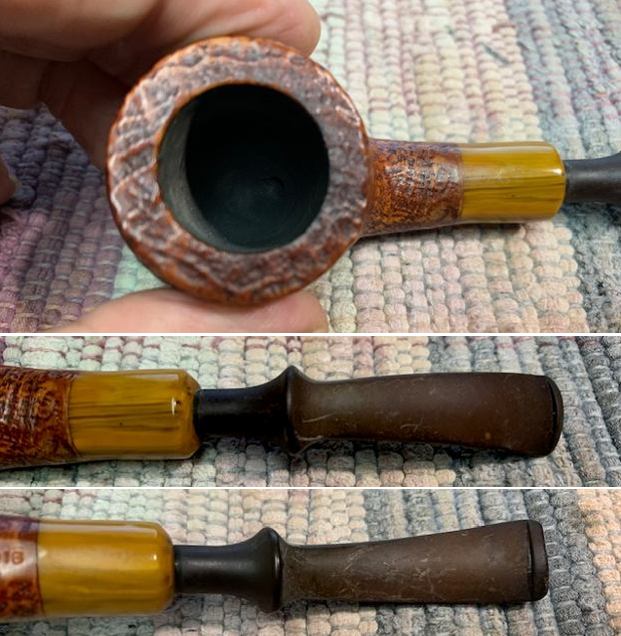
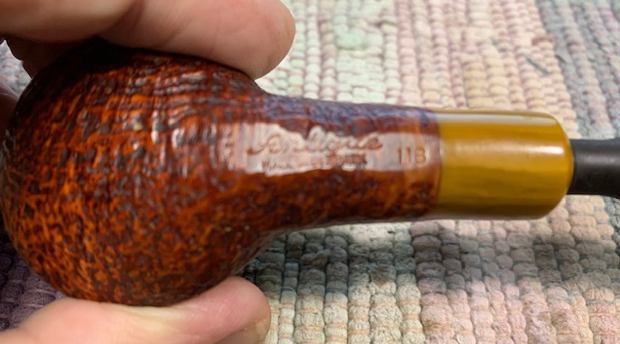
The next pipe I chose to work on is a mystery in several ways. First neither Jeff or I know where we picked this one up. I know it has been here for a long time. Jeff started taking  photos of the pipes we got sometime around 2016 so this one is definitely before then. I had been reamed and cleaned but the stem oxidation had not been addressed so it was also prior to the use of Before & After Pipe Deoxidizer which also puts it back in that time period. So that is the first mystery – when and where did we get this one. The second is the stamping on the pipe. To me it looked like a Stanwell however it is stamped Antique. That brand is associated with the older Pierre Morel according to PipePhil (http://pipephil.eu/logos/en/logo-a6.html) and to complicate it more some of those pipes were made in Denmark the other part of the stamping on the pipe. The 118 shape number points to Stanwell to me and was a shape designed by Sixten Ivarrson. So there is the mystery – where, when and who! I am going to proceed with my assumption that it is a Stanwell made pipe.

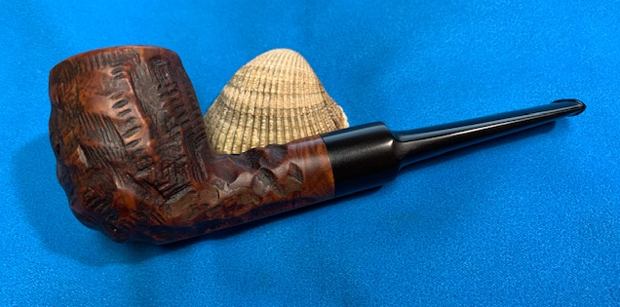
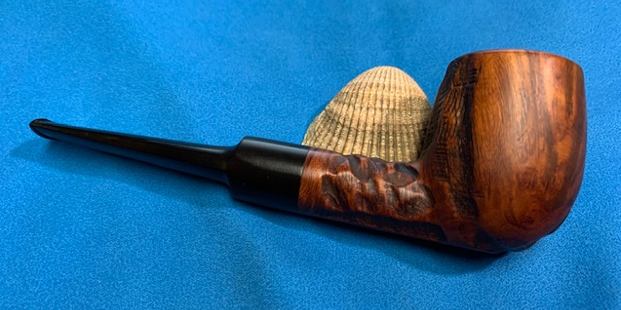
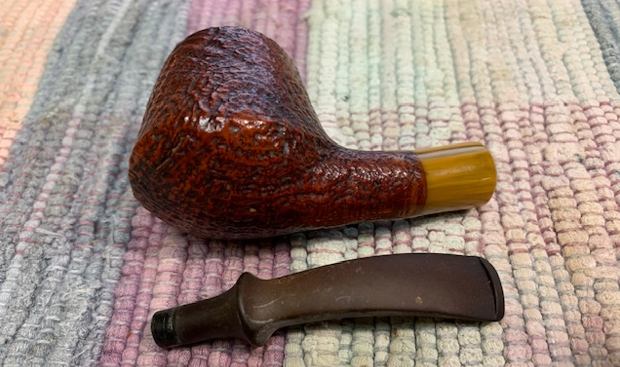
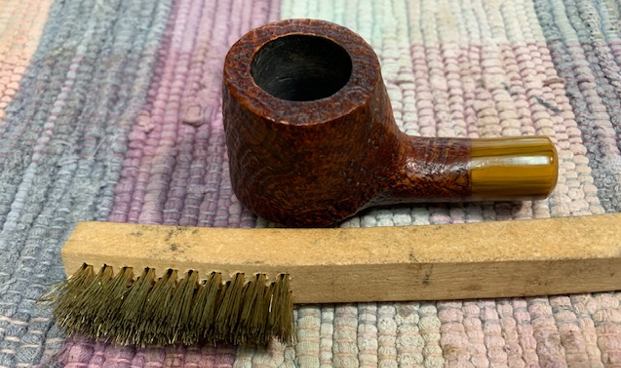
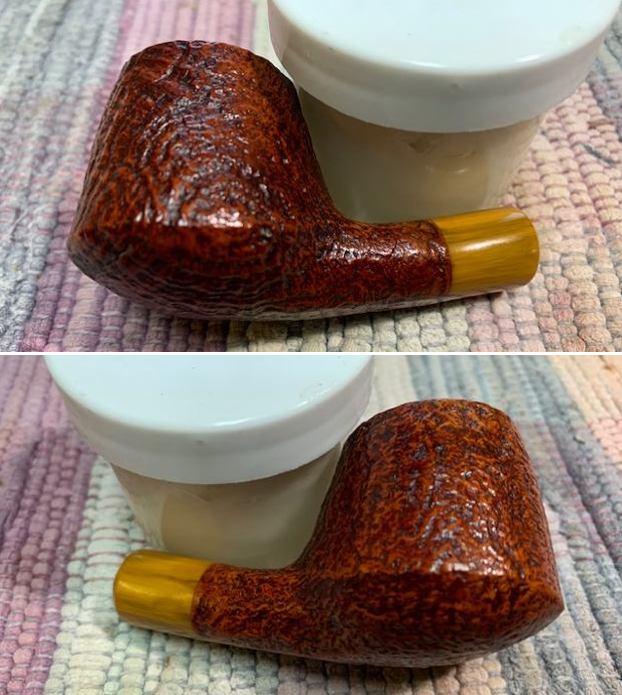
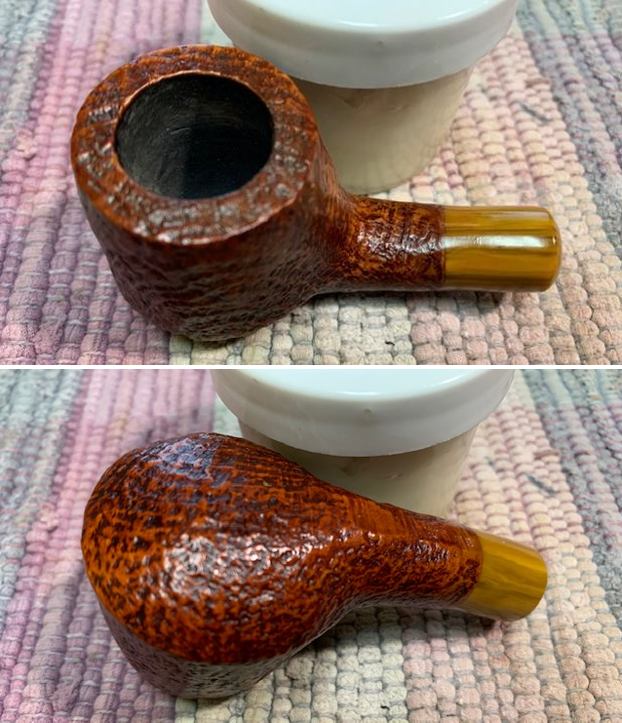
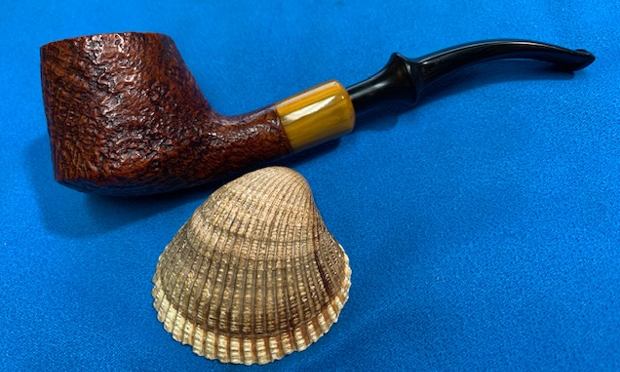
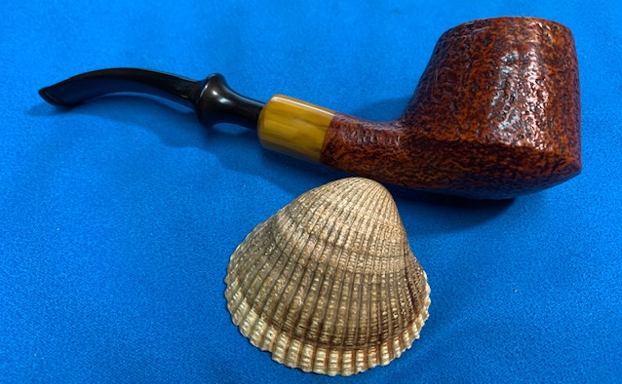
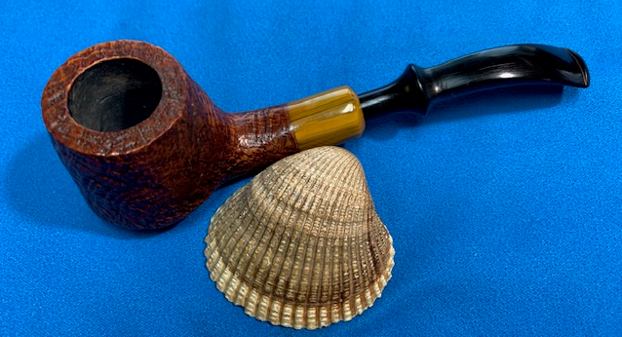
The pipe itself is quite nice it has a sandblast finish on a Freehand/volcano shape. It is stamped on the underside of the shank and reads Antique [over] Made in Denmark followed by the 118 shape number. The bowl was very clean and the rim top looked good with a little darkening toward the back. Both inner and outer edges were perfect. The shank had a faux horn extension that is made of a golden/butterscotch acrylic. The stem is a typical Stanwell style military bit that is found on Freehands. It was clean but badly oxidized. There was not any tooth chatter or marks on either side ahead of the button so it was in great shape. Here are some photos of the pipe when I brought it to the work table this afternoon. I took a close up photo of the rim top and bowl to show the condition. You can see the darkening on the back side of the rim top that I mentioned above. Otherwise it is in great shape. The stem is heavily oxidized but is otherwise clean.I took a photo of the stamping on the underside of the shank. It is clear and readable as noted above.I took the stem off the bowl and took a photo of the parts of the pipe. It is a nice looking pipe that really has a Stanwell look to it.I have restored several Stanwell Antique pipes in the past. All have been darker stained with a sandblast finish and a smooth patch on the bowl side. They also had a different coloured shank extension. All were stamped on the underside of the shank and read Stanwell [over] Antique followed by the shape number. Here is a link to one of those blogs if you want to check it out (https://rebornpipes.com/tag/stanwell-antique-127/). This particular one has a rugged blast that I have seen on others as well. The one I am working on now has a shallower blast and a very different coloured shank extension. It is missing the Stanwell stamp though the Antique stamp is the same. I turned to a previous blog I had done on a Stanwell Jubilee shape number 118 pipe from Bob Kerr’s estate (https://rebornpipes.com/2019/08/11/another-bob-kerr-estate-a-stanwell-jubilee-1942-1982-shape-118/). It is very close to the one I am working on but the stem and shank extension are different. Well at least that is one mystery solved. I knew that I was working on a Stanwell Antique that was different from others I have worked on.Now it was time to work on the pipe. I worked over the darkening on the back of the rim top with a brass bristle wire brush. I was able to remove the majority of the darkening. It looked much better.I rubbed the bowl and shank down with Before & After Restoration Balm. I worked it into the surface of the bowl sides and shank with my fingertips and a horse hair shoe brush to clean, enliven and protect the briar. I let the balm sit for about 10 minutes and buffed with a cotton cloth to raise the shine. The grain came alive with the buffing.  I set the bowl aside and turned to work on the stem. I scrubbed the stem with SoftScrub to remove the oxidation and smooth out the surface of the pipe. It took a lot of scrubbing to break through the oxidation but it was getting better when I finished. I sanded out with 220 grit sandpaper. I started polishing it with 400 grit wet dry sandpaper.  I polished the vulcanite stem with micromesh sanding pads – 1500-12000 grit pads. I wiped it down with Obsidian Oil after each sanding pad. I used Before & After Pipe Polish – both Fine and Extra Fine to further polish the stem. This Mystery Antique Made in Denmark 118 is a great looking pipe now that it has been restored. The Stanwell shape is elegant and flowing with a thin turned vulcanite stem. I put the stem back on the bowl and carefully buffed the pipe with Blue Diamond on the buffing wheel using a light touch on the briar. I gave the bowl and the stem multiple coats of carnauba wax on the buffing wheel and followed that by buffing the entire pipe with a clean buffing pad. I hand buffed the pipe with a microfiber cloth to deepen the shine. The finished Stanwell Antique 118 fits nicely in the hand and feels great. Give the finished pipe a look in the photos below. The dimensions of the pipe are Length: 5 ¾ inches, Height: 1 ½ inches, Outside diameter of the bowl: 1 ¼ inches, Chamber diameter: ¾ of an inch. The weight of the pipe is 43 grams/ 1.52 ounces.  I will be putting it on the Danish Pipe Maker section of the rebornpipes store shortly. If you are interested in adding this pipe to your collection send me a message or an email. Thanks for reading this blog and my reflections on the pipe while I worked on it. There truly are many more pipes to come!
Saving a Parker


Blog by Kenneth Lieblich

Next on the chopping block is a beautiful sandblasted pipe by Parker of London. I purchased a group of pipes from a fellow in the Eastern US. It was definitely a mixed bag of very good and very bad. Some pipes were destroyed beyond repair, some pipes were filthy but repairable, some stems were missing their stummels, and some stummels were missing their stems. However, there were a handful that were in decent condition when I found them and they just needed a helping hand – this Parker was one of those. Apologies in advance for the paucity of photographs. I guess I just got carried away with the work! Parker of London has an interesting history. Our friends over at Pipedia have provided this information:

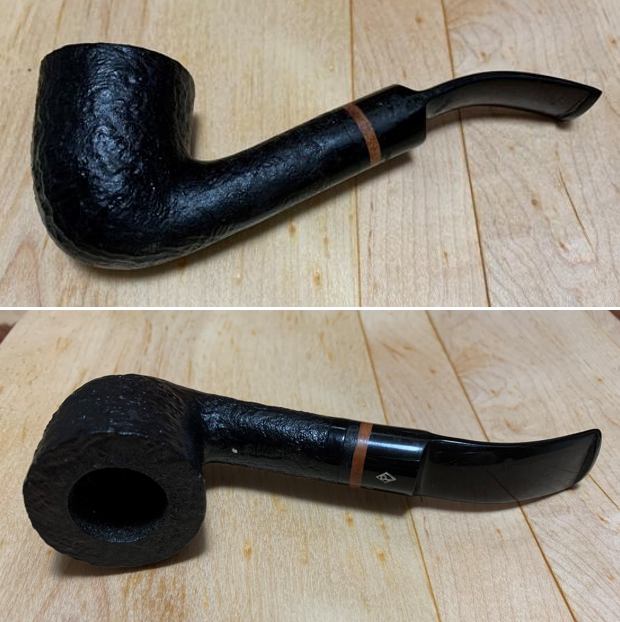
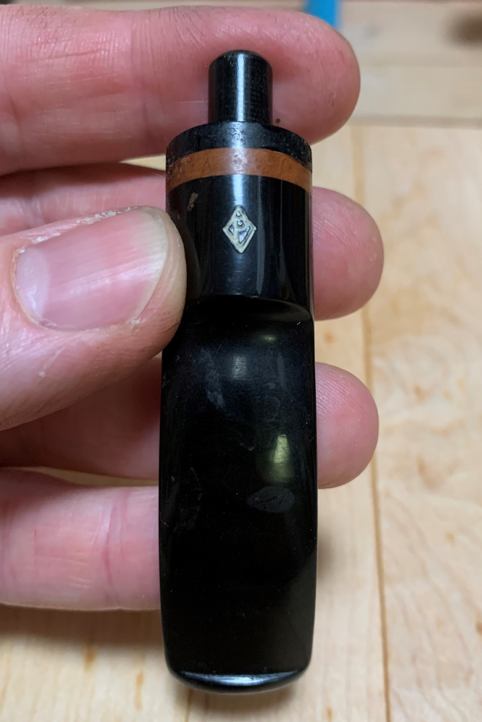
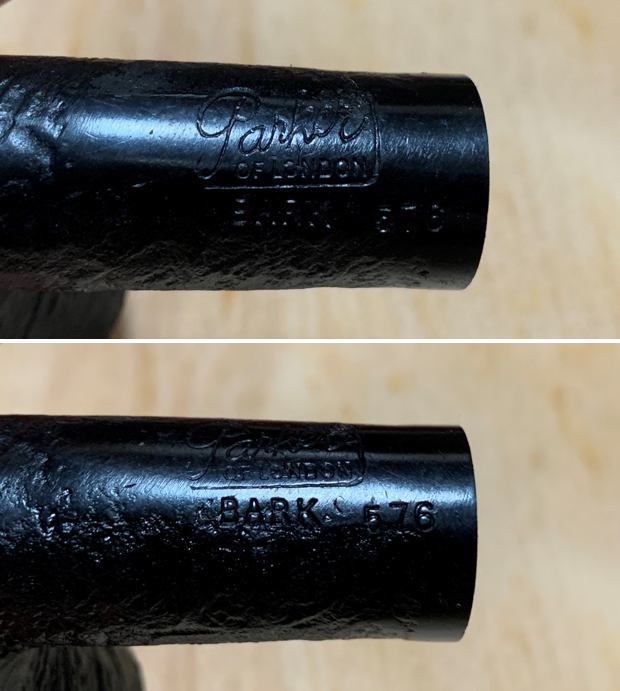
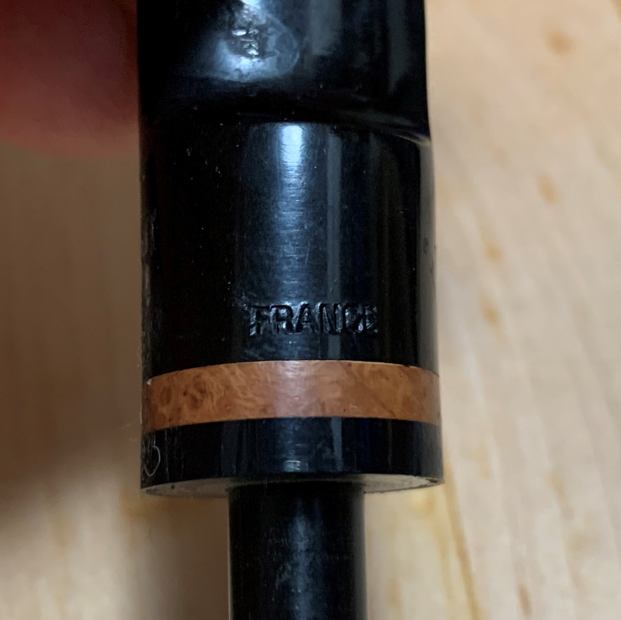
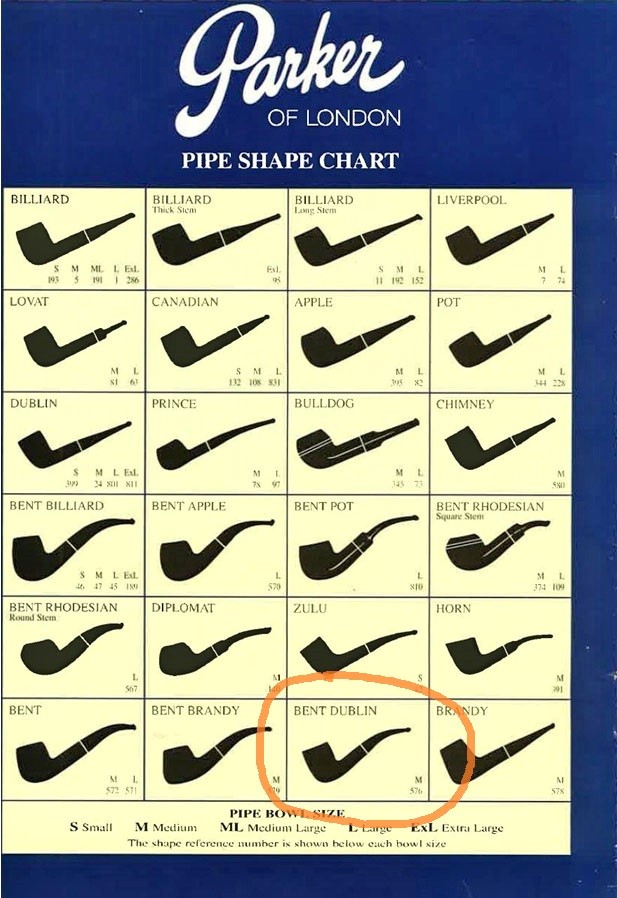
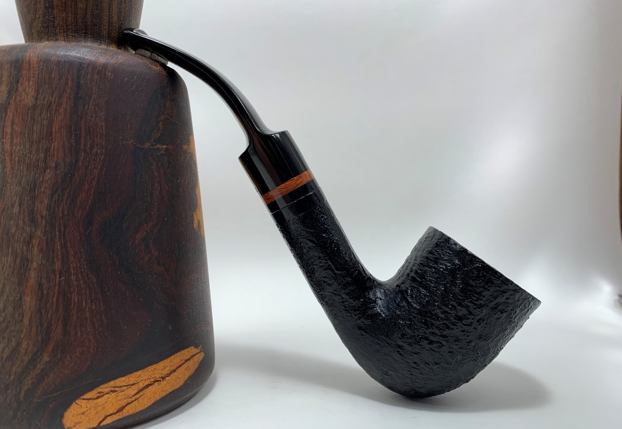
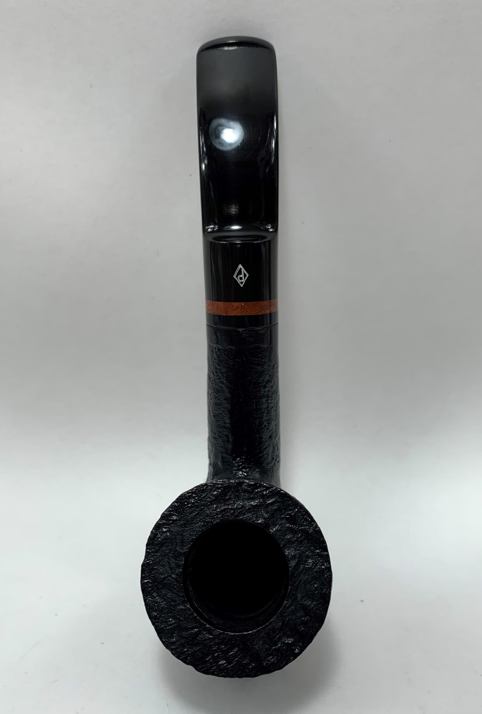
In 1922 the Parker Pipe Co Limited was formed by Alfred Dunhill to finish and market what Dunhill called its “failings” or what has come to be called by collectors as seconds. Previous to that time, Dunhill marketed its own “failings”, often designated by a large “X” over the typical Dunhill stamping or “Damaged Price” with the reduced price actually stamped on the pipe. While the timing and exact nature of the early relationship remains a bit of mystery, Parker was destined to eventually merge with Hardcastle when in 1935 Dunhill opened a new pipe factory next door to Hardcastle, and purchased 49% of the company shares in 1936. In 1946, the remaining shares of Hardcastle were obtained, but it was not until 1967 when Parker-Hardcastle Limited was formed. It is evident through the Dunhill factory stamp logs that Parker and Dunhill were closely linked at the factory level through the 1950s, yet it was much more than a few minor flaws that distinguished the two brands. After the war, and especially after the mid 1950s the differences between Parker and Dunhill became even more evident, and with the merger of Parker with Hardcastle Pipe Ltd, in 1967 the Parker pipe must be considered as an independent product. There is no record of Parker ever being marketed by Dunhill either in its retail catalog or stores. Parker was a successful pipe in the US market during the 1930s up through the 1950s, at which point it faded from view in the US, while continuing to be popular in the UK. Pipedia goes on to say that the old Parkers had a patent number and dating code, but these were gone by 1957. I do not know the specific age of this pipe, but since it is missing both a patent number and dating code, it is safe to say that it was made after 1957. This sandblasted Parker has the following markings on the stummel: Parker of London [over] Bark 576. The stem has the letter P inside a diamond on the topside and it also has the word France on the underside. Furthermore, the following photo, showing one of Parker’s brochures, indicates that the model number 576 is a bent Dublin.Fortunately, this Parker was in pretty good shape when it came to me and that certainly made my job easier. There were a few small discolourations to the stummel and the overall colour was dull, but nothing too serious. The stem had a few nicks and dents, but I was not concerned. Really, this pipe just needed a day at the salon in order to look its best.

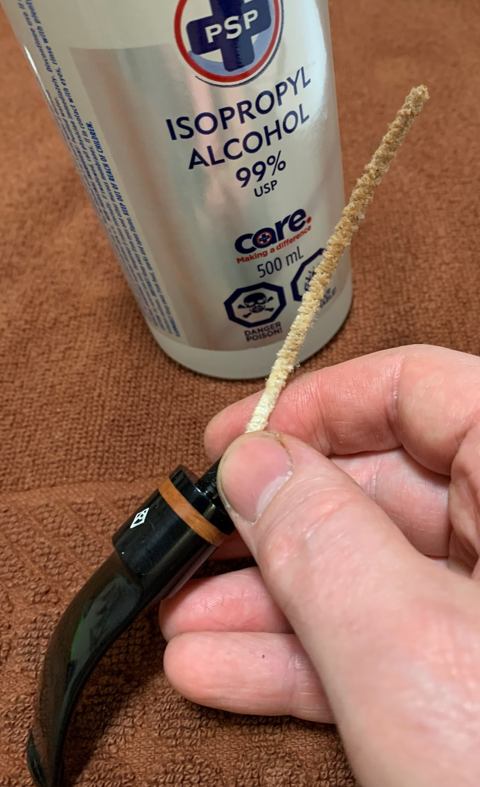
The stem was first on my list. I took a BIC lighter and ‘painted’ the stem with its flame in order to lift the marks. This was only modestly successful in raising the dents. Then, I cleaned out the insides of the stem with pipe cleaners and isopropyl alcohol. It was a bit dirty, but not too bad and I only went through a few pipe cleaners in order to clean it up.I then scrubbed then stem vigorously with SoftScrub to clean it up nicely. Before I moved on to the Micromesh pads, I built up the small dents on the stem with cyanoacrylate adhesive and let them fully cure. I then sanded it down with 220-, 400-, and 600-grit sandpapers to meld the repair seamlessly into the stem. This ensures that it keeps its shape and looks like it should. I then used all nine Micromesh pads (1,500 through 12,000 grit) to bring out the lovely black lustre on the stem. I also used Obsidian Pipe Stem Oil in between each pad scrubbing.

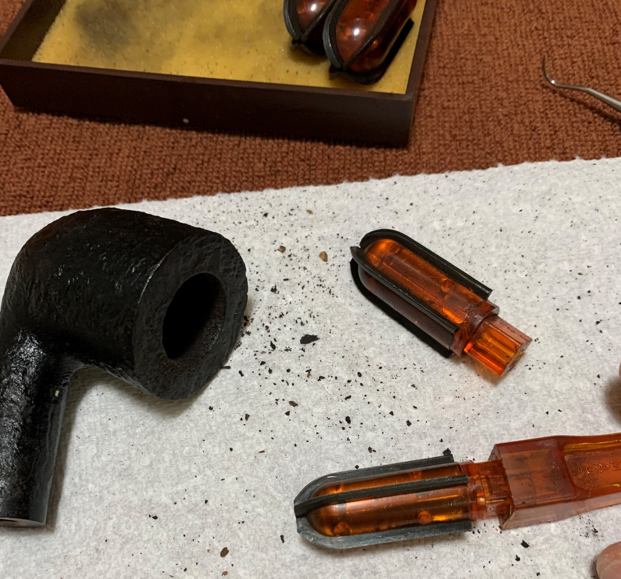
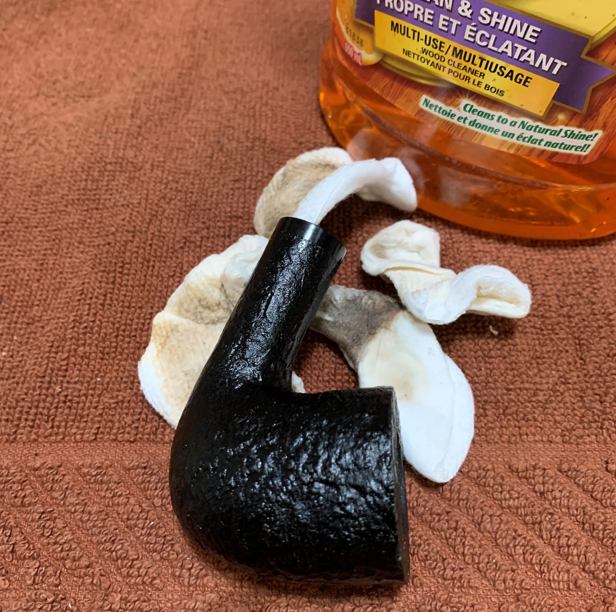
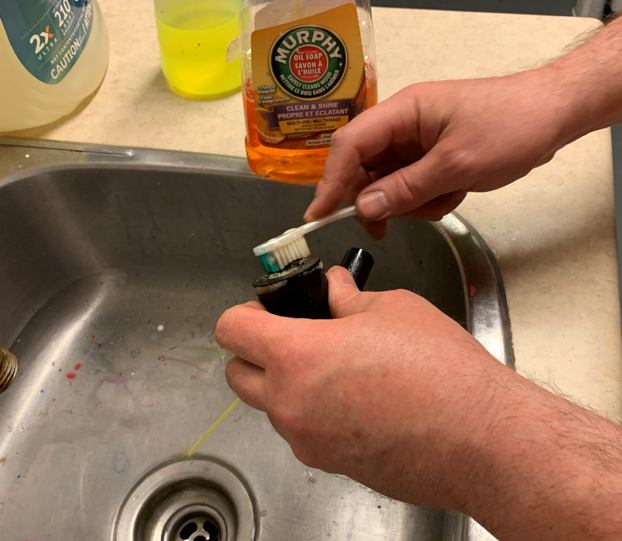
On to the stummel, and the usual cleaning procedures were in order for this pipe. I used both the PipNet Reamer to remove the built-up cake and followed that with 220-grit sandpaper to remove as much as I could. I wanted to take the bowl down to bare briar to ensure there were no hidden flaws in the walls of the bowl. Fortunately, there were none. I then proceeded to clean out the insides of the shank with Q-tips, pipe cleaners, and isopropyl alcohol. There wasn’t too much nastiness inside this stummel – it only took a handful of pipe cleaners etc. to sort that out. I followed that up by cleaning the insides with some dish soap and tube brushes. I then moved on to cleaning the outside of the stummel with Murphy’s Oil Soap, a toothbrush, and some cotton pads. That removed any remaining dirt. Fortunately, there was no notable damage to the stummel, so I didn’t have to address that. However, I did do some touch ups to the black stain with my furniture pens. Since the pipe had a sandblast finish, I obviously did not use the Micromesh pads to sand everything. Instead, a light application of Before & After Restoration Balm brought out the best in the stummel’s grain.

Then it was off for a trip to the buffer. A dose of White Diamond and a few coats of Halcyon II wax were just what this pipe needed. The lovely shine gave the wood a deep black look.

In the end, what a beauty this pipe is! It is back to its old glory and ready to be enjoyed again by the next owner. I am pleased to announce that this pipe is for sale! If you are interested in acquiring it for your collection, please have a look in the ‘British’ pipe section of the store here on Steve’s website. You can also email me directly at kenneth@knightsofthepipe.com. The approximate dimensions of the pipe are as follows: length 145 mm/ 5 ¾ inches; height 50 mm/ 2 inches; bowl diameter 38 mm/ 1 ½ inches; chamber diameter 21 mm/ .80 inches. The mass of the pipe is 47 grams/ 1.65 ounces. I hope you enjoyed reading the story of this pipe’s restoration as much I as I did restoring it. If you are interested in more of my work, please follow me here on Steve’s website or send me an email. Thank you very much for reading and, as always, I welcome and encourage your comments.

I Finally Took the Plunge and Bought a Jose Rubio Pipe


Blog by Steve Laug

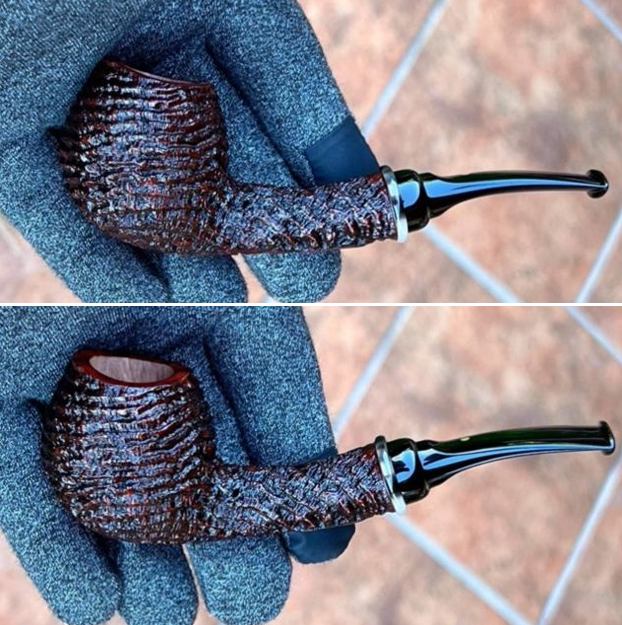
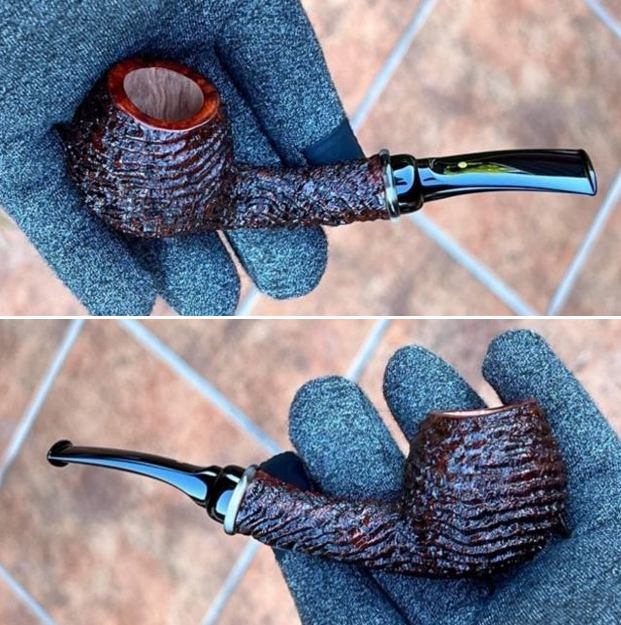
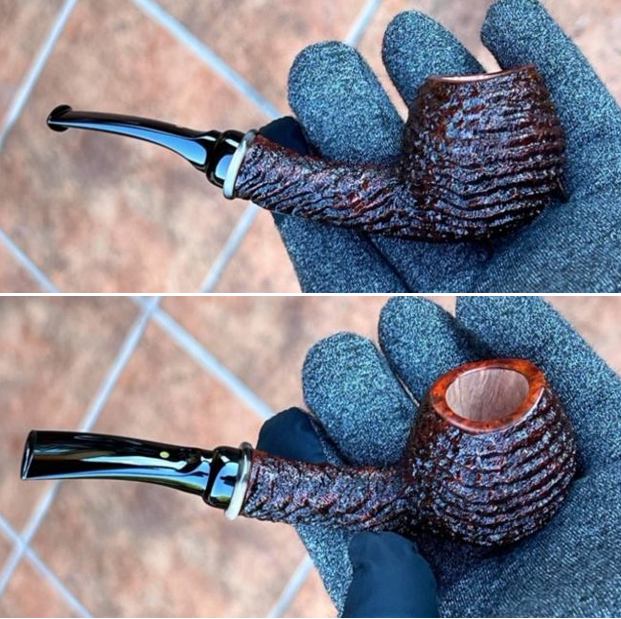
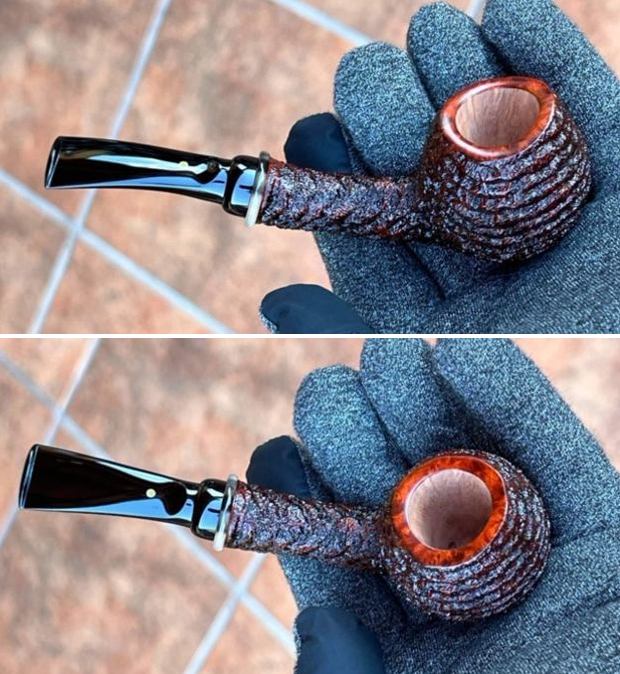
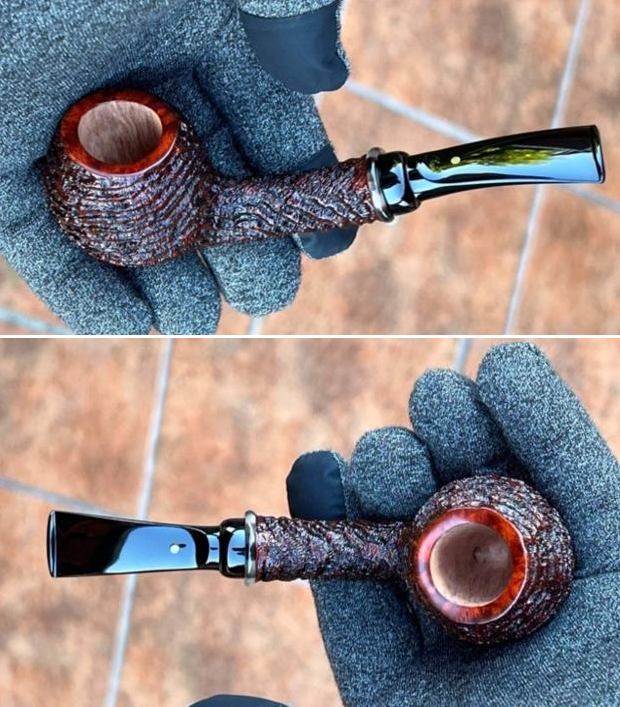
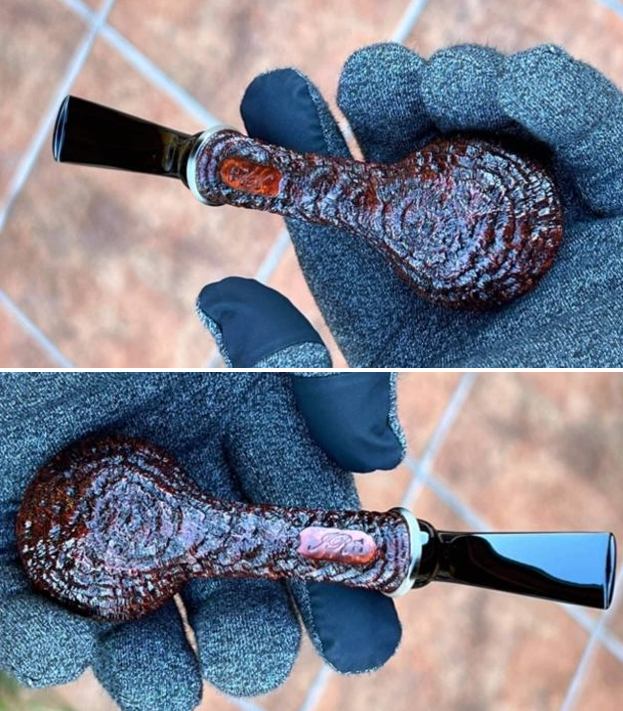
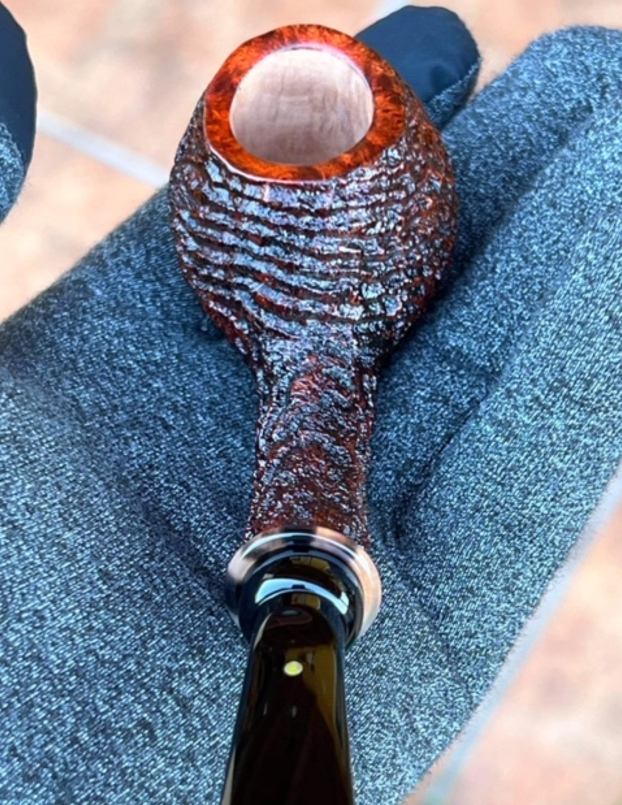
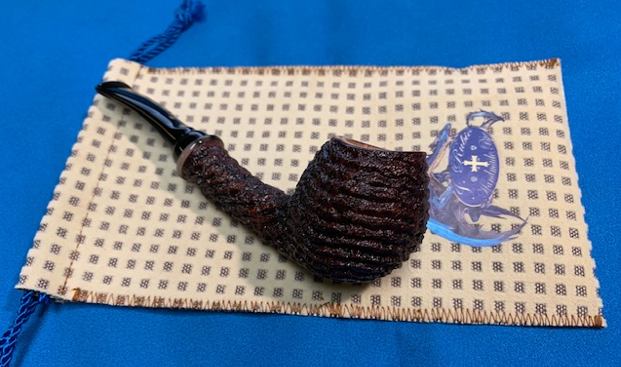
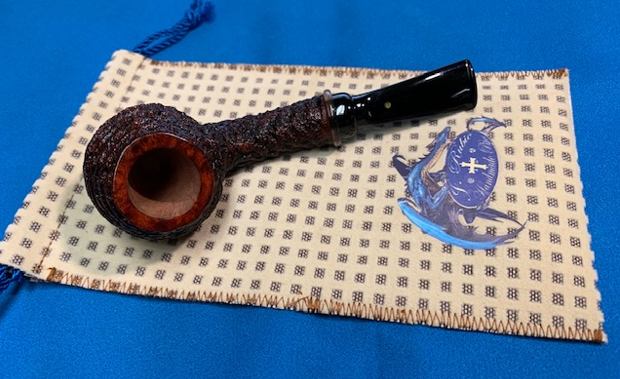
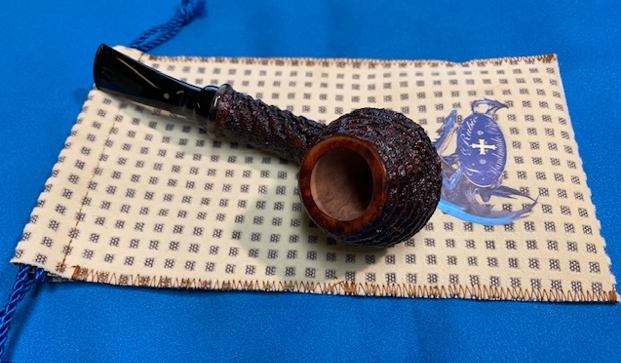
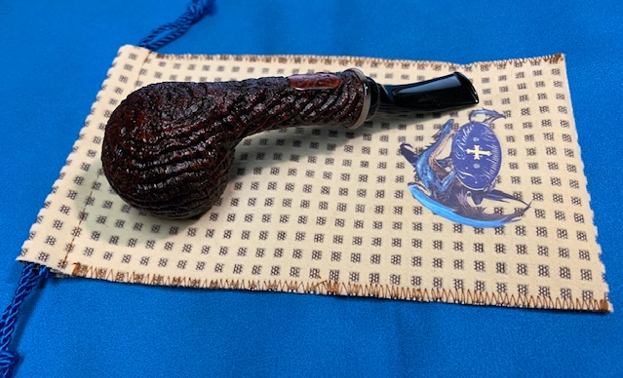
I have been following Jose Rubio on Facebook for a long time and reading his page that showed his work. I really like the looks of the deep sandblast finish that he has worked out. It really does show the cross grain and ring grains very well and his finish really makes them stand out. I also like his smooth finished and the shank adornments that he uses. His stem work really looks well done and very comfortable. Each time he posted a picture or a series of pictures of his current work I paused and spent time looking at the pipe. Several weeks ago he posted a pipe that really got my attention. It was one of those moments when PAD (pipe acquisition disorder) reared up in my and I wanted this pipe. I included the photos of the pipe below that he originally posted.I put the desire for the pipe on hold for a bit and did some research on Jose Rubio. I wanted to understand what drove him and his passion. I turned first to one of the sellers that I follow here in Canada – Maxim W. Engel (who lives in Toronto). Maxim has been selling and following Jose. He has done a great job summarizing his work (https://pipes2smoke.com/collections/jose-rubio). I quote from that below as he captures my feelings about what I have seen very well.

Jose Rubio has been repairing and making pipes for over 35 years. His goal was to create a superb looking pipe that was also a superb smoker. He takes great pride in hand selecting only the best blocks. All his pipes have a slight V shaped interior as he feels this is the best shape for the largest variety of tobacco types…

He is almost fanatical about his stems, made from Grade “A” German Vulcanite and  that all stems be between 4-4.2 millimeters thick and hand sands the sides edges. His stems are amongst the best I have ever seen.

His sandblast almost always have deep ring grain which he achieves by only using smooth straight grains and a 5 part blasting process that takes him 10-12 hours per pipe. He is absolutely convinced that his deep blasting, by creating a greater surface area, delivers a cooler smoke. He has recently cut back his production to 90 50 pipes a year. Jose Rubio’s sandblast are among the best there is. — Maxim

I turned then to Pipedia and was surprised to find that Maxim had written that article as well. It is slightly different from his words on his Pipes2smoke site (https://pipedia.org/wiki/Jose_Rubio). I quote that below.

Jose Rubio started at first as a collector then later as a pipe repairman. After a few years he started to make pipes within his goal being not only to create a superb looking pipe but a superb smoking pipe. He takes great pride in hand selecting only the best blocks. All his pipes have a slight V shaped interior as he feels this is the best shape for the largest variety of tobacco types to deliver of their best.

He is almost fanatical about his stems and insists that all stems be between 4-4.2 millimeters thickness and the sides edges be smooth, which he hand sands. All are made from Grade A German Vulcanite. His stems are amongst the best I have seen. His sandblast almost always have ring grain which he achieves by only using straight grins and a 5 part blasting process. It takes him up to 12 hours to sandblast a pipe. He is absolutely convinced that his deep blasting by creating a greater surface are delivers a fresh and cool smoke. His pipes are individually crafted to the highest engineering tolerances to deliver the best smoking characteristics. He makes a maximum of 110 pipes a year.

Information and pipe photos, courtesy pipes2smoke.com

Facebook: https://www.facebook.com/Pipesmaker

Facebook: https://www.facebook.com/joserubiopipes/

City: Oviedo, Asturias, Spain

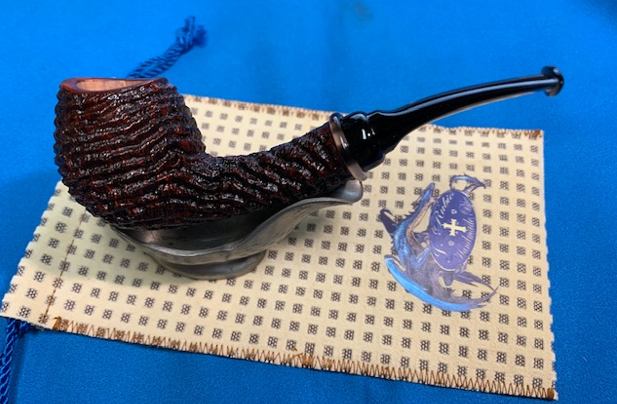
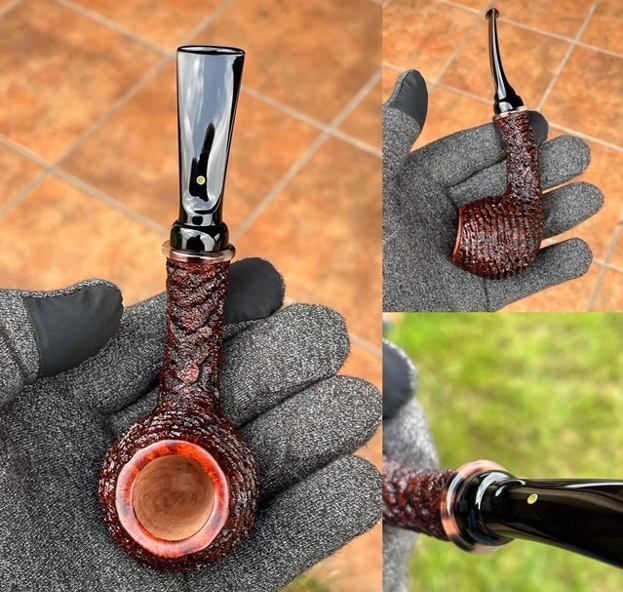
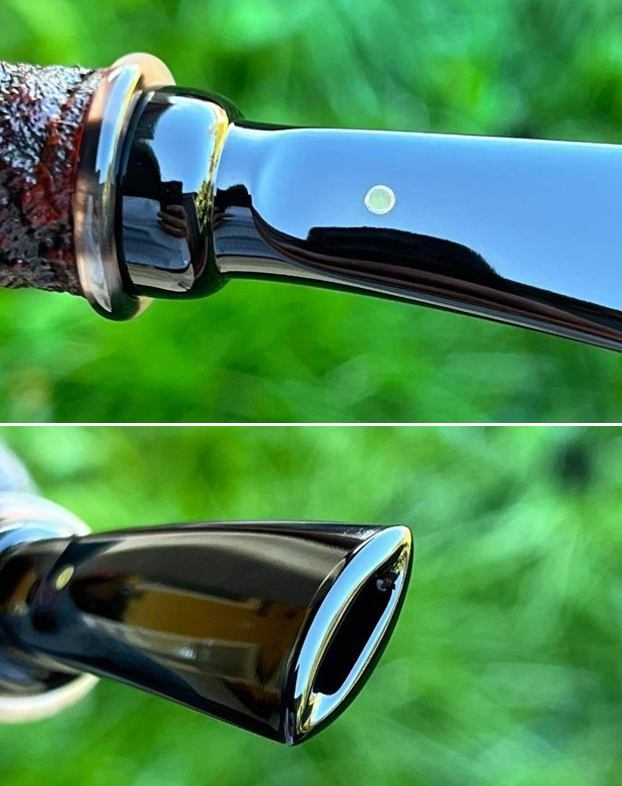
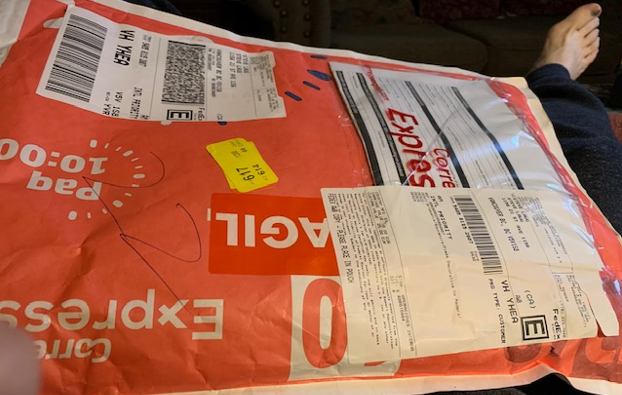
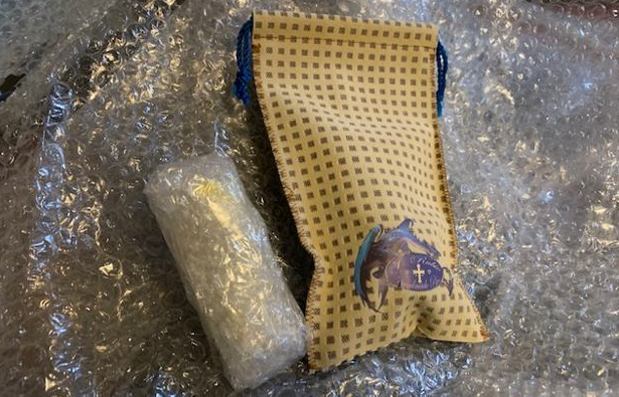
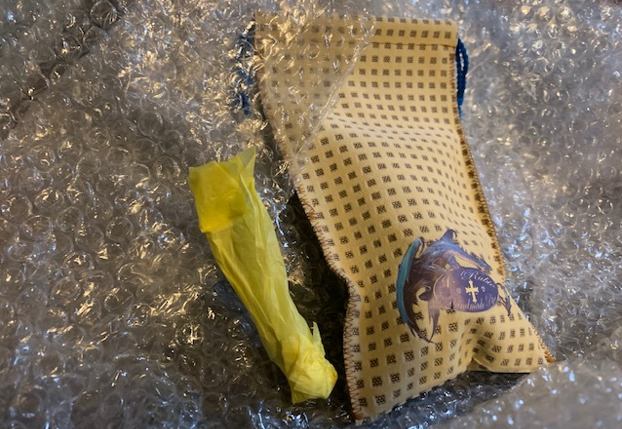
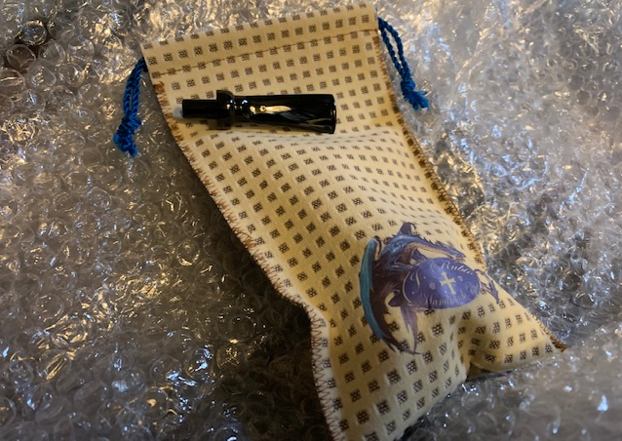
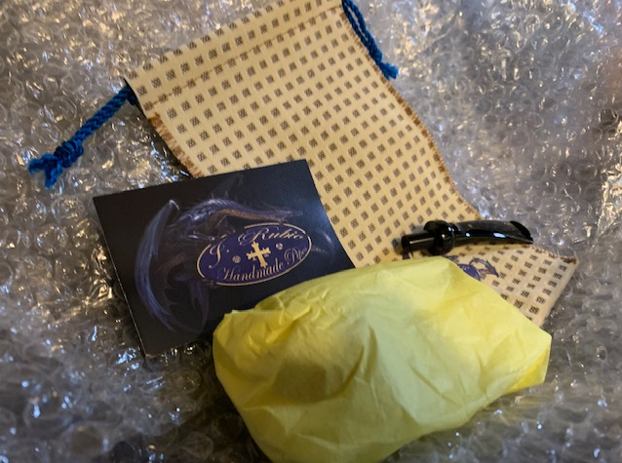
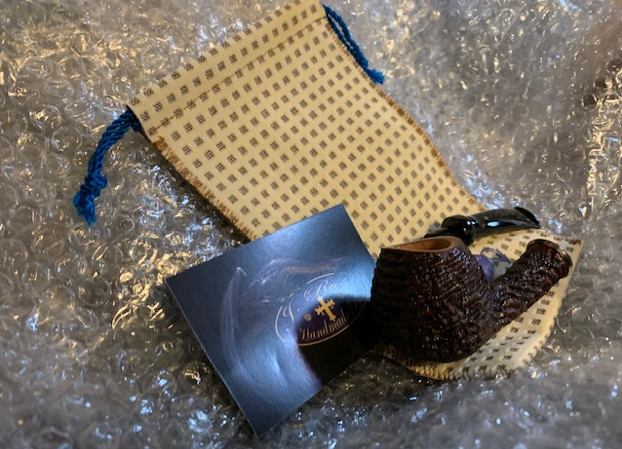
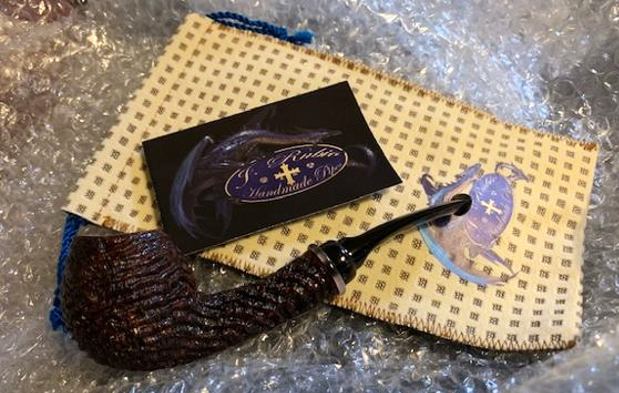
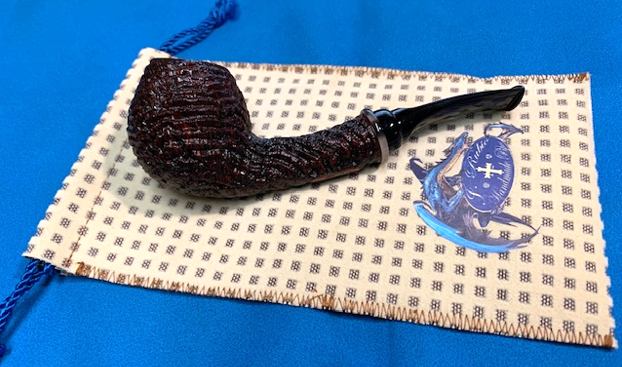
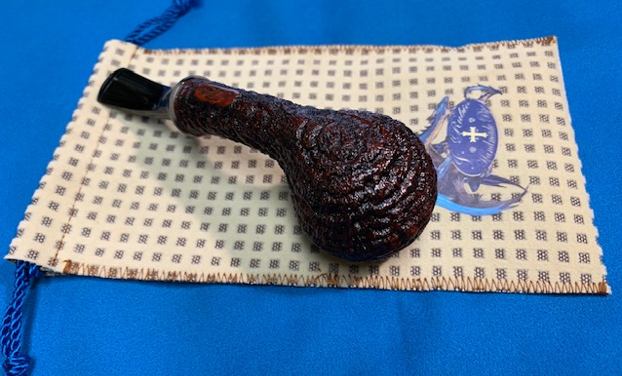
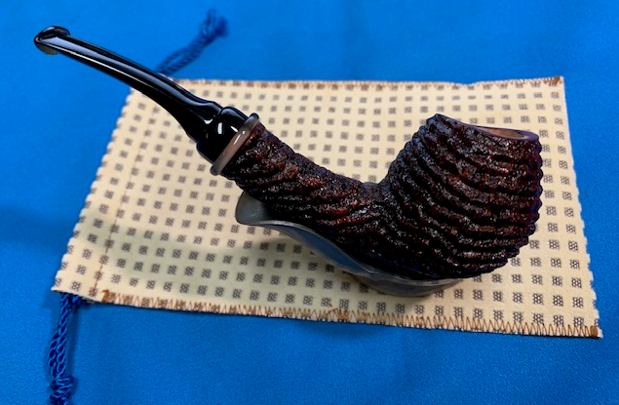
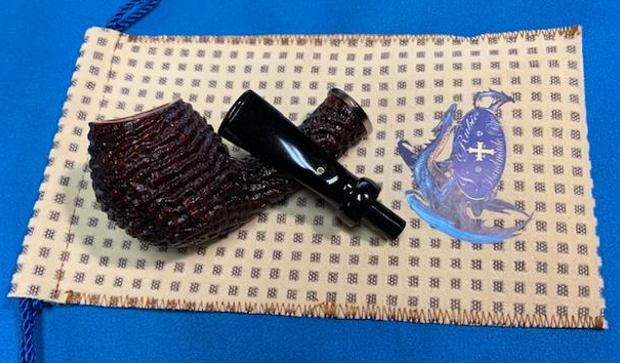
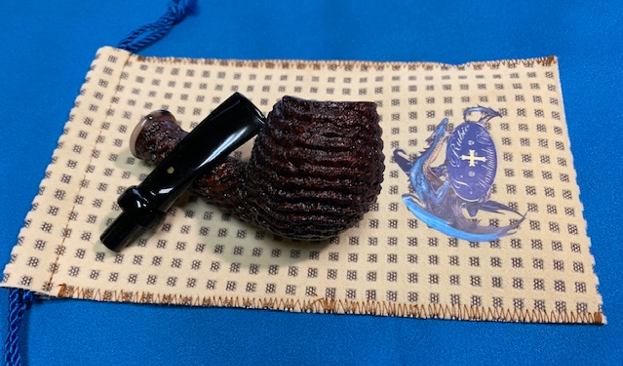
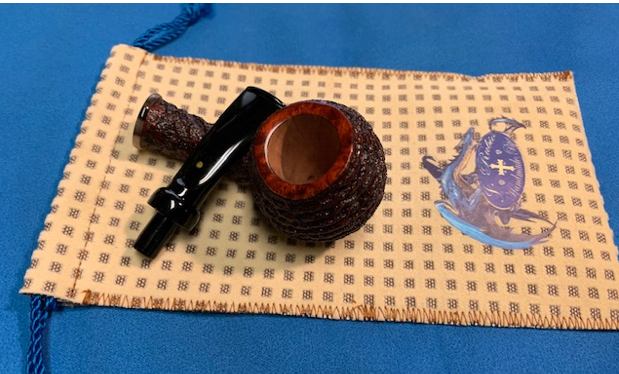
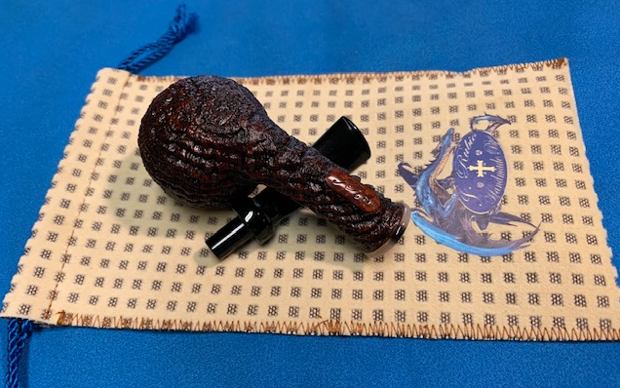
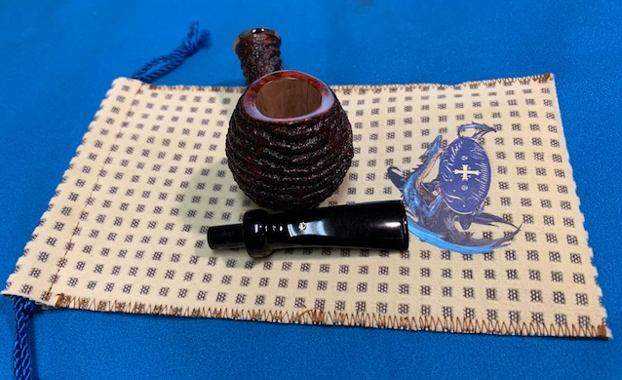
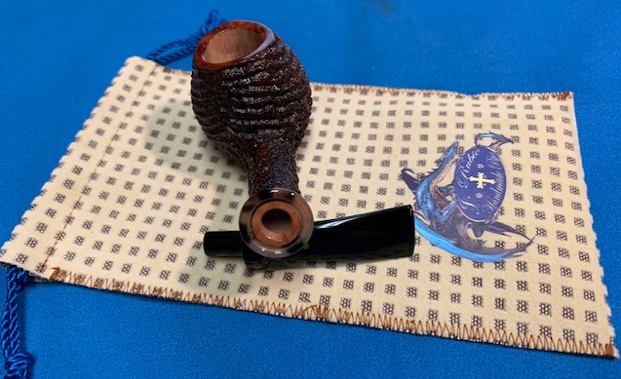
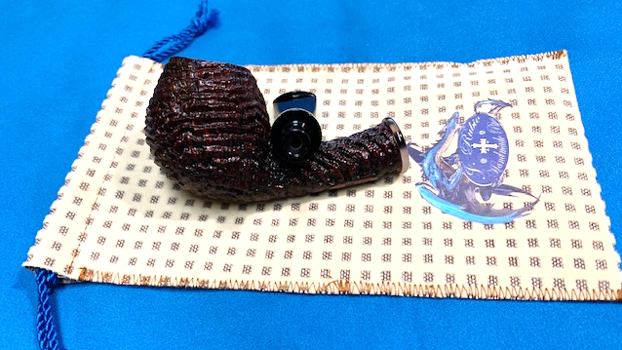
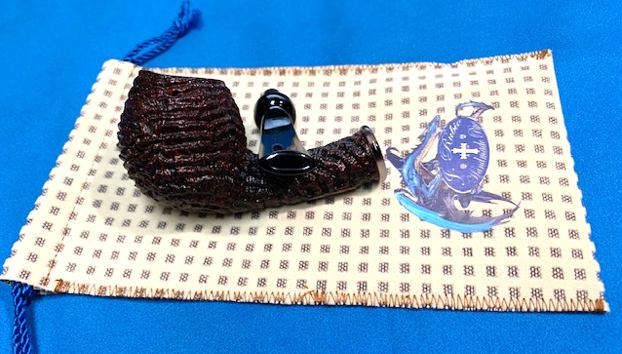
I was excited to read that Jose Rubio had been a pipe repair person. Since I am one as well this intrigued me to see how he applied what he had learned and seen in that work to move ahead as a pipe maker. I decided it was time to contact him and see what he had in mind with the pipe. We fired messages back and forth and he sent me a lot of photos of the pipe to guide me in my decision making process. I am sharing some of those photos below. The deal was sealed once I saw the pipe. I wrote Jose and closed the sale. I paid him through his PayPal account and he said it would go out on Monday morning. He sent me the tracking number and on Friday afternoon the pipe arrived in Canada from Spain. It took just five days to come from him to me. I was astonished when my wife brought it in and handed it to me. I sat for a bit in my chair with the bag on my lap contemplating opening it and having a look. I got up from my contemplation and took the package into the kitchen to open it. I cut the mailing package and found a small bubble wrapped package inside. I removed the tape holding the wrap in place and found a second smaller bubble wrapped package and nicely made pipe pouch with Jose’s logo on the front and royal blue draw strings.I unwrapped the second package and found a small parcel wrapped in yellow tissue paper. At this point I knew I was dealing with the stem but I had not even looked at the bowl. I unwrapped the tissue and a most beautiful and well made stem was in my hands. The button and slot were perfect to my liking. The tenon was flawless. It was a very nice looking piece. With that I opened the pouch and removed a beautiful business card and another tissue wrapped parcel. I am very impressed with the care that Jose took with the packing and the classy looking pouch, cards and personal thank you. Wow. Well done. I unwrapped the bowl and took my time looking at it. It was stunning. I slowly, carefully inserted the stem in the shank. What a beautiful looking pipe! The dimensions of the pipe are quite diminutive but were exactly what I expected – Length: 13cm/ 5.11 inches, Height: 3.81cm/ 1 ½ inches, Tobacco chamber height: 3.7 cm/ 2 ¾ inches, Tobacco chamber diameter: 19 mm/ ¾ of an inch, Weight: 44 grams/ 1 ½ ounces. It really is a beautiful pipe and the workmanship is flawless. I love the combination of the stains chosen, the smooth rim top and the brilliant sandblast. The acrylic shank ring is beautiful and the stem work is magnificent. The bowl is conical (Maxim calls it V shaped) as Jose believes that is the best bowl shape for smoking. The inside of the bowl is sanded smooth and looks almost too good to smoke! The fit of the tenon in the mortise is perfect and the chamfered/funneled end of the tenon is another fine touch making for a better smoke. I took some photos of the pipe once I removed it from the pouch. I will fire the pipe up this weekend. But just on craftsmanship alone and design I highly recommend considering Jose Rubio if you are in the market for a beautiful, craftsman Hand made pipe. I do not think you will be disappointed. Thank you Jose.

Replacing a Broken Tenon on a Capri Warlock Sandblast


Blog by Steve Laug

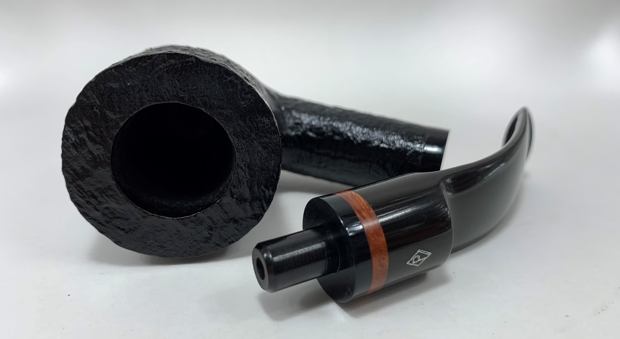
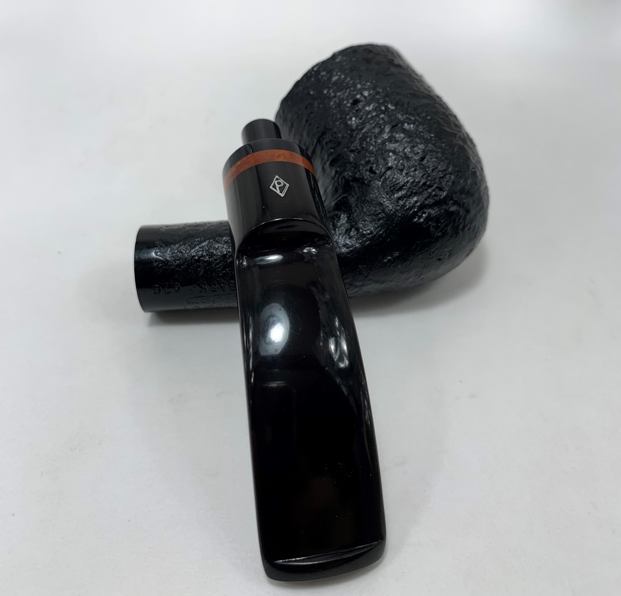
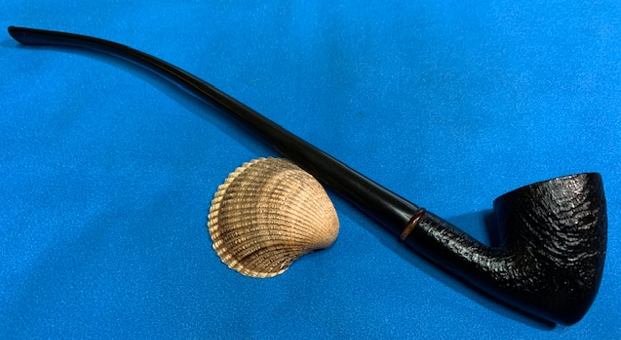
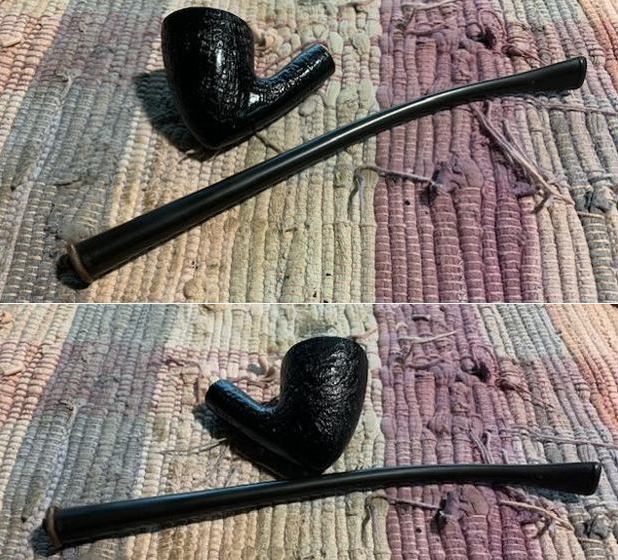
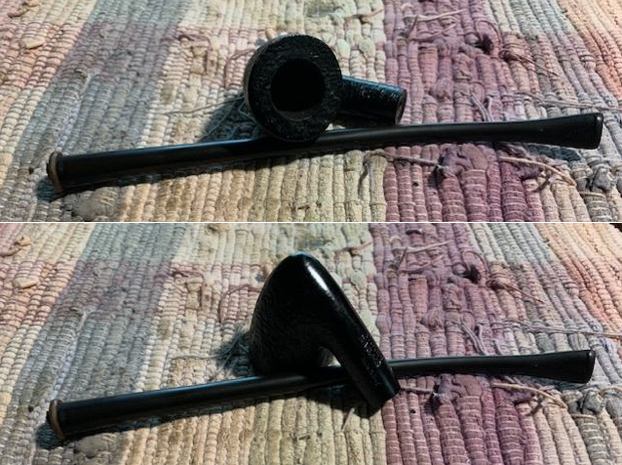
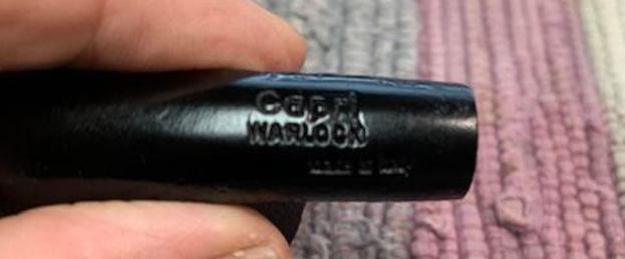
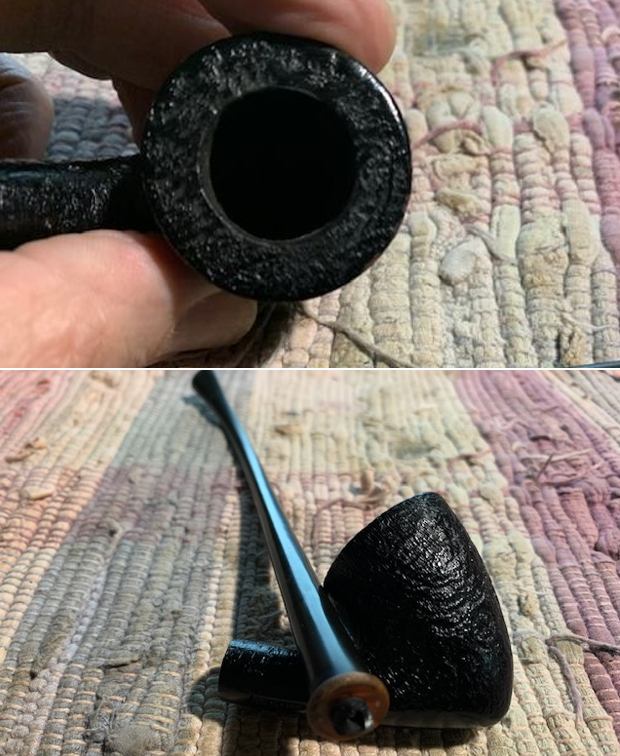
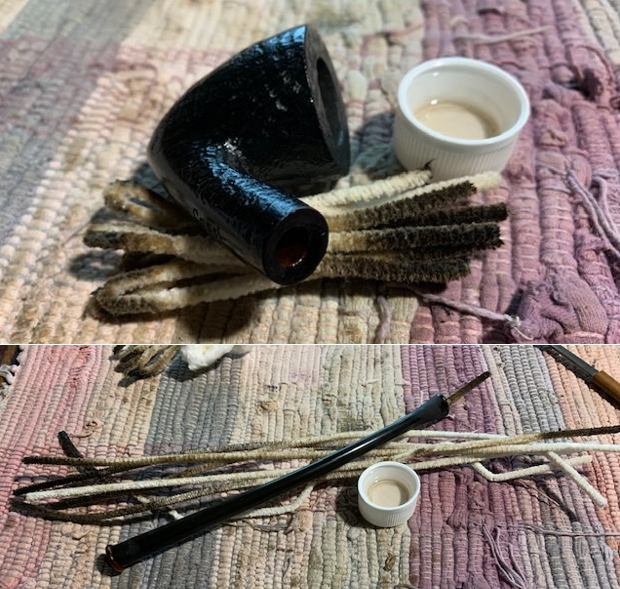
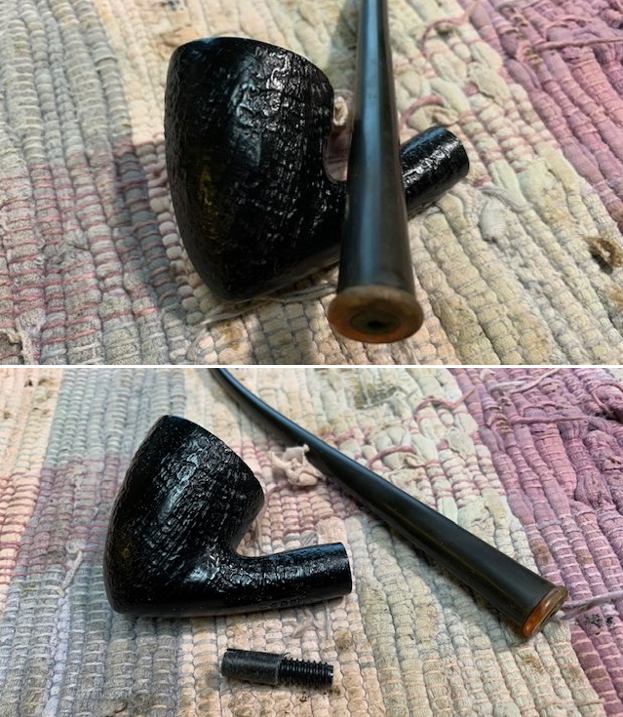
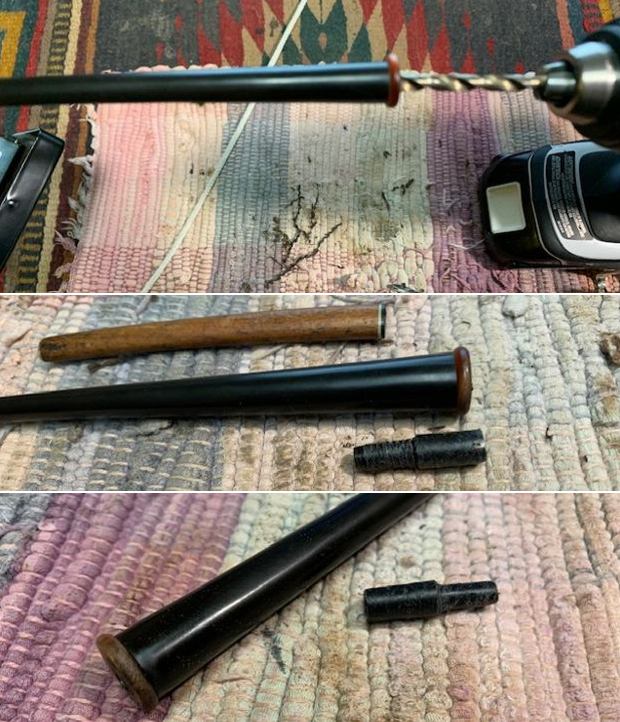
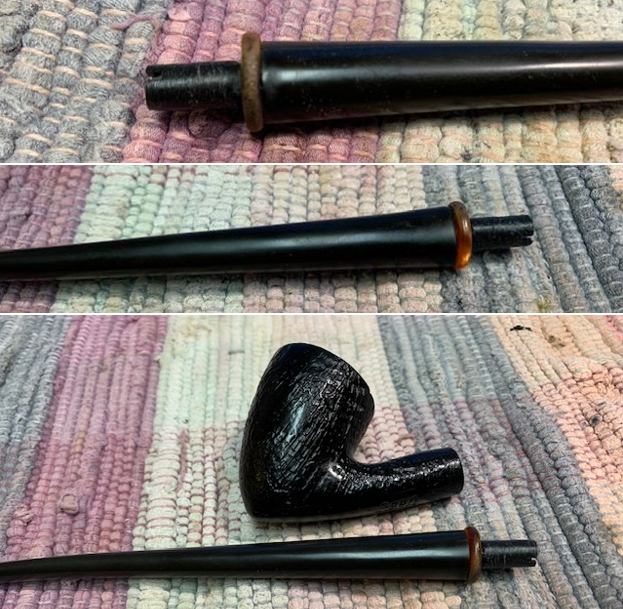
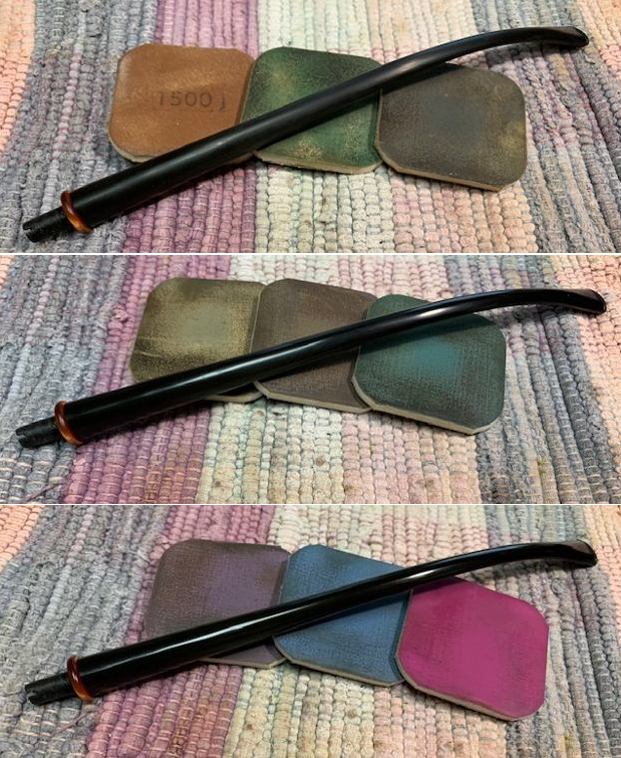
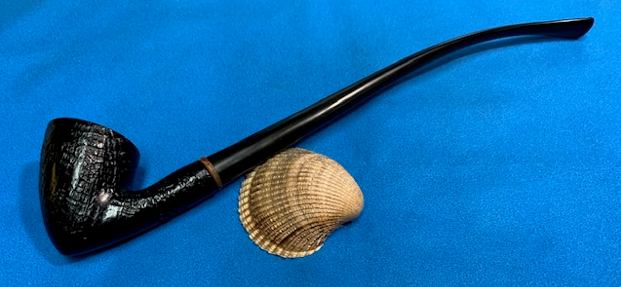
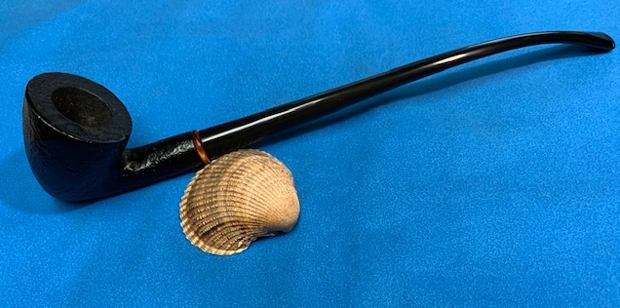
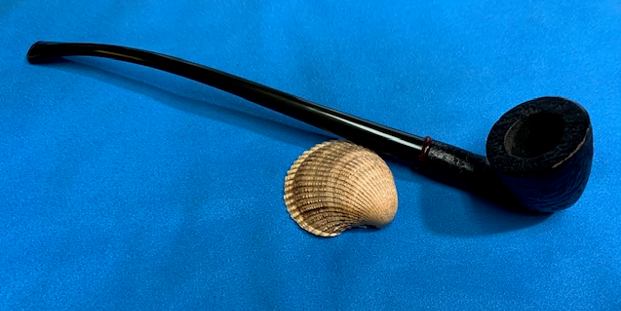
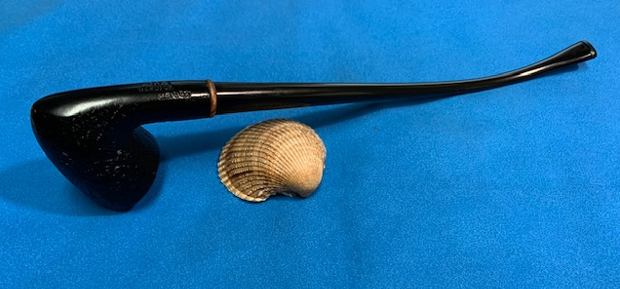
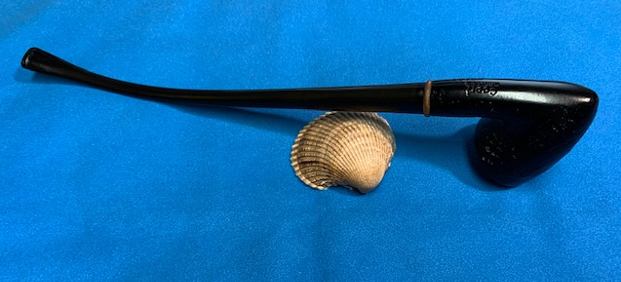
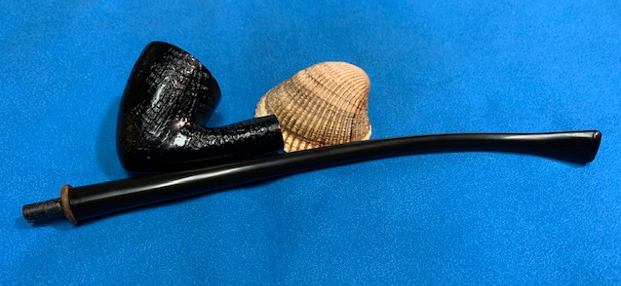
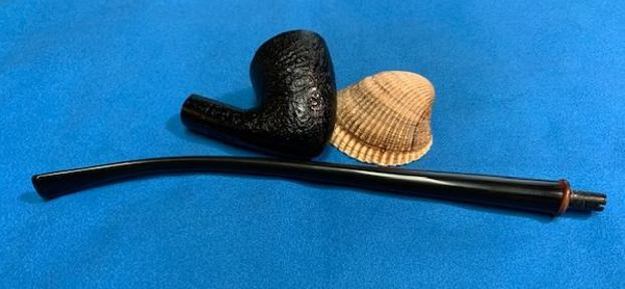
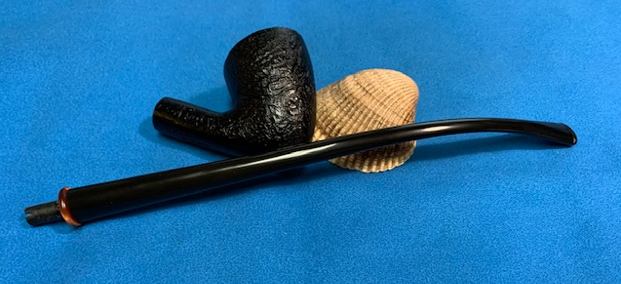
Last week I received a call from a fellow who was referred to me by our local pipe shop. He had a churchwarden that was stamped Capri [over]Warlock [over] Made in Italy on the underside of the shank. He had broken off the tenon and was not sure how to proceed. We talked about replacing the tenon on the stem and he breathed a sigh of relief. We discussed how to get it to me to work on. He decided he would mail it to me. On Monday this week that package arrived with his pipe. It was a nice looking pipe in many ways. The shank was clear of the broken tenon and the bowl was quite clean. The shank and stem were filthy inside and it is quite clear that he had not cleaned it often. The stem had an acrylic adornment ring on the end that was glued in place. The tenon had broken off just ahead of this ring. It was sharply broken and the airway in the previous tenon had not been centered in the tenon. It was significantly thinner on one side than the other which I think probably was part of the reason for a break. The stem had some light tooth chatter on both sides near the button. I took some photos of the parts of the pipe before I started my work on it. I took a photo of the stamping on the underside of the shank. It was clear and read as noted above.I took a photo of the bowl and rim top to show the condition of the bowl when it arrived. I also took a photo of the broken tenon end on the stem.The pipe smelled really strong even though the bowl was clean and had no cake. It was filthy in the shank and the airway in the stem. I cleaned both out with 99% isopropyl alcohol, cotton swabs and pipe cleaners. It took some work but it is finally clean and smells fresh.I used my Dremel and sanding drum to flatten out the end of the shank and remove the remainder of the broken tenon in preparation for the new tenon. I chose a new tenon from my assortment of them. It was a little large both in terms of the mortise and the shank end but it would work.I drilled out the airway in the stem with a bit on my cordless drill. Before I drilled it I used a sharp knife to center the airway in the stem and remove the off-center nature. I was able to center it then drilled. I started small and worked my way up to the maximum size the airway would take without weakening the walls of the stem. I used my Dremel and sanding drum to reduce the diameter of both ends of the tenon replacement. I checked it frequently for fit in both the stem and the shank. It took a bit of work but it finally was the right size.I checked the fit in the stem one final time then glued it in place in the airway with black CA glue. I set it aside over night to let the glue cure.I polished the stem with micromesh sanding pads to remove the tooth chatter and slight damage that had happened to the ring and the stem when the tenon broke. I dry sanded with 1500-12000 grit pads and wiped the stem down after each sanding pad with Obsidian Oil to protect and preserve the vulcanite.I put the pipe back together – the bowl with its repaired stem. This restemmed and restored Capri Warlock (Churchwarden) is a real beauty and I think that the fit of the new tenon works very well. The grain on the bowl came alive with the buffing. I used Blue Diamond on the buffing wheel on both the bowl and stem. I gave both multiple coats of carnauba wax on the wheel then buffed it with a clean buffing pad to raise the shine. I hand buffed it with a microfibre cloth to deepen the shine. The Capri Warlock feels great in the hand. It is lightweight and the contrast in the blacks of the briar, the brown swirled acrylic ring and the polished vulcanite stem looks quite nice. The dimensions of the pipe are Length: 10 inches, Height: 1 ¾ inches, Outer diameter of the bowl: 1 ½ inches, Chamber diameter: ¾ of an inch. The weight of the pipe is 2.50 ounces/71 grams. It really is a beauty. I will be packing it up this evening and mailing it out to the fellow soon. I think he will be excited to get it back.Thanks for walking through the replacement of the new tenon and the restoration with me. Cheers.  

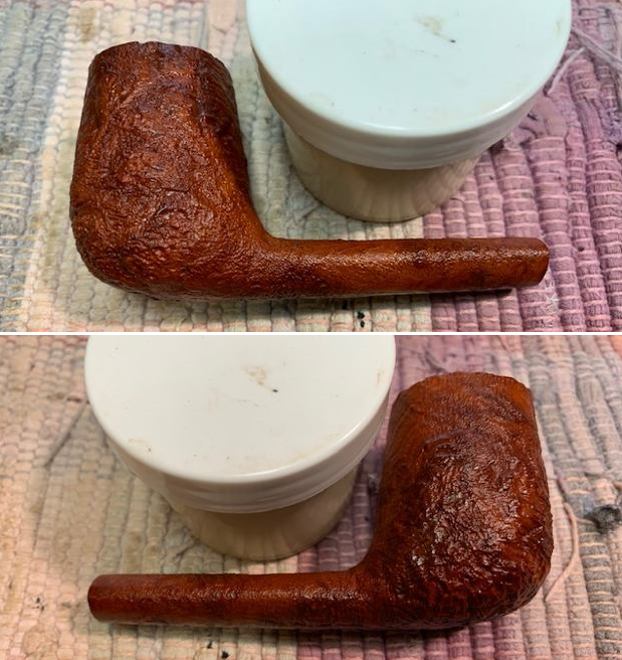
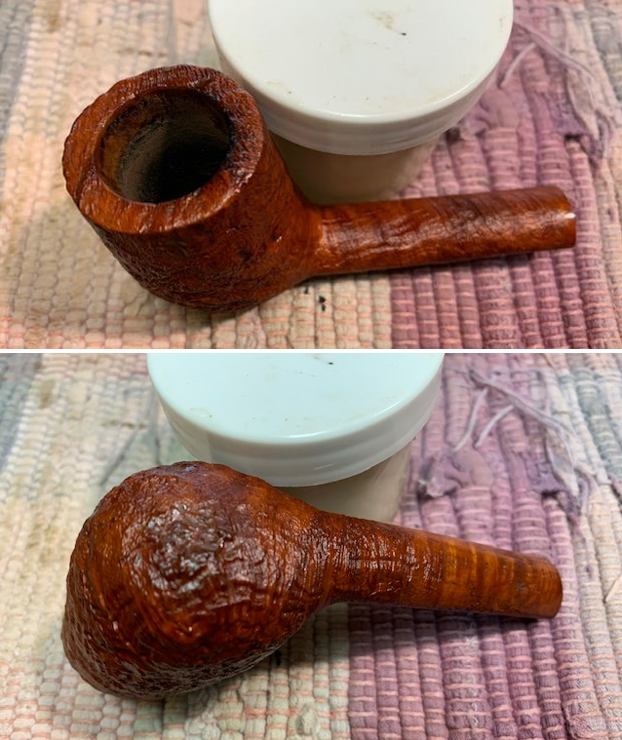
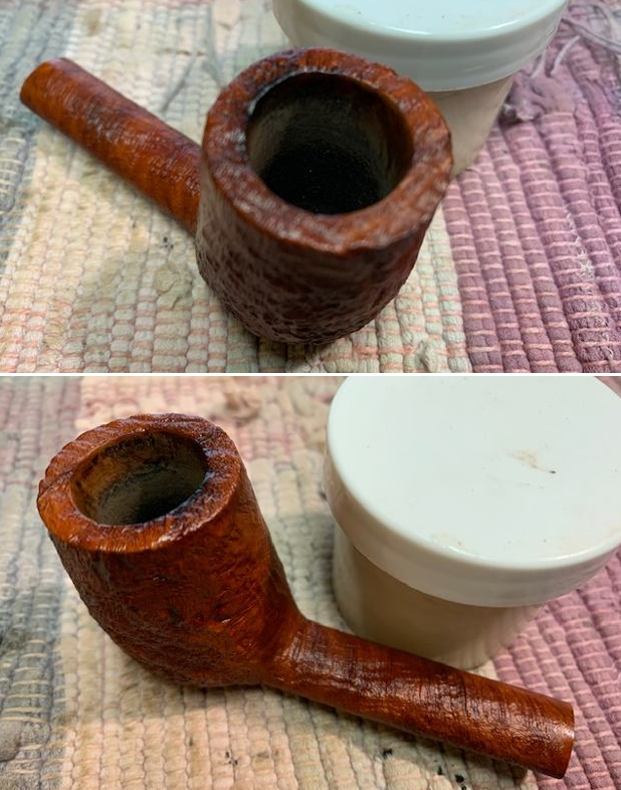
Restoring a Sandblast Canadian – Hand Made Designed by W.O. Larsen Super Tan 65


Blog by Steve Laug

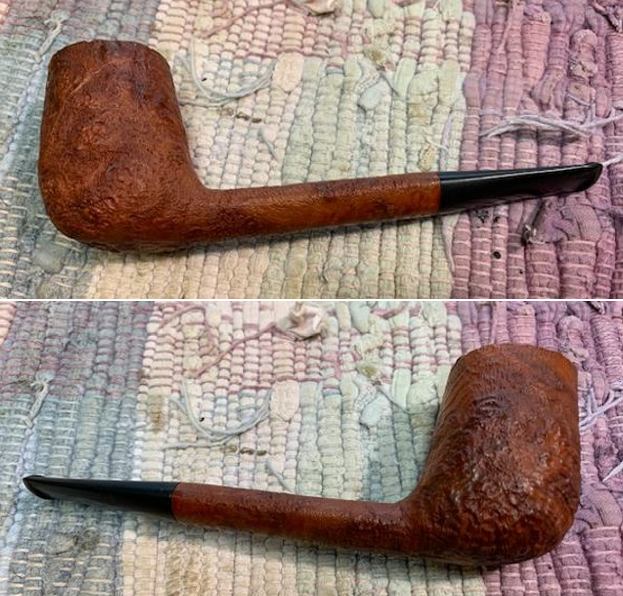
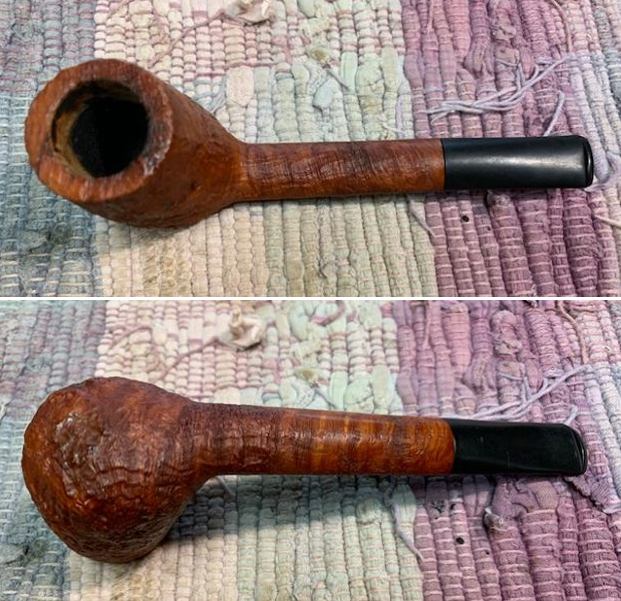
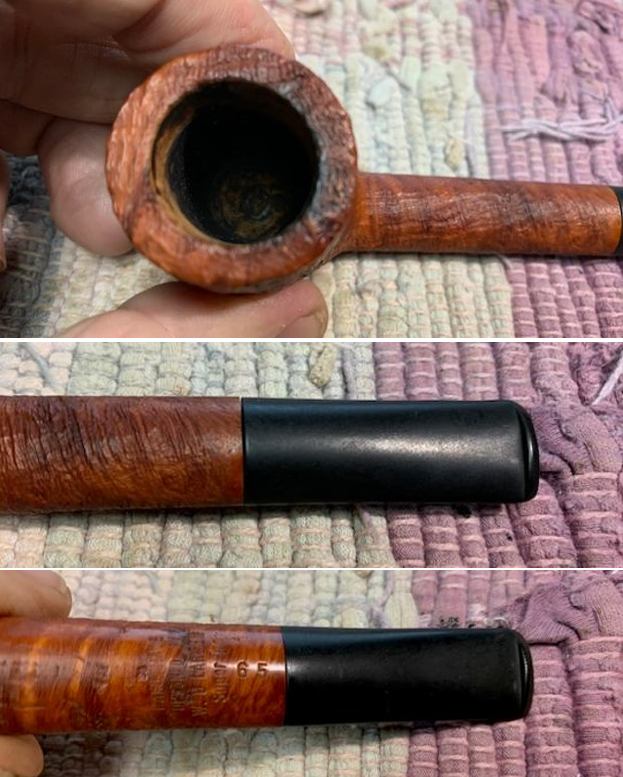
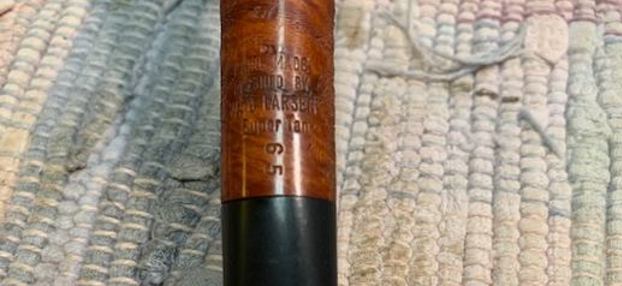
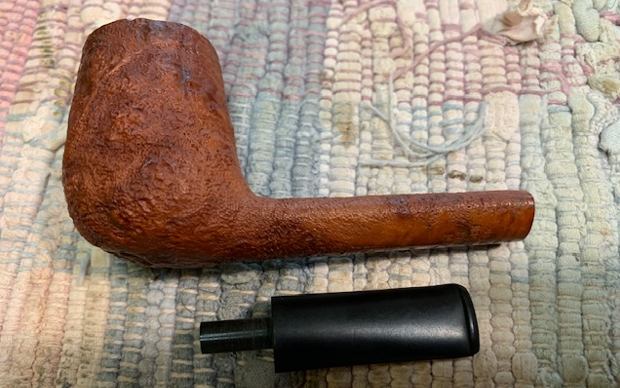
The next pipe on the work table is one that we don’t remember where we found it or actually when we found it. It is an interesting Danish style Canadian with an almost Brandy shaped bowl. The well shaped pipe has a nice sandblast around the bowl. The pipe is stamped on the underside of the shank and reads Hand Made [over] Designed by W.O. Larsen [over] Super Tan [over] 65. The bowl looked like it had been well cleaned. The inside edge and outer edge appear to be in decent condition. The taper vulcanite stem had tooth chatter and marks on the top and underside near the button and on the button edge.

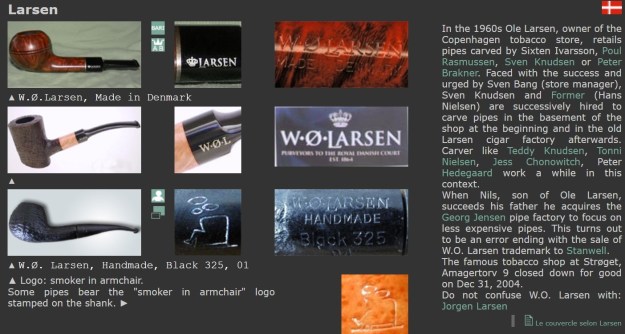
From what I could tell the pipe had been cleaned by Jeff as it had all the telltale signs. I don’t know why it has taken me this long to get to this pipe as it really is a beauty. He had reamed the pipe with a PipNet pipe reamer and removed the rest of it with a Savinelli Fitsall Pipe Knife.  He scrubbed the bowl with undiluted Murphy’s Oil Soap with a tooth brush. He rinsed it under running warm water to remove the soap and grime. He cleaned out the inside of the shank and the airway in the stem with alcohol, cotton swabs and pipe cleaners. He soaked the stem in a Before & After Deoxidizer bath and rinsed it off with warm water. I took photos of the pipe before I started my part of the restoration work.   The rim top cleaned up really well. The rim top and outer edge of the bowl looked very good. The inner edges showed some darkening on the back of the bowl. The stem surface looked very good with a few tooth marks and chatter on both sides near the button. The stamping on the underside of the shank is clear and readable. It is stamped as noted above.I removed the stem and took a photo of the pipe to give a sense of the whole. The short taper stem is nice and the photo gives a sense of what the pipe looks like.I turned to Pipephil (http://www.pipephil.eu/logos/en/logo-l2.html) to get a quick view of the brand once again. I did a screen capture of the site’s information and have included that below. The pipe I am working on is a W.O. Larsen as it is stamped similarly to the ones in the photos. It is interestingly stamped with a lot more detail than any of the ones shown in the screen capture below. With the “Designed By W.O. Larsen” addition it is a bit unique.I turned to Pipedia (https://pipedia.org/wiki/W.%C3%98._Larsen) for a quick read. The site is worth reading the history of the shop and the brand and its influence on Danish pipe carving. There was no additional information on the unique stamping on this pipe.

What I learned from the research is that the pipe is a W.O. Larsen made pipe that was evidently designed by W.O Larsen himself or at least one of the shop carvers. It is a beauty though.

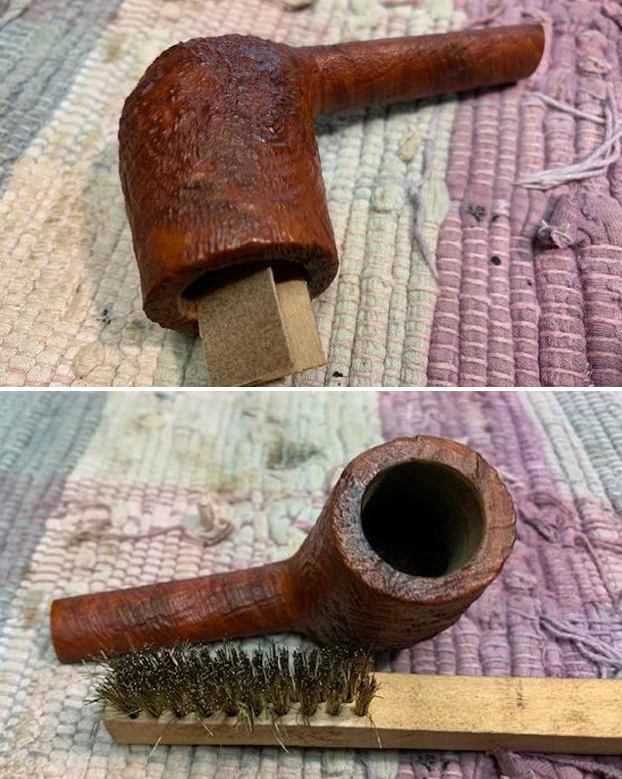
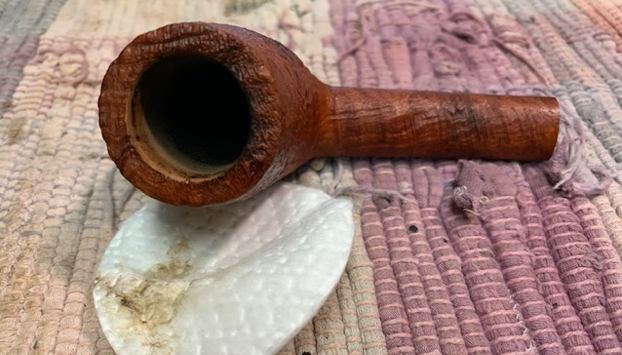
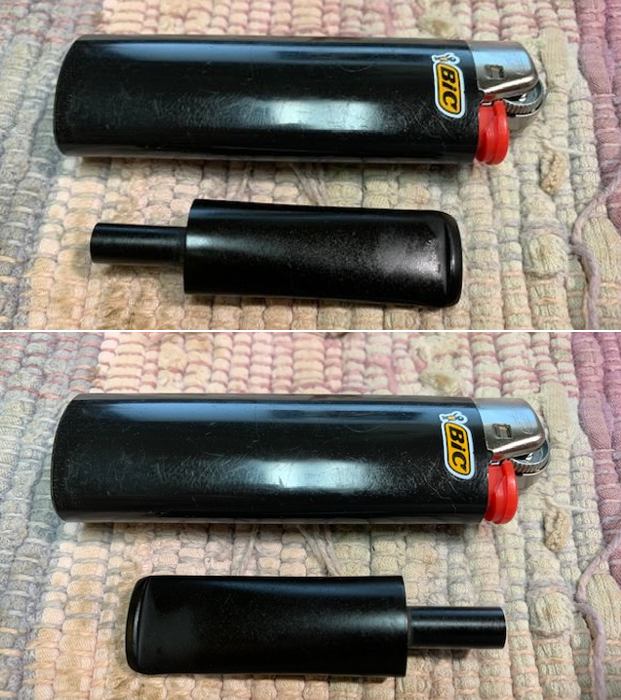
Armed with that information I turned to work on the pipe itself.  I turned my attention to the damage on the inner edge of the rim. I used a folded piece of 220 grit sandpaper to clean up the darkening.    I rubbed the bowl and shank down with Before & After Restoration Balm. I worked it into the surface of the bowl sides and shank with my fingertips to clean, enliven and protect the briar. I let the balm sit for about 10-15 minutes and buffed with a cotton cloth to raise the shine. The grain came alive and the fills while visible look better than when I began. I set the bowl aside and turned to work on the stem. I “painted” the stem surface with the flame of a lighter and was able to lift out all of the tooth marks and chatter on the surface. The little that remained I sanded out with 220 grit sandpaper. I started polishing it with 400 grit wet dry sandpaper.   I polished the vulcanite stem with micromesh sanding pads – 1500-12000 grit pads. I wiped it down with Obsidian Oil after each sanding pad. I used Before & After Pipe Polish – both Fine and Extra Fine to further polish the stem.    This Larsen Hand Made Designed By W.O. Larsen Super Tan 65 is a great looking pipe now that it has been restored. The shape is elegant and flowing with a thin turned vulcanite stem. I put the stem back on the bowl and carefully buffed the pipe with Blue Diamond on the buffing wheel using a light touch on the briar. I gave the bowl and the stem multiple coats of carnauba wax on the buffing wheel and followed that by buffing the entire pipe with a clean buffing pad. I hand buffed the pipe with a microfiber cloth to deepen the shine. The finished W.O. Larsen Super Tan Canadian fits nicely in the hand and feels great. Give the finished pipe a look in the photos below. The dimensions of the pipe are Length: 5 ½ inches, Height: 1 ¾ inches, Outside diameter of the bowl: 1 1/8 inches, Chamber diameter: ¾ of an inch. I will be putting it on the Danish Pipe Maker section of the rebornpipes store shortly. If you are interested in adding this pipe to your collection send me a message or an email. Thanks for reading this blog and my reflections on the pipe while I worked on it. There are many more to come!