Daily Archives: December 17, 2025

Restoring a 1955 Dunhill Tanshell ES Long Canadian


by Steve Laug

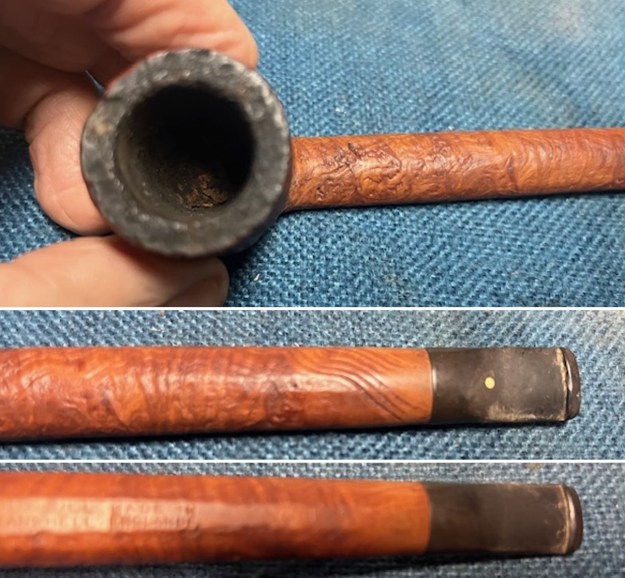
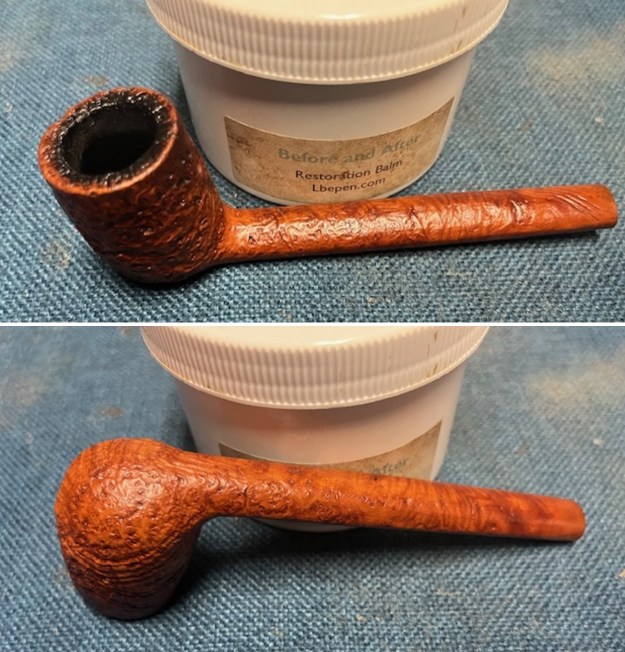
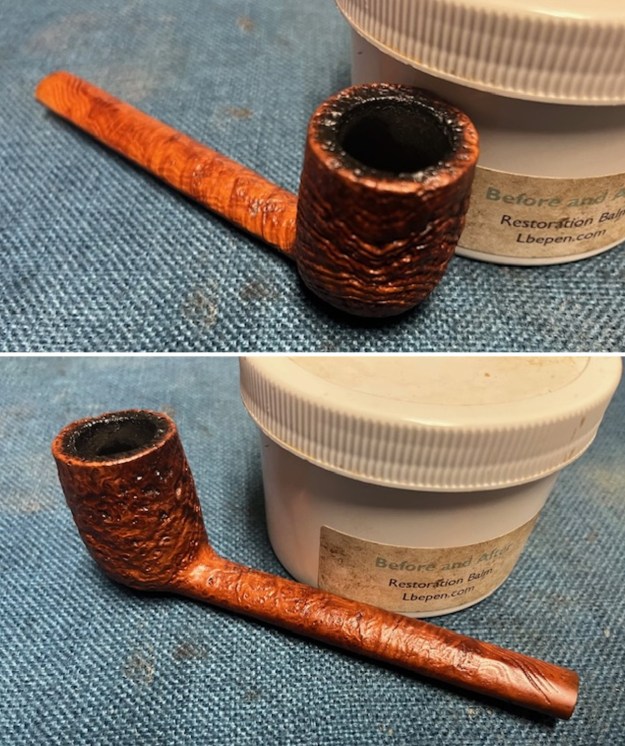
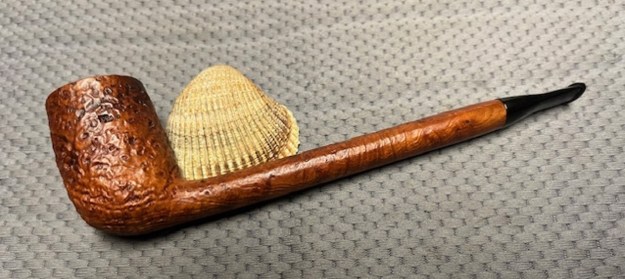
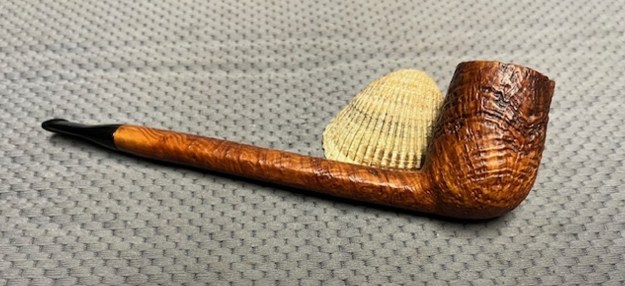
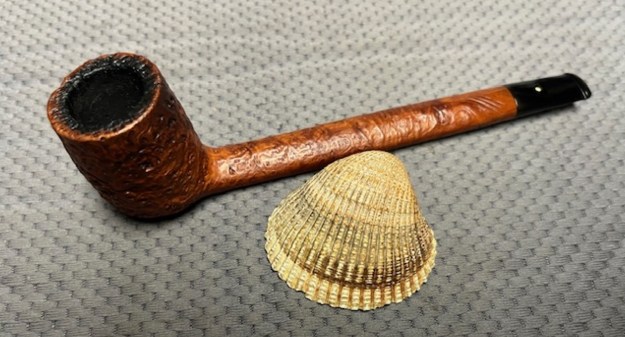
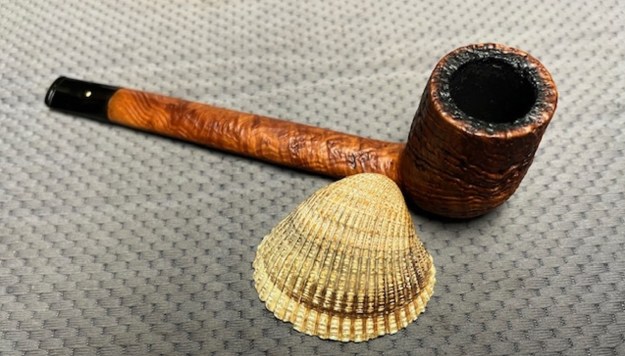
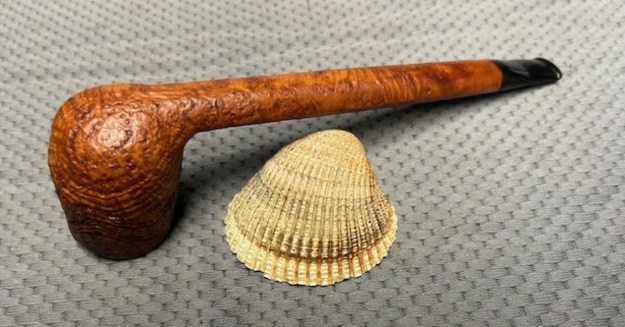
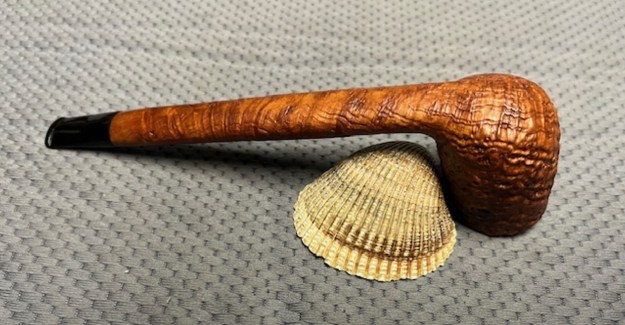
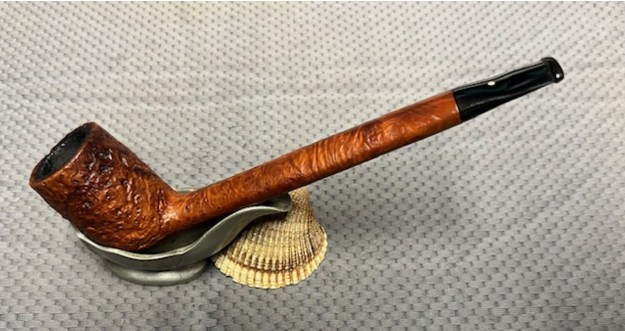
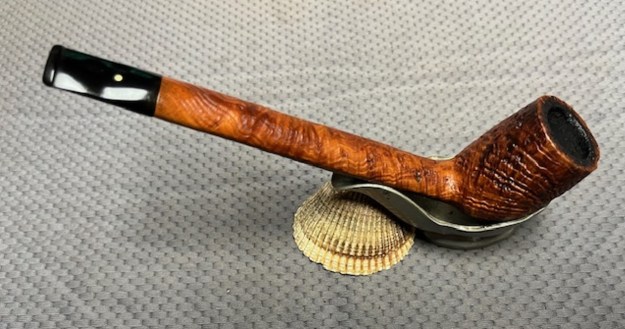
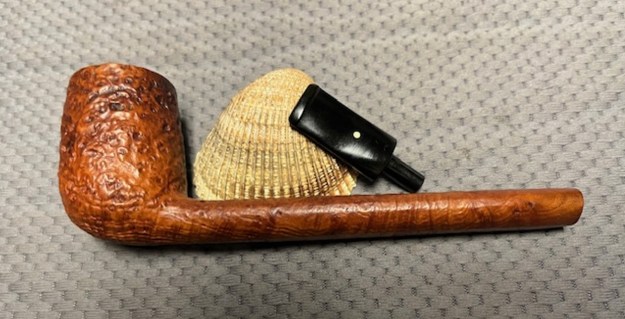
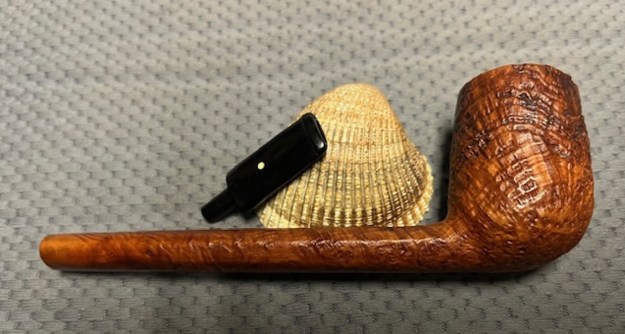
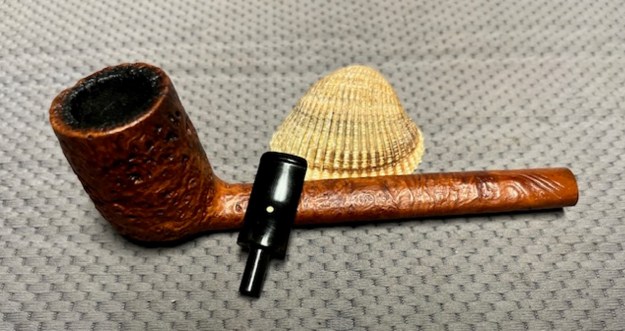
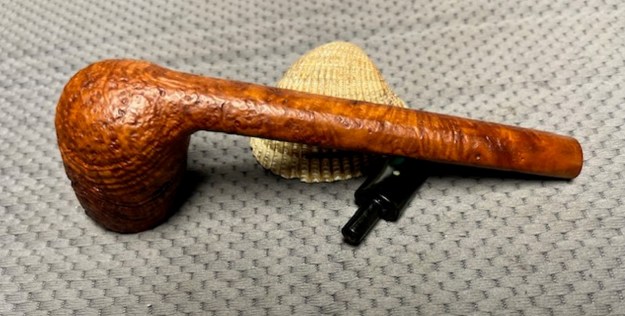
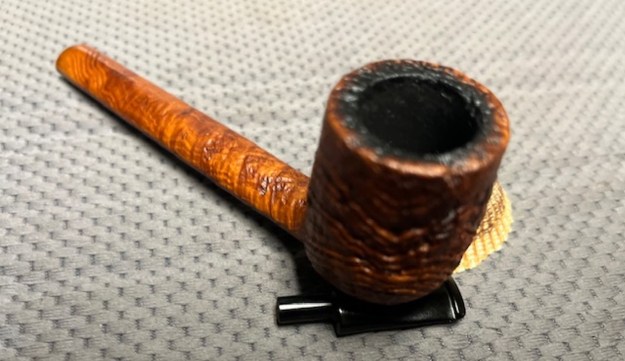
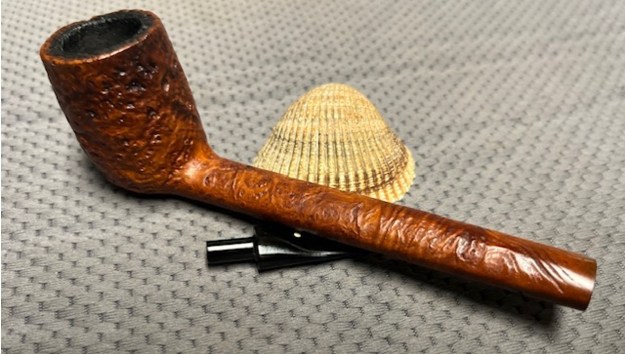
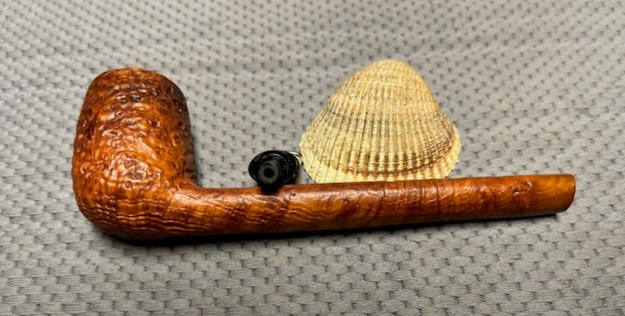
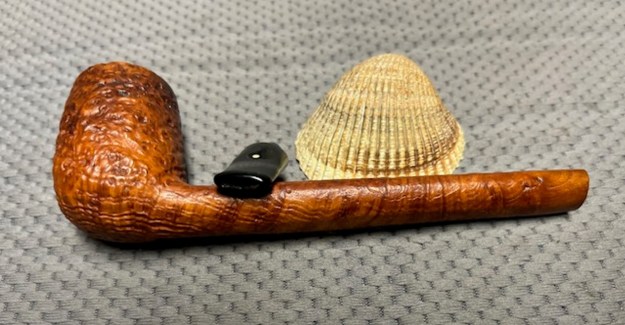
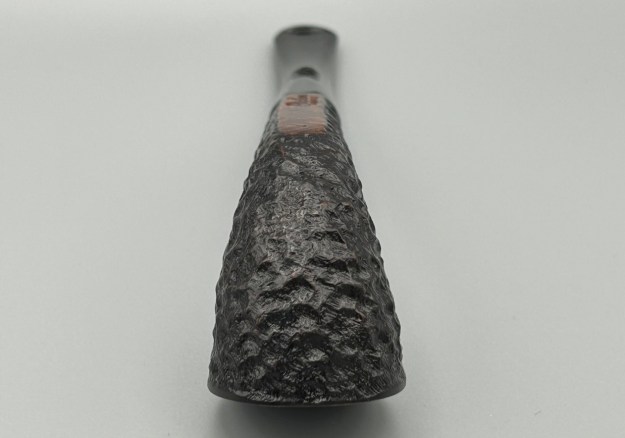
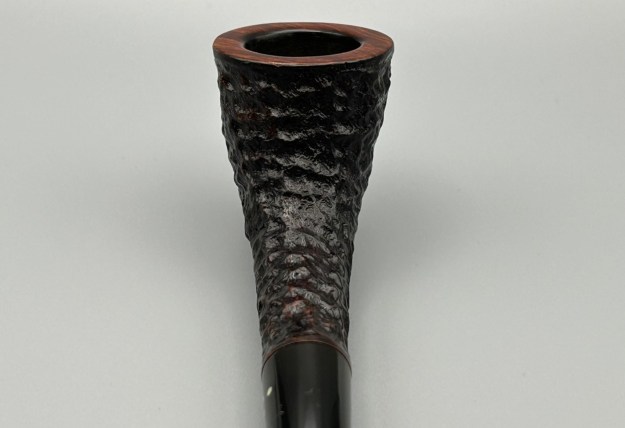
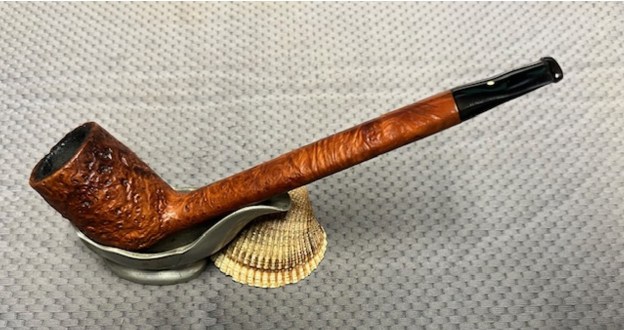
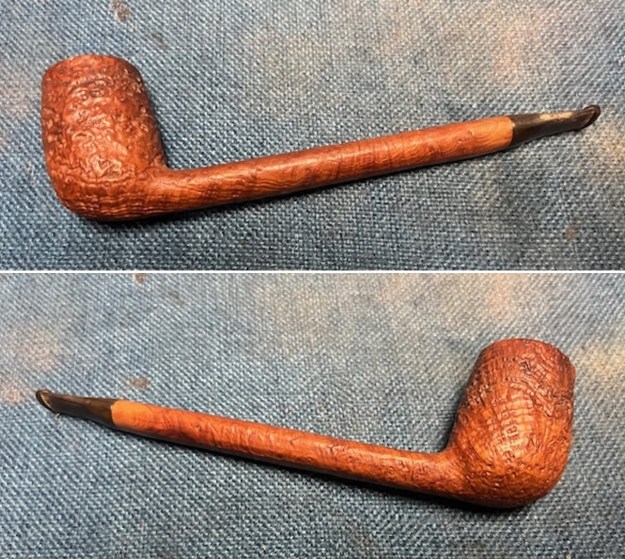
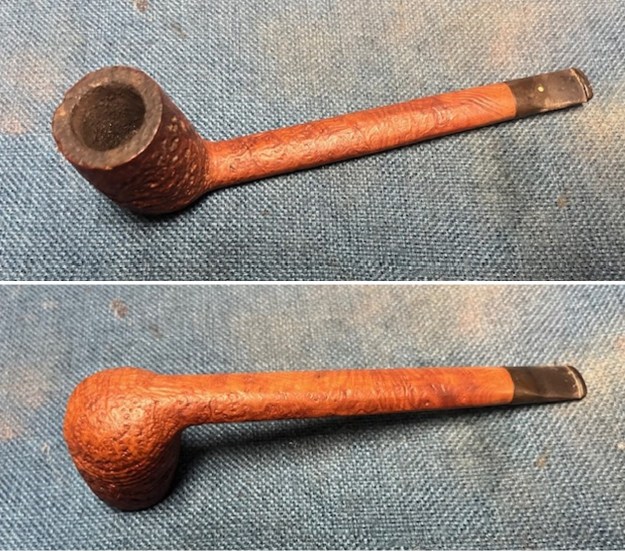
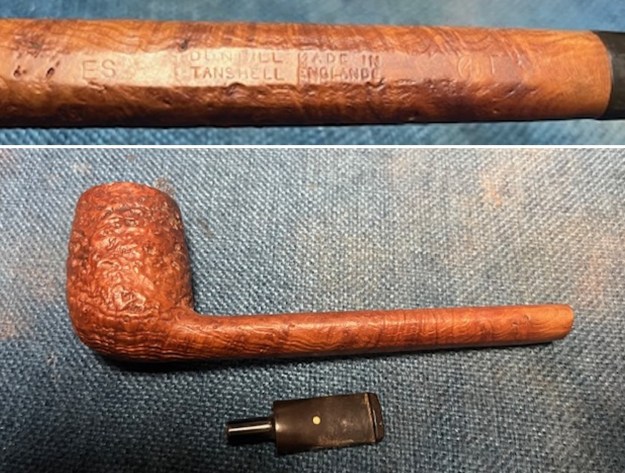
The next pipe on the table is another one that came to us from the seller in Caldwell, Idaho, USA on 07/12/2025. It is a Dunhill Tanshell Canadian with a vulcanite taper stem. It is in dirty but in good condition as can be seen in the photos below. It is stamped on a smooth panel on the underside of the shank and reads ES [followed by] Dunhill [over] Tanshell [followed by] Made in [over] England5 [followed by] circle 4T. The stamping is clear and readable. The pipe has rich Tan and Brown stains on a deep sandblast finish and some amazing grain that the shape follows well. The finish was dusty and lightly dirty with grime in the nooks and crannies of the rugged, deep sandblast. The bowl had a moderate cake and there was tobacco debris in the bowl. The rim top had a thick lava coat in the sandblast rim top and edges. The original white spot short taper stem is dirty and oxidized. I took photos of the pipe to show what it looked like before I started working on it. I took photos of the bowl and rim top to show the thickness of the cake and the lava coat on the rim top. There was some tobacco debris in the bottom of the bowl. The stem photos show the condition of the short taper stem ahead of the button. The stamping on the heel of the bowl is clear and readable as noted above. I took a photo of the pipe with the stem removed to give a sense of the proportions of the pipe. It is a real beauty.One of the first things I like to do is to unpack the stamping and understand each element in it. I turned to Pipephill helpful site (http://pipephil.eu/logos/en/dunhill/shell-briar1.html). The stamping is interpreted as follows: The ES is the shape of the pipe which I assume is a Canadian. The Dunhill Tanshell is the finish. Following the Made In England5 gives the year that the pipe was made. The circle 4 T is the stamp for a Tanshell finish.
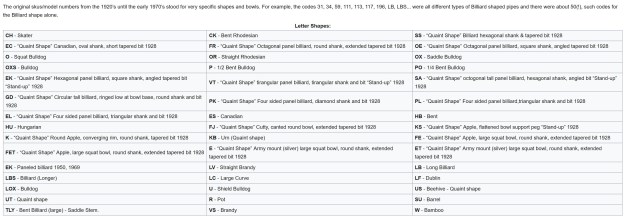
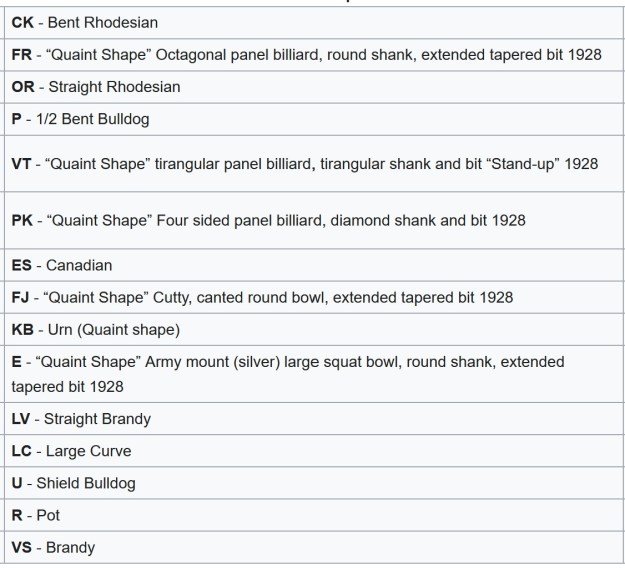
I turned to Pipedia’s shape charts on Dunhills (https://pipedia.org/wiki/Dunhill_Shape_Chart). I have included the shape charts from the site. The first is the chart as a whole and the second is a larger version of the centre column.
From the above information I could see that I was working on a Canadian shaped pipe. The chart shows that the ES is the stamping for Canadian.

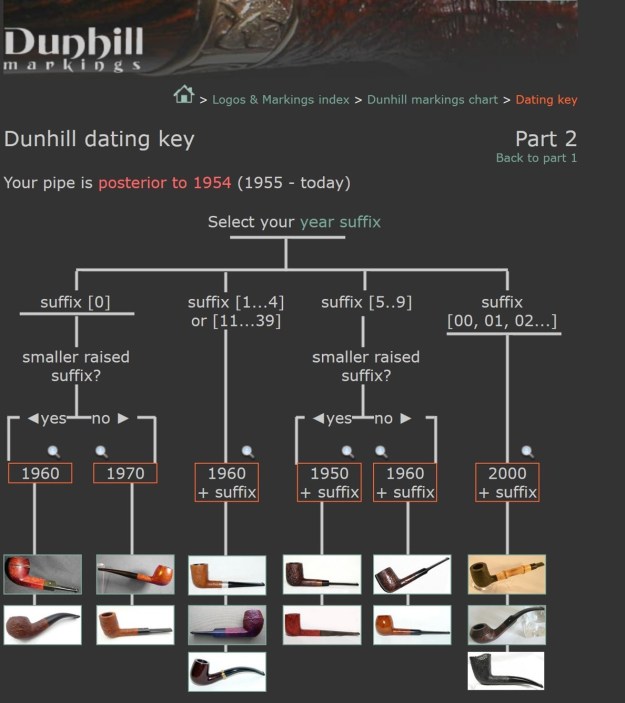
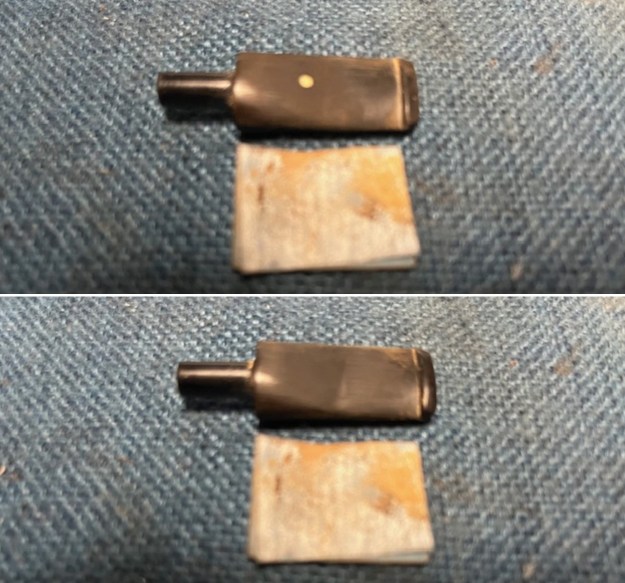
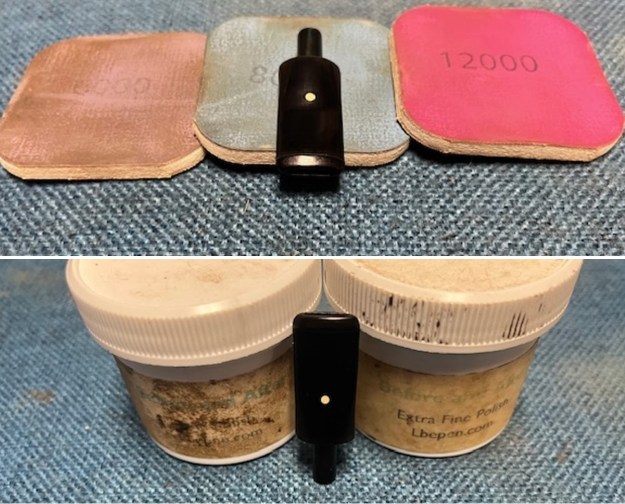
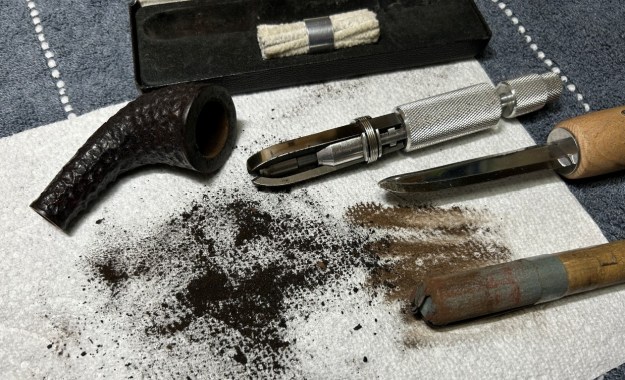
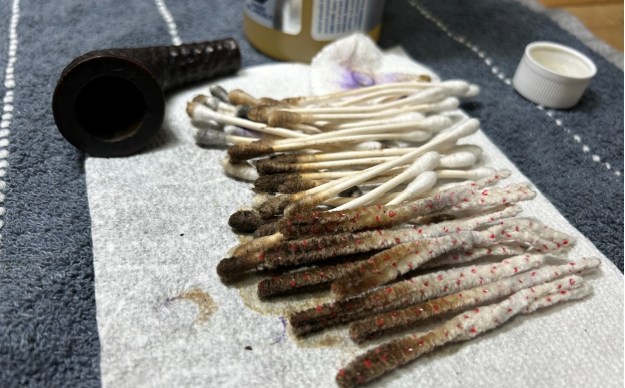
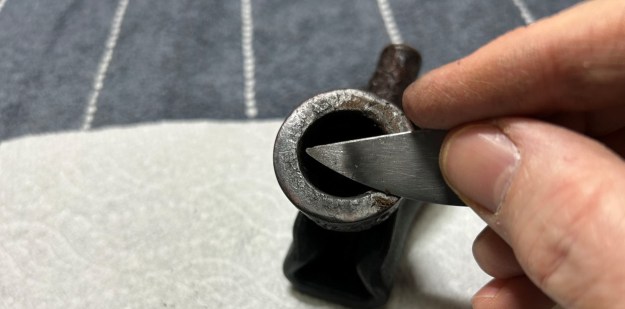
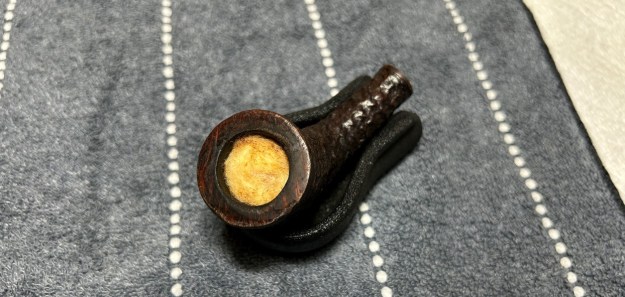
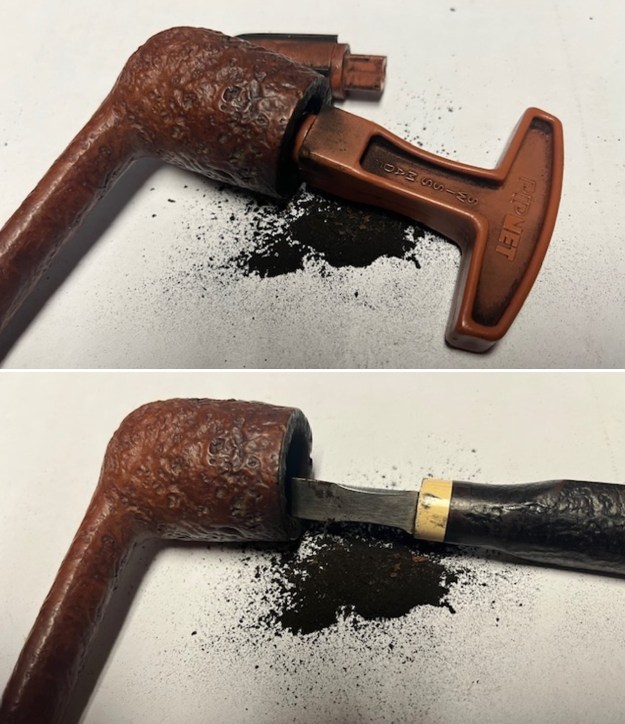
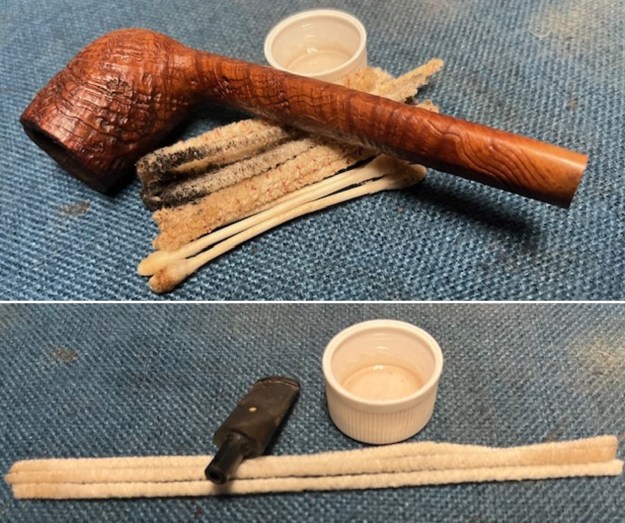
From there I wanted to pin down the date stamp 5. I have included the chart below for you to follow (http://www.pipephil.eu/logos/en/dunhill/cledat-en1a.html). The third column is where the 5-year suffix fits. Because the date code was a raised suffix, the suffix 5 is added to 1950 making the pipe a 1955 Tanshell long Canadian.I turned to work on the pipe itself. I reamed the bowl with a PipNet pipe reamer using the cutting heads 2 and 3. I finished the reaming with a Savinelli Fitsall Pipe Knife. I sanded the walls of the bowl with 220 grit sandpaper wrapped around a piece of dowel. I cleaned out the inside of the shank and the airway in the stem with alcohol, cotton swabs and both bristle and regular pipe cleaners.I scrubbed the bowl and shank with a tooth brush and some undiluted Murphy’s Oil Soap. I rinsed it off with warm water to remove the dust and soap from the finish. I dried it off with a soft cloth. The rim top was still darkened in the grooves of the sandblast.I scrubbed it further with Before & After Briar Cleaner and a brass bristle brush to work the cleaner into the grooves. I rinsed it off and repeated the process until it became cleaner. There is still some darkening in the sandblast that will not come out but it is clean and significantly better.I rubbed the briar down with Before & After Restoration Balm. I worked it into the briar with my fingertips and a horsehair shoe brush to work it into the nooks and crannies of the sandblast finish. The product works to clean, enliven and preserve the briar. I let it sit for 10 minutes then I buffed it with a cotton cloth to deepen the shine. The briar really comes alive with the balm. I set the bowl aside and worked on the stem. I sanded the oxidation and the tooth marks and chatter with 220 grit sandpaper. I was able to remove all of the light tooth damage on the stem and the majority of the oxidation.I sanded the stem and tenon surface with 320-3500 grit 2×2 inch pads. I wiped the stem down with an Obsidian Oil cloth after each sanding pad.I polished the vulcanite with micromesh sanding pads – 1500-12000 grit pads. I wiped it down with Obsidian Oil after each sanding pad. I used Before & After Pipe Polish – both Fine and Extra Fine to further polish the stem. I the polished stem and lightly buffed the sandblast bowl and shank with Blue Diamond to polish out the remaining small scratches and raise the shine. I gave the stem several coats of carnauba wax and the bowl several coats of Conservator’s Wax then buffed the pipe with a clean buffing pad to raise the shine. I hand buffed it with a microfiber cloth to deepen the shine. The pipe polished up pretty nicely. This turned out to be a beautiful 1955 Dunhill Tanshell CS Canadian. Even the darkening on the rim top does not detract from the beauty of the pipe. The finished pipe is shown in the photos below. The dimensions are Length: 6 ½ inches, Height: 1 ¾ inches, Outside diameter of the bowl: 1 ¼ inches, Chamber diameter: ¾ of an inch. The weight of the pipe is 1.16 ounces/33 grams. Thanks for walking through the restoration with me as I worked this beautiful little Dunhill sandblast. I will be putting it on the rebornpipes store in the British Pipe Maker Section soon. If you are interested in adding it to your collection let me know. Thanks for looking.

Cleaning up an F. Baki Danish Egg with a Cumberland Saddle Stem


by Steve Laug

While I was travelling in the US I received an email from Dave regarding restoring a meerschaum pipe that he had. I quote from the initial email below:

Hello, I have a meerschaum pipe that needs some TLC. I was wondering if you do restorations for pipes that you send back to the owner. I’m sure it somewhat depends on the condition. I’d be happy to send you some pictures if you do that kind of work and would be willing to give me a ballpark estimate. Thank you! Dave

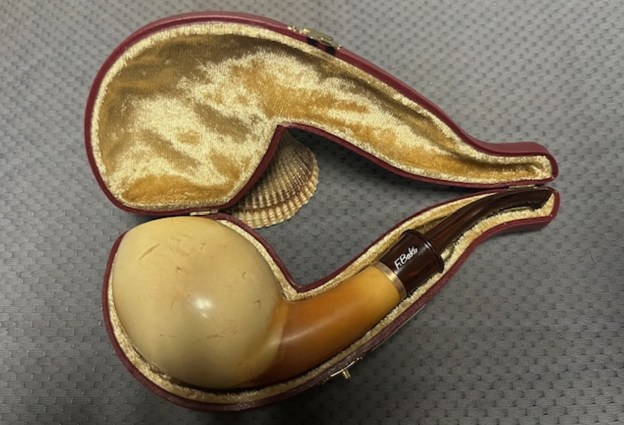
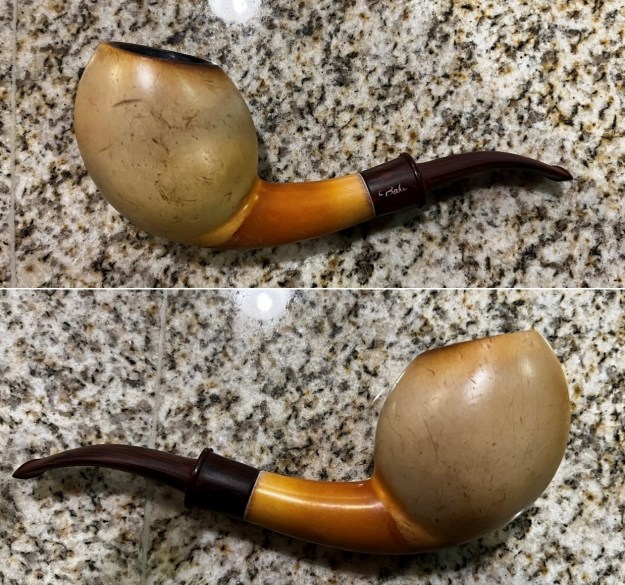
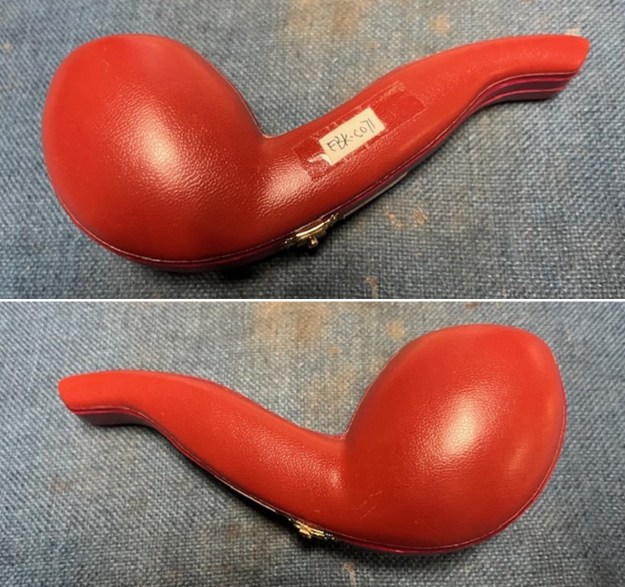
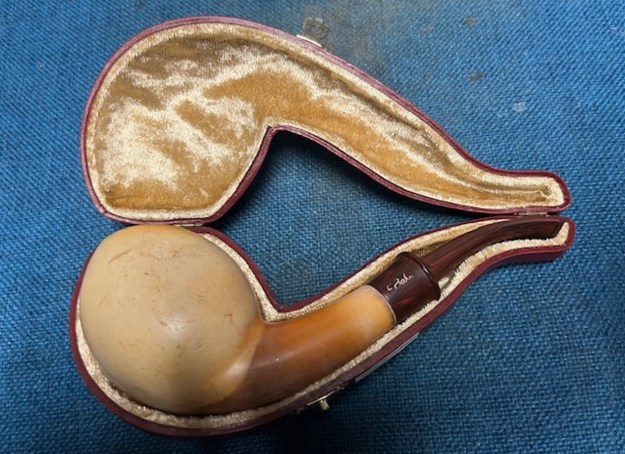
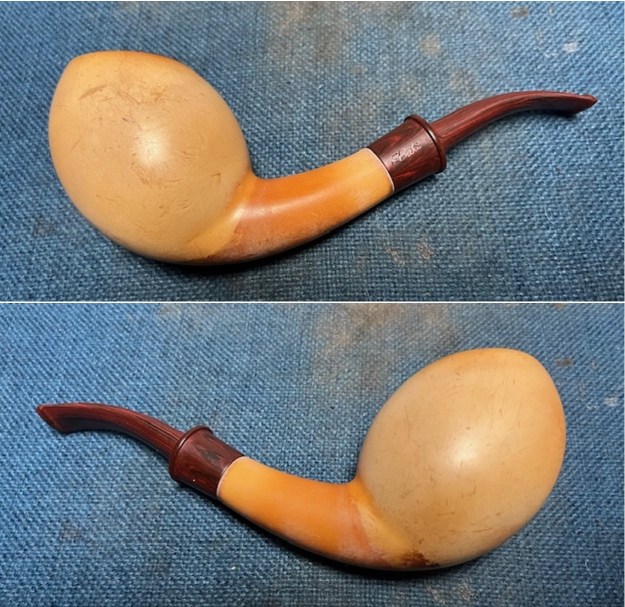
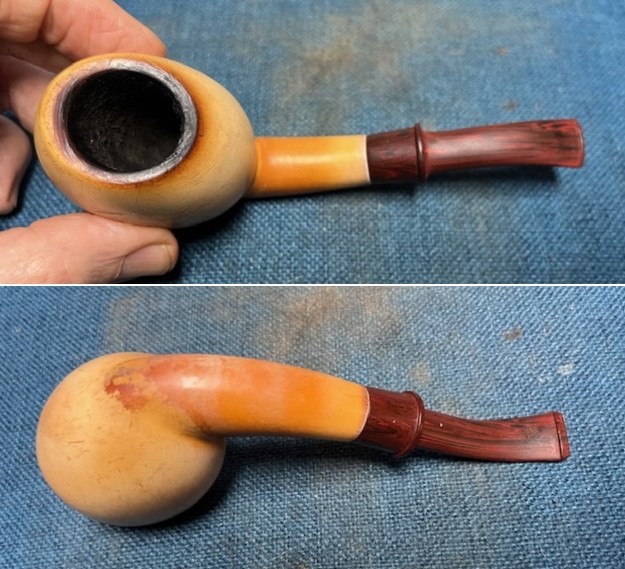
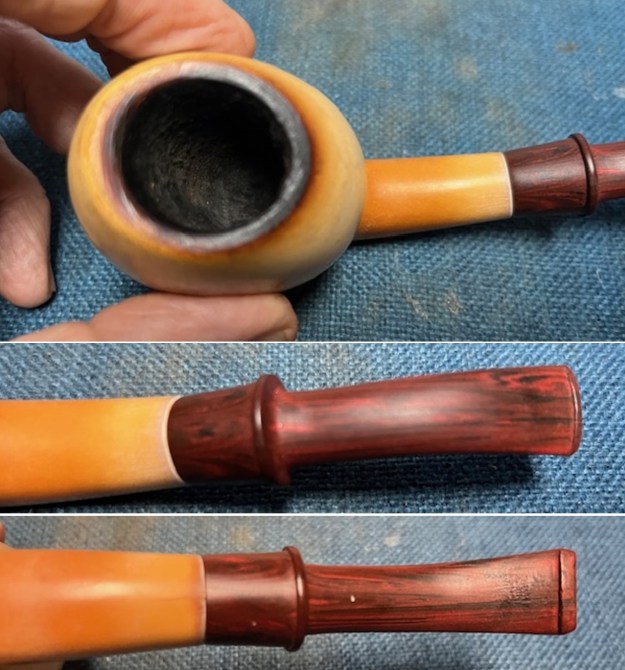
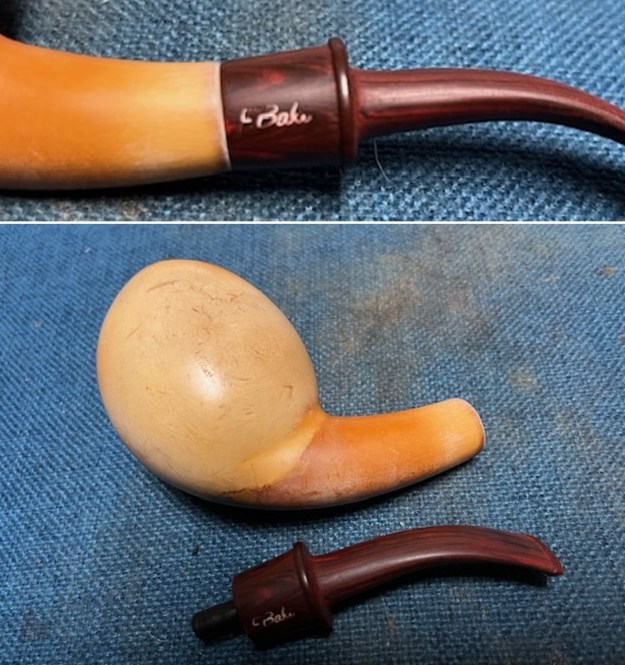
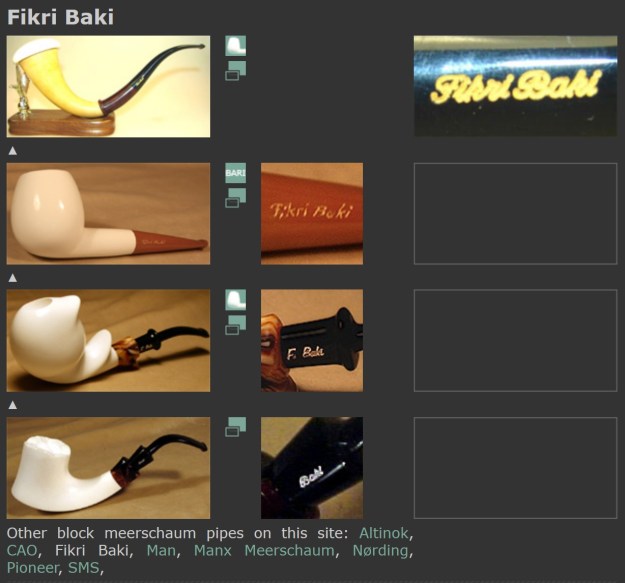
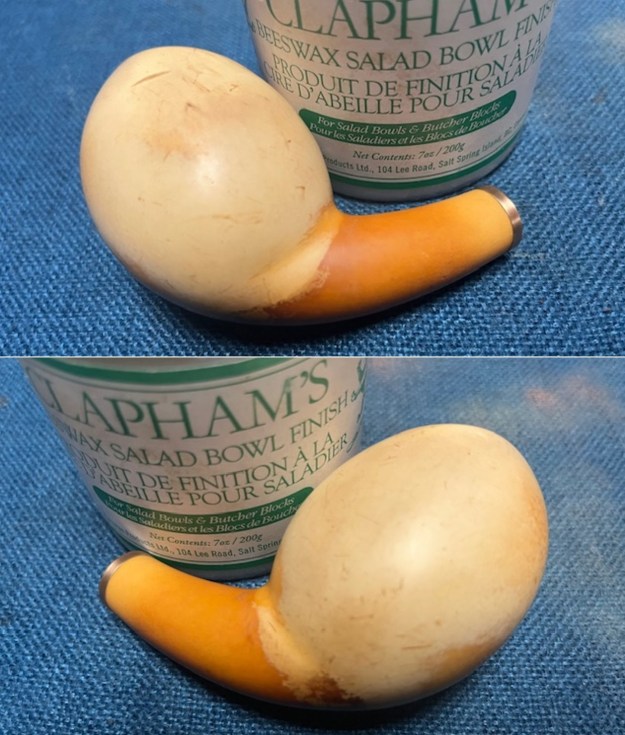
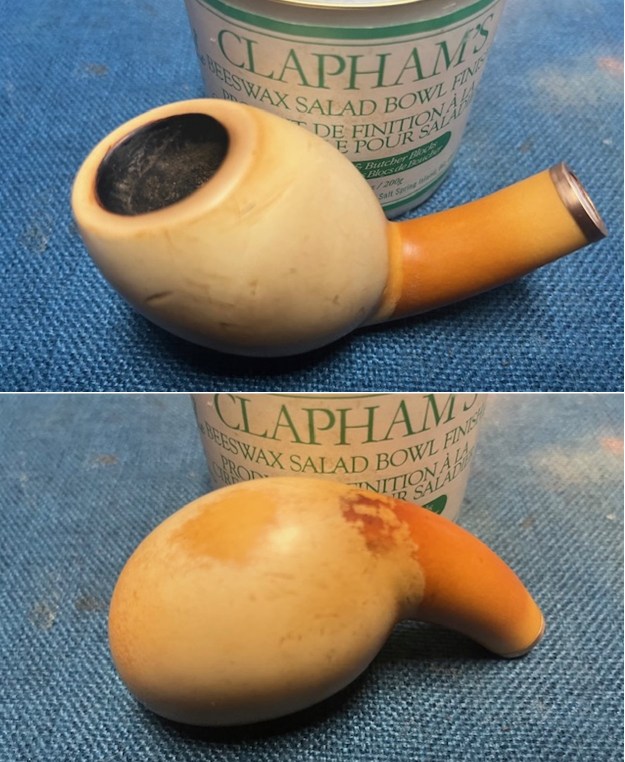
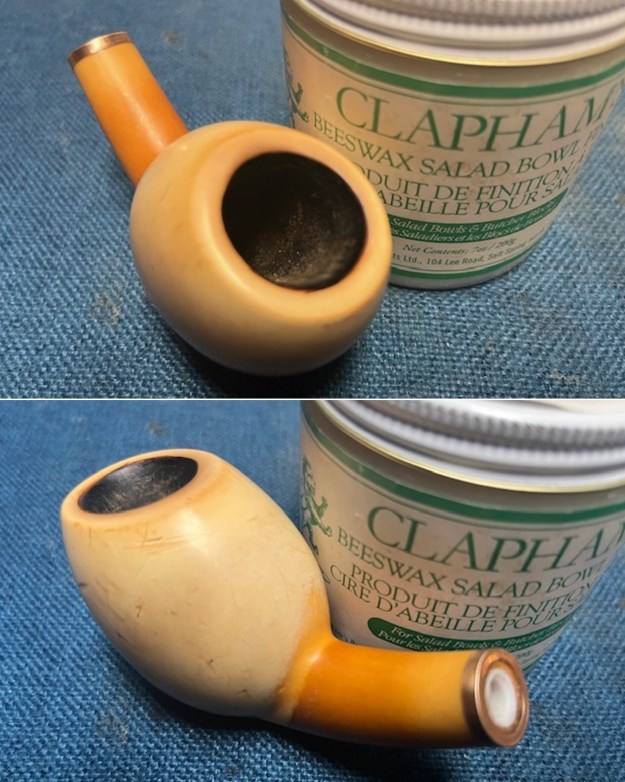
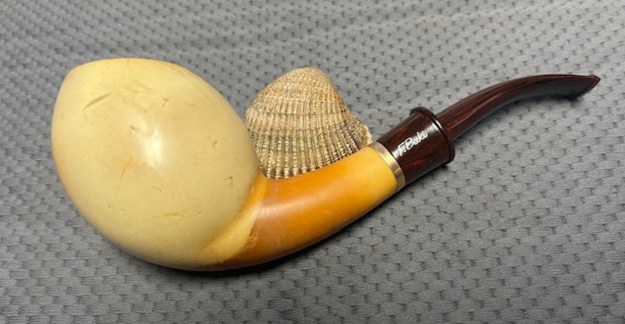
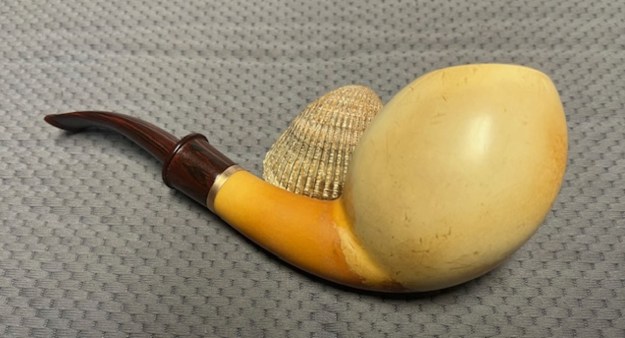
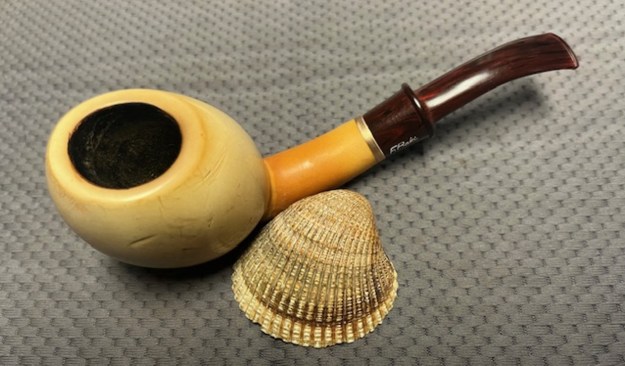
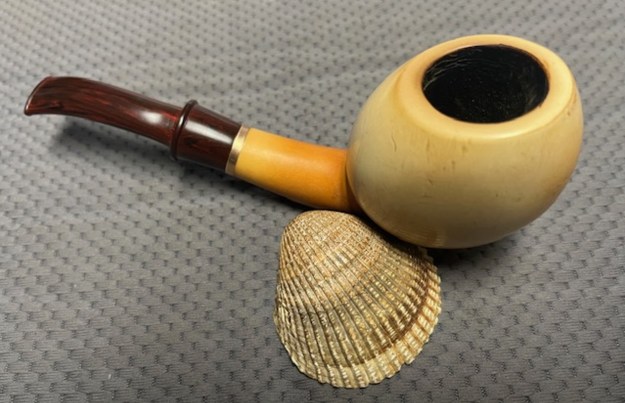
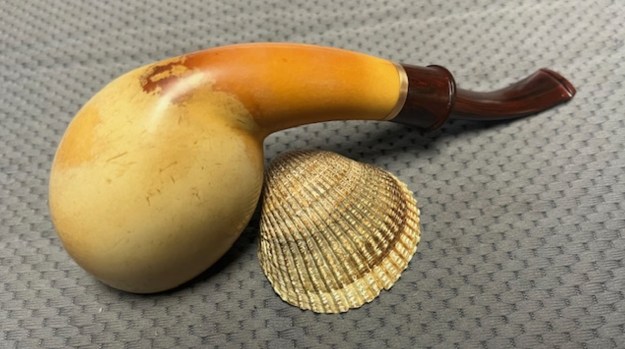
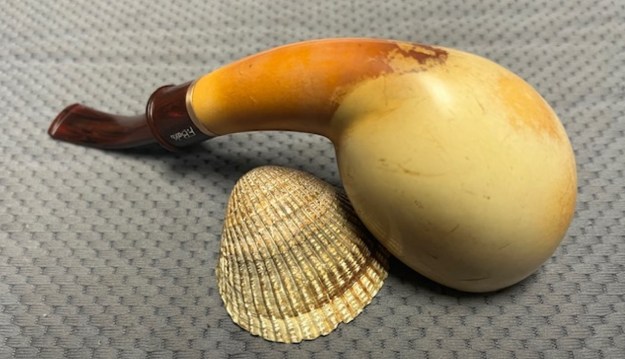
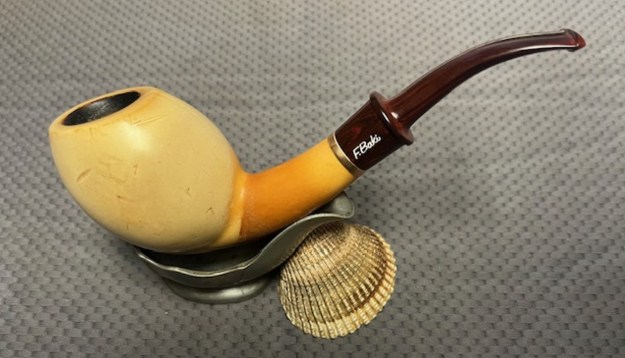
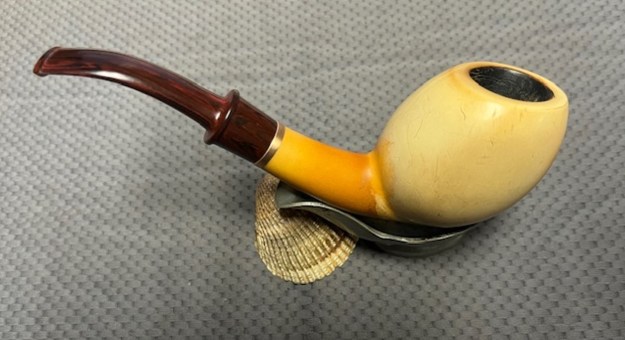
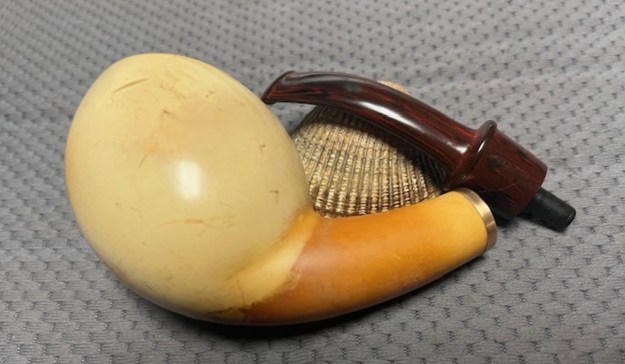
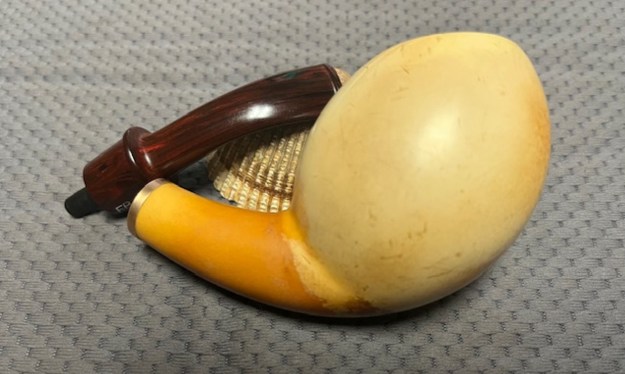
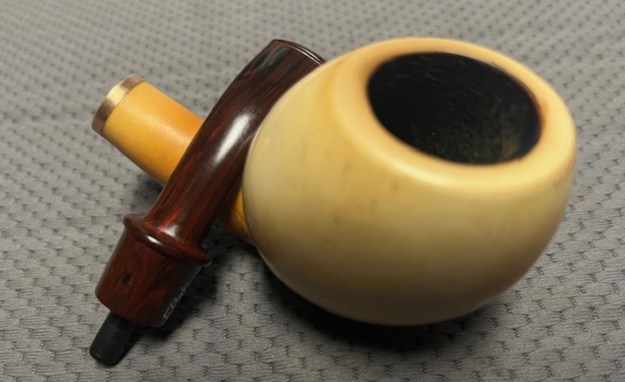
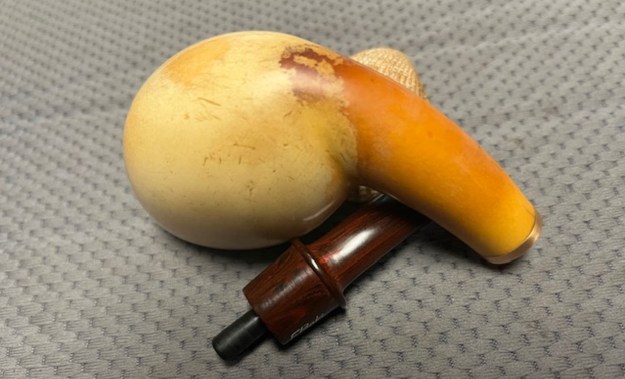
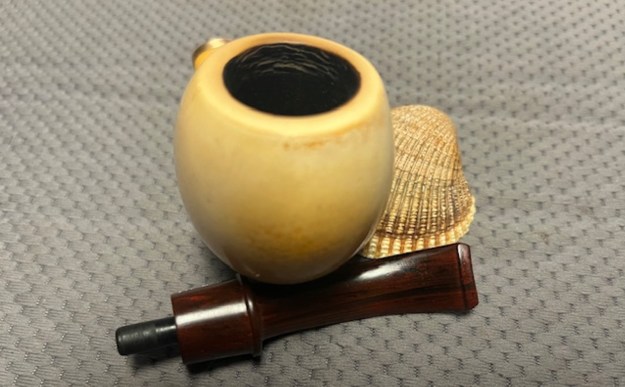
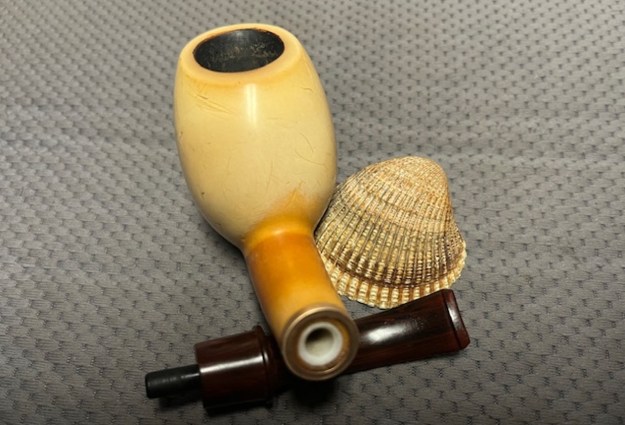
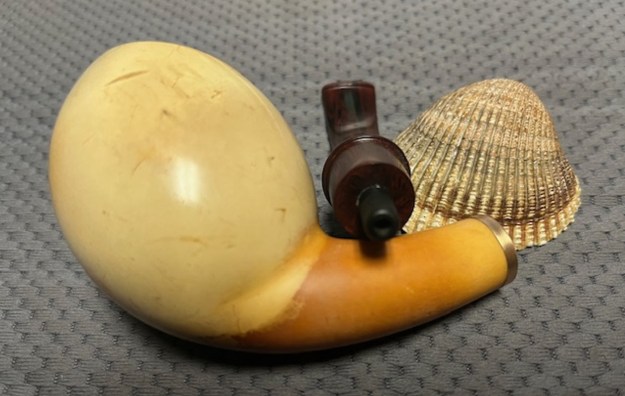
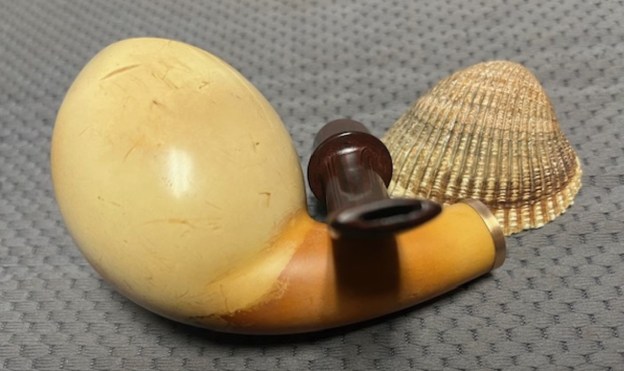
I wrote back to Dave and asked him to send photos of the pipe. Once I received them I looked them over and answered Dave’s questions in the initial email. I gave him my malling address and last evening I received his pipe. I have included the photos of the pipe that he sent me below. This morning I started working on Dave’s pipe. I brought the Baki to the work table. It came in its own hard-shell case that is covered with a red leather and with a soft gold velour like fabric on the inside of the case. There are no logos or marks in the case itself. Dave had taped a paper label on the case that reads FBK – C071. Next to the clasp on the front edge it reads Made in Turkey. The pipe is dirty on the smooth finish with grime on the bowl sides. It does have a great looking developing patina that is darker on the shank than the bowl but the bowl is getting darker. The rim top has a coat of lava on the top and edges. The bowl has a thick cake on the walls overflowing onto the rim top. The original Cumberland saddle stem is dirty and oxidized. It bore the F. Baki stamp on the left side of the saddle. The threaded mortise was loose in the shank and came out when I turned the stem loose. The push tenon was quite clean and the fit was fairly snug in the threaded mortise. I took photos of the pipe when I removed it from the case to show what it looked like before I started working on it. I took photos of the bowl and rim top to show the thickness of the cake and the lava coat on the rim top. There was some tobacco debris in the bottom of the bowl. The stem photos show the condition of the saddle stem ahead of the button. The stamping on the side of the saddle stem is clear and readable as noted above. I took a photo of the pipe with the stem removed to give a sense of the proportions of the pipe. It is a real beauty.Before I started working on the pipe I did a bit of research on the brand to learn as much as I could about it (http://www.pipephil.eu/logos/en/logo-f2.html#fikribaki). I did a screenshot of the pertinent information and have included it below.I turned next to Pipedia (https://pipedia.org/wiki/Fikri_Baki) and found a short quote from Pipes, Artisans and Trademarks, by Jose Manuel Lopés’
Fikri Baki is a young Turkish meerschaum pipe maker, who trained in Europe with a well-known artisan. He produces models inspired by contemporary Danish aesthetics, with handmade stems. For many years, Baki’s pipes were distributed exclusively by Deniz Ural. As of 2019, he is distributed by the Chinese-based TuWun Meerschaum store which is sold through AliExpress.

His stamp is his signature done on the side of the stem and is either F. Baki or on some newer pipes, Fikri Baki.

I turned also to the Meerschaum Market site (https://www.meerschaummarket.com/master-carvers/f-baki/) where I found a little more information on the maker. I quote: F. Baki

Fikri Baki Cetekinkaya is a well-known meerschaum pipe carver who lives in Eskisehir, Turkey. He was born in to meerschaum, he is from Sepetci, new name Beyazaltin village. Village’s new name means “White Gold” in English.

He started carving meerschaum pipes in 1969 as an apprentice. He had been trained by the top master carvers in 1970s. He worked on figural pipes for many years as all meerschaum pipe carvers. European pipe carvers inspired him and he moved away from sculpture carving to classic shapes, his own styles and freehands. His passion to meerschaum pipe carving took him to the most preferred carvers. He is the first master carver who worked with bamboo in Eskisehir. F. Baki is already retired…

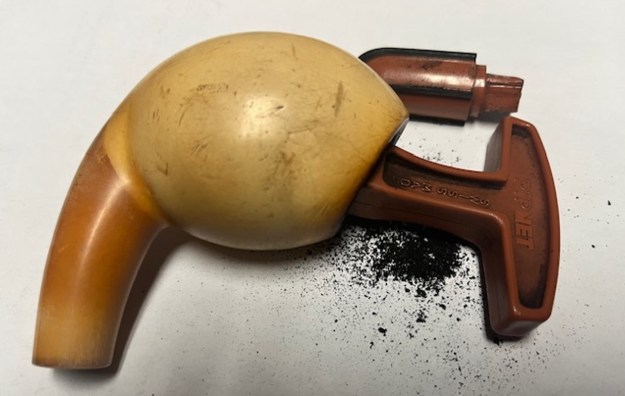
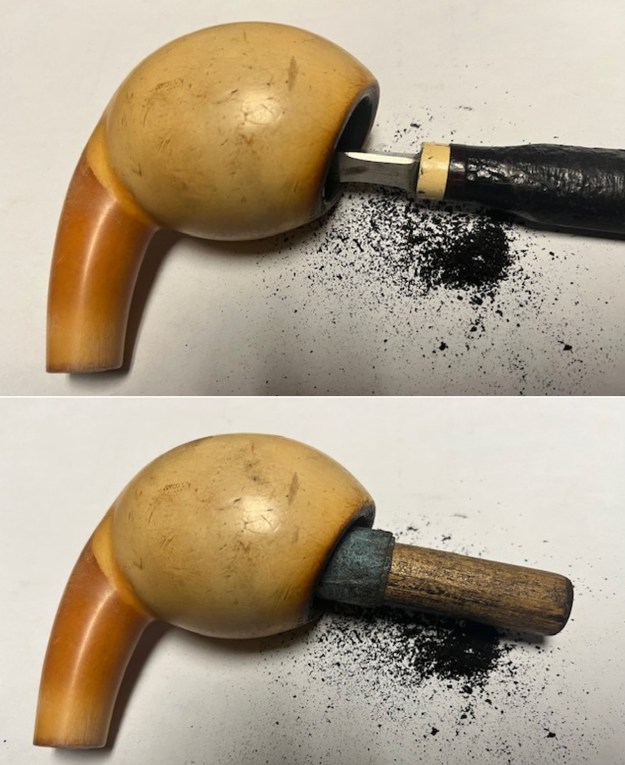
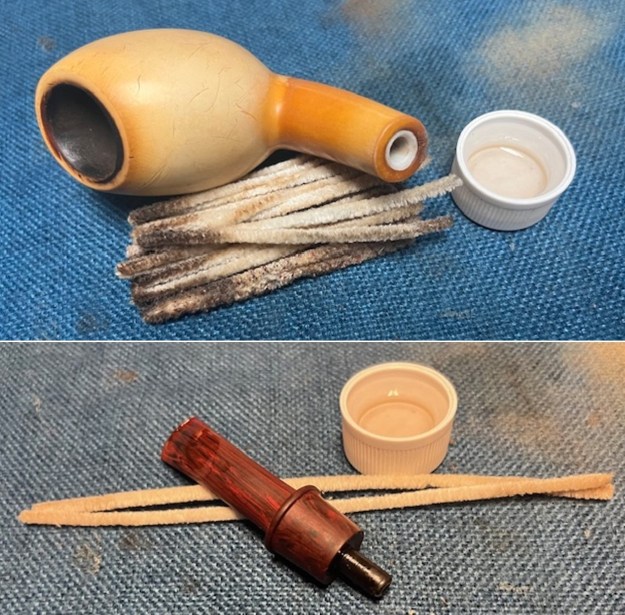
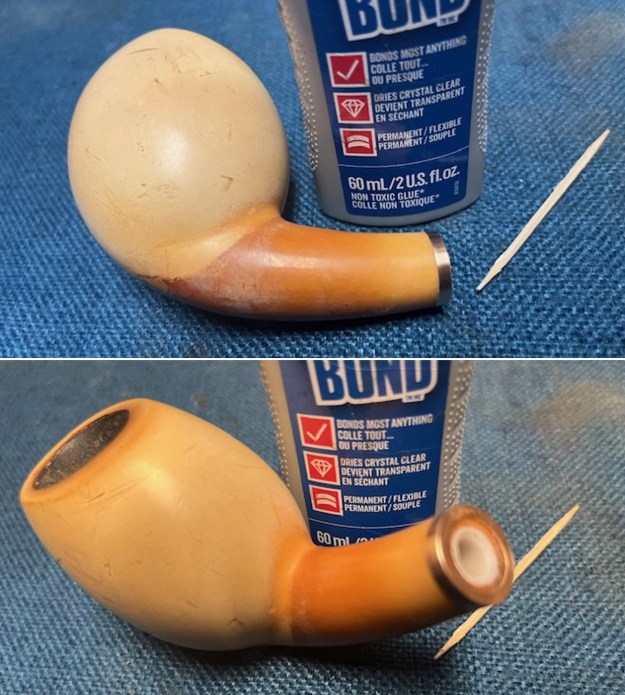
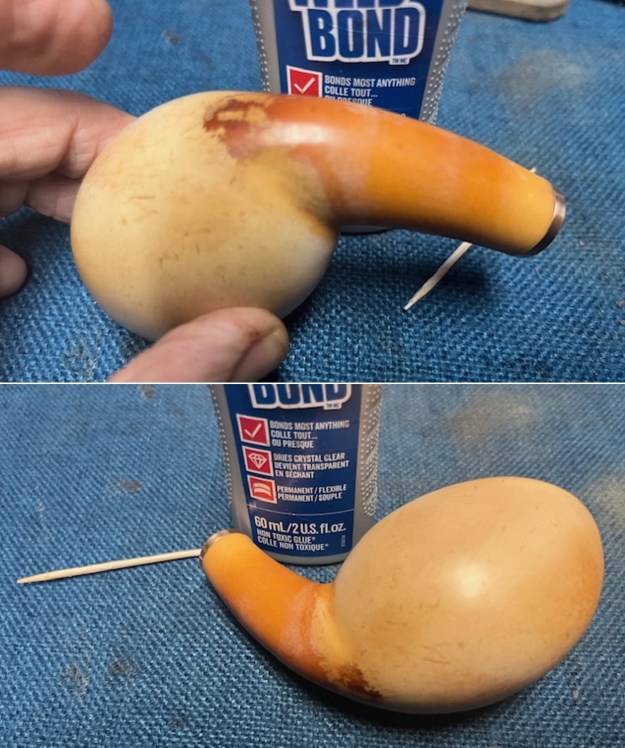
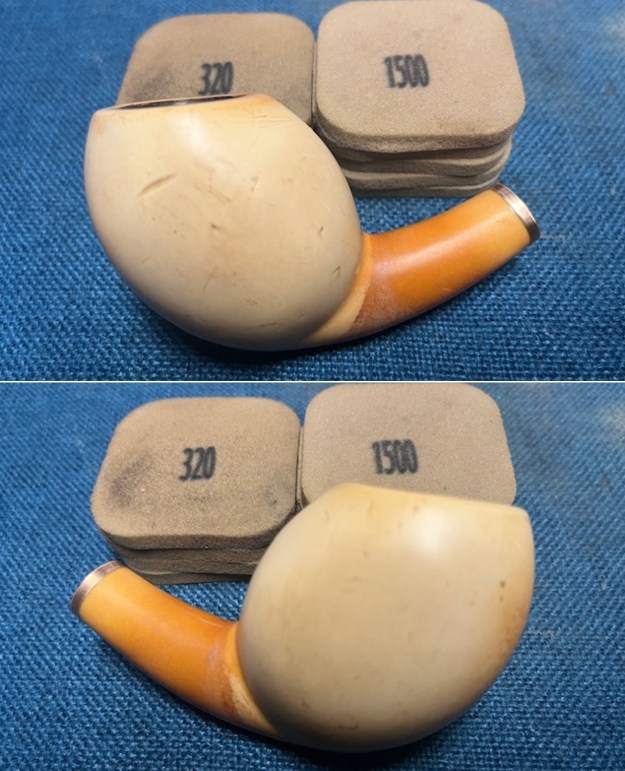
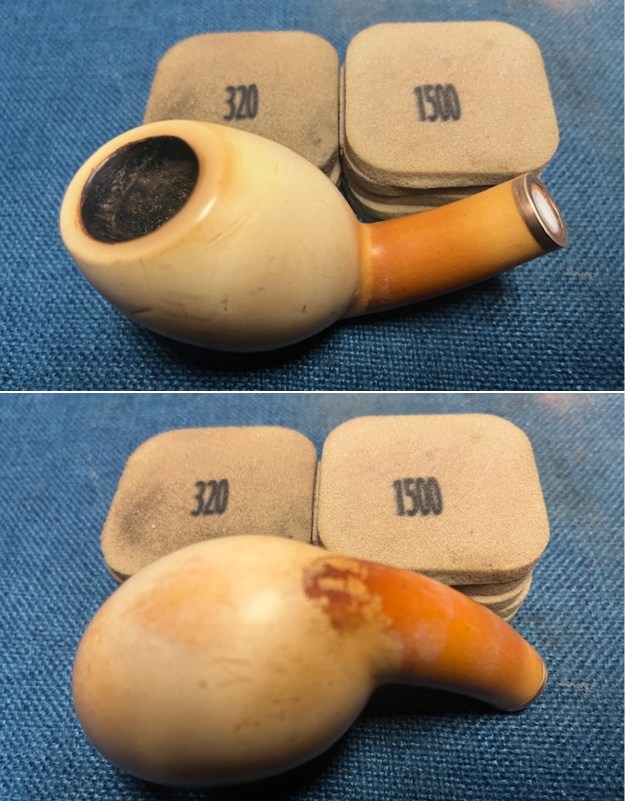
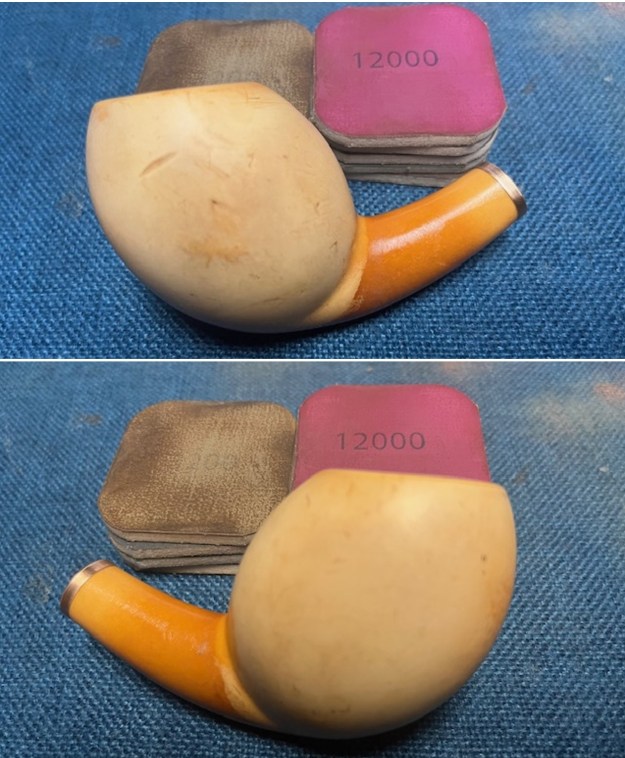
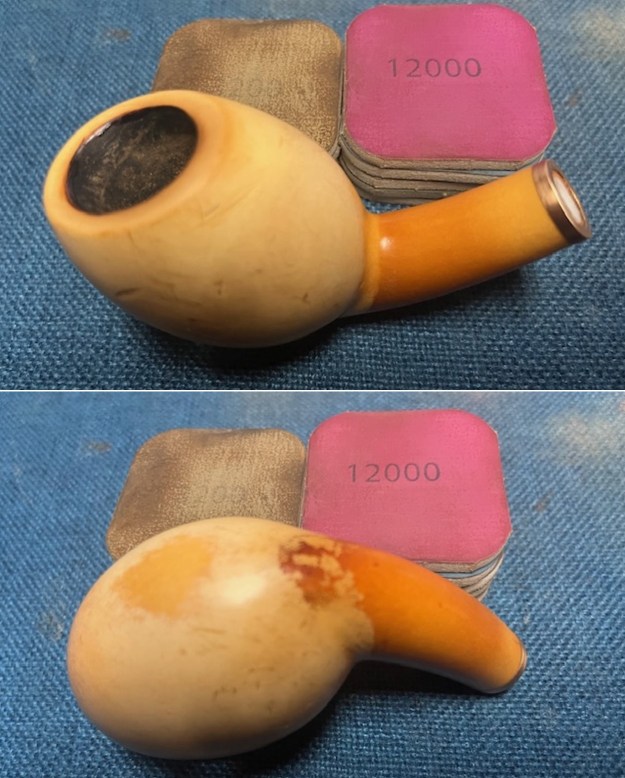
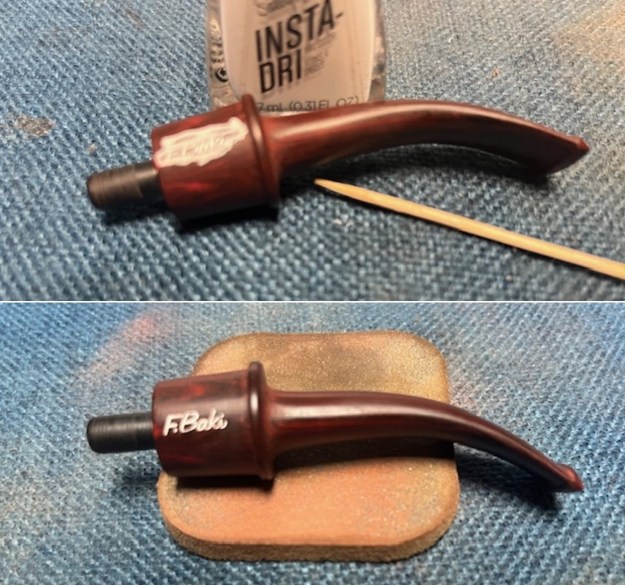
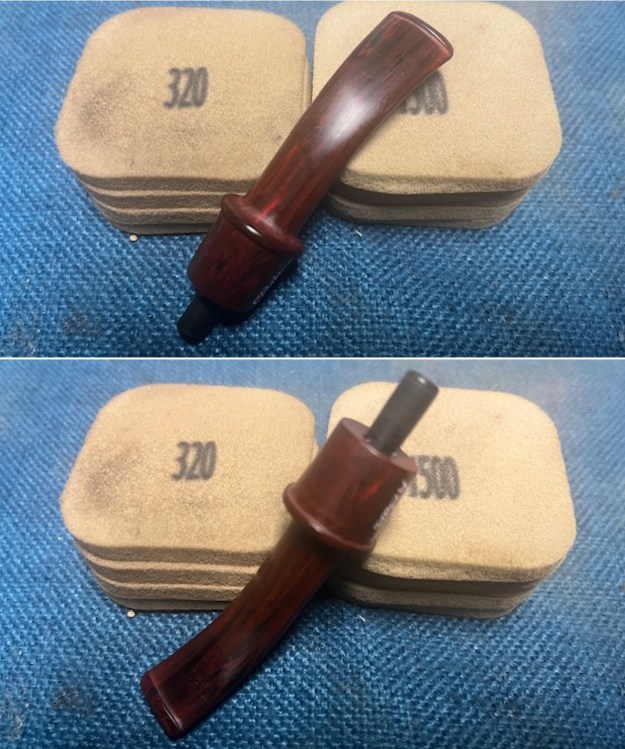
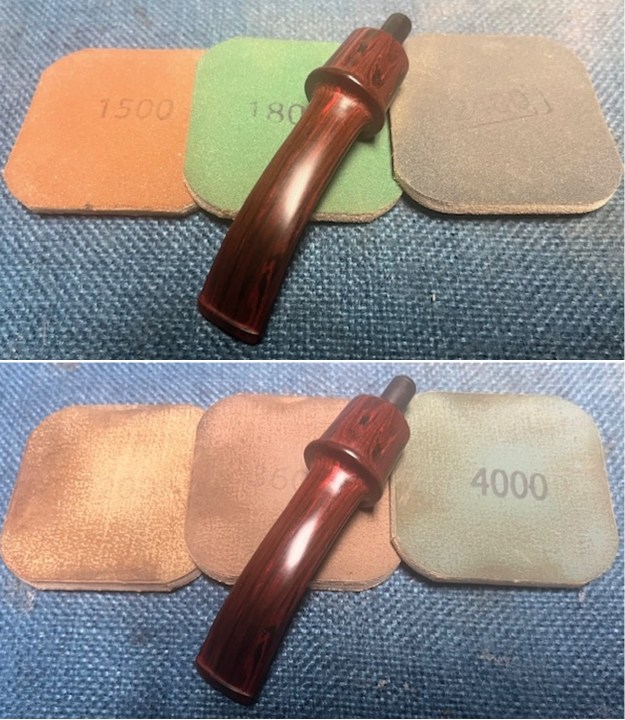
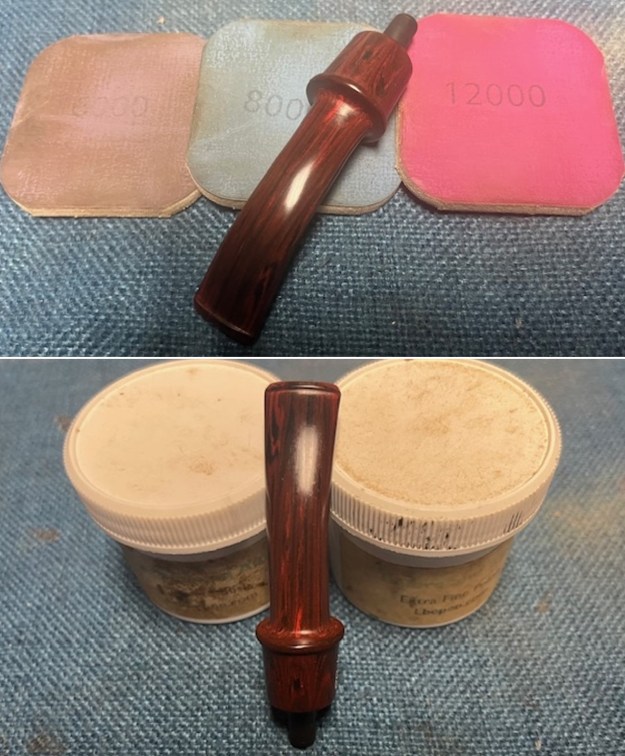
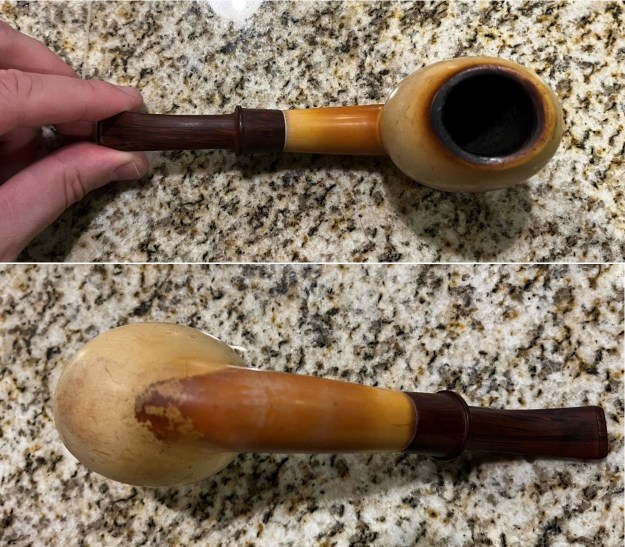
I turned to work on the pipe itself. I reamed the bowl with a PipNet pipe reamer using the cutting heads 2 and 3. I finished the reaming with a Savinelli Fitsall Pipe Knife. I sanded the walls of the bowl with 220 grit sandpaper wrapped around a piece of dowel. I cleaned out the inside of the shank and the airway in the stem with alcohol, cotton swabs and both bristle and regular pipe cleaners.I scrubbed the bowl and shank with a tooth brush and some undiluted Murphy’s Oil Soap. I rinsed it off with warm water to remove the dust and soap from the finish. I dried it off with a soft cloth and it looked much better. I examined the bowl after it was clean and found a small crack on the underside of the shank. It was a small hairline crack that explained why Dave had noted in his email to me that the stem was loose. It also explained why the nylon threaded mortise in the shank was also loose. I gave it a think line of all-purpose glue and then coated the inside of the thin brass band with the glue as well. I pressed it on the shank end and wiped off the excess glue. I worked over the rim top lava build up and the scratches on the walls of the bowl and shank with 320-3500 grit 2×2 inch sanding pads. I wiped the bowl down with a damp cloth after each sanding pad. The crowned smooth rim top looks good. I polished the meerschaum with 1500-12000 grit sanding pads. I wiped the bowl down after each sanding pad with a damp cloth to remove the sanding debris. By the time I finished the bowl took on a rich and clean shine. I rubbed the meerschaum down with some Clapham’s Beeswax/Carnauba Wax. I let it sit for a short time then hand buffed it with a soft cloth to raise the shine on the meer. I used a folded piece of 220 grit sandpaper to sand out the tooth marks and chatter on both sides ahead of the button. It did not take too long to work out the tooth marks and chatter in the surface of the Cumberland.I touched up the stamping on the left side of the saddle stem with white acrylic fingernail polish. I worked it into the stamping with a tooth pick. I set it aside to dry and then I sanded it off with a worn 1500 grit micromesh sanding pad.I set the bowl aside and turned my attention to the stem. I sanded the stem with 320-3500 grit 2×2 inch pads. I wiped the stem down with an Obsidian Oil cloth after each sanding pad. The rich look of the Cumberland began to take on a shine.I polished the vulcanite with micromesh sanding pads – 1500-12000 grit pads. I wiped it down with Obsidian Oil after each sanding pad. I used Before & After Pipe Polish – both Fine and Extra Fine to further polish the stem. I the polished stem and the Meerschaum Bent Egg bowl with Blue Diamond to polish out the remaining small scratches and raise the shine. I gave the Cumberland stem several coats of carnauba wax and the bowl several coats of Clapham’s Beeswax/Canuaba Wax then buffed the pipe with a clean buffing pad to raise the shine. I hand buffed it with a microfiber cloth to deepen the shine. The pipe polished up pretty nicely. This turned out to be a beautiful Fikri Baki Meerschaum Danish Egg. The finished pipe is shown in the photos below. The dimensions are Length: 6 inches, Height: 2 ¼ inches, Outside diameter of the bowl: 1 ½ inches long by 1 ¼ inches wide, Chamber diameter: 7/8 of an inch. The weight of the pipe is 1.94 ounces/53 grams. Thanks for walking through the restoration with me as I worked this beautiful F. Baki Meerschaum Danish Egg. I will be sending it back very soon to the pipeman who asked me to restore it. Thanks for looking.
Restoring an Unlisted Brigham 3-Dot Scoop


by Kenneth Lieblich

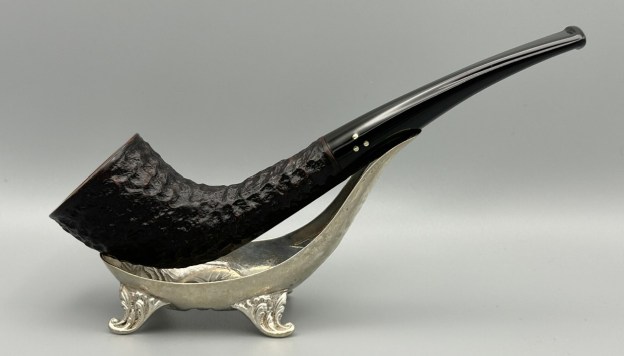
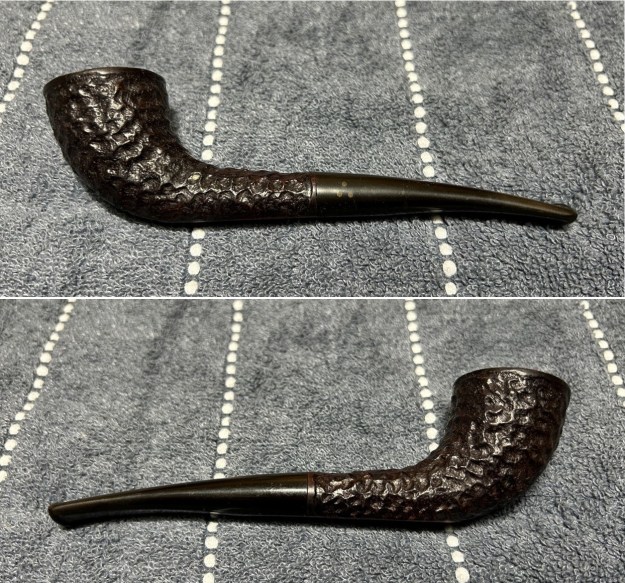
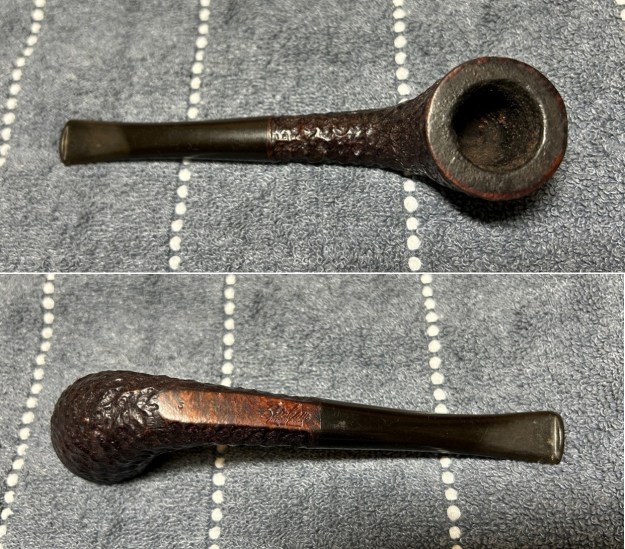
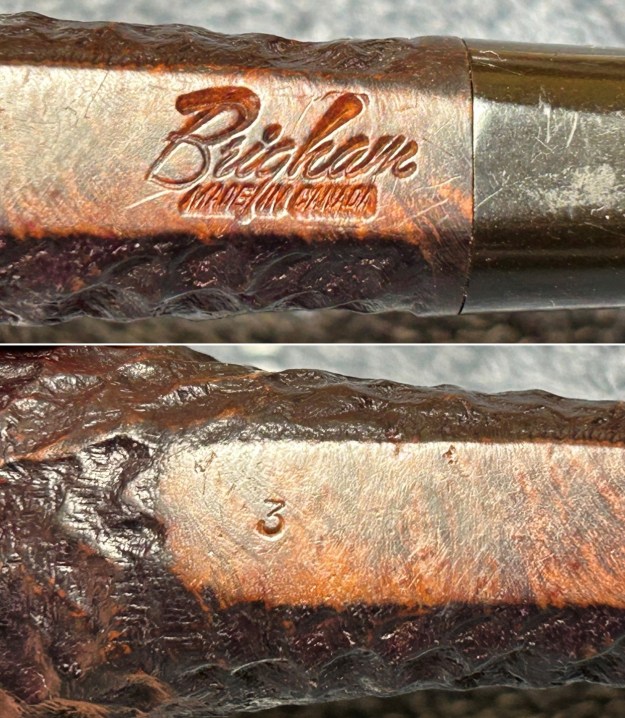
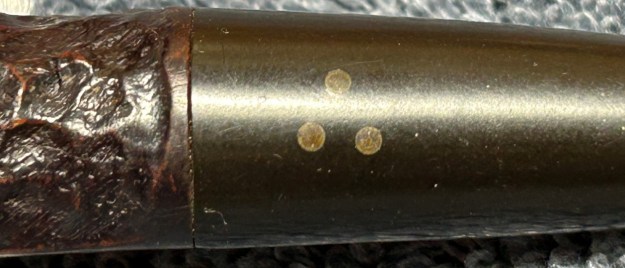
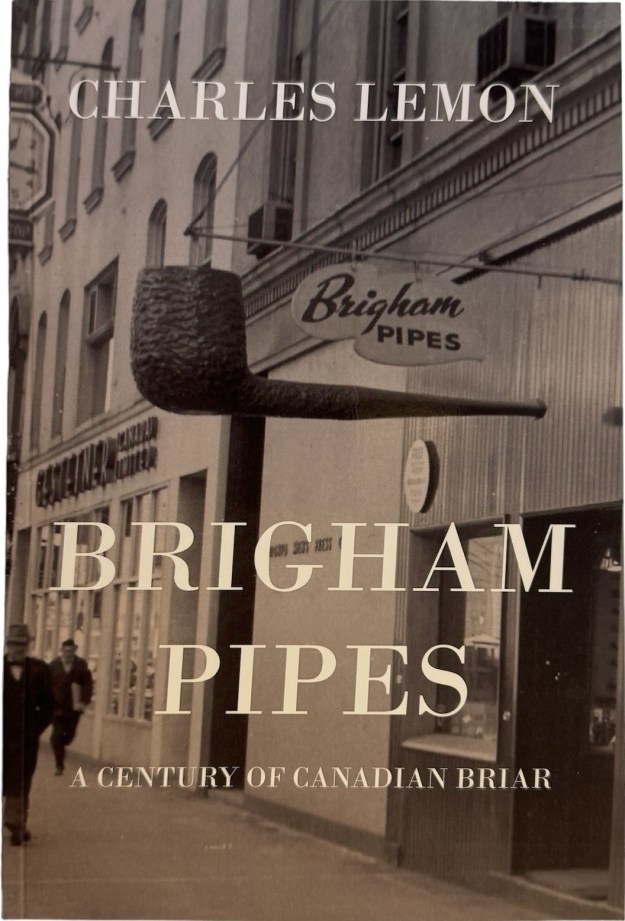
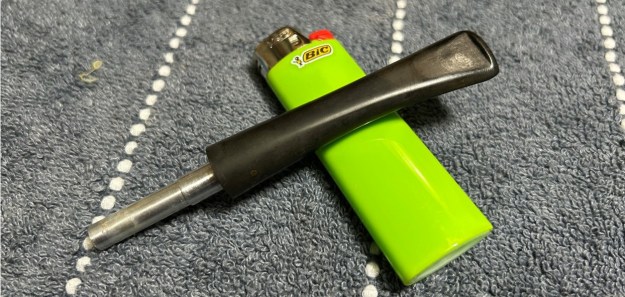
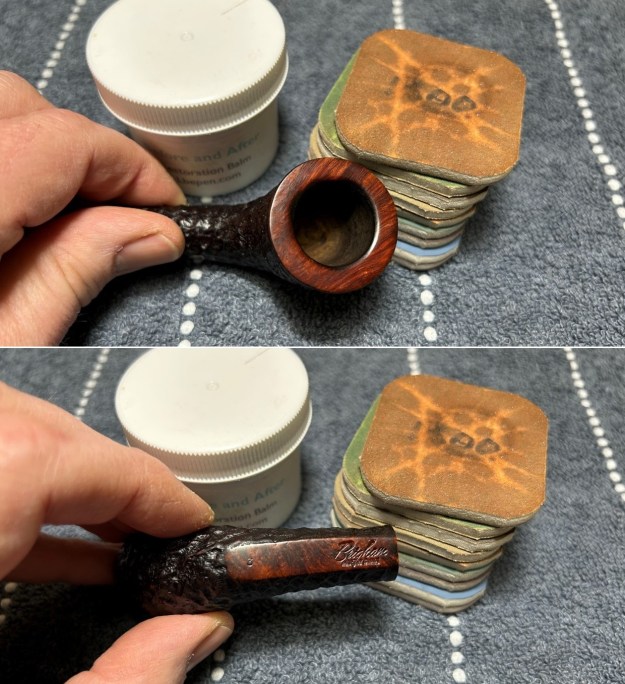
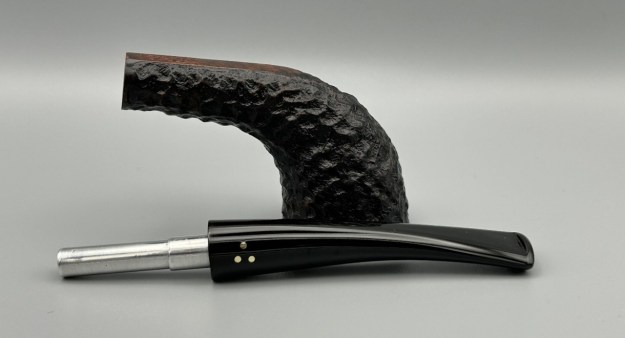
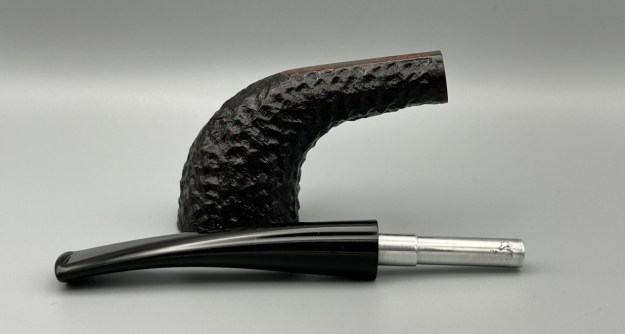
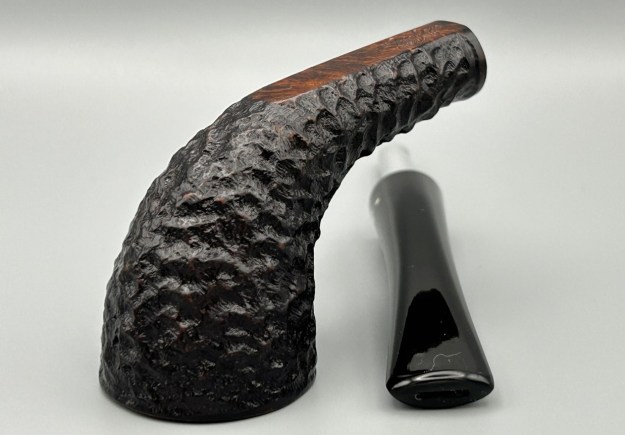
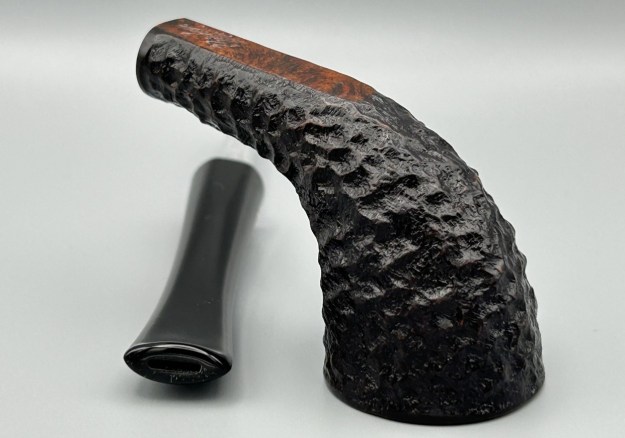
What a charming pipe this is! I got it in auction with a few other pipes, and I liked the shape of it immediately. This is a Brigham 3-dot scoop, with a handsome and rugged rustication. It really feels good in the hand. It has that look – no one could mistake it for anything but a Brigham. The tenon (which holds the maple distillator) on this pipe is made of aluminum – so it’s an older one. Curiously, it doesn’t have any shape number marked on it, nor is it listed in the book on Brigham pipes. Let’s examine what marks it does have. On the underside of the stummel, we read Brigham [over] Made in Canada. Of course, how those words are marked is what matters in dating Brigham pipes. I’ll get back to that. To the left of the aforementioned markings is the solitary digit 3. I can only assume that this refers to the three brass pins found on the stem. Thanks to Charles Lemon’s book, Brigham Pipes: A Century of Canadian Briar, dating this pipe was quite straightforward. On page 40, Lemon writes,

The Brigham Country of Manufacture (COM) stamp was modernized in about 1970 to consist of an upwardly-slanted Brigham logo over “Made in Canada” in small block letters. This stamp was used until approximately 1980.

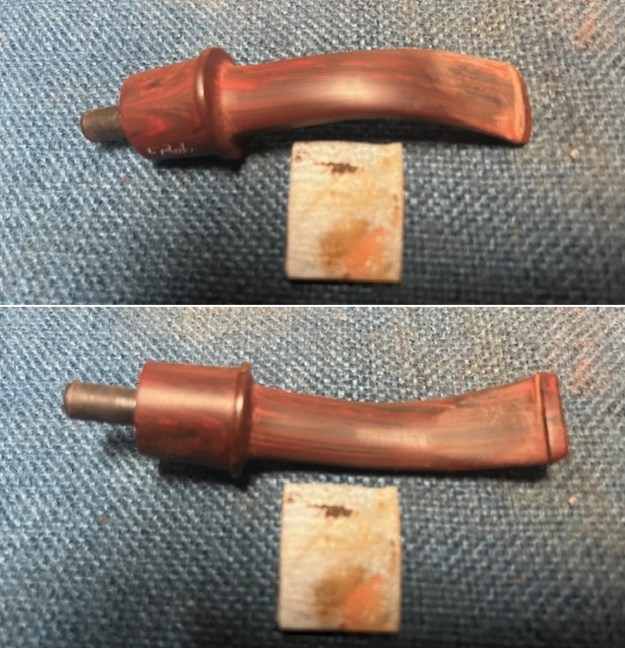
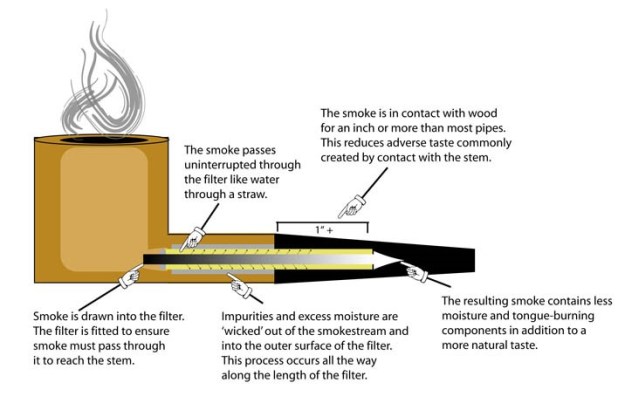
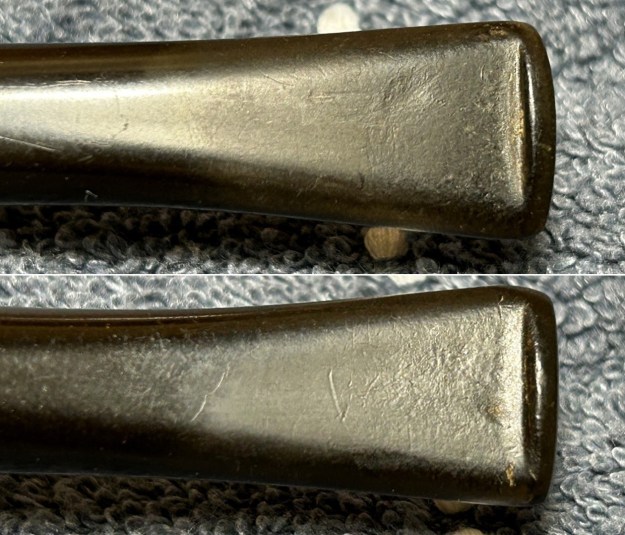
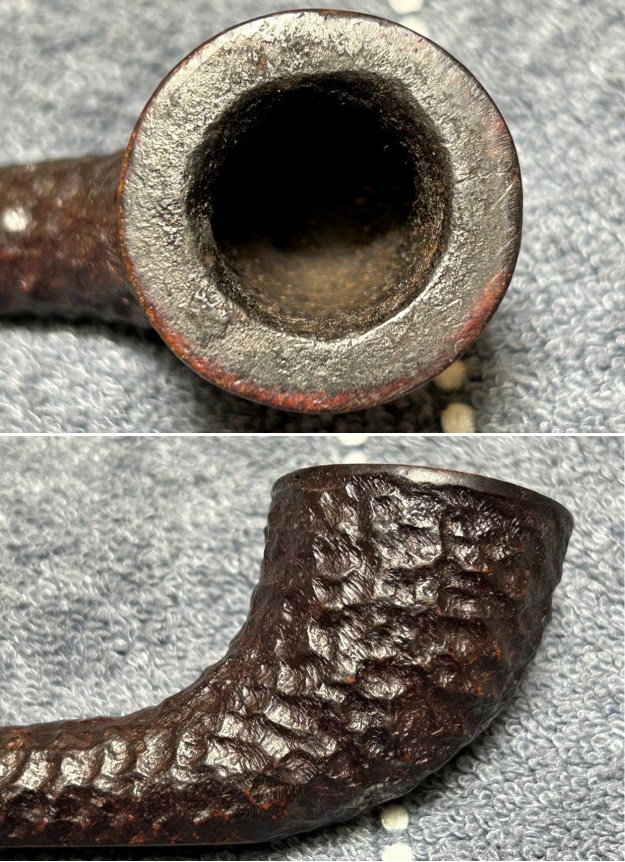
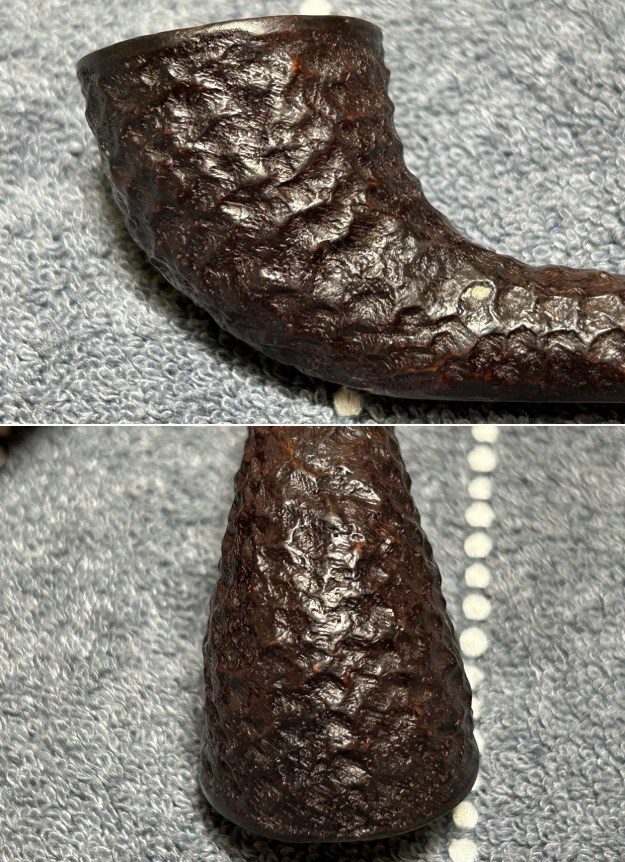
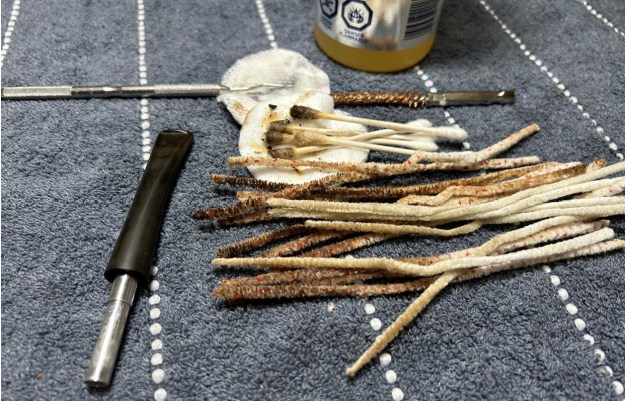
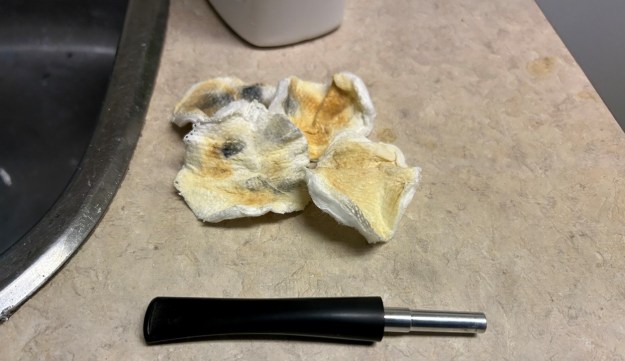
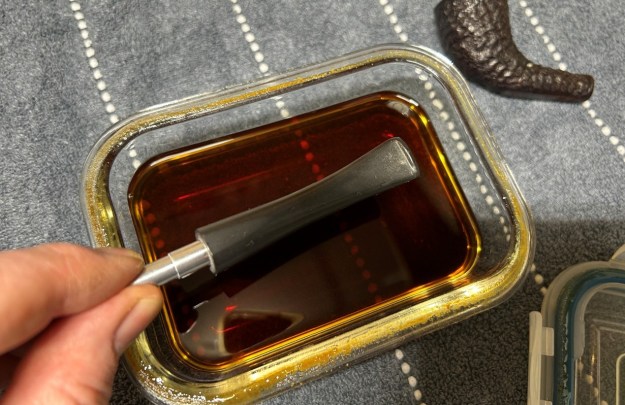
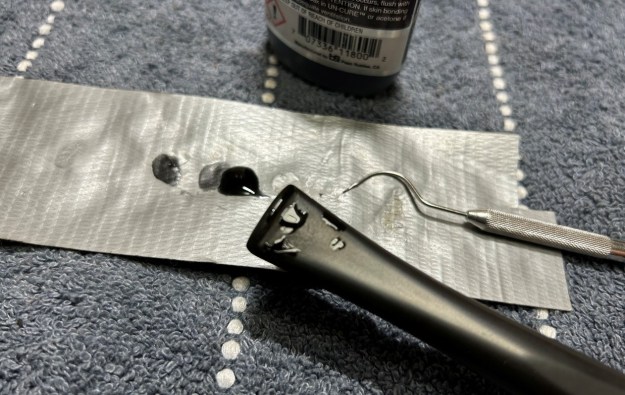
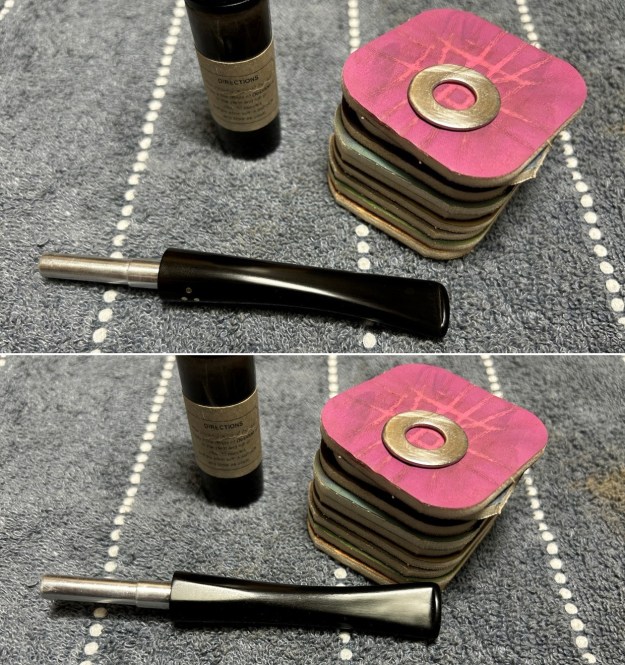
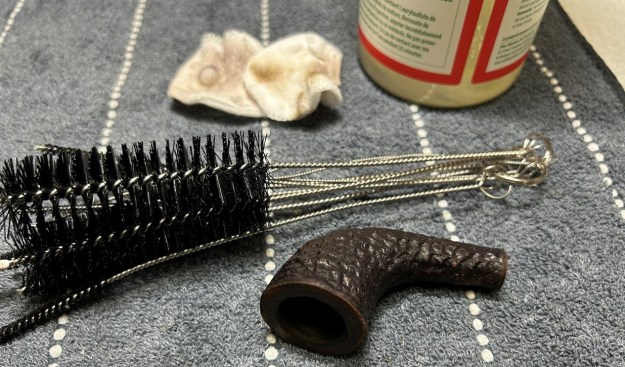
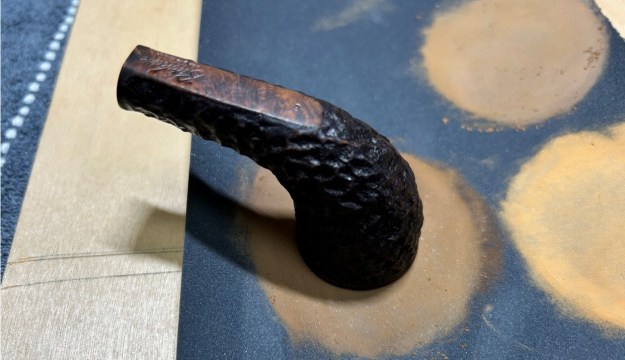
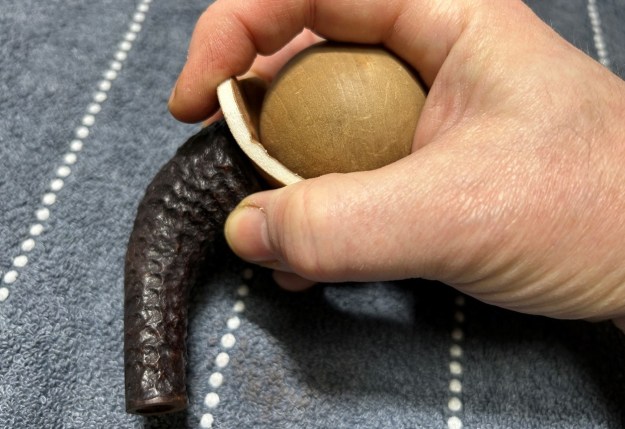
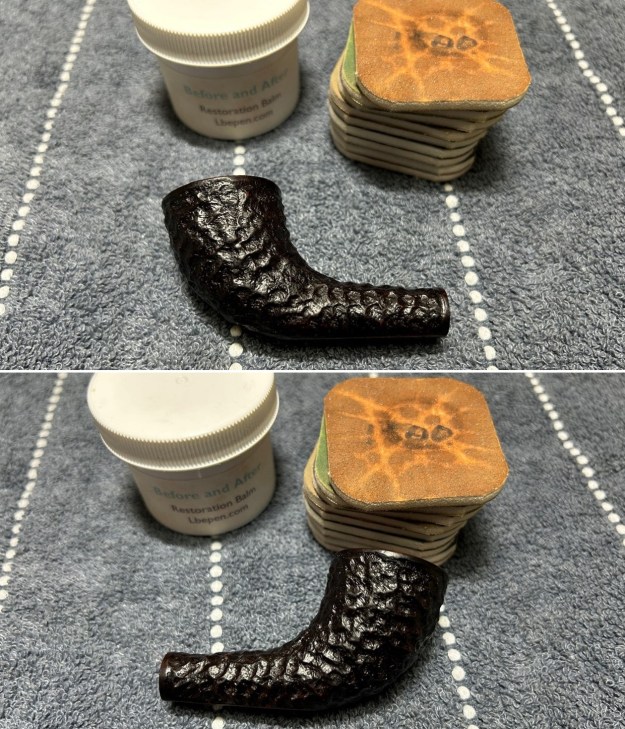
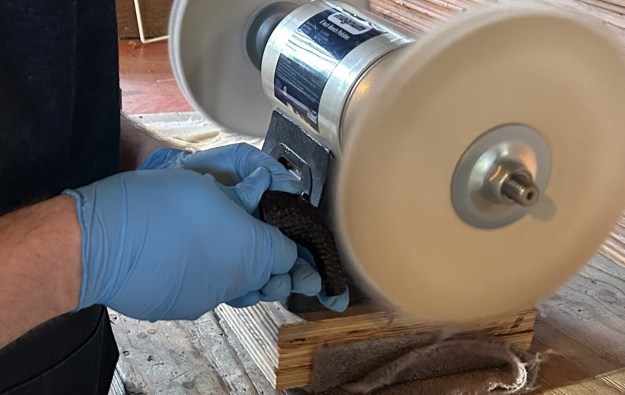
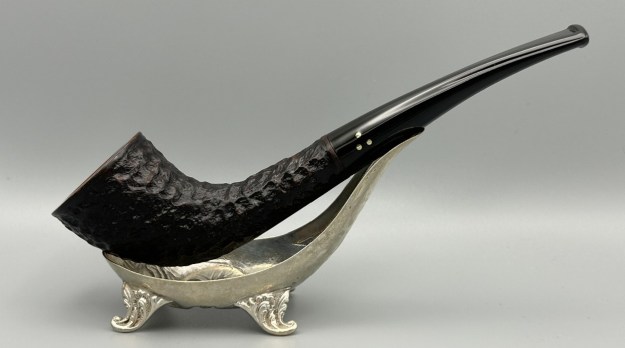
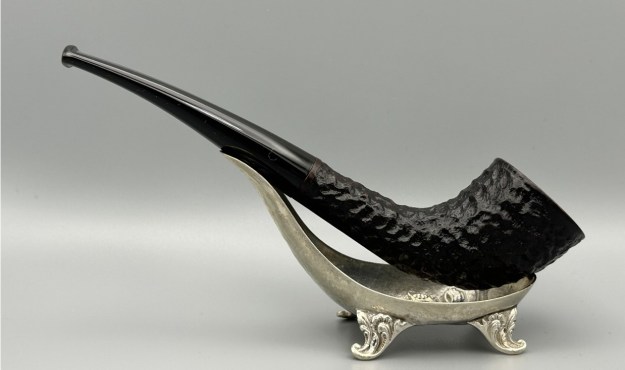
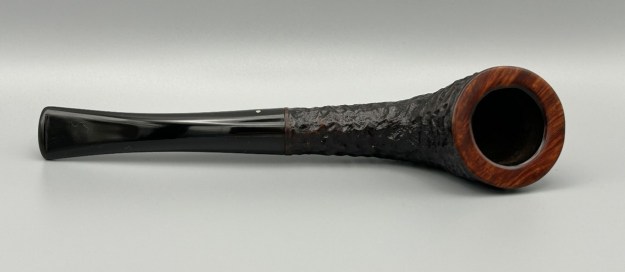
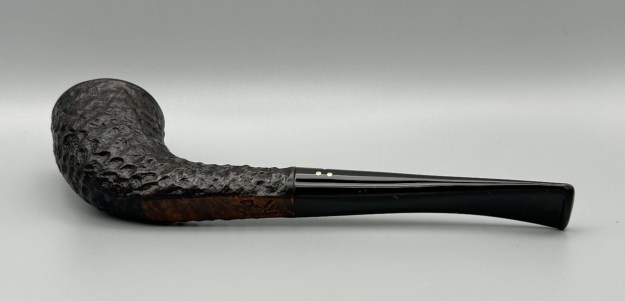
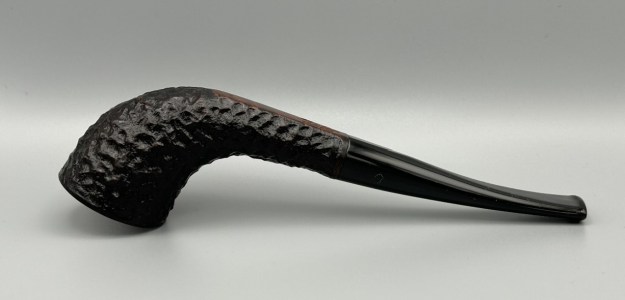
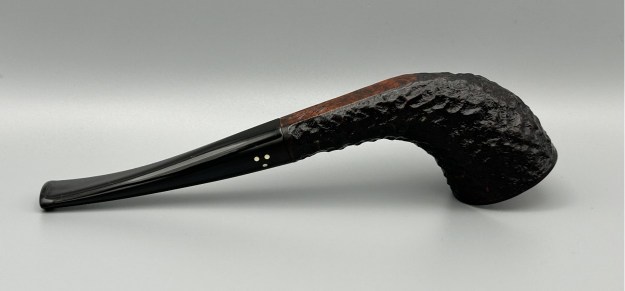
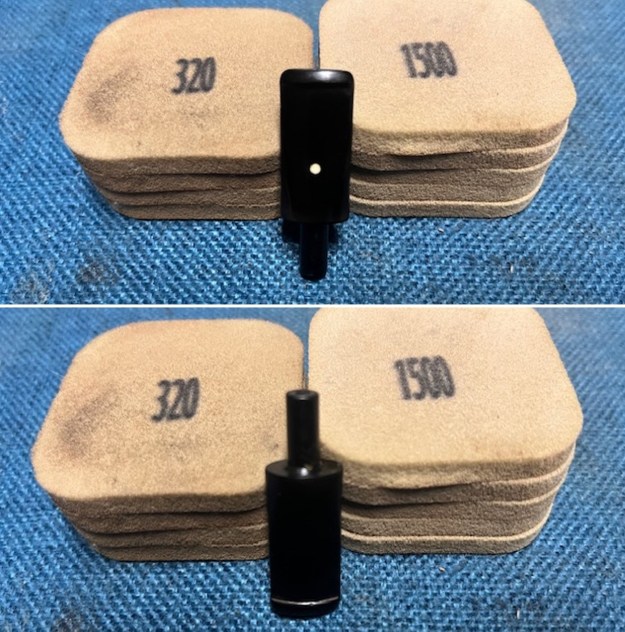
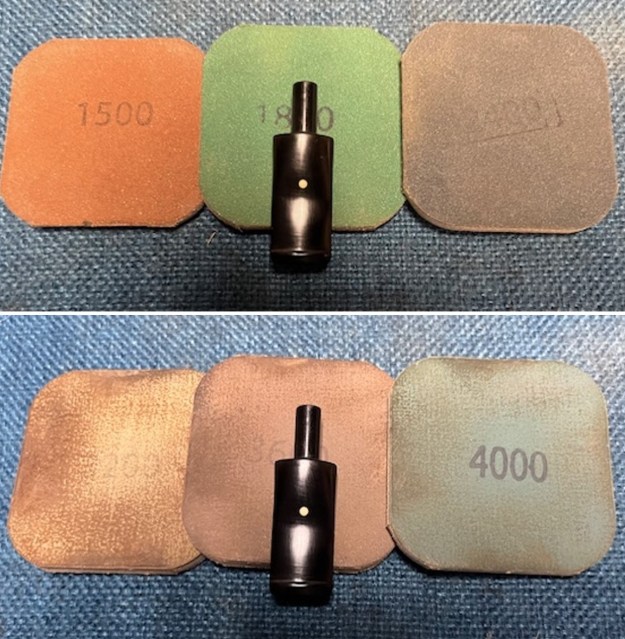
I can confidently date this pipe to the 1970s. I looked thoroughly in the book’s Unofficial Brigham Shape Chart and this pipe was nowhere to be found. I know that Brigham experimented with many shapes over the years, so this must have been one of those. Charles, if you’re reading this, please let us know in the comments below!I read through the article on Pipedia on Brigham Pipes. You can read it here. It’s a good article and contains lots of helpful information. I have included the chart below from the site as it shows the Brigham System and how it works.This is a beautiful pipe, but it did have some issues. The stem, however, was in good shape. Very dirty, to be sure, but not damaged. The stummel looks great – a bit dirty, some cake in the bowl and quite a bit of lava on the rim. I didn’t know it yet, but the lava hid some damage to the rim. This would be revealed later. I used a disposable lighter and ‘painted’ the stem with its flame. The gentle heat of the flame can cause the dents in the vulcanite of the stem to expand back into shape. In this case, the vulcanite did move – which was great – but it didn’t move fully. No problem.I used isopropyl alcohol on a few cotton rounds and wiped down the stem to provide an initial cleaning of filth before moving on to the next steps. The primary cleaning came next. I disinfected the inside of the stem with both pipe cleaners and cotton swabs dipped in lemon-infused 99% isopropyl alcohol. I scrubbed thoroughly to make sure the interior was very clean. I used a lot of pipe cleaners and cotton swabs – it was surprisingly dirty in there.The goal of the next step is the removal (or minimization) of oxidation. Going to my sink, I used cream cleanser, cotton rounds, and a toothbrush, and scoured the stem to remove as much surface oxidation as possible. As the photos show, the result was a hideous, ochre-coloured mess – but better off the stem than on it.Once the stem was reasonably clean, I soaked it overnight in some Briarville Stem Oxidation Remover. This solution works to draw oxidation in the stem to the surface of the vulcanite. This is a major aid and an important step in ensuring a clean stem. The following day, I drew out the stem from its bath and scrubbed the lingering fluid with a toothbrush.As the stem was now clean and dry, I set about fixing the marks and dents in the vulcanite. This was done by filling those divots with black cyanoacrylate adhesive, impregnated with carbon and rubber. I left this to cure and moved on.The penultimate step for the stem is sanding. First, with my set of needle files, I reduced the bulk of the cyanoacrylate repairs. I removed the excess adhesive as near to the surface as possible, without cutting into the vulcanite. Following that, I used all nine of the micromesh sanding pads (1,500 through 12,000 grit) to sand out flaws, even out the vulcanite, and provide gentle polishing of the finished surface. I also applied pipe-stem oil while using the last five micromesh pads. There was a wonderful, deep black shine to the stem when I was done.As the stem was (nearly) complete, I moved on to the stummel. The first step was to ream out the bowl – that is to say, remove all the cake inside the bowl. This accomplished a couple of things. First (and most obviously), it cleaned the bowl and provided a refurbished chamber for future smoking. Second, when the old cake was removed, I could inspect the interior walls of the bowl and determine if there was damage or not. I used a reamer, a pipe knife, and a piece of sandpaper taped to a wooden dowel. Collectively, these ensured that all the debris was removed.Similar to the stem, I then cleaned the stummel with both pipe cleaners and cotton swabs dipped in lemon-infused 99% isopropyl alcohol. With a pipe this dirty, it took quite a while and much cotton to clean. It was very dirty.My next step was to remove the lava on the rim. For this, I took a piece of machine steel and gently scraped the lava away. The metal’s edge is sharp enough to remove what I need, but not so sharp that it damages the rim. This work revealed some significant burn damage to the rim. Unfortunate and annoying, but not catastrophic. I then decided to ‘de-ghost’ the pipe – that is to say, exorcize the remaining filth from the briar. I filled the bowl and the shank with cotton balls, then saturated them with 99% isopropyl alcohol. I let the stummel sit overnight. This caused the remaining oils, tars and smells to leach out into the cotton.To tidy up the briar, I wiped down the outside, using a solution of a pH-neutral detergent and some distilled water, with cotton rounds. I also used a toothbrush in the crevices. This did a good job of cleaning any latent dirt on the surface of the briar. The last step of the cleaning process was to scour the inside of the stummel with the same mild detergent and tube brushes. This was the culmination of a lot of hard work in getting the pipe clean.In order to lessen the burns damage on the rim, I ‘topped’ the pipe – that is to say, I gently and evenly sanded the rim on a piece of 400-grit sandpaper. This effectively minimized the damage, without altering the look of the pipe. Fortunately, this required only minimal topping.I took a solid wooden sphere, wrapped with my micromesh pads, and lightly sanded the inner edge of the rim. This achieved two things: first, it removed some of the burn marks; and second (and more importantly), the circular shape and motion of the sphere gradually returned the edge to a circle shape.I used all nine micromesh pads (1,500 through 12,000 grit) to sand the rim and the underside of the shank. This sanding minimizes flaws in the briar and provides a beautiful smoothness to the wood. I rubbed some LBE Before & After Restoration Balm into the briar and let it sit for 30 minutes or so. The balm moisturizes the wood and gives a beautiful depth to the briar. I then buffed the stummel with a microfibre cloth. For the final step, I took the pipe to my bench polisher and carefully buffed it – first with a blue diamond compound, then with three coats of conservator’s wax. This procedure makes the pipe look its best – the stummel sings and the stem glows.All done! This unlisted Brigham 3-dot scoop looks fantastic again and is ready to be enjoyed by its next owner. I am pleased to announce that this pipe is for sale! If you are interested in acquiring it for your collection, please have a look in the ‘Canadian’ section of the store here on Steve’s website. You can also email me directly at kenneth@knightsofthepipe.com. The approximate dimensions of the pipe are as follows: length 6⅛ in. (155 mm); height 1¾ in. (45 mm); bowl diameter 1⅓ in. (34 mm); chamber diameter ¾ in. (20 mm). The weight of the pipe is ⅞ oz. (27 g). I hope you enjoyed reading the story of this pipe’s restoration as much as I enjoyed restoring it. If you are interested in more of my work, please follow me here on Steve’s website or send me an email. Thank you very much for reading and, as always, I welcome and encourage your comments.