
by Steve Laug
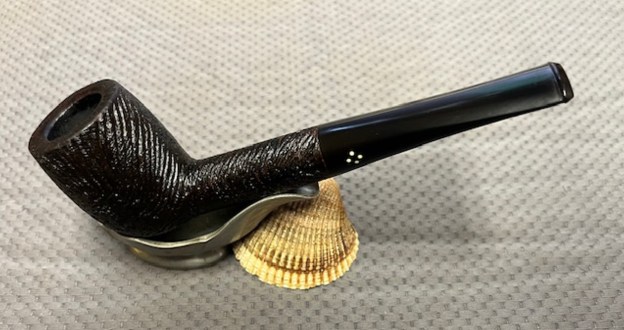
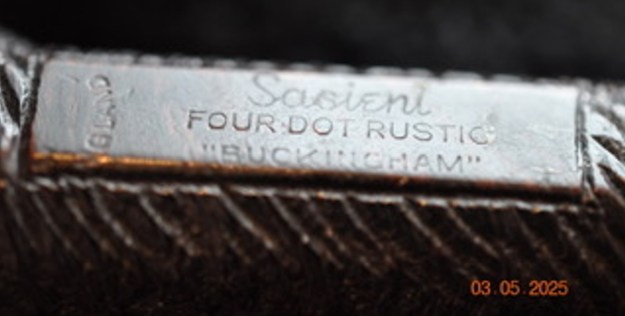
The next pipe I have chosen to work on was purchased on 08/24/2024 from a seller in Wheeler, Oregon, USA. It is a nice looking rusticated Billiard with 4 light blue or white dots on the left side of the taper stem. It was stamped on the underside of the shank and read Sasieni in script with the tail of the “i” short and tight. Underneath that it was stamped FOUR DOT RUSTIC in block letters [over] “Buckingham”. Next to the bowl shank junction it was stamped Made in England shaped like a football vertically. The rusticated finish was very dirty with dust and debris in the grooves of the rustication. The bowl had a thick cake in it with lava overflow into the rustication on the rim top. It was an incredibly dirty pipe. The stem was oxidized and had tooth marks and chatter on both sides of the stem ahead of the button The 4 light blue/white dots on the left side of the taper stem were in good condition and very light in colour. Jeff took these photos of the pipe before he started the clean up work on it.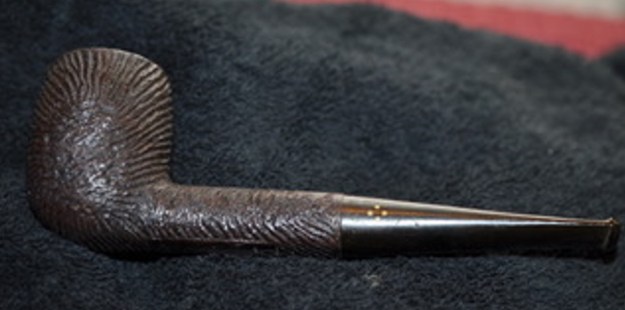
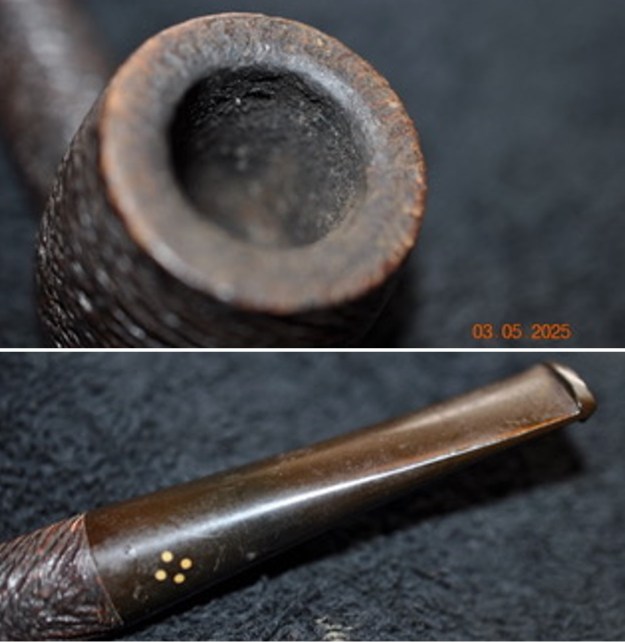
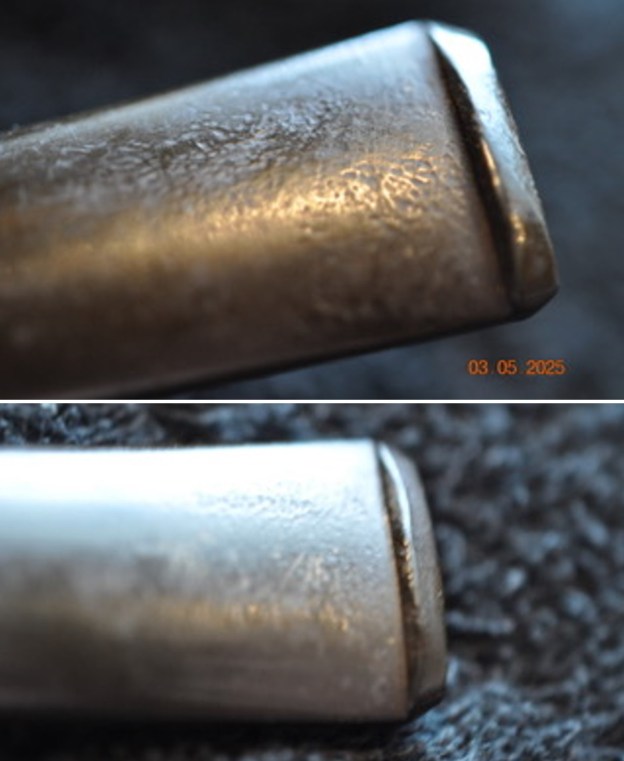
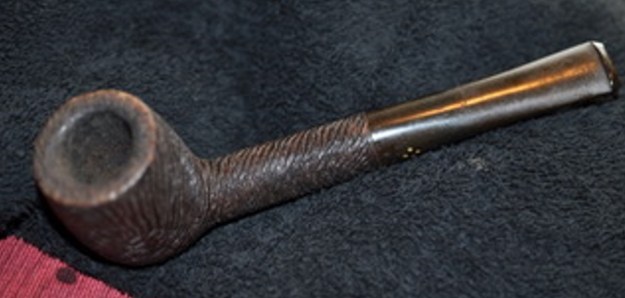 Jeff took close up photos so that I could have a clearer picture of the condition of the bowl and rim edges and top. The rim top photos confirm my assessment above. The cake in the bowl is quite thick and the rim top has a coat of lava and debris on it that will need to come off. You can also see the lava on the inner edge of the rim. You can also see the condition of the inner and outer edges of the rim and down the outside of the bowl. This is what I look for when assessing a pipe. The bowl appears to be still round. His photos of the stem surface confirmed and heightened my assessment of the condition. You can see the oxidation, calcification and tooth chatter and marks on both sides ahead of the button. From the photos you can see the light blue four dot diamond the top of the taper stem they are in good condition.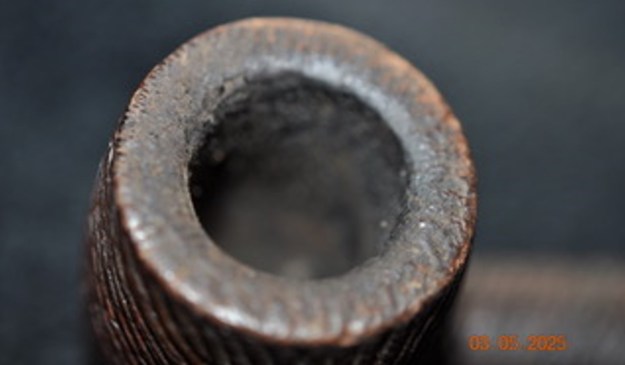
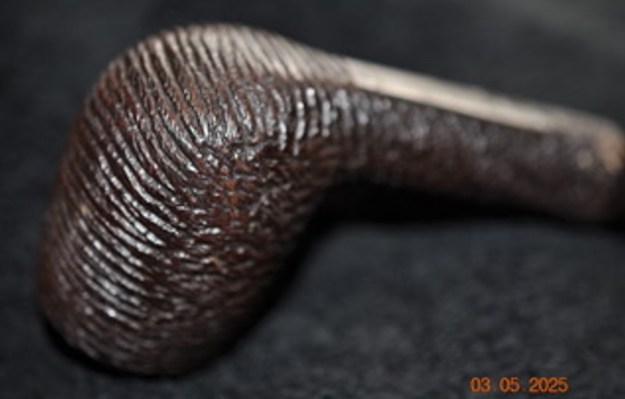
 He took photos of the sides and heel of the bowl to show the rustication patterns in the briar. It is a unique finish and in places the grain can be seen through the finish.
 He took a photo of the stamping on the smooth panel on the underside of the shank to capture what was stamped there. It is faint in spots but readable as noted above.
  I decided to do some work on the stamping of this pipe to get an idea of the time period it was carved. I turned first to Pipephil’s site to see what I could learn (http://pipephil.eu/logos/en/logo-sasieni.html). I found a pipe that was stamped the same way as the one I am working on. I is stamped on the underside of the shank like the one in the screen capture photo below. Mine is stamped the same way Sasieni in script without the fish tail. Underneath it is stamped FOUR DOT [over] “Buckingham”. To the left it is stamped with a football shaped Made in England stamp. I included the side bar notes below the picture.
 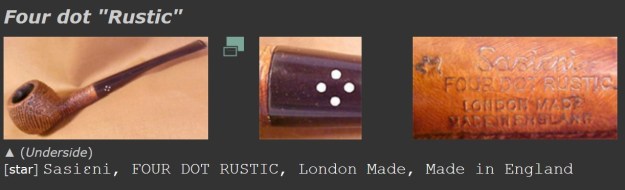 Pre-transition, 1946 – 1979. Four Dot Rustic: Name for a rusticated finish. One star near “Four”.
I then turned to Pipedia for more detailed information (https://pipedia.org/wiki/Sasieni). I quote a section of that article below. The underlined portion below is particular pertinent to this pipe.
To begin with, there are three main elements to dating the Sasieni pipe, the patent number, the style of the name “Sasieni” as it appears on the shank, and the Dots themselves. Naturally, there are exceptions to these rules (this hobby would be boring without them), but for the most part these guidelines apply better than 95% of the time. All Sasieni One, Four, and Eight Dot pipes made before W.W.II and destined for the U. S. market carried a patent number on the shank which usually started with the numbers “15″, with 150221/20 and 1513428 being representative of the group. Also, the name “Sasieni” was stamped on the shank in a very florid manner, with the tail of the last “i” sweeping underneath the name forming a shape which has been compared to a fish by more than one collector. This script was discontinued by Alfred almost immediately after he took over the company, so this alone tells you your pipe is pre W.W.II. Underneath in block lettering are the words “London Made”, with the patent number making the third line.
The dots will help you narrow this down further. As we mentioned, the short lived U. S. market One Dot was introduced around 1920, and was replaced by the early to mid 1920’s by the Four Dot. The 1920’s Four Dot is distinguishable by the florid Sasieni script, a patent number, and four blue dots, which are quite small compared to the pipes of post war years. Furthermore, by 1935 Sasieni began stamping pipes, based on the shape, with their own names, which were usually, but not always, English towns. For example, apples were stamped “Hurlingham”, bulldogs were “Grosvenor” or “Danzey”, and panels were “Lincoln”. One rare and interesting variation of this was the large bent, dubbed “Viscount Lascelles”. Even in this soft Sasieni market, these pipes regularly sell for $150 in their rare appearances in mailers…
In reading the history of the brand on the page I also read through the various photos and brochures that were included in the article. I found a photo of a page from a catalogue describing the rustic briar that I have included below. The rustication pattern is very similar to that on the pipe one that I have here. It is interesting to read the descriptions on the page both of the rustication and the patent. The pipe on the table has the stinger apparatus, or Patented Extension, shown in the second paragraph and photo in the flyer below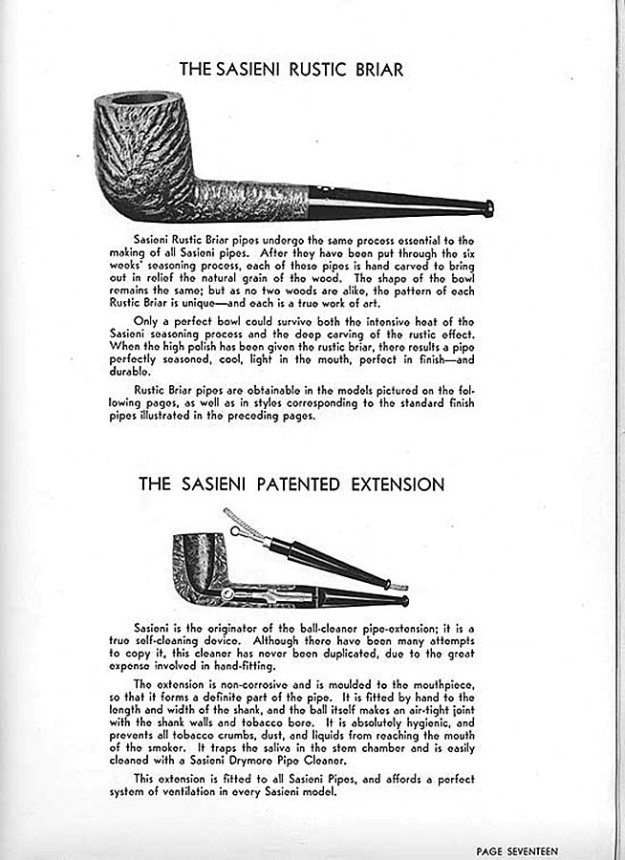 Now that I knew the approximate dating of the pipe that I had in hand it was time to work on it.
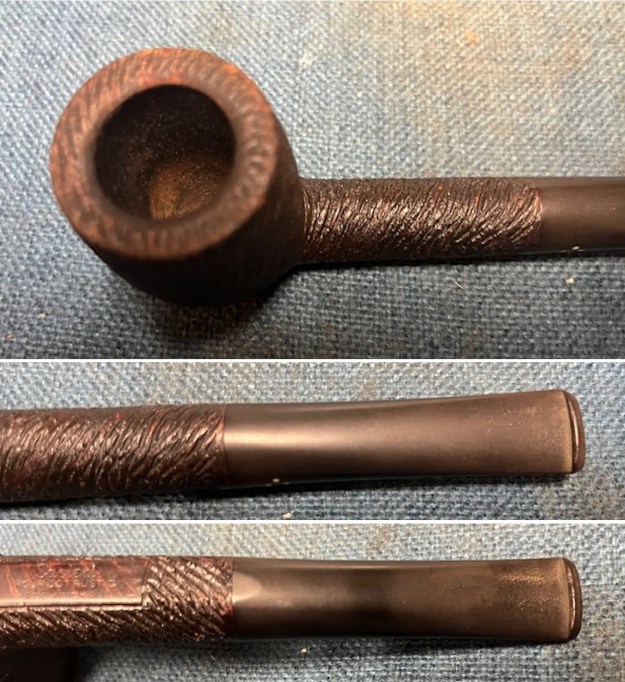
Now that I was reminded of the history and background of the Sasieni Four Dot “Rustic” it was time to work on the pipe on my end. When I received it, Jeff had once again done an amazing job cleaning the pipe. He reamed it with a PipNet pipe reamer and got rid of the cake. He cleaned up the reaming with a Savinelli Fitsall Pipe Knife so that we could see the walls of the bowl and assess for damage. He cleaned the internals of the shank and stem with alcohol, pipe cleaners, cotton swabs, shank brushes and alcohol. He scrubbed the exterior with undiluted Murphy’s Oil Soap and a tooth brush. He rinsed the pipe under warm water. He dried it off with a cloth and then let it air dry. The stem was scrubbed with Soft Scrub and soaked in Before & After Deoxidizer. It came out looking very good. The finish on the bowl and the rim top cleaned up nicely. I took pictures of the pipe to show how it looked when I unpacked it. 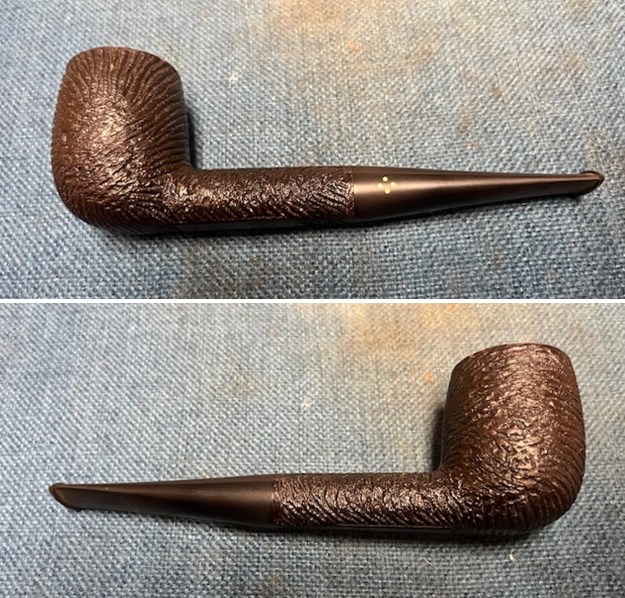
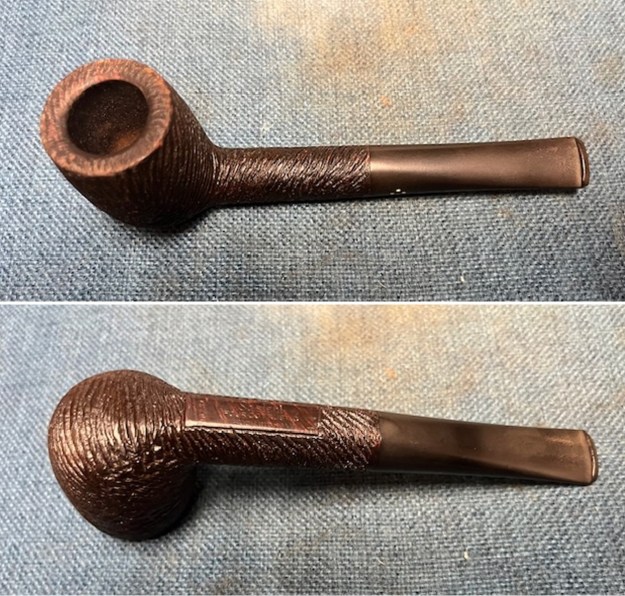 I took photos of the rim top and the top and underside of the stem. You can see the clean bowl and rim top. The stem has light tooth chatter and marks on both sides ahead of the button. It is dirty but otherwise great. It is a nice looking pipe.
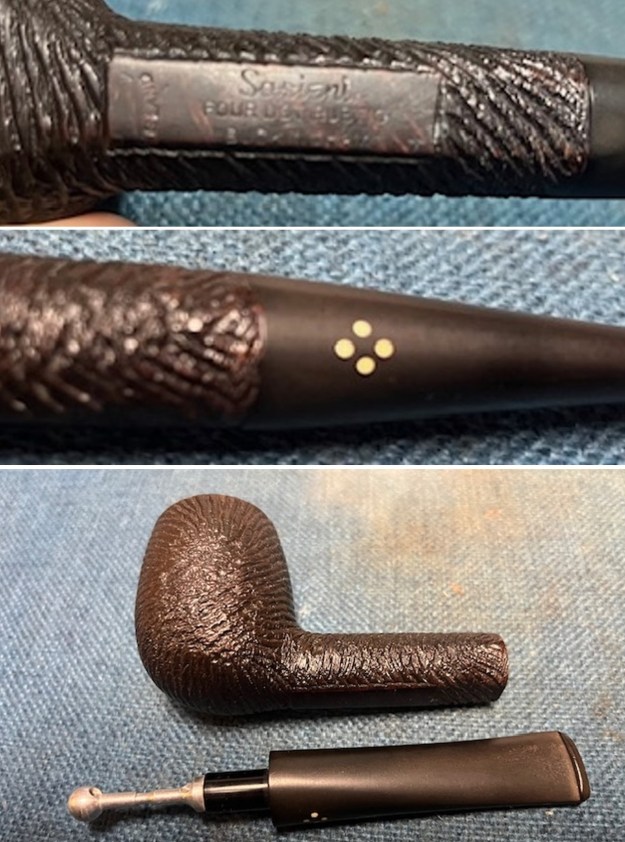
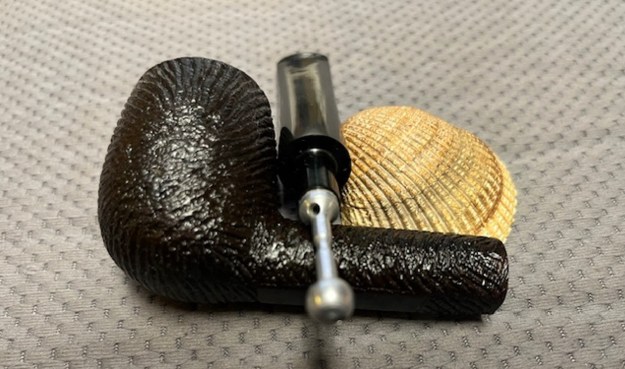
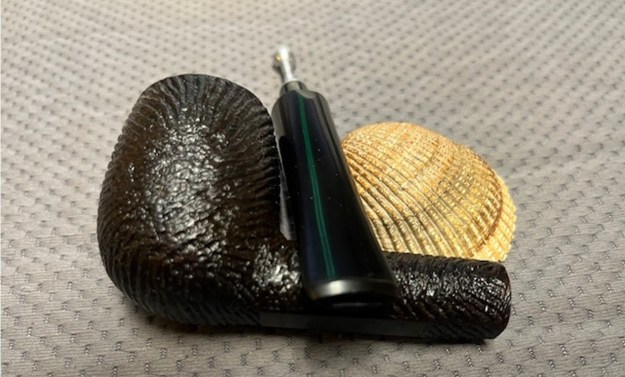
 The next photo shows the stamping on a smooth panel on the underside of the shank. It is faint in places but is still readable as noted above. I also took a photo of the four dots on the side of the stem. They appear white in the photo but may have a faint tinge of blue. I removed the stem from the shank and took a photo of the parts to give a sense of the overall look of the pipe. It is really a nicely looking pipe that will look great once it is cleaned up.
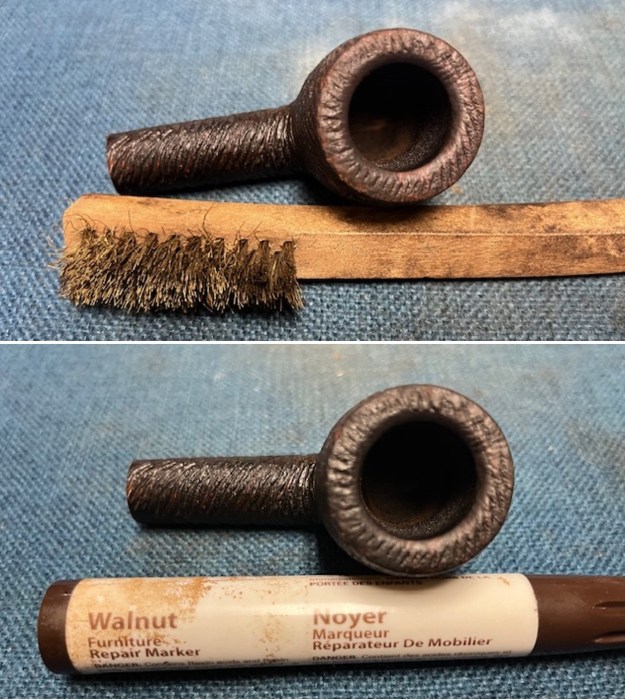
 I used a brass bristle wire brush to clean up the rim top. The rustication patterns on the surface came back to life with the brushing. The bevelled inner edge looked surprisingly good. I touched up the nicks and light spots on the top and the edges of the bowl with a walnut stain pen. The match was perfect and looked great with the other parts of the rusticated finish.
 I rubbed the bowl down with Before & After Restoration Balm to deep clean the nooks and crannies of the rusticated finish, enliven and protect the briar. I hand rubbed it with my fingers and worked it into the deep rustication with a horsehair shoe brush. I let it sit for 15 minutes to let it do its work. I wiped it off with a soft cloth. I buffed the bowl with a cotton cloth. It really began to have a deep shine in the briar. I took some photos of the bowl at this point to mark the progress in the restoration.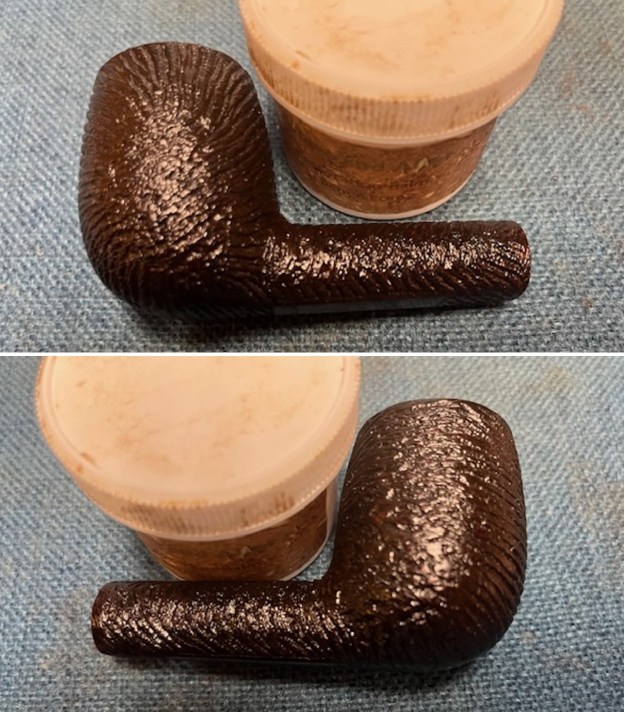
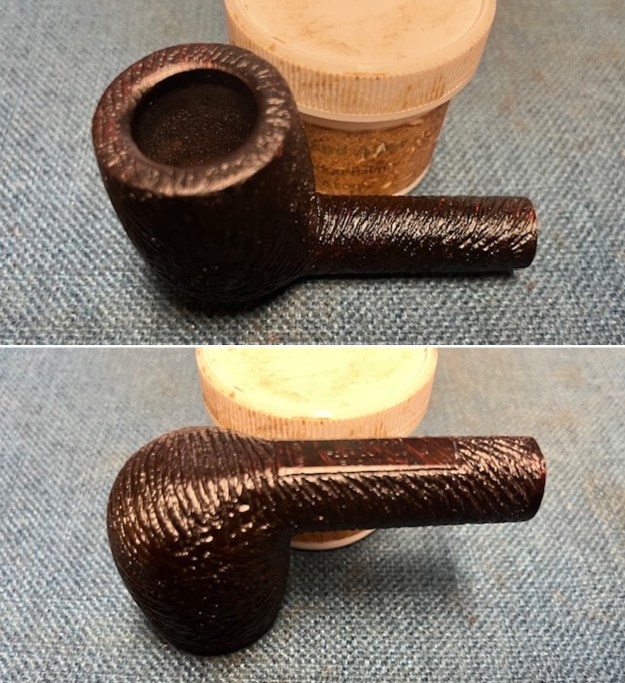
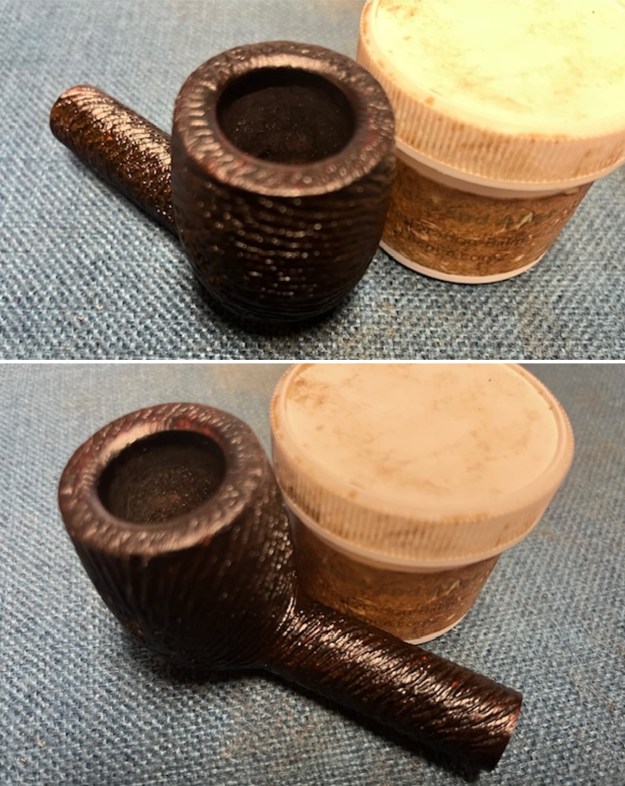 I set the bowl aside and turned my attention to the stem. I sanded the stem surface ahead of the button with 220 grit sandpaper to remove all of the tooth marks and chatter and smooth out the surface.
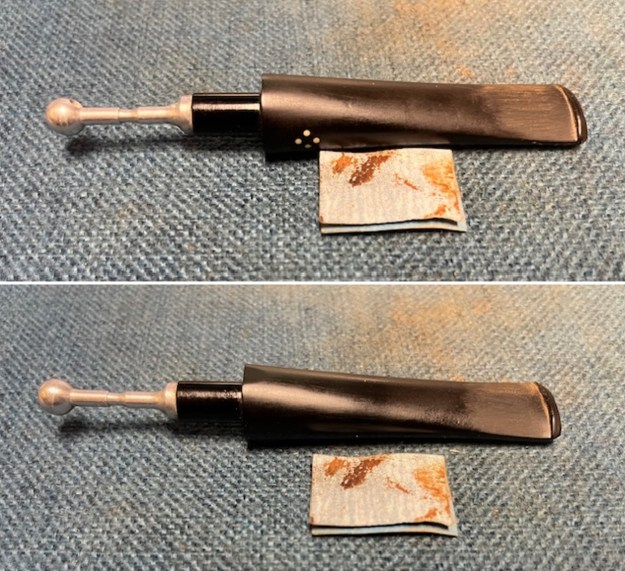 I sanded the stem surface with 320-3500 grit 2 x 2 inch sanding pads. After each pad I wiped the stem down with an Obsidian Oil cloth to remove the debris. It was looking very good.
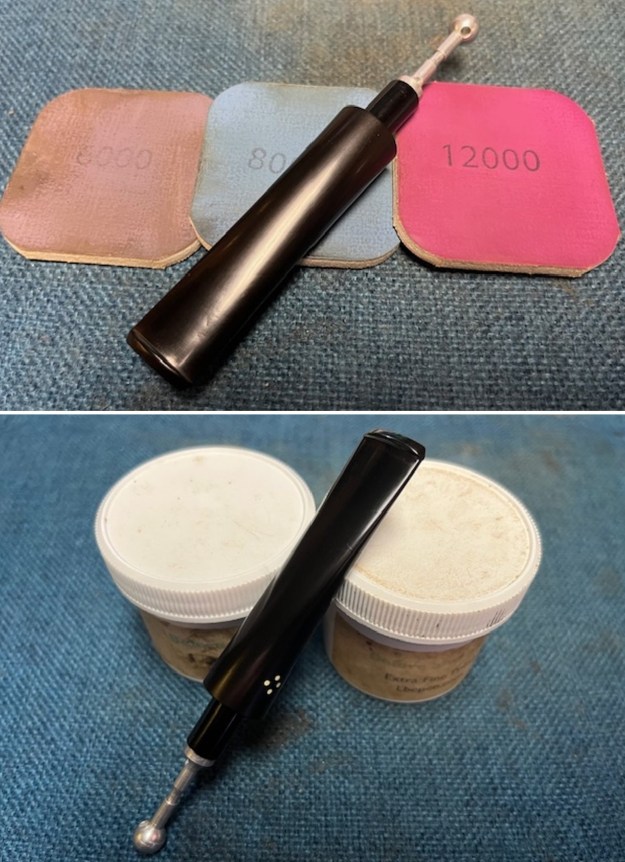
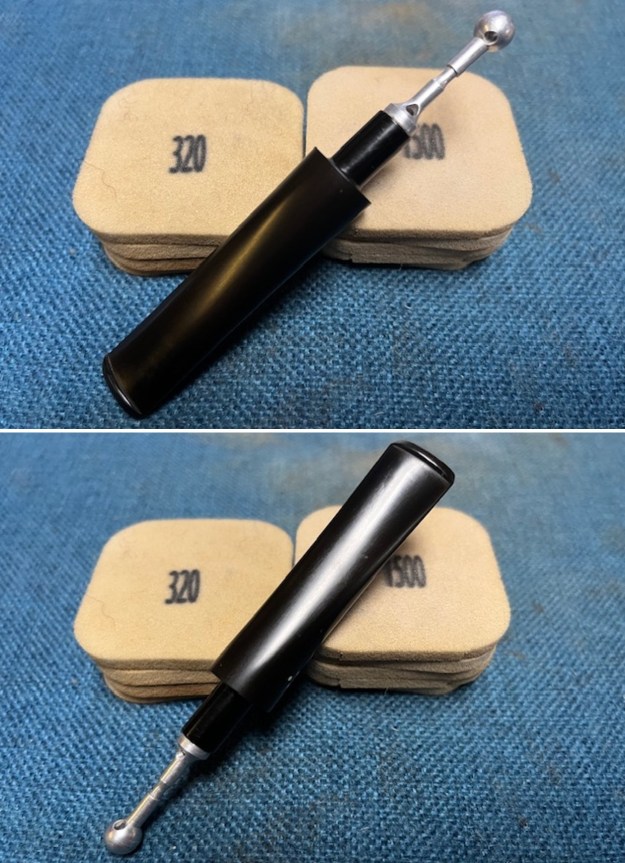 To polish the stem and repairs I use micromesh sanding pads and water to dry sand the stem with 1500-12000 grit sanding pads. I wiped it down after each sanding pad with Obsidian Oil on a cotton rag after each sanding pad as I find it does two things – first it protects the vulcanite and second it give the sanding pads bite in the polishing process. After finishing with the micromesh pads I rub the stem down with Before & After Fine and Extra Fine stem polish as it seems to really remove the fine scratches in the vulcanite. I rub the Fine Polish on the stem and wipe it off with a paper towel and then repeat the process with the extra fine polish. I finish the polishing of the stem down with a final coat of Obsidian Oil and set the stem aside to let the oil absorb. This process gives the stem a shine and also a bit of protection from oxidizing quickly.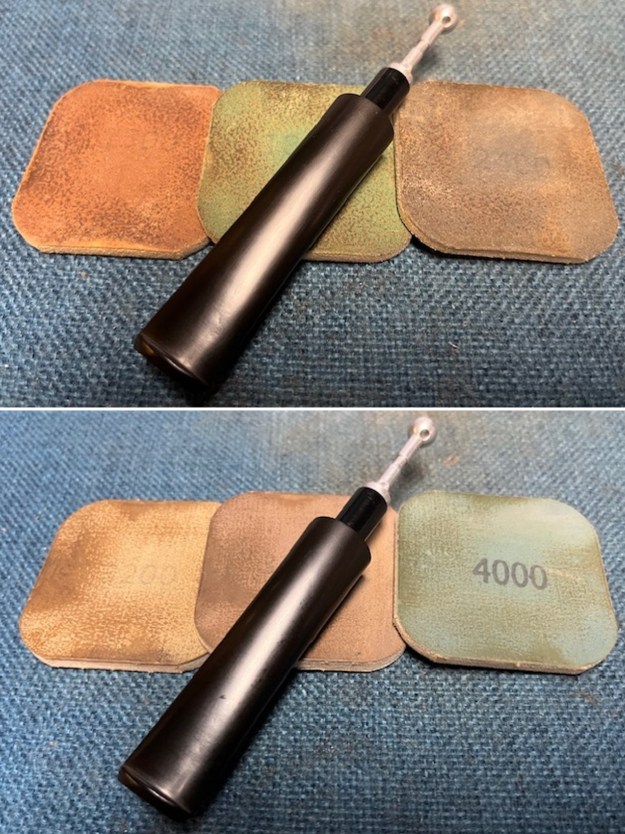
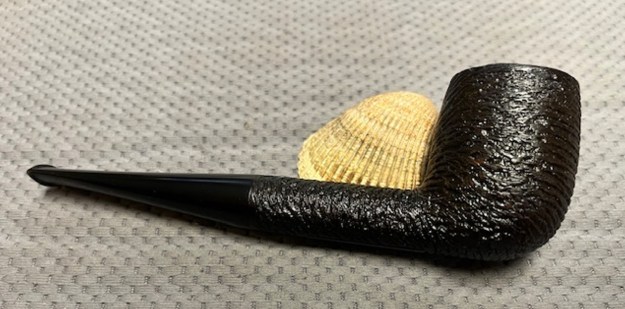
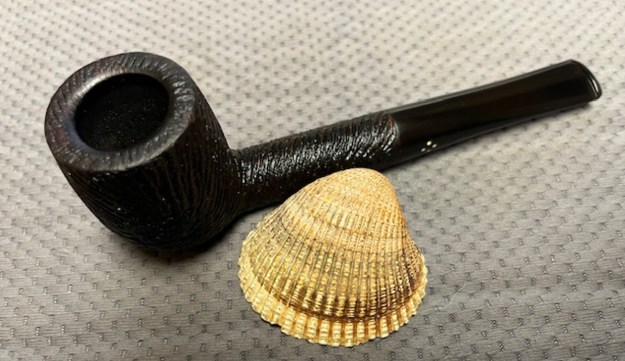
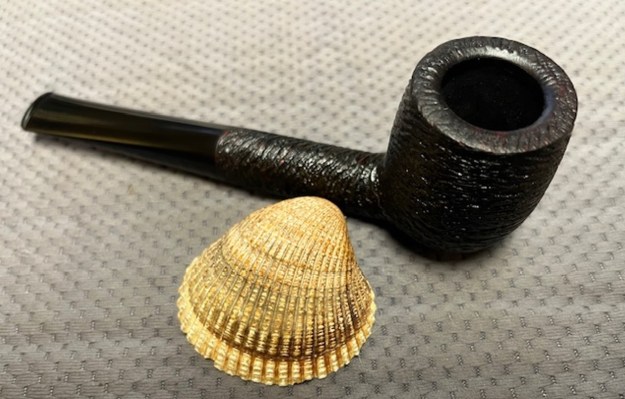
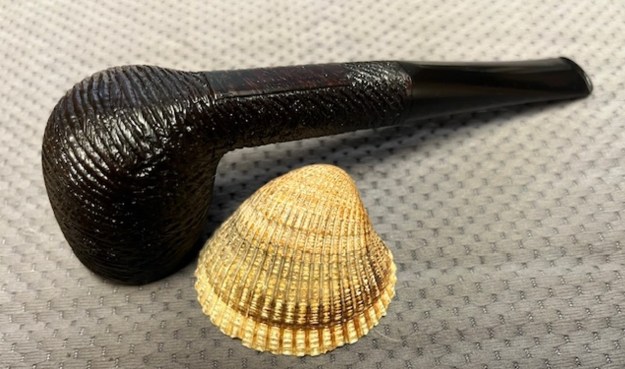
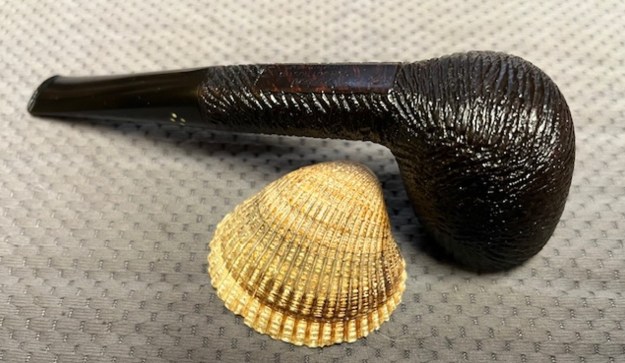
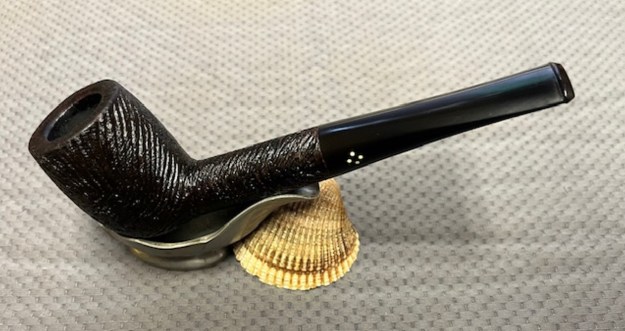
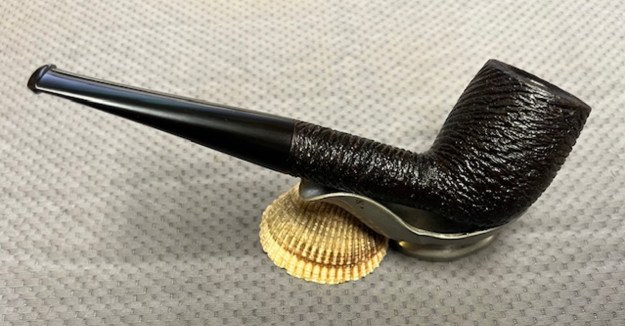
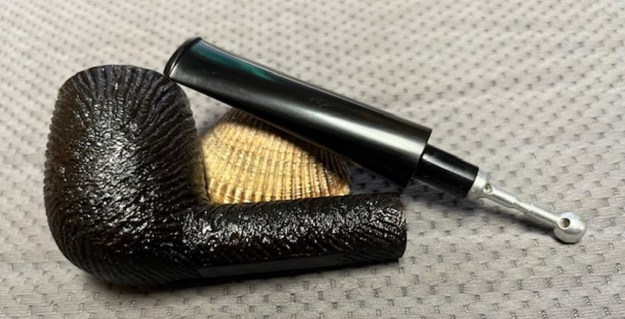
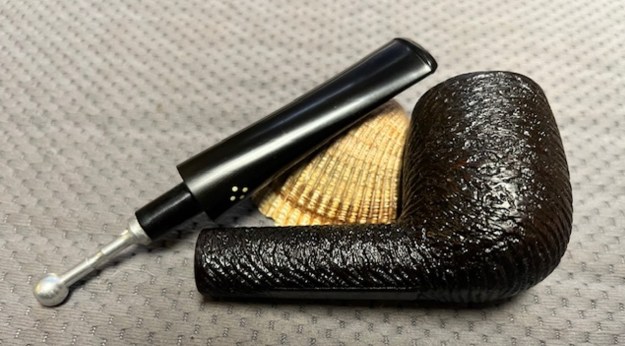
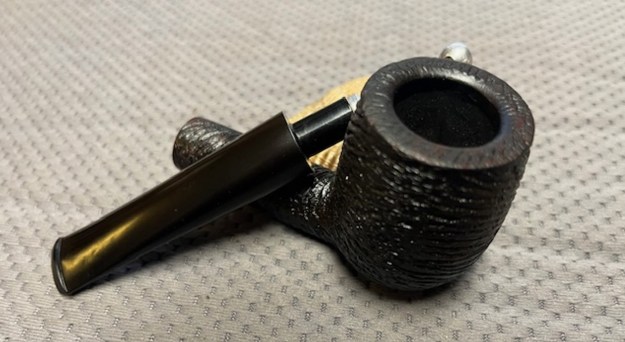
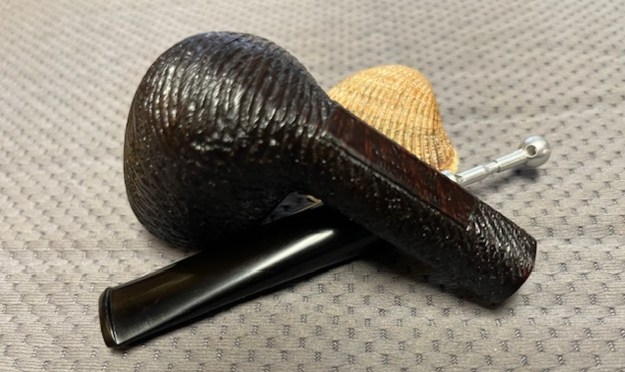
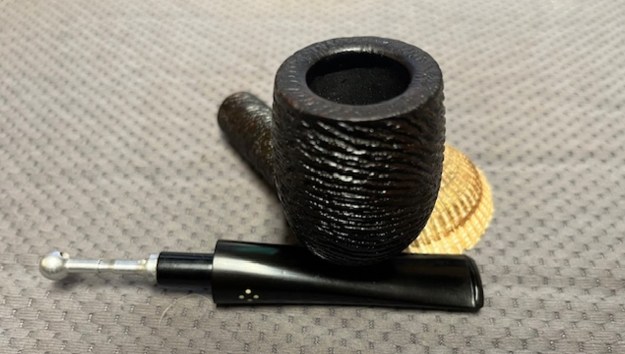
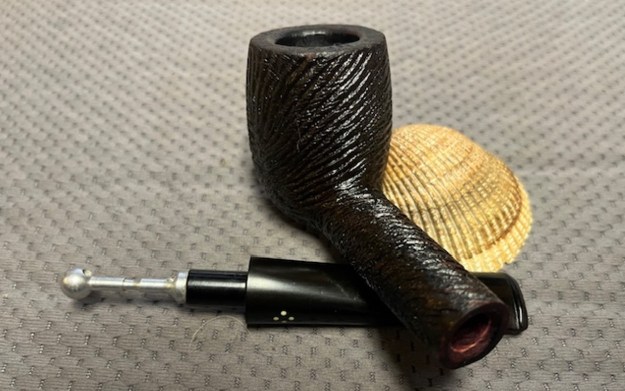
 This is another pipe I am excited to finish. It is a Sasieni Four Dot Rustic “Buckingham” Billiard. I put the pipe back together and buffed it lightly with Blue Diamond on the buffing wheel. I gave the bowl multiple coats of Conservator’s Wax and the stem multiple coats of carnauba wax. I buffed the pipe with a clean buffing pad to raise the shine and hand buffed it with microfiber cloth to deepen the shine. It is fun to see what the polished bowl looks like with the polished vulcanite stem. It really was a beautiful pipe. The rusticated surface is quite unique and there is grain shining through the rich browns/black stain on the finish of this Sasieni Four Dot Rustic Billiard. It is nice looking and the pipe feels great in my hand. It is light and well balanced. Have a look at it with the photos below. The dimensions are Length: 6 inches, Height: 2 inches, Outside diameter of the bowl: 1 ¼ inches, Chamber diameter: ¾ of an inch. The weight of the pipe is 1.73 ounces/49 grams. It is a beautiful pipe and one that will be going on the rebornpipes store in the British Pipe Makers Section. Thanks for walking through the cleanup with me as I worked over this pipe. Thanks to each of you who are reading this blog. Remember we are not pipe owners; we are pipemen and women who hold our pipes in trust until they pass on into the trust of those who follow us.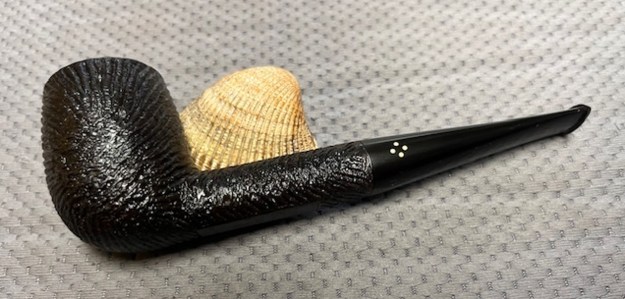
 rebornpipes