Daily Archives: November 30, 2024

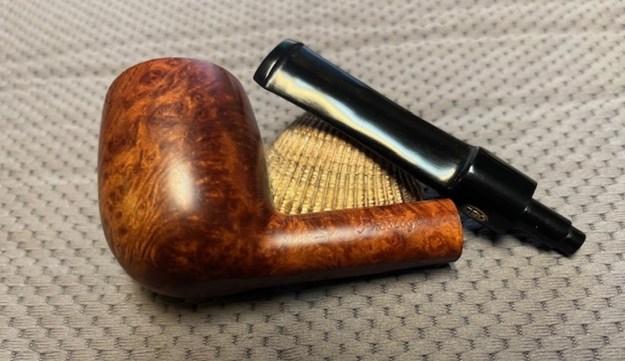
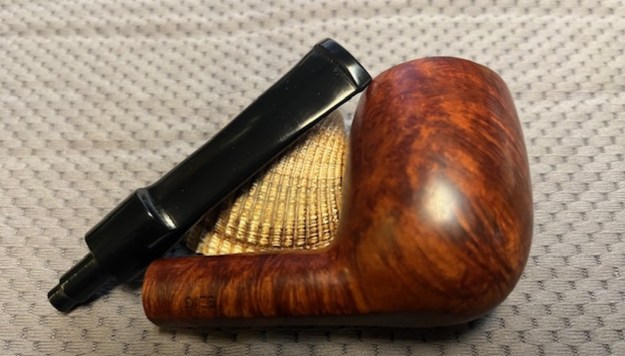
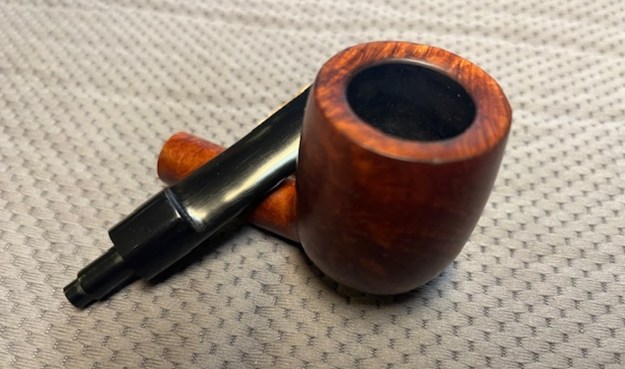
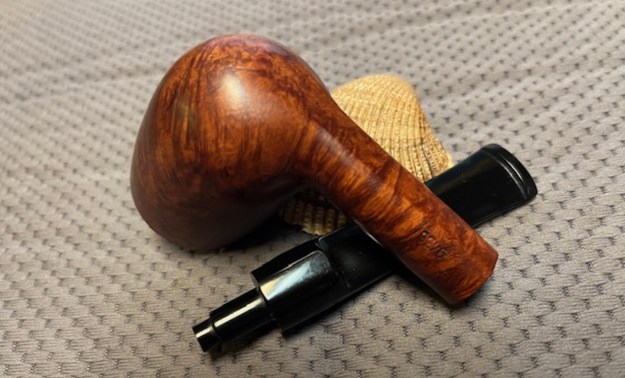
GBD Prestige London England 9436 Saddle Stem Billiard


by Steve Laug

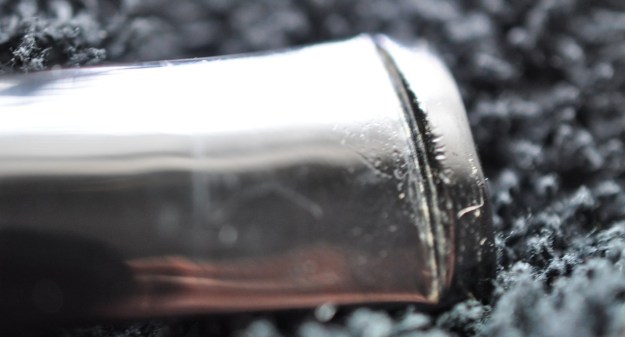
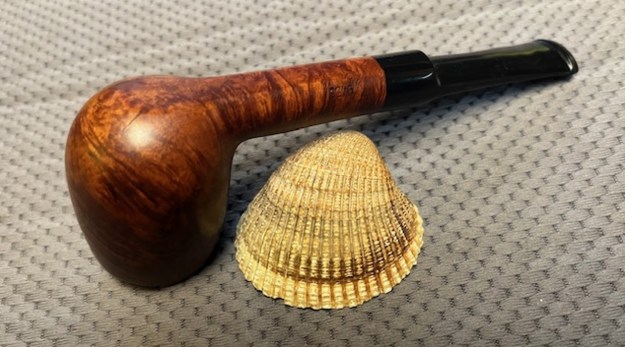
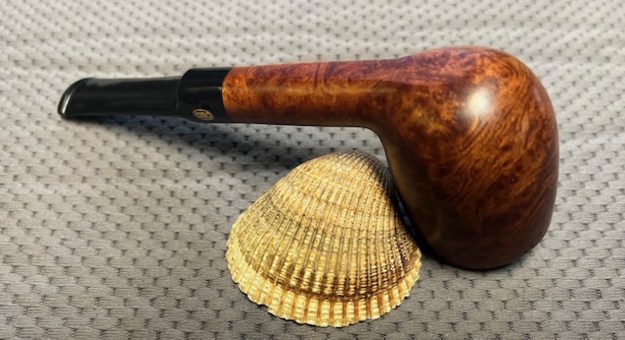
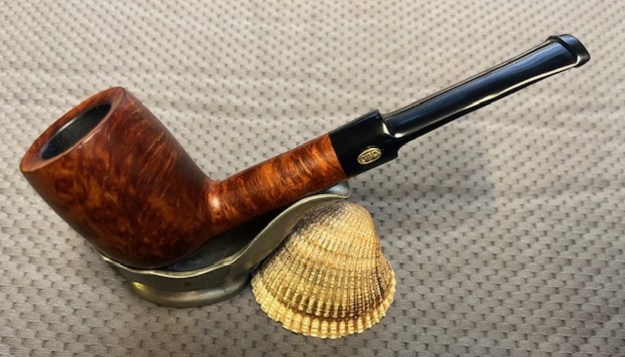
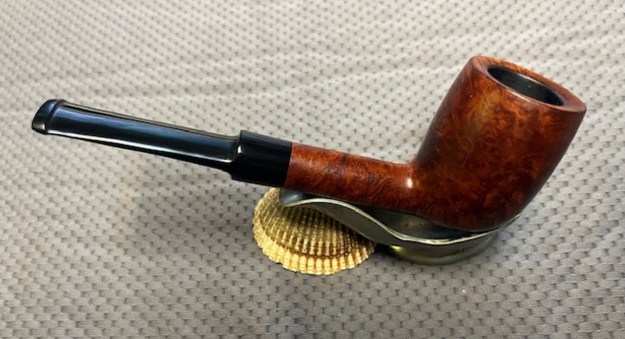
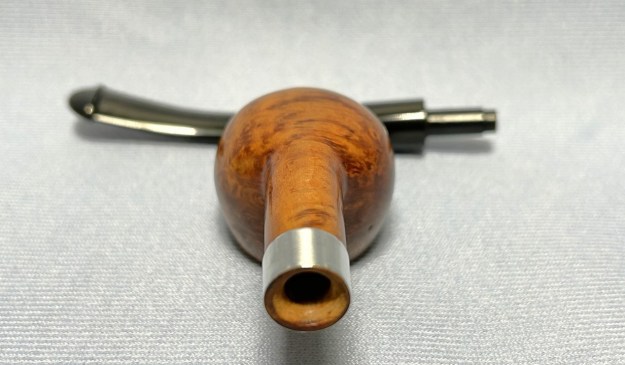
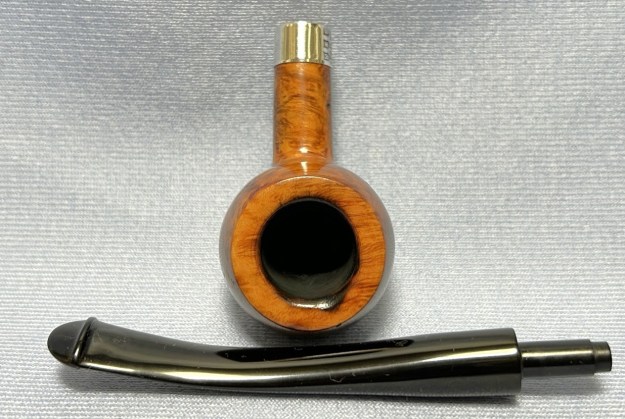
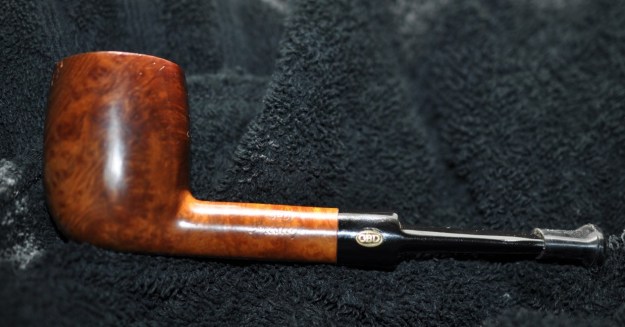
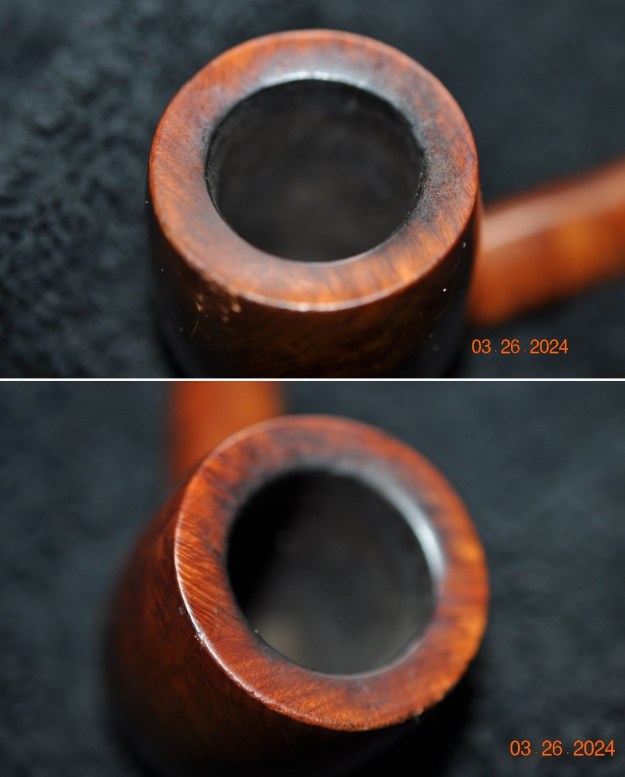
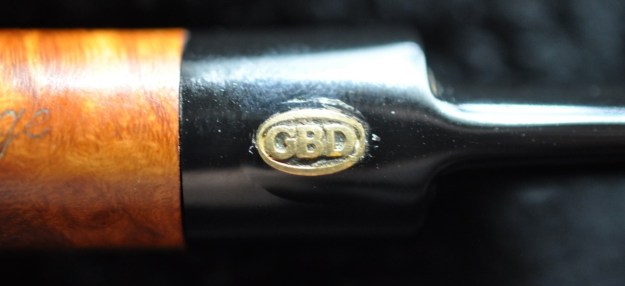
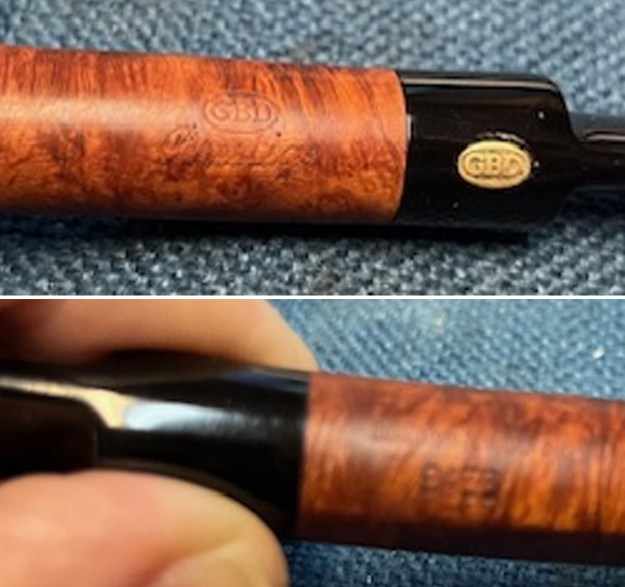
I picked some older pipes to work on next. The next of these is a GBD saddle stem smooth billiard. We purchased this one on 03/21/2024 from a seller in Oregon City, Oregon, USA. Jeff regularly visits shops along the coast hunting for pipes and though there are less of them there are still a lot available. The is a saddle stem Billiard that is stamped on the left side of the shank and reads GBD in an oval [over] Prestige and on the right side it is stamped London, England over the shape number 9436. The pipe was well used. The finish was dirty with dust and debris ground into the finish. The bowl had a thick cake in it and some lava on the inwardly bevelled rim top and the inner edge. There was also some roughening to the inner edge and darkening on the top of the bowl. The black acrylic stem looked very good and had a slight rippled look from sanding and buffing in the past. and had some light tooth marks on the surface ahead of the button. The stem had sported a Softee Bit Guard and there was debris but the bit had protected the stem from deep tooth marks. Jeff took photos of the pipe before he started his cleanup work. He took some closer photos of the rim top and bowl to show the condition. You can see the thick cake in the bowl and the lava on the rim top and inner edge. It is hard to know for certain but it looks like there is some roughening on the back inner edge. He also took photos of the stem to show its condition. You can see the scratching and the bit guard. In the second photo he removed the bite guard and shows the condition of the stem surface. Jeff took some photos of the sides and heel of the bowl to show the smooth finish and the grain around the bowl and shank. He captured the stamping on the left and right sides of the shank. It is clear and faint in spots and reads a noted above. The brass inset GBD oval logo on the left side of the saddle stem is clear and undamaged. I looked on the Pipephil logos site for information on the Prestige line and found nothing there. I turned to Pipedia’s general article on the GBD brand looking for any information on the Prestige line and once again found nothing. The history article is a great read. Be sure to have a look at it.
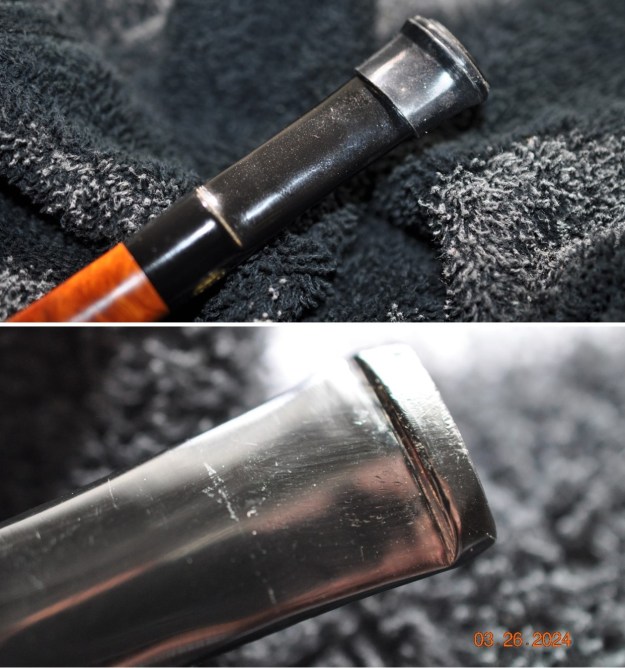
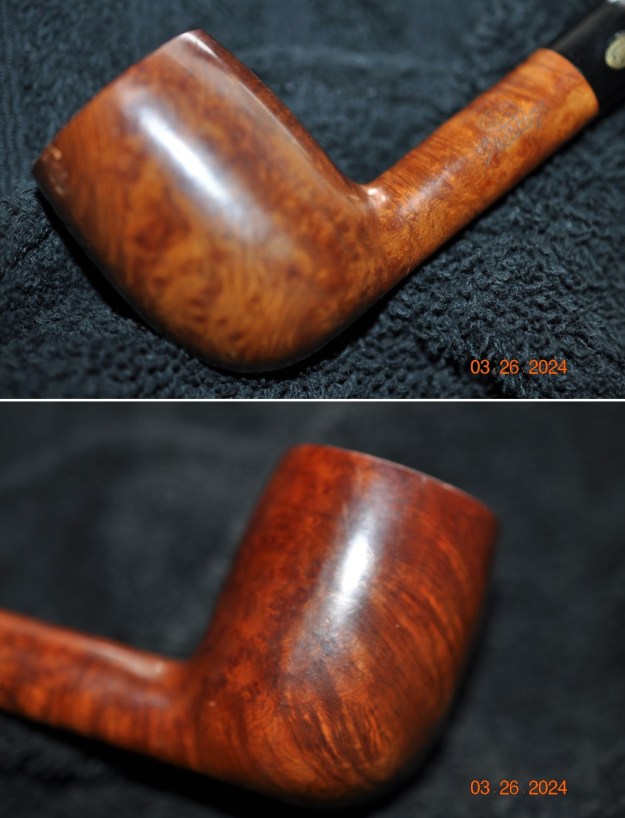
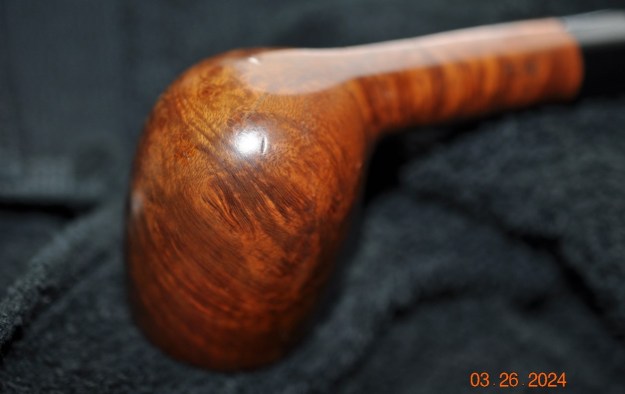
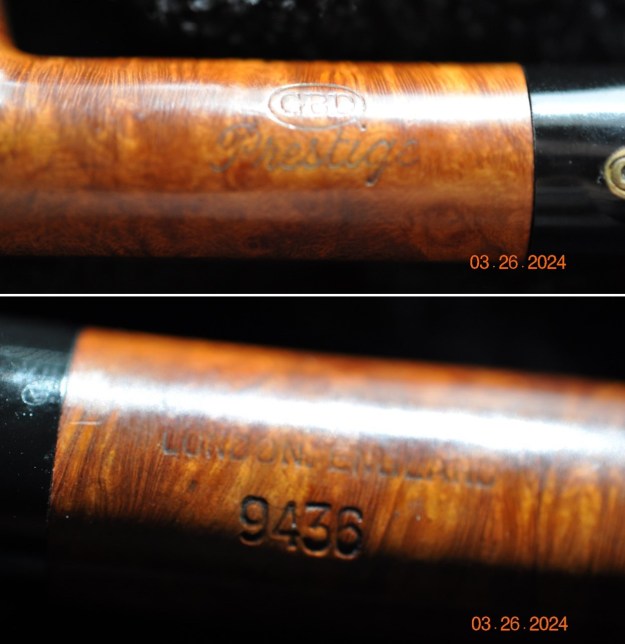
The article included link to other articles on Pipedia and one of those was to an article on the GBD Model Information (https://pipedia.org/wiki/GBD_Model_Information). I turned there and found what I was looking for. There was a short description of the line and I have included it below:

Prestige — England, unknown if also made in France: Matt natural finish, Perspex mouthpiece.

That was helpful in terms of the finish which matches the pipe in my hand precisely. However, the note on a Perspex mouthpiece led me to believe it was speaking of the clear mouthpiece. That puzzled me a bit. I read further and in a short note from GL Pease I found the information below. I quote:

…In a circa 1973 chart which I have, here are the descriptions of the higher grades:

  • Virgin — “Only the finest of closely grained briar is utilized for this exceptional pipe. Natural finish”
  • Century — “A golden finish created to celebrate over a century of manufacturing the finest briar pipes.”
  • New Era — “The beauty of this pipe’s perfect briar is accentuated by the richness of the ‘take-off’ dual finish.”
  • Prestige — “This pipe features a black handcut perspex mouthpiece which precludes discoloration and ‘bad taste’ after continual smoking. Only the finest of the fine-grained bowls are selected for this handsome matt virgin finished briar.”
  • Prehistoric Perspex — “The deep sandblasting sillhouettes the grain in bold relief. The crystal clear mouthpiece creates an attractive contrast to the deep dark finish.”

From that I now knew that the pipe was a higher grade GBD that is described as having a black handcut Perspex mouthpiece and a matte finished, fine grained virgin briar.

I turned to another link on the site to look at shape numbers and see if I could identify further information regarding the shape (https://pipedia.org/wiki/GBD_Shapes/Numbers). I quote what I found below:

9436 billiard straight round
         

The stem on the 9436 I was working on was a black Perspex saddle stem. It looked very good. Now it was time to work on the pipe.

Jeff had cleaned up the pipe and it looked very good. He reamed the pipe with a PipNet pipe reamer and removed the rest of it with a Savinelli Fitsall Pipe Knife. He scrubbed the bowl with undiluted Murphy’s Oil Soap with a tooth brush. He rinsed it under running warm water to remove the soap and grime. He cleaned out the inside of the shank and the airway in the stem with alcohol, cotton swabs, shank brushes and pipe cleaners. He soaked the stem in Briarville’s Stem Deoxidizer and rinsed it off with warm water. While it does nothing for the finish on the stem as it is Perspex it is worth the effort in that it removes the grime on the stem. I took photos of the pipe before I started my part of the restoration work. The inwardly bevelled rim top cleaned up really well. The rim top and outer edge of the bowl look very good. The inner edge has some darkening and light damage. The stem surface was smooth but the ripples in surface were visible though hard to capture with the photos. Overall it looked very good with a few tooth marks and chatter on both sides near the button.
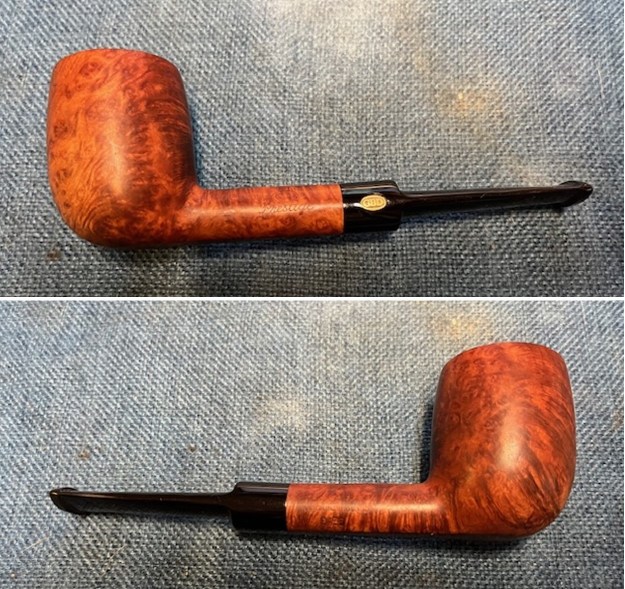
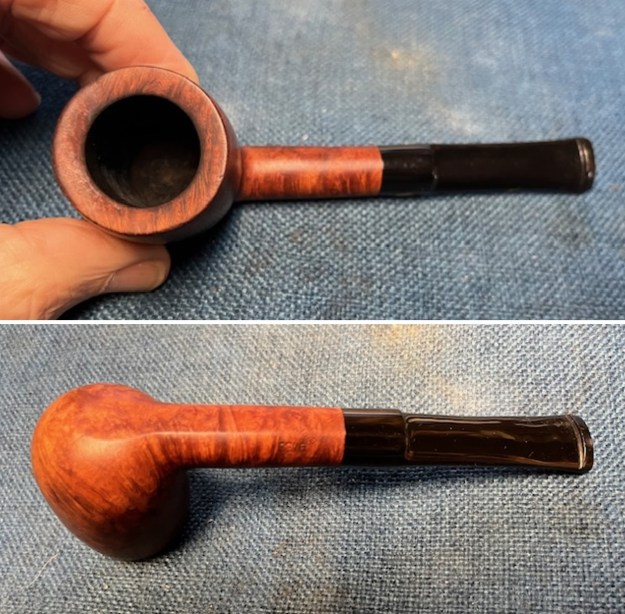
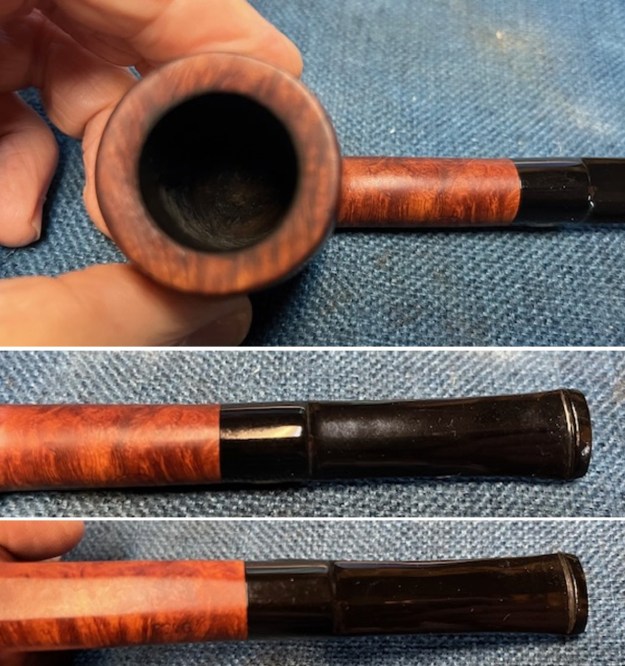
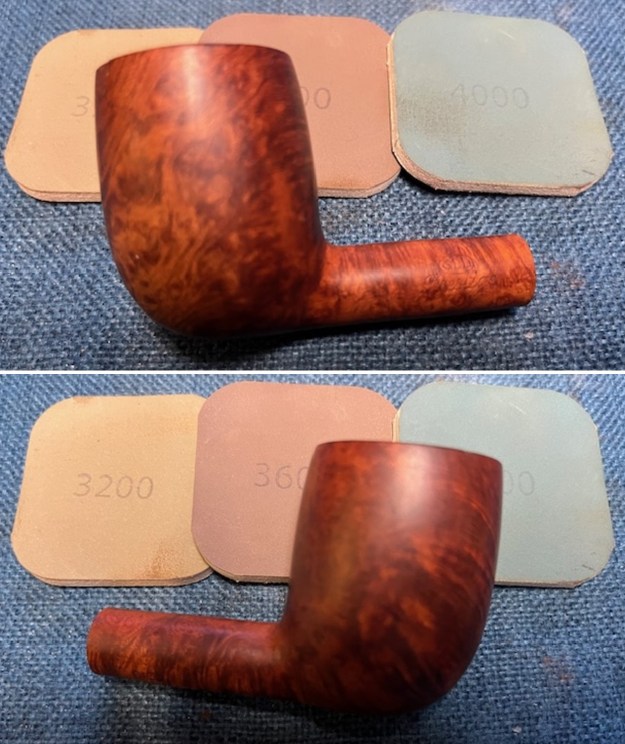
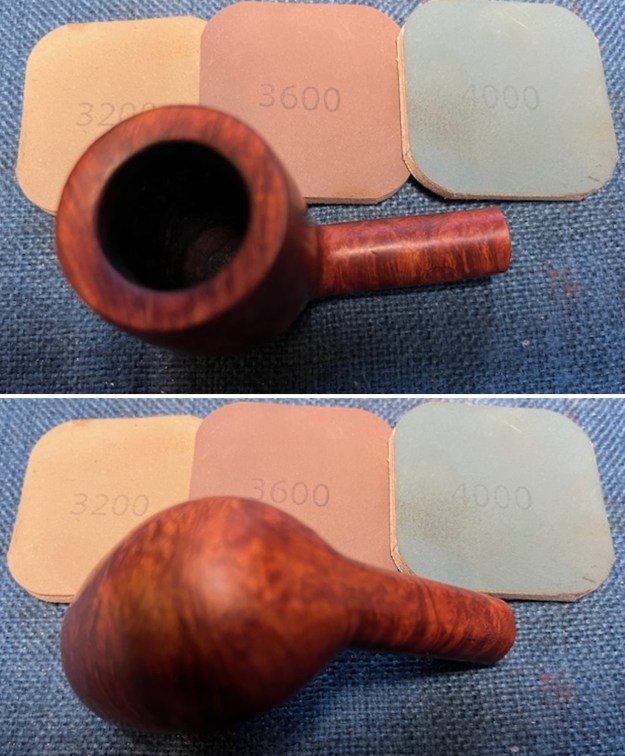
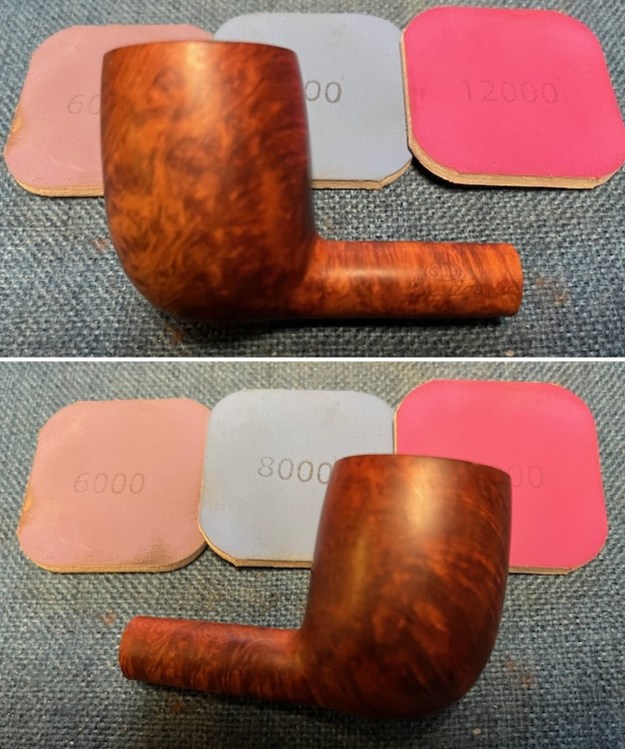
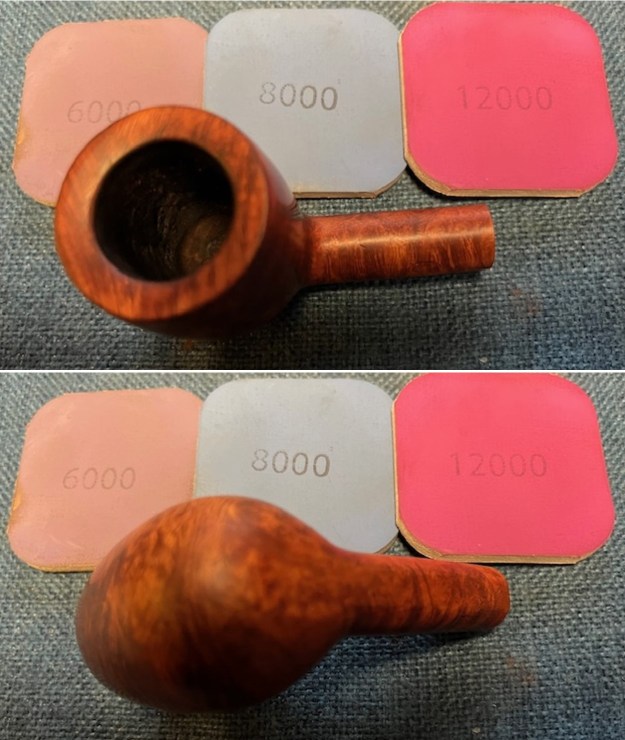
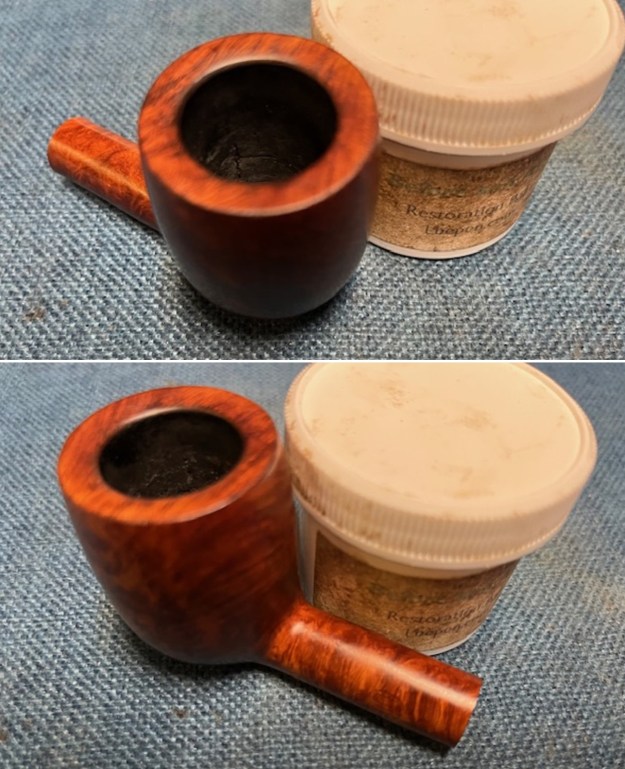
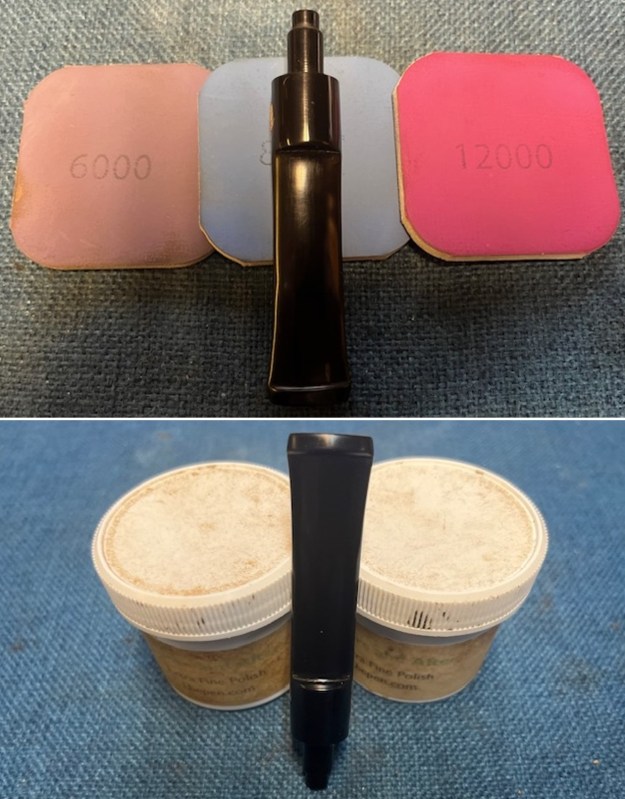
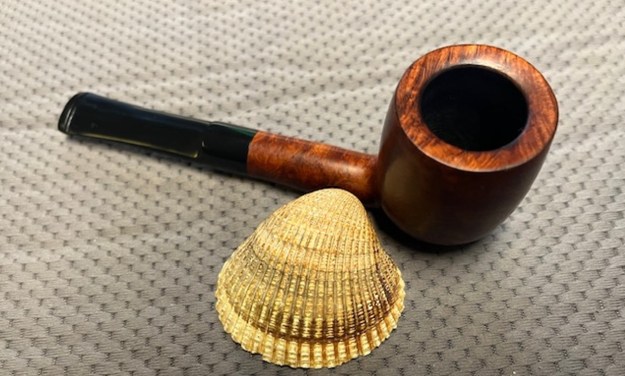
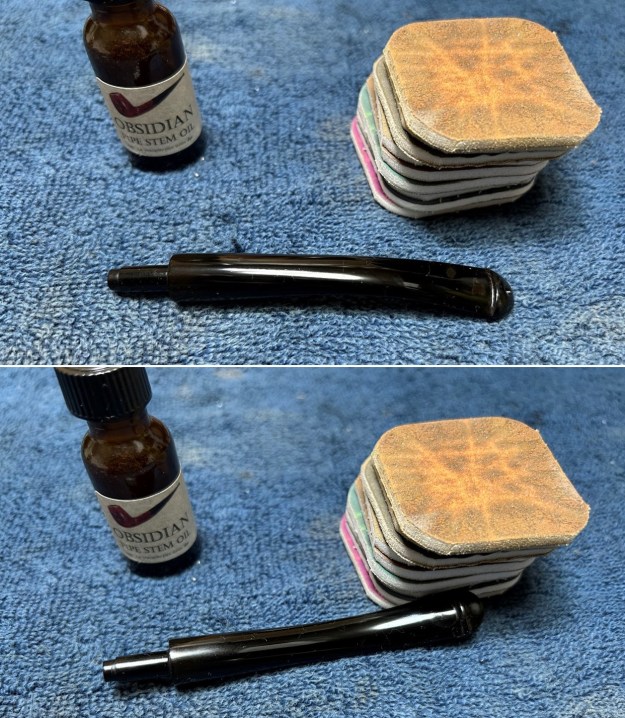
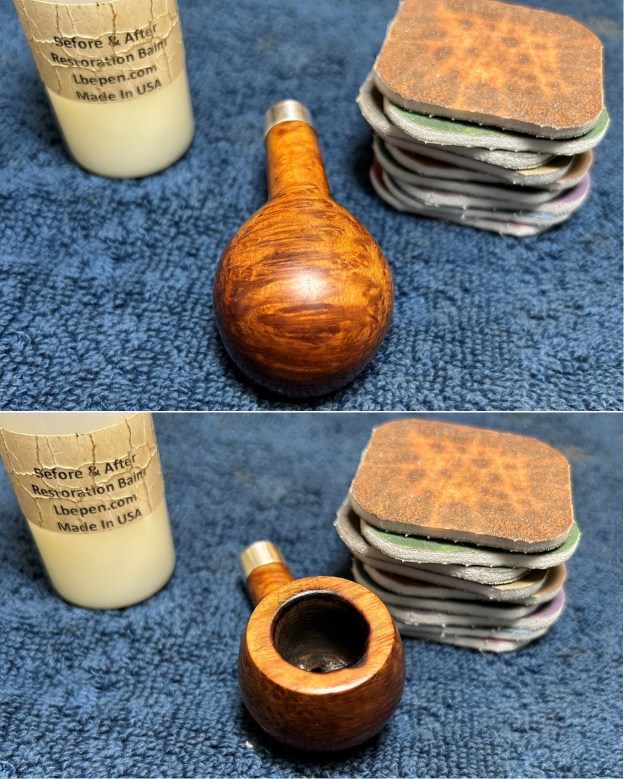
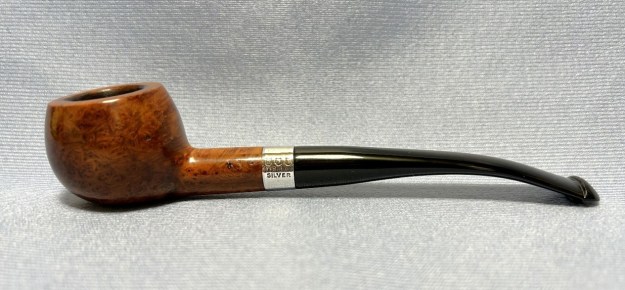
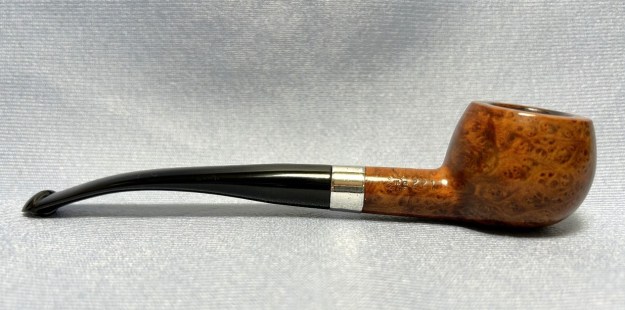
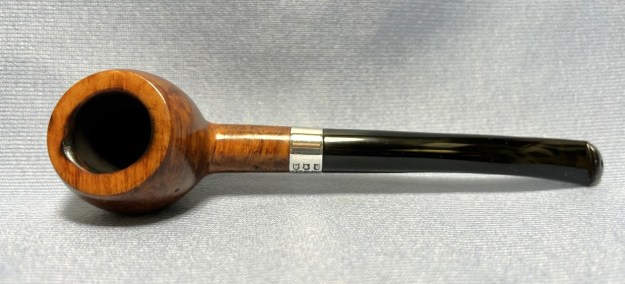
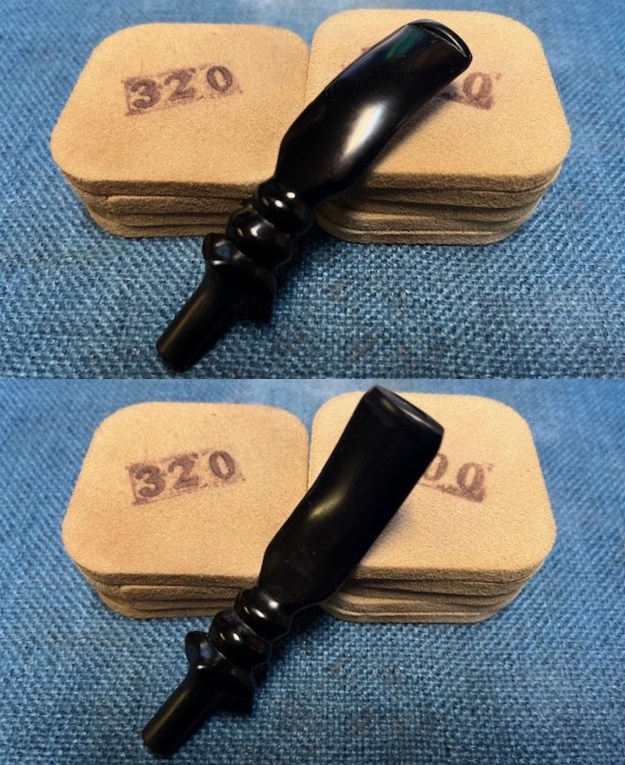
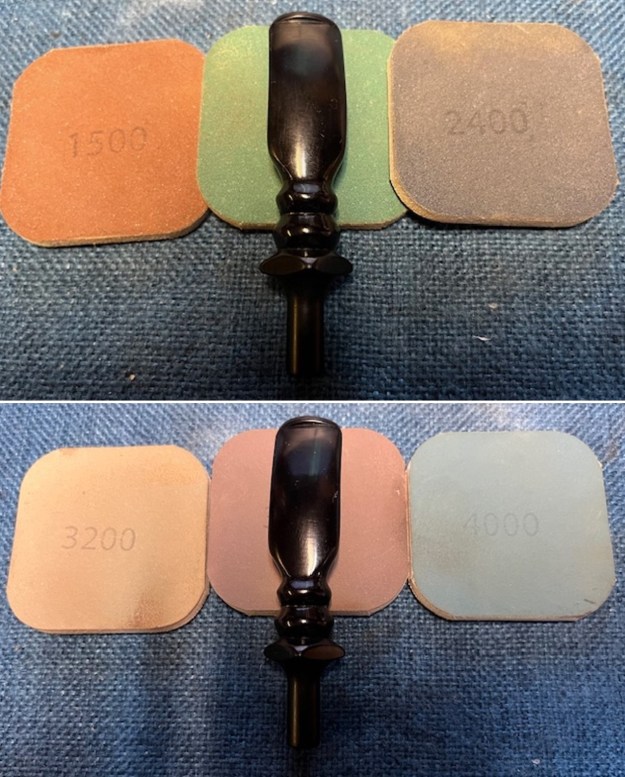
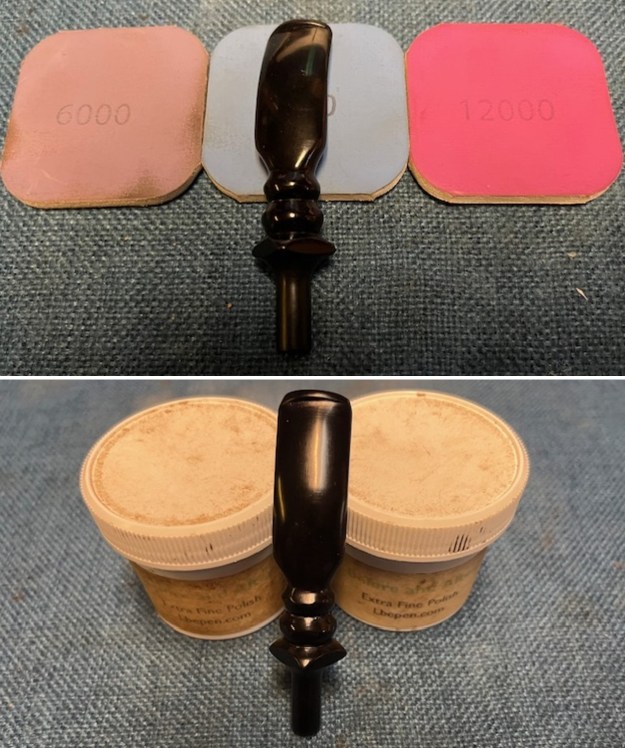
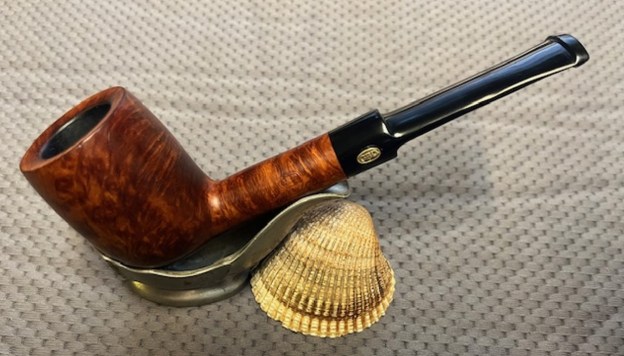
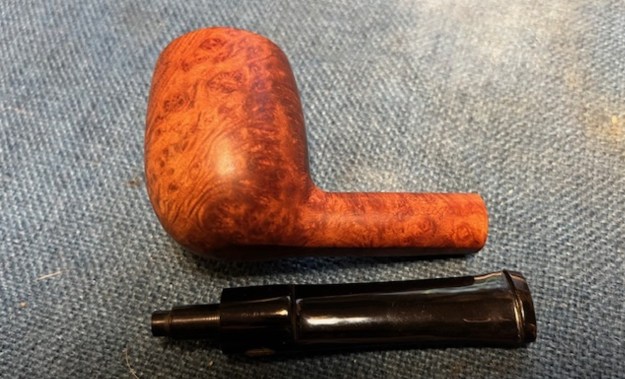
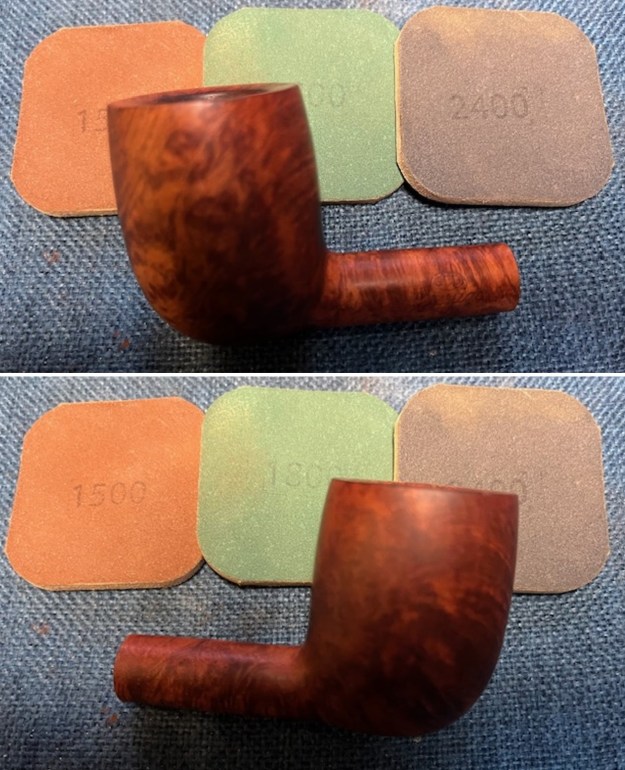
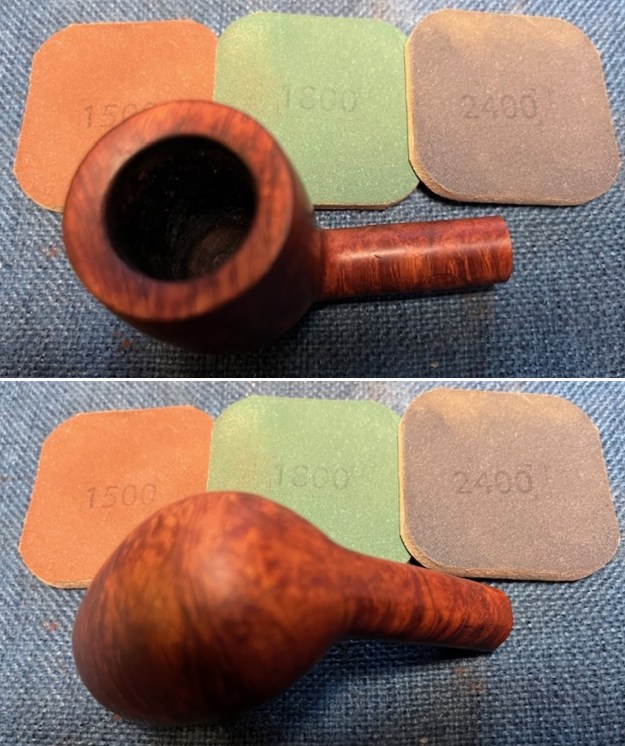
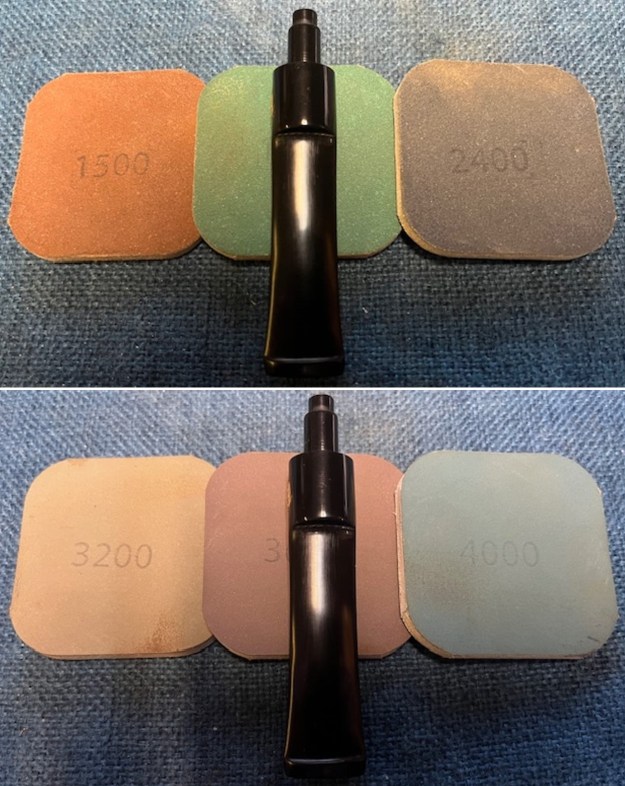
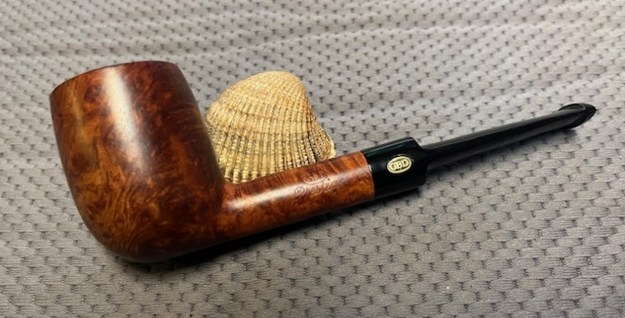
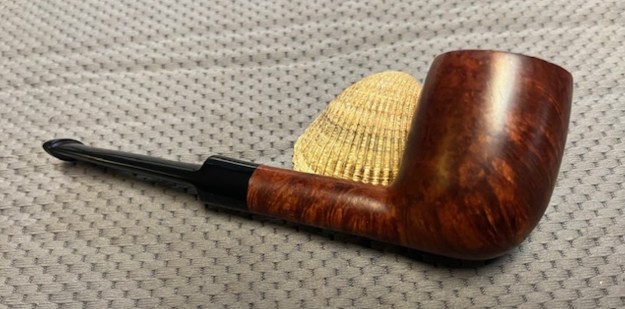
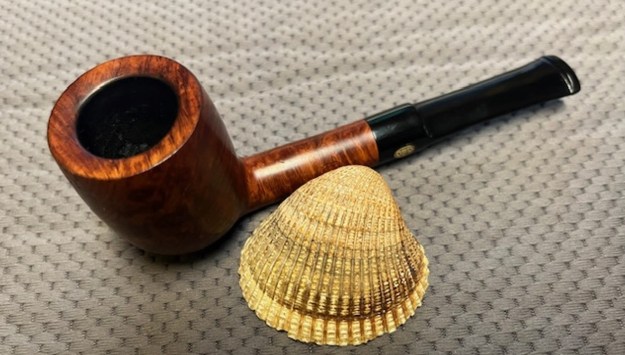
The stamping on sides of the shank is faint but readable. It is stamped as noted above. I removed the stem and took a photo of the pipe to give a sense of the whole. The saddle stem is nice and the photo shows the step down tenon. I cleaned up the inner edge of the bowl with a folded piece of 220 grit sandpaper to smooth out the damage to the edge and the darkening on the rim top. I polished the bowl and the rim top with micromesh sanding pads. I dry sanded it with 1500-12000 grit pads and wiped the bowl down with a damp cloth to remove the sanding dust. By the final pad it was starting to real take on a great shine. I rubbed the bowl and shank down with Before & After Restoration Balm. I worked it into the surface of the bowl sides and shank with my fingertips. It works to clean, enliven and protect the briar. I let the balm sit for 15 minutes and buffed with a cotton cloth to raise the shine. The grain came alive. I set the bowl aside and turned my attention to the stem. I sanded the rippled areas on the stem with 220 grit sandpaper. It would also remove the tooth marks and chatter at the same time.I polished the sanding and scratch marks and smoothed the stem with 320-3500 grit sanding pads. I wiped the stem down after each sanding pad with an Obsidian Oil impregnated cloth. It removes the dust and also gives the sanding pads some bite. By the final pad it was looking quite good.I polished the vulcanite stem with micromesh sanding pads – 1500-12000 grit pads. I wiped it down with Obsidian Oil after each sanding pad. I used Before & After Pipe Polish – both Fine and Extra Fine to further polish the stem. I rubbed it down with a final coat of Obsidian Oil and let it dry. This GBD Prestige 9436 Saddle Stem Billiard is a real beauty. I buffed the bowl and the Perspex saddle stem with Blue Diamond on the wheel and was amazed at how the grain popped and the stem began to shine. I gave the bowl and stem multiple coats of carnauba wax and buffed them with a clean buffing pad. I finished by hand buffing the pipe with a microfibre cloth. The finished pipe is shown in the photos below. While there are some small brown stains in the button area it is clean. I think you will agree that it is a stunning example of a GBD Prestige. The grain and the stem work really well together. The finished GBD Prestige 9436 Billiard fits nicely in the hand and feels great. Give the finished pipe a look in the photos below. The dimensions of the pipe are Length: 5 ½ inches, Height: 2 inches, Outside diameter of the bowl: 1 ¼ inches, Chamber diameter: 7/8 of an inch. The weight of the pipe is 41 grams/1.45 ounces. I will be putting it on the rebornpipes store in the British Pipemakers Section shortly. If you are interested in adding this pipe to your collection send me a message or an email. Thanks for reading this blog and my reflections on the pipe while I worked on it. I appreciate your support and time!
An Unusual and Beautiful Peterson 221 Sterling Silver Prince


by Kenneth Lieblich

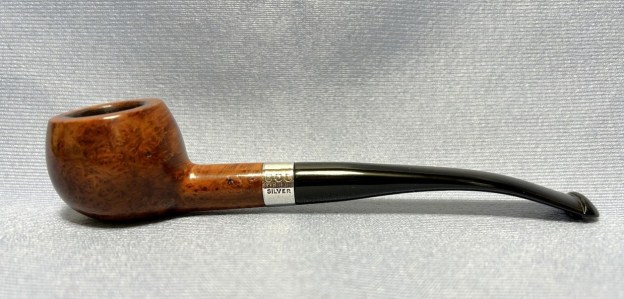
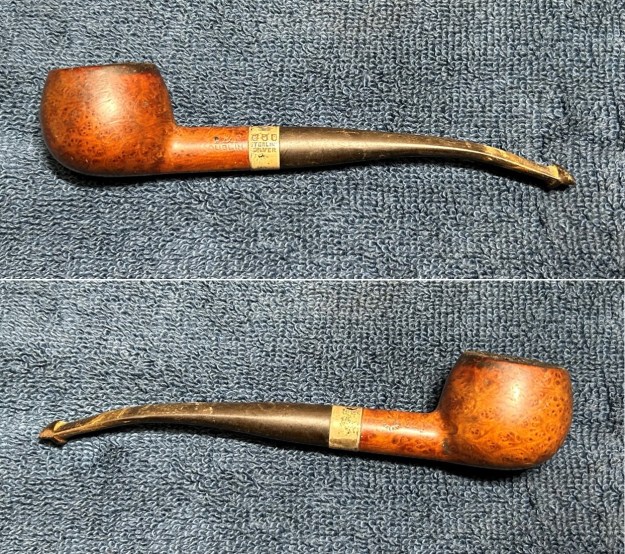
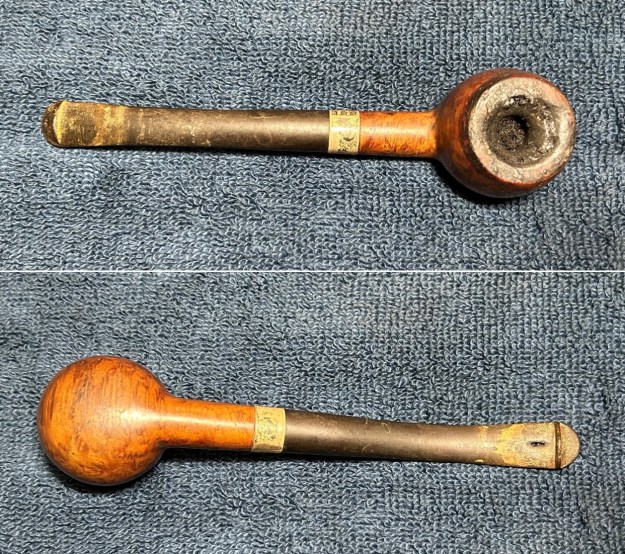
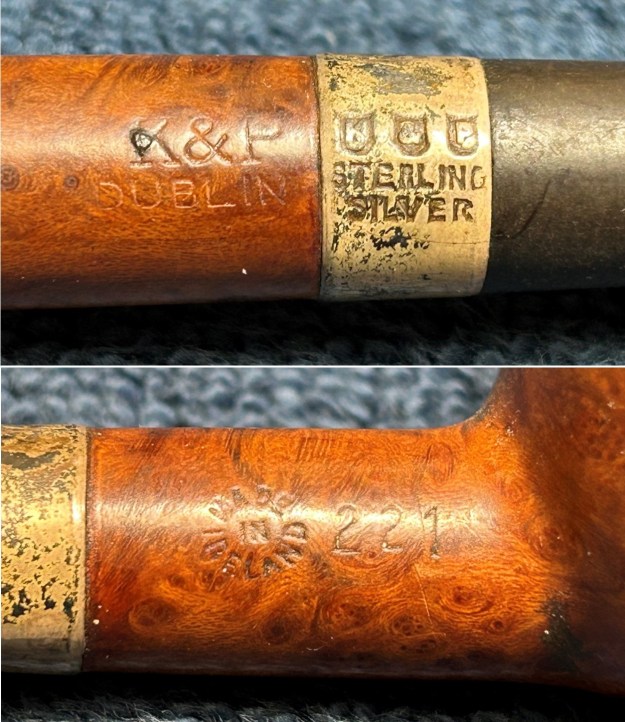
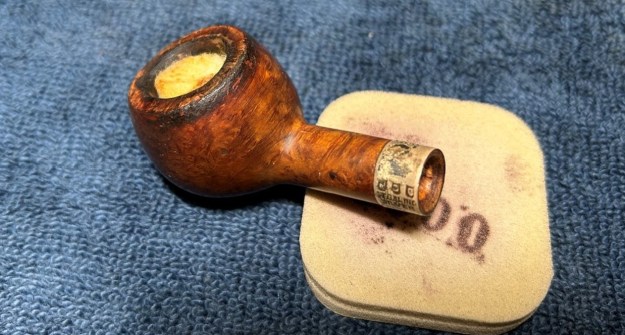
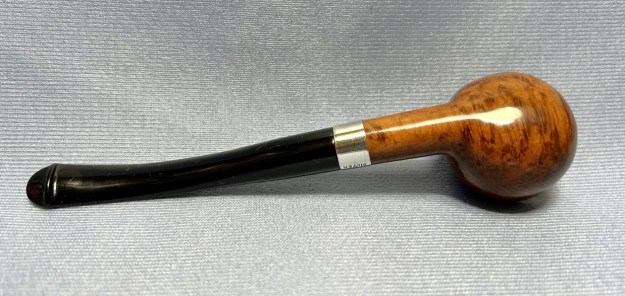
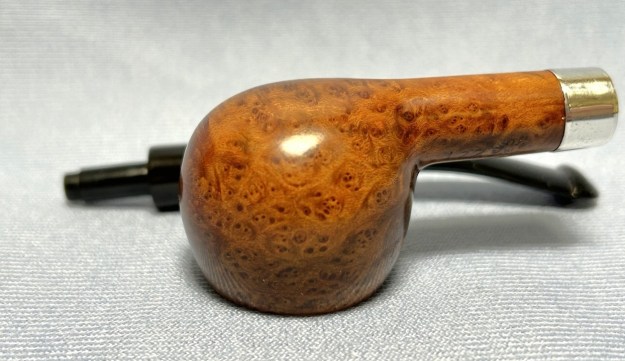
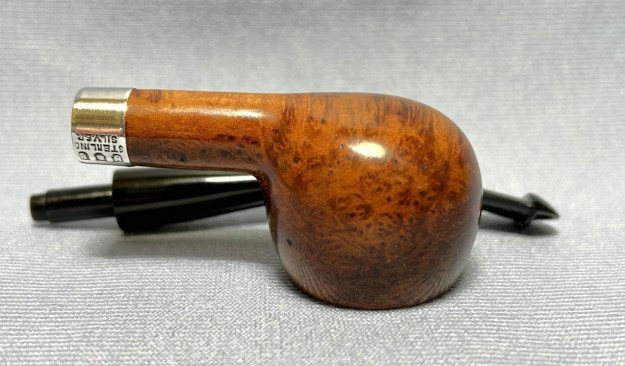
This pipe came to me in a collection of pipes that gave new meaning to the phrase, ‘trash and treasure’. Everything from the sublime to the ridiculous was in here, but when I saw this Pete, I was immediately enchanted. It is a Peterson 221 prince. This is a stunning pipe. It’s an older one and it’s a real veteran, with a few mild battle scars which are part of its history. I can’t help but think that this pipe should be in someone’s Peterson collection – it’s lightweight and breathtaking. This was one of the more difficult restorations I’ve ever undertaken. You might read through this blog post and think that it doesn’t seem particularly unusual. And, superficially, you’re right. Most of the steps in this restoration are run-of-the-mill, but, in many cases, these steps had to be done and redone so many times that I nearly launched the pipe across the room. So, settle in for a wild ride. The pipe is marked as follows: on the left side of the shank, it says K&P [over] Dublin. On the left side, it says Made in Ireland in the form of a circle and, next to that, the shape number 221. The circular Made in Ireland suggests that this is an older pipe, possibly (but not definitely) pre-republic. On the sterling silver band is displayed three shields each containing the three marks K&P [over] Sterling [over] Silver. The stem is the traditional Peterson P-lip, but it has no logo.This is an unusual Peterson, by shape and number. There are Pete princes and there are Pete 221s (bent billiards), but I hadn’t seen a 221 prince. I searched extensively for this very pipe and came up empty. I looked at Pipedia and Pipephil – nothing. Many more searches also came up with nothing. Steve kindly referred me to a couple of his articles (from 2016 and 2020) that gave a good clue:

https://rebornpipes.com/2016/09/13/petersons-pipes-brochure-from-genin-trudeau-co-montreal-quebec/

and

https://rebornpipes.com/2020/03/13/final-pipe-from-the-19-pipe-eastern-canada-lot-a-republic-era-peterson-1312-system/

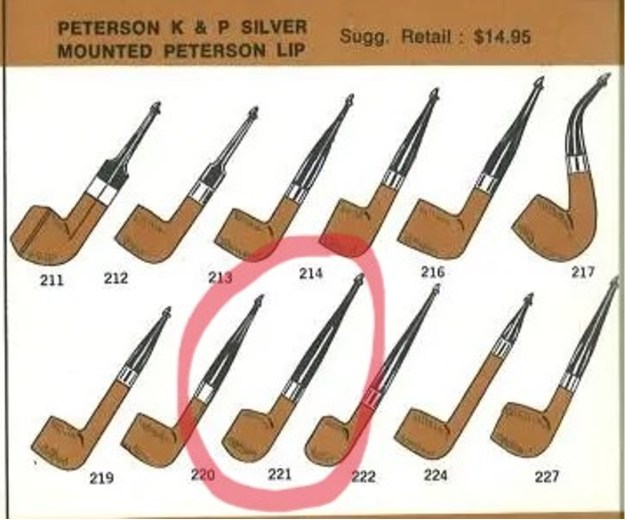
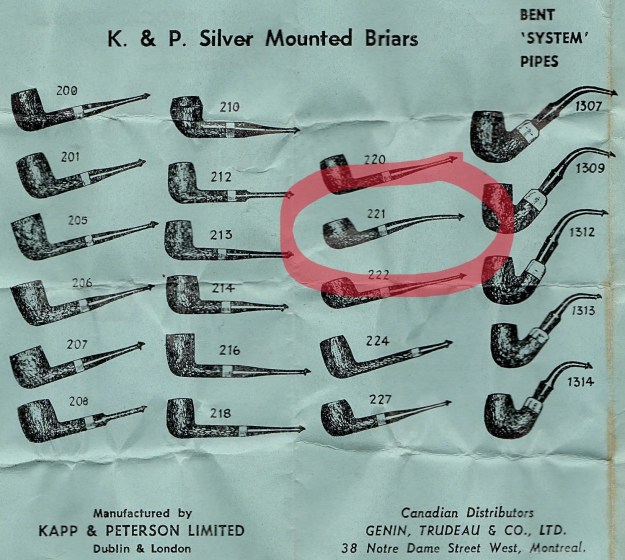
The key information is on the old Peterson brochure shown in the blog post. In previous times, Petersons were imported into Canada through a company called Genin Trudeau & Co. (nowadays just Trudeau – the kitchen wares company). Genin Trudeau had the Peterson firm stamp their own shape numbers on the pipes they imported. This brochure supposedly dates from around 1974 and includes a silhouette of a 221, as you can see here in a cropped photo:However, there’s a problem: the 221 in the brochure is close – but not identical – to the 221 I’ve got here. Mine has a gentle bend; the one in the brochure does not. Clearly, my 221 was from a different time. Steve suggested that I contact Mark Irwin at Peterson Pipe Notes, as he is a great repository of Peterson knowledge. Mark was his usual obliging self and directed me to a page from his blog:

https://petersonpipenotes.org/280-canadian-shape-numbers-from-a-gtc-pipe-box-brochure/

In this post, he shows an older brochure, also from Genin Trudeau & Co. and dated to approximately 1955, which also shows a 221 prince. This time, however, it is the correct pipe!Although the brochure shows a rusticated pipe and mine is smooth, it is clear that the shape is identical. I suspect that this pipes dates from well before 1955, but I cannot prove this. Nonetheless, it is an exciting tidbit of information – thank you to Steve and Mark for their help.

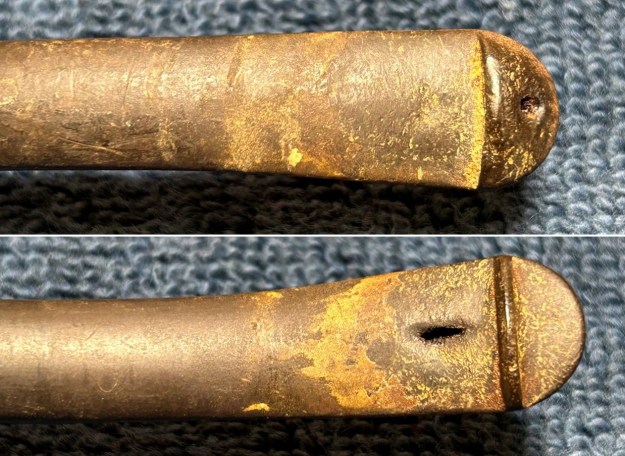
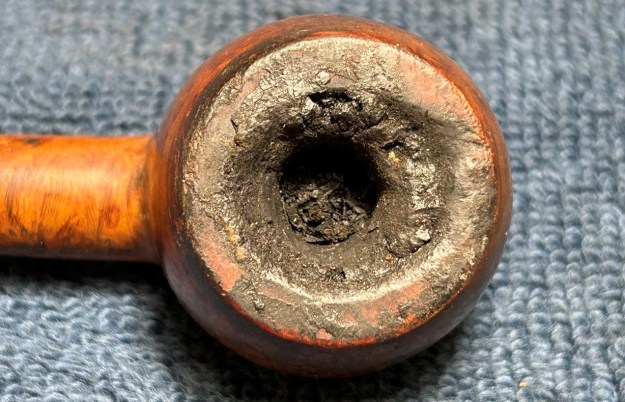
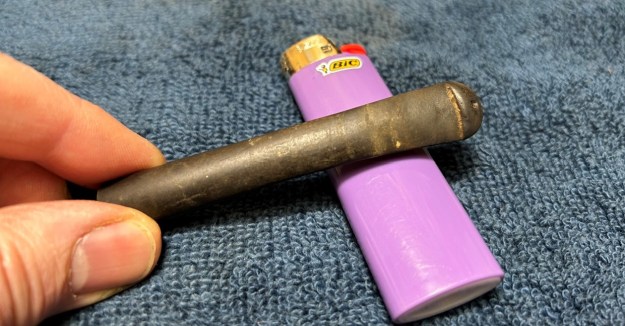
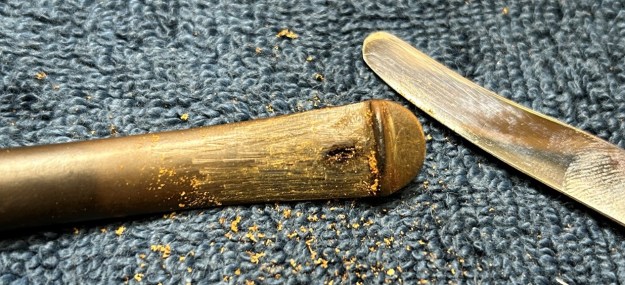
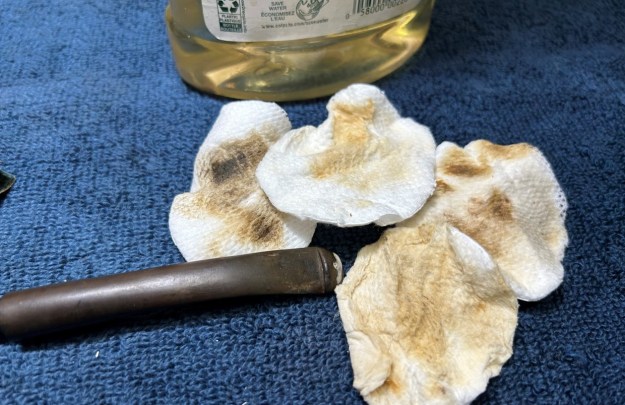
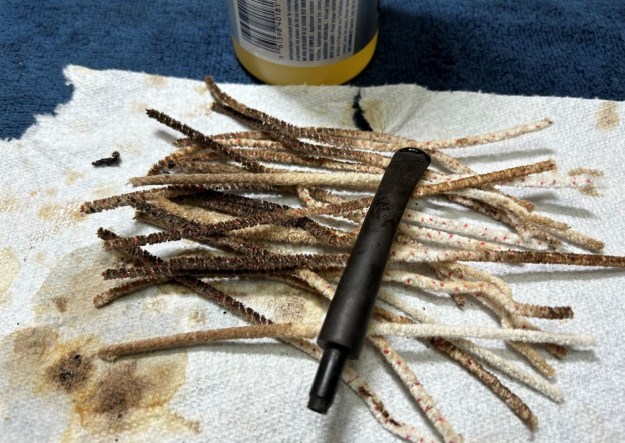
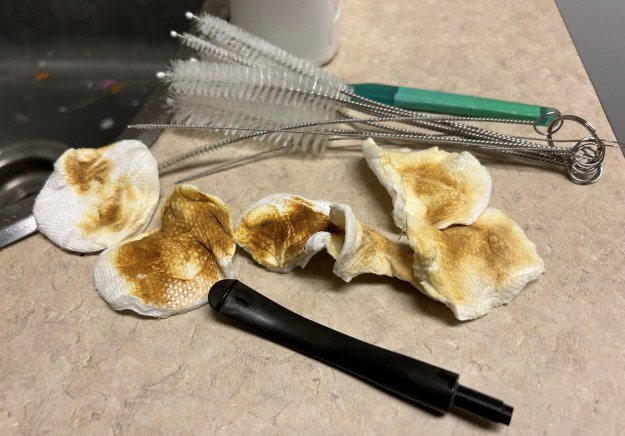
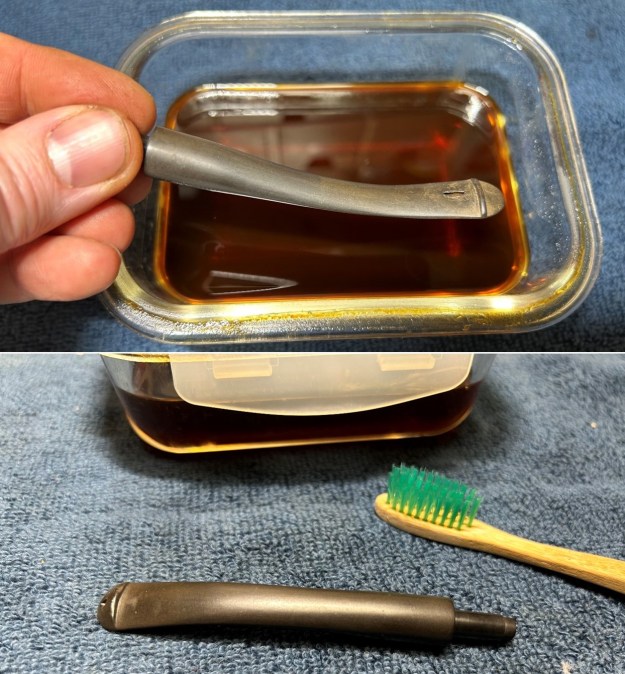
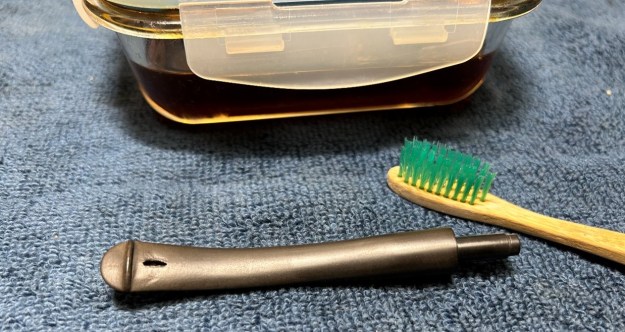
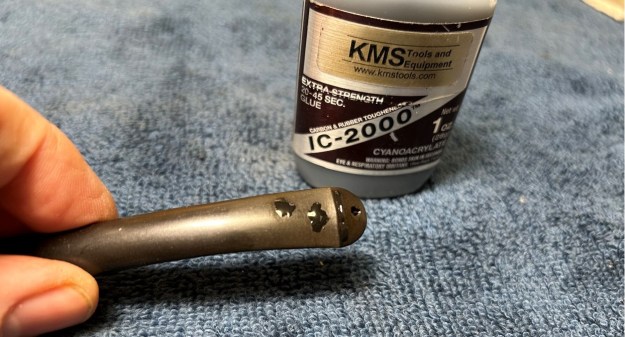
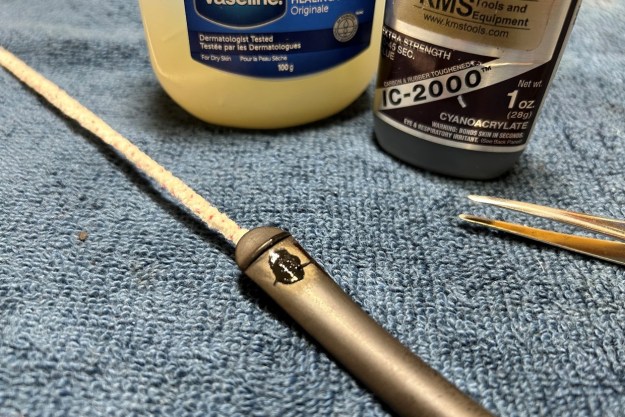
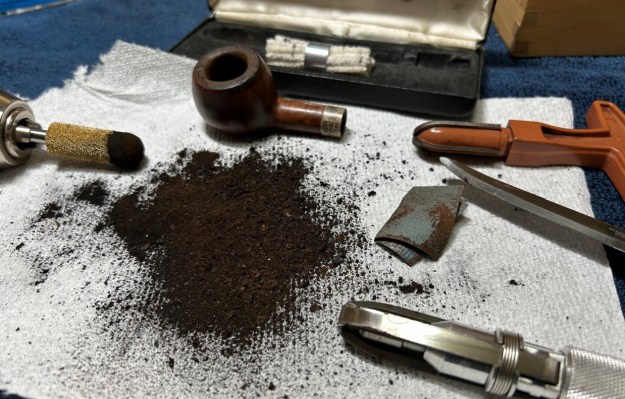
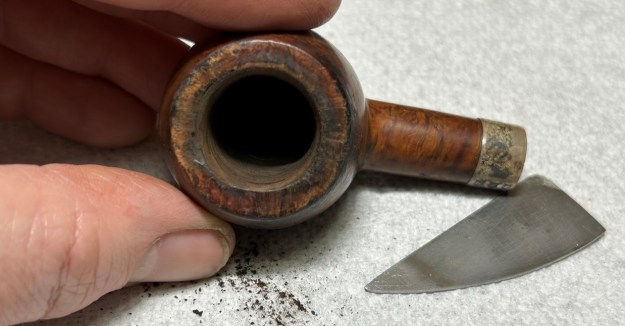
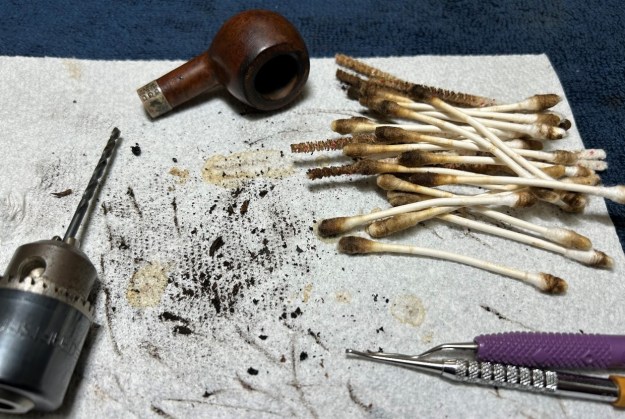
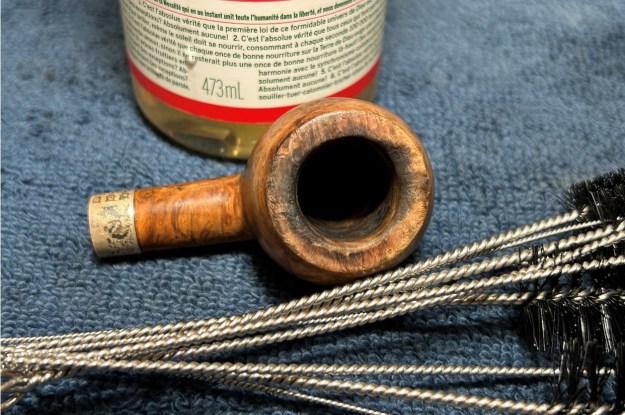
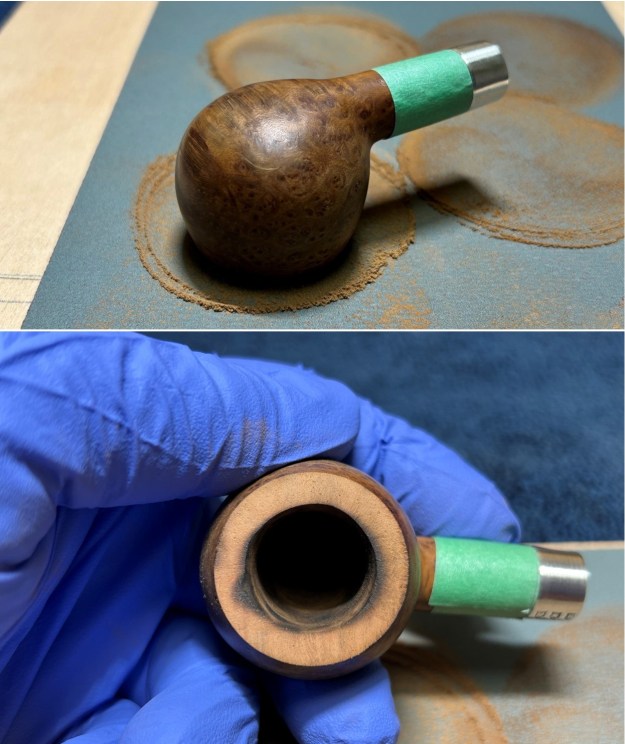
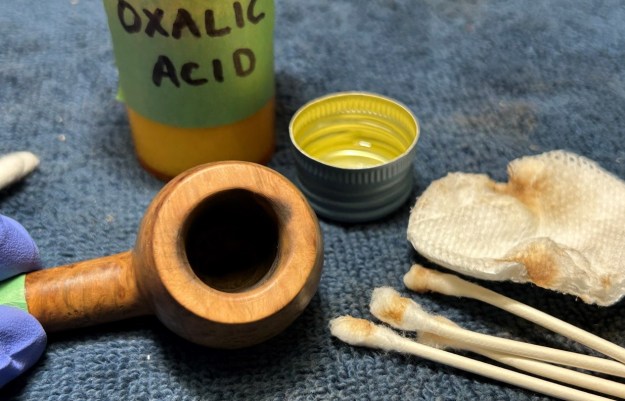
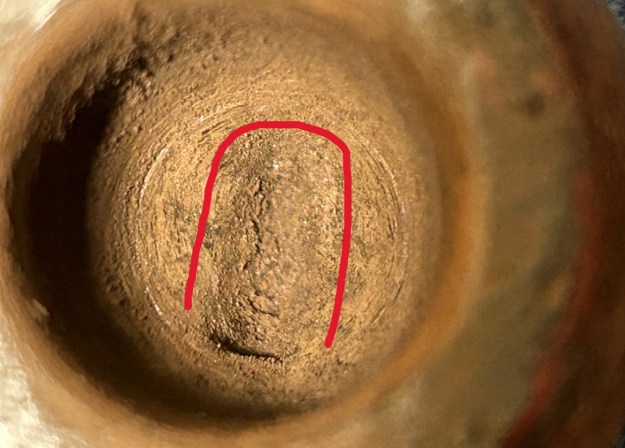
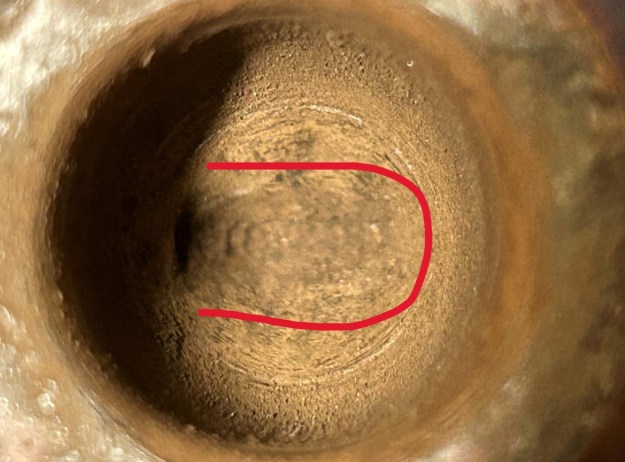
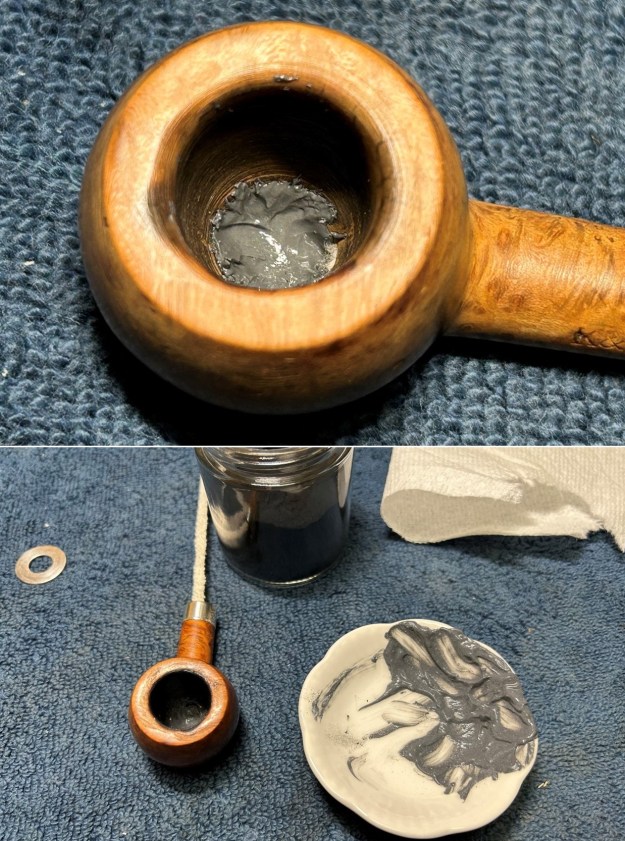
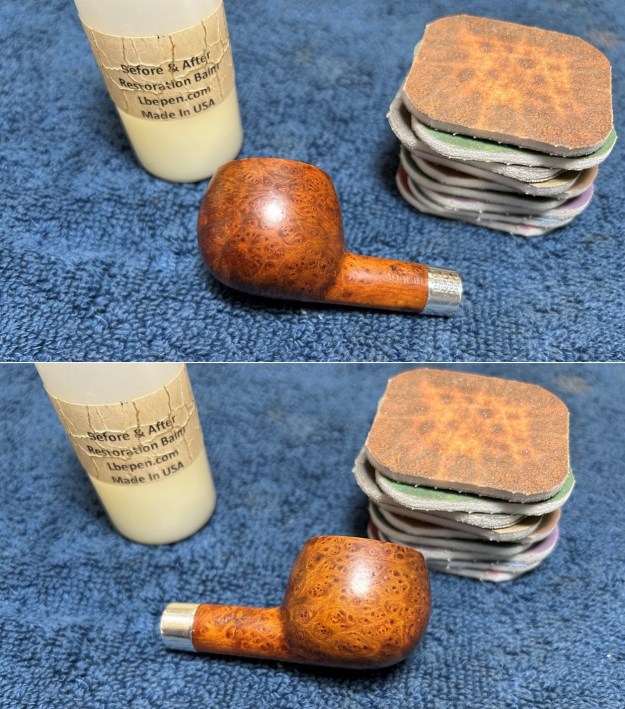
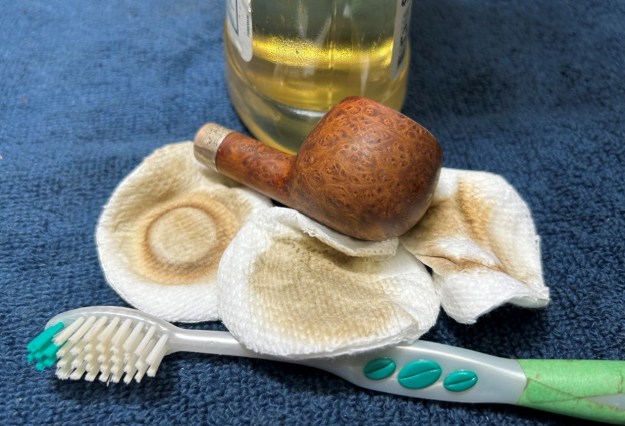
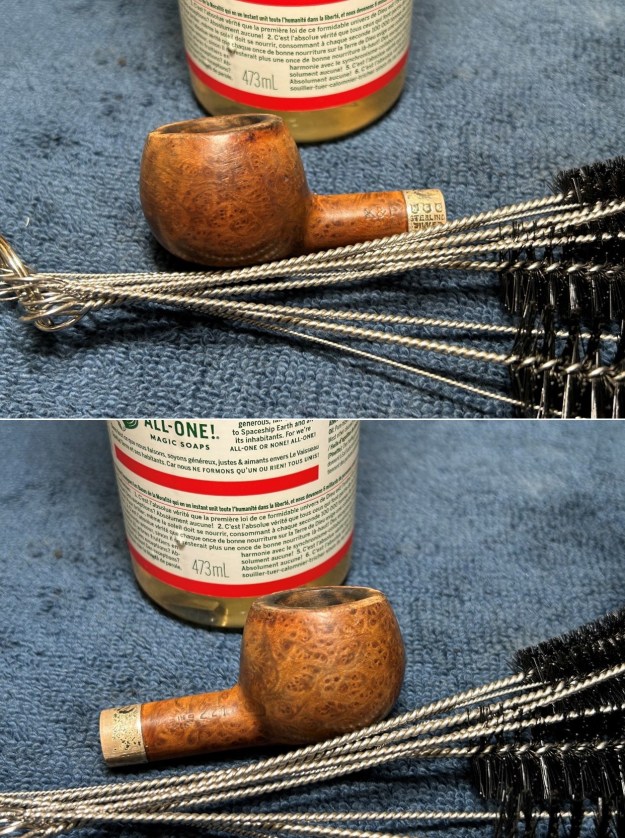
The photos show that this pipe’s former owner must have loved this pipe – it was smoked to the Nth degree. Although it must be a fantastic smoker, it has clearly never seen a pipe cleaner or reamer! The stem is filthy beyond words and it has scratches, bites, oxidation, and calcification. Most unfortunately, the stem also has a significant bite-through on the underside.The stummel is also quite rough. There are a few minor nicks in the wood, but nothing serious. The main issue here is the cake in the bowl. Wow. The bowl is literally completely blocked. The cake is rock hard and its lava has erupted all over the rim. This is going to take some work!I used a disposable lighter and ‘painted’ the stem with its flame. The gentle heat of the flame can often cause the dents in vulcanite of the stem to expand back into shape. In this case, the dents were alleviated somewhat, but not enough. Better than nothing.The calcification was quite substantial. I used an old butter knife and gently scraped some of the thicker accretion off. Taking the opportunity to do this now helps later in removing the oxidation.I used oil soap on a few cotton rounds and wiped the stem down. This provides a preliminary cleaning of filth off the stem before moving on to the next steps.The primary cleaning comes next. I cleaned the inside of the stem with both pipe cleaners and cotton swabs dipped in 99% lemon-infused isopropyl alcohol. I scrubbed thoroughly and made sure the interior was clean. I used a lot of pipe cleaners and cotton swabs. This was a very dirty pipe.The goal of the next step is the removal (or minimization) of oxidation. Going to my sink, I used cream cleanser, cotton rounds, and a toothbrush, and scoured the stem to remove as much surface oxidation as possible. As the photos show, the result is a hideous brownish mess – but better off the stem than on it. This particular stem was so dirty that I also applied the cleanser to the inside with some tube brushes.Once the stem was reasonably clean, I soaked it overnight in some de-oxidation fluid. This solution works to draw oxidation in the stem to the surface. This is a major aid and an important step in ensuring a clean stem. The following day, I drew out the stem from its bath and scrubbed the lingering de-oxidation fluid with a toothbrush. Once clean and dry, I set about fixing the bite marks in the vulcanite. This is done by filling those divots with black cyanoacrylate adhesive, impregnated with carbon and rubber. I left this to cure and moved on.My next task was repairing the large hole on the underside of the stem. There are several methods of doing this and individual circumstances will dictate how to proceed. In this case, I used a straightforward method of employing the same black cyanoacrylate adhesive mentioned above. Before applying the adhesive, some preparatory work is required. With such a large gap in the vulcanite, any applied adhesive will simply run through the aperture and fill the airway. To prevent this, I coated the end of a pipe cleaner with petroleum jelly and lodged it in the airway. This provides a platform for the adhesive to sit on while curing and prevent it from entering the airway. The petroleum jelly is used to prohibit the adhesive from attaching to the pipe cleaner. This repair was much more labour intensive than normal. The adhesive patch I created failed three times before I finally made it work. The precarious nature of the repair impelled me to lay the patch much thicker than I might otherwise have. I am pleased with the final result, but I am not utterly convinced of the patch’s long-term structural integrity.The penultimate step for the stem is sanding. I first used my set of needle files to reduce the bulk of the cyanoacrylate repairs. I do not want to cut into the vulcanite, but I want to lower the height of the adhesive to as close as possible above the surface. Following that, I used all nine of the micromesh sanding pads (1,500 through 12,000 grit) to sand out flaws, even out the vulcanite, and provide gentle polishing of the finished surface. I also apply pipe-stem oil while using the last five micromesh pads. There is a wonderful, deep-black shine to the stem when I am done.Now that the stem is (nearly) complete, I can move on to the stummel. The first step for me is to ream out the bowl – that is to say, remove all the cake inside the bowl. This accomplishes a couple of things. First (and most obviously), it cleans the bowl and provides a refurbished chamber for future smoking. Second, when the old cake is removed, it allows me to inspect the interior walls of the bowl and determine if there is damage or not. More about that later. In the meantime, I used a reamer, a pipe knife, and a piece of sandpaper taped to a wooden dowel. Collectively, these ensure that all the debris is removed. However, this pipe needed a jackhammer to deal with the rock-hard cake in the bowl. Since I don’t have a jackhammer, I used a ½” rotary burr on my Dremel. This is a tricky procedure and I would not normally use this burr except as a last resort. The cake was so hard, that I had no other option at my disposal. Working with great care, I managed to clean out the bulk of the material and then returned to my normal tools to finish the work. As you can imagine, there was an extraordinary amount of debris in the bowl.My next step was to remove the lava on the rim. For this, I took a piece of machine steel and gently scraped the lava away. The metal provides an edge that is sharp enough to remove what I need, but not so sharp that it damages the rim. This work revealed a lot of damage underneath: burning, scratches, gouges, etc. This would have to be addressed later.The inside of the stummel needs to be cleaned thoroughly. However, this pipe’s shank was so clogged, that I first needed to open the horribly occluded airway. So, I took a long drill bit, held in a drill chuck, and hand-cranked it to dislodge the dreadful detritus inside. Similar to the stem, I then cleaned the stummel with both pipe cleaners and cotton swabs dipped in 99% lemon-infused isopropyl alcohol. With a pipe this dirty, it took quite a while and much cotton to get clean.I then decided to ‘de-ghost’ the pipe – that is to say, exorcize the remaining filth from the briar. I filled the bowl and the shank with cotton balls, then saturated them with plain 99% isopropyl alcohol. I let the stummel sit overnight. This caused any remaining oils, tars and smells to leach out into the cotton.To tidy up the briar, I also wiped down the outside with some oil soap on cotton rounds (and a toothbrush). This does a good job of cleaning any latent dirt on the surface of the briar.The last step of the cleaning process is to wash the inside of the stummel with some liquid cleanser and tube brushes. This is the culmination to a lot of hard work in getting the pipe clean. As you can see, this pipe still has some visible wounds. The damage to the rim is significant. In order to minimize the burns and nicks on the rim, I ‘topped’ the pipe – that is to say, I gently, slightly, and evenly sanded the rim on a piece of 220-grit sandpaper. This effectively takes down the damage, without altering the look of the pipe.A notable burn remained on the rim, so I took some crystalized oxalic acid and dissolved it in warm water. I then took some cotton swaps, dipped in the solution, and rubbed the burned spot vigorously. The acid works well to alleviate superficial burns (burns where the integrity of the wood is still good).All the cleaning I did revealed an important problem. The photos do not show it well, but the previous owner reamed this pipe overzealously. The heel of the bowl was gouged out through reaming and is now very thin. I had to fill this. To fill a gap like this, I use an epoxy adhesive that is extremely hard, resistant to high temperatures, and completely inert when cured. It works superbly. I filled the affected area with the epoxy and let it cure for a full 24 hours. The next day, I roughened up the epoxy’s surface for the next step. I thinly coated the inside of the bowl with a mixture of my wife’s homemade yogurt and activated charcoal. Once hardened, this provided a good, slightly rough surface for a new cake to build.I used all nine micromesh pads (1,500 through 12,000 grit) on the outside of the stummel to finish it off. This sanding minimizes flaws in the briar and provides a beautiful smoothness to the wood surface. I rubbed some Before & After Restoration Balm into the briar and left it to sit for 20 minutes or so. The balm moisturizes the wood and gives a beautiful depth to the briar. I then buffed it with a microfibre cloth. The final step is buffing. I took the pipe to my bench buffer and carefully polished it – first with a white diamond compound, then with three coats of carnauba wax. Naturally, these finishing touches make the pipe look its best – the stummel sings and the stem glows.

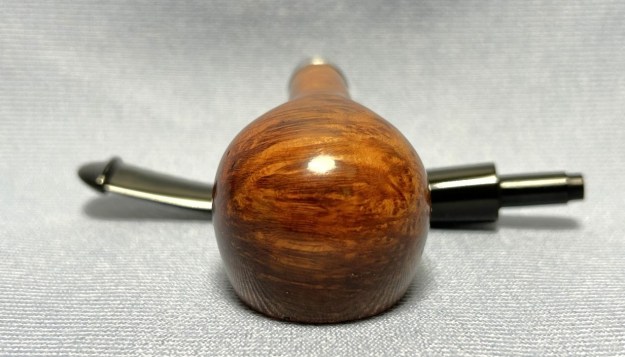
All done! This Peterson 221 sterling silver prince was a lot of work, but it looks fantastic and is ready to be enjoyed again by its next owner. I am pleased to announce that this pipe is for sale! If you are interested in acquiring it for your collection, please have a look in the ‘Irish’ section of the store here on Steve’s website. You can also email me directly at kenneth@knightsofthepipe.com. The approximate dimensions of the pipe are as follows: length 6⅛ in. (155 mm); height 1⅛ in. (30 mm); bowl diameter 1½ in. (36 mm); chamber diameter ⅔ in. (17 mm). The weight of the pipe is 1 oz. (29 g). I hope you enjoyed reading the story of this pipe’s restoration as much as I did restoring it. If you are interested in more of my work, please follow me here on Steve’s website or send me an email. Thank you very much for reading and, as always, I welcome and encourage your comments.
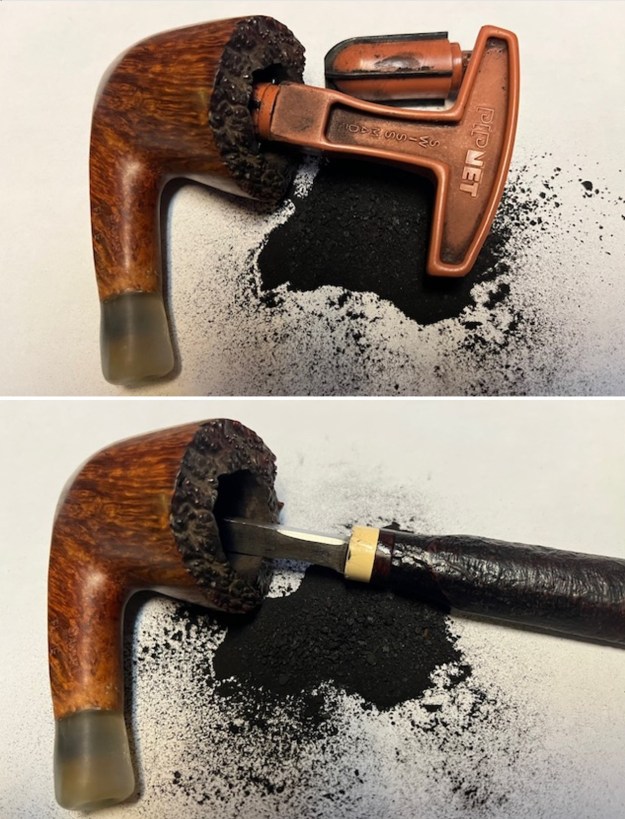
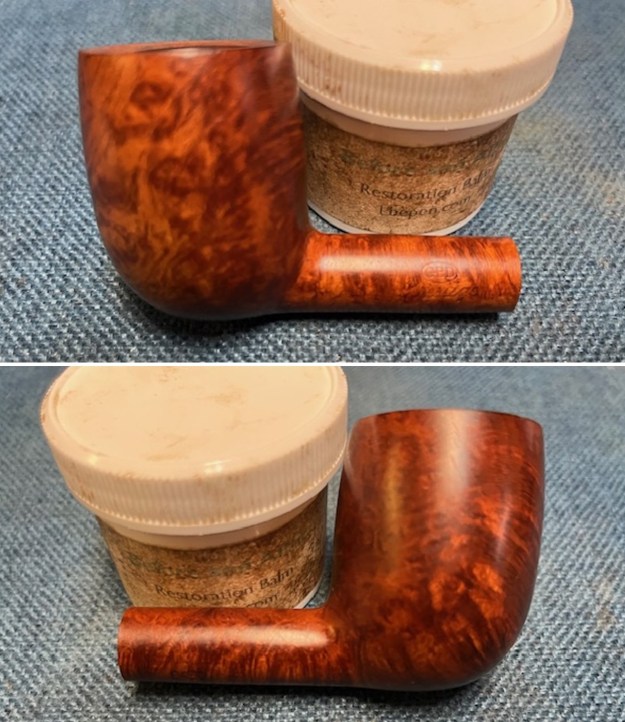
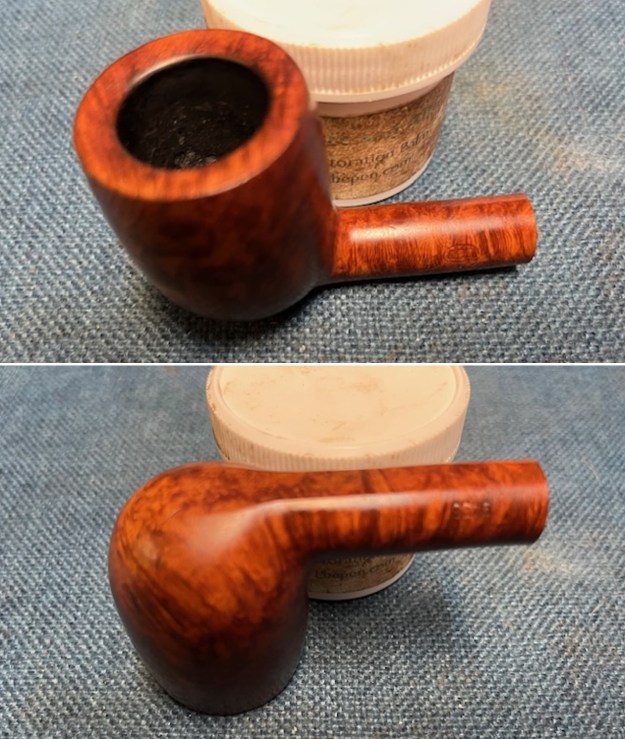
A Playful Restoration of a Stanwell Flame Grain 63 Dublin


by Steve Laug

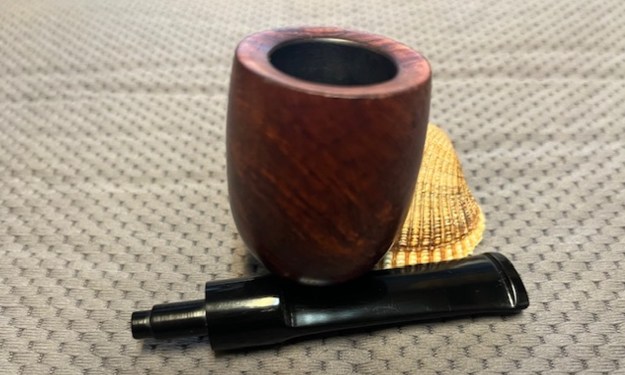
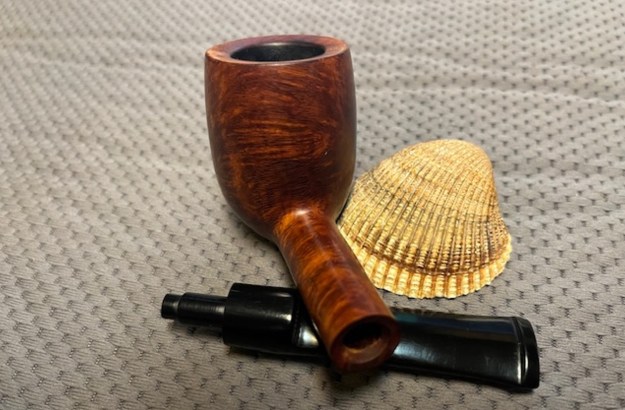
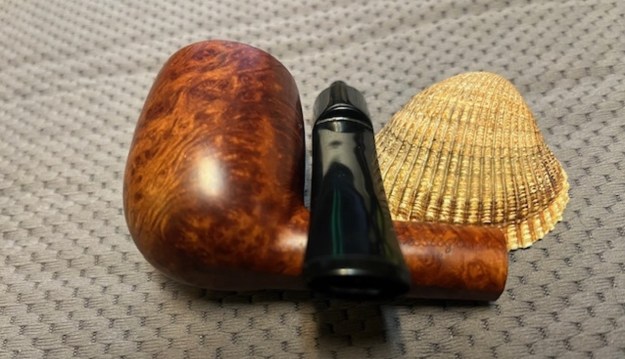
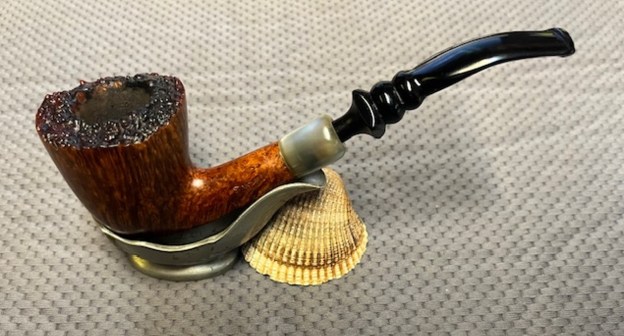
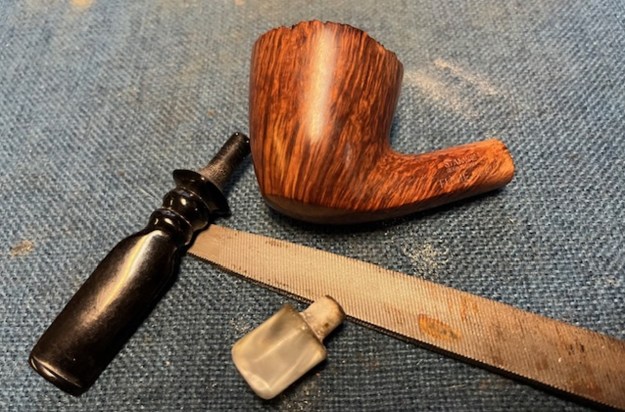
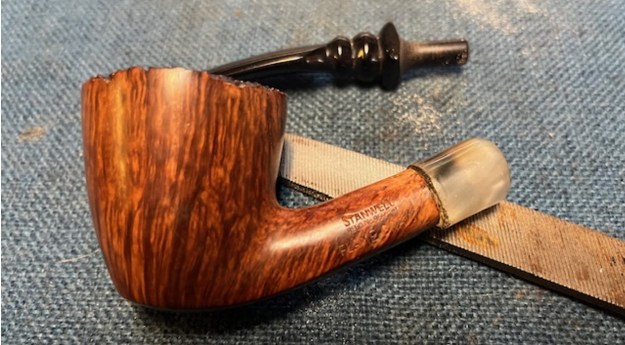
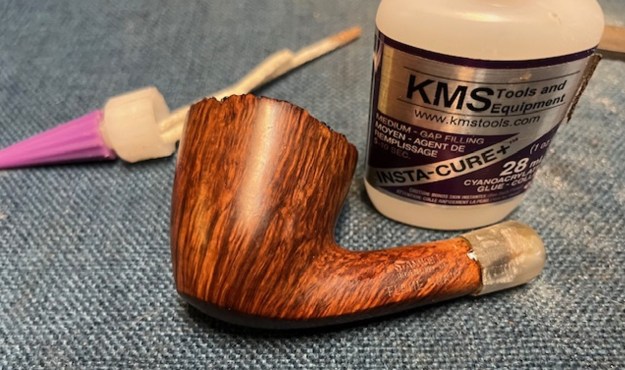
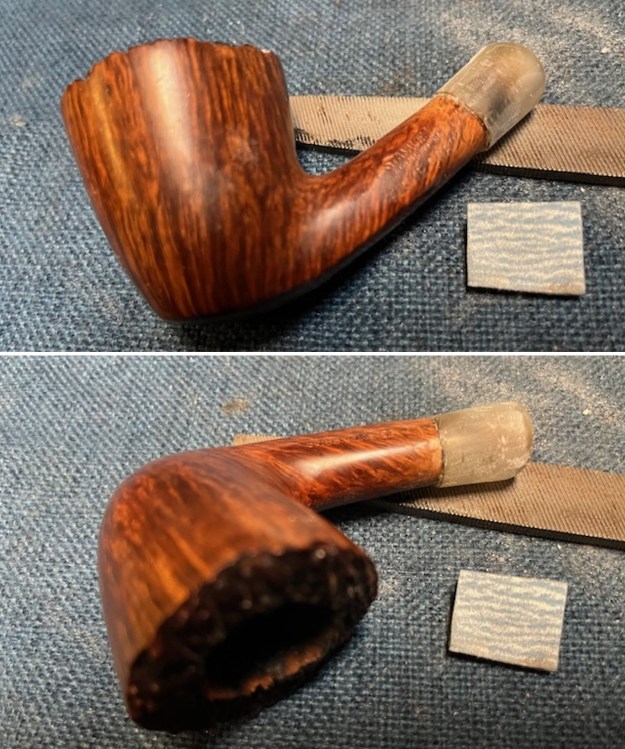
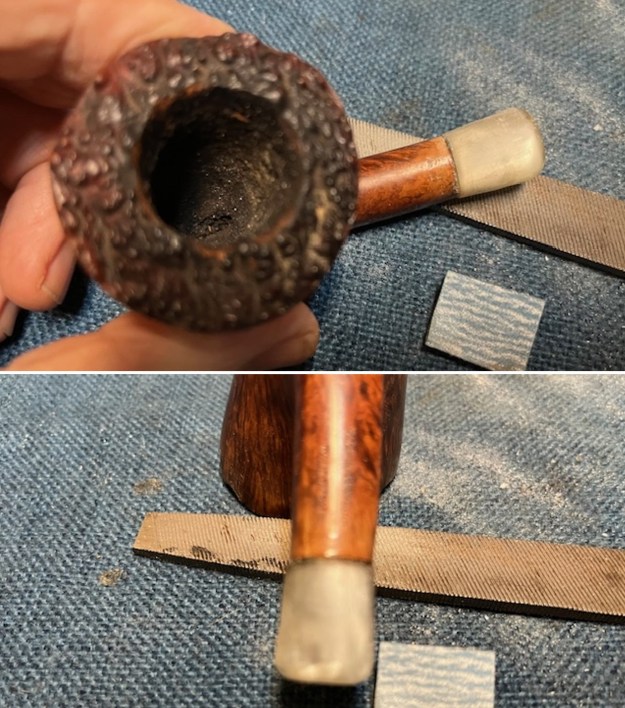
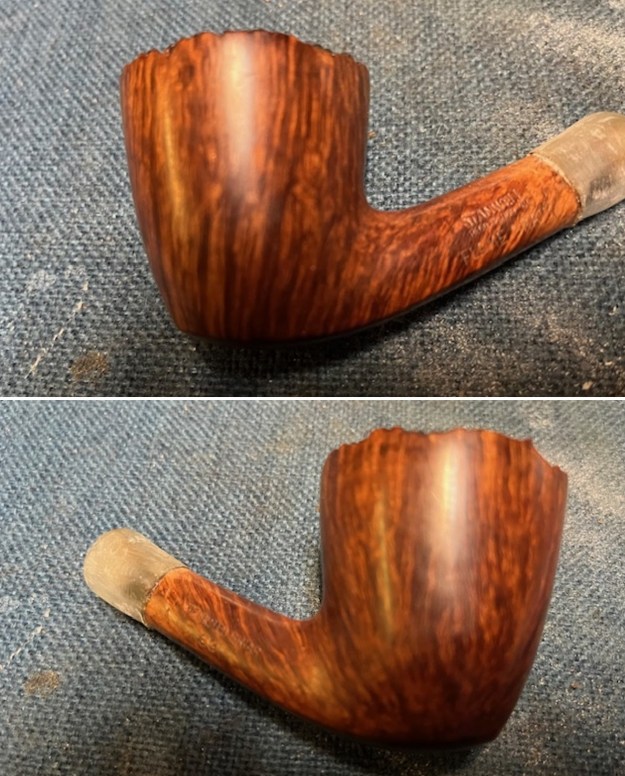
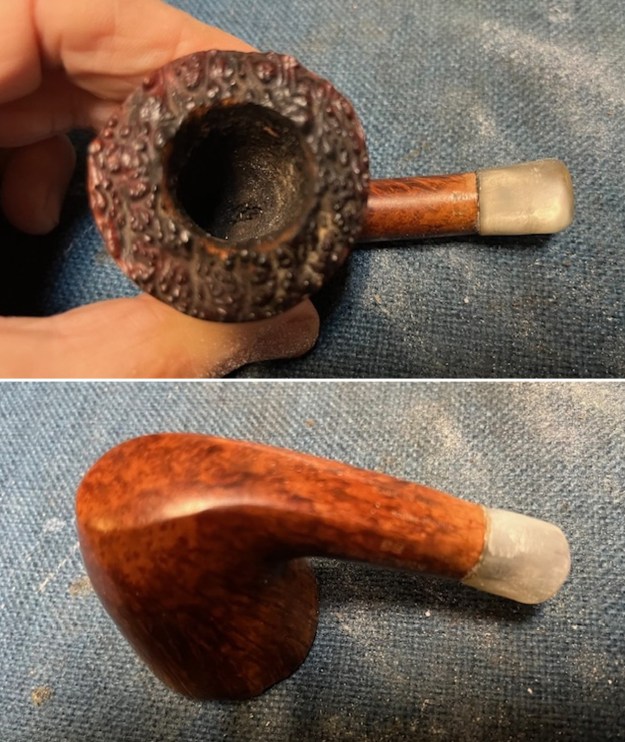
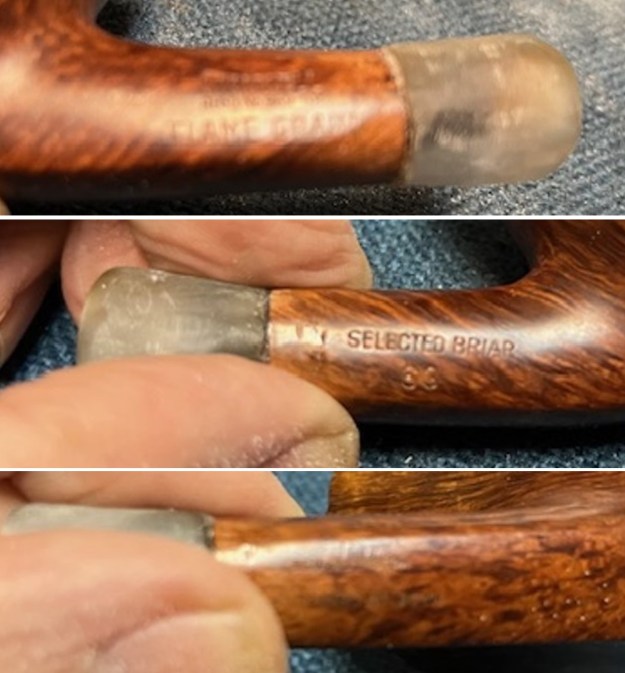
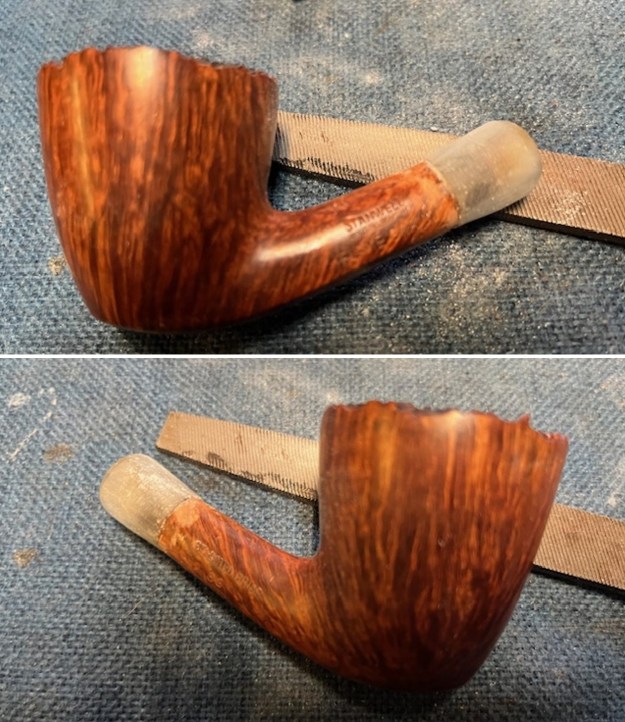
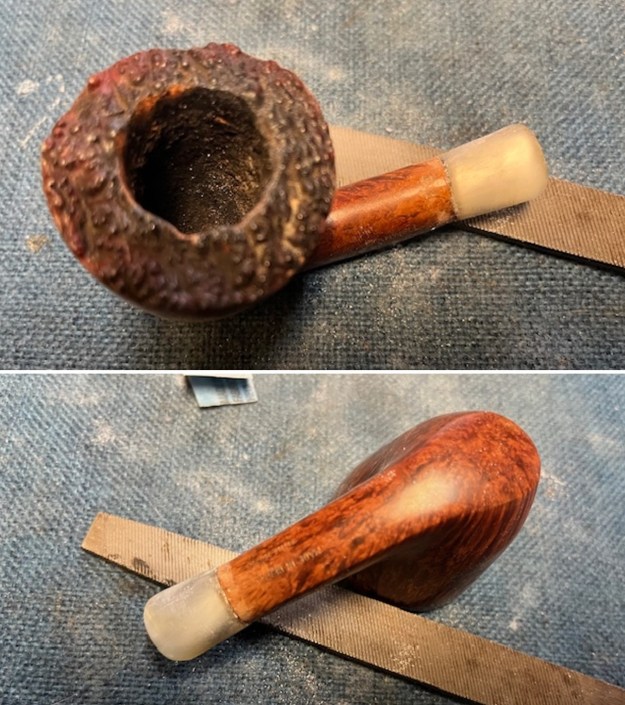
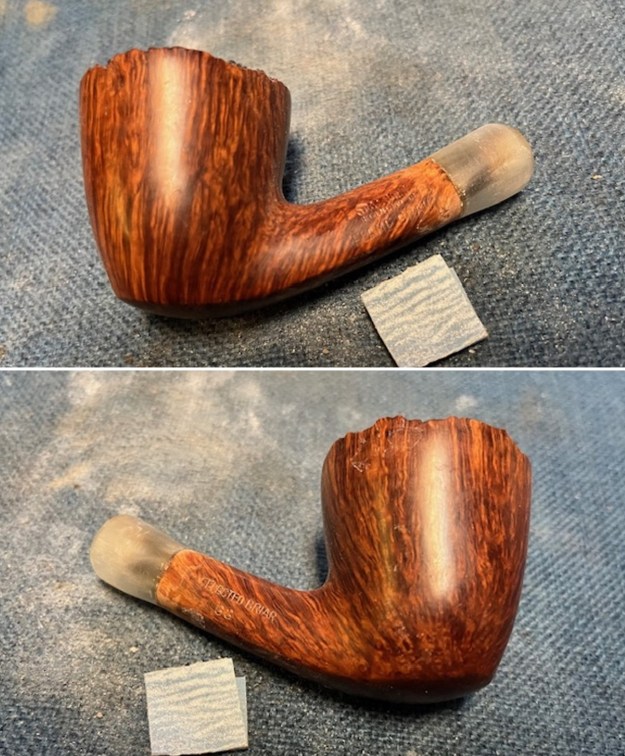
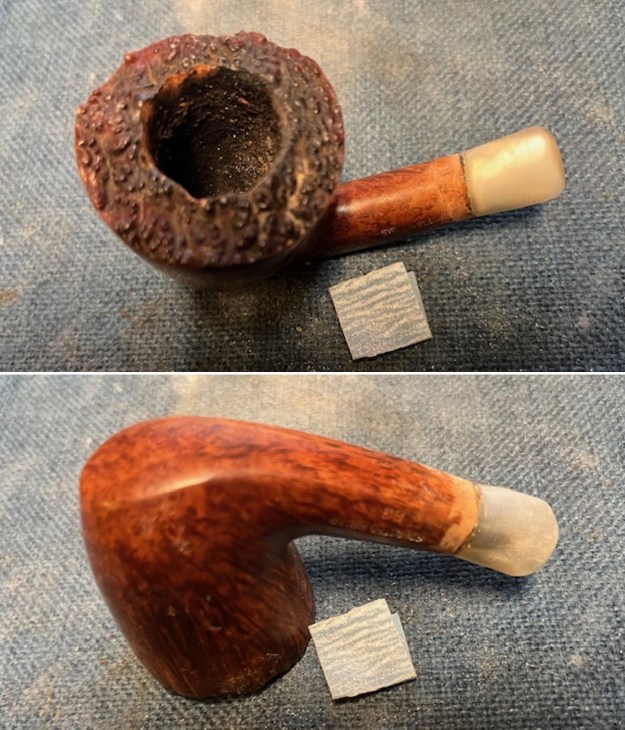
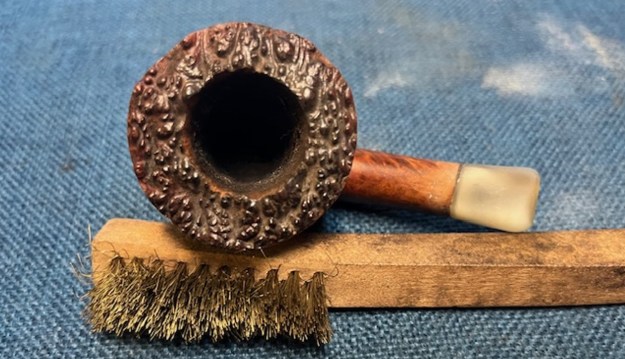
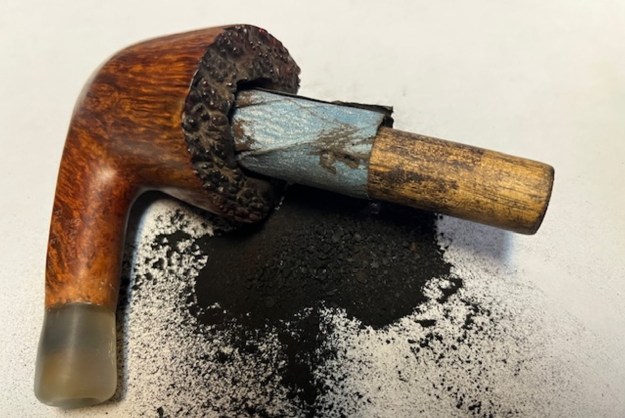
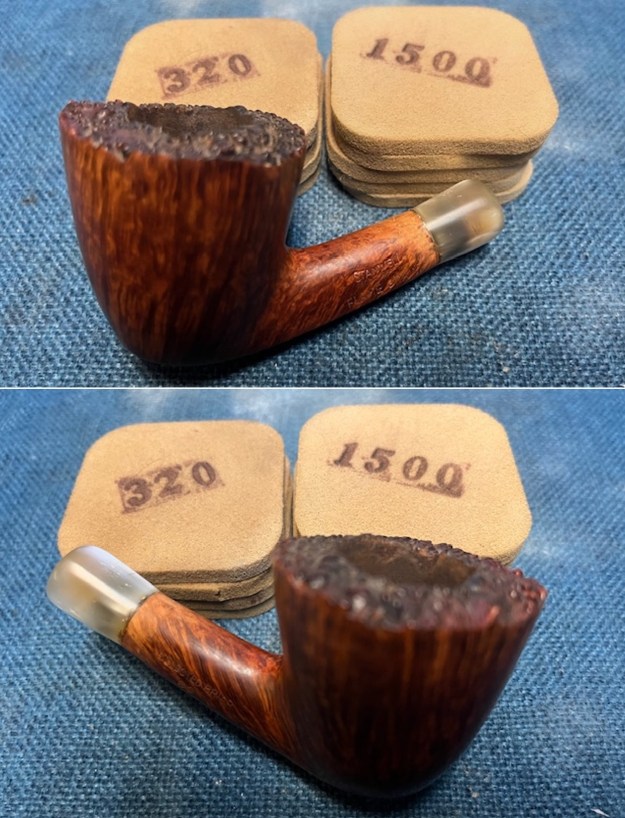
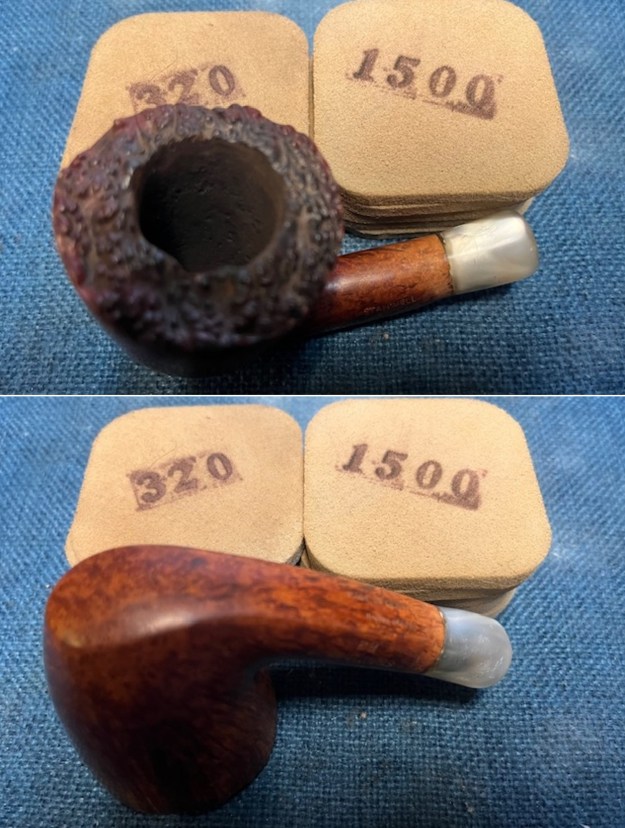
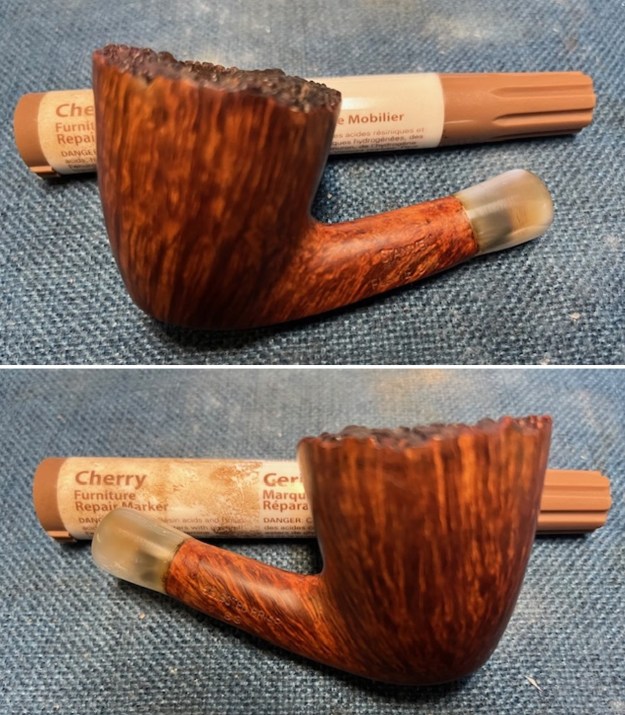
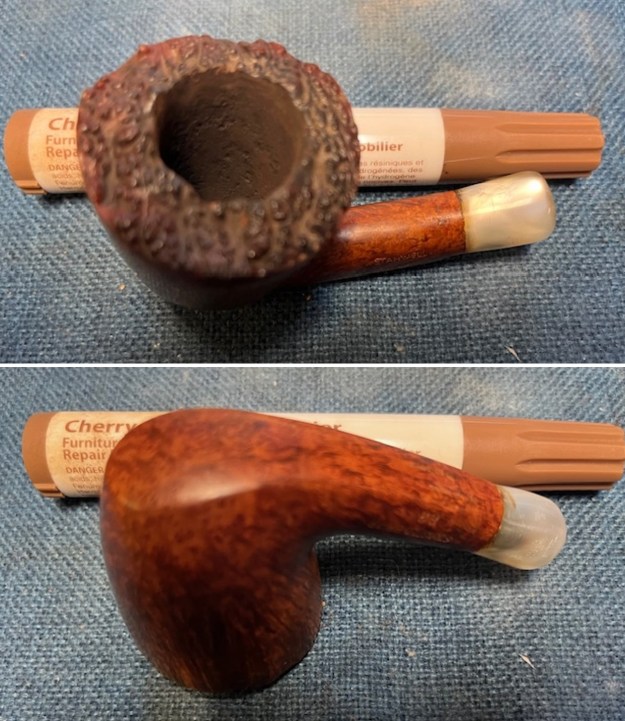
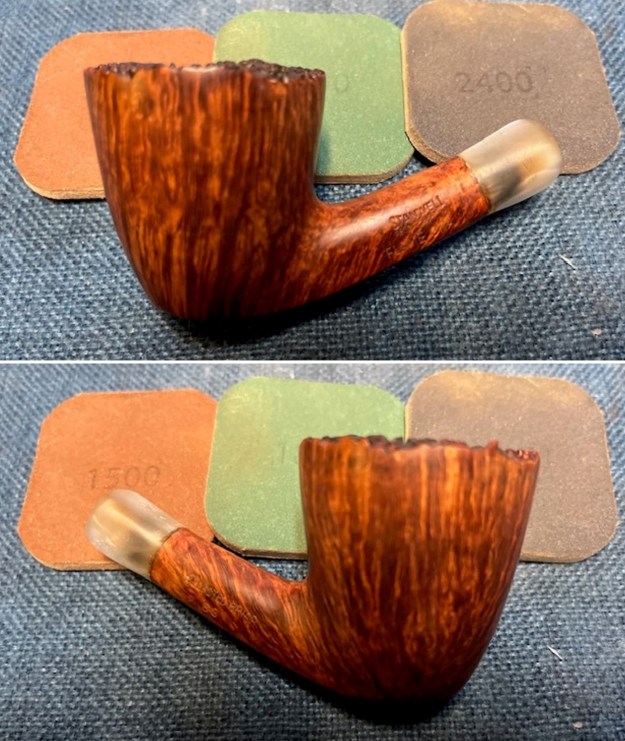
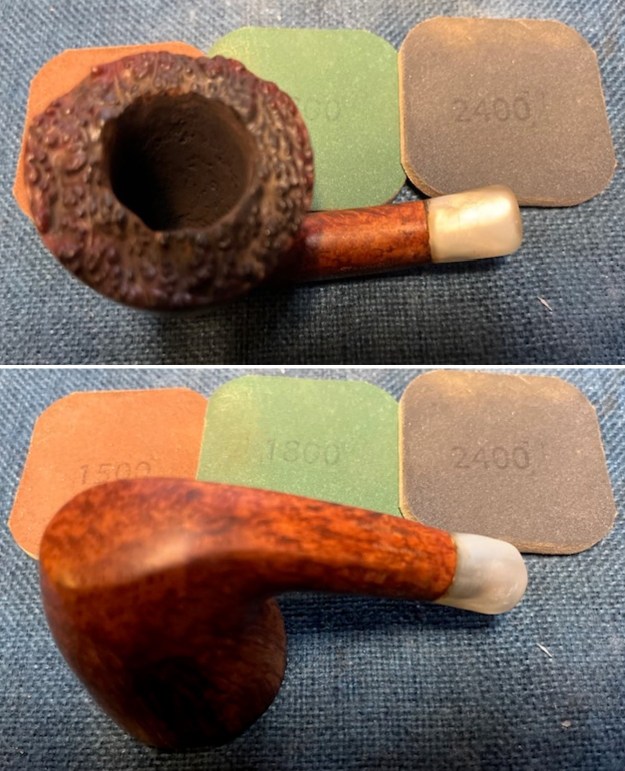
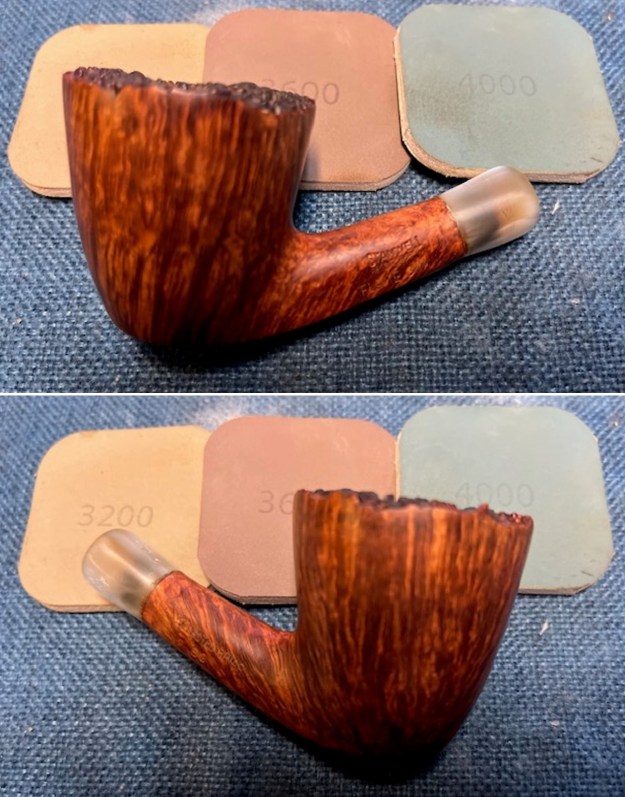
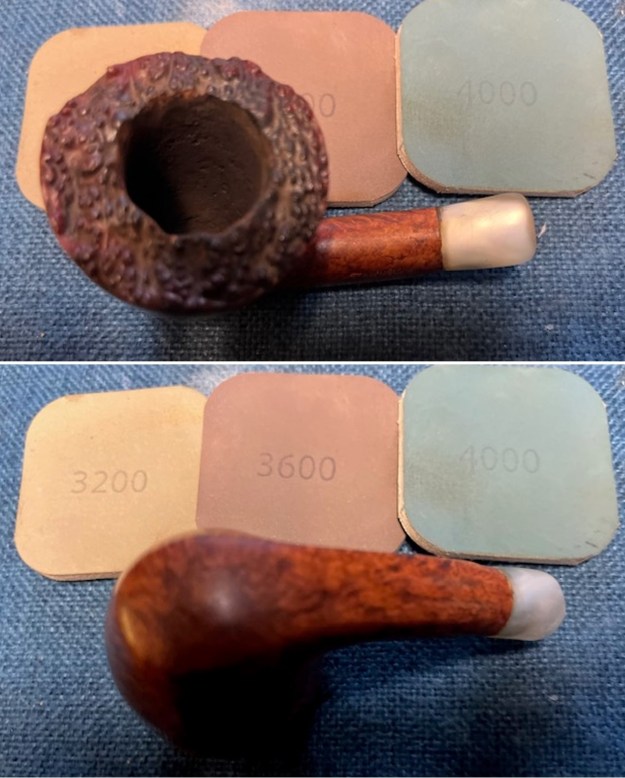
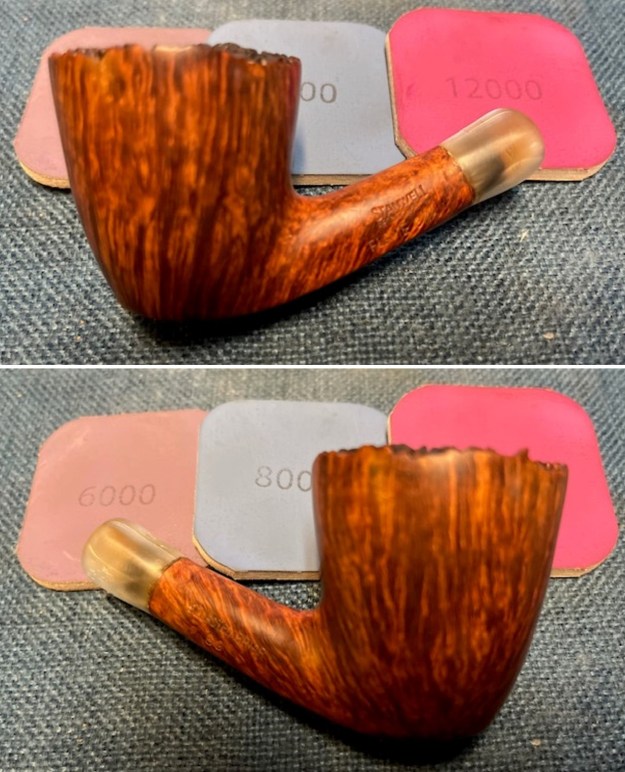
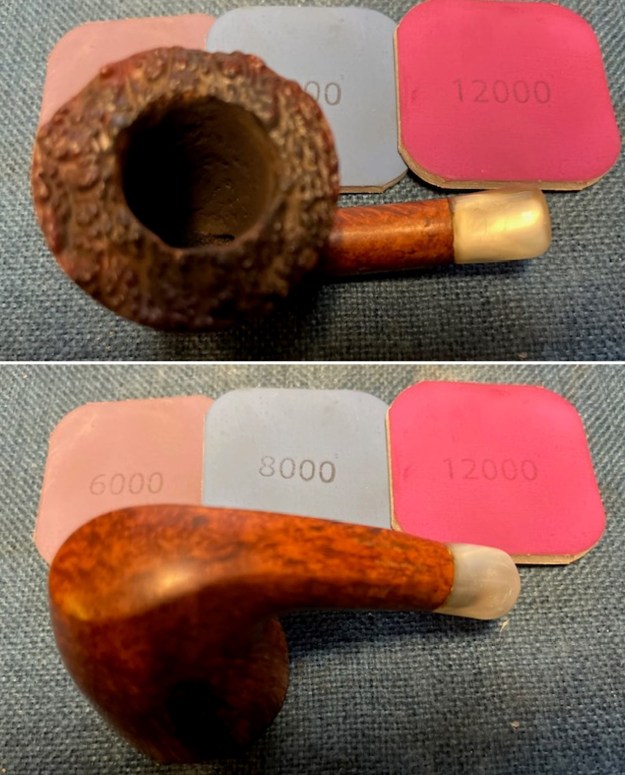
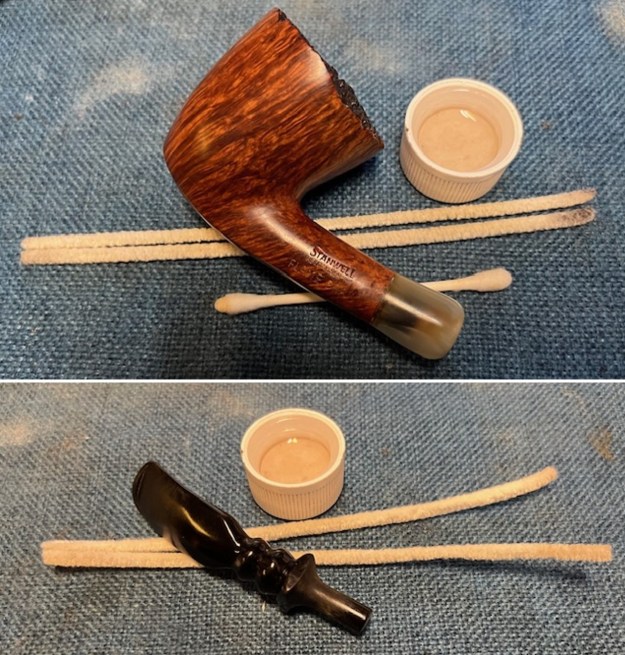
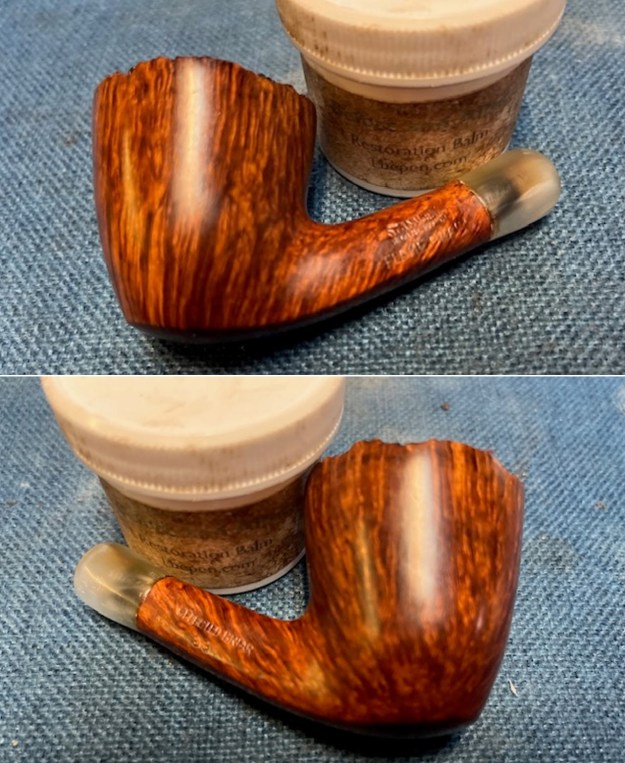
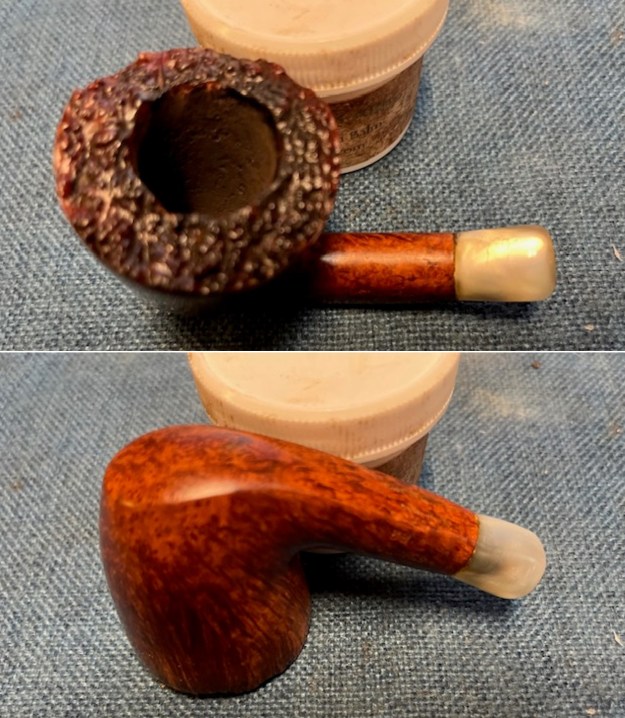
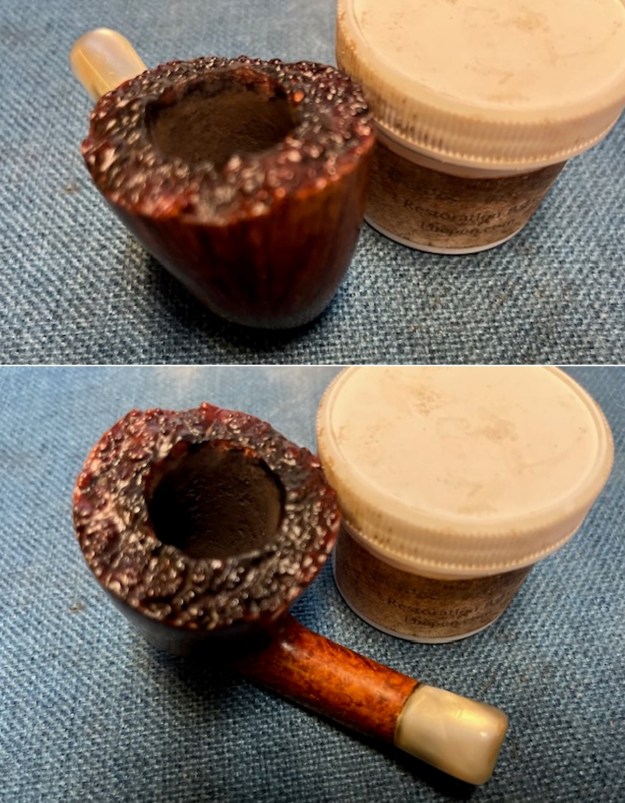
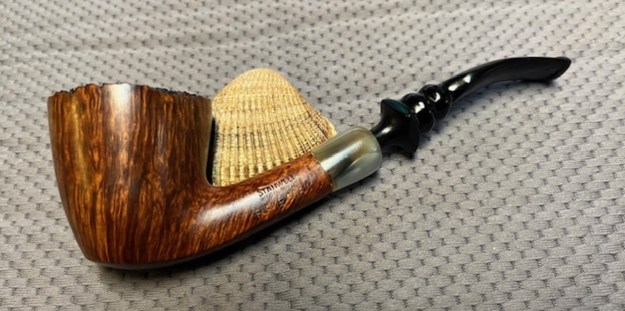
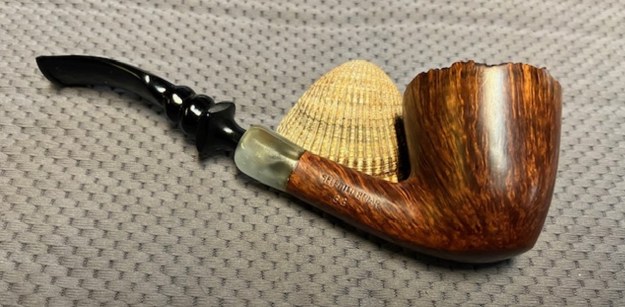
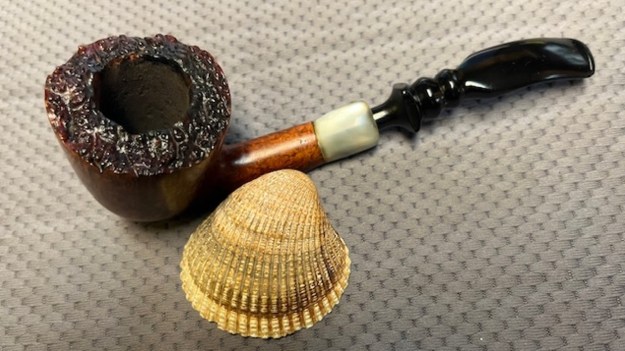
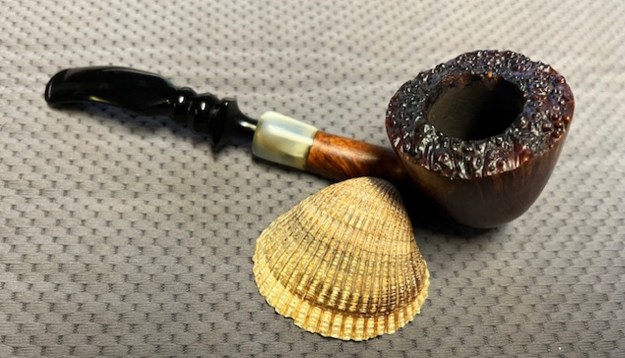
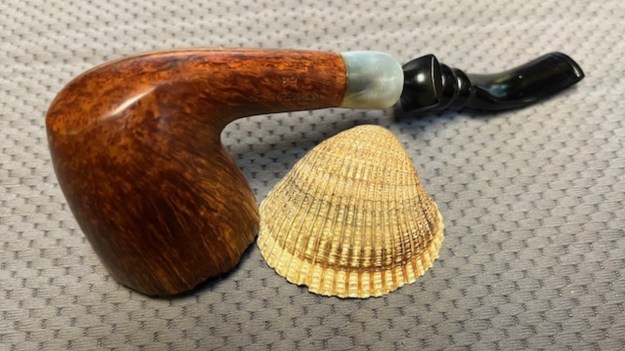
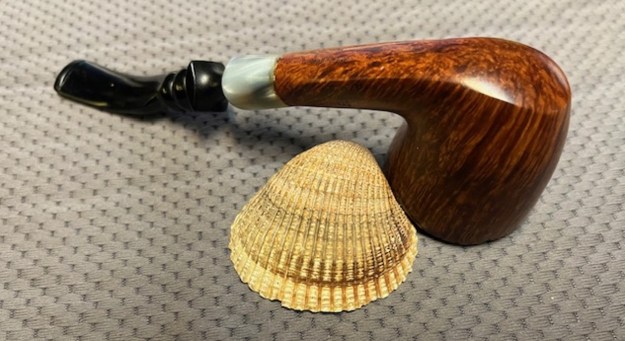
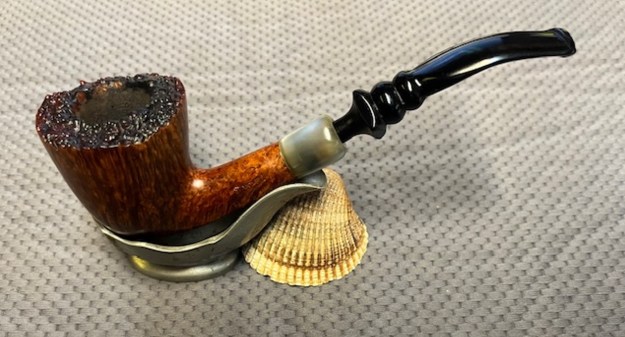
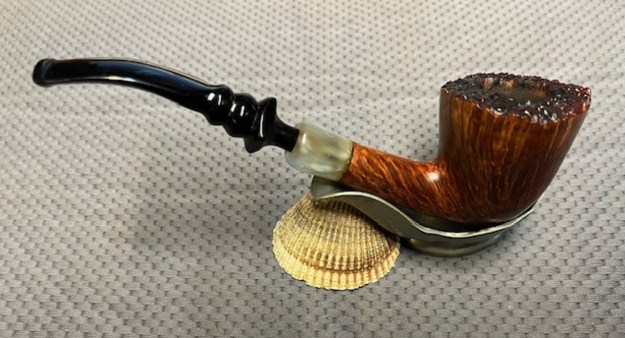
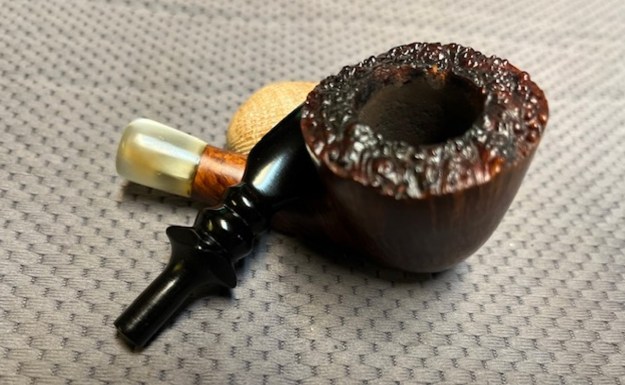
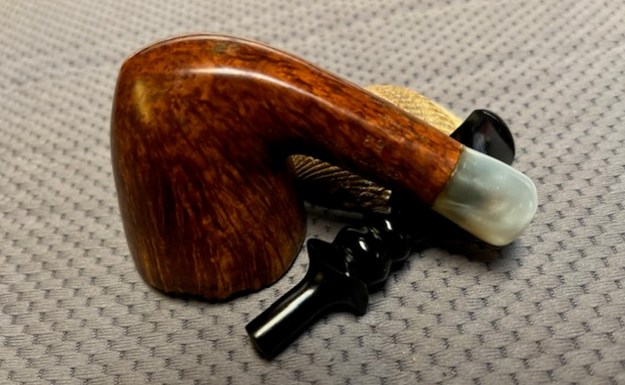
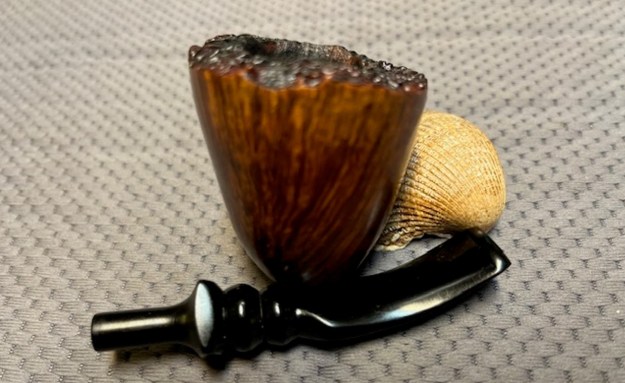
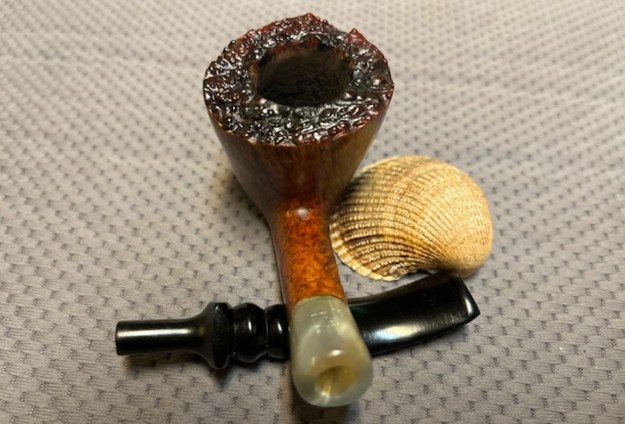
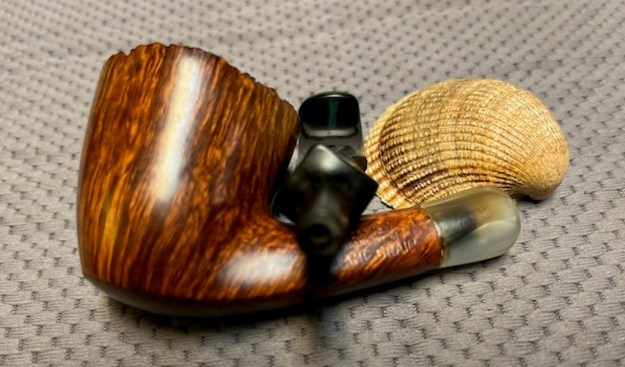
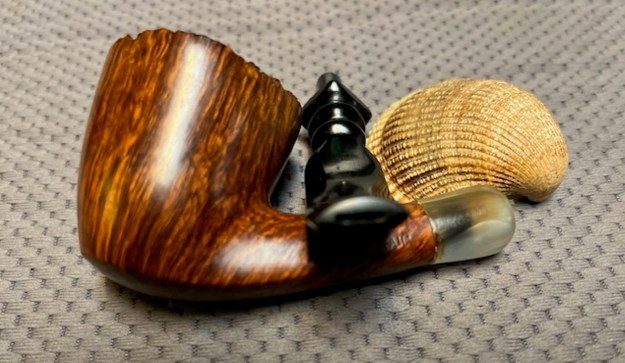
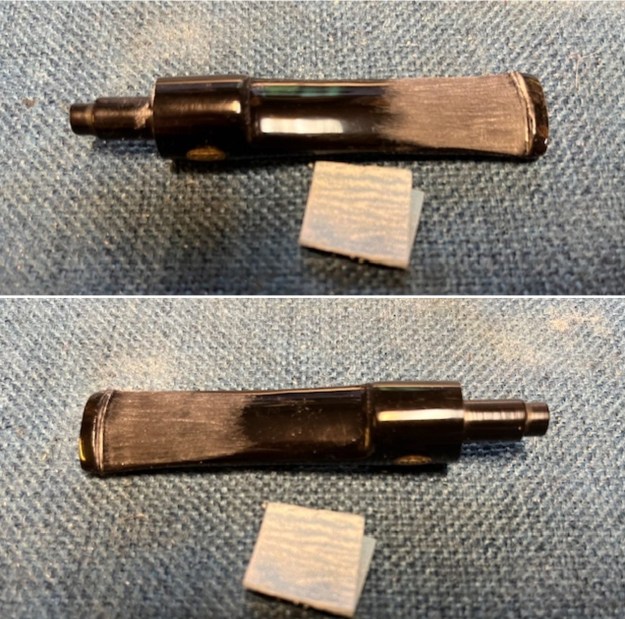
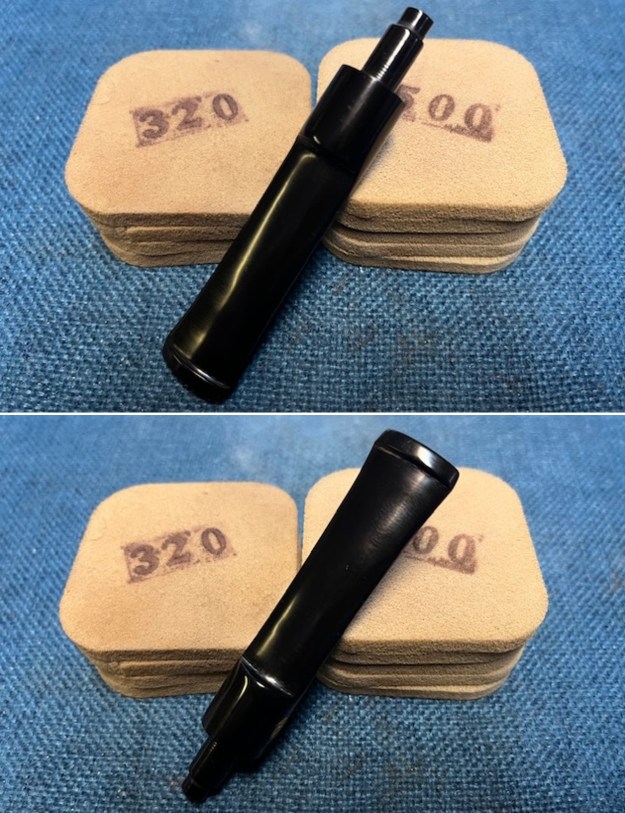
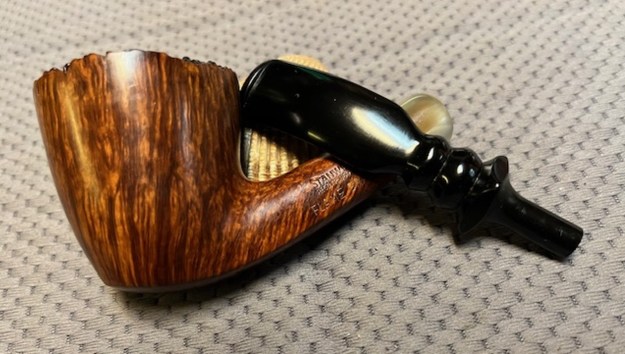
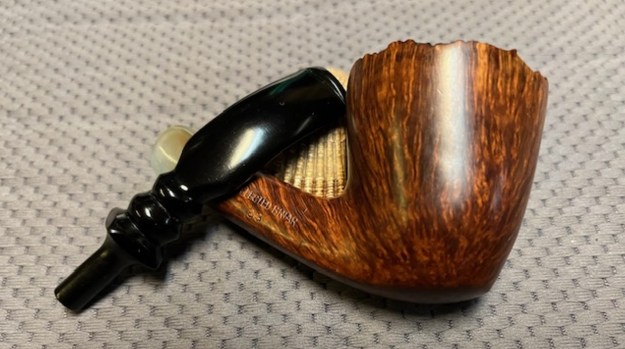
I took a break from working on repairs for customers and my own pipes to have some fun with an unstemmed bowl I had in my box. I went through my stems and did not have a normal or original stem for the bowl. I tried a variety of stems and none of them fit well of even close. I know this one will certainly irritate some purists but I have to tell you it was a fun pipe to work on.The shank had a bit of an odd shape as it was round on the top and the right and left sides. The unique part was that the bottom of the shank was flat. It was stamped on the left side of the shank and read Stanwell [over] Regd. No. 969-48 [over] Flame Grain. On the right side of the shank it is stamped Selected Briar [over] shape number 63. On the underside of the shank it is stamped Made in Denmark [over] Modele Depose. The shape was a classic Dublin with a plateau rim top. I only took one photo of the bowl before I started working on it. The bowl had some amazing grain around the sides and shank. Definitely the pipe lived up to its name FLAME GRAIN. I went to my can of stems and found both an interesting stem and a horn acrylic shank extension. With a bit of adjusting they would make an interesting looking freehand.The tenon end on the shank extension took only a little adjusting to fit the mortise in the shank. I used a file and a Dremel and a sanding drum to adjust the fit. I fit it in the shank end to get a sense of what it looked like with the extension.I coated the tenon end of the extension with some clear super glue and pressed it into the shank end. I held it in place until the glue set and the extension was solid in the shank.I used a flat file/rasp to shape the shank extension the shank end. I used a Dremel and sanding drum as well. It took a lot of sanding and filing to shape the extension but it gradually began to take on shape. I took some photos of the pipe after the heavy file work was finished. It is looking much better in terms of the fit. Lots of heavy sanding to do to further shape it. I took some photos of the stamping on the shank sides. The photos are far blurrier than the stamping is in person. It is very readable.More filing and more sanding with 220 grit sandpaper really gave the shank extension a defined shape and look. Polishing the shank extension would bring the horn shank back to life. I paused in the polishing of the acrylic horn extension to clean up the bowl. I worked over the rim top with a brass bristle wire brush to clean out the debris in the plateau. It polished up nicely with the brush. It looked much better. I began my work on this pipe by reaming the pipe. I used a PipNet Reamer with the first and second cutting heads to take back the heavy cake to bare briar. I cleaned up the reaming with a Savinelli Fitsall Pipe Knife and finally sanded the bowl walls with 220 grit sandpaper wrapped around a dowel. I like to remove all the cake to examine the walls for damage and checking. Great news is that this one is free of any damage! I sanded the bowl to smooth out the finish on the bowl and take care of nicks and scratches in the bowl sides and shank. I also sanded the acrylic horn shank extension. I also sanded the areas where the file and the 220 grit sandpaper had been used on the briar shank. I used 320-3500 grit sanding pads and wiped the bowl down after each pad with a damp cloth to check on the progress. It came out looking much better. I touched up the sanded areas on the shank end ahead of the extension with a Cherry stain pen. It matched surrounding briar very well. The acrylic horn shank extension looked very good. I polished the briar bowl and the acrylic horn shank extension with micromesh sanding pads – dry sanding with 1500-12000 grit sanding pads. I wiped it down with a damp cloth after each pad to remove the debris. The bowl and the band took on a rich glow. I cleaned out the shank and the airway in the stem with pipe cleaners, cotton swabs and alcohol. It was surprisingly clean and the pipe smelled fresh. I rubbed down the briar Before & After Restoration Balm. I worked it into the surface with my fingertips. I used a shoe brush to work the balm into the plateau. The product works to clean, enliven and preserve the briar. I let it sit for 15 minutes then I buffed it with a cotton cloth to deepen the shine. The briar really comes alive with the balm. I used the sanding pads I purchased recently – 320-3500 grit regular pads to smooth out the finish and remove the light tooth and chatter marks in the stem. I wiped the stem down with Obsidian Oil to finish the preliminary work after the 3500 grit pad.I polished the stem with micromesh sanding pads – dry sanding with 1500-12000 grit pads. I wiped the stem down after each sanding pad with Obsidian Oil. I polished the stem with Before & After Pipe Stem Polish – both Fine and Extra Fine. I gave it a coat of Obsidian Pipe Stem Oil. It works to protect the stem to protect the stem. I set it aside to dry. I put the stem back on the reborn/re-imagined  Stanwell Flame Grain Made in Denmark 63 Dublin Freehand and took it to the buffer. I buffed the bowl and stem with Blue Diamond to polish the briar and the acrylic. Blue Diamond does a great job on the smaller scratches that remain in both. I gave the bowl and the stem several coats of carnauba wax and buffed the pipe with a clean buffing pad to raise the shine. I hand buffed it with a microfiber cloth to deepen the shine. I am amazed at how well it turned out. The finished pipe is shown in the photos below. This is a beautiful Stanwell Flame Grain Dublin 63 – the acrylic horn shank extension, black acrylic stem and smooth finish combine to give the pipe a great look. The dimensions of the pipe are Length: 6 inches, Height: 2 inch, Outside diameter of the bowl: 1 ¾ inches, Chamber diameter: ¾ of an inch. The weight of the pipe is 1.55 ounces/45 grams. This is another pipe that I will be putting on the rebornpipes online store in the Danish Pipe Pipemaking Companies Section shortly, if you are interested in adding it to your collection. Thanks for walking through the restoration with me on this beauty!
As always, I encourage your questions and comments as you read the blog. Thanks to each of you who are reading this blog. Remember we are not pipe owners; we are pipe men and women who hold our pipes in trust until they pass on into the trust of those who follow us.