
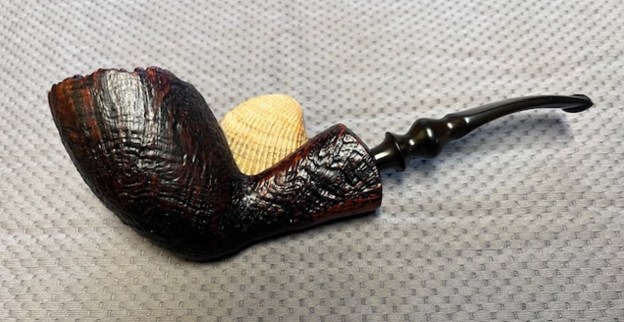
by Steve Laug
Jeff and I purchased this pipe on 05/28/2024 from a fellow in Santa Cruz, California, USA. It is well used freehand with a sandblast finish and a plateau rim top. The pipe is stamped on the underside of the shank and reads Knute [over] of Denmark. The stem has no stamp on it and is a fancy turned vulcanite one that fits the shank well. There was a heavy cake in the bowl and lava and debris overflowing onto the plateau rim top filling in the valleys. The finish showed some nice grain around the bowl and shank even through the grime that was ground into it. The stem was oxidized and there were tooth marks and chatter on both sides of the stem ahead of the button. It was a beautiful looking, well carved pipe. Jeff took photos of the pipe before he started his clean up work.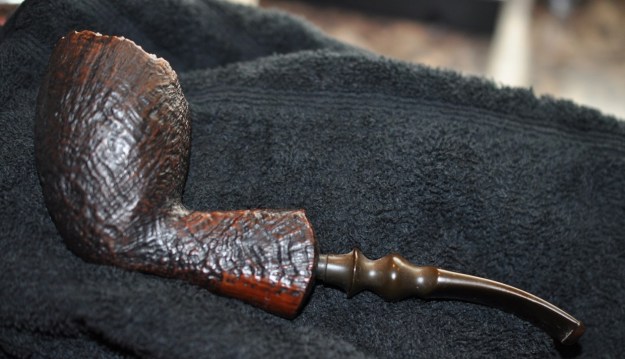
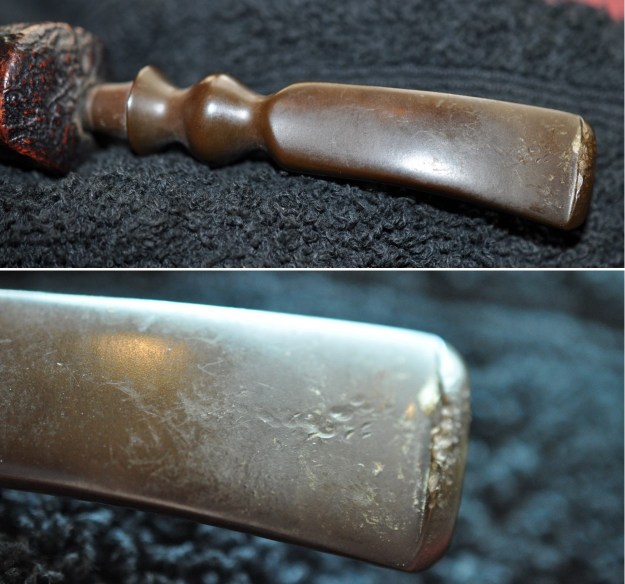
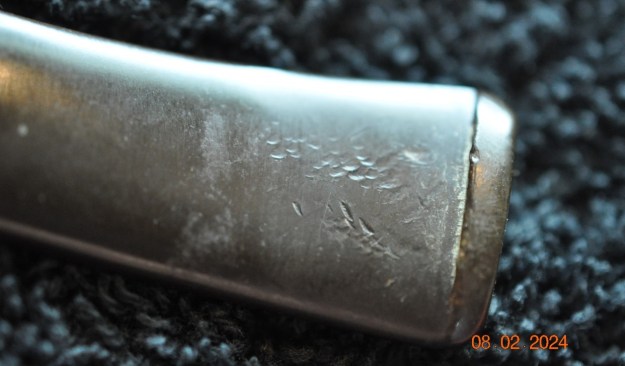
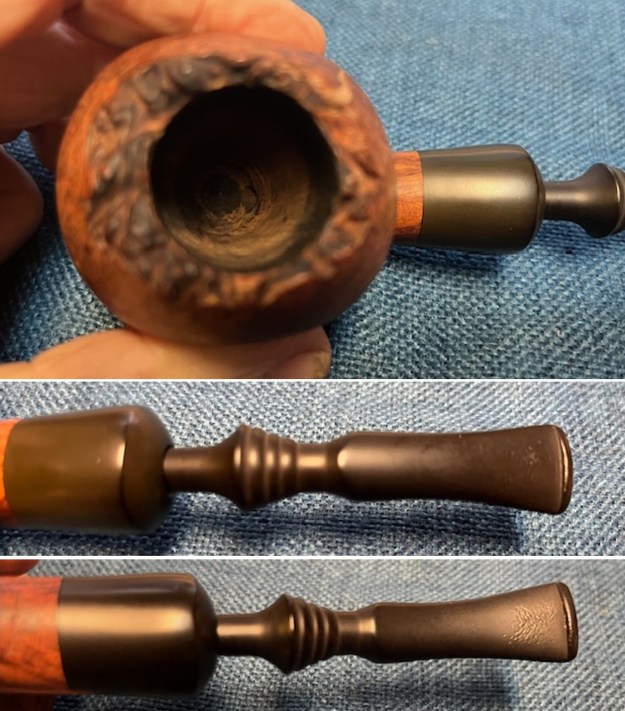
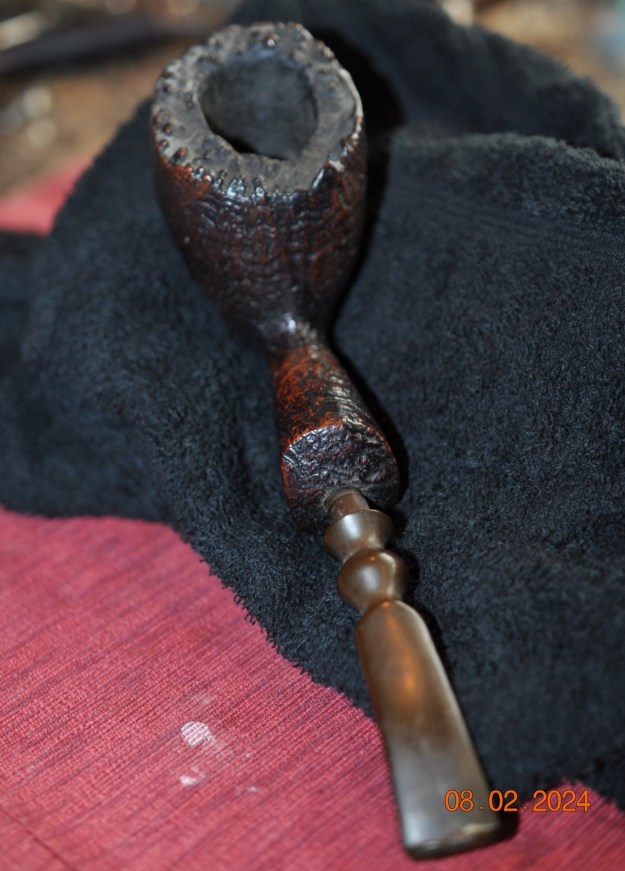 He took photos of the rim and bowl to give a sense of what he was dealing with. It is heavily caked and the rim top is filled in with lava and debris. Judging from the condition it is a fine smoking pipe. He also took photos of the stem surfaces to show the condition of the stem when it arrived.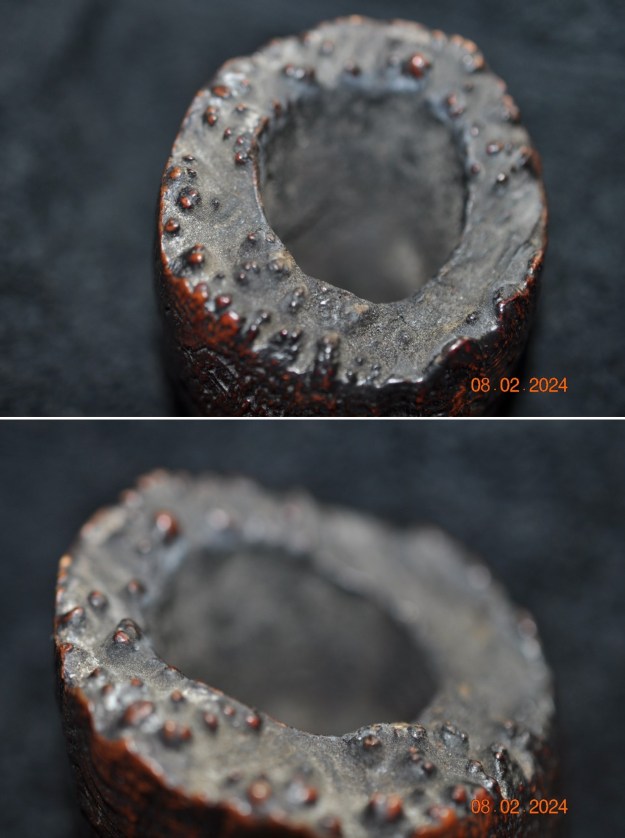
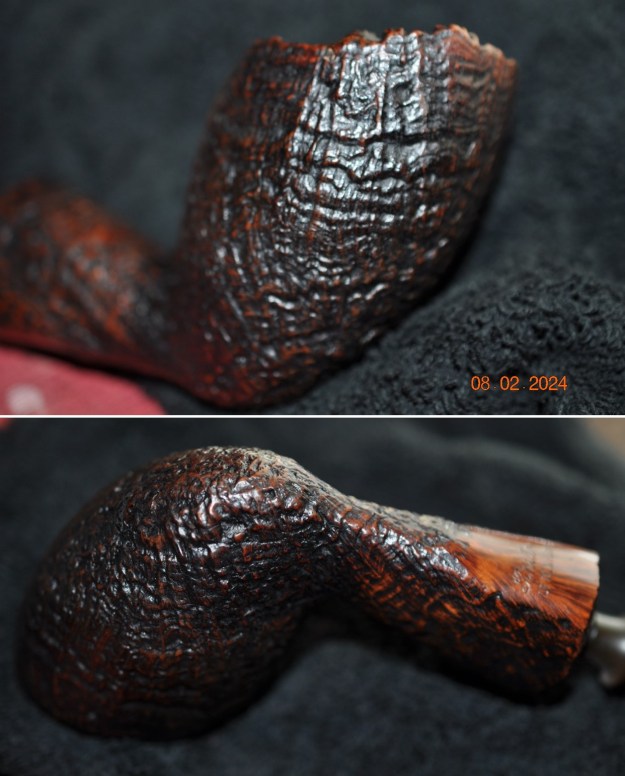
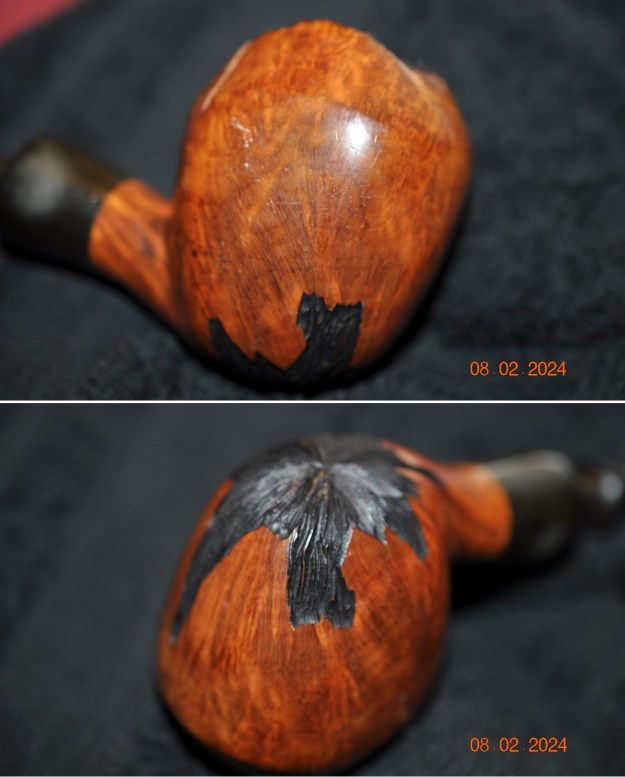
 The photos of the sides and heel of the bowl show beautiful shape and the way the sandblast flows with that around the bowl and shank sides. The combination of stains adds depth to the finish on the pipe. Even under the grime it is a unique piece.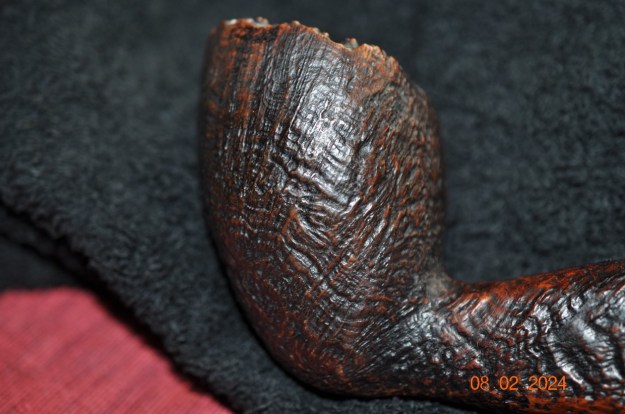
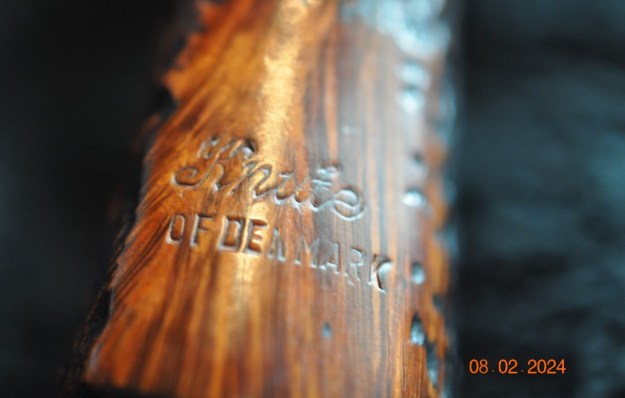
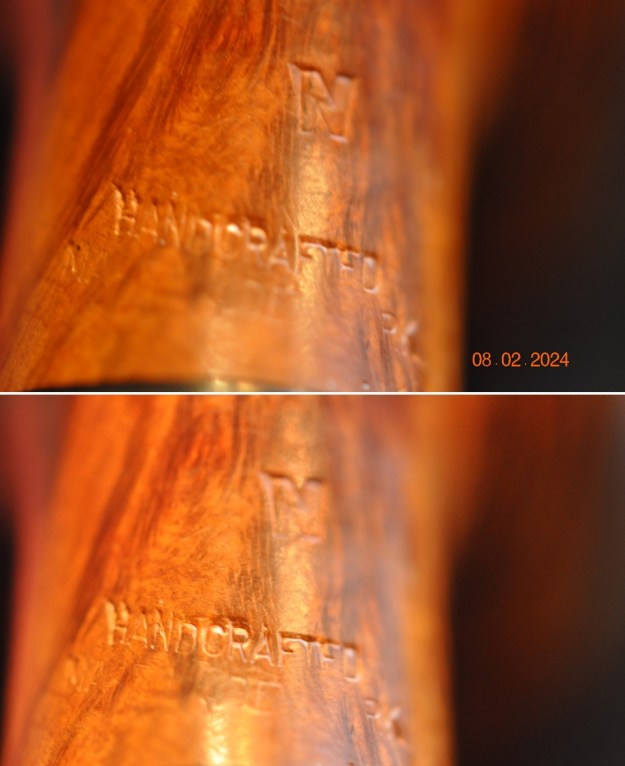
 He also took a photo of the stamped name on the underside of shank. It reads as noted above.
  Before I started my work on the pipe I wanted to remind myself of the provenance of the pipe. I remembered that it was linked to Karl Erik as I have worked on quite a few Knute Freehands. I wanted to know where this pipe fit into the Karl Erik lines so I turned to the first of two sites that I always check to gather information on a brand. I turned to the first source of information site – Pipephil’s (http://www.pipephil.eu/logos/en/logo-k3.html) got a quick overview on the brand once again connecting it to Karl Erik.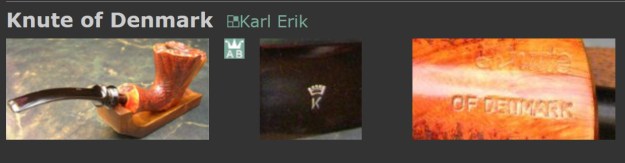
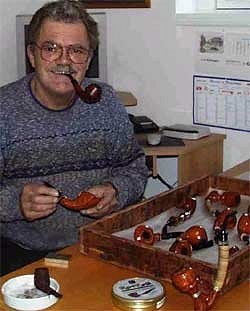 I turned to Pipedia (https://pipedia.org/wiki/Karl_Erik). Pipedia had this great picture of Karl Erik Ottendahl and I decided to include it here as a reminder of the artisan who first carved and released this pipe. Reminded of the tie to Karl Erik, I knew a bit about the pipe at hand. I turned to address the pipe itself. There it is clearly identified and linked to Karl Erik Ottendahl. It is designated as a second and frequently having rustication. The interesting thing is that his pipe does not look like a second at all and I wonder if the Knute is a line of Karl Erik’s rather than a second. Who knows? This one is a very well done sandblast and shaped pipe.
Jeff cleaned up the pipe for me. He reamed the bowl with a PipNet pipe reamer and cleaned it up with a Savinelli Fitsall Pipe Knife. He scrubbed the exterior with Murphy’s Oil Soap and a tooth brush to clean off the grime off the finish and the heavy overflow of lava on the rim top. The cleaning had removed some of the black stain on the rim top. He cleaned up the internals of the shank, mortise and stem with pipe cleaners, cotton swabs and alcohol to remove all of the oils and tars in the pipe. He soaked the stem in Before & After Deoxidizer and was able to remove much of the oxidation. When it arrived here in Vancouver it was a clean pipe and I knew what I had to work with. I took photos of it before I started my part of the restoration.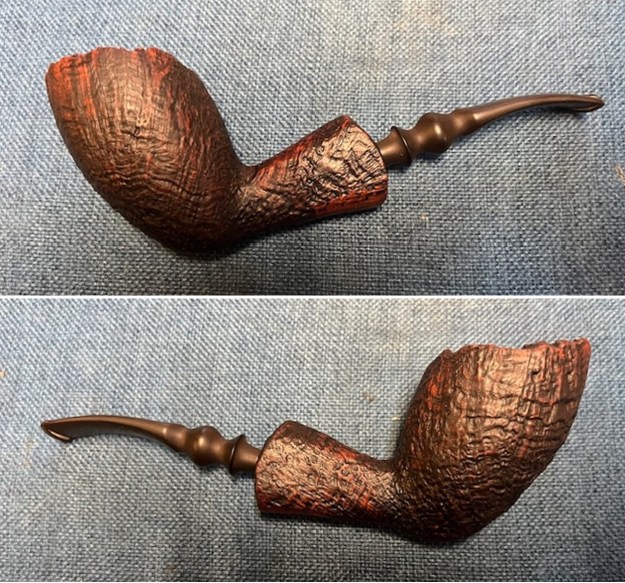
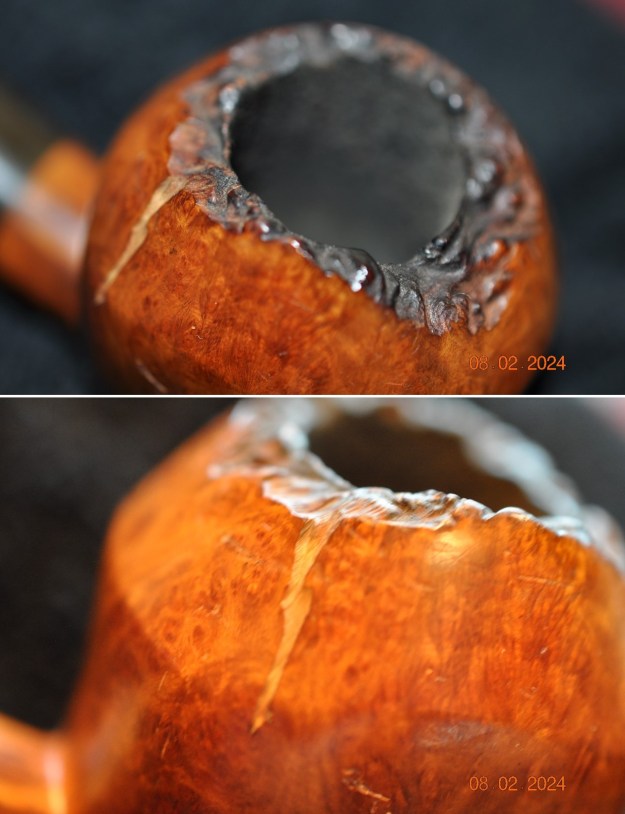
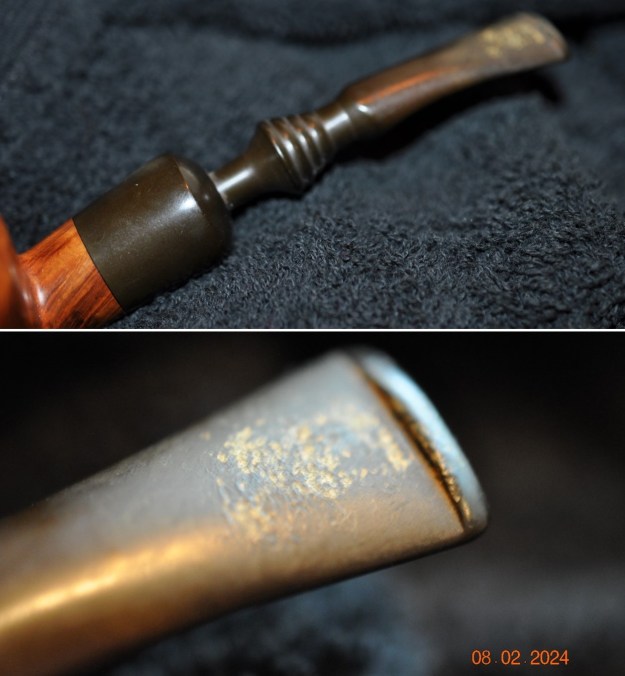
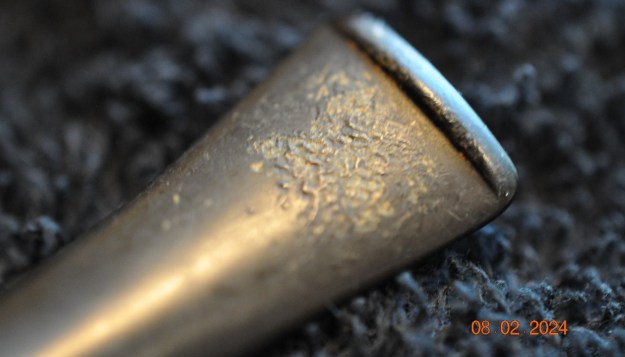
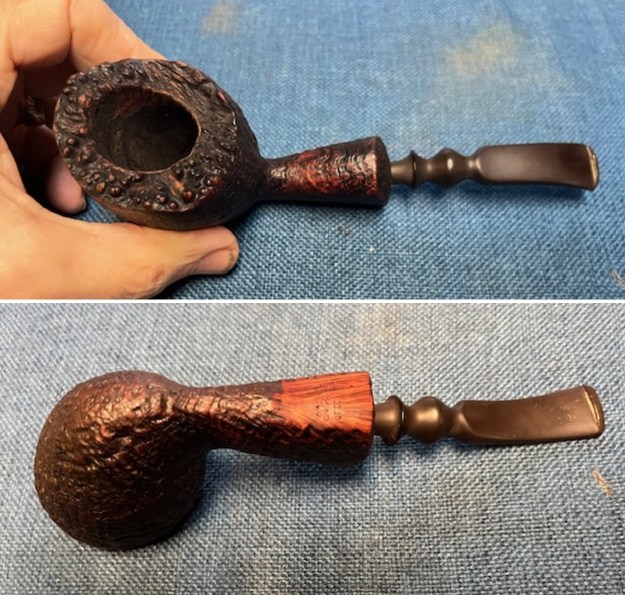 I took photos of the rim top and the stem to show their condition once it arrived in Canada. Jeff was able to clean up the incredibly thick cake and lava overflow that was shown in the rim and bowl photos above. The plateau and the inner edge of the rim look quite good. He was also able to get rid of the grime and grit in the surface of the briar. The stem looked better, though there were tooth marks and chatter on both sides near the button.
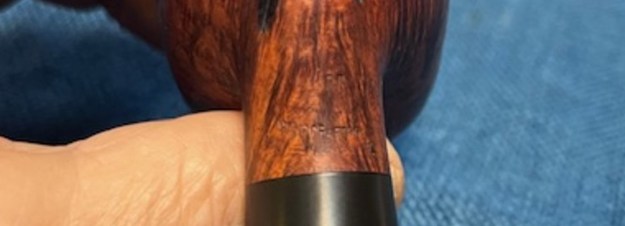
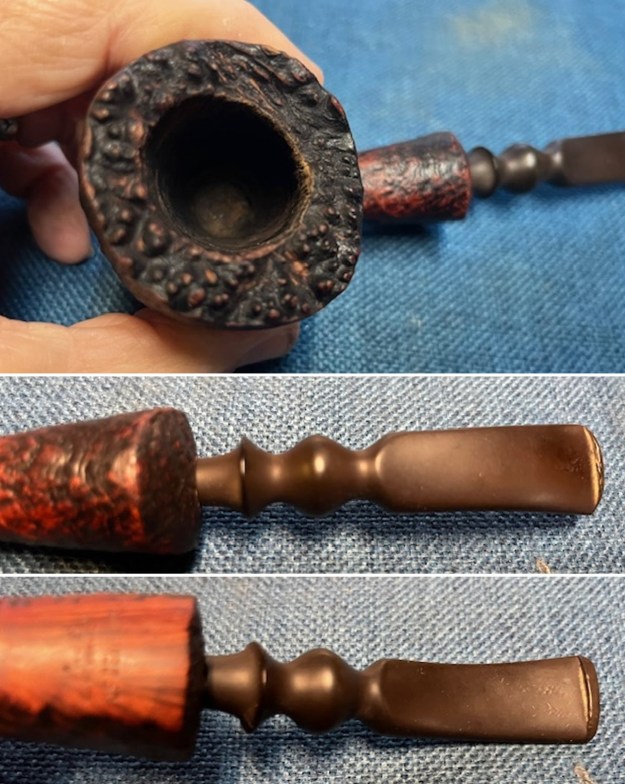 I have noticed sometimes newer refurbishers don’t seem to pay much attention to the stamping when they are restoring a pipe. To me this is a critical part of the restoration to leave it undamaged as it is the only link we have to who made the pipe. I took a photo of the stamping on the underside of the shank to show that it was readable and undamaged by the cleanup work.
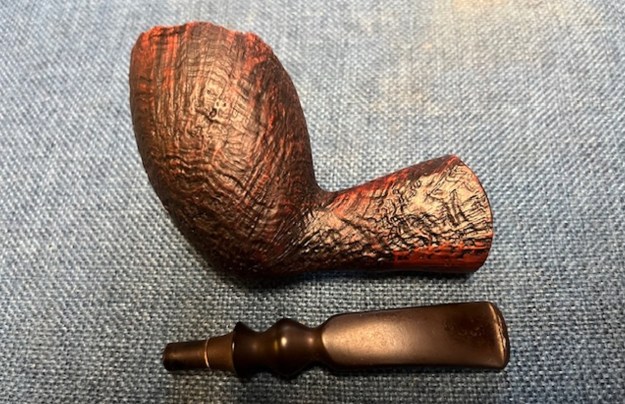
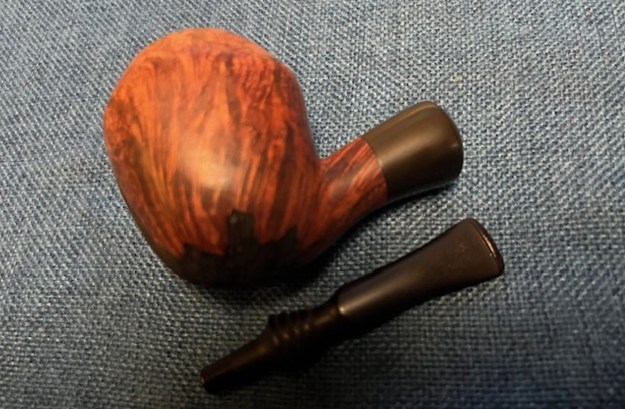
 I removed the stem from the shank and took a photo of the parts to give a sense of what the pipe looks like.
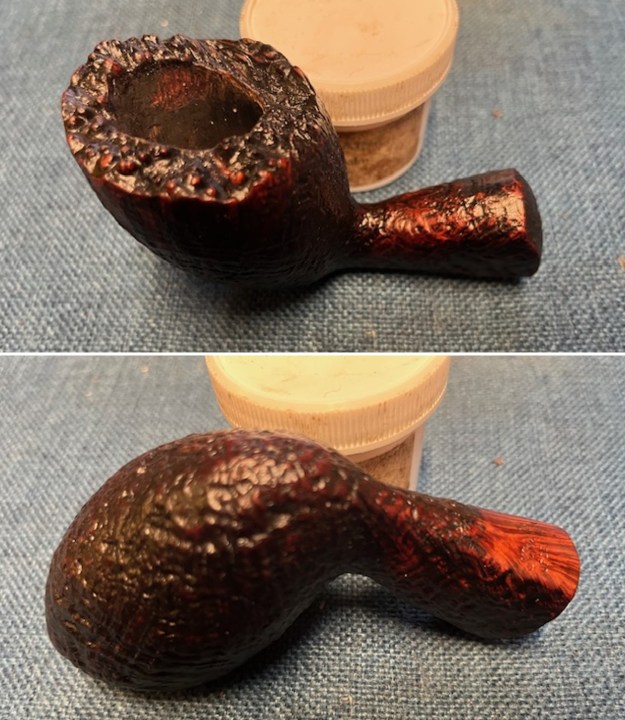
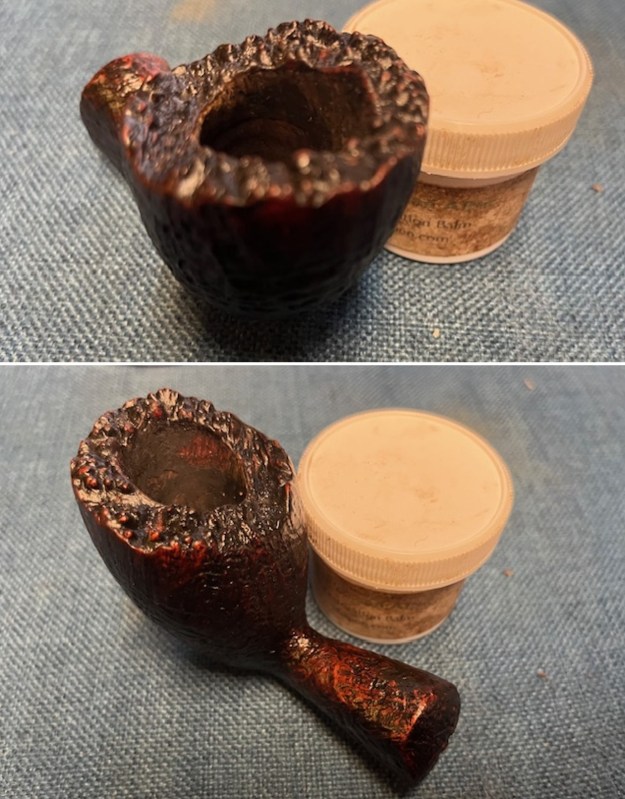
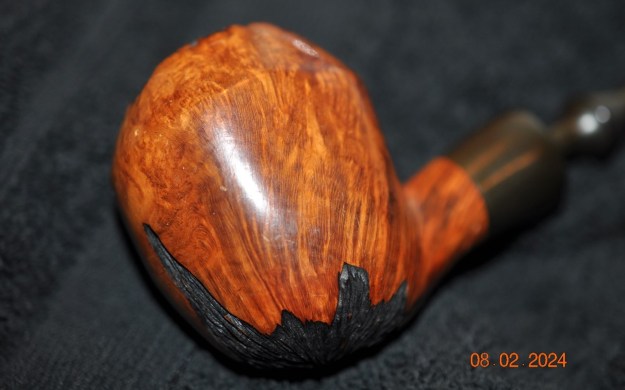
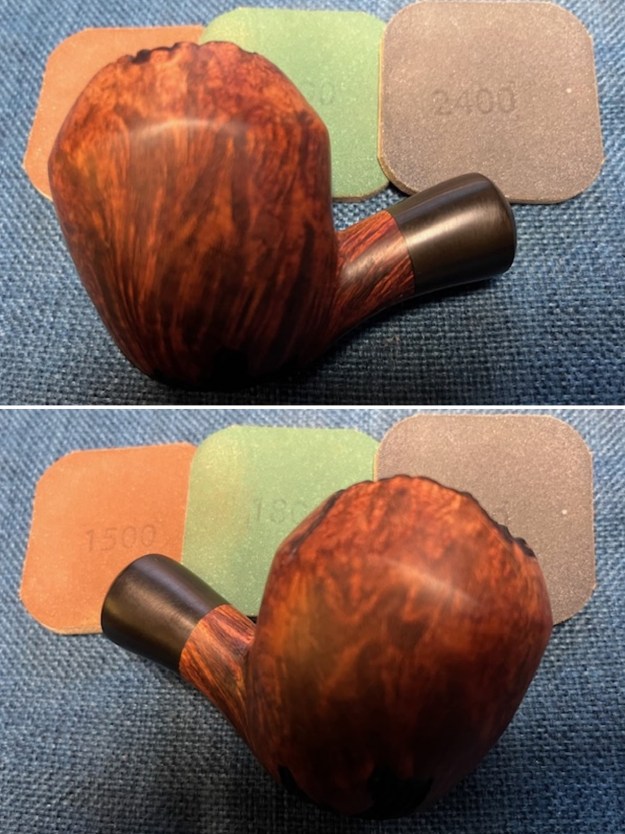
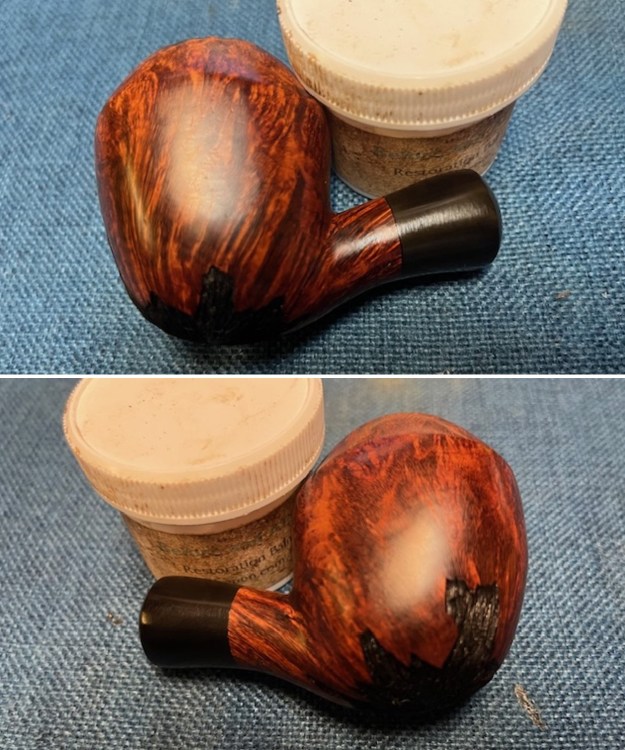
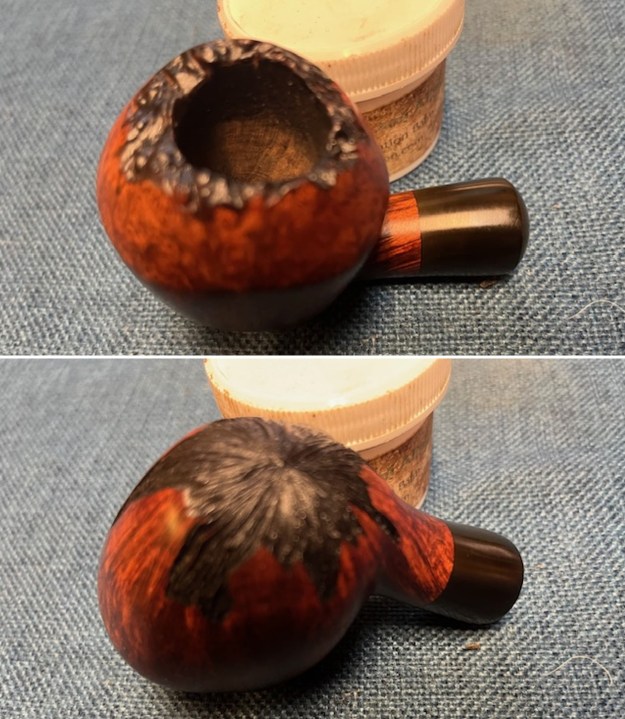
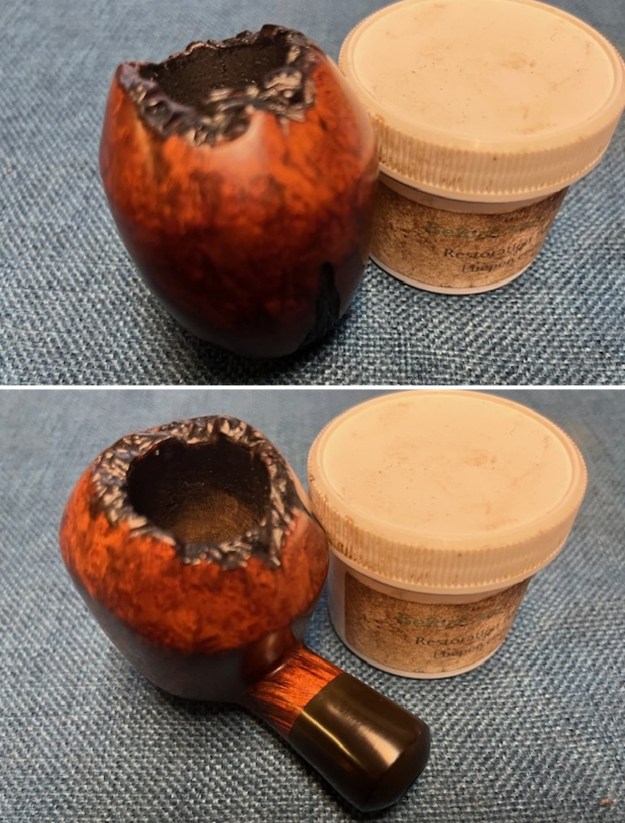
  The bowl looked so good at this point, I rubbed it down with Before & After Restoration Balm to deep clean the finish on the bowl and shank. The product works to clean, enliven and protect the briar. I worked it in with my fingers to get it into the briar. I used a horsehair shoe brush to work it into the plateau top and shank end. I let it sit for 10 minutes then I wiped it off and buffed it with a soft cloth. The briar really began to have a rich shine. I took some photos of the bowl at this point to mark the progress in the restoration. It is a beautiful bowl.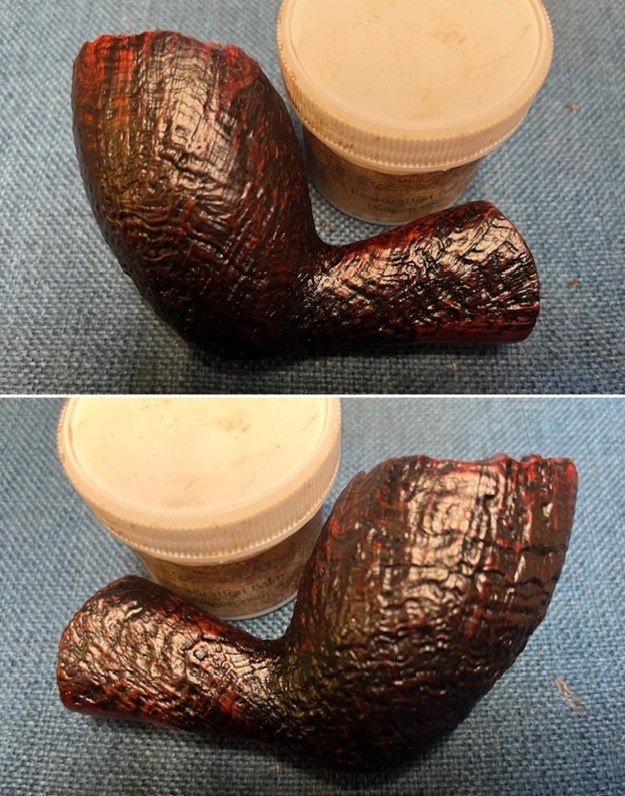
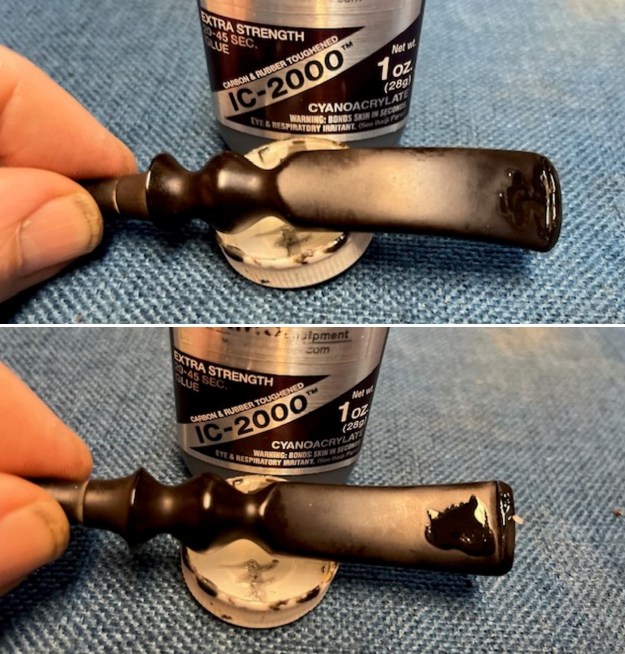
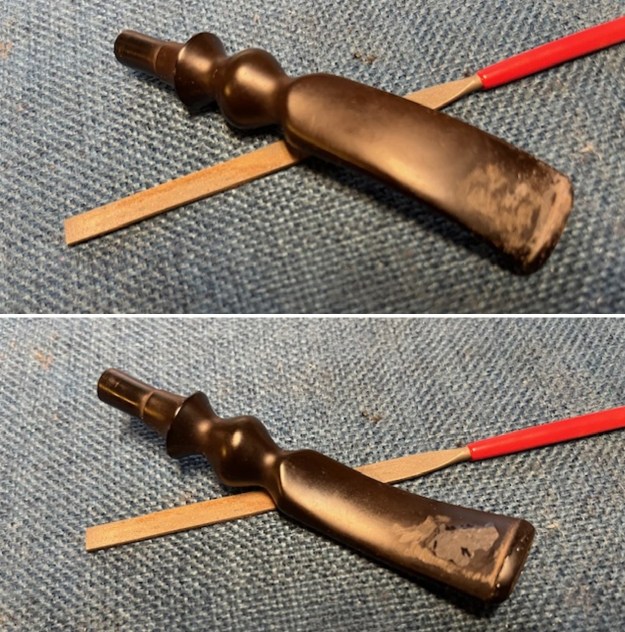
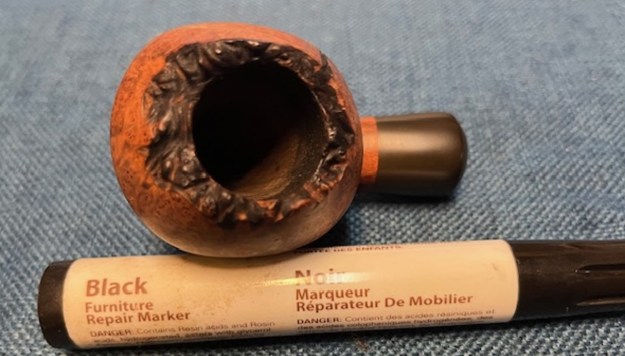
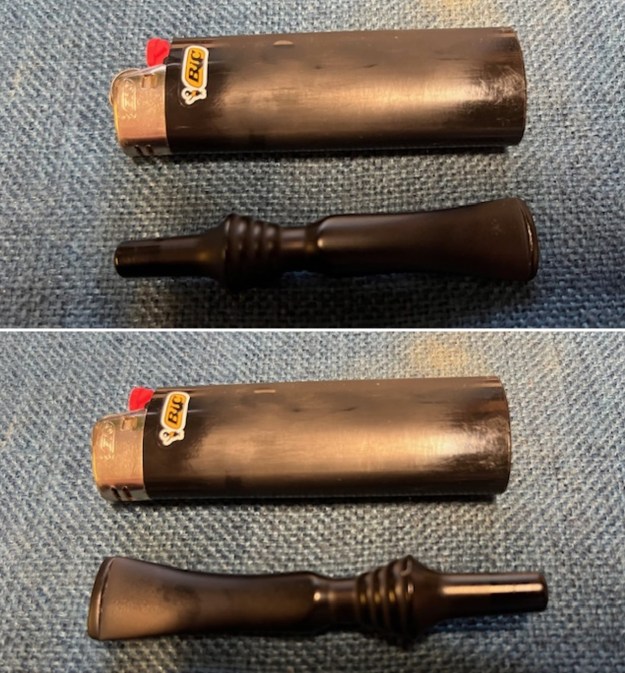
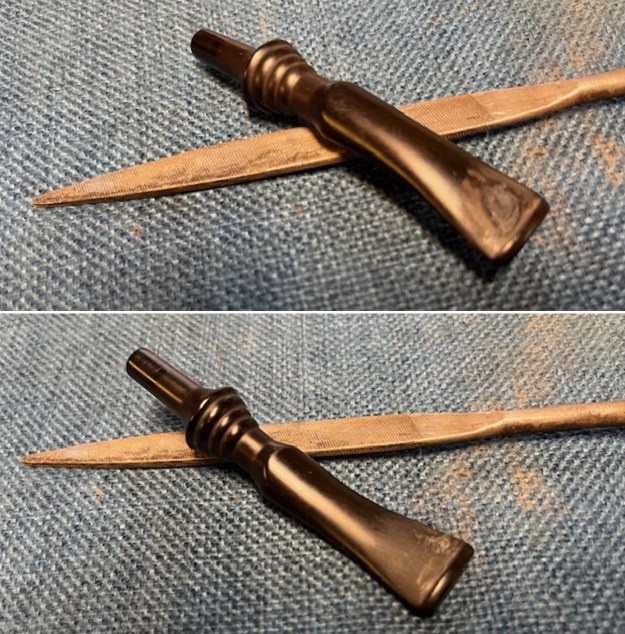
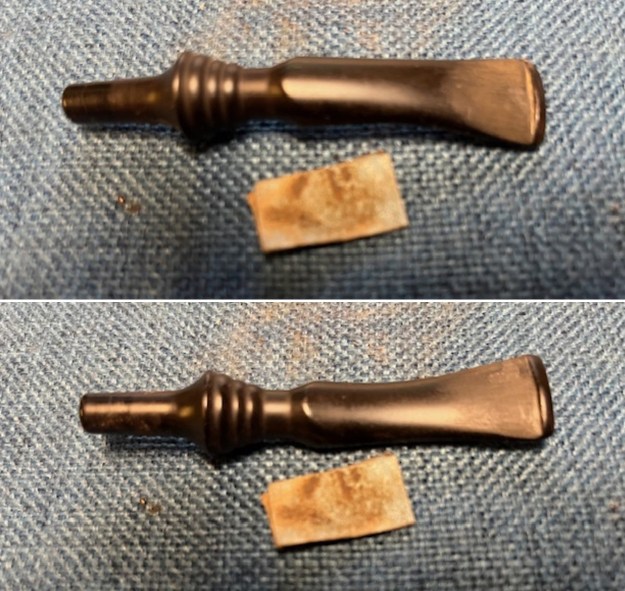
 I set the bowl aside and worked on the stem at this point in the process. I “painted” the stem surface with the flame of a lighter to lift the tooth marks as much as possible. I filled in the small marks that remained with black CA glue. Once it cured I used a small file to flatten the repairs and reshape the button edge. I sanded the repairs with a folded piece of 220 to start the process of blending them into the surface. I wiped it down with Obsidian Oil.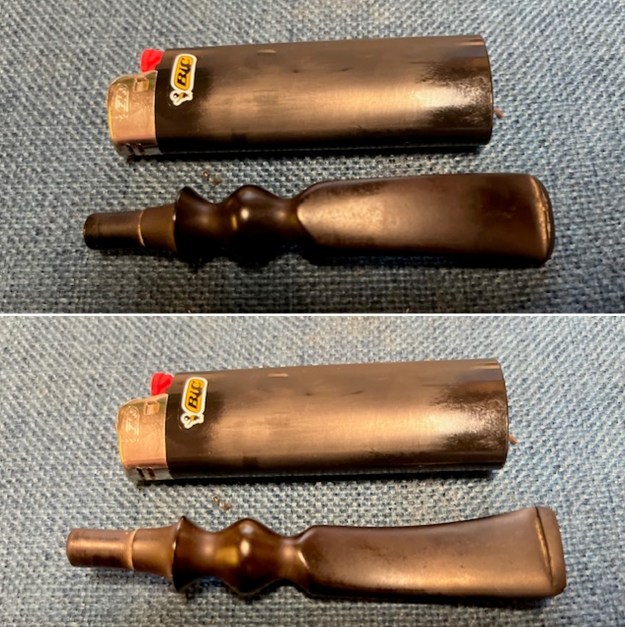
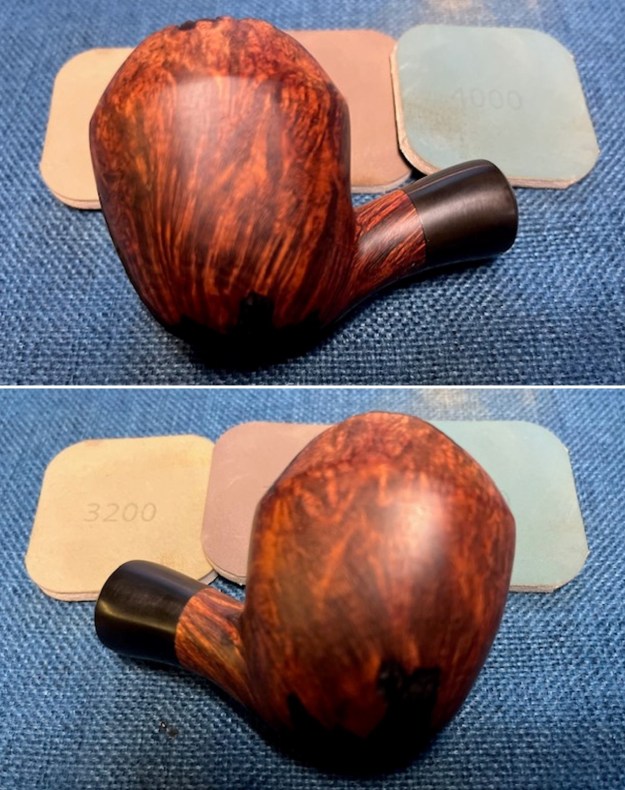
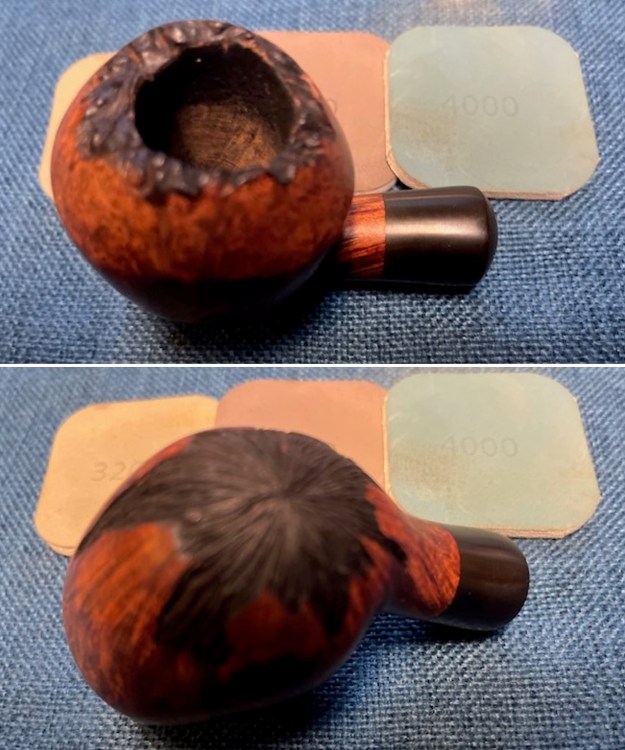
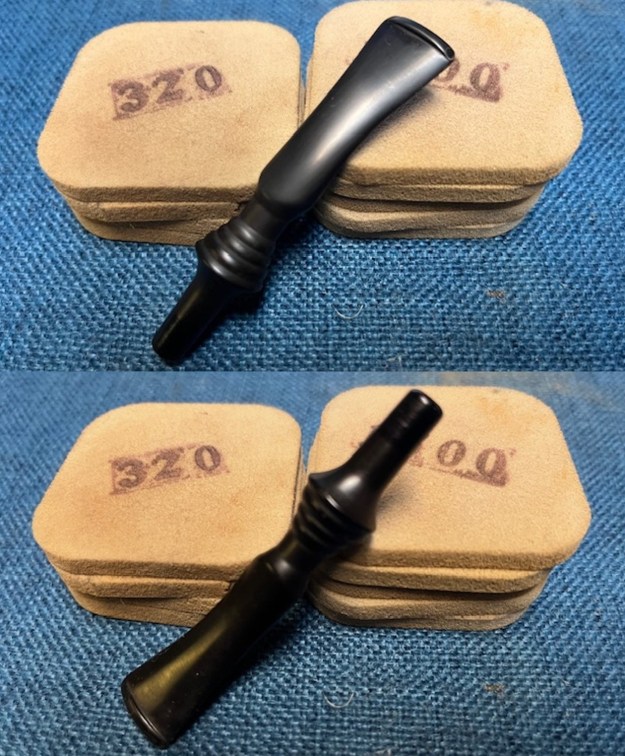
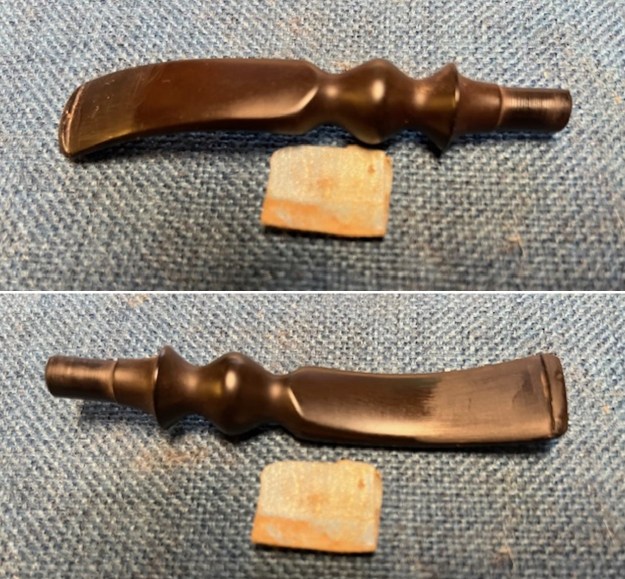 I sanded the stem surface with 320-3500 grit sanding pads to smooth the repairs out further and work out the remnants of oxidation. It is also a way I start polishing the stem. Between each sanding pad I wipe the stem down with an Obsidian Oil cloth.
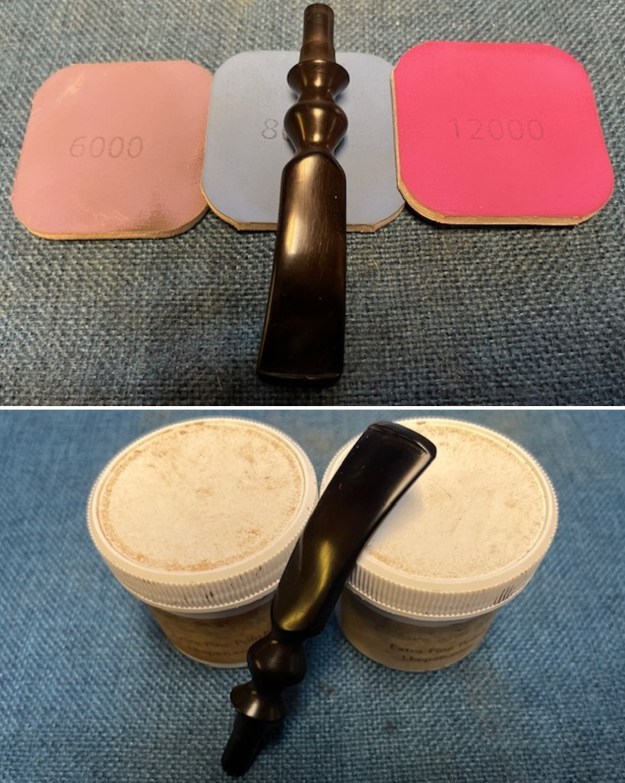
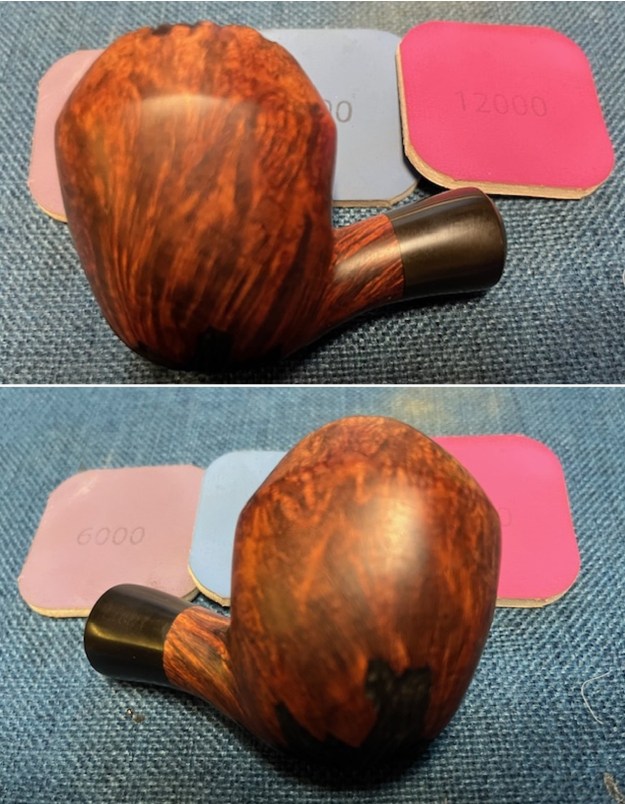
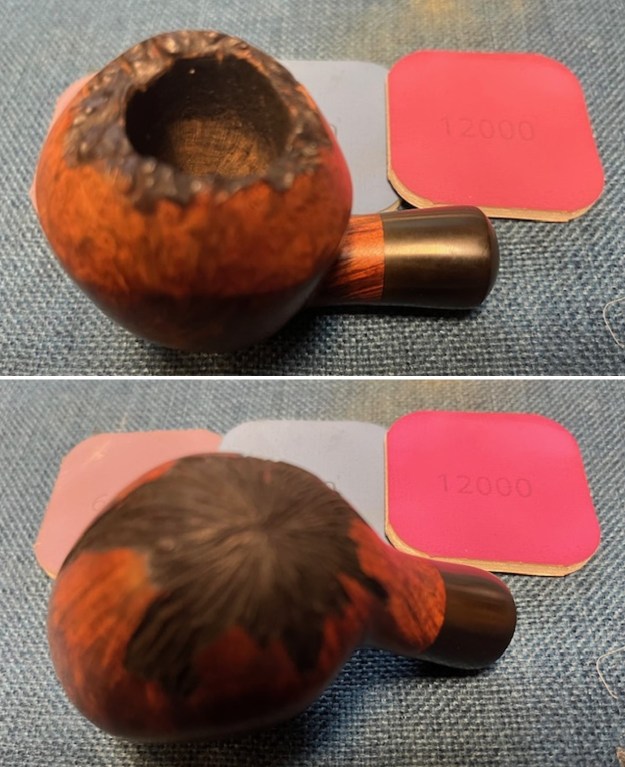
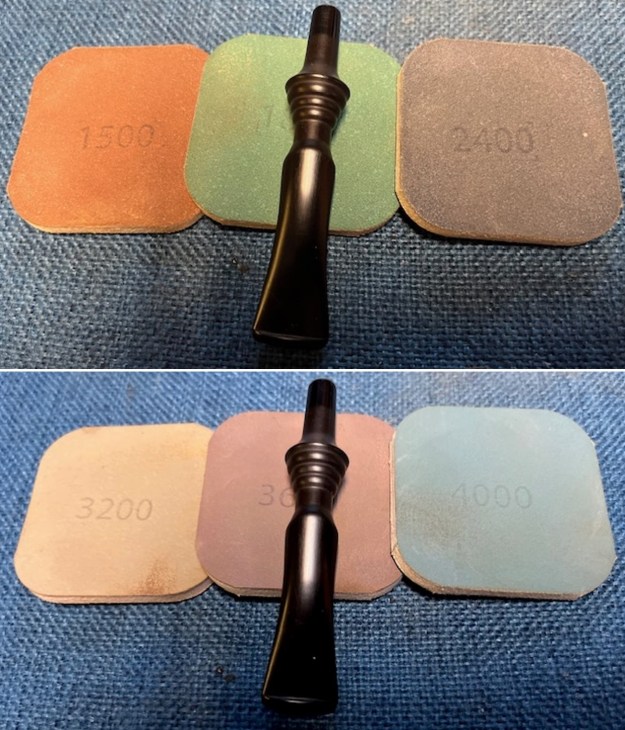
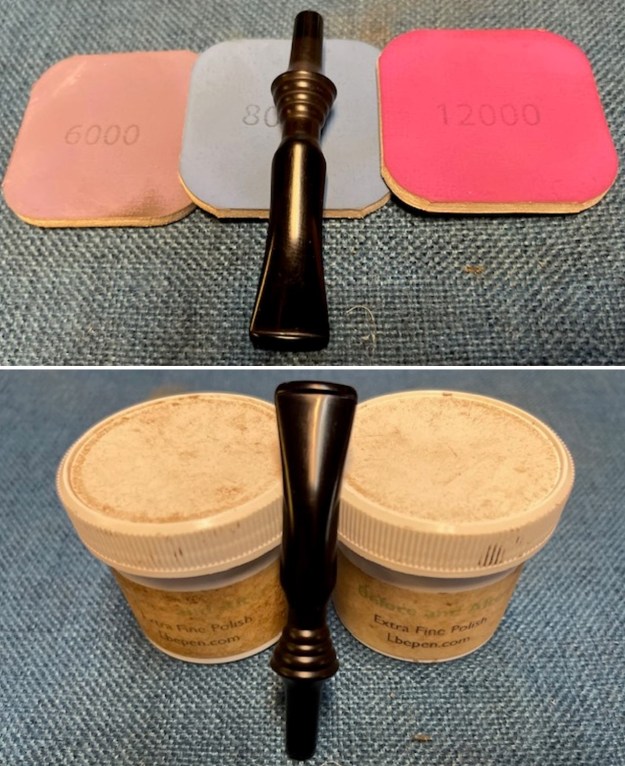
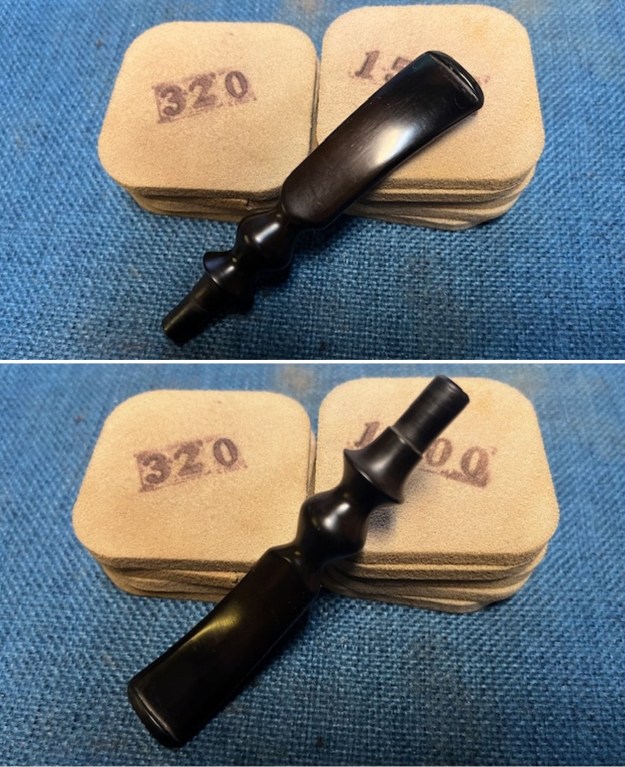 I polished the stem with micromesh sanding pads – dry sanding with 1500-12000 grit pads. I wiped the stem down after each pad with a damp cloth to remove the sanding dust. I polished the stem with Before & After Pipe Stem Polish – both fine and extra fine. I finished by wiping the stem down with a final coat of Obsidian Oil and set it aside to dry.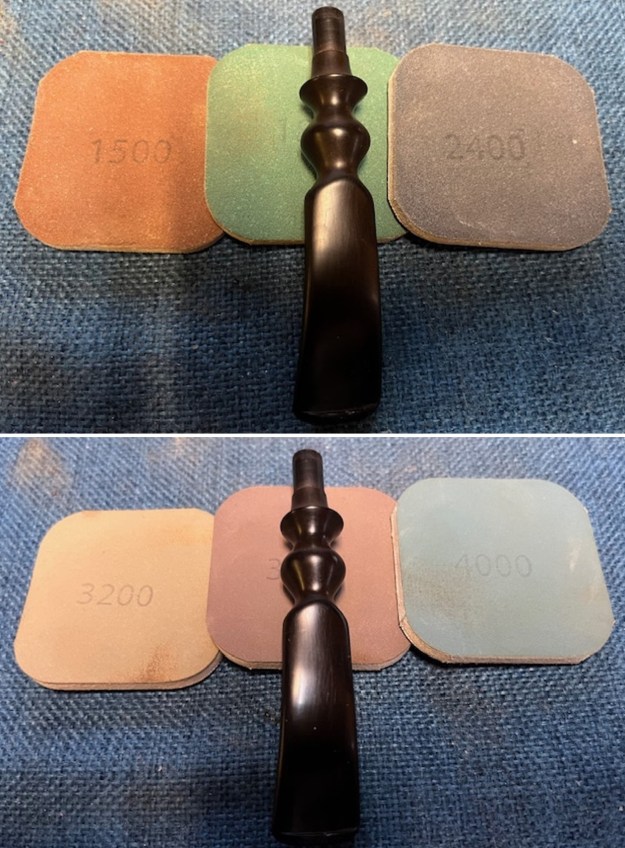
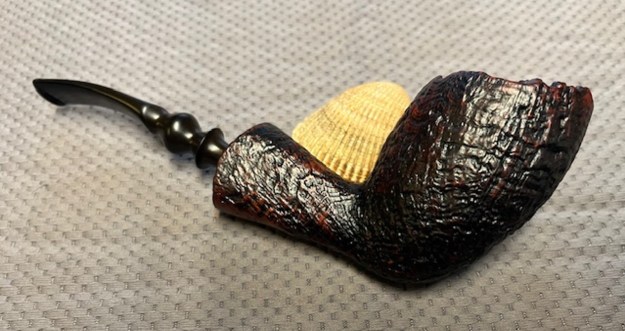
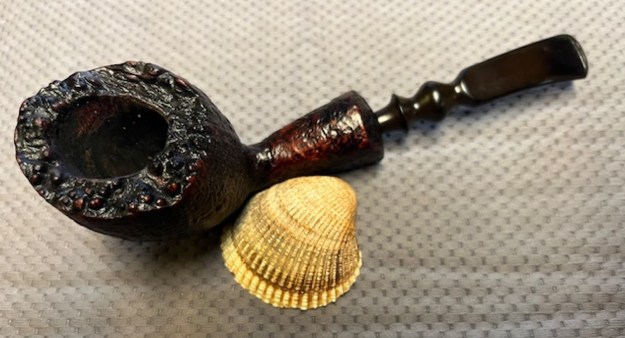
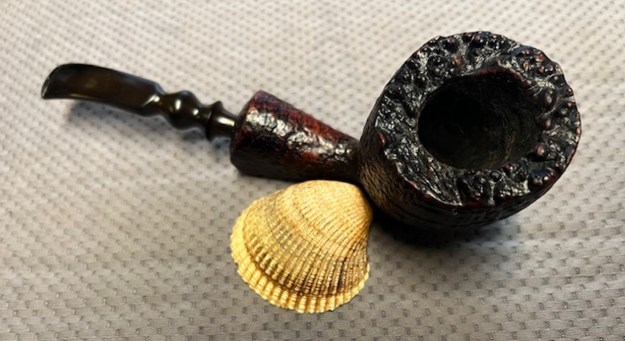
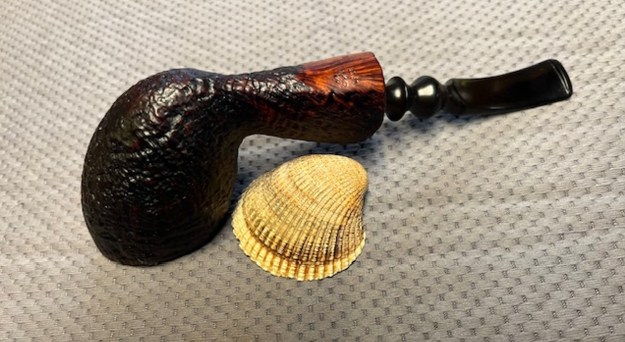
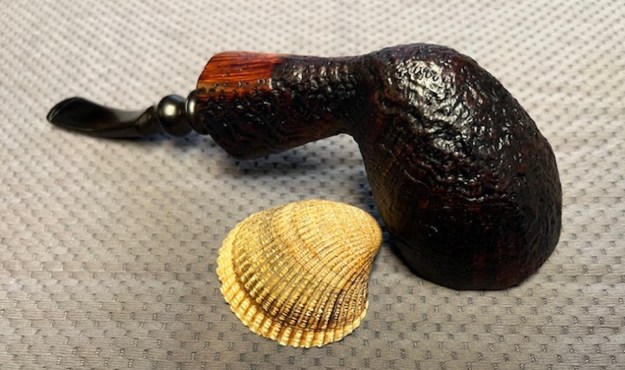
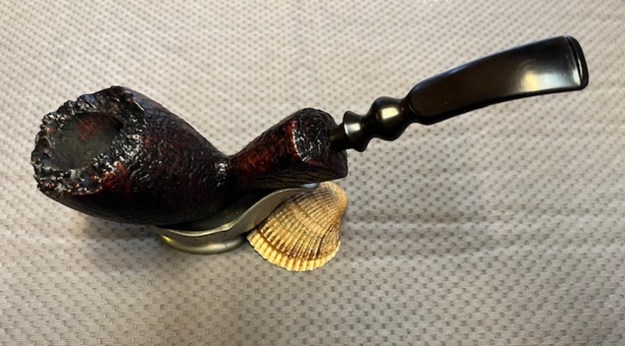
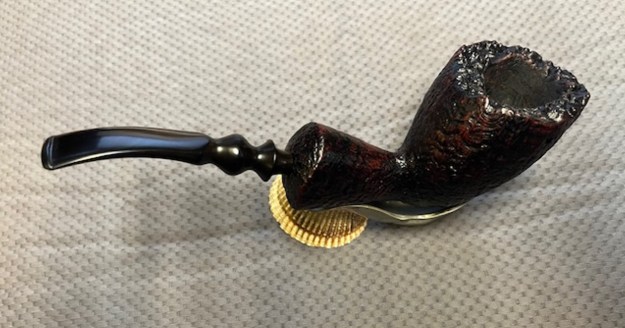
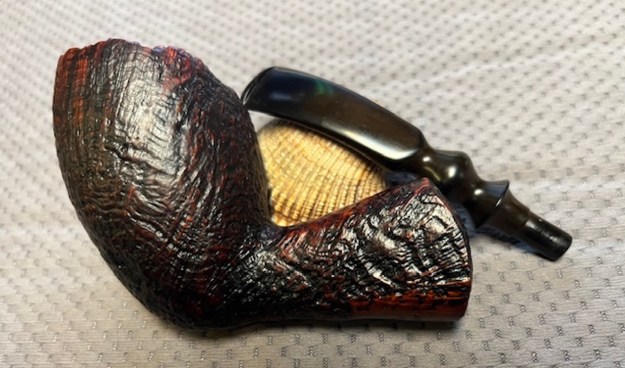
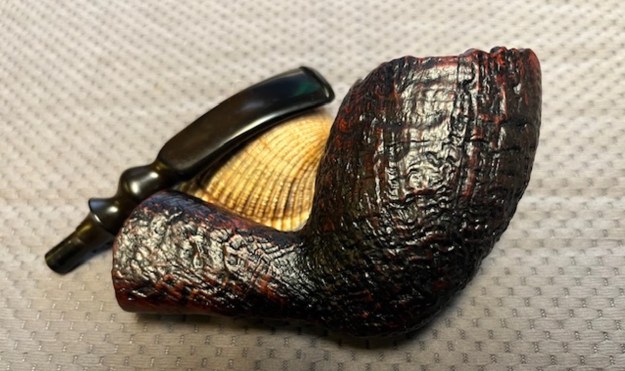
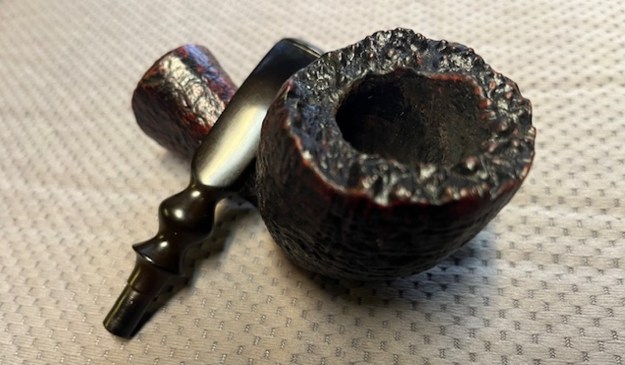
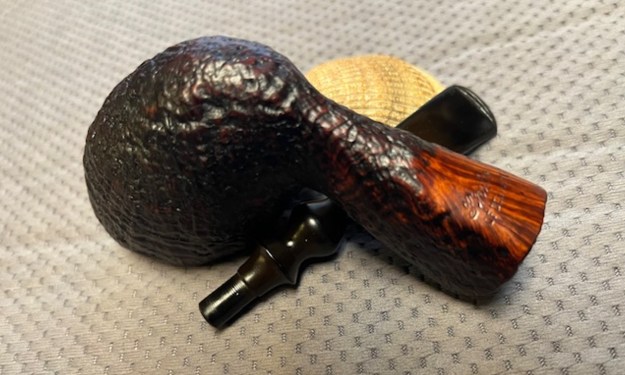
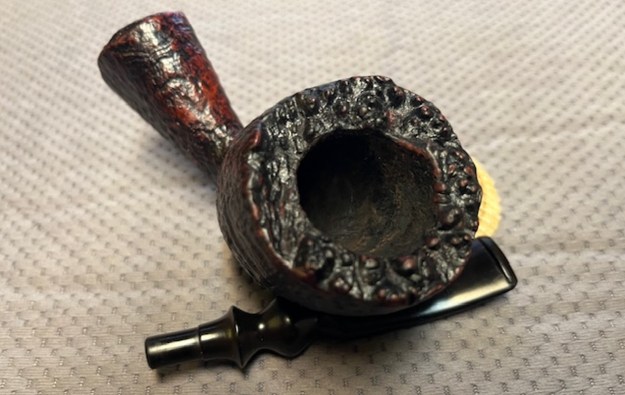
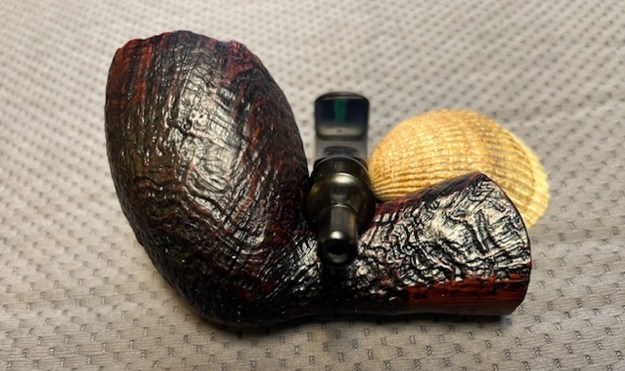
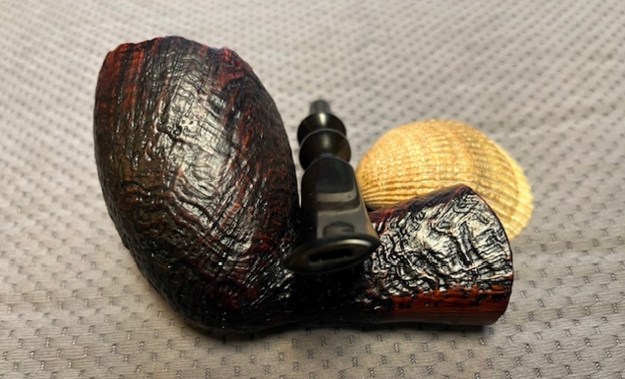
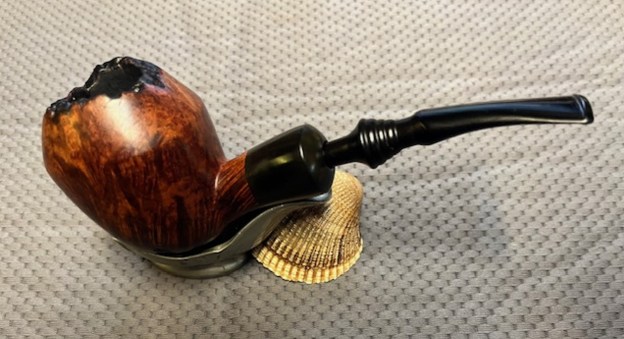
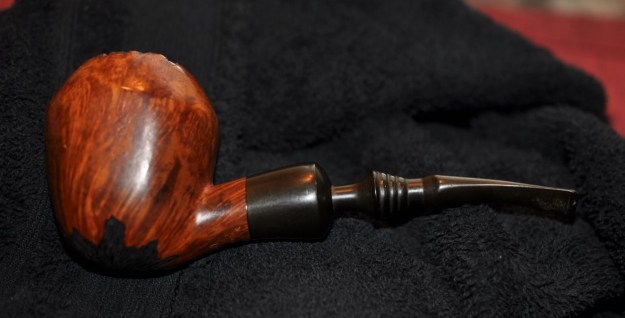
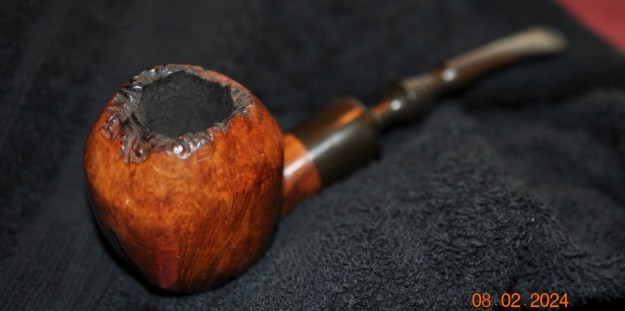
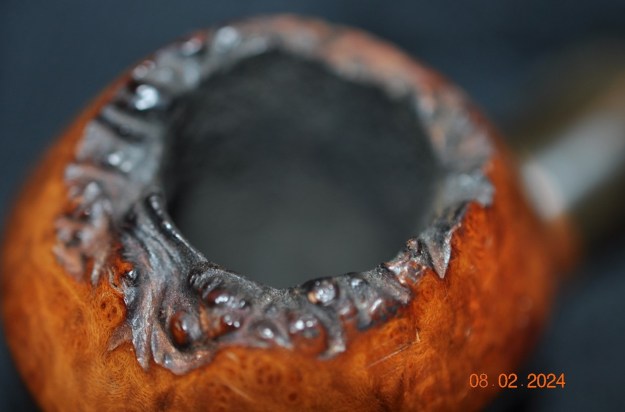
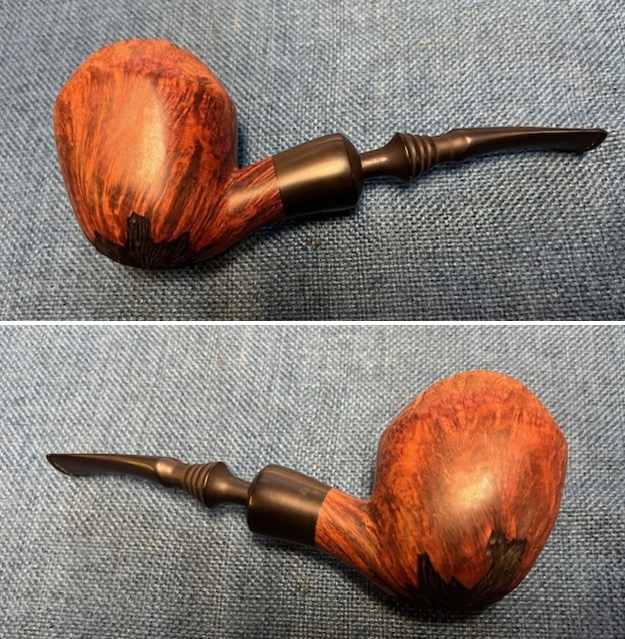
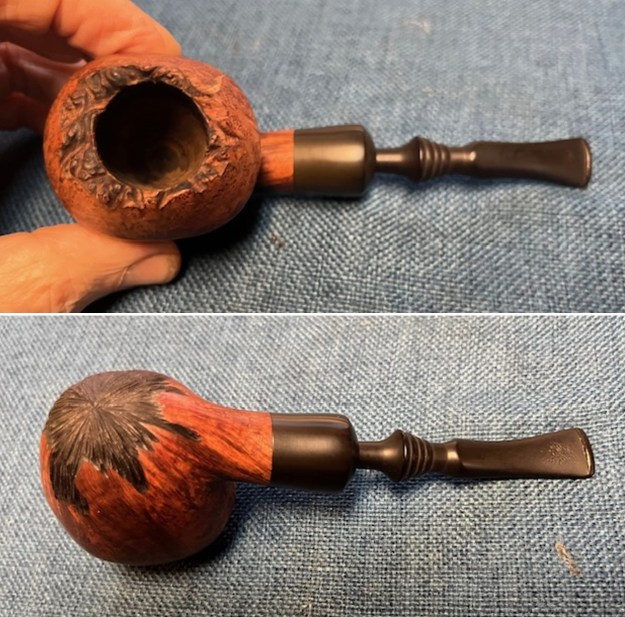
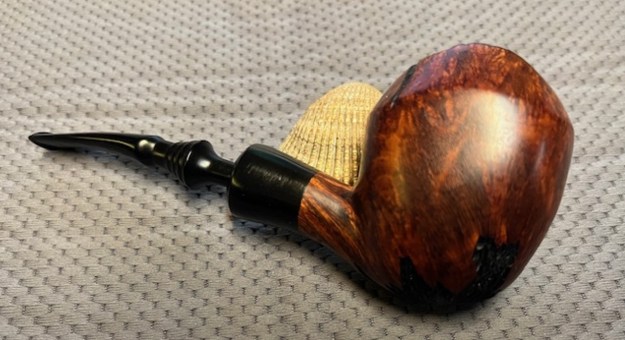
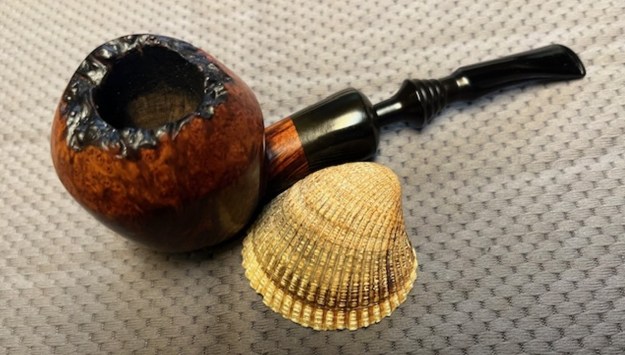
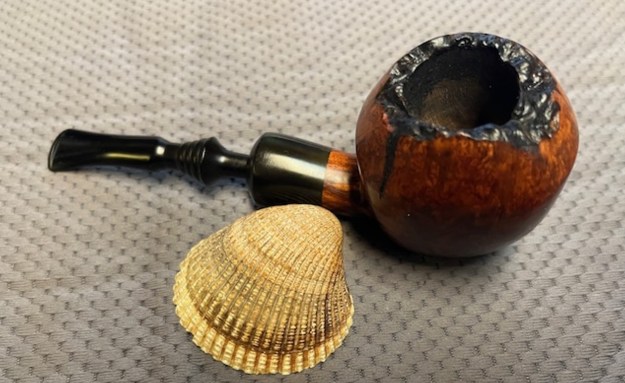
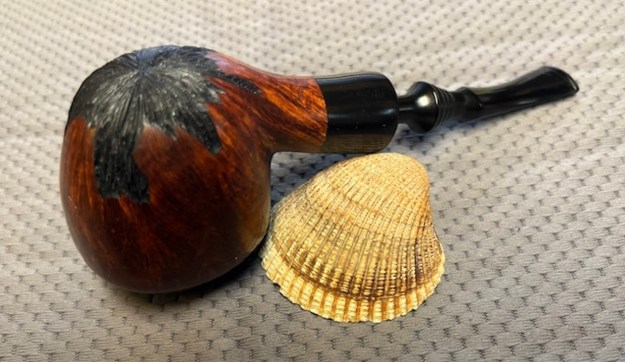
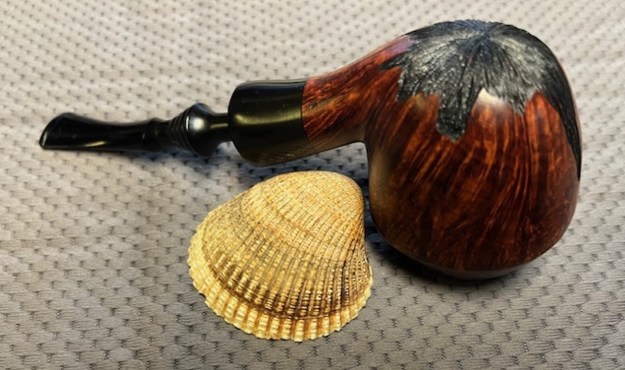
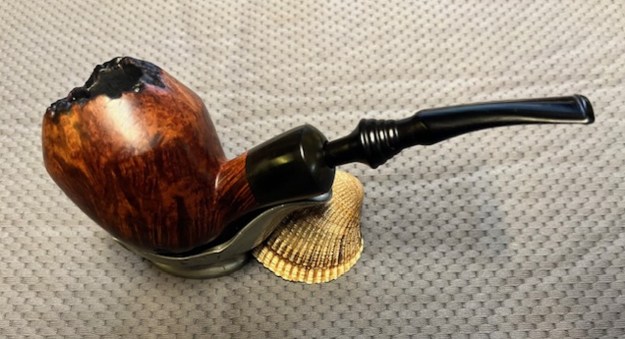
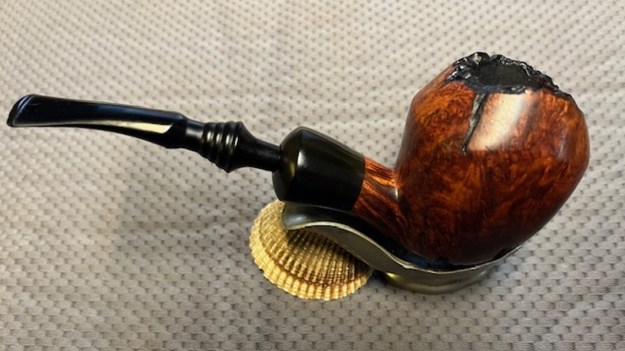
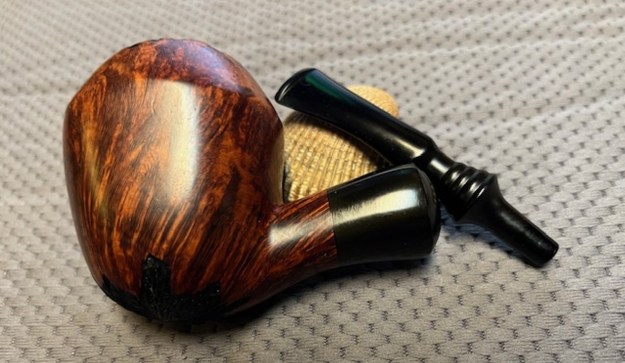
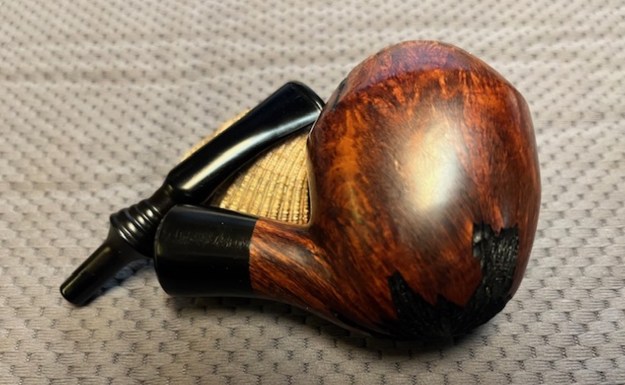
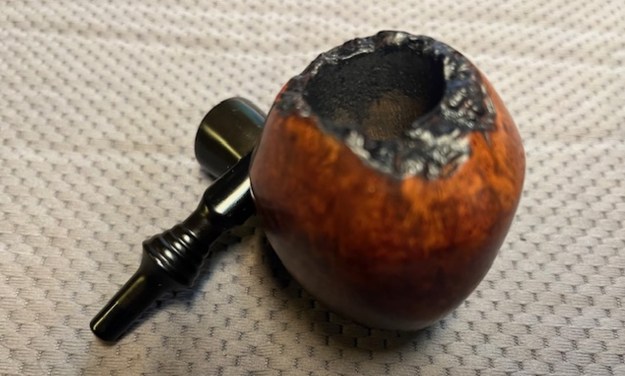
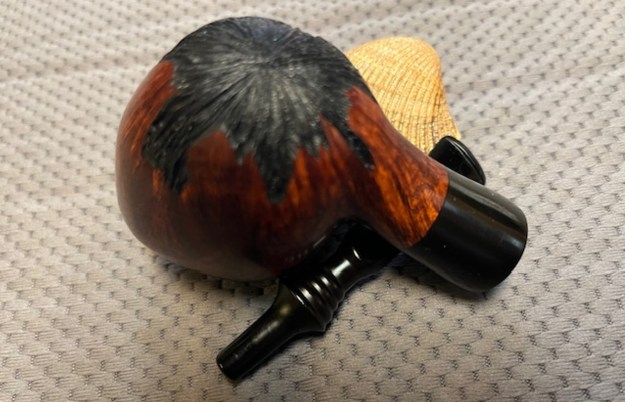
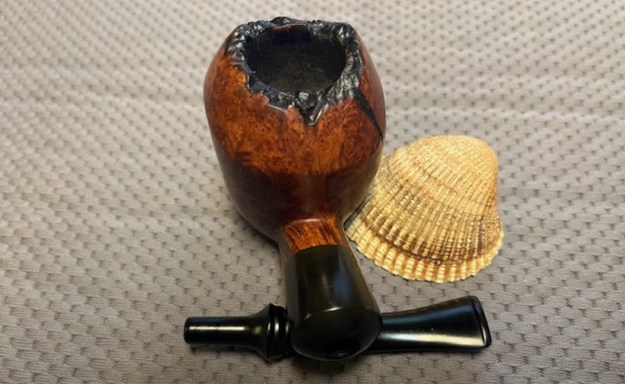
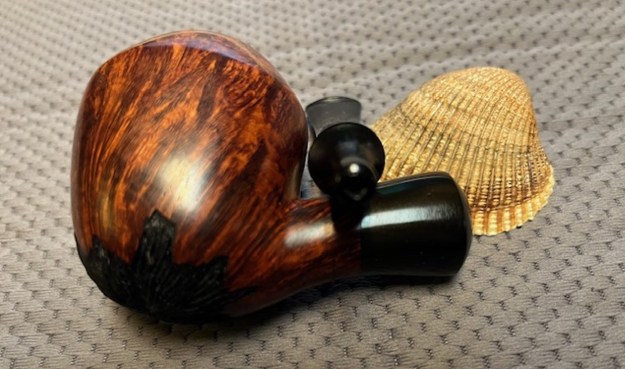
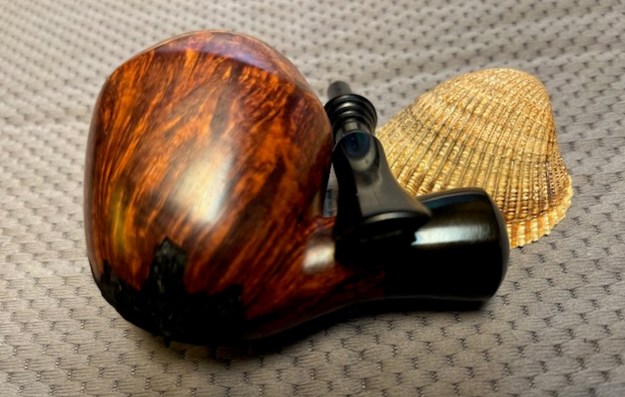
 I put the stem back on the Knute of Denmark Sandblast Freehand pipe and took the pipe to the buffer. I buffed the bowl and stem with Blue Diamond to polish the briar and the vulcanite. Blue Diamond does a great job on the smaller scratches that remain in the vulcanite. I gave the bowl multiple coats of Conservator’s Wax and the stem several coats of carnauba wax and buffed the pipe with a clean buffing pad to raise the shine. I hand buffed it with a microfiber cloth to deepen the shine. The pipe polished up really nicely with a great contrasting stain look to the briar. The finished pipe is shown in the photos below. This is a beautiful Karl Eric Made Knute of Denmark Freehand – the fancy turned stem and plateau rim top give the pipe a great look. The dimensions of the pipe are Length: 7 inches, Height: 2 ¾ inches, Outside diameter of the bowl: 2 inches, Chamber diameter: 1 inch. The weight of the pipe is 2.75 ounces/76 grams. This is another pipe that I will be putting on the rebornpipes online store in the Danish Pipemaking Companies Section shortly, if you are interested in adding it to your collection. Thanks for walking through the restoration with me on this beauty!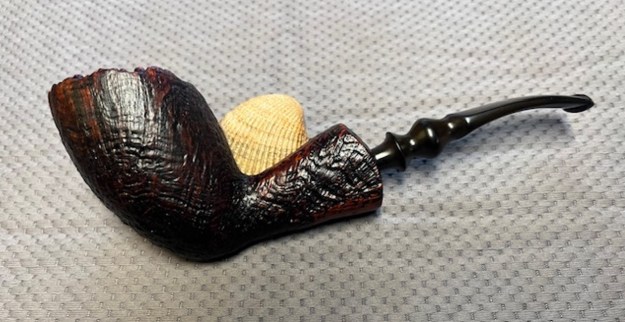






 rebornpipes