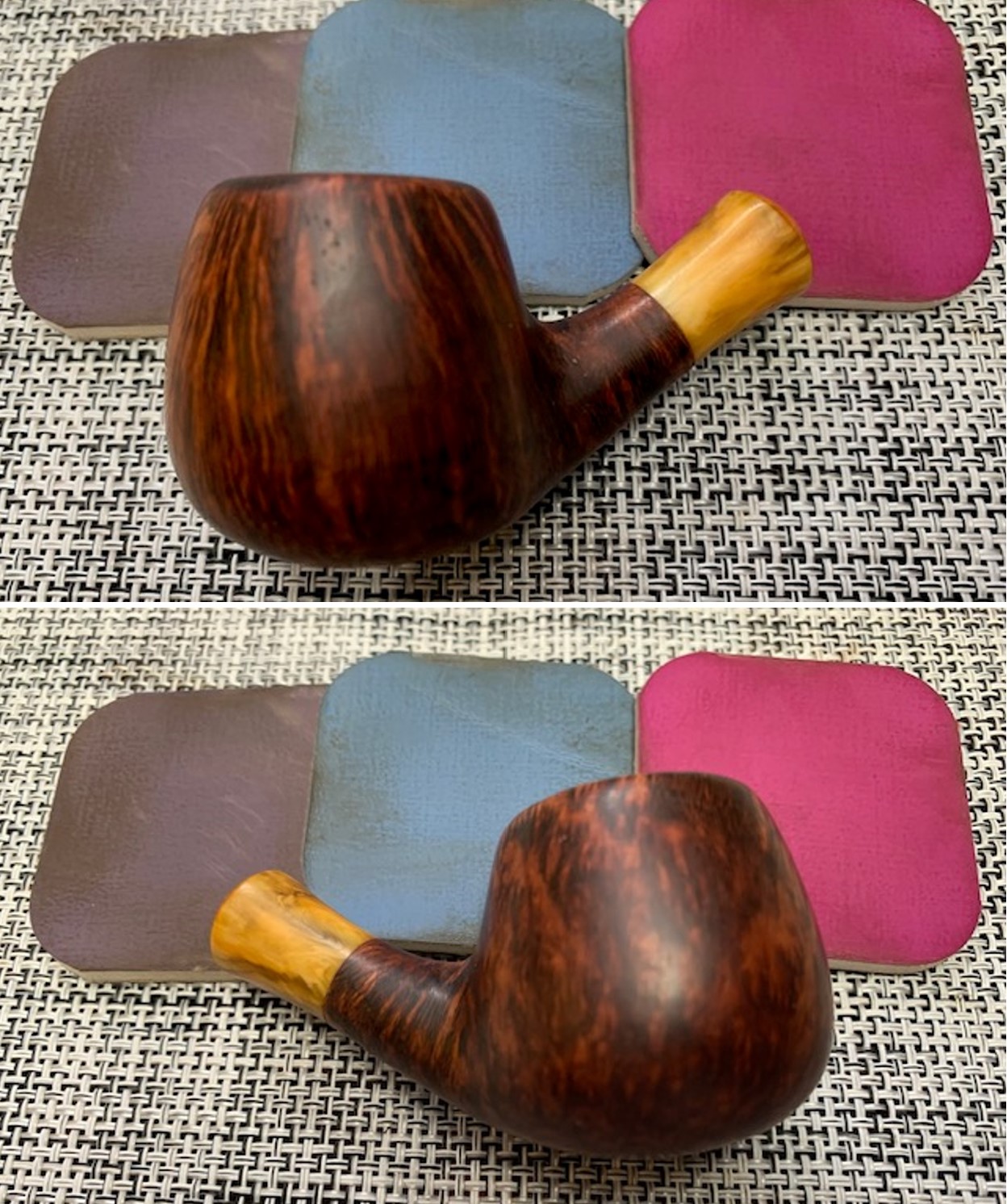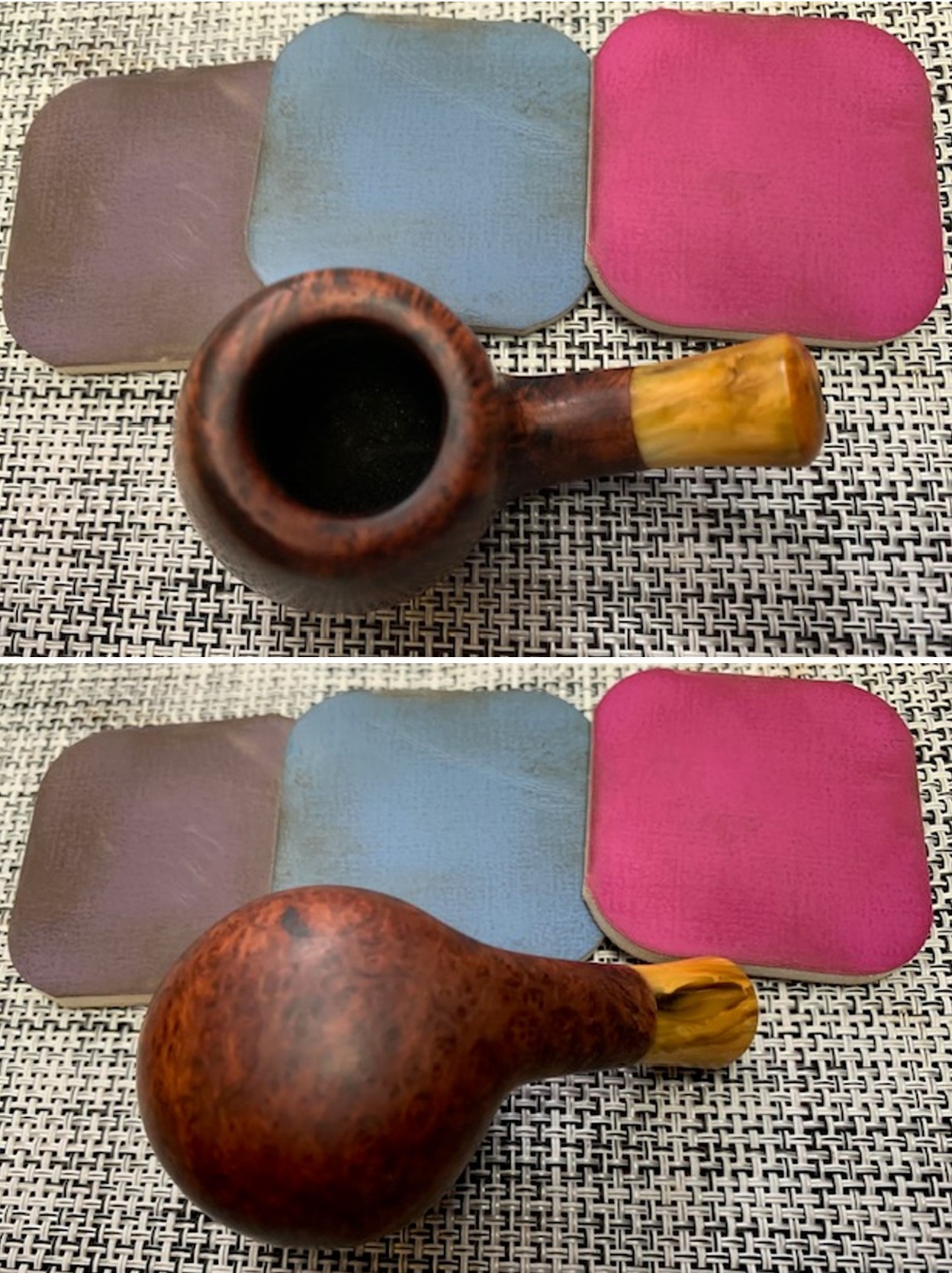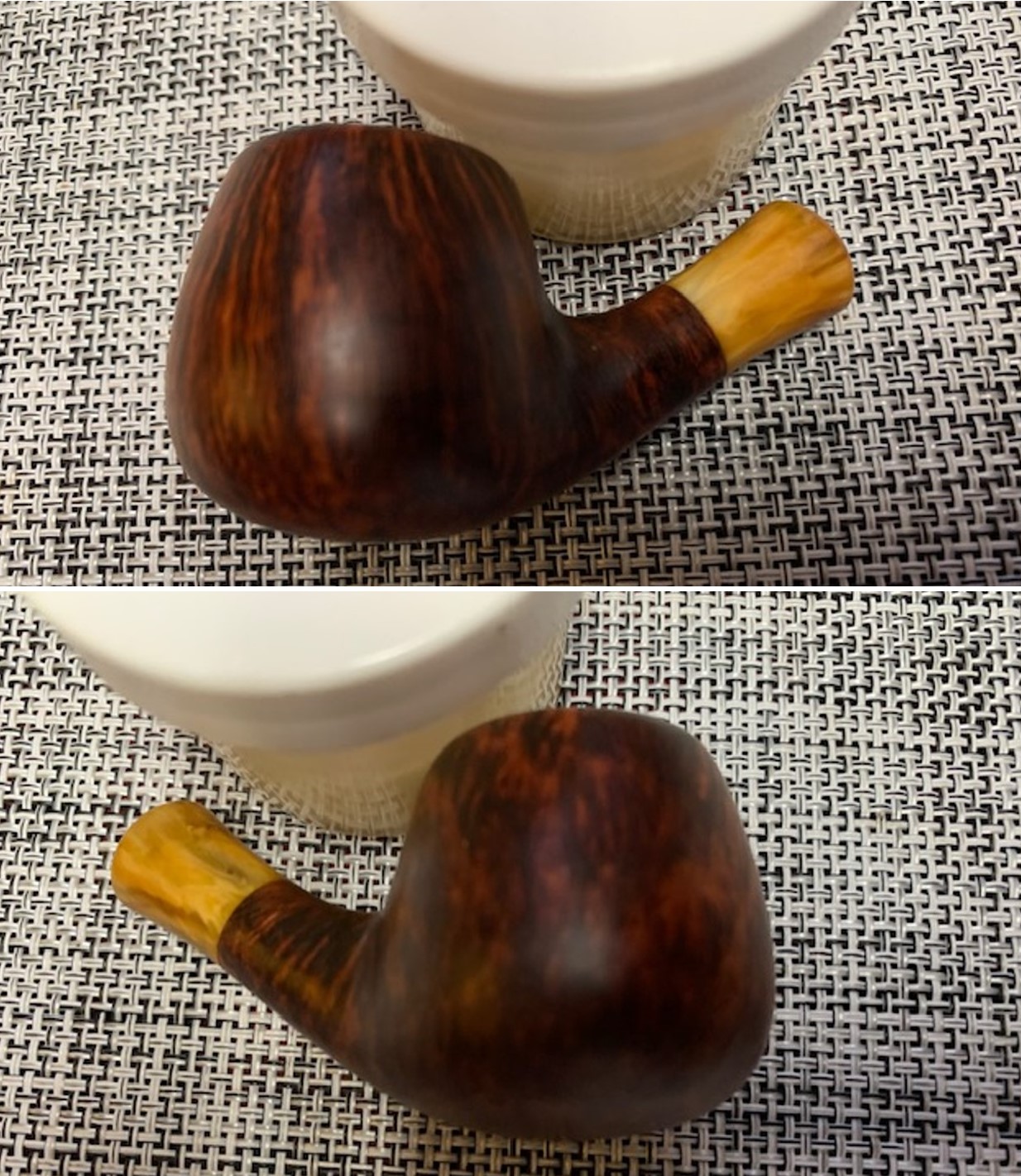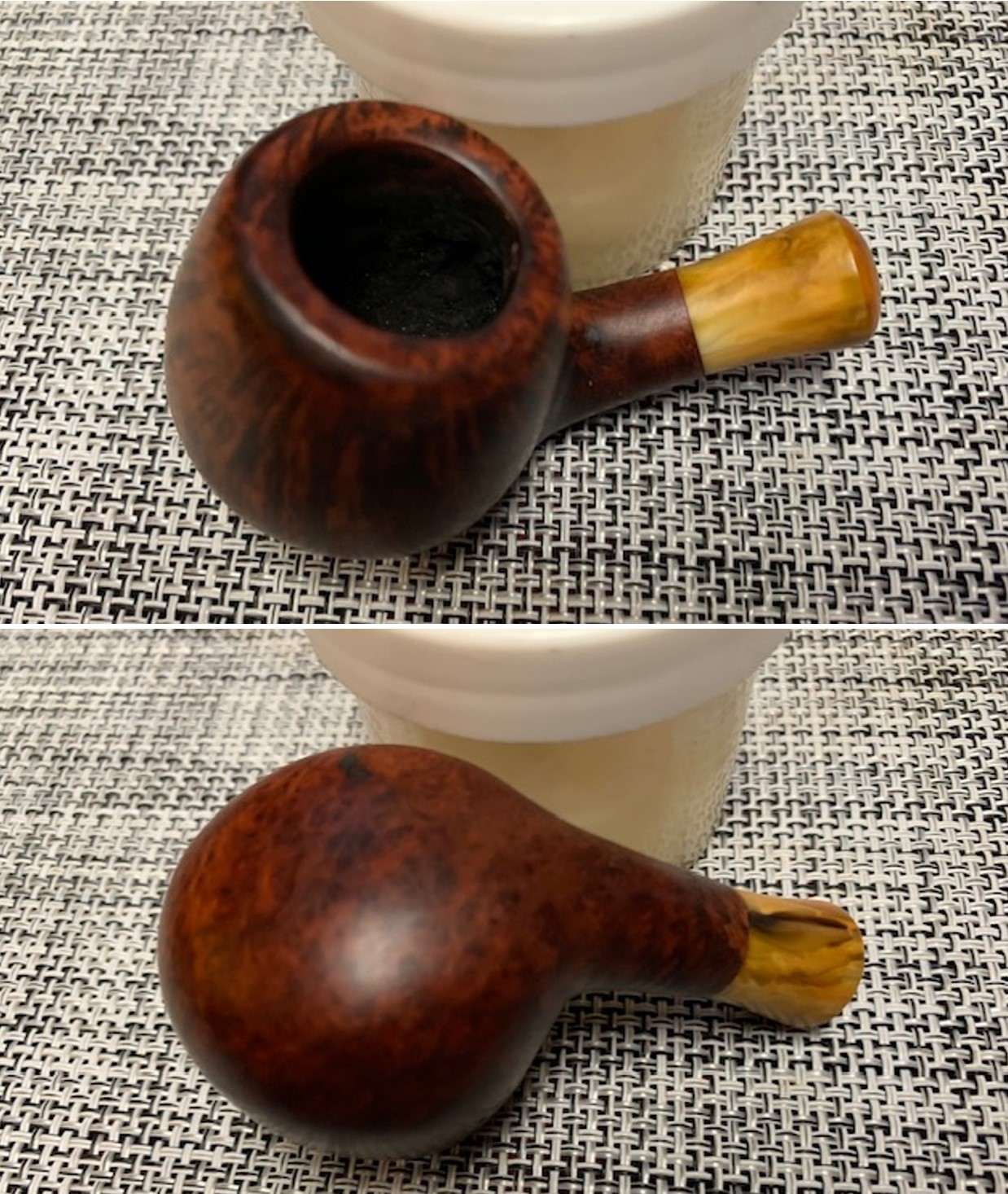
Monthly Archives: July 2023

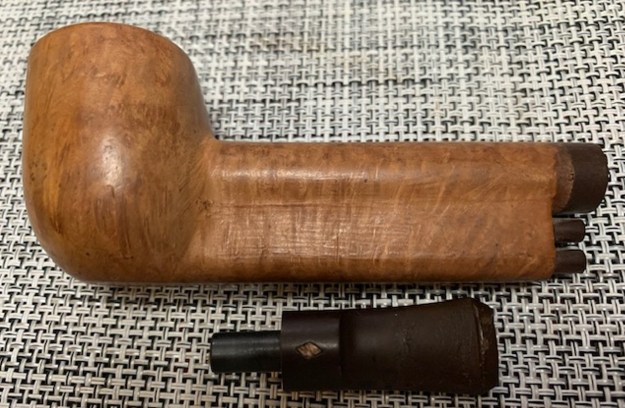
A Simple Refurbishing Of An Early Caminetto Business #149 Sitter


Blog by Paresh Deshpande

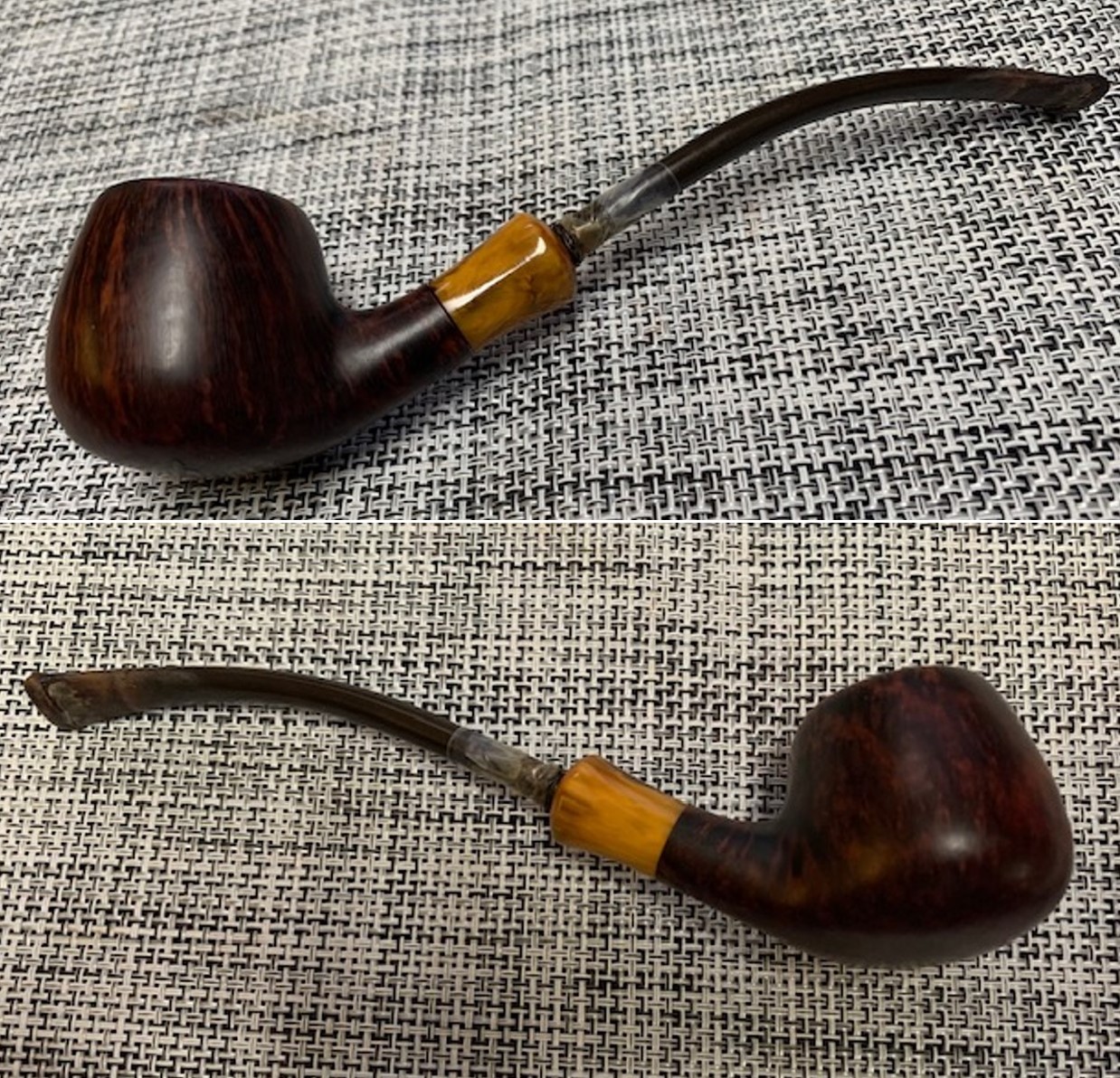
I am always on a look out for old and collectible estate pipes, especially those related to important evolving pipe history, to be added to my personal collection and this pipe on my work table precisely meets the above criteria.

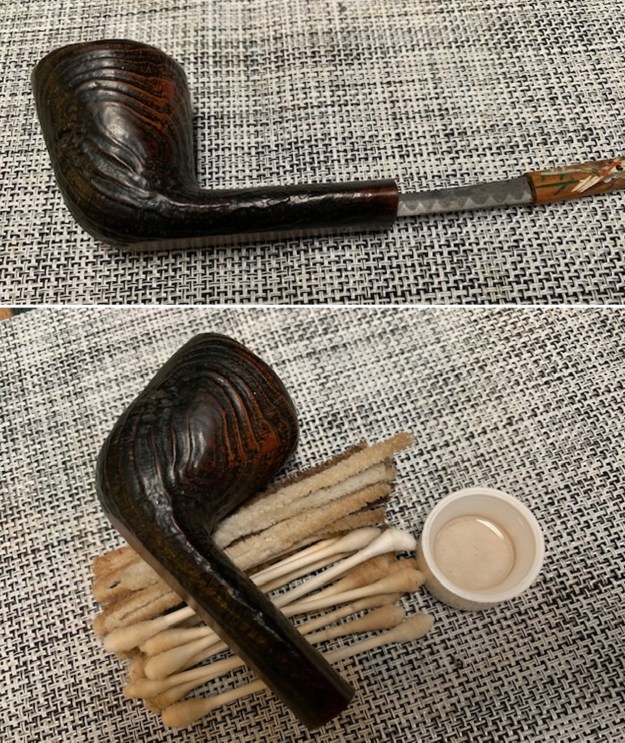
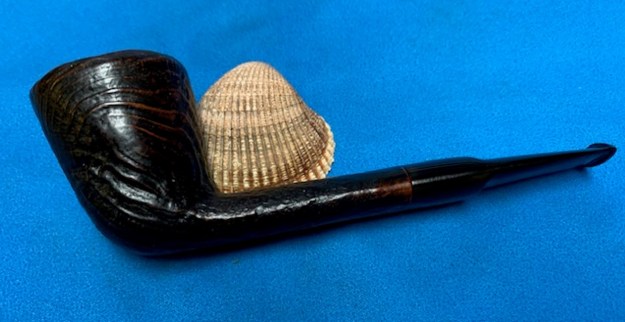
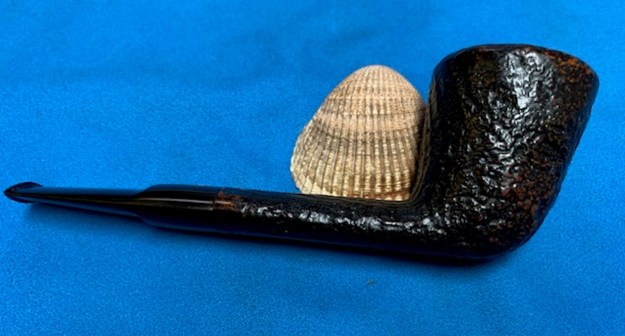
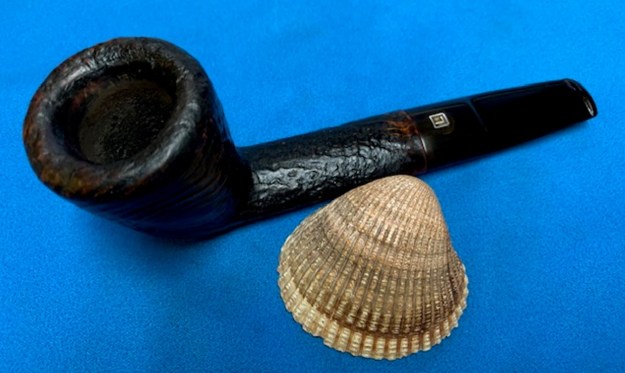
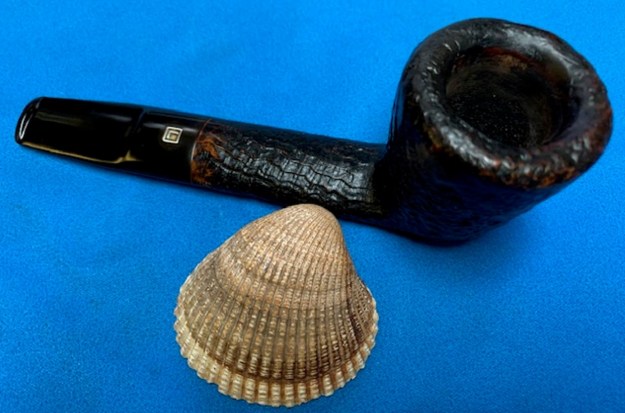
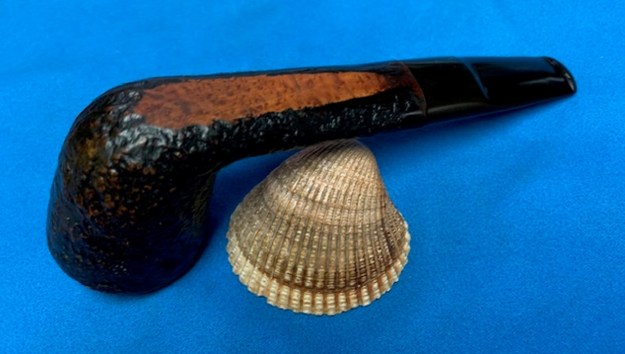
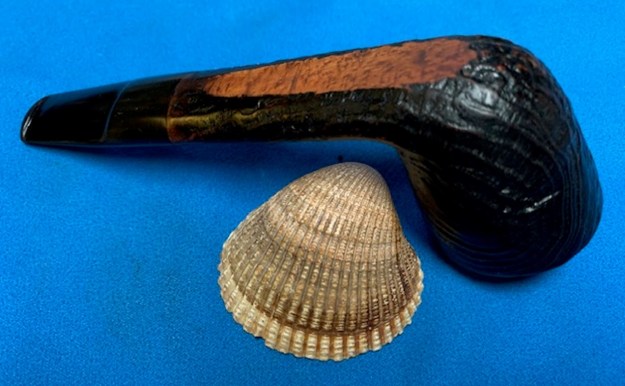
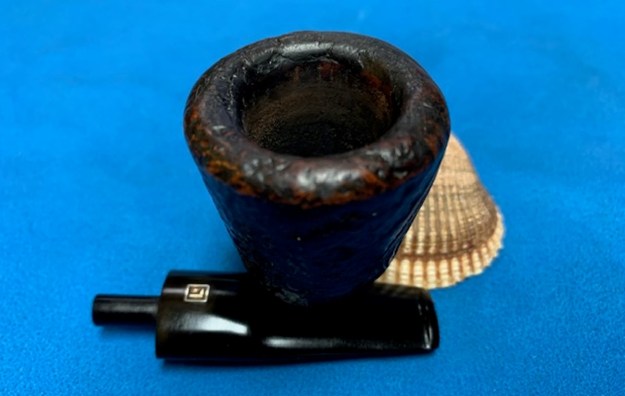
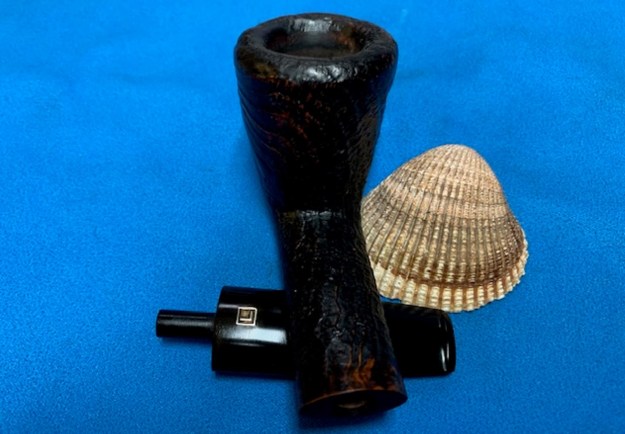
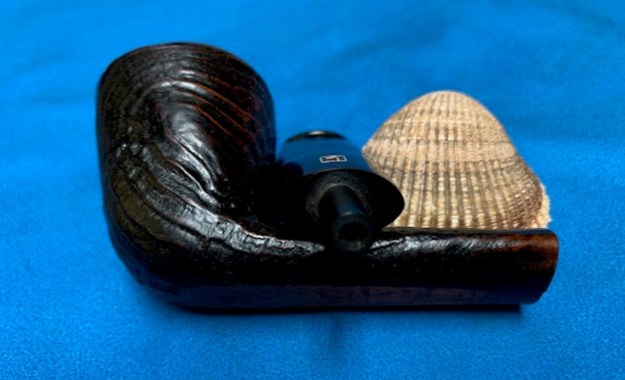
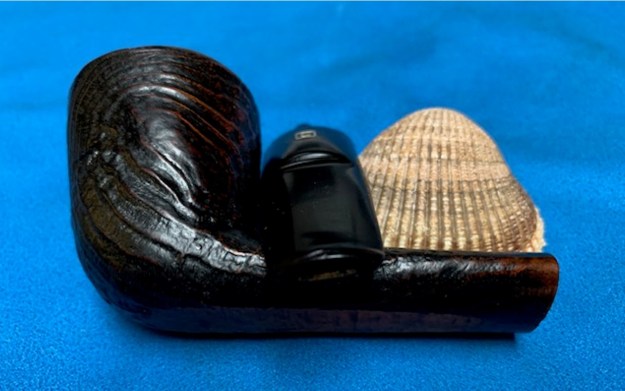
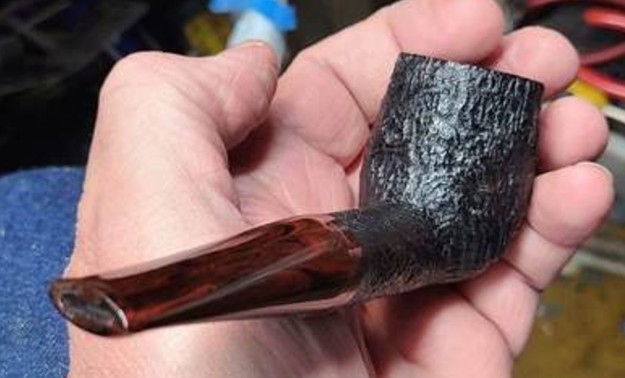
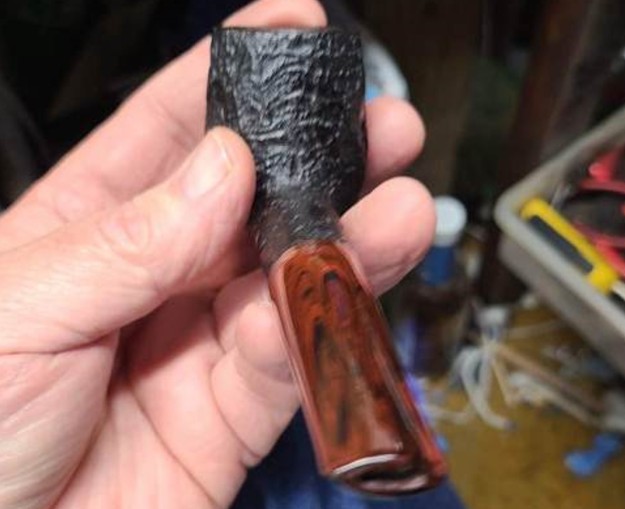
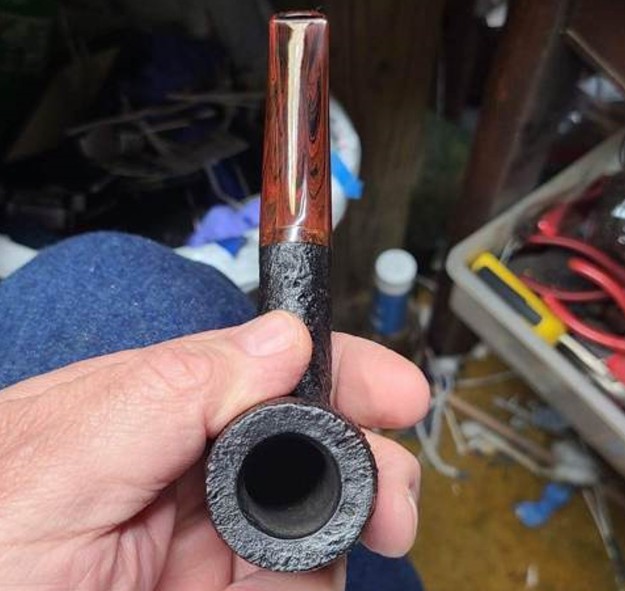
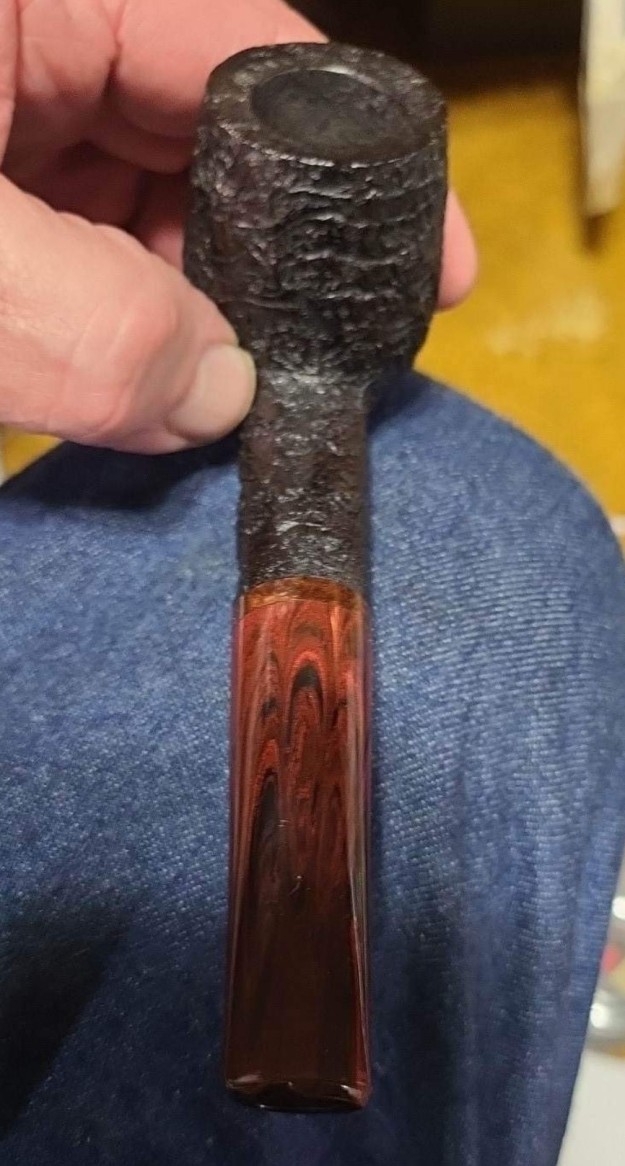
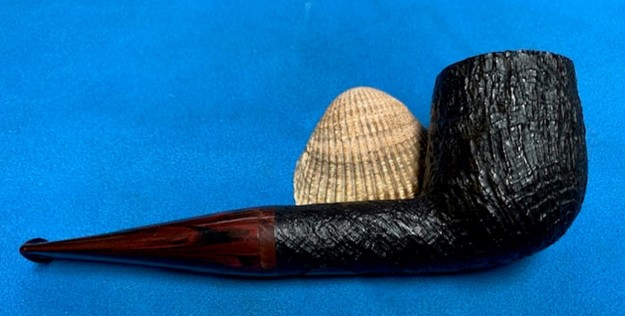
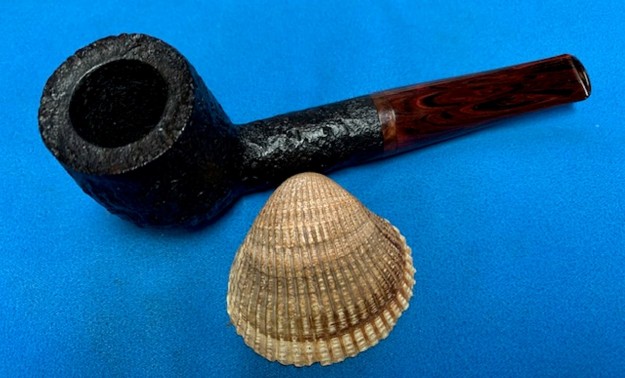
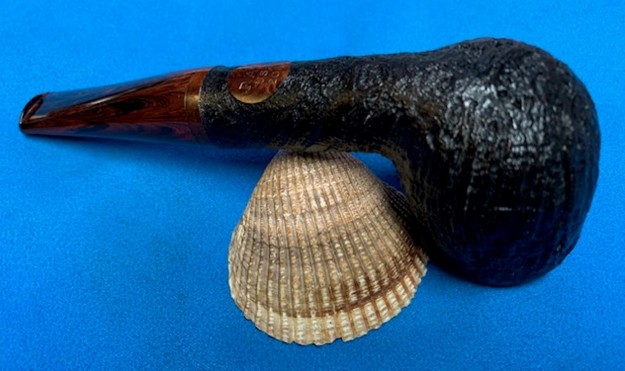
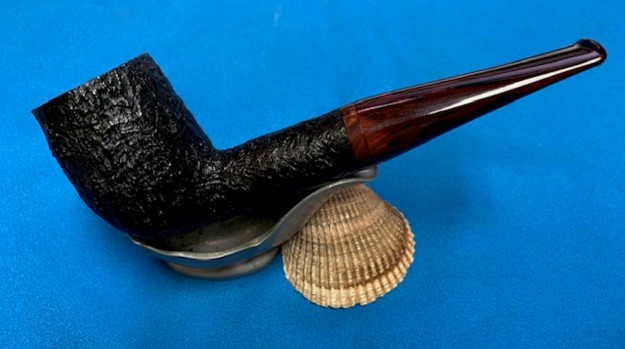
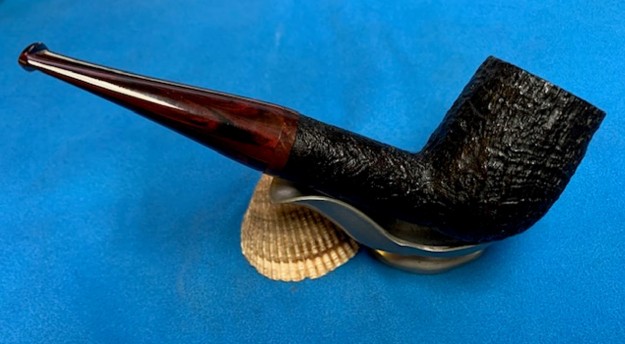
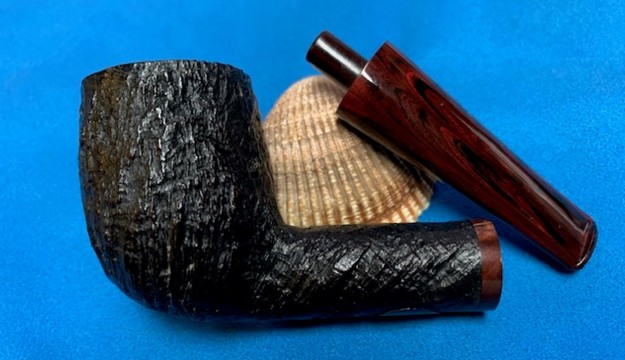
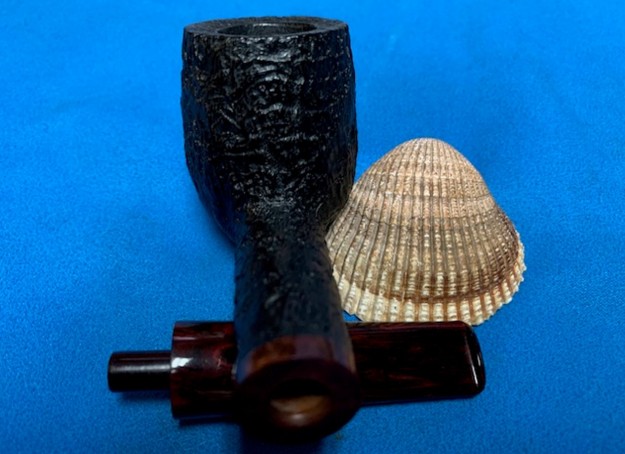
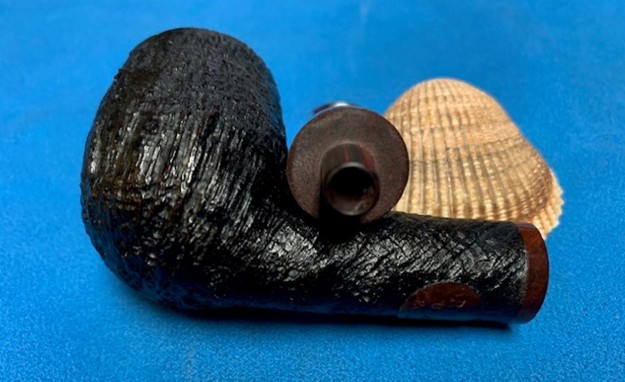
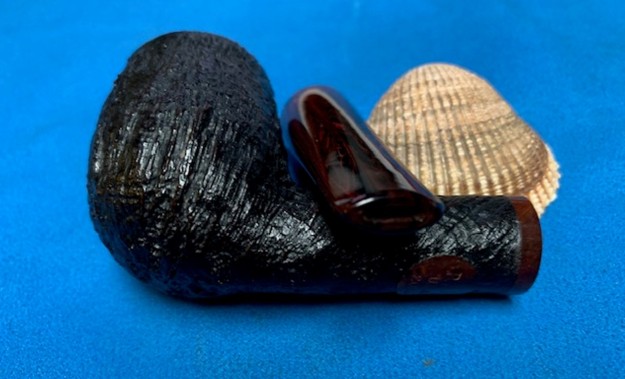
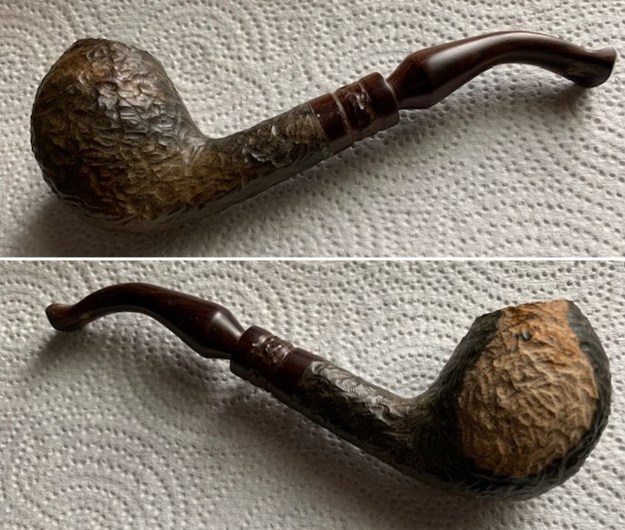
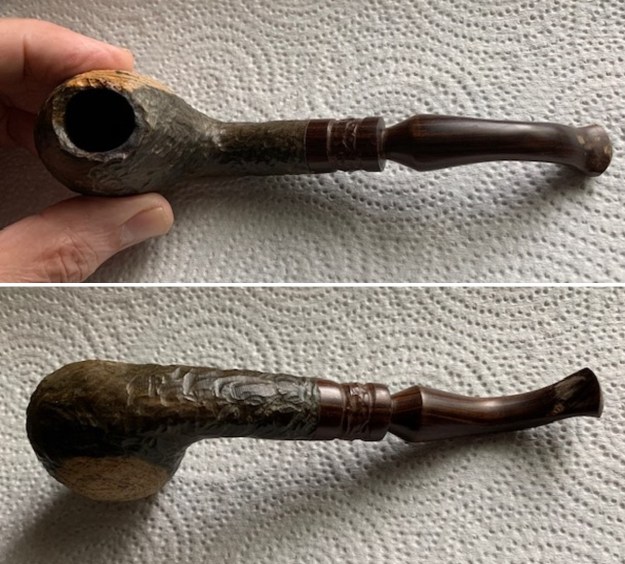
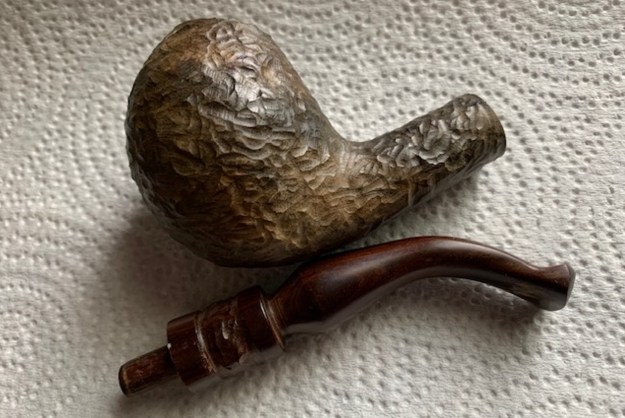
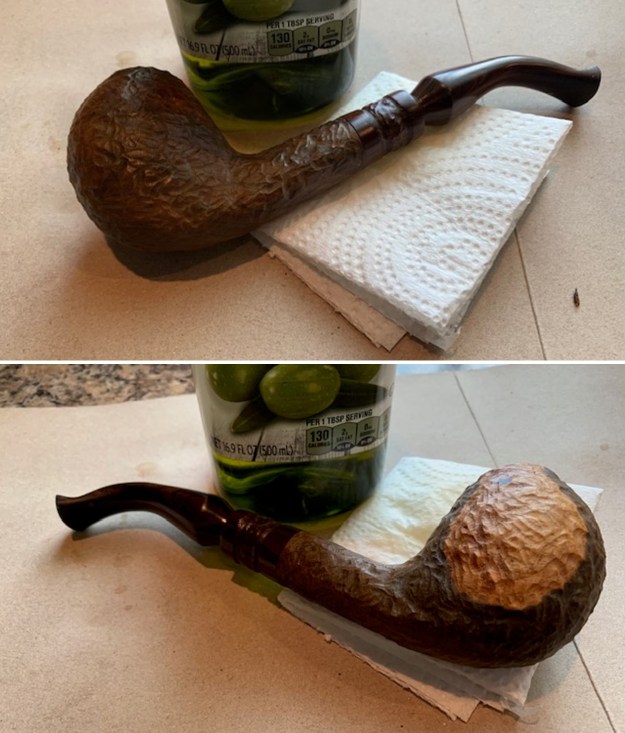
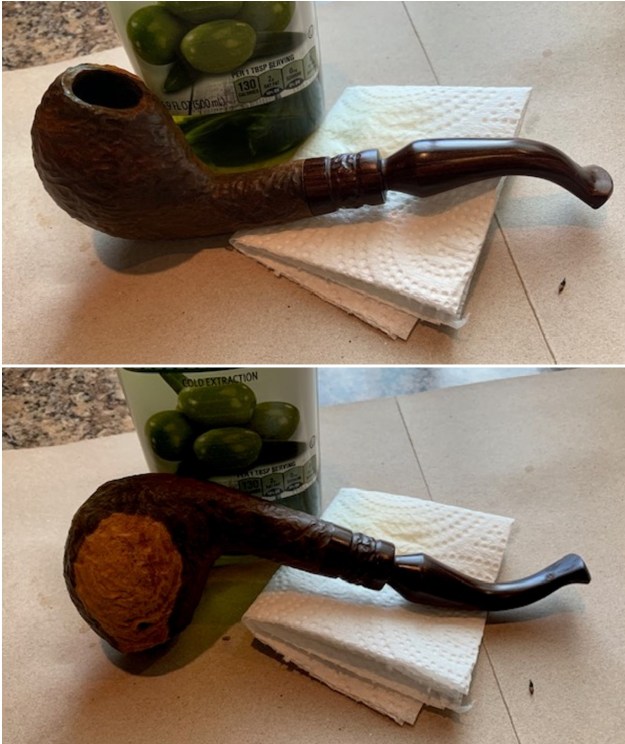
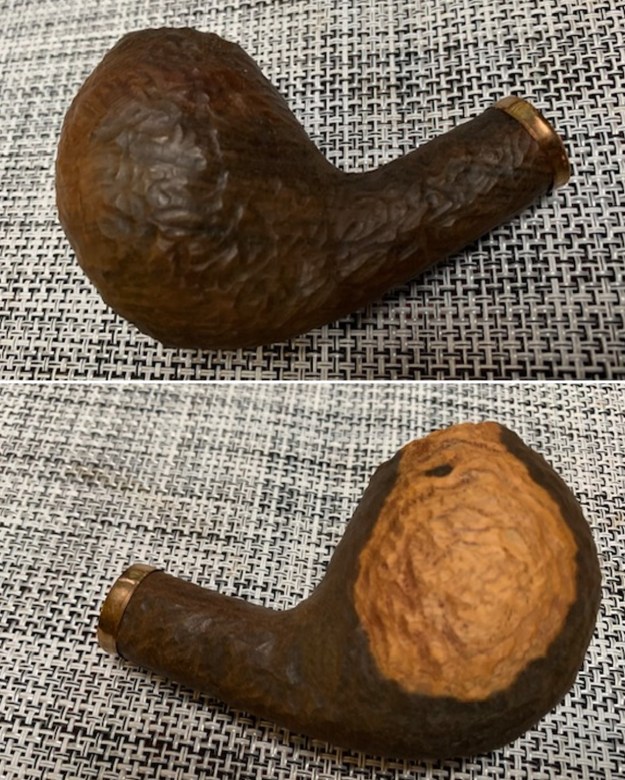
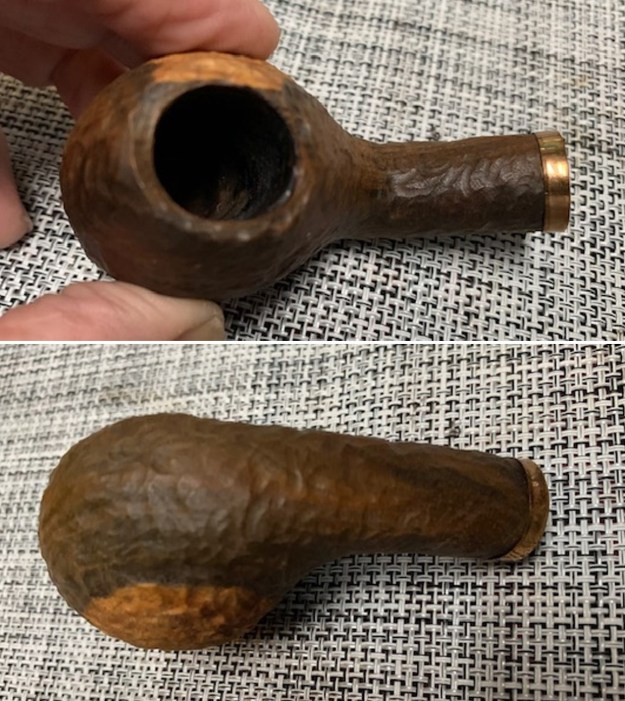
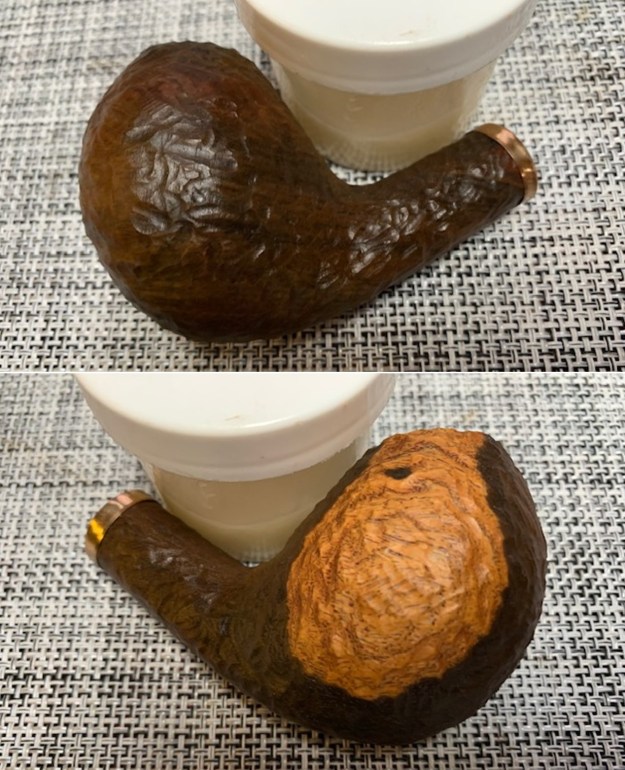
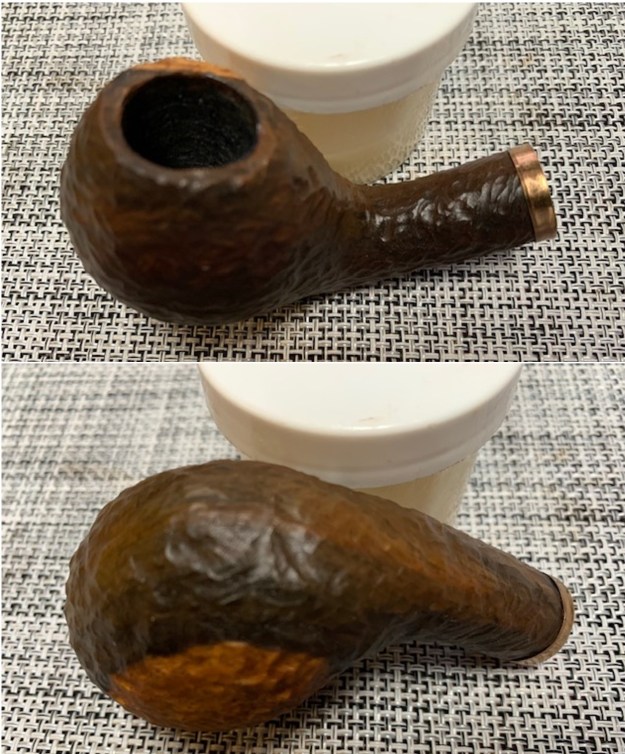
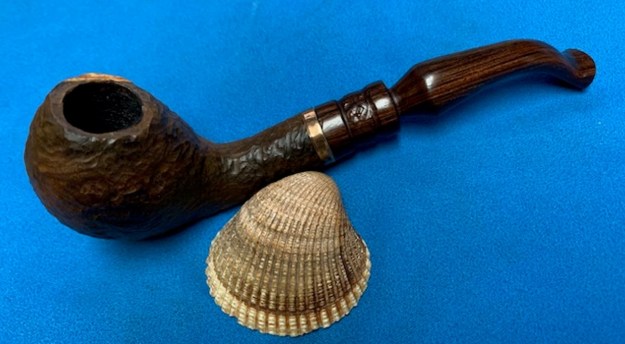
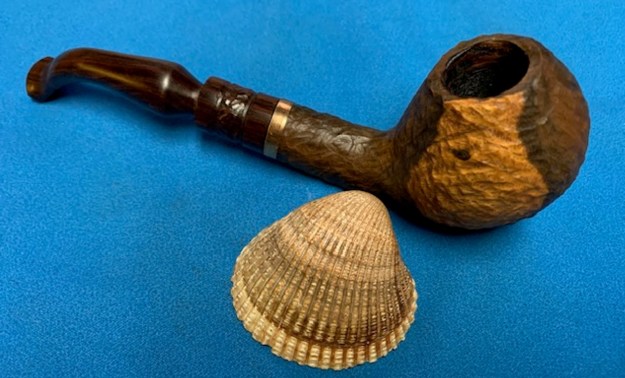
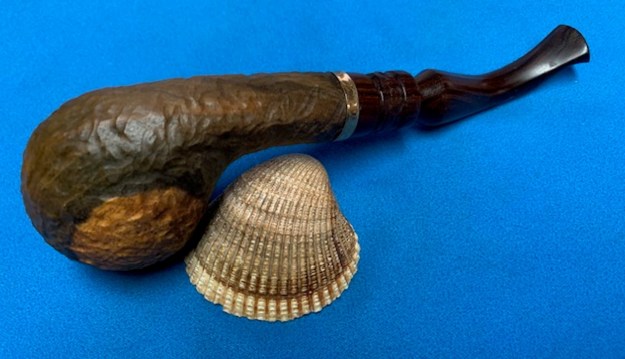
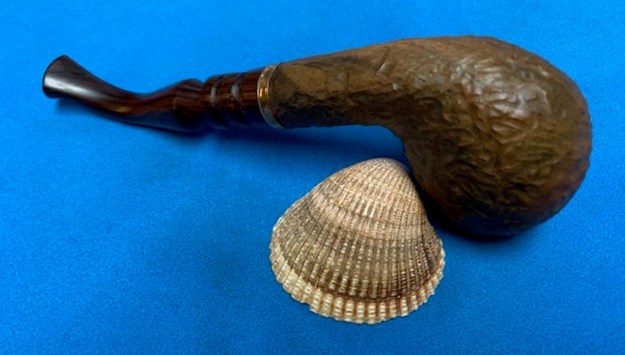
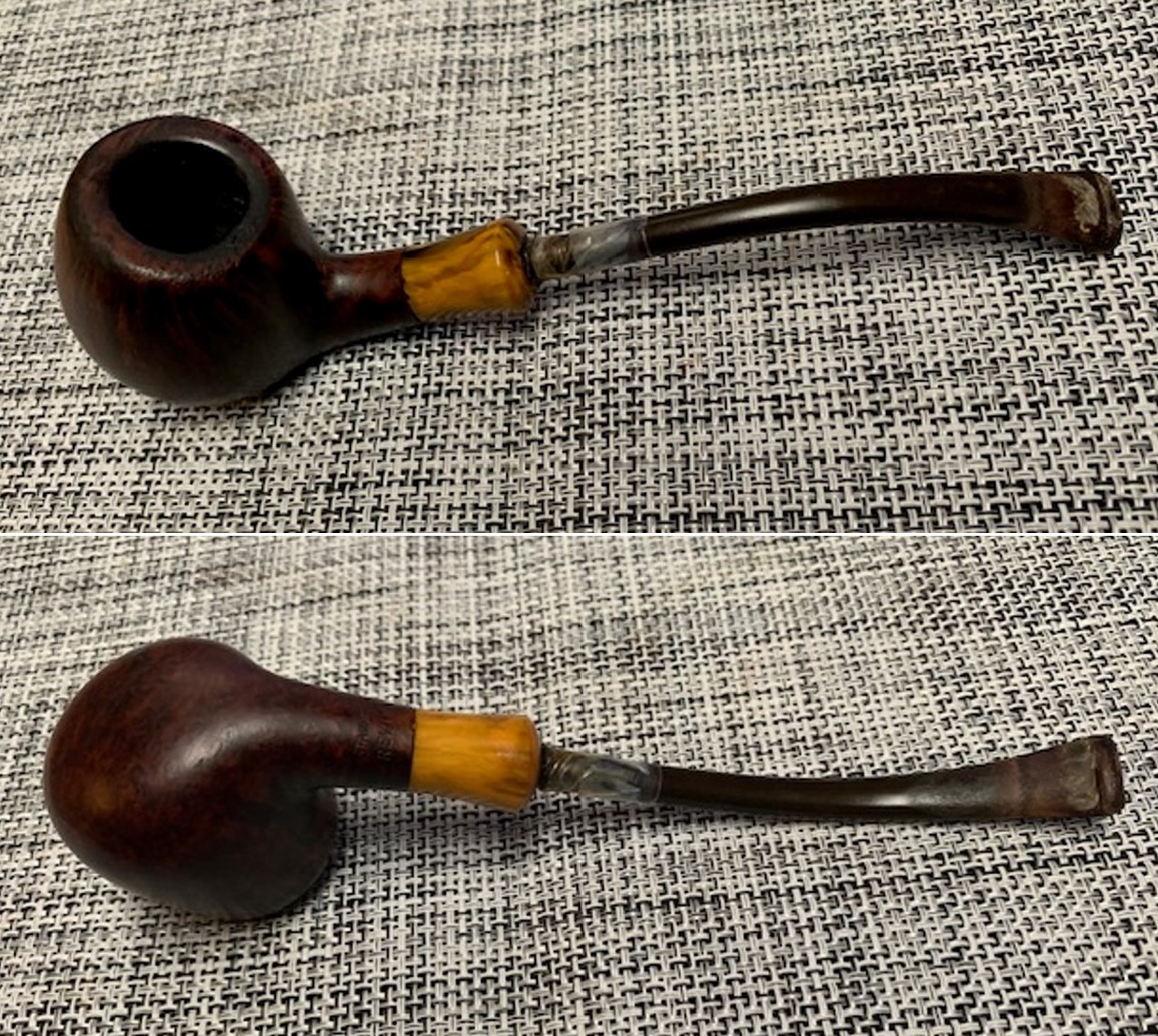
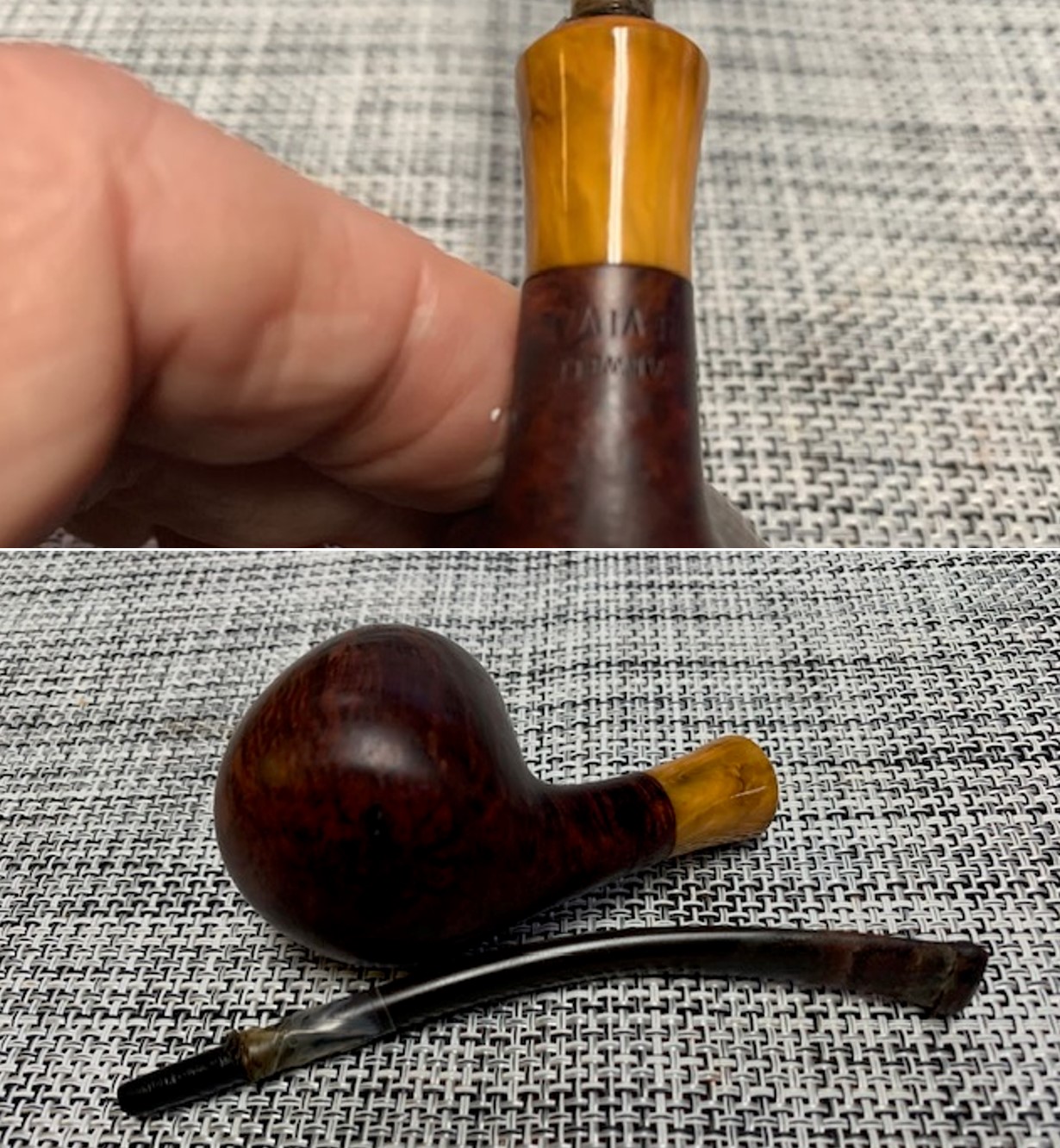
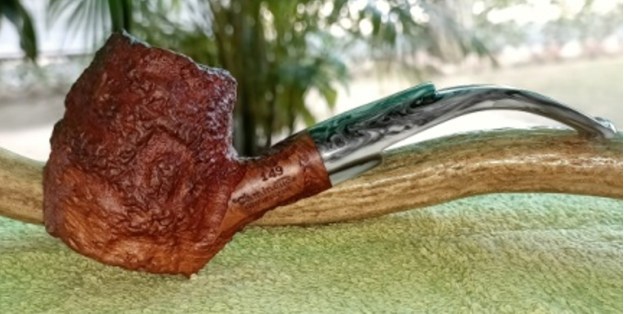
The pipe that I selected to work on next is a deeply rusticated robust sitter with smooth surface on left and right side of the shank and a unique asymmetric acrylic saddle stem. It is stamped on the left smooth panel with model code “149” over “CAMINETTO” in inverted commas and in running italics over “BUSINESS” in block capital letters. The right side of the shank bears the stampings “ASCORTI” over “RADICE” over “CUCCIAGO” over “CANTU- ITALY”. The upper surface of the asymmetric saddle stem bears the logo of MOUSTACHE that resembles a bird in flight. I have worked and researched Caminetto pipes earlier and from what I recollect, Ascorti and Radice moved away from Castello and jointly made Caminetto pipes for a few years before separating to establish their own brands Ascorti and Radice respectively. Thus, pipes that bore the stamp of both Ascorti and Radice are early pipes and are highly collectible and fetch top dollars. For detailed information, I visited pipedia.org and have reproduced the relevant information below (https://pipedia.org/wiki/Caminetto).

Caminetto’s history started in 1959 when Guiseppe Ascorti, from Cucciago, and known to his friends as “Peppino”, was hired by Carlo Scotti to work at Castello, located in nearby Cantu. Since it’s foundation in 1947 Castello had contributed substantially to regained glory for Italian pipemaking. Talent and assiduity soon made Ascorti one of Scotti’s most notable pipemakers – a man he counted on for the future. But, Ascorti had his own far reaching plan: He wanted to work as a self-employed pipemaker! After his wife, Paola, had taken over her parent’s small greengrocery in the early 1960’s this plan became more concrete. The additional income from the shop enabled him to buy tools and machines little by little to furnish his own workshop. By the end of 1968 he was ready and left Castello. Ascorti also persuaded his co-worker, the young and highly-talented pipemaker Luigi Radice (born 1939), to join him – the two were neighbors in Cucciago. Carlo Scotti, whom is known as a perfect gentleman, is reported to have spoken unreservedly about this development.

Ascorti & Radice started to manufacture pipes on their own. One of the first who agreed to market their pipes was Gianni Davoli, proprietor of a tobacco shop in Milan. The situation was perfect–two pipemakers in search of a distributor, and a pipe merchant in search of a mainstay brand to market. Davoli – via friends and relations in the States – had made flourishing contacts with US pipe wholesalers and traders. He shipped some pipes across the pond for inspection and received excellent feedback for the very high quality of the pipes. He, shortly after, offered to be the sole distributor worldwide, and Ascorti & Radice happily accepted.

Then came the legendary evening when Ascorti, Radice and Davoli gathered around the fireplace after a hard day’s work enjoying their pipes, a glass of wine, and humorous conversation. Davoli is said to be the one who associated the pipes with the fireplace or chimney, which is “camino” in Italian. Hence “Caminetto”, the diminutive (smaller) singular version of camino, was coined as the brand’s name. Ascorti, Radice and Davoli later became famous as “I tre Camini” – the three chimneys. Maybe, they had more than one glass of wine each, but it’s not certain whether the distinctive mustache logo on the stem and the Caminetto slogan “La Pipa del Baffo” – “the pipe with the moustache” – was created the same night. In fact, Ascorti and Radice both wore impressively large moustaches, and a pharmacist in the neighborhood had been kidding them about that. (Davoli, for reasons of corporate identity, later wore a big moustache, too.)

Now, Davoli concentrated on marketing the Caminetto brand in the United States. His strategy was as simple as it was brilliant. There was a remarkable Castello hype at the time. Castello pipes were highly sought after but hard to get due to limited production. Davoli filled the gap, promoting the Caminetto to be absolutely equal to the Castello in terms of quality, while asking only half the price. And best of all: the Caminetto pipes were consignable! The Tinder Box International would be under contract with successful nationwide distribution. The brand’s success was overwhelming – far beyond any expectation, with the rusticated Business line becoming the most popular.

The boom continued strongly – especially in the US. Production increased steadily, from 3,000 to 5,000 and then 7,000 pipes being made per year, placing Caminetto at the top of US sales in their market segment. The 1974 Tinder Box catalog celebrated Gianni Davoli as “master pipe maker and designer” and “sole creator of Caminetto” without a single mention of Ascorti or Radice!

Caminetto prospered throughout the 1970’s. Everyone was hard at work, and sales continued to increase, but soon disagreements occurred among the three principles, marking the beginning of the end.

First, Luigi Radice became increasingly discontent with the factory-like production. Pipes were made by standard shape numbers, and there was no longer room for his own creative pipemaking and personal development. He was also afraid that the increased production would eventually lead to a reduction in quality. Radice started quarreling with Ascorti about the future course of Caminetto, and they were unable to find a solution. Radice, being an employed pipemaker, rather than a partner, could not assert himself. Ascorti shared Radice’s concerns about maintaining quality in the face of the higher production, but Davoli had gained almost total control by this time, and insisted on the higher production numbers.

The next controversy was regarding Roberto Ascorti. The young man had visited a school of arts and also completed his service in the army. Roberto did not want to attend a university, and instead started helping in the workshop with pipe repairs and making his first few pipes. His father wanted to hire him on as a full-time pipemaker, but Davoli refused, being afraid to lose influence to the potentially strong alliance between father and son.

The situation worsened in 1979. The foreseen quality issues occurred–there were complaints from the US. And, there is some indication that Carlo Scotti considered legal actions, asserting that Caminetto had copied some of Castello’s successful shapes too exactly. At this point Ascorti wanted to sever ties with Davoli, but Davoli was able to assert himself and maintained control.

‘I tre Camini’ disbanded in December of 1979, when Luigi Radice left, without prospects, knowing not where or how he would continue as a pipemaker. A clear indication that he had very strong feelings as to his future with Caminetto.

Ascorti vs. Davoli continued for a few more months. The Ascorti family offered to buy the brand, but they couldn’t afford it at the time. So, Guiseppe Ascorti hastily equipped a new workshop, and then he left company which was essentially his own. But the complete crew whom he had trained in the old Caminetto workshop followed him. And thus they were able to re-start making pipes within a few weeks in 1980. For three months they sold pipes under the name Sergio. Only 800 to 1,000 Sergio pipes were released. Then Giuseppe Ascorti and his son Roberto founded a new company under their own last name. – For the further history see Ascorti!

Gianni Davoli, last chimney standing, stayed behind, now owning a pipe workshop without any pipemakers. Strangely enough, the old Caminetto workshop caught fire shortly afterward and burned down to ashes.

At the end of this article, there is another link to Brothers of Briar forum where Joshoowah has written his further research of Caminetto, dating guide and shape codes. Here’s a link to the write up

https://pipedia.org/wiki/The_History_of_Caminetto_(shapes,_stamping,_articles,_etc.)

He picks up from the point where the Caminetto workshop was burned down to ashes after December 1980. He notes:-

It is at this point where details become hazy, as the brand Caminetto seems to have disappeared all but entirely from the market. Some claim Peppino continued to make pipes under the name Caminetto on into the 80s (see smokingpipes.com), but this is fairly unclear and uncertain, particularly because Divoli owned the Caminetto brand and the shop burning down between 1979-1981.

The story picks back up in late 1985 and early 1986, where Roberto Ascorti re-opens the line of Caminetto. Though the “Business” rustication changed somewhat, the original shapes and finishes have largely been left unchanged. From what I can gather, Roberto bought the name Caminetto sometime in 1985. “From who?” is the question, perhaps Divoli himself. Roberto revitalized the once great Caminetto line in memory of his father and the legacy of Caminetto in the Italian pipe industry, as well as to show his capability of producing high quality masterpieces. In saying such, Roberto has been his “flavor” on many of the Caminetto models over the years, stretching and adjusting some shapes to his own liking and style. It seems, by most accounts, he has done well in continuing the Caminetto legacy. One thing that has changed, however, are the prices of the newer lines, which sometimes reach the prices of Castello’s themselves.

That is the history of Caminetto as far as I have found in my years of appreciating the brand. It is key to note the particular brands that came out of the fall-out of the original Caminetto that now have a bit of good standing behind them:

  1. Luigi Radice — We all know Radice’s work. It is marvelous, fairly unique, and full of passion and heart for the art of pipe making.
  2. Roberto Ascorti — We, too, are familiar with Ascorti, which has produced quality pieces for a number of years, which resemble some of the later years of Caminetto (i.e. 1976-1981).
  3. Caminetto — This, too, is Roberto’s work but carries a different flavor to his Ascorti line, resembling some of the work of his father, Peppino, and the original Caminetto, which includes the wax-drip and new dear finish.
  4. Enzo Galluzzo — This is one many may not know about, particularly because the company closed in 1991. In the fallout of Ascorti, Radice, and Divoli, there was another aspiring pipe maker among them who went his own way — Enzo Galluzzo. Galluzzo invented a new line of pipes in which he branded “Capitello.” Capitello took on the character of Caminetto, including some of its shapes and finishes, but Galluzzo produced some real nice pieces for a fraction of the cost of Caminetto, Castello, and even Ascorti. One interesting fact is that Capitello’s were the only oil-cured pipes of the 80s, essentially carrying on the tradition of the oil-cured pipe of Caminetto. The company ran from 1982-1991.

Stampings and dating

First off, dating earlier Caminetto’s is nearly impossible. Nevertheless, there were three phases, some in which were much earlier, of development that occurred in the stamping process of Caminetto. Before that though, every pipe had the stamp of Caminetto in one of two ways: Caminetto in script or Caminetto within quotation marks in block letters (I do not know how it was decided which pipe got which stamp, as I have had EARLY Caminetto’s with both). The stampings:

ASCORTI

RADICE

CUCCIAGO

CANTU- ITALY

There are two other variations to the stampings, but I have not included them as they are irrelevant to the pipe that I am currently working on for the sake of brevity. Another aspect useful for dating Caminetto pipes is the style of moustache stamped on the stem. Joshoowah comments on this aspect as under:-

In addition to the above stampings, there was always the trademark mustache on the stem. The earlier models (1968/69-1974/75) had the iconic gold, sometimes white, “bird-in-flight” mustache and the later models (1975-1979/80/81) had a gold, or white, “double comma” mustache.

Pipes stamped like #1 are the most valuable Caminetto’s as they are the earliest production of the brand, as well as what some would claim the most perfect of Ascorti and Radice’s work.

The shape code chart that has been uploaded on this page is reproduced below and the pipe that I am working on is indicated by a red arrow.Thus, from the above, it is certain that the pipe currently on my work table is an earliest production of the brand made during the period 1968 to 1975.

Initial Visual Inspection
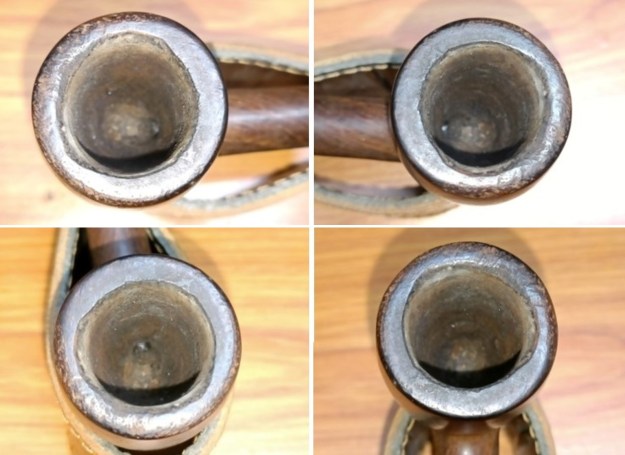
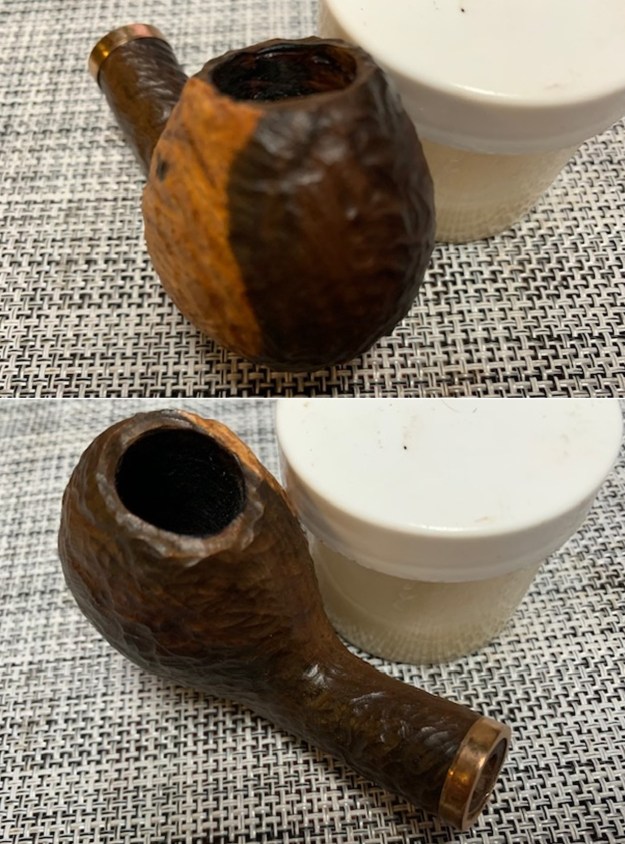
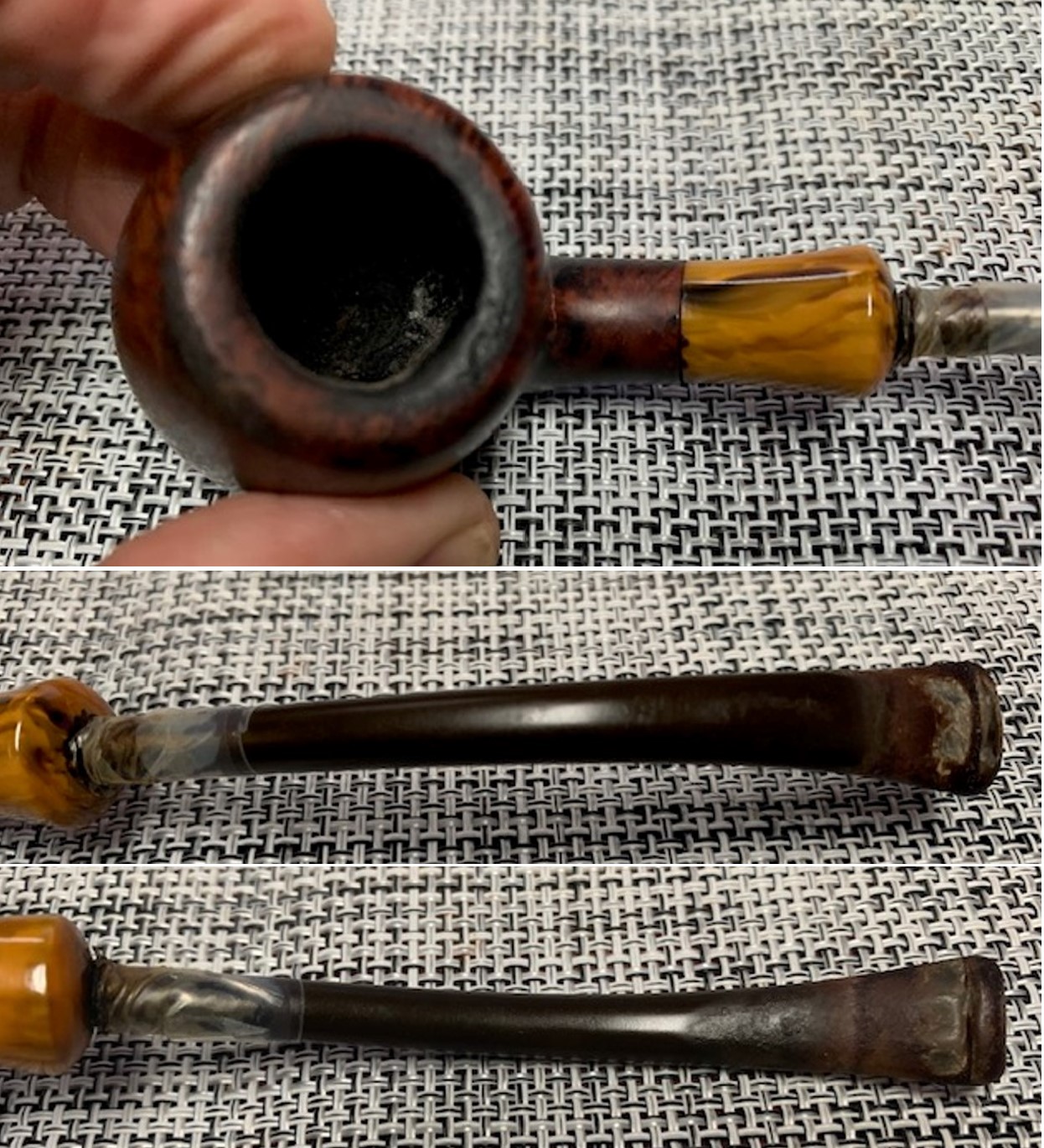
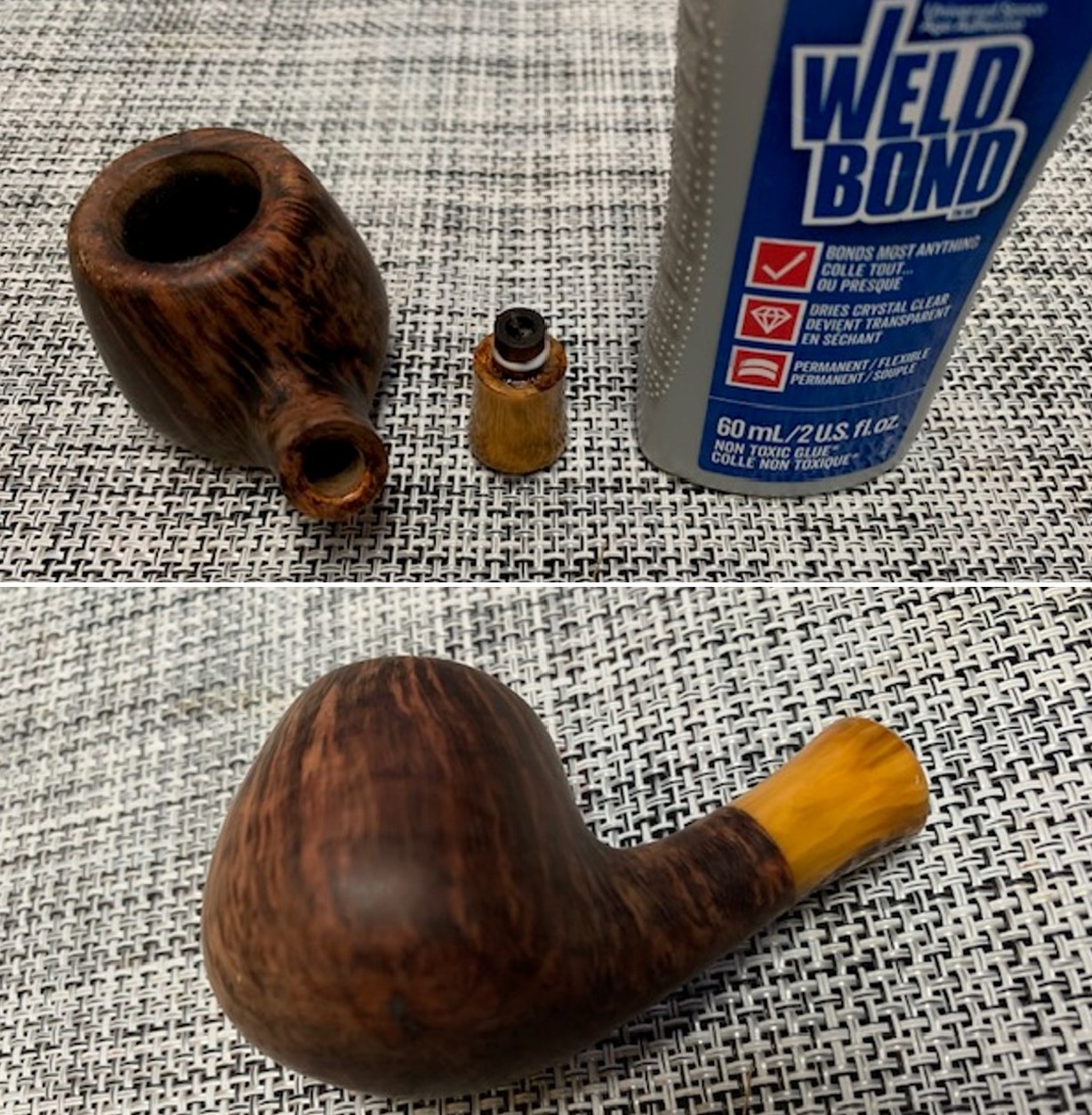
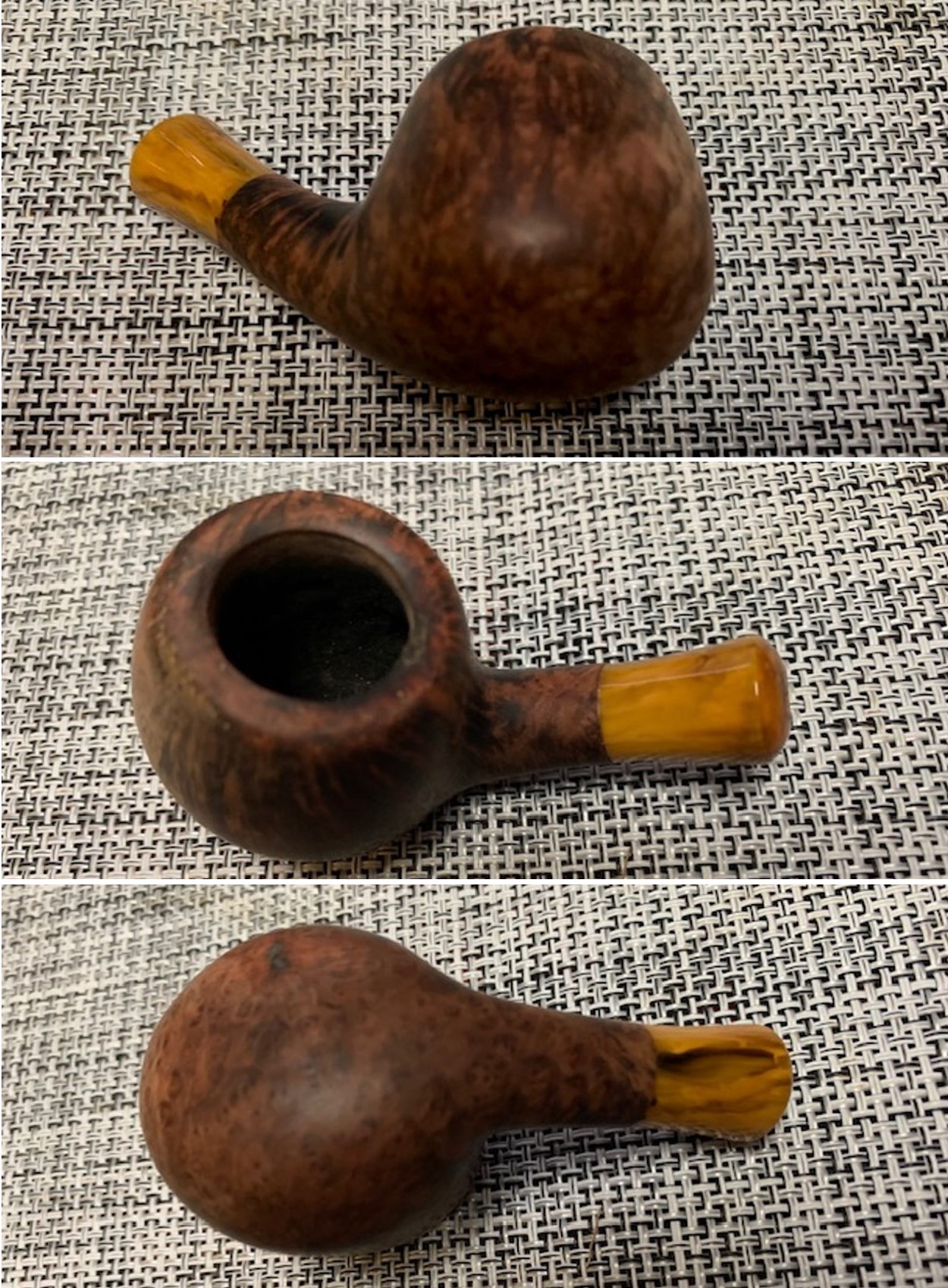
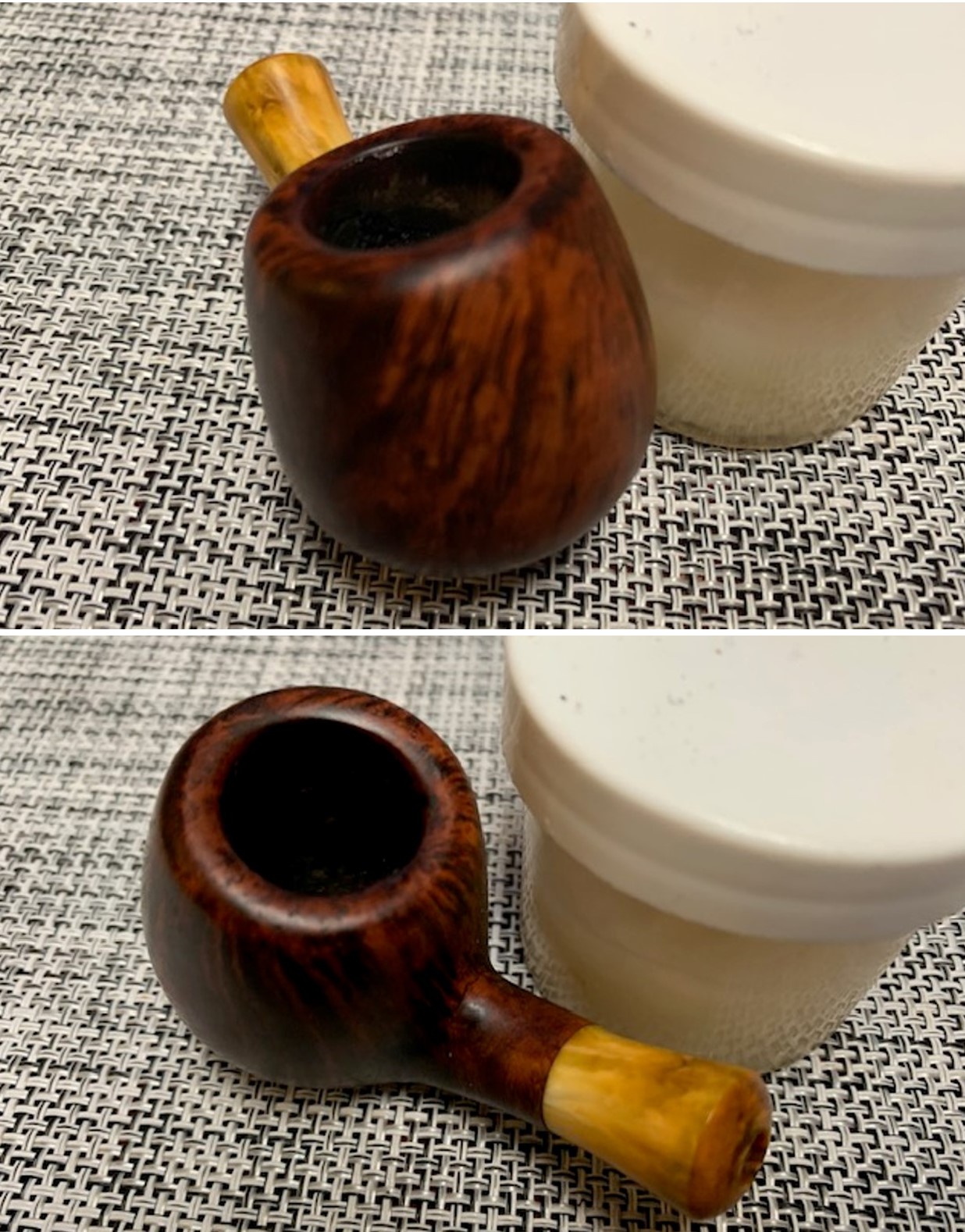
This deeply rusticated and perfectly proportioned sitter has a medium thick layer of cake in the chamber with darkening over the also rusticated rim top surface. The beautifully rusticated stummel surface is covered in dust and grime. This grime and dirt can be seen in the deep rustications and lends a dull and lifeless appearance to the pipe. The stummel sides are stained with the grime and hand oils from previous usage. The mortise is relatively clean and would be cleaned further during the refurbishing process. The grey acrylic stem with swirls of black and it’s golden bird-in-flight stem logo is also in decent condition. There is some light tooth chatter in the bite zone on either surface while the buttons are intact. Overall, the pipe is in very good condition requiring only a little TLC to get it back to its pristine condition. The following pictures will aid in your visual inspection too. Detailed Inspection
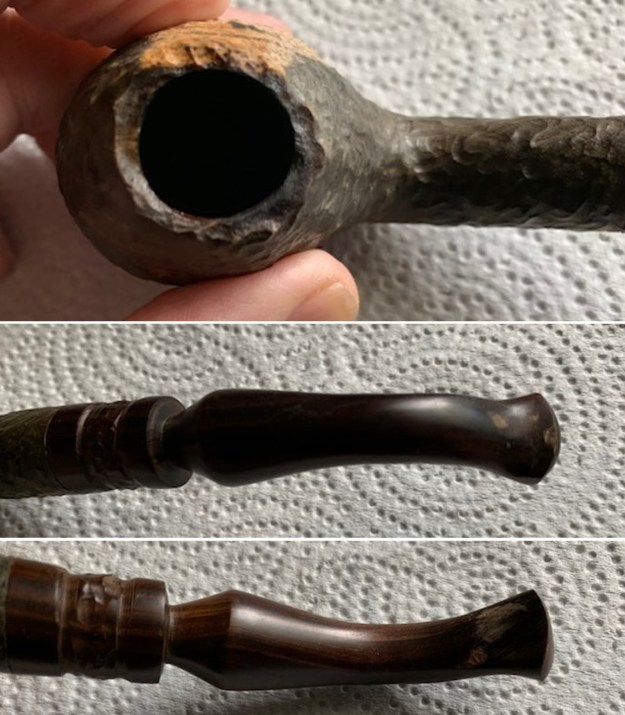
This pipe has a large bowl with a depth of 2 ¾ inch. The chamber has an even layer of thick hard cake. There is a heavy overflow of lava over the rim top surface. The rim top has darkened considerably. The condition of the inner walls of the chamber and the inner edge can be commented upon after the cake has been taken down to the bare briar. The ghost smells in the chamber are very strong.The deeply rusticated stummel surface has a very beautiful texture and hand feel to it. The stummel has a very natural Virgin stain and supposed to darken as it is smoked. The surface is covered in dust and grime. The fact that the rustications are dusty and filled with dirt is accentuated more due to the dark stains on the stummel sides on account of hand oils and sweat. The briar looks lifeless and bone dry and has taken on dull hues. The mortise is relatively clean with slight darkening of the mortise wall. The ghost smells are pretty strong and should reduce once the chamber and mortise is cleaned up. The asymmetrical saddle variegated acrylic grey stem with swirls of black beautifully compliments the stummel. There is minor tooth chatter on either surface of the stem. The moustache gold stem logo is in pristine condition. The tenon opening and the horizontal slot shows accumulated dried gunk and grime. The button edges are crisp and the slot end is undamaged.The Process
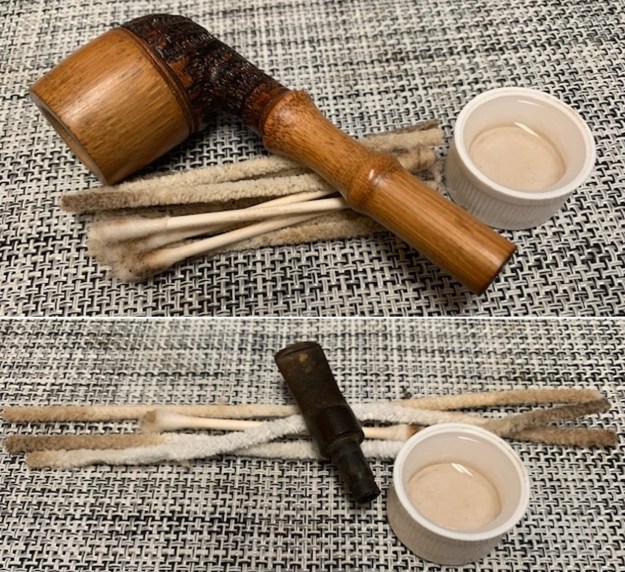
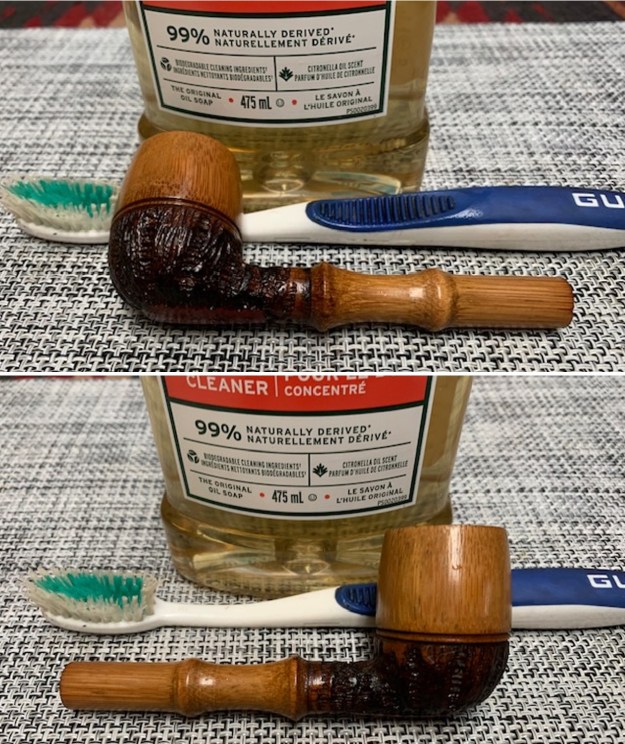
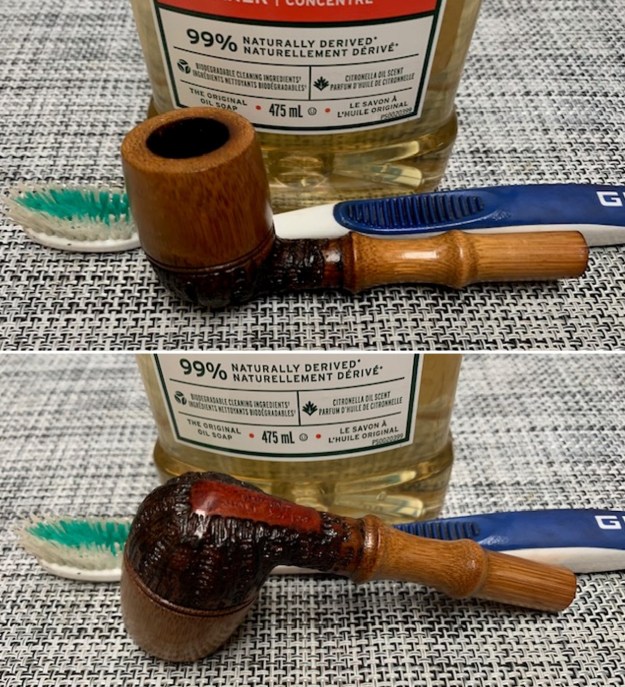
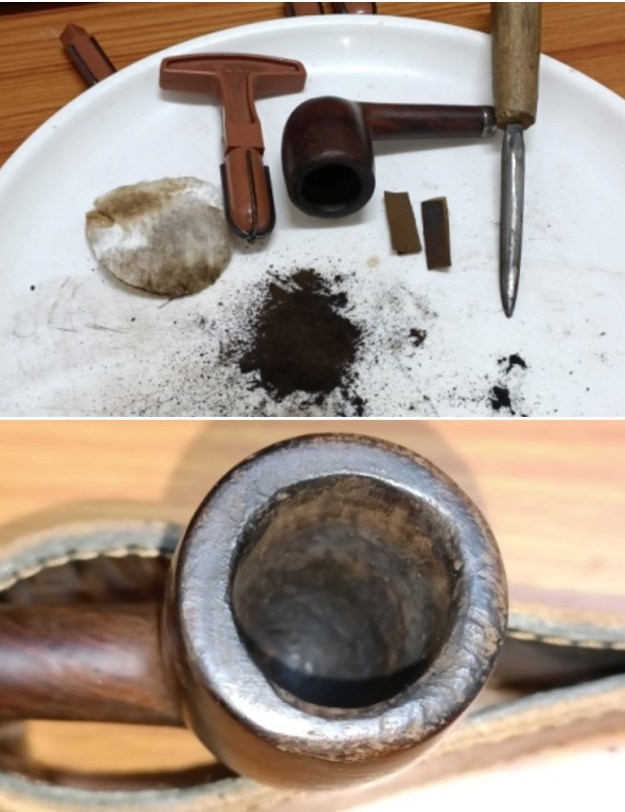
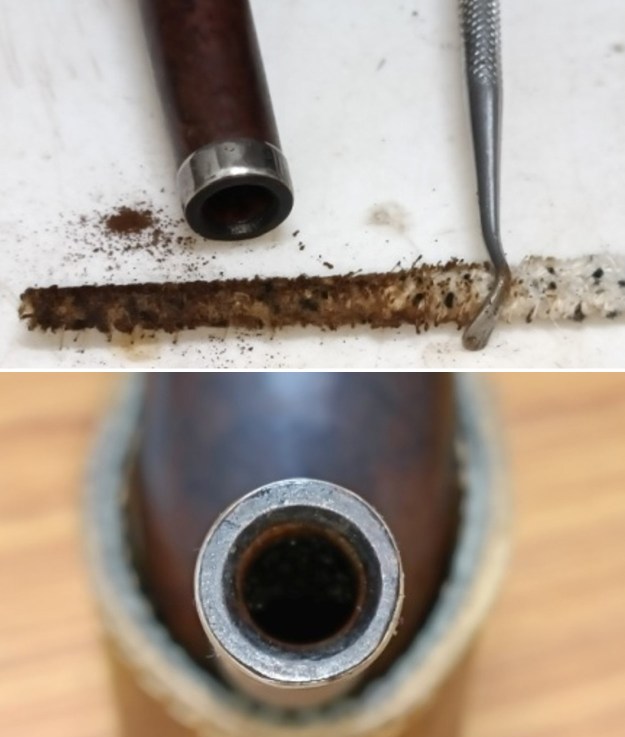
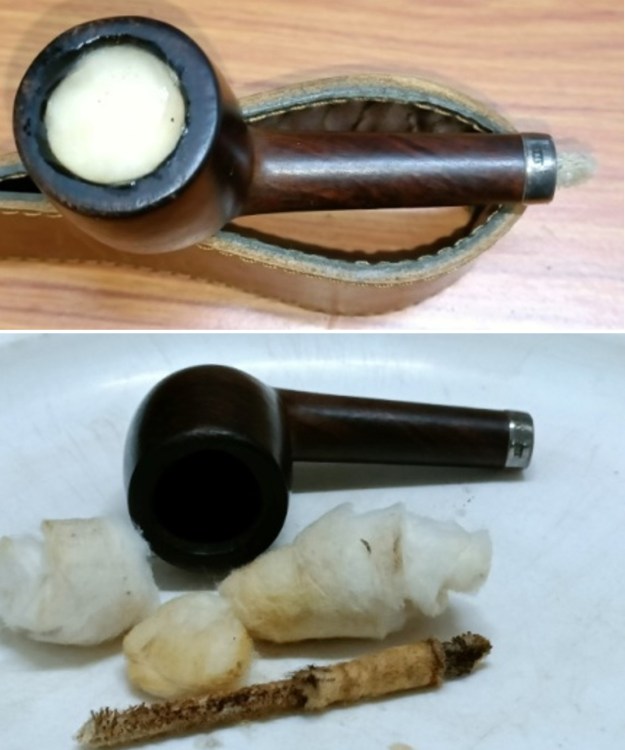
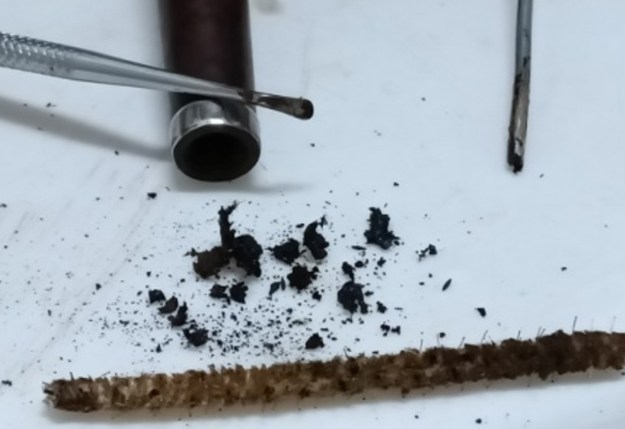
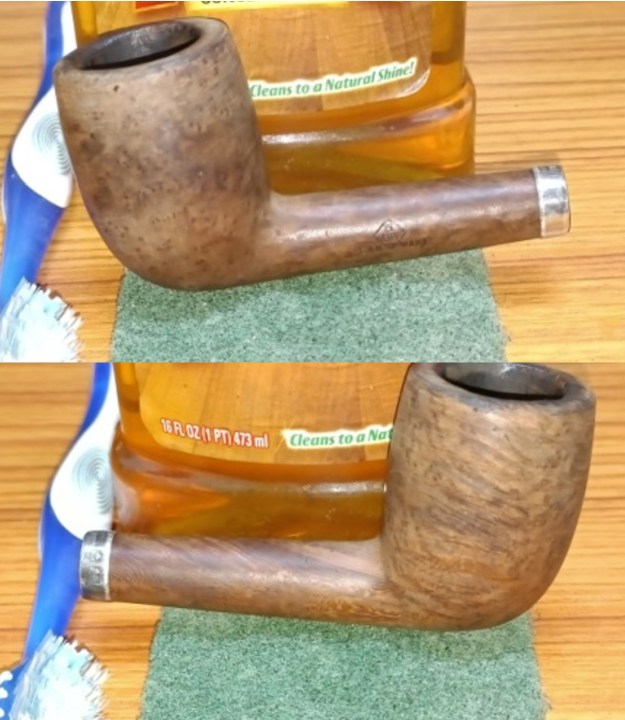
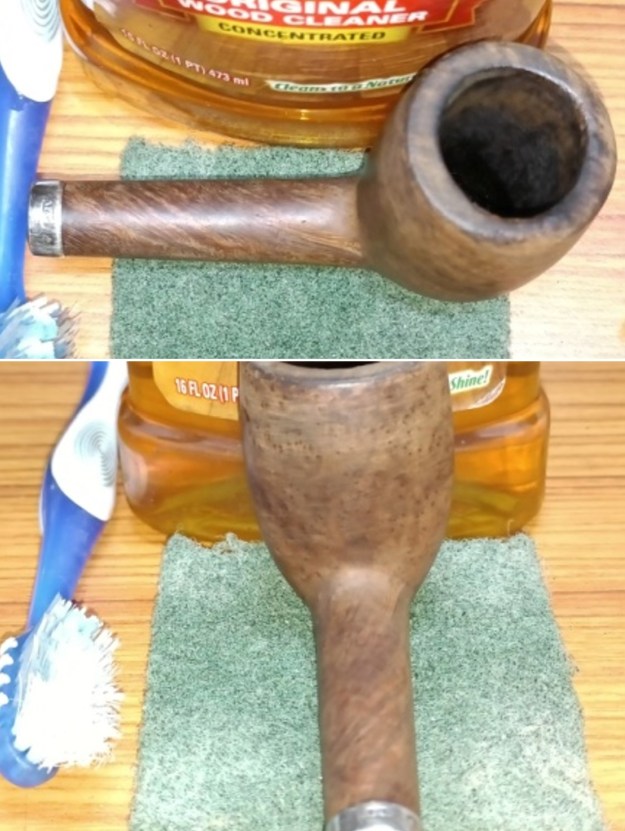
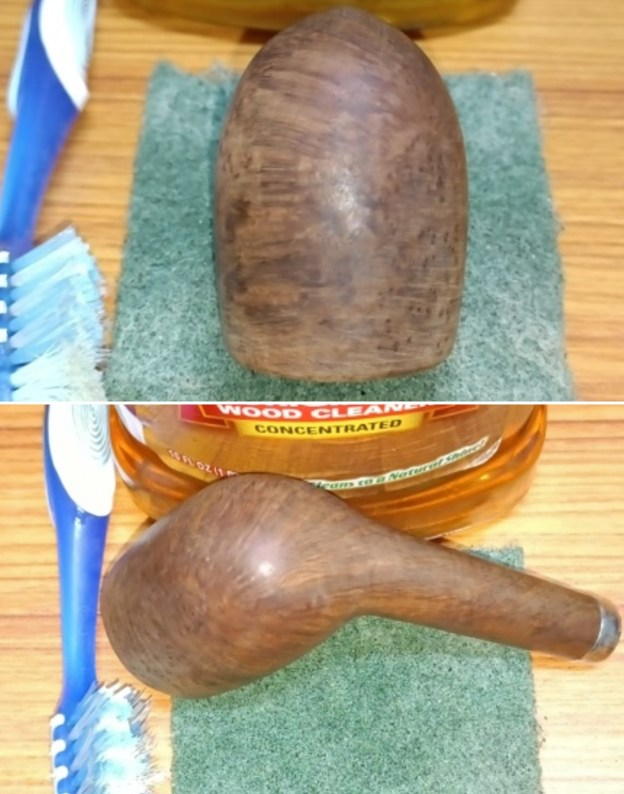
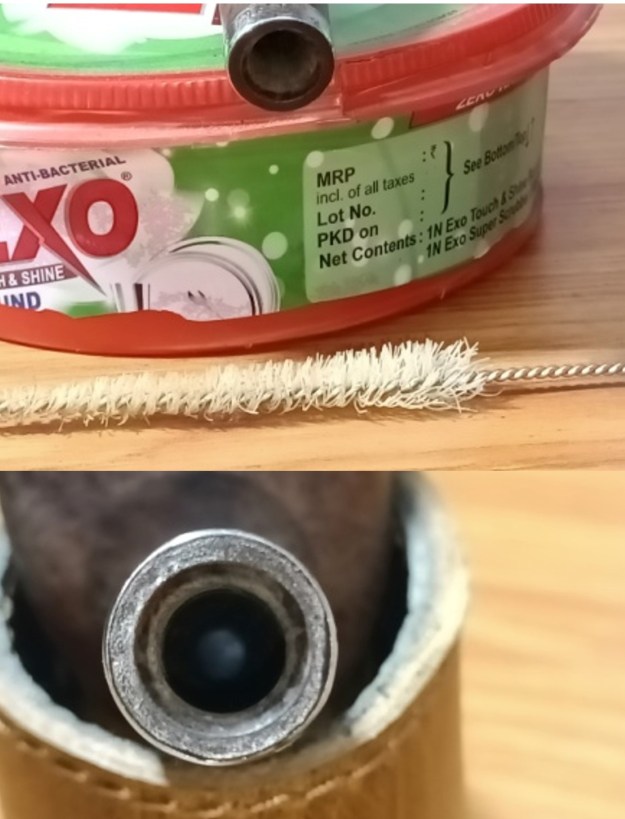
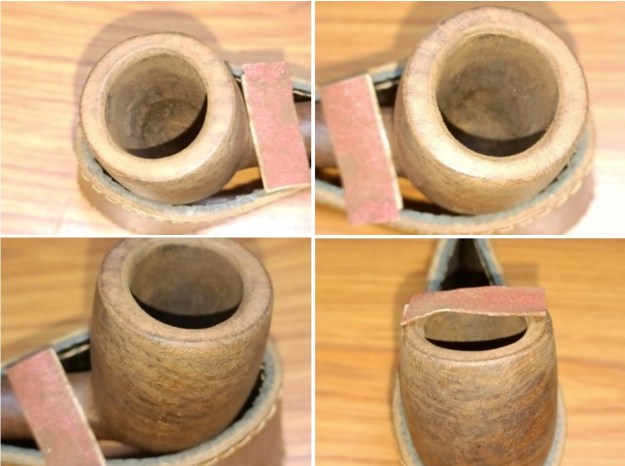
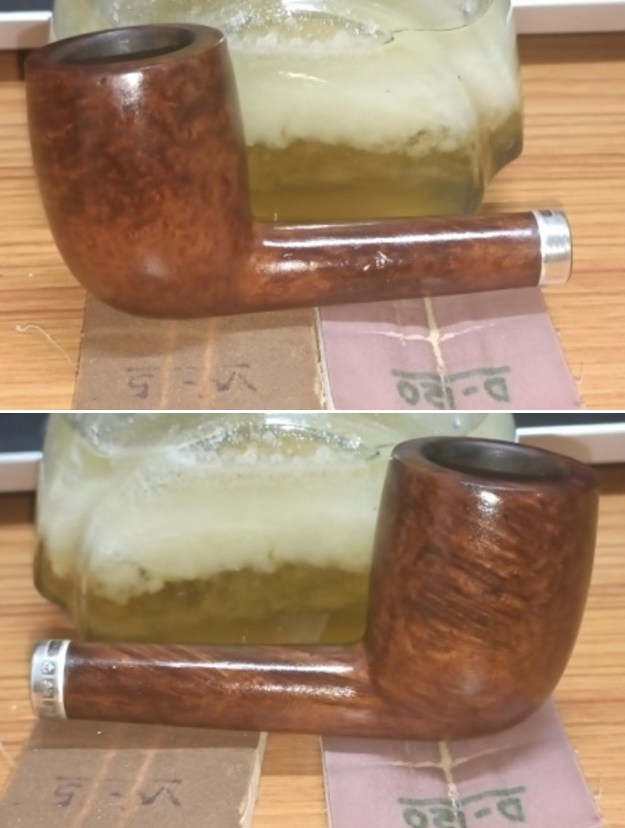
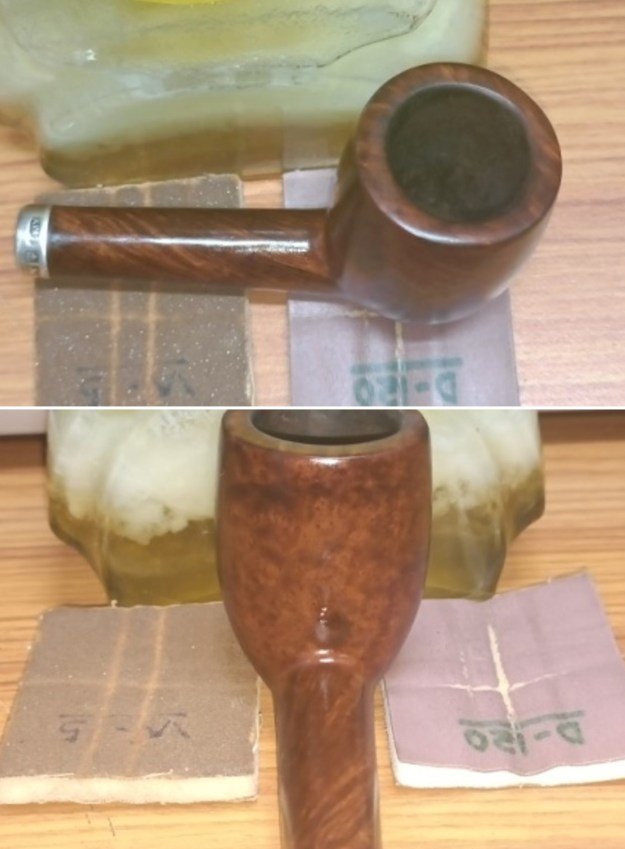
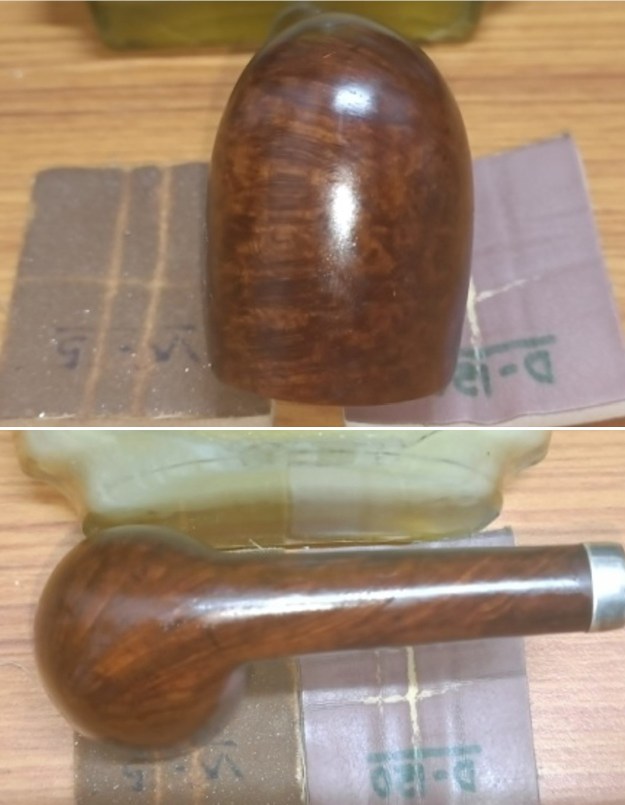
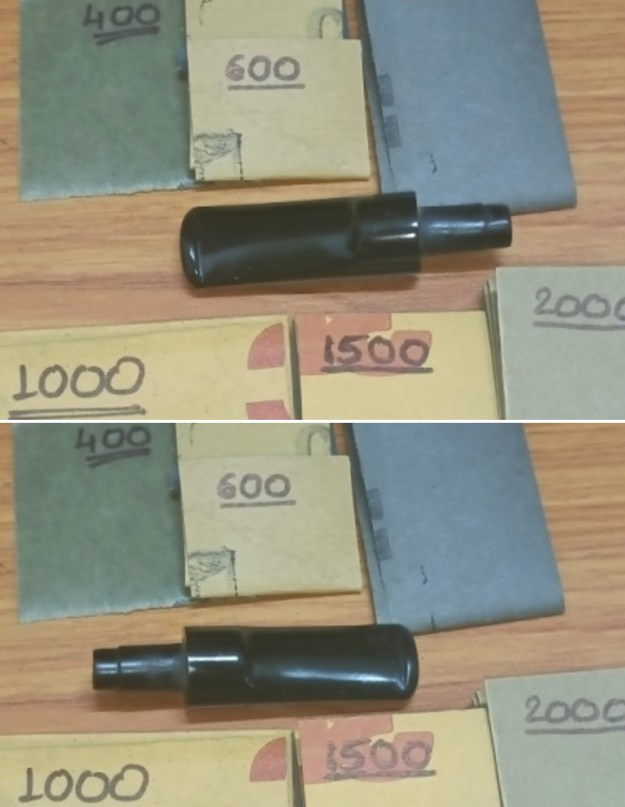
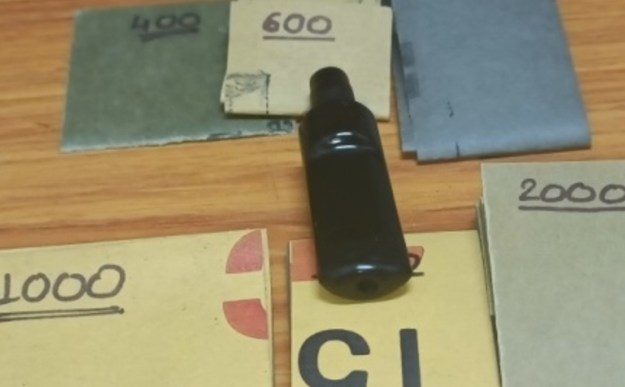
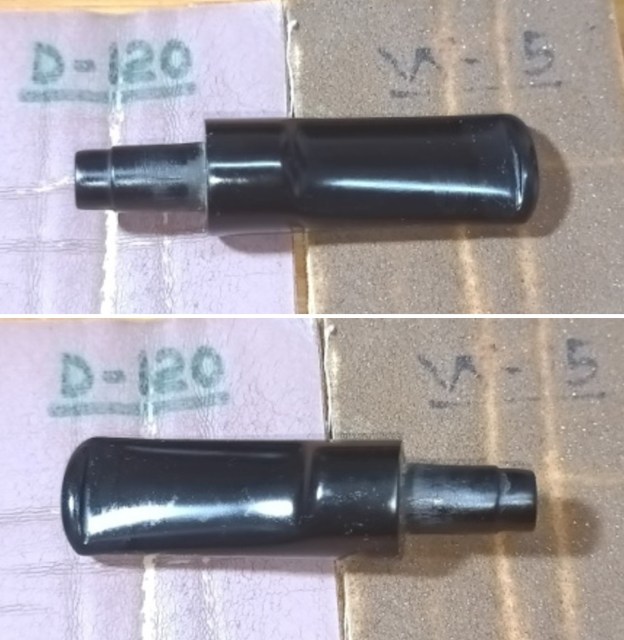
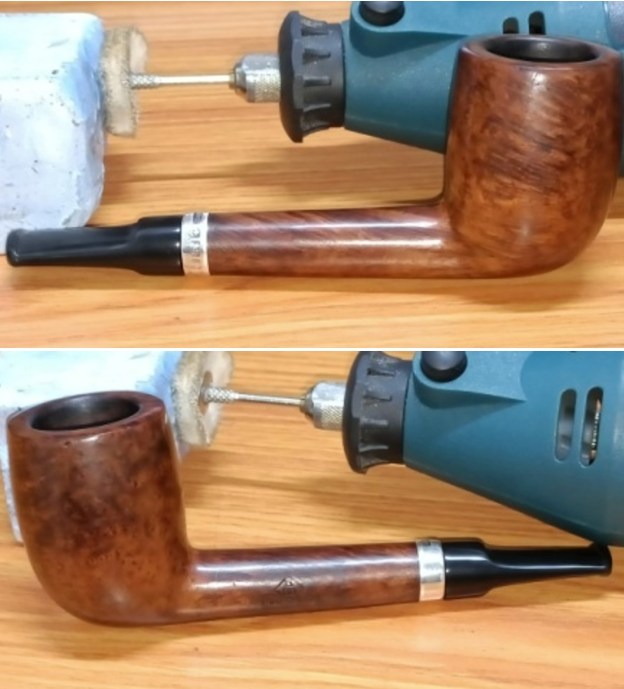
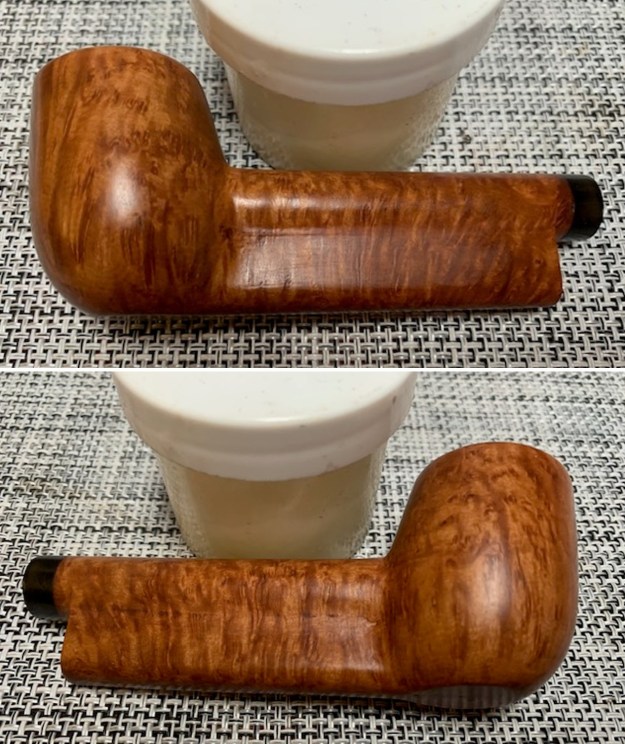
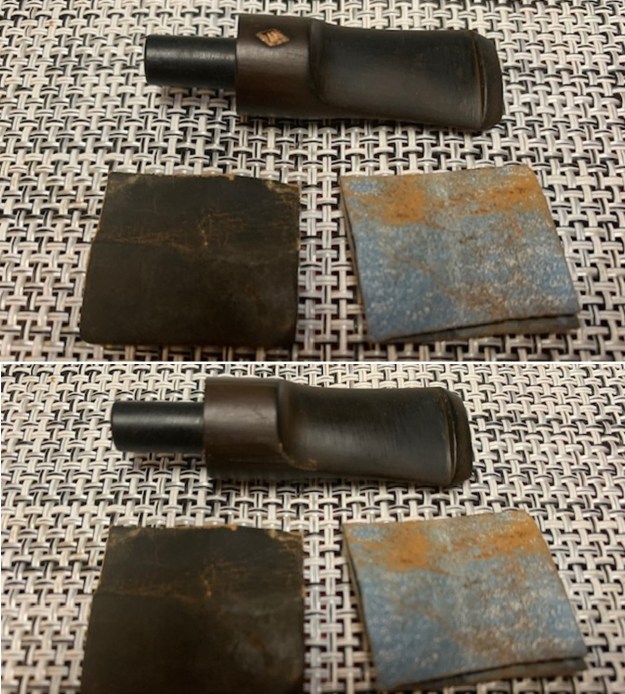
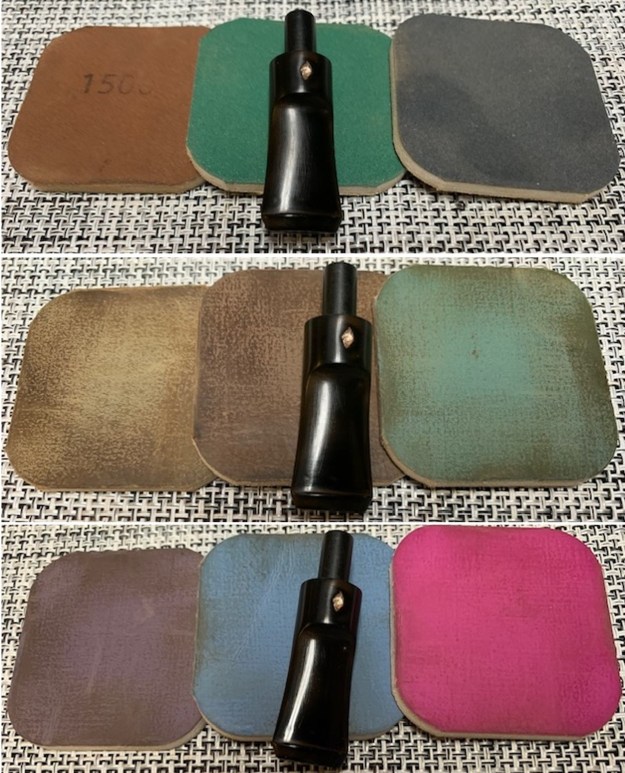
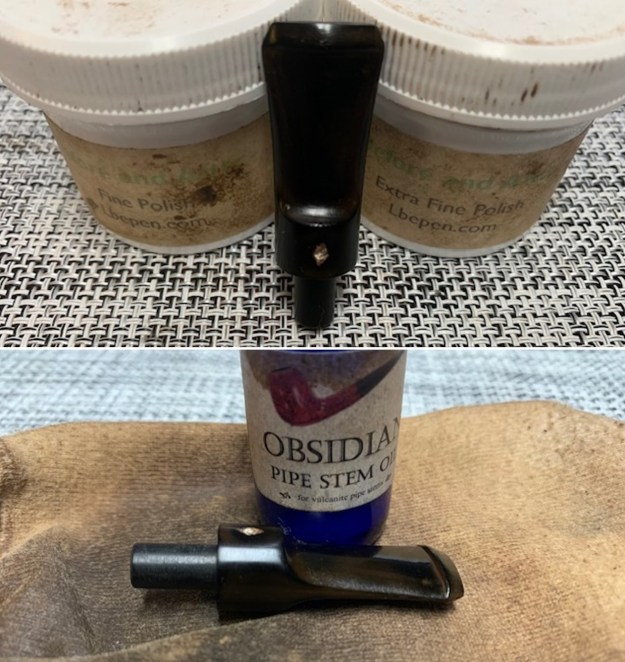
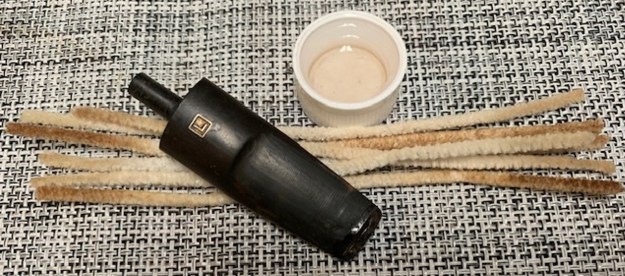
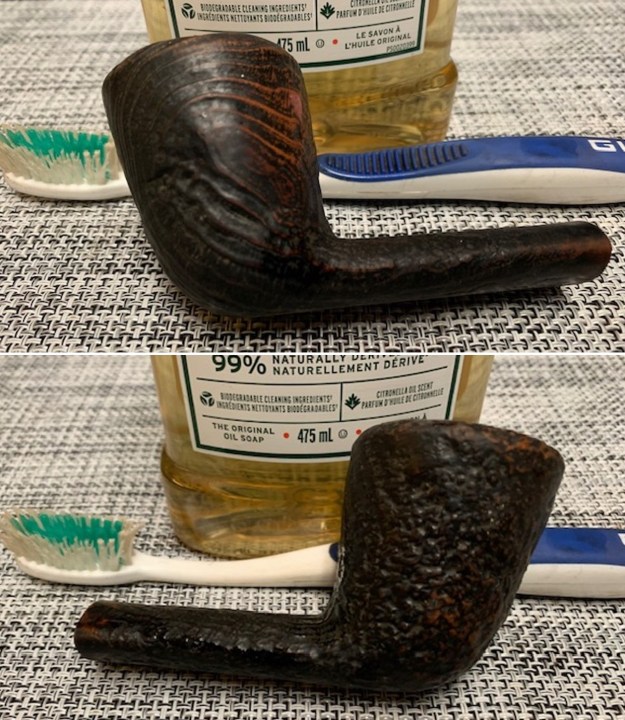
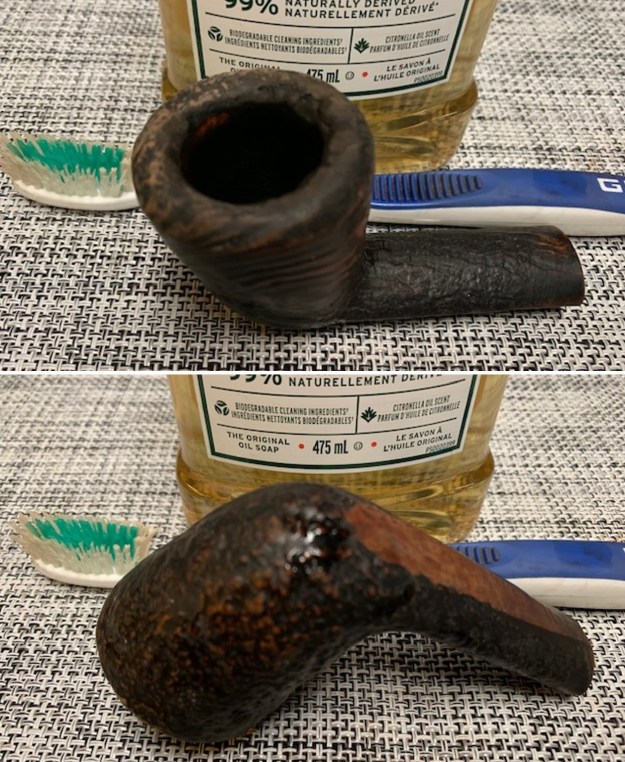
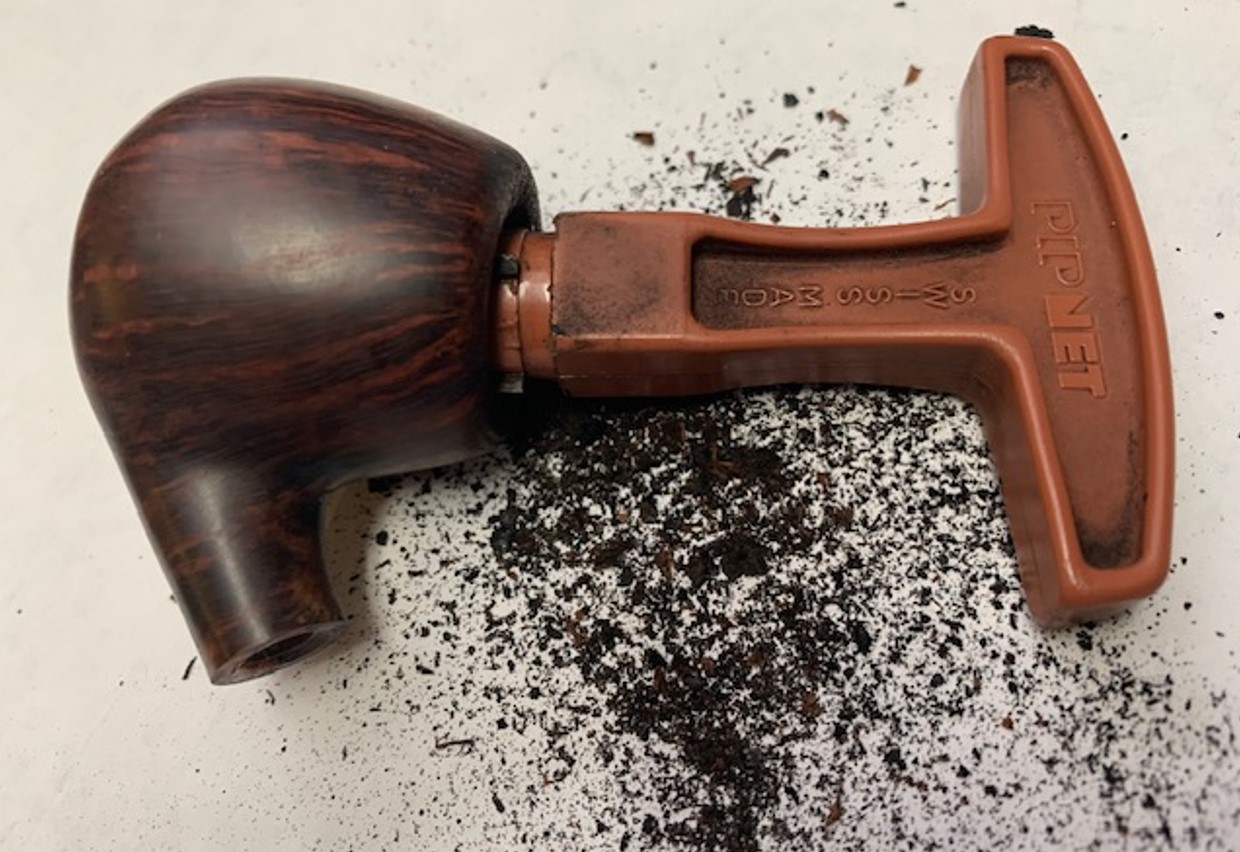
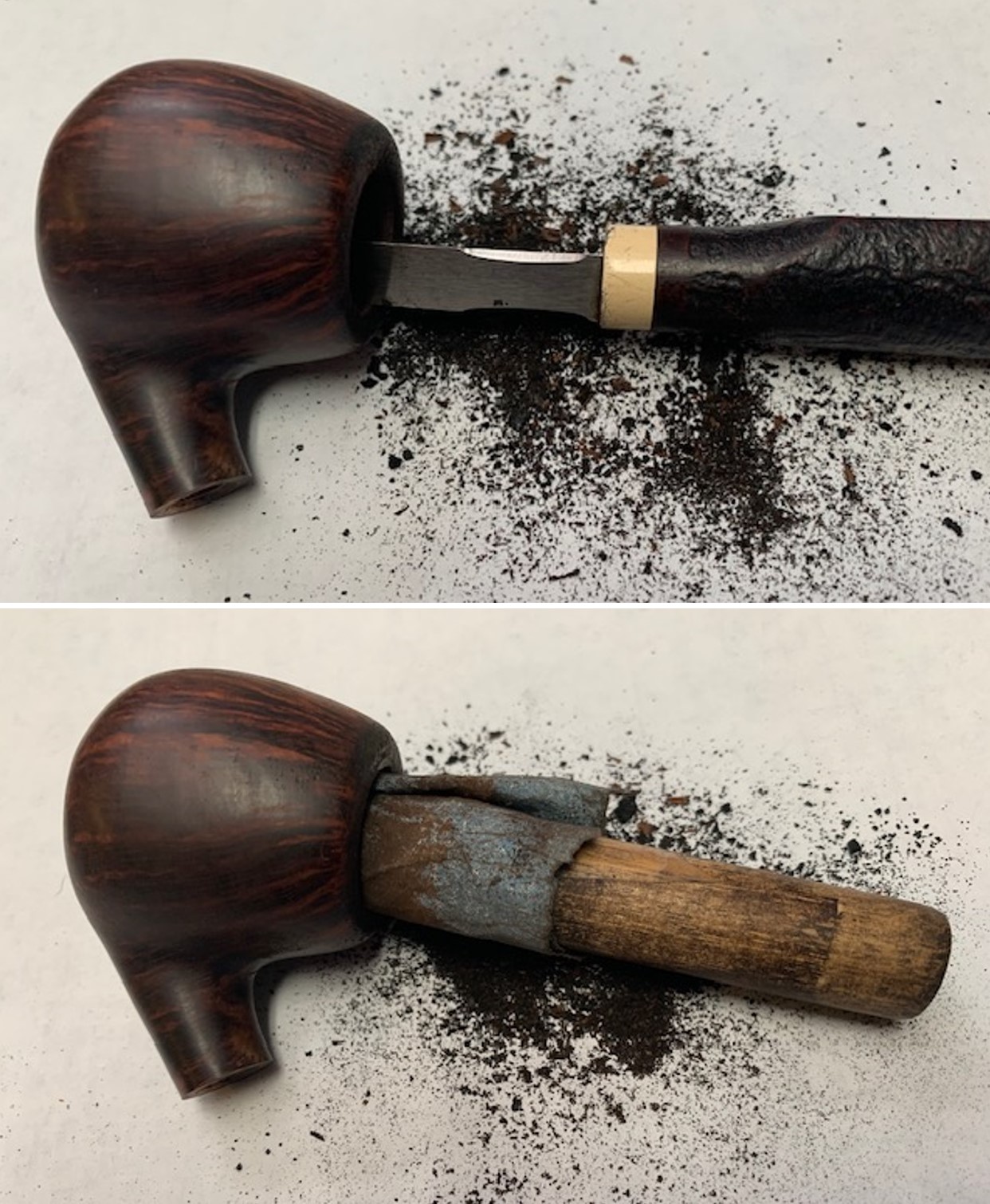
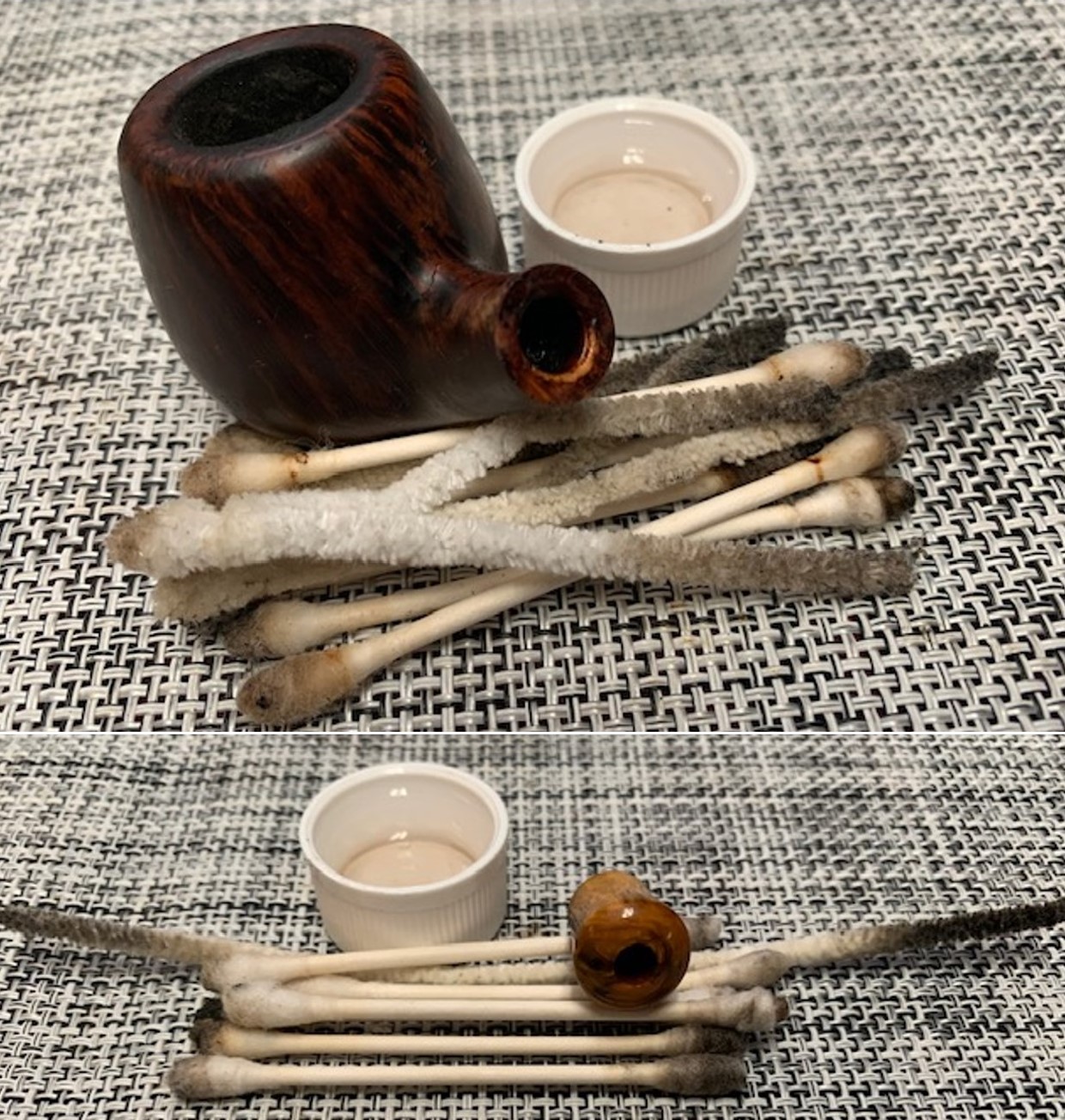
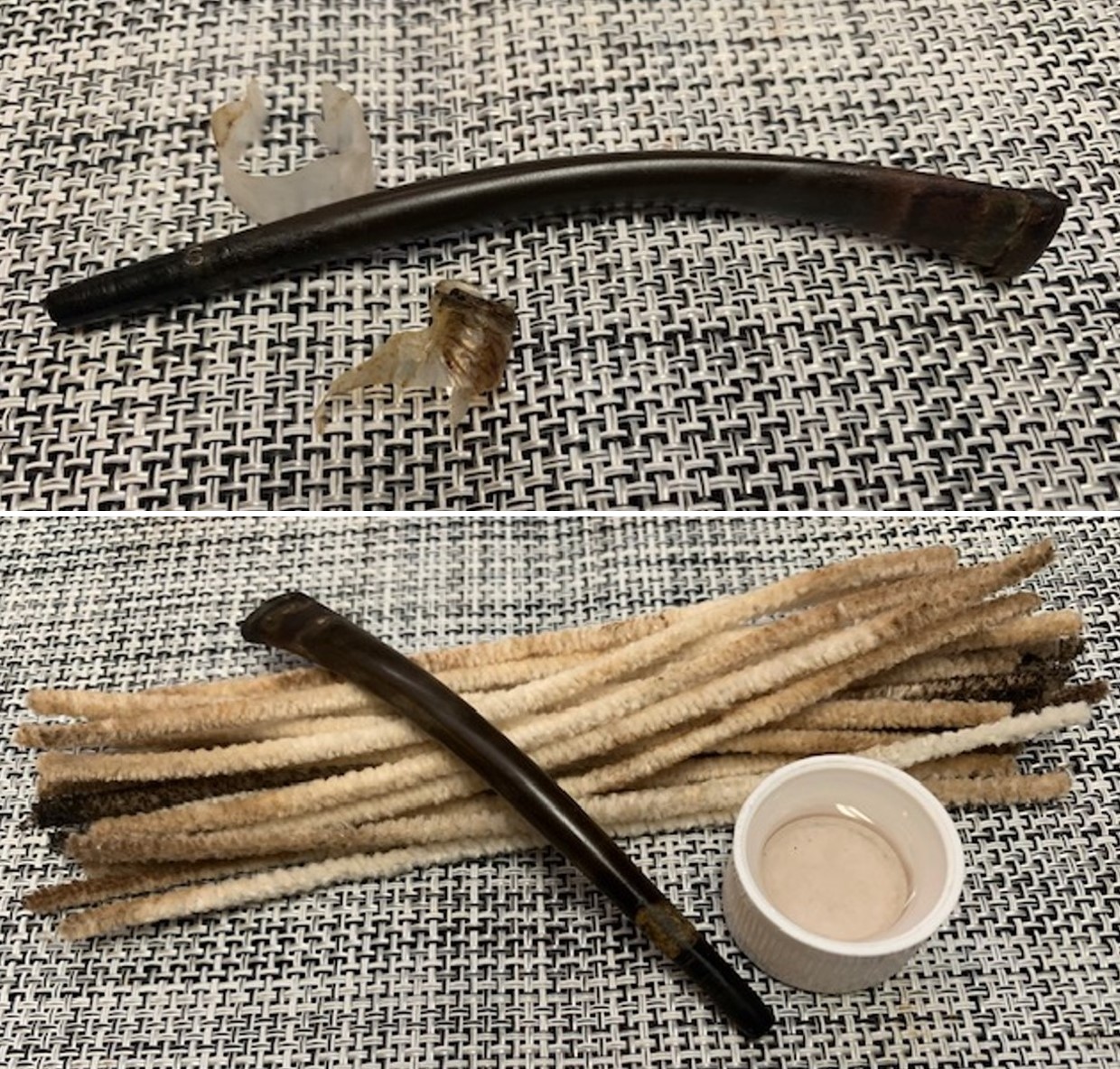
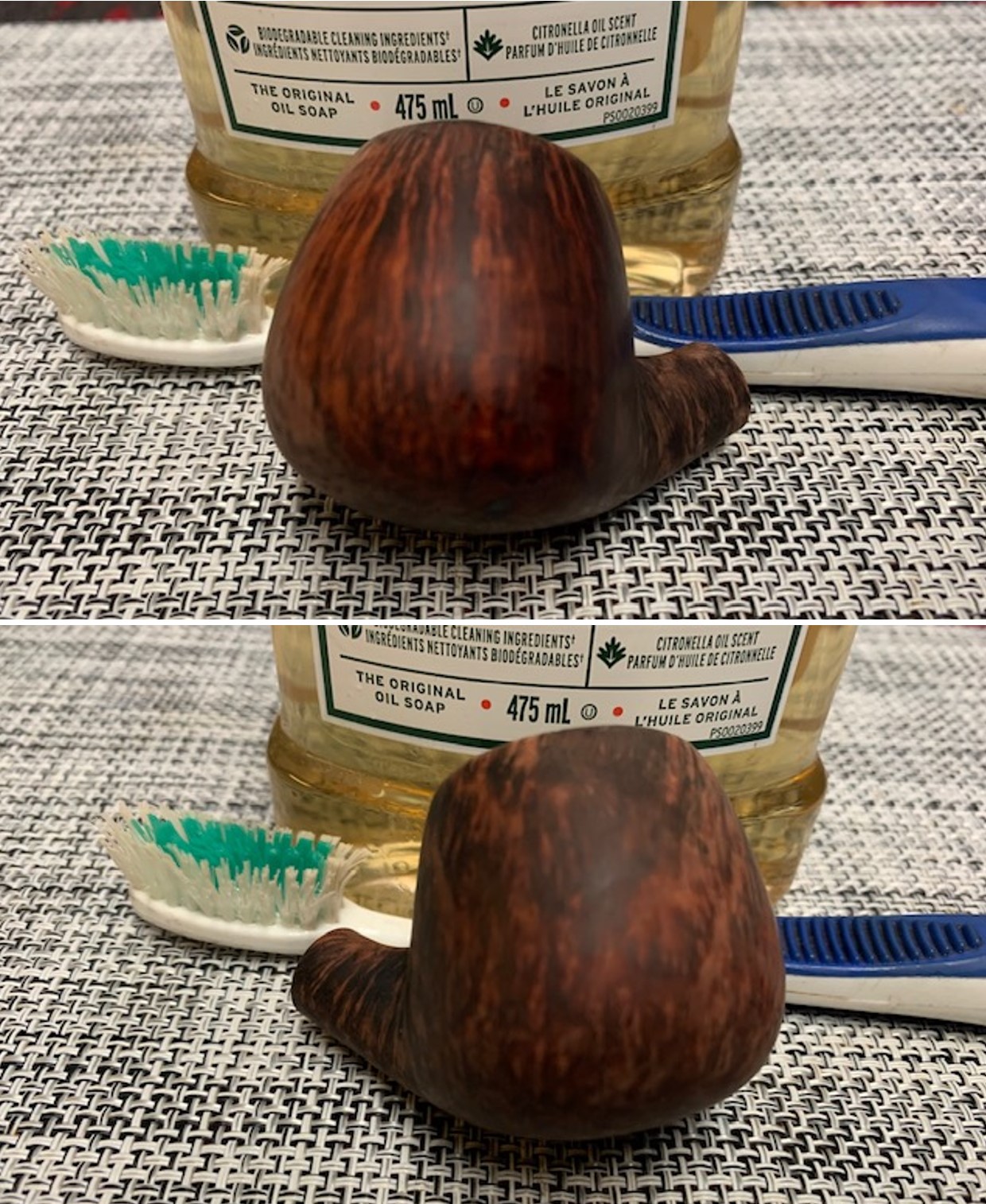
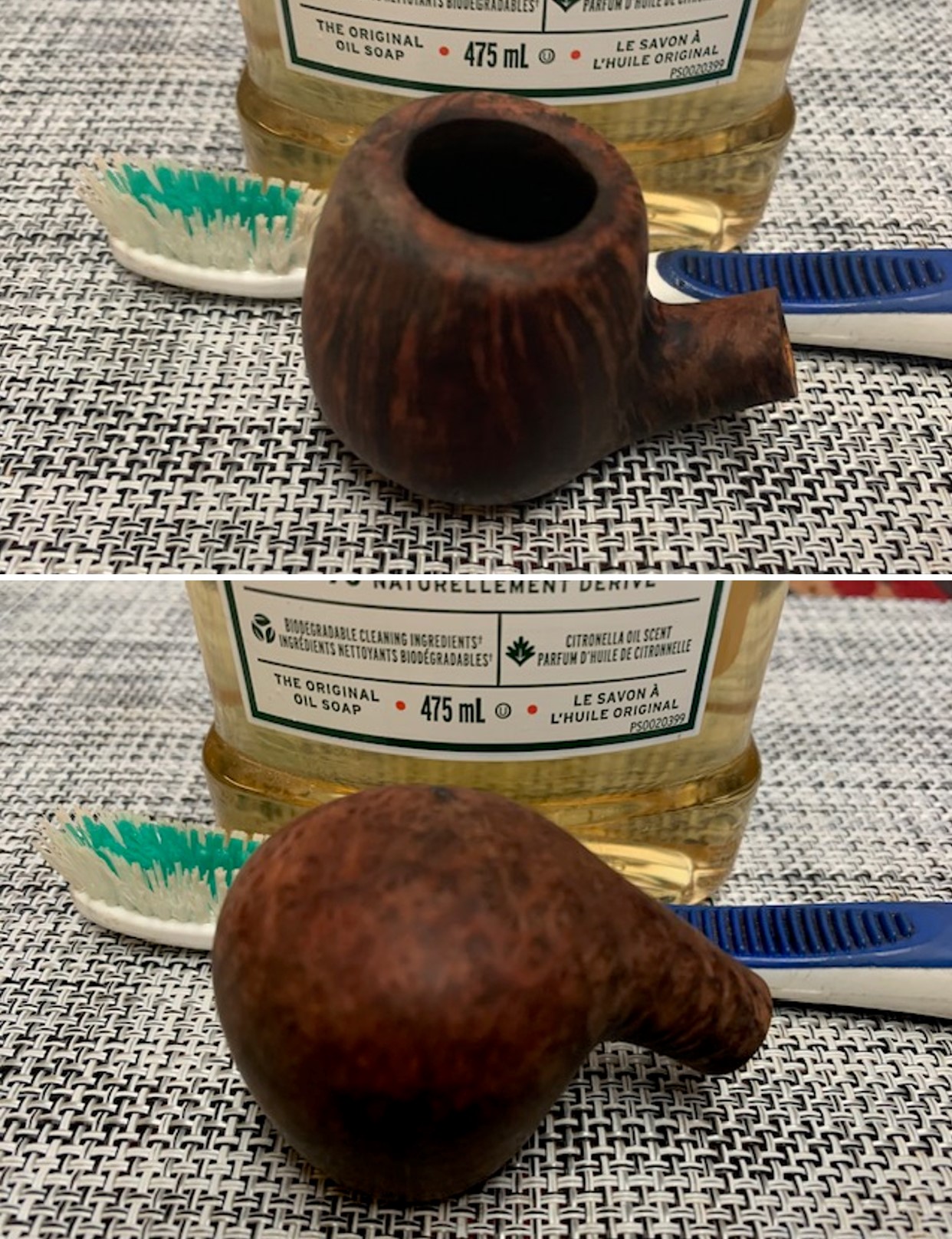
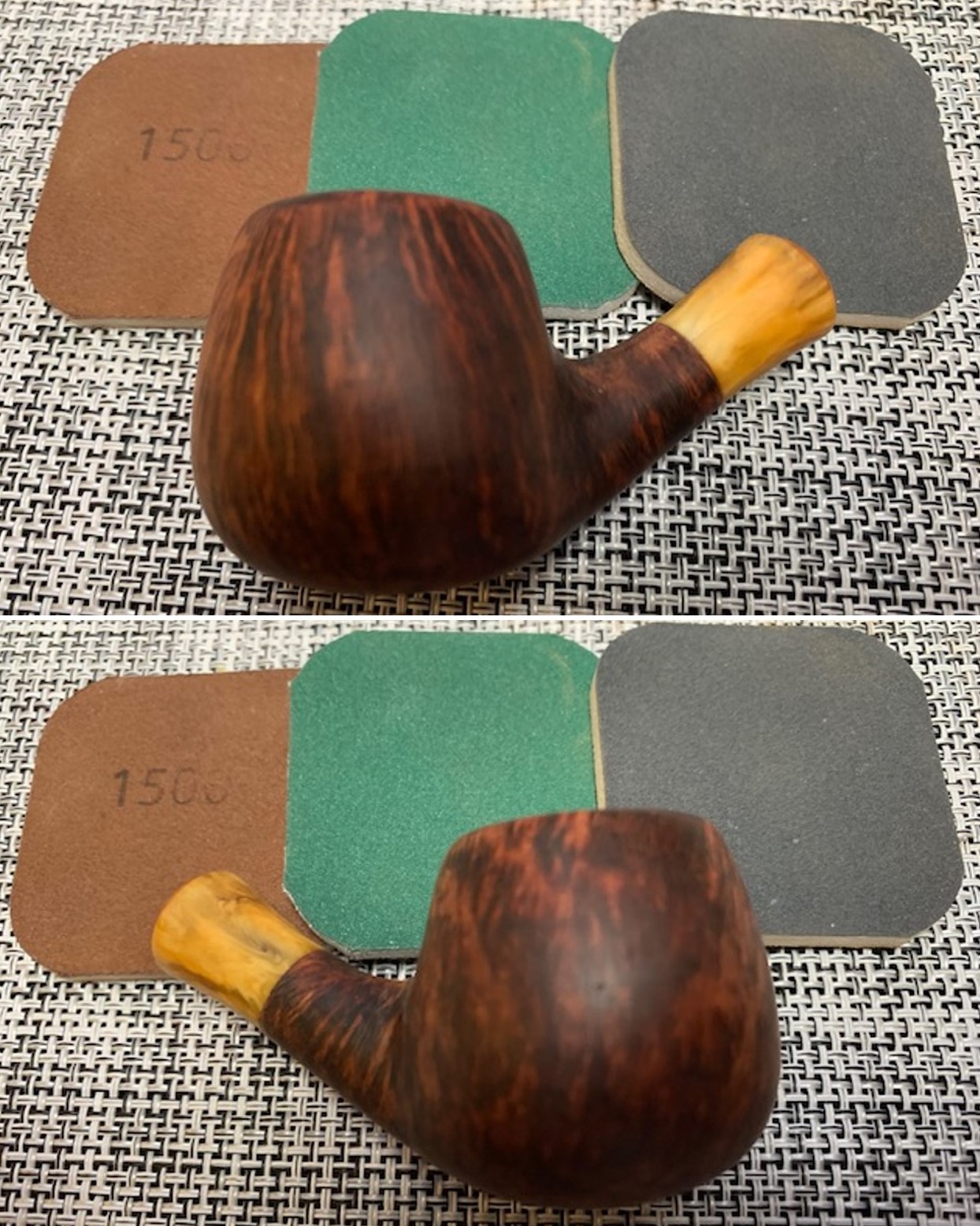
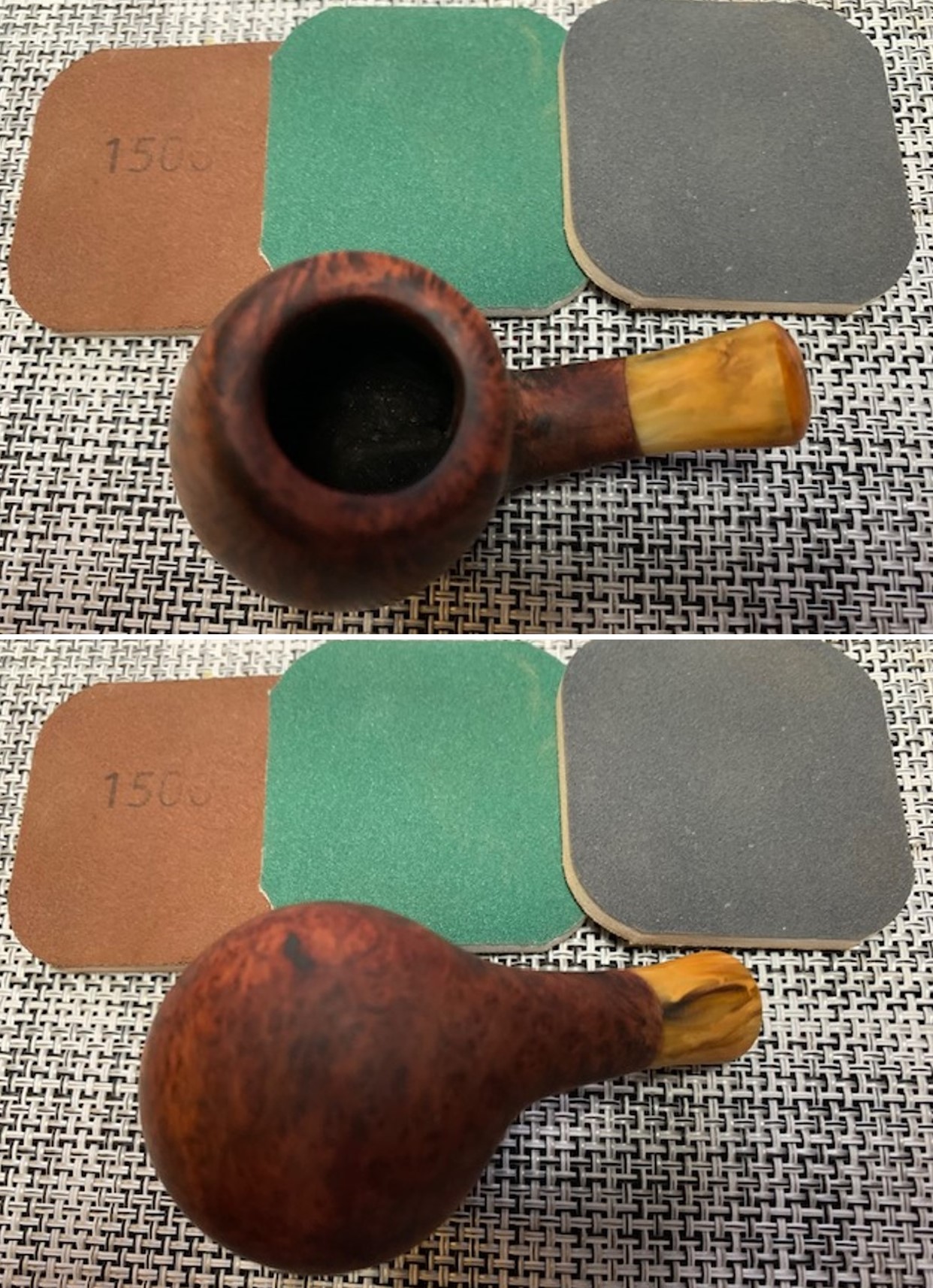
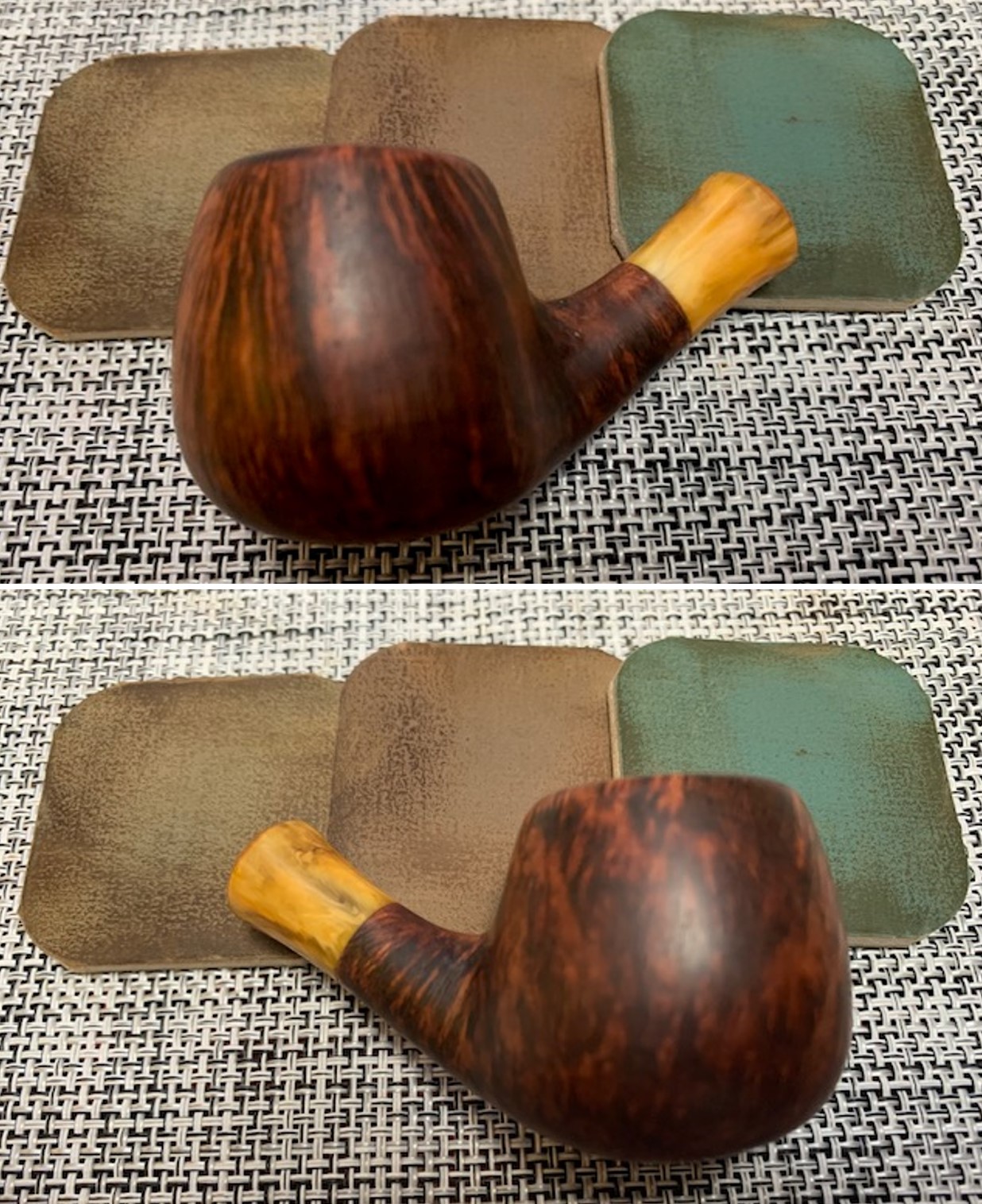
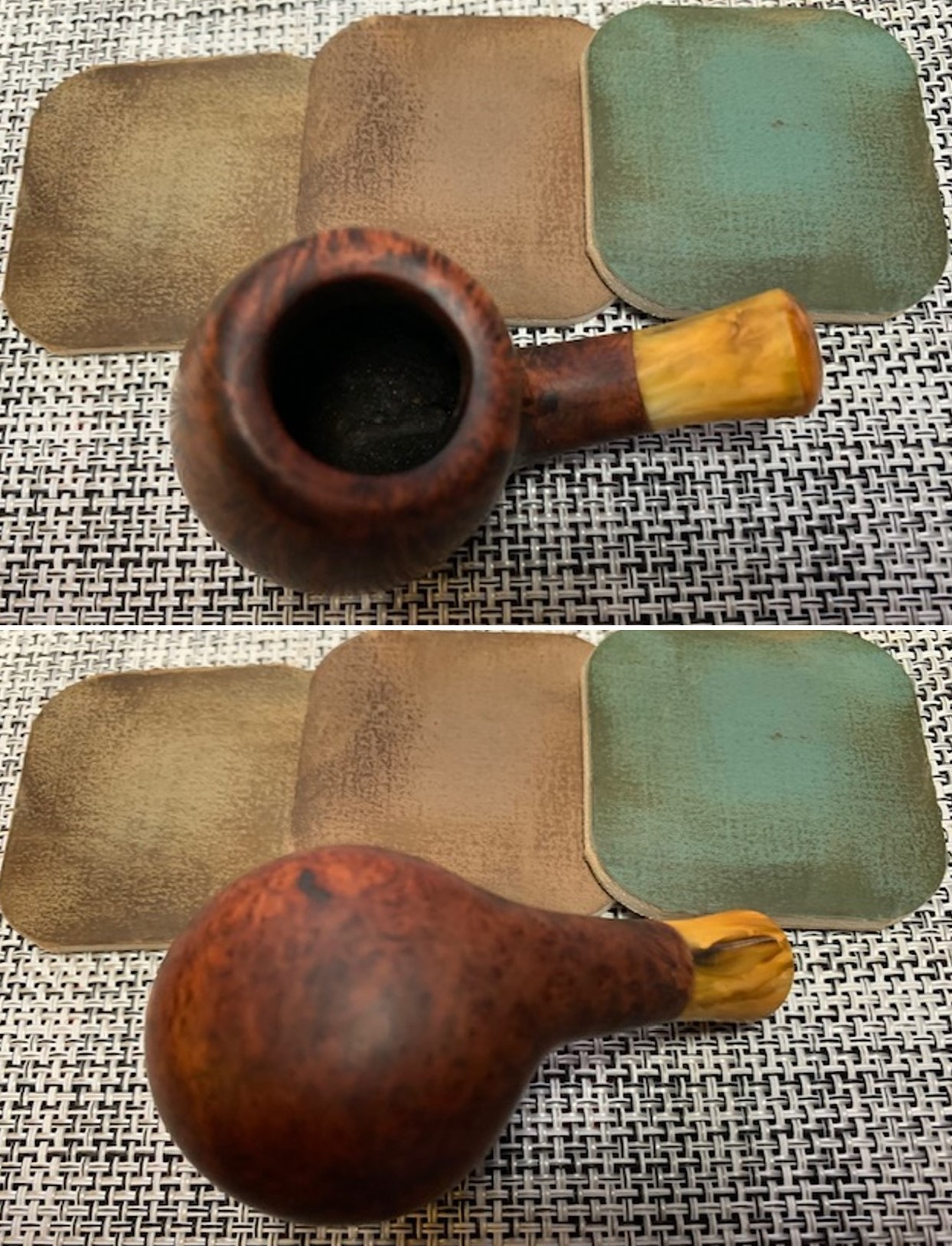
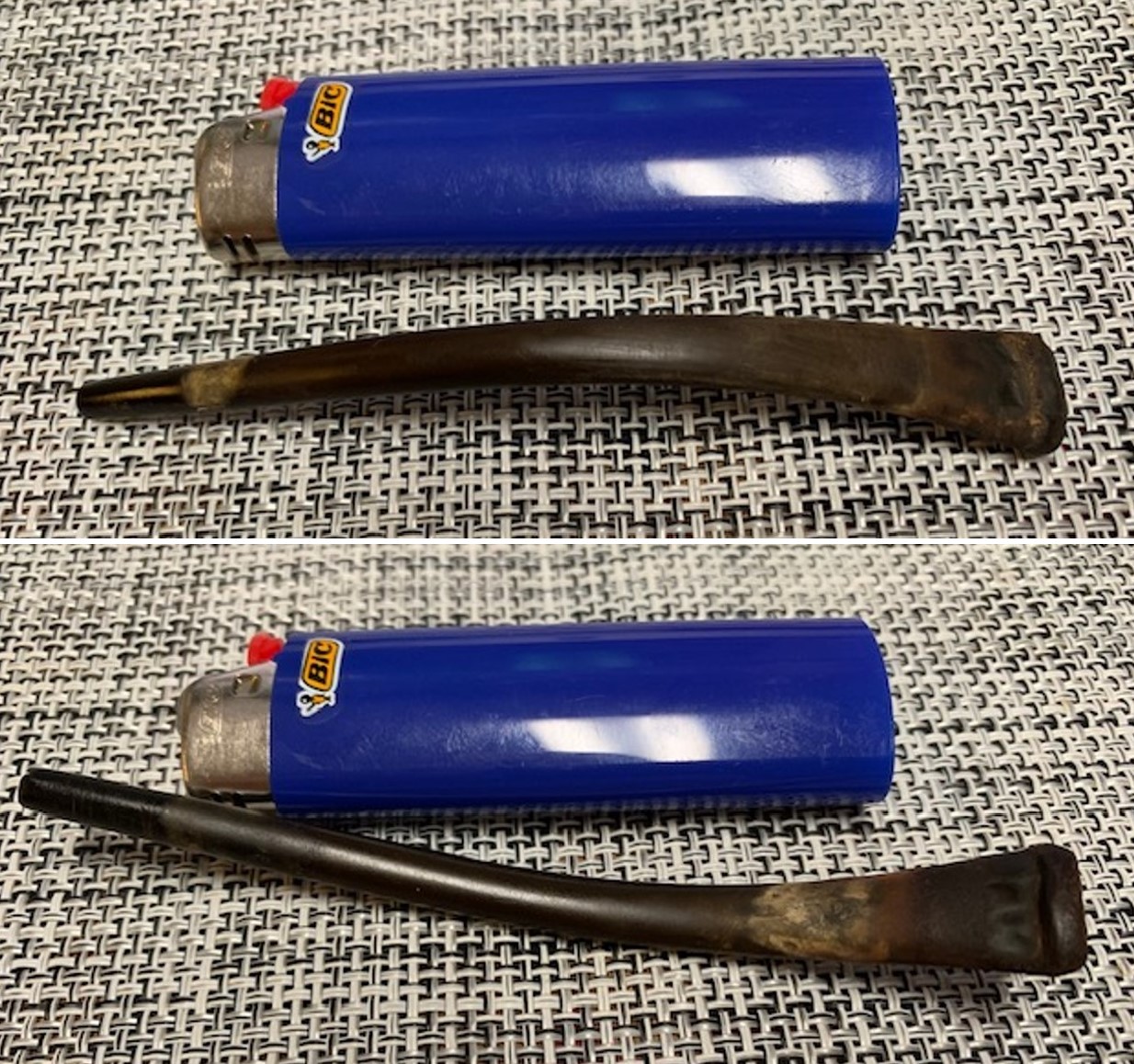
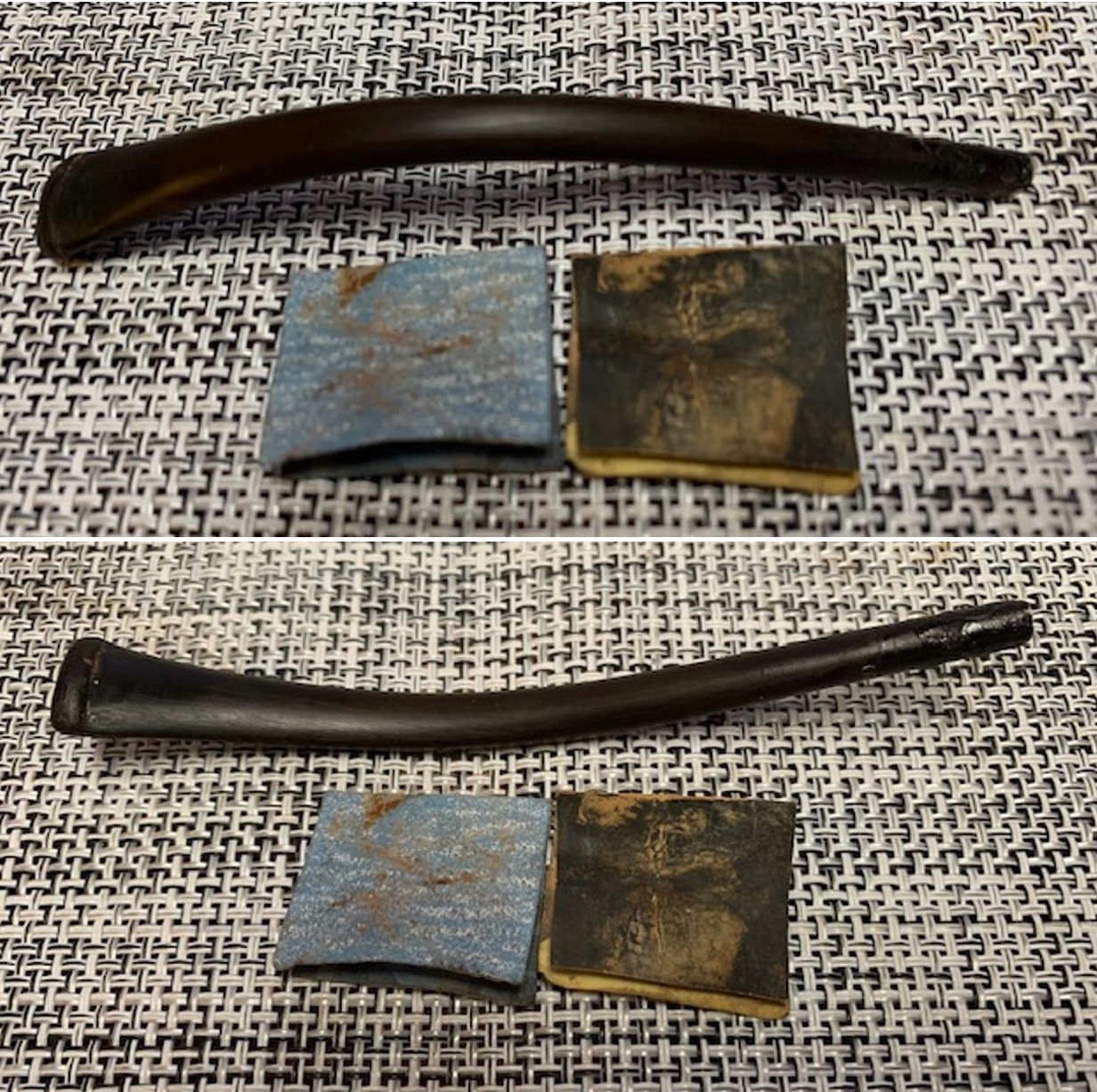
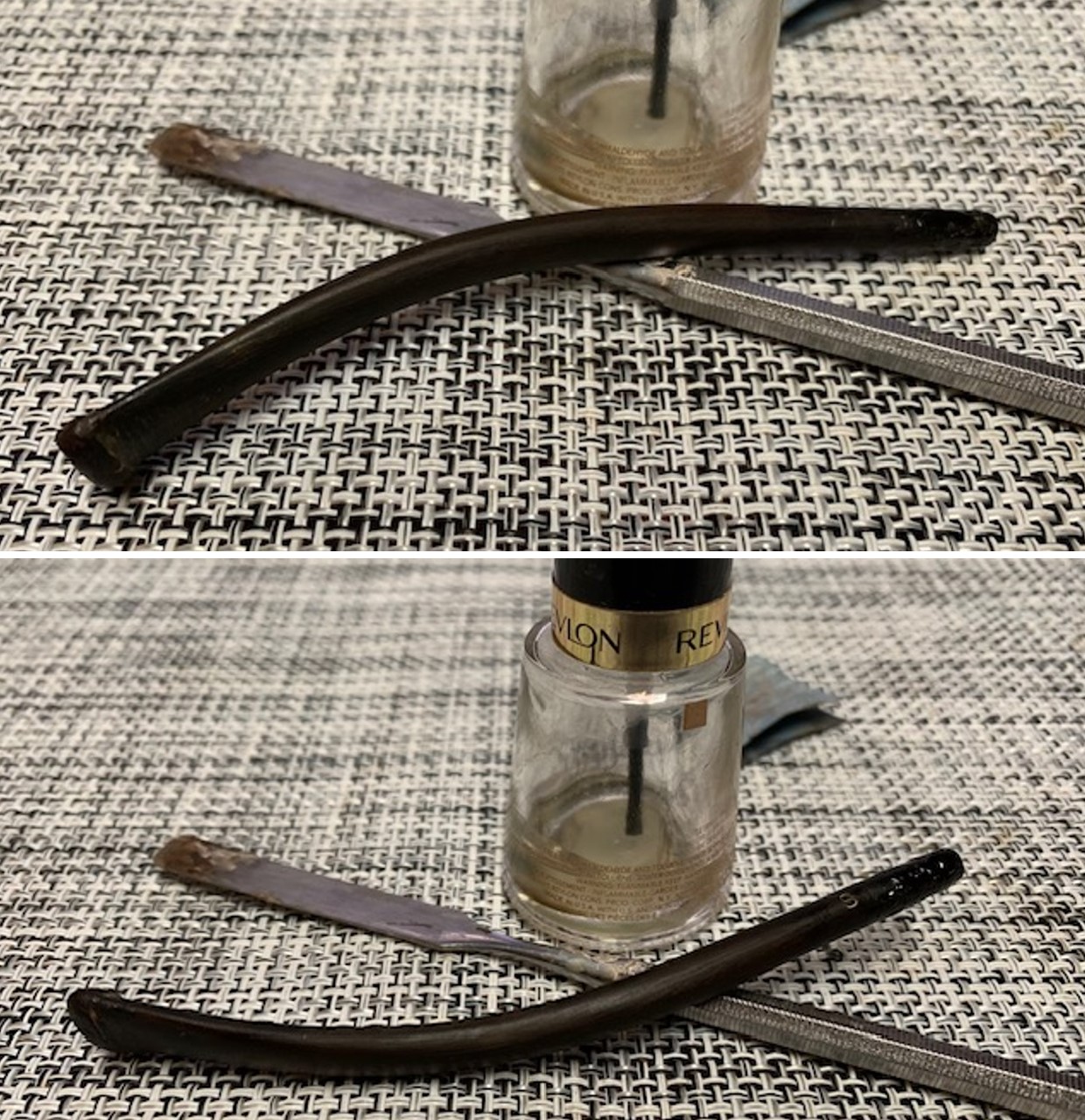
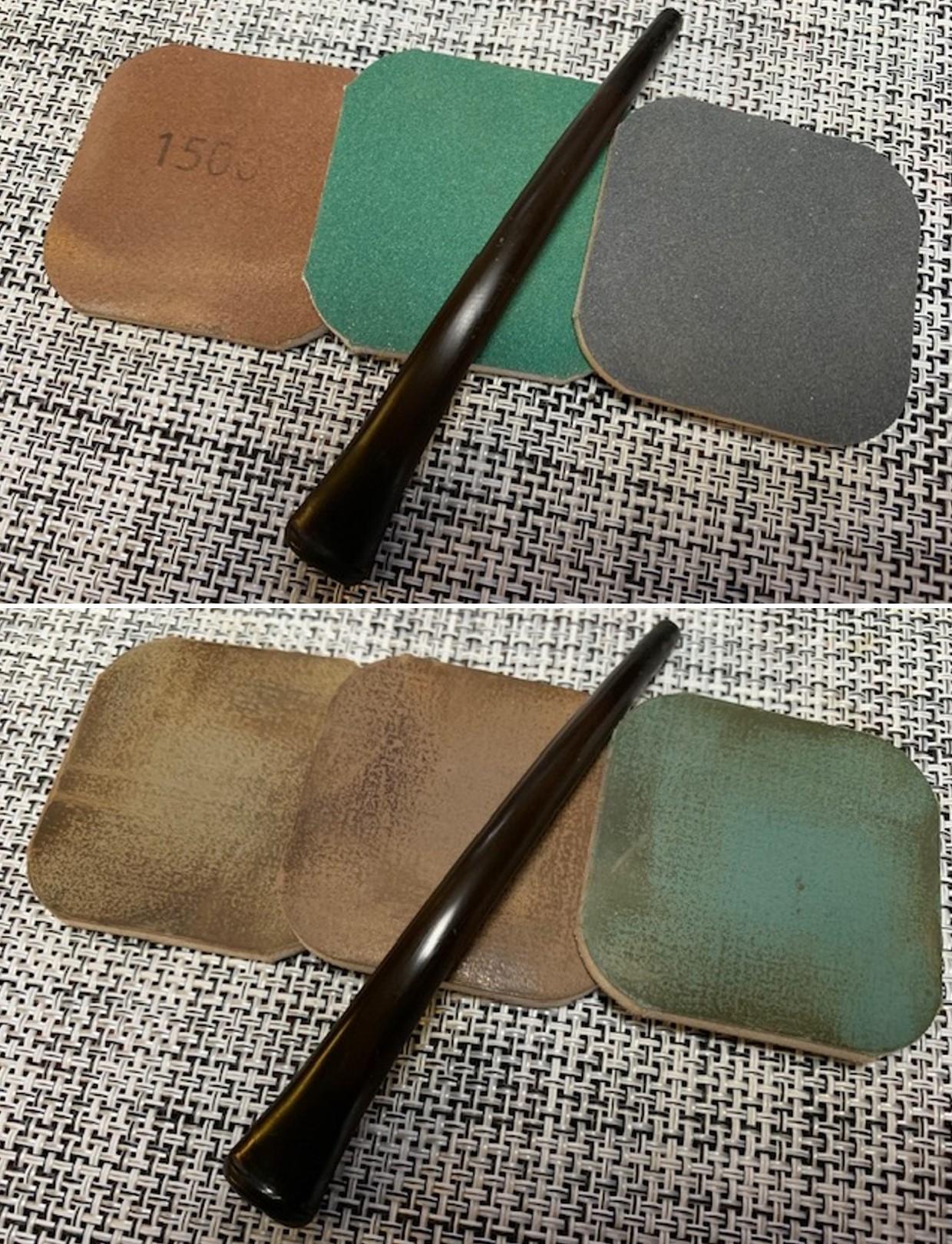
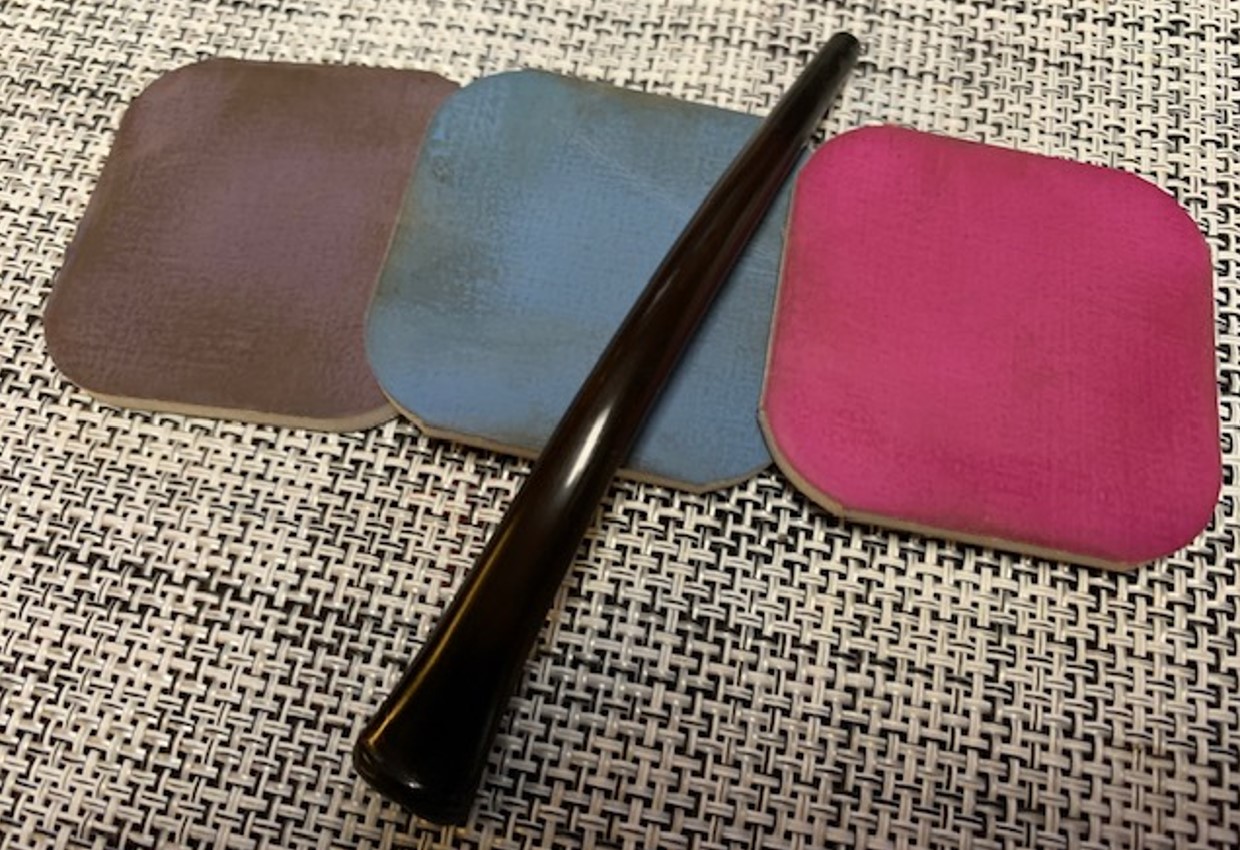
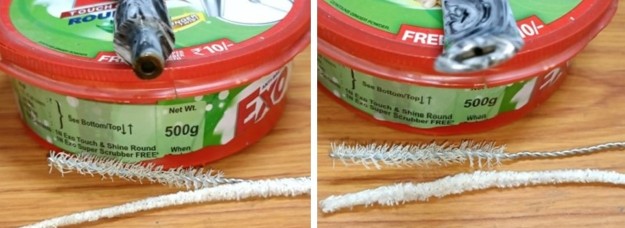
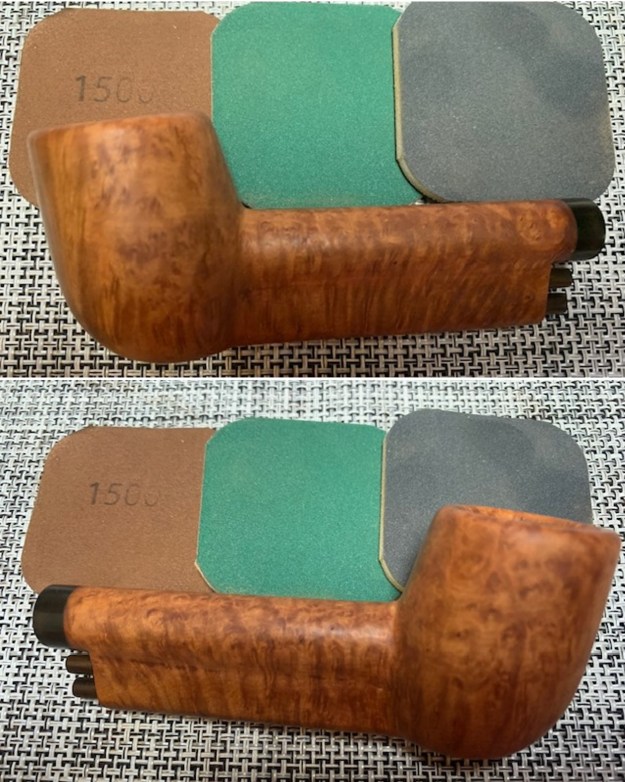
I began the process of refurbishing this pipe by reaming the chamber with a PipNet reamer tool, using the second and third head. Using my fabricated knife; I further took the cake down to the bare briar. With a 150 grit sand paper, the walls of the chamber were rid of all the remnants of the cake, revealing smooth chamber walls. I further wiped the chamber with a cotton swab wetted with isopropyl alcohol to completely remove the residual carbon dust. The inner rim edge appears darkened all around but more so on the left side of the chamber. There are a few minor heat lines crisscrossing the chamber walls. It is my experience that such fissures are usually addressed after a salt and alcohol treatment and subsequent sanding of the chamber walls since these are indicative of very thin layer of hard cake which is moistened during alcohol treatment and easily removed thereafter by sanding. I scraped the shank internals with a fabricated tool to remove all the crud that had accumulated along the shank walls and further cleaned it with bristled and regular pipe cleaners dipped in isopropyl alcohol.I continued the cleaning of the chamber and shank internals with a salt and alcohol bath. I use cotton balls which is an at par substitute as I have realized over the years. I draw out a wick from the cotton and along with a folded regular pipe cleaner; insert it in to the mortise and through the draught hole in to the chamber. Thereafter, I packed the chamber with cotton balls to about quarter of an inch below the rim inner edge and soaked the cotton balls with isopropyl alcohol up to the brim. About half an hour later, the level of alcohol had gone down, having being absorbed by the cotton. I topped it up once again and set it aside overnight. By next afternoon, the cotton and alcohol had drawn out all the remaining oils and tars from the chamber and mortise, fulfilling its intended task. I removed the cotton balls and ran pipe cleaners through the mortise to clean out all the loosened tars and gunk. Using my fabricated tool, I scraped out the entire loosed gunk from the sump and further cleaned it with alcohol and q-tips. The chamber now smells clean and fresh. I set the stummel to dry out naturally.While the chamber was soaking in the salt and alcohol bath, I worked the stem, starting with cleaning the internals of the stem using thin shank brush and anti oil dish washing soap. I scrubbed the tenon end and the horizontal slot with soap and Scotch Brite pad till clean. Once the stem internals were clean, I ran a couple of pipe cleaners through the stem airway to get rid of any remaining soap as well as to dry it out. Next, I move to clean the exterior of the stummel. I generously applied Murphy’s oil soap with a hard bristled tooth brush and scrubbed the stummel and rim top with the soap. I washed the stummel under running warm water with anti oil dish washing detergent till the stummel surface was clean and dried it using paper towels and soft cotton cloth. I deliberately cleaned the rusticated rim top with a soft brass wired brush, Scotch Brite and soap. The stummel surface has cleaned up nicely with the robust rusticated patterns looking splendid. I simultaneously cleaned the shank internals with the detergent and hard bristled shank brush. I dried the mortise using paper towels and set the stummel aside to dry out naturally.While the stummel was set aside to dry out, I worked on the stem. Using a flat head needle file, I lightly sand the inner edge of the buttons on either surface to a crisp sharpness. I further sand the entire bite zone with a folded piece of 220 grit sandpaper. This helps to even out the minor tooth chatter and also reduce the filing marks left behind by the needle file. The sanding marks will be further addressed during the sanding and polishing process.Next, I dry sanded the entire stem with 600 and 800 grit sand papers followed by wet sanding using 1000, 1500 and 2000 grit sand papers. This progressive use of higher grit sandpapers helps to, firstly,  reduce the sanding marks left behind by the more abrasive ones, secondly, completely eliminate the dullness from the years of use and imparting a clean shine to the stem surface. I went through with the micromesh polishing cycle by dry sanding the surface with 3200 to 12000 grit micromesh pads. I applied a little EVO and set the stem aside for a few minutes. This stem, as the rest of the pipe, is a real beauty. I completed the polishing regimen by polishing the surface with a cotton wheel mounted on to my hand held rotary tool and Blue diamond followed by food grade carnauba wax polish.By the time I was done working on the stem refurbishment, the stummel had completely dried out. I decided to address the darkened inner rim edge by creating a slight bevel using a folded piece of 220 grit sandpaper pinched between fingers and running it along the rim edge. The rim edge looks much better at this stage.Next, I rubbed a small quantity of “Before and After Restoration Balm” into the briar with my finger tips and let it rest for a few minutes. The balm almost immediately works it’s magic and the briar now had a nice vibrant appearance with the beautiful rustication patterns on full display. I have been using this balm ever since I embarked on this journey and it is this part of restoration that I always look forward to. I further buffed it with a horse hair shoe brush. This pipe really oozes of a very high quality. I completed this project by hand polishing the stummel with Halcyon II wax. I rubbed this polish deep into the rustications and after a couple of minutes, vigorously hand buffed the stummel with a microfiber cloth to a deep shine. This is a gorgeous looking pipe and will be an integral part of pipe history in my collection. P.S.– Delving deep in to history of this pipe took me through the labyrinth of interconnectivity of Italian pipe carvers and marquees that have dominated our pipe world and given pipe smokers the world over some of their favourite smokers.
I wish to thank each one for sparing their valuable time to read through this write up and praying for the health and safety of you and your loved ones.
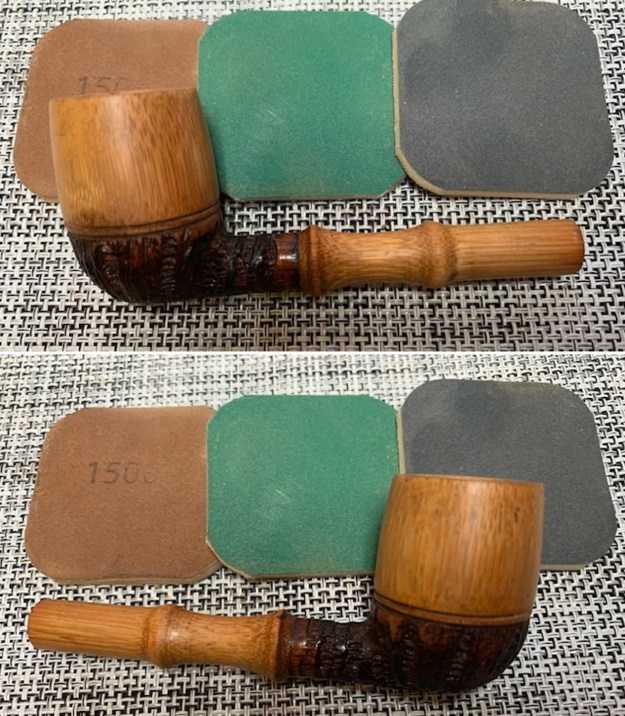
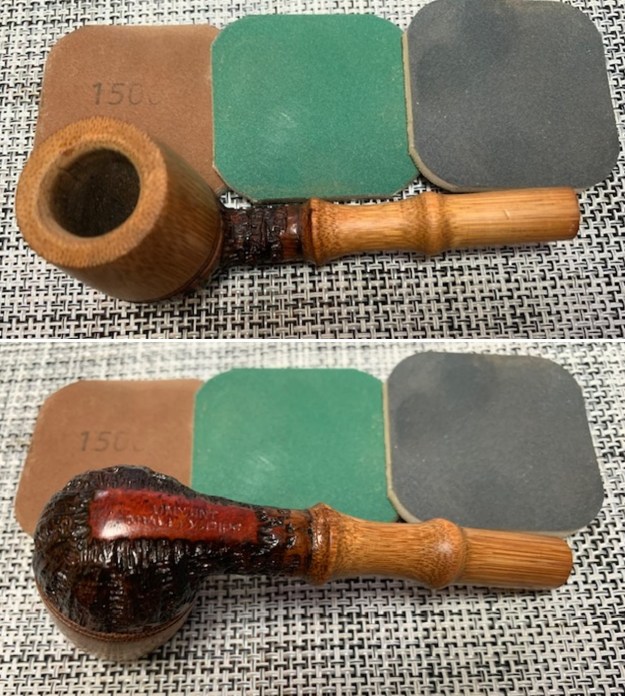
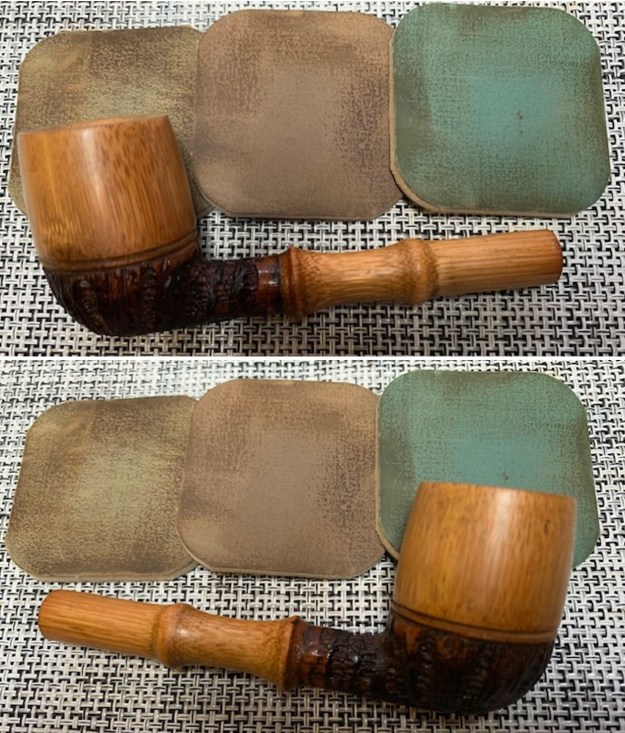
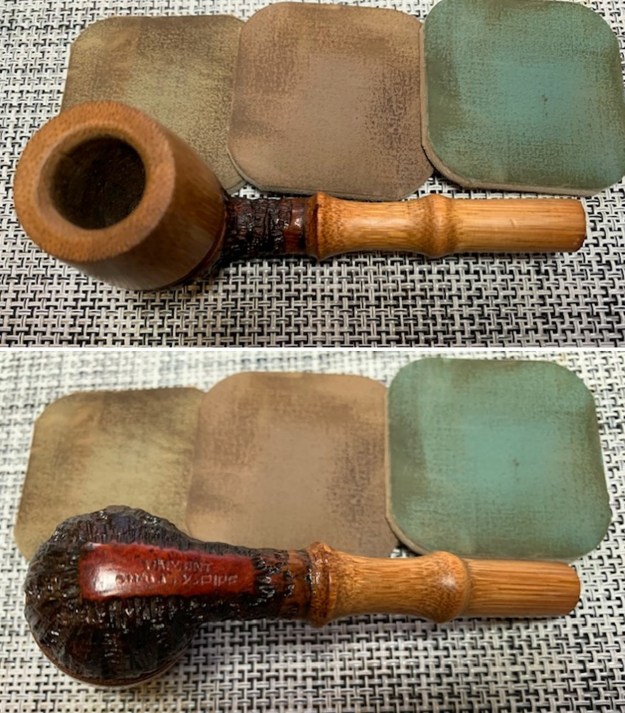
Restoring a Carved Bamboo Lovat stamped UNX UNT Quality Pipe


Blog by Steve Laug

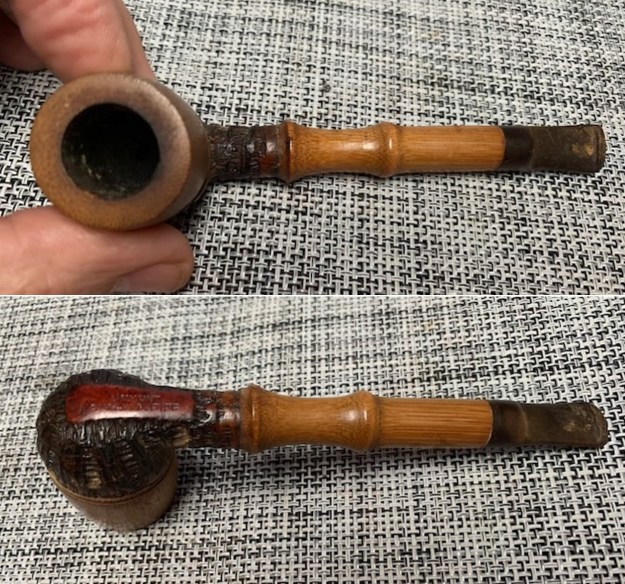
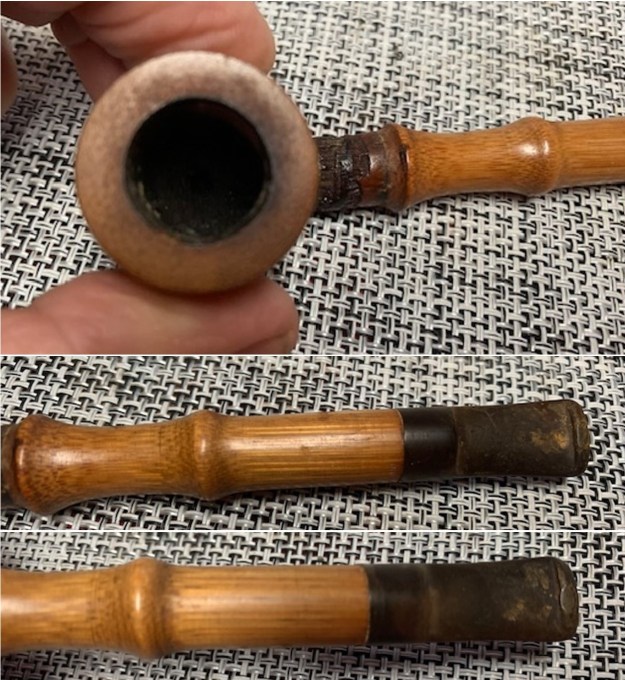
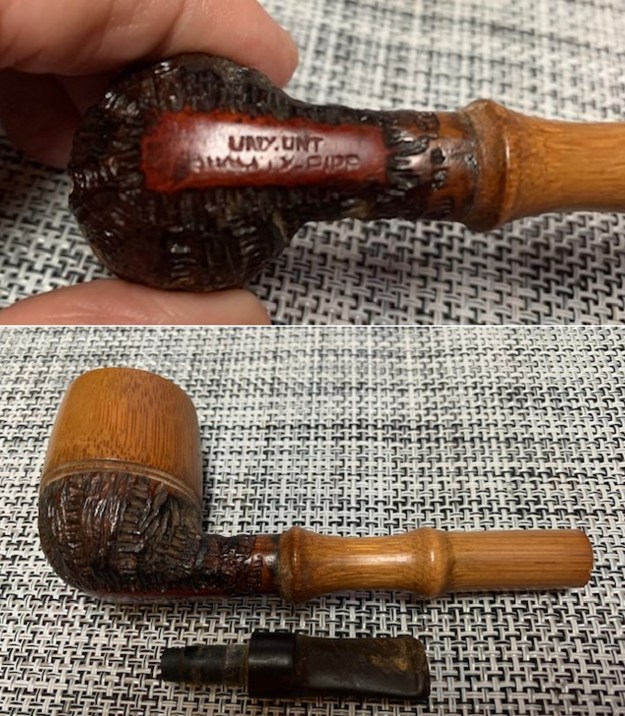
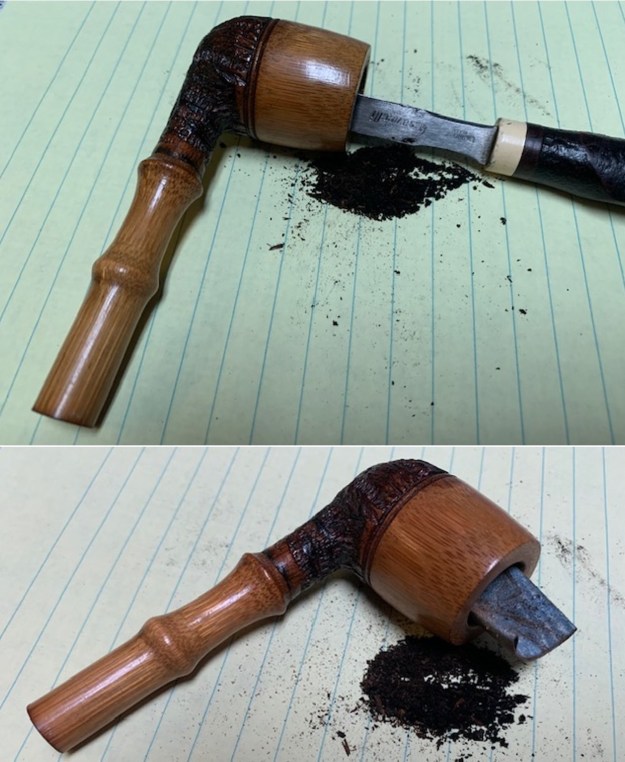
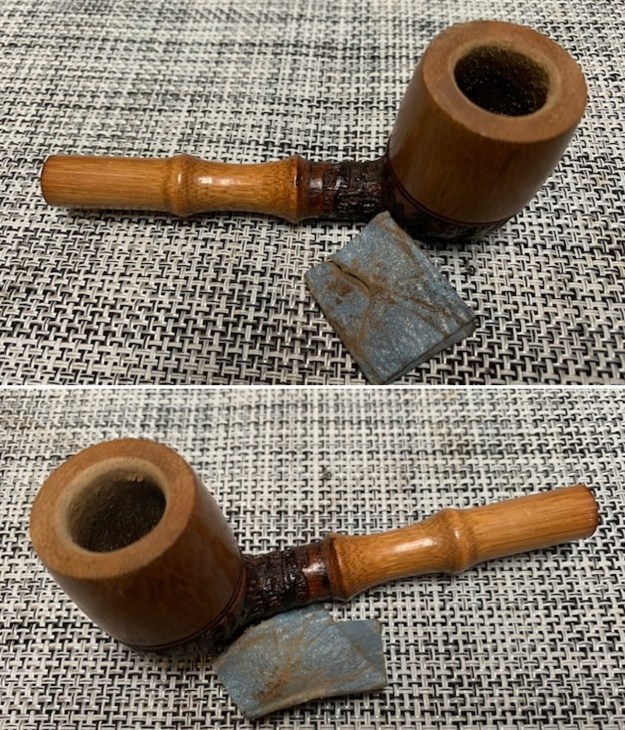
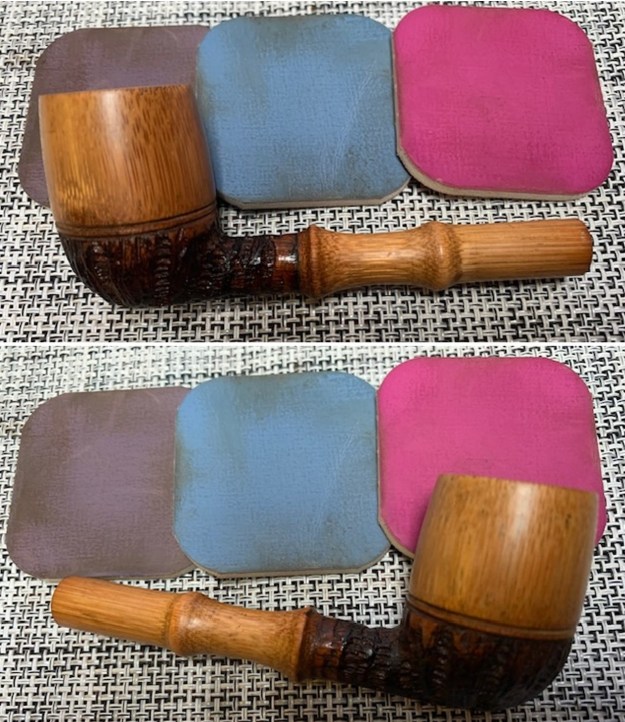
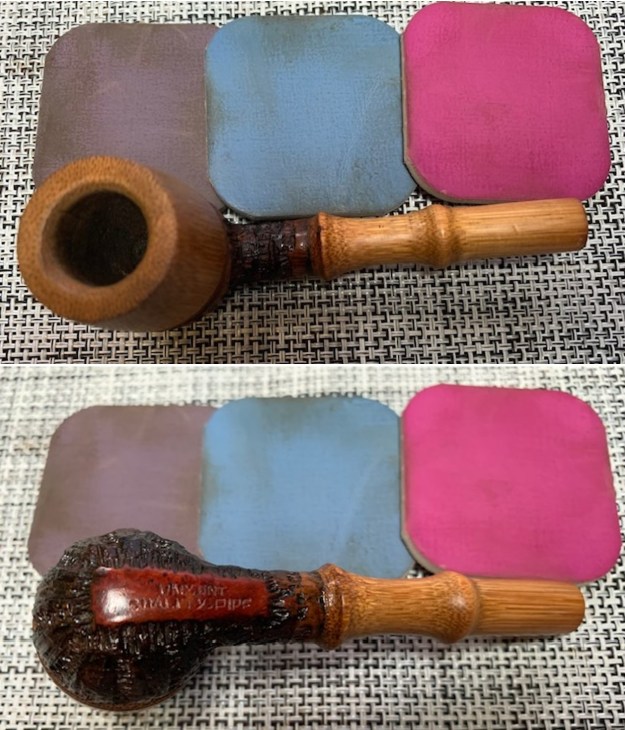
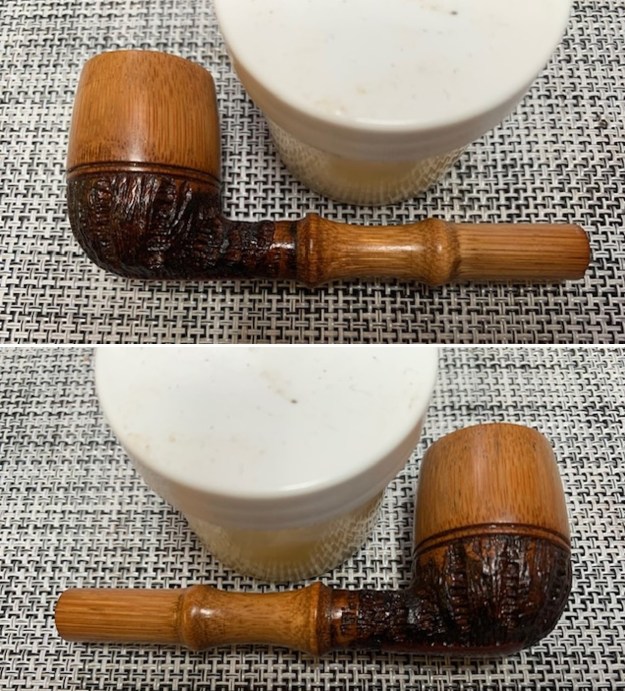
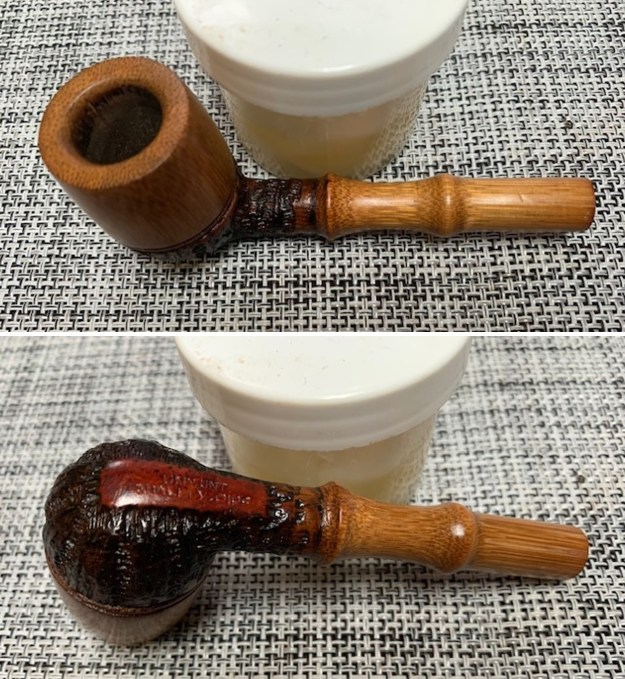
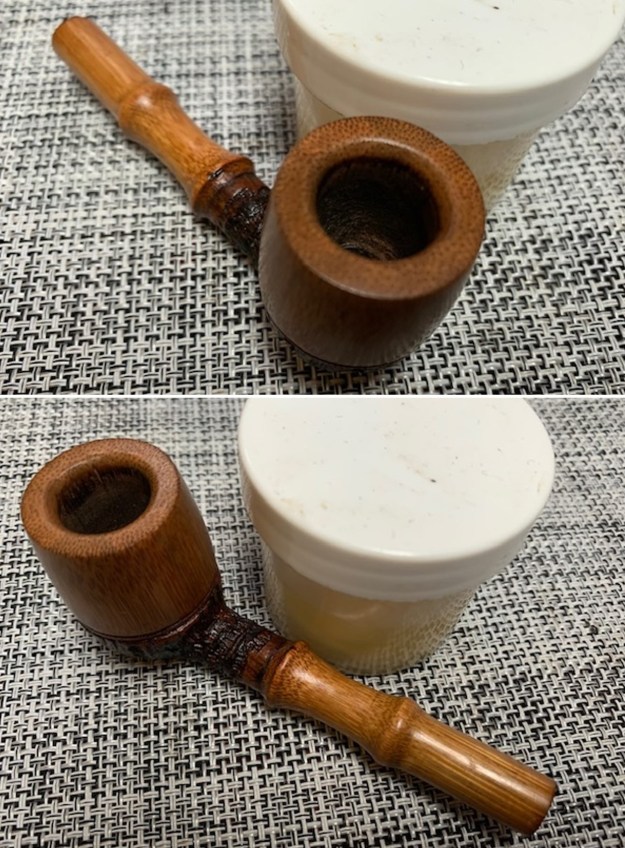
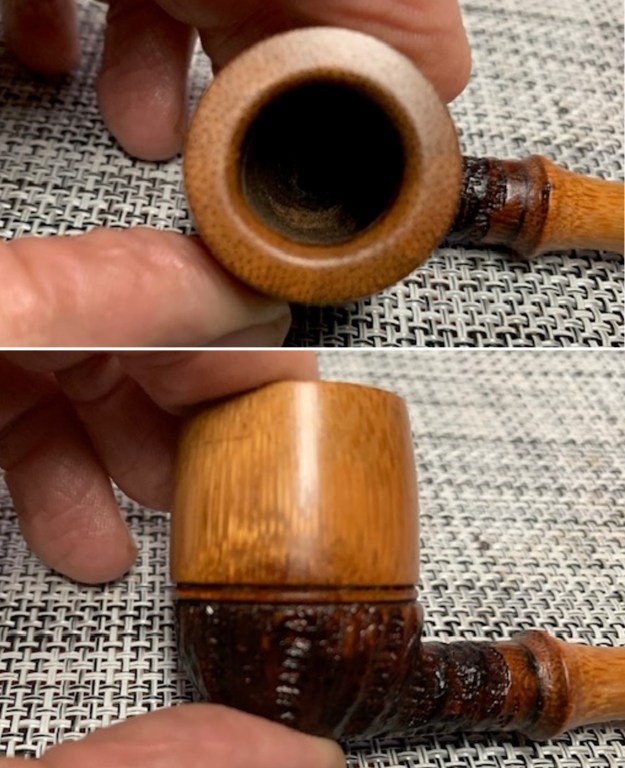
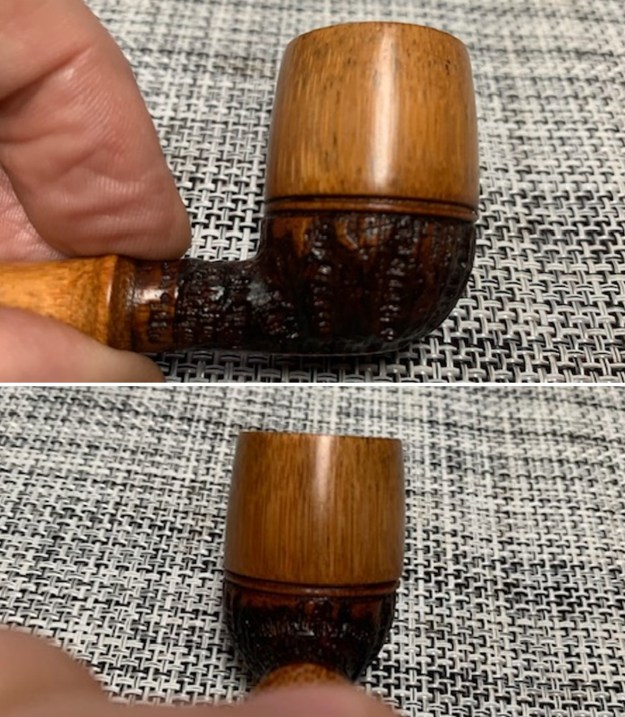
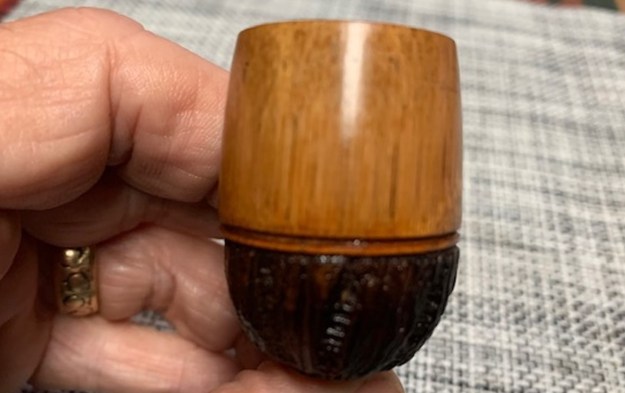
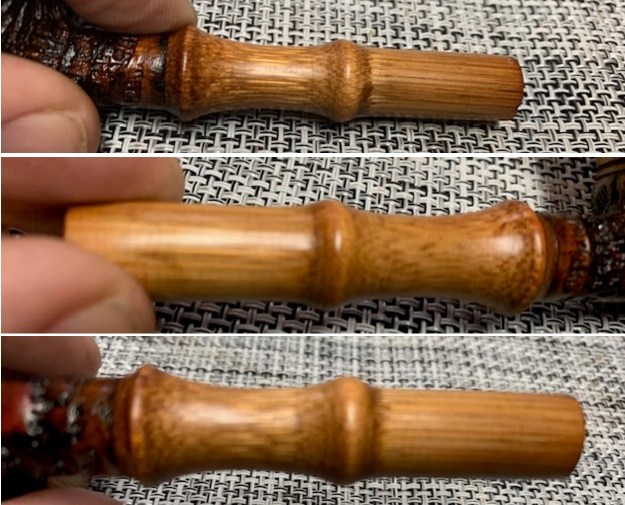
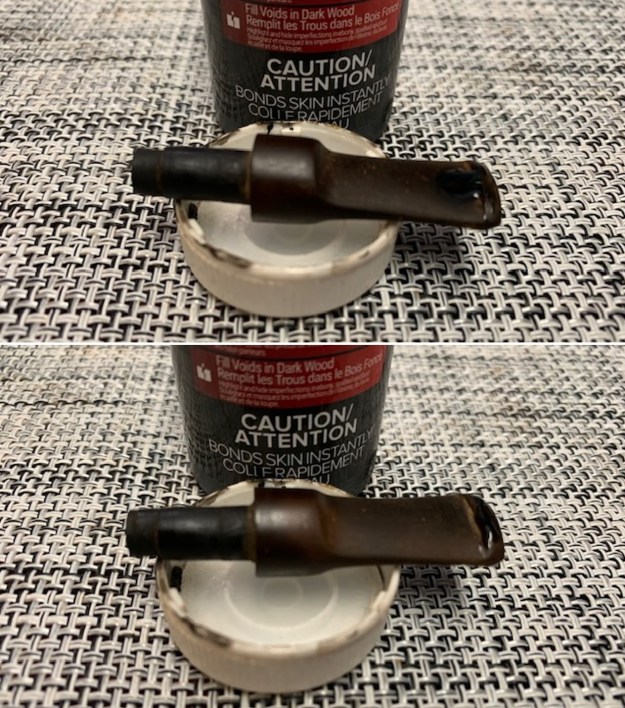
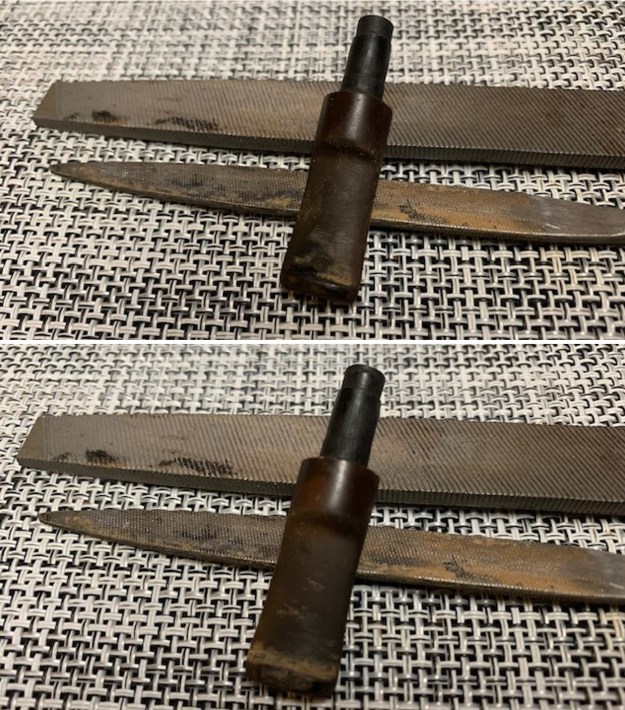
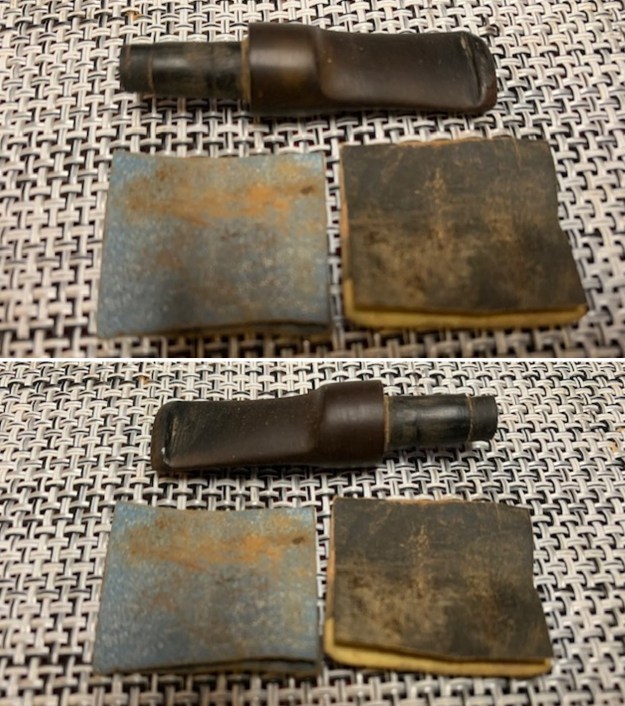
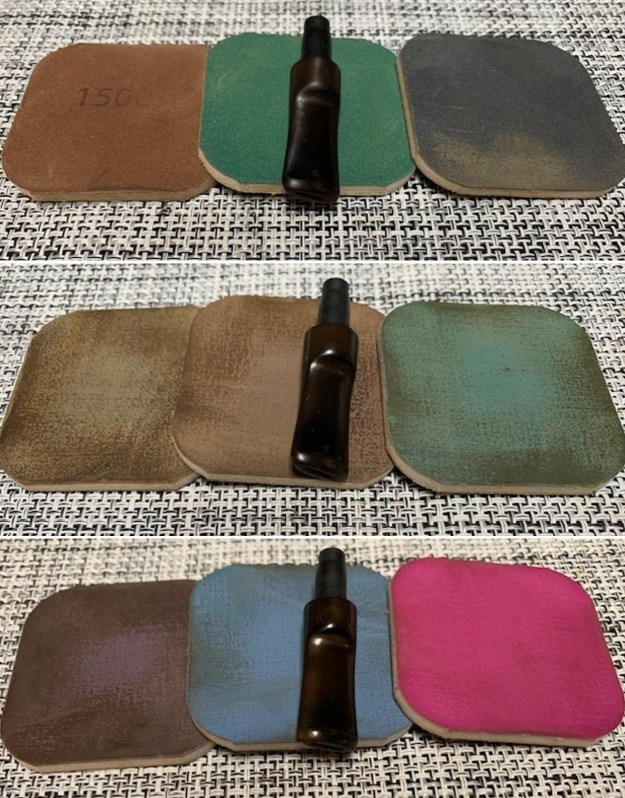
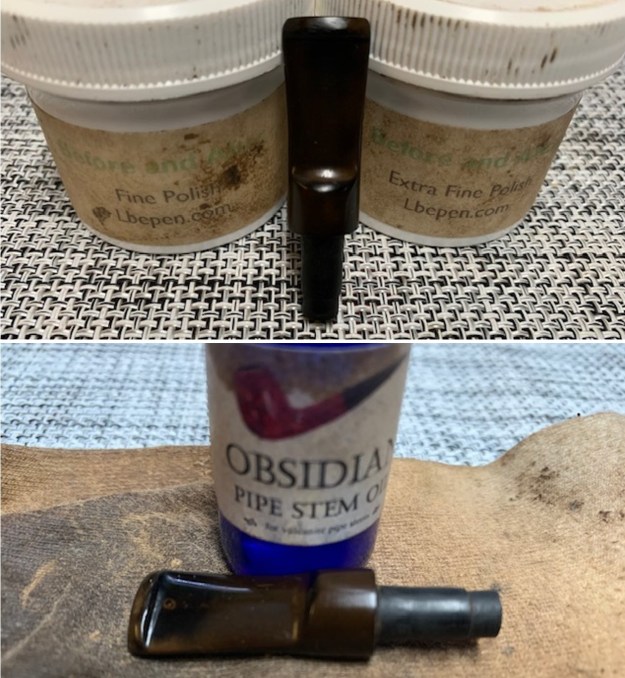
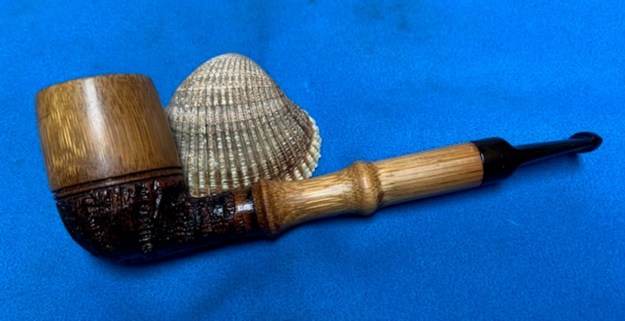
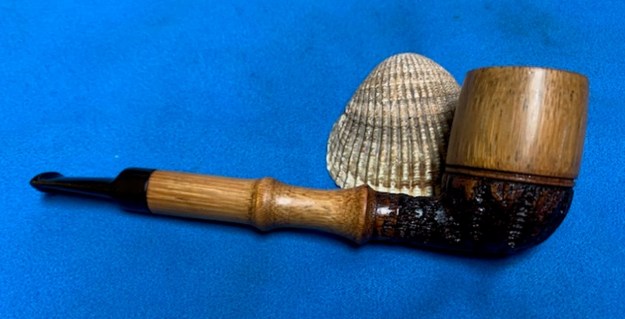
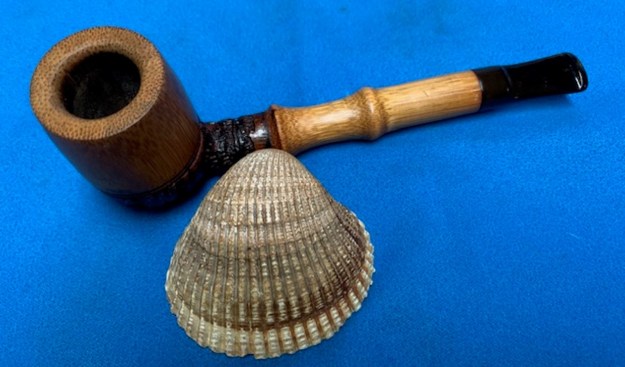
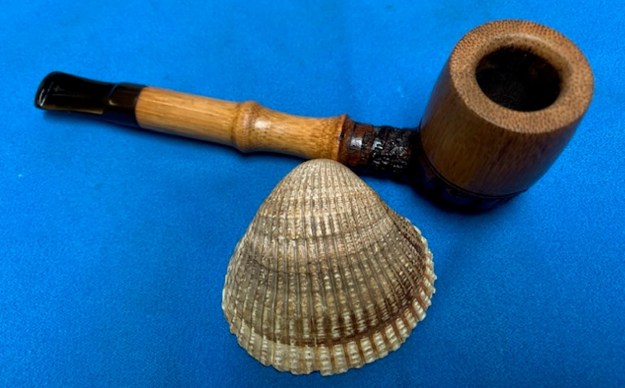
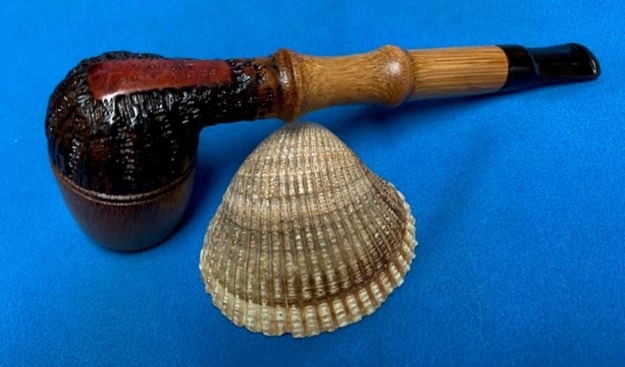
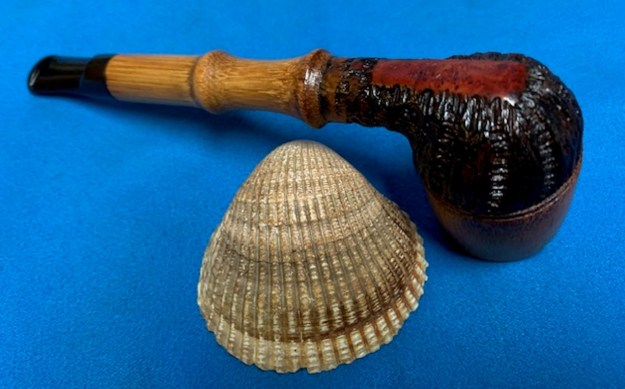
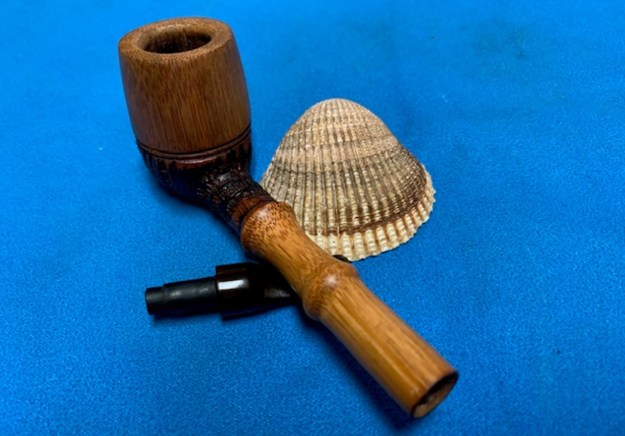
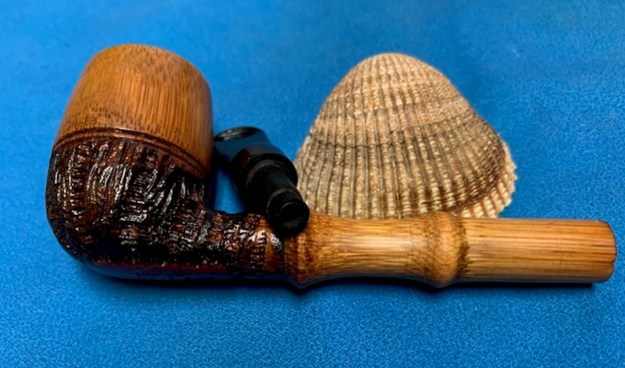
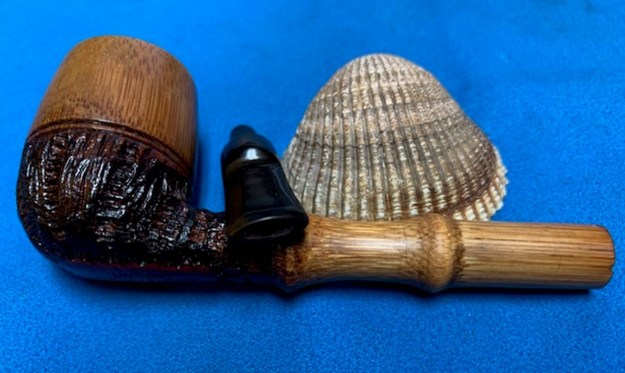
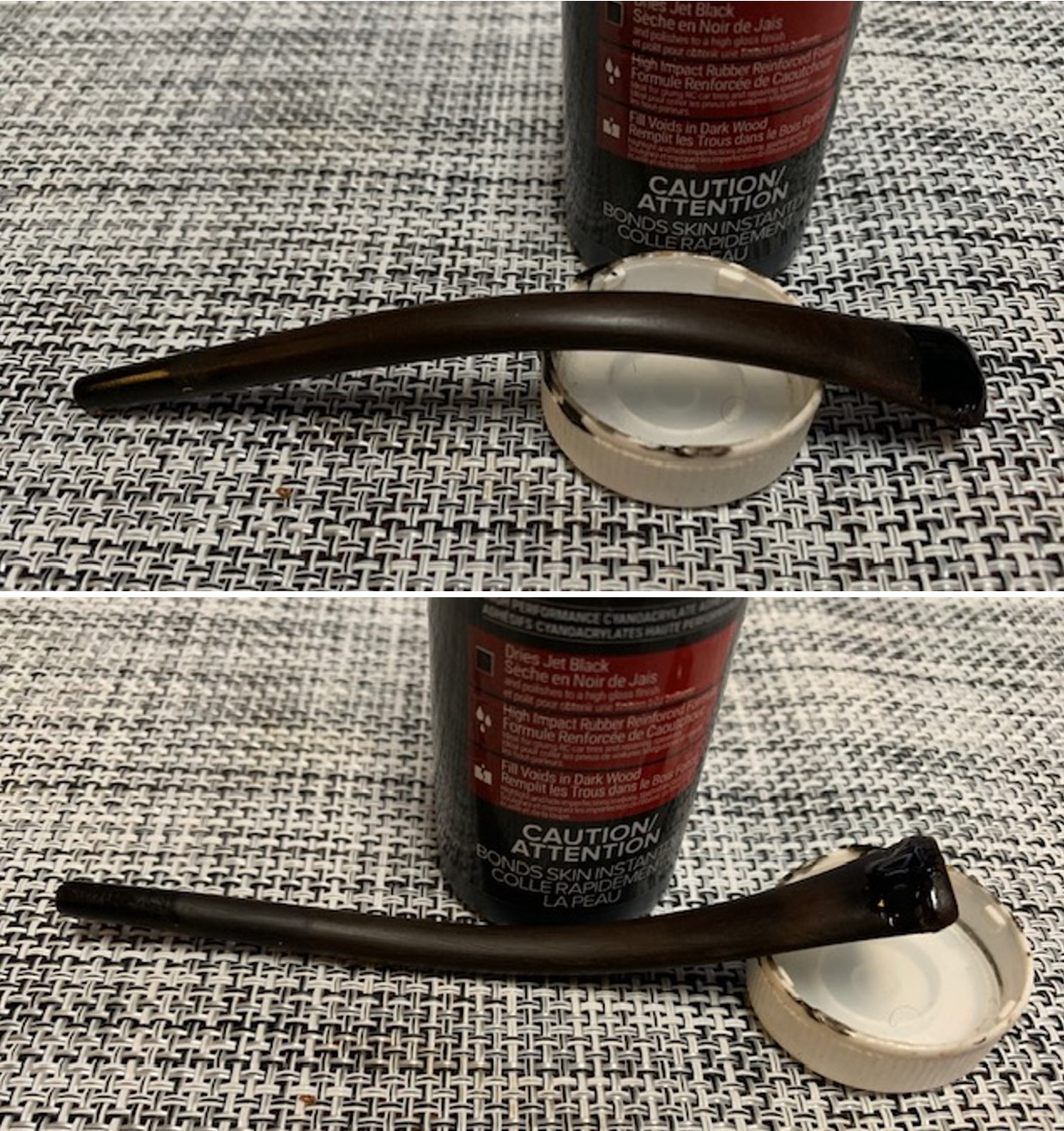
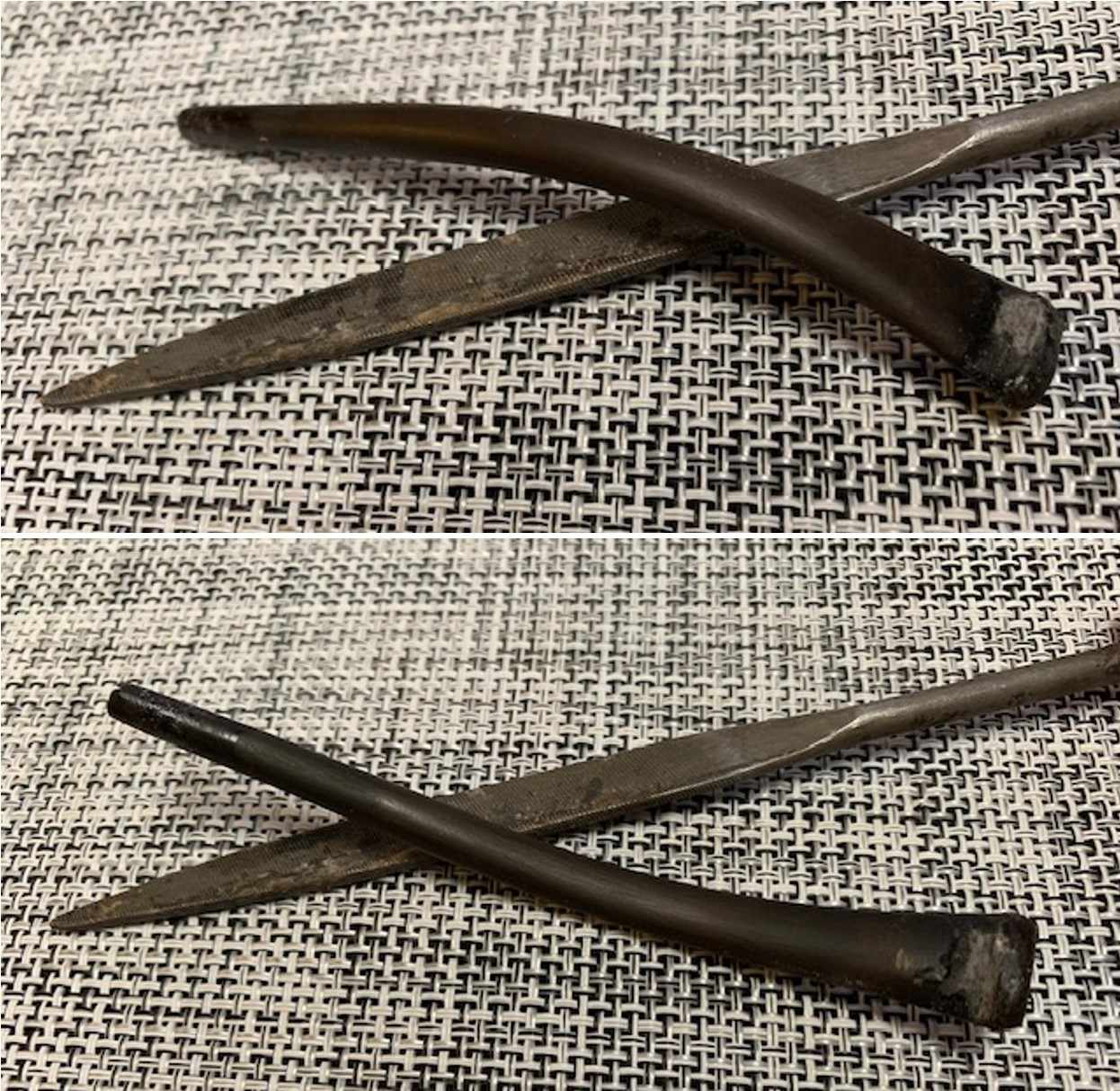
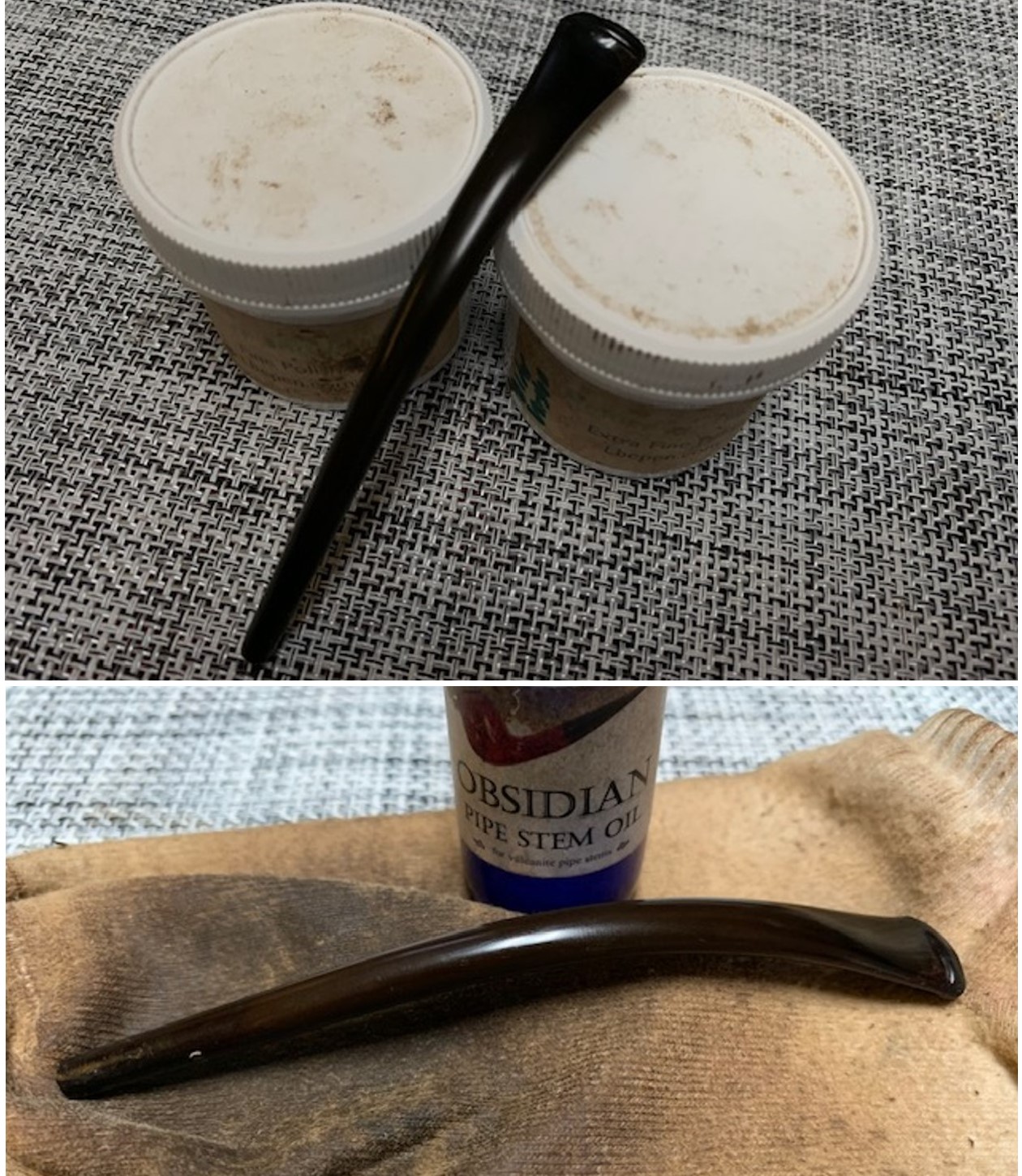
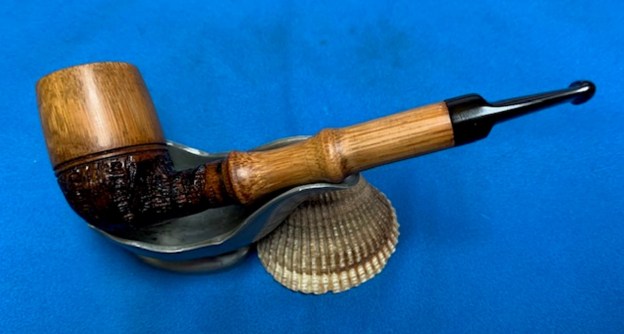
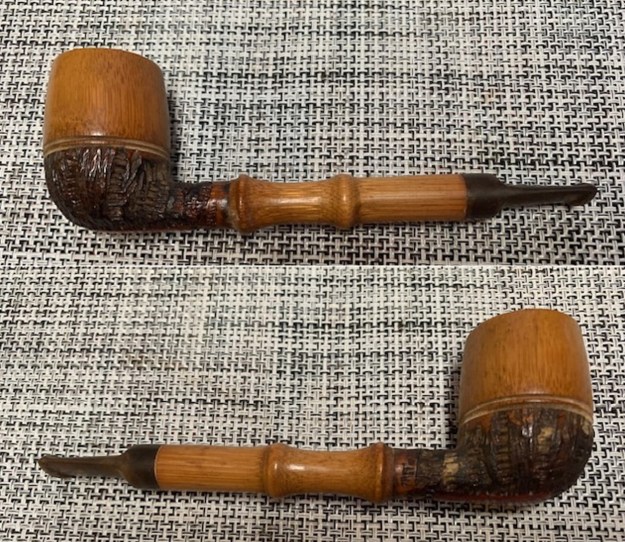
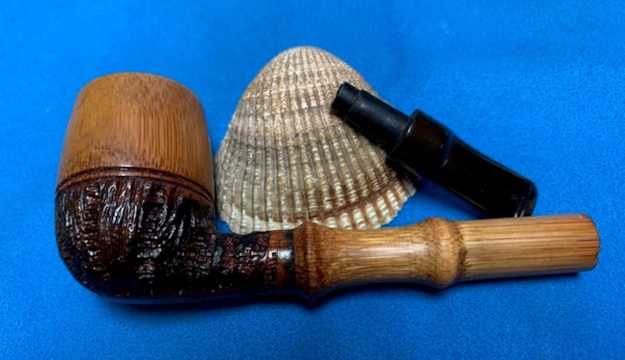
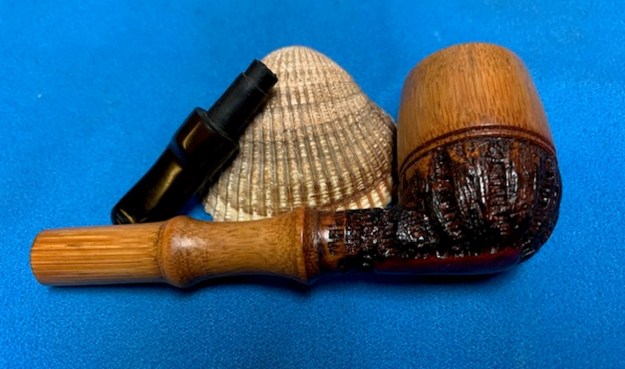
The next pipe on my work table is an interesting Bamboo style Lovat. It is a single piece rather than one joined with a shank extension. The stamping on the heel of the bowl reads UNX UNT over Quality Pipe. The pipe has some unique and interesting grain around the bowl and shank that makes we wonder what the wood is. Is it possible that it is Bamboo? The bottom of the bowl and a portion of the two knuckle bamboo style shank are rusticated with a great pattern and are stained with a dark brown stain. The stem is fit in the shank end snugly and there is no gap. The airway in the shank is the same diameter from the shank end to its entry into the bowl. The draught on the pipe is open and unhindered. The design is definitely made to create a very cool smoke. The bowl had a moderate cake and there was lava and darkening on the rim top and inner edge toward the back of the bowl.  The airway and mortise are full of tars and oils both in the shank and stem. It was dirty. The stem is oxidized, calcified and has some deep tooth marks on the top and underside of the stem ahead of the button. I am including photos of the pipe to show what it looked like when I brought it to the work table. I took photos of the rim top and stem. You can see the cake in the bowl and the darkening on the rim top and on the back inner edge of the bowl. The stem had some tooth marks and chatter on both sides ahead of the button. It was oxidized and there was some calcification on the surface. I took a photo of the stamping on the heel of the bowl. It is clear and readable as noted above. I also removed the stem from the shank and took a photo of the part to give a sense of the flow of the pipe. It is truly a unique pipe and the grain shows well in the photo.The bowl is quite small so I scraped it out with a Savinelli Fitsall Pipe Knife to remove the cake. I sanded the bowl walls with 220 grit sandpaper wrapped around my finger. I took the cake back to smooth bowl walls. I cleaned out the mortise and the airway in the shank and the stem with alcohol, pipe cleaners and cotton swabs. It was quite dirty but once cleaned smelled better.I worked on the darkening on the back inner edge of the rim top and on the top itself. I was able to sand it out with 220 grit sandpaper and give it a slight inward bevel. I scrubbed the exterior of the bowl and shank with undiluted Murphy’s Oil Soap and a tooth brush. I rinsed it off with warm running water to remove the grime and debris in the finish of the rustication and on the smooth portions. I worked over the sanded rim top at the same time. I polished the smooth portions of the bowl with micromesh sanding pads – dry sanding with 1500-12000 grit sanding pads. I wiped the bowl down after each sanding pad with a damp cloth to remove the sanding debris. The bowl began to take on a rich glow. I rubbed down the bowl and shank with Before & After Restoration Balm. It is a paste/balm that is rubbed into the surface of the bowl and shank. The product works to deep clean the finish, enliven and protect the wood. I worked it into the surface with my finger tips. I let it sit for 10 minutes then wiped it off with a soft cloth then buffed it with a cotton cloth. The bowl really began to have a deep shine and the grain shines through. The photos I took of the bowl at this point mark the progress in the restoration. It is a gorgeous pipe. I took photos of the grain on the rim top and around the bowl and shank to get a clear picture of the wood that was used. The small straight birdseye style pattern on the rim top reminds me of the pattern in Bamboo. The flow of the grain around the bowl sides and the shank sides looks also a lot like Bamboo. The shank end also shows the same birdseye pattern as the rim top. I set the bowl aside at this point and turned my attention to the stem. I cleaned up the deep tooth marks and filled them in with black CA glue. I used a small file to flatten the repairs to the stem. I sanded repairs on the button surface and on both sides of the stem ahead of the button with 220 grit sandpaper. I also sanded the rest of the stem to remove the oxidation that was present. I started polishing the stem with 600 grit wet dry sandpaper. I polished the stem with micromesh sanding pads – 1500-12000 grit sanding pads and water to wet sand the stem. I wiped it down after each sanding pad with Obsidian Oil on a cotton rag after each sanding pads. I know that many say Obsidian Oil does nothing for acrylic stems, but I find it does two things – first it gives some protection to the stem from buildup and second it give the sanding pads bite in the polishing process. I have found that Before & After Fine and Extra Fine stem polish works well to remove the fine scratches in the vulcanite. I rub the Fine Polish on the stem and wipe it off with a paper towel and then repeat the process with the Extra Fine polish. I finish the polishing of the stem down with a final coat of Obsidian Oil and set the stem aside to let the oil absorb. This process gives the stem a shine and also a bit of protection. The final steps in my process involve using the buffer. I buffed the bowl and stem with Blue Diamond to polish out the light scratches in the wood and the remaining surface oxidation in the stem. I gave the bowl and the stem multiple coats of carnauba wax. I have found that I can get a deeper shine if I follow up the wax buff with a buff with a clean buffing pad. It works to raise the shine and then I hand buff with a microfiber cloth to deepen the shine. It is always fun for me to see what the polished bowl looks like with the polished stem. It turned out to be a nice pipe. The interesting tight grain around the bowl sides and shank looks great. The vulcanite saddle stem polished very well and looks good with the bowl. The UNX UNT Quality Pipe Bamboo Lovat feels great in my hand. It is a well-balanced pipe. Have a look at it with the photos below. The dimensions are Length: 5 ½ inches, Height: 1 ¾ inches, Outside diameter of the bowl: 1 inch, Chamber diameter: 5/8 of an inch. The weight of the pipe is .74 ounces/21 grams. It is a very unique pipe and no information can be found on the stamping. Once again can any of you help me out with some identification advice on this one? It would be much appreciated. Thank you.

As always, I encourage your questions and comments as you read the blog. Thanks to each of you who are reading this blog. Remember we are not pipe owners; we are pipe men and women who hold our pipes in trust until they pass on into the trust of those who follow us.

Refurbishing an Inherited c.1908 BBB Own Make Lovat


Blog by Paresh Deshpande

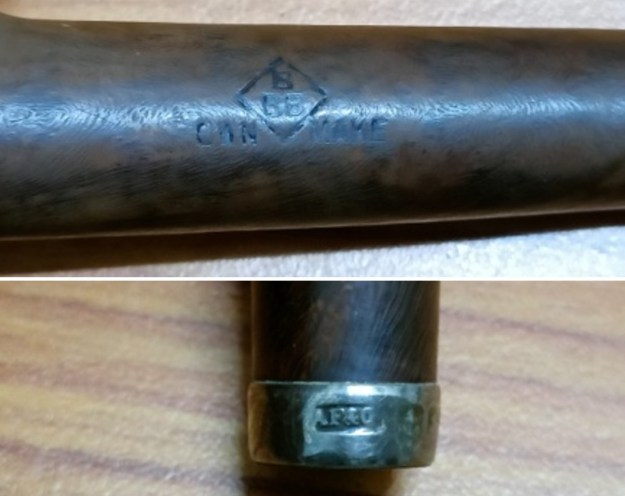
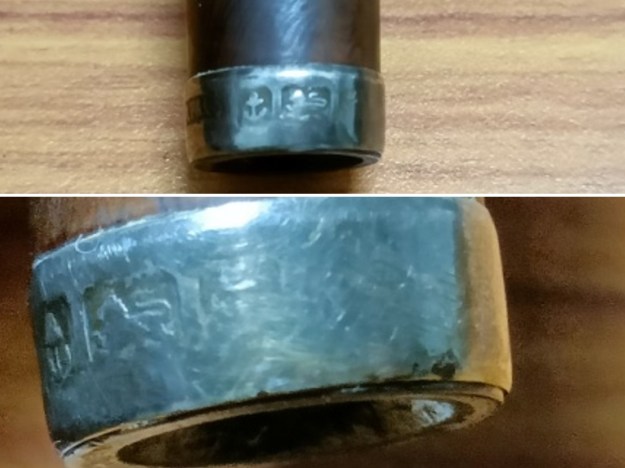
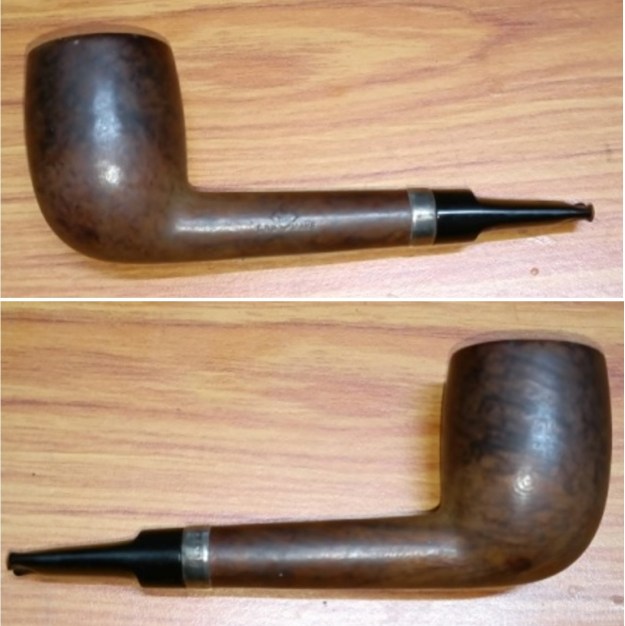
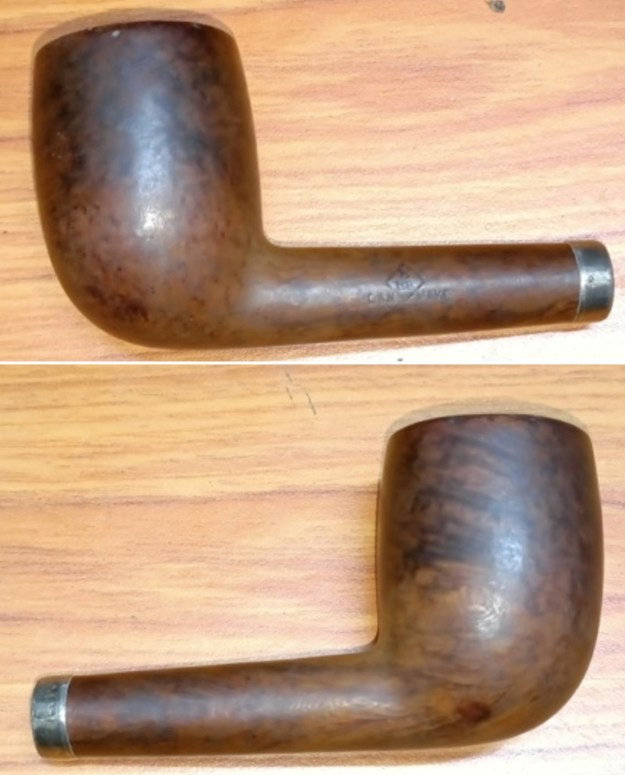
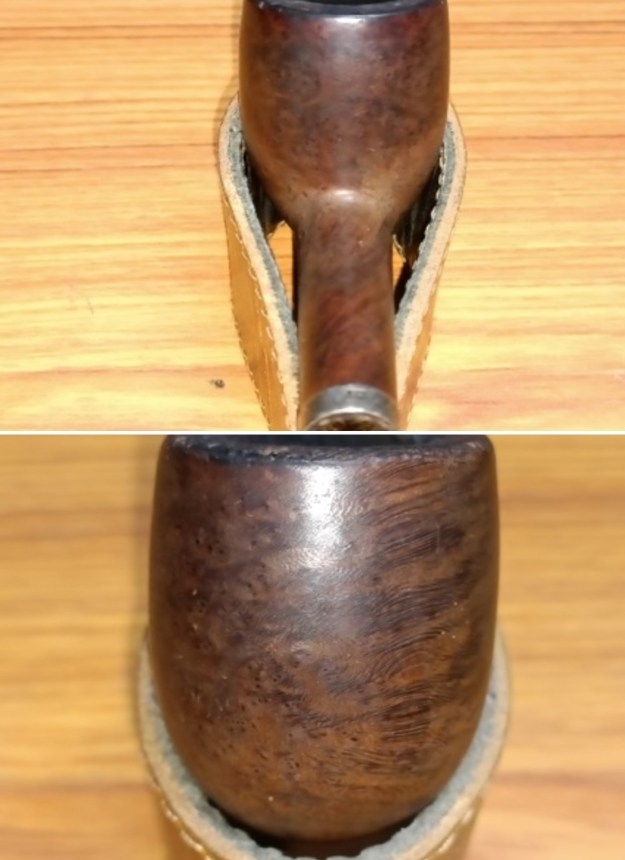
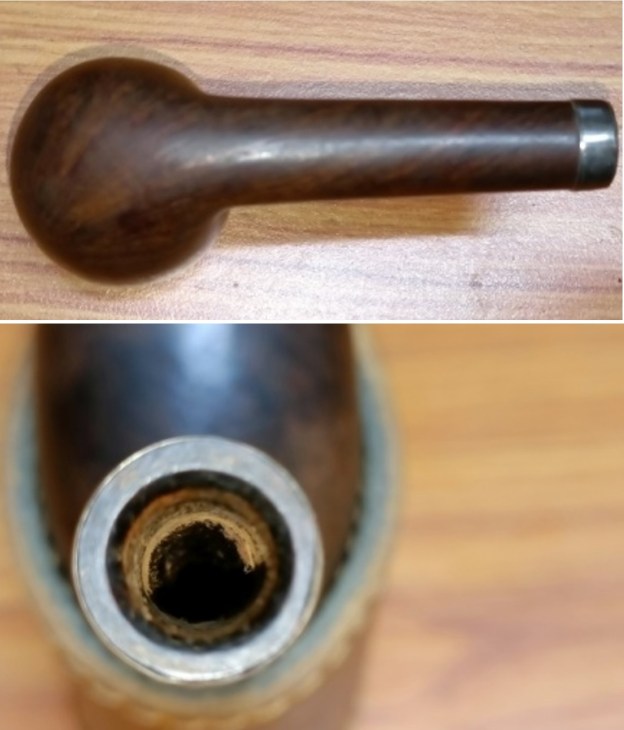
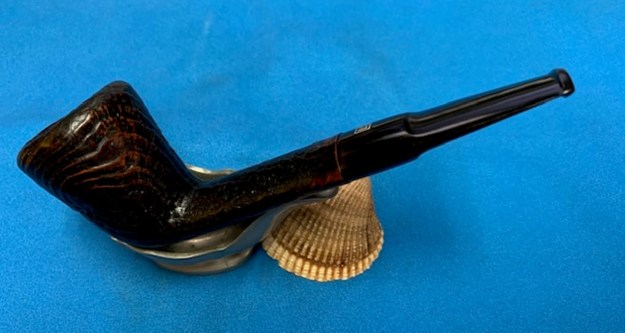
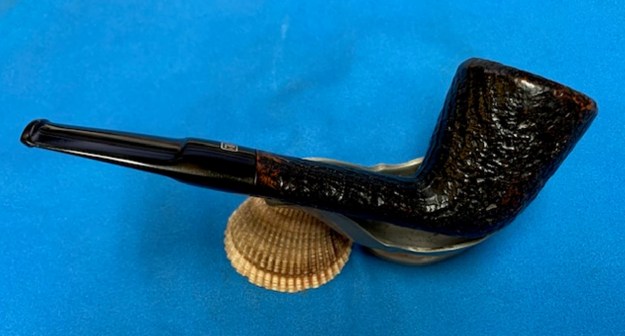
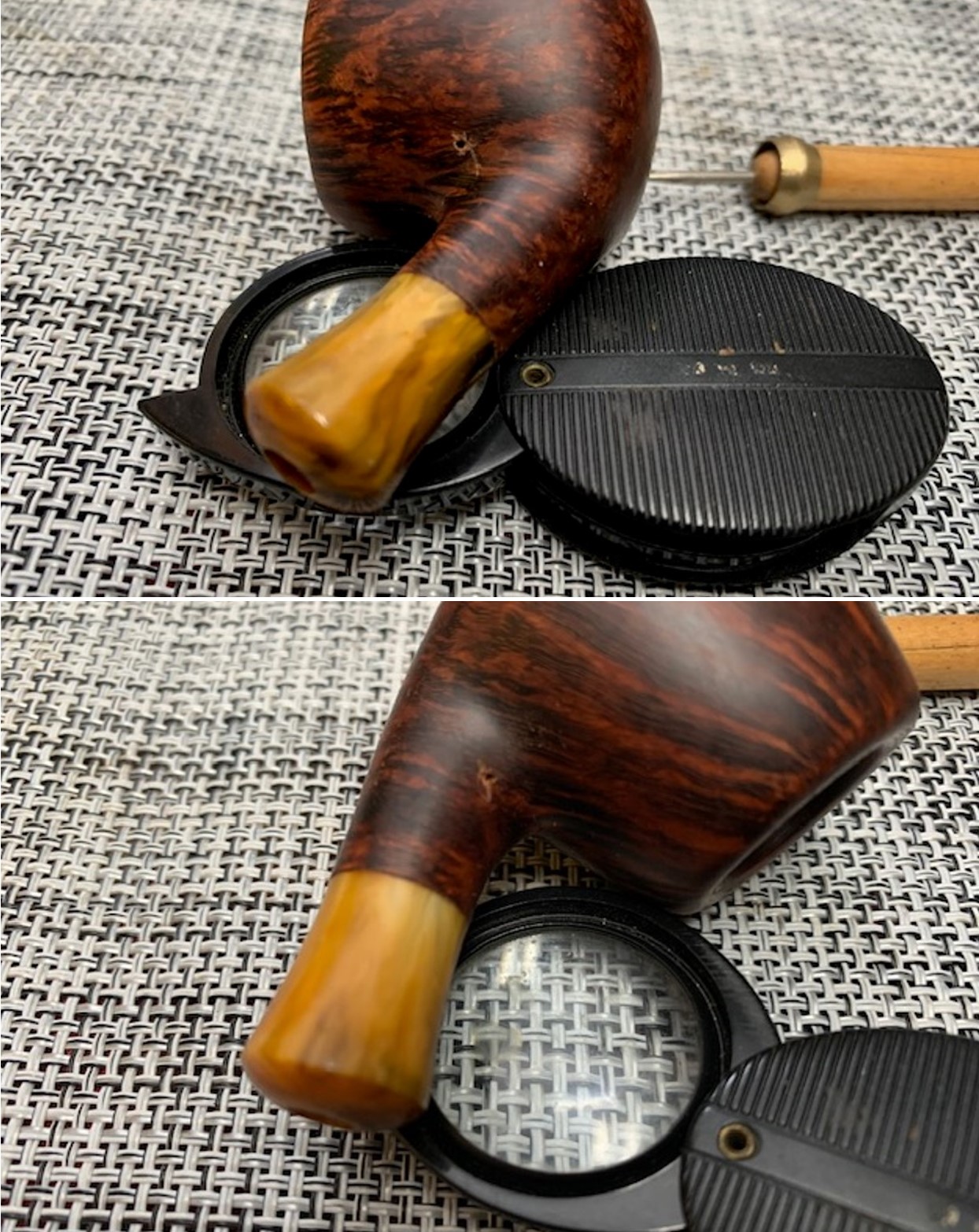
I absolutely love my classic BBB pipes that I have inherited and one such pipe is now on my worktable. This classic Lovat has some beautiful cross grains on the front, back and shank surface with beautiful bird’s eye grains on the sides that can be made out under the grime and dust covering the stummel surface. It is stamped on the left side of the shank as “BBB” in a rhombus with “OWN” and “MAKE” on either side of the rhombus. The Sterling silver ferrule at the shank end is stamped as “AF & Co.” in a rectangle followed by three cartouche bearing hallmarks. Starting from the left, the first cartouche bears the stamp of an “Anchor” for the Birmingham Assay Office followed by the “Lion Passant” certifying the silver quality and the last cartouche bears the Date letter “i” which is quite worn out and the outline of the letter can be made out only under close scrutiny under a magnifying glass. The vulcanite saddle stem is devoid of any stem logo. The stampings are clear and easily discernible except the date code letter. BBB – Pipedia has detailed information on the origins of the brand, it’s transition to the Cadogan group making this article a good read for those interested. I would like to highlight that, quote “At the beginning, BBB produces two qualities. One, BBB Own Make, became finally BBB Best Make, other pipes being simply estampillées BBB. There are reasons to believe that Own Make in fact were produced in London (Reject pipes cuts year R stamped one them.), whereas the simple BBB were imported, and this, to the paddle of the 20th century. However, if all that is not very clear, it is probable that the lines low-of-range were an import of Saint-Claude” un-quote.
Now coming on to the most interesting and satisfying part of the research on this piece of briar and that is establishing the probable date of manufacture of this pipe. I prefer to follow English silver marks: the guide to hallmarks of London sterling silver (silvercollection.it)  while establishing the dates on the basis of the date letter in the hallmarks. The Anchor points to the Birmingham Assaying Office. Thereafter, I followed the link to the dating guide of the Birmingham Assay Office to date this pipe. I have included a hallmark chart for dating the pipe and have put a red mark around the letter for 1908. It is the same style of “i” and the cartouche that holds the letter stamp.Thus it is with certainty I say that this BBB was made in 1908, give or take a year as the ferrules were assayed in bulk and used as required. The stamp of Own Make designates this as the finest quality pipe that was made in London for the local market in limited quantities.
Initial Visual Inspection
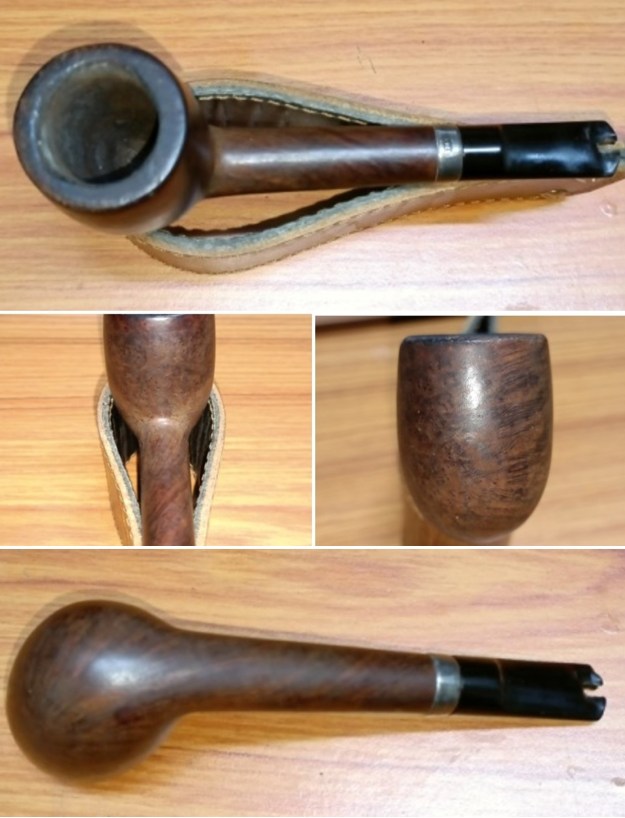
This 115 year old pipe flaunts it’s age with great dignity and élan. There is a decent layer of cake in the chamber that is even throughout. The rim top surface is covered in a layer of lava overflow. Underneath this crud and grime, the inner rim edge damage is apparent. The outer rim edge has a number of dents and dings. The stummel surface, though covered in dirt, dust and grime, has developed a nice patina. The stem has a chunk of vulcanite missing from the button and rounded orifice. The following pictures will give the readers a general idea as to the condition of the pipe as it sits on my worktable. Detailed Visual Inspection
As brought out earlier, the chamber has an even layer of hard and brittle cake. It appears that the cake was being regularly reamed to maintain the correct bare minimum thickness. The condition of the chamber walls will be ascertained after the cake has been taken down to bare briar. The rim top surface is uneven and covered in a layer of overflowing oils and tars. Also the condition of the rim inner edge is indicative of it being subjected to an amateurish use of a sharp knife to remove charred surface from the edge. The end result is an uneven and an out of round chamber. The outer rim edge too has a number of dents and dings, most likely caused due to striking against a hard surface to remove the dottle. I intend to address the issue of uneven rim top surface by topping the rim surface. It will also help to address the damage to the inner and outer rim edges to an extent and what damage remains; will be masked by creating a bevel.The stummel is covered in a layer of dirt and grime from years of uncared for storage. The sides and front of the bowl appears considerably darker due to accumulation of grime over the hand oils from over a period of 115 years. However, beautiful cross grains on the front, back and shank surface with beautiful bird’s eye grains on the sides can be made out under the grime and dust covering the stummel surface. There are no scratches/dings or dents over the stummel surface. The briar has developed a beautiful dark patina over the years and it will be my endeavor to maintain it through the restoration process. The mortise is clogged with old oils, tars and ash; however, the shank face is sans any crack or deformation. This also confirms that the band is not a repair band but is original to the pipe. There is no reason to sand the stummel surface to address any dents / dings as there are none. I shall dry sand the bowl with micromesh pads to bring out the grains and impart a shine to the surface while preserving the patina. The period correct vulcanite saddle stem with a round orifice has a quality feel to it. It is oxidized and is missing a chunk of vulcanite from the bite zone including the button and the round slot. The area around the damaged portion has deep tooth indentations. The step tenon is covered in accumulation of old oils, tars and grime. I will rebuild the damaged portion of the stem using activated charcoal and CA superglue and thereafter match the repaired portion with the stem profile and the rest of the stem surface. After the cleaning and polishing regimen, the repairs should blend in well with the stem surface. The Process
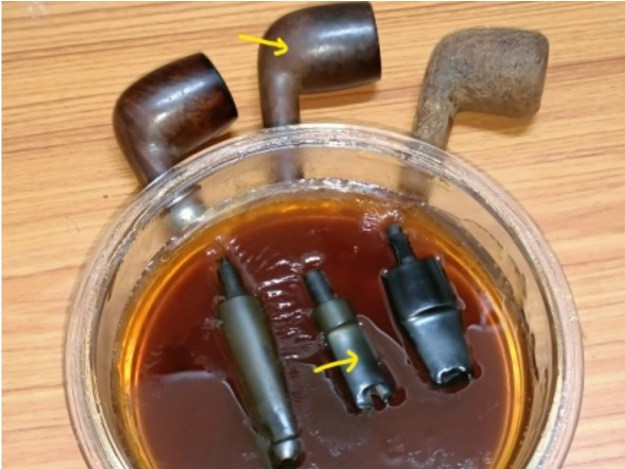
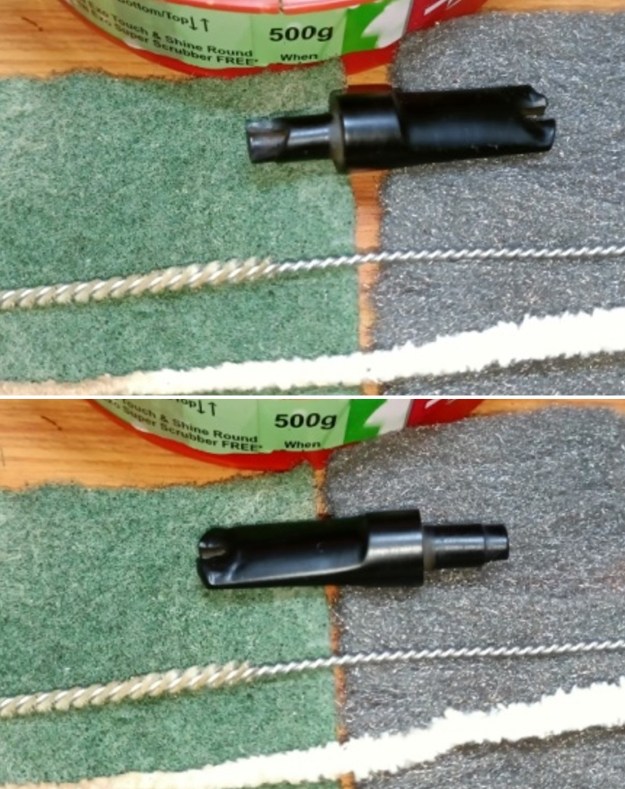
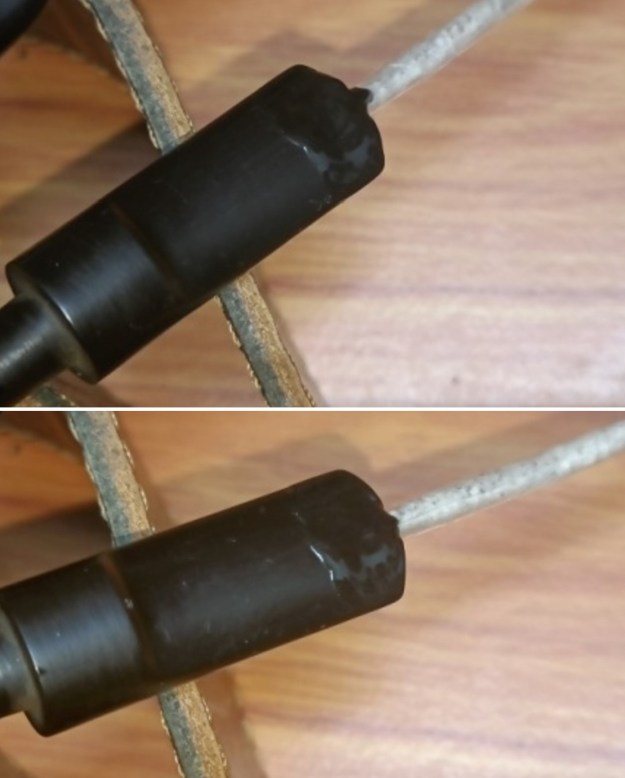
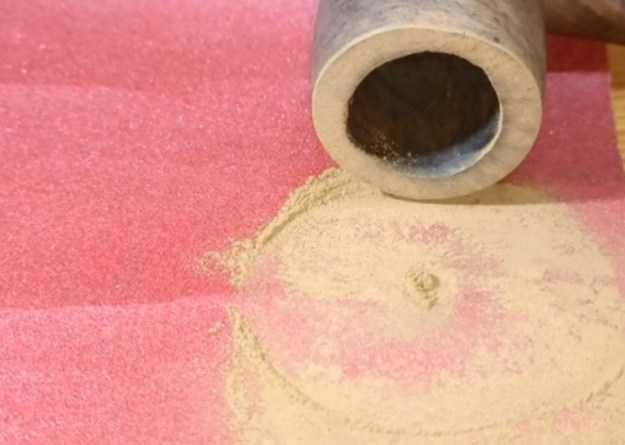
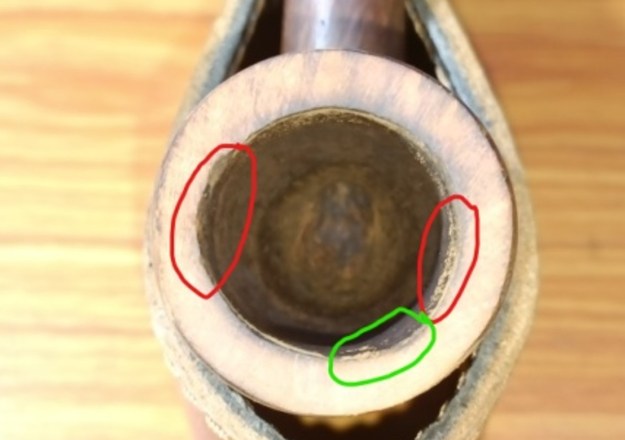
I began the repair and refurbishing process with cleaning of the stem internals. Using thin shank brushes and anti-oil dish washing soap, I cleaned the stem airway. I have modified this process of cleaning the stem airway by doing away with pipe cleaners and alcohol as it saves me a ton of pipe cleaners, which is a precious commodity for me here in India. I continued this cleaning till only white clean foam came out of the stem airway, indicating that the airway was nice and clean. I ran a couple of pipe cleaners dipped in alcohol through the airway to dry it out and make sure that there are no traces of soap and gunk hidden in the airway.With the stem internals now clean, I moved to external cleaning of the stem surface by dunking the stem into “Before and After Deoxidizer” solution developed by Mark Hoover. The solution helps to draw out heavy oxidation to the surface making it’s further removal a breeze, while the minor oxidation is eliminated to a very great extent. I usually dunk stems of few pipes that are in-line for restoration and this BARLING’S MAKE is marked in yellow arrow. I generally allow the stems to soak in this solution overnight for the solution to do its work.While the stem was soaking in the De-oxidizer solution, I reamed the chamber with size 2 head of the PipNet pipe reamer. I removed the carbon from the areas where the reamer head could not reach with my fabricated knife. To completely remove the residual carbon from the walls of the chamber and smooth out the walls, I sanded the chamber walls with a folded piece of 220 grit sandpaper followed by cleaning the chamber with a cotton swab wetted with isopropyl alcohol. The chamber walls are in pristine condition. I gently scrapped off the lava build up over the rim top using a sharp knife to avoid damage to the surface.I cleaned the mortise and shank airway using a dental pick and hard / soft bristled pipe cleaners dipped in isopropyl alcohol. I shall continue with further cleaning of the shank internals once I clean the external stummel surface.Next, I decided to subject the chamber and mortise to cotton and alcohol bath. I packed the chamber with cotton and drew out a wick from the cotton and along with a folded regular pipe cleaner, inserted it into the mortise and through the draught hole into the chamber. I tightly packed cotton balls into the remaining portion of the mortise. Thereafter, I soaked the cotton balls with isopropyl alcohol up to the brim. About half an hour later, the level of alcohol had gone down, having being absorbed by the cotton. I topped it up once again and set it aside overnight. By next afternoon, the cotton and alcohol had drawn out all the remaining oils and tars from the chamber and mortise. I removed the cotton balls and the dirt can be gauged by the appearance and coloration of the cotton balls and the pipe cleaner. With my fabricated knife and dental tools, I spent the next hour scrapping out the entire loosened gunk from the mortise. I ran pipe cleaners through the mortise and draught hole to clean out all the loosened tars and gunk that was lodged in the draught hole and mortise. The chamber and mortise now smelled clean, fresh and looked it too. I set the stummel to dry out naturally. Once the internals of the chamber and shank were cleaned, I cleaned the external surface of the stummel with Murphy’s Oil soap and cotton swabs followed by scrubbing the surface with a toothbrush and dish washing soap. This rid the stummel surface of all the accumulated dust, dirt and grime. Using a piece of Scotch Brite scrub, I deliberately cleaned the rim top and removed the crud from the surface. The damage to the rim edges is, thankfully, not as severe as I had anticipated. I also cleaned the shank internals with dish washing soap and a shank brush. I set the stummel aside to dry out naturally while I worked the stem.By the time I was done with internal and external cleaning of the stummel, the stem had been in the deoxidizer solution for nearly 24 hours. I cleaned the stem and the stem airway under running warm water and scrubbed the raised oxidation from the surface using a Scotch Brite pad and the airway with a thin shank brush. I further removed the oxidation by scrubbing the stem with 0000 grade steel wool. Once the stem was dried with paper towels, I applied a little olive oil to rehydrate the stem.I wiped the stem surface, particularly the damaged button end, with a cotton pad and alcohol to remove any traces of dirt and grime. To begin the stem repairs, I first wound a scotch tape around the tapered portion of a pipe cleaner and inserted it into the stem airway. I prepared a mix of CA superglue and activated charcoal and generously applied it over and extending beyond the broken surface and set it aside for curing over night. The tape will help prevent the mix from clogging the stem airway.While the stem fills were curing, I addressed the damage to the rim top surface by topping the rim to reduce the charred surface and bringing the bowl back to round. I always use a square piece of 220 grit sand paper and firmly hold it with my hand on my work table. I work the rim top on the sand paper in circular motion, frequently checking the progress as I want to keep the briar loss to a bare minimum necessary. The inner rim edge damage has not been addressed entirely with a few dings and uneven surface visible on the sides (encircled in red) and charred surface to the front of the bowl (encircled in green). Also a few minor dents and chipped surfaces are visible along the outer rim edge. These issues were addressed next. In order to mask the still visible damage to the inner rim edge, I created an inner edge bevel by pinching a folded piece of 180 grit sand paper between my thumb and forefinger and moving along the inner edge with a constant pressure, to minimize the charring on the inner edge of the rim. Similarly, I created a slight bevel on the outer edge of the rim to address the minor dents and chipped areas.Next, I subjected the stummel to a complete cycle of micromesh polish, wet sanding with 1500 to 12000 grit pads. I wiped the stummel with a moist cloth after every grit pad to remove the sanding dust left behind by the pads. This also helps in monitoring the progress being made and ensures early corrective action. I am happy with the progress being made until now. I massaged a small quantity of “Before and After Restoration Balm” into the briar surface with my finger tips and worked it deep into the surface and let it rest for a few minutes. The balm almost immediately works it’s magic and the briar now has a nice vibrant appearance with the beautiful bird’s eyes and cross grain patterns on full display. It was at this stage that I polished the sterling silver with a jeweller’s cloth to a nice shine. By the time I was through with the stummel polishing, the stem fills had completely cured.  I moved ahead with the process of filing and shaping the button end with a flat head needle file. With a round needle file, I reshaped the round orifice at the slot end. For a better blending, I further sanded the entire stem with a folded piece of 320 grit sandpaper. I continued to dry sand the entire stem with a folded piece of 400 followed by 600 and 800 grit sandpaper and further progressed to wet sanding with 1000, 1500 and 2000 grit sand papers. I rubbed a small quantity of EVO into the stem surface and set it aside for the vulcanite to absorb and hydrate. To bring a deep shine to the vulcanite stem, I went through the complete set of micromesh pads, wet sanding with 1500 to 12000 grit pads. I wiped the stem with moist cloth after working each pad and rubbed it down with Extra Virgin Olive oil to rejuvenate the vulcanite.To complete the restoration, I mounted a cotton cloth buffing wheel on to my hand held rotary tool and polished the stummel and stem with Blue Diamond compound. This compound helps to remove the minor scratch marks that remain from the sanding. Next, I mounted another cotton buffing wheel that I have earmarked for carnauba wax and applied several coats of the wax. I finished the restoration by giving the entire pipe a rigorous hand buffing using a microfiber cloth to raise the shine further. The finished pipe looks amazingly beautiful and is ready to join my collection. I only wish it could share with me it’s story of the past years while I enjoy smoking my favorite Virginia blend in it or maybe an English blend or maybe just keep admiring it!! The finished pipe is as shown below:- A note of thanks to all the readers who have joined me in this journey that has been such a pleasure! You and your loved ones are always in our prayers…

Working on a Mystery Stacked Shank Lovat – MYSTERY SOLVED – A GERRARD THREE-WAY PIPE


Blog by Steve Laug

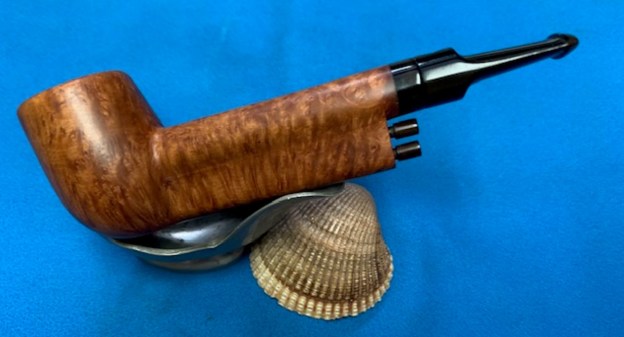
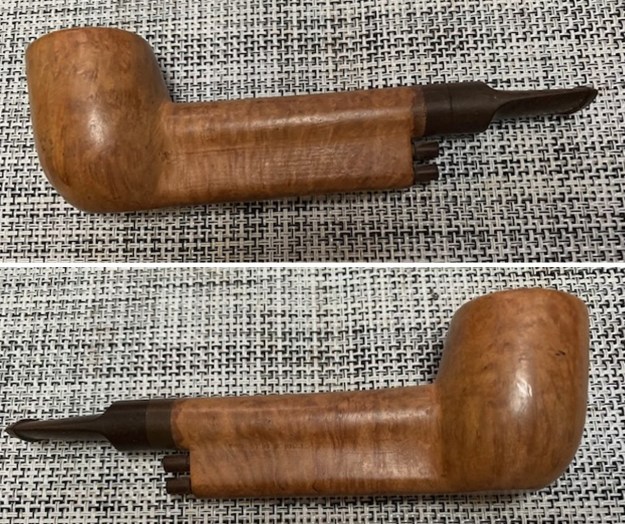
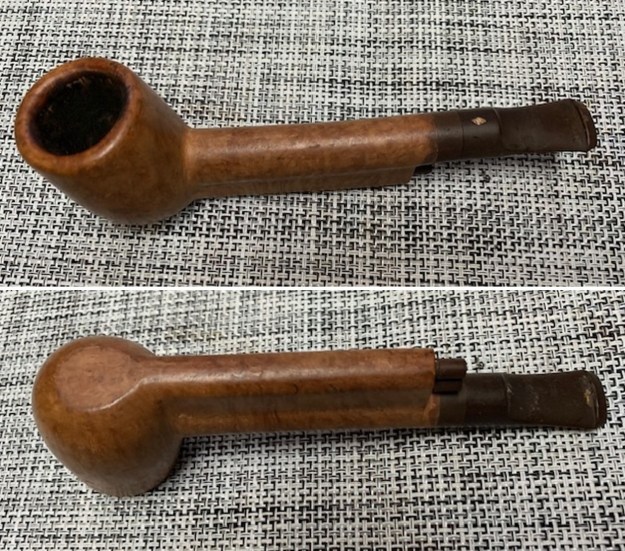
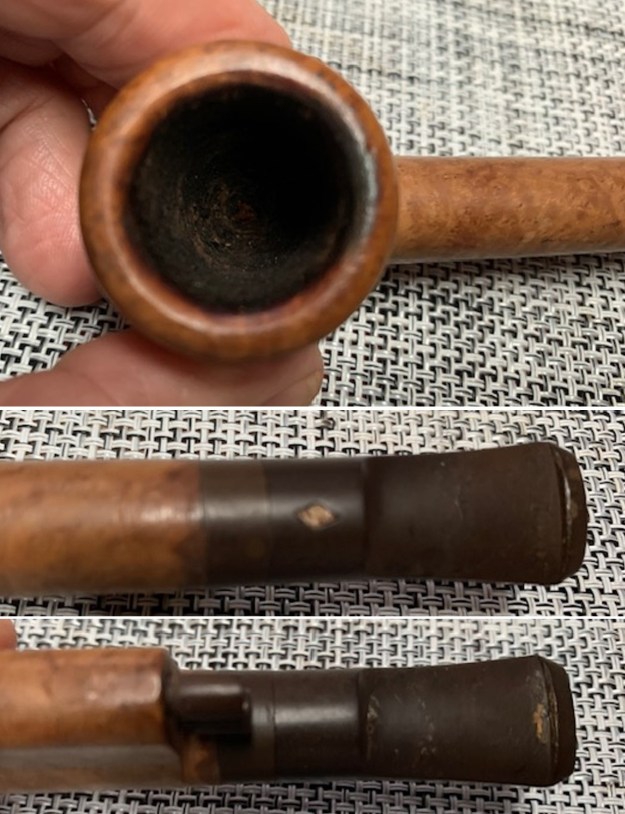
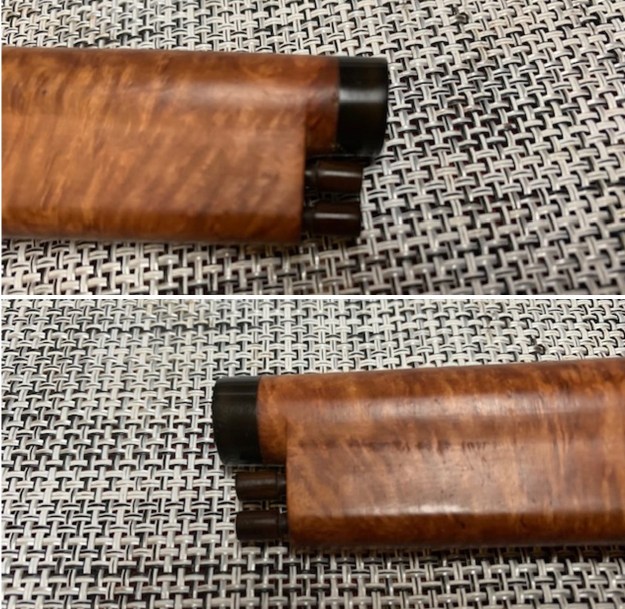
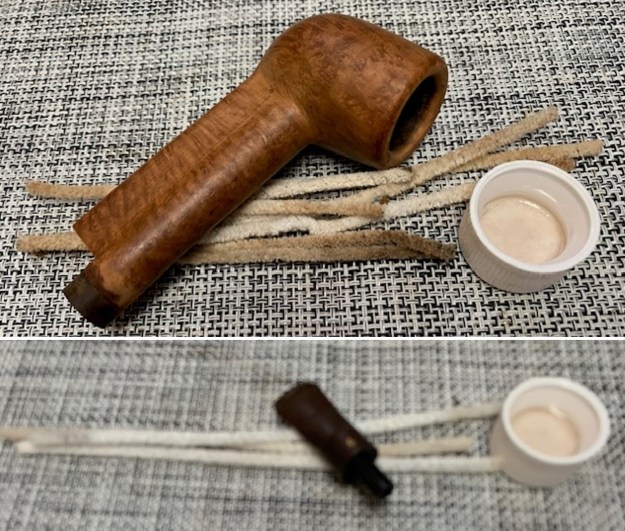
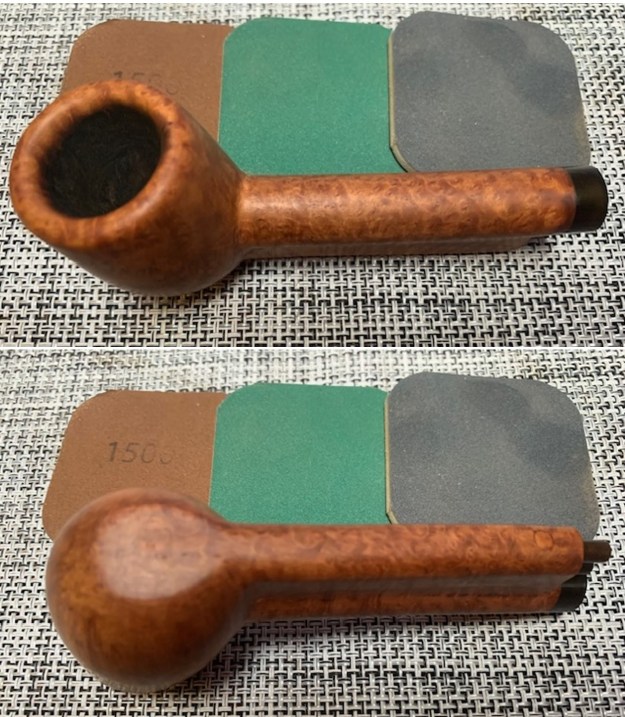
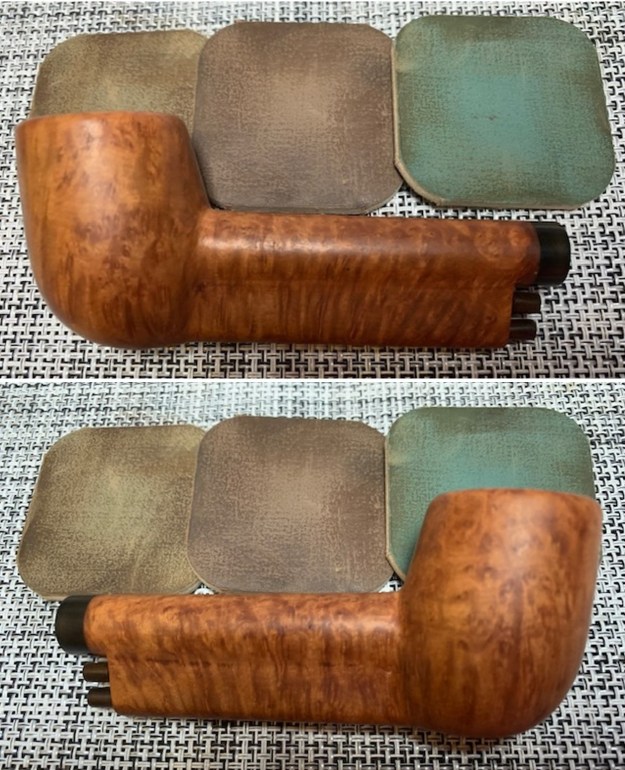
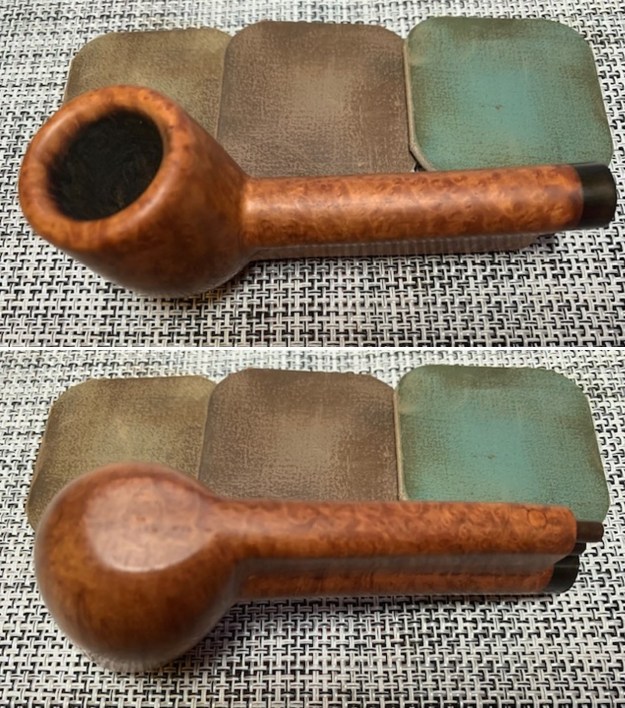
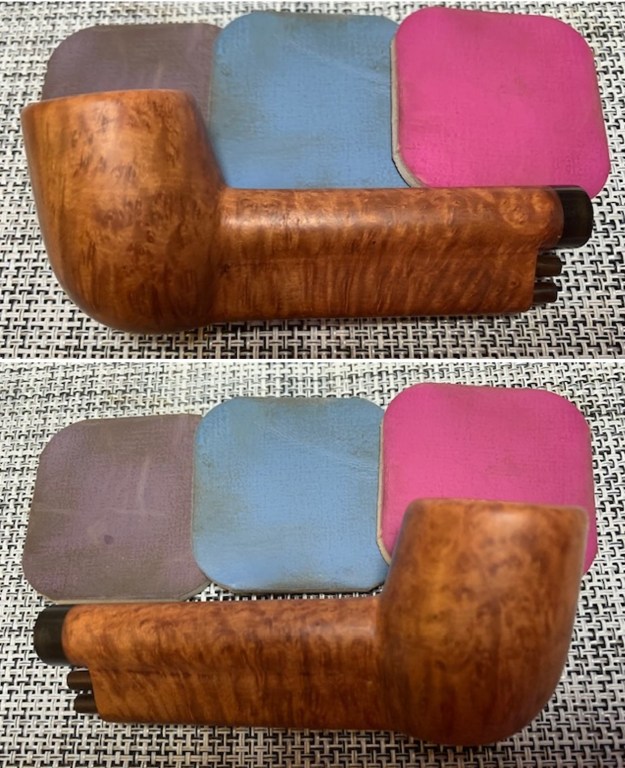
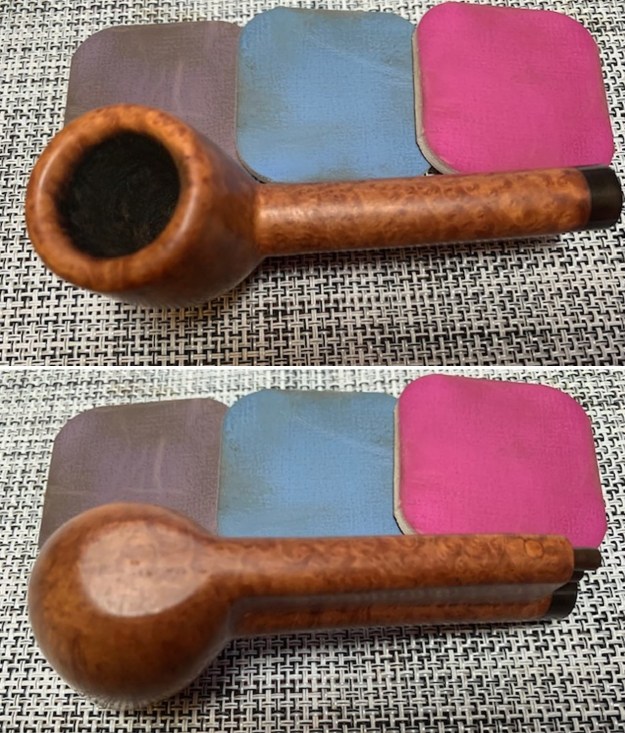
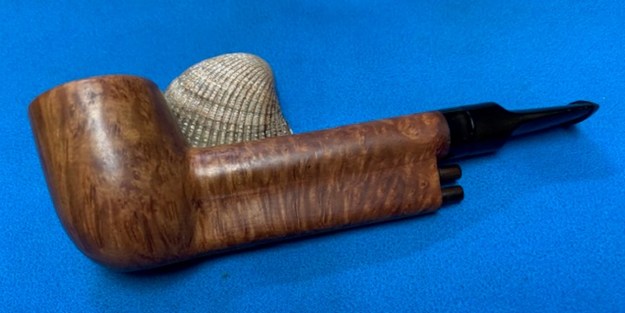
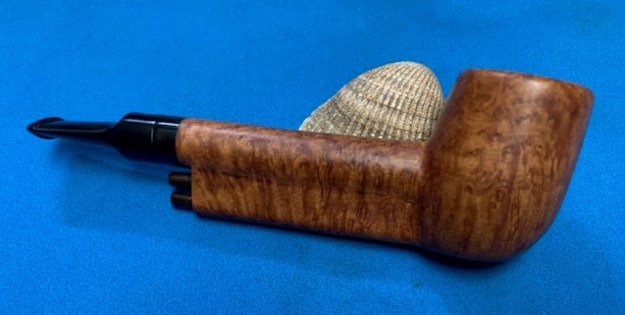
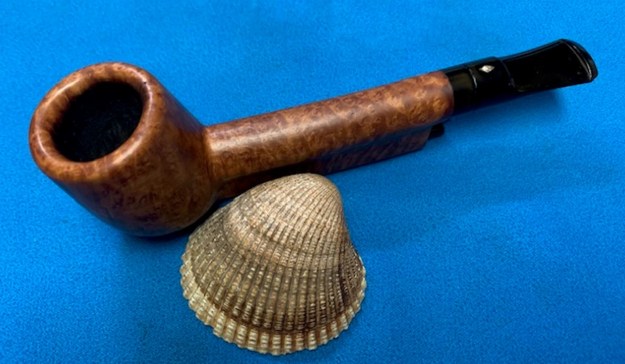
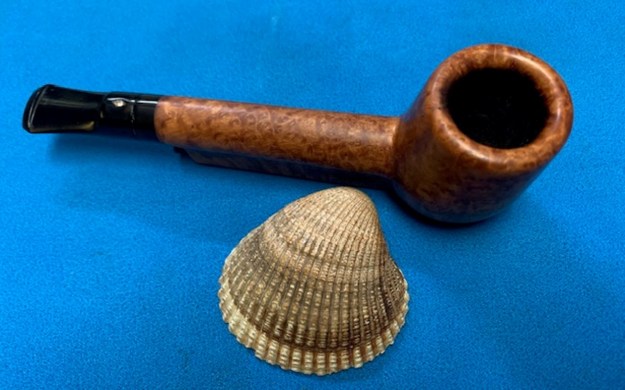
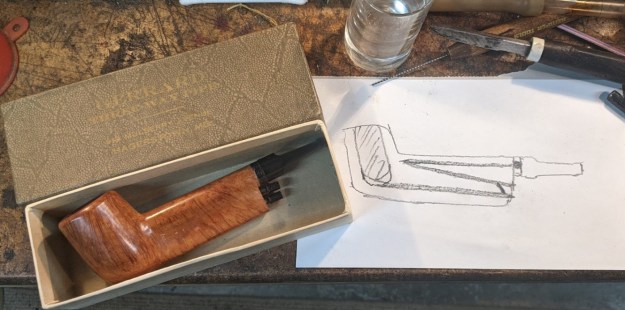
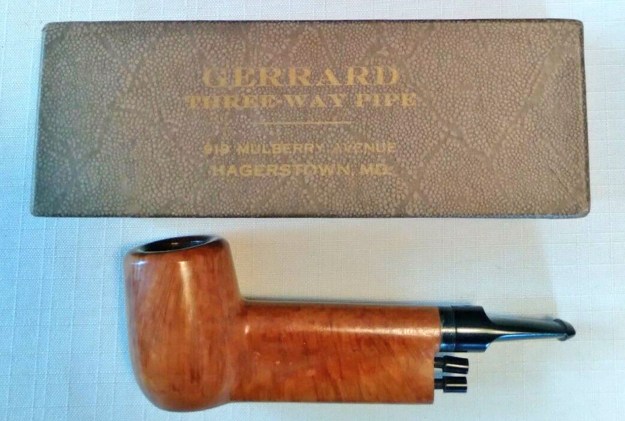
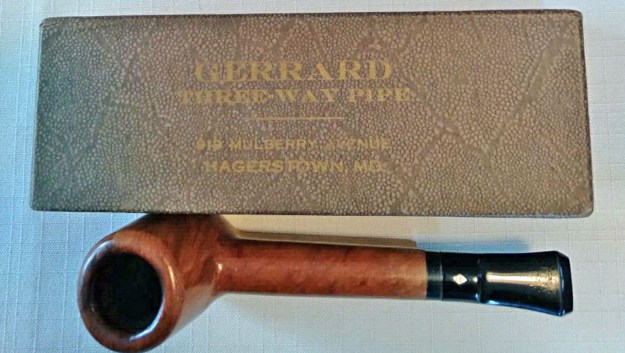
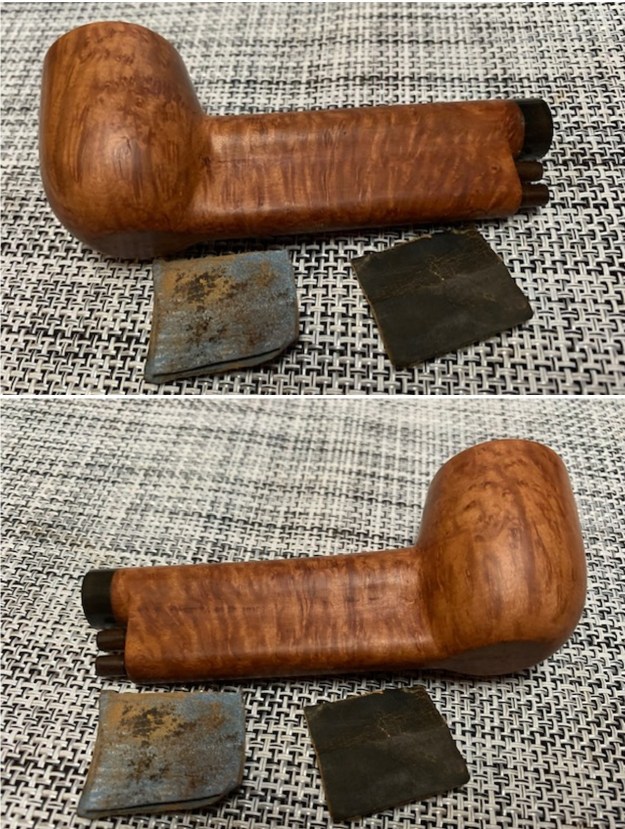
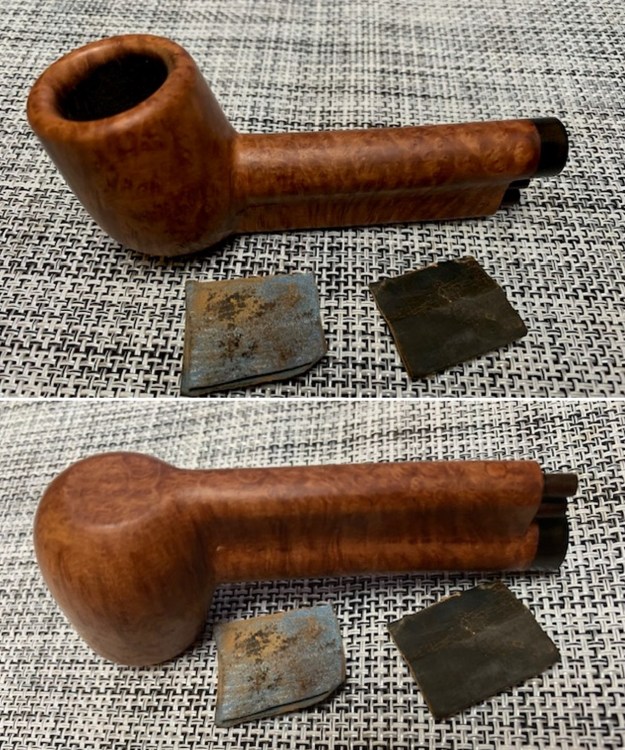
The next pipe on my work table is a real mystery to me. The stamping is unreadable, except for a B on the heel of the bowl. The pipe has some amazing grain around the bowl and shank and is well laid out to follow the grain. It has a double shank or stacked shank. The top portion or shank is where the stem fits in the mortise on the end. The airway in that portion of the shank drops to the second part of the shank at the bowl shank union. The second part of the shank has two chambers. The bottom one goes from an under-bored bowl bottom to the opening on the shank end. There is a plug at that point. The air drops moisture in that part of the shank and cools. It is circulated into the second chamber (also with a plug at the end) and then up into the top part of the shank. The smoke is drawn into the twisted and turned airway from the bowl bottom and then drawn along the bottom chamber to the end then up into the second chamber and finally into the airway in the top part of the shank and into the mouthpiece. The design is definitely made to create a very cool smoke. Because my words may not capture the look of this pipe very well I am including the next four photos to unpack the words that I have written above. The pipe was in decent condition. The bowl had been recently reamed and there was tobacco debris in the bowl bottom. The rim top had some burn damage and darkening on the back inner edge. The shank (top and lower with two chambers) was dirty and need a thorough cleaning. There were scratches on the shank and bowl sides and the finish was dirty. There was some staining on the shank end ahead of the vulcanite band on the shank. The two vulcanite pins in the lower shank were also oxidized. The stem had some tooth marks and chatter on both sides ahead of the button. It was oxidized and there was some calcification on the surface. The logo on the top of the stem was a diamond and the inside of the diamond was damaged. It appeared to have held a squiggly line – perhaps emulating the airflow through the pipe. I took closeup photos of the bowl and stem for you to see a bit of what I see here.I removed the stem from the shank and took a photo of the part to give a sense of the flow of the pipe. It is truly a unique pipe and the grain shows well in the photo.I dribbled alcohol around the pie/plugs in the lower portion of the shank. It took some time and I wiggled the pins until they came free. I took photos of the pins and of the shank. I cleaned them up and then pushed them into the shank end and took photos of the pipe at this point. I cleaned out the mortise and the three airways in the shank and the one in the stem with pipe cleaners and cotton swabs. It was quite dirty but once cleaned smelled better. I apologize for the photo of the stem cleaning as it is blurry but you can still see the grime on the pipe cleaners in the photo.I worked on the stains along the inner edge of the shank ahead of the vulcanite band. I was able to sand it out with 220 grit sandpaper and started polishing it with 600 git wet dry sandpaper. I also sanded out the deep gouges along the grooves between the upper and the lower parts of the shank. They cleaned up very well. I polished the briar with micromesh sanding pads – dry sanding with 1500-12000 grit sanding pads. I wiped the bowl down after each sanding pad with a damp cloth to remove the sanding debris. The bowl began to take on a rich glow. I rubbed down the bowl and shank with Before & After Restoration Balm. It is a paste/balm that is rubbed into the surface of the briar. The product works to deep clean the finish, enliven and protect the briar. I worked it into the briar with my finger tips. I let it sit for 10 minutes then wiped it off with a soft cloth then buffed it with a cotton cloth. The briar really began to have a deep shine in the briar and the grain shines through. The photos I took of the bowl at this point mark the progress in the restoration. It is a gorgeous pipe. I set the bowl aside at this point and turned my attention to the stem. The Diamond logo is strange and looks damaged but it appears to have a squiggle from one corner to the next. The surface is chipped. I sanded out the tooth marks and chatter on both sides of the stem ahead of the button. I also sanded the rest of the stem to remove the oxidation that was present. I started polishing the stem with 600 grit wet dry sandpaper. I filled in the pits in the diamond log with clear CA Glue and sanded that repair smooth at the same time. I did not want to further damage the log so I proceeded cautiously. The stem is looking better.I polished the stem with micromesh sanding pads – 1500-12000 grit sanding pads and water to wet sand the stem. I wiped it down after each sanding pad with Obsidian Oil on a cotton rag after each sanding pads. I know that many say Obsidian Oil does nothing for acrylic stems, but I find it does two things – first it gives some protection to the stem from buildup and second it give the sanding pads bite in the polishing process.I have found that Before & After Fine and Extra Fine stem polish works well to remove the fine scratches in the vulcanite. I rub the Fine Polish on the stem and wipe it off with a paper towel and then repeat the process with the Extra Fine polish. I finish the polishing of the stem down with a final coat of Obsidian Oil and set the stem aside to let the oil absorb. This process gives the stem a shine and also a bit of protection. The final steps in my process involve using the buffer. I buffed the bowl and stem with Blue Diamond to polish out the light scratches in the briar and the vulcanite. I gave the bowl and the stem multiple coats of carnauba wax. I have found that I can get a deeper shine if I follow up the wax buff with a buff with a clean buffing pad. It works to raise the shine and then I hand buff with a microfiber cloth to deepen the shine. It is always fun for me to see what the polished bowl looks like with the polished stem. It turned out to be a nice pipe. The mix of grain around the bowl sides and shank looks great. The vulcanite saddle stem works well with the pipe. The Mysterious No Name Stacked Shank System Lovat feels great in my hand. It is a well-balanced pipe. Have a look at it with the photos below. The dimensions are Length: 5 ½ inches, Height: 2 inches, Outside diameter of the bowl: 1 ¼ inches, Chamber diameter: ¾ of an inch. The weight of the pipe is 1.34 ounces/38 grams. It is a very unique system style pipe that I cannot find any stamping on and no information. Is it possible that any of you can help me out with some identification advice on this one? It would be much appreciated. Thank you.

As always, I encourage your questions and comments as you read the blog. Thanks to each of you who are reading this blog. Remember we are not pipe owners; we are pipe men and women who hold our pipes in trust until they pass on into the trust of those who follow us. ADDENDUM MYSTERY SOLVED: I posted this blog on FaceBook in the Tobacco Pipe Restorers Group. I received and answer from James Connelly with a photo. He has the pipe in the photo below. It includes the original box. I have included that photo below. It shows the pipe in its box along with a diagram on the airflow from the bottom of the bowl to the mouth piece. It is indeed the shape that I expected from my clean up work on the pipe.He also included a link to a write up on Pipedia on the brand (https://pipedia.org/wiki/Gerrard). It is a short read but very interesting. I have also included  two photos from the article.

Gerrards Three-Way Pipes were custom made by a gentleman in Hagerstown, MD named E.E. Lushbaugh. He called it the “Gerrard Three-way pipe”.


Restoring a French Made Loewe & Co. 015 Dublin with a Saddle stem


Blog by Steve Laug

The next pipe on the work table is one that a fellow sent me from England (I have since found out that he is in Scotland not England). He had written to me earlier this week about an old pipe that he had that needed some work. Here is his first email.

Hello. I have an old pipe I would like restored. Its not something I feel I could do myself. I was wondering if you provide a restoration service, and if so how I would go about sending you the pipe to work on. –  Leo

I replied to him as follows:

Hello Leo, I do restoration but I am located on the west coast of Canada. Send photos of the pipe so I can have a look and we will go from there. Thanks. – Steve

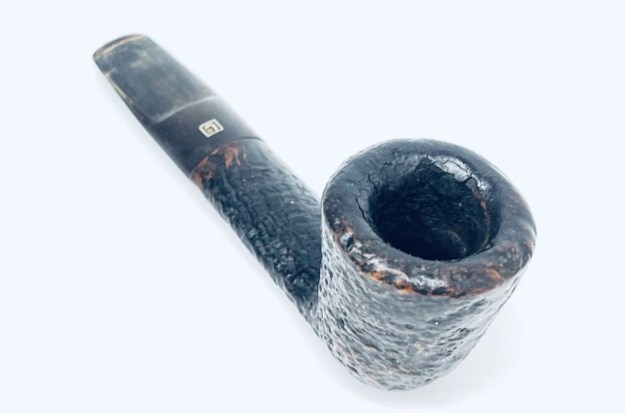
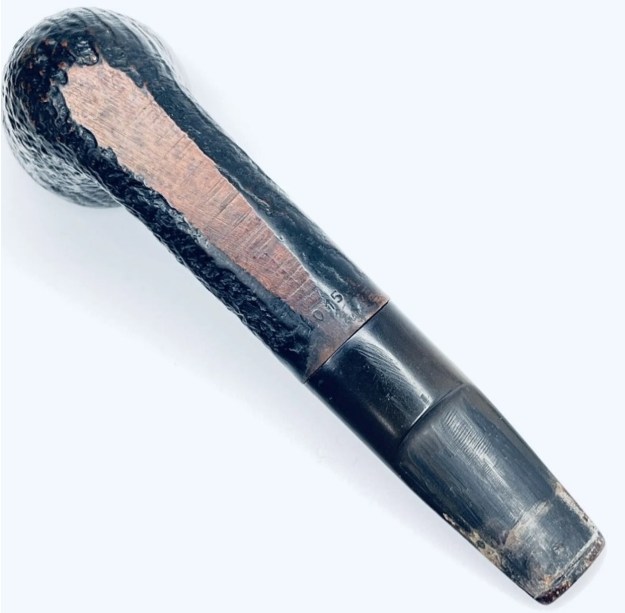
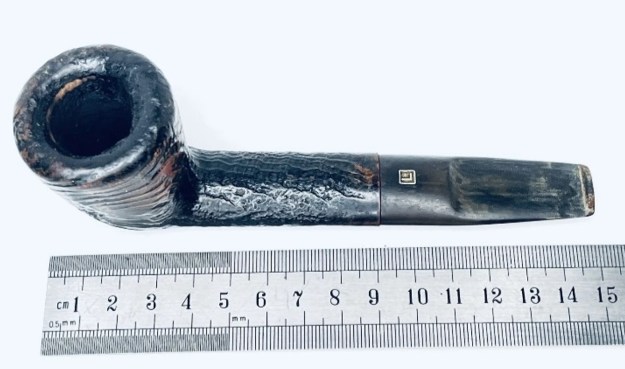
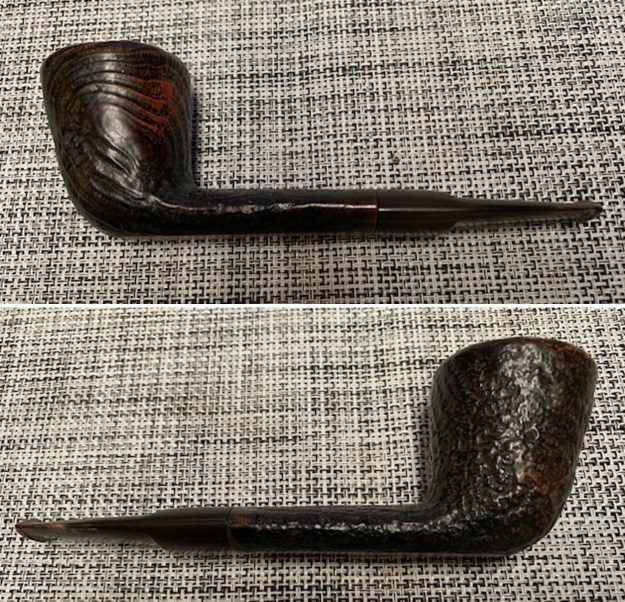
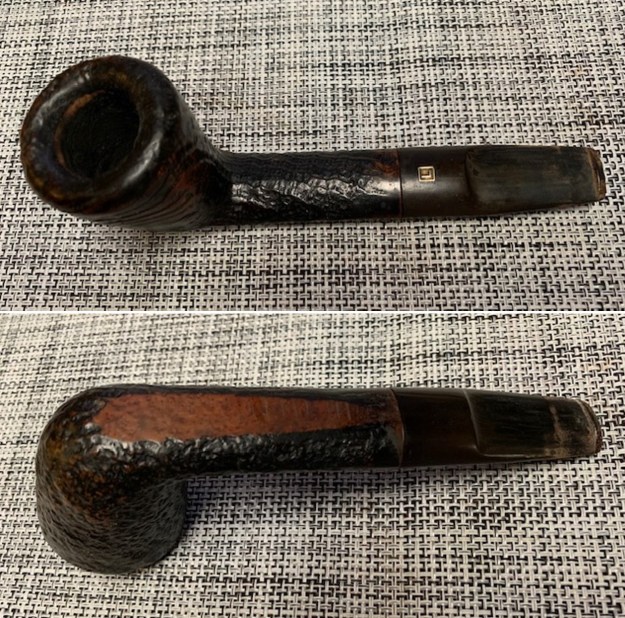
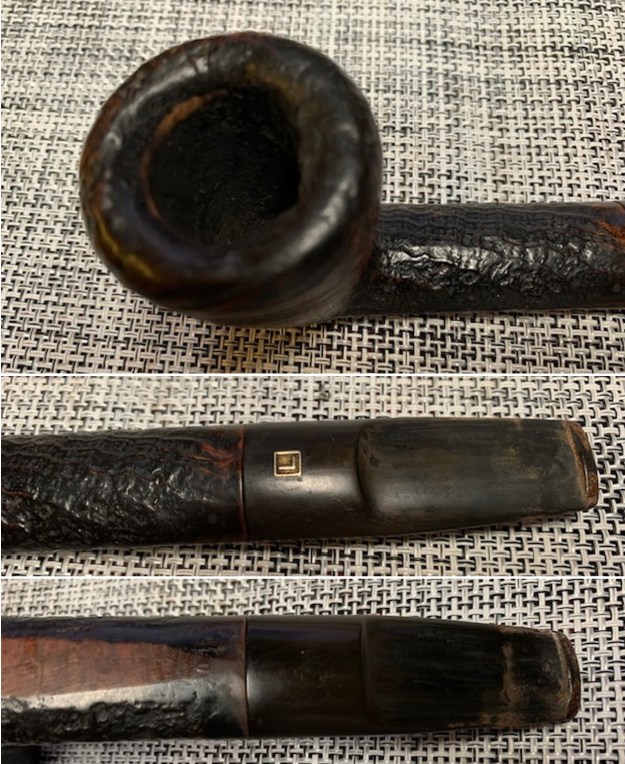
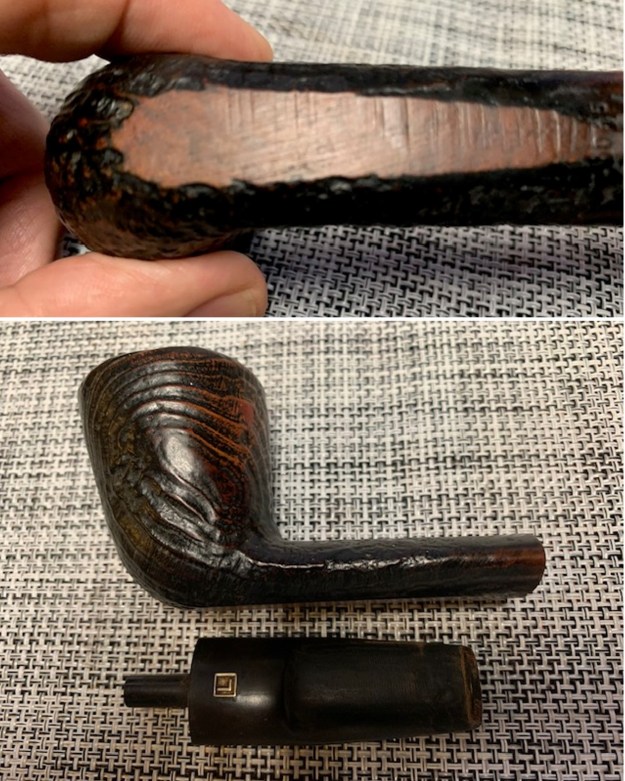
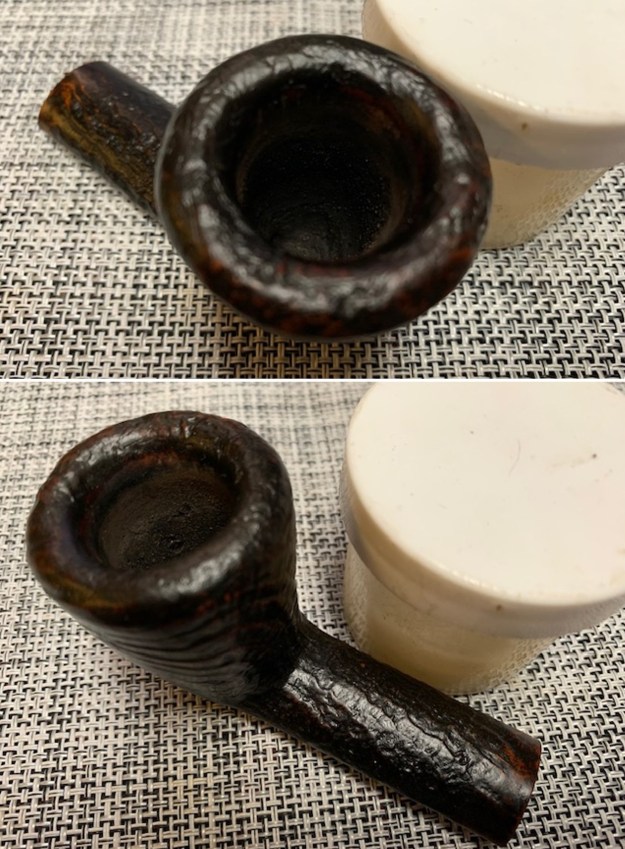
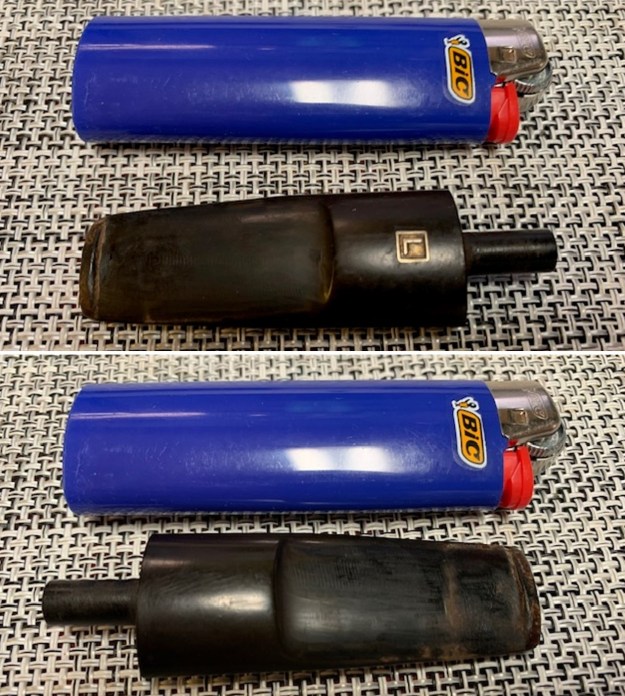
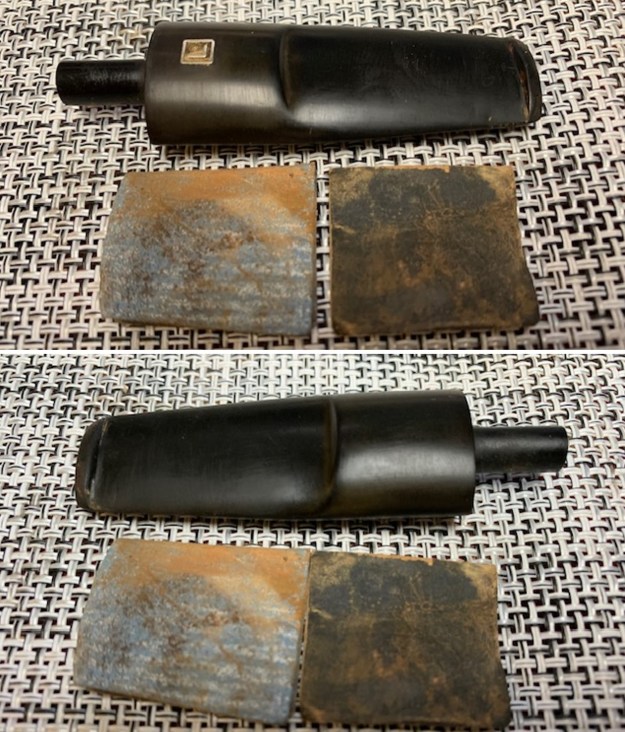
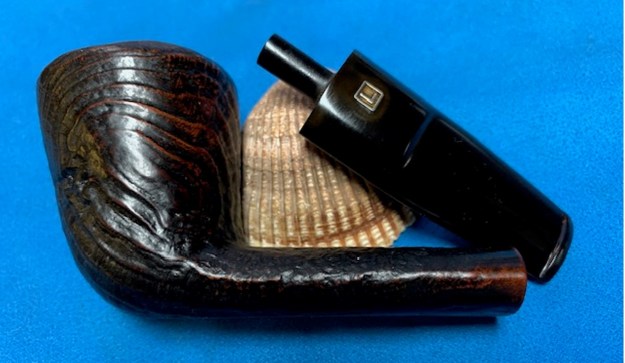
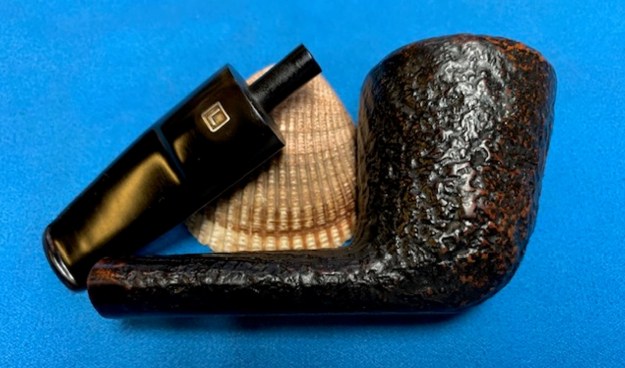
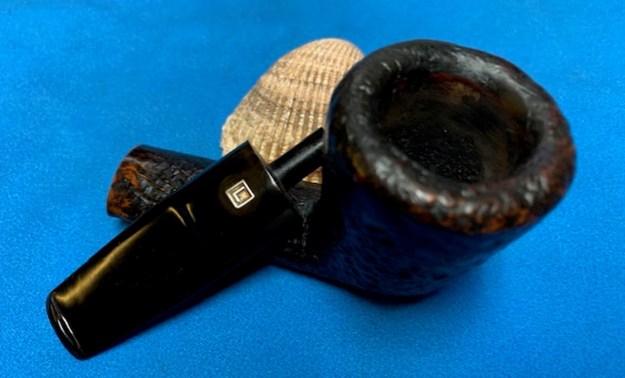
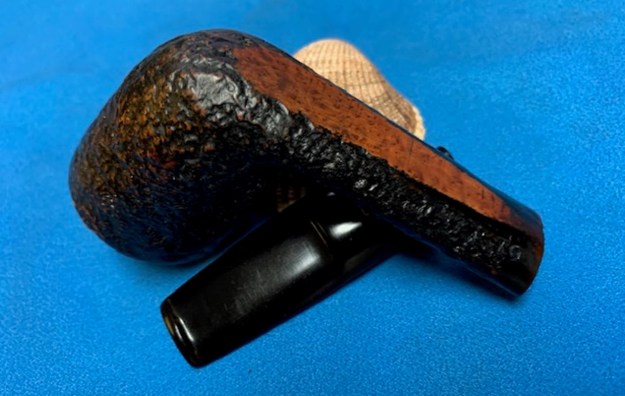
He did not waste anytime and sent me an email with the first three pictures below. It is an interesting looking long, oval shank, sandblast Dublin with a vulcanite saddle stem. After viewing the photos and emailing back and forth with Leo about the pipe I asked him to mail it to me so I could work on it. It is an interesting sandblast, long oval shank Dublin. The bowl had a thick cake inside and a lot of lava overflow on the rim top. The finish is quite dirty with a lot of grime in the sandblast valleys. It was worn on the left side of the bowl and dark finish was light there. The photo of the underside of the shank shows scratches and marks on the surface that had all but eliminated the stamping. There is a shape number at the stem/shank junction that reads 015. Below that it is stamped Made in France. The stem is dirty with oxidation, calcification and deep scratches and marks on both sides. There are tooth marks ahead of the button on both sides that are quite deep.  There is a brass square on the top of the saddle that has an L in it. There are no other identifying marks on the pipe. It will be fun identifying it and the brass L square will tell me a lot. It is a uniquely shaped pipe that I really like the looks of and I think that once it is cleaned up it will be a real beauty.

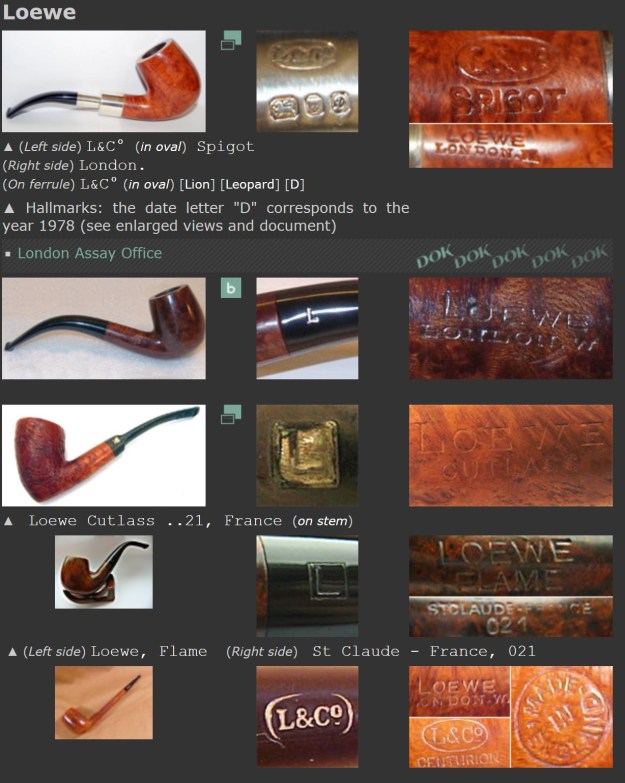
The pipe arrived this week while I was travelling. I took photos of the pipe once I brought it to the work table. I always include the pre-clean up photos to confirm what I saw in the photos that were sent to me. In this case the condition matched what I saw in the photos. The pipe was a real mess and would take some work to clean up and restore. I took photos of the bowl and rim top as well as the stem. The rim top shows the thick lava coat on the top and the inner edge of the bowl. It is heavier on the back side than the front. You can also the lava fill on the rim top almost completely hiding the rustication. You can see the oxidation around the stem sides, the scratches on the surface and the deep tooth marks and chatter on both sides ahead of the button.I took a photo of the stamping on the underside of the shank. It reads as noted above. The hash marks and scratching on the smooth surface have obliterated the stamping and it is unreadable. The shape number 015 and the Made in France stamping is still readable at the shank/stem junction. The pipe is quite nice with the stem removed. You can see the flow of the design and the look of the parts.Before I started my cleanup work on the pipe I decide to do a bit of digging on the brass square L logo on the stem. I scrolled through all of the pipe brands that started with an”L” on Pipephil until I came across the listing for Loewe pipes (http://www.pipephil.eu/logos/en/logo-l5.html). The third pipe down in the screen capture below has the same logo on the stem as the one I am working on. Now I knew that the pipe was a Loewe and that it was a French Made one at that. I have included the screen capture of the section below.I then turned to the article on Loewe pipes on Pipedia for more information and to see if I could find anything on the French made Loewe pipes (https://pipedia.org/wiki/Loewe_%26_Co.). There was a passing note in the article in the fourth paragraph that I have marked in red. It states that French Loewes appeared in the early 1980s and are a sign that the pipes were made in more than one location before the Cadogan Era.

Loewe is one of the haunting old names of British pipe-making, characteristic of an almost vanished “upper middle class” of the trade, which also incorporated makes such as BBB, Orlik, Comoy’s and GBD. Along with these brands, Loewe has long dwindled into pseudo-existence, becoming little more than a logo occasionally used by the Cadogan factory in Southend-on-Sea. But owners of older Loewes treasure them as superb, featherweight smokers, excellently crafted and with grain characteristics superior to those of many contemporary Dunhills.

The Frenchman Emil Loewe founded the company, both shop and workshop, in 1856 at the Haymarket 62, London. He is said to have been the first to make briar pipes in England. Richard Hacker maintains that theatre people from the West End were among the shop’s heyday aficionados. Loewe’s spigots are especially well regarded by lovers of elegance today – they were originally introduced for practical reasons, to facilitate the production of replacement stems for customers abroad.

The firm and its facilities were later taken over by Civic, well before becoming a fully integrated part of the Cadogan group sometime in the final quarter of the twentieth century. As with other brands belonging to this group, it is not easy to pinpoint a date marking the end of Loewe’s independence and singularity. This is partly due to Cadogan’s own development from a cooperative to a monolithic entity.

In 1979, a German paperback said that the Loewe brand had been discontinued two years previously, but that the pipes themselves were due to reappear as high-end GBDs. Interestingly, the year of publication coincided with the year in which the Loewe trademark became Cadogan’s, who by this time already owned GBD. From today’s point of view, the author appears to have been working on confused, but partly true information. If there were ever really plans to fully amalgamate the two lines, they were dropped. Also, a two-year break at this time seems impossible, since we have hallmark evidence of Loewes made in 1978 and 1979. However, there are firm indications that Loewe shapes were later marketed as Comoy’s (another Cadogan brand). There may also have been a phase of dissolution regarding location. The reported appearance of French Loewes in the early 1980s is a sign that Loewes were being produced in more than one place at some stage before the Cadogan-era proper.

From what I can gather, Cadogan’s various brands continued to be made in separate facilities throughout the1970s. It was the purchase of Orlik in 1980 that enabled the Cadogan group to consolidate all manufacturing in that company’s new factory in Southend-on-Sea. Whether or not this transferral was a gradual process and when it affected Loewe is unclear. We hear that, as a company, Loewe was not formally wound up by Cadogan (the successor to Civic) until the late 1980s. Of course, today’s ‘Loewes’ are definitely made in Southend – though, according to Cadogan, the trademark is no longer used very much.

Now I knew for certain that I was working on a French made Loewe & Company pipe and that it was made in the early 1980s. Now it was time to work on the pipe.

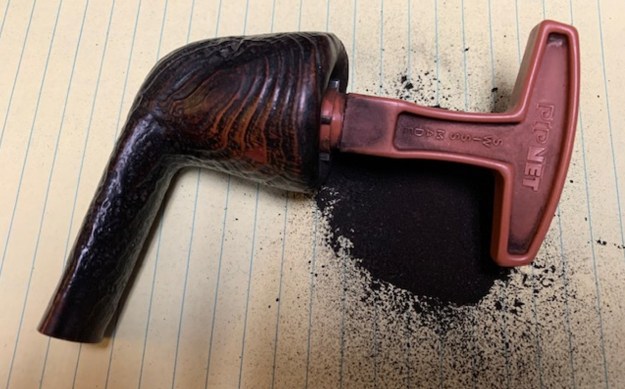
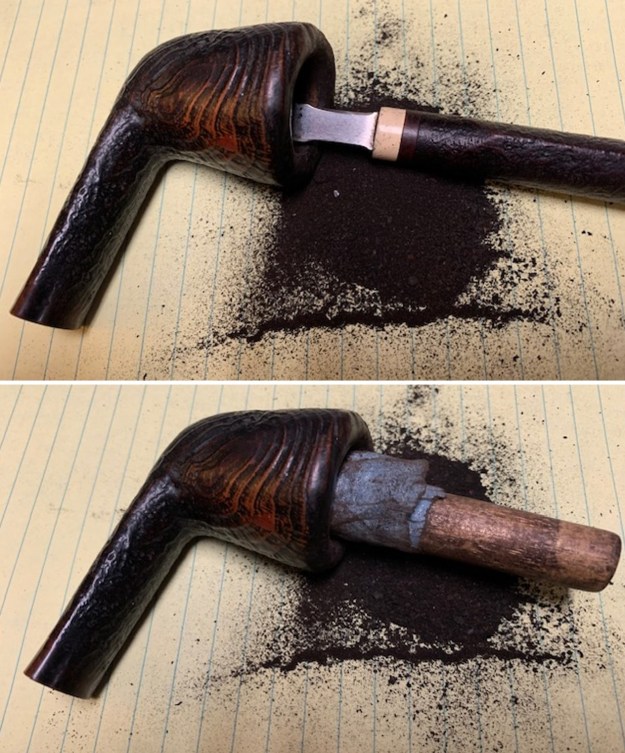
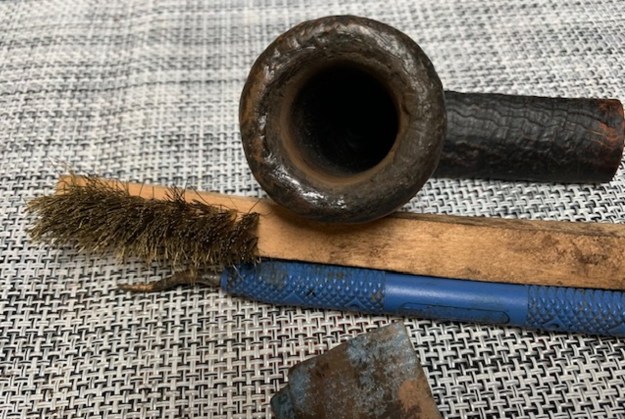
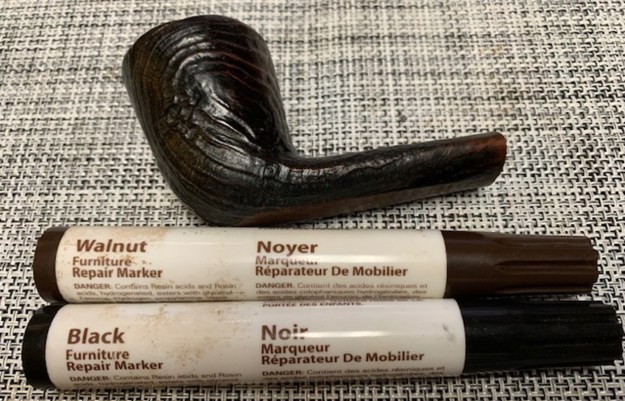
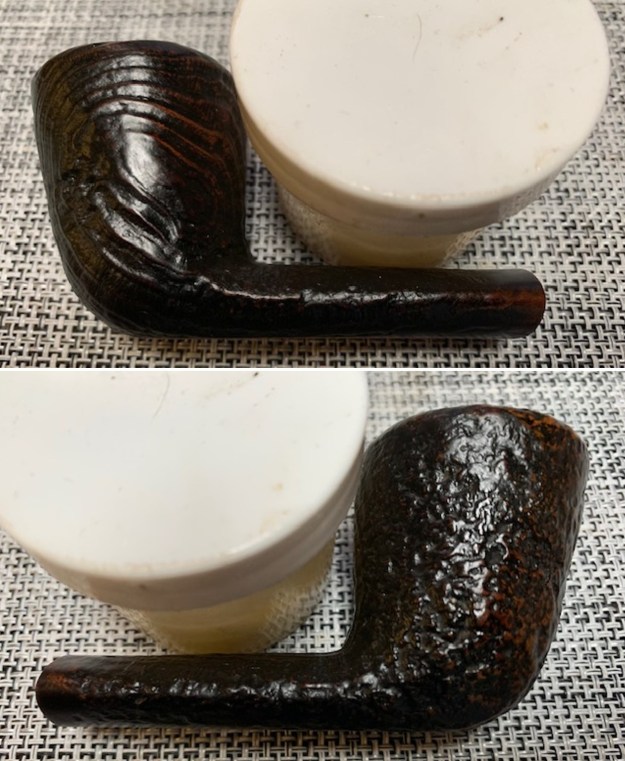
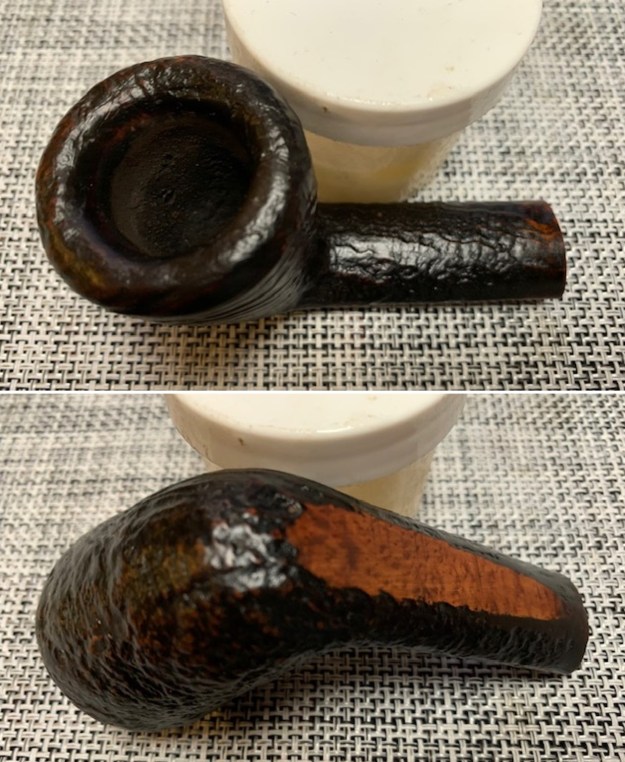
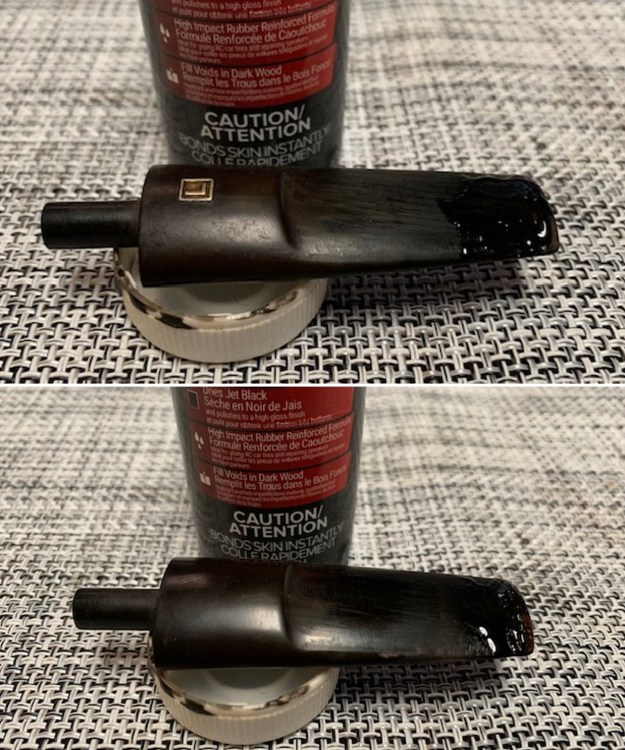
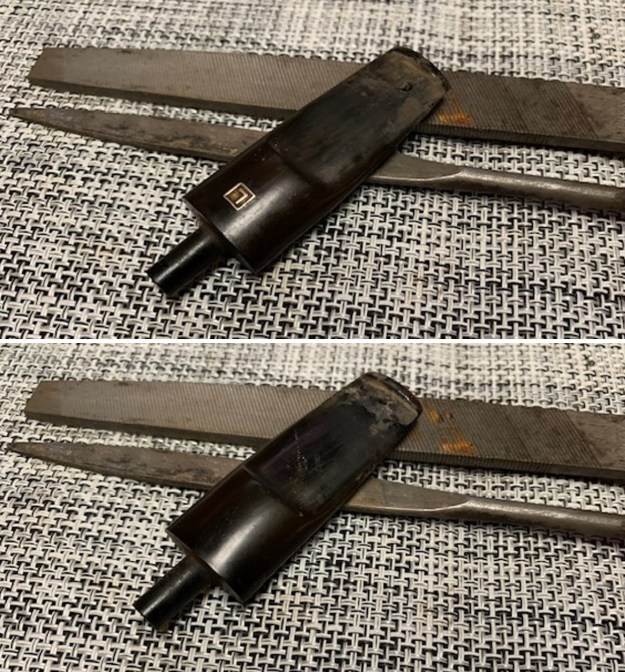
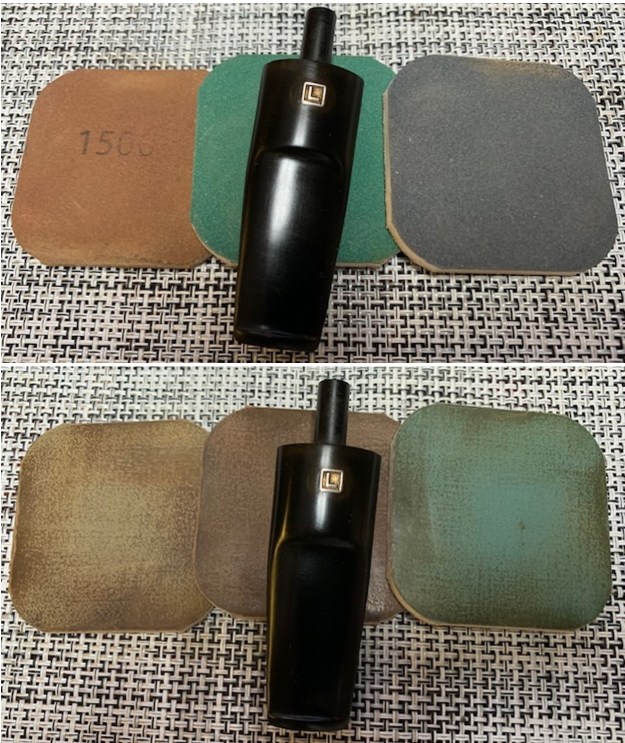
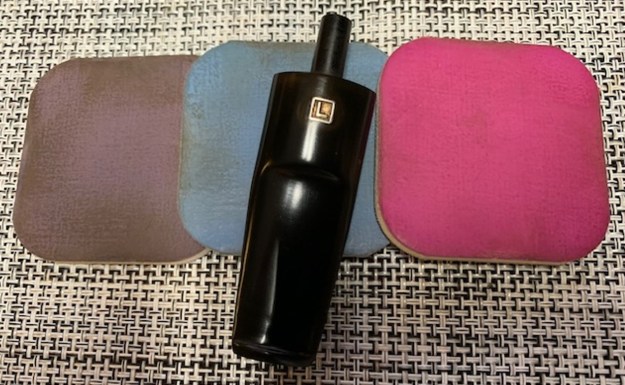
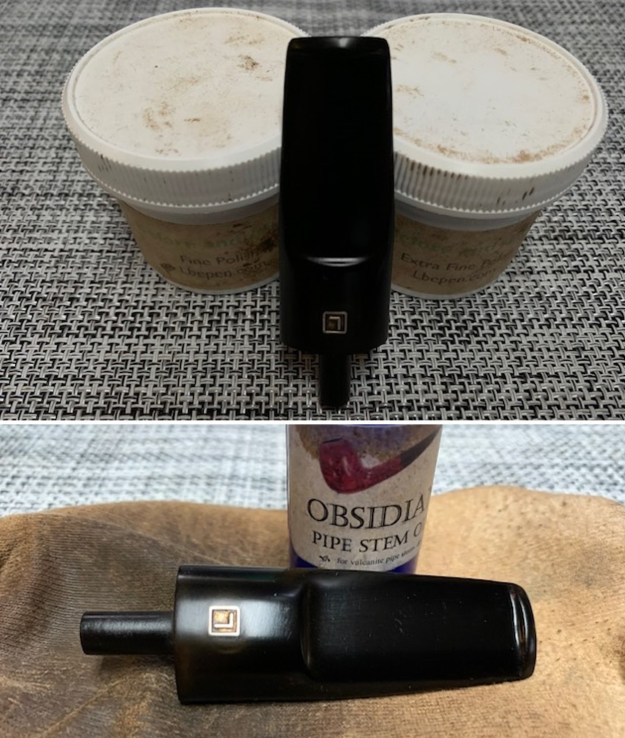
I started my work on this pipe by reaming the bowl. I started with a PipNet reamer to clean out the cake in the bowl. I cleaned up the remnants of the cake with a Savinelli Fitsall Pipe Knife. I finished by sanding the walls of the bowl with 220 grit sandpaper wrapped around a piece of dowel to smooth out the interior of the bowl. I cleaned out the internals of the bowl, shank and the airway in the stem. I started the clean up by scraping the shank with a pen knife to remove the tars that lined the shank. I cleaned out the mortise and airways with alcohol, cotton swabs and pipe cleaners until they were clean. I scrubbed the exterior of the bowl with undiluted Murphy’s Oil Soap and a tooth brush. I worked on the bowl and rim top as well as the inner and outer edges of the bowl. The exterior of the bowl and shank cleaned up really well. I rinsed it with warm water to remove the soap and the grime from the briar. I dried it off with a cotton towel. I took photos of the bowl at this point in the process. The rim top still showed a lot of build up filling in the blast valleys. I would need to used other tools to clean that up. I used a dental pick to scrape out the lava deep in the sand blast. It took some detailed picked to remove it. I followed up on that with a brass bristle wire brush to further clean up the surface of the rim top. I worked over the bevelled inner edge with a folded piece of 220 grit sandpaper to smooth out the damage on the inner edge. It certainly looks much better at this point. I used a walnut and a black stain pen to touch up the worn spots on the bowl side and the rim top sanded areas. It looked much better at this point.I sanded out the scratches in the flat bottom of the shank. They were several and they were quite deep. I used a folded piece of 220 grit sandpaper to smooth the majority of them out. When finished the pipe looked better.I rubbed down the bowl and shank with Before & After Restoration Balm. It is a paste/balm that is rubbed into the surface of the briar. The product works to deep clean the finish, enliven and protect the briar. I worked it into the briar with my finger tips. I let it sit for 10 minutes then wiped it off with a soft cloth then buffed it with a cotton cloth. The briar really began to have a deep shine and the grain shines through. The photos I took of the bowl at this point mark the progress in the restoration. It is a gorgeous pipe. I set the bowl aside and turned to the stem. It was in rough condition with the gummy tape on the end fitting into the shank and deep tooth marks. I painted the surface of the stem with the flame of a Bic lighter to try and lift them. I lifted them but they were still distinctly present. I filled in the marks with Black CA glue and set it aside to cure. Once cured I flattened the repair with a file and then followed that up with a piece of 220 grit sandpaper and started the polishing with 600 grit wet dry sandpaper. It looked much better. I polished the stem with micromesh sanding pads – 1500-12000 grit sanding pads and water to wet sand the stem. I wiped it down after each sanding pad with Obsidian Oil on a cotton rag after each sanding pads. I know that many say Obsidian Oil does nothing for acrylic stems, but I find it does two things – first it gives some protection to the stem from buildup and second it give the sanding pads bite in the polishing process. Fine and Extra Fine stem polish as it seems to really remove the fine scratches in the vulcanite. I rub the Fine Polish on the stem and wipe it off with a paper towel and then repeat the process with the Extra Fine polish. I finish the polishing of the stem down with a final coat of Obsidian Oil and set the stem aside to let the oil absorb. This process gives the stem a shine and also a bit of protection. The final steps in my process involve using the buffer. I buffed the bowl and stem with Blue Diamond to polish out the light scratches in the briar and the vulcanite. I gave the bowl and the stem multiple coats of carnauba wax. I have found that I can get a deeper shine if I follow up the wax buff with a buff with a clean buffing pad. It works to raise the shine and then I hand buff with a microfiber cloth to deepen the shine. It is always fun for me to see what the polished bowl looks like with the polished stem. It turned out to be a nice pipe. The sandblast finish around the bowl sides and shank looks great. The oval vulcanite saddle stem works well with the pipe. The Loewe & Co. French Made 015 Oval Shank Dublin feels great in my hand. It is a well-balanced pipe. Have a look at it with the photos below. The dimensions are Length: 6 inches, Height: 2 inches, Outside diameter of the bowl: 1 ½ inches, Chamber diameter: 7/8 of an inch. The weight of the pipe is 1.59 ounces/44 grams. It is a beautiful pipe that I will soon be going back to Leo who sent it to me for restoration. I am sure he will enjoy it and it will give many more years of service to him.

As always, I encourage your questions and comments as you read the blog. Thanks to each of you who are reading this blog. Remember we are not pipe owners; we are pipe men and women who hold our pipes in trust until they pass on into the trust of those who follow us.

My next addition a Rad Davis LB Style Sandblast Billiard with a Cumberland Stem


Blog by Steve Laug

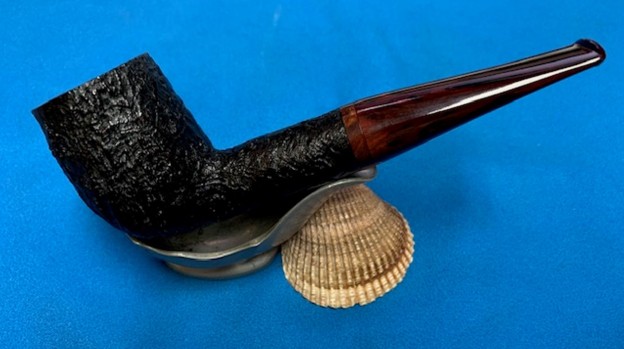
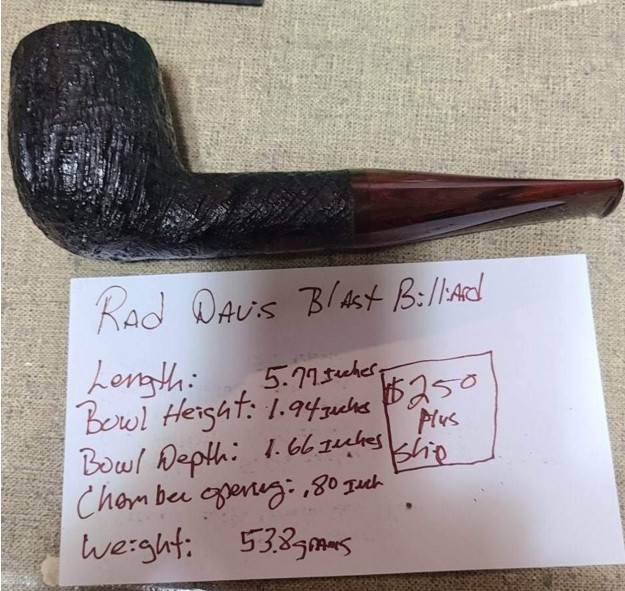
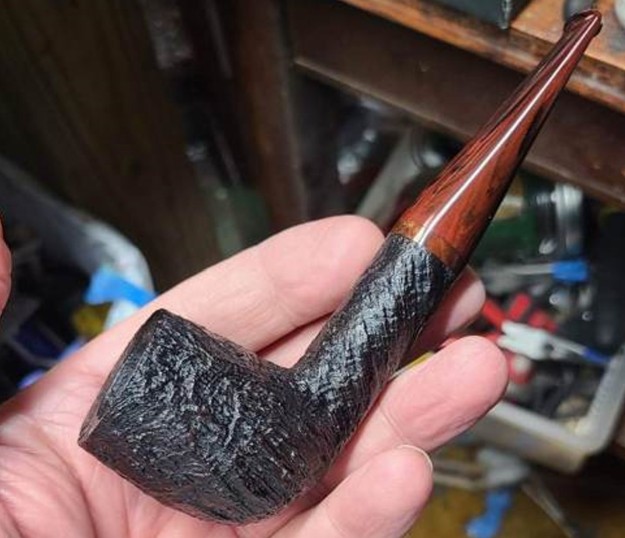
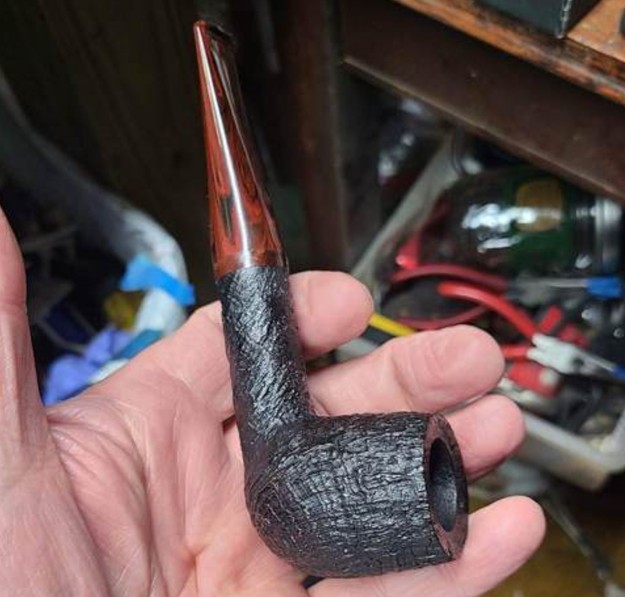
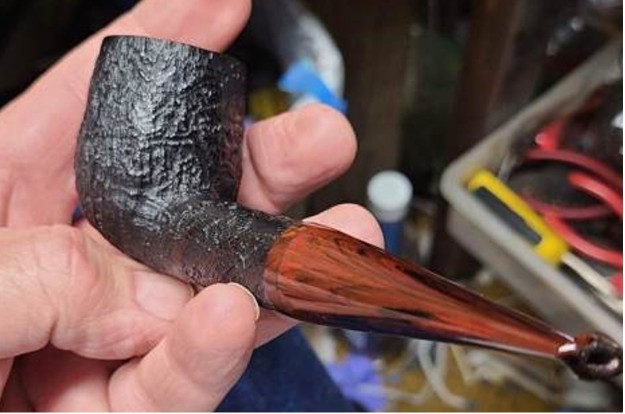
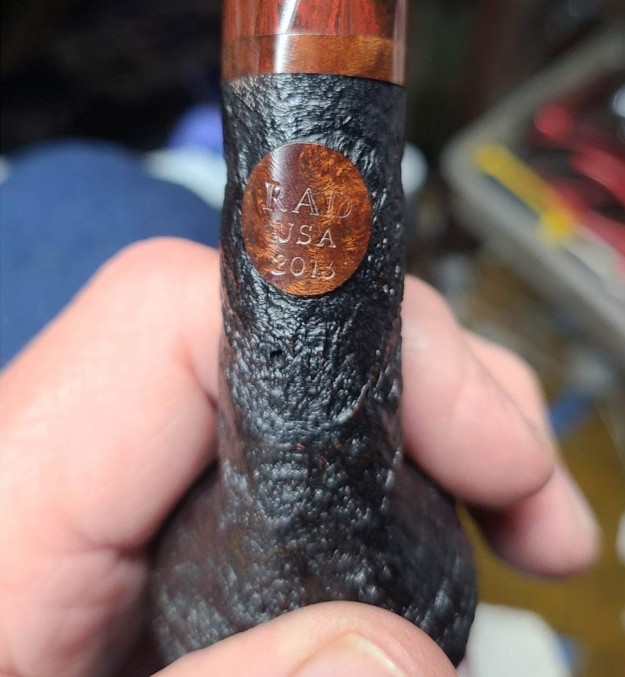
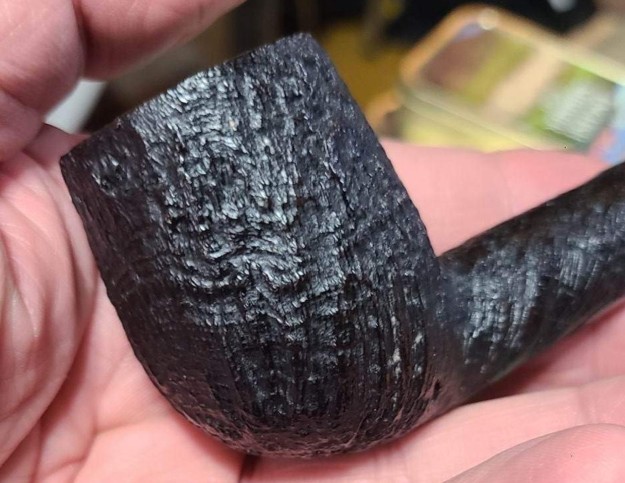
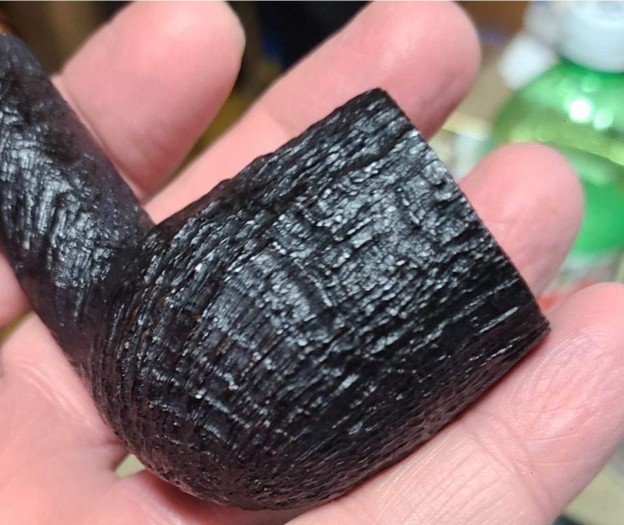
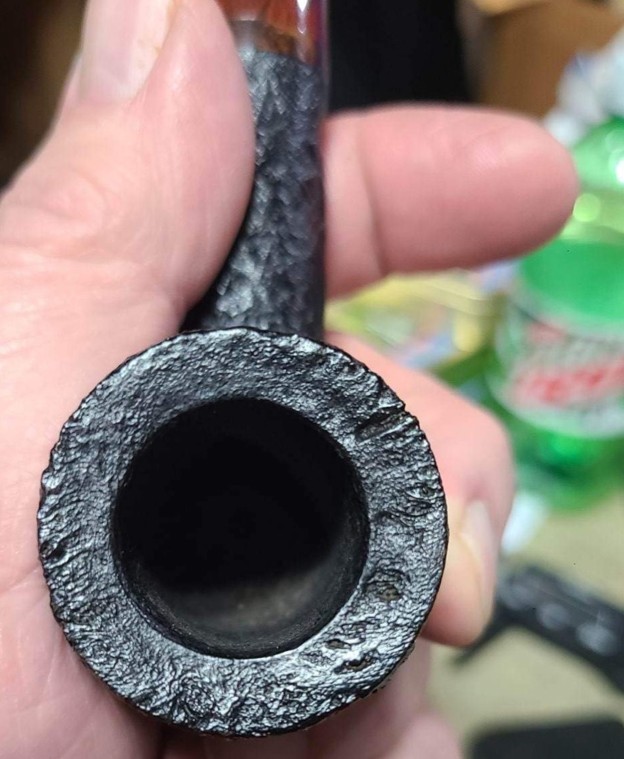
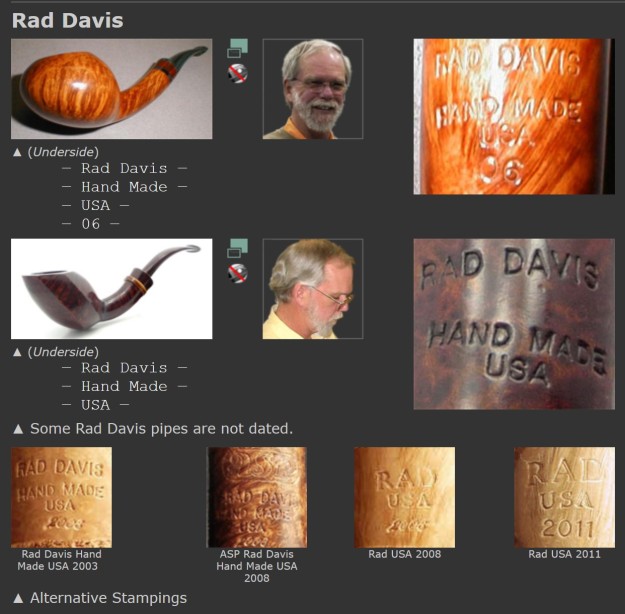
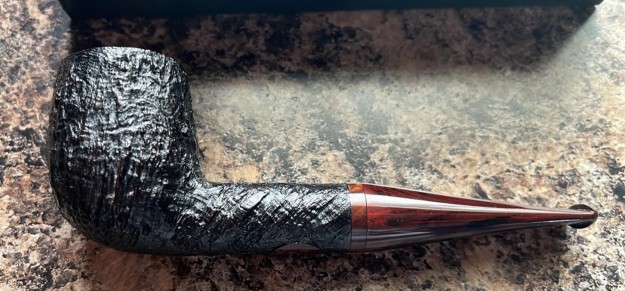
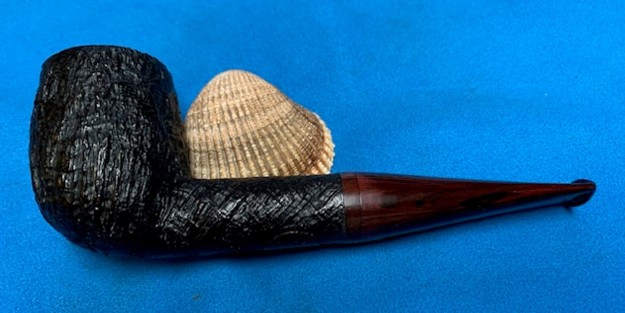
Several months ago now I was reading a post that Robert Lawing of Lawdog’s Pipes posted on Facebook regarding some pipes he worked on that were for sale. One of them was a beautiful Rad Davis 2013 Sandblast Billiard with a shape much like a Dunhill LB. It had a smooth ring around the shank end. The stem was a beautiful Cumberland style taper that looked to be very comfortable in the mouth.I have collected pipes from Rad for quite a few years now and this one caught my eye. I was very interested in adding it to my collection. I copied the photos that Robert had posted so I could enjoy them. I wrote to Robert and we chatted and I soon was able to purchase it. I had him send it to my brother Jeff and I was able to pick it up on my recent trip to Idaho for my Father’s 95th Birthday. The shape is uniquely Rad Davis! I have had an eye on pipes from that brand for several years now and this shape is one that I wanted to have. The angles of the pipe shape where the bowl and shank join are a classic shape like a Dunhill LB. The comfortably shaped, Cumberland stem was a great contrast with the dark black/red stain of the sandblast briar. I am including the photos that Robert had in sale listing. The next photo that Robert showed was of the stamping on the underside of the shank. It is a smooth oval with stamping that reads RAD [over] USA [over] 2013. The stamping was clear and readable.Robert had taken photos of the bowl sides to show the shape and the style of the blast. It was a real beauty. To help me understand the stamping a bit more I turned to Pipephil’s site and read what it said about Rad Davis pipes (http://pipephil.eu/logos/en/logo-r1.html). I have included a screen capture of the section below as well as the side bar information below the capture.Artisan: Robert (Rad) Davis began making and selling freehand pipes in 2003.

To close my understanding of the pipe I turned to Pipedia (https://pipedia.org/wiki/Davis,_Rad).  I quote the article which came from Rad Davis himself. It is a great read so I have included it below.

I have been smoking (off and on) and collecting (continuously) pipes since the early 1970’s. They have always fascinated me. My very first pipe was a Pioneer Calabash that I bought in a department store in the early 70’s while I was in college in Sacramento, California. My second pipe during that same period was a Nording free hand that I got for $20.00 plus a coupon from the back of an Amphora Pipe Tobacco package. The coupon was introducing this new young Danish pipe maker to the U.S. market. I still have both pipes.

I met Mark Tinsky several years ago in the internet when I was in need of a pipe repair, and from his site I found that he was a fly fisherman. I am a fly fishing guide in Montana and a commercial fly tier, and we ended up trading some flies for pipe repair. Last spring, I was in need of a pipe repair again, and when I found Mark’s site, I saw that he had a new address in Helena, Montana, where I live and guide during the summer! We got together after I arrived for the season and did some fishing together, and he showed me his shop, and even made me a nice bent Rhodesian pipe while I watched. It’s become one of my favorite pipes, dedicated to Mac Baren Navy Flake.

When I expressed an interest in trying to make a pipe, Mark was much more than helpful. He gave me a couple of pipe kits that he couldn’t sell for one reason or another, cut the basic shape out on the band saw, and let me go to work making free hand pipes. My first few pipes left a lot to be desired, but I was starting to see what I was doing wrong and concentrated more on getting the proportions and flow of the shape right until I was turning out some decent work. I also learned to cut and drill pipes and turn tenons on stems during this time. I discussed with Mark the possibility of my actually selling my pipes, and he said that he thought there was a definite need for quality hand made pipes at reasonable prices.

And here is the result. All my pipes are free hands, made from the same high quality Grecian Briar used by Mark. There are no fills in my pipes. Some may have small flaws, but they are not hidden, and they are priced accordingly.[1]

When Jeff received the pipe from Robert he took a photo of it and sent me the photo. He said the pipe appeared to be unsmoked and very clean.I brought it home with me on Wednesday when I came back to Vancouver. It truly is a beautiful pipe with stunning grain showing through the blast. The smooth band of briar on the shank end and the Cumberland taper stem work well with the dark blast of the bowl and the shank. The pipe is very clean and I can see why Jeff thought it was unsmoked. There is no smell or residual tobacco on the walls. They are dark and smooth. I took photos of the pipe when I brought it to my work table. Look at them and enjoy this stunning pipe.

Restoring and Hand Carved All Wood Rusticated Bent Egg


Blog by Steve Laug

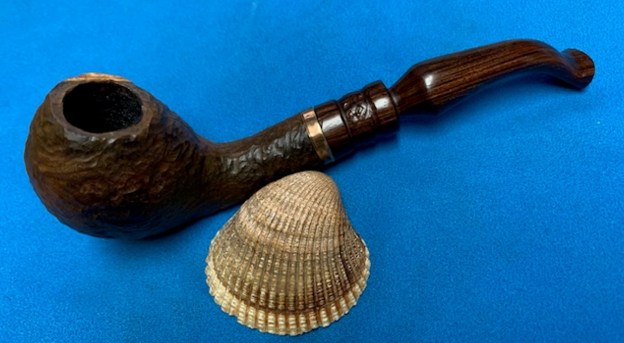
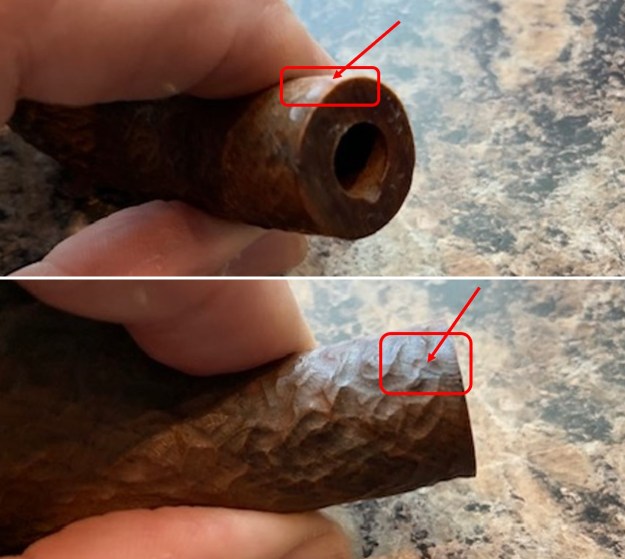
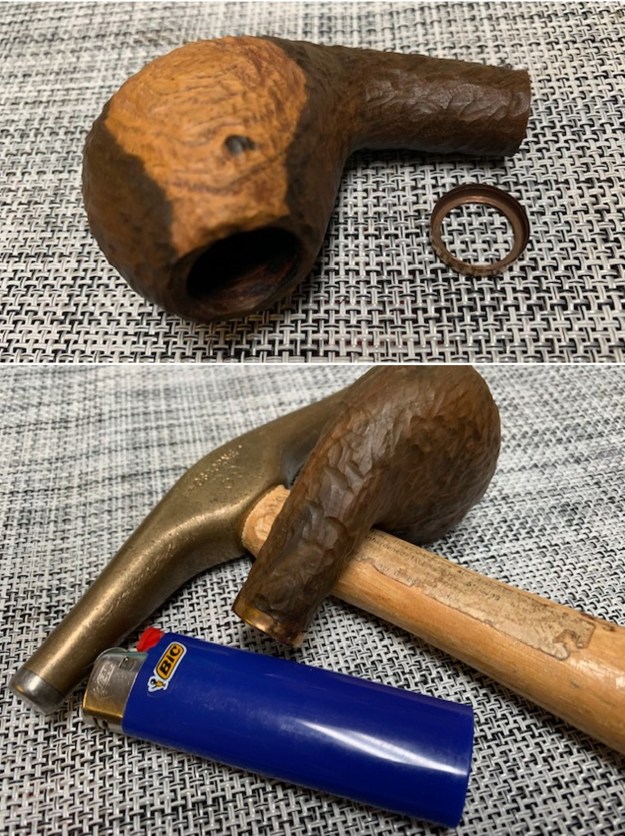
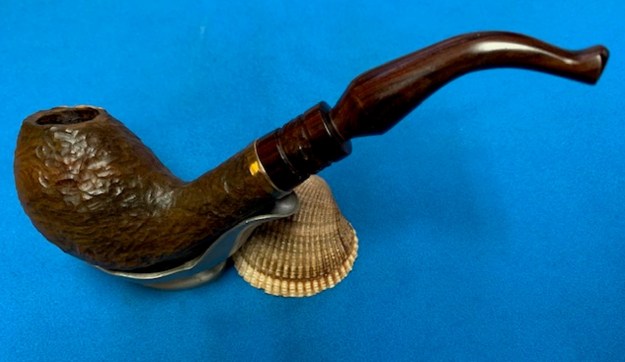
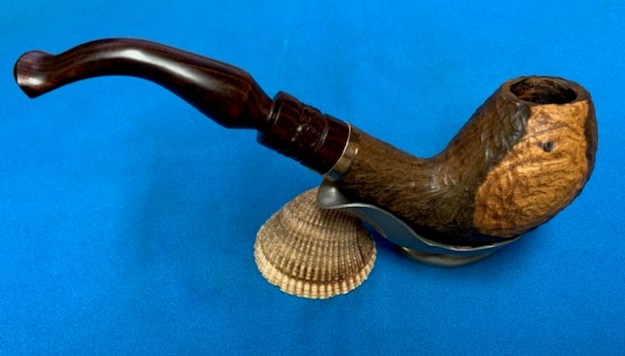
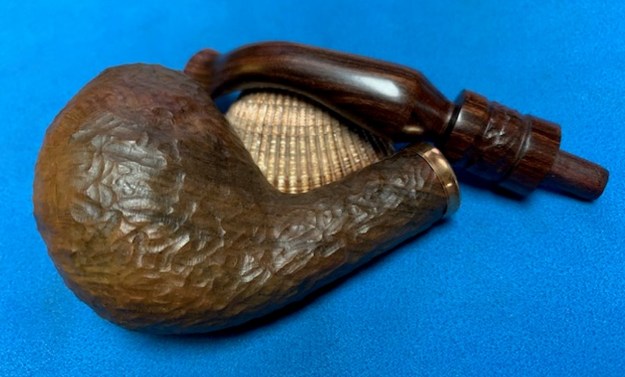
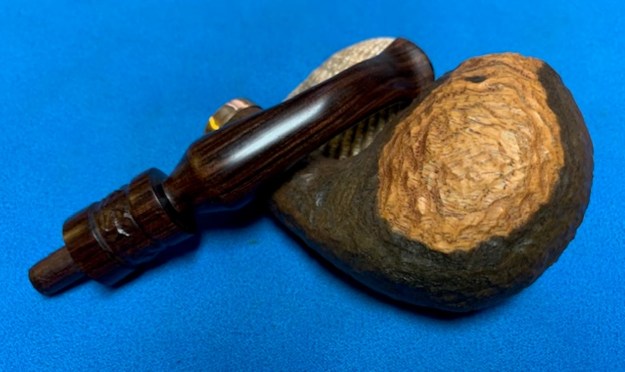
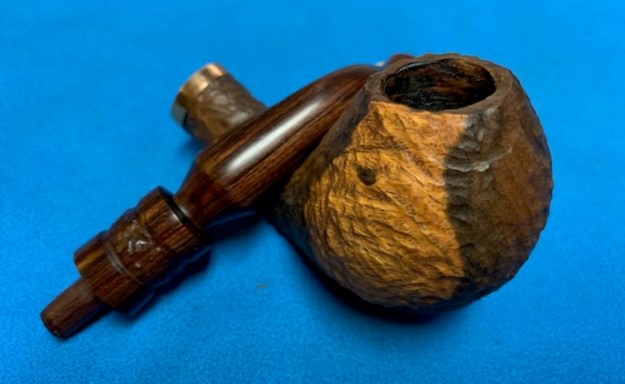
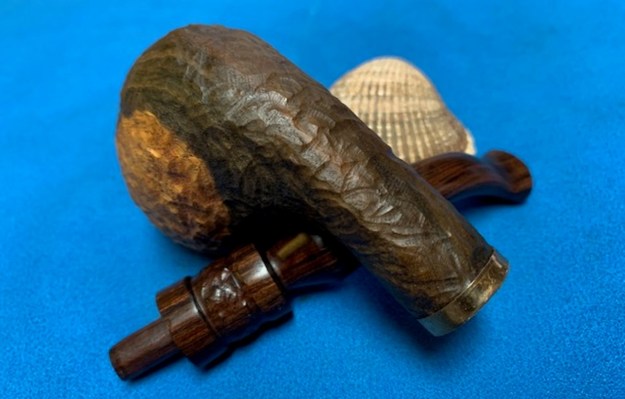
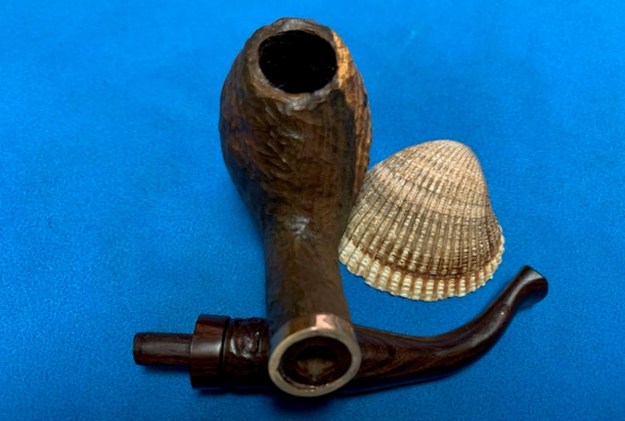
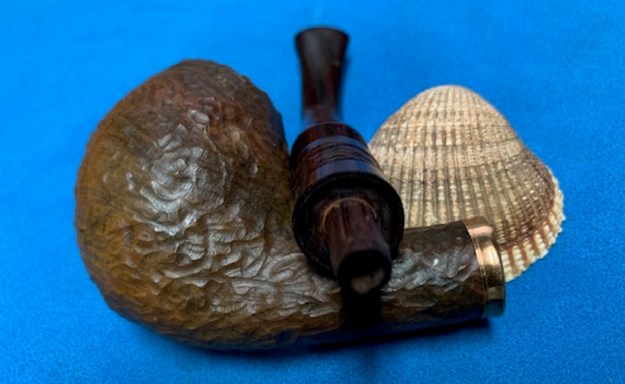
The next pipe on the table is a bit of an oddity. When Jeff picked it up it was heavy and cool and we thought it might be stone. When I was in Idaho visiting my dad for his 95th I spent some time with Jeff and had some time to examine the pipe. It was heavy and definitely seemed odd. In many ways it was not like stone but the weight and the coloration of the pipe made us question it. I removed the stem and there was grain in the shank end that confirmed it was wood. I am not sure what kind of wood it was but it was wood. It was hand made and there were no stamps or marks on the shank identifying who made it. The rusticated finish was dirty and there was grime ground into the sides and the rim top of the pipe. The right side of the bowl had a whitened spot on it that followed the flow of the egg shape on that side. It was not paint. There was a thick cake in the bowl and the airway in the shank and stem were dirty. The stem was also wood – probably ebony or other dark, hard wood. There were tooth marks on both sides ahead of the button. It obviously had been someone’s favourite pipe and was well used. Here are some photos of the pipe before I started to work on it. I took close up photos of the bowl, rim top and stem. The photos give a clear photo of the condition of the pipe. The bowl is moderately caked and the rim top actually looks quite good. There is some debris in the rustication and some darkening to the top and edges. The stem is in good condition other than the tooth marks on both sides ahead of the button.I removed the stem from the bowl and took photos of the well designed look it has. The proportions are very well done and the pipe is quite beautiful.I started my work on this pipe by reaming the bowl. I started with a PipNet reamer to clean out the cake in the bowl. I cleaned up the remnants of the cake with a Savinelli Fitsall Pipe Knife. I removed all of the cake and checked the walls. They were solid and there was no checking or damage on the walls. I wiped the bowl down with acetone to remove the spotty finish on the wood. It removed the shininess of the finish and some of the stain and the pipe looked better. It also showed some grain patterns in the wood similar to the stem wood. I cleaned out the internals of the bowl, shank and the airway in the stem with alcohol, cotton swabs and pipe cleaners until they were clean. It smelled significantly better once finished.I wiped down the bowl and stem with some Extra Virgin Olive Oil to enliven the bowl and the stem. I rubbed it on and let it soak into the wood. I buffed it with a paper towel. When Jeff looked over the shank he noted a crack in the shank. I took a photo of the side of the and the shank end to show the crack. It is hard to see in the photos. It did not go too deep in the shank end and extended about ½ inch along the top left side.I waited until I returned to Vancouver and then banded the shank with a thin brass band. I heated the ring with a lighter flame and pressed it onto the shank end against my hard desk top. I tapped the flat surface of the shank end with a small tap hammer to make sure the fit was flat against the shank. I took photos of the shank with the band in place. It looks very good with the new bling. I rubbed down the bowl and shank with Before & After Restoration Balm. It is a paste/balm that is rubbed into the surface of the briar or other woods. The product works to deep clean the finish, enliven and protect it. I worked it into the wood with my finger tips and a horsehair shoe brush. I let it sit for 10 minutes then wiped it off with a soft cloth then buffed it with a cotton cloth. The pipe really began to have a deep shine in the rustication and the grain shines through. The photos I took of the bowl at this point mark the progress in the restoration. It is an unusual looking and pretty handmade pipe. I set the bowl aside and turned to the stem. I sanded the tooth chatter and marks on the surface of the stem with a piece of 220 grit sandpaper and started the polishing with 600 grit wet dry sandpaper. It looked much better.I polished the stem with micromesh sanding pads – 1500-12000 grit sanding pads and water to wet sand the stem. I wiped it down after each sanding pad with Obsidian Oil on a cotton rag after each sanding pad. Obsidian Oil does two things when sanding with micromesh – first it gives some protection to the stem from buildup and second to give the sanding pads bite in the polishing process. I use Before & After Fine and Extra Fine Stem Polish as it seems to remove the fine scratches in the wooden stem. I rub the Fine Polish on the stem and wipe it off with a paper towel and then repeat the process with the Extra Fine polish. I finish the polishing of the stem down with a final coat of Obsidian Oil and set the stem aside to let the oil absorb. This process gives the stem a shine and also a bit of protection. The final steps in my process involve using the buffer. I buffed the bowl and stem with Blue Diamond to polish out the light scratches in the wood of the bowl and the stem. I gave the bowl and the stem multiple coats of carnauba wax. I have found that I can get a deeper shine if I follow up the wax buff with a buff with a clean buffing pad. It works to raise the shine and then I hand buff with a microfiber cloth to deepen the shine. It is always fun for me to see what the polished bowl looks like with the polished stem. It really is a nice pipe. The light rusticated finish around the bowl sides and shank looks great. The wooden carved, fancy, saddle stem works well with the pipe. The No Name Handcarved Hardwood (Ebony??) Egg with a carved wooden stem feels great in my hand. It is a well-balanced pipe. Have a look at it with the photos below. The dimensions are Length: 6 ¾ inches, Height: 2 inches, Outside diameter of the bowl: 1 inch, Chamber diameter: 5/8 of an inch. The weight of the pipe is 3.07 ounces/87 grams. It is a beautiful pipe that I will soon be putting on the rebornpipes store in the American Pipe Makers Section. It is available if you want to add it to your collection. It was a great smoker and it will give many more years of service.

As always, I encourage your questions and comments as you read the blog. Thanks to each of you who are reading this blog. Remember we are not pipe owners; we are pipe men and women who hold our pipes in trust until they pass on into the trust of those who follow us.

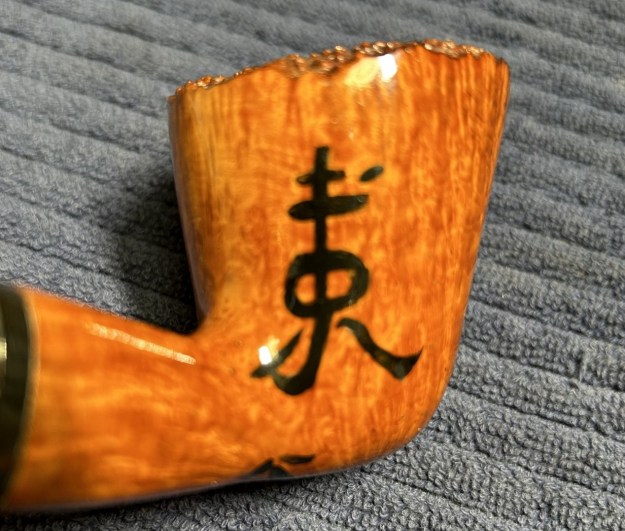
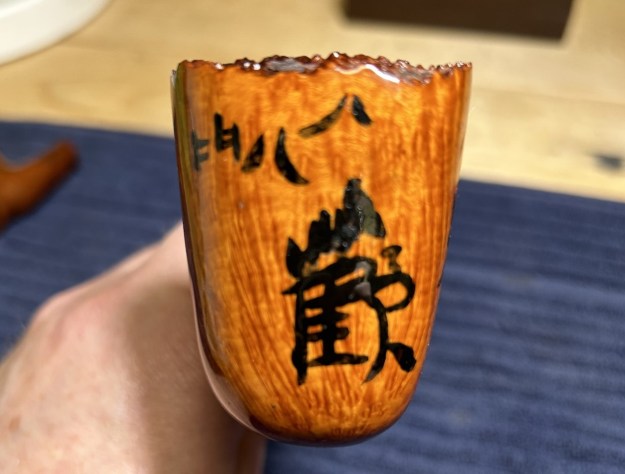
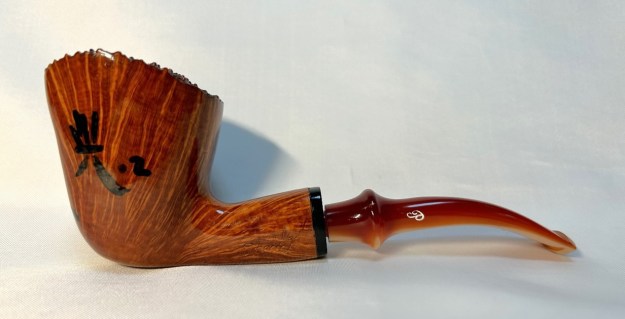
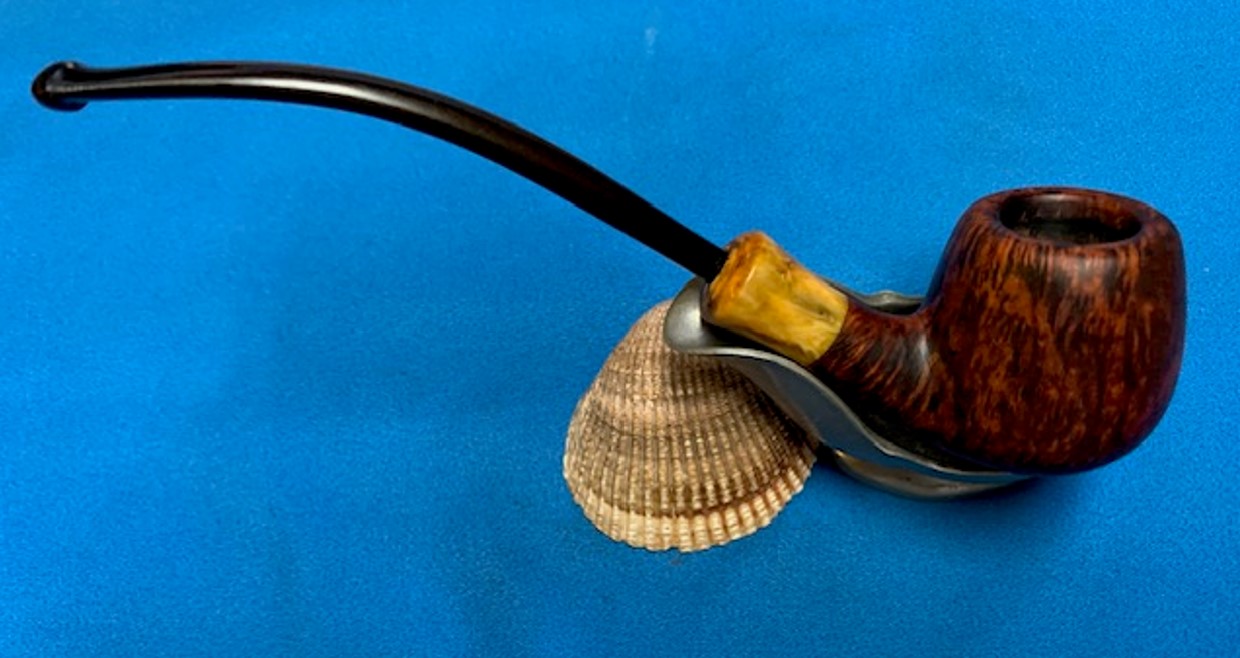
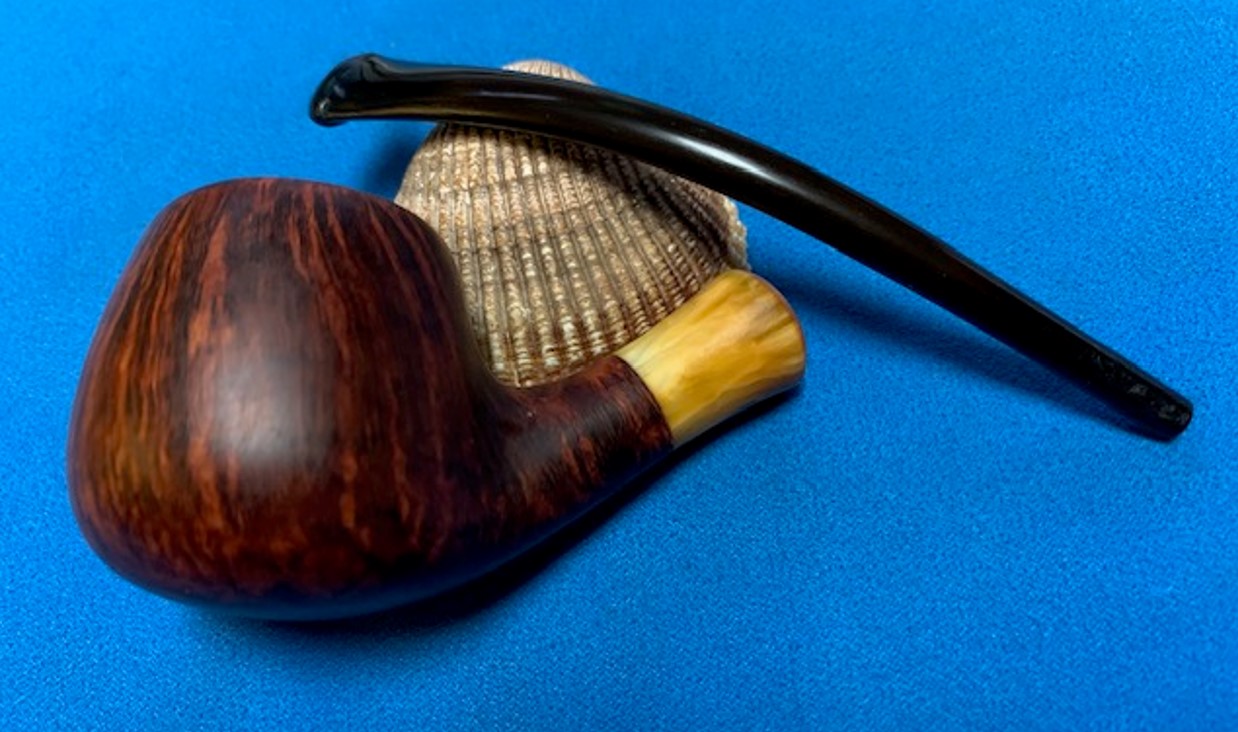
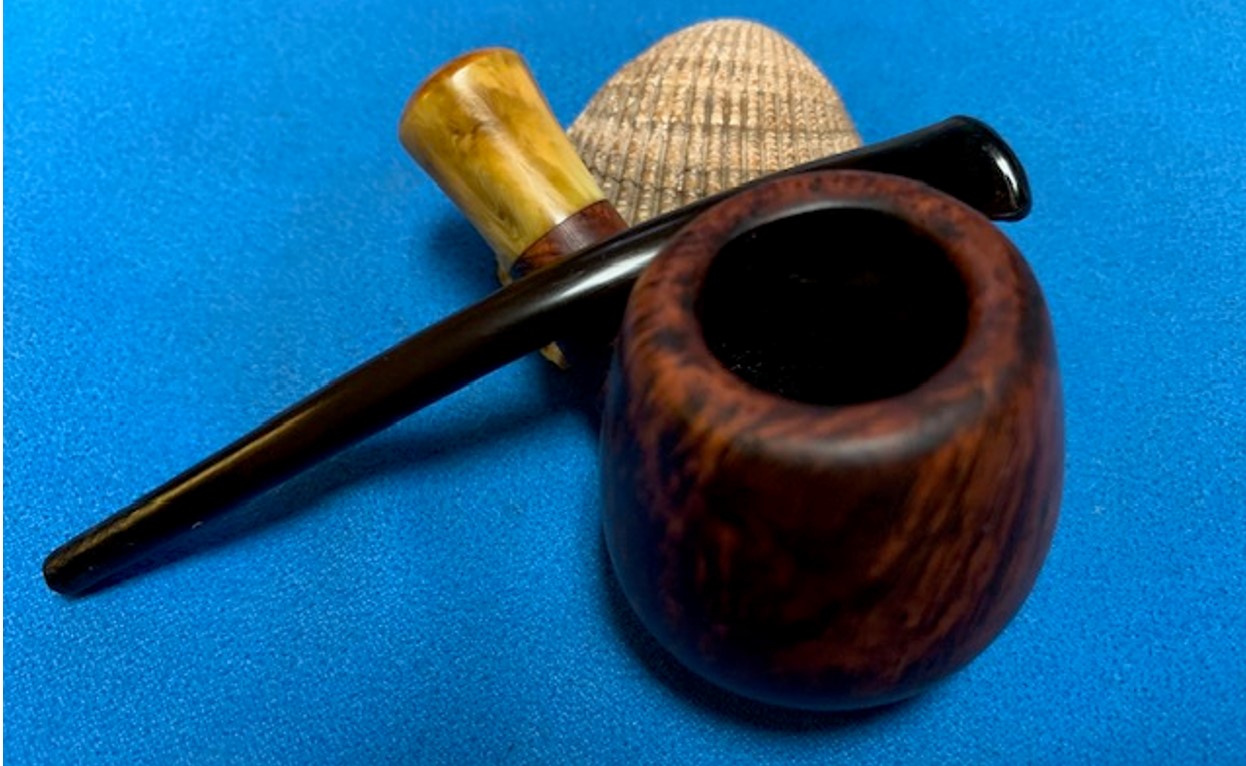
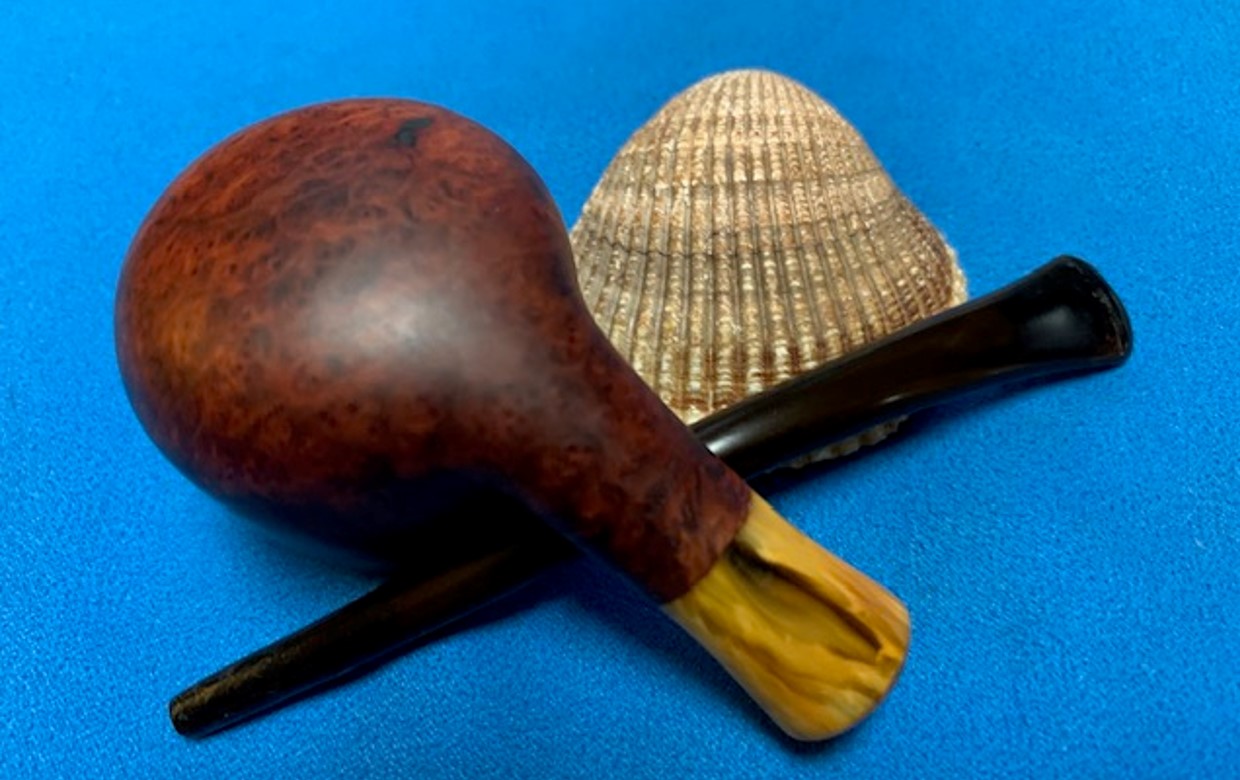
Stunning Handmade Freehand Pipe from Paradis


by Kenneth Lieblich

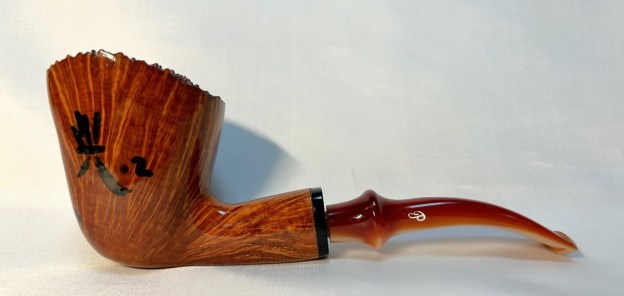
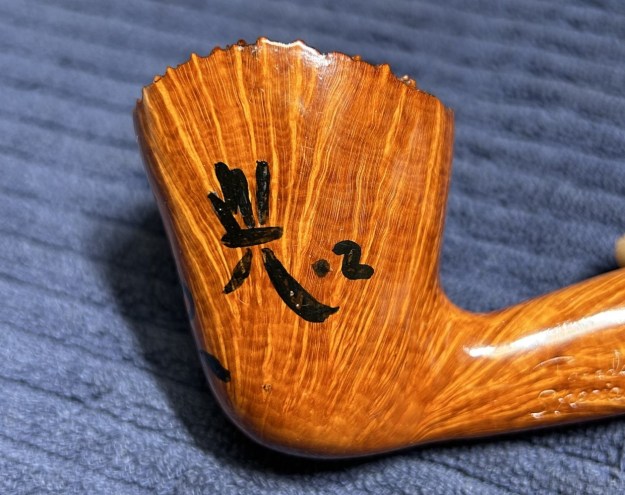
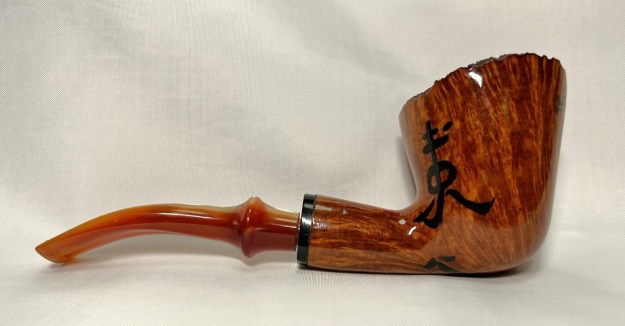
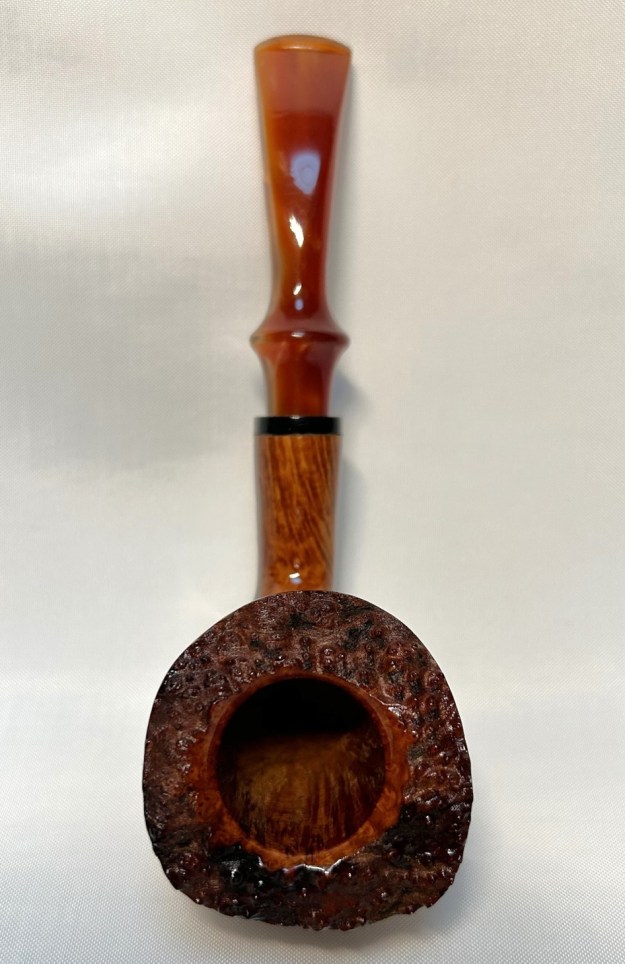
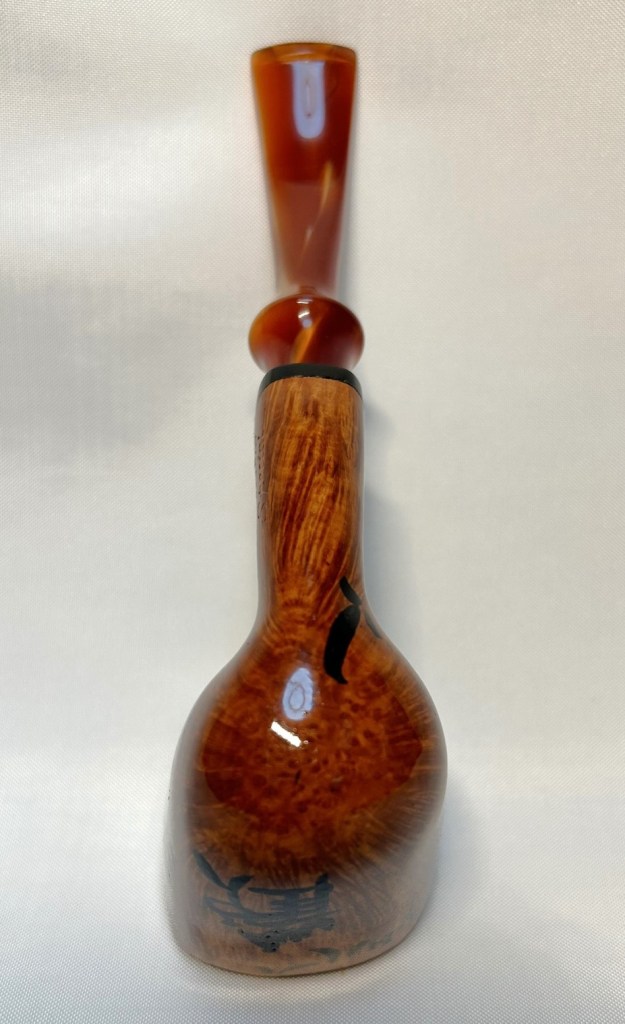
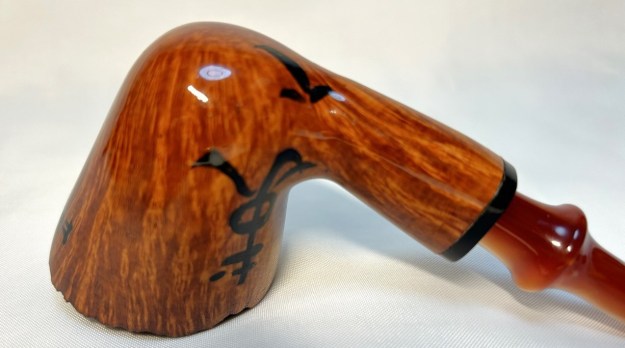
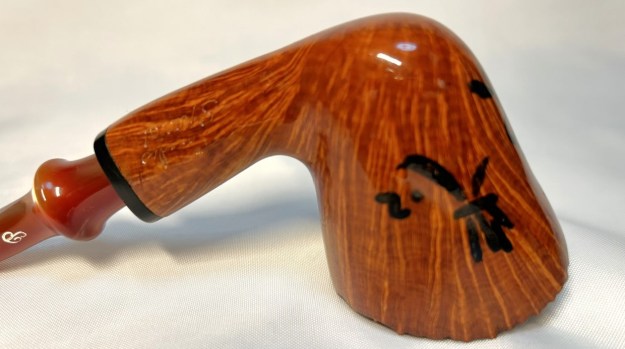
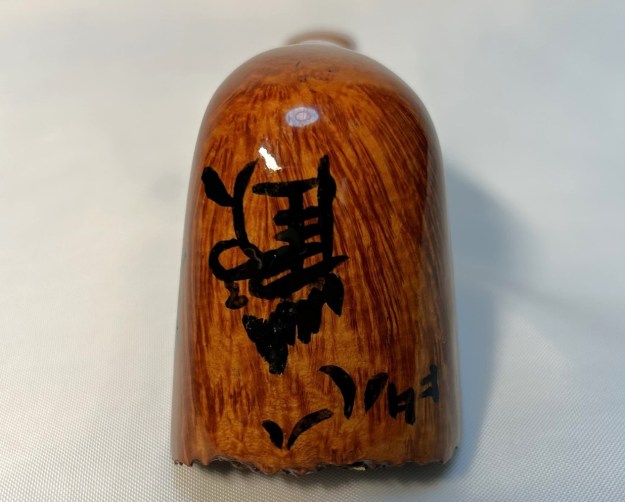
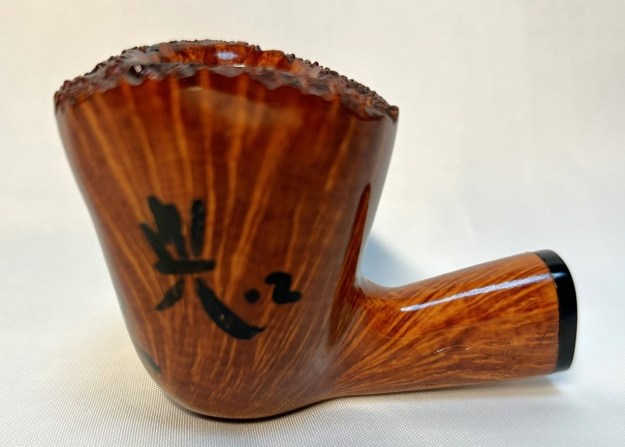
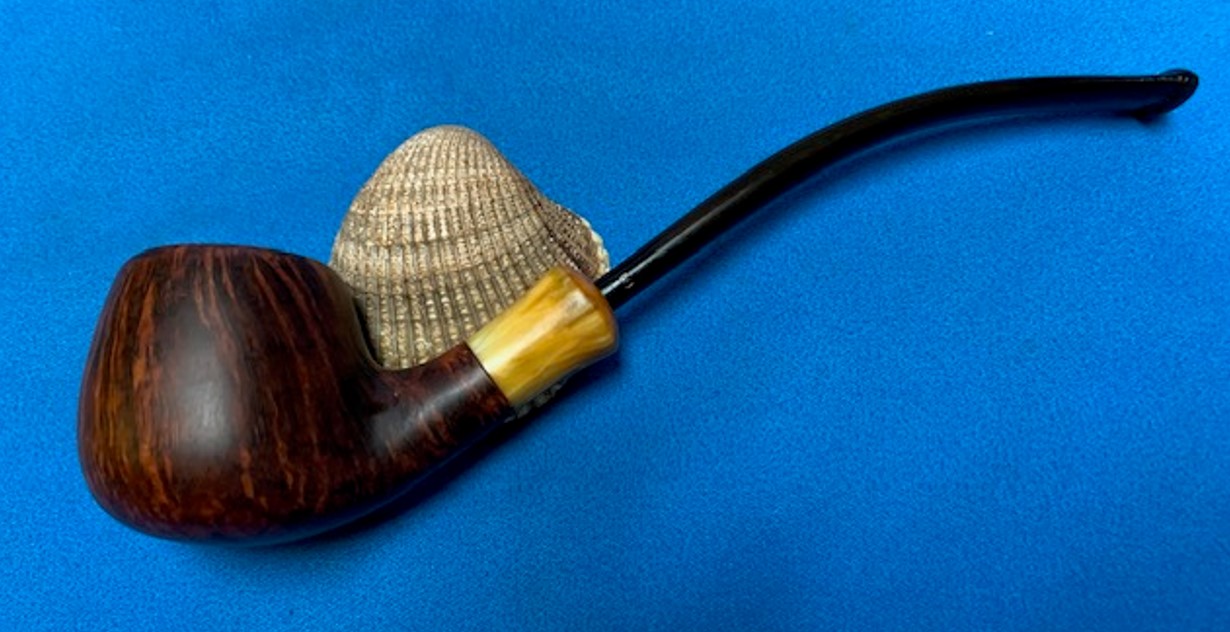
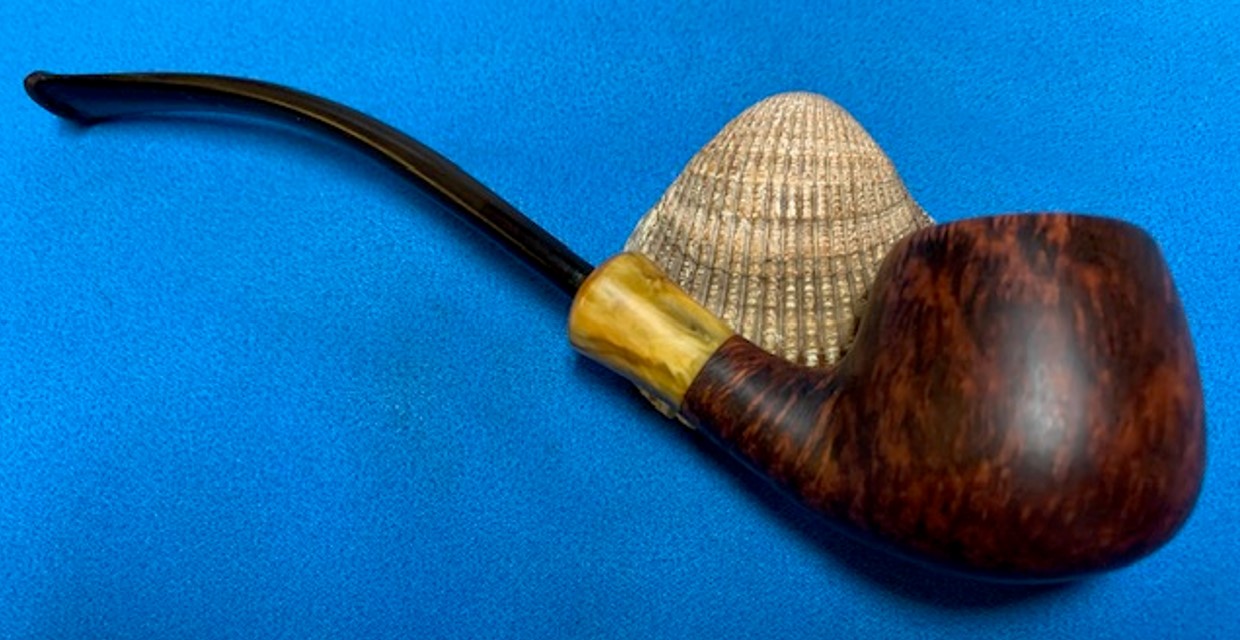
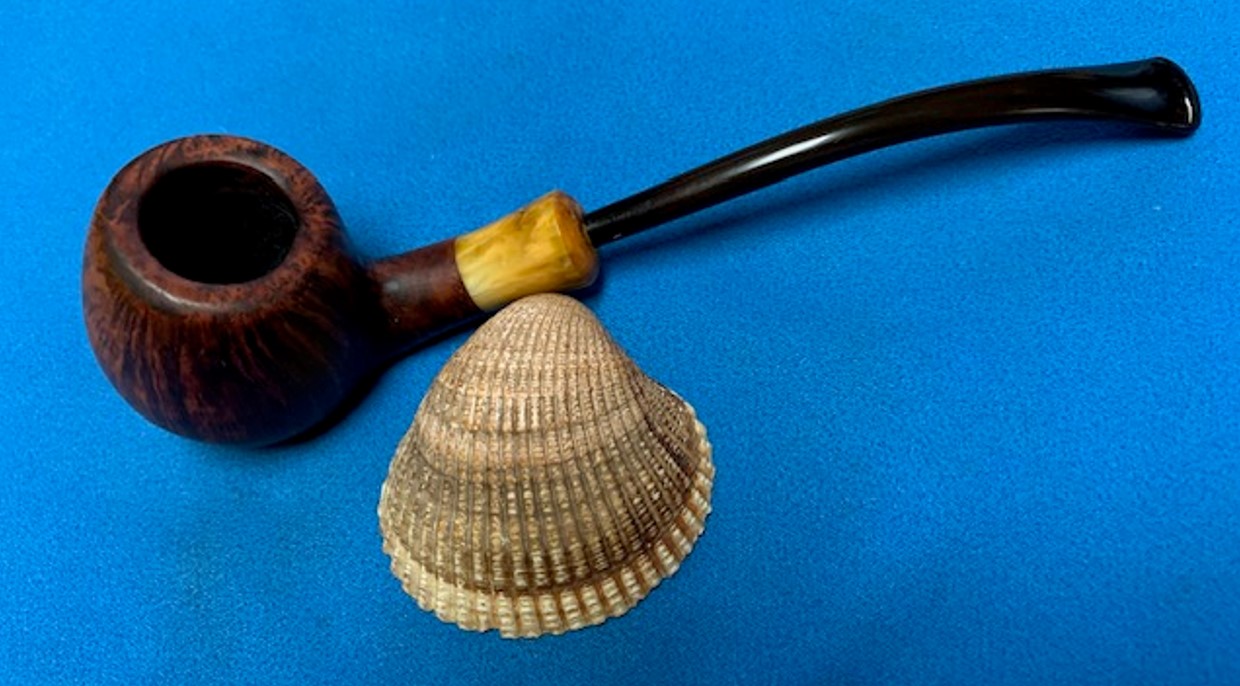
I have a pipe that came my way recently and I am happy to offer it to you for sale. No restoration story on this one – just a stunning pipe. I gave it a quick and thorough once-over (and a quick polishing) and now it’s time to turn it over to you. This pipe has never been smoked and has some of the most amazing grain. Take a close look. This is a Canadian masterpiece from Paradis Pipes of Québec City – never smoked, brand new. It is a beautiful half-bent handmade freehand. First, a quick primer on the pipemakers. From Pipedia:

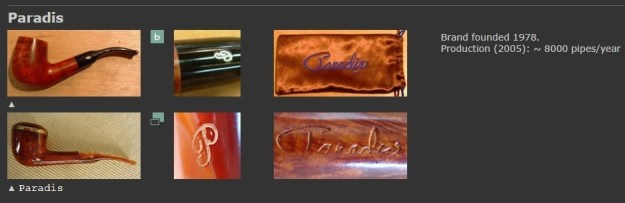
Paradis Pipes is the Canadian brand of the brothers Gilles and Fernand Paradis. In 1922 the Paradis family moved to the USA, when Lucien Paradis (1906-1979) was 16 years old. It was at this age that he started as an apprentice at his uncle’s pipe factory, Joseph B. Desjardins, maker of (JD) pipes, in Fall River, MA. Joseph Desjardins was issued two patents during this period, one for a new machine for making pipe stems and another for a new design of pipe reamer. The company employed 60 workers at one stage. In 1930, due to the Great Depression, Lucien lost his job and returned to Quebec to work in the agricultural machine industry. In his spare time, be made pipes, selling them door to door. Three years later the rest of the family joined him, and Lucien founded a pipe factory with two of his brothers. The company eventually employed 18 workers and in the 60s produced over 50 thousand pipes a year, under brads like JBL, Dr. Thomas, Fernand Gignac, S.C. Pipes, New London Golfer, and Jo Thomassin. Paradis was founded in 1978, at the Salon of Quebec Astisans’ and is available in tobacconists all over the country today. The brand produces 8000 pipes a year (400 “handmade”), with Greek briar.I acquired this pipe from a gentleman who used to sell Paradis Pipes locally, and he told me that this was one of their incredible “handmades”.

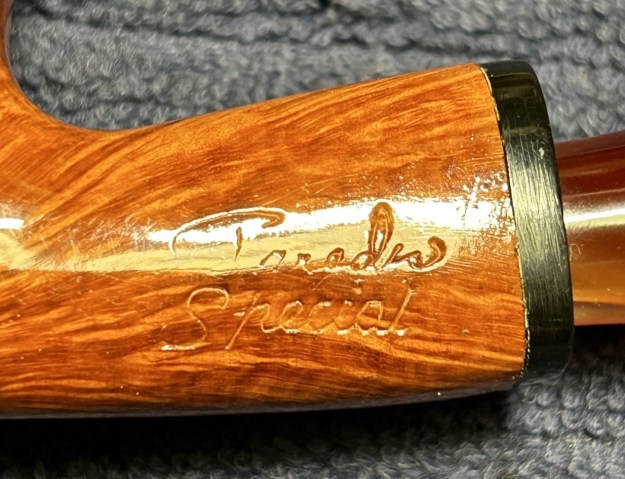
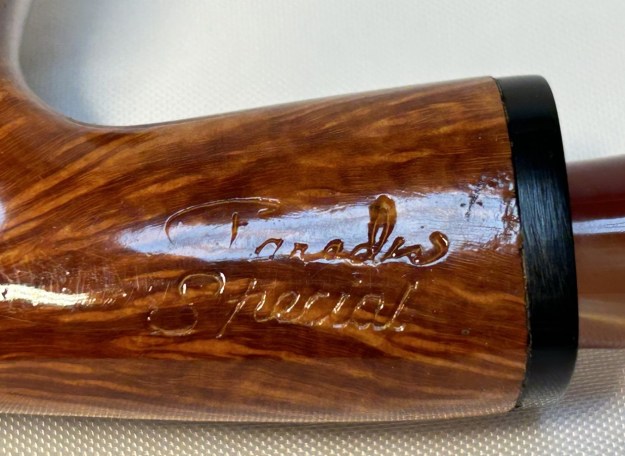
It’s a lovely, elegant pipe. If you are interested in acquiring it for your collection, please have a look in the “Canadian” pipe section of the store here on Steve’s website. You can also email me directly at kenneth@knightsofthepipe.com. The approximate dimensions of the Paradis Special are as follows: length 6⅛ in. (155 mm); height 2¼ in. (57 mm); bowl diameter 1¾ in. (44 mm); chamber diameter ⅞ in. (22 mm). The weight of the pipe is 2¼ oz. (67 g). If you are interested in more of my work, please follow me here on Steve’s website or send me an email. Thank you very much for reading and, as always, I welcome and encourage your comments.

Resuscitating a Well Used Peterson XL18 Oom Paul Silver Spigot


Great job on a great looking pipe. Thanks posting it.

The pipe on the workbench today came in to the DadsPipes shop as part of a larger lot of estate pipes sent to me for restoration from a gent in …

Resuscitating a Well Used Peterson XL18 Oom Paul Silver Spigot

Doing a Clean up and Restoration of a Stanwell Revival 105 Bent Apple


Blog by Steve Laug

The next pipe on the work table is one that a fellow just dropped by. He had written to me earlier this week about a Stanwell that he had that needed some work. Here is his first email.

Your name was passed to me by the folks at City Cigar. I was lamenting to them how my decade old Stanwell was not doing well, and they suggested I check in with you. I would love to hear your thoughts on it. — Mike

I replied to him as follows:

Thank you. Can you send me a photo of the pipe on your phone?

He did not waste anytime and sent me an email with the first three pictures below and also a description of what he knew was wrong with the pipe. He wrote as follows:

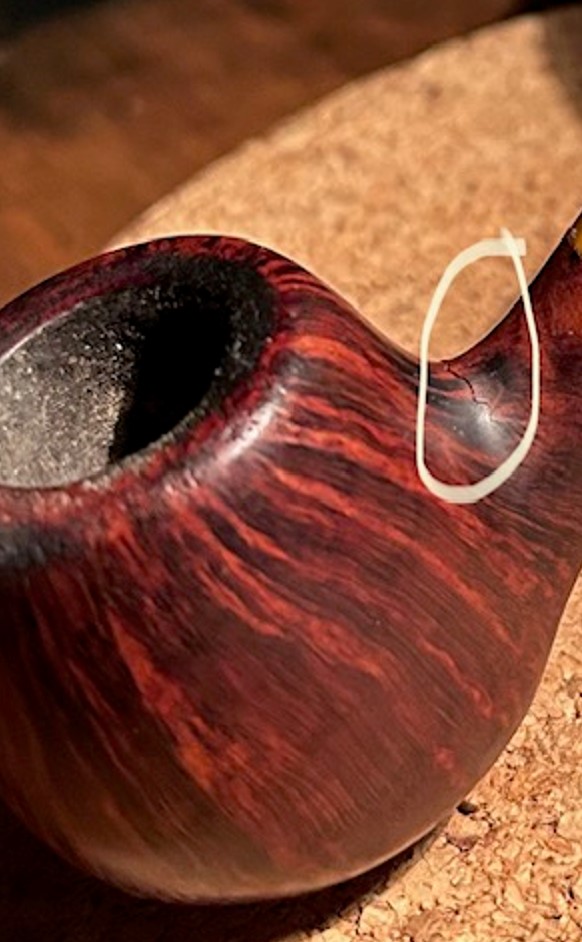
Thanks for getting back to me so quickly! In the photos you can see that there are stem problems, but also a little crack in the bowl. If I could save this piece, I would so grateful. I just love the shape, as well as the elegant mouthpiece. I haven’t really seen anything else like it. — Thanks, Mike

The pipe appeared to be very dirty in the photos that were included. He also circled the crack that was on the top of the shank at the bowl shank joint. The rim top was dirty and worn with some knock out marks on the top edge. The finish was grimy and tired looking. The inner edge of the bowl showed some damage and darkening around the bowl. The stem was wrapped with scotch tape around the end that fit in the shank. I speaking with Mike he stated that it was loose in the shank extension so he had wrapped it to give the stem more of a fit in shank. It was worn out and sticky but it had done the job keeping the stem from falling out of the bowl. After viewing the photos and talking with Mike about the pipe I asked him to drop it by the house so I could work on it. I took photos of the pipe once it was dropped off before I worked on it. My evaluation of the pipe confirmed all of the things that I noted above in my communication with Mike about his pipe. There was one other issue that became visible when it was here. The shank extension was loose in the shank. The glue that had held it in place had broken loose and it turned freely in the shank. It is a uniquely shaped pipe that I really like the looks of and I think that once it is cleaned up it will be a real beauty. I took photos of the bowl and rim top as well as the stem. The rim top shows the thick lava coat on the top and the inner edge of the bowl. It is heavier on the back side than the front. You can also see the tape around the stem diameter to attempt to tighten the fit in the shank extension. You can see the oxidation around the stem sides and the deep tooth marks and chatter on both sides ahead of the button.I took a photo of the stamping on the underside of the shank. It reads as noted above. It is clear and readable. The pipe is quite nice with the stem removed. You can see the flow of the design and the look of the parts.I turned to Pipedia and the section on the Stanwell Shape Numbers and Designers to see what I could find (https://pipedia.org/wiki/Stanwell_Shape_Numbers_and_Designers). I found the following information that I quote below:

  1. ‘Elegance’; Bent apple with an acrylic mount and a long tapered stem. A reinterpretation of Sixten Ivarsson’s shape 08(b), by Sixten Ivarsson (1980s, see catalogue).

From that I can see that the pipe (105 shape) was a bent apple and was originally designed as a reinterpretation of the Sixten Ivarrson Shape 08b. I have included two pages from the 1980s catalogue below. The first show the 08 and the second page shows the 105. It is called an Elegance on that page rather than a Revival but it is a beauty. I started my work on this pipe by reaming the bowl. I started with a PipNet reamer to clean out the cake in the bowl. I cleaned up the remnants of the cake with a Savinelli Fitsall Pipe Knife. I finished by sanding the walls of the bowl with 220 grit sandpaper wrapped around a piece of dowel to smooth out the interior of the bowl. I cleaned out the internals of the bowl, shank extension and the airway in the stem with alcohol, cotton swabs and pipe cleaners until they were clean. I unwrapped the tape from the stem in order to clean and restore it. I scrubbed the exterior of the bowl with undiluted Murphy’s Oil Soap and a tooth brush. I worked on the bowl and rim top as well as the inner and outer edges of the bowl. It cleaned up really well. I rinsed it with warm water to remove the soap and the grime from the briar. I dried it off with a cotton towel. I took photos of the bowl at this point in the process. With the pipe cleaned up it was time to re-glue the shank extension to the end of the shank. I used some Weld Bond white all-purpose glue to reattach the extension to the shank end. I spread the glue around the tenon on the extension and pushed it in place. I adjusted the fit around the shank until it all aligned. I set it aside to cure. At this point in the process it was time to deal with the crack in the shank at the shank/bowl union. I used a small pinpoint to mark the ends of the crack on both sides of the shank. I drilled a hole in the small mark on each side of the crack end using a microdrill bit.I filled in the crack and the two drill holes in the shank sides with clear CA glue. I spread it into the crack and the holes with a dental spatula. Once it had cured I sanded the repairs smooth with 220 grit sandpaper and followed it up with micromesh as seen in the next photos.I polished the briar with micromesh sanding pads – dry sanding with 1500-12000 grit sanding pads. I wiped the bowl down after each sanding pad with a damp cloth to remove the sanding debris. The bowl began to take on a rich glow. I rubbed down the bowl and shank with Before & After Restoration Balm. It is a paste/balm that is rubbed into the surface of the briar. The product works to deep clean the finish, enliven and protect the briar. I worked it into the briar with my finger tips. I let it sit for 10 minutes then wiped it off with a soft cloth then buffed it with a cotton cloth. The briar really began to have a deep shine in the briar and the grain shines through. The photos I took of the bowl at this point mark the progress in the restoration. It is a gorgeous pipe.  I set the bowl aside and turned to the stem. It was in rough condition with the gummy tape on the end fitting into the shank and deep tooth marks. I painted the surface of the stem with the flame of a Bic lighter to try and lift them. I lifted them but they were still distinctly present. I filled in the marks with Black CA glue and set it aside to cure. Once cured I flattened the repair with a file and then followed that up with a piece of 220 grit sandpaper and started the polishing with 600 grit wet dry sandpaper. It looked much better. I built up the end of the stem with clear acrylic fingernail polish. I spread it around the stem with a dental spatula and set it aside to cure. Once it hardened I polished it with micromesh.I polished the stem with micromesh sanding pads – 1500-12000 grit sanding pads and water to wet sand the stem. I wiped it down after each sanding pad with Obsidian Oil on a cotton rag after each sanding pads. I know that many say Obsidian Oil does nothing for acrylic stems, but I find it does two things – first it gives some protection to the stem from buildup and second it give the sanding pads bite in the polishing process. Fine and Extra Fine stem polish as it seems to really remove the fine scratches in the vulcanite. I rub the Fine Polish on the stem and wipe it off with a paper towel and then repeat the process with the Extra Fine polish. I finish the polishing of the stem down with a final coat of Obsidian Oil and set the stem aside to let the oil absorb. This process gives the stem a shine and also a bit of protection.The final steps in my process involve using the buffer. I buffed the bowl and stem with Blue Diamond to polish out the light scratches in the briar and the vulcanite. I gave the bowl and the stem multiple coats of carnauba wax. I have found that I can get a deeper shine if I follow up the wax buff with a buff with a clean buffing pad. It works to raise the shine and then I hand buff with a microfiber cloth to deepen the shine. It is always fun for me to see what the polished bowl looks like with the polished stem. It really is a nice pipe. The smooth finish around the bowl sides and shank looks great. The oval vulcanite taper stem works well with the pipe. The Stanwell Revival 105 Bent Apple feels great in my hand. It is a well-balanced pipe. Have a look at it with the photos below. The dimensions are Length: 6 ½ inches, Height: 1 ½ inches, Outside diameter of the bowl: 1 ¼ inches, Chamber diameter: ¾ of an inch. The weight of the pipe is 1.31 ounces/38 grams. It is a beautiful pipe that I will soon be giving back to Mike who dropped it off for restoration. I am sure he will enjoy it and it will give many more years of service to him.

As always I encourage your questions and comments as you read the blog. Thanks to each of you who are reading this blog. Remember we are not pipe owners; we are pipe men and women who hold our pipes in trust until they pass on into the trust of those who follow us.