Monthly Archives: July 2019

Restoring an Old Cased Set of Aristocrat Meerschaums – Part 4


Blog by Steve Laug

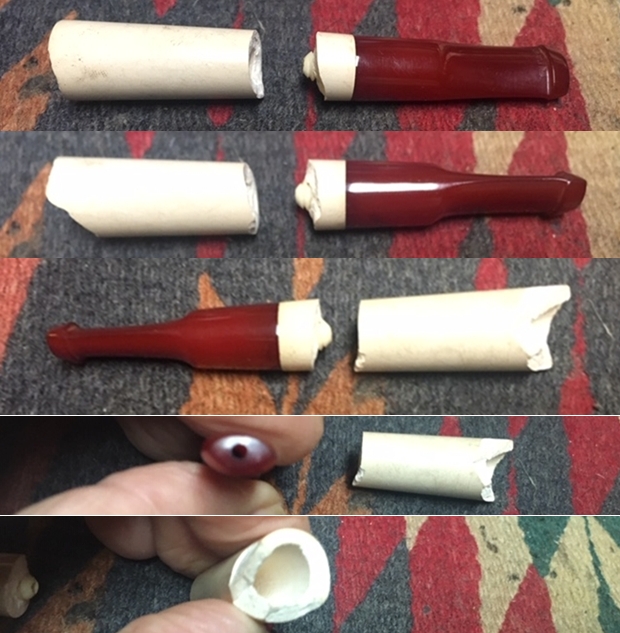
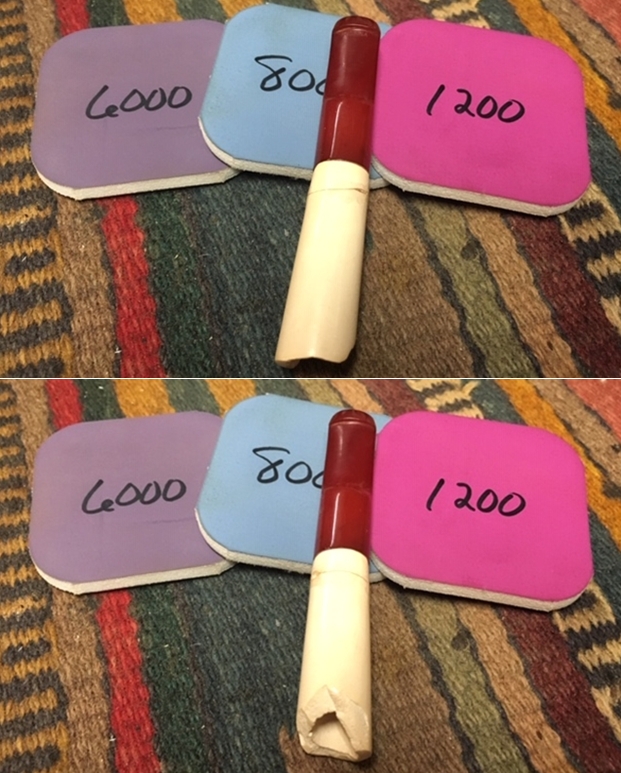
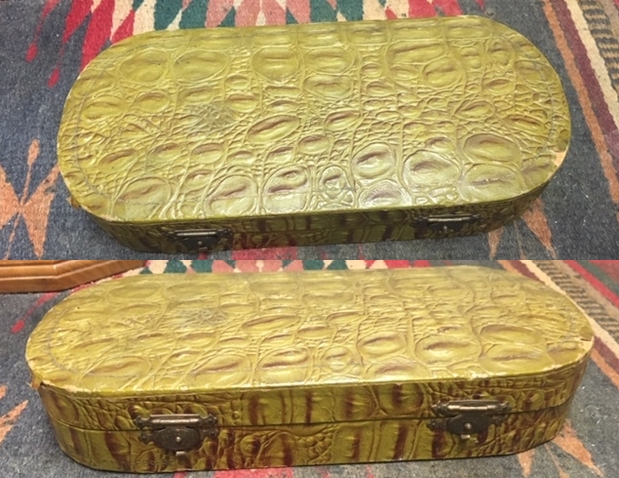
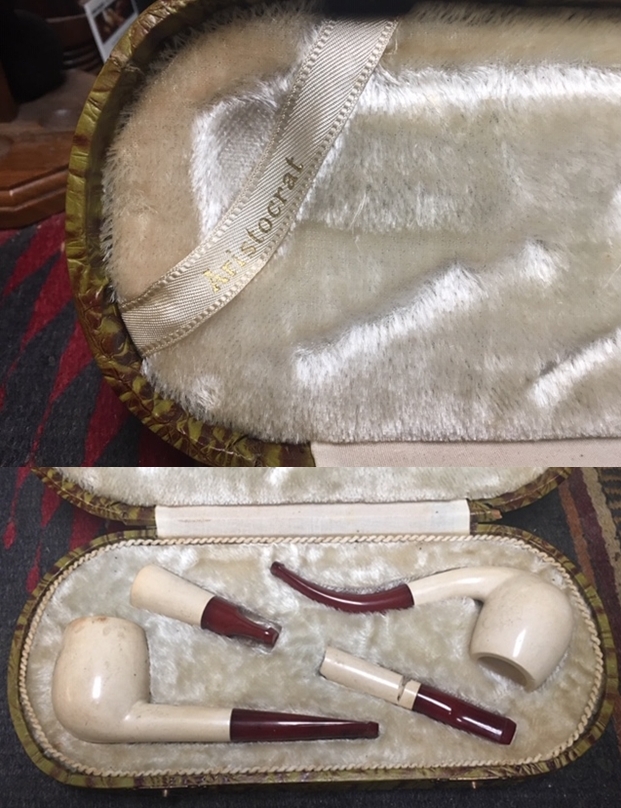
I finished the first pipe, the cigar holder and the cigarette holder in the cased set of meerschaum pipes and holders made by Aristocrat (https://rebornpipes.com/2019/07/21/restoring-an-old-cased-set-of-aristocrat-meerschaums-part-1/). This set included a straight billiard, a bent billiard a cigar holder and a broken cigarette holder. All were smooth meerschaum with red Bakelite or Redmanol stems. All had bone tenons directly screwed into threaded mortises in the meerschaum. There was no stamping on the pipes and holders or the stems. The box itself was covered in what looked like alligator skin with brass hinges and clasps. On the inside the case was lined in an off white preformed velveteen fabric. There was a corner ribbon across the left side of the lid that read Aristocrat. The straight billiard has been restored and looks very good. The second pipe has not been looked at yet and will be the last piece from the set to be restored. The cigar holder has been restored and looks very good. The cigarette holder was broken and two parts and the stem remained. There was a missing piece from the front of the holder. It was unused and broken.  I took photos of the case and the pipes and holders before I started my work on it. Now it is time to work on the final unsmoked pipe. I took photos of each of the pieces in the collection. The first set of photos shows the smoked straight billiard. I cleaned up this pipe and have written the blog on it (https://rebornpipes.com/2019/07/21/restoring-an-old-cased-set-of-aristocrat-meerschaums-part-1/). Give the blog a read and you will see the story of the restoration.
I have also cleaned up the cigar holder and written a blog on it if you want to check it out (https://rebornpipes.com/2019/07/21/restoring-an-old-cased-set-of-aristocrat-meerschaums-part-2/).

I have finished cleaning up and repairing the cigarette holder. I wrote a blog on it if you want to check it out (https://rebornpipes.com/2019/07/22/restoring-an-old-cased-set-of-aristocrat-meerschaums-part-3/).

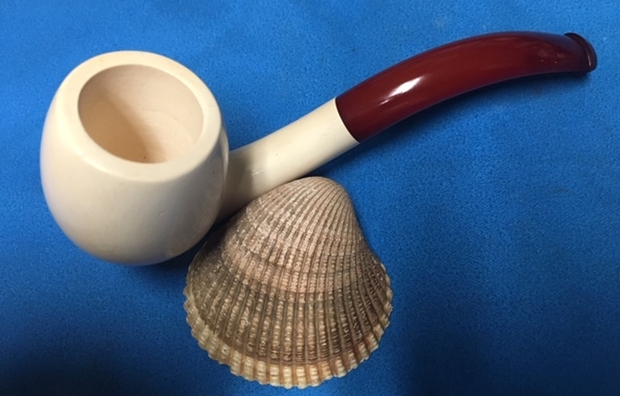
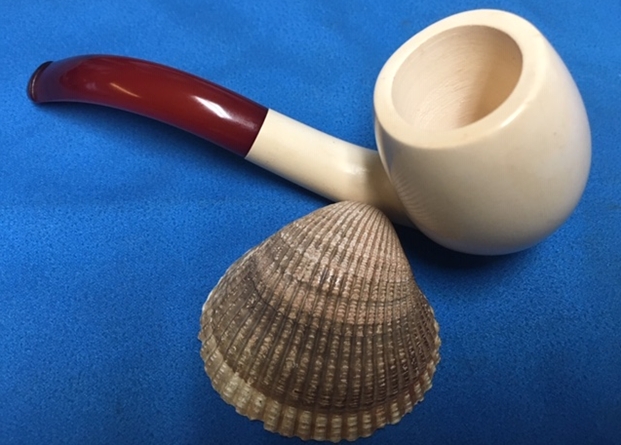
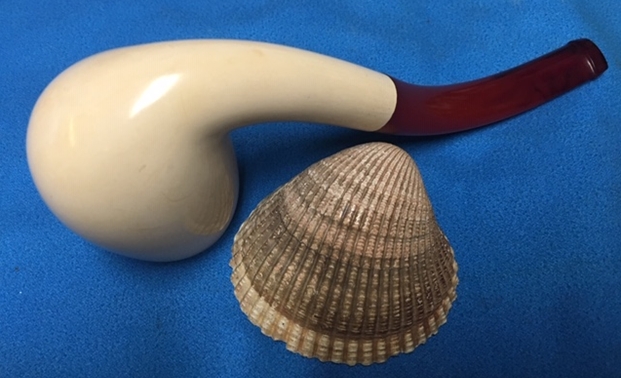
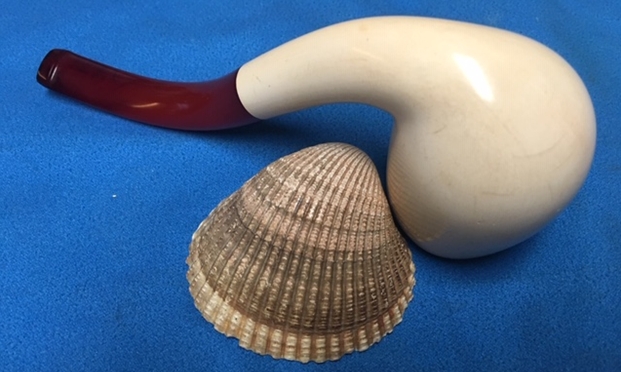
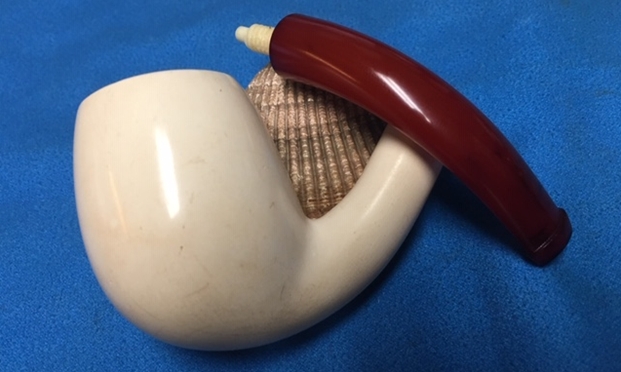
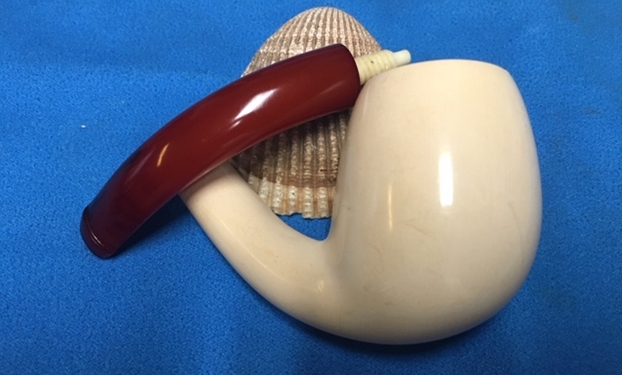
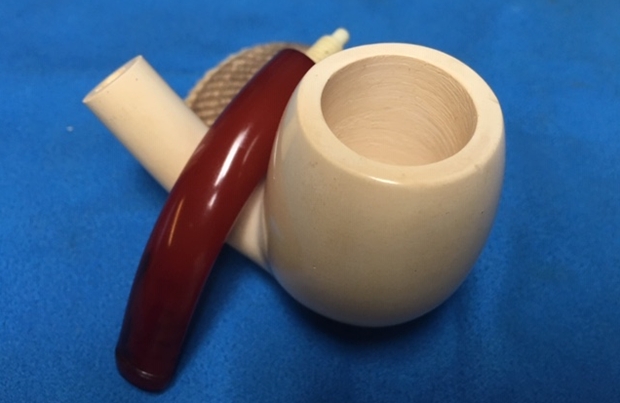
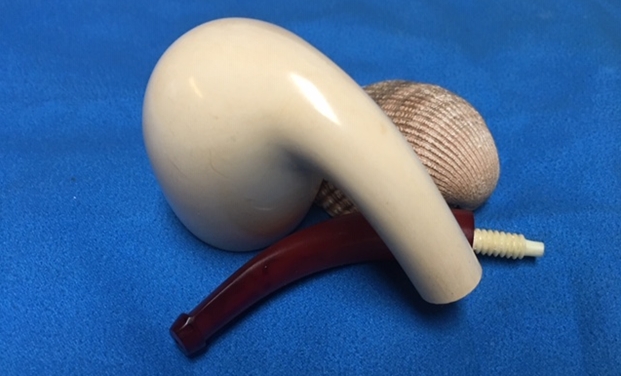
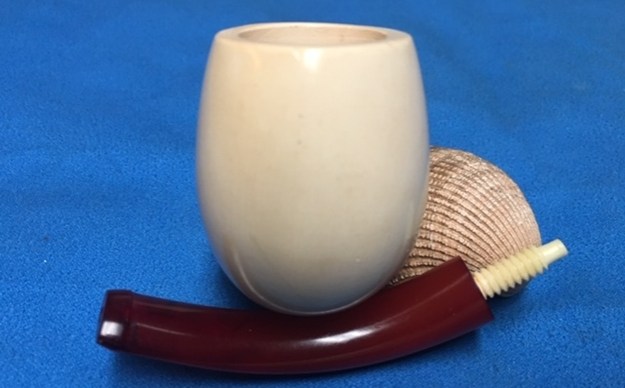
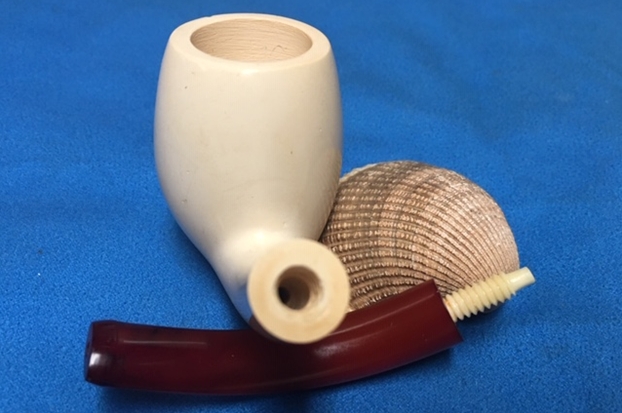
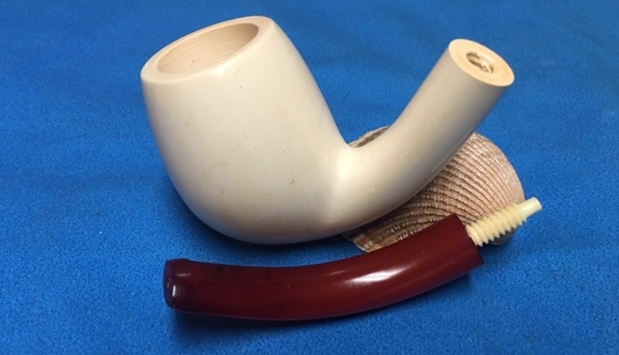
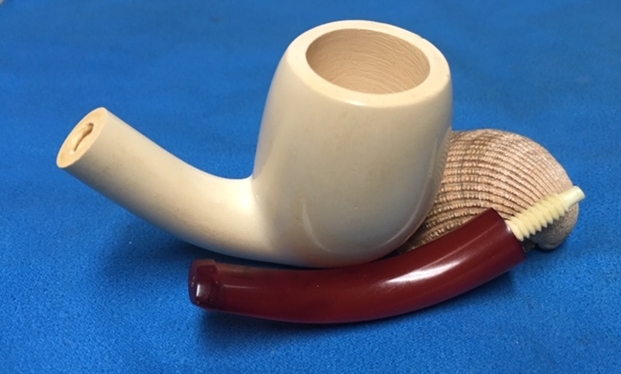
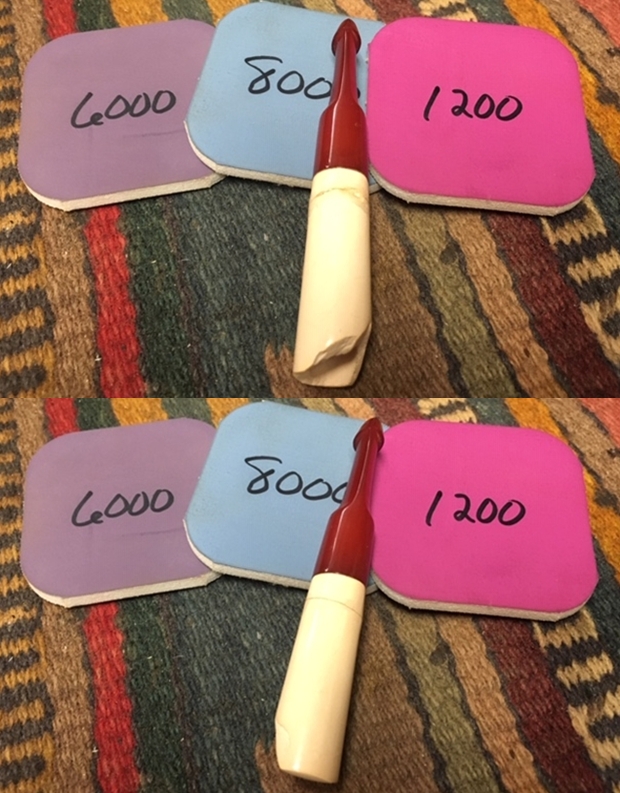
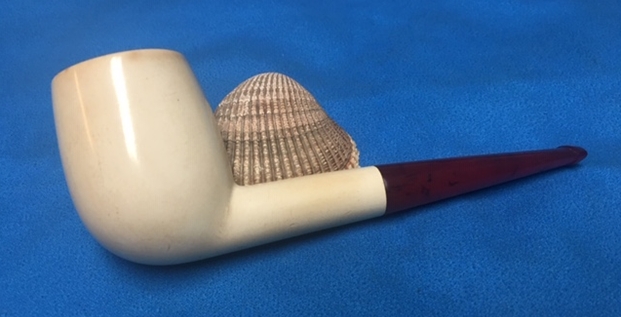
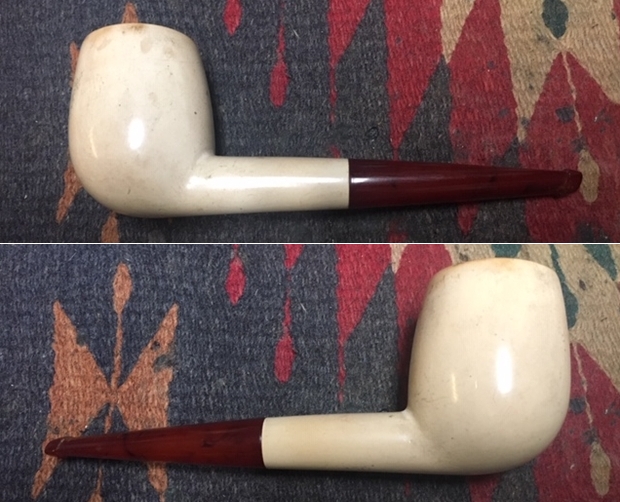
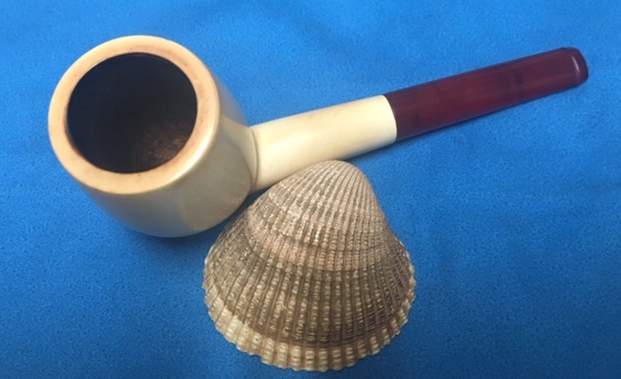
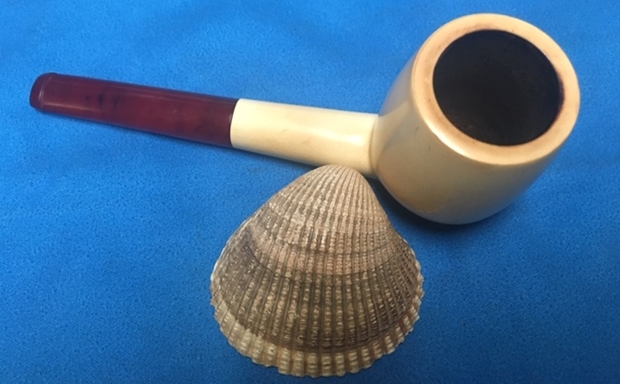
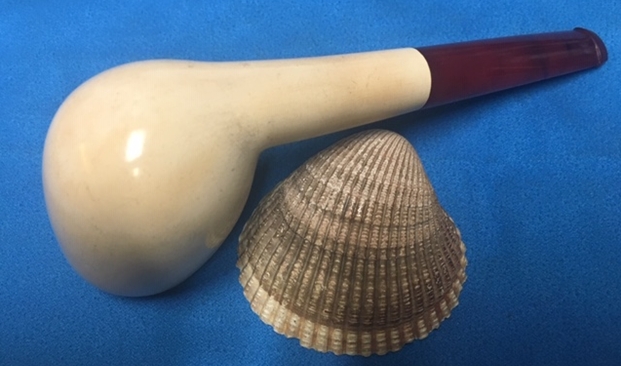
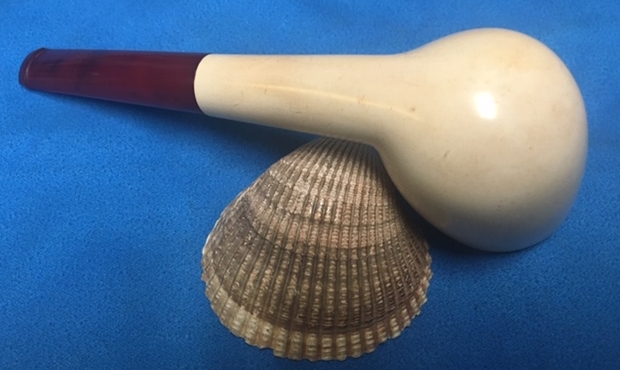
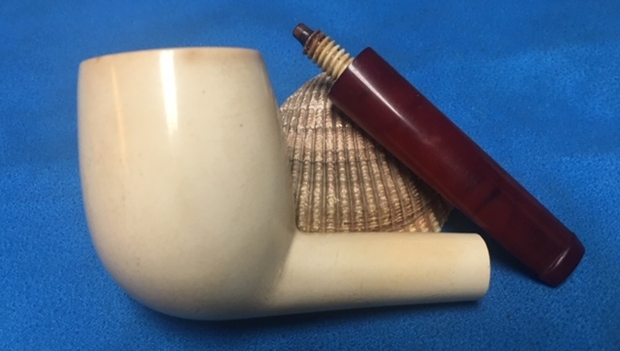
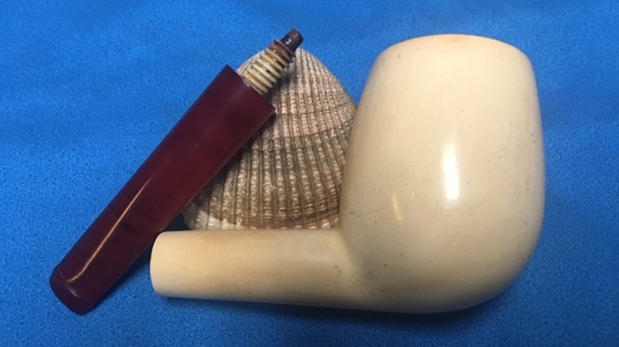
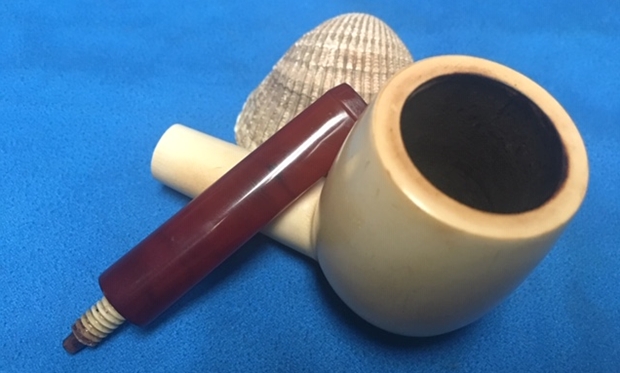
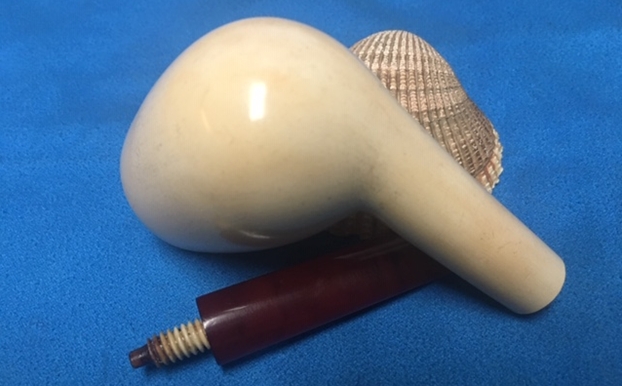
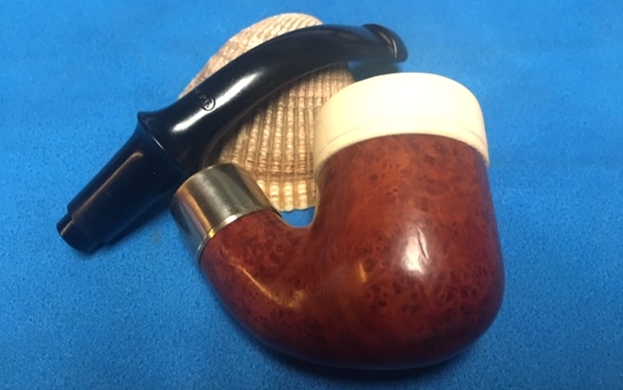
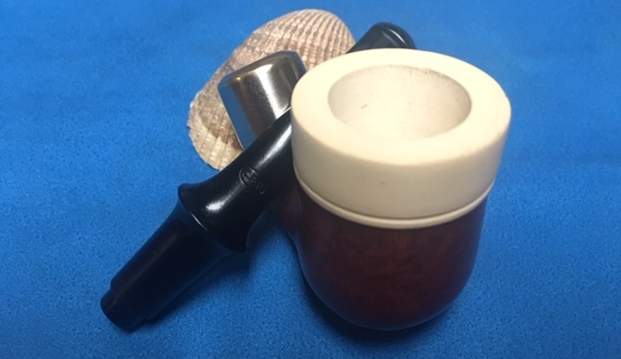
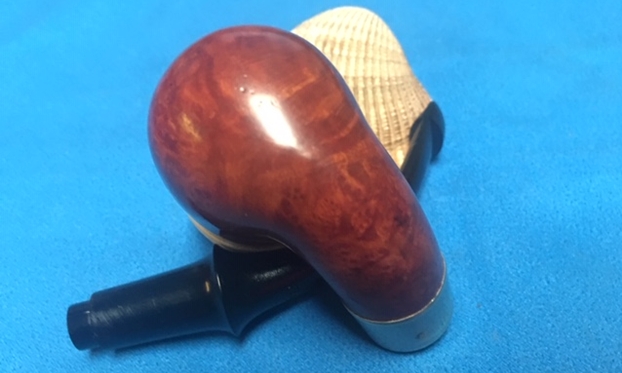
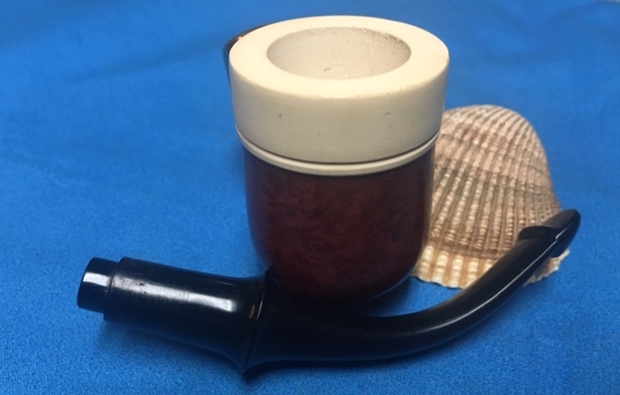
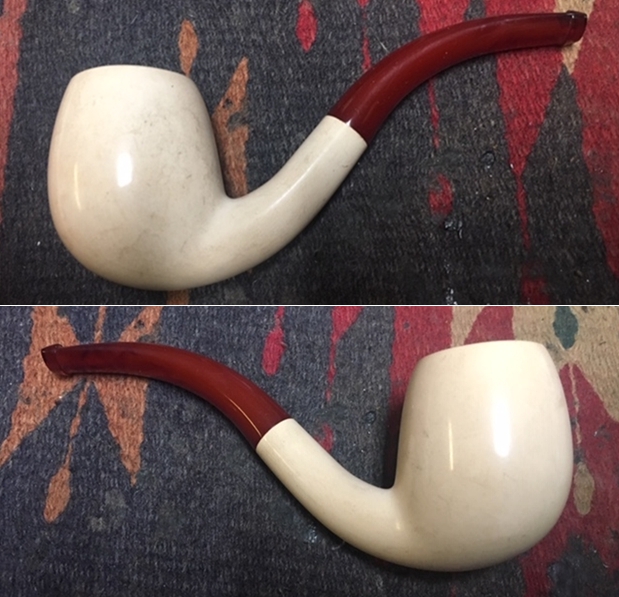
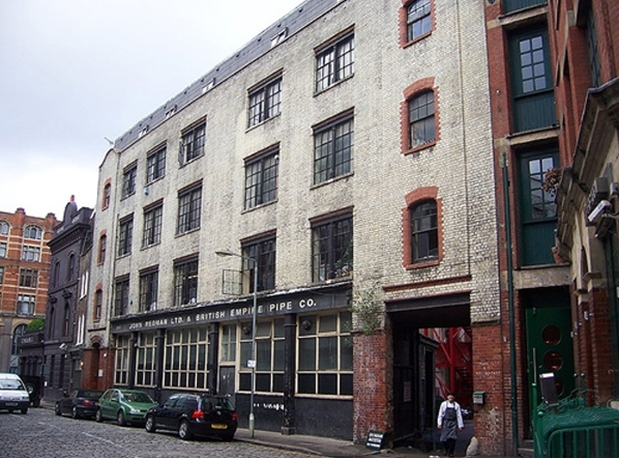
The next piece I chose to work on was the final unsmoked bent billiard meerschaum pipe shown in the photos below. It was unsmoked and other than external wear and tear from sitting and an overturned stem it was in decent condition. I am leaving the information on the brand in case you have not read the background info in the first blog. From what I could find on Pipephil’s site I found a listing for Aristocrat linking it to John Redman Ltd. in England (http://www.pipephil.eu/logos/en/logo-a7.html). The site says that it was an export brand from the company. In looking at the various stampings in the photos below I found that the Aristocrat stamping on the ribbon on the case above matches the second and third photo below.The photo below was a link on the site that took me to a photo of the John Redman LTD. and British Empire Pipe Com on Westland Place, Hackney, London, England. I think it is a nice historical touch to be able to include the photo.I turned to Pipedia (https://pipedia.org/wiki/John_Redman_Ltd./British_Empire_Pipe_Co.) to see if I could learn a bit more about the company. I quote the full article below:
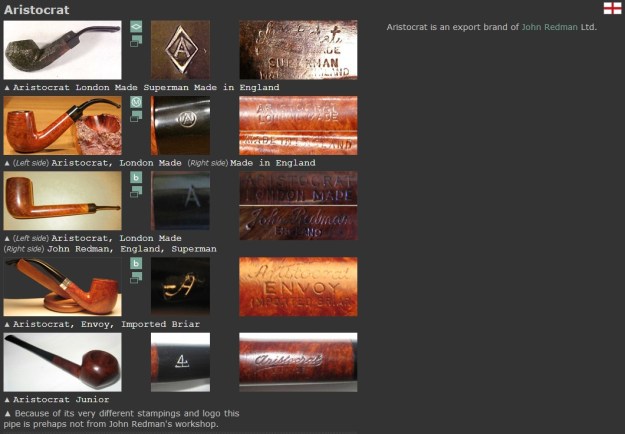
John Redman Ltd. and British Empire Pipe Co. Other lines include Aristocrat, Buckingham, Buckingham Palace, Canberra, Captain Fortune, Dr John, Golden Square, Redonian, Richmond (not Sasieni), Twin Bore.

From these two sources it appears to me that this set of meerschaum pipes and holders was made for export by John Redman Ltd. I am not sure of the date as neither source gave clues to that information.

I am enjoying working on this set of meers from John Redman Ltd. and really like the obvious connection to them with the Redmanol stems. I worked on the final unsmoked pipe next as it was the only piece in the set that was both unbroken and unsmoked.

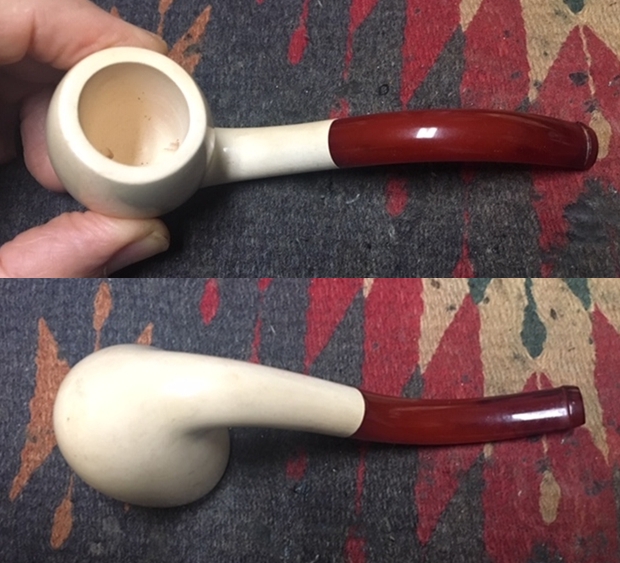
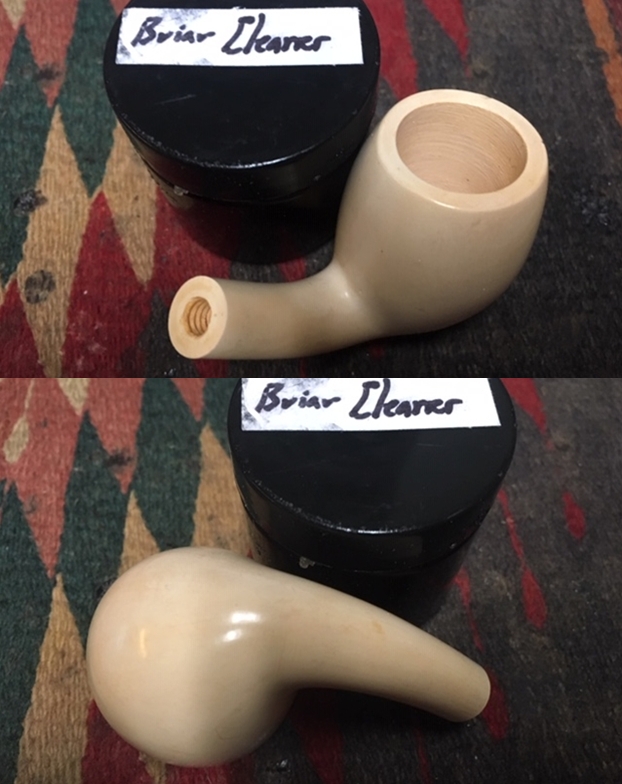
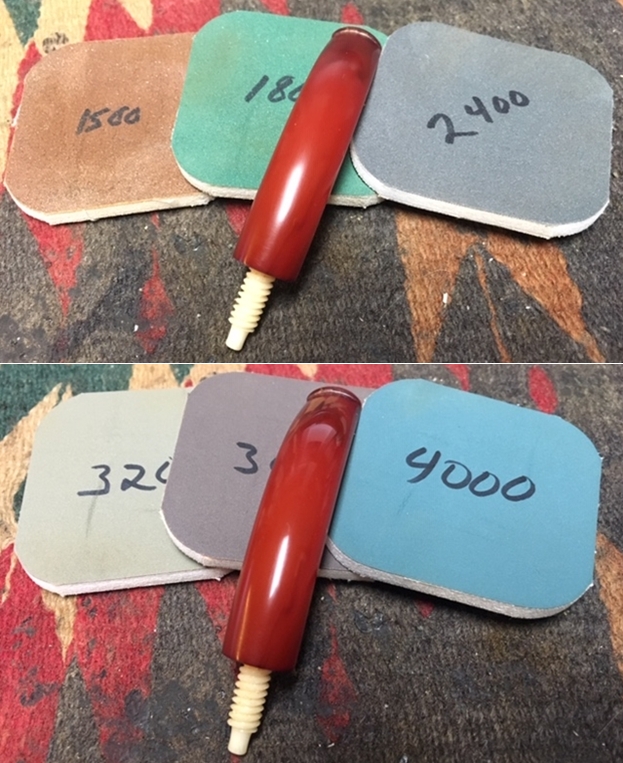
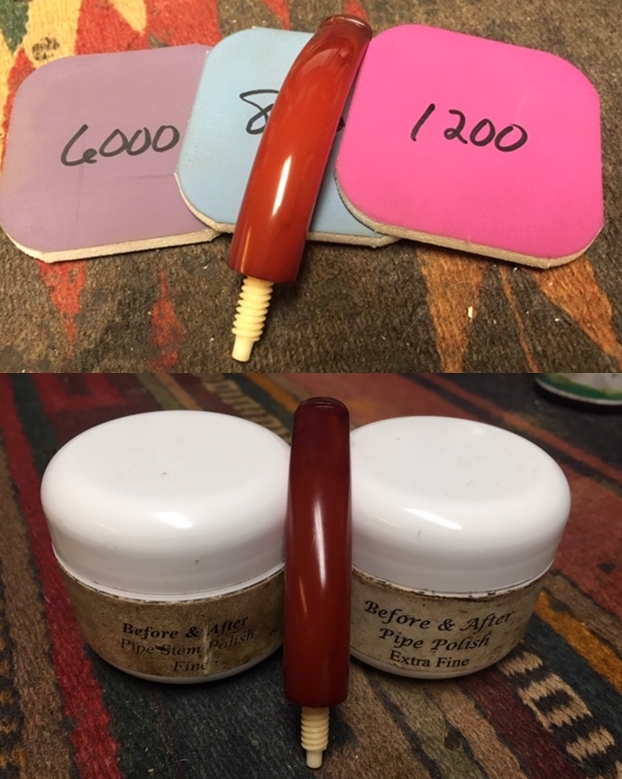
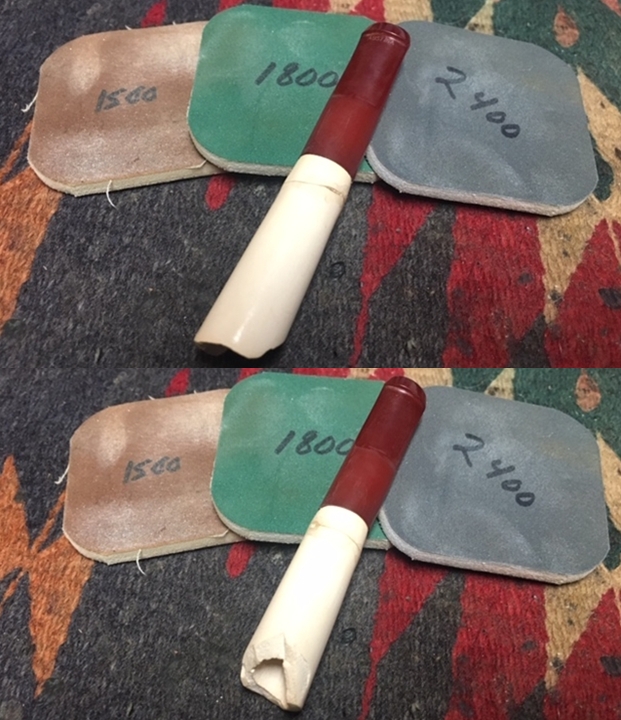
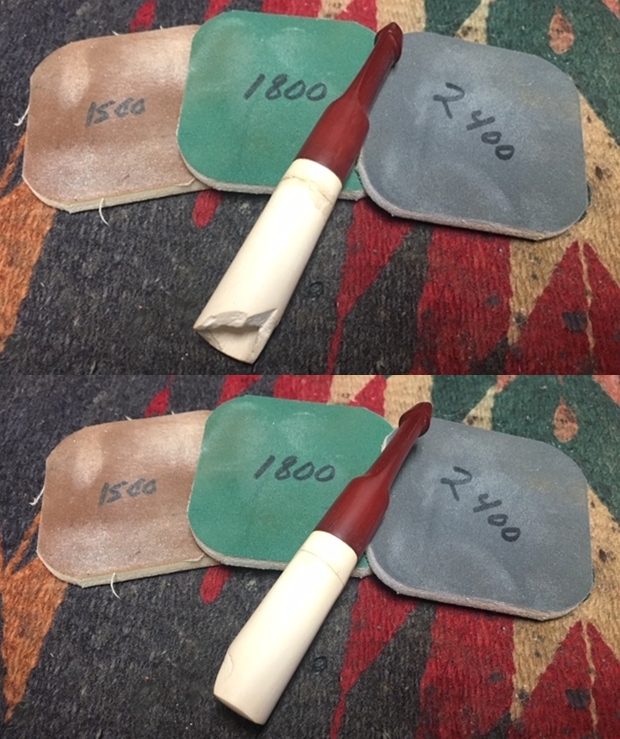
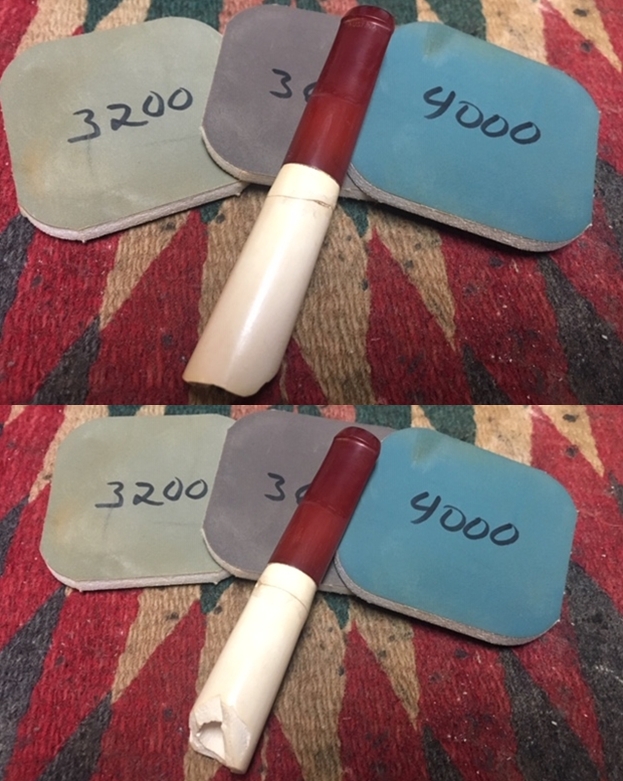
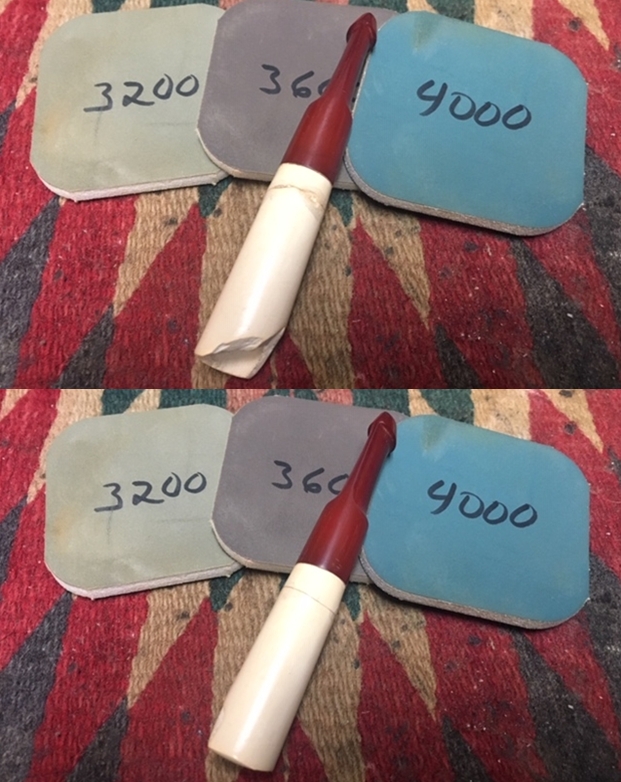
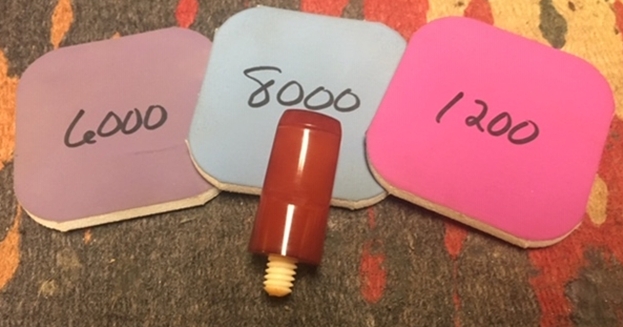
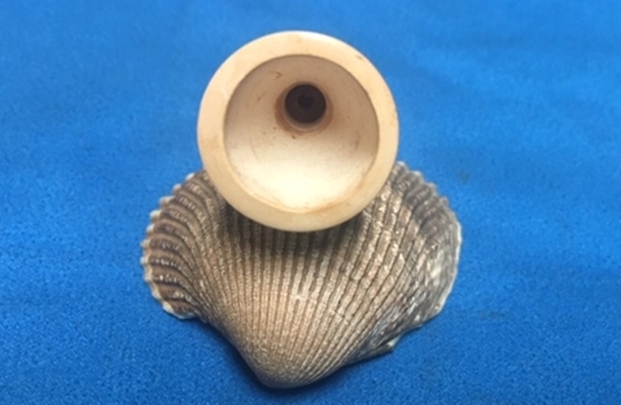
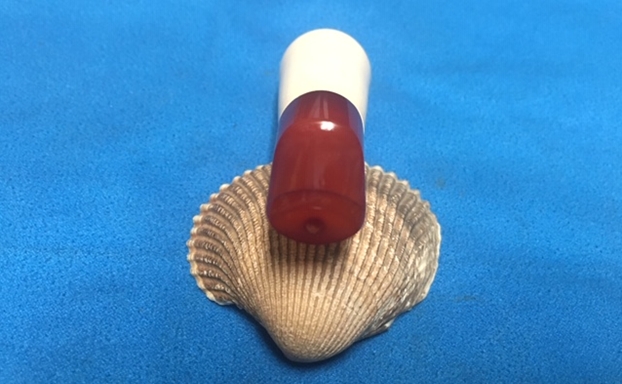
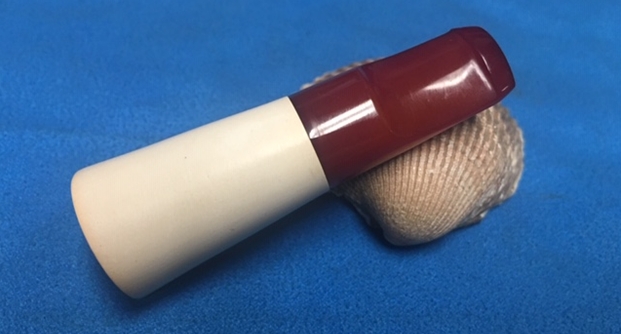
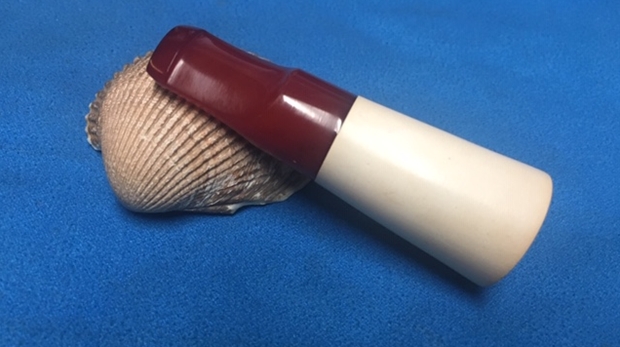
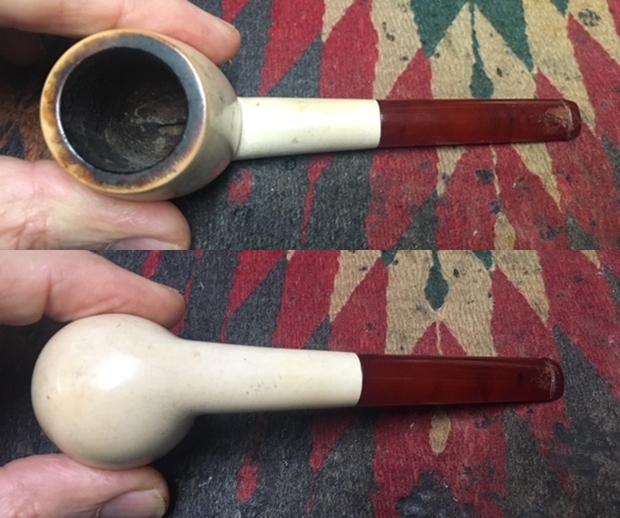
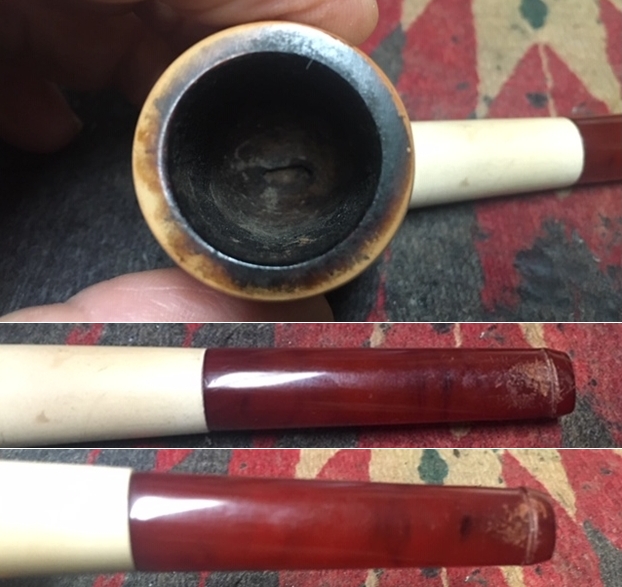
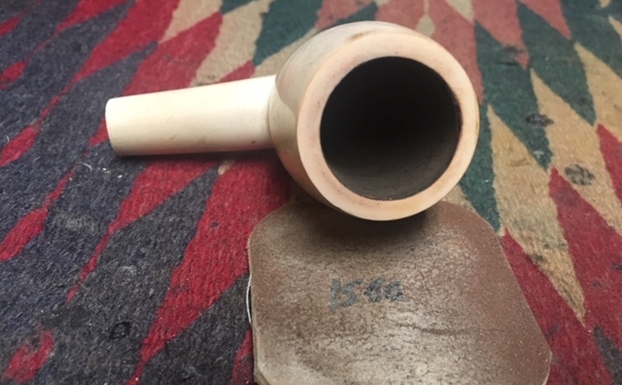
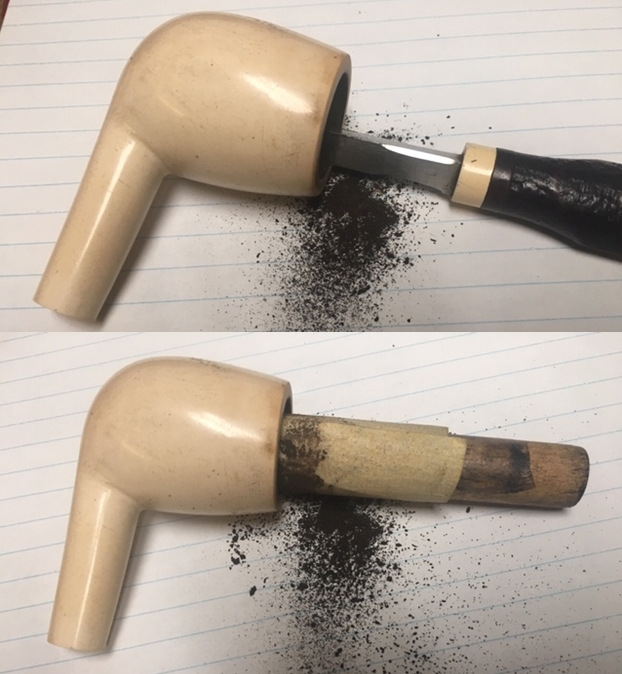
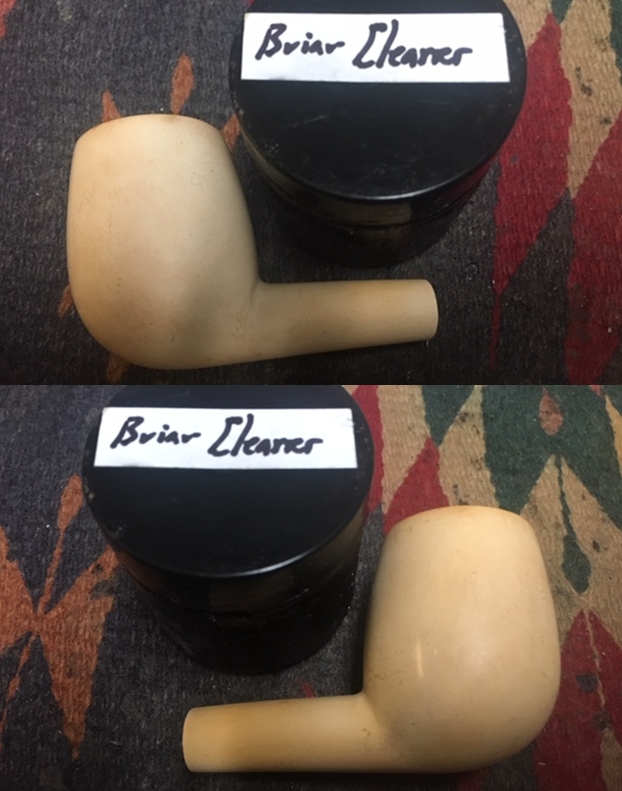
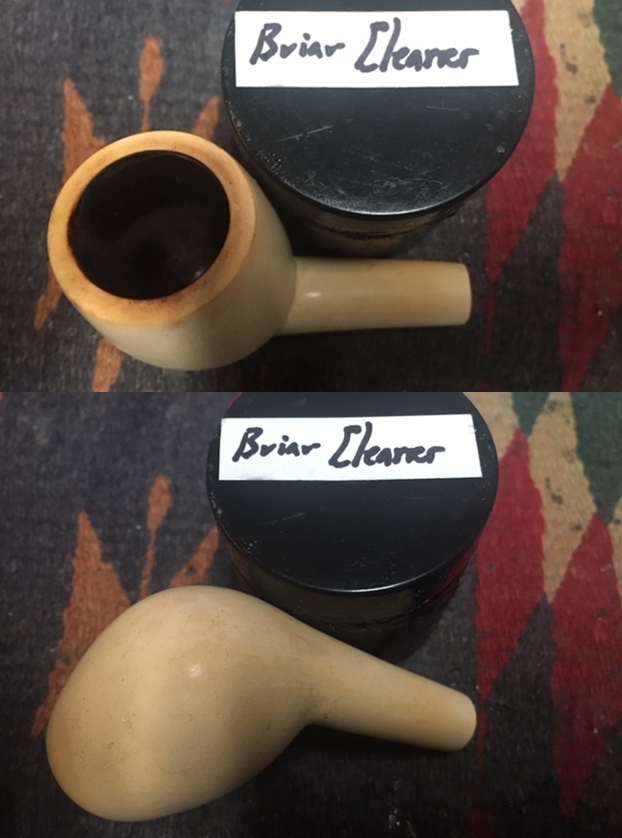
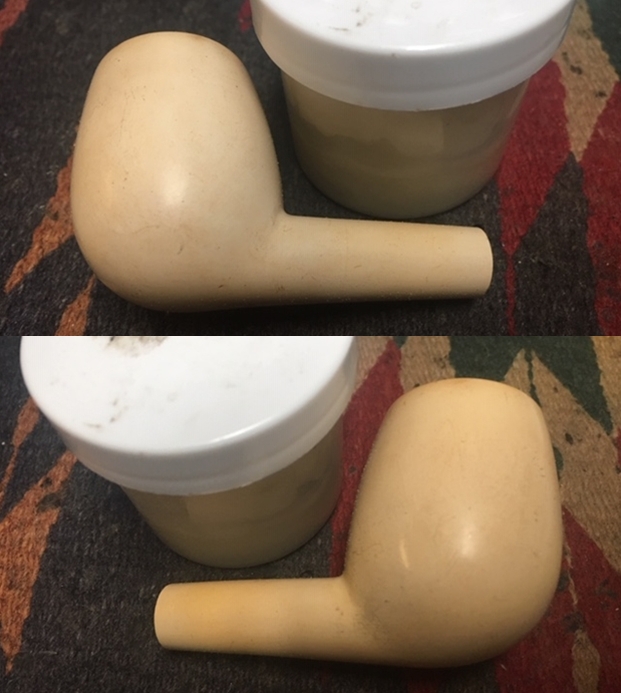
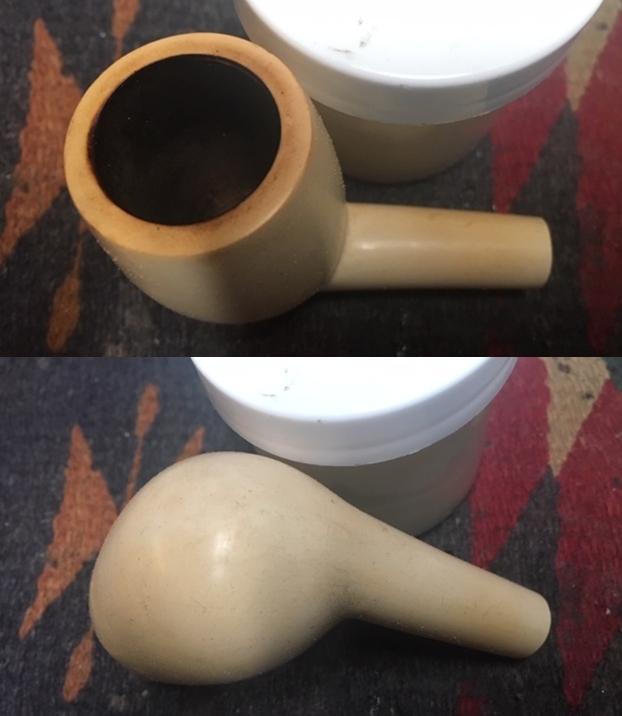
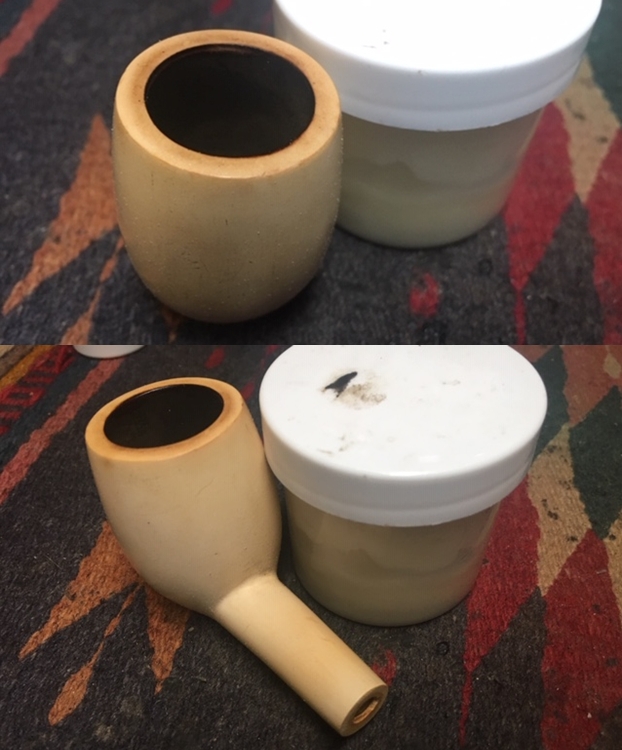
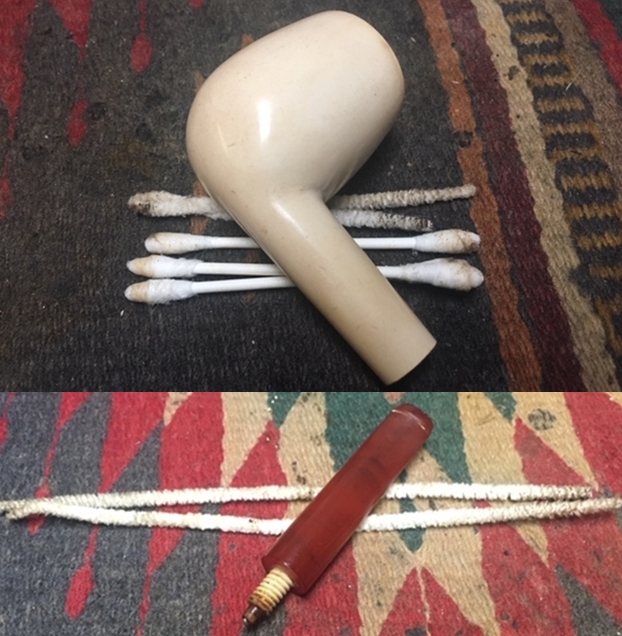
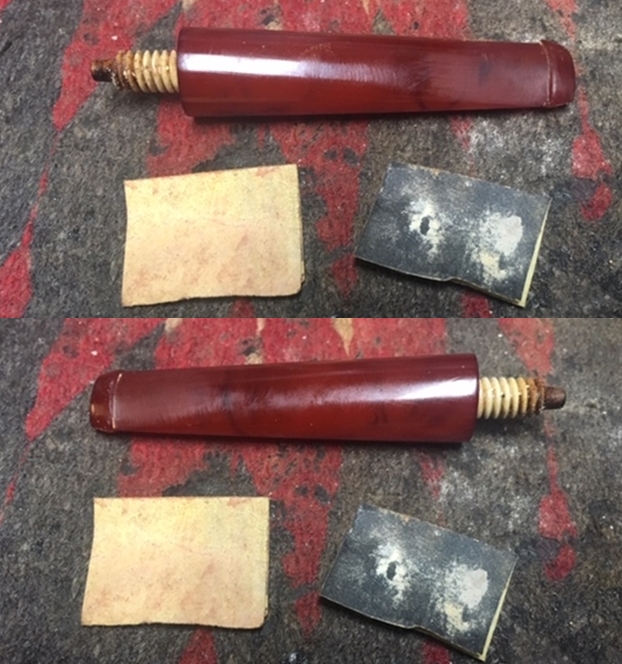
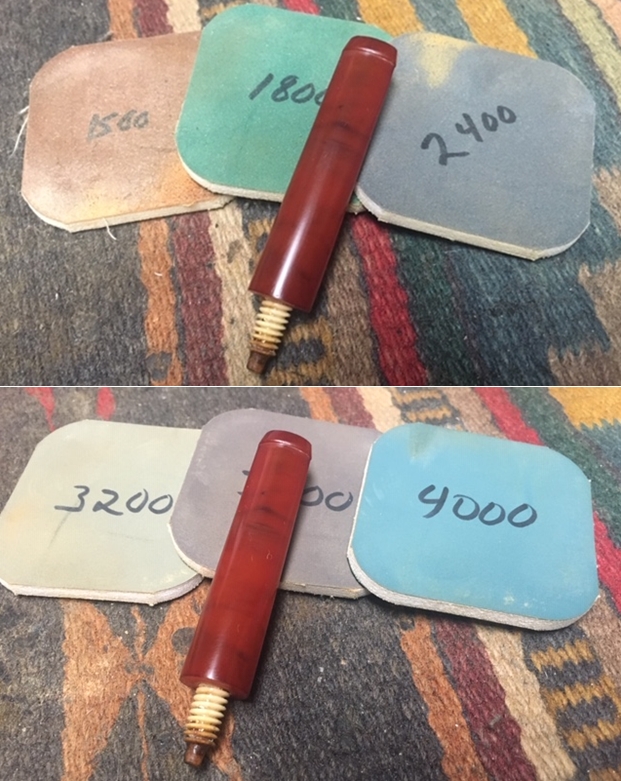
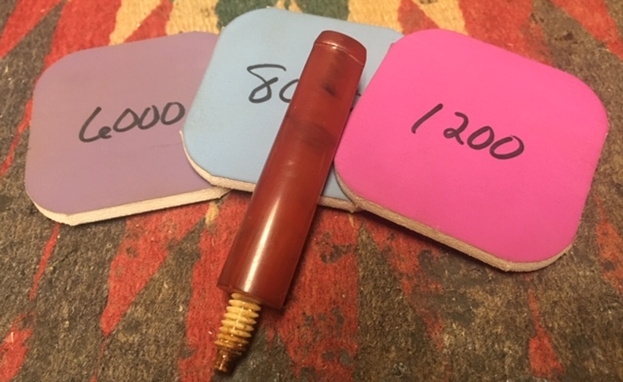
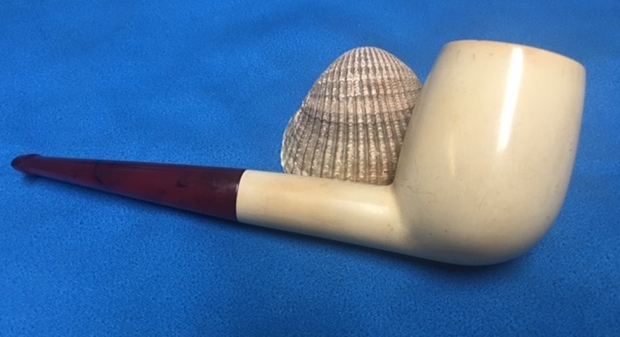
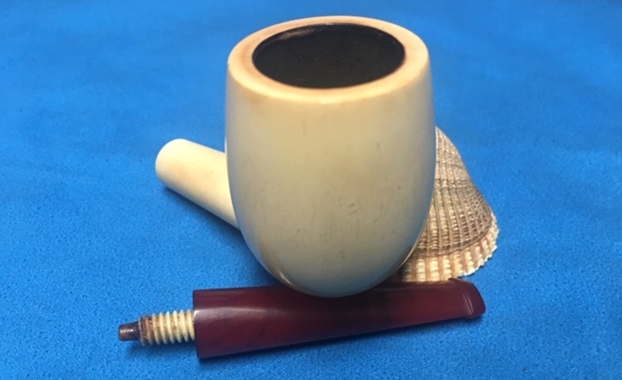
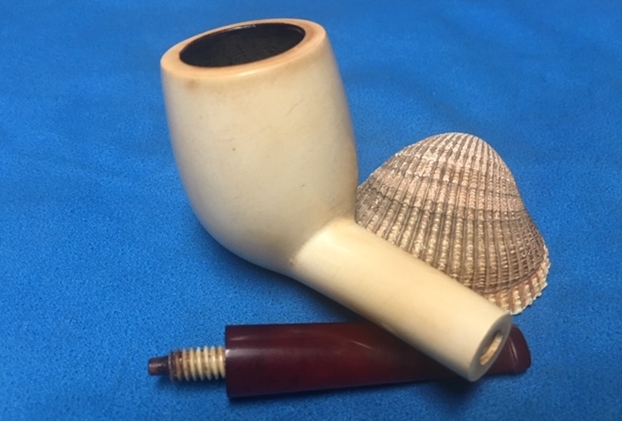
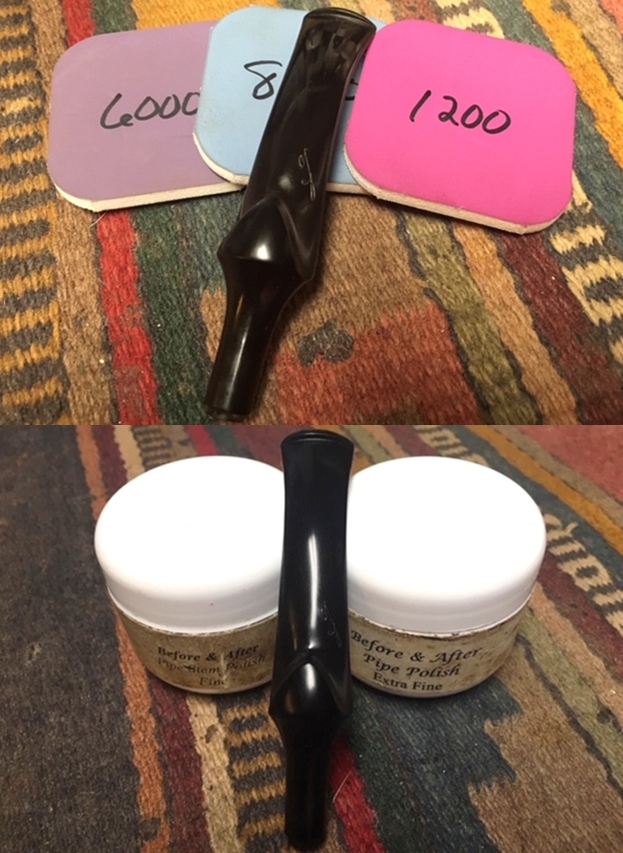
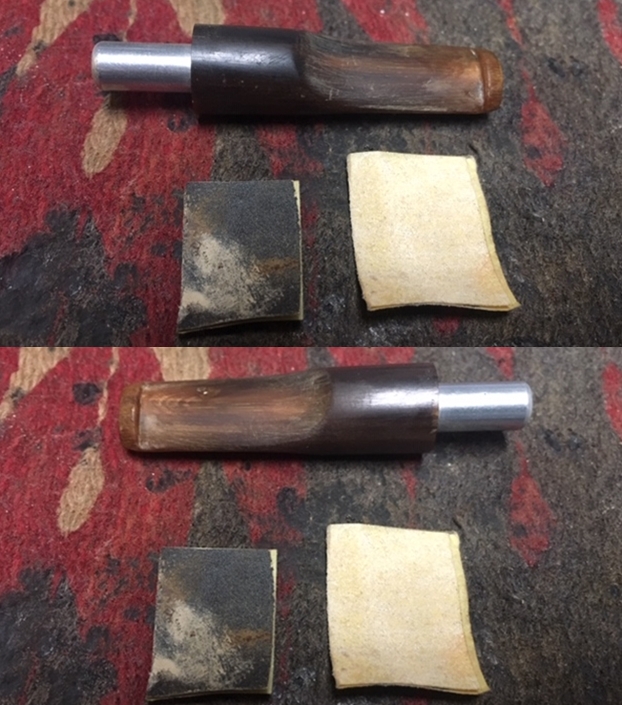
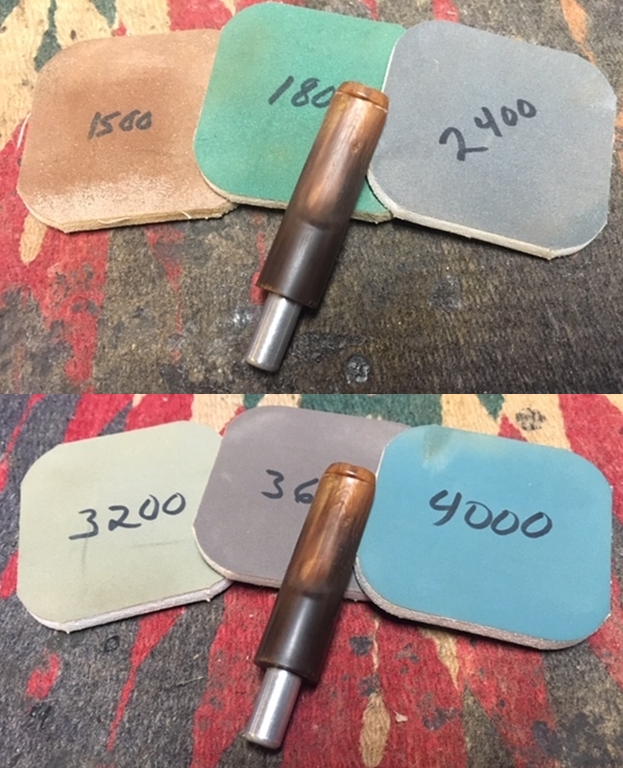
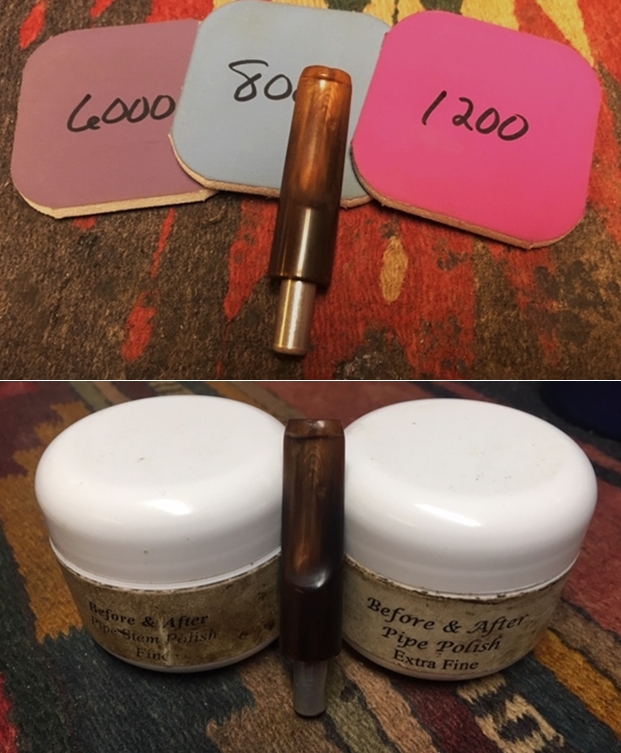
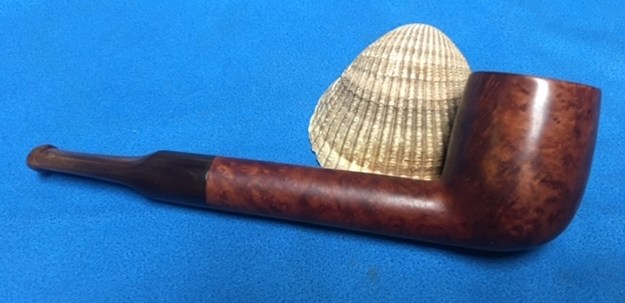
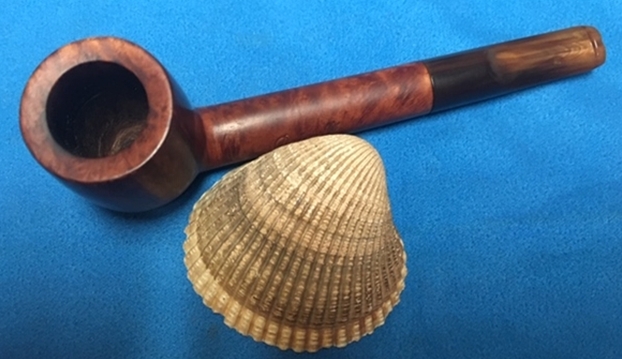
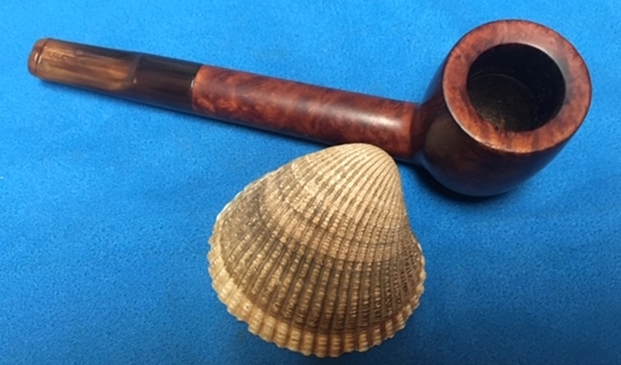
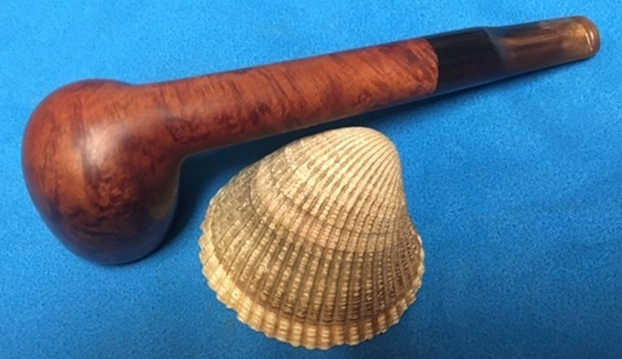
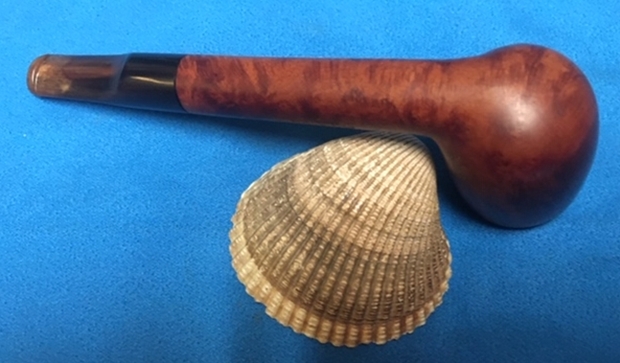
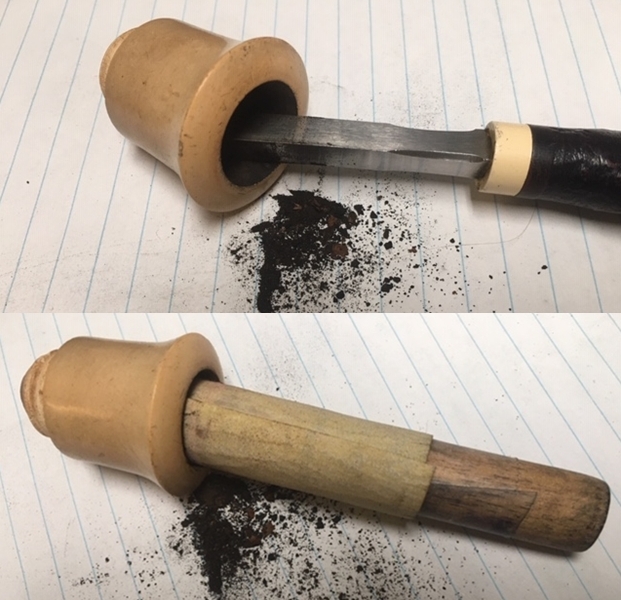
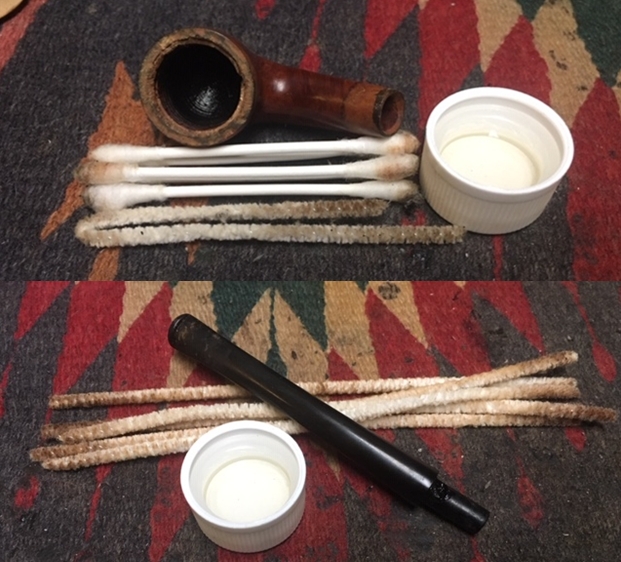
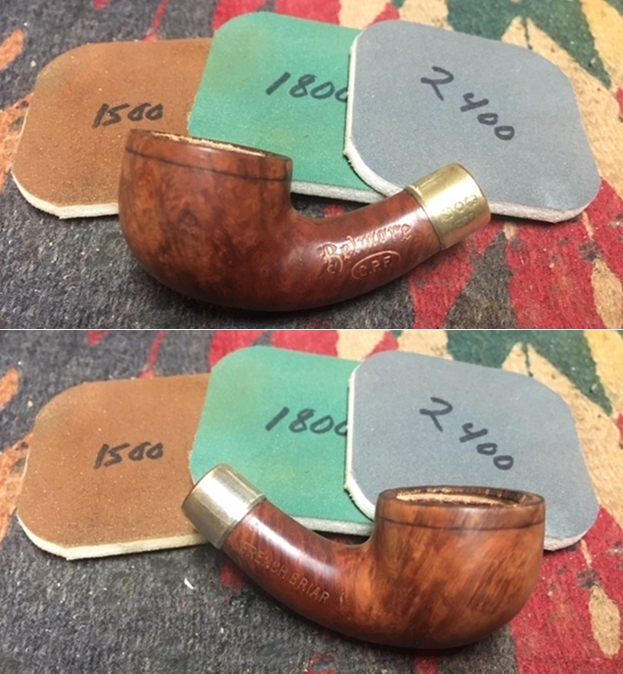
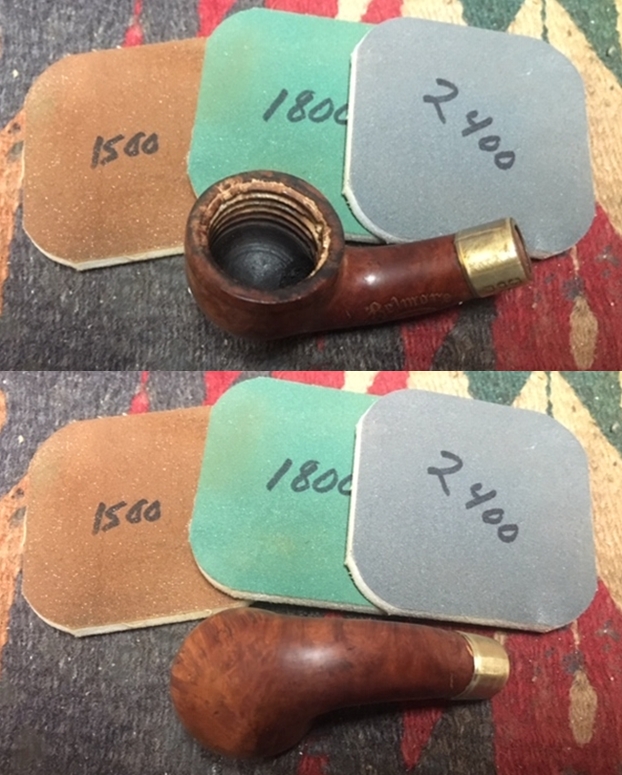
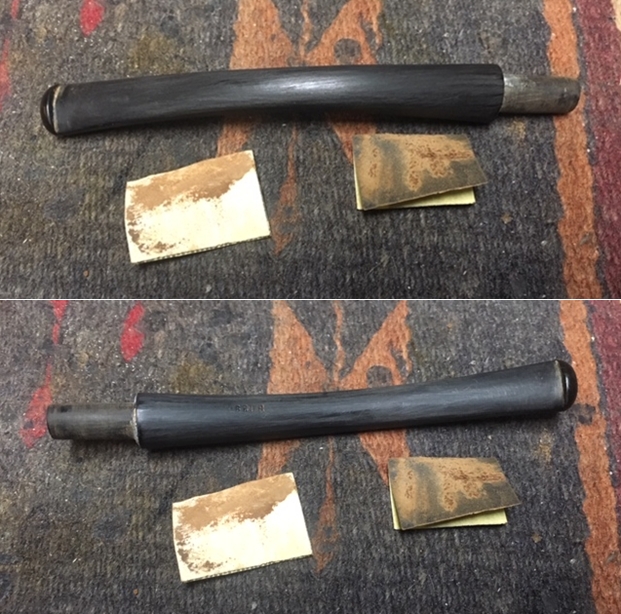
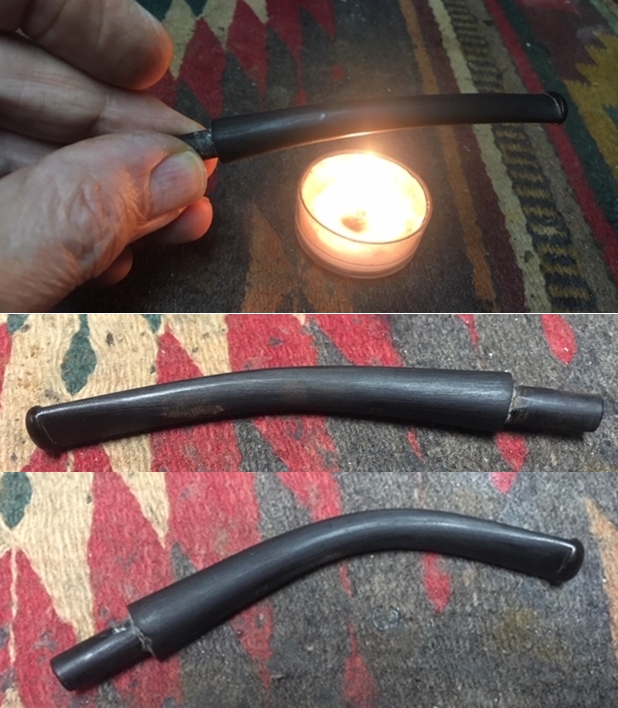
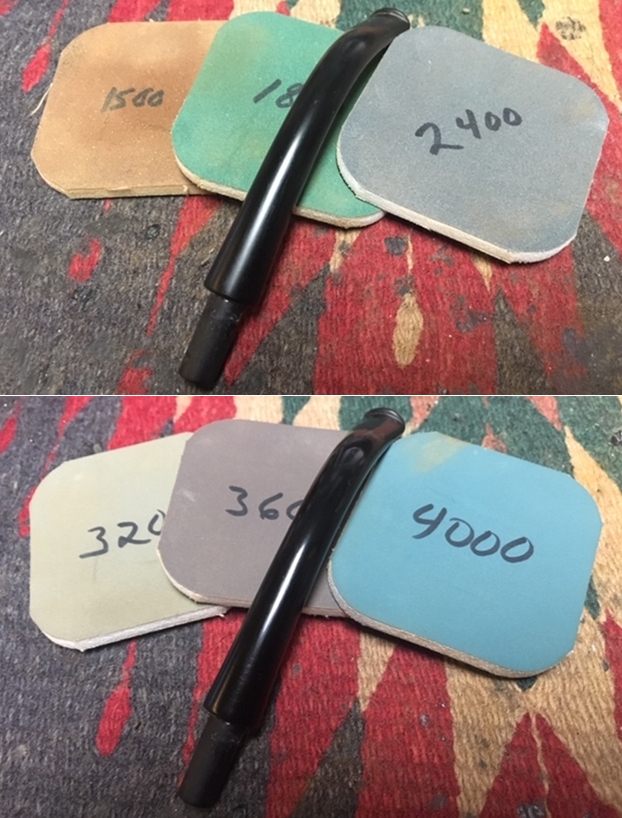
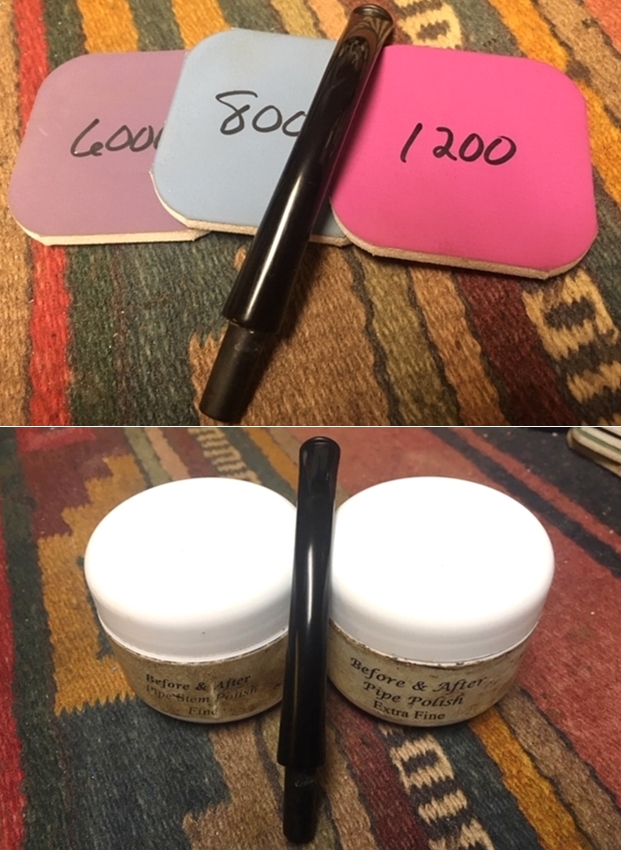
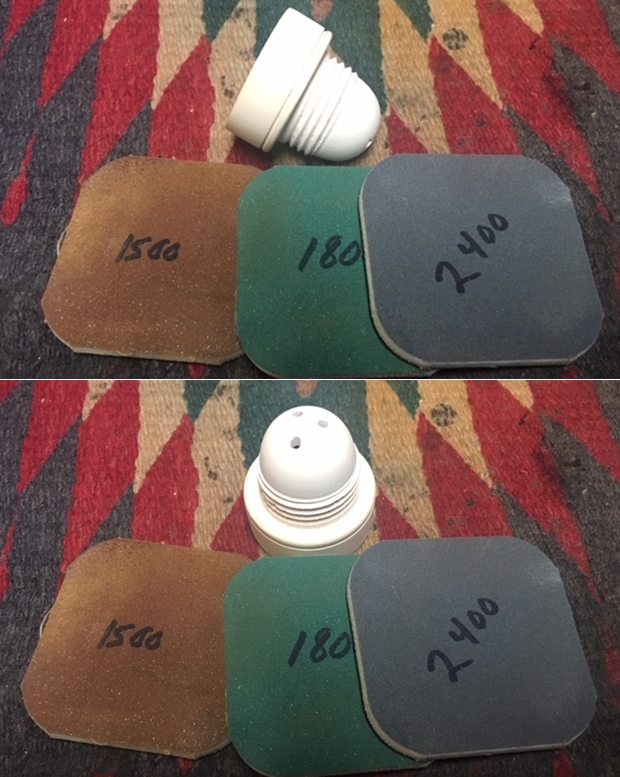
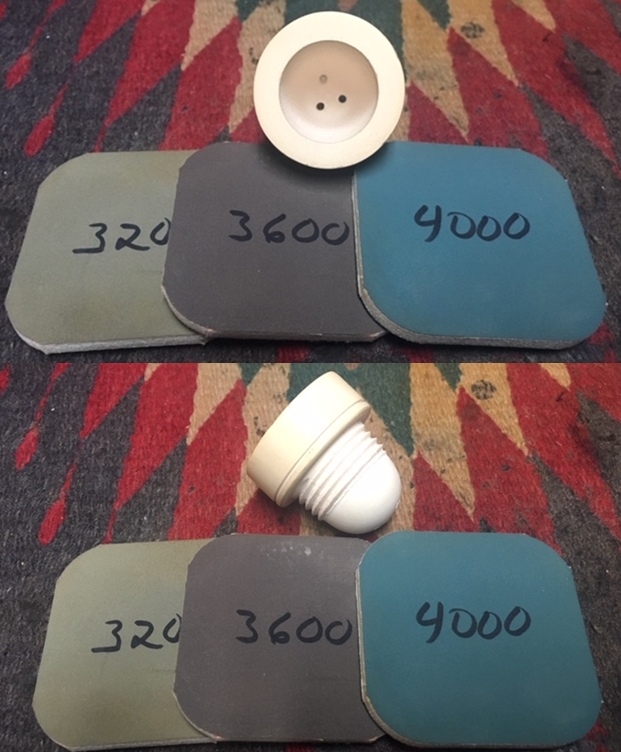
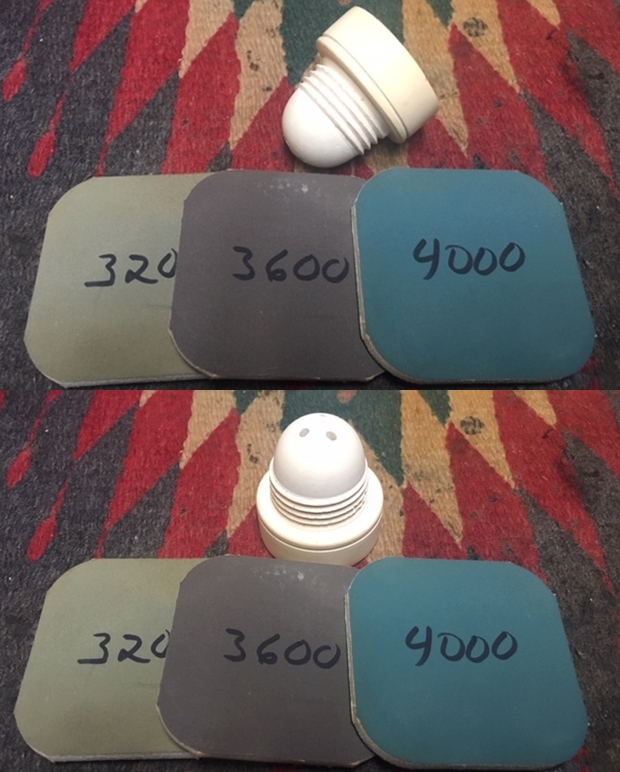
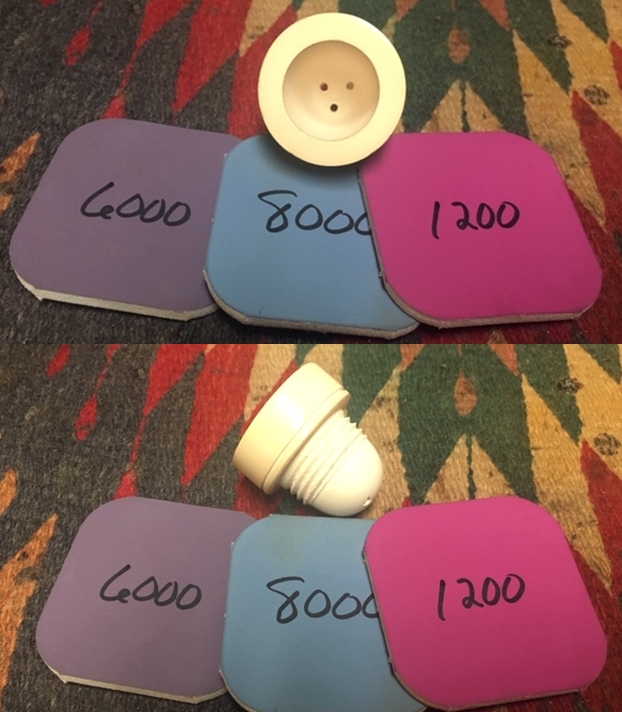
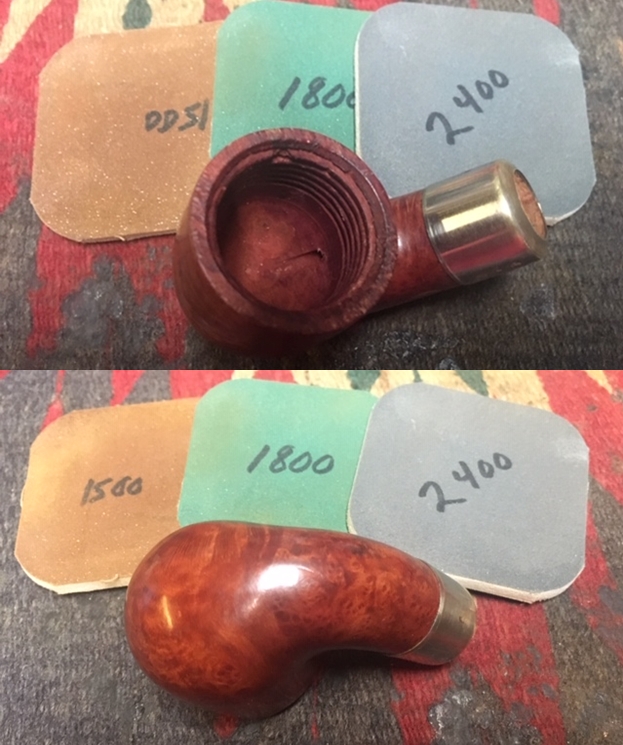
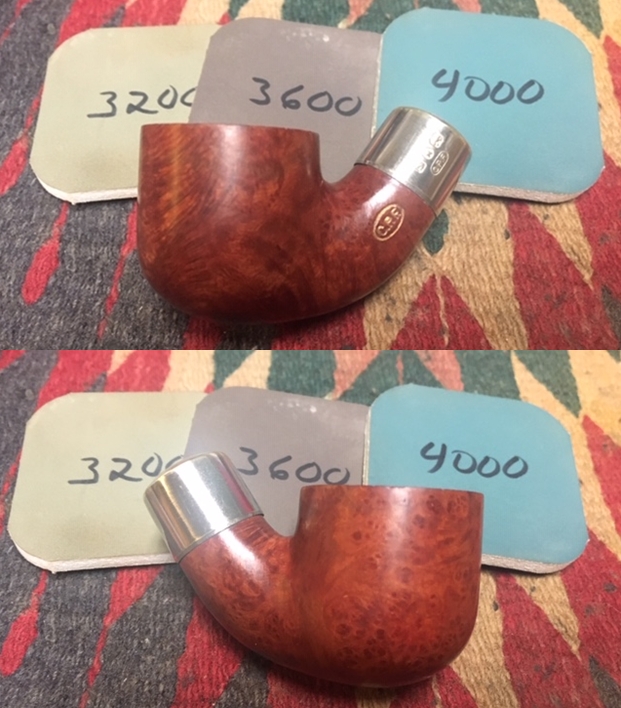
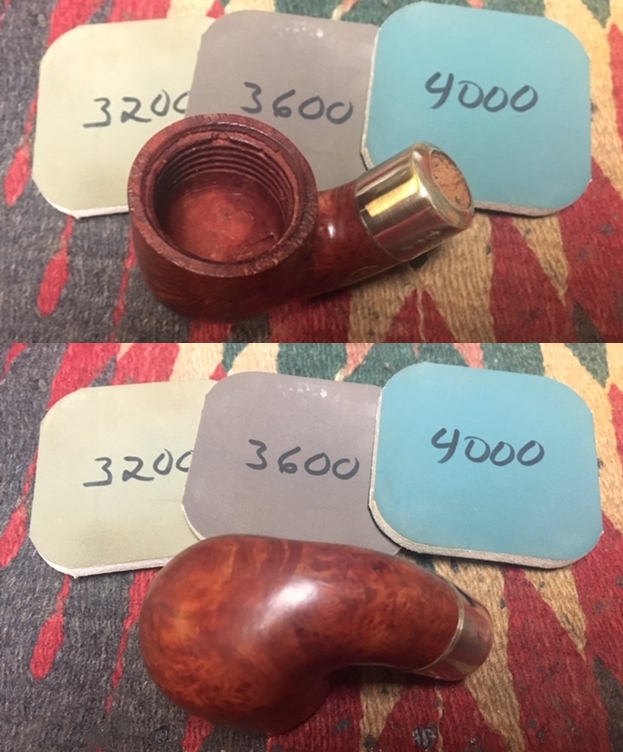
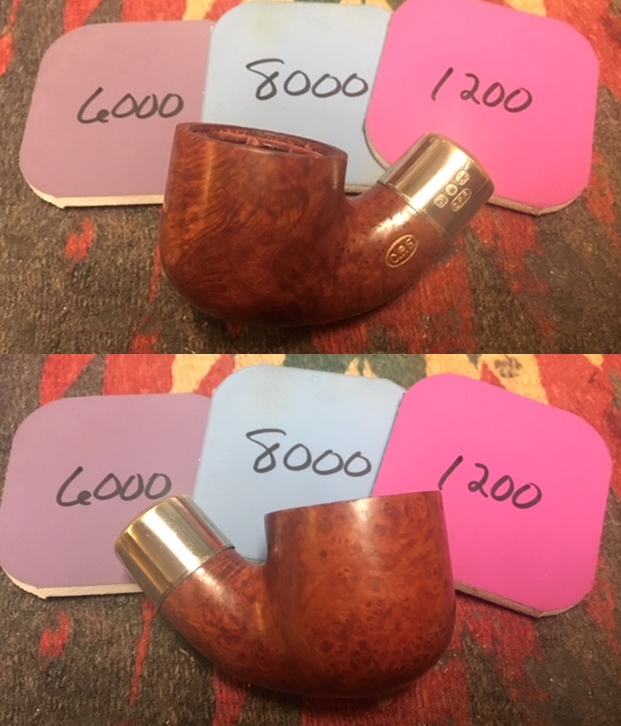
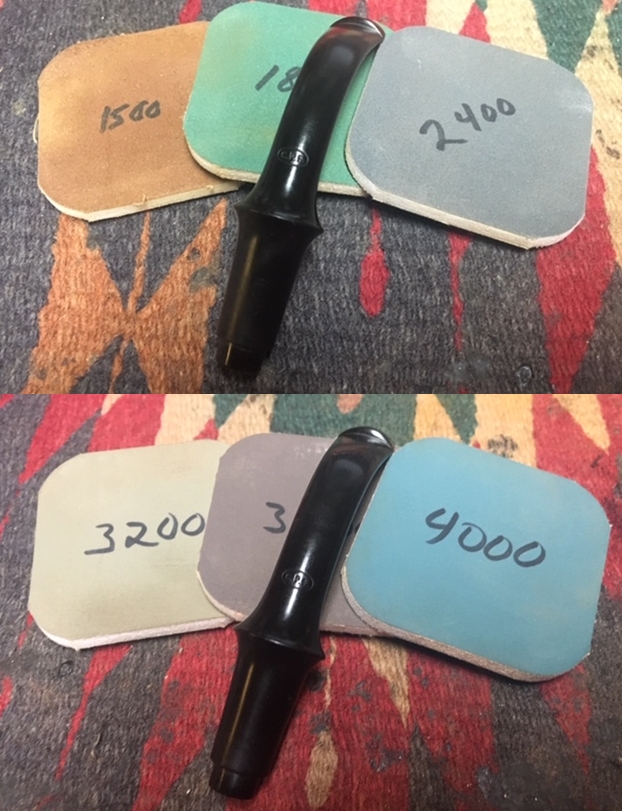
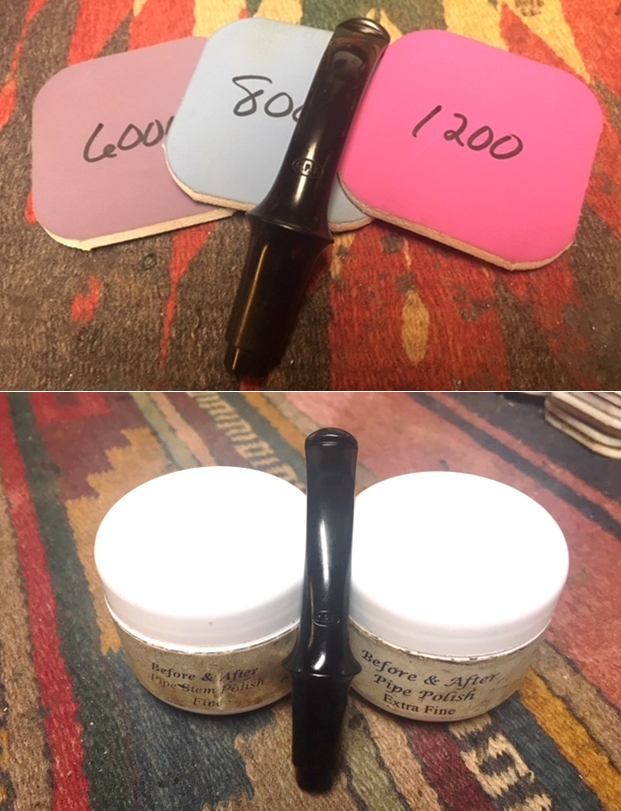
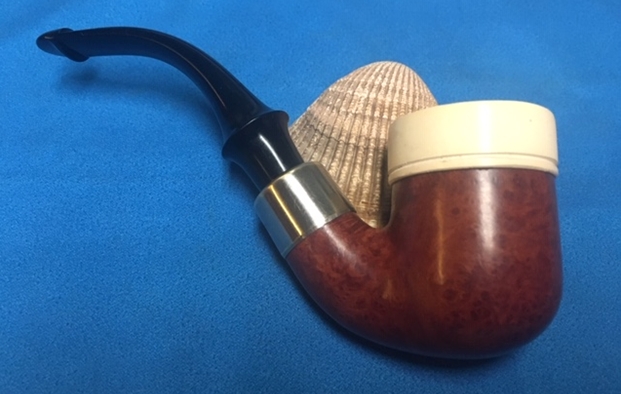
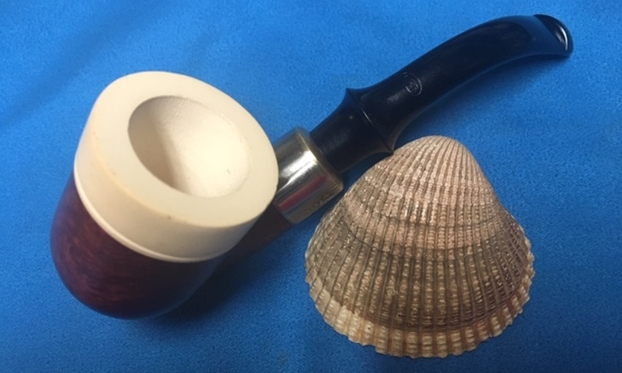
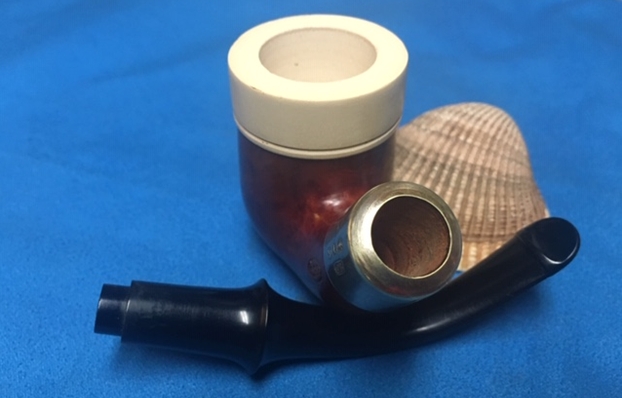
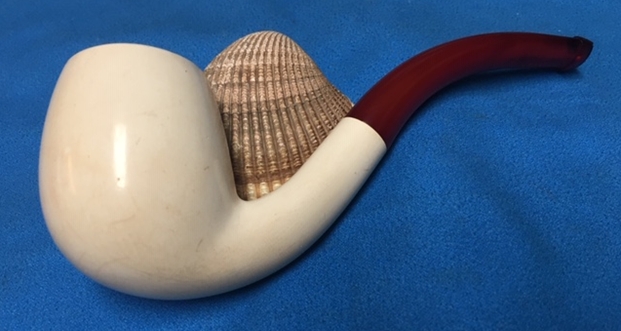
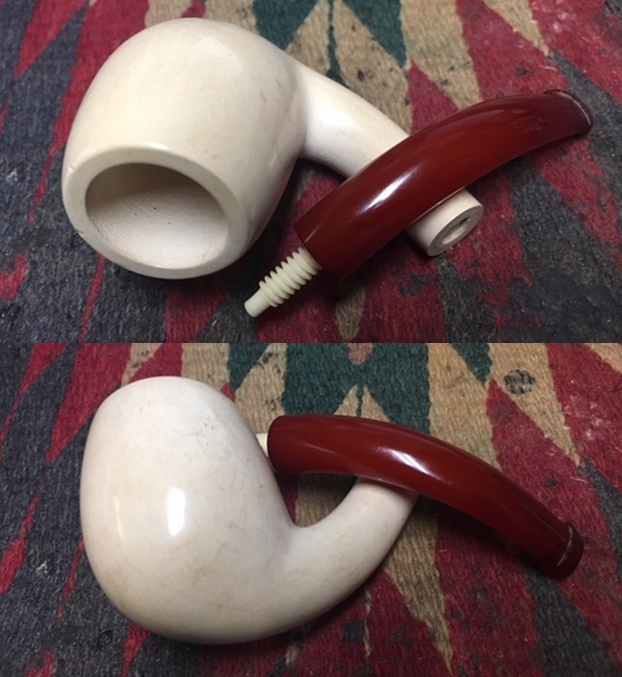
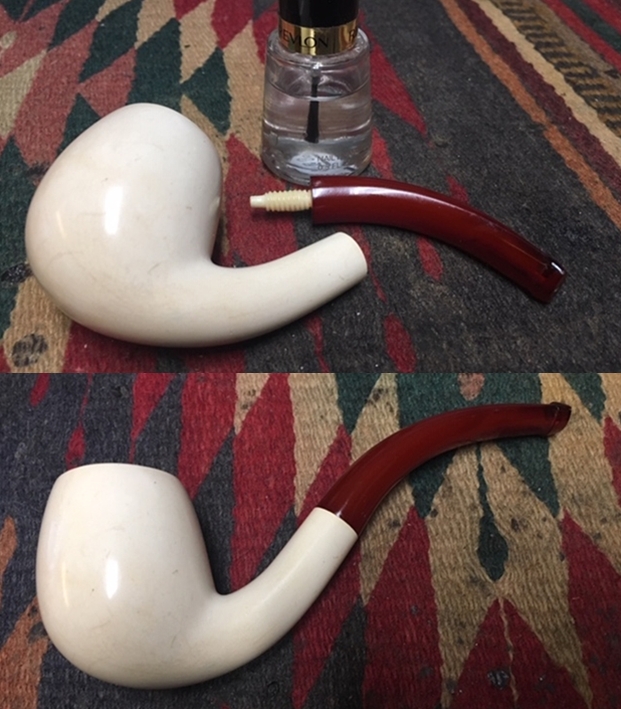
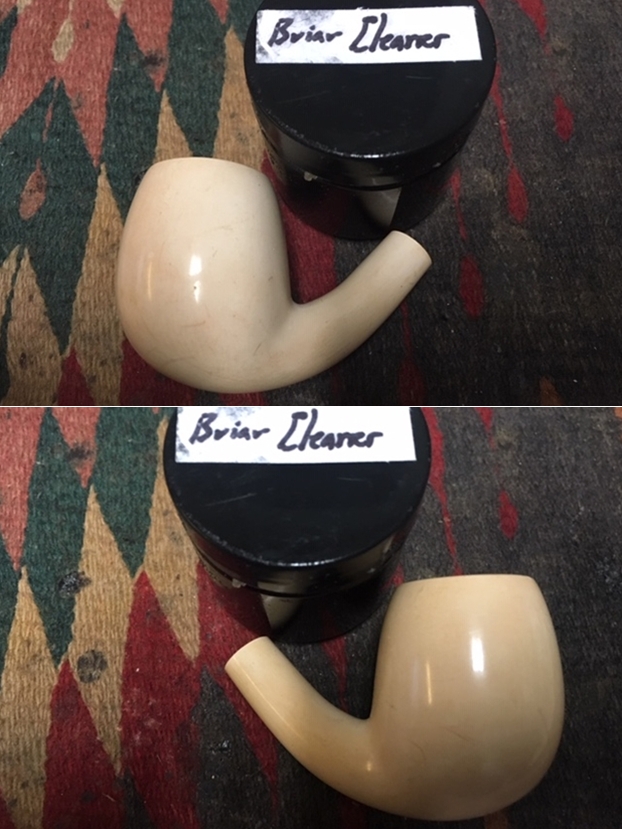
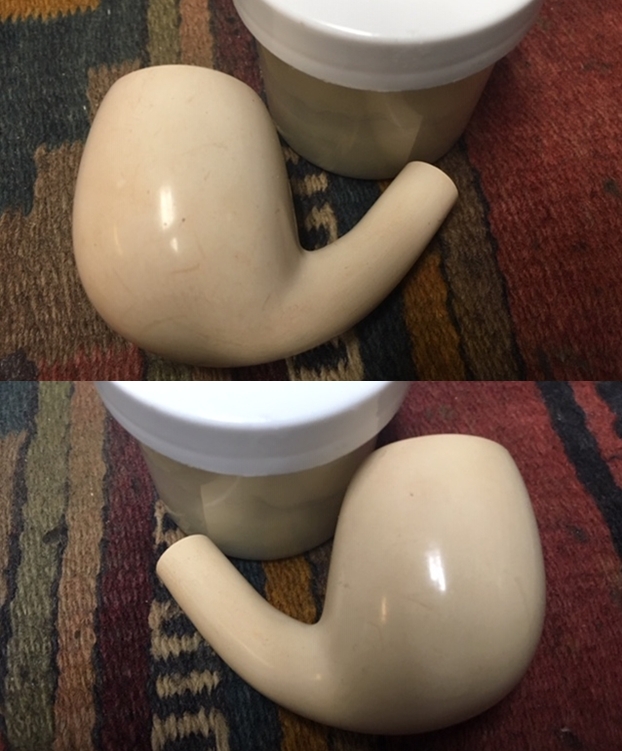
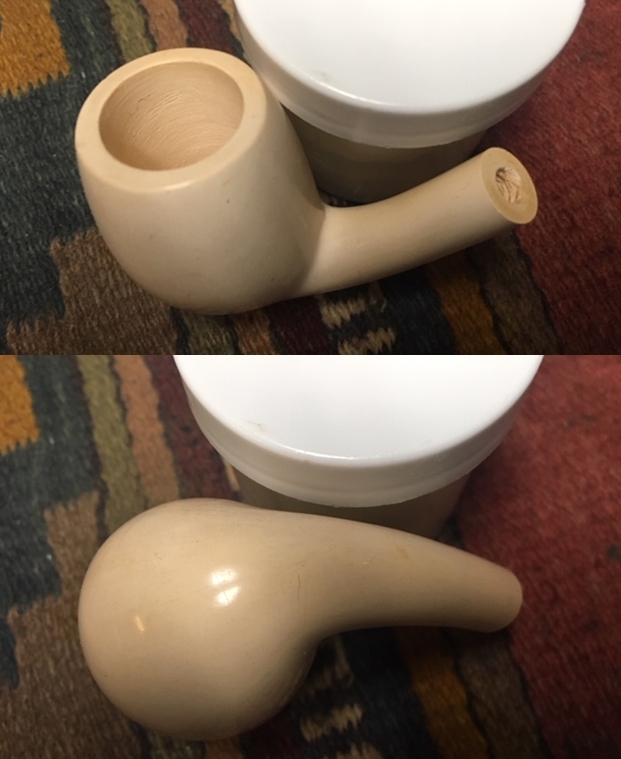
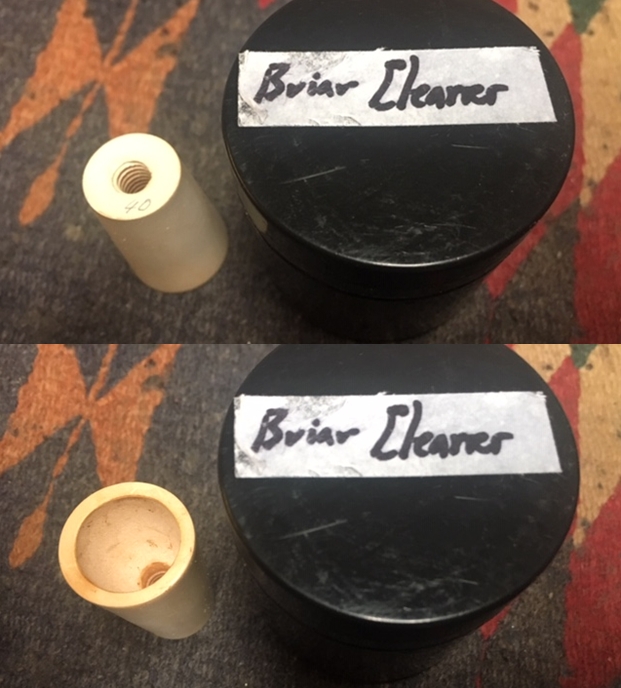
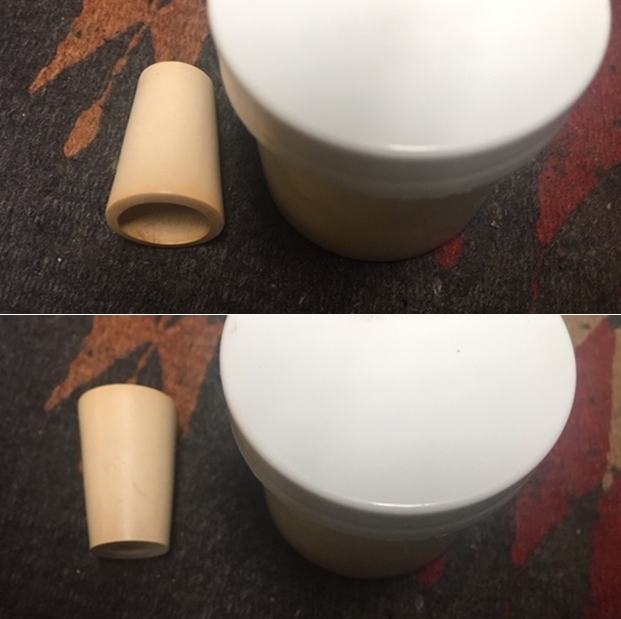
I took close up photos of the bowl and rim top as well as both sides of the Bakelite stem to show the condition that the pipe was in when I started. The bowl was very clean and unsmoked. The stem was clean and without tooth chatter or marks on the top and underside ahead of the button.I took the stem off the shank and took photos of the parts to show the unsmoked bowl and the clean bone tenon – no stains and no use.To correct the overturned tenon I painted it with clear fingernail polish. The idea was to build it up enough to correct the overturning. It took two coats of polish to add enough to the threads to correct the problem. Once it had cured I put the stem back on the bowl.I continued my experiment with a new product from Mark Hoover of Before & After Products. This one is a product he labels briar cleaner and it has the capacity of absorbing grime and dirt from the surface of briar. I have been using it with some success on this set of meerschaum pipes and holders. I rubbed the meerschaum tip down with some of his Briar Cleaner to see how it would work in this setting. In speaking to Mark he noted that the product is completely safe to use. The main product is even FDA approved edible. I rubbed it onto the bowl and rim top with my finger tips and worked it into the grime and grit on the bowl. I let it sit on the pipe for about 5 minutes before I rubbed it off with a microfibre cloth. I rinsed it under warm running water to remove the residue. I was pleasantly surprised by how clean the bowl looked when finished. Since the cleaner had worked so well I decided to try out the Restoration Balm on the meerschaum as well. I rubbed the bowl down with Before & After Restoration Balm. I worked it into the meerschaum and let it sit for a short time. I buffed it off with a microfibre cloth to bring it some life. Once again I was very surprised at how well it worked. I sent Mark Hoover a note about this experiment. He was pretty amazed at the results and said he had not thought of using it for meerschaum but was not surprised as it was made to absorb grit and grime from the surface of a pipe. Since the stem was unsmoked it had no issues with tooth chatter or marks. It was just dull from lack of use and sitting in storage. I wet sanded the stem with 1500 -12000 grit micromesh pads to polish it. I wiped it down with Obsidian Oil on a cloth after each sanding pad. I further polished it with Before & After Pipe Polish – both Fine and Extra Fine. After that I wiped the stem down a final time with Obsidian Oil and set it aside to dry. I put the bowl and stem back together. I polished the pipe with Blue Diamond to remove the remaining minute scratches in the briar and the Bakelite. I gave the bowl and stem several coats of Conservator’s Wax and buffed the pipe with a clean buffing pad to raise the shine. I hand buffed it with a microfiber cloth to deepen the shine. The pipe polished up pretty nicely. The contrast of the beautiful clean meerschaum with light colouring of age and the polished red Bakelite/Redmanol stem looked amazing. This older, beautiful, well made Meerschaum bent billiard will only get better with age. The finished pipe is shown in the photos below. The dimensions of the pipe are Length: 5 1/2 inches, Height: 2 inches, Outside diameter of the bowl: 1 1/4 inches, Chamber diameter: 3/4 of an inch. This is the second pipe from the Aristocrat pipe set in the photos at the beginning of this blog. It is also the last of the set to be cleaned and restored. Thanks for walking through the restoration with me. Cheers. 
Restoring an Old Cased Set of Aristocrat Meerschaums – Part 3


Blog by Steve Laug

I finished the first pipe and the cigar holder in the cased set of meerschaum pipes and holders made by Aristocrat (https://rebornpipes.com/2019/07/21/restoring-an-old-cased-set-of-aristocrat-meerschaums-part-1/). This set included a straight billiard, a bent billiard a cigar holder and a broken cigarette holder. All were smooth meerschaum with red Bakelite or Redmanol stems. All had bone tenons directly screwed into threaded mortises in the meerschaum. There was no stamping on the pipes and holders or the stems. The box itself was covered in what looked like alligator skin with brass hinges and clasps. On the inside the case was lined in an off white preformed velveteen fabric. There was a corner ribbon across the left side of the lid that read Aristocrat. The straight billiard has been restored and looks very good. The second pipe has not been looked at yet and will be the last piece from the set to be restored. The cigar holder has been restored and looks very good. The cigarette holder was broken and two parts and the stem remained. There was a missing piece from the front of the holder. It was unused and broken.  I took photos of the case and the pipes and holders before I started my work on it. Now it is time to work on the broken cigarette holder. I took photos of each of the pieces in the collection. The first set of photos shows the smoked straight billiard. I cleaned up this pipe and have written the blog on it (https://rebornpipes.com/2019/07/21/restoring-an-old-cased-set-of-aristocrat-meerschaums-part-1/). Give the blog a read and you will see the story of the restoration.

I have also cleaned up the cigar holder and written a blog on it if you want to check it out (https://rebornpipes.com/2019/07/21/restoring-an-old-cased-set-of-aristocrat-meerschaums-part-2/).

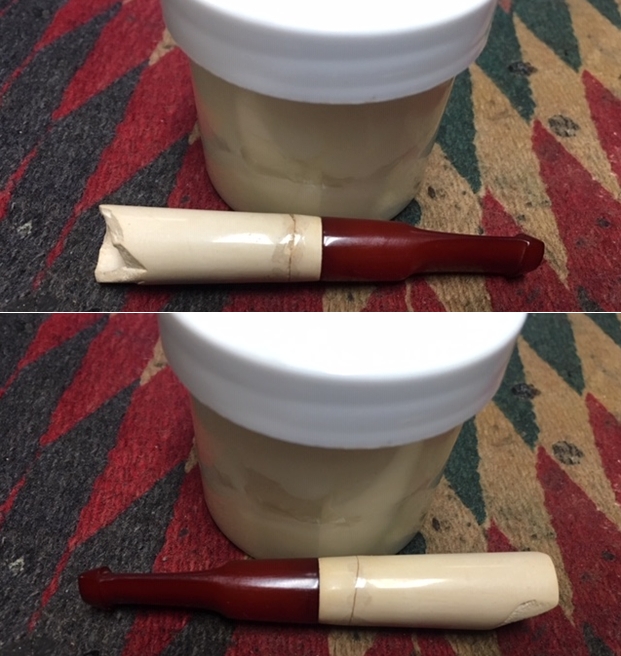
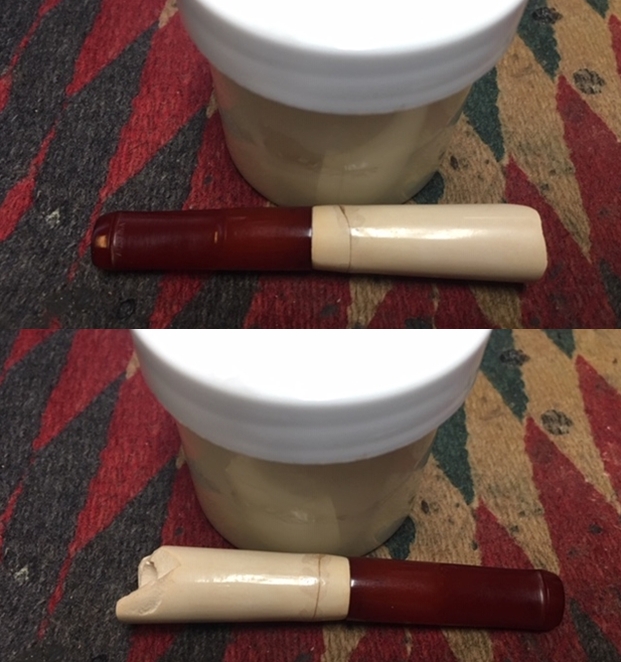
The next piece I chose to work on was the broken Aristocrat Cigarette Holder shown in the photos below. It was unsmoked and broken. It was also missing part of the meerschaum. I am leaving the information on the brand in case you have not read the background info in the first blog. From what I could find on Pipephil’s site I found a listing for Aristocrat linking it to John Redman Ltd. in England (http://www.pipephil.eu/logos/en/logo-a7.html). The site says that it was an export brand from the company. In looking at the various stampings in the photos below I found that the Aristocrat stamping on the ribbon on the case above matches the second and third photo below.The photo below was a link on the site that took me to a photo of the John Redman LTD. and British Empire Pipe Com on Westland Place, Hackney, London, England. I think it is a nice historical touch to be able to include the photo. I turned to Pipedia (https://pipedia.org/wiki/John_Redman_Ltd./British_Empire_Pipe_Co.) to see if I could learn a bit more about the company. I quote the full article below:

John Redman Ltd. and British Empire Pipe Co. Other lines include Aristocrat, Buckingham, Buckingham Palace, Canberra, Captain Fortune, Dr John, Golden Square, Redonian, Richmond (not Sasieni), Twin Bore.

From these two sources it appears to me that this set of meerschaum pipes and holders was made for export by John Redman Ltd. I am not sure of the date as neither source gave clues to that information.

I am enjoying working on this set of meers from John Redman Ltd. and really like the obvious connection to them with the Redmanol stems. I worked on the cigarette holder next as it was the only broken piece in the set. I was not sure what I could do with it knowing that there was a missing piece of meerschaum but it was worth a try. (See the above photos.)

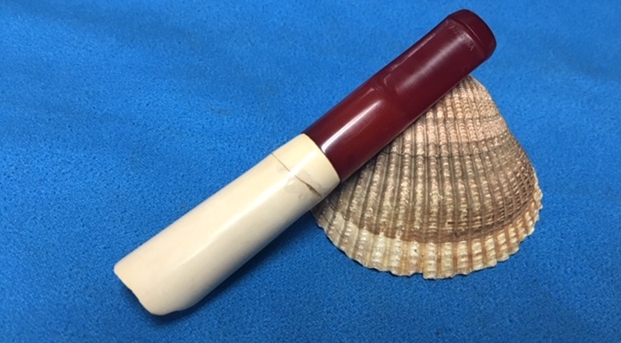
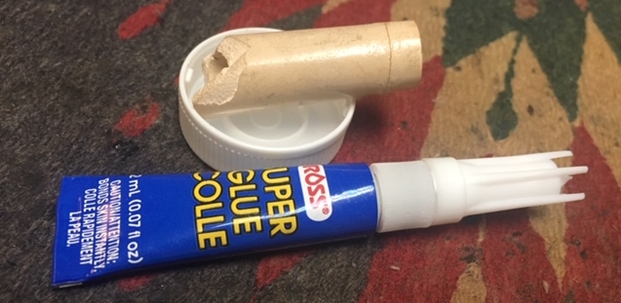
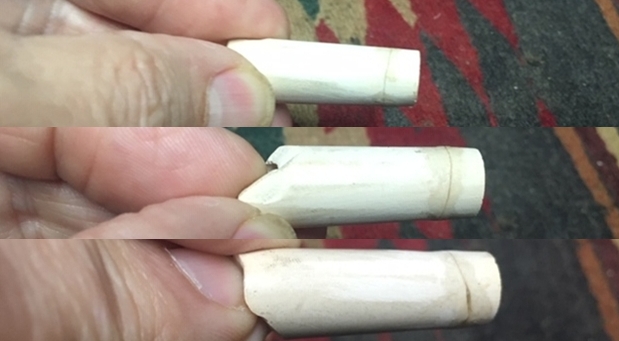
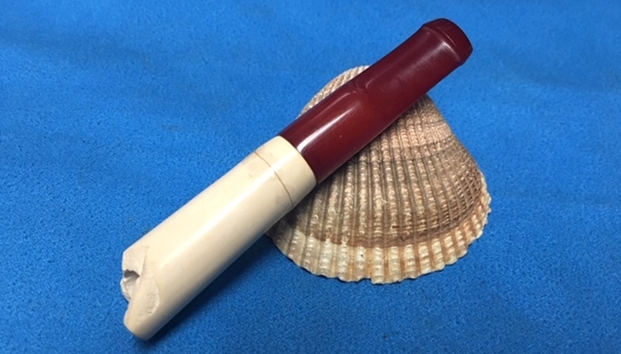
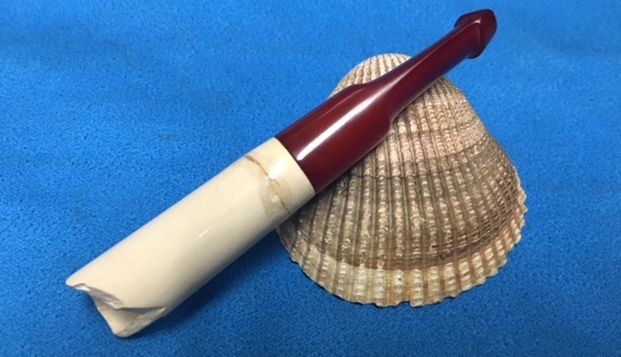
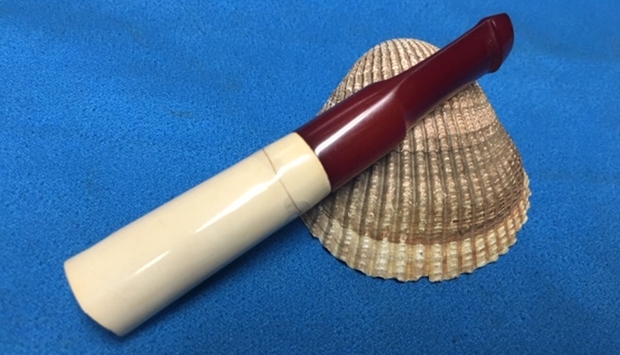
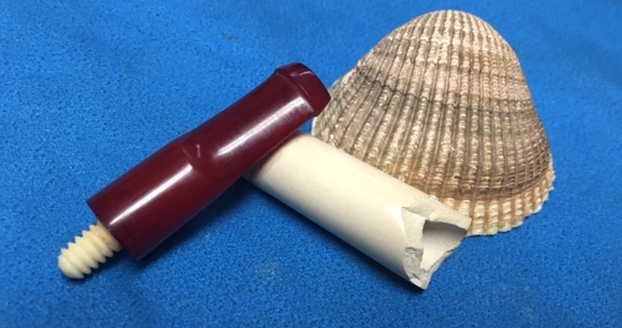
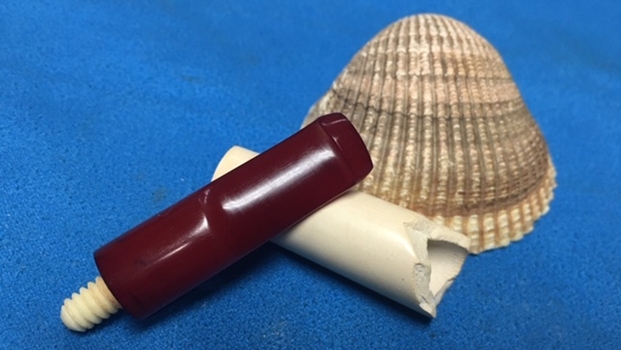
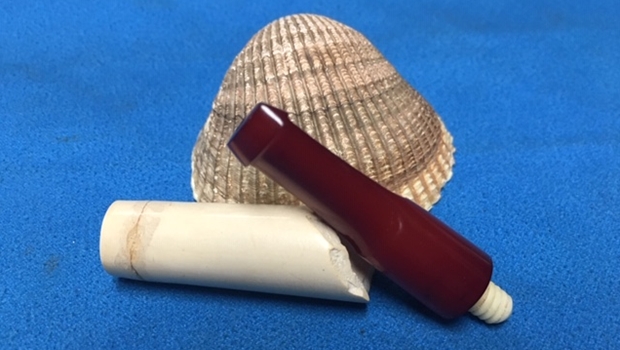
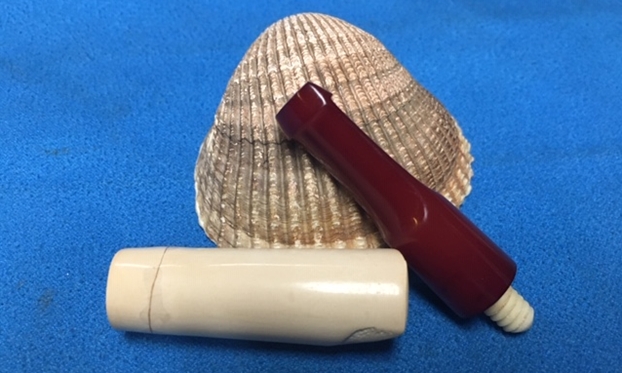
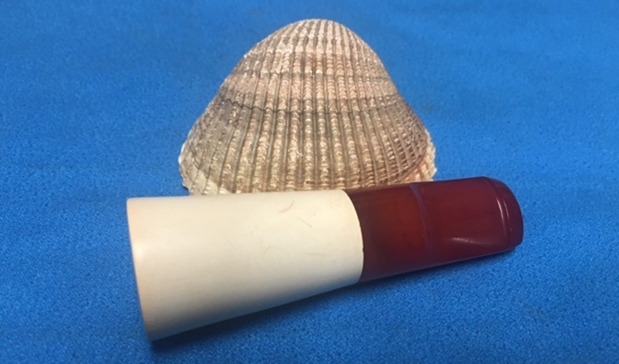
I cleaned around the edges of the two parts of meerschaum that remained to prepare them for gluing back together. Due to the porosity of meerschaum I knew that whatever glue I used it would be absorbed into the meerschaum along the joint so I chose clear super glue. I put glue on each side of the break, aligned the parts and held it in place until the glue set. The break, though visible did look a lot better.Once the glue had set I continued my experiment with a new product from Mark Hoover of Before & After Products. This one is a product he labels briar cleaner and it has the capacity of absorbing grime and dirt from the surface of briar. I have been using it with some success on this set of meerschaum pipes and holders. I rubbed the meerschaum tip down with some of his Briar Cleaner to see how it would work in this setting. In speaking to Mark he noted that the product is completely safe to use. The main product is even FDA approved edible. I rubbed it onto the bowl and rim top with my finger tips and worked it into the grime and grit on the bowl. I let it sit on the pipe for about 5 minutes before I rubbed it off with a microfibre cloth. I rinsed it under warm running water to remove the residue. I was pleasantly surprised by how clean the surface on the holder looked when I was finished.I polished the meerschaum repair with micromesh sanding pads – wet sanding with 1500-12000 grit pads and wiping down the surface with a damp cloth.after each sanding pad. It is looking pretty decent. The repair is definitely visible but at least it is not broken. At the same time I wet sanded the stem with 1500 -12000 grit micromesh pads at the same time. I wiped it down with Obsidian Oil on a cloth after each sanding pad. After the 12000 grit pad I wiped the stem down a final time with Obsidian Oil and set it aside to dry. I rubbed the cigarette holder down with Before & After Restoration Balm. I worked it into the meerschaum and let it sit for a short time. I buffed it off with a microfibre cloth to bring it some life. Once again I was very surprised at how well it worked. I sent Mark Hoover a note about this experiment. He was pretty amazed at the results and said he had not thought of using it for meerschaum but was not surprised as it was made to absorb grit and grime from the surface of meerschaum. I put the meerschaum holder and stem back together. I carefully polished the cigarette holder with Blue Diamond to remove the remaining minute scratches in the briar and the Bakelite. I gave the holder and stem several coats of Conservator’s Wax and buffed it with a clean buffing pad to raise the shine. I hand buffed it with a microfiber cloth to deepen the shine. It polished up pretty nicely. The contrast of the beautiful clean meerschaum with light colouring of age and the polished red Bakelite/Redmanol stem looked amazing. This older, beautiful, well made Meerschaum Cigarette Holder, though broken is still workable and it will only get better with age. If a person wanted they could easily turn it into a pipe tamper and repurpose it. The finished holder is shown in the photos below. The dimensions of the pipe are Length: 3 1/4 inches, Height: 1/2 inches, Outside diameter of the bowl: 1/2 inches, Chamber diameter: 1 ½ inches. This is the third piece from the Aristocrat set in the photos at the beginning of this blog. The restoration of the remaining pieces in the set – the other pipe will be shown in a future blog. Thanks for walking through the restoration with me. Cheers. 

Restoring an Old Cased Set of Aristocrat Meerschaums – Part 2


Blog by Steve Laug

I finished the first pipe in the cased set of meerschaum pipes and holders made by Aristocrat (https://rebornpipes.com/2019/07/21/restoring-an-old-cased-set-of-aristocrat-meerschaums-part-1/). This set included a straight billiard, a bent billiard a cigar holder and a broken cigarette holder. All were smooth meerschaum with red Bakelite or Redmanol stems. All had bone tenons directly screwed into threaded mortises in the meerschaum. There was no stamping on the pipes and holders or the stems. The box itself was covered in what looked like alligator skin with brass hinges and clasps. On the inside the case was lined in an off white preformed velveteen fabric. There was a corner ribbon across the left side of the lid that read Aristocrat. The straight billiard had been smoked pretty heavily and there was a cake in the bowl and the rim top had a thick lava coat. The exterior of the bowl was dirty. The stem had tooth marks and chatter on both sides near the button. The second pipe – the bent billiard was unsmoked but dirty with dust and debris of time. The cigar holder had been lightly smoked and there were tooth marks and chatter on in near the button. The cigarette holder was broken and two parts and the stem remained. There was a missing piece from the front of the holder. It was unused and broken.  I took photos of the case and the pipes and holders before I started my work on it. Now it is time to work on the cigar holder. I took photos of each of the pieces in the collection. I cleaned up the straight billiard on the left side of the photo above and have written the blog on it (https://rebornpipes.com/2019/07/21/restoring-an-old-cased-set-of-aristocrat-meerschaums-part-1/). Give the blog a read and you will see the story of the restoration. The next piece I chose to work on was the Aristocrat Cigar Holder shown in the photos below. It had also been smoked – lightly but still it was used. There was some darkening in the bowl and the stem had a lot of  tooth marks and chatter on both sides at the button.I am leaving the information on the brand in case you have not read the background info in the first blog. From what I could find on Pipephil’s site I found a listing for Aristocrat linking it to John Redman Ltd. in England (http://www.pipephil.eu/logos/en/logo-a7.html). The site says that it was an export brand from the company. In looking at the various stampings in the photos below I found that the Aristocrat stamping on the ribbon on the case above matches the second and third photo below.The photo below was a link on the site that took me to a photo of the John Redman LTD. and British Empire Pipe Com on Westland Place, Hackney, London, England. I think it is a nice historical touch to be able to include the photo.I turned to Pipedia (https://pipedia.org/wiki/John_Redman_Ltd./British_Empire_Pipe_Co.) to see if I could learn a bit more about the company. I quote the full article below:

John Redman Ltd. and British Empire Pipe Co. Other lines include Aristocrat, Buckingham, Buckingham Palace, Canberra, Captain Fortune, Dr John, Golden Square, Redonian, Richmond (not Sasieni), Twin Bore.

From these two sources it appears to me that this set of meerschaum pipes and holders was made for export by John Redman Ltd. I am not sure of the date as neither source gave clues to that information.

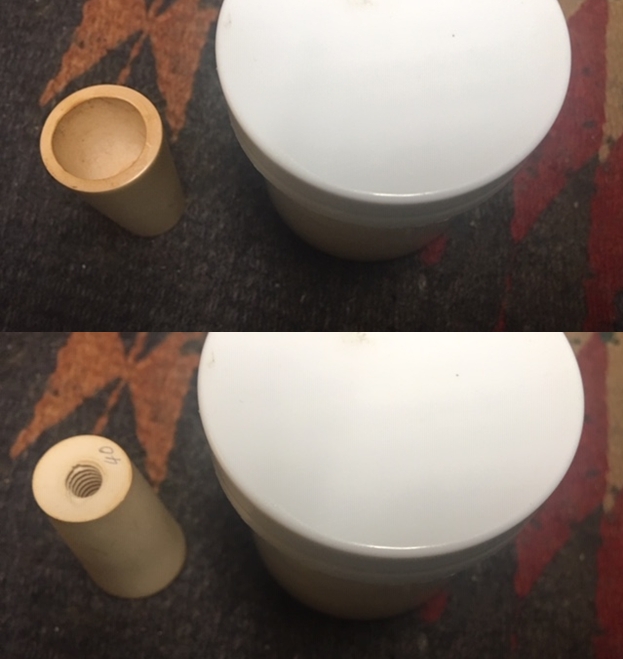
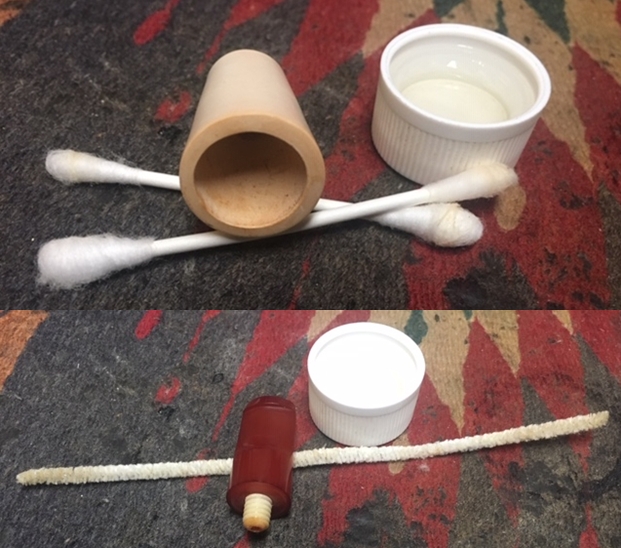
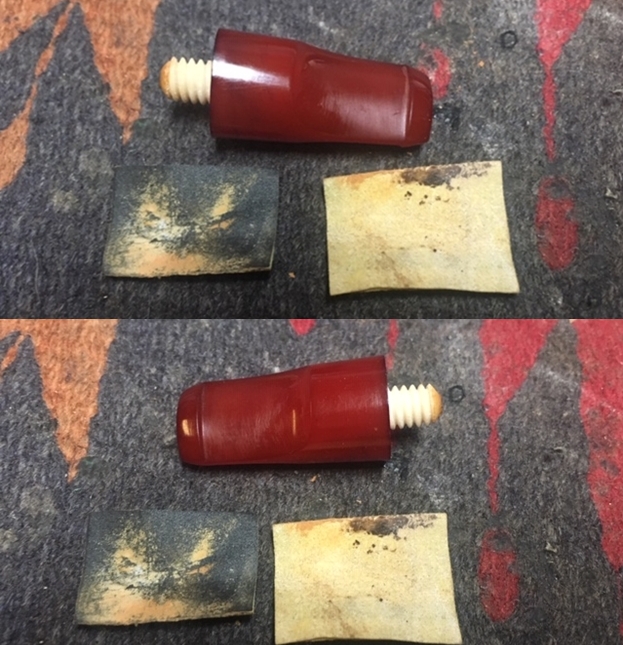
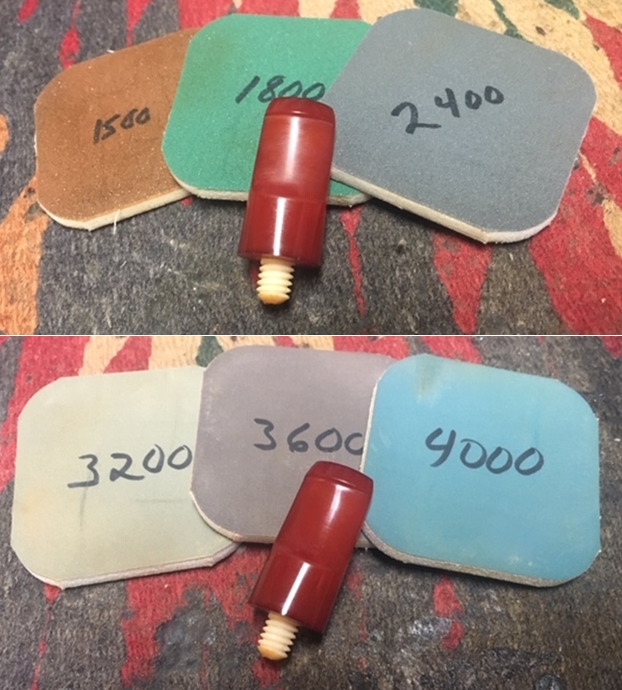
Given the information that I have in hand, I decided to start the restoration work on the cigar holder as it was the second piece in the set that had been smoked. I decided to continue experimenting with a new product from Mark Hoover of Before & After Products. This one is a product he labels briar cleaner and it has the capacity of absorbing grime and dirt from the surface of briar. I decided to try it out set of meerschaum pipes and holders. I rubbed the meerschaum tip down with some of his Briar Cleaner to see how it would work in this setting. In speaking to Mark he noted that the product is completely safe to use. The main product is even FDA approved edible. I rubbed it onto the bowl and rim top with my finger tips and worked it into the grime and grit on the bowl. I let it sit on the pipe for about 5 minutes before I rubbed it off with a microfibre cloth. I rinsed it under warm running water to remove the residue. I was pleasantly surprised by how clean the surface on the bowl looked when I was finished. Since the cleaner had worked so well on the other meerschaums I decided to try out the Restoration Balm on this meerschaum cigar holder as well. I rubbed the bowl down with Before & After Restoration Balm. I worked it into the meerschaum and let it sit for a short time. I buffed it off with a microfibre cloth to bring it some life. Once again I was very surprised at how well it worked. I sent Mark Hoover a note about this experiment. He was pretty amazed at the results and said he had not thought of using it for meerschaum but was not surprised as it was made to absorb grit and grime from the surface of meerschaum. I cleaned out the internals of the airway in the cigar holder and the stem. I used alcohol, cotton swabs and pipe cleaners to remove the grime. There was not much grime and it cleaned up quickly. I set the meerschaum holder aside and worked on the stem. I sanded the tooth chatter and marks on both sides of the stem with a folded piece of 220 grit sandpaper and polished out the scratches from the sandpaper with a folded piece of 400 grit wet dry sandpaper. I wiped the stem down with Obsidian Oil and set it aside to dry out.I wet sanded the stem with 1500 -12000 grit micromesh pads to polish it. I wiped it down with Obsidian Oil on a cloth after each sanding pad. After the 12000 grit pad I wiped the stem down a final time with Obsidian Oil and set it aside to dry. I put the meerschaum holder and stem back together. I polished the cigar holder with Blue Diamond to remove the remaining minute scratches in the briar and the Bakelite. I gave the holder and stem several coats of Conservator’s Wax and buffed it with a clean buffing pad to raise the shine. I hand buffed it with a microfiber cloth to deepen the shine. It polished up pretty nicely. The contrast of the beautiful clean meerschaum with light colouring of age and the polished red Bakelite/Redmanol stem looked amazing. This older, beautiful, well made Meerschaum Cigar Holder will only get better with age. The finished holder is shown in the photos below. The dimensions of the pipe are Length: 2 5/8 inches, Height: 1 inches, Outside diameter of the bowl: 3/4 inches, Chamber diameter: 1/2 of an inch. This is the second piece from the Aristocrat set in the photos at the beginning of this blog. The restoration of the remaining pieces in the set – the other pipe and the broken cigarette holder will be shown in future blogs. Thanks for walking through the restoration with me. Cheers. 

Restoring an Old Cased Set of Aristocrat Meerschaums – Part 1


Blog by Steve Laug

After working on the pair of Turkish Meerschaum pipes I wrote about earlier I decided to keep working on meers (https://rebornpipes.com/2019/07/21/cleaning-up-a-pair-of-no-name-turkish-made-meerschaums/). The next thing on the table was a cased set of meerschaums that included a straight billiard, a bent billiard a cigar holder and a broken cigarette holder. All were smooth meerschaum with red Bakelite or Redmanol stems. All had bone tenons directly screwed into threaded mortises in the meerschaum. There was no stamping on the pipes and holders or the stems. The box itself was covered in what looked like alligator skin with brass hinges and clasps. On the inside the case was lined in an off white preformed velveteen fabric. There was a corner ribbon across the left side of the lid that read Aristocrat. The straight billiard had been smoked pretty heavily and there was a cake in the bowl and the rim top had a thick lava coat. The exterior of the bowl was dirty. The stem had tooth marks and chatter on both sides near the button. The second pipe – the bent billiard was unsmoked but dirty with dust and debris of time. The cigar holder had been lightly smoked and there were tooth marks and chatter on in near the button. The cigarette holder was broken and two parts and the stem remained. There was a missing piece from the front of the holder. It was unused and broken.  I took photos of the case and the pipes and holders before I started my work on it. I took photos of each of the pieces in the collection. The first set of photos shows the smoked straight billiard. The second set of photos shows the unsmoked bent billiard. The third set shows the cigar holder. The fourth set shows the broken cigarette holder. All four of the pieces were dirty, some more than others but all needing work.From what I could find on Pipephil’s site I found a listing for Aristocrat linking it to John Redman Ltd. in England (http://www.pipephil.eu/logos/en/logo-a7.html). The site says that it was an export brand from the company. In looking at the various stampings in the photos below I found that the Aristocrat stamping on the ribbon on the case above matches the second and third photo below.The photo below was a link on the site that took me to a photo of the John Redman LTD. and British Empire Pipe Com on Westland Place, Hackney, London, England. I think it is a nice historical touch to be able to include the photo.I turned to Pipedia (https://pipedia.org/wiki/John_Redman_Ltd./British_Empire_Pipe_Co.) to see if I could learn a bit more about the company. I quote the full article below:

John Redman Ltd. and British Empire Pipe Co. Other lines include Aristocrat, Buckingham, Buckingham Palace, Canberra, Captain Fortune, Dr John, Golden Square, Redonian, Richmond (not Sasieni), Twin Bore.

From these two sources it appears to me that this set of meerschaum pipes and holders was made for export by John Redman Ltd. I am not sure of the date as neither source gave clues to that information.

Given the information that I have in hand, I decided to start the restoration work on the straight meerschaum billiard. Only this pipe and the cigar holder had been smoked in the set so I figured why not start with the most smoked pipe – the most smoked billiard. I took close up photos of the bowl and rim top as well as both sides of the Bakelite stem to show the condition that the pipe was in when I started. The bowl had a thin cake from top to bottom. There was a thick coat of lava on the surface of the rim – heavier toward the back than the front but all around. The stem was clean but had tooth chatter and light tooth marks on the top and underside ahead of the button.I used a 1500 grit micromesh sanding pad to start the rim top cleanup and sanded the outside of the bowl to start the cleanup process.I reamed out the cake in the bowl with a Savinelli Fitsall Pipe Knife. I took the cake back to bare meerschaum. I sanded the walls of the bowl with a piece of dowel wrapped with 220 grit sandpaper until they were smooth.I decided to continue experimenting with a new product from Mark Hoover of Before & After Products. This one is a product he labels briar cleaner and it has the capacity of absorbing grime and dirt from the surface of briar. I decided to try it out this pair of meerschaum pipes. I rubbed the bowl down with some of his Briar Cleaner to see how it would work in this setting. In speaking to Mark he noted that the product is completely safe to use. The main product is even FDA approved edible. I rubbed it onto the bowl and rim top with my finger tips and worked it into the grime and grit on the bowl. I let it sit on the pipe for about 5 minutes before I rubbed it off with a microfibre cloth. I rinsed it under warm running water to remove the residue. I was pleasantly surprised by how clean the surface on the bowl looked when I was finished. Since the cleaner had worked so well I decided to try out the Restoration Balm on the meerschaum as well. I rubbed the bowl down with Before & After Restoration Balm. I worked it into the meerschaum and let it sit for a short time. I buffed it off with a microfibre cloth to bring it some life. Once again I was very surprised at how well it worked. I sent Mark Hoover a note about this experiment. He was pretty amazed at the results and said he had not thought of using it for meerschaum but was not surprised as it was made to absorb grit and grime from the surface of a pipe. I cleaned out the internals of the airway in the shank and the stem as well as the mortise and the entrance of the airway into the bottom of the bowl. I used alcohol, cotton swabs and pipe cleaners to remove the grime. It was surprisingly clean for a pipe that was as heavily smoked as this one was. I set the bowl aside and worked on the stem. I sanded the tooth chatter and marks on both sides of the stem with a folded piece of 220 grit sandpaper and polished out the scratches from the sandpaper with a folded piece of 400 grit wet dry sandpaper. I wiped the stem down with Obsidian Oil and set it aside to dry out.I wet sanded the stem with 1500 -12000 grit micromesh pads to polish it. I wiped it down with Obsidian Oil on a cloth after each sanding pad. After the 12000 grit pad I wiped the stem down a final time with Obsidian Oil and set it aside to dry. I put the bowl and stem back together. I polished the pipe with Blue Diamond to remove the remaining minute scratches in the briar and the Bakelite. I gave the bowl and stem several coats of Conservator’s Wax and buffed the pipe with a clean buffing pad to raise the shine. I hand buffed it with a microfiber cloth to deepen the shine. The pipe polished up pretty nicely. The contrast of the beautiful clean meerschaum with light colouring of age and the polished red Bakelite/Redmanol stem looked amazing. This older, beautiful, well made John Redman Ltd. Meerschaum straight billiard with a Redmanol stem will only get better with age. The finished pipe is shown in the photos below. The dimensions of the pipe are Length: 5 1/4 inches, Height: 2 inches, Outside diameter of the bowl: 1 1/4 inches, Chamber diameter: 7/8 of an inch. This is the first pipe from the Aristocrat pipe set in the photos at the beginning of this blog. The restoration of the remaining pieces in the set – the other pipe, the cigar holder and cigarette holder will be shown in future blogs. Thanks for walking through the restoration with me. Cheers. 
Cleaning up a pair of No Name Turkish Made Meerschaums


Blog by Steve Laug

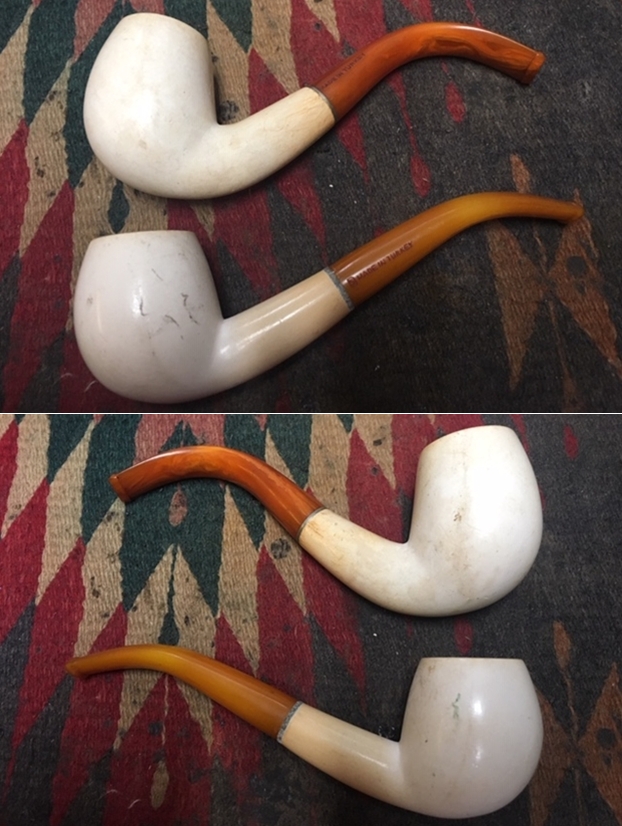
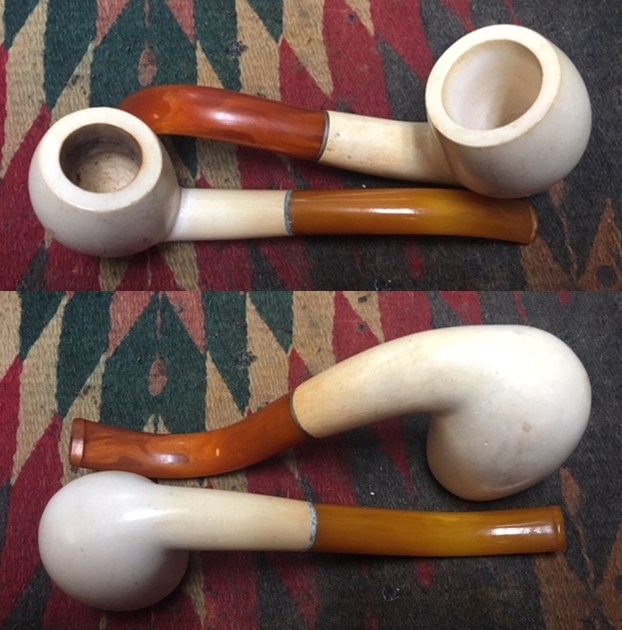
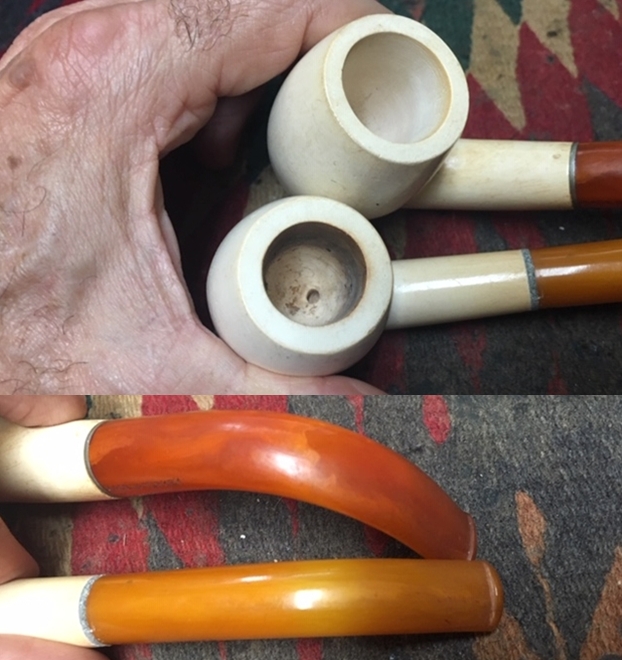
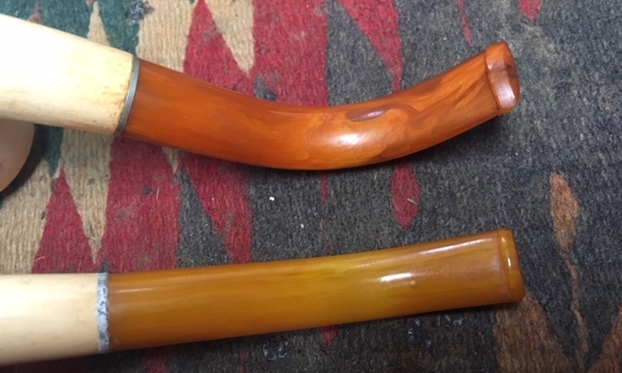
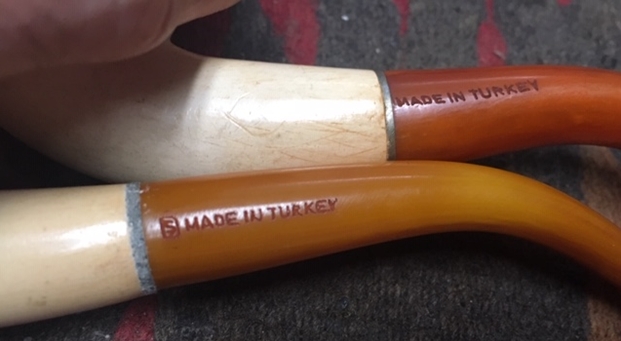
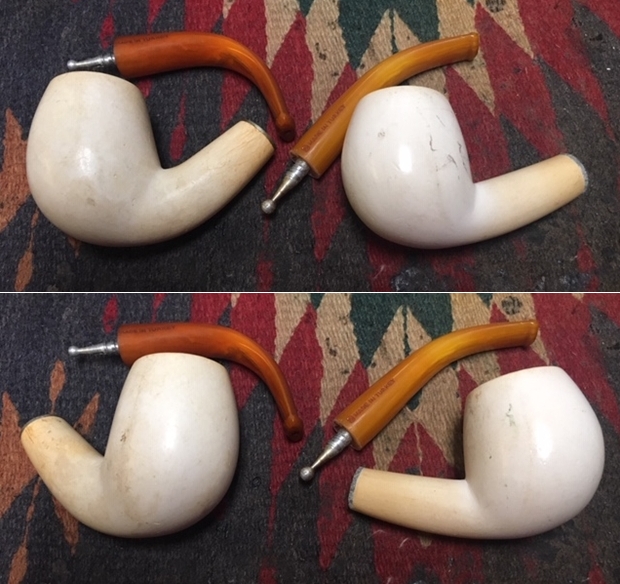
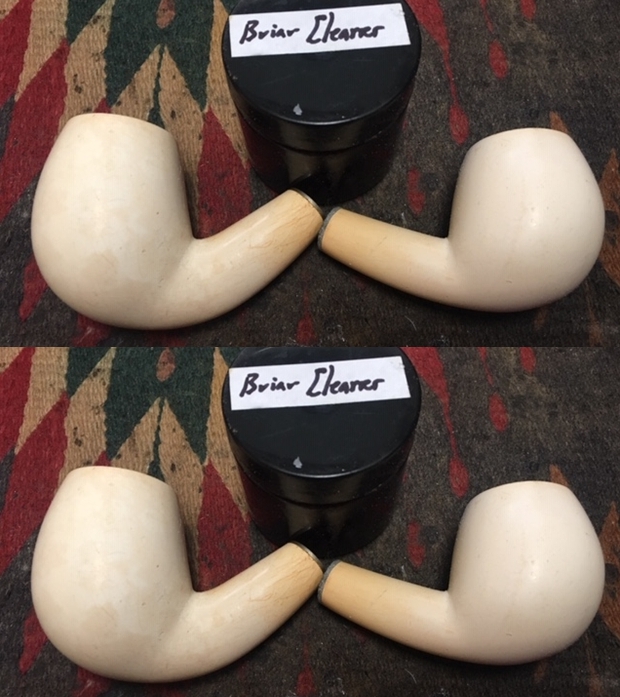
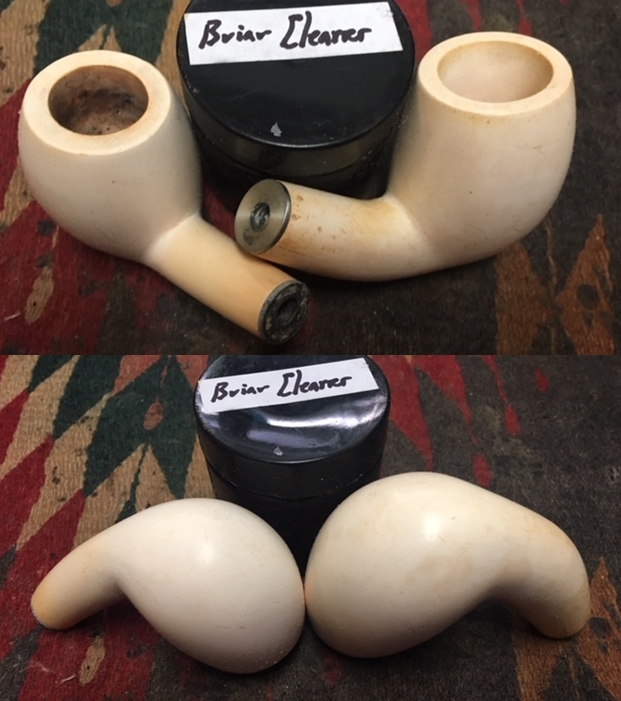
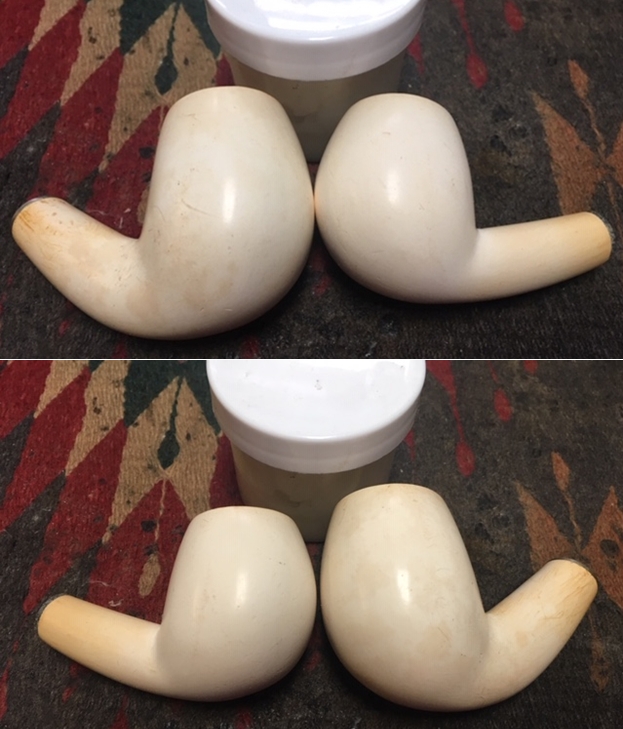
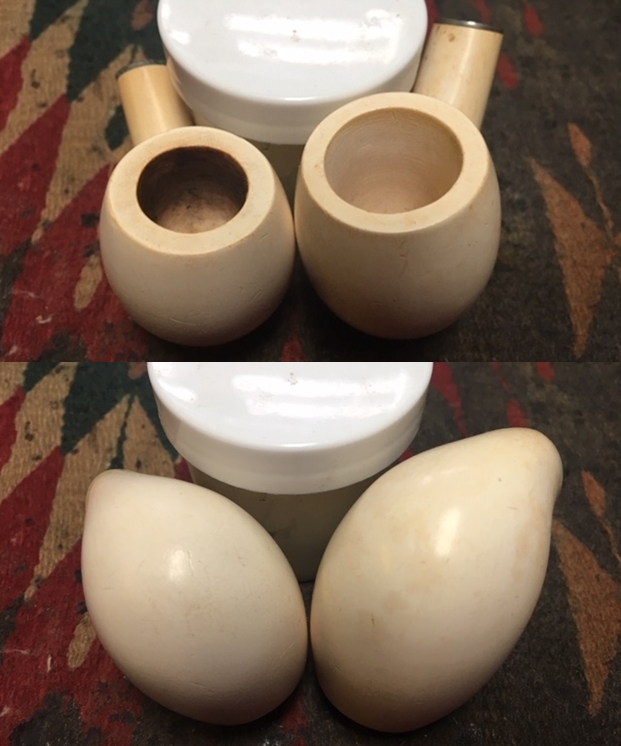
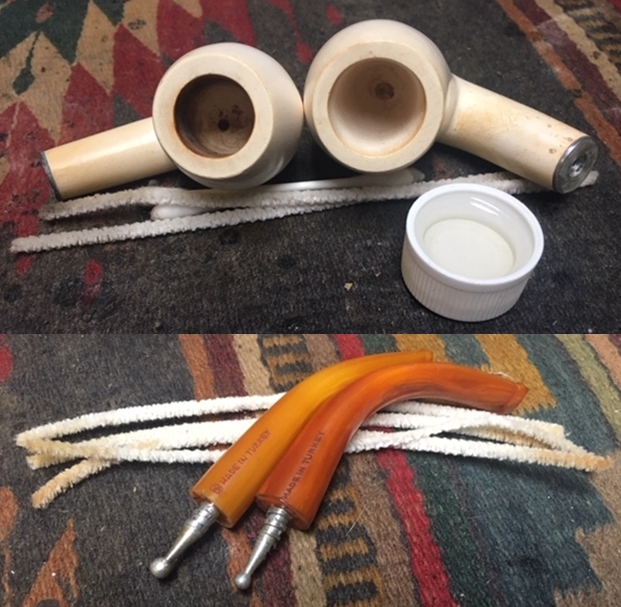
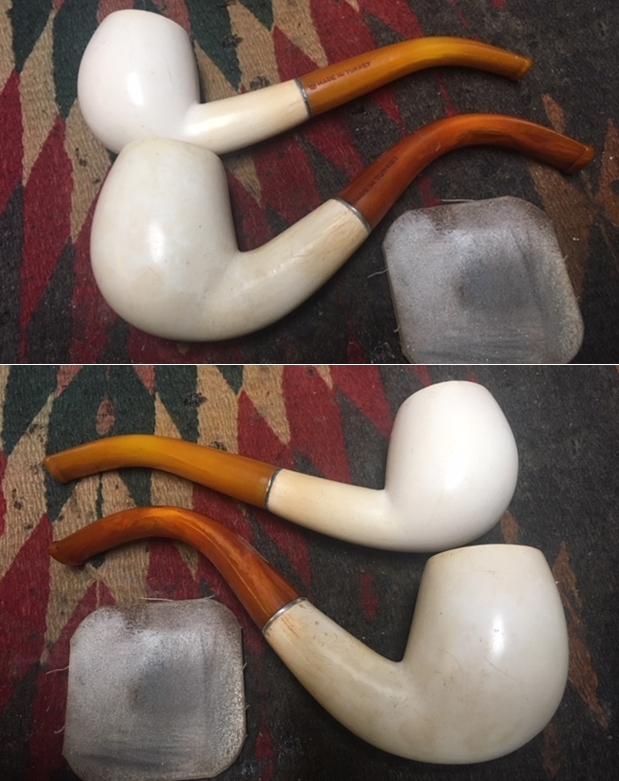
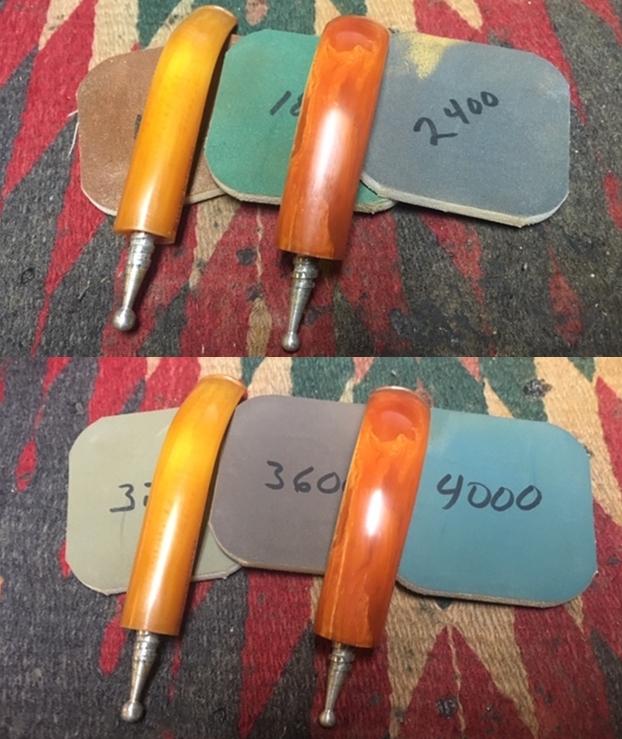
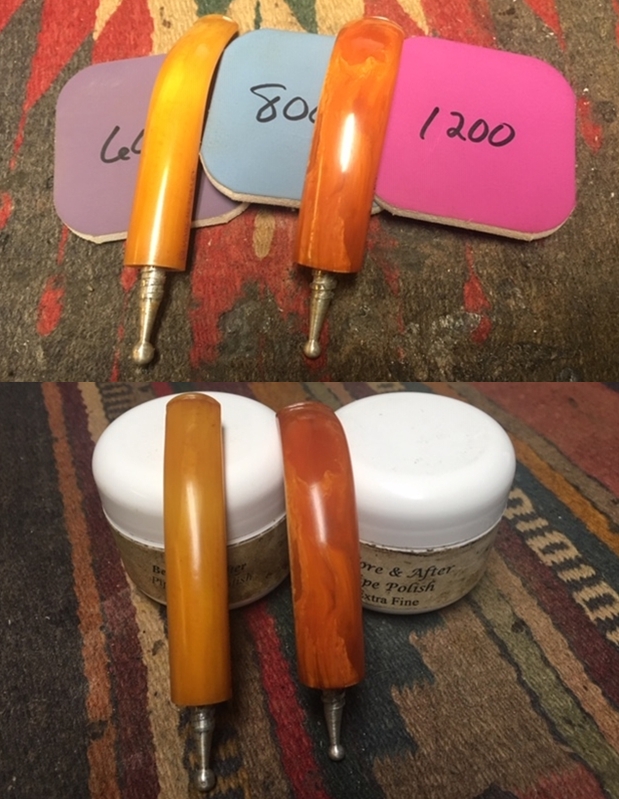
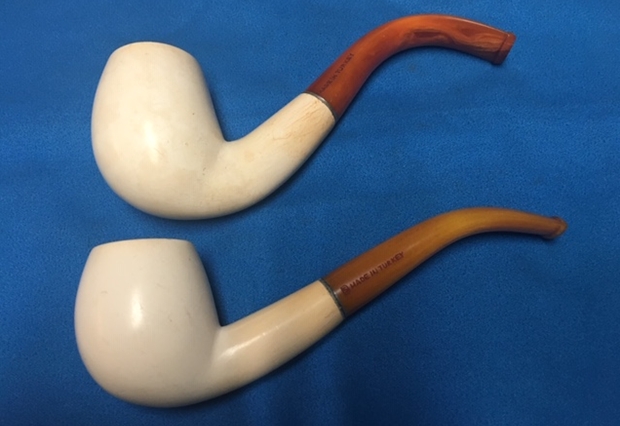
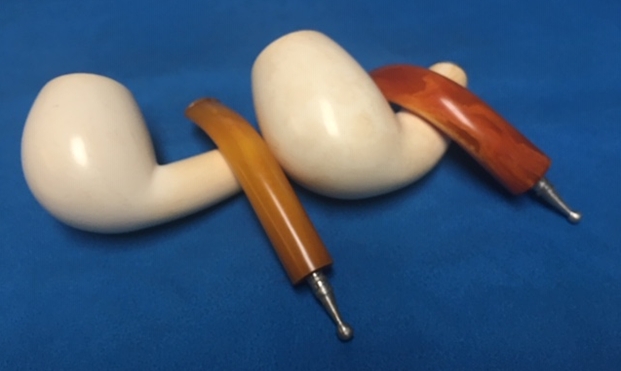
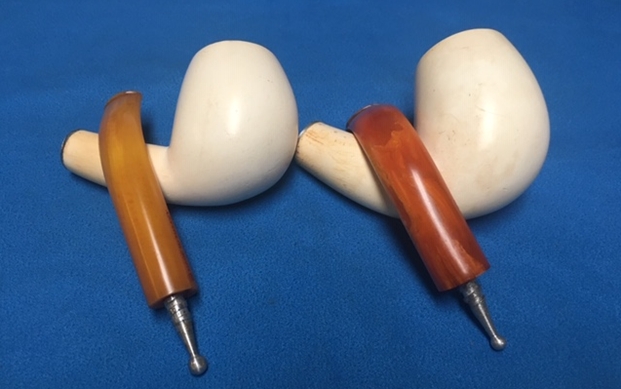
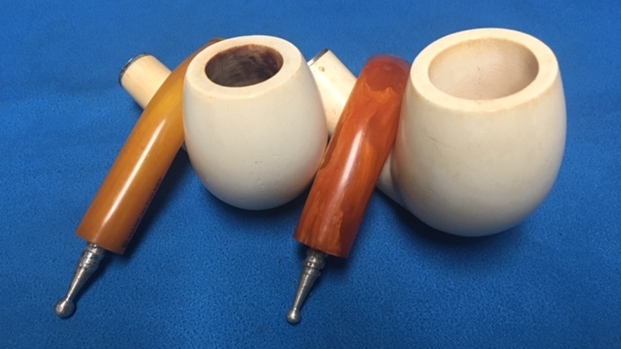
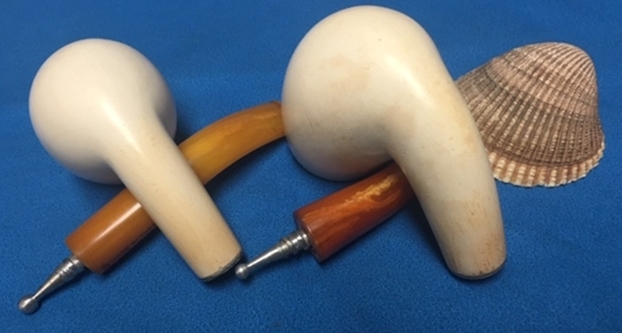
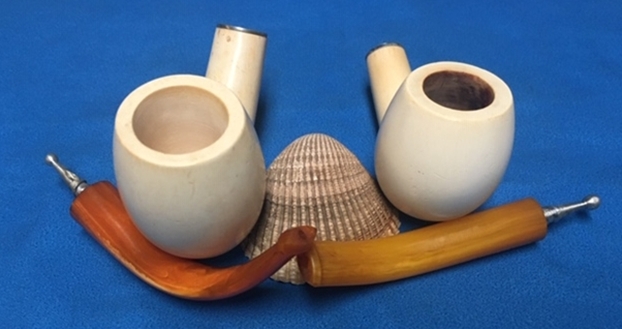
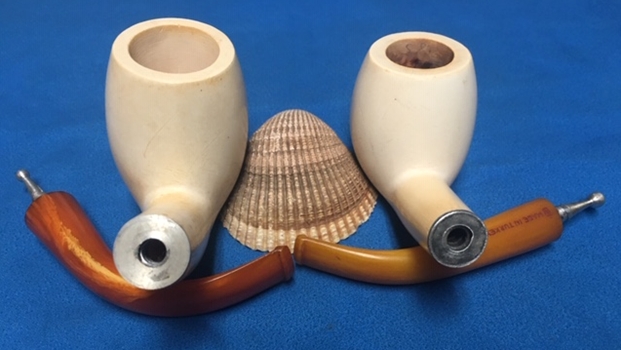
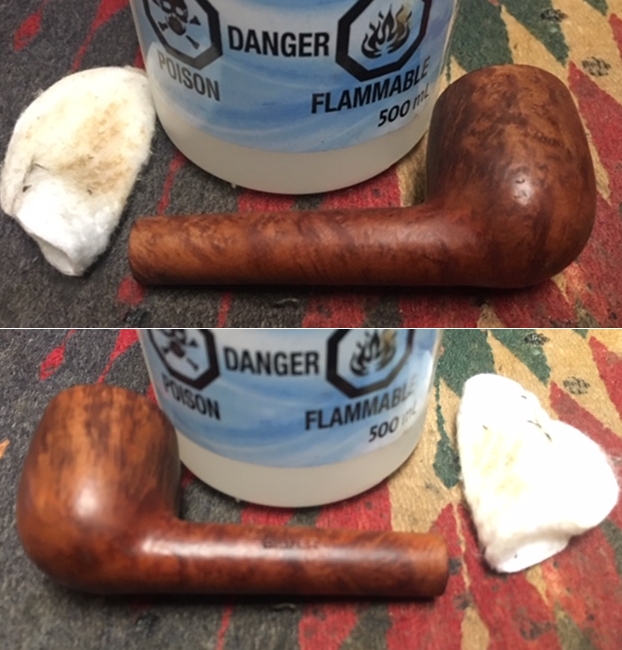
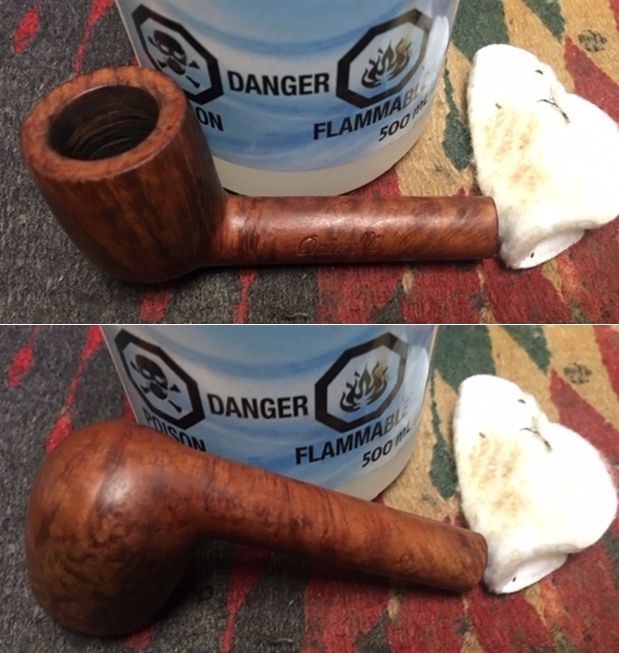
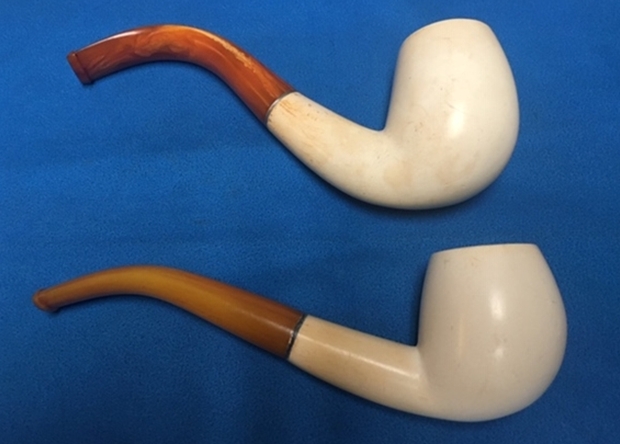
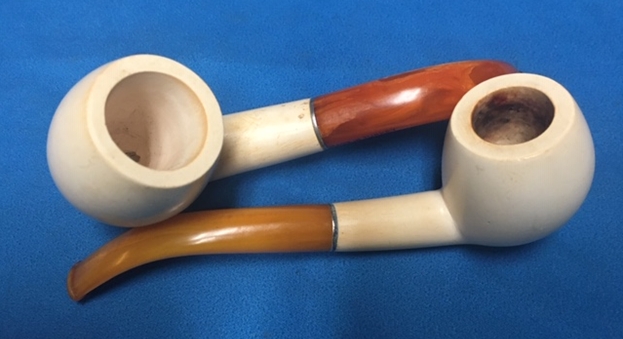
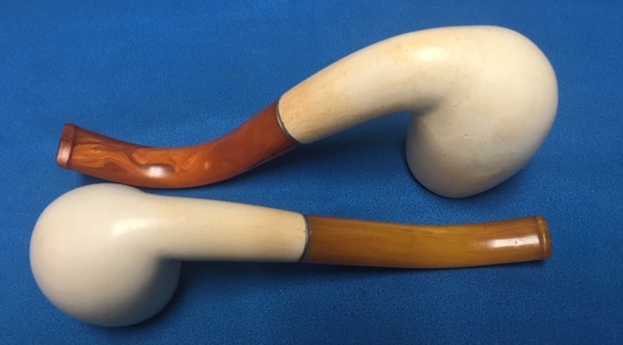
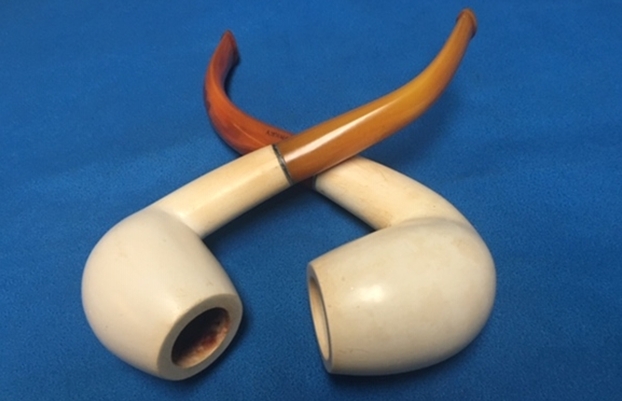
As you might have figured out from the title I am working on a pair of Turkish Meerschaum pipes – two bent eggs with no stamping or identifying marks regarding the maker. Both have similar shapes and stems. The stems both are stamped on the left side – Made in Turkey. The smaller of the two has a small S in a box. The bowls were very dirty on the outside of the bowl. There was a lot of marks on the meer and sticky substances that made the bowls feel and look dirty.The larger bowl was unsmoked and the smaller one is lightly smoked. Both had been sitting a very long time unused as there were cobwebs in the bottoms of the bowl. The shanks both had a metal mortise insert much like Kaywoodie metal inserts. The tenon on the stems was a metal single unit aluminum stinger and tenon. The Bakelite stems were in excellent condition and did not have any tooth chatter or marks in the surface. They were dirty but otherwise in good condition. The alignment of the stems in the shank was perfect. I took photos of the pipes before I started my work on it. I took a close up photo of the bowls and rim tops to show the condition of the pipe before I started my cleanup work. Both bowls were dirty but there was no cake. The larger of the two was unsmoked and you can see that the smaller one has been lightly smoked. The rim tops were both dirty but undamaged. The stems look pretty good with no tooth chatter and marks on either the top or underside. Metal spacer on the smaller pipe was oxidized and dirty.  I took a photo of the stamping on the stems of both pipes. The top pipe (larger one) is stamped MADE IN TURKEY. The bottom pipe stem is stamped with an S in a box followed by MADE IN TURKEY. Both stems have an older style orifice button that can either speak of age or of precast unshaped stems.I took the stems off the bowls and took photos of the parts. The metal tenon on the larger of the two eggs (one on the left below) was very clean and unused. The metal tenon on the second pipe (one on the right) was lightly used and had a little tobacco stain.I decided to try cleaning the meerschaum a little differently this time around. I am currently experimenting with a new product from Mark Hoover of Before & After Products. This one is a product he labels briar cleaner and it has the capacity of absorbing grime and dirt from the surface of briar. I decided to try it out this pair of meerschaum pipes. I rubbed the bowl down with some of his Briar Cleaner to see how it would work in this setting. In speaking to Mark he noted that the product is completely safe to use. The main product is even FDA approved edible. I rubbed it onto the bowl with my finger tips and worked it into the grime and grit on both bowls. I rubbed it on the second bowl while letting the product sit on the first bowl. It worked the whole time I was applying it to the second bowl. It probably sat about 2-3 minutes before I went back and rubbed it off with a microfibre cloth. The second bowl sat the whole time I was rubbing down the first bowl with the cloth. Again the time lag was 2-3 minutes minimum. I rubbed down the second bowl with the cloth and was pleasantly surprised by how clean the surface on both bowls looked when I was finished. Since the cleaner had worked so well I decided to try out the Restoration Balm on the meerschaum as well. I rubbed the bowl down with Before & After Restoration Balm. I worked it into the meerschaum and let it sit for a short time. I buffed it off with a microfibre cloth to bring it some life. Once again I was very surprised at how well it worked. I sent Mark Hoover a note about this experiment. He was pretty amazed at the results and said he had not thought of using it for meerschaum but was not surprised as it was made to absorb grit and grime from the surface of a pipe. I scrubbed the internals of the bowls, shanks and stems with alcohol, cotton swabs and pipe cleaners. They were surprisingly clean and the dust and debris came out quickly on the pipe cleaners and the cotton swabs. The smaller pipe that had been presmoked was also quite clean.I polished the metal spacer on each shank end with 1500 micromesh sanding pads. I was able to remove the oxidation and leave the spacers both shiny.I set the bowls aside and worked on the stems. I sanded the surface of both stems with 1500 -12000 grit micromesh pads to polish it. I wiped it down with Obsidian Oil on a cloth after each sanding pad. I finished polishing the stem with Before & After Pipe Polish – both Fine and Extra Fine polishes. I wiped the stem down with Obsidian Oil afterwards and buffed it on the buffing wheel with Blue Diamond and the finished it with a soft microfiber cloth. I put the bowls and stems back together. I polished them with Blue Diamond to polish out the scratches in the briar and the Bakelite. I gave the bowls and stems of both multiple coats of Conservator’s Wax and buffed the pipes with a clean buffing pad to raise the shine. I hand buffed them with a microfiber cloth to deepen the shine. The pipes polished up pretty nicely. The contrast of the beautiful clean meerschaum with light colouring of age and the polished golden Bakelite stems looked amazing. These are beautiful egg shaped Meerschaum pipes that will only get better with age. The finished pipes are shown in the photos below. The dimensions of the larger egg shaped pipe with fuller bent stem (upper pipe in the first two photos below) are Length: 6 inches, Height: 2 inches, Outside diameter of the bowl: 1 1/4 inches, Chamber diameter: 3/4 of an inch. The dimensions of the smaller egg shaped pipe with lesser bent stem (lower pipe in the first two photos below) are Length: 5 3/4 inches, Height: 1 3/4 inches, Outside diameter of the bowl: 1 1/4 inches, Chamber diameter: 5/8 of an inch.  I have restored quite a few meerschaum pipes over the years this pair though not particularly high end still have a special beauty. I will be putting them on the rebornpipes store shortly. Thanks for walking through the restoration with me. Cheers.
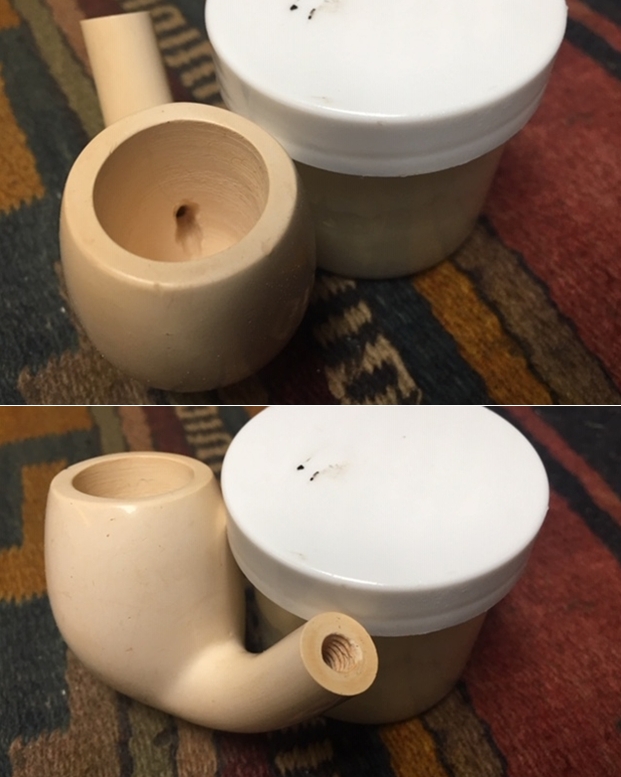
Restoring a Savinelli Autograph 4 Freehand Style Sitter


Blog by Steve Laug

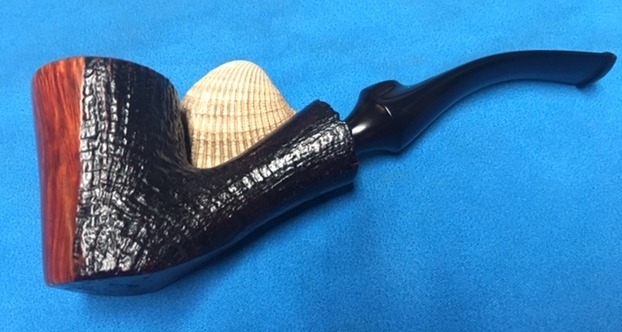
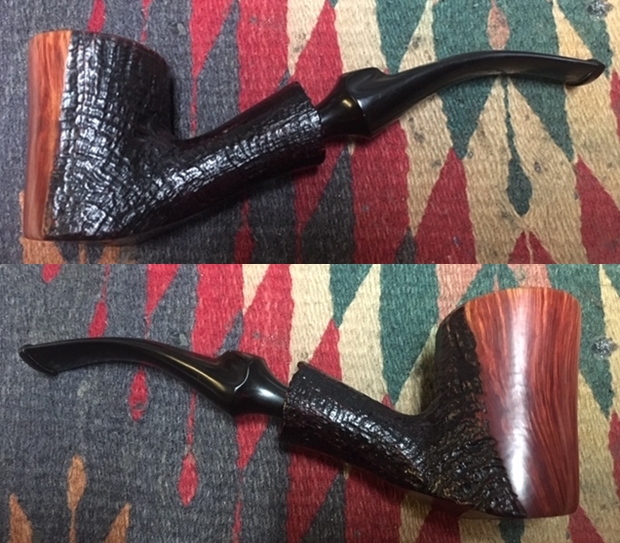
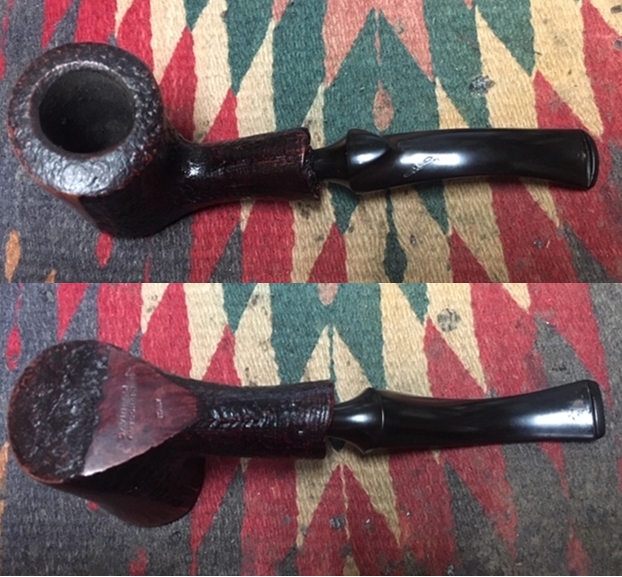
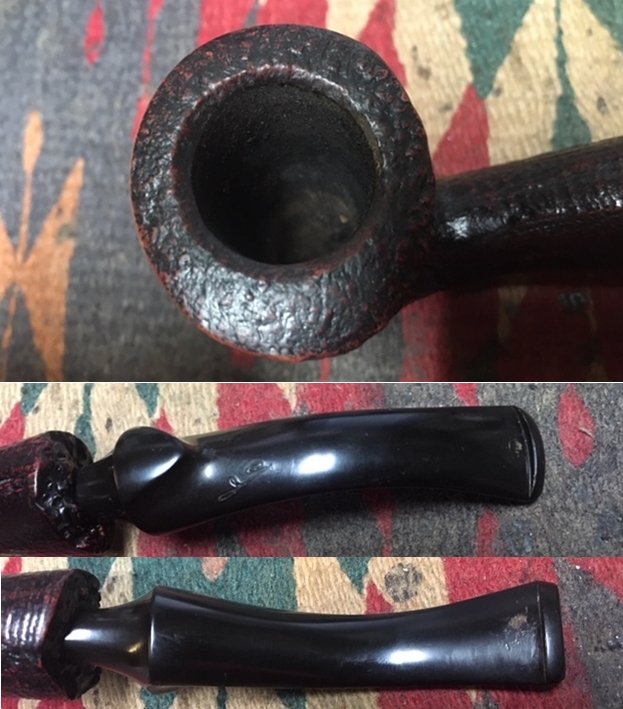
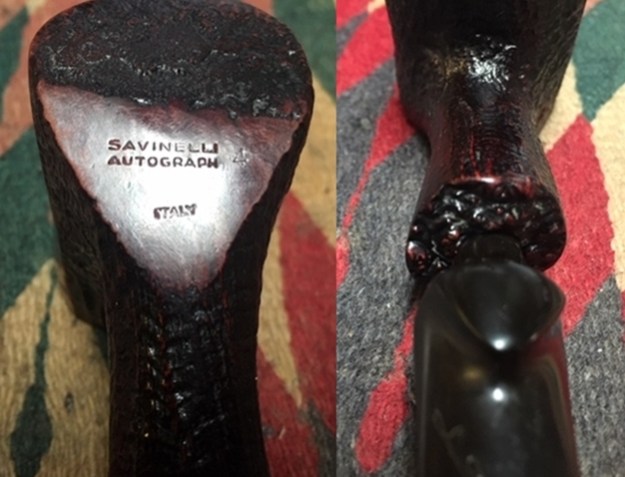
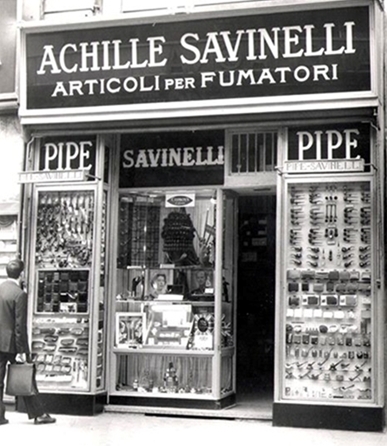
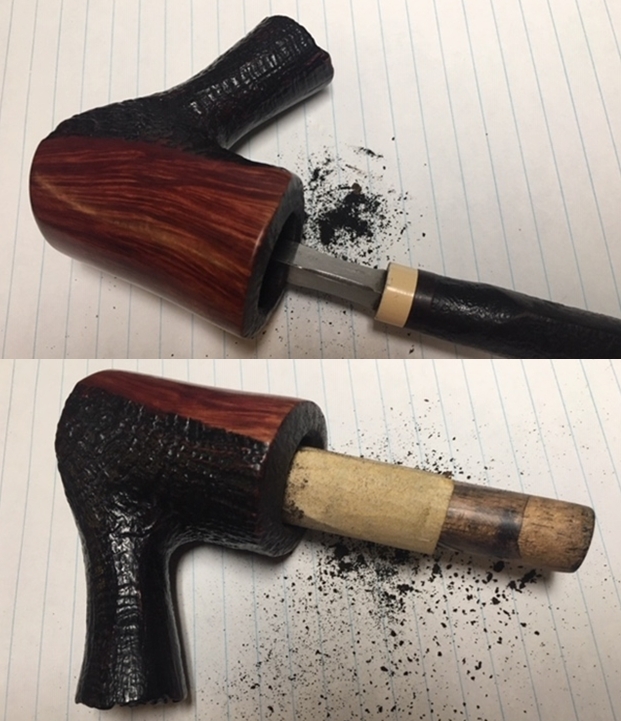
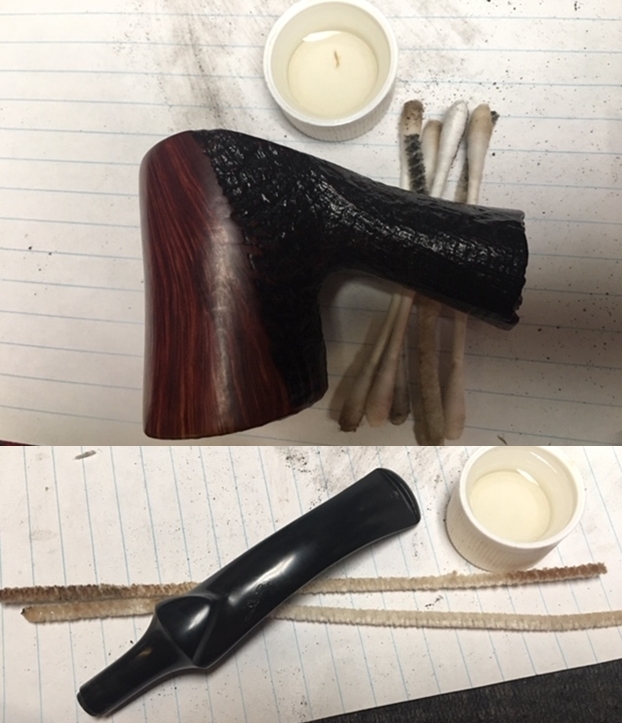
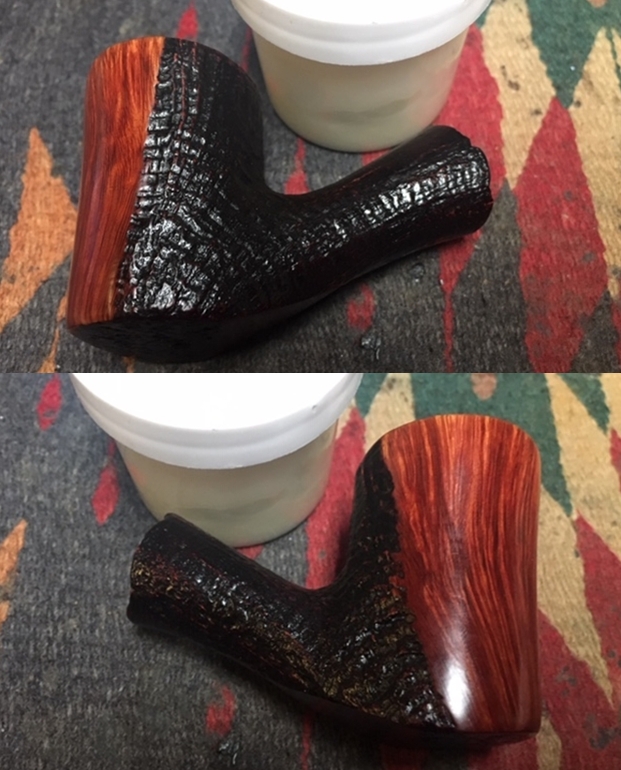
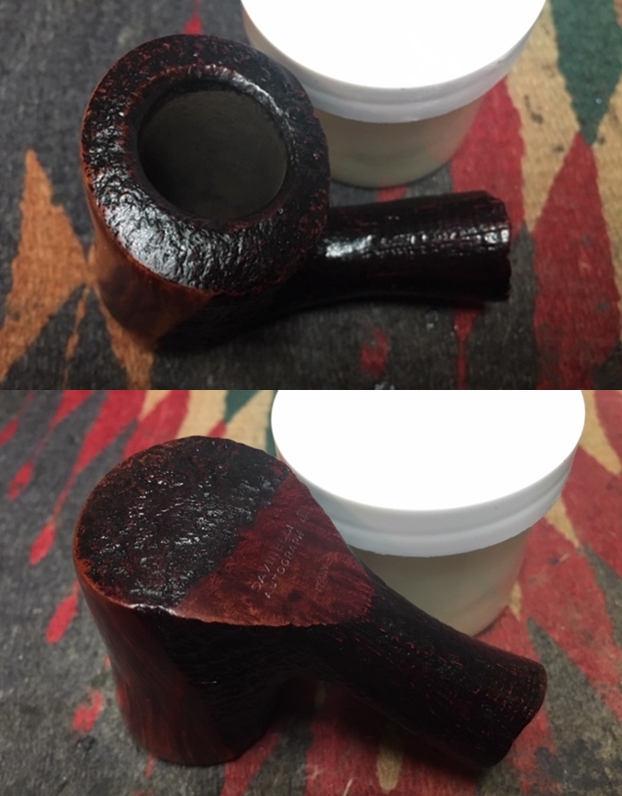
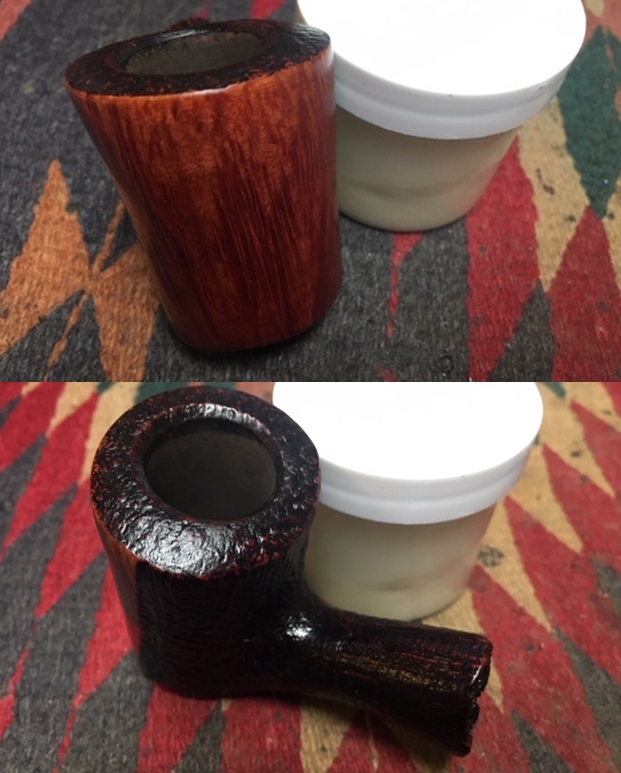
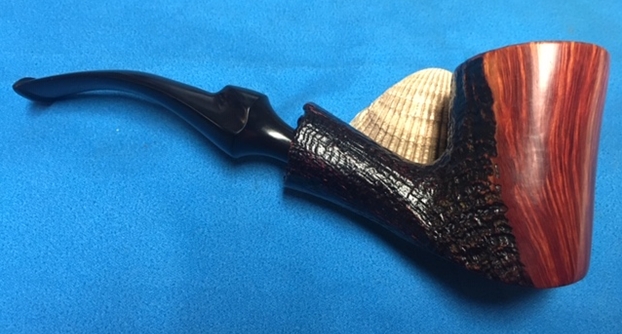
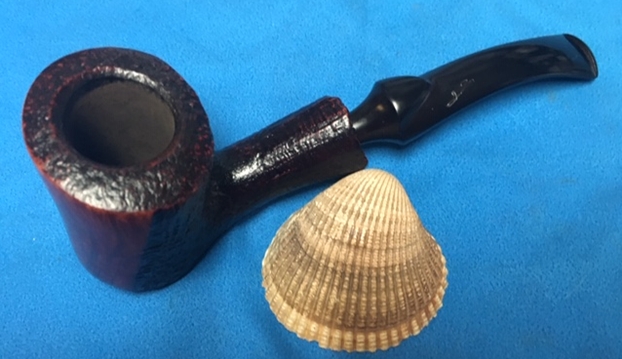
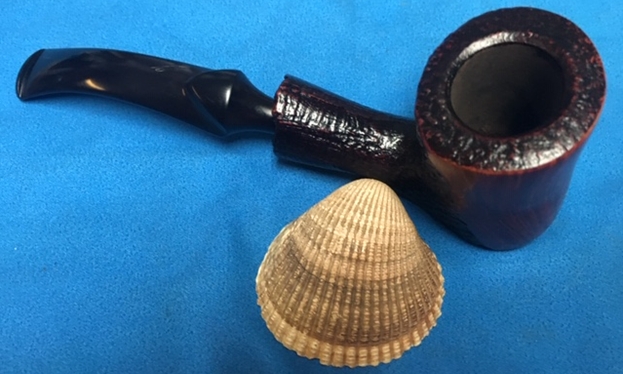
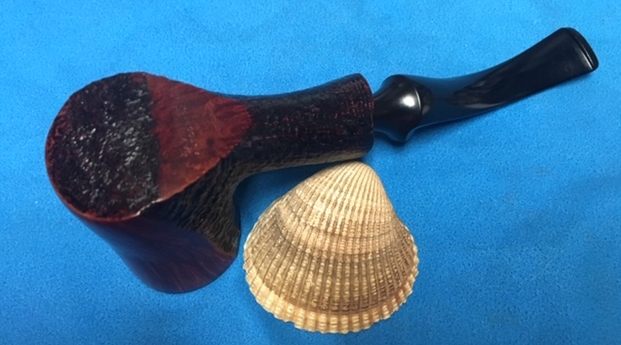
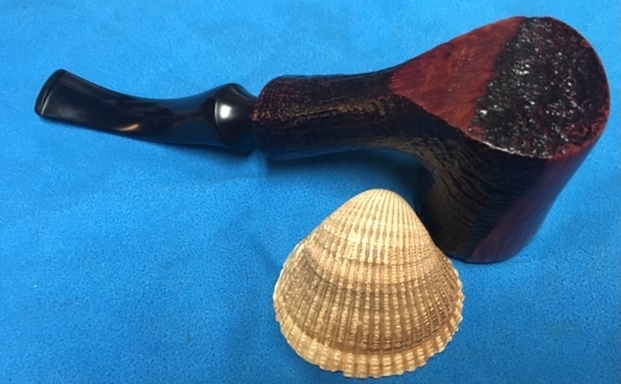
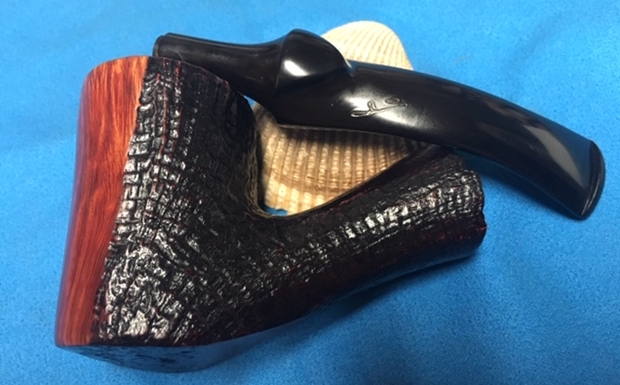
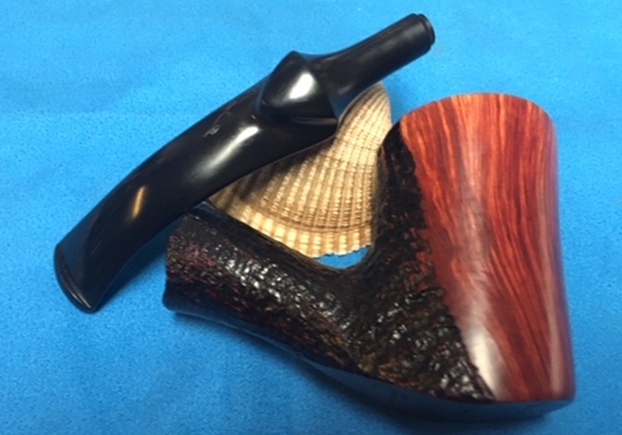
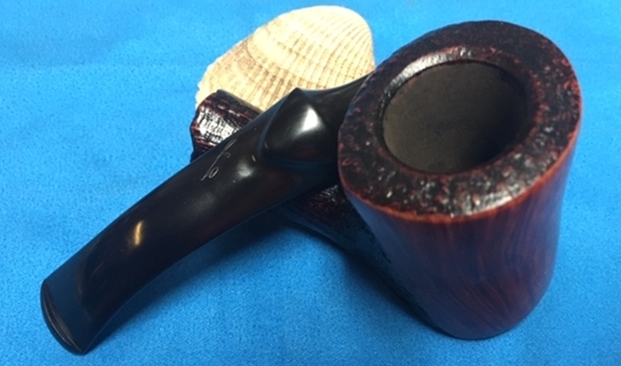
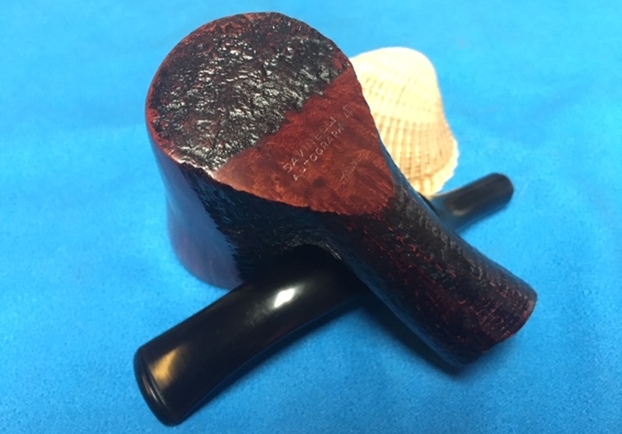
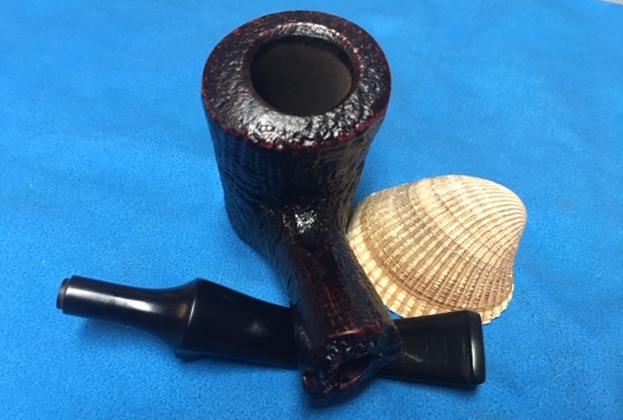
As you might have figured out from the title I am working on another pipe from Italy. This one is a Savinelli Autograph 4. It reads Savinelli over Autograph on the underside of the bowl on a smooth panel. It is also stamped with the Grade number 4 and Italy. The pipe has a beautiful sandblast on the bowl, rim top and shank with plateau on the shank end. There is a smooth portion on the front of the bowl wrapping around the right side of the bowl. The vulcanite stem also is stamped with the autograph just behind the saddle. The pipe came to me in a bag of pipes I brought home with me from Idaho Falls on a recent visit. I decided to work on the Autograph next as it was not a shape I had seen before in my restoration work. I took photos of the pipe before I started my work on it. I took a close up photo of the bowl and rim top to show the condition of the pipe at this point. The bowl has a light cake and some debris in the bottom of the bowl. The rim top is dirty but undamaged. The stem looks pretty good with the autograph stamp readable. There is tooth chatter and marks on the top and underside just ahead of the button on both sides.  I took a photo of the underside of the bowl/heel that is flattened to make the pipe a sitter. You can see the stamping – Savinelli Autograph 4 over Italy. It is stamped on a smooth portion of the heel while leaving the other portion sandblasted. The second photo below shows the plateau on the shank end. It is a really a great looking pipe.I wanted to remind myself a bit about the Autograph line from Savinelli so I reread the last blog I did on the Autograph line (https://rebornpipes.com/2019/01/05/restoring-a-savinelli-autograph-3-rhodesian-dublin-long-shank/). I quote that portion of the blog now:

I turned first to the Pipephil website (http://www.pipephil.eu/logos/en/logo-savinelli1.html) to get a brief overview of the Autograph line. There I found out that the Autographs were hand made and unique. The Autograph Grading system is ascending: 3, 4, … 8, 0, 00, 000.

I turned then to Pipedia to get a more background on the Autograph line. I had the outline I needed from pipephil for the pipe but wanted more (https://pipedia.org/wiki/Savinelli). I quote in part from the article on that site.

While Savinelli’s serially produced pipes account for around 98% of annual production, the marque also creates a number of artisanal, handmade pieces as well. The Autographs, the Creativity line, and the Mr. A. line are all the result of Savinelli’s unique handmade process, with the Autographs reflecting the larger Freehand aesthetic, the Creativity line delving into more complex hand carving, and the Mr. A. line sidestepping the standard shape chart for remarkable and unusual pipes.

All of the briar for Savinelli’s Autographs and other freehand pipes is sourced specifically for those pieces. While the majority of the marque’s serial production is made from extra grade ebauchon blocks, Savinelli keeps a separate supply of Extra Extra plateau blocks for Freehands. This variety of briar is much larger, and of a higher quality, which explains why so many Autographs and Savinelli handmades are naturally larger designs.

These handmade pieces are shaped much like traditional Danish Freehands: they are shaped first and drilled second. Using this method, Savinelli’s team of artisans is able to showcase their own creativity, as it maximizes flexibility and facilitates a more grain-centric approach to shaping. The resulting Freehand designs are at once both a departure from the marque’s classical standard shapes, yet very much still “Savinelli” in their nature—i.e. proportioned so that the bowl is the visual focus when viewed from the profile, juxtaposed by the comparatively trim lines of the shank and stem. To provide a little more insight into the differences between Savinelli’s standard production and freehand lines, Luisa Bozzetti comments:

“When we choose to make Freehand pipes we must stop production on the standard shapes. The process for Freehands is much more involved and takes much more time. Finding the best people from the production line and pulling them to make Freehands is challenging since it’s not an assembly line, but rather a one or two man operation.

After the rough shaping of the stummel, we must get together and brainstorm which style of stem will be paired before the pipe can be finished since we do not use pre-shaped stems. All accents and stems for the Freehands are cut from rod here in the factory. A lot of care goes into the few pieces lucky enough to make the cut; to end up with a certain number of Autographs, for instance, means that many, many more will be made, and only the few will be selected.”

The quality control process for Savinelli handmades is even more rigorous than that employed in the standard lineup. Many blocks are started and later discarded because of pits or defects. While Savinelli’s briar sourcing is a constant process, working with some of Italy’s top cutters to ensure only the finest and most suitable blocks make their way to the factory, it’s impossible to source plateau briar that’s completely free from flaws. That’s just nature. Savinelli creates the standard for quality by working through the rough (a very high-quality rough, mind you) to find that shining diamond with the potential to become a Savinelli handmade.

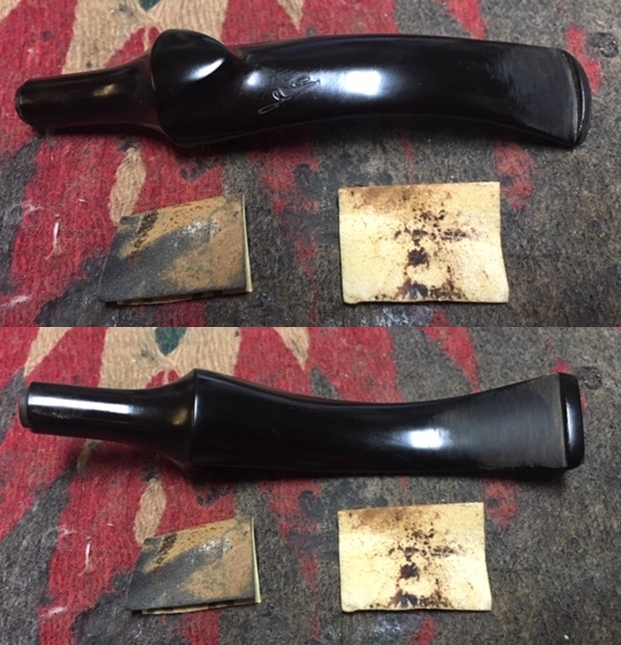
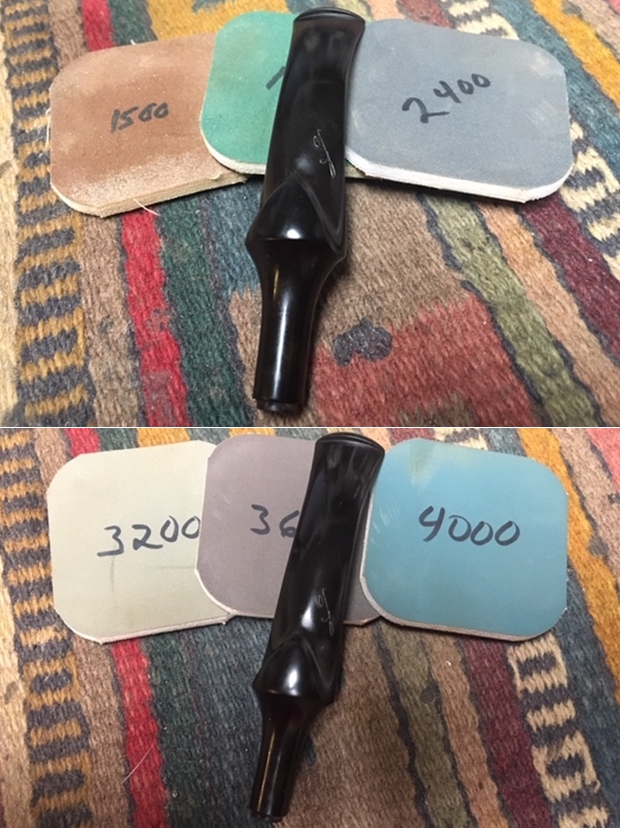
It looks like the Autograph 4 I am working is pretty high in the hierarchy of the line. Like other autographs I have worked on in the past this one has a unique twist to the vulcanite stem. The pipe was pretty clean externally so I decided to deal with the internals first. I reamed the bowl with a Savinelli Fitsall Pipe Knife to scrape out the thin cake on the walls and the base of the bowl. I sanded the walls of the bowl with 220 grit sandpaper wrapped around a piece of dowel. I scrubbed the internals of the bowl, shank and stem with alcohol, cotton swabs and pipe cleaners. They were surprisingly clean and the grime came out quickly on the pipe cleaners and the cotton swabs.I used a small brass bristle wire brush to knock of the grime in finish on the rim top. I wiped it down with a damp pad to remove the dust. I worked some Before & After Restoration Balm into the briar on the bowl and the rim top. I worked it into the surface of the briar with my fingertips to clean, enliven and protect the wood. Once the bowl was covered with the balm I let it sit for about 20 minutes and buffed it off with a shoe brush and then polished it with a microfiber cloth. I took photos of the pipe at this point to show what the bowl looked like at this point. I set the bowl aside and worked on the stem. I sanded out the tooth marks and chatter on both sides of the stem with 220 grit sandpaper. I polished the sanding marks with 400 grit wet dry sandpaper. The photos show the stem at this point.  I wet sanded the tooth chatter on both sides of the stem with 1500 -12000 grit micromesh pads to polish it. I wiped it down with Obsidian Oil on a cloth after each sanding pad. I finished polishing the stem with Before & After Pipe Polish – both Fine and Extra Fine polishes. I wiped the stem down with Obsidian Oil afterwards and buffed it on the buffing wheel with Blue Diamond and the finished it with a soft microfiber cloth. I put the bowl and stem back together. I polished the smooth part of the bowl and stem with Blue Diamond to polish out the scratches in the briar and the vulcanite. I gave the smooth part of the bowl and stem multiple coats of carnauba wax. I gave the sandblasted portions several coats of Conservator’s Wax. I buffed the pipe with a clean buffing pad to raise the shine. I hand buffed it with a microfiber cloth to deepen the shine. The pipe polished up pretty nicely. The contrast of the beautiful dark and medium brown stains and the smooth and sandblast finish worked amazingly well with the polished black vulcanite stem. The mix of straight grain sandblast on the rest of the bowl and shank is quite remarkable. This is truly a beautiful Freehand pipe. The finished pipe is shown in the photos below. The dimensions of the pipe are Length: 6 1/2 inches, Height: 2 1/8 inches, Outside diameter of the bowl: 1 1/2 inches, Chamber diameter: 7/8 of an inch. I have restored quite a few Autographs over the years and this estate is another rare beauty. I will be putting it on the rebornpipes store shortly. Thanks for walking through the restoration with me. Cheers.
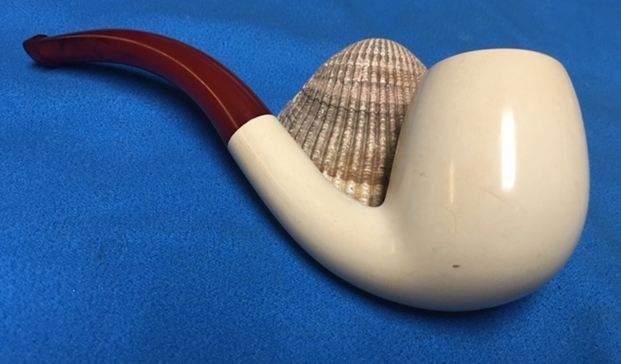
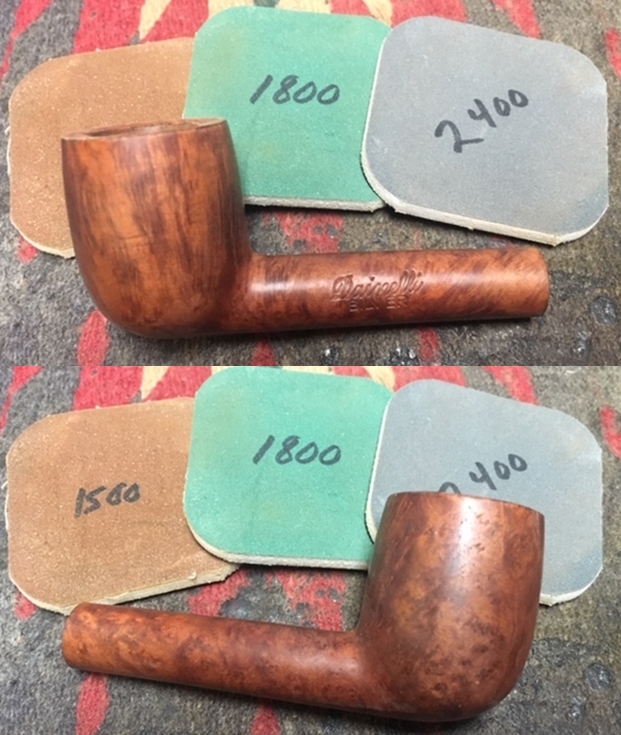
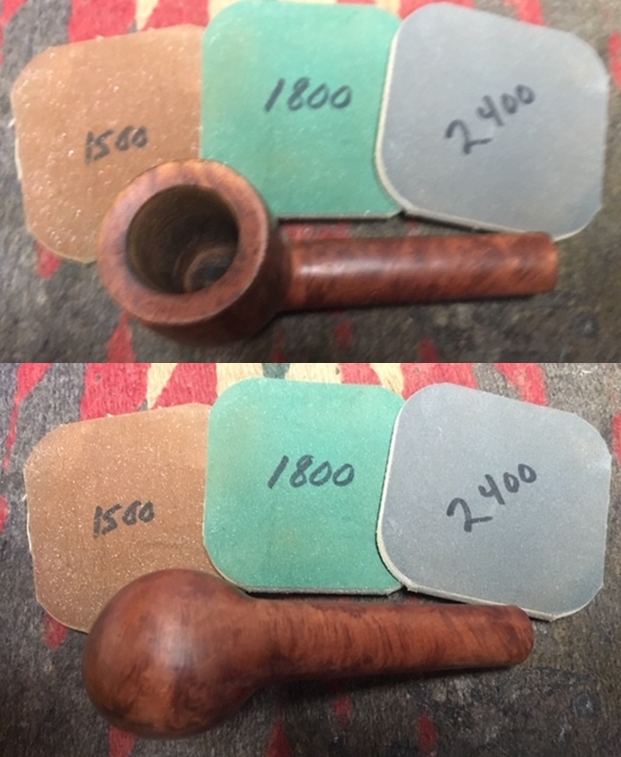
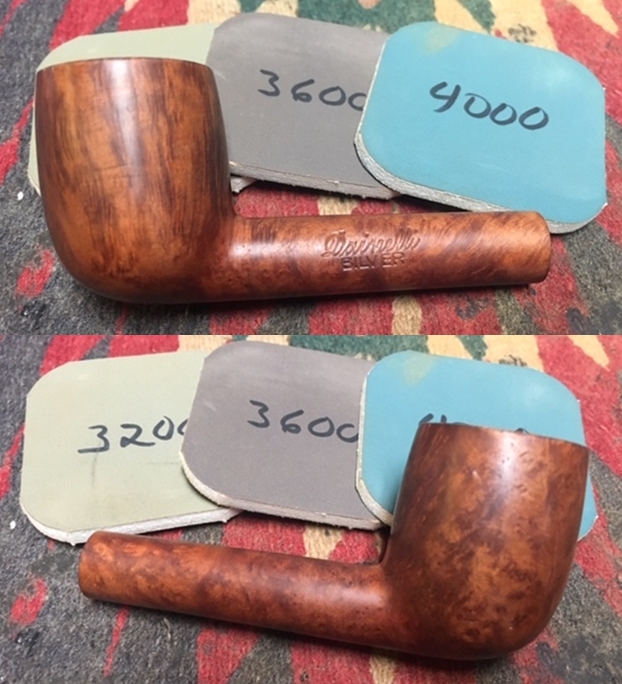
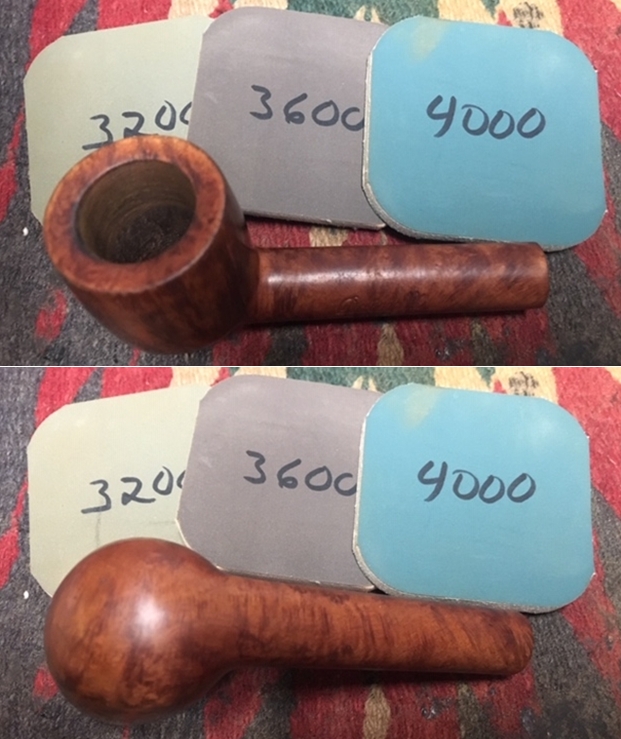
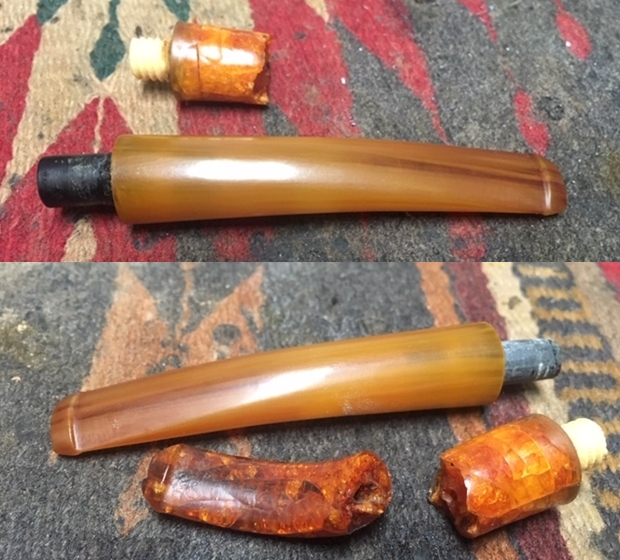
Restoring a Dainelli Silver Lovat with a Horn Stem


Blog by Steve Laug

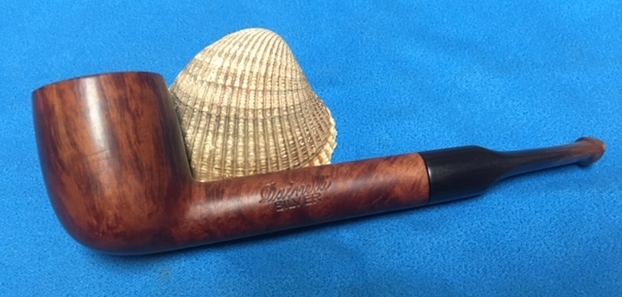
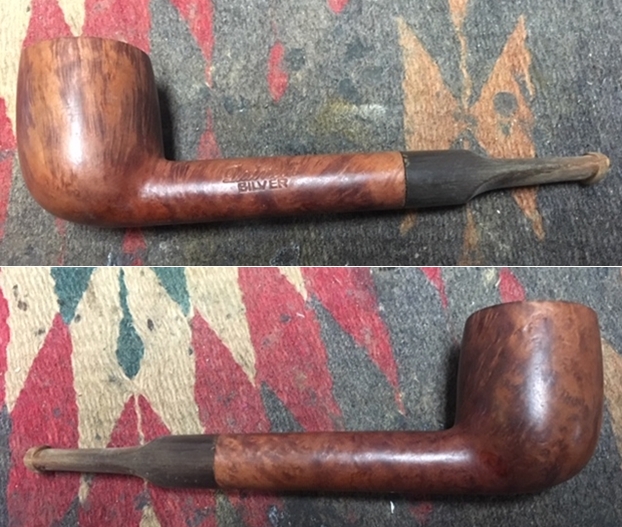
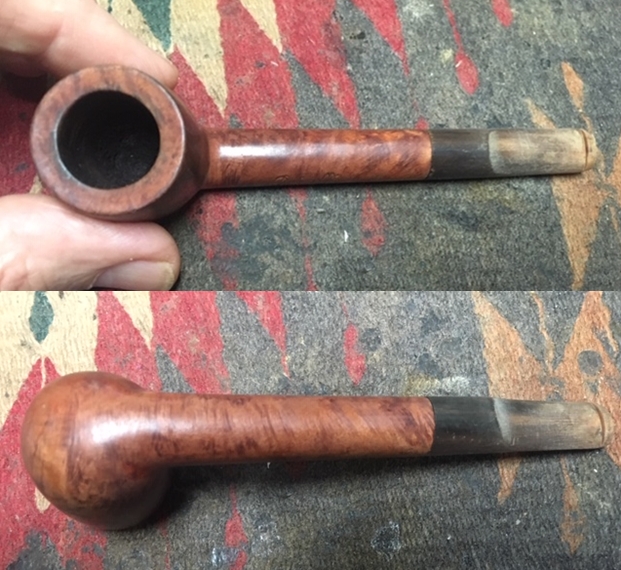
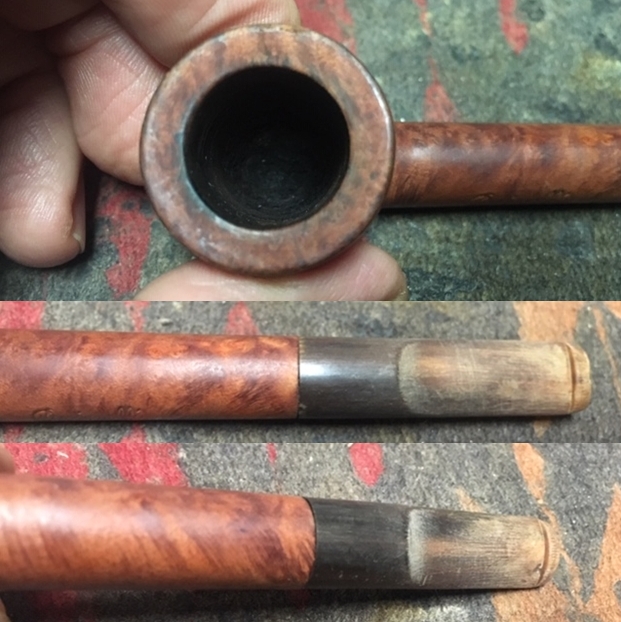
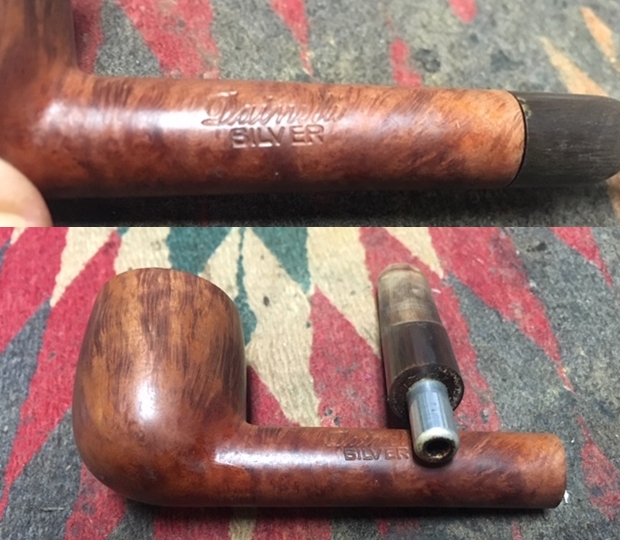
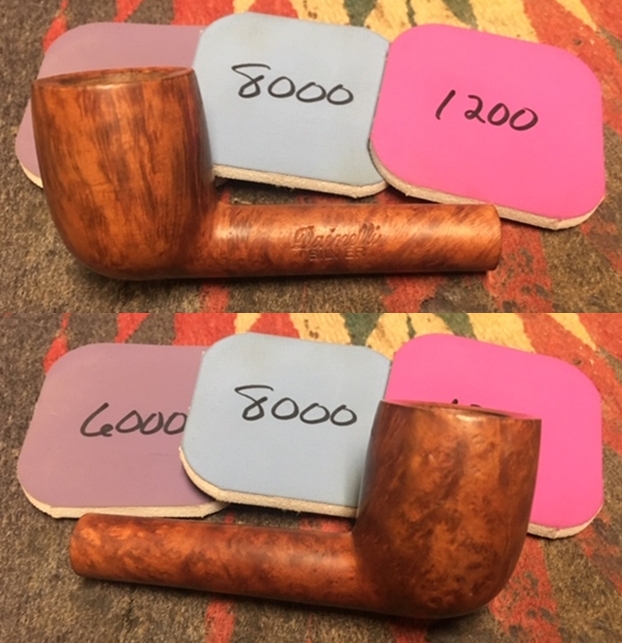
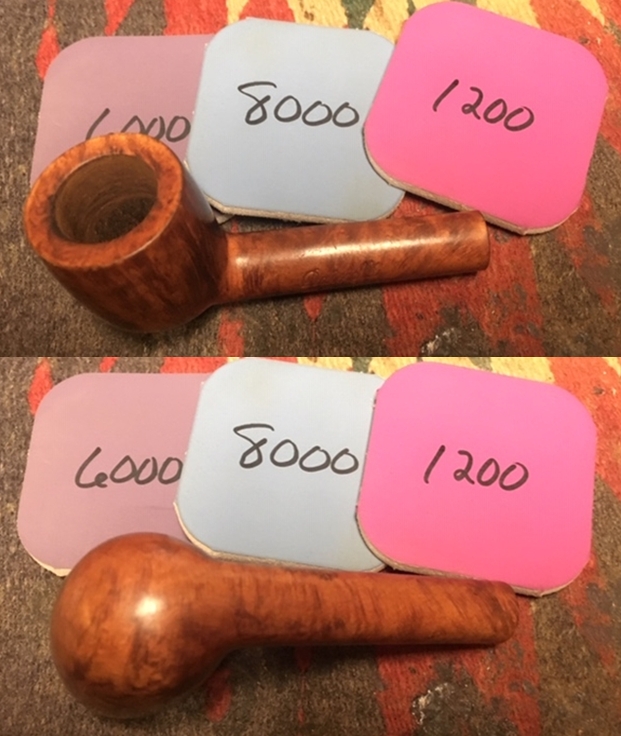
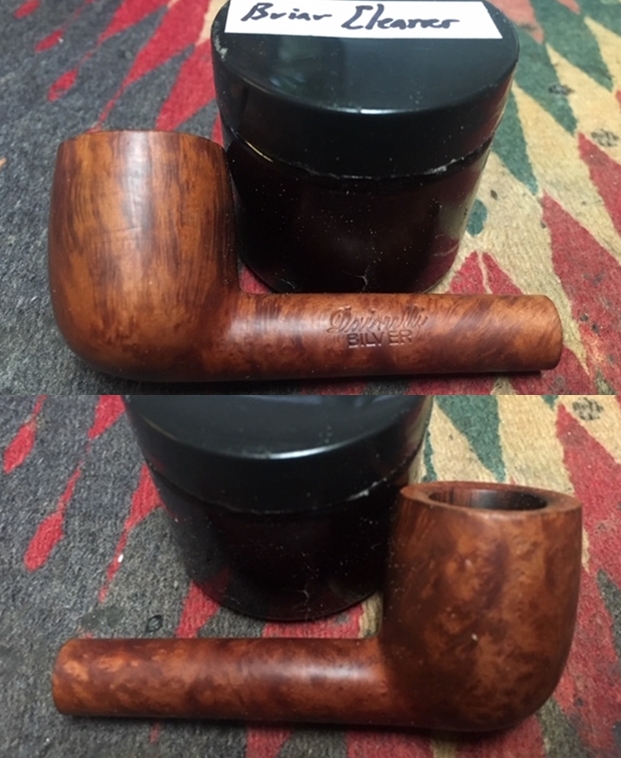
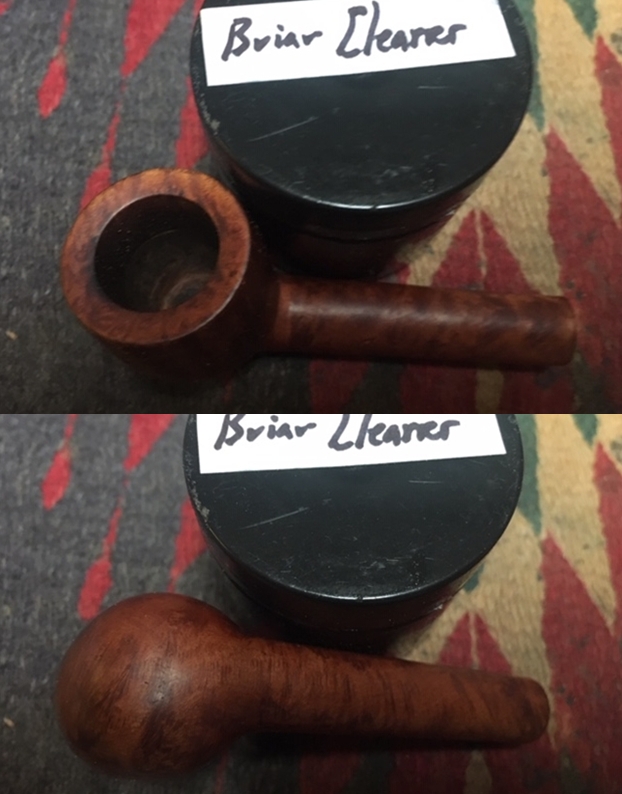
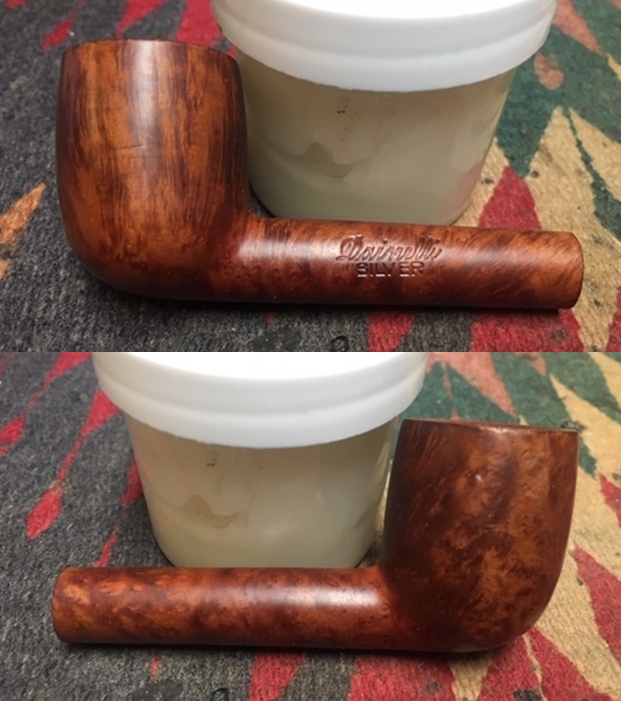
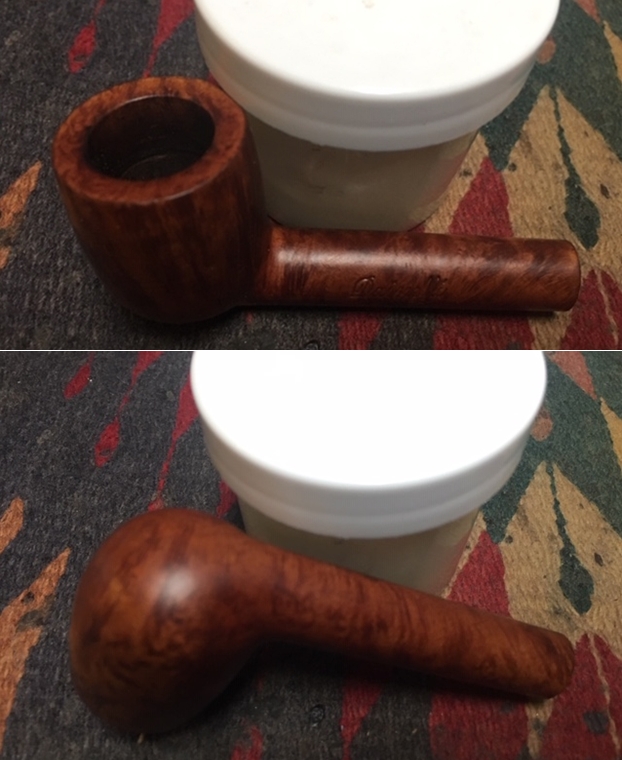
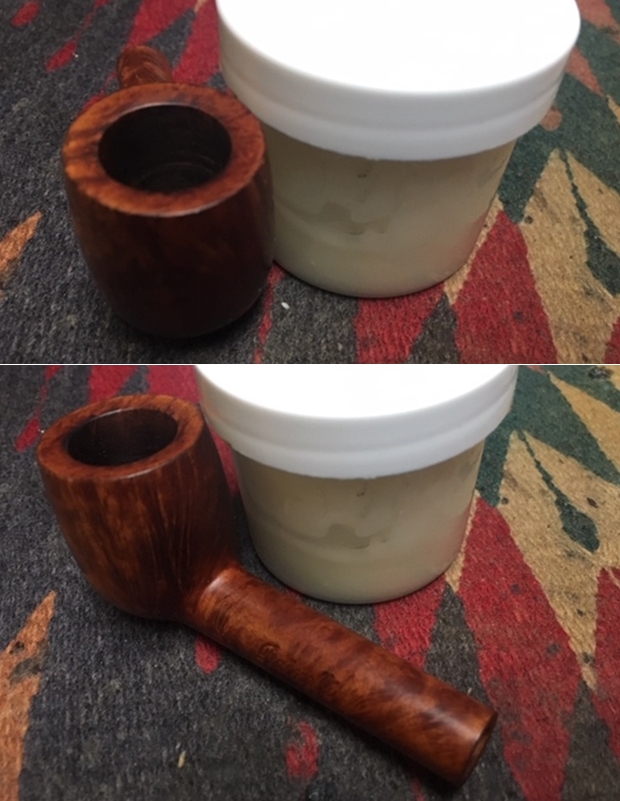
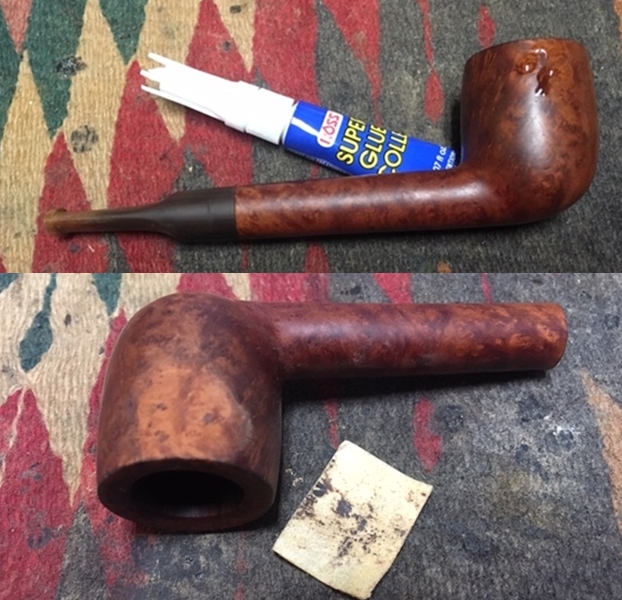
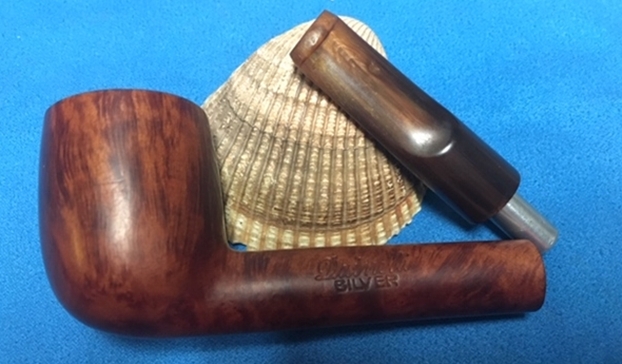
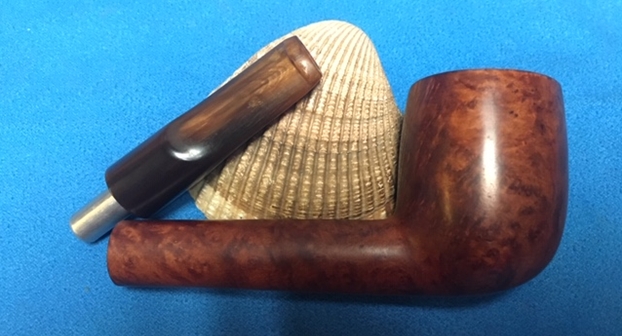
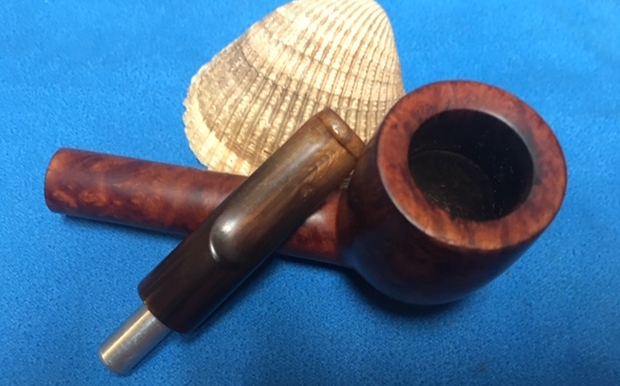
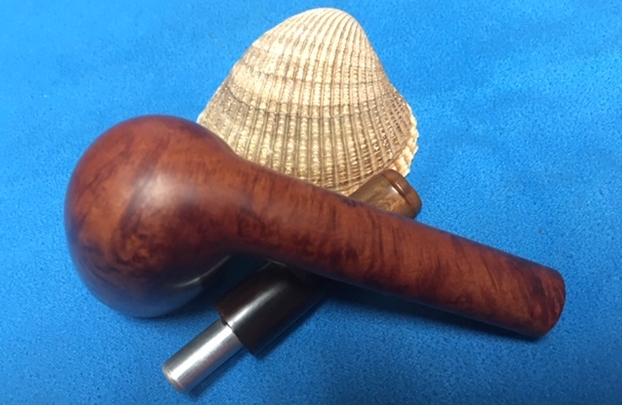
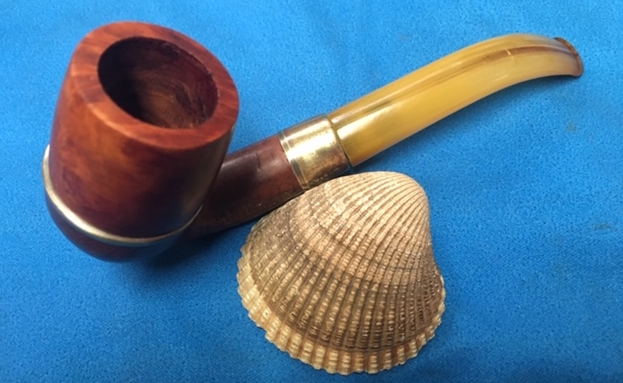
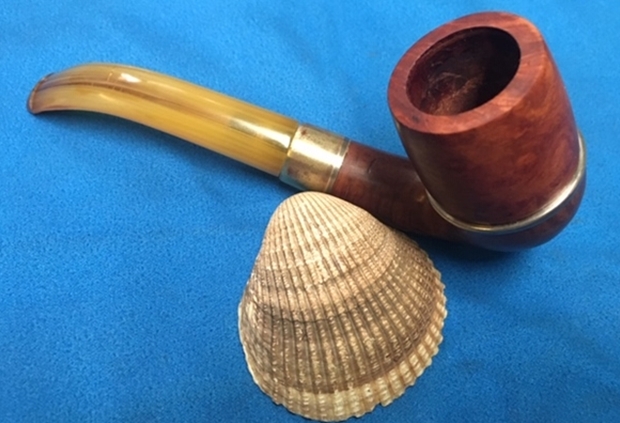
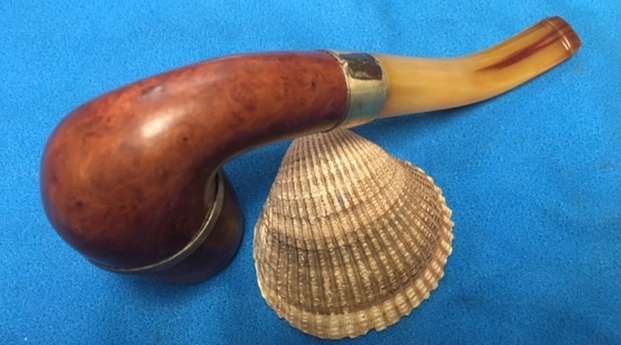
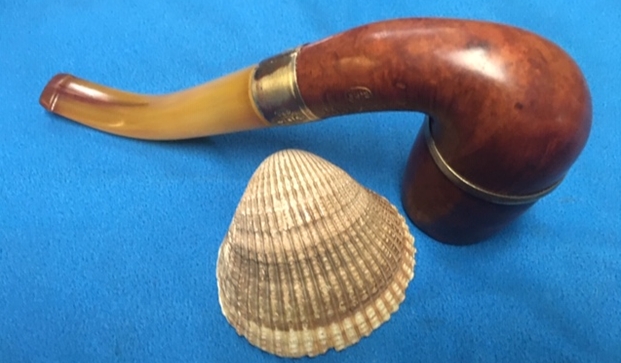
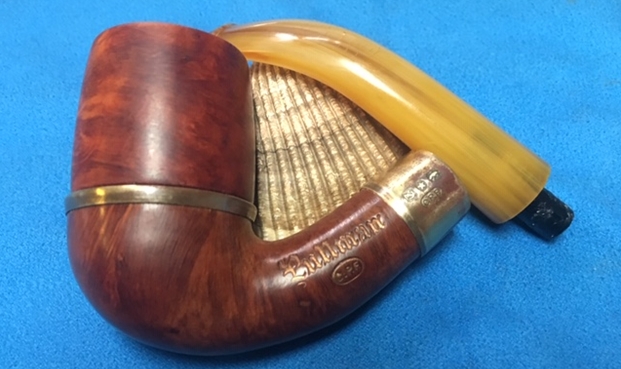
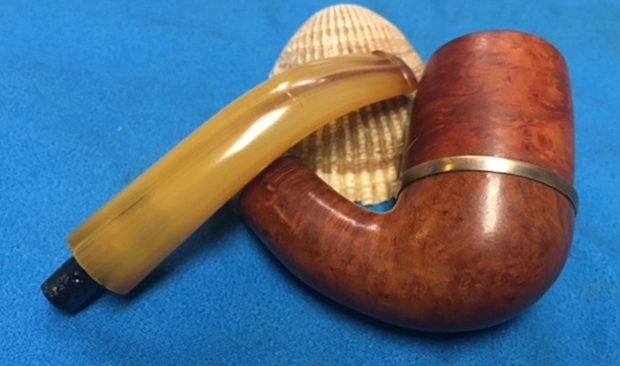
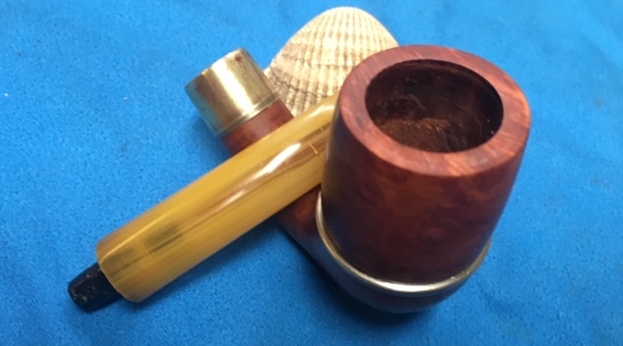
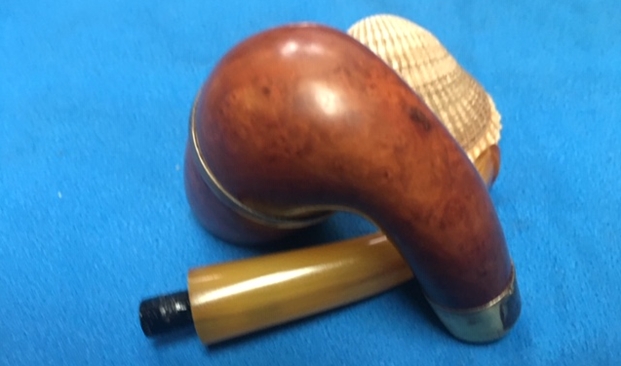
The next pipe on the work table was also in the bag with the C.P.F. pipes that I brought home from Idaho recently. This one is an interesting little Lovat. It is briar with a horn stem. The briar is in decent condition, just dirty from use and sitting. The stamping on the shank reads Dainelli over Silver. There is no other stamping on the shank. The bowl had been reamed previously by the seller but a thick coat was on the bottom of the bowl. The rim top was clean but was dried out. The grain was an interesting mix of straight, swirls, flame and birdseye. There were a few nicks in the briar on the sides of the bowl. The stem was horn and dried out. There was tooth chatter on both sides and a few deeper tooth marks just ahead of the button. The tenon on this one is aluminum and from my experience it is probably a pipe from the 40s war period. Horn stems made a reappearance during the vulcanite shortage in the war years. I took close-up photos of the bowl and rim top to capture the condition of the pipe when it arrived. The rim top look dried out but clean. The outer and inner edges of the rim look good but there are a few nicks in the outer edge. I took photos of the horn stem surface to show the oxidation and the chatter on both sides near the button. The tooth marks are visible next to the button on both sides.The next photo captures the stamping on the left side of the shank. It reads Dainelli over Silver. I took the stem off the shank and took a photo to show the metal tenon.This is the first pipe with this stamping that I have ever worked on. I am unfamiliar with the brand so some research was in order. I checked on Pipedia and Pipephil to see if there was any information on the brand. There was nothing listed on either site. I checked in “Who Made That Pipe” and once again came up empty. I turned to Lopes, “Pipes, Artisans and Trademarks and again the trail was dead. I broadened the search on Google to look for the brand and even associated it with pipe shops or tobacco companies and still there was not a link at all. It looked like I was not the only one who had never heard of the brand.

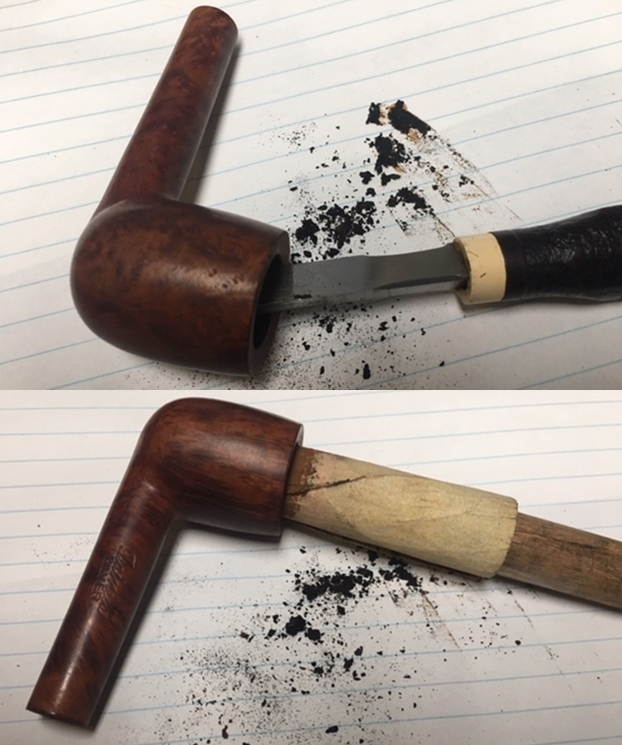
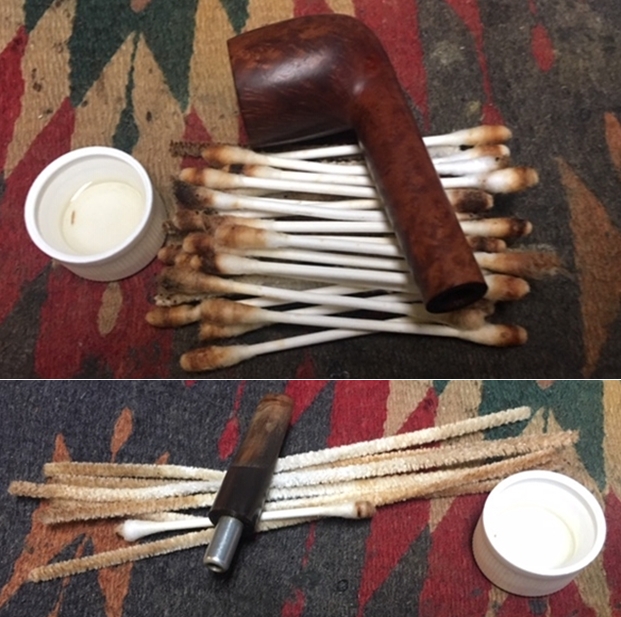
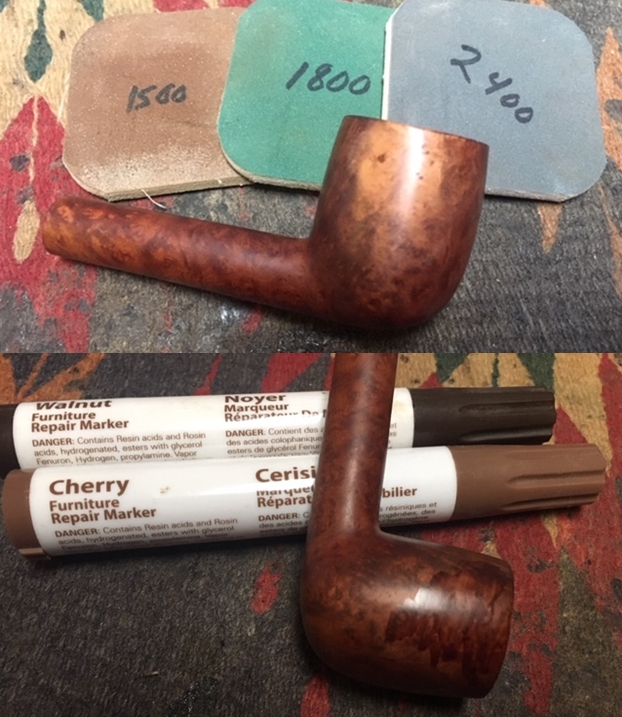
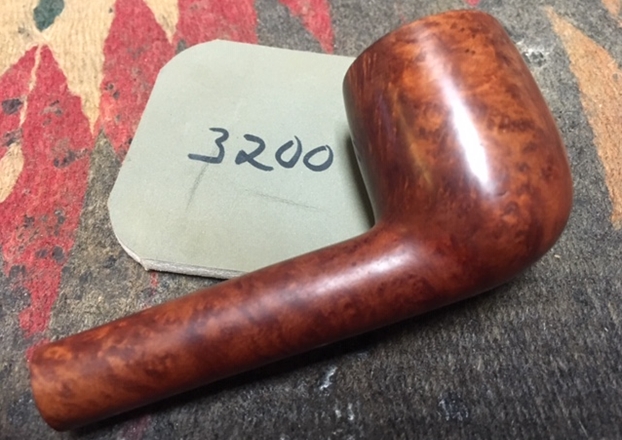
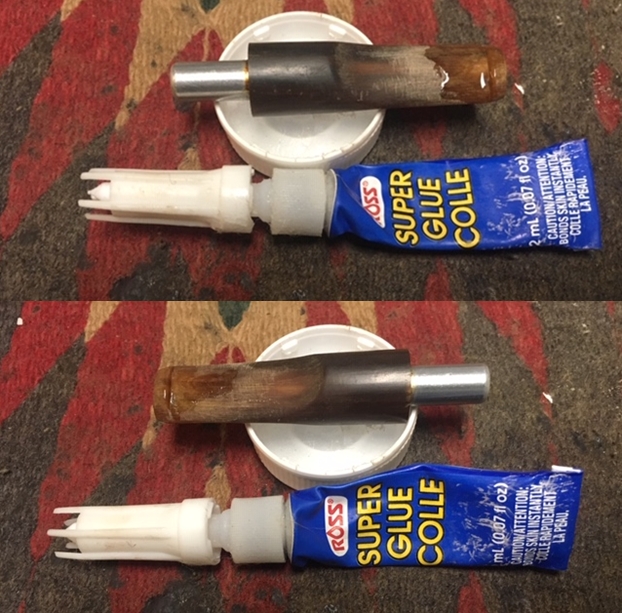
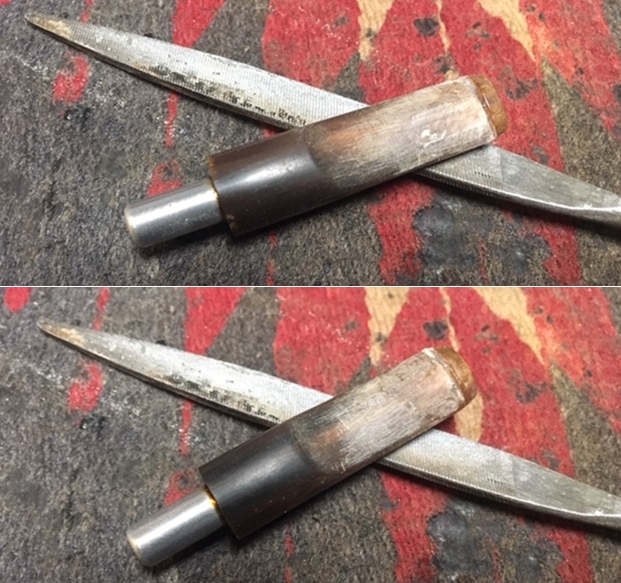
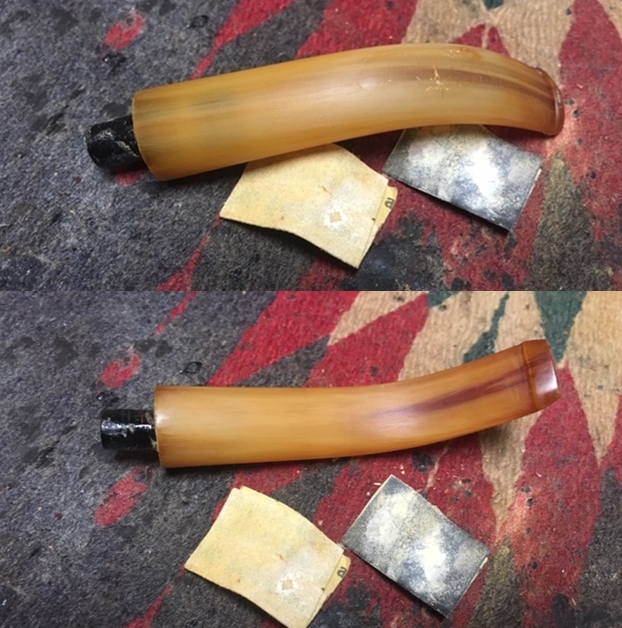
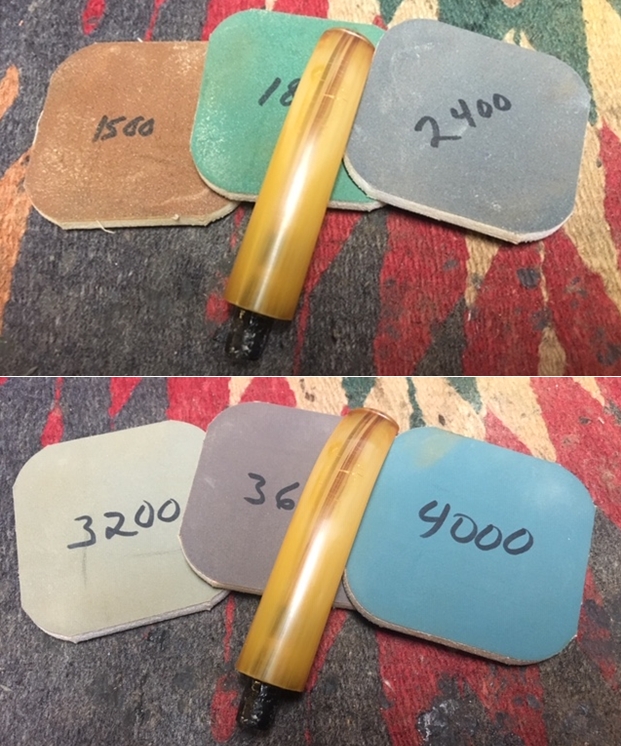
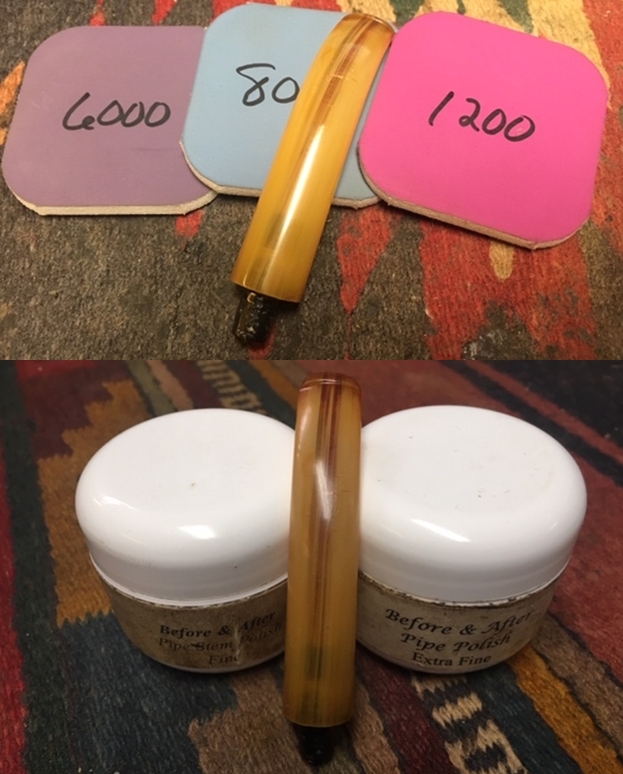
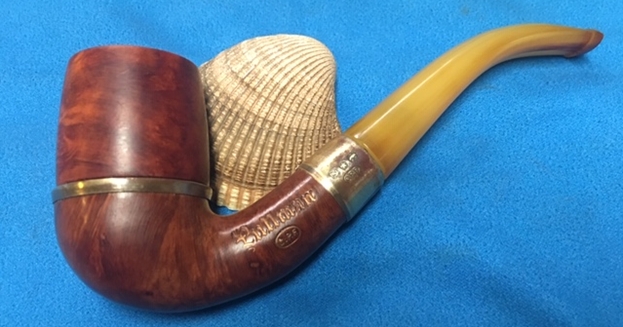
Given that information was not forthcoming I put a photo of the pipe on several Facebook Groups hoping someone might recognize the brand and give me a lead. I turned my attention to cleaning up the pipe. I wiped the bowl down with isopropyl alcohol on a cotton pad to remove the grime from the briar. It was not a bad looking pipe. I reamed the bowl with a Savinelli Fitsall Pipe Knife and scraped the cake out of the bottom of the bowl. The buildup on the bottom was thick and heavy. The pointed end of the knife allowed me to remove the remaining cake. I sanded the bowl walls with a piece of dowel wrapped with 220 grit sandpaper.I scrubbed out the internals of the pipe with pipe cleaners, cotton swabs and alcohol. It was a very dirty shank and mortise. I have found that stems with metal tenons seem to draw moisture and tars around the shank walls. I cleaned out the stem with pipe cleaners and alcohol. I used a cotton swab and alcohol to clean out the end of the tenon.I polished the bowl and rim top with micromesh sanding pads – wet sanding it with 1500-12000 grit pads. I wiped the bowl down with a damp cloth after each pad to remove the sanding debris. After the final sanding pad I hand buffed it with a cotton cloth to raise a shine. I am still experimenting with Mark Hoover’s Briar Cleaner to see what I think of it as a possible replacement for my usual Murphy’s Oil Soap scrub. I rubbed it onto the briar, working it into the grain. I wiped it off with a clean cloth. There was still a residue from the cleaner left behind and no matter how I rubbed it off it was hard to remove. I ended up rinsing it with warm water to remove it and dried it with a microfiber cloth. I am still not sure if this is will replace Murphy’s for me. I am committed to working with it. I took photos of the pipe at this point in the process. I really like Mark Hoover’s Before & After Restoration Balm for its restorative properties with dry briar. I worked it into finish of this Lovat with my fingertips to clean, enliven and protect it as I usually do at this point in the process. I let the balm sit for a little while and then buffed with a cotton cloth to raise the shine. The Restoration Balm really makes the grain stands out beautifully. After rubbing it down I noticed some deep dings and nicks in the briar on the right side of the bowl near the rim. I filled them in with clear super glue. When the repairs had cured I sanded them out with 220 grit sandpaper, polished them with 400 grit sandpaper and 1500-2400 grit micromesh sanding pads. I stained the area on the bowl with a Walnut and Cherry stain pen. Once it had cured I polished it with a 3200 grit micromesh sanding pad. I was able to blend the repair into the rest of the bowl. I set the finished bowl aside and turned my attention to the stem. I filled in the tooth marks and the areas where the horn was dry and delaminating. I set the stem aside to let the glue dry.Once the repairs had cured I used a needle file to reshape the button edge and flatten out the repairs. I sanded the stem surface with a folded piece of 220 grit sandpaper to smooth them out. I started the polishing with a folded piece of 400 grit sandpaper to smooth out the scratches. I polished the stem with micromesh sanding pads – wetsanding it with 1500-12000 grit pads. I wiped the stem down with Obsidian Oil after each pad. I polished it with Before & After Pipe Polish – both Fine and Extra Fine and gave it a final coat and set it aside to dry. I put the stem and bowl back together and buffed the pipe with Blue Diamond on the buffing wheel. I polished the briar and the stem until there was a rich shine. This Dainelli Briar Lovat has a classic shape and a rich finish that highlights the grain around the bowl. Once I buffed the pipe the grain popped. The striated horn stem had a rich glow after polishing. The finished pipe is actually quite a beauty in my opinion. The shape does not quite match a British shaped Lovat and has almost a French look to it. It is a beautifully grained Lovat that fits well in the hand and sits right in the mouth. Have a look at it with the photos below. The dimensions are Length: 5 inches, Height: 1 1/2 inches, Outside diameter of the bowl: 1 inch, Chamber diameter: 5/8 of an inch. If any of you have heard of the brand before let me know in the comments section below. I thank you ahead of time for any info you may give. Thanks for walking through the restoration with me as it was a pleasure to work on.

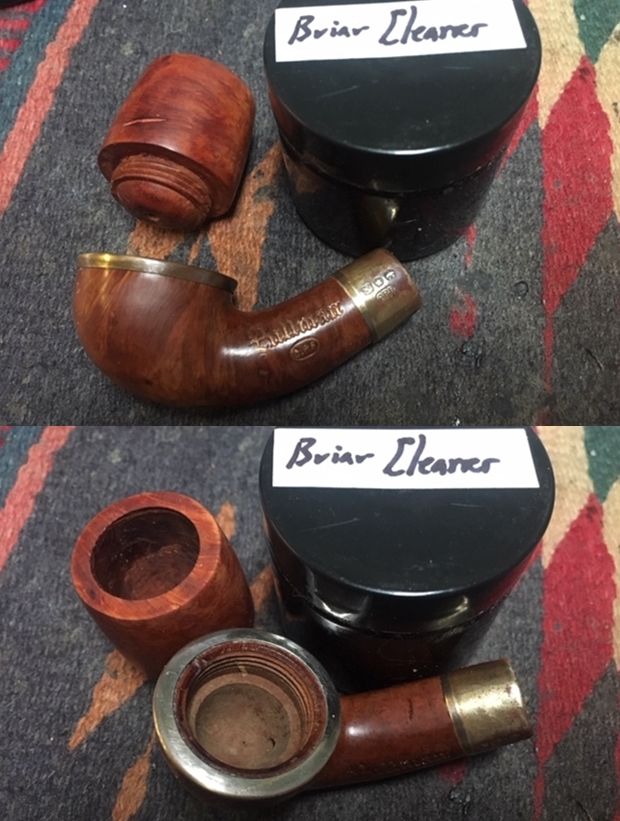
Another Study in Opposites – Restoring an NOS unsmoked C.P.F. Stack


Blog by Steve Laug

After the last batch of very clean pipes that I brought back from my trip to Idaho in a small bag of unsmoked C.P.F. pipes this is another pipe that was a big change. It was in rough shape with a split band, nicks and marks in the briar and a shattered stem. Other than the unsmoked condition of the bowl and base it was hurting. The bowl was a screw in briar bowl with a single airway in the bottom of the bowl like a calabash. It is dusty and dirty but the bowl was clean. The bowl exterior had been coated with a thick shiny coat of varnish and the base was varnished as well. It gave the pipe a spotty shiny look that had lasted through the years. The left side of the shank is stamped with gold leaf and reads Pullman over C.P.F. in the oval logo. There were deep gouges in the top of the shank and on the underside of the bowl. There is a brass/silver spacer between the bowl and the base. There was also a brass/silver ferrule on the shank end that was split, oxidized and also loose. The amber stem had was shattered was clean but epoxied in the remainder of the stem. I took photos of the pipe to show its condition at the start of the process. The next photo shows the stamping on the left side of the shank. It is clear and readable. The stamping reads as noted above. The band is loose and is stamped with the C.P.F. in an oval logo with the faux hallmarks that are on all of the metal banded C.P.F. pipes.I unscrewed the broken stem from the pipe and took photos of the parts – the briar base and bowl as well as all the adornments. The ferrule is split and will need work and the separator on the base is also oxidized and dirty. I have included the following information with each of the blogs on C.P.F. pipes because I always want to keep the historical context in mind as I work on these. The link to the blog follows (https://rebornpipes.com/2013/04/14/some-reflection-on-the-historical-background-on-cpf-pipes/). I quote a pertinent part of the blog below:

From my reading and research it seems to me that C.P.F. brand was discontinued sometime in the 1910-1920 range. Again, turning to Bill Feuerbach I found that he notes the following, which pins down the time frame of the discontinuation of the brand more specifically, “I have a C.P.F. Chesterfield in our office display that has a name tag from way before my time that says 1900 C.P.F. Chesterfield. It looks like most other Chesterfields you’ve seen, including the military type push stem, except this stem is horn and not vulcanite. As far as I have gathered the C.P.F. brand was phased out sometime around 1915.” Interestingly, he noted that the Chesterfield name and style was later introduced in the KB&B, Kaywoodie and Yello-Bole lines. He says that the 1924 KB&B catalog shows KB&B Chesterfields…

… From my research I believe that we can definitively assert that the C.P.F. logo stands for Colossus Pipe Factory. The brand was purchased by KB&B sometime between 1884 and 1898 and that it continued until 1915. That time frame gives help in dating some of the older C.P.F. pipes you or I might find. It can be said that prior to the dual stamping it is fairly certain that the pipe is pre-1884 to 1898. After the dual stamping it can be placed post 1898 until the closure of the brand line in 1915. C.P.F. made beautiful pipes.

From that information I can tentatively date this pipe to the same period as the other pipes I have been working on – prior to 1884-1898 because of the single C.P.F. stamp on the shank, ferrule and stem. At any rate it is another old pipe though this one is well smoked. The story of its journey to Jeff and me this long after the date it was made is another mystery. This batch of pipes has made me wish that even one of them could share its story with us. I can only imagine the journey it has had even minimally from the bits that I do know. It traveled from the Colossal Pipe Factory in New York City to Idaho Falls in journey that began in the 1880s and ended in 2019. Now it is has further traveled by air to Vancouver, Canada, as far west as it can go and remain on the same continent… what a well-traveled pipe. Armed with that information it was not time to work on the pipe.

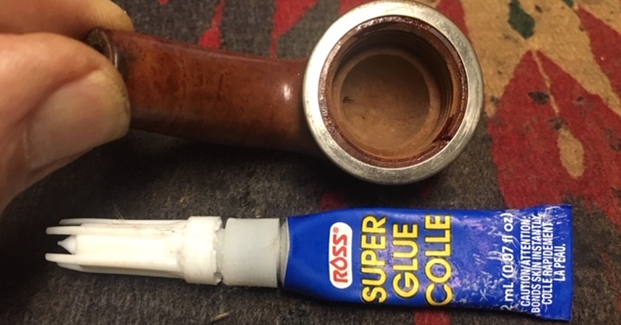
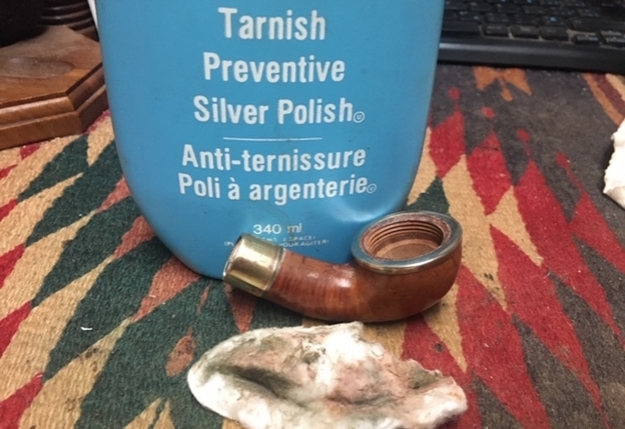
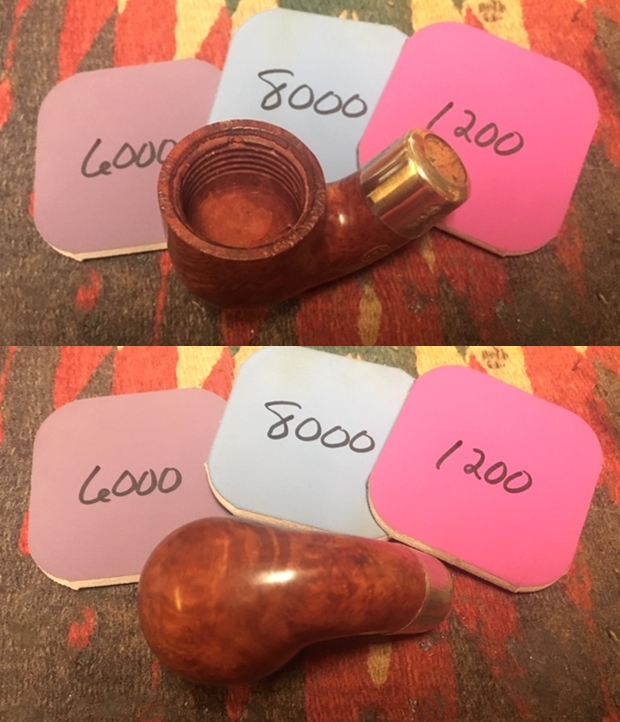
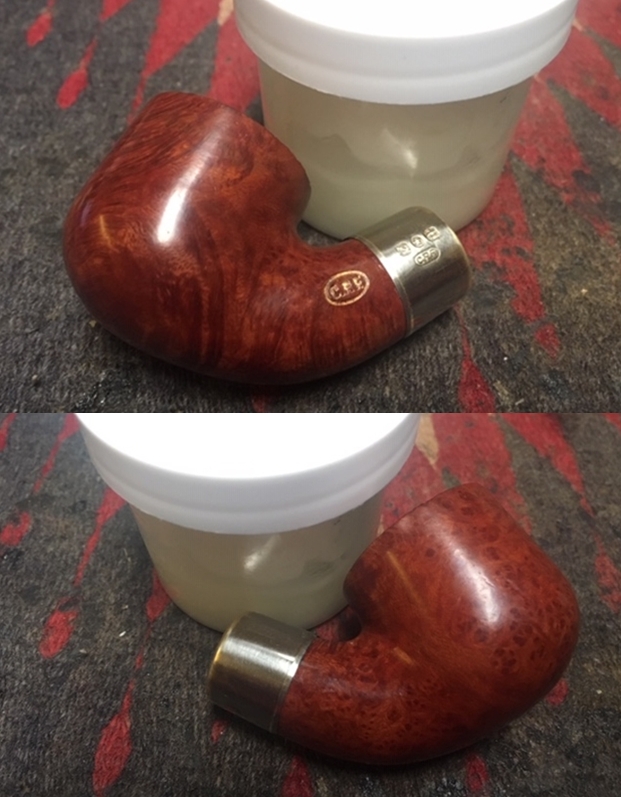
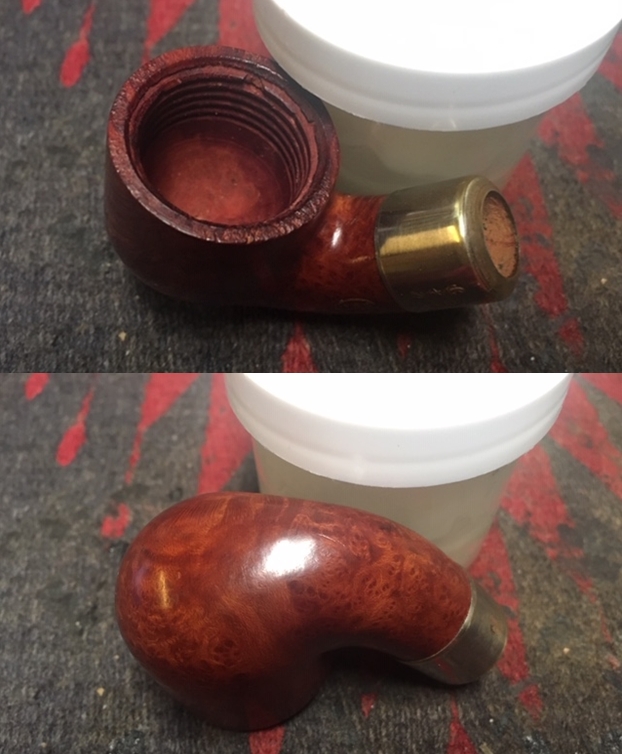
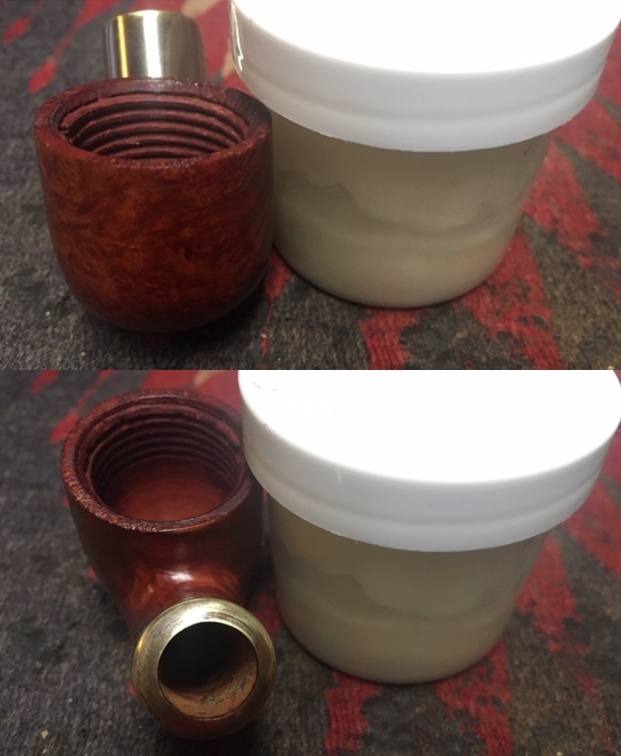
I unscrewed the bowl from the briar base. I removed the loose ferrule and the loose spacer and cleaned the surface with alcohol on a cotton pad. I glued the spacer in place on the base with clear super glue. I filled in the nicks and divots on the top and underside of the shank with super glue. I sanded the repaired spots on the top and underside of the base with 220 grit sandpaper to blend the repairs into the briar. I spread some white glue on the shank end and pressed the ferrule in place. I held the break in the ferrule together until the glue set. I filled in the crack with clear super glue until it was smooth and set it aside to cure.  The internals were clean and a quick pipe cleaner and alcohol run through the shank and bowl to clean out the dust. I polished the brass ferrule on the shank end with Hagerty Tarnish Preventative Silver Polish to remove the tarnish and wear. I used it on the space between the bowl and base as well. You can see the effect of the polishing – the metal shone.I wiped the bowl and base down with isopropyl alcohol on a cotton pad to remove the varnish coat on both the bowl and the base. The briar looked very good. There was a fill in the back side of the bowl and a little one on the underside of the shank. I am continuing to experiment with Mark Hoover’s Briar Cleaner to see what I think of it as a possible replacement for my usual Murphy’s Oil Soap scrub. I rubbed it onto the briar bowl and base and worked it into the grain of the briar. I wiped it off with a clean cloth. There was still a coat of grime and grit from the cleaner left behind so I rinsed it with warm water to remove that and dried it with a microfiber cloth. I am really not sure if this is any better than the Murphy’s but I am committed to working with it. I rubbed the briar bowl and shank down with a coat of Before & After Restoration Balm. I worked it into the surface of the briar. The product works to clean, enliven and protect the briar. The old briar was dry and it drank up the balm. I buffed the bowl with a soft cloth to raise a shine. I like how the pipe looks as this point in the process. I set the bowl aside and went through my can of stems and found a Bakelite stem with the same diameter and length as the original one. It had a push tenon that I would need to sand down a bit to get a good fit in the threaded shank. I tried to remove the bone tenon from the original stem but it was stuck and breaking the old stem would likely damage the tenon. I started working on the stem. I used a needle file to reduce the diameter of the tenon. I heated the stem with a heat gun until it was softened and then bent it to match the angle of the bowl and shank. I sanded out the small ripple marks from bending the stem using 220 grit sandpaper. I sanded out the scratches with 400 grit sandpaper. I wiped the stem down with Obsidian Oil. I polished the stem with micromesh sanding pads – wet sanding it with 1500-2400 grit pads and dry sanding it with 3200-12000 grit pads. I wiped it down with Obsidian Oil after each sanding pad. I finished the polishing with Before & After Pipe Polish – both Fine and Extra Fine. I gave it a final coat of Obsidian Oil and set it aside to dry.   By now if you have read rebornpipes for very long you know that I love these old C.P.F. pipes. There is some serious thought that they were carved by European trained craftsman who were skilled pipemakers. These pipemakers were brought to the US by the Colossal Pipe Factory to make pipes. Many of the shapes, bands and stems have such high quality workmanship involved that I really think there is truth to this story. This little bent Briar Stack is a real beauty.
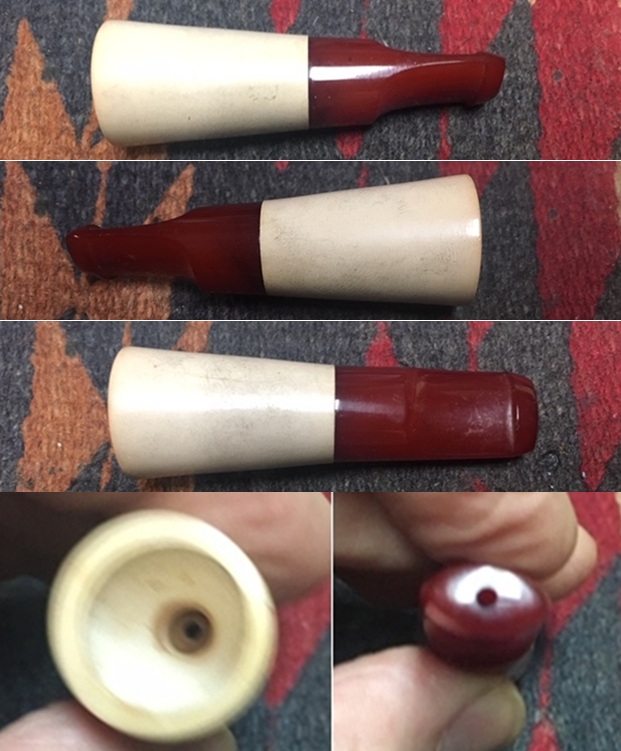
I screwed the bowl back on the base and carefully polished stem and the bowl with Blue Diamond polish on the buffing wheel carefully avoiding the stamping on the shank. I gave the bowl and the stem multiple coats of carnauba wax. I buffed the pipe with a clean buffing pad to raise the shine. I hand buffed it with a microfiber cloth to deepen the shine. The pipe polished up pretty nicely. The mixed grain on the base and shank really began to stand out; it seemed to take on life with the buffing. The rich contrasting brown stain on the base and bowl works well with new golden Bakelite stem. The finished pipe has a rich look that is quite catching. Have a look at it with the photos below. The shape, finish and flow of the pipe and stem are very well done. The dimensions are Length: 5 1/4 inches, Height: 2 1/8 inches, Outside diameter of the bowl: 1 1/8 inches, Chamber diameter: 3/4 of an inch. This is another one that I will be adding to my collection. It fits in the C.P.F. niche group that I have been building. The shape and feel in the hand is perfect. Since this one is another unsmoked pipe it too will be in line for a break in with some rich aged Virginia. Thanks for walking through the restoration with me as I restored and reworked this old Stack from 1884-1898. It is always a treat for me to work on a piece of pipe history especially when I have learned a bit of the story behind it.

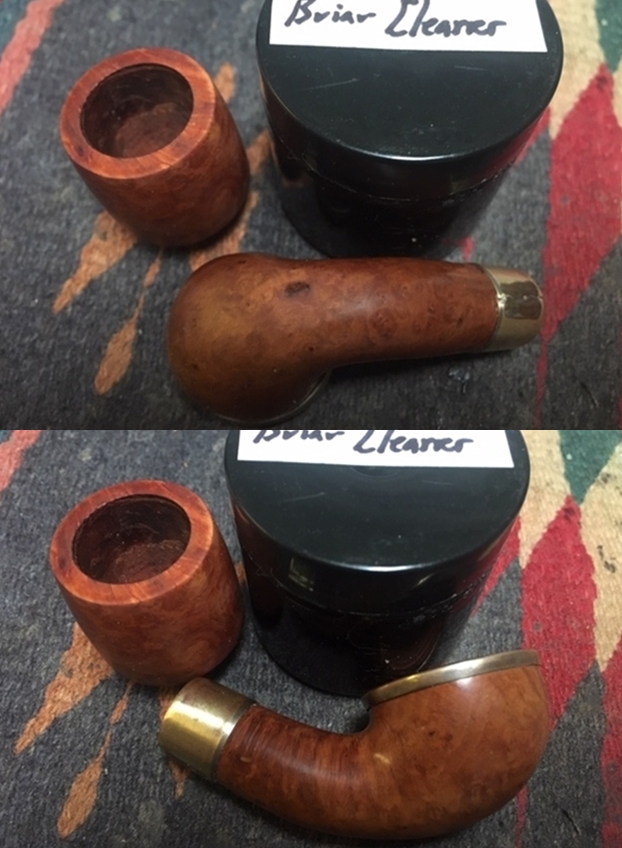
A Study in Opposites – Restoring a Hard Used C.P.F. Briar Calabash


Blog by Steve Laug

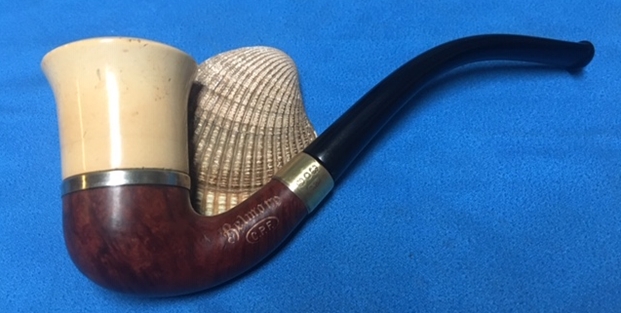
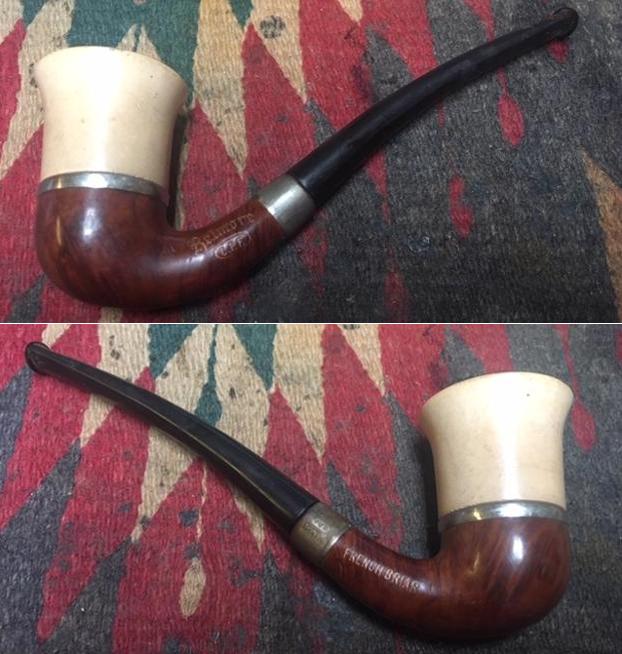
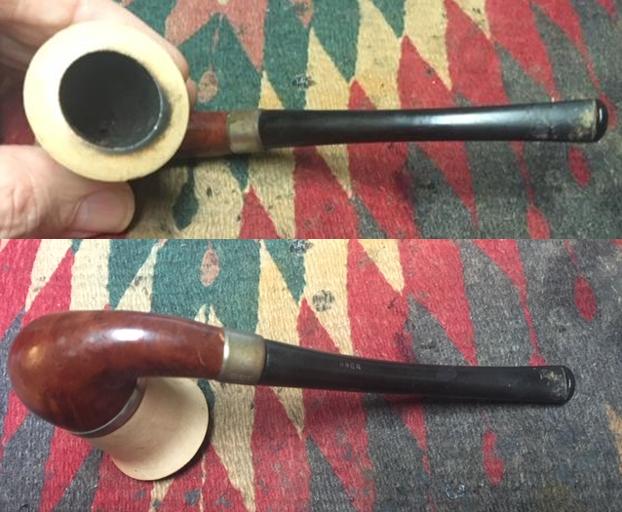
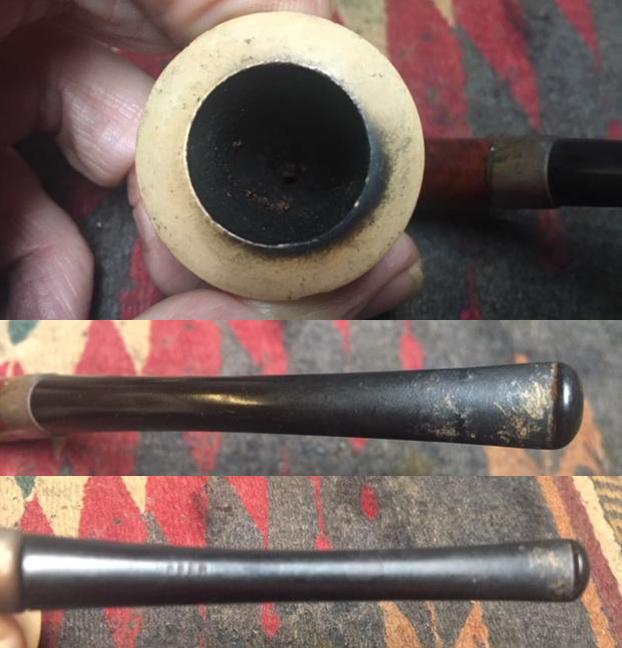
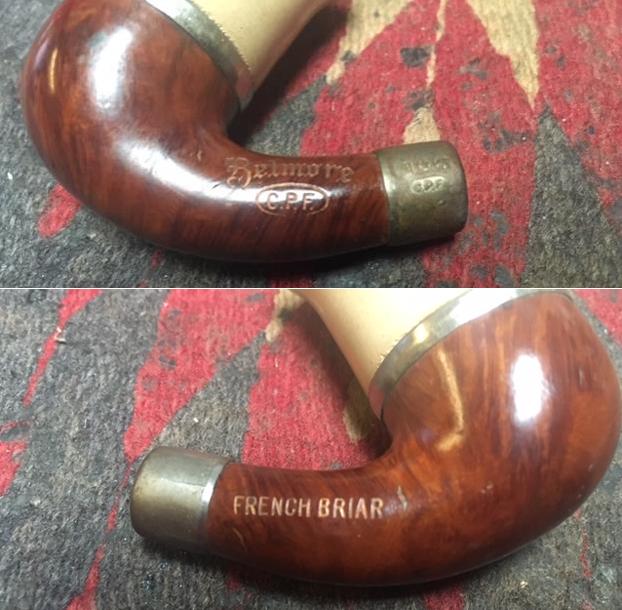
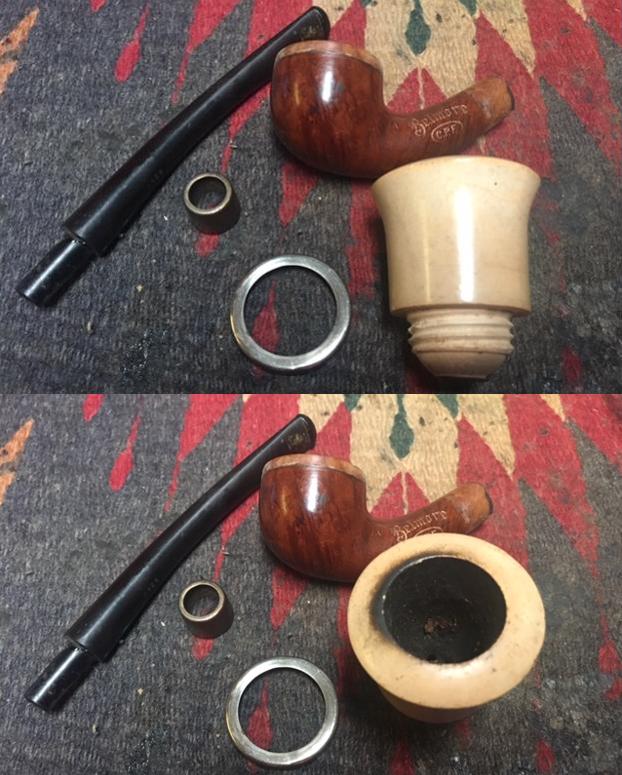
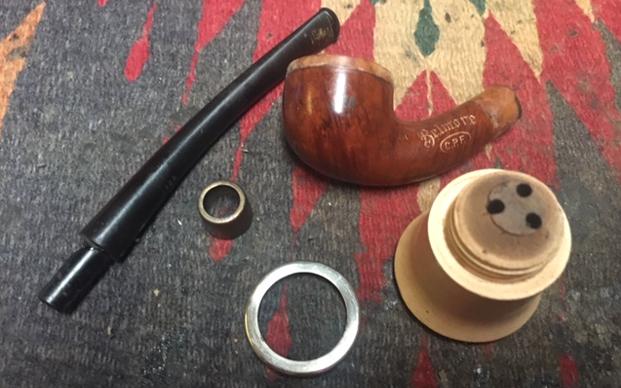
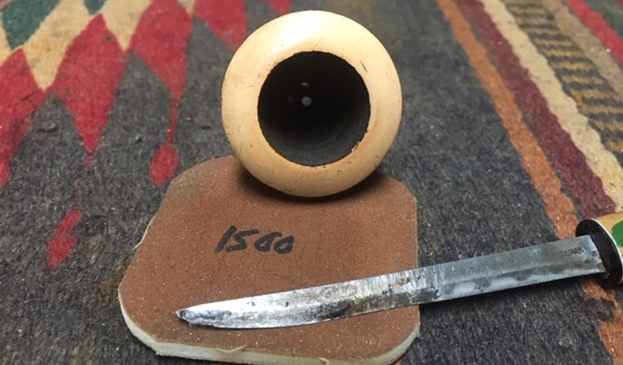
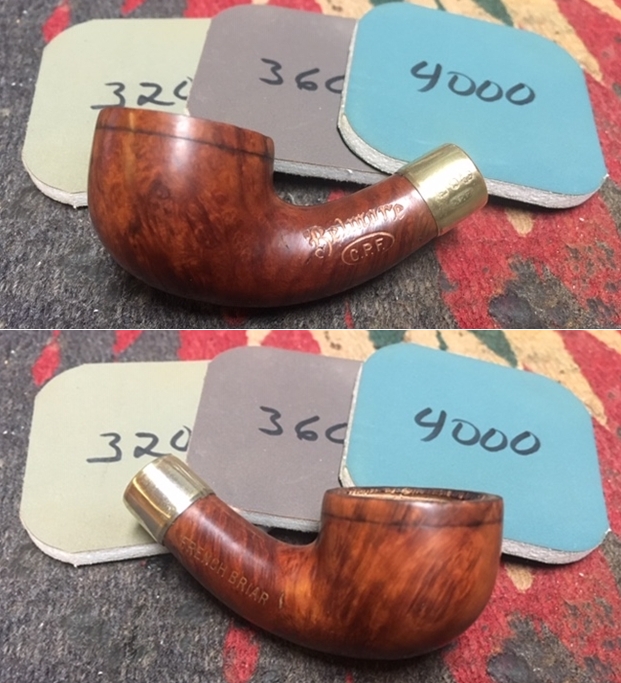
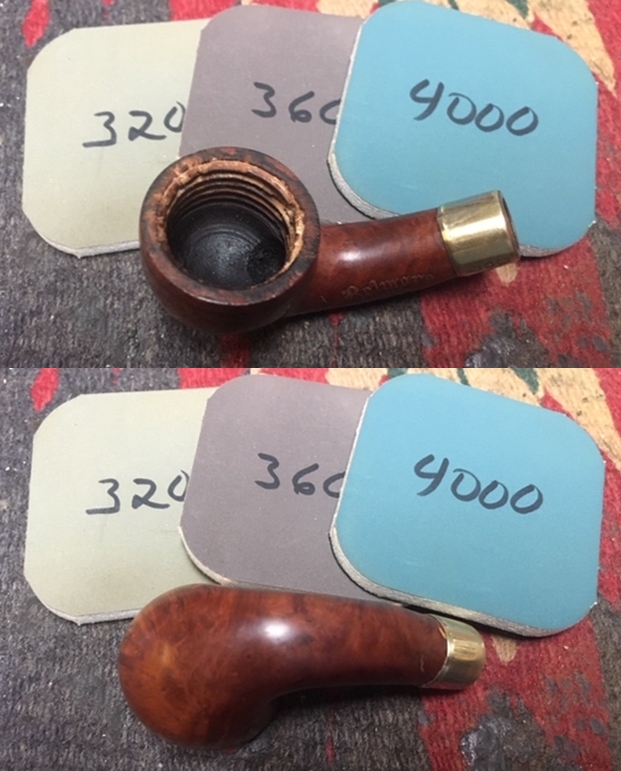
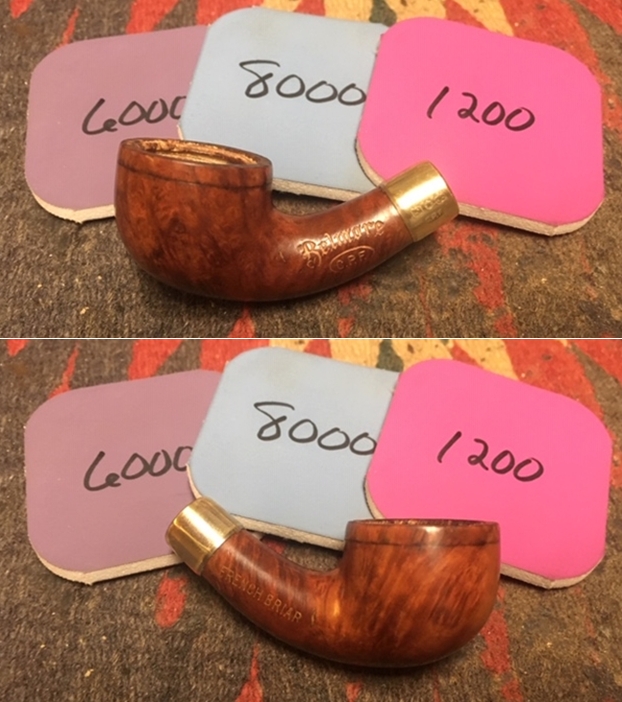
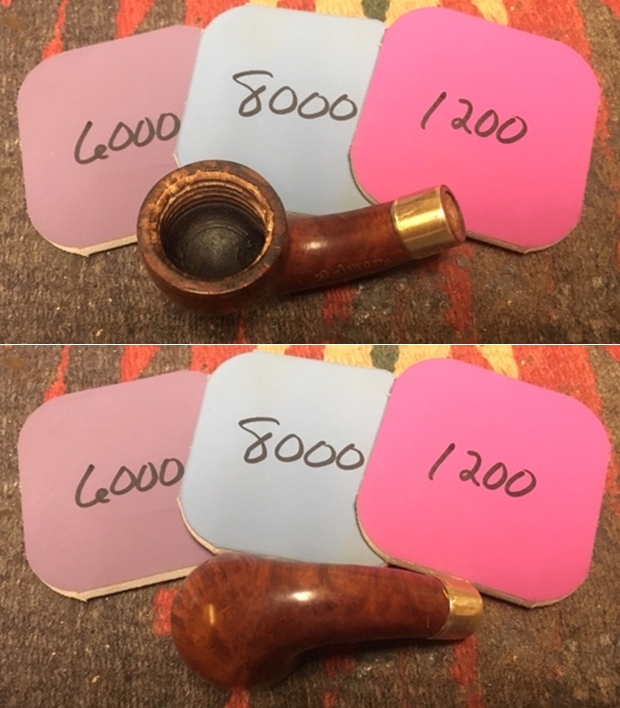
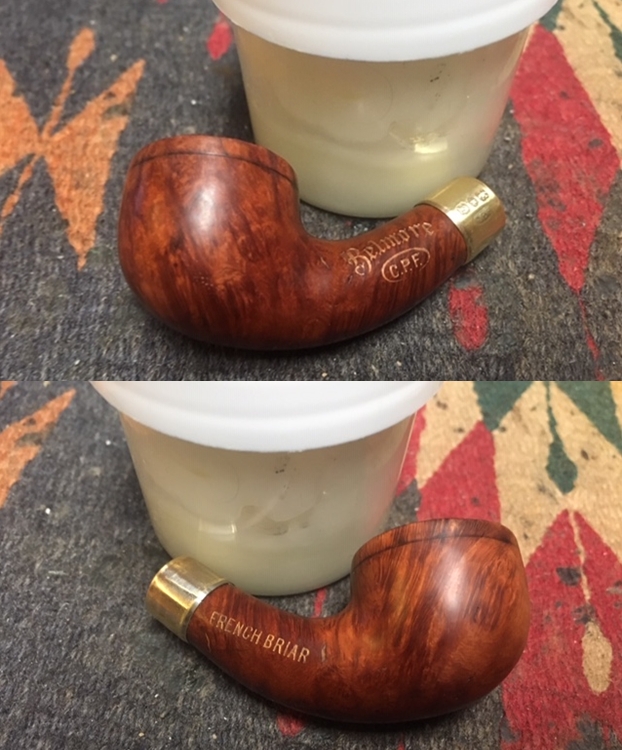
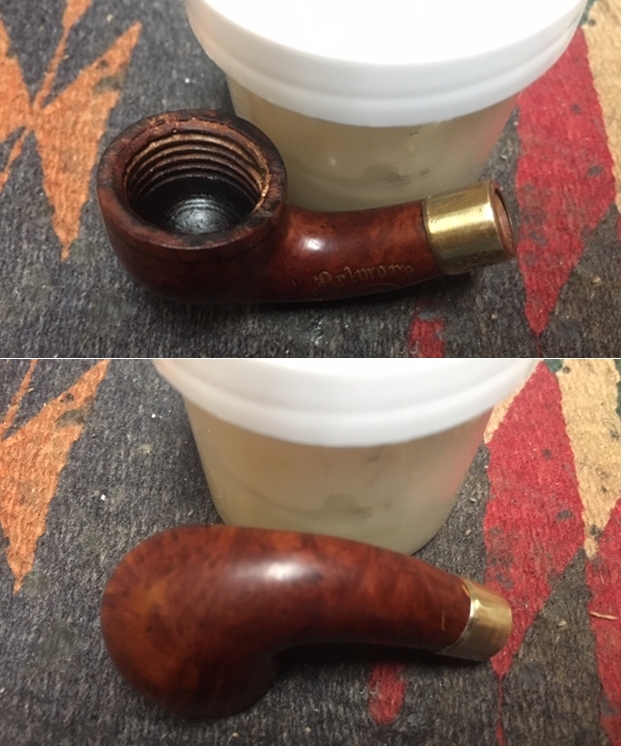
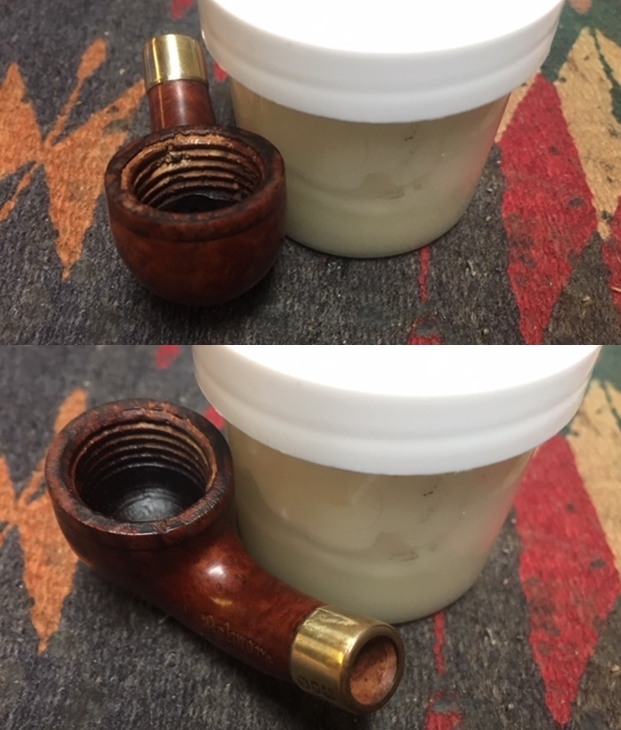
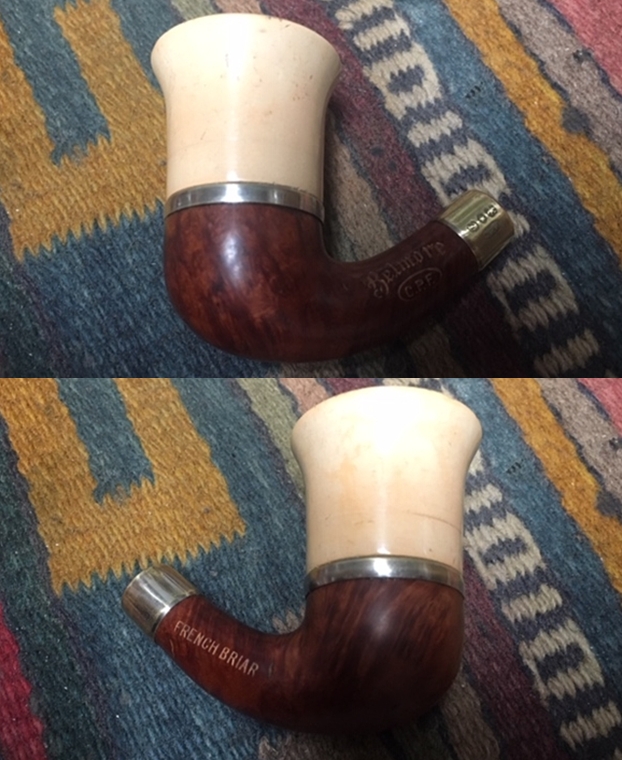
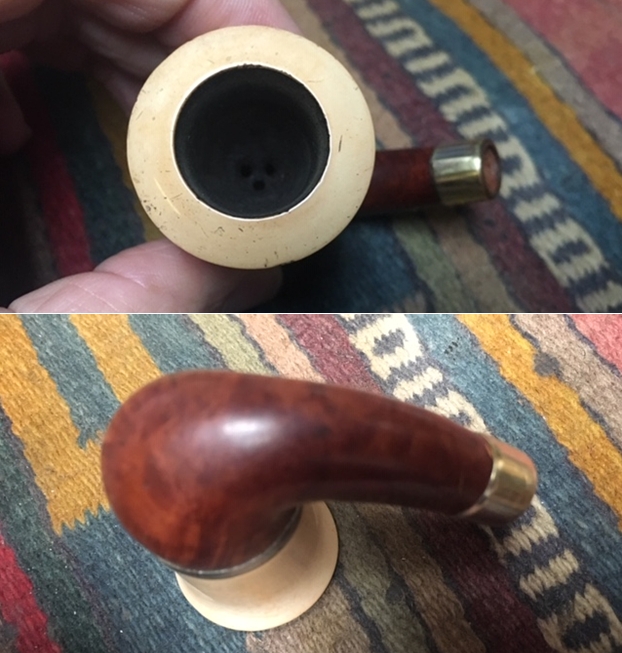
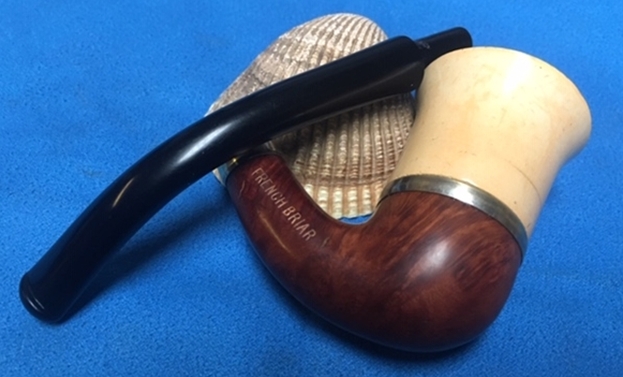
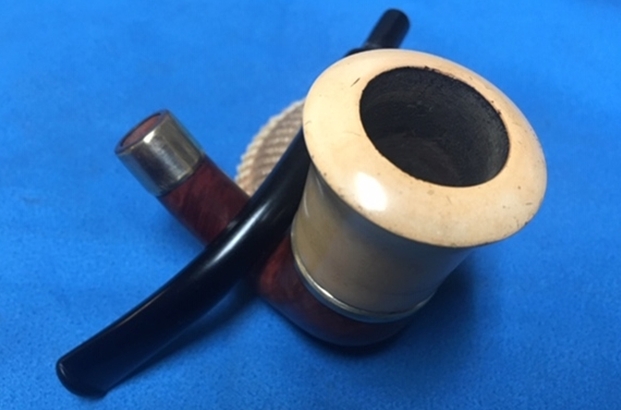
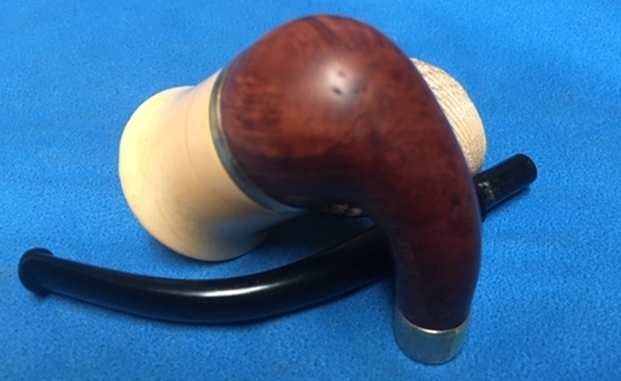
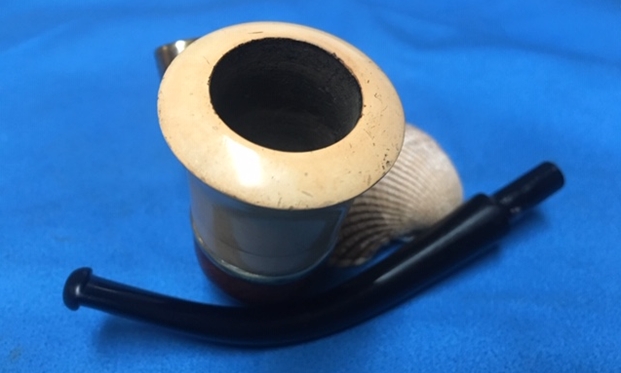
After the last batch of very clean pipes that I brought back from my trip to Idaho in a small bag of unsmoked C.P.F. pipes this pipe comes as a big change. It is the first of the smoked ones from that bag that I am working on. I have to say working on NOS time dusty pipes is a breeze and a pleasure in comparison to this dirty little calabash. The bowl is another screw in meerschaum cup that is almost tulip or funnel shaped. It is dirty and sports a thick cake in the bowl. It has some thick lava on the back side of the rim top and some darkening around the rim and in the bowl. There are no deep chips or nicks in the meer which is unusual in a pipe this age but the bowl is almost grey from use. The base is briar with a brass/metal between the bowl and base. The finish on the briar had a coat of varnish or possibly shellac over it so it had a spotty shiny look to it even under the dirt and grime of years. The left side of the shank is stamped with gold leaf and reads Belmore over C.P.F. in the oval logo. The right side of the shank reads French Briar. There is a brass/silver ferrule on the shank end that is oxidized and also loose. The vulcanite stem had some tooth chatter and light marks near the button. It was oxidized as well. The stem had lost some of its bend over time. The tenon has a chip out of it as well that will need to addressed. I took photos of the pipe to show its condition at the start of the process. I took a close up photo of the meerschaum rim top and bowl to show the condition of the meer bowl. It was heavily caked with lava overflow and darkening on the rim top. The airways are at the bottom of the bowl much like a gourd calabash though in this case there are three openings. The metal ferrule is oxidized and dirty. The photos of the vulcanite stem show its general condition. It was oxidized and dirty. There was tooth chatter and marks on both sides near the orifice button. The tenon had a chip on the topside that will need to be addressed.The next photo shows the stamping on the left side of the shank. It is clear and readable. The stamping reads as noted above. The band is loose and is stamped with the C.P.F. in an oval logo with the faux hallmarks that are on all of the metal banded C.P.F. pipes.I unscrewed the bowl from the pipe and took photos of the parts – the briar base and the meer bowl as well as all the adornments. It looks good on the inside. The threads in the base and on the meerschaum bowl are in good condition. I have included the following information with each of the blogs on C.P.F. pipes because I always want to keep the historical context in mind as I work on these. The link to the blog follows (https://rebornpipes.com/2013/04/14/some-reflection-on-the-historical-background-on-cpf-pipes/). I quote a pertinent part of the blog below:
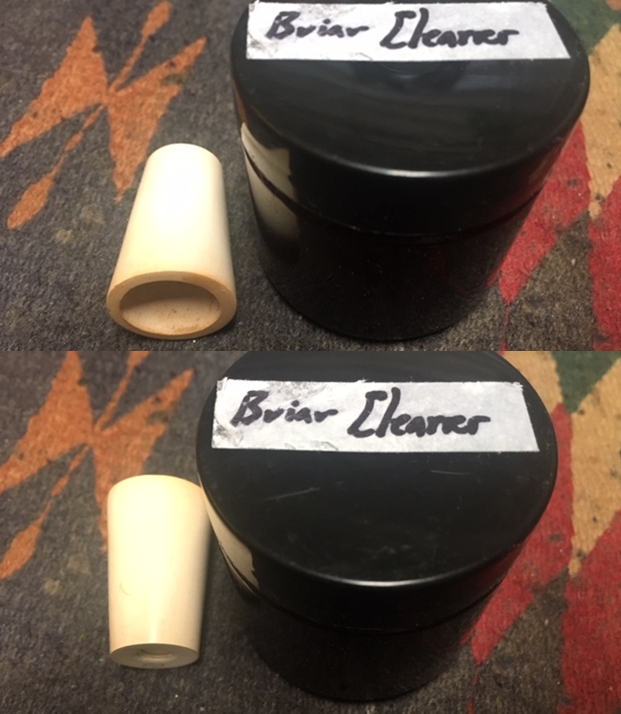
From my reading and research it seems to me that CPF brand was discontinued sometime in the 1910-1920 range. Again, turning to Bill Feuerbach I found that he notes the following, which pins down the time frame of the discontinuation of the brand more specifically, “I have a CPF Chesterfield in our office display that has a name tag from way before my time that says 1900 CPF Chesterfield. It looks like most other Chesterfields you’ve seen, including the military type push stem, except this stem is horn and not vulcanite. As far as I have gathered the CPF brand was phased out sometime around 1915.” Interestingly, he noted that the Chesterfield name and style was later introduced in the KB&B, Kaywoodie and Yello-Bole lines. He says that the 1924 KB&B catalog shows KB&B Chesterfields…

… From my research I believe that we can definitively assert that the CPF logo stands for Colossus Pipe Factory. The brand was purchased by KB&B sometime between 1884 and 1898 and that it continued until 1915. That time frame gives help in dating some of the older CPF pipes you or I might find. It can be said that prior to the dual stamping it is fairly certain that the pipe is pre-1884 to 1898. After the dual stamping it can be placed post 1898 until the closure of the brand line in 1915. CPF made beautiful pipes.

From that information I can tentatively date the pipe to the period prior to 1884-1898 because of the single C.P.F. stamp on the shank, ferrule and stem. At any rate it is another old pipe though this one is well smoked. The story of its journey to Jeff and me this long after the date it was made is another mystery. This batch of pipes has made me wish that even one of them could share its story with us. I can only imagine the journey it has had even minimally from the bits that I do know. It traveled from the Colossal Pipe Factory in New York City to Idaho Falls in journey that began in the 1880s and ended in 2019. Now it is has further traveled by air to Vancouver, Canada, as far west as it can go and remain on the same continent… what a well-traveled pipe. Armed with that information it was not time to work on the pipe.

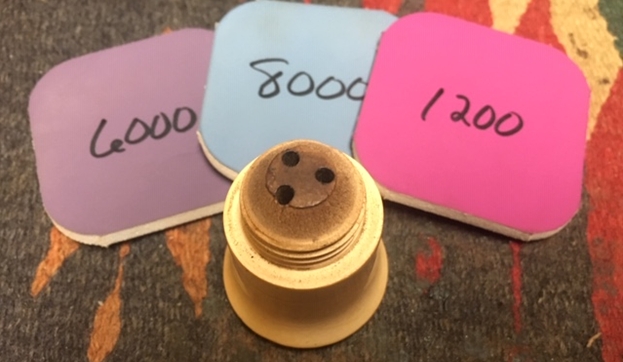
I decided to begin with the bowl. I unscrewed the bowl from the briar base. I carefully scraped the rim top to remove the lava build up. I finished it up with a 1500 grit micromesh pad. I reamed the bowl with a Savinelli Fitsall Pipe knife to scrape away the cake on the walls. I wanted to avoid cracking or damaging the meer in any way so I chose this method. Once it was reamed, I sanded the internal walls with 220 sandpaper wrapped around a dowel until it was smooth. I wiped down the bowl with a damp cotton pad to remove the surface dirt. I cleaned out the sump area in the base with cotton swabs and alcohol. I worked on the airway in the bowl and shank and the mortise with alcohol, cotton swabs and pipe cleaners. I scrubbed until the airway was clean. I cleaned out the airway in the stem with pipe cleaners and alcohol. I am still experimenting with Mark Hoover’s Briar Cleaner to see what I think of it as a possible replacement for my usual Murphy’s Oil Soap scrub. I rubbed it onto the briar portion of the pipe and worked it into the grain of the briar. I wiped it off with a clean cloth. There was still a coat of grime and grit from the cleaner left behind so I rinsed it with warm water to remove that and dried it with a microfiber cloth. I am really not sure if this is any better than the Murphy’s but I am committed to working with it. I forgot to take photos of this point in the process.
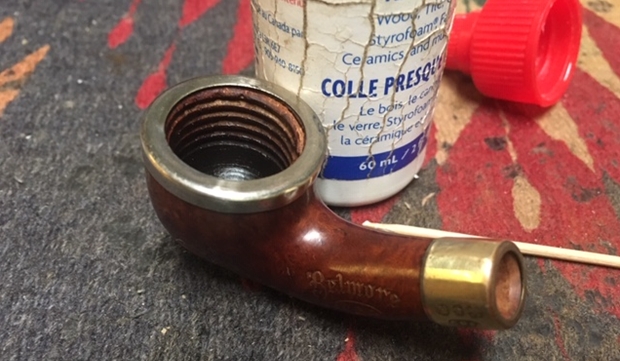
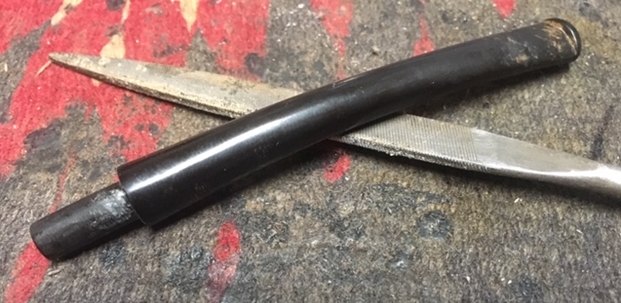
I sanded the old glue and dirt off the shank and then I spread some Weldbond white glue on the shank end. I spread it evenly on the shank end with a tooth pick. I pressed the brass ferrule on the shank end and aligned it so that the C.P.F. oval logo and the faux hallmarks lined up with the stamping on the left side of the shank. I rubbed the briar bowl and shank down with a coat of Before & After Restoration Balm. I worked it into the surface of the briar. The product works to clean, enliven and protect the briar. The old briar was dry and it drank up the balm. I buffed the bowl with a soft cloth to raise a shine. I like how the pipe looks as this point in the process. I glued the metal spacer on top of the base plate making sure all was aligned properly before I pressed them into place.I polished the meerschaum bowl with micromesh sanding pads – wet sanding with 1500-12000 grit pads. I wiped the bowl down after each pad with a damp cloth to remove the dust. Each successive sanding pad brought more shine to the meerschaum. There was a scratch in the meerschaum on one side of the bowl about 1/3 up from the bottom of the bowl. It appears to look like a crack but it is not one. If I had continued to sand it I would have changed the profile of the bowl. I put the meerschaum cup back in the briar bowl and buffed it with microfiber cloth to raise a shine. The scratch at the front of the bowl is visible but it is still a beautiful pipe.I set the bowl aside and started working on the stem. I filled in the damaged area on the tenon on the top side with clear super glue. Once the repair cured I used a needle file to smooth out the repaired area. I smoothed out the tenon repair and sanded out the tooth chatter and marks with 220 grit sandpaper. I sanded out the scratches with 400 grit sandpaper. I wiped the stem down with Obsidian Oil.I heated the vulcanite stem over a candle until the rubber had softened and bent the stem to the proper angle to match the curve of the base.I polished the stem with micromesh sanding pads – wet sanding it with 1500-2400 grit pads and dry sanding it with 3200-12000 grit pads. I wiped it down with Obsidian Oil after each sanding pad. I finished the polishing with Before & After Pipe Polish – both Fine and Extra Fine. I gave it a final coat of Obsidian Oil and set it aside to dry. By now if you have read rebornpipes for very long you know that I love these old C.P.F. pipes. There is some serious thought that they were carved by European trained craftsman who were skilled pipemakers. These pipemakers were brought to the US by the Colossal Pipe Factory to make pipes. Many of the shapes, bands and stems have such high quality workmanship involved that I really think there is truth to this story. This is little bent Meerschaum stacked Calabash is a real beauty.
I screwed the bowl back on the base and carefully polished stem and the bowl with Blue Diamond polish on the buffing wheel carefully avoiding the stamping on the shank. I gave the bowl and the stem multiple coats of carnauba wax. I buffed the pipe with a clean buffing pad to raise the shine. I hand buffed it with a microfiber cloth to deepen the shine. The pipe polished up pretty nicely. The grain on the base and shank really began to stand out; it seemed to take on life with the buffing. The rich contrasting brown stain on the bowl works well with the polished Meerschaum bowl that is also beginning to take on colour. The black vulcanite stem also provides contrast. The finished pipe has a rich look that is quite catching. Have a look at it with the photos below. The shape, finish and flow of the pipe and stem are very well done. The dimensions are Length: 5 1/2 inches, Height: 2 1/4 inches, Outside diameter of the bowl: 1 3/8 inches, Chamber diameter: 3/4 of an inch. This is another one that I will be adding to my collection. It fits in the C.P.F. niche group that I have been building. The shape and feel in the hand is perfect. Since this one is already well smoked it will be an easy pipe to load and fire up. Thanks for walking through the restoration with me as I restored and reworked this old meerschaum stack Calabash from 1884-1898. It is always a treat for me to work on a piece of pipe history especially when I have learned a bit of the story behind it.

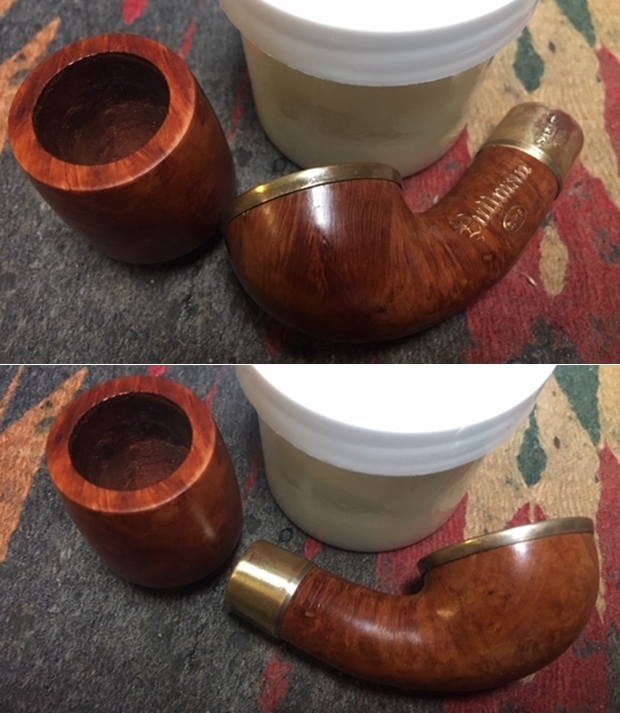
Cleaning up a NOS Unsmoked C.P.F. Briar Calabash


Blog by Steve Laug

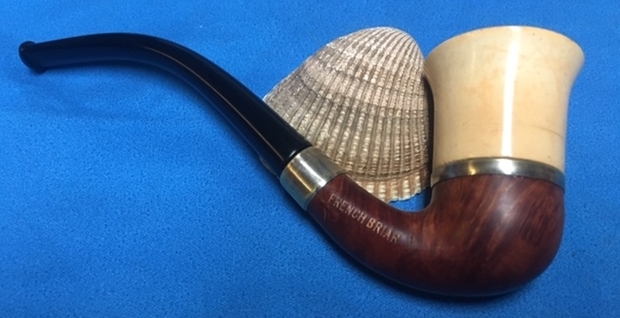
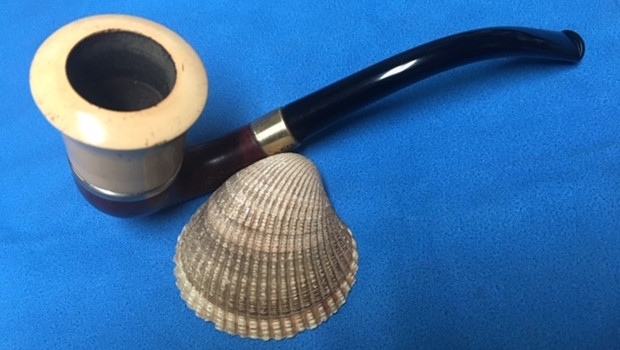
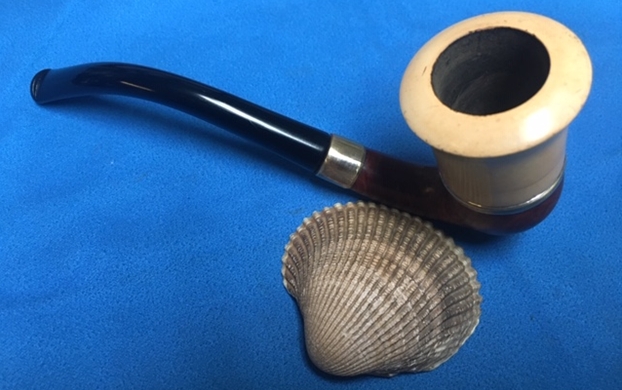
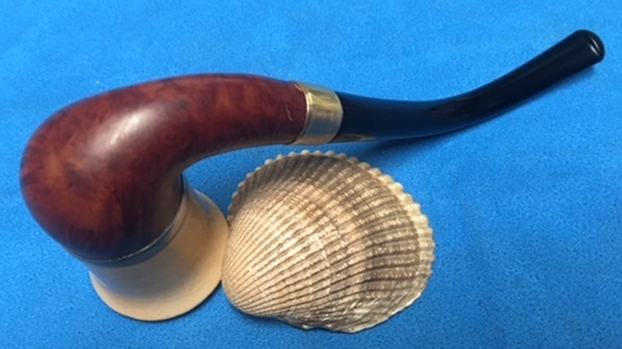
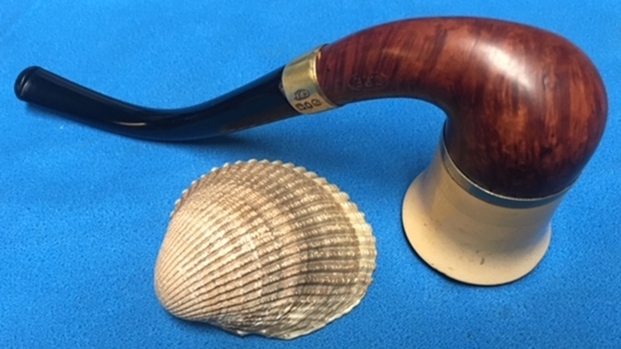
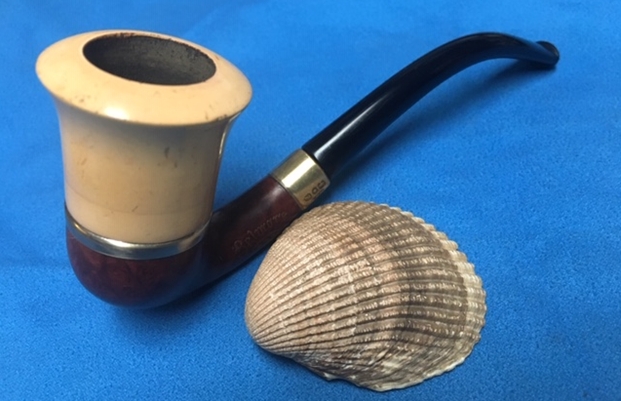
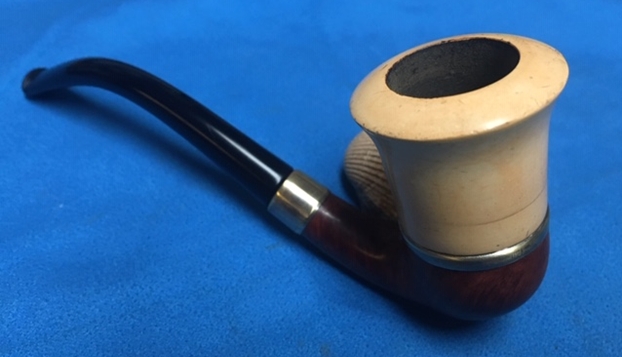
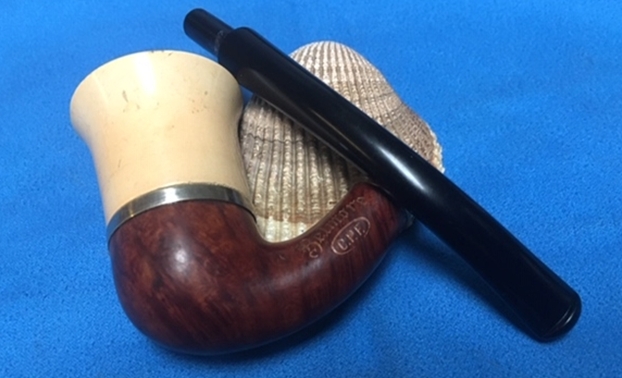
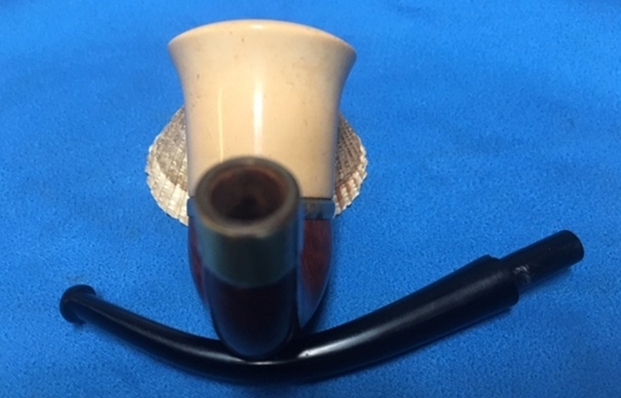
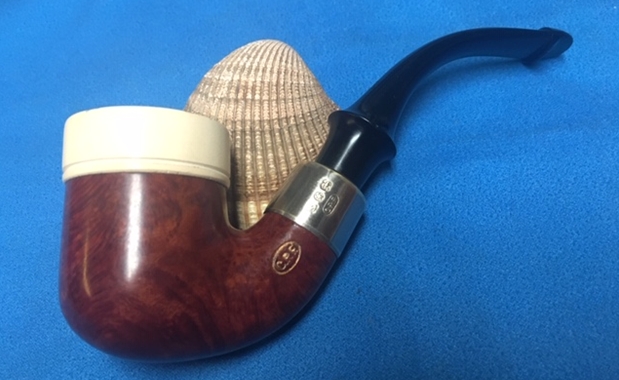
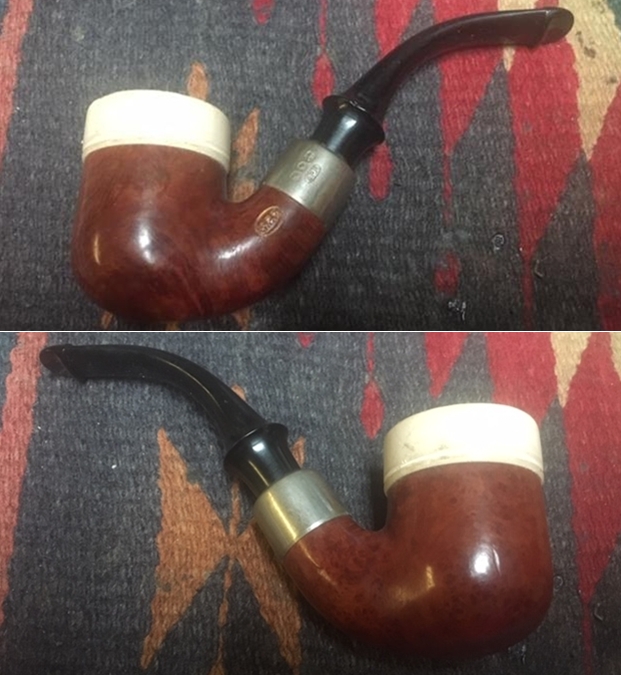
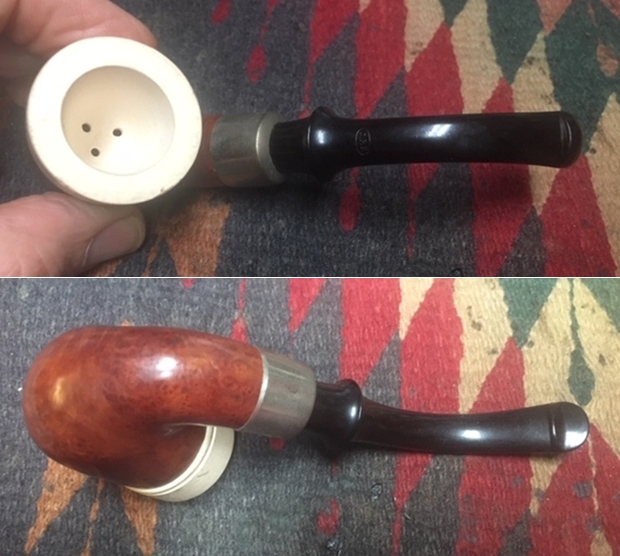
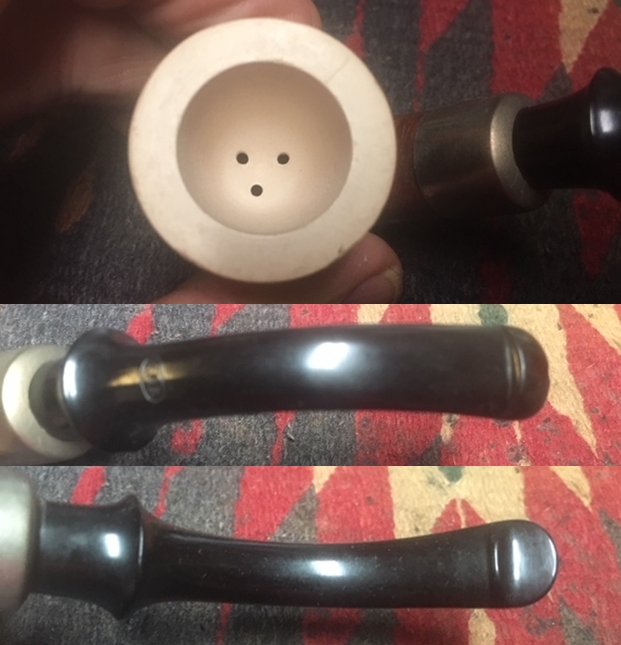
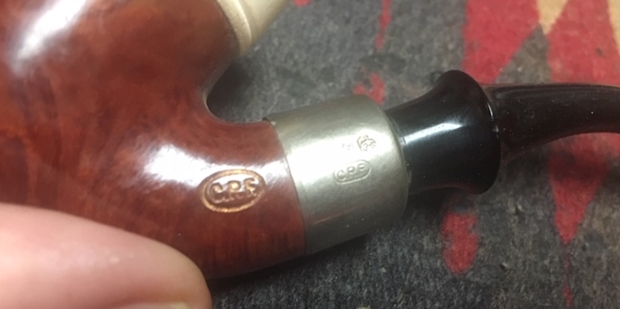
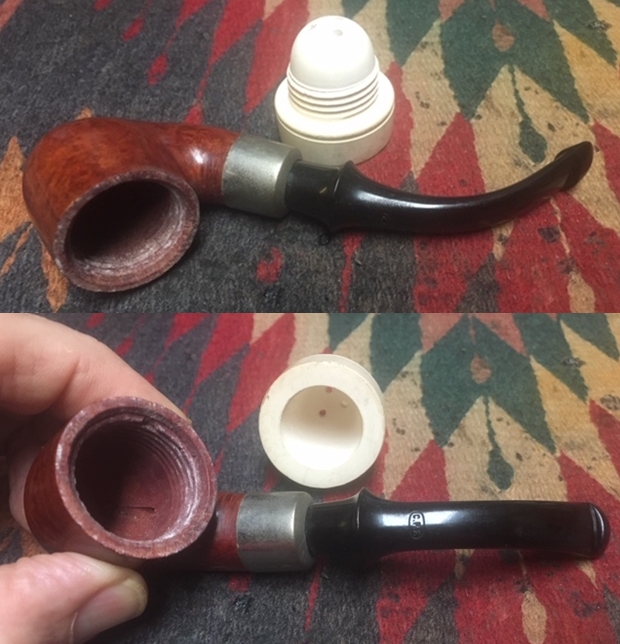
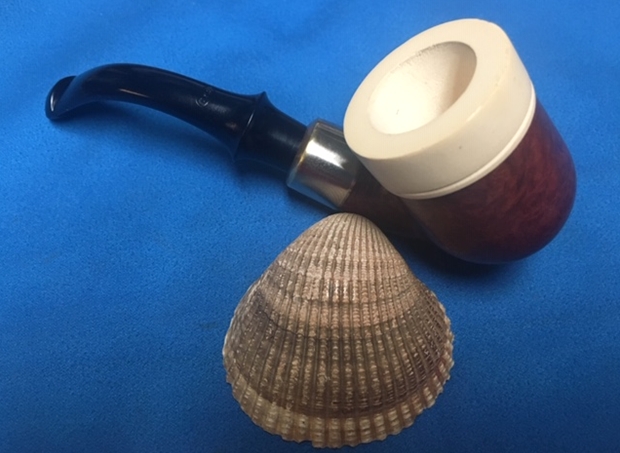
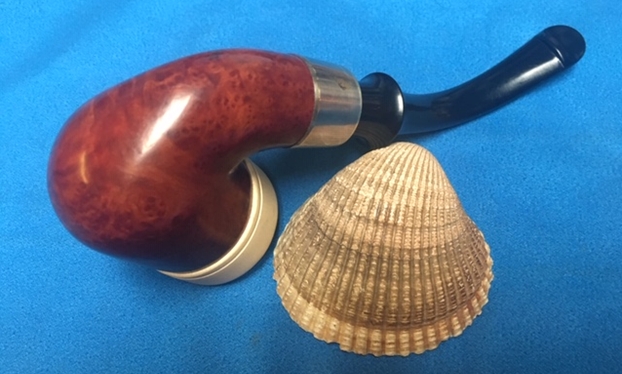
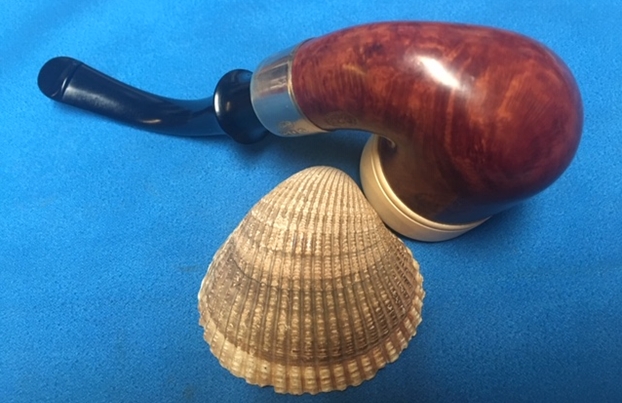
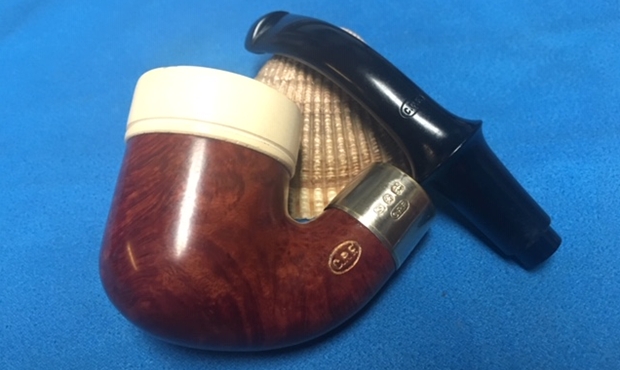
Among the pipes that I brought back from my trip to Idaho was a small bag of C.P.F. pipes smoked and unsmoked. Some have horn stems, some vulcanite stems and some have Gutta- percha bases and stems. Some have hardwood bowls and some briar. There were also several that had meerschaum bowls. I went through the bag and chose the next pipe I wanted to work on. It was an unsmoked C.P.F. briar calabash with a screw in meerschaum bowl. The finish had a coat of varnish or possibly shellac over it so it had a spotty shiny look to it. The left side of the shank is stamped with gold leaf and reads C.P.F. in the oval logo. The meerschaum bowl was unsmoked but still had a lot of dust and debris inside. The vulcanite stem had the C.P.F. in an oval logo stamped on the top of the saddle. It had a few nicks in the top side but was undamaged. It was much like the stems I have worked on that are in the C.P.F. Chesterfield pipes with a faux system stem with the airway still coming out at the end of the button. It was a military style push stem. I took photos of the pipe to show its condition at the start of the process. I took a close up photo of the meerschaum rim top and bowl to show the condition of the meer insert. It was clean but dusty and grimy. The airways are at the bottom of the bowl much like a gourd calabash though in this case there are three of them. The rim top showed some soiling on the top and sides of the bowl. The photos of the vulcanite stem show its general condition. It was dull but unused so it should clean up well.The next photo shows the stamping on the left side of the shank. It is clear and readable. The stamping reads as noted above. The band is stamped with the C.P.F. in an oval logo with the faux hallmarks that are on all of the metal banded C.P.F. pipes.I unscrewed the bowl from the pipe and took photos of the briar base and the meer insert. Both look good on the inside. The threads are not too badly worn.I went back and read a previous blog that I had written on the brand to reacquaint myself. The link to the blog follows (https://rebornpipes.com/2013/04/14/some-reflection-on-the-historical-background-on-cpf-pipes/). I quote a pertinent part of the blog below:

From my reading and research it seems to me that C.P.F. brand was discontinued sometime in the 1910-1920 range. Again, turning to Bill Feuerbach I found that he notes the following, which pins down the time frame of the discontinuation of the brand more specifically, “I have a C.P.F. Chesterfield in our office display that has a nametag from way before my time that says 1900 C.P.F. Chesterfield. It looks like most other Chesterfields you’ve seen, including the military type push stem, except this stem is horn and not vulcanite. As far as I have gathered the C.P.F. brand was phased out sometime around 1915.” Interestingly, he noted that the Chesterfield name and style was later introduced in the KB&B, Kaywoodie and Yello-Bole lines. He says that the 1924 KB&B catalog shows KB&B Chesterfields…

… From my research I believe that we can definitively assert that the C.P.F. logo stands for Colossus Pipe Factory. The brand was purchased by KB&B sometime between 1884 and 1898 and that it continued until 1915. That time frame gives help in dating some of the older C.P.F. pipes you or I might find. It can be said that prior to the dual stamping it is fairly certain that the pipe is pre-1884 to 1898. After the dual stamping it can be placed post 1898 until the closure of the brand line in 1915. C.P.F. made beautiful pipes.

From that information I can tentatively date the pipe to the period prior to 1884-1898 because of the single C.P.F. stamp on the shank, ferrule and stem. At any rate it is another old pipe to remain unsmoked for this long. The story of its journey to Jeff and me this long after the date it was made is another mystery. This is another of those times that I wish an old pipe could speak and share the story of its journey. The most I can say is that it came from New York to Idaho Falls in journey that began in the 1880s and ended in 2019. Now it is has further traveled by air to Vancouver Canada as far west as it can go and remain on the same continent… What a well-traveled pipe and one that I will never really know the story about the nature of the journey. Armed with that information it was not time to work on the pipe.

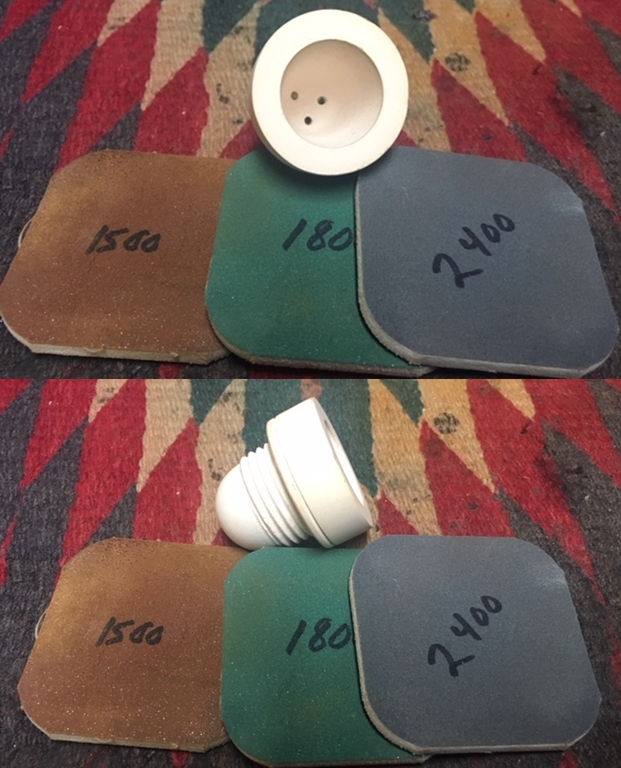
I decided to begin with the bowl. I unscrewed the bowl from the briar base. I wiped down the bowl with a damp cotton pad to remove the surface dirt. I polished the meerschaum with micromesh sanding pads – wet sanding with 1500-12000 grit pads. I wiped the bowl down after each pad with a damp cloth to remove the dust. Each successive sanding pad brought more shine to the meerschaum. I set the meer insert aside and turned my attention to the briar. I am still experimenting with Mark Hoover’s Briar Cleaner to see what I think of it as a possible replacement for my usual Murphy’s Oil Soap scrub. I rubbed it onto the briar portion of the pipe and worked it into the grain of the briar. I wiped it off with a clean cloth. There was still a coat of grime and grit from the cleaner left behind so I rinsed it with warm water to remove that and dried it with a microfiber cloth. I am really not sure if this is any better than the Murphy’s but I am committed to working with it. I took photos of the pipe at this point in the process. One of the nice features of working on a NOS pipe is that the internals are very clean. I ran a pipe cleaner through the airway in the stem and shank just to remove dust. I did the same in the mortise with a cotton swab and the internals were finished.

I polished the briar with micromesh sanding pads – wet sanding with 1500-12000 grit pads and wiped it down after each pad with a damp cloth. I rubbed the bowl and shank down with a coat of Before & After Restoration Balm. I worked it into the surface of the briar. The product works to clean, enliven and protect the briar. The old briar was dry and it drank up the balm. I buffed the bowl with a soft cloth to raise a shine. I like how the pipe looks as this point in the process. I set this part of the bowl aside and started working on the stem. I polished the stem with micromesh sanding pads – wet sanding it with 1500-2400 grit pads and dry sanding it with 3200-12000 grit pads. I wiped it down with Obsidian Oil after each sanding pad. I finished the polishing with Before & After Pipe Polish – both Fine and Extra Fine. I gave it a final coat of Obsidian Oil and set it aside to dry. By now if you have read the rebornpipes long, you know that I love these old C.P.F. pipes. There is some serious thought that they were carved by European trained craftsman who were skilled pipemakers. These pipemakers were brought to the US by the C.P.F. Company to make pipes. Many of the shapes, bands and stems have such high quality workmanship involved that I really think there is truth to this story. This is little bent calabash is a real beauty. I polished stem and the bowl with Blue Diamond polish on the buffing wheel carefully avoiding the stamping on the shank. I gave the bowl and the stem multiple coats of carnauba wax. I buffed the pipe with a clean buffing pad to raise the shine. I hand buffed it with a microfiber cloth to deepen the shine. The pipe polished up pretty nicely. The contrasting grain really began to stand out; it seemed to take on life with the buffing. The rich contrasting brown colour works well with the polished vulcanite stem. The finished pipe has a rich look that is quite catching. I screwed the cleaned and polished meerschaum calabash bowl insert into the bowl and was very pleased with how it looked. Have a look at it with the photos below. The shape, finish and flow of the pipe and stem are very well done. The dimensions are Length: 5 ¼ inches, Height: 1 7/8 inches, Outside diameter of the bowl: 1 1/4 inches, Chamber diameter: 3/4 of an inch. This one will be joining my collection as it fits in the CPF niche group that I have been building. The shape and feel in the hand is perfect. Once again, I have to make a hard decision – do I leave it unsmoked or do I load it up with some aged Virginia and break it in. Thanks for walking through the restoration with me as I restored and reworked this old meerschaum calabash from 1884-1898. It is always a treat for me to work on a piece of pipe history especially when I have learned a bit of the story behind it.