Monthly Archives: April 2016

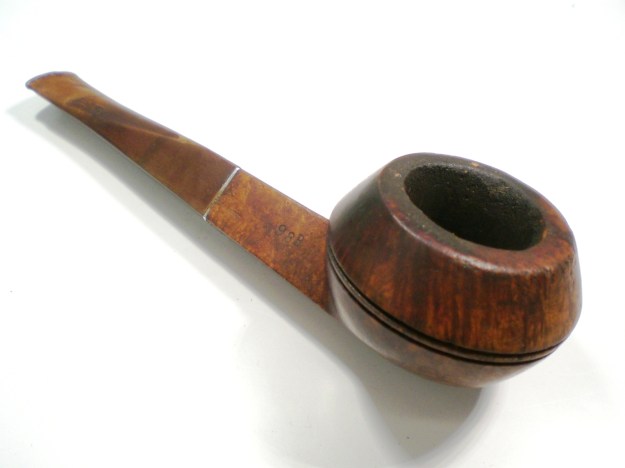
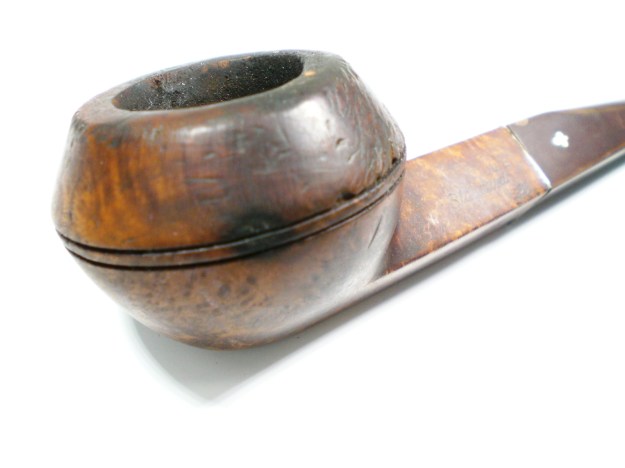
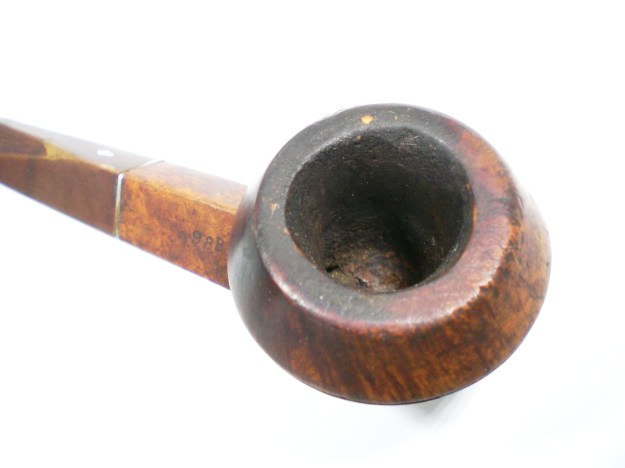
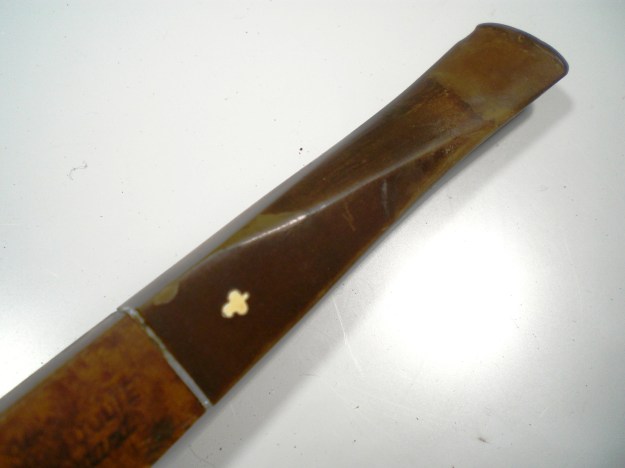
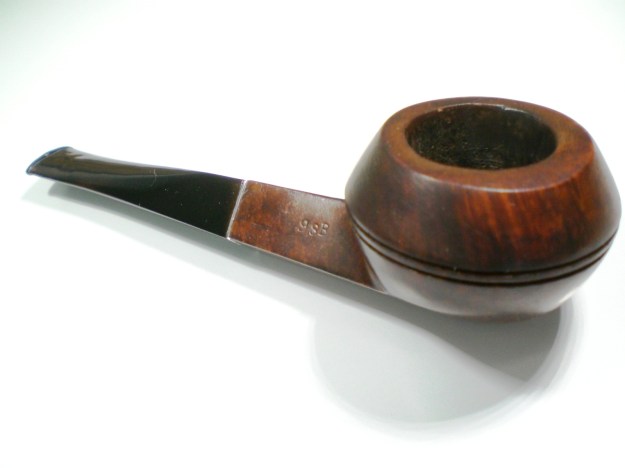
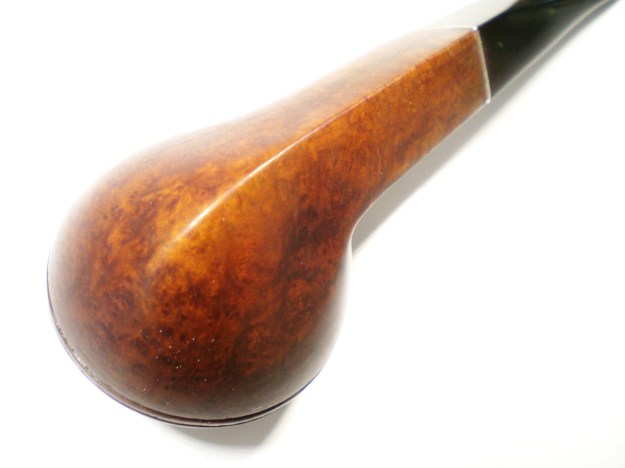
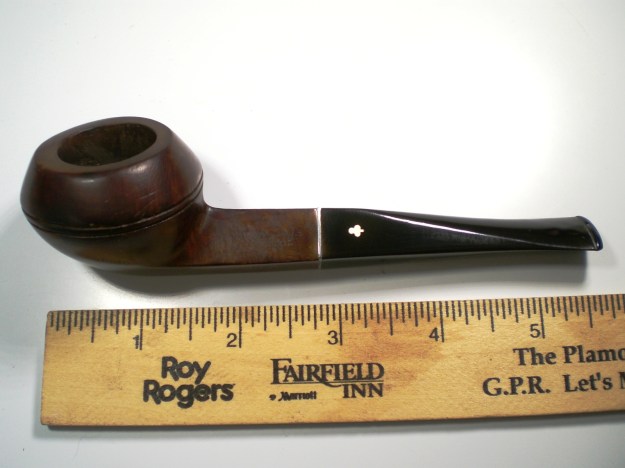
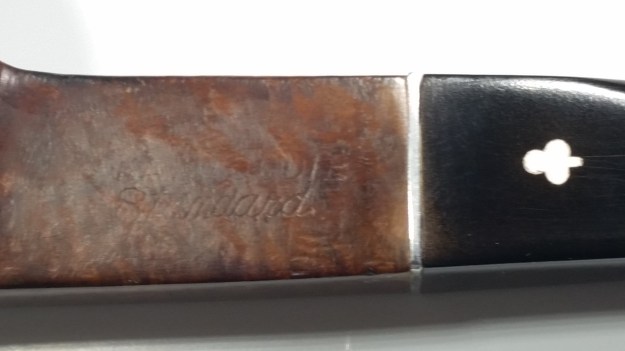
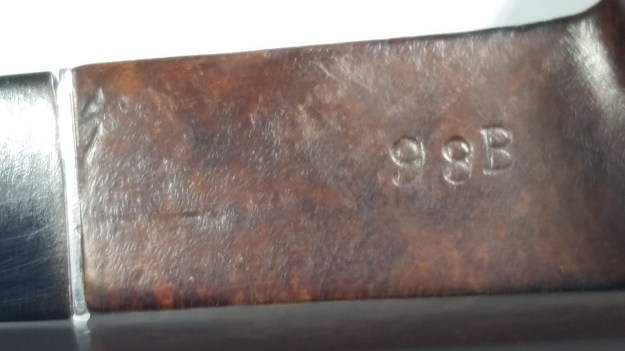
Kaywoodie 98B Standard Restoration


By Al Jones

I picked up this pretty beat Kaywoodie as a parts pipe, but after receiving it, the pipe showed enough promise that I couldn’t dismantle it.

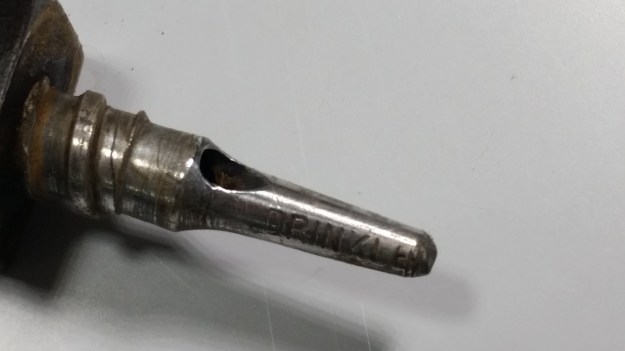
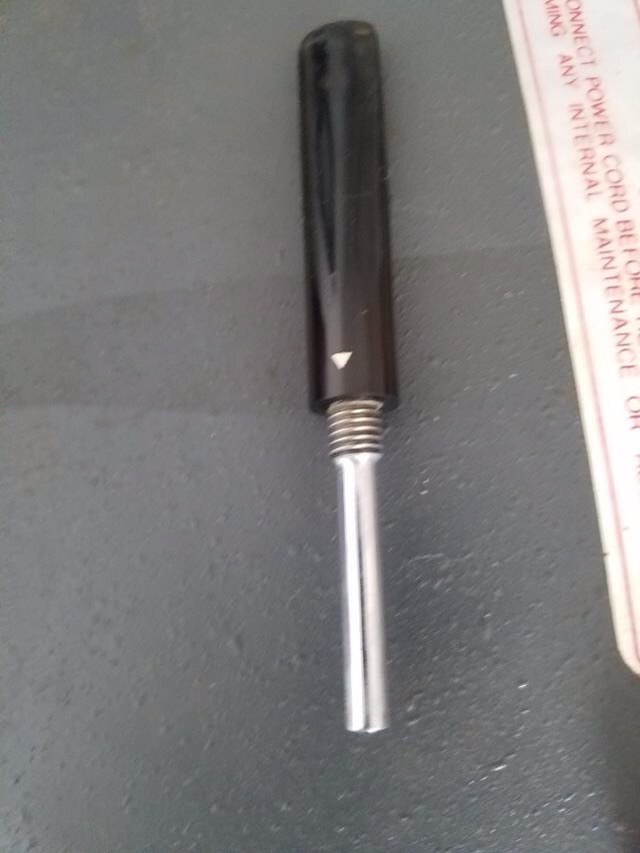
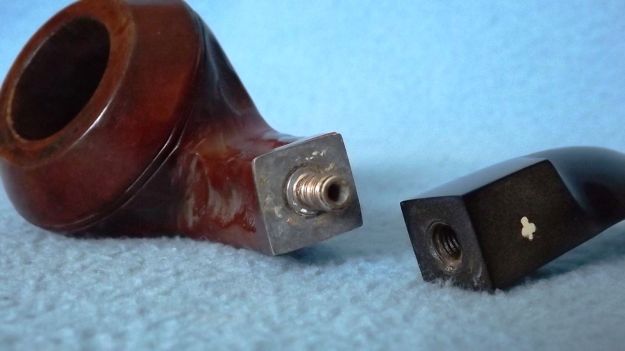
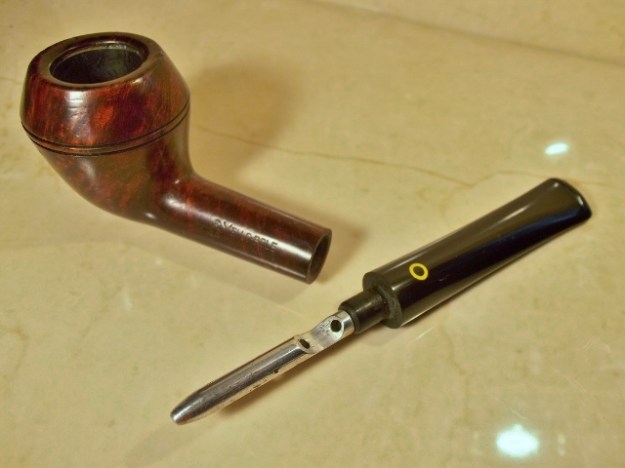
The pipe came equipped with the “Drinkless” stamped stinger, but missing the ball.  This is an important detail in dating the pipe, so I was glad to see it.   The “Drinkless” stamp on the stinger was dropped in the early 1950’s and the 4-hole stinger was dropped by 1954.  So, this pipe dates before 1954, but could be as early as the late 1940’s.  A member of the Pipesmagazine.com forums pointed out that the 98B shape had a flat top in the early 1940’s catalogs, then changed to a domed top in the 1950 catalogs.  Below are two catalog pages from 1947 and 1955 showing how the shape evolved.

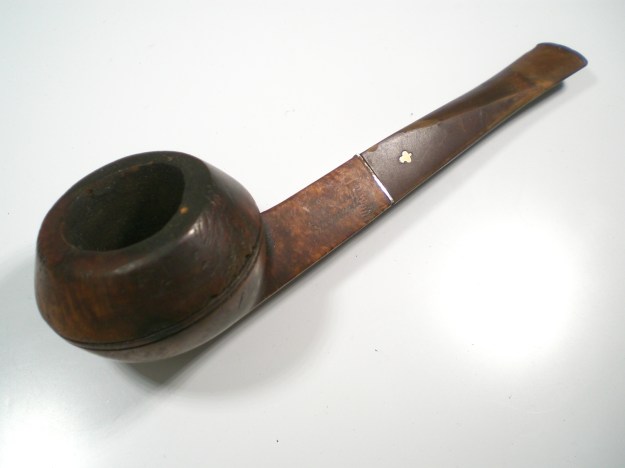
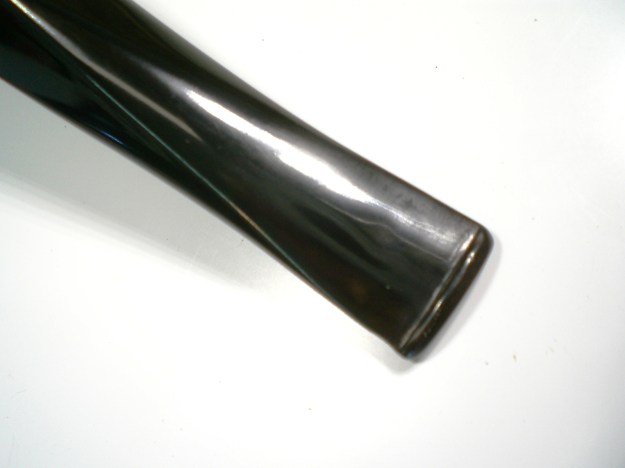
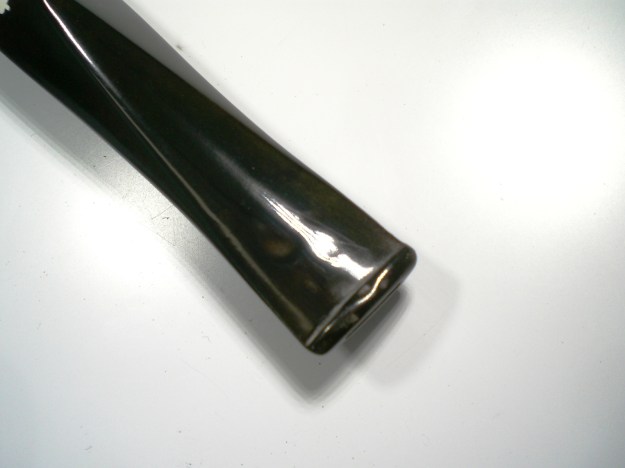
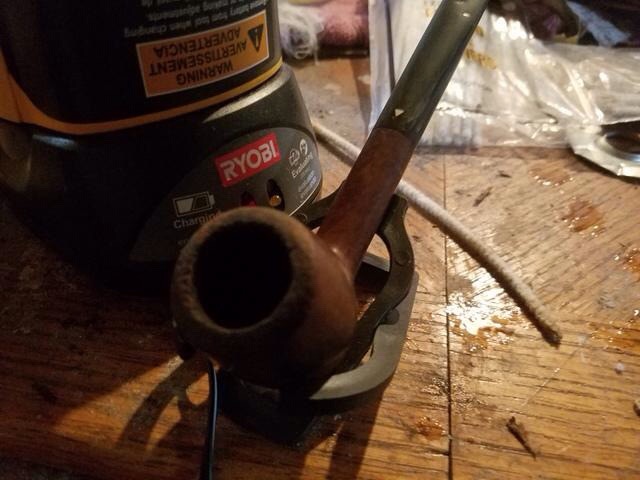
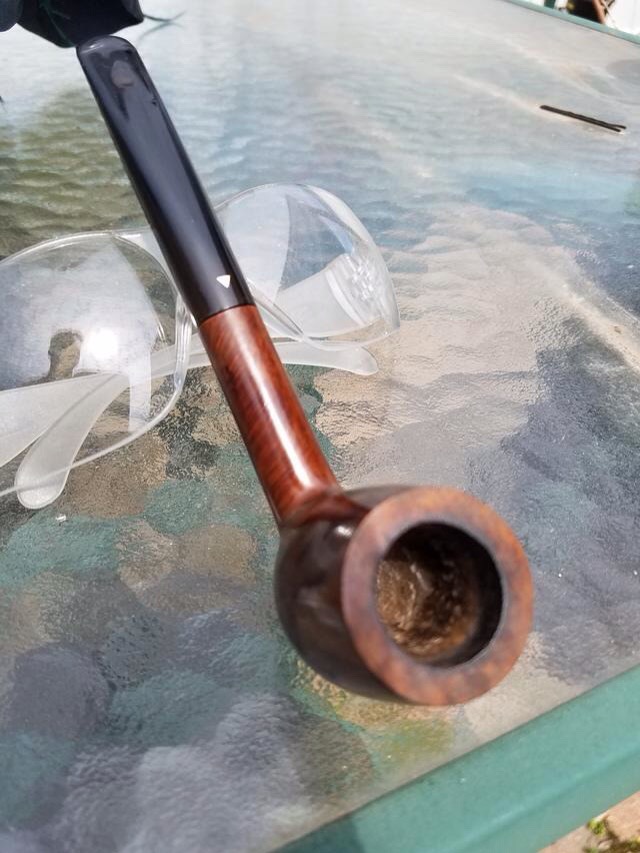
Below is the pipe as it was received.  The stem was badly oxidized, with teeth marks.  The briar was burned on top and it had some scorch marks on each side.  The scorch marks on the bowl sides were the most worrisome.  I was afraid if they were to be removed, the bowl shape might be altered.  The pipe would definitely need to be restained.

Kaywoodie_99B_Standard_Before (1)Kaywoodie_99B_Standard_Before (4)Kaywoodie_99B_Standard_Before (2)Kaywoodie_99B_Standard_Before (5)Kaywoodie_99B_Standard_Before (3)Kaywoodie_99B_Standard_Before (6)

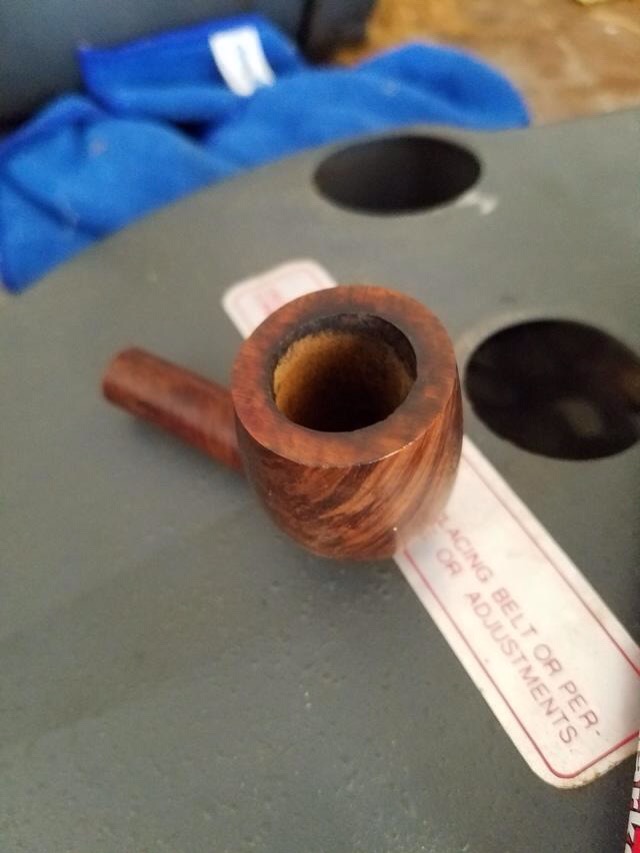
I reamed the bowl and topped the bowl using some 320 grit paper on a flat surface.  I used 600 grit paper, dry, to remove the scorch marks on both sides of the bowl.  I then used a razor blade to redefine the bowl rings, and followed that with a needle file.  I was pleased to get most of the scorch marks out without significantly adding any flat spots or loosing the bowl rings.

I soaked the entire bowl in an alcohol bath. The stem was soaked in a mild Oxy-Clean solution, with a dab of grease over the logo.  Following the alcohol bath, I removed the rest of the stain with some Super-fine steel wool.  I used a cloth on the nomenclature, which was already faded.

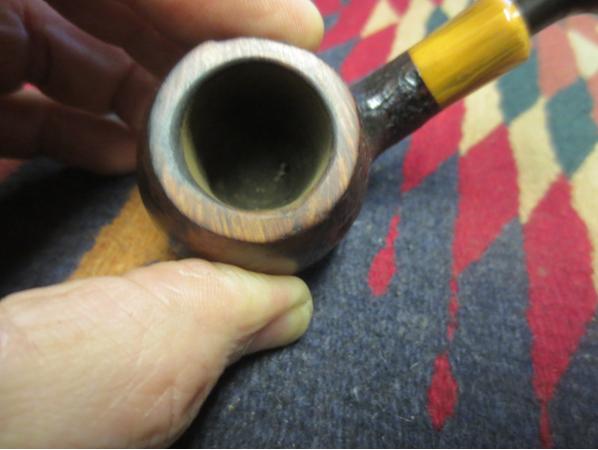
The bowl was then stained with Fieblings Medium Brown stain, at close to full strength.  I was pleased to find that this covered the remaining scorch marks nicely.  The bowl was then buffed with White Diamond and several coats of Carnuba wax.  The bowl had been reamed a bit out of round, but there was plenty of wood on that side.  I didn’t feel compelled to do anything else and it shouldn’t be a issue in use.

Using the flame from a lighter, I was able to remove some of the teeth marks. I sanded the oxidation from the stem with 600 grit paper.  I wrap the paper around a popsicle stick on bulldog stems to keep the stem angles from softening.  This was followed with 800, 1500 and 2000 grit wet paper.  The stem was then buffed with White Diamond and Meguiars Plastic Polish.

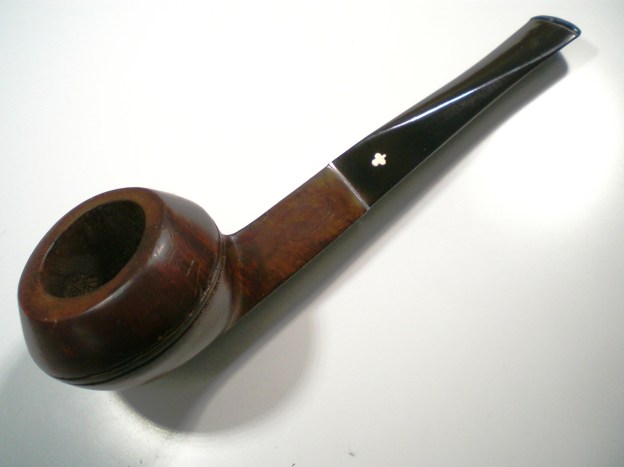
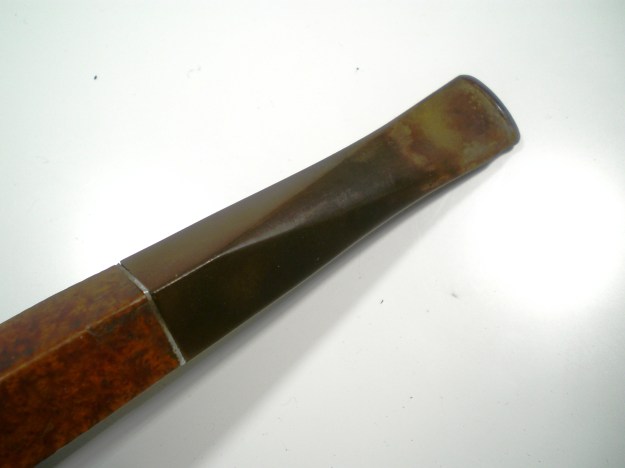
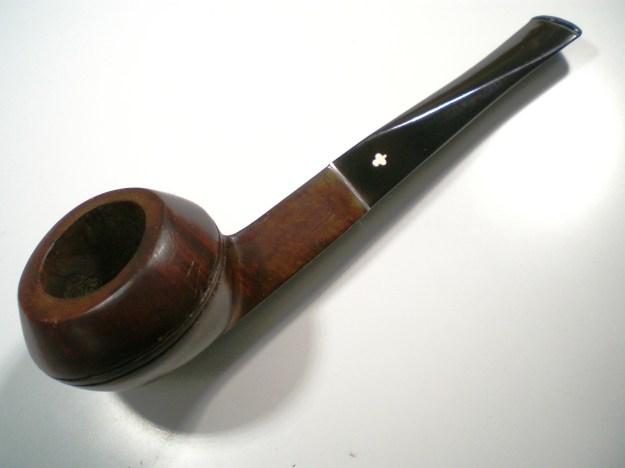
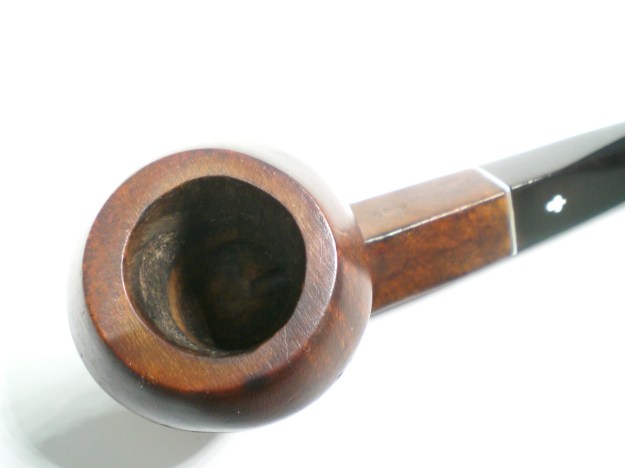
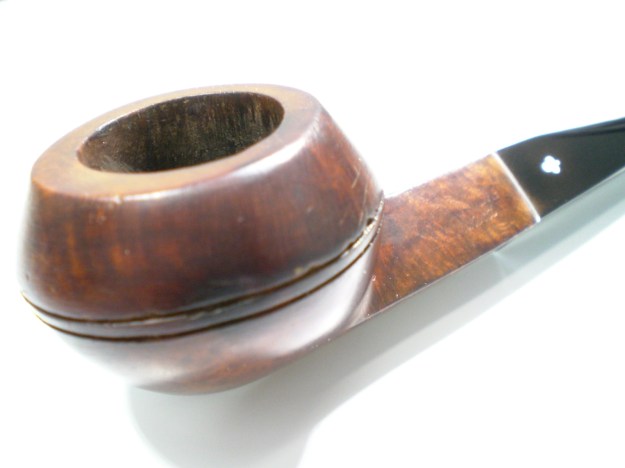
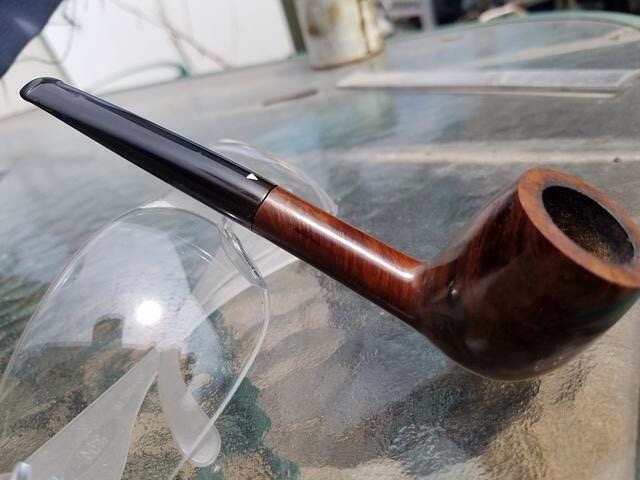
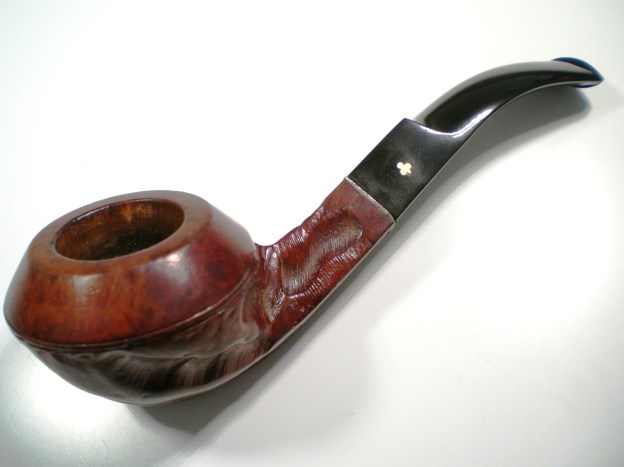
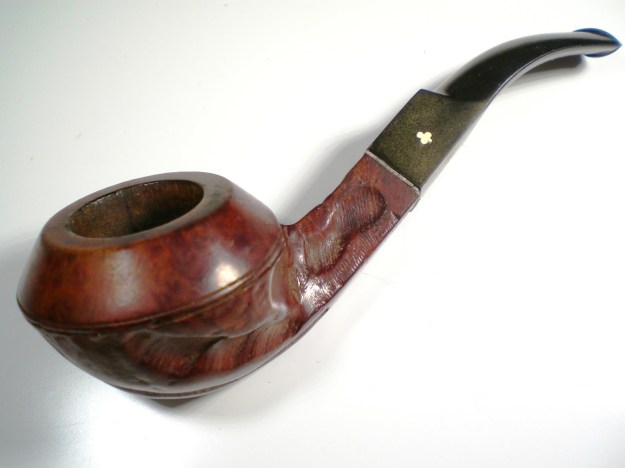
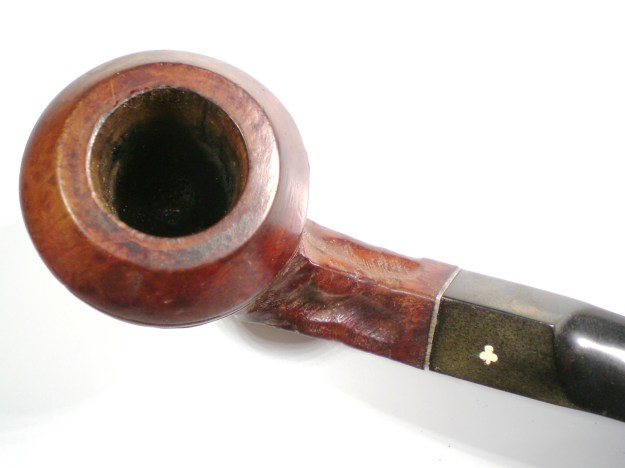
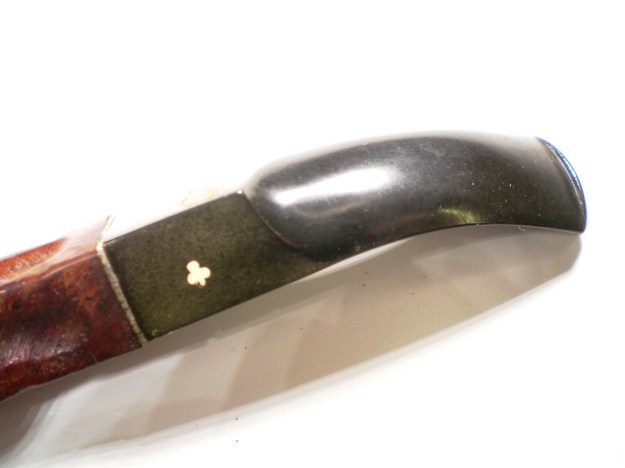
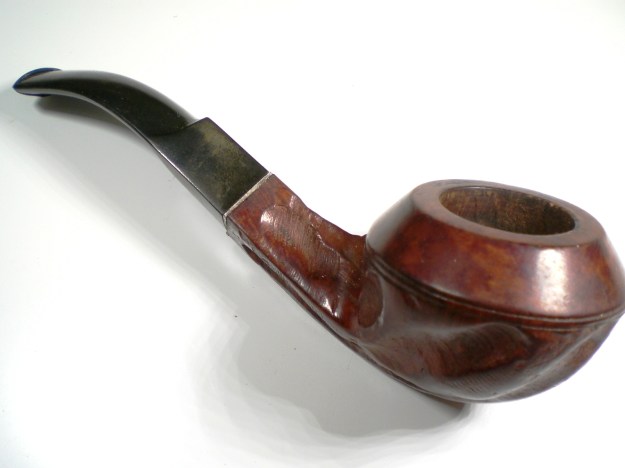
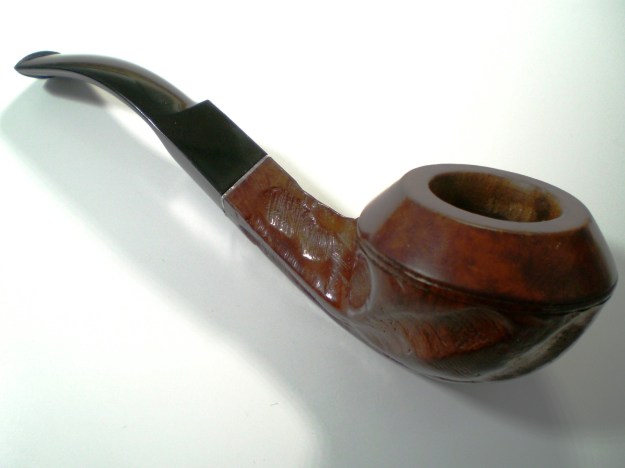
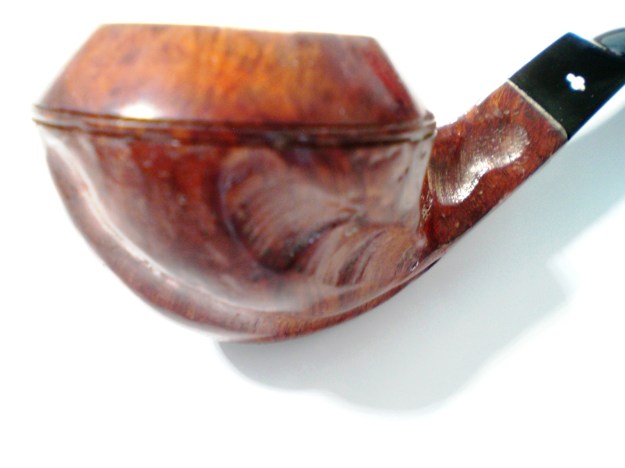
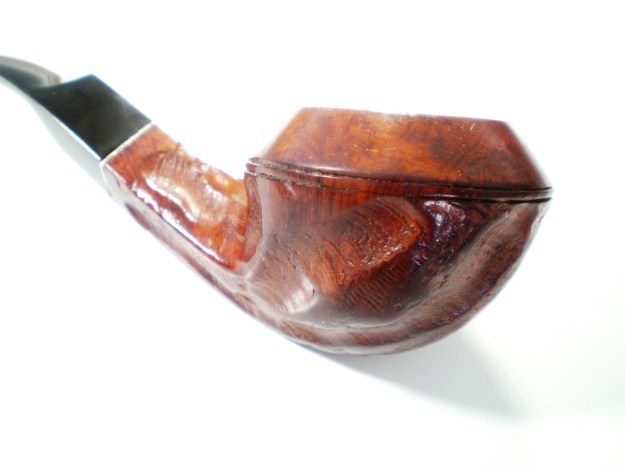
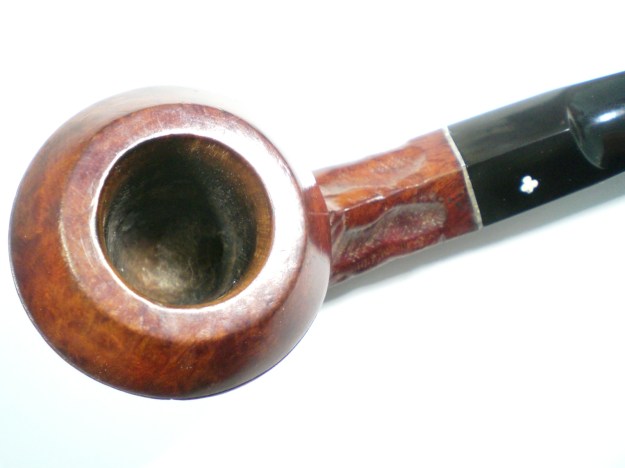
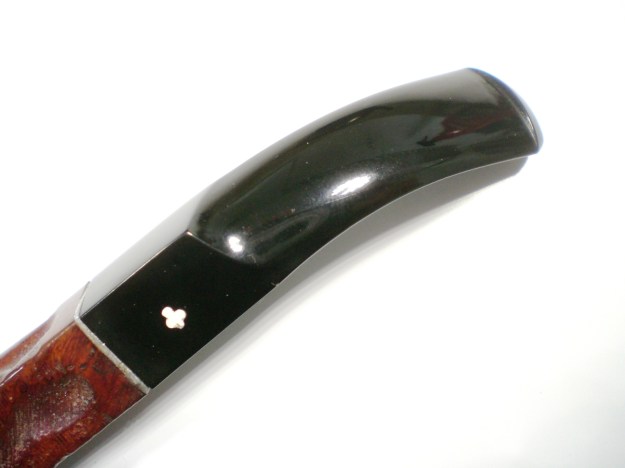
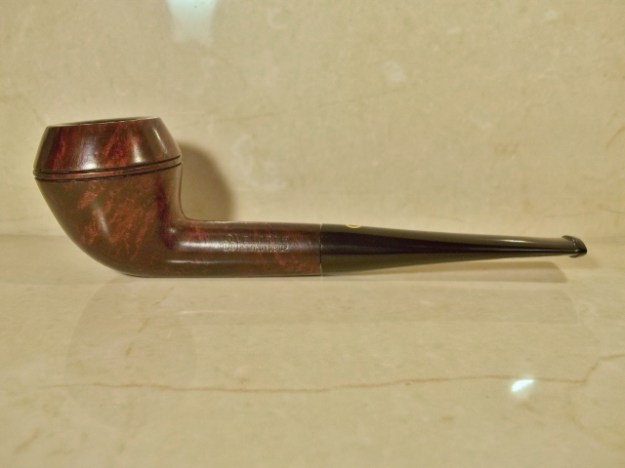
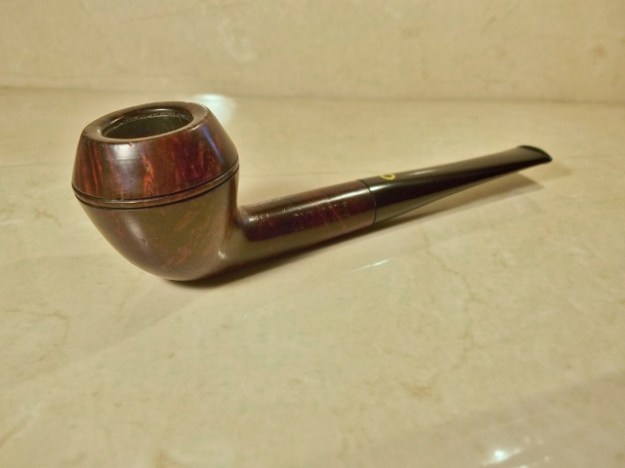
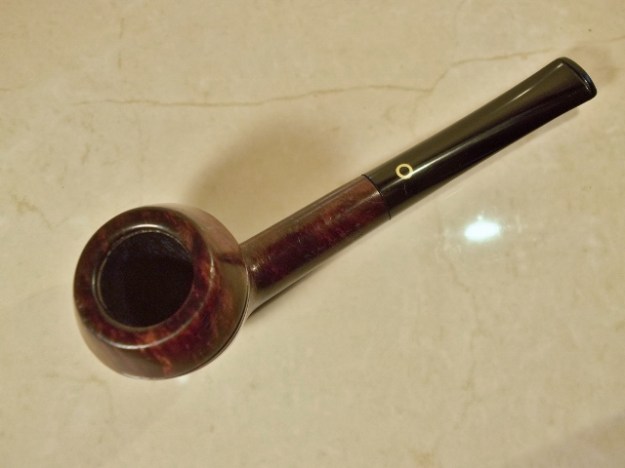
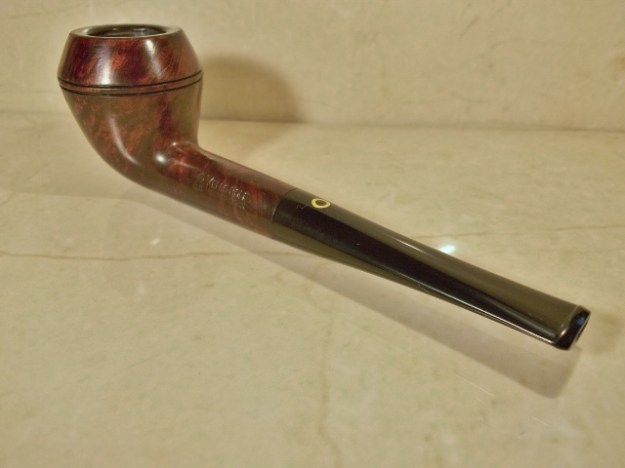
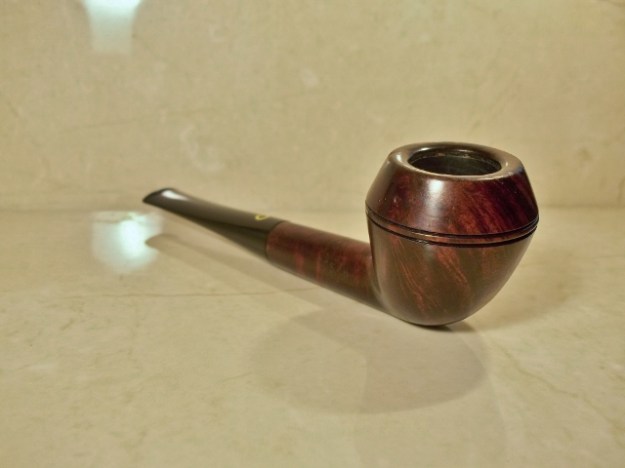
Below is the finished pipe.  This one should be ready for another 60 years of service.  I’ll most likely resell the pipe and recommend that the cut stinger be cut off completely.  I left it on only to show the dating provenance.

Kaywoodie_99B_Standard_Finish (1)Kaywoodie_99B_Standard_Finish (3)Kaywoodie_99B_Standard_Finish (4)Kaywoodie_99B_Standard_Finish (5)Kaywoodie_99B_Standard_Finish (6)Kaywoodie_99B_Standard_Finish (7)Kaywoodie_99B_Standard_Finish (8)Kaywoodie_99B_Standard_Finish (9)Kaywoodie_99B_Standard_Finish (10)Kaywoodie_99B_Standard_Finish (11)Kaywoodie_99B_Standard_Finish (12)Kaywoodie_99B_Standard_Finish (13)


One of those unforgettable days Pipe Hunting


Blog by Steve Laug

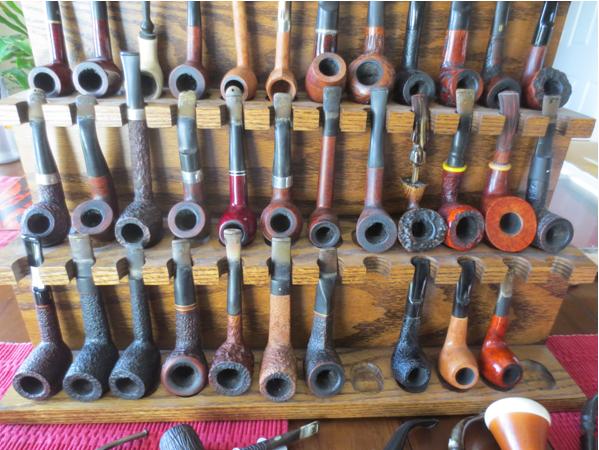
Last week I was in Idaho to spend time with my 87-year-old father who needed to have the aorta valve on his heart replaced. His surgery was on Tuesday and went exceptionally well. On Thursday morning my brother Jeff and I visited him in the hospital and then drove to a neighbouring city to do some pipe hunting. There is something about the thrill of a pipe hunt that is hard to beat in terms of the adventure of the hunt and the thrill of the finds. It is something that we both enjoy doing and it is great to be able to do it together. In preparation for our hunt that day we had done a bit of research on our destination city. We had visited a few shops in the town where my brother lived and picked up a magazine of antique shops. He had hunted pipes in the neighbouring community so we knew there were a few shops.

But in our digging we found that there were 13 antique shops in that city and that many of them may well have pipes. So we drove the fifty miles to get there with expectation but we had no idea what we would run into when we arrived. The first shop we went to had several pipes that I picked through. I purchased a bent billiard Peterson K-Pipe with a fish tail stem that was in decent shape for $10 and the shop keeper gave me a GBD Lovat with a severely cracked bowl. He sent it along to see if I could do anything with it and only wanted photos of the process.

The second shop we went to had no pipes but did have a wealth of information for us on the antique shop scene in the city. She recommended two shops owned by a husband and wife team that was only a couple of blocks away. We walked to the shops and enjoyed a great visit with the wife and the staff of the two shops. They went through their stock in the back room and were able to find four pipes that I picked up – a Dr. Grabow bent bulldog for $8, an Ehrlich Canadian with a monogram on the shank $8, a Ben Wade Freehand $6 without a stem and a Peterson System pipe bowl without the stem for $3. I had happened to put a stem in my bag when I flew to Idaho for another pipe my brother had and it fit perfectly. So far I had spent a whopping $35 and had six pipes to show for it. I was pretty pumped and we had only covered four shops at this point.

We put our bounty in the back seat of the car and drove to the next shop. The owner had sold out everything in her pipe section but a couple of beat up corn cobs. I asked if she had any other pipes in the back. She thought for a moment and then opened a bag under the counter and took out a nice flat bottom rusticated Jobey Stromboli Bent sitter. I don’t remember the shape number as it is still packed away. That one was $10. She recommended another shop to us so we drove to the next shop. It was a small hole in the wall shop – an old single story house that had been converted into and antique shop.

When we got there the owner was outside painting the building. She said that her 84-year-old mom was running the shop and she would show us the pipes that they had. We looked around for a while and she pointed out their stock. I picked up a Peterson Dublin Castle that was barely smoked for $42 and a Scandia Bent acorn with a twin bore stem for $6. I also picked up a nice leather pipe pouch for $10. My brother picked up a beautiful Servi Basket Weave carved block meerschaum for $49. It was barely smoked. By far this was the shop where we spent the most – a total of $107. We had 10 pipes and a new pipe pouch for a total of $152 at this point in the process.

In the course of our conversation with the mother of the shop owner it turned out that her husband had owned a pipe shop and that these pipes were some of his stock. I asked if he had more and if he would be willing to have a couple of visitors. She called him and let me talk with him about what I was looking for. It turned out he was willing to meet us at his house if we were serious about buying estate pipes. He had many that he was motivated to sell. We left the shop and drove to his house. He met us at the door smoking some Lanes 1Q in a Stanwell. He took us into the kitchen to show us what he had for sale. He had a rack of 36 pipes and a small rack of about 6 and at least 6 unsmoked and four smoked Gourd Calabash pipes. There was also an assortment of other loose pipes on the counter to look at. On the floor was a large ice chest filled with bulk tobacco that he was also selling.

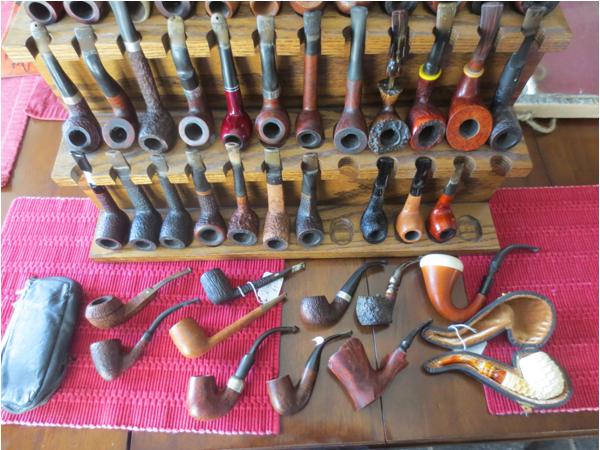
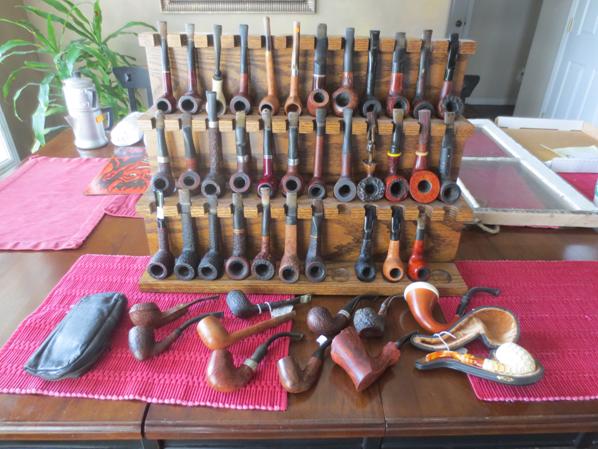
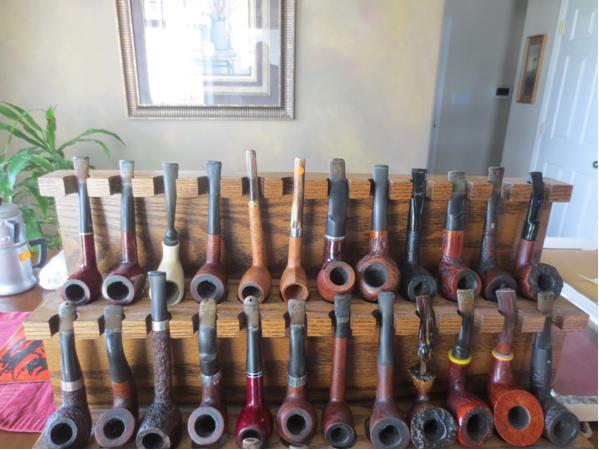
As I looked over the pipes I felt like we had hit the jackpot with this lot. I spent a lot of time talking with him as I went through the pipes he had displayed for sale. I mentally catalogued the ones on the rack. There were 7 Savinellis, 6 Petersons (2 shape 999 one of my favourites), 2 Bjarne pipes, 2 Nordings, 1 Dunhill Shell, 4 Italian Corsena pipes, a Castleford, two older horn stemmed pipes, a Tracy Mincer author, a Jobey Asti,a Dutch made ceramic double walled Dublin, a Stanwell 63 and a Lane billiard. I looked through the others and as I picked them up he would get a sentimental look on his face and remove those from sale. There were a lot of pipes for sale in that lot. He kept repeating that he was a motivated seller. While I was fiddling at choosing a bunch to take with me, Jeff asked him what he wanted for the lot. He stalled a bit but finely gave us a price for the rack and the pipes that were on it. We dickered a bit and he threw in a Gourd Calabash for my brother. We made a deal and added 35 more pipes to the days finds along with a solid oak three tiered 36 pipe rack. I also picked up a tin of GLP’s Blackpoint and a sealed package of Esoterics’ Peacehaven (a pleasant mix of 6 Virginia tobaccos).

We loaded our bounty in the car and bid the old pipeman farewell. He hinted at the fact that he had many more pipes that he would be selling in the near future so I am sure we will one day go back for another visit. We had a bit of lunch and made our way back to the hospital. All in all it was one of those amazing days. We came home with 35 pipes (several that were unsmoked), a pipe pouch and an oak pipe rack. My brother has been hunting pipes for a while now and we both knew that this was a rare find that we had stumbled upon – we got to cherry pick a pipeman’s estate and bring home some of his old pipes. It was a mixed lot but there were more than enough really nice pipes in it to make it a worthwhile purchase. Besides that we got to meet a nice older pipeman who was thrilled that his pipes were going to someone who obviously loved pipes as much as he did.

Oh, I almost forgot. When he had his shop I used to stop by there on the way to visit my mom and dad. I stopped and bought pipe tobacco and cleaning supplies from him over the years. When we walked in his front door he remembered me and I remembered him. That was the icing on the cake for me. He had closed his shop several years before and I had lost touch with him. It was a very good day pipe hunting.

When we got back to my brother’s house I set up the pipes and took the following photos of the haul. You can see the amazing pipes that we found. The first photo shows the rack and the finds in their entirety.Hunt1The next photos I tried to get some closer pictures. The first one below shows rows 1 and 2 of the rack. The second one shows rows 2 and 3. The third photo shows the pipes on the table in front of the rack. I put the Peterson stem I had brought along in the Peterson bowl I found. See if you can identify the pipes in the rack and on the table. What do you think of the results of our hunt? I am still pretty pumped by the find and had to share it with folks who understand what it feels like to make this kind of find. Thanks for looking.Hunt2 Hunt3 Hunt4
Restoring a WDC Milano Hesson Guard


Blog by Bill Hein

I received an email from Al Jones saying that Bill had contacted him about contributing to rebornpipes. I contacted Bill and received a great email and this write up on a WDC pipe he recently restored. It is a great write up and a great restoration.  It is a pleasure to have Bill write for us and share his work with us. I for one never tire of reading about the work each of the contributors do and always find  I learn something from you. Thanks Bill for your work. Welcome to rebornpipes.

Today I’m working on a WDC Milano Hesson Guard. This pipe is stamped with the words Grainy Briar and stamped patented Dec.22 1925. Through a quick google search I found a patent date of 1932 for the Hesson Guard models so this pipe must have been made between 1925-1932.

When this pipe came to me it had some deep tooth indents in the stem and a rounded over rim. I started out by reaming the bowl and giving it the salt and alcohol treatment. While the bowl was soaking I put the stem in an oxiclean bath. After about a 4 hour soak I knocked the salt out of the bowl and gave it a good rinse. I removed the stem from the oxiclean bath and rinsed it as well. I let both dry overnight.

With the stem and the bowl dry I started sanding down the tooth marks on the stem. I applied heat with a soft flame lighter and used 500 grit wet sandpaper to remove the marks. These pipes have a pretty thick stem so I wasn’t worried about sanding away at them. I then sanded the stem with 1500 grit sandpaper. With the outside of the stem in much better condition, I proceeded to run alcohol soaked pipe cleaners through the stem until they came out clean. This pipe has a long metal stinger which I cleaned by sanding with 500 grit paper.


With the stem finished I took the bowl over to my belt sander and topped it off. I was able to sand it back to be flat without removing too much briar. I used a walnut stain pen to restain the rim .

With the rim topped and re-stained I reassembled the pipe and took it over to my buffer. For the bowl I buffed on 3 coats of carnauba wax, buffing with a soft wheel and microfiber cloth between each coat. For the stem I first buffed it with brown tripoli, followed by carnauba wax.

Here is the finished pipe.

Kaywoodie “Handmade” Supergrain Bulldog Restoration


By Al Jones

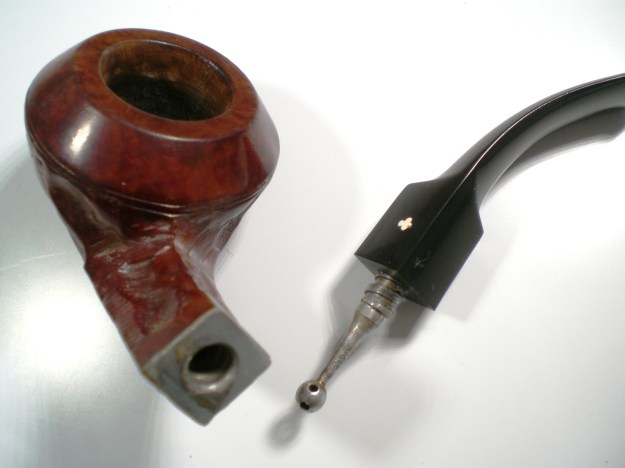
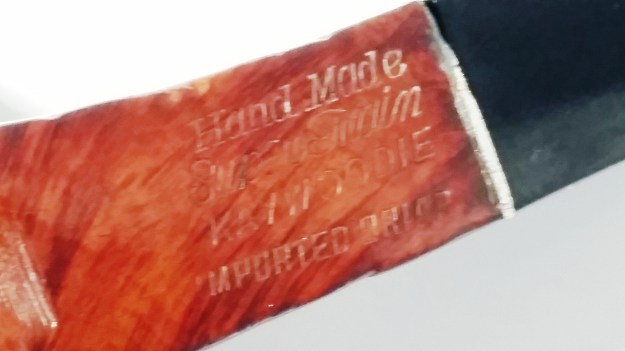
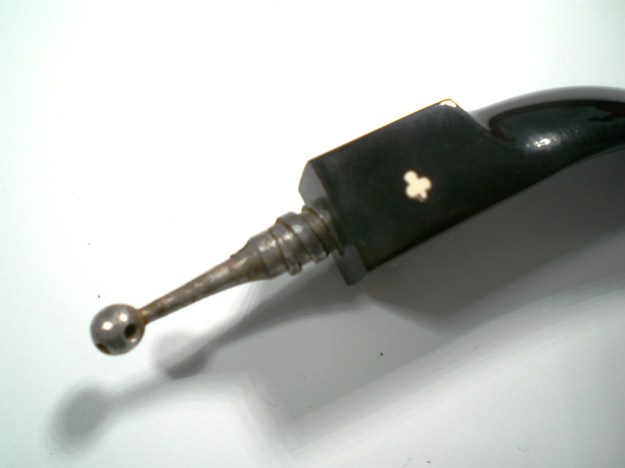
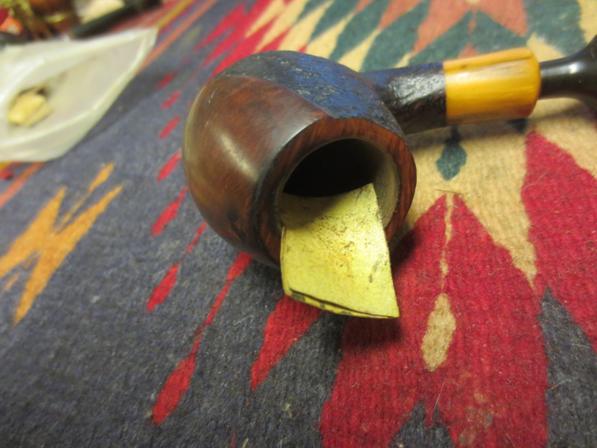
I have worked on a few Kaywoodie “Handmade” stamped pipes in the past, but I don’t recall any also having the Supergrain stamping. This one came via eBay and the sellers photos showed it was in good condition save for the stinger. The stinger had been removed from the threaded vulcanite stem and was stuck in the mortise insert. Here is the pipe as it was received with the last picture showing the frozen stinger.
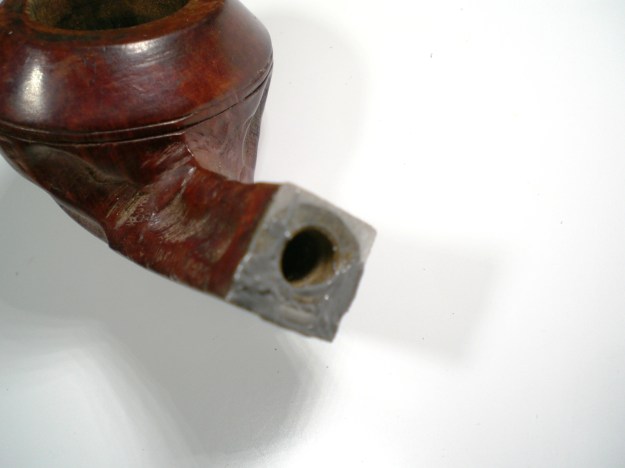
During the restoration, I was pleased to find the four hole stinger intact and with “Drinkless” visible. There is also a remnant of a number under that stamp. The four hole stinger was eliminated in the early 50’s. The ball on this one is smaller,so I estimate it to be from the late 40’s.

Kaywoodie_SG_Handmade_Before (1)

Kaywoodie_SG_Handmade_Before (2)

Kaywoodie_SG_Handmade_Before (3)

Kaywoodie_SG_Handmade_Before (4)

Kaywoodie_SG_Handmade_Before (8)

I reamed the bowl, which was in great condition. I plugged the end of the protruding stinger and filled the bowl with alcohol. After several hours of soaking, I was able to get the stinger to budge. Unfortunately, when it came out, a piece of the thin insert broke off on the outer edge. I used some JB weld to reattach it and filed it smooth. I think the repair will outlast the pipe.

Kaywoodie_SG_Handmade_Before (6)

I screwed the stinger back into the stem and secured it with some wood glue. It took me a few minutes to get it orientated correctly.

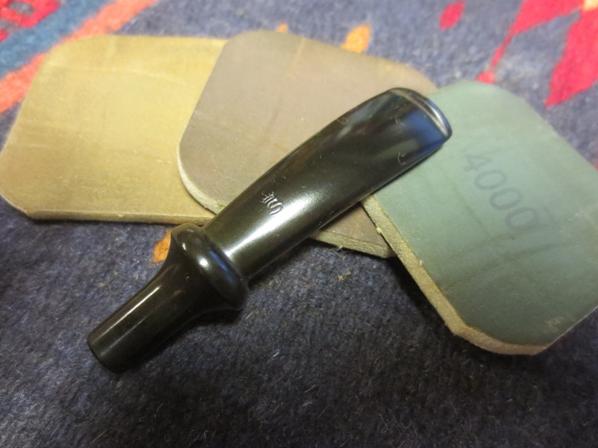
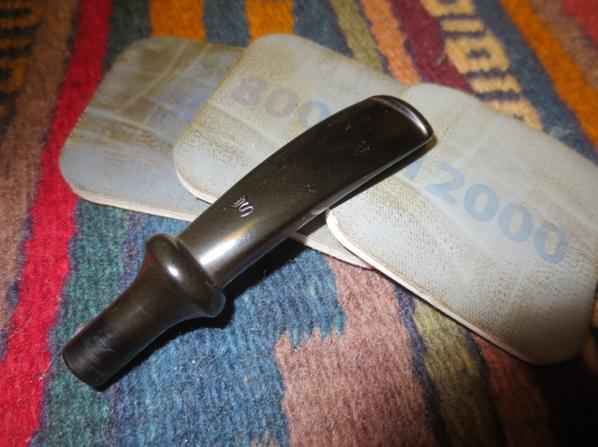
The stem was in terrific shape, with just some mild oxidation. So, I started with 800 grit, progressing thru 1500 and 2000. I then used 8000 and 12000 micromesh paper. The stem was then mounted onto the briar and buffed lightly with White Diamond and then several coats of Carnuba wax.

Here is the finished pipe.

Kaywoodie_SG_Handmade (1)

Kaywoodie_SG_Handmade (4)

Kaywoodie_SG_Handmade (2)

Kaywoodie_SG_Handmade (5)

Kaywoodie_SG_Handmade (12)

Kaywoodie_SG_Handmade (11)

Kaywoodie_SG_Handmade (6)

Kaywoodie_SG_Handmade (10)

?

?

Kaywoodie_SG_Handmade (9)

Kaywoodie_SG_Handmade (1)

Fixing Two Common Stem Fit Issues


Charles work on these two are exemplary of work on these older Canadian made Brighams

Charles Lemon's avatar

I had a pair of Brigham pipes sent to me for some work, a 2-Dot Sportsman model bulldog and a 318 billiard. The owner had found the pipes in a local antique shop. The price was right but the pipes had a few issues to contend with, most notably stem fit.

The pipe stems were original as far as I could tell, but both suffered from opposite fit problems – the stem on the 318 was loose enough to fall out, and the bulldog’s stem seemed to be glued into the mortise. I had been asked to address the stem issues and give the pipes a general cleanup in the process.

Here’s how the pipes looked on arrival. They were pretty clean on the outside, and the 318 had been cleaned internally as well. I’d have to get the stem off the bulldog before any real internal cleaning could take…

View original post 733 more words

An Interesting Multi-Finish Stanwell Buffalo Sitter 606


Blog by Steve Laug

This pipe came to me in the last box of pipes that my brother sent me. It is a Stanwell as can be seen from the shape and finish. From my research I came to understand that it came from the Stanwell Buffalo line. It is stamped on the smooth underside of the shank with the words Stanwell Made in Denmark and the shape number 606. The shape number is very visible and I was unable to locate that number on the internet shape charts.The front of the bowl was smooth and there was an acrylic horn-like material as a shank extension. The bowl had a light cake and looked as if it had been reamed recently. The rim of the pipe was really dirty with lava overflow from the bowl but underneath I could see that it was originally smooth like the front of the bowl and the portion where the stamping was on the underside of the shank. There was some burn damage on the outer and the inner edges of the rim that would need to be addressed. The pipe was a mix of medium and dark brown stains and the finish had a light sand blast on the surface of the sides, back and bottom of the bowl and the top and sides of the shank. The finish was dirty with lots of grime in the grain of the blast. The stem is a military style stick bit. The stem was in good shape with only one tooth mark on the underside toward the right side of the pipe. The fit in the shank was snug. The stamping on the stem showed the Stanwell Crown and S and it was faint but visible.Buff1 Buff2 Buff3 Buff4I took a close up photo of the rim to show the state of things when I started. You can see the buildup on the surface and the burn damage on the front inner edge of the rim.Buff5I cleaned up the reaming with the Savinelli Pipe Knife and then cleaned out the internals of the bowl, shank, mortise and airway in the stem. I used pipe cleaners, cotton swabs and alcohol to remove all of the oils.Buff6 Buff7I scrubbed the stem with Meguiar’s Scratch X2.0 plastic polish to remove the oxidation. I sanded the tooth marks on the underside of the stem with 220 grit sandpaper until the stem was smooth.Buff8 Buff9I lightly topped the bowl on the topping board. I wanted to remove the damaged surface and clean up rim edges. I also wanted to expose the burn marks so that I could address them.Buff10I sanded the rim top with 1500-2400 grit micromesh sanding pads to smooth out the scratching. I then stained it with a medium brown stain pen to match the smooth portions of the pipe. You can see the burn damage on the inside edge of the front of the bowl.Buff11I folded a piece of sandpaper and worked on beveling the inside edge all the way around the bowl to minimize the damaged area on the right front edge. While the damage is still visible it is much more subtle than it was before the beveling.Buff12 Buff13I set the bowl aside and worked on the stem. I sanded it with 220 grit sandpaper to clean up some of the oxidation and then worked on it with micromesh sanding pads. I wet sanded the stem with 1500-2400 grit sanding pads and then rubbed the stem down with Obsidian Oil. I dry sanded with 3200-4000 grit pads and gave it another coat of oil. I finished sanding with 6000-12000 grit pads and gave it a final coat of oil. I set it aside to dry.Buff14 Buff15 Buff16I buffed the pipe with Blue Diamond (lightly on the bowl except for the smooth areas and the rim top and more concentrated on the stem). I gave the stem several coats of carnauba wax and buffed with a clean buffing pad. I hand waxed the bowl with Conservator’s Wax. I hand buffed the bowl with a shoe brush. I finished buffing the pipe with a microfiber cloth. The finished pipe is shown in the photos below. I am still debating rusticating the rim to match the bowl and stain it darker to blend with the sandblast but not sure… time will tell. Thanks for looking.Buff17 Buff18 Buff19 Buff20 Buff21 Buff22 Buff23

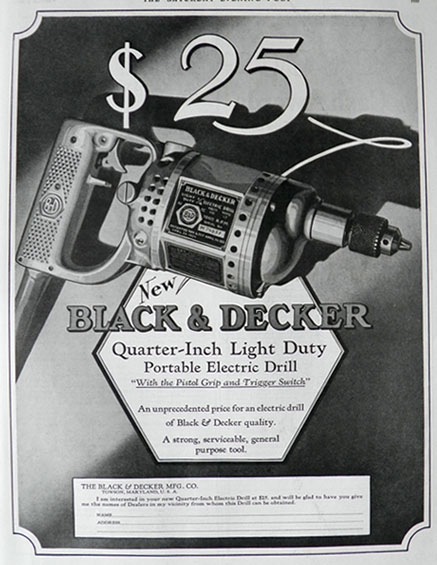
Preserving a Black & Decker poker


Troy I love these old time advertising pokers. You did a great job on that one!

Troy W's avatarBaccy Pipes

I know what you are thinking  and , yes that Black & Decker.

black.jpg

Its old advertising pipe given away by company’s to promote their products. This is my third advertising poker ( ill show pics of the other two and end of post ). From the style of the stem they all date from roughly 1920’s to early 1930’s . I have seen only one other Black & Decker advertising poker . It was the same time i won my other two on auction . The bids were pretty high so i passed on it so i could make reasonable bids on the other two. My other’s were made by and stamped LHS. I suspect this one is too even though its not stamped by a maker as its identical in size and style as them.

I stumbled on this one in a online vintage store for really cheap but…

View original post 795 more words

A Falcon Dual Pipe Reamer – A Great Addition to my Reamer Collection


Blog by Steve Laug

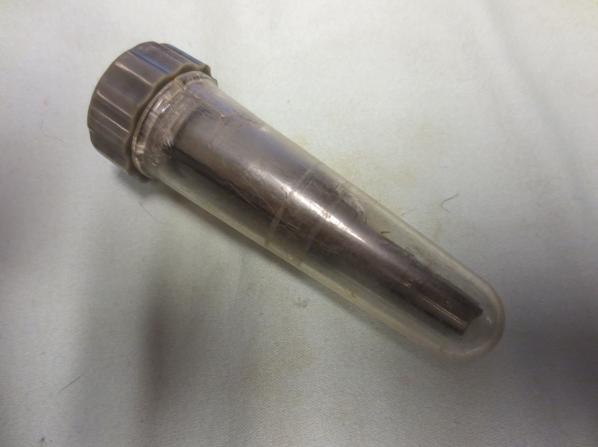
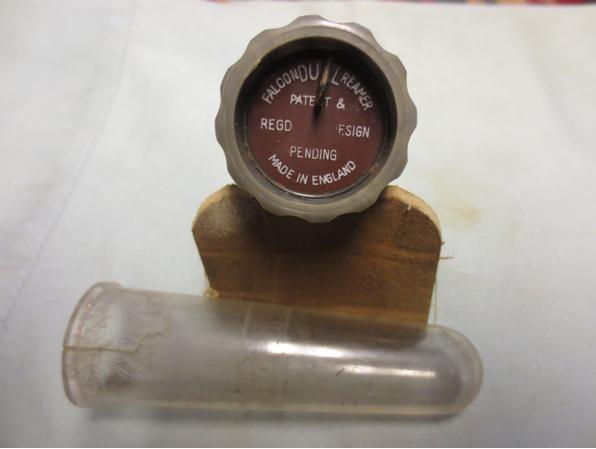
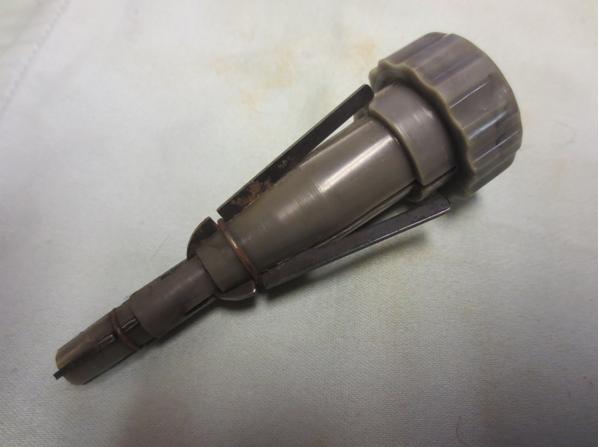
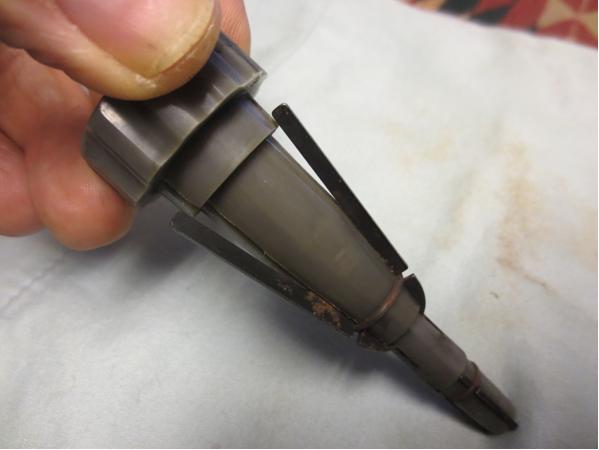
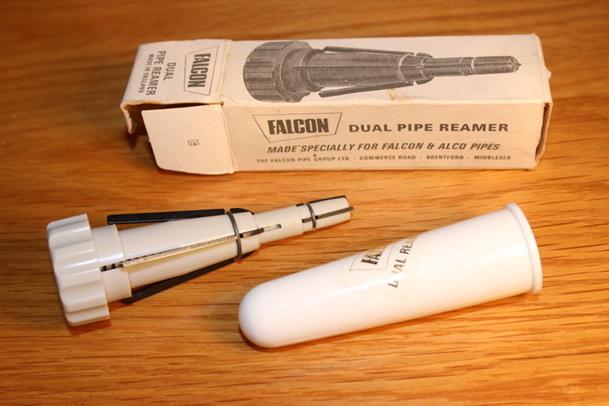
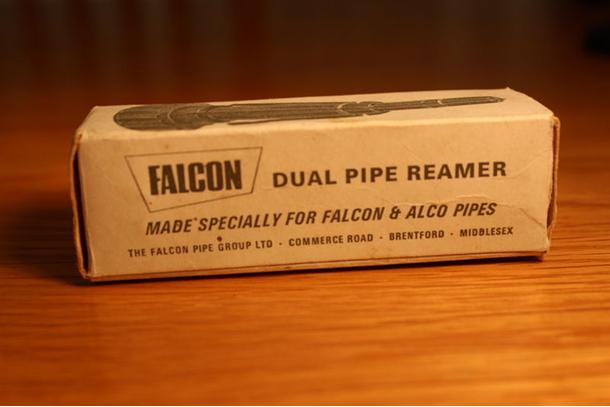
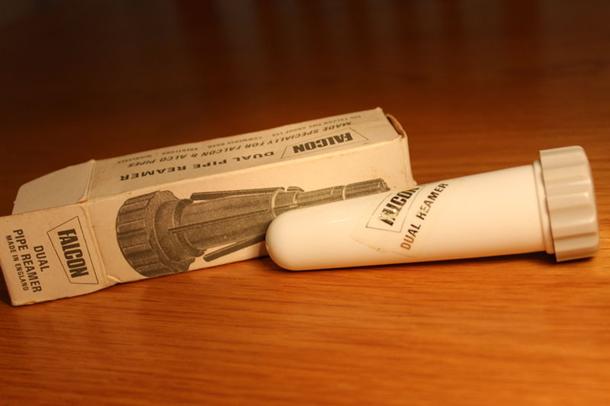
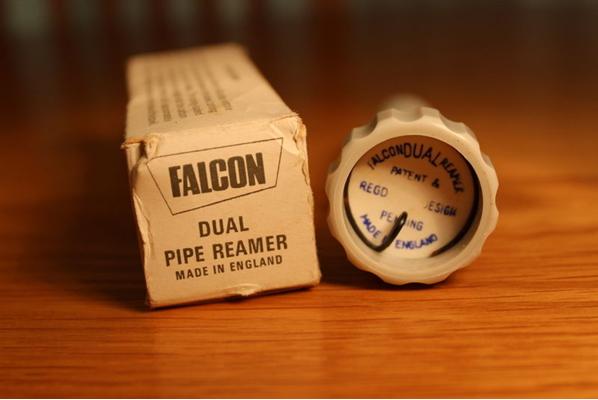
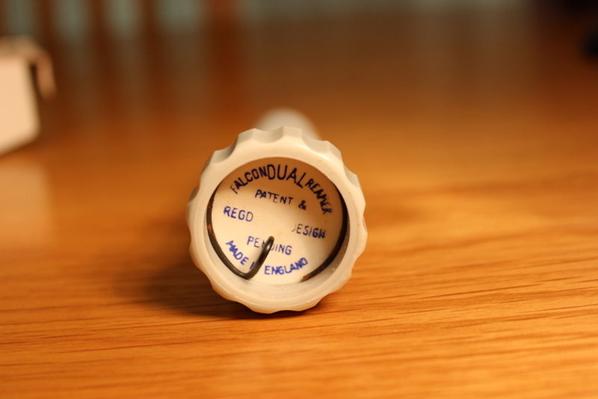
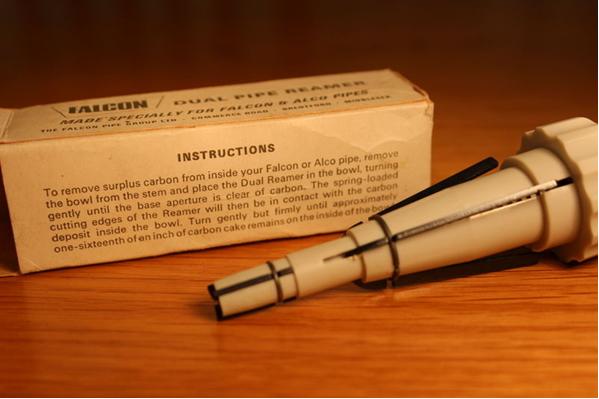
For a long time now I have had an eye out for a Falcon Dual Pipe Reamer. I have bid on several and lost every time in the last seconds to a sniper. This time I avoided the auction and bought it on Facebook from pipesmoker in England. I paid for it and promptly forgot about – things have been so busy around here that I did not think about it again. This afternoon when I got home from work Bob’s package was waiting for me. I cut the tape on the envelope and a small cardboard shipping tube was inside. I turned the top of the tube off and took out the bubble wrapped piece that was inside. I removed the bubble wrap and the reamer was in my hands. The photo below shows the reamer as it was when I removed it from its packaging.Dual1I twisted the top or cap on the clear plastic case and looked at the end cap of the reamer. It was really clear and readable. There was the end of a spring poking through the top on the insert of the cap.Dual2The cutting blades of the reamer were spring-loaded and as I removed the tool from the plastic cover the blades expanded. The next two photos show the blades expanded to the shape of a Falcon bowl.Dual3 Dual4This was a unique reamer that I had read about but I had never seen up close. Now I had one in hand. I wanted to understand how it worked and get some idea if there were originally instructions that came with the reamer. So I did a bit of hunting on the internet to see if I could find any packaging or leaflets. I was not surprised to find a lot of photos of reamers that came in a variety of colours from cream to black. There were no photos of the battle ship grey one that I had in hand. I did find a few photos of the box the reamer came in. The reamer in the photo differs from mine only in colour. But the box is what intrigued me. On the cover was a picture of the reamer with cutting blades on the lower nose of the tool that fit in the hole in the bottom of the Falcon or Alco bowl. The upper blades angle the same way that the inner walls of the bowl do. With both sets of blades the bowl and airway are reamed simultaneously. The left side reads Falcon Dual Pipe Reamer and under that it says Made Specially For Falcon & Alco Pipes. The lower line reads The Falcon Pipe Group LTD – Commerce Road – Brentford – Middlesex.Dual5 Dual6 Dual7The end of the box reads Falcon Dual Reamer Made in England. The end of the reamer in the photo below has the same insert as the one I received. It reads Falcon Dual Reamer arced over Patent & Regd. Design Pending Made in England.Dual8 Dual9On another side of the box there are instructions for using the reamer. I know that you can probably read it for yourself but I could not help myself from wanting to include the text here. It reads:

Instructions
To remove surplus carbon from inside your Falcon or Alco pipe, remove the bowl from the stem and place the Dual Reamer in the bowl, turning gently until the base aperture is clear of carbon. The spring-loaded cutting edges of the Reamer will then be in contact with the carbon deposit inside the bowl. Turn gently but firmly until approximately one-sixteenth of an inch of carbon cake remains on the inside of the bowl.Dual10Now I not only have a Falcon Dual Pipe Reamer but I have photos of the box with instructions for proper used of the tool. Thanks Bob for this addition to my collection of reamers. It makes a great looking piece in the centre of all of my other reamers.

KB&B Yello-Bole Four Pipe Lot


Like Troy I really like the old Yello-Bole pipes. These are a good representation of some of the older one. Well done Troy!

Troy W's avatarBaccy Pipes

Got this lot off Ebay a short time back and finally got them finished.

s-l1600.jpgs-l1600 (1).jpg

All were in pretty good shape and just needed some basic cleaning,buff ,wax and stem sanding  .No major repairs.

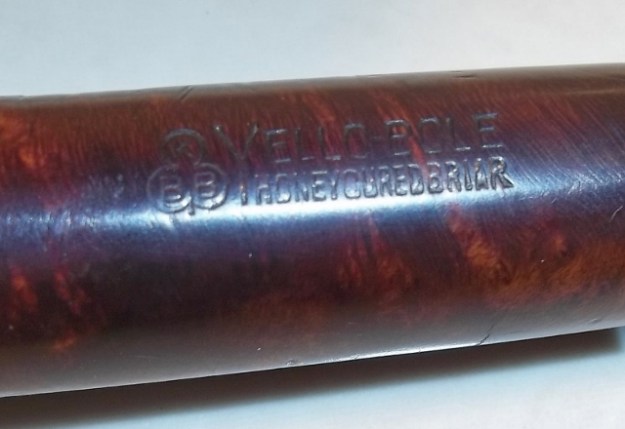
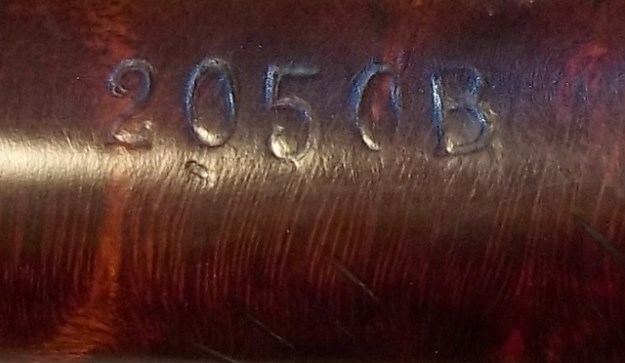
Pipe #1  KB&B  1930’s Yello -Bole #2050B bulldog

I did have to clean this one pretty good and steam out as many dings as i could. The stinger was stuck bad and completely stopped up.100_9361 (640x480).jpg100_9363 (640x480).jpg100_9364 (640x480).jpg100_9365 (640x480).jpg100_9366 (640x480).jpg100_9367 (640x480).jpg100_9376 (640x480).jpg

Even though I’m not much on bulldog shapes this is a first year#2050B model and its a fine smoker, so its still a pretty neat pipe to me.

50B Medium bulldog, round shank   1936-1972

Since the pipe is stamped “Honey Cured Briar” and after 1936 they went to “Cured With Real Honey” this means it can only  be a year 1936 pipe.
1.jpg2.jpg

Also found a  P stamped on bottom of bowl…..no idea what it means.
3.jpg

Pipe #2  KB&B Yello-Bole Rusticated Billiard…

View original post 117 more words

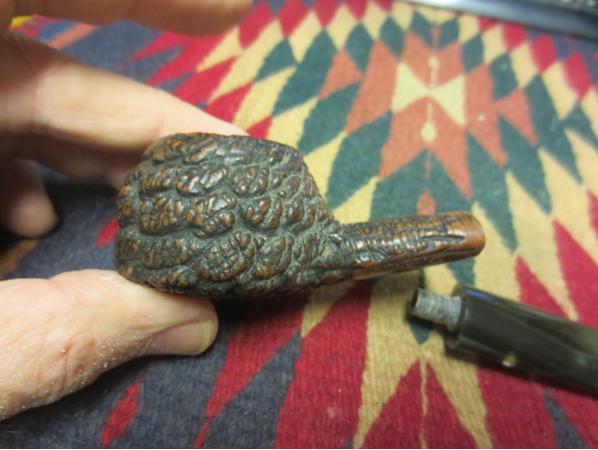
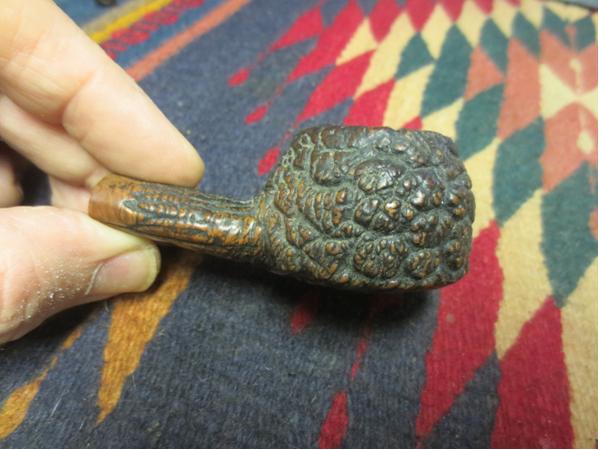
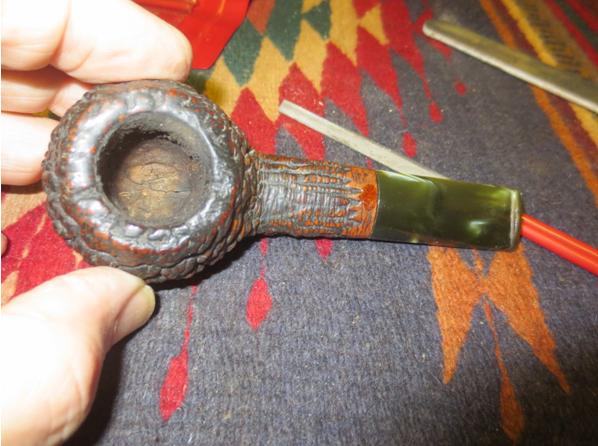
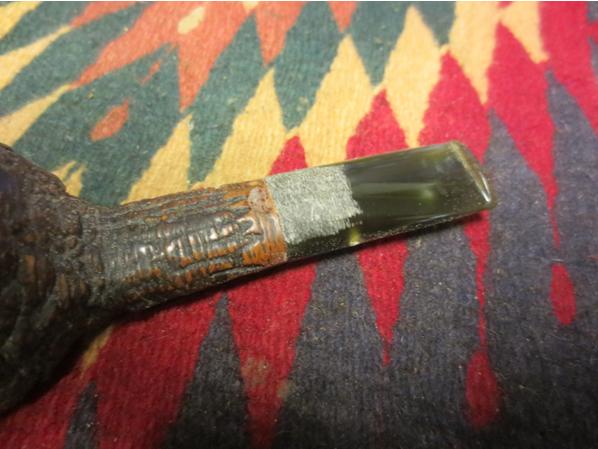
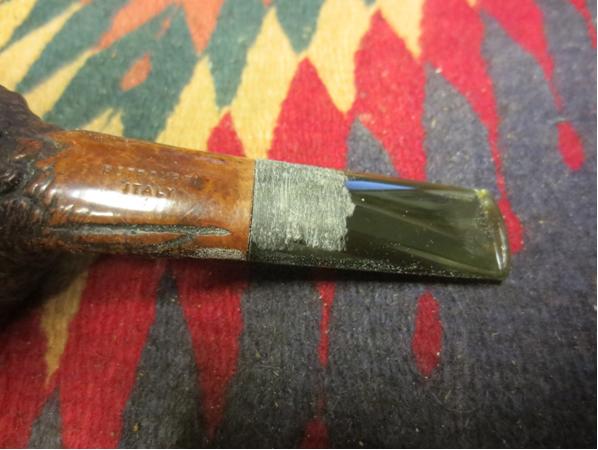
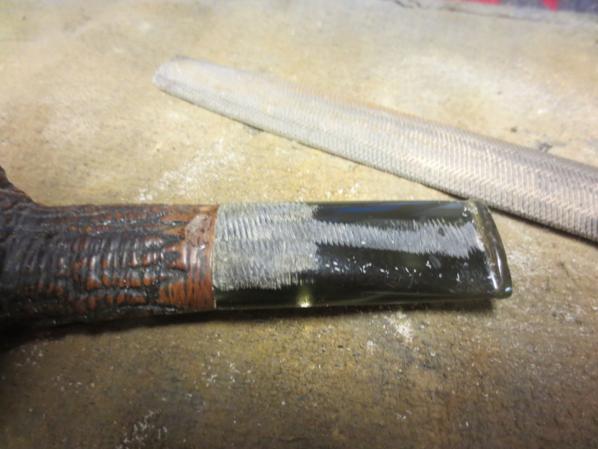
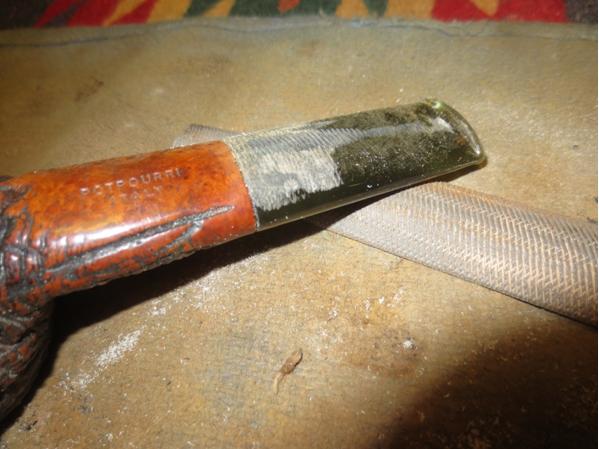
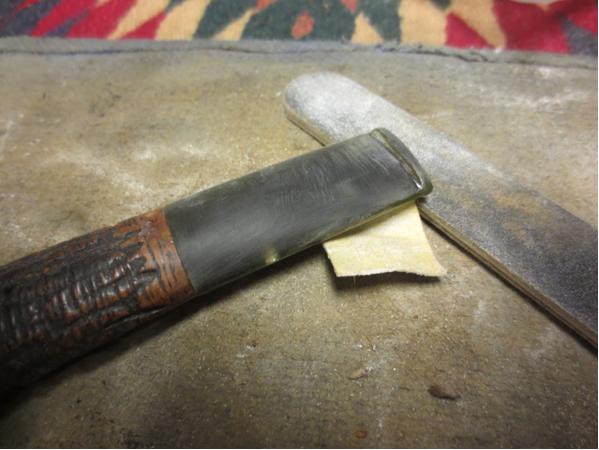
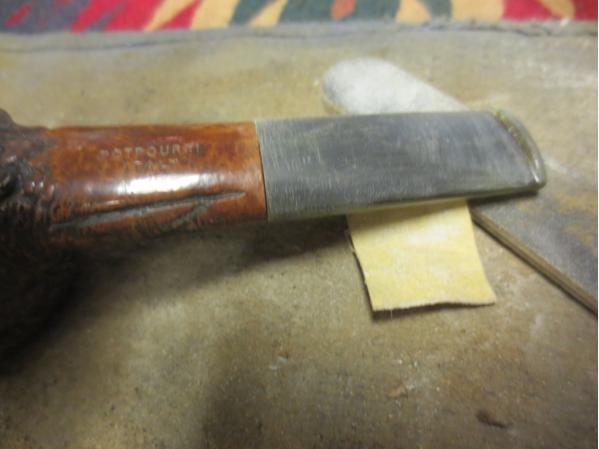
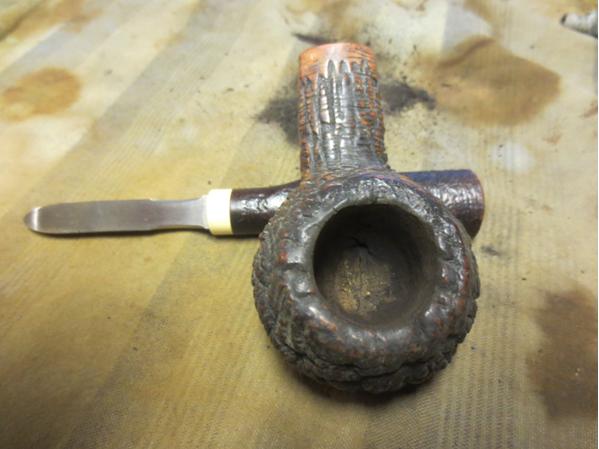
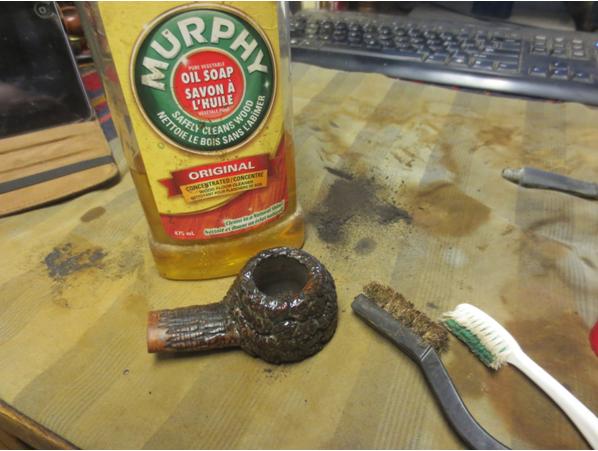
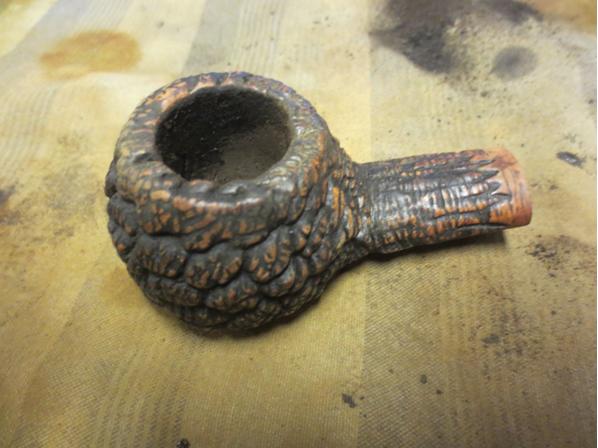
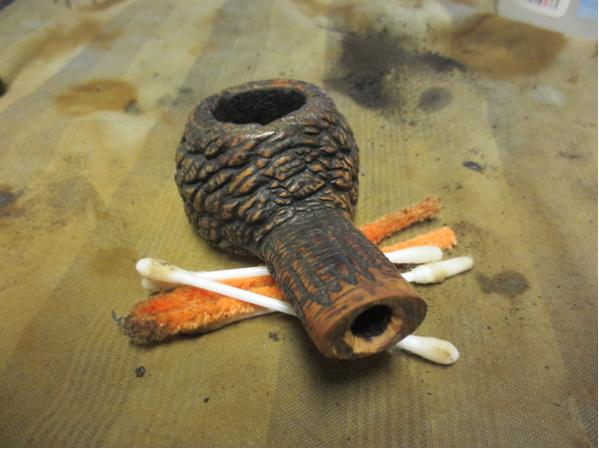
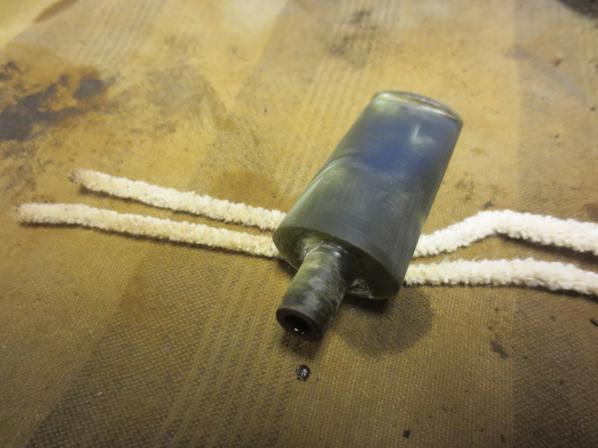
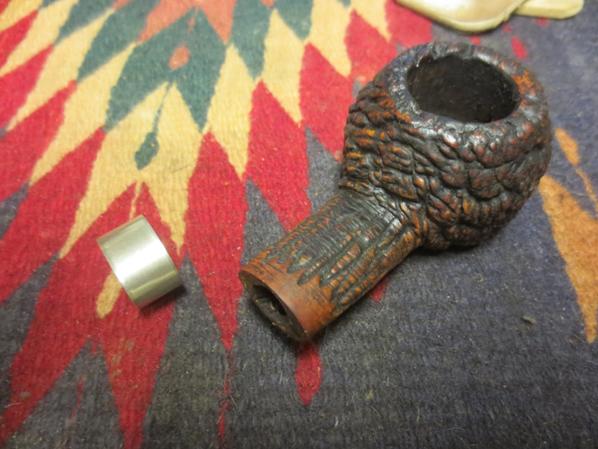
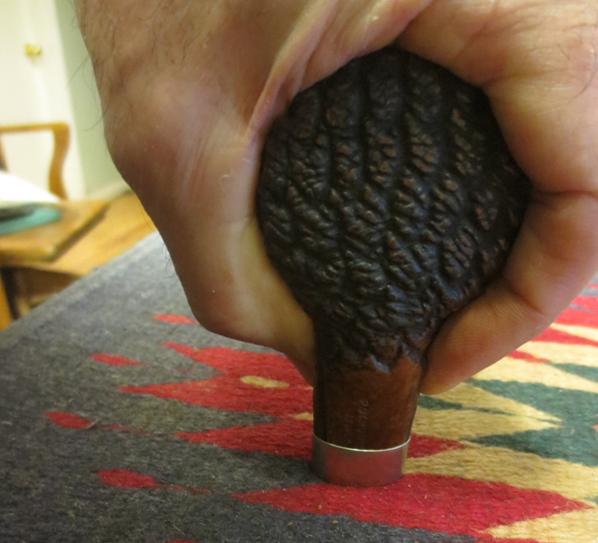
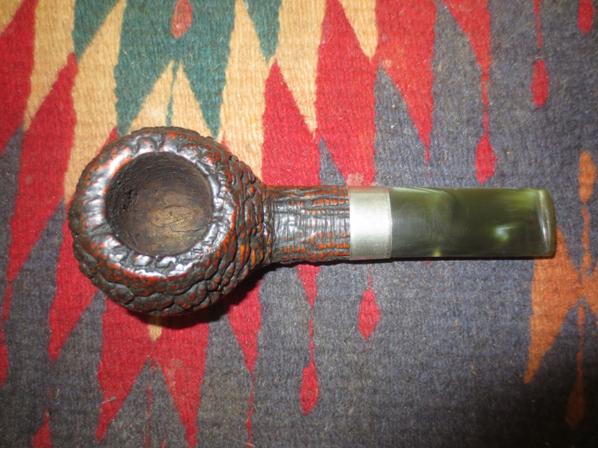
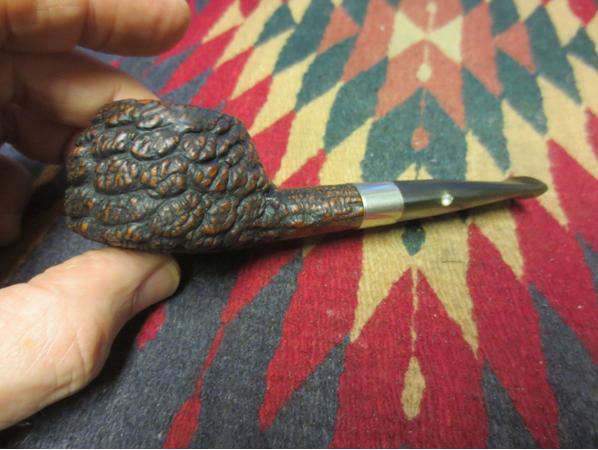
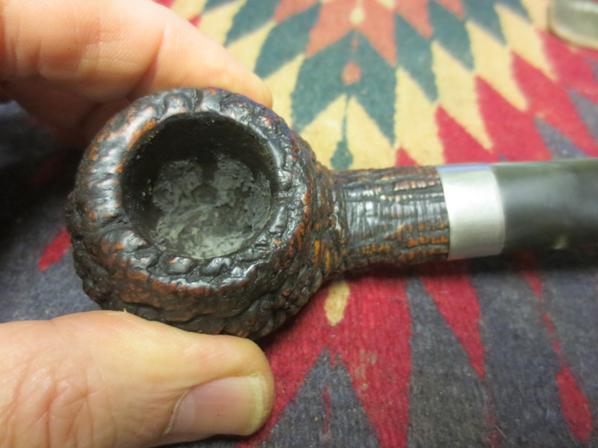
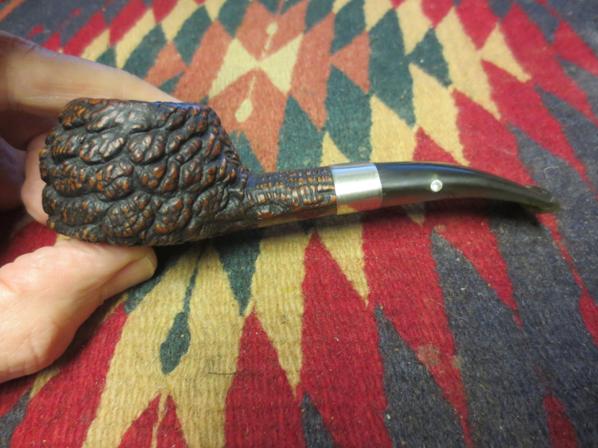
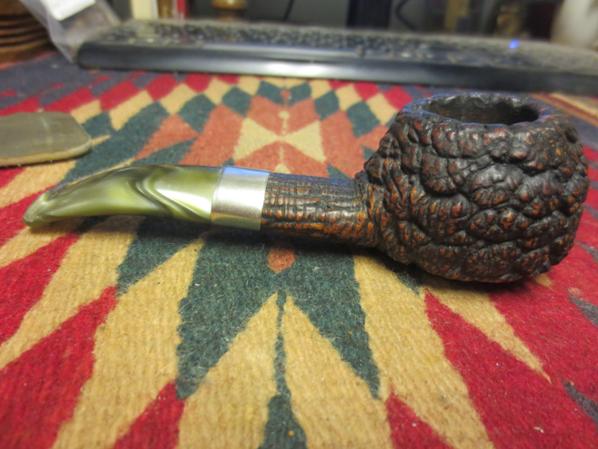
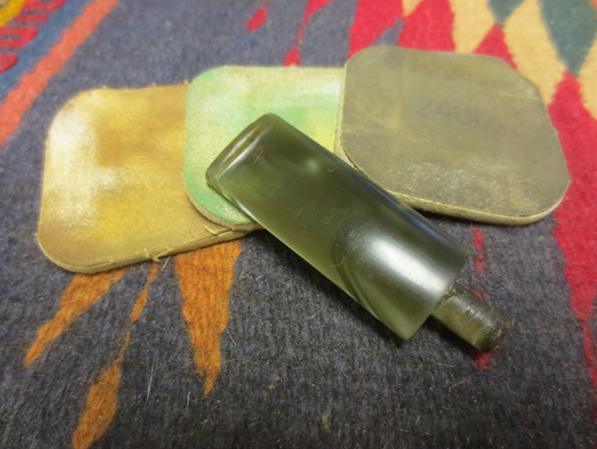
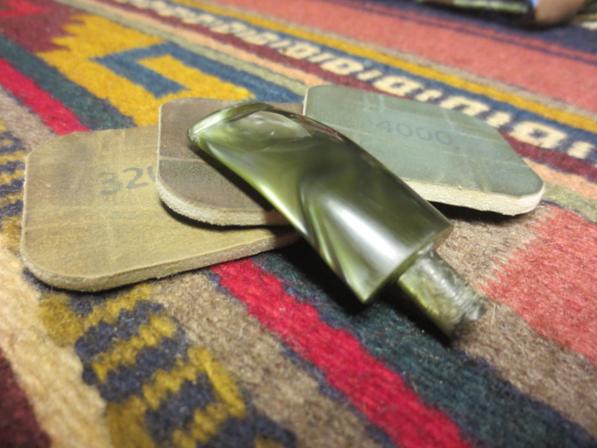
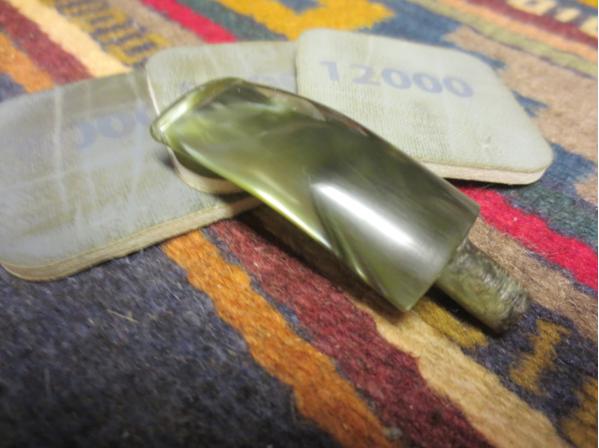
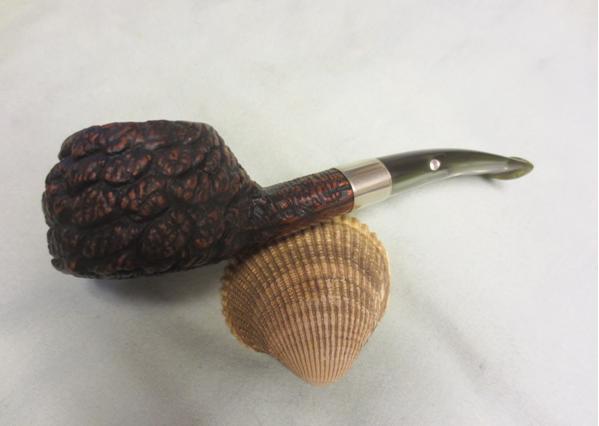
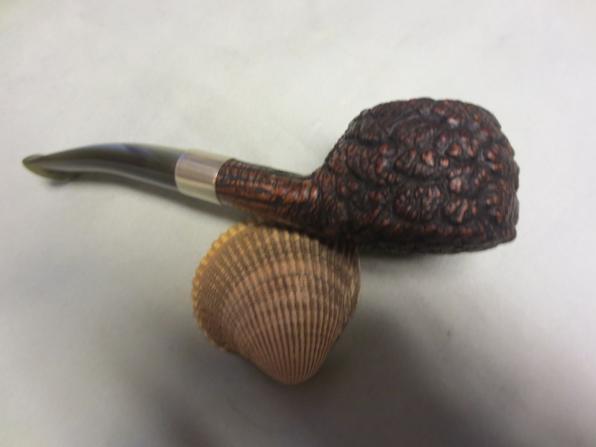
Restemming and Restoring a Potpouri Author


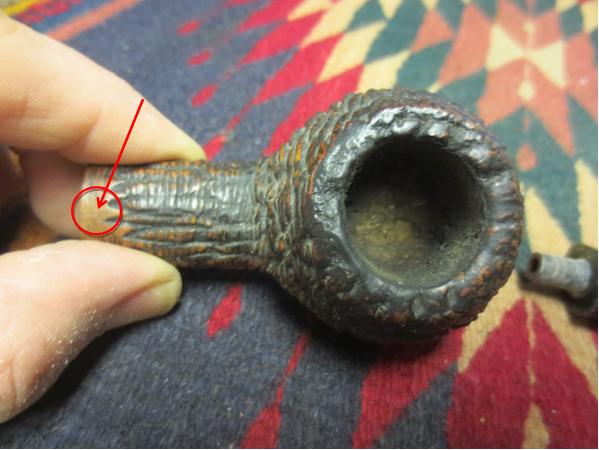
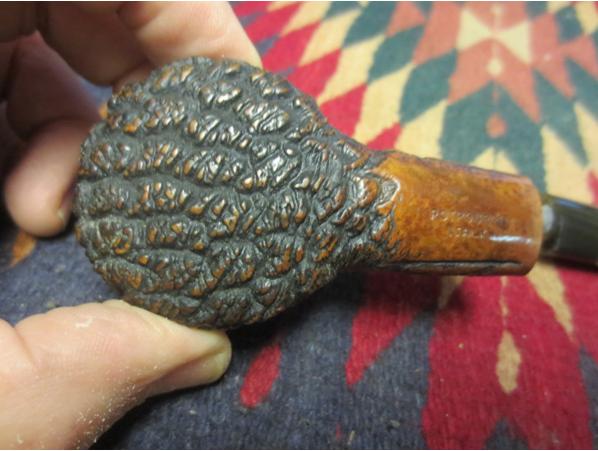
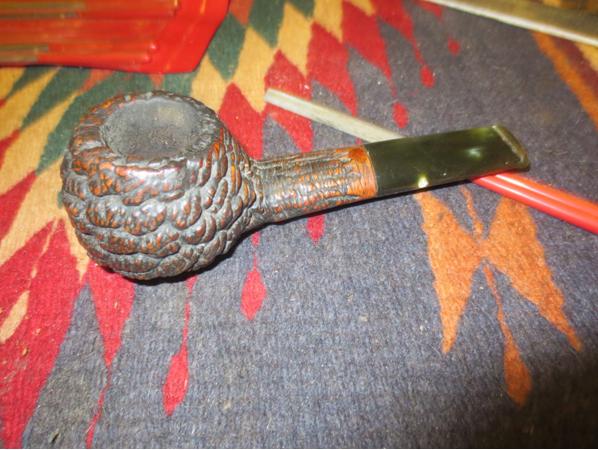
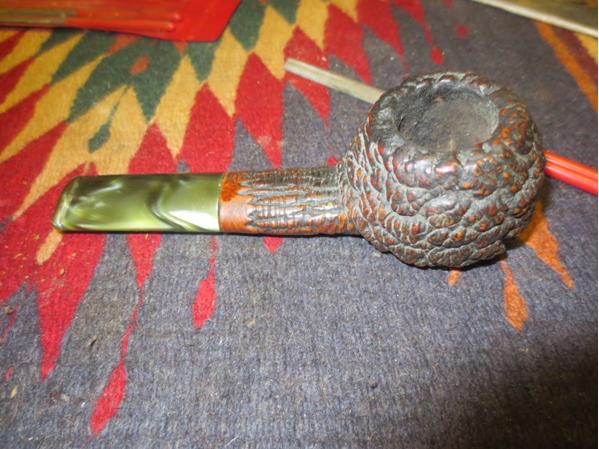
Blog by Steve Laug

I have a growing box of bowls that came to me without stems. It seems each time I clean it out and restem the pipes I inherit more of them. This is not a complaint as I actually enjoy restemming pipe bowls. It is always a challenge to get a new stem to align properly with the shank and to deal with cracks or damages to the bowl or the shank. This bowl came to me and I immediately fell for the rustic rocklike features of the rustication. It was gnarled and rough looking and felt great in the hand. The bowl was dirty and the deep grooves of the rustication had a lot of dirt and grime build up in them. The rim was caked and the rustication pretty much filled in the grooves making the rim surface smooth. The bowl had a rough cake in it and looked as if someone had started reaming the bowl but did not finish. There were some small fissures like cracks in the sides of the bowl near the entrance of the airway and on the bottom and the top of the airway. Someone had cleaned out the shank so it was not too dirty. There was a small crack on the top of the shank that was about 1/8 long. I could open it slightly with a wedge so it would need to be glued and banded. The pipe showed a lot of promise though and I could see it come alive if I had the correct stem for it.Pot1 Pot2In the photo below there is a small crack barely visible in the middle of the shank end between my fingers. I have circled it with red to focus your eye on it. The tip of the red arrow is on top of the crack in the shank. It extends about 1/8 to ¼ inch.Pot3 Pot4I took a close-up photo of the bowl and rim to give you an idea of the state of things when I started. It is hard to see but at this point I could see some small cracks around the entrance of the airway to the bowl.Pot5I went through my can of stems and found a green acrylic stem that would do the trick on this pipe. It would go well with the rustication and the length and width of the stem would carry through the thickness of the bowl. I sanded the tenon with the Dremel and sanding drum until it was a close fit to the shank. I finished sanding by hand with 220 grit sandpaper. It fit well in terms of the width of the shank but it was slightly thicker on the top and the bottom where it met the shank. I was careful inserting it as I did not want to crack the shank further.Pot6 Pot7 Pot8I used the Dremel and sanding drum to remove much of the excess thickness on the top and the bottom of the stem at the shank junction. I do this carefully with the stem in place in the shank so that I can get it as close as possible without damaging the finish on the shank. You can see in the next two photos that the junction is pretty smooth now and the thickness is almost a match.Pot9 Pot10I finished the fit with a file and took off the remaining thickness that had to go. I also used the file to remove the tooth indentations on both sides of the stem near the button.Pot11 Pot12With the fit nearly perfect it was time to sand out the filing marks and smooth out the stem. I have a medium grit sanding stick that works perfect for this application and I sanded with it until all of the file marks were gone and the transition between the shank and the stem was smooth.Pot13 Pot14With the stem fit roughed in I turned my attention to the bowl and shank. I wanted to have the shank and bowl clean so I could deal with the repairs to the airway in the bowl and the crack on the top of the shank. I reamed the bowl with a PipNet reamer using the largest cutting head. I cleaned up the remaining cake with the Savinelli Pipe Knife.Pot15 Pot16I scrubbed the exterior of the bowl with Murphy’s Oil Soap and a tooth brush on the sides, shank and the bowl of the bowl. I scrubbed the rim with a brass bristle brush until all of the lava that filled the rustication was gone.Pot17I rinsed off the soap with warm water and dried the bowl with a soft towel. The cleaned and reamed pipe is shown in the photo below.Pot18With the bowl reamed and the finish clean I turned to the internals. I cleaned out the mortise and airway into the bowl with pipe cleaners, cotton swabs and alcohol. It did not take too much to clean out the pipe. I cleaned the stem the same way and used a dental pick to clean up the slot in the end of the button.Pot19 Pot20I lightly sanded the crack on the top of the shank and spread it open with a dental pick. I used a tooth pick to push super glue into the crack and then held the crack together until the glue set. Once it was dry I found a round band that had the right circumference to fit the shank and heated it with a lighter and pressed it onto the shank of the pipe.Pot21 Pot22With shank repair complete and the bowl cleaned and ready I put the stem in place in the shank and took some photos of the pipe. I really liked the look of the band breaking up the rustic bowl and the smooth green stem. The band fit perfectly and did not cover the stamping on the underside of the shank. I still needed to sand the stem some more to get a shine but you can see what the pipe will look like at this point. Pot23 Pot24I mixed a batch of pipe mud (cigar ash and water) and used a dental spatula to apply it to the bottom of the bowl. I inserted a pipe cleaner in the airway and used the spatula to apply the mud to the small cracks and fissures around the airway. Once the mud cured the pipe bowl would be in good shape until a new cake was built.Pot25I heated the stem in a cup of water in the microwave until it was pliable and then put a gentle bend in it to give it a more elegant look and comfortable feel.Pot26 Pot27I wet sanded the stem with 1500-2400 grit micromesh sanding pads to remove the scratches. I dry sanded with 3200-4000 grit pads and then finished with 6000-12000 grit pads. I rubbed away the sanding dust with a damp cloth.Pot28 Pot29 Pot30I gave the pipe a light buff with Blue Diamond on the wheel to bring some deep shine to the stem. I then gave the stem several coats of carnauba wax and buffed it with a clean buffing pad. I finished by hand buffing it with a microfibre cloth. The finished pipe is shown in the photos below. The green acrylic stem works well with the rough finish on the bowl. I like the finished look. What do think? Thanks for looking.Pot31 Pot32 Pot33 Pot34