
Blog by Steve Laug
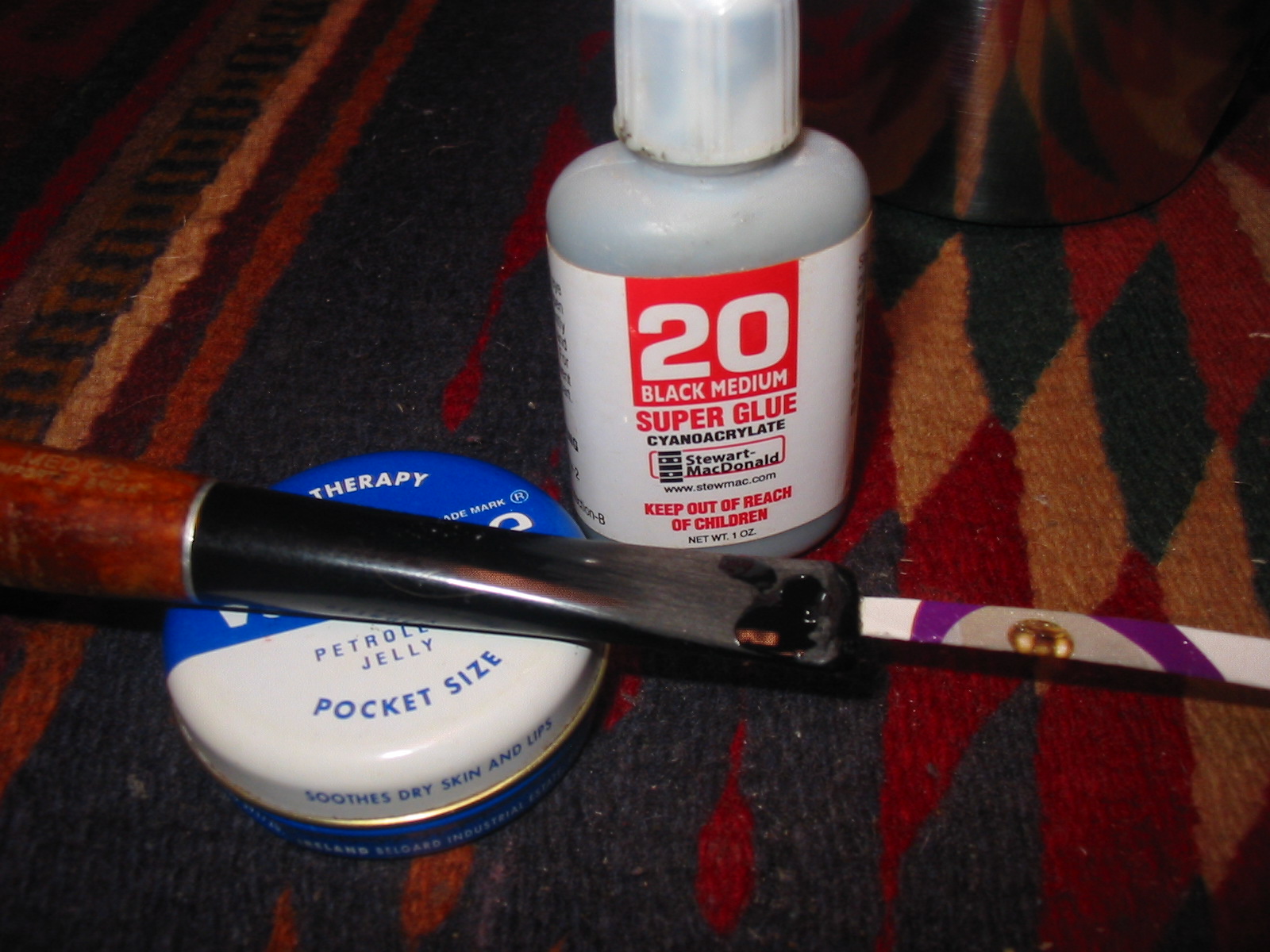
With all of the blog posts recently on repairing stems I decided to do a little work on one I had here. I wanted to use a black superglue and carbon mixture to see what I could do with this seriously damaged stem. It was a Medico pipe stem bearing the stamping F. The F stamping is a Medico brand mark but this stem was a different diameter than the shank of the pipe that it had come attached to so I replaced the stem on that pipe. I was left with this one and almost threw it away because the hole was large and on both sides of the stem. That combined with the fact that the stem was nylon would make it less desirable to repair for me. There were also deep tooth marks all around the holes. But I figured it was a perfect stem to do experiments on so went ahead with the repairs. I sanded the stem with 220 grit sandpaper to highlight the tooth marks and the holes. The button itself had dents in it as well and the crease had been flattened.
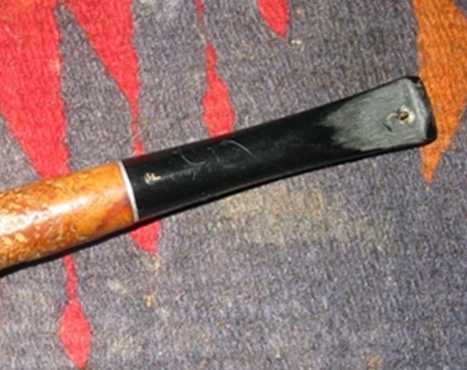
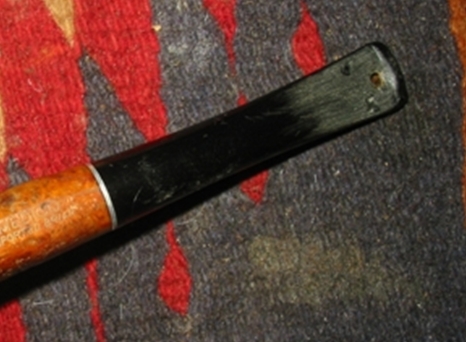
I cleaned out the debris from the hole with a dental pick (rather than the Dremel and bur that Joyal uses) and sanded around the edges of the hole with 220 grit sandpaper. I removed all of the loose or damaged material from the hole so that the edges were solid. I sanded them to roughen the edges slightly to provide a surface for the glue to bond to. I used a cotton pad and alcohol to clean out the dust from sanding and picking. I cut a piece of cardboard the same shape as the slot in the stem and greased it with Vaseline. I slipped it into the slot. I made sure that the Vaseline did not ooze out into the hole on either side.

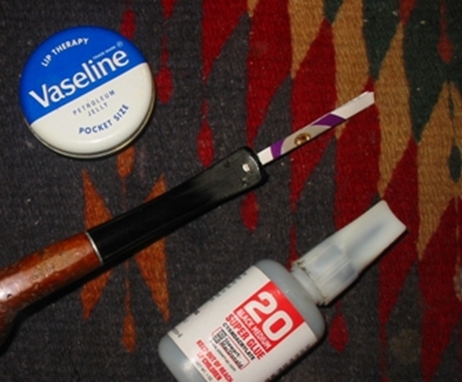
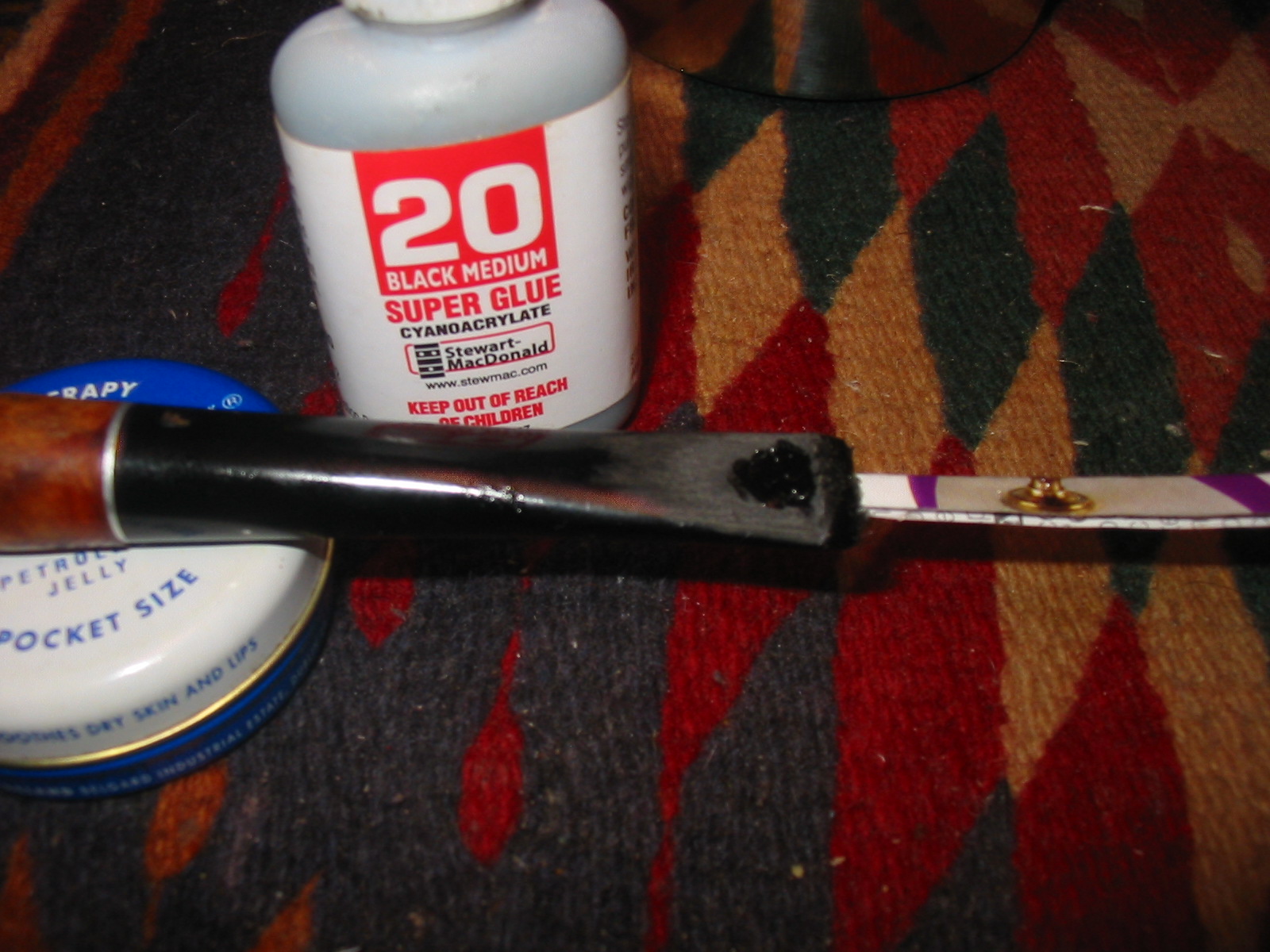
I used Stew Mac Black super glue to build up the edges of the holes. I find that I get a much stronger patch/repair if I slowly build up the patch with multiple layers of the glue. I mixed in some carbon powder taken from a charcoal digestive capsule. I put the glue on the edges of the hole; mixed in the carbon and then more glue more carbon to build the first layer. The next series of four photos show the gradual build up of the glue and carbon. The glue was allowed to cure over night between each layer of the repair. I sanded lightly between the layers to roughen the surface of the patch and smooth out some of the pitting. I find that doing so provides a surface for the new layer to bond to.
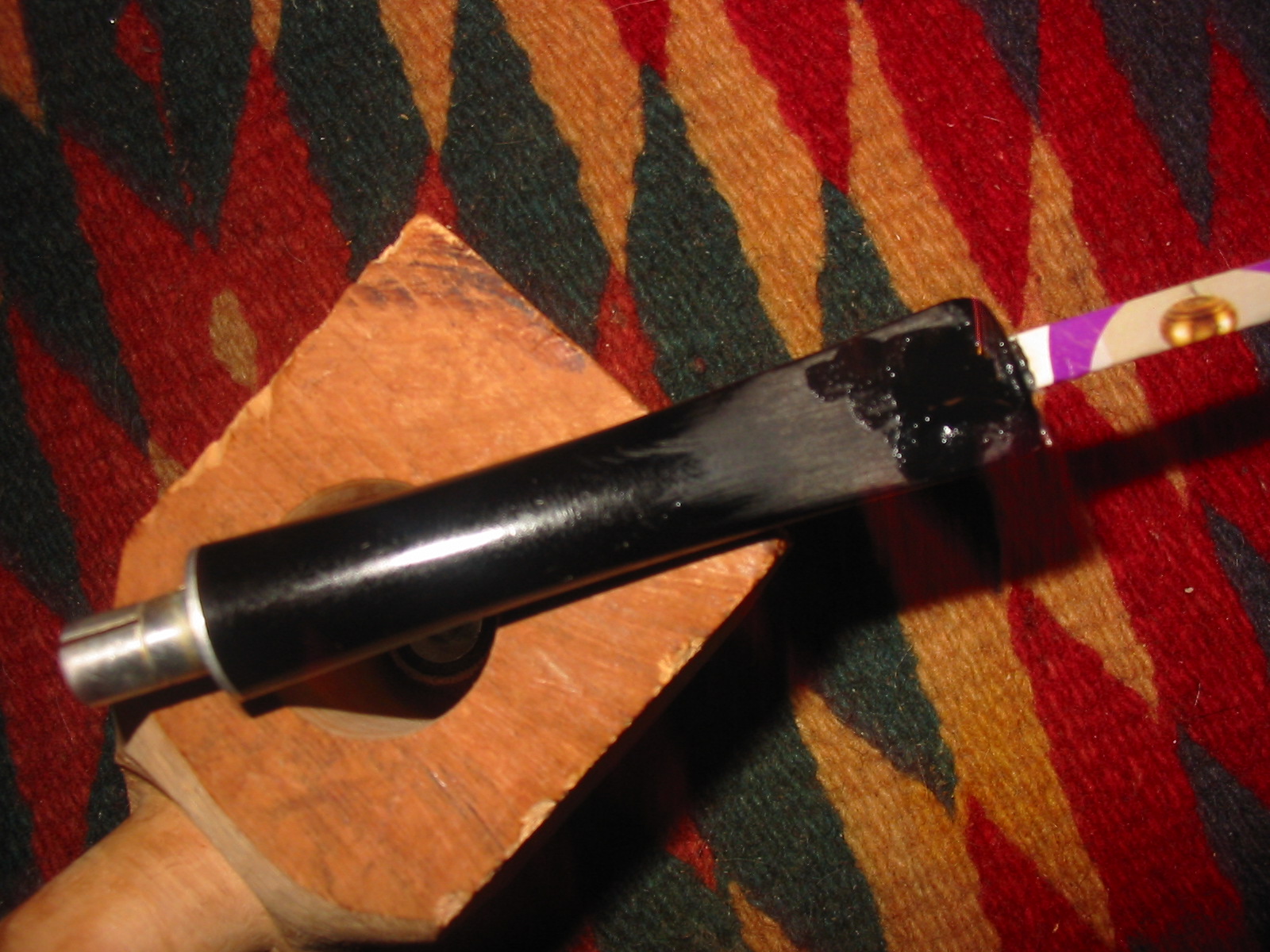
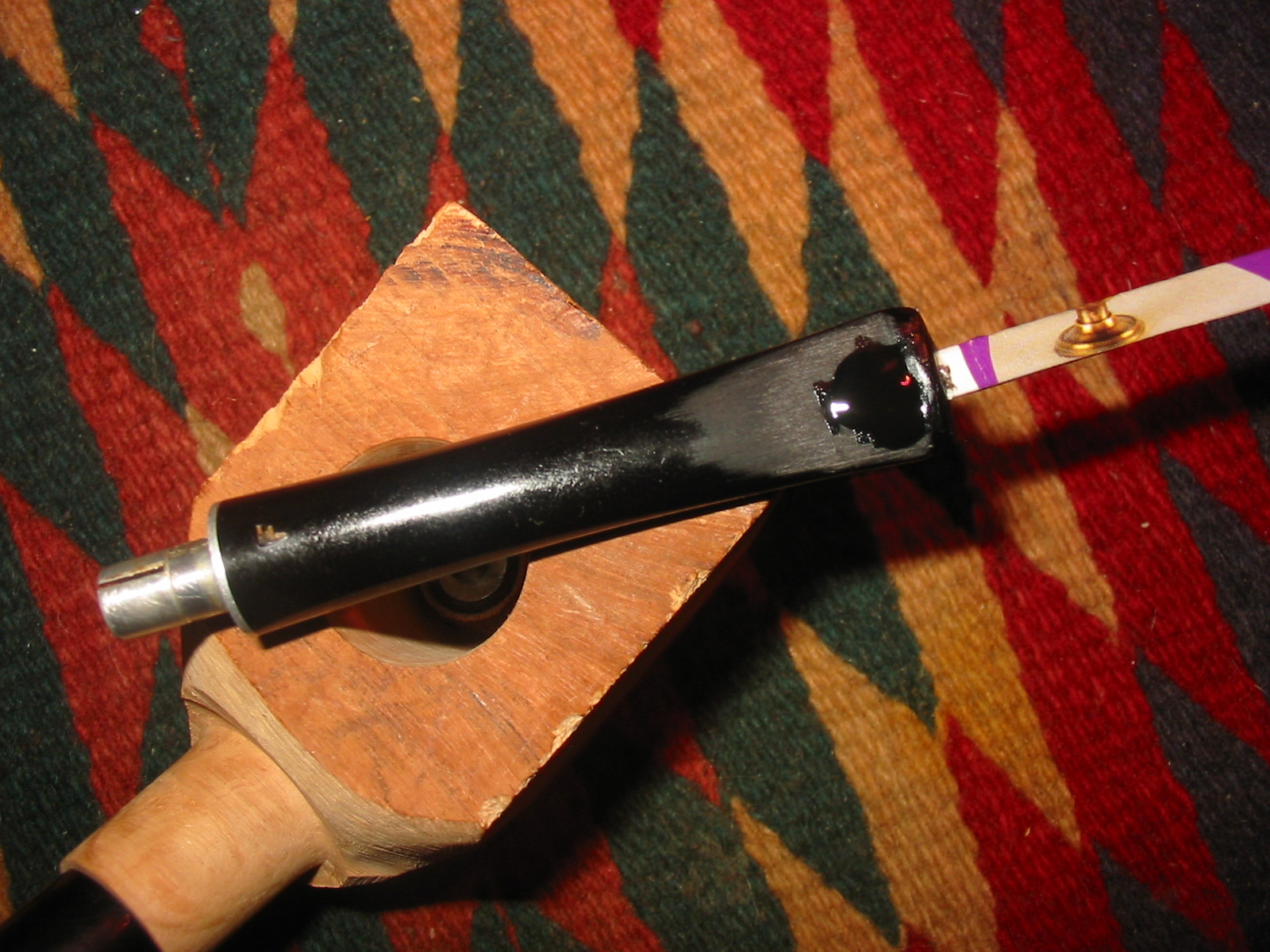
Once the patch had thoroughly cured and hardened I sanded it. I test the hardness by pressing a fingernail into the patch. If it is not hard I let it sit longer. Once it is hard I sanded it with 220 grit sandpaper to smooth out the patch. I used a small needle file to redefine the edge of the crease. Nylon turns white when sanded and so did the patch fortunately. The patch was slightly darker than the stem at this point but would blend in with further sanding.
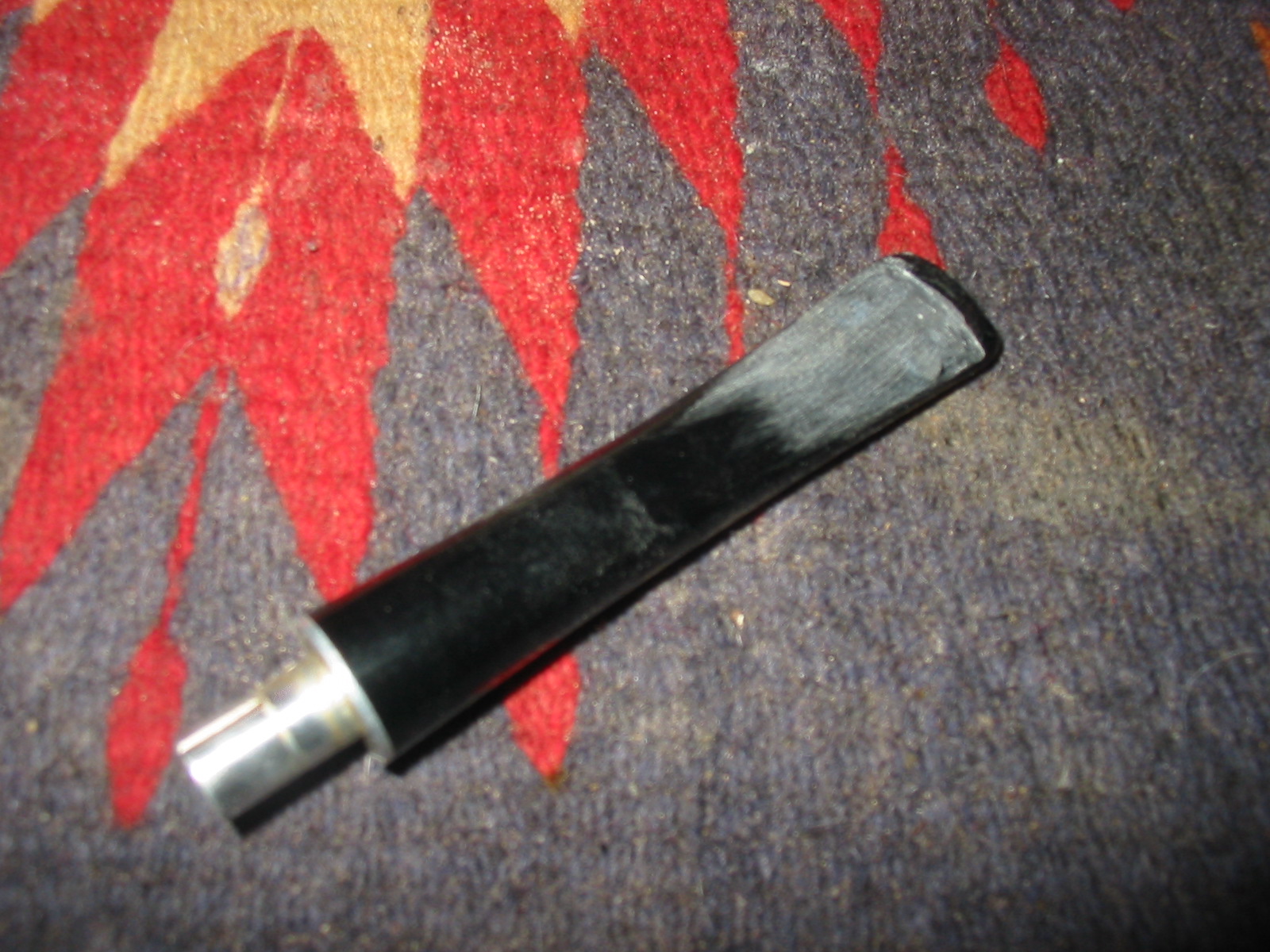
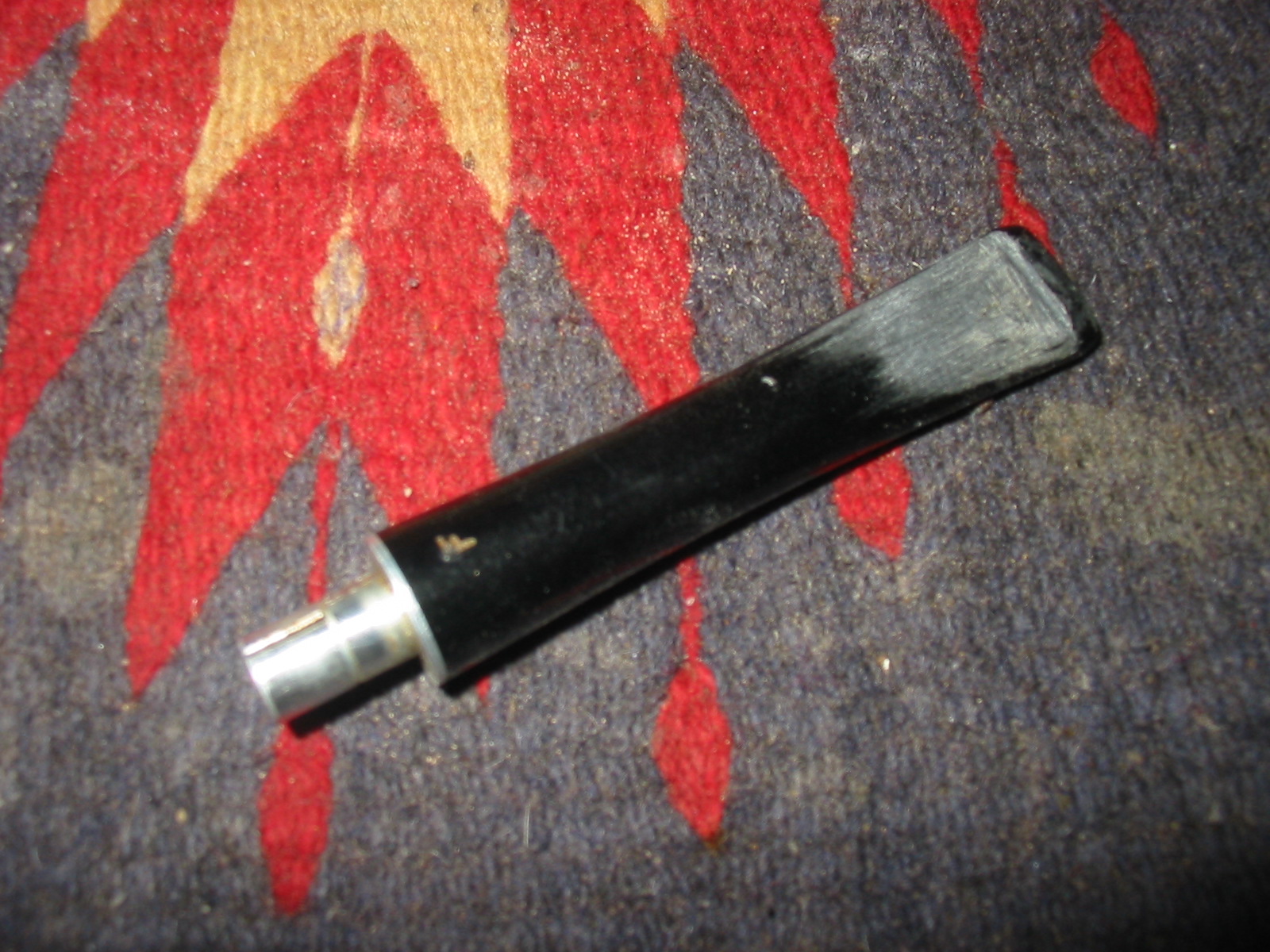
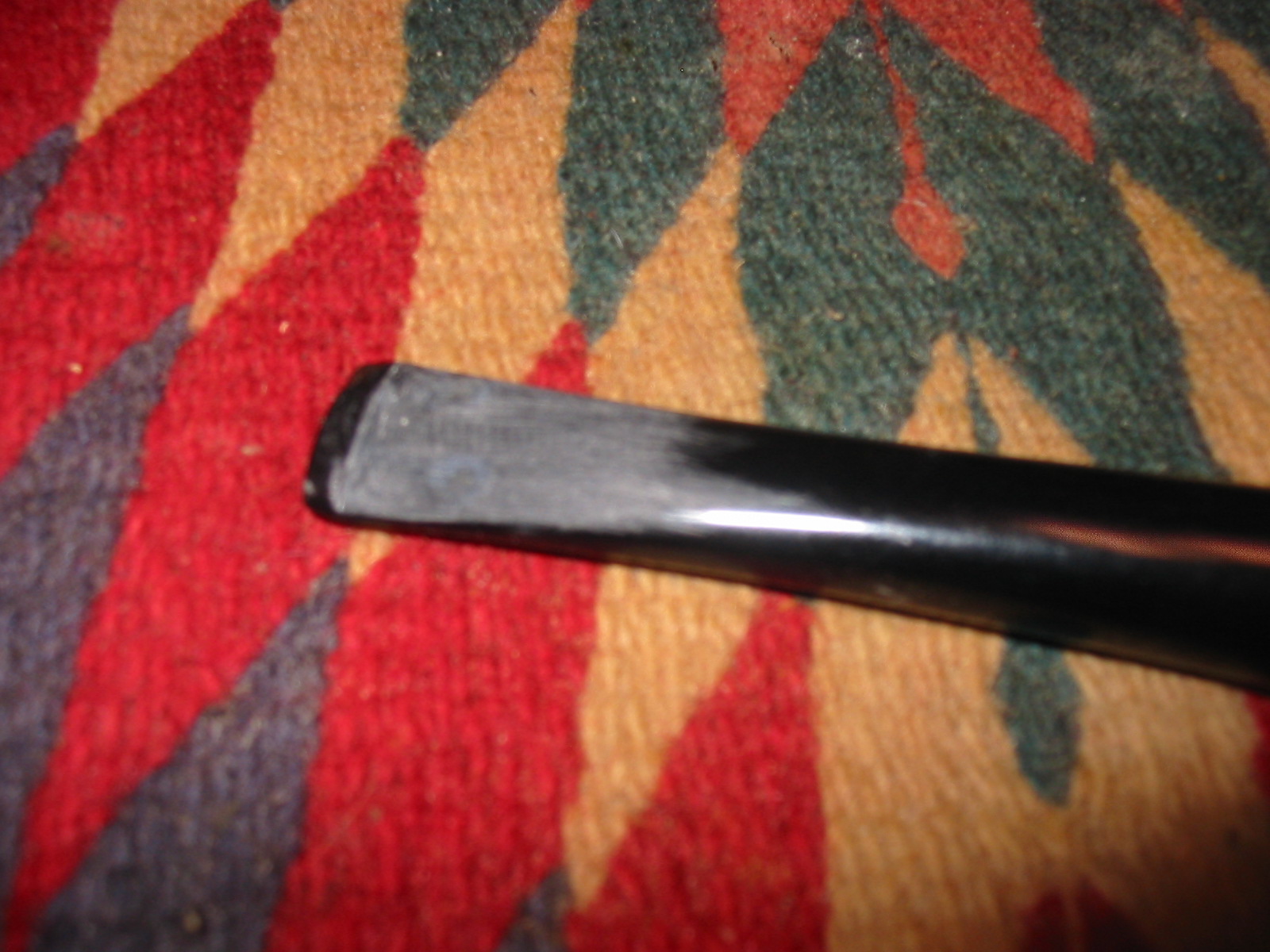
I sanded the stem with a medium and fine grit sanding sponge to remove the scratches. I further redefined the crease to sharpen it. The repairs are visible in the photos as slightly darker than the stem colour at this point.
In the process of the sanding I noticed that the dents in the button itself were not filled enough so I cleaned them out and filled them with black super glue. I also used black super glue to refill some spots on the surface of the blade that seemed to be pitted after the sanding. I sanded these after they were dry using 220 grit sandpaper followed by medium and fine grit sanding sponges. Once the surfaces were flat and smooth to my liking it was time to turn to sanding with the micromesh sanding pads. I wet sanded with 1500-2400 grit pads and dry sanded with 3200-12000 grit pads. I went back to the sanding sponges several times when I found that some of the scratches were not adequately removed. I then repeated the wet and dry sanding with the micromesh pads until the surface was shiny and smooth and the patches blended into the stem.
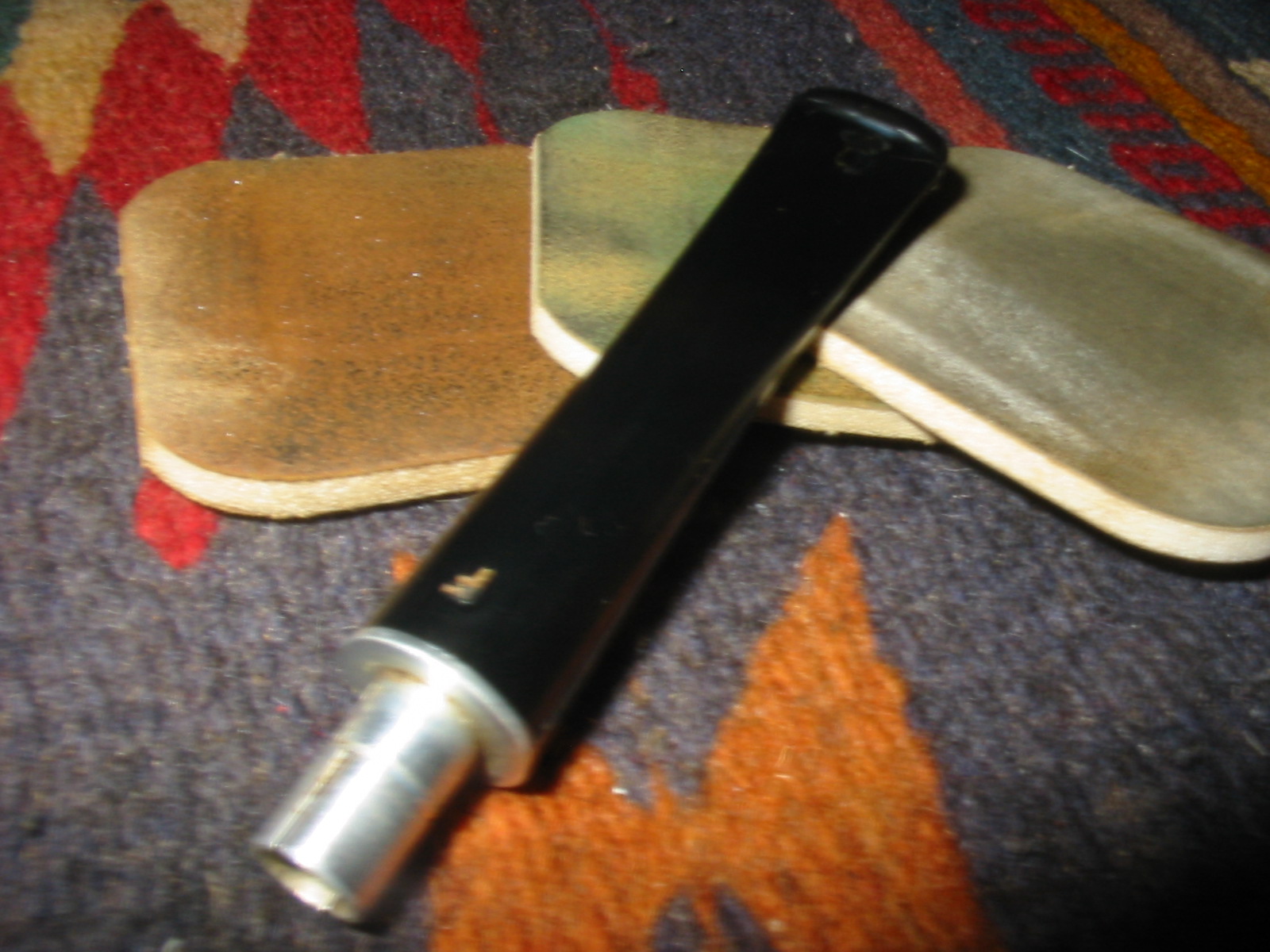
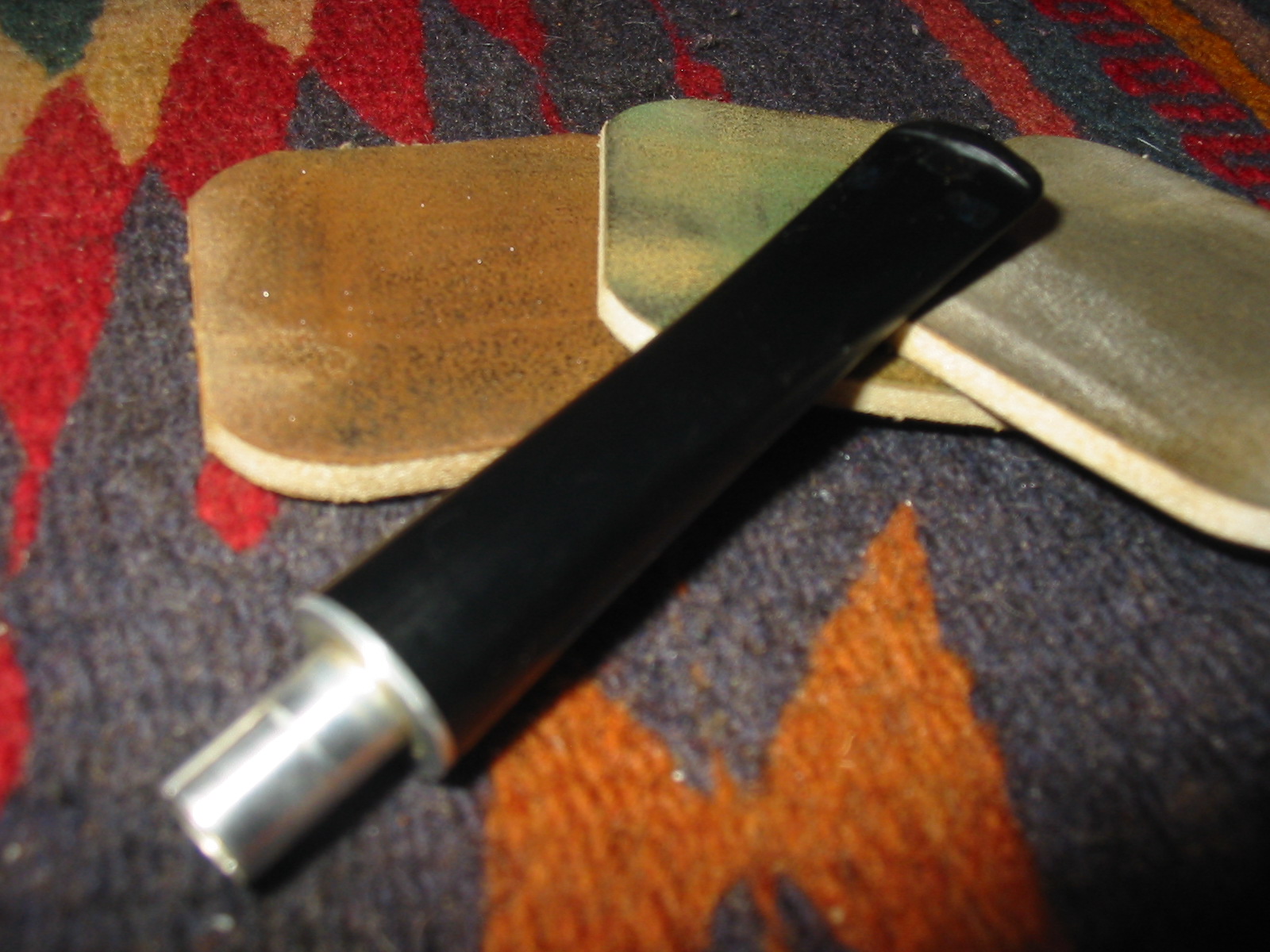
I rubbed the stem down with Obsidian Oil and when it was dry hand buffed the s tem and then resanded with the 3200-12,000 grit micromesh sanding pads.
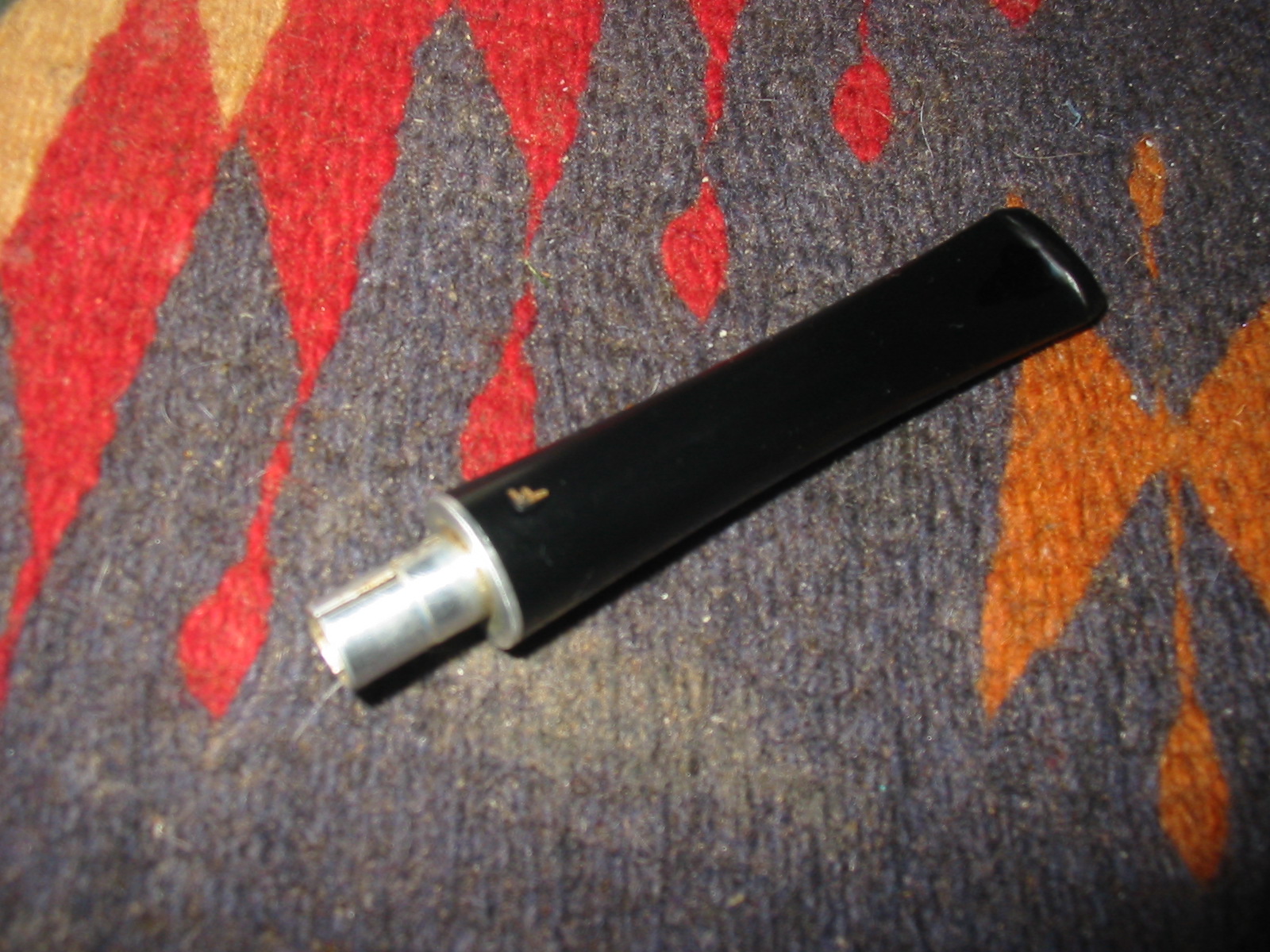


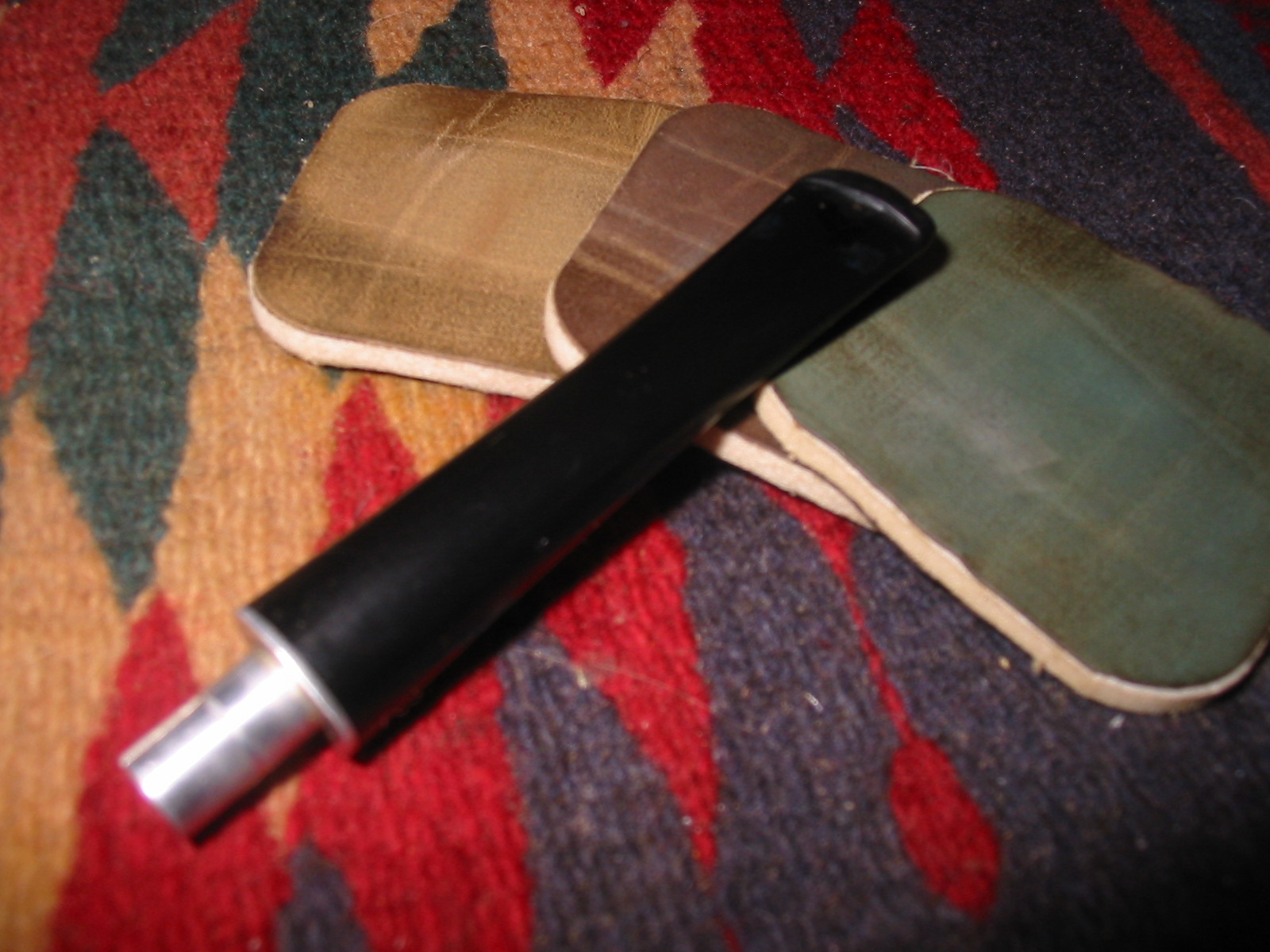
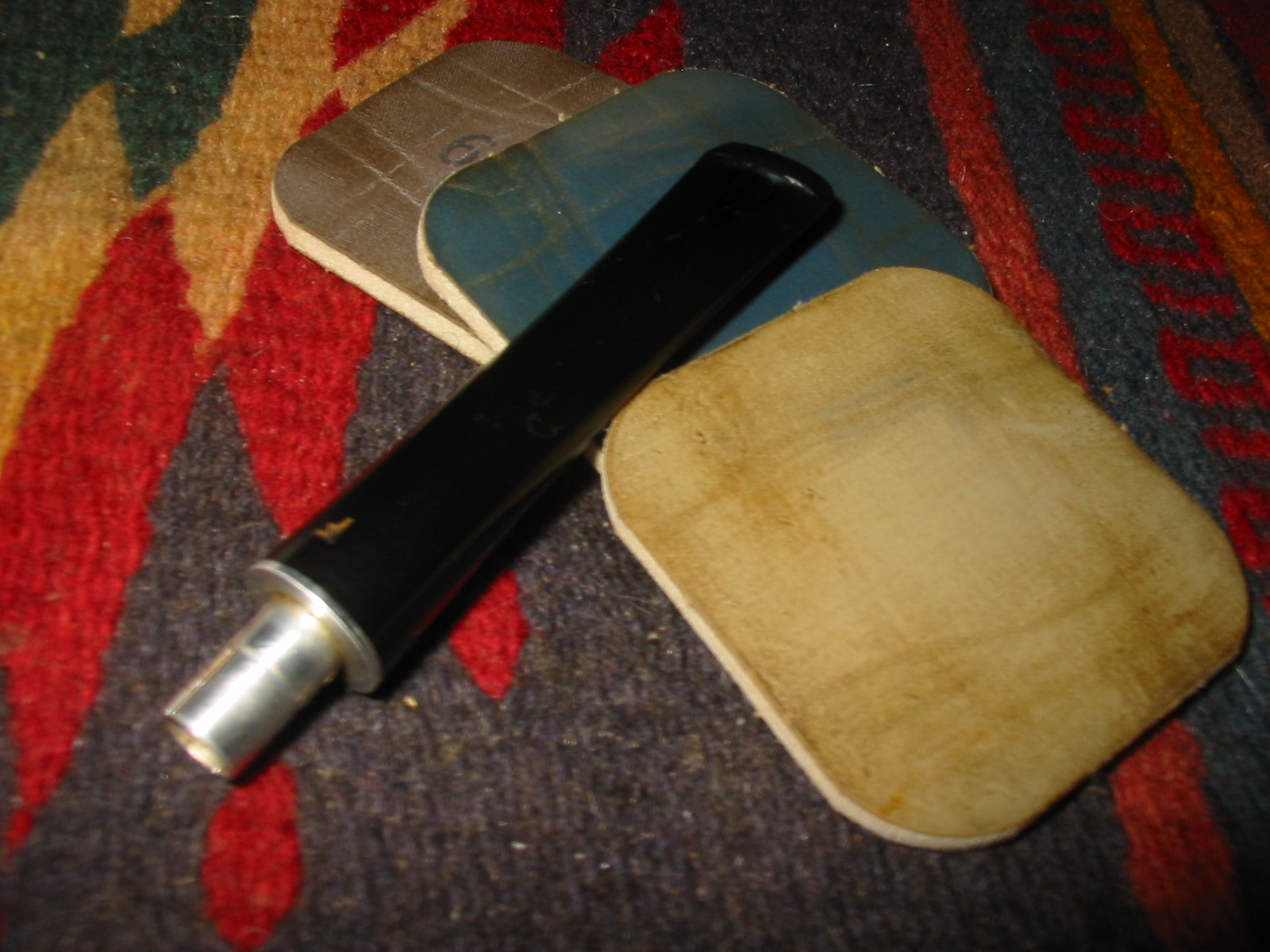

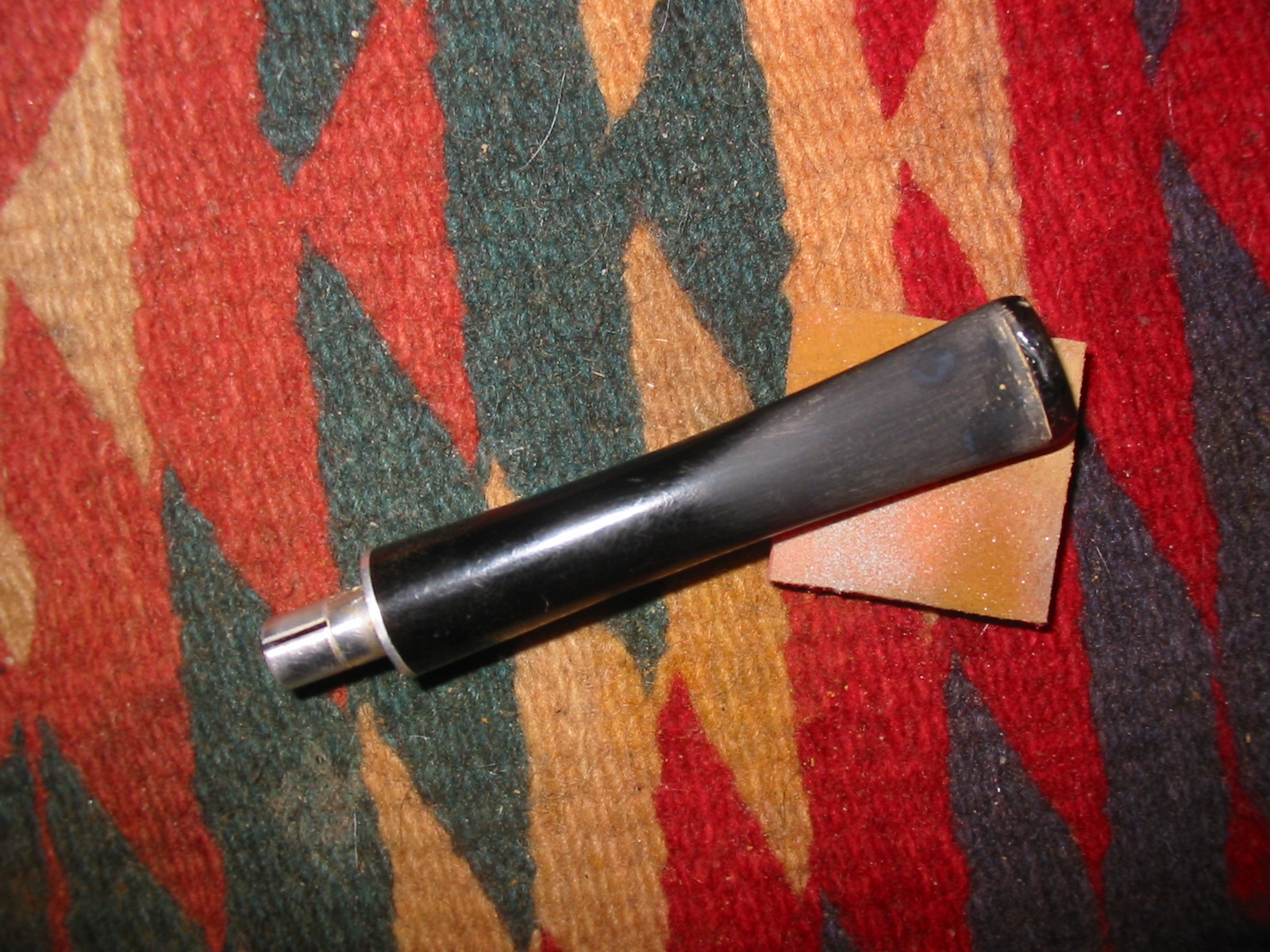
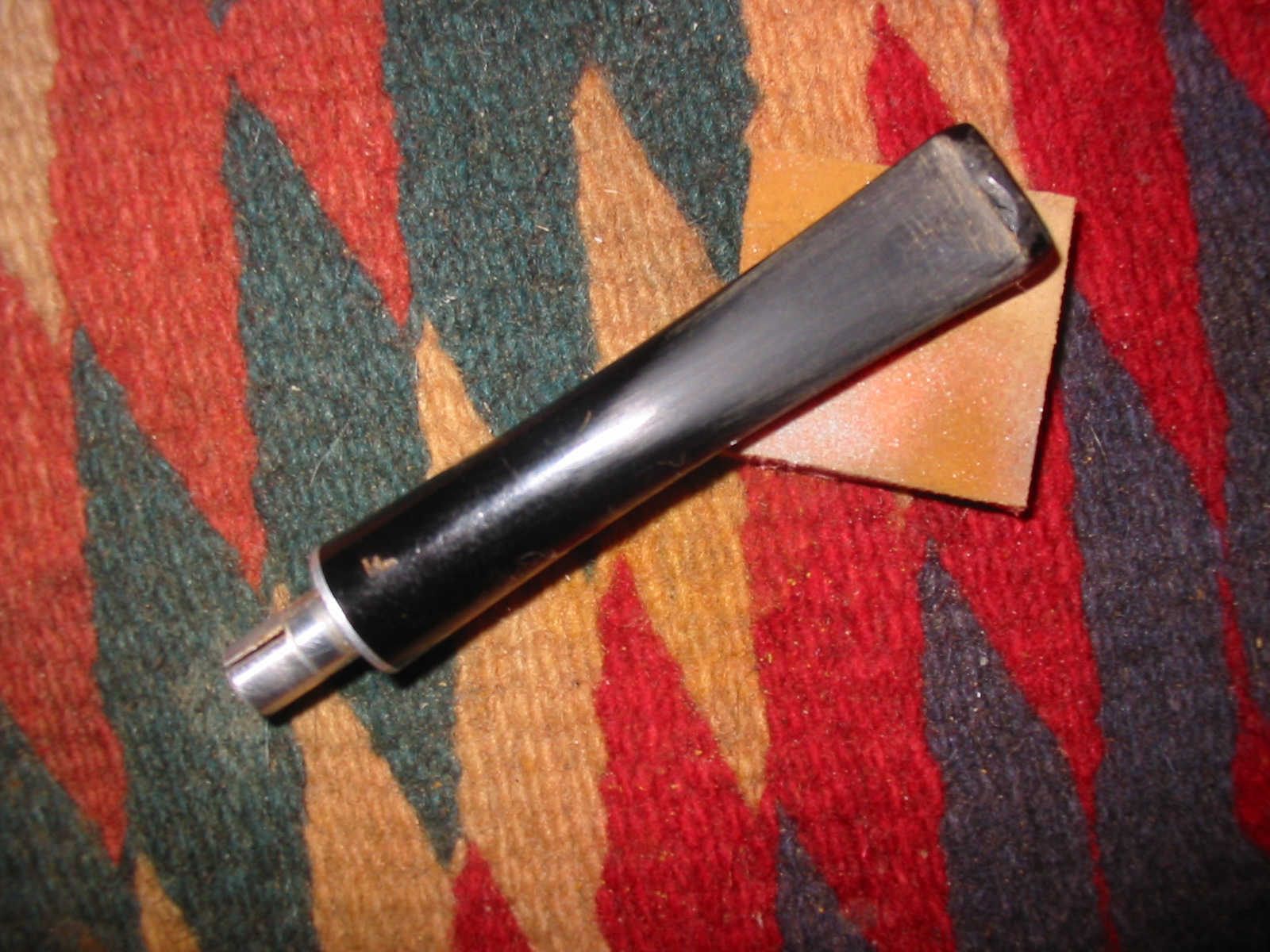
I polished the finished stem lightly with White Diamond. You have to have a very light touch when buffing nylon as the heat the buffing creates melts the nylon and creates a mess. In this case I just lightly touched it and then gave it a light coating of carnauba wax and then hand buffed it. I gave the stem several coats of Paragon Wax and hand buffed it. The finished stem is shown in the photos below.
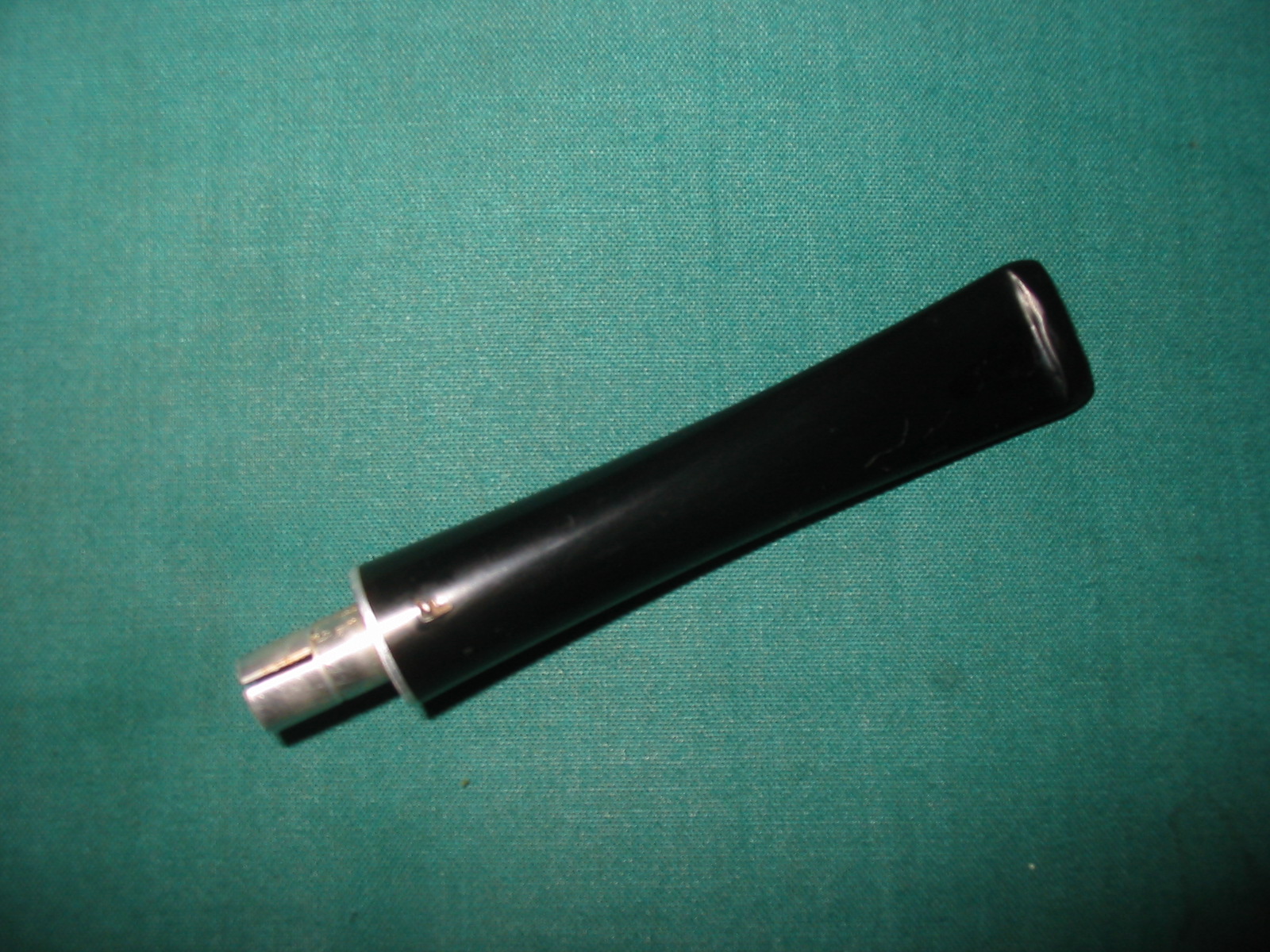
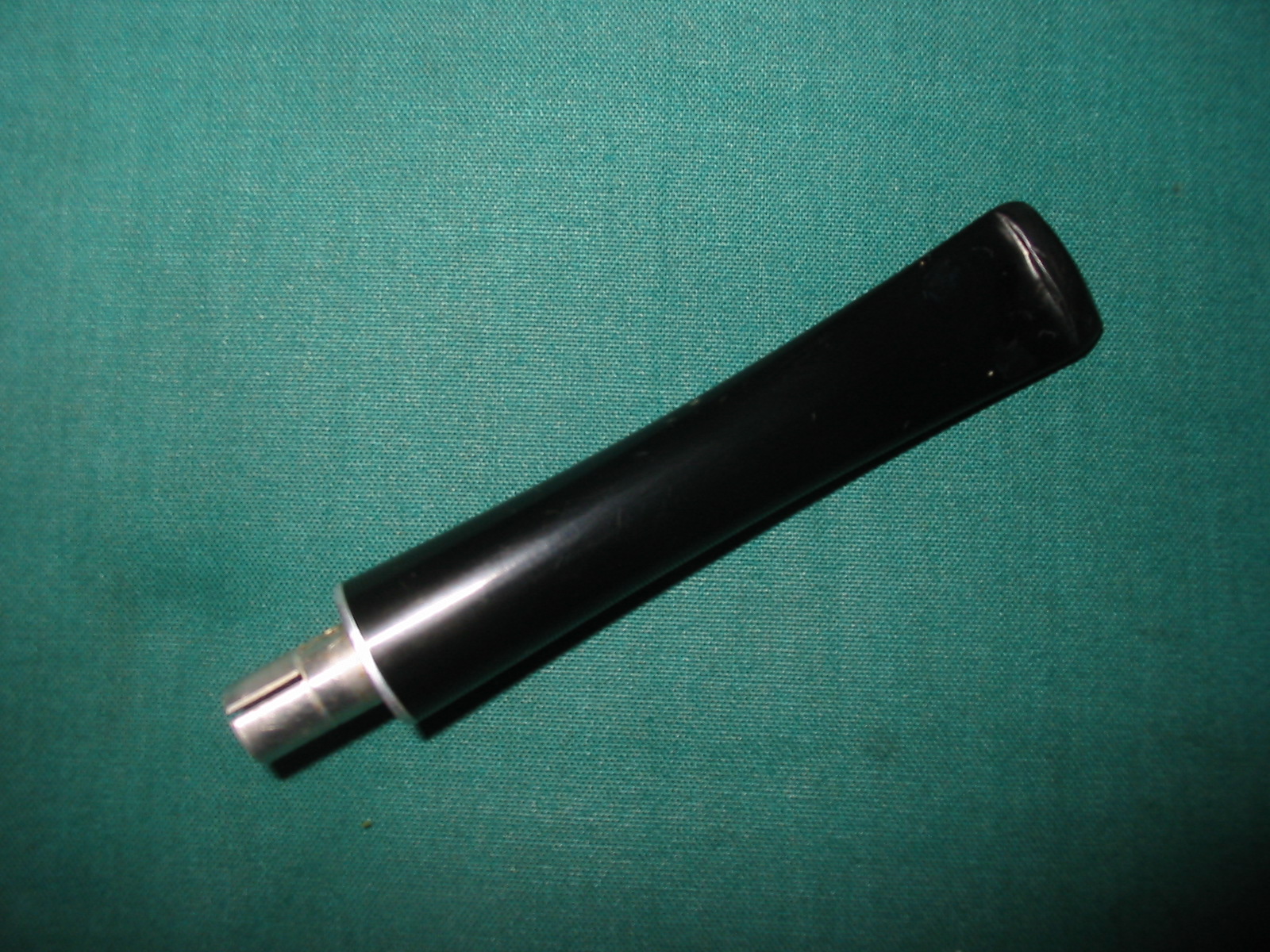
 rebornpipes
I will try both, on each side of the stem, and see what works best. Then I will let you know. Safe travels! Claudio.
LikeLiked by 1 person
Hi Steve, happy 2019! I have a question regarding this repair, as I have a similar one at hand now on my table. When you say that you apply layers of glue and charcoal, you first mix the glue with the charcoal in a pot or something like that, and then you apply the mixture? Or you apply the glue directly to the surface of the stem that you want to repair and then you build on top of it the mixture with charcoal? I hope my question is clear enough, thanks as usual for your help! Claudio.
LikeLike
Hi Claudio. I mix a paste of the glue and the charcoal powder for this you need a slow acting super glue as it dries very quickly. I mix and apply the paste to the stem. If it is a bite through I put a wedge of paper or a pipe cleaner coated with Vaseline in the airway as I do not want it to close. I apply the mixture then as it hardens give it a top coat and other coats as necessary. Does that help?
LikeLike
Steve, clear and very helpful. I tried a couple of times with the usual CA glue, not the slow one, and never made it…it dried too fast! I will try it this way as you explained now. I will take pictures and send them to you, I have been meaning to do that for some time now, as you have been so helpful through the years.
Will you make it to the Chicago Pipe Show this year?
Best and thanks!
Claudio.
LikeLike
Claudio… you could also try something different as well… layer on charcoal, then glue on top of it, then charcoal etc,
Not going to make the show this year as I am actually in India and Nepal at that time for my day job!
LikeLike
Ditto the melting stem, seems everyone had the same experience. The stem looks brand new.
Has anyone tested the strength of the repairs? I did one with Stewmac black glue and vulcanite dust, came out perfect looking but crumbled with little effort.
LikeLike
So far the strength on the repair is good and solid. I have done a bit of testing in terms of clenching it with my teeth and working at it a bit to see if it would hold up… so far so good. Time will tell though.
LikeLike
Same here, the nylon is tough to work with, excellent repair work here!
LikeLike
I’ve tried polishing nylon stems but they didn’t turn out as well as this. I probably got frustrated and didn’t try hard enough, so I’ll try some more.
LikeLike
Had to go incredibly slow Joyal. Lots of micromesh sanding
LikeLike
That turned out real nice. I hate nylon stems; I have melted a few myself.
LikeLike